SB 1276: Vehicles: parking violations.
- Session Year: 2023-2024
- House: Senate
- Latest Version Date: 2024-04-11
Current Status:
Failed
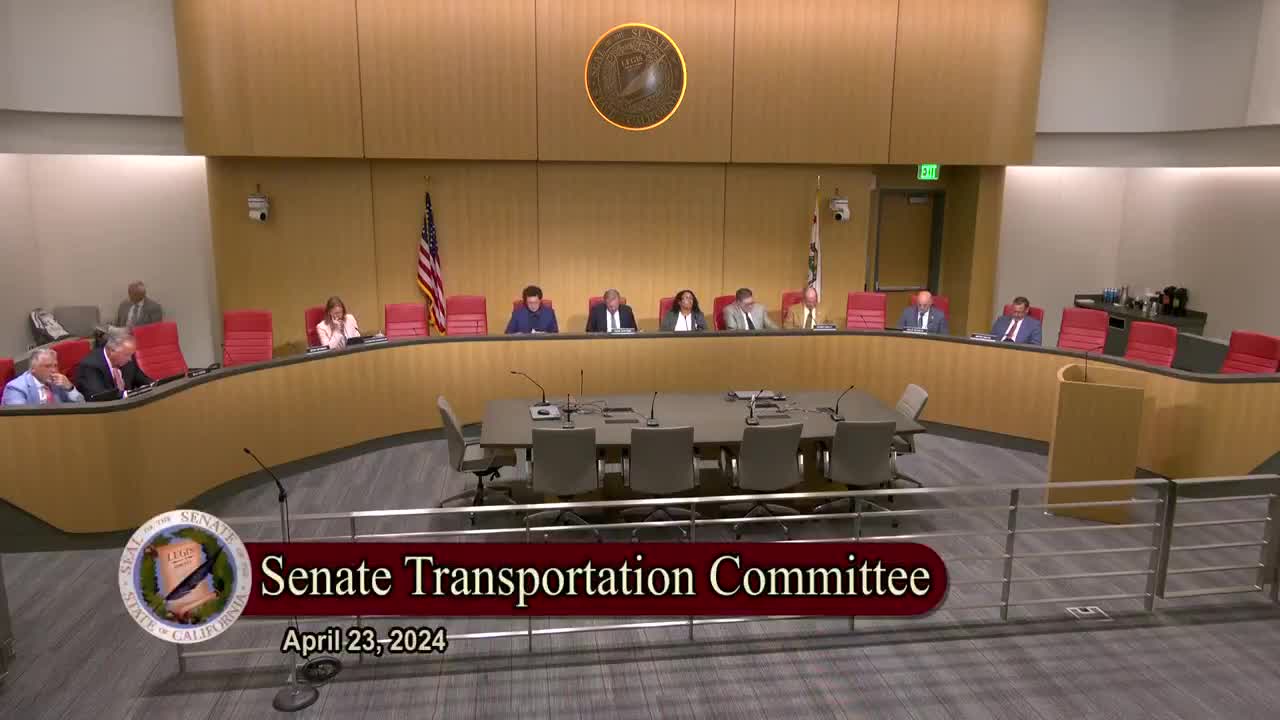
(2024-04-24: April 23 set for first hearing canceled at the request of author.)
Introduced
In Committee
First Chamber
In Committee
Second Chamber
Enacted
Existing law allows a vehicle to park, for up to the posted time limit, in a parking space that is regulated by an inoperable parking meter or an inoperable parking payment center. Existing law defines inoperable parking payment center as an electronic parking meter or pay station serving one or more parking spaces that is closest to the space where a person has parked and that cannot accept payment in any form, cannot register that a payment in any form has been made, or cannot issue a receipt that is required to be displayed in a conspicuous location on or in the vehicle.
This bill would change the definition for an inoperable parking payment center to be clarify that it applies to an electronic parking meter or pay station designated to serve the specific parking space where a person has parked and that cannot accept payment in any form or cannot register that a payment in any form has been made. parked.
Existing law sets forth the procedures for citing a registered owner and driver, rentee, or lessee of a vehicle for a parking violation. Under existing law, if a vehicle is unattended during the time of the violation, the peace officer or person authorized to enforce parking laws and regulations is required to securely attach to the vehicle a notice of parking violation with specified information about the violation, including the procedure for the registered owner, lessee, or rentee to deposit the parking penalty or contest the citation.
This bill would, notwithstanding these provisions, authorize the issuing officer to instead issue the notice of parking violation by first-class mail, as specified. The bill would require the mailed notice to contain all the information described above. The bill would make conforming changes.This bill would authorize a ticket to be served via first-class mail for a violation in a prohibited parking location, as specified. The bill would define prohibited parking location to mean a no parking area, fire zone, or loading zone. The bill would require a designated employee of a city, county, city and county, or contracted law enforcement agency for a special transit district to review photographs to determine whether a parking violation occurred prior to mailing a ticket. This bill would require the parking penalty for a registered owner who makes a payment to a processing agency, within a set timeframe, for these purposes to be limited to the original parking penalty, as specified.
Existing law allows a vehicle to park, for up to the posted time limit, in a parking space that is regulated by an inoperable parking meter or an inoperable parking payment center. Existing law defines inoperable parking payment center as an electronic parking meter or pay station serving one or more parking spaces that is closest to the space where a person has parked and that cannot accept payment in any form, cannot register that a payment in any form has been made, or cannot issue a receipt that is required to be displayed in a conspicuous location on or in the vehicle.
This bill would change the definition for an inoperable parking payment center to be an electronic parking meter or pay station where a person has parked and that cannot accept payment in any form or cannot register that a payment in any form has been made.
Existing law sets forth the procedures for citing a registered owner and driver, rentee, or lessee of a vehicle for a parking violation. Under existing law, if a vehicle is unattended during the time of the violation, the peace officer or person authorized to enforce parking laws and regulations is required to securely attach to the vehicle a notice of parking violation with specified information about the violation, including the procedure for the registered owner, lessee, or rentee to deposit the parking penalty or contest the citation.
This bill would, notwithstanding these provisions, authorize the issuing officer to instead issue the notice of parking violation by first-class mail, as specified. The bill would require the mailed notice to contain all the information described above. The bill would make conforming changes.
Existing law requires a vehicle registered to a nonresident owner, and that is based in California or primarily used on California highways, to be registered in California.This bill would make technical, nonsubstantive changes to those provisions.Existing law requires a vehicle registered to a nonresident owner, and that is based in California or primarily used on California highways, to be registered in California.
This bill would make technical, nonsubstantive changes to those provisions.
(a)A vehicle may park, for up to the posted time limit, in any a parking space that is regulated by an inoperable parking meter or an inoperable parking payment center.
(b)A vehicle may park without time limit in any parking space that does not have a posted time limit and that is regulated by an inoperable parking meter or inoperable parking payment center, subject to any other applicable regulations regarding parking vehicles.
(c)A local authority may limit parking to four hours for a parking space that does not have a posted time limit and that is regulated by an inoperable parking meter or an inoperable parking payment center, if the local authority posts signs clearly providing notice of the time limitation applicable when that parking meter or parking payment center is inoperable.
(d)If a parking space is regulated by a parking meter or parking payment center that cannot physically accept payment, a local authority shall not issue a citation for nonpayment of parking fees notwithstanding the fact that the parking meter or parking payment center may accept payment by other nonphysical means.
(e)Except as provided in subdivision (c), a local authority shall not, by ordinance or resolution, prohibit or restrict the parking of vehicles in a space that is regulated by an inoperable parking meter or inoperable parking payment center.
(f)For purposes of this section:
(1)Inoperable parking meter means a meter located next to and designated for an individual parking space that has become inoperable and cannot accept payment in any form or cannot register that a payment in any form has been made.
(2)Inoperable parking payment center means an electronic parking meter or pay station serving one or more parking spaces that is closest to the space designated to serve the specific parking space where a person has parked and that cannot accept payment in any form, cannot register that a payment in any form has been made, or cannot issue a receipt that is required to be displayed in a conspicuous location on or in the vehicle.
SEC. 2.Section 40202 of the Vehicle Code is amended to read:40202.(a)If a vehicle is unattended during the time of the violation, the peace officer or person authorized to enforce parking laws and regulations shall securely attach to the vehicle vehicle, or may elect to mail, as described in subdivision (c), a notice of parking violation setting forth the violation, including reference to the section of this code or of the Public Resources Code, the local ordinance, or the federal statute or regulation so violated; the date; the approximate time thereof; the location where the violation occurred; a statement printed on the notice indicating that the date of payment is required to be made not later than 21 calendar days from the date of citation issuance; violated, the date, the approximate time of the violation, the location where the violation occurred, a statement printed on the notice indicating that payment is required to be made not later than 21 calendar days from the date of citation issuance, and the procedure for the registered owner, lessee, or rentee to deposit the parking penalty or, pursuant to Section 40215, contest the citation. The notice of parking violation shall also set forth the vehicle license number and registration expiration date if they are visible, the last four digits of the vehicle identification number, if that number is readable through the windshield, the color of the vehicle, and, if possible, the make of the vehicle. The notice of parking violation, or copy thereof, shall be considered a record kept in the ordinary course of business of the issuing agency and the processing agency and shall be prima facie evidence of the facts contained therein.
(b)The notice of parking violation shall be served by attaching it to the vehicle either under the windshield wiper or in another conspicuous place upon the vehicle so as to be easily observed by the person in charge of the vehicle upon the return of that person.
(c)For a violation in a prohibited parking location, a ticket may be mailed via first-class mail to the registered owner by the issuing officer, issuing agency, or processing agency.
(c)(d)Once the issuing officer has prepared the notice of parking violation and has attached it to the vehicle served notice as provided in subdivisions (a) and (b), or the notice has been mailed pursuant to subdivision (c), the officer or issuing agency shall file the notice with the processing agency. Any person, including the issuing officer and any member of the officers department or agency, or any peace officer who alters, conceals, modifies, nullifies, or destroys, or causes to be altered, concealed, modified, nullified, or destroyed the face of the remaining original or any copy of a citation that was retained by the officer, for any reason, before it is filed with the processing agency or with a person authorized to receive the deposit of the parking penalty, is guilty of a misdemeanor.
(d)(e)If, during the issuance of a notice of parking violation, without regard to whether the vehicle was initially attended or unattended, the vehicle is driven away prior to attaching the notice to the vehicle, the issuing officer shall file the notice with the processing agency. The processing agency shall mail, within 15 calendar days of issuance of the notice of parking violation, a copy of the notice of parking violation or transmit an electronic facsimile of the notice to the registered owner.
(e)(f)(1)If, within 21 days after the notice of parking violation is attached to the vehicle, served pursuant to this section, the issuing officer or the issuing agency determines that, in the interest of justice, the notice of parking violation should be canceled, the issuing agency, pursuant to subdivision (a) of Section 40215, shall cancel the notice of parking violation or, if the issuing agency has contracted with a processing agency, shall notify the processing agency to cancel the notice of parking violation pursuant to subdivision (a) of Section 40215. The reason for the cancellation shall be set forth in writing.
If,(2)If, after a copy of the notice of parking violation is attached to the vehicle, the issuing officer determines served pursuant to this section, it is determined that there is incorrect data on the notice, including, but not limited to, the date or time, the issuing officer may indicate in writing, on a form attached to the original notice, the necessary correction to allow for the timely entry of the notice on the processing agencys data system. A copy of the correction shall be mailed to the registered owner of the vehicle. owner.
(f)(g)Under no circumstances shall a personal relationship with any an officer, public official, or law enforcement agency be grounds for cancellation.
(h)For a violation mailed pursuant to subdivision (c), the registered owner shall have 30 calendar days after the mailing of the notice of parking violation to make payment. In addition to the information required in subdivision (a), the notice of a mailed violation shall also include, at a minimum, all of the following:
(1)The location of the offense.
(2)The time the vehicle parked.
(3)The time the vehicle exited.
(4)A photograph of the vehicle parked at the location of the violation.
(i)Prior to mailing a ticket, a designated employee of a city, county, city and county, or contracted law enforcement agency for a special transit district, or processing agency who is qualified by a city, county, city and county, or special transit district to issue parking citations, shall review photographs to determine whether a parking violation occurred in a prohibited parking location.
(j)If the registered owner, by appearance or by mail, makes payment to the processing agency within 30 calendar days from the date of issuance of the citation or 21 calendar days after the mailing of the notice of delinquent parking violation, the parking penalty shall consist solely of the amount of the original penalty.
(k)Payment by mail of a parking penalty for a parking violation or late payment penalty is deemed received on the date postmarked.
(l)This section does not preclude an individual from seeking payment assistance pursuant to Section 40220, including, but not limited to, reducing the fee, utilizing a payment plan, or other assistance.
(m)For purposes of this section, a prohibited parking location means a no parking area, fire zone, or loading zone.
SECTION 1.Section 22508.5 of the Vehicle Code is amended to read:22508.5.(a)A vehicle may park, for up to the posted time limit, in any parking space that is regulated by an inoperable parking meter or an inoperable parking payment center.(b)A vehicle may park without time limit in any parking space that does not have a posted time limit and that is regulated by an inoperable parking meter or inoperable parking payment center, subject to any other applicable regulations regarding parking vehicles.(c)A local authority may limit parking to four hours for a parking space that does not have a posted time limit and that is regulated by an inoperable parking meter or an inoperable parking payment center, if the local authority posts signs clearly providing notice of the time limitation applicable when that parking meter or parking payment center is inoperable.(d)If a parking space is regulated by a parking meter or parking payment center that cannot physically accept payment, a local authority shall not issue a citation for nonpayment of parking fees notwithstanding the fact that the parking meter or parking payment center may accept payment by other nonphysical means.(e)Except as provided in subdivision (c), a local authority shall not, by ordinance or resolution, prohibit or restrict the parking of vehicles in a space that is regulated by an inoperable parking meter or inoperable parking payment center.(f)For purposes of this section:(1)Inoperable parking meter means a meter located next to and designated for an individual parking space that has become inoperable and cannot accept payment in any form or cannot register that a payment in any form has been made.(2)Inoperable parking payment center means an electronic parking meter or pay station where a person has parked and that cannot accept payment in any form or cannot register that a payment in any form has been made.SEC. 2.Section 40202 of the Vehicle Code is amended to read:40202.(a)If a vehicle is unattended during the time of the violation, the peace officer or person authorized to enforce parking laws and regulations shall securely attach to the vehicle a notice of parking violation setting forth the violation, including reference to the section of this code or of the Public Resources Code, the local ordinance, or the federal statute or regulation so violated, the date, the approximate time of the violation, the location where the violation occurred, a statement printed on the notice indicating that the date payment is required to be made not be later than 21 calendar days from the date of citation issuance, and the procedure for the registered owner, lessee, or rentee to deposit the parking penalty or, pursuant to Section 40215, contest the citation. The notice of parking violation shall also set forth the vehicle license number, the color of the vehicle, and, if possible, the make of the vehicle and the registration expiration date. The notice of parking violation, or copy thereof, shall be considered a record kept in the ordinary course of business of the issuing agency and the processing agency and shall be prima facie evidence of the facts contained therein.(b)The notice of parking violation shall be served by attaching it to the vehicle either under the windshield wiper or in another conspicuous place upon the vehicle so as to be easily observed by the person in charge of the vehicle upon the return of that person or mailed to the registered owner pursuant to subdivision (g).(c)Once the issuing officer has prepared the notice of parking violation and has attached it to the vehicle as provided in subdivisions (a) and (b), or the notice has been mailed pursuant to subdivision (g), the officer or issuing agency shall file the notice with the processing agency. Any person, including the issuing officer and any member of the officers department or agency, or any peace officer who alters, conceals, modifies, nullifies, or destroys, or causes to be altered, concealed, modified, nullified, or destroyed the face of the remaining original or any copy of a citation that was retained by the officer, for any reason, before it is filed with the processing agency or with a person authorized to receive the deposit of the parking penalty, is guilty of a misdemeanor.(d)If, during the issuance of a notice of parking violation, without regard to whether the vehicle was initially attended or unattended, the vehicle is driven away prior to attaching the notice to the vehicle, the issuing officer shall file the notice with the processing agency. The processing agency shall mail, within 15 calendar days of issuance of the notice of parking violation, a copy of the notice of parking violation or transmit an electronic facsimile of the notice to the registered owner.(e)(1)If, within 21 days after the notice of parking violation is attached to the vehicle, or is mailed pursuant to subdivision (g), the issuing officer or the issuing agency determines that, in the interest of justice, the notice of parking violation should be canceled, the issuing agency, pursuant to subdivision (a) of Section 40215, shall cancel the notice of parking violation or, if the issuing agency has contracted with a processing agency, shall notify the processing agency to cancel the notice of parking violation pursuant to subdivision (a) of Section 40215. The reason for the cancellation shall be set forth in writing.(2)If, after a copy of the notice of parking violation is attached to the vehicle, the issuing officer determines that there is incorrect data on the notice, including, but not limited to, the date or time, the issuing officer may indicate in writing, on a form attached to the original notice, the necessary correction to allow for the timely entry of the notice on the processing agencys data system. A copy of the correction shall be mailed to the registered owner of the vehicle.(3)If, after a notice of parking violation is generated to be mailed to the registered owner pursuant to subdivision (g), the issuing officer determines that there was incorrect data on the notice, including, but not limited to, the date or time of the violation, the issuing officer may indicate in writing, on a form attached to the original or a copy of the notice, the necessary correction to allow for the timely entry of the notice on the processing agencys data system. A copy of the correction shall be mailed to the registered owner of the vehicle.(f)Under no circumstances shall a personal relationship with any officer, public official, or law enforcement agency be grounds for cancellation.(g)Notwithstanding subdivisions (a) and (b) of this section, an issuing officer may elect to instead issue a notice of parking violation by first-class mail to the registered owner of the vehicle. The notice shall otherwise meet all of the requirements specified in subdivision (a). The notice of parking violation, or copy thereof, shall be considered a record kept in the ordinary course of business of the issuing agency and the processing agency and shall be prima facie evidence of the facts contained in the notice.(a)A vehicle may park, for up to the posted time limit, in any parking space that is regulated by an inoperable parking meter or an inoperable parking payment center.
(b)A vehicle may park without time limit in any parking space that does not have a posted time limit and that is regulated by an inoperable parking meter or inoperable parking payment center, subject to any other applicable regulations regarding parking vehicles.
(c)A local authority may limit parking to four hours for a parking space that does not have a posted time limit and that is regulated by an inoperable parking meter or an inoperable parking payment center, if the local authority posts signs clearly providing notice of the time limitation applicable when that parking meter or parking payment center is inoperable.
(d)If a parking space is regulated by a parking meter or parking payment center that cannot physically accept payment, a local authority shall not issue a citation for nonpayment of parking fees notwithstanding the fact that the parking meter or parking payment center may accept payment by other nonphysical means.
(e)Except as provided in subdivision (c), a local authority shall not, by ordinance or resolution, prohibit or restrict the parking of vehicles in a space that is regulated by an inoperable parking meter or inoperable parking payment center.
(f)For purposes of this section:
(1)Inoperable parking meter means a meter located next to and designated for an individual parking space that has become inoperable and cannot accept payment in any form or cannot register that a payment in any form has been made.
(2)Inoperable parking payment center means an electronic parking meter or pay station serving one or more parking spaces that is closest to the space where a person has parked and that cannot accept payment in any form, form or cannot register that a payment in any form has been made, or cannot issue a receipt that is required to be displayed in a conspicuous location on or in the vehicle. made.
SEC. 2.Section 40202 of the Vehicle Code is amended to read:40202.(a)If a vehicle is unattended during the time of the violation, the peace officer or person authorized to enforce parking laws and regulations shall securely attach to the vehicle a notice of parking violation setting forth the violation, including reference to the section of this code or of the Public Resources Code, the local ordinance, or the federal statute or regulation so violated; the date; the approximate time thereof; the location where the violation occurred; a statement printed on the notice indicating that the date of payment is required to be made not later than 21 calendar days from the date of citation issuance; violated, the date, the approximate time of the violation, the location where the violation occurred, a statement printed on the notice indicating that the date payment is required to be made not be later than 21 calendar days from the date of citation issuance, and the procedure for the registered owner, lessee, or rentee to deposit the parking penalty or, pursuant to Section 40215, contest the citation. The notice of parking violation shall also set forth the vehicle license number registration expiration date if they are visible, the last four digits of the vehicle identification number, if that number is readable through the windshield, number, the color of the vehicle, and, if possible, the make of the vehicle. vehicle and the registration expiration date. The notice of parking violation, or copy thereof, shall be considered a record kept in the ordinary course of business of the issuing agency and the processing agency and shall be prima facie evidence of the facts contained therein.
(b)The notice of parking violation shall be served by attaching it to the vehicle either under the windshield wiper or in another conspicuous place upon the vehicle so as to be easily observed by the person in charge of the vehicle upon the return of that person. person or mailed to the registered owner pursuant to subdivision (g).
(c)Once the issuing officer has prepared the notice of parking violation and has attached it to the vehicle as provided in subdivisions (a) and (b), or the notice has been mailed pursuant to subdivision (g), the officer or issuing agency shall file the notice with the processing agency. Any person, including the issuing officer and any member of the officers department or agency, or any peace officer who alters, conceals, modifies, nullifies, or destroys, or causes to be altered, concealed, modified, nullified, or destroyed the face of the remaining original or any copy of a citation that was retained by the officer, for any reason, before it is filed with the processing agency or with a person authorized to receive the deposit of the parking penalty, is guilty of a misdemeanor.
(d)If, during the issuance of a notice of parking violation, without regard to whether the vehicle was initially attended or unattended, the vehicle is driven away prior to attaching the notice to the vehicle, the issuing officer shall file the notice with the processing agency. The processing agency shall mail, within 15 calendar days of issuance of the notice of parking violation, a copy of the notice of parking violation or transmit an electronic facsimile of the notice to the registered owner.
(e)(1)If, within 21 days after the notice of parking violation is attached to the vehicle, or is mailed pursuant to subdivision (g), the issuing officer or the issuing agency determines that, in the interest of justice, the notice of parking violation should be canceled, the issuing agency, pursuant to subdivision (a) of Section 40215, shall cancel the notice of parking violation or, if the issuing agency has contracted with a processing agency, shall notify the processing agency to cancel the notice of parking violation pursuant to subdivision (a) of Section 40215. The reason for the cancellation shall be set forth in writing.
If,(2)If, after a copy of the notice of parking violation is attached to the vehicle, the issuing officer determines that there is incorrect data on the notice, including, but not limited to, the date or time, the issuing officer may indicate in writing, on a form attached to the original notice, the necessary correction to allow for the timely entry of the notice on the processing agencys data system. A copy of the correction shall be mailed to the registered owner of the vehicle.
(3)If, after a notice of parking violation is generated to be mailed to the registered owner pursuant to subdivision (g), the issuing officer determines that there was incorrect data on the notice, including, but not limited to, the date or time of the violation, the issuing officer may indicate in writing, on a form attached to the original or a copy of the notice, the necessary correction to allow for the timely entry of the notice on the processing agencys data system. A copy of the correction shall be mailed to the registered owner of the vehicle.
(f)Under no circumstances shall a personal relationship with any officer, public official, or law enforcement agency be grounds for cancellation.
(g)Notwithstanding subdivisions (a) and (b) of this section, an issuing officer may elect to instead issue a notice of parking violation by first-class mail to the registered owner of the vehicle. The notice shall otherwise meet all of the requirements specified in subdivision (a). The notice of parking violation, or copy thereof, shall be considered a record kept in the ordinary course of business of the issuing agency and the processing agency and shall be prima facie evidence of the facts contained in the notice.
SECTION 1.Section 4000.4 of the Vehicle Code is amended to read:4000.4.(a)Except as provided in Sections 6700, 6702, and 6703, a vehicle that is registered to a nonresident owner, and that is based in California or primarily used on California highways, shall be registered in California.(b)For purposes of this section, a vehicle is deemed to be primarily or regularly used on the highways of this state if the vehicle is located or operated in this state for a greater amount of time than it is located or operated in any other individual state during the registration period in question.(a)Except as provided in Sections 6700, 6702, and 6703, any a vehicle which that is registered to a nonresident owner, and which that is based in California or primarily used on California highways, shall be registered in California.
(b)For purposes of this section, a vehicle is deemed to be primarily or regularly used on the highways of this state if the vehicle is located or operated in this state for a greater amount of time than it is located or operated in any other individual state during the registration period in question.
|
Date
|
Status
|
|---|---|
| Apr 24, 2024 | April 23 set for first hearing canceled at the request of author. |
| Apr 11, 2024 | From committee with author's amendments. Read second time and amended. Re-referred to Com. on TRANS. |
| Apr 11, 2024 | Set for hearing April 23. |
| Apr 3, 2024 | Re-referred to Com. on TRANS. |
| Mar 20, 2024 | From committee with author's amendments. Read second time and amended. Re-referred to Com. on RLS. |
| Feb 29, 2024 | Referred to Com. on RLS. |
| Feb 16, 2024 | From printer. May be acted upon on or after March 17. |
| Feb 15, 2024 | Introduced. Read first time. To Com. on RLS. for assignment. To print. |
This list shows positions taken on this bill by organizations on the date displayed, which is linked to the original source.
Positions by individuals are not included.
|
Organization
|
Position
|
Date
|
|---|---|---|
| California Mobility and Parking Association | ** Support | |
| California Police Chiefs Association | ** Support | |
| Safer Streets LA | ** Against |
SENATE COMMITTEE ON
Senator Dave Cortese, Chair
2023 - 2024 Regular
Bill No: SB 1276 Hearing Date: 4/23/2024
Author: | Archuleta | ||
Version: | 4/11/2024 Amended | ||
Urgency: | No | Fiscal: | No |
Consultant: | Jacob O'Connor | ||
SUBJECT: Vehicles: parking violations
DIGEST: This bill would authorize a parking enforcer to issue a ticket for parking in prohibited locations, such as fire lanes, by mail, thereby authorizing automated enforcement of parking violations in those locations. This bill also removes the requirement that a parking payment center be the closest one to a specific parking space in order to serve that space.
ANALYSIS:
Existing law:
- Authorizes the schedule of parking penalties for parking violations and late penalties to be established by a local governing body. (VEH §40203.5)
- Authorizes parking processing agencies to file an itemization of unpaid parking penalties and service fees with the DMV for collection with registration, so long as the agency provides a payment plan for indigent individuals. (VEH §40220)
- Allows vehicles to park up to the posted time limit in any parking space that is regulated by an inoperable parking meter or inoperable parking payment center. (VEH 22508.5)
- Prohibits local authorities from issuing parking citations if a parking space is regulated by a parking meter or parking payment center that cannot physically accept payment.
- Defines “inoperable parking payment center” as an electronic parking meter or pay station serving one or more parking spaces that is closest to the space where a person has parked and that cannot accept payment in any form, cannot register that a payment in any form has been made, or cannot issue a receipt that is required to be displayed in a conspicuous location on or in the vehicle.
- Authorizes parking enforcement officers to securely attach to a vehicle a notice of parking violation to a vehicle under the windshield wiper or other conspicuous place if it is unattended at the time of violation. The notice must contain information on the violation, the date and time, the location, and statement about when payment must occur by. (VEH §40202).
- Specifies that during issuance of the notice if the vehicle is driven away prior to attaching notice being attached to the vehicle, the issuing officer shall file notice with the processing agency and the agency shall mail within 15 days of the issuance a copy of the notice to the registered owner of the vehicle.
- Authorizes the issuing officer or agency to cancel notice of the parking violation within 21 days after issuance to cancel the violation if it is in the interest of justice and the reason is set forth in writing.
- Establishes several pilot programs regarding the use of automated and camera technology in enforcing traffic violations (VEH §§40245 et seq., §§22425 et seq., and §21455.5)
This bill:
- Modifies the definition of inoperable parking station to remove the specification that it must be the meter or station closest to the parking space and instead must be the station designated to serve the parking space.
- Defines “prohibited parking locations” as a no parking area, fire zone, or loading zone.
- Authorizes a parking enforcement officer or agency to issue violation tickets for parking in prohibited locations by first class mail to the registered owner of the vehicle. In so doing tacitly authorizes the use of automated enforcement technology for these violations including the use of stationary cameras. This notice of violation shall include, at minimum:
- All information required for a ticket attached to the vehicle;
- The location of the offense;
- The time the vehicle was parked;
- The time the vehicle exited;
- A photograph of the vehicle parked at that location.
- Requires a designated employee of a city, county, city and county, contracted law enforcement agency for a special transit district, or qualified parking ticket processing agency to review the photograph to determine whether the violation occurred in a prohibited parking location prior to the ticket being mailed.
- Requires payment of the ticket within 30 calendar days after the mailing of the notice.
- Specifies that if the payment is made within 30 days of issuance or 21 days after mailing for the notice of delinquent parking violation, the penalty shall consist solely of the amount of the original penalty. Payment is deemed received on the date postmarked.
- Clarifies that nothing in this bill prohibits an individual from seeking parking payment assistance offered by the processing agency.
COMMENTS:
- Purpose. According to the author, “Senate Bill 1276 will increase roadway safety by improving parking enforcement in allowing specified violations to be mailed directly to the registered owner of a vehicle for parking in prohibited areas, such as in front of fire hydrants or other locations most likely to create safety hazards. Tickets placed under windshields are often lost or discarded and require individual parking enforcement officers to physically make contact with a vehicle. These enforcement officers routinely face confrontations during the physical act of placing a ticket under a windshield. Mailing tickets is a more effective process to avoid lost tickets, avoid conflicts and confrontations for parking attendants, and ultimately will be necessary as more Autonomous Vehicles are deployed in California.”
- Paying for parking. In dense, urban environments space is one of the most valuable resources. In order to support a transportation system largely designed for cars, cities have traditionally tried to devote a significant portion of space to parking. Given the high value of this space, cities need mechanisms to make sure those spaces are being used effectively. Cities will often meter valuable spaces in order to incentivize shorter trips and discourage congestion. Illegal on-street parking can increase travel time and congestion. Cities use parking tickets today to reduce congestion in downtown areas, ensure local residents have a place to park, enable people to park near retail stores for a limited period of time, prevent individuals from parking in spaces for emergency vehicles, keep open spots for people with disabilities, and ensure that non electric vehicles are not parking in spots meant for electric vehicles to charge.
- Parking enforcement. Cities do not have many enforcement mechanisms to collect outstanding parking tickets, particularly from individuals visiting the city that live outside their jurisdiction. As such, the state allows cities to collect outstanding parking tickets through the DMV when a person tries to register their vehicle. According to the DMV there are currently 692 parking agencies that may report tickets to the DMV for collection with the annual registration renewal. Using a 5-year average, DMV estimates it has received approximately 1.8 million parking tickets annually. Approximately 30-40% of the parking tickets reported to DMV annually are collected by DMV during the registration renewal, as people may instead pay the parking agency directly. The DMV collected approximately $81.7 million in total parking citation bail in FY 2021/22.
- Modernizing enforcement. The supporters of this bill argue it is necessary to modernize parking enforcement and improve traffic safety by enforcing safe parking behavior. Automated enforcement and mailing tickets will allow for easier ticketing of people parking in dangerous zones and potentially create an avenue for collecting parking tickets for autonomous vehicles. This bill would also allow local jurisdictions to more easily utilize ticketing payment centers that can cover multiple parking spaces.
Photo enforcement of traffic rules has been in place for a while, but efforts to expand its usage have recently surged. In California, red light cameras were authorized in the 1990’s and are deployed in 26 local jurisdictions at 235 intersections. In the last ten years California has authorized photo enforcement of transit-only lanes and a speed camera pilot program. The Legislature has considered several bills to authorize photo enforcement of speed limits and school-bus traffic control. In particular AB 316 (Ward, Chapter 342, Statutes of 2023) authorized a local agency to install an automated forward facing parking control device on city-owned or district-owned parking enforcement vehicles for the purpose of video imaging or parking violations occurring in bicycle lanes, until January 1, 2030. This bill is similar in that it is focusing on enforcing a specific, time-independent, parking violation.
Nationally, photo enforcement of speed limits is not common, and is prohibited in some states, but is being used in the cities of New York and Chicago as well as parts of Seattle. Common concerns that arise during discussions of automated enforcement include issues of privacy, culpability, and equity.
- Private eyes, they’re watching you. Under this bill the photographic evidence required to be included with the mailed ticket must be reviewed by a designated employee to ensure the violation really occurred. This may ease some concerns about the effectiveness of automated technology but does not address the broader surveillance concerns associated with the technology. This bill lacks key privacy provisions included in previous legislation regarding automated enforcement. It does not describe how the photographic technology will be deployed, the extent of information the photograph will be allowed to capture, the length of time the photographic data will be stored, how the information in the photo could be used for other prosecutions, or the availability of the photographic evidence to others outside the enforcement agency. This bill also lacks any provisions on where or how stationary cameras could be deployed to scan for these parking violations. The committee may wish to amend the bill to align its privacy provisions with those of AB 316, specifying that the cameras must be mounted on parking enforcement vehicles, the photographic data can only be retained for a maximum amount of time after which it is destroyed, and requiring that photographic data and records not be used or processed by an automated license plate recognition system.
- Equitable enforcement. This bill does not make any particular provisions about equity. Opponents to automated enforcement raise concerns about jurisdictions applying new enforcement tools in unfairly disproportionate ways. Conceivably officers might feel more comfortable issuing tickets in person in some areas and defaulting to mailed tickets in others. This could result in more penalties and more financial burdens in disadvantaged communities. An analysis of Chicago’s automated enforcement system, which includes speed cameras and red-light cameras, showed that Black, Latino and low-income residents pay a disproportionate share of both fines and fees relative to income.
Even if authorities apply the option to ticket via mail equally across locations, this bill will likely result in an increase in the number of tickets issued as officers are more able to rapidly document violations while on patrol, without the need to issue a physical ticket. The need to enforce parking safety and other laws does not change based on who the violator is. However, parking tickets are inherently regressive, so increasing the number of tickets being written likely will be felt more by low-income individuals. Previous bills have mitigated this slightly by specifying lower fines for automated enforcement and have required that funds raised by automated system be used to support traffic calming measures, to ensure that cities truly focus these tools on improving safety rather than just raising revenues. The committee may wish to amend the bill to require a report on the equity impact of this program from local jurisdictions that implement it.
- Contestable tickets. The final concern often raised is the ability for someone to contest a ticket. Under normal circumstances if someone is issued a ticket they will know immediately upon returning to their vehicle and so are able to take photographs or otherwise collect evidence to challenge the ticket. If the ticket is mailed days after the fact the person may not even be in the same city the violation occurred, making it much more difficult for someone to build a case to defend themselves. This bill tries to avoid this issue by limiting the enforcement to very clear-cut cases where presence of the vehicle in the zone is an infraction, regardless of time of day. The photographic evidence included in the mail should make it very hard for someone to successfully contest the ticket. However, the issuing agency could still cancel the parking violation within 21 days after issuance if it is in the interest of justice and the reason is set forth in writing. Making use of that mechanism, such as by arguing that stopping in the prohibited zone was necessary due to a mitigating circumstance, would likely be more difficult with a mailed ticket. An attempt to mitigate or challenge would require collecting evidence or relying on recollections on a violation that could have happened days in the past in another city.
- Trial period. Most bills the Legislature has passed in recent years authorizing new enforcement technology have included sunsets and reporting requirements to ensure that the methods are effective and not having unintended consequences. The committee may wish to amend the bill to sunset January 1, 2030 and to include a report to the relevant policy committees on the impact of implementing this enforcement method.
- Clarifying definitions. This bill currently applies to parking in no parking zones, loading zones, and fire lanes. Fire lanes are the only one of those terms currently defined in statute. The committee may wish to amend the bill to specify that prohibited parking areas must be clearly signed and painted.
- Take a walk. This bill removes the requirement that for a payment center to be inoperable in relation to a spot it must be the closest center to that spot. In effect, if the closest payment center to a spot is inoperable, this would require someone to go searching for the next payment center assigned to a parking spot. This bill would set no particular distance requirement or notice requirement, which could make it particularly difficult for people with disabilities or otherwise poor mobility in order to pay for parking and avoid a ticket.
What’s the issue? When the Legislature has approved automated enforcement in the past it has usually been in response to specific safety concerns regarding vulnerable road users or operation of transit systems. While illegal parking in a fire lane is certainly dangerous, it is not clear if there is a strong nexus between these violations and any current safety crisis.
Related Legislation:
SB 1487 (Glazer) would extend the time period it takes before late penalties can be applied to unpaid parking tickets and cap the late penalties at 30% of the original penalty.
SB 1297 (Allen) would authorize the City of Malibu to establish an automated speed safety system pilot program similar to that established in AB 645.
AB 645 (Friedman, Chapter 808, Statutes of 2023) established a five-year pilot program to give local transportation authorities in the cities of San Jose, Oakland, Los Angeles, Glendale, Long Beach, and the City and County of San Francisco the authority to install automated speed safety systems
AB 361 (Ward, Chapter 342, Statutes of 2023) authorized a local agency to install an automated forward facing parking control device on city-owned or district-owned parking enforcement vehicles for the purpose of video imaging or parking violations occurring in bicycle lanes, until January 1, 2030
AB 917 (Bloom, Chapter 709, Statutes of 2021) authorized all public transit operators to install automated forward-facing parking control devices on transit vehicles for the purposes of enforcing parking violations occurring in transit-only traffic lanes and at transit stops until January 1, 2027.
SB 1051 (Hancock Chapter 427, Statutes of 2016) authorized a pilot program for video enforcement of parking violations in transit-only traffic lanes for Alameda Contra Costa Transit Authority.
AB 1287 (Chiu Chapter 485, Statutes of 2015) removed the sunset on the authority of San Francisco’s pilot program for video enforcement of parking violations in transit-only traffic lanes.
AB 1041 (Ma Chapter 325, Statutes of 2011) extended the sunset on the authority of San Francisco’s pilot program for video enforcement of parking violations in transit-only traffic lanes to January 1, 2016.
AB 101 (Ma Chapter 377, Statutes of 2007) authorized San Francisco to establish a pilot program for video enforcement of parking violations in transit- only traffic lanes which expired January 1, 2012
FISCAL EFFECT: Appropriation: Fiscal Com.: Local:
POSITIONS: (Communicated to the committee before noon on Wednesday,
April 17th.)
SUPPORT:
California Mobility and Parking Association
California Police Chiefs Association
OPPOSITION:
Safer Streets LA
ARGUMENTS IN SUPPORT: According to the California Police Chiefs Association, “On behalf of the California Police Chiefs Association (CPCA), I am writing to inform you of our support for SB 1276 (Archuleta), which would allow specified parking violations – those most likely to cause public safety issues – to be photographed and mailed directly to the registered owner of the vehicle.
With the increase in the number of autonomous vehicles on the road, the change proposed in SB 1276 will ultimately be necessary. Existing law requires all parking tickets to be placed under the windshield. However, if there is no person driving the vehicle, this requirement is both impractical and inefficient. Furthermore, parking in illegal parking places create significant public safety issues – whether it is in front of a fire hydrant, a crosswalk, or other public safety access point. Improving enforcement in these high danger areas is critical to protecting pedestrians, other motorist and cyclists.
To ensure individuals have sufficient proof of the violation, SB 1276 also requires specified information to be collected and provided within the notice, including a photograph of the vehicle in the prohibited location and time of the violation. SB 1276 also requires review of all violations by a person before sending out any notice, ensuring human oversight. This provision also removes parking enforcement agents from many of the conflicts that inherently arise in placing tickets on vehicles. Hundreds of assaults occur every year as a result of upset drivers confronting enforcement agents, and SB 1276 will undoubtedly reduce that number.
The National Safety Council estimates that over 7,000 pedestrians are injured or killed in streets, accessing public transportation, and in bike paths and crosswalks every year. In many cases, accidents occur due to illegal parking in prohibited areas. To reduce the total number of accidents, and for the reasons listed above, CPCA strongly supports SB 1276”
ARGUMENTS IN OPPOSITION: According to Safer Streets LA “The sponsors of SB-1276 have attempted to justify this proposal by making two claims – 1) mailing tickets is more efficient, and 2) mailing tickets helps avoid potential confrontation with alleged violators…
[M]ailing a ticket helps avoid confrontation, this is only an issue in the rare instance when the vehicle driver is present during the ticketing process. There is no evidence that this is a common occurrence, and the proponents should be required to provide documentation showing the magnitude of any such problems. However, even if confrontations routinely occur, this problem is easily solved. State law already allows tickets to be mailed to alleged violators if they return to their vehicles and “drive away” before the officer can place the ticket on the vehicle. This law could easily be amended to permit officers to mail citations in the rare instance when a confrontation occurs. This would provide the relief the proponents seek, while preserving the current process in all other instances while avoiding the negative consequences of mailed tickets we detail below.
The supposed purpose of issuing parking citations is to gain future compliance with parking ordinances, not to simply generate revenue. Almost every driver who has received a parking ticket has experienced the sinking feeling of seeing that ticket attached to their windshield when they return to their vehicle. At that point, they either recognize or educate themselves on their error. This is the true effectiveness of receiving a parking citation, not the act of paying the fine. Mailed tickets eliminate this experience entirely. When a vehicle owner receives a ticket in the mail, rather than being chastened, they are simply angered and feel that the government is abusing its authority. As such, mailed tickets are much
less effective in changing future behavior.
One of the basic tenets of our system of justice is that defendants must be given a meaningful opportunity to present a defense to the charges against them. Mailing parking tickets effectively removes this opportunity to mount a defense. When a driver finds a citation attached to their vehicle, they have an immediate opportunity to investigate the reason they have received the ticket, noting the time of the citation, any restrictive signage they may have overlooked, etc. When a defendant receives a ticket in the mail, they have no such opportunity. In most cases, the person ticketed will no longer be in the vicinity of issuance and will not be able to collect any evidence that might provide a defense that the ticket was unjustified.
Most parking violations are only citable once during the period when the violation occurs. Multiple violations are avoided due to the previous ticket still being present on the vehicle. However, if tickets are mailed rather than placed on the vehicle, there’s no way for an enforcement officer to know that the vehicle has already been cited for this violation. This will undoubtedly lead to multiple tickets being issued in error. Even if the defendant is eventually able to successfully challenge the additional tickets, this would place an added burden on both the defendant and the ticket processing entity. None of this additional time and expense would be necessary if the ticket is simply placed on the vehicle when it is issued.”
-- END --
Discussed in Hearing
 2MIN
Senate Standing Committee on Transportation
Bill Author

Bill Co-Author(s):