SB 1283: Pupils: use of social media.
- Session Year: 2023-2024
- House: Senate
- Latest Version Date: 2024-09-28
Current Status:
Passed
(2024-09-28: Chaptered by Secretary of State. Chapter 891, Statutes of 2024.)
Introduced
In Committee
First Chamber
In Committee
Second Chamber
Enacted
What does this bill do?
This bill lets school districts, county education boards, and charter schools adopt rules to limit or ban students from using social media while on campus or under school supervision. It also prohibits schools from monitoring, collecting, or accessing students’ online activity information and uses the state’s definition of “social media.”
The summary is provided by generative AI which can make mistakes. For original language, please view the details in the table below.
Existing law authorizes the governing board of a school district or its designee to regulate the possession or use of any electronic signaling device that operates through the transmission or receipt of radio waves, including, but not limited to, paging and signaling equipment, by pupils of the school district while the pupils are on campus, attending school-sponsored activities, or under the supervision or control of school district employees. Existing law explicitly authorizes the governing body of a school district, a county office of education, or a charter school to adopt a policy to limit or prohibit the use by its pupils of smartphones while the pupils are at a schoolsite or while the pupils are under the supervision and control of an employee or employees of that school district, county office of education, or charter school.
This bill would additionally explicitly authorize the governing board of a school district, a county board of education, or the governing body of a charter school to limit or prohibit the use by its pupils of social media, as defined, while the pupils are at a schoolsite or while the pupils are under the supervision and control of an employee or employees of that school district, county office of education, or charter school, as provided.
Existing law authorizes the governing board of a school district or its designee to regulate the possession or use of any electronic signaling device that operates through the transmission or receipt of radio waves, including, but not limited to, paging and signaling equipment, by pupils of the school district while the pupils are on campus, attending school-sponsored activities, or under the supervision or control of school district employees. Existing law explicitly authorizes the governing body of a school district, a county office of education, or a charter school to adopt a policy to limit or prohibit the use by its pupils of smartphones while the pupils are at a schoolsite or while the pupils are under the supervision and control of an employee or employees of that school district, county office of education, or charter school.
This bill would additionally explicitly authorize the governing board of a school district, a county board of education, or the governing body of a charter school to limit or prohibit the use by its pupils of social media, as defined, while the pupils are at a schoolsite or while the pupils are under the supervision and control of an employee or employees of that school district, county office of education, or charter school. Notwithstanding a specified provision of law, if a local educational agency requests the voluntary disclosure of or access to a pupils electronic information, the bill would require the request to be obtained through written specific consent of the pupils parent or guardian and would require the request to adhere to certain requirements, including, among other things, that the request be limited to information directly related to specified acts. If a pupils parent or guardian grants written consent to the information requested by a local educational agency, the bill would, among other things, (1) require the local educational agency to, prior to accessing the specified information requested, provide a written disclosure to the pupil informing them that the pupils parent or guardian has consented to the disclosure of or access to the pupils electronic information and (2) prohibit the local educational agency from retaining or sharing information relating to a pupils gender, gender identity, gender expression, or sexual orientation, except as provided. school, as provided.
Existing law authorizes the governing board of a school district or its designee to regulate the possession or use of any electronic signaling device that operates through the transmission or receipt of radio waves, including, but not limited to, paging and signaling equipment, by pupils of the school district while the pupils are on campus, attending school-sponsored activities, or under the supervision or control of school district employees. Existing law explicitly authorizes the governing body of a school district, a county office of education, or a charter school to adopt a policy to limit or prohibit the use by its pupils of smartphones while the pupils are at a schoolsite or while the pupils are under the supervision and control of an employee or employees of that school district, county office of education, or charter school.
This bill would additionally explicitly authorize the governing board of a school district, a county board of education, or the governing body of a charter school to limit or prohibit the use by its pupils of social media, as defined, while the pupils are at a schoolsite or while the pupils are under the supervision and control of an employee or employees of that school district, county office of education, or charter school. Notwithstanding a specified provision of law, if a local educational agency requests the voluntary disclosure of or access to a pupils electronic information, the bill would require the request to be obtained through written specific consent of the pupils parent or guardian and would require the request to adhere to certain requirements, including, among other things, that the request be limited to information directly related to specified acts. If a pupils parent or guardian grants written consent to the information requested by a local educational agency, the bill would, among other things, (1) require the local educational agency to, prior to accessing the specified information requested, provide a written disclosure to the pupil informing them that the pupils parent or guardian has consented to the disclosure of or access to the pupils electronic information and (2) prohibit the local educational agency from retaining or sharing information relating to a pupils gender, gender identity, gender expression, or sexual orientation, except as provided.
Existing law authorizes the governing board of a school district or its designee to regulate the possession or use of any electronic signaling device that operates through the transmission or receipt of radio waves, including, but not limited to, paging and signaling equipment, by pupils of the school district while the pupils are on campus, attending school-sponsored activities, or under the supervision or control of school district employees. Existing law explicitly authorizes the governing body of a school district, a county office of education, or a charter school to adopt a policy to limit or prohibit the use by its pupils of smartphones while the pupils are at a schoolsite or while the pupils are under the supervision and control of an employee or employees of that school district, county office of education, or charter school.
This will bill would expand that explicit authority to also cover additionally explicitly authorize the governing board of a school district, a county board of education, or the governing body of a charter school to limit or prohibit the use by its pupils of social media, as defined, while the pupils are at a schoolsite or while the pupils are under the supervision and control of an employee or employees of that school district, county office of education, or charter school. If a local educational agency requests a pupil to voluntarily disclose or give access to electronic information, the bill would require the request to be accompanied by a written disclosure of the pupils rights, including, among others, that the pupil can refuse, as provided.
Existing law authorizes the governing board of a school district or its designee to regulate the possession or use of any electronic signaling device that operates through the transmission or receipt of radio waves, including, but not limited to, paging and signaling equipment, by pupils of the school district while the pupils are on campus, attending school-sponsored activities, or under the supervision or control of school district employees. Existing law explicitly authorizes the governing body of a school district, a county office of education, or a charter school to adopt a policy to limit or prohibit the use by its pupils of smartphones while the pupils are at a schoolsite or while the pupils are under the supervision and control of an employee or employees of that school district, county office of education, or charter school.
This will would expand that explicit authority to also cover the use by pupils of social media, as defined, while the pupils are at a schoolsite or while the pupils are under the supervision and control of an employee or employees of that school district, county office of education, or charter school. If a local educational agency requests a pupil to voluntarily disclose or give access to electronic information, the bill would require the request to be accompanied by a written disclosure of the pupils rights, including, among others, that the pupil can refuse, as provided.
Existing law authorizes the governing board of a school district or its designee to regulate the possession or use of any electronic signaling device that operates through the transmission or receipt of radio waves, including, but not limited to, paging and signaling equipment, by pupils of the school district while the pupils are on campus, attending school-sponsored activities, or under the supervision or control of school district employees. Existing law explicitly authorizes the governing body of a school district, a county office of education, or a charter school to adopt a policy to limit or prohibit the use by its pupils of smartphones while the pupils are at a schoolsite or while the pupils are under the supervision and control of an employee or employees of that school district, county office of education, or charter school.
This will would expand that explicit authority to also cover the use by pupils of social media media, as defined, while the pupils are at a schoolsite or while the pupils are under the supervision and control of an employee or employees of that school district, county office of education, or charter school.
Existing law authorizes the governing board of a school district or its designee to regulate the possession or use of any electronic signaling device that operates through the transmission or receipt of radio waves, including, but not limited to, paging and signaling equipment, by pupils of the school district while the pupils are on campus, attending school-sponsored activities, or under the supervision or control of school district employees. Existing law explicitly authorizes the governing body of a school district, a county office of education, or a charter school to adopt a policy to limit or prohibit the use by its pupils of smartphones while the pupils are at a schoolsite or while the pupils are under the supervision and control of an employee or employees of that school district, county office of education, or charter school.
This will would expand that explicit authority to also cover the use by pupils of social media while the pupils are at a schoolsite or while the pupils are under the supervision and control of an employee or employees of that school district, county office of education, or charter school.
(a)(1)The governing board of a school district, a county board of education, or the governing body of a charter school may adopt a policy to limit or prohibit the use by its pupils of social media while the pupils are at a schoolsite or while the pupils are under the supervision and control of an employee or employees of that school district, county office of education, or charter school.
(2)This section does not authorize monitoring, collecting, or otherwise accessing any information related to a pupils online activities.
(b)For purposes of this section, social media means a social media platform as that term is defined in Section 22675 of the Business and Professions Code.
SEC. 2.Section 48901.9 is added to the Education Code, immediately following Section 48901.8, to read:48901.9.(a)Access to a pupils electronic information is subject to the California Electronic Communications Privacy Act (Chapter 3.6 (commencing with Section 1546) of Title 12 of Part 2 of the Penal Code). Notwithstanding paragraph (4) of subdivision (c) of Section 1546.1 of the Penal Code, a request by a local educational agency for a voluntary disclosure of or access to a pupils electronic information shall be obtained through written specific consent of the pupils parent or guardian and shall adhere to all of the following requirements:(1)The request identifies specific categories of information being sought and timeframes that the information being sought is likely to have been generated.(2)The specific categories of information being sought pursuant to paragraph (1) are limited to information directly related to acts of harassment, cyberbullying, or acts that may violate any provision of the Penal Code.(3)The request is in response to a specific incident involving an act or alleged act described in paragraph (2).(b)(1)If a parent or guardian grants written consent pursuant to subdivision (a), the local educational agency shall, prior to accessing the specified information requested, provide a written disclosure to the pupil informing them that the pupils parent or guardian has consented to the disclosure of or access to the pupils electronic information.(2)A parent or guardians written consent shall no longer be valid after the end of the school year that the request is made. After the ensuing school year starts, a new request may be made subject to the requirements of this section.(c)Except as necessary to address acts that meet the criteria of paragraph (2) of subdivision (a) or as otherwise required by state or federal law, if a parent or guardian grants written consent pursuant to subdivision (a), a local educational agency shall not do either of the following:(1)Convey information obtained pursuant to this section to any person other than an authorized staff member.(2)(A)Seek to obtain information relating to a pupils gender, gender identity, gender expression, or sexual orientation.(B)If the local educational agency discovers information described in subparagraph (A), the local educational agency shall treat the information as confidential and shall not retain or share the information.(d)It is the intent of the Legislature to protect LGBTQ+ pupils from policies that forcibly out the pupil.(e)For purposes of this section, the following definitions apply:(1)Cyberbullying has the same meaning as defined in subdivision (b) of Section 22589 of the Business and Professions Code.(2)Harassment has the same meaning as defined in Section 653.2 of the Penal Code.(3)Local educational agency means a school district, county office of education, or charter school.(a)The governing board of a school district, a county board of education, or the governing body of a charter school may adopt a policy to limit or prohibit the use by its pupils of social media while the pupils are at a schoolsite or while the pupils are under the supervision and control of an employee or employees of that school district, county office of education, or charter school.
(b)For purposes of this section, social media means a social media platform as that term is defined in Section 22675 of the Business and Professions Code.
SEC. 2.Section 48901.9 is added to the Education Code, immediately following Section 48901.8, to read:48901.9.(a)Access to a pupils electronic information is subject to the California Electronic Communications Privacy Act (Chapter 3.6 (commencing with Section 1546) of Title 12 of Part 2 of the Penal Code). Notwithstanding paragraph (4) of subdivision (c) of Section 1546.1 of the Penal Code, a request by a local educational agency for a voluntary disclosure of or access to a pupils electronic information shall be obtained through written specific consent of the pupils parent or guardian and shall adhere to all of the following requirements:
(1)The request identifies specific categories of information being sought and timeframes that the information being sought is likely to have been generated.
(2)The specific categories of information being sought pursuant to paragraph (1) are limited to information directly related to acts of harassment, cyberbullying, or acts that may violate any provision of the Penal Code.
(3)The request is in response to a specific incident involving an act or alleged act described in paragraph (2).
(b)(1)If a parent or guardian grants written consent pursuant to subdivision (a), the local educational agency shall, prior to accessing the specified information requested, provide a written disclosure to the pupil informing them that the pupils parent or guardian has consented to the disclosure of or access to the pupils electronic information.
(2)A parent or guardians written consent shall no longer be valid after the end of the school year that the request is made. After the ensuing school year starts, a new request may be made subject to the requirements of this section.
(c)Except as necessary to address acts that meet the criteria of paragraph (2) of subdivision (a) or as otherwise required by state or federal law, if a parent or guardian grants written consent pursuant to subdivision (a), a local educational agency shall not do either of the following:
(1)Convey information obtained pursuant to this section to any person other than an authorized staff member.
(2)(A)Seek to obtain information relating to a pupils gender, gender identity, gender expression, or sexual orientation.
(B)If the local educational agency discovers information described in subparagraph (A), the local educational agency shall treat the information as confidential and shall not retain or share the information.
(d)It is the intent of the Legislature to protect LGBTQ+ pupils from policies that forcibly out the pupil.
(e)For purposes of this section, the following definitions apply:
(1)Cyberbullying has the same meaning as defined in subdivision (b) of Section 22589 of the Business and Professions Code.
(2)Harassment has the same meaning as defined in Section 653.2 of the Penal Code.
(3)Local educational agency means a school district, county office of education, or charter school.
(a)The governing board of a school district, a county board of education, or the governing body of a charter school may adopt a policy to limit or prohibit the use by its pupils of social media while the pupils are at a schoolsite or while the pupils are under the supervision and control of an employee or employees of that school district, county office of education, or charter school.
(b)For purposes of this section, social media means a social media platform as that term is defined in Section 22675 of the Business and Professions Code.
SECTION 1.Section 48901.7 of the Education Code is amended to read:48901.7.(a)(1)The governing body of a school district, a county office of education, or a charter school may adopt a policy to limit or prohibit the use by its pupils of smartphones or social media, or both, while the pupils are at a schoolsite or while the pupils are under the supervision and control of an employee or employees of that school district, county office of education, or charter school.(2)(A)A request by a school district, county office of education, or charter school for a pupils voluntary disclosure of or access to electronic information shall be accompanied by a written disclosure of the pupils rights pursuant to the California Electronic Communications Privacy Act (Chapter 3.6 (commencing with Section 1546) of Title 12 of Part 2 of the Penal Code) in clear and conspicuous language that indicates all of the following:(i)The school district, county office of education, or charter school is not entitled to the disclosure of or access to electronic information without complying with the requirements of Section 1546.1 of the Penal Code.(ii)The pupil has the right to refuse to grant voluntary disclosure of or access to electronic information.(iii)The pupil has the right to consult with a parent or guardian, or attorney, or both, before voluntarily disclosing or giving access to electronic information.(B)The following model language may be used to satisfy the requirements of subparagraph (A):You have been asked by a government entity to voluntarily disclose information about electronic communications or an electronic device.You can say no. You can consult a parent or guardian, or attorney, or both, before you decide. If you do say yes, you give the government the right to look through your phone and possibly use what they find as evidence against you or others, consistent with state law.(b)Notwithstanding subdivision (a), a pupil shall not be prohibited from possessing or using a smartphone under any of the following circumstances:(1)In the case of an emergency, or in response to a perceived threat of danger.(2)When a teacher or administrator of the school district, county office of education, or charter school grants permission to a pupil to possess or use a smartphone, subject to any reasonable limitation imposed by that teacher or administrator.(3)When a licensed physician and surgeon determines that the possession or use of a smartphone is necessary for the health or well-being of the pupil.(4)When the possession or use of a smartphone is required in a pupils individualized education program.(c)This section does not modify any restrictions on a government entity pursuant to state law as it relates to their ability to compel production of or access to electronic information, including those imposed by the California Electronic Communications Privacy Act (Chapter 3.6 (commencing with Section 1546) of Title 12 of Part 2 of the Penal Code).(d)For purposes of this section, the following definitions apply:(1)Educational purposes means for purposes that aid in instruction in the classroom or at home, or in classroom administration.(2)Social media means a social media platform as that term is defined in Section 22675 of the Business and Professions Code.(a)(1)The governing body of a school district, a county office of education, or a charter school may adopt a policy to limit or prohibit the use by its pupils of smartphones or social media, or both, while the pupils are at a schoolsite or while the pupils are under the supervision and control of an employee or employees of that school district, county office of education, or charter school.
(2)(A)A request by a school district, county office of education, or charter school for a pupils voluntary disclosure of or access to electronic information shall be accompanied by a written disclosure of the pupils rights pursuant to the California Electronic Communications Privacy Act (Chapter 3.6 (commencing with Section 1546) of Title 12 of Part 2 of the Penal Code) in clear and conspicuous language that indicates all of the following:
(i)The school district, county office of education, or charter school is not entitled to the disclosure of or access to electronic information without complying with the requirements of Section 1546.1 of the Penal Code.
(ii)The pupil has the right to refuse to grant voluntary disclosure of or access to electronic information.
(iii)The pupil has the right to consult with a parent or guardian, or attorney, or both, before voluntarily disclosing or giving access to electronic information.
(B)The following model language may be used to satisfy the requirements of subparagraph (A):
You have been asked by a government entity to voluntarily disclose information about electronic communications or an electronic device.
You can say no. You can consult a parent or guardian, or attorney, or both, before you decide. If you do say yes, you give the government the right to look through your phone and possibly use what they find as evidence against you or others, consistent with state law.
(b)Notwithstanding subdivision (a), a pupil shall not be prohibited from possessing or using a smartphone under any of the following circumstances:
(1)In the case of an emergency, or in response to a perceived threat of danger.
(2)When a teacher or administrator of the school district, county office of education, or charter school grants permission to a pupil to possess or use a smartphone, subject to any reasonable limitation imposed by that teacher or administrator.
(3)When a licensed physician and surgeon determines that the possession or use of a smartphone is necessary for the health or well-being of the pupil.
(4)When the possession or use of a smartphone is required in a pupils individualized education program.
(c)This section does not modify any restrictions on a government entity pursuant to state law as it relates to their ability to compel production of or access to electronic information, including those imposed by the California Electronic Communications Privacy Act (Chapter 3.6 (commencing with Section 1546) of Title 12 of Part 2 of the Penal Code).
(c)(d)For purposes of this section, the following definitions apply:
(1)Educational purposes means for purposes that aid in instruction in the classroom or at home, or in classroom administration.
(2)(A)Social media means an electronic service or account, or electronic content, including, but not limited to, videos, still photographs, blogs, video blogs, podcasts, instant and text messages, email, online services or accounts, or internet website profiles or locations. a social media platform as that term is defined in Section 22675 of the Business and Professions Code.
(B)Social media shall not include an electronic service or account used exclusively for educational purposes or primarily to facilitate creation of school-sponsored publications, such as a yearbook or pupil newspaper, under the direction or control of a school, teacher, or yearbook adviser.(a)The governing body of a school district, a county office of education, or a charter school may adopt a policy to limit or prohibit the use by its pupils of smartphones or social media, or both, while the pupils are at a schoolsite or while the pupils are under the supervision and control of an employee or employees of that school district, county office of education, or charter school.
(b)Notwithstanding subdivision (a), a pupil shall not be prohibited from possessing or using a smartphone under any of the following circumstances:
(1)In the case of an emergency, or in response to a perceived threat of danger.
(2)When a teacher or administrator of the school district, county office of education, or charter school grants permission to a pupil to possess or use a smartphone, subject to any reasonable limitation imposed by that teacher or administrator.
(3)When a licensed physician and surgeon determines that the possession or use of a smartphone is necessary for the health or well-being of the pupil.
(4)When the possession or use of a smartphone is required in a pupils individualized education program.
(c)For purposes of this section, the following definitions apply:
(1)Educational purposes means for purposes that aid in instruction in the classroom or at home, or in classroom administration.
(2)(A)Social media means an electronic service or account, or electronic content, including, but not limited to, videos, still photographs, blogs, video blogs, podcasts, instant and text messages, email, online services or accounts, or internet website profiles or locations.
(B)Social media shall not include an electronic service or account used exclusively for educational purposes or primarily to facilitate creation of school-sponsored publications, such as a yearbook or pupil newspaper, under the direction or control of a school, teacher, or yearbook adviser.
(a)The governing body of a school district, a county office of education, or a charter school may adopt a policy to limit or prohibit the use by its pupils of smartphones or social media, or both, while the pupils are at a schoolsite or while the pupils are under the supervision and control of an employee or employees of that school district, county office of education, or charter school.
(b)Notwithstanding subdivision (a), a pupil shall not be prohibited from possessing or using a smartphone under any of the following circumstances:
(1)In the case of an emergency, or in response to a perceived threat of danger.
(2)When a teacher or administrator of the school district, county office of education, or charter school grants permission to a pupil to possess or use a smartphone, subject to any reasonable limitation imposed by that teacher or administrator.
(3)When a licensed physician and surgeon determines that the possession or use of a smartphone is necessary for the health or well-being of the pupil.
(4)When the possession or use of a smartphone is required in a pupils individualized education program.
|
Date
|
Status
|
|---|---|
| Sep 28, 2024 | Chaptered by Secretary of State. Chapter 891, Statutes of 2024. |
| Sep 28, 2024 | Approved by the Governor. |
| Sep 11, 2024 | Enrolled and presented to the Governor at 3 p.m. |
| Aug 31, 2024 | Assembly amendments concurred in. (Ayes 40. Noes 0. Page 5792.) Ordered to engrossing and enrolling. |
| Aug 30, 2024 | In Senate. Concurrence in Assembly amendments pending. |
| Aug 30, 2024 | Read third time. Passed. (Ayes 72. Noes 0. Page 6968.) Ordered to the Senate. |
| Aug 12, 2024 | Read third time and amended. |
| Aug 12, 2024 | Ordered to third reading. |
| Aug 6, 2024 | Read second time. Ordered to third reading. |
| Aug 5, 2024 | Read second time and amended. Ordered to second reading. |
| Jul 3, 2024 | From committee: Do pass as amended. (Ayes 7. Noes 0.) (July 2). |
| Jun 26, 2024 | From committee: Do pass and re-refer to Com. on P. & C.P. (Ayes 6. Noes 0.) (June 26). Re-referred to Com. on P. & C.P. |
| Jun 26, 2024 | From committee with author's amendments. Read second time and amended. Re-referred to Com. on P. & C.P. |
| Jun 3, 2024 | Referred to Com. on ED. |
| May 24, 2024 | In Assembly. Read first time. Held at Desk. |
| May 23, 2024 | Read third time. Passed. (Ayes 35. Noes 0. Page 4193.) Ordered to the Assembly. |
| May 21, 2024 | Read second time. Ordered to third reading. |
| May 20, 2024 | Read third time and amended. |
| May 20, 2024 | Ordered to second reading. |
| Apr 11, 2024 | Read second time and amended. Ordered to third reading. |
| Apr 10, 2024 | From committee: Do pass as amended. (Ayes 6. Noes 0. Page 3559.) (April 10). |
| Mar 14, 2024 | Set for hearing April 10. |
| Mar 7, 2024 | March 20 set for first hearing canceled at the request of author. |
| Mar 1, 2024 | Set for hearing March 20. |
| Feb 29, 2024 | Referred to Com. on ED. |
| Feb 16, 2024 | From printer. May be acted upon on or after March 17. |
| Feb 15, 2024 | Introduced. Read first time. To Com. on RLS. for assignment. To print. |
|
Date
|
Description
|
Location
|
Votes
|
|
|---|---|---|---|---|
| Aug 31, 2024 | Unfinished Business SB1283 Stern et al. Concurrence | Senate Floor |
Passed |
|
| Aug 30, 2024 | SB 1283 Stern Senate Third Reading By Bauer-Kahan | Assembly Floor |
Passed |
|
| Jul 2, 2024 | Do pass as amended. | Assembly Standing Committee on Privacy and Consumer Protection |
Passed |
|
| Jun 26, 2024 | Do pass and be re-referred to the Committee on [Privacy and Consumer Protection] | Assembly Standing Committee on Education |
Passed |
|
| May 23, 2024 | Senate 3rd Reading SB1283 Stern | Senate Floor |
Passed |
|
| Apr 10, 2024 | Do pass as amended | Senate Standing Committee on Education |
Passed |
This list shows positions taken on this bill by organizations on the date displayed, which is linked to the original source.
Positions by individuals are not included.
|
Organization
|
Position
|
Date
|
|---|---|---|
| Aclu California Action | * Against | Jul 2, 2024 |
| California Chamber Of Commerce | ** Support | |
| California Policy Center | ** Against | |
| California School Boards Association | * Support | Jun 26, 2024 |
| California State PTA | ** Support | |
| California Teachers Association | ** Support | |
| CFT - A Union of Educators and Classified Professionals, AFT, AFL-CIO | ** Support | |
| Electronic Frontier Foundation | * Against | Jul 2, 2024 |
| Los Angeles County Office Of Education | ** Support | |
| Organization for Social Media Safety | ** Support | |
| Technet | ** Support |
SENATE RULES COMMITTEE Office of Senate Floor Analyses (916) 651-1520 Fax: (916) 327-4478 | SB 1283 |
UNFINISHED BUSINESS
Bill No: SB 1283
Author: Stern (D), et al.
Amended: 8/12/24
Vote: 21
SENATE EDUCATION COMMITTEE: 6-0, 4/10/24
AYES: Newman, Ochoa Bogh, Cortese, Glazer, Gonzalez, Wilk
NO VOTE RECORDED: Smallwood-Cuevas
SENATE FLOOR: 35-0, 5/23/24
AYES: Alvarado-Gil, Ashby, Atkins, Becker, Blakespear, Bradford, Caballero, Cortese, Dahle, Durazo, Eggman, Glazer, Gonzalez, Grove, Hurtado, Jones, Laird, Limón, McGuire, Menjivar, Min, Nguyen, Niello, Ochoa Bogh, Padilla, Portantino, Roth, Rubio, Seyarto, Skinner, Stern, Umberg, Wahab, Wiener, Wilk
NO VOTE RECORDED: Allen, Archuleta, Dodd, Newman, Smallwood-Cuevas
ASSEMBLY FLOOR: 72-0, 8/30/24 - See last page for vote
SUBJECT: Pupils: use of social media
SOURCE: Author
DIGEST:
This bill authorizes a school district, a county board of education, or a charter school to adopt a policy to limit or prohibit students from using social media while at a schoolsite or under the supervision and control of an employee of the school district, county office of education (COE), or charter school.
Assembly Amendments
move the contents of the bill into a new section immediately following Section 48901.7. Remove the definition of “educational purposes” as that term is not referenced in the bill. Remove the requirement for schools to provide a written disclosure of a pupil’s rights, as specified. Clarify that this authorization does not include the monitoring, collecting, or otherwise accessing any information related to a student’s online activities.
ANALYSIS:
Existing law:
Education Code (EC)
- The governing body of a Local Educational Agency (LEA), County Office of Education (COE), or charter school may adopt a policy to limit or prohibit the use by its pupils of smartphones while the pupils are at a schoolsite or while the pupils are under the supervision and control of an employee or employees of that LEA, COE, or charter school. (EC § 48901.7 (a))
- States a pupil shall not be prohibited from possessing or using a smartphone under any of the following circumstances:
- In the case of an emergency, or in response to a perceived threat of danger.
- When a teacher or administrator of the LEA, COE, or charter school grants permission to a pupil to possess or use a smartphone,
subject to any reasonable limitation imposed by that teacher or administrator.
- When a licensed physician and surgeon determines that the possession or use of a smartphone is necessary for the health or well-being of the pupil.
- When the possession or use of a smartphone is required in a pupil’s individualized education program. (EC § 48901.7 (b))
- Authorizes the governing board of each school district, or its designee, to regulate the possession or use of any electronic signaling device that operates through the transmission or receipt of radio waves, including but not limited to, paging and signaling equipment, by students of the school district while the students are on campus, while attending school-sponsored activities, or while under the supervision and control of school district employees. (EC § 48901.5 (a))
- Provides that no student shall be prohibited from possessing or using an electronic signaling device that is determined by a licensed physician and surgeon to be essential for the health of the student and use of which is limited to purposes related to the health of the student. (EC § 48901.5 (b))
- Except as provided in this section, a government entity shall not do any of the following:
- Compel the production of or access to electronic communication information from a service provider.
- Compel the production of or access to electronic device information from any person or entity other than the authorized possessor of the device.
- Access electronic device information by means of physical interaction or electronic communication with the electronic device. This section does not prohibit the intended recipient of an electronic communication from voluntarily disclosing electronic communication information concerning that communication to a government entity. (Penal Code (PEN) § 1546.1(a))
- A government entity may compel the production of or access to electronic communication information from a service provider, or compel the production of or access to electronic device information from any person or entity other than the authorized possessor of the device only under a warrant, wiretap order, order for electronic reader records, a subpoena, or an order for a pen register or trap and trace device, or both, as specified. (PEN § 1546.1 (b))
- States a government entity may access electronic device information by means of physical interaction or electronic communication with the device with, including but not limited to, a warrant, wiretap order, tracking device search warrant, consent of the authorized possessor of the device, consent of the owner of the device, only when the device has been reported as lost or stolen, believes that an emergency involving danger of death or serious physical injury to any person, believes the device to be lost, stolen, or abandoned, as specified. (PEN § 1546.1 (c))
This bill:
- Authorizes the governing board of a school district, a county board of education, or the governing body of a charter school to adopt a policy to limit or prohibit students from using social media while at a schoolsite or when they are under the supervision and control of an employee of the school district, COE, or charter school.
- Clarifies that this authorization does not include the monitoring, collecting, or otherwise accessing any information related to a student’s online activities.
Comments
- Need for the bill. According to the author, “As a concerned parent and legislator, I am deeply troubled by the increase in youth suicide attributed to bullying and social media usage in our schools. Recent research shows the link between excessive social media exposure and heightened depression and anxiety amongst our students. Recognizing the urgent need to protect our children, I am committed to SB 1283 which helps school district’s regulate the presence of social media and smartphones on school campuses statewide. It is life or death for our students and we must move quickly to mitigate the risks of smartphone addiction and online bullying during school hours, ensuring the protection of our most vulnerable Californians.”
- A growing body of peer-reviewed research is examining the connection between technology use and teenage student mental health. The U.S. Surgeon General issued an advisory about the effects of social media use on youth mental health in 2023. The Surgeon General issued a call for urgent action by policymakers, technology companies, researchers, families, and young people alike to gain a better understanding of the full impact of social media use, maximize the benefits and minimize the harms of social media platforms, and create safer, healthier online environments to protect children. The advisory stated:
- While social media may offer some benefits, there are ample indicators that social media can also pose a risk of harm to the mental health and well-being of children and adolescents;
- Children are affected by social media in different ways, including based on cultural, historical, and socio-economic factors. Among the benefits, adolescents report that social media helps them feel more accepted (58%), like they have people who can support them through tough times (67%), like they have a place to show their creative side (71%), and more connected to what’s going on in their friends’ lives (80%);
- Studies have also shown a relationship between social media use and poor sleep quality, reduced sleep duration, sleep difficulties, and depression among youth; and
- More research is needed to determine the full impact social media use has on nearly every teenager across the country.
FISCAL EFFECT: Appropriation: No Fiscal Com.: No Local: No
SUPPORT: (Verified 8/28/24)
California Chamber of Commerce
California State PTA
California Teachers Association
CFT, a Union of Educators and Classified Professionals, AFT, AFL-CIO
Los Angeles County Office of Education
Organization for Social Media Safety
TechNet
OPPOSITION: (Verified 8/28/24)
California Policy Center
ARGUMENTS IN SUPPORT: According to the Los Angeles County Office of Education (LACOE) writes, “LACOE recognizes the importance of providing a safe and conducive learning environment for all students. By explicitly prohibiting the use of social media while on school grounds or under school supervision, SB 1283 will help prevent distractions, cyberbullying, and other forms of inappropriate behavior that can negatively impact students’ academic performance and well-being. Moreover, the proposed language in SB 1283 will provide much-needed clarity for local educational agencies (LEAs) in addressing instances of harassment, threats, or other misconduct occurring through social media channels during school hours or while students are under school supervision. This clarity will enable LEAs to take prompt and appropriate action to address such incidents and ensure the safety and security of all students and staff.”
ARGUMENTS IN OPPOSITION: According to the California Policy Center, “SB 1283 is essentially state sanctioned spying. School districts should not be asking parents for permission to snoop on their children’s cellphones – which may be the property of the parents – especially with the intent to hide concerning information found on those devices from said parents because the school thinks those parents are not equipped to deal with revealed information after the parents gave permission to snoop in the first place. By implication, this bill acknowledges that the search parameters it’s authorizing are highly likely to reveal other sordid and compromising information about the children, no matter how well-intended or careful a school official may be scrolling through kids’ cellphones. The examples of potential misuse of this policy change are unending and the bill’s vibes are more Stasi than Orwellian.”
ASSEMBLY FLOOR: 72-0, 8/30/24
AYES: Addis, Aguiar-Curry, Alanis, Alvarez, Arambula, Bains, Bauer-Kahan, Bennett, Berman, Boerner, Bonta, Bryan, Calderon, Juan Carrillo, Wendy Carrillo, Chen, Connolly, Megan Dahle, Dixon, Flora, Mike Fong, Friedman, Gabriel, Gallagher, Garcia, Gipson, Grayson, Haney, Hart, Holden, Hoover, Irwin, Jackson, Jones-Sawyer, Kalra, Lee, Low, Lowenthal, Maienschein, McCarty, McKinnor, Muratsuchi, Stephanie Nguyen, Pacheco, Papan, Joe Patterson, Pellerin, Petrie-Norris, Quirk-Silva, Ramos, Rendon, Reyes, Luz Rivas, Rodriguez, Blanca Rubio, Sanchez, Santiago, Schiavo, Soria, Ta, Ting, Valencia, Villapudua, Waldron, Wallis, Ward, Weber, Wicks, Wilson, Wood, Zbur, Robert Rivas
NO VOTE RECORDED: Cervantes, Davies, Essayli, Lackey, Mathis, Ortega, Jim Patterson
Prepared by: Kordell Hampton / ED. / (916) 651-4105
8/31/24 14:04:03
**** END ****
SENATE RULES COMMITTEE Office of Senate Floor Analyses (916) 651-1520 Fax: (916) 327-4478 | SB 1283 |
UNFINISHED BUSINESS
Bill No: SB 1283
Author: Stern (D), et al.
Amended: 8/12/24
Vote: 21
SENATE EDUCATION COMMITTEE: 6-0, 4/10/24
AYES: Newman, Ochoa Bogh, Cortese, Glazer, Gonzalez, Wilk
NO VOTE RECORDED: Smallwood-Cuevas
SENATE FLOOR: 35-0, 5/23/24
AYES: Alvarado-Gil, Ashby, Atkins, Becker, Blakespear, Bradford, Caballero, Cortese, Dahle, Durazo, Eggman, Glazer, Gonzalez, Grove, Hurtado, Jones, Laird, Limón, McGuire, Menjivar, Min, Nguyen, Niello, Ochoa Bogh, Padilla, Portantino, Roth, Rubio, Seyarto, Skinner, Stern, Umberg, Wahab, Wiener, Wilk
NO VOTE RECORDED: Allen, Archuleta, Dodd, Newman, Smallwood-Cuevas
ASSEMBLY FLOOR: 51-0, 8/30/24 – Roll call vote not available
SUBJECT: Pupils: use of social media
SOURCE: Author
DIGEST:
This bill authorizes a school district, a county board of education, or a charter school to adopt a policy to limit or prohibit students from using social media while at a schoolsite or under the supervision and control of an employee of the school district, county office of education (COE), or charter school.
Assembly Amendments
move the contents of the bill into a new section immediately following Section 48901.7. Remove the definition of “educational purposes” as that term is not referenced in the bill. Remove the requirement for schools to provide a written disclosure of a pupil’s rights, as specified. Clarify that this authorization does not include the monitoring, collecting, or otherwise accessing any information related to a student’s online activities.
ANALYSIS:
Existing law:
Education Code (EC)
- The governing body of a Local Educational Agency (LEA), County Office of Education (COE), or charter school may adopt a policy to limit or prohibit the use by its pupils of smartphones while the pupils are at a schoolsite or while the pupils are under the supervision and control of an employee or employees of that LEA, COE, or charter school. (EC § 48901.7 (a))
- States a pupil shall not be prohibited from possessing or using a smartphone under any of the following circumstances:
- In the case of an emergency, or in response to a perceived threat of danger.
- When a teacher or administrator of the LEA, COE, or charter school grants permission to a pupil to possess or use a smartphone,
subject to any reasonable limitation imposed by that teacher or administrator.
- When a licensed physician and surgeon determines that the possession or use of a smartphone is necessary for the health or well-being of the pupil.
- When the possession or use of a smartphone is required in a pupil’s individualized education program. (EC § 48901.7 (b))
- Authorizes the governing board of each school district, or its designee, to regulate the possession or use of any electronic signaling device that operates through the transmission or receipt of radio waves, including but not limited to, paging and signaling equipment, by students of the school district while the students are on campus, while attending school-sponsored activities, or while under the supervision and control of school district employees. (EC § 48901.5 (a))
- Provides that no student shall be prohibited from possessing or using an electronic signaling device that is determined by a licensed physician and surgeon to be essential for the health of the student and use of which is limited to purposes related to the health of the student. (EC § 48901.5 (b))
- Except as provided in this section, a government entity shall not do any of the following:
- Compel the production of or access to electronic communication information from a service provider.
- Compel the production of or access to electronic device information from any person or entity other than the authorized possessor of the device.
- Access electronic device information by means of physical interaction or electronic communication with the electronic device. This section does not prohibit the intended recipient of an electronic communication from voluntarily disclosing electronic communication information concerning that communication to a government entity. (Penal Code (PEN) § 1546.1(a))
- A government entity may compel the production of or access to electronic communication information from a service provider, or compel the production of or access to electronic device information from any person or entity other than the authorized possessor of the device only under a warrant, wiretap order, order for electronic reader records, a subpoena, or an order for a pen register or trap and trace device, or both, as specified. (PEN § 1546.1 (b))
- States a government entity may access electronic device information by means of physical interaction or electronic communication with the device with, including but not limited to, a warrant, wiretap order, tracking device search warrant, consent of the authorized possessor of the device, consent of the owner of the device, only when the device has been reported as lost or stolen, believes that an emergency involving danger of death or serious physical injury to any person, believes the device to be lost, stolen, or abandoned, as specified. (PEN § 1546.1 (c))
This bill:
- Authorizes the governing board of a school district, a county board of education, or the governing body of a charter school to adopt a policy to limit or prohibit students from using social media while at a schoolsite or when they are under the supervision and control of an employee of the school district, COE, or charter school.
- Clarifies that this authorization does not include the monitoring, collecting, or otherwise accessing any information related to a student’s online activities.
Comments
- Need for the bill. According to the author, “As a concerned parent and legislator, I am deeply troubled by the increase in youth suicide attributed to bullying and social media usage in our schools. Recent research shows the link between excessive social media exposure and heightened depression and anxiety amongst our students. Recognizing the urgent need to protect our children, I am committed to SB 1283 which helps school district’s regulate the presence of social media and smartphones on school campuses statewide. It is life or death for our students and we must move quickly to mitigate the risks of smartphone addiction and online bullying during school hours, ensuring the protection of our most vulnerable Californians.”
- A growing body of peer-reviewed research is examining the connection between technology use and teenage student mental health. The U.S. Surgeon General issued an advisory about the effects of social media use on youth mental health in 2023. The Surgeon General issued a call for urgent action by policymakers, technology companies, researchers, families, and young people alike to gain a better understanding of the full impact of social media use, maximize the benefits and minimize the harms of social media platforms, and create safer, healthier online environments to protect children. The advisory stated:
- While social media may offer some benefits, there are ample indicators that social media can also pose a risk of harm to the mental health and well-being of children and adolescents;
- Children are affected by social media in different ways, including based on cultural, historical, and socio-economic factors. Among the benefits, adolescents report that social media helps them feel more accepted (58%), like they have people who can support them through tough times (67%), like they have a place to show their creative side (71%), and more connected to what’s going on in their friends’ lives (80%);
- Studies have also shown a relationship between social media use and poor sleep quality, reduced sleep duration, sleep difficulties, and depression among youth; and
- More research is needed to determine the full impact social media use has on nearly every teenager across the country.
FISCAL EFFECT: Appropriation: No Fiscal Com.: No Local: No
SUPPORT: (Verified 8/28/24)
California Chamber of Commerce
California State PTA
California Teachers Association
CFT, a Union of Educators and Classified Professionals, AFT, AFL-CIO
Los Angeles County Office of Education
Organization for Social Media Safety
TechNet
OPPOSITION: (Verified 8/28/24)
California Policy Center
ARGUMENTS IN SUPPORT: According to the Los Angeles County Office of Education (LACOE) writes, “LACOE recognizes the importance of providing a safe and conducive learning environment for all students. By explicitly prohibiting the use of social media while on school grounds or under school supervision, SB 1283 will help prevent distractions, cyberbullying, and other forms of inappropriate behavior that can negatively impact students’ academic performance and well-being. Moreover, the proposed language in SB 1283 will provide much-needed clarity for local educational agencies (LEAs) in addressing instances of harassment, threats, or other misconduct occurring through social media channels during school hours or while students are under school supervision. This clarity will enable LEAs to take prompt and appropriate action to address such incidents and ensure the safety and security of all students and staff.”
ARGUMENTS IN OPPOSITION: According to the California Policy Center, “SB 1283 is essentially state sanctioned spying. School districts should not be asking parents for permission to snoop on their children’s cellphones – which may be the property of the parents – especially with the intent to hide concerning information found on those devices from said parents because the school thinks those parents are not equipped to deal with revealed information after the parents gave permission to snoop in the first place. By implication, this bill acknowledges that the search parameters it’s authorizing are highly likely to reveal other sordid and compromising information about the children, no matter how well-intended or careful a school official may be scrolling through kids’ cellphones. The examples of potential misuse of this policy change are unending and the bill’s vibes are more Stasi than Orwellian.”
Prepared by: Kordell Hampton / ED. / (916) 651-4105
8/30/24 17:27:12
**** END ****
SENATE THIRD READING
STR Bill Id:SB 1283
Author:(Stern)
As Amended Ver:August 12, 2024
Majority vote
SUMMARY
Authorizes a school district, a county board of education, or a charter school to adopt a policy to limit or prohibit students from using social media while at a schoolsite or under the supervision and control of an employee of the school district, county office of education (COE), or charter school.
Major Provisions
- Authorizes the governing board of a school district, a county board of education, or the governing body of a charter school to adopt a policy to limit or prohibit students from using social media while at a schoolsite or when they are under the supervision and control of an employee of the school district, COE, or charter school.
- Clarifies that this authorization does not include the monitoring, collecting, or otherwise accessing any information related to a student's online activities.
COMMENTS
A growing body of peer-reviewed research is examining the connection between technology use and teenage student mental health. The U.S. Surgeon General issued an advisory about the effects of social media use on youth mental health in 2023. The Surgeon General issued a call for urgent action by policymakers, technology companies, researchers, families, and young people alike to gain a better understanding of the full impact of social media use, maximize the benefits and minimize the harms of social media platforms, and create safer, healthier online environments to protect children. The advisory stated:
- While social media may offer some benefits, there are ample indicators that social media can also pose a risk of harm to the mental health and well-being of children and adolescents;
- Children are affected by social media in different ways, including based on cultural, historical, and socio-economic factors. Among the benefits, adolescents report that social media helps them feel more accepted (58%), like they have people who can support them through tough times (67%), like they have a place to show their creative side (71%), and more connected to what's going on in their friends' lives (80%);
- Studies have also shown a relationship between social media use and poor sleep quality, reduced sleep duration, sleep difficulties, and depression among youth; and
- More research is needed to determine the full impact social media use has on nearly every teenager across the country.
According to the Author
"As a concerned parent and legislator, I am deeply troubled by the increase in youth suicide attributed to bullying and social media usage in our schools. Recent research shows the link between excessive social media exposure and heightened depression and anxiety amongst our students. Recognizing the urgent need to protect our children, I am committed to SB 1283 which helps school districts regulate the presence of social media and smartphones on school campuses statewide. It is life or death for our students and we must move quickly to mitigate the risks of smartphone addiction and online bullying during school hours, ensuring the protection of our most vulnerable Californians."
Arguments in Support
The Los Angeles County Office of Education (LACOE) writes, "LACOE recognizes the importance of providing a safe and conducive learning environment for all students. By explicitly prohibiting the use of social media while on school grounds or under school supervision, SB 1283 will help prevent distractions, cyberbullying, and other forms of inappropriate behavior that can negatively impact students' academic performance and well-being.
Moreover, the proposed language in SB 1283 will provide much-needed clarity for local educational agencies (LEAs) in addressing instances of harassment, threats, or other misconduct occurring through social media channels during school hours or while students are under school supervision. This clarity will enable LEAs to take prompt and appropriate action to address such incidents and ensure the safety and security of all students and staff."
Arguments in Opposition
The California Policy Center writes,
"SB 1283 is essentially state sanctioned spying. School districts should not be asking parents for permission to snoop on their children's cellphones – which may be the property of the parents – especially with the intent to hide concerning information found on those devices from said parents because the school thinks those parents are not equipped to deal with revealed information after the parents gave permission to snoop in the first place.
By implication, this bill acknowledges that the search parameters it's authorizing are highly likely to reveal other sordid and compromising information about the children, no matter how well-intended or careful a school official may be scrolling through kids' cellphones. The examples of potential misuse of this policy change are unending and the bill's vibes are more Stasi than Orwellian."
FISCAL COMMENTS
The Office of Legislative Counsel has keyed this bill as non-fiscal.
VOTES
SENATE FLOOR: 35-0-5
YES: Alvarado-Gil, Ashby, Atkins, Becker, Blakespear, Bradford, Caballero, Cortese, Dahle, Durazo, Eggman, Glazer, Gonzalez, Grove, Hurtado, Jones, Laird, Limón, McGuire, Menjivar, Min, Nguyen, Niello, Ochoa Bogh, Padilla, Portantino, Roth, Rubio, Seyarto, Skinner, Stern, Umberg, Wahab, Wiener, Wilk
ABS, ABST OR NV: Allen, Archuleta, Dodd, Newman, Smallwood-Cuevas
ASM EDUCATION: 6-0-1
YES: Muratsuchi, Addis, Alvarez, Bonta, Hoover, McCarty
ABS, ABST OR NV: Flora
ASM PRIVACY AND CONSUMER PROTECTION: 7-0-4
YES: Bauer-Kahan, Bryan, Irwin, Lowenthal, Ortega, Ward, Wilson
ABS, ABST OR NV: Joe Patterson, Dixon, Hoover, Wicks
UPDATED
VERSION: August 12, 2024
CONSULTANT: Debbie Look / ED. / (916) 319-2087 FN: 0003825
SENATE THIRD READING
STR Bill Id:SB 1283
Author:(Stern)
As Amended Ver:August 5, 2024
Majority vote
SUMMARY
Authorizes the governing body of a school district, a county office of education (COE), or a charter school to adopt a policy to limit or prohibit the use by its students of social media while the students are at a schoolsite or while under the supervision and control of a school employee. Requires local educational agencies (LEAs) to obtain written parental consent before accessing a student's electronic information, to disclose that consent to the student prior to accessing their electronic information, and to comply with specified requirements, including maintaining the confidentiality of that information, as specified.
Major Provisions
- Authorizes the governing body of a school district, a COE, or a charter school to adopt a policy to limit or prohibit the use by its pupils of social media while the pupils are at a schoolsite or while the pupils are under the supervision and control of employees of that school district, COE, or charter school.
- Specifies that access to a student's electronic information is subject to the California Electronic Communications Privacy Act.
- Requires that an LEA's access to a student's electronic information be permitted only with the written consent of the student's parent or guardian and in compliance with all of the following requirements:
- The request identifies specific categories of information being sought and timeframes that the information is likely to have been generated;
- The information being sought is limited to that which is directly related to acts of harassment, cyberbullying, or acts that may violate the Penal Code; and
- The request is in response to a specific incident, as identified in (b).
- Requires an LEA, prior to accessing the information requested, to provide a written disclosure to the student informing them that their parent or guardian has consented to the disclosure or access to the student's electronic information.
- Limits the validity of the parent or guardian's written consent to the end of the school year that the request is made.
- Prohibits an LEA, that has obtained written consent from the parent or guardian, to do either of the following, unless otherwise required by state or federal law:
- Convey information obtained to any person other than an authorized staff member;
- Seek to obtain information relating to a student's gender, gender identity, gender expression, or sexual orientation; and
- Retain or share any information obtained pursuant to (b).
- States the intent of the Legislature to protect LGBTQ+ students from policies that forcibly "out" the student.
- Defines the following terms:
- "Social media" as "social media platform" is a public or semipublic internet-based service or application that has users in California and that meets specified criteria.
- "Cyberbullying" as any severe or pervasive conduct made by an electronic act committed by a pupil or group of pupils directed toward one or more pupils that has or can be reasonably predicted to have the effect of placing a reasonable pupil in fear of harm, experiencing a substantially detrimental effect on their physical or mental health, substantial interference with their academic performance, or substantial interference with their ability to participate in or benefit from the services, activities, or privileges provided by a school.
- "Harassment" as a knowing and willful course of conduct directed at a specific person that a reasonable person would consider as seriously alarming, seriously annoying, seriously tormenting, or seriously terrorizing the person and that serves no legitimate purpose.
- "Local educational agency" as a school district, COE, or charter school.
COMMENTS
Use of technology by teens. Teenage use of technology, including smartphones, is high and rising. According to a 2023 Gallup survey of more than 1,500 adolescents, Familial and Adolescent Health, over half of U.S. teenagers (51%) report spending at least four hours per day using a variety of social media apps such as YouTube, TikTok, Instagram, Facebook, and X (formerly Twitter). Across age groups, the average time spent on social media ranges from as low as 4.1 hours per day for 13-year-olds to as high as 5.8 hours per day for 17-year-olds. Girls spend nearly an hour more on social media than boys (5.3 vs. 4.4 hours, respectively).
A Pew Research report, U.S. Smartphone Use in 2018, found that 45% said they were online "almost constantly." A 2015 Common Sense Media report and study, Common Sense Census: Media Use by Tweens and Teens, found that teenagers (ages 13-18) use an average of nine hours of entertainment media per day and that tweens (ages 8-12) use an average of six hours a day, not including time spent using media for school or homework.
A growing body of peer-reviewed research is examining the connection between technology use and teenage student mental health. The U.S. Surgeon General issued an advisory about the effects of social media use on youth mental health in 2023. The Surgeon General issued a call for urgent action by policymakers, technology companies, researchers, families, and young people alike to gain a better understanding of the full impact of social media use, maximize the benefits and minimize the harms of social media platforms, and create safer, healthier online environments to protect children.
According to the Author
"As a concerned parent and legislator, I am deeply troubled by the increase in youth suicide attributed to bullying and social media usage in our schools. Recent research shows the link between excessive social media exposure and heightened depression and anxiety amongst our students. Recognizing the urgent need to protect our children, I am committed to SB 1283 which helps school district's regulate the presence of social media and smartphones on school campuses statewide. It is life or death for our students and we must move quickly to mitigate the risks of smartphone addiction and online bullying during school hours, ensuring the protection of our most vulnerable Californians."
Arguments in Support
The Los Angeles County Office of Education (LACOE) writes, "LACOE recognizes the importance of providing a safe and conducive learning environment for all students. By explicitly prohibiting the use of social media while on school grounds or under school supervision, SB 1283 will help prevent distractions, cyberbullying, and other forms of inappropriate behavior that can negatively impact students' academic performance and well-being.
Moreover, the proposed language in SB 1283 will provide much-needed clarity for LEAs in addressing instances of harassment, threats, or other misconduct occurring through social media channels during school hours or while students are under school supervision. This clarity will enable LEAs to take prompt and appropriate action to address such incidents and ensure the safety and security of all students and staff."
Arguments in Opposition
The American Civil Liberties Union California Action writes, "The premise of SB 1283 is to take local educational agencies' existing authority to "limit or prohibit" student use of smartphones and replicate it to create a new authority to regulate student social media use while they are at a schoolsite or "under the supervision and control of an employee" of the school or district. Problematically, regulating social media use is a much more complicated issue than regulating smartphones. Smartphones are physical objects, so limiting their use is as non-invasive as requiring students to put them away. On the other hand, for a school employee to regulate a student's social media usage on their smartphone while at a schoolsite, the employee would have to look through the student's phone for social media apps or messaging.
This butts up against students' right to privacy. As it was introduced, and as proposed to be amended, SB 1283 would essentially invite school employees with limited knowledge of privacy laws to violate the California Electronic Communications Privacy Act (CalECPA), which limits the ability of the government to access electronic devices without a warrant and due process. This applies in a school context – if schools want access to a smartphone's content without a student's consent, they need a warrant.
Additionally, social media can be accessed on a tablet or computer, not just on a smartphone. Most students have a school-issued tablet or computer, and SB 1283's language around "supervision" could be interpreted to give schools a broad ability to monitor student activity and student speech on school-issued devices outside of school hours, including speech they reasonably expect to be private, such as their conversations with friends while gaming. This has First Amendment and privacy implications, and we have heard from students and families that school monitoring of these kinds of activities has led to results as severe as law enforcement officers being sent to a home. These potential impacts of SB 1283 without the protections of the May 20th amendments would have disparate impact on Black and Brown students and students of low income because they are more likely to use school-issued devices for personal activities outside of school hours, as the school-issued device may be the only computer or tablet in the home.
SB 1283 would also have implications for school technology infrastructure. As introduced and as proposed to be amended, this bill might allow schools to monitor activity on any device connected to the school's Wi-Fi or used on school grounds – including devices of parents or other non-pupils – and to add network devices that monitor traffic without due process safeguards."
FISCAL COMMENTS
This bill has been keyed as non-fiscal by the Office of Legislative Counsel.
VOTES
SENATE FLOOR: 35-0-5
YES: Alvarado-Gil, Ashby, Atkins, Becker, Blakespear, Bradford, Caballero, Cortese, Dahle, Durazo, Eggman, Glazer, Gonzalez, Grove, Hurtado, Jones, Laird, Limón, McGuire, Menjivar, Min, Nguyen, Niello, Ochoa Bogh, Padilla, Portantino, Roth, Rubio, Seyarto, Skinner, Stern, Umberg, Wahab, Wiener, Wilk
ABS, ABST OR NV: Allen, Archuleta, Dodd, Newman, Smallwood-Cuevas
ASM EDUCATION: 6-0-1
YES: Muratsuchi, Addis, Alvarez, Bonta, Hoover, McCarty
ABS, ABST OR NV: Flora
ASM PRIVACY AND CONSUMER PROTECTION: 7-0-4
YES: Bauer-Kahan, Bryan, Irwin, Lowenthal, Ortega, Ward, Wilson
ABS, ABST OR NV: Joe Patterson, Dixon, Hoover, Wicks
UPDATED
VERSION: August 5, 2024
CONSULTANT: Debbie Look / ED. / (916) 319-2087 FN: 0003738
Date of Hearing: July 2, 2024
ASSEMBLY COMMITTEE ON PRIVACY AND CONSUMER PROTECTION
Rebecca Bauer-Kahan, Chair
SBPCA Bill Id:SB 1283
Author:(Stern) – As Amended Ver:June 26, 2024
AS PROPOSED TO BE AMENDED
SENATE VOTE: 35-0
SUBJECT: Pupils: use of social media
SYNOPSIS
While social media can connect students with learning opportunities, research suggests that limiting cell phone usage and social media access during the school day benefits student mental health, reduces cyberbullying, and improves academic performance. In 2019, the Legislature passed AB 272 (Muratsuchi, Ch. 42, Stats. 2019), which authorized governing bodies of schools to adopt a policy to limit or prohibit the use of smartphones by students while at school or under employee supervision. Since then, concerns surrounding student use of smartphones and social media in schools have only grown: the U.S. Surgeon General and the Governor both recently called for stronger restrictions, and the LA Unified School District adopted a ban on smartphones.
This bill would expand schools’ authority beyond regulation of smartphones to include social media itself. The bill is sponsored by the Organization for Social Media Safety, which argues that this expansion is crucial to addressing the growing concerns surrounding the misuse of social media platforms in school settings, and that it will help improve students’ academic performance, well-being, and safety. The bill is supported by TechNet, California Chamber of Commerce, the California State PTA, CFT — A Union of Educators & Classified Professionals, AFT, AFL-CIO, and the Los Angeles County Office of Education.
The bill is opposed by ACLU California Action and the Electronic Frontier Foundation (EFF), who raise concerns over warrantless surveillance of pupil’s electronic information on smartphones and school-issued devices. While a prior version of the bill addressed their concerns, the provisions—which enabled the pupil to consent to electronic monitoring—raised concerns for this Committee and the Education Committee. As a result, the provisions were removed in the Education Committee with the understanding that the issue would be revisited in this Committee.
As proposed to be amended, the bill would:
- Require express written parental consent in order for a governing body of a school to access the pupil’s electronic information.
- Limit the scope of such requests to information related to specific incidents involving harassment, cyberbullying, or potential crimes.
- Require that written disclosure be provided to the pupil in the event the parent grants consent to such a request.
- Prohibit conveying electronic information to third parties unless necessary to address misconduct or required by law.
- Specifically prohibit the governing body from seeking, retaining, or sharing information related to the child’s gender identity, gender expression, or sexual orientation unless necessary to address misconduct or required by law.
- Provide that the authority for such a request expires at the end of a school year.
The amendments are set forth in full below. The bill passed the Education Committee by a vote of 6-0.
SUMMARY: This bill expands the existing authority of a local educational agency, county office of education, or charter school to adopt a policy that would either limit or prohibit the use of social media by its students while on campus or under the supervision and control of an employee. Specifically, this bill:
- Authorizes the governing board of a school district, a county board of education, or the governing body of a charter school to limit or prohibit the use by its pupils of social media, as defined, while the pupils are at a schoolsite or while the pupils are under the supervision and control of an employee or employees of that school district, county office of education, or charter school.
- Clarifies that access to a pupil’s electronic information is subject to the California Electronic Communications Privacy Act (Chapter 3.6 (commencing with Section 1546) of Title 12 of Part 2 of the Penal Code).
- Provides that a school district, county office of education, or charter school’s request for voluntary disclosure of, or access to, a pupil’s electronic information may be obtained only through written specific consent of the pupil’s parent or guardian. Such a request must meet all of the following:
- The request shall identify specific categories of information and timeframes in which the information is likely to have been generated.
- The specific categories of information are limited to information directly related to acts of harassment, cyberbullying, or that may violate the Penal Code.
- The request is in response to a specific incident involving conduct or alleged conduct that falls under b).
- If a parent or guardian grants consent to accessing the information, requires the school district, county office of education, or charter school shall, prior to accessing the information, provide a written disclosure to the pupil informing them that the parent or guardian has consented to the disclosure of, or access to, the pupil’s electronic information.
- Prohibits information obtained by the school district, county office of education, or charter school from being relayed to anyone aside from authorized staff, except as required by state or federal law.
- Prohibits a school district, county office of education, or charter school that makes a request for electronic information from seeking to obtain information relating to a pupil’s gender, gender identity, gender expression, or sexual orientation. If the school district, county office of education, or charter school discovers such information about any pupil, it must treat the information as confidential and cannot retain or share the information, except as required by state or federal law.
- Provides that a request for access to electronic information for which consent has been granted is no longer valid after the end of the school year in which the request is made. After the ensuing school year starts, a new request may be made subject to the requirements of the bill.
- Declares the intent of the Legislature to protect LGBTQ+ youth from policies that forcibly “out” the youth.
EXISTING LAW:
- The governing body of a local educational agency, county office of education, or charter school may adopt a policy to limit or prohibit the use by its pupils of smartphones while the pupils are at a schoolsite or while the pupils are under the supervision and control of an employee or employees of that LEA, COE, or charter school. (Ed. Code § 48901.7(a).)
- States a pupil shall not be prohibited from possessing or using a smartphone under any of the following circumstances:
- In the case of an emergency, or in response to a perceived threat of danger.
- When a teacher or administrator of the local educational agency, county office of education, or charter school grants permission to a pupil to possess or use a smartphone, subject to any reasonable limitation imposed by that teacher or administrator.
- When a licensed physician and surgeon determines that the possession or use of a smartphone is necessary for the health or well-being of the pupil.
- When the possession or use of a smartphone is required in a pupil’s individualized education program. (Ed. Code § 48901.7(b).)
- Under the California Electronic Communications Privacy Act (CalECPA), generally prohibits a government entity from compelling the production of or access to electronic communication information from a service provider or to electronic device information from any person or entity other than the authorized possessor of the device, absent a search warrant, wiretap order, order for electronic reader records, or subpoena issued pursuant to specified conditions, or pursuant to an order for a pen register or trap and trace device, as specified. (Pen. Code § 1546.1.)
- Defines, for purposes of CalECPA:
- “Authorized possessor” means the possessor of an electronic device when that person is the owner of the device or has been authorized to possess the device by the owner of the device.
- “Government entity” as a department or agency of the state or a political subdivision thereof, or an individual acting for or on behalf of the state or a political subdivision thereof. (Pen. Code § 1546(i).)
- “Specific consent” means consent provided directly to the government entity seeking information, including, but not limited to, when the government entity is the addressee or intended recipient or a member of the intended audience of an electronic communication. Specific consent does not require that the originator of the communication have actual knowledge that an addressee, intended recipient, or member of the specific audience is a government entity.
FISCAL EFFECT: As currently in print, this bill is keyed nonfiscal.
COMMENTS:
1) Smartphones, social media, and schools. The well-documented spike in adolescent mental health challenges since 2010 tracks “the years when adolescents in rich countries traded their flip phones for smartphones and moved much more of their social lives online—particularly onto social-media platforms designed for virality and addiction.”[1] Up to 95% of youth ages 13-17 report using a social media platform, with more than a third saying they use social media “almost constantly.” Although age 13 is commonly the required minimum age used by social media platforms in the U.S., nearly 40% of children ages 8–12 use social media. As of 2021, the Surgeon General notes that 8th and 10th graders spent an average of 3.5 hours per day on social media.[2]
According to the Pew Research Center, 72% of high school teachers say that students being distracted by cellphones is a major problem in their classroom.[3] While social media can connect students with learning opportunities, research suggests that limiting cell phone usage and social media access during the school day benefits student mental health, reduces cyberbullying, and improves academic performance.[4] Recognizing this, the Legislature passed AB 272 (Muratsuchi; Ch. 42, Stats. 2019), which authorized governing bodies of schools to adopt a policy to limit or prohibit the use of smartphones by students while at school or under employee supervision.
Since then, concerns over the negative impact of student access to smartphones and social media during school have only grown. In a recent New York Times opinion essay, U.S. Surgeon General Vivek Murthy, calls for safety warning labels on social media platforms to address the mental health crisis among teens, he specifically urged that “[s]chools should ensure that classroom learning and social time are phone-free experiences.”[5] Shortly thereafter, Governor Newsom stated, “[a]s the Surgeon General affirmed, social media is harming the mental health of our youth. Building on legislation I signed in 2019, I look forward to working with the Legislature to restrict the use of smartphones during the school day. When children and teens are in school, they should be focused on their studies — not their screens.”[6] That same day, the Los Angeles Unified School District board approved a resolution to ban student use of cellphones and social media platforms during the entire school day.[7]
Two bills seek to address this issue head-on. The first is AB 3216 (Hoover, Lowenthal, and Muratsuchi), which would require the governing body of a school district, a county office of education, or a charter school to adopt a policy to limit or prohibit pupils’ use of smartphones, except in specified circumstances, no later than July 1, 2026, and to update the policy every five years thereafter.
The second is this bill, which allows governing bodies of schools to adopt a policy to limit or prohibit the use of social media.
2) Author’s statement. According to the author:
As a concerned parent and legislator, I am deeply troubled by the increase in youth suicide attributed to cyberbullying and social media usage in our schools. Recent research shows the link between excessive social media exposure and heightened depression and anxiety amongst our students. Additionally, increased time on social media has been correlated with lower educational outcomes for youth. Recognizing the urgent need to protect our children and their education, I am committed to SB 1283 which helps school district’s regulate the presence of social media and smartphones on school campuses statewide. It is life or death for our students and we must move quickly to mitigate the risks of smartphone addiction and online bullying during school hours, ensuring the protection of our most vulnerable Californians.
3) Concerns regarding warrantless surveillance of electronic information. ACLU California Action and the Electronic Frontier Foundation oppose the bill in print. They observe, correctly, that a means by which a governing body could seek to regulate social media is through the surveillance of a pupil’s smartphone or a school-owned device the pupil uses:
The premise of SB 1283 is to take local educational agencies’ existing authority to “limit or prohibit” student use of smartphones and replicate it to create a new authority to regulate student social media use while they are at a schoolsite or “under the supervision and control of an employee” of the school or district. Problematically, regulating social media use is a much more complicated issue than regulating smartphones. Smartphones are physical objects, so limiting their use is as non-invasive as requiring students to put them away. On the other hand, for a school employee to regulate a student’s social media usage on their smartphone while at a schoolsite, the employee would have to look through the student’s phone for social media apps or messaging.
This butts up against students’ right to privacy. As it was introduced, and as proposed to be amended, SB 1283 would essentially invite school employees with limited knowledge of privacy laws to violate the California Electronic Communications Privacy Act (CalECPA), which limits the ability of the government to access electronic devices without a warrant and due process. This applies in a school context – if schools want access to a smartphone’s content without a student’s consent, they need a warrant.
Additionally, social media can be accessed on a tablet or computer, not just on a smartphone. Most students have a school-issued tablet or computer, and SB 1283’s language around “supervision” could be interpreted to give schools a broad ability to monitor student activity and student speech on school-issued devices outside of school hours, including speech they reasonably expect to be private, such as their conversations with friends while gaming. This has First Amendment and privacy implications, and we have heard from students and families that school monitoring of these kinds of activities has led to results as severe as law enforcement officers being sent to a home. These potential impacts of SB 1283 without the protections of the May 20th amendments would have disparate impact on Black and Brown students and students of low income because they are more likely to use school-issued devices for personal activities outside of school hours, as the school-issued device may be the only computer or tablet in the home.
A recent article from Wired details privacy and equity concerns surrounding student-monitoring software on school-issued devices:
Student-monitoring software has come under renewed scrutiny over the course of the Covid-19 pandemic. When students in the US were forced to continue their schooling virtually, many brought home school-issued devices. Baked into these machines was software that can allow teachers to view and control students’ screens, use AI to scan text from student emails and cloud-based documents, and, in severe cases, send alerts of potential violent threats or mental health harms to educators and local law enforcement after school hours.
Now that the majority of American students are finally going back to school in-person, the surveillance software that proliferated during the pandemic will stay on their school-issued devices, where it will continue to watch them. According to a report published today from the Center for Democracy and Technology, 89 percent of teachers have said that their schools will continue using student-monitoring software, up 5 percentage points from last year. At the same time, the overturning of Roe v. Wade has led to new concerns about digital surveillance in states that have made abortion care illegal. Proposals targeting LGBTQ youth, such as the Texas governor’s calls to investigate the families of kids seeking gender-affirming care, raise additional worries about how data collected through school-issued devices might be weaponized in September.
The CDT report also reveals how monitoring software can shrink the distance between classrooms and carceral systems. Forty-four percent of teachers reported that at least one student at their school has been contacted by law enforcement as a result of behaviors flagged by the monitoring software. And 37 percent of teachers who say their school uses activity monitoring outside of regular hours report that such alerts are directed to “a third party focused on public safety” (e.g., local police department, immigration enforcement). “Schools have institutionalized and routinized law enforcement’s access to students’ information,” says Elizabeth Laird, the director of equity in civic technology at the CDT.[8]
Such monitoring software appears to be common in California school districts. Rocklin Unified’s website, for instance, boasts the availability of “GoGuardian Parent, a mobile app designed to provide parents/guardians insight and control over their student's online activity when on school-managed devices and accounts.” Among the app’s features:
Student Activity Monitoring
- Top 5 overview of your student’s online activity
- Allow guardians to see the top five sites and documents that their students are viewing.
- Any teacher interventions related to your student’s online activity
- Allow guardians to view how often a teacher intervened to lock their student's screen or open or close a tab.
- 30-day overview of your student’s online activity
- Allow guardians to see their student's browsing activity across all websites for the last 30 days.[9]
This level of access to a student’s information can uncover information that bears no connection to education or safety. Such information could be weaponized against vulnerable populations, particularly in the hands of school officials, such as those at Chino Valley Unified School District, who are driving efforts to forcibly “out” LGBTQ+ children to their parents through a “parental notification” system that requires officials to alert parents and guardians if the student uses a name or pronoun other than those listed on the student’s birth certificate, or uses a bathroom that does not align with the gender assigned in their official records.[10]
4) Concerns with the prior version of the bill, which recognized the pupil’s right to consent to surveillance. At the behest of ACLU California Action and the Electronic Frontier Foundation, the bill was amended on May 20, 2024, to address their concerns. As amended, the bill provided that if a school district, county office of education, or charter school requests the pupil’s voluntary disclosure of or access to electronic information, the request must be accompanied by a written disclosure of the pupil’s rights pursuant to the California Electronic Communications Privacy Act (CalECPA), which prohibits government entities[11] from accessing electronic device information by means of physical interaction or electronic communication with the electronic device, unless it does so pursuant to judicial authorization, such as a warrant or wiretap order.[12] The disclosure was required to state that (1) the school district, county office of education, or charter school is subject to CalECPA, (2) the pupil has the right to refuse to grant access to their information, and (3) the pupil has the right to consult with a parent, guardian, or attorney before granting access. Thus, the May 20th version of the bill implied that the decision whether to grant access to the pupil’s electronic information belongs exclusively to the child.
This understanding of the law is rooted in CalECPA, which provides that a government entity may, without a warrant, access electronic device information “[w]ith the specific consent of the authorized possessor of the device.”[13] “Authorized possessor” means “the possessor of an electronic device when that person is the owner of the device or has been authorized to possess the device by the owner of the device.”[14] By their plain language, these provisions appear to embrace pupils who are authorized possessors of a phone owned by their parent or guardian. But it is not clear that the Legislature, in enacting this provision, intended to enable pupils as young as kindergarteners to consent to warrantless surveillance.
Unfortunately, the solution in the May 20th version of the bill, which did not benefit from vetting by this Committee or its Senate counterpart, appeared to create more problems than it solved. Expressly granting a government entity the power to obtain consent from a pupil—who could be a young child—to access their private information, even with proper disclosures, opens the door to rampant abuses by unscrupulous officials who leverage their authority over unsuspecting children to obtain access to their information. In practice, this could lead to far more information being accessed by schools, particularly given that such authorizations could last indefinitely.
With the exception of medical emancipation statutes that grant minors over the age of 12 the ability to seek, without parental consent, certain essential—even constitutionally mandated—services such as reproductive healthcare,[15] parents and guardians are generally entrusted with overseeing the well-being of their children unless they are shown to have harmed the child. Acknowledging the very real problem of abusive officials and parents—particularly those seeking to expose the private lives of LGBTQ+ minors—it is not clear that departing from the parental authority model in this case is beneficial overall. Unlike essential medical care, there is no overriding benefit to a child being able to consent to the government accessing their private information.[16]
In view of these possible unintended negative consequences, the provisions were removed from the bill in the Education Committee with the understanding that this Committee would revisit the issue. The removal of the provisions caused the ACLU and EFF to resume opposing the bill.
5) As proposed to be amended, this bill provides specific limitations on requests for voluntary disclosure or access to a pupil’s electronic information. In view of the concerns set forth above, the author has agreed to amend the bill to impose guardrails on requests for electronic information in connection with a school’s social media policy. These amendments, which were drafted in coordination with the Education Committee, do the following:
- Clarify that CalECPA applies to a pupil’s electronic information.
- Require express written parental consent in order for a governing body of a school to access the pupil’s electronic information.
- Limit the scope of such requests to information related to specific incidents involving potential harassment, cyberbullying, or crimes.
- Provide a written disclosure to the pupil in the event the parent grants consent to such a request.
- Prohibit conveying electronic information to third parties unless necessary to address misconduct or required by law.
- Specifically prohibit the governing body from seeking, retaining, or sharing information related to the child’s gender identity, gender expression, or sexual orientation unless necessary to address misconduct or required by law. Strictly speaking, this would be covered under the provisions described above. But this provision would simply make explicit the Legislature’s intent to protect children from anti-LGBTQ+ efforts.
- Provide that the authority for such a request expires at the end of a school year. This is a backstop; as described above, the request must be in response to specific incidents. Once the incident is resolved, there authority lapses. But in some cases the need to investigate or monitor could last several months. This provision ensures that the authority to access electronic information does not last indefinitely.
The amendments are as follows:
Section 48901.9 is added to the Education Code to read as follows:
- Access to a pupil’s electronic information is subject to the California Electronic Communications Privacy Act (Chapter 3.6 (commencing with Section 1546) of Title 12 of Part 2 of the Penal Code).
- Notwithstanding paragraph (4) of subdivision (c) of Section 1546.1 of the Penal Code, a school district, county office of education, or charter school’s request for voluntary disclosure of, or access to, a pupil’s electronic information may be obtained only through written specific consent of the pupil’s parent or guardian. Additionally, such a request must meet all of the following:
- The request shall identify specific categories of information and timeframes in which the information is likely to have been generated.
- The specific categories of information allowable under paragraph 1) are limited to information directly related to acts of harassment, cyberbullying, or that may violate the Penal Code.
- The request is in response to a specific incident involving conduct or alleged conduct that falls under paragraph (2).
- If a parent or guardian grants consent pursuant to subdivision (b), the school district, county office of education, or charter school shall, prior to accessing the information, provide a written disclosure to the pupil informing them that the parent or guardian has consented to the disclosure of, or access to, the pupil’s electronic information.
- Information obtained by the school district, county office of education, or charter school shall not be conveyed to anyone aside from authorized staff, except as necessary to address conduct that falls under paragraph 2) of subdivision (b) or as otherwise required by state or federal law.
- A school district, county office of education, or charter school that makes a request pursuant to subdivision (b) shall not seek to obtain information relating to a pupil’s gender, gender identity, gender expression, or sexual orientation. If the school district, county office of education, or charter school discovers such information about any pupil, it shall treat the information as confidential and shall not retain or share the information, except as necessary to address conduct that falls under paragraph 2) of subdivision (b) or as otherwise required by state or federal law.
- A request made pursuant to subdivision (b) for which consent has been granted is no longer valid after the end of the school year in which the request is made. After the ensuing school year starts, a new request may be made subject to the requirements of this section.
- It is the intent of the Legislature to protect LGBTQ+ youth from policies that forcibly “out” the youth.
6) Related legislation. See Comment 1.
ARGUMENTS IN SUPPORT: CFT — A Union of Educators & Classified Professionals, AFT, AFL-CIO, writes:
Educators within CFT are deeply troubled by the increase in youth suicide attributed to bullying and social media usage in our schools. Recent research shows the link between excessive social media exposure and heightened depression and anxiety amongst our students. Teachers have been targeted by social media posts during school hours which attempt to humiliate educators, distract from the main mission of public education, and can even lead to threats. Outside of certain sociological, historical, or governmental lessons, the use of social media by students has no utility in the public education arena, and can be quite dangerous.
ARGUMENTS IN OPPOSITION: Adopting an oppose-unless amended position, the ACLU and EFF jointly write to express concerns over the removal in the Education Committee of provisions that these organizations had worked with the author to adopt. As described above, those provisions recognized the pupil’s sole right to consent to access to their electronic information, causing concerns for the Education Committee and this Committee. This Committee’s amendments, set forth above, retain the parent or guardian’s power to consent, but also provide for written disclosure to the pupil if the parent grants consent.
It is not clear that this will allay the concerns of these organizations, who have now adopted the stance that consent to access a pupil’s electronic information ought to be obtained from both pupil and their parent or guardian—in effect, enabling the pupil to override consent granted by the parent or guardian. The organizations write as follows:
As you know, both of our organizations initially opposed SB 1283 in the Senate. We were pleased to remove our opposition on the Senate Floor in response to your office’s exceptional collaboration and adoption of amendments. These amendments, which went into print on May 20, 2024, require local education agencies to provide written disclosures of a student’s rights alongside any requests for a student to voluntarily disclose or give access to electronic information. ACLU California Action and EFF are deeply concerned to learn of further proposed amendments from the Assembly Education Committee that would remove this requirement from the bill. We will be compelled to leave our neutral position if these amendments are adopted.
The premise of SB 1283 is to take local educational agencies’ existing authority to “limit or prohibit” student use of smartphones and replicate it to create a new authority to regulate student social media use while they are at a schoolsite or “under the supervision and control of an employee” of the school or district. Problematically, regulating social media use is a much more complicated issue than regulating smartphones. Smartphones are physical objects, so limiting their use is as non-invasive as requiring students to put them away. On the other hand, for a school employee to regulate a student’s social media usage on their smartphone while at a schoolsite, the employee would have to look through the student’s phone for social media apps or messaging.
This butts up against students’ right to privacy. As it was introduced, and as proposed to be amended, SB 1283 would essentially invite school employees with limited knowledge of privacy laws to violate the California Electronic Communications Privacy Act (CalECPA), which limits the ability of the government to access electronic devices without a warrant and due process. This applies in a school context – if schools want access to a smartphone’s content without a student’s consent, they need a warrant.
Additionally, social media can be accessed on a tablet or computer, not just on a smartphone. Most students have a school-issued tablet or computer, and SB 1283’s language around “supervision” could be interpreted to give schools a broad ability to monitor student activity and student speech on school-issued devices outside of school hours, including speech they reasonably expect to be private, such as their conversations with friends while gaming. This has First Amendment and privacy implications, and we have heard from students and families that school monitoring of these kinds of activities has led to results as severe as law enforcement officers being sent to a home. These potential impacts of SB 1283 without the protections of the May 20th amendments would have disparate impact on Black and Brown students and students of low income because they are more likely to use school-issued devices for personal activities outside of school hours, as the school-issued device may be the only computer or tablet in the home.
SB 1283 would also have implications for school technology infrastructure. As introduced and as proposed to be amended, this bill might allow schools to monitor activity on any device connected to the school’s wi-fi or used on school grounds – including devices of parents or other non-pupils – and to add network devices that monitor traffic without due process safeguards.
For all of these reasons, ACLU California Action and EFF were pleased to work with your office on the May 20th amendments that required local education agencies to expressly communicate students’ CalECPA rights alongside any request for disclosure of or access to electronic information. This addition to SB 1283 was a critical protection to ensure local education agencies knew and took into consideration students’ right to privacy under California law, and that students’ disclosures were truly voluntary as required by that same law.
[ . . . ] Without protections around CalECPA and students’ right to consent, SB 1283 would allow school districts to create policies that violate California’s privacy laws, infringe on students’ constitutional rights, and widen educational equity gaps.
REGISTERED SUPPORT / OPPOSITION:
Support
Organization for Social Media Safety (sponsor)
California Chamber of Commerce
California State PTA
CFT- a Union of Educators & Classified Professionals, Aft, Afl-cio
Los Angeles County Office of Education
TechNet
Opposition
ACLU California Action
Electronic Frontier Foundation
Analysis Prepared by: Josh Tosney / P. & C.P. / (916) 319-2200
Jonathan Haidt, “End the Phone-Based Childhood Now” (Mar. 13, 2024) The Atlantic, https://www.theatlantic.com/technology/archive/2024/03/teen-childhood-smartphone-use-mental-health-effects/677722/. ↑
“Social Media and Youth Mental Health: The U.S. Surgeon General’s Advisory” (May 23, 2023) p. 7, https://www.hhs.gov/sites/default/files/sg-youth-mental-health-social-media-advisory.pdf. ↑
Jenn Hatfield, “72% of U.S. high school teachers say cellphone distraction is a major problem in the classroom” (Jun. 12, 2024) Pew Research Center, https://www.pewresearch.org/short-reads/2024/06/12/72-percent-of-us-high-school-teachers-say-cellphone-distraction-is-a-major-problem-in-the-classroom/. ↑
Lauraine Langreo, “Cellphone Bans Can Ease Students’ Stress and Anxiety, Educators Say” (Oct. 16, 2023) EducationWeek, https://www.edweek.org/leadership/cellphone-bans-can-ease-students-stress-and-anxiety-educators-say/2023/10; Nikki Sweeny, “Restricting phones leads to positive student outcomes” MSN.com, https://www.msn.com/en-us/health/other/restricting-phones-leads-to-positive-student-outcomes/;
“Banning mobile phones in schools can improve students’ academic performance” (Mar. 22, 2021) Phys.Org, https://phys.org/news/2021-03-mobile-schools-students-academic.html. ↑
Dr. Vivek Murthy, “Surgeon General: Why I’m Calling for a Warning Label on Social Media Platforms” (Jun. 17, 2024) New York Times, https://www.nytimes.com/2024/06/17/opinion/social-media-health-warning.html. ↑
“Governor Newsom supports efforts to get smartphones out of schools” (Jun. 18, 2024), https://www.gov.ca.gov/2024/06/18/governor-newsom-supports-efforts-to-get-smartphones-out-of-schools/. ↑
Thao Nguyen, “Los Angeles school district bans use of cellphones, social media by students” (Jun. 18, 2024) USA Today, https://www.usatoday.com/story/news/nation/2024/06/18/los-angeles-school-district-cellphone-social-media-ban/74144479007/. ↑
Pia Ceres, “Kids Are Back in Classrooms and Laptops Are Still Spying on Them “ (Aug. 3, 2022) Wired, https://www.wired.com/story/student-monitoring-software-privacy-in-schools/. ↑
Rocklin Unified School District, “GoGuardian Parent: Rocklin Unified Gives Parents and Guardians GoGuardian Parent,” https://www.rocklinusd.org/Departments/Business-Services/Technology-Services/Family-Resources/GoGuardian-Parent/index.html ↑
Mackenzie Mays and Nathan Solis, California school board battles over LGBTQ+ rights intensify after transgender vote in Chino (Jul. 21, 2023) https://www.latimes.com/california/story/2023-07-21/inland-empire-school-board-meetings-sow-chaos-over-textbooks-trans-students. ↑
“Government entity” means “a department or agency of the state or a political subdivision thereof, or an individual acting for or on behalf of the state or a political subdivision thereof.” (Pen. Code § 1546(i).) “A public school district is a political subdivision of the State of California.” (K.M. v. Grossmont Union High School Dist. (2022) 84 Cal.App.5th 717, 752, citations omitted.) ↑
Pen. Code § 1546.1(a), (c). ↑
Id. at (c)(4), emphasis added. This is distinguished from a companion provision that allows access “[w]ith the consent of the owner of the device, only when the device has been reported as lost or stolen.” (Id. at (c)(5).) ↑
Pen. Code § 1546(b). ↑
Fam. Code § 6920 et seq. ↑
A reasonable argument can, however, be made for the converse: that minors of a certain age ought to be able to refuse access to their private information, even if their parents are willing to grant it. Indeed, this is the change the organizations now seek. Under the framework proposed in their letter, consent to accessing the pupil’s electronic information could be obtained only by express written consent of the pupil and the pupil’s guardian or parent. Such a change could arguably solve for the problem of a parent who does not have their child’s best interests in mind without the unintended consequences described above. That said, this would constitute a major policy shift with ripple effects across various contexts beyond the education sphere. A policy shift of this magnitude, however justifiable, more properly warrants holistic consideration through the full legislative process. ↑
Date of Hearing: June 26, 2024
ASSEMBLY COMMITTEE ON EDUCATION
Al Muratsuchi, Chair
SBPCA Bill Id:SB 1283
Author:(Stern) – As Amended Ver:May 20, 2024
[This bill is double referred to the Assembly Committee on Privacy and Consumer Protection and will be heard by that Committee as it relates to issues under its jurisdiction.]
SENATE VOTE: 35-0
SUBJECT: Pupils: use of smartphones and social media
SUMMARY: Authorizes the governing body of a school district, a county office of education (COE), or a charter school to adopt a policy to limit or prohibit the use by its pupils of social media while the pupils are at a schoolsite or while the pupils are under the supervision and control of a school employee, and requires a written disclosure of a student’s rights to be provided when the school is requesting access to electronic information. Specifically, this bill:
- Authorizes the governing body of a school district, a COE, or a charter school to adopt a policy to limit or prohibit the use by its pupils of social media while the pupils are at a schoolsite or while the pupils are under the supervision and control of employees of that school district, COE, or charter school.
- Requires the school district, COE, or charter school, when requesting voluntary disclosure of or access to electronic information, to provide a written disclosure of the student’s rights pursuant to the California Electronic Communications Privacy Act (CalECPA), in clear and conspicuous language that includes all of the following:
- The school district, COE, or charter school is not entitled to the disclosure of or access to electronic information without complying with the Electronic Communications Privacy Act;
- The student has the right to refuse to grant voluntary disclosure of or access to electronic information; and
- The student has the right to consult with a parent or guardian, or attorney, or both, before voluntarily disclosing or giving access to electronic information.
- Authorizes the following model language to be used to meet the requirements of (2):
“You have been asked by a government entity to voluntarily disclose information about electronic communications or an electronic device. You can say no. You can consult a parent or guardian, or attorney, or both, before you decide. If you do say yes, you give the government the right to look through your phone and possibly use what they find as evidence against you or others, consistent with state law.”
- Specifies that these requirements do not modify any restrictions on a government entity as it relates to their ability to compel production of or access to electronic information, including any restrictions imposed by the California Electronic Communications Privacy Act.
- Defines the following terms:
- “Educational purposes” to mean for purposes that aid in instruction in the classroom, at home, or in classroom administration; and
- “Social media” to mean “social media platform” is a public or semipublic internet-based service or application that has users in California and that meets both of the following criteria:
- A substantial function of the service or application is to connect users in order to allow users to interact socially with each other within the service or application. A service or application that provides email or direct messaging services shall not be considered to meet this criterion on the basis of that function alone; and
- The service or application allows users to do all of the following:
- Construct a public or semipublic profile for purposes of signing into and using the service or application;
- Populate a list of other users with whom an individual shares a social connection within the system; and
- Create or post content viewable by other users, including, but not limited to, on message boards, in chat rooms, or through a landing page or main feed that presents the user with content generated by other users.
EXISTING LAW:
- Authorizes the governing body of a school district, a COE, or a charter school to adopt a policy to limit or prohibit the use by its students of smartphones while the students are at a schoolsite or while under the supervision and control of an employee or employees of that school district, COE, or charter school. Specifies that a student not be prohibited from possessing or using a smartphone under any of the following circumstances:
- In the case of an emergency or in response to a perceived threat of danger;
- When a teacher or administrator of the school district, COE, or charter school grants permission to a student to possess or use a smartphone, subject to any reasonable limitation imposed by that teacher or administrator;
- When a licensed physician and surgeon determines that the possession or use of a smartphone is necessary for the health or well-being of the student; and
- When the possession or use of a smartphone is required in a student’s individualized education program (IEP). (Education Code (EC) 48901.7)
- Permits the governing board of each school district, or its designee, to regulate the possession or use of any electronic signaling device that operates through the transmission or receipt of radio waves, including, but not limited to, paging and signaling equipment, by students of the school district while on campus, while attending school-sponsored activities, or while under the supervision and control of school district employees. (EC 48901.5)
- Requires that no student may be prohibited from possessing or using an electronic signaling device that is determined by a licensed physician and surgeon to be essential for the health of the student and whose use is limited to purposes related to the health of the student. (EC 48901.5)
- Defines “social media platform” as a public or semipublic internet-based service or application that has users in California and that meets both of the following criteria:
- A substantial function of the service or application is to connect users in order to allow users to interact socially with each other within the service or application. A service or application that provides email or direct messaging services shall not be considered to meet this criterion on the basis of that function alone; and
- The service or application allows users to do all of the following:
- Construct a public or semipublic profile for purposes of signing into and using the service or application;
- Populate a list of other users with whom an individual shares a social connection within the system; and
- Create or post content viewable by other users, including, but not limited to, on message boards, in chat rooms, or through a landing page or main feed that presents the user with content generated by other users. (Business and Professions Code (BPC) 22675)
- Requires a social media platform to establish a mechanism within its internet-based service that allows any individual, whether or not that individual has a profile on the internet-based service, to report cyberbullying or any content that violates the existing terms of service. The reporting mechanism must allow, but not require, an individual to upload a screenshot of the content that contains cyberbullying or violates the terms of service. (BPC 22589.1.)
- Establishes the Electronic Communications Privacy Act, which specifies how and when a government entity may access electronic device information by means of physical interaction or electronic communication with the device. (Penal Code (PEN) 1546.1)
FISCAL EFFECT: This bill has been keyed non-fiscal by the Office of Legislative Counsel.
COMMENTS:
Need for the bill. According to the author, “As a concerned parent and legislator, I am deeply troubled by the increase in youth suicide attributed to bullying and social media usage in our schools. Recent research shows the link between excessive social media exposure and heightened depression and anxiety amongst our students. Recognizing the urgent need to protect our children, I am committed to SB 1283 which helps school district’s regulate the presence of social media and smartphones on school campuses statewide. It is life or death for our students and we must move quickly to mitigate the risks of smartphone addiction and online bullying during school hours, ensuring the protection of our most vulnerable Californians.”
Use of technology by teens. Teenage use of technology, including smartphones, is high and rising. A 2024 Pew Research report, How Teens and Parents Approach Screen Time, included a national survey of teenagers from ages 13 to 17 and yielded the following results:
- 95% of teens have access to a smartphone;
- 72% of U.S. teens say they often or sometimes feel peaceful when they don’t have their smartphone; 44% say it makes them feel anxious;
- 38% of teens say they spend too much time on their smartphones. About a quarter say the same regarding their social media use, but the largest shares say the amount of time they spend on their phone (51%) or on social media (64%) is about right. Relatively few teens say they don’t spend enough time with these technologies. However, views on this differ by gender. Teen girls are more likely than boys to say they spend too much time on their smartphone (44% vs. 33%) or social media (32% vs. 22%);
- 69% of teens say smartphones make it easier for youth to pursue hobbies and interests; fewer (30%) say it helps people their age learn good social skills;
- Half of parents say they have looked through their teen’s phone; and
- About four-in-ten parents and teens report regularly arguing with one another about time spent on their phones.
According to a 2023 Gallup survey of more than 1,500 adolescents, Familial and Adolescent Health, over half of U.S. teenagers (51%) report spending at least four hours per day using a variety of social media apps such as YouTube, TikTok, Instagram, Facebook, and X (formerly Twitter). Across age groups, the average time spent on social media ranges from as low as 4.1 hours per day for 13-year-olds to as high as 5.8 hours per day for 17-year-olds. Girls spend nearly an hour more on social media than boys (5.3 vs. 4.4 hours, respectively).
A Pew Research report, U.S. Smartphone Use in 2018, found that 45% said they were online “almost constantly.” A 2015 Common Sense Media report and study, Common Sense Census: Media Use by Tweens and Teens, found that teenagers (ages 13-18) use an average of nine hours of entertainment media per day and that tweens (ages 8-12) use an average of six hours a day, not including time spent using media for school or homework. Despite the significant amount of time teens and tweens spend with media, not all young people use media in the same way. The report identified a significant digital equity gap between low-income kids, who are far less likely to have access to computers, tablets, and smartphones than their wealthier peers. However, those low-income kids who do have access are more likely to spend more time on their devices than kids from more affluent families. The survey also found that half of teenagers felt addicted to their devices, and 78% checked their devices at least hourly. Nearly three-quarters of teens felt pressured to respond immediately to texts, notifications, and social media messaging.
A growing body of peer-reviewed research is examining the connection between technology use and teenage student mental health. The U.S. Surgeon General issued an advisory about the effects of social media use on youth mental health in 2023. The Surgeon General issued a call for urgent action by policymakers, technology companies, researchers, families, and young people alike to gain a better understanding of the full impact of social media use, maximize the benefits and minimize the harms of social media platforms, and create safer, healthier online environments to protect children. The advisory stated:
- While social media may offer some benefits, there are ample indicators that social media can also pose a risk of harm to the mental health and well-being of children and adolescents.
- Children are affected by social media in different ways, including based on cultural, historical, and socio-economic factors. Among the benefits, adolescents report that social media helps them feel more accepted (58%), like they have people who can support them through tough times (67%), like they have a place to show their creative side (71%), and more connected to what’s going on in their friends’ lives (80%).
- Studies have also shown a relationship between social media use and poor sleep quality, reduced sleep duration, sleep difficulties, and depression among youth.
- More research is needed to determine the full impact social media use has on nearly every teenager across the country.
According to a 2019 Pew Research study, Most U.S. Teens See Anxiety and Depression as a Major Problem Among Their Peers, “Anxiety and depression are on the rise among America’s youth and, whether they personally suffer from these conditions or not, seven-in-ten teens today see them as major problems among their peers. Concern about mental health cuts across gender, racial and socio-economic lines, with roughly equal shares of teens across demographic groups saying it is a significant issue in their community.”
According to a 2020 article in the Journal of Affective Disorders, Is social media screen time really associated with poor adolescent mental health?, a greater amount of time spent on social media was associated with an increased risk of self-harm, depression, and lower levels of self-esteem in 13–15-year-old girls. Findings were similar for weekday and weekend use.
Some have suggested that there is likely a correlation between the increased use of technology and smartphone use and the increased rates of teenage anxiety and depression. A widely cited book by Dr. Jean Twenge, a professor of psychology at San Diego State, iGen, presents evidence of an increase in depression and suicide among American teenagers that may be caused by increased mobile device screen time and social media use.
U.S. Surgeon General issues further warning. On June 17, 2024, the U.S. Surgeon General called for warning labels on social media platforms, noting that social media is associated with significant mental health harms for adolescents. He stated, “The mental health crisis among young people is an emergency, and social media has emerged as an important contributor. Adolescents who spend more than three hours a day on social media face double the risk of anxiety and depression symptoms, and the average daily use in this age group, as of the summer of 2023, was 4.8 hours. Additionally, nearly half of adolescents say social media makes them feel worse about their bodies.”
He further stated, “A surgeon general’s warning label, which requires congressional action, would regularly remind parents and adolescents that social media has not been proven safe. Evidence from tobacco studies shows that warning labels can increase awareness and change behavior. When asked if a warning from the surgeon general would prompt them to limit or monitor their children’s social media use, 76% of Latino parents said yes.”
Impact of smartphone use on student achievement, and the use of smartphones in schools. There is an increasing body of research on the impact of technology on adolescent student outcomes in grades K-12. A 2015 Discussion Paper from the London School of Economics and Political Science, Center for Economic Performance, Ill Communication: Technology, Distraction and Student Performance, studied four English city school systems that had banned cell phone use in schools in 2013. The authors found that student test scores improved by 6.41% of a standard deviation when schools banned cell phone use. The effect was driven by the most disadvantaged and underachieving pupils. Students in the lowest quartile of prior achievement gained 14.23% of a standard deviation, while students in the top quartile were neither positively nor negatively affected by a phone ban. The results suggest that low-achieving students are more likely to be distracted by the presence of mobile phones, while high achievers can focus in the classroom regardless of the mobile phone policy.
Governing boards have the authority to limit smartphone use in schools. Current law permits school districts, COEs, and charter schools to adopt policies that may limit or prohibit the use of smartphones in schools and during school-related activities.
Current law states that no student shall be prohibited from possessing or using an electronic signaling device that is determined by a licensed physician and surgeon to be essential for the health of the student and whose use is limited to purposes related to the health of the student.
In 2019, the Legislature passed AB 272 (Muratsuschi), Chapter 42, Statutes of 2019, which authorized governing bodies to adopt a policy to limit or prohibit the use of smartphones by students while at school or under employee supervision without prohibiting a student from possessing or using a smartphone under specified circumstances.
This bill, in addition to the existing authority, allows, but does not require, school districts, COEs, and charter schools to adopt a policy to limit or prohibit the use of social media while at school or under the supervision of school staff.
Governing board smartphone policies. Current law permits the governing body of a school district, COE or charter school to regulate the possession or use of any electronic signaling device that operates through the transmission of radio waves, which includes smartphones. Many LEAs have adopted policies in accordance with current law that restrict or prohibit students’ use of smartphones. The California School Boards Association’s (CSBA) sample board policy on student conduct includes information about smartphone use, which is intended to be reviewed, modified, and adopted to match the policies of each governing board. It includes the following suggested language, in pertinent part, “Use of a cellular/digital telephone, pager, or other mobile communications device during instructional time: Such devices shall be turned off in class, except when being used for a valid instructional or other school-related purpose as determined by the teacher or other district employee, and at any other time directed by a district employee. Any device with a camera, video, or voice recording function shall not be used in any manner that infringes on the privacy rights of any other person.”
Privacy concerns and minor consent. According to the Assembly Privacy and Consumer Protection Committee:
The CalECPA prohibits government entities from accessing electronic device information by means of physical interaction or electronic communication with the electronic device, unless it does so pursuant to a warrant, wiretap order, or tracking device search warrant. (PEN 1546.1(a), (c).) However, there is an exception to this requirement if the government obtains “the specific consent of the authorized possessor of the device.” (PEN 1546.1(c)(4).) Applied here, this provision suggests that the school district, COE, or charter school could access electronic information through their smartphone if the pupil—as the authorized possessor—consents to the access.
The bill in print provides that if school district, COE, or charter school requests the pupil’s voluntary disclosure of or access to electronic information, the request must be accompanied by a written disclosure of the pupil’s rights pursuant to CalECPA. While a written disclosure is certainly preferable to an unwritten disclosure, expressly granting a government entity the power to obtain consent to private information from a pupil—who could be a young child—is anomalous and inadvisable. This power is far less likely to be abused if the entity must seek the consent of the parent or guardian, as is standard with other laws governing a minor’s privacy and ability to consent.
This issue will be addressed more fully when the bill is heard by the Assembly Privacy and Consumer Protection Committee.
Recommended Committee amendments. Staff recommends that the bill be amended as follows:
- Move the contents of the bill into a new section immediately following Section 48901.7.
- Remove the definition of “educational purposes” as that term is not referenced in the bill.
- Remove the requirement for schools to provide a written disclosure of a pupil’s rights, as specified.
Arguments in support. The Los Angeles County Office of Education (LACOE) writes, “LACOE recognizes the importance of providing a safe and conducive learning environment for all students. By explicitly prohibiting the use of social media while on school grounds or under school supervision, SB 1283 will help prevent distractions, cyberbullying, and other forms of inappropriate behavior that can negatively impact students' academic performance and well-being.
Moreover, the proposed language in SB 1283 will provide much-needed clarity for LEAs in addressing instances of harassment, threats, or other misconduct occurring through social media channels during school hours or while students are under school supervision. This clarity will enable LEAs to take prompt and appropriate action to address such incidents and ensure the safety and security of all students and staff.”
Related legislation. AB 3216 (Hoover) of the 2023-24 Session would require the governing body of a school district, a COE, or a charter school to adopt a policy to limit or prohibit the use by its pupils of smartphones, except in specified circumstances.
SB 1504 (Stern) of the 2023-24 Session would require social media platforms to respond to reports of cyberbullying and disclose final determinations; would also authorize the parents or legal guardians of minors who report violations to bring civil actions for those violations and increase the applicable penalty tenfold.
SB 976 (Skinner) of the 2023-24 would prohibit operators of internet-based services or applications from providing addictive feeds, as those terms are defined, to minors without parental consent and from sending notifications to minors at night and during school hours without parental consent. Would require operators to make available to parents a series of protective measures for controlling access to and features of the platform for their children and would require reporting on data regarding children on their platforms.
AB 272 (Muratsuchi), Chapter 42, Statutes of 2019, provides that a student shall not be prohibited from possessing or using a smartphone under specified circumstances, and authorizes governing bodies to adopt a policy to limit or prohibit the use of smartphones by students while at school.
SB 1253 (Figueroa), Chapter 253, Statutes of 2002, authorizes school district governing boards to regulate the possession and use of electronic signaling devices (cell phones, pagers, etc.) by pupils while on campus or attending school functions.
REGISTERED SUPPORT / OPPOSITION:
Support
California Federation of Teachers
California State PTA
California Teachers Association
Los Angeles County Office of Education
Technet
Opposition
None on file
Analysis Prepared by: Marguerite Ries and Debbie Look / ED. / (916) 319-2087
SENATE RULES COMMITTEE Office of Senate Floor Analyses (916) 651-1520 Fax: (916) 327-4478 | SB 1283 |
THIRD READING
Bill No: SB 1283
Author: Stern (D)
Amended: 5/20/24
Vote: 21
SENATE EDUCATION COMMITTEE: 6-0, 4/10/24
AYES: Newman, Ochoa Bogh, Cortese, Glazer, Gonzalez, Wilk
NO VOTE RECORDED: Smallwood-Cuevas
SUBJECT: Pupils: use of smartphones and social media
SOURCE: Author
DIGEST:
This bill expands the existing authority of a local educational agency (LEA), county office of education (COE), or charter school to adopt a policy that would either limit or prohibit the use of social media by its students while on campus or under the supervision and control of an employee .
Senate Floor Amendments of 5/20/24 ensure access to a pupil’s electronic information is aligned with the California Electronic Communications Privacy Act and modifies the definition of “social media” to more accurately capture the term.
ANALYSIS:
Existing law:
- The governing body of an LEA, COE, or charter school may adopt a policy to limit or prohibit the use by its pupils of smartphones while the pupils are at a schoolsite or while the pupils are under the supervision and control of an employee or employees of that LEA, COE, or charter school. (EC § 48901.7 (a))
- States a pupil shall not be prohibited from possessing or using a smartphone under any of the following circumstances:
- In the case of an emergency, or in response to a perceived threat of danger.
- When a teacher or administrator of the LEA, COE, or charter school grants permission to a pupil to possess or use a smartphone,
subject to any reasonable limitation imposed by that teacher or administrator.
- When a licensed physician and surgeon determines that the possession or use of a smartphone is necessary for the health or well-being of the pupil.
- When the possession or use of a smartphone is required in a pupil’s individualized education program. (EC § 48901.7 (b))
- Authorizes the governing board of each school district, or its designee, to regulate the possession or use of any electronic signaling device that operates through the transmission or receipt of radio waves, including but not limited to, paging and signaling equipment, by students of the school district while the students are on campus, while attending school-sponsored activities, or while under the supervision and control of school district employees. (EC § 48901.5 (a))
- Provides that no student shall be prohibited from possessing or using an electronic signaling device that is determined by a licensed physician and surgeon to be essential for the health of the student and use of which is limited to purposes related to the health of the student. (EC § 48901.5 (b))
- Except as provided in this section, a government entity shall not do any of the following:
- Compel the production of or access to electronic communication information from a service provider.
- Compel the production of or access to electronic device information from any person or entity other than the authorized possessor of the device.
- Access electronic device information by means of physical interaction or electronic communication with the electronic device. This section does not prohibit the intended recipient of an electronic communication from voluntarily disclosing electronic communication information concerning that communication to a government entity. (PEN § 1546.1(a))
- A government entity may compel the production of or access to electronic communication information from a service provider, or compel the production of or access to electronic device information from any person or entity other than the authorized possessor of the device only under a warrant, wiretap order, order for electronic reader records, a subpoena, or an order for a pen register or trap and trace device, or both, as specified. (PEN § 1546.1 (b))
- States a government entity may access electronic device information by means of physical interaction or electronic communication with the device with, including but not limited to, a warrant, wiretap order, tracking device search warrant, consent of the authorized possessor of the device, consent of the owner of the device, only when the device has been reported as lost or stolen, believes that an emergency involving danger of death or serious physical injury to any person, believes the device to be lost, stolen, or abandoned, as specified. (PEN § 1546.1 (c))
This bill:
- Expands the existing authority of an LEA, COE, or charter school to adopt a policy that would either limit or prohibit the use of social media by its students while on campus or under the supervision and control of an employee.
- Requires that a request by an LEA, COE, and charter school for a pupils voluntary disclosure of or access to electronic information must be accompanied by a written disclosure of the pupils rights under the California Electronic Communications Privacy Act (Cal ECPA), as specified.
- Defines “social media” to mean public or semipublic internet-based service or application that has users in California that a substantial function of the service or application is to connect users in order to allow users to interact socially with each other within the service or application and that the service or application allows users to construct a public or semipublic profile, populate a list of other users with whom an individual shares a social connection within the system, and create or post content viewable by other users.
Comments
- Need for the bill. According to the author, “As a concerned parent and legislator, I am deeply troubled by the increase in youth suicide attributed to bullying and social media usage in our schools. Recent research shows the link between excessive social media exposure and heightened depression and anxiety amongst our students. Recognizing the urgent need to protect our children, I am committed to SB 1283 which helps school district’s regulate the presence of social media and smartphones on school campuses statewide. It is life or death for our students and we must move quickly to mitigate the risks of smartphone addiction and online bullying during school hours, ensuring the protection of our most vulnerable Californians.”
- Expansion of Existing Authority: Limitation or Prohibition of Social Media on School Campus. Existing law provides that no student shall be prohibited from possessing or using an electronic signaling device that is determined by a licensed physician and surgeon to be essential for the health of the student and use of which is limited to purposes related to the health of the student. In 2019, the Legislature passed AB 272 (Muratsuschi, Chapter 42, Statutes of 2019) which authorized governing bodies to adopt a policy to limit or prohibit the use of smartphones by students while at school or under employee supervision without prohibiting a student from possessing or using a smartphone under specified circumstances.
- The California Electronic Communications Privacy Act. Cal ECPA is a California state law that regulates the collection, use, and disclosure of electronic communication and location information by state and local law enforcement agencies. The main goal of Cal ECPA is to protect the privacy of California residents by requiring all state and local law enforcement agencies and government entities within California to obtain a warrant, based on probable cause, before accessing electronic communications or location information. The law applies to electronic communications such as email, text messages, social media posts, and location information from devices such as cell phones, GPS devices, and smartwatches.
Related/Prior Legislation
AB 272 (Muratsuschi, Chapter 42, Statutes of 2019) provided that a student shall not be prohibited from possessing or using a smartphone under specified circumstances, and authorizes governing bodies to adopt a policy to limit or prohibit the use of smartphones by students while at school.
SB 1253 (Figueroa, Chapter 253, Statutes of 2002) allows school district governing boards to regulate the possession and use of electronic signaling devices (cell phones, pagers, etc.) by pupils while on campus or attending school functions.
FISCAL EFFECT: Appropriation: No Fiscal Com.: No Local: No
SUPPORT: (Verified: 5/20/24)
Los Angeles County Office of Education
TechNet
OPPOSITION: (Verified: 5/20/24)
American Civil Liberties Union California Action
ARGUMENTS IN SUPPORT: According to the Los Angeles County of Education, “Existing law grants LEAs the authority to regulate the possession and use of electronic signaling devices, including smartphones, by students while on campus or participating in school-sponsored activities. Many LEAs, including LACOE, have already implemented policies to limit or prohibit the use of smartphones during school hours or while under the supervision of school staff. SB 1283 extends this authority to include the regulation of social media use by students during school hours or while under school supervision. This expansion is crucial in addressing the growing concerns surrounding the misuse of social media platforms, particularly in a school setting. LACOE recognizes the importance of providing a safe and conducive learning environment for all students. By explicitly prohibiting the use of social media while on school grounds or under school supervision, SB 1283 will help prevent distractions, cyberbullying, and other forms of inappropriate behavior that can negatively impact students' academic performance and well-being. Moreover, the proposed language in SB 1283 will provide much-needed clarity for LEAs in addressing instances of harassment, threats, or other misconduct occurring through social media channels during school hours or while students are under school supervision. This clarity will enable LEAs to take prompt and appropriate action to address such incidents and ensure the safety and security of all students and staff. For these reasons, we respectfully request your support and AYE vote for SB 1283 when your committee considers this bill.”
ARGUMENTS IN OPPOSITION: According to the American Civil Liberties Union California Action, “ACLU shares your interest in promoting healthy and inclusive school climates and protecting students from potential harms of social media. However, SB 1283’s approach of allowing school districts, county offices of education, and charter schools to regulate student social media use while students are at school, out of school, and at home does not effectively address the issue. SB 1283 takes local educational agencies’ existing authority to “limit or prohibit” student use of smartphones and replicates it to create a new authority to regulate student social media use while they are at a schoolsite or “under the supervision and control of an employee” of the school or district. Problematically, regulating social media use is a much more complicated issue than regulating smartphones, and cannot be added into the same statute. Smartphones are physical objects, so limiting their use is as non-invasive as requiring students to put them away. On the other hand, for a school employee to regulate a student’s social media usage on their smartphone while at a schoolsite, the employee would have to look through the student’s phone for social media apps or messaging. This butts up against students’ right to privacy. SB 1283 essentially invites school employees with limited knowledge of privacy laws to violate the California Electronic Communications Privacy Act (Cal ECPA), which limits the ability of the government to access electronic devices without a warrant and due process. This applies in a school context – if schools want access to a smartphone’s content, they need a warrant. Additionally, social media can be accessed on a tablet or computer, not just on a smartphone. Most students have a school-issued tablet or computer, and SB 1283’s language around “supervision” could be interpreted to give schools a broad ability to monitor student activity and student speech on school- issued devices outside of school hours, including speech they reasonably expect to be private, such as their conversations with friends while gaming. This has First Amendment and privacy implications, and we have heard from students and families that school monitoring of these kinds of activities has led to results as severe as law enforcement officers being sent to a home. These impacts of SB 1283 will have disparate impact on Black and Brown students and students of low income because they are more likely to use school-issued devices for personal activities outside of school hours, as the school issued device may be the only computer or tablet in the home. SB 1238 would also have implications for school technology infrastructure. This bill may allow schools to monitor activity on any device connected to the school’s wi-fi or used on school grounds – including devices of parents or other non-pupils – and to add network devices that monitor traffic without due process safeguards. SB 1283 would allow school districts to create policies that violate California’s privacy laws, infringe on students’
constitutional rights, and widen educational equity gaps. For these reasons, ACLU California Action is compelled to oppose SB 1283.”
Prepared by: Kordell Hampton / ED. / (916) 651-4105
5/21/24 18:07:48
**** END ****
SENATE RULES COMMITTEE Office of Senate Floor Analyses (916) 651-1520 Fax: (916) 327-4478 | SB 1283 |
THIRD READING
Bill No: SB 1283
Author: Stern (D)
Amended: 4/11/24
Vote: 21
SENATE EDUCATION COMMITTEE: 6-0, 4/10/24
AYES: Newman, Ochoa Bogh, Cortese, Glazer, Gonzalez, Wilk
NO VOTE RECORDED: Smallwood-Cuevas
SUBJECT: Pupils: use of smartphones and social media
SOURCE: Author
DIGEST:
This bill expands the existing authority of a local educational agency (LEA), county office of education (COE), or charter school to adopt a policy that would either limit or prohibit the use of social media by its students while on campus or under the supervision and control of an employee.
ANALYSIS:
Existing law:
- States that the governing body of an LEA, COE, or charter school may adopt a policy to limit or prohibit the use by its pupils of smartphones while the pupils are at a schoolsite or while the pupils are under the supervision and control of an employee or employees of that LEA, COE, or charter school. (Education Code (EC) § 48901.7 (a))
- States a pupil shall not be prohibited from possessing or using a smartphone under any of the following circumstances:
- In the case of an emergency, or in response to a perceived threat of danger.
- When a teacher or administrator of the LEA, COE, or charter school grants permission to a pupil to possess or use a smartphone,
subject to any reasonable limitation imposed by that teacher or administrator.
- When a licensed physician and surgeon determines that the possession or use of a smartphone is necessary for the health or well-being of the pupil.
- When the possession or use of a smartphone is required in a pupil’s individualized education program. (EC § 48901.7 (b))
- Authorizes the governing board of each school district, or its designee, to regulate the possession or use of any electronic signaling device that operates through the transmission or receipt of radio waves, including but not limited to, paging and signaling equipment, by students of the school district while the students are on campus, while attending school-sponsored activities, or while under the supervision and control of school district employees. (EC § 48901.5 (a))
- Provides that no student shall be prohibited from possessing or using an electronic signaling device that is determined by a licensed physician and surgeon to be essential for the health of the student and use of which is limited to purposes related to the health of the student. (EC § 48901.5 (b))
- Except as provided in this section, a government entity shall not do any of the following:
- Compel the production of or access to electronic communication information from a service provider.
- Compel the production of or access to electronic device information from any person or entity other than the authorized possessor of the device.
- Access electronic device information by means of physical interaction or electronic communication with the electronic device. This section does not prohibit the intended recipient of an electronic communication from voluntarily disclosing electronic communication information concerning that communication to a government entity. (Penal Code (PEN) § 1546.1(a))
- A government entity may compel the production of or access to electronic communication information from a service provider, or compel the production of or access to electronic device information from any person or entity other than the authorized possessor of the device only under a warrant, wiretap order, order for electronic reader records, a subpoena, or an order for a pen register or trap and trace device, or both, as specified. (PEN § 1546.1 (b))
- States a government entity may access electronic device information by means of physical interaction or electronic communication with the device with, including but not limited to, a warrant, wiretap order, tracking device search warrant, consent of the authorized possessor of the device, consent of the owner of the device, only when the device has been reported as lost or stolen, believes that an emergency involving danger of death or serious physical injury to any person, believes the device to be lost, stolen, or abandoned, as specified. (PEN § 1546.1 (c))
This bill expands the existing authority of an LEA, COE, or charter school to adopt a policy that would either limit or prohibit the use of social media by its students while on campus or under the supervision and control of an employee.
Comments
- Need for the bill. According to the author, “As a concerned parent and legislator, I am deeply troubled by the increase in youth suicide attributed to bullying and social media usage in our schools. Recent research shows the link between excessive social media exposure and heightened depression and anxiety amongst our students. Recognizing the urgent need to protect our children, I am committed to SB 1283 which helps school district’s regulate the presence of social media and smartphones on school campuses statewide. It is life or death for our students and we must move quickly to mitigate the risks of smartphone addiction and online bullying during school hours, ensuring the protection of our most vulnerable Californians.”
- Expansion of Existing Authority: Limitation or Prohibition of Social Media on School Campus. Existing law provides that no student shall be prohibited from possessing or using an electronic signaling device that is determined by a licensed physician and surgeon to be essential for the health of the student and use of which is limited to purposes related to the health of the student. In 2019, the Legislature passed AB 272 (Muratsuschi, Chapter 42, Statutes of 2019) which authorized governing bodies to adopt a policy to limit or prohibit the use of smartphones by students while at school or under employee supervision without prohibiting a student from possessing or using a smartphone under specified circumstances.
Related/Prior Legislation
AB 272 (Muratsuschi, Chapter 42, Statutes of 2019) provided that a student shall not be prohibited from possessing or using a smartphone under specified circumstances, and authorizes governing bodies to adopt a policy to limit or prohibit the use of smartphones by students while at school.
SB 1253 (Figueroa, Chapter 253, Statutes of 2002) allowed school district governing boards to regulate the possession and use of electronic signaling devices (cell phones, pagers, etc.) by pupils while on campus or attending school functions.
FISCAL EFFECT: Appropriation: No Fiscal Com.: No Local: No
SUPPORT: (Verified 4/11/24)
Los Angeles County Office of Education
TechNet
OPPOSITION: (Verified 4/11/24)
American Civil Liberties Union California Action
Electronic Frontier Foundation
ARGUMENTS IN SUPPORT: According to the Los Angeles County of Education (LACOE), “Existing law grants LEAs the authority to regulate the possession and use of electronic signaling devices, including smartphones, by students while on campus or participating in school-sponsored activities. Many LEAs, including LACOE, have already implemented policies to limit or prohibit the use of smartphones during school hours or while under the supervision of school staff. SB 1283 extends this authority to include the regulation of social media use by students during school hours or while under school supervision. This expansion is crucial in addressing the growing concerns surrounding the misuse of social media platforms, particularly in a school setting. LACOE recognizes the importance of providing a safe and conducive learning environment for all students. By explicitly prohibiting the use of social media while on school grounds or under school supervision, SB 1283 will help prevent distractions, cyberbullying, and other forms of inappropriate behavior that can negatively impact students' academic performance and well-being. Moreover, the proposed language in SB 1283 will provide much-needed clarity for LEAs in addressing instances of harassment, threats, or other misconduct occurring through social media channels during school hours or while students are under school supervision. This clarity will enable LEAs to take prompt and appropriate action to address such incidents and ensure the safety and security of all students and staff. For these reasons, we respectfully request your support and AYE vote for SB 1283 when your committee considers this bill.”
ARGUMENTS IN OPPOSITION: According to the American Civil Liberties Union California Action (ACLU), “ACLU shares your interest in promoting healthy and inclusive school climates and protecting students from potential harms of social media. However, SB 1283’s approach of allowing school districts, county offices of education, and charter schools to regulate student social media use while students are at school, out of school, and at home does not effectively address the issue. SB 1283 takes local educational agencies’ existing authority to “limit or prohibit” student use of smartphones and replicates it to create a new authority to regulate student social media use while they are at a schoolsite or “under the supervision and control of an employee” of the school or district. Problematically, regulating social media use is a much more complicated issue than regulating smartphones, and cannot be added into the same statute. Smartphones are physical objects, so limiting their use is as non-invasive as requiring students to put them away. On the other hand, for a school employee to regulate a student’s social media usage on their smartphone while at a schoolsite, the employee would have to look through the student’s phone for social media apps or messaging. This butts up against students’ right to privacy. SB 1283 essentially invites school employees with limited knowledge of privacy laws to violate the California Electronic Communications Privacy Act (CalECPA), which limits the ability of the government to access electronic devices without a warrant and due process. This applies in a school context – if schools want access to a smartphone’s content, they need a warrant. Additionally, social media can be accessed on a tablet or computer, not just on a smartphone. Most students have a school-issued tablet or computer, and SB 1283’s language around “supervision” could be interpreted to give schools a broad ability to monitor student activity and student speech on school- issued devices outside of school hours, including speech they reasonably expect to be private, such as their conversations with friends while gaming. This has First Amendment and privacy implications, and we have heard from students and families that school monitoring of these kinds of activities has led to results as severe as law enforcement officers being sent to a home. These impacts of SB 1283 will have disparate impact on Black and Brown students and students of low income because they are more likely to use school-issued devices for personal activities outside of school hours, as the schoolissued device may be the only computer or tablet in the home. SB 1238 would also have implications for school technology infrastructure. This bill may allow schools to monitor activity on any device connected to the school’s wi-fi or used on school grounds – including devices of parents or other non-pupils – and to add network devices that monitor traffic without due process safeguards. SB 1283 would allow school districts to create policies that violate California’s privacy laws, infringe on students’ constitutional rights, and widen educational equity gaps. For these reasons, ACLU California Action is compelled to oppose SB 1283.”
Prepared by: Kordell Hampton / ED. / (916) 651-4105
4/12/24 13:50:57
**** END ****
SENATE COMMITTEE ON EDUCATION
Senator Josh Newman, Chair
2023 - 2024 Regular
Bill No: Hearing Date: April 10, 2024
Author: | Stern | ||
Version: |
| ||
Urgency: | Fiscal: | ||
Consultant: | |||
Subject:
SUMMARY
This bill would expand the existing authority of a local educational agency (LEA), county office of education (COE), or charter school to adopt a policy that would either limit or prohibit the use of social media by its students while on campus or under the supervision and control of an employee.
BACKGROUND
Existing Law:
Education Code (EC)
- The governing body of a LEA, COE, or charter school may adopt a policy to limit or prohibit the use by its pupils of smartphones while the pupils are at a schoolsite or while the pupils are under the supervision and control of an employee or employees of that LEA, COE, or charter school. (EC § 48901.7 (a))
- States a pupil shall not be prohibited from possessing or using a smartphone under any of the following circumstances:
- In the case of an emergency, or in response to a perceived threat of danger.
- When a teacher or administrator of the LEA, COE, or charter school grants permission to a pupil to possess or use a smartphone,
subject to any reasonable limitation imposed by that teacher or administrator.
- When a licensed physician and surgeon determines that the possession or use of a smartphone is necessary for the health or well-being of the pupil.
- When the possession or use of a smartphone is required in a pupil’s individualized education program. (EC § 48901.7 (b))
- Authorizes the governing board of each school district, or its designee, to regulate the possession or use of any electronic signaling device that operates through the transmission or receipt of radio waves, including but not limited to, paging and signaling equipment, by students of the school district while the students are on campus, while attending school-sponsored activities, or while under the supervision and control of school district employees. (EC § 48901.5 (a))
- Provides that no student shall be prohibited from possessing or using an electronic signaling device that is determined by a licensed physician and surgeon to be essential for the health of the student and use of which is limited to purposes related to the health of the student. (EC § 48901.5 (b))
Penal Code (PEN)
- Except as provided in this section, a government entity shall not do any of the following:
- Compel the production of or access to electronic communication information from a service provider.
- Compel the production of or access to electronic device information from any person or entity other than the authorized possessor of the device.
- Access electronic device information by means of physical interaction or electronic communication with the electronic device. This section does not prohibit the intended recipient of an electronic communication from voluntarily disclosing electronic communication information concerning that communication to a government entity. (PEN § 1546.1(a))
- A government entity may compel the production of or access to electronic communication information from a service provider, or compel the production of or access to electronic device information from any person or entity other than the authorized possessor of the device only under a warrant, wiretap order, order for electronic reader records, a subpoena, or an order for a pen register or trap and trace device, or both, as specified. (PEN § 1546.1 (b))
- States a government entity may access electronic device information by means of physical interaction or electronic communication with the device with, including but not limited to, a warrant, wiretap order, tracking device search warrant, consent of the authorized possessor of the device, consent of the owner of the device, only when the device has been reported as lost or stolen, believes that an emergency involving danger of death or serious physical injury to any person, believes the device to be lost, stolen, or abandoned, as specified. (PEN § 1546.1 (c))
ANALYSIS
This bill would expand the existing authority of an LEA, COE, or charter school to adopt a policy that would either limit or prohibit the use of social media by its students while on campus or under the supervision and control of an employee.
STAFF COMMENTS
- Need for the bill. According to the author, “As a concerned parent and legislator, I am deeply troubled by the increase in youth suicide attributed to bullying and social media usage in our schools. Recent research shows the link between excessive social media exposure and heightened depression and anxiety amongst our students. Recognizing the urgent need to protect our children, I am committed to SB 1283 which helps school district’s regulate the presence of social media and smartphones on school campuses statewide. It is life or death for our students and we must move quickly to mitigate the risks of smartphone addiction and online bullying during school hours, ensuring the protection of our most vulnerable Californians.”
- Expansion of Existing Authority: Limitation or Prohibition of Social Media on School Campus. Existing law provides that no student shall be prohibited from possessing or using an electronic signaling device that is determined by a licensed physician and surgeon to be essential for the health of the student and use of which is limited to purposes related to the health of the student. In 2019, the Legislature passed AB 272 (Muratsuschi, Chapter 42, Statutes of 2019) which authorized governing bodies to adopt a policy to limit or prohibit the use of smartphones by students while at school or under employee supervision without prohibiting a student from possessing or using a smartphone under specified circumstances.
This bill, in addition to the existing authority established by AB 272, allows LEAs, COEs, and charters to adopt a policy to limit or prohibit the use of social media while at school or under the supervision of school staff.
- Committee Amendments. Committee staff recommends, and the author has agreed to accept, the following amendments:
- “Social media” means an electronic service or account, or electronic content, including, but not limited to, videos, still photographs, blogs, video blogs, podcasts, instant and text messages, email, online services or accounts, or internet website profiles or locations, but does not include an electronic service or account used exclusively for educational purposes or primarily to facilitate creation of school-sponsored publications, such as a yearbook or pupil newspaper, under the direction or control of a school, teacher, or yearbook adviser.
- “Educational purposes” means for purposes that aid in instruction in the classroom or at home, or in classroom administration.
- Related Legislation.
AB 272 (Muratsuschi, Chapter 42, Statutes of 2019) provides that a student shall not be prohibited from possessing or using a smartphone under specified circumstances, and authorizes governing bodies to adopt a policy to limit or prohibit the use of smartphones by students while at school.
SB 1253 (Figueroa, Chapter 253, Statutes of 2002) allows school district governing boards to regulate the possession and use of electronic signaling devices (cell phones, pagers, etc.) by pupils while on campus or attending school functions.
SUPPORT
Los Angeles County Office of Education
TechNet
OPPOSITION
American Civil Liberties Union California Action
-- END --
Discussed in Hearing
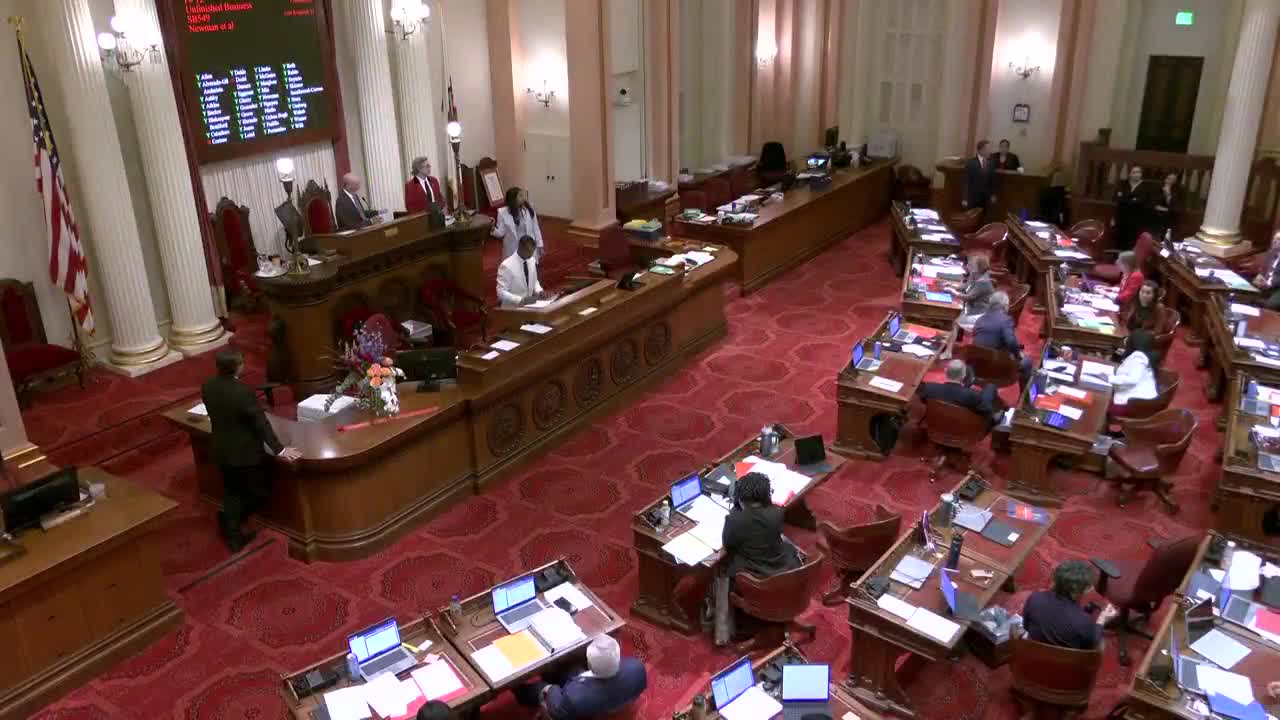 2MIN
Senate Floor
 2MIN
Assembly Floor
 46SEC
Assembly Floor
 24MIN
Assembly Standing Committee on Privacy and Consumer Protection
 37MIN
Assembly Standing Committee on Education
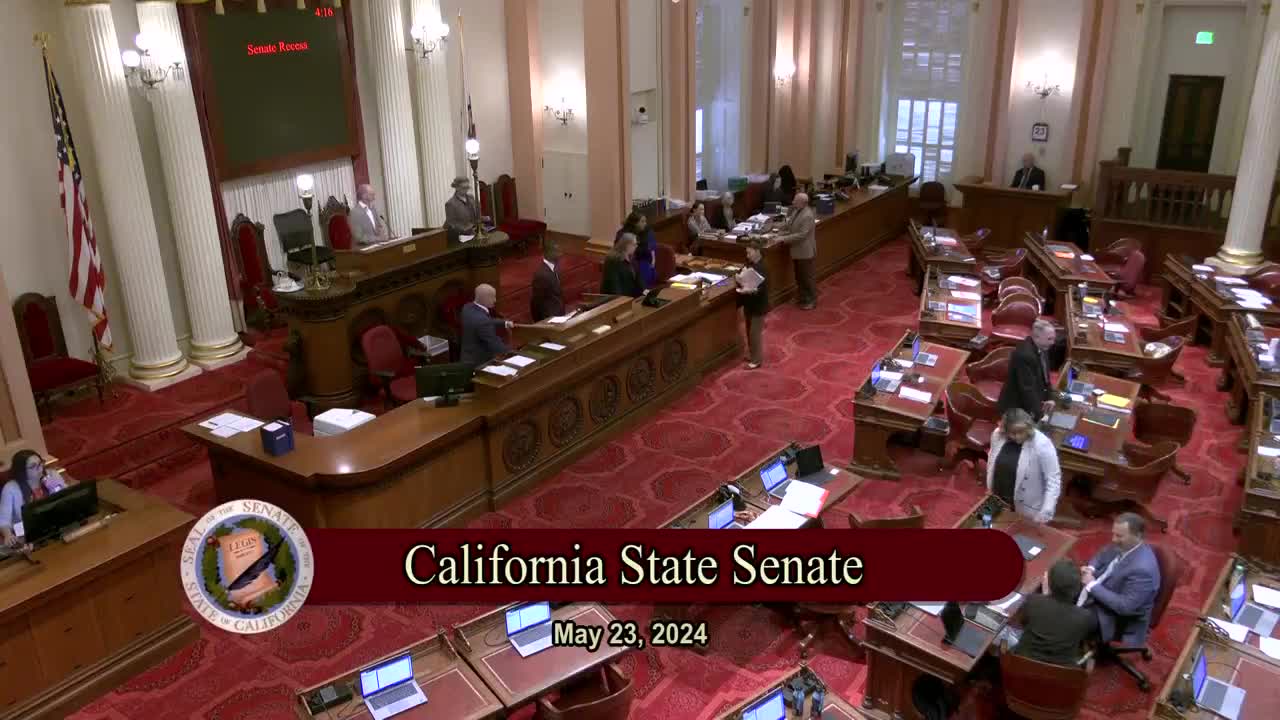 14MIN
Senate Floor
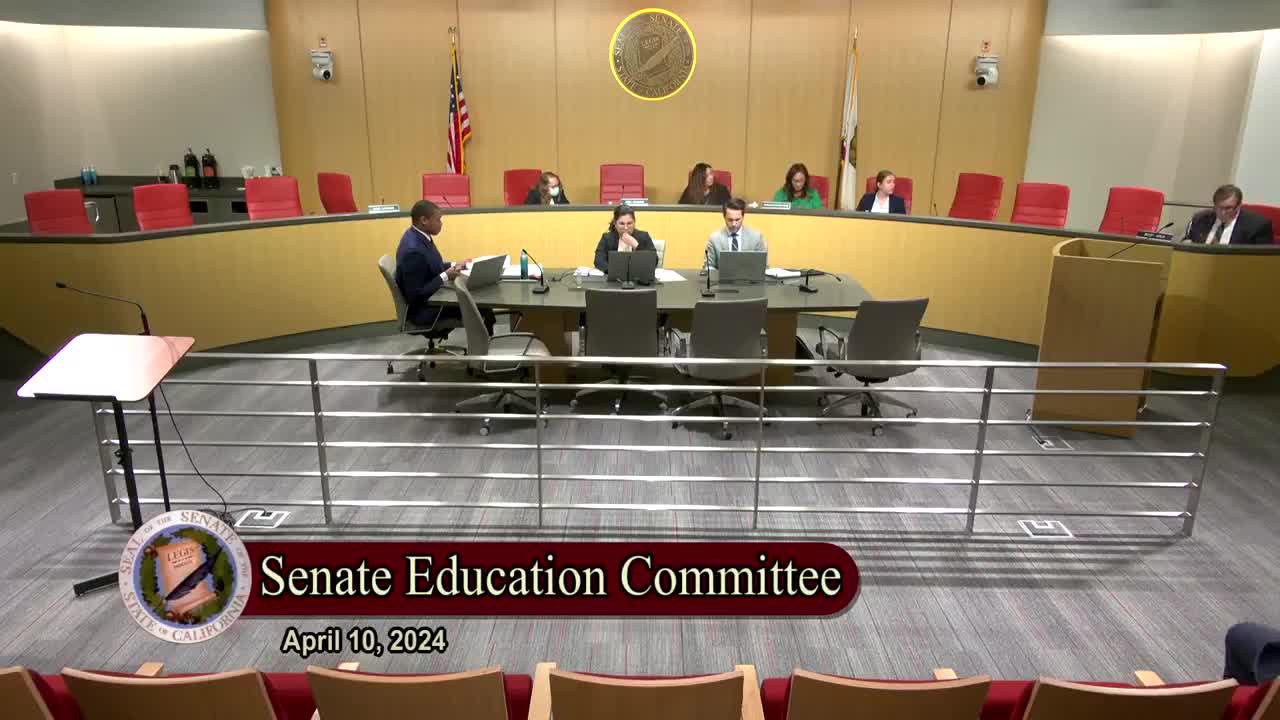 16MIN
Senate Standing Committee on Education
Bill Author




