SB 1288: Public schools: artificial intelligence working group.
- Session Year: 2023-2024
- House: Senate
- Latest Version Date: 2024-09-28
Current Status:
Passed
(2024-09-28: Chaptered by Secretary of State. Chapter 893, Statutes of 2024.)
Introduced
In Committee
First Chamber
In Committee
Second Chamber
Enacted
Existing law requires the Superintendent of Public Instruction to establish procedures within the State Department of Education to, among other things, annually identify the critical needs for which effective educational programs and practices are to be identified, developed, and disseminated to public schools.
This bill would require the Superintendent to convene a working group, composed as provided, for specific purposes related to artificial intelligence in public schools, as specified. The bill would require, among other things, the working group to develop, on or before January 1, 2026, guidance for school districts, county offices of education, and charter schools on the safe use of artificial intelligence in education, and to, on or before July 1, 2026, develop a model policy for those local educational agencies regarding the safe and effective use of artificial intelligence in ways that benefit, and do not negatively impact, pupils and educators, as provided. The bill would require the working group to, on or before January 1, 2027, report its findings and recommendations to the appropriate policy and fiscal committees of the Legislature, as provided. The bill would dissolve the working group upon submission of that report, and would repeal these provisions as of January 1, 2031.
Existing law requires the Superintendent of Public Instruction to establish procedures within the State Department of Education to, among other things, annually identify the critical needs for which effective educational programs and practices are to be identified, developed, and disseminated to public schools.
This bill would require the Superintendent to convene a working group, composed as provided, for specific purposes related to artificial intelligence in public schools, as specified. The bill would require, among other things, the working group to develop, on or before January 1, 2026, guidance for local educational agencies and charter schools on the safe use of artificial intelligence in education, and to, on or before July 1, 2026, develop a model policy for local educational agencies and charter schools regarding the safe and effective use of artificial intelligence in ways that benefit, and do not negatively impact, pupils and educators, as provided. The bill would require the working group to, on or before January 1, 2027, report its findings and recommendations to the appropriate policy and fiscal committees of the Legislature, as provided. The bill would dissolve the working group upon submission of that report, and would repeal these provisions as of January 1, 2031.
Existing law requires the Superintendent of Public Instruction to establish procedures within the State Department of Education to, among other things, annually identify the critical needs for which effective educational programs and practices are to be identified, developed, and disseminated to public schools.
This bill would require the Superintendent, in consultation with the State Board of Education, Superintendent to convene a working group, composed as provided, for specific purposes related to artificial intelligence in public schools, as specified. The bill would require, among other things, the working group to develop, on or before January 1, 2026, guidance for local educational agencies and charter schools on the safe use of artificial intelligence in education, and to, on or before July 1, 2026, develop a model policy for local educational agencies and charter schools regarding the safe and effective use of artificial intelligence in ways that benefit, and do not negatively impact, pupils and educators, as provided. The bill would require the working group to, on or before January 1, 2027, report its findings and recommendations to the appropriate policy and fiscal committees of the Legislature, as provided. The bill would dissolve the working group upon submission of that report, and would repeal these provisions as of January 1, 2031.
Existing law requires the Superintendent of Public Instruction to establish procedures within the State Department of Education to, among other things, annually identify the critical needs for which effective educational programs and practices are to be identified, developed, and disseminated to public schools.
This bill would require the Superintendent, in consultation with the State Board of Education, to convene a working group, composed as provided, for specific purposes related to artificial intelligence in public schools, as specified. The bill would require, among other things, the working group to develop, on or before January 1, 2026, guidance for local educational agencies and charter schools on the safe use of artificial intelligence in education, and to, on or before July 1, 2026, develop a model policy for local educational agencies and charter schools regarding the safe and effective use of artificial intelligence in ways that benefit, and do not negatively impact, pupils and educators, as provided. The bill would require the working group to, on or before January 1, 2027, report its findings and recommendations to the Legislature, as provided. The bill would dissolve the working group upon submission of that report, and would repeal these provisions as of January 1, 2031.
Existing law requires the Superintendent of Public Instruction to establish procedures within the State Department of Education to, among other things, annually identify the critical needs for which effective educational programs and practices are to be identified, developed, and disseminated to public schools.This bill would require the Superintendent, in consultation with the State Board of Education, to convene a working group, composed as provided, for the purpose of evaluating artificial intelligence-enabled teaching and learning practices, as specified. The bill would require the working group to report its findings and recommendations to the Legislature.Existing law requires the Superintendent of Public Instruction to establish procedures within the State Department of Education to, among other things, annually identify the critical needs for which effective educational programs and practices are to be identified, developed, and disseminated to public schools.
This bill would require the Superintendent, in consultation with the State Board of Education, to convene a working group, composed as provided, for the purpose of evaluating artificial intelligence-enabled teaching and learning practices, as specified. The bill would require the working group to report its findings and recommendations to the Legislature.
Existing law requires the Superintendent of Public Instruction to establish procedures within the State Department of Education to, among other things, annually identify the critical needs for which effective educational programs and practices are to be identified, developed, and disseminated to public schools.
This bill would require the Superintendent, in consultation with the State Board of Education, to convene a working group, composed as provided, for the purpose of evaluating artificial intelligence-enabled teaching and learning practices, as specified. The bill would require the working group to report its findings and recommendations to the Legislature.
(a)The Legislature finds and declares that there is an urgent need for state guidance and locally adopted policies regarding the safe and effective use of artificial intelligence in education to benefit and protect pupils and educators.
(b)It is the intent of the Legislature to ensure that the use of artificial intelligence technology-enabled teaching and learning practices are in coordination with, rather than a replacement of, educators.
SEC. 2.Section 33328.5 is added to the Education Code, immediately following Section 33328, to read:33328.5.(a)For purposes of this section, the following definitions apply:
(1)Artificial intelligence means an engineered or machine-based system that varies in its level of autonomy and that can, for explicit or implicit objectives, infer, from the input it receives, how to generate outputs that can influence physical or virtual environments.
(2)Educator means a certificated or classified employee of a local educational agency or charter school.
(3)Local educational agency means a school district or county office of education.
(b)The Superintendent shall convene a working group for all of the following purposes:
(1)Developing guidance on the safe and effective use of artificial intelligence in ways that benefit, and do not harm, pupils and educators.
(2)Developing a model policy, reflecting available research, for local educational agencies and charter schools regarding the safe and effective use of artificial intelligence in ways that benefit, and do not negatively impact, educational quality, pupil critical thinking and writing skills, creativity, and the essential work of educators.
(3)Identifying other ways in which the state can support educators in developing and sharing effective practices involving artificial intelligence that minimize risk and maximize benefits to pupils and educators.
(c)(1)The working group shall include all of the following:
(A)Current, credentialed public school teachers serving in elementary and secondary teaching positions.
(B)Classified public school staff.
(C)Schoolsite administrators.
(D)School district or county office of education administrators.
(E)University and community college faculty, including academics with expertise in artificial intelligence and its uses in education.
(F)Representatives of private sector business or industry, with expertise in artificial intelligence and its uses in education.
(G)Pupils enrolled in public school.
(2)At least one-half of the workgroup shall be composed of current, credentialed public school teachers serving in elementary and secondary teaching positions with knowledge of the use of artificial intelligence in education.
(d)The working group shall do all of the following:
(1)(A)Assess the current and future state of artificial intelligence use in education, including both of the following:
(i)The current state of artificial intelligence used by local educational agencies and charter schools, including all of the following:
(I)Technologies most commonly in use.
(II)The typical cost of those technologies.
(III)The ownership structure of those technologies.
(IV)The ownership structure of pupil- and employee-created materials.
(V)The licensing agreements for those technologies.
(VI)The ability to access source code for those technologies.
(VII)The degree to which educators were involved in the decision to use artificial intelligence.
(VIII)Artificial intelligence as a topic of instruction in developing class content.
(ii)Anticipated and potential developments in artificial intelligence technology in education.
(B)(i)Conduct at least three public meetings to incorporate feedback from pupils, families, and relevant stakeholders into the assessment required by subparagraph (A).
(ii)Public meetings held pursuant to clause (i) may be held by teleconference, pursuant to the procedures required by Section 11123 of the Government Code, for the benefit of the public and the working group.
(2)(A)Detail current uses of artificial intelligence in education settings including through the identification of all of the following:
(i)Examples of human-centered artificial intelligence that aid, further, and improve teaching and learning, including in ways that do not exacerbate existing inequities, and the work of educators.
(ii)Examples of human replacement artificial intelligence that could negatively impact pupil development, jeopardize pupil data security, or risk the jobs of educators.
(iii)Examples of strategies to ensure that there are opportunities for stakeholders to offer meaningful feedback before any given form of artificial intelligence is introduced to pupils or educators.
(B)In performing the work required by this subdivision, the working group shall solicit input from educators and pupils on their experience using the technologies identified in subparagraph (A).
(3)On or before January 1, 2026, develop guidance for local educational agencies and charter schools on the safe use of artificial intelligence in education that addresses all of the following:
(A)Academic integrity and plagiarism.
(B)Acceptable and unacceptable uses of artificial intelligence for pupils and educators.
(C)Pupil and educator data privacy and data security.
(D)Parent and guardian access to information that pupils enter into artificial intelligence systems.
(E)Procurement of software that ensures the safety and privacy of pupils and educators, and the protection of their data.
(4)On or before July 1, 2026, develop a model policy for local educational agencies and charter schools regarding the safe and effective use of artificial intelligence in ways that benefit, and do not negatively impact, pupils and educators. This policy shall include all of the following topics:
(A)Academic integrity and plagiarism.
(B)Acceptable and unacceptable uses of artificial intelligence for pupils and educators.
(C)Pupil and educator data privacy and data security.
(D)Parent and guardian access to pupil information.
(E)Procurement of software that ensures the safety and privacy of pupils and educators and their data.
(F)Effective use of artificial intelligence to support, and avoid risk to, teaching and learning.
(G)Effective practices to support, and avoid risk to, educators and pupils.
(H)Strategies to ensure that artificial intelligence does not exacerbate existing inequities in the education system.
(I)Professional development strategies for educators on the use of artificial intelligence.
(5)Identify other ways in which the state can support educators in developing and sharing effective practices that minimize risk and maximize benefits to pupils and educators, including, but not limited to, establishing communities of practice on the use of artificial intelligence in education.
(6)On or before January 1, 2027, submit a report to the appropriate policy and fiscal committees of the Legislature, in compliance with Section 9795 of the Government Code, presenting the assessment required by paragraph (1) and any findings or recommendations related to the assessment.
(e)The department shall post on its internet website the guidance developed pursuant to paragraph (3) of subdivision (d) and the model policy for local educational agencies and charter schools developed pursuant to paragraph (4) of subdivision (d).
(f)The working group shall be subject to the Bagley-Keene Open Meeting Act (Article 9 (commencing with Section 11120) of Chapter 1 of Part 1 of Division 3 of Title 2 of the Government Code).
(g)The working group shall be dissolved upon submission of the report required by paragraph (6) of subdivision (d) to the Legislature.
(h)This section shall remain in effect only until January 1, 2031, and as of that date is repealed.
(a)The Legislature finds and declares that there is an urgent need for state guidance and locally adopted policies regarding the safe and effective use of artificial intelligence in education to benefit and protect pupils and educators.
(b)It is the intent of the Legislature to ensure that the use of artificial intelligence technology-enabled teaching and learning practices are in coordination with, rather than a replacement of, educators.
SEC. 2.Section 33328.5 is added to the Education Code, immediately following Section 33328, to read:33328.5.(a)For purposes of this section, the following definitions apply:
(1)Artificial intelligence means an engineered or machine-based system that varies in its level of autonomy and that can, for explicit or implicit objectives, infer, from the input it receives, how to generate outputs that can influence physical or virtual environments.
(2)Educator means a certificated or classified employee of a local educational agency or charter school.
(3)Local educational agency means a school district or county office of education.
(b)The Superintendent shall convene a working group for all of the following purposes:
(1)Developing guidance on the safe and effective use of artificial intelligence in ways that benefit, and do not harm, pupils and educators.
(2)Developing a model policy, reflecting available research, for local educational agencies and charter schools regarding the safe and effective use of artificial intelligence in ways that benefit, and do not negatively impact, educational quality, pupil critical thinking and writing skills, creativity, and the essential work of educators.
(3)Identifying other ways in which the state can support educators in developing and sharing effective practices involving artificial intelligence that minimize risk and maximize benefits to pupils and educators.
(c)(1)The working group shall include all of the following:
(A)Current, credentialed public school teachers serving in elementary and secondary teaching positions.
(B)Classified public school staff.
(C)Schoolsite administrators.
(D)School district or county office of education administrators.
(E)University and community college faculty. faculty, including academics with expertise in artificial intelligence and its uses in education.
(F)Representatives of private sector business or industry. industry, with expertise in artificial intelligence and its uses in education.
(G)Pupils enrolled in public school.
(2)At least one-half of the workgroup shall be composed of current, credentialed public school teachers serving in elementary and secondary teaching positions with knowledge of the use of artificial intelligence in education.
(d)The working group shall do all of the following:
(1)(A)Assess the current and future state of artificial intelligence use in education, including both of the following:
(i)The current state of artificial intelligence used by local educational agencies and charter schools, including all of the following:
(I)Technologies most commonly in use.
(II)The typical cost of those technologies.
(III)The ownership structure of those technologies.
(IV)The ownership structure of pupil- and employee-created materials.
(V)The licensing agreements for those technologies.
(VI)The ability to access source code for those technologies.
(VII)The degree to which educators were involved in the decision to use artificial intelligence.
(VIII)Artificial intelligence as a topic of instruction in developing class content.
(ii)Anticipated and potential developments in artificial intelligence technology in education.
(B)(i)Conduct at least three public meetings to incorporate feedback from pupils, families, and relevant stakeholders into the assessment required by subparagraph (A).
(ii)Public meetings held pursuant to clause (i) may be held by teleconference, pursuant to the procedures required by Section 11123 of the Government Code, for the benefit of the public and the working group.
(2)(A)Detail current uses of artificial intelligence in education settings including through the identification of all of the following:
(i)Examples of human-centered artificial intelligence that aid, further, and improve teaching and learning, including in ways that do not exacerbate existing inequities, and the work of educators.
(ii)Examples of human replacement artificial intelligence that could negatively impact pupil development, jeopardize pupil data security, or risk the jobs of educators.
(iii)Examples of strategies to ensure that there are opportunities for stakeholders to offer meaningful feedback before any given form of artificial intelligence is introduced to pupils or educators.
(B)In performing the work required by this subdivision, the working group shall solicit input from educators and pupils on their experience using the technologies identified in subparagraph (A).
(3)On or before January 1, 2026, develop guidance for local educational agencies and charter schools on the safe use of artificial intelligence in education that addresses all of the following:
(A)Academic integrity and plagiarism.
(B)Acceptable and unacceptable uses of artificial intelligence for pupils and educators.
(C)Pupil and educator data privacy and data security.
(D)Parent and guardian access to information that pupils enter into artificial intelligence systems.
(E)Procurement of software that ensures the safety and privacy of pupils and educators, and the protection of their data.
(4)On or before July 1, 2026, develop a model policy for local educational agencies and charter schools regarding the safe and effective use of artificial intelligence in ways that benefit, and do not negatively impact, pupils and educators. This policy shall include all of the following topics:
(A)Academic integrity and plagiarism.
(B)Acceptable and unacceptable uses of artificial intelligence for pupils and educators.
(C)Pupil and educator data privacy and data security.
(D)Parent and guardian access to pupil information.
(E)Procurement of software that ensures the safety and privacy of pupils and educators and their data.
(F)Effective use of artificial intelligence to support, and avoid risk to, teaching and learning.
(G)Effective practices to support, and avoid risk to, educators and pupils.
(H)Strategies to ensure that artificial intelligence does not exacerbate existing inequities in the education system.
(I)Professional development strategies for educators on the use of artificial intelligence.
(5)Identify other ways in which the state can support educators in developing and sharing effective practices that minimize risk and maximize benefits to pupils and educators, including, but not limited to, establishing communities of practice on the use of artificial intelligence in education.
(6)On or before January 1, 2027, submit a report to the appropriate policy and fiscal committees of the Legislature, in compliance with Section 9795 of the Government Code, presenting the assessment required by paragraph (1) and any findings or recommendations related to the assessment.
(e)The department shall post on its internet website the guidance developed pursuant to paragraph (3) of subdivision (d) and the model policy for local educational agencies and charter schools developed pursuant to paragraph (4) of subdivision (d).
(f)The working group shall be subject to the Bagley-Keene Open Meeting Act (Article 9 (commencing with Section 11120) of Chapter 1 of Part 1 of Division 3 of Title 2 of the Government Code).
(g)The working group shall be dissolved upon submission of the report required by paragraph (6) of subdivision (d) to the Legislature.
(h)This section shall remain in effect only until January 1, 2031, and as of that date is repealed.
(a)The Legislature finds and declares that there is an urgent need for expanded state guidance and locally adopted policies regarding the safe and effective use of artificial intelligence in education to benefit and protect pupils and educators.
(b)It is the intent of the Legislature to ensure that the use of artificial intelligence technology-enabled teaching and learning practices are in coordination with, rather than a replacement of, educators.
SEC. 2.Section 33328.5 is added to the Education Code, immediately following Section 33328, to read:33328.5.(a)For purposes of this section, the following definitions apply:
(1)Artificial intelligence means an engineered or machine-based system that varies in its level of autonomy and that can, for explicit or implicit objectives, infer, from the input it receives, how to generate outputs that can influence physical or virtual environments.
(1)(2)Educator means a certificated or classified employee of a local educational agency or charter school.
(2)(3)Local educational agency means a school district or county office of education.
(b)The Superintendent, in consultation with the state board, Superintendent shall convene a working group for all of the following purposes:
(1)Identifying specific uses of artificial intelligence that negatively impact pupil development, jeopardize pupil data security, or risk the jobs of educators, and developing recommendations on how to best protect pupils and educators from these types of artificial intelligence.(2)Expanding guidance on safe, responsible, and strategic uses of artificial intelligence in education, where educators deem artificial intelligence to be appropriate.(1)Developing guidance on the safe and effective use of artificial intelligence in ways that benefit, and do not harm, pupils and educators.
(3)(2)Developing a model policy, reflecting evidence-based available research, for local educational agencies and charter schools regarding the safe and effective use of artificial intelligence in ways that benefit, and do not negatively impact, educational quality, pupil critical thinking and writing skills, creativity, and the essential work of educators.
(4)(3)Identifying other ways in which the state can protect pupils and educators from any potential negative impacts of artificial intelligence while supporting educators in creating effective practices. support educators in developing and sharing effective practices involving artificial intelligence that minimize risk and maximize benefits to pupils and educators.
(c)(1)The working group shall include all of the following:
(1)(A)Current, credentialed public school teachers serving in elementary and secondary teaching positions.
(2)(B)Classified public school staff.
(3)(C)Schoolsite administrators.
(4)(D)School district or county office of education administrators.
(5)(E)University and community college faculty.
(6)(F)Representatives of private sector business or industry.
(7)(G)Pupils enrolled in public school.
(2)At least one-half of the workgroup shall be composed of current, credentialed public school teachers serving in elementary and secondary teaching positions with knowledge of the use of artificial intelligence in education.
(d)The working group shall do all of the following:
(1)(A)Assess the current and future state of artificial intelligence use in education, including both of the following:
(i)The current state of artificial intelligence used by local educational agencies and charter schools, including all of the following:
(I)Technologies most commonly in use.
(II)The typical cost of those technologies.
(III)The ownership structure of those technologies.
(IV)The ownership structure of pupil- and employee-created materials.
(V)The licensing agreements for those technologies.
(VI)The ability to access source code for those technologies.
(VII)The degree to which educators were involved in the decision to use artificial intelligence.
(VIII)Artificial intelligence as a topic of instruction in developing class content.
(ii)Anticipated and potential developments in artificial intelligence technology in education.
(B)(i)Conduct at least three public meetings to incorporate feedback from pupils, families, and relevant stakeholders into the assessment required by subparagraph (A).
(ii)Public meetings held pursuant to clause (i) may be held by teleconference, pursuant to the procedures required by Section 11123 of the Government Code, for the benefit of the public and the working group.
(2)(A)Detail current uses of artificial intelligence in education settings and recommend action based on this research, in such a way that best protects pupils and educators from the potential negative impacts of artificial intelligence including through the identification of all of the following:
(i)Examples of human-centered artificial intelligence that aid, further, and improve the education process teaching and learning, including in ways that do not exacerbate existing inequities, and the work of educators.
(ii)Examples of human replacement artificial intelligence that could negatively impact pupil development, jeopardize pupil data security, or risk the jobs of educators.
(iii)Strategies Examples of strategies to ensure that the collective opportunity there are opportunities for stakeholders to offer meaningful feedback before any given form of artificial intelligence is introduced to pupils or educators.
(B)In performing the work required by this subdivision, the working group shall solicit input from educators and pupils on their experience using the technologies identified in subparagraph (A).
(3)On or before January 1, 2026, develop guidance for local educational agencies and charter schools on the safe use of artificial intelligence in education that addresses all of the following:
(A)Academic integrity and plagiarism.
(B)Acceptable and unacceptable uses of artificial intelligence for pupils and educators.
(C)Pupil and educator data privacy and data security.
(D)Parent and guardian access to information that pupils enter into artificial intelligence systems.
(E)Procurement of software that ensures the safety and privacy of pupils and educators, and the protection of their data.
(4)On or before July 1, 2026, develop a model policy for local educational agencies and charter schools regarding the safe and effective use of artificial intelligence in ways that benefit, and do not negatively impact, pupils and educators. This policy shall include all of the following topics:
(A)Academic integrity and plagiarism.
(B)Acceptable and unacceptable uses of artificial intelligence for pupils and educators.
(C)Pupil and educator data privacy and data security.
(D)Parent and guardian access to pupil information.
(E)Procurement of software that ensures the safety and privacy of pupils and educators and their data.
(F)Effective use of artificial intelligence to support, and avoid risk to, teaching and learning.
(G)Effective practices to support, and avoid risk to, educators and pupils.
(H)Strategies to ensure that artificial intelligence does not exacerbate existing inequities in the education system.
(I)Professional development strategies for educators on the use of artificial intelligence.
(5)Identify other ways in which the state can support educators in developing and sharing effective practices that minimize risk and maximize benefits to pupils and educators, including, but not limited to, establishing communities of practice on the use of artificial intelligence in education.
(6)On or before January 1, 2027, submit a report to the appropriate policy and fiscal committees of the Legislature, in compliance with Section 9795 of the Government Code, presenting the assessment required by paragraph (1) and any findings or recommendations related to the assessment.
(e)The department shall post on its internet website the guidance developed pursuant to paragraph (3) of subdivision (d) and the model policy for local educational agencies and charter schools developed pursuant to paragraph (4) of subdivision (d).
(f)The working group shall be subject to the Bagley-Keene Open Meeting Act (Article 9 (commencing with Section 11120) of Chapter 1 of Part 1 of Division 3 of Title 2 of the Government Code).
(g)The working group shall be dissolved upon submission of the report required by paragraph (6) of subdivision (d) to the Legislature.
(h)This section shall remain in effect only until January 1, 2031, and as of that date is repealed.
(a)The Legislature finds and declares that there is an urgent need for expanded state guidance and locally adopted policies regarding the safe and effective use of artificial intelligence in education to benefit and protect pupils and educators.
(b)It is the intent of the Legislature to ensure that the use of artificial intelligence technology-enabled teaching and learning practices are in coordination with, rather than a replacement of, educators.
SEC. 2.Section 33328.5 is added to the Education Code, immediately following Section 33328, to read:33328.5.(a)For purposes of this section, the following definitions apply:
(1)Educator means a certificated or classified employee of a local educational agency or charter school.
(2)Local educational agency means a school district or county office of education.
(b)The Superintendent, in consultation with the state board, shall convene a working group for all of the following purposes:
(1)Identifying specific uses of artificial intelligence that negatively impact pupil development, jeopardize pupil data security, or risk the jobs of educators, and developing recommendations on how to best protect pupils and educators from these types of artificial intelligence.
(2)Expanding guidance on safe, responsible, and strategic uses of artificial intelligence in education, where educators deem artificial intelligence to be appropriate.
(3)Developing a model policy, reflecting evidence-based research, for local educational agencies and charter schools regarding the safe and effective use of artificial intelligence in ways that benefit, and do not negatively impact, educational quality, pupil critical thinking and writing skills, creativity, and the essential work of educators.
(4)Identifying other ways in which the state can protect pupils and educators from any potential negative impacts of artificial intelligence while supporting educators in creating effective practices.
(c)The working group shall include all of the following:
(1)Current, credentialed public school teachers serving in elementary and secondary teaching positions.
(2)Classified public school staff.
(3)Schoolsite administrators.
(4)School district or county office of education administrators.
(5)University and community college faculty.
(6)Representatives of private sector business or industry.
(7)Pupils enrolled in public school.
(d)The working group shall do all of the following:
(1)(A)Assess the current and future state of artificial intelligence use in education, including both of the following:
(i)The current state of artificial intelligence used by local educational agencies and charter schools, including all of the following:
(I)Technologies most commonly in use.
(II)The typical cost of those technologies.
(III)The ownership structure of those technologies.
(IV)The ownership structure of pupil- and employee-created materials.
(V)The licensing agreements for those technologies.
(VI)The ability to access source code for those technologies.
(VII)The degree to which educators were involved in the decision to use artificial intelligence.
(VIII)Artificial intelligence as a topic of instruction in developing class content.
(ii)Anticipated and potential developments in artificial intelligence technology in education.
(B)(i)Conduct at least six three public meetings to incorporate feedback from pupils, families, and relevant stakeholders into the assessment required by subparagraph (A).
(ii)Public meetings held pursuant to clause (i) may be held by teleconference, pursuant to the procedures required by Section 11123 of the Government Code, for the benefit of the public and the working group.
(2)(A)Detail current uses of artificial intelligence in education settings and recommend action based on this research, in such a way that best protects pupils and educators from the potential negative impacts of artificial intelligence including through the identification of all of the following:
(i)Examples of human-centered artificial intelligence that aid, further, and improve the education process and the work of educators.
(ii)Examples of human replacement artificial intelligence that could negatively impact pupil development, jeopardize pupil data security, or risk the jobs of educators.
(iii)Strategies to ensure that the collective opportunity to offer meaningful feedback before any given form of artificial intelligence is introduced to pupils or educators.
(B)In performing the work required by this subdivision, the working group shall solicit input from educators and pupils on their experience using the technologies identified in subparagraph (A).
(3)On or before January 1, 2026, develop guidance for local educational agencies and charter schools on the safe use of artificial intelligence in education that addresses all of the following:
(A)Academic integrity and plagiarism.
(B)Acceptable and unacceptable uses of artificial intelligence for pupils and educators.
(C)Pupil and educator data privacy and data security.
(D)Parent and guardian access to information that pupils enter into artificial intelligence systems.
(E)Procurement of software that ensures the safety and privacy of pupils and educators, and the protection of their data.
(4)On or before July 1, 2026, develop a model policy for local educational agencies and charter schools regarding the safe and effective use of artificial intelligence in ways that benefit, and do not negatively impact, pupils and educators. This policy shall include all of the following topics:
(A)Academic integrity and plagiarism.
(B)Acceptable and unacceptable uses of artificial intelligence for pupils and educators.
(C)Pupil and educator data privacy and data security.
(D)Parent and guardian access to pupil information.
(E)Procurement of software that ensures the safety and privacy of pupils and educators and their data.
(F)Effective use of artificial intelligence to support, and avoid risk to, teaching and learning.
(G)Effective practices to support, and avoid risk to, educators and pupils.
(H)Strategies to ensure that artificial intelligence does not exacerbate existing inequities in the education system.
(I)Professional development strategies for educators on the use of artificial intelligence.
(5)Identify other ways in which the state can support educators in developing and sharing effective practices that minimize risk and maximize benefits to pupils and educators, including, but not limited to, establishing communities of practice on the use of artificial intelligence in education.
(6)On or before January 1, 2027, submit a report to the Legislature, in compliance with Section 9795 of the Government Code, presenting the assessment required by paragraph (1) and any findings or recommendations related to the assessment.
(e)The department shall post on its internet website the guidance developed pursuant to paragraph (3) of subdivision (d) and the model policy for local educational agencies and charter schools developed pursuant to paragraph (4) of subdivision (d).
(f)The working group shall be subject to the Bagley-Keene Open Meeting Act (Article 9 (commencing with Section 11120) of Chapter 1 of Part 1 of Division 3 of Title 2 of the Government Code).
(g)The working group shall be dissolved upon submission of the report required by paragraph (6) of subdivision (d) to the Legislature.
(h)This section shall remain in effect only until January 1, 2031, and as of that date is repealed.
(a)The Legislature finds and declares that there is an urgent need for expanded state guidance and locally adopted policies regarding the safe and effective use of artificial intelligence in education to benefit and protect pupils and educators.
(b)It is the intent of the Legislature to ensure that the use of artificial intelligence technology-enabled teaching and learning practices are in coordination with, rather than a replacement of, educators.
SEC. 2.Section 33328.5 is added to the Education Code, immediately following Section 33328, to read:33328.5.(a)For purposes of this section, the following definitions apply:
(1)Educator means a certificated or classified employee of a local educational agency or charter school.
(2)Local educational agency means a school district or county office of education.
(b)The Superintendent, in consultation with the state board, shall convene a working group for all of the following purposes:
(1)Identifying specific uses of artificial intelligence that negatively impact pupil development, jeopardize pupil data security, or risk the jobs of educators, and developing recommendations on how to best protect pupils and educators from these types of artificial intelligence.
(2)Expanding guidance on safe, responsible, and strategic uses of artificial intelligence in education, where educators deem artificial intelligence to be appropriate.
(3)Developing a model policy, reflecting evidence-based research, for local educational agencies and charter schools regarding the safe and effective use of artificial intelligence in ways that benefit, and do not negatively impact, educational quality, pupil critical thinking and writing skills, creativity, and the essential work of educators.
(4)Identifying other ways in which the state can protect pupils and educators from any potential negative impacts of artificial intelligence while supporting educators in creating effective practices.
(c)The working group shall include all of the following:
(1)Current, credentialed public school teachers serving in elementary and secondary teaching positions.
(2)Classified public school staff.
(3)Schoolsite administrators.
(4)School district or county office of education administrators.
(5)University and community college faculty.
(6)Representatives of private sector business or industry.
(7)Pupils enrolled in public school.
(d)The working group shall do all of the following:
(1)(A)Assess the current and future state of artificial intelligence use in education, including both of the following:
(i)The current state of artificial intelligence used by local educational agencies and charter schools, including all of the following:
(I)Technologies most commonly in use.
(II)The typical cost of those technologies.
(III)The ownership structure of those technologies.
(IV)The ownership structure of pupil- and employee-created materials.
(V)The licensing agreements for those technologies.
(VI)The ability to access source code for those technologies.
(VII)The degree to which educators were involved in the decision to use artificial intelligence.
(VIII)Artificial intelligence as a topic of instruction in developing class content.
(ii)Anticipated and potential developments in artificial intelligence technology in education.
(B)Conduct at least six public meetings to incorporate feedback from pupils, families, and relevant stakeholders into the assessment required by subparagraph (A).
(2)(A)Detail current uses of artificial intelligence in education settings and recommend action based on this research, in such a way that best protects pupils and educators from the potential negative impacts of artificial intelligence including through the identification of all of the following:
(i)Examples of human-centered artificial intelligence that aid, further, and improve the education process and the work of educators.
(ii)Examples of human replacement artificial intelligence that could negatively impact pupil development, jeopardize pupil data security, or risk the jobs of educators.
(iii)Strategies to ensure that the collective opportunity to offer meaningful feedback before any given form of artificial intelligence is introduced to pupils or educators.
(B)In performing the work required by this subdivision, the working group shall solicit input from educators and pupils on their experience using the technologies identified in subparagraph (A).
(3)On or before January 1, 2026, develop guidance for local educational agencies and charter schools on the safe use of artificial intelligence in education that addresses all of the following:
(A)Academic integrity and plagiarism.
(B)Acceptable and unacceptable uses of artificial intelligence for pupils and educators.
(C)Pupil and educator data privacy and data security.
(D)Parent and guardian access to information that pupils enter into artificial intelligence systems.
(E)Procurement of software that ensures the safety and privacy of pupils and educators, and the protection of their data.
(4)On or before July 1, 2026, develop a model policy for local educational agencies and charter schools regarding the safe and effective use of artificial intelligence in ways that benefit, and do not negatively impact, pupils and educators. This policy shall include all of the following topics:
(A)Academic integrity and plagiarism.
(B)Acceptable and unacceptable uses of artificial intelligence for pupils and educators.
(C)Pupil and educator data privacy and data security.
(D)Parent and guardian access to pupil information.
(E)Procurement of software that ensures the safety and privacy of pupils and educators and their data.
(F)Effective use of artificial intelligence to support, and avoid risk to, teaching and learning.
(G)Effective practices to support, and avoid risk to, educators and pupils.
(H)Strategies to ensure that artificial intelligence does not exacerbate existing inequities in the education system.
(I)Professional development strategies for educators on the use of artificial intelligence.
(5)Identify other ways in which the state can support educators in developing and sharing effective practices that minimize risk and maximize benefits to pupils and educators, including, but not limited to, establishing communities of practice on the use of artificial intelligence in education.
(6)On or before January 1, 2027, submit a report to the Legislature, in compliance with Section 9795 of the Government Code, presenting the assessment required by paragraph (1) and any findings or recommendations related to the assessment.
(e)The department shall post on its internet website the guidance developed pursuant to paragraph (3) of subdivision (d) and the model policy for local educational agencies and charter schools developed pursuant to paragraph (4) of subdivision (d).
(f)The working group shall be subject to the Bagley-Keene Open Meeting Act (Article 9 (commencing with Section 11120) of Chapter 1 of Part 1 of Division 3 of Title 2 of the Government Code).
(g)The working group shall be dissolved upon submission of the report required by paragraph (6) of subdivision (d) to the Legislature.
(h)This section shall remain in effect only until January 1, 2031, and as of that date is repealed.
SECTION 1.Section 33329 is added to the Education Code, immediately following 33328, to read:33329.(a)The Superintendent, in consultation with the state board, shall convene a working group for the purpose of evaluating artificial intelligence-enabled teaching and learning practices.(b)The working group shall, at a minimum, include all of the following:(1)A Member of the Assembly appointed by the Speaker of the Assembly.(2)A Member of the Senate appointed by the Senate Committee on Rules.(3)A public member appointed by the Speaker of the Assembly.(4)A public member appointed by the Senate Committee on Rules.(5)An expert in integrative professional learning technology appointed by the Governor.(6)A public member appointed by the state board.(7)A public member appointed by the Department of Technology.(8)At least one representative each from additional stakeholders including organized labor unions.(c)The working group shall do all of the following:(1)Evaluate educator preparedness related to artificial intelligence-enabled instruction, including, but not limited to, curriculum, student engagement, and innovative practices aimed to ensure equitable outcomes for students and families. In making this evaluation, the working group shall consider all of the following:(A)The status of artificial intelligence-related teaching and learning prior to the 20232024 school year, including an assessment of need and quality of that teaching and learning.(B)The transition schools have made since the 20232024 school year to provide artificial intelligence-enabled teaching and learning.(C)The outcomes of artificial intelligence-enabled teaching and learning on students and families and whether those student outcomes were equitable across student subgroups, demographics, and geographic locations.(D)The role of external stakeholders in facilitating the transition to artificial intelligence-enabled teaching and learning.(E)Best practices pertaining to artificial intelligence-enabled teaching and learning, and how school districts can adapt existing and emerging education technologies to include artificial intelligence-enabled teaching and learning practices.(F)Workers rights and employer responsibilities regarding existing and emerging education technologies, ensuring that the use of artificial intelligence-enabled teaching and learning practices are in coordination with, rather than a replacement of, workers.(G)Any other matters related to technology-enabled and artificial intelligence teaching and learning as determined by the working group.(2)Conduct at least six public meetings to incorporate feedback from students, families, and relevant stakeholders into the evaluation required by paragraph (1).(3)(A)On or before January 1, 2026, submit a report to the Legislature, in compliance with Section 9795 of the Government Code, presenting the evaluation required by paragraph (1) and any findings or recommendations related to the evaluation.(B)The requirement for submitting a report imposed under subparagraph (A) is inoperative on January 1, 2030, pursuant to Section 10231.5 of the Government Code.(d)The working group shall be subject to the Bagley-Keene Open Meeting Act (Article 9 (commencing with Section 11120) of Chapter 1 of Part 1 of Division 3 of Title 2 of the Government Code).(a)The Superintendent, in consultation with the state board, shall convene a working group for the purpose of evaluating artificial intelligence-enabled teaching and learning practices.
(b)The working group shall, at a minimum, include all of the following:
(1)A Member of the Assembly appointed by the Speaker of the Assembly.
(2)A Member of the Senate appointed by the Senate Committee on Rules.
(3)A public member appointed by the Speaker of the Assembly.
(4)A public member appointed by the Senate Committee on Rules.
(5)An expert in integrative professional learning technology appointed by the Governor.
(6)A public member appointed by the state board.
(7)A public member appointed by the Department of Technology.
(8)At least one representative each from additional stakeholders including organized labor unions.
(c)The working group shall do all of the following:
(1)Evaluate educator preparedness related to artificial intelligence-enabled instruction, including, but not limited to, curriculum, student engagement, and innovative practices aimed to ensure equitable outcomes for students and families. In making this evaluation, the working group shall consider all of the following:
(A)The status of artificial intelligence-related teaching and learning prior to the 20232024 school year, including an assessment of need and quality of that teaching and learning.
(B)The transition schools have made since the 20232024 school year to provide artificial intelligence-enabled teaching and learning.
(C)The outcomes of artificial intelligence-enabled teaching and learning on students and families and whether those student outcomes were equitable across student subgroups, demographics, and geographic locations.
(D)The role of external stakeholders in facilitating the transition to artificial intelligence-enabled teaching and learning.
(E)Best practices pertaining to artificial intelligence-enabled teaching and learning, and how school districts can adapt existing and emerging education technologies to include artificial intelligence-enabled teaching and learning practices.
(F)Workers rights and employer responsibilities regarding existing and emerging education technologies. technologies, ensuring that the use of artificial intelligence-enabled teaching and learning practices are in coordination with, rather than a replacement of, workers.
(G)Any other matters related to technology-enabled and artificial intelligence teaching and learning as determined by the working group.
(2)Conduct at least six public meetings to incorporate feedback from students, families, and relevant stakeholders into the evaluation required by paragraph (1).
(3)(A)On or before January 1, 2026, submit a report to the Legislature, in compliance with Section 9795 of the Government Code, presenting the evaluation required by paragraph (1) and any findings or recommendations related to the evaluation.
(B)The requirement for submitting a report imposed under subparagraph (A) is inoperative on January 1, 2030, pursuant to Section 10231.5 of the Government Code.
(d)The working group shall be subject to the Bagley-Keene Open Meeting Act (Article 9 (commencing with Section 11120) of Chapter 1 of Part 1 of Division 3 of Title 2 of the Government Code).
(a)The Superintendent, in consultation with the state board, shall convene a working group for the purpose of evaluating artificial intelligence-enabled teaching and learning practices.
(b)The working group shall, at a minimum, include all of the following:
(1)A Member of the Assembly appointed by the Speaker of the Assembly.
(2)A Member of the Senate appointed by the Senate Committee on Rules.
(3)A public member appointed by the Speaker of the Assembly.
(4)A public member appointed by the Senate Committee on Rules.
(5)An expert in integrative professional learning technology appointed by the Governor.
(6)A public member appointed by the state board.
(7)A public member appointed by the Department of Technology.
(8)At least one representative each from additional stakeholders including organized labor unions.
(c) The working group shall do all of the following:
(1)Evaluate educator preparedness related to artificial intelligence-enabled instruction, including, but not limited to, curriculum, student engagement, and innovative practices aimed to ensure equitable outcomes for students and families. In making this evaluation, the working group shall consider all of the following:
(A)The status of artificial intelligence-related teaching and learning prior to the 20232024 school year, including an assessment of need and quality of that teaching and learning.
(B)The transition schools have made since the 20232024 school year to provide artificial intelligence-enabled teaching and learning.
(C)The outcomes of artificial intelligence-enabled teaching and learning on students and families and whether those student outcomes were equitable across student subgroups, demographics, and geographic locations.
(D)The role of external stakeholders in facilitating the transition to artificial intelligence-enabled teaching and learning.
(E)Best practices pertaining to artificial intelligence-enabled teaching and learning, and how school districts can adapt existing and emerging education technologies to include artificial intelligence-enabled teaching and learning practices.
(F)Workers rights and employer responsibilities regarding existing and emerging education technologies.
(G)Any other matters related to technology-enabled and artificial intelligence teaching and learning as determined by the working group.
(2)Conduct at least six public meetings to incorporate feedback from students, families, and relevant stakeholders into the evaluation required by paragraph (1).
(3)(A)On or before January 1, 2026, submit a report to the Legislature, in compliance with Section 9795 of the Government Code, presenting the evaluation required by paragraph (1) and any findings or recommendations related to the evaluation.
(B)The requirement for submitting a report imposed under subparagraph (A) is inoperative on January 1, 2030, pursuant to Section 10231.5 of the Government Code.
(d)The working group shall be subject to the Bagley-Keene Open Meeting Act (Article 9 (commencing with Section 11120) of Chapter 1 of Part 1 of Division 3 of Title 2 of the Government Code).
|
Date
|
Status
|
|---|---|
| Sep 28, 2024 | Chaptered by Secretary of State. Chapter 893, Statutes of 2024. |
| Sep 28, 2024 | Approved by the Governor. |
| Sep 4, 2024 | Enrolled and presented to the Governor at 4 p.m. |
| Aug 28, 2024 | Assembly amendments concurred in. (Ayes 39. Noes 0. Page 5615.) Ordered to engrossing and enrolling. |
| Aug 27, 2024 | Ordered to special consent calendar. |
| Aug 26, 2024 | In Senate. Concurrence in Assembly amendments pending. |
| Aug 26, 2024 | Read third time. Passed. (Ayes 77. Noes 0. Page 6533.) Ordered to the Senate. |
| Aug 19, 2024 | Read second time. Ordered to third reading. |
| Aug 15, 2024 | From committee: Do pass. (Ayes 14. Noes 0.) (August 15). |
| Aug 7, 2024 | August 7 set for first hearing. Placed on suspense file. |
| Jul 3, 2024 | Read second time and amended. Re-referred to Com. on APPR. |
| Jul 3, 2024 | From committee: Do pass as amended and re-refer to Com. on APPR. with recommendation: To consent calendar. (Ayes 11. Noes 0.) (July 2). |
| Jun 26, 2024 | From committee: Do pass and re-refer to Com. on P. & C.P. with recommendation: To consent calendar. (Ayes 7. Noes 0.) (June 26). Re-referred to Com. on P. & C.P. |
| Jun 26, 2024 | From committee with author's amendments. Read second time and amended. Re-referred to Com. on P. & C.P. |
| Jun 4, 2024 | June 12 hearing postponed by committee. |
| Jun 3, 2024 | Referred to Coms. on ED. and P. & C.P. |
| May 24, 2024 | In Assembly. Read first time. Held at Desk. |
| May 24, 2024 | Read third time. Passed. (Ayes 38. Noes 0. Page 4210.) Ordered to the Assembly. |
| May 22, 2024 | Ordered to special consent calendar. |
| May 20, 2024 | Read second time. Ordered to third reading. |
| May 16, 2024 | Read second time and amended. Ordered to second reading. |
| May 16, 2024 | From committee: Do pass as amended. (Ayes 7. Noes 0. Page 3978.) (May 16). |
| May 10, 2024 | Set for hearing May 16. |
| May 6, 2024 | May 6 hearing: Placed on APPR suspense file. |
| Apr 26, 2024 | Set for hearing May 6. |
| Apr 24, 2024 | From committee: Do pass and re-refer to Com. on APPR with recommendation: To consent calendar. (Ayes 7. Noes 0. Page 3752.) (April 24). Re-referred to Com. on APPR. |
| Apr 15, 2024 | From committee with author's amendments. Read second time and amended. Re-referred to Com. on ED. |
| Apr 9, 2024 | Set for hearing April 24. |
| Apr 1, 2024 | April 3 set for second hearing canceled at the request of author. |
| Mar 21, 2024 | From committee with author's amendments. Read second time and amended. Re-referred to Com. on ED. |
| Mar 13, 2024 | Set for hearing April 3. |
| Mar 12, 2024 | March 20 set for first hearing canceled at the request of author. |
| Mar 1, 2024 | Set for hearing March 20. |
| Feb 29, 2024 | Referred to Com. on ED. |
| Feb 16, 2024 | From printer. May be acted upon on or after March 17. |
| Feb 15, 2024 | Introduced. Read first time. To Com. on RLS. for assignment. To print. |
|
Date
|
Description
|
Location
|
Votes
|
|
|---|---|---|---|---|
| Aug 28, 2024 | Special Consent SB1288 Becker et al. | Senate Floor |
Passed |
|
| Aug 26, 2024 | SB 1288 Becker Senate Third Reading By Muratsuchi | Assembly Floor |
Passed |
|
| Aug 15, 2024 | Do pass. | Assembly Standing Committee on Appropriations |
Passed |
|
| Jul 2, 2024 | Do pass as amended, and be re-referred to the Committee on [Appropriations] with recommendation: To Consent Calendar | Assembly Standing Committee on Privacy and Consumer Protection |
Passed |
|
| Jun 26, 2024 | Do pass and be re-referred to the Committee on [Privacy and Consumer Protection] with recommendation: To Consent Calendar | Assembly Standing Committee on Education |
Passed |
|
| May 24, 2024 | Special Consent SB1288 Becker et al. | Senate Floor |
Passed |
|
| May 16, 2024 | Do pass as amended | Senate Standing Committee on Appropriations |
Passed |
|
| May 6, 2024 | Placed on suspense file | Senate Standing Committee on Appropriations |
Passed |
|
| Apr 24, 2024 | Do pass, but first be re-referred to the Committee on [Appropriations] with the recommendation: To Consent Calendar | Senate Standing Committee on Education |
Passed |
This list shows positions taken on this bill by organizations on the date displayed, which is linked to the original source.
Positions by individuals are not included.
|
Organization
|
Position
|
Date
|
|---|---|---|
| California Association Of School Business Officials | ** Support | |
| California Federation Of Teachers | ** Support | |
| California School Employees Association | ** Support | |
| CFT - A Union of Educators and Classified Professionals, AFT, AFL-CIO | ** Support | |
| Edvoice | ** Support | |
| Generation Up | ** Support | |
| Kira Learning | ** Support | |
| Los Angeles County Office Of Education | ** Support | |
| Los Angeles Unified School District | ** Support | |
| Northern California Youth Policy Coalition | ** Support | |
| Outschool, Inc. | ** Support | |
| Perk Advocacy | ** Support | |
| Scaling Student Success | ** Support | |
| State Superintendent of Public Instruction Tony Thurmond | ** Support | |
| Technet | ** Support |
SENATE RULES COMMITTEE Office of Senate Floor Analyses (916) 651-1520 Fax: (916) 327-4478 | SB 1288 |
UNFINISHED BUSINESS
Bill No: SB 1288
Author: Becker (D), et al.
Amended: 7/3/24
Vote: 21
SENATE EDUCATION COMMITTEE: 7-0, 4/24/24
AYES: Newman, Ochoa Bogh, Cortese, Glazer, Gonzalez, Smallwood-Cuevas, Wilk
SENATE APPROPRIATIONS COMMITTEE: 7-0, 5/16/24
AYES: Caballero, Jones, Ashby, Becker, Bradford, Seyarto, Wahab
SENATE FLOOR: 38-0, 5/24/24
AYES: Alvarado-Gil, Ashby, Atkins, Becker, Blakespear, Bradford, Caballero, Cortese, Dahle, Dodd, Durazo, Eggman, Glazer, Gonzalez, Grove, Hurtado, Jones, Laird, Limón, McGuire, Menjivar, Min, Newman, Nguyen, Niello, Ochoa Bogh, Padilla, Portantino, Roth, Rubio, Seyarto, Skinner, Smallwood-Cuevas, Stern, Umberg, Wahab, Wiener, Wilk
NO VOTE RECORDED: Allen, Archuleta
ASSEMBLY FLOOR: 77-0, 8/26/24 - See last page for vote
SUBJECT: Public schools: artificial intelligence working group
SOURCE: State Superintendent of Public Instruction Tony Thurmond
Generation Up
DIGEST:
This requires the Superintendent of Public Instruction (SPI) to convene a working group on artificial intelligence (AI), and requires that working group to develop expanded guidance and a model policy on AI for use by local educational agencies (LEAs) and charter schools.
Assembly Amendments
defines “artificial intelligence” and makes various changes to the structure of the working group on AI.
ANALYSIS:
Existing law:
Education Code (EC)
- Within the California Online Community College Act, requires California Community College’s Research and Development Unit to focus on using technology, data science, behavioral science, machine learning, and AI to build out student supports, such as, but not limited to, a virtual help desk which uses technology to respond to commonly asked questions from students at any hour of the day and week. (EC § 75008)
- Requires the Instructional Quality Commission (IQC) to consider developing and recommending to the State Board of Education (SBE), on or before July 31, 2019, computer science content standards for kindergarten and grades 1 to 12 pursuant to recommendations developed by a group of computer science experts. (EC § 60605.4)
This bill:
- Establishes the following definitions:
- “Artificial intelligence" means an engineered or machine-based system that varies in its level of autonomy and that can, for explicit or implicit objectives, infer, from the input it receives, how to generate outputs that can influence physical or virtual environments.
- "Educator" means a certificated or classified employee of an LEA or charter school.
- "Local educational agency" means a school district or county office of education (COE).
- Requires the SPI to convene a working group for the following purposes:
- Developing guidance on the safe and effective use of AI in ways that benefit, and do not harm, pupils and educators.
- Developing a model policy, reflecting evidence-based research, for LEAs and charter schools regarding the safe and effective use of AI in ways that benefit, and do not negatively impact, educational quality, student critical thinking and writing skills, creativity, and the essential work of educators.
- Identifying other ways in which the state can support educators in developing and sharing effective practices involving artificial intelligence that minimize risk and maximize benefits to pupils and educators.
- Requires the working group to include all of the following:
- Current, credentialed public school teachers serving in elementary and secondary teaching positions;
- Classified public school staff;
- Schoolsite administrators;
- School district or COE administrators;
- University and community college faculty, including academics with expertise in artificial intelligence and its uses in education;
- Representatives of private sector businesses or industry with expertise in artificial intelligence and its uses in education, and
- Students enrolled in public schools.
- Requires that at least one-half of the workgroup shall be composed of current, credentialed public school teachers serving in elementary and secondary teaching positions with knowledge of the use of artificial intelligence in education.
- Requires the working group to do all of the following:
- Assess the current and future state of AI use in education;
- Conduct at least three public meetings to incorporate feedback from students, families, and relevant stakeholders into the assessment;
- Detail current uses of AI in education settings, as specified; and
- Solicit input from educators and students on their experience using AI technologies.
- Requires the working group, on or before January 1, 2026, to develop guidance for LEAs and charter schools on the safe use of AI in education that addresses all of the following:
- Academic integrity and plagiarism;
- Acceptable and unacceptable uses of AI for students and educators;
- Student and educator data privacy and data security;
- Parent and guardian access to information that students enter into AI systems; and
- Procurement of software that ensures the safety and privacy of students and educators, and the protection of their data.
- Requires the working group, on or before July 1, 2026, to develop a model policy for LEAs and charter schools regarding the safe and effective use of AI in ways that benefit, and do not negatively impact, students and educators, as specified.
- Identify other ways in which the state can support educators in developing and sharing effective practices that minimize risk and maximize benefits to students and educators, including, but not limited to, establishing communities of practice on the use of AI in education.
- On or before January 1, 2027, submit a report to the appropriate policy and fiscal committees of the Legislature presenting the assessment and any findings or recommendations related to the assessment.
- Requires the California Department of Education (CDE) to post on its website the guidance and the model policy.
- Makes the meetings of the working group subject to the Bagley-Keene Open Meeting Act.
- Dissolves the working group upon submission of the report, and sunsets the provisions of the bill on January 1, 2031.
Comments
- Need for the bill. According to the author, “The use of generative artificial intelligence (GenAI) increased rapidly over the last year with the release of ChatGPT and other GenAI companies. While algorithms have been used in personalized student learning, voice assistants, and grammar correction programs, GenAI is quickly becoming a larger presence in the education space. The Pew Research Center recently reported that roughly one in five teenagers who are aware of ChatGPT, a popular GenAI, indicate they have utilized it in completing their schoolwork. Additionally, AI is increasingly being embraced as an educational topic of study. AI courses are included in computer science education, with the proportion of new computer science PhD Graduates who specialized in AI almost doubling since 2010. Due to the increasing use of GenAI programs, schools have been forced to engage with the emerging technology, encountering issues such as a lack of centralized teacher training on GenAI, unauthorized use by students to complete assignments, and concerns on algorithmic biases. Given the profound impact the use of AI on students and teachers can have, California must develop guardrails and guidelines for AI’s use in education. SB 1288 establishes the space for needed experts to develop guardrails and guidelines for the use of AI in education.”
- What is AI? AI refers to computers and robots performing intelligent tasks. The goal is to endow them with human-like intellectual processes. Since the 1950s, researchers have explored creating machines that mimic human intelligence. While computers can perform complex tasks, no program can match human flexibility. However, some programs have achieved human-level performance in specific tasks. For example, AI diagnoses medical conditions, search engines retrieve relevant information, and speech recognition software interprets human speech.
- California Educators Together Statewide AI Group. Announced in 2021, The CDE, in collaboration with the Californians Dedicated to Education Foundation, has launched California Educators Together, an online platform designed to streamline communication between educators and allow them to access and share a vast library of content, resources, strategies, and supports.
In accordance with State Superintendent of Public Instruction Tony Thurmond’s Professional Learning Initiative, CDE is committed to supporting AI-focused professional learning for administrators and educators, to educate them about AI's benefits and limitations. The Professional Learning Initiative can keep educators up-to-date on emerging technology tools for the classroom. CDE’s Computer Science Coordinator has participated in numerous AI panels across the state and has led CDE’s STEAM (Science, Technology, Engineering, Arts, Mathematics) workgroup in introducing AI to CDE. The CDE’s webpage, Learning With AI, Learning About AI, outlines various ways in which AI can be incorporated into the classroom and in school settings appropriately.
CDE is preparing additional resources to support educators, including the implementation of an AI webinar series, “Artificial Intelligence: Learning with AI, Learning about AI,” which features educators from K12 and postsecondary spaces, as well as industry professionals, complete with actionable resources for schools with a learner centered focus. CDE is participating along with multiple organizations including Code.org, Educational Testing Services, International Society for Technology in Education, Khan Academy, and World Economic Forum, in the TeachAI project (teachai.org), to engage in conversations with a goal of empowering educators to teach with and about AI. The website, California Educators Together, serves as a clearinghouse for educators to seek various curriculum ideas and sample lesson plans.
- Computer Science Standards – Artificial Intelligence. On September 30, 2014, Governor Brown signed Assembly Bill 1539 (Hagman, Chapter 876, Statutes of 2014) into law, adding Section 60605.4 to the EC and directing the IQC to consider developing and recommending to the SBE computer science (CS) content standards on or before July 31, 2019, pursuant to recommendations developed by a group of CS experts. The IQC approved and recommended the draft CA CS Standards to the SBE on July 2018. The SBE approved the IQC recommendations and adopted the CA CS Standards in September 2018.
The CA CS Standards are based on CS core concepts and core practices from the revised international Computer Science Teachers Association standards, which align with the national K–12 Computer Science Framework. The CA CS Standards are standards that define the knowledge, concepts, and skills that students should acquire in each grade band and encourage school districts to provide opportunities for CS education for all students. CS core concepts and practices in the standards are vertically aligned, coherent across grades, and designed in developmentally appropriate grade spans K–2, 3–5, 6–8, and 9–12. The standards are designed to be accessible to every student in California and to inform teachers, curriculum developers, and educational leaders to ensure all students receive quality CS instruction. Beginning in high school students who take CS course are expected to describe how AI drives many software and physical systems, implement an algorithm that uses AI to overcome a simple challenge, and acquire and apply appropriate AI techniques used by the game development industry.
FISCAL EFFECT: Appropriation: No Fiscal Com.: Yes Local: No
According to the Assembly Appropriations Committee, “One-time General Fund costs of $167,000 to CDE for one position to administer and support the workgroup, facilitate required public meetings, and gather the required feedback. This estimate assumes that the workgroup would consist of up to 20 members who would not receive compensation, and have three meetings. Additional travel costs may be incurred if meetings were conducted in-person.”
SUPPORT: (Verified 8/27/24)
State Superintendent of Public Instruction Tony Thurmond (Co-Source)
Generation Up (Co-Source)
California Association of School Business Officials
California Federation of Teachers
California School Employees Association
CFT- a Union of Educators and Classified Professionals, AFT, AFL-CIO
EdVoice
Kira Learning
Los Angeles County Office of Education
Los Angeles Unified School District
Northern California Youth Policy Coalition
Outschool, Inc.
PERK Advocacy
Scaling Student Success
TechNet
OPPOSITION: (Verified 8/27/24)
None received
ARGUMENTS IN SUPPORT: According to Generation Up, “While algorithms have been used in personalized student learning, voice assistants, and grammar correction programs, generative artificial intelligence (GenAI) is quickly becoming a larger presence in the education space—and teachers and professors have struggled to keep up. Facing issues like lack of training, academic integrity violations, and concerns about algorithmic biases, today’s educators are simply unprepared and unequipped, not only to address these challenges but to harness the potential benefits of AI in the classroom. The US Department of Education’s Office of Educational Technology issued a report on AI as an educational technology that provided recommendations for the use of AI in education and policy development including, developing education-specific guidelines and guardrails, informing and involving educators, and more. SB 1288 convenes a workgroup on the use of AI in education at the CDE to make recommendations for potential policies to address the use of AI in education, specifically looking at student outcomes, workforce impacts, and inequities in AI-enabled teaching and learning practices.”
ASSEMBLY FLOOR: 77-0, 8/26/24
AYES: Addis, Aguiar-Curry, Alanis, Alvarez, Arambula, Bains, Bauer-Kahan, Bennett, Berman, Boerner, Bonta, Bryan, Calderon, Juan Carrillo, Wendy Carrillo, Chen, Connolly, Megan Dahle, Davies, Dixon, Essayli, Flora, Mike Fong, Friedman, Gabriel, Gallagher, Garcia, Gipson, Grayson, Haney, Hart, Holden, Hoover, Irwin, Jackson, Jones-Sawyer, Kalra, Lackey, Lee, Low, Lowenthal, Maienschein, Mathis, McCarty, McKinnor, Muratsuchi, Stephanie Nguyen, Pacheco, Papan, Jim Patterson, Joe Patterson, Pellerin, Petrie-Norris, Quirk-Silva, Ramos, Rendon, Reyes, Luz Rivas, Rodriguez, Blanca Rubio, Sanchez, Santiago, Schiavo, Soria, Ta, Ting, Valencia, Villapudua, Waldron, Wallis, Ward, Weber, Wicks, Wilson, Wood, Zbur, Robert Rivas
NO VOTE RECORDED: Cervantes, Ortega
Prepared by: Kordell Hampton / ED. / (916) 651-4105
11/5/24 10:14:02
**** END ****
SENATE RULES COMMITTEE Office of Senate Floor Analyses (916) 651-1520 Fax: (916) 327-4478 | SB 1288 |
UNFINISHED BUSINESS
Bill No: SB 1288
Author: Becker (D), et al.
Amended: 7/3/24
Vote: 21
SENATE EDUCATION COMMITTEE: 7-0, 4/24/24
AYES: Newman, Ochoa Bogh, Cortese, Glazer, Gonzalez, Smallwood-Cuevas, Wilk
SENATE APPROPRIATIONS COMMITTEE: 7-0, 5/16/24
AYES: Caballero, Jones, Ashby, Becker, Bradford, Seyarto, Wahab
SENATE FLOOR: 38-0, 5/24/24
AYES: Alvarado-Gil, Ashby, Atkins, Becker, Blakespear, Bradford, Caballero, Cortese, Dahle, Dodd, Durazo, Eggman, Glazer, Gonzalez, Grove, Hurtado, Jones, Laird, Limón, McGuire, Menjivar, Min, Newman, Nguyen, Niello, Ochoa Bogh, Padilla, Portantino, Roth, Rubio, Seyarto, Skinner, Smallwood-Cuevas, Stern, Umberg, Wahab, Wiener, Wilk
NO VOTE RECORDED: Allen, Archuleta
ASSEMBLY FLOOR: 77-0, 8/26/24 - See last page for vote
SUBJECT: Public schools: artificial intelligence working group
SOURCE: State Superintendent of Public Instruction Tony Thurmond
Generation Up
DIGEST:
This billThis bill rrequires the Superintendent of Public Instruction (SPI) to convene a working group on artificial intelligence (AI), and requires that working group to develop expanded guidance and a model policy on AI for use by local educational agencies (LEAs) and charter schools.
Assembly Amendments
Defines “artificial intelligence” and makes various changes to the structure of the working group on AI.
ANALYSIS:
Existing law:
Education Code (EC)
- Within the California Online Community College Act, requires California Community College’s Research and Development Unit to focus on using technology, data science, behavioral science, machine learning, and AI to build out student supports, such as, but not limited to, a virtual help desk which uses technology to respond to commonly asked questions from students at any hour of the day and week. (EC § 75008)
- Requires the Instructional Quality Commission (IQC) to consider developing and recommending to the SBE, on or before July 31, 2019, computer science content standards for kindergarten and grades 1 to 12 pursuant to recommendations developed by a group of computer science experts. (EC § 60605.4)
This bill:
- Establishes the following definitions:
- “Artificial intelligence" means an engineered or machine-based system that varies in its level of autonomy and that can, for explicit or implicit objectives, infer, from the input it receives, how to generate outputs that can influence physical or virtual environments;
- "Educator" means a certificated or classified employee of an LEA or charter school; and
- "Local educational agency" means a school district or county office of education (COE).
- Requires the SPI to convene a working group for the following purposes:
- Developing guidance on the safe and effective use of AI in ways that benefit, and do not harm, pupils and educators;
- Developing a model policy, reflecting evidence-based research, for LEAs and charter schools regarding the safe and effective use of AI in ways that benefit, and do not negatively impact, educational quality, student critical thinking and writing skills, creativity, and the essential work of educators; and
- Identifying other ways in which the state can support educators in developing and sharing effective practices involving artificial intelligence that minimize risk and maximize benefits to pupils and educators.
- Requires the working group to include all of the following:
- Current, credentialed public school teachers serving in elementary and secondary teaching positions;
- Classified public school staff;
- Schoolsite administrators;
- School district or COE administrators;
- University and community college faculty, including academics with expertise in artificial intelligence and its uses in education;
- Representatives of private sector businesses or industry with expertise in artificial intelligence and its uses in education, and
- Students enrolled in public schools.
- Requires that at least one-half of the workgroup shall be composed of current, credentialed public school teachers serving in elementary and secondary teaching positions with knowledge of the use of artificial intelligence in education.
- Requires the working group to do all of the following:
- Assess the current and future state of AI use in education;
- Conduct at least three public meetings to incorporate feedback from students, families, and relevant stakeholders into the assessment;
- Detail current uses of AI in education settings, as specified; and
- Solicit input from educators and students on their experience using AI technologies.
- Requires the working group, on or before January 1, 2026, to develop guidance for LEAs and charter schools on the safe use of AI in education that addresses all of the following:
- Academic integrity and plagiarism;
- Acceptable and unacceptable uses of AI for students and educators;
- Student and educator data privacy and data security;
- Parent and guardian access to information that students enter into AI systems; and
- Procurement of software that ensures the safety and privacy of students and educators, and the protection of their data.
- Requires the working group, on or before July 1, 2026, to develop a model policy for LEAs and charter schools regarding the safe and effective use of AI in ways that benefit, and do not negatively impact, students and educators, as specified.
- Identify other ways in which the state can support educators in developing and sharing effective practices that minimize risk and maximize benefits to students and educators, including, but not limited to, establishing communities of practice on the use of AI in education.
- On or before January 1, 2027, submit a report to the appropriate policy and fiscal committees of the Legislature presenting the assessment and any findings or recommendations related to the assessment.
- Requires the CDE to post on its website the guidance and the model policy.
- Makes the meetings of the working group subject to the Bagley-Keene Open Meeting Act.
- Dissolves the working group upon submission of the report, and sunsets the provisions of the bill on January 1, 2031.
Comments
- Need for the bill. According to the author, “The use of generative artificial intelligence (GenAI) increased rapidly over the last year with the release of ChatGPT and other GenAI companies. While algorithms have been used in personalized student learning, voice assistants, and grammar correction programs, GenAI is quickly becoming a larger presence in the education space. The Pew Research Center recently reported that roughly one in five teenagers who are aware of ChatGPT, a popular GenAI, indicate they have utilized it in completing their schoolwork. Additionally, AI is increasingly being embraced as an educational topic of study. AI courses are included in computer science education, with the proportion of new computer science PhD Graduates who specialized in AI almost doubling since 2010. Due to the increasing use of GenAI programs, schools have been forced to engage with the emerging technology, encountering issues such as a lack of centralized teacher training on GenAI, unauthorized use by students to complete assignments, and concerns on algorithmic biases. Given the profound impact the use of AI on students and teachers can have, California must develop guardrails and guidelines for AI’s use in education. SB 1288 establishes the space for needed experts to develop guardrails and guidelines for the use of AI in education.”
- What is AI? AI refers to computers and robots performing intelligent tasks. The goal is to endow them with human-like intellectual processes. Since the 1950s, researchers have explored creating machines that mimic human intelligence. While computers can perform complex tasks, no program can match human flexibility. However, some programs have achieved human-level performance in specific tasks. For example, AI diagnoses medical conditions, search engines retrieve relevant information, and speech recognition software interprets human speech.
- California Educators Together Statewide AI Group. Announced in 2021, The CDE, in collaboration with the Californians Dedicated to Education Foundation, has launched California Educators Together, an online platform designed to streamline communication between educators and allow them to access and share a vast library of content, resources, strategies, and supports.
In accordance with State Superintendent of Public Instruction Tony Thurmond’s Professional Learning Initiative, CDE is committed to supporting AI-focused professional learning for administrators and educators, to educate them about AI's benefits and limitations. The Professional Learning Initiative can keep educators up-to-date on emerging technology tools for the classroom. CDE’s Computer Science Coordinator has participated in numerous AI panels across the state and has led CDE’s STEAM (Science, Technology, Engineering, Arts, Mathematics) workgroup in introducing AI to CDE. The CDE’s webpage, Learning With AI, Learning About AI, outlines various ways in which AI can be incorporated into the classroom and in school settings appropriately.
CDE is preparing additional resources to support educators, including the implementation of an AI webinar series, “Artificial Intelligence: Learning with AI, Learning about AI,” which features educators from K12 and postsecondary spaces, as well as industry professionals, complete with actionable resources for schools with a learner centered focus. CDE is participating along with multiple organizations including Code.org, Educational Testing Services, International Society for Technology in Education, Khan Academy, and World Economic Forum, in the TeachAI project (teachai.org), to engage in conversations with a goal of empowering educators to teach with and about AI. The website, California Educators Together, serves as a clearinghouse for educators to seek various curriculum ideas and sample lesson plans.
- Computer Science Standards – Artificial Intelligence. On September 30, 2014, Governor Brown signed Assembly Bill 1539 (Hagman, Chapter 876, Statutes 2014) into law, adding Section 60605.4 to the EC and directing the IQC to consider developing and recommending to the SBE computer science (CS) content standards on or before July 31, 2019, pursuant to recommendations developed by a group of CS experts. The IQC approved and recommended the draft CA CS Standards to the SBE on July 2018. The SBE approved the IQC recommendations and adopted the CA CS Standards in September 2018.
The CA CS Standards are based on CS core concepts and core practices from the revised international Computer Science Teachers Association standards, which align with the national K–12 Computer Science Framework. The CA CS Standards are standards that define the knowledge, concepts, and skills that students should acquire in each grade band and encourage school districts to provide opportunities for CS education for all students. CS core concepts and practices in the standards are vertically aligned, coherent across grades, and designed in developmentally appropriate grade spans K–2, 3–5, 6–8, and 9–12. The standards are designed to be accessible to every student in California and to inform teachers, curriculum developers, and educational leaders to ensure all students receive quality CS instruction. Beginning in high school students who take CS course are expected to describe how AI drives many software and physical systems, implement an algorithm that uses AI to overcome a simple challenge, and acquire and apply appropriate AI techniques used by the game development industry.
FISCAL EFFECT: Appropriation: No Fiscal Com.: Yes Local: No
According to the Assembly Appropriations Committee, “One-time General Fund costs of $167,000 to CDE for one position to administer and support the workgroup, facilitate required public meetings, and gather the required feedback. This estimate assumes that the workgroup would consist of up to 20 members who would not receive compensation, and have three meetings. Additional travel costs may be incurred if meetings were conducted in-person.”
SUPPORT: (Verified 8/27/24)
State Superintendent of Public Instruction Tony Thurmond (Co-Source)
Generation Up (Co-Source)
California Association of School Business Officials
California Federation of Teachers
California School Employees Association
CFT- a Union of Educators and Classified Professionals, AFT, AFL-CIO
EdVoice
Kira Learning
Los Angeles County Office of Education
Los Angeles Unified School District
Northern California Youth Policy Coalition
Outschool, Inc.
PERK Advocacy
Scaling Student Success
TechNet
OPPOSITION: (Verified 8/27/24)
None received
ARGUMENTS IN SUPPORT: According to Generation Up, “While algorithms have been used in personalized student learning, voice assistants, and grammar correction programs, generative artificial intelligence (GenAI) is quickly becoming a larger presence in the education space—and teachers and professors have struggled to keep up. Facing issues like lack of training, academic integrity violations, and concerns about algorithmic biases, today’s educators are simply unprepared and unequipped, not only to address these challenges but to harness the potential benefits of AI in the classroom. The US Department of Education’s Office of Educational Technology issued a report on AI as an educational technology that provided recommendations for the use of AI in education and policy development including, developing education-specific guidelines and guardrails, informing and involving educators, and more. SB 1288 convenes a workgroup on the use of AI in education at the CDE to make recommendations for potential policies to address the use of AI in education, specifically looking at student outcomes, workforce impacts, and inequities in AI-enabled teaching and learning practices.”
ASSEMBLY FLOOR: 77-0, 8/26/24
AYES: Addis, Aguiar-Curry, Alanis, Alvarez, Arambula, Bains, Bauer-Kahan, Bennett, Berman, Boerner, Bonta, Bryan, Calderon, Juan Carrillo, Wendy Carrillo, Chen, Connolly, Megan Dahle, Davies, Dixon, Essayli, Flora, Mike Fong, Friedman, Gabriel, Gallagher, Garcia, Gipson, Grayson, Haney, Hart, Holden, Hoover, Irwin, Jackson, Jones-Sawyer, Kalra, Lackey, Lee, Low, Lowenthal, Maienschein, Mathis, McCarty, McKinnor, Muratsuchi, Stephanie Nguyen, Pacheco, Papan, Jim Patterson, Joe Patterson, Pellerin, Petrie-Norris, Quirk-Silva, Ramos, Rendon, Reyes, Luz Rivas, Rodriguez, Blanca Rubio, Sanchez, Santiago, Schiavo, Soria, Ta, Ting, Valencia, Villapudua, Waldron, Wallis, Ward, Weber, Wicks, Wilson, Wood, Zbur, Robert Rivas
NO VOTE RECORDED: Cervantes, Ortega
Prepared by: Kordell Hampton / ED. / (916) 651-4105
8/27/24 12:54:28
**** END ****
SENATE THIRD READING
STR Bill Id:SB 1288
Author:(Becker)
As Amended Ver:July 3, 2024
Majority vote
SUMMARY
Requires the Superintendent of Public Instruction (SPI) to convene a working group on artificial intelligence (AI), and requires that working group to develop expanded guidance and a model policy on AI for use by local educational agencies (LEAs) and charter schools.
Major Provisions
- Establishes the following definitions:
- "Artificial intelligence" means an engineered or machine-based system that varies in its level of autonomy and that can, for explicit or implicit objectives, infer, from the input it receives, how to generate outputs that can influence physical or virtual environments;
- "Educator" means a certificated or classified employee of an LEA or charter school; and
- "Local educational agency" means a school district or county office of education (COE).
- Requires the SPI to convene a working group for the following purposes:
- Developing guidance on the safe and effective use of artificial intelligence in ways that benefit, and do not harm, pupils and educators;
- Developing a model policy, reflecting evidence-based research, for LEAs and charter schools regarding the safe and effective use of AI in ways that benefit, and do not negatively impact, educational quality, student critical thinking and writing skills, creativity, and the essential work of educators; and
- Identifying other ways in which the state can support educators in developing and sharing effective practices involving artificial intelligence that minimize risk and maximize benefits to pupils and educators.
- Requires the working group to include all of the following:
- Current, credentialed public school teachers serving in elementary and secondary teaching positions;
- Classified public school staff;
- Schoolsite administrators;
- School district or COE administrators;
- University and community college faculty, including academics with expertise in artificial intelligence and its uses in education;
- Representatives of private sector businesses or industry with expertise in artificial intelligence and its uses in education, and;
- Students enrolled in public schools.
- Requires that at least one-half of the workgroup shall be composed of current, credentialed public school teachers serving in elementary and secondary teaching positions with knowledge of the use of artificial intelligence in education.
- Requires the working group to do all of the following:
- Assess the current and future state of AI use in education;
- Conduct at least three public meetings to incorporate feedback from students, families, and relevant stakeholders into the assessment;
- Detail current uses of AI in education settings, as specified; and
- Solicit input from educators and students on their experience using AI technologies.
- Requires the working group, on or before January 1, 2026, to develop guidance for LEAs and charter schools on the safe use of AI in education that addresses all of the following:
- Academic integrity and plagiarism;
- Acceptable and unacceptable uses of AI for students and educators;
- Student and educator data privacy and data security;
- Parent and guardian access to information that students enter into AI systems; and
- Procurement of software that ensures the safety and privacy of students and educators, and the protection of their data.
- Requires the working group, on or before July 1, 2026, to develop a model policy for LEAs and charter schools regarding the safe and effective use of AI in ways that benefit, and do not negatively impact, students and educators, as specified.
- Identify other ways in which the state can support educators in developing and sharing effective practices that minimize risk and maximize benefits to students and educators, including, but not limited to, establishing communities of practice on the use of AI in education.
- On or before January 1, 2027, submit a report to the appropriate policy and fiscal committees of the Legislature presenting the assessment and any findings or recommendations related to the assessment.
- Requires the CDE to post on its website the guidance and the model policy.
- Makes the meetings of the working group subject to the Bagley-Keene Open Meeting Act.
- Dissolves the working group upon submission of the report, and sunsets the provisions of the bill on January 1, 2031.
COMMENTS
Benefits and risks associated with AI in education. AI presents both risks and benefits for California schools. Benefits may include new curriculum, instruction, assessment, and administrative tools for educators, as well as new opportunities for individualized support for students. Risks are largely associated with the use or misuse of imperfect technology within inequitable contexts, which may compromise privacy, perpetuate bias, facilitate plagiarism, lead to poor quality instruction, exacerbate inequities, and threaten educator agency and stability.
Need for policies and guidance on AI in education. Recognizing the powerful influence AI will likely have in education, numerous organizations have called for the development of policies and guidance around the use of AI in education. The U.S. Department of Education notes that: "Policies are urgently needed to implement the following:
- Leverage automation to advance learning outcomes while protecting human decision making and judgment;
- Interrogate the underlying data quality in AI models to ensure fair and unbiased pattern recognition and decision making in educational applications, based on accurate information appropriate to the pedagogical situation;
- Enable examination of how particular AI technologies, as part of larger edtech or educational systems, may increase or undermine equity for students; and
- Take steps to safeguard and advance equity, including providing for human checks and balances and limiting any AI systems and tools that undermine equity."
In 2023, TeachAI, in collaboration with Code.org, CoSN, Digital Promise, the European EdTech Alliance, James Larimore, and Policy Analysis for California Education (PACE), launched an AI Guidance for Schools Toolkit to help school systems meet the urgent need for guidance on the safe, effective, and responsible use of AI.
What is the State's role, and where do we start? AI applications in education are developing with remarkable speed and with few guardrails. In comparison, state policy develops and is implemented at a glacial pace. In this dynamic environment – and in a local control policy environment- what is the appropriate state role, and what, if anything, should the state address first? The Assembly may wish to consider the following framework for thinking about the state's role and priorities for engagement:
- Safety first. The AI Toolkit recommends that school systems start with guidance addressing immediate concerns such as data protection and academic integrity. State guidance around important safety topics such as student privacy in relation to state and federal law could be useful.
- Effective use. The AI Toolkit encourages a second stage focused on learning about the effective use of AI in instruction, teacher support, and management and operations. The state could make investments in peer learning systems such as communities of practice. Given the slow pace of state action, and the likelihood that practice innovations happen at the local level, supporting sharing between LEAs may be one of the more effective means of promoting effective practice.
- Improvement and transformation. The AI Toolkit recommends that over time schools continue to review and develop their policies, while providing ongoing support for staff and students to learn about AI so they can utilize it in ways to improve and transform the school system. The state needs a strong feedback mechanism to understand how schools are using AI and which state policies could support safe and effective use, as well as to support broader dissemination of best practices.
According to the Author
"The use of generative artificial intelligence (GenAI) increased rapidly over the last year with the release of ChatGPT and other GenAI companies. While algorithms have been used in personalized student learning, voice assistants, and grammar correction programs, GenAI is quickly becoming a larger presence in the education space. The Pew Research Center recently reported that roughly one in five teenagers who are aware of ChatGPT, a popular GenAI, indicate they have utilized it in completing their schoolwork. Additionally, AI is increasingly being embraced as an educational topic of study. AI courses are included in computer science education, with the proportion of new computer science PhD Graduates who specialized in AI almost doubling since 2010. Due to the increasing use of GenAI programs, schools have been forced to engage with the emerging technology, encountering issues such as a lack of centralized teacher training on GenAI, unauthorized use by students to complete assignments, and concerns on algorithmic biases. Given the profound impact the use of AI on students and teachers can have, California must develop guardrails and guidelines for AI's use in education. SB 1288 establishes the space for needed experts to develop guardrails and guidelines for the use of AI in education."
Arguments in Support
State Superintendent of Public Instruction, Tony Thurmond, writes, "AI is increasingly being integrated into Californians' daily lives. While algorithms have been used in personalized student learning, voice assistants, and grammar correction programs for some time, generative AI (GenAI) is quickly becoming a larger presence in the education space. The use of Gen AI has increased rapidly over the last year with the release of ChatGPT and other GenAI products. This has had a direct impact on education with teachers and students exploring and applying GenAI to educational tasks. Due to increasing use of GenAI programs, schools have been forced to engage with the emerging technology and have encountered issues such as a lack of centralized teacher training on GenAI, unauthorized use by students to complete assignments, and concerns of algorithmic biases.
The CDE published resources, considerations, and tips on the role of AI in California K-12 schools in fall 2023. While this is an important first step, there is still much to be done. Senate Bill 1288 convenes a work group to make recommendations for policies to address the use of AI in education – specifically, looking at student outcomes and ensuring that the use of AI in teaching and learning practices are not replacing our workforce. This legislation is a critical step in supporting California students to prepare for their futures
Arguments in Opposition
None on file
FISCAL COMMENTS
According to the Assembly Appropriations Committee:
One-time General Fund costs of $167,000 to CDE for one position to administer and support the workgroup, facilitate required public meetings, and gather the required feedback. This estimate assumes that the workgroup would consist of up to 20 members who would not receive compensation, and have three meetings. Additional travel costs may be incurred if meetings were conducted in-person.
According to the Legislative Analyst's Office, the General Fund faces a structural deficit in the tens of billions of dollars over the next several fiscal years.
VOTES
SENATE FLOOR: 38-0-2
YES: Alvarado-Gil, Ashby, Atkins, Becker, Blakespear, Bradford, Caballero, Cortese, Dahle, Dodd, Durazo, Eggman, Glazer, Gonzalez, Grove, Hurtado, Jones, Laird, Limón, McGuire, Menjivar, Min, Newman, Nguyen, Niello, Ochoa Bogh, Padilla, Portantino, Roth, Rubio, Seyarto, Skinner, Smallwood-Cuevas, Stern, Umberg, Wahab, Wiener, Wilk
ABS, ABST OR NV: Allen, Archuleta
ASM EDUCATION: 7-0-0
YES: Muratsuchi, Addis, Alvarez, Bonta, Flora, Hoover, McCarty
ASM PRIVACY AND CONSUMER PROTECTION: 11-0-0
YES: Bauer-Kahan, Joe Patterson, Bryan, Dixon, Hoover, Irwin, Lowenthal, Ortega, Ward, Wicks, Wilson
ASM APPROPRIATIONS: 14-0-1
YES: Wicks, Sanchez, Arambula, Bryan, Calderon, Wendy Carrillo, Dixon, Mike Fong, Grayson, Haney, Hart, Pellerin, Ta, Villapudua
ABS, ABST OR NV: Jim Patterson
UPDATED
VERSION: July 3, 2024
CONSULTANT: Tanya Lieberman / ED. / (916) 319-2087 FN: 0003946
Date of Hearing: August 7, 2024
ASSEMBLY COMMITTEE ON APPROPRIATIONS
Buffy Wicks, Chair
SBPCA Bill Id:SB 1288
Author:(Becker) – As Amended Ver:July 3, 2024
Policy Committee: | Education | Vote: | 7 - 0 |
Privacy and Consumer Protection | 11 - 0 | ||
|
|
Urgency: No State Mandated Local Program: No Reimbursable: No
SUMMARY:
This bill requires the Superintendent of Public Instruction (SPI) to convene a working group on Artificial Intelligence (AI) in schools. The working group is to develop guidance for schools on the safe use of AI in education and submit a report, with recommendations, to the Legislature.
Specifically, this bill requires the workgroup, by July 1, 2026, to develop guidance for local educational agencies on the safe and effective use of AI in education. The bill further requires, by January 1, 2027, the workgroup submit a report to the Legislature and others on the process and products of the workgroup and any related findings or recommendations. The bill requires the workgroup to meet three times and allows the use of teleconferencing.
The bill repeals its provisions as of January 1, 2031.
FISCAL EFFECT:
One-time General Fund costs of $167,000 to CDE for one position to administer and support the workgroup, facilitate required public meetings, and gather the required feedback. This estimate assumes that the workgroup would consist of up to 20 members who would not receive compensation, and have three meetings. Additional travel costs may be incurred if meetings were conducted in-person.
According to the Legislative Analyst’s Office, the General Fund faces a structural deficit in the tens of billions of dollars over the next several fiscal years.
COMMENTS:
- Purpose. This bill is sponsored by Superintendent Tony Thurmond and by GenUp. Superintendent Thurmond writes in support:
While algorithms have been used in personalized student learning, voice assistants, and grammar correction programs for some time, generative AI (GenAI) is quickly becoming a larger presence in the education space…The CDE published resources, considerations, and tips on the role of AI in California K-12 schools in fall 2023. While this is an important first step, there is still much to be done. Senate Bill 1288 convenes a workgroup to make recommendations for policies to address the use of AI in education – specifically, looking at student outcomes and ensuring that the use of AI in teaching and learning practices are not replacing our workforce.
- Related Legislation. AB 2652 (Muratsuchi) is very similar to this bill and requires the SPI to convene a workgroup related to AI in educational settings. The bill requires the workgroup to meet six times. CDE indicates it would require between $250,000 and $500,000 to implement AB 2652. (An earlier version of SB 1288 also required the workgroup to meet six times. CDE indicated it would have needed between $250,000 and $500,000 to implement that version of SB 1288.) AB 2652 is sponsored by CFT and was held on this committee’s suspense file.
SB 1235 (Gonzalez) requires a public institution of higher education to establish the AI and Deepfake Working Group, to evaluate and advise the Legislature and the public on the relevant issues and impacts of AI and deepfakes. The bill was held in the Senate Education Committee at the request of the author.
Analysis Prepared by: Natasha Collins / APPR. / (916) 319-2081
Date of Hearing: July 2, 2024
ASSEMBLY COMMITTEE ON PRIVACY AND CONSUMER PROTECTION
Rebecca Bauer-Kahan, Chair
SBPCA Bill Id:SB 1288
Author:(Becker) – As Amended Ver:June 26, 2024
SENATE VOTE: 38-0
SUBJECT: Public schools: artificial intelligence working group
SYNOPSIS
This bill directs the Superintendent of Public Instruction to convene a working group in order to study the risks and benefits of artificial intelligence (AI) in education. The working group would be composed of teachers, public school staff, administrators, university and community college faculty, private sector representatives, and pupils enrolled in public school. In assessing the current and future state of AI use in education, the working group would focus especially on the risks and benefits of AI for students and teachers.
This bill is sponsored by Superintendent Tony Thurmond and by GenUp, and is supported by several organizations representing educators as well as by TechNet. The bill has no opposition. The bill is very similar to AB 2652 (Muratsuchi), which passed this Committee on consent.
This bill passed the Assembly Education Committee on a 7-0 vote. Amendments described below ensure that the working group includes individuals with expertise in AI and its uses in education.
SUMMARY: Requires the Superintendent of Public Instruction (SPI) to convene a working group for the purpose of exploring how artificial intelligence (AI) and other forms of similarly advanced technology are currently being used in education. Specifically, this bill:
- Requires the SPI to convene a working group consisting of public school teachers, staff, administrators, university and community college faculty, representatives of private sector business or industry, and pupils. Requires that at least one-half of the workgroup be composed of teachers with knowledge of the use of AI in education.
- Requires the working group to do, among other things, the following:
- Assess the current and future state of AI use in education, including various specified topics.
- On or before January 1, 2026, develop guidance on the safe use of AI in education that addresses specified subjects. This guidance must be posted on the working group’s website.
- On or before July 1, 2026, develop a model policy, to be posted on the working group’s website, regarding the safe and effective use of AI in ways that benefit, and do not negatively impact, pupils and educators.
- On or before January 1, 2027, submit a report to the appropriate policy and fiscal committees of the Legislature with the assessment in (a) and any findings or recommendations related to the assessment.
- Sunsets January 1, 2031.
EXISTING LAW:
- Requires the Instructional Quality Commission to consider developing and recommending to the SBE, on or before July 31, 2019, computer science content standards for kindergarten through 12th grade pursuant to recommendations developed by a group of computer science experts. (Ed. Code § 60605.4.)
- States that if a school district requires more than two courses in mathematics for graduation from high school, the district may award a student up to one mathematics course credit for successfully completing a “category C” approved computer science course. (Ed. Code § 51225.35.)
- Requires the California State University, and requests the University of California, to develop guidelines for high school computer science courses that may be approved for the purposes of recognition for admission. (Ed. Code § 66205.5.)
- Through regulation, authorizes holders of credentials in mathematics, business, and Industrial and Technology Education, as well as holders of supplementary authorizations in computer science, to teach computer science. (Cal. Code Regs, Tit. 5, § 80005.)
FISCAL EFFECT: As currently in print, this bill is keyed fiscal.
COMMENTS:
1) Background. The development of AI is creating exciting opportunities to improve California’s education system – but with novel technologies come novel safety concerns. As AI becomes ubiquitous in schools, can students be confident that their personal information is not being captured and sold without their consent? Are the automated decision tools influencing the careers of educators being trained on unbiased datasets? When school districts partner with industry to develop AI tools for their classrooms, who ultimately owns these models and their outputs? The widespread adoption of AI has the potential to transform education for the better – but without careful implementation, these changes could also erode the privacy of students and educators while widening existing equity gaps.
Crash course on AI. AI uses algorithms – sets of rules – to transform inputs into outputs. Inputs and outputs can be anything a computer can process: numbers, text, audio, video, or movement. This is because AI is not fundamentally different from other computer functions. Its novelty lies in its application: unlike normal computer functions, AI is able to accomplish tasks that are normally performed by humans.
AI that are trained on small, specific datasets in order to make recommendations and predictions are sometimes referred to as “predictive AI.” This differentiates them from “generative AI,” (GenAI) which are trained on massive datasets in order to produce detailed text and images. When Netflix suggests a TV show to a viewer, the recommendation is produced by predictive AI that has been trained on the viewing habits of Netflix users.[1] When ChatGPT generates text in clear, concise paragraphs, it uses GenAI that has been trained on the written contents of the internet.[2]
AI is already integral to many aspects of modern society, and the advent of GenAI will undoubtedly lead to an even greater number of applications. However, AI is not an inherently benevolent or harmful technology – it is simply a tool.
Bias and bullying. There is a common saying in computer science: “garbage in, garbage out.” The performance of an AI tool is directly impacted by the quality, quantity, and relevance of the data used to train it.[3] If the data used to train an AI is biased, the AI’s outputs will be similarly biased.
The capacity of AI to amplify existing biases can have major consequences, including on the careers of educators. People of various races, genders, and cultures are not distributed equally throughout the workforce. An AI trained on historical data to make hiring decisions will be predisposed to maintain the ratios it is trained on; as described by Aditya Malik, the Founder and CEO of Valuematrix.ai:
Generative AI, for all its grandeur, has the potential to perpetuate latent biases inherited from human creators. A disconcerting echo of historical prejudices may inadvertently seep into the algorithms. Imagine a scenario where previous senior managers, driven by biases of gender, age, faith or race, rejected candidates for misguided reasons. The AI, if not vigilantly curated, might misconstrue these patterns as indicators of incompetence, thus exacerbating the exclusion of qualified candidates from underrepresented backgrounds.[4]
The interactions between humans and AI can themselves be subject to bias. If a voice-recognition system is trained using audio data that excludes certain accents, it can fail to understand accented speech once deployed:
“Clow-dia,” I say once. Twice. A third time. Defeated, I say the Americanized version of my name: “Claw-dee-ah.” Finally, Siri recognizes it. Having to adapt our way of speaking to interact with speech recognition technologies is a familiar experience for people whose first language is not English or who do not have conventionally American-sounding names. I have even stopped using Siri because of it.[5]
Plagiarism. The originality of GenAI work products is frequently called into question. Tools such as ChatGPT are enabling rampant cheating and plagiarism in schools, as student use these technologies to automatically complete writing, math, and coding assignments.[6] The AI-detection tools employed by teachers in response have been found to be ineffective and inaccurate – characterizing the entirety of the US Constitution as AI generated, for example.[7]
Daydreaming. When an AI tool produces a result that is not grounded in reality, it is said to be “hallucinating.” Text-generators such as ChatGPT do not fundamentally understand the text they are producing. They calculate one word or symbol at a time – if they estimate that the next word/symbol they output should be a period, then the sentence ends. Otherwise, the sentence continues.
These systems live in a world of language,” said Melanie Mitchell, an A.I. researcher at the Santa Fe Institute. “That world gives them some clues about what is true and what is not true, but the language they learn from is not grounded in reality. They do not necessarily know if what they are generating is true or false.”[8]
The permanent record. Just as humans cannot intentionally forget information they have learned, it is not currently possible to remove data from a trained AI tool.[9] Unlike an Excel spreadsheet, which stores data in neat columns, AI tools store data in the connections between neurons in a deep neural network. Every connection is influenced by every piece of training data, and a large model like ChatGPT-4 is reported to have more than 1.7 trillion connections.[10] It is not possible to specifically alter these connections in order to remove data without fundamentally changing the model; as a result, for data to be removed, the model must be retrained from scratch.
Teacher substitute? The overall effect that the widespread adoption of AI – especially GenAI – will have on labor is unknown. In 2020, the World Economic Forum published a report suggesting that 97 million new jobs may be created, while 85 million jobs may be displaced.[11] However, the report goes on to state that though job creation currently outpaces job destruction, the rate of creation is slowing while the rate of destruction continues to accelerate.
AI may bring both benefits and risks to the education workforce. AI may help improve teachers’ practice by completing repetitive tasks like grading, lesson planning, scheduling, and routine paperwork, freeing up their time for direct instruction. Analysis by McKinsey and Company suggests that AI could help teachers reallocate 20% to 40% of their time to activities that support student learning. But research also indicates that teachers are concerned about the impact of AI on their profession.[12] Some fear that, in the drive to personalize instruction and optimize for efficiency, teachers, and their pedagogical skill and human connection with students, will be devalued and they will ultimately be replaced. As the implications of AI on the teaching profession become clear, teachers will require opportunities to learn how to use AI and how to use it to support, rather than supplant, the unique skills that teachers possess.
- Author’s statement. According to the author:
The use of generative artificial intelligence (GenAI) increased rapidly over the last year with the release of ChatGPT and other GenAI companies. While algorithms have been used in personalized student learning, voice assistants, and grammar correction programs, GenAI is quickly becoming a larger presence in the education space. The Pew Research Center recently reported that roughly one in five teenagers who are aware of ChatGPT, a popular GenAI, indicate they have utilized it in completing their schoolwork. Additionally, AI is increasingly being embraced as an educational topic of study. AI courses are included in computer science education, with the proportion of new computer science PhD Graduates who specialized in AI almost doubling since 2010.
Due to the increasing use of GenAI programs, schools have been forced to engage with the emerging technology, encountering issues such as a lack of centralized teacher training on GenAI, unauthorized use by students to complete assignments, and concerns on algorithmic biases.
Given the profound impact the use of AI on students and teachers can have, California must develop guardrails and guidelines for AI’s use in education. SB 1288 establishes the space for needed experts to develop guardrails and guidelines for the use of AI in education.
- What this bill would do. This bill would create a working group to study the potential risks and benefits of AI in the education space. The working group would focus on both students and teachers. For students, the working group would emphasize education outcomes, student privacy, and equity. For teachers, the working group would additionally emphasize the effect of AI on the education workforce. The working group would be tasked with developing guidance for local educational agencies and charter schools, as well as developing a model policy for these entities regarding the safe of effective use of AI.
- U.S. Department of Education. Recognizing the powerful influence AI will likely have in education, numerous organizations have called for the development of policies and guidance around the use of AI in education. The U.S. Department of Education notes that:
Policies are urgently needed to implement the following:
- Leverage automation to advance learning outcomes while protecting human decision making and judgment;
- Interrogate the underlying data quality in AI models to ensure fair and unbiased pattern recognition and decision making in educational applications, based on accurate information appropriate to the pedagogical situation;
- Enable examination of how particular AI technologies, as part of larger edtech or educational systems, may increase or undermine equity for students; and
- Take steps to safeguard and advance equity, including providing for human checks and balances and limiting any AI systems and tools that undermine equity.[13]
- TeachAI. In 2023, TeachAI, in collaboration with Code.org, CoSN, Digital Promise, the European EdTech Alliance, James Larimore, and Policy Analysis for California Education (PACE), launched an AI Guidance for Schools Toolkit to help school systems meet the urgent need for guidance on the safe, effective, and responsible use of artificial intelligence.
The AI Toolkit highlights seven key principles for educators to consider in developing guidance on AI and education for their staff and students:
- Purpose: Use AI to help all students achieve educational goals.
- Compliance: Reaffirm adherence to existing policies.
- Knowledge: Promote AI literacy.
- Balance: Realize the benefits of AI and address the risks.
- Integrity: Advance academic integrity.
- Agency: Maintain human decision-making when using AI.
- Evaluation: Regularly assess the impacts of AI.[14]
- Analysis. Just as the invention of the internet and personal computers fundamentally changed education more than 30 years ago, the widespread adoption of AI in California’s schools promises to affect how students learn and teachers work. These technologies could be transformative: in the long term, AI mentorship and custom lesson plans could lead to every student in California having the equivalent of a personalized tutor at their fingertips. In the short term, beneficial AI technologies are unlikely to be distributed equitably throughout the state. The working group that this bill creates should focus on ensuring that the benefits wrought by AI are not limited to a privileged few.
As the working group proceeds, it should prioritize educational outcomes and student safety. This includes evaluating how AI tools impact learning processes and outcomes, and ensuring these technologies do not compromise student welfare. Furthermore, the group should consider what training will be necessary for both students and faculty to safely and effectively engage with AI technologies. This training should address the capabilities of AI systems, the ethical considerations in their use, and strategies for mitigating risks associated with these technologies.
Even now, the unregulated use of AI is raising significant concerns regarding privacy, security, and ethics. Children and teenagers are known to be susceptible to misinformation and disinformation, phenomena that AI can exacerbate. Notably, there have already been troubling instances where AI has been misused by students, such as the creation of non-consensual deepfake pornography. These incidents underscore the urgent need for robust guidelines and educational programs that empower students to recognize and resist such abuses of technology.
The working group should explore potential solutions to these problems, offering recommendations for educational institutions to better prepare students to confront and counter the negative implications of AI. Through comprehensive study and proactive strategy development, the group can help ensure that AI serves as a beneficial tool in education rather than a disruptive risk. Above all else, the workgroup that this bill creates should be neutral in its approach. AI has the potential to level the playing field with respect to educational resources. Conversely, it could serve to amplify historical inequities. When it comes to student education, new technologies and approaches should not be immediately discounted.
- Amendments. The author has agreed to amend the bill to ensure that the working group includes members with expertise in AI and its uses in education. The amendments are as follows:
[ . . .]
(c) The working group shall include all of the following:
(1) Current, credentialed public school teachers serving in elementary and secondary teaching positions.
(2) Classified public school staff.
(3) Schoolsite administrators.
(4) School district or county office of education administrators.
(5) University and community college faculty, including academics with expertise in artificial intelligence and its uses in education.
(6) Representatives of private sector business or industry with expertise in artificial intelligence and its uses in education.
(7) Pupils enrolled in public school.
(8) At least one-half of the workgroup shall be composed of current classroom teachers with knowledge of the use of artificial intelligence in education.
- Related legislation.
AB 2652 (Muratsuchi) was similar to this bill. The bill was held on suspense in the Assembly Appropriations Committee.
REGISTERED SUPPORT / OPPOSITION:
Support
State Superintendent of Public Instruction Tony Thurmond (sponsor)
California School Employees Association
CFT- a Union of Educators & Classified Professionals, Aft, Afl-cio
Los Angeles County Office of Education
Los Angeles Unified School District
PERK Advocacy
Opposition
>
Analysis Prepared by: Josh Tosney / P. & C.P. / (916) 319-2200
Netflix, "How Netflix’s Recommendations System Works," help.netflix.com/en/node/100639, accessed on Feb. 22, 2024. ↑
OpenAI, "How ChatGPT and Our Language Models Are Developed," help.openai.com/en/articles/7842364-how-chatgpt-and-our-language-models-are-developed, accessed on Feb. 22, 2024. ↑
Rohit Sehgal, "AI Needs Data More Than Data Needs AI," Forbes, Oct. 5, 2023, https://www.forbes.com/sites/forbestechcouncil/2023/10/05/ai-needs-data-more-than-data-needs-ai/. ↑
Aditya Malik, "AI Bias In Recruitment: Ethical Implications And Transparency," Forbes, Sep. 25, 2023, https://www.forbes.com/sites/forbestechcouncil/2023/09/25/ai-bias-in-recruitment-ethical-implications-and-transparency/. ↑
Claudia Lopez Lloreda, "Speech Recognition Tech Is Yet Another Example of Bias," Jul. 5, 2020, www.scientificamerican.com/article/speech-recognition-tech-is-yet-another-example-of-bias/. ↑
Kalley Huang, "Alarmed by A.I. Chatbots, Universities Start Revamping How They Teach," New York Times, Jan. 16, 2023, www.nytimes.com/2023/01/16/technology/chatgpt-artificial-intelligence-universities.html. ↑
Benj Edwards, "Why AI detectors think the US Constitution was written by AI", arstechnica, Jul. 14, 2023, arstechnica.com/information-technology/2023/07/why-ai-detectors-think-the-us-constitution-was-written-by-ai/. ↑
Cade Metz, "What Makes A.I. Chatbots Go Wrong?," New York Times, Mar. 29, 2023, www.nytimes.com/2023/03/29/technology/ai-chatbots-hallucinations.html. ↑
Stephen Pastis, "A.I.’s un-learning problem: Researchers say it’s virtually impossible to make an A.I. model ‘forget’ the things it learns from private user data," Yahoo! Finance, Aug. 30, 2023, finance.yahoo.com/news/un-learning-problem-researchers-virtually-164342971.html. ↑
Reed Albergotti, "Microsoft pushes the boundaries of small AI models with big breakthrough," SEMAFOR, Nov. 1, 2023, www.semafor.com/article/11/01/2023/microsoft-pushes-the-boundaries-of-small-ai-models. ↑
World Economic Forum. "The Future of Jobs Report 2020," Oct. 2020. ↑
Nikolas McGehee, “Balancing the Risks and Rewards of AI Integration for Michigan Teachers,” Michigan Virtual, Dec. 5, 2023, https://michiganvirtual.org/research/publications/balancing-the-risks-and-rewards-of-ai-integration-for-michigan-teachers/. ↑
Office of Education Technology, “Artificial Intelligence and the Future of Teaching and Learning,” May 2023. ↑
Hadi Partovi and Pat Yongpradit, “AI and education: Kids need AI guidance in school. But who guides the schools?” World Economic Forum, Jan. 18, 2024, https://www.weforum.org/agenda/2024/01/ai-guidance-school-responsible-use-in-education/ ↑
Date of Hearing: June 26, 2024
ASSEMBLY COMMITTEE ON EDUCATION
Al Muratsuchi, Chair
SBPCA Bill Id:SB 1288
Author:(Becker) – As Amended Ver:April 15, 2024
[Note: This bill was double referred to the Assembly Committee on Privacy and Consumer Protection and will be heard by that Committee as it relates to issues under its jurisdiction.]
SENATE VOTE: 37-0
SUBJECT: Public schools: artificial intelligence working group
SUMMARY: Requires the Superintendent of Public Instruction (SPI) to convene a working group on artificial intelligence (AI), and requires that working group to develop expanded guidance and a model policy on AI for use by local educational agencies (LEAs) and charter schools. Specifically, this bill:
- Establishes the following definitions:
- “Educator” means a certificated or classified employee of an LEA or charter school; and
- “Local educational agency” means a school district or county office of education (COE).
- Requires the SPI, in consultation with the State Board of Education (SBE), to convene a working group for the following purposes:
- Identifying specific uses of artificial intelligence that negatively impact student development, jeopardize student data security, or risk the jobs of educators, and developing recommendations on how to best protect students and educators from these types of AI;
- Expanding guidance on safe, responsible, and strategic uses of AI in education, where educators deem AI to be appropriate;
- Developing a model policy, reflecting evidence-based research, for LEAs and charter schools regarding the safe and effective use of AI in ways that benefit, and do not negatively impact, educational quality, student critical thinking and writing skills, creativity, and the essential work of educators; and
- Identifying other ways in which the state can protect students and educators from any potential negative impacts of AI while supporting educators in creating effective practices.
- Requires the working group to include all of the following:
- Current, credentialed public school teachers serving in elementary and secondary teaching positions;
- Classified public school staff;
- Schoolsite administrators;
- School district or COE administrators;
- University and community college faculty;
- Representatives of private sector businesses or industries; and
- Students enrolled in public schools.
- Requires the working group to do all of the following:
- Assess the current and future state of AI use in education, including both of the following:
- The current state of AI used by LEAs and charter schools, including all of the following:
- Technologies most commonly in use;
- The typical cost of those technologies;
- The ownership structure of those technologies;
- The ownership structure of student- and employee-created materials;
- The licensing agreements for those technologies;
- The ability to access source code for those technologies;
- The degree to which educators were involved in the decision to use AI; and
- AI as a topic of instruction in developing class content.
- Anticipated and potential developments in AI technology in education.
- Conduct at least three public meetings to incorporate feedback from students, families, and relevant stakeholders into the assessment. Permits these meetings to be held by teleconference.
- Detail current uses of AI in education settings and recommend action based on this research, in such a way that best protects students and educators from the potential negative impacts of AI including through the identification of all of the following:
- Examples of human-centered AI that aid, further, and improve the education process and the work of educators;
- Examples of human replacement AI that could negatively impact student development, jeopardize student data security, or risk the jobs of educators; and
- Strategies to ensure the collective opportunity to offer meaningful feedback before any given form of AI is introduced to students or educators.
- In performing the work required by this subdivision, solicit input from educators and students on their experience using AI technologies.
- Requires the working group, on or before January 1, 2026, to develop guidance for LEAs and charter schools on the safe use of AI in education that addresses all of the following:
- Academic integrity and plagiarism;
- Acceptable and unacceptable uses of AI for students and educators;
- Student and educator data privacy and data security;
- Parent and guardian access to information that students enter into AI systems; and
- Procurement of software that ensures the safety and privacy of students and educators, and the protection of their data.
- Requires the working group, on or before July 1, 2026, to develop a model policy for LEAs and charter schools regarding the safe and effective use of AI in ways that benefit, and do not negatively impact, students and educators. Requires that this policy include all of the following topics:
- Academic integrity and plagiarism;
- Acceptable and unacceptable uses of AI for students and educators;
- Student and educator data privacy and data security;
- Parent and guardian access to student information;
- Procurement of software that ensures the safety and privacy of students and educators and their data;
- Effective use of AI to support, and avoid risk to, teaching and learning;
- Effective practices to support, and avoid risk to, educators and students;
- Strategies to ensure that AI does not exacerbate existing inequities in the education system; and
- Professional development strategies for educators on the use of AI.
- Identify other ways in which the state can support educators in developing and sharing effective practices that minimize risk and maximize benefits to students and educators, including, but not limited to, establishing communities of practice on the use of AI in education.
- On or before January 1, 2027, submit a report to the Legislature presenting the assessment and any findings or recommendations related to the assessment.
- Requires the CDE to post on its website the guidance and the model policy.
- Makes the meetings of the working group subject to the Bagley-Keene Open Meeting Act.
- Dissolves the working group upon submission of the report.
- Sunsets the provisions of the bill on January 1, 2031.
EXISTING LAW:
- Requires the SPI to convene a computer science strategic implementation advisory panel to develop recommendations for a computer science strategic implementation plan, and requires the panel to submit recommendations for a strategic plan to the SBE by January 15, 2019.
- Requires the plan to include, at a minimum, recommendations on all of the following:
- Broadening the pool of teachers to teach computer science;
- Defining computer science education principles that meet the needs of students in all grades; and
- Ensuring that all students have access to quality computer science courses.
- Requires the Instructional Quality Commission (IQC) to consider developing and recommending to the SBE, on or before July 31, 2019, computer science content standards for kindergarten and grades 1 to 12, pursuant to recommendations developed by a group of computer science experts.
- States that if a school district requires more than two courses in mathematics for graduation from high school, the district may award a student up to one mathematics course credit for successfully completing a “category C” approved computer science course. (EC 51225.35)
- Requires the California State University (CSU), and requests the University of California (UC), to develop guidelines for high school computer science courses that may be approved for the purposes of recognition for admission. (EC 66205.5)
- Through regulation, authorizes holders of credentials in mathematics, business, and Industrial and Technology Education (ITE), as well as holders of supplementary authorizations in computer science, to teach computer science. (California Code of Regulations, Title 5, Section 80005)
FISCAL EFFECT: According to the Senate Appropriations Committee, this bill could result in one-time General Fund costs in the high tens of thousands to low hundreds of thousands of dollars for the California Department of Education (CDE) to coordinate and convene the workgroup. This estimate assumes that the workgroup would consist of up to 20 members who would not receive compensation, and have three meetings. These costs would also cover CDE staffing to create and oversee the workgroup, facilitate meetings, and develop the report, and travel expenses for workgroup members.
COMMENTS:
Need for the bill. According to the author, “The use of generative artificial intelligence (GenAI) increased rapidly over the last year with the release of ChatGPT and other GenAI companies. While algorithms have been used in personalized student learning, voice assistants, and grammar correction programs, GenAI is quickly becoming a larger presence in the education space. The Pew Research Center recently reported that roughly one in five teenagers who are aware of ChatGPT, a popular GenAI, indicate they have utilized it in completing their schoolwork. Additionally, AI is increasingly being embraced as an educational topic of study. AI courses are included in computer science education, with the proportion of new computer science PhD Graduates who specialized in AI almost doubling since 2010. Due to the increasing use of GenAI programs, schools have been forced to engage with the emerging technology, encountering issues such as a lack of centralized teacher training on GenAI, unauthorized use by students to complete assignments, and concerns on algorithmic biases. Given the profound impact the use of AI on students and teachers can have, California must develop guardrails and guidelines for AI’s use in education. SB 1288 establishes the space for needed experts to develop guardrails and guidelines for the use of AI in education.”
Benefits and risks associated with AI in education. AI presents both risks and benefits for California schools. Benefits may include new curriculum, instruction, assessment, and administrative tools for educators, as well as new opportunities for individualized support for students. Risks are largely associated with the use or misuse of imperfect technology within inequitable contexts, which may compromise privacy, perpetuate bias, facilitate plagiarism, lead to poor quality instruction, exacerbate inequities, and threaten educator agency and stability.
 Need for policies and guidance on AI in education. Recognizing the powerful influence AI will likely have in education, numerous organizations have called for the development of policies and guidance around the use of AI in education. The U.S. Department of Education notes that: “Policies are urgently needed to implement the following:
- Leverage automation to advance learning outcomes while protecting human decision making and judgment;
- Interrogate the underlying data quality in AI models to ensure fair and unbiased pattern recognition and decision making in educational applications, based on accurate information appropriate to the pedagogical situation;
- Enable examination of how particular AI technologies, as part of larger edtech or educational systems, may increase or undermine equity for students; and
- Take steps to safeguard and advance equity, including providing for human checks and balances and limiting any AI systems and tools that undermine equity.”
In 2023, TeachAI, in collaboration with Code.org, CoSN, Digital Promise, the European EdTech Alliance, James Larimore, and Policy Analysis for California Education (PACE), launched an AI Guidance for Schools Toolkit to help school systems meet the urgent need for guidance on the safe, effective, and responsible use of AI.
The AI Toolkit highlights seven key principles for educators to consider in developing guidance on AI and education for their staff and students:
- Purpose: Use AI to help all students achieve educational goals;
- Compliance: Reaffirm adherence to existing policies;
- Knowledge: Promote AI literacy;
- Balance: Realize the benefits of AI and address the risks;
- Integrity: Advance academic integrity;
- Agency: Maintain human decision-making when using AI; and
- Evaluation: Regularly assess the impacts of AI.
What is the State’s role, and where do we start? AI applications in education are developing with remarkable speed and with few guardrails. In comparison, state policy develops and is implemented at a glacial pace. In this dynamic environment – and in a local control policy environment- what is the appropriate state role, and what, if anything, should the state address first? The Committee may wish to consider the following framework for thinking about the state’s role and priorities for engagement:
- Safety first. The AI Toolkit recommends that school systems start with guidance addressing immediate concerns such as data protection and academic integrity. State guidance around important safety topics such as student privacy in relation to state and federal law could be useful.
- Effective use. The AI Toolkit encourages a second stage focused on learning about effective use of AI in instruction, teacher support, and management and operations. The state could make investments in peer learning systems such as communities of practice. Given the slow pace of state action, and the likelihood that practice innovations happen at the local level, supporting sharing between LEAs may be one of the more effective means of promoting effective practice.
- Improvement and transformation. The AI Toolkit recommends that over time schools continue to review and develop their policies, while providing ongoing support for staff and students to learn about AI so they can utilize it in ways to improve and transform the school system. The state needs a strong feedback mechanism to understand how schools are using AI and which state policies could support safe and effective use, as well as to support broader dissemination of best practices.
 What will AI mean for the education workforce? AI may bring both benefits and risks to the education workforce.
AI may help improve teachers’ practice by completing repetitive tasks like grading, lesson planning, scheduling, and routine paperwork, freeing up their time for direct instruction. Analysis by McKinsey and Company suggests that AI could help teachers reallocate 20% to 40% of their time to activities that support student learning.
Research also indicates that teachers are concerned about the impact of AI on their profession (McGehee, 2023). Some fear that, in the drive to personalize instruction and optimize for efficiency, teachers, and their pedagogical skill and human connection with students, will be devalued and they will ultimately be replaced.
As the implications of AI on the teaching profession become clearer, teachers need opportunities to learn how to use AI and how to use it to support, rather than supplant, what only teachers can do. (Kleinman, 2023)
Arguments in support. State Superintendent of Public Instruction, Tony Thurmond, writes, “AI is increasingly being integrated into Californians’ daily lives. While algorithms have been used in personalized student learning, voice assistants, and grammar correction programs for some time, generative AI (GenAI) is quickly becoming a larger presence in the education space. The use of Gen AI has increased rapidly over the last year with the release of ChatGPT and other GenAI products. This has had a direct impact on education with teachers and students exploring and applying GenAI to educational tasks. Due to increasing use of GenAI programs, schools have been forced to engage with the emerging technology and have encountered issues such as a lack of centralized teacher training on GenAI, unauthorized use by students to complete assignments, and concerns of algorithmic biases.
The CDE published resources, considerations, and tips on the role of AI in California K-12 schools in fall 2023. While this is an important first step, there is still much to be done. Senate Bill 1288 convenes a work group to make recommendations for policies to address the use of AI in education – specifically, looking at student outcomes and ensuring that the use of AI in teaching and learning practices are not replacing our workforce. This legislation is a critical step in supporting California students to prepare for their futures.”
Recommended Committee amendments. Staff recommends that this bill be amended as follows:
- Add a definition of AI, to read: “’Artificial intelligence’ means an engineered or machine-based system that varies in its level of autonomy and that can, for explicit or implicit objectives, infer, from the input it receives, how to generate outputs that can influence physical or virtual environments.”
- Remove the requirement that the working group be convened in consultation with the SBE.
- Clarify the purposes of the working group, as developing guidance and a model policy.
- Require that at least half of the working group be composed of current classroom teachers with knowledge of the use of AI in education.
- Remove a requirement that the working group issue recommendations.
- Require that the report be sent to the appropriate policy and fiscal committees of the Legislature.
- Other clarifying and technical changes.
Related legislation. AB 2652 (Muratsuchi) of the 2023-24 Session would require the SPI to convene a workgroup related to AI in educational settings to develop guidance and a model policy for local educational agencies on the safe use of AI in education.
AB 2876 (Berman) of the 2023-24 Session would require the IQC to ensure that instructional materials that it recommends to the SBE for adoption after January 1, 2025, include media literacy content; to consider incorporating AI literacy content into the mathematics, science, and history-social science curriculum frameworks when those frameworks are next revised; and to ensure that the mathematics, science, and history-social science instructional materials that it recommends to the SBE for adoption after January 1, 2025, include AI literacy content.
SB 721 (Becker) of the 2023-24 Session would establish the California Interagency AI Working Group, to deliver a report, as specified, to the Legislature, regarding AI.
SB 1235 (Gonzalez) of the 2023-24 Session would require a public institution of higher education to establish the Artificial Intelligence and Deepfake Working Group, to evaluate and advise the Legislature and the public on the relevant issues and impacts of AI and deepfakes.
AB 1576 (Calderon) of the 2019-2020 Session would have required the Secretary of Government Operations to appoint participants to an AI working group on or before July 1, 2020, to evaluate the uses, risks, benefits, and legal implications associated with the development and deployment of AI by California-based businesses. This bill was held in the Senate Appropriations Committee.
REGISTERED SUPPORT / OPPOSITION:
Support
California Association of School Business Officials
California Federation of Teachers
California School Employees Association
EdVoice
Generation Up
Kira Learning
Los Angeles County Office of Education
Los Angeles Unified School District
Northern California Youth Policy Coalition
Outschool, Inc.
Perk Advocacy
Scaling Student Success
State Superintendent of Public Instruction Tony Thurmond
TechNet
Opposition
None on file
Analysis Prepared by: Tanya Lieberman / ED. / (916) 319-2087
SENATE RULES COMMITTEE Office of Senate Floor Analyses (916) 651-1520 Fax: (916) 327-4478 | SB 1288 |
THIRD READING
Bill No: SB 1288
Author: Becker (D), et al.
Amended: 5/16/24
Vote: 21
SENATE EDUCATION COMMITTEE: 7-0, 4/24/24
AYES: Newman, Ochoa Bogh, Cortese, Glazer, Gonzalez, Smallwood-Cuevas, Wilk
SENATE APPROPRIATIONS COMMITTEE: 7-0, 5/16/24
AYES: Caballero, Jones, Ashby, Becker, Bradford, Seyarto, Wahab
SUBJECT: Public schools: artificial intelligence working group
SOURCE: State Superintendent of Public Instruction Tony Thurmond
Generation Up
DIGEST:
This bill requires the State Superintendent of Public Instruction (SPI), in consultation with the State Board of Education (SBE), to convene a working group, as specified, for the purpose of evaluating artificial intelligence (AI)-enabled teaching and learning practices.
ANALYSIS:
Existing law:
- Within the California Online Community College Act, requires California Community College’s Research and Development Unit to focus on using technology, data science, behavioral science, machine learning, and AI to build out student supports, such as, but not limited to, a virtual help desk which uses technology to respond to commonly asked questions from students at any hour of the day and week. (EC § 75008)
- Requires the Instructional Quality Commission (IQC) to consider developing and recommending to the SBE, on or before July 31, 2019, computer science content standards for kindergarten and grades 1 to 12 pursuant to recommendations developed by a group of computer science experts. (EC § 60605.4)
This bill:
- Requires the SPI, in consultation with the SBE to convene a working group for all of the purposes:
- Identifies specific uses of AI that negatively impact pupil development, jeopardize pupil data security, or risk the jobs of educators, and developing recommendations on how to best protect pupils and educators from these types of AI.
- Expands guidance on safe, responsible, and strategic uses of AI in education, where educators deem AI to be appropriate.
- Develops a model policy, reflecting evidence-based research, for LEAs and charter schools regarding the safe and effective use of AI in ways that benefit, and do not negatively impact, educational quality, pupil critical thinking and writing skills, creativity, and the essential work of educators.
- Identifies other ways in which the state can protect pupils and educators from any potential negative impacts of AI while supporting educators in creating effective practices.
- Requires the CDE to post on its website the guidance produced by the working group.
Work Group Membership
- Requires the working group to consist of the following members:
- Current, credentialed public school teachers serving in elementary and secondary teaching positions.
- Classified public school staff.
- Schoolsite administrators.
- School district or county office of education administrators.
- University and community college faculty.
- Representatives of private sector business or industry.
- Pupils enrolled in public school.
Objectives of the Work Group
Requires the working group, subject to the Bagley-Keene Open Meeting Act, to do the following and solicit input from educators and pupils on their experience using technology:
- Conducts at least three public meetings, including through teleconference, to incorporate feedback from pupils, families, and relevant stakeholders to assess the current and future state of AI use in education including the technologies most commonly in use, the typical cost of those technologies, the ownership structure of those technologies, the ownership structure of pupil- and employee-created material, the licensing agreements for those technologies, the ability to access source code for those technologies, the degree to which educators were involved in the decision to use AI, and AI as a topic of instruction in developing class content.
- Details current uses of AI in education settings and recommend action based on this research, in such a way that best protects pupils and educators from the potential negative impacts of AI including through examples of human-centered AI that aid, further, and improve the education process and the work of educators and human replacement AI that could negatively impact pupil development, jeopardize pupil data security, or risk the jobs of educators and strategies to ensure that the collective opportunity to offer meaningful feedback before any given form of AI is introduced to pupils or educators.
- Develops, on or before January 1, 2026, guidance for LEAs and charter schools on the safe use of AI in education that addresses academic integrity and plagiarism, acceptable and unacceptable uses of AI for pupils and educators, pupil and educator data privacy and security, parent and guardian access to information that pupils enter into AI systems, and procurement of software that ensures the safety and privacy of pupils and educators, and the protection of their data.
- Develops, on or before July 1, 2026, a model policy for LEAs and charter schools regarding the safe and effective use of AI in ways that benefit, and do not negatively impact, pupils and educators for academic integrity and plagiarism, acceptable and unacceptable uses of AI for pupils and educators, parent and educator data privacy and security, parent and guardian access to pupil information, procurement of software that ensures the safety of pupils and educators data, effective use of AI to support, and avoid risk to, teaching and learning and practices to support, and avoid risk to, educators and pupils, strategies to ensure that AI does not exacerbate existing inequities in the education system, and professional development that AI does not exacerbate existing inequities in the education system including strategies for educators on the use of AI.
- Identifies other ways in which the state can support educators in developing and sharing effective practices that minimize risk and maximize benefits to pupils and educators, including, but not limited to, establishing communities of practice on the use of AI in education.
- Submits, on or before January 1, 2027, a report to the Legislature, including any findings or recommendations.
General Provisions
- Defines “Educator” as a certificated or classified employee of a local educational agency or charter school.
- Defines “Local educational agency” as a school district or county office of education.
- Makes findings and declarations that there is an urgent need for expanded state guidance and locally adopted policies regarding the safe and effective use of artificial intelligence in education to benefit and protect pupils and educators. Also states it is the intent of the Legislature to ensure that the use of artificial intelligence technology-enabled teaching and learning practices are in coordination with, rather than a replacement of, educators.
Comments
Need for the bill. According to the author, “The use of generative artificial intelligence (GenAI) increased rapidly over the last year with the release of ChatGPT and other GenAI companies. While algorithms have been used in personalized student learning, voice assistants, and grammar correction programs, GenAI is quickly becoming a larger presence in the education space. The Pew Research Center recently reported that roughly one in five teenagers who are aware of ChatGPT, a popular GenAI, indicate they have utilized it in completing their schoolwork. Additionally, AI is increasingly being embraced as an educational topic of study. AI courses are included in computer science education, with the proportion of new computer science PhD Graduates who specialized in AI almost doubling since 2010. Due to the increasing use of GenAI programs, schools have been forced to engage with the emerging technology, encountering issues such as a lack of centralized teacher training on GenAI, unauthorized use by students to complete assignments, and concerns on algorithmic biases. Given the profound impact the use of AI on students and teachers can have, California must develop guardrails and guidelines for AI’s use in education. SB 1288 establishes the space for needed experts to develop guardrails and guidelines for the use of AI in education.”
What is AI? AI refers to computers and robots performing intelligent tasks. The goal is to endow them with human-like intellectual processes. Since the 1950s, researchers have explored creating machines that mimic human intelligence. While computers can perform complex tasks, no program can match human flexibility. However, some programs have achieved human-level performance in specific tasks. For example, AI diagnoses medical conditions, search engines retrieve relevant information, and speech recognition software interprets human speech.
California Educators Together Statewide AI Group. Announced in 2021, The CDE, in collaboration with the Californians Dedicated to Education Foundation, has launched California Educators Together, an online platform designed to streamline communication between educators and allow them to access and share a vast library of content, resources, strategies, and supports.
In accordance with State Superintendent of Public Instruction Tony Thurmond’s Professional Learning Initiative, CDE is committed to supporting AI-focused professional learning for administrators and educators, to educate them about AI's benefits and limitations. The Professional Learning Initiative can keep educators up-to-date on emerging technology tools for the classroom. CDE’s Computer Science Coordinator has participated in numerous AI panels across the state and has led CDE’s STEAM (Science, Technology, Engineering, Arts, Mathematics) workgroup in introducing AI to CDE. The CDE’s webpage, Learning With AI, Learning About AI, outlines various ways in which AI can be incorporated into the classroom and in school settings appropriately.
CDE is preparing additional resources to support educators, including the implementation of an AI webinar series “Artificial Intelligence: Learning with AI, Learning about AI,” which features educators from K12 and postsecondary spaces, as well as industry professionals, complete with actionable resources for schools with a learner centered focus. CDE is participating along with multiple organizations including Code.org, Educational Testing Services, International Society for Technology in Education, Khan Academy, and World Economic Forum, in the TeachAI project (teachai.org), to engage in conversations with a goal of empowering educators to teach with and about AI. The website, California Educators Together, serves as a clearinghouse for educators to seek various curriculum ideas and sample lesson plans.
Computer Science Standards – Artificial Intelligence. On September 30, 2014, Governor Brown signed Assembly Bill 1539 (Hagman, Chapter 876, Statutes of 2014) into law, adding Section 60605.4 to the Education Code and directing the IQC to consider developing and recommending to the SBE computer science (CS) content standards on or before July 31, 2019, pursuant to recommendations developed by a group of CS experts. The IQC approved and recommended the draft CA CS Standards to the SBE on July 2018. The SBE approved the IQC recommendations and adopted the CA CS Standards in September 2018.
The CA CS Standards are based on CS core concepts and core practices from the revised international Computer Science Teachers Association standards, which align with the national K–12 Computer Science Framework. The CA CS Standards are standards that define the knowledge, concepts, and skills that students should acquire in each grade band and encourage school districts to provide opportunities for CS education for all students. CS core concepts and practices in the standards are vertically aligned, coherent across grades, and designed in developmentally appropriate grade spans K–2, 3–5, 6–8, and 9–12. The standards are designed to be accessible to every student in California and to inform teachers, curriculum developers, and educational leaders to ensure all students receive quality CS instruction.
Beginning in high school students who take CS course are expected to describe how AI drives many software and physical systems, implement an algorithm that uses AI to overcome a simple challenge, and acquire and apply appropriate AI techniques used by the game development industry.
FISCAL EFFECT: Appropriation: No Fiscal Com.: Yes Local: No
According to the Senate Appropriations Committee, “This bill could result in one-time General Fund costs in the high tens of thousands to low hundreds of thousands of dollars for the California Department of Education (CDE) to coordinate and convene the workgroup. This estimate assumes that the workgroup would consist of up to 20 members who would not receive compensation, and have three meetings. These costs would also cover CDE staffing to create and oversee the workgroup, facilitate meetings, and develop the report, and travel expenses for workgroup members.”
SUPPORT: (Verified 5/17/24)
State Superintendent of Public Instruction Tony Thurmond (co-source)
Generation Up (co-source)
California Association of School Business Officials
California Federation of Teachers
California School Employees Association
EdVoice
Kira Learning
Los Angeles County Office of Education
Northern California Youth Policy Coalition
Outschool, Inc.
Scaling Student Success
TechNet
OPPOSITION: (Verified 5/17/24)
None received
ARGUMENTS IN SUPPORT: According to Generation Up, “While algorithms have been used in personalized student learning, voice assistants, and grammar correction programs, generative artificial intelligence (GenAI) is quickly becoming a larger presence in the education space—and teachers and professors have struggled to keep up. Facing issues like lack of training, academic integrity violations, and concerns about algorithmic biases, today’s educators are simply unprepared and unequipped, not only to address these challenges but to harness the potential benefits of AI in the classroom. The US Department of Education’s Office of Educational Technology issued a report on AI as an educational technology that provided recommendations for the use of AI in education and policy development including, developing education-specific guidelines and guardrails, informing and involving educators, and more. SB 1288 convenes a workgroup on the use of AI in education at the CDE to make recommendations for potential policies to address the use of AI in education, specifically looking at student outcomes, workforce impacts, and inequities in AI-enabled teaching and learning practices.”
Prepared by: Kordell Hampton / ED. / (916) 651-4105
5/18/24 12:31:09
**** END ****
SENATE COMMITTEE ON
Senator Anna Caballero, Chair
2023 - 2024 Regular Session
SB 1288 (Becker) - Public schools: artificial intelligence working group
Version: | Policy Vote: |
Urgency: | Mandate: |
Hearing Date: | Consultant: |
Bill Summary:
This bill would require the Superintendent of Public Instruction (SPI), in consultation with the State Board of Education (SBE), to convene a working group to evaluate artificial intelligence (AI)-enabled teaching and learning practices.
*********** ANALYSIS ADDENDUM – SUSPENSE FILE ***********
The following information is revised to reflect amendments
adopted by the committee on May 16, 2024
Fiscal Impact:
This bill could result in one-time General Fund costs in the high tens of thousands to low hundreds of thousands of dollars for the California Department of Education (CDE) to coordinate and convene the workgroup. This estimate assumes that the workgroup would consist of up to 20 members who would not receive compensation, and have three meetings. These costs would also cover CDE staffing to create and oversee the workgroup, facilitate meetings, and develop the report, and travel expenses for workgroup members.
Author Amendments:
Reduce the number of workgroup meetings from six to three and also allow the use of teleconferencing.
-- END --
SENATE COMMITTEE ON APPROPRIATIONS
Senator Anna Caballero, Chair
2023 - 2024 Regular Session
SB 1288 (Becker) - Public schools: artificial intelligence working group
Version: April 15, 2024 | Policy Vote: ED. 7 - 0 |
Urgency: No | Mandate: No |
Hearing Date: May 6, 2024 | Consultant: Lenin Del Castillo |
Bill Summary:
This bill would require the Superintendent of Public Instruction (SPI), in consultation with the State Board of Education (SBE), to convene a working group to evaluate artificial intelligence (AI)-enabled teaching and learning practices.
Fiscal Impact:
The California Department of Education (CDE) estimates one-time General Fund costs of between $250,000 and $500,000 to coordinate and convene the workgroup. This estimate assumes that the workgroup would consist of up to 20 members who would not receive compensation, and have six meetings. These costs would also cover CDE staffing to create and oversee the workgroup, facilitate meetings, and develop the report, and travel expenses for workgroup members. The costs could be less to the extent that meetings are held virtually.
Background: Existing law requires the SPI to convene a computer science strategic implementation advisory panel to develop recommendations for a computer science strategic implementation plan, and requires the panel to submit recommendations for a strategic plan to the SBE by January 15, 2019. It requires the plan to include, at a minimum, recommendations on all of the following:
- Broadening the pool of teachers to teach computer science;
- Defining computer science education principles that meet the needs of students in all grades; and
- Ensuring that all students have access to quality computer science courses.
Existing law requires the Instructional Quality Commission (IQC) to consider developing and recommending to the SBE, on or before July 31, 2019, computer science content standards for kindergarten and grades 1 to 12 pursuant to recommendations developed by a group of computer science experts.
Proposed Law:
This bill requires the SPI, in consultation with the SBE to convene a working group for the following purposes:
- Identifying specific uses of AI that negatively impact pupil development, jeopardize pupil data security, or risk the jobs of educators, and developing recommendations on how to best protect pupils and educators from these types of AI.
- Expanding guidance on safe, responsible, and strategic uses of AI in education, where educators deem AI to be appropriate.
- Developing a model policy, reflecting evidence-based research, for LEAs and charter schools regarding the safe and effective use of AI in ways that benefit, and do not negatively impact, educational quality, pupil critical thinking and writing skills, creativity, and the essential work of educators.
- Identifying other ways in which the state can protect pupils and educators from any potential negative impacts of AI while supporting educators in creating effective practices.
This bill requires the CDE to post on its website the guidance produced by the working group. The work group shall consist of the following members: current, credentialed public school teachers serving in elementary and secondary teaching positions; classified public school staff; schoolsite administrators; school district or county office of education administrators; university and community college faculty; representatives of private sector business or industry; and pupils enrolled in public school.
This bill requires the working group, subject to the Bagley-Keene Open Meeting Act, to do the following and solicit input from educators and pupils on their experience using technology:
- Conduct at least six public meetings to incorporate feedback from pupils, families, and relevant stakeholders to assess the current and future state of AI use in education including the technologies most commonly in use, the typical cost of those technologies, the ownership structure of those technologies, the ownership structure of pupil- and employee-created material, the licensing agreements for those technologies, the ability to access source code for those technologies, the degree to which educators were involved in the decision to use AI, and AI as a topic of instruction in developing class content.
- Detail current uses of AI in education settings and recommend action based on this research, in such a way that best protects pupils and educators from the potential negative impacts of AI including through examples of human-centered AI that aid, further, and improve the education process and the work of educators and human replacement AI that could negatively impact pupil development, jeopardize pupil data security, or risk the jobs of educators and strategies to ensure that the collective opportunity to offer meaningful feedback before any given form of AI is introduced to pupils or educators.
- Develop, on or before January 1, 2026, guidance for LEAs and charter schools on the safe use of AI in education that addresses academic integrity and plagiarism, acceptable and unacceptable uses of AI for pupils and educators, pupil and educator data privacy and security, parent and guardian access to information that pupils enter into AI systems, and procurement of software that ensures the safety and privacy of pupils and educators, and the protection of their data.
- Develop, on or before July 1, 2026, a model policy for LEAs and charter schools regarding the safe and effective use of AI in ways that benefit, and do not negatively impact, pupils and educators for academic integrity and plagiarism, acceptable and unacceptable uses of AI for pupils and educators, parent and educator data privacy and security, parent and guardian access to pupil information, procurement of software that ensures the safety of pupils and educators data, effective use of AI to support, and avoid risk to, teaching and learning and practices to support, and avoid risk to, educators and pupils, strategies to ensure that AI does not exacerbate existing inequities in the education system, and professional development that AI does not exacerbate existing inequities in the education system including strategies for educators on the use of AI.
- Identify other ways in which the state can support educators in developing and sharing effective practices that minimize risk and maximize benefits to pupils and educators, including, but not limited to, establishing communities of practice on the use of AI in education.
- Submit, on or before January 1, 2027, a report to the Legislature, including any findings or recommendations.
Related Legislation:
AB 2652 (Muratushi, 2024) directs the Superintendent of Public Instruction to convene a working group in order to study the risks and benefits of artificial intelligence (AI) in education. This bill is pending in the Assembly Appropriations Committee.
SB 892 (Padilla, 2024) would require the Department of Technology to establish safety, privacy, and nondiscrimination standards relating to AI services and commencing August 1, 2025, prohibit a contract for AI services from being entered into by the state unless the provider meets those standards. This bill is pending in this Committee.
SB 893 (Padilla, 2024) would require the Government Operations Agency, the Governor’s Office of Business and Economic Development, and the Department of Technology to collaborate to establish the California Artificial Intelligence Research Hub in the Government Operations Agency to serve as a centralized entity to facilitate collaboration between government agencies, academic institutions, and private sector partners to advance artificial intelligence research and development, as specified. This bill is pending in this Committee.
Staff Comments:
AI refers to computers and robots performing intelligent tasks. The goal is to endow them with human-like intellectual processes. This bill requires the SPI to convene a working group for among other things, to identify specific uses of AI that negatively impact pupil development, jeopardize pupil data security, or risk the jobs of educators. The workgroup shall also develop recommendations on how to best protect pupils and educators from these types of AI. The bill requires that the work group include credentialed public school teachers, classified public school staff, schoolsite and district administrators, college faculty, and representatives of private sector business or industry.
-- END --
SENATE COMMITTEE ON EDUCATION
Senator Josh Newman, Chair
2023 - 2024 Regular
Bill No: Hearing Date: April 24, 2024
Author: | Becker | ||
Version: |
| ||
Urgency: | Fiscal: | ||
Consultant: | |||
Subject:
SUMMARY
This bill would require the State Superintendent of Public Instruction (SPI), in consultation with the State Board of Education (SBE), to convene a working group, as specified, for the purpose of evaluating artificial intelligence (AI)-enabled teaching and learning practices.
BACKGROUND
Existing Law:
Education Code (EC)
- Within the California Online Community College Act, requires California Community College’s Research and Development Unit to focus on using technology, data science, behavioral science, machine learning, and AI to build out student supports, such as, but not limited to, a virtual help desk which uses technology to respond to commonly asked questions from students at any hour of the day and week. (EC § 75008)
- Requires the Instructional Quality Commission (IQC) to consider developing and recommending to the SBE, on or before July 31, 2019, computer science content standards for kindergarten and grades 1 to 12 pursuant to recommendations developed by a group of computer science experts. (EC § 60605.4)
ANALYSIS
This bill:
Requirements of the SPI and the California Department of Education (CDE)
- Requires the SPI, in consultation with the SBE to convene a working group for all of the purposes:
- Identifying specific uses of AI that negatively impact pupil development, jeopardize pupil data security, or risk the jobs of educators, and developing recommendations on how to best protect pupils and educators from these types of AI.
- Expanding guidance on safe, responsible, and strategic uses of AI in education, where educators deem AI to be appropriate.
- Developing a model policy, reflecting evidence-based research, for LEAs and charter schools regarding the safe and effective use of AI in ways that benefit, and do not negatively impact, educational quality, pupil critical thinking and writing skills, creativity, and the essential work of educators.
- Identifying other ways in which the state can protect pupils and educators from any potential negative impacts of AI while supporting educators in creating effective practices.
- Requires the CDE to post on its website the guidance produced by the working group.
Work Group Membership
- Requires the working group to consist of the following members:
- Current, credentialed public school teachers serving in elementary and secondary teaching positions.
- Classified public school staff.
- Schoolsite administrators.
- School district or county office of education administrators.
- University and community college faculty.
- Representatives of private sector business or industry.
- Pupils enrolled in public school.
Objectives of the Work Group
- Requires the working group, subject to the Bagley-Keene Open Meeting Act, to do the following and solicit input from educators and pupils on their experience using technology:
- Conduct at least six public meetings to incorporate feedback from pupils, families, and relevant stakeholders to assess the current and future state of AI use in education including the technologies most commonly in use, the typical cost of those technologies, the ownership structure of those technologies, the ownership structure of pupil- and employee-created material, the licensing agreements for those technologies, the ability to access source code for those technologies, the degree to which educators were involved in the decision to use AI, and AI as a topic of instruction in developing class content.
- Detail current uses of AI in education settings and recommend action based on this research, in such a way that best protects pupils and educators from the potential negative impacts of AI including through examples of human-centered AI that aid, further, and improve the education process and the work of educators and human replacement AI that could negatively impact pupil development, jeopardize pupil data security, or risk the jobs of educators and strategies to ensure that the collective opportunity to offer meaningful feedback before any given form of AI is introduced to pupils or educators.
- Develop, on or before January 1, 2026, guidance for LEAs and charter schools on the safe use of AI in education that addresses academic integrity and plagiarism, acceptable and unacceptable uses of AI for pupils and educators, pupil and educator data privacy and security, parent and guardian access to information that pupils enter into AI systems, and procurement of software that ensures the safety and privacy of pupils and educators, and the protection of their data.
- Develop, on or before July 1, 2026, a model policy for LEAs and charter schools regarding the safe and effective use of AI in ways that benefit, and do not negatively impact, pupils and educators for academic integrity and plagiarism, acceptable and unacceptable uses of AI for pupils and educators, parent and educator data privacy and security, parent and guardian access to pupil information, procurement of software that ensures the safety of pupils and educators data, effective use of AI to support, and avoid risk to, teaching and learning and practices to support, and avoid risk to, educators and pupils, strategies to ensure that AI does not exacerbate existing inequities in the education system, and professional development that AI does not exacerbate existing inequities in the education system including strategies for educators on the use of AI.
- Identify other ways in which the state can support educators in developing and sharing effective practices that minimize risk and maximize benefits to pupils and educators, including, but not limited to, establishing communities of practice on the use of AI in education.
- Submit, on or before January 1, 2027, a report to the Legislature, including any findings or recommendations.
General Provisions
- Defines “Educator” as a certificated or classified employee of a local educational agency or charter school.
- Defines “Local educational agency” as a school district or county office of education.
- Makes findings and declarations that there is an urgent need for expanded state guidance and locally adopted policies regarding the safe and effective use of artificial intelligence in education to benefit and protect pupils and educators. Also states it is the intent of the Legislature to ensure that the use of artificial intelligence technology-enabled teaching and learning practices are in coordination with, rather than a replacement of, educators.
STAFF COMMENTS
- Need for the bill. According to the author, “The use of generative artificial intelligence (GenAI) increased rapidly over the last year with the release of ChatGPT and other GenAI companies. While algorithms have been used in personalized student learning, voice assistants, and grammar correction programs, GenAI is quickly becoming a larger presence in the education space. The Pew Research Center recently reported that roughly one in five teenagers who are aware of ChatGPT, a popular GenAI, indicate they have utilized it in completing their schoolwork. Additionally, AI is increasingly being embraced as an educational topic of study. AI courses are included in computer science education, with the proportion of new computer science PhD Graduates who specialized in AI almost doubling since 2010. Due to the increasing use of GenAI programs, schools have been forced to engage with the emerging technology, encountering issues such as a lack of centralized teacher training on GenAI, unauthorized use by students to complete assignments, and concerns on algorithmic biases. Given the profound impact the use of AI on students and teachers can have, California must develop guardrails and guidelines for AI’s use in education. SB 1288 establishes the space for needed experts to develop guardrails and guidelines for the use of AI in education.”
- What is AI? AI refers to computers and robots performing intelligent tasks. The goal is to endow them with human-like intellectual processes. Since the 1950s, researchers have explored creating machines that mimic human intelligence. While computers can perform complex tasks, no program can match human flexibility. However, some programs have achieved human-level performance in specific tasks. For example, AI diagnoses medical conditions, search engines retrieve relevant information, and speech recognition software interprets human speech.
- California Educators Together Statewide AI Group. Announced in 2021, The CDE, in collaboration with the Californians Dedicated to Education Foundation, has launched California Educators Together, an online platform designed to streamline communication between educators and allow them to access and share a vast library of content, resources, strategies, and supports.
In accordance with State Superintendent of Public Instruction Tony Thurmond’s Professional Learning Initiative, CDE is committed to supporting AI-focused professional learning for administrators and educators, to educate them about AI's benefits and limitations. The Professional Learning Initiative can keep educators up-to-date on emerging technology tools for the classroom. CDE’s Computer Science Coordinator has participated in numerous AI panels across the state and has led CDE’s STEAM (Science, Technology, Engineering, Arts, Mathematics) workgroup in introducing AI to CDE. The CDE’s webpage, Learning With AI, Learning About AI, outlines various ways in which AI can be incorporated into the classroom and in school settings appropriately.
CDE is preparing additional resources to support educators, including the implementation of an AI webinar series “Artificial Intelligence: Learning with AI, Learning about AI,” which features educators from K12 and postsecondary spaces, as well as industry professionals, complete with actionable resources for schools with a learner centered focus. CDE is participating along with multiple organizations including Code.org, Educational Testing Services, International Society for Technology in Education, Khan Academy, and World Economic Forum, in the TeachAI project (teachai.org), to engage in conversations with a goal of empowering educators to teach with and about AI. The website, California Educators Together, serves as a clearinghouse for educators to seek various curriculum ideas and sample lesson plans.
The committee may wish to consider whether establishing the working group, as created by this bill, aids or is duplicative of the work currently being conducted by the CDE.
- Computer Science Standards – Artificial Intelligence. On September 30, 2014, Governor Brown signed Assembly Bill 1539 (Hagman, Chapter 876, Statutes 2014) into law, adding Section 60605.4 to the EC and directing the IQC to consider developing and recommending to the SBE computer science (CS) content standards on or before July 31, 2019, pursuant to recommendations developed by a group of CS experts. The IQC approved and recommended the draft CA CS Standards to the SBE on July 2018. The SBE approved the IQC recommendations and adopted the CA CS Standards in September 2018.
The CA CS Standards are based on CS core concepts and core practices from the revised international Computer Science Teachers Association standards, which align with the national K–12 Computer Science Framework. The CA CS Standards are standards that define the knowledge, concepts, and skills that students should acquire in each grade band and encourage school districts to provide opportunities for CS education for all students. CS core concepts and practices in the standards are vertically aligned, coherent across grades, and designed in developmentally appropriate grade spans K–2, 3–5, 6–8, and 9–12. The standards are designed to be accessible to every student in California and to inform teachers, curriculum developers, and educational leaders to ensure all students receive quality CS instruction.
Beginning in high school students who take CS course are expected to describe how AI drives many software and physical systems, implement an algorithm that uses AI to overcome a simple challenge, and acquire and apply appropriate AI techniques used by the game development industry.
- Related Legislation.
AB 2652 (Muratushi, 2024) directs the Superintendent of Public Instruction to convene a working group in order to study the risks and benefits of artificial intelligence (AI) in education. The working group would be composed of teachers, public school staff, administrators, university and community college faculty, private sector representatives, and pupils enrolled in public school. In assessing the current and future state of AI use in education, the working group would focus especially on the risks and benefits of AI for students and teachers.
SB 892 (Padilla, 2024) would require the Department of Technology to establish safety, privacy, and nondiscrimination standards relating to AI services, as defined, and, commencing August 1, 2025, prohibit a contract for AI services from being entered into by the state unless the provider meets those standards.
SB 893 (Padilla, 2024) would require the Government Operations Agency, the Governor’s Office of Business and Economic Development, and the Department of Technology to collaborate to establish the California Artificial Intelligence Research Hub in the Government Operations Agency to serve as a centralized entity to facilitate collaboration between government agencies, academic institutions, and private sector partners to advance artificial intelligence research and development that seeks to harness the technology’s full potential for public benefit while safeguarding privacy, advancing security, and addressing risks and potential harms to society,
SB 896 (Dodd, 2024) established the Artificial Intelligence Accountability Act and requires the Government Operations Agency, the Department of Technology, and the Office of Data and Innovation to produce a State of California Benefits and Risk of Generative Artificial Intelligence Report that includes certain items, including an examination of the most significant, potentially beneficial uses for deployment of generative artificial intelligence tools by the state, and would require those entities to update the report, as prescribed.
SB 313 (Dodd, 2023) would have established the Office of Artificial Intelligence and would have required state agencies to disclose when they are using generative AI to communicate with a person and to provide them an option to speak with a natural person at the agency. This bill was held in Senate Appropriations Committee.
SUPPORT
State Superintendent of Public Instruction Tony Thurmond (co-sponsor)
Generation Up (co-sponsor)
California Association of School Business Officials
California Federation of Teachers
EdVoice
Los Angeles County Office of Education
Outschool, Inc.
Scaling Student Success
TechNet
OPPOSITION
None received
-- END --
Discussed in Hearing
View Older Hearings
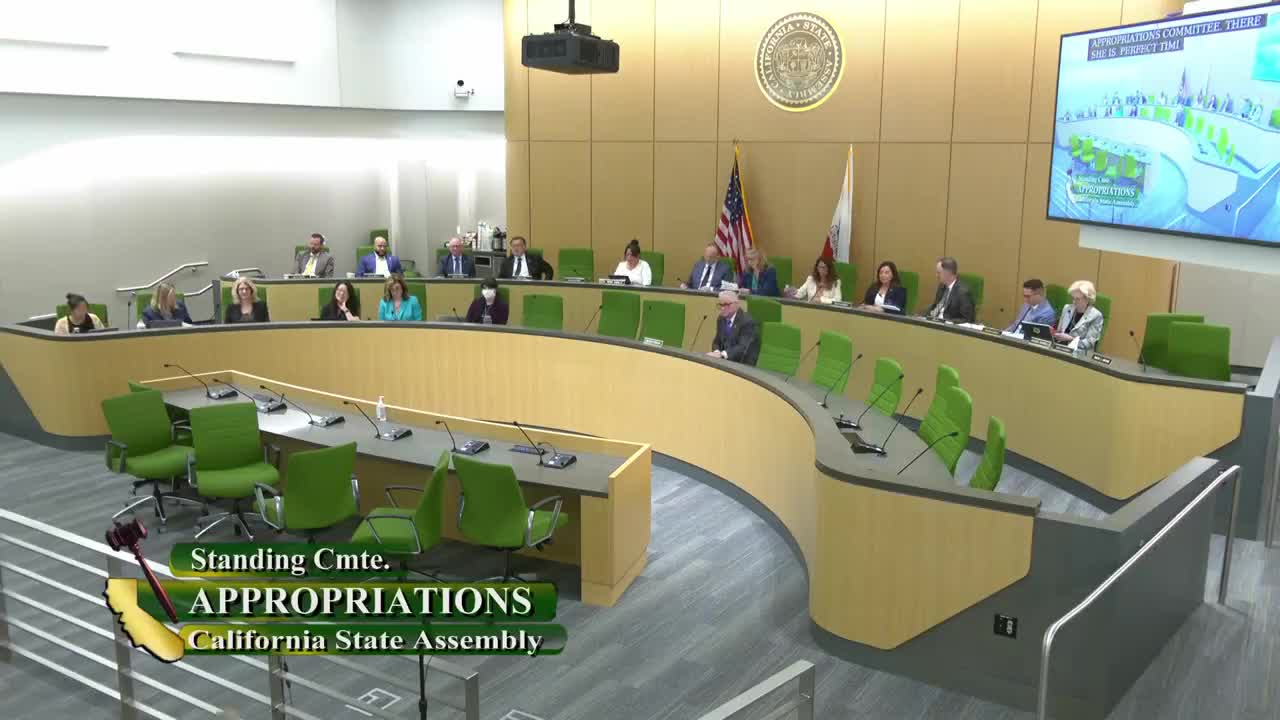
Bill Author