SB 1307: Childcare and development services: eligibility and priority.
- Session Year: 2023-2024
- House: Senate
- Latest Version Date: 2024-04-25
Current Status:
Failed
(2024-05-16: May 16 hearing: Held in committee and under submission.)
Introduced
In Committee
First Chamber
In Committee
Second Chamber
Enacted
Existing law, the Child Care and Development Services Act, administered by the State Department of Social Services, requires the department to administer childcare and development programs that offer a full range of services to eligible children from infancy to 13 years of age, inclusive. The act requires that families meet specified requirements to be eligible for federal and state subsidized childcare and development services, including that a family is a current aid recipient or is income eligible, among other eligible statuses, and the family needs childcare services because, among other reasons, the family is homeless. familys adjusted monthly income is at or below 85% of the state median income, adjusted for family size, as specified. Existing law requires the department to establish a fee schedule for families using preschool, childcare, and development services. Existing law provides for calculations to determine income eligibility and family fees.
This bill would extend eligibility for subsidized childcare and development services, to the extent funds are available in the next state plan, to families with a family member who has verified employment of at least 20 hours or more per week at a childcare center or family childcare home, regardless of household income.This bill would require earned and unearned income received by a family member who has verified employment of at least 20 hours or more per week at a childcare center or family childcare home to be excluded when determining income eligibility or family fees pursuant to the above-described provisions.
Existing law establishes priority for federal and state subsidized child development services with first priority given to neglected or abused children who are recipients of child protective services and 2nd priority given to income eligible families, as specified.
This bill would give 3rd priority, to the extent funds are available in the next state plan, priority to families that are eligible due to a family members employment at a childcare center or family childcare home.
Existing law, the Child Care and Development Services Act, administered by the State Department of Social Services, requires the department to administer childcare and development programs that offer a full range of services to eligible children from infancy to 13 years of age, inclusive. The act requires that families meet specified requirements to be eligible for federal and state subsidized childcare and development services, including that a family is a current aid recipient or is income eligible, among other eligible statuses, and the family needs childcare services because, among other reasons, the family is homeless.
This bill would extend eligibility for subsidized childcare and development services, to the extent funds are available in the next state plan, to families with a family member who has verified employment of at least 20 hours or more per week at a childcare center or family childcare home, regardless of household income.
Existing law establishes priority for federal and state subsidized child development services with first priority given to neglected or abused children who are recipients of child protective services and 2nd priority given to income eligible families, as specified.
This bill would give 3rd priority, to the extent funds are available in the next state plan, to families that are eligible due to a family members employment at a childcare center or family childcare home.
(a)(1)The department shall adopt rules and regulations on eligibility, enrollment, and priority of services needed to implement this chapter. In order to be eligible for federal and state subsidized child development services, families shall meet at least one requirement in each of the following areas:
(A)A family is (i) a current aid recipient, (ii) income eligible, (iii) homeless, (iv) one whose children are recipients of protective services, or whose children have been identified as being abused, neglected, or exploited, or at risk of being abused, neglected, or exploited, or (v) one who has a member of its household who is certified to receive benefits from Medi-Cal, CalFresh, the California Food Assistance Program, the California Special Supplemental Nutrition Program for Women, Infants, and Children, the federal Food Distribution Program on Indian Reservations, Head Start, Early Head Start, or any other designated means-tested government program, as determined by the department. If a family is deemed eligible pursuant to clause (v), the family shall be prioritized by the income declared on the application for the means-tested government program.
(B)A family needs the childcare services (i) because the child is identified by a legal, medical, or social services agency, a local educational agency liaison for homeless children and youths designated pursuant to Section 11432(g)(1)(J)(ii) of Title 42 of the United States Code, a Head Start program, or an emergency or transitional shelter as (I) a recipient of protective services, (II) being neglected, abused, or exploited, or at risk of neglect, abuse, or exploitation, or (III) being homeless or (ii) because the parents are (I) engaged in vocational training leading directly to a recognized trade, paraprofession, or profession, (II) engaged in an educational program for English language learners or to attain a high school diploma or general educational development certificate, (III) employed or seeking employment, (IV) seeking permanent housing for family stability, or (V) incapacitated.
(2)If only one parent has signed an application for enrollment in childcare services, as required by this chapter or regulations adopted to implement this chapter, and the information provided on the application indicates that there is a second parent who has not signed the application, the parent who has signed the application shall self-certify the presence or absence of the second parent under penalty of perjury. The parent who has signed the application shall not be required to submit additional information documenting the presence or absence of the second parent.
(b)Except as provided in Chapter 21 (commencing with Section 10370), priority for federal and state subsidized child development services is as follows:
(1)First priority shall be given to neglected or abused children who are recipients of child protective services, or children who are at risk of being neglected or abused, upon written referral from a legal, medical, or social services agency. If an agency is unable to enroll a child in the first priority category, the agency shall refer the family to local resource and referral services to locate services for the child.
(2)Second priority shall be given equally to eligible families, regardless of the number of parents in the home, who are income eligible. Within this priority, families with the lowest gross monthly income in relation to family size, as determined by a schedule adopted by the department, shall be admitted first. If two or more families are in the same priority in relation to income, the family that has a child with exceptional needs shall be admitted first. If there is no family of the same priority with a child with exceptional needs, the family of the same priority in which the primary home language is a language other than English shall be admitted first. If there is no family of the same priority in which the primary home language is a language other than English, the family of the same priority that has been on the waiting list for the longest time shall be admitted first. For purposes of determining order of admission, grants of public assistance recipients shall be counted as income.
(3)Third priority shall be given to families with a family member who has verified employment of at least 20 hours or more per week at a childcare center or family childcare home.
(3)(4)The department shall set criteria for, and may grant specific waivers of, the priorities established in this subdivision for agencies that wish to serve specific populations, including children with exceptional needs or children of prisoners. These new waivers shall not include proposals to avoid appropriate fee schedules or admit ineligible families, but may include proposals to accept members of special populations in other than strict income order, as long as appropriate fees are paid.
(c)Notwithstanding any other law, in order to promote continuity of services, a family enrolled in a state or federally funded childcare and development program whose services would otherwise be terminated because the family no longer meets the program income, eligibility, or need criteria may continue to receive child development services in another state or federally funded childcare and development program if the contractor is able to transfer the familys enrollment to another program for which the family is eligible before the date of termination of services or to exchange the familys existing enrollment with the enrollment of a family in another program, provided that both families satisfy the eligibility requirements for the program in which they are being enrolled. The transfer of enrollment may be to another program within the same administrative agency or to another agency that administers state or federally funded childcare and development programs.
(d)A physical examination and evaluation, including age-appropriate immunization, shall be required before, or within six weeks of, enrollment. A standard, rule, or regulation shall not require medical examination or immunization for admission to a childcare and development program of a child whose parent or guardian files a letter with the governing board of the childcare and development program stating that the medical examination or immunization is contrary to the parents or guardians religious beliefs, or provide for the exclusion of a child from the program because of a parent or guardian having filed the letter. However, if there is good cause to believe that a child is suffering from a recognized contagious or infectious disease, the child shall be temporarily excluded from the program until the governing board of the childcare and development program is satisfied that the child is not suffering from that contagious or infectious disease.
(e)Regulations formulated and promulgated pursuant to this section shall include the recommendations of the State Department of Health Care Services relative to health care screening and the provision of health care services. The department shall seek the advice and assistance of these health authorities in situations where service under this chapter includes or requires care of children who are ill or children with exceptional needs.
(f)The department shall establish guidelines for the collection of employer-sponsored childcare benefit payments from a parent whose child receives subsidized childcare and development services. These guidelines shall provide for the collection of the full amount of the benefit payment, but not to exceed the actual cost of childcare and development services provided, notwithstanding the applicable fee based on the fee schedule.
(g)The department shall establish guidelines according to which the director or a duly authorized representative of the childcare and development program will certify children as eligible for state reimbursement pursuant to this section.
(h)(1)Except as provided in paragraphs (3), (4), and (5), upon establishing initial eligibility or ongoing eligibility for services under this chapter, a family shall be considered to meet all eligibility and need requirements for those services for not less than 24 months, shall receive those services for not less than 24 months before having their eligibility or need recertified, and shall not be required to report changes to income or other changes for at least 24 months.
(2)In the event that the eligibility period as described in paragraph (1) ends before the end of a program year, eligibility shall be extended until the end of the program year, as long as applicable age-eligibility requirements are met, as specified in Section 10213.5.
(3)A family that establishes initial eligibility or ongoing eligibility on the basis of income shall report increases in income that exceed the threshold for ongoing income eligibility as described in subdivision (b) of Section 10271.5, and the familys ongoing eligibility for services shall at that time be recertified.
(4)A family may at any time voluntarily report income or other changes. This information shall be used, as applicable, to reduce the familys fees, increase the familys services, or extend the period of the familys eligibility before recertification.
(5)Notwithstanding paragraph (1), upon establishing initial eligibility or ongoing eligibility for services under this chapter, a family receiving services under a CalWORKs Stage 1, Stage 2, or Stage 3 program shall be considered to meet all eligibility and need requirements for those services for not less than 12 months, shall receive those services for not less than 12 months before having their eligibility or need recertified, and shall not be required to report changes to income or other changes for at least 12 months.
(i)(1)Because a family that meets eligibility requirements at its most recent eligibility certification or recertification is considered eligible until the next recertification, as provided in subdivision (h), a payment made by a child development program for a child during this period shall not be considered an error or an improper payment due to a change in the familys circumstances during that same period.
(2)Notwithstanding paragraph (1), the department may seek to recover payments that are the result of fraud.
(j)(1)Notwithstanding the rulemaking provisions of the Administrative Procedure Act (Chapter 3.5 (commencing with Section 11340) of Part 1 of Division 3 of Title 2 of the Government Code) and Section 33308.5 of the Education Code, until regulations are filed with the Secretary of State to implement subdivision (h), the department shall implement subdivision (h) through management bulletins or similar letters of instruction on or before October 1, 2017.
(2)The department shall initiate a rulemaking action to implement subdivision (h) on or before December 31, 2018. The department shall convene a workgroup of parents, advocates, department staff, child development program representatives, and other stakeholders to develop recommendations regarding implementing subdivision (h).
(k)(1)Notwithstanding the rulemaking provisions of the Administrative Procedure Act (Chapter 3.5 (commencing with Section 11340) of Part 1 of Division 3 of Title 2 of the Government Code) and Section 33308.5 of the Education Code, until regulations are filed with the Secretary of State, the department shall implement the changes made to subdivision (h) by the act that added this subdivision through management bulletins or similar letters of instruction on or before December 1, 2023.
(2)The department shall initiate a rulemaking action to implement the changes made to subdivision (h) by the act that added this subdivision on or before December 31, 2024.
(l)Public funds shall not be paid directly or indirectly to an agency that does not pay at least the minimum wage to each of its employees.
SEC. 2.Section 10271.5 of the Welfare and Institutions Code is amended to read:10271.5.(a)For purposes of establishing initial income eligibility for services under this chapter, income eligible means that a familys adjusted monthly income is at or below 85 percent of the state median income, adjusted for family size, as specified in subdivision (c).
(b)For purposes of establishing ongoing income eligibility under this chapter, ongoing income eligible means that a familys adjusted monthly income is at or below 85 percent of the state median income, adjusted for family size, as specified in subdivision (c).
(c)The Department of Finance shall calculate the state median income for family sizes of one to four, inclusive, by using the most recent census data available on state median family income in the past 12 months by family size. The Department of Finance shall calculate the state median income for family sizes of five and above by using the most recent census data for a family of four and multiplying this number by the ratios for the appropriate family size used in the federal Low-Income Home Energy Assistance Program (42 U.S.C. Sec. 8621 et seq.) and specified in federal regulations at paragraphs (5), (6), and (7) of subdivision (b) of Section 96.85 of Title 45 of the Code of Federal Regulations. The Department of Finance shall update its calculations of the state median income for families according to the methodology provided in this subdivision and provide the updated data to the department no later than March 1 of each fiscal year.
(d)The income of a recipient of federal supplemental security income benefits pursuant to Title XVI of the federal Social Security Act (42 U.S.C. Sec. 1381 et seq.) and state supplemental program benefits pursuant to Title XVI of the federal Social Security Act and Chapter 3 (commencing with Section 12000) of Part 3 shall not be included as income for purposes of determining eligibility for childcare under this chapter.
(e)Payments made on behalf of a child pursuant to Section 11460, 11461.3, 11461.36, or 11461.4 shall not be included as income for purposes of determining eligibility for childcare under this chapter.
(f)Notwithstanding any other law, guaranteed income payments received by an individual shall not be included as income for purposes of determining eligibility for childcare under this chapter. For purposes of this subdivision, guaranteed income payments are defined as unconditional, recurring, regular cash payments, whether publicly or privately funded, that are intended to support the basic needs of eligible recipients, including, but not limited to, payments provided through pilot programs and projects receiving funding from the California Guaranteed Income Pilot Program (Chapter 16 (commencing with Section 18997) of Part 6).
(g)A family member who has verified employment of at least 20 hours or more per week at a childcare center or family childcare home shall have all earned and unearned income excluded when determining income eligibility or family fees pursuant to this chapter.
(g)(h)(1)Notwithstanding the rulemaking provisions of the Administrative Procedure Act (Chapter 3.5 (commencing with Section 11340) of Part 1 of Division 3 of Title 2 of the Government Code), the department may implement and administer subdivisions (e) and (f) by all-county letters, bulletins, or similar written instructions until regulations are adopted.
(2)The department shall adopt initiate regulations implementing subdivisions (e) and (f) (e), (f), and (g) no later than July 1, 2025.
SECTION 1.Section 10271 of the Welfare and Institutions Code is amended to read:10271.(a)(1)The department shall adopt rules and regulations on eligibility, enrollment, and priority of services needed to implement this chapter. In order to be eligible for federal and state subsidized child development services, families shall meet at least one requirement in each of the following areas:(A)A family is (i) a current aid recipient, (ii) income eligible, (iii) homeless, (iv) one whose children are recipients of protective services, or whose children have been identified as being abused, neglected, or exploited, or at risk of being abused, neglected, or exploited, or (v) one who has a member of its household who is certified to receive benefits from Medi-Cal, CalFresh, the California Food Assistance Program, the California Special Supplemental Nutrition Program for Women, Infants, and Children, the federal Food Distribution Program on Indian Reservations, Head Start, Early Head Start, or any other designated means-tested government program, as determined by the department. If a family is deemed eligible pursuant to clause (v), the family shall be prioritized by the income declared on the application for the means-tested government program.(B)A family needs the childcare services (i) because the child is identified by a legal, medical, or social services agency, a local educational agency liaison for homeless children and youths designated pursuant to Section 11432(g)(1)(J)(ii) of Title 42 of the United States Code, a Head Start program, or an emergency or transitional shelter as (I) a recipient of protective services, (II) being neglected, abused, or exploited, or at risk of neglect, abuse, or exploitation, or (III) being homeless or (ii) because the parents are (I) engaged in vocational training leading directly to a recognized trade, paraprofession, or profession, (II) engaged in an educational program for English language learners or to attain a high school diploma or general educational development certificate, (III) employed or seeking employment, (IV) seeking permanent housing for family stability, or (V) incapacitated.(C)A family member has verified employment of at least 20 hours or more per week at a childcare center or family childcare home. A household shall have all earned and unearned income excluded when determining eligibility pursuant to this subparagraph. Eligibility under this subparagraph shall be implemented to the extent funds are available in the next state plan.(2)If only one parent has signed an application for enrollment in childcare services, as required by this chapter or regulations adopted to implement this chapter, and the information provided on the application indicates that there is a second parent who has not signed the application, the parent who has signed the application shall self-certify the presence or absence of the second parent under penalty of perjury. The parent who has signed the application shall not be required to submit additional information documenting the presence or absence of the second parent.(b)Except as provided in Chapter 21 (commencing with Section 10370), priority for federal and state subsidized child development services is as follows:(1)First priority shall be given to neglected or abused children who are recipients of child protective services, or children who are at risk of being neglected or abused, upon written referral from a legal, medical, or social services agency. If an agency is unable to enroll a child in the first priority category, the agency shall refer the family to local resource and referral services to locate services for the child.(2)Second priority shall be given equally to eligible families, regardless of the number of parents in the home, who are income eligible. Within this priority, families with the lowest gross monthly income in relation to family size, as determined by a schedule adopted by the department, shall be admitted first. If two or more families are in the same priority in relation to income, the family that has a child with exceptional needs shall be admitted first. If there is no family of the same priority with a child with exceptional needs, the family of the same priority in which the primary home language is a language other than English shall be admitted first. If there is no family of the same priority in which the primary home language is a language other than English, the family of the same priority that has been on the waiting list for the longest time shall be admitted first. For purposes of determining order of admission, grants of public assistance recipients shall be counted as income.(3)To the extent funds are available in the next state plan, third priority shall be given to families eligible pursuant to subparagraph (C) of paragraph (1) of subdivision (a). (4)The department shall set criteria for, and may grant specific waivers of, the priorities established in this subdivision for agencies that wish to serve specific populations, including children with exceptional needs or children of prisoners. These new waivers shall not include proposals to avoid appropriate fee schedules or admit ineligible families, but may include proposals to accept members of special populations in other than strict income order, as long as appropriate fees are paid.(c)Notwithstanding any other law, in order to promote continuity of services, a family enrolled in a state or federally funded childcare and development program whose services would otherwise be terminated because the family no longer meets the program income, eligibility, or need criteria may continue to receive child development services in another state or federally funded childcare and development program if the contractor is able to transfer the familys enrollment to another program for which the family is eligible before the date of termination of services or to exchange the familys existing enrollment with the enrollment of a family in another program, provided that both families satisfy the eligibility requirements for the program in which they are being enrolled. The transfer of enrollment may be to another program within the same administrative agency or to another agency that administers state or federally funded childcare and development programs.(d)A physical examination and evaluation, including age-appropriate immunization, shall be required before, or within six weeks of, enrollment. A standard, rule, or regulation shall not require medical examination or immunization for admission to a childcare and development program of a child whose parent or guardian files a letter with the governing board of the childcare and development program stating that the medical examination or immunization is contrary to the parents or guardians religious beliefs, or provide for the exclusion of a child from the program because of a parent or guardian having filed the letter. However, if there is good cause to believe that a child is suffering from a recognized contagious or infectious disease, the child shall be temporarily excluded from the program until the governing board of the childcare and development program is satisfied that the child is not suffering from that contagious or infectious disease.(e)Regulations formulated and promulgated pursuant to this section shall include the recommendations of the State Department of Health Care Services relative to health care screening and the provision of health care services. The department shall seek the advice and assistance of these health authorities in situations where service under this chapter includes or requires care of children who are ill or children with exceptional needs.(f)The department shall establish guidelines for the collection of employer-sponsored childcare benefit payments from a parent whose child receives subsidized childcare and development services. These guidelines shall provide for the collection of the full amount of the benefit payment, but not to exceed the actual cost of childcare and development services provided, notwithstanding the applicable fee based on the fee schedule.(g)The department shall establish guidelines according to which the director or a duly authorized representative of the childcare and development program will certify children as eligible for state reimbursement pursuant to this section.(h)(1)Except as provided in paragraphs (3), (4), and (5), upon establishing initial eligibility or ongoing eligibility for services under this chapter, a family shall be considered to meet all eligibility and need requirements for those services for not less than 24 months, shall receive those services for not less than 24 months before having their eligibility or need recertified, and shall not be required to report changes to income or other changes for at least 24 months.(2)In the event that the eligibility period as described in paragraph (1) ends before the end of a program year, eligibility shall be extended until the end of the program year, as long as applicable age-eligibility requirements are met, as specified in Section 10213.5.(3)A family that establishes initial eligibility or ongoing eligibility on the basis of income shall report increases in income that exceed the threshold for ongoing income eligibility as described in subdivision (b) of Section 10271.5, and the familys ongoing eligibility for services shall at that time be recertified.(4)A family may at any time voluntarily report income or other changes. This information shall be used, as applicable, to reduce the familys fees, increase the familys services, or extend the period of the familys eligibility before recertification.(5)Notwithstanding paragraph (1), upon establishing initial eligibility or ongoing eligibility for services under this chapter, a family receiving services under a CalWORKs Stage 1, Stage 2, or Stage 3 program shall be considered to meet all eligibility and need requirements for those services for not less than 12 months, shall receive those services for not less than 12 months before having their eligibility or need recertified, and shall not be required to report changes to income or other changes for at least 12 months.(i)(1)Because a family that meets eligibility requirements at its most recent eligibility certification or recertification is considered eligible until the next recertification, as provided in subdivision (h), a payment made by a child development program for a child during this period shall not be considered an error or an improper payment due to a change in the familys circumstances during that same period.(2)Notwithstanding paragraph (1), the department may seek to recover payments that are the result of fraud.(j)(1)Notwithstanding the rulemaking provisions of the Administrative Procedure Act (Chapter 3.5 (commencing with Section 11340) of Part 1 of Division 3 of Title 2 of the Government Code) and Section 33308.5 of the Education Code, until regulations are filed with the Secretary of State to implement subdivision (h), the department shall implement subdivision (h) through management bulletins or similar letters of instruction on or before October 1, 2017.(2)The department shall initiate a rulemaking action to implement subdivision (h) on or before December 31, 2018. The department shall convene a workgroup of parents, advocates, department staff, child development program representatives, and other stakeholders to develop recommendations regarding implementing subdivision (h).(k)(1)Notwithstanding the rulemaking provisions of the Administrative Procedure Act (Chapter 3.5 (commencing with Section 11340) of Part 1 of Division 3 of Title 2 of the Government Code) and Section 33308.5 of the Education Code, until regulations are filed with the Secretary of State, the department shall implement the changes made to subdivision (h) by the act that added this subdivision through management bulletins or similar letters of instruction on or before December 1, 2023.(2)The department shall initiate a rulemaking action to implement the changes made to subdivision (h) by the act that added this subdivision on or before December 31, 2024.(l)Public funds shall not be paid directly or indirectly to an agency that does not pay at least the minimum wage to each of its employees.(a)(1)The department shall adopt rules and regulations on eligibility, enrollment, and priority of services needed to implement this chapter. In order to be eligible for federal and state subsidized child development services, families shall meet at least one requirement in each of the following areas:
(A)A family is (i) a current aid recipient, (ii) income eligible, (iii) homeless, (iv) one whose children are recipients of protective services, or whose children have been identified as being abused, neglected, or exploited, or at risk of being abused, neglected, or exploited, or (v) one who has a member of its household who is certified to receive benefits from Medi-Cal, CalFresh, the California Food Assistance Program, the California Special Supplemental Nutrition Program for Women, Infants, and Children, the federal Food Distribution Program on Indian Reservations, Head Start, Early Head Start, or any other designated means-tested government program, as determined by the department. If a family is deemed eligible pursuant to clause (v), the family shall be prioritized by the income declared on the application for the means-tested government program.
(B)A family needs the childcare services (i) because the child is identified by a legal, medical, or social services agency, a local educational agency liaison for homeless children and youths designated pursuant to Section 11432(g)(1)(J)(ii) of Title 42 of the United States Code, a Head Start program, or an emergency or transitional shelter as (I) a recipient of protective services, (II) being neglected, abused, or exploited, or at risk of neglect, abuse, or exploitation, or (III) being homeless or (ii) because the parents are (I) engaged in vocational training leading directly to a recognized trade, paraprofession, or profession, (II) engaged in an educational program for English language learners or to attain a high school diploma or general educational development certificate, (III) employed or seeking employment, (IV) seeking permanent housing for family stability, or (V) incapacitated.
(C)A family member has verified employment of at least 20 hours or more per week at a childcare center or family childcare home. A household shall have all earned and unearned income excluded when determining eligibility pursuant to this subparagraph. Eligibility under this subparagraph shall be implemented to the extent funds are available in the next state plan.
(2)If only one parent has signed an application for enrollment in childcare services, as required by this chapter or regulations adopted to implement this chapter, and the information provided on the application indicates that there is a second parent who has not signed the application, the parent who has signed the application shall self-certify the presence or absence of the second parent under penalty of perjury. The parent who has signed the application shall not be required to submit additional information documenting the presence or absence of the second parent.
(b)Except as provided in Chapter 21 (commencing with Section 10370), priority for federal and state subsidized child development services is as follows:
(1)First priority shall be given to neglected or abused children who are recipients of child protective services, or children who are at risk of being neglected or abused, upon written referral from a legal, medical, or social services agency. If an agency is unable to enroll a child in the first priority category, the agency shall refer the family to local resource and referral services to locate services for the child.
(2)Second priority shall be given equally to eligible families, regardless of the number of parents in the home, who are income eligible. Within this priority, families with the lowest gross monthly income in relation to family size, as determined by a schedule adopted by the department, shall be admitted first. If two or more families are in the same priority in relation to income, the family that has a child with exceptional needs shall be admitted first. If there is no family of the same priority with a child with exceptional needs, the family of the same priority in which the primary home language is a language other than English shall be admitted first. If there is no family of the same priority in which the primary home language is a language other than English, the family of the same priority that has been on the waiting list for the longest time shall be admitted first. For purposes of determining order of admission, grants of public assistance recipients shall be counted as income.
(3)To the extent funds are available in the next state plan, third priority shall be given to families eligible pursuant to subparagraph (C) of paragraph (1) of subdivision (a).
(3)(4)The department shall set criteria for, and may grant specific waivers of, the priorities established in this subdivision for agencies that wish to serve specific populations, including children with exceptional needs or children of prisoners. These new waivers shall not include proposals to avoid appropriate fee schedules or admit ineligible families, but may include proposals to accept members of special populations in other than strict income order, as long as appropriate fees are paid.
(c)Notwithstanding any other law, in order to promote continuity of services, a family enrolled in a state or federally funded childcare and development program whose services would otherwise be terminated because the family no longer meets the program income, eligibility, or need criteria may continue to receive child development services in another state or federally funded childcare and development program if the contractor is able to transfer the familys enrollment to another program for which the family is eligible before the date of termination of services or to exchange the familys existing enrollment with the enrollment of a family in another program, provided that both families satisfy the eligibility requirements for the program in which they are being enrolled. The transfer of enrollment may be to another program within the same administrative agency or to another agency that administers state or federally funded childcare and development programs.
(d)A physical examination and evaluation, including age-appropriate immunization, shall be required before, or within six weeks of, enrollment. A standard, rule, or regulation shall not require medical examination or immunization for admission to a childcare and development program of a child whose parent or guardian files a letter with the governing board of the childcare and development program stating that the medical examination or immunization is contrary to the parents or guardians religious beliefs, or provide for the exclusion of a child from the program because of a parent or guardian having filed the letter. However, if there is good cause to believe that a child is suffering from a recognized contagious or infectious disease, the child shall be temporarily excluded from the program until the governing board of the childcare and development program is satisfied that the child is not suffering from that contagious or infectious disease.
(e)Regulations formulated and promulgated pursuant to this section shall include the recommendations of the State Department of Health Care Services relative to health care screening and the provision of health care services. The department shall seek the advice and assistance of these health authorities in situations where service under this chapter includes or requires care of children who are ill or children with exceptional needs.
(f)The department shall establish guidelines for the collection of employer-sponsored childcare benefit payments from a parent whose child receives subsidized childcare and development services. These guidelines shall provide for the collection of the full amount of the benefit payment, but not to exceed the actual cost of childcare and development services provided, notwithstanding the applicable fee based on the fee schedule.
(g)The department shall establish guidelines according to which the director or a duly authorized representative of the childcare and development program will certify children as eligible for state reimbursement pursuant to this section.
(h)(1)Except as provided in paragraphs (3), (4), and (5), upon establishing initial eligibility or ongoing eligibility for services under this chapter, a family shall be considered to meet all eligibility and need requirements for those services for not less than 24 months, shall receive those services for not less than 24 months before having their eligibility or need recertified, and shall not be required to report changes to income or other changes for at least 24 months.
(2)In the event that the eligibility period as described in paragraph (1) ends before the end of a program year, eligibility shall be extended until the end of the program year, as long as applicable age-eligibility requirements are met, as specified in Section 10213.5.
(3)A family that establishes initial eligibility or ongoing eligibility on the basis of income shall report increases in income that exceed the threshold for ongoing income eligibility as described in subdivision (b) of Section 10271.5, and the familys ongoing eligibility for services shall at that time be recertified.
(4)A family may at any time voluntarily report income or other changes. This information shall be used, as applicable, to reduce the familys fees, increase the familys services, or extend the period of the familys eligibility before recertification.
(5)Notwithstanding paragraph (1), upon establishing initial eligibility or ongoing eligibility for services under this chapter, a family receiving services under a CalWORKs Stage 1, Stage 2, or Stage 3 program shall be considered to meet all eligibility and need requirements for those services for not less than 12 months, shall receive those services for not less than 12 months before having their eligibility or need recertified, and shall not be required to report changes to income or other changes for at least 12 months.
(i)(1)Because a family that meets eligibility requirements at its most recent eligibility certification or recertification is considered eligible until the next recertification, as provided in subdivision (h), a payment made by a child development program for a child during this period shall not be considered an error or an improper payment due to a change in the familys circumstances during that same period.
(2)Notwithstanding paragraph (1), the department may seek to recover payments that are the result of fraud.
(j)(1)Notwithstanding the rulemaking provisions of the Administrative Procedure Act (Chapter 3.5 (commencing with Section 11340) of Part 1 of Division 3 of Title 2 of the Government Code) and Section 33308.5 of the Education Code, until regulations are filed with the Secretary of State to implement subdivision (h), the department shall implement subdivision (h) through management bulletins or similar letters of instruction on or before October 1, 2017.
(2)The department shall initiate a rulemaking action to implement subdivision (h) on or before December 31, 2018. The department shall convene a workgroup of parents, advocates, department staff, child development program representatives, and other stakeholders to develop recommendations regarding implementing subdivision (h).
(k)(1)Notwithstanding the rulemaking provisions of the Administrative Procedure Act (Chapter 3.5 (commencing with Section 11340) of Part 1 of Division 3 of Title 2 of the Government Code) and Section 33308.5 of the Education Code, until regulations are filed with the Secretary of State, the department shall implement the changes made to subdivision (h) by the act that added this subdivision through management bulletins or similar letters of instruction on or before December 1, 2023.
(2)The department shall initiate a rulemaking action to implement the changes made to subdivision (h) by the act that added this subdivision on or before December 31, 2024.
(l)Public funds shall not be paid directly or indirectly to an agency that does not pay at least the minimum wage to each of its employees.
|
Date
|
Status
|
|---|---|
| May 16, 2024 | May 16 hearing: Held in committee and under submission. |
| May 10, 2024 | Set for hearing May 16. |
| May 6, 2024 | May 6 hearing: Placed on APPR suspense file. |
| Apr 30, 2024 | Set for hearing May 6. |
| Apr 25, 2024 | Read second time and amended. Re-referred to Com. on APPR. |
| Apr 24, 2024 | From committee: Do pass as amended and re-refer to Com. on APPR. (Ayes 5. Noes 0. Page 3607.) (April 15). |
| Apr 4, 2024 | Set for hearing April 15. |
| Feb 29, 2024 | Referred to Com. on HUMAN S. |
| Feb 16, 2024 | From printer. May be acted upon on or after March 17. |
| Feb 15, 2024 | Introduced. Read first time. To Com. on RLS. for assignment. To print. |
|
Date
|
Description
|
Location
|
Votes
|
|
|---|---|---|---|---|
| May 6, 2024 | Placed on suspense file | Senate Standing Committee on Appropriations |
Passed |
|
| Apr 15, 2024 | Do pass as amended, but first amend, and re-refer to the Committee on [Appropriations] | Senate Standing Committee on Human Services |
Passed |
This list shows positions taken on this bill by organizations on the date displayed, which is linked to the original source.
Positions by individuals are not included.
|
Organization
|
Position
|
Date
|
|---|---|---|
| All Five | ** Support | |
| All Five | * Support | Apr 15, 2024 |
| City of Mountain View | * Support | Apr 15, 2024 |
| Early Care And Education Consortium | ** Support | |
| Footsteps Child Care, INC. | ** Support | |
| Good2know Partners | ** Support | |
| Mi Second Casa Preschool and Daycare | ** Support | |
| San Mateo County Child Care Partnership Council | ** Support | |
| Silicon Valley Community Foundation | * Support | Apr 15, 2024 |
SENATE COMMITTEE ON APPROPRIATIONS
Senator Anna Caballero, Chair
2023 - 2024 Regular Session
SB 1307 (Becker) - Childcare and development services: eligibility and priority
Version: April 25, 2024 | Policy Vote: HUMAN S. 5 - 0 |
Urgency: No | Mandate: No |
Hearing Date: May 6, 2024 | Consultant: Agnes Lee |
Bill Summary:
SB 1307 would add families with a family member who has verified employment of at least 20 hours or more per week at a child care center or family child care home as the third priority for federal and state subsidized child development services; and expand eligibility for subsidized child care programs for these families.
Fiscal Impact:
The California Department of Social Services (CDSS) estimates significant cost pressures in the tens of millions, and has identified 4,800 families that would potentially be eligible under this bill (General Fund and federal funds).
Background:
The CDSS administers various subsidized child care programs, including: General Child Care, which includes contracted centers and family child care homes; Alternative Payment Programs, which provide vouchers that can be used to obtain child care in a center, family child care home, or from a license-exempt provider; and CalWORKs child care for parents who receive or have received CalWORKs.
Certain eligibility and prioritization rules apply to subsidized child care in California. Families are eligible for non-CalWORKs subsidized child care if they meet at least one requirement in each of two areas: eligibility and need. First, they must meet one of the eligibility criteria, which include currently receiving aid, being income-eligible, experiencing homelessness, or having children who are recipients of protective services or who have been identified as being, or at risk of being, abused, neglected, or exploited. Current law states that “income eligible” means that a family’s adjusted monthly income is at or below 85 percent of the state median income, adjusted for family size, as specified. Second, the family must meet one of the “need” requirements, which are either that the child has been identified by a legal, medical, or social services agency, or Head Start program, or emergency shelter as a recipient of protective services or being, or at risk of being, abused, neglected or exploited, or the parents need to be employed or seeking employment, engaged in vocational training, seeking permanent housing for family stability, or are incapacitated.
Existing law establishes priority for federal and state subsidized child development services with first priority given to neglected or abused children who are recipients of child protective services and second priority given to income eligible families, as specified.
Proposed Law:
Specific provisions of the bill would:
- Provide that for federal and state subsidized child development services, a family member who has verified employment of at least 20 hours or more per week at a childcare center or family childcare home must have all earned and unearned income excluded when determining income eligibility or family fees.
- Add families with a family member who is employed in a child care center or family child care home, as specified above, as the third priority for federal and state subsidized child development services.
Related Legislation:
AB 1925 (Rendon) would extend eligibility for federal and state subsidized child development services to families whose child is eligible for services under the federal Individuals with Disabilities Education Act. The bill is currently in the Assembly Appropriations Committee.
-- END --
SENATE COMMITTEE ON HUMAN SERVICES
Senator Alvarado-Gil, Chair
2023 - 2024 Regular
Bill No: | SB 1307 | ||
Author: | Becker | ||
Version: | February 15, 2024 | Hearing Date: | April 15, 2024 |
Urgency: | No | Fiscal: | Yes |
Consultant: | Diana Dominguez | ||
Subject: Child care and development services: eligibility and priority
SUMMARY
This bill requires a family to have a family member who is employed in a child care center or family child care home at least 20 hours per week in order to be eligible for federal and state subsidized child development services. This bill would add families with a family member who is employed in a child care center or family child care home as the third priority for federal and state subsidized child development services.
ABSTRACT
Existing Law:
- Establishes the Early Childhood Development Act of 2020. Effective July 1, 2021, transfers the programs, responsibilities, services, and systems relating to child care and childhood development from the California Department of Education and the Superintendent of Public Instruction to the California Department of Social Services (CDSS). (WIC 10200 et seq.)
- Establishes the Child Care and Development Services Act (Act). (WIC 10207 et seq.)
- Makes findings and declarations that the effectiveness of child care and development programs can be increased through improved administration, technical assistance to provider agencies, and monitoring. (WIC 10265)
- Requires CDSS to adopt rules and regulation on eligibility, enrollment, and priority of services needed to implement administration under the Act. Specifies that families shall meet at least one requirement in a) and b) in order to be eligible for federal and state subsidized child development services:
- A family is:
- A current aid recipient;
- Income eligible;
- Homeless;
- One whose children are recipients of protective services, or whose children have been identified as being abused, neglected, or exploited, or at risk of being abused, neglected, or exploited; or
- One who has a member of its household who is certified to receive benefits from Medi-Cal, CalFresh, the California Food Assistance Program, the California Special Supplemental Nutrition Program for Women, Infants, and Children, the federal Food Distribution Program on Indian Reservations, Head Start, Early Head Start, or any other designated means-tested government program.
- A current aid recipient;
- A family needs the child care services because:
- The child is identified by a legal, medical, or social services agency, a local educational agency liaison for homeless children and youths, a Head Start program, or an emergency or transitional shelter as:
- A recipient of protective services;
- Being neglected, abused, or exploited, or at risk of neglect, abuse, or exploitation; or
- Being homeless; or
- A recipient of protective services;
- The parents are:
- Engaged in vocational training leading directly to a recognized trade, paraprofession, or profession;
- Engaged in an educational program for English language learners or to attain a high school diploma or general educational development certificate;
- Employed or seeking employment;
- Seeking permanent housing for family stability; or
- Incapacitated. (WIC 10271(a)(1))
- Engaged in vocational training leading directly to a recognized trade, paraprofession, or profession;
- The child is identified by a legal, medical, or social services agency, a local educational agency liaison for homeless children and youths, a Head Start program, or an emergency or transitional shelter as:
- A family is:
- States the intent of the Legislature to ensure that recipients of aid through the California Work Opportunity and Responsibility to Kids program (CalWORKs) and former recipients who have left aid for employment are connected as soon as possible to local child care resources, stable child care arrangements, and continue to receive subsidized child care services after they no longer receive aid as long as they require those services and meet the eligibility established in 6) and 7). (WIC 10370(a))
- Except for families eligible for CalWORKs child care under 5), priority for federal and state subsidized child development services is as follows:
- First priority to neglected or abused children who are recipients of child protective services, or children at risk of being neglected or abused, upon written referral, as specified.
- Second priority to eligible families, regardless of the number of parents in the home, who are income eligible. Families with the lowest gross monthly income in relation to family size, as determined by CDSS, including grants of public assistance recipients, shall be admitted first. If two or more families are in the same priority in relation to income, families shall be prioritized as follows:
- A family that has a child with exceptional needs shall be admitted first.
- A family in which the primary home language is a language other than English shall be admitted second.
- A family that has been on the waiting list for the longest time shall be admitted third. (WIC 10271(b)(1-2))
- A family that has a child with exceptional needs shall be admitted first.
- First priority to neglected or abused children who are recipients of child protective services, or children at risk of being neglected or abused, upon written referral, as specified.
- For purposes of establishing initial or ongoing income eligibility for child care and development services, “income eligible” means that a family’s adjusted monthly income is at or below 85 percent of the state median income (SMI), adjusted for family size. Requires the Department of Finance to calculate the SMI and update its calculations and report the updated data to CDSS no later than March 1 each year. (WIC 10271.5(a-c))
- Specifies the following as not to be included as income for purposes of determining eligibility for child care under the Act:
- The income of a recipient of federal supplemental security income benefits and state supplemental program benefits.
- Payments made on behalf of a child, including from Aid to Families with Dependent Children-Foster Care, the Approved Relative Caregiver Funding Program, the Resource Family Approval Program, and the Tribal Approved Relative Caregiver Funding Program.
- Guaranteed income payments, as defined, received by an individual. (WIC 10271.5(d-g))
- The income of a recipient of federal supplemental security income benefits and state supplemental program benefits.
- Establishes in federal law the Child Care and Development Block Grant (CCDBG) Act of 1990, which requires a state’s lead agency to develop and submit a State Plan to the federal Administration of Children and Families as an application for funds. Requires the State Plan to be submitted triennially and remain in effect for three years. Requires the State Plan to include specified information on child care and development program implementation. (42 United States Code Section 9857 et seq.)
This Bill:
- Adds to the requirements for a family to be eligible for federal and state subsidized child development services the requirement that a family member has verified employment of at least 20 hours or more per week at a child care center or family child care home. Specifies that a household shall have all earned and unearned income excluded when determining eligibility pursuant to this provision, and that eligibility shall be implemented to the extend funds are available in the next State Plan.
- Adds to the prioritization list for federal and state subsidized child development services as the third priority families eligible pursuant to 1), to the extent funds are available in the next State Plan.
FISCAL IMPACT
This bill has not yet been analyzed by a fiscal committee.
BACKGROUND AND DISCUSSION
Purpose of the Bill:
According to the author, “California is facing a dramatic workforce shortage for early child education (ECE) workers. This shortage is often attributed to low wages, a lack of state support, and the high cost of child care for ECE workers’ own children. In 2020, median hourly wages in child care centers were $16 for an assistant teacher and $19 for a lead teacher. Poverty rates of ECE workers are roughly double that of the general population. With these factors, many are disincentivized from joining or staying in the ECE workforce, further compounding its shortage. A shortage in the ECE workforce has large impacts on all other aspects of the economy, specifically on California’s families and young children. When parents are unable to find care, they have to consider reducing their working hours or leaving the workforce.”
The author continues, “SB 1307 encourages the growth of the early childhood educator workforce by making ECE workers eligible for state subsidized child care. Specifically, this bill will provide eligibility for state subsidized child care regardless of their income for individual(s) with verified employment at a child care center or family child care home. Additionally, SB 1307 adds ECE worker families to the priority list for subsidized child care programs. By doing so, this bill incentivizes employment in the ECE space and clears the path for more people to enter this workforce. Increasing the ECE workforce will increase the amount of child care available to all Californians.”
Subsidized Child Care
The cost of child care is often a large portion of a family’s household budget. The United States Department of Health and Human Services (HHS) considers early care and education affordable for families if it makes up seven percent or less of a family’s income. According to a 2019 article from the Economic Policy Institute, the typical California family spends about 25 percent of their income to obtain center-based care for an infant. A 2020 HHS study found that households with incomes just above the poverty line (100-200 percent of the federal poverty limit) are the most likely to face cost burdens over 20 percent. Seventeen percent of households with incomes just above the poverty line spent over 20 percent of their income on child care, compared to 11 percent of households in the other three income groups (above and below the poverty line).[1] Subsidizing child care is one way to alleviate the heavy economic burden of child care while also facilitating employment opportunities for low-income families.
California’s subsidized child care system is designed to provide assistance for income eligible parents and guardians who are working, in training, seeking employment, incapacitated, or in need of respite. This child care is available through a number of programs. The states’ largest subsidized child care programs are: General Child Care, which includes contracted centers and family child care homes; CSPP, which provides developmentally, culturally, and linguistically appropriate curriculum to eligible three- and four-year olds; Alternative Payment Programs, which provide vouchers that can be used to obtain child care in a center, family child care home, or from a license-exempt provider; and CalWORKs child care for parents who receive or have received CalWORKs. CalWORKs child care can be provided in centers, family child care homes, or license-exempt settings and is paid for using vouchers.
Priority Enrollment
Certain eligibility and prioritization rules apply to subsidized child care in California. Families are eligible for non-CalWORKs subsidized child care if they meet at least one requirement in each of two areas: eligibility and need. First, they must meet one of the eligibility criteria, which include currently receiving aid, being income-eligible, experiencing homelessness, or having children who are recipients of protective services or who have been identified as being, or at risk of being, abused, neglected, or exploited. Second, the family must meet one of the “need” requirements, which are either that the child has been identified by a legal, medical, or social services agency, or Head Start program, or emergency shelter as a recipient of protective services or being, or at risk of being, abused, neglected or exploited, or the parents need to be employed or seeking employment, engaged in vocational training, seeking permanent housing for family stability, or are incapacitated. This bill would add a family with a family member who works 20 or more hours in a child care center or family child care home as the third priority for subsidized child care.
Kentucky Model
The state of Kentucky enacted a statute in 2022 to make any employee working 20 hours or more per week in a licensed child care center or family child care home eligible for child care subsidy, regardless of their household income. This change stemmed from the state’s need for increased access to early care and education. According to the Kentucky Cabinet for Health and Family Services, 3,200 parents employed in child care and 5,600 children now benefit from subsidized care after one year of program implementation.
Kentucky did not have a waitlist for subsidized child care, meaning the state had funding available to extend subsidized child care to families with a parent employed in child care. That is not the case in California. According to the California Budget and Policy Center, only 11% of California children eligible for subsidized child care were enrolled in 2022.[2] The number of children ages zero through 12 eligible for subsidized child care was 2,161,000 while the number of children enrolled was 231,400 in 2022.[3]
This bill would adopt the same policy as the Kentucky model to make an employee of a child care center or family child care home eligible for subsidized child care, regardless of their household income. The UC Berkeley Center for the Study of Child Care Employment estimates around half of the nonmanagement workforce in early care and education nationwide likely already qualify for subsidized child care because their household earns at or below 85% of State Median Income.[4] The UC Berkeley Center estimates 17,600 parents working in child care and their 21,000 children under the age of six could benefit from this policy in California.[5]
Child Care Workforce
Child care providers in California are paid through vouchers or direct care contracts with the state. Providers operate on thin profit margins, which makes it difficult for business owners to run a business, pay employees, and, in some cases, pay themselves. Some stakeholders have also cited low reimbursement rates as a main deterrent to recruiting providers into the workforce. The provider deficit also impacts child care capacity, as programs cannot exceed adult-to-child ratios in adherence to health and safety regulations.
In a 2020 report, the Berkeley Center found that child care is one of the lowest paid occupations, and ranked in the second percentile in 2019 with a median hourly wage of $11.65, roughly $24,230 per year.[6] According to the Public Policy Institute of California (PPIC) these low wages translate to about 25% of child care workers living in poverty, compared to 14% of all working adults. Further, half of all child care workers benefit from at least one safety net program or tax credit, with the two largest being CalFresh (25%) and the federal Earned Income Tax Credit (37%).[7]
This bill seeks to ease child care workers’ personal budgets by making them eligible for subsidized child care. Some child care workers may be eligible already for subsidized child care based on their income. Administrators of this policy in Kentucky found changing eligibility criteria encouraged already eligible workers to enroll for subsidized child care.
Related/Prior Legislation:
AB 1925 (Rendon) of the current Legislative Session would extend eligibility for child care and development programs to families whose child is eligible for services under the federal Individuals with Disabilities Education Act and a family who needs the child care services because the child is identified is identified as eligible for services under the Act. This bill is set to be heard in Assembly Appropriations Committee.
SB 1047 (Limón, Chapter 923, Statutes of 2022) made a family with a member of its household who is certified to receive Medi-Cal, food assistance programs, or any of means-tested government program, as specified, eligible for federal and state subsidized child development services, among other changes.
AB 321 (Valladares, Chapter 903, Statutes of 2022) required that priority for child care and development programs be given to a child from a family in which the primary home language is a language other than English if there are no families with a child with exceptional needs.
AB 131 (Committee on Budget, Chapter 116, Statutes of 2021) transferred all statutes applicable to the child care and development programs transferred from CDE to CDSS from Education Code (EDC) to Welfare and Institutions Code (WIC), including EDC Section 8263, which was transferred to WIC as Section 10271.
AB 2552 (Patterson, 2020) would have added children experiencing homelessness to the list of children given first priority for child development services, among other things. AB 2552 was not heard by a committee.
COMMENTS
This bill seeks to expand eligibility for federally and state subsidized child care to families with a family member who works 20 or more hours in a child care setting. However, as written, this bill requires a family to have a family member who works 20 or more hours in a child care setting to be eligible for subsidized child care. The author should correct this drafting error. Additionally, the author may wish to consider defining the term “family member.”
This bill would exempt all household income for a family with a member who works 20 or more hours in a child care setting. Federal regulations (45 CFR 98.20) specify that states utilizing federal funding may only provide subsidized child care to families earning up to 85% of the State Median Income. The author should strike the language related to exempting all of a household’s income for determining income eligibility.
POSITIONS
Support:
All Five (Sponsor)
Early Care and Education Consortium
Footsteps Child Care, INC.
Good2know Partners
Mi Second Casa Preschool and Daycare
San Mateo County Child Care Partnership Council
Silicon Valley Community Foundation
Oppose:
None
-- END --
https://www.acf.hhs.gov/opre/report/2019-nsece-snapshot-child-care-cost-burden-us-households-children-under-age-5 ↑
https://calbudgetcenter.org/resources/californias-child-care-system-serves-only-a-fraction-of-eligible-children/ ↑
Ibid. ↑
https://cscce.berkeley.edu/publications/brief/kentucky-model/ ↑
Ibid. ↑
https://cscce.berkeley.edu/workforce-index-2020/wp-content/uploads/sites/3/2021/05/Early-Educator-Pay_2020-Index.pdf ↑
https://www.ppic.org/blog/1-in-4-child-care-workers-in-california-lives-in-poverty/ ↑
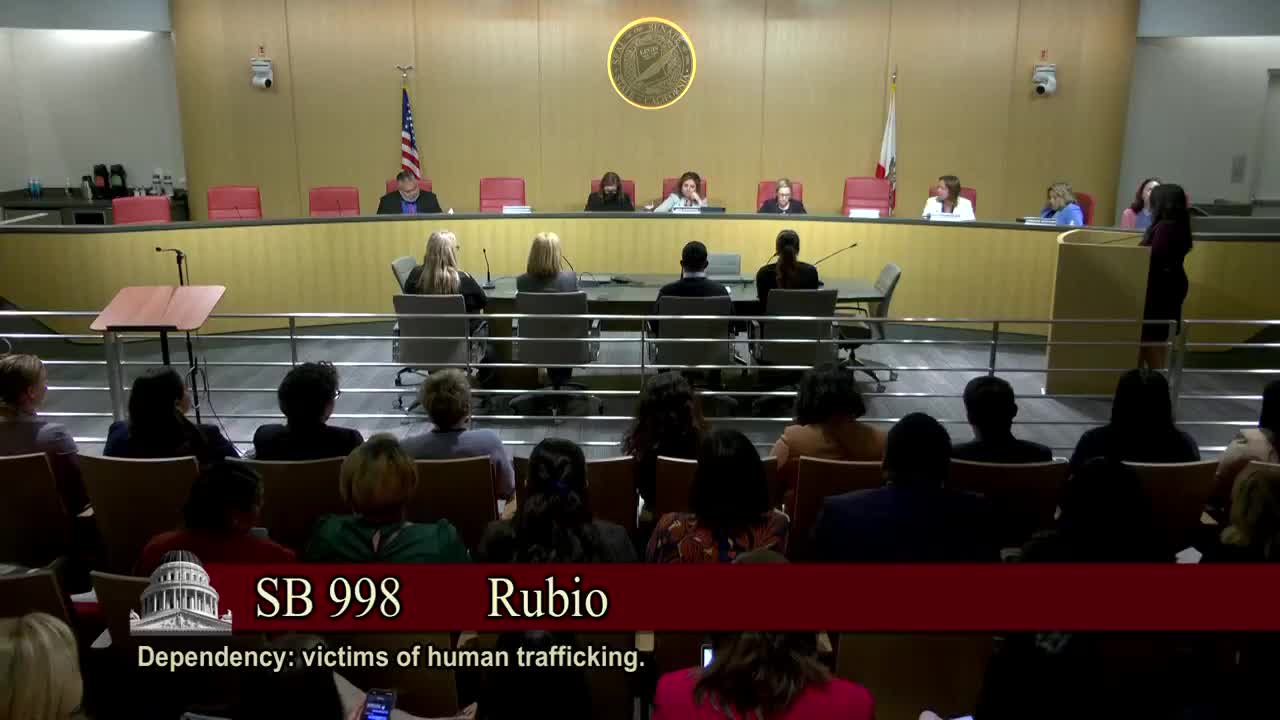
Discussed in Hearing
 7MIN
Senate Standing Committee on Human Services
Bill Author
Bill Co-Author(s):