SB 1319: Skilled nursing facilities: approval to provide therapeutic behavioral health programs.
- Session Year: 2023-2024
- House: Senate
- Latest Version Date: 2024-08-28
Current Status:
Failed
(2024-09-20: In Senate. Consideration of Governor's veto pending.)
Introduced
In Committee
First Chamber
In Committee
Second Chamber
Enacted
What does this bill do?
The bill lets licensed skilled nursing facilities that want to run a separate therapeutic behavioral health unit apply at the same time to the State Department of Public Health, the Department of Health Care Access and Information, and the Department of Health Care Services for required approvals. If an applicant lacks some required approvals or documents, it can submit the forms it has with a letter saying when the rest will be provided, and the receiving department must begin its review (final approval still requires all documents). The three departments must work together to create coordinated, simultaneous review processes to shorten total approval time.
The summary is provided by generative AI which can make mistakes. For original language, please view the details in the table below.
Existing law provides for the licensure and regulation of health facilities, including, but not limited to, skilled nursing facilities, by the State Department of Public Health. Existing law, the Alfred E. Alquist Hospital Facilities Seismic Safety Act of 1983, establishes, under the jurisdiction of the Department of Health Care Access and Information (HCAI), a program of seismic safety building standards for certain hospitals constructed on and after March 7, 1973. The act requires the governing board or other governing authority of a hospital, before adopting plans for the hospital building, as defined, to submit to HCAI an application for approval, accompanied by the plans, as prescribed.
Existing law establishes the Medi-Cal program, which is administered by the State Department of Health Care Services (DHCS), and under which qualified low-income individuals receive health care services. The Medi-Cal program is, in part, governed and funded by federal Medicaid program provisions. Existing law authorizes DHCS to adopt regulations to certify providers enrolled in the Medi-Cal program, and applicants for enrollment as providers, including providers and applicants licensed as health care facilities.
This bill would require a licensed skilled nursing facility that proposes to provide therapeutic behavioral health programs in an identifiable and physically separate unit of a skilled nursing facility, and that is required to submit an application and receive approvals from multiple departments, as specified above, to apply simultaneously to those departments for review and approval of application materials. The bill, when an applicant for approval from one of the specified departments is unable to complete the approval process because the applicant has not obtained required approvals and documentation from one or both of the other departments, would authorize the applicant to submit all available forms and supporting documentation, along with a letter estimating when the remaining materials will be submitted. The bill would require the receiving department to initiate review of the application, and would require final approval of the application to be granted only when all required documentation has been submitted by the applicant to each department from which approval is required. The bill would require the departments to work jointly to develop processes to allow applications to be reviewed simultaneously and in a coordinated manner, as specified.
Existing law provides for the licensure and regulation of health facilities, including, but not limited to, skilled nursing facilities, by the State Department of Public Health. Existing law, the Alfred E. Alquist Hospital Facilities Seismic Safety Act of 1983, establishes, under the jurisdiction of the Department of Health Care Access and Information (HCAI), a program of seismic safety building standards for certain hospitals constructed on and after March 7, 1973. The act requires the governing board or other governing authority of a hospital, before adopting plans for the hospital building, as defined, to submit to HCAI an application for approval, accompanied by the plans, as prescribed.
Existing law establishes the Medi-Cal program, which is administered by the State Department of Health Care Services (DHCS), and under which qualified low-income individuals receive health care services. The Medi-Cal program is, in part, governed and funded by federal Medicaid program provisions. Existing law authorizes DHCS to adopt regulations to certify providers enrolled in the Medi-Cal program, and applicants for enrollment as providers, including providers and applicants licensed as health care facilities.
This bill would require a licensed skilled nursing facility that proposes to provide therapeutic behavioral health programs in an identifiable and physically separate locked unit of a skilled nursing facility, and that is required to submit an application and receive approvals from multiple departments, as specified above, to apply simultaneously to those departments for review and approval of application materials. The bill, when an applicant for approval from one of the specified departments is unable to complete the approval process because the applicant has not obtained required approvals and documentation from one or both of the other departments, would authorize the applicant to submit all available forms and supporting documentation, along with a letter estimating when the remaining materials will be submitted. The bill would require the receiving department to initiate review of the application, and would require final approval of the application to be granted only when all required documentation has been submitted by the applicant to each department from which approval is required. The bill would require the departments to work jointly to develop processes to allow applications to be reviewed simultaneously and in a coordinated manner, as specified.
Existing law authorizes the State Department of Health Care Services to establish a Behavioral Health Continuum Infrastructure Program to award grants, as specified, for the construction, acquisition, and rehabilitation of behavioral health treatment resources, as described. The program exempts a facility project funded by a grant pursuant to the program from the California Environmental Quality Act, if it meets specified requirements, and local zoning and use permits, as specified.This bill would apply those exemptions to an entity, facility, or project that is converting a long-term health care facility or skilled nursing facility, as defined, to a facility that will expand the capacity of behavioral health treatment resources in the community.Existing law authorizes the State Department of Health Care Services to establish a Behavioral Health Continuum Infrastructure Program to award grants, as specified, for the construction, acquisition, and rehabilitation of behavioral health treatment resources, as described. The program exempts a facility project funded by a grant pursuant to the program from the California Environmental Quality Act, if it meets specified requirements, and local zoning and use permits, as specified.
This bill would apply those exemptions to an entity, facility, or project that is converting a long-term health care facility or skilled nursing facility, as defined, to a facility that will expand the capacity of behavioral health treatment resources in the community.
(a)A licensed skilled nursing facility that proposes to provide therapeutic behavioral health programs in an identifiable and physically separate unit of a skilled nursing facility, as described in Section 1276.9, and that is required to submit an application and receive approvals from multiple departments, including the State Department of Public Health, pursuant to Section 1254, the Department of Health Care Access and Information, pursuant to Section 129760, and the State Department of Health Care Services, pursuant to Section 14043.15 of the Welfare and Institutions Code, may apply simultaneously to multiple departments for review and approval of application materials.
(b)If an applicant for approval from a department identified in subdivision (a) is unable to complete the approval process because the applicant has not obtained the required approvals and documentation from one or both of the other specified departments, the applicant may submit all available forms and supporting documentation, along with a letter estimating when the remaining materials will be submitted. The department that receives these documents pursuant to this subdivision shall initiate review of the application. Final approval of the application shall not be granted until all required documentation has been submitted by the applicant to each department from which approval is required.
(c) The State Department of Health Care Services, the State Department of Public Health, and the Department of Health Care Access and Information shall work jointly to develop processes to allow applications to be reviewed simultaneously and in a coordinated manner in order to streamline the determination process for approvals and minimize the total approval time for all departments.
(a)A licensed skilled nursing facility that proposes to provide therapeutic behavioral health programs in an identifiable and physically separate unit of a skilled nursing facility, as described in Section 1276.9, and that is required to submit an application and receive approvals from multiple departments, including the State Department of Public Health, pursuant to Section 1254, the Department of Health Care Access and Information, pursuant to Section 129760, and the State Department of Health Care Services, pursuant to Section 14043.15 of the Welfare and Institutions Code, may apply simultaneously to multiple departments for review and approval of application materials.
(b)If an applicant for approval from a department identified in subdivision (a) is unable to complete the approval process because the applicant has not obtained the required approvals and documentation from one or both of the other specified departments, the applicant may submit all available forms and supporting documentation, along with a letter estimating when the remaining materials will be submitted. The department that receives these documents pursuant to this paragraph subdivision shall initiate review of the application. Final approval of the application shall not be granted until all required documentation has been submitted by the applicant to each department from which approval is required.
(c) The State Department of Health Care Services, the State Department of Public Health, and the Department of Health Care Access and Information shall work jointly to develop processes to allow applications to be reviewed simultaneously and in a coordinated manner, so that determinations regarding approvals can be streamlined, and to manner in order to streamline the determination process for approvals and minimize the total approval time for all departments.
REVISIONS: HeadingLines 2 and 3.(a)A licensed skilled nursing facility that proposes to provide therapeutic behavioral health programs in an identifiable and physically separate locked unit of a skilled nursing facility, as described in Section 1276.9, that is required to submit an application and receive approvals from multiple departments, including the State Department of Public Health, pursuant to Section 1254, the Department of Health Care Access and Information, pursuant to Section 129760, and the State Department of Health Care Services, pursuant to Section 14043.15 of the Welfare and Institutions Code, may apply simultaneously to multiple departments for review and approval of application materials.
(b)If an applicant for approval from a department identified in subdivision (a) is unable to complete the approval process because the applicant has not obtained required approvals and documentation from one or both of the other specified departments, the applicant may submit all available forms and supporting documentation, along with a letter estimating when the remaining materials will be submitted. The department that receives these documents pursuant to this paragraph shall initiate review of the application. Final approval of the application shall not be granted until all required documentation has been submitted by the applicant to each department from which approval is required.
(c) The State Department of Health Care Services, the State Department of Public Health, and the Department of Health Care Access and Information shall work jointly to develop processes to allow applications to be reviewed simultaneously and in a coordinated manner, so that determinations regarding approvals can be streamlined, and to minimize the total approval time for all departments.
(a)A licensed skilled nursing facility that proposes to provide therapeutic behavioral health programs in an identifiable and physically separate locked unit of a skilled nursing facility, as described in Section 1276.9, that is required to submit an application and receive approvals from multiple departments, including the State Department of Public Health, pursuant to Section 1254, the Department of Health Care Access and Information, pursuant to Section 129760, and the State Department of Health Care Services, pursuant to Section 14043.15 of the Welfare and Institutions Code, may apply simultaneously to multiple departments for review and approval of application materials.
(b)If an applicant for approval from a department identified in subdivision (a) is unable to complete the approval process because the applicant has not obtained required approvals and documentation from one or both of the other specified departments, the applicant may submit all available forms and supporting documentation, along with a letter estimating when the remaining materials will be submitted. The department that receives these documents pursuant to this paragraph shall initiate review of the application. Final approval of the application shall not be granted until all required documentation has been submitted by the applicant to each department from which approval is required.
(c) The State Department of Health Care Services, the State Department of Public Health, and the Department of Health Care Access and Information shall work jointly to develop processes to allow applications to be reviewed simultaneously and in a coordinated manner, so that determinations regarding approvals can be streamlined, and to minimize the total approval time for all departments.
SECTION 1.Section 11848 is added to the Health and Safety Code, to read:11848.The provisions of Section 5960.3 of the Welfare and Institutions Code shall be applicable to an entity, facility, or project if the entity, facility, or project is a long-term health care facility as defined in Section 1418 or a skilled nursing facility as defined in Section 1250 and is proposed to be converted to a facility that will expand the capacity of behavioral health treatment resources in the community, including any facility that would be required to be licensed pursuant to Section 11834.01, without regard to the source of funding for the conversion.The provisions of Section 5960.3 of the Welfare and Institutions Code shall be applicable to an entity, facility, or project if the entity, facility, or project is a long-term health care facility as defined in Section 1418 or a skilled nursing facility as defined in Section 1250 and is proposed to be converted to a facility that will expand the capacity of behavioral health treatment resources in the community, including any facility that would be required to be licensed pursuant to Section 11834.01, without regard to the source of funding for the conversion.
|
Date
|
Status
|
|---|---|
| Sep 20, 2024 | In Senate. Consideration of Governor's veto pending. |
| Sep 20, 2024 | Vetoed by the Governor. |
| Sep 3, 2024 | Enrolled and presented to the Governor at 3 p.m. |
| Aug 26, 2024 | In Senate. Ordered to engrossing and enrolling. |
| Aug 26, 2024 | Read third time. Passed. (Ayes 77. Noes 0. Page 6535.) Ordered to the Senate. |
| Aug 19, 2024 | Read second time. Ordered to third reading. |
| Aug 15, 2024 | From committee: Do pass. (Ayes 14. Noes 0.) (August 15). |
| Aug 15, 2024 | Coauthors revised. |
| Jul 2, 2024 | July 2 set for first hearing. Placed on suspense file. |
| Jun 19, 2024 | From committee: Do pass and re-refer to Com. on APPR. with recommendation: To consent calendar. (Ayes 16. Noes 0.) (June 18). Re-referred to Com. on APPR. |
| Jun 3, 2024 | Referred to Com. on HEALTH. |
| May 23, 2024 | In Assembly. Read first time. Held at Desk. |
| May 22, 2024 | Read third time. Passed. (Ayes 39. Noes 0. Page 4133.) Ordered to the Assembly. |
| May 20, 2024 | Read second time. Ordered to third reading. |
| May 16, 2024 | Read second time and amended. Ordered to second reading. |
| May 16, 2024 | From committee: Do pass as amended. (Ayes 7. Noes 0. Page 3979.) (May 16). |
| May 10, 2024 | Set for hearing May 16. |
| Apr 22, 2024 | April 22 hearing: Placed on APPR suspense file. |
| Apr 17, 2024 | Set for hearing April 22. |
| Apr 15, 2024 | Withdrawn from committee. |
| Apr 15, 2024 | Re-referred to Com. on APPR. |
| Apr 15, 2024 | Read second time and amended. Re-referred to Com. on L. GOV. |
| Apr 11, 2024 | From committee: Do pass as amended and re-refer to Com. on L. GOV. with recommendation: To consent calendar. (Ayes 11. Noes 0. Page 3562.) (April 10). |
| Mar 26, 2024 | Set for hearing April 10. |
| Mar 21, 2024 | From committee with author's amendments. Read second time and amended. Re-referred to Com. on HEALTH. |
| Feb 29, 2024 | Referred to Coms. on HEALTH and L. GOV. |
| Feb 20, 2024 | From printer. May be acted upon on or after March 18. |
| Feb 16, 2024 | Introduced. Read first time. To Com. on RLS. for assignment. To print. |
|
Date
|
Description
|
Location
|
Votes
|
|
|---|---|---|---|---|
| Aug 26, 2024 | SB 1319 Wahab Senate Third Reading By Ting | Assembly Floor |
Passed |
|
| Aug 15, 2024 | Do pass. | Assembly Standing Committee on Appropriations |
Passed |
|
| Jun 18, 2024 | Do pass and be re-referred to the Committee on [Appropriations] with recommendation: To Consent Calendar | Assembly Standing Committee on Health |
Passed |
|
| May 22, 2024 | Senate 3rd Reading SB1319 Wahab et al. | Senate Floor |
Passed |
|
| May 16, 2024 | Do pass as amended | Senate Standing Committee on Appropriations |
Passed |
|
| Apr 22, 2024 | Placed on suspense file | Senate Standing Committee on Appropriations |
Passed |
|
| Apr 10, 2024 | Do pass as amended, but first amend, and re-refer to the Committee on [Local Government] with the recommendation: To Consent Calendar | Senate Standing Committee on Health |
Passed |
This list shows positions taken on this bill by organizations on the date displayed, which is linked to the original source.
Positions by individuals are not included.
|
Organization
|
Position
|
Date
|
|---|---|---|
| California Alliance for Youth and Community Justice | ** Support | |
| California Association Of Health Facilities | ** Support | |
| California State Association Of Counties | ** Support | |
| California State Association of Psychiatrists | ** Support | |
| Californians for Safety and Justice | ** Support | |
| Californians United for a Responsible Budget | ** Support | |
| City of Bakersfield | ** Support | |
| City Of San Diego | ** Support | |
| Communities United for Restorative Youth Justice | ** Support | |
| Ella Baker Center For Human Rights | ** Support | |
| Felony Murder Elimination Project | ** Support | |
| Friends Committee On Legislation Of California | ** Support | |
| Initiate Justice | ** Support | |
| Prosecutors Alliance of California | ** Support | |
| Rubicon Programs | ** Support | |
| Santa Cruz Barrios Unidos | ** Support | |
| Smart Justice California | ** Support | |
| Steinberg Institute | ** Support | |
| Vera Institute Of Justice | ** Support | |
| Young Women’s Freedom Center | ** Support | |
| Youth Leadership Institute | ** Support |
SENATE RULES COMMITTEE Office of Senate Floor Analyses (916) 651-1520 Fax: (916) 327-4478 | SB 1319 |
VETO
Bill No: SB 1319
Author: Wahab (D), et al.
Enrolled: 8/28/24
Vote: 27
SENATE HEALTH COMMITTEE: 11-0, 4/10/24
AYES: Roth, Nguyen, Glazer, Gonzalez, Grove, Hurtado, Limón, Menjivar, Rubio, Smallwood-Cuevas, Wiener
SENATE APPROPRIATIONS COMMITTEE: 7-0, 5/16/24
AYES: Caballero, Jones, Ashby, Becker, Bradford, Seyarto, Wahab
SENATE FLOOR: 39-0, 5/22/24
AYES: Alvarado-Gil, Archuleta, Ashby, Atkins, Becker, Blakespear, Bradford, Caballero, Cortese, Dahle, Dodd, Durazo, Eggman, Glazer, Gonzalez, Grove, Hurtado, Jones, Laird, Limón, McGuire, Menjivar, Min, Newman, Nguyen, Niello, Ochoa Bogh, Padilla, Portantino, Roth, Rubio, Seyarto, Skinner, Smallwood-Cuevas, Stern, Umberg, Wahab, Wiener, Wilk
NO VOTE RECORDED: Allen
ASSEMBLY FLOOR: 77-0, 8/26/24 - See last page for vote
SUBJECT: Skilled nursing facilities: approval to provide therapeutic behavioral health programs
SOURCE: California Association of Health Facilities
DIGEST:
This bill permits a skilled nursing facility (SNF), that is applying to provide therapeutic behavioral health programs in a physically separate unit of an SNF and requires to receive approvals from multiple departments, to apply simultaneously to those departments, and requires those departments to work jointly to develop processes to allow applications to be reviewed simultaneously to minimize the total approval time for all departments.
ANALYSIS:
Existing law:
- Provides for the licensure of health facilities, including SNFs, by the California Department of Public Health (CDPH), and defines an SNF as a health facility that provides skilled nursing care and supportive care to patients whose primary need is for availability of skilled nursing care on an extended basis. [Health and Safety Code (HSC) §1250(c)]
- Defines a “special treatment program service unit distinct part” as an identifiable and physically separate unit of an SNF that provides therapeutic programs to an identified population group of persons with mental health disorders. [HSC §1276.9(b)]
- Requires health care providers seeking to be a Medi-Cal provider to submit a complete application package to the Department of Health Care Services (DHCS), which is referred to as Medi-Cal Provider Enrollment. [Welfare and Institution Codes (WIC) §14043 et seq.]
- Requires the governing authority of a hospital, before adopting any plans for the hospital building, to submit the plans to the Department of Health Care Access and Information (HCAI) for approval. For purposes of this requirement, “hospital building” includes any building that is used for a health facility that is required to be licensed, which includes SNFs, with certain exceptions. [HSC §129725, §129760]
This bill:
- Permits an SNF proposing to provide therapeutic behavioral health programs in an identifiable and physically separate unit of a SNF, as specified, that is required to submit an application and receive approvals from multiple departments (including CDPH, HCAI, and DHCS), to apply simultaneously to those departments for review and approval of application materials.
- Permits an SNF, if it is unable to complete the approval process from a department identified in 1) above because the applicant has not obtained required approvals and documentation from one or both of the other departments, to submit all available forms and supporting documentation, along with a letter estimating when the remaining materials will be submitted.
- Requires departments that receive documents pursuant to 2) above to initiate review of the application, but prohibits final approval of the application from being granted until all required documentation has been submitted by the applicant to each department from which approval is required.
- Requires DHCS, CDPH, and HCAI to work jointly to develop processes to allow applications to be reviewed simultaneously and in a coordinated manner in order to streamline the determination process for approvals and to minimize the total approval time for all departments.
Comments
Author’s statement. According to the author, “our state is facing a behavioral health crisis and California suffers from minimal treatment facilities. This bill is part of an approach to expand treatment for opioid addiction and other substance use disorders, including the facilitation of converting or expanding unused facilities into behavioral health facilities in a timely manner. Our growing senior population is most at risk, making up the fastest growing population in homelessness and substance abusers. This bill is a part of the Working Together for a Safer California plan and is a strategic approach that will make our communities both healthier and safer – and it advances changes that are absolutely critical right now. This bill will streamline the process for converting unused skilled nursing facilities to behavioral health facilities to ensure facilities can operate in a timely manner, as a response to the increased need for facilities in the state.”
What is a “special treatment program” at a SNF? Special treatment programs (STPs), pursuant to regulations governing these units (Title 22 California Code of Regulations §72443), are SNFs that have a mental health program approved by DHCS. STPs provide programs to serve patients who have a chronic psychiatric impairment and whose adapted functioning is moderately impaired. STP services are those therapeutic services, including prevocational preparation and prerelease planning that are provided to mentally disordered persons having special needs in one or more of the following general areas: self-help skills, behavior adjustment, or interpersonal relationships. To be eligible for STP services, the patient’s condition is required to be responsive to STP services and prohibitive to placement in a regular SNF. There are currently 65 approved STPs among the approximately 1,100 licensed SNFs in California.
Background on the different department approvals for these units. There are three departments that have a role in approving a special treatment program service unit of an SNF:
- CDPH: As the primary licensing entity for SNFs, any time there is a change in beds or service offered, an SNF needs to submit the necessary application to CDPH to approve the change of service. The checklist for this application includes a number of required documents, including an approval document from HCAI if any construction is required, a floor plan, and a fire safety inspection request, among other requirements. According to CDPH, if facility construction is involved, which is likely when a distinct part unit is added, the HCAI-approved building plans must be included. If the submission is incomplete, the applicant is given a brief period to remedy the matter, but CDPH’s policy is to complete processing of a change of service application within 100 days. CDPH states that it maintains communications with DHCS while the two departments are processing the respective applications.
- HCAI: According to information provided by the California Association of Health Facilities as well as HCAI, in order for a health care facility to change any portion of its space to a different type of occupancy (called a “change of use”), the facility would need to seek review and approval from HCAI to certify that the buildings meet the requirements for that new purpose. For example, a traditional SNF does not have locked doors, but a behavioral health unit may need delayed egress which is similar to a locked unit. Those delayed egress components all must be designed by an architect or engineer and the plans need to be approved by HCAI before occupancy can be changed. The Americans with Disabilities Act requirements also need to be addressed concurrently, driving complexity in older buildings. Once the permit is approved, the facility would then need to hire an inspector who would provide progress reports to HCAI throughout the project, with an HCAI compliance officer inspecting the final work and providing a certificate of occupancy if all has been done correctly. HCAI notes that for an applicant that had been previously licensed as a SNF but allowed its license to lapse, a project applicant wishing to get a new license as a SNF STP would have to ensure the facility is brought up to current Title 24 building standards.
- DHCS: SNFs are prohibited from accepting for care any mentally disordered patient who has an identified program need unless DHCS has approved the SNF’s special treatment plan. The application for DHCS approval of these special treatment plans requires the SNF to submit various documents, including a letter of attestation from the local mental health director indicating the facility has a minimum of 30 patients whose need for special treatment program services has been reviewed and approved by the local mental health director. Additionally, the require documentation includes proposed staffing schedules, description of the population groups to be served, description of services to be provided, a detailed Policy and Procedure Manual that includes a variety of processes and protocols, job descriptions and resumes of proposed staff, and templates to be utilized by the program.
Related/Prior Legislation
AB 1502 (Muratsuchi and Wood, Chapter 578, Statutes of 2022) revised the licensure application and approval process for SNFs, and prohibits any person, including an applicant for licensure, or change of ownership, or change of management, from acquiring, either directly or indirectly, an ownership interest in a SNF, or from operating, establishing, managing, conducting, or maintaining an SNF, prior to CDPH review, approval, and issuance of a license.
AB 1695 (Carrillo, Chapter 832, Statutes of 2019) required a freestanding SNF to give a written notice to all residents of the facility 90 days prior to a transfer of management or a change of ownership, and requires all employees to be retained for a 60-day transition employment period.
AB 275 (Wood, Chapter 185, Statutes of 2017) revised the procedures for when a long-term health care facility plans to close or there is otherwise a change in the status of their license resulting in a need to transfer residents by, among other things, requiring written notice to residents to be made 60 days in advance, rather than 30; requiring the facility to hold a community meeting for residents; and adding requirements to the proposed relocation plans that facilities are required to have approved by CDPH, including identifying the number of affected residents and identifying the availability of alternative beds within the community as part of the proposed relocation plan.
FISCAL EFFECT: Appropriation: No Fiscal Com.: Yes Local: No
According to the Senate Appropriations Committee:
- The California Department of Public Health (CDPH) estimates one-time costs of $78,000 between 2025-26 and 2027-28 for staffing resources to collaborate with the other departments to jointly develop a simultaneous application review (Licensing and Certification Fund).
- The Department of Health Care Access and Information (HCAI) estimates unknown costs, depending on the design and implementation of the joint processes developed by the departments (Hospital Building Fund).
- Unknown, potential General Fund costs for the Department of Health Care Services (DHCS) to develop and implement the joint processes.
SUPPORT: (Verified 9/25/24)
California Association of Health Facilities (source)
California Alliance for Youth and Community Justice
California State Association of Counties
California State Association of Psychiatrists
Californians for Safety and Justice
Californians United for a Responsible Budget
City of Bakersfield
City of San Diego
Communities United for Restorative Youth Justice
Ella Baker Center for Human Rights
Friends Committee on Legislation of California
Felony Murder Elimination Project
Initiate Justice
Prosecutors Alliance of California
Rubicon Programs
Santa Cruz Barrios Unidos
Smart Justice California
Steinberg Institute
Vera Institute of Justice
Young Women’s Freedom Center
Youth Leadership Institute
OPPOSITION: (Verified 9/25/24)
None received
ARGUMENTS IN SUPPORT: This bill is sponsored by the California Association of Health Facilities (CAHF), which states that California continues to face a shortage of beds for individuals in need of behavioral health services across several types of settings. There is a segment of SNFs that provide behavioral health services in addition to traditional SNF care to residents that have co-occurring behavioral health needs in addition to their physical nursing needs. CAHF states there is a significant demand for behavioral health SNF services, but it can be challenging for SNF providers who wish to expand or convert existing SNF facilities to provide these services. In addition to the physical facility modifications that are required, the process for obtaining the necessary approvals from multiple state departments that regulate different aspects of the process can be time-consuming and delay the provision of these services. CAHF states that this bill seeks to address this issue by directing the three departments to allow applicants to submit applications for approval without having to wait for each separate department to complete their review and approval process. This will reduce the total time required to complete the entire process of obtaining approval. CAHF states that reducing administrative barriers will attract more providers for this much-needed care.
A number of organizations also submitted support letters, noting that this bill is part of the Senate’s bipartisan legislative package “Working Together for a Safer California,” and helps to address the fentanyl crisis by increasing access to treatment facilities.
GOVERNOR'S VETO MESSAGE:
This bill would authorize a licensed skilled nursing facility (SNF) that applies to provide therapeutic behavioral health programs to submit an application and receive approval from the Department of Health Care Services (DHCS), the Department of Public Health (CDPH), and the Department of Health Care Access and Information (HCAI) simultaneously.
I share the author's goal to make the government review process more efficient for SNFs seeking to provide therapeutic behavioral health programs. However, a simultaneous application process, as proposed by this bill, would not shorten the application approval timeline as intended. HCAI, CDPH, and DHCS must sequence their reviews in the approval process. A facility must first meet the physical requirements for approval, then it can be reviewed for licensure, and only once licensed, may it be considered for Medi-Cal reimbursement. As such, requiring simultaneous review would result in the departments reviewing incomplete information, which could actually result in additional delays.
Though the simultaneous application process proposed in this bill is not feasible, I have directed HCAI, CDPH, and DHCS to identify any opportunities to improve communication and interaction during the review process.
For this reason, I cannot sign this bill.
ASSEMBLY FLOOR: 77-0, 8/26/24
AYES: Addis, Aguiar-Curry, Alanis, Alvarez, Arambula, Bains, Bauer-Kahan, Bennett, Berman, Boerner, Bonta, Bryan, Calderon, Juan Carrillo, Wendy Carrillo, Chen, Connolly, Megan Dahle, Davies, Dixon, Essayli, Flora, Mike Fong, Friedman, Gabriel, Gallagher, Garcia, Gipson, Grayson, Haney, Hart, Holden, Hoover, Irwin, Jackson, Jones-Sawyer, Kalra, Lackey, Lee, Low, Lowenthal, Maienschein, Mathis, McCarty, McKinnor, Muratsuchi, Stephanie Nguyen, Pacheco, Papan, Jim Patterson, Joe Patterson, Pellerin, Petrie-Norris, Quirk-Silva, Ramos, Rendon, Reyes, Luz Rivas, Rodriguez, Blanca Rubio, Sanchez, Santiago, Schiavo, Soria, Ta, Ting, Valencia, Villapudua, Waldron, Wallis, Ward, Weber, Wicks, Wilson, Wood, Zbur, Robert Rivas
NO VOTE RECORDED: Cervantes, Ortega
Prepared by: Vincent D. Marchand / HEALTH / (916) 651-4111
10/8/24 11:31:50
**** END ****
SENATE THIRD READING
STR Bill Id:SB 1319
Author:(Wahab)
As Amended Ver:May 16, 2024
Majority vote
SUMMARY
Permits a skilled nursing facility (SNF), that is applying to provide therapeutic behavioral health programs in a physically separate unit of a SNF and is required to receive approvals from multiple departments, to apply simultaneously to those departments, and requires those departments to work jointly to develop processes to allow applications to be reviewed simultaneously to minimize the total approval time for all departments.
Major Provisions
COMMENTS
- Special treatment programs (STPs). STPs, pursuant to regulations governing these units (22 California Code of Regulations Section72443), are SNFs that have a mental health program approved by the Department of Health Care Services (DHCS). STPs provide programs to serve patients who have a chronic psychiatric impairment and whose adapted functioning is moderately impaired. STP services are those therapeutic services, including prevocational preparation and prerelease planning that are provided to mentally disordered persons having special needs in one or more of the following general areas: self-help skills, behavior adjustment, or interpersonal relationships. To be eligible for STP services, the patient's condition is required to be responsive to STP services and prohibitive to placement in a regular SNF. There are currently 65 approved STPs among the approximately 1,100 licensed SNFs in California.
- STP approval process. There are three departments that have a role in approving an STP service unit of a SNF:
- Department of Public Health (DPH): As the primary licensing entity for SNFs, any time there is a change in beds or service offered, a SNF needs to submit the necessary application to DPH to approve the change of service. The checklist for this application includes a number of required documents, including an approval document from the Department of Health Care Access and Information (HCAI) if any construction is required, a floor plan, and a fire safety inspection request, among other requirements. According to DPH, if facility construction is involved, which is likely when a distinct part unit is added, the HCAI-approved building plans must be included. If the submission is incomplete, the applicant is given a brief period to remedy the matter, but DPH's policy is to complete processing of a change of service application within 100 days. DPH states that it maintains communications with DHCS while the two departments are processing the respective applications.
- HCAI: According to information provided by the California Association of Health Facilities (CAHF) as well as HCAI, in order for a health care facility to change any portion of its space to a different type of occupancy (called a "change of use"), the facility would need to seek review and approval from HCAI to certify that the buildings meet the requirements for that new purpose. For example, a traditional SNF does not have locked doors, but a behavioral health unit may need delayed egress which is similar to a locked unit. Those delayed egress components must all be designed by an architect or engineer and the plans need to be approved by HCAI before occupancy can be changed. The Americans with Disabilities Act requirements also need to be addressed concurrently, driving complexity in older buildings. Once the permit is approved, the facility would then need to hire an inspector who would provide progress reports to HCAI throughout the project, with an HCAI compliance officer inspecting the final work and providing a certificate of occupancy if all has been done correctly. HCAI notes that for an applicant that had been previously licensed as a SNF but allowed its license to lapse, a project applicant wishing to get a new license as a SNF STP would have to ensure the facility is brought up to current Title 24 building standards.
- DHCS: SNFs are prohibited from accepting, for care, any mentally disordered patient who has an identified program need unless DHCS has approved the SNF's STP. The application for DHCS approval of these special treatment plans requires the SNF to submit various documents, including a letter of attestation from the local mental health director indicating the facility has a minimum of 30 patients whose need for special treatment program services has been reviewed and approved by the local mental health director. Additionally, the required documentation includes proposed staffing schedules, a description of the population groups to be served, a description of services to be provided, a detailed Policy and Procedure Manual that includes a variety of processes and protocols, job descriptions and resumes of proposed staff, and templates to be utilized by the program.
According to the Author
Our state is facing a behavioral health crisis and California suffers from minimal treatment facilities. The author states that this bill is part an approach to expand treatment for opioid addiction and other substance use disorders, including the facilitation of converting or expanding unused facilities into behavioral health facilities in a timely manner. Our growing senior population is most at risk, making up the fastest growing population in homelessness and substance abusers. The author concludes that this bill is a part of the Safer California Plan and is a strategic approach that will make our communities both healthier and safer – and it advances changes that are absolutely critical.
Arguments in Support
CAHF is the sponsor of this bill and states that California continues to face a shortage of beds for individuals in need of behavioral health services across several types of settings. SNFs are licensed facilities that provide 24-hour care to residents whose primary need is for availability of skilled nursing care on an extended basis. SNFs serve an elderly and/or disabled population, most of whom are Medi-Cal and/or Medicare beneficiaries. CAHF notes that there is also a segment of SNFs that provide behavioral health services in addition to traditional SNF care to residents that have co-occurring behavioral health needs in addition to their physical nursing needs. There is a significant demand for behavioral health SNF services, but it can be challenging for SNF providers who wish to expand or convert existing SNF facilities to provide behavioral health care and skilled nursing services. CAHF states that in addition to the physical facility modifications that are required to offer SNF behavioral health services, the process for obtaining the necessary approvals from the multiple state departments that regulate different aspects of the process can be time-consuming and delay the provision of much-needed services in the community. CAHF notes that allowing applicants to submit required documents to multiple state agencies at the same time will reduce the total time required to complete the entire process of obtaining approval to operate a behavioral health SNF. This bill does not require the specified state departments to change their application requirements for approving behavioral health SNFs. It does however, direct the departments to work together to develop a more efficient and streamlined process. CAHF concludes that reducing the administrative barriers to establishing and operating a behavioral health SNF will attract more Medi-Cal providers to provide this much-needed care.
Arguments in Opposition
There is no known opposition to this bill.
FISCAL COMMENTS
According to the Assembly Appropriations Committee, total special fund costs in the low hundreds of thousands of dollars, or less, for DPH, HCAI, and DHCS to jointly develop a simultaneous and streamlined approval process, as follows:
- DPH estimates limited-term costs of $78,000 across fiscal year (FY) 2025-26 and FY 2027-28 for staffing to collaborate with HCAI and DHCS to jointly develop a simultaneous application review process (Licensing and Certification Fund).
- HCAI estimates costs of an unknown amount, depending on the design and implementation of the joint processes the departments develop (Hospital Building Fund). HCAI reviews a small number of SNFs that intend to provide therapeutic behavioral health services. Without understanding how existing processes may be changed, HCAI reports it is unable to calculate its personnel and other costs at this time.
- DHCS estimates no costs.
VOTES
SENATE FLOOR: 39-0-1
YES: Alvarado-Gil, Archuleta, Ashby, Atkins, Becker, Blakespear, Bradford, Caballero, Cortese, Dahle, Dodd, Durazo, Eggman, Glazer, Gonzalez, Grove, Hurtado, Jones, Laird, Limón, McGuire, Menjivar, Min, Newman, Nguyen, Niello, Ochoa Bogh, Padilla, Portantino, Roth, Rubio, Seyarto, Skinner, Smallwood-Cuevas, Stern, Umberg, Wahab, Wiener, Wilk
ABS, ABST OR NV: Allen
ASM HEALTH: 16-0-0
YES: Bonta, Waldron, Aguiar-Curry, Arambula, Jackson, Flora, Haney, Jones-Sawyer, Maienschein, McCarty, Joe Patterson, Rodriguez, Sanchez, Santiago, Schiavo, Weber
ASM APPROPRIATIONS: 14-0-1
YES: Wicks, Sanchez, Arambula, Bryan, Calderon, Wendy Carrillo, Dixon, Mike Fong, Grayson, Haney, Hart, Pellerin, Ta, Villapudua
ABS, ABST OR NV: Jim Patterson
UPDATED
VERSION: May 16, 2024
CONSULTANT: Lara Flynn / HEALTH / (916) 319-2097 FN: 0004037
Date of Hearing: July 2, 2024
ASSEMBLY COMMITTEE ON APPROPRIATIONS
Buffy Wicks, Chair
SBPCA Bill Id:SB 1319
Author:(Wahab) – As Amended Ver:May 16, 2024
Policy Committee: | Health | Vote: | 16 - 0 |
|
| ||
|
|
Urgency: No State Mandated Local Program: No Reimbursable: No
SUMMARY:
This bill requires the Department of Health Care Access and Information (HCAI), the California Department of Public Health (CDPH), and the Department of Health Care Services (DHCS) to jointly develop a simultaneous and streamlined process for a skilled nursing facility (SNF) applying to provide therapeutic behavioral health programs in an identifiable and physically separate unit.
Specifically, this bill:
- Allows a SNF applicant that proposes to provide therapeutic behavioral health programs in an identifiable and physically separate unit of SNF to apply simultaneously to multiple departments for review and approval.
- Allows an applicant that is unable to complete the approval process because the applicant is awaiting required approvals or documentation from one or both other departments to submit available forms and supporting documentation, along with a letter estimating when the remaining materials will be submitted. Requires the department that receives the documents to initiate review of the application, and prohibits that department from granting final approval until the applicant has submitted all documentation required by each department.
- Requires HCAI, CDPH, and DHCS to jointly develop a simultaneous and streamlined process for approving applications.
FISCAL EFFECT:
Total special fund costs in the low hundreds of thousands of dollars, or less, for CDPH, HCAI, and DHCS to jointly develop a simultaneous and streamlined approval process, as follows:
- CDPH estimates limited-term costs of $78,000 across fiscal year (FY) 2025-26 and FY 2027-28 for staffing to collaborate with HCAI and DHCS to jointly develop a simultaneous application review process (Licensing and Certification Fund).
- HCAI estimates costs of an unknown amount, depending on the design and implementation of the joint processes the departments develop (Hospital Building Fund). HCAI reviews a small number of SNFs that intend to provide therapeutic behavioral health services. Without understanding how existing processes may be changed, HCAI reports it is unable to calculate its personnel and other costs at this time.
- DHCS estimates no costs.
COMMENTS:
- Purpose. This bill is sponsored by the California Association of Health Facilities (CAHF). According to the author:
Our state is facing a behavioral health crisis and California suffers from minimal treatment facilities. SB 1319 is part an approach to expand treatment for opioid addiction and other substance use disorders, including the facilitation of converting or expanding unused facilities into behavioral health facilities in a timely manner. Our growing senior population is most at risk, making up the fastest growing population in homelessness and substance abusers. SB 1319 is a part of the Safer California Plan and is a strategic approach that will make our communities both healthier and safer – and it advances changes that are absolutely critical right now.
- Background. SNFs are licensed facilities that provide 24-hour care to residents whose primary need is for availability of skilled nursing care on an extended basis. SNFs serve elderly or disabled people, most of whom are beneficiaries of Medi-Cal, Medicare, or both.
A special treatment program (STP) is a CDPH-licensed SNF that has a mental health program approved by DHCS to serve patients who have chronic psychiatric impairment and whose adapted functioning is moderately impaired. STP services are therapeutic services, including prevocational preparation and prerelease planning, that may be provided to a mentally disordered person with special needs in one or more of the following general areas: self-help skills, behavior adjustment, or interpersonal relationships. To be eligible for STP services, the patient’s condition must be responsive to STP services and prohibitive to placement in a regular SNF. There are 65 approved STPs among the approximately 1,100 licensed SNFs in California.
- Prior Legislation. AB 1502 (Muratsuchi and Wood), Chapter 578, Statutes of 2022, revised the licensure application and approval process for SNFs and prohibits any person, including an applicant for licensure, change of ownership, or change of management, from acquiring, either directly or indirectly, an ownership interest in a SNF, or from operating, establishing, managing, conducting, or maintaining an SNF, prior to CDPH review, approval, and issuance of a license.
Analysis Prepared by: Allegra Kim / APPR. / (916) 319-2081
Date of Hearing: June 18, 2024
ASSEMBLY COMMITTEE ON HEALTH
Mia Bonta, Chair
SBPCA Bill Id:SB 1319
Author:(Wahab) – As Amended Ver:May 16, 2024
SENATE VOTE: 39-0
SUBJECT: Skilled nursing facilities: approval to provide therapeutic behavioral health programs.
SUMMARY: Permits a skilled nursing facility (SNF), that is applying to provide therapeutic behavioral health programs in a physically separate unit of a SNF and is required to receive approvals from multiple departments, to apply simultaneously to those departments, and requires those departments to work jointly to develop processes to allow applications to be reviewed simultaneously to minimize the total approval time for all departments. Specifically, this bill:
- Permits a SNF proposing to provide therapeutic behavioral health programs in an identifiable and physically separate unit of a SNF, as specified, that is required to submit an application and receive approvals from multiple departments, including the Department of Public Health (DPH), the Department of Health Care Access and Information (HCAI), and the Department of Health Care Services (DHCS), to apply simultaneously to those departments for review and approval of application materials.
- Permits a SNF, if it is unable to complete the approval process from a department identified in 1) above because the applicant has not obtained required approvals and documentation from one or both of the other departments, to submit all available forms and supporting documentation, along with a letter estimating when the remaining materials will be submitted.
- Requires departments that receive documents pursuant to 2) above to initiate review of the application, but prohibits final approval of the application from being granted until all required documentation has been submitted by the applicant to each department from which approval is required.
- Requires DHCS, DPH, and HCAI to work jointly to develop processes to allow applications to be reviewed simultaneously and in a coordinated manner in order to streamline the determination process for approvals and to minimize the total approval time for all departments.
EXISTING LAW:
- Provides for the licensure of health facilities, including SNFs, by DPH, and defines a SNF as a health facility that provides skilled nursing care and supportive care to patients whose primary need is for availability of skilled nursing care on an extended basis. [Health and Safety Code (HSC) §1250(c)]
- Defines a “special treatment program service unit distinct part” as an identifiable and physically separate unit of a SNF that provides therapeutic programs to an identified population group of persons with mental health disorders. [HSC §1276.9(b)]
- Requires health care providers seeking to be a Medi-Cal provider to submit a complete application package to DHCS, which is referred to as Medi-Cal Provider Enrollment. [Welfare and Institutions Code §14043 et seq.]
- Requires the governing authority of a hospital, before adopting any plans for the hospital building, to submit the plans to HCAI for approval. For purposes of this requirement, “hospital building” includes any building that is used for a health facility that is required to be licensed, which includes SNFs, with certain exceptions. [HSC §129725, §129760]
FISCAL EFFECT: According to the Senate Appropriations Committee, DPH estimates one-time costs of $78,000 between 2025-26 and 2027-28 for staffing resources to collaborate with the other departments to jointly develop a simultaneous application review (Licensing and Certification Fund). HCAI estimates unknown costs, depending on the design and implementation of the joint processes developed by the departments (Hospital Building Fund). Unknown, potential General Fund costs for DHCS to develop and implement the joint processes.
COMMENTS:
- PURPOSE OF THIS BILL. According to the author, our state is facing a behavioral health crisis and California suffers from minimal treatment facilities. The author states that this bill is part an approach to expand treatment for opioid addiction and other substance use disorders, including the facilitation of converting or expanding unused facilities into behavioral health facilities in a timely manner. Our growing senior population is most at risk, making up the fastest growing population in homelessness and substance abusers. The author concludes that this bill is a part of the Safer California Plan and is a strategic approach that will make our communities both healthier and safer – and it advances changes that are absolutely critical.
- BACKGROUND.
- Special treatment programs (STPs). STPs, pursuant to regulations governing these units (22 California Code of Regulations §72443), are SNFs that have a mental health program approved by DHCS. STPs provide programs to serve patients who have a chronic psychiatric impairment and whose adapted functioning is moderately impaired. STP services are those therapeutic services, including prevocational preparation and prerelease planning that are provided to mentally disordered persons having special needs in one or more of the following general areas: self-help skills, behavior adjustment, or interpersonal relationships. To be eligible for STP services, the patient’s condition is required to be responsive to STP services and prohibitive to placement in a regular SNF. There are currently 65 approved STPs among the approximately 1,100 licensed SNFs in California.
- STP approval process. There are three departments that have a role in approving an STP service unit of a SNF:
- DPH: As the primary licensing entity for SNFs, any time there is a change in beds or service offered, a SNF needs to submit the necessary application to DPH to approve the change of service. The checklist for this application includes a number of required documents, including an approval document from HCAI if any construction is required, a floor plan, and a fire safety inspection request, among other requirements. According to DPH, if facility construction is involved, which is likely when a distinct part unit is added, the HCAI-approved building plans must be included. If the submission is incomplete, the applicant is given a brief period to remedy the matter, but DPH’s policy is to complete processing of a change of service application within 100 days. DPH states that it maintains communications with DHCS while the two departments are processing the respective applications.
- HCAI: According to information provided by the California Association of Health Facilities (CAHF) as well as HCAI, in order for a health care facility to change any portion of its space to a different type of occupancy (called a “change of use”), the facility would need to seek review and approval from HCAI to certify that the buildings meet the requirements for that new purpose. For example, a traditional SNF does not have locked doors, but a behavioral health unit may need delayed egress which is similar to a locked unit. Those delayed egress components must all be designed by an architect or engineer and the plans need to be approved by HCAI before occupancy can be changed. The Americans with Disabilities Act requirements also need to be addressed concurrently, driving complexity in older buildings. Once the permit is approved, the facility would then need to hire an inspector who would provide progress reports to HCAI throughout the project, with an HCAI compliance officer inspecting the final work and providing a certificate of occupancy if all has been done correctly. HCAI notes that for an applicant that had been previously licensed as a SNF but allowed its license to lapse, a project applicant wishing to get a new license as a SNF STP would have to ensure the facility is brought up to current Title 24 building standards.
- DHCS: SNFs are prohibited from accepting, for care, any mentally disordered patient who has an identified program need unless DHCS has approved the SNF’s STP. The application for DHCS approval of these special treatment plans requires the SNF to submit various documents, including a letter of attestation from the local mental health director indicating the facility has a minimum of 30 patients whose need for special treatment program services has been reviewed and approved by the local mental health director. Additionally, the required documentation includes proposed staffing schedules, a description of the population groups to be served, a description of services to be provided, a detailed Policy and Procedure Manual that includes a variety of processes and protocols, job descriptions and resumes of proposed staff, and templates to be utilized by the program.
- SUPPORT. CAHF is the sponsor of this bill and states that California continues to face a shortage of beds for individuals in need of behavioral health services across several types of settings. SNFs are licensed facilities that provide 24-hour care to residents whose primary need is for availability of skilled nursing care on an extended basis. SNFs serve an elderly and/or disabled population, most of whom are Medi-Cal and/or Medicare beneficiaries. CAHF notes that there is also a segment of SNFs that provide behavioral health services in addition to traditional SNF care to residents that have co-occurring behavioral health needs in addition to their physical nursing needs. There is a significant demand for behavioral health SNF services, but it can be challenging for SNF providers who wish to expand or convert existing SNF facilities to provide behavioral health care and skilled nursing services. CAHF states that in addition to the physical facility modifications that are required to offer SNF behavioral health services, the process for obtaining the necessary approvals from the multiple state departments that regulate different aspects of the process can be time-consuming and delay the provision of much-needed services in the community. CAHF notes that allowing applicants to submit required documents to multiple state agencies at the same time will reduce the total time required to complete the entire process of obtaining approval to operate a behavioral health SNF. This bill does not require the specified state departments to change their application requirements for approving behavioral health SNFs. It does however, direct the departments to work together to develop a more efficient and streamlined process. CAHF concludes that reducing the administrative barriers to establishing and operating a behavioral health SNF will attract more Medi-Cal providers to provide this much-needed care.
- RELATED LEGISLATION. SB 1354 (Wahab) requires a long-term care (LTC) facility participating in the Medi-Cal program to provide aid, care, service, or other benefits available under Medi-Cal-to-Medi-Cal recipients in the same manner, by the same methods, and at the same scope, level, and quality as provided to the general public, regardless of payment source. Requires LTC facilities to post a daily resident census on their website and provide resident census information upon request. SB 1354 is pending in the Assembly Health Committee.
- PREVIOUS LEGISLATION.
- AB 1502 (Muratsuchi and Wood), Chapter 578, Statutes of 2022, revised the licensure application and approval process for SNFs, and prohibits any person, including an applicant for licensure, or change of ownership, or change of management, from acquiring, either directly or indirectly, an ownership interest in a SNF, or from operating, establishing, managing, conducting, or maintaining an SNF, prior to DPH review, approval, and issuance of a license.
- AB 1695 (Carrillo), Chapter 832, Statutes of 2019, requires a freestanding SNF to give a written notice to all residents of the facility 90 days prior to a transfer of management or a change of ownership, and requires all employees to be retained for a 60-day transition employment period.
- AB 275 (Wood), Chapter 185, Statutes of 2017, revised the procedures for when a long-term health care facility plans to close or there is otherwise a change in the status of their license resulting in a need to transfer residents by, among other things, requiring written notice to residents to be made 60 days in advance, rather than 30; requiring the facility to hold a community meeting for residents; and adding requirements to the proposed relocation plans that facilities are required to have approved by DPH, including identifying the number of affected residents and identifying the availability of alternative beds within the community as part of the proposed relocation plan.
REGISTERED SUPPORT / OPPOSITION:
Support
California Association of Health Facilities (sponsor)
Mayor Todd Gloria, City of San Diego
California Alliance for Youth and Community Justice
California State Association of Counties
California State Association of Psychiatrists (CSAP)
Californians for Safety and Justice
Californians United for A Responsible Budget
Communities United for Restorative Youth Justice (CURYJ)
Ella Baker Center for Human Right
Felony Murder Elimination Project
Friends Committee on Legislation of California
Initiate Justice
Prosecutors Alliance Action
Prosecutors Alliance of California, a Project of Tides Advocacy
Rubicon Programs
Santa Cruz Barrios Unidos
Smart Justice California, a Project of Tides Advocacy
Steinberg Institute
Vera Institute of Justice
Young Women's Freedom Center
Youth Leadership Institute
Opposition
None on file.
Analysis Prepared by: Lara Flynn / HEALTH / (916) 319-2097
SENATE RULES COMMITTEE Office of Senate Floor Analyses (916) 651-1520 Fax: (916) 327-4478 | SB 1319 |
THIRD READING
Bill No: SB 1319
Author: Wahab (D), et al.
Amended: 5/16/24
Vote: 21
SENATE HEALTH COMMITTEE: 11-0, 4/10/24
AYES: Roth, Nguyen, Glazer, Gonzalez, Grove, Hurtado, Limón, Menjivar, Rubio, Smallwood-Cuevas, Wiener
SENATE APPROPRIATIONS COMMITTEE: 7-0, 5/16/24
AYES: Caballero, Jones, Ashby, Becker, Bradford, Seyarto, Wahab
SUBJECT: Skilled nursing facilities: approval to provide therapeutic behavioral health programs
SOURCE: California Association of Health Facilities
DIGEST:
This bill permits a skilled nursing facility (SNF), that is applying to provide therapeutic behavioral health programs in a physically separate unit of a SNF and requires to receive approvals from multiple departments, to apply simultaneously to those departments, and requires those departments to work jointly to develop processes to allow applications to be reviewed simultaneously to minimize the total approval time for all departments.
ANALYSIS:
Existing law:
- Provides for the licensure of health facilities, including SNFs, by the California Department of Public Health (CDPH), and defines a SNF as a health facility that provides skilled nursing care and supportive care to patients whose primary need is for availability of skilled nursing care on an extended basis. [HSC §1250(c)]
- Defines a “special treatment program service unit distinct part” as an identifiable and physically separate unit of a SNF that provides therapeutic programs to an identified population group of persons with mental health disorders. [HSC §1276.9(b)]
- Requires health care providers seeking to be a Medi-Cal provider to submit a complete application package to the Department of Health Care Services (DHCS), which is referred to as Medi-Cal Provider Enrollment. [WIC §14043 et seq.]
- Requires the governing authority of a hospital, before adopting any plans for the hospital building, to submit the plans to the Department of Health Care Access and Information (HCAI) for approval. For purposes of this requirement, “hospital building” includes any building that is used for a health facility that is required to be licensed, which includes SNFs, with certain exceptions. [HSC §129725, §129760]
This bill:
- Permits a SNF proposing to provide therapeutic behavioral health programs in an identifiable and physically separate unit of a SNF, as specified, that is required to submit an application and receive approvals from multiple departments (including CDPH, HCAI, and DHCS), to apply simultaneously to those departments for review and approval of application materials.
- Permits a SNF, if it is unable to complete the approval process from a department identified in 1) above because the applicant has not obtained required approvals and documentation from one or both of the other departments, to submit all available forms and supporting documentation, along with a letter estimating when the remaining materials will be submitted.
- Requires departments that receive documents pursuant to 2) above to initiate review of the application, but prohibits final approval of the application from being granted until all required documentation has been submitted by the applicant to each department from which approval is required.
- Requires DHCS, CDPH, and HCAI to work jointly to develop processes to allow applications to be reviewed simultaneously and in a coordinated manner in order to streamline the determination process for approvals and to minimize the total approval time for all departments.
Comments
Author’s statement. According to the author, “our state is facing a behavioral health crisis and California suffers from minimal treatment facilities. This bill is part of an approach to expand treatment for opioid addiction and other substance use disorders, including the facilitation of converting or expanding unused facilities into behavioral health facilities in a timely manner. Our growing senior population is most at risk, making up the fastest growing population in homelessness and substance abusers. This bill is a part of the Working Together for a Safer California plan and is a strategic approach that will make our communities both healthier and safer – and it advances changes that are absolutely critical right now. This bill will streamline the process for converting unused skilled nursing facilities to behavioral health facilities to ensure facilities can operate in a timely manner, as a response to the increased need for facilities in the state”.
What is a “special treatment program” at a SNF? Special treatment programs (STPs), pursuant to regulations governing these units (22 CCR §72443), are SNFs that have a mental health program approved by DHCS. STPs provide programs to serve patients who have a chronic psychiatric impairment and whose adapted functioning is moderately impaired. STP services are those therapeutic services, including prevocational preparation and prerelease planning that are provided to mentally disordered persons having special needs in one or more of the following general areas: self-help skills, behavior adjustment, or interpersonal relationships. To be eligible for STP services, the patient’s condition is required to be responsive to STP services and prohibitive to placement in a regular SNF. There are currently 65 approved STPs among the approximately 1,100 licensed SNFs in California.
Background on the different department approvals for these units. There are three departments that have a role in approving a special treatment program service unit of a SNF:
- CDPH: As the primary licensing entity for SNFs, any time there is a change in beds or service offered, a SNF needs to submit the necessary application to CDPH to approve the change of service. The checklist for this application includes a number of required documents, including an approval document from HCAI if any construction is required, a floor plan, and a fire safety inspection request, among other requirements. According to CDPH, if facility construction is involved, which is likely when a distinct part unit is added, the HCAI-approved building plans must be included. If the submission is incomplete, the applicant is given a brief period to remedy the matter, but CDPH’s policy is to complete processing of a change of service application within 100 days. CDPH states that it maintains communications with DHCS while the two departments are processing the respective applications.
- HCAI: According to information provided by the California Association of Health Facilities as well as HCAI, in order for a health care facility to change any portion of its space to a different type of occupancy (called a “change of use”), the facility would need to seek review and approval from HCAI to certify that the buildings meet the requirements for that new purpose. For example, a traditional SNF does not have locked doors, but a behavioral health unit may need delayed egress which is similar to a locked unit. Those delayed egress components all must be designed by an architect or engineer and the plans need to be approved by HCAI before occupancy can be changed. The Americans with Disabilities Act requirements also need to be addressed concurrently, driving complexity in older buildings. Once the permit is approved, the facility would then need to hire an inspector who would provide progress reports to HCAI throughout the project, with an HCAI compliance officer inspecting the final work and providing a certificate of occupancy if all has been done correctly. HCAI notes that for an applicant that had been previously licensed as a SNF but allowed its license to lapse, a project applicant wishing to get a new license as a SNF STP would have to ensure the facility is brought up to current Title 24 building standards.
- DHCS: SNFs are prohibited from accepting for care any mentally disordered patient who has an identified program need unless DHCS has approved the SNF’s special treatment plan. The application for DHCS approval of these special treatment plans requires the SNF to submit various documents, including a letter of attestation from the local mental health director indicating the facility has a minimum of 30 patients whose need for special treatment program services has been reviewed and approved by the local mental health director. Additionally, the require documentation includes proposed staffing schedules, description of the population groups to be served, description of services to be provided, a detailed Policy and Procedure Manual that includes a variety of processes and protocols, job descriptions and resumes of proposed staff, and templates to be utilized by the program.
Related/Prior Legislation
AB 1502 (Muratsuchi and Wood, Chapter 578, Statutes of 2022) revised the licensure application and approval process for SNFs, and prohibits any person, including an applicant for licensure, or change of ownership, or change of management, from acquiring, either directly or indirectly, an ownership interest in a SNF, or from operating, establishing, managing, conducting, or maintaining an SNF, prior to CDPH review, approval, and issuance of a license.
AB 1695 (Carrillo, Chapter 832, Statutes of 2019) required a freestanding SNF to give a written notice to all residents of the facility 90 days prior to a transfer of management or a change of ownership, and requires all employees to be retained for a 60-day transition employment period.
AB 275 (Wood, Chapter 185, Statutes of 2017) revised the procedures for when a long-term health care facility plans to close or there is otherwise a change in the status of their license resulting in a need to transfer residents by, among other things, requiring written notice to residents to be made 60 days in advance, rather than 30; requiring the facility to hold a community meeting for residents; and adding requirements to the proposed relocation plans that facilities are required to have approved by CDPH, including identifying the number of affected residents and identifying the availability of alternative beds within the community as part of the proposed relocation plan.
FISCAL EFFECT: Appropriation: No Fiscal Com.: Yes Local: No
According to the Senate Appropriations Committee:
- The California Department of Public Health (CDPH) estimates one-time costs of $78,000 between 2025-26 and 2027-28 for staffing resources to collaborate with the other departments to jointly develop a simultaneous application review (Licensing and Certification Fund).
- The Department of Health Care Access and Information (HCAI) estimates unknown costs, depending on the design and implementation of the joint processes developed by the departments (Hospital Building Fund).
- Unknown, potential General Fund costs for the Department of Health Care Services (DHCS) to develop and implement the joint processes.
SUPPORT: (Verified 5/14/24)
California Association of Health Facilities (source)
California Alliance for Youth and Community Justice
California State Association of Psychiatrists
Californians for Safety and Justice
Californians United for a Responsible Budget
Communities United for Restorative Youth Justice
Ella Baker Center for Human Rights
Felony Murder Elimination Project
Initiate Justice
Prosecutors Alliance of California
Rubicon Programs
Santa Cruz Barrios Unidos
Smart Justice California
Steinberg Institute
Vera Institute of Justice
Young Women’s Freedom Center
Youth Leadership Institute
OPPOSITION: (Verified 5/14/24)
None received
ARGUMENTS IN SUPPORT: This bill is sponsored by the California Association of Health Facilities (CAHF), which states that California continues to face a shortage of beds for individuals in need of behavioral health services across several types of settings. There is a segment of SNFs that provide behavioral health services in addition to traditional SNF care to residents that have co-occurring behavioral health needs in addition to their physical nursing needs. CAHF states there is a significant demand for behavioral health SNF services, but it can be challenging for SNF providers who wish to expand or convert existing SNF facilities to provide these services. In addition to the physical facility modifications that are required, the process for obtaining the necessary approvals from multiple state departments that regulate different aspects of the process can be time-consuming and delay the provision of these services. CAHF states that this bill seeks to address this issue by directing the three departments to allow applicants to submit applications for approval without having to wait for each separate department to complete their review and approval process. This will reduce the total time required to complete the entire process of obtaining approval. CAHF states that reducing administrative barriers will attract more providers for this much-needed care.
A number of organizations also submitted support letters, noting that this bill is part of the Senate’s bipartisan legislative package “Working Together for a Safer California,” and helps to address the fentanyl crisis by increasing access to treatment facilities.
Prepared by: Vincent D. Marchand / HEALTH / (916) 651-4111
5/18/24 12:31:11
**** END ****
SENATE COMMITTEE ON
Senator Anna Caballero, Chair
2023 - 2024 Regular Session
SB 1319 (Wahab) - Skilled nursing facilities: approval to provide therapeutic behavioral health programs
Version: | Policy Vote: |
Urgency: | Mandate: |
Hearing Date: | Consultant: |
Bill Summary:
SB 1319 would permit a skilled nursing facility (SNF) that is applying to provide therapeutic behavioral health programs in a physically separate unit of a SNF and is required to receive approvals from multiple departments, to apply simultaneously to those departments.
*********** ANALYSIS ADDENDUM – SUSPENSE FILE ***********
The following information is revised to reflect amendments
adopted by the committee on May 16, 2024
Fiscal Impact:
- The California Department of Public Health (CDPH) estimates one-time costs of $78,000 between 2025-26 and 2027-28 for staffing resources to collaborate with the other departments to jointly develop a simultaneous application review (Licensing and Certification Fund).
- The Department of Health Care Access and Information (HCAI) estimates unknown costs, depending on the design and implementation of the joint processes developed by the departments (Hospital Building Fund).
- Unknown, potential General Fund costs for the Department of Health Care Services (DHCS) to develop and implement the joint processes.
Author Amendments:
Add co-authors.
Committee Amendments: Add a co-author.
-- END --
SENATE COMMITTEE ON APPROPRIATIONS
Senator Anna Caballero, Chair
2023 - 2024 Regular Session
SB 1319 (Wahab) - Skilled nursing facilities: approval to provide therapeutic behavioral health programs
Version: April 15, 2024 | Policy Vote: HEALTH 11 - 0 |
Urgency: No | Mandate: No |
Hearing Date: April 22, 2024 | Consultant: Agnes Lee |
Bill Summary:
SB 1319 would permit a skilled nursing facility (SNF) that is applying to provide therapeutic behavioral health programs in a physically separate unit of a SNF and is required to receive approvals from multiple departments, to apply simultaneously to those departments.
Fiscal Impact:
- The California Department of Public Health (CDPH) estimates one-time costs of $78,000 between 2025-26 and 2027-28 for staffing resources to collaborate with the other departments to jointly develop a simultaneous application review (Licensing and Certification Fund).
- The Department of Health Care Access and Information (HCAI) estimates unknown costs, depending on the design and implementation of the joint processes developed by the departments (Hospital Building Fund).
- Unknown, potential General Fund costs for the Department of Health Care Services (DHCS) to develop and implement the joint processes.
Background:
Special treatment programs (STPs), pursuant to regulations governing these units, are SNFs that have a mental health program approved by DHCS. STPs provide programs to serve patients who have a chronic psychiatric impairment and whose adapted functioning is moderately impaired. STP services are those therapeutic services, including prevocational preparation and prerelease planning that are provided to mentally disordered persons having special needs in one or more of the following general areas: self-help skills, behavior adjustment, or interpersonal relationships. To be eligible for STP services, the patient’s condition is required to be responsive to STP services and prohibitive to placement in a regular SNF.
There are three departments that have a role in approving a special treatment program service unit of a SNF:
- CDPH: As the primary licensing entity for SNFs, any time there is a change in beds or service offered, a SNF needs to submit the necessary application to CDPH to approve the change of service. The checklist for this application includes a number of required documents, including an approval document from HCAI if any construction is required, a floor plan, and a fire safety inspection request, among other requirements.
- HCAI: In order for a health care facility to change any portion of its space to a different type of occupancy (called a “change of use”), the facility would need to seek review and approval from HCAI to certify that the buildings meet the requirements for that new purpose.
- DHCS: SNFs are prohibited from accepting for care any mentally disordered patient who has an identified program need unless DHCS has approved the SNF’s special treatment plan.
Proposed Law:
Specific provisions of the bill would:
- Permit a SNF proposing to provide therapeutic behavioral health programs in an identifiable and physically separate unit of a SNF, as specified, that is required to submit an application and receive approvals from multiple departments (including CDPH, HCAI, and DHCS), to apply simultaneously to those departments for review and approval of application materials.
- Permit a SNF, if it is unable to complete the approval process from a department identified because the applicant has not obtained required approvals and documentation from one or both of the other departments, to submit all available forms and supporting documentation, along with a letter estimating when the remaining materials will be submitted.
- Require departments that receive documents to initiate review of the application, but prohibit final approval of the application from being granted until all required documentation has been submitted by the applicant to each department from which approval is required.
- Require DHCS, CDPH, and HCAI to work jointly to develop processes to allow applications to be reviewed simultaneously and in a coordinated manner, so that determinations regarding approvals can be streamlined, and to minimize the total approval time for all departments.
-- END --
SENATE COMMITTEE ON HEALTH
Senator Richard Roth, Chair
BILL NO: SB 1319
AUTHOR: | Wahab | ||
VERSION: | March 21, 2024 | ||
HEARING DATE: | April 10, 2024 | ||
CONSULTANT: | Vincent D. Marchand | ||
SUBJECT: Skilled nursing facilities: approval to provide therapeutic behavioral health programs
SUMMARY:
Permits a skilled nursing facility (SNF), that is applying to provide therapeutic behavioral health programs in a physically separate locked unit of a SNF and is required to receive approvals from multiple departments, to apply simultaneously to those departments, and requires those departments to work jointly to develop processes to allow applications to be reviewed simultaneously to minimize the total approval time for all departments.
Existing law:
- Provides for the licensure of health facilities, including SNFs, by the California Department of Public Health (CDPH), and defines a SNF as a health facility that provides skilled nursing care and supportive care to patients whose primary need is for availability of skilled nursing care on an extended basis. [HSC §1250(c)]
- Defines a “special treatment program service unit distinct part” as an identifiable and physically separate unit of a SNF that provides therapeutic programs to an identified population group of persons with mental health disorders. [HSC §1276.9(b)]
- Requires health care providers seeking to be a Medi-Cal provider to submit a complete application package to the Department of Health Care Services (DHCS), which is referred to as Medi-Cal Provider Enrollment. [WIC §14043 et seq.]
- Requires the governing authority of a hospital, before adopting any plans for the hospital building, to submit the plans to the Department of Health Care Access and Information (HCAI) for approval. For purposes of this requirement, “hospital building” includes any building that is used for a health facility that is required to be licensed, which includes SNFs, with certain exceptions. [HSC §129725, §129760]
This bill:
- Permits a SNF proposing to provide therapeutic behavioral health programs in an identifiable and physically separate locked unit of a SNF, as specified, that is required to submit an application and receive approvals from multiple departments (including CDPH, HCAI, and DHCS), to apply simultaneously to those departments for review and approval of application materials.
- Permits a SNF, if it is unable to complete the approval process from a department identified in 1) above because the applicant has not obtained required approvals and documentation from one or both of the other departments, to submit all available forms and supporting documentation, along with a letter estimating when the remaining materials will be submitted.
- Requires departments that receive documents pursuant to 2) above to initiate review of the application, but prohibits final approval of the application from being granted until all required documentation has been submitted by the applicant to each department from which approval is required.
- Requires DHCS, CDPH, and HCAI to work jointly to develop processes to allow applications to be reviewed simultaneously and in a coordinated manner, so that determinations regarding approvals can be streamlined, and to minimize the total approval time for all departments.
FISCAL EFFECT:
This bill has not been analyzed by a fiscal committee.
COMMENTS:
- Author’s statement. According to the author, our state is facing a behavioral health crisis and California suffers from minimal treatment facilities. This bill is part of an approach to expand treatment for opioid addiction and other substance use disorders, including the facilitation of converting or expanding unused facilities into behavioral health facilities in a timely manner. Our growing senior population is most at risk, making up the fastest growing population in homelessness and substance abusers. This bill is a part of the Working Together for a Safer California plan and is a strategic approach that will make our communities both healthier and safer – and it advances changes that are absolutely critical right now. This bill will streamline the process for converting unused skilled nursing facilities to behavioral health facilities to ensure facilities can operate in a timely manner, as a response to the increased need for facilities in the state.
- What is a “special treatment program” at a SNF? Special treatment programs (STPs), pursuant to regulations governing these units (22 CCR §72443), are SNFs that have a mental health program approved by DHCS. STPs provide programs to serve patients who have a chronic psychiatric impairment and whose adapted functioning is moderately impaired. STP services are those therapeutic services, including prevocational preparation and prerelease planning that are provided to mentally disordered persons having special needs in one or more of the following general areas: self-help skills, behavior adjustment, or interpersonal relationships. To be eligible for STP services, the patient’s condition is required to be responsive to STP services and prohibitive to placement in a regular SNF. There are currently 65 approved STPs among the approximately 1,100 licensed SNFs in California.
- Background on the different department approvals for these units. There are three departments that have a role in approving a special treatment program service unit of a SNF:
- CDPH: As the primary licensing entity for SNFs, any time there is a change in beds or service offered, a SNF needs to submit the necessary application to CDPH to approve the change of service. The checklist for this application includes a number of required documents, including an approval document from HCAI if any construction is required, a floor plan, and a fire safety inspection request, among other requirements. According to CDPH, if facility construction is involved, which is likely when a distinct part unit is added, the HCAI-approved building plans must be included. If the submission is incomplete, the applicant is given a brief period to remedy the matter, but CDPH’s policy is to complete processing of a change of service application within 100 days. CDPH states that it maintains communications with DHCS while the two departments are processing the respective applications.
- HCAI: According to information provided by the California Association of Health Facilities as well as HCAI, in order for a health care facility to change any portion of its space to a different type of occupancy (called a “change of use”), the facility would need to seek review and approval from HCAI to certify that the buildings meet the requirements for that new purpose. For example, a traditional SNF does not have locked doors, but a behavioral health unit may need delayed egress which is similar to a locked unit. Those delayed egress components all must be designed by an architect or engineer and the plans need to be approved by HCAI before occupancy can be changed. The Americans with Disabilities Act requirements also need to be addressed concurrently, driving complexity in older buildings. Once the permit is approved, the facility would then need to hire an inspector who would provide progress reports to HCAI throughout the project, with an HCAI compliance officer inspecting the final work and providing a certificate of occupancy if all has been done correctly. HCAI notes that for an applicant that had been previously licensed as a SNF but allowed its license to lapse, a project applicant wishing to get a new license as a SNF STP would have to ensure the facility is brought up to current Title 24 building standards.
- DHCS: SNFs are prohibited from accepting for care any mentally disordered patient who has an identified program need unless DHCS has approved the SNF’s special treatment plan. The application for DHCS approval of these special treatment plans requires the SNF to submit various documents, including a letter of attestation from the local mental health director indicating the facility has a minimum of 30 patients whose need for special treatment program services has been reviewed and approved by the local mental health director. Additionally, the require documentation includes proposed staffing schedules, description of the population groups to be served, description of services to be provided, a detailed Policy and Procedure Manual that includes a variety of processes and protocols, job descriptions and resumes of proposed staff, and templates to be utilized by the program.
- Prior legislation. AB 1502 (Muratsuchi and Wood, Chapter 578, Statutes of 2022) revised the licensure application and approval process for SNFs, and prohibits any person, including an applicant for licensure, or change of ownership, or change of management, from acquiring, either directly or indirectly, an ownership interest in a SNF, or from operating, establishing, managing, conducting, or maintaining an SNF, prior to CDPH review, approval, and issuance of a license.
AB 1695 (Carrillo, Chapter 832, Statutes of 2019) requires a freestanding SNF to give a written notice to all residents of the facility 90 days prior to a transfer of management or a change of ownership, and requires all employees to be retained for a 60-day transition employment period.
AB 275 (Wood, Chapter 185, Statutes of 2017) revised the procedures for when a long-term health care facility plans to close or there is otherwise a change in the status of their license resulting in a need to transfer residents by, among other things, requiring written notice to residents to be made 60 days in advance, rather than 30; requiring the facility to hold a community meeting for residents; and adding requirements to the proposed relocation plans that facilities are required to have approved by CDPH, including identifying the number of affected residents and identifying the availability of alternative beds within the community as part of the proposed relocation plan. - Support. This bill is sponsored by the California Association of Health Facilities (CAHF), which states that California continues to face a shortage of beds for individuals in need of behavioral health services across several types of settings. There is a segment of SNFs that provide behavioral health services in addition to traditional SNF care to residents that have co-occurring behavioral health needs in addition to their physical nursing needs. CAHF states there is a significant demand for behavioral health SNF services, but it can be challenging for SNF providers who wish to expand or convert existing SNF facilities to provide these services. In addition to the physical facility modifications that are required, the process for obtaining the necessary approvals from multiple state departments that regulate different aspects of the process can be time-consuming and delay the provision of these services. CAHF states that this bill seeks to address this issue by directing the three departments to allow applicants to submit applications for approval without having to wait for each separate department to complete their review and approval process. This will reduce the total time required to complete the entire process of obtaining approval. CAHF states that reducing administrative barriers will attract more providers for this much-needed care.
A number of organizations also submitted support letters, noting that this bill is part of the Senate’s bipartisan legislative package “Working Together for a Safer California,” and helps to address the fentanyl crisis by increasing access to treatment facilities. - Technical amendment. This bill references behavioral health programs in an “identifiable and physically separate locked unit” of a SNF. While this is very similar to the definition of an STP in statute, existing law does not require the unit to be locked. While DHCS or CDPH may require some facilities to be locked as part of the approval process, since this word is not in statute, the author may wish to consider removing the word “locked” to ensure facilities are not unintentionally excluded from being able to benefit from the streamlining in this bill.
SUPPORT AND OPPOSITION:
Support: California Association of Health Facilities (sponsor)
California Alliance for Youth and Community Justice
California State Association of Psychiatrists
Californians for Safety and Justice
Californians United for a Responsible Budget
Communities United for Restorative Youth Justice
Ella Baker Center for Human Rights
Felony Murder Elimination Project
Initiate Justice
Prosecutors Alliance of California
Santa Cruz Barrios Unidos
Smart Justice California
Vera Institute of Justice
Young Women’s Freedom Center
Youth Leadership Institute
Oppose: None received
-- END --
Discussed in Hearing
 45SEC
Assembly Floor
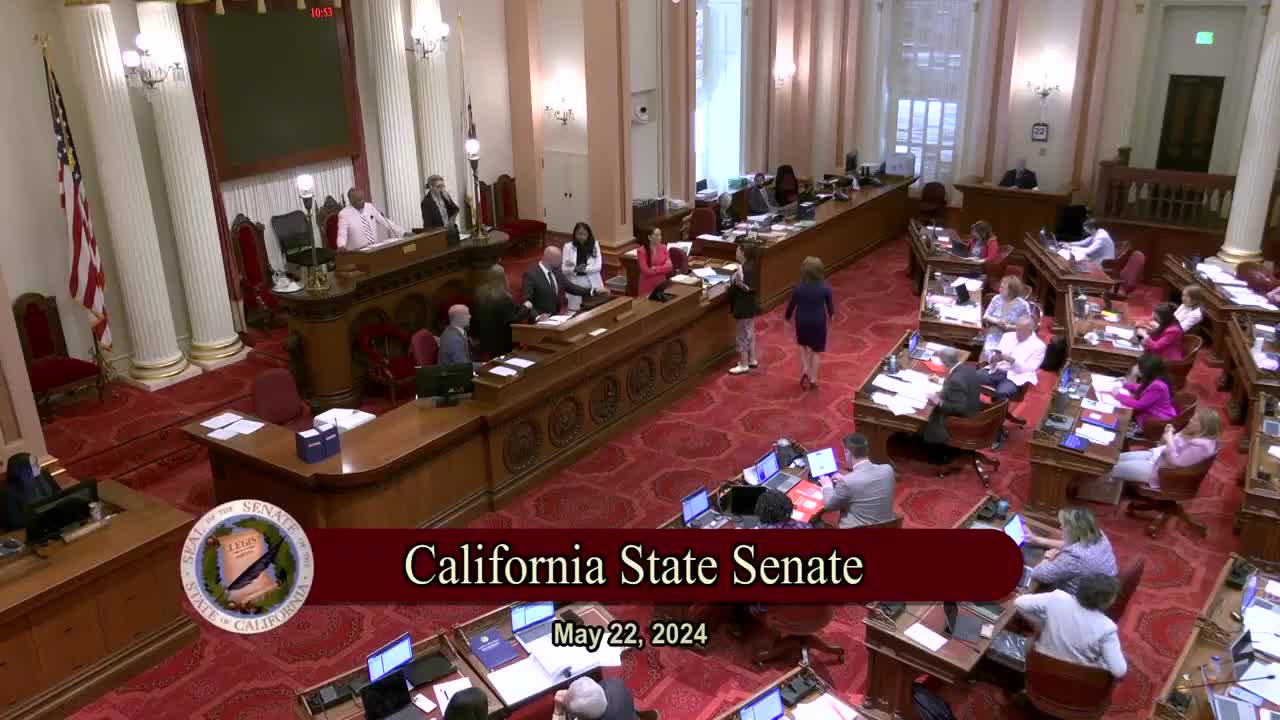 2MIN
Senate Floor
 33SEC
Senate Standing Committee on Appropriations
Bill Author

Bill Co-Author(s):