SB 1340: Discrimination.
- Session Year: 2023-2024
- House: Senate
- Latest Version Date: 2024-09-26
Current Status:
Passed
(2024-09-26: Chaptered by Secretary of State. Chapter 626, Statutes of 2024.)
Introduced
In Committee
First Chamber
In Committee
Second Chamber
Enacted
The Unruh Civil Rights Act generally prohibits business establishments from discriminating on specified bases. The California Fair Employment and Housing Act (act) prohibits discrimination in housing and employment on specified bases. Existing law establishes the Civil Rights Department (department) and prescribes its functions, duties, and powers, including to receive, investigate, conciliate, mediate, and prosecute complaints alleging employment discrimination pursuant to specified laws, including the Unruh Civil Rights Act and the act. Existing law specifies that while it is the intention of the Legislature that the act occupy the field of regulation of discrimination in employment and housing, the act does not limit or restrict the application of the Unruh Civil Rights Act.
This bill would also specify that nothing in the act limits or restricts efforts by any city, city and county, county, or other political subdivision of the state to enforce local law prohibiting discrimination in employment against classes of persons covered by the act if certain requirements are met, including a requirement that local enforcement is pursuant to a local law that is at least as protective as the act. The bill would require the department to promulgate regulations governing local enforcement pursuant to those provisions.
The Unruh Civil Rights Act generally prohibits business establishments from discriminating on specified bases. The California Fair Employment and Housing Act (act) prohibits discrimination in housing and employment on specified bases. Existing law establishes the Civil Rights Department (department) and prescribes its functions, duties, and powers, including to receive, investigate, conciliate, mediate, and prosecute complaints alleging employment discrimination pursuant to specified laws, including the Unruh Civil Rights Act and the act. Existing law specifies that while it is the intention of the Legislature that the act occupy the field of regulation of discrimination in employment and housing, the act does not limit or restrict the application of the Unruh Civil Rights Act.
This bill would require the department, in collaboration with the Division of Labor Standards Enforcement, to develop partnerships with local agencies that allow local agencies to assist with preventing and eliminating unlawful practices under the act, as specified. The bill would require a local agency that pursues a complaint pursuant to these provisions to receive, investigate, conciliate, mediate, and prosecute the complaint using procedures that are substantially similar to the procedures described above within one year of the complaint being filed with the local agency. The bill would authorize a person claiming to be aggrieved by an alleged unlawful practice to file a verified complaint with the department that requests that the complaint be pursued by a local agency pursuant to these provisions, and would require the department, within 30 days of receiving that complaint, to determine whether to pursue the complaint or to issue a letter authorizing the complainant to pursue the complaint through a local agency or through a civil action, as specified. The bill would prescribe procedures of a complaint pursued by a local agency. The bill would require the department to include information about local agencies entering partnerships and complaints being processed by local agencies pursuant to these provisions, as specified. The bill would define various terms for these purposes.Existing law specifies that while it is the intention of the Legislature that the act occupy the field of regulation of discrimination in employment and housing, the act does not limit or restrict the application of the Unruh Civil Rights Act.This bill would, commencing on January 1, 2026, also specify that nothing in the act shall be construed to limit or restrict efforts by local entities to enforce state law prohibiting discrimination against classes of persons covered by the act in employment, provided that the enforcement complies with the provisions described above. would also specify that nothing in the act limits or restricts efforts by any city, city and county, county, or other political subdivision of the state to enforce local law prohibiting discrimination in employment against classes of persons covered by the act if certain requirements are met, including a requirement that local enforcement is pursuant to a local law that is at least as protective as the act. The bill would require the department to promulgate regulations governing local enforcement pursuant to those provisions.
Existing law requires specified state agencies to convene relevant stakeholders to provide input on recommendations to establish terms to be included as a material part of a contract, including measurable results to ensure that investments maximize benefits to marginalized and disadvantaged communities, meet with those stakeholders, as specified, and consult with the department and other specified entities for the purposes of developing those recommendations, as specified. Existing law states the intent of the Legislature in enacting those provisions to develop procurement models in alignment with initiatives to enhance the states training and access pipeline for quality jobs and the application of community benefits on infrastructure and manufacturing investments funded by specified federal law.This bill would require the department to establish and maintain a comprehensive database to track all infrastructure contracting and procurement activities by state agencies funded in whole or in part by certain federal laws, as specified. The bill would require a contractor or subcontractor under an infrastructure contract awarded by a state agency funded in whole or in part by certain federal laws to report to the department specified demographic data, and would require the contractor or subcontractor to conduct a survey to collect this data, as specified. The bill would impose civil penalties for a contractors or subcontractors failure to comply with these provisions, as specified. The bill would require the department to publish on its internet website a report containing certain data, as specified, and would require data collected pursuant to these provisions to be confidential, as specified. The bill would require the department to collaborate with relevant state agencies, local governments, and stakeholders to develop and implement strategies for promoting diversity, equity, and inclusion in public infrastructure contracting and procurement. The bill would require the department to conduct outreach and educational activities to raise awareness of civil rights laws and regulations that impact public infrastructure contracting and procurement. The bill would require a state agency that enters into a project labor agreement to utilize the database to enforce any employee demographic requirements in the project labor agreement, as specified.Existing law establishes the Department of Industrial Relations, one of the functions of which is to foster, promote, and develop the welfare of wage earners of California, to improve their conditions, and to advance their opportunities for profitable employment.This bill would require the Department of Industrial Relations to establish a California Public Infrastructure Task Force, consisting of specified members, to, among other things, regularly conduct meetings to make recommendations regarding recruiting and removing barriers to employment in public infrastructure projects for underrepresented communities and to provide ongoing compliance assistance to contractors and subcontractors in public infrastructure projects regarding their nondiscrimination obligations.This bill would state the intent of the Legislature that, to the extent possible, the funding for the bills provisions would include specified federal law.Existing constitutional provisions require that a statute that limits the right of access to the meetings of public bodies or the writings of public officials and agencies be adopted with findings demonstrating the interest protected by the limitation and the need for protecting that interest.This bill would make legislative findings to that effect.The Unruh Civil Rights Act generally prohibits business establishments from discriminating on specified bases. The California Fair Employment and Housing Act (act) prohibits discrimination in housing and employment on specified bases. Existing law establishes the Civil Rights Department (department) and prescribes its functions, duties, and powers, including to receive, investigate, conciliate, mediate, and prosecute complaints alleging employment discrimination pursuant to specified laws, including the Unruh Civil Rights Act and the act.
This bill would require the department, in collaboration with the Division of Labor Standards Enforcement, to develop partnerships with local agencies that allow local agencies to assist with preventing and eliminating unlawful practices under the act, as specified. The bill would require a local agency that pursues a complaint pursuant to these provisions to receive, investigate, conciliate, mediate, and prosecute the complaint using procedures that are substantially similar to the procedures described above within one year of the complaint being filed with the local agency. The bill would authorize a person claiming to be aggrieved by an alleged unlawful practice to file a verified complaint with the department that requests that the complaint be pursued by a local agency pursuant to these provisions, and would require the department, within 30 days of receiving that complaint, to determine whether to pursue the complaint or to issue a letter authorizing the complainant to pursue the complaint through a local agency or through a civil action, as specified. The bill would prescribe procedures of a complaint pursued by a local agency. The bill would require the department to include information about local agencies entering partnerships and complaints being processed by local agencies pursuant to these provisions, as specified. The bill would define various terms for these purposes.
Existing law specifies that while it is the intention of the Legislature that the act occupy the field of regulation of discrimination in employment and housing, the act does not limit or restrict the application of the Unruh Civil Rights Act.
This bill would, commencing on January 1, 2026, also specify that nothing in the act shall be construed to limit or restrict efforts by local entities to enforce state law prohibiting discrimination against classes of persons covered by the act in employment, provided that the enforcement complies with the provisions described above.
Existing law requires specified state agencies to convene relevant stakeholders to provide input on recommendations to establish terms to be included as a material part of a contract, including measurable results to ensure that investments maximize benefits to marginalized and disadvantaged communities, meet with those stakeholders, as specified, and consult with the department and other specified entities for the purposes of developing those recommendations, as specified. Existing law states the intent of the Legislature in enacting those provisions to develop procurement models in alignment with initiatives to enhance the states training and access pipeline for quality jobs and the application of community benefits on infrastructure and manufacturing investments funded by specified federal law.
This bill would require the department to establish and maintain a comprehensive database to track all infrastructure contracting and procurement activities by state agencies funded in whole or in part by certain federal laws, as specified. The bill would require a contractor or subcontractor under an infrastructure contract awarded by a state agency funded in whole or in part by certain federal laws to report to the department specified demographic data, and would require the contractor or subcontractor to conduct a survey to collect this data, as specified. The bill would impose civil penalties for a contractors or subcontractors failure to comply with these provisions, as specified. The bill would require the department to publish on its internet website a report containing certain data, as specified, and would require data collected pursuant to these provisions to be confidential, as specified. The bill would require the department to collaborate with relevant state agencies, local governments, and stakeholders to develop and implement strategies for promoting diversity, equity, and inclusion in public infrastructure contracting and procurement. The bill would require the department to conduct outreach and educational activities to raise awareness of civil rights laws and regulations that impact public infrastructure contracting and procurement. The bill would require a state agency that enters into a project labor agreement to utilize the database to enforce any employee demographic requirements in the project labor agreement, as specified.
Existing law establishes the Department of Industrial Relations, one of the functions of which is to foster, promote, and develop the welfare of wage earners of California, to improve their conditions, and to advance their opportunities for profitable employment.
This bill would require the Department of Industrial Relations to establish a California Public Infrastructure Task Force, consisting of specified members, to, among other things, regularly conduct meetings to make recommendations regarding recruiting and removing barriers to employment in public infrastructure projects for underrepresented communities and to provide ongoing compliance assistance to contractors and subcontractors in public infrastructure projects regarding their nondiscrimination obligations.
This bill would state the intent of the Legislature that, to the extent possible, the funding for the bills provisions would include specified federal law.
Existing constitutional provisions require that a statute that limits the right of access to the meetings of public bodies or the writings of public officials and agencies be adopted with findings demonstrating the interest protected by the limitation and the need for protecting that interest.
This bill would make legislative findings to that effect.
The Unruh Civil Rights Act generally prohibits business establishments from discriminating on specified bases. The California Fair Employment and Housing Act (act) prohibits discrimination in housing and employment on specified bases. Existing law establishes the Civil Rights Department (department) and prescribes its functions, duties, and powers, including to receive, investigate, conciliate, mediate, and prosecute complaints alleging employment discrimination pursuant to specified laws, including the Unruh Civil Rights Act and the act.
This bill would require the department, in collaboration with the Division of Labor Standards Enforcement, to develop partnerships with local agencies that allow local agencies to assist with preventing and eliminating unlawful practices under the act, as specified. The bill would require a local agency that pursues a complaint pursuant to these provisions to receive, investigate, conciliate, mediate, and adjudicate prosecute the complaint using procedures that are substantially similar to the procedures described above within one year of the complaint being filed with the local agency. The bill would authorize a person claiming to be aggrieved by an alleged unlawful practice to file a verified complaint with the department that requests that the complaint be pursued by a local agency pursuant to these provisions. provisions, and would require the department, within 30 days of receiving that complaint, to determine whether to pursue the complaint or to issue a letter authorizing the complainant to pursue the complaint through a local agency or through a civil action, as specified. The bill would prescribe procedures of a complaint pursued by a local agency. The bill would require the department to include information about local agencies entering partnerships and complaints being processed by local agencies pursuant to these provisions, as specified. The bill would define various terms for these purposes.
Existing law specifies that while it is the intention of the Legislature that the act occupy the field of regulation of discrimination in employment and housing, the act does not limit or restrict the application of the Unruh Civil Rights Act.
This bill would, commencing on January 1, 2026, also specify that nothing in the act shall be construed to limit or restrict efforts by local entities to enforce state law prohibiting discrimination against classes of persons covered by the act in employment, provided that the enforcement complies with the provisions described above.
Existing law requires specified state agencies to convene relevant stakeholders to provide input on recommendations to establish terms to be included as a material part of a contract, including measurable results to ensure that investments maximize benefits to marginalized and disadvantaged communities, meet with those stakeholders, as specified, and consult with the department and other specified entities for the purposes of developing those recommendations, as specified. Existing law states the intent of the Legislature in enacting those provisions to develop procurement models in alignment with initiatives to enhance the states training and access pipeline for quality jobs and the application of community benefits on infrastructure and manufacturing investments funded by specified federal law.
This bill would require the department to establish and maintain a comprehensive database to track all infrastructure contracting and procurement activities by state agencies funded in whole or in part by certain federal laws, as specified. The bill would require a contractor or subcontractor under an infrastructure contract awarded by a state agency funded in whole or in part by certain federal laws to report to the department specified demographic data, and would require the contractor or subcontractor to conduct a survey to collect this data, as specified. The bill would impose civil penalties for a contractors or subcontractors failure to comply with these provisions, as specified. The bill would require the department to publish on its internet website a report containing certain data, as specified, and would require data collected pursuant to these provisions to be confidential, as specified. The bill would require the department to collaborate with relevant state agencies, local governments, and stakeholders to develop and implement strategies for promoting diversity, equity, and inclusion in public infrastructure contracting and procurement. The bill would require the department to conduct outreach and educational activities to raise awareness of civil rights laws and regulations that impact public infrastructure contracting and procurement. The bill would require a state agency that enters into a project labor agreement to utilize the database to enforce any employee demographic requirements in the project labor agreement, as specified.
Existing law establishes the Department of Industrial Relations, one of the functions of which is to foster, promote, and develop the welfare of wage earners of California, to improve their conditions, and to advance their opportunities for profitable employment.
This bill would require the Department of Industrial Relations to establish a California Public Infrastructure Task Force, consisting of specified members, to, among other things, regularly conduct meetings to make recommendations regarding recruiting and removing barriers to employment in public infrastructure projects for underrepresented communities and to provide ongoing compliance assistance to contractors and subcontractors in public infrastructure projects regarding their nondiscrimination obligations.
This bill would state the intent of the Legislature that, to the extent possible, the funding for the bills provisions would include specified federal law.
Existing constitutional provisions require that a statute that limits the right of access to the meetings of public bodies or the writings of public officials and agencies be adopted with findings demonstrating the interest protected by the limitation and the need for protecting that interest.
This bill would make legislative findings to that effect.
The Unruh Civil Rights Act generally prohibits business establishments from discriminating on specified bases. The California Fair Employment and Housing Act (act) prohibits discrimination in housing and employment on specified bases. Existing law establishes the Civil Rights Department (department) and prescribes its functions, duties, and powers, including to receive, investigate, conciliate, mediate, and prosecute complaints alleging employment discrimination pursuant to specified laws, including the Unruh Civil Rights Act and the act.
This bill would require the department, in collaboration with the Division of Labor Standards Enforcement, to develop partnerships with local agencies that allow local agencies to assist with preventing and eliminating unlawful practices under the act, as specified. The bill would require a local agency that pursues a complaint pursuant to these provisions to receive, investigate, and adjudicate the complaint using procedures that are substantially similar to the procedures described above within one year of the complaint being filed with the local agency. The bill would authorize a person claiming to be aggrieved by an alleged unlawful practice to file a verified complaint with the department that requests that the complaint be pursued by a local agency pursuant to these provisions. The bill would prescribe procedures of a complaint pursued by a local agency. The bill would require the department to include information about local agencies entering partnerships and complaints being processed by local agencies pursuant to these provisions, as specified. The bill would define various terms for these purposes.
Existing law specifies that while it is the intention of the Legislature that the act occupy the field of regulation of discrimination in employment and housing, the act does not limit or restrict the application of the Unruh Civil Rights Act.
This bill would, commencing on January 1, 2026, also specify that nothing in the act shall be construed to limit or restrict efforts by local entities to enforce state law prohibiting discrimination against classes of persons covered by the act in employment, provided that the enforcement complies with the provisions described above.
Existing law requires specified state agencies to convene relevant stakeholders to provide input on recommendations to establish terms to be included as a material part of a contract, including measurable results to ensure that investments maximize benefits to marginalized and disadvantaged communities, meet with those stakeholders, as specified, and consult with the department and other specified entities for the purposes of developing those recommendations, as specified. Existing law states the intent of the Legislature in enacting those provisions to develop procurement models in alignment with initiatives to enhance the states training and access pipeline for quality jobs and the application of community benefits on infrastructure and manufacturing investments funded by specified federal law.
This bill would require the department to establish and maintain a comprehensive database to track all infrastructure contracting and procurement activities by state agencies funded in whole or in part by certain federal laws, as specified. The bill would require a contractor or subcontractor under an infrastructure contract awarded by a state agency funded in whole or in part by certain federal laws to report to the department specified demographic data, and would require the contractor or subcontractor to conduct a survey to collect this data, as specified. The bill would impose civil penalties for a contractors or subcontractors failure to comply with these provisions, as specified. The bill would require the department to annually publish on its internet website a report summarizing containing certain data, as specified, and would require data collected pursuant to these provisions to be confidential, as specified. The bill would require the department to collaborate with relevant state agencies, local governments, and stakeholders to develop and implement strategies for promoting diversity, equity, and inclusion in public infrastructure contracting and procurement. The bill would require the department to conduct outreach and educational activities to raise awareness of civil rights laws and regulations that impact public infrastructure contracting and procurement. The bill would require a state agency that enters into a project labor agreement to utilize the database to enforce any employee demographic requirements in the project labor agreement, as specified.
Existing law establishes the Department of Industrial Relations, one of the functions of which is to foster, promote, and develop the welfare of wage earners of California, to improve their conditions, and to advance their opportunities for profitable employment.
This bill would require the Department of Industrial Relations to establish a California Public Infrastructure Task Force, consisting of specified members, to, among other things, regularly conduct meetings to make recommendations regarding recruiting and removing barriers to employment in public infrastructure projects for underrepresented communities and to provide ongoing compliance assistance to contractors and subcontractors in public infrastructure projects regarding their nondiscrimination obligations.
This bill would state the intent of the Legislature that, to the extent possible, the funding for the bills provisions would include specified federal law.
Existing constitutional provisions require that a statute that limits the right of access to the meetings of public bodies or the writings of public officials and agencies be adopted with findings demonstrating the interest protected by the limitation and the need for protecting that interest.
This bill would make legislative findings to that effect.
The Unruh Civil Rights Act generally prohibits business establishments from discriminating on specified bases. The California Fair Employment and Housing Act (act) prohibits discrimination in housing and employment on specified bases. Existing law establishes the Civil Rights Department (department) and prescribes its functions, duties, and powers, including to receive, investigate, conciliate, mediate mediate, and prosecute complaints alleging employment discrimination pursuant to specified laws, including the Unruh Civil Rights Act and the act.
This bill would require the department, in collaboration with the Division of Labor Standards Enforcement, to develop partnerships with local agencies that allow local agencies to assist with preventing and eliminating unlawful practices under the act, as specified. The bill would require a local agency that pursues a complaint pursuant to these provisions to receive, investigate, and adjudicate the complaint using procedures that are substantially similar to the procedures described above within one year of the complaint being filed with the local agency. The bill would authorize a person claiming to be aggrieved by an alleged unlawful practice to file a verified complaint with the department that requests that the complaint be pursued by a local agency pursuant to these provisions. The bill would prescribe procedures of a complaint pursued by a local agency. The bill would require the department to include information about local agencies entering partnerships and complaints being processed by local agencies pursuant to these provisions, as specified. The bill would define various terms for these purposes.
Existing law specifies that while it is the intention of the Legislature that the act occupy the field of regulation of discrimination in employment and housing, the act does not limit or restrict the application of the Unruh Civil Rights Act.
This bill would, commencing on January 1, 2026, also specify that nothing in the act shall be construed to limit or restrict efforts by local entities to enforce state law prohibiting discrimination against classes of persons covered by the act in employment, provided that the enforcement complies with the provisions described above.
Existing law requires specified state agencies to convene relevant stakeholders to provide input on recommendations to establish terms to be included as a material part of a contract, including measurable results to ensure that investments maximize benefits to marginalized and disadvantaged communities, meet with those stakeholders, as specified, and consult with the department and other specified entities for the purposes of developing those recommendations, as specified. Existing law states the intent of the Legislature in enacting those provisions to develop procurement models in alignment with initiatives to enhance the states training and access pipeline for quality jobs and the application of community benefits on infrastructure and manufacturing investments funded by specified federal law.
This bill would require the department to establish and maintain a comprehensive database to track all infrastructure contracting and procurement activities by state agencies, agencies funded in whole or in part by certain federal laws, as specified. The bill would require a contractor or subcontractor under an infrastructure contract awarded by a state agency funded in whole or in part by certain federal laws to report to the department specified demographic data, and would require the contractor or subcontractor to conduct a survey to collect this data, as specified. The bill would require the department to annually publish a report summarizing certain data, as specified, and would require data collected pursuant to these provisions to be confidential, as specified. The bill would require the department to collaborate with relevant state agencies, local governments, and stakeholders to develop and implement strategies for promoting diversity, equity, and inclusion in public infrastructure contracting and procurement. The bill would require the department to conduct outreach and educational activities to raise awareness of civil rights laws and regulations that impact public infrastructure contracting and procurement.
Existing law establishes the Department of Industrial Relations, one of the functions of which is to foster, promote, and develop the welfare of wage earners of California, to improve their conditions, and to advance their opportunities for profitable employment.
This bill would require the Department of Industrial Relations to establish a California Public Infrastructure Task Force, consisting of specified members, to, among other things, regularly conduct meetings to make recommendations regarding recruiting and removing barriers to employment in public infrastructure projects for underrepresented communities and to provide ongoing compliance assistance to contractors and subcontractors in public infrastructure projects regarding their nondiscrimination obligations.
This bill would state the intent of the Legislature that, to the extent possible, the funding for the bills provisions would include specified federal law.
Existing constitutional provisions require that a statute that limits the right of access to the meetings of public bodies or the writings of public officials and agencies be adopted with findings demonstrating the interest protected by the limitation and the need for protecting that interest.
This bill would make legislative findings to that effect.
Existing law establishes the Civil Rights Department (department) and prescribes its functions, duties, and powers, including to receive, investigate, conciliate, mediate and prosecute complaints alleging employment discrimination pursuant to specified laws. The
The Unruh Civil Rights Act generally prohibits business establishments from discriminating on specified bases. The California Fair Employment and Housing Act (act) prohibits discrimination in housing and employment on specified bases. Existing law establishes the Civil Rights Department (department) and prescribes its functions, duties, and powers, including to receive, investigate, conciliate, mediate and prosecute complaints alleging employment discrimination pursuant to specified laws, including the Unruh Civil Rights Act and the act. The act prescribes procedures and remedies available in the case of failure to eliminate an unlawful practice under its provisions through specified means, including authorizing a court to assess a civil penalty against a defendant, as specified.
This bill would specify that the departments duties include receiving, investigating, conciliating, mediating, and prosecuting complaints arising from unlawful practices by a contractor or subcontractor in connection with an agreement with a state agency for an infrastructure project. The bill would, in an action arising from unlawful practices by a contractor or subcontractor in connection with an agreement with a state agency for an infrastructure project, authorize the court to cancel the agreement.This bill would require the department, in collaboration with the Division of Labor Standards Enforcement, to develop partnerships with local agencies that allow local agencies to assist with preventing and eliminating unlawful practices under the act, as specified. The bill would require a local agency that pursues a complaint pursuant to these provisions to receive, investigate, and adjudicate the complaint using procedures that are substantially similar to the procedures described above within one year of the complaint being filed with the local agency. The bill would authorize a person claiming to be aggrieved by an alleged unlawful practice to file a verified complaint with the department that requests that the complaint be pursued by a local agency pursuant to these provisions. The bill would prescribe procedures of a complaint pursued by a local agency. The bill would require the department to include information about local agencies entering partnerships and complaints being processed by local agencies pursuant to these provisions, as specified. The bill would define various terms for these purposes.
Existing law specifies that while it is the intention of the Legislature that the act occupy the field of regulation of discrimination in employment and housing, the act does not limit or restrict the application of the Unruh Civil Rights Act.
This bill would, commencing on January 1, 2026, also specify that nothing in the act shall be construed to limit or restrict efforts by local entities to enforce state law prohibiting discrimination against classes of persons covered by the act in employment, provided that the enforcement complies with the provisions described above.
Existing law requires specified state agencies to convene relevant stakeholders to provide input on recommendations to establish terms to be included as a material part of a contract, including measurable results to ensure that investments maximize benefits to marginalized and disadvantaged communities, meet with those stakeholders, as specified, and consult with the department and other specified entities for the purposes of developing those recommendations, as specified. Existing law states the intent of the Legislature in enacting those provisions to develop procurement models in alignment with initiatives to enhance the states training and access pipeline for quality jobs and the application of community benefits on infrastructure and manufacturing investments funded by specified federal law.
This bill would require the department to establish and maintain a comprehensive database to track all infrastructure contracting and procurement activities by state agencies, as specified. The bill would require a contractor or subcontractor under an infrastructure contract awarded by a state agency to report to the department specified demographic data, and would require the contractor or subcontractor to conduct a survey to collect this data, as specified. The bill would require the department to annually publish a report summarizing certain data, as specified, and would require data collected pursuant to these provisions to be confidential, as specified. The bill would require the department to collaborate with relevant state agencies, local governments, and stakeholders to develop and implement strategies for promoting diversity, equity, and inclusion in public infrastructure contracting and procurement. The bill would require the department to conduct outreach and educational activities to raise awareness of civil rights laws and regulations that impact public infrastructure contracting and procurement.
Existing law establishes the Department of Industrial Relations, one of the functions of which is to foster, promote, and develop the welfare of wage earners of California, to improve their conditions, and to advance their opportunities for profitable employment.
This bill would require the Department of Industrial Relations to establish a California Public Infrastructure Task Force, consisting of specified members, to, among other things, regularly conduct meetings to make recommendations regarding recruiting and removing barriers to employment in public infrastructure projects for underrepresented communities and to provide ongoing compliance assistance to contractors and subcontractors in public infrastructure projects regarding their nondiscrimination obligations.
This bill would state the intent of the Legislature that, to the extent possible, the funding for the bills provisions would include specified federal law.
Existing constitutional provisions require that a statute that limits the right of access to the meetings of public bodies or the writings of public officials and agencies be adopted with findings demonstrating the interest protected by the limitation and the need for protecting that interest.
This bill would make legislative findings to that effect.
Existing law establishes the Civil Rights Department (department) and prescribes its functions, duties, and powers, including to receive, investigate, conciliate, mediate and prosecute complaints alleging employment discrimination pursuant to specified laws. The Unruh Civil Rights Act generally prohibits business establishments from discriminating on specified bases. The California Fair Employment and Housing Act (act) prohibits discrimination in housing and employment on specified bases and provides procedures for enforcement by the Civil Rights Department (department). bases. Existing law establishes the Civil Rights Department (department) and prescribes its functions, duties, and powers, including to receive, investigate, conciliate, mediate and prosecute complaints alleging employment discrimination pursuant to specified laws, including the Unruh Civil Rights Act and the act. The act prescribes procedures and remedies available in the case of failure to eliminate an unlawful practice under its provisions through specified means, including authorizing a court to assess a civil penalty against a defendant, as specified.
This bill would specify that the departments duties include receiving, investigating, conciliating, mediating, and prosecuting complaints arising from unlawful practices by a contractor or subcontractor in connection with an agreement with a state agency for an infrastructure project. The bill would, in an action arising from unlawful practices by a contractor or subcontractor in connection with an agreement with a state agency for an infrastructure project, authorize the court to cancel the agreement.
This bill would require the department, in collaboration with the Division of Labor Standards Enforcement, to develop partnerships with local agencies that allow local agencies to assist with preventing and eliminating unlawful practices under the act, as specified. The bill would require a local agency that pursues a complaint pursuant to these provisions to receive, investigate, and adjudicate the complaint using procedures that are substantially similar to the procedures described above within one year of the complaint being filed with the local agency. The bill would authorize a person claiming to be aggrieved by an alleged unlawful practice to file a verified complaint with the department that requests that the complaint be pursued by a local agency pursuant to these provisions. The bill would prescribe procedures of a complaint pursued by a local agency. The bill would require the department to include information about local agencies entering partnerships and complaints being processed by local agencies pursuant to these provisions, as specified. The bill would define various terms for these purposes.
Existing law specifies that while it is the intention of the Legislature that the act occupy the field of regulation of discrimination in employment and housing, the act does not limit or restrict the application of the Unruh Civil Rights Act.
This bill would, commencing on January 1, 2026, also specify that nothing in the act shall be construed to limit or restrict efforts by local entities to enforce state law prohibiting discrimination against classes of persons covered by the act in employment, provided that the enforcement complies with the provisions described above.
Existing law requires specified state agencies to convene relevant stakeholders to provide input on recommendations to establish terms to be included as a material part of a contract, including measurable results to ensure that investments maximize benefits to marginalized and disadvantaged communities, meet with those stakeholders, as specified, and consult with the department and other specified entities for the purposes of developing those recommendations, as specified. Existing law states the intent of the Legislature in enacting those provisions to develop procurement models in alignment with initiatives to enhance the states training and access pipeline for quality jobs and the application of community benefits on infrastructure and manufacturing investments funded by specified federal law.
This bill would require the department to establish and maintain a comprehensive database to track all infrastructure contracting and procurement activities by state agencies, as specified. The bill would require the department to collaborate with relevant state agencies, local governments, and stakeholders to develop and implement strategies for promoting diversity, equity, and inclusion in public infrastructure contracting and procurement. The bill would require the department to conduct outreach and educational activities to raise awareness of civil rights laws and regulations that impact public infrastructure contracting and procurement.
Existing law establishes the Department of Industrial Relations, one of the functions of which is to foster, promote, and develop the welfare of wage earners of California, to improve their conditions, and to advance their opportunities for profitable employment.
This bill would require the Department of Industrial Relations to establish a California Public Infrastructure Task Force, consisting of specified members, to, among other things, regularly conduct meetings to make recommendations regarding recruiting and removing barriers to employment in public infrastructure projects for underrepresented communities and to provide ongoing compliance assistance to contractors and subcontractors in public infrastructure projects regarding their nondiscrimination obligations.
This bill would state the intent of the Legislature that, to the extent possible, the funding for the bills provisions would include specified federal law.
The Unruh Civil Rights Act generally prohibits business establishments from discriminating on specified bases. The California Fair Employment and Housing Act (act) prohibits discrimination in housing and employment on specified bases and provides procedures for enforcement by the Civil Rights Department (department).
This bill would require the department, in collaboration with the Division of Labor Standards Enforcement, to develop partnerships with local agencies that allow local agencies to assist with preventing and eliminating unlawful practices under the act, as specified. The bill would require a local agency that pursues a complaint pursuant to these provisions to receive, investigate, and adjudicate the complaint using procedures that are substantially similar to the procedures described above within one year of the complaint being filed with the local agency. The bill would authorize a person claiming to be aggrieved by an alleged unlawful practice to file a verified complaint with the department that requests that the complaint be pursued by a local agency pursuant to these provisions. The bill would prescribe procedures of a complaint pursued by a local agency. The bill would require the department to include information about local agencies entering partnerships and complaints being processed by local agencies pursuant to these provisions, as specified. The bill would define various terms for these purposes.
Existing law specifies that while it is the intention of the Legislature that the act occupy the field of regulation of discrimination in employment and housing, the act does not limit or restrict the application of the Unruh Civil Rights Act.
This bill would, commencing on January 1, 2026, also specify that nothing in the act shall be construed to limit or restrict efforts by local entities to enforce state law prohibiting discrimination against classes of persons covered by the act in employment, provided that the enforcement complies with the provisions described above.
(a)The provisions of this part shall be construed liberally for the accomplishment of the purposes of this part. This part does not repeal any of the provisions of civil rights law or of any other law of this state relating to discrimination because of race, religious creed, color, national origin, ancestry, physical disability, mental disability, medical condition, genetic information, marital status, sex, age, reproductive health decisionmaking, or sexual orientation, unless those provisions provide less protection to the enumerated classes of persons covered under this part.
(b)The provisions in this part relating to discrimination in employment on account of sex or medical condition do not affect the operation of the terms or conditions of any bona fide retirement, pension, employee benefit, or insurance plan, provided the terms or conditions are in accordance with customary and reasonable or actuarially sound underwriting practices.
(c)(1)It is the intention of the Legislature to occupy the field of regulation of discrimination in employment and housing encompassed by the provisions of this part, exclusive of all other laws banning discrimination in employment and housing by any city, city and county, county, or other political subdivision of the state.
(2)Notwithstanding paragraph (1), this part does not limit or restrict the application of Section 51 of the Civil Code.
(3)(A)Notwithstanding paragraph (1), this part does not limit or restrict efforts by any city, city and county, county, or other political subdivision of the state to enforce local law prohibiting discrimination in employment against any of the enumerated classes of persons covered under this part, provided that the enforcement meets all of the following requirements:
(i)The local enforcement concerns an employment complaint filed with the department.
(ii)The local enforcement occurs after the department has issued a right-to-sue notice under Section 12965.
(iii)The local enforcement commences before the expiration of the time to file a civil action specified in the right-to-sue notice described in clause (ii).
(iv)The local enforcement is pursuant to a local law that is at least as protective as this part.
(B)The time to file a civil action specified in the right-to-sue notice described in clause (ii) of subparagraph (A) shall be tolled during a local enforcement pursuant to this paragraph.
(C)(i)Pursuant to subdivision (e) of Section 12930, the department shall promulgate regulations governing local enforcement pursuant to this paragraph.
(ii)Any local enforcement pursuant to this paragraph shall comply with the regulations promulgated pursuant to this subparagraph within one year of the effective date of those regulations.
(iii)Prior to the effective date of the regulations as described in clause (ii), any local enforcement pursuant to this paragraph shall use procedures that are substantially similar to those described in Article 1 (commencing with Section 12960) of Chapter 7.
(D)This paragraph does not prohibit a complainant from filing a timely civil action following receipt of a right-to-sue notice from the department.
(a)The provisions of this part shall be construed liberally for the accomplishment of the purposes of this part. This part does not repeal any of the provisions of civil rights law or of any other law of this state relating to discrimination because of race, religious creed, color, national origin, ancestry, physical disability, mental disability, medical condition, genetic information, marital status, sex, age, reproductive health decisionmaking, or sexual orientation, unless those provisions provide less protection to the enumerated classes of persons covered under this part.
(b)The provisions in this part relating to discrimination in employment on account of sex or medical condition do not affect the operation of the terms or conditions of any bona fide retirement, pension, employee benefit, or insurance plan, provided the terms or conditions are in accordance with customary and reasonable or actuarially sound underwriting practices.
(c)(1)It is the intention of the Legislature to occupy the field of regulation of discrimination in employment and housing encompassed by the provisions of this part, exclusive of all other laws banning discrimination in employment and housing by any city, city and county, county, or other political subdivision of the state.
(2)Notwithstanding paragraph (1), this part does not limit or restrict the application of Section 51 of the Civil Code.
(3)(A)Notwithstanding paragraph (1), this part does not limit or restrict efforts by any city, city and county, county, or other political subdivision of the state to enforce state local law prohibiting discrimination in employment against any of the enumerated classes of persons covered under this part in employment, part, provided that the enforcement complies with Article 1.1 (commencing with Section 12978) of Chapter 7. meets all of the following requirements:
(i)The local enforcement concerns an employment complaint filed with the department.
(ii)The local enforcement occurs after the department has issued a right-to-sue notice under Section 12965.
(iii)The local enforcement commences before the expiration of the time to file a civil action specified in the right-to-sue notice described in clause (ii).
(iv)The local enforcement is pursuant to a local law that is at least as protective as this part.
(B)The time to file a civil action specified in the right-to-sue notice described in clause (ii) of subparagraph (A) shall be tolled during a local enforcement pursuant to this paragraph.
(C)(i)Pursuant to subdivision (e) of Section 12930, the department shall promulgate regulations governing local enforcement pursuant to this paragraph.
(ii)Any local enforcement pursuant to this paragraph shall comply with the regulations promulgated pursuant to this subparagraph within one year of the effective date of those regulations.
(iii)Prior to the effective date of the regulations as described in clause (ii), any local enforcement pursuant to this paragraph shall use procedures that are substantially similar to those described in Article 1 (commencing with Section 12960) of Chapter 7.
(D)This paragraph does not prohibit a complainant from filing a timely civil action following receipt of a right-to-sue notice from the department.
(d)The amendments made by the act adding this subdivision shall become operative on January 1, 2026.SEC. 4.Section 6990.2 is added to the Public Contract Code, to read:6990.2.(a)For purposes of this section:(1)Department means the Civil Rights Department.(2)Local government means a city, county, city or county, or public or municipal corporation.(3)State agency means a state agency as defined in Section 11000 of the Government Code.(b)The department shall establish and maintain a comprehensive database to track all infrastructure contracting and procurement activities by state agencies funded in whole or in part by the federal Infrastructure Investment and Jobs Act, Inflation Reduction Act of 2022, or CHIPS Act of 2022, which shall include, but shall not be limited to, all of the following:(1)Contracts awarded by state agencies, including, but not limited to, project details, pay scales for employees of the contractors and subcontractors, and relevant compliance measures or terms.(2)Contractors and subcontractors utilized by state agencies.(3)Demographic data of employees of contractors and subcontractors utilized by state agencies using the data collected pursuant to subdivisions (c) and (d).(4)Total straight time and overtime hours worked each day and week, and the actual per diem wages paid to each journeyperson, apprentice, worker, or other employee employed by the contractor or subcontractor in connection with the project.(c)(1)Commencing on July 1, 2025, and as frequently thereafter as determined by the department pursuant to paragraph (3) of subdivision (d), a contractor or subcontractor under an infrastructure contract awarded by a state agency funded in whole or in part by the federal Infrastructure Investment and Jobs Act, Inflation Reduction Act of 2022, or CHIPS Act of 2022 shall collect from its employees the data specified in paragraphs (3) and (4) of subdivision (b) and report that data to the department using the form specified by the department pursuant to paragraph (3) of subdivision (d).(2)A contractor or subcontractor described in paragraph (1) shall submit a report described in paragraph (1) even if the contractor or subcontractor does not have an employee who opted to participate in the survey described in subdivision (d). If the contractor or subcontractor does not have an employee who opted to participate in the survey described in subdivision (d), the report shall state that all employees opted out of participating in the survey.(d)(1)A contractor or subcontractor under an infrastructure contract awarded by a state agency shall provide each employee with the option to participate in a survey for the purpose of collecting and reporting the information described in paragraph (3) of subdivision (b).(2)A contractor or subcontractor under an infrastructure contract awarded by a state agency shall distribute a written disclosure to each employee prior to, or concurrently with, a survey conducted pursuant to this subdivision that shall notify the employee of all of the following:(A)The employees decision to disclose their demographic information is voluntary.(B)The contractor or subcontractor is prohibited from taking an adverse action against an employee if the employee declines to participate in the survey.(C)The aggregate data collected for each demographic category will be reported.(3)(A)A survey conducted pursuant to this subdivision shall be completed using a standardized form and conducted as frequently as specified by the department.(B)In specifying the form and the frequency as required by subparagraph (A), the department shall consider the example worker data elements and other guidance from the federal Good Jobs Initiatives Good Jobs in Federal Investments: Data and Reporting Appendix.(4)A contractor or subcontractor under an infrastructure project awarded by a state agency shall not in any way encourage, incentivize, or attempt to influence the decision of an employee to participate in a survey conducted pursuant to this subdivision.(5)A contractor or subcontractor under an infrastructure project awarded by a state agency required to conduct a survey pursuant to this subdivision shall do both of the following:(A)Collect survey response data from employees in a manner that maintains the anonymity of the responding employee and the confidentiality of the data reported.(B)Transmit the survey response data to the department in a manner that does not associate the survey response data with an individual employee.(e)A contractor or subcontractor under an infrastructure contract awarded by a state agency shall not take an adverse action against an employee who declines to participate in the survey described in subdivision (d).(f)(1)The department may provide a written notice to a contractor or subcontractor that has failed to comply with subdivision (c) requiring the contractor or subcontractor to comply with subdivision (c) within 10 days of receipt of the notice.(2)If a contractor or subcontractor fails to comply with subdivision (c) within 10 days of receiving the notice described in paragraph (1), the contractor or subcontractor shall be subject, after notice and opportunity to be heard, to a civil penalty of one hundred dollars ($100) per day, or portion thereof, that the contractor or subcontractor failed to comply with subdivision (c).(3)A civil penalty imposed pursuant to this subdivision shall be payable to the department, except the department may instead require the state agency that is a party to the contract with the contractor or subcontractor to withhold the amount of the civil penalty from progress payment due under the contract.(4)A contractor shall not be liable for a civil penalty under this subdivision for a subcontractors failure to comply with subdivision (c).(g)(1)Commencing July 1, 2026, the department shall annually publish on its internet website a report summarizing the data contained in the database maintained pursuant to subdivision (b) that includes both of the following:(A)Any disparities or trends the department observed.(B)Recommendations for improving equity and inclusion in public infrastructure and procurement.(2)Commencing on July 1, 2026, and monthly thereafter, the department shall publish on its internet website the information reported pursuant to paragraph (3) of subdivision (b) in a manner that can be sorted by geographic region and project.(h)(1)The department shall publish the information submitted pursuant to paragraph (3) of subdivision (b) in the aggregate and shall not identify an individual employee.(2)The department shall include a statement on the departments internet website that the information posted pursuant to this section is provided for informational purposes only.(i)A state agency that enters into a project labor agreement pursuant to Section 2500.5 shall utilize the database established pursuant to this section to enforce any employee demographic requirements in the project labor agreement.(j)The data collected pursuant to this section is confidential and shall not be released by the department or a contractor or subcontractor under an infrastructure contract awarded by a state agency except to comply with a properly authorized civil, criminal, administrative, or regulatory investigation or subpoena, summons by federal, state, or local authorities, or as otherwise authorized by this section. (k)The department shall collaborate with relevant state agencies, local governments, and stakeholders to develop and implement strategies for promoting diversity, equity, and inclusion in public infrastructure contracting and procurement.(l)The department shall conduct outreach and educational activities to raise awareness of civil rights laws and regulations that impact public infrastructure contracting and procurement.SEC. 5.Section 6990.3 is added to the Public Contract Code, to read:6990.3.(a)The Department of Industrial Relations shall establish a California Public Infrastructure Task Force, which shall consist of representatives from all of the following entities that engage in public infrastructure contracting and procurement projects:(1)State agencies and departments, including, but not limited to, all of the following:(A)The Labor and Workforce Development Agency.(B)The Transportation Agency.(C)The Department of General Services.(D)The California Conservation Corps.(E)The Civil Rights Department.(2)Local governments and agencies.(3)Contractors and subcontractors.(4)Unions.(5)Apprenticeship and preapprenticeship programs.(6)Job and worker centers.(7)Community colleges.(8)Tribal Employment Rights offices.(9)Women in Apprenticeship and Nontraditional Occupations grantees.(10)Nonprofit organizations.(b)The task force shall do all of the following:(1)Regularly conduct meetings to make recommendations regarding recruiting and removing barriers to employment in public infrastructure projects for underrepresented communities.(2)Conduct outreach and engagement activities with contractors and subcontractors to promote employment in public infrastructure projects for underrepresented communities.(3)Provide ongoing compliance assistance at the prebid and postbid stages to contractors and subcontractors in public infrastructure projects regarding their nondiscrimination obligations.(4)Evaluate the efforts of contractors and subcontractors to recruit and utilize talent from underrepresented communities in public infrastructure projects.SEC. 6.The Legislature finds and declares that Section 4 of this act, which adds Section 6990.2 to the Public Contract Code, imposes a limitation on the publics right of access to the meetings of public bodies or the writings of public officials and agencies within the meaning of Section 3 of Article I of the California Constitution. Pursuant to that constitutional provision, the Legislature makes the following findings to demonstrate the interest protected by this limitation and the need for protecting that interest:In order to protect the privacy and personal information of individual workers participating in the contractor diversity survey, it is necessary that this information be kept confidential.It is the intent of the Legislature that, to the extent possible, the funding for this act include, but not be limited to, the federal Infrastructure Investment and Jobs Act, Inflation Reduction Act of 2022, and CHIPS Act of 2022.
SEC. 2.Article 1.1 (commencing with Section 12978) is added to Chapter 7 of Part 2.8 of Division 3 of Title 2 of the Government Code, to read:1.1.Local Agency Enforcement of Unlawful Practices12978.For purposes of this article, the following definitions apply:
(a)Article 1 means Article 1 (commencing with Section 12960).
(b)Local agency means a city, county, city and county, or other political subdivision of the state.
(c)Unlawful practice means a violation of Article 1 (commencing with Section 12940) of Chapter 6.
12978.2.(a)The department, in collaboration with the Division of Labor Standards Enforcement, shall develop partnerships with local agencies that allow local agencies to assist with preventing and eliminating unlawful practices.
(b)The department shall not enter into a partnership with a local agency until both of the following requirements are met:
(1)The local agency demonstrates to the departments satisfaction that the local agency has the capacity to comply with subdivision (c).
(2)The local agency establishes procedural regulations that are substantially similar to those described in Article 1.
(c)A local agency that pursues a complaint pursuant to this article shall receive, investigate, conciliate, mediate, and prosecute the complaint using procedures that are substantially similar to those described in Article 1 within one year of the complaint being filed with the local agency.
12978.4.(a)(1)A person claiming to be aggrieved by an alleged unlawful practice may file a verified complaint with the department on a form developed by the department for purposes of this article that requests that the persons complaint be pursued by a local agency pursuant to this article.
(2)A verified complaint filed pursuant to paragraph (1) shall be deemed to satisfy any exhaustion requirement of the department.
(b)Within 30 days of receiving a complaint described in subdivision (a), the department shall determine whether it intends to pursue the complaint pursuant to Article 1 or issue a letter to the complainant that authorizes the complainant to pursue the complaint through a local agency that has entered into a partnership pursuant to Section 12978.2 or through a civil action.
(c)A complainant who receives a letter pursuant to subdivision (b) may pursue their complaint with a local agency that has entered into a partnership pursuant to Section 12978.2 through procedures prescribed by the local agency within one year of receipt of the letter.
(d)Prior to initiating an investigation of a complaint, a local agency shall require the complainant to provide evidence that the complainant received a letter described in subdivision (b).
(e)The complainant may at any time after receiving a letter pursuant to subdivision (b) withdraw from the investigation and file a civil action.
(f)(1)Notwithstanding any tolling or limitations period under any other law, the time for a complainant to file a civil action under a statute referenced in Section 12960 shall be tolled during the period commencing with the filing of a complaint with the department for an alleged violation of that statute until either of the following:
(A)The local agency files a civil action for the alleged unlawful practice.
(B)One year after the local agency issues written notice to a complainant that it has closed its investigation without electing to file a civil action for the alleged unlawful practice.
(2)The tolling provided under this subdivision shall apply retroactively.
(3)This subdivision is not intended to revive claims that have already lapsed.
12978.6.If a complainant pursues a complaint with a local agency pursuant to this article, the complainant shall not pursue a complaint arising out of the same underlying facts and circumstances in a different local agency or pursuant to Article 1 at any time thereafter.
12978.8.The department shall include in the annual report required by subdivision (k) of Section 12930 all of the following information:
(a)A list of the local agencies that have entered into partnerships pursuant to Section 12978.2.
(b)The number of complaints processed by local agencies pursuant to this article that year.
(c)A summary of the results of the cases processed by local agencies pursuant to this article that year.
SEC. 3.Section 12993 of the Government Code is amended to read:12993.(a)The provisions of this part shall be construed liberally for the accomplishment of the purposes of this part. This part does not repeal any of the provisions of civil rights law or of any other law of this state relating to discrimination because of race, religious creed, color, national origin, ancestry, physical disability, mental disability, medical condition, genetic information, marital status, sex, age, reproductive health decisionmaking, or sexual orientation, unless those provisions provide less protection to the enumerated classes of persons covered under this part.
(b)The provisions in this part relating to discrimination in employment on account of sex or medical condition do not affect the operation of the terms or conditions of any bona fide retirement, pension, employee benefit, or insurance plan, provided the terms or conditions are in accordance with customary and reasonable or actuarially sound underwriting practices.
(c)(1)It is the intention of the Legislature to occupy the field of regulation of discrimination in employment and housing encompassed by the provisions of this part, exclusive of all other laws banning discrimination in employment and housing by any city, city and county, county, or other political subdivision of the state.
(2)Notwithstanding paragraph (1), this part does not limit or restrict the application of Section 51 of the Civil Code.
(3)Notwithstanding paragraph (1), this part does not limit or restrict efforts by any city, city and county, county, or other political subdivision of the state to enforce state law prohibiting discrimination against any of the enumerated classes of persons covered under this part in employment, provided that the enforcement complies with Article 1.1 (commencing with Section 12978) of Chapter 7.
(d)The amendments made by the act adding this subdivision shall become operative on January 1, 2026.
SEC. 4.Section 6990.2 is added to the Public Contract Code, to read:6990.2.(a)For purposes of this section:
(1)Department means the Civil Rights Department.
(2)Local government means a city, county, city or county, or public or municipal corporation.
(3)State agency means a state agency as defined in Section 11000 of the Government Code.
(b)The department shall establish and maintain a comprehensive database to track all infrastructure contracting and procurement activities by state agencies funded in whole or in part by the federal Infrastructure Investment and Jobs Act, Inflation Reduction Act of 2022, or CHIPS Act of 2022, which shall include, but shall not be limited to, all of the following:
(1)Contracts awarded by state agencies, including, but not limited to, project details, pay scales for employees of the contractors and subcontractors, and relevant compliance measures or terms.
(2)Contractors and subcontractors utilized by state agencies.
(3)Demographic data of employees of contractors and subcontractors utilized by state agencies, including, but not limited to, all of the following: agencies using the data collected pursuant to subdivisions (c) and (d).
(A)Race.(B)Gender.(C)Veteran status.(D)County of residence.(E)History of homelessness.(F)Whether the employee is a custodial single parent.(G)Whether the employee receives public assistance.(H)Level of education.(I)Whether the employee was formerly incarcerated.(J)Whether the employee has a history of chronic unemployment.(K)Whether the employee is an emancipated foster youth.(L)Whether the employee is an apprentice with less than 15 percent of the hours required to graduate to journeyperson.(M)Household income.(4)Total straight time and overtime hours worked each day and week, and the actual per diem wages paid to each journeyperson, apprentice, worker, or other employee employed by the contractor or subcontractor in connection with the project.
(c)(1)Commencing on July 1, 2025, and monthly thereafter, as frequently thereafter as determined by the department pursuant to paragraph (3) of subdivision (d), a contractor or subcontractor under an infrastructure contract awarded by a state agency funded in whole or in part by the federal Infrastructure Investment and Jobs Act, Inflation Reduction Act of 2022, or CHIPS Act of 2022 shall collect from its employees the demographic data specified in paragraphs (3) and (4) of subdivision (b) and report that data to the department. department using the form specified by the department pursuant to paragraph (3) of subdivision (d).
(2)A contractor or subcontractor described in paragraph (1) shall submit a report described in paragraph (1) even if the contractor or subcontractor does not have an employee who opted to participate in the survey described in subdivision (d). If the contractor or subcontractor does not have an employee who opted to participate in the survey described in subdivision (d), the report shall state that all employees opted out of participating in the survey.
(d)(1)A contractor or subcontractor under an infrastructure contract awarded by a state agency shall provide each employee with the option to participate in a survey for the purpose of collecting and reporting the information described in paragraph (3) of subdivision (b).
(2)A contractor or subcontractor under an infrastructure contract awarded by a state agency shall distribute a written disclosure to each employee prior to, or concurrently with, a survey conducted pursuant to this subdivision that shall notify the employee of all of the following:
(A)The employees decision to disclose their demographic information is voluntary.
(B)The contractor or subcontractor is prohibited from taking an adverse action against an employee if the employee declines to participate in the survey.
(C)The aggregate data collected for each demographic category will be reported.
(3)(A)A survey conducted pursuant to this subdivision shall be completed using a standardized form to be and conducted as frequently as specified by the department.
(B)In specifying the form and the frequency as required by subparagraph (A), the department shall consider the example worker data elements and other guidance from the federal Good Jobs Initiatives Good Jobs in Federal Investments: Data and Reporting Appendix.
(4)A contractor or subcontractor under an infrastructure project awarded by a state agency shall not in any way encourage, incentivize, or attempt to influence the decision of an employee to participate in a survey conducted pursuant to this subdivision.
(5)A contractor or subcontractor under an infrastructure project awarded by a state agency required to conduct a survey pursuant to this subdivision shall do both of the following:
(A)Collect survey response data from employees in a manner that maintains the anonymity of the responding employee and the confidentiality of the data reported.
(B)Transmit the survey response data to the department in a manner that does not associate the survey response data with an individual employee.
(e)A contractor or subcontractor under an infrastructure contract awarded by a state agency shall not take an adverse action against an employee who declines to participate in the survey described in subdivision (d).
(f)(1)The department may provide a written notice to a contractor or subcontractor that has failed to comply with subdivision (c) requiring the contractor or subcontractor to comply with subdivision (c) within 10 days of receipt of the notice.
(2)If a contractor or subcontractor fails to comply with subdivision (c) within 10 days of receiving the notice described in paragraph (1), the contractor or subcontractor shall be subject, after notice and opportunity to be heard, to a civil penalty of one hundred dollars ($100) per day, or portion thereof, that the contractor or subcontractor failed to comply with subdivision (c).
(3)A civil penalty imposed pursuant to this subdivision shall be payable to the department, except the department may instead require the state agency that is a party to the contract with the contractor or subcontractor to withhold the amount of the civil penalty from progress payment due under the contract.
(4)A contractor shall not be liable for a civil penalty under this subdivision for a subcontractors failure to comply with subdivision (c).
(g)(1)Commencing July 1, 2026, the department shall annually publish on its internet website a report summarizing the data contained in the database maintained pursuant to subdivision (b) that includes both of the following:
(A)Any disparities or trends the department observed.
(B)Recommendations for improving equity and inclusion in public infrastructure and procurement.
(2)Commencing on July 1, 2026, and monthly thereafter, the department shall publish on its internet website the information reported pursuant to paragraph (3) of subdivision (b) in a manner that can be sorted by geographic region and project.
(h)(1)The department shall publish the information submitted pursuant to paragraph (3) of subdivision (b) in the aggregate and shall not identify an individual employee.
(2)The department shall include a statement on the departments internet website that the information posted pursuant to this section is provided for informational purposes only.
(i)A state agency that enters into a project labor agreement pursuant to Section 2500.5 shall utilize the database established pursuant to this section to enforce any employee demographic requirements in the project labor agreement.
(j)The data collected pursuant to this section is confidential and shall not be released by the department or a contractor or subcontractor under an infrastructure contract awarded by a state agency except to comply with a properly authorized civil, criminal, administrative, or regulatory investigation or subpoena, summons by federal, state, or local authorities, or as otherwise authorized by this section.
(k)The department shall collaborate with relevant state agencies, local governments, and stakeholders to develop and implement strategies for promoting diversity, equity, and inclusion in public infrastructure contracting and procurement.
(l)The department shall conduct outreach and educational activities to raise awareness of civil rights laws and regulations that impact public infrastructure contracting and procurement.
SEC. 5.Section 6990.3 is added to the Public Contract Code, to read:6990.3.(a)The Department of Industrial Relations shall establish a California Public Infrastructure Task Force, which shall consist of representatives from all of the following entities that engage in public infrastructure contracting and procurement projects:
(1)State agencies and departments, including, but not limited to, all of the following:
(A)The Labor and Workforce Development Agency.
(B)The Transportation Agency.
(C)The Department of General Services.
(D)The California Conservation Corps.
(E)The Civil Rights Department.
(2)Local governments and agencies.
(3)Contractors and subcontractors.
(4)Unions.
(5)Apprenticeship and preapprenticeship programs.
(6)Job and worker centers.
(7)Community colleges.
(8)Tribal Employment Rights offices.
(9)Women in Apprenticeship and Nontraditional Occupations grantees.
(10)Nonprofit organizations.
(b)The task force shall do all of the following:
(1)Regularly conduct meetings to make recommendations regarding recruiting and removing barriers to employment in public infrastructure projects for underrepresented communities.
(2)Conduct outreach and engagement activities with contractors and subcontractors to promote employment in public infrastructure projects for underrepresented communities.
(3)Provide ongoing compliance assistance at the prebid and postbid stages to contractors and subcontractors in public infrastructure projects regarding their nondiscrimination obligations.
(4)Evaluate the efforts of contractors and subcontractors to recruit and utilize talent from underrepresented communities in public infrastructure projects.
SEC. 6.The Legislature finds and declares that Section 4 of this act, which adds Section 6990.2 to the Public Contract Code, imposes a limitation on the publics right of access to the meetings of public bodies or the writings of public officials and agencies within the meaning of Section 3 of Article I of the California Constitution. Pursuant to that constitutional provision, the Legislature makes the following findings to demonstrate the interest protected by this limitation and the need for protecting that interest:
In order to protect the privacy and personal information of individual workers participating in the contractor diversity survey, it is necessary that this information be kept confidential.
It is the intent of the Legislature that, to the extent possible, the funding for this act include, but not be limited to, the federal Infrastructure Investment and Jobs Act, Inflation Reduction Act of 2022, and CHIPS Act of 2022.
SEC. 2.Article 1.1 (commencing with Section 12978) is added to Chapter 7 of Part 2.8 of Division 3 of Title 2 of the Government Code, to read:1.1.Local Agency Enforcement of Unlawful Practices12978.For purposes of this article, the following definitions apply:
(a)Article 1 means Article 1 (commencing with Section 12960).
(b)Local agency means a city, county, city and county, or other political subdivision of the state.
(c)Unlawful practice means a violation of Article 1 (commencing with Section 12940) of Chapter 6.
12978.2.(a)The department, in collaboration with the Division of Labor Standards Enforcement, shall develop partnerships with local agencies that allow local agencies to assist with preventing and eliminating unlawful practices.
(b)The department shall not enter into a partnership with a local agency until the both of the following requirements are met:
(1)The local agency demonstrates to the departments satisfaction that the local agency has the capacity to comply with subdivision (c).
(2)The local agency establishes procedural regulations that are substantially similar to those described in Article 1.
(c)A local agency that pursues a complaint pursuant to this article shall receive, investigate, conciliate, mediate, and adjudicate prosecute the complaint using procedures that are substantially similar to those described in Article 1 within one year of the complaint being filed with the local agency.
12978.4.(a)(1)A person claiming to be aggrieved by an alleged unlawful practice may file a verified complaint with the department on a form developed by the department for purposes of this article that requests that the persons complaint be pursued by a local agency pursuant to this article.
(2)A verified complaint filed pursuant to paragraph (1) shall be deemed to satisfy any exhaustion requirement of the department.
(b)Within ____ 30 days of receiving a complaint described in subdivision (a), the department shall determine whether it intends to pursue the complaint pursuant to Article 1 or issue a letter to the complainant that authorizes the complainant to pursue the complaint through a local agency that has entered into a partnership pursuant to Section 12978.2. 12978.2 or through a civil action.
(c)A complainant who receives a letter pursuant to subdivision (b) shall may pursue their complaint with the a local agency that has entered into a partnership pursuant to Section 12978.2 through procedures prescribed by the local agency within one year of receipt of the letter.
(d)Prior to initiating a review an investigation of a complaint, a local agency shall require the complainant to provide evidence that the complainant received a letter described in subdivision (b).
(e)The complainant may at any time after receiving a letter pursuant to subdivision (b) withdraw from the investigation and file a civil action.
(f)(1)Notwithstanding any tolling or limitations period under any other law, the time for a complainant to file a civil action under a statute referenced in Section 12960 shall be tolled during the period commencing with the filing of a complaint with the department for an alleged violation of that statute until either of the following:
(A)The local agency files a civil action for the alleged unlawful practice.
(B)One year after the local agency issues written notice to a complainant that it has closed its investigation without electing to file a civil action for the alleged unlawful practice.
(2)The tolling provided under this subdivision shall apply retroactively.
(3)This subdivision is not intended to revive claims that have already lapsed.
12978.6.(a)(1)If a local agency determines that a complainant is not entitled to relief, the local agency shall provide written notice of both of the following:(A)The decision denying relief.(B)Any applicable statute of limitations for the complainant to seek relief pursuant to a private right of action.(2)A complainant who receives notice pursuant to paragraph (1) may pursue a private right of action within six months of the local agencys determination.(3)If a complainant pursues a private right of action as described in paragraph (2), the local agencys determination shall not be binding on the superior court.(b)(1)A respondent may appeal a local agencys determination that a respondent engaged in an unlawful practice in a superior court in a manner that is substantially similar to an appeal of a decision made pursuant to Article 1.(2)If a respondent is unsuccessful in an appeal brought pursuant to paragraph (1), the superior court may award reasonable attorneys fees and costs to the local agency.12978.8.12978.6.If a complainant pursues a complaint with a local agency pursuant to this article, the complainant shall not pursue a complaint arising out of the same underlying facts and circumstances in a different local agency or pursuant to Article 1 at any time thereafter.
12978.10.12978.8.The department shall include in the annual report required by subdivision (k) of Section 12930 all of the following information:
(a)A list of the local agencies that have entered into partnerships pursuant to Section 12978.2.
(b)The number of complaints processed by local agencies pursuant to this article that year.
(c)A summary of the results of the cases processed by local agencies pursuant to this article that year.
SEC. 3.Section 12993 of the Government Code is amended to read:12993.(a)The provisions of this part shall be construed liberally for the accomplishment of the purposes of this part. This part does not repeal any of the provisions of civil rights law or of any other law of this state relating to discrimination because of race, religious creed, color, national origin, ancestry, physical disability, mental disability, medical condition, genetic information, marital status, sex, age, reproductive health decisionmaking, or sexual orientation, unless those provisions provide less protection to the enumerated classes of persons covered under this part.
(b)The provisions in this part relating to discrimination in employment on account of sex or medical condition do not affect the operation of the terms or conditions of any bona fide retirement, pension, employee benefit, or insurance plan, provided the terms or conditions are in accordance with customary and reasonable or actuarially sound underwriting practices.
(c)(1)It is the intention of the Legislature to occupy the field of regulation of discrimination in employment and housing encompassed by the provisions of this part, exclusive of all other laws banning discrimination in employment and housing by any city, city and county, county, or other political subdivision of the state.
(2)Notwithstanding paragraph (1), this part does not limit or restrict the application of Section 51 of the Civil Code.
(3)Notwithstanding paragraph (1), this part does not limit or restrict efforts by any city, city and county, county, or other political subdivision of the state to enforce state law prohibiting discrimination against any of the enumerated classes of persons covered under this part in employment, provided that the enforcement complies with Article 1.1 (commencing with Section 12978) of Chapter 7.
(d)The amendments made by the act adding this subdivision shall become operative on January 1, 2026.
SEC. 4.Section 6990.2 is added to the Public Contract Code, to read:6990.2.(a)For purposes of this section:
(1)Department means the Civil Rights Department.
(2)Local government means a city, county, city or county, or public or municipal corporation.
(3)State agency means a state agency as defined in Section 11000 of the Government Code.
(b)The department shall establish and maintain a comprehensive database to track all infrastructure contracting and procurement activities by state agencies funded in whole or in part by the federal Infrastructure Investment and Jobs Act, Inflation Reduction Act of 2022, or CHIPS Act of 2022, which shall include, but shall not be limited to, all of the following:
(1)Contracts awarded by state agencies, including, but not limited to, project details, pay scales for employees of the contractors and subcontractors, and relevant compliance measures or terms.
(2)Contractors and subcontractors utilized by state agencies.
(3)Demographic data of employees of contractors and subcontractors utilized by state agencies, including, but not limited to, all of the following:
(A)Race.
(B)Gender.
(C)Veteran status.
(D)County of residence.
(E)History of homelessness.
(F)Whether the employee is a custodial single parent.
(G)Whether the employee receives public assistance.
(H)Level of education.
(I)Whether the employee was formerly incarcerated.
(J)Whether the employee has a history of chronic unemployment.
(K)Whether the employee is an emancipated foster youth.
(L)Whether the employee is an apprentice with less than 15 percent of the hours required to graduate to journeyperson.
(M)Household income.
(4)Total straight time and overtime hours worked each day and week, and the actual per diem wages paid to each journeyperson, apprentice, worker, or other employee employed by the contractor or subcontractor in connection with the project.
(c)(1)Commencing on July 1, 2025, and monthly thereafter, a contractor or subcontractor under an infrastructure contract awarded by a state agency funded in whole or in part by the federal Infrastructure Investment and Jobs Act, Inflation Reduction Act of 2022, or CHIPS Act of 2022 shall collect from its employees the demographic data specified in paragraphs (3) and (4) of subdivision (b) and report that data to the department.
(2)A contractor or subcontractor described in paragraph (1) shall submit a report described in paragraph (1) even if the contractor or subcontractor does not have an employee who opted to participate in the survey described in subdivision (d).
(d)(1)A contractor or subcontractor under an infrastructure contract awarded by a state agency shall provide each employee with the option to participate in a survey for the purpose of collecting and reporting the information described in paragraph (3) of subdivision (b).
(2)A contractor or subcontractor under an infrastructure contract awarded by a state agency shall distribute a written disclosure to each employee prior to, or concurrently with, a survey conducted pursuant to this subdivision that shall notify the employee of all of the following:
(A)The employees decision to disclose their demographic information is voluntary.
(B)The contractor or subcontractor is prohibited from taking an adverse action against an employee if the employee declines to participate in the survey.
(C)The aggregate data collected for each demographic category will be reported.
(3)A survey conducted pursuant to this subdivision shall be completed using a standardized form to be specified by the department.
(4)A contractor or subcontractor under an infrastructure project awarded by a state agency shall not in any way encourage, incentivize, or attempt to influence the decision of an employee to participate in a survey conducted pursuant to this subdivision.
(5)A contractor or subcontractor under an infrastructure project awarded by a state agency required to conduct a survey pursuant to this subdivision shall do both of the following:
(A)Collect survey response data from employees in a manner that maintains the anonymity of the responding employee and the confidentiality of the data reported.
(B)Transmit the survey response data to the department in a manner that does not associate the survey response data with an individual employee.
(e)A contractor or subcontractor under an infrastructure contract awarded by a state agency shall not take an adverse action against an employee who declines to participate in the survey described in subdivision (d).
(f)(1)The department may provide a written notice to a contractor or subcontractor that has failed to comply with subdivision (c) requiring the contractor or subcontractor to comply with subdivision (c) within 10 days of receipt of the notice.
(2)If a contractor or subcontractor fails to comply with subdivision (c) within 10 days of receiving the notice described in paragraph (1), the contractor or subcontractor shall be subject, after notice and opportunity to be heard, to a civil penalty of one hundred dollars ($100) per day, or portion thereof, that the contractor or subcontractor failed to comply with subdivision (c).
(3)A civil penalty imposed pursuant to this subdivision shall be payable to the department, except the department may instead require the state agency that is a party to the contract with the contractor or subcontractor to withhold the amount of the civil penalty from progress payment due under the contract.
(4)A contractor shall not be liable for a civil penalty under this subdivision for a subcontractors failure to comply with subdivision (c).
(g)(1)Commencing July 1, 2026, the department shall annually publish on its internet website a report summarizing the data contained in the database maintained pursuant to subdivision (b) that includes both of the following:
(A)Any disparities or trends the department observed.
(B)Recommendations for improving equity and inclusion in public infrastructure and procurement.
(2)Commencing on July 1, 2026, and monthly thereafter, the department shall publish on its internet website the information reported pursuant to paragraph (3) of subdivision (b) in a manner that can be sorted by geographic region and project.
(h)(1)The department shall publish the information submitted pursuant to paragraph (3) of subdivision (b) in the aggregate and shall not identify an individual employee.
(2)The department shall include a statement on the departments internet website that the information posted pursuant to this section is provided for informational purposes only.
(i)A state agency that enters into a project labor agreement pursuant to Section 2500.5 shall utilize the database established pursuant to this section to enforce any employee demographic requirements in the project labor agreement.
(j)The data collected pursuant to this section is confidential and shall not be released by the department or a contractor or subcontractor under an infrastructure contract awarded by a state agency except to comply with a properly authorized civil, criminal, administrative, or regulatory investigation or subpoena, summons by federal, state, or local authorities, or as otherwise authorized by this section.
(k)The department shall collaborate with relevant state agencies, local governments, and stakeholders to develop and implement strategies for promoting diversity, equity, and inclusion in public infrastructure contracting and procurement.
(l)The department shall conduct outreach and educational activities to raise awareness of civil rights laws and regulations that impact public infrastructure contracting and procurement.
SEC. 5.Section 6990.3 is added to the Public Contract Code, to read:6990.3.(a)The Department of Industrial Relations shall establish a California Public Infrastructure Task Force, which shall consist of representatives from all of the following entities that engage in public infrastructure contracting and procurement projects:
(1)State agencies and departments, including, but not limited to, all of the following:
(A)The Labor and Workforce Development Agency.
(B)The Transportation Agency.
(C)The Department of General Services.
(D)The California Conservation Corps.
(E)The Civil Rights Department.
(2)Local governments and agencies.
(3)Contractors and subcontractors.
(4)Unions.
(5)Apprenticeship and preapprenticeship programs.
(6)Job and worker centers.
(7)Community colleges.
(8)Tribal Employment Rights offices.
(9)Women in Apprenticeship and Nontraditional Occupations grantees.
(10)Nonprofit organizations.
(b)The task force shall do all of the following:
(1)Regularly conduct meetings to make recommendations regarding recruiting and removing barriers to employment in public infrastructure projects for underrepresented communities.
(2)Conduct outreach and engagement activities with contractors and subcontractors to promote employment in public infrastructure projects for underrepresented communities.
(3)Provide ongoing compliance assistance at the prebid and postbid stages to contractors and subcontractors in public infrastructure projects regarding their nondiscrimination obligations.
(4)Evaluate the efforts of contractors and subcontractors to recruit and utilize talent from underrepresented communities in public infrastructure projects.
SEC. 6.The Legislature finds and declares that Section 4 of this act, which adds Section 6990.2 to the Public Contract Code, imposes a limitation on the publics right of access to the meetings of public bodies or the writings of public officials and agencies within the meaning of Section 3 of Article I of the California Constitution. Pursuant to that constitutional provision, the Legislature makes the following findings to demonstrate the interest protected by this limitation and the need for protecting that interest:
In order to protect the privacy and personal information of individual workers participating in the contractor diversity survey, it is necessary that this information be kept confidential.
It is the intent of the Legislature that, to the extent possible, the funding for this act include, but not be limited to, the federal Infrastructure Investment and Jobs Act, Inflation Reduction Act of 2022, and CHIPS Act of 2022.
SEC. 2.Article 1.1 (commencing with Section 12978) is added to Chapter 7 of Part 2.8 of Division 3 of Title 2 of the Government Code, to read:1.1.Local Agency Enforcement of Unlawful Practices12978.For purposes of this article, the following definitions apply:
(a)Article 1 means Article 1 (commencing with Section 12960).
(b)Local agency means a city, county, city and county, or other political subdivision of the state.
(c)Unlawful practice means a violation of Article 1 (commencing with Section 12940) of Chapter 6.
12978.2.(a)The department, in collaboration with the Division of Labor Standards Enforcement, shall develop partnerships with local agencies that allow local agencies to assist with preventing and eliminating unlawful practices.
(b)The department shall not enter into a partnership with a local agency until the local agency demonstrates to the departments satisfaction that the local agency has the capacity to comply with subdivision (c).
(c)A local agency that pursues a complaint pursuant to this article shall receive, investigate, and adjudicate the complaint using procedures that are substantially similar to those described in Article 1 within one year of the complaint being filed with the local agency.
12978.4.(a)A person claiming to be aggrieved by an alleged unlawful practice may file a verified complaint with the department on a form developed by the department for purposes of this article that requests that the persons complaint be pursued by a local agency pursuant to this article.
(b)Within ____ days of receiving a complaint described in subdivision (a), the department shall determine whether it intends to pursue the complaint pursuant to Article 1 or issue a letter to the complainant that authorizes the complainant to pursue the complaint through a local agency that has entered into a partnership pursuant to Section 12978.2.
(c)A complainant who receives a letter pursuant to subdivision (b) shall pursue their complaint with the local agency through procedures prescribed by the local agency within one year of receipt of the letter.
(d)Prior to initiating a review of a complaint, a local agency shall require the complainant to provide evidence that the complainant received a letter described in subdivision (b).
12978.6.(a)(1)If a local agency determines that a complainant is not entitled to relief, the local agency shall provide written notice of both of the following:
(A)The decision denying relief.
(B)Any applicable statute of limitations for the complainant to seek relief pursuant to a private right of action.
(2)A complainant who receives notice pursuant to paragraph (1) may pursue a private right of action within six months of the local agencys determination.
(3)If a complainant pursues a private right of action as described in paragraph (2), the local agencys determination shall not be binding on the superior court.
(b)(1)A respondent may appeal a local agencys determination that a respondent engaged in an unlawful practice in a superior court in a manner that is substantially similar to an appeal of a decision made pursuant to Article 1.
(2)If a respondent is unsuccessful in an appeal brought pursuant to paragraph (1), the superior court may award reasonable attorneys fees and costs to the local agency.
12978.8.If a complainant pursues a complaint with a local agency pursuant to this article, the complainant shall not pursue a complaint arising out of the same underlying facts and circumstances in a different local agency or pursuant to Article 1 at any time thereafter.
12978.10.The department shall include in the annual report required by subdivision (k) of Section 12930 all of the following information:
(a)A list of the local agencies that have entered into partnerships pursuant to Section 12978.2.
(b)The number of complaints processed by local agencies pursuant to this article that year.
(c)A summary of the results of the cases processed by local agencies pursuant to this article that year.
SEC. 3.Section 12993 of the Government Code is amended to read:12993.(a)The provisions of this part shall be construed liberally for the accomplishment of the purposes of this part. This part does not repeal any of the provisions of civil rights law or of any other law of this state relating to discrimination because of race, religious creed, color, national origin, ancestry, physical disability, mental disability, medical condition, genetic information, marital status, sex, age, reproductive health decisionmaking, or sexual orientation, unless those provisions provide less protection to the enumerated classes of persons covered under this part.
(b)The provisions in this part relating to discrimination in employment on account of sex or medical condition do not affect the operation of the terms or conditions of any bona fide retirement, pension, employee benefit, or insurance plan, provided the terms or conditions are in accordance with customary and reasonable or actuarially sound underwriting practices.
(c)(1)It is the intention of the Legislature to occupy the field of regulation of discrimination in employment and housing encompassed by the provisions of this part, exclusive of all other laws banning discrimination in employment and housing by any city, city and county, county, or other political subdivision of the state.
(2)Notwithstanding paragraph (1), this part does not limit or restrict the application of Section 51 of the Civil Code.
(3)Notwithstanding paragraph (1), this part does not limit or restrict efforts by any city, city and county, county, or other political subdivision of the state to enforce state law prohibiting discrimination against any of the enumerated classes of persons covered under this part in employment, provided that the enforcement complies with Article 1.1 (commencing with Section 12978) of Chapter 7.
(d)The amendments made by the act adding this subdivision shall become operative on January 1, 2026.
SEC. 4.Section 6990.2 is added to the Public Contract Code, to read:6990.2.(a)For purposes of this section:
(1)Department means the Civil Rights Department.
(2)Local government means a city, county, city or county, or public or municipal corporation.
(3)State agency means a state agency as defined in Section 11000 of the Government Code.
(b)The department shall establish and maintain a comprehensive database to track all infrastructure contracting and procurement activities by state agencies funded in whole or in part by the federal Infrastructure Investment and Jobs Act, Inflation Reduction Act of 2022, or CHIPS Act of 2022, which shall include, but shall not be limited to, all of the following:
(1)Contracts awarded by state agencies, including, but not limited to, project details, pay scales for employees of the contractors and subcontractors, and relevant compliance measures or terms.
(2)Contractors and subcontractors utilized by state agencies.
(3)Demographic data of employees of contractors and subcontractors utilized by state agencies, including, but not limited to, all of the following:
(A)Race.
(B)Gender.
(C)Marital Veteran status.
(D)County of residence.
(E)History of homelessness.
(F)Whether the employee is a custodial single parent.
(G)Whether the employee receives public assistance.
(H)Level of education.
(I)Whether the employee was formerly incarcerated.
(J)Whether the employee has a history of chronic unemployment.
(K)Whether the employee is an emancipated foster youth.
(L)Whether the employee is an apprentice with less than 15 percent of the hours required to graduate to journeyperson.
(M)Household income.
(4)Total straight time and overtime hours worked each day and week, and the actual per diem wages paid to each journeyperson, apprentice, worker, or other employee employed by the contractor or subcontractor in connection with the project.
(c)(1)Commencing on July 1, 2025, and monthly thereafter, a contractor or subcontractor under an infrastructure contract awarded by a state agency funded in whole or in part by the federal Infrastructure Investment and Jobs Act, Inflation Reduction Act of 2022, or CHIPS Act of 2022 shall collect from its employees the demographic data specified in paragraph paragraphs (3) and (4) of subdivision (b) and report that data to the department.
(2)A contractor or subcontractor described in paragraph (1) shall submit a report described in paragraph (1) even if the contractor or subcontractor does not have an employee who opted to participate in the survey described in subdivision (d).
(d)(1)A contractor or subcontractor under an infrastructure contract awarded by a state agency shall provide each employee with the option to participate in a survey for the purpose of collecting and reporting the information described in paragraph (3) of subdivision (b).
(2)A contractor or subcontractor under an infrastructure contract awarded by a state agency shall distribute a written disclosure to each employee prior to, or concurrently with, a survey conducted pursuant to this subdivision that shall notify the employee of all of the following:
(A)The employees decision to disclose their demographic information is voluntary.
(B)The contractor or subcontractor is prohibited from taking an adverse action against an employee if the employee declines to participate in the survey.
(C)The aggregate data collected for each demographic category will be reported.
(3)A survey conducted pursuant to this subdivision shall be completed using a standardized form to be specified by the department.
(4)A contractor or subcontractor under an infrastructure project awarded by a state agency shall not in any way encourage, incentivize, or attempt to influence the decision of an employee to participate in a survey conducted pursuant to this subdivision.
(5)A contractor or subcontractor under an infrastructure project awarded by a state agency required to conduct a survey pursuant to this subdivision shall do both of the following:
(A)Collect survey response data from employees in a manner that maintains the anonymity of the responding employee and the confidentiality of the data reported.
(B)Transmit the survey response data to the department in a manner that does not associate the survey response data with an individual employee.
(e)A contractor or subcontractor under an infrastructure contract awarded by a state agency shall not take an adverse action against an employee who declines to participate in the survey described in subdivision (c). (d).
(f)(1)The department may provide a written notice to a contractor or subcontractor that has failed to comply with subdivision (c) requiring the contractor or subcontractor to comply with subdivision (c) within 10 days of receipt of the notice.
(2)If a contractor or subcontractor fails to comply with subdivision (c) within 10 days of receiving the notice described in paragraph (1), the contractor or subcontractor shall be subject, after notice and opportunity to be heard, to a civil penalty of one hundred dollars ($100) per day, or portion thereof, that the contractor or subcontractor failed to comply with subdivision (c).
(3)A civil penalty imposed pursuant to this subdivision shall be payable to the department, except the department may instead require the state agency that is a party to the contract with the contractor or subcontractor to withhold the amount of the civil penalty from progress payment due under the contract.
(4)A contractor shall not be liable for a civil penalty under this subdivision for a subcontractors failure to comply with subdivision (c).
(f)(g)(1)Commencing July 1, 2026, the department shall annually publish on its internet website a report summarizing the data contained in the database maintained pursuant to subdivision (b) that includes both of the following:
(1)(A)Any disparities or trends the department observed.
(2)(B)Recommendations for improving equity and inclusion in public infrastructure and procurement.
(2)Commencing on July 1, 2026, and monthly thereafter, the department shall publish on its internet website the information reported pursuant to paragraph (3) of subdivision (b) in a manner that can be sorted by geographic region and project.
(g)(h)(1)The department shall publish the information submitted pursuant to paragraph (3) of subdivision (b) in the aggregate and shall not identify an individual employee.
(2)The department shall include a statement on the departments internet website that the information posted pursuant to this section is provided for informational purposes only.
(i)A state agency that enters into a project labor agreement pursuant to Section 2500.5 shall utilize the database established pursuant to this section to enforce any employee demographic requirements in the project labor agreement.
(h)(j)The data collected pursuant to this section is confidential and shall not be released by the department or a contractor or subcontractor under an infrastructure contract awarded by a state agency except to comply with a properly authorized civil, criminal, administrative, or regulatory investigation or subpoena, summons by federal, state, or local authorities, or as otherwise authorized by this section.
(i)(k)The department shall collaborate with relevant state agencies, local governments, and stakeholders to develop and implement strategies for promoting diversity, equity, and inclusion in public infrastructure contracting and procurement.
(j)(l)The department shall conduct outreach and educational activities to raise awareness of civil rights laws and regulations that impact public infrastructure contracting and procurement.
SEC. 5.Section 6990.3 is added to the Public Contract Code, to read:6990.3.(a)The Department of Industrial Relations shall establish a California Public Infrastructure Task Force, which shall consist of representatives from all of the following entities that engage in public infrastructure contracting and procurement projects:
(1)State agencies. agencies and departments, including, but not limited to, all of the following:
(A)The Labor and Workforce Development Agency.
(B)The Transportation Agency.
(C)The Department of General Services.
(D)The California Conservation Corps.
(E)The Civil Rights Department.
(2)Local governments and agencies.
(3)Contractors and subcontractors.
(4)Unions.
(5)Apprenticeship and preapprenticeship programs.
(6)Job and worker centers.
(7)Community colleges.
(8)Tribal Employment Rights offices.
(9)Women in Apprenticeship and Nontraditional Occupations grantees.
(10)Nonprofit organizations.
(b)The task force shall do all of the following:
(1)Regularly conduct meetings to make recommendations regarding recruiting and removing barriers to employment in public infrastructure projects for underrepresented communities.
(2)Conduct outreach and engagement activities with contractors and subcontractors to promote employment in public infrastructure projects for underrepresented communities.
(3)Provide ongoing compliance assistance at the prebid and postbid stages to contractors and subcontractors in public infrastructure projects regarding their nondiscrimination obligations.
(4)Evaluate the efforts of contractors and subcontractors to recruit and utilize talent from underrepresented communities in public infrastructure projects.
SEC. 6.The Legislature finds and declares that Section 4 of this act, which adds Section 6990.2 to the Public Contract Code, imposes a limitation on the publics right of access to the meetings of public bodies or the writings of public officials and agencies within the meaning of Section 3 of Article I of the California Constitution. Pursuant to that constitutional provision, the Legislature makes the following findings to demonstrate the interest protected by this limitation and the need for protecting that interest:
In order to protect the privacy and personal information of individual workers participating in the contractor diversity survey, it is necessary that this information be kept confidential.
It is the intent of the Legislature that, to the extent possible, the funding for this act include, but not be limited to, the federal Infrastructure Investment and Jobs Act, the Inflation Reduction Act of 2022, and the CHIPS and Science Act of 2022.
SEC. 2.Article 1.1 (commencing with Section 12978) is added to Chapter 7 of Part 2.8 of Division 3 of Title 2 of the Government Code, to read:1.1.Local Agency Enforcement of Unlawful Practices12978.For purposes of this article, the following definitions apply:
(a)Article 1 means Article 1 (commencing with Section 12960).
(b)Local agency means a city, county, city and county, or other political subdivision of the state.
(c)Unlawful practice means a violation of Article 1 (commencing with Section 12940) of Chapter 6.
12978.2.(a)The department, in collaboration with the Division of Labor Standards Enforcement, shall develop partnerships with local agencies that allow local agencies to assist with preventing and eliminating unlawful practices.
(b)The department shall not enter into a partnership with a local agency until the local agency demonstrates to the departments satisfaction that the local agency has the capacity to comply with subdivision (c).
(c)A local agency that pursues a complaint pursuant to this article shall receive, investigate, and adjudicate the complaint using procedures that are substantially similar to those described in Article 1 within one year of the complaint being filed with the local agency.
12978.4.(a)A person claiming to be aggrieved by an alleged unlawful practice may file a verified complaint with the department on a form developed by the department for purposes of this article that requests that the persons complaint be pursued by a local agency pursuant to this article.
(b)Within ____ days of receiving a complaint described in subdivision (a), the department shall determine whether it intends to pursue the complaint pursuant to Article 1 or issue a letter to the complainant that authorizes the complainant to pursue the complaint through a local agency that has entered into a partnership pursuant to Section 12978.2.
(c)A complainant who receives a letter pursuant to subdivision (b) shall pursue their complaint with the local agency through procedures prescribed by the local agency within one year of receipt of the letter.
(d)Prior to initiating a review of a complaint, a local agency shall require the complainant to provide evidence that the complainant received a letter described in subdivision (b).
12978.6.(a)(1)If a local agency determines that a complainant is not entitled to relief, the local agency shall provide written notice of both of the following:
(A)The decision denying relief.
(B)Any applicable statute of limitations for the complainant to seek relief pursuant to a private right of action.
(2)A complainant who receives notice pursuant to paragraph (1) may pursue a private right of action within six months of the local agencys determination.
(3)If a complainant pursues a private right of action as described in paragraph (2), the local agencys determination shall not be binding on the superior court.
(b)(1)A respondent may appeal a local agencys determination that a respondent engaged in an unlawful practice in a superior court in a manner that is substantially similar to an appeal of a decision made pursuant to Article 1.
(2)If a respondent is unsuccessful in an appeal brought pursuant to paragraph (1), the superior court may award reasonable attorneys fees and costs to the local agency.
12978.8.If a complainant pursues a complaint with a local agency pursuant to this article, the complainant shall not pursue a complaint arising out of the same underlying facts and circumstances in a different local agency or pursuant to Article 1 at any time thereafter.
12978.10.The department shall include in the annual report required by subdivision (k) of Section 12930 all of the following information:
(a)A list of the local agencies that have entered into partnerships pursuant to Section 12978.2.
(b)The number of complaints processed by local agencies pursuant to this article that year.
(c)A summary of the results of the cases processed by local agencies pursuant to this article that year.
SEC. 3.Section 12993 of the Government Code is amended to read:12993.(a)The provisions of this part shall be construed liberally for the accomplishment of the purposes of this part. This part does not repeal any of the provisions of civil rights law or of any other law of this state relating to discrimination because of race, religious creed, color, national origin, ancestry, physical disability, mental disability, medical condition, genetic information, marital status, sex, age, reproductive health decisionmaking, or sexual orientation, unless those provisions provide less protection to the enumerated classes of persons covered under this part.
(b)The provisions in this part relating to discrimination in employment on account of sex or medical condition do not affect the operation of the terms or conditions of any bona fide retirement, pension, employee benefit, or insurance plan, provided the terms or conditions are in accordance with customary and reasonable or actuarially sound underwriting practices.
(c)(1)It is the intention of the Legislature to occupy the field of regulation of discrimination in employment and housing encompassed by the provisions of this part, exclusive of all other laws banning discrimination in employment and housing by any city, city and county, county, or other political subdivision of the state.
(2)Notwithstanding paragraph (1), this part does not limit or restrict the application of Section 51 of the Civil Code.
(3)Notwithstanding paragraph (1), this part does not limit or restrict efforts by any city, city and county, county, or other political subdivision of the state to enforce state law prohibiting discrimination against any of the enumerated classes of persons covered under this part in employment, provided that the enforcement complies with Article 1.1 (commencing with Section 12978) of Chapter 7.
(d)The amendments made by the act adding this subdivision shall become operative on January 1, 2026.
SEC. 4.Section 6990.2 is added to the Public Contract Code, to read:6990.2.(a)For purposes of this section:
(1)Department means the Civil Rights Department.
(2)Local government means a city, county, city or county, or public or municipal corporation.
(3)State agency means a state agency as defined in Section 11000 of the Government Code.
(b)The department shall establish and maintain a comprehensive database to track all infrastructure contracting and procurement activities by state agencies, agencies funded in whole or in part by the federal Infrastructure Investment and Jobs Act, Inflation Reduction Act of 2022, or CHIPS Act of 2022, which shall include, but shall not be limited to, all of the following:
(1)Contracts awarded by state agencies, including, but not limited to, project details, pay scales for employees of the contractors and subcontractors, and relevant compliance measures or terms.
(2)Contractors and subcontractors utilized by state agencies.
(3)Demographic data of employees of contractors and subcontractors utilized by state agencies, including, but not limited to, all of the following:
(A)Race.
(B)Gender.
(C)Marital status.
(D)County of residence.
(c)Commencing on July 1, 2025, and annually on July 1 monthly thereafter, a contractor or subcontractor under an infrastructure contract awarded by a state agency funded in whole or in part by the federal Infrastructure Investment and Jobs Act, Inflation Reduction Act of 2022, or CHIPS Act of 2022 shall report to the department the demographic data of their employees collect from its employees the demographic data specified in paragraph (3) of subdivision (b). (b) and report that data to the department.(d)(1)A contractor or subcontractor under an infrastructure contract awarded by a state agency shall provide each employee with the option to participate in a survey for the purpose of collecting and reporting the information described in paragraph (3) of subdivision (b).
(2)A contractor or subcontractor under an infrastructure contract awarded by a state agency shall distribute a written disclosure to each employee prior to, or concurrently with, a survey conducted pursuant to this subdivision that shall notify the employee of all of the following:
(A)The employees decision to disclose their demographic information is voluntary.
(B)The contractor or subcontractor is prohibited from taking an adverse action against an employee if the employee declines to participate in the survey.
(C)The aggregate data collected for each demographic category will be reported.
(3)A survey conducted pursuant to this subdivision shall be completed using a standardized form to be specified by the department.
(4)A contractor or subcontractor under an infrastructure project awarded by a state agency shall not in any way encourage, incentivize, or attempt to influence the decision of an employee to participate in a survey conducted pursuant to this subdivision.
(5)A contractor or subcontractor under an infrastructure project awarded by a state agency required to conduct a survey pursuant to this subdivision shall do both of the following:
(A)Collect survey response data from employees in a manner that maintains the anonymity of the responding employee and the confidentiality of the data reported.
(B)Transmit the survey response data to the department in a manner that does not associate the survey response data with an individual employee.
(e)A contractor or subcontractor under an infrastructure contract awarded by a state agency shall not take an adverse action against an employee who declines to participate in the survey described in subdivision (c).
(f)Commencing July 1, 2026, the department shall annually publish a report summarizing the data collected contained in the database maintained pursuant to subdivision (b) that includes both of the following:
(1)Any disparities or trends the department observed.
(2)Recommendations for improving equity and inclusion in public infrastructure and procurement.
(g)(1)The department shall publish the information submitted pursuant to paragraph (3) of subdivision (b) in the aggregate and shall not identify an individual employee.
(2)The department shall include a statement on the departments internet website that the information posted pursuant to this section is provided for informational purposes only.
(h)The data collected pursuant to this section is confidential and shall not be released by the department or a contractor or subcontractor under an infrastructure contract awarded by a state agency except to comply with a properly authorized civil, criminal, administrative, or regulatory investigation or subpoena, summons by federal, state, or local authorities, or as otherwise authorized by this section.
(i)The department shall collaborate with relevant state agencies, local governments, and stakeholders to develop and implement strategies for promoting diversity, equity, and inclusion in public infrastructure contracting and procurement.
(j)The department shall conduct outreach and educational activities to raise awareness of civil rights laws and regulations that impact public infrastructure contracting and procurement.
SEC. 5.Section 6990.3 is added to the Public Contract Code, to read:6990.3.(a)The Department of Industrial Relations shall establish a California Public Infrastructure Task Force, which shall consist of representatives from all of the following entities that engage in public infrastructure contracting and procurement projects:
(1)State agencies.
(2)Local governments and agencies.
(3)Contractors and subcontractors.
(4)Unions.
(5)Apprenticeship and preapprenticeship programs.
(6)Job and worker centers.
(7)Community colleges.
(8)Tribal Employment Rights offices.
(9)Women in Apprenticeship and Nontraditional Occupations grantees.
(b)The task force shall do all of the following:
(1)Regularly conduct meetings to make recommendations regarding recruiting and removing barriers to employment in public infrastructure projects for underrepresented communities.
(2)Conduct outreach and engagement activities with contractors and subcontractors to promote employment in public infrastructure projects for underrepresented communities.
(3)Provide ongoing compliance assistance at the prebid and postbid stages to contractors and subcontractors in public infrastructure projects regarding their nondiscrimination obligations.
(4)Evaluate the efforts of contractors and subcontractors to recruit and utilize talent from underrepresented communities in public infrastructure projects.
SEC. 6.The Legislature finds and declares that Section 4 of this act, which adds Section 6990.2 to the Public Contract Code, imposes a limitation on the publics right of access to the meetings of public bodies or the writings of public officials and agencies within the meaning of Section 3 of Article I of the California Constitution. Pursuant to that constitutional provision, the Legislature makes the following findings to demonstrate the interest protected by this limitation and the need for protecting that interest:
In order to protect the privacy and personal information of individual workers participating in the contractor diversity survey, it is necessary that this information be kept confidential.
It is the intent of the Legislature that, to the extent possible, the funding for this act include, but not be limited to, the federal Infrastructure Investment and Jobs Act, the Inflation Reduction Act of 2022, and the CHIPS and Science Act of 2022.
SEC. 2.Section 12930 of the Government Code is amended to read:12930.The department shall have the following functions, duties, and powers:(a)To establish and maintain a principal office and any other offices within the state as are necessary to carry out the purposes of this part.(b)To meet and function at any place within the state.(c)To appoint attorneys, investigators, conciliators, mediators, and other employees as it may deem necessary, fix their compensation within the limitations provided by law, and prescribe their duties.(d)To obtain upon request and utilize the services of all governmental departments and agencies and, in addition, with respect to housing discrimination, of conciliation councils.(e)To adopt, promulgate, amend, and rescind suitable procedural rules and regulations to carry out the investigation, prosecution, and dispute resolution functions and duties of the department pursuant to this part.(f)(1)To receive, investigate, conciliate, mediate, and prosecute complaints alleging practices made unlawful pursuant to Chapter 6 (commencing with Section 12940), including, but not limited to, complaints arising from unlawful practices by a contractor or subcontractor in connection with an agreement with a state agency for an infrastructure project.(2)To receive, investigate, conciliate, mediate, and prosecute complaints alleging a violation of Section 51, 51.5, 51.7, 51.9, 54, 54.1, or 54.2 of the Civil Code, including, but not limited to, complaints arising from unlawful practices by a contractor or subcontractor in connection with an agreement with a state agency for an infrastructure project. The remedies and procedures of this part shall be independent of any other remedy or procedure that might apply.(3)To receive, investigate, conciliate, mediate, and prosecute complaints alleging, and to bring civil actions pursuant to Section 52.5 of the Civil Code for, a violation of Section 236.1 of the Penal Code. Damages awarded in any action brought by the department pursuant to Section 52.5 of the Civil Code shall be awarded to the person harmed by the violation of Section 236.1 of the Penal Code. Costs and attorneys fees awarded in any action brought by the department pursuant to Section 52.5 of the Civil Code shall be awarded to the department. The remedies and procedures of this part shall be independent of any other remedy or procedure that might apply.(4)To receive, investigate, conciliate, mediate, and prosecute complaints alleging practices made unlawful pursuant to Article 9.5 (commencing with Section 11135) of Chapter 1 of Part 1, except for complaints relating to educational equity brought under Chapter 2 (commencing with Section 200) of Part 1 of Division 1 of Title 1 of the Education Code and investigated pursuant to the procedures set forth in Subchapter 5.1 of Title 5 of the California Code of Regulations, and not otherwise within the jurisdiction of the department.(5)To receive, investigate, conciliate, mediate, and prosecute complaints alleging practices made unlawful pursuant to Section 1197.5 of the Labor Code. The department shall, in coordination with the Division of Labor Standards Enforcement within the Department of Industrial Relations, adopt procedures to ensure that the departments coordinate activities to enforce Section 1197.5 of the Labor Code, including, but not limited to, complaints arising from unlawful practices by a contractor or subcontractor in connection with an agreement with a state agency for an infrastructure project.(A)Nothing in this part prevents the director or the directors authorized representative, in that persons discretion, from making, signing, and filing a complaint pursuant to Section 12960 or 12961 alleging practices made unlawful under Section 11135.(B)Remedies available to the department in conciliating, mediating, and prosecuting complaints alleging these practices are the same as those available to the department in conciliating, mediating, and prosecuting complaints alleging violations of Article 1 (commencing with Section 12940) of Chapter 6.(g)In connection with any matter under investigation or in question before the department pursuant to a complaint filed under Section 12960, 12961, or 12980:(1)To issue subpoenas to require the attendance and testimony of witnesses and the production of books, records, documents, and physical materials.(2)To administer oaths, examine witnesses under oath and take evidence, and take depositions and affidavits.(3)To issue written interrogatories.(4)To request the production for inspection and copying of books, records, documents, and physical materials.(5)To petition the superior courts to compel the appearance and testimony of witnesses, the production of books, records, documents, and physical materials, and the answering of interrogatories.(h)To bring civil actions pursuant to Section 12965 or 12981 of this code, or Title VII of the Civil Rights Act of 1964 (Public Law 88-352; 42 U.S.C. Sec. 2000 et seq.), as amended, the federal Americans with Disabilities Act of 1990 (Public Law 101-336; 42 U.S.C. 12101, et seq.), as amended, or the federal Fair Housing Act (42 U.S.C. Sec. 3601 et seq.), and to prosecute those civil actions before state and federal trial courts.(i)To issue those publications and those results of investigations and research as in its judgment will tend to promote goodwill and minimize or eliminate discrimination in employment on the bases enumerated in this part and discrimination in housing because of race, religious creed, color, sex, gender, gender identity, gender expression, marital status, national origin, ancestry, familial status, disability, veteran or military status, genetic information, or sexual orientation.(j)To investigate, approve, certify, decertify, monitor, and enforce nondiscrimination programs proposed by a contractor to be engaged in pursuant to Section 12990.(k)To render annually to the Governor and to the Legislature a written report of its activities and of its recommendations.(l)To conduct mediations at any time after a complaint is filed pursuant to Section 12960, 12961, or 12980. The department may end mediation at any time.(m)The following shall apply with respect to any accusation pending before the former Fair Employment and Housing Commission on or after January 1, 2013:(1)If an accusation issued under former Section 12965 includes a prayer either for damages for emotional injuries as a component of actual damages, or for administrative fines, or both, or if an accusation is amended for the purpose of adding a prayer either for damages for emotional injuries as a component of actual damages, or for administrative fines, or both, with the consent of the party accused of engaging in unlawful practices, the department may withdraw an accusation and bring a civil action in superior court.(2)If an accusation was issued under former Section 12981, with the consent of the aggrieved party filing the complaint, an aggrieved person on whose behalf a complaint is filed, or the party accused of engaging in unlawful practices, the department may withdraw the accusation and bring a civil action in superior court.(3)Where removal to court is not feasible, the department shall retain the services of the Office of Administrative Hearings to adjudicate the administrative action pursuant to Sections 11370.3 and 11502.(n)On a challenge, pursuant to Section 1094.5 of the Code of Civil Procedure, to a decision of the former Fair Employment and Housing Commission pending on or after January 1, 2013, the director or the directors designee shall consult with the Attorney General regarding the defense of that writ petition.(o)By performing the functions and duties and exercising the powers set forth in this part, the department represents the interests of the state and effectuates the declared public policy of the state to protect and safeguard the rights and opportunities of all persons from unlawful discrimination and other violations of this part. This subdivision is declarative of existing law as stated in Department of Fair Employment and Housing v. Cathys Creations, Inc. (2020) 54 Cal.App.5th 404, 410.SEC. 3.Section 12965 of the Government Code is amended to read:12965.(a)(1)In the case of failure to eliminate an unlawful practice under this part through conference, conciliation, mediation, or persuasion, or in advance thereof if circumstances warrant, the director in the directors discretion may bring a civil action in the name of the department, acting in the public interest, on behalf of the person claiming to be aggrieved.(2)Prior to filing a civil action, the department shall require all parties to participate in mandatory dispute resolution in the departments internal dispute resolution division free of charge to the parties in an effort to resolve the dispute without litigation.(3)In a civil action, the person claiming to be aggrieved shall be the real party in interest and shall have the right to participate as a party and be represented by that persons own counsel.(4)A civil action under this subdivision shall be brought in a county in which the department has an office, in a county in which unlawful practices are alleged to have been committed, in the county in which records relevant to the alleged unlawful practices are maintained and administered, in the county in which the person claiming to be aggrieved would have worked or would have had access to public accommodation, but for the alleged unlawful practices, in the county of the defendants residence or principal office, or, if the civil action includes class or group allegations on behalf of the department, in any county in the state.(5)(A)A complaint treated by the director as a group or class complaint for purposes of investigation, conciliation, mediation, or civil action pursuant to Section 12961, a civil action shall be brought, if at all, within two years after the filing of the complaint.(B)For a complaint alleging a violation of Section 51.7 of the Civil Code, a civil action shall be brought, if at all, within two years after the filing of the complaint.(C)For a complaint other than those specified in subparagraphs (A) and (B), a civil action shall be brought, if at all, within one year after the filing of a complaint.(D)The deadlines specified in subparagraphs (A), (B), and (C), shall be tolled during a mandatory or voluntary dispute resolution proceeding commencing on the date the department refers the case to its dispute resolution division and ending on the date the departments dispute resolution division closes its mediation record and returns the case to the division that referred it.(b)For purposes of this section, filing a complaint means filing a verified complaint.(c)(1)(A)Except as specified in subparagraph (B), if a civil action is not brought by the department pursuant to subdivision (a) within 150 days after the filing of a complaint, or if the department earlier determines that no civil action will be brought pursuant to subdivision (a), the department shall promptly notify, in writing, the person claiming to be aggrieved that the department shall issue, on request, the right-to-sue notice. If the person claiming to be aggrieved does not request a right-to-sue notice, the department shall issue the notice upon completion of its investigation, and not later than one year after the filing of the complaint.(B)For a complaint treated as a group or class complaint for purposes of investigation, conciliation, mediation, or civil action pursuant to subdivision (b) of Section 12961, the department shall issue a right-to-sue notice upon completion of its investigation, and not later than two years after the filing of the complaint.(C)The notices specified in subparagraphs (A) and (B) shall indicate that the person claiming to be aggrieved may bring a civil action under this part against the person, employer, labor organization, or employment agency named in the verified complaint within one year from the date of that notice.(D)This paragraph applies only to complaints alleging unlawful employment practices under Article 1 (commencing with Section 12940) of Chapter 6.(E)The deadlines specified in subparagraphs (A) and (B) shall be tolled during a mandatory or voluntary dispute resolution proceeding commencing on the date the department refers the case to its dispute resolution division and ending on the date the departments dispute resolution division closes its mediation record and returns the case to the division that referred it.(2)A city, county, or district attorney in a location having an enforcement unit established on or before March 1, 1991, pursuant to a local ordinance enacted for the purpose of prosecuting HIV/AIDS discrimination claims, acting on behalf of any person claiming to be aggrieved due to HIV/AIDS discrimination, may also bring a civil action under this part against the person, employer, labor organization, or employment agency named in the notice.(3)The superior courts of the State of California shall have jurisdiction of actions brought pursuant to this section, and the aggrieved person may file in these courts. An action may be brought in any county in the state in which the unlawful practice is alleged to have been committed, in the county in which the records relevant to the practice are maintained and administered, or in the county in which the aggrieved person would have worked or would have had access to the public accommodation but for the alleged unlawful practice, but if the defendant is not found within any of these counties, an action may be brought within the county of the defendants residence or principal office.(4)A copy of any complaint filed pursuant to this part shall be served on the principal offices of the department. The remedy for failure to send a copy of a complaint is an order to do so.(5)A civil action brought pursuant to this section shall not be filed as class actions and shall not be maintained as class actions by the person or persons claiming to be aggrieved if those persons have filed a civil class action in the federal courts alleging a comparable claim of employment discrimination against the same defendant or defendants.(6)In civil actions brought under this section, the court, in its discretion, may award to the prevailing party, including the department, reasonable attorneys fees and costs, including expert witness fees, except that, notwithstanding Section 998 of the Code of Civil Procedure, a prevailing defendant shall not be awarded fees and costs unless the court finds the action was frivolous, unreasonable, or groundless when brought, or the plaintiff continued to litigate after it clearly became so.(d)A court may grant as relief in any action filed pursuant to subdivision (a) any relief a court is empowered to grant in a civil action brought pursuant to subdivision (c), in addition to any other relief that, in the judgment of the court, will effectuate the purpose of this part. This relief may include a requirement that the employer conduct training for all employees, supervisors, and management on the requirements of this part, the rights and remedies of those who allege a violation of this part, and the employers internal grievance procedures. This relief may also include any relief available under any law enforced by the department pursuant to Section 12930. In addition, in order to vindicate the purposes and policies of this part, a court may assess against the defendant, if the civil complaint or amended civil complaint so prays, a civil penalty of up to twenty-five thousand dollars ($25,000) to be awarded to a person denied any right provided for by Section 51.7 of the Civil Code, as an unlawful practice prohibited under this part. In addition, in an action arising from unlawful practices by a contractor or subcontractor in connection with an agreement with a state agency for an infrastructure project, a court may cancel the agreement.(e)(1)Notwithstanding subdivision (c), the one-year statute of limitations, commencing from the date of the right-to-sue notice by the department to the person claiming to be aggrieved, shall be tolled when all of the following requirements have been met:(A)A charge of discrimination or harassment is timely filed concurrently with the Equal Employment Opportunity Commission and the department.(B)The investigation of the charge is deferred by the department to the Equal Employment Opportunity Commission.(C)A right-to-sue notice is issued to the person claiming to be aggrieved upon deferral of the charge by the department to the Equal Employment Opportunity Commission.(2)The time for commencing an action for which the statute of limitations is tolled under paragraph (1) expires when the federal right-to-sue period to commence a civil action expires, or one year from the date of the right-to-sue notice by the department, whichever is later.(3)This subdivision is intended to codify the holding in Downs v. Department of Water and Power of City of Los Angeles (1997) 58 Cal.App.4th 1093.(f)(1)Notwithstanding subdivision (c), the one-year statute of limitations, commencing from the date of the right-to-sue notice by the department, to the person claiming to be aggrieved, shall be tolled when all of the following requirements have been met:(A)A charge of discrimination or harassment is timely filed concurrently with the Equal Employment Opportunity Commission and the department.(B)The investigation of the charge is deferred by the Equal Employment Opportunity Commission to the Civil Rights Department.(C)After investigation and determination by the department, the Equal Employment Opportunity Commission agrees to perform a substantial weight review of the determination of the department or conducts its own investigation of the claim filed by the aggrieved person.(2)The time for commencing an action for which the statute of limitations is tolled under paragraph (1) shall expire when the federal right-to-sue period to commence a civil action expires, or one year from the date of the right-to-sue notice by the department, whichever is later.SEC. 4.SEC. 2.Article 1.1 (commencing with Section 12978) is added to Chapter 7 of Part 2.8 of Division 3 of Title 2 of the Government Code, to read:1.1.Local Agency Enforcement of Unlawful Practices12978.For purposes of this article, the following definitions apply:
(a)Article 1 means Article 1 (commencing with Section 12960).
(b)Local agency means a city, county, city and county, or other political subdivision of the state.
(c)Unlawful practice means a violation of Article 1 (commencing with Section 12940) of Chapter 6.
12978.2.(a)The department, in collaboration with the Division of Labor Standards Enforcement, shall develop partnerships with local agencies that allow local agencies to assist with preventing and eliminating unlawful practices.
(b)The department shall not enter into a partnership with a local agency until the local agency demonstrates to the departments satisfaction that the local agency has the capacity to comply with subdivision (c).
(c)A local agency that pursues a complaint pursuant to this article shall receive, investigate, and adjudicate the complaint using procedures that are substantially similar to those described in Article 1 within one year of the complaint being filed with the local agency.
12978.4.(a)A person claiming to be aggrieved by an alleged unlawful practice may file a verified complaint with the department on a form developed by the department for purposes of this article that requests that the persons complaint be pursued by a local agency pursuant to this article.
(b)Within five business ____ days of receiving a complaint described in subdivision (a), the department shall determine whether it intends to pursue the complaint pursuant to Article 1 or issue a letter to the complainant that authorizes the complainant to pursue the complaint through a local agency that has entered into a partnership pursuant to Section 12978.2.
(c)A complainant who receives a letter pursuant to subdivision (b) shall pursue their complaint with the local agency through procedures prescribed by the local agency within one year of receipt of the letter.
(d)Prior to initiating a review of a complaint, a local agency shall require the complainant to provide evidence that the complainant received a letter described in subdivision (b).
12978.6.(a)(1)If a local agency determines that a complainant is not entitled to relief, the local agency shall provide written notice of both of the following:
(A)The decision denying relief.
(B)Any applicable statute of limitations for the complainant to seek relief pursuant to Article 1 or a private right of action.
(2)A complainant who receives notice pursuant to paragraph (1) may pursue a complaint pursuant to Article 1 or a private right of action within six months of the local agencys determination.
(3)If a complainant pursues a complaint pursuant to Article 1 or a private right of action as described in paragraph (2), the local agencys determination shall not be binding on the department or the superior court.
(b)(1)A respondent may appeal a local agencys determination that a respondent engaged in an unlawful practice in a superior court in a manner that is substantially similar to an appeal of a decision made pursuant to Article 1.
(2)If a respondent is unsuccessful in an appeal brought pursuant to paragraph (1), the superior court may award reasonable attorneys fees and costs to the local agency.
12978.8.(a)A complainant shall not be required to pursue a complaint pursuant to Article 1 before pursuing a complaint pursuant to this article.(b)A complainant shall not be required to pursue a complaint pursuant to this article before pursuing a complaint pursuant to Article 1.(c)A complainant shall not pursue a complaint pursuant to this article and pursuant to Article 1 simultaneously.(d)If 12978.8.If a complainant pursues a complaint with a local agency pursuant to this article, the complainant shall not pursue a complaint arising out of the same underlying facts and circumstances in a different local agency or pursuant to Article 1 at any time thereafter.
(e)If a complainant pursues a complaint pursuant to Article 1, the complainant shall not pursue a complaint arising out of the same underlying facts and circumstances pursuant to this article at any time thereafter.(f)If a local agency determines that a complainant is entitled to relief, a complainant shall not pursue a complaint arising out of the same underlying facts and circumstances pursuant to Article 1 at any time thereafter.12978.10.The department shall include in the annual report required by subdivision (k) of Section 12930 all of the following information:
(a)A list of the local agencies that have entered into partnerships pursuant to Section 12978.2.
(b)The number of complaints processed by local agencies pursuant to this article that year.
(c)A summary of the results of the cases processed by local agencies pursuant to this article that year.
SEC. 5.SEC. 3.Section 12993 of the Government Code is amended to read:12993.(a)The provisions of this part shall be construed liberally for the accomplishment of the purposes of this part. This part does not repeal any of the provisions of civil rights law or of any other law of this state relating to discrimination because of race, religious creed, color, national origin, ancestry, physical disability, mental disability, medical condition, genetic information, marital status, sex, age, reproductive health decisionmaking, or sexual orientation, unless those provisions provide less protection to the enumerated classes of persons covered under this part.
(b)The provisions in this part relating to discrimination in employment on account of sex or medical condition do not affect the operation of the terms or conditions of any bona fide retirement, pension, employee benefit, or insurance plan, provided the terms or conditions are in accordance with customary and reasonable or actuarially sound underwriting practices.
(c)(1)It is the intention of the Legislature to occupy the field of regulation of discrimination in employment and housing encompassed by the provisions of this part, exclusive of all other laws banning discrimination in employment and housing by any city, city and county, county, or other political subdivision of the state.
(2)Notwithstanding paragraph (1), this part does not limit or restrict the application of Section 51 of the Civil Code.
(3)Notwithstanding paragraph (1), this part does not limit or restrict efforts by any city, city and county, county, or other political subdivision of the state to enforce state law prohibiting discrimination against any of the enumerated classes of persons covered under this part in employment, provided that the enforcement complies with Article 1.1 (commencing with Section 12978) of Chapter 7.
(d)The amendments made by the act adding this subdivision shall become operative on January 1, 2026.
SEC. 6.SEC. 4.Section 6990.2 is added to the Public Contract Code, to read:6990.2.(a)For purposes of this section:
(1)Department means the Civil Rights Department.
(2)Local government means a city, county, city or county, or public or municipal corporation.
(3)State agency means a state agency as defined in Section 11000 of the Government Code.
(b)The department shall establish and maintain a comprehensive database to track all infrastructure contracting and procurement activities by state agencies, which shall include, but shall not be limited to, all of the following:
(1)Contracts awarded by state agencies, including, but not limited to, project details, pay scales for employees of the contractors and subcontractors, and relevant compliance measures or terms.
(2)Contractors and subcontractors utilized by state agencies.
(3)Demographic data of employees of contractors and subcontractors utilized by state agencies, including, but not limited to, all of the following:
(A)Race.
(B)Gender.
(C)Marital status.
(D)County of residence.
(c)Commencing on July 1, 2025, and annually on July 1 thereafter, a contractor or subcontractor under an infrastructure contract awarded by a state agency shall report to the department the demographic data of their employees specified in paragraph (3) of subdivision (b).
(d)(1)A contractor or subcontractor under an infrastructure contract awarded by a state agency shall provide each employee with the option to participate in a survey for the purpose of collecting and reporting the information described in paragraph (3) of subdivision (b).
(2)A contractor or subcontractor under an infrastructure contract awarded by a state agency shall distribute a written disclosure to each employee prior to, or concurrently with, a survey conducted pursuant to this subdivision that shall notify the employee of all of the following:
(A)The employees decision to disclose their demographic information is voluntary.
(B)The contractor or subcontractor is prohibited from taking an adverse action against an employee if the employee declines to participate in the survey.
(C)The aggregate data collected for each demographic category will be reported.
(3)A survey conducted pursuant to this subdivision shall be completed using a standardized form to be specified by the department.
(4)A contractor or subcontractor under an infrastructure project awarded by a state agency shall not in any way encourage, incentivize, or attempt to influence the decision of an employee to participate in a survey conducted pursuant to this subdivision.
(5)A contractor or subcontractor under an infrastructure project awarded by a state agency required to conduct a survey pursuant to this subdivision shall do both of the following:
(A)Collect survey response data from employees in a manner that maintains the anonymity of the responding employee and the confidentiality of the data reported.
(B)Transmit the survey response data to the department in a manner that does not associate the survey response data with an individual employee.
(e)A contractor or subcontractor under an infrastructure contract awarded by a state agency shall not take an adverse action against an employee who declines to participate in the survey described in subdivision (c).
(c)The(f)Commencing July 1, 2026, the department shall annually publish a report summarizing the data collected pursuant to subdivision (b) that includes both of the following:
(1)Any disparities or trends the department observed.
(2)Recommendations for improving equity and inclusion in public infrastructure and procurement.
(g)(1)The department shall publish the information submitted pursuant to paragraph (3) of subdivision (b) in the aggregate and shall not identify an individual employee.
(2)The department shall include a statement on the departments internet website that the information posted pursuant to this section is provided for informational purposes only.
(h)The data collected pursuant to this section is confidential and shall not be released by the department or a contractor or subcontractor under an infrastructure contract awarded by a state agency except to comply with a properly authorized civil, criminal, administrative, or regulatory investigation or subpoena, summons by federal, state, or local authorities, or as otherwise authorized by this section.
(d)(i)The department shall collaborate with relevant state agencies, local governments, and stakeholders to develop and implement strategies for promoting diversity, equity, and inclusion in public infrastructure contracting and procurement.
(e)(j)The department shall conduct outreach and educational activities to raise awareness of civil rights laws and regulations that impact public infrastructure contracting and procurement.
SEC. 7.SEC. 5.Section 6990.3 is added to the Public Contract Code, to read:6990.3.(a)The Department of Industrial Relations shall establish a California Public Infrastructure Task Force, which shall consist of representatives from all of the following entities that engage in public infrastructure contracting and procurement projects:
(1)State agencies.
(2)Local governments and agencies.
(3)Contractors and subcontractors.
(4)Unions.
(5)Apprenticeship and preapprenticeship programs.
(6)Job and worker centers.
(7)Community colleges.
(8)Tribal Employment Rights offices.
(9)Women in Apprenticeship and Nontraditional Occupations grantees.
(b)The task force shall do all of the following:
(1)Regularly conduct meetings to make recommendations regarding recruiting and removing barriers to employment in public infrastructure projects for underrepresented communities.
(2)Conduct outreach and engagement activities with contractors and subcontractors to promote employment in public infrastructure projects for underrepresented communities.
(3)Provide ongoing compliance assistance at the prebid and postbid stages to contractors and subcontractors in public infrastructure projects regarding their nondiscrimination obligations.
(4)Evaluate the efforts of contractors and subcontractors to recruit and utilize talent from underrepresented communities in public infrastructure projects.
SEC. 6.The Legislature finds and declares that Section 4 of this act, which adds Section 6990.2 to the Public Contract Code, imposes a limitation on the publics right of access to the meetings of public bodies or the writings of public officials and agencies within the meaning of Section 3 of Article I of the California Constitution. Pursuant to that constitutional provision, the Legislature makes the following findings to demonstrate the interest protected by this limitation and the need for protecting that interest:
In order to protect the privacy and personal information of individual workers participating in the contractor diversity survey, it is necessary that this information be kept confidential.
It is the intent of the Legislature that, to the extent possible, the funding for this act include, but not be limited to, the federal Infrastructure Investment and Jobs Act, the Inflation Reduction Act of 2022, and the CHIPS and Science Act of 2022.
SEC. 2.Section 12930 of the Government Code is amended to read:12930.The department shall have the following functions, duties, and powers:
(a)To establish and maintain a principal office and any other offices within the state as are necessary to carry out the purposes of this part.
(b)To meet and function at any place within the state.
(c)To appoint attorneys, investigators, conciliators, mediators, and other employees as it may deem necessary, fix their compensation within the limitations provided by law, and prescribe their duties.
(d)To obtain upon request and utilize the services of all governmental departments and agencies and, in addition, with respect to housing discrimination, of conciliation councils.
(e)To adopt, promulgate, amend, and rescind suitable procedural rules and regulations to carry out the investigation, prosecution, and dispute resolution functions and duties of the department pursuant to this part.
(f)(1)To receive, investigate, conciliate, mediate, and prosecute complaints alleging practices made unlawful pursuant to Chapter 6 (commencing with Section 12940). 12940), including, but not limited to, complaints arising from unlawful practices by a contractor or subcontractor in connection with an agreement with a state agency for an infrastructure project.
(2)To receive, investigate, conciliate, mediate, and prosecute complaints alleging a violation of Section 51, 51.5, 51.7, 51.9, 54, 54.1, or 54.2 of the Civil Code. Code, including, but not limited to, complaints arising from unlawful practices by a contractor or subcontractor in connection with an agreement with a state agency for an infrastructure project. The remedies and procedures of this part shall be independent of any other remedy or procedure that might apply.
(3)To receive, investigate, conciliate, mediate, and prosecute complaints alleging, and to bring civil actions pursuant to Section 52.5 of the Civil Code for, a violation of Section 236.1 of the Penal Code. Damages awarded in any action brought by the department pursuant to Section 52.5 of the Civil Code shall be awarded to the person harmed by the violation of Section 236.1 of the Penal Code. Costs and attorneys fees awarded in any action brought by the department pursuant to Section 52.5 of the Civil Code shall be awarded to the department. The remedies and procedures of this part shall be independent of any other remedy or procedure that might apply.
(4)To receive, investigate, conciliate, mediate, and prosecute complaints alleging practices made unlawful pursuant to Article 9.5 (commencing with Section 11135) of Chapter 1 of Part 1, except for complaints relating to educational equity brought under Chapter 2 (commencing with Section 200) of Part 1 of Division 1 of Title 1 of the Education Code and investigated pursuant to the procedures set forth in Subchapter 5.1 of Title 5 of the California Code of Regulations, and not otherwise within the jurisdiction of the department.
(5)To receive, investigate, conciliate, mediate, and prosecute complaints alleging practices made unlawful pursuant to Section 1197.5 of the Labor Code. The department shall, in coordination with the Division of Labor Standards Enforcement within the Department of Industrial Relations, adopt procedures to ensure that the departments coordinate activities to enforce Section 1197.5 of the Labor Code. Code, including, but not limited to, complaints arising from unlawful practices by a contractor or subcontractor in connection with an agreement with a state agency for an infrastructure project.
(A)Nothing in this part prevents the director or the directors authorized representative, in that persons discretion, from making, signing, and filing a complaint pursuant to Section 12960 or 12961 alleging practices made unlawful under Section 11135.
(B)Remedies available to the department in conciliating, mediating, and prosecuting complaints alleging these practices are the same as those available to the department in conciliating, mediating, and prosecuting complaints alleging violations of Article 1 (commencing with Section 12940) of Chapter 6.
(g)In connection with any matter under investigation or in question before the department pursuant to a complaint filed under Section 12960, 12961, or 12980:
(1)To issue subpoenas to require the attendance and testimony of witnesses and the production of books, records, documents, and physical materials.
(2)To administer oaths, examine witnesses under oath and take evidence, and take depositions and affidavits.
(3)To issue written interrogatories.
(4)To request the production for inspection and copying of books, records, documents, and physical materials.
(5)To petition the superior courts to compel the appearance and testimony of witnesses, the production of books, records, documents, and physical materials, and the answering of interrogatories.
(h)To bring civil actions pursuant to Section 12965 or 12981 of this code, or Title VII of the Civil Rights Act of 1964 (Public Law 88-352; 42 U.S.C. Sec. 2000 et seq.), as amended, the federal Americans with Disabilities Act of 1990 (Public Law 101-336; 42 U.S.C. 12101, et seq.), as amended, or the federal Fair Housing Act (42 U.S.C. Sec. 3601 et seq.), and to prosecute those civil actions before state and federal trial courts.
(i)To issue those publications and those results of investigations and research as in its judgment will tend to promote goodwill and minimize or eliminate discrimination in employment on the bases enumerated in this part and discrimination in housing because of race, religious creed, color, sex, gender, gender identity, gender expression, marital status, national origin, ancestry, familial status, disability, veteran or military status, genetic information, or sexual orientation.
(j)To investigate, approve, certify, decertify, monitor, and enforce nondiscrimination programs proposed by a contractor to be engaged in pursuant to Section 12990.
(k)To render annually to the Governor and to the Legislature a written report of its activities and of its recommendations.
(l)To conduct mediations at any time after a complaint is filed pursuant to Section 12960, 12961, or 12980. The department may end mediation at any time.
(m)The following shall apply with respect to any accusation pending before the former Fair Employment and Housing Commission on or after January 1, 2013:
(1)If an accusation issued under former Section 12965 includes a prayer either for damages for emotional injuries as a component of actual damages, or for administrative fines, or both, or if an accusation is amended for the purpose of adding a prayer either for damages for emotional injuries as a component of actual damages, or for administrative fines, or both, with the consent of the party accused of engaging in unlawful practices, the department may withdraw an accusation and bring a civil action in superior court.
(2)If an accusation was issued under former Section 12981, with the consent of the aggrieved party filing the complaint, an aggrieved person on whose behalf a complaint is filed, or the party accused of engaging in unlawful practices, the department may withdraw the accusation and bring a civil action in superior court.
(3)Where removal to court is not feasible, the department shall retain the services of the Office of Administrative Hearings to adjudicate the administrative action pursuant to Sections 11370.3 and 11502.
(n)On a challenge, pursuant to Section 1094.5 of the Code of Civil Procedure, to a decision of the former Fair Employment and Housing Commission pending on or after January 1, 2013, the director or the directors designee shall consult with the Attorney General regarding the defense of that writ petition.
(o)By performing the functions and duties and exercising the powers set forth in this part, the department represents the interests of the state and effectuates the declared public policy of the state to protect and safeguard the rights and opportunities of all persons from unlawful discrimination and other violations of this part. This subdivision is declarative of existing law as stated in Department of Fair Employment and Housing v. Cathys Creations, Inc. (2020) 54 Cal.App.5th 404, 410.
SEC. 3.Section 12965 of the Government Code is amended to read:12965.(a)(1)In the case of failure to eliminate an unlawful practice under this part through conference, conciliation, mediation, or persuasion, or in advance thereof if circumstances warrant, the director in the directors discretion may bring a civil action in the name of the department, acting in the public interest, on behalf of the person claiming to be aggrieved.
(2)Prior to filing a civil action, the department shall require all parties to participate in mandatory dispute resolution in the departments internal dispute resolution division free of charge to the parties in an effort to resolve the dispute without litigation.
(3)In a civil action, the person claiming to be aggrieved shall be the real party in interest and shall have the right to participate as a party and be represented by that persons own counsel.
(4)A civil action under this subdivision shall be brought in a county in which the department has an office, in a county in which unlawful practices are alleged to have been committed, in the county in which records relevant to the alleged unlawful practices are maintained and administered, in the county in which the person claiming to be aggrieved would have worked or would have had access to public accommodation, but for the alleged unlawful practices, in the county of the defendants residence or principal office, or, if the civil action includes class or group allegations on behalf of the department, in any county in the state.
(5)(A)A complaint treated by the director as a group or class complaint for purposes of investigation, conciliation, mediation, or civil action pursuant to Section 12961, a civil action shall be brought, if at all, within two years after the filing of the complaint.
(B)For a complaint alleging a violation of Section 51.7 of the Civil Code, a civil action shall be brought, if at all, within two years after the filing of the complaint.
(C)For a complaint other than those specified in subparagraphs (A) and (B), a civil action shall be brought, if at all, within one year after the filing of a complaint.
(D)The deadlines specified in subparagraphs (A), (B), and (C), shall be tolled during a mandatory or voluntary dispute resolution proceeding commencing on the date the department refers the case to its dispute resolution division and ending on the date the departments dispute resolution division closes its mediation record and returns the case to the division that referred it.
(b)For purposes of this section, filing a complaint means filing a verified complaint.
(c)(1)(A)Except as specified in subparagraph (B), if a civil action is not brought by the department pursuant to subdivision (a) within 150 days after the filing of a complaint, or if the department earlier determines that no civil action will be brought pursuant to subdivision (a), the department shall promptly notify, in writing, the person claiming to be aggrieved that the department shall issue, on request, the right-to-sue notice. If the person claiming to be aggrieved does not request a right-to-sue notice, the department shall issue the notice upon completion of its investigation, and not later than one year after the filing of the complaint.
(B)For a complaint treated as a group or class complaint for purposes of investigation, conciliation, mediation, or civil action pursuant to subdivision (b) of Section 12961, the department shall issue a right-to-sue notice upon completion of its investigation, and not later than two years after the filing of the complaint.
(C)The notices specified in subparagraphs (A) and (B) shall indicate that the person claiming to be aggrieved may bring a civil action under this part against the person, employer, labor organization, or employment agency named in the verified complaint within one year from the date of that notice.
(D)This paragraph applies only to complaints alleging unlawful employment practices under Article 1 (commencing with Section 12940) of Chapter 6.
(E)The deadlines specified in subparagraphs (A) and (B) shall be tolled during a mandatory or voluntary dispute resolution proceeding commencing on the date the department refers the case to its dispute resolution division and ending on the date the departments dispute resolution division closes its mediation record and returns the case to the division that referred it.
(2)A city, county, or district attorney in a location having an enforcement unit established on or before March 1, 1991, pursuant to a local ordinance enacted for the purpose of prosecuting HIV/AIDS discrimination claims, acting on behalf of any person claiming to be aggrieved due to HIV/AIDS discrimination, may also bring a civil action under this part against the person, employer, labor organization, or employment agency named in the notice.
(3)The superior courts of the State of California shall have jurisdiction of actions brought pursuant to this section, and the aggrieved person may file in these courts. An action may be brought in any county in the state in which the unlawful practice is alleged to have been committed, in the county in which the records relevant to the practice are maintained and administered, or in the county in which the aggrieved person would have worked or would have had access to the public accommodation but for the alleged unlawful practice, but if the defendant is not found within any of these counties, an action may be brought within the county of the defendants residence or principal office.
(4)A copy of any complaint filed pursuant to this part shall be served on the principal offices of the department. The remedy for failure to send a copy of a complaint is an order to do so.
(5)A civil action brought pursuant to this section shall not be filed as class actions and shall not be maintained as class actions by the person or persons claiming to be aggrieved if those persons have filed a civil class action in the federal courts alleging a comparable claim of employment discrimination against the same defendant or defendants.
(6)In civil actions brought under this section, the court, in its discretion, may award to the prevailing party, including the department, reasonable attorneys fees and costs, including expert witness fees, except that, notwithstanding Section 998 of the Code of Civil Procedure, a prevailing defendant shall not be awarded fees and costs unless the court finds the action was frivolous, unreasonable, or groundless when brought, or the plaintiff continued to litigate after it clearly became so.
(d)A court may grant as relief in any action filed pursuant to subdivision (a) any relief a court is empowered to grant in a civil action brought pursuant to subdivision (c), in addition to any other relief that, in the judgment of the court, will effectuate the purpose of this part. This relief may include a requirement that the employer conduct training for all employees, supervisors, and management on the requirements of this part, the rights and remedies of those who allege a violation of this part, and the employers internal grievance procedures. This relief may also include any relief available under any law enforced by the department pursuant to Section 12930. In addition, in order to vindicate the purposes and policies of this part, a court may assess against the defendant, if the civil complaint or amended civil complaint so prays, a civil penalty of up to twenty-five thousand dollars ($25,000) to be awarded to a person denied any right provided for by Section 51.7 of the Civil Code, as an unlawful practice prohibited under this part. In addition, in an action arising from unlawful practices by a contractor or subcontractor in connection with an agreement with a state agency for an infrastructure project, a court may cancel the agreement.
(e)(1)Notwithstanding subdivision (c), the one-year statute of limitations, commencing from the date of the right-to-sue notice by the department to the person claiming to be aggrieved, shall be tolled when all of the following requirements have been met:
(A)A charge of discrimination or harassment is timely filed concurrently with the Equal Employment Opportunity Commission and the department.
(B)The investigation of the charge is deferred by the department to the Equal Employment Opportunity Commission.
(C)A right-to-sue notice is issued to the person claiming to be aggrieved upon deferral of the charge by the department to the Equal Employment Opportunity Commission.
(2)The time for commencing an action for which the statute of limitations is tolled under paragraph (1) expires when the federal right-to-sue period to commence a civil action expires, or one year from the date of the right-to-sue notice by the department, whichever is later.
(3)This subdivision is intended to codify the holding in Downs v. Department of Water and Power of City of Los Angeles (1997) 58 Cal.App.4th 1093.
(f)(1)Notwithstanding subdivision (c), the one-year statute of limitations, commencing from the date of the right-to-sue notice by the department, to the person claiming to be aggrieved, shall be tolled when all of the following requirements have been met:
(A)A charge of discrimination or harassment is timely filed concurrently with the Equal Employment Opportunity Commission and the department.
(B)The investigation of the charge is deferred by the Equal Employment Opportunity Commission to the Civil Rights Department.
(C)After investigation and determination by the department, the Equal Employment Opportunity Commission agrees to perform a substantial weight review of the determination of the department or conducts its own investigation of the claim filed by the aggrieved person.
(2)The time for commencing an action for which the statute of limitations is tolled under paragraph (1) shall expire when the federal right-to-sue period to commence a civil action expires, or one year from the date of the right-to-sue notice by the department, whichever is later.
SECTION 1.SEC. 4.Article 1.1 (commencing with Section 12978) is added to Chapter 7 of Part 2.8 of Division 3 of Title 2 of the Government Code, to read:1.1.Local Agency Enforcement of Unlawful Practices12978.For purposes of this article, the following definitions apply:
(a)Article 1 means Article 1 (commencing with Section 12960).
(b)Local agency means a city, county, city and county, or other political subdivision of the state.
(c)Unlawful practice means a violation of Article 1 (commencing with Section 12940) of Chapter 6.
12978.2.(a)The department, in collaboration with the Division of Labor Standards Enforcement, shall develop partnerships with local agencies that allow local agencies to assist with preventing and eliminating unlawful practices.
(b)The department shall not enter into a partnership with a local agency until the local agency demonstrates to the departments satisfaction that the local agency has the capacity to comply with subdivision (c).
(c)A local agency that pursues a complaint pursuant to this article shall receive, investigate, and adjudicate the complaint using procedures that are substantially similar to those described in Article 1 within one year of the complaint being filed with the local agency.
12978.4.(a)A person claiming to be aggrieved by an alleged unlawful practice may file a verified complaint with the department on a form developed by the department for purposes of this article that requests that the persons complaint be pursued by a local agency pursuant to this article.
(b)Within five business days of receiving a complaint described in subdivision (a), the department shall issue a letter to the complainant that authorizes the complainant to pursue the complaint through a local agency that has entered into a partnership pursuant to Section 12978.2.
(c)A complainant who receives a letter pursuant to subdivision (b) shall pursue their complaint with the local agency through procedures prescribed by the local agency within one year of receipt of the letter.
(d)Prior to initiating a review of a complaint, a local agency shall require the complainant to provide evidence that the complainant received a letter described in subdivision (b).
12978.6.(a)(1)If a local agency determines that a complainant is not entitled to relief, the local agency shall provide written notice of both of the following:
(A)The decision denying relief.
(B)Any applicable statute of limitations for the complainant to seek relief pursuant to Article 1 or a private right of action.
(2)A complainant who receives notice pursuant to paragraph (1) may pursue a complaint pursuant to Article 1 or a private right of action within six months of the local agencys determination.
(3)If a complainant pursues a complaint pursuant to Article 1 or a private right of action as described in paragraph (2), the local agencys determination shall not be binding on the department or the superior court.
(b)(1)A respondent may appeal a local agencys determination that a respondent engaged in an unlawful practice in a superior court in a manner that is substantially similar to an appeal of a decision made pursuant to Article 1.
(2)If a respondent is unsuccessful in an appeal brought pursuant to paragraph (1), the superior court may award reasonable attorneys fees and costs to the local agency.
12978.8.(a)A complainant shall not be required to pursue a complaint pursuant to Article 1 before pursuing a complaint pursuant to this article.
(b)A complainant shall not be required to pursue a complaint pursuant to this article before pursuing a complaint pursuant to Article 1.
(c)A complainant shall not pursue a complaint pursuant to this article and pursuant to Article 1 simultaneously.
(d)If a complainant pursues a complaint with a local agency pursuant to this article, the complainant shall not pursue a complaint arising out of the same underlying facts and circumstances in a different local agency at any time thereafter.
(e)If a complainant pursues a complaint pursuant to Article 1, the complainant shall not pursue a complaint arising out of the same underlying facts and circumstances pursuant to this article at any time thereafter.
(f)If a local agency determines that a complainant is entitled to relief, a complainant shall not pursue a complaint arising out of the same underlying facts and circumstances pursuant to Article 1 at any time thereafter.
12978.10.The department shall include in the annual report required by subdivision (k) of Section 12930 all of the following information:
(a)A list of the local agencies that have entered into partnerships pursuant to Section 12978.2.
(b)The number of complaints processed by local agencies pursuant to this article that year.
(c)A summary of the results of the cases processed by local agencies pursuant to this article that year.
SEC. 2.SEC. 5.Section 12993 of the Government Code is amended to read:12993.(a)The provisions of this part shall be construed liberally for the accomplishment of the purposes of this part. This part does not repeal any of the provisions of civil rights law or of any other law of this state relating to discrimination because of race, religious creed, color, national origin, ancestry, physical disability, mental disability, medical condition, genetic information, marital status, sex, age, reproductive health decisionmaking, or sexual orientation, unless those provisions provide less protection to the enumerated classes of persons covered under this part.
(b)The provisions in this part relating to discrimination in employment on account of sex or medical condition do not affect the operation of the terms or conditions of any bona fide retirement, pension, employee benefit, or insurance plan, provided the terms or conditions are in accordance with customary and reasonable or actuarially sound underwriting practices.
(c)(1)It is the intention of the Legislature to occupy the field of regulation of discrimination in employment and housing encompassed by the provisions of this part, exclusive of all other laws banning discrimination in employment and housing by any city, city and county, county, or other political subdivision of the state.
(2)Notwithstanding paragraph (1), this part does not limit or restrict the application of Section 51 of the Civil Code.
(3)Notwithstanding paragraph (1), this part does not limit or restrict efforts by any city, city and county, county, or other political subdivision of the state to enforce state law prohibiting discrimination against any of the enumerated classes of persons covered under this part in employment, provided that the enforcement complies with Article 1.1 (commencing with Section 12978) of Chapter 7.
(d)The amendments made by the act adding this subdivision shall become operative on January 1, 2026.
SEC. 6.Section 6990.2 is added to the Public Contract Code, to read:6990.2.(a)For purposes of this section:
(1)Department means the Civil Rights Department.
(2)Local government means a city, county, city or county, or public or municipal corporation.
(3)State agency means a state agency as defined in Section 11000 of the Government Code.
(b)The department shall establish and maintain a comprehensive database to track all infrastructure contracting and procurement activities by state agencies, which shall include, but shall not be limited to, all of the following:
(1)Contracts awarded by state agencies, including, but not limited to, project details, pay scales for employees of the contractors and subcontractors, and relevant compliance measures or terms.
(2)Contractors and subcontractors utilized by state agencies.
(3)Demographic data of employees of contractors and subcontractors utilized by state agencies, including, but not limited to, all of the following:
(A)Race.
(B)Gender.
(C)Marital status.
(D)County of residence.
(c)The department shall annually publish a report summarizing the data collected pursuant to subdivision (b) that includes both of the following:
(1)Any disparities or trends the department observed.
(2)Recommendations for improving equity and inclusion in public infrastructure and procurement.
(d)The department shall collaborate with relevant state agencies, local governments, and stakeholders to develop and implement strategies for promoting diversity, equity, and inclusion in public infrastructure contracting and procurement.
(e)The department shall conduct outreach and educational activities to raise awareness of civil rights laws and regulations that impact public infrastructure contracting and procurement.
SEC. 7.Section 6990.3 is added to the Public Contract Code, to read:6990.3.(a)The Department of Industrial Relations shall establish a California Public Infrastructure Task Force, which shall consist of representatives from all of the following entities that engage in public infrastructure contracting and procurement projects:
(1)State agencies.
(2)Local governments and agencies.
(3)Contractors and subcontractors.
(4)Unions.
(5)Apprenticeship and preapprenticeship programs.
(6)Job and worker centers.
(7)Community colleges.
(8)Tribal Employment Rights offices.
(9)Women in Apprenticeship and Nontraditional Occupations grantees.
(b)The task force shall do all of the following:
(1)Regularly conduct meetings to make recommendations regarding recruiting and removing barriers to employment in public infrastructure projects for underrepresented communities.
(2)Conduct outreach and engagement activities with contractors and subcontractors to promote employment in public infrastructure projects for underrepresented communities.
(3)Provide ongoing compliance assistance at the prebid and postbid stages to contractors and subcontractors in public infrastructure projects regarding their nondiscrimination obligations.
(4)Evaluate the efforts of contractors and subcontractors to recruit and utilize talent from underrepresented communities in public infrastructure projects.
For purposes of this article, the following definitions apply:
(a)Article 1 means Article 1 (commencing with Section 12960).
(b)Local agency means a city, county, city and county, or other political subdivision of the state.
(c)Unlawful practice means a violation of Article 1 (commencing with Section 12940) of Chapter 6.
12978.2.(a)The department, in collaboration with the Division of Labor Standards Enforcement, shall develop partnerships with local agencies that allow local agencies to assist with preventing and eliminating unlawful practices.
(b)The department shall not enter into a partnership with a local agency until the local agency demonstrates to the departments satisfaction that the local agency has the capacity to comply with subdivision (c).
(c)A local agency that pursues a complaint pursuant to this article shall receive, investigate, and adjudicate the complaint using procedures that are substantially similar to those described in Article 1 within one year of the complaint being filed with the local agency.
12978.4.(a)A person claiming to be aggrieved by an alleged unlawful practice may file a verified complaint with the department on a form developed by the department for purposes of this article that requests that the persons complaint be pursued by a local agency pursuant to this article.
(b)Within five business days of receiving a complaint described in subdivision (a), the department shall issue a letter to the complainant that authorizes the complainant to pursue the complaint through a local agency that has entered into a partnership pursuant to Section 12978.2.
(c)A complainant who receives a letter pursuant to subdivision (b) shall pursue their complaint with the local agency through procedures prescribed by the local agency within one year of receipt of the letter.
(d)Prior to initiating a review of a complaint, a local agency shall require the complainant to provide evidence that the complainant received a letter described in subdivision (b).
12978.6.(a)(1)If a local agency determines that a complainant is not entitled to relief, the local agency shall provide written notice of both of the following:
(A)The decision denying relief.
(B)Any applicable statute of limitations for the complainant to seek relief pursuant to Article 1 or a private right of action.
(2)A complainant who receives notice pursuant to paragraph (1) may pursue a complaint pursuant to Article 1 or a private right of action within six months of the local agencys determination.
(3)If a complainant pursues a complaint pursuant to Article 1 or a private right of action as described in paragraph (2), the local agencys determination shall not be binding on the department or the superior court.
(b)(1)A respondent may appeal a local agencys determination that a respondent engaged in an unlawful practice in a superior court in a manner that is substantially similar to an appeal of a decision made pursuant to Article 1.
(2)If a respondent is unsuccessful in an appeal brought pursuant to paragraph (1), the superior court may award reasonable attorneys fees and costs to the local agency.
12978.8.(a)A complainant shall not be required to pursue a complaint pursuant to Article 1 before pursuing a complaint pursuant to this article.
(b)A complainant shall not be required to pursue a complaint pursuant to this article before pursuing a complaint pursuant to Article 1.
(c)A complainant shall not pursue a complaint pursuant to this article and pursuant to Article 1 simultaneously.
(d)If a complainant pursues a complaint with a local agency pursuant to this article, the complainant shall not pursue a complaint arising out of the same underlying facts and circumstances in a different local agency at any time thereafter.
(e)If a complainant pursues a complaint pursuant to Article 1, the complainant shall not pursue a complaint arising out of the same underlying facts and circumstances pursuant to this article at any time thereafter.
(f)If a local agency determines that a complainant is entitled to relief, a complainant shall not pursue a complaint arising out of the same underlying facts and circumstances pursuant to Article 1 at any time thereafter.
12978.10.The department shall include in the annual report required by subdivision (k) of Section 12930 all of the following information:
(a)A list of the local agencies that have entered into partnerships pursuant to Section 12978.2.
(b)The number of complaints processed by local agencies pursuant to this article that year.
(c)A summary of the results of the cases processed by local agencies pursuant to this article that year.
SEC. 2.Section 12993 of the Government Code is amended to read:12993.(a)The provisions of this part shall be construed liberally for the accomplishment of the purposes of this part. This part does not repeal any of the provisions of civil rights law or of any other law of this state relating to discrimination because of race, religious creed, color, national origin, ancestry, physical disability, mental disability, medical condition, genetic information, marital status, sex, age, reproductive health decisionmaking, or sexual orientation, unless those provisions provide less protection to the enumerated classes of persons covered under this part.
(b)The provisions in this part relating to discrimination in employment on account of sex or medical condition do not affect the operation of the terms or conditions of any bona fide retirement, pension, employee benefit, or insurance plan, provided the terms or conditions are in accordance with customary and reasonable or actuarially sound underwriting practices.
(c)While it (1)It is the intention of the Legislature to occupy the field of regulation of discrimination in employment and housing encompassed by the provisions of this part, exclusive of all other laws banning discrimination in employment and housing by any city, city and county, county, or other political subdivision of the state, this part does not limit or restrict the application of Section 51 of the Civil Code. state.
(2)Notwithstanding paragraph (1), this part does not limit or restrict the application of Section 51 of the Civil Code.
(3)Notwithstanding paragraph (1), this part does not limit or restrict efforts by any city, city and county, county, or other political subdivision of the state to enforce state law prohibiting discrimination against any of the enumerated classes of persons covered under this part in employment, provided that the enforcement complies with Article 1.1 (commencing with Section 12978) of Chapter 7.
(d)The amendments made by the act adding this subdivision shall become operative on January 1, 2026.
|
Date
|
Status
|
|---|---|
| Sep 26, 2024 | Chaptered by Secretary of State. Chapter 626, Statutes of 2024. |
| Sep 26, 2024 | Approved by the Governor. |
| Sep 10, 2024 | Enrolled and presented to the Governor at 4 p.m. |
| Aug 30, 2024 | Assembly amendments concurred in. (Ayes 31. Noes 9. Page 5733.) Ordered to engrossing and enrolling. |
| Aug 30, 2024 | In Senate. Concurrence in Assembly amendments pending. |
| Aug 29, 2024 | Read third time. Passed. (Ayes 62. Noes 11. Page 6886.) Ordered to the Senate. |
| Aug 23, 2024 | Read third time and amended. |
| Aug 23, 2024 | Ordered to third reading. |
| Aug 20, 2024 | Read second time. Ordered to third reading. |
| Aug 19, 2024 | Read second time and amended. Ordered to second reading. |
| Aug 15, 2024 | From committee: Do pass as amended. (Ayes 11. Noes 3.) (August 15). |
| Aug 7, 2024 | August 7 set for first hearing. Placed on suspense file. |
| Jul 3, 2024 | Read second time and amended. Re-referred to Com. on APPR. |
| Jul 2, 2024 | From committee: Do pass as amended and re-refer to Com. on APPR. (Ayes 8. Noes 3.) (July 2). |
| Jun 20, 2024 | From committee: Do pass and re-refer to Com. on JUD. (Ayes 5. Noes 2.) (June 19). Re-referred to Com. on JUD. |
| Jun 3, 2024 | Referred to Coms. on L. & E. and JUD. |
| May 22, 2024 | In Assembly. Read first time. Held at Desk. |
| May 21, 2024 | Read third time. Passed. (Ayes 30. Noes 8. Page 4071.) Ordered to the Assembly. |
| May 16, 2024 | Read second time. Ordered to third reading. |
| May 16, 2024 | From committee: Do pass. (Ayes 5. Noes 2. Page 3980.) (May 16). |
| May 14, 2024 | Set for hearing May 16. |
| May 13, 2024 | May 13 hearing: Placed on APPR suspense file. |
| May 3, 2024 | Set for hearing May 13. |
| May 1, 2024 | From committee with author's amendments. Read second time and amended. Re-referred to Com. on APPR. |
| Apr 25, 2024 | Read second time and amended. Re-referred to Com. on APPR. |
| Apr 24, 2024 | From committee: Do pass as amended and re-refer to Com. on APPR. (Ayes 4. Noes 0. Page 3758.) (April 24). |
| Apr 17, 2024 | From committee: Do pass and re-refer to Com. on L., P.E. & R. (Ayes 9. Noes 2. Page 3636.) (April 16). Re-referred to Com. on L., P.E. & R. |
| Apr 16, 2024 | Set for hearing April 24 in L., P.E. & R. pending receipt. |
| Apr 10, 2024 | From committee with author's amendments. Read second time and amended. Re-referred to Com. on JUD. |
| Apr 5, 2024 | Set for hearing April 16. |
| Apr 3, 2024 | Re-referred to Coms. on JUD. and L., P.E. & R. |
| Mar 21, 2024 | Withdrawn from committee. |
| Mar 21, 2024 | Re-referred to Com. on RLS. |
| Mar 20, 2024 | From committee with author's amendments. Read second time and amended. Re-referred to Com. on JUD. |
| Feb 29, 2024 | Referred to Com. on JUD. |
| Feb 20, 2024 | From printer. May be acted upon on or after March 18. |
| Feb 16, 2024 | Introduced. Read first time. To Com. on RLS. for assignment. To print. |
|
Date
|
Description
|
Location
|
Votes
|
|
|---|---|---|---|---|
| Aug 30, 2024 | Unfinished Business SB1340 Smallwood-Cuevas Concurrence | Senate Floor |
Passed |
|
| Aug 29, 2024 | SB 1340 Smallwood-Cuevas Senate Third Reading By Kalra | Assembly Floor |
Passed |
|
| Aug 15, 2024 | Do pass as amended. | Assembly Standing Committee on Appropriations |
Passed |
|
| Jul 2, 2024 | Do pass as amended and be re-referred to the Committee on [Appropriations] | Assembly Standing Committee on Judiciary |
Passed |
|
| Jun 19, 2024 | Do pass and be re-referred to the Committee on [Judiciary] | Assembly Standing Committee on Labor and Employment |
Passed |
|
| May 21, 2024 | Senate 3rd Reading SB1340 Smallwood-Cuevas | Senate Floor |
Passed |
|
| May 16, 2024 | Do pass | Senate Standing Committee on Appropriations |
Passed |
|
| May 13, 2024 | Placed on suspense file | Senate Standing Committee on Appropriations |
Passed |
|
| Apr 24, 2024 | Do pass as amended, but first amend, and re-refer to the Committee on [Appropriations] | Senate Standing Committee on Labor, Public Employment and Retirement |
Passed |
|
| Apr 16, 2024 | Do pass, but first be re-referred to the Committee on [Labor, Public Employment and Retirement ] | Senate Standing Committee on Judiciary |
Passed |
This list shows positions taken on this bill by organizations on the date displayed, which is linked to the original source.
Positions by individuals are not included.
|
Organization
|
Position
|
Date
|
|---|---|---|
| Air Conditioning Sheet Metal Association | ** Against | |
| American Council of Engineering Companies | * Against | Jul 2, 2024 |
| American Subcontractors Association of California | * Against | Jul 2, 2024 |
| Associated Builders And Contractors Of California | ** Against | |
| Associated Equipment Distributors | ** Against | |
| Associated General Contractors | * Against | Jul 2, 2024 |
| Associated General Contractors-San Diego Chapter | ** Against | |
| Cal Chamber | * Against | Jul 2, 2024 |
| CalBroadband | ** Against | |
| Calif Legislative Conference Of The Plumbing Heating & Piping Industry | * Against | Jul 2, 2024 |
| California Association Of Sheet Metal Air Conditioning Contractors National Association | ** Against | |
| California Black Power Network | ** Support | |
| California Coalition For Worker Power | ** Support | |
| California Domestic Workers Coalition | ** Support | |
| California Environmental Voters | ** Support | |
| California Immigrant Policy Center | ** Support | |
| California Labor Federation | ** Support | |
| California Teachers Association | ** Support | |
| City of Los Angeles Civil + Human Rights and Equity Department | ** Support | |
| Construction Employers Association | * Against | Jul 2, 2024 |
| CWA Local 9413 | * Support | Jun 19, 2024 |
| Disability Rights California | ** Support | |
| Finishing Contractors Association Of Southern California | ** Against | |
| Flasher Barricade Association | ** Against | |
| Legal Services for Prisoners with Children | * Support | Apr 16, 2024 |
| Los Angeles Metro | * Support | Apr 24, 2024 |
| National Electric Contractors Association | ** Against | |
| National Electrical Contractors Association | * Against | Jul 2, 2024 |
| Northern California Allied Trades | ** Against | |
| Secure Justice | ** Support | |
| SEIU California | ** Support | |
| SMART Local Union 105 | ** Support | |
| Southern California Black Worker Hub | * Support | Apr 24, 2024 |
| Southern California Black Worker Hub | * Support | Jul 2, 2024 |
| Southern California Black Worker Hub for Regional Organizing | ** Support | |
| Southern California Contractors Association | ** Against | |
| Southern California Glass Management Association | ** Against | |
| State Building and Construction Trades Council of California | ** Support | |
| UAW | * Support | Apr 24, 2024 |
| UCLA Labor Center | * Support | Jul 2, 2024 |
| Ufcw Western States Council | * Support | Jul 2, 2024 |
| United Contractors | * Against | Jul 2, 2024 |
| Wall and Ceiling Alliance | ** Against | |
| Western Line Constructors | * Against Unless Amend | Jun 21, 2024 |
| Western Painting and Coating Contractors Association | ** Against | |
| Western Wall & Ceiling Contractors Association | ** Against |
SENATE RULES COMMITTEE Office of Senate Floor Analyses (916) 651-1520 Fax: (916) 327-4478 | SB 1340 |
UNFINISHED BUSINESS
Bill No: SB 1340
Author: Smallwood-Cuevas (D)
Amended: 8/23/24
Vote: 21
SENATE JUDICIARY COMMITTEE: 9-2, 4/16/24
AYES: Umberg, Allen, Ashby, Caballero, Durazo, Laird, Min, Stern, Wahab
NOES: Wilk, Niello
SENATE LABOR, PUB. EMP. & RET. COMMITTEE: 4-0, 4/24/24
AYES: Smallwood-Cuevas, Cortese, Durazo, Laird
NO VOTE RECORDED: Wilk
SENATE APPROPRIATIONS COMMITTEE: 5-2, 5/16/24
AYES: Caballero, Ashby, Becker, Bradford, Wahab
NOES: Jones, Seyarto
SENATE FLOOR: 30-8, 5/21/24
AYES: Archuleta, Ashby, Atkins, Becker, Blakespear, Bradford, Caballero, Cortese, Dodd, Durazo, Eggman, Glazer, Gonzalez, Hurtado, Laird, Limón, McGuire, Menjivar, Min, Newman, Padilla, Portantino, Roth, Rubio, Skinner, Smallwood-Cuevas, Stern, Umberg, Wahab, Wiener
NOES: Dahle, Grove, Jones, Nguyen, Niello, Ochoa Bogh, Seyarto, Wilk
NO VOTE RECORDED: Allen, Alvarado-Gil
ASSEMBLY FLOOR: 62-11, 8/29/24 - See last page for vote
SUBJECT: Discrimination
SOURCE: Southern California Black Worker Hub for Regional Organizing
DIGEST:
This bill authorizes local entities to enforce the employment components of California’s state civil rights laws, as specified.
Assembly Amendments
Removed requirement that the Department of Industrial Relations establish the California Public Infrastructure Task Force. Removed requirements that state contractors and subcontractors report demographic information of employees to the California Civil Rights Department (CRD).
ANALYSIS:
Existing law:
- Prohibits workplace discrimination, as specified, on the basis of race, religious creed, color, national origin, ancestry, physical disability, mental disability, reproductive health decisionmaking, medical condition, genetic information, marital status, sex, gender, gender identity, gender expression, age, sexual orientation, or veteran or military status, through the Fair Employment and Housing Act (FEHA). (Gov. Code § 12940.)
- Establishes an administrative agency, the CRD, responsible for receiving, investigating, and adjudicating allegations of housing and workplace discrimination under the FEHA. (Gov. Code § 12930.) CRD also has the function, duty, and power to investigate, approve, certify, decertify, monitor, and enforce nondiscrimination programs proposed by a contractor to be engaged in pursuant to Government Code section 12990.
- Requires an aggrieved worker to exhaust CRD’s administrative remedies prior to filing a lawsuit in court for workplace discrimination. (Gov. Code §§ 12960 and 12965.) Permits aggrieved parties to petition the court of jurisdiction for review of administrative determinations. (Code Civ. Proc. § 1094.5.)
- Provides that, if a civil action is not brought by CRD within 150 days after the filing of a complaint, or if CRD earlier determines that no civil action will be brought by CRD, CRD is required to promptly notify the person claiming to be aggrieved in writing that CRD shall issue, on request, a right-to-sue-notice. If the person claiming to be aggrieved does not request a right-to-sue notice, CRD shall issue the right-to-sue notice upon completion of its investigation, and not later than one year after the filing of the complaint. (Gov. Code §12965(c)(1)(A).)
- Provides the Legislature occupies the field of enforcing FEHA’s prohibition on workplace discrimination to the exclusion of any city, city and county, county, or other political subdivision of the state. (Gov. Code § 12993(c).)
- Provides that a city, county, or district attorney in a location having an enforcement unit established on or before March 1, 1991, pursuant to a local ordinance enacted for the purpose of prosecuting HIV/AIDS discrimination claims, acting on behalf of any person claiming to be aggrieved due to HIV/AIDS discrimination, may also bring a civil action under FEHA against the person, employer, labor organization, or employment agency named in the notice. (Gov. Code §12965(c)(2).)
- Provides that, where CRD initiates a civil action, or is about to do so, and the party accused of engaging in unlawful practices under FEHA is a state contractor or is a supplier of goods and services to the state, the director of CRD shall send a written notice of the civil action and a copy of the civil complaint to the appropriate awarding agency and request a report of any action which the awarding agency takes in response to CRD’s notification and filing of a civil action. (Gov. Code § 12966.) Prescribes procedures and remedies available in the case of failure to eliminate an unlawful practice under its provisions through specified means, including authorizing a court to assess a civil penalty against a defendant, as specified. (Gov. Code § 12965.)
This bill:
- Specifies that nothing in FEHA limits or restricts efforts by any city, city and county, county, or other political subdivision of the state to enforce local law prohibiting discrimination in employment against classes of persons covered by FEHA if certain requirements are met, including a requirement that local enforcement is pursuant to a local law that is at least as protective as FEHA.
- Requires CRD to promulgate regulations governing local enforcement pursuant to the provisions of this bill.
Comments
California’s Fair Employment and Housing Act (FEHA) is one of the strongest anti-discrimination laws in the nation. Its purpose is to prohibit and punish unequal treatment of any Californian on the basis of race, religion, color, national origin, disability, marital status, sex, gender, gender identity, gender expression, age, or sexual orientation, among other grounds, in the areas of housing and employment.
California’s enforcement of FEHA has sometimes been criticized, however. Existing law restricts the power to enforce FEHA to CRD.[1] Local governments are preempted from attempting such enforcement themselves.[2]
The author wants to see more investigation and enforcement, citing the need for “strong and swift enforcement of anti-discrimination laws.” As evidence of this need, the author points a recent survey of nearly 2,000 Black workers in Southern California in which a third of respondents reported experiencing discrimination at work during the pandemic, of whom just under half were laid off or terminated and 16 percent were furloughed.[3] Of particular relevance to this bill, the majority of the surveyed workers indicated that they were not aware of what rights and recourses they have for addressing the employment discrimination they faced.[4]
From the perspective of the author and sponsor of this bill, the State’s reliance on CRD as the sole government agency enforcing FEHA raises other concerns as well. Even with offices in a few locations throughout the state, CRD can feel removed and impersonal to civil rights complainants.
According to the author:
While FEHA provides strong protections against discrimination, the state lacks adequate capacity and funding to investigate and enforce the law. SB 1340 will allow local agencies to build on the state’s capacity and ensure that thousands of workers will be able to have their cases reviewed by a member of their community who has a better understanding their experiences. This bill will permit more rigorous and robust anti-discrimination enforcement across the state of California.
In support, the Southern California Black Worker Hub, writes:
[ . . . ] Across the state, research has shown that California has seen an approximately 34% increase in discrimination complaints since the 1980s, though we have not seen a proportionate growth in the state’s capacity to handle and process these complaints. We cannot rely on the current system to adequately address worker complaints without the power and reach of local enforcement.
FEHA protects Californians against discrimination in the workplace and with respect to their housing. Under existing law, only the state may enforce FEHA and local governments cannot. The State enforces FEHA through CRD. With limited resources and a handful of offices throughout the state, CRD must process around 24,000 complaints alleging discrimination annually and investigates about a quarter of them.
The bill is sponsored by the Southern California Black Worker Hub who back the possibility of expanding civil rights enforcement locally. To accomplish this goal the bill specifies that nothing in FEHA limits or restricts efforts by any city, city and county, county, or other political subdivision of the state to enforce local law prohibiting discrimination in employment against classes of persons covered by FEHA if certain requirements are met, including a requirement that local enforcement is pursuant to a local law that is at least as protective as FEHA.
Related/Prior Legislation
SB 16 (Smallwood-Cuevas, 2023) allows local enforcement of FEHA, as specified. The bill is in the Assembly Appropriations Committee.
SB 218 (Bradford, 2019) would have authorized local governments within the County of Los Angeles to enact and enforce workplace anti-discrimination laws, including establishing remedies and penalties for violations, subject to specified procedural requirements. The bill was vetoed by Governor Newsom.
SB 491 (Bradford, 2017) would have directed CRD to convene experts and stakeholders to study authorizing local enforcement of FEHA and to report back to the Legislature with findings and draft legislation. The bill was vetoed by Governor Brown.
AB 2534 (Shelley, 2000) would have provided that local governments are not pre-empted from providing or maintaining greater protections against discrimination than FEHA. AB 2534 died in the Assembly Judiciary Committee.
FISCAL EFFECT: Appropriation: No Fiscal Com.: Yes Local: No
SUPPORT: (Verified 8/29/24)
Southern California Black Worker Hub for Regional Organizing (source)
California Coalition for Worker Power
California Black Power Network
California Domestic Workers Coalition
California Environmental Voters
California Immigrant Policy Center
California Labor Federation
California Teachers Association
City of Los Angeles Civil + Human Rights and Equity Department
Disability Rights California
Secure Justice
SEIU California
SMART Local Union 105
State Building and Construction Trades Council of California
OPPOSITION: (Verified 8/29/24)
None received
ASSEMBLY FLOOR: 62-11, 8/29/24
Ayes: Addis, Aguiar-Curry, Alanis, Alvarez, Arambula, Bains, Bauer-Kahan, Bennett, Berman, Boerner, Bonta, Bryan, Calderon, Juan Carrillo, Wendy Carrillo, Connolly, Mike Fong, Friedman, Gabriel, Garcia, Gipson, Grayson, Haney, Hart, Holden, Irwin, Jackson, Jones-Sawyer, Kalra, Lee, Low, Lowenthal, Maienschein, McCarty, McKinnor, Muratsuchi, Stephanie Nguyen, Pacheco, Papan, Pellerin, Petrie-Norris, Quirk-Silva, Ramos, Rendon, Reyes, Luz Rivas, Rodriguez, Blanca Rubio, Santiago, Schiavo, Soria, Ting, Valencia, Villapudua, Waldron, Wallis, Ward, Weber, Wicks, Wilson, Wood, Robert Rivas
Noes: Chen, Megan Dahle, Davies, Dixon, Essayli, Flora, Gallagher, Mathis, Jim Patterson, Joe Patterson, Sanchez
No Vote Recorded: Cervantes, Hoover, Lackey, Ortega, Ta, Zbur
Prepared by: Margie Estrada / JUD. / (916) 651-4113
8/29/24 19:52:06
**** END ****
Gov. Code § 12993(c). Given the recent name change, the acronyms DFEH and CRD will be used interchangeably in this analysis based on the entity’s name at the time most relevant to the reference. ↑
Ibid. ↑
Thomas et al. Essential Stories: Black Worker COVID-19 Economic Health Impact Survey (Feb. 2022) The UCLA Center for the Advancement of Racial Equity at Work https://www.labor.ucla.edu/publication/essential-stories-black-worker-covid-19-economic-health-impact-survey/ at p. 6 (as of Mar. 10, 2023). ↑
Ibid. ↑
SENATE THIRD READING
STR Bill Id:SB 1340
Author:(Smallwood-Cuevas)
As Amended Ver:August 23, 2024
Majority vote
SUMMARY
Permits local enforcement of employment discrimination complaints under the Fair Employment and Housing Act (FEHA) as long as the enforcement meets specified requirements, including, but not limited to, the enforcement concerns an employment complaint filed with the Civil Rights Department (CRD) and is pursuant to a local law that is at least as protective as FEHA.
Major Provisions
- Provides that nothing in FEHA limits or restricts efforts by any city, city and county, county, or other political subdivision of the state to enforce local law prohibiting discrimination in employment against any of the enumerated classes of persons covered under this part, provided that the enforcement meets all of the following requirements:
- The local enforcement concerns an employment complaint filed with the CRD.
- The local enforcement occurs after the CRD has issued a right-to-sue notice, as specified.
- The local enforcement commences before the expiration of the time to file a civil action specified in the right-to-sue notice.
- The local enforcement is pursuant to a local law that is at least as protective as state discrimination in employment law.
- Provides that the time to file a civil action specified in the right-to-sue notice shall be tolled during a local enforcement.
- Requires the CRD to promulgate regulations governing local enforcement.
- Any local enforcement shall comply with the regulations promulgated within one year of the effective date of those regulations.
- Provides that, prior to the effective date of the regulations, any local enforcement shall use procedures that are substantially similar to those described in the Fair Employment and Housing Act.
- States that a complainant is not prohibited from filing a timely civil action following receipt of a right-to-sue notice from the CRD.
COMMENTS
None.
According to the Author
[Note: The author's statement does not reflect recent amendments]
"The ongoing need for transparency, tracking, reporting, enforcement of social and economic equity in state government contracting/manufacturing practices still represent significant concerns in California workforce development and contracting processes. These issues have been well documented and partially addressed in previous legislation (most recently SB 150, 2023). During recent public hearings the Administration has stated their commitment to implementing/enforcing recent legislation. SB 1340 would serve as a clean-up measure to SB 150 by additionally requiring the California Civil Rights Division (CRD) to track, report, enforce new and existing equity metrics/fair labor standards for contracting and procurement efforts impacting infrastructure/green job industries and related manufacturers. It would clarify the need for more CRD staff, increased oversight abilities, and partnerships with other local enforcement organizations while also requiring outside reporting standards/3rd party audits. This measure will seek to utilize designated (SB 150) federal funding and existing state dollars to ensure that living wage jobs are made available throughout the State while ensuring that our public agencies are actively addressing the problem of workplace discrimination, development and workforce access for all Californians."
Arguments in Support
The Southern California Black Worker Hub for Regional Organizing, sponsor of the bill, states,
"All workers deserve protections in the workplace, and when these protections are violated, all workers deserve the full due process of the law in remedying claims of discrimination in a timely and affordable manner, one that does not preclude workers on the basis of race, gender, class, nationality or citizenship. Those who experience discrimination should have their claims reviewed in a timelier manner so they can return to work and recover lost wages. Across the state, Black workers are overrepresented in workplace discrimination claims, with a third of Black workers reporting experiencing prejudice or discrimination during the COVID-19 pandemic alone. Discrimination has deepened a crisis for Black workers, and the unemployment, underpayment, and underrepresentation of Black workers in professional jobs are direct effects of workplace discrimination."
Arguments in Opposition
[Note: Opposition arguments do not reflect recent amendments]
A coalition of contractor and business organizations, including the Associated General Contractors, is opposed and states, "A major concern is that SB 1340 stipulates that employees have the "option" to participate in a survey to provide their demographic information voluntarily. However, despite the voluntary nature of the survey, contractors are penalized if they fail to collect and report this data. This contradiction creates a paradox where contractors must ensure complete participation to avoid penalties, effectively making the voluntary survey compulsory. This situation puts contractors in a difficult position, as they cannot control an employees' willingness to participate, yet they bear the responsibility and risk of non-compliance with civil penalties on contractors for failure to comply with the reporting requirements. Contractors could face fines of $100 per day for non-compliance, which can accumulate rapidly and become financially burdensome, increasing our costs. This punitive approach fails to account for the challenges and limitations contractors face in collecting voluntary data from employees. Furthermore, the threat of penalties can create an adversarial relationship between contractors and their workforce, potentially leading to decreased morale and cooperation."
FISCAL COMMENTS
According to the Assembly Appropriations Committee,
- Ongoing costs of an unknown amount, but likely in the millions of dollars beginning in fiscal year 2025-26 to CRD for permanent and limited term-positions and other resources to implement this bill's local enforcement and public contracting provisions (General Fund (GF)). For both provisions, CRD anticipates conducting multilingual community outreach and education, responding to Public Records Act requests, and possibly issuing regulations and guidance.
CRD notes implementing the local civil rights enforcement provisions would necessitate ongoing resources to develop partnerships with local agencies and DLSE, assess local agencies' capacity to pursue complaints, review and respond to complainants requesting local enforcement, and compile the annual report. Additionally, by allowing a local agency to pursue a complaint instead of CRD, this bill may result in less federal funding of an unknown amount to CRD, as CRD would no longer be able to pursue and dual-file the complaint with the U.S. Equal Opportunity Commission (EEOC), thus forgoing partial reimbursement by the EEOC for such filings (currently, $830 per complaint).
CRD notes establishing a database to track contracting and procurement activities by state agencies would necessitate significant initial costs for information technology (IT) infrastructure and to engage a stakeholder advisory group for system and survey design, as well as ongoing costs to maintain the database, provide survey guidance to contractors, and provide the annual and monthly demographic data reports. CRD will also incur costs to establish an administrative penalty regime for contractors that fail to report demographic data. Although this bill would result in penalty revenue of an unknown amount, CRD notes it is unclear whether such penalties are allowable or would be sufficient to fund the database and reports, in addition to efforts to promote DEI and participate in the Task Force.
- Costs of approximately $3.7 million in the first year and $2.5 million annually thereafter to DIR, primarily to establish the Task Force, provide specified recommendations, and engage contractors to promote employment of underrepresented communities (special fund or GF). DIR notes costs could be higher, depending on the frequency of Task Force meetings. DIR would also incur costs for DLSE to collaborate with CRD on local civil rights enforcement.
- Costs of an unknown, but potentially significant, amount in the aggregate across state agencies by requiring a state agency to withhold progress payments to a contractor if requested by CRD, requiring a state agency entering into a PLA to utilize the CRD database, and requiring relevant state agencies to collaborate with CRD on DEI strategies in public contracting and participate in the Task Force (special fund or GF).
VOTES
SENATE FLOOR: 30-8-2
YES: Archuleta, Ashby, Atkins, Becker, Blakespear, Bradford, Caballero, Cortese, Dodd, Durazo, Eggman, Glazer, Gonzalez, Hurtado, Laird, Limón, McGuire, Menjivar, Min, Newman, Padilla, Portantino, Roth, Rubio, Skinner, Smallwood-Cuevas, Stern, Umberg, Wahab, Wiener
NO: Dahle, Grove, Jones, Nguyen, Niello, Ochoa Bogh, Seyarto, Wilk
ABS, ABST OR NV: Allen, Alvarado-Gil
ASM LABOR AND EMPLOYMENT: 5-2-0
YES: Ortega, Lowenthal, Lee, Ward, Zbur
NO: Flora, Alanis
ASM JUDICIARY: 8-3-1
YES: Kalra, Bauer-Kahan, Bryan, Connolly, Haney, Maienschein, McKinnor, Reyes
NO: Dixon, Joe Patterson, Sanchez
ABS, ABST OR NV: Pacheco
ASM APPROPRIATIONS: 11-3-1
YES: Wicks, Arambula, Bryan, Calderon, Wendy Carrillo, Mike Fong, Grayson, Haney, Hart, Pellerin, Villapudua
NO: Sanchez, Dixon, Ta
ABS, ABST OR NV: Jim Patterson
UPDATED
VERSION: August 23, 2024
CONSULTANT: Megan Lane / L. & E. / (916) 319-2091 FN: 0004441
SENATE THIRD READING
STR Bill Id:SB 1340
Author:(Smallwood-Cuevas)
As Amended Ver:August 19, 2024
Majority vote
SUMMARY
Requires the Civil Rights Department (CRD), in collaboration with the Division of Labor Standards Enforcement (DLSE), to partner with local agencies so they may receive, investigate, conciliate, mediate, and prosecute employment discrimination claims. Additionally requires contractors or subcontractors under an infrastructure contract awarded by a state agency funded in whole or in part by specified federal investments to collect from its employees information regarding hours worked, per diem wages, and demographics similar to those reported under the federal Good Jobs Initiative, and submit that data to the CRD.
Major Provisions
Local enforcement of state anti-discrimination law
- Requires the CRD, in collaboration with the DLSE, to develop partnerships with local agencies that allow local agencies to assist with preventing and eliminating unlawful practices.
- Requires a local agency that pursues a complaint to receive, investigate, conciliate, mediate, and prosecute the complaint using procedures that are substantially similar to those described in the complaint process for enforcing state anti-discrimination law in employment within one year of the complaint being filed with the local agency.
- Authorizes a person claiming to be aggrieved by an alleged unlawful practice to file a verified complaint with the CRD on a form developed by the CRD that requests that the person's complaint be pursued by a local agency.
- Requires, within 30 days of receiving a complaint described in 3) above, the CRD to determine whether it intends to pursue the complaint pursuant to the CRD's complaint process or issue a letter to the complainant that authorizes the complainant to pursue the complaint through a local agency that has entered into a partnership with the CRD or through a civil action.
- Requires a complainant who receives a letter pursuant to 4) above to pursue their complaint with the local agency that has entered into a partnership with the CRD through procedure prescribed by the local agency within one year of receipt of the letter.
- Prohibits a complainant who pursues a complaint with a local agency from pursuing a complaint arising out of the same underlying facts and circumstances in a different local agency or pursuant to the CRD's complaint process at any time thereafter.
- Authorizes the complainant at any time after receiving a letter pursuant to 4) above to withdraw from the investigation and file a civil action.
- States that the above provisions shall become operative on January 1, 2026.
Database of infrastructure contracting and procurement
- Requires the CRD to establish and maintain a comprehensive database to track all infrastructure contracting and procurement activities by state agencies funded in whole or in part by the federal Infrastructure Investment and Jobs Act, Inflation Reduction Act of 2022, or CHIPS Act of 2022, including, but not limited to:
- Contracts awarded by state agencies, including, but not limited to, project details, pay scales for employees of the contractors and subcontractors, and relevant compliance measures or terms.
- Contractors and subcontractors utilized by state agencies.
- Demographic data of employees of contractors and subcontractors utilized by state agencies, as specified.
- Total straight time and overtime hours worked each day and week, and the actual per diem wages paid to each journeyperson, apprentice, worker, or other employee employed by the contractor or subcontractor in connection with the project.
Contractor and subcontractor reporting requirements
- Requires, commencing on July 1, 2025, and as frequently as determined by the CRD, a contractor or subcontractor under an infrastructure contract awarded by a state agency funded in whole or in part by the federal Infrastructure Investment and Jobs Act, Inflation Reduction Act of 2022, or CHIPS Act of 2022 to collect from its employees the data specified in 9) (c) and (d) above and report it to CRD using the form specified by the CRD.
- States that in specifying the form described in 10) above, the CRD shall consider the example worker data elements and other guidance from the federal Good Jobs Initiative's "Good Jobs in Federal Investments: Data and Reporting Appendix."
- Provides that a contractor or subcontractor under an infrastructure contract awarded by a state agency shall provide each employee with the option to participate in a confidential survey for the purpose of collecting and reporting the demographic information. A contractor or subcontractor shall distribute a written disclosure to each employee prior to, or concurrently with, the survey, as specified.
- Prohibits a contractor or subcontractor as described in 11) above from in any way encouraging, incentivizing, or attempting to influence the decision of an employee to participate in a survey.
- Requires a contractor or subcontractor described in 11) above to transmit the survey response data to the CRD in a manner that does not associate the survey response data with an individual employee.
- Authorizes the CRD to provide a written notice to a contractor or subcontractor that has failed to comply with 10) above requiring the contractor or subcontractor to comply with the requirement within 10 days of receipt of the notice.
- Provides that if a contractor or subcontractor fails to comply with the data collection and reporting requirement within 10 days of receiving the notice, the contractor or subcontractor shall be subject, after notice and opportunity to be heard, to a civil penalty of one hundred dollars ($100) per day, or portion thereof, that the contractor or subcontractor failed to comply with 10) above.
- Requires, commencing July 1, 2026, the CRD to annually publish on its internet website a report summarizing the data contained in the database maintained pursuant to 9) above, as specified.
- Requires a state agency that enters into a project labor agreement for a project with aggregate construction costs in excess of $35 million dollars to utilize the CRD database to enforce any employee demographic requirements in the project labor agreement.
Public Infrastructure Task Force
- Directs the Department of Industrial Relations (DIR) to establish a California Public Infrastructure Task Force (task force), which shall consist of representatives from entities that engage in public infrastructure contracting and procurement projects, including, among others, state agencies and departments, as specified, local governments and agencies, contractors and subcontractors, unions, apprenticeship and preapprenticeship programs, and job and worker centers. The task force shall, among other things, regularly conduct meetings to make recommendations regarding recruiting and removing barriers to employment in public infrastructure projects for underrepresented communities.
COMMENTS
See the committee policy analysis.
According to the Author
"The ongoing need for transparency, tracking, reporting, enforcement of social and economic equity in state government contracting/manufacturing practices still represent significant concerns in California workforce development and contracting processes. These issues have been well documented and partially addressed in previous legislation (most recently SB 150, 2023). During recent public hearings the Administration has stated their commitment to implementing/enforcing recent legislation. SB 1340 would serve as a clean-up measure to SB 150 by additionally requiring the California Civil Rights Division (CRD) to track, report, enforce new and existing equity metrics/fair labor standards for contracting and procurement efforts impacting infrastructure/green job industries and related manufacturers. It would clarify the need for more CRD staff, increased oversight abilities, and partnerships with other local enforcement organizations while also requiring outside reporting standards/3rd party audits. This measure will seek to utilize designated (SB 150) federal funding and existing state dollars to ensure that living wage jobs are made available throughout the State while ensuring that our public agencies are actively addressing the problem of workplace discrimination, development and workforce access for all Californians."
Arguments in Support
The Southern California Black Worker Hub for Regional Organizing, sponsor of the bill, states, "All workers deserve protections in the workplace, and when these protections are violated, all
workers deserve the full due process of the law in remedying claims of discrimination in a timely
and affordable manner, one that does not preclude workers on the basis of race, gender, class,
nationality or citizenship. Those who experience discrimination should have their claims
reviewed in a timelier manner so they can return to work and recover lost wages. Across the
state, Black workers are overrepresented in workplace discrimination claims, with a third of
Black workers reporting experiencing prejudice or discrimination during the COVID-19
pandemic alone. Discrimination has deepened a crisis for Black workers, and the unemployment,
underpayment, and underrepresentation of Black workers in professional jobs are direct effects
of workplace discrimination."
Arguments in Opposition
A coalition of contractor and business organizations, including the Associated General Contractors, is opposed and states, "A major concern is that SB 1340 stipulates that employees have the "option" to participate in a survey to provide their demographic information voluntarily. However, despite the voluntary nature of the survey, contractors are penalized if they fail to collect and report this data. This contradiction creates a paradox where contractors must ensure complete participation to avoid penalties, effectively making the voluntary survey compulsory. This situation puts contractors in a difficult position, as they cannot control an employees' willingness to participate, yet they bear the responsibility and risk of non-compliance with civil penalties on contractors for failure to comply with the reporting requirements. Contractors could face fines of $100 per day for non-compliance, which can accumulate rapidly and become financially burdensome, increasing our costs. This punitive approach fails to account for the challenges and limitations contractors face in collecting voluntary data from employees. Furthermore, the threat of penalties can create an adversarial relationship between contractors and their workforce, potentially leading to decreased morale and cooperation."
FISCAL COMMENTS
According to the Assembly Appropriations Committee,
- Ongoing costs of an unknown amount, but likely in the millions of dollars beginning in fiscal year 2025-26 to CRD for permanent and limited term-positions and other resources to implement this bill’s local enforcement and public contracting provisions (General Fund (GF)). For both provisions, CRD anticipates conducting multilingual community outreach and education, responding to Public Records Act requests, and possibly issuing regulations and guidance.
CRD notes implementing the local civil rights enforcement provisions would necessitate ongoing resources to develop partnerships with local agencies and DLSE, assess local agencies' capacity to pursue complaints, review and respond to complainants requesting local enforcement, and compile the annual report. Additionally, by allowing a local agency to pursue a complaint instead of CRD, this bill may result in less federal funding of an unknown amount to CRD, as CRD would no longer be able to pursue and dual-file the complaint with the U.S. Equal Opportunity Commission (EEOC), thus forgoing partial reimbursement by the EEOC for such filings (currently, $830 per complaint).
CRD notes establishing a database to track contracting and procurement activities by state agencies would necessitate significant initial costs for information technology (IT) infrastructure and to engage a stakeholder advisory group for system and survey design, as well as ongoing costs to maintain the database, provide survey guidance to contractors, and provide the annual and monthly demographic data reports. CRD will also incur costs to establish an administrative penalty regime for contractors that fail to report demographic data. Although this bill would result in penalty revenue of an unknown amount, CRD notes it is unclear whether such penalties are allowable or would be sufficient to fund the database and reports, in addition to efforts to promote DEI and participate in the Task Force.
- Costs of approximately $3.7 million in the first year and $2.5 million annually thereafter to DIR, primarily to establish the Task Force, provide specified recommendations, and engage contractors to promote employment of underrepresented communities (special fund or GF). DIR notes costs could be higher, depending on the frequency of Task Force meetings. DIR would also incur costs for DLSE to collaborate with CRD on local civil rights enforcement.
- Costs of an unknown, but potentially significant, amount in the aggregate across state agencies by requiring a state agency to withhold progress payments to a contractor if requested by CRD, requiring a state agency entering into a PLA to utilize the CRD database, and requiring relevant state agencies to collaborate with CRD on DEI strategies in public contracting and participate in the Task Force (special fund or GF).
VOTES
SENATE FLOOR: 30-8-2
YES: Archuleta, Ashby, Atkins, Becker, Blakespear, Bradford, Caballero, Cortese, Dodd, Durazo, Eggman, Glazer, Gonzalez, Hurtado, Laird, Limón, McGuire, Menjivar, Min, Newman, Padilla, Portantino, Roth, Rubio, Skinner, Smallwood-Cuevas, Stern, Umberg, Wahab, Wiener
NO: Dahle, Grove, Jones, Nguyen, Niello, Ochoa Bogh, Seyarto, Wilk
ABS, ABST OR NV: Allen, Alvarado-Gil
ASM LABOR AND EMPLOYMENT: 5-2-0
YES: Ortega, Lowenthal, Lee, Ward, Zbur
NO: Flora, Alanis
ASM JUDICIARY: 8-3-1
YES: Kalra, Bauer-Kahan, Bryan, Connolly, Haney, Maienschein, McKinnor, Reyes
NO: Dixon, Joe Patterson, Sanchez
ABS, ABST OR NV: Pacheco
ASM APPROPRIATIONS: 11-3-1
YES: Wicks, Arambula, Bryan, Calderon, Wendy Carrillo, Mike Fong, Grayson, Haney, Hart, Pellerin, Villapudua
NO: Sanchez, Dixon, Ta
ABS, ABST OR NV: Jim Patterson
UPDATED
VERSION: August 19, 2024
CONSULTANT: Megan Lane / L. & E. / (916) 319-2091 FN: 0004009
Date of Hearing: August 7, 2024
ASSEMBLY COMMITTEE ON APPROPRIATIONS
Buffy Wicks, Chair
SBPCA Bill Id:SB 1340
Author:(Smallwood-Cuevas) – As Amended Ver:July 3, 2024
Policy Committee: | Labor and Employment | Vote: | 5 - 2 |
Judiciary | 8 - 3 | ||
|
|
Urgency: No State Mandated Local Program: No Reimbursable: No
SUMMARY:
This bill requires the Civil Rights Department (CRD) to develop partnerships with local agencies to help enforce civil rights laws and tasks CRD with various responsibilities to promote diversity, equity, and inclusion (DEI) in public infrastructure contracting and procurement.
Specifically, this bill:
- Requires CRD, in collaboration with the Division of Labor Standards Enforcement (DLSE), to develop partnerships with local agencies to assist local agencies with preventing and eliminating unlawful practices under the Fair Employment and Housing Act (FEHA), and include the results of such partnerships in CRD’s annual report to the Legislature. A local agency that pursues a complaint alleging discrimination must meet certain requirements and process a complaint similar to CRD procedures within one year of the complaint’s filing. Upon receipt of a complaint requesting pursuit by a local agency partner, CRD must determine whether to pursue the complaint itself or issue a letter authorizing the complainant to pursue the complaint through the local agency or a civil action.
- Requires CRD to establish a database to track infrastructure contracting and procurement activities by state agencies funded in whole or in part by specified federal laws, including contract details and demographic data and wage records of a contractor’s (or subcontractor’s) employees. Beginning July 1, 2026, CRD must publish an annual report analyzing such activities and providing recommendations for improving equity and inclusion, as well as monthly reports of demographic data sorted by geographic region and project.
- Requires, beginning July 1, 2025, a contractor receiving federal funds to conduct a survey to collect specified employee demographic data to anonymously report to CRD. A contractor must submit the report even if an employee opts out of completing the survey, with specified civil penalties imposed on a non-compliant contractor payable to CRD, unless CRD instead requires the state agency that is a party to the contract to withhold the penalty amount from a progress payment due to the contractor.
- Requires CRD to collaborate with relevant state agencies, local governments, and other stakeholders to develop and implement strategies for promoting DEI in public infrastructure contracting and procurement, including conducting outreach to raise awareness of civil rights laws impacting contracting and procurement.
- Requires a state agency that enters into a project labor agreement (PLA) to utilize the CRD database to enforce employee demographic requirements in the PLA.
- Requires the Department of Industrial Relations (DIR) to establish the California Public Infrastructure Task Force (Task Force), comprised of representatives from specified state agencies, including the Transportation Agency, Department of General Services, and CRD. The Task Force must conduct regular meetings to make recommendations regarding removing barriers to employment in public infrastructure projects for underrepresented communities and conduct outreach to contractors to promote such employment.
FISCAL EFFECT:
- Ongoing costs of an unknown amount, but likely in the millions of dollars beginning in fiscal year 2025-26 to CRD for permanent and limited term-positions and other resources to implement this bill’s local enforcement and public contracting provisions (General Fund (GF)). For both provisions, CRD anticipates conducting multilingual community outreach and education, responding to Public Records Act requests, and possibly issuing regulations and guidance.
CRD notes implementing the local civil rights enforcement provisions would necessitate ongoing resources to develop partnerships with local agencies and DLSE, assess local agencies’ capacity to pursue complaints, review and respond to complainants requesting local enforcement, and compile the annual report. Additionally, by allowing a local agency to pursue a complaint instead of CRD, this bill may result in less federal funding of an unknown amount to CRD, as CRD would no longer be able to pursue and dual-file the complaint with the U.S. Equal Opportunity Commission (EEOC), thus forgoing partial reimbursement by the EEOC for such filings (currently, $830 per complaint).
CRD notes establishing a database to track contracting and procurement activities by state agencies would necessitate significant initial costs for information technology (IT) infrastructure and to engage a stakeholder advisory group for system design, as well as ongoing costs to maintain the database, provide survey guidance to contractors, and provide the annual and monthly demographic data reports. CRD will also incur costs to establish an administrative penalty regime for contractors that fail to report demographic data. Although this bill would result in penalty revenue of an unknown amount, CRD notes it is unclear whether such penalties are allowable or would be sufficient to fund the database and reports, in addition to efforts to promote DEI and participate in the Task Force.
- Costs of approximately $3.7 million in the first year and $2.5 million annually thereafter to DIR, primarily to establish the Task Force, provide specified recommendations, and engage contractors to promote employment of underrepresented communities (special fund or GF). DIR notes costs could be higher, depending on the frequency of Task Force meetings. DIR would also incur costs for DLSE to collaborate with CRD on local civil rights enforcement.
- Costs of an unknown, but potentially significant, amount in the aggregate across state agencies by requiring a state agency to withhold progress payments to a contractor if requested by CRD, requiring a state agency entering into a PLA to utilize the CRD database, and requiring relevant state agencies to collaborate with CRD on DEI strategies in public contracting and participate in the Task Force (special fund or GF).
According to the Legislative Analyst’s Office, the GF faces a structural deficit in the tens of billions of dollars over the next several fiscal years.
COMMENTS:
- Purpose. According to the author:
During recent public hearings the Administration has stated their commitment to implementing/enforcing recent legislation. SB 1340 would serve as a clean-up measure to SB 150 [(Durazo)] by additionally requiring [CRD] to track, report, enforce new and existing equity metrics/fair labor standards for contracting and procurement efforts impacting infrastructure/green job industries and related manufacturers. It would clarify the need for more CRD staff, increased oversight abilities, and partnerships with other local enforcement organizations while also requiring outside reporting standards/3rd party audits.
- Support and Opposition. This bill is sponsored by the Southern California Black Worker Hub for Regional Organizing, which argues research has shown a 34% increase in discrimination complaints since the 1980s, “though we have not seen a proportionate growth in the state’s capacity to handle and process these complaints. We cannot rely on the current system to adequately address worker complaints without the power and reach of local enforcement.” This bill is also supported by labor organizations and social justice groups.
This bill is opposed by a coalition of contractor and business organizations led by the Associated General Contractors, which argues this bill’s “level of data collection goes far beyond standard industry practices and requires substantial resources to implement and maintain, diverting focus and finances from actual project execution.”
- Background.
Local FEHA Enforcement. FEHA prohibits employment and housing discrimination based on protected characteristics, including race, religion, age, disability, gender, and sexual orientation. CRD has sole regulatory and enforcement power of FEHA, which expressly preempts local anti-discrimination laws and ordinances. Once CRD receives a complaint, it takes a series of legally required steps, including investigation and mediation, before filing, if appropriate, a civil action in superior court on behalf of the complainant. In most cases, however, CRD opts to not investigate the case and instead provides the complainant with a “right to sue” letter, allowing the complainant to bring a civil action without exhausting CRD’s administrative process and relieving CRD of further obligation to investigate the case.
Following reports detailing inadequate funding levels that make it difficult for CRD to investigate more complaints and prior attempts to address the issue by permitting local enforcement, this bill establishes a framework for local agencies to enforce FEHA with oversight from CRD. This bill requires CRD to develop partnerships with qualified local agencies to assist local agencies with enforcement efforts. Upon receipt of a complaint requesting enforcement by a local agency partner, CRD must determine whether to pursue the complaint itself or issue a letter authorizing the complainant to pursue the complaint through the local agency or a civil action.
DEI in Public Contracting. Since 2021, the federal government has enacted several laws that will result in significant investments in state and local infrastructure projects. This bill seeks to ensure state infrastructure contracting and procurement activities funded in whole or in part by these federal laws utilize a workforce reflective of local and underrepresented communities. This bill requires CRD to establish a database to track related activities, including employee demographic data reported by contractors utilized by state agencies. Data points include race and gender, but also more private and sensitive matters such as whether the employee has ever been homeless or incarcerated, or is a single parent. A contractor must conduct a voluntary survey to collect the data from each employee and report information to CRD even if the employee declines to participate in the survey. It is unclear whether a contractor that does not receive a survey response must then provide a guess of the employee’s responses or may satisfy the reporting requirement by noting the employee declined to respond, although the author intends the latter. Additionally, as noted in the Assembly Judiciary Committee’s analysis of this bill:
If…employees elect not to disclose this personal and private information, the data collected will not represent the workforce, but only represent those who elect to disclose such information. That may or may not be representative of all persons hired, raising serious questions about the value of any data collected…In addition, if the intent of data collection is ultimately to encourage contractors to adopt inclusive hiring practices, the bill should take cognizance of the fact that most [collective bargaining agreements] in the construction industry require the contractors to obtain workers from the union hall.
This bill also requires CRD to collaborate with relevant state agencies, local governments, and other stakeholders to develop and implement strategies for promoting DEI in public infrastructure contracting and procurement, including conducting outreach to raise awareness of civil rights laws impacting contracting and procurement. Separately, this bill requires DIR to establish the Task Force, which would include CRD, to make recommendations and conduct outreach regarding removing barriers to employment in public infrastructure projects for underrepresented communities. It is unclear why DIR is the designated lead for the Task Force when this bill tasks substantive related work to CRD.
- Related Legislation. SB 16 (Smallwood-Cuevas) allows a local government to enforce FEHA if the local government follows related regulations established by CRD. SB 16 is pending on this committee’s suspense file.
- Prior Legislation. SB 218 (Bradford), of the 2019-2020 Legislative Session, would have allowed a local government in Los Angeles County to enact and enforce its own employment discrimination laws, as long as the local laws were at least as protective as FEHA. SB 218 was vetoed by Governor Newsom, who stated, “I don’t support lifting a preemption that has been in place for decades in the manner proposed in this bill.”
SB 491 (Bradford), of the 2017-2018 Legislative Session, would have required CRD to convene an advisory group to conduct a study about the feasibility of authorizing local government entities to enforce anti-discrimination laws. SB 491 was vetoed by Governor Brown, who instead directed CRD to create a similar advisory group and study.
Analysis Prepared by: Irene Ho / APPR. / (916) 319-2081
Date of Hearing: July 2, 2024
ASSEMBLY COMMITTEE ON JUDICIARY
Ash Kalra, Chair
SBPCA Bill Id:SB 1340
Author:(Smallwood-Cuevas) – As Amended Ver:May 1, 2024
As Proposed to be Amended
SENATE VOTE: 30-8
SUBJECT: Discrimination
KEY ISSUES:
- should the California Civil Rights Department establish partnerships with local agencies so as to allow local agencies to enforce the employment discrimination provisions of the Fair Employment and Housing Act?
- Should employers awarded contracts on certain federally funded public works projects submit workforce demographic data to the civil rights department, so that the Civil Rights Department can establish a prescribed database?
- should the department of industrial relations establish a task force to facilitate giving underrepresented communities more access to employment on public works projects?
SYNOPSIS
This bill has two distinct parts. The first part makes a major change to the employment provisions in California’s Fair Employment and Housing Act (FEHA). FEHA prohibits discrimination in housing and employment based on the “protected characteristics” enumerated in the statute. FEHA expressly declares a legislative intent that the state shall “occupy the field of regulation of discrimination in employment and housing exclusive of all other laws banning discrimination in employment and housing” by local governments. In short, FEHA preempts local laws prohibiting employment and housing discrimination and prohibits local governments from enforcing FEHA. This bill would remove the preemption language from existing law and, instead, expressly require FEHA’s Civil Rights Department (CRD), in collaboration with the Division of Labor Standards Enforcement (DSLE), to develop partnerships with local agencies that allow local agencies to receive, investigate, mediate, and prosecute unlawful employment practice complaints using procedures substantially similar to the procedures used by CRD. Since 2017, this Committee has heard at least three prior bills that attempted to authorize local agencies to investigate and enforce FEHA violations in employment. While this Committee passed each of those three measures, none of them became law. The Governor vetoed two of the bills and the third died in the Assembly Appropriations Committee. This bill, as discussed in the analysis, makes important improvements on those prior efforts.
The second part of this bill seeks to enhance employment opportunities in federally funded public works projects for underrepresented groups. It does this in three ways. First, this part requires CRD to establish and maintain a comprehensive database to track all infrastructure contracting and procurement activities by state agencies funded in whole or in part by specified federal programs. Second, the bill requires any contractor or subcontractor awarded a contract under these programs to submit detailed information to CRD, including demographic data on the workers employed on the project. Third, this part of the bill requires the Department of Industrial Relations (DIR) to establish a California Public Infrastructure Task Force to make recommendations regarding recruiting and removing barriers to employment in public infrastructure projects for underrepresented communities.
The bill is sponsored by the Southern California Black Worker Hub for Regional Organizing and supported by several other labor groups. The California Chamber of Commerce and several associations representing building and engineering contractors oppose the bill; the bulk of this opposition focuses on public contracting provisions of the bill. The bill recently passed out of the Assembly Labor Committee on 5-2 vote. The author will take amendments that clarify the role that public agencies would play in enforcing FEHA. The amendments are reflected in the summary below and detailed in the analysis.
SUMMARY: Permits local agencies to receive, investigate, and prosecute employment discrimination complaints under the Fair Employment and Housing Act (FEHA) in a manner substantially similar to procedures used by the state Civil Rights Department (CRD), and implements data collection and other practices aimed at diversifying the workforce on state-granted, federally funded public works projects. Specifically, this bill:
- Requires the CRD, in collaboration with the Division of Labor Standards Enforcement, to develop partnerships with local agencies that allow local agencies to assist with preventing and eliminating unlawful practices under the act. Specifies that CRD must not enter into a partnership with the local agency unless the local agency does both of the following:
- Demonstrates to CRD’s satisfaction that the local agency has the capacity to comply with 2) below.
- The agency establishes procedural regulations that are substantially similar to those used by CRD.
- Requires a local agency that pursues a complaint pursuant to these provisions to receive, investigate, conciliate, mediate, and prosecute the complaint using procedures that are substantially similar to the procedures described above within one year of the complaint being filed with the local agency.
- Authorizes a person claiming to be aggrieved by an alleged unlawful practice to file a verified complaint with the department that requests that the complaint be pursued by a local agency pursuant to these provisions. Specifies that this verified complaint shall be deemed to satisfy any exhaustion requirement of the department.
- Specifies that within 30 days of receiving the complaint described above, CRD shall determine whether it shall pursue the complaint or issue a letter to the complainant that authorizes the complainant to pursue the complaint through a local agency or through a civil action.
- Provides that notwithstanding any tolling or limitations period under any other law, the time for the complainant to file an action shall be tolled during the period commencing with the filing of a complaint with CRD, as specified.
- Prohibits a complainant who has filed a complaint with the local agency under this bill from pursuing a complaint arising under the same underlying facts or circumstances with another local agency or with the CRD.
- Requires CRD to include in its annual report the number of local agencies that entered into a partnership with CRD, the number of complaints processed by local agencies, and a summary of the results of those complaints.
- Specifies that commencing on January 1, 2026, FEHA shall not be construed to limit or restrict efforts by local entities to enforce state law prohibiting discrimination against classes of persons covered by the act in employment, so long as the enforcement complies with the provisions outlined in this bill.
- Requires CRD to establish and maintain a comprehensive database to track all infrastructure contracting and procurement activities by state agencies funded in whole or in part by certain federal laws, as specified.
- Requires a contractor or subcontractor under an infrastructure contract awarded by a state agency funded in whole or in part by certain federal laws to report to the CRD specified demographic data, and requires the contractor or subcontractor to conduct a survey to collect this data, as specified. Imposes civil penalties on contractors or subcontractors who fail to comply with these provisions, as specified.
- Requires CRD to publish on its internet website a report containing certain data, as specified, and requires data collected pursuant to these provisions to be confidential, as specified. The bill requires CRD to collaborate with relevant state agencies, local governments, and stakeholders to develop and implement strategies for promoting diversity, equity, and inclusion in public infrastructure contracting and procurement.
- Requires CRD to conduct outreach and educational activities to raise awareness of civil rights laws and regulations that affect public infrastructure contracting and procurement.
- Requires a state agency that enters into a project labor agreement to utilize the database to enforce any employee demographic requirements in the project labor agreement, as specified.
- Requires DIR to establish a California Public Infrastructure Task Force, consisting of specified members, to, among other things, regularly conduct meetings to make recommendations regarding recruiting and removing barriers to employment in public infrastructure projects for underrepresented communities and to provide ongoing compliance assistance to contractors and subcontractors in public infrastructure projects regarding their nondiscrimination obligations.
EXISTING LAW:
- Prohibits, under the Fair Employment and Housing Act (FEHA), discrimination in housing and employment on the bases of specified characteristics and establishes procedures for investigation and enforcement by the Civil Rights Department. (Government Code Section 12900 et seq.)
- States legislative intent that FEHA shall occupy the field of regulation of discrimination in employment and housing. (Government Code Section 12993.)
- Establishes, under federal law, the Equal Employment Opportunity Commission (EEOC) for receiving, investigating, and resolving complaints of employment discrimination. Permits state or local agencies to accept and investigate complaints alleging a violation of federal employment anti-discrimination laws and to enter into a work-sharing agreement with EEOC. Specifies that filing with a state or local agency constitutes “double-filing” with the EEOC. (42 U.S.C. Sections 2000e et seq.)
- Requires specified state agencies to convene stakeholders to provide input on recommendations to establish terms to be included as a material part of a contract, including measurable results to ensure that investments maximize benefits to marginalized and disadvantaged communities, meet with those stakeholders, and consult with CRD and other entities to develop those recommendations, as specified. (Public Contract Code Section 6990.1.)
- Provides that it is the intent of the Legislature to develop procurement models in alignment with initiatives to enhance the state’s training and access pipeline for quality jobs and the application of community benefits on infrastructure and manufacturing investments funded by specified federal law. (Public Contract Code Section 6990.)
FISCAL EFFECT: As currently in print this bill is keyed fiscal.
COMMENTS: According to the author, the annual reports of the CRD (formerly known as the Department of Fair Employment and Housing) show that the department lacks the resources to fully carry out its enforcement function, and the result has been a “substantive backlog of complaints that remain unaddressed that grows more and more each year.” The author believes that local agencies are prepared to fill this gap but, unfortunately, “current language regarding state law preemption limits the ability of these local efforts to fully address deficiencies in the enforcement of anti-discrimination laws in the workplace.” The author believes that this bill, by allowing local agency enforcement, will allow more complaints to investigated and redressed. In addition, the author also believes that the public contracting provisions of SB 1340 will ensure that public dollars spent on public works projects will “go towards good jobs in the communities that need them most [and] empower the departments charged with oversight to enforce the policies for using these dollars correctly.” The author maintains that the task force created by this bill will bring together subject matter experts “who can act as an intermediary between the departments, contractors, and labor to review current policies and practices and make recommendations to recruit California’s most vulnerable populations for employment.”
Background on California’s civil rights and anti-discrimination laws. In 1959, the California Legislature enacted two important civil rights statutes. The Fair Employment Practices Act prohibited discrimination in employment. Initially this statute targeted racial and religious discrimination, but this list of protected characteristics has expanded over the years to also ban discrimination based on color, national origin, ancestry, physical disability, mental disability, medical condition, genetic information, marital status, sex, gender, gender identity, gender expression, age, sexual orientation, or military and veteran status. It was also in 1959 that the Legislature enacted the Unruh Civil Rights Act to prohibit any business establishment from denying to any person full and equal accommodations, advantages, facilities, privileges, or services based on certain protected characteristics. As with the Fair Employment Practices Act, the Unruh Civil Rights originally targeted racial discrimination but has expanded over the years to include sex (later defined to include gender, gender identity, and gender expression), ancestry, national origin, disability, medical condition, genetic information, marital status, sexual orientation, citizenship, primary language, and immigration status.
In 1963, the Legislature enacted the Rumford Fair Housing Act in response to widespread and deeply rooted racial discrimination in housing, a process most recently well documented by the California Reparations Task Force. In 1980, the Fair Employment Practices Act and the Rumford Fair Housing Act combined to become the present Fair Employment and Housing Act, or FEHA. Enforcement of FEHA fell to the Department of Fair Employment and Housing (DFEH), which also acquired the power to enforce most of the state’s civil rights statutes, including the Unruh Act. In July of 2022, the DFEH was renamed the Civil Rights Department (CRD) to better reflect its more expansive powers and duties. Later statutes added prohibitions on gender pricing discrimination, harassment or intimidation directed at protected classes of people, and human trafficking. Together, these statutes constitute California's principal civil rights and anti-discrimination statutes.
State and local enforcement of civil rights and antidiscrimination laws. The agencies charged with enforcing California's civil rights and anti-discrimination statutes vary. The Unruh Civil Rights Act, for example, spreads it enforcement functions among the CRD, the California Attorney General, a district attorney, or a city attorney. In addition, any person injured by a violation of the Unruh Civil Rights Act may bring a civil action for damages, including any attorney's fees. However, the CRD has sole regulatory and enforcement power over the employment and housing discrimination provisions in FEHA. CRD no longer has the power to decide cases. Instead, once CRD receives a complaint, it then takes a series of legally required steps. In many cases, CRD investigates the case and encourages the parties to resolve the dispute informally if they can. If the dispute cannot be resolved in this manner, CRD may conduct hearings and offer mediation. In appropriate cases, it may file a civil action in superior court on behalf of itself and the complainant. In other cases, indeed the majority of cases, CRD may opt not to investigate the case and instead provides the complainant with a so-called "right to sue" letter, which allows that person to bring a civil action without having to further exhaust any administrative process. Issuance of the right-to-sue letter relieves CRD of any further obligation to investigate the case.
UCLA/Rand Study on DFEH Funding: In 2008, DFEH Director Phyllis Cheng commissioned a study in anticipation of the 50-year anniversary of FEHA (1959-2009), which eventually resulted in a 2010 UCLA/Rand report, entitled California Employment Discrimination Law and its Enforcement: The Fair Employment and Housing Act at 50. Among the many problems identified by the report was the "inadequate funding" that made it more difficult for CRD (then DFEH) to carry out its mission, and especially its capacity to investigate all of the complaints that it received. Three years later, a report prepared by the California Senate Office of Oversight and Outcomes also concluded that DFEH investigation and enforcement suffered from a combination of "dwindling resources and increased demand." (California Senate Office of Oversight and Outcomes, Department of Fair Employment and Housing: Underfunding and Misguided Policies Compromise Civil Rights Mission, December 18, 2013.) In short, while FEHA is arguably one of the strongest and most progressive anti-discrimination laws in the country, the only entity empowered to enforce the law lacks the capacity, resources, and funding to fully carry out its ambitious mission.
Prior efforts to permit local enforcement: SB 491, SB 218, and SB 16. The UCLA/Rand and the Senate Office of Oversight and Outcome reports prompted calls to expand enforcement capacity in California by allowing local governments and agencies to enforce FEHA in the same way that local public prosecutors may enforce the Unruh Act. In 2017, Senator Bradford introduced SB 491. Early versions of the bill would have expressly permitted local enforcement of FEHA, notwithstanding the language stating legislative intent to “occupy the field.” Preemption prevents local governments from enacting their own laws and ordinances in the field expressly occupied by the state; however, it does not prohibit local governments from enforcing state laws. However, as a practical matter, local governments cannot enforce FEHA, not so much because of preemption, but because the FEHA statute developed procedures that assigned the tasks of taking complaints, investigating complaints, and enforcing violations to DFEH or, today, CRD. Presumably, the state could preempt local governments from enacting their own ordinances, but still allow local governments to participate in enforcing state law. At times, the discussion around SB 491 – not unlike some of the discussion around the bill now before the Committee – conflates two distinct issues: the ability of local governments to enact their own housing and employment discrimination ordinances, on the one hand; and their ability to enforce state anti-discrimination laws, on the other hand. Due to the many questions raised about how a local agency could enforce state law, Senator Bradford eventually amended the bill to require DFEH (as CRD was then called) to appoint an advisory group to study the feasibility of local enforcement of FEHA. Then-Governor Brown vetoed the measure, but nonetheless on his own authority ordered DFEH to study the issue and report to the Governor and the Legislature.
The DFEH report on SB 491, published in 2018, provided an overview of the FEHA complaint and enforcement process, provided a short history of FEHA’s preemption clause, and laid out the options and prospects for local enforcement. The Report was short on specific recommendations, and instead offered this ambivalent assessment:
An effective mechanism for local enforcement of anti-discrimination laws could further advance the state’s efforts to combat discrimination. If not handled correctly, however, lifting of preemption could have significant negative consequences, including accidental forfeiture of state or federal rights. [DFEH. SB 491 Report (November 2018), p. 3.]
The SB 491 Report concluded that lifting FEHA’s preemption clause would leave local jurisdictions with four options: “(1) They could do nothing at all; (2) they could enforce only state law; (3) they could promulgate and enforce local law; or (4) they could enforce state and local law.” The report only considered the second and fourth options, as most proposals focused on the feasibility of local enforcement of state law, as opposed to locals doing nothing or passing and enforcing their own laws. While the report conceded that local enforcement of FEHA was “feasible,” it nonetheless raised a number of potential consequences of local enforcement, including a fear that an employee could lose state and federal rights if they filed their complaint with a local agency and, because of that, missed the deadline for filing state and federal claims. One solution to this danger was to follow the example of FEHA’s relationship with the federal Equal Employment Opportunity Commission (EEOC), whereby when an employee files a complaint with DFEH, the agency files a complaint on that person’s behalf with EEOC. Conversely, when an employee files a complaint with EEOC, that agency files with DFEH. Presumably, any state law that allowed local enforcement should require filing a simultaneously report with the CRD. Because the bill under consideration requires the complainant to first file with CRD, the complainant will simultaneously file with EEOC and retain rights under federal law.
Second, the report noted the possibility of inconsistent enforcement throughout the state. Different jurisdictions might enact very different local laws, and even where local governments enforced a uniform state law, they might adopt different practices and procedures. Third, the report warned that local enforcement, especially where an employee files with both the local agency and the state, could lead to duplicative, and thus inefficient, investigations.
The following year, Senator Bradford introduced SB 218. That bill revised FEHA’s preemption language to “authorize the legislative body of a local government, located within the County of Los Angeles [presumably the City of Los Angeles] to enact a local antidiscrimination ordinances relating to employment, including establishing remedies and penalties for violations.” In short, rather than allowing a local government to enforce state law, it authorized Los Angeles to enact and enforce its own ordinance prohibiting employment discrimination. While supporters of SB 218 cited the parts of the SB 491 Report that acknowledged the benefits and feasibility of local enforcement, opponents of SB 218 latched on just as firmly to the report’s enumeration of unintended negative consequences. SB 218 passed out of both houses of the Legislature but Governor Newsom vetoed the bill. In his veto message, Governor Newson wrote:
I am committed to combating and eradicating discrimination and have signed several measures this year to address discriminatory practices. However, I do not support lifting a preemption that has been in place for decades in the manner proposed in this bill. As crafted, this measure could create confusion, inconsistent enforcement of the law and increase costs without a corresponding increase in worker protections.
This bill leaves ambiguities about local governments' ability to enforce both local ordinances and FEHA. I invite the Legislature to come back with a measure that makes it clear that local enforcement measures are exclusively focused on local ordinances.
Last year Senator Smallwood-Cuevas, the author of the bill now before the Committee, introduced SB 16 (2023). SB 16 marked the third attempt to end state preemption and allow local agencies to enforce FEHA provisions. SB 16, like the prior bills, declared that nothing in existing law prevents local governments from enforcing FEHA, so long as they did so in compliance with regulations promulgated by CRD. Since no such regulations for local enforcement existed, the bill required CRD to promulgate such regulations. Rather than spell out the specific procedures, SB 16 instead stated that the regulations should enact the following principles: (1) ensure consistent application of the anti-discrimination laws throughout the state; (2) protect claimants against inadvertent loss of state or federal claims; (3) avoid duplication of investigatory work; and (4) minimize any possible loss of federal funds for CRD’s work. In order to provide time for CRD to do this, SB 16 would not have become effective until January 1, 2025. However, SB 16 stalled in the Assembly Appropriations Committee.
This bill also seeks to permit local agencies to enforce FEHA, but provides more detail and direction than did SB 16, while still leaving room for local agencies to develop regulations that must be accepted by CRD. Moreover, the present bill seeks to address some of the concerns raised about prior legislation by creating collaborative partnerships between CRD and the local agencies that choose to participate. An issue that came up repeatedly in prior legislative efforts concerned how to ensure that local agencies provided the same rights and procedural safeguards as CRD provided. This bill addresses that issue by requiring CRD, in collaboration with DLSE, to develop partnerships with local agencies that opt to take on the responsibility. The bill requires the local agency to show, to the satisfaction of CRD, that it has the capacity to receive, investigate, conciliate, mediate, and prosecute (by bringing civil actions) complaints. As part of this initial process, the local agency will need to establish rules and regulations that are “substantially similar” to those used by CRD in their processes.
While the bill imposes responsibility on the local agencies to develop rules and regulations, the bill nonetheless provides some general parameters. For example, within 30 days of receiving the complaint, CRD shall determine whether it will pursue the complaint or issue a letter to the complainant that authorizes the complainant to pursue the complaint through a local agency or through a civil action. In some ways, this letter is quite similar to the “right to sue” letters that CRD issues in just over half of the complaints that it receives, except that under this bill the complainant has the option to use the letter to file with the local agency or bring an action in court. In addition, this bill requires CRD, in its already-required annual report, to identify the local agencies that have entered into a partnership with CRD, the number of complaints processed by these agencies, and a summary of the results of those complaints. This will allow for ongoing assessment of local agency enforcement compared to CRD enforcement.
Public contracting provisions. In addition to addressing employment discrimination by allowing local agency enforcement of FEHA, the second part of this bill attempts to ensure that when the state awards public works contracts that rely in whole or in part on certain federal funding, that it recruits a workforce that reflects the local community and provides opportunities to underrepresented groups. In some ways, the bill is a follow up to SB 150 (Chap. 61, Stats. 2023). SB 150 sought to embed workforce and community benefit requirements in procurement and contracting for infrastructure and manufacturing investments related to the federal Infrastructure and Investment Jobs Act (IIJA), the Inflation Reduction Act (IRA) and the CHIPS and Science Act (CHIPS Act). SB 150 required the Labor and Workforce Development Agency (LWDA), the Government Operations Agency, and the Transportation Agency to develop model regulations that maximize benefits to disadvantaged communities, in order to create equity and access to quality jobs connected to IIJA, IRA and CHIPS Act investments.
This bill builds upon SB 150 in a number of ways. First, this bill requires CRD to establish and maintain a comprehensive database to track all infrastructure contracting and procurement activities by state agencies funded in whole or in part by specified federal programs. The bill requires any contractor or subcontractor awarded a contract under these programs to submit detailed information to CRD, including demographic data on the workers employed on the project. Presumably, the intent of this part of the bill is to determine whether the public works projects have a diverse workforce. The bill also requires the Department of Industrial Relations (DIR) to establish a California Public Infrastructure Task Force to make recommendations regarding recruiting and removing barriers to employment in public infrastructure projects for underrepresented communities.
Opposition concerns about the contracting provisions of this bill. As noted in the arguments section below, a number of groups representing the employing contractors and subcontractors raise a number of reasonable concerns about the contracting provisions in the bill. First, opponents object to the bill’s data reporting and collection requirements. The demographic data that employers must collect, and which CRD must use to establish a comprehensive database on hiring patterns, include fairly private and sensitive matters. For example, the data points include such things as whether the employee has ever been homeless, been a foster child, is a single parent, their income, and whether they have ever been incarcerated. California’s civil rights laws prohibit discrimination based on income and family status, and recent years have seen efforts to greatly limit the ability of employer’s to ask about an employee’s incarceration history, at least at the initial stages of the hiring process. To be sure, this bill makes providing such information on the part of the employee voluntary, but some employees may feel pressured to provide the information if their employer asks for it. If this is not the case, and employees elect not to disclose this personal and private information, the data collected will not represent the workforce, but only represent those who elect to disclose such information. That may or may not be representative of all persons hired, raising serious questions about the value of any data collected.
Opponents also raise reasonable questions about the overall intent of these provisions. On the one hand, the bill does not require an employer to hire workers who fit any demographic profile; it merely requires them to collect data to determine if they are hiring workers with a particular demographic profile. The employing contractors reasonably assume that the end goal of the bill is to encourage them to hire a diverse workforce from a variety of social backgrounds; however, the contractors claim that they are limited in doing so because most of the larger public works contracts covered by this bill are subject to collective bargaining agreements (CBAs). In the construction industry, CBAs are generally pre-hire agreements with the unions, which means the union typically sends workers to the contracting employer. The union, therefore, as much as the employer, determines the demographic makeup of the workforce.
In sum, the author and the supporters of this bill make a compelling case that public works projects relying on public money should benefit and represent the communities in which they operate. However, the opposition raises reasonable questions about the way in which the bill goes about this. Some of the information sought seems unnecessarily personal and even intrusive, and if workers are reluctant to the answer these questions, then the data collected will be unreliable. In addition, if the intent of data collection is ultimately to encourage contractors to adopt inclusive hiring practices, the bill should take cognizance of the fact that most CBAs in the construction industry require the contractors to obtain workers from the union hall. The author may wish to consider whether all of the questions are necessary, and whether there are ways to address the union’s role in determining the composition of the workforce.
Proposed Author Amendments. In order to better clarify the role of the local agency in enforcing FEHA, the author will take the amendments listed below. In brief, the amendments do the following:
- Ensure that local agencies will have procedures in place that are substantially similar to those used by CRD, by requiring the local agency to establish procedural regulations as a condition of the partnership with CRD.
- Strike out a section of the bill in print presumed the local agency could make a final determination which a complainant or respondent could appeal.
- Specify that the agency will have the power to “prosecute” a complaint by bringing an action in court, rather than providing that an agency would “adjudicate,” since CRD does not have powers to adjudicate.
- Make other changes to ensure that local agency will have substantially similar powers to “conciliate,” “mediate,” and “prosecute,” as specified.
The specific amendments are as follows:
On page 4, in line 24, strike out the first “the” and insert: both of the following requirements are met: (1) The
On page 4, between lines 26 and 27, insert: (2) The local agency established procedural regulations that are substantially similar to those described in Article I.
On page 4, in line 28, after the comma insert: conciliate, mediate
On page 4, in line 28, strike “adjudicate” and insert: prosecute
On page 4, in line 32, after (a) insert: (1)
On page 4, between lines 36 and 37, insert: (2) A verified complaint file pursuant to paragraph (1) shall be deemed to satisfy any exhaustion requirement of the department.
On page 4, in line 37, strike out the blank and insert: 30
On page 5, in line 4, strike out “12978.2” and insert: 12978.2 or through a civil action
On page 5, in line 6, strike “the” and insert: a
On page 5, in line 6, after “agency” insert: that has entered into a partnership pursuant to Section 12978.2
On page 5, in line 9, strike out “a review” and insert: an investigation
On page 5, between lines 11 and 12, insert:
(e) The complainant may at any time after receiving a letter pursuant to subdivision (b) withdraw from the investigation and file a civil action.
(f) (1) Notwithstanding any tolling or limitations period under any other law, the time for a complainant to file a civil action under a statute referenced in Section 12960 shall be tolled during the period commencing with the filing of a complaint with the department for an alleged violation of that statute until either of the following:
(A) The local agency files a civil action for the alleged unlawful practice.
(B) One year after the local agency issues written notice to a complainant that it has closed its investigation without electing to file a civil action for the alleged unlawful practice.
(2) The tolling provided under this subdivision shall apply retroactively.
(3) This subdivision is not intended to revive claims that have already lapsed.
On page 5, strike out lines 12 to 30, inclusive.
On page 5, in line 31, strike out “12978.8” and insert: “12978.6”
On page 5, in line 36, strike out “12978.10” and insert: 12978.8
ARGUMENTS IN SUPPORT: The Southern California Black Workers Hub for Regional Organizing (SoCal BW Hub), the sponsor of this legislation, supports SB 1340 because it will “provide authority to local civil and human rights departments to adjudicate workplace discrimination cases in partnership with the California Civil Rights Department (formerly DFEH).” Speaking mainly to the provision of this bill allowing local agency enforcement of FEHA, the sponsor writes:
SB 1340 that would strengthen the state’s enforcement capacity by providing authority to local civil and human rights departments to adjudicate workplace discrimination cases in partnership with the California Civil Rights Department. The bill would provide another valuable avenue to all Californians who encounter discrimination by empowering them to file complaints with local departments in the cities where the discrimination occurred. Under the current state process, addressing workplace discrimination within the judicial system is too costly for most low-wage workers, especially Black workers who represent a disproportionate number of violations and employment complaints and are less likely to receive remedies in the court system. Across the state, research has shown that California has seen an approximately 34% increase in discrimination complaints since the 1980s, though we have not seen a proportionate growth in the state’s capacity to handle and process these complaints. We cannot rely on the current system to adequately address worker complaints without the power and reach of local enforcement. . . SB 1340 is an important bill that would provide meaningful access to millions of our state’s workers by empowering them to seek justice for complaints of workplace discrimination and mobilizing local enforcement agencies.
The California Council of the State Employees International Union (SEIU), speaking mainly to the provision of the bill on public contracting, writes:
With the passing of SB 150 (Smallwood-Cuevas, 2023), billions of federal dollars are expected to flow into the state for new construction projects. As new contracts are procured it is critical to ensure these jobs are reaching our most vulnerable communities. By requiring contractors to report worker demographics such as history of homelessness, incarceration, unemployment, foster care, and public assistance, as well as veteran status, and if they are a single parent, state departments and employers will be able to more accurately assess where there is the most need for expanding workforce development. SB 1340 would additionally establish a new task force that can use this kind of reporting to review and assess where and how the state can do better to recruit and retain workers from our most historically disenfranchised communities.
ARGUMENTS IN OPPOSITION: The Associated General Contractors (ACG), the California Chamber of Commerce, and several other associations in the construction trades oppose this bill. However, their opposition focuses primarily on the public contracting provisions. Many would remove their opposition if the author would remove this section of the bill. First, opponents object to the bill’s data reporting and collection requirements. The bill inappropriately, they believe, requires contractors and subcontractors on government funded public works projects to “gather detailed personal information, such as race, gender, veteran status, history of homelessness, and more, on a monthly basis goes against existing policies designed to protect individual rights as well as imposes an undue administrative burden on contractors. This level of data collection goes far beyond standard industry practices and requires substantial resources to implement and maintain, diverting focus and finances from actual project execution.”
Second, opponents point out that because the bill makes it optional for employees to provide data, the bill penalizes contractors if they fail to collect and report this data. “This contradiction,” the opposition claims, “creates a paradox where contractors must ensure complete participation to avoid penalties, effectively making the voluntary survey compulsory.”
Third, opponents claim that mandating collection of “sensitive personal information raises significant privacy and confidentiality concerns adversely impacting employee rights. Employees may be reluctant to share such details, fearing misuse or exposure of their private information. While the bill includes provisions to maintain data confidentiality, the sheer volume of sensitive information . . . increases the risk of breaches and misuse, which can have severe consequences for both employees and contractors.” Opponents “believe there may be additional requirements for contractors to register as data brokers under California Consumer Privacy Act (CCPA).”
REGISTERED SUPPORT / OPPOSITION:
Support
Southern California Black Worker Hub for Regional Organizing (sponsor)
California Black Power Network
California Immigrant Policy Center
California Labor Federation
California State Council of Service Employees International Union (SEIU California)
California Teachers Association
City of Los Angeles Civil + Human Rights and Equity Department
Secure Justice
State Building & Construction Trades Council of California
Opposition
American Council of Engineering Companies of California
American Subcontractors Association-California
Associated Builders and Contractors of California
Associated Equipment Distributors
Associated General Contractors of California
Associated General Contractors-San Diego Chapter
Calbroadband
California Chamber of Commerce
Flasher Barricade Association
Opposition (unless amended)
Air Conditioning Sheet Metal Association
California Association of Sheet Metal & Air Conditioning Contractors National Association
California Legislative Conference of The Plumbing, Heating and Piping Industry
Construction Employers Association
Finishing Contractors Association of Southern California
National Electric Contractors Association
Northern California Allied Trades (NCAT)
Southern California Contractors Association
Southern California Glass Management Association (SCGMA)
United Contractors (UCON)
Wall and Ceiling Alliance (WACA)
Western Painting and Coating Contractors Association
Western Wall & Ceiling Contractors Association
Analysis Prepared by: Tom Clark / JUD. / (916) 319-2334
Date of Hearing: June 19, 2024
ASSEMBLY COMMITTEE ON LABOR AND EMPLOYMENT
Liz Ortega, Chair
SBPCA Bill Id:SB 1340
Author:(Smallwood-Cuevas) – As Amended Ver:May 1, 2024
SENATE VOTE: 30-8
SUBJECT: Discrimination
SUMMARY: Requires the Civil Rights Department (CRD), in collaboration with the Division of Labor Standards Enforcement (DLSE), to partner with local agencies so they may receive, investigate, and adjudicate employment discrimination claims. Additionally requires contractors or subcontractors under an infrastructure contract awarded by a state agency funded in whole or in part by specified federal investments to collect from its employees demographic and pay data and report it to the CRD. Specifically, this bill:
Local enforcement of state anti-discrimination law
- Defines local agency to mean a city, county, city and county, or other political subdivision of the state.
- Requires the CRD, in collaboration with the DLSE, to develop partnerships with local agencies that allow local agencies to assist with preventing and eliminating unlawful practices.
- Prohibits the CRD from entering into a partnership with a local agency until the local agency demonstrates to CRD’s satisfaction that the local agency has the capacity to comply with 4) below.
- Requires a local agency that pursues a complaint to receive, investigate, and adjudicate the complaint using procedures that are substantially similar to those described in the complaint process for enforcing state anti-discrimination law in employment within one year of the complaint being filed with the local agency.
- Authorizes a person claiming to be aggrieved by an alleged unlawful practice to file a verified complaint with the CRD on a form developed by the CRD that requests that the person’s complaint be pursued by a local agency.
- Requires, within an unspecified number of days of receiving a complaint described in 5) above, the CRD to determine whether it intends to pursue the complaint pursuant to the CRD’s complaint process or issue a letter to the complainant that authorizes the complainant to pursue the complaint through a local agency that has entered into a partnership with the CRD.
- Requires a complainant who receives a letter pursuant to 6) above to pursue their complaint with the local agency through procedures prescribed by the local agency within one year of receipt of the letter. Prior to initiating a review of a complaint, a local agency shall require the complainant to provide evidence that the complainant received the letter.
- Requires, if a local agency determines that a complainant is not entitled to relief, the local agency to provide written notice of both of the following:
- The decision denying relief.
- Any applicable statute of limitations for the complainant to seek relief pursuant to a private right of action.
- Permits a complainant who receives notice pursuant to 8) above to pursue a private right of action within six months of the local agency’s determination. If a complainant pursues a private right of action, the local agency’s determination shall not be binding on the superior court.
- Permits a respondent to appeal a local agency’s determination that a respondent engaged in an unlawful practice in a superior court in a manner that is substantially similar to an appeal of a decision made pursuant to CRD’s appeal process. If a respondent is unsuccessful in an appeal, the superior court may award reasonable attorney’s fees and costs to the local agency.
- Prohibits a complainant who pursues a complaint with a local agency from pursuing a complaint arising out of the same underlying facts and circumstances in a different local agency or pursuant to the CRD’s complaint process at any time thereafter.
- Requires the CRD to include in the annual report of its activities to the Governor and the Legislature all of the following information:
- A list of the local agencies that have entered into partnerships pursuant to 2) above.
- The number of complaints processed by local agencies that year.
- A summary of the results of the cases processed by local agencies that year.
- Clarifies that it is the intention of the Legislature to occupy the field of regulation of discrimination in employment and housing encompassed by the provisions of this part, exclusive of all other laws banning discrimination in employment and housing by any city, city and county, county, or other political subdivision of the state.
- Provides that, notwithstanding 13) above, this part does not limit or restrict the application of the Unruh Civil Rights Act or the efforts by local agencies to enforce state anti-discrimination law in employment provided that enforcement complies with 3) through 11) above.
- States that the above provisions shall become operative on January 1, 2026.
- Defines state agency to mean every state office, officer, department, division, bureau, board, and commission, but not the California State University unless specifically stated.
Database of infrastructure contracting and procurement
- Requires the CRD to establish and maintain a comprehensive database to track all infrastructure contracting and procurement activities by state agencies funded in whole or in part by the federal Infrastructure Investment and Jobs Act, Inflation Reduction Act of 2022, or CHIPS Act of 2022, including, but not limited to:
- Contracts awarded by state agencies, including, but not limited to, project details, pay scales for employees of the contractors and subcontractors, and relevant compliance measures or terms.
- Contractors and subcontractors utilized by state agencies.
- Demographic data of employees of contractors and subcontractors utilized by state agencies, to include, among other things, race, gender, history of homelessness, status as a custodial single parent, past incarceration, and status as an emancipated foster youth.
- Total straight time and overtime hours worked each day and week, and the actual per diem wages paid to each journeyperson, apprentice, worker, or other employee employed by the contractor or subcontractor in connection with the project.
Contractor and subcontractor reporting requirements
- Requires, commencing on July 1, 2025, and monthly thereafter, a contractor or subcontractor under an infrastructure contract awarded by a state agency funded in whole or in part by the federal Infrastructure Investment and Jobs Act, Inflation Reduction Act of 2022, or CHIPS Act of 2022 to collect from its employees the demographic data specified in 17) (c) and (d) above and report it to CRD.
- Provides that a contractor or subcontractor under an infrastructure contract awarded by a state agency shall provide each employee with the option to participate in a confidential survey for the purpose of collecting and reporting the demographic information. A contractor or subcontractor shall distribute a written disclosure to each employee prior to, or concurrently with, the survey, as specified.
- Prohibits a contractor or subcontractor as described in 19) above from in any way encouraging, incentivizing, or attempting to influence the decision of an employee to participate in a survey.
- Requires a contractor or subcontractor described in 19) above to transmit the survey response data to the CRD in a manner that does not associate the survey response data with an individual employee.
- Authorizes the CRD to provide a written notice to a contractor or subcontractor that has failed to comply with 18) above requiring the contractor or subcontractor to comply with the requirement within 10 days of receipt of the notice.
- Provides that if a contractor or subcontractor fails to comply with the data collection and reporting requirement within 10 days of receiving the notice, the contractor or subcontractor shall be subject, after notice and opportunity to be heard, to a civil penalty of one hundred dollars ($100) per day, or portion thereof, that the contractor or subcontractor failed to comply with 18) above.
- States that a contractor shall not be liable for a civil penalty under this subdivision for a subcontractor’s failure to comply with 18) above.
- Requires, commencing July 1, 2026, the CRD to annually publish on its internet website a report summarizing the data contained in the database maintained pursuant to 17) above, as specified.
- Requires a state agency that enters into a project labor agreement for a project with aggregate construction costs in excess of $35 million dollars to utilize the CRD database to enforce any employee demographic requirements in the project labor agreement.
Public Infrastructure Task Force
- Directs the Department of Industrial Relations (DIR) to establish a California Public Infrastructure Task Force (task force), which shall consist of representatives from entities that engage in public infrastructure contracting and procurement projects, including, among others, state agencies and departments, as specified, local governments and agencies, contractors and subcontractors, unions, apprenticeship and preapprenticeship programs, and job and worker centers.
- Requires the task force to do the following:
- Regularly conduct meetings to make recommendations regarding recruiting and removing barriers to employment in public infrastructure projects for underrepresented communities.
- Conduct outreach and engagement activities with contractors and subcontractors to promote employment in public infrastructure projects for underrepresented communities.
- Provide compliance assistance at the prebid and postbid stages to contractors and subcontractors in public infrastructure projects regarding their nondiscrimination obligations.
- Evaluate the efforts of contractors and subcontractors to recruit and utilize talent from underrepresented communities in public infrastructure projects.
EXISTING LAW:
- Establishes the CRD to, among other things, enforce California’s civil rights laws and protect Californians from discrimination in employment, housing, businesses, state-funded programs, and from bias-motivated violence, and from human trafficking. Gov. Code. §12900 et seq.
- Establishes the Fair Employment and Housing Act (FEHA), which protects the right and opportunity of all persons to seek, obtain, and hold employment without discrimination, abridgment, or harassment on account of race, religious creed, color, national origin, ancestry, physical disability, mental disability, medical condition, genetic information, marital status, sex, gender, gender identity, gender expression, age, sexual orientation, or military and veteran status. Gov. Code § 12921 (a).
- Prohibits, under the provisions of FEHA, various forms of employment discrimination, including discharging or refusing to hire or to select for training programs any person based on his or her protected status. Gov. Code § 12940 et seq.
- Establishes the DIR in the Labor and Workforce Development Agency (LWDA), administered by the Director of Industrial Relations, and vests it with various powers and duties to foster, promote, and develop the welfare of the wage earners of California, to improve their working conditions, and to advance their opportunities for profitable employment. Labor Code §50.5.
- Establishes the DLSE within the DIR, to enforce, among other things, wage and hour law, anti-retaliation provisions, and employer notice requirements. Labor Code §79 et seq.
- Provides that a state agency may use, enter into, or require contractors to enter into, a PLA, entered into on or after January 1, 202, that applies to a project or set of projects with aggregate construction costs in excess of thirty-five million dollars ($35,000,000) only if the agreement also includes provisions to address community benefits, as described. Public Contract Code §2500.5.
- Requires the LWDA, the Government Operations Agency, and the Transportation Agency to do all of the following:
- Convene relevant stakeholders, as defined, to provide input on recommendations to establish terms to be included as a material part of a contract, including measurable results to ensure that investments maximize benefits to marginalized and disadvantaged communities.
- Meet with those stakeholders no less than three times during the process of developing recommendations.
- Consult with the CRD, other relevant state agencies, and a research or academic institution for the University of California for purposes of developing the recommendations. Public Contract Code §6990.1(a).
- Requires each contractor and subcontractor to keep accurate payroll records, showing the name, address, social security number, work classification, straight time and overtime hours worked each day and week, and the actual per diem wages paid to each journeyman, apprentice, worker, or other employee employed by the contractor or subcontractor in connection with the public work. Labor Code §1776(a).
- Requires each contractor and subcontractor to furnish the records specified in 8) above directly to the Labor Commissioner (LC), in the following manner:
- At least monthly or more frequently if specified in the contract with the awarding body.
- In an electronic format, in the manner prescribed by the LC, on the department’s internet website. Labor Code §1771.4(a)(3)(A).
FISCAL EFFECT: According to the Senate Appropriations Committee,
- CRD indicates that, starting in 2025-26, it would incur annual administrative costs in the low millions of dollars to implement the bill. (General Fund)
- The Department of General Services (DGS) estimates an ongoing annual cost increase of $1.3 million from the Service Revolving Fund.
- Administrative costs to the Department of Industrial Relations (DIR) would likely be in the millions of dollars per year, largely driven by the bill’s requirements related to the task force.
- The bill could result in an increase in penalty revenue. The magnitude is unknown, but probably minor.
COMMENTS: Note: This bill is double referred to the Assembly Judiciary Committee upon passage out of this Committee.
Background on key federal investments for infrastructure projects
The Infrastructure Investment and Jobs Act (IIJA)
The IIJA was signed into law in 2021 and amounts to an investment of $1.2 trillion dollars by the federal government over 5 years. According to a White House fact sheet, the IIJA’s main goals are to “grow the economy, enhance our competitiveness, create good jobs, and make our economy more sustainable, resilient and just.” Over $415 billion in funding has already been released to further these goals. A key labor standard of any project funded by the IIJA is that workers are paid the prevailing wage.
The Inflation Reduction Act (IRA)
The IRA is significant in that it represents the single largest climate investment in U.S. history. Signed into law in 2022, the IRA will invest $390 billion in climate and clean energy programs and initiatives. The funding is comprised of grants, tax credits and loans. Specifically, the tax credit and loan programs include two key labor standards—payment of the prevailing wage and incentives for utilizing apprentices.
The CHIPS and Science Act
Signed into law in 2022, the CHIPS and Science Act aims to increase American semiconductor research, development, and production. The Act will invest $52.7 billion dollars, primarily in the form of manufacturing incentives. In 2023, funding was announced for the construction and modernization of commercial facilities in the fabrication of certain semi-conductors and six program priorities were articulated. Notably, one of the six priorities is workforce development, demonstrated by the requirement that applicants commit to developing and maintaining a highly skilled and diverse workforce, including forming a plan to hire economically disadvantaged individuals.
Similar to the conditioning of labor standards on the award of these historic federal investments, SB 150 (Durazo) from 2023 provides that state agencies may require contractors to enter into PLAs for a project or set of projects with aggregate construction costs in excess of thirty-five million dollars only if the agreement also includes community benefits provisions. The law further provides that community benefits include such things as partnerships with high road construction careers programs, local hire goals, coordination with programs that assist veterans in transitioning to civilian employment, and job fairs for construction apprenticeship or preapprenticeship programs. Thus, SB 150 reflects a larger policy goal in California to take significant federal infrastructure investments such as the IIJA, the IRA, and the CHIPS and Science Act, and ensure they are used on projects that contain meaningful labor standards. This measure builds upon SB 150 by requiring that such contractors on large scale state projects report key workforce demographic and pay data to the state’s anti-discrimination enforcement department.
According to the author, “The ongoing need for transparency, tracking, reporting, enforcement of social and economic equity in state government contracting/manufacturing practices still represent significant concerns in California workforce development and contracting processes. These issues have been well documented and partially addressed in previous legislation (most recently SB 150, 2023). During recent public hearings the Administration has stated their commitment to implementing/enforcing recent legislation. SB 1340 would serve as a clean-up measure to SB 150 by additionally requiring the California Civil Rights Division (CRD) to track, report, enforce new and existing equity metrics/fair labor standards for contracting and procurement efforts impacting infrastructure/green job industries and related manufacturers. It would clarify the need for more CRD staff, increased oversight abilities, and partnerships with other local enforcement organizations while also requiring outside reporting standards/3rd party audits. This measure will seek to utilize designated (SB 150) federal funding and existing state dollars to ensure that living wage jobs are made available throughout the State while ensuring that our public agencies are actively addressing the problem of workplace discrimination, development and workforce access for all Californians.”
The author further states that the bill promotes equity solutions because “Any form of discrimination robs people of their human dignity and often also of their financial stability and health. When discrimination is allowed to ensue unchecked, it also robs our communities of valuable opportunities to stabilize while achieving economic independence.
The Fair Employment and Housing Act (FEHA) is the principal California statute prohibiting discrimination in employment. It prohibits employment discrimination based on race or color; religion; national origin or ancestry, physical disability; mental disability or medical condition; marital status; sex or sexual orientation; age; and pregnancy, childbirth, or related medical conditions.
Strategic partnerships are a proven method of success for addressing problems that have become overly burdensome for other agencies and departments. According to a recent UCLA Labor Center, since 2010, when the Labor Commissioner’s Bureau of Field Enforcement (BOFE) began partnering with stakeholders to identify lawbreaking employers, the number of violations the agency found per investigation has more than tripled from 49% to an average of over 150% in the last three years of reported data. During the same period, the amount of unpaid wages recovered per inspection has also soared nearly fifty times from $1,402 to an average of $70,007.”
Committee Comments
Committee staff recommends the author consider revising the contractor reporting requirements pertaining to employee payroll information. Proposed Labor Code Section 6990.2(b)(4) requires the reporting of total straight time and overtime hours worked and actual per diem wages to the CRD. Under Labor Code Sections 1771.4 and 1776(a), contractors and subcontractors on public works projects are already required to keep accurate payroll records and transmit them to the DIR. To avoid duplicate reporting, the author may want to explore if the DIR could simply share this information with the CRD.
Arguments in Support
The Southern California Black Worker Hub for Regional Organizing, sponsor of the bill, states, “All workers deserve protections in the workplace, and when these protections are violated, all
workers deserve the full due process of the law in remedying claims of discrimination in a timely
and affordable manner, one that does not preclude workers on the basis of race, gender, class,
nationality or citizenship. Those who experience discrimination should have their claims
reviewed in a timelier manner so they can return to work and recover lost wages. Across the
state, Black workers are overrepresented in workplace discrimination claims, with a third of
Black workers reporting experiencing prejudice or discrimination during the COVID-19
pandemic alone. Discrimination has deepened a crisis for Black workers, and the unemployment,
underpayment, and underrepresentation of Black workers in professional jobs are direct effects
of workplace discrimination.”
Arguments in Opposition
The American Subcontractors Association of California is opposed and states, “While we recognize the importance of the state anti-discrimination laws, ASAC has concerns about the overly broad and cumbersome reporting requirements in the bill. Specifically, SB 1340 would require a contractor or subcontractor to collect demographic data from their employees and report this monthly to CRD, even if no employee opts to provide their information. The data not only includes race, gender, veteran status, county of residence, but also an employee’s history of homelessness, whether the employee is a custodial single parent, whether the employee receives public assistance, level of education, whether the employee was formerly incarcerated, whether the employee has a history of chronic unemployment, whether the employee is an emancipated foster youth, whether the employee is an apprentice with less than 15 percent of the hours required to graduate to journeyperson, and household income. Further, contractors or subcontractors who fail to report this information will incur a penalty of $100 per day.
Unfortunately, the extensive reporting requirements outlined in the bill will disproportionately burden smaller subcontractors. These businesses often lack the financial and administrative resources needed to comply with SB 1340 which will ultimately discourage them from participating in public works projects.”
Related and Prior Legislation
SB 1375 (Durazo) of 2024 would require all state and local agencies administering any moneys received pursuant to any federal jobs act and the California Workforce Development Board to develop, by January 1, 2026, a memorandum of understanding for the board to provide technical assistance, and to develop poverty-reducing labor standards, for all investments made by those agencies using those moneys. The bill would impose reporting requirements on these agencies, as specified. This bill is pending in this Committee.
SB 16 (Smallwood-Cuevas) of 2023 allows a local government to enforce the Fair Employment and Housing Act (FEHA) as long as the local government follows related regulations established by the Civil Rights Department (CRD). This measure is currently in the Assembly Appropriations Committee.
SB 150 (Durazo) Chapter 61, Statutes of 2023, requires the Labor and Workforce Development Agency, the Government Operations Agency, and the Transportation Agency to convene stakeholders and develop recommendations for procurement models to ensure that federal IIJA, IRA, and CHIPS Act investments include enforceable commitments to job quality as a material term of our public contracts with measurable results to ensure equity. These entities must consult with the Civil Rights Department, other relevant state agencies, and a UC research institution in developing these recommendations that must be finalized by March 30, 2024.
SB 218 (Bradford) of 2019 would have authorized local governments within the County of Los Angeles to enact and enforce workplace anti-discrimination laws, including establishing remedies and penalties for violations, and subject to specified procedural requirements. Governor Newsom vetoed the measure.
SB 491 (Bradford) of 2017 would have instructed the California Department of Fair Employment and Housing (DFEH) to establish an advisory group to explore the possibility of authorizing local governments to enforce the state’s anti-discrimination laws by surveying existing local practices, studying the feasibility of such a change, and reporting back to the Legislature with an implementation plan and draft legislation. The bill was vetoed by Governor Brown.
REGISTERED SUPPORT / OPPOSITION:
Support
California Black Power Network
California Immigrant Policy Center
California Labor Federation
City of Los Angeles Civil + Human Rights and Equity Department
SEIU California
Southern California Black Worker Hub for Regional Organizing
Opposition
American Subcontractors Association-california
Oppose Unless Amended
Air Conditioning Sheet Metal Association
California Association of Sheet Metal & Air Conditioning Contractors National Association
California Chapters of The National Electrical Contractors Association
California Legislative Conference of The Plumbing, Heating and Piping Industry
Construction Employers Association
Finishing Contractors Association of Southern California
National Electric Contractors Association
Northern California Allied Trades
Southern California Contractors Association
Southern California Glass Management Association
United Contractors
Wall and Ceiling Alliance
Western Painting and Coating Contractors Association
Western Wall & Ceiling Contractors Association
Analysis Prepared by: Megan Lane / L. & E. /
SENATE RULES COMMITTEE Office of Senate Floor Analyses (916) 651-1520 Fax: (916) 327-4478 | SB 1340 |
THIRD READING
Bill No: SB 1340
Author: Smallwood-Cuevas (D)
Amended: 5/1/24
Vote: 21
SENATE JUDICIARY COMMITTEE: 9-2, 4/16/24
AYES: Umberg, Allen, Ashby, Caballero, Durazo, Laird, Min, Stern, Wahab
NOES: Wilk, Niello
SENATE LABOR, PUB. EMP. & RET. COMMITTEE: 4-0, 4/24/24
AYES: Smallwood-Cuevas, Cortese, Durazo, Laird
NO VOTE RECORDED: Wilk
SENATE APPROPRIATIONS COMMITTEE: 5-2, 5/16/24
AYES: Caballero, Ashby, Becker, Bradford, Wahab
NOES: Jones, Seyarto
SUBJECT: Discrimination
SOURCE: Southern California Black Worker Hub for Regional Organizing
DIGEST:
This bill authorizes local entities to enforce the employment components of California’s state civil rights laws through a specified process. The bill requires data reporting to the California Civil Rights Department (CRD) by state contractors and subcontractors of demographic information of employees, as specified. Additionally, the bill requires the Department of Industrial Relations (DIR) to establish the California Public Infrastructure Task Force, as specified.
ANALYSIS:
Existing law:
- Prohibits workplace discrimination, as specified, on the basis of race, religious creed, color, national origin, ancestry, physical disability, mental disability, reproductive health decisionmaking, medical condition, genetic information, marital status, sex, gender, gender identity, gender expression, age, sexual orientation, or veteran or military status, through the Fair Employment and Housing Act (FEHA). (Gov. Code § 12940.)
- Establishes an administrative agency, the CRD, responsible for receiving, investigating, and adjudicating allegations of housing and workplace discrimination under the FEHA. (Gov. Code § 12930.) CRD also has the function, duty, and power to investigate, approve, certify, decertify, monitor, and enforce nondiscrimination programs proposed by a contractor to be engaged in pursuant to Government Code section 12990.
- Requires an aggrieved worker to exhaust CRD’s administrative remedies prior to filing a lawsuit in court for workplace discrimination. (Gov. Code §§ 12960 and 12965.) Permits aggrieved parties to petition the court of jurisdiction for review of administrative determinations. (Code Civ. Proc. § 1094.5.)
- Provides that, if a civil action is not brought by CRD within 150 days after the filing of a complaint, or if CRD earlier determines that no civil action will be brought by CRD, CRD is required to promptly notify the person claiming to be aggrieved in writing that CRD shall issue, on request, a right-to-sue-notice. If the person claiming to be aggrieved does not request a right-to-sue notice, CRD shall issue the right-to-sue notice upon completion of its investigation, and not later than one year after the filing of the complaint. (Gov. Code §12965(c)(1)(A).)
- Provides the Legislature occupies the field of enforcing FEHA’s prohibition on workplace discrimination to the exclusion of any city, city and county, county, or other political subdivision of the state. (Gov. Code § 12993(c).)
- Provides that a city, county, or district attorney in a location having an enforcement unit established on or before March 1, 1991, pursuant to a local ordinance enacted for the purpose of prosecuting HIV/AIDS discrimination claims, acting on behalf of any person claiming to be aggrieved due to HIV/AIDS discrimination, may also bring a civil action under FEHA against the person, employer, labor organization, or employment agency named in the notice. (Gov. Code §12965(c)(2).)
- Provides that, where CRD initiates a civil action, or is about to do so, and the party accused of engaging in unlawful practices under FEHA is a state contractor or is a supplier of goods and services to the state, the director of CRD shall send a written notice of the civil action and a copy of the civil complaint to the appropriate awarding agency and request a report of any action which the awarding agency takes in response to CRD’s notification and filing of a civil action. (Gov. Code § 12966.) Prescribes procedures and remedies available in the case of failure to eliminate an unlawful practice under its provisions through specified means, including authorizing a court to assess a civil penalty against a defendant, as specified. (Gov. Code § 12965.)
- Requires specified state agencies to convene stakeholders to provide input on recommendations to establish terms to be included as a material part of a contract, including measurable results to ensure that investments maximize benefits to marginalized and disadvantaged communities, meet with those stakeholders, and consult with CRD and other entities to develop those recommendations, as specified. (Pub. Contract Code § 6990.1.)
- Provides that it is the intent of the Legislature to develop procurement models in alignment with initiatives to enhance the state’s training and access pipeline for quality jobs and the application of community benefits on infrastructure and manufacturing investments funded by specified federal law. (Pub. Contract Code § 6990.)
- Establishes the DIR, one of the functions of which is to foster, promote, and develop the welfare of wage earners of California, to improve their conditions, and to advance their opportunities for profitable employment.
This bill:
- Requires the CRD, in collaboration with the Division of Labor Standards Enforcement, to develop partnerships with local agencies that allow local agencies to assist with preventing and eliminating unlawful practices under the act, as specified.
- Requires a local agency that pursues a complaint pursuant to the Unruh Civil Rights Act to receive, investigate, and adjudicate the complaint using procedures that are substantially similar to the procedures applicable to Unruh within one year of the complaint being filed with the local agency.
- Authorizes a person claiming to be aggrieved by an alleged unlawful practice to file a verified complaint with CRD that requests that the complaint be pursued by a local agency pursuant to these provisions.
- Prescribes procedures of a complaint pursued by a local agency and requires the CRD to include information about local agencies entering partnerships and complaints being processed by local agencies pursuant to these provisions, as specified. Defines various terms for these purposes.
- Commencing on January 1, 2026, also specifies that nothing in the Act shall be construed to limit or restrict efforts by local entities to enforce state law prohibiting discrimination against classes of persons covered by the act in employment, provided that the enforcement complies with the provisions outlined in this bill.
- Requires CRD to establish and maintain a comprehensive database to track all infrastructure contracting and procurement activities by state agencies funded in whole or in part by certain federal laws, as specified.
- Requires a contractor or subcontractor under an infrastructure contract awarded by a state agency funded in whole or in part by certain federal laws to report to the CRD specified demographic data, and requires the contractor or subcontractor to conduct a survey to collect this data, as specified.
- Imposes civil penalties for a contractor’s or subcontractor’s failure to comply with these provisions, as specified.
- Requires CRD to publish on its internet website a report containing certain data, as specified, and requires data collected pursuant to these provisions to be confidential, as specified. The bill requires CRD to collaborate with relevant state agencies, local governments, and stakeholders to develop and implement strategies for promoting diversity, equity, and inclusion in public infrastructure contracting and procurement.
- Requires CRD to conduct outreach and educational activities to raise awareness of civil rights laws and regulations that impact public infrastructure contracting and procurement.
- Requires a state agency that enters into a project labor agreement to utilize the database to enforce any employee demographic requirements in the project labor agreement, as specified.
- Requires DIR to establish a California Public Infrastructure Task Force, consisting of specified members, to, among other things, regularly conduct meetings to make recommendations regarding recruiting and removing barriers to employment in public infrastructure projects for underrepresented communities and to provide ongoing compliance assistance to contractors and subcontractors in public infrastructure projects regarding their nondiscrimination obligations.
- States the intent of the Legislature that, to the extent possible, the funding for the bill’s provisions would include specified federal law.
Comments
California’s Fair Employment and Housing Act (FEHA) is one of the strongest anti-discrimination laws in the nation. Its purpose is to prohibit and punish unequal treatment of any Californian on the basis of race, religion, color, national origin, disability, marital status, sex, gender, gender identity, gender expression, age, or sexual orientation, among other grounds, in the areas of housing and employment.
California’s enforcement of FEHA has sometimes been criticized, however. Existing law restricts the power to enforce FEHA to CRD.[1] Local governments are preempted from attempting such enforcement themselves.[2]
The author wants to see more investigation and enforcement, citing the need for “strong and swift enforcement of anti-discrimination laws.” As evidence of this need, the author points a recent survey of nearly 2,000 of Black workers in Southern California in which a third of respondents reported experiencing discrimination at work during the pandemic, of whom just under half were laid off or terminated and 16 percent were furloughed.[3] Of particular relevance to this bill, the majority of the surveyed workers indicated that they were not aware of what rights and recourses they have for addressing the employment discrimination they faced.[4]
From the perspective of the author and sponsor of this bill, the State’s reliance on CRD as the sole government agency enforcing FEHA raises other concerns as well. Even with offices in a few locations throughout the state, CRD can feel removed and impersonal to civil rights complainants.
According to the author:
The ongoing need for transparency, tracking, reporting, enforcement of social and economic equity in state government contracting/manufacturing practices still represent significant concerns in California workforce development and contracting processes. These issues have been well documented and partially addressed in previous legislation (most recently SB 150, 2023). During recent public hearings the Administration has stated their commitment to implementing/enforcing recent legislation. SB 1340 would serve as a clean-up measure to SB 150 by additionally requiring the California Civil Rights Division (CRD) to track, report, enforce existing equity metrics/fair labor standards for contracting and procurement efforts impacting infrastructure/green job industries and related manufacturers. It would clarify the need for more CRD staff, increased oversight abilities, and partnerships with other local enforcement organizations while also requiring outside reporting standards/3rd party audits. This measure will seek to utilize designated (SB 150) federal funding and existing state dollars to ensure that living wage jobs are made available throughout the State while ensuring that our public agencies are actively addressing the problem of workplace discrimination, development and workforce access for all Californians.
In support, the Southern California Black Worker Hub, writes:
[ . . . ] SB 1340 would strengthen the state’s enforcement capacity by providing authority to local civil and human rights departments to adjudicate workplace discrimination cases in partnership with the California Civil Rights Department. The bill would provide another valuable avenue to all Californians who encounter discrimination by empowering them to file complaints with local departments in the cities where the discrimination occurred. Under the current state process, addressing workplace discrimination within the judicial system is too costly for most low-wage workers, especially Black workers who represent a disproportionate number of violations and employment complaints and are less likely to receive remedies in the court system. Across the state, research has shown that California has seen an approximately 34% increase in discrimination complaints since the 1980s, though we have not seen a proportionate growth in the state’s capacity to handle and process these complaints. We cannot rely on the current system to adequately address worker complaints without the power and reach of local enforcement.
The Fair Employment and Housing Act (FEHA) protects Californians against discrimination in the workplace and with respect to their housing. Under existing law, only the state may enforce FEHA and local governments cannot. The State enforces FEHA through CRD. With limited resources and a handful of offices throughout the state, CRD must process around 24,000 complaints alleging discrimination annually and investigates about a quarter of them. With the aim of fortifying California’s civil rights enforcement regime and bringing it closer to the people it is designed to protect, this bill would authorize – but not require – local governments to undertake enforcement of the FEHA in employment.
The bill is sponsored by the Southern California Black Worker Hub who back the possibility of expanding civil rights enforcement locally.
Related/Prior Legislation
SB 16 (Smallwood-Cuevas, 2023) allows local enforcement of FEHA, as specified. The bill is in the Assembly Appropriations Committee.
SB 218 (Bradford, 2019) would have authorized local governments within the County of Los Angeles to enact and enforce workplace anti-discrimination laws, including establishing remedies and penalties for violations, subject to specified procedural requirements. In his message vetoing SB 218, Governor Newsom wrote that: “I am committed to combating and eradicating discrimination […]. However, I don’t support lifting a preemption that has been in place for decades in the manner proposed in this bill. As crafted, this measure could create confusion, inconsistent enforcement of the law and increase costs without a corresponding increase in worker protections. This bill leaves ambiguities about local governments’ ability to enforce both local ordinances and FEHA.” The Governor went on to invite the Legislature to “come back with a measure that makes it clear that local enforcement measures are exclusively focused on local ordinances.”
SB 491 (Bradford, 2017) would have directed CRD to convene experts and stakeholders to study authorizing local enforcement of FEHA and to report back to the Legislature with findings and draft legislation. In his message vetoing SB 491, then Governor Brown wrote that he agreed with the author “that it is time for the state to reassess whether the state should allow local authorities to enforce FEHA,” but that the bill as drafted was too broad. He directed CRD to create an advisory group to explore the matter and report back by December 31, 2018.
AB 2534 (Shelley, 2000) would have provided that local governments are not pre-empted from providing or maintaining greater protections against discrimination than FEHA. AB 2534 died in the Assembly Judiciary Committee.
FISCAL EFFECT: Appropriation: No Fiscal Com.: Yes Local: No
According to the Senate Appropriations Committee:
- CRD indicates that, starting in 2025-26, it would incur annual administrative costs in the low millions of dollars to implement the bill. (General Fund)
- The Department of General Services (DGS) estimates an ongoing annual cost increase of $1.3 million from the Service Revolving Fund.
- Administrative costs to the Department of Industrial Relations (DIR) would likely be in the millions of dollars per year, largely driven by the bill’s requirements related to the task force.
- The bill could result in an increase in penalty revenue. The magnitude is unknown, but probably minor.
SUPPORT: (Verified 5/17/24)
Southern California Black Worker Hub for Regional Organizing (source)
California Black Power Network
California Labor Federation
OPPOSITION: (Verified 5/17/24)
Air Conditioning Sheet Metal Association
California Association of Sheet Metal and Air Conditioning Contractors, National Association
Construction Employers Association
Finishing Contractors Association of Southern California
National Electrical Contractors Association
Northern California Allied Trades
Southern California Contractors Association
Southern California Glass Management Association
United Contractors
Wall And Ceiling Alliance
Western Line Constructors Chapter
Western Painting & Coating Contractors Association
Western Wall & Ceiling Contractors Association
Prepared by: Margie Estrada / JUD. / (916) 651-4113
5/17/24 18:49:04
Gov. Code § 12993(c). Given the recent name change, the acronyms DFEH and CRD will be used interchangeably in this analysis based on the entity’s name at the time most relevant to the reference. ↑
Ibid. ↑
Thomas et al. Essential Stories: Black Worker COVID-19 Economic Health Impact Survey (Feb. 2022) The UCLA Center for the Advancement of Racial Equity at Work https://www.labor.ucla.edu/publication/essential-stories-black-worker-covid-19-economic-health-impact-survey/ at p. 6 (as of Mar. 10, 2023). ↑
Ibid. ↑
SENATE COMMITTEE ON
Senator Anna Caballero, Chair
2023 - 2024 Regular Session
SB 1340 (Smallwood-Cuevas) - Discrimination
Version: | Policy Vote: |
Urgency: | Mandate: |
Hearing Date: | Consultant: |
Bill Summary:
SB 1340 would (1) authorize local entities to enforce the employment components of California’s state civil rights laws through a specified process, (2) require data reporting to the California Civil Rights Department (CRD) by state contractors and subcontractors of demographic information of employees, as specified, and (3) require the Department of Industrial Relations (DIR) to establish the California Public Infrastructure Task Force.
Fiscal Impact:
- CRD indicates that, starting in 2025-26, it would incur annual administrative costs in the low millions of dollars to implement the bill. (General Fund)
- The Department of General Services (DGS) estimates an ongoing annual cost increase of $1.3 million from the Service Revolving Fund.
- Administrative costs to the Department of Industrial Relations (DIR) would likely be in the millions of dollars per year, largely driven by the bill’s requirements related to the task force.
- The bill could result in an increase in penalty revenue. The magnitude is unknown, but probably minor.
Background:
California’s Fair Employment and Housing Act (FEHA) prohibits unequal treatment of any Californian on the basis of race, religion, color, national origin, disability, marital status, sex, gender, gender identity, gender expression, age, or sexual orientation, among other grounds, in the areas of housing and employment. Current law restricts FEHA enforcement power to CRD.
Formerly the Department of Fair Employment and Housing, CRD is responsible for protecting the civil rights of the people of California. The Department receives, investigates, conciliates, mediates, and prosecutes complaints alleging unlawful discrimination in employment, housing, public accommodations, business, and state-funded programs and activities, as well as acts of hate violence and human trafficking. CRD is authorized to prosecute cases directly in court and to seek attorney's fees and costs when it is the prevailing party. CRD's jurisdiction extends to individuals, employers, housing providers, private and public entities, business establishments, and state-funded programs and activities within California. CRD also conducts a pay data reporting program, outreach and education, and other strategic initiatives to prevent and remedy discrimination and other unlawful conduct.
The Civil Rights Council (Council), formerly the Fair Employment and Housing Council, within CRD, promulgates regulations to interpret California's civil rights laws and holds civil rights hearings. Local governments are preempted from attempting such enforcement themselves.
According to a 2013 report by the California Senate Office of Oversight and Outcomes: “years of tight budgets have whittled away the state’s ability to protect workers and enforce the law.” The report concluded that “[o]ver the long run, DFEH and state leaders must come to grips with the chasm between the broad legal mandate to provide effective remedies – including full investigations into all proper claims alleging discrimination – and the relatively miniscule allotment of resources appropriated for that purpose in the state budget.” CRD has received some additional resources since that time, but its workload remains large and challenging.
In its 2020 Annual Report, CRD stated that it received just under 24,000 intake forms alleging discrimination throughout that year. In over half of these cases, the complainant elected to bypass CRD’s involvement and to proceed directly to court by requesting a right-to-sue letter. CRD went on to investigate the complaints in 5,784 cases. The remaining intake forms involved complaints that CRD determined were outside of its jurisdiction (things like unpaid wages or overtime violations, for example), so CRD conducted no further investigation.
Proposed Law:
This bill would, among other things, do the following:
- Authorize efforts by any city, city and county, county, or other political subdivision of the state (local agency) to enforce state law prohibiting employment discrimination against any of the enumerated classes of persons covered by FEHA.
- Specify the process that a FEHA complainant must follow in order to have their complaint processed by the local agency.
- Require CRD to establish and maintain a comprehensive database to track all infrastructure contracting and procurement activities by state agencies, which shall include, but shall not be limited to, all of the following: (1) contracts awarded by state agencies, including, but not limited to, project details, pay scales for employees of the contractors and subcontractors, and relevant compliance measures or terms, (2) contractors and subcontractors utilized by state agencies, (3) demographic data of employees of contractors and subcontractors utilized by state agencies, as specified, and (4) total straight time and overtime hours worked each day and week, and the actual per diem wages paid to each journeyman, apprentice, worker, or other employee employed by the contractor or subcontractor, as specified.
- Require CRD to annually publish a report summarizing the data collected that includes both of the following: (1) any disparities or trends CRD observed, and (2) recommendations for improving equity and inclusion in public infrastructure and procurement.
- Require CRD to collaborate with relevant state agencies, local governments, and stakeholders to develop and implement strategies for promoting diversity, equity, and inclusion in public infrastructure contracting and procurement, and, requires CRD to conduct outreach and educational activities to raise awareness of civil rights laws and regulations that impact public infrastructure contracting and procurement.
- Require DIR to establish a California Public Infrastructure Task Force (Task Force) which shall consist of representatives from all of the following entities that engage in public infrastructure contracting and procurement projects: specified state agencies; local governments and agencies; contractors and subcontractors; unions; apprenticeship and preapprenticeship programs; job and worker centers; community colleges; Tribal Employment Rights offices; and Women in Apprenticeship and Nontraditional Occupations grantees, and nonprofit organizations.
- Specify that the Task Force shall do all of the following: regularly conduct meetings to make recommendations regarding recruiting and removing barriers to employment in public infrastructure projects for underrepresented communities; conduct outreach and engagement activities with contractors and subcontractors to promote employment in public infrastructure projects for underrepresented communities; provide ongoing compliance assistance at the prebid and postbid stages to contractors and subcontractors in public infrastructure projects regarding their nondiscrimination obligations; and evaluate the efforts of contractors and subcontractors to recruit and utilize talent from underrepresented communities in public infrastructure projects.
- Require CRD, in collaboration with DIR’s Division of Labor Standards Enforcement, to develop partnerships with local agencies that allow local agencies to assist with preventing and eliminating unlawful practices under FEHA, as specified.
- Require a local agency that pursues a complaint pursuant to these provisions to receive, investigate, and adjudicate the complaint using procedures that are substantially similar to the procedures that CRD must adhere to within one year of the complaint being filed with the local agency.
- Authorize a person claiming to be aggrieved by an alleged unlawful practice to file a verified complaint with CRD that requests that the complaint be pursued by a local agency pursuant to these provisions.
- Require CRD to include information about local agencies entering partnerships and complaints being processed by local agencies pursuant to these provisions, as specified, and defines various terms for these purposes.
- Provide that, commencing on January 1, 2026, nothing in FEHA shall be construed to limit or restrict efforts by local entities to enforce state law prohibiting discrimination against classes of persons covered by FEHA in employment, provided that the enforcement complies with specified provisions.
- Require CRD to establish and maintain a comprehensive database to track all infrastructure contracting and procurement activities by state agencies, as specified.
- Require a contractor or subcontractor under an infrastructure contract awarded by a state agency to report to CRD specified demographic data.
- Require the contractor or subcontractor to conduct a survey to collect this data, as specified.
- Impose civil penalties for a contractor’s or subcontractor’s failure to comply with these provisions, as specified.
- Require CRD to publish a report summarizing certain data, as specified, and requires data collected pursuant to these provisions to be confidential, as specified.
- Require a state agency that enters into a project labor agreement to utilize the database to enforce any employee demographic requirements in the project labor agreement, as specified.
- Require CRD to collaborate with relevant state agencies, local governments, and stakeholders to develop and implement strategies for promoting diversity, equity, and inclusion in public infrastructure contracting and procurement. The bill would require CRD to conduct outreach and educational activities to raise awareness of civil rights laws and regulations that impact public infrastructure contracting and procurement.
Related Legislation:
- SB 16 (Smallwood-Cuevas) would allow for local enforcement of FEHA, as specified. The bill is currently pending in the Assembly Appropriations Committee.
- SB 218 (Bradford, 2019) would have authorized local governments within the County of Los Angeles to enact and enforce workplace anti-discrimination laws, including establishing remedies and penalties for violations, subject to specified procedural requirements. The bill was vetoed by the Governor.
- SB 491 (Bradford, 2017) would have directed CRD to convene a group of experts and stakeholders to study the ramifications of authorizing local enforcement of FEHA and to report back to the Legislature with findings and draft legislation. The bill was vetoed by the Governor.
- AB 2534 (Shelley, 2000) would have provided that local governments are not pre-empted from providing or maintaining greater protections against discrimination than FEHA. The bill died in the Assembly Judiciary Committee.
Staff Comments: DGS anticipates requiring several new staff to accommodate the workload that would result from this bill. General cost drivers would include implementation, compliance, and supporting on-going Task Force activities.
Additionally, the Department’s Office of Business and Acquisition Services would need to (1) store contract data, (2) report, audit and verify contract data and contractor/subcontractor information to be provided to CRD for its database, (3) track contractors’ compliance with the bill’s reporting requirement, (4) implement corrective actions, (5) develop additional language for contract templates/exhibits, and (6) enforce employee demographic requirements for applicable contracts.
DGS notes that the number of state contracts that would be affected by the bill is unknown. The Department does not track the specific acts that authorize federal funds used on contracts that General Services oversees. For its own infrastructure projects, General Services does not receive funds from the federal acts named in the bill.
DGS further notes that a general increase in contract costs could result from the bill, resulting from the new business/labor requirements that contractors/subcontractors must implement (such as survey employees, reporting, and compliance) to do business with California. According to DGS, such costs are often passed on to the State.
As noted previously, CRD indicates that (1) implementing the bill’s state contractor data collection and reporting provision, and (2) its local enforcement provision would require additional resources for staff, contracts, and procurements. For the bill’s state contractor data collection provision, CRD would be required to set up an administrative penalty regime that would require new staff and result in significant start-up costs. CRD notes that it is unclear if the penalty revenue generated could support this workload.
In addition, CRD would need staff and resources to engage a stakeholder advisory group, and staff to build and run the data collection system. The data collection system would require building and maintaining IT infrastructure and a public-facing webpage, obtaining annual software licenses, creating and providing guidance to state contractors that must collect and report data to CRD, reviewing and aggregating data submitted by state contractors, and posting the data to its website on a monthly basis, in a manner that can be sorted by geographic region and project.
Implementing the local enforcement provisions of the bill would require resources to develop partnerships with local agencies and DIR, assess local agencies’ capacity to process employment discrimination complaints in a substantially similar manner to CRD and to provide appeals; review and respond to requests by complainants for local enforcement outside of CRD’s normal process; obtain and organize information from local agencies and produce the bill’s annual report regarding local agency enforcement.
Finally, CRD notes that it may receive less federal funding as a result of the bill. Specifically, it could lead complainants to not have CRD investigate their complaints that, absent the bill, CRD would have dual-filed with the U.S. Equal Opportunity Commission (EEOC), investigated, and been partially reimbursed by the EEOC. The amount of this potential loss of funding is unknown.
-- END --
SENATE COMMITTEE ON LABOR, PUBLIC EMPLOYMENT AND RETIREMENT
Senator Lola Smallwood-Cuevas, Chair
2023 - 2024 Regular
Bill No: SB 1340 Hearing Date: April 24, 2024
Author: | Smallwood-Cuevas | ||
Version: | April 10, 2024 | ||
Urgency: | No | Fiscal: | Yes |
Consultant: | Emma Bruce | ||
SUBJECT: Discrimination
KEY ISSUE
This bill authorizes local government entities to enforce California’s state civil rights laws through a specified process.
This bill directs the California Civil Rights Department to develop a database to track all infrastructure contracting and procurement activities by state agencies, including employee demographic data provided by contractors and subcontractors, as specified.
This bill directs the Department of Industrial Relations to establish the California Public Infrastructure Task Force, as specified.
ANALYSIS
Existing federal law:
- Makes it unlawful, pursuant to Title VII of the Civil Rights Act of 1964, for employers with 15 or more employees to discriminate on the basis of race, color, sex, pregnancy status, religion, or national origin in all aspects of an employment relationship, including hiring, discharge, compensation, assignments, and other terms, conditions and privileges of employment. (42 U.S.C. §2000e et seq.)
- Establishes an administrative agency, the Equal Employment Opportunity Commission (EEOC), charged with receiving, investigating, and adjudicating allegations of workplace discrimination. (42 U.S.C. §2000e-4.)
- Permits state or local agencies to accept and investigate allegations that federal workplace antidiscrimination laws have been violated, provided that the state or local agency has entered into a worksharing agreement with the EEOC that requires specified case-handling procedures and coordination with the EEOC such that filing with the state or local agency also constitutes filing with the EEOC (so-called “dual filing”). (42 U.S.C. §2000e-5(c))
Existing state law:
- Prohibits workplace discrimination, as specified, on the basis of race, religious creed, color, national origin, ancestry, physical disability, mental disability, reproductive health decisionmaking, medical condition, genetic information, marital status, sex, gender, gender identity, gender expression, age, sexual orientation, or veteran or military status, through the Fair Employment and Housing Act (FEHA). (Government Code §12940)
- Establishes an administrative agency, the Civil Rights Department (CRD), responsible for receiving, investigating, and adjudicating allegations of housing and workplace discrimination under FEHA. (Government Code §12930)
- Requires an aggrieved worker to exhaust CRD’s administrative remedies prior to filing a lawsuit in court for workplace discrimination. (Government Code §§ 12960, 12965)
- Requires if a civil action is not brought by CRD within 150 days after the filing of a complaint, or if CRD earlier determines that no civil action will be brought, requires CRD to promptly notify the person claiming to be aggrieved in writing that CRD shall issue, on request, a right-to-sue-notice. If the person claiming to be aggrieved does not request a right-to-sue notice, CRD shall issue the right-to-sue notice upon completion of its investigation, and not later than one year after the filing of the complaint. (Government Code §12965(c)(1)(A))
- Expresses the intent of the Legislature to occupy the field of enforcing FEHA’s prohibition on workplace discrimination to the exclusion of any city, city and county, county, or other political subdivision of the state. (Government Code §12993(c))
- Notwithstanding 5), above, provides that a city, county, or district attorney in a location having an enforcement unit established on or before March 1, 1991, pursuant to a local ordinance enacted for the purpose of prosecuting HIV/AIDS discrimination claims, acting on behalf of any person claiming to be aggrieved due to HIV/AIDS discrimination, may also bring a civil action under FEHA against the person, employer, labor organization, or employment agency named in the notice. (Government Code §12965(c)(2))
- Empowers CRD to investigate, approve, certify, decertify, monitor, and enforce nondiscrimination programs proposed by a contractor with the state for public works or for goods or services, as specified. (Government Code §12990)
- Establishes procedures for state agencies to enter into contracts for goods and services, including generally requiring that certain contracts by a state agency to construct, alter, improve, repair, or maintain public property be approved by the Department of General Services (DGS). (Government Code §10300 et seq.)
- Establishes the Department of Industrial Relations (DIR) in the Labor and Workforce Development Agency (LWDA), and vests it with various powers and duties to foster, promote, and develop the welfare of the wage earners of California, to improve their working conditions, and to advance their opportunities for profitable employment. (Labor Code §50.5)
- Requires specified state agencies, including LWDA, to convene relevant stakeholders to develop and provide contractual and procurement model recommendations that maximize benefits to disadvantaged communities to the Governor and Legislature by March 30, 2024. (Public Contract Code §6990.1)
- Provides that it is the intent of the Legislature in enacting the provisions described in 10) to develop procurement models in alignment with initiatives to enhance the state’s training and access pipeline for quality jobs and the application of community benefits on infrastructure and manufacturing investments funded by specified federal law. (Public Contract Code §6999)
This bill:
- States that it is the intent of the Legislature that, to the extent possible, the funding for the provisions of this bill include, but not be limited to, the federal Infrastructure Investment and Jobs Act, the Inflation Reduction Act of 2022, and the CHIPS and Science Act of 2022.
FEHA Enforcement
- Authorizes efforts by any city, city and county, county, or other political subdivision of the state (local agency) to enforce state law prohibiting employment discrimination against any of the enumerated classes of persons covered by FEHA.
- Adds Article 1.1 to FEHA that specifies the process a complainant must follow in order to have their complaint processed by the local agency and ensures only one avenue is pursued.
- Requires CRD, in collaboration with the Division of Labor Standards Enforcement, to develop partnerships with local agencies that allow local agencies to assist with preventing and eliminating unlawful practices under FEHA, as specified.
- Requires a local agency that pursues a complaint pursuant to these provisions to receive, investigate, and adjudicate the complaint using procedures that are substantially similar to the procedures that CRD must adhere to within one year of the complaint being filed with the local agency.
- Authorizes a person claiming to be aggrieved by an alleged unlawful practice to file a verified complaint with CRD that requests that the complaint be pursued by a local agency pursuant to these provisions.
- Prescribes procedures of a complaint pursued by a local agency.
- Requires CRD to include in the annual report required by Section 12930 of the Government Code a list of local agencies that have entered into partnerships pursuant to these provisions, the number of complaints processed by local agencies, and a summary of the results of the cases, as specified, and defines various terms for these purposes.
- Specifies that while it is the intention of the Legislature that FEHA occupy the field of regulation of discrimination in employment and housing, FEHA does not limit or restrict the application of the Unruh Civil Rights Act.
- Provides that, commencing on January 1, 2026, nothing in FEHA shall be construed to limit or restrict efforts by local entities to enforce state law prohibiting discrimination against classes of persons covered by FEHA in employment, provided that the enforcement complies with the provisions described above.
Infrastructure Database
- Directs CRD to establish and maintain a comprehensive database to track all state infrastructure contracting and procurement activities by state agencies, which shall include, but not be limited to:
- Contracts awarded by state agencies, including, but not limited to, project details, pay scales for employees of the contractors and subcontractors, and relevant compliance measures or terms.
- Contractors and subcontractors utilized by state agencies.
- Demographic data of employees of contractors and subcontractors utilized by state agencies, including, but not limited to, all of the following:
- Race
- Gender
- Marital Status
- County of Residence
- Directs CRD, commencing July 1, 2026, to annually publish a report summarizing the data collected through the infrastructure database that includes both of the following:
- Any disparities or trends the department observed.
- Recommendations for improving equity and inclusion in public infrastructure and procurement.
- Requires a contractor or subcontractor under an infrastructure contract awarded by a state agency to report to CRD, commencing on July 1, 2025 and annually on July 1 thereafter, demographic data of their employees, as specified.
- Directs a contractor or subcontractor under an infrastructure contract awarded by a state agency to provide each employee with the option to participate in a survey for the purpose of collecting and reporting the information described above, as specified.
- Requires contractors and subcontractors collecting demographic data through a survey to distribute a written disclosure to employees notifying them that, among other things, participation is voluntary and any adverse action against an employee who declines to participate is prohibited.
- Provides that a contractor or subcontractor under an infrastructure project awarded by a state agency required to conduct a survey pursuant to these provisions shall do both of the following:
- Collect survey response data from employees in a manner that maintains the anonymity of the responding employee and the confidentiality of the data reported.
- Transmit the survey response data to CRD in a manner that does not associate the survey response data with an individual employee.
CRD and Infrastructure Outreach
- Requires CRD to collaborate with relevant state agencies, local governments, and stakeholders to develop and implement strategies for promoting diversity, equity, and inclusion in public infrastructure contracting and procurement. Requires CRD to also conduct outreach and educational activities to raise awareness of civil rights laws and regulations that impact public infrastructure contracting and procurement.
Task Force
- Directs DIR to establish a California Public Infrastructure Task Force (Task Force), consisting of representatives from all of the following entities that engage in public infrastructure contracting and procurement projects:
- State agencies
- Local governments and agencies
- Contractors and subcontractors
- Unions
- Apprenticeship and preapprenticeship programs
- Job and worker centers
- Community colleges
- Tribal Employment Rights Offices
- Women in Apprenticeship and Nontraditional Occupations grantees
- Directs the Task Force to do all of the following:
- Regularly conduct meetings to make recommendations regarding recruiting and removing barriers to employment in public infrastructure projects for underrepresented communities.
- Conduct outreach and engagement activities with contractors and subcontractors to promote employment in public infrastructure projects for underrepresented communities.
- Provide ongoing compliance assistance at the prebid and postbid stages to contractors and subcontractors in public infrastructure projects regarding their nondiscrimination obligations.
- Evaluate the efforts of contractors and subcontractors to recruit and utilize talent from underrepresented communities in public infrastructure projects.
COMMENTS
1. Local enforcement of civil rights laws:
Please see the Senate Judiciary Committee’s analysis of SB 1340 for background on past attempts to enable local enforcement of civil rights laws and comments on the provisions in this bill that attempt to do the same.
2. Federal investments:
Over the course of 2021 and 2022, the Federal Government made significant investments in infrastructure and the green economy through the Infrastructure Investment and Jobs Act, the Inflation Reduction Act, and the CHIPS and Science Act. Combined, the money from these three pieces of legislation amounts to over a trillion dollars that will be distributed to states over the next decade. California is developing a green economy that focuses on sustainability and designing innovative solutions to the challenges posed by climate change. The money coming from the above federal investments is vital to the state’s ability to link its climate, workforce, and equity goals.
Infrastructure Investment and Jobs Act (IIJA)
The IIJA, signed into law on November 15, 2021, represents an investment of $1.2 trillion by the federal government for the purposes of modernizing the country’s physical infrastructure[1]. California can expect to receive a guaranteed $41.9 billion, with $7.53 billion already distributed[2]. The principal labor standard for IIJA-funded projects is payment of prevailing wage under the Davis-Bacon Act. Additionally, IIJA funding distributed by the Department of Energy through grants requires applicants to submit a Community Benefit Plan (CBP) that counts for as much as 20% of an applicant’s score on their funding proposal. These CBPs encourage applicants to collaborate with community organizations and unions to develop quality jobs and set equity goals.
Inflation Reduction Act (IRA)
The IRA, signed into law on August 16, 2022, invests $390 billion in climate and clean energy programs. This is the single largest climate investment in American history. IRA funding consists of grants, tax credits, and loans. Similar to the IIJA funding described above, prevailing wages are also required. In California, public works contracts valued at $30,000 or more carry an obligation to use registered apprentices. This means that the majority of IRA grant-funded and direct-pay funded projects are subject to apprenticeship requirements. Requiring registered apprentices secures necessary hands-on experience for the next generation of workers.
Creating Helpful Incentives to Produce Semiconductors (CHIPS) and Science Act
The CHIPS and Science Act, signed into law on August 9, 2022, consists of $52.7 billion broken down into $39 billion for manufacturing incentives, $13.2 billion for research and workforce development, and $500 million to provide for international information communications technology security and semiconductor supply chain activities[3]. Awards under this program take the form of direct funding, federal loans, and/or federal guarantees of third-party loans. The program includes six priorities, one of which is requiring applicants to have a workforce development plan. This key component requires applicants to commit to developing and maintaining a highly skilled, diverse workforce. The CHIPS and Science Act also requires the payment of prevailing wages in program-funded construction projects.
Justice40 Initiative
President Biden established the Justice40 Initiative in January 2021 when he issued Executive Order 14008, Tackling the Climate Crisis at Home and Abroad. Justice40 directs 40 percent of the overall benefits of certain federal climate, clean energy, affordable and sustainable housing, and other investments to disadvantaged communities that are marginalized by underinvestment and overburdened by pollution. The three pieces of legislation described above are included in this initiative. All Justice40 covered programs are required to engage in stakeholder consultation and ensure opportunities for local community members to be involved in determining program benefits.
2. SB 150 (Durazo, Statutes of 2023) overview:
In July 2023, Governor Newsom signed into law SB 150 which directed the LWDA, Government Operations Agency, and Transportation Agency to convene stakeholders to provide input on recommendations to develop procurement models for investments funded by the IIJA, IRA, and CHIPS and Science Act. These models should be in alignment with initiatives to enhance the state’s training and access pipeline for quality jobs. The recommendations developed through the SB 150 process were finalized in an April 2, 2024 report entitled “SB 150 Stakeholder Workshops Update & Recommendations: Report to the Governor and Legislature.”
The report detailed the three lead agencies’ approach to convening stakeholder workshops and highlighted existing state efforts to ensure federal and state investments include labor standards and reach disadvantaged workers. The report provided, as specified in SB 150, the recommended terms “to be included as a material part of a contract, including measurable results to ensure that investments maximize benefits to marginalized and disadvantaged communities.”
For federal infrastructure funds, the report recommended, among other things:
- Updating the state’s Non-Discrimination Contract Clause
- Increasing project apprenticeship ratios
- Adding a standard requirement for compliance with federal labor law
Outside of their formal recommendations, the report also suggested exploring the potential to establish an MOU between the LWDA and key state agencies and prioritizing new manufacturing apprenticeship programs
Specifically for transportation infrastructure funded through the IIJA, the report recommended:
- Shifting bidding policies to “best value” or “most qualified”
- Establishing local hire goals
- Incentivizing contractors to hire disadvantaged workers
- Improving data collection to increase accountability.
3. Los Angeles County Metropolitan Transportation Authority (LA Metro) demographic reporting:
The voluntary demographic reporting required by these provisions is modeled after the demographic data LA Metro collects from its contractors. LA Metro adopted the Construction Careers Policy (CCP) and Project Labor Agreement (PLA) on January 26, 2012 to encourage construction employment and training opportunities on LA Metro projects for workers living in economically disadvantaged areas and for disadvantaged workers, as defined in the PLA/CCP[4]. The PLA requires 40 percent participation of construction workers residing in economically disadvantaged areas, 10 percent participation of disadvantaged workers, and a 20 percent participation of apprentices on all projects it covers.
The Los Angeles/Orange County Building and Construction Trades Council is the primary source of construction labor for Metro transportation projects covered by the above PLA/CCP. Once contractors, subcontractors, and employers successfully bid on a LA Metro project, they engage with a jobs coordinator to identify and refer targeted workers. Targeted disadvantaged workers include those who face at least two of the following barriers to employment: are homeless; a custodial single parent; receive public assistance; lack a GED or high school diploma; have a history of involvement with the criminal justice system; have experienced chronic unemployment; are emancipated from foster care; are a veteran; are an apprentice with less than 15 percent of the hours required to graduate journey-level. To ensure compliance, an employment hiring plan (EHP), that includes a description of how the contractor will meet targeted hiring requirements, is completed. After construction begins, contractors submit monthly compliance reports to LA Metro, which include a breakdown of the hours worked by economically disadvantaged workers, their race and gender, and their craft level.
5. Author Amendments:
The author would like to amend the bill so that the database only tracks state infrastructure and contracting projects that receive funding through the IIJA, IRA, and CHIPS and Science Act. Additionally, the author would like to require contractors working on projects funded by these three pieces of federal legislation to submit the voluntary demographic data they collect on their employees monthly instead of annually.
6. Need for this bill?
According to the author, “California can expect to receive a guaranteed $41.9 billion from the (IIJA) formula funding, with $7.53 billion already distributed, for a variety of construction projects. Additional federal funding sources such as the Inflation Reduction Act (IRA) and the Creating Helpful Incentives to Produce Semiconductors (CHIPS) and Science Act are likely to add billions more to support California’s clean energy infrastructure development. Unfortunately, these massive investments currently have very little oversight, transparency, and community input. And it is unlikely that the departments have the necessary staff to properly oversee how these dollars are being used and course-correct in real time.”
Furthermore, “The only way to ensure that these dollars go towards good jobs in the communities that need them most is to require tracking and reporting on metrics such race, gender, and income level in contracting and procurement. To empower the departments charged with oversight to enforce the policies for using these dollars correctly. And to create a task force made up of subject matter experts who can act as an intermediary between the departments, contractors, and labor to review current policies and practices and make recommendations to recruit California’s most vulnerable populations for employment.”
6. Proponent Arguments:
According to the sponsors of the measure, the Southern California Black Worker Hub, “While the law tasks the California Civil Rights Department, formerly the Department of Fair House and Employment, with the enforcement of workplace discrimination through the Fair Housing and Employment Act, SB 1340 that would strengthen the state’s enforcement capacity by providing authority to local civil and human rights departments to adjudicate workplace discrimination cases in partnership with the California Civil Rights Department. The bill would provide another valuable avenue to all Californians who encounter discrimination by empowering them to file complaints with local departments in the cities where the discrimination occurred. Under the current state process, addressing workplace discrimination within the judicial system is too costly for most low-wage workers, especially Black workers who represent a disproportionate number of violations and employment complaints and are less likely to receive remedies in the court system. Across the state, research has shown that California has seen an approximately 34% increase in discrimination complaints since the 1980s, though we have not seen a proportionate growth in the state’s capacity to handle and process these complaints. We cannot rely on the current system to adequately address worker complaints without the power and reach of local enforcement.”
According to the California Labor Federation, “workers deserve equitable access to jobs, especially good jobs that pay living wages with benefits. California is poised to receive billions for infrastructure, climate, and manufacturing through the federal Infrastructure Investment and Jobs Act, the Inflation Reduction Act of 2022, and the CHIPS and Science Act of 2022. Some of those funding streams have requirements to ensure equitable access to jobs and the recruitment, hiring, and retention of workers from marginalized and disadvantaged communities. To ensure those goals are met, the state needs data and tracking to assist companies in implementation.”
7. Opponent Arguments:
None received.
8. Dual Referral:
The Senate Rules Committee referred this bill to the Senate Judiciary Committee, which heard and passed the bill, and to the Senate Labor, Public Employment and Retirement Committee.
9. Prior Legislation:
SB 1325 (Durazo, 2024) would authorize Best Value Procurement to empower cities, states, and public agencies to use public dollars to create quality products and good jobs while advancing racial, gender, and climate equity.
SB 150 (Durazo et al., Chapter 61, Statutes of 2023) required the Labor and Workforce Development Agency, the Government Operations Agency, and the Transportation Agency to convene stakeholders and develop recommendations for procurement models to ensure that federal IIJA, IRA, and CHIPS Act investments include enforceable commitments to job quality and consult with the Civil Rights Department, other relevant state agencies, and a UC research institution to develop and finalize recommendations by March 30, 2024.
SB 16 (Smallwood-Ceuvas, 2023) would allow for local enforcement of FEHA, as specified. This bill was held in the Assembly Appropriations Committee.
SB 822 (Durazo, 2023, Vetoed) would have established agreements between state agencies to advance high road procurement, contracting, and incentive programs.
SB 218 (Bradford, 2019, Vetoed) would have authorized local governments within the County of Los Angeles to enact and enforce workplace anti-discrimination laws, including establishing remedies and penalties for violations, subject to specified procedural requirements.
SUPPORT
Southern California Black Worker Hub (Sponsor)
California Labor Federation
OPPOSITION
None received
-- END --
UC Berkeley Labor Center, “Research Update on Federal Investments” https://slper.senate.ca.gov/sites/slper.senate.ca.gov/files/UCB%20Labor%20Center%20Research%20Update.pdf ↑
“IIJA By The Numbers: federal funds improving transportation in California,” Rebuilding California, February 2, 2024, https://rebuildingca.ca.gov/iija-by-the numbers/#:~:text=IIJA%20includes%20funding%20for%20multiple ↑
“Fact Sheet: CHIPS and Science Act” https://www.whitehouse.gov/briefing-room/statements-releases/2022/08/09/fact-sheet-chips-and-science-act-will-lower-costs-create-jobs-strengthen-supply-chains-and-counter-china/ ↑
LA Metro, “LA Metro is Putting Americans to Work” https://media.metro.net/about_us/pla/images/122212_ntc_project_labor_fact_sheet.eng.lo.r.pdf ↑
Senator Thomas Umberg, Chair
2023-2024 Regular Session
Bill No: SB 1340 (Author:Smallwood-Cuevas)
Version: April 10, 2024
Hearing Date: April 16, 2024
Fiscal: Yes
Urgency: No
Consultant: ME
SUBJECT
Discrimination
DIGEST
This bill authorizes local entities to enforce the employment components of California’s state civil rights laws through a specified process. The bill requires data reporting to the California Civil Rights Department (CRD) by state contractors and subcontractors of demographic information of employees, as specified. Additionally, the bill requires the Department of Industrial Relations to establish the California Public Infrastructure Task Force, as specified.
EXECUTIVE SUMMARY
The Fair Employment and Housing Act (FEHA) protects Californians against discrimination in the workplace and with respect to their housing. Under existing law, only the state may enforce FEHA and local governments cannot. The State enforces FEHA through CRD. With limited resources and a handful of offices throughout the state, CRD must process around 24,000 complaints alleging discrimination annually and investigates about a quarter of them. With the aim of fortifying California’s civil rights enforcement regime and bringing it closer to the people it is designed to protect, this bill would authorize – but not require – local governments to undertake enforcement of the FEHA in employment.
The bill is sponsored by the Southern California Black Worker Hub who back the possibility of expanding civil rights enforcement locally. The Committee has received no timely opposition to the bill. If the bill passes out of this Committee, it is will be heard next in the Senate Labor, Public Employment and Retirement Committee.
PROPOSED CHANGES TO THE LAW
Existing federal law:
- Makes it unlawful, pursuant to Title VII of the Civil Rights Act of 1964, for employers with 15 or more employees to discriminate on the basis of race, color, sex, pregnancy status, religion, or national origin in all aspects of an employment relationship, including hiring, discharge, compensation, assignments, and other terms, conditions and privileges of employment. (42 U.S.C. 2000e et seq.)
- Establishes an administrative agency, the Equal Employment Opportunity Commission (EEOC), charged with receiving, investigating, and adjudicating allegations of workplace discrimination. (42 U.S.C. § 2000e-4.)
- Requires an aggrieved worker to exhaust the EEOC’s administrative remedies before filing an action for discrimination in court. (42 USCS § 2000e-5(f)(1).)
- Permits state or local agencies to accept and investigate allegations that federal workplace antidiscrimination laws have been violated, provided that the state or local agency has entered into a worksharing agreement with the EEOC that requires specified case-handling procedures and coordination with the EEOC such that filing with the state or local agency also constitutes filing with the EEOC (so-called “dual filing”). (42 U.S.C. § 2000e-5(c).)
Existing state law:
- Prohibits workplace discrimination, as specified, on the basis of race, religious creed, color, national origin, ancestry, physical disability, mental disability, reproductive health decisionmaking, medical condition, genetic information, marital status, sex, gender, gender identity, gender expression, age, sexual orientation, or veteran or military status, through the Fair Employment and Housing Act (FEHA). (Gov. Code § 12940.)
- Establishes an administrative agency, the Civil Rights Department (CRD), responsible for receiving, investigating, and adjudicating allegations of housing and workplace discrimination under the FEHA. (Gov. Code § 12930.) CRD also has the function, duty, and power to investigate, approve, certify, decertify, monitor, and enforce nondiscrimination programs proposed by a contractor to be engaged in pursuant to Government Code section 12990.
- Requires an aggrieved worker to exhaust CRD’s administrative remedies prior to filing a lawsuit in court for workplace discrimination. (Gov. Code §§ 12960 and 12965.)
- Permits aggrieved parties to petition the court of jurisdiction for review of administrative determinations. (Code Civ. Proc. § 1094.5.)
- If a civil action is not brought by CRD within 150 days after the filing of a complaint, or if CRD earlier determines that no civil action will be brought by CRD, CRD is required to promptly notify the person claiming to be aggrieved in writing that CRD shall issue, on request, a right-to-sue-notice. If the person claiming to be aggrieved does not request a right-to-sue notice, CRD shall issue the right-to-sue notice upon completion of its investigation, and not later than one year after the filing of the complaint. (Gov. Code §12965(c)(1)(A).)
- Expresses the intent of the Legislature to occupy the field of enforcing FEHA’s prohibition on workplace discrimination to the exclusion of any city, city and county, county, or other political subdivision of the state. (Gov. Code § 12993(c).)
- Notwithstanding 6), above, provides that a city, county, or district attorney in a location having an enforcement unit established on or before March 1, 1991, pursuant to a local ordinance enacted for the purpose of prosecuting HIV/AIDS discrimination claims, acting on behalf of any person claiming to be aggrieved due to HIV/AIDS discrimination, may also bring a civil action under FEHA against the person, employer, labor organization, or employment agency named in the notice. (Gov. Code §12965(c)(2).)
- Where CRD initiates a civil action, or is about to do so, and the party accused of engaging in unlawful practices under FEHA is a state contractor or is a supplier of goods and services to the state, the director of CRD shall send a written notice of the civil action and a copy of the civil complaint to the appropriate awarding agency and request a report of any action which the awarding agency takes in response to the department’s notification and filing of a civil action. (Gov. Code § 12966.)
- FEHA prescribes procedures and remedies available in the case of failure to eliminate an unlawful practice under its provisions through specified means, including authorizing a court to assess a civil penalty against a defendant, as specified. (Gov. Code § 12965.)
- Requires specified state agencies to convene relevant stakeholders to provide input on recommendations to establish terms to be included as a material part of a contract, including measurable results to ensure that investments maximize benefits to marginalized and disadvantaged communities, meet with those stakeholders, as specified, and consult with the department and other specified entities for the purposes of developing those recommendations, as specified. (Pub. Contract Code § 6990.1.)
- Provides that it is the intent of the Legislature in enacting the provisions described in 10) to develop procurement models in alignment with initiatives to enhance the state’s training and access pipeline for quality jobs and the application of community benefits on infrastructure and manufacturing investments funded by specified federal law. (Pub. Contract Code § 6990.)
- Establishes the Department of Industrial Relations, one of the functions of which is to foster, promote, and develop the welfare of wage earners of California, to improve their conditions, and to advance their opportunities for profitable employment.
This bill:
- States that is the intent of the Legislature that, to the extent possible, the funding for the provisions of the bill include, but not be limited to, the federal Infrastructure Investment and Jobs Act, the Inflation Reduction Act of 2022, and the CHIPS and Science Act of 2022.
- Authorizes efforts by any city, city and county, county, or other political subdivision of the state (local agency) to enforce state law prohibiting employment discrimination against any of the enumerated classes of persons covered by the FEHA.
- Adds Article 1.1 to the Fair Employment and Housing Act that specifies the process a complainant must follow in order to have their complaint processed by the local agency.
- Requires CRD to establish and maintain a comprehensive database to track all infrastructure contracting and procurement activities by state agencies, which shall include, but shall not be limited to, all of the following: contracts awarded by state agencies, including, but not limited to, project details, pay scales for employees of the contractors and subcontractors, and relevant compliance measures or terms; contractors and subcontractors utilized by state agencies; and demographic data of employees of contractors and subcontractors utilized by state agencies, including, but not limited to, race, gender, marital status, and county of residence.
- Requires CRD to annually publish a report summarizing the data collected pursuant to 4) that includes both of the following: any disparities or trends CRD observed; and recommendations for improving equity and inclusion in public infrastructure and procurement.
- Requires CRD to collaborate with relevant state agencies, local governments, and stakeholders to develop and implement strategies for promoting diversity, equity, and inclusion in public infrastructure contracting and procurement, and, requires CRD to conduct outreach and educational activities to raise awareness of civil rights laws and regulations that impact public infrastructure contracting and procurement.
- Requires the Department of Industrial relations to establish a California Public Infrastructure Task Force (Task Force)which shall consist of representatives from all of the following entities that engage in public infrastructure contracting and procurement projects: state agencies; local governments and agencies; contractors and subcontractors; unions; apprenticeship and preapprenticeship programs; job and worker centers; community colleges; Tribal Employment Rights offices; and Women in Apprenticeship and Nontraditional Occupations grantees.
- Specifies that the Task Force shall do all of the following: regularly conduct meetings to make recommendations regarding recruiting and removing barriers to employment in public infrastructure projects for underrepresented communities; conduct outreach and engagement activities with contractors and subcontractors to promote employment in public infrastructure projects for underrepresented communities; provide ongoing compliance assistance at the prebid and postbid stages to contractors and subcontractors in public infrastructure projects regarding their nondiscrimination obligations; and evaluate the efforts of contractors and subcontractors to recruit and utilize talent from underrepresented communities in public infrastructure projects.
- Makes legislative findings to satisfy constitutional provisions that require that a statute that limits the right of access to the meetings of public bodies or the writings of public officials and agencies be adopted with findings demonstrating the interest protected by the limitation and the need for protecting that interest. In this case the Legislature makes the following findings to demonstrate the interest protected by the limitation and the need for protection of that interest to be: “In order to protect the personal information of individual workers participating in the contractor diversity survey, it is necessary for the information to be kept confidential.”
- Requires CRD, in collaboration with the Division of Labor Standards Enforcement, to develop partnerships with local agencies that allow local agencies to assist with preventing and eliminating unlawful practices under FEHA, as specified.
- Requires a local agency that pursues a complaint pursuant to these provisions to receive, investigate, and adjudicate the complaint using procedures that are substantially similar to the procedures that CRD must adhere to within one year of the complaint being filed with the local agency.
- Authorize a person claiming to be aggrieved by an alleged unlawful practice to file a verified complaint with CRD that requests that the complaint be pursued by a local agency pursuant to these provisions.
- Prescribes procedures of a complaint pursued by a local agency.
- Requires CRD to include information about local agencies entering partnerships and complaints being processed by local agencies pursuant to these provisions, as specified, and defines various terms for these purposes.
- Specifies that while it is the intention of the Legislature that FEHA occupy the field of regulation of discrimination in employment and housing, FEHA does not limit or restrict the application of the Unruh Civil Rights Act.
- Provides that, commencing on January 1, 2026, nothing in FEHA shall be construed to limit or restrict efforts by local entities to enforce state law prohibiting discrimination against classes of persons covered by FEHA in employment, provided that the enforcement complies with the provisions described above.
- Requires CRD to establish and maintain a comprehensive database to track all infrastructure contracting and procurement activities by state agencies, as specified.
- Requires a contractor or subcontractor under an infrastructure contract awarded by a state agency to report to CRD specified demographic data.
- Requires the contractor or subcontractor to conduct a survey to collect this data, as specified.
- Requires CRD to annually publish a report summarizing certain data, as specified, and requires data collected pursuant to these provisions to be confidential, as specified.
- Requires CRD to collaborate with relevant state agencies, local governments, and stakeholders to develop and implement strategies for promoting diversity, equity, and inclusion in public infrastructure contracting and procurement. The bill would require CRD to conduct outreach and educational activities to raise awareness of civil rights laws and regulations that impact public infrastructure contracting and procurement.
COMMENTS
- The issue this bill is intended to address
California’s Fair Employment and Housing Act (FEHA) is one of the strongest anti-discrimination laws in the nation. Its purpose is to prohibit and punish unequal treatment of any Californian on the basis of race, religion, color, national origin, disability, marital status, sex, gender, gender identity, gender expression, age, or sexual orientation, among other grounds, in the areas of housing and employment. (Gov. Code § 12920.)
California’s enforcement of FEHA has sometimes been criticized, however. Existing law restricts the power to enforce FEHA to the Civil Rights Department (CRD) (formerly known as the Department of Fair Employment and Housing, or DFEH).[1] Local governments are preempted from attempting such enforcement themselves.[2]
Responding to all of the employment discrimination concerns across one of the nation’s largest and most populous states presents an enormous challenge. According to a 2013 report by the California Senate Office of Oversight and Outcomes: “years of tight budgets have whittled away the state’s ability to protect workers and enforce the law.”[3] The report concluded that “[o]ver the long run, DFEH and state leaders must come to grips with the chasm between the broad legal mandate to provide effective remedies – including full investigations into all proper claims alleging discrimination – and the relatively miniscule allotment of resources appropriated for that purpose in the state budget.”[4] CRD has received some additional resources since that time, but its workload remains large and challenging.
In its 2020 Annual Report, CRD stated that it received just under 24,000 intake forms alleging discrimination throughout that year. In over half of these cases, the complainant elected to bypass CRD’s involvement and to proceed directly to court by requesting a right-to-sue letter. CRD went on to investigate the complaints in 5,784 cases. [5] The remaining intake forms involved complaints that CRD determined were outside of its jurisdiction (things like unpaid wages or overtime violations, for example), so CRD conducted no further investigation.
The author wants to see more investigation and enforcement, citing the need for “strong and swift enforcement of anti-discrimination laws.” As evidence of this need, the author points a recent survey of nearly 2,000 of Black workers in Southern California in which a third of respondents reported experiencing discrimination at work during the pandemic, of whom just under half were laid off or terminated and 16 percent were furloughed.[6] Of particular relevance to this bill, the majority of the surveyed workers indicated that they were not aware of what rights and recourses they have for addressing the employment discrimination they faced.[7]
From the perspective of the author and sponsor of this bill, the State’s reliance on CRD as the sole government agency enforcing FEHA raises other concerns as well. Even with offices in a few locations throughout the state, CRD can feel removed and impersonal to civil rights complainants.
2. The initial legislative effort to enable local enforcement of civil rights (SB 491, Bradford, 2017) and the resulting advisory group study
Looking for a way to boost California civil rights enforcement and bring civil rights enforcement closer to the people it affects, in 2017 Senator Bradford introduced SB 491. As introduced, SB 491 simply called for eliminating FEHA’s provision preempting local enforcement. There was some question, however, about the potential ramifications of making such a move. Could the blanket removal of the bar on local enforcement inadvertently cause some complainants to lose state or federal causes of action? Could it result in inconsistent enforcement of civil rights laws across the state and even allow for weaker civil rights protections in some parts of the state? Might DFEH lose some of its already limited resources as a result of lifting preemption?[8]
With these and other questions in mind, the author of SB 491 ultimately opted to convert the bill into a mandate for a task force to study the matter and return to the Legislature with recommended legislation. While he vetoed SB 491, then Governor Brown embraced its intent and ordered DFEH to convene an advisory group to study the concept of local civil rights enforcement.
3. The SB 491 advisory group report on local enforcement of FEHA
In response to the orders from Governor Brown, DFEH assembled an advisory group of seven stakeholders and experts to study how local civil rights enforcement could be carried out. In addition to the author of this bill, the advisory group included a law professor, a labor lawyer, an official from the City of Los Angeles, worker advocates, and a representative from the California Chamber of Commerce.
After the advisory group concluded its work, DFEH released the resulting report on December 5, 2018. The report concluded that “DFEH and the advisory group find that local enforcement of anti-discrimination laws is feasible.”[9] Indeed, the report stated that “[a]n effective mechanism for local enforcement of anti-discrimination employment laws could further advance the state’s efforts to combat discrimination.” At the same time, however, the report warned that “[i]f not handled correctly […], lifting of preemption could have significant negative consequences, including accidental forfeiture of state or federal rights.”[10]
The report went on to list a series of additional technical considerations that should be taken into account in the design of legislation authorizing local enforcement.[11]
4. Primary concerns associated with local enforcement of FEHA
The SB 491 report and analysis of the other previous legislative attempts to open up civil rights enforcement to local jurisdictions have raised a number of issues that have largely been addressed in the current bill in order to avoid unintended negative consequences. The most significant of those issues are briefly described below.
a. Danger of loss of state and federal discrimination claims
Housing and employment discrimination often violates both state and federal law. The aggrieved person therefore has the option of seeking relief from either the state agency tasked with enforcing state civil rights laws, or the corresponding federal agency. To complicate matters, there are different filing deadlines for state and federal complaints.
Under current practices in California, when an aggrieved worker files a claim with CRD and the claim alleges a violation of both state and federal civil rights laws, CRD automatically files the claim with the EEOC (employment discrimination). The same thing happens in reverse: if the claim alleges violations of both state and federal laws but the person files the claim with the EEOC, the EEOC automatically files the claim with CRD as well. This process is known as dual filing.
Dual filing happens because of worksharing agreements that CRD and the EEOC have with one another. Dual-filing acts to ensure that complainants do not lose state claims when they file federally, and vice versa.
If state preemption were lifted in California and local agencies also began to receive allegations of housing and employment discrimination, that change would add an additional layer of complexity. For example, in a case involving violation of a local ordinance, state law, and federal law, the state and federal agencies might never know about the claim if the aggrieved person filed their complaint with the local agency only. The aggrieved person might lose the opportunity to seek state and federal remedies as a result. To address this concern the bill requires the complainant to first file their complaint with CRD and for CRD to either make the determination to pursue their case or issue a right to sue letter and a right to pursue their complaint through a local agency. The complainant can then decide to either pursue their complaint in court or to pursue their complaint through the local agency who has entered into a partnership with CRD. This way CRD, who has a broad view of discrimination claims across the state, can be informed about the new complaint and choose whether the complaint should be pursued by CRD. The complainant is barred from pursuing their complaint through another local agency arising out of the same underlying facts and circumstances.
b. Risk of inconsistent civil rights enforcement across the state
Another concern about simply lifting preemption is that it might lead to inconsistent workplace civil rights enforcement across the state. While the language of FEHA would remain the same, a local anti-discrimination agency in a small county, for example, might interpret that language differently from an anti-discrimination agency in San Francisco. The resulting inconsistencies could be confusing and might also contribute to the politicization of civil rights enforcement.
Beyond interpreting the FEHA, the quality of investigation of complaints might diverge. Some local jurisdictions might decide to develop and invest in quite robust local anti-discrimination enforcement agencies, while other jurisdictions might not. Indeed, given the cost associated with operating a local civil rights enforcement agency, it seems likely that only the largest cities will have the resources available to consider it.
To address this issue the bill contains the following provisions. Pursuant to the bill, CRD, in collaboration with the Division of Labor Standards Enforcement, must develop partnerships with local agencies that allow local agencies to assist with preventing and eliminating unlawful employment practices. The bill provides that CRD shall not enter into a partnership with a local agency until the local agency demonstrates to CRD’s satisfaction that the local agency has the capacity to receive, investigate, and adjudicate the complaint using procedures that are substantially similar to those that apply to CRD under Article 1, the Fair Employment and Housing Act within one year of the complaint being filed with the local agency.
c. Potential for inefficient or even conflicting duplication of work
Lifting preemption without some formal coordination between local and state workplace civil rights enforcement could leave open the possibility that multiple investigations of the same allegation would take place at various levels of government. In addition to being an inefficient use of public resources, simultaneous investigations by multiple agencies would be burdensome for complainants and defendants alike. In some instances, simultaneous investigations might even result in contradictory outcomes, with one agency exonerating the defendant while the other comes to the conclusion that a civil rights violation has indeed taken place.
To address this concern, the author drafted the bill to require the complainant to file their complaint first with CRD and then letting CRD choose whether to pursue the action. CRD can then issue a right to sue letter and a right to seek local agency enforcement letter. The worker can then pursue local enforcement or go straight to court. If the worker pursues local enforcement and the local agency chooses not to pursue the action then the worker can go to court. This system ensures that CRD is aware of the case being investigated and pursued through the local agency and has first choice on whether to pursue the action. This is important because CRD has a statewide view of bad actors and can pursue the most egregious cases on behalf of several employees. The complainant is barred from pursuing their complaint through another local agency arising out of the same underlying facts and circumstances. The bill also provides that if a local agency determines that a complainant is not entitled to relief, the local agency shall provide written notice of both of the following: the decision denying relief; and any applicable statute of limitations for the complainant to seek relief pursuant to a private right of action. The bill also provides that a complainant who receives this notice may pursue a private right of action within six months of the local agency’s determination and that if a complainant pursues a private right of action, the local agency’s determination shall not be binding on the superior court.
d. Possibility of partial loss of federal revenue for CRD
Authorizing local enforcement of state civil rights laws has the potential to disrupt some of the funding that CRD relies on for its civil rights enforcement work. CRD receives some federal funds for its work based on the agreements it has with its federal counterparts, the U.S. Department of Housing and Urban Development as well as the Equal Employment Opportunity Commission. Turning some of CRD’s work over to local entities could have impacts on that federal funding. That could, potentially, lead to less enforcement overall. This bill is written in a way that allows for CRD to choose to pursue actions in the same manner it does under current law. What is different with this bill is that instead of just issuing a right to sue letter to the worker, CRD would also issue a right to pursue local enforcement letter to the worker. Under this bill and under current law, CRD would still operate the same up until the point of issuing the right to sue letter. Thus, this bill will not change the funding agreements between CRD and the federal government.
Given the conclusions of the SB 491 report and the considerations set forth above, this much seems clear: if the potential benefits of local enforcement of employment civil rights laws are to be realized without risking harmful unintended consequences, then the local enforcement will need to take place within a legal framework that anticipates and addresses those concerns. This bill creates such a framework. SB 1340’s mechanisms in concert are intended to address all of the issues set forth in Comment 4, above.
5. Models of local civil rights enforcement from elsewhere
A “Fair Employment Practice Agency,” or “FEPA,” is a government agency tasked with enforcing workplace civil rights laws through worksharing agreements with the EEOC that include dual filing. Most states have a statewide FEPA. In California, the statewide FEPA is CRD.
Because of the preemption that this bill would lift, there are no local FEPAs in California.[12] Elsewhere in the country however, local FEPAs are common. In its SB 491 report, DFEH’s advisory group identified about 50 local jurisdictions across the country with FEPAs, including major cities like Baltimore, Philadelphia, New York, Miami, and Seattle.[13]
While there is ample precedent for local FEPAs, however, the SB 491 advisory group’s report did not find any examples where local FEPAs enforced state anti-discrimination laws. Instead, the local FEPAs generally enforce ordinances specific to their local jurisdiction.[14] The local civil right enforcement proposed by this bill diverges from that pattern by allowing local governments to enforce the FEHA itself.
6. Requires the Department of Industrial Relations to set up a Public Infrastructure Task Force and Requires CRD to publish specified demographic information
This bill contains a provision that requires the Department of Industrial Relations to set up a California Public Infrastructure Task Force, consisting of specified members, to, among other things, regularly conduct meetings to make recommendations regarding recruiting and removing barriers to employment in public infrastructure projects for underrepresented communities and to provide ongoing compliance assistance to contractors and subcontractors in public infrastructure projects regarding their nondiscrimination obligations. This provision of the bill is within the jurisdiction of the Senate Labor, Public Employment and Retirement Committee and will be analyzed by that Committee should this bill pass the Senate Judiciary Committee.
The bill additionally requires data reporting to CRD from state contractors regarding demographic information of employees. This bill requires CRD to establish and maintain a comprehensive database to track all infrastructure contracting and procurement activities by state agencies. The bill requires a contractor or subcontractor under an infrastructure contract awarded by a state agency to report to CRD specified demographic data, and requires the contractor or subcontractor to conduct a survey to collect this data. The bill requires the contractor or subcontractor to make clear that participation in the survey is voluntary and will not result in an adverse action against the employee. The bill requires CRD to annually publish a report summarizing certain data and requires data collected pursuant to these provisions to be confidential. The bill requires CRD to collaborate with relevant state agencies, local governments, and stakeholders to develop and implement strategies for promoting diversity, equity, and inclusion in public infrastructure contracting and procurement. The bill additionally requires CRD to conduct outreach and educational activities to raise awareness of civil rights laws and regulations that impact public infrastructure contracting and procurement. The bill contains provisions that ensure that participation in the disclosure of personal information by the workers is voluntary and that a worker who does not want to disclose information will not face any adverse action. The bill also provides that this information will remain confidential in order to protect the privacy of individual workers.
Specifically, the bill provides that commencing on July 1, 2025, and annually on July 1 thereafter, a contractor or subcontractor under an infrastructure contract awarded by a state agency shall report to CRD the demographic data of their employees; specifically their race, gender, marital status, and county of residence.
The contractor or subcontractor shall provide each employee with the option to participate in the survey. The contractor or subcontractor shall distribute a written disclosure to each employee prior to, or concurrently with, a survey that shall notify the employee that: the employee’s decision to disclose their demographic information is voluntary; the contractor or subcontractor is prohibited from taking an adverse action against an employee if the employee declines to participate in the survey; and that the aggregate data collected for each demographic category will be reported to CRD. The bill requires that the survey shall be completed using a standardized form to be specified by CRD. The bill specifies that a contractor or subcontractor shall not in any way encourage, incentivize, or attempt to influence the decision of an employee to participate in a survey conducted pursuant to this bill. The bill requires a contractor or subcontractor who is required to conduct a survey pursuant to this bill to do both of the following: 1) collect survey response data from employees in a manner that maintains the anonymity of the responding employee and the confidentiality of the data reported; and 2) transmit the survey response data to CRD in a manner that does not associate the survey response data with an individual employee. The bill prohibits a contractor or subcontractor from taking an adverse action against an employee who declines to participate in the survey. The bill requires CRD to annually publish a report summarizing the data collected, beginning July 1, 2026, that includes any disparities or trends CRD observed and recommendations for improving equity and inclusion in public infrastructure and procurement. The bill specifies that CRD shall publish the information in the aggregate and shall not identify an individual employee. CRD is also required to include a statement on their website that indicates that information posted is provided for informational purposes only. The demographic data collected is confidential and shall not be released by CRD or a contractor or subcontractor except to comply with a properly authorized civil, criminal, administrative, or regulatory investigation or subpoena, summons by federal, state, or local authorities, or as otherwise authorized by this section. These provisions are designed to protect the personal information of employees.
7. Arguments in support of the bill
According to the author:
The ongoing need for transparency, tracking, reporting, enforcement of social and economic equity in state government contracting/manufacturing practices still represent significant concerns in California workforce development and contracting processes. These issues have been well documented and partially addressed in previous legislation (most recently SB 150, 2023). During recent public hearings the Administration has stated their commitment to implementing/enforcing recent legislation. SB 1340 would serve as a clean-up measure to SB 150 by additionally requiring the California Civil Rights Division (CRD) to track, report, enforce existing equity metrics/fair labor standards for contracting and procurement efforts impacting infrastructure/green job industries and related manufacturers. It would clarify the need for more CRD staff, increased oversight abilities, and partnerships with other local enforcement organizations while also requiring outside reporting standards/3rd party audits. This measure will seek to utilize designated (SB 150) federal funding and existing state dollars to ensure that living wage jobs are made available throughout the State while ensuring that our public agencies are actively addressing the problem of workplace discrimination, development and workforce access for all Californians.
In support, the Southern California Black Worker Hub, the sponsors of the bill write:
All workers deserve protections in the workplace, and when these protections are violated, all workers deserve the full due process of the law in remedying claims of discrimination in a timely and affordable manner, one that does not preclude workers on the basis of race, gender, class, nationality or citizenship. Those who experience discrimination should have their claims reviewed in a timelier manner so they can return to work and recover lost wages. Across the state, Black workers are overrepresented in workplace discrimination claims, with a third of Black workers reporting experiencing prejudice or discrimination during the COVID-19 pandemic alone. Discrimination has deepened a crisis for Black workers, and the unemployment, underpayment, and underrepresentation of Black workers in professional jobs are direct effects of workplace discrimination.
While the law tasks the California Civil Rights Department, formerly the Department of Fair House and Employment, with the enforcement of workplace discrimination through the Fair Housing and Employment Act, SB 1340 would strengthen the state’s enforcement capacity by providing authority to local civil and human rights departments to adjudicate workplace discrimination cases in partnership with the California Civil Rights Department. The bill would provide another valuable avenue to all Californians who encounter discrimination by empowering them to file complaints with local departments in the cities where the discrimination occurred. Under the current state process, addressing workplace discrimination within the judicial system is too costly for most low-wage workers, especially Black workers who represent a disproportionate number of violations and employment complaints and are less likely to receive remedies in the court system. Across the state, research has shown that California has seen an approximately 34% increase in discrimination complaints since the 1980s, though we have not seen a proportionate growth in the state’s capacity to handle and process these complaints. We cannot rely on the current system to adequately address worker complaints without the power and reach of local enforcement.
SB 1340 is an important bill that would provide meaningful access to millions of our state’s workers by empowering them to seek justice for complaints of workplace discrimination and mobilizing local enforcement agencies.
SUPPORT
Southern California Black Worker Hub (sponsor)
OPPOSITION
None received
RELATED LEGISLATION
Pending Legislation: SB 16 (Smallwood-Cuevas, 2023) allows for local enforcement of FEHA, as specified. The bill is in the Assembly Appropriations Committee.
Prior Legislation:
SB 218 (Bradford, 2019) would have authorized local governments within the County of Los Angeles to enact and enforce workplace anti-discrimination laws, including establishing remedies and penalties for violations, subject to specified procedural requirements. In his message vetoing SB 218, Governor Newsom wrote that: “I am committed to combating and eradicating discrimination […]. However, I don’t support lifting a preemption that has been in place for decades in the manner proposed in this bill. As crafted, this measure could create confusion, inconsistent enforcement of the law and increase costs without a corresponding increase in worker protections. This bill leaves ambiguities about local governments’ ability to enforce both local ordinances and FEHA.” The Governor went on to invite the Legislature to “come back with a measure that makes it clear that local enforcement measures are exclusively focused on local ordinances.”
SB 491 (Bradford, 2017) would have directed CRD to convene a group of experts and stakeholders to study the ramifications of authorizing local enforcement of FEHA and to report back to the Legislature with findings and draft legislation. In his message vetoing SB 491, then Governor Brown wrote that he agreed with the author “that it is time for the state to reassess whether the state should allow local authorities to enforce FEHA,” but that the bill as drafted was too broad. He directed CRD to create
an advisory group to explore the matter and report back by December 31, 2018.
AB 2534 (Shelley, 2000) would have provided that local governments are not pre-empted from providing or maintaining greater protections against discrimination than FEHA. AB 2534 died in the Assembly Judiciary Committee.
**************
Gov. Code § 12993(c). Given the recent name change, the acronyms DFEH and CRD will be used interchangeably in this analysis based on the entity’s name at the time most relevant to the reference. ↑
Ibid. ↑
Korby & Adkisson. Department of Fair Employment and Housing: Underfunding and Misguided Policies Compromise Civil Rights Mission (Dec. 18, 2013) California Senate Office of Oversight and Outcomes https://sooo.senate.ca.gov/sites/sooo.senate.ca.gov/files/fair%20employment%20and%20housing%20final.pdf at p. 1 (as of Mar. 10, 2023). ↑
Id. at pp. 1-2. ↑
2020 Annual Report. California Civil Rights Department https://calcivilrights.ca.gov/wp-content/uploads/sites/32/2022/01/2020-DFEH-Annual-Report.pdf at p. 11 (as of Mar. 10, 2023). ↑
Thomas et al. Essential Stories: Black Worker COVID-19 Economic Health Impact Survey (Feb. 2022) The UCLA Center for the Advancement of Racial Equity at Work https://www.labor.ucla.edu/publication/essential-stories-black-worker-covid-19-economic-health-impact-survey/ at p. 6 (as of Mar. 10, 2023). ↑
Ibid. ↑
Sen. Com. on Judiciary, Analysis of SB 491 (2017-2018 Reg. Sess.) as amended May 1, 2017, pp. 4-5. ↑
SB 491 Report (2018) California Department of Fair Employment and Housing https://www.dfeh.ca.gov/wp-content/uploads/sites/32/2018/12/SB491Report2018.pdf (as of Apr.14, 2019) at p. 4. ↑
Id. at p. 3. ↑
Id. at pp. 9-18. ↑
The San Francisco Human Rights Commission investigates allegations of discrimination within that city and county. However, its jurisdiction is explicitly limited to “all incidents of discrimination within the scope of this ordinance to the extent such functions are not within the exclusive responsibilities of the
California Fair Employment Practices Commission or any federal or other State agency.” (San Francisco Administrative Code § 12A.5(g).) ↑
SB 491 Report (2018) California Department of Fair Employment and Housing https://www.dfeh.ca.gov/wp-content/uploads/sites/32/2018/12/SB491Report2018.pdf (as of Mar. 11, 2023) at p. 9. ↑
Id. at 10. ↑
Discussed in Hearing
 2MIN
Senate Floor
 1MIN
Assembly Floor
 29MIN
Assembly Standing Committee on Judiciary
 14MIN
Assembly Standing Committee on Labor and Employment
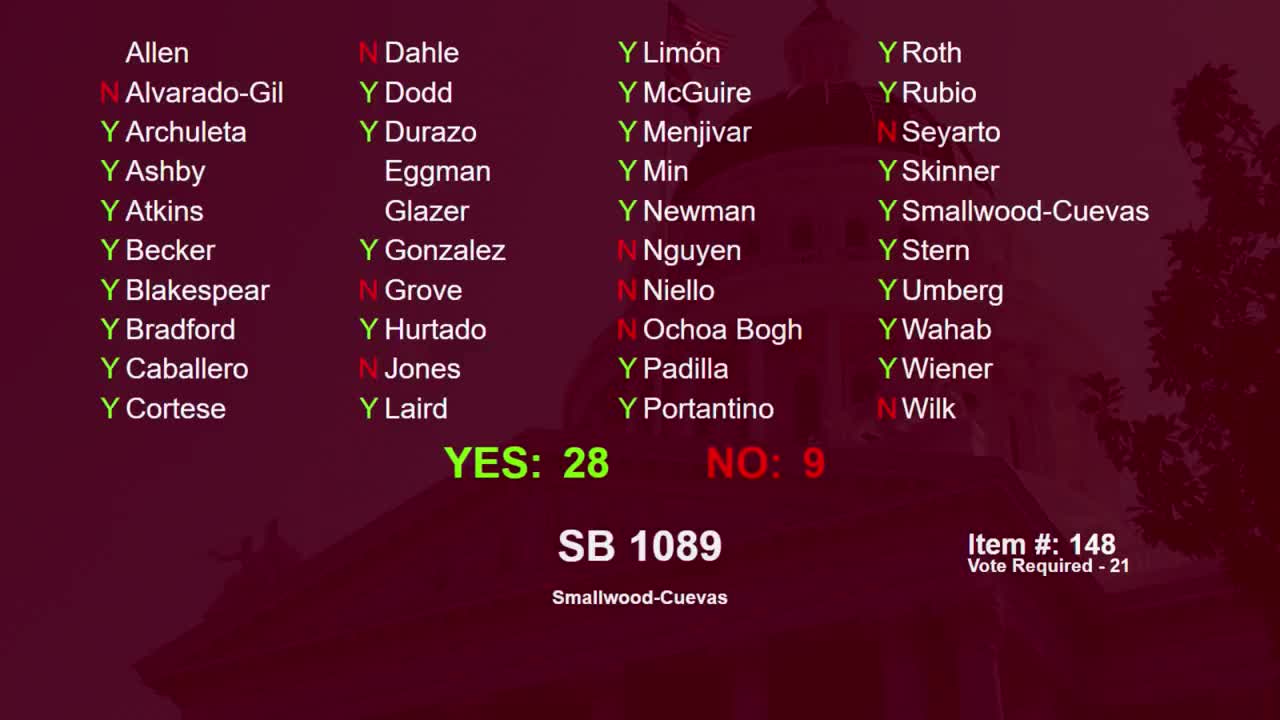 4MIN
Senate Floor
 12MIN
Senate Standing Committee on Labor, Public Employment and Retirement
 11MIN
Senate Standing Committee on Judiciary
Bill Author

Bill Co-Author(s):