SB 1359: Illegal dumping.
- Session Year: 2023-2024
- House: Senate
- Latest Version Date: 2024-06-10
Current Status:
Failed
(2024-06-18: June 18 set for first hearing canceled at the request of author.)
Introduced
In Committee
First Chamber
In Committee
Second Chamber
Enacted
(1)Existing law makes it unlawful to dump waste matter in certain locations, such as upon a public or private highway or road, upon private property without the consent of the owner, or in or upon a public park or other public property, as specified. Existing law also makes it unlawful to place, deposit, or dump rocks, concrete, asphalt, or dirt in certain locations, as specified.
This bill would make it a crime to dump, deposit, or transport for the purpose of dumping or depositing, any waste matter, rocks, concrete, asphalt, or dirt on private property with the consent of the owner or an agent of the owner if a permit or license was required by a state or local agency and was not obtained. The bill would make it a crime for a property owner or agent to receive waste matter, rocks, concrete, asphalt, or dirt if a permit or license is required from a state or a local agency and was not obtained prior to receiving the waste matter, rocks, concrete, asphalt, or dirt. The bill would make these provisions inapplicable to any owner, or agent of any owner, of property on which an authorized construction material or recycling facility that produces materials used for public infrastructure or stormwater pollution control is located. The bill would also make it unlawful to transport waste matter in commercial quantities for the purpose of dumping it in the locations described above. Because this bill would expand the scope of a crime, it would impose a state-mandated local program.
(2)The California Constitution requires the state to reimburse local agencies and school districts for certain costs mandated by the state. Statutory provisions establish procedures for making that reimbursement.
This bill would provide that no reimbursement is required by this act for a specified reason.
(1)Existing law makes it unlawful to dump waste matter in certain locations, such as upon a public or private highway or road, upon private property without the consent of the owner, or in or upon a public park or other public property, as specified. Existing law also makes it unlawful to place, deposit, or dump rocks, concrete, asphalt, or dirt in certain locations, as specified. A person who violates these provisions is guilty of an infraction punishable by specified fines. Existing law makes it a separate offense for each day that the illegal dumped waste remains. Existing law also makes it a misdemeanor to place, deposit, or dump waste matter in commercial quantities, as defined, in certain locations.
This bill would make it a crime to dump, deposit, or transport for the purpose of dumping or depositing, any waste matter, rocks, concrete, asphalt, or dirt on private property with the consent of the owner or an agent of the owner if a permit or license was required by a state or local agency and was not obtained. The bill would make it a crime for a property owner or agent to receive waste matter, rocks, concrete, asphalt, or dirt if a permit or license is required from a state or a local agency and was not obtained prior to receiving the waste matter, rocks, concrete, asphalt, or dirt. The bill would increase the fines for violating these provisions and would make these violations misdemeanors. The bill would make it a separate offense every 72 hours that the illegally dumped waste remains. The bill would make these provisions inapplicable to any owner, or agent of any owner, of property on which a legally authorized rock product operation, as defined, is located, or of property that is subject to a reclamation plan, as specified, at the time that the property owner or agent of the property owner received rocks, concrete, asphalt, or dirt onto their property. The bill would also make it unlawful to transport waste matter in commercial quantities for the purpose of dumping it in the locations described above. Because this bill would expand the scope of a crime and increase the punishment of a crime from an infraction to a misdemeanor, crime, it would impose a state-mandated local program.
(2)The California Constitution requires the state to reimburse local agencies and school districts for certain costs mandated by the state. Statutory provisions establish procedures for making that reimbursement.
This bill would provide that no reimbursement is required by this act for a specified reason.
(1)Existing law makes it unlawful to dump waste matter in certain locations, such as upon a public or private highway or road, upon private property without the consent of the owner, or in or upon a public park or other public property, as specified. Existing law also makes it unlawful to place, deposit, or dump rocks, concrete, asphalt, or dirt in certain locations, as specified. A person who violates these provisions is guilty of an infraction punishable by specified fines. Existing law makes it a separate offense for each day that the illegal dumped waste remains. Existing law also makes it a misdemeanor to place, deposit, or dump waste matter in commercial quantities, as defined, in certain locations.
This bill would make it a crime to transport waste matter, rocks, concrete, asphalt, or dirt for the purpose of dumping it in the locations described above. TheThis bill would make it a crime to dump or deposit dump, deposit, or transport for the purpose of dumping or depositing, any waste matter, rocks, concrete, asphalt, or dirt on private property with the consent of the owner or an agent of the owner if a permit or license was required by a state or local agency and was not obtained. The bill would make it a crime for a property owner or agent to receive waste matter, rocks, concrete, asphalt, or dirt if a permit or license is required from a state or a local agency and was not obtained prior to receiving the waste matter, rocks, concrete, asphalt, or dirt. The bill would increase the fines for violating these provisions and would make these violations misdemeanors. The bill would make it a separate offense every 72 hours that the illegally dumped waste remains. The bill would make these provisions inapplicable to any owner, or agent of any owner, of property on which a legally authorized rock product operation, as defined, is located, or of property that is subject to a reclamation plan, as specified, at the time that the property owner or agent of the property owner received rocks, concrete, asphalt, or dirt onto their property. The bill would also make it unlawful to transport waste matter in commercial quantities for the purpose of dumping it in the locations described above. Because this bill would expand the scope of a crime and increase the punishment of a crime from an infraction to a misdemeanor, it would impose a state-mandated local program.
(2)The California Constitution requires the state to reimburse local agencies and school districts for certain costs mandated by the state. Statutory provisions establish procedures for making that reimbursement.
This bill would provide that no reimbursement is required by this act for a specified reason.
(1)Existing law makes it unlawful to dump waste matter in certain locations, such as upon a public or private highway or road, upon private property without the consent of the owner, or in or upon a public park or other public property, as specified. Existing law also makes it unlawful to place, deposit, or dump rocks, concrete, asphalt, or dirt in certain locations, as specified. A person who violates these provisions is guilty of an infraction punishable by specified fines. Existing law also makes it a misdemeanor to place, deposit, or dump waste matter in commercial quantities, as defined, in certain locations.
This bill would make it a crime to transport waste matter, rocks, concrete, asphalt, or dirt for the purpose of dumping it in the locations described above. The bill would make it a crime to dump or deposit waste matter, rocks, concrete, asphalt, or dirt on private property with the consent of the owner or an agent of the owner if a permit or license was required by a state or local agency and was not obtained. The bill would make it a crime for a property owner or agent to receive waste matter, rocks, concrete, asphalt, or dirt if a permit or license is required from a state or a local agency and was not obtained prior to receiving the waste matter, rocks, concrete, asphalt, or dirt. The bill would increase the fines for violating these provisions and would make these violations misdemeanors. The bill would also make it unlawful to transport waste matter in commercial quantities for the purpose of dumping it in the locations described above. Because this bill would expand the scope of a crime and increase the punishment of a crime from an infraction to a misdemeanor, it would impose a state-mandated local program.
(2)The California Constitution requires the state to reimburse local agencies and school districts for certain costs mandated by the state. Statutory provisions establish procedures for making that reimbursement.
This bill would provide that no reimbursement is required by this act for a specified reason.
Existing law authorizes any state agency to enter into an energy savings contract with a qualified energy service company for the purchase or exchange of thermal or electrical energy or water, or to acquire energy efficiency services, water conservation services, or both, for a term not exceeding 35 years, at those rates and upon those terms that are approved by the agency, as specified.This bill would make nonsubstantive changes to that authorization.Existing law authorizes any state agency to enter into an energy savings contract with a qualified energy service company for the purchase or exchange of thermal or electrical energy or water, or to acquire energy efficiency services, water conservation services, or both, for a term not exceeding 35 years, at those rates and upon those terms that are approved by the agency, as specified.
This bill would make nonsubstantive changes to that authorization.
(a)(1)It is unlawful to dump, or cause to be dumped, any waste matter in or upon a public or private highway or road, including any portion of the right-of-way thereof, or in or upon private property into or upon which the public is admitted by easement or license, or upon private property without the consent of the owner or an agent of the owner, or in or upon a public park or other public property other than property designated or set aside for that purpose by the governing board or body having charge of that property.
(2)It is unlawful to dump, cause to be dumped, or transport for the purpose of dumping, any waste matter upon private property with the consent of the owner or an agent of the owner, if a permit or license is required by a state or local agency and was not obtained.
(3)It is unlawful for a property owner or an agent of the property owner to receive any waste matter if a permit or license is required from a state or local agency and was not obtained prior to receiving the waste matter.
(b)(1)It is unlawful to place, deposit, or dump, or to cause to be placed, deposited, or dumped, any rocks, concrete, asphalt, or dirt, in or upon a private highway or road, including any portion of the right-of-way of the private highway or road, or upon private property, without the consent of the owner, an agent of the owner, or a contractor under contract with the owner for the materials, or in or upon a public park or other public property, without the consent of the state or local agency having jurisdiction over the highway, road, or property.
(2)It is unlawful to place, deposit, or dump, to cause to be placed, deposited, or dumped, or to transport for the purpose of placing, depositing, or dumping, any rocks, concrete, asphalt, or dirt upon private property with the consent of the owner or an agent of the owner if a permit or license is required by a state or local agency and was not obtained.
(3)It is unlawful for a property owner or an agent of the property owner to receive any rocks, concrete, asphalt, or dirt if a permit or license is required from a state or local agency and was not obtained prior to receiving the rocks, concrete, asphalt, or dirt.
(c)A person violating this section is guilty of an infraction. Each day that waste placed, deposited, dumped, or transported in violation of subdivision (a) or (b) remains is a separate violation.
(d)This section does not restrict a private owner in the use of their own private property, unless the placing, depositing, or dumping of the waste matter on the property requires a permit or license from a state or local agency and is not obtained, or unless the placing, depositing, or dumping of waste matter on the property creates a public health and safety hazard, a public nuisance, or a fire hazard, as determined by a local health department, local fire department or district providing fire protection services, the Department of Forestry and Fire Protection, or the state or local agency with jurisdiction over the property, in which case this section applies.
(e)A person convicted of a violation of this section shall be punished by a mandatory fine of not less than two hundred fifty dollars ($250) nor more than one thousand dollars ($1,000) upon a first conviction, by a mandatory fine of not less than five hundred dollars ($500) nor more than one thousand five hundred dollars ($1,500) upon a second conviction, and by a mandatory fine of not less than seven hundred fifty dollars ($750) nor more than three thousand dollars ($3,000) upon a third or subsequent conviction. If the court finds that the waste matter placed, deposited, or dumped was used tires, the fine prescribed in this subdivision shall be doubled.
(f)The court may require, in addition to any fine imposed upon a conviction, that a person convicted under this section remove, or pay the cost of removing, any waste matter that the convicted person dumped, caused to be dumped, or transported for the purpose of dumping upon public or private property.
(g)The court may, in addition to the fine imposed upon a conviction, require that a person convicted of a violation of this section pick up waste matter at a time and place within the jurisdiction of the court for not less than 12 hours.
(h)(1)Except as otherwise provided in paragraph (2), a person who places, deposits, or dumps, causes to be placed, deposited, or dumped, or transports for the purpose of dumping, any commercial quantities of waste matter in violation of this section shall be guilty of a misdemeanor punishable by imprisonment in a county jail for not more than six months and by a fine. The fine is mandatory and shall amount to not less than one thousand dollars ($1,000) nor more than three thousand dollars ($3,000) upon a first conviction, not less than three thousand dollars ($3,000) nor more than six thousand dollars ($6,000) upon a second conviction, and not less than six thousand dollars ($6,000) nor more than ten thousand dollars ($10,000) upon a third or subsequent conviction.
(2)If a person convicted under paragraph (1) is the owner or operator of the business involved in the illegal dumping, and that business employs more than 10 full-time employees, the fine shall amount to not less than one thousand dollars ($1,000) nor more than five thousand dollars ($5,000) upon a first conviction, not less than three thousand dollars ($3,000) nor more than ten thousand dollars ($10,000) upon a second conviction, and not less than six thousand dollars ($6,000) nor more than twenty thousand dollars ($20,000) upon a third or subsequent conviction.
(3)The court shall require, in addition to the fine imposed upon a conviction, that a person convicted under this subdivision remove, or pay the cost of removing, any waste matter which the convicted person dumped or caused to be dumped upon public or private property.
(4)(A)If a person convicted under this subdivision holds a license or permit to conduct business that is substantially related to the illegal dumping for which the person was convicted, the court shall notify the applicable licensing or permitting entity subject to the jurisdiction of the Department of Consumer Affairs as set forth in Section 101 of the Business and Professions Code, if any, of the conviction.
(B)The licensing or permitting entity shall record and post the offense on the public profile of the license or permitholder on the internet website of the entity.
(5)Commercial quantities means an amount of waste matter generated in the course of a trade, business, profession, or occupation, or an amount equal to or in excess of one cubic yard. This subdivision does not apply to the dumping of household waste at a persons own residence.
(i)For purposes of this section, person means an individual, trust, firm, partnership, joint stock company, joint venture, or corporation.
(j)When setting fines pursuant to this section, the court shall consider the defendants ability to pay, including consideration of, without limitation, all of the following:
(1)The defendants present financial position.
(2)The defendants reasonably discernible future financial position, provided that the court shall not consider a period of more than one year from the date of the hearing for purposes of determining the reasonably discernible future financial position of the defendant.
(3)The likelihood that the defendant will be able to obtain employment within one year from the date of the hearing.
(4)Any other factor that may bear upon the defendants financial capability to pay the fine.
(k)Subdivisions (a) and (b) shall not apply to any owner, or agent of any owner, of private property on which an authorized construction material or recycling facility that produces materials used for public infrastructure or stormwater pollution control is located.
SEC. 2.No reimbursement is required by this act pursuant to Section 6 of Article XIIIB of the California Constitution because the only costs that may be incurred by a local agency or school district will be incurred because this act creates a new crime or infraction, eliminates a crime or infraction, or changes the penalty for a crime or infraction, within the meaning of Section 17556 of the Government Code, or changes the definition of a crime within the meaning of Section 6 of Article XIIIB of the California Constitution.
(a)(1)It is unlawful to dump, or cause to be dumped, any waste matter in or upon a public or private highway or road, including any portion of the right-of-way thereof, or in or upon private property into or upon which the public is admitted by easement or license, or upon private property without the consent of the owner or an agent of the owner, or in or upon a public park or other public property other than property designated or set aside for that purpose by the governing board or body having charge of that property.
(2)It is unlawful to dump, cause to be dumped, or transport for the purpose of dumping, any waste matter upon private property with the consent of the owner or an agent of the owner, if a permit or license is required by a state or local agency and was not obtained.
(3)It is unlawful for a property owner or an agent of the property owner to receive any waste matter if a permit or license is required from a state or local agency and was not obtained prior to receiving the waste matter.
(b)(1)It is unlawful to place, deposit, or dump, or to cause to be placed, deposited, or dumped, any rocks, concrete, asphalt, or dirt, in or upon a private highway or road, including any portion of the right-of-way of the private highway or road, or upon private property, without the consent of the owner, an agent of the owner, or a contractor under contract with the owner for the materials, or in or upon a public park or other public property, without the consent of the state or local agency having jurisdiction over the highway, road, or property.
(2)It is unlawful to place, deposit, or dump, to cause to be placed, deposited, or dumped, or to transport for the purpose of placing, depositing, or dumping, any rocks, concrete, asphalt, or dirt upon private property with the consent of the owner or an agent of the owner if a permit or license is required by a state or local agency and was not obtained.
(3)It is unlawful for a property owner or an agent of the property owner to receive any rocks, concrete, asphalt, or dirt if a permit or license is required from a state or local agency and was not obtained prior to receiving the rocks, concrete, asphalt, or dirt.
(c)A person violating this section is guilty of a misdemeanor. Each 72-hour period an infraction. Each day that waste placed, deposited, dumped, or transported in violation of subdivision (a) or (b) remains is a separate violation.
(d)This section does not restrict a private owner in the use of their own private property, unless the placing, depositing, or dumping of the waste matter on the property requires a permit or license from a state or local agency and is not obtained, or unless the placing, depositing, or dumping of waste matter on the property creates a public health and safety hazard, a public nuisance, or a fire hazard, as determined by a local health department, local fire department or district providing fire protection services, the Department of Forestry and Fire Protection, or the state or local agency with jurisdiction over the property, in which case this section applies.
(e)A person convicted of a violation of this section shall be punished by a mandatory fine of not less than five hundred dollars ($500) two hundred fifty dollars ($250) nor more than one thousand dollars ($1,000) upon a first conviction, by a mandatory fine of not less than one thousand dollars ($1,000) five hundred dollars ($500) nor more than two one thousand five hundred dollars ($2,500) ($1,500) upon a second conviction, and by a mandatory fine of not less than two thousand five hundred dollars ($2,500) seven hundred fifty dollars ($750) nor more than four thousand dollars ($4,000) three thousand dollars ($3,000) upon a third or subsequent conviction. If the court finds that the waste matter placed, deposited, or dumped was used tires, the fine prescribed in this subdivision shall be doubled.
(f)The court may require, in addition to any fine imposed upon a conviction, that a person convicted under this section remove, or pay the cost of removing, any waste matter that the convicted person dumped, caused to be dumped, or transported for the purpose of dumping upon public or private property.
(g)The court may, in addition to the fine imposed upon a conviction, require that a person convicted of a violation of this section pick up waste matter at a time and place within the jurisdiction of the court for not less than 12 hours.
(h)(1)Except as otherwise provided in paragraph (2), a person who places, deposits, or dumps, causes to be placed, deposited, or dumped, or transports for the purpose of dumping, any commercial quantities of waste matter in violation of this section shall be guilty of a misdemeanor punishable by imprisonment in a county jail for not more than six months and by a fine. The fine is mandatory and shall amount to not less than one thousand dollars ($1,000) nor more than three thousand dollars ($3,000) upon a first conviction, not less than three thousand dollars ($3,000) nor more than six thousand dollars ($6,000) upon a second conviction, and not less than six thousand dollars ($6,000) nor more than ten thousand dollars ($10,000) upon a third or subsequent conviction.
(2)If a person convicted under paragraph (1) is the owner or operator of the business involved in the illegal dumping, and that business employs more than 10 full-time employees, the fine shall amount to not less than one thousand dollars ($1,000) nor more than five thousand dollars ($5,000) upon a first conviction, not less than three thousand dollars ($3,000) nor more than ten thousand dollars ($10,000) upon a second conviction, and not less than six thousand dollars ($6,000) nor more than twenty thousand dollars ($20,000) upon a third or subsequent conviction.
(3)The court shall require, in addition to the fine imposed upon a conviction, that a person convicted under this subdivision remove, or pay the cost of removing, any waste matter which the convicted person dumped or caused to be dumped upon public or private property.
(4)(A)If a person convicted under this subdivision holds a license or permit to conduct business that is substantially related to the illegal dumping for which the person was convicted, the court shall notify the applicable licensing or permitting entity subject to the jurisdiction of the Department of Consumer Affairs as set forth in Section 101 of the Business and Professions Code, if any, of the conviction.
(B)The licensing or permitting entity shall record and post the offense on the public profile of the license or permitholder on the internet website of the entity.
(5)Commercial quantities means an amount of waste matter generated in the course of a trade, business, profession, or occupation, or an amount equal to or in excess of one cubic yard. This subdivision does not apply to the dumping of household waste at a persons own residence.
(i)For purposes of this section, person means an individual, trust, firm, partnership, joint stock company, joint venture, or corporation.
(j)When setting fines pursuant to this section, the court shall consider the defendants ability to pay, including consideration of, without limitation, all of the following:
(1)The defendants present financial position.
(2)The defendants reasonably discernible future financial position, provided that the court shall not consider a period of more than one year from the date of the hearing for purposes of determining the reasonably discernible future financial position of the defendant.
(3)The likelihood that the defendant will be able to obtain employment within one year from the date of the hearing.
(4)Any other factor that may bear upon the defendants financial capability to pay the fine.
(k)Subdivisions (a) and (b) shall not apply to any owner, or agent of any owner, of either of the following property:(1)A property upon which a legally authorized rock product operation is located at the time that the property owner or agent of the property owner received rocks, concrete, asphalt, or dirt onto their property. For the purposes of this subdivision a legally authorized rock product operation is a hot mix asphalt plant or ready mix concrete or other concrete product plant, or Portland cement products manufacturing facility.(2)A property that, at the time that the property owner or agent of the property owner received rocks, concrete, asphalt, or dirt onto their property, is the subject of a reclamation plan approved pursuant to the Surface Mining and Reclamation Act of 1975 (Chapter 9 (commencing with Section 2710) of Division 2 of the Public Resources Code) (SMARA) and that is subject to all of the following requirements:(A)Filing with the supervisor of mine reclamation and the lead agency, annual reports pursuant to Section 2207 of the Public Resources Code.(B)Annual inspections by the lead agency for SMARA compliance pursuant to Section 2774 of the Public Resources Code.(C)Submission and annual review of financial assurance cost estimates pursuant to Section 2773.4 of the Public Resources Code.(D)Financial assurance mechanisms made payable to the Department of Conservation or the lead agency pursuant to Section 2773.1 of the Public Resources Code. SEC. 2.No reimbursement is required by this act pursuant to Section 6 of Article XIIIB of the California Constitution because the only costs that may be incurred by a local agency or school district will be incurred because this act creates a new crime or infraction, eliminates a crime or infraction, or changes the penalty for a crime or infraction, within the meaning of Section 17556 of the Government Code, or changes the definition of a crime within the meaning of Section 6 of Article XIIIB of the California Constitution.
(a)(1)It is unlawful to dump, or cause to be dumped, or transport for the purpose of dumping, any waste matter in or upon a public or private highway or road, including any portion of the right-of-way thereof, or in or upon private property into or upon which the public is admitted by easement or license, or upon private property without the consent of the owner or an agent of the owner, or in or upon a public park or other public property other than property designated or set aside for that purpose by the governing board or body having charge of that property.
(2)It is unlawful to dump, cause to be dumped, or transport for the purpose of dumping, any waste matter upon private property with the consent of the owner or an agent of the owner, if a permit or license is required by a state or local agency and was not obtained.
(3)It is unlawful for a property owner or an agent of the property owner to receive any waste matter if a permit or license is required from a state or local agency and was not obtained prior to receiving the waste matter.
(b)(1)It is unlawful to place, deposit, or dump, or to cause to be placed, deposited, or dumped, or to transport for the purpose of placing, depositing, or dumping, any rocks, concrete, asphalt, or dirt, in or upon a private highway or road, including any portion of the right-of-way of the private highway or road, or upon private property, without the consent of the owner, an agent of the owner, or a contractor under contract with the owner for the materials, or in or upon a public park or other public property, without the consent of the state or local agency having jurisdiction over the highway, road, or property.
(2)It is unlawful to place, deposit, or dump, to cause to be placed, deposited, or dumped, or to transport for the purpose of placing, depositing, or dumping, any rocks, concrete, asphalt, or dirt upon private property with the consent of the owner or an agent of the owner if a permit or license is required by a state or local agency and was not obtained.
(3)It is unlawful for a property owner or an agent of the property owner to receive any rocks, concrete, asphalt, or dirt if a permit or license is required from a state or local agency and was not obtained prior to receiving the rocks, concrete, asphalt, or dirt.
(c)A person violating this section is guilty of a misdemeanor. Each day 72-hour period that waste placed, deposited, dumped, or transported in violation of subdivision (a) or (b) remains is a separate violation.
(d)This section does not restrict a private owner in the use of their own private property, unless the placing, depositing, or dumping of the waste matter on the property requires a permit or license from a state or local agency and is not obtained, or unless the placing, depositing, or dumping of waste matter on the property creates a public health and safety hazard, a public nuisance, or a fire hazard, as determined by a local health department, local fire department or district providing fire protection services, the Department of Forestry and Fire Protection, or the state or local agency with jurisdiction over the property, in which case this section applies.
(e)A person convicted of a violation of this section shall be punished by a mandatory fine of not less than five hundred dollars ($500) nor more than one thousand dollars ($1,000) upon a first conviction, by a mandatory fine of not less than one thousand dollars ($1,000) nor more than two thousand five hundred dollars ($2,500) upon a second conviction, and by a mandatory fine of not less than two thousand five hundred dollars ($2,500) nor more than four thousand dollars ($4,000) upon a third or subsequent conviction. If the court finds that the waste matter placed, deposited, or dumped was used tires, the fine prescribed in this subdivision shall be doubled.
(f)The court may require, in addition to any fine imposed upon a conviction, that a person convicted under this section remove, or pay the cost of removing, any waste matter that the convicted person dumped, caused to be dumped, or transported for the purpose of dumping upon public or private property.
(g)The court may, in addition to the fine imposed upon a conviction, require that a person convicted of a violation of this section pick up waste matter at a time and place within the jurisdiction of the court for not less than 12 hours.
(h)(1)Except as otherwise provided in paragraph (2), a person who places, deposits, or dumps, causes to be placed, deposited, or dumped, or transports for the purpose of dumping, any commercial quantities of waste matter in violation of this section shall be guilty of a misdemeanor punishable by imprisonment in a county jail for not more than six months and by a fine. The fine is mandatory and shall amount to not less than one thousand dollars ($1,000) nor more than three thousand dollars ($3,000) upon a first conviction, not less than three thousand dollars ($3,000) nor more than six thousand dollars ($6,000) upon a second conviction, and not less than six thousand dollars ($6,000) nor more than ten thousand dollars ($10,000) upon a third or subsequent conviction.
(2)If a person convicted under paragraph (1) is the owner or operator of the business involved in the illegal dumping, and that business employs more than 10 full-time employees, the fine shall amount to not less than one thousand dollars ($1,000) nor more than five thousand dollars ($5,000) upon a first conviction, not less than three thousand dollars ($3,000) nor more than ten thousand dollars ($10,000) upon a second conviction, and not less than six thousand dollars ($6,000) nor more than twenty thousand dollars ($20,000) upon a third or subsequent conviction.
(3)The court shall require, in addition to the fine imposed upon a conviction, that a person convicted under this subdivision remove, or pay the cost of removing, any waste matter which the convicted person dumped or caused to be dumped upon public or private property.
(4)(A)If a person convicted under this subdivision holds a license or permit to conduct business that is substantially related to the illegal dumping for which the person was convicted, the court shall notify the applicable licensing or permitting entity subject to the jurisdiction of the Department of Consumer Affairs as set forth in Section 101 of the Business and Professions Code, if any, of the conviction.
(B)The licensing or permitting entity shall record and post the offense on the public profile of the license or permitholder on the internet website of the entity.
(5)Commercial quantities means an amount of waste matter generated in the course of a trade, business, profession, or occupation, or an amount equal to or in excess of one cubic yard. This subdivision does not apply to the dumping of household waste at a persons own residence.
(i)For purposes of this section, person means an individual, trust, firm, partnership, joint stock company, joint venture, or corporation.
(j)When setting fines pursuant to this section, the court shall consider the defendants ability to pay, including consideration of, without limitation, all of the following:
(1)The defendants present financial position.
(2)The defendants reasonably discernible future financial position, provided that the court shall not consider a period of more than one year from the date of the hearing for purposes of determining the reasonably discernible future financial position of the defendant.
(3)The likelihood that the defendant will be able to obtain employment within one year from the date of the hearing.
(4)Any other factor that may bear upon the defendants financial capability to pay the fine.
(k)Subdivisions (a) and (b) shall not apply to any owner, or agent of any owner, of either of the following property:
(1)A property upon which a legally authorized rock product operation is located at the time that the property owner or agent of the property owner received rocks, concrete, asphalt, or dirt onto their property. For the purposes of this subdivision a legally authorized rock product operation is a hot mix asphalt plant or ready mix concrete or other concrete product plant, or Portland cement products manufacturing facility.
(2)A property that, at the time that the property owner or agent of the property owner received rocks, concrete, asphalt, or dirt onto their property, is the subject of a reclamation plan approved pursuant to the Surface Mining and Reclamation Act of 1975 (Chapter 9 (commencing with Section 2710) of Division 2 of the Public Resources Code) (SMARA) and that is subject to all of the following requirements:
(A)Filing with the supervisor of mine reclamation and the lead agency, annual reports pursuant to Section 2207 of the Public Resources Code.
(B)Annual inspections by the lead agency for SMARA compliance pursuant to Section 2774 of the Public Resources Code.
(C)Submission and annual review of financial assurance cost estimates pursuant to Section 2773.4 of the Public Resources Code.
(D)Financial assurance mechanisms made payable to the Department of Conservation or the lead agency pursuant to Section 2773.1 of the Public Resources Code.
SEC. 2.No reimbursement is required by this act pursuant to Section 6 of Article XIIIB of the California Constitution because the only costs that may be incurred by a local agency or school district will be incurred because this act creates a new crime or infraction, eliminates a crime or infraction, or changes the penalty for a crime or infraction, within the meaning of Section 17556 of the Government Code, or changes the definition of a crime within the meaning of Section 6 of Article XIIIB of the California Constitution.
(a)(1)It is unlawful to dump or cause to be dumped dump, cause to be dumped, or transport for the purpose of dumping, any waste matter in or upon a public or private highway or road, including any portion of the right-of-way thereof, or in or upon private property into or upon which the public is admitted by easement or license, or upon private property without the consent of the owner, owner or an agent of the owner, or in or upon a public park or other public property other than property designated or set aside for that purpose by the governing board or body having charge of that property.
(2)It is unlawful to dump, cause to be dumped, or transport for the purpose of dumping, any waste matter upon private property with the consent of the owner or an agent of the owner, if a permit or license is required by a state or local agency and was not obtained.
(3)It is unlawful for a property owner or an agent of the property owner to receive any waste matter if a permit or license is required from a state or local agency and was not obtained prior to receiving the waste matter.
(b)(1)It is unlawful to place, deposit, or dump, or to cause to be placed, deposited, or dumped, or to transport for the purpose of placing, depositing, or dumping, any rocks, concrete, asphalt, or dirt dirt, in or upon a private highway or road, including any portion of the right-of-way of the private highway or road, or upon private property, without the consent of the owner owner, an agent of the owner, or a contractor under contract with the owner for the materials, or in or upon a public park or other public property, without the consent of the state or local agency having jurisdiction over the highway, road, or property.
(2)It is unlawful to place, deposit, or dump, to cause to be placed, deposited, or dumped, or to transport for the purpose of placing, depositing, or dumping, any rocks, concrete, asphalt, or dirt upon private property with the consent of the owner or an agent of the owner if a permit or license is required by a state or local agency and was not obtained.
(3)It is unlawful for a property owner or an agent of the property owner to receive any rocks, concrete, asphalt, or dirt if a permit or license is required from a state or local agency and was not obtained prior to receiving the rocks, concrete, asphalt, or dirt.
(c)A person violating this section is guilty of an infraction. a misdemeanor. Each day that waste placed, deposited, or dumped dumped, or transported in violation of subdivision (a) or (b) remains is a separate violation.
(d)This section does not restrict a private owner in the use of their own private property, unless the placing, depositing, or dumping of the waste matter on the property requires a permit or license from a state or local agency and is not obtained, or unless the placing, depositing, or dumping of waste matter on the property creates a public health and safety hazard, a public nuisance, or a fire hazard, as determined by a local health department, local fire department or district providing fire protection services, or the Department of Forestry and Fire Protection, or the state or local agency with jurisdiction over the property, in which case this section applies.
(e)A person convicted of a violation of this section shall be punished by a mandatory fine of not less than two hundred fifty dollars ($250) five hundred dollars ($500) nor more than one thousand dollars ($1,000) upon a first conviction, by a mandatory fine of not less than five hundred dollars ($500) one thousand dollars ($1,000) nor more than one thousand five hundred dollars ($1,500) two thousand five hundred dollars ($2,500) upon a second conviction, and by a mandatory fine of not less than seven hundred fifty dollars ($750) two thousand five hundred dollars ($2,500) nor more than three thousand dollars ($3,000) four thousand dollars ($4,000) upon a third or subsequent conviction. If the court finds that the waste matter placed, deposited, or dumped was used tires, the fine prescribed in this subdivision shall be doubled.
(f)The court may require, in addition to any fine imposed upon a conviction, that a person convicted under this section remove, or pay the cost of removing, any waste matter which that the convicted person dumped or caused to be dumped dumped, caused to be dumped, or transported for the purpose of dumping upon public or private property.
(g)The court may, in addition to the fine imposed upon a conviction, require that a person convicted of a violation of this section pick up waste matter at a time and place within the jurisdiction of the court for not less than 12 hours.
(h)(1)Except as otherwise provided in paragraph (2), a person who places, deposits, or dumps, or causes to be placed, deposited, or dumped, or transports for the purpose of dumping, any commercial quantities of waste matter in violation of this section in commercial quantities shall be guilty of a misdemeanor punishable by imprisonment in a county jail for not more than six months and by a fine. The fine is mandatory and shall amount to not less than one thousand dollars ($1,000) nor more than three thousand dollars ($3,000) upon a first conviction, not less than three thousand dollars ($3,000) nor more than six thousand dollars ($6,000) upon a second conviction, and not less than six thousand dollars ($6,000) nor more than ten thousand dollars ($10,000) upon a third or subsequent conviction.
(2)If a person convicted under paragraph (1) is the owner or operator of the business involved in the illegal dumping, and that business employs more than 10 full-time employees, the fine shall amount to not less than one thousand dollars ($1,000) nor more than five thousand dollars ($5,000) upon a first conviction, not less than three thousand dollars ($3,000) nor more than ten thousand dollars ($10,000) upon a second conviction, and not less than six thousand dollars ($6,000) nor more than twenty thousand dollars ($20,000) upon a third or subsequent conviction.
(3)The court shall require, in addition to the fine imposed upon a conviction, that a person convicted under this subdivision remove, or pay the cost of removing, any waste matter which the convicted person dumped or caused to be dumped upon public or private property.
(4)(A)If a person convicted under this subdivision holds a license or permit to conduct business that is substantially related to the illegal dumping for which the person was convicted, the court shall notify the applicable licensing or permitting entity subject to the jurisdiction of the Department of Consumer Affairs as set forth in Section 101 of the Business and Professions Code, if any, of the conviction.
(B)The licensing or permitting entity shall record and post the offense on the public profile of the license or permitholder on the internet website of the entity.
(5)Commercial quantities means an amount of waste matter generated in the course of a trade, business, profession, or occupation, or an amount equal to or in excess of one cubic yard. This subdivision does not apply to the dumping of household waste at a persons own residence.
(i)For purposes of this section, person means an individual, trust, firm, partnership, joint stock company, joint venture, or corporation.
(j)When setting fines pursuant to this section, the court shall consider the defendants ability to pay, including consideration of, without limitation, all of the following:
(1)The defendants present financial position.
(2)The defendants reasonably discernible future financial position, provided that the court shall not consider a period of more than one year from the date of the hearing for purposes of determining the reasonably discernible future financial position of the defendant.
(3)The likelihood that the defendant will be able to obtain employment within one year from the date of the hearing.
(4)Any other factor that may bear upon the defendants financial capability to pay the fine.
SEC. 2.No reimbursement is required by this act pursuant to Section 6 of Article XIIIB of the California Constitution because the only costs that may be incurred by a local agency or school district will be incurred because this act creates a new crime or infraction, eliminates a crime or infraction, or changes the penalty for a crime or infraction, within the meaning of Section 17556 of the Government Code, or changes the definition of a crime within the meaning of Section 6 of Article XIIIB of the California Constitution.
SECTION 1.Section 388 of the Public Utilities Code is amended to read:388.(a)Notwithstanding any other law, a state agency may enter into an energy savings contract with a qualified energy service company for the purchase or exchange of thermal or electrical energy or water, or to acquire energy efficiency or water conservation services, or both energy efficiency and water conservation services, for a term not exceeding 35 years, at rates and upon those terms approved by the agency.(b)The Department of General Services or any other state or local agency intending to enter into an energy savings contract or a contract for an energy retrofit project may establish a pool of qualified energy service companies based on qualifications, experience, pricing, or other pertinent factors. Energy service contracts for individual projects undertaken by any state or local agency may be awarded through a competitive selection process to individuals or firms identified in the pool. The pool of qualified energy service companies and contractors shall be reestablished at least every two years or shall expire.(c)For purposes of this section, the following definitions shall apply:(1)(A)Energy retrofit project means a project for which the state or local agency works with a qualified energy service company to identify, develop, design, and implement energy conservation measures in existing facilities to reduce energy or water use or make more efficient use of energy or water.(B)Energy retrofit project does not include the erection or installation of a power generation system, a power purchase agreement, or a project using a site license or lease agreement.(2)Energy savings means a measured and verified reduction in fuel, energy, or water consumption when compared to an established baseline of consumption.(3)Qualified energy service company means a company with a demonstrated ability to provide or arrange for building or facility energy auditors, selection and design of appropriate energy savings measures, project financing, implementation of these measures, and maintenance and ongoing measurement of these measures as to ensure and verify energy savings.(a)Notwithstanding any other provision of law, a state agency may enter into an energy savings contract with a qualified energy service company for the purchase or exchange of thermal or electrical energy or water, or to acquire energy efficiency or water conservation services, or both energy efficiency and water conservation services services, for a term not exceeding 35 years, at rates and upon those terms approved by the agency.
(b)The Department of General Services or any other state or local agency intending to enter into an energy savings contract or a contract for an energy retrofit project may establish a pool of qualified energy service companies based on qualifications, experience, pricing, or other pertinent factors. Energy service contracts for individual projects undertaken by any state or local agency may be awarded through a competitive selection process to individuals or firms identified in the pool. The pool of qualified energy service companies and contractors shall be reestablished at least every two years or shall expire.
(c)For purposes of this section, the following definitions shall apply:
(1)(A)Energy retrofit project means a project for which the state or local agency works with a qualified energy service company to identify, develop, design, and implement energy conservation measures in existing facilities to reduce energy or water use or make more efficient use of energy or water.
(B)Energy retrofit project does not include the erection or installation of a power generation system, a power purchase agreement, or a project utilizing using a site license or lease agreement.
(2)Energy savings means a measured and verified reduction in fuel, energy, or water consumption when compared to an established baseline of consumption.
(3)Qualified energy service company means a company with a demonstrated ability to provide or arrange for building or facility energy auditors, selection and design of appropriate energy savings measures, project financing, implementation of these measures, and maintenance and ongoing measurement of these measures as to ensure and verify energy savings.
|
Date
|
Status
|
|---|---|
| Jun 18, 2024 | June 18 set for first hearing canceled at the request of author. |
| Jun 10, 2024 | From committee with author's amendments. Read second time and amended. Re-referred to Com. on PUB. S. |
| Jun 3, 2024 | Referred to Com. on PUB. S. |
| May 23, 2024 | In Assembly. Read first time. Held at Desk. |
| May 22, 2024 | Read third time. Passed. (Ayes 35. Noes 0. Page 4148.) Ordered to the Assembly. |
| May 20, 2024 | Read second time. Ordered to third reading. |
| May 16, 2024 | Read second time and amended. Ordered to second reading. |
| May 16, 2024 | From committee: Do pass as amended. (Ayes 7. Noes 0. Page 3980.) (May 16). |
| May 10, 2024 | Set for hearing May 16. |
| May 6, 2024 | May 6 hearing: Placed on APPR suspense file. |
| Apr 26, 2024 | Set for hearing May 6. |
| Apr 24, 2024 | Read second time and amended. Re-referred to Com. on APPR. |
| Apr 23, 2024 | From committee: Do pass as amended and re-refer to Com. on APPR. (Ayes 5. Noes 0. Page 3731.) (April 23). |
| Apr 5, 2024 | Set for hearing April 23. |
| Apr 3, 2024 | Re-referred to Com. on PUB S. |
| Mar 18, 2024 | From committee with author's amendments. Read second time and amended. Re-referred to Com. on RLS. |
| Feb 29, 2024 | Referred to Com. on RLS. |
| Feb 20, 2024 | From printer. May be acted upon on or after March 18. |
| Feb 16, 2024 | Introduced. Read first time. To Com. on RLS. for assignment. To print. |
|
Date
|
Description
|
Location
|
Votes
|
|
|---|---|---|---|---|
| May 22, 2024 | Senate 3rd Reading SB1359 Wilk | Senate Floor |
Passed |
|
| May 16, 2024 | Do pass as amended | Senate Standing Committee on Appropriations |
Passed |
|
| May 6, 2024 | Placed on suspense file | Senate Standing Committee on Appropriations |
Passed |
|
| Apr 23, 2024 | Do pass as amended, but first amend, and re-refer to the Committee on [Appropriations] | Senate Standing Committee on Public Safety |
Passed |
This list shows positions taken on this bill by organizations on the date displayed, which is linked to the original source.
Positions by individuals are not included.
|
Organization
|
Position
|
Date
|
|---|---|---|
| Aclu California Action | ** Against | |
| California Association Of Professional Scientists | ** Support | |
| CALIFORNIA CONSTRUCTION & INDUSTRIAL MATERIALS ASSOCIATION | ** Support | |
| California Public Defenders Association | ** Against | |
| Rural County Representatives of California | ** Support | |
| The Acton Town Council | ** Support |
SENATE RULES COMMITTEE Office of Senate Floor Analyses (916) 651-1520 Fax: (916) 327-4478 | SB 1359 |
THIRD READING
Bill No: SB 1359
Author: Wilk (R)
Amended: 4/24/24
Vote: 21
SENATE PUBLIC SAFETY COMMITTEE: 5-0, 4/23/24
AYES: Wahab, Seyarto, Bradford, Skinner, Wiener
SENATE APPROPRIATIONS COMMITTEE: 7-0, 5/16/24
AYES: Caballero, Jones, Ashby, Becker, Bradford, Seyarto, Wahab
SUBJECT: Illegal dumping
SOURCE: Author
DIGEST:
This bill prohibits the dumping of waste matter and other specified materials on private property even with the owner’s consent if a permit or license was required and not obtained.
ANALYSIS:
Existing law:
- States that it is unlawful to dump or cause to be dumped waste matter in or upon a public or private highway or road, including any portion of the right-of-way thereof, or in or upon private property into or upon which the public is admitted by easement or license, or upon private property without the consent of the owner, or in or upon a public park or other public property other than property designated or set aside for that purpose by the governing board or body having charge of that property. (Penal Code § 374.3 (a).)
- Provides it is unlawful to place, deposit, or dump, or cause to be placed, deposited, or dumped, rocks, concrete, asphalt, or dirt in or upon a private highway or road, including any portion of the right-of-way of the private highway or road, or private property, without the consent of the owner or a contractor under contract with the owner for the materials, or in or upon a public park or other public property, without the consent of the state or local agency having jurisdiction over the highway, road, or property. (Penal Code § 374.3 (b).)
- States that a person violating dumping provisions is guilty of an infraction. Each day that waste is placed, deposited, or dumped in violation the law is a separate violation. (Penal Code § 374.3 (c).)
- Provides that illegal dumping prohibitions do not restrict a private owner in the use of their own private property, unless the placing, depositing, or dumping of the waste matter on the property creates a public health and safety hazard, a public nuisance, or a fire hazard, as determined by a local health department, local fire department or district providing fire protection services, or the Department of Forestry and Fire Protection, in which case this section applies. (Pen. Code § 374.3 (d).)
- Punishes a person convicted of dumping shall by a mandatory fine of not less than $250 nor more than $1,000 upon a first conviction, by a mandatory fine of not less than $500 nor more than $1,500 upon a second conviction, and by a mandatory fine of not less than $750 nor more than $3,000 upon a third or subsequent conviction. If the court finds that the waste matter placed, deposited, or dumped was used tires, the fine prescribed in this subdivision shall be doubled. (Penal Code § 374.3 (e).)
- Provides that the court may require, in addition to any fine imposed upon a conviction, that the person convicted remove, or pay the cost of removing, any waste matter which the convicted person dumped or caused to be dumped upon public or private property. (Penal Code § 374.3 (f).)
- States that the court may, in addition to the fine imposed upon a conviction, require that a person convicted of a violation described above pick up waste matter at a time and place within the jurisdiction of the court for not less than 12 hours. (Penal Code § 374.3 (g).)
- Provides that a person who places, deposits, or dumps, or causes to be placed, deposited, or dumped, waste matter in violation of the provisions above in commercial quantities shall be guilty of a misdemeanor punishable by imprisonment in a county jail for not more than six months and by a fine. The fine is mandatory and shall amount to not less than one thousand dollars ($1,000) nor more than three thousand dollars ($3,000) upon a first conviction, not less than three thousand dollars ($3,000) nor more than six thousand dollars ($6,000) upon a second conviction, and not less than six thousand dollars ($6,000) nor more than ten thousand dollars ($10,000) upon a third or subsequent conviction. (Penal Code § 374.3 (h)(1).)
- Provides that if a person convicted for a violation above illegal dumping in commercial quantities per the immediately preceding provision is the owner or operator of the business involved in the illegal dumping, and that business employs more than 10 full-time employees, the fine shall amount to not less than one thousand dollars ($1,000) nor more than five thousand dollars ($5,000) upon a first conviction, not less than three thousand dollars ($3,000) nor more than ten thousand dollars ($10,000) upon a second conviction, and not less than six thousand dollars ($6,000) nor more than twenty thousand dollars ($20,000) upon a third or subsequent conviction. (Penal Code § 374.3 (h)(2).)
- States that the court shall require, in addition to the fine imposed upon a conviction, that a person convicted for illegal dumping in commercial quantities remove, or pay the cost of removing, any waste matter which the convicted person dumped or caused to be dumped upon the public or private property. (Penal Code § 374.3 (h)(3).)
- Specifies that if a person convicted for illegal dumping in commercial quantities holds a license or permit to conduct business that is substantially related to the illegal dumping for which the person was convicted, the court shall notify the applicable licensing or permitting entity subject to the jurisdiction of the Department of Consumer Affairs of the conviction, as specified. (Penal Code § 374.3 (h)(4)(A).)
- Requires the licensing or permitting entity implicated by the provision above to record and post the offense on the public profile of the license or permit holder on the internet website of the entity. (Penal Code § 374.3 (h)(4)(B).)
- Defines “commercial quantities” as an amount of waste matter generated in the course of a trade, business, profession, or occupation, or an amount equal to or in excess of one cubic yard. This subdivision does not apply to the dumping of household waste at a person’s own residence. (Penal Code § 374.3 (h)(5).)
- Provides that when setting fines pursuant to the above violations, the court shall consider the defendant’s ability to pay, including consideration of several specified factors. (Penal Code § 374.3 (j).)
This bill:
- Makes it unlawful to dump, cause to be dumped, or transport for the purpose of dumping, any waste matter, rocks, concrete, asphalt or dirt upon private property with the consent of the owner or an agent of the owner, if a permit or license is required by a state or local agency and was not obtained. Violation is punishable as an infraction.
- Makes it unlawful for a property owner or agent to receive waste matter, rocks, concrete, asphalt or dirt if a permit or license is required from a state or local agency and not obtained prior to receiving those materials.
- Makes it unlawful to transport waste in commercial quantities for the purpose of dumping it illegally, as specified, violation of which is punishable as a misdemeanor.
Comments
According to the Author, “For too long, High Desert residents have dealt with trucks from Los Angeles driving through their neighborhood, dumping tons of broken concrete and other waste materials into their communities. In just one year, 896 tons of trash - almost 2 million - was collected. Residents and local government invest their time volunteering to clean up their communities, but feel like they do not have support from the state. One tragic example of the dangerous of illegal dumping, is when a 21-year-old woman was killed after she was thrown from the back of a motorcycle and landed on an illegally dumped TV beside the road.
Current laws only address situations where property owners do not consent to dumping on their property. However, a loophole exists as the statute does not address situations in which landowners do provide consent for dumping. This loophole also exempts them from permitting requirements. Those property owners are able to make a profit under the table, while truck haulers avoid high costs associated with licensed dumpsites. Unfortunately, law enforcement has no ability to stop this. SB 1359 will provide much-needed support to the High Desert and increase penalties against bad actors who continue to pollute our environment and our communities.”
Under existing law, it is a crime to dump waste matter upon a public or private road, on private property accessible to the public by easement, on private property without the consent of the owner, or in a public park or other public property other than property designated for the purpose of dumping. Existing law also explicitly prohibits dumping rocks, concrete, asphalt and dirt on those types of property. Illegal dumping is punishable as an infraction, with increasing fines for a second, third and subsequent offense, and current law states that each day waste is placed, deposited, or dumped in violation of the provisions above constitutes a separate violation. Existing law imposes a misdemeanor and higher fines for the illegal dumping of “commercial quantities” of waste matter.
This bill expands the infraction for illegal dumping in existing law to include the dumping, depositing or transport for the purpose of dumping or depositing any waste matter, rocks, concrete, asphalt, or dirt on private property even with the consent of the owner, if a permit or license was required by a state or local agency and was not obtained prior to that conduct. Additionally, the bill prohibits property owners or their agent from receiving those materials if a permit or license is required from a state or local agency and was not obtained. Violation of any of these prohibitions is punishable as an infraction. Finally, the bill creates a misdemeanor for the crime of transporting commercial quantities of waste matter for the purpose of dumping them illegally.
FISCAL EFFECT: Appropriation: No Fiscal Com.: Yes Local: Yes
According to the Senate Appropriations Committee:
- Unknown, potentially significant workload cost pressures (General Fund, Trial Court Trust Fund).
SUPPORT: (Verified 5/16/24)
California Association of Professional Scientists
California Construction & Industrial Materials Association
Rural County Representatives of California
The Acton Town Council
OPPOSITION: (Verified 5/16/24)
ACLU California Action
California Public Defenders Association
Prepared by: Alex Barnett / PUB. S. /
5/17/24 10:09:34
**** END ****
SENATE COMMITTEE ON
Senator Anna Caballero, Chair
2023 - 2024 Regular Session
SB 1359 (Wilk) - Illegal dumping
Version: | Policy Vote: |
Urgency: | Mandate: |
Hearing Date: | Consultant: |
Bill Summary:
SB 1359 increases the penalties for waste dumping-related crimes and expands these offenses to include “transporting” waste and specified materials.
*********** ANALYSIS ADDENDUM – SUSPENSE FILE ***********
The following information is revised to reflect amendments
adopted by the committee on May 16, 2024
Fiscal Impact:
Unknown, potentially significant workload cost pressures (General Fund, Trial Court Trust Fund).
Committee Amendments:
Delete provisions increasing the penalty for the offense to a misdemeanor.
-- END --
SENATE COMMITTEE ON
Senator Anna Caballero, Chair
2023 - 2024 Regular Session
SB 1359 (Wilk) - Illegal dumping
Version: | Policy Vote: |
Urgency: | Mandate: |
Hearing Date: | Consultant: |
Bill Summary:
SB 1359 increases the penalties for waste dumping-related crimes and expands these offenses to include “transporting” waste and specified materials.
Fiscal Impact:
- Unknown, potentially significant workload cost pressures (General Fund, Trial Court Trust Fund) to the courts to adjudicate charges brought against defendants who violate this bill’s prohibition. A defendant charged with a misdemeanor is entitled to a no cost legal representation and a jury trial. If 10 new misdemeanors are filed annually statewide and proceed to trial resulting in the use of two days of court time, at an estimated cost of approximately $8,300 for an eight-hour court day, the approximate cost to the trial courts is $166,000. While the superior courts are not funded on a workload basis, an increase in workload could result in delayed court services and pressure to fund additional staff and resources. The Governor’s 2024-25 state budget proposes $83.1 million ongoing General Fund to continue to backfill the Trial Court Trust Fund for expected revenue declines.
- Potential non-reimbursable annual costs in the hundreds of thousands of dollars to low millions of dollars to counties (local funds) for increased incarceration costs. The average annual cost to incarcerate a defendant in county jail is approximately $29,000. If 10 defendants statewide are sentenced annually to an average of six months in county jail for transporting waste, the total cost to counties would be $145,000. California county jails are increasingly overcrowded – particularly since the enactment of the Realignment Act in 2011. Although new crimes are not considered reimbursable state mandates pursuant to Proposition 30 (2012), overcrowding in county jails creates cost pressure on the General Fund because the state has historically granted new funding to counties to offset overcrowding since 2011.
Background:
Under existing law, it is unlawful to dump waste matter upon a public or private road, on private property accessible to the public by easement, on private property without the consent of the owner, or in a public park or other public property other than property designated for the purpose of dumping waste matter. Existing law also makes it unlawful to place, deposit, or dump rocks, concrete, asphalt and dirt on those types of property without consent of the owner or a contractor under contract with the owner for the materials. These offenses are infractions, and each day the waste is placed, deposited, or dumped is a separate infraction. A person who places, deposits, or dumps, this material in commercial quantities is guilty of a misdemeanor, punishable by imprisonment in a county jail for not more than six months and specified fines.
Under existing law, these prohibitions on illegal dumping do not restrict a private owner in the use of their own personal property unless the dumping of waste matter on the property creates a public health and safety hazard, public nuisance or a fire hazard as determined by a local health department, local fire department or district providing fire protection services, or the Department of Forestry and Fire Protection.
Proposed Law:
This bill would expand the scope of existing law regarding dumping of waste and placing rocks, concrete, asphalt and dirt. Specifically, with regard to dumping waste, this bill would:
- Increase the penalty for dumping waste on a public or private highway or road, or on private property without consent of the owner, from an infraction to a misdemeanor.
- Create a new misdemeanor offense of dumping, or transporting for the purpose of dumping, waste on private property with the consent of the owner, if a permit or license is required and was not obtained.
- Create a new misdemeanor offense of receiving waste, if a permit is required to do so and was not obtained.
- Make it a separate violation for each 72-hour period that the waste is dumped or transported.
With regard to rocks, concrete, asphalt, or dirt, this bill would:
- Increase the penalty for placing any rocks, concrete, asphalt, or dirt on a public or private highway or road, or on private property without consent of the owner, from an infraction to a misdemeanor.
- Create a new misdemeanor offense of placing, or transporting, any rocks, concrete, asphalt, or dirt for the purpose of placing these materials on private property with the consent of the owner, if a permit or license is required and was not obtained.
- Create a new misdemeanor offense of receiving any rocks, concrete, asphalt, or dirt if a permit is required to do so and was not obtained.
- Make it a separate misdemeanor violation for each 72-hour period that the rocks, concrete, asphalt, or dirt is placed or transported.
This bill also increases the fine for a violation the offense as follows:
- From a mandatory fine of no less than $250 to $500 upon a first conviction;
- From a mandatory fine of no less $500 and no more than $1,500 upon a second conviction to a mandatory fine of no less than $1,000 and no more than $2,500 upon a second conviction; and,
- From a mandatory fine of no less than $3,000 to $4,000 upon a third or subsequent conviction.
This bill provides that a person who “transports” for the purpose of dumping any commercial quantities of waste matter is guilty of a misdemeanor punishable pursuant to six months imprisonment in county jail, and a mandatory fine of up to $10,000.
This bill exempts owners of specified rock product operations from these provisions and the existing prohibitions, even without the consent of the owner.
Related Legislation:
AB 2374 (Bauer-Kahan, Chapter 784, Statutes of 2022) increased the maximum fines for illegal dumping for any person employing more than 10 full-time employees, and required any person convicted of illegal dumping to remove or pay the cost of removing the waste matter they were convicted of illegally dumping.
SB 409 (Wilk, 2019) would have increased the penalties for illegal dumping. SB 409 was held in Assembly Appropriations Committee.
AB 215 (Mathis, 2019) would have increased the fines for dumping waste matter on private property, including on any private road or highway, without the consent of the owner. AB 215 was held in Assembly Appropriations Committee.
AB 144 (Mathis, 2015) would have increased the penalties for illegal dumping. AB 144 was vetoed.
Staff Comments:
That this bill would make “transporting” commercial quantities of waste a misdemeanor, punishable by imprisonment in a county jail for up to six months. The fiscal impact of this bill cannot be known with certainty, as the actual impact will be dependent on numerous factors, including, but not limited to, judicial and prosecutorial discretion, the criminal history of the defendant, and the factors unique to each case. However, as discussed above, the increased incarceration provided for in this bill could result in non-reimbursable annual costs in the hundreds of thousands of dollars to for increased incarceration costs, an amount sufficient to meet the Suspense threshold. This is considerable given the due process concerns, as noted in the analysis of this bill by the Senate Committee on Public Safety:
“The criminalization of “transport for the purpose of dumping” raises several policy questions and possible due process concerns. […] By prohibiting the mere transport of waste material for the purpose of dumping illegally, the bill runs the risk of ensnaring a vast number of innocent motorists in the net of criminal suspicion and establishing remarkably broad grounds for law enforcement to conduct traffic stops (which may be pretextual in nature) and make arrests with little evidence beyond a person driving a vehicle with items in it.”
-- END --
SENATE COMMITTEE ON PUBLIC SAFETY
Senator Aisha Wahab, Chair
2023 - 2024 Regular
Bill No: SB 1359 Hearing Date: April 23, 2024
Author: | Wilk | ||
Version: | March 18, 2024 | ||
Urgency: | No | Fiscal: | Yes |
Consultant: | AB | ||
Subject: Illegal dumping
HISTORY
Source: Author
Prior Legislation: AB 659 (Mathis, 2022), not heard in Assembly Public Safety
AB 2374 (Bauer-Kahan), Ch. 784, Stats. of 2022
SB 409 (Wilk, 2019), held in Assembly Appropriations
AB 215 (Mathis, 2019) held in Assembly Appropriations
AB 1216 (Bauer-Kahan, 2019) held in Assembly Appropriations
AB 144 (Mathis, 2015), vetoed by the Governor
AB 1992 (Canciamilla), Chapter 416, Stats of 2006
AB 1802 (Bogh), Chapter 137, Stats of 2004
AB 1799 (Migden), Chapter 50, Stats of 1998
Support: Rural County Representatives of California
Opposition: ACLU California Action; California Public Defenders Association
PURPOSE
The purpose of this bill is to prohibit the dumping of waste matter on private property even with the owner’s consent if a permit or license was required and not obtained, to prohibit the transport of waste matter for the purpose of illegal dumping, and to increase penalties for existing illegal dumping offenses.
Existing law states that it is unlawful to dump or cause to be dumped waste matter in or upon a public or private highway or road, including any portion of the right-of-way thereof, or in or upon private property into or upon which the public is admitted by easement or license, or upon private property without the consent of the owner, or in or upon a public park or other public property other than property designated or set aside for that purpose by the governing board or body having charge of that property. (Penal Code § 374.3 (a).)
Existing law provides it is unlawful to place, deposit, or dump, or cause to be placed, deposited, or dumped, rocks, concrete, asphalt, or dirt in or upon a private highway or road, including any portion of the right-of-way of the private highway or road, or private property, without the consent of the owner or a contractor under contract with the owner for the materials, or in or upon a public park or other public property, without the consent of the state or local agency having jurisdiction over the highway, road, or property. (Penal Code § 374.3 (b).)
Existing law states that a person violating dumping provisions is guilty of an infraction. Each day that waste is placed, deposited, or dumped in violation the law is a separate violation. (Penal Code § 374.3 (c).)
Existing law provides that illegal dumping prohibitions do not restrict a private owner in the use of their own private property, unless the placing, depositing, or dumping of the waste matter on the property creates a public health and safety hazard, a public nuisance, or a fire hazard, as determined by a local health department, local fire department or district providing fire protection services, or the Department of Forestry and Fire Protection, in which case this section applies. (Pen. Code § 374.3 (d).)
Existing law punishes a person convicted of dumping shall by a mandatory fine of not less than $250 nor more than $1,000 upon a first conviction, by a mandatory fine of not less than $500 nor more than $1,500 upon a second conviction, and by a mandatory fine of not less than $750 nor more than $3,000 upon a third or subsequent conviction. If the court finds that the waste matter placed, deposited, or dumped was used tires, the fine prescribed in this subdivision shall be doubled. (Penal Code § 374.3 (e).)
Existing law provides that the court may require, in addition to any fine imposed upon a conviction, that the person convicted remove, or pay the cost of removing, any waste matter which the convicted person dumped or caused to be dumped upon public or private property. (Penal Code § 374.3 (f).)
Existing law states that the court may, in addition to the fine imposed upon a conviction, require that a person convicted of a violation described above pick up waste matter at a time and place within the jurisdiction of the court for not less than 12 hours. (Penal Code § 374.3 (g).)
Existing law provides that a person who places, deposits, or dumps, or causes to be placed, deposited, or dumped, waste matter in violation of the provisions above in commercial quantities shall be guilty of a misdemeanor punishable by imprisonment in a county jail for not more than six months and by a fine. The fine is mandatory and shall amount to not less than one thousand dollars ($1,000) nor more than three thousand dollars ($3,000) upon a first conviction, not less than three thousand dollars ($3,000) nor more than six thousand dollars ($6,000) upon a second conviction, and not less than six thousand dollars ($6,000) nor more than ten thousand dollars ($10,000) upon a third or subsequent conviction. (Penal Code § 374.3 (h)(1).)
Existing law provides that if a person convicted for a violation above illegal dumping in commercial quantities per the immediately preceding provision is the owner or operator of the business involved in the illegal dumping, and that business employs more than 10 full-time employees, the fine shall amount to not less than one thousand dollars ($1,000) nor more than five thousand dollars ($5,000) upon a first conviction, not less than three thousand dollars ($3,000) nor more than ten thousand dollars ($10,000) upon a second conviction, and not less than six thousand dollars ($6,000) nor more than twenty thousand dollars ($20,000) upon a third or subsequent conviction. (Penal Code § 374.3 (h)(2).)
Existing law states that the court shall require, in addition to the fine imposed upon a conviction, that a person convicted for illegal dumping in commercial quantities remove, or pay the cost of removing, any waste matter which the convicted person dumped or caused to be dumped upon the public or private property. (Penal Code § 374.3 (h)(3).)
Existing law specifies that if a person convicted for illegal dumping in commercial quantities holds a license or permit to conduct business that is substantially related to the illegal dumping for which the person was convicted, the court shall notify the applicable licensing or permitting entity subject to the jurisdiction of the Department of Consumer Affairs of the conviction, as specified. (Penal Code § 374.3 (h)(4)(A).)
Existing law requires the licensing or permitting entity implicated by the provision above to record and post the offense on the public profile of the license or permit holder on the internet website of the entity. (Penal Code § 374.3 (h)(4)(B).)
Existing law defines “commercial quantities” as an amount of waste matter generated in the course of a trade, business, profession, or occupation, or an amount equal to or in excess of one cubic yard. This subdivision does not apply to the dumping of household waste at a person’s own residence. (Penal Code § 374.3 (h)(5).)
Existing law provides that when setting fines pursuant to the above violations, the court shall consider the defendant’s ability to pay, including consideration of several specified factors. (Penal Code § 374.3 (j).)
This bill provides that it is unlawful to transport for the purpose of dumping any waste matter in or upon a public or private highway or road, as specified, or in or upon private property, as specified, or upon private property without the consent of the owner or an agent of the owner, or in or upon a public park or other public property other than property designated or set aside for that purpose by the governing board or body having charge of that property.
This bill provides that the illegal dumping activity proscribed by Penal Code §374, subdivision (a), including transporting waste for the purpose of dumping, that occurs upon private property is not unlawful if the activity is being undertaken with the consent of an agent of the owner of the property.
This bill provides, however, that it is unlawful to dump, cause to be dumped, or transport for the purpose of dumping, any waste matter upon private property with the consent of the owner or an agent of the owner, if a permit or license is required by a state or local agency and was not obtained.
This bill provides that it is unlawful for a property owner or an agent of the property owner to receive any waste matter if a permit or license is required from a state or local agency and was not obtained prior to receiving the waste matter.
This bill provides that it is unlawful to transport for the purpose of placing, depositing or dumping any rocks, concrete, asphalt or dirt in or upon a private highway or road, including any portion of the right-of-way of the private highway or road, or upon private property, without the consent of the owner, an agent of the owner, or a contractor under contract with the owner for the materials, or in or upon a public park or other public property, without the consent of the state or local agency having jurisdiction over the highway, road, or property.
This bill provides that the illegal dumping activity proscribed by Penal Code §374.3, subdivision (b), including transporting waste for the purpose of placing, depositing, or dumping, that occurs upon private property is not unlawful if the activity is being undertaken with the consent of an agent of the owner of the property.
This bill makes it unlawful to place, deposit, or dump, to cause to be placed, deposited, or dumped, or to transport for the purpose of placing, depositing, or dumping, any rocks, concrete, asphalt, or dirt upon private property with the consent of the owner or an agent of the owner if a permit or license is required by a state or local agency and was not obtained.
This bill makes it unlawful for a property owner or an agent of the property owner to receive any rocks, concrete, asphalt, or dirt if a permit or license is required from a state or local agency and was not obtained prior to receiving the rocks, concrete, asphalt, or dirt.
This bill increases the penalty for all illegal dumping crimes under Penal Code § 374.3 from an infraction to a misdemeanor.
This bill provides that each day that waste unlawfully transported for the purpose of dumping in violation of the above provisions remains is a separate violation.
This bill provides that the illegal dumping provisions outlined above do not restrict a private owner in the use of their own property unless the placing, depositing, or dumping of the waste matter on the property requires a permit or license from a state or local agency and is not obtained.
This bill increases the range of fines that may be charged for violations of the above illegal dumping provisions as follows:
- For a first conviction, between $500 and $1000.
- For a second conviction, between $1,000 and $2,500
- For a third or subsequent conviction, between $2,500 and $4,000
This bill provides that a person who transports for the purpose of dumping any commercial quantities of waste matter is guilty of a misdemeanor punishable pursuant to the provision of existing law regarding illegal dumping of commercial quantities of waste, to be fined in accordance with that provision.
COMMENTS
- Need for This Bill
According to the Author:
For too long, High Desert residents have dealt with trucks from Los Angeles driving through their neighborhood, dumping tons of broken concrete and other waste materials into their communities. In just one year, 896 tons of trash - almost 2 million - was collected. Residents and local government invest their time volunteering to clean up their communities, but feel like they do not have support from the state. One tragic example of the dangerous of illegal dumping, is when a 21-year-old woman was killed after she was thrown from the back of a motorcycle and landed on an illegally dumped TV beside the road.
Current laws only address situations where property owners do not consent to dumping on their property. However, a loophole exists as the statute does not address situations in which landowners do provide consent for dumping. This loophole also exempts them from permitting requirements. Those property owners are able to make a profit under the table, while truck haulers avoid high costs associated with licensed dumpsites. Unfortunately, law enforcement has no ability to stop this. SB 1359 will provide much-needed support to the High Desert and increase penalties against bad actors who continue to pollute our environment and our communities.
- The Problem of Illegal Dumping
Illegal dumping is the unauthorized disposal of solid waste matter – commonly mattresses, tires, appliances, and construction debris – on public or private property. Often done out of convenience or for economic gain, illegal dumping generates significant social, environmental, and economic costs statewide. Illegal dumping issues are primarily the responsibility of local governments, which spend tens of millions of dollars each year to remove illegally disposed materials; private property owners also incur significant costs for the removal of illegally dumped waste. In recent years, several more urban areas have experienced an increase in illegal dumping activity: in Los Angeles, there was a 450% rise in requests between 2016 and 2020 to remove debris, and L.A. Sanitation and Environment workers picked up nearly 16,000 tons of illegally dumped waste in 2019 compared with 8,900 tons in 2015.[1] During the COVID-19 pandemic, Oakland was plagued by unprecedented illegal dumping, with the total number of illegal dumping service requests in 2020-2021 more than tripling since 2011-2012, though those numbers have moderated somewhat in the past couple years.[2]
However, urban areas are not the only ones grappling with illegal dumping issues:
Rural land and roadsides have become dumping grounds. Old mattresses, sofas, appliances, tires and household garbage are routinely dumped along the sides of rural roadways, causing an unsightly mess and bringing added cost for the farmer or the county, who must pay to have the mess cleared or taken to the dump. Louie Bandoni, who farms almonds in Merced County, said the issue of illegal dumping in rural areas has been going on forever—and that some farmers have trash dumped on their properties as often as every week.[3]
Though the story above was published almost 5 years ago, the Author argues that illegal dumping still plagues rural communities, and has submitted several photos to committee staff depicting dumping activities, presumably illegal, which are “common sights throughout the High Desert communities in the Senator’s district.”
Responses to illegal dumping vary greatly statewide in terms of legal approach and which government agencies are involved. Local code enforcement plays a lead role in some communities, while public works departments have primary responsibility in others, and while local and state law enforcement agencies will cite people caught illegal dumping, those agencies are usually not responsible for coordinating cleanup efforts. At a statewide level, CalRecycle is responsible for investigation, cleanup, and enforcement of illegal solid waste disposal sites and shares this responsibility with local enforcement agencies.[4]
- Effect of This Bill and Policy Implications
Under existing law, it is a crime to dump waste matter upon a public or private road, on private property accessible to the public by easement, on private property without the consent of the owner, or in a public park or other public property other than property designated for the purpose of dumping. Existing law also explicitly prohibits dumping rocks, concrete, asphalt and dirt on those types of property. Illegal dumping is punishable as an infraction, with increasing fines for a second, third and subsequent offense, and current law states that each day waste is placed, deposited, or dumped in violation of the provisions above constitutes a separate violation.[5] Existing law imposes a misdemeanor and higher fines for the illegal dumping of “commercial quantities” of waste matter.[6]
Illegal Dumping on Private Property
Local government tends to view illegal dumping as a litter/nuisance abatement issue rather than a solid waste issue. Existing law makes clear that prohibitions on illegal dumping do not restrict a private owner in the use of their own personal property unless the dumping of waste matter on the property creates a public health and safety hazard, public nuisance or a fire hazard as determined by a local health department, local fire department or district providing fire protection services, or the Department of Forestry and Fire Protection.[7] This bill expands the authority to declare a public nuisance, or a health and safety or fire hazard for the purpose of curbing dumping on private property to any other state or local agency with jurisdiction over the property, such as a department of public works or other code enforcement agency.
As referenced above, existing law prohibits dumping on private property without the consent of the owner, but as the Author points out in Comment 1, “a loophole exists as the statute does not address situations in which landowners do provide consent for dumping [which] also exempts them from permitting requirements. Accordingly, this bill prohibits the dumping of waste matter (including rocks, concrete, asphalt or dirt) on private property with the consent of the owner or an agent of the owner as well as the receipt of waste matter by a property owner or an agent of the owner if a permit or license required by a state or local agency was not obtained.
Transport for the Purpose of Dumping
Under existing illegal dumping statutes, the conduct proscribed includes dumping, placing or depositing waste matter, or causing waste matter to be placed, deposited or dumped in or on specified types of property. This bill additionally makes it a crime to transport waste for the purpose of dumping with regard to those specified types of property, and adds transport for the purpose of dumping to the conduct proscribed when the waste is to be dumped on private property with the consent of the owner, per the provisions of this bill described above.
The criminalization of “transport for the purpose of dumping” raises several policy questions and possible due process concerns. First, what specific criminal conduct is being prohibited here? That is, is true crux of the crime of illegal dumping the movement of the waste material or the final destination and placement of the material? What constitutes reasonable suspicion or probable cause that someone is transporting something for the purpose of dumping it illegally? Couldn’t any motorist driving with items of any kind in their car be a possible suspect? How does a prosecutor prove the crime of transport for the purpose of dumping? By prohibiting the mere transport of waste material for the purpose of dumping illegally, the bill runs the risk of ensnaring a vast number of innocent motorists in the net of criminal suspicion and establishing remarkably broad grounds for law enforcement to conduct traffic stops (which may be pretextual in nature) and make arrests with little evidence beyond a person driving a vehicle with items in it. The Author and Committee may wish to consider adding specificity (or additional elements) to the crime of transport for the purpose of dumping, or simply removing it from the bill altogether.
New Misdemeanors and Repeated Violations
As indicated above, existing law makes the penalty for illegal dumping an infraction, with each day that the waste placed, deposited, or dumped remains in the prohibited location constituting a separate violation, and punishable by a mandatory fine that increases for each new offense. Currently, the only illegal dumping conduct that is punished as a misdemeanor is dumping waste matter in “commercial quantities,” a conviction for which is punishable by imprisonment in county jail for not more than 6 months and a prescribed fine.[8]
This bill provides that existing non-commercial illegal dumping crimes currently punishable as infractions, as well as the new illegal dumping crimes the bill establishes in relation to private property, shall be punishable as misdemeanors, and subject to an increased fine schedule (see section below), yet no jail time. As a result of imposing a misdemeanor penalty, this legislation would permit persons accused of dumping non-commercial amounts on private property to apply for the aid of a public defender and to demand a jury trial in Superior Court. However, it is unusual to have a misdemeanor with no jail time.
With this increased misdemeanor penalty, the Author and Committee may wish to consider amending the provision of existing law making each day that the waste remains in the prohibited location a separate offense. Rendering an individual liable for a new misdemeanor every 24 hours, especially when those subsequent misdemeanors accrue without any affirmative conduct beyond the original dumping, may be overly punitive.
Fee Increases and Penalty Assessments
Under existing law, the fines for the first and subsequent infraction offenses fall within a range and may be set at the court’s discretion. Because each day the item is dumped constitutes a separate violation, these fines can be assessed daily. The current fine schedule is as follows:
- First offense
Discussed in Hearing
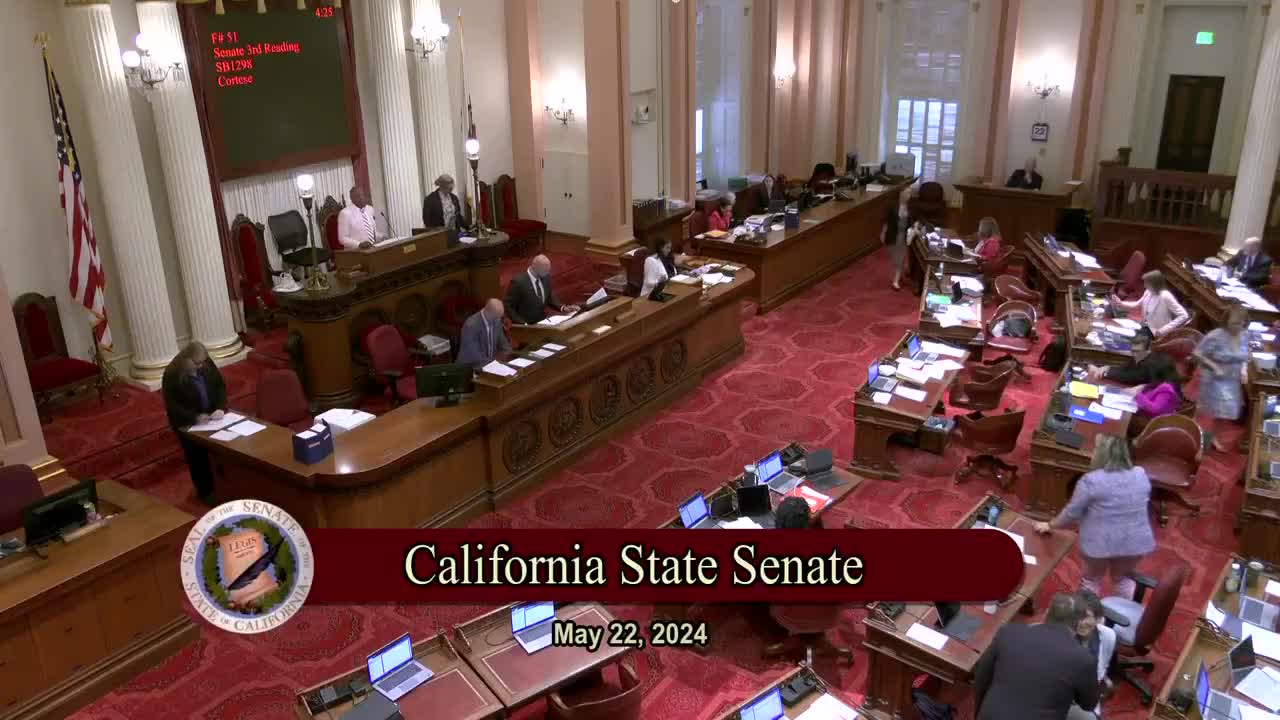 2MIN
Senate Floor
 10MIN
Senate Standing Committee on Public Safety
11SEC
Senate Standing Committee on Public Safety
Bill Author

Bill Co-Author(s):