SB 1361: California Environmental Quality Act: exemption: local agencies: contract for providing services for people experiencing homelessness.
- Session Year: 2023-2024
- House: Senate
- Latest Version Date: 2024-08-19
Current Status:
Passed
(2024-08-19: Chaptered by Secretary of State. Chapter 188, Statutes of 2024.)
Introduced
In Committee
First Chamber
In Committee
Second Chamber
Enacted
What does this bill do?
The bill exempts local agencies from California's environmental review law (CEQA) when they approve contracts to provide services for people experiencing homelessness. Covered services can include case management, resource navigation, security, residential services, and counseling.
The summary is provided by generative AI which can make mistakes. For original language, please view the details in the table below.
The California Environmental Quality Act (CEQA) requires a lead agency, as defined, to prepare, or cause to be prepared, and certify the completion of an environmental impact report on a project that it proposes to carry out or approve that may have a significant effect on the environment or to adopt a negative declaration if it finds that the project will not have that effect. CEQA also requires a lead agency to prepare a mitigated negative declaration for a project that may have a significant effect on the environment if revisions in the project would avoid or mitigate that effect and there is no substantial evidence that the project, as revised, would have a significant effect on the environment.
CEQA exempts from its requirements, among other things, actions taken by the Department of Housing and Community Development, the California Housing Finance Agency, or a local agency not acting as the lead agency to provide financial assistance or insurance for the development and construction of residential housing for persons and families of low or moderate income, as provided.
This bill would additionally exempt from CEQAs requirements actions taken by a local agency to approve a contract for providing services for people experiencing homelessness, as provided.
The California Environmental Quality Act (CEQA) requires a lead agency, as defined, to prepare, or cause to be prepared, and certify the completion of an environmental impact report on a project that it proposes to carry out or approve that may have a significant effect on the environment or to adopt a negative declaration if it finds that the project will not have that effect. CEQA also requires a lead agency to prepare a mitigated negative declaration for a project that may have a significant effect on the environment if revisions in the project would avoid or mitigate that effect and there is no substantial evidence that the project, as revised, would have a significant effect on the environment.
CEQA exempts for its requirements, among other things, actions taken by the Department of Housing and Community Development, the California Housing Finance Agency, or a local agency not acting as the lead agency to provide financial assistance or insurance for the development and construction of residential housing for persons and families of low or moderate income, as provided.
This bill would additionally exempt from CEQAs requirements actions taken by a local agency to approve a contract for providing services for people experiencing homelessness. homelessness, as provided.
The California Environmental Quality Act (CEQA) requires a lead agency, as defined, to prepare, or cause to be prepared, and certify the completion of an environmental impact report on a project that it proposes to carry out or approve that may have a significant effect on the environment or to adopt a negative declaration if it finds that the project will not have that effect. CEQA also requires a lead agency to prepare a mitigated negative declaration for a project that may have a significant effect on the environment if revisions in the project would avoid or mitigate that effect and there is no substantial evidence that the project, as revised, would have a significant effect on the environment.
CEQA exempts for its requirements, among other things, actions taken by the Department of Housing and Community Development, the California Housing Finance Agency, or a local agency not acting as the lead agency to provide financial assistance or insurance for the development and construction of residential housing for persons and families of low or moderate income, as provided.
This bill would additionally exempt from CEQAs requirements actions taken by a local agency to approve a contract for providing services for people experiencing homelessness.
This division does not apply to any of the following:
(a)An extension of time, granted pursuant to Section 65361 of the Government Code, for the preparation and adoption of one or more elements of a city or county general plan.
(b)Actions taken by the Department of Housing and Community Development, the California Housing Finance Agency, or a local agency not acting as the lead agency to provide financial assistance or insurance for the development and construction of residential housing for persons and families of low or moderate income, as defined in Section 50093 of the Health and Safety Code, if the project that is the subject of the application for financial assistance or insurance will be reviewed pursuant to this division by another public agency.
(c)(1)Actions taken by a local agency to approve a contract for providing services for people experiencing homelessness.
(2)The services described in paragraph (1) may include, but are not limited to, case management, resource navigation, security services, residential services, and counseling services.
This division does not apply to any of the following:
(a)An extension of time, granted pursuant to Section 65361 of the Government Code, for the preparation and adoption of one or more elements of a city or county general plan.
(b)Actions taken by the Department of Housing and Community Development, the California Housing Finance Agency, or a local agency not acting as the lead agency to provide financial assistance or insurance for the development and construction of residential housing for persons and families of low or moderate income, as defined in Section 50093 of the Health and Safety Code, if the project that is the subject of the application for financial assistance or insurance will be reviewed pursuant to this division by another public agency.
(c)Actions taken by a local agency to approve a contract for providing services for people experiencing homelessness.
|
Date
|
Status
|
|---|---|
| Aug 19, 2024 | Chaptered by Secretary of State. Chapter 188, Statutes of 2024. |
| Aug 19, 2024 | Approved by the Governor. |
| Aug 13, 2024 | Enrolled and presented to the Governor at 2 p.m. |
| Aug 5, 2024 | In Senate. Ordered to engrossing and enrolling. |
| Aug 5, 2024 | Read third time. Passed. (Ayes 71. Noes 0. Page 6201.) Ordered to the Senate. |
| Jun 27, 2024 | Read second time. Ordered to consent calendar. |
| Jun 26, 2024 | From committee: Do pass. Ordered to consent calendar. (Ayes 9. Noes 0.) (June 26). |
| Jun 11, 2024 | From committee: Do pass and re-refer to Com. on H. & C.D. with recommendation: To consent calendar. (Ayes 10. Noes 0.) (June 10). Re-referred to Com. on H. & C.D. |
| May 13, 2024 | Referred to Coms. on NAT. RES. and H. & C.D. |
| Apr 25, 2024 | In Assembly. Read first time. Held at Desk. |
| Apr 25, 2024 | Read third time. Passed. (Ayes 36. Noes 0. Page 3771.) Ordered to the Assembly. |
| Apr 18, 2024 | Read second time. Ordered to consent calendar. |
| Apr 17, 2024 | From committee: Do pass. Ordered to consent calendar. (Ayes 10. Noes 0. Page 3633.) (April 16). |
| Apr 9, 2024 | Set for hearing April 16. |
| Apr 8, 2024 | Read second time and amended. Re-referred to Com. on HOUSING. |
| Apr 4, 2024 | From committee: Do pass as amended and re-refer to Com. on HOUSING. (Ayes 7. Noes 0. Page 3467.) (April 3). |
| Mar 8, 2024 | Set for hearing April 3. |
| Feb 29, 2024 | Referred to Coms. on E.Q. and HOUSING. |
| Feb 20, 2024 | From printer. May be acted upon on or after March 18. |
| Feb 16, 2024 | Introduced. Read first time. To Com. on RLS. for assignment. To print. |
|
Date
|
Description
|
Location
|
Votes
|
|
|---|---|---|---|---|
| Aug 5, 2024 | SB 1361 Blakespear Consent Calendar Second Day Regular Session | Assembly Floor |
Passed |
|
| Jun 26, 2024 | Do pass. To Consent Calendar. | Assembly Standing Committee on Housing and Community Development |
Passed |
|
| Jun 10, 2024 | Do pass and be re-referred to the Committee on [Housing and Community Development] with recommendation: To Consent Calendar | Assembly Standing Committee on Natural Resources |
Passed |
|
| Apr 25, 2024 | Consent Calendar 2nd SB1361 Blakespear | Senate Floor |
Passed |
|
| Apr 16, 2024 | Do pass and be ordered to the Consent Calendar | Senate Standing Committee on Housing |
Passed |
|
| Apr 3, 2024 | Do pass as amended, but first amend, and re-refer to the Committee on [Housing] | Senate Standing Committee on Environmental Quality |
Passed |
This list shows positions taken on this bill by organizations on the date displayed, which is linked to the original source.
Positions by individuals are not included.
|
Organization
|
Position
|
Date
|
|---|---|---|
| All Home | ** Support | |
| CalChamber | ** Support | |
| California Apartment Association | ** Support | |
| City Of San Diego | ** Support | |
| City of Thousand Oaks | ** Support | |
| Housing California | ** Support | |
| LeadingAge California | ** Support | |
| League Of California Cities | ** Support | |
| Path | ** Support | |
| People Assisting the Homeless | ** Support | |
| Rural County Representatives of California | ** Support | |
| Steinberg Institute | ** Support |
Date of Hearing: June 26, 2024
ASSEMBLY COMMITTEE ON HOUSING AND COMMUNITY DEVELOPMENT
Christopher M. Ward, Chair
SBPCA Bill Id:SB 1361
Author:(Blakespear) – As Amended Ver:April 8, 2024
SENATE VOTE: 36-0
SUBJECT: California Environmental Quality Act: exemption: local agencies: contract for providing services for people experiencing homelessness
SUMMARY: Exempts from the California Environmental Quality Act (CEQA) any actions taken by local agencies related to contracting for services for people experiencing homelessness, including case management, resource navigation, security services, residential services, and counseling services.
EXISTING LAW:
- Requires, pursuant to CEQA, lead agencies with the principal responsibility for carrying out or approving a project to prepare a negative declaration, mitigated negative declaration, or environmental impact report (EIR) for the project, unless the project is exempt from CEQA. (Public Resources Code (PRC) 21000, et seq.)
- Exempts from CEQA actions taken by the Department of Housing and Community Development (HCD), the California Housing Finance Agency (CalHFA), or a local agency not acting as the lead agency to provide financial assistance or insurance for the development and construction of affordable housing if the project that is the subject of the application for financial assistance or insurance will be reviewed pursuant to CEQA by another public agency. (PRC 21080.10)
FISCAL EFFECT: None.
COMMENTS:
Author’s Statement: According to the author, “Between 2010 and 2023, the number of Californians who are unhoused increased by approximately 47 percent. Between 2022 and 2023 alone, the number of people who were unhoused in San Diego County increased by 10,264, a 14 percent increase. Over the past seven years, the Legislature has enacted unprecedented reforms to address the root cause of rising homelessness in the state: housing underproduction. Nevertheless, experts estimate it will take years for local governments and housing developers to fully implement these laws and even more time for California’s communities to achieve their housing production targets. In this interim, barriers must be cleared to ensure local governments can provide humanitarian support to people who are unhoused. SB 1361 will provide a CEQA exemption to actions local governments take to execute contracts for homelessness services. This will close a potential opportunity for frivolous lawsuits intended to hinder local homelessness aid efforts across California.”
CEQA: Over its 50-plus year history, CEQA has been California’s premier environmental law. CEQA requires state and local government agencies to inform decision-makers and the public about the potential environmental impacts of proposed changes to the physical environment, and to reduce those environmental impacts to the extent feasible. It calls for careful deliberation of every environmental impact, and requires exhaustive analysis if there is a fair argument that a project might have a significant impact. If a development project would make significant negative changes to the physical environment, and those impacts could not be mitigated, CEQA requires the governmental entity approving the project to make findings that justify why the change is merited despite its environmental impact. It presumes that local governments and their citizens act in good faith, giving them procedural deference to deny or delay projects. The result is that opponents to housing projects and homelessness solutions are able to utilize CEQA to delay and potentially block these projects.
CEQA provides multiple opportunities for public involvement and enables members of the public to sue a governmental entity that they believe has not properly followed the process. Litigation under CEQA is one of the most notorious legal challenges that a project proponent may face when seeking approval for housing or homelessness projects in California. While the Governor’s Office of Planning and Research does issue statewide CEQA guidelines for implementation, no state agency oversees the CEQA process, and as such, citizen suits are the primary enforcement mechanism of CEQA compliance.[1] The nature of CEQA, including the lack of state-level governmental oversight and the broad nature of the statute, make CEQA lawsuits one of the more common tools that opponents use to challenge proposed projects. Critics of CEQA claim that CEQA lawsuits are primarily intended to stall project proposals, rather than addressing legitimate environmental concerns. CEQA is also inconsistently applied from jurisdiction to jurisdiction, resulting in increased uncertainty and risk associated with projects that are subject to CEQA, depending on where the project is located.[2]
In recognition of this issue, the state has created multiple statutory and regulatory exemptions from CEQA for residential projects and homelessness interventions. The exemption this bill seeks to amend was enacted by SB 1925 (Sher), Chapter 1039, Statutes of 2002, a larger CEQA housing measure that sought to increase infill, affordable and farmworker housing while still ensuring environmental protections consistent with CEQA. More recently, CEQA exemptions for pre-development financing actions related to affordable housing have been added for other specific project types and agencies, such as SB 679 (Kamlager), Chapter 661, Statutes of 2022, for the Los Angeles County Affordable Housing Solutions Agency and AB 1319 (Wicks), Chapter 758, Statutes of 2023, for the Bay Area Housing Finance Authority.
Homelessness in California: California has invested significant financial resources to combat the homelessness crisis, but the number of Californians experiencing homelessness continues to grow. California has the largest population of people experiencing homelessness in the nation with over 181,000 people experiencing homelessness on any given night, according to the 2023 Federal Point-In-Time (PIT) Count.[3] Since 2013, homelessness has grown by 53% statewide.[4] Of those individuals, over 123,000 are unsheltered, meaning they live on the streets, sleep in cars, camp in parks, or are otherwise staying in places not designed for human habitation.[5] Nearly half of all unsheltered people in the country were in California during the 2023 PIT Count.[6]
UCSF’s California Statewide Study of People Experiencing Homelessness (Study) shows that minority groups are overrepresented in the population of Californians experiencing homelessness. In this survey of unhoused Californians, “participants who report a Black (26%) or Native American or Indigenous identity (12%) were overrepresented [in the homeless population] compared to the overall California population. Thirty-five percent of participants [in the survey] identified as Latino/x."[7]
Overwhelming evidence shows that the solution to homelessness is providing more habitable, stable, and permanent housing at all income levels, and in particular, more housing affordable to the lowest income earners. Cities with high housing costs and limited housing availability tend to have higher rates of homelessness.[8] Of the six million renter households in the state, 1.7 million are paying more than 50% of their income toward rent, and homeownership is increasingly out of reach for many Californians. According to HCD’s 2022 Statewide Housing Plan update, lower-income renters, families with children, persons with disabilities, and BIPOC households are the most likely to be behind on rent, and therefore at risk of experiencing homelessness.[9]
Supportive Services Are Needed Too: While increasing the supply of affordable housing is a priority solution to addressing the homelessness crisis, there is a spectrum of housing solutions that various levels of government should offer, depending on the specific needs of the individual or family experiencing homelessness. For those living on the streets or in encampments, a shelter can provide short-term, temporary respite. Interim solutions, such as bridge housing communities and low-barrier navigation centers, provide a spectrum of housing and healthcare services, particularly to marginalized communities and those with pets, and may be necessary while a more permanent solution (such as rental assistance or the construction of a new unit) can be achieved.
Individuals experiencing homelessness often require assistance identifying and navigating the various resources available to them. In some instances, a home without any supportive services may be insufficient to meet all of the needs of an individual exiting homelessness. The UCSF Study found that “fewer than half (46%) (of participants) had received any formal assistance to re-enter housing during their episode of homelessness” and that it is necessary to provide robust supportive services to match the behavioral health needs of people experiencing homelessness.[10] This bill would make it easier for Californians to access those services, which include case management, resource navigation, security services, residential services, and counseling services. It would do so by providing an exemption from CEQA for any action taken by a local agency to approve a contract for providing services to people experiencing homelessness. It would do so by creating a project-level CEQA exemption for this type of local action.
Related Legislation:
SB 1395 (Becker), 2024 makes several changes related to homelessness housing options: (1) extends the sunset on authorized emergency housing under the Shelter Crisis Act (SCA) to January 1, 2036; (2) allows actions related to contracting for services for a homeless shelter under the SCA to be exempt from the California Environmental Quality Act (CEQA); (3) eliminates the sunset for by right approval of low barrier navigation centers, and exempts from CEQA certain actions by local agencies related to low barrier navigation centers; and (4) clarifies that state programs that are subject to housing first includes programs that fund emergency shelters and interim housing. SB 1395 passed out of this committee with a 9-0 vote, and is pending in the Assembly Committee on Natural Resources.
SB 406 (Cortese), Chapter 150, Statutes of 2023 allowed local agencies to utilize a particular California Environmental Quality Act (CEQA) exemption limited to actions taken to provide financial assistance or insurance to develop and build housing for people with low- or moderate-incomes.
Arguments in Support: According to the City of San Diego, the sponsor, “Homelessness is one of the most vexing issues facing local governments today. In 2023 it is estimated that 181,399 people are experiencing homelessness in the State of California. City programs, like those in San Diego, have sheltered and housed tens of thousands of Californians through sustained multiyear investments in the state-local partnership of the Homeless Housing, Assistance and Prevention (HHAP) Program. The State’s HHAP investments mark a concerted partnership between California’s biggest cities and the State to meaningfully reduce homelessness.
With these funds, cities have, and continue to, rapidly stand up transformational interventions such as bridge housing and emergency shelter beds, safe parking lots, quick build modular apartments, and targeted rental assistance programs to house and shelter tens of thousands of people. While the physical infrastructure is a critical component of our efforts, it is the coordinated and comprehensive services provided to our unhoused residents that are vital to true success.
In recent years, the Legislature has recognized the immediate and significant need to address homelessness by passing legislation that exempts the locating of emergency homeless shelters from CEQA. Specifically, section 65550 of the Government Code states CEQA “shall not apply to actions taken by a public agency to lease, convey, or encumber land owned by a public agency, or to facilitate the lease, conveyance, or encumbrance of land owned by a public agency, or to provide financial assistance to, or otherwise approve, a Low Barrier Navigation Center constructed or allowed by this section.”
Unfortunately, service contracts associated with local efforts to address the homeless crisis are not explicitly afforded the same CEQA exemption. Given the need to rapidly address California’s homelessness crisis, SB 1361 would help give local agencies another tool to expedite administration of these life saving services.
SB 1361 provides certainty for cities providing homeless assistance by clarifying that actions taken by a local agency to approve a contract for providing services for people experiencing homelessness shall not be subject to CEQA.”
Arguments in Opposition: None on file.
Double Referred: This bill was double-referred. It was heard in the Assembly Committee on Natural Resources, where it passed on a 10-0 vote on June 10, 2024.
REGISTERED SUPPORT / OPPOSITION:
Support
City of San Diego (Sponsor)
All Home, a Project of Tides Center
California Apartment Association
California State Association of Counties
City and County of San Francisco
City of Thousand Oaks
LeadingAge California
League of California Cities
Southwest California Legislative Council
Steinberg Institute
Tri County Chamber Alliance
Opposition
None on file.
Analysis Prepared by: Dori Ganetsos / H. & C.D. / (916) 319-2085
Moira O’Neill, Giulia Gualco-Nelson, and Eric Biber, Developing Policy from the Ground Up: Examining Entitlement in the Bay Area to Inform California’s Housing Policy Debates, 2019 ↑
IBID. ↑
HUD PIT Count: https://www.huduser.gov/portal/datasets/ahar/2023-ahar-part-1-pit-estimates-of-homelessness-in-the-us.html ↑
https://information.auditor.ca.gov/reports/2023-102.1/index.html ↑
HUD PIT Count. ↑
IBID. ↑
https://homelessness.ucsf.edu/our-impact/studies/california-statewide-study-people-experiencing-homelessness ↑
Colburn, G., & Aldern, C. P. (2022). Homelessness is a Housing Problem. University of California Press. ↑
https://statewide-housing-plan-cahcd.hub.arcgis.com/ ↑
https://homelessness.ucsf.edu/our-impact/studies/california-statewide-study-people-experiencing-homelessness, page 9 ↑
Date of Hearing: June 10, 2024
ASSEMBLY COMMITTEE ON NATURAL RESOURCES
Isaac G. Bryan, Chair
SBPCA Bill Id:SB 1361
Author:(Blakespear) – As Amended Ver:April 8, 2024
SENATE VOTE: 36-0
SUBJECT: California Environmental Quality Act: exemption: local agencies: contract for providing services for people experiencing homelessness
SUMMARY: Exempts from the California Environmental Quality Act (CEQA) actions taken by a local agency to approve a contract for providing homeless services, including case management, resource navigation, security services, residential services, and counseling services.
EXISTING LAW:
- Requires, pursuant to CEQA, lead agencies with the principal responsibility for carrying out or approving a proposed project to prepare a negative declaration, mitigated negative declaration, or environmental impact report (EIR) for this action, unless the project is exempt from CEQA. (Public Resources Code (PRC) 21000, et seq.)
- Exempts from CEQA actions taken by the Department of Housing and Community Development (HCD), the California Housing Finance Agency (CalHFA), or a local agency not acting as the lead agency to provide financial assistance or insurance for the development and construction of affordable housing if the project that is the subject of the application for financial assistance or insurance will be reviewed pursuant to CEQA by another public agency. (PRC 21080.10)
FISCAL EFFECT: Non-fiscal
COMMENTS:
- Background. CEQA provides a process for evaluating the environmental effects of applicable projects undertaken or approved by public agencies. If a project is not exempt from CEQA, an initial study is prepared to determine whether the project may have a significant effect on the environment. If the initial study shows that the project would not have a significant effect on the environment, the lead agency must prepare a negative declaration. If the initial study shows that the project may have a significant effect, the lead agency must prepare an EIR.
CEQA includes various statutory exemptions, as well as categorical exemptions in the CEQA Guidelines. The exemption this bill seeks to amend was enacted by SB 1925 (Sher), Chapter 1039, Statutes of 2002, a larger CEQA housing measure that sought to increase infill, affordable and farmworker housing while still ensuring environmental protections consistent with CEQA. More recently, CEQA exemptions for pre-development financing actions related to affordable housing have been added for other specific project types and agencies, such as SB 679 (Kamlager), Chapter 661, Statutes of 2022, for the Los Angeles County Affordable Housing Solutions Agency and AB 1319 (Wicks), Chapter 758, Statutes of 2023, for the Bay Area Housing Finance Authority.
It is unclear that a public agency’s action to approve a contract for providing homeless services is subject to CEQA, or that any such actions have been challenged for non-compliance with CEQA. In an apparent abundance of caution, this bill confirms that such actions are not subject to CEQA.
- Author’s statement:
Between 2010 and 2023, the number of Californians who are unhoused increased by approximately 47 percent. Between 2022 and 2023 alone, the number of people who were unhoused in San Diego County increased by 10,264, a 14 percent increase. Over the past seven years, the Legislature has enacted unprecedented reforms to address the root cause of rising homelessness in the state: housing underproduction. Nevertheless, experts estimate it will take years for local governments and housing developers to fully implement these laws and even more time for California’s communities to achieve their housing production targets. In this interim, barriers must be cleared to ensure local governments can provide humanitarian support to people who are unhoused. SB 1361 will provide a CEQA exemption to actions local governments take to execute contracts for homelessness services. This will close a potential opportunity for frivolous lawsuits intended to hinder local homelessness aid efforts across California.
- Double referral. This bill has been double-referred to the Assembly Housing and Community Development Committee.
REGISTERED SUPPORT / OPPOSITION:
Support
All Home
California Apartment Association
California Chamber of Commerce
California State Association of Counties
City and County of San Francisco
City of San Diego
City of Thousand Oaks
Housing California
LeadingAge California
League of California Cities
Mayor Darrell Steinberg, City of Sacramento
PATH (People Assisting the Homeless)
Rural County Representatives of California
Steinberg Institute
Opposition
None on file
Analysis Prepared by: Lawrence Lingbloom / NAT. RES. /
SENATE RULES COMMITTEE Office of Senate Floor Analyses (916) 651-1520 Fax: (916) 327-4478 | SB 1361 |
CONSENT
Bill No: SB 1361
Author: Blakespear (D)
Amended: 4/8/24
Vote: 21
SENATE ENVIRONMENTAL QUALITY COMMITTEE: 7-0, 4/3/24
AYES: Allen, Dahle, Gonzalez, Hurtado, Menjivar, Nguyen, Skinner
SENATE HOUSING COMMITTEE: 10-0, 4/16/24
AYES: Skinner, Ochoa Bogh, Blakespear, Caballero, Cortese, Menjivar, Padilla, Seyarto, Umberg, Wahab
SUBJECT: California Environmental Quality Act: exemption: local agencies: contract for providing services for people experiencing homelessness
SOURCE: Author
DIGEST:
This bill creates a California Environmental Quality Act (CEQA) exemption for actions taken by a local agency to approve a contract for providing services for people experiencing homelessness.
ANALYSIS:
Existing law:
- Under CEQA, a lead agency determines whether a project is exempt from CEQA, or if it must do an initial study to determine if a project will have significant effects on the environment. If a project has no effect on the environment or effects that can be mitigated, the lead agency prepares a negative declaration or mitigated negative declaration. If the project will have significant impacts, the lead agency prepares an environmental impact report to evaluate and propose mitigation measures for any effects on the environment, including impacts or likely impacts to land, air, water, minerals, flora, fauna, ambient noise, and historic or aesthetic significance. (Public Resources Code (PRC) §§21000 et seq.)
- Requires low-barrier navigation center (LBNC) developments use a by-right (and thus not subject to CEQA) process if the development meets certain requirements. Defines a navigation center as low barrier if it includes best practices to reduce barriers to entry, such as allowing tenants to have partners, pets, possessions, and privacy. This by-right process requirement sunsets on January 1, 2027. (PRC § 65660.2)
- Creates a statutory CEQA exemption for low barrier navigation center, supportive housing, and transitional housing for youth and young adults within the City of Los Angeles administered by the City of Los Angeles and by other local eligible public agencies, which sunsets January 1, 2025. (PRC § 21080.27)
- Exempts from CEQA actions taken by a local agency, the Department of Housing and Community Development or the California Housing Finance Agency to provide financial assistance or insurance for the development and construction of affordable housing if the project that is the subject of the application for financial assistance or insurance will be reviewed pursuant to CEQA by another public agency. (PRC § 21080.10)
- Clarifies that an action to provide financial assistance in furtherance of implementing certain affordable housing projects are exempt from CEQA. (PRC § 21080.409(b))
This bill specifies that actions taken by a local agency to approve a contract for services for people experiencing homelessness are exempt from CEQA.
Background
- The A, B, C’s of CEQA. CEQA is designed to (a) make government agencies and the public aware of the environmental impacts of a proposed project; (b) ensure the public can take part in the review process; and (c) identify and implement measures to mitigate or eliminate any negative impact the project may have on the environment. CEQA is enforced by civil lawsuits that can challenge any project’s environmental review. Nonprofits, private individuals, public agencies, advocacy groups, and other organizations can all file lawsuits under CEQA.
A project is only subject to CEQA if it involves a public agencies’ discretionary funding or approval that may cause either (a) a direct physical change in the environment or (b) a reasonably foreseeable indirect physical change in the environment.
- CEQA exemptions. Some projects may be eligible for CEQA exemptions. If a project is exempt from CEQA, the lead agency simply identifies which exemption the project is eligible for, and no further environmental review or public engagement is required.
There are two types of CEQA exemptions: statutory and categorical exemptions. Statutory exemptions are created by the Legislature, and generally apply even if a project has the potential to significantly affect the environment. There are over 120 statutory CEQA exemptions in the Public Resources Code, Water Code, Government Code, and Health and Safety Code among others. In contrast to statutory exemptions, categorical exemptions, which are part of the CEQA guidelines, generally do not apply if there are significant environmental impacts associated with the project. There are 33 categorical CEQA exemptions listed in the CEQA guidelines, many of which cover a wide range of projects.
- CEQA exemptions to address the housing and homelessness crisis. Homelessness is a statewide challenge that affects individuals in every region and county in California. In February 2022, California had 437 unhoused people per 100,000 residents. Between 2010 and 2023, the number of Californians who are unhoused increased by approximately 47 percent. The homelessness crisis is driven by the high cost of living and insufficient affordable housing.
In recognition of the housing and homelessness crisis, the Legislature has passed numerous CEQA exemptions for affordable housing and temporary housing to speed up the deployment of these projects. In 2019, the Legislature created a by-right process (not subject to CEQA) for local actions taken to site and permit LBNCs, which provide temporary shelter and social services to Californians who are unhoused. This by-right process included not just entitlement for LBNCs, but also any action to facilitate the lease, conveyance, or encumbrance of land owned by a public agency, or to provide financial assistance to, or otherwise approve the LBNC.
Local governments operate LBNCs by contracting with private and nonprofit partners. These contracts provide services such as case management, resource navigation, security services, residential services, and counseling services at the LBNC. Currently, while actions to permit and site LBNC’s are not subject to CEQA, executing contracts for services at LBNC’s are not explicitly exempt from CEQA. This may be because contracts for services such as the ones described above may not have any real or foreseeable impacts on the environment to trigger CEQA review in the first place (in such cases, these contracts would be outside the purview of CEQA).
- Confusion on what constitutes a project. Actions that supplement development projects, such as executing financing decisions or providing technical assistance on projects that either undergo CEQA or are exempt from CEQA, have historically been considered outside the purview of CEQA. These actions may be considered outside the scope of CEQA because they do not have the potential to cause direct or foreseeable indirect impacts on the environment. However, public agencies have raised concerns that any ambiguity as to whether or not these actions are subject to CEQA could provide opponents of the overall project with a lever to bring a CEQA lawsuit and delay the overall project deployment.
The Legislature has weighed in on whether or not actions that supplement “projects” like affordable housing financing or technical assistance documents are subject to CEQA by passing a number of bills in recent years ((AB 1449, Chapter 761, Statutes of 2023); (AB 1319, Wicks, Chapter 758, Statutes of 2023); (SB 679, Kamlager, Chapter 661, Statutes of 2022)) that specifically exempt actions related to financing and technical assistance that supplement development projects that undergo CEQA or are themselves exempt from CEQA.
Comments
- Purpose of Bill. According to the author, “Between 2010 and 2023, the number of Californians who are unhoused increased by approximately 47 percent. Between 2022 and 2023 alone, the number of people who were unhoused in San Diego County increased by 10,264, a 14 percent increase. Over the past seven years, the Legislature has enacted unprecedented reforms to address the root cause of rising homelessness in the state: housing underproduction. Nevertheless, experts estimate it will take years for local governments and housing developers to fully implement these laws and even more time for California’s communities to achieve their housing production targets. In this interim, barriers must be cleared to ensure local governments can provide humanitarian support to people who are unhoused. SB 1361 will provide a CEQA exemption to actions local governments take to execute contracts for homelessness services. This will close a potential opportunity for frivolous lawsuits intended to hinder local homelessness aid efforts across California.”
- Are service contracts under CEQA? As described in the background section, in order for a project to be subject to CEQA, it must be a discretionary decision by a public agency that could have a direct or reasonably foreseeable indirect impact on the environment. Contracts for services for people experiencing homelessness include actions such as counseling services, security contracts, resource navigation services, and other actions that are unlikely to have a direct or foreseeably indirect impact on the environment. If executing contracts for services for people experiencing homelessness are not ‘projects’, then they would not need a CEQA exemption because that action is not under the purview of CEQA.
The committee is not aware of any lawsuits under CEQA that have challenged homelessness service contracts in the state. However, proponents of this bill argue that any uncertainty on whether or not executing service contracts is subject to CEQA introduces a risk of litigation –especially for projects or actions that involve homeless services which can be controversial. A lawsuit alleging that a public agency violated the law by executing a contract without going through the CEQA process could slow down deployment of the project that the contract services, even if the suit does not succeed. An explicit CEQA exemption for executing these types of service contracts or other supplemental actions, while still subject to legal challenge under CEQA, would provide public agencies more legal certainty.
Supporting the idea that public agencies find exemptions a safer bet than interpreting an action as “not a project,” the City of San Diego currently uses an existing CEQA exemption (the existing facilities exemption from the CEQA guidelines) when executing these contracts.
- If these are subject to CEQA, what else is? Creating a new CEQA exemption for contracts for services for individuals experiencing homelessness creates a clear path for locals to skip the CEQA review and avoid litigation for these actions. However, that same exemption also makes it explicit that these contracts are in fact under the purview of CEQA. While that may not be problematic for these specific contracts since they would have an exemption, it does imply that other similar contracts are under the purview of CEQA. These similar contracts, some of which may have justifiably considered themselves to be outside the purview of CEQA, would now be more vulnerable to legal action asserting that they are projects.
Thus, creating a specific exemption in law for one particular action that has historically not been subject to CEQA could backfire and result in more litigation for local entities.
Related/Prior Legislation
SB 1395 (Becker, 2024) makes several changes related to homelessness housing options: (1) extends the sunset on authorized emergency housing under the Shelter Crisis Act to January 1, 2036; (2) allows actions related to contracting for services for a homeless shelter under the SCA to be exempt from the California CEQA; (3) eliminates the sunset for by-right approval of low barrier navigation centers and exempts from CEQA certain actions by local agencies related to low barrier navigation centers; and (4) clarifies that state programs subject to “Housing First” includes programs that fund emergency shelters and interim housing. This bill is pending hearing in the Senate Environmental Quality Committee.
SB 406 (Cortese, Chapter 150, Statutes of 2023) established a CEQA exemption for actions taken by a local agency to provide financial assistance or insurance for the development and construction of residential housing for persons and families of low or moderate income if the project that is the subject of the application for financial assistance or insurance will be reviewed pursuant to CEQA by another public agency.
AB 1319 (Wicks, Chapter 758, Statutes of 2023) exempted specifically from CEQA actions by the Bay Area Housing Finance Authority to raise, administer, or allocate funding for tenant protection, affordable housing preservation, or new affordable housing production or to provide technical assistance consistent with the authority’s purpose.
AB 101 (Committee on Budget, Chapter 159, Statutes of 2019) requires siting and permitting of low-barrier navigation center developments to be a by-right process.
SB 679 (Kamlager, Chapter 661, Statutes of 2022) specified that any action taken by the Los Angeles County Affordable Housing Solutions Agency to finance, fund, or issue grants, loans, or bonds are exempt from CEQA.
FISCAL EFFECT: Appropriation: No Fiscal Com.: No Local: No
SUPPORT: (Verified 4/23/24)
All Home
Calchamber
California Apartment Association
City of San Diego
City of Thousand Oaks
Housing California
Leadingage California
League of California Cities
Mayor Darrell Steinberg, City of Sacramento
People Assisting the Homeless
Rural County Representatives of California
Steinberg Institute
OPPOSITION: (Verified 4/23/24)
Prepared by: Brynn Cook / E.Q. / (916) 651-4108
4/24/24 11:16:28
**** END ****
SENATE COMMITTEE ON HOUSING
Senator Nancy Skinner, Chair
2023 - 2024 Regular
Bill No: SB 1361 Hearing Date: 4/16/2024
Author: | Blakespear | ||
Version: | 4/8/2024 Amended | ||
Urgency: | No | Fiscal: | No |
Consultant: | Alison Hughes | ||
SUBJECT: California Environmental Quality Act: exemption: local agencies: contract for providing services for people experiencing homelessness
DIGEST: This bill exempts from the California Environmental Quality Act (CEQA) any actions taken by local agencies related to contracting for services for people experiencing homelessness.
ANALYSIS:
Existing law:
- Requires lead agencies with the principal responsibility for carrying out or approving a project to prepare a negative declaration (ND), mitigated negative declaration (MND), or environmental impact report (EIR) for the project, unless the project is exempt from the California Environmental Quality Act (CEQA). If a project may have a significant effect on the environment, the lead agency must prepare a draft EIR.
- Exempts from CEQA any extension of time given to a city or county to prepare or adopt any elements of a general plan.
- Exempts from CEQA actions taken by HCD, CalHFA, and local agencies to provide financial assistance or insurance to develop and build housing for people with low or moderate incomes as long as the project receiving the financial assistance or insurance is subject to review under CEQA by another public agency.
This bill:
- Allows actions taken by local agencies related to contracting for services for people experiencing homelessness to be exempt from the California Environmental Quality Act (CEQA).
- Defines “services” as including but not limited to case management, resource navigation, security services, residential services, and counseling services.
COMMENTS:
- Author’s statement. “Between 2010 and 2023, the number of Californians who are unhoused increased by approximately 47 percent. Between 2022 and 2023 alone, the number of people who were unhoused in San Diego County increased by 10,264, a 14 percent increase. Over the past seven years, the Legislature has enacted unprecedented reforms to address the root cause of rising homelessness in the state: housing underproduction. Nevertheless, experts estimate it will take years for local governments and housing developers to fully implement these laws and even more time for California’s communities to achieve their housing production targets. In this interim, barriers must be cleared to ensure local governments can provide humanitarian support to people who are unhoused. SB 1361 will provide a CEQA exemption to actions local governments take to execute contracts for homelessness services. This will close a potential opportunity for frivolous lawsuits intended to hinder local homelessness aid efforts across California.”
- CEQA Generally. CEQA was enacted by the Legislature and signed into law by Governor Ronald Reagan in 1970. While it has evolved into a very complex Act over the past 53 years, at its core the basic principles of CEQA are relatively simple. It is designed to: (a) make government agencies and the public aware of the environmental impacts of a proposed project, (b) ensure the public can take part in the review process, and (c) identify and implement measures to mitigate or eliminate any negative impact the project may have on the environment.
CEQA is a self-executing statute that is enforced by civil lawsuits that can challenge any project’s environmental review. Public agencies, as well as private individuals and organizations, can file lawsuits under CEQA.
- CEQA & Local Actions. Housing and shelter projects continue to face significant local opposition, and threats of a lawsuit can raise costs, significantly delay for, or even stop solutions to provide shelter and permanent housing solutions for people experiencing homelessness. Absent an exemption, local governments spend considerable staff time and resources preparing CEQA-related documents when seeking approval from city councils and boards of supervisors to enter into contracts to provide services for housing projects for people experiencing homelessness.
The time taken to prepare these documents can also delay local ability to approve funding and enter into services contracts quickly, which is often needed in cases where local funds are being combined with state funding sources and have to meet a myriad of regulatory requirements.
- Only Affect A Contracting Decision. Under the exemption proposed by this bill, actions taken by a local agency to approve a contract for providing services for people experiencing homelessness would be exempt from CEQA. This bill would not create a project-level CEQA exemption. The committee is aware of other enacted legislation that have provided similar CEQA exemptions for local governments. For example, SB 406 (Cortese, Chapter 150, Statutes of 2023) allowed local agencies to utilize a particular CEQA exemption limited to actions taken to provide financial assistance or insurance to develop and build housing for people with low- or moderate-incomes. AB 785 (Santiago, Chapter 726, Statutes of 2023) exempted several actions from CEQA related to homelessness projects in the City and County of Los Angeles. SB 850 (Committee on Budget and Fiscal Review, Chapter 48, Statutes of 2018) exempted from CEQA actions taken by a state agency or local government to provide financial assistance to an affordable housing development that receives SB 35 streamlined approval. AB 1197 (Santiago, Chapter 340, Statutes of 2019) exempted from CEQA any action taken by an eligible public agency in providing financial assistance to provide emergency shelters or supportive housing in the City of Los Angeles. SB 679 (Kamlager, Chapter 661, Statutes of 2022) exempted from CEQA any action taken by the Los Angeles County Affordable Housing Solutions Agency to finance, fund, or issue grants, loans, or bonds.
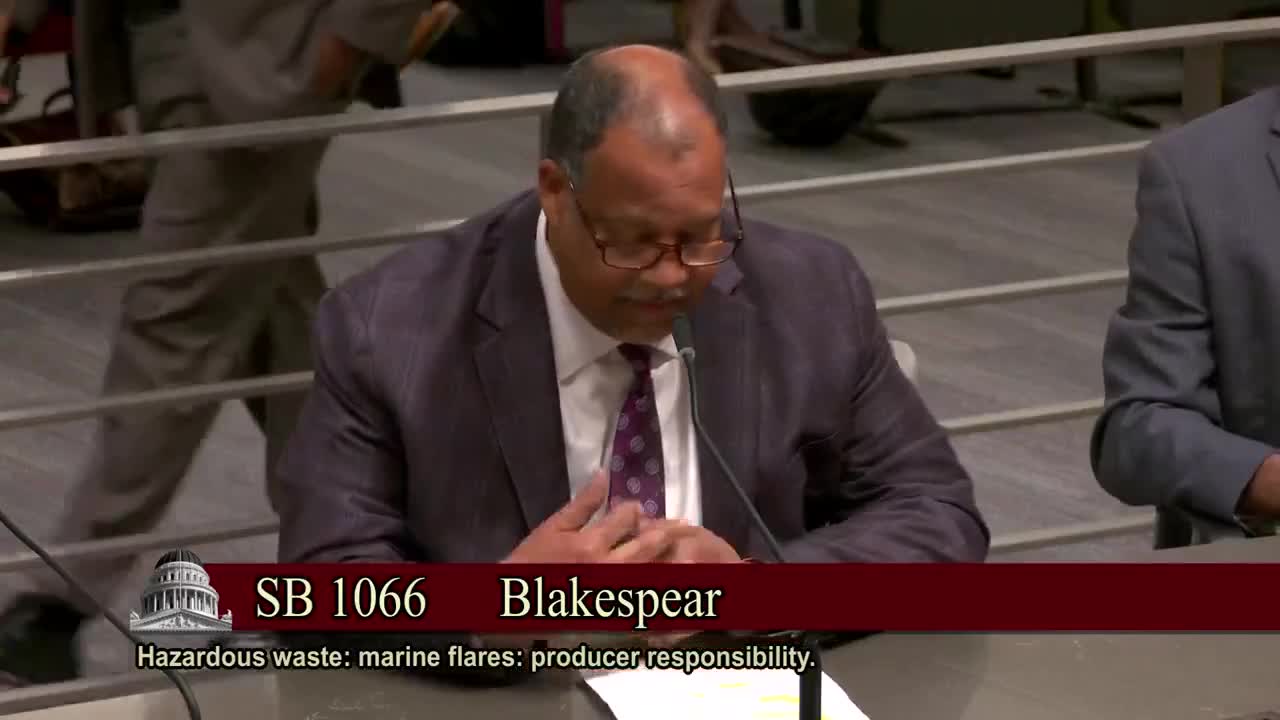
- Double referral. This bill was heard in the Senate Environmental Quality Committee on April 3, 2024 and passed on a vote of 7-0.
Related Legislation:
SB 1395 (Becker, 2024) — makes several changes related to homelessness housing options: (1) Extends the sunset on authorized emergency housing under the Shelter Crisis Act (SCA) to January 1, 2036; (2) allows actions related to contracting for services for a homeless shelter under the SCA to be exempt from the California Environmental Quality Act (CEQA); (3) Eliminates the sunset for by right approval of low barrier navigation centers, and exempts from CEQA certain actions by local agencies related to low barrier navigation centers; and (4) clarifies that state programs that are subject to housing first includes programs that fund emergency shelters and interim housing. This bill is pending in the Environmental Quality Committee.
SB 406 (Cortese, Chapter 150, Statutes of 2023) — allowed local agencies to utilize a particular California Environmental Quality Act (CEQA) exemption limited to actions taken to provide financial assistance or insurance to develop and build housing for people with low- or moderate-incomes.
FISCAL EFFECT: Appropriation: Fiscal Com.: Local:
POSITIONS: (Communicated to the committee before noon on Wednesday,
April 10, 2024.)
SUPPORT:
City of San Diego (Sponsor)
California Apartment Association
LeadingAge California
League of California Cities
PATH (People Assisting the Homeless)
Steinberg Institute
OPPOSITION:
None received.
-- END --
SENATE COMMITTEE ON ENVIRONMENTAL QUALITY
Senator Allen, Chair
2023 - 2024 Regular
Bill No: SB 1361
Author: | Blakespear | ||
Version: | 2/16/2024 | Hearing Date: | 04/03/2024 |
Urgency: | No | Fiscal: | No |
Consultant: | Brynn Cook | ||
SUBJECT: California Environmental Quality Act: exemption: local agencies: contract for providing services for people experiencing homelessness
DIGEST: This bill would create a California Environmental Quality Act (CEQA) exemption for actions taken by a local agency to approve a contract for providing services for people experiencing homelessness.
ANALYSIS:
Existing law:
- Under CEQA, a lead agency determines whether a project is exempt from CEQA, or if it must do an initial study to determine if a project will have significant effects on the environment. If a project has no effect on the environment or effects that can be mitigated, the lead agency prepares a negative declaration (ND) or mitigated ND (MND). If the project will have significant impacts, the lead agency prepares an environmental impact report (EIR) to evaluate and propose mitigation measures for any effects on the environment, including impacts or likely impacts to land, air, water, minerals, flora, fauna, ambient noise, and historic or aesthetic significance. (Public Resources Code (PRC) §§21000 et seq.)
- Requires low-barrier navigation center (LBNC) developments use a by-right (and thus not subject to CEQA) process if the development meets certain requirements. Defines a navigation center as low barrier if it includes best practices to reduce barriers to entry, such as allowing tenants to have partners, pets, possessions, and privacy. This by-right process requirement sunsets on January 1, 2027. (PRC § 65660.2)
- Creates a statutory CEQA exemption for low barrier navigation center, supportive housing, and transitional housing for youth and young adults within the City of Los Angeles administered by the City of Los Angeles and by other local eligible public agencies, which sunsets January 1, 2025. (PRC § 21080.27)
- Exempts from CEQA actions taken by a local agency, the Department of Housing and Community Development (HCD) or the California Housing Finance Agency (CalHFA) to provide financial assistance or insurance for the development and construction of affordable housing if the project that is the subject of the application for financial assistance or insurance will be reviewed pursuant to CEQA by another public agency. (PRC § 21080.10)
- Clarifies that an action to provide financial assistance in furtherance of implementing certain affordable housing projects are exempt from CEQA. (PRC § 21080.409(b))
This bill:
Specifies that actions taken by a local agency to approve a contract for services for people experiencing homelessness are exempt from CEQA.
Background
- The A, B, C’s of CEQA. CEQA is designed to (a) make government agencies and the public aware of the environmental impacts of a proposed project, (b) ensure the public can take part in the review process, and (c) identify and implement measures to mitigate or eliminate any negative impact the project may have on the environment. CEQA is enforced by civil lawsuits that can challenge any project’s environmental review. Nonprofits, private individuals, public agencies, advocacy groups, and other organizations can all file lawsuits under CEQA.
A project is only subject to CEQA if (1) it involves a public agencies’ discretionary funding or approval that may cause either (2) a direct physical change in the environment or (3) a reasonably foreseeable indirect physical change in the environment.
- CEQA exemptions. Some projects may be eligible for CEQA exemptions. If a project is exempt from CEQA, the lead agency simply identifies which exemption the project is eligible for, and no further environmental review or public engagement is required.
There are two types of CEQA exemptions: statutory and categorical exemptions. Statutory exemptions are created by the Legislature, and generally apply even if a project has the potential to significantly affect the environment. There are over 120 statutory CEQA exemptions in the Public Resources Code, Water Code, Government Code, and Health and Safety Code among others. In contrast to statutory exemptions, categorical exemptions, which are part of the CEQA guidelines, generally do not apply if there are significant environmental impacts associated with the project. There are 33 categorical CEQA exemptions listed in the CEQA guidelines, many of which cover a wide range of projects.
- CEQA exemptions to address the housing and homelessness crisis. Homelessness is a Statewide challenge that affects individuals in every region and county in California. In February 2022, California had 437 unhoused people per 100,000 residents. Between 2010 and 2023, the number of Californians who are unhoused increased by approximately 47 percent. The homelessness crisis is driven by the high cost of living and insufficient affordable housing.
In recognition of the housing and homelessness crisis, the Legislature has passed numerous CEQA exemptions for affordable housing and temporary housing to speed up the deployment of these projects. In 2019, the Legislature created a by-right process (not subject to CEQA) for local actions taken to site and permit low barrier navigation centers (LBNCs), which provide temporary shelter and social services to Californians who are unhoused. This by-right process included not just entitlement for LBNCs, but also any action to facilitate the lease, conveyance, or encumbrance of land owned by a public agency, or to provide financial assistance to, or otherwise approve the LBNC.
Local governments operate LBNCs by contracting with private and nonprofit partners. These contracts provide services such as case management, resource navigation, security services, residential services, and counseling services at the LBNC. Currently, while actions to permit and site LBNC’s are not subject to CEQA, executing contracts for services at LBNC’s are not explicitly exempt from CEQA. This may be because contracts for services such as the ones described above may not have any real or foreseeable impacts on the environment to trigger CEQA review in the first place (in such cases, these contracts would be outside the purview of CEQA).
- Confusion on what constitutes a project. Actions that supplement development projects, such as executing financing decisions or providing technical assistance on projects that either undergo CEQA or are exempt from CEQA, have historically been considered outside the purview of CEQA. These actions may be considered outside the scope of CEQA because they do not have the potential to cause direct or foreseeable indirect impacts on the environment. However, public agencies have raised concerns that any ambiguity as to whether or not these actions are subject to CEQA could provide opponents of the overall project with a lever to bring a CEQA lawsuit and delay the overall project deployment.
This concern may be exacerbated by a recent 2019 California Supreme Court case, Union of Medical Marijuana Patients, Inc. v. City of San Diego, which made a broad interpretation of the “direct or foreseeable indirect environmental impact criteria” for a project under CEQA. The court found that in determining whether an activity is a project, it “is not whether the activity will affect the environment or what those effects might be, but whether the activity’s potential for causing environmental change is sufficient to justify the further inquiry into its actual effects that will follow from the application of CEQA.”
The Legislature has weighed in on whether or not actions that supplement “projects” like affordable housing financing or technical assistance documents are subject to CEQA by passing a number of bills in recent years (AB 1449 Chapter 761, Statutes of 2023; AB 1319 Wicks, Chapter 758, Statutes of 2023; SB 679, Kamlager, Chapter 661, Statutes of 2022) that specifically exempt actions related to financing and technical assistance that supplement development projects that undergo CEQA or are themselves exempt from CEQA.
Comments
- Purpose of Bill. According to the author, “Between 2010 and 2023, the number of Californians who are unhoused increased by approximately 47 percent. Between 2022 and 2023 alone, the number of people who were unhoused in San Diego County increased by 10,264, a 14 percent increase. Over the past seven years, the Legislature has enacted unprecedented reforms to address the root cause of rising homelessness in the state: housing underproduction. Nevertheless, experts estimate it will take years for local governments and housing developers to fully implement these laws and even more time for California’s communities to achieve their housing production targets. In this interim, barriers must be cleared to ensure local governments can provide humanitarian support to people who are unhoused. SB 1361 will provide a CEQA exemption to actions local governments take to execute contracts for homelessness services. This will close a potential opportunity for frivolous lawsuits intended to hinder local homelessness aid efforts across California.”
- Are service contracts under CEQA? As described in the background section, in order for a project to be subject to CEQA, it must be a discretionary decision by a public agency that could have a direct or reasonably foreseeable indirect impact on the environment. Contracts for services for people experiencing homelessness include actions such as counseling services, security contracts, resource navigation services, and other actions that are unlikely to have a direct or foreseeably indirect impact on the environment. If executing contracts for services for people experiencing homelessness are not ‘projects’, then they would not need a CEQA exemption because that action is not under the purview of CEQA.
The committee is not aware of any lawsuits under CEQA that have challenged homelessness service contracts in the state. However, proponents of SB 1361 argue that any uncertainty on whether or not executing service contracts is subject to CEQA introduces a risk of litigation –especially for projects or actions that involve homeless services which can be controversial. A lawsuit alleging that a public agency violated the law by executing a contract without going through the CEQA process could slow down deployment of the project that the contract services, even if the suit does not succeed. An explicit CEQA exemption for executing these types of service contracts or other supplemental actions, while still subject to legal challenge under CEQA, would provide public agencies more legal certainty.
Supporting the idea that public agencies find exemptions a safer bet than interpreting an action as “not a project,” the city of San Diego currently uses an existing CEQA exemption (the existing facilities exemption from the CEQA guidelines) when executing these contracts.
- If these are subject to CEQA, what else is? Creating a new CEQA exemption for contracts for services for individuals experiencing homelessness creates a clear path for locals to skip the CEQA review and avoid litigation for these actions. However, that same exemption also makes it explicit that these contracts are in fact under the purview of CEQA. While that may not be problematic for these specific contracts since they would have an exemption, it does imply that other similar contracts are under the purview of CEQA. These similar contracts, some of which may have justifiably considered themselves to be outside the purview of CEQA, would now be more vulnerable to legal action asserting that they are projects.
Thus, creating a specific exemption in law for one particular action that has historically not been subject to CEQA could backfire and result in more litigation for local entities.
To avoid inadvertently creating more litigation, as the bill moves forward, the author may wish to consider specifying that executing these contracts are not under the purview of CEQA.
- Serving up loopholes? There is no definition in current law for “services for people experiencing homelessness.” While these services typically include actions such as mental health services, without a specific definition for what these “services” entail, SB 1361 could potentially be exploited to exempt contracts for projects such as new construction, deploying new fleets of vehicles, or other actions that seem to be outside the scope of the author’s intent.
To address this concern, the author and committee may wish to add more clarity on the types of actions entailed in “services for individuals experiencing homelessness.”
- Committee amendments. Staff recommends the committee adopt the suggested amendments in comments 4 above.
DOUBLE REFERRAL:
If this measure is approved by the Senate Environmental Quality Committee, the do pass motion must include the action to re-refer the bill to the Senate Housing Committee.
Related/Prior Legislation
SB 1395 (Becker, 2024) This bill makes several changes related to homelessness housing options: (1) extends the sunset on authorized emergency housing under the Shelter Crisis Act (SCA) to January 1, 2036; (2) allows actions related to contracting for services for a homeless shelter under the SCA to be exempt from the California Environmental Quality Act (CEQA); (3) eliminates the sunset for by-right approval of low barrier navigation centers and exempts from CEQA certain actions by local agencies related to low barrier navigation centers; and (4) clarifies that state programs subject to “Housing First” includes programs that fund emergency shelters and interim housing. This bill is pending hearing in the Senate Environmental Quality Committee.
SB 406 (Cortese Chapter 150, Statutes of 2023) establishes a CEQA exemption for actions taken by a local agency to provide financial assistance or insurance for the development and construction of residential housing for persons and families of low or moderate income if the project that is the subject of the application for financial assistance or insurance will be reviewed pursuant to CEQA by another public agency.
AB 101 (Committee on Budget: Housing development and financing
Chapter 159, Statutes of 2019) requires siting and permitting of low-barrier navigation center developments to be a by-right process.
SB 679 (Kamlager, Chapter 661, Statutes of 2022) specifies that any action taken by the Los Angeles County Affordable Housing Solutions Agency to finance, fund, or issue grants, loans, or bonds are exempt from CEQA.
AB 1319 (Wicks, Chapter 758, Statutes of 2023), specifically exempts from CEQA actions by the Bay Area Housing Finance Authority to raise, administer, or allocate funding for tenant protection, affordable housing preservation, or new affordable housing production or to provide technical assistance consistent with the authority’s purpose.
SOURCE:
City of San Diego
SUPPORT:
CalChamber
California Apartment Association
City of San Diego
Housing California
Leadingage California
Steinberg Institute
OPPOSITION:
None received
ARGUMENTS IN SUPPORT:
-- END --
Discussed in Hearing
 7MIN
Senate Standing Committee on Environmental Quality
Bill Author
Bill Co-Author(s):