SB 1366: Real property disclosure requirements: domestic water storage tank assistance.
- Session Year: 2023-2024
- House: Senate
- Latest Version Date: 2024-06-14
Current Status:
Passed
(2024-06-14: Chaptered by Secretary of State. Chapter 21, Statutes of 2024.)
Introduced
In Committee
First Chamber
In Committee
Second Chamber
Enacted
What does this bill do?
The bill requires sellers of properties that received a domestic water storage tank through state assistance, or who know a tank still sits on the property, to give a written disclosure to prospective buyers. The disclosure must say the tank was provided by a county, community water system, local public agency, or nonprofit under state law, that tanks were for homes whose private wells went dry or were destroyed by drought, wildfire, or other disasters, and that the tank might not transfer with the sale. It also advises buyers to have the private well inspected and to have a professional check the property’s water supply.
The summary is provided by generative AI which can make mistakes. For original language, please view the details in the table below.
Existing law requires that specified disclosures be made upon any transfer by sale, exchange, real property sales contract, lease with an option to purchase, any other option to purchase, or ground lease coupled with improvements, of any single-family residential property.
Existing law authorizes the State Water Resources Control Board to provide grants to eligible applicants to be used to provide interim relief, as specified, to households in which a private water well has gone dry, or has been destroyed, due to drought, wildfire, or other natural disaster.
This bill would require a seller of any real property who received domestic water storage tank assistance or is aware the real property received such assistance and the real property currently still has the domestic water storage tank to deliver a disclosure statement to the prospective buyer. The bill would prescribe certain information to be included in the disclosure, including that the property has a domestic water storage tank provided by a county, community water system, local public agency, or nonprofit organization, as specified, and that the domestic water storage tank might not convey with the real property.
Existing law requires that specified disclosures be made upon any transfer by sale, exchange, real property sales contract, lease with an option to purchase, any other option to purchase, or ground lease coupled with improvements, of any single-family residential property.
Existing law authorizes the State Water Resources Control Board to provide grants to eligible applicants to be used to provide interim relief, as specified, to households in which a private water well has gone dry, or has been destroyed, due to drought, wildfire, or other natural disaster.
This bill would, if the residential real property has received water tank assistance, require the seller or real estate agent, as defined, to disclose specified information in writing. The bill would define water tank assistance as any assistance provided to homeowners under the above-described grant program in the form of water tanks due to water well issues during emergencies. The bill would also require disclosures regarding water tank assistance, if applicable to the property, during property tours and in all marketing materials, property listings, and any communication related to the sale of the property.This bill would require a seller of any real property who received domestic water storage tank assistance or is aware the real property received such assistance and the real property currently still has the domestic water storage tank to deliver a disclosure statement to the prospective buyer. The bill would prescribe certain information to be included in the disclosure, including that the property has a domestic water storage tank provided by a county, community water system, local public agency, or nonprofit organization, as specified, and that the domestic water storage tank might not convey with the real property.
Existing law requires that specified disclosures be made upon any transfer by sale, exchange, real property sales contract, lease with an option to purchase, any other option to purchase, or ground lease coupled with improvements, of any single-family residential property.
Existing law authorizes the State Water Resources Control Board to provide grants to eligible applicants to be used to provide interim relief, as specified, to households in which a private water well has gone dry, or has been destroyed, due to drought, wildfire, or other natural disaster.
This bill would, if the residential real property has received water tank assistance, require the seller or real estate agent, as defined, to disclose specified information in writing. The bill would define water tank assistance as any assistance provided to homeowners under the above-described grant program in the form of water tanks due to water well issues during emergencies. The bill would also require disclosures regarding water tank assistance, if applicable to the property, during property tours and in all marketing materials, property listings, and any communication related to the sale of the property.
On or after January 1, 2025, in addition to any other disclosure required pursuant to this article, a seller of any real property who received domestic water storage tank assistance pursuant to Section 13194 of the Water Code, or is aware the real property received such assistance and the real property currently still has the domestic water storage tank, shall deliver to the prospective buyer a disclosure statement that includes all of the following information in substantially the following form:
(a)This property has a domestic water storage tank provided by a county, community water system, local public agency, or nonprofit organization, pursuant to Section 13194 of the Water Code.
(b)The domestic water storage tank was made available to households that had a private water well that had gone dry, or had been destroyed due to drought, wildfire, other natural disasters, or was otherwise nonfunctioning.
(c)The domestic water storage tank provided pursuant to Section 13194 of the Water Code might not convey with the real property.
(d)Due to the water well issues that led to this property obtaining assistance pursuant to Section 13194 of the Water Code, the buyer is advised to have an inspection of the water well and to have a professional evaluate the availability of water to the property to ensure it suits the purposes for which the buyer is purchasing the property.
SECTION 1.Section 1102.156 is added to the Civil Code, immediately following Section 1102.155, to read:1102.156.(a)For purposes of this section, the following definitions apply:(1)Real estate agent includes a real estate agent and any other individual or entity engaged in the business of buying, selling, or leasing real estate.(2)Water tank assistance means any assistance provided to homeowners, pursuant to Section 13194 of the Water Code, in the form of water tanks due to water well issues during emergencies.(b)(1)If residential real property subject to this article has received water tank assistance, the seller or real estate agent shall disclose the following information in writing:(A)Details of the water well issue that led to the water tank assistance.(B)Information about the water tank assistance received during the emergency.(C)A notice that the water tank does not convey with the property.(2)The disclosure required by paragraph (1) shall be included in all marketing materials, property listings, and any communication related to the sale of the property, if applicable.(3)During property tours, a real estate agent shall verbally communicate information about the water tank assistance and ensure potential buyers are aware that the water tank does not convey with the property, if applicable.(c)Prior to the execution of a sales contract, the buyer shall acknowledge in writing that they have received and understood the disclosure described in subdivision (b), if applicable. The acknowledgment shall be retained as part of the transaction records.(d)This section shall apply to all transactions subject to this article that are initiated on or after January 1, 2025.(a)For purposes of this section, the following definitions apply:
(1)Real estate agent includes a real estate agent and any other individual or entity engaged in the business of buying, selling, or leasing real estate.
(2)Water tank assistance means any assistance provided to homeowners, pursuant to Section 13194 of the Water Code, in the form of water tanks due to water well issues during emergencies.
(b)(1)If residential real property subject to this article has received water tank assistance, the seller or real estate agent shall disclose the following information in writing:
(A)Details of the water well issue that led to the water tank assistance.
(B)Information about the water tank assistance received during the emergency.
(C)A notice that the water tank does not convey with the property.
(2)The disclosure required by paragraph (1) shall be included in all marketing materials, property listings, and any communication related to the sale of the property, if applicable.
(3)During property tours, a real estate agent shall verbally communicate information about the water tank assistance and ensure potential buyers are aware that the water tank does not convey with the property, if applicable.
(c)Prior to the execution of a sales contract, the buyer shall acknowledge in writing that they have received and understood the disclosure described in subdivision (b), if applicable. The acknowledgment shall be retained as part of the transaction records.
(d)This section shall apply to all transactions subject to this article that are initiated on or after January 1, 2025.
|
Date
|
Status
|
|---|---|
| Jun 14, 2024 | Chaptered by Secretary of State. Chapter 21, Statutes of 2024. |
| Jun 14, 2024 | Approved by the Governor. |
| Jun 12, 2024 | Enrolled and presented to the Governor at 3 p.m. |
| Jun 10, 2024 | In Senate. Ordered to engrossing and enrolling. |
| Jun 10, 2024 | Read third time. Passed. (Ayes 63. Noes 0. Page 5792.) Ordered to the Senate. |
| Jun 5, 2024 | Read second time. Ordered to consent calendar. |
| Jun 4, 2024 | From committee: Do pass. Ordered to consent calendar. (Ayes 8. Noes 0.) (June 4). |
| Apr 29, 2024 | Referred to Com. on JUD. |
| Apr 18, 2024 | In Assembly. Read first time. Held at Desk. |
| Apr 18, 2024 | Read third time. Passed. (Ayes 39. Noes 0. Page 3673.) Ordered to the Assembly. |
| Apr 17, 2024 | Ordered to special consent calendar. |
| Apr 4, 2024 | Read second time and amended. Ordered to third reading. |
| Apr 3, 2024 | From committee: Do pass as amended. (Ayes 10. Noes 0. Page 3448.) (April 2). |
| Mar 19, 2024 | Set for hearing April 2. |
| Feb 29, 2024 | Referred to Com. on JUD. |
| Feb 20, 2024 | From printer. May be acted upon on or after March 18. |
| Feb 16, 2024 | Introduced. Read first time. To Com. on RLS. for assignment. To print. |
|
Date
|
Description
|
Location
|
Votes
|
|
|---|---|---|---|---|
| Jun 10, 2024 | SB 1366 Hurtado Consent Calendar Second Day Regular Session | Assembly Floor |
Passed |
|
| Jun 4, 2024 | Do pass. To Consent Calendar. | Assembly Standing Committee on Judiciary |
Passed |
|
| Apr 18, 2024 | Special Consent SB1366 Hurtado | Senate Floor |
Passed |
|
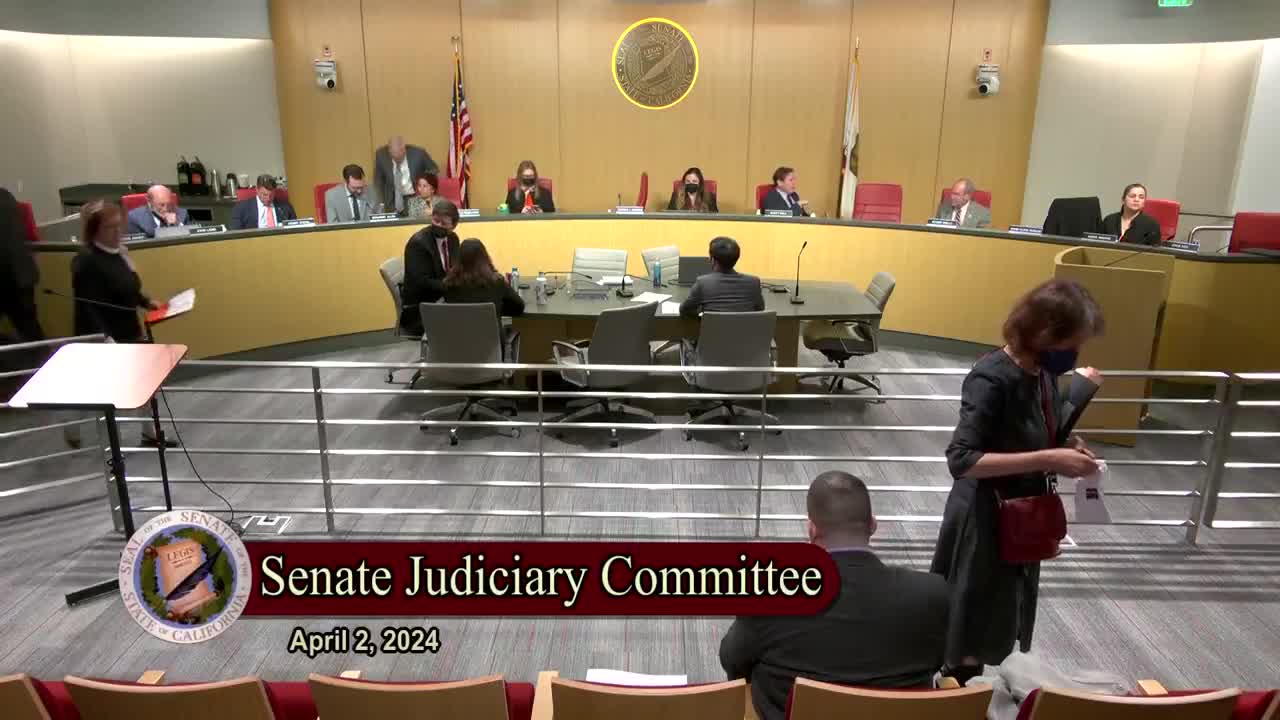
| Apr 2, 2024 | Do pass as amended | Senate Standing Committee on Judiciary |
Passed |
This list shows positions taken on this bill by organizations on the date displayed, which is linked to the original source.
Positions by individuals are not included.
|
Organization
|
Position
|
Date
|
|---|---|---|
| California Association Of Realtors | ** Against | |
| Clean Water Action | ** Support | |
| Community Water Center | ** Support |
Date of Hearing: June 4, 2024
ASSEMBLY COMMITTEE ON JUDICIARY
Ash Kalra, Chair
SBPCA Bill Id:SB 1366
Author:(Hurtado) – As Amended Ver:April 4, 2024
PROPOSED CONSENT
SENATE VOTE: 39-0
SUBJECT: Real property disclosure requirements: domestic water storage tank assistance
KEY ISSUE: should A property owner who received domestic water storage tank assistance, or is aware THAT the property received such assistance, be required to disclose such a fact to a prospective buyer?
SYNOPSIS
California frequently swings between years of significant rainfall and years of significant drought. Thanks to billions of dollars of investments in water conservation and conveyance technologies, drought conditions do not pose a significant threat to the drinking water supply for most Californians, especially those reliant on municipal water systems. However, for Californians that rely on groundwater wells for their water, prolonged drought conditions can pose significant threats to the reliability of their water supply. Indeed, during the historic drought conditions experienced between 2012 and 2016, thousands of individual water wells ran dry across rural areas of the state. Emblematic of the impacts of that drought, the Central Valley community of East Porterville completely ran out of water.
At the height of the drought that ran from 2012 to 2016, the state deployed an emergency water storage tank assistance program to provide drinking water for homes that lost access to clean water. This program installed refillable water tanks on an individual’s property and the state would regularly refill those tanks so that homeowners could continue to run their internal plumbing systems. While many of the participants in the program no longer rely on the tanks, those who did are in areas which naturally are prone to water shortages. Seeking to ensure that would-be property buyers in these areas are aware of these risks, this bill would add participation in the emergency water storage tank assistance program to the list of disclosures that a property seller must convey to a would-be buyer of their real property.
This bill is supported by a coalition of water rights advocates, including Clean Water Action and the Community Water Center. The proponents of this measure highlight the need for property owners, particularly those in rural areas without access to large municipal water systems, to understand the risk to their water supply that may be posed by extreme drought. This straightforward measure has no known opposition and was approved by the Senate 39-0.
SUMMARY: Requires a property owner to disclose to a prospective buyer if their property received water storage tank assistance during recent droughts. Specifically, this bill:
- Requires, on or after January 1, 2025, a seller of any real property who received domestic water storage tank assistance or is aware the real property received such assistance and the real property currently still has the domestic water storage tank, to deliver to the prospective buyer a disclosure statement related to the existence of the water tank storage assistance.
- Requires the disclosure mandated pursuant to 1) to include the following information:
- That the property has a domestic water storage tank provided by a county, community water system, local public agency, or nonprofit organization;
- That the domestic water storage tank was made available to households that had a private water well that had gone dry, or had been destroyed due to drought, wildfire, other natural disasters, or was otherwise nonfunctioning;
- That the domestic water storage tank may not convey with the property; and
- Due to the water well issues that led to this property obtaining assistance, the buyer is advised to have an inspection of the water well and to have a professional evaluate the availability of water to the property to ensure it suits the purposes for which the buyer is purchasing the property.
EXISTING LAW:
- Requires, generally, the owner of a single-family residential property or their agent to provide to a prospective buyer a completed Transfer Disclosure Statement, as specified. (Civil Code Section 1102 et seq.)
- Requires the seller of any real property that is located in a high or very high fire hazard severity zone, as identified by the Director of Forestry and Fire Protection, to provide a disclosure notice to the buyer regarding the property’s presence in a fire hazard severity zone, as specified. (Civil Code Section 1102.6f.)
- Requires the seller of residential real property who has actual knowledge of any former federal or state ordnance locations within the neighborhood area to give written notice of that knowledge as soon as practicable before transfer of title. (Civil Code Section 1102.15.)
- Requires a seller’s agent for a seller of real property to disclose to a potential buyer that the property is located within an area of potential flooding, as defined. (Civil Code Section 1103 (c)(2).)
- Requires a seller’s agent for a seller of real property that is located within an earthquake fault zone, or the seller, if the seller is acting without an agent, to disclose to any prospective buyer the fact that the property is located within a delineated earthquake fault zone if either:
- The seller, or the seller’s agent, has actual knowledge that the property is within a delineated earthquake fault zone; or
- A map that includes the property has been provided to the city or county and a notice has been posted at the offices of the county recorder, county assessor, and county planning agency that identifies the location of the map and any information regarding changes to the map received by the county. (Civil Code Section 1103 (c)(4).)
FISCAL EFFECT: As currently in print this bill is keyed non-fiscal.
COMMENTS: California has long been susceptible to significant variations in annual precipitation and frequently experiences drought conditions. The drought cycle that occurred between 2012 and 2016, however, was one of the most severe droughts in state history. Indeed, the California Natural Resources Agency noted that the four-year period from 2012 to 2016 was the driest period in Southern California since the 1400s. (Cal. Natural Resources Agency, Report to the Legislature on the 2012-2016 Drought (Mar. 2021) available at: https://water.ca.gov/-/media/DWR-Website/Web-Pages/Water-Basics/Drought/Files/Publications-And-Reports/CNRA-Drought-Report-final-March-2021.pdf.) As a result of the severe lack of precipitation, many water wells in the state failed. This problem was particularly acute in California’s Central Valley where agricultural water needs lead to significant over drafting of the region’s groundwater resources. Seeking to protect homeowners who relied on water wells, the state invested significant resources in delivering water to impacted residents, including installing and refilling water storage tanks for home usage. While many of these homes have regained access to water resources, they would remain at risk should future droughts again impact groundwater resources. Accordingly, the author of this bill seeks to ensure that would-be property owners in this state are aware of the precarious nature of the water resources associated with a property. In support of this straightforward disclosure measure, the author states:
Senate Bill 1366 would require that a seller who has experienced water well issues and received water tank assistance, deliver to the prospective buyer of that property a disclosure statement. Specifically, the disclosure statement will communicate that the property has a water storage tank provided by a county, community water system, local public agency, or nonprofit organization. The disclosure will detail that the water storage tank was made available to households that had a private water well that had gone dry, had been destroyed due to a natural disaster, or is otherwise non-functioning. Further, the disclosure will indicate that the water tank may not convey with the property. By providing this disclosure, SB 1366 strives to give prospective buyers additional information about the properties they are seeking to purchase.
The historic drought of 2012 through 2016 required the State of California to take extreme measures to protect access to clean water for all Californians. In 2012, at the onset of that historic drought, California became the first state in the nation to deem access to clean water a human right when the Legislature enacted AB 685 (Eng) Chap. 524, Stats. 2012. That measure codified the right of every human being to have safe, clean, affordable, and accessible water adequate for human consumption, cooking, and sanitation. However, despite that bill’s laudable goal, the right to safe, clean, affordable, and accessible water has not been fully realized in California. Many cities across the state do not have reliable access to water and in many parts of California, particularly the Central Valley, water quality is poor. In fact, during the 2012-2016 drought, the access to water issue was highlighted when the unincorporated community of East Porterville literally ran out of water. (Matt Stevens, The wells have run dry in this California town, so why is a $1.2-million water system untapped? Los Angeles Times (May 6, 2016), available at https://www.latimes.com/local/drought/la-me-east-porterville-drought-20160506-story.html.)
Seeking to address deficiencies in the water supply during the 2012-2016 drought, the Legislature enacted SB 104 (Committee on Budget and Fiscal Review) Chap. 3, Stats. 2014, to authorize the expenditure of $687.4 million in emergency drought relief. The SB 104 funding was augmented the following year with the passage of an additional $1 billion for water conservation, emergency aid, and assistance to small systems with drinking water emergencies. (AB 92 (Committee on Budget) Chap. 2, Stats. 2015.) The funding from both SB 104 and AB 92 was utilized to support the water tank assistance program administered by the California Office of Emergency Services. The water tank assistance program enabled the state to provide both bottled water and refillable emergency water tanks to property owners and tenants in areas of the state, like East Porterville, where existing wells had run dry. To boost efficiencies, the program installed supplemental water tanks on properties with dry wells and the state regularly would refill the tank to enable homeowners to operate their internal water systems like dishwashers, laundry machines, and showers.
As a result of several years of significant rainfall, as well as infrastructure improvements, many participants in the water tank assistance program are no longer reliant on the state for emergency water aid. However, some properties still rely on state assistance to maintain year-round access to clean water. Furthermore, for property owners in areas like East Porterville, the risk of water shortages during times of extreme drought remain. Finally, of note to this measure, the water tank assistance program required the state to work with individual property owners and the existing law does not require the state to maintain a list of properties that took advantage of the water tank service should a new owner buy a property that participated in the program.
This bill ensures that potential property owners are aware of the risks associated with water access on their property. Given that California is prone to a myriad of natural hazards, existing law requires the seller of residential property to provide a series of disclosures to potential buyers regarding the natural hazards impacting the property. Existing law requires the disclosure of a property’s presence in fault zones, flood zones, and fire severity areas. Additionally, property sellers must disclose if a property is in close proximity to various industrial areas, areas with weaponry and explosive ordinances, and areas with abandoned oil and gas wells.
Building on these existing disclosures, this bill would require the seller of real property to disclose to a buyer if the property is participating in, or previously participated in, the water tank assistance program. The disclosure requirement would be triggered if the water tank remains on the property. The bill requires the seller to note that the tank and any associated water services may not convey with the property. The disclosures would also require the seller to inform the buyer the reasons why the water tank may have been sent to the property in order to ensure that the buyer is aware of the specific climate-related risks faced by the property.
The state is actively working to prevent another catastrophic loss of water resources in future droughts. The water tank assistance program was never intended to be a permanent solution to water shortages and dry water wells. Accordingly, since 2016 the state has taken significant steps to make vulnerable communities more drought resistant. In 2019, the Legislature enacted SB 200 (Monning) Chap. 120, Stats. 2019 to establish the Safe and Affordable Drinking Water Fund. The Safe and Affordable Drinking Water Fund was designed to address funding gaps and provide solutions to water systems, especially those serving disadvantaged communities like East Porterville, to address both their short- and long-term drinking water needs. In addition to providing for critical immediate needs, the Fund also assists small water agencies in consolidating with larger water systems, funding operations and maintenance costs, building local technical and managerial capacity, providing interim replacement water, and funding administrators to run the small systems. Recognizing the benefits of consolidating small water systems into larger infrastructure networks, the Legislature adopted SB 776 (Gonzalez) Chap. 176, Stats. 2021 to further streamline the ability to assist small water districts by merging them with larger and more stable neighbors.
Although the State Water Resources Control Board is still implementing SB 200 and SB 776, the drought that the state experienced in 2020 and 2021 demonstrates the early success of the programs. In that drought, which notably was less severe than the 2012 to 2016 drought, far fewer water wells ran dry across the Central Valley. Thus, while this bill is well conceived to inform property buyers about the risks that drought may pose to the property, by focusing on the water tank assistance program, the bill may not inform all property buyers facing all risks associated with water access during droughts. Nonetheless, as the state works to meet the mandated goal of providing safe, clean, affordable, and accessible water for all Californians, this measure is a common sense means of ensuring that potential property buyers are aware of the natural hazards associated with the property they seek to purchase.
ARGUMENTS IN SUPPORT: This measure is supported by a coalition of clean water advocates. Representative of the supporters of this measure, Clean Water Action and the Community Water Center jointly write:
Even with the last 15 months of wet weather, hundreds of homes still rely on water tanks for their basic water supply while they await assistance to replace their domestic wells. Each successive drought brings a new wave of well outages, necessitating both short and long-term reliance on water tanks.
We support the requirement in SB 1366 for a property seller or real estate agent, when listing a property suffering from water access and reliant on water tank assistance, to disclose those issues to prospective buyers and to also inform the buyers that the water tank does not convey with the property. This allows potential home-owners to better understand the property they are seeking to purchase. By providing these disclosures, SB 1366 strives to give prospective buyers additional information about the properties they are seeking to purchase.
REGISTERED SUPPORT / OPPOSITION:
Support
Clean Water Action
Community Water Center
Rural Community Assistance Corporation
Self-Help Enterprise
Opposition
None on file
Analysis Prepared by: Nicholas Liedtke / JUD. / (916) 319-2334
SENATE RULES COMMITTEE Office of Senate Floor Analyses (916) 651-1520 Fax: (916) 327-4478 | SB 1366 |
THIRD READING
Bill No: SB 1366
Author: Hurtado (D)
Amended: 4/4/24
Vote: 21
SENATE JUDICIARY COMMITTEE: 10-0, 4/2/24
AYES: Umberg, Wilk, Allen, Caballero, Durazo, Laird, Min, Niello, Stern, Wahab
NO VOTE RECORDED: Ashby
SUBJECT: Real property disclosure requirements: domestic water storage tank assistance
SOURCE: Author
DIGEST:
This bill requires, on or after January 1, 2025, a seller of a single-family residential property that has received a domestic water storage tank through a water assistance program, or is aware the property received such assistance and the property still has the domestic water storage tank, to deliver a disclosure statement to the potential buyer, providing information, including: (a) that the property has a domestic water storage tank issued by a county, community water system, local public agency, or nonprofit organization; (b) that the tank was made available to households that had a private water well that had gone dry, been destroyed due to drought, wildfire, or other natural disasters, or was otherwise nonfunctioning; (c) that the domestic water storage tank might not convey with the property; and (d) that the buyer is advised to have an inspection of the water well and have a professional evaluate the availability of water to the property.
ANALYSIS:
Existing law:
- Requires a seller of a single-family residential property or their agent to provide to a prospective buyer a completed Transfer Disclosure Statement (TDS), and various other disclosures. (Civ. Code §§ 1102-1102.19.)
- Requires a seller to disclose and describe, as part of the TDS, the features of the single-family residence for sale, including the source of its water supply, whether from a city or well. Requires a seller to disclose whether any listed feature, to the best of the seller’s knowledge, are not in operating condition. Requires a seller to disclose whether the property has any significant defects or malfunctions in various components of the home, including the plumbing, sewer and septic systems and the foundation. (Civ. Code § 1102.6.)
- Requires a seller to indicate whether they are aware of a variety of specified conditions with the property, including any contaminated soil or water, and any major damage to the property or structures from fire, earthquake, floods, or landslides. (Civ. Code § 1102.6.)
- Requires a seller to provide a Natural Hazard Disclosure Statement to a prospective buyer, disclosing specified natural and environmental hazards, such as whether the property is located within a seismic hazard zone, an earthquake fault zone, a special flood hazard area, an area of potential flooding, or a high or very high fire hazard severity zone, with specified information. (Civ. Code § 1103.2.)
- Requires a seller of any single-family residence to deliver the required disclosures:
- As soon as practicable before transfer of title, in the case of a sale;
- As soon as practicable before execution of the contract in the case of a sale by a real property sales contract, a lease together with an option to purchase, or a ground lease coupled with improvements. (Civ. Code §§ 1102.3, 1103.3.)
- Exempts from the above disclosures transfers of single-family residences that are made pursuant to a court order, pursuant to a foreclosure or mortgage default, by a fiduciary in the administration of a trust, guardianship, conservatorship or estate, from one co-owner to one or more other co-owners, to a spouse, pursuant to a dissolution of marriage or legal separation, to or from any governmental entity, and made under various other circumstances, as specified. (Civ. Code §§ 1102.2, 1103.1.)
- Provides that, if any information disclosed is subsequently rendered inaccurate as a result of any act, occurrence, or agreement after the disclosure is delivered, it does not constitute a violation of the disclosure requirements. (Civ. Code §§ 1102.5, 1103.5.)
- Provides that any disclosure may be amended in writing by the seller or their agent as soon as practicable. (Civ. Code §§ 1102.9, 1103.9.)
- Requires that disclosures be delivered to a prospective buyer by personal delivery or by mail, and allows delivery to the prospective buyer’s spouse. (Civ. Code §§ 1102.10, 1103.10.)
- Specifies that no transfer of a single-family residence shall be invalidated solely because of the failure to comply with the disclosure requirements, but that a person who willfully or negligently violates or fails to perform the disclosure duties shall be liable for actual damages. (Civ. Code §§ 1102.13, 1103.13.)
- Creates a duty on real estate agents representing sellers in certain transactions to make a competent visual inspection of the property and disclose to the prospective buyer or tenant all facts materially affecting the value or desirability of the property. (Civ. Code § 2079.)
- Allows the state Water Resources Control Board to provide grants, upon appropriation by the Legislature, to counties, community water systems, local public agencies, or nonprofits for providing interim relief to households in which a private water well has gone dry or been destroyed due to drought, wildfire, or other natural disaster. Interim relief includes the provision of domestic water storage tanks, hauled water, and bottled water. (Water Code § 13194.)
This bill:
- Requires that, on or after January 1, 2025, if a seller of a residential real property has received a domestic water storage tank assistance from the county, community water system, local public agencies, or nonprofits pursuant to Water Code Section 13194, or if the seller is aware the property received such assistance and still has the domestic water storage tank, the seller must deliver a disclosure statement to the prospective buyer that includes the following:
- That the property has a domestic water storage tank provided by a county, community water system, local public agency, or nonprofit organization pursuant to Water Code Section 13194;
- That the domestic water storage tank was made available to households that had a private water well that had gone dry, or had been destroyed due to drought, wilfire, or other natural disasters, or was otherwise nonfunctioning;
- That the domestic water storage tank might not convey with the property; and
- That, due to the water well issues that led to the assistance, the buyer is advised to have an inspection of the water well and to have a professional evaluate the availability of water to the property to ensure it suits the purposes for which the buyer is purchasing the property.
FISCAL EFFECT: Appropriation: No Fiscal Com.: No Local: No
SUPPORT: (Verified 4/5/24)
Clean Water Action
Community Water Center
OPPOSITION: (Verified 4/5/24)
None received
ARGUMENTS IN SUPPORT:
According to Clean Water Action and the Community Water Center, which support SB 1366:
Even with the last 15 months of wet weather, hundreds of homes still rely on water tanks for their basic water supply while they await assistance to replace their domestic wells. Each successive drought brings a new wave of well outages, necessitating both short and long-term reliance on water tanks.
We support the requirement in SB 1366 for a property seller or real estate agent, when listing a property suffering from water access and reliant on water tank assistance, to disclose those issues to prospective buyers and to also inform the buyers that the water tank does not convey with the property. This allows potential home-owners to better understand the property they are seeking to purchase. By providing these disclosures, SB 1366 strives to give prospective buyers additional information about the properties they are seeking to purchase.
Prepared by: Ian Dougherty / JUD. / (916) 651-4113
4/5/24 16:00:17
**** END ****
Senator Thomas Umberg, Chair
2023-2024 Regular Session
Bill No: SB 1366 (Author:Hurtado)
Version: February 16, 2024
Hearing Date: April 2, 2024
Fiscal: No
Urgency: No
Consultant: ID
SUBJECT
Real property disclosure requirements: water tank assistance
DIGEST
This bill requires that, if a single-family residential property for sale has received water tank assistance, as defined, a seller or their real estate agent make certain disclosures to a potential buyer, as prescribed, relating to the water issue the property encountered and the water tank assistance it received, and requires a buyer to acknowledge in writing the receipt and understanding of the disclosures.
EXECUTIVE SUMMARY
Many rural Californians rely on private wells for their water. However, due to climate change and the increasing frequency of natural disasters like drought and wildfire, many of these wells are running dry or are destroyed. In response, the state has provided emergency water assistance in the form of water tanks, hauled water, or bottled water for those with private wells. However, such properties may still not have a permanent solution or water access. To ensure that potential buyers of such properties are aware of the water issues and prior water tank assistance received by the property, this bill adds additional disclosures that a seller must provide a potential buyer relating to the water tank assistance a property has previously received. This bill also requires a buyer to acknowledge in writing the receipt and understanding of the disclosures, and that this acknowledgement must be retained.
This bill is author-sponsored, and is supported by Clean Water Action and the Community Water Center. The California Association of Realtors is opposed, but have agreed to remove their opposition based on amendments to be taken in Committee.
PROPOSED CHANGES TO THE LAW
Existing law:
- Requires a seller of a single-family residential property or their agent to provide to a prospective buyer a completed Transfer Disclosure Statement (TDS), and various other disclosures. (Civ. Code §§ 1102-1102.19.)
- Requires a seller to disclose and describe, as part of the TDS, the features of the single-family residence for sale, including the source of its water supply, whether from a city or well. Requires a seller to disclose whether any listed feature, to the best of the seller’s knowledge, are not in operating condition. Requires a seller to disclose whether the property has any significant defects or malfunctions in various components of the home, including the plumbing, sewer and septic systems and the foundation. (Civ. Code § 1102.6.)
- Requires a seller to indicate whether they are aware of a variety of specified conditions with the property, including any contaminated soil or water, and any major damage to the property or structures from fire, earthquake, floods, or landslides. (Civ. Code § 1102.6.)
- Requires a seller to provide a Natural Hazard Disclosure Statement to a prospective buyer, disclosing specified natural and environmental hazards, such as whether the property is located within a seismic hazard zone, an earthquake fault zone, a special flood hazard area, an area of potential flooding, or a high or very high fire hazard severity zone, with specified information. (Civ. Code § 1103.2.)
- Requires a seller of any single-family residence to deliver the required disclosures:
- as soon as practicable before transfer of title, in the case of a sale;
- as soon as practicable before execution of the contract in the case of a sale by a real property sales contract, a lease together with an option to purchase, or a ground lease coupled with improvements. (Civ. Code §§ 1102.3, 1103.3.)
- Exempts from the above disclosures transfers of single-family residences that are made pursuant to a court order, pursuant to a foreclosure or mortgage default, by a fiduciary in the administration of a trust, guardianship, conservatorship or estate, from one co-owner to one or more other co-owners, to a spouse, pursuant to a dissolution of marriage or legal separation, to or from any governmental entity, and made under various other circumstances, as specified. (Civ. Code §§ 1102.2, 1103.1.)
- Provides that, if any information disclosed is subsequently rendered inaccurate as a result of any act, occurrence, or agreement after the disclosure is delivered, it does not constitute a violation of the disclosure requirements. (Civ. Code §§ 1102.5, 1103.5.)
- Provides that any disclosure may be amended in writing by the seller or their agent as soon as practicable. (Civ. Code §§ 1102.9, 1103.9.)
- Requires that disclosures be delivered to a prospective buyer by personal delivery or by mail, and allows delivery to the prospective buyer’s spouse. (Civ. Code §§ 1102.10, 1103.10.)
- Specifies that no transfer of a single-family residence shall be invalidated solely because of the failure to comply with the disclosure requirements, but that a person who willfully or negligently violates or fails to perform the disclosure duties shall be liable for actual damages. (Civ. Code §§ 1102.13, 1103.13.)
- Creates a duty on real estate agents representing sellers in certain transactions to make a competent visual inspection of the property and disclose to the prospective buyer or tenant all facts materially affecting the value or desirability of the property. (Civ. Code § 2079.)
- Allows the state Water Resources Control Board to provide grants, upon appropriation by the Legislature, to counties, community water systems, local public agencies, or nonprofits for providing interim relief to households in which a private water well has gone dry or been destroyed due to drought, wildfire, or other natural disaster. Interim relief includes the provision of domestic water storage tanks, hauled water, and bottled water. (Water Code § 13194.)
This bill:
- Specifies that, if a residential real property for sale has received water tank assistance, the seller or their agent must disclose to the prospective buyer in writing:
- details of the water well issue that led to the water tank assistance;
- information about the water tank assistance received during the emergency; and
- a notice that the water tank does not convey with the property.
- Requires that the disclosures required by 1) above must be included in all marketing materials, property listings, and any communication related to the sale of the property, if applicable.
- Requires a real estate agent to verbally communicate information about the water tank assistance and ensure that potential buyers are aware that ownership of the water tank is not conveyed to the buyer with the property, if applicable.
- Requires that a buyer acknowledge in writing that they have received and understood the required disclosure, and that this written acknowledgement be retained as part of the transaction records.
- Applies the requirements under this bill to the applicable single family residential property transactions initiated on or after January 1, 2025.
- Defines “real estate agent” for the purposes of these disclosures as including a real estate agent and any other individual or entity engaged in the business of buying, selling, or leasing real estate.
- Defines “water tank assistance” for the purposes of these disclosures as any assistance provided to homeowners, pursuant to Section 13194 of the Water Code, in the form of water tanks due to water well issues during emergencies.
COMMENTS
- Author’s Statement
According to the author:
SB 1366 would require that a seller or real estate agent when listing a property that has experienced water well issues and received water tank assistance disclose those issues to prospective buyers. Specifically, this bill would necessitate the seller or real estate agent detail in writing the water well issue that led to the assistance program. Further, the real estate agent or seller must disclose in writing information about the water tank assistance received during the emergency. All property listings and marketing materials will acknowledge the disclosure. And during property tours, real estate agents shall verbally communicate specifics of the water tank assistance and ensure potential buyers are aware that the water tank does not convey with the property. By providing these disclosures, SB 1366 strives to give prospective buyers additional information about the properties they are seeking to purchase.
- Rural Californian’s access to water
The state of California has regularly experienced periods of drought throughout its history. These dry periods are a result of the state’s arid climate and global warming, and have significant implications for its environment and people. Most recently, the state experienced a drought in 2021 and 2022, though by far the most serious and impactful drought of recent memory lasted for five years, from 2012 to 2016. Significantly lower precipitation than normal, record high temperatures, record low snowpack in the Sierra Nevada mountain range, and significant wildfire seasons made the 2012-2016 drought one of the most serious and destructive. In fact, the years 2012 to 2015 were the four driest years ever recorded for California, while 2014 and 2015 were the two warmest years of record for the state, and the two lowest years of statewide snowpack since 1977.[1] Additionally, the 2012-2016 drought was the driest and second-driest period for some Southern California areas since the 1400’s.[2]
The drought had significant impacts on the state. Much of the state’s water and drought resilience relies on reservoirs and flows of surface waters. However, these resources depend on precipitation and runoff from melting annual snowpack to be replenished. In a drought, like the major drought of 2012-2016, a lack of precipitation and snow results in these reservoirs and surface waters being substantially depleted. As a result, many more agricultural and other users of water resort to groundwater to meet their water needs. As a consequence, groundwater aquifers are overpumped, and groundwater is depleted. A state report found that groundwater levels in many areas of the San Joaquin Valley fell 100 feet below historical levels, and other areas like the Northern San Francisco Bay experienced levels more than 50 feet below historical levels, as a result of the 2012-2016 drought.[3] This accounted for a loss of 40 cubic kilometers of groundwater.[4]
The overdrafting of groundwater has serious impacts on the ground and for residents. As groundwater reserves shrink, the ground subsides (sinks) to fill the void left by the depleted water. In the San Joaquin Valley, subsidence rates of one foot per year were observed during the 2012-2016 drought.[5] Overpumping also particularly affects rural communities and households that rely on private, shallow wells for their water supplies. As groundwater levels decrease, these small wells run dry, requiring residents to either undertake the costly process of drilling a deeper well or to find other sources of water. During the 2012-2016 drought, at least 2,600 private well households reported water shortages.[6]
- The water tank assistance program
California initiated a variety of measures in response to the 2012-2016 drought. The Legislature enacted SB 104 in 2014 (Committee on Budget and Fiscal Review, Ch. 3, Stats. 2014), as an amendment to the Budget Act, to provide $687.4 million in drought relief. In 2015, the Legislature additionally authorized more than $1 billion in funds for water conservation, emergency food aid, and assistance to small systems with drinking water emergencies through AB 92 (Committee on Budget, Ch. 2, Stats. 2015). At the Executive level, drought response included a formation of a Drought Task Force and various executive orders providing for emergency proclamations, expedited water transfers, mandatory urban water use reduction, conservation planning, and emergency drinking water assistance. In 2015, Executive Order B-26-14 authorized the California Office of Emergency Services (Cal OES) to use funds from the California Disaster Assistance Act to provide emergency drinking water in the form of bottled water or water tanks.
However, while the drought and emergency proclamations eventually ended, the need for assistance to private wells affected by the drought continued. This is in part because droughts and overpumping of groundwater can have lasting effects, as groundwater takes considerable time to be replenished. In 2019, SB 513 (Hurtado, Ch. 373, Stats. 2019) was signed into law to allow for continued emergency drinking water assistance outside of a drought declaration. SB 513 authorized the California State Water Resources Control Board to issue grants, upon appropriation by the Legislature, to counties, community water systems, local public agencies, and nonprofits for the provision of water storage tanks, hauled water, and bottled water to households in which a private water well has gone dry or been destroyed due to drought, wildfire, or other natural disasters. Assistance under SB 513’s grant provisions is to grantees on a temporary basis.
- California law already requires specified disclosures to be given to potential buyers of single-family residential properties
Sections 1102 to 1102.19 of the Civil Code (Article 1.5 of Chapter 2, Title 4 of Part 4, Division 2 of the Civil Code relating to Property) relates to disclosures that are required to be provided to potential buyers of single-family residential properties. That Article contains the Transfer Disclosure Statement (TDS), a statutorily-mandated document of disclosures that a seller must provide a potential buyer, outlining the conditions and issues with the property of which the seller is aware (Cal. Civ. Code § 1102.6). Disclosures required by the TDS include any known significant defects in the insulation, roof, foundation, plumbing and sewers, and electrical systems, among others. It requires an explanation of any noted defects, and also requires a comprehensive list of appliances and other features present on the property, along with that an extensive questionnaire be completed relating to specific dangers or issues known about the property. If the seller knows that any listed feature is not in working condition, they must disclosure that fact. In addition to the TDS contained at section 1102.6, Article 1.5 includes a number of other required disclosures and notices that a seller must make to a potential buyer. For example, section 1102.19 requires a seller to disclose to a potential buyer whether the property is located in a designated high or very high fire hazard severity zone, and section 1102.6, subsection g, requires every real property sale contract to include a notice regarding the requirement that a property appraisal be unbiased. Section 1103 requires the disclosure of whether the property is located within a seismic hazard zone, an earthquake fault zone, a special flood hazard area, an area of potential flooding, or a high or very high fire hazard severity zone on a specified Natural Hazards Disclosure Statement.
With some specified exceptions, the disclosure requirements in Article 1.5 apply to any transfer by sale, exchange, real property sales contract, lease with an option to purchase, or a ground lease coupled with improvements of a single-family residential property (Cal. Civ. Code §§ 1102(a), 1103(b)). The disclosures must be provided to the prospective buyer either as soon as practicable before transfer of title, or in the case of a sale by a real property sales contract, a lease together with an option to purchase, or a ground lease coupled with improvements, as soon as practicable before the making or acceptance of an offer (Cal. Civ. Code §§ 1102.3, 1103.3). The seller must indicate that they have complied with the disclosure requirements in Article 1.5, either on the real property sales contract, lease, or on an addendum or separate document.
If a disclosure or amendment to any previously-made disclosures is delivered after the execution of an offer to purchase the home, the prospective buyer is allowed three days (if the disclosure is delivered in person) or five days (if the disclosure is delivered by mail or electronically) in which to back out of the sale without repercussions (Cal. Civ. Code §§ 1102.3(c), 1103.3(c)). This provision provides buyers with an easy remedy if an issue arises in the disclosures that is material to the buyer’s decision to purchase the property, and can create an opportunity for additional negotiations between the parties around the issue.
In addition to the disclosures required by Article 1.5, existing law also imposes on real estate agents representing clients in certain transactions the duty to make a competent visual inspection of the property, and to disclose to the prospective buyer or tenant all facts materially affecting the value or desirability of the property (Cal. Civ. Code § 2079).
- This bill requires prospective buyers to be advised of a residential, single-family property’s well issues and use of water tank assistance, and that such assistance does not convey with the land
In the context of California’s historic droughts and water shortages, this bill aims to provide prospective buyers of single-family residential properties with disclosures specific to any water issues and emergency water assistance in the form of a water tank received at the property. According to the author, the bill aims to generate greater transparency with regards to properties experiencing water insecurity issues.
The bill does so by adding new provisions to the disclosure laws in Article 1.5 that require that, if an applicable property has previously received assistance in the form of water tanks pursuant to SB 513, the seller or their real estate agent disclose in writing the details of the water well issue, information about the water tank assistance received, and a notice that the water tank received through that assistance does not convey with the property. This bill requires that this written disclosure be included in all marketing materials, property listings, and any communication related to the sale of the property. It should be noted that this disclosure is specific to water tank assistance, and not other forms of assistance a property owner may receive through the emergency water assistance program, such that no disclosure is required if a resident encounters an issue with their well but only receives hauled water or bottled water assistance.
In addition to this written disclosure, this bill requires that the real estate agent verbally communicate information about the water tank assistance, and that the real estate agent ensure that potential buyers are aware that the water tank does not convey with the property. The bill requires that, prior to the execution of a sales contract, the buyer acknowledges in writing that they have received and understood the written disclosure. This written acknowledgement must be retained as part of the transaction records.
Lastly, the provisions of this bill only apply to single-family residential property transactions that are initiated on or after January 1, 2025.
While this bill adds new provisions to the disclosure laws specific to water well issues, it is arguable that the current disclosure laws and obligations on realtors already cover such issues. That is because the TDS requires disclosure about the type of water source for the property, and requires the seller to disclose any know defects or if any features of the property are known to not be operational. Furthermore, real estate agents are required to disclose to prospective buyers any condition of the property that materially affects the value or desirability of the property. Not having access to water certainly affects both the value and desirability of a property, as it would likely require continued state assistance or substantial construction costs to drill a deeper well or connect with a nearby water system.
However, determinations under current law about whether a seller is obligated to disclose a water well issue, and how much to disclose, could vary between sellers. How many sellers are currently not disclosing water well issues is unclear. Thus, despite the potential redundancy of disclosure requirements created by this bill, it nonetheless makes the disclosure laws explicit about water well issues: if a property has encountered water issues and needed emergency water assistance from the state, this must be disclosed, and at every step of the sales process. Considering the significance of water access to a homeowner, and the frequency of serious droughts and climate change that are exacerbating water issues in rural California, making such disclosure requirements explicit is arguably a worthy goal.
- Like other disclosure requirements in Civil Code section 1102, a potential buyer would have some remedies for a willful or negligent violation of this bill’s disclosure requirement
Civil Code section 1102.13 specifies that just the failure to comply with the disclosure provisions of Article 1.5 shall not be a sole basis to invalidate the transfer of title of the residential property at issue. However, the section does provide that a person who willfully or negligently fails to perform the duties or violates the disclosure requirements in Article 1.5 is liable for any actual damages that a buyer suffers as a result of that violation. (Cal. Civ. Code § 1102.13).
Because this bill is adding a new section to Article 1.5, the remedies at Civil Code section 1102.13 would apply to a violation of this bill’s requirements. Thus, if a seller willfully or negligently fails to provide the written disclosure required by this bill, a buyer may be able to sue the seller for actual damages. However, the buyer would have to prove the failure was willful or negligent, and would not be able to undo the sale, just as they would not be able to do so with any other violation of the disclosure provisions in Article 1.5.
- Arguments in support
According to Clean Water Action and the Community Water Center, which support SB 1366:
Even with the last 15 months of wet weather, hundreds of homes still rely on water tanks for their basic water supply while they await assistance to replace their domestic wells. Each successive drought brings a new wave of well outages, necessitating both short and long-term reliance on water tanks.
We support the requirement in SB 1366 for a property seller or real estate agent, when listing a property suffering from water access and reliant on water tank assistance, to disclose those issues to prospective buyers and to also inform the buyers that the water tank does not convey with the property. This allows potential home-owners to better understand the property they are seeking to purchase. By providing these disclosures, SB 1366 strives to give prospective buyers additional information about the properties they are seeking to purchase.
- Arguments in opposition
According to the California Realtors Association:
The disclosure of the information listed in the bill by a seller who is aware that residential real property has received water tank assistance is not in and of itself an issue for us. The challenges are that the bill as drafted has a series of problematic requirements for that disclosure that break with current practice for essentially all real estate disclosures in the state. Those problematic requirements are: 1) that the bill requires a disclosure by the seller or agent of a fact that the seller and the agent may not be aware and have no reason to be aware of; 2) the bill creates a requirement for a pre-contractual disclosure; 3) the bill mandates a verbal disclosure at all real property “tours” by licensees and 4) the bill requires disclosures in marketing materials.
California laws require sellers who have awareness of various issues pertaining to their property to provide such information to prospective buyers. It is fair to say that California has more such protections and mandates than any other state. None of those disclosures, including the well-known mandated Transfer Disclosure Statement, or the Natural Hazard Disclosure statement contain the requirements for disclosure contained in this bill. Disclosures are typically provided after a contract has been executed and in most transactions within 7 days. It does not make sense to elevate this issue above all other transactional and disclosure matters in the state. A buyer usually will consider ALL facts received together when deciding whether to proceed with a real estate transaction.
Mandating a pre-sale disclosure also punishes an owner of real property subject to this bill, for participation in the state program as it will require a standalone disclosure without the context of other disclosures and may unduly prejudice a buyer from considering the property. So, if, for example, the water situation for this property has improved or other steps taken by the community pertaining to the water issues, that would not be covered by this disclosure.
The arguments against pre-disclosure also apply to requiring verbal disclosures and providing such disclosures in marketing.
We also have concerns about this disclosure not being linked to a seller’s knowledge of the grant. This bill is aimed at ensuring a potential buyer knows these facts about a property. It is very possible someone may have bought a property without knowledge of the program and may not know the property is subject to the grant. It is unfair to punish a seller who lacks such knowledge.
In sum, REALTORS ® and their clients rely on and support proper disclosures to guide their clients when they make what is usually the biggest purchase of their lives. However, both the timing and delivery of disclosures should be carefully considered to protect the interests of both buyers and sellers. We have met with the author’s office, and we are hopeful we can reach agreement on amendments to SB 1366 to ensure necessary disclosure is provided to prospective buyers without unduly complicating real estate transactions.
In order to clarify this bill and address the concerns raised by the opposition, the author has agreed to accept a number of amendments. The California Realtors Association will be removing their opposition to the bill once these amendments are in print. A mock-up of those amendments are attached at the end of this analysis.[7]
SUPPORT
Clean Water Action
Community Water Center
OPPOSITION
California Association of Realtors
RELATED LEGISLATION
Pending Legislation: SB 382 (Becker, 2023) requires a seller of a single-family residential property to provide a specified disclosure statement to a prospective buyer regarding the electrical systems of the property and the importance of having such systems inspected. SB 382 is currently held at the Assembly desk.
Prior Legislation:
SB 470 (Alvarado-Gil, 2023) would have created the Urban Water Community Drought Relief and the Small Community Drought Relief programs to provide grants for interim or immediate drought relief, and projects that reduce the risk of wildfire through water delivery system improvements. The bill was vetoed by Governor Newsom because the underlying funding has been exhausted.
AB 968 (Grayson, Ch. 95, Stats. 2023) requires a seller of a single-family residential property who sells the property within 18 months of when they purchased it to disclose to the prospective buyer specified information regarding any repairs, modifications, or alterations to the property since the seller purchased it. Requires the seller to provide a copy of any permit for such alterations, or the information for any third party that provided the alterations if the seller was not given a copy of the permits.
AB 1280 (Maienschein, Ch. 99, Stats. 2023) requires that a seller of a single-family residential property located within a fire hazard severity zone to disclose whether the property is located in a high or very high fire hazard severity zone, and whether the property is located in a state responsibility area or a local responsibility area.
SB 513 (Hurtado, Ch. 373, Stats. 2019) authorized the State Water Resources Control Board to provide grants, upon appropriation by the Legislature, to counties, community water systems, local public agencies, or nonprofits to provide water storage tanks, bottled water, and hauled water to households in which a private water well has gone dry or been destroyed due to drought, wildfire, or other natural disaster.
AB 892 (Holden, Ch. 310, Stats. 2019) revised the form for the real estate transfer disclosure statement, and defined the terms “single-family residential property” and “single-family residential real property,” among other changes.
AB 1289 (Arambula, Ch. 907, Stats. 2018) made a series of modifications to Real Estate Law provisions contained in the Civil Code.
AB 2884 (Irwin, Ch. 285, Stats. 2018) made a series of modifications to Real Estate Law provisions contained in the Business and Professions Code.
SB 1406 (Petris, Ch. 1574, Stats. 1985) required specified written disclosures by the seller of real property to the buyer on a transfer disclosure statement, and created a duty for the seller to make a record of compliance with the disclosure requirements.
**************
Proposed Amendments to SB 1366
SECTION 1.
Section 1102.156 is added to the Civil Code, immediately following Section 1102.155, to read:
1102.156.
(a) For purposes of this section, the following definitions apply:
(1) “Real estate agent” includes a real estate agent and any other individual or entity engaged in the business of buying, selling, or leasing real estate.
(2) “Water tank assistance” means any assistance provided to homeowners, pursuant to Section 13194 of the Water Code, in the form of water tanks due to water well issues during emergencies.
(b) (1) If residential real property subject to this article has received water tank assistance, the seller or real estate agent shall disclose the following information in writing:
(A) Details of the water well issue that led to the water tank assistance.
(B) Information about the water tank assistance received during the emergency.
(C) A notice that the water tank does not convey with the property.
(2) The disclosure required by paragraph (1) shall be included in all marketing materials, property listings, and any communication related to the sale of the property, if applicable.
(3) During property tours, a real estate agent shall verbally communicate information about the water tank assistance and ensure potential buyers are aware that the water tank does not convey with the property, if applicable.
(c) Prior to the execution of a sales contract, the buyer shall acknowledge in writing that they have received and understood the disclosure described in subdivision (b), if applicable. The acknowledgment shall be retained as part of the transaction records.
(d) This section shall apply to all transactions subject to this article that are initiated on or after January 1, 2025.
Section 1102.156 is added to the Civil Code, immediately following Section 1102.155, to read:
1102.156.
- On or after January 1, 2025, in addition to any other disclosure required pursuant to this article, a seller of any real property who received domestic water storage tank assistance pursuant to Section 13194 of the Water Code, or is aware the real property received such assistance and the real property currently still has the domestic water storage tank, shall deliver to the prospective buyer a disclosure statement, that includes all of the following information in substantially the following form:
- This property has a domestic water storage tank provided by a county, community water system, local public agency, or nonprofit organization, pursuant to California Water Code Section 13194.
- The domestic water storage tank was made available to households that had a private water well that had gone dry, or had been destroyed, due to drought, wildfire, other natural disaster, or was otherwise non-functioning.
- The domestic water storage tank provided pursuant to section 13194 may not convey with this real property.
- Due to the water well issues that led to this property obtaining assistance under section 13194 of the water code, the buyer is advised to have an inspection of the water well, and to have a professional evaluate the availability of water to the property to ensure it suits the purposes for which the buyer is purchasing the property.
Cal. Natural Resources Agency, Report to the Legislature on the 2012-2016 Drought 3 (March 2021) (hereafter CNRA Report). ↑
Id. ↑
Id., at 23. ↑
Mu Xiao et al., “How much groundwater did California’s Central Valley lose during the 2012-2016 drought?” Geophysical Research Letters, Vol. 44 Issue 10, 4872 (Apr. 19, 2017), available at https://agupubs.onlinelibrary.wiley.com/doi/full/10.1002/2017GL073333. ↑
CNRA Report, 27. ↑
Id., at 13. ↑
The amendments may be subject to non-substantive amendments by Legislative Counsel. ↑
Bill Author

Bill Co-Author(s):