SB 1448: Farm to Community Food Hub Program: California Agricultural Land Equity Task Force.
- Session Year: 2023-2024
- House: Senate
- Latest Version Date: 2024-09-28
Current Status:
Passed
(2024-09-28: Chaptered by Secretary of State. Chapter 917, Statutes of 2024.)
Introduced
In Committee
First Chamber
In Committee
Second Chamber
Enacted
(1)Existing law establishes the Farm to Community Food Hub Program, which is administered by the Office of Farm to Fork in the Department of Food and Agriculture, which is under the control of the Secretary of Food and Agriculture. Existing law requires the secretary to establish the Farm to Community Food Hub Advisory Committee for the purpose of advising the secretary with respect to their responsibilities regarding the program. Existing law requires the advisory committee to comprise 10 members from specified regions, including 4 members who are executives or managers of a food supply chain business headquartered in California, 4 members who are executives or directors of a civil society organization or representatives of academic institution with certain expertise, and one member who is a farmer or rancher meets specified qualifications. Existing law requires the program to be administered in 2 phases, and requires the office, for the first phase, to solicit and select proposals throughout the state to create farm to community food hubs and award planning grants to selected proposals and, for the second phase, to select at least 3 of the proposals that were awarded planning grants during the first phase and award to those proposals development grants for capital and operating expenses of the farm to community food hub for a 5-year period. Existing law repeals these provisions on January 1, 2028.
This bill would eliminate the advisory committee and instead require the office to develop and consult with a working group comprising at least 7 individuals who possess expertise in the operation of food hubs and other specified areas, as provided. The bill would exempt the working group from the Bagley-Keene Open Meeting Act. The bill would require that the program prioritize the creation of new farm to community food hubs and would authorize, instead of require, the program to be administered in the 2 above-described phases. The bill would extend the operation of the program until January 1, 2034.
(2)Existing law appropriated $1,000,000 to the Strategic Growth Council to establish the California Agricultural Land Equity Task Force to develop recommendations on how to equitably increase access to agricultural land for food production and traditional tribal agricultural uses. Existing law requires the task force, on or before January 1, 2026, to submit a report to the Legislature and Governor that includes a set of policy recommendations on how to address the agricultural land equity crisis.
This bill would authorize the council, using existing or private funds, to provide public task force members a reasonable per diem allowance, as specified, or at a higher rate authorized by the task force, for each days attendance at a noticed meeting of the task force. The bill would require the report to be posted on the councils internet website.
(3)Existing constitutional provisions require that a statute that limits the right of access to the meetings of public bodies or the writings of public officials and agencies be adopted with findings demonstrating the interest protected by the limitation and the need for protecting that interest.
This bill would make legislative findings to that effect.
(4)This bill would declare that it is to take effect immediately as an urgency statute.
(1)Existing law establishes the Farm to Community Food Hub Program, which is administered by the Office of Farm to Fork in the Department of Food and Agriculture, which is under the control of the Secretary of Food and Agriculture. Existing law requires the secretary to establish the Farm to Community Food Hub Advisory Committee for the purpose of advising the secretary with respect to their responsibilities regarding the program. Existing law requires the advisory committee to comprise 10 members from specified regions, including 4 members who are an executive or manager of a food supply chain business headquartered in California, 4 members who are an executive or director of a civil society organization or a representative of an academic institution, and one member who is a farmer or rancher meeting specified qualifications. Existing law requires the program to be administered in 2 phases, and requires the office, for the first phase, to solicit and select proposals throughout the state to create farm to community food hubs and award planning grants to selected proposals and, for the second phase, to select at least 3 of the proposals that were awarded planning grants during the first phase and award to those proposals development grants for capital and operating expenses of the farm to community food hub for a 5-year period. Existing law repeals these provisions on January 1, 2028.
This bill would instead require the advisory committee to comprise 7 members, and would require the secretary to ensure geographic diversity within the advisory committee. The bill would require the advisory committee to instead include 2 members who are representatives of food supply chain businesses headquartered in California, 2 members who are representatives of civil society organizations or of an academic institution, one member who is a member of the departments BIPOC Producer Advisory Committee, and one member who is a member of the departments Small-Scale Producer Advisory Committee, as specified. The bill would require a member or alternate member to recuse themselves on certain matters if an entity for which they serve on the board of directors or in any other role intends to apply, or has applied, for a grant under the program. eliminate the advisory committee and instead require the office to develop and consult with a working group comprising at least 7 individuals who possess expertise in the operation of food hubs and other specified areas, as provided. The bill would exempt the working group from the Bagley-Keene Open Meeting Act. The bill would require that the program prioritize the creation of new farm to community food hubs and would authorize, instead of require, the program to be administered in the 2 above-described phases. The bill would extend the operation of the program until January 1, 2030. 2034.
(2)Existing law appropriated $1,000,000 to the Strategic Growth Council to establish the California Agricultural Land Equity Task Force to develop recommendations on how to equitably increase access to agricultural land for food production and traditional tribal agricultural uses. Existing law requires the task force, on or before January 1, 2026, to submit a report to the Legislature and Governor that includes a set of policy recommendations on how to address the agricultural land equity crisis.
This bill would authorize the council, using existing or private funds, to provide public task force members a reasonable per diem allowance, as specified, or at a higher rate authorized by the task force, for each days attendance at a noticed meeting of the task force. The bill would require the report to be posted on the councils internet website.
(3)Existing constitutional provisions require that a statute that limits the right of access to the meetings of public bodies or the writings of public officials and agencies be adopted with findings demonstrating the interest protected by the limitation and the need for protecting that interest.
This bill would make legislative findings to that effect.
(4)This bill would declare that it is to take effect immediately as an urgency statute.
(1)Existing law establishes the Farm to Community Food Hub Program, which is administered by the Office of Farm to Fork in the Department of Food and Agriculture, which is under the control of the Secretary of Food and Agriculture. Existing law requires the secretary to establish the Farm to Community Food Hub Advisory Committee for the purpose of advising the secretary with respect to their responsibilities regarding the program. Existing law requires the advisory committee to comprise 10 members from specified regions, including 4 members who are an executive or manager of a food supply chain business headquartered in California, 4 members who are an executive or director of a civil society organization or a representative of an academic institution, and one member who is a farmer or rancher meeting specified qualifications. Existing law repeals these provisions on January 1, 2028.
This bill would instead require the advisory committee to comprise 7 members, and would require the secretary to ensure geographic diversity within the advisory committee. The bill would require the advisory committee to instead include 2 members who are representatives of food supply chain businesses headquartered in California, 2 members who are representatives of civil society organizations or of an academic institution, one member who is a member of the departments BIPOC Producer Advisory Committee, and one member who is a member of the departments Small-Scale Producer Advisory Committee, as specified. The bill would require a member or alternate member to recuse themselves on certain matters if an entity for which they serve on the board of directors or in any other role intends to apply, or has applied, for a grant under the program. The bill would extend the operation of the program until January 1, 2030.
(2)Existing law appropriated $1,000,000 to the Strategic Growth Council to establish the California Agricultural Land Equity Task Force to develop recommendations on how to equitably increase access to agricultural land for food production and traditional tribal agricultural uses. Existing law requires the task force, on or before January 1, 2026, to submit a report to the Legislature and Governor that includes a set of policy recommendations on how to address the agricultural land equity crisis.
This bill would authorize the council, using existing or private funds, to provide public task force members a reasonable per diem allowance, as specified, or at a higher rate authorized by the task force, for each days attendance at a noticed meeting of the task force. The bill would require the report to be posted on the councils internet website.
(1)Existing law establishes the Farm to Community Food Hub Program, which is administered by the Office of Farm to Fork in the Department of Food and Agriculture, which is under the control of the Secretary of Food and Agriculture. Existing law requires the secretary to establish the Farm to Community Food Hub Advisory Committee for the purpose of advising the secretary with respect to their responsibilities regarding the program. Existing law requires the advisory committee to comprise 10 members from specified regions, including 4 members who are an executive or manager of a food supply chain business headquartered in California, 4 members who are an executive or director of a civil society organization or a representative of an academic institution, and one member who is a farmer or rancher meeting specified qualifications. Existing law repeals these provisions on January 1, 2028.
This bill would instead require the advisory committee to comprise 7 members, and would require the secretary to ensure geographic diversity within the advisory committee. The bill would require the advisory committee to instead include 2 members who are representatives of food supply chain businesses headquartered in California, 2 members who are representatives of civil society organizations or of an academic institution, one member who is a member of the departments BIPOC Producer Advisory Committee, and one member who is a member of the departments Small-Scale Producer Advisory Committee, as specified. The bill would extend the operation of the program until January 1, 2030.
(2)Existing law appropriated $1,000,000 to the Strategic Growth Council to establish the California Agricultural Land Equity Task Force to develop recommendations on how to equitably increase access to agricultural land for food production and traditional tribal agricultural uses. Existing law requires the task force, on or before January 1, 2026, to submit a report to the Legislature and Governor that includes a set of policy recommendations on how to address the agricultural land equity crisis.
This bill would authorize the council, using existing or private funds, to provide public task force members a reasonable per diem allowance, as specified, or at a higher rate authorized by the task force, for each days attendance at a noticed meeting of the task force. The bill would require the report to be posted on the councils internet website.
Existing law provides that it is the policy of the state to preserve as far as possible the species Sequoia gigantea in the interest of conservation, both of soil and the species itself, and for the benefit of present and future generations. Existing law provides that a person who willfully cuts down, strips of its bark, or destroys by fire, a tree over 16 feet in diameter, in the groves of big trees situated in specified counties, is guilty of a misdemeanor, and is punishable by a fine of not less than $100 nor more than $600, or imprisonment, or both fine and imprisonment, as provided. This bill would raise the above-described fine to not less than $1,000 nor more than $6,000.Existing law provides that it is the policy of the state to preserve as far as possible the species Sequoia gigantea in the interest of conservation, both of soil and the species itself, and for the benefit of present and future generations. Existing law provides that a person who willfully cuts down, strips of its bark, or destroys by fire, a tree over 16 feet in diameter, in the groves of big trees situated in specified counties, is guilty of a misdemeanor, and is punishable by a fine of not less than $100 nor more than $600, or imprisonment, or both fine and imprisonment, as provided.
This bill would raise the above-described fine to not less than $1,000 nor more than $6,000.
(a)The Farm to Community Food Hub Program is hereby established for the purpose of piloting investments in the capital aggregation and distribution infrastructure needed to increase purchasing of local, environmentally sustainable, climate-smart, and equitably produced food by schools and other institutions, build a better food system economy, support the local farming economy, accelerate climate adaptation and resilience, and employ food system workers with fair wages and working conditions.
(b)The program shall be administered by the Office of Farm to Fork in the department. In administering the program, the office shall develop and consult with a working group comprising at least seven individuals who possess expertise in the operation of food hubs and the areas described in subdivision (a), including, but not limited to, representatives of the Sustainable Agriculture and Research Education Program, housed within the University of California Agriculture and Natural Resources, representatives of the departments BIPOC Producer Advisory Committee and Small-Scale Producer Advisory Committee, technical experts with experience establishing a food hub, food supply chain representatives such as producers, processors, or purchasers with expertise working with small and socially disadvantaged farms, and at least one representative with expertise in advancing food system improvements that are supportive of local food systems.
(c)(1)A participant of the working group shall recuse themself from any matter involving the scoring of grant applications or directing of grant funds, if an entity for which they serve on the board of directors or in any other role intends to apply, or has applied, for a grant under the program.
(2)A participant of the working group who recuses themself pursuant to paragraph (1) may still serve on the working group to provide general guidance on the formation of the program.
(d)Participants of the working group shall receive a reasonable per diem allowance.
(e)The working group is not subject to the Bagley-Keene Open Meeting Act (Article 9 (commencing with Section 11120) of Chapter 1 of Part 1 of Division 3 of Title 2 of the Government Code).
SEC. 2.Section 592 of the Food and Agricultural Code is amended to read:592.(a)The program shall incentivize the creation and permanency of public-serving aggregation and distribution enterprises, known as farm to community food hubs, which may be operated by a nonprofit organization, school district, county office of education, cooperative, food and agriculture-related business, or Certified B Corporation. A farm to community food hub shall do all of the following:
(1)Serve as an aggregator and supply chain intermediary for local or regional farms or ranches, particularly those optimizing sustainable agriculture production practices or methods and following state labor practices. The farm to community food hub shall prioritize, to the greatest extent possible, but is not limited to, serving farms or ranches that are 500 acres or less, cooperatively owned, or owned by farmers or ranchers who are socially disadvantaged, beginning, limited resource, veterans, or disabled.
(2)Prioritize, to the greatest extent feasible, distributing food products from the farms or ranches described in paragraph (1) to public institutions and nonprofit organizations, with primary emphasis on public schools and food banks in the region. Distribution of the food products may be contracted to a value-added intermediary, such as a produce, grain, meat, or seafood processor, if the food products are ultimately provided on a prioritized basis to public institutions or nonprofit organizations.
(3)Ensure that the farms and ranches with which it works comply with all laws, rules, and regulations, including labor and environmental requirements and standards.
(b)The program shall prioritize the creation of new farm to community food hubs and may be administered in two phases, as follows:
(1)During the first phase of the program, the office shall solicit and select proposals throughout the state to create farm to community food hubs that meet the requirements in subdivision (a), and award planning grants to selected proposals.
(2)During the second phase of the program, the office shall select at least three of the proposals awarded planning grants pursuant to paragraph (1) and award to those proposals development grants for capital and operating expenses of each farm to community food hub for a five-year period.
(c)As a condition of the receipt of funds pursuant to paragraph (2) of subdivision (b), a farm to community food hub shall report to the office every quarter for five years after the receipt of the funds regarding the use of the funds.
(d)Notwithstanding Section 10231.5 of the Government Code, for at least five years following the initial award of development grant funding pursuant to paragraph (2) of subdivision (b), the office shall provide an annual report on the status of the farm to community food hubs to the Legislature, in accordance with Section 9795 of the Government Code. The report shall include information on the progress of the farm to community food hubs in all of the following areas:
(1)Financial viability of self-sustainability.
(2)The number and type, with respect to size and ownership, of farms from which food products were sourced, and the volumes of food products sourced from each farm.
(3)The number and type of institutions served by farm to community food hubs, and the volumes of food products provided to each institution.
(e)The program or a farm to community food hub awarded a development grant pursuant to paragraph (2) of subdivision (b) may accept federal, state, industry, philanthropic, and private sources of funding.
SEC. 3.Section 593 of the Food and Agricultural Code is repealed.SEC. 4.Section 594 of the Food and Agricultural Code is amended and renumbered to read:593.This article shall remain in effect only until January 1, 2034, and as of that date is repealed, unless a later enacted statute that is enacted before January 1, 2034, deletes or extends that date.
SEC. 5.Section 75129.5 is added to the Public Resources Code, to read:75129.5.(a)Notwithstanding any other law, the council may, using existing or private funds, provide public members of the California Agricultural Land Equity Task Force, established pursuant to Provision 8 of Item 0650-001-0001 of the Budget Act of 2022 (Chapters 43, 45, and 249 of the Statutes of 2022), a reasonable per diem allowance as specified in Section 11564.5 of the Government Code, or at a higher rate that may be established by the task force, for each days attendance at a noticed meeting of the task force.
(b)The report required pursuant to Provision 8 of Item 0650-001-0001 of the Budget Act of 2022 (Chapters 43, 45, and 249 of the Statutes of 2022) shall be posted on the councils internet website.
SEC. 6.The Legislature finds and declares that Section 1 of this act, which amends Section 591 of the Food and Agricultural Code, imposes a limitation on the publics right of access to the meetings of public bodies or the writings of public officials and agencies within the meaning of Section 3 of Article I of the California Constitution. Pursuant to that constitutional provision, the Legislature makes the following findings to demonstrate the interest protected by this limitation and the need for protecting that interest:
In order to allow the Farm to Community Food Hub Program working group to conduct its work in a quick manner given the budget implementation date, it is necessary to exempt the working group from the Bagley-Keene Open Meeting Act. The working group has no decisionmaking authority that would negatively or positively impact any constituent.
SEC. 7.This act is an urgency statute necessary for the immediate preservation of the public peace, health, or safety within the meaning of Article IV of the California Constitution and shall go into immediate effect. The facts constituting the necessity are:
In order to improve the implementation of vital programs that impact local food systems in California as quickly as possible, it is necessary for this act to take effect immediately.
(a)The Farm to Community Food Hub Program is hereby established for the purpose of piloting investments in the capital aggregation and distribution infrastructure needed to increase purchasing of local, environmentally sustainable, climate-smart, and equitably produced food by schools and other institutions, build a better food system economy, support the local farming economy, accelerate climate adaptation and resilience, and employ food system workers with fair wages and working conditions.
(b)The program shall be administered by the Office of Farm to Fork in the department. The department may consult with outside entities In administering the program, the office shall develop and consult with a working group comprising at least seven individuals who possess expertise in the operation of food hubs and the areas described in subdivision (a), including, but not limited to, representatives of the Sustainable Agriculture and Research Education Program, housed within the University of California Agriculture and Natural Resources. Resources, representatives of the departments BIPOC Producer Advisory Committee and Small-Scale Producer Advisory Committee, technical experts with experience establishing a food hub, food supply chain representatives such as producers, processors, or purchasers with expertise working with small and socially disadvantaged farms, and at least one representative with expertise in advancing food system improvements that are supportive of local food systems.
(c)(1)The secretary shall establish an advisory committee, which shall be known as the Farm to Community Food Hub Advisory Committee, for the purpose of advising the secretary in their responsibilities regarding the program.(2)The advisory committee shall advise the secretary on education, outreach, and technical assistance for the program.(3)(A)The advisory committee shall comprise seven members appointed by the office, and the secretary shall ensure geographic diversity within the advisory committee. Each member may have an alternate.(B)Two members and their alternates shall be a representative of a food supply chain business, including a producer, processor, or purchaser, headquartered in California.(C)Two members and their alternates shall be a representative of a civil society organization, or a representative of an academic institution, including K12 schools, with expertise in advancing food system improvements supportive of local food systems, equitable access to healthy food, labor in the food system, or climate-adaptive and climate-resilient food systems.(D)One member and their alternate shall be a representative of the Sustainable Agriculture and Research Education Program, housed within the University of California Agriculture and Natural Resources.(E)One member and their alternate shall be a member of the departments BIPOC Producer Advisory Committee.(F)One member and their alternate shall be a member of the departments Small-Scale Producer Advisory Committee.(4)The advisory committee may appoint officers and form subcommittees, with chairpersons appointed by the advisory committee, as needed, in order to carry out and fulfill its duties under this subdivision. The advisory committee shall determine the powers and duties of appointed officers and subcommittee chairpersons.(5)An alternate member shall serve at an advisory committee meeting only in the absence of, and shall have the same powers and duties as, a member in the same category as the alternate member, as described in paragraph (3), except for the powers and duties as an officer of the advisory committee. The number of alternate members present who are not serving in the capacity of a member shall not be considered in determining a quorum.(6)An alternate member may serve at an advisory committee subcommittee meeting only in the absence of, and shall have the same powers and duties as, a member in the same category as the alternate member, as described in paragraph (3), except for the powers and duties as a subcommittee chairperson.(7)Members and their alternates shall be reimbursed for the reasonable expenses actually incurred in the performance of their duties, as determined by the advisory committee and approved by the secretary.(8)The secretary or their representative, the State Public Health Officer or their representative, and a county agricultural commissioner may serve as ex officio members of the advisory committee, in addition to the seven members appointed pursuant to paragraph (3).(9)(A)A member or alternate member shall(c)(1)A participant of the working group shall recuse themselves themself from any matter involving the scoring of grant applications or directing of grant funds, if an entity for which they serve on the board of directors or in any other role intends to apply, or has applied, for a grant under the program.
(B)A member or alternate member who(2)A participant of the working group who recuses themselves themself pursuant to subparagraph (A) paragraph (1) may still serve on the advisory committee working group to provide general guidance on the formation of the program.
(d)Participants of the working group shall receive a reasonable per diem allowance.
(e)The working group is not subject to the Bagley-Keene Open Meeting Act (Article 9 (commencing with Section 11120) of Chapter 1 of Part 1 of Division 3 of Title 2 of the Government Code).
SEC. 2.Section 594 of the Food and Agricultural Code is amended to read:594.This article shall remain in effect only until January 1, 2030, and as of that date is repealed, unless a later enacted statute that is enacted before January 1, 2030, deletes or extends that date.SEC. 2.Section 592 of the Food and Agricultural Code is amended to read:592.(a)The program shall incentivize the creation and permanency of public-serving aggregation and distribution enterprises, known as farm to community food hubs, which may be operated by a nonprofit organization, school district, county office of education, cooperative, food and agriculture-related business, or Certified B Corporation. A farm to community food hub shall do all of the following:
(1)Serve as an aggregator and supply chain intermediary for local or regional farms or ranches, particularly those optimizing sustainable agriculture production practices or methods and following state labor practices. The farm to community food hub shall prioritize, to the greatest extent possible, but is not limited to, serving farms or ranches that are 500 acres or less, cooperatively owned, or owned by farmers or ranchers who are socially disadvantaged, beginning, limited resource, veterans, or disabled.
(2)Prioritize, to the greatest extent feasible, distributing food products from the farms or ranches described in paragraph (1) to public institutions and nonprofit organizations, with primary emphasis on public schools and food banks in the region. Distribution of the food products may be contracted to a value-added intermediary, such as a produce, grain, meat, or seafood processor, provided that if the food products are ultimately provided on a prioritized basis to public institutions or nonprofit organizations.
(3)Ensure that the farms and ranches with which it works comply with all laws, rules, and regulations, including labor and environmental requirements and standards.
(b)The program shall be administered prioritize the creation of new farm to community food hubs and may be administered in two phases, as follows:
(1)During the first phase of the program, the office shall solicit and select proposals throughout the state to create farm to community food hubs that meet the requirements in subdivision (a), and award planning grants to selected proposals.
(2)During the second phase of the program, the office shall select at least three of the proposals awarded planning grants pursuant to paragraph (1) and award to those proposals development grants for capital and operating expenses of each farm to community food hub for a five-year period.
(c)As a condition of the receipt of funds pursuant to paragraph (2) of subdivision (b), a farm to community food hub shall report to the office and advisory committee every quarter for five years after the receipt of the funds regarding the use of the funds.
(d)Notwithstanding Section 10231.5 of the Government Code, for at least five years following the initial award of development grant funding pursuant to paragraph (2) of subdivision (b), the office shall provide an annual report on the status of the farm to community food hubs to the Legislature, in accordance with Section 9795 of the Government Code. The report shall include information on the progress of the farm to community food hubs in all of the following areas:
(1)Financial viability of self-sustainability.
(2)The number and type, with respect to size and ownership, of farms from which food products were sourced, and the volumes of food products sourced from each farm.
(3)The number and type of institutions served by farm to community food hubs, and the volumes of food products provided to each institution.
(e)The program or a farm to community food hub awarded a development grant pursuant to paragraph (2) of subdivision (b) may accept federal, state, industry, philanthropic, and private sources of funding.
SEC. 3.Section 593 of the Food and Agricultural Code is repealed.593.The implementation of this article is contingent upon an appropriation of funds by the Legislature for its purposes, including the departments administrative costs.SEC. 4.Section 594 of the Food and Agricultural Code is amended and renumbered to read:594.593.This article shall remain in effect only until January 1, 2028, 2034, and as of that date is repealed, unless a later enacted statute that is enacted before January 1, 2028, 2034, deletes or extends that date.
SEC. 3.SEC. 5.Section 75129.5 is added to the Public Resources Code, to read:75129.5.(a)Notwithstanding any other law, the council may, using existing or private funds, provide public members of the California Agricultural Land Equity Task Force, established pursuant to Provision 8 of Item 0650-001-0001 of the Budget Act of 2022 (Chapters 43, 45, and 249 of the Statutes of 2022), a reasonable per diem allowance as specified in Section 11564.5 of the Government Code, or at a higher rate that may be established by the task force, for each days attendance at a noticed meeting of the task force.
(b)The report required pursuant to Provision 8 of Item 0650-001-0001 of the Budget Act of 2022 (Chapters 43, 45, and 249 of the Statutes of 2022) shall be posted on the councils internet website.
SEC. 6.The Legislature finds and declares that Section 1 of this act, which amends Section 591 of the Food and Agricultural Code, imposes a limitation on the publics right of access to the meetings of public bodies or the writings of public officials and agencies within the meaning of Section 3 of Article I of the California Constitution. Pursuant to that constitutional provision, the Legislature makes the following findings to demonstrate the interest protected by this limitation and the need for protecting that interest:
In order to allow the Farm to Community Food Hub Program working group to conduct its work in a quick manner given the budget implementation date, it is necessary to exempt the working group from the Bagley-Keene Open Meeting Act. The working group has no decisionmaking authority that would negatively or positively impact any constituent.
SEC. 7.This act is an urgency statute necessary for the immediate preservation of the public peace, health, or safety within the meaning of Article IV of the California Constitution and shall go into immediate effect. The facts constituting the necessity are:
In order to improve the implementation of vital programs that impact local food systems in California as quickly as possible, it is necessary for this act to take effect immediately.
(a)The Farm to Community Food Hub Program is hereby established for the purpose of piloting investments in the capital aggregation and distribution infrastructure needed to increase purchasing of local, environmentally sustainable, climate-smart, and equitably produced food by schools and other institutions, build a better food system economy, support the local farming economy, accelerate climate adaptation and resilience, and employ food system workers with fair wages and working conditions.
(b)The program shall be administered by the Office of Farm to Fork in the department. The department may consult with outside entities who possess expertise in the operation of food hubs and the areas described in subdivision (a), including, but not limited to, the Sustainable Agriculture and Research Education Program, housed within the University of California Agriculture and Natural Resources.
(c)(1)The secretary shall establish an advisory committee, which shall be known as the Farm to Community Food Hub Advisory Committee, for the purpose of advising the secretary in their responsibilities regarding the program.
(2)The advisory committee shall advise the secretary on education, outreach, and technical assistance for the program.
(3)(A)The advisory committee shall comprise 7 seven members appointed by the office, and the secretary shall ensure geographic diversity within the advisory committee. Each member may have an alternate.
(B)Two members and their alternates shall be a representative of a food supply chain business, including a producer, processor, or purchaser, headquartered in California.
(C)Two members and their alternates shall be a representative of a civil society organization, or a representative of an academic institution, including K12 schools, with expertise in advancing food system improvements supportive of local food systems, equitable access to healthy food, labor in the food system, or climate-adaptive and climate-resilient food systems.
(D)One member and their alternate shall be a representative of the Sustainable Agriculture and Research Education Program, housed within the University of California Agriculture and Natural Resources.
(E)One member and their alternate shall be a member of the departments BIPOC Producer Advisory Committee.
(F)One member and their alternate shall be a member of the departments Small-Scale Producer Advisory Committee.
(4)The advisory committee may appoint officers and form subcommittees, with chairpersons appointed by the advisory committee, as needed, in order to carry out and fulfill its duties under this subdivision. The advisory committee shall determine the powers and duties of appointed officers and subcommittee chairpersons.
(5)An alternate member shall serve at an advisory committee meeting only in the absence of, and shall have the same powers and duties as, a member in the same category as the alternate member, as described in paragraph (3), except for the powers and duties as an officer of the advisory committee. The number of alternate members present who are not serving in the capacity of a member shall not be considered in determining a quorum.
(6)An alternate member may serve at an advisory committee subcommittee meeting only in the absence of, and shall have the same powers and duties as, a member in the same category as the alternate member, as described in paragraph (3), except for the powers and duties as a subcommittee chairperson.
(7)Members and their alternates shall be reimbursed for the reasonable expenses actually incurred in the performance of their duties, as determined by the advisory committee and approved by the secretary.
(8)The secretary or their representative, the State Public Health Officer or their representative, and a county agricultural commissioner may serve as ex officio members of the advisory committee, in addition to the 7 seven members appointed pursuant to paragraph (3).
(9)(A)A member or alternate member shall recuse themselves from any matter involving the scoring of grant applications or directing of grant funds, if an entity for which they serve on the board of directors or in any other role intends to apply, or has applied, for a grant under the program.
(B)A member or alternate member who recuses themselves pursuant to subparagraph (A) may still serve on the advisory committee to provide general guidance on the formation of the program.
SEC. 2.Section 594 of the Food and Agricultural Code is amended to read:594.This article shall remain in effect only until January 1, 2030, and as of that date is repealed, unless a later enacted statute that is enacted before January 1, 2030, deletes or extends that date.
SEC. 3.Section 75129.5 is added to the Public Resources Code, to read:75129.5.(a)Notwithstanding any other law, the council may, using existing or private funds, provide public members of the California Agricultural Land Equity Task Force, established pursuant to Provision 8 of Item 0650-001-0001 of the Budget Act of 2022 (Chapters 43, 45, and 249 of the Statutes of 2022), a reasonable per diem allowance as specified in Section 11564.5 of the Government Code, or at a higher rate that may be established by the task force, for each days attendance at a noticed meeting of the task force.
(b)The report required pursuant to Provision 8 of Item 0650-001-0001 of the Budget Act of 2022 (Chapters 43, 45, and 249 of the Statutes of 2022) shall be posted on the councils internet website.
(a)The Farm to Community Food Hub Program is hereby established for the purpose of piloting investments in the capital aggregation and distribution infrastructure needed to increase purchasing of local, environmentally sustainable, climate-smart, and equitably produced food by schools and other institutions, build a better food system economy, support the local farming economy, accelerate climate adaptation and resilience, and employ food system workers with fair wages and working conditions.
(b)The program shall be administered by the Office of Farm to Fork in the department. The department may consult with outside entities who possess expertise in the operation of food hubs and the areas described in subdivision (a), including, but not limited to, the Sustainable Agriculture and Research Education Program, housed within the University of California Agriculture and Natural Resources.
(c)(1)The secretary shall establish an advisory committee, which shall be known as the Farm to Community Food Hub Advisory Committee, for the purpose of advising the secretary in their responsibilities regarding the program.
(2)The advisory committee shall advise the secretary on education, outreach, and technical assistance for the program.
(3)(A)The advisory committee shall be composed of 10 comprise 7 members appointed by the office, with 3 members from northern California, 3 members from central California, 3 members from southern California, and 1 member who is a farmer or rancher, as described in subparagraph (E), who may be selected from any one of the three regions. and the secretary shall ensure geographic diversity within the advisory committee. Each member may have an alternate.
(B)Four Two members and their alternates shall be an executive or manager a representative of a food supply chain business, including a producer, processor, or purchaser, headquartered in California.
(C)Four Two members and their alternates shall be an executive or director a representative of a civil society organization, or a representative of an academic institution, including K12 schools, with expertise in advancing food system improvements supportive of local food systems, equitable access to healthy food, labor in the food system, or climate-adaptive and climate-resilient food systems.
(D)One member and their alternate shall be a representative of the Sustainable Agriculture and Research Education Program, housed within the University of California Agriculture and Natural Resources.
(E)One member and their alternate shall be a farmer or rancher who qualifies as one or more of the following:(i)Socially disadvantaged.(ii)Beginning.(iii)Limited resource.(iv)A veteran.(v)Disabled.(vi)Operates a farm or ranch that is 500 acres or less.(E)One member and their alternate shall be a member of the departments BIPOC Producer Advisory Committee.
(F)One member and their alternate shall be a member of the departments Small-Scale Producer Advisory Committee.
(4)The advisory committee may appoint officers and form subcommittees, with chairpersons appointed by the advisory committee, as needed, in order to carry out and fulfill its duties under this subdivision. The advisory committee shall determine the powers and duties of appointed officers and subcommittee chairpersons.
(5)An alternate member shall serve at an advisory committee meeting only in the absence of, and shall have the same powers and duties as, a member in the same category as the alternate member, as described in paragraph (3), except for the powers and duties as an officer of the advisory committee. The number of alternate members present who are not serving in the capacity of a member shall not be considered in determining a quorum.
(6)An alternate member may serve at an advisory committee subcommittee meeting only in the absence of, and shall have the same powers and duties as, a member in the same category as the alternate member, as described in paragraph (3), except for the powers and duties as a subcommittee chairperson.
(7)Members and their alternates shall be reimbursed for the reasonable expenses actually incurred in the performance of their duties, as determined by the advisory committee and approved by the secretary.
(8)The secretary or their representative, the State Public Health Officer or their representative, and a county agricultural commissioner may serve as ex officio members of the advisory committee, in addition to the 10 7 members appointed pursuant to paragraph (3).
SEC. 2.Section 594 of the Food and Agricultural Code is amended to read:594.This article shall remain in effect only until January 1, 2028, 2030, and as of that date is repealed, unless a later enacted statute that is enacted before January 1, 2028, 2030, deletes or extends that date.
SEC. 3.Section 75129.5 is added to the Public Resources Code, to read:75129.5.(a)Notwithstanding any other law, the council may, using existing or private funds, provide public members of the California Agricultural Land Equity Task Force, established pursuant to Provision 8 of Item 0650-001-0001 of the Budget Act of 2022 (Chapters 43, 45, and 249 of the Statutes of 2022), a reasonable per diem allowance as specified in Section 11564.5 of the Government Code, or at a higher rate that may be established by the task force, for each days attendance at a noticed meeting of the task force.
(b)The report required pursuant to Provision 8 of Item 0650-001-0001 of the Budget Act of 2022 (Chapters 43, 45, and 249 of the Statutes of 2022) shall be posted on the councils internet website.
SECTION 1.Section 4726 of the Public Resources Code is amended to read:4726.A person who willfully cuts down, strips of its bark, or destroys by fire, a tree over 16 feet in diameter, in the groves of big trees situated in the Counties of Fresno, Tulare, or Kern, is guilty of a misdemeanor, and is punishable by a fine of not less than one thousand dollars ($1,000) nor more than six thousand dollars ($6,000), or by imprisonment in the county jail not less than 25 days nor more than 150 days, or by both that fine and imprisonment.Any A person who willfully cuts down, strips of its bark, or destroys by fire, any a tree over over 16 feet in diameter, diameter, in the groves of big trees situated in the Counties of Fresno, Tulare, or Kern, is guilty of a misdemeanor, and is punishable by a fine of not less than one hundred dollars ($100) one thousand dollars ($1,000) nor more than six hundred dollars ($600), six thousand dollars ($6,000), or by imprisonment in the county jail not less than 25 days nor more than 150 days, or by both such that fine and imprisonment.
|
Date
|
Status
|
|---|---|
| Sep 28, 2024 | Chaptered by Secretary of State. Chapter 917, Statutes of 2024. |
| Sep 28, 2024 | Approved by the Governor. |
| Sep 9, 2024 | Enrolled and presented to the Governor at 3 p.m. |
| Aug 29, 2024 | Urgency clause adopted. |
| Aug 29, 2024 | Assembly amendments concurred in. (Ayes 34. Noes 2. Page 5645.) Ordered to engrossing and enrolling. |
| Aug 28, 2024 | In Senate. Concurrence in Assembly amendments pending. |
| Aug 28, 2024 | Read third time. Urgency clause adopted. Passed. (Ayes 66. Noes 4. Page 6806.) Ordered to the Senate. |
| Aug 20, 2024 | Read second time. Ordered to third reading. |
| Aug 19, 2024 | Read second time and amended. Ordered to second reading. |
| Aug 15, 2024 | From committee: Do pass as amended. (Ayes 11. Noes 1.) (August 15). |
| Aug 7, 2024 | August 7 set for first hearing. Placed on suspense file. |
| Jun 27, 2024 | From committee: Do pass and re-refer to Com. on APPR. (Ayes 6. Noes 0.) (June 26). Re-referred to Com. on APPR. |
| Jun 18, 2024 | From committee with author's amendments. Read second time and amended. Re-referred to Com. on AGRI. |
| May 28, 2024 | Referred to Com. on AGRI. |
| May 21, 2024 | In Assembly. Read first time. Held at Desk. |
| May 20, 2024 | Read third time. Passed. (Ayes 39. Noes 0. Page 4018.) Ordered to the Assembly. |
| May 7, 2024 | Read second time. Ordered to third reading. |
| May 6, 2024 | From committee: Be ordered to second reading pursuant to Senate Rule 28.8. |
| Apr 26, 2024 | Set for hearing May 6. |
| Apr 23, 2024 | From committee: Do pass and re-refer to Com. on APPR. (Ayes 10. Noes 0. Page 3729.) (April 23). Re-referred to Com. on APPR. |
| Apr 17, 2024 | Set for hearing April 23. |
| Apr 16, 2024 | From committee: Do pass and re-refer to Com. on N.R. & W. (Ayes 3. Noes 0. Page 3630.) (April 16). Re-referred to Com. on N.R. & W. |
| Apr 4, 2024 | Set for hearing April 16. |
| Apr 3, 2024 | Re-referred to Coms. on AGRI and N.R. & W. |
| Mar 19, 2024 | Withdrawn from committee. |
| Mar 19, 2024 | Re-referred to Com. on RLS. |
| Mar 19, 2024 | April 9 hearing postponed by committee. |
| Mar 18, 2024 | From committee with author's amendments. Read second time and amended. Re-referred to Com. on N.R. & W. |
| Mar 1, 2024 | Set for hearing April 9. |
| Feb 29, 2024 | Referred to Coms. on N.R. & W. and PUB S. |
| Feb 20, 2024 | From printer. May be acted upon on or after March 18. |
| Feb 16, 2024 | Introduced. Read first time. To Com. on RLS. for assignment. To print. |
|
Date
|
Description
|
Location
|
Votes
|
|
|---|---|---|---|---|
| Aug 29, 2024 | Unfinished Business SB1448 Hurtado Urgency Clause Concurrence | Senate Floor |
Passed |
|
| Aug 28, 2024 | SB 1448 Hurtado Third Reading Urgency By Wilson | Assembly Floor |
Passed |
|
| Aug 15, 2024 | Do pass as amended. | Assembly Standing Committee on Appropriations |
Passed |
|
| Jun 26, 2024 | Do pass and be re-referred to the Committee on [Appropriations] | Assembly Standing Committee on Agriculture |
Passed |
|
| May 20, 2024 | Senate 3rd Reading SB1448 Hurtado | Senate Floor |
Passed |
|
| Apr 23, 2024 | Do pass, but first be re-referred to the Committee on [Appropriations] | Senate Standing Committee on Natural Resources and Water |
Passed |
|
| Apr 16, 2024 | Do pass, but first be re-referred to the Committee on [Natural Resources and Water] | Senate Standing Committee on Agriculture |
Passed |
This list shows positions taken on this bill by organizations on the date displayed, which is linked to the original source.
Positions by individuals are not included.
|
Organization
|
Position
|
Date
|
|---|---|---|
| Acterra: Action for A Healthy Planet | ** Support | |
| Agricola Flower & Nursery | ** Support | |
| Agricultural Institute of Marin | ** Support | |
| Agroecology Commons | ** Support | |
| Alice Waters Institute | ** Support | |
| asian pacific islander forward movement | ** Support | |
| Big Pine Paiute Tribe | ** Support | |
| California Certified Organic Farmers | ** Support | |
| California Climate and Agriculture Network | * Support | Jun 26, 2024 |
| California Food and Farming Network | ** Support | |
| Captain Vineyards | ** Support | |
| Carbon Cycle Institute | ** Support | |
| Center for Good Food Purchasing | ** Support | |
| Center for Land-Based Learning | ** Support | |
| Centre Plate Farms | ** Support | |
| Ceres Community Project | ** Support | |
| Climate Resolve | ** Support | |
| Committee Alliance with Family Farmers | * Support | Apr 16, 2024 |
| Community Alliance With Family Farmers | ** Support | |
| Crop Swap LA | ** Support | |
| Environmental Working Group | ** Support | |
| Everyone's Harvest | ** Support | |
| Facts Families Advocating for Chemical and Toxics Safety | ** Support | |
| Facts: Families Advocating for Chemical & Toxics Safety | ** Support | |
| Feed Cooperatives | * Support | Apr 16, 2024 |
| Feed Cooperatives | * Support | Apr 16, 2024 |
| Fresh Approach | ** Support | |
| Grow Eco Farm | ** Support | |
| Growing Roots | ** Support | |
| H&K Family Farms | * Support | Apr 16, 2024 |
| Hen and Harvest Farm | ** Support | |
| Inland Empire Food Systems Alliance | ** Support | |
| Institute for the Studies of Societal Issues | ** Support | |
| Kitchel Family Organics | ** Support | |
| Longer Table Farm | * Support | Apr 16, 2024 |
| Multinational Exchange for Sustainable Agriculture | ** Support | |
| Nco Gardens Project | ** Support | |
| Neukom Family Farms | ** Support | |
| North America Climate, Conservation, and Environment | ** Support | |
| Old Grove Orange | ** Support | |
| Pie Ranch | ** Support | |
| Pixca LLC | ** Support | |
| Riverside Food Co-op | ** Support | |
| Roots of Change | ** Support | |
| Sierra Harvest | ** Support | |
| Slow Food, Sonoma County North | ** Support | |
| Soil Born Farms | ** Support | |
| Soul Food Farm | * Support | Apr 16, 2024 |
| Sueño Latino of Anderson Valley | ** Support | |
| Super Duper Microgreens | ** Support | |
| Sustainable Agriculture Education | ** Support | |
| The Climate Reality Project, Los Angeles Chapter | ** Support | |
| The Wilderness Society | ** Support | |
| Three Feathers Farm | ** Support | |
| Union Of Concerned Scientists | ** Support | |
| Veggielution | ** Support | |
| Yagi Sisters Farm | * Support | Apr 16, 2024 |
SENATE RULES COMMITTEE Office of Senate Floor Analyses (916) 651-1520 Fax: (916) 327-4478 | SB 1448 |
UNFINISHED BUSINESS
Bill No: SB 1448
Author: Hurtado (D)
Amended: 8/19/24
Vote: 27 - Urgency
SENATE AGRICULTURE COMMITTEE: 3-0, 4/16/24
AYES: Hurtado, Cortese, Padilla
NO VOTE RECORDED: Grove, Alvarado-Gil
SENATE NATURAL RES. & WATER COMMITTEE: 10-0, 4/23/24
AYES: Min, Allen, Dahle, Eggman, Grove, Hurtado, Laird, Limón, Menjivar, Padilla
NO VOTE RECORDED: Seyarto
SENATE APPROPRIATIONS COMMITTEE: Senate Rule 28.8
SENATE FLOOR: 39-0, 5/20/24
AYES: Allen, Alvarado-Gil, Archuleta, Ashby, Atkins, Becker, Blakespear, Bradford, Caballero, Cortese, Dahle, Dodd, Durazo, Eggman, Glazer, Gonzalez, Grove, Hurtado, Jones, Laird, Limón, McGuire, Menjivar, Newman, Nguyen, Niello, Ochoa Bogh, Padilla, Portantino, Roth, Rubio, Seyarto, Skinner, Smallwood-Cuevas, Stern, Umberg, Wahab, Wiener, Wilk
NO VOTE RECORDED: Min
ASSEMBLY FLOOR: 66-4, 8/28/24 - See last page for vote
SUBJECT: Farm to Community Food Hub Program: California Agricultural Land Equity Task Force
SOURCE: Community Alliance with Family Farmers (CAFF)
DIGEST:
The bill extends to January 1, 2034 the Farm to Community Food Hub Program within the California Department of Food and Agriculture (CDFA). The bill eliminates the Farm to Community Food Hub Advisory Committee and instead requires the Office of Farm to Fork to develop and consult with a working group comprising of at least 7 individuals who possess expertise in the operation of food hubs and other specified areas, as provided. The bill exempts the working group from the Bagley-Keene Open Meeting Act and requires the program to prioritize the creation of new farm to community food hubs. The bill authorizes, instead of requires, the program to be administered in 2 phases. Finally, the bill authorizes the Strategic Growth Council, using existing or private funds, to provide public taskforce members a reasonable per diem allowance, as specified.
Assembly Amendments
eliminate the Food Hub Advisory Committee and require the Office of Farm to Fork at CDFA to establish and consult with a working group comprised of at least 7 individuals who possess expertise in the operation of food hubs and other specified areas, exempt the working group from the Bagley-Keene Open Meeting Act, require the program to prioritize the creation of new farm to community food hubs and authorize, instead of require, the program to be administered in the existing two-phase program. Finally, the amendments extend the program’s operation until January 1, 2034.
ANALYSIS:
Existing law:
- Establishes the Office of Farm to Fork within the California Department of Food and Agriculture (CDFA) (Food and Agricultural Code Section 49001).
- Establishes the Farm to Community Food Hub Program for the purpose of piloting investments in the capital aggregation and distribution infrastructure needed to increase purchasing of local, environmentally sustainable, climate-smart, and equitably produced food by schools and other institutions (Food and Agricultural Code Section 591(a)).
- Requires the program to be administered in 2 phases, and requires the office, for the first phase, to solicit and select proposals throughout the state to create farm to community food hubs and award planning grants to selected proposals and, for the second phase, to select at least 3 of the proposals that were awarded planning grants during the first phase and award to those proposals development grants for capital and operating expenses of the farm to community food hub for a 5-year period.
- Establishes the Farm to Community Food Hub Advisory Committee for the purposes of advising the secretary on issues related to the program.
- Requires the advisory committee to be comprised of 10 members from specified regions, including four members who are an executive or manager of a food supply chain business headquartered in California, four members who are an executive or director of a civil society organization or a representative of an academic institution, and one member who is a farmer or rancher.
- Repeals these provisions on January 1, 2028.
This bill:
- Eliminates the Food Hub Advisory Committee under the Office of Farm-to-Fork and requires the office to establish and consult with a working group comprised of individuals who have expertise in the operation of food hubs, including, but not limited to:
- Representatives of the Sustainable Agriculture and Research Education Program, housed within the University of California Agriculture and Natural Resources.
- Representatives of the department’s BIPOC Producer Advisory Committee and Small-Scale Producer Advisory Committee.
- Technical experts with experience establishing a food hub.
- Food supply chain representatives such as producers, processors, or purchasers with expertise working with small and socially disadvantaged farms.
- At least one representative with expertise in advancing food system improvements that are supportive of local food systems.
- Exempts the working group from the Bagley-Keene Open Meeting Act.
- Requires the program to prioritize the creation of new farm to community food hubs.
- Authorizes the office to administer the program in the 2 phases described above.
- Allows the Strategic Growth Council, using existing or private funds, to provide public taskforce members a reasonable per diem allowance, as specified.
- Extends the program to January 1, 2034.
FISCAL EFFECT: Appropriation: No Fiscal Com.: Yes Local: No
This bill passed out of the Senate Committee on Appropriations Committee pursuant to Senate Rule 28.8.
According to the Assembly Committee on Appropriations:
“CDFA reports minor and absorbable costs to modify the advisory committee as required by this bill. However, the sunset extension in this bill creates General Fund cost pressure of an unknown but likely significant amount, potentially in the millions of dollars, by authorizing award of grants for two additional years.”
SUPPORT: (Verified 8/27/24)
Community Alliance with Family Farmers (source)
Acterra: Action for A Healthy Planet
Agricola Flower & Nursery
Agricultural Institute of Marin
Agroecology Commons
Alice Waters Institute
Asian Pacific Islander Forward Movement
Big Pine Paiute Tribe
California Certified Organic Farmers
California Food and Farming Network
Captain Vineyards
Carbon Cycle Institute
Center for Land-based Learning
Centre Plate Farms
Climate Resolve
Crop Swap LA
Environmental Working Group
Everyone's Harvest
Facts Families Advocating for Chemical and Toxics Safety
Facts: Families Advocating for Chemical & Toxics Safety
Fresh Approach
Grow Eco Farm
Growing Roots
Hen and Harvest Farm
Inland Empire Food Systems Alliance
Institute for The Studies of Societal Issues
Kitchel Family Organics
Multinational Exchange for Sustainable Agriculture (MESA)
Nco Gardens Project
Neukom Family Farms
North American Climate, Conservation and Environment (NACCE)
Old Grove Orange
Pie Ranch
Pixca LLC
Riverside Food Co-op
Sierra Harvest
Slow Food Sonoma County North
Soil Born Farms
Sueño Latino of Anderson Valley
Super Duper Microgreens
Sustainable Agriculture Education
The Climate Reality Project Los Angeles Chapter
The Wilderness Society
Three Feathers Farm
Union of Concerned Scientists
Veggielution
OPPOSITION: (Verified 8/27/24)
None received
ARGUMENTS IN SUPPORT:
According to the author:
“Investments are pivotal in addressing the infrastructural needs of our agricultural communities, promoting local farming economies, and ensuring access to healthy, sustainable food for historically underserved communities. Food hubs play an essential role in our state's food system by aggregating produce from smaller farms, fostering community development, and facilitating the distribution of locally grown food to institutional markets.
SB 1448 streamlines the Farm to Community Food Hub Program and the California Agricultural Land Equity Task Force. Specifically, SB 1448 will clarify per diem allowances for task force members, mandate public reporting of the Agricultural Land Equity Task Force’s findings, streamline the Food Hub Program's advisory committee, and extend the program's sunset provision for compliance with reporting requirements, reinforcing our commitment to building a resilient and inclusive food system in California.”
The Community Alliance with Family Farmers, the sponsor of the legislation, write in support of this bill, stating:
“This bill aims to address two of the biggest challenges small, beginning, and historically underserved farmers face — access to land and market infrastructure. Access to land is a significant hurdle as a result of many barriers ranging from inherited wealth disparity to historically unjust lending practices in large part due to discriminatory practices by the USDA, all of which have been identified in the 2020 CDFA Farmer Equity Act Report. Additionally, local and regional food supply chains have been drastically underresourced, leaving small family farmers to develop new supply chains with little to no financial support to invest in the infrastructure necessary for sustainable transformation.”
ASSEMBLY FLOOR: 66-4, 8/28/24
AYES: Addis, Aguiar-Curry, Alanis, Alvarez, Arambula, Bains, Bauer-Kahan, Bennett, Berman, Boerner, Bonta, Bryan, Calderon, Juan Carrillo, Wendy Carrillo, Connolly, Davies, Mike Fong, Friedman, Gabriel, Garcia, Gipson, Grayson, Haney, Hart, Holden, Irwin, Jackson, Jones-Sawyer, Kalra, Lackey, Lee, Low, Lowenthal, Maienschein, Mathis, McCarty, McKinnor, Muratsuchi, Stephanie Nguyen, Pacheco, Papan, Pellerin, Petrie-Norris, Quirk-Silva, Ramos, Rendon, Reyes, Luz Rivas, Rodriguez, Blanca Rubio, Santiago, Schiavo, Soria, Ting, Valencia, Villapudua, Waldron, Wallis, Ward, Weber, Wicks, Wilson, Wood, Zbur, Robert Rivas
NOES: Megan Dahle, Dixon, Essayli, Gallagher
NO VOTE RECORDED: Cervantes, Chen, Flora, Hoover, Ortega, Jim Patterson, Joe Patterson, Sanchez, Ta
Prepared by: Reichel Everhart / AGRI. / (916) 651-1508
8/28/24 23:09:44
**** END ****
SENATE THIRD READING
STR Bill Id:SB 1448
Author:(Hurtado)
As Amended Ver:August 19, 2024
2/3 vote (Urgency)
SUMMARY
This bill extends from January 1, 2028, to January 1, 2034, the Farm to Community Food Hub (FCFH) Program within the California Department of Food and Agriculture (CDFA) and authorizes the Strategic Growth Council to use existing or private funds to pay a reasonable per diem to public members of the California Agricultural Land Equity Task Force.
Major Provisions
- Eliminate the advisory committee and instead require CDFA to develop and consult with a working group comprising at least seven individuals who possess expertise in the operation of food hubs and other specified areas, as provided.
- Exempts the working group from the Bagley-Keene Open Meeting Act.
- Require that the program prioritize the creation of new farm to community food hubs, as specified.
- Requires the California Agricultural Land Equity Task Force established by the Strategic Growth Council to post on its web site the report recommending how to address the agricultural land equity crisis that it is already required to submit to the Legislature and Governor by January 1, 2026.
- Allows the Strategic Growth Council to provide a reasonable per diem allowance to public members of the Agricultural Land Task Force.
COMMENTS
The FCFH program administered by the Office of Farm to Fork within CDFA for the purpose of piloting investments in the capital aggregation and distribution infrastructure needed to increase purchasing of local, environmentally sustainable, climate-smart, and equitably produced food by schools and other institutions; build a better food system economy; support the local farming economy; accelerate climate adaptation and resilience; and employ food system workers with fair wages and working conditions. The law requires two phases of the program. A first phase is for the office to solicit and select proposals throughout the state to create farm to community food hubs and award planning grants to selected proposals. A second phase is for the office to select at least three of the proposals awarded planning grants to receive development grants for capital and operating expenses of a food hub for a five-year period. There is also an FCFH Advisory Committee to advise the secretary on the program.
According to the Author
The challenges facing small family farmers are overwhelming and make the simple act of growing food to feed local communities a nearly impossible task. The realities of the climate crisis, divestment in local food supply chains, and inequalities in the greater economy disproportionately affect California's food producers, which include the one in five California farmers who identify as Black, Indigenous, and People of Color. Two of the biggest challenges small, beginning, and historically underserved farmers face are access to land and infrastructure.
Arguments in Support
This bill aims to address two of the biggest challenges small, beginning, and historically underserved farmers face — access to land and market infrastructure. Access to land is a significant hurdle as a result of many barriers ranging from inherited wealth disparity to historically unjust lending practices in large part due to discriminatory practices by the USDA, all of which have been identified in the 2020 CDFA Farmer Equity Act Report. Additionally, local and regional food supply chains have been drastically underresourced, leaving small family farmers to develop new supply chains with little to no financial support to invest in the infrastructure necessary for sustainable transformation.
Arguments in Opposition
None on file.
FISCAL COMMENTS
According to the Assembly Committee on Appropriations, this bill has minor and absorbable costs to modify the advisory committee as required by this bill. However, the sunset extension in this bill creates General Fund cost pressure of an unknown but likely significant amount, potentially in the millions of dollars, by authorizing award of grants for four additional years.
VOTES
SENATE FLOOR: 39-0-1
YES: Allen, Alvarado-Gil, Archuleta, Ashby, Atkins, Becker, Blakespear, Bradford, Caballero, Cortese, Dahle, Dodd, Durazo, Eggman, Glazer, Gonzalez, Grove, Hurtado, Jones, Laird, Limón, McGuire, Menjivar, Newman, Nguyen, Niello, Ochoa Bogh, Padilla, Portantino, Roth, Rubio, Seyarto, Skinner, Smallwood-Cuevas, Stern, Umberg, Wahab, Wiener, Wilk
ABS, ABST OR NV: Min
ASM AGRICULTURE: 6-0-4
YES: Soria, Alanis, Aguiar-Curry, Connolly, Irwin, Villapudua
ABS, ABST OR NV: Jones-Sawyer, Sanchez, Ta, Wood
ASM APPROPRIATIONS: 11-1-3
YES: Wicks, Arambula, Bryan, Calderon, Wendy Carrillo, Mike Fong, Grayson, Haney, Hart, Pellerin, Villapudua
NO: Dixon
ABS, ABST OR NV: Sanchez, Jim Patterson, Ta
UPDATED
VERSION: August 19, 2024
CONSULTANT: Victor Francovich / AGRI. / (916) 319-2084 FN: 0003960
Date of Hearing: August 7, 2024
ASSEMBLY COMMITTEE ON APPROPRIATIONS
Buffy Wicks, Chair
SBPCA Bill Id:SB 1448
Author:(Hurtado) – As Amended Ver:June 18, 2024
Policy Committee: | Agriculture | Vote: | 6 - 0 |
|
| ||
|
|
Urgency: No State Mandated Local Program: No Reimbursable: No
SUMMARY:
This bill extends from January 1, 2028, to January 1, 2030, the Farm to Community Food Hub (FCFH) Program within the California Department of Food and Agriculture (CDFA), modifies membership of the program’s advisory committee, and authorizes the Strategic Growth Council to use existing or private funds to pay a reasonable per diem to public members of the California Agricultural Land Equity Task Force.
Specifically, this bill:
- Reduces the size of the FCFH Advisory Committee from 10 to seven members appointed by the CDFA secretary and requires the secretary to ensure geographic diversity rather than a specific number of members from each region of the state.
- Deletes the requirement that the public member and business member be an executive or director, requires one member each from CDFA’s Black, Indigenous Peoples and Other Peoples of Color (BIPOC) Advisory Committee and from CDFA’s Small-Scale Producer Advisory Committee, and requires members to recuse themselves from decisions awarding grants if they have a conflict of interest such as by being a grant applicant.
- Requires the California Agricultural Land Equity Task Force established by the Strategic Growth Council to post on its web site the report recommending how to address the agricultural land equity crisis that it is already required to submit to the Legislature and Governor by January 1, 2026.
- Allows the Strategic Growth Council to provide a reasonable per diem allowance to public members of the Agricultural Land Task Force.
FISCAL EFFECT:
CDFA reports minor and absorbable costs to modify the advisory committee as required by this bill. However, the sunset extension in this bill creates General Fund cost pressure of an unknown but likely significant amount, potentially in the millions of dollars, by authorizing award of grants for two additional years.
COMMENTS:
- Purpose. According to the author:
The challenges facing small family farmers are overwhelming and make the simple act of growing food to feed local communities a nearly impossible task. The realities of the climate crisis, divestment in local food supply chains, and inequalities in the greater economy disproportionately affect California’s food producers, which include the one in five California farmers who identify as Black, Indigenous, and People of Color. Two of the biggest challenges small, beginning, and historically underserved farmers face are access to land and infrastructure.
- Background. Existing law establishes the FCFH program administered by the Office of Farm to Fork within CDFA for the purpose of piloting investments in the capital aggregation and distribution infrastructure needed to increase purchasing of local, environmentally sustainable, climate-smart, and equitably produced food by schools and other institutions; build a better food system economy; support the local farming economy; accelerate climate adaptation and resilience; and employ food system workers with fair wages and working conditions. The law requires two phases of the program. A first phase is for the office to solicit and select proposals throughout the state to create farm to community food hubs and award planning grants to selected proposals. A second phase is for the office to select at least three of the proposals awarded planning grants to receive development grants for capital and operating expenses of a food hub for a five-year period. Existing law also establishes the FCFH Advisory Committee to advise the secretary on the program.
This bill makes organizational and technical changes, provides more flexibility to estabish the advisory committee, and extends the sunset date to give CDFA more time to award grants to successfully implement the FCFH program.
Existing law establishes the California Agricultural Land Equity Task Force under the Strategic Growth Council to develop recommendations on how to equitably increase access to agricultural land for food production and traditional tribal and agricultural uses. The task force is required, by January 1, 2026, to submit a report to the Legislature and Governor that includes a set of policy recommendations on how to address the agricultural land equity crisis. This bill imposes a simple requirement to post a report and allows the council to use some of the $1 million allocated to it to pay per diem to public members of the task force.
- Prior Legislation. SB 170 (Budget Act of 2021), Chapter 240, Statutes of 2021, appropriates $15 million to CDFA for the Farm to Community Food Hub Grant Program.
AB 1009 (Bloom), Chapter 608, Statutes of 2021, established the Farm to Community Food Hub Grant Program.
Analysis Prepared by: Jacqueline Kinney / APPR. / (916) 319-2081
Date of Hearing: June 26, 2024
ASSEMBLY COMMITTEE ON AGRICULTURE
Esmeralda Soria, Chair
SBPCA Bill Id:SB 1448
Author:(Hurtado) – As Amended Ver:March 18, 2024
SENATE VOTE: 39-0
SUBJECT: Farm to Community Food Hub Advisory Committee: California Agricultural Land Equity Task Force
SUMMARY: This bill would reorganize the Farm to Community Food Hub Advisory Committee (FCFHAC) to be comprised of seven members and would require the Secretary of the California Department of Food and Agriculture (CDFA) to ensure geographic diversity within the advisory committee. This bill would also authorize the Strategic Growth Council to use existing or private funds to provide public members of the California Agricultural Land Equity Task Force a reasonable per diem allowance as well as require the Task Force report be posted on the Council’s website. Specifically, this bill:
- Changes the makeup of the FCFHAC Committee to be comprised of 7 members and their alternates appointed by the Office of Farm to Fork:
- Two members and their alternates shall be representatives of a food supply chain business, including a producer, processor, or purchaser, headquartered in California;
- Two members and their alternates shall be representatives of a civil society organization, or representatives of an academic institution, including K-12 schools, with expertise in advancing food system improvements supportive of local food systems, equitable access to healthy food, labor in the food system, or climate-adaptive and climate-resilient food systems;
- One member and their alternate shall be a representative of the Sustainable Agriculture and Research Education Program, housed within the University of California Agriculture and Natural Resources;
- One member and their alternate shall be a member of the department’s BIPOC Producer Advisory Committee; and
- One member and their alternate shall be a member of the department’s Small-Scale Producer Advisory Committee.
- Extends the program from January 1, 2028 to January 1, 2030.
- Requires, on or before January 1, 2026, the California Agricultural Land Equity Task Force submit to the legislature and the governor as well as post on its website a report that includes a set of policy recommendations on how to address the agricultural land equity crisis.
- Allows the Strategic Growth Council to provide a reasonable per diem allowance to public members of the Agricultural Land Task Force.
- Requires FCFHAC member to recuse themselves from the decision making process if they have a conflict, as specified.
EXISTING LAW:
- Establishes the Office of Farm to Fork within the California Department of Food and Agriculture (CDFA) (Food and Agricultural Code Section 49001).
- Establishes the Farmer Equity Act: Added the definition of “Socially Disadvantaged Farmer and Rancher” and “Socially Disadvantaged Group” to the Food and Agricultural Code and directed CDFA to better provide resources, outreach, technical assistance, and decision-making power to these growers (Food and Agricultural Code Section 512).
- Establishes the Farm to Community Food Hub Program for the purpose of piloting investments in the capital aggregation and distribution infrastructure needed to increase purchasing of local, environmentally sustainable, climate-smart, and equitably produced food by schools and other institutions, build a better food system economy, support the local farming economy, accelerate climate adaptation and resilience, and employ food system workers with fair wages and working conditions (Food and Agricultural Code Section 591).
- Establishes the Farm to Community Food Hub Advisory Committee for the purpose of advising the secretary on issues related to the program.
a. Requires the advisory committee to be comprised of 10 members from specified regions, including 4 members who are an executive or manager of a food supply chain business headquartered in California, 4 members who are an executive or director of a civil society organization or a representative of an academic institution, and one member who is a farmer or rancher.
5) Establishes the California Agricultural Land Equity Task Force under the Strategic Growth Council to develop recommendations on how to equitably increase access to agricultural land for food production and traditional tribal and agricultural uses.
a. Requires the task force, on or before January 1, 2026, to submit a report to the legislature and governor that includes a set of policy recommendations on how to address the agricultural land equity crisis.
Existing federal law:
1) Establishes the USDA Equity Commission which recognizes the progress the Department has made in its commitment to equity since January 2021, when President Biden signed Executive Order 13985 “On Advancing Racial Equity and Support for Underserved Communities Through the Federal Government.” (Section 1006 of the American Rescue Plan (ARP) (as amended by Section 22007 of the Inflation Reduction Act of 2022)).
FISCAL EFFECT: Unknown.
COMMENTS: According to the author, the challenges facing small family farmers are overwhelming and make the simple act of growing food to feed local communities a nearly impossible task. The realities of the climate crisis, divestment in local food supply chains, and inequalities in the greater economy disproportionately affect California’s food producers, which include the 1 in 5 California farmers who identify as Black, Indigenous, and People of Color.
Two of the biggest challenges small, beginning, and historically underserved farmers face are access to land and infrastructure.
Access to land is a significant hurdle as a result of inherited wealth disparity and historically unjust lending practices in large part due to discriminatory practices by the USDA. All of which have been identified in the 2020 CDFA Farmer Equity Act Report.
The sponsor states, “This bill aims to address two of the biggest challenges small, beginning, and historically underserved farmers face — access to land and market infrastructure. Access to land is a significant hurdle as a result of many barriers ranging from inherited wealth disparity to historically unjust lending practices in large part due to discriminatory practices by the USDA, all of which have been identified in the 2020 CDFA Farmer Equity Act Report. Additionally, local and regional food supply chains have been drastically underresourced, leaving small family farmers to develop new supply chains with little to no financial support to invest in the infrastructure necessary for sustainable transformation.”
REGISTERED SUPPORT / OPPOSITION:
Support
Community Alliance With Family Farmers (Sponsor)
Acterra: Action for A Healthy Planet
Agricola Flower & Nursery
Agricultural Institute of Marin
Agroecology Commons
Alice Waters Institute
Asian Pacific Islander Forward Movement
Big Pine Paiute Tribe
California Certified Organic Farmers
California Climate & Agricultural Network (CALCAN)
California Food and Farming Network
Captain Vineyards
Carbon Cycle Institute
Center for Good Food Purchasing
Center for Land-based Learning
Centre Plate Farms
Ceres Community Project
Climate Reality Project, Los Angeles Chapter
Climate Resolve
Crop Swap LA
Environmental Working Group
Everyone's Harvest
Facts Families Advocating for Chemical and Toxics Safety
Fresh Approach
Grow Eco Farm
Growing Roots
Hen and Harvest Farm
Inland Empire Food Systems Alliance
Institute for The Studies of Societal Issues
Kitchel Family Organics
Multinational Exchange for Sustainable Agriculture (MESA)
Nco Gardens Project
Neukom Family Farms
North American Climate, Conservation and Environment (NACCE)
Old Grove Orange
Pie Ranch
Pixca LLC
Riverside Food Co-op
Roots of Change
Sierra Harvest
Slow Food Sonoma County North
Soil Born Farms
Sueño Latino of Anderson Valley
Super Duper Microgreens
Sustainable Agriculture Education
The Climate Reality Project Los Angeles Chapter
The Wilderness Society
Three Feathers Farm
Union of Concerned Scientists
Veggielution
Opposition
None on file.
Analysis Prepared by: Nicole Willis / AGRI. / (916) 319-2084
SENATE RULES COMMITTEE Office of Senate Floor Analyses (916) 651-1520 Fax: (916) 327-4478 | SB 1448 |
THIRD READING
Bill No: SB 1448
Author: Hurtado (D)
Amended: 3/18/24
Vote: 21
SENATE AGRICULTURE COMMITTEE: 3-0, 4/16/24
AYES: Hurtado, Cortese, Padilla
NO VOTE RECORDED: Grove, Alvarado-Gil
SENATE NATURAL RES. & WATER COMMITTEE: 10-0, 4/23/24
AYES: Min, Allen, Dahle, Eggman, Grove, Hurtado, Laird, Limón, Menjivar, Padilla
NO VOTE RECORDED: Seyarto
SENATE APPROPRIATIONS COMMITTEE: Senate Rule 28.8
SUBJECT: Farm to Community Food Hub Advisory Committee: California Agricultural Land Equity Task Force
SOURCE: Community Alliance with Family Farmers
DIGEST:
This bill reorganizes the Farm to Community Food Hub Advisory Committee, to be comprised of seven members and requires the Secretary of the California Department of Food and Agriculture (CDFA) to ensure geographic diversity within the advisory committee. This bill authorizes the Strategic Growth Council to use existing or private funds to provide public members of the California Agricultural Land Equity Task Force a reasonable per diem allowance.
ANALYSIS:
Existing federal law establishes the United States Department of Agriculture (USDA) Equity Commission which recognizes the progress the USDA has made in its commitment to equity since January 2021, when President Biden signed Executive Order 13985 “On Advancing Racial Equity and Support for Underserved Communities Through the Federal Government.” (Section 1006 of the American Rescue Plan (ARP) (as amended by Section 22007 of the Inflation Reduction Act of 2022)).
Existing state law:
- Establishes the Office of Farm to Fork within the California Department of Food and Agriculture (CDFA). (Food and Agricultural Code Section 49001)
- Establishes the Farmer Equity Act: Added the definition of “Socially Disadvantaged Farmer and Rancher” and “Socially Disadvantaged Group” to the Food and Agricultural Code and directed CDFA to better provide resources, outreach, technical assistance, and decision-making power to these growers. (Food and Agricultural Code Section 512)
- Establishes the Farm to Community Food Hub Program for the purpose of piloting investments in the capital aggregation and distribution infrastructure needed to increase purchasing of local, environmentally sustainable, climate-smart, and equitably produced food by schools and other institutions, build a better food system economy, support the local farming economy, accelerate climate adaptation and resilience, and employ food system workers with fair wages and working conditions. (Food and Agricultural Code Section 591)
- Establishes the Farm to Community Food Hub Advisory Committee for the purpose of advising the secretary on issues related to the program.
- Requires the advisory committee to be comprised of 10 members from specified regions, including four members who are an executive or manager of a food supply chain business headquartered in California, four members who are an executive or director of a civil society organization or a representative of an academic institution, and one member who is a farmer or rancher.
- Establishes the California Agricultural Land Equity Task Force under the Strategic Growth Council to develop recommendations on how to equitably increase access to agricultural land for food production and traditional tribal and agricultural uses.
- Requires the task force, on or before January 1, 2026, to submit a report to the legislature and governor that includes a set of policy recommendations on how to address the agricultural land equity crisis.
This bill:
- Changes the makeup of the Farm to Community Food Hub Advisory Committee to be comprised of seven members and their alternates appointed by the Office of Farm to Fork:
- Two members and their alternates shall be a representative of a food supply chain business, including a producer, processor, or purchaser, headquartered in California;
- Two members and their alternates shall be a representative of a civil society organization, or a representative of an academic institution, including K-12 schools, with expertise in advancing food system improvements supportive of local food systems, equitable access to healthy food, labor in the food system, or climate-adaptive and climate-resilient food systems;
- One member and their alternate shall be a representative of the Sustainable Agriculture and Research Education Program, housed within the University of California Agriculture and Natural Resources;
- One member and their alternate shall be a member of the department’s BIPOC Producer Advisory Committee; and
- One member and their alternate shall be a member of the department’s Small-Scale Producer Advisory Committee.
- Extends the program from January 1, 2028 to January 1, 2030.
- Requires, on or before January 1, 2026, the California Agricultural Land Equity Task Force submit to the legislature and the governor, as well as post on its website, a report that includes a set of policy recommendations on how to address the agricultural land equity crisis.
- Allows the Strategic Growth Council to provide a reasonable per diem allowance to public members of the Agricultural Land Task Force.
FISCAL EFFECT: Appropriation: No Fiscal Com.: Yes Local: No
SUPPORT: (Verified 5/6/24)
Community Alliance with Family Farmers (source)
Acterra: Action for A Healthy Planet
Agricola Flower & Nursery
Agricultural Institute of Marin
Agroecology Commons
Alice Waters Institute
Asian Pacific Islander Forward Movement
Big Pine Paiute Tribe
California Certified Organic Farmers
California Food and Farming Network
Captain Vineyards
Carbon Cycle Institute
Center for Land-based Learning
Centre Plate Farms
Climate Resolve
Crop Swap LA
Environmental Working Group
Everyone's Harvest
Families Advocating for Chemical & Toxics Safety
Fresh Approach
Grow Eco Farm
Growing Roots
Hen and Harvest Farm
Inland Empire Food Systems Alliance
Institute for The Studies of Societal Issues
Kitchel Family Organics
Multinational Exchange for Sustainable Agriculture
NCO Gardens Project
Neukom Family Farms
North American Climate, Conservation and Environment
Old Grove Orange
Pie Ranch
Pixca LLC
Riverside Food Co-op
Sierra Harvest
Slow Food Sonoma County North
Soil Born Farms
Sueño Latino of Anderson Valley
Super Duper Microgreens
Sustainable Agriculture Education
The Climate Reality Project Los Angeles Chapter
The Wilderness Society
Three Feathers Farm
Union of Concerned Scientists
Veggielution
OPPOSITION: (Verified 5/6/24)
None received
ARGUMENTS IN SUPPORT: According to the author:
Investments are pivotal in addressing the infrastructural needs of our agricultural communities, promoting local farming economies, and ensuring access to healthy, sustainable food for historically underserved communities. Food hubs play an essential role in our state's food system by aggregating produce from smaller farms, fostering community development, and facilitating the distribution of locally grown food to institutional markets.
SB 1448 streamlines the Farm to Community Food Hub Program and the California Agricultural Land Equity Task Force. Specifically, SB 1448 will clarify per diem allowances for task force members, mandate public reporting of the Agricultural Land Equity Task Force’s findings, streamline the Food Hub Program's advisory committee, and extend the program's sunset provision for compliance with reporting requirements, reinforcing our commitment to building a resilient and inclusive food system in California.
The Community Alliance with Family Farmers, the sponsor of the legislation, writes in support of this bill, stating:
This bill aims to address two of the biggest challenges small, beginning, and historically underserved farmers face — access to land and market infrastructure. Access to land is a significant hurdle as a result of many barriers ranging from inherited wealth disparity to historically unjust lending practices in large part due to discriminatory practices by the USDA, all of which have been identified in the 2020 CDFA Farmer Equity Act Report. Additionally, local and regional food supply chains have been drastically underresourced, leaving small family farmers to develop new supply chains with little to no financial
support to invest in the infrastructure necessary for sustainable transformation.
Prepared by: Reichel Everhart / AGRI. /(916) 651-1508
5/8/24 11:36:38
**** END ****
SENATE COMMITTEE ON NATURAL RESOURCES AND WATER
Senator Dave Min, Chair
2023 - 2024 Regular
Bill No: SB 1448 Hearing Date: April 23, 2024
Author: | |||
Version: | Amended | ||
Urgency: | Fiscal: | ||
Consultant: | |||
Subject: Farm to Community Food Hub Advisory Committee: California Agricultural Land Equity Task Force
SUMMARY
This bill would reorganize the Farm to Community Food Hub Advisory Committee to be comprised of seven members and would require the Secretary of the California Department of Food and Agriculture (CDFA) to ensure geographic diversity within the advisory committee. This bill would also authorize the Strategic Growth Council to use existing or private funds to provide public members of the California Agricultural Land Equity Task Force a reasonable per diem allowance. Additionally, this bill would require a Task Force report to be posted on the Council’s internet website.
BACKGROUND AND EXISTING LAW
Background:
Agricultural Land Equity. In 1994, the U.S. Department of Agriculture (USDA) analyzed the participation of minority and female farmers in their programs and payments. The USDA found that minority farmers received less than their fair share of USDA money for crop payments, disaster payments, and loans. The largest loans went to corporations and white male farmers (90% combined). Loans to black males averaged 25% less than those given to white males, and 97% of disaster payments went to white farmers. In 1997, a class action lawsuit was filed on behalf of black farmers against USDA for discrimination and failure to respond to discrimination complaints. The suit settled out of court in 1999, and USDA has since paid over $2 billion in cash relief, tax payments, and debt relief.
According to the 2017 USDA National Agriculture Statistics Service (NASS) survey, California’s 124,405 farmers included 23,592 socially disadvantaged farmers and ranchers in California, farming 4,309,471 acres. These farmers were located in almost all 58 counties of the state, but most heavily concentrated in San Diego, Fresno, Tulare, Stanislaus, and Riverside counties. AB 1348 (Aguiar-Curry, Chapter 620, Statutes of 2017), the Farmer Equity Act of 2017, attempted to address these historic in equities by requiring CDFA to ensure the inclusion of socially disadvantaged farmers and ranchers in the development, adoption, implementation, and enforcement of food and agriculture laws, regulations, and policies and programs. AB 1348 required CDFA to submit a report to the Governor and Legislature on efforts to serve socially disadvantaged farmers and ranchers by January 1, 2020. That report identified several key challenges facing socially disadvantaged farmers in the state that include land tenure, language barriers, lack of engagement with state boards and commissions, and unfamiliarity with available resources and programs. The report included several recommendations to address these challenges.
California Agricultural Land Equity Task Force. In 2022, in order to address the historical challenges facing socially disadvantaged farmers and ranchers in California, the Legislature authorized the Strategic Growth Council to establish the California Agricultural Land Equity Task Force (Task Force). AB 179 (Ting, Chapter 249, Statutes of 2022) requires the Task Force to develop recommendations to equitably increase access to agricultural land for food production and traditional tribal agricultural uses. The Task Force consists of a regionally diverse group of individuals, up to 13 members, including native and tribal liaisons, a land trust representative, individuals with expertise and issues affecting socially disadvantaged farmers or ranchers, an individual with expertise in agricultural land acquisition and finance, a State Board of Food and Agriculture member, a farmworker representative, a beginning farmer, the CDFA Farm Equity Advisor, and an individual from the CDFA Black, Indigenous, People of Color (BIPOC) Producer Advisory Committee. The task force meets quarterly and is required to deliver a full report of recommendations to the Legislature and Governor by January 1, 2026.
Compensation for Service. Unless otherwise expressly authorized, current law restricts members of State boards and commissions to serve without compensation other than for necessary travel expenses in the performance of duty. Furthermore, for State boards and commissions authorized to pay additional compensation, that rate is set at $100 per day unless otherwise authorized.
Existing law:
- Establishes the Office of Farm to Fork within CDFA. Food and Agricultural Code (FAC) §49001.
- Establishes the Farmer Equity Act, which added the definition of “Socially Disadvantaged Farmer and Rancher” and “Socially Disadvantaged Group” to the Food and Agricultural Code and directed CDFA to better provide resources, outreach, technical assistance, and decision-making power to these growers. FAC §512.
- Establishes the Farm to Community Food Hub Program for the purpose of piloting investments in the capital aggregation and distribution of infrastructure needed to increase purchasing of local, environmentally sustainable, climate-smart, and equitably produced food by schools and other institutions, build a better food system economy, support the local farming economy, accelerate climate adaptation and resilience, and employ food system workers with fair wages and working conditions. FAC §591.
- Establishes the Farm to Community Food Hub Advisory Committee for the purpose of advising the secretary on issues related to the program.
- Requires the advisory committee to be comprised of 10 members from specified regions, including four members who are an executive or manager of a food supply chain business headquartered in California, four members who are an executive or director of a civil society organization or a representative of an academic institution, and one member who is a farmer or rancher.
- Establishes the Strategic Growth Council in state government to consist of the Director of State Planning and Research, the Secretary of the Natural Resources Agency, the Secretary for Environmental Protection, the Secretary of Transportation, the Secretary of California Health and Human Services, the Secretary of Business, Consumer Services, and Housing, the Secretary of Food and Agriculture, one member of the public appointed by the Speaker of the Assembly, one member of the public appointed by the Senate Committee on Rules, and one member of the public to be appointed by the Governor. Requires the public members to have a specific background expertise. Public Resources Code (PRC) §75121.
- Provides $1 million for the Strategic Growth Council to establish the California Agricultural Land Equity Task Force to develop recommendations on how to equitably increase access to agricultural land for food production and traditional tribal agricultural uses. Stipulates that:
- The Task Force shall consist of a regionally diverse group of individuals of up to 13 members.
- Members shall be appointed by the Strategic Growth Council, in consultation with the CDFA Farm Equity Advisor and the California Truth and Healing Council, and ensure that its recommendations further the objectives of the Farmer Equity Act of 2017.
- On or before January 1, 2026, the Task Force shall submit a report to the Legislature and Governor that includes a set of policy recommendations on how to address the agricultural land equity crisis. Provision 8 of Item 0650-001-0001 of the Budget Act of 2022 (Chapters 43, 45, and 249 of the Statutes of 2022).
- Except as otherwise expressly provided, restricts the members of State boards and commissions to receive compensation above necessary travel expenses incurred in the performance of duty. Government Code (GOV) §11009.
- Whenever a member of a State board or commission is authorized to receive compensation above necessary travel expenses, sets that rate at $100 per day unless a higher rate is provided by statute. GOV §11564.5.
PROPOSED LAW
This bill:
- Changes the makeup of the Farm to Community Food Hub Advisory Committee to be comprised of seven members and their alternates appointed by the Office of Farm to Fork:
- Two members and their alternates shall be a representative of a food supply chain business, including a producer, processor, or purchaser, headquartered in California;
- Two members and their alternates shall be a representative of a civil society organization, or a representative of an academic institution, including K-12 schools, with expertise in advancing food system improvements supportive of local food systems, equitable access to healthy food, labor in the food system, or climate-adaptive and climate-resilient food systems;
- One member and their alternate shall be a representative of the Sustainable Agriculture and Research Education Program, housed within the University of California Agriculture and Natural Resources;
- One member and their alternate shall be a member of the department’s BIPOC Producer Advisory Committee; and
- One member and their alternate shall be a member of the department’s Small-Scale Producer Advisory Committee.
- Extends the Farm to Community Food Hub Program from January 1, 2028 to January 1, 2030.
- Allows the Strategic Growth Council, using existing or private funds, to provide a reasonable per diem allowance to public members of the California Agricultural Land Equity Task Force.
- Requires that a California Agricultural Land Equity Task Force report be posted on Strategic Growth Council’s website.
ARGUMENTS IN SUPPORT
According to the author, “Investments are pivotal in addressing the infrastructural needs of our agricultural communities, promoting local farming economies, and ensuring access to healthy, sustainable food for historically underserved communities. Food hubs play an essential role in our state's food system by aggregating produce from smaller farms, fostering community development, and facilitating the distribution of locally grown food to institutional markets.”
“SB 1448 streamlines the Farm to Community Food Hub Program and the California Agricultural Land Equity Task Force. Specifically, SB 1448 will clarify per diem allowances for task force members, mandate public reporting of the Agricultural Land Equity Task Force’s findings, streamline the Food Hub Program's advisory committee, and extend the program's sunset provision for compliance with reporting requirements, reinforcing our commitment to building a resilient and inclusive food system in California.”
According to Community Alliance with Family Farmers, “The realities of the climate crisis, divestment in local food supply chains, and inequalities in the greater economy disproportionately affect California’s food producers, which includes the 1 in 5 California farmers who identify as Black, Indigenous, and People of Color (BIPOC). Two of the biggest challenges small, beginning, and historically underserved farmers face are access to land and market infrastructure. Access to land is a significant hurdle as a result of many barriers ranging from inherited wealth disparity to historically unjust lending practices in large part due to discriminatory practices by the USDA, all of which have been identified in the 2020 CDFA Farmer Equity Act Report.”
“To address these significant challenges two programs have been created in recent years 1) The Farm To Community Food Hubs program at the California Department of Food & Agriculture (CDFA) and 2) The California Agricultural Land Equity Task Force at the Strategic Growth Council… While charged with addressing land equity issues the Task Force has equity issues of its own: 1) The SGC believes it is not authorized to compensate members of the Task Force for their time on the committee including the historically underserved farmers 2) The Task Force also does not have any transparency requirements, this bill would ensure the set of recommendations at the end of the 3 years are posted on the SGC website.”
The organization concludes that this bill addresses important reforms to the Task Force “…by allowing compensation for the members of the Task Force as well as increasing transparency of the Task Force recommendations.”
ARGUMENTS IN OPPOSITION
None received.
COMMENTS
Dual referral. This bill was referred to the Senate Agriculture Committee and this Committee. Sections 1 and 2 of the bill are within the Senate Agriculture Committee’s jurisdiction and that Committee passed the bill 3-0 on April 16, 2024, without amendments. Section 3 of the bill is within this Committee’s jurisdiction and will be discussed in the comments below.
Compensation for Task Force Service. The importance of engaging socially disadvantaged communities has been highlighted by the US Environmental Protection Agency’s (U.S. EPA) Office of Environmental Justice and the World Health Organization’s Helsinki Statement.[1] Engaging socially disadvantaged communities has become of greater importance and concern lately to the state regardless of what the issue is, whether trying to address overexposure to pollution, lack of access to state resources, or in this case agricultural land equity. However, there are numerous challenges to engaging socially disadvantaged community members. A 2022 scoping review of approaches used to engage communities found that one key attribute was to recognize the financial constraints of the individuals and community-based organizations asked to participate.[2]
This Task Force was specifically established to address historic equity issues and to represent historically marginalized groups. These may include individuals from California native nations and socially disadvantaged farmers or ranchers. Many of these individuals likely face financial hardships for participating in the Task Force, such as by forgoing essential wages for disadvantaged farmers. However, the Task Force currently does not recognize these financial constraints faced by some of the Task Force members.
This bill seeks to resolve this issue by authorizing the Strategic Growth Council to provide compensation for some Task Force members above that incurred from necessary travel expenses. Although there may be some concern that this bill does not cap the compensation rate that may be established by the Task Force, there is precedent to this language with the formation of the Department of Pesticide Regulation Environmental Justice Advisory Committee (AB 652 (Lee, Chapter 662, Statutes of 2023)). Additionally, the Task Force was given a one-time funding appropriation that has a liquidation deadline until June 30, 2027, which serves as a sunset date for the Task Force and will allow the Legislature to review the Task Force’s setting of compensation rates at that time.
Public Members. The bill would specifically authorize the Strategic Growth Council to provide “public members” a reasonable per diem allowance specified by statute, or at a higher rate that may be established by the Task Force. The intent of this language is likely to exclude state-employed members participating in the Task Force from receiving an allowance. However, the term “public member” refers to different types of members on other commissions and boards. Typically, members who do not represent a specific technical expertise and instead represent the general public are considered public members. For example, the California Air Resources Board has two public members representing the general public, while the other members represent specific technical expertise such as legal, agricultural, or automotive, as well as members from regional air quality districts. Under this definition, there are no public members on the Task Force since every slot requires some type of specified background.
However, as noted in the background, PRC §75121, which established the Strategic Growth Council, refers to non-state employed members as “members of the public”, despite having a requirement for them to have specific background expertise. In this context with the Strategic Growth Council, it is likely the Task Force will interpret “public members” to mean the non-state employed members.
Author Considerations. Should the bill move forward, the author may wish to consider and address the following:
- Clarifying which Task Force members are eligible to receive compensation. In order to stay consistent with other state boards and commissions, rather than using the term public members, the author may wish to consider clarifying that non-state employed members of the Task Force are eligible to receive additional compensation.
Prior legislation.
AB 2413 (John A. Pérez, Chapter 583, Statutes of 2014) created the Office of Farm to Fork within CDFA.
AB 1321 (Ting, Chapter 442, Statutes of 2015) established the California Nutrition Incentive Program to encourage the purchase and consumption of healthy, California-grown fresh fruits and vegetables by nutrition benefit clients.
AB 652 (Lee, Chapter 662, Statutes of 2023) established the Department of Pesticide Regulation Environmental Justice Advisory Committee and authorized members of the advisory committee to receive a reasonable per diem allowance as specified in GOV §11564.5, or at a higher rate that may be established by the department.
SUPPORT
Community Alliance with Family Farmers (sponsor)
Acterra: Action for a Healthy Planet
Agricola Flower & Nursery
Agricultural Institute of Marin
Agroecology Commons
Alice Waters Institute
Asian Pacific Islander Forward Movement
Big Pine Paiute Tribe
California Certified Organic Farmers
California Food and Farming Network
Captain Vineyards
Carbon Cycle Institute
Center for Land-based Learning
Centre Plate Farms
Climate Resolve
Crop Swap LA
Environmental Working Group
Everyone's Harvest
Facts: Families Advocating for Chemical & Toxics Safety
Fresh Approach
Grow Eco Farm
Growing Roots
Hen and Harvest Farm
Inland Empire Food Systems Alliance
Institute for the Studies of Societal Issues
Kitchel Family Organics
Multinational Exchange for Sustainable Agriculture (MESA)
Nco Gardens Project
Neukom Family Farms
North American Climate, Conservation and Environment (NACCE)
Old Grove Orange
Pie Ranch
Pixca LLC
Riverside Food Co-op
Sierra Harvest
Slow Food Sonoma County North
Soil Born Farms
Sueño Latino of Anderson Valley
Super Duper Microgreens
Sustainable Agriculture Education
The Climate Reality Project Los Angeles Chapter
The Wilderness Society
Three Feathers Farm
Union of Concerned Scientists
Veggielution
OPPOSITION
None Received
-- END --
U.S. EPA’s Office of Environmental Justice recommends involvement of the most vulnerable communities exposed to poor air quality so decisions will best serve their interests. The World Health Organization’s Helsinki Statement called on governments to include communities in the development, implementation, and monitoring of health considerations in all policies. ↑
Fiona Ward et al., “Engaging Communities in Addressing Air Quality: A Scoping Review,” Environmental Health, vol. 21, no. 89, 2022, https://doi.org/10.1186/s12940-022-00896-2. ↑
SENATE COMMITTEE ON AGRICULTURE
Senator Melissa Hurtado, Chair
2023 - 2024 Regular
Bill No: SB 1448 Hearing Date: 4/16/24
Author: | Hurtado | ||
Version: | 3/18/24 | ||
Urgency: | No | Fiscal: | Yes |
Consultant: | Reichel Everhart | ||
Subject: Farm to Community Food Hub Advisory Committee: California Agricultural Land Equity Task Force
SUMMARY
:
This bill would reorganize the Farm to Community Food Hub Advisory Committee, to be comprised of seven members and would require the Secretary of the California Department of Food and Agriculture (CDFA) to ensure geographic diversity within the advisory committee. This bill would also authorize the Strategic Growth Council to use existing or private funds to provide public members of the California Agricultural Land Equity Task Force a reasonable per diem allowance.
BACKGROUND AND EXISTING LAW
:
Existing state law:
- Establishes the Office of Farm to Fork within the California Department of Food and Agriculture (CDFA) (Food and Agricultural Code Section 49001).
- Establishes the Farmer Equity Act: Added the definition of “Socially Disadvantaged Farmer and Rancher” and “Socially Disadvantaged Group” to the Food and Agricultural Code and directed CDFA to better provide resources, outreach, technical assistance, and decision-making power to these growers (Food and Agricultural Code Section 512).
- Establishes the Farm to Community Food Hub Program for the purpose of piloting investments in the capital aggregation and distribution infrastructure needed to increase purchasing of local, environmentally sustainable, climate-smart, and equitably produced food by schools and other institutions, build a better food system economy, support the local farming economy, accelerate climate adaptation and resilience, and employ food system workers with fair wages and working conditions (Food and Agricultural Code Section 591).
- Establishes the Farm to Community Food Hub Advisory Committee for the purpose of advising the secretary on issues related to the program.
- Requires the advisory committee to be comprised of 10 members from specified regions, including 4 members who are an executive or manager of a food supply chain business headquartered in California, 4 members who are an executive or director of a civil society organization or a representative of an academic institution, and one member who is a farmer or rancher.
- Establishes the California Agricultural Land Equity Task Force under the Strategic Growth Council to develop recommendations on how to equitably increase access to agricultural land for food production and traditional tribal and agricultural uses.
- Requires the task force, on or before January 1, 2026, to submit a report to the legislature and governor that includes a set of policy recommendations on how to address the agricultural land equity crisis.
Existing federal law:
- Establishes the USDA Equity Commission which recognizes the progress the Department has made in its commitment to equity since January 2021, when President Biden signed Executive Order 13985 “On Advancing Racial Equity and Support for Underserved Communities Through the Federal Government.” (Section 1006 of the American Rescue Plan (ARP) (as amended by Section 22007 of the Inflation Reduction Act of 2022)).
PROPOSED LAW
:
This bill:
- Changes the makeup of the Farm to Community Food Hub Advisory Committee to be comprised of 7 members and their alternates appointed by the Office of Farm to Fork:
- Two members and their alternates shall be a representative of a food supply chain business, including a producer, processor, or purchaser, headquartered in California;
- Two members and their alternates shall be a representative of a civil society organization, or a representative of an academic institution, including K-12 schools, with expertise in advancing food system improvements supportive of local food systems, equitable access to healthy food, labor in the food system, or climate-adaptive and climate-resilient food systems;
- One member and their alternate shall be a representative of the Sustainable Agriculture and Research Education Program, housed within the University of California Agriculture and Natural Resources;
- One member and their alternate shall be a member of the department’s BIPOC Producer Advisory Committee; and
- One member and their alternate shall be a member of the department’s Small-Scale Producer Advisory Committee.
- Extends the program from January 1, 2028 to January 1, 2030.
- Requires, on or before January 1, 2026, the California Agricultural Land Equity Task Force submit to the legislature and the governor as well as post on its website a report that includes a set of policy recommendations on how to address the agricultural land equity crisis.
- Allows the Strategic Growth Council to provide a reasonable per diem allowance to public members of the Agricultural Land Task Force.
ARGUMENTS IN SUPPORT:
According to the author:
“Investments are pivotal in addressing the infrastructural needs of our agricultural communities, promoting local farming economies, and ensuring access to healthy, sustainable food for historically underserved communities. Food hubs play an essential role in our state's food system by aggregating produce from smaller farms, fostering community development, and facilitating the distribution of locally grown food to institutional markets.
“SB 1448 streamlines the Farm to Community Food Hub Program and the California Agricultural Land Equity Task Force. Specifically, SB 1448 will clarify per diem allowances for task force members, mandate public reporting of the Agricultural Land Equity Task Force’s findings, streamline the Food Hub Program's advisory committee, and extend the program's sunset provision for compliance with reporting requirements, reinforcing our commitment to building a resilient and inclusive food system in California.”
The Community Alliance with Family Farmers, the sponsor of the legislation, writes in support of the bill, stating:
“This bill aims to address two of the biggest challenges small, beginning, and historically underserved farmers face — access to land and market infrastructure. Access to land is a significant hurdle as a result of many barriers ranging from inherited wealth disparity to historically unjust lending practices in large part due to discriminatory practices by the USDA, all of which have been identified in the 2020 CDFA Farmer Equity Act Report. Additionally, local and regional food supply chains have been drastically underresourced, leaving small family farmers to develop new supply chains with little to no financial support to invest in the infrastructure necessary for sustainable transformation.”
ARGUMENTS IN OPPOSITION:
None received.
RELATED LEGISLATION
:
AB 2413 (Chapter 583, Statutes of 2014) created the Office of Farm to Fork within CDFA.
AB 1321 (Chapter 442, Statutes of 2015) established the California Nutrition Incentive Program to encourage the purchase and consumption of healthy, California-grown fresh fruits and vegetables by nutrition benefit clients.
PRIOR ACTIONS
:
Assembly Floor: |
|
Assembly Appropriations Committee: |
|
Assembly Committee: |
|
SUPPORT
:
Community Alliance with Family Farmers (Sponsor)
Acterra: Action for a Healthy Planet
Agricola Flower & Nursery
Agricultural Institute of Marin
Agroecology Commons
Alice Waters Institute
Asian Pacific Islander Forward Movement
Big Pine Paiute Tribe
California Certified Organic Farmers
California Food and Farming Network
Captain Vineyards
Carbon Cycle Institute
Center for Land-Based Learning
Centre Plate Farms
Climate Resolve
Crop Swap LA
Environmental Working Group
Everyone's Harvest
FACTS: Families Advocating for Chemical & Toxics Safety
Fresh Approach
Grow Eco Farm
Growing Roots
Hen and Harvest Farm
Inland Empire Food Systems Alliance
Institute for the Studies of Societal Issues
Kitchel Family Organics
Multinational Exchange for Sustainable Agriculture (MESA)
NCO Gardens Project
Neukom Family Farms
North American Climate, Conservation and Environment (NACCE)
Old Grove Orange
Pie Ranch
Pixca LLC
Riverside Food Co-op
Sierra Harvest
Slow Food Sonoma County North
Soil Born Farms
Sueño Latino of Anderson Valley
Super Duper Microgreens
Sustainable Agriculture Education
The Climate Reality Project Los Angeles Chapter
The Wilderness Society
Three Feathers Farm
Union of Concerned Scientists
Veggielution
-- END --
Discussed in Hearing
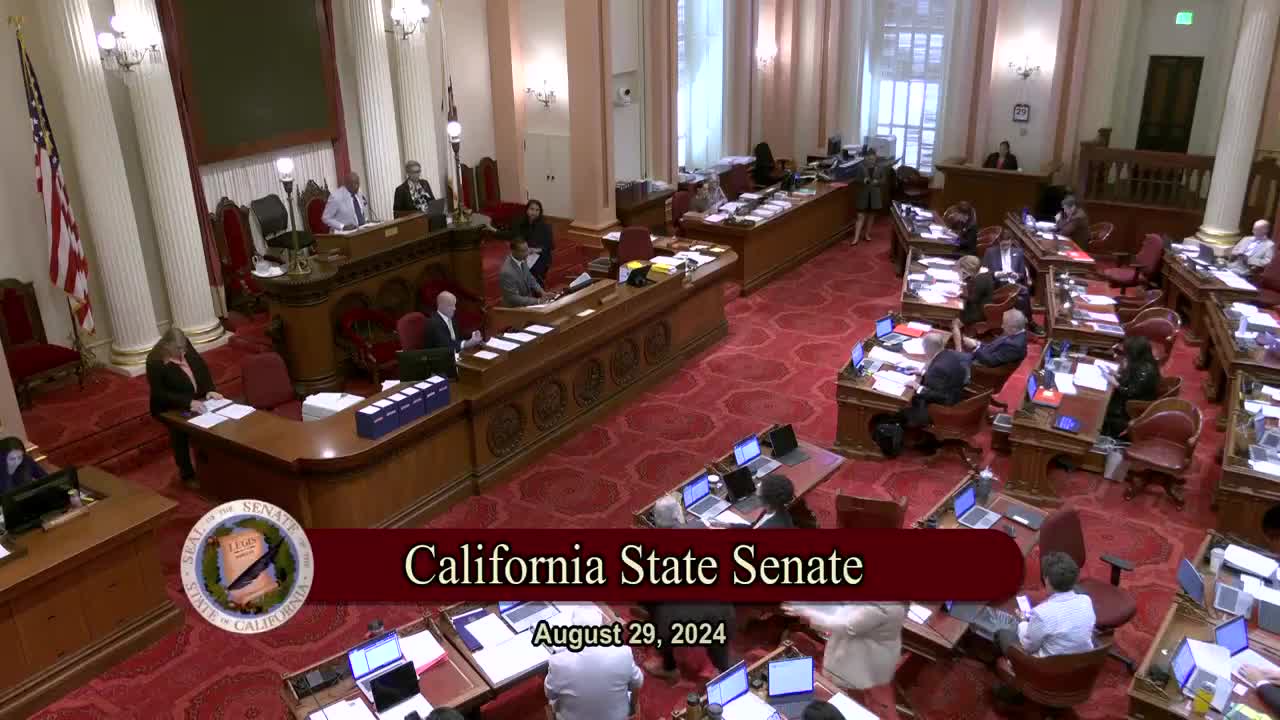 2MIN
Senate Floor
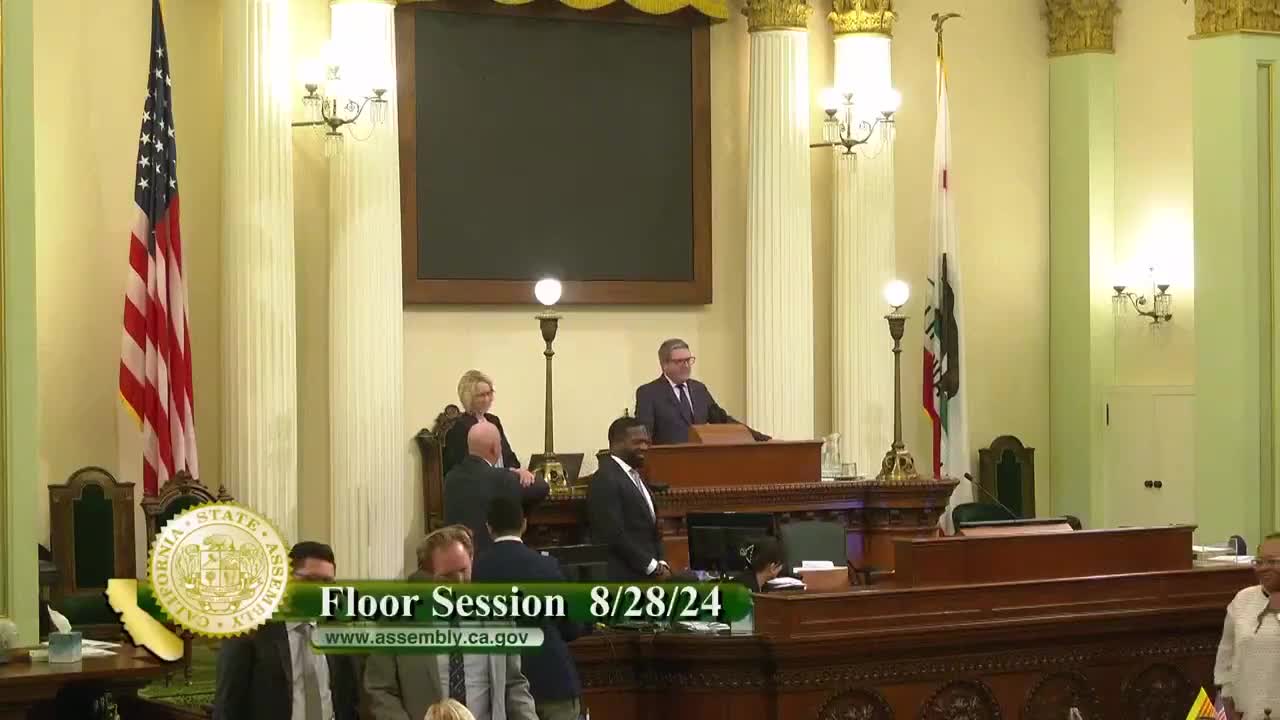 1MIN
Assembly Floor
 7MIN
Assembly Standing Committee on Agriculture
 3MIN
Senate Floor
 11MIN
Senate Standing Committee on Natural Resources and Water
32SEC
Senate Standing Committee on Natural Resources and Water
22SEC
Senate Standing Committee on Natural Resources and Water
 10MIN
Senate Standing Committee on Agriculture
Bill Author

Bill Co-Author(s):