SB 1494: Local agencies: Sales and Use Tax: retailers.
- Session Year: 2023-2024
- House: Senate
- Latest Version Date: 2024-05-20
Current Status:
Failed
(2024-05-24: Ordered to inactive file on request of Senator Glazer.)
Introduced
In Committee
First Chamber
In Committee
Second Chamber
Enacted
The Bradley-Burns Uniform Local Sales and Use Tax Law authorizes counties and cities to impose a local sales and use tax in accordance with that law for tangible personal property sold at retail in the city or county, or purchased for storage, use, or other consumption in the city or county. That law requires the city or county to contract with the California Department of Tax and Fee Administration for the administration of the taxes and requires the department to transmit those taxes to the city or county. That law provides that for the purpose of a local sales tax adopted pursuant to that law, all retail sales are consummated at the place of business of the retailer unless otherwise specified.
Existing law prohibits a local agency, defined to mean all cities and counties, from entering into any form of agreement that would result, directly or indirectly, in the payment, transfer, diversion, or rebate of Bradley-Burns local tax revenues to any person, as defined, for any purpose, if the agreement results in a reduction in the amount of Bradley-Burns local tax revenues that, in the absence of the agreement, would be received by another local agency and the retailer continues to maintain a physical presence within the territorial jurisdiction of that other local agency, with specified exceptions.
This bill would additionally prohibit, on or after January 1, 2024, a local agency from entering into, renewing, or extending any form of agreement that would result, directly or indirectly, in the payment, transfer, diversion, or rebate of Bradley-Burns local tax revenues to any retailer, as defined, in exchange for the retailer locating or continuing to maintain a place of business that serves as the place of sale, as defined, within the territorial jurisdiction of the local agency if that place of business would generate revenue, from the sale of tangible property delivered to and received by the purchaser in the territorial jurisdiction of another local agency, for the local agency under the Bradley-Burns Uniform Local Sales and Use Tax Law. The bill would make those forms of agreements existing before January 1, 2024, void and unenforceable on January 1, 2030. The bill would require a local agency to post those forms of agreements existing before January 1, 2024, on the local agencys internet website until the form of agreement expires or is made void and unenforceable by these provisions. The bill would make related findings and declarations.
The bill would include findings that changes proposed by this bill address a matter of statewide concern rather than a municipal affair and, therefore, apply to all cities, including charter cities.
This bill would declare that it is to take effect immediately as an urgency statute.The Bradley-Burns Uniform Local Sales and Use Tax Law authorizes counties and cities to impose a local sales and use tax in accordance with that law for tangible personal property sold at retail in the city or county, or purchased for storage, use, or other consumption in the city or county. That law requires the city or county to contract with the California Department of Tax and Fee Administration for the administration of the taxes and requires the department to transmit those taxes to the city or county. That law provides that for the purpose of a local sales tax adopted pursuant to that law, all retail sales are consummated at the place of business of the retailer unless otherwise specified.
Existing law prohibits a local agency, defined to mean all cities and counties, from entering into any form of agreement that would result, directly or indirectly, in the payment, transfer, diversion, or rebate of Bradley-Burns local tax revenues to any person, as defined, for any purpose, if the agreement results in a reduction in the amount of Bradley-Burns local tax revenues that, in the absence of the agreement, would be received by another local agency and the retailer continues to maintain a physical presence within the territorial jurisdiction of that other local agency, with specified exceptions.
This bill would additionally prohibit, on or after January 1, 2024, a local agency from entering into, renewing, or extending any form of agreement that would result, directly or indirectly, in the payment, transfer, diversion, or rebate of Bradley-Burns local tax revenues to any retailer, as defined, in exchange for the retailer locating or continuing to maintain a place of business that serves as the place of sale, as defined, within the territorial jurisdiction of the local agency if that place of business would generate revenue, from the sale of tangible property delivered to and received by the purchaser in the territorial jurisdiction of another local agency, for the local agency under the Bradley-Burns Uniform Local Sales and Use Tax Law. The bill would make those forms of agreements existing before January 1, 2024, void and unenforceable on January 1, 2030. The bill would require a local agency to post those forms of agreements existing before January 1, 2024, on the local agencys internet website until the form of agreement expires or is made void and unenforceable by these provisions. The bill would make related findings and declarations.
The bill would include findings that changes proposed by this bill address a matter of statewide concern rather than a municipal affair and, therefore, apply to all cities, including charter cities.
This bill would declare that it is to take effect immediately as an urgency statute.
The Legislature finds and declares all of the following:
(a)Current tax law allows retail companies to allocate all sales and use tax revenue in a specific location in the state.
(b)This tax allocation provision allows cities to enter tax revenue sharing agreements with retail companies in exchange for those companies locating in those cities.
(c)These revenue sharing agreements cause cities to compete with each other to offer the most tax revenue to a retail company to incentivize the company to locate in that city. As a result, these agreements can share as much as 50 to 80 percent of tax revenue with the company rather than those revenues going towards public services.
(d)California and its people have little knowledge about the specific agreements cities enter into due to lack of transparency. By requiring cities to post current agreements online, California will learn more about how much tax revenue is being shared with retail companies and how long the contracts are.
(e)This act is urgently needed to prevent new tax revenue sharing agreements from taking money from vital local public services while the state endures deficits of historic proportion.
SEC. 2.Section 53084.5 of the Government Code is amended to read:53084.5.(a)On or after January 1, 2016, a local agency shall not enter into any form of agreement that would result, directly or indirectly, in the payment, transfer, diversion, or rebate of any tax revenue resulting from the imposition of a sales and use tax under the Bradley-Burns Uniform Local Sales and Use Tax Law (Part 1.5 (commencing with Section 7200) of Division 2 of the Revenue and Taxation Code) to any person for any purpose when both of the following apply:
(1)The agreement results in a reduction in the amount of revenue under the Bradley-Burns Uniform Local Sales and Use Tax Law that, in the absence of the agreement, would be received by another local agency.
(2)The retailer continues to maintain a physical presence within the territorial jurisdiction of that other local agency.
(b)(1)A local agency entering into an agreement that results in a reduction of the amount of revenue under the Bradley-Burns Uniform Local Sales and Use Tax Law that, in the absence of the agreement, would be received by another local agency shall post the proposed agreement on its internet website for at least 30 days prior to ratification or approval of that agreement by its governing body.
(2)A local agency entering into an agreement that results in a reduction of the amount of revenue under the Bradley-Burns Uniform Local Sales and Use Tax Law that, in the absence of the agreement, would be received by another local agency shall notify the other local agency by certified mail addressed to the attention of the chief executive of that other local agency at least 60 days prior to ratification or approval of that agreement by its governing body.
(3)A local agency shall post any agreement on its internet website it has entered into that results in a reduction of the amount of revenue under the Bradley-Burns Uniform Local Sales and Use Tax Law that, in the absence of the agreement, would be received by another local agency, including any agreements entered into prior to January 1, 2016, that are still in effect on and after that date.
(c)(1)On or after January 1, 2024, a local agency shall not enter into, renew, or extend any form of agreement that would result, directly or indirectly, in the payment, transfer, diversion, or rebate of any tax revenue resulting from the imposition of a sales and use tax under the Bradley-Burns Uniform Local Sales and Use Tax Law (Part 1.5 (commencing with Section 7200) of Division 2 of the Revenue and Taxation Code) to any retailer in exchange for the retailer locating or continuing to maintain a place of business that serves as the place of sale within the territorial jurisdiction of the local agency if that place of business would generate revenue, from the sale of tangible property delivered to and received by the purchaser in the territorial jurisdiction of another local agency, for the local agency under the Bradley-Burns Uniform Local Sales and Use Tax Law (Part 1.5 (commencing with Section 7200) of Division 2 of the Revenue and Taxation Code).
(2)A form of agreement described in paragraph (1) that exists before January 1, 2024, shall be void and unenforceable on January 1, 2030.
(3)A local agency shall post any form of agreement described in paragraph (1) that exists before January 1, 2024, on the local agencys internet website until the form of agreement expires or is made void and unenforceable by paragraph (2).
(d)For the purposes of this section, the following terms have the following meanings:
(1)Local agency means a chartered or general law city, a chartered or general law county, or a city and county, of this state.
(2)Person means a person as defined in Section 6005 of the Revenue and Taxation Code.
(3)Physical presence means the lease or ownership of any real property for the purpose of carrying on business operations.
(4)Place of sale means the place at which retail sales are consummated pursuant to Section 7205 of the Revenue and Taxation Code and the regulations promulgated thereunder.
(5)Retailer means a retailer as defined by Section 6015 of the Revenue and Taxation Code.
(e)This section shall not apply to any agreement by a local agency to pay or rebate any use tax revenue resulting from the imposition of a use tax under the Bradley-Burns Uniform Local Sales and Use Tax Law relating to a use tax direct payment permit issued under Section 7051.3 of the Revenue and Taxation Code.
(f)This section shall not be interpreted to limit the ability of a local agency to contract with or otherwise enter into an agreement pursuant to subdivision (b) of Section 7056 of the Revenue and Taxation Code.
(g)This section shall not apply to any mutual tax revenue sharing agreement between local agencies to pay, transfer, or divert tax revenues that would be received by a local agency resulting from the imposition of a sales and use tax under the Bradley-Burns Uniform Local Sales and Use Tax Law to another local agency, and where the agreement would not result, directly or indirectly, in the payment, transfer, diversion, or rebate of those tax revenues to a retailer.
SEC. 3.The Legislature finds and declares that the subject of this act is a matter of statewide concern and is not a municipal affair as that term is used in Section 5 of Article XI of the California Constitution for the reasons discussed in Section 1 of this act. Therefore, Section 2 of this act amending Section 53084.5 of the Government Code applies to all cities, including charter cities.
SEC. 4.This act is an urgency statute necessary for the immediate preservation of the public peace, health, or safety within the meaning of Article IV of the California Constitution and shall go into immediate effect for the reasons discussed in Section 1 of this act.The Legislature finds and declares all of the following:
(a)Current tax law allows retail companies to allocate all sales and use tax revenue in a specific location in the state.
(b)This tax allocation provision allows cities to enter tax revenue sharing agreements with retail companies in exchange for those companies locating in those cities.
(c)These revenue sharing agreements cause cities to compete with each other to offer the most tax revenue to a retail company to incentivize the company to locate in that city. As a result, these agreements can share as much as 50 to 80 percent of tax revenue with the company rather than those revenues going towards public services.
(d)California and its people have little knowledge about the specific agreements cities enter into due to lack of transparency. By requiring cities to post current agreements online, California will learn more about how much tax revenue is being shared with retail companies and how long the contracts are.
(e)This act is urgently needed to prevent new tax revenue sharing agreements from taking money from vital local public services while the state endures deficits of historic proportion.
SEC. 2.Section 53084.5 of the Government Code is amended to read:53084.5.(a)On or after January 1, 2016, a local agency shall not enter into any form of agreement that would result, directly or indirectly, in the payment, transfer, diversion, or rebate of any tax revenue resulting from the imposition of a sales and use tax under the Bradley-Burns Uniform Local Sales and Use Tax Law (Part 1.5 (commencing with Section 7200) of Division 2 of the Revenue and Taxation Code) to any person for any purpose when both of the following apply:
(1)The agreement results in a reduction in the amount of revenue under the Bradley-Burns Uniform Local Sales and Use Tax Law that, in the absence of the agreement, would be received by another local agency.
(2)The retailer continues to maintain a physical presence within the territorial jurisdiction of that other local agency.
(b)(1)A local agency entering into an agreement that results in a reduction of the amount of revenue under the Bradley-Burns Uniform Local Sales and Use Tax Law that, in the absence of the agreement, would be received by another local agency shall post the proposed agreement on its Internet Web site internet website for at least 30 days prior to ratification or approval of that agreement by its governing body.
(2)A local agency entering into an agreement that results in a reduction of the amount of revenue under the Bradley-Burns Uniform Local Sales and Use Tax Law that, in the absence of the agreement, would be received by another local agency shall notify the other local agency by certified mail addressed to the attention of the chief executive of that other local agency at least 60 days prior to ratification or approval of that agreement by its governing body.
(3)A local agency shall post any agreement on its Internet Web site internet website it has entered into that results in a reduction of the amount of revenue under the Bradley-Burns Uniform Local Sales and Use Tax Law that, in the absence of the agreement, would be received by another local agency, including any agreements entered into prior to January 1, 2016, that are still in effect on and after that date.
(c)(1)On or after January 1, 2024, a local agency shall not enter into, renew, or extend any form of agreement that would result, directly or indirectly, in the payment, transfer, diversion, or rebate of any tax revenue resulting from the imposition of a sales and use tax under the Bradley-Burns Uniform Local Sales and Use Tax Law (Part 1.5 (commencing with Section 7200) of Division 2 of the Revenue and Taxation Code) to any retailer in exchange for the retailer locating or continuing to maintain a place of business that serves as the place of sale within the territorial jurisdiction of the local agency if that place of business would generate revenue, from the sale of tangible property delivered to and received by the purchaser in the territorial jurisdiction of another local agency, for the local agency under the Bradley-Burns Uniform Local Sales and Use Tax Law (Part 1.5 (commencing with Section 7200) of Division 2 of the Revenue and Taxation Code).
(2)A form of agreement described in paragraph (1) that exists before January 1, 2024, shall be void and unenforceable on January 1, 2030.
(3)A local agency shall post any form of agreement described in paragraph (1) that exists before January 1, 2024, on the local agencys internet website until the form of agreement expires or is made void and unenforceable by paragraph (2).
(c)(d)For the purposes of this section, the following terms have the following meanings:
(1)Local agency means a chartered or general law city, a chartered or general law county, or a city and county, of this state.
(2)Person means a person as defined in Section 6005 of the Revenue and Taxation Code.
(3)Physical presence means the lease or ownership of any real property for the purpose of carrying on business operations.
(4)Place of sale means the place at which retail sales are consummated pursuant to Section 7205 of the Revenue and Taxation Code and the regulations promulgated thereunder.
(4)(5)Retailer means a retailer as defined by Section 6015 of the Revenue and Taxation Code.
(d)(e)This section shall not apply to any agreement by a local agency to pay or rebate any use tax revenue resulting from the imposition of a use tax under the Bradley-Burns Uniform Local Sales and Use Tax Law relating to a use tax direct payment permit issued under Section 7051.3 of the Revenue and Taxation Code.
(e)(f)This section shall not be interpreted to limit the ability of a local agency to contract with or otherwise enter into an agreement pursuant to subdivision (b) of Section 7056 of the Revenue and Taxation Code.
(f)(g)This section shall not apply to any mutual tax revenue sharing agreement between local agencies to pay, transfer, or divert tax revenues that would be received by a local agency resulting from the imposition of a sales and use tax under the Bradley-Burns Uniform Local Sales and Use Tax Law to another local agency, and where the agreement would not result, directly or indirectly, in the payment, transfer, diversion, or rebate of those tax revenues to a retailer.
SEC. 3.The Legislature finds and declares that the subject of this act is a matter of statewide concern and is not a municipal affair as that term is used in Section 5 of Article XI of the California Constitution for the reasons discussed in Section 1 of this act. Therefore, Section 2 of this act amending Section 53084.5 of the Government Code applies to all cities, including charter cities.
SEC. 4.This act is an urgency statute necessary for the immediate preservation of the public peace, health, or safety within the meaning of Article IV of the California Constitution and shall go into immediate effect for the reasons discussed in Section 1 of this act.
|
Date
|
Status
|
|---|---|
| May 24, 2024 | Ordered to inactive file on request of Senator Glazer. |
| May 23, 2024 | Reconsideration granted. (Ayes 36. Noes 0. Page 4192.) |
| May 23, 2024 | Read third time. Refused passage. (Ayes 17. Noes 11. Page 4192.) |
| May 23, 2024 | Motion to reconsider made by Senator Glazer. |
| May 21, 2024 | Read second time. Ordered to third reading. |
| May 20, 2024 | Read third time and amended. |
| May 20, 2024 | Ordered to second reading. |
| Apr 25, 2024 | Read second time. Ordered to third reading. |
| Apr 24, 2024 | From committee: Do pass. (Ayes 6. Noes 0. Page 3759.) (April 24). |
| Apr 17, 2024 | From committee: Do pass and re-refer to Com. on REV. & TAX. (Ayes 6. Noes 1. Page 3664.) (April 17). Re-referred to Com. on REV. & TAX. |
| Apr 12, 2024 | Set for hearing April 24 in REV. & TAX. pending receipt. |
| Apr 5, 2024 | Set for hearing April 17. |
| Apr 2, 2024 | April 3 set for first hearing canceled at the request of author. |
| Mar 15, 2024 | Set for hearing April 3. |
| Feb 29, 2024 | Referred to Coms. on L. GOV. and REV. & TAX. |
| Feb 20, 2024 | From printer. May be acted upon on or after March 18. |
| Feb 16, 2024 | Introduced. Read first time. To Com. on RLS. for assignment. To print. |
|
Date
|
Description
|
Location
|
Votes
|
|
|---|---|---|---|---|
| May 23, 2024 | Senate 3rd Reading SB1494 Glazer et al. Reconsider | Senate Floor |
Passed |
|
| May 23, 2024 | Senate 3rd Reading SB1494 Glazer et al. | Senate Floor |
Failed |
|
| Apr 24, 2024 | Do pass | Senate Standing Committee on Revenue and Taxation |
Passed |
|
| Apr 17, 2024 | Do pass, but first be re-referred to the Committee on [Revenue and Taxation] | Senate Standing Committee on Local Government |
Passed |
This list shows positions taken on this bill by organizations on the date displayed, which is linked to the original source.
Positions by individuals are not included.
|
Organization
|
Position
|
Date
|
|---|---|---|
| California Association For Local Economic Development | ** Against | |
| California Business Properties Association | ** Against | |
| California Business Roundtable | ** Against | |
| California Chamber Of Commerce | ** Against | |
| California Manufacturers & Technology Association | ** Against | |
| California Retailers Association | ** Against | |
| California Taxpayers Association | ** Against | |
| Central Valley Business Federation | ** Against | |
| City Of Beaumont | ** Against | |
| City Of Dinuba | ** Against | |
| City Of Eastvale | ** Against | |
| City of Fresno | ** Against | |
| City of La Palma | ** Against | |
| City of Long Beach | ** Against | |
| City Of Merced | ** Against | |
| City Of Ontario | ** Against | |
| City of Perris | ** Against | |
| City of Rancho Cucamonga | ** Against | |
| City of Simi Valley | ** Support | |
| City Of Tracy | ** Against | |
| County of Fresno | ** Against | |
| League Of California Cities | ** Against | |
| Los Angeles County Business Federation | ** Against | |
| Mayor of Fresno | * Against | Apr 17, 2024 |
| Merced City Of | ** Against | Apr 24, 2024 |
| NAIOP, the Commercial Real Estate Development Association | ** Against | |
| Riverside County | * Against | Apr 24, 2024 |
| Silicon Valley Leadership Group | ** Against | |
| United Chamber Advocacy Network | ** Against |
SENATE RULES COMMITTEE Office of Senate Floor Analyses (916) 651-1520 Fax: (916) 327-4478 | SB 1494 |
THIRD READING
Bill No: SB 1494
Author: Glazer (D), et al.
Amended: 5/20/24
Vote: 21
SENATE LOCAL GOVERNMENT COMMITTEE: 6-1, 4/17/24
AYES: Durazo, Dahle, Glazer, Skinner, Wahab, Wiener
NOES: Seyarto
SENATE REVENUE AND TAXATION COMMITTEE: 6-0, 4/24/24
AYES: Glazer, Dahle, Bradford, Dodd, Padilla, Skinner
NO VOTE RECORDED: Ashby
SUBJECT: Local agencies: Sales and Use Tax: retailers
SOURCE: Author
DIGEST:
This bill prohibits a local agency, on or after January 1, 2024, from entering into, renewing, or extending sales and use tax rebate agreements with retailers in exchange for locating in their jurisdiction, and voids agreements entered into before that date on January 1, 2030.
Senate Floor Amendments of 5/17/24 delete the urgency clause and add coauthors.
ANALYSIS:
Existing law:
- Imposes the sales tax on every retailer “engaged in business in this state” that sells tangible personal property, and requires them to register with the California Department of Tax and Fee Administration (CDTFA), as well as collect and remit appropriate tax at purchase and remit the amount to CDFTA. Sales tax applies whenever a retail sale occurs, which is generally any sale other than one for resale in the regular course of business. The current rate is 7.25%.
- Allows cities, counties, and specified special districts to increase the sales and use tax, also known as district or transactions and use taxes.
- Allows CDTFA to collect sales taxes from retailers, deposit the state share in the General Fund, and then allocate the local share of the Bradley-Burns sales tax and any district tax to the appropriate jurisdiction. The Bradley-Burns Uniform Sales Tax Act allows all local agencies to apply its own sales and use tax on the same base of tangible personal property. This tax rate currently is fixed at 1.25% of the sales price of tangible personal property sold at retail in the local jurisdiction, or purchased outside the jurisdiction for use within the jurisdiction. Cities and counties use this 1% tax to support general operations, while the remaining 0.25% is used for county transportation purposes. In California, all cities and counties impose Bradley-Burns local taxes.
- Specifies the "place of sale" for purposes of the local sales tax. Bradley-Burns sales taxes are allocated to the place of business of the retailer, unless the property sold is delivered by the retailer or his or her agent to an out-of-state destination or to a common carrier for delivery to an out-of-state destination, in which case no tax is collected. CDTFA must consider specific characteristics of the retailer to correctly determine the “place of sale,” and therefore correctly allocate the local share of Bradley-Burns sales tax.
- Bans cities and counties from subsidizing the relocation of big box retailers and auto malls within the same market area (SB 114, Torlakson, Chapter 781, Statutes of 2003).
- Prohibits a local agency from entering into an agreement that would result in the payment, transfer, diversion, or rebate of Bradley-Burns local tax proceeds to a retailer if the agreement results in a reduction of revenue that is received by another local agency when the retailer continues to maintain a physical presence and location within that other local agency (SB 533, Pan, Chapter 717, Statutes of 2015).
This bill:
- Prohibits a local agency, on or after January 1, 2024, from entering into, renewing, or extending any form of agreement that would result in the payment, transfer, diversion, or rebate of any sales and use tax revenue to any retailer in exchange for the retailer locating or maintaining a place of business that serves as the place of sale if it generates revenue for another local agency.
- Declares any such agreement that exists before January 1, 2024, to be void and unenforceable starting on January 1, 2030.
- Requires a local agency to post any such agreement that exists before January 1, 2024, on its website until it expires or is made void or unenforceable on January 1, 2030.
Background
Counties and cities engage in a wide variety of economic development activities to build their tax bases. Local officials use various tactics to influence where, when, and how the private sector invests capital and improves real property. Local officials sometimes use their economic development powers to induce businesses to relocate to their communities. Economic development incentives local agencies offer range in terms of (1) the level of rebate; (2) how long the retailer receives the benefit; (3) the types of jobs or services the retailer must provide in return; and (4) how long the retailer must promise to stay in the jurisdiction. Agreements typically offer between 30% to 60% of the Bradley-Burns revenue generated by the facility, for periods of time ranging up to 40 years. The City of Fresno recently entered into long-term agreements with Amazon, Nordstrom, and the Gap, and the City of Dinuba has done the same with Best Buy. The City of Cupertino has an agreement with Apple, and San Bruno has an agreement with Wal-Mart.
Comments
- Purpose of the bill. According to the author, “SB 1494 would address the issue of corporations manipulating our tax code. Right now, California’s broken tax system allows retailers to allocate sales tax revenue from online sales to specific distribution centers and warehouses regardless of where the sale occurred. This creates a perverse economic incentive for cities to give millions of dollars in sales tax revenue back to corporations in return for designating that municipality as the point of sale. This bill would end the exploitation of an economic tool that concentrates tax revenue among a minority of cities (at the expense of their neighbors) and instead ensures each jurisdiction gets its fair share to use tax revenue for the intended purpose of bettering the community.”
- What’s left? Cities that focus their economic development efforts on warehouse and distribution centers view these agreements as valuable economic development tools that create employment and economic activity that cannot be generated any other way. Even if one of these agreements requires a significant rebate back to a retailer, that city still may be better off because it will receive more sales tax revenue than if the retailer did not locate their warehouse or distribution in their city. Do other economic development incentives the state does allow provide sufficient opportunities for cities seeking continued economic growth, particularly cities with available land and above-average unemployment rates?
FISCAL EFFECT: Appropriation: No Fiscal Com.: No Local: No
SUPPORT: (Verified 5/17/24)
City of Simi Valley
OPPOSITION: (Verified 5/17/24)
California Association for Local Economic Development
California Business Properties Association
California Business Roundtable
California Chamber of Commerce
California Manufacturers & Technology Association
California Retailers Association
California Taxpayers Association
Central Valley Business Federation
City of Beaumont
City of Dinuba
City of Eastvale
City of Fresno
City of Merced
City of La Palma
City of Long Beach
City of Ontario
City of Perris
City of Rancho Cucamonga
City of Tracy
County of Fresno
League of California Cities
Los Angeles County Business Federation
Naiop, the Commercial Real Estate Development Association
Silicon Valley Leadership Group
United Chamber Advocacy Network
Prepared by: Jonathan Peterson / L. GOV. / (916) 651-4119
5/21/24 18:07:50
**** END ****
SENATE RULES COMMITTEE Office of Senate Floor Analyses (916) 651-1520 Fax: (916) 327-4478 | SB 1494 |
THIRD READING
Bill No: SB 1494
Author: Glazer (D), et al.
Introduced: 2/16/24
Vote: 27 - Urgency
SENATE LOCAL GOVERNMENT COMMITTEE: 6-1, 4/17/24
AYES: Durazo, Dahle, Glazer, Skinner, Wahab, Wiener
NOES: Seyarto
SENATE REVENUE AND TAXATION COMMITTEE: 6-0, 4/24/24
AYES: Glazer, Dahle, Bradford, Dodd, Padilla, Skinner
NO VOTE RECORDED: Ashby
SUBJECT: Local agencies: Sales and Use Tax: retailers
SOURCE: Author
DIGEST:
This bill prohibits a local agency, on or after January 1, 2024, from entering into, renewing, or extending sales and use tax rebate agreements with retailers in exchange for locating in their jurisdiction, and voids agreements entered into before that date on January 1, 2030.
ANALYSIS:
Existing law:
- Imposes the sales tax on every retailer “engaged in business in this state” that sells tangible personal property, and requires them to register with the California Department of Tax and Fee Administration (CDTFA), as well as collect and remit appropriate tax at purchase and remit the amount to CDFTA. Sales tax applies whenever a retail sale occurs, which is generally any sale other than one for resale in the regular course of business. The current rate is 7.25%.
- Allows cities, counties, and specified special districts to increase the sales and use tax, also known as district or transactions and use taxes.
- Allows CDTFA to collect sales taxes from retailers, deposit the state share in the General Fund, and then allocate the local share of the Bradley-Burns sales tax and any district tax to the appropriate jurisdiction. The Bradley-Burns Uniform Sales Tax Act allows all local agencies to apply its own sales and use tax on the same base of tangible personal property. This tax rate currently is fixed at 1.25% of the sales price of tangible personal property sold at retail in the local jurisdiction, or purchased outside the jurisdiction for use within the jurisdiction. Cities and counties use this 1% tax to support general operations, while the remaining 0.25% is used for county transportation purposes. In California, all cities and counties impose Bradley-Burns local taxes.
- Specifies the "place of sale" for purposes of the local sales tax. Bradley-Burns sales taxes are allocated to the place of business of the retailer, unless the property sold is delivered by the retailer or his or her agent to an out-of-state destination or to a common carrier for delivery to an out-of-state destination, in which case no tax is collected. CDTFA must consider specific characteristics of the retailer to correctly determine the “place of sale,” and therefore correctly allocate the local share of Bradley-Burns sales tax.
- Bans cities and counties from subsidizing the relocation of big box retailers and auto malls within the same market area (SB 114, Torlakson, Chapter 781, Statutes of 2003).
- Prohibits a local agency from entering into an agreement that would result in the payment, transfer, diversion, or rebate of Bradley-Burns local tax proceeds to a retailer if the agreement results in a reduction of revenue that is received by another local agency when the retailer continues to maintain a physical presence and location within that other local agency (SB 533, Pan, Chapter 717, Statutes of 2015).
This bill:
- Prohibits a local agency, on or after January 1, 2024, from entering into, renewing, or extending any form of agreement that would result in the payment, transfer, diversion, or rebate of any sales and use tax revenue to any retailer in exchange for the retailer locating or maintaining a place of business that serves as the place of sale if it generates revenue for another local agency.
- Declares any such agreement that exists before January 1, 2024, to be void and unenforceable starting on January 1, 2030.
- Requires a local agency to post any such agreement that exists before January 1, 2024, on its website until it expires or is made void or unenforceable on January 1, 2030.
Background
Counties and cities engage in a wide variety of economic development activities to build their tax bases. Local officials use various tactics to influence where, when, and how the private sector invests capital and improves real property. Local officials sometimes use their economic development powers to induce businesses to relocate to their communities. Economic development incentives local agencies offer range in terms of (1) the level of rebate; (2) how long the retailer receives the benefit; (3) the types of jobs or services the retailer must provide in return; and (4) how long the retailer must promise to stay in the jurisdiction. Agreements typically offer between 30% to 60% of the Bradley-Burns revenue generated by the facility, for periods of time ranging up to 40 years. The City of Fresno recently entered into long-term agreements with Amazon, Nordstrom, and the Gap, and the City of Dinuba has done the same with Best Buy. The City of Cupertino has an agreement with Apple, and San Bruno has an agreement with Wal-Mart.
Comments
- Purpose of the bill. According to the author, “SB 1494 would address the issue of corporations manipulating our tax code. Right now, California’s broken tax system allows retailers to allocate sales tax revenue from online sales to specific distribution centers and warehouses regardless of where the sale occurred. This creates a perverse economic incentive for cities to give millions of dollars in sales tax revenue back to corporations in return for designating that municipality as the point of sale. This bill would end the exploitation of an economic tool that concentrates tax revenue among a minority of cities (at the expense of their neighbors) and instead ensures each jurisdiction gets its fair share to use tax revenue for the intended purpose of bettering the community.”
- What’s left? Cities that focus their economic development efforts on warehouse and distribution centers view these agreements as valuable economic development tools that create employment and economic activity that cannot be generated any other way. Even if one of these agreements requires a significant rebate back to a retailer, that city still may be better off because it will receive more sales tax revenue than if the retailer did not locate their warehouse or distribution in their city. Do other economic development incentives the state does allow provide sufficient opportunities for cities seeking continued economic growth, particularly cities with available land and above-average unemployment rates?
FISCAL EFFECT: Appropriation: No Fiscal Com.: No Local: No
SUPPORT: (Verified 4/25/24)
City of Simi Valley
OPPOSITION: (Verified 4/25/24)
California Association for Local Economic Development
California Business Properties Association
California Business Roundtable
California Chamber of Commerce
California Manufacturers & Technology Association
California Retailers Association
California Taxpayers Association
Central Valley Business Federation
City of Beaumont
City of Dinuba
City of Eastvale
City of Fresno
City of Merced
City of La Palma
City of Ontario
City of Perris
City of Rancho Cucamonga
City of Tracy
League of California Cities
Los Angeles County Business Federation
Naiop, the Commercial Real Estate Development Association
Silicon Valley Leadership Group
United Chamber Advocacy Network
Prepared by: Jonathan Peterson / L. GOV. / (916) 651-4119
5/7/24 9:55:27
**** END ****
SENATE RULES COMMITTEE Office of Senate Floor Analyses (916) 651-1520 Fax: (916) 327-4478 | SB 1494 |
THIRD READING
Bill No: SB 1494
Author: Glazer (D), et al.
Introduced: 2/16/24
Vote: 27 - Urgency
SENATE LOCAL GOVERNMENT COMMITTEE: 6-1, 4/17/24
AYES: Durazo, Dahle, Glazer, Skinner, Wahab, Wiener
NOES: Seyarto
SENATE REVENUE AND TAXATION COMMITTEE: 6-0, 4/24/24
AYES: Glazer, Dahle, Bradford, Dodd, Padilla, Skinner
NO VOTE RECORDED: Ashby
SUBJECT: Local agencies: Sales and Use Tax: retailers
SOURCE: Author
DIGEST:
This bill prohibits a local agency, on or after January 1, 2024, from entering into, renewing, or extending sales and use tax rebate agreements with retailers in exchange for locating in their jurisdiction, and voids agreements entered into before that date on January 1, 2030.
ANALYSIS:
Existing law:
- Imposes the sales tax on every retailer “engaged in business in this state” that sells tangible personal property, and requires them to register with the California Department of Tax and Fee Administration (CDTFA), as well as collect and remit appropriate tax at purchase and remit the amount to CDFTA. Sales tax applies whenever a retail sale occurs, which is generally any sale other than one for resale in the regular course of business. The current rate is 7.25%.
- Allows cities, counties, and specified special districts to increase the sales and use tax, also known as district or transactions and use taxes.
- Allows CDTFA to collect sales taxes from retailers, deposit the state share in the General Fund, and then allocate the local share of the Bradley-Burns sales tax and any district tax to the appropriate jurisdiction. The Bradley-Burns Uniform Sales Tax Act allows all local agencies to apply its own sales and use tax on the same base of tangible personal property. This tax rate currently is fixed at 1.25% of the sales price of tangible personal property sold at retail in the local jurisdiction, or purchased outside the jurisdiction for use within the jurisdiction. Cities and counties use this 1% tax to support general operations, while the remaining 0.25% is used for county transportation purposes. In California, all cities and counties impose Bradley-Burns local taxes.
- Specifies the "place of sale" for purposes of the local sales tax. Bradley-Burns sales taxes are allocated to the place of business of the retailer, unless the property sold is delivered by the retailer or his or her agent to an out-of-state destination or to a common carrier for delivery to an out-of-state destination, in which case no tax is collected. CDTFA must consider specific characteristics of the retailer to correctly determine the “place of sale,” and therefore correctly allocate the local share of Bradley-Burns sales tax.
- Bans cities and counties from subsidizing the relocation of big box retailers and auto malls within the same market area (SB 114, Torlakson, Chapter 781, Statutes of 2003).
- Prohibits a local agency from entering into an agreement that would result in the payment, transfer, diversion, or rebate of Bradley-Burns local tax proceeds to a retailer if the agreement results in a reduction of revenue that is received by another local agency when the retailer continues to maintain a physical presence and location within that other local agency (SB 533, Pan, Chapter 717, Statutes of 2015).
This bill:
- Prohibits a local agency, on or after January 1, 2024, from entering into, renewing, or extending any form of agreement that would result in the payment, transfer, diversion, or rebate of any sales and use tax revenue to any retailer in exchange for the retailer locating or maintaining a place of business that serves as the place of sale if it generates revenue for another local agency.
- Declares any such agreement that exists before January 1, 2024, to be void and unenforceable starting on January 1, 2030.
- Requires a local agency to post any such agreement that exists before January 1, 2024, on its website until it expires or is made void or unenforceable on January 1, 2030.
Background
Counties and cities engage in a wide variety of economic development activities to build their tax bases. Local officials use various tactics to influence where, when, and how the private sector invests capital and improves real property. Local officials sometimes use their economic development powers to induce businesses to relocate to their communities. Economic development incentives local agencies offer range in terms of (1) the level of rebate; (2) how long the retailer receives the benefit; (3) the types of jobs or services the retailer must provide in return; and (4) how long the retailer must promise to stay in the jurisdiction. Agreements typically offer between 30% to 60% of the Bradley-Burns revenue generated by the facility, for periods of time ranging up to 40 years. The City of Fresno recently entered into long-term agreements with Amazon, Nordstrom, and the Gap, and the City of Dinuba has done the same with Best Buy. The City of Cupertino has an agreement with Apple, and San Bruno has an agreement with Wal-Mart.
Comments
- Purpose of the bill. According to the author, “SB 1494 would address the issue of corporations manipulating our tax code. Right now, California’s broken tax system allows retailers to allocate sales tax revenue from online sales to specific distribution centers and warehouses regardless of where the sale occurred. This creates a perverse economic incentive for cities to give millions of dollars in sales tax revenue back to corporations in return for designating that municipality as the point of sale. This bill would end the exploitation of an economic tool that concentrates tax revenue among a minority of cities (at the expense of their neighbors) and instead ensures each jurisdiction gets its fair share to use tax revenue for the intended purpose of bettering the community.”
- What’s left? Cities that focus their economic development efforts on warehouse and distribution centers view these agreements as valuable economic development tools that create employment and economic activity that cannot be generated any other way. Even if one of these agreements requires a significant rebate back to a retailer, that city still may be better off because it will receive more sales tax revenue than if the retailer did not locate their warehouse or distribution in their city. Do other economic development incentives the state does allow provide sufficient opportunities for cities seeking continued economic growth, particularly cities with available land and above-average unemployment rates?
FISCAL EFFECT: Appropriation: No Fiscal Com.: No Local: No
SUPPORT: (Verified 4/25/24)
City of Simi Valley
OPPOSITION: (Verified 4/25/24)
California Association for Local Economic Development
California Business Properties Association
California Business Roundtable
California Chamber of Commerce
California Manufacturers & Technology Association
California Retailers Association
California Taxpayers Association
Central Valley Business Federation
City of Beaumont
City of Dinuba
City of Eastvale
City of Fresno
City of Merced
City of La Palma
City of Ontario
City of Perris
City of Tracy
League of California Cities
Los Angeles County Business Federation
Naiop, the Commercial Real Estate Development Association
Silicon Valley Leadership Group
United Chamber Advocacy Network
Prepared by: Jonathan Peterson / L. GOV. / (916) 651-4119
4/26/24 12:53:10
**** END ****
SENATE COMMITTEE ON REVENUE AND TAXATION
Senator Steven Glazer, Chair
2023 - 2024 Regular
Bill No: | SB 1494 | Hearing Date: | 4/24/24 |
Author: | Glazer | Tax Levy: | No |
Version: | 2/16/24 | Fiscal: | No |
Consultant: | Grinnell | ||
Local agencies: Sales and Use Tax: retailers
Prohibits local agencies from entering into agreements that result in the diversion of Bradley-Burns sales and use tax revenue to any retailer in exchange for the retailer locating or maintaining a place of business that serves as the place of sale.
Background
Sales and use tax. State law imposes the sales tax on every retailer “engaged in business in this state” that sells tangible personal property, and requires them to register with the California Department of Fee & Tax Administration (CDTFA), and remit taxes collected from purchasers to CDTFA. Sales tax applies whenever a retail sale occurs, which is generally any sale other than one for resale in the regular course of business. The current rate is 7.25% as shown in the table below.
Rate | Jurisdiction | Purpose/Authority |
|---|---|---|
3.9375% | State (General Fund) | State general purposes |
1.0625% | Local Revenue Fund (2011 Realignment) | Local governments to fund local public safety services |
0.50% | State (1991 Realignment) | Local governments to fund health and welfare programs |
0.50% | State (Proposition 172 - 1993) | Local governments to fund public safety services |
1.25% | Local (City/County) 1.00% City and County | City and county general operations. Dedicated to county transportation purposes |
7.25% | Total Statewide Rate |
Additionally, cities, counties, and specified special districts may increase the sales and use tax, also known as district or transactions and use taxes, with voter approval according to the California Constitution.
Unless the purchaser pays the sales tax to the retailer, they are liable for the use tax, which the law imposes on any person consuming tangible personal property in the state. The use tax is the same rate as the sales tax, and also like the sales tax, must be remitted on or before the last day of the month following the quarterly period in which the person made the purchase. CDTFA collects sales taxes from retailers, deposits the state share in the General Fund, and then allocates the local share to the appropriate jurisdiction.
Online sales. In recent years, commerce has shifted from brick and mortar establishments to online. According the United States Department of Commerce, e-commerce sales in 2023 accounted for 15.4% of total sales, up from 14.7% percent of total sales in 2022, and up from just 6% in 2014. As a result, when a purchaser buys an item online from a retailer or marketplace facilitator, it can often be difficult to determine whether sales or use tax applies.
Determining where a sale took place matters significantly for the allocation of local taxes, which has become more difficult as California buy more items online and different retailers and marketplace facilitators use different retail business models. A sale is subject to the state sales tax if the retailer’s place of business in California participates in the sale, and the sale occurs in California, meaning the title to the goods passes to the customer in California. A retailer’s place of business can be an office, show room, warehouse, or storage space. If only one or neither condition is met, the use tax applies.
CDTFA Regulation 1620 states that sales tax applies when the purchaser sends their order to any local branch, office, outlet or other place of business of the retailer in this state. Sales tax also applies when an order is sent out of state, but the order is filled from in-state stocks.
However, the regulation also provides that use tax, not sales tax, applies when the order is sent by the purchaser directly to the retailer at a point outside this state, and the property is shipped to the purchaser from outside this state directly to the purchaser in California. For example, purchasing a new fishing pole online from a store in Vermont shipped via normal post. Use tax also applies when the retailer ships the property to their agent in this state for delivery to the purchaser in this state, provided there is no participation by the retailer in the transaction, such as when a retailer with no presence in the state uses a local delivery company on contract to deliver an online order.
Bradley-Burns. The Bradley-Burns Uniform Sales Tax Act allows all local agencies to apply their own sales and use tax on the same base of tangible personal property. This tax rate currently is fixed at 1.25% of the sales price of tangible personal property sold at retail in the local jurisdiction, or purchased outside the jurisdiction for use within the jurisdiction. Cities and counties use the 1% tax to support general operations, while the remaining 0.25% is used for county transportation purposes. In California, all cities and counties impose Bradley-Burns local taxes.
Bradley-Burns sales taxes are allocated to the “place of sale,” which is typically the place of business of the retailer. CDTFA Regulation 1802 sets forth specific characteristics of the retailer to correctly determine the “place of sale,” and correctly allocate sales tax revenue:
- For a retailer that has one location in the state, that location is generally determined to be the place of sale for all of its sales in which that location participates. CDTFA does so even if title to the property passes from seller to buyer outside of the jurisdiction where the retailer is located, or if the property never enters the jurisdiction of the retailer. For example, CDTFA would determine that all local sales taxes attributable to a furniture store in the City of Sacramento would be sourced to that city, regardless of where the store delivered furniture to the buyer, or where it shipped from.
- For a retailer that has more than one location in the state, CDTFA generally determines the location based on the location where principal negotiations occurred. In the above example, if the place where principal negotiations occurred is the place where the order was taken, CDTFA considers the place of sale the location where the retailer takes the order, regardless of whether they subsequently forward it to another location for delivery. For example, if a resident of the City of Davis called a furniture store in Sacramento to order a lamp, which the store shipped to Davis from its location in Vacaville, CDTFA would consider Sacramento the place of sale for purposes of allocating the local tax.
- For a retailer that has no location in the state, but has a stock of property in the state from which it fills orders, CDTFA considers the place of sale as the location from which the property is shipped. If a resident of the City of Davis ordered a lamp from an internet retailer that did not have a retail location in the state, but filled the order from its warehouse in Vacaville, CDTFA would consider Vacaville the place of sale.
CDTFA generally allocates Bradley-Burns use taxes to countywide pools in the county of the shipping address of the purchaser, where revenues are divided based on the jurisdiction’s share of directly allocated sales. However, while CDTFA distributes Bradley-Burns sales and use taxes according to the above, it sends revenue from voter-approved district sales and use taxes based solely on the location of the purchaser.
Economic development incentives. Allocating Bradley-Burns sales taxes at the place of sale leads to competition among cities and counties to attract land uses that involve sales because they generate local revenues. Cities and counties engage in a wide variety of economic development activities to build their tax bases. Local officials use various tactics to influence where, when, and how the private sector invests capital and improves real property:
- Regulatory tools, including general plans, zoning, and subdivision standards;
- Direct spending, including building public works projects like dams, water systems, sewers, levees, and roads, as well as grants and loans, and site preparation; and
- Tax policies, including lower rates on local taxes (such as sales taxes or property taxes) for selected taxpayers and tax abatements where officials return the revenues to the business.
Local officials sometimes use their economic development powers to induce businesses to relocate to their communities. However, state law bans cities and counties from subsidizing the relocation of big box retailers and auto malls within the same market area (SB 114, Torlakson, 2003). State law also prohibits a local agency from entering into an agreement that would result in the payment, transfer, diversion, or rebate of Bradley-Burns local tax proceeds to a retailer if the agreement results in a reduction of revenue that is received by another local agency when the retailer continues to maintain a physical presence and location within that other local agency (SB 533, Pan, 2015).
Even with these restrictions on economic development incentives, local agencies can still offer the following types of tax sharing agreements:
- A reduction in the use tax proceeds that are distributed to the originating local agency through one or more countywide pools.
- Any mutual tax revenue sharing agreement between local agencies to pay, transfer, or divert tax revenues that would be received by one local agency to another local agency, and where the agreement would not result in a rebate of those tax revenues to a retailer.
- An agreement where a retailer expands its operations into another jurisdiction, but the originating local agency receives no less revenue than if the expansion did not occur.
These agreements range in terms of (1) the level of rebate, (2) how long the retailer receives the benefit, (3) the types of jobs or services the retailer must provide in return, and (4) how long the retailer must promise to stay in the jurisdiction. Agreements typically offer between 30% to 60% of the Bradley-Burns revenue generated by the facility, for periods of time ranging up to 40 years. The City of Fresno recently entered into long-term agreements with Amazon, Nordstrom, and the Gap. Additionally, the City of Dinuba’s agreement with Best Buy has been the subject of recent public reporting. The City of Dinuba’s yearly sales tax revenue in the first nine months of 2020 totaled $20.4 million—55% higher than all of 2019 – despite the effects of the COVID-19 pandemic because it is the place of sale for all of Best Buy’s sales in the entire state.[1] Under the agreement, the City gives Best Buy 50% of total sales tax proceeds then gives another 10% to the lawyer who created the agreement. The city keeps 40%. Overall sales tax revenue is 444% higher than it was in 2015, the year before the tax sharing agreement took effect..
State Auditor and Legislative Analyst Reports. Both the California State Auditor and the Legislative Analyst’s Office (LAO) have issued reports questioning the statewide benefit of economic development incentives local agencies offer to retailers for locating in their jurisdiction. The November 2017 report from the California State Auditor entitled, “The Bradley-Burns Tax and Local Transportation Funds: Changing the Allocation Structure for the Bradley-Burns Tax Would Result in a More Equitable Distribution of Local Transportation Funding,” states:
“Some counties may benefit disproportionately from the Bradley‑Burns tax because of the way state law currently directs the allocation of the funds. Retailers generally allocate Bradley‑Burns tax revenue based on the place of sale, which they identify according to their business structure. However, retailers that make sales over the Internet may allocate sales to various locations, including their warehouses, distribution center, or sales offices. This approach tends to concentrate Bradley‑Burns tax revenue into the warehouses’ or sales offices’ respective jurisdictions. Consequently, counties with a relatively large amount of industrial space may receive disproportionately larger amounts of Bradley‑Burns tax, and therefore Local Transportation Fund, revenue. The State could make its distribution of Bradley‑Burns tax revenue derived from online sales more equitable if it based allocations of the tax on the destinations to which goods are shipped rather than on place of sale.”
Similarly, a 2007 LAO report entitled, “Allocating Local Sales Taxes,” states:
“The use of financial incentives does not result in net benefits to a broader economic region within the state. It simply shifts existing sales taxes from one jurisdiction to another—at the cost of government resources that could be used for other purposes. The counterproductive aspects of the current system could be addressed through major reforms involving either the local sales tax allocation methodology or changes in local government’s system of taxes. Both of these options would involve significant public policy trade-offs and would require changes to the state’s Constitution.”
In February 2024, the Assembly Revenue and Taxation Committee held a hearing called Following the Money: How Local Sales Tax Revenues are Allocated Among California Cities. At this hearing, the Committee heard from both cities that benefit from the existing allocation framework and use these tax sharing agreements, as well as cities that feel disadvantaged by the current tax allocation system.
Recent developments with tax sharing agreements. Bradley-Burns tax sharing agreements have come under renewed scrutiny. According to an article published in Bloomberg Tax:
“Bloomberg Tax investigations into some of the agreements found that Apple has received $107.7 million from its hometown Cupertino, eBay Inc. has received more than $97 million from its home base of San Jose, Walmart.com has received more than $15 million from San Bruno tied to an e-commerce office, Best Buy Co. Inc. has received $49.3 million from Dinuba tied to a warehouse, and Williams-Sonoma Inc. has received $58.7 million from Shafter tied to a call center.”[2]
The author wants to place additional limits on the types of economic development incentives local agencies can offer to businesses from local Bradley-Burns sales tax revenue.
Proposed Law
Senate Bill 1494 prohibits a local agency, on or after January 1, 2024, from entering into, renewing, or extending any form of agreement that would result in the payment, transfer, diversion, or rebate of any sales and use tax revenue to any retailer in exchange for the retailer locating or maintaining a place of business that serves as the place of sale if it generates revenue for another local agency.
The measure declares any such agreement that exists before January 1, 2024, to be void and unenforceable starting on January 1, 2030.
SB 1494 requires a local agency to post any such agreement that exists before January 1, 2024, on its website until it expires or is made void or unenforceable on January 1, 2030.
The bill also adds a definition for “place of sale” to mean the place at which retail sales are consummated pursuant to Section 7205 of the Revenue and Taxation Code and the regulations promulgated thereunder
The measure defines its terms and makes findings and declarations to support its purposes
State Revenue Impact
No estimate.
Comments
1. Purpose of the bill. According to the author, “SB 1494 would address the issue of corporations manipulating our tax code. Right now, California’s broken tax system allows retailers to allocate sales tax revenue from online sales to specific distribution centers and warehouses regardless of where the sale occurred. This creates a perverse economic incentive for cities to give millions of dollars in sales tax revenue back to corporations in return for designating that municipality as the point of sale. This bill would end the exploitation of an economic tool that concentrates tax revenue among a minority of cities (at the expense of their neighbors) and instead ensures each jurisdiction gets its fair share to use tax revenue for the intended purpose of bettering the community.”
2. What’s left? SB 533 (Pan, 2015) limited some sales tax agreements. For example, if a company has a warehouse in Sacramento, but opens a sales office in Davis, it cannot enter into a tax sharing agreement with Davis if it continues to fulfill orders from the warehouse in Sacramento. However, if it moved all its operations to Davis, it would be able to enter into a tax sharing agreement with Davis. SB 1494 attempts to crack down on such an agreement. If the company moved its warehouse to Davis, but generates revenue from sales delivered to other jurisdictions throughout the state, it could not enter into a tax sharing agreement with Davis. The only opportunity remaining for a tax sharing agreement would be if a company opens a brick-and-mortar store in Davis and all its sales are in person because no revenue would come from sales delivered to purchasers in other jurisdictions.
Cities that focus their economic development efforts on warehouse and distribution centers view these agreements as valuable economic development tools that create employment and economic activity that cannot be generated any other way. Even if one of these agreements requires a significant rebate back to a retailer, that city still may be better off because it will receive more sales tax revenue than if the retailer did not locate their warehouse or distribution in their city. The Committee may wish to consider whether other economic development incentives the state does allow are sufficient to provide opportunities for cities seeking continued economic growth, particularly cities with available land and above-average unemployment rates.
3. Race to the bottom. Allowing communities to use their sales tax revenue to offer significant rebates—which can total more than half of all local sales tax revenue received—often results in shifting economic activity from one jurisdiction that needs more economic growth to another. For example, a company could decide whether to locate its new warehouse in one of two neighboring cities based on which city offers the highest tax rebate. Both may share similar economic conditions, but are pitted against each other to attract retailers with these incentives in exchange for a promise of jobs and economic activity. As the rebates grow larger and larger, the benefits accrue more and more to the company receiving the rebate. However, both local agencies end up on the losing end. The local agency that loses the competition loses jobs, economic activity, and tax revenue. The local agency that wins the competition ends up sacrificing a portion of the sales tax revenue it may have generated if the retailer had plans to locate in that jurisdiction anyway. As this race to the bottom continues, more and more tax dollars go to retailers, not to local jurisdictions. Taxpayers pay sales tax under the belief the money goes to the state and local agencies to provide services, not to provide a rebate to a corporation. Instead, retailers often receive a significant portion of the benefits of this sales tax revenue.
Businesses make decisions about where to locate based on a variety of factors, including whether or not a local agency offers them a lucrative sales tax rebate. However, it is unclear whether the offer of a sales tax rebate outweighs other factors: proximity to major transportation routes, access to particular markets, and whether a retailer already has warehouses and distribution centers in the area. Some of these businesses may have located in these communities regardless of whether or not the city offered them a rebate because these other market forces like speed of delivery were more important than the incentive received. As a result, some local agencies may be giving away sales tax revenue they would otherwise receive to lure a retailer that already had plans to locate a facility in their jurisdiction.
4. Treating the symptom, not the disease. Both the Auditor and the LAO have suggested replacing situs-based allocation with a population based allocation system to reduce incentives for local governments to use their economic development powers to promote retail developments. The LAO also suggested that replacing local government sales tax revenues with a different tax base could achieve similar results. Yet, because Section 25.5 of Article XIII of the California Constitution prohibits the Legislature from enacting a statute that would change the method of distributing revenues derived under Bradley-Burns Uniform Local Sales and Use Tax Law, as it read on November 3, 2004, except to comply with federal law or to allow the state to participate in an interstate compact, moving away from a situs-based sales tax allocation system would require a Constitutional Amendment or enacting a new local tax scheme. SCA 20 (Glazer, 2018) would have allowed the Legislature to provide that the retail sale of tangible personal property transacted online is consummated at the point of delivery, but it was not adopted.
5. Retroactivity. To avoid a rush of agreements being entered into, or extended, before the bill goes into effect, SB 1494 prohibits local agencies from entering into, amending, or extending tax sharing agreements as of January 1, 2024. Additionally, SB 1494 voids agreements already in place by January 1, 2030, regardless of the term of the agreement. Previous legislative efforts to prohibit some of these agreements, like SB 533 (Pan, 2015) did not apply retroactively like SB 1494 does, so existing agreements remained in place. This would be the first time the Legislature has prohibited agreements that both parties legally entered into. Can the Legislature end these existing agreements without violating contractual rights of the local agency or the retailer? If the measure passes, the courts may decide.
6. This word… The City of San Bruno and Walmart.com USA recently petitioned the Sacramento Superior Court for a writ of mandate, a declaration and judgment, and injunctive relief resulting from a CDTFA notice. In 2020, the City and the retailer entered into a sales tax rebate agreement, after which the city’s overall sales tax revenue tripled when the retailer started designating all California transactions conducted on its third-party sales to the city.[3] However, CDTFA determined the retailer must reallocate revenues from San Bruno to other jurisdictions as use taxes, because Walmart’s San Bruno location did not participate in the online California sales transactions at issue and there was no “genuine physical human interaction with the sale[s] from that location.” San Bruno gives about 40% of its take to the retailer, resulting in $15.5 million for the company between October 2020 and June 2023. The City of Cupertino recently had a significant decline in sales tax revenue, reportedly due to a similar CDTFA action with regard to Apple, as did the City of San Jose as a result of an agreement with eBay. Affected retailers are also appealing the adjustments to the Office of Tax Appeals.
7. Related legislation: In recent years, the Legislature has approved three bills regarding tax collection and allocation from online purchases:
- SB 531 (Glazer, 2019) prohibited a local agency from entering into an agreement that would result in the rebate of Bradley-Burns revenues to any retailer in exchange for the retailer locating or continuing to maintain a place of business within the local agency. Governor Newsom vetoed the bill.
- AB 147 (Burke, 2019) enacted the Marketplace Facilitator Act, and requires any retailer that sells more than $500,000 in property for delivery in California in the current or preceding year to register to collect and remit use taxes.
- SB 792 (Glazer, 2021) would have required specified retailers to include with their sales tax returns a schedule that reports the gross receipts from sales of property for each local jurisdiction where it shipped or delivered to a purchaser in that jurisdiction. Governor Newsom vetoed the bill.
Additionally, AB 2854 (Irwin, 2024) requires local agencies to provide specified information relating to Bradley-Burns rebate agreements to CDTFA and publish that information on the local agency’s internet website. The measure imposes penalties if the local agency does not provide this information. The measure is currently pending in the Assembly Appropriations Committee.
8. Urgency. As an urgency statute, SB 1494 must be approved by 2/3 vote of each house of the Legislature. Regular legislation takes effect on the January 1 following its passage, but urgency bills take effect as soon as they are passed, signed, and chaptered.
9. Hello friend. The Committee on Local Government approved SB 1494 by a vote of 6-1 on April 17, 2024. The Committee on Revenue and Taxation is considering the measure as the committee of second reference.
Support and Opposition
(4/19/24)
Support: City of Simi Valley
Opposition: California Business Properties Association
California Business Roundtable
California Chamber of Commerce
California Manufacturers and Technology Association
California Retailers Associaiton
California Taxpayers Association
Central Valley Business Federation
City of Beaumont
City of Dinuba
City of Fresno
City of La Palma
City of Merced
City of Ontario
City of Perris
City of Tracy
League of California Cities
Los Angeles County Business Federation (BIZ-FED)
Naiop, the Commercial Real Estate Development Association
Silicon Valley Leadership Group
United Chamber Advocacy Network
-- END --
Laura Mahoney, “California City Revives with Tax Revenue Diverted from Rivals”, Bloomberg Daily Tax Report, February 8, 2021). ↑
Laura Mahoney, “California Cities Agree to Rein in Apple-Like Tax Windfalls.” Bloomberg Tax Report, August 17, 2023. ↑
Laura Mahoney, “Walmart’s California Sales Tax Deal Is Successful But Vulnerable,” Bloomberg Tax, October 11, 2023. ↑
SENATE COMMITTEE ON LOCAL GOVERNMENT
Senator María Elena Durazo, Chair
2023 - 2024 Regular
Bill No: | SB 1494 | Hearing Date: | 4/17/24 |
Author: | Glazer | Fiscal: | No |
Version: | 2/16/24 | Consultant: | Peterson |
Local agencies: Sales and Use Tax: retailers
Prohibits a local agency, on or after January 1, 2024, from entering into, renewing, or extending sales and use tax rebate agreements with retailers in exchange for locating in their jurisdiction, and voids agreements entered into before that date on January 1, 2030.
Background
Sales and use tax. State law imposes the sales tax on every retailer “engaged in business in this state” that sells tangible personal property, and requires them to register with the California Department of Tax and Fee Administration (CDTFA), as well as collect and remit appropriate tax at purchase and remit the amount to CDTFA. Sales tax applies whenever a retail sale occurs, which is generally any sale other than one for resale in the regular course of business. The current rate is 7.25% as shown in the table below. Additionally, cities, counties, and specified special districts may increase the sales and use tax, also known as district or transactions and use taxes.
Rate | Jurisdiction | Purpose/Authority |
|---|---|---|
3.9375% | State (General Fund) | State general purposes |
1.0625% | Local Revenue Fund (2011 Realignment) | Local governments to fund local public safety services |
0.50% | State (1991 Realignment) | Local governments to fund health and welfare programs |
0.50% | State (Proposition 172 - 1993) | Local governments to fund public safety services |
1.25% | Local (City/County) 1.00% City and County | City and county general operations. Dedicated to county transportation purposes |
7.25% | Total Statewide Rate |
Unless the purchaser pays the sales tax to the retailer, they are liable for the use tax, which the law imposes on any person consuming tangible personal property in the state. The use tax is the same rate as the sales tax, and also like the sales tax, must be remitted on or before the last day of the month following the quarterly period in which the person made the purchase. CDTFA collects sales taxes from retailers, deposits the state share in the General Fund, and then allocates the local share of the Bradley-Burns sales tax and any district tax to the appropriate jurisdiction.
Bradley-Burns. The Bradley-Burns Uniform Sales Tax Act allows all local agencies to apply their own sales and use tax on the same base of tangible personal property. This tax rate currently is fixed at 1.25% of the sales price of tangible personal property sold at retail in the local jurisdiction, or purchased outside the jurisdiction for use within the jurisdiction. Cities and counties use the 1% tax to support general operations, while the remaining 0.25% is used for county transportation purposes. In California, all cities and counties impose Bradley-Burns local taxes.
Bradley-Burns taxes are allocated to the “place of sale,” which is typically the place of business of the retailer, unless the property sold is delivered to an out-of-state destination, in which case no tax is collected. CDTFA must consider specific characteristics of the retailer to correctly determine the “place of sale,” and correctly allocate sales tax revenue:
- For a retailer that has one location in the state, that location is determined to be the place of sale for all of its sales. CDTFA does so even if title to the property passes from seller to buyer outside of the jurisdiction of the seller, or if the property never enters the jurisdiction of the seller. For example, CDTFA would determine that all local taxes attributable to a furniture store in the City of Sacramento would be sourced to that city, regardless of where the store delivered furniture to the buyer.
- For a retailer that has more than one location in the state, CDTFA determines the location based on the location where principal negotiations occurred. In the above example, if a retailer has more than one location, CDTFA considers the place of sale the location where the retailer takes the order, regardless of whether they subsequently forward it to another location for delivery. For example, if a resident of the City of Davis called a furniture store in Sacramento to order a lamp, which the store shipped to Davis from its location in Vacaville, CDTFA would consider Sacramento the place of sale for purposes of allocating the local tax.
- For a retailer that has no location in the state, but has a stock of property in the state from which it fills orders, CDTFA considers the place of sale as the location from which the property is shipped. If a resident of the City of Davis ordered a lamp from an internet retailer that did not have a retail location in the state, but filled the order from its warehouse in Vacaville, CDTFA would consider Vacaville the place of sale.
Allocating Bradley-Burns sales taxes at the place of sale leads to competition among cities and counties to attract land uses that involve sales because they generate local revenues.
Economic development incentives. Cities and counties engage in a wide variety of economic development activities to build their tax bases. Local officials use various tactics to influence where, when, and how the private sector invests capital and improves real property, such as:
- Regulatory tools, including general plans, zoning, and subdivision standards;
- Direct spending, including building public works projects like dams, water systems, sewers, levees, and roads, as well as grants and loans, and site preparation; and
- Tax policies, including lower rates on local taxes (such as sales taxes or property taxes) for selected taxpayers and tax abatements where officials return the revenues to the taxpayers.
Local officials sometimes use their economic development powers to induce businesses to relocate to their communities. However, state law bans cities and counties from subsidizing the relocation of big box retailers and auto malls within the same market area (SB 114, Torlakson, 2003). State law also prohibits a local agency from entering into an agreement that would result in the payment, transfer, diversion, or rebate of Bradley-Burns local tax proceeds to a retailer if the agreement results in a reduction of revenue that is received by another local agency when the retailer continues to maintain a physical presence and location within that other local agency (SB 533, Pan, 2015).
Even with these restrictions on economic development incentives, local agencies can still offer the following types of tax sharing agreements:
- A reduction in the use tax proceeds that are distributed to the originating local agency through one or more countywide pools.
- Any agreement to pay or rebate any local use tax revenue related to a use tax direct payment permit issued under Revenue & Taxation Code (RTC) 7051.3.
- Any mutual tax revenue sharing agreement between local agencies to pay, transfer, or divert tax revenues that would be received by one local agency to another local agency, and where the agreement would not result in a rebate of those tax revenues to a retailer.
- An agreement where a retailer expands its operations into another jurisdiction, but the originating local agency receives no less revenue than if the expansion did not occur.
These agreements range in terms of (1) the level of rebate, (2) how long the retailer receives the benefit, (3) the types of jobs or services the retailer must provide in return, and (4) how long the retailer must promise to stay in the jurisdiction. Agreements typically offer between 30% to 60% of the Bradley-Burns revenue generated by the facility, for periods of time ranging up to 40 years. The City of Fresno recently entered into long-term agreements with Amazon, Nordstrom, and the Gap, and the City of Dinuba has done the same with Best Buy. The City of Cupertino has an agreement with Apple, and San Bruno has an agreement with Wal-Mart.
State Auditor and Legislative Analyst Reports. Both the California State Auditor and the Legislative Analyst’s Office (LAO) have issued reports questioning the statewide benefit of economic development incentives local agencies offer to retailers for locating in their jurisdiction. The November 2017 report from the California State Auditor entitled, “The Bradley-Burns Tax and Local Transportation Funds: Changing the Allocation Structure for the Bradley-Burns Tax Would Result in a More Equitable Distribution of Local Transportation Funding,” states:
“Some counties may benefit disproportionately from the Bradley‑Burns tax because of the way state law currently directs the allocation of the funds. Retailers generally allocate Bradley‑Burns tax revenue based on the place of sale, which they identify according to their business structure. However, retailers that make sales over the Internet may allocate sales to various locations, including their warehouses, distribution center, or sales offices. This approach tends to concentrate Bradley‑Burns tax revenue into the warehouses’ or sales offices’ respective jurisdictions. Consequently, counties with a relatively large amount of industrial space may receive disproportionately larger amounts of Bradley‑Burns tax, and therefore Local Transportation Fund, revenue. The State could make its distribution of Bradley‑Burns tax revenue derived from online sales more equitable if it based allocations of the tax on the destinations to which goods are shipped rather than on place of sale.”
Similarly, a 2007 LAO report entitled, “Allocating Local Sales Taxes,” states:
“The use of financial incentive does not result in net benefits to a broader economic region within the state. It simply shifts existing sales taxes from one jurisdiction to another—at the cost of government resources that could be used for other purposes. The counterproductive aspects of the current system could be addressed through major reforms involving either the local sales tax allocation methodology or changes in local government’s system of taxes. Both of these options would involve significant public policy trade-offs and would require changes to the state’s Constitution.”
In February 2024, the Assembly Revenue and Taxation Committee held a hearing called Following the Money: How Local Sales Tax Revenues are Allocated Among California Cities. At this hearing, the Committee heard from both cities that benefit from the existing allocation framework and use these tax sharing agreements, as well as cities that feel disadvantaged by the current tax allocation system.
Recent developments with tax sharing agreements. Bradley-Burns tax sharing agreements have come under renewed scrutiny. According to an article published in Bloomberg Tax:
“Bloomberg Tax investigations into some of the agreements found that Apple has received $107.7 million from its hometown Cupertino, eBay Inc. has received more than $97 million from its home base of San Jose, Walmart.com has received more than $15 million from San Bruno tied to an e-commerce office, Best Buy Co. Inc. has received $49.3 million from Dinuba tied to a warehouse, and Williams-Sonoma Inc. has received $58.7 million from Shafter tied to a call center.”[1]
Some of these companies with tax sharing agreements have reportedly come under scrutiny from CDTFA. This is because the businesses and CDTFA do not agree that the place of business in the jurisdiction it has the agreement with should be considered the place of sale for tax allocation purposes because principal negotiations did not occur there.[2] In other words, these companies may have allocated too many sales to jurisdictions where a tax sharing agreement ensured they would receive a portion of that revenue.
The author wants to place additional limits on the types of economic development incentives local agencies can offer to businesses from local Bradley-Burns sales tax revenue.
Proposed Law
Senate Bill 1494 prohibits a local agency, on or after January 1, 2024, from entering into, renewing, or extending any form of agreement that would result in the payment, transfer, diversion, or rebate of any sales and use tax revenue to any retailer in exchange for the retailer locating or maintaining a place of business that serves as the place of sale if it generates revenue for another local agency.
The measure declares any such agreement that exists before January 1, 2024, to be void and unenforceable starting on January 1, 2030.
SB 1494 requires a local agency to post any such agreement that exists before January 1, 2024, on its website until it expires or is made void or unenforceable on January 1, 2030.
The measure defines its terms and makes findings and declarations to support its purposes.
Comments
1. Purpose of the bill. According to the author, “SB 1494 would address the issue of corporations manipulating our tax code. Right now, California’s broken tax system allows retailers to allocate sales tax revenue from online sales to specific distribution centers and warehouses regardless of where the sale occurred. This creates a perverse economic incentive for cities to give millions of dollars in sales tax revenue back to corporations in return for designating that municipality as the point of sale. This bill would end the exploitation of an economic tool that concentrates tax revenue among a minority of cities (at the expense of their neighbors) and instead ensures each jurisdiction gets its fair share to use tax revenue for the intended purpose of bettering the community.”
2. What’s left? SB 533 (Pan, 2015) limited some sales tax agreements. For example, if a company has a warehouse in Sacramento, but opens a sales office in Davis, it cannot enter into a tax sharing agreement with Davis if it continues to fulfill orders from the warehouse in Sacramento. However, if it moved all its operations to Davis, it would be able to enter into a tax sharing agreement with Davis. SB 1494 attempts to crack down on such an agreement. If the company moved its warehouse to Davis, but generates revenue from sales delivered to other jurisdictions throughout the state, it could not enter into a tax sharing agreement with Davis. The only opportunity remaining for a tax sharing agreement if this bill were to become law would be if a company opens a brick-and-mortar store in Davis and all its sales are in person because no revenue would come from sales delivered to purchasers in other jurisdictions.
Cities that focus their economic development efforts on warehouse and distribution centers view these agreements as valuable economic development tools that create employment and economic activity that cannot be generated any other way. Even if one of these agreements requires a significant rebate back to a retailer, that city still may be better off because it will receive more sales tax revenue than if the retailer did not locate their warehouse or distribution in their city. The Committee may wish to consider whether other economic development incentives the state does allow are sufficient to provide opportunities for cities seeking continued economic growth, particularly cities with available land and above-average unemployment rates.
3. Race to the bottom. Allowing communities to use their sales tax revenue to offer significant rebates—which can total more than half of all local sales tax revenue received—often results in shifting economic activity from one jurisdiction that needs more economic growth to another. For example, a company could decide whether to locate its new warehouse in one of two neighboring cities based on which city offers the highest tax rebate. Both may share similar economic conditions, but are pitted against each other to attract retailers with these incentives in exchange for a promise of jobs and economic activity. As the rebates grow larger and larger, the benefits accrue more and more to the company receiving the rebate. However, both local agencies end up on the losing end. The local agency that loses the competition will not pick up much sought after jobs, economic activity, and tax revenue. The local agency that wins the competition ends up sacrificing a portion of sales tax revenue it may have generated if the retailer had plans to locate in that jurisdiction anyway. As this race to the bottom continues, more and more tax dollars go to retailers, not to local jurisdictions. Taxpayers pay sales tax under the belief the money goes to the state and local agencies to provide services, not to provide a rebate to a corporation. Instead, retailers often receive a significant portion of the benefits of this sales tax revenue.
Businesses make decisions about where to locate based on a variety of factors, including whether or not a local agency offers them a lucrative sales tax rebate. However, it is unclear whether the offer of a sales tax rebate outweighs other factors: proximity to major transportation routes, access to particular markets, and whether a retailer already has warehouses and distribution centers in the area. Some of these businesses may have located in these communities regardless of whether or not the city offered them a rebate because these other market forces were more important than the incentive received. As a result, some local agencies may be giving away sales tax revenue they would otherwise receive to lure a retailer that already had plans to locate a facility in their jurisdiction.
4. Treating the symptom, not the disease. Both the Auditor and the LAO have suggested replacing situs-based allocation with a population based allocation system to reduce incentives for local governments to use their economic development powers to promote retail developments. The LAO also suggested that replacing local government sales tax revenues with a different tax base could achieve similar results. Yet, because Section 25.5 of Article XIII of the California Constitution prohibits the Legislature from enacting a statute that would change the method of distributing revenues derived under Bradley-Burns Uniform Local Sales and Use Tax Law, as it read on November 3, 2004, except to comply with federal law or to allow the state to participate in an interstate compact, moving away from a situs-based sales tax allocation system would require a Constitutional Amendment or enacting a new local tax scheme. While SB 1494 reduces counterproductive economic competition between local agencies, broad tax reform would be needed to address the underlying problem.
5. Retroactivity. To avoid a rush of agreements being entered into, or extended, before the bill goes into effect, SB 1494 prohibits local agencies from entering into, amending, or extending tax sharing agreements as of January 1, 2024. Additionally, SB 1494 voids agreements already in place as of January 1, 2030, regardless of the term of the agreement. Previous legislative efforts to prohibit some of these agreements, like SB 533 (Pan, 2015) did not apply retroactively like SB 1494 does, so existing agreements remained in place. This would be the first time the Legislature has sought to void agreements that both parties legally entered into. Can the Legislature end these existing agreements without violating contractual rights of the local agency or the retailer? If the measure passes, the courts may decide.
6. Previous efforts. The Legislature has considered previous efforts to address the allocation of local sales taxes:
- AB 376 (Chavez, 2001), SB 1114 (Brulte, 2002), and AB 553 (Chavez, 2003) provided that for purposes of allocating the local tax on concrete batch plant sales by retailers with more than one place of business in California, the place of sale is the point of manufacture of the concrete. These bills were not enacted.
- The Legislature enacted AB 451 (Yee, 2005) to require all local tax on jet fuel sales to be allocated to the point of delivery into the aircraft, regardless of whether the jet fuel retailer has one or more places of business in California.
- SB 983 (Hernandez, 2014) sought to provide that for purposes of allocating the local tax on sales of fuel made through a card lock network, the place of sale is the point of delivery of the fuel into the vehicle. The author subsequently amended the measure for another purpose.
- SCA 20 (Glazer, 2018) sought to amend the California Constitution to provide that the retail sale of tangible personal property transacted online is consummated at the point of delivery. The bill was held in Senate Appropriations Committee.
- The Legislature enacted AB 485 (Medina, 2019) to require local agencies to publicly report specified information when providing economic development subsidies of $100,000 or more for warehouse distribution centers.
- SB 531 (Glazer, 2019) sought to prohibit a local agency from entering into any agreement that results in a rebate of Bradley-Burns local tax revenues to a retailer in exchange for that retailer locating within that agency’s jurisdiction. The Governor vetoed the measure.
- ACA 13 (Obernolte, 2019) sought to amend the California Constitution to provide that the retail sale of tangible personal property transacted online is consummated at the point of delivery. The bill was held at the Assembly Desk.
- SB 792 (Glazer, 2021) sought to require specified retailers to include with their sales tax returns a schedule that reports the gross receipts from sales of property for each local jurisdiction where it shipped or delivered to a purchaser in that jurisdiction. The Governor vetoed the measure.
7. Related legislation. AB 2854 (Irwin, 2024) requires local agencies to provide specified information relating to Bradley-Burns rebate agreements to CDTFA and publish that information on its internet website. The measure imposes penalties if the local agency does not provide this information. The measure is currently pending in the Assembly Appropriations Committee.
8. Urgency. As an urgency statute, SB 1494 must be approved by 2/3 vote of each house of the Legislature. Regular legislation takes effect on the January 1 following its passage, but urgency bills take effect as soon as they are passed, signed, and chaptered.
9. Coming and going. The Senate Rules Committee has ordered a double referral of SB 1494: first to the Senate Local Government Committee to hear issues related to local government, and second to the Senate Revenue and Taxation Committee.
Support and Opposition
(4/12/24)
Support: None submitted.
Opposition: California Business Properties Association
California Business Roundtable
California Chamber of Commerce
California Manufacturers & Technology Association
California Retailers Associaiton
California Taxpayers Association
City of Dinuba
City of Fresno
City of La Palma
City of Ontario
City of Perris
City of Tracy
League of California Cities
Naiop, the Commercial Real Estate Development Association
United Chamber Advocacy Network
-- END --
SENATE COMMITTEE ON LOCAL GOVERNMENT
Senator María Elena Durazo, Chair
2023 - 2024 Regular
Bill No: | SB 1494 | Hearing Date: | 4/3/24 |
Author: | Glazer | Fiscal: | No |
Version: | 2/16/24 | Consultant: | Peterson |
Local agencies: Sales and Use Tax: retailers
Prohibits a local agency, on or after January 1, 2024, from entering into, renewing, or extending sales and use tax rebate agreements with retailers in exchange for locating in their jurisdiction, and voids agreements entered into before that date on January 1, 2030.
Background
Sales and use tax. State law imposes the sales tax on every retailer “engaged in business in this state” that sells tangible personal property, and requires them to register with the California Department of Tax and Fee Administration (CDTFA), as well as collect and remit appropriate tax at purchase and remit the amount to CDTFA. Sales tax applies whenever a retail sale occurs, which is generally any sale other than one for resale in the regular course of business. The current rate is 7.25% as shown in the table below. Additionally, cities, counties, and specified special districts may increase the sales and use tax, also known as district or transactions and use taxes.
Rate | Jurisdiction | Purpose/Authority |
|---|---|---|
3.9375% | State (General Fund) | State general purposes |
1.0625% | Local Revenue Fund (2011 Realignment) | Local governments to fund local public safety services |
0.50% | State (1991 Realignment) | Local governments to fund health and welfare programs |
0.50% | State (Proposition 172 - 1993) | Local governments to fund public safety services |
1.25% | Local (City/County) 1.00% City and County | City and county general operations. Dedicated to county transportation purposes |
7.25% | Total Statewide Rate |
Unless the purchaser pays the sales tax to the retailer, they are liable for the use tax, which the law imposes on any person consuming tangible personal property in the state. The use tax is the same rate as the sales tax, and also like the sales tax, must be remitted on or before the last day of the month following the quarterly period in which the person made the purchase. CDTFA collects sales taxes from retailers, deposits the state share in the General Fund, and then allocates the local share of the Bradley-Burns sales tax and any district tax to the appropriate jurisdiction.
Bradley-Burns. The Bradley-Burns Uniform Sales Tax Act allows all local agencies to apply their own sales and use tax on the same base of tangible personal property. This tax rate currently is fixed at 1.25% of the sales price of tangible personal property sold at retail in the local jurisdiction, or purchased outside the jurisdiction for use within the jurisdiction. Cities and counties use the 1% tax to support general operations, while the remaining 0.25% is used for county transportation purposes. In California, all cities and counties impose Bradley-Burns local taxes.
Bradley-Burns taxes are allocated to the “place of sale,” which is typically the place of business of the retailer, unless the property sold is delivered to an out-of-state destination, in which case no tax is collected. CDTFA must consider specific characteristics of the retailer to correctly determine the “place of sale,” and correctly allocate sales tax revenue:
- For a retailer that has one location in the state, that location is determined to be the place of sale for all of its sales. CDTFA does so even if title to the property passes from seller to buyer outside of the jurisdiction of the seller, or if the property never enters the jurisdiction of the seller. For example, CDTFA would determine that all local taxes attributable to a furniture store in the City of Sacramento would be sourced to that city, regardless of where the store delivered furniture to the buyer.
- For a retailer that has more than one location in the state, CDTFA determines the location based on the location where principal negotiations occurred. In the above example, if a retailer has more than one location, CDTFA considers the place of sale the location where the retailer takes the order, regardless of whether they subsequently forward it to another location for delivery. For example, if a resident of the City of Davis called a furniture store in Sacramento to order a lamp, which the store shipped to Davis from its location in Vacaville, CDTFA would consider Sacramento the place of sale for purposes of allocating the local tax.
- For a retailer that has no location in the state, but has a stock of property in the state from which it fills orders, CDTFA considers the place of sale as the location from which the property is shipped. If a resident of the City of Davis ordered a lamp from an internet retailer that did not have a retail location in the state, but filled the order from its warehouse in Vacaville, CDTFA would consider Vacaville the place of sale.
Allocating Bradley-Burns sales taxes at the place of sale leads to competition among cities and counties to attract land uses that involve sales because they generate local revenues.
Economic development incentives. Cities and counties engage in a wide variety of economic development activities to build their tax bases. Local officials use various tactics to influence where, when, and how the private sector invests capital and improves real property:
- Regulatory tools, including general plans, zoning, and subdivision standards;
- Direct spending, including building public works projects like dams, water systems, sewers, levees, and roads, as well as grants and loans, and site preparation; and
- Tax policies, including lower rates on local taxes (such as sales taxes or property taxes) for selected taxpayers and tax abatements where officials return the revenues to the taxpayers.
Local officials sometimes use their economic development powers to induce businesses to relocate to their communities. However, state law bans cities and counties from subsidizing the relocation of big box retailers and auto malls within the same market area (SB 114, Torlakson, 2003). State law also prohibits a local agency from entering into an agreement that would result in the payment, transfer, diversion, or rebate of Bradley-Burns local tax proceeds to a retailer if the agreement results in a reduction of revenue that is received by another local agency when the retailer continues to maintain a physical presence and location within that other local agency (SB 533, Pan, 2015).
Even with these restrictions on economic development incentives, local agencies can still offer the following types of tax sharing agreements:
- A reduction in the use tax proceeds that are distributed to the originating local agency through one or more countywide pools.
- Any agreement to pay or rebate any local use tax revenue related to a use tax direct payment permit issued under Revenue & Taxation Code (RTC) 7051.3.
- Any mutual tax revenue sharing agreement between local agencies to pay, transfer, or divert tax revenues that would be received by one local agency to another local agency, and where the agreement would not result in a rebate of those tax revenues to a retailer.
- An agreement where a retailer expands its operations into another jurisdiction, but the originating local agency receives no less revenue than if the expansion did not occur.
These agreements range in terms of (1) the level of rebate, (2) how long the retailer receives the benefit, (3) the types of jobs or services the retailer must provide in return, and (4) how long the retailer must promise to stay in the jurisdiction. Agreements typically offer between 30% to 60% of the Bradley-Burns revenue generated by the facility, for periods of time ranging up to 40 years. The City of Fresno recently entered into long-term agreements with Amazon, Nordstrom, and the Gap, and the City of Dinuba has done the same with Best Buy. The City of Cupertino has an agreement with Apple, and San Bruno has an agreement with Wal-Mart.
State Auditor and Legislative Analyst Reports. Both the California State Auditor and the Legislative Analyst’s Office (LAO) have issued reports questioning the statewide benefit of economic development incentives local agencies offer to retailers for locating in their jurisdiction. The November 2017 report from the California State Auditor entitled, “The Bradley-Burns Tax and Local Transportation Funds: Changing the Allocation Structure for the Bradley-Burns Tax Would Result in a More Equitable Distribution of Local Transportation Funding,” states:
“Some counties may benefit disproportionately from the Bradley‑Burns tax because of the way state law currently directs the allocation of the funds. Retailers generally allocate Bradley‑Burns tax revenue based on the place of sale, which they identify according to their business structure. However, retailers that make sales over the Internet may allocate sales to various locations, including their warehouses, distribution center, or sales offices. This approach tends to concentrate Bradley‑Burns tax revenue into the warehouses’ or sales offices’ respective jurisdictions. Consequently, counties with a relatively large amount of industrial space may receive disproportionately larger amounts of Bradley‑Burns tax, and therefore Local Transportation Fund, revenue. The State could make its distribution of Bradley‑Burns tax revenue derived from online sales more equitable if it based allocations of the tax on the destinations to which goods are shipped rather than on place of sale.”
Similarly, a 2007 LAO report entitled, “Allocating Local Sales Taxes,” states:
“The use of financial incentive does not result in net benefits to a broader economic region within the state. It simply shifts existing sales taxes from one jurisdiction to another—at the cost of government resources that could be used for other purposes. The counterproductive aspects of the current system could be addressed through major reforms involving either the local sales tax allocation methodology or changes in local government’s system of taxes. Both of these options would involve significant public policy trade-offs and would require changes to the state’s Constitution.”
In February 2024, the Assembly Revenue and Taxation Committee held a hearing called Following the Money: How Local Sales Tax Revenues are Allocated Among California Cities. At this hearing, the Committee heard from both cities that benefit from the existing allocation framework and use these tax sharing agreements, as well as cities that feel disadvantaged by the current tax allocation system.
Recent developments with tax sharing agreements. Bradley-Burns tax sharing agreements have come under renewed scrutiny. According to an article published in Bloomberg Tax:
“Bloomberg Tax investigations into some of the agreements found that Apple has received $107.7 million from its hometown Cupertino, eBay Inc. has received more than $97 million from its home base of San Jose, Walmart.com has received more than $15 million from San Bruno tied to an e-commerce office, Best Buy Co. Inc. has received $49.3 million from Dinuba tied to a warehouse, and Williams-Sonoma Inc. has received $58.7 million from Shafter tied to a call center.”[1]
Some of these companies with tax sharing agreements have reportedly come under scrutiny from CDTFA. This is because the businesses and CDTFA do not agree that the place of business in the jurisdiction it has the agreement with should be considered the place of sale for tax allocation purposes because principal negotiations did not occur there.[2] In other words, these companies may have allocated too many sales to jurisdictions where a tax sharing agreement ensured they would receive a portion of that revenue.
The author wants to place additional limits on the types of economic development incentives local agencies can offer to businesses from local Bradley-Burns sales tax revenue.
Proposed Law
Senate Bill 1494 prohibits a local agency, on or after January 1, 2024, from entering into, renewing, or extending any form of agreement that would result in the payment, transfer, diversion, or rebate of any sales and use tax revenue to any retailer in exchange for the retailer locating or maintaining a place of business that serves as the place of sale if it generates revenue for another local agency.
The measure declares any such agreement that exists before January 1, 2024, to be void and unenforceable starting on January 1, 2030.
SB 1494 requires a local agency to post any such agreement that exists before January 1, 2024, on its website until it expires or is made void or unenforceable on January 1, 2030.
The measure defines its terms and makes findings and declarations to support its purposes.
Comments
1. Purpose of the bill. According to the author, “SB 1494 would address the issue of corporations manipulating our tax code. Right now, California’s broken tax system allows retailers to allocate sales tax revenue from online sales to specific distribution centers and warehouses regardless of where the sale occurred. This creates a perverse economic incentive for cities to give millions of dollars in sales tax revenue back to corporations in return for designating that municipality as the point of sale. This bill would end the exploitation of an economic tool that concentrates tax revenue among a minority of cities (at the expense of their neighbors) and instead ensures each jurisdiction gets its fair share to use tax revenue for the intended purpose of bettering the community.”
2. What’s left? SB 533 (Pan, 2015) limited some sales tax agreements. For example, if a company has a warehouse in Sacramento, but opens a sales office in Davis, it cannot enter into a tax sharing agreement with Davis if it continues to fulfill orders from the warehouse in Sacramento. However, if it moved all its operations to Davis, it would be able to enter into a tax sharing agreement with Davis. SB 1494 attempts to crack down on such an agreement. If the company moved its warehouse to Davis, but generates revenue from sales delivered to other jurisdictions throughout the state, it could not enter into a tax sharing agreement with Davis. The only opportunity remaining for a tax sharing agreement would be if a company opens a brick-and-mortar store in Davis and all its sales are in person because no revenue would come from sales delivered to purchasers in other jurisdictions.
Cities that focus their economic development efforts on warehouse and distribution centers view these agreements as valuable economic development tools that create employment and economic activity that cannot be generated any other way. Even if one of these agreements requires a significant rebate back to a retailer, that city still may be better off because it will receive more sales tax revenue than if the retailer did not locate their warehouse or distribution in their city. The Committee may wish to consider whether other economic development incentives the state does allow are sufficient to provide opportunities for cities seeking continued economic growth, particularly cities with available land and above-average unemployment rates.
3. Race to the bottom. Allowing communities to use their sales tax revenue to offer significant rebates—which can total more than half of all local sales tax revenue received—often results in shifting economic activity from one jurisdiction that needs more economic growth to another. For example, a company could decide whether to locate its new warehouse in one of two neighboring cities based on which city offers the highest tax rebate. Both may share similar economic conditions, but are pitted against each other to attract retailers with these incentives in exchange for a promise of jobs and economic activity. As the rebates grow larger and larger, the benefits accrue more and more to the company receiving the rebate. However, both local agencies end up on the losing end. The local agency that loses the competition loses jobs, economic activity, and tax revenue. The local agency that wins the competition ends up sacrificing a portion of sales tax revenue it may have generated if the retailer had plans to locate in that jurisdiction anyway. As this race to the bottom continues, more and more tax dollars go to retailers, not to local jurisdictions. Taxpayers pay sales tax under the belief the money goes to the state and local agencies to provide services, not to provide a rebate to a corporation. Instead, retailers often receive a significant portion of the benefits of this sales tax revenue.
Businesses make decisions about where to locate based on a variety of factors, including whether or not a local agency offers them a lucrative sales tax rebate. However, it is unclear whether the offer of a sales tax rebate outweighs other factors: proximity to major transportation routes, access to particular markets, and whether a retailer already has warehouses and distribution centers in the area. Some of these businesses may have located in these communities regardless of whether or not the city offered them a rebate because these other market forces were more important than the incentive received. As a result, some local agencies may be giving away sales tax revenue they would otherwise receive to lure a retailer that already had plans to locate a facility in their jurisdiction.
4. Treating the symptom, not the disease. Both the Auditor and the LAO have suggested replacing situs-based allocation with a population based allocation system to reduce incentives for local governments to use their economic development powers to promote retail developments. The LAO also suggested that replacing local government sales tax revenues with a different tax base could achieve similar results. Yet, because Section 25.5 of Article XIII of the California Constitution prohibits the Legislature from enacting a statute that would change the method of distributing revenues derived under Bradley-Burns Uniform Local Sales and Use Tax Law, as it read on November 3, 2004, except to comply with federal law or to allow the state to participate in an interstate compact, moving away from a situs-based sales tax allocation system would require a Constitutional Amendment or enacting a new local tax scheme. While SB 1494 reduces counterproductive economic competition between local agencies, broad tax reform would be needed to address the underlying problem.
5. Retroactivity. To avoid a rush of agreements being entered into, or extended, before the bill goes into effect, SB 1494 prohibits local agencies from entering into, amending, or extending tax sharing agreements as of January 1, 2024. Additionally, SB 1494 voids agreements already in place by January 1, 2030, regardless of the term of the agreement. Previous legislative efforts to prohibit some of these agreements, like SB 533 (Pan, 2015) did not apply retroactively like SB 1494 does, so existing agreements remained in place. This would be the first time the Legislature has prohibited agreements that both parties legally entered into. Can the Legislature end these existing agreements without violating contractual rights of the local agency or the retailer? If the measure passes, the courts may decide.
6. Previous efforts. The Legislature has considered previous efforts to address the allocation of local sales taxes:
- AB 376 (Chavez, 2001), SB 1114 (Brulte, 2002), and AB 553 (Chavez, 2003) provided that for purposes of allocating the local tax on concrete batch plant sales by retailers with more than one place of business in California, the place of sale is the point of manufacture of the concrete. These bills were not enacted.
- The Legislature enacted AB 451 (Yee, 2005) to require all local tax on jet fuel sales to be allocated to the point of delivery into the aircraft, regardless of whether the jet fuel retailer has one or more places of business in California.
- SB 983 (Hernandez, 2014) sought to provide that for purposes of allocating the local tax on sales of fuel made through a card lock network, the place of sale is the point of delivery of the fuel into the vehicle. The author subsequently amended the measure for another purpose.
- SCA 20 (Glazer, 2018) sought to amend the California Constitution to provide that the retail sale of tangible personal property transacted online is consummated at the point of delivery. The bill was held in Senate Appropriations Committee.
- The Legislature enacted AB 485 (Medina, 2019) to require local agencies to publicly report specified information when providing economic development subsidies of $100,000 or more for warehouse distribution centers.
- SB 531 (Glazer, 2019) sought to prohibit a local agency from entering into any agreement that results in a rebate of Bradley-Burns local tax revenues to a retailer in exchange for that retailer locating within that agency’s jurisdiction. The Governor vetoed the measure.
- ACA 13 (Obernolte, 2019) sought to amend the California Constitution to provide that the retail sale of tangible personal property transacted online is consummated at the point of delivery. The bill was held at the Assembly Desk.
- SB 792 (Glazer, 2021) sought to require specified retailers to include with their sales tax returns a schedule that reports the gross receipts from sales of property for each local jurisdiction where it shipped or delivered to a purchaser in that jurisdiction. The Governor vetoed the measure.
7. Related legislation. AB 2854 (Irwin, 2024) requires local agencies to provide specified information relating to Bradley-Burns rebate agreements to CDTFA and publish that information on its internet website. The measure imposes penalties if the local agency does not provide this information. The measure is currently pending in the Assembly Revenue and Taxation Committee.
8. Urgency. As an urgency statute, SB 1494 must be approved by 2/3 vote of each house of the Legislature. Regular legislation takes effect on the January 1 following its passage, but urgency bills take effect as soon as they are passed, signed, and chaptered.
9. Coming and going. The Senate Rules Committee has ordered a double referral of SB 1494: first to the Senate Local Government Committee to hear issues related to local government, and second to the Senate Revenue and Taxation Committee.
Support and Opposition
(3/28/24)
Support: None submitted.
Opposition:California Business Properties Association
California Business Roundtable
California Chamber of Commerce
California Manufacturers & Technology Association
California Retailers Association
California Taxpayers Association
City of Dinuba
City of Fresno
City of Ontario
City of Tracy
NAIOP, the Commercial Real Estate Development Association
United Chamber Advocacy Network
-- END --
Discussed in Hearing
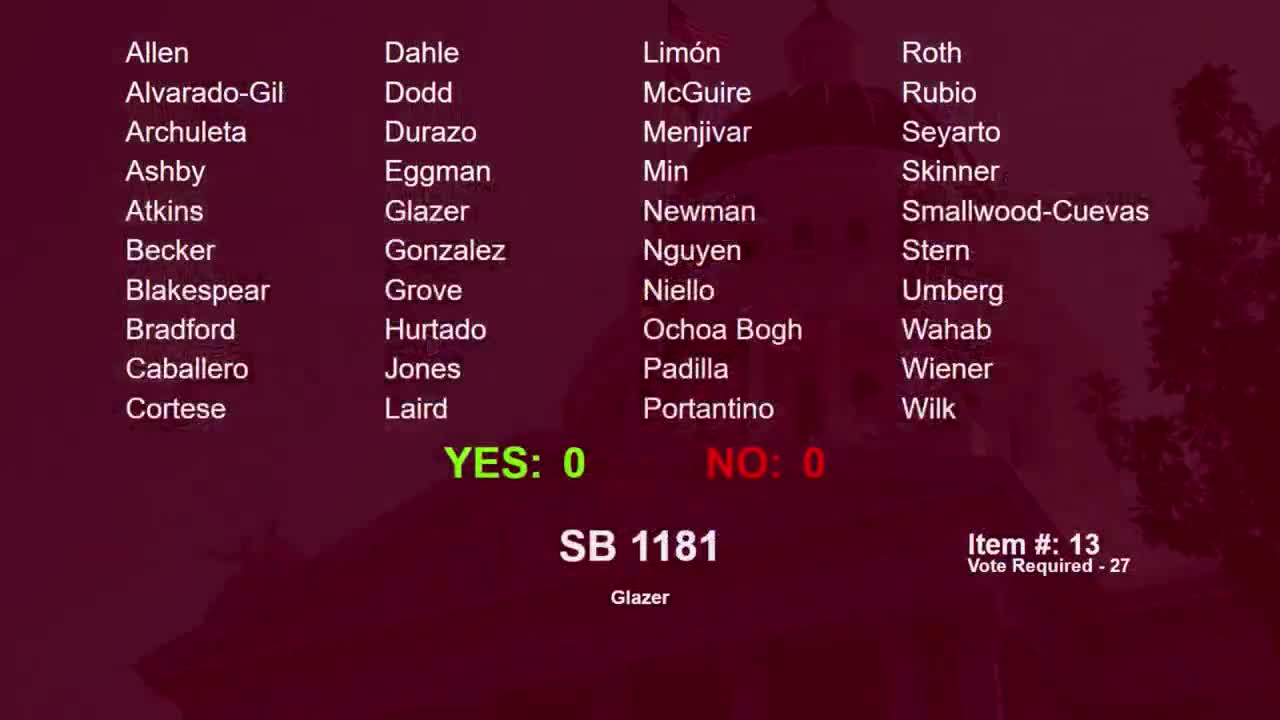 31MIN
Senate Floor
 16MIN
Senate Standing Committee on Revenue and Taxation
 17MIN
Senate Standing Committee on Local Government
Bill Author