SB 1523: Gambling: lotteries.
- Session Year: 2023-2024
- House: Senate
- Latest Version Date: 2024-09-22
Current Status:
Passed
(2024-09-22: Chaptered by Secretary of State. Chapter 496, Statutes of 2024.)
Introduced
In Committee
First Chamber
In Committee
Second Chamber
Enacted
Existing law prohibits the operation of a lottery. Notwithstanding this prohibition, the California Constitution and other existing law authorizes the operation of the California State Lottery and of charitable raffles, as specified. Existing law additionally clarifies that it is not unlawful to produce, print, or sell any advertising materials for a lawful lottery conducted outside of California if those advertising materials are not used in California.
This bill would additionally clarify that it is not unlawful to place or operate communications to and from equipment located within the State of California associated with the hosting of lottery games duly authorized by another state or jurisdiction provided that persons wagering on those games are required by the laws or regulations of the other state or jurisdiction to be physically located within the geographic bounds of that other state or jurisdiction at the time the wager is initiated or placed.
The California Constitution and existing law authorize and regulate the California State Lottery. Existing law clarifies that a business or entity may manufacture, assemble, repair, maintain, print, or otherwise produce and transport various devices, paraphernalia, equipment, tickets, or other products that are used in a state lottery. Existing law additionally clarifies that it is not unlawful to produce, print, or sell any advertising materials for a lawful lottery conducted outside of California if those advertising materials are not used in California. This bill would specify that is it lawful for a business to place, operate, or send communications using, any electronic communication equipment, including, without limitation, a computer server, wire, or router, located within the State of California, relating to the operation of a lottery conducted in any other state or jurisdiction where that lottery is not prohibited by the laws of that state or jurisdiction, and provided that the persons wagering on those games are required to be physically present in the geographic boundaries of the state or jurisdiction at the time of wagering.The California Constitution and existing law authorize and regulate the California State Lottery. Existing law clarifies that a business or entity may manufacture, assemble, repair, maintain, print, or otherwise produce and transport various devices, paraphernalia, equipment, tickets, or other products that are used in a state lottery. Existing law additionally clarifies that it is not unlawful to produce, print, or sell any advertising materials for a lawful lottery conducted outside of California if those advertising materials are not used in California.
This bill would specify that is it lawful for a business to place, operate, or send communications using, any electronic communication equipment, including, without limitation, a computer server, wire, or router, located within the State of California, relating to the operation of a lottery conducted in any other state or jurisdiction where that lottery is not prohibited by the laws of that state or jurisdiction, and provided that the persons wagering on those games are required to be physically present in the geographic boundaries of the state or jurisdiction at the time of wagering.
(a)This chapter does not make unlawful the printing or other production of any advertisements for, or any ticket, chance, or share in a lottery conducted in any other state or nation where such lottery is not prohibited by the laws of such state or nation; or the sale of such materials by the manufacturer thereof to any person or entity conducting or participating in the conduct of such a lottery in any such state or nation.
(b)This chapter does not make unlawful the placement or operation of, or communication to and from, equipment located in the State of California associated with the hosting of lottery games duly authorized by another state or jurisdiction provided that persons wagering on those games are required by the laws or regulations of the other state or jurisdiction to be physically located within the geographic bounds of that other state or jurisdiction at the time the wager is initiated or placed.
(c)This section does not authorize any advertisement within California relating to lotteries, the sale or resale within California of lottery tickets, chances, or shares to individuals, or acts otherwise in violation of any laws of the state.
Nothing in this chapter shall (a)This chapter does not make unlawful the printing or other production of any advertisements for, or any ticket, chance, or share in a lottery conducted in any other state or nation where such lottery is not prohibited by the laws of such state or nation; or the sale of such materials by the manufacturer thereof to any person or entity conducting or participating in the conduct of such a lottery in any such state or nation. This section does not authorize any advertisement within California relating to lotteries, or the sale or resale within California of lottery tickets, chances, or shares to individuals, or acts otherwise in violation of any laws of the state.
(b)This chapter does not make unlawful the placement or operation of, or communication to and from, equipment located in the State of California associated with the hosting of lottery games duly authorized by another state or jurisdiction provided that persons wagering on those games are required by the laws or regulations of the other state or jurisdiction to be physically located within the geographic bounds of that other state or jurisdiction at the time the wager is initiated or placed.
(c)This section does not authorize any advertisement within California relating to lotteries, the sale or resale within California of lottery tickets, chances, or shares to individuals, or acts otherwise in violation of any laws of the state.
SECTION 1.Section 8880.70 of the Government Code is amended to read:8880.70.Lawful Activity(a)Any other state or local law providing any penalty, disability, restriction, or prohibition for the possession, manufacture, transportation, distribution, advertising, or sale of any lottery tickets or shares shall not apply to the tickets or shares of the California State Lottery.(b)A business or entity may manufacture, assemble, repair, maintain, print, or otherwise produce and transport various devices, paraphernalia, equipment, tickets, or other products which are used in a state lottery.(c)A business or entity may place, operate, or send communications using, any electronic communication equipment, including, without limitation, any computer server, wire, or router, located within the State of California, relating to the operation of a lottery conducted in any other state or jurisdiction where that lottery is not prohibited by the laws of that state or jurisdiction and provided that the persons wagering on those games are required to be physically present in the geographic boundaries of the state or jurisdiction at the time of wagering. This subdivision does not authorize the sale or resale of lottery tickets, chances, or shares from any out-of-state lottery to any person in California.Lawful Activity
Any
(a)Any other state or local law providing any penalty, disability, restriction, or prohibition for the possession, manufacture, transportation, distribution, advertising, or sale of any lottery tickets or shares shall not apply to the tickets or shares of the California State Lottery.
A
(b)A business or entity may manufacture, assemble, repair, maintain, print, or otherwise produce and transport various devices, paraphernalia, equipment, tickets, or other products which are used in a state lottery.
(c)A business or entity may place, operate, or send communications using, any electronic communication equipment, including, without limitation, any computer server, wire, or router, located within the State of California, relating to the operation of a lottery conducted in any other state or jurisdiction where that lottery is not prohibited by the laws of that state or jurisdiction and provided that the persons wagering on those games are required to be physically present in the geographic boundaries of the state or jurisdiction at the time of wagering. This subdivision does not authorize the sale or resale of lottery tickets, chances, or shares from any out-of-state lottery to any person in California.
|
Date
|
Status
|
|---|---|
| Sep 22, 2024 | Chaptered by Secretary of State. Chapter 496, Statutes of 2024. |
| Sep 22, 2024 | Approved by the Governor. |
| Sep 4, 2024 | Enrolled and presented to the Governor at 4 p.m. |
| Aug 28, 2024 | Assembly amendments concurred in. (Ayes 39. Noes 0. Page 5593.) Ordered to engrossing and enrolling. |
| Aug 28, 2024 | In Senate. Concurrence in Assembly amendments pending. |
| Aug 26, 2024 | Read third time. Passed. (Ayes 77. Noes 0. Page 6500.) Ordered to the Senate. |
| Aug 19, 2024 | Read third time and amended. (Ayes 77. Noes 0. Page 6373.) |
| Aug 19, 2024 | Ordered to third reading. |
| Jun 24, 2024 | From consent calendar on motion of Assembly Member Aguiar-Curry. |
| Jun 24, 2024 | Read second time. Ordered to consent calendar. |
| Jun 24, 2024 | Ordered to third reading. |
| Jun 20, 2024 | From committee: Do pass. Ordered to consent calendar. (Ayes 19. Noes 0.) (June 19). |
| Jun 5, 2024 | June 5 set for first hearing canceled at the request of author. |
| May 6, 2024 | Referred to Com. on G.O. |
| May 2, 2024 | In Assembly. Read first time. Held at Desk. |
| May 2, 2024 | Read third time. Passed. (Ayes 38. Noes 0. Page 3829.) Ordered to the Assembly. |
| Apr 24, 2024 | Read second time. Ordered to consent calendar. |
| Apr 23, 2024 | From committee: Do pass. Ordered to consent calendar. (Ayes 16. Noes 0. Page 3723.) (April 23). |
| Apr 9, 2024 | Set for hearing April 23. |
| Mar 20, 2024 | Referred to Com. on G.O. |
| Mar 13, 2024 | From printer. May be acted upon on or after April 12. |
| Mar 12, 2024 | Introduced. Read first time. To Com. on RLS. for assignment. To print. |
|
Date
|
Description
|
Location
|
Votes
|
|
|---|---|---|---|---|
| Aug 28, 2024 | Unfinished Business SB1523 G.O. (Dodd) Concurrence | Senate Floor |
Passed |
|
| Aug 26, 2024 | SB 1523 Governmental Organizatio Senate Third Reading By RUBIO | Assembly Floor |
Passed |
|
| Aug 19, 2024 | SB 1523 Governmental Organizatio Senate Third Reading By RUBIO Amendment Set #1 | Assembly Floor |
Passed |
|
| Jun 19, 2024 | Do pass. To Consent Calendar. | Assembly Standing Committee on Governmental Organization |
Passed |
|
| May 2, 2024 | Consent Calendar 2nd SB1523 G.O. (Dodd) | Senate Floor |
Passed |
|
| Apr 23, 2024 | Do pass and be ordered to the Consent Calendar | Senate Standing Committee on Governmental Organization |
Passed |
This list shows positions taken on this bill by organizations on the date displayed, which is linked to the original source.
Positions by individuals are not included.
SENATE RULES COMMITTEE Office of Senate Floor Analyses (916) 651-1520 Fax: (916) 327-4478 | SB 1523 |
UNFINISHED BUSINESS
Bill No: SB 1523
Author: Committee on Governmental Organization
Amended: 8/19/24
Vote: 21
SENATE GOVERNMENTAL ORG. COMMITTEE: 16-0, 4/23/24
AYES: Dodd, Wilk, Alvarado-Gil, Archuleta, Ashby, Bradford, Glazer, Jones, Nguyen, Ochoa Bogh, Padilla, Portantino, Roth, Rubio, Seyarto, Smallwood-Cuevas
SENATE FLOOR: 38-0, 5/2/24 (Consent)
AYES: Allen, Alvarado-Gil, Archuleta, Ashby, Atkins, Becker, Blakespear, Bradford, Caballero, Cortese, Dahle, Dodd, Durazo, Eggman, Glazer, Gonzalez, Grove, Jones, Limón, McGuire, Menjivar, Min, Newman, Nguyen, Niello, Ochoa Bogh, Padilla, Portantino, Roth, Rubio, Seyarto, Skinner, Smallwood-Cuevas, Stern, Umberg, Wahab, Wiener, Wilk
NO VOTE RECORDED: Hurtado, Laird
ASSEMBLY FLOOR: 77-0, 8/26/24 - See last page for vote
SUBJECT: Gambling: lotteries
SOURCE: Author
DIGEST: This bill clarifies that a business may place, operate, or send communications using electronic communication equipment, located within the State of California, relating to the operation of a lawful lottery conducted in any other state, as specified.
Assembly Amendments
are technical and clarifying.
ANALYSIS:
Existing law:
- Authorizes under the California State Lottery Act of 1984 (Act), the California State Lottery and provides for its operation and administration by the California State Lottery (Commission). The Commission consists of five members and is required to promote and ensure the integrity, security, honesty, and fairness in the operation of the Lottery.
- Clarifies that a business or entity may manufacture, assemble, repair, maintain, print, or otherwise produce and transport various devices, paraphernalia, equipment, tickets, or other products that are used in a state lottery.
- Clarifies that is not unlawful to produce, print, or sell any advertising materials for a lawful lottery conducted outside of California if those advertising materials are not used in California.
This bill:
- Clarifies that a business or entity may place, operate, or send communications using, any electronic communication equipment, including, without limitation, any computer server, wire, or router, located within the State of California, relating to the operation of a lottery conducted in any other state or jurisdiction where that lottery is not prohibited by the laws of the state or jurisdiction and provided that the person wagering on those games are required to be physically present in the geographic boundaries of the state or jurisdiction at the time of wagering.
- Provides that nothing in this bill authorize the sale or resale of lottery tickets, chances, or shares from any out-of-state lottery to any person in California.
Background
Author Statement. According to the author’s office, “this bill simply clarifies that a business entity may use electronic equipment in California for purposes related to the operation of lawful lotteries in other states. The bill makes it clear that nothing in the bill authorizes the sale or resale of out-of-state lottery tickets to a person in California. This change will ensure that the California State Lottery Act is updated to reflect new technologies.”
California State Lottery. The Lottery was created by a ballot measure, Proposition 37, which was approved by 58% of voters on Nov. 6, 1984. The Act gave the Lottery a clear mission to provide supplemental funding to California public education on all levels from kindergarten through higher education, plus several specialized schools. The Act specifies that the Lottery shall be operated and administered by a commission appointed by the Governor. The Legislature has the authority to amend the Act by a two-thirds majority, if by doing so furthers the purposes of the Act.
On April 8, 2010, the Legislature amended the Act with AB 142 (Hayashi, Chapter 13, Statutes of 2010). The bill requires the Lottery to return at least 87% of revenues to the public in the form of prizes and contributions to education, and established a cap of 13% of revenues as the amount the Lottery may spend on operating expenses. Prior to AB 142 (Hayashi, Chapter 13, Statutes of 2010), the Lottery was required to return, 50% of revenues to the public in the form of prizes; at least 34% to public education; and allocate no more than 16% to administrative costs. The bill required the Controller to review the amount of revenue that was allocated to public education at the end of each year for five years. If the total amount of revenue to public education fell short of the amount allocated in the last full fiscal year prior to the enactment of the bill, the bill included a provision that would have repealed the change. Such a drop never happened, the change in allocation resulted in more money being allocated to education.
The Lottery has contributed more than $41 billion in funding to California's public schools since it was established in 1985. In Fiscal Year 2021–2022, the Lottery contributed about $2 billion to public schools, or about 1% of the state's annual public school budget. Lottery funds are intended to supplement public education, not to replace state and local funding. Funds should only be used exclusively for educational purposes for students. Schools have used lottery allocations for computer labs, teacher training sessions, and programs like science, music, and art.
The Controller’s office determines how to allocate lottery funds to public education institutions. For K–12 and community college districts, funding is based on average daily attendance, while funding for higher education and other specialized institutions is based on full-time enrollment.
International Game Technology. In October 2023, the California State Lottery announced the signing of a contract amendment with International Game Technology (IGT) as the lottery’s primary lottery technology provider. The new seven-year extension is expected to run through October 2033, and includes an additional five, one-year extension options.
As part of the contract amendment, IGT will upgrade the California Lottery’s current IGT provided second-chance platform for the company’s latest cloud-based platform. Additional central system-related business will also be moved to the cloud. Like many other businesses, IGT is migrating from internally hosted physical servers to cloud date centers. As part of that transition, IGT is planning to co-locate data centers in California and Virginia that would host components of its iLottery and retail lottery solutions for out-of-state lotteries. The proposed cloud data center would be located in Fresno, California and would be “paired” with a data center located in Boydton, Virginia. One would be the primary server and the other being the back-up for any given state lottery.
The services that would be hosted for out-of-state lotteries include data transmissions for the wallet and other functionality for iLottery that is legal in the state where the wager occurs. For those out-of-state lotteries, the wager must be made while the customer is physically present in that state, which is verified through a geolocation system before the wager is accepter. Transmission of data related to the transaction would occur through the cloud data centers in California and Virginia.
SB 1523 would not change anything about how the California lottery runs its lottery games and would not change the current prohibition against playing an out-of-state lottery while in California. Rather, the bill simply allow IGT, or a future lottery technology provider, to move their back-end operations from physical servers currently located in the host state, to a cloud-based server within the State of California.
Related/Prior Legislation
SB 818 (Committee of Governmental Organization, 2021) would have required the Director of the California State Lottery, on or before August 1, 2022, to conduct a study to determine the optimal prize payout rate to maximize the amount of funding allocated to public education and would have required the Director to recalculate the optimal prize payout rate at least once every five years. In addition, the bill would have required the Commission to use the optimal prize payout rate to set the lottery’s budget each year. (Never Heard in the Assembly Governmental Organization Committee)
FISCAL EFFECT: Appropriation: No Fiscal Com.: No Local: No
SUPPORT: (Verified 8/19/24)
None received
OPPOSITION: (Verified 8/19/24)
None received
ASSEMBLY FLOOR: 77-0, 8/26/24
AYES: Addis, Aguiar-Curry, Alanis, Alvarez, Arambula, Bains, Bauer-Kahan, Bennett, Berman, Boerner, Bonta, Bryan, Calderon, Juan Carrillo, Wendy Carrillo, Chen, Connolly, Megan Dahle, Davies, Dixon, Essayli, Flora, Mike Fong, Friedman, Gabriel, Gallagher, Garcia, Gipson, Grayson, Haney, Hart, Holden, Hoover, Irwin, Jackson, Jones-Sawyer, Kalra, Lackey, Lee, Low, Lowenthal, Maienschein, Mathis, McCarty, McKinnor, Muratsuchi, Stephanie Nguyen, Pacheco, Papan, Jim Patterson, Joe Patterson, Pellerin, Petrie-Norris, Quirk-Silva, Ramos, Rendon, Reyes, Luz Rivas, Rodriguez, Blanca Rubio, Sanchez, Santiago, Schiavo, Soria, Ta, Ting, Valencia, Villapudua, Waldron, Wallis, Ward, Weber, Wicks, Wilson, Wood, Zbur, Robert Rivas
NO VOTE RECORDED: Cervantes, Ortega
Prepared by: Felipe Lopez / G.O. / (916) 651-1530
8/27/24 12:23:25
**** END ****
SENATE THIRD READING
STR Bill Id:SB 1523
Author:(Committee on Governmental Organization)
As Introduced Ver:August 19, 2024
Majority vote
SUMMARY
This bill would clarify that it is not unlawful to place or operate communications to and from equipment located within the State of California associated with the hosting of lottery games duly authorized by another state or jurisdiction provided that persons wagering on those games are required by the laws or regulations of the other state or jurisdiction to be physically located within the geographic bounds of that other state or jurisdiction at the time the wager is initiated or placed.
Major Provisions
- Clarifies that it is not unlawful to place or operate communications to and from equipment located within the State of California associated with the hosting of lottery games duly authorized by another state or jurisdiction provided that persons wagering on those games are required by the laws or regulations of the other state or jurisdiction to be physically located within the geographic bounds of that other state or jurisdiction at the time the wager is initiated or placed.
- Provides that nothing in this bill authorizes any advertisement within California relating to lotteries, the sale or resale within California of lottery tickets, chances, or shares to individuals, or acts otherwise in violation of any laws of the state.
COMMENTS
Background.
California State Lottery. The California State Lottery was created by a ballot measure, Proposition 37, which was approved by 58% of voters on Nov. 6, 1984. The Act gave the Lottery a clear mission to provide supplemental funding to California public education on all levels from kindergarten through higher education, plus several specialized schools. The Act specifies that the Lottery shall be operated and administered by a commission appointed by the Governor. The Legislature has the authority to amend the Act by a two-thirds majority, if the amendments further the purposes of the Act.
The Commission is required to promote and ensure integrity, security, honesty, and fairness in the operation and administration of the Lottery. It is also responsible for approving the Lottery's budget and business plans. In addition, the Act requires the Commission to promulgate regulations that specify the types of games the Lottery can conduct and to establish a system for paying prizes.
On April 8, 2010, the Legislature amended the Act with AB 142 (Hayashi, Chapter 13, Statutes of 2010). The bill required the Lottery to return at least 87% of revenues to the public in the form of prizes and contributions to education, and established a cap of 13% of revenues as the amount the Lottery may spend on operating expenses. Prior to AB 142, the Lottery was required to return, 50% of revenues to the public in the form of prizes; at least 34% to public education; and allocate no more than 16% to administrative costs. The bill required the State Controller to review the amount of revenue that was allocated to public education at the end of each year for five years. If the total amount of revenue to public education fell short of the amount allocated in the last full fiscal year prior to the enactment of the bill, the bill included a provision that would have repealed the change. Such a decline has never happened; the change in allocation has resulted in a significant increase in funding for California public education.
The Lottery has contributed more than $41 billion in funding to California's public schools since it was established in 1985. In Fiscal Year 2021–2022, the Lottery contributed about $2 billion to public schools, or about 1% of the state's annual public school budget. Lottery funds are intended to supplement public education, not to replace state and local funding. Funds should only be used exclusively for educational purposes for students. Schools have used lottery allocations for computer labs, teacher training sessions, and programs like science, music, and art.
The State Controller's Office determines how to allocate lottery funds to public education institutions. For K–12 and community college districts, funding is based on average daily attendance (ADA), while funding for higher education and other specialized institutions is based on full-time enrollment.
International Game Technology. In October 2023, the California State Lottery announced the signing of a contract amendment with International Game Technology (IGT) as the lottery's primary lottery technology provider. The new seven-year extension is expected to run through October 2033, and includes an additional five, one-year extension options.
As part of the contract amendment, IGT will upgrade the California Lottery's current IGT provided second-chance platform for the company's latest cloud-based platform. Additional central system-related business will also be moved to the cloud. Like many other businesses, IGT is migrating from internally hosted physical servers to cloud date centers. As part of that transition, IGT is planning to co-locate data centers in California and Virginia that would host components of its iLottery and retail lottery solutions for out-of-state lotteries. The proposed cloud data center would be located in Fresno, California and would be "paired" with a data center located in Boydton, Virginia. One would be the primary server and the other being the back-up for any given state lottery.
The services that would be hosted for out-of-state lotteries include data transmissions for the wallet and other functionality for iLottery that is legal in the state where the wager occurs. For those out-of-state lotteries, the wager must be made while the customer is physically present in that state, which is verified through a geolocation system before the wager is accepter. Transmission of data related to the transaction would occur through the cloud data centers in California and Virginia.
SB 1523 would not change anything about how the California lottery runs its lottery games and would not change the current prohibition against playing an out-of-state lottery while in California. Rather, the bill simply allow IGT, or a future lottery technology provider, to move their back-end operations from physical servers currently located in the host state, to a cloud-based server within the State of California.
According to the Author
According to the author's office, "this bill simply clarifies that a business entity may use electronic equipment in California for purposes related to the operation of lawful lotteries in other states. The bill makes it clear that nothing in the bill authorizes the sale or resale of out-of-state lottery tickets to a person in California. This change will ensure that the California State Lottery Act is updated to reflect new technologies."
Arguments in Support
None on file.
Arguments in Opposition
None on file.
FISCAL COMMENTS
This bill has been keyed non-fiscal by Legislative Counsel.
VOTES
SENATE FLOOR: 38-0-2
YES: Allen, Alvarado-Gil, Archuleta, Ashby, Atkins, Becker, Blakespear, Bradford, Caballero, Cortese, Dahle, Dodd, Durazo, Eggman, Glazer, Gonzalez, Grove, Jones, Limón, McGuire, Menjivar, Min, Newman, Nguyen, Niello, Ochoa Bogh, Padilla, Portantino, Roth, Rubio, Seyarto, Skinner, Smallwood-Cuevas, Stern, Umberg, Wahab, Wiener, Wilk
ABS, ABST OR NV: Hurtado, Laird
ASM GOVERNMENTAL ORGANIZATION: 19-0-3
YES: Blanca Rubio, Lackey, Addis, Bains, Bryan, Cervantes, Davies, Dixon, Gabriel, Gipson, Low, McKinnor, Pacheco, Papan, Jim Patterson, Soria, Ta, Valencia, Wallis
ABS, ABST OR NV: Haney, Jones-Sawyer, Ramos
UPDATED
VERSION: August 19, 2024
CONSULTANT: Eric Johnson / G.O. / (916) 319-2531 FN: 0004181
SENATE THIRD READING
STR Bill Id:SB 1523
Author:(Committee on Governmental Organization)
As Introduced Ver:March 12, 2024
Majority vote
SUMMARY
This bill would clarify that a business may place, operate, or send communications using electronic communication equipment, located within the State of California, relating to the operation of a lawful lottery conducted in any other state, as specified.
Major Provisions
- Clarifies that a business or entity may place, operate, or send communications using, any electronic communication equipment, including, without limitation, any computer server, wire, or router, located within the State of California, relating to the operation of a lottery conducted in any other state or jurisdiction where that lottery is not prohibited by the laws of the state or jurisdiction and provided that the person wagering on those games are required to be physically present in the geographic boundaries of the state or jurisdiction at the time of wagering.
- Provides that nothing in this bill authorize the sale or resale of lottery tickets, chances, or shares from any out-of-state lottery to any person in California.
COMMENTS
Background.
California State Lottery. The California State Lottery was created by a ballot measure, Proposition 37, which was approved by 58% of voters on Nov. 6, 1984. The Act gave the Lottery a clear mission to provide supplemental funding to California public education on all levels from kindergarten through higher education, plus several specialized schools. The Act specifies that the Lottery shall be operated and administered by a commission appointed by the Governor. The Legislature has the authority to amend the Act by a two-thirds majority, if the amendments further the purposes of the Act.
The Commission is required to promote and ensure integrity, security, honesty, and fairness in the operation and administration of the Lottery. It is also responsible for approving the Lottery's budget and business plans. In addition, the Act requires the Commission to promulgate regulations that specify the types of games the Lottery can conduct and to establish a system for paying prizes.
On April 8, 2010, the Legislature amended the Act with AB 142 (Hayashi), Chapter 13, Statutes of 2010. The bill required the Lottery to return at least 87% of revenues to the public in the form of prizes and contributions to education, and established a cap of 13% of revenues as the amount the Lottery may spend on operating expenses. Prior to AB 142, the Lottery was required to return, 50% of revenues to the public in the form of prizes; at least 34% to public education; and allocate no more than 16% to administrative costs. The bill required the State Controller to review the amount of revenue that was allocated to public education at the end of each year for five years. If the total amount of revenue to public education fell short of the amount allocated in the last full fiscal year prior to the enactment of the bill, the bill included a provision that would have repealed the change. Such a decline has never happened; the change in allocation has resulted in a significant increase in funding for California public education.
The Lottery has contributed more than $41 billion in funding to California's public schools since it was established in 1985. In Fiscal Year 2021–2022, the Lottery contributed about $2 billion to public schools, or about 1% of the state's annual public school budget. Lottery funds are intended to supplement public education, not to replace state and local funding. Funds should only be used exclusively for educational purposes for students. Schools have used lottery allocations for computer labs, teacher training sessions, and programs like science, music, and art.
The State Controller's Office determines how to allocate lottery funds to public education institutions. For K–12 and community college districts, funding is based on average daily attendance (ADA), while funding for higher education and other specialized institutions is based on full-time enrollment.
International Game Technology. In October 2023, the California State Lottery announced the signing of a contract amendment with International Game Technology (IGT) as the lottery's primary lottery technology provider. The new seven-year extension is expected to run through October 2033, and includes an additional five, one-year extension options.
As part of the contract amendment, IGT will upgrade the California Lottery's current IGT provided second-chance platform for the company's latest cloud-based platform. Additional central system-related business will also be moved to the cloud. Like many other businesses, IGT is migrating from internally hosted physical servers to cloud date centers. As part of that transition, IGT is planning to co-locate data centers in California and Virginia that would host components of its iLottery and retail lottery solutions for out-of-state lotteries. The proposed cloud data center would be located in Fresno, California and would be "paired" with a data center located in Boydton, Virginia. One would be the primary server and the other being the back-up for any given state lottery.
The services that would be hosted for out-of-state lotteries include data transmissions for the wallet and other functionality for iLottery that is legal in the state where the wager occurs. For those out-of-state lotteries, the wager must be made while the customer is physically present in that state, which is verified through a geolocation system before the wager is accepter. Transmission of data related to the transaction would occur through the cloud data centers in California and Virginia.
This bill would not change anything about how the California lottery runs its lottery games and would not change the current prohibition against playing an out-of-state lottery while in California. Rather, the bill simply allow IGT, or a future lottery technology provider, to move their back-end operations from physical servers currently located in the host state, to a cloud-based server within the State of California.
According to the Author
According to the author's office, "this bill simply clarifies that a business entity may use electronic equipment in California for purposes related to the operation of lawful lotteries in other states. The bill makes it clear that nothing in the bill authorizes the sale or resale of out-of-state lottery tickets to a person in California. This change will ensure that the California State Lottery Act is updated to reflect new technologies."
Arguments in Support
None on file
Arguments in Opposition
None on file
FISCAL COMMENTS
This bill has been keyed non-fiscal by Legislative Counsel.
VOTES
SENATE FLOOR: 38-0-2
YES: Allen, Alvarado-Gil, Archuleta, Ashby, Atkins, Becker, Blakespear, Bradford, Caballero, Cortese, Dahle, Dodd, Durazo, Eggman, Glazer, Gonzalez, Grove, Jones, Limón, McGuire, Menjivar, Min, Newman, Nguyen, Niello, Ochoa Bogh, Padilla, Portantino, Roth, Rubio, Seyarto, Skinner, Smallwood-Cuevas, Stern, Umberg, Wahab, Wiener, Wilk
ABS, ABST OR NV: Hurtado, Laird
ASM GOVERNMENTAL ORGANIZATION: 19-0-3
YES: Blanca Rubio, Lackey, Addis, Bains, Bryan, Cervantes, Davies, Dixon, Gabriel, Gipson, Low, McKinnor, Pacheco, Papan, Jim Patterson, Soria, Ta, Valencia, Wallis
ABS, ABST OR NV: Haney, Jones-Sawyer, Ramos
UPDATED
VERSION: March 12, 2024
CONSULTANT: Eric Johnson / G.O. / (916) 319-2531 FN: 0003567
Date of Hearing: June 19, 2024
ASSEMBLY COMMITTEE ON GOVERNMENTAL ORGANIZATION
Blanca Rubio, Chair
SBPCA Bill Id:SB 1523
Author:(Committee on Governmental Organization) – As Introduced Ver:March 12, 2024
SENATE VOTE: 38-0
SUBJECT: California State Lottery
SUMMARY: This bill would clarify that a business may place, operate, or send communications using electronic communication equipment, located within the State of California, relating to the operation of a lawful lottery conducted in any other state, as specified. Specifically, this bill:
- Clarifies that a business or entity may place, operate, or send communications using, any electronic communication equipment, including, without limitation, any computer server, wire, or router, located within the State of California, relating to the operation of a lottery conducted in any other state or jurisdiction where that lottery is not prohibited by the laws of the state or jurisdiction and provided that the person wagering on those games are required to be physically present in the geographic boundaries of the state or jurisdiction at the time of wagering.
- Provides that nothing in this bill authorize the sale or resale of lottery tickets, chances, or shares from any out-of-state lottery to any person in California.
EXISTING LAW:
- Authorizes under the California State Lottery Act of 1984 (Act), the California State Lottery and provides for its operation and administration by the California State Lottery (Commission). The Commission consists of five members and is required to promote and ensure the integrity, security, honesty, and fairness in the operation of the Lottery.
- Clarifies that a business or entity may manufacture, assemble, repair, maintain, print, or otherwise produce and transport various devices, paraphernalia, equipment, tickets, or other products that are used in a state lottery.
- Clarifies that is not unlawful to produce, print, or sell any advertising materials for a lawful lottery conducted outside of California if those advertising materials are not used in California.
FISCAL EFFECT: This bill has been keyed non-fiscal by Legislative Counsel.
COMMENTS:
Purpose of the bill. According to the author’s office, “this bill simply clarifies that a business entity may use electronic equipment in California for purposes related to the operation of lawful lotteries in other states. The bill makes it clear that nothing in the bill authorizes the sale or resale of out-of-state lottery tickets to a person in California. This change will ensure that the California State Lottery Act is updated to reflect new technologies.”
Background.
California State Lottery. The California State Lottery was created by a ballot measure, Proposition 37, which was approved by 58% of voters on Nov. 6, 1984. The Act gave the Lottery a clear mission to provide supplemental funding to California public education on all levels from kindergarten through higher education, plus several specialized schools. The Act specifies that the Lottery shall be operated and administered by a commission appointed by the Governor. The Legislature has the authority to amend the Act by a two-thirds majority, if the amendments further the purposes of the Act.
The Commission is required to promote and ensure integrity, security, honesty, and fairness in the operation and administration of the Lottery. It is also responsible for approving the Lottery’s budget and business plans. In addition, the Act requires the Commission to promulgate regulations that specify the types of games the Lottery can conduct and to establish a system for paying prizes.
On April 8, 2010, the Legislature amended the Act with AB 142 (Hayashi, Chapter 13, Statutes of 2010). The bill required the Lottery to return at least 87% of revenues to the public in the form of prizes and contributions to education, and established a cap of 13% of revenues as the amount the Lottery may spend on operating expenses. Prior to AB 142, the Lottery was required to return, 50% of revenues to the public in the form of prizes; at least 34% to public education; and allocate no more than 16% to administrative costs. The bill required the State Controller to review the amount of revenue that was allocated to public education at the end of each year for five years. If the total amount of revenue to public education fell short of the amount allocated in the last full fiscal year prior to the enactment of the bill, the bill included a provision that would have repealed the change. Such a decline has never happened; the change in allocation has resulted in a significant increase in funding for California public education.
The Lottery has contributed more than $41 billion in funding to California's public schools since it was established in 1985. In Fiscal Year 2021–2022, the Lottery contributed about $2 billion to public schools, or about 1% of the state's annual public school budget. Lottery funds are intended to supplement public education, not to replace state and local funding. Funds should only be used exclusively for educational purposes for students. Schools have used lottery allocations for computer labs, teacher training sessions, and programs like science, music, and art.
The State Controller's Office determines how to allocate lottery funds to public education institutions. For K–12 and community college districts, funding is based on average daily attendance (ADA), while funding for higher education and other specialized institutions is based on full-time enrollment.
International Game Technology. In October 2023, the California State Lottery announced the signing of a contract amendment with International Game Technology (IGT) as the lottery’s primary lottery technology provider. The new seven-year extension is expected to run through October 2033, and includes an additional five, one-year extension options.
As part of the contract amendment, IGT will upgrade the California Lottery’s current IGT provided second-chance platform for the company’s latest cloud-based platform. Additional central system-related business will also be moved to the cloud. Like many other businesses, IGT is migrating from internally hosted physical servers to cloud date centers. As part of that transition, IGT is planning to co-locate data centers in California and Virginia that would host components of its iLottery and retail lottery solutions for out-of-state lotteries. The proposed cloud data center would be located in Fresno, California and would be “paired” with a data center located in Boydton, Virginia. One would be the primary server and the other being the back-up for any given state lottery.
The services that would be hosted for out-of-state lotteries include data transmissions for the wallet and other functionality for iLottery that is legal in the state where the wager occurs. For those out-of-state lotteries, the wager must be made while the customer is physically present in that state, which is verified through a geolocation system before the wager is accepter. Transmission of data related to the transaction would occur through the cloud data centers in California and Virginia.
SB 1523 would not change anything about how the California lottery runs its lottery games and would not change the current prohibition against playing an out-of-state lottery while in California. Rather, the bill simply allow IGT, or a future lottery technology provider, to move their back-end operations from physical servers currently located in the host state, to a cloud-based server within the State of California.
Related legislation. AB 1769 (Committee on Governmental Organization) of 2023. This bill specifies existing quarterly reports of the operation of the Commission must be made in writing and sent to relevant legislative committees. (Pending on the Senate Floor)
Prior legislation. SB 818 (Committee on Governmental Organization) of 2021. Would have required the California State Lottery, before August 1, 2022, to conduct a study to determine the optimal prize payout rate to maximize the amount of funding allocated to public education and to use the recalculated rate, as specified, to set the Lottery’s budget each fiscal year. (Gut and amended in the Assembly)
SB 891 (Chang) of 2020. Would have specified that revenues of the Lottery are to be allocated so as to ensure that the relationship between increases in the net revenues of the Lottery and increase in funding allocated to public education is directly proportional. In addition, the bill would have appropriated $36 million from the Lottery Fund to the California State Controller for allocation to public education in order to cover the shortfall in allocation form the Lottery Fund for the 2017-18 fiscal year. (Never Heard in the Senate Committee on Governmental Organization)
SB 1442 (Chang) of 2020. Would have, among other things, required the Director, on or before August 1, 2021, to conduct a study to determine the optimal prize payout to maximize the amount of funding allocated to public education each year by the Lottery and would have required the Director to recalculate the optimal prize payout rate at least once every five years. (Never Heard in the Senate Committee on Governmental Organization)
AB 1464 (Gray) of 2019. Would have required the State Controller to, every three years, conduct an audit of the Commission administrative operating expenses for the prior fiscal year. (Senate Appropriations Committee – Held under submission)
SB 619 (Bradford) of 2017. Would have allowed a business that is not a lottery game retailer to purchase lottery tickets from an authorized lottery retailer on behalf of individuals who order those tickets through the Internet Website or mobile application operated by that business. (Never heard in Senate Committee on Governmental Organization)
AB 1428 (Gray) of 2016. This bill would have required the Commission to collect, and make publicly available on the Commission's website, information related to the separate lottery education accounts for each school district and each county superintendent of schools. (Assembly Appropriations Committee – Held under submission)
AB 363 (Hayashi), Chapter 56, Statutes of 2011. Extended the due date from December 31 to April 1 for each of the next five years on the State Controller’s reporting requirements on the Commission’s efforts to boost income for public education.
AB 142 (Hayashi), Chapter 13, Statutes of 2010. Modified the allocation formula of the Act and allowed the Lottery to modify the allocation formula if the Controller determined that revenues allocated to the benefit of public education is less than what would have been allocated if the law were not changed.
REGISTERED SUPPORT / OPPOSITION:
Support
None on file
Opposition
None on file
Analysis Prepared by: Eric Johnson / G.O. / (916) 319-2531
Date of Hearing: June 19, 2024
ASSEMBLY COMMITTEE ON GOVERNMENTAL ORGANIZATION
Blanca Rubio, Chair
SBPCA Bill Id:SB 1523
Author:(Committee on Governmental Organization) – As Introduced Ver:March 12, 2024
SENATE VOTE: 38-0
SUBJECT: California State Lottery
SUMMARY: This bill would clarify that a business may place, operate, or send communications using electronic communication equipment, located within the State of California, relating to the operation of a lawful lottery conducted in any other state, as specified. Specifically, this bill:
- Clarifies that a business or entity may place, operate, or send communications using, any electronic communication equipment, including, without limitation, any computer server, wire, or router, located within the State of California, relating to the operation of a lottery conducted in any other state or jurisdiction where that lottery is not prohibited by the laws of the state or jurisdiction and provided that the person wagering on those games are required to be physically present in the geographic boundaries of the state or jurisdiction at the time of wagering.
- Provides that nothing in this bill authorize the sale or resale of lottery tickets, chances, or shares from any out-of-state lottery to any person in California.
EXISTING LAW:
- Authorizes under the California State Lottery Act of 1984 (Act), the California State Lottery and provides for its operation and administration by the California State Lottery (Commission). The Commission consists of five members and is required to promote and ensure the integrity, security, honesty, and fairness in the operation of the Lottery.
- Clarifies that a business or entity may manufacture, assemble, repair, maintain, print, or otherwise produce and transport various devices, paraphernalia, equipment, tickets, or other products that are used in a state lottery.
- Clarifies that is not unlawful to produce, print, or sell any advertising materials for a lawful lottery conducted outside of California if those advertising materials are not used in California.
FISCAL EFFECT: This bill has been keyed fiscal by Legislative Counsel.
COMMENTS:
Purpose of the bill. According to the author’s office, “this bill simply clarifies that a business entity may use electronic equipment in California for purposes related to the operation of lawful lotteries in other states. The bill makes it clear that nothing in the bill authorizes the sale or resale of out-of-state lottery tickets to a person in California. This change will ensure that the California State Lottery Act is updated to reflect new technologies.”
Background.
California State Lottery. The California State Lottery was created by a ballot measure, Proposition 37, which was approved by 58% of voters on Nov. 6, 1984. The Act gave the Lottery a clear mission to provide supplemental funding to California public education on all levels from kindergarten through higher education, plus several specialized schools. The Act specifies that the Lottery shall be operated and administered by a commission appointed by the Governor. The Legislature has the authority to amend the Act by a two-thirds majority, if the amendments further the purposes of the Act.
The Commission is required to promote and ensure integrity, security, honesty, and fairness in the operation and administration of the Lottery. It is also responsible for approving the Lottery’s budget and business plans. In addition, the Act requires the Commission to promulgate regulations that specify the types of games the Lottery can conduct and to establish a system for paying prizes.
On April 8, 2010, the Legislature amended the Act with AB 142 (Hayashi, Chapter 13, Statutes of 2010). The bill required the Lottery to return at least 87% of revenues to the public in the form of prizes and contributions to education, and established a cap of 13% of revenues as the amount the Lottery may spend on operating expenses. Prior to AB 142, the Lottery was required to return, 50% of revenues to the public in the form of prizes; at least 34% to public education; and allocate no more than 16% to administrative costs. The bill required the State Controller to review the amount of revenue that was allocated to public education at the end of each year for five years. If the total amount of revenue to public education fell short of the amount allocated in the last full fiscal year prior to the enactment of the bill, the bill included a provision that would have repealed the change. Such a decline has never happened; the change in allocation has resulted in a significant increase in funding for California public education.
The Lottery has contributed more than $41 billion in funding to California's public schools since it was established in 1985. In Fiscal Year 2021–2022, the Lottery contributed about $2 billion to public schools, or about 1% of the state's annual public school budget. Lottery funds are intended to supplement public education, not to replace state and local funding. Funds should only be used exclusively for educational purposes for students. Schools have used lottery allocations for computer labs, teacher training sessions, and programs like science, music, and art.
The State Controller's Office determines how to allocate lottery funds to public education institutions. For K–12 and community college districts, funding is based on average daily attendance (ADA), while funding for higher education and other specialized institutions is based on full-time enrollment.
International Game Technology. In October 2023, the California State Lottery announced the signing of a contract amendment with International Game Technology (IGT) as the lottery’s primary lottery technology provider. The new seven-year extension is expected to run through October 2033, and includes an additional five, one-year extension options.
As part of the contract amendment, IGT will upgrade the California Lottery’s current IGT provided second-chance platform for the company’s latest cloud-based platform. Additional central system-related business will also be moved to the cloud. Like many other businesses, IGT is migrating from internally hosted physical servers to cloud date centers. As part of that transition, IGT is planning to co-locate data centers in California and Virginia that would host components of its iLottery and retail lottery solutions for out-of-state lotteries. The proposed cloud data center would be located in Fresno, California and would be “paired” with a data center located in Boydton, Virginia. One would be the primary server and the other being the back-up for any given state lottery.
The services that would be hosted for out-of-state lotteries include data transmissions for the wallet and other functionality for iLottery that is legal in the state where the wager occurs. For those out-of-state lotteries, the wager must be made while the customer is physically present in that state, which is verified through a geolocation system before the wager is accepter. Transmission of data related to the transaction would occur through the cloud data centers in California and Virginia.
SB 1523 would not change anything about how the California lottery runs its lottery games and would not change the current prohibition against playing an out-of-state lottery while in California. Rather, the bill simply allow IGT, or a future lottery technology provider, to move their back-end operations from physical servers currently located in the host state, to a cloud-based server within the State of California.
Related legislation. AB 1769 (Committee on Governmental Organization) of 2023. This bill specifies existing quarterly reports of the operation of the Commission must be made in writing and sent to relevant legislative committees. (Pending on the Senate Floor)
Prior legislation. SB 818 (Committee on Governmental Organization) of 2021. Would have required the California State Lottery, before August 1, 2022, to conduct a study to determine the optimal prize payout rate to maximize the amount of funding allocated to public education and to use the recalculated rate, as specified, to set the Lottery’s budget each fiscal year. (Gut and amended in the Assembly)
SB 891 (Chang) of 2020. Would have specified that revenues of the Lottery are to be allocated so as to ensure that the relationship between increases in the net revenues of the Lottery and increase in funding allocated to public education is directly proportional. In addition, the bill would have appropriated $36 million from the Lottery Fund to the California State Controller for allocation to public education in order to cover the shortfall in allocation form the Lottery Fund for the 2017-18 fiscal year. (Never Heard in the Senate Committee on Governmental Organization)
SB 1442 (Chang) of 2020. Would have, among other things, required the Director, on or before August 1, 2021, to conduct a study to determine the optimal prize payout to maximize the amount of funding allocated to public education each year by the Lottery and would have required the Director to recalculate the optimal prize payout rate at least once every five years. (Never Heard in the Senate Committee on Governmental Organization)
AB 1464 (Gray) of 2019. Would have required the State Controller to, every three years, conduct an audit of the Commission administrative operating expenses for the prior fiscal year. (Senate Appropriations Committee – Held under submission)
SB 619 (Bradford) of 2017. Would have allowed a business that is not a lottery game retailer to purchase lottery tickets from an authorized lottery retailer on behalf of individuals who order those tickets through the Internet Website or mobile application operated by that business. (Never heard in Senate Committee on Governmental Organization)
AB 1428 (Gray) of 2016. This bill would have required the Commission to collect, and make publicly available on the Commission's website, information related to the separate lottery education accounts for each school district and each county superintendent of schools. (Assembly Appropriations Committee – Held under submission)
AB 363 (Hayashi), Chapter 56, Statutes of 2011. Extended the due date from December 31 to April 1 for each of the next five years on the State Controller’s reporting requirements on the Commission’s efforts to boost income for public education.
AB 142 (Hayashi), Chapter 13, Statutes of 2010. Modified the allocation formula of the Act and allowed the Lottery to modify the allocation formula if the Controller determined that revenues allocated to the benefit of public education is less than what would have been allocated if the law were not changed.
REGISTERED SUPPORT / OPPOSITION:
Support
None on file
Opposition
None on file
Analysis Prepared by: Eric Johnson / G.O. / (916) 319-2531
SENATE RULES COMMITTEE Office of Senate Floor Analyses (916) 651-1520 Fax: (916) 327-4478 | SB 1523 |
CONSENT
Bill No: SB 1523
Author: Committee on Governmental Organization
Introduced: 3/12/24
Vote: 21
SENATE GOVERNMENTAL ORG. COMMITTEE: 16-0, 4/23/24
AYES: Dodd, Wilk, Alvarado-Gil, Archuleta, Ashby, Bradford, Glazer, Jones, Nguyen, Ochoa Bogh, Padilla, Portantino, Roth, Rubio, Seyarto, Smallwood-Cuevas
SUBJECT: California State Lottery
SOURCE: Author
DIGEST: This bill clarifies that a business may place, operate, or send communications using electronic communication equipment, located within the State of California, relating to the operation of a lawful lottery conducted in any other state, as specified.
ANALYSIS:
Existing law:
- Authorizes under the California State Lottery Act of 1984 (Act), the California State Lottery and provides for its operation and administration by the California State Lottery (Commission). The Commission consists of five members and is required to promote and ensure the integrity, security, honesty, and fairness in the operation of the Lottery.
- Clarifies that a business or entity may manufacture, assemble, repair, maintain, print, or otherwise produce and transport various devices, paraphernalia, equipment, tickets, or other products that are used in a state lottery.
- Clarifies that is not unlawful to produce, print, or sell any advertising materials for a lawful lottery conducted outside of California if those advertising materials are not used in California.
This bill:
- Clarifies that a business or entity may place, operate, or send communications using, any electronic communication equipment, including, without limitation, any computer server, wire, or router, located within the State of California, relating to the operation of a lottery conducted in any other state or jurisdiction where that lottery is not prohibited by the laws of the state or jurisdiction and provided that the person wagering on those games are required to be physically present in the geographic boundaries of the state or jurisdiction at the time of wagering.
- Provides that nothing in this bill authorize the sale or resale of lottery tickets, chances, or shares from any out-of-state lottery to any person in California.
Background
Author Statement. According to the author’s office, “this bill simply clarifies that a business entity may use electronic equipment in California for purposes related to the operation of lawful lotteries in other states. The bill makes it clear that nothing in the bill authorizes the sale or resale of out-of-state lottery tickets to a person in California. This change will ensure that the California State Lottery Act is updated to reflect new technologies.”
California State Lottery. The Lottery was created by a ballot measure, Proposition 37, which was approved by 58% of voters on Nov. 6, 1984. The Act gave the Lottery a clear mission to provide supplemental funding to California public education on all levels from kindergarten through higher education, plus several specialized schools. The Act specifies that the Lottery shall be operated and administered by a commission appointed by the Governor. The Legislature has the authority to amend the Act by a two-thirds majority, if by doing so furthers the purposes of the Act.
On April 8, 2010, the Legislature amended the Act with AB 142 (Hayashi, Chapter 13, Statutes of 2010). The bill requires the Lottery to return at least 87% of revenues to the public in the form of prizes and contributions to education, and established a cap of 13% of revenues as the amount the Lottery may spend on operating expenses. Prior to AB 142 (Hayashi, Chapter 13, Statutes of 2010), the Lottery was required to return, 50% of revenues to the public in the form of prizes; at least 34% to public education; and allocate no more than 16% to administrative costs. The bill required the Controller to review the amount of revenue that was allocated to public education at the end of each year for five years. If the total amount of revenue to public education fell short of the amount allocated in the last full fiscal year prior to the enactment of the bill, the bill included a provision that would have repealed the change. Such a drop never happened, the change in allocation resulted in more money being allocated to education.
The Lottery has contributed more than $41 billion in funding to California's public schools since it was established in 1985. In Fiscal Year 2021–2022, the Lottery contributed about $2 billion to public schools, or about 1% of the state's annual public school budget. Lottery funds are intended to supplement public education, not to replace state and local funding. Funds should only be used exclusively for educational purposes for students. Schools have used lottery allocations for computer labs, teacher training sessions, and programs like science, music, and art.
The Controller’s office determines how to allocate lottery funds to public education institutions. For K–12 and community college districts, funding is based on average daily attendance, while funding for higher education and other specialized institutions is based on full-time enrollment.
International Game Technology. In October 2023, the California State Lottery announced the signing of a contract amendment with International Game Technology (IGT) as the lottery’s primary lottery technology provider. The new seven-year extension is expected to run through October 2033, and includes an additional five, one-year extension options.
As part of the contract amendment, IGT will upgrade the California Lottery’s current IGT provided second-chance platform for the company’s latest cloud-based platform. Additional central system-related business will also be moved to the cloud. Like many other businesses, IGT is migrating from internally hosted physical servers to cloud date centers. As part of that transition, IGT is planning to co-locate data centers in California and Virginia that would host components of its iLottery and retail lottery solutions for out-of-state lotteries. The proposed cloud data center would be located in Fresno, California and would be “paired” with a data center located in Boydton, Virginia. One would be the primary server and the other being the back-up for any given state lottery.
The services that would be hosted for out-of-state lotteries include data transmissions for the wallet and other functionality for iLottery that is legal in the state where the wager occurs. For those out-of-state lotteries, the wager must be made while the customer is physically present in that state, which is verified through a geolocation system before the wager is accepter. Transmission of data related to the transaction would occur through the cloud data centers in California and Virginia.
SB 1523 would not change anything about how the California lottery runs its lottery games and would not change the current prohibition against playing an out-of-state lottery while in California. Rather, the bill simply allow IGT, or a future lottery technology provider, to move their back-end operations from physical servers currently located in the host state, to a cloud-based server within the State of California.
Related/ Prior Legislation
SB 818 (G.O. 2021) would have required the Director of the California State Lottery, on or before August 1, 2022, to conduct a study to determine the optimal prize payout rate to maximize the amount of funding allocated to public education and would have required the Director to recalculate the optimal prize payout rate at least once every five years. In addition, the bill would have required the Commission to use the optimal prize payout rate to set the lottery’s budget each year. (Never Heard in the Assembly Governmental Organization Committee)
FISCAL EFFECT: Appropriation: No Fiscal Com.: No Local: No
SUPPORT: (Verified 4/23/24)
None received
OPPOSITION: (Verified 4/23/24)
None received
Prepared by: Felipe Lopez / G.O. / (916) 651-1530
4/24/24 11:16:31
**** END ****
SENATE COMMITTEE ON GOVERNMENTAL ORGANIZATION
Senator Bill Dodd
Chair
2023 - 2024 Regular
Bill No: 1523 Hearing Date: 4/23/2024
Author: | |||
Version: | 3/12/2024 Introduced | ||
Urgency: | No | Fiscal: | No |
Consultant: | Felipe Lopez | ||
SUBJECT: California State Lottery
DIGEST: This bill clarifies that a business may place, operate, or send communications using electronic communication equipment, located within the State of California, relating to the operation of a lawful lottery conducted in any other state, as specified.
ANALYSIS:
Existing law:
- Authorizes under the California State Lottery Act of 1984 (Act), the California State Lottery and provides for its operation and administration by the California State Lottery (Commission). The Commission consists of five members and is required to promote and ensure the integrity, security, honesty, and fairness in the operation of the Lottery.
- Clarifies that a business or entity may manufacture, assemble, repair, maintain, print, or otherwise produce and transport various devices, paraphernalia, equipment, tickets, or other products that are used in a state lottery.
- Clarifies that is not unlawful to produce, print, or sell any advertising materials for a lawful lottery conducted outside of California if those advertising materials are not used in California.
This bill:
- Clarifies that a business or entity may place, operate, or send communications using, any electronic communication equipment, including, without limitation, any computer server, wire, or router, located within the State of California, relating to the operation of a lottery conducted in any other state or jurisdiction where that lottery is not prohibited by the laws of the state or jurisdiction and provided that the person wagering on those games are required to be physically present in the geographic boundaries of the state or jurisdiction at the time of wagering.
- Provides that nothing in this bill authorize the sale or resale of lottery tickets, chances, or shares from any out-of-state lottery to any person in California.
Background
Author Statement. According to the author’s office, “this bill simply clarifies that a business entity may use electronic equipment in California for purposes related to the operation of lawful lotteries in other states. The bill makes it clear that nothing in the bill authorizes the sale or resale of out-of-state lottery tickets to a person in California. This change will ensure that the California State Lottery Act is updated to reflect new technologies.”
California State Lottery. The Lottery was created by a ballot measure, Proposition 37, which was approved by 58% of voters on Nov. 6, 1984. The Act gave the Lottery a clear mission to provide supplemental funding to California public education on all levels from kindergarten through higher education, plus several specialized schools. The Act specifies that the Lottery shall be operated and administered by a commission appointed by the Governor. The Legislature has the authority to amend the Act by a two-thirds majority, if by doing so furthers the purposes of the Act.
On April 8, 2010, the Legislature amended the Act with AB 142 (Hayashi, Chapter 13, Statutes of 2010). The bill requires the Lottery to return at least 87% of revenues to the public in the form of prizes and contributions to education, and established a cap of 13% of revenues as the amount the Lottery may spend on operating expenses. Prior to AB 142, the Lottery was required to return, 50% of revenues to the public in the form of prizes; at least 34% to public education; and allocate no more than 16% to administrative costs. The bill required the Controller to review the amount of revenue that was allocated to public education at the end of each year for five years. If the total amount of revenue to public education fell short of the amount allocated in the last full fiscal year prior to the enactment of the bill, the bill included a provision that would have repealed the change. Such a drop never happened, the change in allocation resulted in more money being allocated to education.
The Lottery has contributed more than $41 billion in funding to California's public schools since it was established in 1985. In Fiscal Year 2021–2022, the Lottery contributed about $2 billion to public schools, or about 1% of the state's annual public school budget. Lottery funds are intended to supplement public education, not to replace state and local funding. Funds should only be used exclusively for educational purposes for students. Schools have used lottery allocations for computer labs, teacher training sessions, and programs like science, music, and art.
The Controller’s office determines how to allocate lottery funds to public education institutions. For K–12 and community college districts, funding is based on average daily attendance, while funding for higher education and other specialized institutions is based on full-time enrollment.
International Game Technology. In October 2023, the California State Lottery announced the signing of a contract amendment with International Game Technology (IGT) as the lottery’s primary lottery technology provider. The new seven-year extension is expected to run through October 2033, and includes an additional five, one-year extension options.
As part of the contract amendment, IGT will upgrade the California Lottery’s current IGT provided second-chance platform for the company’s latest cloud-based platform. Additional central system-related business will also be moved to the cloud. Like many other businesses, IGT is migrating from internally hosted physical servers to cloud date centers. As part of that transition, IGT is planning to co-locate data centers in California and Virginia that would host components of its iLottery and retail lottery solutions for out-of-state lotteries. The proposed cloud data center would be located in Fresno, California and would be “paired” with a data center located in Boydton, Virginia. One would be the primary server and the other being the back-up for any given state lottery.
The services that would be hosted for out-of-state lotteries include data transmissions for the wallet and other functionality for iLottery that is legal in the state where the wager occurs. For those out-of-state lotteries, the wager must be made while the customer is physically present in that state, which is verified through a geolocation system before the wager is accepter. Transmission of data related to the transaction would occur through the cloud data centers in California and Virginia.
SB 1523 would not change anything about how the California lottery runs its lottery games and would not change the current prohibition against playing an out-of-state lottery while in California. Rather, the bill simply allow IGT, or a future lottery technology provider, to move their back-end operations from physical servers currently located in the host state, to a cloud-based server within the State of California.
Prior/Related Legislation
SB 818 (G.O. 2021) would have required the Director of the California State Lottery, on or before August 1, 2022, to conduct a study to determine the optimal prize payout rate to maximize the amount of funding allocated to public education and would have required the Director to recalculate the optimal prize payout rate at least once every five years. In addition, the bill would have required the Commission to use the optimal prize payout rate to set the lottery’s budget each year. (Never Heard in the Assembly Governmental Organization Committee)
FISCAL EFFECT: Appropriation: Fiscal Com.: Local:
SUPPORT:
None received
OPPOSITION:
None received
Discussed in Hearing
View Older Hearings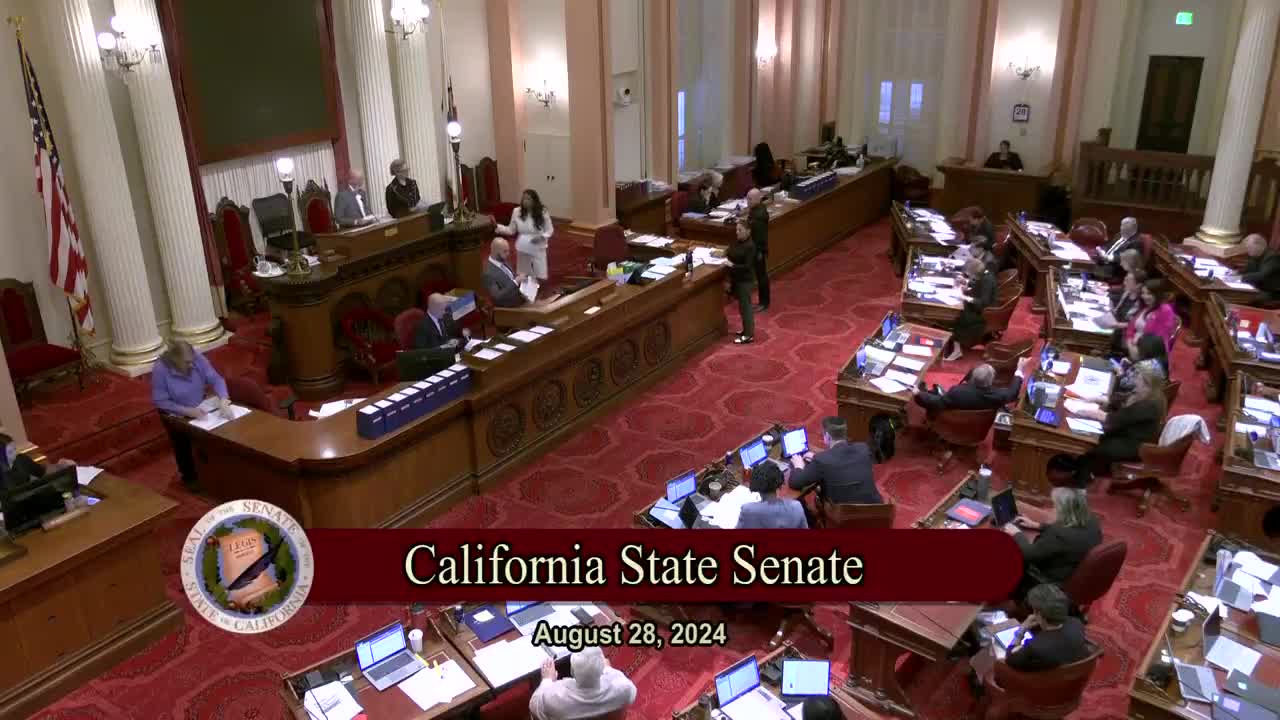

Bill Author
Bill Co-Author(s):