SB 1527: Property taxation: exemption: low-value properties and tribal housing.
- Session Year: 2023-2024
- House: Senate
- Latest Version Date: 2024-09-22
Current Status:
Passed
(2024-09-22: Chaptered by Secretary of State. Chapter 498, Statutes of 2024.)
Introduced
In Committee
First Chamber
In Committee
Second Chamber
Enacted
(1)The California Constitution authorizes the Legislature, with the approval of 2/3 of the membership of each house, to allow a county board of supervisors to exempt from property taxation those properties having a value too low to justify the costs of assessment and collection. Existing property tax law implementing this authority generally limits any exemption granted under this constitutional provision by a county board of supervisors to real property with a total base year value, or personal property with a full value, not exceeding $10,000.
That law, however, increases, for lien dates occurring on or after January 1, 2020, and before January 1, 2025, the $10,000 limitation to $50,000 in the case of a possessory interest. For lien dates occurring on or after January 1, 2025, the $50,000 limitation increase applies only to possessory interests for a temporary and transitory use in specified facilities.
This bill would extend the $50,000 limitation increase applicable to possessory interests generally to lien dates occurring on or after January 1, 2020, and before January 1, 2030.
Existing law requires any bill authorizing a new tax expenditure to contain, among other things, specific goals that the tax expenditure will achieve, detailed performance indicators, and data collection requirements.
This bill would include additional information required for any bill authorizing a new tax expenditure.
(2)The California Constitution authorizes the Legislature to exempt from taxation property that is used exclusively for religious, hospital, or charitable purposes, and is owned or held in trust by a nonprofit entity. Pursuant to this constitutional authority, existing law exempts from property taxation, subject to specified requirements, property owned and operated by a federally recognized Indian tribe or its tribally designated housing entity that is continuously available to, or occupied by, lower income households, as defined.
This bill would also authorize, for a property that has received a reservation of specified federal low-income housing tax credits, a limited partnership that includes a federally recognized Indian tribe or its tribally designated housing entity as the sole partner to claim the above-described property exemption. The bill would make conforming changes.
(3)By imposing new duties upon local tax officials, this bill would impose a state-mandated local program.
The California Constitution requires the state to reimburse local agencies and school districts for certain costs mandated by the state. Statutory provisions establish procedures for making that reimbursement.
This bill would provide that, if the Commission on State Mandates determines that the bill contains costs mandated by the state, reimbursement for those costs shall be made pursuant to the statutory provisions noted above.
(4)Existing law requires the state to reimburse local agencies annually for certain property tax revenues lost as a result of any exemption or classification of property for purposes of ad valorem property taxation.
This bill would provide that, notwithstanding those provisions, no appropriation is made and the state shall not reimburse local agencies for property tax revenues lost by them pursuant to the bill.
(5)This bill would take effect immediately as a tax levy.
(1)The California Constitution authorizes the Legislature, with the approval of 2/3 of the membership of each house, to allow a county board of supervisors to exempt from property taxation those properties having a value too low to justify the costs of assessment and collection. Existing property tax law implementing this authority generally limits any exemption granted under this constitutional provision by a county board of supervisors to real property with a total base year value, or personal property with a full value, not exceeding $10,000.
That law, however, increases, for lien dates occurring on or after January 1, 2020, and before January 1, 2025, the $10,000 limitation to $50,000 in the case of a possessory interest. For lien dates occurring on or after January 1, 2025, the $50,000 limitation increase applies only to possessory interests for a temporary and transitory use in specified facilities.
This bill would extend the $50,000 limitation increase applicable to possessory interests generally to lien dates occurring on or after January 1, 2020, and before January 1, 2030.
Existing law requires any bill authorizing a new tax expenditure to contain, among other things, specific goals that the tax expenditure will achieve, detailed performance indicators, and data collection requirements.
This bill would include additional information required for any bill authorizing a new tax expenditure.
(2)The California Constitution authorizes the Legislature to exempt from taxation property that is used exclusively for religious, hospital, or charitable purposes, and is owned or held in trust by a nonprofit entity. Pursuant to this constitutional authority, existing law exempts from property taxation, subject to specified requirements, property owned and operated by a federally recognized Indian tribe or its tribally designated housing entity that is continuously available to, or occupied by, lower income households, as defined.
This bill would also authorize, for a property that has received a reservation of specified federal low-income housing tax credits, a limited partnership that includes a federally recognized Indian tribe or its tribally designated housing entity as the sole partner to claim the above-described property exemption. The bill would make conforming changes.
(3)By imposing new duties upon local tax officials, this bill would impose a state-mandated local program.
The California Constitution requires the state to reimburse local agencies and school districts for certain costs mandated by the state. Statutory provisions establish procedures for making that reimbursement.
This bill would provide that, if the Commission on State Mandates determines that the bill contains costs mandated by the state, reimbursement for those costs shall be made pursuant to the statutory provisions noted above.
(4)Existing law requires the state to reimburse local agencies annually for certain property tax revenues lost as a result of any exemption or classification of property for purposes of ad valorem property taxation.
This bill would provide that, notwithstanding those provisions, no appropriation is made and the state shall not reimburse local agencies for property tax revenues lost by them pursuant to the bill.
(5)This bill would take effect immediately as a tax levy.
(1)The California Constitution authorizes the Legislature, with the approval of 2/3 of the membership of each house, to allow a county board of supervisors to exempt from property taxation those properties having a value too low to justify the costs of assessment and collection. Existing property tax law implementing this authority generally limits any exemption granted under this constitutional provision by a county board of supervisors to real property with a total base year value, or personal property with a full value, not exceeding $10,000.
That law, however, increases, for lien dates occurring on or after January 1, 2020, and before January 1, 2025, the $10,000 limitation to $50,000 in the case of a possessory interest. For lien dates occurring on or after January 1, 2025, the $50,000 limitation increase applies only to possessory interests for a temporary and transitory use in specified facilities.
This bill would extend the $50,000 limitation increase applicable to possessory interests generally to lien dates occurring on or after January 1, 2020, and before January 1, 2030.
Existing law requires any bill authorizing a new tax expenditure to contain, among other things, specific goals that the tax expenditure will achieve, detailed performance indicators, and data collection requirements.
This bill would include additional information required for any bill authorizing a new tax expenditure.
(2)The California Constitution authorizes the Legislature to exempt from taxation property that is used exclusively for religious, hospital, or charitable purposes, and is owned or held in trust by a nonprofit entity. Pursuant to this constitutional authority, existing law exempts from property taxation, subject to specified requirements, property owned and operated by a federally recognized Indian tribe or its tribally designated housing entity that is continuously available to, or occupied by, lower income households, as defined.
This bill would also authorize, for a property that has received a reservation of specified federal low-income housing tax credits, a limited partnership that includes a federally recognized Indian tribe or its tribally designated housing entity as the sole partner to claim the above-described property exemption. The bill would make conforming changes.
(3)By imposing new duties upon local tax officials, this bill would impose a state-mandated local program.
The California Constitution requires the state to reimburse local agencies and school districts for certain costs mandated by the state. Statutory provisions establish procedures for making that reimbursement.
This bill would provide that, if the Commission on State Mandates determines that the bill contains costs mandated by the state, reimbursement for those costs shall be made pursuant to the statutory provisions noted above.
(4)Existing law requires the state to reimburse local agencies annually for certain property tax revenues lost as a result of any exemption or classification of property for purposes of ad valorem property taxation.
This bill would provide that, notwithstanding those provisions, no appropriation is made and the state shall not reimburse local agencies for property tax revenues lost by them pursuant to the bill.
(5)This bill would take effect immediately as a tax levy.
(1)The California Constitution authorizes the Legislature, with the approval of 2/3 of the membership of each house, to allow a county board of supervisors to exempt from property taxation those properties having a value too low to justify the costs of assessment and collection. Existing property tax law implementing this authority generally limits any exemption granted under this constitutional provision by a county board of supervisors to real property with a total base year value, or personal property with a full value, not exceeding $10,000.
That law, however, increases, for lien dates occurring on or after January 1, 2020, and before January 1, 2025, the $10,000 limitation to $50,000 in the case of a possessory interest. For lien dates occurring on or after January 1, 2025, the $50,000 limitation increase applies only to possessory interests for a temporary and transitory use in specified facilities.
This bill would extend the $50,000 limitation increase applicable to possessory interests generally to lien dates occurring on or after January 1, 2020, and before January 1, 2030.
Existing law requires any bill authorizing a new tax expenditure to contain, among other things, specific goals that the tax expenditure will achieve, detailed performance indicators, and data collection requirements.
This bill would include additional information required for any bill authorizing a new tax expenditure.
(2)The California Constitution authorizes the Legislature to exempt from taxation property that is used exclusively for religious, hospital, or charitable purposes, and is owned or held in trust by a nonprofit entity. Pursuant to this constitutional authority, existing law exempts from property taxation, subject to specified requirements, property owned and operated by a federally recognized Indian tribe or its tribally designated housing entity that is continuously available to, or occupied by, lower income households, as defined.
This bill would also authorize, for a property that has received a reservation of specified federal low-income housing tax credits, a limited partnership that includes a federally recognized Indian tribe or its tribally designated housing entity as the sole partner to claim the above-described property exemption. The bill would make conforming changes.
(3)By imposing new duties upon local tax officials, this bill would impose a state-mandated local program.
The California Constitution requires the state to reimburse local agencies and school districts for certain costs mandated by the state. Statutory provisions establish procedures for making that reimbursement.
This bill would provide that, if the Commission on State Mandates determines that the bill contains costs mandated by the state, reimbursement for those costs shall be made pursuant to the statutory provisions noted above.
(4)Existing law requires the state to reimburse local agencies annually for certain property tax revenues lost as a result of any exemption or classification of property for purposes of ad valorem property taxation.
This bill would provide that, notwithstanding those provisions, no appropriation is made and the state shall not reimburse local agencies for property tax revenues lost by them pursuant to the bill.
(5)This bill would take effect immediately as a tax levy.
(1)The California Constitution authorizes the Legislature, with the approval of 2/3 of the membership of each house, to allow a county board of supervisors to exempt from property taxation those properties having a value too low to justify the costs of assessment and collection. Existing property tax law implementing this authority generally limits any exemption granted under this constitutional provision by a county board of supervisors to real property with a total base year value, or personal property with a full value, not exceeding $10,000.
That law, however, increases, for lien dates occurring on or after January 1, 2020, and before January 1, 2025, the $10,000 limitation to $50,000 in the case of a possessory interest. For lien dates occurring on or after January 1, 2025, the $50,000 limitation increase applies only to possessory interests for a temporary and transitory use in specified facilities.
This bill would extend the $50,000 limitation increase applicable to possessory interests generally to lien dates occurring on or after January 1, 2020, and before January 1, 2030.
(2)The California Constitution authorizes the Legislature to exempt from taxation property that is used exclusively for religious, hospital, or charitable purposes, and is owned or held in trust by a nonprofit entity. Pursuant to this constitutional authority, existing law exempts from property taxation, subject to specified requirements, property owned and operated by a federally recognized Indian tribe or its tribally designated housing entity that is continuously available to, or occupied by, lower income households, as defined.
This bill would also authorize, for a property that has received a reservation of specified federal low-income housing tax credits, a limited partnership that includes a federally recognized Indian tribe or its tribally designated housing entity as the sole partner to claim the above-described property exemption. The bill would make conforming changes.
(3)By imposing new duties upon local tax officials, this bill would impose a state-mandated local program.
The California Constitution requires the state to reimburse local agencies and school districts for certain costs mandated by the state. Statutory provisions establish procedures for making that reimbursement.
This bill would provide that, if the Commission on State Mandates determines that the bill contains costs mandated by the state, reimbursement for those costs shall be made pursuant to the statutory provisions noted above.
(4)Existing law requires the state to reimburse local agencies annually for certain property tax revenues lost as a result of any exemption or classification of property for purposes of ad valorem property taxation.
This bill would provide that, notwithstanding those provisions, no appropriation is made and the state shall not reimburse local agencies for property tax revenues lost by them pursuant to the bill.
(5)This bill would take effect immediately as a tax levy.
(a)Subject to the limitations listed in subdivisions (b), (c), (d), and (e), a county board of supervisors may exempt from property tax all real property with a base year value (as determined pursuant to Chapter 1 (commencing with Section 50) of Part 0.5) as adjusted by an annual inflation factor pursuant to subdivision (f) of Section 110.1, and personal property with a full value so low that, if not exempt, the total taxes, special assessments, and applicable subventions on the property would amount to less than the cost of assessing and collecting them.
(b)(1)(A)The board of supervisors shall have no authority to exempt property with a total base year value, as adjusted by an annual inflation factor pursuant to subdivision (f) of Section 110.1, or full value of more than ten thousand dollars ($10,000), except as otherwise provided in subparagraph (B).
(B)The limitation specified in subparagraph (A) on the amount of the exemption authorized by this section shall be increased as follows:
(i)For lien dates occurring on or after January 1, 2020, and before January 1, 2030, the limitation is increased to fifty thousand dollars ($50,000) in the case of a possessory interest.
(ii)For lien dates occurring on or after January 1, 2030, the limitation is increased to fifty thousand dollars ($50,000) in the case of a possessory interest, for a temporary and transitory use, in a publicly owned fairground, fairground facility, convention facility, or cultural facility. For purposes of this paragraph, publicly owned convention or cultural facility means a publicly owned convention center, civic auditorium, theater, assembly hall, museum, or other civic building that is used primarily for staging any of the following:
(I)Conventions, trade and consumer shows, or civic and community events.
(II)Live theater, dance, or musical productions.
(III)Artistic, historic, technological, or educational exhibits.
(2)In determining the level of the exemption, the board of supervisors shall determine at what level of exemption the costs of assessing the property and collecting taxes, assessments, and subventions on the property exceeds the proceeds to be collected. The board of supervisors shall establish the exemption level uniformly for different classes of property. In making this determination, the board of supervisors may consider the total taxes, special assessments, and applicable subventions for the year of assessment only or for the year of assessment and succeeding years where cumulative revenues will not exceed the cost of assessments and collections.
(3)In administering the exemption authorized by this section, the assessor may opt either to not enroll the property on the assessment roll or to enroll the property and apply the exemption.
(c)This section does not apply to those real or personal properties enumerated in Section 52.
(d)The exemption authorized by this section shall be adopted by the board of supervisors on or before the lien date for the fiscal year to which the exemption is to apply and may, at the option of the board of supervisors, continue in effect for succeeding fiscal years. Any revision or rescission of the exemption shall be adopted by the board of supervisors on or before the lien date for the fiscal year to which that revision or rescission is to apply.
(e)Nothing in this section shall authorize a county board of supervisors to exempt new construction, unless the new total base year value, as adjusted by an annual inflation factor pursuant to subdivision (f) of Section 110.1, of the property, including this new construction, is ten thousand dollars ($10,000) or less.
SEC. 2.Section 237 of the Revenue and Taxation Code is amended to read:237.(a)(1)Subject to the requirements set forth in paragraph (2), there is exempt from taxation under this part that portion of the assessed value of property, owned and operated by a federally recognized Indian tribe, its tribally designated housing entity, or, for a property that has received a reservation of low-income housing tax credits pursuant to Section 42 of the Internal Revenue Code of 1986, a limited partnership that includes a federally recognized Indian tribe or its tribally designated housing entity as the sole general partner, that corresponds to that portion of the property that is continuously available to, or occupied by, lower income households, as defined in Section 50079.5 of the Health and Safety Code or applicable federal, state, or local financing agreements, at rents that do not exceed those prescribed by Section 50053 of the Health and Safety Code, or rents that do not exceed those prescribed by the terms of the applicable federal, state, or local financing agreements or financial assistance agreements.
(2)The exemption set forth in subdivision (a) applies only if the property and entity meet the following requirements:
(A)At least 30 percent of the propertys housing units are either continuously available to, or occupied by, lower income households, as defined in Section 50079.5 of the Health and Safety Code or applicable federal, state, or local financing agreements, at rents that do not exceed those prescribed by Section 50053 of the Health and Safety Code, or rents that do not exceed those prescribed by the terms of the applicable federal, state, or local financing agreements or financial assistance agreements.
(B)The tribally designated housing entity, if applicable, is nonprofit.
(C)No part of the net earnings of the housing entity inure to the benefit of any private shareholder or individual, except for a limited partner in a property that has received a reservation of low-income housing tax credits pursuant to Section 42 of the Internal Revenue Code of 1986.
(b)In lieu of the tax imposed by this part, a tribe or tribally designated housing entity may agree to make payments to a county, city, city and county, or political subdivision of the state for services, improvements, or facilities provided by that entity for the benefit of a low-income housing project owned and operated by the tribe or tribally designated housing entity. Any payments in lieu of tax may not exceed the estimated cost to the city, county, city and county, or political subdivision of the state of the services, improvements, or facilities to be provided.
(c)A tribe or tribally designated housing entity applying for an exemption under this section shall provide the following documents to the assessor:
(1)Documents establishing that the designating tribe is federally recognized.
(2)Documents establishing that the tribally designated housing entity, if applicable, has been designated by the tribe.
(3)Documents establishing that there is a deed restriction, agreement, or other legally binding document requiring that the property be used in compliance with subparagraph (A) of paragraph (2) of subdivision (a).
(d)This exemption shall be known as the tribal housing exemption.
SEC. 3.For purposes of complying with Section 41 of the Revenue and Taxation Code, as it pertains to the amendments made to Section 155.20 of the Revenue and Taxation Code by this act, the Legislature finds and declares as follows:
(a)The specific goal of expanding the low-value property tax exemption pursuant to Section 155.20 of the Revenue and Taxation Code is to provide county governments with the authority to increase the amount of low-value property exemption for possessory interests allowed under their ordinances up to the level that their cost-benefit analysis indicates in order to further the goal of cost-effective property tax administration.
(b)The detailed performance indicators for the Legislature to use in determining whether the expanded low-value property tax exemption meets the goal described in subdivision (a) shall be the number of counties in this state that enact or expand that exemption.
(c)The data collection requirements for determining whether the expanded low-value property tax exemption is meeting, failing to meet, or exceeding the specific goal described in subdivision (a) are as follows:
(1)Each county assessor in a county that has adopted an ordinance pursuant to Section 155.20 of the Revenue and Taxation Code shall report to the board whether, and by what amount, the county has increased the low-value property tax exemption for possessory interests as authorized by this section.
(2)To make the information reported pursuant to paragraph (a) widely available to the public, the board shall post that information on its internet website.
SEC. 4.If the Commission on State Mandates determines that this act contains costs mandated by the state, reimbursement to local agencies and school districts for those costs shall be made pursuant to Part 7 (commencing with Section 17500) of Division 4 of Title 2 of the Government Code.
SEC. 5.Notwithstanding Section 2229 of the Revenue and Taxation Code, no appropriation is made by this act and the state shall not reimburse any local agency for any property tax revenues lost by it pursuant to this act.
SEC. 6.This act provides for a tax levy within the meaning of Article IV of the California Constitution and shall go into immediate effect.
(a)Subject to the limitations listed in subdivisions (b), (c), (d), and (e), a county board of supervisors may exempt from property tax all real property with a base year value (as determined pursuant to Chapter 1 (commencing with Section 50) of Part 0.5) as adjusted by an annual inflation factor pursuant to subdivision (f) of Section 110.1, and personal property with a full value so low that, if not exempt, the total taxes, special assessments, and applicable subventions on the property would amount to less than the cost of assessing and collecting them.
(b)(1)(A)The board of supervisors shall have no authority to exempt property with a total base year value, as adjusted by an annual inflation factor pursuant to subdivision (f) of Section 110.1, or full value of more than ten thousand dollars ($10,000), except as otherwise provided in subparagraph (B).
(B)The limitation specified in subparagraph (A) on the amount of the exemption authorized by this section shall be increased as follows:
(i)For lien dates occurring on or after January 1, 2020, and before January 1, 2030, the limitation is increased to fifty thousand dollars ($50,000) in the case of a possessory interest.
(ii)For lien dates occurring on or after January 1, 2030, the limitation is increased to fifty thousand dollars ($50,000) in the case of a possessory interest, for a temporary and transitory use, in a publicly owned fairground, fairground facility, convention facility, or cultural facility. For purposes of this paragraph, publicly owned convention or cultural facility means a publicly owned convention center, civic auditorium, theater, assembly hall, museum, or other civic building that is used primarily for staging any of the following:
(I)Conventions, trade and consumer shows, or civic and community events.
(II)Live theater, dance, or musical productions.
(III)Artistic, historic, technological, or educational exhibits.
(2)In determining the level of the exemption, the board of supervisors shall determine at what level of exemption the costs of assessing the property and collecting taxes, assessments, and subventions on the property exceeds the proceeds to be collected. The board of supervisors shall establish the exemption level uniformly for different classes of property. In making this determination, the board of supervisors may consider the total taxes, special assessments, and applicable subventions for the year of assessment only or for the year of assessment and succeeding years where cumulative revenues will not exceed the cost of assessments and collections.
(3)In administering the exemption authorized by this section, the assessor may opt either to not enroll the property on the assessment roll or to enroll the property and apply the exemption.
(c)This section does not apply to those real or personal properties enumerated in Section 52.
(d)The exemption authorized by this section shall be adopted by the board of supervisors on or before the lien date for the fiscal year to which the exemption is to apply and may, at the option of the board of supervisors, continue in effect for succeeding fiscal years. Any revision or rescission of the exemption shall be adopted by the board of supervisors on or before the lien date for the fiscal year to which that revision or rescission is to apply.
(e)Nothing in this section shall authorize a county board of supervisors to exempt new construction, unless the new total base year value, as adjusted by an annual inflation factor pursuant to subdivision (f) of Section 110.1, of the property, including this new construction, is ten thousand dollars ($10,000) or less.
SEC. 2.Section 237 of the Revenue and Taxation Code is amended to read:237.(a)(1)Subject to the requirements set forth in paragraph (2), there is exempt from taxation under this part that portion of the assessed value of property, owned and operated by a federally recognized Indian tribe, its tribally designated housing entity, or, for a property that has received a reservation of low-income housing tax credits pursuant to Section 42 of the Internal Revenue Code of 1986, a limited partnership that includes a federally recognized Indian tribe or its tribally designated housing entity as the sole general partner, that corresponds to that portion of the property that is continuously available to, or occupied by, lower income households, as defined in Section 50079.5 of the Health and Safety Code or applicable federal, state, or local financing agreements, at rents that do not exceed those prescribed by Section 50053 of the Health and Safety Code, or rents that do not exceed those prescribed by the terms of the applicable federal, state, or local financing agreements or financial assistance agreements.
(2)The exemption set forth in subdivision (a) applies only if the property and entity meet the following requirements:
(A)At least 30 percent of the propertys housing units are either continuously available to, or occupied by, lower income households, as defined in Section 50079.5 of the Health and Safety Code or applicable federal, state, or local financing agreements, at rents that do not exceed those prescribed by Section 50053 of the Health and Safety Code, or rents that do not exceed those prescribed by the terms of the applicable federal, state, or local financing agreements or financial assistance agreements.
(B)The tribally designated housing entity, if applicable, is nonprofit.
(C)No part of the net earnings of the housing entity inure to the benefit of any private shareholder or individual, except for a limited partner in a property that has received a reservation of low-income housing tax credits pursuant to Section 42 of the Internal Revenue Code of 1986.
(b)In lieu of the tax imposed by this part, a tribe or tribally designated housing entity may agree to make payments to a county, city, city and county, or political subdivision of the state for services, improvements, or facilities provided by that entity for the benefit of a low-income housing project owned and operated by the tribe or tribally designated housing entity. Any payments in lieu of tax may not exceed the estimated cost to the city, county, city and county, or political subdivision of the state of the services, improvements, or facilities to be provided.
(c)A tribe or tribally designated housing entity applying for an exemption under this section shall provide the following documents to the assessor:
(1)Documents establishing that the designating tribe is federally recognized.
(2)Documents establishing that the tribally designated housing entity, if applicable, has been designated by the tribe.
(3)Documents establishing that there is a deed restriction, agreement, or other legally binding document requiring that the property be used in compliance with subparagraph (A) of paragraph (2) of subdivision (a).
(d)This exemption shall be known as the tribal housing exemption.
SEC. 3.For purposes of complying with Section 41 of the Revenue and Taxation Code, as it pertains to the amendments made to Section 155.20 of the Revenue and Taxation Code by this act, the Legislature finds and declares as follows:
(a)The specific goal of expanding the low-value property tax exemption pursuant to Section 155.20 of the Revenue and Taxation Code is to provide county governments with the authority to increase the amount of low-value property exemption for possessory interests allowed under their ordinances up to the level that their cost-benefit analysis indicates in order to further the goal of cost-effective property tax administration.
(b)The detailed performance indicators for the Legislature to use in determining whether the expanded low-value property tax exemption meets the goal described in subdivision (a) shall be the number of counties in this state that enact or expand that exemption.
(c)The data collection requirements for determining whether the expanded low-value property tax exemption is meeting, failing to meet, or exceeding the specific goal described in subdivision (a) are as follows:
(1)Each county assessor in a county that has adopted an ordinance pursuant to Section 155.20 of the Revenue and Taxation Code shall report to the board whether, and by what amount, the county has increased the low-value property tax exemption for possessory interests as authorized by this section.
(2)To make the information reported pursuant to paragraph (a) widely available to the public, the board shall post that information on its internet website.
SEC. 4.If the Commission on State Mandates determines that this act contains costs mandated by the state, reimbursement to local agencies and school districts for those costs shall be made pursuant to Part 7 (commencing with Section 17500) of Division 4 of Title 2 of the Government Code.
SEC. 5.Notwithstanding Section 2229 of the Revenue and Taxation Code, no appropriation is made by this act and the state shall not reimburse any local agency for any property tax revenues lost by it pursuant to this act.
SEC. 6.This act provides for a tax levy within the meaning of Article IV of the California Constitution and shall go into immediate effect.
(a)Subject to the limitations listed in subdivisions (b), (c), (d), and (e), a county board of supervisors may exempt from property tax all real property with a base year value (as determined pursuant to Chapter 1 (commencing with Section 50) of Part 0.5) as adjusted by an annual inflation factor pursuant to subdivision (f) of Section 110.1, and personal property with a full value so low that, if not exempt, the total taxes, special assessments, and applicable subventions on the property would amount to less than the cost of assessing and collecting them.
(b)(1)(A)The board of supervisors shall have no authority to exempt property with a total base year value, as adjusted by an annual inflation factor pursuant to subdivision (f) of Section 110.1, or full value of more than ten thousand dollars ($10,000), except as otherwise provided in subparagraph (B).
(B)The limitation specified in subparagraph (A) on the amount of the exemption authorized by this section shall be increased as follows:
(i)For lien dates occurring on or after January 1, 2020, and before January 1, 2030, the limitation is increased to fifty thousand dollars ($50,000) in the case of a possessory interest.
(ii)For lien dates occurring on or after January 1, 2030, the limitation is increased to fifty thousand dollars ($50,000) in the case of a possessory interest, for a temporary and transitory use, in a publicly owned fairground, fairground facility, convention facility, or cultural facility. For purposes of this paragraph, publicly owned convention or cultural facility means a publicly owned convention center, civic auditorium, theater, assembly hall, museum, or other civic building that is used primarily for staging any of the following:
(I)Conventions, trade and consumer shows, or civic and community events.
(II)Live theater, dance, or musical productions.
(III)Artistic, historic, technological, or educational exhibits.
(2)In determining the level of the exemption, the board of supervisors shall determine at what level of exemption the costs of assessing the property and collecting taxes, assessments, and subventions on the property exceeds the proceeds to be collected. The board of supervisors shall establish the exemption level uniformly for different classes of property. In making this determination, the board of supervisors may consider the total taxes, special assessments, and applicable subventions for the year of assessment only or for the year of assessment and succeeding years where cumulative revenues will not exceed the cost of assessments and collections.
(3)In administering the exemption authorized by this section, the assessor may opt either to not enroll the property on the assessment roll or to enroll the property and apply the exemption.
(c)This section does not apply to those real or personal properties enumerated in Section 52.
(d)The exemption authorized by this section shall be adopted by the board of supervisors on or before the lien date for the fiscal year to which the exemption is to apply and may, at the option of the board of supervisors, continue in effect for succeeding fiscal years. Any revision or rescission of the exemption shall be adopted by the board of supervisors on or before the lien date for the fiscal year to which that revision or rescission is to apply.
(e)Nothing in this section shall authorize a county board of supervisors to exempt new construction, unless the new total base year value, as adjusted by an annual inflation factor pursuant to subdivision (f) of Section 110.1, of the property, including this new construction, is ten thousand dollars ($10,000) or less.
SEC. 2.Section 237 of the Revenue and Taxation Code is amended to read:237.(a)(1)Subject to the requirements set forth in paragraph (2), there is exempt from taxation under this part that portion of the assessed value of property, owned and operated by a federally recognized Indian tribe, its tribally designated housing entity, or, for a property that has received a reservation of low-income housing tax credits pursuant to Section 42 of the Internal Revenue Code of 1986, a limited partnership that includes a federally recognized Indian tribe or its tribally designated housing entity as the sole general partner, that corresponds to that portion of the property that is continuously available to, or occupied by, lower income households, as defined in Section 50079.5 of the Health and Safety Code or applicable federal, state, or local financing agreements, at rents that do not exceed those prescribed by Section 50053 of the Health and Safety Code, or rents that do not exceed those prescribed by the terms of the applicable federal, state, or local financing agreements or financial assistance agreements.
(2)The exemption set forth in subdivision (a) applies only if the property and entity meet the following requirements:
(A)At least 30 percent of the propertys housing units are either continuously available to, or occupied by, lower income households, as defined in Section 50079.5 of the Health and Safety Code or applicable federal, state, or local financing agreements, at rents that do not exceed those prescribed by Section 50053 of the Health and Safety Code, or rents that do not exceed those prescribed by the terms of the applicable federal, state, or local financing agreements or financial assistance agreements.
(B)The tribally designated housing entity, if applicable, is nonprofit.
(C)No part of the net earnings of the housing entity inure to the benefit of any private shareholder or individual, except for a limited partner in a property that has received a reservation of low-income housing tax credits pursuant to Section 42 of the Internal Revenue Code of 1986.
(b)In lieu of the tax imposed by this part, a tribe or tribally designated housing entity may agree to make payments to a county, city, city and county, or political subdivision of the state for services, improvements, or facilities provided by that entity for the benefit of a low-income housing project owned and operated by the tribe or tribally designated housing entity. Any payments in lieu of tax may not exceed the estimated cost to the city, county, city and county, or political subdivision of the state of the services, improvements, or facilities to be provided.
(c)A tribe or tribally designated housing entity applying for an exemption under this section shall provide the following documents to the assessor:
(1)Documents establishing that the designating tribe is federally recognized.
(2)Documents establishing that the tribally designated housing entity, if applicable, has been designated by the tribe.
(3)Documents establishing that there is a deed restriction, agreement, or other legally binding document requiring that the property be used in compliance with subparagraph (A) of paragraph (2) of subdivision (a).
(d)This exemption shall be known as the tribal housing exemption.
SEC. 3.For purposes of complying with Section 41 of the Revenue and Taxation Code, as it pertains to the amendments made to Section 155.20 of the Revenue and Taxation Code by this act, the Legislature finds and declares as follows:
(a)The specific goal of expanding the low-value property tax exemption pursuant to Section 155.20 of the Revenue and Taxation Code is to provide county governments with the authority to increase the amount of low-value property exemption for possessory interests allowed under their ordinances up to the level that their cost-benefit analysis indicates in order to further the goal of cost-effective property tax administration.
(b)The detailed performance indicators for the Legislature to use in determining whether the expanded low-value property tax exemption meets the goal described in subdivision (a) shall be the number of counties in this state that enact or expand that exemption.
(c)The data collection requirements for determining whether the expanded low-value property tax exemption is meeting, failing to meet, or exceeding the specific goal described in subdivision (a) are as follows:
(1)Each county assessor in a county that has adopted an ordinance pursuant to Section 155.20 of the Revenue and Taxation Code shall report to the board whether, and by what amount, the county has increased the low-value property tax exemption for possessory interests as authorized by this section.
(2)To make the information reported pursuant to paragraph (a) widely available to the public, the board shall post that information on its internet website.
SEC. 4.If the Commission on State Mandates determines that this act contains costs mandated by the state, reimbursement to local agencies and school districts for those costs shall be made pursuant to Part 7 (commencing with Section 17500) of Division 4 of Title 2 of the Government Code.
SEC. 5.Notwithstanding Section 2229 of the Revenue and Taxation Code, no appropriation is made by this act and the state shall not reimburse any local agency for any property tax revenues lost by it pursuant to this act.
SEC. 6.This act provides for a tax levy within the meaning of Article IV of the California Constitution and shall go into immediate effect.
(a)Subject to the limitations listed in subdivisions (b), (c), (d), and (e), a county board of supervisors may exempt from property tax all real property with a base year value (as determined pursuant to Chapter 1 (commencing with Section 50) of Part 0.5) as adjusted by an annual inflation factor pursuant to subdivision (f) of Section 110.1, and personal property with a full value so low that, if not exempt, the total taxes, special assessments, and applicable subventions on the property would amount to less than the cost of assessing and collecting them.
(b)(1)(A)The board of supervisors shall have no authority to exempt property with a total base year value, as adjusted by an annual inflation factor pursuant to subdivision (f) of Section 110.1, or full value of more than ten thousand dollars ($10,000), except as otherwise provided in subparagraph (B).
(B)The limitation specified in subparagraph (A) on the amount of the exemption authorized by this section shall be increased as follows:
(i)For lien dates occurring on or after January 1, 2020, and before January 1, 2030, the limitation is increased to fifty thousand dollars ($50,000) in the case of a possessory interest.
(ii)For lien dates occurring on or after January 1, 2030, the limitation is increased to fifty thousand dollars ($50,000) in the case of a possessory interest, for a temporary and transitory use, in a publicly owned fairground, fairground facility, convention facility, or cultural facility. For purposes of this paragraph, publicly owned convention or cultural facility means a publicly owned convention center, civic auditorium, theater, assembly hall, museum, or other civic building that is used primarily for staging any of the following:
(I)Conventions, trade and consumer shows, or civic and community events.
(II)Live theater, dance, or musical productions.
(III)Artistic, historic, technological, or educational exhibits.
(2)In determining the level of the exemption, the board of supervisors shall determine at what level of exemption the costs of assessing the property and collecting taxes, assessments, and subventions on the property exceeds the proceeds to be collected. The board of supervisors shall establish the exemption level uniformly for different classes of property. In making this determination, the board of supervisors may consider the total taxes, special assessments, and applicable subventions for the year of assessment only or for the year of assessment and succeeding years where cumulative revenues will not exceed the cost of assessments and collections.
(3)In administering the exemption authorized by this section, the assessor may opt either to not enroll the property on the assessment roll or to enroll the property and apply the exemption.
(c)This section does not apply to those real or personal properties enumerated in Section 52.
(d)The exemption authorized by this section shall be adopted by the board of supervisors on or before the lien date for the fiscal year to which the exemption is to apply and may, at the option of the board of supervisors, continue in effect for succeeding fiscal years. Any revision or rescission of the exemption shall be adopted by the board of supervisors on or before the lien date for the fiscal year to which that revision or rescission is to apply.
(e)Nothing in this section shall authorize a county board of supervisors to exempt new construction, unless the new total base year value, as adjusted by an annual inflation factor pursuant to subdivision (f) of Section 110.1, of the property, including this new construction, is ten thousand dollars ($10,000) or less.
SEC. 2.Section 237 of the Revenue and Taxation Code is amended to read:237.(a)(1)Subject to the requirements set forth in paragraph (2), there is exempt from taxation under this part that portion of the assessed value of property, owned and operated by a federally recognized Indian tribe, its tribally designated housing entity, or, for a property that has received a reservation of low-income housing tax credits pursuant to Section 42 of the Internal Revenue Code of 1986, a limited partnership that includes a federally recognized Indian tribe or its tribally designated housing entity as the sole general partner, that corresponds to that portion of the property that is continuously available to, or occupied by, lower income households, as defined in Section 50079.5 of the Health and Safety Code or applicable federal, state, or local financing agreements, at rents that do not exceed those prescribed by Section 50053 of the Health and Safety Code, or rents that do not exceed those prescribed by the terms of the applicable federal, state, or local financing agreements or financial assistance agreements.
(2)The exemption set forth in subdivision (a) applies only if the property and entity meet the following requirements:
(A)At least 30 percent of the propertys housing units are either continuously available to, or occupied by, lower income households, as defined in Section 50079.5 of the Health and Safety Code or applicable federal, state, or local financing agreements, at rents that do not exceed those prescribed by Section 50053 of the Health and Safety Code, or rents that do not exceed those prescribed by the terms of the applicable federal, state, or local financing agreements or financial assistance agreements.
(B)The tribally designated housing entity, if applicable, is nonprofit.
(C)No part of the net earnings of the housing entity inure to the benefit of any private shareholder or individual, except for a limited partner in a property that has received a reservation of low-income housing tax credits pursuant to Section 42 of the Internal Revenue Code of 1986.
(b)In lieu of the tax imposed by this part, a tribe or tribally designated housing entity may agree to make payments to a county, city, city and county, or political subdivision of the state for services, improvements, or facilities provided by that entity for the benefit of a low-income housing project owned and operated by the tribe or tribally designated housing entity. Any payments in lieu of tax may not exceed the estimated cost to the city, county, city and county, or political subdivision of the state of the services, improvements, or facilities to be provided.
(c)A tribe or tribally designated housing entity applying for an exemption under this section shall provide the following documents to the assessor:
(1)Documents establishing that the designating tribe is federally recognized.
(2)Documents establishing that the tribally designated housing entity, if applicable, has been designated by the tribe.
(3)Documents establishing that there is a deed restriction, agreement, or other legally binding document requiring that the property be used in compliance with subparagraph (A) of paragraph (2) of subdivision (a).
(d)This exemption shall be known as the tribal housing exemption.
SEC. 3.For purposes of complying with Section 41 of the Revenue and Taxation Code, as it pertains to the amendments made to Section 155.20 of the Revenue and Taxation Code by this act, the Legislature finds and declares as follows:
(a)The specific goal of expanding the low-value property tax exemption pursuant to Section 155.20 of the Revenue and Taxation Code is to provide county governments with the authority to increase the amount of low-value property exemption for possessory interests allowed under their ordinances up to the level that their cost-benefit analysis indicates in order to further the goal of cost-effective property tax administration.
(b)The detailed performance indicators for the Legislature to use in determining whether the expanded low-value property tax exemption meets the goal described in subdivision (a) shall be the number of counties in this state that enact or expand that exemption.
(c)The data collection requirements for determining whether the expanded low-value property tax exemption is meeting, failing to meet, or exceeding the specific goal described in subdivision (a) are as follows:
(1)Each county assessor shall report to the board whether, and by what amount, the county has increased the low-value property tax exemption for possessory interests as authorized by this section.
(2)To make the information reported pursuant to paragraph (a) widely available to the public, the board shall post that information on its internet website.
SEC. 3.SEC. 4.If the Commission on State Mandates determines that this act contains costs mandated by the state, reimbursement to local agencies and school districts for those costs shall be made pursuant to Part 7 (commencing with Section 17500) of Division 4 of Title 2 of the Government Code.
SEC. 4.SEC. 5.Notwithstanding Section 2229 of the Revenue and Taxation Code, no appropriation is made by this act and the state shall not reimburse any local agency for any property tax revenues lost by it pursuant to this act.
SEC. 5.SEC. 6.This act provides for a tax levy within the meaning of Article IV of the California Constitution and shall go into immediate effect.
(a)Subject to the limitations listed in subdivisions (b), (c), (d), and (e), a county board of supervisors may exempt from property tax all real property with a base year value (as determined pursuant to Chapter 1 (commencing with Section 50) of Part 0.5) as adjusted by an annual inflation factor pursuant to subdivision (f) of Section 110.1, and personal property with a full value so low that, if not exempt, the total taxes, special assessments, and applicable subventions on the property would amount to less than the cost of assessing and collecting them.
(b)(1)(A)The board of supervisors shall have no authority to exempt property with a total base year value, as adjusted by an annual inflation factor pursuant to subdivision (f) of Section 110.1, or full value of more than ten thousand dollars ($10,000), except as otherwise provided in subparagraph (B).
(B)The limitation specified in subparagraph (A) on the amount of the exemption authorized by this section shall be increased as follows:
(i)For lien dates occurring on or after January 1, 2020, and before January 1, 2025, 2030, the limitation is increased to fifty thousand dollars ($50,000) in the case of a possessory interest.
(ii)For lien dates occurring on or after January 1, 2025, 2030, the limitation is increased to fifty thousand dollars ($50,000) in the case of a possessory interest, for a temporary and transitory use, in a publicly owned fairground, fairground facility, convention facility, or cultural facility. For purposes of this paragraph, publicly owned convention or cultural facility means a publicly owned convention center, civic auditorium, theater, assembly hall, museum, or other civic building that is used primarily for staging any of the following:
(I)Conventions, trade and consumer shows, or civic and community events.
(II)Live theater, dance, or musical productions.
(III)Artistic, historic, technological, or educational exhibits.
(2)In determining the level of the exemption, the board of supervisors shall determine at what level of exemption the costs of assessing the property and collecting taxes, assessments, and subventions on the property exceeds the proceeds to be collected. The board of supervisors shall establish the exemption level uniformly for different classes of property. In making this determination, the board of supervisors may consider the total taxes, special assessments, and applicable subventions for the year of assessment only or for the year of assessment and succeeding years where cumulative revenues will not exceed the cost of assessments and collections.
(3)In administering the exemption authorized by this section, the assessor may opt either to not enroll the property on the assessment roll or to enroll the property and apply the exemption.
(c)This section does not apply to those real or personal properties enumerated in Section 52.
(d)The exemption authorized by this section shall be adopted by the board of supervisors on or before the lien date for the fiscal year to which the exemption is to apply and may, at the option of the board of supervisors, continue in effect for succeeding fiscal years. Any revision or rescission of the exemption shall be adopted by the board of supervisors on or before the lien date for the fiscal year to which that revision or rescission is to apply.
(e)Nothing in this section shall authorize a county board of supervisors to exempt new construction, unless the new total base year value, as adjusted by an annual inflation factor pursuant to subdivision (f) of Section 110.1, of the property, including this new construction, is ten thousand dollars ($10,000) or less.
SEC. 2.Section 237 of the Revenue and Taxation Code is amended to read:237.(a)(1)Subject to the requirements set forth in paragraph (2), there is exempt from taxation under this part that portion of the assessed value of property, owned and operated by a federally recognized Indian tribe or tribe, its tribally designated housing entity, or, for a property that has received a reservation of low-income housing tax credits pursuant to Section 42 of the Internal Revenue Code of 1986, a limited partnership that includes a federally recognized Indian tribe or its tribally designated housing entity as the sole general partner, that corresponds to that portion of the property that is continuously available to, or occupied by, lower income households, as defined in Section 50079.5 of the Health and Safety Code or applicable federal, state, or local financing agreements, at rents that do not exceed those prescribed by Section 50053 of the Health and Safety Code, or rents that do not exceed those prescribed by the terms of the applicable federal, state, or local financing agreements or financial assistance agreements.
(2)The exemption set forth in subdivision (a) applies only if the property and entity meet the following requirements:
(A)At least 30 percent of the propertys housing units are either continuously available to, or occupied by, lower income households, as defined in Section 50079.5 of the Health and Safety Code or applicable federal, state, or local financing agreements, at rents that do not exceed those prescribed by Section 50053 of the Health and Safety Code, or rents that do not exceed those prescribed by the terms of the applicable federal, state, or local financing agreements or financial assistance agreements.
(B)The tribally designated housing entity entity, if applicable, is nonprofit.
(C)No part of the net earnings of the housing entity inure to the benefit of any private shareholder or individual. individual, except for a limited partner in a property that has received a reservation of low-income housing tax credits pursuant to Section 42 of the Internal Revenue Code of 1986.
(b)In lieu of the tax imposed by this part, a tribe or tribally designated housing entity may agree to make payments to a county, city, city and county, or political subdivision of the state for services, improvements, or facilities provided by that entity for the benefit of a low-income housing project owned and operated by the tribe or tribally designated housing entity. Any payments in lieu of tax may not exceed the estimated cost to the city, county, city and county, or political subdivision of the state of the services, improvements, or facilities to be provided.
(c)A tribe or tribally designated housing entity applying for an exemption under this section shall provide the following documents to the assessor:
(1)Documents establishing that the designating tribe is federally recognized.
(2)Documents establishing that the tribally designated housing entity entity, if applicable, has been designated by the tribe.
(3)Documents establishing that there is a deed restriction, agreement, or other legally binding document requiring that the property be used in compliance with subparagraph (A) of paragraph (2) of subdivision (a).
(d)This exemption shall be known as the tribal housing exemption.
SEC. 3.If the Commission on State Mandates determines that this act contains costs mandated by the state, reimbursement to local agencies and school districts for those costs shall be made pursuant to Part 7 (commencing with Section 17500) of Division 4 of Title 2 of the Government Code.
SEC. 4.Notwithstanding Section 2229 of the Revenue and Taxation Code, no appropriation is made by this act and the state shall not reimburse any local agency for any property tax revenues lost by it pursuant to this act.
SEC. 5.This act provides for a tax levy within the meaning of Article IV of the California Constitution and shall go into immediate effect.
|
Date
|
Status
|
|---|---|
| Sep 22, 2024 | Chaptered by Secretary of State. Chapter 498, Statutes of 2024. |
| Sep 22, 2024 | Approved by the Governor. |
| Sep 10, 2024 | Enrolled and presented to the Governor at 4 p.m. |
| Aug 30, 2024 | Assembly amendments concurred in. (Ayes 40. Noes 0. Page 5751.) Ordered to engrossing and enrolling. |
| Aug 29, 2024 | Ordered to special consent calendar. |
| Aug 28, 2024 | In Senate. Concurrence in Assembly amendments pending. |
| Aug 28, 2024 | Read third time. Passed. (Ayes 73. Noes 0. Page 6808.) Ordered to the Senate. |
| Aug 20, 2024 | Read second time. Ordered to third reading. |
| Aug 19, 2024 | Read second time and amended. Ordered to second reading. |
| Aug 15, 2024 | From committee: Do pass as amended. (Ayes 11. Noes 0.) (August 15). |
| Aug 7, 2024 | August 7 set for first hearing. Placed on suspense file. |
| Jul 2, 2024 | From committee: Do pass and re-refer to Com. on APPR. with recommendation: To consent calendar. (Ayes 6. Noes 0.) (July 1). Re-referred to Com. on APPR. |
| Jun 24, 2024 | From committee with author's amendments. Read second time and amended. Re-referred to Com. on REV. & TAX. |
| May 20, 2024 | Referred to Com. on REV. & TAX. |
| May 9, 2024 | In Assembly. Read first time. Held at Desk. |
| May 9, 2024 | Read third time. Passed. (Ayes 37. Noes 0. Page 3875.) Ordered to the Assembly. |
| May 7, 2024 | Read second time. Ordered to consent calendar. |
| May 6, 2024 | From committee: Be ordered to second reading pursuant to Senate Rule 28.8 and ordered to consent calendar. |
| Apr 26, 2024 | Set for hearing May 6. |
| Apr 24, 2024 | From committee: Do pass and re-refer to Com. on APPR with recommendation: To consent calendar. (Ayes 7. Noes 0. Page 3759.) (April 24). Re-referred to Com. on APPR. |
| Apr 12, 2024 | Set for hearing April 24. |
| Apr 3, 2024 | Referred to Com. on REV. & TAX. |
| Mar 20, 2024 | From printer. May be acted upon on or after April 19. |
| Mar 19, 2024 | Introduced. Read first time. To Com. on RLS. for assignment. To print. |
|
Date
|
Description
|
Location
|
Votes
|
|
|---|---|---|---|---|
| Aug 30, 2024 | Special Consent SB1527 REV. & TAX. (Glazer) | Senate Floor |
Passed |
|
| Aug 28, 2024 | SB 1527 Revenue and Taxation Senate Third Reading By IRWIN | Assembly Floor |
Passed |
|
| Aug 15, 2024 | Do pass as amended. | Assembly Standing Committee on Appropriations |
Passed |
|
| Jul 1, 2024 | Do pass and be re-referred to the Committee on [Appropriations] with recommendation: To Consent Calendar | Assembly Standing Committee on Revenue and Taxation |
Passed |
|
| May 9, 2024 | Consent Calendar 2nd SB1527 REV. & TAX. (Glazer) | Senate Floor |
Passed |
|
| Apr 24, 2024 | Do pass, but first be re-referred to the Committee on [Appropriations] with the recommendation: To Consent Calendar | Senate Standing Committee on Revenue and Taxation |
Passed |
This list shows positions taken on this bill by organizations on the date displayed, which is linked to the original source.
Positions by individuals are not included.
|
Organization
|
Position
|
Date
|
|---|---|---|
| California Housing Partnership Corporation | ** Support | |
| dry creek rancheria of pomo indians | ** Support | |
| State Board of Equalization | ** Support |
SENATE RULES COMMITTEE Office of Senate Floor Analyses (916) 651-1520 Fax: (916) 327-4478 | SB 1527 |
UNFINISHED BUSINESS
Bill No: SB 1527
Author: Committee on Revenue and Taxation
Amended: 8/19/24
Vote: 27- Urgency
SENATE REVENUE AND TAXATION COMMITTEE: 7-0, 4/24/24
AYES: Glazer, Dahle, Ashby, Bradford, Dodd, Padilla, Skinner
SENATE APPROPRIATIONS COMMITTEE: Senate Rule 28.8
SENATE FLOOR: 37-0, 5/9/24 (Consent)
AYES: Allen, Alvarado-Gil, Archuleta, Ashby, Atkins, Becker, Blakespear, Bradford, Caballero, Cortese, Dahle, Dodd, Durazo, Eggman, Glazer, Gonzalez, Hurtado, Jones, Laird, Limón, McGuire, Menjivar, Newman, Nguyen, Niello, Ochoa Bogh, Portantino, Roth, Rubio, Seyarto, Skinner, Smallwood-Cuevas, Stern, Umberg, Wahab, Wiener, Wilk
NO VOTE RECORDED: Grove, Min, Padilla
SUBJECT: Property taxation: exemption: low-value properties and tribal housing
SOURCE: California Housing Partnership Corporation
State Board of Equalization
DIGEST:
This bill extends the sunset on the ability of counties to set a higher threshold for a low-value exemption for possessory interests; modifies the tribal housing exemption to allow partnership agreements where a tribe or its designated housing authority is the sole general partner to apply for the property tax exemption for tribal housing.
Assembly Amendments
insert legislative findings and declarations to comply with Section 41 of the Revenue and Taxation Code.
ANALYSIS:
Existing law:
- Provides that all property is taxable unless explicitly exempted by the Constitution or federal law, but generally exempts property owned by the State or property owned by a local government. (California Constitution, Article XIII)
- Authorizes the legislature to allow county boards of supervisors to exempt property from taxation when the value of the property is so low that any tax revenue derived from it is less than its costs of assessment. (Proposition 8, 1974)
- Provides that each board of supervisors must subsequently enact the property tax exemption by ordinance.
- States that a taxable possessory interest in real property exists when a private party has the independent, exclusive, and durable right to the beneficial use of real property owned by a public entity.
- Provides that each county can set the low-value exemption at any level that does not exceed $10,000 except that, through lien date 2024, the county can increase the exemption to $50,000 in the case of a possessory interest. (AB 608, Petrie-Norris, Chapter 92, Statutes of 2019)
- Sunsets AB 608’s authority on January 1, 2025.
- Provides that rental housing owned and operated by an Indian tribe or a housing entity designated by a tribe can be exempt from property tax if the property and entity meet the following requirements:
- At least 30% of the property's housing units are continuously available to or occupied by lower income households at rents that do not exceed those set in the Health and Safety Code, or rents that do not exceed those prescribed by the terms of the applicable federal, state, or local financing agreements or financial assistance agreements.
- The housing entity is nonprofit, and no part of the net earnings of the housing entity benefit any private shareholder or individual.
This bill:
- Extends the authority of a county to enact a low-value exemption for possessory interests at an amount up to $50,000 in value from January 1, 2025 to January 1, 2030.
- Modifies the tribal housing exemption to allow partnership agreements where a tribe or its designated housing authority is the sole general partner to apply for the property tax exemption.
- Makes technical and conforming changes.
- Includes legislative findings and declarations to comply with Section 41 of the Revenue and Taxation Code.
Background
Low-value exclusion. Under state law, a taxable possessory interest in real property exists when a private party has the independent, exclusive, and durable right to the beneficial use of real property owned by a public entity. Examples of taxable possessory interests include concession agreements at public facilities, rental of government property at airports or convention centers, leasehold interests in mountain cabins on public land, and the rental of governmental property.
Possessory interest taxes backstop the property tax when taxpayers enjoy use of public property for his or her economic benefit, ensuring these taxpayers are not unfairly advantaged relative to taxpayers who own their own property. The tax applies to the interest, not the land. Possessory interest taxpayers may end up paying less than their property tax paying counterparts because the base of the possessory interest tax is the limited rights the private user enjoys on public land, and are often considered less valuable than the exclusive rights property taxpayers enjoy on their own land. Assessors value interest based on income derived, comparable sales, or by subtracting accrued depreciation from replacement cost.
Statute provides that each county can set the low-value exemption at any level that does not exceed $10,000 except that, through lien date 2024, AB 608 permits a county can increase the exemption to $50,000 in the case of a possessory interest. At least nine counties have an ordinance in place currently. However, this authority is due to sunset on January 1, 2025.
Tribal housing exemption. A federally recognized Indian tribe, or its tribally designated housing entity, can be eligible for the tribal housing exemption from property tax for property they own and operate, subject to specified requirements. These requirements differ from the general welfare exemption for affordable rental housing that allows partnerships where the managing general partners is an eligible nonprofit corporation or limited liability company that receives Low-Income Housing Tax Credits (LIHTC) to receive the exemption. With LIHTCs, the eligible nonprofit corporation or limited liability company enters a partnership agreement with investors, who provide project capital in exchange for LIHTCs and an ownership interest. Recently, a tribe in Sonoma County received LIHTCs for an affordable rental housing project, but could not apply for the tribal housing exemption because it had formed a partnership agreement with a private entity necessary under the LIHTC financing model. The tribe cannot apply for the general welfare exemption for affordable rental housing because it’s not mentioned in that statute; this bill allows partnership agreements where a tribe or its designated housing authority is the sole general partner to apply for the property tax exemption for tribal housing.
FISCAL EFFECT: Appropriation: No Fiscal Com.: Yes Local: Yes
According to the Assembly Appropriations Committee:
- Annual property tax revenue loss of an indeterminable amount, potentially in excess of $300,000, by expanding the existing property tax exemption for tribal entities to certain limited partnerships. The magnitude of the revenue loss depends on the number of qualifying partnerships, number of properties, and value of the properties. Although property tax is a local government revenue source, reductions in property tax revenues increase Proposition 98 General Fund (GF) spending by up to roughly 50% (the exact amount depends on the specific amount of the annual Proposition 98 guarantee).
- Any property tax revenue loss from the LVOE extension is likely minor. Although this bill will continue a tax exemption for property that would otherwise become taxable for lien dates beginning on or after January 1, 2025, a county board of supervisors is likely to have a low-value exemption for possessory interests only if, in its estimation, the costs of assessing the interest exceeds the potential revenue gain from doing so.
- By requiring a county assessor to administer an expanded property tax exemption for tribal entities and report LVOE information to the BOE, this bill creates a state-mandated local program. If the Commission on State Mandates determines the provisions of this bill create a new program or impose a higher level of service for which the state must reimburse local costs, counties could seek reimbursement from the state. However, reimbursable costs, if any, should be minor.
- Likely minor costs to the BOE to compile and post reported information on its website.
SUPPORT: (Verified 8/26/24)
California Housing Partnership Corporation (co-source)
State Board of Equalization (co-source)
Dry Creek Rancheria of Pomo Indians
OPPOSITION: (Verified 8/26/24)
None received
ARGUMENTS IN SUPPORT: According to the California Housing Partnership Corporation, “Current law provides a property tax exemption for affordable housing owned by a tribe or tribal housing entity. However, the exemption fails to recognize that tribal entities sometimes enter into limited partnerships with tax credit investors when Low-Income Housing Tax Credits are part of the financing. The proposed amendments correct this oversight and ensure all legitimate tribal developments have access to the critical welfare exemption.”
Prepared by: Colin Grinnell / REV. & TAX. / (916) 651-4117
8/27/24 12:23:27
**** END ****
SENATE THIRD READING
STR Bill Id:SB 1527
Author:(Committee on Revenue and Taxation)
As Amended Ver:August 19, 2024
2/3 vote. Tax Levy
SUMMARY
Extends the maximum value of a possessory interest that may be exempt under the low-value ordinance exemption (LVOE) by five years, and brings parity between the tribal housing exemption and the low-income rental welfare exemption.
Major Provisions
- Extends by five years, to lien dates occurring before January 1, 2030, the sunset date for the increased $50,000 value cap on a possessory interest under the LVOE.
- Expands the tribal housing exemption by including as an eligible property owner a limited partnership that includes a federally recognized Indian tribe, or the tribe's housing entity, as the sole general partner, if the property for which the exemption is sought has received a reservation of low-income housing tax credits (LIHTCs).
- Finds and declares, for the purposes of complying with Revenue and Taxation Code (R&TC) Section 41, that the goal of this bill is to provide county governments with the authority to increase the amount of the low-value property exemption for possessory interests allowed under their ordinances up to the level that their cost-benefit analysis indicates in order to further the goal of cost-effective property tax administration. The Legislature may use the number of counties in this state that expand the LVOE as a performance indicator. Each county assessor in a county that has adopted an LVOE is required to report to the State Board of Equalization (BOE) whether and by what amount that county has increased the LVOE for possessory interests, and the BOE must post this information on its website.
- Takes immediate effect as a tax levy.
COMMENTS
- This bill: There are two separate components to this bill. The first is an extension of the existing $50,000 cap for possessory interests under the LVOE. Counties may adopt an ordinance to exempt properties for which revenue from tax imposed is less than the cost to collect, and limits the maximum value that may be exempt under this authorization to $10,000. A possessory interest, the taxable value attributable to a private interest in publicly owned property, has a $50,000 cap. This bill extends the existing sunset date for the possessory interest cap by five years, such that the cap applies to lien dates occurring before January 1, 2030.
The second component brings parity to tribal housing providers with traditional low-income rental providers. This bill provides that a limited partnership in which the sole general partner is the tribe or the tribe's housing entity qualifies for the exemption, if the property otherwise meets the requirements under existing law.
According to the Author
Recently, the BOE and the California Housing Partnership Corporation identified changes in property tax law necessary to improve tax administration. SB 1527 combines two noncontroversial statutory changes into one single bill. Moving individual proposals as separate bills, even if technical and noncontroversial, through the legislative process would be much less efficient than consolidating them into one measure.
Arguments in Support
The California Housing Partnership Corporation, writing in support of this bill, states, in part:
Current law provides a property tax exemption for affordable housing owned by a tribe or tribal housing entity. However, the exemption fails to recognize that tribal entities sometimes enter into limited partnerships with tax credit investors when [LIHTCs] are part of the financing. The proposed amendments correct this oversight and ensure all legitimate tribal developments have access to the critical welfare exemption.
Arguments in Opposition
None on file.
FISCAL COMMENTS
According to the Assembly Appropriations Committee's analysis of this bill:
- Annual property tax revenue loss of an indeterminable amount, potentially in excess of $300,000, by expanding the existing property tax exemption for tribal entities to certain limited partnerships. The magnitude of the revenue loss depends on the number of qualifying partnerships, number of properties, and value of the properties. Although property tax is a local government revenue source, reductions in property tax revenues increase Proposition 98 General Fund (GF) spending by up to roughly 50% (the exact amount depends on the specific amount of the annual Proposition 98 guarantee).
Any property tax revenue loss from the LVOE extension is likely minor. Although this bill will continue a tax exemption for property that would otherwise become taxable for lien dates beginning on or after January 1, 2025, a county board of supervisors is likely to have a low-value exemption for possessory interests only if, in its estimation, the costs of assessing the interest exceeds the potential revenue gain from doing so.
- By requiring a county assessor to administer an expanded property tax exemption for tribal entities and report LVOE information to the BOE, this bill creates a state-mandated local program. If the Commission on State Mandates determines the provisions of this bill create a new program or impose a higher level of service for which the state must reimburse local costs, counties could seek reimbursement from the state. However, reimbursable costs, if any, should be minor.
- Likely minor costs to the BOE to compile and post reported information on its website.
VOTES
SENATE FLOOR: 37-0-3
YES: Allen, Alvarado-Gil, Archuleta, Ashby, Atkins, Becker, Blakespear, Bradford, Caballero, Cortese, Dahle, Dodd, Durazo, Eggman, Glazer, Gonzalez, Hurtado, Jones, Laird, Limón, McGuire, Menjivar, Newman, Nguyen, Niello, Ochoa Bogh, Portantino, Roth, Rubio, Seyarto, Skinner, Smallwood-Cuevas, Stern, Umberg, Wahab, Wiener, Wilk
ABS, ABST OR NV: Grove, Min, Padilla
ASM REVENUE AND TAXATION: 6-0-1
YES: Irwin, Ta, Bains, Gipson, Grayson, Luz Rivas
ABS, ABST OR NV: Jim Patterson
ASM APPROPRIATIONS: 11-0-4
YES: Wicks, Arambula, Bryan, Calderon, Wendy Carrillo, Mike Fong, Grayson, Haney, Hart, Pellerin, Villapudua
ABS, ABST OR NV: Sanchez, Dixon, Jim Patterson, Ta
UPDATED
VERSION: August 19, 2024
CONSULTANT: Harrison Bowlby / REV. & TAX. / (916) 319-2098 FN: 0004081
Date of Hearing: August 7, 2024
ASSEMBLY COMMITTEE ON APPROPRIATIONS
Buffy Wicks, Chair
SBPCA Bill Id:SB 1527
Author:(Committee on Revenue and Taxation) – As Amended Ver:June 24, 2024
Policy Committee: | Revenue and Taxation | Vote: | 6 - 0 |
|
| ||
|
|
Urgency: No State Mandated Local Program: Yes Reimbursable: Yes
SUMMARY:
This bill expands a property tax exemption to additional tribal entities and extends, for five years, the sunset date on the low-value ordinance exemption (LVOE) for a possessory interest.
Specifically, this bill:
- Provides that a limited partnership that includes a federally recognized Indian tribe or its tribally designated housing entity as the sole partner may, for a property that has received a reservation of federal low-income housing tax credits (LIHTCs), claim the existing property tax exemption allowed to those tribal entities.
- Allows, for lien dates occurring before January 1, 2030, instead of lien dates occurring before January 1, 2025, a county board of supervisors to exempt from property tax a possessory interest in property valued at $50,000 or less.
- Declares the goals and performance indicators of the extended LVOE and requires each county assessor to report to the State Board of Equalization (BOE) whether, and by what amount, the county has increased its low-value property tax exemption for a possessory interest. The BOE must post the information on its website.
- Prohibits the state from reimbursing a local agency for property tax revenues lost pursuant to this bill.
FISCAL EFFECT:
- Annual property tax revenue loss of an indeterminable amount, potentially in excess of $300,000, by expanding the existing property tax exemption for tribal entities to certain limited partnerships. The magnitude of the revenue loss depends on the number of qualifying partnerships, number of properties, and value of the properties. Although property tax is a local government revenue source, reductions in property tax revenues increase Proposition 98 General Fund (GF) spending by up to roughly 50% (the exact amount depends on the specific amount of the annual Proposition 98 guarantee).
Any property tax revenue loss from the LVOE extension is likely minor. Although this bill will continue a tax exemption for property that would otherwise become taxable for lien dates beginning on or after January 1, 2025, a county board of supervisors is likely to have a low-value exemption for possessory interests only if, in its estimation, the costs of assessing the interest exceeds the potential revenue gain from doing so.
- By requiring a county assessor to administer an expanded property tax exemption for tribal entities and report LVOE information to the BOE, this bill creates a state-mandated local program. If the Commission on State Mandates determines the provisions of this bill create a new program or impose a higher level of service for which the state must reimburse local costs, counties could seek reimbursement from the state. However, reimbursable costs, if any, should be minor.
- Likely minor costs to the BOE to compile and post reported information on its website.
According to the Legislative Analyst’s Office, the GF faces a structural deficit in the tens of billions of dollars over the next several fiscal years.
COMMENTS:
- Purpose. According to the author:
Recently, the BOE and the California Housing Partnership Corporation [CHPC] identified changes in property tax law necessary to improve tax administration. SB 1527 combines two noncontroversial statutory changes into one single bill. Moving individual proposals as separate bills, even if technical and noncontroversial, through the legislative process would be much less efficient than consolidating them into one measure.
This bill is supported by CHPC and the Dry Creek Rancheria Band of Pomo Indians.
- Background.
Low-value Ordinance Exemption. Historically, it was common practice for a county assessor to not assess certain real property interests when the administrative costs would outweigh the revenue proceeds derived from taxing the property. Proposition 8 (1974) established the low-value ordinance exemption, granting a county board of supervisors explicit authority to set a low-value threshold by ordinance.
Prior to AB 608 (Petrie-Norris), Chapter 92, Statutes of 2019, the law allowed counties to set a higher low-value ordinance exemption threshold of $50,000 for a possessory interest in a temporary and transitory use in a publicly owned fairground, fairground facility, convention facility, or cultural facility. A possessory interest is a private interest held in public property, with the “taxable possessory interest” being the portion of the property’s value attributed to benefit the private entity (for example, the rental of government property at a convention center). In light of the complexity of determining the taxable value of a possessory interest, AB 608 expanded the $50,000 threshold to apply to all possessory interests, for lien dates beginning on or after January 1, 2020, and before January 1, 2025. This bill extends the 2025 sunset date by five years.
Tribal Exemption. The California Constitution exempts from property tax certain low-income housing properties owned and operated by a federally recognized Indian tribe or its tribally designated housing entity. This bill expands the exemption to specifically apply to a property owned by a limited partnership that includes such a tribal entity as the sole partner if the property received a federal LIHTC. According to the Dry Creek Rancheria Band of Pomo Indians:
This bill is necessary to correct an unfortunate oversight in California tax law that personally affected our Tribe during the construction of off-reservation low-income housing…Unfortunately, the Tribe’s project may not qualify for a tax exemption under the current language…because we formed a limited partnership to carry out the project in order to utilize the LIHTC program.
- Related Legislation. AB 3268 (Low) is identical to this bill’s provisions regarding the LVOE. AB 3268 was not set for hearing in the Senate Revenue and Taxation Committee at the request of the author.
Analysis Prepared by: Irene Ho / APPR. / (916) 319-2081
Date of Hearing: July 1, 2024
ASSEMBLY COMMITTEE ON REVENUE AND TAXATION
Jacqui Irwin, Chair
SBPCA Bill Id:SB 1527
Author:(Committee on Revenue and Taxation) – As Amended Ver:June 24, 2024
2/3 vote. Tax levy. Fiscal committee.
SENATE VOTE: 37-0
SUBJECT: Property taxation: exemption: low-value properties and tribal housing
SUMMARY: Extends the maximum value of a possessory interest that may be exempt under the low-value ordinance exemption (LVOE) by five years, and brings parity between the tribal housing exemption and the low-income rental welfare exemption. Specifically, this bill:
- Extends by five years, to lien dates occurring before January 1, 2030, the sunset date for the increased $50,000 value cap on a possessory interest under the LVOE.
- Expands the tribal housing exemption by including as an eligible property owner a limited partnership that includes a federally recognized Indian tribe, or the tribe's housing entity, as the sole general partner, if the property for which the exemption is sought has received a reservation of low-income housing tax credits (LIHTCs).
- Finds and declares, for the purposes of complying with Revenue and Taxation Code (R&TC) Section 41, that the goal of this bill is to provide county governments with the authority to increase the amount of the low-value property exemption for possessory interests allowed under their ordinances up to the level that their cost-benefit analysis indicates in order to further the goal of cost-effective property tax administration. The Legislature may use the number of counties in this state that expand the LVOE as a performance indicator. Each county assessor is required to report to the State Board of Equalization (BOE) whether and by what amount that county has increased the LVOE for possessory interests, and the BOE must post this information on its website.
- Requires reimbursement of costs to local agencies and school districts if the Commission on State Mandates determines that this bill contains costs mandated by the state.
- Prohibits the state from reimbursing local agencies for any property tax revenues lost pursuant to this bill, and provides that no appropriation is made by this bill.
- Takes immediate effect as a tax levy.
EXISTING LAW:
- Provides that all property is taxable, unless otherwise provided by the California Constitution or laws of the United States. (California Constitution, Article XIII, Section 1.)
- Limits the maximum amount of ad valorem property taxation to 1% of the full cash value of the property. Generally, the Constitution restricts the full cash value of a property to the assessed value upon a change of ownership in, or new construction on, the property. This is referred to as the base year value, which may be adjusted upwards for inflation at no more than 2% annually. (California Constitution, Article XIIIA, Sections 1 and 2.)
- Authorizes the Legislature to partially or fully exempt from taxation property used exclusively for charitable, among other, purposes if the property is owned or held in trust by corporations or other entities that are organized and operating for those purposes, that are non-profit, and where no part of the net earnings inure to the benefit of any private shareholder or individual. This is commonly referred to as the welfare exemption. (California Constitution, Article XIII, Sections 4 and 5.)
- Exempts from taxation, partially, real property that is owned by a qualifying non-profit, equal to the percentage of the number of low-income rental units relative to the total number of units, as specified. A limited partnership for which the managing general partner is an eligible nonprofit corporation or eligible limited liability company, is an eligible property owner under this exemption, if that entity meets the remainder of the exemption's requirements. This exemption is commonly referred to as the low-income rental welfare exemption. (R&TC Section 214(g).)
- Exempts from property taxation the portion of the value of property corresponding to units that are continuously made available to, or occupied by, lower income households, as defined, at affordable rents, as defined, if:
- At least 30% of the property's housing units are either continuously available to, or occupied by, lower income households at affordable rents;
- The housing entity is nonprofit; and,
- No part of the net earnings of the housing entity inure to the benefit of any private shareholder or individual. (R&TC Section 237.)
- Exempts certain property from taxation, including property owned by the state or a local government, as provided. (California Constitution, Article XIII, Section 3.)
- Permits the Legislature, by a 2/3 vote, to authorize a county board of supervisors to exempt real property having a full value so low that, if not exempt, the total taxes and applicable subventions on the property would amount to less than the cost of assessing and collecting them. This authorization is termed the "LVOE." (California Constitution, Article XIII, Section 7.) The Legislature implements this authority, in the case of possessory interests, by authorizing a county to exempt property that is valued at up to $50,000, for lien dates occurring on or after January 1, 2020, and before January 1, 2025. (R&TC Section 155.20(b)(1)(B)(ii).)
- Defines a "possessory interest" as the possession of, claim to, or right to the possession of land or improvements that is independent, durable, and exclusive of rights held by others in the property, except when coupled with ownership of the land or improvements in the same person. (R&TC Section 107.)
FISCAL EFFECT: No estimate available. Committee staff notes that this bill was referred to the Senate Floor pursuant to Senate Rule 28.8 and, therefore, likely does not qualify for this Committee's Suspense File.
COMMENTS:
- The author has submitted the following statement in support of this bill:
Recently, the BOE and the California Housing Partnership Corporation identified changes in property tax law necessary to improve tax administration. SB 1527 combines two noncontroversial statutory changes into one single bill. Moving individual proposals as separate bills, even if technical and noncontroversial, through the legislative process would be much less efficient than consolidating them into one measure.
- The California Housing Partnership Corporation, writing in support of this bill, states, in part:
Current law provides a property tax exemption for affordable housing owned by a tribe or tribal housing entity. However, the exemption fails to recognize that tribal entities sometimes enter into limited partnerships with tax credit investors when [LIHTCs] are part of the financing. The proposed amendments correct this oversight and ensure all legitimate tribal developments have access to the critical welfare exemption.
- Committee Staff Comments:
- This bill: There are two separate components to this bill. The first is an extension of the existing $50,000 cap for possessory interests under the LVOE. Counties may adopt an ordinance to exempt properties for which revenue from tax imposed is less than the cost to collect, and limits the maximum value that may be exempt under this authorization to $10,000. A possessory interest, the taxable value attributable to a private interest in publicly owned property, has a $50,000 cap. This bill extends the existing sunset date for the possessory interest cap by five years, such that the cap applies to lien dates occurring before January 1, 2030.
The second component brings parity to tribal housing providers with traditional low-income rental providers. This bill provides that a limited partnership in which the sole general partner is the tribe or the tribe's housing entity qualifies for the exemption, if the property otherwise meets the requirements under existing law.
- What is a "tax expenditure"? Existing law provides various credits, deductions, exclusions, and exemptions for particular taxpayer groups. In the late 1960s, United States Treasury officials began arguing that these features of the tax law should be referred to as "expenditures" since they are generally enacted to accomplish some governmental purpose and there is a determinable cost associated with each of them (in the form of forgone revenues). This bill would extend an existing property tax exemption that is due to sunset on January 1, 2025, thereby constituting a tax expenditure.
- Committee's tax expenditure policy: SB 1335 (Leno), Chapter 845, Statutes of 2014, added R&TC Section 41, which recognized that the Legislature should apply the same level of review used for government spending programs to tax credits introduced on or after January 1, 2015. AB 263 (Burke), Chapter 743, Statutes of 2019, extended the requirements in R&TC Section 41 to all tax expenditure measures under the Personal Income Tax Law, the Corporation Tax Law, and the Sales and Use Tax Law introduced on or after January 1, 2020. While statute applies this requirement only to tax expenditures under those laws, this Committee applies its tax expenditure policy to property tax expenditures as well. A tax expenditure proposal must outline specific goals, purposes, and objectives that the tax expenditure will achieve, along with detailed performance indicators for the Legislature to use when measuring whether the tax expenditure meets those stated goals, purposes, and objectives. In addition to the R&TC Section 41 requirements, this Committee's policy also requires that all tax expenditure proposals contain an appropriate sunset provision to be eligible for a vote[1]. Sunsets are required because eliminating a tax expenditure generally requires a two-thirds vote, whereas enacting a tax expenditure requires a simple majority vote. These reporting and sunset requirements must be satisfied before a bill can receive a vote in this Committee. This bill complies with R&TC Section 41 and includes an appropriate five-year sunset.
- Previous legislation: AB 608 (Petrie-Norris), Chapter 92, Statutes of 2019, authorized the existing possessory interest maximum value cap of $50,000 under the LVOE.
REGISTERED SUPPORT / OPPOSITION:
Support
California Housing Partnership Corporation
Opposition
None on file
Analysis Prepared by: Harrison Bowlby / REV. & TAX. / (916) 319-2098
An "appropriate sunset provision" shall mean five years, except in the case of a tax expenditure measure providing relief to California veterans, in which case "appropriate sunset provision" shall mean 10 years. ↑
SENATE RULES COMMITTEE Office of Senate Floor Analyses (916) 651-1520 Fax: (916) 327-4478 | SB 1527 |
CONSENT
Bill No: SB 1527
Author: Committee on Revenue and Taxation
Introduced: 3/19/24
Vote: 27- Urgency
SENATE REVENUE AND TAXATION COMMITTEE: 7-0, 4/24/24
AYES: Glazer, Dahle, Ashby, Bradford, Dodd, Padilla, Skinner
SENATE APPROPRIATIONS COMMITTEE: Senate Rule 28.8
SUBJECT: Property taxation: exemption: low-value properties and tribal housing
SOURCE: California Housing Partnership Corporation
State Board of Equalization
DIGEST:
This bill extends the sunset on the ability of counties to set a higher threshold for a low-value exemption for possessory interests; modifies the tribal housing exemption to allow partnership agreements where a tribe or its designated housing authority is the sole general partner to apply for the property tax exemption for tribal housing.
ANALYSIS:
Existing law:
- Provides that all property is taxable unless explicitly exempted by the Constitution or federal law, but generally exempts property owned by the State or property owned by a local government. (California Constitution, Article XIII)
- Authorizes the legislature to allow county boards of supervisors to exempt property from taxation when the value of the property is so low that any tax revenue derived from it is less than its costs of assessment. (Proposition 8, 1974)
- Provides that each board of supervisors must subsequently enact the property tax exemption by ordinance.
- States that a taxable possessory interest in real property exists when a private party has the independent, exclusive, and durable right to the beneficial use of real property owned by a public entity.
- Provides that each county can set the low-value exemption at any level that does not exceed $10,000 except that, through lien date 2024, the county can increase the exemption to $50,000 in the case of a possessory interest. (AB 608, Petrie-Norris, Chapter 92, Statutes of 2019)
- Sunsets AB 608’s authority on January 1, 2025.
- Provides that rental housing owned and operated by an Indian tribe or a housing entity designated by a tribe can be exempt from property tax if the property and entity meet the following requirements:
- At least 30% of the property's housing units are continuously available to or occupied by lower income households at rents that do not exceed those set in the Health and Safety Code, or rents that do not exceed those prescribed by the terms of the applicable federal, state, or local financing agreements or financial assistance agreements.
- The housing entity is nonprofit.
- No part of the net earnings of the housing entity benefit any private shareholder or individual.
This bill:
- Extends the authority of a county to enact a low-value exemption for possessory interests at an amount up to $50,000 in value from January 1, 2025 to January 1, 2030.
- Modifies the tribal housing exemption to allow partnership agreements where a tribe or its designated housing authority is the sole general partner to apply for the property tax exemption.
- Makes technical and conforming changes.
Background
Low-value exclusion. Under state law, a taxable possessory interest in real property exists when a private party has the independent, exclusive, and durable right to the beneficial use of real property owned by a public entity. Examples of taxable possessory interests include concession agreements at public facilities, rental of government property at airports or convention centers, leasehold interests in mountain cabins on public land, and the rental of governmental property.
Possessory interest taxes backstop the property tax when taxpayers enjoy use of public property for his or her economic benefit, ensuring these taxpayers are not unfairly advantaged relative to taxpayers who own their own property. The tax applies to the interest, not the land. Possessory interest taxpayers may end up paying less than their property tax paying counterparts because the base of the possessory interest tax is the limited rights the private user enjoys on public land, and are often considered less valuable than the exclusive rights property taxpayers enjoy on their own land. Assessors value interest based on income derived, comparable sales, or by subtracting accrued depreciation from replacement cost.
Statute provides that each county can set the low-value exemption at any level that does not exceed $10,000 except that, through lien date 2024, AB 608 permits a county can increase the exemption to $50,000 in the case of a possessory interest. At least nine counties have an ordinance in place currently. However, this authority is due to sunset on January 1, 2025.
Tribal housing exemption. A federally recognized Indian tribe, or its tribally designated housing entity, can be eligible for the tribal housing exemption from property tax for property they own an operate, subject to specified requirements. These requirements differ from the general welfare exemption for affordable rental housing that allows partnerships where the managing general partners is an eligible nonprofit corporation or limited liability company that receives Low-Income Housing Tax Credits (LIHTC) to receive the exemption. With LIHTCs, the eligible nonprofit corporation or limited liability company enters a partnership agreement with investors, who provide project capital in exchange for LIHTCs and an ownership interest. Recently, a tribe in Sonoma County received LIHTCs for an affordable rental housing project, but could not apply for the tribal housing exemption because it had formed a partnership agreement with a private entity necessary under the LIHTC financing model. The tribe cannot apply for the general welfare exemption for affordable rental housing because it’s not mentioned in that statute; this bill allows partnership agreements where a tribe or its designated housing authority is the sole general partner to apply for the property tax exemption for tribal housing.
FISCAL EFFECT: Appropriation: No Fiscal Com.: Yes Local: Yes
SUPPORT: (Verified 5/7/24)
California Housing Partnership Corporation (co-source)
State Board of Equalization (co-source)
Dry Creek Rancheria of Pomo Indians
OPPOSITION: (Verified 5/7/24)
None received
ARGUMENTS IN SUPPORT: According to the California Housing Partnership Corporation, “Current law provides a property tax exemption for affordable housing owned by a tribe or tribal housing entity. However, the exemption fails to recognize that tribal entities sometimes enter into limited partnerships with tax credit investors when Low-Income Housing Tax Credits are part of the financing. The proposed amendments correct this oversight and ensure all legitimate tribal developments have access to the critical welfare exemption.”
Prepared by: Colin Grinnell / REV. & TAX. / (916) 651-4117
5/8/24 10:48:58
**** END ****
SENATE COMMITTEE ON REVENUE AND TAXATION
Senator Steven Glazer, Chair
2023 - 2024 Regular
Bill No: | SB 1527 | Hearing Date: | 4/24/24 |
Author: | Committee on Revenue and Taxation | Tax Levy: | Yes |
Version: | 3/19/24 | Fiscal: | Yes |
Consultant: | Grinnell | ||
Property taxation: exemption: low-value properties and tribal housing
Makes two changes to property tax law.
Background
Property taxation. The California Constitution provides that all property is taxable unless explicitly exempted by the Constitution or federal law, but generally exempts property owned by the State or property owned by a local government. While real property owned by state or local governments is not subject to property tax, a private leasehold or other private interest in such property may be taxable as a “possessory interest.” Under state law, a taxable possessory interest in real property exists when a private party has the independent, exclusive, and durable right to the beneficial use of real property owned by a public entity. Examples of taxable possessory interests include concession agreements at public facilities, rental of government property at airports or convention centers, leasehold interests in mountain cabins on public land, and the rental of governmental property.
Possessory interest taxes backstop the property tax when taxpayers enjoy use of public property for his or her economic benefit, ensuring these taxpayers are not unfairly advantaged relative to taxpayers who own their own property. The tax applies to the interest, not the land. Possessory interest taxpayers may end up paying less than their property tax paying counterparts because the base of the possessory interest tax is the limited rights the private user enjoys on public land, and are often considered less valuable than the exclusive rights property taxpayers enjoy on their own land. Assessors value interest based on income derived, comparable sales, or by subtracting accrued depreciation from replacement cost.
Low-value exemption. Section One of Article XIII of the California Constitution provides that all property is taxable unless explicitly exempted by the Constitution or federal law. However, the Constitution authorizes the Legislature to allow county boards of supervisors to exempt property from taxation when the value of the property is so low that any tax revenue derived from it is less than its costs of assessment (Proposition 8, 1974). The Legislature can only grant this authority by 2/3 vote, and each board of supervisors must subsequently enact the property tax exemption by ordinance. At least nine counties have an ordinance in place currently.
Statute provides that each county can set the low-value exemption at any level that does not exceed $10,000 except that, through lien date 2024, the county can increase the exemption to $50,000 in the case of a possessory interest (AB 608, Petrie Norris, 2019). AB 608 is due to sunset on January 1, 2025.
Tribal Housing Exemption. Rental housing owned and operated by an Indian tribe or a housing entity designated by a tribe can be exempt from property tax if the property and entity meet the following requirements:
- At least 30% of the property's housing units are continuously available to or occupied by lower income households at rents that do not exceed those set in the Health and Safety Code, or rents that do not exceed those prescribed by the terms of the applicable federal, state, or local financing agreements or financial assistance agreements.
- The housing entity is nonprofit.
- No part of the net earnings of the housing entity benefit any private shareholder or individual.
To be exempt, only a federally recognized Indian tribe, or its tribally designated housing entity, can own and operate the property, unlike the general welfare exemption for affordable rental housing that allows partnerships where the managing general partners is an eligible nonprofit corporation or limited liability company that receives Low-Income Housing Tax Credits (LIHTC) to receive the exemption. With LIHTCs, the eligible nonprofit corporation or limited liability company enters a partnership agreement with investors, who provide project capital in exchange for LIHTCs and an ownership interest.
Recently, a tribe in Sonoma County received LIHTCs for an affordable rental housing project, but could not apply for the tribal housing exemption because it had formed a partnership agreement with a private entity necessary under the LIHTC financing model. The tribe cannot apply for the general welfare exemption for affordable rental housing because it’s not mentioned in that statute.
Proposed Law
Senate Bill 1527 makes two changes to property tax law.
First, the bill extends the sunset for another five years on AB 608’s authorization for counties to set a higher threshold for a low-value exemption for possessory interests.
Second, the bill modifies the tribal housing exemption to allow partnership agreements where a tribe or its designated housing authority is the sole general partner to apply for the property tax exemption. The bill also makes technical and conforming changes.
State Revenue Impact
No estimate.
Comments
1. Purpose of the bill. Recently, the Board of Equalization (BOE) and the California Housing Partnership Corporation identified changes in property tax law necessary to improve tax administration. SB 1527 combines two noncontroversial statutory changes into one single bill. Moving individual proposals as separate bills, even if technical and noncontroversial, through the legislative process would be much less efficient than consolidating them into one measure. Committee staff distributed these proposals to affected parties to review each proposal before inclusion in the bill. Should anyone object to an item in the bill, the Committee will remove it.
Support and Opposition
(4/19/24)
Support: California Housing Partnership Corporation
Opposition: None submitted.
-- END --
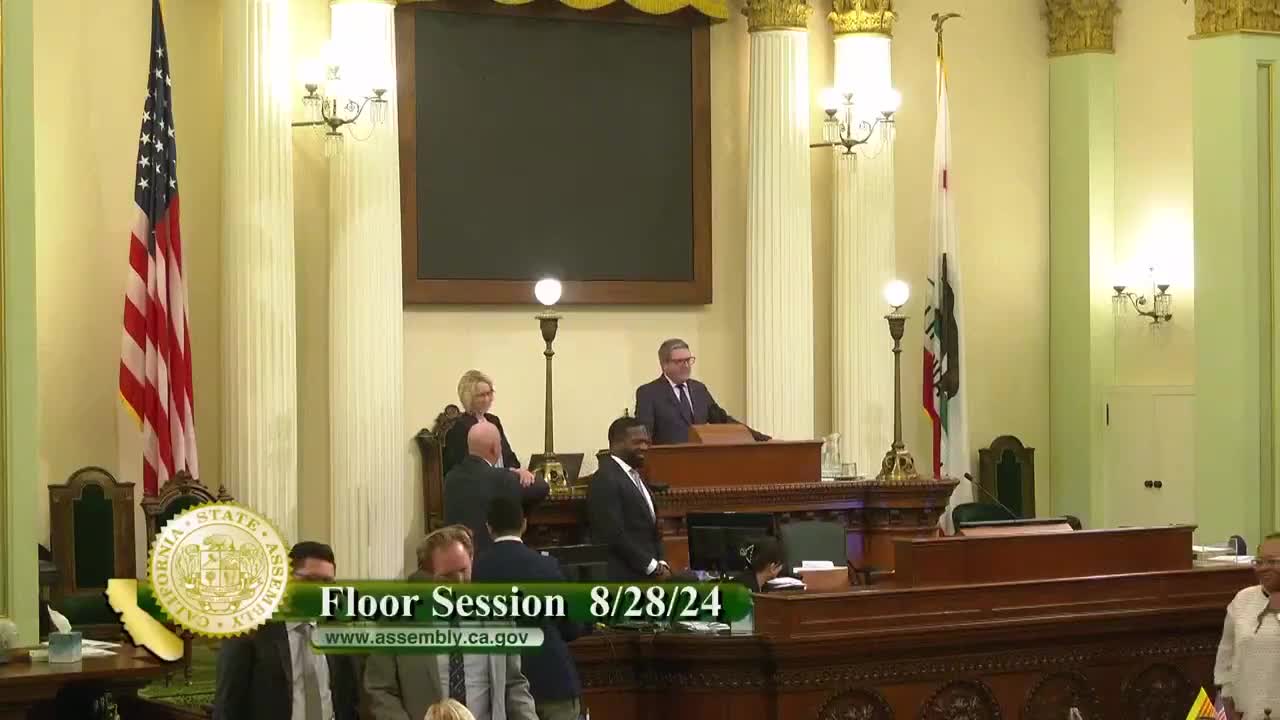
Bill Author
Bill Co-Author(s):