SB 17: Senior housing: tax credits.
- Session Year: 2023-2024
- House: Senate
- Latest Version Date: 2023-09-15
Current Status:
Failed
(2024-01-25: Stricken from file.)
Introduced
In Committee
First Chamber
In Committee
Second Chamber
Enacted
What does this bill do?
This bill requires the state committee that awards low-income housing tax credits to raise the target share for housing projects serving older adults to 20 percent. This change affects developers who seek those tax credits and could increase the amount of affordable housing aimed at seniors.
The summary is provided by generative AI which can make mistakes. For original language, please view the details in the table below.
Existing law, enacted to implement a specified low-income housing tax credit established by federal law, requires the California Tax Credit Allocation Committee to annually determine and allocate the state ceiling in accordance with those provisions and in conformity with federal law. Existing law authorizes the committee to adopt, amend, or repeal rules and regulations for the allocation of housing credits. Existing law requires that specified amounts of the low-income housing tax credits be set aside for allocation to rural areas, small developments, and farmworker housing, as specified.
This bill would require the committee to revise its regulations to increase the housing type goal for senior developments to 20 percent.
This bill would include a change in state statute that would result in a taxpayer paying a higher tax within the meaning of Section 3 of Article XIIIA of the California Constitution, and thus would require for passage the approval of 2/3 of the membership of each house of the Legislature.
Existing law, enacted to implement a specified low-income housing tax credit established by federal law, requires the California Tax Credit Allocation Committee to annually determine and allocate the state ceiling in accordance with those provisions and in conformity with federal law. Existing law authorizes the committee to adopt, amend, or repeal rules and regulations for the allocation of housing credits. Existing law requires that specified amounts of the low-income housing tax credits be set aside for allocation to rural areas, small developments, and farmworker housing, as specified.
This bill would require the committee to revise its regulations to increase the housing type goal for senior developments to 20 percent.
This bill would require that the percentage of the federal ceiling on low-income housing tax credits that is awarded for projects restricted to senior citizens not be less than the percentage of lower income renter households in the state that are lower income elderly renter households, as specified.This bill would include a change in state statute that would result in a taxpayer paying a higher tax within the meaning of Section 3 of Article XIIIA of the California Constitution, and thus would require for passage the approval of 2/3 of the membership of each house of the Legislature.
Existing law, enacted to implement a specified low-income housing tax credit established by federal law, requires the California Tax Credit Allocation Committee to annually determine and allocate the state ceiling in accordance with those provisions and in conformity with federal law. Existing law requires that specified amounts of the low-income housing tax credits be set aside for allocation to rural areas, small developments, and farmworker housing, as specified.
This bill would require that the percentage of the federal ceiling on low-income housing tax credits that is awarded for projects restricted to senior citizens not be less than the percentage of lower income renter households in the state that are lower income elderly renter households, as specified.
This bill would include a change in state statute that would result in a taxpayer paying a higher tax within the meaning of Section 3 of Article XIIIA of the California Constitution, and thus would require for passage the approval of 2/3 of the membership of each house of the Legislature.
Existing law permits application of age restrictions in connection with housing and defines a senior citizen housing development, among other terms, for these purposes. Existing law establishes in each city or county a housing authority authorized to plan, administer, operate, and assist public housing projects financed in whole or part by the state or federal government. Existing law imposes various requirements regarding access to, and quality of, housing for seniors and the elderly.This bill would state the intent of the Legislature to enact legislation that would create new opportunities for the development of affordable senior housing.Existing law permits application of age restrictions in connection with housing and defines a senior citizen housing development, among other terms, for these purposes. Existing law establishes in each city or county a housing authority authorized to plan, administer, operate, and assist public housing projects financed in whole or part by the state or federal government. Existing law imposes various requirements regarding access to, and quality of, housing for seniors and the elderly.
This bill would state the intent of the Legislature to enact legislation that would create new opportunities for the development of affordable senior housing.
(a)A growing body of scientific research has shown that homelessness among older adults is significantly increasing. Among single adults experiencing homelessness, approximately one-half are 50 years of age and older. Among these individuals, almost one-half first became homeless after 50 years of age.
(b)Incomes for the lowest-income older adults have not risen as fast as rents, leaving a growing number of older adult renters at risk for homelessness as they struggle to afford their housing costs.
(c)Adults 50 years of age and older who are homeless are experiencing health conditions, including cognitive and functional impairment, 20 years earlier than their housed counterparts. They often use costly acute health care services, and die prematurely.
(d)According to the Harvard University Joint Center for Housing Studies, older adult renters are a large and growing group. The number of renter households headed by someone 50 years of age and over is expected to grow from 16.0 million in 2018 (35 percent of all renters) to 21.2 million in 2038 (40 percent of all renters).
(e)Californias production of affordable rental housing for older adults has not kept pace with this growth in demand.
(f)Housing is a foundational component of our long-term care system for older adults and people with disabilities, as well as a social determinant of health. The prevalence of chronic conditions and frailty increases with age. In many cases, deteriorating physical and cognitive functioning impede the ability of these individuals to live independently in the community. Without a safe, stable place to live, it is difficult for older adults and people with disabilities to receive proper and effective preventative care and treatment for chronic conditions.
(g)California must produce more affordable rental housing to meet the special needs of our growing older adult population.
(h)The purpose of this act is to create the Affordable Housing for Older Adults Act.
SEC. 2.Section 50199.20 of the Health and Safety Code is amended to read:50199.20.(a)Not less than 20 percent of the federal ceiling on low-income housing tax credits shall be set aside for allocation to rural areas as defined in Section 50199.21. Any amount of credit set aside for rural areas remaining after the ranking of credits in the final cycle of any calendar year shall be available for allocation to any eligible project.
(b) Up to 2 percent of the low-income housing tax credit available under this chapter and Sections 12206, 17058, and 23610.5 of the Revenue and Taxation Code may be set aside for small developments as determined by the committee. Any amount of credit set aside for small developments remaining after the ranking of projects in the final cycle of any calendar year shall be available for allocation to any eligible project.
(c)Not less than the amounts specified in clause (v) of subparagraph (B) of paragraph (1) and paragraph (4) of subdivision (g) of Sections 12206, 17058, and 23610.5 of the Revenue and Taxation Code shall be set aside to provide farmworker housing, as defined in subdivision (h) of Section 50199.7 of the Health and Safety Code.
(d)The committee shall revise subdivision (h) of Section 10315 of Title 4 of the California Code of Regulations to increase the housing type goal for senior developments to 20 percent.
(a)A growing body of scientific research has shown that homelessness among older adults is significantly increasing. Among single adults experiencing homelessness, approximately one-half are 50 years of age and older. Among these individuals, almost one-half first became homeless after 50 years of age.
(b)Incomes for the lowest-income older adults have not risen as fast as rents, leaving a growing number of older adult renters at risk for homelessness as they struggle to afford their housing costs.
(c)Adults 50 years of age and older who are homeless are experiencing health conditions, including cognitive and functional impairment, 20 years earlier than their housed counterparts. They often use costly acute health care services, and die prematurely.
(d)According to the Harvard University Joint Center for Housing Studies, older adult renters are a large and growing group. The number of renter households headed by someone 50 years of age and over is expected to grow from 16.0 million in 2018 (35 percent of all renters) to 21.2 million in 2038 (40 percent of all renters).
(e)Californias production of affordable rental housing for older adults has not kept pace with this growth in demand.
(f)Housing is a foundational component of our Long-Term Care long-term care system for older adults and people with disabilities, as well as a social determinant of health. The prevalence of chronic conditions and frailty increases with age. In many cases, deteriorating physical and cognitive functioning impede the ability of these individuals to live independently in the community. Without a safe, stable place to live, it is difficult for older adults and people with disabilities to receive proper and effective preventative care and treatment for chronic conditions.
(g)California must produce more affordable rental housing to meet the special needs of our growing older adult population.
(h)The purpose of this act is to create the Affordable Housing for Older Adults Act.
SEC. 2.Section 50199.20 of the Health and Safety Code is amended to read:50199.20.(a)Not less than 20 percent of the federal ceiling on low-income housing tax credits shall be set aside for allocation to rural areas as defined in Section 50199.21. Any amount of credit set aside for rural areas remaining after the ranking of credits in the final cycle of any calendar year shall be available for allocation to any eligible project.
(b) Up to 2 percent of the low-income housing tax credit available under this chapter and Sections 12206, 17058, and 23610.5 of the Revenue and Taxation Code may be set aside for small developments as determined by the committee. Any amount of credit set aside for small developments remaining after the ranking of projects in the final cycle of any calendar year shall be available for allocation to any eligible project.
(c)Not less than the amounts specified in clause (v) of subparagraph (B) of paragraph (1) and paragraph (4) of subdivision (g) of Sections 12206, 17058, and 23610.5 of the Revenue and Taxation Code shall be set aside to provide farmworker housing, as defined in subdivision (h) of Section 50199.7 of the Health and Safety Code.
(d)The committee shall revise subdivision (h) of Section 10315 of Title 4 of the California Code of Regulations to increase the housing type goal for senior developments to 20 percent.
(d)The percentage of the federal ceiling on low-income housing tax credits that is awarded for projects restricted to senior citizens, as defined in paragraph (1) of subdivision (b) of Section 51.3 of the Civil Code, shall not be less than the percentage of lower income renter households in the state that are lower income elderly renter households, as reported by the United States Department of Housing and Urban Development on the basis of the most recent American Community Survey or successor survey conducted by the United States Census Bureau. REVISIONS: HeadingLine 2.(a)A growing body of scientific research has shown that homelessness among older adults is significantly increasing. Among single adults experiencing homelessness, approximately one-half are 50 years of age and older. Among these individuals, almost one-half first became homeless after 50 years of age.
(b)Incomes for the lowest-income older adults have not risen as fast as rents, leaving a growing number of older adult renters at risk for homelessness as they struggle to afford their housing costs.
(c)Adults 50 years of age and older who are homeless are experiencing health conditions, including cognitive and functional impairment, 20 years earlier than their housed counterparts. They often use costly acute health care services, and die prematurely.
(d)According to the Harvard University Joint Center for Housing Studies, older adult renters are a large and growing group. The number of renter households headed by someone 50 years of age and over is expected to grow from 16.0 million in 2018 (35 percent of all renters) to 21.2 million in 2038 (40 percent of all renters).
(e)Californias production of affordable rental housing for older adults has not kept pace with this growth in demand.
(f)Housing is a foundational component of our Long-Term Care system for older adults and people with disabilities, as well as a social determinant of health. The prevalence of chronic conditions and frailty increases with age. In many cases, deteriorating physical and cognitive functioning impede the ability of these individuals to live independently in the community. Without a safe, stable place to live, it is difficult for older adults and people with disabilities to receive proper and effective preventative care and treatment for chronic conditions.
(g)California must produce more affordable rental housing to meet the special needs of our growing older adult population.
(h)The purpose of this act is to create the Affordable Housing for Older Adults Act.
SEC. 2.Section 50199.20 of the Health and Safety Code is amended to read:50199.20.(a)Not less than 20 percent of the federal ceiling on low-income housing tax credits shall be set aside for allocation to rural areas as defined in Section 50199.21. Any amount of credit set aside for rural areas remaining after the ranking of credits in the final cycle of any calendar year shall be available for allocation to any eligible project.
(b) Up to 2 percent of the low-income housing tax credit available under this chapter and Sections 12206, 17058, and 23610.5 of the Revenue and Taxation Code may be set aside for small developments as determined by the committee. Any amount of credit set aside for small developments remaining after the ranking of projects in the final cycle of any calendar year shall be available for allocation to any eligible project.
(c)Not less than the amounts specified in clause (v) of subparagraph (B) of paragraph (1) and paragraph (4) of subdivision (g) of Sections 12206, 17058, and 23610.5 of the Revenue and Taxation Code shall be set aside to provide farmworker housing, as defined in subdivision (h) of Section 50199.7 of the Health and Safety Code.
(d)The percentage of the federal ceiling on low-income housing tax credits that is awarded for projects restricted to senior citizens, as defined in paragraph (1) of subdivision (b) of Section 51.3 of the Civil Code, shall not be less than the percentage of lower income renter households in the state that are lower income elderly renter households, as reported by the United States Department of Housing and Urban Development on the basis of the most recent American Community Survey or successor survey conducted by the United States Census Bureau.
It is the intent of the Legislature to enact legislation that would create new opportunities for the development of affordable senior housing.
|
Date
|
Status
|
|---|---|
| Jan 25, 2024 | Veto sustained. |
| Jan 25, 2024 | Stricken from file. |
| Oct 7, 2023 | In Senate. Consideration of Governor's veto pending. |
| Oct 7, 2023 | Vetoed by the Governor. |
| Sep 20, 2023 | Enrolled and presented to the Governor at 4:30 p.m. |
| Sep 13, 2023 | In Senate. Ordered to engrossing and enrolling. |
| Sep 13, 2023 | Read third time. Passed. (Ayes 80. Noes 0. Page 3352.) Ordered to the Senate. |
| Sep 5, 2023 | Read second time. Ordered to third reading. |
| Sep 1, 2023 | From committee: Do pass. (Ayes 16. Noes 0.) (September 1). |
| Jul 12, 2023 | July 12 set for first hearing. Placed on APPR. suspense file. |
| Jun 21, 2023 | From committee: Do pass and re-refer to Com. on APPR. (Ayes 8. Noes 0.) (June 21). Re-referred to Com. on APPR. |
| Jun 21, 2023 | Coauthors revised. |
| Jun 1, 2023 | Referred to Com. on H. & C.D. |
| May 25, 2023 | In Assembly. Read first time. Held at Desk. |
| May 24, 2023 | Read third time. Passed. (Ayes 40. Noes 0. Page 1269.) Ordered to the Assembly. |
| May 18, 2023 | Read second time. Ordered to third reading. |
| May 18, 2023 | From committee: Do pass. (Ayes 7. Noes 0. Page 1157.) (May 18). |
| May 12, 2023 | Set for hearing May 18. |
| May 8, 2023 | May 8 hearing: Placed on APPR suspense file. |
| May 1, 2023 | Set for hearing May 8. |
| Apr 25, 2023 | From committee: Do pass and re-refer to Com. on APPR. (Ayes 11. Noes 0. Page 874.) (April 24). Re-referred to Com. on APPR. |
| Apr 18, 2023 | From committee with author's amendments. Read second time and amended. Re-referred to Com. on HOUSING. |
| Apr 12, 2023 | Set for hearing April 24. |
| Mar 8, 2023 | Re-referred to Com. on HOUSING. |
| Feb 28, 2023 | From committee with author's amendments. Read second time and amended. Re-referred to Com. on RLS. |
| Jan 18, 2023 | Referred to Com. on RLS. |
| Dec 6, 2022 | From printer. May be acted upon on or after January 5. |
| Dec 5, 2022 | Introduced. Read first time. To Com. on RLS. for assignment. To print. |
|
Date
|
Description
|
Location
|
Votes
|
|
|---|---|---|---|---|
| Sep 13, 2023 | SB 17 Caballero Senate Third Reading By Gabriel | Assembly Floor |
Passed |
|
| Sep 1, 2023 | Do pass. | Assembly Standing Committee on Appropriations |
Passed |
|
| Jun 21, 2023 | Do pass and be re-referred to the Committee on [Appropriations] | Assembly Standing Committee on Housing and Community Development |
Passed |
|
| May 24, 2023 | Senate 3rd Reading SB17 Caballero | Senate Floor |
Passed |
|
| May 18, 2023 | Do pass | Senate Standing Committee on Appropriations |
Passed |
|
| May 8, 2023 | Placed on suspense file | Senate Standing Committee on Appropriations |
Passed |
|
| Apr 24, 2023 | Do pass, but first be re-referred to the Committee on [Appropriations] | Senate Standing Committee on Housing |
Passed |
This list shows positions taken on this bill by organizations on the date displayed, which is linked to the original source.
Positions by individuals are not included.
|
Organization
|
Position
|
Date
|
|---|---|---|
| Agency on Aging \ Area 4 | ** Support | |
| alzheimer's orange county | ** Support | |
| California Apartment Association | ** Support | |
| California Commission on Aging | ** Support | |
| California Foundation For Independent Living Centers | ** Support | |
| Centro La Familia Advocacy Services | ** Support | |
| City of Atwater | ** Support | |
| City Of Kerman | ** Support | |
| City of Madera | ** Support | |
| City Of Mendota | ** Support | |
| County Of Madera | ** Support | |
| Eskaton | ** Support | |
| First 5 San Benito | ** Support | |
| Health Projects Center | ** Support | |
| LeadingAge California | ** Support | |
| Lesley Senior Communities | ** Support | |
| Menorah Park | ** Support | |
| New Livable California Dba Livable California | ** Support | |
| PEP Housing | ** Support | |
| Placer Independent Resource Services | ** Support | |
| Retired Public Employees Association | ** Support | |
| Retirement Housing Foundation | ** Support | |
| San Juan Bautista Rotary | ** Support | |
| Senior Coalition of Stanislaus County | ** Support | |
| Seniors Council/Area Agency on Aging of Santa Cruz and San Benito Counties | ** Support | |
| St. Paul's Senior Services | ** Support | |
| TELACU Residential Management | ** Support | |
| Telacu Residential Management Inc. | ** Support |
SENATE RULES COMMITTEE Office of Senate Floor Analyses (916) 651-1520 Fax: (916) 327-4478 | SB 17 |
VETO
Bill No: SB 17
Author: Caballero (D), et al.
Amended: 4/18/23
Vote: 27
SENATE HOUSING COMMITTEE: 11-0, 4/24/23
AYES: Wiener, Ochoa Bogh, Blakespear, Caballero, Cortese, McGuire, Padilla, Seyarto, Skinner, Umberg, Wahab
SENATE APPROPRIATIONS COMMITTEE: 7-0, 5/18/23
AYES: Portantino, Jones, Ashby, Bradford, Seyarto, Wahab, Wiener
SENATE FLOOR: 40-0, 5/24/23
AYES: Allen, Alvarado-Gil, Archuleta, Ashby, Atkins, Becker, Blakespear, Bradford, Caballero, Cortese, Dahle, Dodd, Durazo, Eggman, Glazer, Gonzalez, Grove, Hurtado, Jones, Laird, Limón, McGuire, Menjivar, Min, Newman, Nguyen, Niello, Ochoa Bogh, Padilla, Portantino, Roth, Rubio, Seyarto, Skinner, Smallwood-Cuevas, Stern, Umberg, Wahab, Wiener, Wilk
ASSEMBLY FLOOR: 80-0, 9/13/23 - See last page for vote
SUBJECT: Senior housing: tax credits
SOURCE: LeadingAge California
DIGEST:
This bill requires the California Tax Credit Allocation Committee (TCAC) to amend their regulations to increase the housing type goal for senior housing developments to 20% for the use of low income housing tax credits (LIHTC).
ANALYSIS:
Existing law:
- Allows a state tax credit for costs related to construction, rehabilitation, or acquisition of low-income housing. This credit, which mirrors a federal LIHTC, may be used by taxpayers to offset the tax under the Personal Income Tax, the Corporation Tax, and the Insurance Tax laws.
- Requires the TCAC to annually allocate the California LIHTC based upon qualifications of the applicant and proposed project. The California LIHTC is available only to projects that receive an allocation of the federal LIHTC.
- Limits the annual aggregate amount of the state LIHTC to $70 million, as adjusted for an increase in the California consumer price index, plus any unused LIHTC from the preceding calendar year and any LIHTC returned in the calendar year. The state LIHTC awarded may be claimed as a credit over a four-year period.
This bill requires the TCAC to amend their regulations to increase the housing type goal for senior housing developments to 20% for the use of LIHTC.
Background
California has the largest concentration of severely unaffordable housing markets in the nation and the statewide average home value reached a new record in June 2022 at $793,300. To keep up with demand, the state Department of Housing and Community Development (HCD) estimates that California must plan for the development of more than 2.5 million homes over the next eight years, and no less than one million of those homes must meet the needs of lower-income households (more than 640,000 very low-income and 385,000 low-income units are needed). For decades, not enough housing was constructed to meet need, resulting in a severe undersupply of housing.
As a result of the severe housing shortage, millions of Californians, who are disproportionately lower-income and people of color, must make hard decisions about paying for housing at the expense of food, health care, child care, and transportation—one in three households in the state don’t earn enough money to meet their basic needs. A lack of affordable housing is the biggest contributor to homelessness. As housing costs continue to rise, rent becomes less affordable for lower-income households, who are forced to live beyond their means (paying more than 30% of income on housing costs) or are pushed out of their homes, leading to rapid increases in homelessness. Variation in rates of homelessness cannot be explained by variation in rates of individual factors such as poverty or mental illness, however, cities with higher rents and lower rental vacancy rates (i.e., tighter housing markets) are directly linked to higher per capita rates of homelessness.
According to the Public Policy Institute of California (PPIC), 15% of the state’s population is 65 or older, and, by 2030, about one in five Californians will be 65. Currently, nearly half (45%) of Californians experiencing homelessness are 50 years or older, and older adult homelessness is projected to increase. A recent study from UCSF’s Center for Vulnerable Populations showed that nearly half of unhoused older people experienced their first episode of homelessness after age fifty. Homelessness contributes to lower life expectancy, especially among seniors. Older adults experiencing homelessness are likely to have physical health conditions and functional health status similar to, or worse than, someone 10 to 20 years older.
Comments
- Author’s statement. “The California Tax Credit Allocation Committee provides funds for the development of low-income housing, and has the goal to spend 15% of the State’s allocation of the Low-Income Housing Tax Credit (LIHTC) for programs to increase affordable housing production specifically for older adults. However, this goal does not guarantee a set aside of LIHTC for senior housing production, and in reality, this number often serves as a ceiling resulting in fewer credits allocated for senior housing than what matches the need. In 2030, 25% of the state’s population will be 60 or older, which represents an overall increase of 166%. The population over the age of 85 will have an even faster growth rate, increasing by 489% from 2010 to 2060. SB 17 will ensure the LIHTC Program allocates a share of tax credits for senior housing projects that truly reflects the current need. SB 17 will require LIHTC Program to ensure the percent of the tax credits awarded for lower-income senior housing projects is no less than California’s share of low-income senior renters. It is imperative for the state to keep pace with the demand of housing needed for older adults in California.”
- LIHTC. The LIHTC is an indirect federal subsidy developed in 1986 to incentivize the private development of affordable rental housing for low-income households. The federal LIHTC program enables low-income housing sponsors and developers to raise project equity through the allocation of tax benefits to investors. TCAC within the State Treasurer’s Office, administers the program and awards credits to qualified developers who can then sell those credits to private investors who use the credits to reduce their federal tax liability. The developer in turn invests the capital into the affordable housing project.
Each year, the federal government allocates funding to the states for LIHTCs on the basis of a per-resident formula. In California, TCAC is the entity that reviews proposals submitted by developers and selects projects based on a variety of prescribed criteria. Only rental housing buildings, which are either undergoing rehabilitation or newly constructed, are eligible for the LIHTC programs. In addition, the qualified low-income housing projects must comply with both rent and income restrictions. The value of the 4% tax credits is less than half of the 9% tax credits and, as a result, 4% federal credits are generally used in conjunction with another funding source, like state housing bonds or local funding sources.
In 1987, the Legislature authorized a state LIHTC program to augment the federal tax credit program. State tax credits can only be awarded to projects that have also received, or are concurrently receiving, an allocation of the federal LIHTCs. The amount of state LIHTC that may be annually allocated by TCAC is statutorily limited to $70 million, adjusted for inflation (currently, around $100 million). Generally, affordable housing developments in California cannot “pencil-out” without a low income housing tax credit, and, given the relatively limited resources available for affordable housing development, the demand for tax credits outpaces demand by 2:1.
- Striking a balance. California’s population is aging and the proportion of those who are older and lower-income are growing. Policymakers must ensure this vulnerable population remains housed as California faces a dramatic housing shortage for all populations, including the homeless, persons with disabilities, unaccompanied youth, veterans, and domestic violence survivors, just to name a few. Unfortunately, however, there simply are not enough resources available to finance the construction of housing necessary to meet the needs of all vulnerable populations in the state.
The CTCAC regularly adopts regulations governing the process for applying for LIHTC. In the current regulations are several housing type goals, including among others, a 15% goal for seniors. In an effort to ensure tax credits are serving older populations without edging out other vulnerable populations, this bill requires the senior housing goal to be increased to 20%.
FISCAL EFFECT: Appropriation: No Fiscal Com.: Yes Local: No
According to the Assembly Appropriations Committee:
- Potential ongoing General Fund cost pressures of an unknown amount to authorize additional LIHTCs to the extent this bill results in a significant increase in LIHTC allocations for senior housing projects that would otherwise be used for other eligible affordable housing projects. The demand for LIHTCs has consistently exceeded the availability of LIHTCs for many years.
- TCAC indicates negligible costs to amend its LIHTC regulations to increase the housing-type goal for senior developments.
SUPPORT: (Verified 10/10/23)
LeadingAge California (source)
Alzheimer's Orange County
California Apartment Association
California Commission on Aging
California Foundation for Independent Living Centers
Centro LA Familia Advocacy Services
City of Atwater
City of Kerman
City of Madera
City of Mendota
County of Madera
Eskaton
First 5 San Benito
Health Projects Center
Lesley Senior Communities
Menorah Park
Pep Housing
Placer Independent Resource Services
Retirement Housing Foundation
San Juan Bautista Rotary
Senior Coalition of Stanislaus County
Seniors Council/Area Agency on Aging of Santa Cruz and San Benito Counties
Telacu Residential Management Inc.
OPPOSITION: (Verified 10/10/23)
None received
GOVERNOR'S VETO MESSAGE:
This bill would require the California Tax Credit Allocation Committee (TCAC) within the State Treasurer's Office to revise the regulations for the low-income housing tax credit (LIHTC) to increase the housing-type goal for senior developments from 15% to 20%. While I appreciate the author's commitment to increase the supply of affordable housing for seniors, statutorily mandating this change may adversely impact access to affordable housing for other population groups. TCAC already has the authority to revise its regulations, which can be done in conjunction with a robust stakeholder process to inform any adjustments. This bill would bypass that process.
ASSEMBLY FLOOR: 80-0, 9/13/23
AYES: Addis, Aguiar-Curry, Alanis, Alvarez, Arambula, Bains, Bauer-Kahan, Bennett, Berman, Boerner, Bonta, Bryan, Calderon, Juan Carrillo, Wendy Carrillo, Cervantes, Chen, Connolly, Megan Dahle, Davies, Dixon, Essayli, Flora, Mike Fong, Vince Fong, Friedman, Gabriel, Gallagher, Garcia, Gipson, Grayson, Haney, Hart, Holden, Hoover, Irwin, Jackson, Jones-Sawyer, Kalra, Lackey, Lee, Low, Lowenthal, Maienschein, Mathis, McCarty, McKinnor, Muratsuchi, Stephanie Nguyen, Ortega, Pacheco, Papan, Jim Patterson, Joe Patterson, Pellerin, Petrie-Norris, Quirk-Silva, Ramos, Rendon, Reyes, Luz Rivas, Rodriguez, Blanca Rubio, Sanchez, Santiago, Schiavo, Soria, Ta, Ting, Valencia, Villapudua, Waldron, Wallis, Ward, Weber, Wicks, Wilson, Wood, Zbur, Robert Rivas
Prepared by: Alison Hughes / HOUSING / (916) 651-4124
10/19/23 10:39:10
**** END ****
SENATE THIRD READING
STR Bill Id:SB 17
Author:(Caballero)
As Amended Ver:April 18, 2023
2/3 vote
SUMMARY
Requires the California Tax Credit Allocation Committee (TCAC) to revise the regulations for the low-income housing tax credit (LIHTC) to increase the housing type goal for senior housing from 15% to 20%.
Major Provisions
Requires the California Tax Credit Allocation Committee (TCAC) to revise the regulations for the low-income housing tax credit (LIHTC) to increase the housing type goal for senior housing from 15% to 20%.
COMMENTS
Background on the State LIHTC Program: In 1987, the Legislature authorized a state LIHTC program to augment the federal tax credit program. State tax credits can only be awarded to projects that have also received, or are concurrently receiving, an allocation of federal 4% LIHTC. The amount of state LIHTC that may be annually allocated by TCAC is limited to $70 million, adjusted for inflation. In 2020, the total credit amount available for allocation was about $100 million plus any unused or returned credit allocations from previous years.
While the state LIHTC program is patterned after the federal LIHTC program, there are several differences. First, investors may claim the state LIHTC over four years rather than the 10-year federal allocation period. Second, the rates used to determine the total amount of the state tax credit (representing all four years of allocation) are 30% of the eligible basis of a project that is not federally subsidized and 13% of the eligible basis of a project that is federally subsidized, in contrast to 70% and 30% (representing all 10 years of allocation on a present-value basis), respectively, for purposes of the federal LIHTC.
Combining federal 9% credits (which amounts to roughly 70%) with state credits (which amounts to 30 percent) generally equals 100% of a project's eligible basis. Combining federal 4% credits (which amounts to roughly 30 percent) with state credits (which amounts to 13%, only results in 43% of a project's eligible basis, again requiring developers to seek additional funding sources to make up the remaining gap.
Senior Housing Needs: In January of 2021, the Newsom Administration released the Master Plan on Aging, which calls for an end to homelessness and a requirement to develop housing solutions to prevent and end homelessness among older adults and other at-risk populations. 45% of Californians experiencing homelessness are 50 years or older. A recent study from UCSF's Center for Vulnerable Populations showed that nearly half of unhoused older people experienced their first episode of homelessness after age 50. Homelessness contributes to lower life expectancy, especially among seniors. A 50 year old homeless person is physically likely to have health conditions and functional health status similar to, or worse than, someone 10 to 20 years older.
Many times individuals who are 50 to 64 who experience homelessness fall through cracks in our support system but have higher needs than their same-age housed peers. For instance, they may not qualify for Medicare but may have the medical needs of someone 10-20 years older due to years of disability, poverty, stress, and other issues. 43% of people experiencing homelessness report having a disabling condition. Roughly eight out of ten extremely low-income older renters pay more than one-half of their monthly income on rent. Many seniors and persons with disabilities live on Social Security Income (SSI). In 2022, SSI payments for an individual are $974 per month, while the average rent for an efficiency apartment ranges from $716 to $2,145 per month. In addition, the state has an estimated 11,000 people living in nursing facilities simply because they have nowhere to live if discharged.
TCAC Goals by Housing Type: TCAC regulations governing LIHTC allocations set goals for various housing types, including large family size, special needs, single-room occupancy, at-risk, seniors, rural acquisition, and rehabilitation. The current goal for senior housing is fifteen percent. This bill would increase that goal to 20%. There is flexibility in the TCAC regulations to utilize tie-breakers if there is an overconcentration of projects in one housing type.
According to the Author
"The California Tax Credit Allocation Committee (TCAC) located in the State Treasurer's Office provides funds for the development of low-income housing, and has the goal to spend 15% of the State's allocation of the Low-Income Housing Tax Credit (LIHTC) for programs to increase affordable housing production specifically for older adults. However, this goal does not guarantee a set aside of LIHTC for senior housing production, and in reality, this number often serves as a ceiling resulting in fewer credits allocated for senior housing than what matches the need. In 2030, 25% of the state's population will be 60 or older, which represents an overall increase of 166%. The population over the age of 85 will have an even faster growth rate, increasing by 489% from 2010 to 2060. SB 17 will ensure the Low-Income Housing Tax Credit Program allocates a share of tax credits for senior housing projects that truly reflects the current need. This bill, SB 17, will require the Low-Income Housing Tax Credit Program to ensure the percent of the tax credits awarded for lower-income senior housing projects better reflects California's share of low-income senior renters by requiring TCAC to update their senior housing production goal to 20%. It is imperative for the state to keep pace with the demand of housing needed for older adults in California."
Arguments in Support
According to the sponsor, Leading Age, "SB 17 seeks to ensure that older adults receive a fair-share of funding from the state's Low Income Housing Tax Credit Program (LIHTC). LIHTC is a housing financing program administered by the Tax Credit Allocation Committee (TCAC) of the State Treasury for the purpose of assisting the new
construction, rehabilitation and preservation of affordable rental housing. Under the Qualified Allocation Plan, TCAC allocates a percentage of LIHTC funding toward affordable senior housing developments. This is known as the "Senior Goal." However, the Goal requires only 15
percent of credits to go to projects primarily benefitting older adults. This Goal does not reflect the current demographics of our low-income renter population, and will only fall further behind as California ages."
Arguments in Opposition
None on file.
FISCAL COMMENTS
According to the Assembly Appropriations Committee:
- Potential ongoing General Fund cost pressures of an unknown amount to authorize additional LIHTCs to the extent this bill results in a significant increase in LIHTC allocations for senior housing projects that would otherwise be used for other eligible affordable housing projects. The demand for LIHTCs has consistently exceeded the availability of LIHTCs for many years.
- TCAC indicates negligible costs to amend its LIHTC regulations to increase the housing-type goal for senior developments.
VOTES
SENATE FLOOR: 40-0-0
YES: Allen, Alvarado-Gil, Archuleta, Ashby, Atkins, Becker, Blakespear, Bradford, Caballero, Cortese, Dahle, Dodd, Durazo, Eggman, Glazer, Gonzalez, Grove, Hurtado, Jones, Laird, Limón, McGuire, Menjivar, Min, Newman, Nguyen, Niello, Ochoa Bogh, Padilla, Portantino, Roth, Rubio, Seyarto, Skinner, Smallwood-Cuevas, Stern, Umberg, Wahab, Wiener, Wilk
ASM HOUSING AND COMMUNITY DEVELOPMENT: 8-0-0
YES: Wicks, Joe Patterson, Wendy Carrillo, Gabriel, Kalra, Quirk-Silva, Sanchez, Ward
ASM APPROPRIATIONS: 16-0-0
YES: Holden, Megan Dahle, Bryan, Calderon, Wendy Carrillo, Dixon, Mike Fong, Hart, Lowenthal, Mathis, Papan, Pellerin, Sanchez, Soria, Weber, Wilson
UPDATED
VERSION: April 18, 2023
CONSULTANT: Lisa Engel / H. & C.D. / (916) 319-2085 FN: 0001448
Date of Hearing: July 12, 2023
ASSEMBLY COMMITTEE ON APPROPRIATIONS
Chris Holden, Chair
SBPCA Bill Id:SB 17
Author:(Caballero) – As Amended Ver:April 18, 2023
Policy Committee: | Housing and Community Development | Vote: | 8 - 0 |
|
| ||
|
|
Urgency: No State Mandated Local Program: No Reimbursable: No
SUMMARY:
This bill requires the California Tax Credit Allocation Committee (TCAC) to revise its regulations for distributing low-income housing tax credits (LIHTCs) by increasing the allocation goal for senior housing from 15% to 20%.
FISCAL EFFECT:
- Potential ongoing General Fund cost pressures of an unknown amount to authorize additional LIHTCs to the extent this bill results in a significant increase in LIHTC allocations for senior housing projects that would otherwise be used for other eligible affordable housing projects. The demand for LIHTCs has consistently exceeded the availability of LIHTCs for many years.
- TCAC indicates negligible costs to amend its LIHTC regulations to increase the housing-type goal for senior developments.
COMMENTS:
- Purpose. The author seeks to ensure the goal for the state’s allocation of LIHTC to housing projects for older adults better reflects the demographics of the low-income renter population.
- Background. In January of 2021, the Newsom Administration released the Master Plan for Aging, which calls for an end to homelessness and a requirement to develop housing solutions to prevent and end homelessness among older adults and other at-risk populations. 45% of Californians experiencing homelessness are 50 years or older. A recent study from UCSF’s Center for Vulnerable Populations showed that nearly half of unhoused older people experienced their first episode of homelessness after age 50.
Existing federal law provides for a federal LIHTC to incentivize private development of affordable rental housing. The tax credit enables low-income housing sponsors and developers to raise project equity through the allocation of tax benefits to investors. In 1987, the Legislature authorized the creation of a state LIHTC program to augment the federal tax credit program, and existing law authorizes TCAC to allocate $70 million in state LIHTCs each year, adjusted for inflation. The state program is generally patterned after the federal program, but project developers or housing sponsors that receive a state credit allocation must agree to specified terms, including a minimum of 55 years of rent and tenant income restrictions. Existing law designates TCAC as the entity responsible for administering both the federal and state LIHTC programs, including the allocation of tax credits to housing sponsors through a competitive application process. TCAC must submit an annual report to the Legislature on its activities related to the allocation of tax credits and the projects and units that benefit from those credits.
According to TCAC’s most recent annual report, the state tax credit cap was approximately $111 million in 2022. To augment the state LIHTC cap, AB 101 (Budget Committee), Chapter 159, Statutes of 2019, authorized an additional $500 million in state LIHTCs annually, subject to an appropriation in the Budget Act. These additional LIHTCs were made available for the 2020, 2021, and 2022 calendar years. TCAC awarded 16.34% of available LIHTCs to senior housing projects in 2022, exceeding the 15% goal specified in regulations.
Existing law authorizes TCAC to adopt, amend, or repeal rules and regulations for the allocation of LIHTCs. Current regulations specify goals (not requirements) for allocating LIHTCs for certain housing types, including special needs (30%), single room occupancy (15%), at-risk (15%), and seniors (15%). Existing law also requires specified amounts of LIHTCs to be set aside for allocation to rural areas, small developments, and farmworker housing.
This bill requires TCAC to revise its LIHTC regulations to increase the housing-type goal for senior developments to 20%. The bill increases only the goal for the LIHTC allocation to senior housing. It is not a mandated allocation increase.
- Related Legislation. AB 1439 (E. Garcia) requires TCAC to consider amending the regulatory scoring system for the LIHTC by granting increased consideration to farmworker housing projects. AB 1439 is pending in the Senate Appropriations Committee.
Analysis Prepared by: Jennifer Swenson / APPR. / (916) 319-2081
Date of Hearing: June 21, 2023
ASSEMBLY COMMITTEE ON HOUSING AND COMMUNITY DEVELOPMENT
Buffy Wicks, Chair
SBPCA Bill Id:SB 17
Author:(Caballero) – As Amended Ver:April 18, 2023
SENATE VOTE: 40-0
SUBJECT: Senior housing: tax credits
SUMMARY: Requires the California Tax Credit Allocation Committee (TCAC) to revise the regulations for the low-income housing tax credit (LIHTC) to increase the housing type goal for senior housing from 15 percent to 20 percent.
EXISTING LAW:
- Provides that a low-income housing development that is a new building and is receiving 9 percent federal LIHTCs is eligible to receive state LIHTC over four years of 30 percent of the eligible basis of the building. (Revenue and Taxation Code (R&TC) Section 12206(c)(4))
- Provides that up to $500 million in enhanced state LIHTC may be allocated to 4 percent tax credit projects pursuant to an authorization in the annual budget or related legislation, but not to 9 percent tax credit projects. (R&TC 12206(g)(1)(B))
FISCAL EFFECT: Unknown.
COMMENTS:
Author’s Statement: According to the author, “The California Tax Credit Allocation Committee (TCAC) located in the State Treasurer’s Office provides funds for the development of low-income housing, and has the goal to spend 15% of the State’s allocation of the Low-Income Housing Tax Credit (LIHTC) for programs to increase affordable housing production specifically for older adults. However, this goal does not guarantee a set aside of LIHTC for senior housing production, and in reality, this number often serves as a ceiling resulting in fewer credits allocated for senior housing than what matches the need. In 2030, 25% of the state’s population will be 60 or older, which represents an overall increase of 166%. The population over the age of 85 will have an even faster growth rate, increasing by 489% from 2010 to 2060. SB 17 will ensure the Low-Income Housing Tax Credit Program allocates a share of tax credits for senior housing projects that truly reflects the current need. This bill, SB 17, will require the Low-Income Housing Tax Credit Program to ensure the percent of the tax credits awarded for lower-income senior housing projects better reflects California’s share of low-income senior renters by requiring TCAC to update their senior housing production goal to 20%. It is imperative for the state to keep pace with the demand of housing needed for older adults in California.”
Background on the Federal LIHTC Program: The LIHTC is an indirect federal subsidy developed in 1986 to incentivize the private development of affordable rental housing for low-income households. The federal LIHTC program enables affordable housing sponsors and developers to raise financing through the allocation of tax benefits to investors. TCAC administers the program and awards credits to qualified developers who can then sell those credits to private investors who use the credits to reduce their federal tax liability. The developer in turn invests the capital into the affordable housing project.
Two types of federal tax credits are available: the 9 percent and 4 percent credits. These terms refer to the approximate percentage of a project’s “eligible basis” a taxpayer may deduct from their annual federal tax liability in each year for 10 years. “Eligible basis” means the cost of development excluding land, transaction costs, and costs incurred for work outside the property boundary. For projects that are not financed with a federal subsidy, the applicable rate is 9 percent. For projects that are federally subsidized (including projects financed more than 50 percent with tax-exempt bonds), the applicable rate is 4 percent. Generally, the 9 percent tax credit amounts to 70 percent of a taxpayer’s eligible basis and the 4 percent tax credit amounts to 30 percent of a taxpayer’s eligible basis, spread over a 10-year period.
Each year, the federal government allocates funding to each state for LIHTCs on the basis of a per-resident formula. Only rental housing buildings that are either undergoing rehabilitation or newly constructed are eligible for the LIHTC programs. The 9 percent credit is generally reserved for new construction, while the 4 percent credit can be claimed for rehabilitation or new construction. In addition, developments must comply with both rent and income restrictions.
Each state receives an annual ceiling of 9 percent federal tax credits. Currently, in California they are oversubscribed, meaning for every project that is awarded a LIHTC, there are multiple eligible projects waiting in the queue who did not receive an award. Unlike 9 percent LIHTC, federal 4 percent tax credits are not capped; however, they must be used in conjunction with tax-exempt private activity bonds (PABs), which are capped and are administered by the California Debt Limit Allocation Committee. PABs are issued by state and local government agencies and are purchased by the private sector, generally a bank (who can use the bond for purposes of federal Community Reinvestment Act compliance). The current state PAB ceiling is $4.68 billion. Therefore, the limiting factor for the 4 percent credit comes from this overall bond volume cap. As described above, the value of the 4 percent tax credits is less than half of the 9 percent tax credits and, as a result, 4 percent federal credits are generally used in conjunction with another funding source to fill out the developer’s “capital stack,” like state housing grant awards or local funding sources.
Background on the State LIHTC Program: In 1987, the Legislature authorized a state LIHTC program to augment the federal tax credit program. State tax credits can only be awarded to projects that have also received, or are concurrently receiving, an allocation of federal 4 percent LIHTC. The amount of state LIHTC that may be annually allocated by TCAC is limited to $70 million, adjusted for inflation. In 2020, the total credit amount available for allocation was about $100 million plus any unused or returned credit allocations from previous years.
While the state LIHTC program is patterned after the federal LIHTC program, there are several differences. First, investors may claim the state LIHTC over four years rather than the 10-year federal allocation period. Second, the rates used to determine the total amount of the state tax credit (representing all four years of allocation) are 30 percent of the eligible basis of a project that is not federally subsidized and 13 percent of the eligible basis of a project that is federally subsidized, in contrast to 70 percent and 30 percent (representing all 10 years of allocation on a present-value basis), respectively, for purposes of the federal LIHTC.
Combining federal 9 percent credits (which amounts to roughly 70 percent) with state credits (which amounts to 30 percent) generally equals 100 percent of a project’s eligible basis. Combining federal 4 percent credits (which amounts to roughly 30 percent) with state credits (which amounts to 13 percent), only results in 43 percent of a project’s eligible basis, again requiring developers to seek additional funding sources to make up the remaining gap.
Senior Housing Needs: In January of 2021, the Newsom Administration released the Master Plan on Aging, which calls for an end to homelessness and a requirement to develop housing solutions to prevent and end homelessness among older adults and other at-risk populations. Forty-five percent of Californians experiencing homelessness are 50 years or older. A recent study from UCSF’s Center for Vulnerable Populations showed that nearly half of unhoused older people experienced their first episode of homelessness after age 50. Homelessness contributes to lower life expectancy, especially among seniors. A 50 year old homeless person is physically likely to have health conditions and functional health status similar to, or worse than, someone 10-20 years older.
Many times individuals who are 50 to 64 who experience homelessness fall through cracks in our support system but have higher needs than their same-age housed peers. For instance, they may not qualify for Medicare but may have the medical needs of someone 10-20 years older due to years of disability, poverty, stress, and other issues. Forty-three percent of people experiencing homelessness report having a disabling condition. Roughly eight out of ten extremely low-income older renters pay more than one-half of their monthly income on rent. Many seniors and persons with disabilities live on Social Security Income (SSI). In 2022, SSI payments for an individual are $974 per month, while the average rent for an efficiency apartment ranges from $716 to $2,145 per month. In addition, the state has an estimated 11,000 people living in nursing facilities simply because they have nowhere to live if discharged.
TCAC Goals by Housing Type: TCAC regulations governing LIHTC allocations set goals for various housing types, including large family size, special needs, single-room occupancy, at-risk, seniors, rural acquisition, and rehabilitation. The current goal for senior housing is fifteen percent. This bill would increase that goal to twenty percent. There is flexibility in the TCAC regulations to utilize tie-breakers if there is an overconcentration of projects in one housing type.
Arguments in Support: According to the sponsor, Leading Age, “SB 17 seeks to ensure that older adults receive a fair-share of funding from the state’s Low Income Housing Tax Credit Program (LIHTC). LIHTC is a housing financing program administered by the Tax Credit Allocation Committee (TCAC) of the State Treasury for the purpose of assisting the new
construction, rehabilitation and preservation of affordable rental housing. Under the Qualified Allocation Plan, TCAC allocates a percentage of LIHTC funding toward affordable senior housing developments. This is known as the “Senior Goal.” However, the Goal requires only 15
percent of credits to go to projects primarily benefitting older adults. This Goal does not reflect the current demographics of our low-income renter population, and will only fall further behind as California ages.”
Arguments in Opposition: None on file.
Related Legislation:
AB 1439 (E Garcia) would require the TCAC to consider amending the scoring system for the LIHTC by granting increased consideration for farmworker housing projects. This bill is currently pending a hearing in Senate Housing Committee.
REGISTERED SUPPORT / OPPOSITION:
Support
LeadingAge California (Sponsor)
Agency on Aging \ Area 4
California Apartment Association
California Commission on Aging
California Foundation for Independent Living Centers
Eskaton
Health Projects Center
New Livable California Dba Livable California
Pep Housing
Retired Public Employees Association
Retirement Housing Foundation
St. Paul's Senior Services
Telacu Residential Management
Opposition
None on file.
Analysis Prepared by: Lisa Engel / H. & C.D. / (916) 319-2085
SENATE RULES COMMITTEE Office of Senate Floor Analyses (916) 651-1520 Fax: (916) 327-4478 | SB 17 |
THIRD READING
Bill No: SB 17
Author: Caballero (D)
Amended: 4/18/23
Vote: 27
SENATE HOUSING COMMITTEE: 11-0, 4/24/23
AYES: Wiener, Ochoa Bogh, Blakespear, Caballero, Cortese, McGuire, Padilla, Seyarto, Skinner, Umberg, Wahab
SENATE APPROPRIATIONS COMMITTEE: 7-0, 5/18/23
AYES: Portantino, Jones, Ashby, Bradford, Seyarto, Wahab, Wiener
SUBJECT: Senior housing: tax credits
SOURCE: LeadingAge California
DIGEST:
This bill requires the California Tax Credit Allocation Committee (TCAC) to amend their regulations to increase the housing type goal for senior housing developments to 20% for the use of low income housing tax credits (LIHTC).
ANALYSIS:
Existing law:
- Allows a state tax credit for costs related to construction, rehabilitation, or acquisition of low-income housing. This credit, which mirrors a federal LIHTC, may be used by taxpayers to offset the tax under the Personal Income Tax, the Corporation Tax, and the Insurance Tax laws.
- Requires the TCAC to annually allocate the California LIHTC based upon qualifications of the applicant and proposed project. The California LIHTC is available only to projects that receive an allocation of the federal LIHTC.
- Limits the annual aggregate amount of the state LIHTC to $70 million, as adjusted for an increase in the California consumer price index, plus any unused LIHTC from the preceding calendar year and any LIHTC returned in the calendar year. The state LIHTC awarded may be claimed as a credit over a four-year period.
This bill requires the TCAC to amend their regulations to increase the housing type goal for senior housing developments to 20% for the use of LIHTC.
Background
California has the largest concentration of severely unaffordable housing markets in the nation and the statewide average home value reached a new record in June 2022 at $793,300. To keep up with demand, the state Department of Housing and Community Development (HCD) estimates that California must plan for the development of more than 2.5 million homes over the next eight years, and no less than one million of those homes must meet the needs of lower-income households (more than 640,000 very low-income and 385,000 low-income units are needed). For decades, not enough housing was constructed to meet need, resulting in a severe undersupply of housing.
As a result of the severe housing shortage, millions of Californians, who are disproportionately lower-income and people of color, must make hard decisions about paying for housing at the expense of food, health care, child care, and transportation—one in three households in the state don’t earn enough money to meet their basic needs. A lack of affordable housing is the biggest contributor to homelessness. As housing costs continue to rise, rent becomes less affordable for lower-income households, who are forced to live beyond their means (paying more than 30% of income on housing costs) or are pushed out of their homes, leading to rapid increases in homelessness. Variation in rates of homelessness cannot be explained by variation in rates of individual factors such as poverty or mental illness, however, cities with higher rents and lower rental vacancy rates (i.e., tighter housing markets) are directly linked to higher per capita rates of homelessness.
According to the Public Policy Institute of California (PPIC), 15% of the state’s population is 65 or older, and, by 2030, about one in five Californians will be 65. Currently, nearly half (45%) of Californians experiencing homelessness are 50 years or older, and older adult homelessness is projected to increase. A recent study from UCSF’s Center for Vulnerable Populations showed that nearly half of unhoused older people experienced their first episode of homelessness after age fifty. Homelessness contributes to lower life expectancy, especially among seniors. Older adults experiencing homelessness are likely to have physical health conditions and functional health status similar to, or worse than, someone 10 to 20 years older.
Comments
- Author’s statement. “The California Tax Credit Allocation Committee provides funds for the development of low-income housing, and has the goal to spend 15% of the State’s allocation of the Low-Income Housing Tax Credit (LIHTC) for programs to increase affordable housing production specifically for older adults. However, this goal does not guarantee a set aside of LIHTC for senior housing production, and in reality, this number often serves as a ceiling resulting in fewer credits allocated for senior housing than what matches the need. In 2030, 25% of the state’s population will be 60 or older, which represents an overall increase of 166%. The population over the age of 85 will have an even faster growth rate, increasing by 489% from 2010 to 2060. SB 17 will ensure the LIHTC Program allocates a share of tax credits for senior housing projects that truly reflects the current need. SB 17 will require LIHTC Program to ensure the percent of the tax credits awarded for lower-income senior housing projects is no less than California’s share of low-income senior renters. It is imperative for the state to keep pace with the demand of housing needed for older adults in California.”
- LIHTC. The LIHTC is an indirect federal subsidy developed in 1986 to incentivize the private development of affordable rental housing for low-income households. The federal LIHTC program enables low-income housing sponsors and developers to raise project equity through the allocation of tax benefits to investors. TCAC within the State Treasurer’s Office, administers the program and awards credits to qualified developers who can then sell those credits to private investors who use the credits to reduce their federal tax liability. The developer in turn invests the capital into the affordable housing project.
Each year, the federal government allocates funding to the states for LIHTCs on the basis of a per-resident formula. In California, TCAC is the entity that reviews proposals submitted by developers and selects projects based on a variety of prescribed criteria. Only rental housing buildings, which are either undergoing rehabilitation or newly constructed, are eligible for the LIHTC programs. In addition, the qualified low-income housing projects must comply with both rent and income restrictions. The value of the 4% tax credits is less than half of the 9% tax credits and, as a result, 4% federal credits are generally used in conjunction with another funding source, like state housing bonds or local funding sources.
In 1987, the Legislature authorized a state LIHTC program to augment the federal tax credit program. State tax credits can only be awarded to projects that have also received, or are concurrently receiving, an allocation of the federal LIHTCs. The amount of state LIHTC that may be annually allocated by TCAC is statutorily limited to $70 million, adjusted for inflation (currently, around $100 million). Generally, affordable housing developments in California cannot “pencil-out” without a low income housing tax credit, and, given the relatively limited resources available for affordable housing development, the demand for tax credits outpaces demand by 2:1.
- Striking a balance. California’s population is aging and the proportion of those who are older and lower-income are growing. Policymakers must ensure this vulnerable population remains housed as California faces a dramatic housing shortage for all populations, including the homeless, persons with disabilities, unaccompanied youth, veterans, and domestic violence survivors, just to name a few. Unfortunately, however, there simply are not enough resources available to finance the construction of housing necessary to meet the needs of all vulnerable populations in the state.
The CTCAC regularly adopts regulations governing the process for applying for LIHTC. In the current regulations are several housing type goals, including among others, a 15% goal for seniors. In an effort to ensure tax credits are serving older populations without edging out other vulnerable populations, this bill requires the senior housing goal to be increased to 20%.
FISCAL EFFECT: Appropriation: No Fiscal Com.: Yes Local: No
According to the Senate Appropriations Committee:
- TCAC indicates that costs to amend its LIHTC regulations to increase the housing type goal for senior developments would be minor and absorbable. (Tax Credit Allocation Fee Account)
- Unknown annual General Fund cost pressures to provide additional LIHTCs to senior housing projects that would otherwise be used for other types of affordable housing projects under the current 15% goal specified in regulations. Staff notes that the demand for LIHTCs has consistently exceeded the availability of credits for years.
SUPPORT: (Verified 5/18/23)
LeadingAge California (source)
Alzheimer's Orange County
California Commission on Aging
Centro LA Familia Advocacy Services
City of Atwater
City of Kerman
City of Madera
City of Mendota
County of Madera
Eskaton
First 5 San Benito
Health Projects Center
Lesley Senior Communities
Menorah Park
Pep Housing
Placer Independent Resource Services
Retirement Housing Foundation
San Juan Bautista Rotary
Senior Coalition of Stanislaus County
Seniors Council/Area Agency on Aging of Santa Cruz and San Benito Counties
Telacu Residential Management Inc.
OPPOSITION: (Verified 5/18/23)
None received
Prepared by: Alison Hughes / HOUSING / (916) 651-4124
5/20/23 12:37:40
**** END ****
SENATE COMMITTEE ON
Senator Anthony Portantino, Chair
2023 - 2024 Regular Session
SB 17 (Caballero) - Senior housing: tax credits
Version: | Policy Vote: |
Urgency: | Mandate: |
Hearing Date: | Consultant: |
Bill Summary:
SB 17 would require the California Tax Credit Allocation Committee (TCAC) to amend their regulations that specify the allocation goals for distributing low income housing tax credits (LIHTCs) to increase the housing type goal for senior developments to 20%.
Fiscal Impact:
- TCAC indicates that costs to amend its LIHTC regulations to increase the housing type goal for senior developments would be minor and absorbable. (Tax Credit Allocation Fee Account)
- Unknown annual General Fund cost pressures to provide additional LIHTCs to senior housing projects that would otherwise be used for other types of affordable housing projects under the current 15% goal specified in regulations. Staff notes that the demand for LIHTCs has consistently exceeded the availability of credits for years.
Background:
Existing federal law provides for a federal LIHTC to incentivize private development of affordable rental housing. The tax credit enables low-income housing sponsors and developers to raise project equity through the allocation of tax benefits to investors. In 1987, the Legislature authorized the creation of a state LIHTC program to augment the federal tax credit program, and existing law authorizes TCAC to allocate $70 million in state LIHTCs each year, adjusted for inflation. The state program is generally patterned after the federal program, but project developers or housing sponsors that receive a state credit allocation must agree to specified terms, including a minimum of 55 years of rent and tenant income restrictions. Existing law designates TCAC as the entity responsible for administering both the federal and state LIHTC programs, including the allocation of tax credits to housing sponsors through a competitive application process. TCAC must submit an annual report to the Legislature on its activities related to the allocation of tax credits and the projects and units that benefit from those credits.
According to TCAC’s most recent annual report, the state tax credit cap was approximately $111 million in 2022. To augment the state LIHTC cap, AB 101 (Budget Committee), Chap. 159/2019, authorized an additional $500 million in state LIHTCs annually, subject to an appropriation in the Budget Act. These additional LIHTCs were made available for the 2020, 2021, and 2022 calendar years.
Existing law authorizes TCAC to adopt, amend, or repeal rules and regulations for the allocation of LIHTCs. Current regulations specify goals for allocating LIHTCs for certain housing types, including special needs (30%), single room occupancy (15%), at-risk (15%), and seniors (15%). Existing law also requires specified amounts of LIHTCs to be set aside for allocation to rural areas, small developments, and farmworker housing, as specified.
Proposed Law:
SB 17 would require TCAC to revise its LIHTC regulations to increase the housing type goal for senior developments to 20%, as specified.
Related Legislation:
AB 1654 (R.Rivas), Chap. 638/2022, requires that 5% of LIHTCs that are available for allocation each year from the 2023 to 2034 calendar years, or $25 million of the amount made available in the annual state budget, whichever is less, to be set aside for farmworker housing projects, as specified.
Staff Comments:
This bill would increase the goal for funding affordable senior housing through the allocation of LIHTCs in recognition of the state’s aging population. Putting the higher goal in statute, however, would constrain the discretion of TCAC to revise regulations and allocate credits based on projected needs, which may change from time to time. According to the most recent annual report on the LIHTC program, TCAC awarded 16.34% of available LIHTCs to senior housing projects in 2022, exceeding the 15% goal specified in regulations. To the extent the bill results in a significant increase in LIHTC allocations for senior housing projects that would otherwise be used for other eligible affordable housing projects, the bill creates cost pressures to provide increased budget allocations to support the program and to address that demand. As noted above, recent budget actions have provided an additional $500 million each year to augment the statutory state LIHTC cap, but considering the budget deficits that are projected for the foreseeable future, this pattern is unlikely to continue.
-- END --
SENATE COMMITTEE ON HOUSING
Senator Scott Wiener, Chair
2023 - 2024 Regular
Bill No: SB 17 Hearing Date: 4/24/2023
Author: | Caballero | ||
Version: | 4/18/2023 Amended | ||
Urgency: | No | Fiscal: | Yes |
Consultant: | Alison Hughes | ||
SUBJECT: Senior housing: tax credits
DIGEST: This bill requires the California Tax Credit Allocation Committee (TCAC) to amend their regulations to increase the housing type goal for senior housing developments to 20% for the use of low income housing tax credits (LIHTC).
ANALYSIS:
Existing law:
- Allows a state tax credit for costs related to construction, rehabilitation, or acquisition of low-income housing. This credit, which mirrors a federal LIHTC, may be used by taxpayers to offset the tax under the Personal Income Tax, the Corporation Tax, and the Insurance Tax laws.
- Requires the TCAC to annually allocate the California LIHTC based upon qualifications of the applicant and proposed project. The California LIHTC is available only to projects that receive an allocation of the federal LIHTC.
- Limits the annual aggregate amount of the state LIHTC to $70 million, as adjusted for an increase in the California consumer price index, plus any unused LIHTC from the preceding calendar year and any LIHTC returned in the calendar year. The state LIHTC awarded may be claimed as a credit over a four-year period.
This bill:
- Requires the California Tax Credit Allocation Committee (TCAC) to amend their regulations to increase the housing type goal for senior housing developments to 20% for the use of low income housing tax credits (LIHTC).
COMMENTS:
- Author’s statement. “The California Tax Credit Allocation Committee provides funds for the development of low-income housing, and has the goal to spend 15% of the State’s allocation of the Low-Income Housing Tax Credit (LIHTC) for programs to increase affordable housing production specifically for older adults. However, this goal does not guarantee a set aside of LIHTC for senior housing production, and in reality, this number often serves as a ceiling resulting in fewer credits allocated for senior housing than what matches the need. In 2030, 25% of the state’s population will be 60 or older, which represents an overall increase of 166%. The population over the age of 85 will have an even faster growth rate, increasing by 489% from 2010 to 2060. SB 17 will ensure the LIHTC Program allocates a share of tax credits for senior housing projects that truly reflects the current need. SB 17 will require LIHTC Program to ensure the percent of the tax credits awarded for lower-income senior housing projects is no less than California’s share of low-income senior renters. It is imperative for the state to keep pace with the demand of housing needed for older adults in California.”
- California’s housing crisis. California has the largest concentration of severely unaffordable housing markets in the nation and the statewide average home value reached a new record in June 2022 at $793,3003. To keep up with demand, the state Department of Housing and Community Development (HCD) estimates that California must plan for the development of more than 2.5 million homes over the next eight years, and no less than one million of those homes must meet the needs of lower-income households (more than 640,000 very low-income and 385,000 low-income units are needed). For decades, not enough housing was constructed to meet need, resulting in a severe undersupply of housing.
As a result of the severe housing shortage, millions of Californians, who are disproportionately lower-income and people of color, must make hard decisions about paying for housing at the expense of food, health care, child care, and transportation—one in three households in the state don’t earn enough money to meet their basic needs. A lack of affordable housing is the biggest contributor to homelessness. As housing costs continue to rise, rent becomes less affordable for lower-income households, who are forced to live beyond their means (paying more than 30% of income on housing costs) or are pushed out of their homes, leading to rapid increases in homelessness. Variation in rates of homelessness cannot be explained by variation in rates of individual factors such as poverty or mental illness, however, cities with higher rents and lower rental vacancy rates (i.e., tighter housing markets) are directly linked to higher per capita rates of homelessness.
- California’s aging population. According to the Public Policy Institute of California (PPIC), 15% of the state’s population is 65 or older, and, by 2030, about one in five Californians will be 65. Currently, nearly half (45%) of Californians experiencing homelessness are 50 years or older, and older adult homelessness is projected to increase. A recent study from UCSF’s Center for Vulnerable Populations showed that nearly half of unhoused older people experienced their first episode of homelessness after age fifty. Homelessness contributes to lower life expectancy, especially among seniors. Older adults experiencing homelessness are likely to have physical health conditions and functional health status similar to, or worse than, someone 10 to 20 years older.
In January of 2021, the Newsom Administration released the Master Plan on Aging, which calls for an end to homelessness and a requirement to develop housing solutions to prevent and end homelessness among older adults and other at risk populations. Targeted programs play an important role to help very specific populations of adults access housing, including those who are Adult Protective Services clients and those who are eligible for SSI payments. However, no comprehensive state program exists that provides long-term housing subsidies for older and disabled adults who are on fixed incomes. Meanwhile, HCV and other federally subsidized housing programs often take years for applicants to access, since such programs accommodate only a fraction of eligible applicants.
- LIHTC. The LIHTC is an indirect federal subsidy developed in 1986 to incentivize the private development of affordable rental housing for low-income households. The federal LIHTC program enables low-income housing sponsors and developers to raise project equity through the allocation of tax benefits to investors. TCAC within the State Treasurer’s Office, administers the program and awards credits to qualified developers who can then sell those credits to private investors who use the credits to reduce their federal tax liability. The developer in turn invests the capital into the affordable housing project.
Each year, the federal government allocates funding to the states for LIHTCs on the basis of a per-resident formula. In California, TCAC is the entity that reviews proposals submitted by developers and selects projects based on a variety of prescribed criteria. Only rental housing buildings, which are either undergoing rehabilitation or newly constructed, are eligible for the LIHTC programs. In addition, the qualified low-income housing projects must comply with both rent and income restrictions. The value of the 4% tax credits is less than half of the 9% tax credits and, as a result, 4% federal credits are generally used in conjunction with another funding source, like state housing bonds or local funding sources.
In 1987, the Legislature authorized a state LIHTC program to augment the federal tax credit program. State tax credits can only be awarded to projects that have also received, or are concurrently receiving, an allocation of the federal LIHTCs. The amount of state LIHTC that may be annually allocated by TCAC is statutorily limited to $70 million, adjusted for inflation (currently, around $100 million).
Generally, affordable housing developments in California cannot “pencil-out” without a low income housing tax credit, and, given the relatively limited resources available for affordable housing development, the demand for tax credits outpaces demand by 2:1.
- Striking a balance. California’s population is aging and the proportion of those who are older and lower-income are growing. Policymakers must ensure this vulnerable population remains housed as California faces a dramatic housing shortage for all populations, including the homeless, persons with disabilities, unaccompanied youth, veterans, and domestic violence survivors, just to name a few. Unfortunately, however, there simply are not enough resources available to finance the construction of housing necessary to meet the needs of all vulnerable populations in the state.
The CTCAC regularly adopts regulations governing the process for applying for LIHTC. In the current regulations are several housing type goals, including among others, a 15% goal for seniors. In an effort to ensure tax credits are serving older populations without edging out other vulnerable populations, this bill requires the senior housing goal to be increased to 20%.
FISCAL EFFECT: Appropriation: No Fiscal Com.: Yes Local: No
POSITIONS: (Communicated to the committee before noon on Wednesday,
April 19, 2023.)
SUPPORT:
LeadingAge California (Sponsor)
Alzheimer's Orange County
California Commission on Aging
Centro LA Familia Advocacy Services
City of Atwater
City of Kerman
County of Madera
Eskaton
First 5 San Benito
Health Projects Center
Lesley Senior Communities
Menorah Park
Pep Housing
Placer Independent Resource Services
Retirement Housing Foundation
San Juan Bautista Rotary
Senior Coalition of Stanislaus County
Seniors Council/Area Agency on Aging of Santa Cruz and San Benito Counties
Telacu Residential Management
OPPOSITION:
None received.
-- END --
Discussed in Hearing
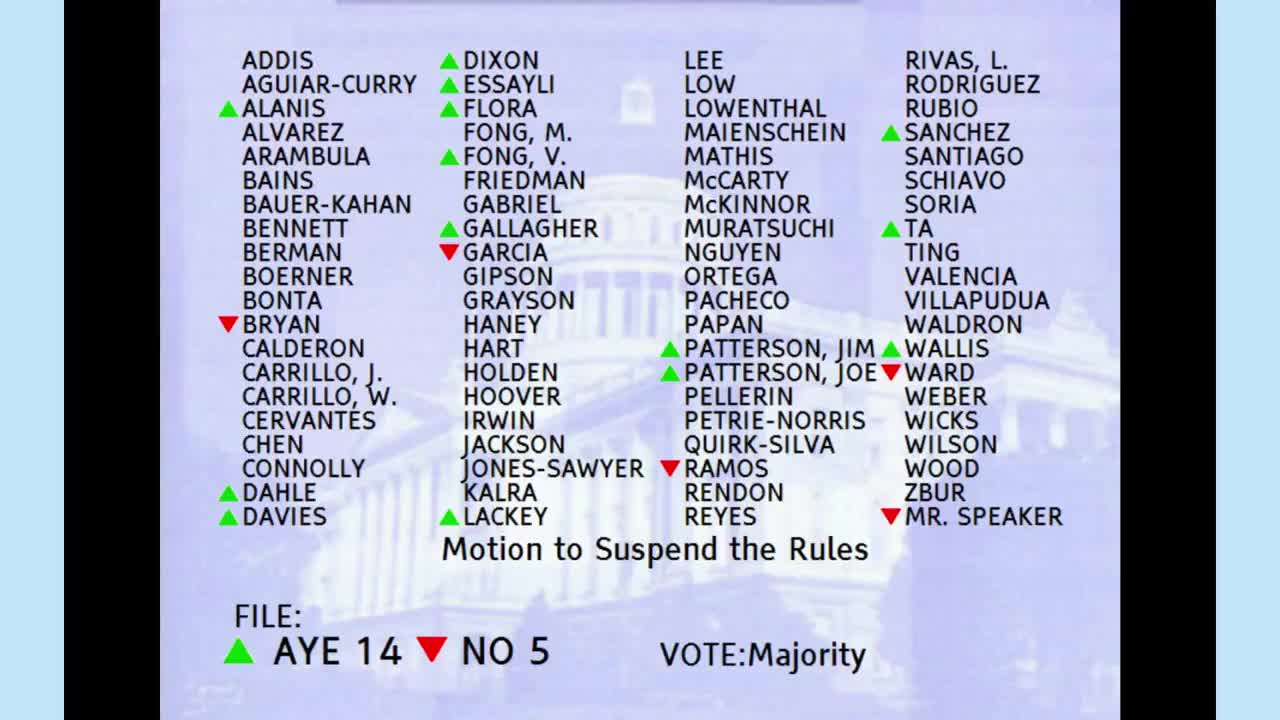 2MIN
Assembly Floor
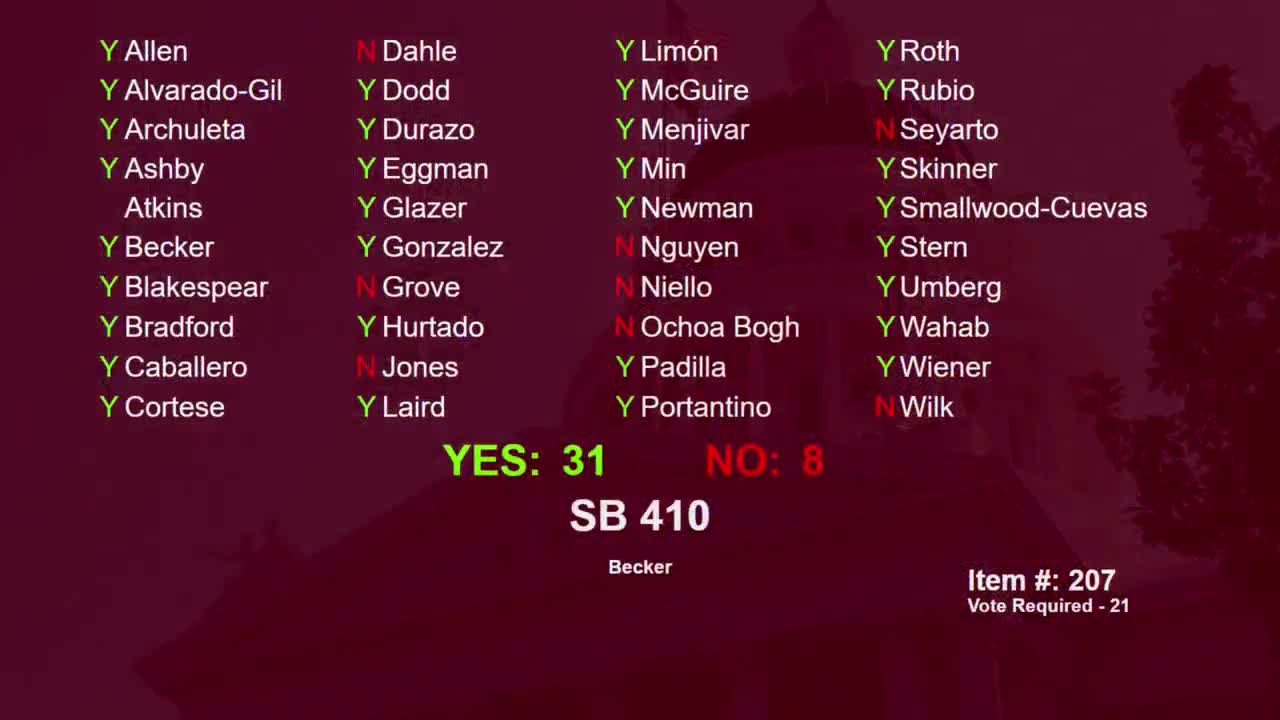 2MIN
Senate Floor
 7MIN
Senate Standing Committee on Housing
Bill Author