SB 272: Sea level rise: planning and adaptation.
- Session Year: 2023-2024
- House: Senate
- Latest Version Date: 2023-10-07
Current Status:
Passed
(2023-10-07: Chaptered by Secretary of State. Chapter 384, Statutes of 2023.)
Introduced
In Committee
First Chamber
In Committee
Second Chamber
Enacted
What does this bill do?
The bill requires local governments in the coastal zone or the San Francisco Bay area to prepare sea level rise plans as part of their local coastal or subregional shoreline resiliency plans. Each plan must use the best available science, assess which places and people are most at risk with attention to equity, recommend adaptation strategies and projects, identify lead agencies, and include timelines and cost analyses for impacts to critical public infrastructure. Approved plans will be prioritized for state funding for implementation when the Legislature provides money, and covered local governments must complete plans by January 1, 2034.
The summary is provided by generative AI which can make mistakes. For original language, please view the details in the table below.
Existing law creates within the Ocean Protection Council the California Sea Level Rise State and Regional Support Collaborative to provide state and regional information to the public and support to local, regional, and other state agencies for the identification, assessment, planning, and, where feasible, the mitigation of the adverse environmental, social, and economic effects of sea level rise within the coastal zone, as provided.
This bill would require a local government, as defined, lying, in whole or in part, within the coastal zone, as defined, or within the jurisdiction of the San Francisco Bay Conservation and Development Commission, as defined, to develop a sea level rise plan as part of either a local coastal program, as defined, that is subject to approval by the California Coastal Commission, or a subregional San Francisco Bay shoreline resiliency plan that is subject to approval by the San Francisco Bay Conservation and Development Commission, as applicable, on or before January 1, 2034, as provided. By imposing additional requirements on local governments, the bill would impose a state-mandated local program. The bill would require local governments that receive approval for a sea level rise plan to be prioritized for funding, upon appropriation by the Legislature, for the implementation of sea level rise adaptation strategies and recommended projects in the local governments approved sea level rise plan. The bill would require, on or before December 31, 2024, the California Coastal Commission, in close coordination with the Ocean Protection Council and the California Sea Level Rise State and Regional Support Collaborative, to establish guidelines for the preparation of the sea level rise plan. The bill would also require, on or before December 31, 2024, the San Francisco Bay Conservation and Development Commission, in close coordination with the California Coastal Commission, the Ocean Protection Council, and the California Sea Level Rise State and Regional Support Collaborative, to establish guidelines for the preparation of the sea level rise plan. The bill would make the operation of its provisions contingent upon an appropriation for its purposes by the Legislature in the annual Budget Act or another statute.
The California Constitution requires the state to reimburse local agencies and school districts for certain costs mandated by the state. Statutory provisions establish procedures for making that reimbursement.
This bill would provide that, if the Commission on State Mandates determines that the bill contains costs mandated by the state, reimbursement for those costs shall be made pursuant to the statutory provisions noted above.
Existing law creates within the Ocean Protection Council the California Sea Level Rise State and Regional Support Collaborative to provide state and regional information to the public and support to local, regional, and other state agencies for the identification, assessment, planning, and, where feasible, the mitigation of the adverse environmental, social, and economic effects of sea level rise within the coastal zone, as provided.
This bill would require a local government, as defined, lying, in whole or in part, within the coastal zone, as defined, or within the jurisdiction of the San Francisco Bay Conservation and Development Commission, as defined, to implement develop a sea level rise planning and adaptation through plan as part of either submitting, and receiving approval for, a local coastal program, as defined, to that is subject to approval by the California Coastal Commission Commission, or submitting, and receiving approval for, a subregional San Francisco Bay shoreline resiliency plan to the that is subject to approval by the San Francisco Bay Conservation and Development Commission, as applicable, on or before January 1, 2034, as provided. By imposing additional requirements on local governments, the bill would impose a state-mandated local program. The bill would require local governments that receive approval for a sea level rise planning and adaptation on or before January 1, 2029, plan to be prioritized for sea level rise funding, upon appropriation by the Legislature, for the implementation of sea level rise adaptation strategies and recommended projects in the local governments approved sea level rise adaptation plan. The bill would require, on or before December 31, 2024, the California Coastal Commission, in close coordination with the Ocean Protection Council and the California Sea Level Rise State and Regional Support Collaborative, to establish guidelines for the preparation of that planning and adaptation. the sea level rise plan. The bill would also require, on or before December 31, 2024, the San Francisco Bay Conservation and Development Commission, in close coordination with the California Coastal Commission, the Ocean Protection Council, and the California Sea Level Rise State and Regional Support Collaborative, to establish guidelines for the preparation of that planning and adaptation. the sea level rise plan. The bill would make the operation of its provisions contingent upon an appropriation for its purposes by the Legislature in the annual Budget Act or another statute.
The California Constitution requires the state to reimburse local agencies and school districts for certain costs mandated by the state. Statutory provisions establish procedures for making that reimbursement.
This bill would provide that, if the Commission on State Mandates determines that the bill contains costs mandated by the state, reimbursement for those costs shall be made pursuant to the statutory provisions noted above.
Existing law creates within the Ocean Protection Council the California Sea Level Rise State and Regional Support Collaborative to provide state and regional information to the public and support to local, regional, and other state agencies for the identification, assessment, planning, and, where feasible, the mitigation of the adverse environmental, social, and economic effects of sea level rise within the coastal zone, as provided.
This bill would require a local government, as defined, lying, in whole or in part, within the coastal zone, as defined, or within the jurisdiction of the San Francisco Bay Conservation and Development Commission, as defined, to implement sea level rise planning and adaptation through either submitting, and receiving approval for, a local coastal program, as defined, to the California Coastal Commission or submitting, and receiving approval for, a subregional San Francisco Bay shoreline resiliency plan to the San Francisco Bay Conservation and Development Commission, as applicable, on or before January 1, 2034, as provided. By imposing additional requirements on local governments, the bill would impose a state-mandated local program. The bill would require local governments that receive approval for sea level rise planning and adaptation on or before January 1, 2029, to be prioritized for sea level rise funding, upon appropriation by the Legislature, for the implementation of projects in the local governments approved sea level rise adaptation plan. The bill would require, on or before December 31, 2024, the California Coastal Commission, in close coordination with the Ocean Protection Council and the California Sea Level Rise State and Regional Support Collaborative, to establish guidelines for the preparation of that planning and adaptation. The bill would also require, on or before December 31, 2024, the San Francisco Bay Conservation and Development Commission, in close coordination with the California Coastal Commission, the Ocean Protection Council, and the California Sea Level Rise State and Regional Support Collaborative, to establish guidelines for the preparation of that planning and adaptation. The bill would make the operation of its provisions contingent upon an appropriation for its purposes by the Legislature in the annual Budget Act or another statute.
The California Constitution requires the state to reimburse local agencies and school districts for certain costs mandated by the state. Statutory provisions establish procedures for making that reimbursement.
This bill would provide that, if the Commission on State Mandates determines that the bill contains costs mandated by the state, reimbursement for those costs shall be made pursuant to the statutory provisions noted above.
Existing law creates within the Ocean Protection Council the California Sea Level Rise State and Regional Support Collaborative to provide state and regional information to the public and support to local, regional, and other state agencies for the identification, assessment, planning, and, where feasible, the mitigation of the adverse environmental, social, and economic effects of sea level rise within the coastal zone, as provided.
This bill would require a local government, as defined, lying, in whole or in part, within the coastal zone, as defined, or within the jurisdiction of the San Francisco Bay Conservation and Development Commission, as defined, to implement sea level rise planning and adaptation through either submitting, and receiving approval for, a local coastal program, as defined, to the California Coastal Commission or submitting, and receiving approval for, a subregional San Francisco Bay shoreline resiliency plan to the San Francisco Bay Conservation and Development Commission, as applicable, on or before January 1, 2034. 2034, as provided. By imposing additional requirements on local governments, the bill would impose a state-mandated local program. The bill would require local governments that receive approval for sea level rise planning and adaptation on or before January 1, 2029, to be prioritized for sea level rise funding, upon appropriation by the Legislature, for the implementation of projects in the local governments approved sea level rise adaptation plan. The bill would require, on or before December 31, 2024, the California Coastal Commission and the San Francisco Bay Conservation and Development Commission, in close coordination with the Ocean Protection Council and the California Sea Level Rise State and Regional Support Collaborative, to establish guidelines for the preparation of that planning and adaptation. The bill would also require, on or before December 31, 2024, the San Francisco Bay Conservation and Development Commission, in close coordination with the California Coastal Commission, the Ocean Protection Council, and the California Sea Level Rise State and Regional Support Collaborative, to establish guidelines for the preparation of that planning and adaptation. The bill would make the operation of its provisions contingent upon an appropriation for its purposes by the Legislature in the annual Budget Act or another statute.
The California Constitution requires the state to reimburse local agencies and school districts for certain costs mandated by the state. Statutory provisions establish procedures for making that reimbursement.
This bill would provide that, if the Commission on State Mandates determines that the bill contains costs mandated by the state, reimbursement for those costs shall be made pursuant to the statutory provisions noted above.
Existing law creates within the Ocean Protection Council the California Sea Level Rise State and Regional Support Collaborative to provide state and regional information to the public and support to local, regional, and other state agencies for the identification, assessment, planning, and, where feasible, the mitigation of the adverse environmental, social, and economic effects of sea level rise within the coastal zone, as provided.
This bill would require a local government, as defined, lying, in whole or in part, within the coastal zone, as defined, or within the jurisdiction of the San Francisco Bay Conservation and Development Commission, as defined, to implement sea level rise planning and adaptation through either submitting, and receiving approval for, a local coastal program, as defined, to the California Coastal Commission or submitting, and receiving approval for, a subregional San Francisco Bay shoreline resiliency plan to the San Francisco Bay Conservation and Development Commission, as applicable, on or before January 1, 2034. By imposing additional requirements on local governments, the bill would impose a state-mandated local program. The bill would require local governments that receive approval for sea level rise planning and adaptation on or before January 1, 2029, to be prioritized for sea level rise funding, upon appropriation by the Legislature, for the implementation of projects in the local governments approved sea level rise adaptation plan. The bill would require, on or before December 31, 2024, the California Coastal Commission and the San Francisco Bay Conservation and Development Commission, in close coordination with the Ocean Protection Council and the California Sea Level Rise State and Regional Support Collaborative, to establish guidelines for the preparation of that planning and adaptation. The bill would make the operation of its provisions contingent upon an appropriation for its purposes by the Legislature in the annual Budget Act or another statute.
The California Constitution requires the state to reimburse local agencies and school districts for certain costs mandated by the state. Statutory provisions establish procedures for making that reimbursement.
This bill would provide that, if the Commission on State Mandates determines that the bill contains costs mandated by the state, reimbursement for those costs shall be made pursuant to the statutory provisions noted above.
(a)In enacting the provisions of Division 20.6.9 (commencing with Section 30985) of the Public Resources Code relating to the San Francisco Bay Conservation and Development Commission and the local governments lying, in whole or in part, within its jurisdiction, the Legislature finds and declares all of the following:
(1)The San Francisco Bay area is a vibrant, diverse, ecologically unique, innovative, and pioneering region that will be deeply and deleteriously affected by climate change without tremendous effort and investments to adapt to a constantly changing shoreline.
(2)Flood damage to vital shoreline development, public infrastructure, and facilities, such as neighborhoods, commercial centers, airports, seaports, regional transportation facilities, landfills, contaminated lands, and wastewater treatment facilities, absent adaptation will require costly repairs and likely will result in the interruption or loss of vital services and degraded environmental quality.
(3)In 2019, the San Francisco Bay Conservation and Development Commission, in collaboration with a leadership advisory group comprised of 35 bay area public, private, and nonprofit leaders, embarked on the development of Bay Adapt, a consensus-driven strategy for regional sea level rise adaptation, and on October 21, 2021, the San Francisco Bay Conservation and Development Commission adopted the Bay Adapt Joint Platform. It has also been adopted or endorsed by over 50 local, regional, state, and other organizations in the bay area.
(4)The Bay Adapt Joint Platform lays out a set of guiding principles, priority actions, and vital tasks whose implementation will enable the region to adapt faster, better, and more equitably to a rising San Francisco Bay.
(b)In enacting the provisions of Division 20.6.9 (commencing with Section 30985) of the Public Resources Code relating to the California Coastal Commission, and the local governments lying, in whole or in part, within its jurisdiction, the Legislature finds and declares all of the following:
(1)The California Coastal Commissions Local Government Working Group is comprised of local elected officials, commission staff, and two members of the commission. In November 2020, the California Coastal Commission, the League of California Cities, and the California State Association of Counties asked the Local Government Working Group to develop principles and strategies for incorporating sea level rise into local coastal program updates.
(2)In December 2021, the Local Government Working Group released the following four work products:
(A)A framework for a phased approach to local coastal program updates for sea level rise.
(B)A call for regional approaches to resiliency and adaptation.
(C)An elevation and concurrence process to support efficient local coastal program updates.
(D)A quick-links reference document, including resources for sea level rise planning and local coastal program updates.
(3)The Local Government Working Group has affirmed its commitment to the development and advancement of tools that provide local flexibility for adaptation planning while also serving consistent statewide application of the California Coastal Act of 1976 (Division 20 (commencing with Section 30000) of the Public Resources Code).
SEC. 2.Division 20.6.9 (commencing with Section 30985) is added to the Public Resources Code, to read:20.6.9.SEA LEVEL RISE PLANNING AND ADAPTATION30985.(a)A local government lying, in whole or in part, within the coastal zone or within the jurisdiction of the San Francisco Bay Conservation and Development Commission shall develop a sea level rise plan as part of either of the following, as applicable:
(1)A local coastal program that is subject to approval by the California Coastal Commission consistent with the guidelines established pursuant to subdivision (a) of Section 30985.2.
(2)A subregional San Francisco Bay shoreline resiliency plan that is subject to approval by the San Francisco Bay Conservation and Development Commission consistent with the guidelines established pursuant to subdivision (b) of Section 30985.2.
(b)The sea level rise plan required pursuant to subdivision (a) shall include, at a minimum, all of the following:
(1)The use of the best available science.
(2)A vulnerability assessment that includes efforts to ensure equity for at-risk communities.
(3)Sea level rise adaptation strategies and recommended projects.
(4)Identification of lead planning and implementation agencies.
(5)A timeline for updates, as needed, based on conditions and projections and as determined by the local government in agreement with the California Coastal Commission or the San Francisco Bay Conservation and Development Commission, as applicable.
(c)A timeline for sea level rise plan updates, as required pursuant to paragraph (5) of subdivision (b), shall include economic impact analyses of, at a minimum, costs to critical public infrastructure and recommended approaches for implementing the sea level rise adaptation strategies and recommended projects pursuant to paragraph (3) of subdivision (b).
(d)All local governments subject to the requirements of subdivision (a) shall comply with this section by January 1, 2034.
(e)For purposes of this section, critical public infrastructure includes, but is not limited to, transit, roads, airports, ports, water storage, and conveyance, wastewater treatment facilities, landfills, powerplants, and railroads.
30985.2.(a)On or before December 31, 2024, the California Coastal Commission, in close coordination with the Ocean Protection Council and the California Sea Level Rise State and Regional Support Collaborative, shall establish guidelines for the preparation of the sea level rise plan required pursuant to subdivision (a) of Section 30985. The guidelines shall recognize and build upon the baseline policies as described in the Sea Level Rise Working Group: 2021 Work Products as published by the California Coastal Commission on December 3, 2021.
(b)On or before December 31, 2024, the San Francisco Bay Conservation and Development Commission, in close coordination with the California Coastal Commission, the Ocean Protection Council, and the California Sea Level Rise State and Regional Support Collaborative, shall establish guidelines for the preparation of the sea level rise plan required pursuant to subdivision (a) of Section 30985. The guidelines shall recognize and build upon the guiding principles of the joint platform as described on page 16 of the Bay Adapt Regional Strategy for a Rising Bay Joint Platform adopted by the San Francisco Bay Conservation and Development Commission on October 21, 2021.
30985.4.This division does not reduce, alter, or diminish the authority of a state or local agency.
30985.5.Local governments that receive approval by the California Coastal Commission or the San Francisco Bay Conservation and Development Commission, as applicable, pursuant to subdivision (a) of Section 30985 shall be prioritized for funding, upon appropriation by the Legislature, for the implementation of sea level rise adaptation strategies and recommended projects in the local governments approved sea level rise plan.
30985.6.The operation of this division is contingent upon an appropriation for its purposes by the Legislature in the annual Budget Act or another statute.
30985.8.For purposes of this division, the following definitions apply:
(a)California Sea Level Rise State and Regional Support Collaborative means the California Sea Level Rise State and Regional Support Collaborative created pursuant to Section 30972.
(b)Coastal zone has the same meaning as defined in Section 30103.
(c)Jurisdiction of the San Francisco Bay Conservation and Development Commission means the area described in Section 66610 of the Government Code.
(d)Local coastal program has the same meaning as defined in Section 30108.6.
(e)Local government has the same meaning as defined in Section 30109.
SEC. 3.If the Commission on State Mandates determines that this act contains costs mandated by the state, reimbursement to local agencies and school districts for those costs shall be made pursuant to Part 7 (commencing with Section 17500) of Division 4 of Title 2 of the Government Code.
(a)In enacting the provisions of Division 20.6.9 (commencing with Section 30985) of the Public Resources Code relating to the San Francisco Bay Conservation and Development Commission and the local governments lying, in whole or in part, within its jurisdiction, the Legislature finds and declares all of the following:
(1)The San Francisco Bay area is a vibrant, diverse, ecologically unique, innovative, and pioneering region that will be deeply and deleteriously affected by climate change without tremendous effort and investments to adapt to a constantly changing shoreline.
(2)Flood damage to vital shoreline development, public infrastructure, and facilities, such as neighborhoods, commercial centers, airports, seaports, regional transportation facilities, landfills, contaminated lands, and wastewater treatment facilities, absent adaptation will require costly repairs and likely will result in the interruption or loss of vital services and degraded environmental quality.
(3)In 2019, the San Francisco Bay Conservation and Development Commission, in collaboration with a leadership advisory group comprised of 35 bay area public, private, and nonprofit leaders, embarked on the development of Bay Adapt, a consensus-driven strategy for regional sea level rise adaptation, and on October 21, 2021, the San Francisco Bay Conservation and Development Commission adopted the Bay Adapt Joint Platform. It has also been adopted or endorsed by over 50 local, regional, state, and other organizations in the bay area.
(4)The Bay Adapt Joint Platform lays out a set of guiding principles, priority actions, and vital tasks whose implementation will enable the region to adapt faster, better, and more equitably to a rising San Francisco Bay.
(b)In enacting the provisions of Division 20.6.9 (commencing with Section 30985) of the Public Resources Code relating to the California Coastal Commission, and the local governments lying, in whole or in part, within its jurisdiction, the Legislature finds and declares all of the following:
(1)The California Coastal Commissions Local Government Working Group is comprised of local elected officials, commission staff, and two members of the commission. In November 2020, the California Coastal Commission, the League of California Cities, and the California State Association of Counties asked the Local Government Working Group to develop principles and strategies for incorporating sea level rise into local coastal program updates.
(2)In December 2021, the Local Government Working Group released the following four work products:
(A)A framework for a phased approach to local coastal program updates for sea level rise.
(B)A call for regional approaches to resiliency and adaptation.
(C)An elevation and concurrence process to support efficient local coastal program updates.
(D)A quick-links reference document, including resources for sea level rise planning and local coastal program updates.
(3)The Local Government Working Group has affirmed its commitment to the development and advancement of tools that provide local flexibility for adaptation planning while also serving consistent statewide application of the California Coastal Act of 1976 (Division 20 (commencing with Section 30000) of the Public Resources Code).
SEC. 2.Division 20.6.9 (commencing with Section 30985) is added to the Public Resources Code, to read:20.6.9.SEA LEVEL RISE PLANNING AND ADAPTATION30985.(a)A local government lying, in whole or in part, within the coastal zone or within the jurisdiction of the San Francisco Bay Conservation and Development Commission shall implement develop a sea level rise planning and adaptation through submitting plan as part of either of the following, as applicable:
(1)A local coastal program to the California Coastal Commission, that is subject to approval by the California Coastal Commission consistent with the guidelines established pursuant to subdivision (a) of Section 30985.2.
(2)A subregional San Francisco Bay shoreline resiliency plan to the San Francisco Bay Conservation and Development Commission, that is subject to approval by the San Francisco Bay Conservation and Development Commission consistent with the guidelines established pursuant to subdivision (b) of Section 30985.2.
(b)The sea level rise planning and adaptation plan required pursuant to subdivision (a) shall include, at a minimum, all of the following:
(1)The use of the best available science.
(2)A vulnerability assessment that includes efforts to ensure equity for at-risk communities.
(3)A sea Sea level rise adaptation plan. strategies and recommended projects.
(4)Identification of lead planning and implementation agencies.
(5)A timeline for updates, as needed, based on conditions and projections and as determined by the local government in agreement with the California Coastal Commission or the San Francisco Bay Conservation and Development Commission, as applicable, for the sea level rise planning and adaptation elements included in paragraphs (2) to (4), inclusive. applicable.
(c)A timeline for sea level rise planning and adaptation plan updates, as required pursuant to paragraph (5) of subdivision (b), shall include, to the maximum extent practicable, applicable implementation approaches that build upon both of the following: include economic impact analyses of, at a minimum, costs to critical public infrastructure and recommended approaches for implementing the sea level rise adaptation strategies and recommended projects pursuant to paragraph (3) of subdivision (b).
(1)The sea level rise adaptation plan, as required pursuant to paragraph (3) of subdivision (b).(2)Economic analyses of, at a minimum, critical public infrastructure.(d)(1)Notwithstanding paragraph (2), it is the states goal to implement the requirements of this section by January 1, 2029.(2)(d)All local governments subject to the requirements of subdivision (a) shall comply with this section by January 1, 2034.
(e)For purposes of this section, critical public infrastructure includes, but is not limited to, transit, roads, airports, ports, water storage, and conveyance, wastewater treatment facilities, landfills, power plants, powerplants, and railroads.
30985.2.(a)On or before December 31, 2024, the California Coastal Commission, in close coordination with the Ocean Protection Council and the California Sea Level Rise State and Regional Support Collaborative, shall establish guidelines for the preparation of the sea level rise planning and adaptation plan required pursuant to subdivision (a) of Section 30985. The guidelines shall recognize and build upon the baseline policies as described in the Sea Level Rise Working Group: 2021 Work Products as published by the California Coastal Commission on December 3, 2021.
(b)On or before December 31, 2024, the San Francisco Bay Conservation and Development Commission, in close coordination with the California Coastal Commission, the Ocean Protection Council, and the California Sea Level Rise State and Regional Support Collaborative, shall establish guidelines for the preparation of the sea level rise planning and adaptation plan required pursuant to subdivision (a) of Section 30985. The guidelines shall recognize and build upon the guiding principles of the joint platform as described on page 16 of the Bay Adapt Regional Strategy for a Rising Bay Joint Platform adopted by the San Francisco Bay Conservation and Development Commission on October 21, 2021.
30985.4.This division does not reduce, alter, or diminish the authority of a state or local agency.
30985.5.Local governments that receive approval by the California Coastal Commission or the San Francisco Bay Conservation and Development Commission, as applicable, pursuant to subdivision (a) of Section 30985 on or before January 1, 2029, shall be prioritized for sea level rise funding, upon appropriation by the Legislature, for the implementation of sea level rise adaptation strategies and recommended projects in the local governments approved sea level rise adaptation plan.
30985.6.The operation of this division is contingent upon an appropriation for its purposes by the Legislature in the annual Budget Act or another statute.
30985.8.For purposes of this division, the following definitions apply:
(a)California Sea Level Rise State and Regional Support Collaborative means the California Sea Level Rise State and Regional Support Collaborative created pursuant to Section 30972.
(b)Coastal zone has the same meaning as defined in Section 30103.
(c)Jurisdiction of the San Francisco Bay Conservation and Development Commission means the area described in Section 66610 of the Government Code.
(d)Local coastal program has the same meaning as defined in Section 30108.6.
(e)Local government has the same meaning as defined in Section 30109.
SEC. 3.If the Commission on State Mandates determines that this act contains costs mandated by the state, reimbursement to local agencies and school districts for those costs shall be made pursuant to Part 7 (commencing with Section 17500) of Division 4 of Title 2 of the Government Code.
(a)In enacting the provisions of Division 20.6.9 (commencing with Section 30985) of the Public Resources Code relating to the San Francisco Bay Conservation and Development Commission and the local governments lying, in whole or in part, within its jurisdiction, the Legislature finds and declares all of the following:
(1)The San Francisco Bay area is a vibrant, diverse, ecologically unique, innovative, and pioneering region that will be deeply and deleteriously affected by climate change without tremendous effort and investments to adapt to a constantly changing shoreline.
(2)Flood damage to vital shoreline development, public infrastructure, and facilities, such as neighborhoods, commercial centers, airports, seaports, regional transportation facilities, landfills, contaminated lands, and wastewater treatment facilities, absent adaptation will require costly repairs and likely will result in the interruption or loss of vital services and degraded environmental quality.
(3)In 2019, the San Francisco Bay Conservation and Development Commission, in collaboration with a leadership advisory group comprised of 35 bay area public, private, and nonprofit leaders, embarked on the development of Bay Adapt, a consensus-driven strategy for regional sea level rise adaptation, and on October 21, 2021, the San Francisco Bay Conservation and Development Commission adopted the Bay Adapt Joint Platform. It has also been adopted or endorsed by over 50 local, regional, state, and other organizations in the bay area.
(4)The Bay Adapt Joint Platform lays out a set of guiding principles, priority actions, and vital tasks whose implementation will enable the region to adapt faster, better, and more equitably to a rising San Francisco Bay.
(b)In enacting the provisions of Division 20.6.9 (commencing with Section 30985) of the Public Resources Code relating to the California Coastal Commission, and the local governments lying, in whole or in part, within its jurisdiction, the Legislature finds and declares all of the following:
(1)The California Coastal Commissions Local Government Sea Level Rise Working Group is comprised of local elected officials, commission staff, and two members of the commission. In November 2020, the California Coastal Commission, the League of California Cities, and the California State Association of Counties asked the Local Government Sea Level Rise Working Group to develop principles and strategies for incorporating sea level rise into local coastal program updates.
(2)In December 2021, the Local Government Sea Level Rise Working Group released the following four work products:
(A)A framework for a phased approach to local coastal program updates for sea level rise.
(B)A call for regional approaches to resiliency and adaptation.
(C)An elevation and concurrence process to support efficient local coastal program updates.
(D)A quick-links reference document, including resources for sea level rise planning and local coastal program updates.
(3)The Local Government Sea Level Rise Working Group has affirmed its commitment to the development and advancement of tools that provide local flexibility for adaptation planning while also serving consistent statewide application of the California Coastal Act of 1976 (Division 20 (commencing with Section 30000) of the Public Resources Code).
SEC. 2.Division 20.6.9 (commencing with Section 30985) is added to the Public Resources Code, to read:20.6.9.SEA LEVEL RISE PLANNING AND ADAPTATION30985.(a)A local government lying, in whole or in part, within the coastal zone or within the jurisdiction of the San Francisco Bay Conservation and Development Commission shall implement sea level rise planning and adaptation through submitting either of the following, as applicable:
(1)A local coastal program to the California Coastal Commission, subject to approval by the California Coastal Commission consistent with the guidelines established pursuant to subdivision (a) of Section 30985.2.
(2)A subregional San Francisco Bay shoreline resiliency plan to the San Francisco Bay Conservation and Development Commission, subject to approval by the San Francisco Bay Conservation and Development Commission consistent with the guidelines established pursuant to subdivision (b) of Section 30985.2.
(b)The sea level rise planning and adaptation required pursuant to subdivision (a) shall include, at a minimum, all of the following:
(1)The use of the best available science.
(2)A vulnerability assessment that includes efforts to ensure equity for at-risk communities.
(3)A sea level rise adaptation plan.
(4)Identification of lead planning and implementation agencies.
(5)A timeline for updates, as needed, based on conditions and projections and as determined by the local government in agreement with the California Coastal Commission or the San Francisco Bay Conservation and Development Commission, as applicable, for the sea level rise planning and adaptation elements included in paragraphs (2) to (4), inclusive.
(c)A timeline for sea level rise planning and adaptation updates, as required pursuant to paragraph (5) of subdivision (b), shall include, to the maximum extent practicable, applicable implementation approaches that build upon both of the following:
(1)The sea level rise adaptation plan, as required pursuant to paragraph (3) of subdivision (b).
(2)Economic analyses of, at a minimum, critical public infrastructure.
(d)(1)Notwithstanding paragraph (2), it is the states goal to implement the requirements of this section by January 1, 2029.
(2)All local governments subject to the requirements of subdivision (a) shall comply with this section by January 1, 2034.
(e)For purposes of this section, critical public infrastructure includes, but is not limited to, transit, roads, airports, ports, water storage, and conveyance, wastewater treatment facilities, landfills, power plants, and railroads.
30985.2.(a)On or before December 31, 2024, the California Coastal Commission, in close coordination with the Ocean Protection Council and the California Sea Level Rise State and Regional Support Collaborative, shall establish guidelines for the preparation of the sea level rise planning and adaptation required pursuant to subdivision (a) of Section 30985. The guidelines shall recognize and build upon the baseline policies as described in the Sea Level Rise Working Group: 2021 Work Products as published by the California Coastal Commission on December 3, 2021.
(b)On or before December 31, 2024, the San Francisco Bay Conservation and Development Commission, in close coordination with the California Coastal Commission, the Ocean Protection Council, and the California Sea Level Rise State and Regional Support Collaborative, shall establish guidelines for the preparation of the sea level rise planning and adaptation required pursuant to subdivision (a) of Section 30985. The guidelines shall recognize and build upon the guiding principles of the joint platform as described on page 16 of the Bay Adapt Regional Strategy for a Rising Bay Joint Platform adopted by the San Francisco Bay Conservation and Development Commission on October 21, 2021.
30985.4.This division does not reduce, alter, or diminish the authority of a state or local agency.
30985.5.Local governments that receive approval by the California Coastal Commission or the San Francisco Bay Conservation and Development Commission, as applicable, pursuant to subdivision (a) of Section 30985 on or before January 1, 2029, shall be prioritized for sea level rise funding, upon appropriation by the Legislature, for the implementation of projects in the local governments approved sea level rise adaptation plan.
30985.6.The operation of this division is contingent upon an appropriation for its purposes by the Legislature in the annual Budget Act or another statute.
30985.8.For purposes of this division, the following definitions apply:
(a)California Sea Level Rise State and Regional Support Collaborative means the California Sea Level Rise State and Regional Support Collaborative created pursuant to Section 30972.
(b)Coastal zone has the same meaning as defined in Section 30103.
(c)Jurisdiction of the San Francisco Bay Conservation and Development Commission means the area described in Section 66610 of the Government Code.
(d)Local coastal program has the same meaning as defined in Section 30108.6.
(e)Local government has the same meaning as defined in Section 30109.
SEC. 3.If the Commission on State Mandates determines that this act contains costs mandated by the state, reimbursement to local agencies and school districts for those costs shall be made pursuant to Part 7 (commencing with Section 17500) of Division 4 of Title 2 of the Government Code.
(a)In enacting the provisions of Division 20.6.9 (commencing with Section 30985) of the Public Resources Code relating to the San Francisco Bay Conservation and Development Commission and the local governments lying, in whole or in part, within its jurisdiction, the Legislature finds and declares all of the following:
(1)The San Francisco Bay area is a vibrant, diverse, ecologically unique, innovative, and pioneering region that will be deeply and deleteriously affected by climate change without tremendous effort and investments to adapt to a constantly changing shoreline.
(2)Flood damage to vital shoreline development, public infrastructure, and facilities, such as neighborhoods, commercial centers, airports, seaports, regional transportation facilities, landfills, contaminated lands, and wastewater treatment facilities, absent adaptation will require costly repairs and likely will result in the interruption or loss of vital services and degraded environmental quality.
(3)In 2019, the San Francisco Bay Conservation and Development Commission, in collaboration with a leadership advisory group comprised of 35 bay area public, private, and nonprofit leaders, embarked on the development of Bay Adapt, a consensus-driven strategy for regional sea level rise adaptation, and on October 21, 2021, the San Francisco Bay Conservation and Development Commission adopted the Bay Adapt Joint Platform. It has also been adopted or endorsed by over 50 local, regional, state, and other organizations in the bay area.
(4)The Bay Adapt Joint Platform lays out a set of guiding principles, priority actions, and vital tasks whose implementation will enable the region to adapt faster, better, and more equitably to a rising San Francisco Bay.
(b)In enacting the provisions of Division 20.6.9 (commencing with Section 30985) of the Public Resources Code relating to the California Coastal Commission, and the local governments lying, in whole or in part, within its jurisdiction, the Legislature finds and declares all of the following:
(1)The California Coastal Commissions Local Government Sea Level Rise Working Group is comprised of local elected officials, commission staff, and two members of the commission. In November 2020, the California Coastal Commission, the League of California Cities, and the California State Association of Counties asked the Local Government Sea Level Rise Working Group to develop principles and strategies for incorporating sea level rise into local coastal program updates.
(2)In December 2021, the Local Government Sea Level Rise Working Group released the following four work products:
(A)A framework for a phased approach to local coastal program updates for sea level rise.
(B)A call for regional approaches to resiliency and adaptation.
(C)An elevation and concurrence process to support efficient local coastal program updates.
(D)A quick-links reference document, including resources for sea level rise planning and local coastal program updates.
(3)The Local Government Sea Level Rise Working Group has affirmed its commitment to the development and advancement of tools that provide local flexibility for adaptation planning while also serving consistent statewide application of the California Coastal Act of 1976 (Division 20 (commencing with Section 30000) of the Public Resources Code).
SECTION 1.SEC. 2.Division 20.6.9 (commencing with Section 30985) is added to the Public Resources Code, to read:20.6.9.SEA LEVEL RISE PLANNING AND ADAPTATION30985.(a)A local government lying, in whole or in part, within the coastal zone or within the jurisdiction of the San Francisco Bay Conservation and Development Commission shall implement sea level rise planning and adaptation through submitting either of the following, as applicable:
(1)A local coastal program to the California Coastal Commission, subject to approval by the California Coastal Commission. Commission consistent with the guidelines established pursuant to subdivision (a) of Section 30985.2.
(2)A subregional San Francisco Bay shoreline resiliency plan to the San Francisco Bay Conservation and Development Commission, subject to approval by the San Francisco Bay Conservation and Development Commission. Commission consistent with the guidelines established pursuant to subdivision (b) of Section 30985.2.
(b)The sea level rise planning and adaptation required pursuant to subdivision (a) shall include, at a minimum, all of the following:
(1)The use of the best available science.
(2)A vulnerability assessment that includes efforts to ensure equity for at-risk communities.
(3)A sea level rise adaptation plan.
(4)Identification of lead planning and implementation agencies.
(5)A timeline for updates, as needed, based on conditions and projections and as determined by the local government in agreement with the California Coastal Commission or the San Francisco Bay Conservation and Development Commission, as applicable, for the sea level rise planning and adaptation elements included in paragraphs (2) to (4), inclusive.
(c)A timeline for sea level rise planning and adaptation updates, as required pursuant to paragraph (5) of subdivision (b), shall include, to the maximum extent practicable, applicable implementation approaches that build upon both of the following:
(1)The sea level rise adaptation plan, as required pursuant to paragraph (3) of subdivision (b).
(2)Economic analyses of of, at a minimum, critical public infrastructure.
(d)(1)Notwithstanding paragraph (2), it is the states goal to implement the requirements of this section by January 1, 2029.
(2)All local governments subject to the requirements of subdivision (a) shall comply with this section by January 1, 2034.
(e)For purposes of this section, critical public infrastructure includes, but is not limited to, transit, roads, airports, ports, water and wastewater storage, and conveyance, wastewater treatment facilities, landfills, power plants, and railroads.
30985.2.(a)On or before December 31, 2024, the California Coastal Commission and the San Francisco Bay Conservation and Development Commission, in close coordination with the Ocean Protection Council and the California Sea Level Rise State and Regional Support Collaborative, shall establish guidelines for the preparation of the sea level rise planning and adaptation required pursuant to subdivision (a) of Section 30985. The guidelines shall recognize and build upon the baseline policies as described in the Sea Level Rise Working Group: 2021 Work Products as published by the California Coastal Commission on December 3, 2021.
(b)On or before December 31, 2024, the San Francisco Bay Conservation and Development Commission, in close coordination with the California Coastal Commission, the Ocean Protection Council, and the California Sea Level Rise State and Regional Support Collaborative, shall establish guidelines for the preparation of the sea level rise planning and adaptation required pursuant to subdivision (a) of Section 30985. The guidelines shall recognize and build upon the guiding principles of the joint platform as described on page 16 of the Bay Adapt Regional Strategy for a Rising Bay Joint Platform adopted by the San Francisco Bay Conservation and Development Commission on October 21, 2021.
30985.4.This division does not reduce, alter, or diminish the authority of a state or local agency.
30985.5.Local governments that receive approval by the California Coastal Commission or the San Francisco Bay Conservation and Development Commission, as applicable, pursuant to subdivision (a) of Section 30985 on or before January 1, 2029, shall be prioritized for sea level rise funding, upon appropriation by the Legislature, for the implementation of projects in the local governments approved sea level rise adaptation plan.
30985.6.The operation of this division is contingent upon an appropriation for its purposes by the Legislature in the annual Budget Act or another statute.
30985.8.For purposes of this division, the following definitions apply:
(a)California Sea Level Rise State and Regional Support Collaborative means the California Sea Level Rise State and Regional Support Collaborative created pursuant to Section 30972.
(b)Coastal zone has the same meaning as defined in Section 30103.
(c)Jurisdiction of the San Francisco Bay Conservation and Development Commission means the area described in Section 66610 of the Government Code.
(d)Local coastal program has the same meaning as defined in Section 30108.6.
(e)Local government has the same meaning as defined in Section 30109.
SEC. 2.SEC. 3.If the Commission on State Mandates determines that this act contains costs mandated by the state, reimbursement to local agencies and school districts for those costs shall be made pursuant to Part 7 (commencing with Section 17500) of Division 4 of Title 2 of the Government Code.
(a)A local government lying, in whole or in part, within the coastal zone or within the jurisdiction of the San Francisco Bay Conservation and Development Commission shall implement sea level rise planning and adaptation through submitting either of the following, as applicable:
(1)A local coastal program to the California Coastal Commission, subject to approval by the California Coastal Commission.
(2)A subregional San Francisco Bay shoreline resiliency plan to the San Francisco Bay Conservation and Development Commission, subject to approval by the San Francisco Bay Conservation and Development Commission.
(b)The sea level rise planning and adaptation required pursuant to subdivision (a) shall include, at a minimum, all of the following:
(1)The use of the best available science.
(2)A vulnerability assessment that includes efforts to ensure equity for at-risk communities.
(3)A sea level rise adaptation plan.
(4)Identification of lead planning and implementation agencies.
(5)A timeline for updates, as needed, based on conditions and projections and as determined by the local government in agreement with the California Coastal Commission or the San Francisco Bay Conservation and Development Commission, as applicable, for the sea level rise planning and adaptation elements included in paragraphs (2) to (4), inclusive.
(c)A timeline for sea level rise planning and adaptation updates, as required pursuant to paragraph (5) of subdivision (b), shall include, to the maximum extent practicable, applicable implementation approaches that build upon both of the following:
(1)The sea level rise adaptation plan, as required pursuant to paragraph (3) of subdivision (b).
(2)Economic analyses of critical public infrastructure.
(d)(1)Notwithstanding paragraph (2), it is the states goal to implement the requirements of this section by January 1, 2029.
(2)All local governments subject to the requirements of subdivision (a) shall comply with this section by January 1, 2034.
(e)For purposes of this section, critical public infrastructure includes, but is not limited to, roads, water and wastewater treatment facilities, landfills, power plants, and railroads.
30985.2.On or before December 31, 2024, the California Coastal Commission and the San Francisco Bay Conservation and Development Commission, in close coordination with the Ocean Protection Council and the California Sea Level Rise State and Regional Support Collaborative, shall establish guidelines for the preparation of the sea level rise planning and adaptation required pursuant to subdivision (a) of Section 30985.
30985.4.This division does not reduce, alter, or diminish the authority of a state agency.
30985.5.Local governments that receive approval by the California Coastal Commission or the San Francisco Bay Conservation and Development Commission, as applicable, pursuant to subdivision (a) of Section 30985 on or before January 1, 2029, shall be prioritized for sea level rise funding, upon appropriation by the Legislature, for the implementation of projects in the local governments approved sea level rise adaptation plan.
30985.6.The operation of this division is contingent upon an appropriation for its purposes by the Legislature in the annual Budget Act or another statute.
30985.8.For purposes of this division, the following definitions apply:
(a)California Sea Level Rise State and Regional Support Collaborative means the California Sea Level Rise State and Regional Support Collaborative created pursuant to Section 30972.
(b)Coastal zone has the same meaning as defined in Section 30103.
(c)Jurisdiction of the San Francisco Bay Conservation and Development Commission means the area described in Section 66610 of the Government Code.
(d)Local coastal program has the same meaning as defined in Section 30108.6.
(e)Local government has the same meaning as defined in Section 30109.
SEC. 2.If the Commission on State Mandates determines that this act contains costs mandated by the state, reimbursement to local agencies and school districts for those costs shall be made pursuant to Part 7 (commencing with Section 17500) of Division 4 of Title 2 of the Government Code.
|
Date
|
Status
|
|---|---|
| Oct 7, 2023 | Chaptered by Secretary of State. Chapter 384, Statutes of 2023. |
| Oct 7, 2023 | Approved by the Governor. |
| Sep 18, 2023 | Enrolled and presented to the Governor at 3 p.m. |
| Sep 12, 2023 | Assembly amendments concurred in. (Ayes 35. Noes 1. Page 2625.) Ordered to engrossing and enrolling. |
| Sep 11, 2023 | In Senate. Concurrence in Assembly amendments pending. |
| Sep 11, 2023 | Read third time. Passed. (Ayes 72. Noes 1. Page 3151.) Ordered to the Senate. |
| Sep 7, 2023 | Read third time and amended. |
| Sep 7, 2023 | Ordered to third reading. |
| Sep 7, 2023 | Assembly Rule 69 suspended. |
| Sep 5, 2023 | Read second time. Ordered to third reading. |
| Sep 1, 2023 | From committee: Do pass. (Ayes 13. Noes 1.) (September 1). |
| Aug 16, 2023 | August 16 set for first hearing. Placed on suspense file. |
| Jun 20, 2023 | From committee: Do pass and re-refer to Com. on APPR. (Ayes 10. Noes 1.) (June 19). Re-referred to Com. on APPR. |
| Jun 6, 2023 | From committee with author's amendments. Read second time and amended. Re-referred to Com. on NAT. RES. |
| Jun 1, 2023 | Referred to Com. on NAT. RES. |
| May 25, 2023 | In Assembly. Read first time. Held at Desk. |
| May 24, 2023 | Read third time. Passed. (Ayes 37. Noes 1. Page 1263.) Ordered to the Assembly. |
| May 22, 2023 | Read second time. Ordered to third reading. |
| May 18, 2023 | Read second time and amended. Ordered to second reading. |
| May 18, 2023 | From committee: Do pass as amended. (Ayes 5. Noes 1. Page 1163.) (May 18). |
| May 12, 2023 | Set for hearing May 18. |
| May 8, 2023 | May 8 hearing: Placed on APPR suspense file. |
| May 1, 2023 | Set for hearing May 8. |
| Apr 27, 2023 | From committee: Do pass and re-refer to Com. on APPR. (Ayes 6. Noes 0. Page 938.) (April 26). Re-referred to Com. on APPR. |
| Apr 13, 2023 | Set for hearing April 26. |
| Mar 28, 2023 | From committee: Do pass and re-refer to Com. on GOV. & F. (Ayes 9. Noes 0. Page 546.) (March 28). Re-referred to Com. on GOV. & F. |
| Mar 7, 2023 | Set for hearing March 28. |
| Feb 9, 2023 | Referred to Coms. on N.R. & W. and GOV. & F. |
| Feb 1, 2023 | From printer. May be acted upon on or after March 3. |
| Jan 31, 2023 | Introduced. Read first time. To Com. on RLS. for assignment. To print. |
|
Date
|
Description
|
Location
|
Votes
|
|
|---|---|---|---|---|
| Sep 12, 2023 | Unfinished Business SB272 Laird Concurrence | Senate Floor |
Passed |
|
| Sep 11, 2023 | SB 272 Laird Senate Third Reading By Bennett | Assembly Floor |
Passed |
|
| Sep 1, 2023 | Do pass. | Assembly Standing Committee on Appropriations |
Passed |
|
| Jun 19, 2023 | Do pass and be re-referred to the Committee on [Appropriations] | Assembly Standing Committee on Natural Resources |
Passed |
|
| May 24, 2023 | Senate 3rd Reading SB272 Laird | Senate Floor |
Passed |
|
| May 18, 2023 | Do pass as amended | Senate Standing Committee on Appropriations |
Passed |
|
| May 8, 2023 | Placed on suspense file | Senate Standing Committee on Appropriations |
Passed |
|
| Apr 26, 2023 | Do pass, but first be re-referred to the Committee on [Appropriations] | Senate Standing Committee on Governance and Finance |
Passed |
|
| Mar 28, 2023 | Do pass, but first be re-referred to the Committee on [Governance and Finance] | Senate Standing Committee on Natural Resources and Water |
Passed |
This list shows positions taken on this bill by organizations on the date displayed, which is linked to the original source.
Positions by individuals are not included.
|
Organization
|
Position
|
Date
|
|---|---|---|
| Association Of California Water Agencies | * Support | Mar 28, 2023 |
| Audubon California | ** Support | |
| Azul | ** Support | |
| Bay Area Council | * Against Unless Amend | Apr 26, 2023 |
| Bay Planning Coalition | ** Against | |
| Board of Supervisors, City and County of San Francisco | ** Support | |
| Brown Girl Surf | ** Support | |
| California Building Industry Association | * Against Unless Amend | Apr 26, 2023 |
| California Coastal Commission | ** Support | |
| California Coastal Protection Network | ** Support | |
| California Coastkeeper Alliance | ** Support | |
| California Construction And Industrial Materials Association | ** Support | |
| California Institute for Biodiversity | ** Support | |
| California State Parks Foundation | ** Support | |
| City of Mountain View | ** Support | |
| City Of Oakland | ** Support | |
| City of Santa Monica | ** Support | Jun 19, 2023 |
| City of South San Francisco | ** Support | |
| Climate Action California | * Support | Jun 19, 2023 |
| Coastal Commission | ** Support | |
| County of Contra Costa | ** Support | |
| Department Of Finance | ** Against | |
| Environmental Action Committee of West Marin | ** Support | |
| Environmental Center of San Diego | ** Support | |
| Environmental Defense Center | ** Support | |
| Greenbelt Alliance | ** Support | |
| Humboldt Baykeeper | ** Support | |
| League of California Cities. | * Neutral | Apr 26, 2023 |
| Marin County Council of Mayors and Councilmembers | ** Support | |
| Midpeninsula Regional Open Space District | ** Support | |
| Orange County Coastkeeper | ** Support | |
| Planning And Conservation League | ** Support | |
| San Francisco Bay Conservation and Development Commission | ** Support | |
| Save The Bay | ** Support | |
| Surfrider Foundation | ** Support | |
| Surfrider Foundation Los Angeles Chapter | ** Support | |
| Surfrider Foundation, Monterey Chapter | ** Support | |
| Surfrider Foundation, San Francisco Chapter | ** Support | |
| Turtle Island Restoration Network | ** Support |
SENATE RULES COMMITTEE Office of Senate Floor Analyses (916) 651-1520 Fax: (916) 327-4478 | SB 272 |
UNFINISHED BUSINESS
Bill No: SB 272
Author: Laird (D)
Amended: 9/7/23
Vote: 21
SENATE NATURAL RES. & WATER COMMITTEE: 9-0, 3/28/23
AYES: Min, Allen, Becker, Eggman, Grove, Hurtado, Laird, Limón, Padilla
NO VOTE RECORDED: Seyarto, Dahle
SENATE GOVERNANCE & FIN. COMMITTEE: 6-0, 4/26/23
AYES: Caballero, Blakespear, Durazo, Glazer, Skinner, Wiener
NO VOTE RECORDED: Seyarto, Dahle
SENATE APPROPRIATIONS COMMITTEE: 5-1, 5/18/23
AYES: Portantino, Ashby, Bradford, Wahab, Wiener
NOES: Jones
NO VOTE RECORDED: Seyarto
SENATE FLOOR: 37-1, 5/24/23
AYES: Allen, Alvarado-Gil, Archuleta, Ashby, Atkins, Becker, Blakespear, Bradford, Caballero, Cortese, Dahle, Dodd, Durazo, Eggman, Glazer, Gonzalez, Grove, Hurtado, Laird, Limón, McGuire, Menjivar, Min, Newman, Niello, Ochoa Bogh, Padilla, Portantino, Roth, Rubio, Skinner, Smallwood-Cuevas, Stern, Umberg, Wahab, Wiener, Wilk
NOES: Jones
NO VOTE RECORDED: Nguyen, Seyarto
ASSEMBLY FLOOR: 72-1, 9/11/23 - See last page for vote
SUBJECT: Sea level rise: planning and adaptation
SOURCE: Author
DIGEST:
This bill requires a local government in the coastal zone or within the San Francisco Bay to develop a sea level rise plan as part of either a local coastal program or a shoreline resiliency plan that includes certain information, including sea level rise adaptation strategies and recommended projects, requires local governments to comply by January 1, 2034, as specified, and prioritizes funding for implementation of sea level rise adaptation strategies in approved plans, among other things.
Assembly Amendments
revise requirements to developing a sea level rise plan rather than implementing a plan and adaptation, clarify that the required plan includes strategies and recommended projects, delete the January 1, 2029 goal date for plans to be in place, broaden prioritization for funding to all local governments who have submitted a sea level rise plan, as provided, and make minor technical and clarifying changes.
ANALYSIS:
Existing law:
- Establishes the California Coastal Act of 1976 (Coastal Act)(Public Resources Code (PRC) §§30000 et seq.) which:
- Establishes the California Coastal Commission (Coastal Commission) in the California Natural Resources Agency.
- Requires each local government in the coastal zone to prepare a local coastal program (LCP) for that portion of the coastal zone within its jurisdiction, as provided. Requires the precise content of each LCP to be determined by the local government in full consultation with the Coastal Commission and full public participation. (PRC §30500)
- Provides for the planning and regulation of development within the coastal zone.
- A person planning to perform or undertake any development in the coastal zone is required to obtain a coastal development permit from the Coastal Commission or local government enforcing a LCP certified by the Coastal Commission.
- The coastal zone means the coastal land and waters of California, and includes the lands that extend inland generally 1,000 yards from the mean high tide line, as specified, with various exceptions including the San Francisco Bay.
- Development means, among other things, the placement or erection of any solid material or structure on land or in water.
- Establishes the San Francisco Bay Conservation and Development Commission (BCDC) (Government Code §§66600 et seq.)
- BCDC, among other things, is required to address emerging issues and to implement comprehensive plans for the preservation and protection of San Francisco Bay and the Suisun Marsh. BCDC has adopted the San Francisco Bay Plan, which is a comprehensive plan that addresses the development of the bay and shoreline.
- Since 2008, BCDC has been the state agency responsible for leading the San Francisco Bay area’s preparedness for, and resilience to, rising sea levels, tides, and storm surge due to climate change.
This bill requires a local government in the coastal zone or within the San Francisco Bay to develop a sea level rise plan as part of either a local coastal program or a shoreline resiliency plan that includes certain information, including sea level rise adaptation strategies and recommended projects, requires local governments to comply by January 1, 2034, as specified, and prioritizes funding for implementation of sea level rise adaptation strategies in approved plans, among other things.
Specifically, this bill:
- Requires a local government lying, in whole or in part, within the coastal zone or within San Francisco Bay to develop sea level rise plan as part of, as applicable:
- A LCP that is subject to approval by the Coastal Commission.
- A subregional San Francisco Bay shoreline resiliency plan that is subject to approval by BCDC.
- Requires, on or before December 31, 2024, the Coastal Commission and BCDC to establish guidelines for the preparation of the plan required in 1) above that recognize and build upon existing policies or principles, respectively, as specified.
- Requires the sea level rise plan to include, at a minimum, all of the following:
- Use of the best available science.
- A vulnerability assessment that includes efforts to ensure equity for at-risk communities.
- Sea level rise adaptation strategies and recommended projects.
- Identification of lead planning and implementation agencies.
- A timeline for updates, as needed, based on conditions and projections and as determined by the local government in agreement with the Coastal Commission or BCDC.
- Requires the mandated timeline for the sea level rise plan updates include economic analyses of, at a minimum, critical public infrastructure, and recommended approaches for implementing sea level rise adaptation strategies and recommended projects..
- Requires all local governments to comply with these requirements by January 1, 2034.
- Requires, upon an appropriation by the Legislature, that a local government with an approved plan be prioritized for funding for the implementation of sea level rise adaptation strategies and recommended projects, as provided.
- Makes extensive relevant legislative findings regarding recent Coastal Commission and BCDC actions related to collaborative efforts with stakeholders to address sea level rise adaptation.
Background
The state’s Fourth Climate Change Assessment, published in 2018/2019, found that climate change impacts in the coastal zone already are “unprecedented,” and will include the direct impacts of sea level rise, changes in ocean conditions, increased flooding amounts and frequency (including from rising groundwater tables, but also high “king” tides), wetland loss, and other hazards.
Sea level rise poses an immediate and real threat to coastal ecosystems, livelihoods and economies, public access to the coast, recreation, private property, public infrastructure, water supplies, and the well-being and safety of coastal communities, including vulnerable populations.
This winter’s storms, exacerbated by climate change, have caused widespread damage and destruction to public and private property along the coast, including in the counties of Santa Cruz, Monterey, and Orange, among others.
The sea level along the state’s coastline is currently predicted to most likely rise by about eight inches by 2050, and over six feet by 2150 relative to levels in 2020.
This bill is a reintroduction of SB 867 (Laird, 2022)(SB 867) which passed the Legislature with near-unanimous support and was vetoed by Governor Newsom. The veto message read in part:
My Administration is supportive of the many efforts already underway for local governments to plan for sea level rise, including the over $1.2 billion multi-year funding approved in the 2021 and 2022 Budget Acts for coastal protection and adaptation. However, implementation of this bill requires millions of dollars not included in the 2022-23 Budget Act.
With our state facing lower-than-expected revenues over the first few months of this fiscal year, it is important to remain disciplined when it comes to spending, particularly spending that is ongoing. We must prioritize existing obligations and priorities, including education, health care, public safety and safety-net programs.
The Legislature sent measures with potential costs of well over $20 billion in one-time spending commitments and more than $10 billion in ongoing commitments not accounted for in the state budget. Bills with significant fiscal impact, such as this measure, should be considered and accounted for as part of the annual budget process.
Comments
Response to the veto message.
The SB 867 veto message is focused on the potential cost of the bill in the face of the state’s worsening budget outlook. The veto message touts the approved coastal resilience budget (since proposed to be cut significantly by the Administration). SB 867 and this bill both anticipate potential budget concerns by requiring that implementation is contingent upon appropriation.
According to the Legislative Analyst’s Office (LAO) in a recent publication, the Federal Emergency Management Agency reports that $1 spent in various types of pre-disaster mitigation activities avoids public and private losses of $6 total. Early action on sea level rise now may also provide for more time in the future to mount a more intensive response.
[NOTE: Additional discussion and analysis may be found in the bill analyses prepared by the Senate Natural Resources and Water, and Senate Governance and Finance Committees.]
FISCAL EFFECT: Appropriation: No Fiscal Com.: Yes Local: Yes
According to the Assembly Appropriations Committee:
- BCDC estimates costs of approximately $610,000 for three positions in fiscal year (FY) 2024-25, $2.3 million for nine positions in FY 2025-26, $3.2 million for 12 positions in FY 2026-27, and $3.2 million for 15 positions in FY 2027-28 and ongoing (General Fund or special fund).
- The Coastal Commission estimates ongoing annual costs of between $3 and $3.8 million (General Fund or special fund) for 15 to 18 positions, which could be phased in over a period of three years at a rate of five to six positions per year.
- The OPC, Office of Planning and Research, Strategic Growth Council, State Lands Commission, and California Coastal Conservancy estimate any costs would be minor and absorbable.
- By imposing additional requirements on local governments, this bill imposes a state-mandated local program, potentially resulting in unknown but significant General Fund cost pressure for the state to reimburse local governments. Implementation of this bill is contingent upon appropriation of funds
SUPPORT: (Verified 9/7/23)
Audubon California
Azul
Board of Supervisors, City and County of San Francisco
Brown Girl Surf
California Coastal Commission
California Coastal Protection Network
California Coastkeeper Alliance
California Construction and Industrial Materials Association
California Institute for Biodiversity
California State Parks Foundation
City of Mountain View
City of Oakland
City of South San Francisco
County of Contra Costa
Environmental Action Committee of West Marin
Environmental Center of San Diego
Environmental Defense Center
Greenbelt Alliance
Humboldt Baykeeper
Marin County Council of Mayors and Councilmembers
Midpeninsula Regional Open Space District
Orange County Coastkeeper
Planning and Conservation League
San Francisco Bay Conservation and Development Commission
Save the Bay
Surfrider Foundation
Surfrider Foundation, Los Angeles Chapter
Surfrider Foundation, Monterey Chapter
Surfrider Foundation, San Francisco Chapter
Turtle Island Restoration Network
OPPOSITION: (Verified 9/7/23)
Department of Finance
ARGUMENTS IN SUPPORT: According to the author, “Currently, local coastal programs are not required to address sea level rise, an often-overlooked aspect of climate change that has the potential to be one of the most damaging threats. A 2019 team of U.S. Geological Survey scientists found that even a small increase in sea level rise could be an overwhelming force when a storm hits. Over $1 billion in damages were caused by the January storms that hammered our state and battered our coastline. It’s clear we cannot keep delaying our coastal resiliency efforts.”
ARGUMENTS IN OPPOSITION: The Department of Finance, writing in opposition, states, “Finance is opposed to this bill because it creates significant ongoing General Fund cost pressures and may impose a state-reimbursable mandate.”
ASSEMBLY FLOOR: 72-1, 9/11/23
AYES: Addis, Aguiar-Curry, Alanis, Alvarez, Arambula, Bains, Bauer-Kahan, Bennett, Berman, Boerner, Bonta, Bryan, Calderon, Juan Carrillo, Wendy Carrillo, Cervantes, Chen, Connolly, Megan Dahle, Davies, Dixon, Flora, Mike Fong, Friedman, Gabriel, Garcia, Gipson, Grayson, Haney, Hart, Holden, Hoover, Irwin, Jackson, Jones-Sawyer, Kalra, Lee, Low, Lowenthal, Maienschein, McCarty, McKinnor, Muratsuchi, Stephanie Nguyen, Ortega, Pacheco, Papan, Jim Patterson, Pellerin, Petrie-Norris, Quirk-Silva, Ramos, Rendon, Reyes, Luz Rivas, Rodriguez, Blanca Rubio, Santiago, Schiavo, Soria, Ting, Valencia, Villapudua, Waldron, Wallis, Ward, Weber, Wicks, Wilson, Wood, Zbur, Robert Rivas
NOES: Essayli
NO VOTE RECORDED: Vince Fong, Gallagher, Lackey, Mathis, Joe Patterson, Sanchez, Ta
Prepared by: Katharine Moore / N.R. & W. / (916) 651-4116
9/11/23 19:51:24
**** END ****
SENATE THIRD READING
STR Bill Id:SB 272
Author:(Laird)
As Amended Ver:September 7, 2023
Majority vote
SUMMARY
Requires a local government in the coastal zone or within the jurisdiction of the San Francisco Bay Conservation and Development Commission (BCDC) to develop a sea level rise plan, as specified, and prioritizes funding for local government projects that meet the state's goal for approval of the required plans, among other things.
Major Provisions
- Requires a local government lying, in whole or in part, within the coastal zone or within the jurisdiction of BCDC to develop a sea level rise plan through submission of either of the following, as applicable:
- An LCP subject to approval by the Coastal Commission, consistent with specified guidelines; or,
- A subregional San Francisco Bay shoreline resiliency plan subject to approval by BCDC, consistent with specified guidelines.
- Requires the sea level rise plan to include, at a minimum, use of the best available science, among other specified criteria.
- Requires a timeline for sea level rise planning and adaptation updates to include, to the maximum extent practicable, applicable implementation approaches that build upon the sea level rise adaptation plan, and economic analyses of, at a minimum, costs to critical public infrastructure and recommended approaches for implementing sea level rise adaptation strategies.
- Requires all local governments subject to the requirements of this bill to comply by January 1, 2034.
- Requires, on or before December 31, 2024, the Coastal Commission, in close coordination with the Ocean Protection Council (OPC) and the Collaborative, to establish guidelines for the preparation of the sea level rise planning and adaptation. Requires the guidelines to recognize and build upon the baseline policies as described in the "Sea Level Rise Working Group: 2021 Work Products," as published by the Coastal Commission on December 3, 2021.
- Requires, on or before December 31, 2024, BCDC, in close coordination with the Coastal Commission, OPC, and the Collaborative, to establish guidelines for the preparation of the sea level rise planning and adaptation required pursuant to this bill. Requires the guidelines to recognize and build upon the "guiding principles of the joint platform" as specified.
- Requires a local government that receives approval by the Coastal Commission or BCDC to be prioritized for funding, upon appropriation by the Legislature, for the implementation of projects in the local government's approved sea level rise plan.
- Provides that the operation of this bill is contingent upon an appropriation for its purposes by the Legislature in the annual Budget Act or another statute.
- Provides that if the Coastal Commission on State Mandates determines that this act contains costs mandated by the state, reimbursement to local agencies and school districts for those costs shall be made pursuant to current law.
COMMENTS
In 2014, nearly 75% of California's population lived in coastal counties and along the state's 1,100 miles of mainland coastline and the San Francisco Bay's additional 500-mile shoreline. As the nation's largest ocean economy valued greater than $44 billion/year, California has a significant portion of its economy concentrated on the coast, with a great majority of it connected to coastal recreation and tourism, ports and shipping. Many of the facilities and infrastructure that support this ocean economy, as well as the state's many miles of public beaches, lie within a few feet of the present high tide line.
The sea level along the state's coastline is currently predicted to rise by about eight inches by 2050, and more than six feet by 2150 relative to levels in 2020.
Updating LCPs to reflect changing climatic conditions, including to address sea level rise, is a complex process. Challenges include significant data and information needs, limited tools, lengthy analyses and planning processes, inadequate funding, unresolved disagreements between local and Coastal Commission staff, and legal uncertainties, among others, which have slowed or stalled local government and Coastal Commission efforts to update LCPs for sea level rise. Some jurisdictions have expressed concern about initiating LCP updates due to these challenges. However, many local governments have taken the first steps to conduct vulnerability assessments and adaptation plans to support policy development. Still others have developed policies to support their local sea level rise planning efforts that have been incorporated into LCPs adopted and certified by the Coastal Commission.
SB 272 would require a local government lying, in whole or in part, within the coastal zone to develop a sea level rise plan with specified elements by submitting an LCP to the Coastal Commission consistent with the guidelines established by the Coastal Commission that recognize and build upon the baseline policies as described in the Sea Level Rise Working Group: 2021 Work Products.
For a local government lying, in whole or in part, within BCDC's jurisdiction, SB 272 would require that local government to develop a sea level rise plan with specified elements by submitting a subregional San Francisco Bay shoreline resiliency plan to BCDC consistent with the guidelines established by BCDC that recognize and build upon BCDC's guiding principles.
SB 272 would require a local government's sea level rise planning to incorporate best available science and adaptation strategies provided by the OPC.
According to the Author
Currently, local coastal programs are not required to address sea level rise, an often-overlooked aspect of climate change that has the potential to be one of the most damaging threats. A 2019 team of [United States] Geological Survey scientists found that even a small increase in sea level rise could be an overwhelming force when a storm hits. Over $1 billion in damages were caused by the January storms that hammered our state and battered our coastline. It's clear we cannot keep delaying our coastal resiliency efforts.
Arguments in Support
BCDC believes that it is imperative that local governments prepare for and adapt to sea level rise and that their work is integrated with adjacent entities, as well as across the region. BCDC has worked collaboratively with regional partners and stakeholders to move towards this goal. Importantly, this bill would provide for consistency, not only between and among Bay local, regional, and state government bodies, but across the state. While BCDC's Bay Adapt Program has moved forward successfully by using a voluntary and collaborative approach to adaptation and, ultimately, toward a regional shoreline adaptation resilience plan, this legislation would mandate that local governments pursue such plans within a specific period.
Arguments in Opposition
None on file
FISCAL COMMENTS
According to the Assembly Appropriations Committee:
- BCDC estimates costs of approximately $610,000 for three positions in fiscal year (FY) 2024-25, $2.3 million for nine positions in FY 2025-26, $3.2 million for 12 positions in FY 2026-27, and $3.2 million for 15 positions in FY 2027-28 and ongoing (General Fund or special fund).
- The Coastal Commission estimates ongoing annual costs of between $3 and $3.8 million (General Fund or special fund) for 15 to 18 positions, which could be phased in over a period of three years at a rate of five to six positions per year.
- The OPC, Office of Planning and Research, Strategic Growth Council, State Lands Commission, and California Coastal Conservancy estimate any costs would be minor and absorbable.
- By imposing additional requirements on local governments, this bill imposes a state-mandated local program, potentially resulting in unknown but significant General Fund cost pressure for the state to reimburse local governments. Implementation of this bill is contingent upon appropriation of funds by the Legislature.
VOTES
SENATE FLOOR: 37-1-2
YES: Allen, Alvarado-Gil, Archuleta, Ashby, Atkins, Becker, Blakespear, Bradford, Caballero, Cortese, Dahle, Dodd, Durazo, Eggman, Glazer, Gonzalez, Grove, Hurtado, Laird, Limón, McGuire, Menjivar, Min, Newman, Niello, Ochoa Bogh, Padilla, Portantino, Roth, Rubio, Skinner, Smallwood-Cuevas, Stern, Umberg, Wahab, Wiener, Wilk
NO: Jones
ABS, ABST OR NV: Nguyen, Seyarto
ASM NATURAL RESOURCES: 10-1-0
YES: Luz Rivas, Flora, Addis, Friedman, Hoover, Muratsuchi, Pellerin, Ward, Wood, Zbur
NO: Mathis
ASM APPROPRIATIONS: 13-1-2
YES: Holden, Bryan, Calderon, Wendy Carrillo, Mike Fong, Hart, Lowenthal, Papan, Pellerin, Sanchez, Soria, Weber, Wilson
NO: Dixon
ABS, ABST OR NV: Megan Dahle, Mathis
UPDATED
VERSION: September 7, 2023
CONSULTANT: Paige Brokaw / NAT. RES. / (916) 319-2092 FN: 0002073
SENATE THIRD READING
STR Bill Id:SB 272
Author:(Laird)
As Amended Ver:June 6, 2023
Majority vote
SUMMARY
Requires a local government in the coastal zone or within the jurisdiction of the San Francisco Bay Conservation and Development Commission (BCDC) to implement sea level rise planning and adaptation, as specified, and prioritizes funding for local government projects that meet the state's goal for approval of the required plans, among other things.
Major Provisions
- Requires a local government lying, in whole or in part, within the coastal zone or within the jurisdiction of BCDC to implement sea level rise planning and adaptation through submission of either of the following, as applicable:
- An LCP to the California Coastal Commission, subject to approval by the Coastal Commission consistent with specified guidelines; or,
- A subregional San Francisco Bay shoreline resiliency plan to BCDC, subject to approval by BCDC, consistent with specified guidelines.
- Requires the sea level rise planning and adaptation to include, at a minimum, use of the best available science, among other specified criteria.
- Requires a timeline for sea level rise planning and adaptation updates to include, to the maximum extent practicable, applicable implementation approaches that build upon the sea level rise adaptation plan, and economic analyses of, at a minimum, critical public infrastructure, as defined.
- States that it is the state's goal to implement the requirements of this bill by January 1, 2029.
- Requires all local governments subject to the requirements of this bill to comply by January 1, 2034.
- Requires, on or before December 31, 2024, the Coastal Commission, in close coordination with the Ocean Protection Council (OPC) and the Collaborative, to establish guidelines for the preparation of the sea level rise planning and adaptation. Requires the guidelines to recognize and build upon the baseline policies as described in the "Sea Level Rise Working Group: 2021 Work Products," as published by the Coastal Commission on December 3, 2021.
- Requires, on or before December 31, 2024, BCDC, in close coordination with the Coastal Commission, OPC, and the Collaborative, to establish guidelines for the preparation of the sea level rise planning and adaptation required pursuant to this bill. Requires the guidelines to recognize and build upon the "guiding principles of the joint platform" as specified.
- Requires a local government that receives approval by the Coastal Commission or BCDC on or before January 1, 2029, to be prioritized for sea level rise funding, upon appropriation by the Legislature, for the implementation of projects in the local government's approved sea level rise adaptation plan.
- Provides that the operation of this bill is contingent upon an appropriation for its purposes by the Legislature in the annual Budget Act or another statute.
- Provides that if the Coastal Commission on State Mandates determines that this act contains costs mandated by the state, reimbursement to local agencies and school districts for those costs shall be made pursuant to current law.
COMMENTS
In 2014, nearly 75% of California's population lived in coastal counties and along the state's 1,100 miles of mainland coastline and the San Francisco Bay's additional 500-mile shoreline. As the nation's largest ocean economy valued greater than $44 billion/year, California has a significant portion of its economy concentrated on the coast, with a great majority of it connected to coastal recreation and tourism, ports and shipping. Many of the facilities and infrastructure that support this ocean economy, as well as the state's many miles of public beaches, lie within a few feet of the present high tide line.
The sea level along the state's coastline is currently predicted to rise by about eight inches by 2050, and more than six feet by 2150 relative to levels in 2020.
Updating LCPs to reflect changing climatic conditions, including to address sea level rise, is a complex process. Challenges include significant data and information needs, limited tools, lengthy analyses and planning processes, inadequate funding, unresolved disagreements between local and Coastal Commission staff, and legal uncertainties, among others, which have slowed or stalled local government and Coastal Commission efforts to update LCPs for sea level rise. Some jurisdictions have expressed concern about initiating LCP updates due to these challenges. However, many local governments have taken the first steps to conduct vulnerability assessments and adaptation plans to support policy development. Still others have developed policies to support their local sea level rise planning efforts that have been incorporated into LCPs adopted and certified by the Coastal Commission.
This bill would require a local government lying, in whole or in part, within the coastal zone to implement sea level rise planning and adaptation by submitting an LCP to the Coastal Commission consistent with the guidelines established by the Coastal Commission that recognize and build upon the baseline policies as described in the Sea Level Rise Working Group: 2021 Work Products.
For a local government lying, in whole or in part, within BCDC's jurisdiction, this bill would require that local government to implement sea level rise planning and adaptation by submitting a subregional San Francisco Bay shoreline resiliency plan to BCDC consistent with the guidelines established by BCDC that recognize and build upon BCDC's guiding principles.
This bill would require a local government's sea level rise planning to incorporate best available science and adaptation strategies provided by the OPC.
According to the Author
Currently, local coastal programs are not required to address sea level rise, an often-overlooked aspect of climate change that has the potential to be one of the most damaging threats. A 2019 team of U.S. Geological Survey scientists found that even a small increase in sea level rise could be an overwhelming force when a storm hits. Over $1 billion in damages were caused by the January storms that hammered our state and battered our coastline. It's clear we cannot keep delaying our coastal resiliency efforts.
Arguments in Support
BCDC believes that it is imperative that local governments prepare for and adapt to sea level rise and that their work is integrated with adjacent entities, as well as across the region. BCDC has worked collaboratively with regional partners and stakeholders to move towards this goal. Importantly, this bill would provide for consistency, not only between and among Bay local, regional, and state government bodies, but across the state. While BCDC's Bay Adapt Program has moved forward successfully by using a voluntary and collaborative approach to adaptation and, ultimately, toward a regional shoreline adaptation resilience plan, this legislation would mandate that local governments pursue such plans within a specific period.
Arguments in Opposition
None on file
FISCAL COMMENTS
According to the Assembly Appropriations Committee:
- BCDC estimates costs of approximately $610,000 for three positions in fiscal year (FY) 2024-25, $2.3 million for nine positions in FY 2025-26, $3.2 million for 12 positions in FY 2026-27, and $3.2 million for 15 positions in FY 2027-28 and ongoing (General Fund or special fund).
- The Coastal Commission estimates ongoing annual costs of between $3 and $3.8 million (General Fund or special fund) for 15 to 18 positions, which could be phased in over a period of three years at a rate of five to six positions per year.
- The OPC, Office of Planning and Research, Strategic Growth Council, State Lands Commission, and California Coastal Conservancy estimate any costs would be minor and absorbable.
- By imposing additional requirements on local governments, this bill imposes a state-mandated local program, potentially resulting in unknown but significant General Fund cost pressure for the state to reimburse local governments. Implementation of this bill is contingent upon appropriation of funds by the Legislature.
VOTES
SENATE FLOOR: 37-1-2
YES: Allen, Alvarado-Gil, Archuleta, Ashby, Atkins, Becker, Blakespear, Bradford, Caballero, Cortese, Dahle, Dodd, Durazo, Eggman, Glazer, Gonzalez, Grove, Hurtado, Laird, Limón, McGuire, Menjivar, Min, Newman, Niello, Ochoa Bogh, Padilla, Portantino, Roth, Rubio, Skinner, Smallwood-Cuevas, Stern, Umberg, Wahab, Wiener, Wilk
NO: Jones
ABS, ABST OR NV: Nguyen, Seyarto
ASM NATURAL RESOURCES: 10-1-0
YES: Luz Rivas, Flora, Addis, Friedman, Hoover, Muratsuchi, Pellerin, Ward, Wood, Zbur
NO: Mathis
ASM APPROPRIATIONS: 13-1-2
YES: Holden, Bryan, Calderon, Wendy Carrillo, Mike Fong, Hart, Lowenthal, Papan, Pellerin, Sanchez, Soria, Weber, Wilson
NO: Dixon
ABS, ABST OR NV: Megan Dahle, Mathis
UPDATED
VERSION: June 6, 2023
CONSULTANT: Paige Brokaw / NAT. RES. / (916) 319-2092 FN: 0001440
Date of Hearing: August 16, 2023
ASSEMBLY COMMITTEE ON APPROPRIATIONS
Chris Holden, Chair
SBPCA Bill Id:SB 272
Author:(Laird) – As Amended Ver:June 6, 2023
Policy Committee: | Natural Resources | Vote: | 10 - 1 |
|
| ||
|
|
Urgency: No State Mandated Local Program: Yes Reimbursable: Yes
SUMMARY:
This bill requires certain local governments to implement sea level rise (SLR) planning and adaptation, among other things.
Specifically, this bill, among other things:
- Requires a local government lying within the coastal zone or within the jurisdiction of the San Francisco Bay Conservation and Development Commission (BCDC) to implement SLR planning and adaptation, as specified, through submitting either a local coastal program (LCP) to the California Coastal Commission (CCC) or a sub-regional San Francisco Bay shoreline resiliency plan to BCDC, subject to approval by CCC or BCDC.
- Provides it is the state’s goal to implement the requirements of this bill by January 1, 2029, and requires every local government subject to the requirements of this bill to comply by January 1, 2034.
- Requires, on or before December 31, 2024, CCC and BCDC, in close coordination with specified entities, to establish guidelines for the preparation of the SLR planning and adaptation, as specified.
- Requires a local government that receives approval by CCC or BCDC pursuant to 1) above, on or before January 1, 2029, to be prioritized for SLR funding, upon appropriation by the Legislature, for the implementation of projects in the local government’s approved SLR adaptation plan.
5) Provides the operation of this bill is contingent upon an appropriation for its purposes.
FISCAL EFFECT:
1) BCDC estimates costs of approximately $610,000 for three positions in fiscal year (FY) 2024-25, $2.3 million for nine positions in FY 2025-26, $3.2 million for 12 positions in FY 2026-27, and $3.2 million for 15 positions in FY 2027-28 and ongoing (General Fund or special fund). These estimates include both staff and contract costs to implement the provisions of this bill.
2) CCC estimates ongoing annual costs of between $3 and $3.8 million (General Fund or special fund) for 15 to 18 positions, which could be phased in over a period of three years at a rate of five to six positions per year. This phase-in would account for the variable timing of the first wave of submittals for local governments that are pursuing full compliance, while also allowing flexibility for an annual reevaluation of actual workload and need. On the other hand, if every local jurisdiction were to comply with the bill’s deadlines for both submittals and ongoing updates, CCC would require significant additional resources to manage the increased workload. CCC estimates this scenario would result in ongoing annual costs of approximately $5 million to $6 million to hire approximately 25 to 30 new staff.
3) The Ocean Protection Council (OPC), Office of Planning and Research, Strategic Growth Council, State Lands Commission, and California Coastal Conservancy estimate any costs would be minor and absorbable.
4) By imposing additional requirements on local governments, this bill imposes a state-mandated local program, potentially resulting in unknown but significant General Fund cost pressure for the state to reimburse local governments.
Implementation of this bill is contingent upon appropriation of funds by the Legislature.
COMMENTS:
1) Purpose. According to the author:
Currently, local coastal programs are not required to address sea level rise, an often-overlooked aspect of climate change that has the potential to be one of the most damaging threats. A 2019 team of U.S. Geological Survey scientists found that even a small increase in sea level rise could be an overwhelming force when a storm hits. Over $1 billion in damages were caused by the January storms that hammered our state and battered our coastline. It’s clear we cannot keep delaying our coastal resiliency efforts.
2) Background.
LCPs. LCPs contain the ground rules for future development and protection of coastal resources in the 76 coastal cities and counties. Following adoption by a city council or county board of supervisors, the relevant local government submits an LCP to the CCC for review for consistency with Coastal Act requirements. After CCC approves a city’s or county’s LCP, the CCC’s coastal permitting authority over most new development is transferred to the local government, which applies the requirements of the LCP in reviewing proposed new developments. Approximately 75% of the state’s LCP segments have been approved by the CCC.
According to the Assembly Natural Resources Committee analysis of this bill, updating LCPs to reflect changing climatic conditions, including to address SLR, is a complex process. Challenges include significant data and information needs, limited tools, lengthy analyses and planning processes, inadequate funding, unresolved disagreements between local and CCC staff, and legal uncertainties. Some jurisdictions have expressed concern about initiating LCP updates due to these challenges. However, many local governments have taken the first steps to conduct vulnerability assessments and adaptation plans to support SLR policy development. Still others have developed policies to support their local SLR planning efforts that have been incorporated into LCPs adopted and certified by the CCC.
CCC’s Local Government Working Group is a collaboration between the CCC and local government partners that has worked to develop principles and strategies for incorporating SLR into LCP updates. This bill requires a local government in the coastal zone to implement SLR and adaptation by submitting an LCP to the CCC consistent with the guidelines established by the CCC that recognize and build upon baseline policies developed by the working group.
BCDC. BCDC is a planning and regulatory agency with regional authority over the San Francisco Bay, its shoreline, and the Suisun Marsh. Its jurisdiction includes nine counties, 46 cities, and numerous special districts and agencies. BCDC’s “Bay Adapt” is a consensus-driven strategy for regional SLR adaptation. In October 2021, BCDC adopted the Bay Adapt Joint Platform, which provides a set of “guiding principles, priority actions, and vital tasks whose implementation will enable the region to adapt faster, better, and more equitably to a rising San Francisco Bay.” This bill requires a local government within BCDC’s jurisdiction to implement SLR planning and adaptation by submitting a subregional San Francisco Bay shoreline resiliency plan to BCDC consistent with the guidelines established by BCDC that recognizes and builds upon the guiding principles of the platform.
State Funding. The FY 2021-22 budget provided $30 million in one-time funding over five years for the CCC to provide grants to local governments to update their LCPs for SLR and climate change. In addition to providing local assistance grants, the CCC can allocate a portion of this funding to hire staff to review draft plans and provide technical assistance to the local governments undertaking LCP updates. This bill incentivizes local governments to update their LCPs for SLR early by prioritizing for state funding, upon appropriation, any such local government whose LCP for SLR is approved by CCC or BCDC by January 1, 2029.
In addition, recent budgets have committed $1.3 billion ($1.1 billion from the General Fund, $155 million from the Greenhouse Gas Reduction Fund, and $17 million from Proposition 68 bond funds) to three departments – the State Coastal Conservancy, OPC, and the Department of Parks and Recreation – to support coastal resilience activities. In response to a multibillion budget shortfall, the Budget Act of 2023 cut $177 million of this funding for various coastal protection and SLR programs over multiple years.
The Budget Act of 2021 provided $100 million over two years to OPC for the implementation of SB 1 (Atkins), Chapter 236, Statutes of 2021. SB 1 requires OPC to establish a collaborative that would provide information and support to local, regional, and state agencies in identifying, assessing, planning for, and mitigating the effects of SLR. Consistent with SB 1, this funding also provides financial support to local and regional governments to update their LCPs to account for SLR.
Cost of Updating LCPs. Based on examples provided by various cities and counties, this analysis understands the cost of updating an LCP varies widely across local jurisdictions. For example, the City of Santa Barbara spent six years comprehensively updating its Coastal Land Use Plan, which is a part of the LCP. This cost the city approximately $900,000 in in-kind staff costs and $193,000 in grant funds from the CCC. The city’s SLR Adaptation Plan took 3.5 years, costing $295,000 in CCC grant funds, $22,000 in local funds, and approximately $550,000 in in-kind staff costs. It has been over five years since the City of Pacifica began the process of updating its LCP, and final approval by the CCC is still pending. Pismo Beach, a city of 10,000 people and 13 square miles, has been working on an update to its LCP since 2019 and estimates costs of approximately $1 million. By imposing additional requirements on local governments (in this case, 76 coastal cities and counties with 126 separate LCP segments in the CCC’s jurisdiction, and nine counties and 46 cities in BCDC’s jurisdiction), this bill imposes a state-mandated local program. If the Commission on State Mandates determines this bill imposes costs mandated by the state, the state would be responsible for reimbursing local governments. As noted previously, implementation of this bill is contingent upon appropriation of funds by the Legislature.
Department of Finance (DOF). DOF has taken an oppose position on this bill, stating the bill creates potentially significant ongoing General Fund cost pressures for local governments to implement any actions that may be cited in the required plans, as well as pressure for the state to provide funding to support implementation of plans, particularly those approved prior to January 1, 2029, the funding prioritization date established in the bill. DOF further notes that to the extent a future appropriation provided for local governments to comply with this bill does not fully cover the cost for local governments to comply, this bill may impose a state-reimbursable mandate.
3) Previous Legislation. SB 867 (Laird), of the 2021-2022 Legislative Session, was substantially similar to this bill. SB 867 was vetoed by the Governor who, in part, noted:
My Administration is supportive of the many efforts already underway for local governments to plan for sea level rise, including the over $1.2 billion multi-year funding approved in the 2021 and 2022 Budget Acts for coastal protection and adaptation. However, implementation of this bill requires millions of dollars not included in the 2022-23 Budget Act. With our state facing lower-than-expected revenues over the first few months of this fiscal year, it is important to remain disciplined when it comes to spending, particularly spending that is ongoing. We must prioritize existing obligations and priorities, including education, health care, public safety and safety-net programs.
Analysis Prepared by: Nikita Koraddi / APPR. / (916) 319-2081
Date of Hearing: June 19, 2023
ASSEMBLY COMMITTEE ON NATURAL RESOURCES
Luz Rivas, Chair
SBPCA Bill Id:SB 272
Author:(Laird) – As Amended Ver:June 6, 2023
SENATE VOTE: 37-1
SUBJECT: Sea level rise: planning and adaptation.
SUMMARY: Requires a local government in the coastal zone or within the jurisdiction of the San Francisco Bay Conservation and Development Commission (BCDC) to implement sea level rise planning and adaptation, as specified, and prioritizes funding for local government projects that meet the state’s goal for approval of the required plans, among other things.
EXISTING LAW:
- Creates the California Sea Level Rise State and Regional Support Collaborative (Collaborative) within the Ocean Protection Council (OPC) to provide state and regional information to the public and support to local, regional, and other state agencies for the identification, assessment, planning, and, where feasible, the mitigation of the adverse environmental, social, and economic effects of sea level rise within the coastal zone, as provided. (Public Resources Code (PRC) 30972 (a)(1))
- Establishes the Coastal Act, which provides for the planning and regulation of development within the coastal zone. (PRC 30000)
- Requires local governments in the coastal zone to have a local coastal program (LCP) approved by the California Coastal Commission (Commission) for the local government’s land use plans. (PRC 30500)
- Establishes BCDC to regulate the San Francisco Bay and the first 100 feet inland from the shoreline around the Bay. (Government Code 66620)
THIS BILL:
- Finds and declares that BCDC adopted the Bay Adapt Joint Platform (Platform), which lays out a set of guiding principles, priority actions, and vital tasks whose implementation will enable the region to adapt faster, better, and more equitably to a rising San Francisco Bay.
- Finds and declares that the Commission’s Local Government Working Group (Working Group) has affirmed its commitment to the development and advancement of tools that provide local flexibility for adaptation planning while also serving consistent statewide application of the California Coastal Act.
- Requires a local government lying, in whole or in part, within the coastal zone or within the jurisdiction of BCDC to implement sea level rise planning and adaptation through submission of either of the following, as applicable:
- An LCP to the Commission, subject to approval by the Commission consistent with the guidelines described in #8; or,
- A subregional San Francisco Bay shoreline resiliency plan to BCDC, subject to approval by BCDC, consistent with the guidelines described in #9.
- Requires the sea level rise planning and adaptation to include, at a minimum, all of the following:
- The use of the best available science;
- A vulnerability assessment that includes efforts to ensure equity for at-risk communities;
- A sea level rise adaptation plan;
- Identification of lead planning and implementation agencies; and,
- A timeline for updates, as needed, based on conditions and projections and as determined by the local government in agreement with the Commission or BCDC, as applicable, for the sea level rise planning and adaptation elements.
- Requires a timeline for sea level rise planning and adaptation updates to include, to the maximum extent practicable, applicable implementation approaches that build upon both of the following:
- The sea level rise adaptation plan; and,
- Economic analyses of, at a minimum, critical public infrastructure, as defined.
- States that it is the state’s goal to implement the requirements of this bill by January 1, 2029.
- Requires all local governments subject to the requirements of this bill to comply by January 1, 2034.
- Requires, on or before December 31, 2024, the Commission, in close coordination with the OPC and the Collaborative, to establish guidelines for the preparation of the sea level rise planning and adaptation. Requires the guidelines to recognize and build upon the baseline policies as described in the “Sea Level Rise Working Group: 2021 Work Products,” as published by the Commission on December 3, 2021.
- Requires, on or before December 31, 2024, BCDC, in close coordination with the Commission, OPC, and the Collaborative, to establish guidelines for the preparation of the sea level rise planning and adaptation required pursuant to this bill. Requires the guidelines to recognize and build upon the “guiding principles of the joint platform” as specified .
- Provides that this bill does not reduce, alter, or diminish the authority of a state agency.
- Requires a local government that receives approval by the Commission or BCDC on or before January 1, 2029, to be prioritized for sea level rise funding, upon appropriation by the Legislature, for the implementation of projects in the local government’s approved sea level rise adaptation plan.
- Provides that the operation of this bill is contingent upon an appropriation for its purposes by the Legislature in the annual Budget Act or another statute.
- Defines terms used throughout the bill.
- Provides that if the Commission on State Mandates determines that this act contains costs mandated by the state, reimbursement to local agencies and school districts for those costs shall be made pursuant to current law.
FISCAL EFFECT: According to the Senate Appropriations Committee, this bill would result in:
- $3.04 million annually (various funds) in ongoing costs for BCDC for 14 positions as well as technical and outreach contracts to implement the provisions of this bill;
- $3-$3.8 million annually (General Fund or special fund) in ongoing costs for the Commission and 15-18 positions, which could be phased in over a period of three years at a rate of 5-6 positions per year, to implement the provisions of this bill;
- Minor and absorbable costs for OPC;
- Unknown, but significant cost pressure for the state to reimburse local governments due to a new state-mandated local program; and,
- Unknown, but likely very significant state cost savings due to lowered risk of loss or damage to state resources, mitigation of potential negative impacts on the state economy, and avoidance of some disaster response spending.
COMMENTS:
- Sea level rise. In 2014, nearly 75% of California’s population lived in coastal counties and along the state’s 1,100 miles of mainland coastline and the San Francisco Bay’s additional 500-mile shoreline. As the nation’s largest ocean economy valued greater than $44 billion/year, California has a significant portion of its economy concentrated on the coast, with a great majority of it connected to coastal recreation and tourism, ports and shipping. Many of the facilities and infrastructure that support this ocean economy, as well as the state’s many miles of public beaches, lie within a few feet of the present high tide line.
Sea level rise, a consequence of a warming global climate, poses an immediate and real threat to coastal ecosystems, livelihoods and economies, public access to the coast, recreation, and the well-being and safety of coastal communities. Combined with episodic and extreme events such as storm surges and high tides, sea level rise and land subsidence directly affect Californians living in coastal and inland delta counties, increasing floods that disrupt services and infrastructure systems. The sea level along the state’s coastline is currently predicted to rise by about eight inches by 2050, and more than six feet by 2150 relative to levels in 2020. Additionally, the Fourth Climate Assessment also finds that statewide, $17.9 billion worth of residential and commercial buildings could be inundated with just 1.7 feet of sea level rise. OPC’s Strategic Plan for 2020-2025, approved in February 2020, includes the objective of ensuring California’s coast is resilient to a minimum of 3.5 feet of sea level rise by 2050.
- Sea level rise planning at the Commission. Updating LCPs to reflect changing climatic conditions, including to address sea level rise, is a complex process. Challenges include significant data and information needs, limited tools, lengthy analyses and planning processes, inadequate funding, unresolved disagreements between local and Commission staff, and legal uncertainties, among others, which have slowed or stalled local government and Commission efforts to update LCPs for sea level rise. Some jurisdictions have expressed concern about initiating LCP updates due to these challenges. However, many local governments have taken the first steps to conduct vulnerability assessments and adaptation plans to support policy development. Still others have developed policies to support their local sea level rise planning efforts that have been incorporated into LCPs adopted and certified by the Commission.
The Commission’s Working Group is a collaboration between the Commission and local government partners and focused a significant amount of its effort on ways to improve the LCP process, particularly as it relates to updating LCPs to address sea level rise. Some existing LCPs have not been updated for 25 years or more.
In 2021, the Working Group released four work products – all considered “living documents” subject to updates: a framework for a phased approach to local coastal program updates for sea level rise; a call for regional approaches to resiliency and adaptation; an elevation and concurrence process to support efficient local coastal program updates; and, a quick-links reference document, including resources for sea level rise planning and local coastal program updates. The Working Group emphasized that all communities should analyze a range of sea level rise projections based on the best available science at the time of vulnerability assessment and adaptation plan development.
SB 272 would require a local government lying, in whole or in part, within the coastal zone to implement sea level rise planning and adaptation by submitting an LCP to the Commission consistent with the guidelines established by the Commission that recognize and build upon the baseline policies as described in the Sea Level Rise Working Group: 2021 Work Products.
- Sea level rise planning at BCDC. BCDC’s Bay Adapt and Adapting to Rising Tides is a non-regulatory, collaborative, and inclusive program that provides support for sea level rise vulnerability assessment and adaptation planning to be implemented by local governments in the Bay Area. It includes a complete regional-scale vulnerability assessment, a framework for prioritizing regional-scale adaptation planning, efforts to increase public participation and local capacity to engage in planning and implementation over long term and coordination with local partners to apply project results to related efforts, such as Metropolitan Transportation Commission’s Horizon effort and Plan Bay Area 2050.
In October 2021, BCDC adopted the Platform, which provides a set of guiding principles for Bay Area adaptation, nine priority actions, and 21 tasks related to people, information, planning, funding, and permitting.
SB 272 would require a local government lying, in whole or in part, within BCDC’s jurisdiction to implement sea level rise planning and adaptation by submitting a subregional San Francisco Bay shoreline resiliency plan to BCDC consistent with the guidelines established by BCDC that recognize and build upon the guiding principles of the Platform.
BCDC would use its Bay Adapt and Adapting to Rising Tides programs to work with stakeholders as it prepares the guidelines with the OPC, the Commission, and the Collaborative.
- Sea level rise planning at OPC. OPC leads the State Coastal Leadership Group on Sea-Level Rise to create a near term plan to address sea level rise and its impacts in the state. In February 2022, the OPC released the State Agency Sea-Level Rise Action Plan for California (Action Plan). This collaborative plan both implements the state’s 2020 sea level rise principles and helps to “guide unified, effective action toward sea level rise resilience for California’s coastal communities, ecosystems, and economies.”
The Action Plan includes more than 80 actions of both regional and statewide scope. Key Action Plan themes include: the entire coast of the state should be prepared and planning for sea level rise; sea level rise adaptation plans should lead to project implementation; sea level rise adaption planning should include pathways to resiliency to 3.5 feet of rise by 2050 and 6 feet by 2100; all sea level rise adaptation planning and projects should integrate and prioritize equity and social justice; nature-based solutions should be pursued when possible; coastal habitats, including wetlands, beaches, and dunes should be protected and conserved; and, forward thinking efforts should be incorporated.
Included is the action to launch the Collaborative, as required by SB 1 (Atkins) Chapter 236, Statutes of 2021, to support the identification, assessment, and planning necessary to avoid the environmental, social, and economic effects of sea level rise.
SB 272 would require a local government’s sea level rise planning to incorporate best available science and adaptation strategies provided by the OPC.
- Equity. Among the other requirements for the sea-level rise planning in the bill, a local government would need to include efforts to ensure equity for at-risk communities. There is no definition for at-risk community, but it is meant to include communities that are threatened by the impacts of sea level rise – which are virtually all coastal communities. At-risk communities would be identified through vulnerability assessments and the intent is to ensure that there is prioritization of adaptation and resilience planning for communities that are historically or currently under-resourced and/or will be disproportionately impacted.
- Timing. The impacts of climate change are coming faster than predicted, and sea level rise modeling is an ever-changing science due to the exacerbating impacts on our oceans, glacial sea ice melt, oceanic weather conditions, etc. Local governments need to be fully engaged in planning for the impacts of climate change and sea level rise. However, updates to an LCP can be a very time consuming and expensive process. Planning for sea level rise requires a lot of technical expertise and takes into account many different factors.
In consideration of that, the bill states that the aspiration is to have the plans submitted by 2029; however, the plans must be submitted by 2034.
SB 272 requires a local government to update its sea level rise planning on a timeline, as needed, based on conditions and projections, and as determined by the local government in agreement with the Commission or BCDC.
- State funding for regional climate planning. This bill incentivizes local governments that receive sea level rise planning approval by the Commission or BCDC on or before January 1, 2029, to be prioritized for sea level rise funding, upon appropriation by the Legislature, for the implementation of projects in the local government’s approved sea level rise adaptation plan. The bill is also only operational contingent upon an appropriation by the Legislature.
SB 1 requires, upon appropriation in the annual Budget Act, the Collaborative to expend no more than $100 million annually from appropriate bond funds and other sources for the purpose of making grants to local and regional governments to update local and regional land use plans to take into account sea level rise and for directly related investments to implement those plans.
The 2021-22 Budget Act provided $100 million over two years to OPC to implement SB 1 to fund the Collaborative that would provide information and support to local, regional, and state agencies in identifying, assessing, planning for, and mitigating the effects of sea‑level rise. As intended by SB 1, this funding also provides financial support to local and regional governments for updating their local land use plans to account for sea‑level rise.
- Previous legislation. SB 867 (Laird, 2022) would have required a local government within the coastal zone to address sea level rise planning and adaptation through either a local coastal program or a San Francisco Bay shoreline coastal resiliency plan by January 1, 2026, and to update that planning and adaptation every 5 years. That bill was vetoed by the Governor.
REGISTERED SUPPORT / OPPOSITION:
Support
Audubon California
Azul
Board of Supervisors for The City and County of San Francisco
Brown Girl Surf
California Coastal Protection Network
California Coastkeeper Alliance
California Institute for Biodiversity
Coastal Commission
Contra Costa County
Enviromental Defense Center
Environmental Action Committee of West Marin
Environmental Center of San Diego
Humboldt Baykeeper
Midpeninsula Regional Open Space District
Orange County Coastkeeper
Planning and Conservation League
San Francisco Bay Conservation and Development Commission
Save the Bay
Surfrider Foundation
Surfrider Foundation San Diego Chapter
Surfrider Foundation West Los Angeles/Malibu Chapter
Turtle Island Restoration Network
Opposition
None on file
Analysis Prepared by: Paige Brokaw / NAT. RES. /
SENATE RULES COMMITTEE Office of Senate Floor Analyses (916) 651-1520 Fax: (916) 327-4478 | SB 272 |
THIRD READING
Bill No: SB 272
Author: Laird (D)
Amended: 5/18/23
Vote: 21
SENATE NATURAL RES. & WATER COMMITTEE: 9-0, 3/28/23
AYES: Min, Allen, Becker, Eggman, Grove, Hurtado, Laird, Limón, Padilla
NO VOTE RECORDED: Seyarto, Dahle
SENATE GOVERNANCE & FIN. COMMITTEE: 6-0, 4/26/23
AYES: Caballero, Blakespear, Durazo, Glazer, Skinner, Wiener
NO VOTE RECORDED: Seyarto, Dahle
SENATE APPROPRIATIONS COMMITTEE: 5-1, 5/18/23
AYES: Portantino, Ashby, Bradford, Wahab, Wiener
NOES: Jones
NO VOTE RECORDED: Seyarto
SUBJECT: Sea level rise: planning and adaptation
SOURCE: Author
DIGEST:
This bill requires a local government in the coastal zone or within the San Francisco Bay to submit either a local coastal program or a shoreline resiliency plan that implements sea level rise planning and adaptation to specified agencies by January 1, 2034, and prioritizes funding for those entities with plans approved by January 1, 2029, for sea level rise funding, among other things.
ANALYSIS:
Existing law:
- Establishes the California Coastal Act of 1976 (Coastal Act)(Public Resources Code (PRC) §§30000 et seq.) which:
- Establishes the California Coastal Commission (Coastal Commission) in the California Natural Resources Agency.
- Requires each local government in the coastal zone to prepare a local coastal program (LCP) for that portion of the coastal zone within its jurisdiction, as provided. Requires the precise content of each LCP to be determined by the local government in full consultation with the Coastal Commission and full public participation. (PRC §30500)
- Provides for the planning and regulation of development within the coastal zone.
- A person planning to perform or undertake any development in the coastal zone is required to obtain a coastal development permit from the Coastal Commission or local government enforcing a LCP certified by the Coastal Commission.
- The coastal zone means the coastal land and waters of California, and includes the lands that extend inland generally 1,000 yards from the mean high tide line, as specified, with various exceptions including the San Francisco Bay.
- Development means, among other things, the placement or erection of any solid material or structure on land or in water.
- Establishes the San Francisco Bay Conservation and Development Commission (BCDC) (Government Code §§66600 et seq.)
- BCDC, among other things, is required to address emerging issues and to implement comprehensive plans for the preservation and protection of San Francisco Bay and the Suisun Marsh. BCDC has adopted the San Francisco Bay Plan, which is a comprehensive plan that addresses the development of the bay and shoreline.
- Since 2008, BCDC has been the state agency responsible for leading the San Francisco Bay area’s preparedness for, and resilience to, rising sea levels, tides, and storm surge due to climate change.
This bill requires a local government in the coastal zone or within the San Francisco Bay to submit either a local coastal program or a shoreline resiliency plan that implements sea level rise planning and adaptation to specified agencies by January 1, 2034, and prioritizes funding for those entities with plans approved by January 1, 2029, for sea level rise funding, among other things. Specifically, this bill:
- Requires a local government lying, in whole or in part, within the coastal zone or within San Francisco Bay to implement sea level rise planning and adaptation by submitting either of the following, as applicable:
- A LCP to the Coastal Commission, subject to approval by the Coastal Commission.
- A subregional San Francisco Bay shoreline resiliency plan to BCDC, subject to approval by BCDC.
- Requires, on or before December 31, 2024, the Coastal Commission and BCDC to establish guidelines for the preparation of the planning documents required in 1) above that recognize and build upon existing policies or principles, respectively, as specified.
- Requires the sea level rise planning and adaptation to include, at a minimum, all of the following:
- Use of the best available science.
- A vulnerability assessment that includes efforts to ensure equity for at-risk communities.
- A sea level rise adaptation plan.
- Identification of lead planning and implementation agencies.
- A timeline for updates, as needed, based on conditions and projections and as determined by the local government in agreement with the Coastal Commission or BCDC for the aforementioned sea level rise planning and adaptation elements.
- Requires the mandated timeline for sea level rise planning and adaptation updates include, to the maximum extent practicable, applicable implementation approaches that build upon the sea level rise adaptation plan, and economic analyses of, at a minimum, critical public infrastructure.
- Establishes the state's goal to implement these requirements by January 1, 2029.
- Requires all local governments to comply with these requirements by January 1, 2034.
- Authorizes, upon an appropriation by the Legislature, the Coastal Commission and BCDC to award funding to a local government that has received approval for sea level rise planning and adaptation to implement projects contained in that local government's sea level rise adaptation plan.
- Requires the Coastal Commission and BCDC to prioritize funding projects of local governments that received approval on or before January 1, 2029.
- Makes extensive relevant legislative findings regarding recent Coastal Commission and BCDC actions related to collaborative efforts with stakeholders to address sea level rise adaptation.
Background
The state’s Fourth Climate Change Assessment, published in 2018/2019, found that climate change impacts in the coastal zone already are “unprecedented,” and will include the direct impacts of sea level rise, changes in ocean conditions, increased flooding amounts and frequency (including from rising groundwater tables, but also high “king” tides), wetland loss, and other hazards.
Sea level rise poses an immediate and real threat to coastal ecosystems, livelihoods and economies, public access to the coast, recreation, private property, public infrastructure, water supplies, and the well-being and safety of coastal communities, including vulnerable populations.
This winter’s storms, exacerbated by climate change, have caused widespread damage and destruction to public and private property along the coast, including in the counties of Santa Cruz, Monterey, and Orange, among others.
The sea level along the state’s coastline is currently predicted to most likely rise by about eight inches by 2050, and over six feet by 2150 relative to levels in 2020.
This bill is a reintroduction of SB 867 (Laird, 2022)(SB 867) which passed the Legislature with near-unanimous support and was vetoed by Governor Newsom. The veto message read in part:
My Administration is supportive of the many efforts already underway for local governments to plan for sea level rise, including the over $1.2 billion multi-year funding approved in the 2021 and 2022 Budget Acts for coastal protection and adaptation. However, implementation of this bill requires millions of dollars not included in the 2022-23 Budget Act.
With our state facing lower-than-expected revenues over the first few months of this fiscal year, it is important to remain disciplined when it comes to spending, particularly spending that is ongoing. We must prioritize existing obligations and priorities, including education, health care, public safety and safety-net programs.
The Legislature sent measures with potential costs of well over $20 billion in one-time spending commitments and more than $10 billion in ongoing commitments not accounted for in the state budget. Bills with significant fiscal impact, such as this measure, should be considered and accounted for as part of the annual budget process.
Comments
Response to the veto message.
The SB 867 veto message is focused on the potential cost of the bill in the face of the state’s worsening budget outlook. The veto message touts the approved coastal resilience budget (since proposed to be cut significantly by the Administration). SB 867 and this bill both anticipate potential budget concerns by requiring that implementation is contingent upon appropriation.
According to the Legislative Analyst’s Office (LAO) in a recent publication, the Federal Emergency Management Agency reports that $1 spent in various types of pre-disaster mitigation activities avoids public and private losses of $6 total. Early action on sea level rise now may also provide for more time in the future to mount a more intensive response.
[NOTE: Additional discussion and analysis may be found in the bill analyses prepared by the Senate Natural Resources and Water, and Senate Governance and Finance Committees.]
FISCAL EFFECT: Appropriation: No Fiscal Com.: Yes Local: Yes
According to the Senate Appropriations Committee:
- BCDC estimates ongoing costs of $3.04 million annually (various funds) for 14 positions as well as technical and outreach contracts to implement the provisions of this bill.
- The California Coastal Commission (Coastal Commission) estimates ongoing costs of between $3-$3.8 million annually (General Fund or special fund) and 15-18 positions, which could be phased in over a period of three years at a rate of five to six positions per year, to implement the provisions of this bill. This phase-in would account for the variable timing of the first wave of submittals for local governments that are pursuing full compliance, while also allowing flexibility for an annual re-evaluation of actual workload and need.
- The Ocean Protection Council (OPC) estimates any costs would be minor and absorbable.
- To the extent the Commission on State Mandates determines the provisions of this bill create a new program or impose a higher level of service, unknown costs (General Fund) to reimburse local government claims made pursuant to existing statutory provisions.
- To the extent that this bill results in accelerated SLR adaptation activities, unknown but likely very significant state cost savings due to lowered risk of loss or damage to state resources, mitigation of potential negative impacts on the state economy, and avoidance of some disaster response spending.
SUPPORT: (Verified 5/23/23)
Brown Girl Surf
California Coastal Commission
California Coastal Protection Network
California Coastkeeper Alliance
California Construction and Industrial Materials Association
Greenbelt Alliance
San Francisco Bay Conservation and Development Commission
Save the Bay
Surfrider Foundation
Surfrider Foundation, Monterey Chapter
Surfrider Foundation, San Francisco Chapter
Turtle Island Restoration Network
OPPOSITION: (Verified 5/23/23)
None received
ARGUMENTS IN SUPPORT: According to the author, “Currently, local coastal programs are not required to address sea level rise, an often-overlooked aspect of climate change that has the potential to be one of the most damaging threats. A 2019 team of U.S. Geological Survey scientists found that even a small increase in sea level rise could be an overwhelming force when a storm hits. Over $1 billion in damages were caused by the January storms that hammered our state and battered our coastline. It’s clear we cannot keep delaying our coastal resiliency efforts.
“Senate Bill 272 enhances sea level rise planning and adaptation for local governments by providing local leaders with planning guidelines, established by the State Sea Level Rise Leadership team consisting of 17 California state entities, so communities can carry out coastal resiliency planning through a Local Coastal Program or a subregional San Francisco Bay plan. This bill also provides financial incentives for local governments to carry out resiliency projects.”
Prepared by: Katharine Moore / N.R. & W. / (916) 651-4116
5/23/23 16:04:12
**** END ****
SENATE COMMITTEE ON
Senator Anthony Portantino, Chair
2023 - 2024 Regular Session
SB 272 (Laird) - Sea level rise: planning and adaptation
Version: | Policy Vote: |
Urgency: | Mandate: |
Hearing Date: | Consultant: |
Bill Summary:
This bill would require a local government in the coastal zone or within the jurisdiction of the San Francisco Bay Conservation and Development Commission (BCDC) to implement sea level rise (SLR) planning and adaptation, as specified. It would also prioritize funding for local government projects that meet the state’s goal for approval of the required plans, among other things.
*********** ANALYSIS ADDENDUM – SUSPENSE FILE ***********
The following information is revised to reflect amendments
adopted by the committee on May 18, 2023
Fiscal Impact:
- BCDC estimates ongoing costs of $3.04 million annually (various funds) for 14 positions as well as technical and outreach contracts to implement the provisions of this bill.
- The California Coastal Commission (Coastal Commission) estimates ongoing costs of between $3-$3.8 million annually (General Fund or special fund) and 15-18 positions, which could be phased in over a period of three years at a rate of 5-6 positions per year, to implement the provisions of this bill. This phase-in would account for the variable timing of the first wave of submittals for local governments that are pursuing full compliance, while also allowing flexibility for an annual re-evaluation of actual workload and need.
- The Ocean Protection Council (OPC) estimates any costs would be minor and absorbable.
- To the extent the Commission on State Mandates determines the provisions of this bill create a new program or impose a higher level of service, unknown costs (General Fund) to reimburse local government claims made pursuant to existing statutory provisions.
- To the extent that this bill results in accelerated SLR adaptation activities, unknown but likely very significant state cost savings due to lowered risk of loss or damage to state resources, mitigation of potential negative impacts on the state economy, and avoidance of some disaster response spending.
Author Amendments:
These amendments would incorporate existing sea level rise processes and provide flexibility for local governments.
-- END --
SENATE COMMITTEE ON
Senator Anthony Portantino, Chair
2023 - 2024 Regular Session
SB 272 (Laird) - Sea level rise: planning and adaptation
Version: | Policy Vote: |
Urgency: | Mandate: |
Hearing Date: | Consultant: |
Bill Summary:
This bill would require a local government in the coastal zone or within the jurisdiction of the San Francisco Bay Conservation and Development Commission (BCDC) to implement sea level rise (SLR) planning and adaptation, as specified. It would also prioritize funding for local government projects that meet the state’s goal for approval of the required plans, among other things.
Fiscal Impact:
- BCDC estimates ongoing costs of $3.04 million annually (various funds) for 14 positions as well as technical and outreach contracts to implement the provisions of this bill.
- The California Coastal Commission (Coastal Commission) estimates ongoing costs of between $3-$3.8 million annually (General Fund or special fund) and 15-18 positions, which could be phased in over a period of three years at a rate of 5-6 positions per year, to implement the provisions of this bill. This phase-in would account for the variable timing of the first wave of submittals for local governments that are pursuing full compliance, while also allowing flexibility for an annual re-evaluation of actual workload and need.
- The Ocean Protection Council (OPC) estimates any costs would be minor and absorbable.
- By imposing additional requirements on local governments, this bill imposes a state-mandated local program, resulting in unknown but significant cost pressure for the state to reimburse local governments.
- To the extent that this bill results in accelerated SLR adaptation activities, unknown but likely very significant state cost savings due to lowered risk of loss or damage to state resources, mitigation of potential negative impacts on the state economy, and avoidance of some disaster response spending (see staff comments).
Background:
The potential changes in sea levels and coastal storms will impact both human and natural resources along the coast. These events will increase the risk of flooding and inundation of buildings, infrastructure, wetlands, and groundwater basins. A 2015 economic assessment by the Risky Business Project estimated that if current global greenhouse gas emission trends continue, between $8 billion and $10 billion of existing property in California is likely to be underwater by 2050, with an additional $6 billion to $10 billion at risk during high tide. A recent study by researchers from the U.S. Geological Survey (USGS) estimates that by 2100, roughly 6 feet of Sea Level Rise and recurring annual storms could impact over 480,000 California residents (based on 2010 census data) and $119 billion in property value (in 2010 dollars). When adding the potential impacts of a 100‑year storm, these estimates increase to 600,000 people and over $150 billion of property value.
Rising seas will also erode coastal cliffs, dunes, and beaches—affecting shorefront infrastructure, houses, businesses, and recreation. The state’s Safeguarding California Plan cites that for every foot of Sea Level Rise, 50 to 100 feet of beach width could be lost. Moreover, a recent scientific study by USGS researchers predicted that under scenarios of 3 to 6 feet of Sea Level Rise—and absent actions to mitigate such impacts—up to two‑thirds of Southern California beaches may become completely eroded by the year 2100. Such a loss would impact not only Californians’ access to and enjoyment of key public resources, but also beach‑dependent local economies. While no entity has completed a comprehensive economic assessment of beach‑related recreation across the state, a 2016 report by the Center for the Blue Economy estimated that California’s ocean economy—including tourism, recreation, and marine transportation—is valued at over $44 billion per year.
According to the state’s “Fourth Climate Change Assessment”, although California’s coastal counties account for only 22% of the state’s area, they are home to 68% of its people, 80% of its wages, and 80% of its gross domestic product. California’s ocean-based economy is valued at approximately $45 billion annually. Many of the facilities and infrastructure that support this ocean economy, as well as the miles of public beaches, lie within a few feet of the present high tide line. SLR, a consequence of a warming climate, poses an immediate and real threat to coastal ecosystems, livelihoods and economies, public access to the coast, recreation, and the well-being and safety of coastal communities – making a coordinated response and clear guidance on how to plan and prepare for rising sea levels a statewide priority.
State efforts to address SLR. The SLR Statewide Leadership Team (Leadership Team) is made up of 17 state agencies that work collectively to achieve coastal resilience. In February 2022, OPC and the Leadership Team released the “State Agency SLR Action Plan for California” (Action Plan.) This plan both implements the state’s 2020 SLR principles and helps to “guide unified, effective action toward sea level rise resilience for California’s coastal communities, ecosystems, and economies.” The Action Plan includes more than 80 actions of both regional and statewide scope, including the launch of the California SLR State and Regional Support Collaborative (Collaborative), as required by SB 1 (Atkins), Chapter 236, Statutes of 2021, to support the identification, assessment, and planning necessary to avoid the environmental, social, and economic consequences of SLR.
Funding in the state budget. The fiscal year 2021-22 budget provided $30 million in one-time funding over five years for the Coastal Commission to provide grants to local governments to update their LCPs for SLR and climate change. According to the Legislative Analyst’s Office, this represents a significant expansion of the current LCP grant program, which is typically supported with $1.5 million annually from the Greenhouse Gas Reduction Fund, and is intended to expand the number of updates undertaken across coastal jurisdictions. In addition to providing local assistance grants, the Coastal Commission can allocate a portion of this funding to hire staff to review draft plans and provide technical assistance to the local governments undertaking LCP updates. The budget also included a one-time $1 million General Fund augmentation for state operations to support these activities; $500 million over two years to the State Coastal Conservancy for coastal protection projects; $100 million to OPC for coastal protection activities and projects; and $12 million to State Parks to implement its SLR adaptation strategy.
Other state funding for SLR. In addition to last year’s budget, the state has also provided some limited funding for sea level rise planning and projects, totaling $67 million for the five years prior to 2021-22. These funds have been provided from a variety of sources. The Legislature has utilized bonds as the largest source of funding for these coastal adaptation activities ($26 million), followed by the Environmental License Plate Fund ($17.5 million) and the Greenhouse Gas Reduction Fund ($14.8 million). Much of this funding has been or will be used for grants to local governments and nongovernmental organizations for planning and projects, including through SCC’s Climate Ready Program. In addition, a portion of the funds have been used for state department staff to undertake activities that assist local governments, such as staff support from BCDC and the Coastal Commission for local planning efforts.
Other state funds have also supported this work in recent years, including a program run by the Division of Boating and Waterways within the Department of Parks and Recreation (State Parks) that allocates grants for local beach erosion control and sand replenishment projects. Some other funding has been provided through sub‑grants from other state departments. For example, both BCDC and some local governments have received funding from Caltrans for coastal adaptation planning and projects that involve transportation infrastructure. Some of BCDC’s work supporting adaptation planning in the SF Bay Area has also been supported by some small grants from the Delta Stewardship Council, and SCC has received grants from the California Department of Fish and Wildlife for wetlands restoration projects.
Existing sea level rise preparedness activities. In 2020, BCDC administratively began to develop a strategy for sea level rise in the San Francisco Bay. BCDC approved the Bay Adapt Regional Strategy for a Rising Bay: Joint Platform (Bay Adapt Joint Platform) in October 2021. BCDC recently received a grant from the state Ocean Protection Council (OPC) to develop a regional sea level rise adaptation guidance document for the San Francisco Bay consistent with the Bay Adapt Joint Platform.
The Commission last updated its policy guidance on sea level rise in 2018, which includes guidance for both residential adaptation and critical infrastructure. The guidelines also provide specific direction when local governments come forward with LCP amendments.
More recently, SB 1 (Atkins, 2021) addresses sea level rise with specific requirements for planning. Among other things, it establishes the California Sea Level Rise State and Regional Support Collaborative (Collaborative) at the OPC to help coordinate and fund state efforts to prepare for sea level rise associated with climate change. SB 1 expands the Commission’s basic goals for the coastal zone to include anticipating, assessing, planning for, and, to the extent feasible, avoiding, minimizing and mitigating the adverse environmental and economic effects of sea level rise. Under SB 1, the Commission must adopt recommendations and guidelines for the identification, assessment, minimization, and mitigation of sea level rise within each LCP, as provided.
SB 1 also authorizes the Collaborative to provide up to $100 million annually to local and regional governments to update their land use plans to account for sea level rise and fund investments directly related to the implementation of those plans. However, these plans generally must be complete prior to the awarding of implementation funding. According to the Commission, many local governments have begun performing community vulnerability assessments and devising adaptation plans consistent with SB 1. However, the Commission states that not all of these jurisdictions have progressed into translating that information into certified LCPs, and other jurisdictions still have yet to begin. The Commission adds that, absent SB 272, there is nothing in state law that compels or requires local governments to update LCPs.
Proposed Law:
This bill is a reintroduction of SB 867, and would require a local government in the coastal zone or within the jurisdiction of BCDC to implement sea level rise planning and adaptation, as specified. It would also prioritize funding for local government projects that meet the state’s goal for approval of the required plans, among other things. Specifically, this bill would:
- Require a local government lying, in whole or in part, within the coastal zone or within the jurisdiction of BCDC to implement sea level rise planning and adaptation by submitting either of the following, as applicable:
- A local coastal program to the Coastal Commission, subject to approval by the Coastal Commission.
- A subregional San Francisco Bay shoreline resiliency plan to BCDC, subject to approval by BCDC.
- Require the sea level rise planning and adaptation to include, at a minimum, all of the following:
- Use of the best available science.
- A vulnerability assessment that includes efforts to ensure equity for at-risk communities.
- A sea level rise adaptation plan.
- Identification of lead planning and implementation agencies.
- A timeline for updates, as needed, based on conditions and projections and as determined by the local government in agreement with the Coastal Commission or BCDC for the aforementioned sea level rise planning and adaptation elements.
- Require the mandated timeline for sea level rise planning and adaptation updates include, to the maximum extent practicable, applicable implementation approaches that build upon the sea level rise adaptation plan, and economic analyses of critical public infrastructure.
- Establish the state's goal to implement these requirements by January 1, 2029.
- Require all local governments to comply with these requirements by January 1, 2034.
- Authorize, upon an appropriation by the Legislature, the Coastal Commission and BCDC to award funding to a local government that has received approval for sea level rise planning and adaptation to implement projects contained in that local government's sea level rise adaptation plan.
- Require the Coastal Commission and BCDC to prioritize funding projects of local governments that received approval on or before January 1, 2029.
Related Legislation:
SB 867 (Laird, 2022)(SB 867) would have required local governments along the coastline, including San Francisco Bay, to implement sea level rise planning and adaptation through submitting either a local coastal program to the California Coastal Commission (Coastal Commission) or a shoreline resiliency plan to the San Francisco Bay Conservation and Development Commission (BCDC). Local governments with approved plans by January 1, 2028, would have been prioritized for certain sea level rise funding, as provided.
SB 867 passed the Legislature with near-unanimous support and was vetoed by Governor Newsom. The veto message read in part:
My Administration is supportive of the many efforts already underway for local governments to plan for sea level rise, including the over $1.2 billion multi-year funding approved in the 2021 and 2022 Budget Acts for coastal protection and adaptation. However, implementation of this bill requires millions of dollars not included in the 2022-23 Budget Act.
With our state facing lower-than-expected revenues over the first few months of this fiscal year, it is important to remain disciplined when it comes to spending, particularly spending that is ongoing. We must prioritize existing obligations and priorities, including education, health care, public safety and safety-net programs.
The Legislature sent measures with potential costs of well over $20 billion in one-time spending commitments and more than $10 billion in ongoing commitments not accounted for in the state budget. Bills with significant fiscal impact, such as this measure, should be considered and accounted for as part of the annual budget process.
Staff Comments:
Recent BCDC grant funding. BCDC has recently been awarded grants from the State Coastal Conservancy and Ocean Protection Council that would cover some of the costs associated with this bill over the first two years—specifically, costs associated with developing regional planning guidelines—leaving uncovered costs of $1.1 million and five positions in 2024-25, and $1.8 million and 9.5 positions in 2025-26.
Possibility for state mandate reimbursement. By imposing additional requirements on local governments (in this case, 76 coastal cities and counties with 126 separate LCP segments in the Coastal Commission’s jurisdiction, and nine counties and 46 cities in BCDC’s jurisdiction), Legislative Council says this bill would impose a state-mandated local program. If the Commission on State Mandates determines this bill contains costs mandated by the state, the state would be responsible for reimbursing local governments.
Costs of updating LCPs. Based on examples provided by various cities and counties, this analysis understands the cost of updating an LCP varies widely across local jurisdictions. For example, the City of Santa Barbara spent six years comprehensively updating its Coastal Land Use Plan, which is a part of the LCP. This cost the city approximately $900,000 in in-kind staff costs and $193,000 in grant funds from the Coastal Commission. The city’s SLR Adaptation Plan took 3.5 years, costing $295,000 in Coastal Commission grant funds, $22,000 in local funds, and approximately $550,000 in in-kind staff costs. It has been over five years since the City of Pacifica began the process of updating its LCP, and final approval by the Coastal Commission is still pending. Pismo Beach, a city of 10,000 people and 13 square miles, has been working on an update to its LCP since 2019 and estimates costs of approximately $1 million.
Potential cost savings associated with mitigating SLR risks. This bill is intended to improve and accelerate the state’s response to sea level rise, which could result in very significant state cost savings in the long-term. Sea level rise will put public and private assets worth billions of dollars at risk. It also threatens the state economy, especially the coastal economy, and state tax revenues. Moreover, it increases the likelihood and magnitude of natural disasters, for which the state must provide emergency response and other resources.
Damage to public infrastructure located along California’s coast represents one of the greatest threats from sea level rise, as these assets are key components of state and local systems of public health, transportation, and commerce. For example, State Parks owns and manages more than one‑quarter of California’s coastline.
The potential impacts of sea level rise also could have negative impacts on the economy and tax base—both locally and statewide—if significant damage occurs to certain key coastal infrastructure and other assets. These include ports, airports, railway lines, beaches and parks used for recreation. Furthermore, if property values fall considerably from the increased risk and frequency of coastal flooding, over time this will affect the annual revenues upon which those local governments depend. To the degree local property tax revenues drop, this also could affect the state budget because the California Constitution requires that losses in certain local property tax revenues used to support local schools be backfilled by the state’s General Fund.
Potential funding sources. In the past, the Legislature has utilized bonds as the largest source of funding for coastal adaptation activities ($26 million), followed by the Environmental License Plate Fund ($17.5 million) and the Greenhouse Gas Reduction Fund ($14.8 million). A new resources bond could also be a potential funding source for some of the activities proposed by this bill, particularly for planning and capital projects, as well as for local government projects to implement sea level rise planning and adaptation. SB 867 (Allen) would authorize the state to issue $15.5 billion in general obligation bonds, as specified, including $2 billion to increase coastal and ocean resiliency. SB 867 is currently pending before this committee.
-- END --
SENATE COMMITTEE ON GOVERNANCE AND FINANCE
Senator Anna M. Caballero, Chair
2023 - 2024 Regular
Bill No: | SB 272 | Hearing Date: | 4/26/23 |
Author: | Laird | Tax Levy: | No |
Version: | 1/31/23 | Fiscal: | Yes |
Consultant: | Royce, Favorini-Csorba | ||
Sea level rise: planning and adaptation
Requires local governments in the coastal zone or within the San Francisco Bay Area to submit either a local coastal program or a shoreline resiliency plan to specified agencies by January 1, 2034, and prioritizes those entities with plans approved by January 1, 2029, for sea level rise funding.
Background
Sea level rise. Roughly 66 percent of California residents live in coastal counties, and the coastal economy generates billions of dollars annually. Sea level rise poses an immediate and real threat to coastal ecosystems, livelihoods and economies, public access to the coast, recreation, private property, public infrastructure, water supplies, and the well-being and safety of the state’s coastal communities.
Three primary options exist for adapting to sea level rise: build barriers for protection, adapt to accommodate regular or periodic flooding, and relocate assets out of the flood zone. Each of these options has trade-offs, and some may not be feasible or practical. However, as noted by the Legislative Analyst’s Office in recent reports, undertaking coastal adaptation activities now is likely to be less costly than avoiding action later.
Local land use planning. The California Constitution allows cities and counties to “make and enforce within its limits, all local, police, sanitary and other ordinances and regulations not in conflict with general laws.” It is from this fundamental police power that cities and counties derive their authority to regulate behavior to preserve the health, safety, and welfare of the public, including land use authority.
State law provides additional powers and duties for cities and counties regarding land use. The Planning and Zoning Law requires every county and city to adopt a general plan that sets out planned uses for all of the area covered by the plan. A general plan must include specified mandatory “elements,” including a housing element that establishes the locations and densities of housing, among other requirements. Cities’ and counties’ major land use decisions must be consistent with their general plans. Current law in the Government Code requires local governments to plan for and implement climate change adaptation measures as part of their general plans.
The Coastal Commission. The California Coastal Commission (Commission) is an independent, quasi-judicial state agency established by voter initiative in 1972 (Proposition 20) and later made permanent by the Legislature through adoption of the Coastal Act in 1976. In partnership with coastal cities and counties, the Commission plans and regulates the use of land and water in the coastal zone. The coastal zone encompasses the coastal land and waters of California, and includes the lands that extend inland generally 1,000 yards from the mean high tide line of the sea.
Under the Coastal Act (Act), the state has a unique role in planning and regulating the use of land and water along the coast. Within the coastal zone, specifically, unlike most other parts of California, the state possesses the authority to regulate development, which is broadly defined to include the construction of structures, divisions of land, and activities that change the intensity of use of land or public access to coastal waters, among other projects.
The basic goals of the Coastal Act are to balance development along the coast with protecting the environment and public access. The Act includes specific policies that address issues such as shoreline public access and recreation, habitat protection, landform alteration, industrial uses, water quality, transportation, development design, ports, and public works. The Commission is charged under the Act with implementing these laws and protecting coastal resources.
Local Coastal Programs (LCPs). The Commission may delegate some decision-making authority to cities and counties along the coast if they develop plans, known as LCPs, to guide development in the coastal zone. Local governments have incentives to complete LCPs, as they can then handle development decisions themselves (although stakeholders can appeal such decisions to the Commission). LCPs specify the appropriate location, type, and scale of new or changed uses of land and water as well as measures to implement land use policies, such as zoning ordinances. The precise content of each LCP must be determined by each local government in consultation with the Commission and with public participation.
The Commission reviews and approves (“certifies”) LCPs to ensure they protect coastal resources in ways that are consistent with the goals and policies of the Act. Sea level rise planning and adaptation are not currently required components of LCPs. The Commission notes that it has long encouraged, created incentives for, and supported local governments to begin planning for sea level rise voluntarily and has awarded over $16 million in grants since 2014 to local governments for this purpose.
San Francisco Bay Conservation and Development Commission (BCDC). The coastal zone excludes the San Francisco Bay and related bodies of water, which are under the jurisdiction of BCDC. The Legislature authorized BCDC to act as the state agency responsible for leading the San Francisco Bay area’s preparedness for, and resilience to, rising sea levels, tides and storm surge due to climate change (AB 2094, Desaulnier, 2008). Among other things, BCDC must address emerging issues and implement comprehensive resiliency plans for the preservation and protection of San Francisco Bay and affected shoreline areas.
Existing sea level rise preparedness activities. In 2020, BCDC administratively began to develop a strategy for sea level rise in the San Francisco Bay. BCDC approved the Bay Adapt Regional Strategy for a Rising Bay: Joint Platform (Bay Adapt Joint Platform) in October 2021. BCDC recently received a grant from the state Ocean Protection Council (OPC) to develop a regional sea level rise adaptation guidance document for the San Francisco Bay consistent with the Bay Adapt Joint Platform.
The Commission last updated its policy guidance on sea level rise in 2018, which includes guidance for both residential adaptation and critical infrastructure. The guidelines also provide specific direction when local governments come forward with LCP amendments.
More recently, SB 1 (Atkins, 2021) addresses sea level rise with specific requirements for planning. Among other things, it establishes the California Sea Level Rise State and Regional Support Collaborative (Collaborative) at the OPC to help coordinate and fund state efforts to prepare for sea level rise associated with climate change. SB 1 expands the Commission’s basic goals for the coastal zone to include anticipating, assessing, planning for, and, to the extent feasible, avoiding, minimizing and mitigating the adverse environmental and economic effects of sea level rise. Under SB 1, the Commission must adopt recommendations and guidelines for the identification, assessment, minimization, and mitigation of sea level rise within each LCP, as provided.
SB 1 also authorizes the Collaborative to provide up to $100 million annually to local and regional governments to update their land use plans to account for sea level rise and fund investments directly related to the implementation of those plans. However, these plans generally must be complete prior to the awarding of implementation funding. According to the Commission, many local governments have begun performing community vulnerability assessments and devising adaptation plans consistent with SB 1. However, the Commission states that not all of these jurisdictions have progressed into translating that information into certified LCPs, and other jurisdictions still have yet to begin. The Commission adds that, absent SB 272, there is nothing in state law that compels or requires local governments to update LCPs.
Seeking to further the goals of SB 1, the author wants to compel local governments in the coastal zone and those under the jurisdiction of BCDC to implement sea level rise planning and adaptation in their local plans.
Proposed Law
Senate Bill 272 requires a local government lying within the coastal zone or within the jurisdiction of BCDC to implement sea level rise planning and adaptation by submitting either of the following:
- A LCP to the Commission, subject to approval by the Commission, or
- A subregional San Francisco Bay shoreline resiliency plan to BCDC, subject to approval by the BCDC.
The sea level rise planning and adaptation referenced above must include at least all of the following:
- Use of the best available science;
- A specified vulnerability assessment;
- A sea level rise adaptation plan;
- Identification of lead planning and implementation agencies; and
- A timeline for updates, as needed, based on conditions and projections and as determined by the local government in agreement with the Commission or BCDC.
The timeline for the required updates must include, to the maximum extent practicable, applicable implementation approaches that build upon the sea level rise adaptation plan, and economic analyses of critical public infrastructure, as defined.
The measure provides that it is the state's goal to implement these requirements by January 1, 2029, and requires all local governments to comply with these requirements by January 1, 2034.
The bill authorizes, the Commission and BCDC to award funding to a local government that has received approval for its sea level rise planning and adaptation to implement projects contained in its sea level rise adaptation plan, upon appropriation by the Legislature,.
The measure specifies that the Commission and BCDC must prioritize funding projects of local governments that receive approval on or before January 1, 2029.
The bill further directs the Commission and BCDC to coordinate closely with the OPC and the Collaborative by December 31, 2024, to establish guidelines for the preparation of the specified plans.
Lastly, the bill defines various terms for its purposes and makes its enactment contingent upon an appropriation by the Legislature in the annual Budget Act or another statute.
State Revenue Impact
No estimate.
Comments
1. Purpose of the bill. According to the author, “Currently, local coastal programs are not required to address sea level rise, an often-overlooked aspect of climate change that has the potential to be one of the most damaging threats. A 2019 team of U.S. Geological Survey scientists found that even a small increase in sea level rise could be an overwhelming force when a storm hits. Over $1 billion in damages were caused by the January storms that hammered our state and battered our coastline. It’s clear we cannot keep delaying our coastal resiliency efforts.”
Senate Bill 272 enhances sea level rise planning and adaptation for local governments by providing local leaders with planning guidelines, established by the State Sea Level Rise Leadership team consisting of 17 California state entities, so communities can carry out coastal resiliency planning through a Local Coastal Program or a subregional San Francisco Bay plan. This bill also provides financial incentives for local governments to carry out resiliency projects.”
2. Necessary? The Coastal Commission has sea level rise guidance that provides specific direction when local agencies seek to amend their LCPs. When coming forward with LCP amendments, local agencies must meet the requirements in the Commission’s guidance. Additionally, local general plans must already contain specific implementation measures to address climate change risks, which would include sea level rise. Local agencies are also subject to a number of planning requirements and assessment activities prescribed in SB 1 and existing resiliency planning efforts led by both the Commission and BCDC. Are these various requirements for local agencies to plan for sea level rise insufficient and what specific value is added by the requirements of this bill?
3. All carrot and no stick. SB 272 is entirely incentive-based: the only consequence for a local government that does not submit, and obtain approval for, a local plan determined to be consistent with the applicable guidelines of the Commission or BCDC is that it would not be prioritized for future sea level rise funding appropriated by the Legislature. Should the bill specify any other form of punitive consequence if a local government fails to meet the submission and compliance dates established in the bill?
4. Prior legislation. This bill is substantially similar to SB 867 (Laird, 2022). That measure was vetoed by Governor Newsom. The veto message read in part:
My Administration is supportive of the many efforts already underway for local governments to plan for sea level rise, including the over $1.2 billion multi-year funding approved in the 2021 and 2022 Budget Acts for coastal protection and adaptation. However, implementation of this bill requires millions of dollars not included in the 2022-23 Budget Act.
The Legislature sent measures with potential costs of well over $20 billion in one-time spending commitments and more than $10 billion in ongoing commitments not accounted for in the state budget. Bills with significant fiscal impact, such as this measure, should be considered and accounted for as part of the annual budget process.
5. Double-referral. The Senate Natural Resources and Water Committee approved SB 272 by a vote of 9 to 0 at its March 28, 2023, hearing. The Senate Governance and Finance Committee is hearing it as the committee of second reference.
6. Mandate. The California Constitution requires the state to reimburse local governments for the costs of new or expanded state-mandated local programs. SB 272 provides that if the Commission on State Mandates determines that the bill imposes a reimbursable mandate, reimbursement must be made pursuant to existing statutory procedures.
Support and Opposition
(4/21/23)
Support:
Brown Girl Surf
California Coastal Commission
California Coastal Protection Network
California Coastkeeper Alliance
Save the Bay
Surfrider Foundation
Surfrider Foundation, Monterey Chapter
Surfrider Foundation, San Francisco Chapter
Turtle Island Restoration Network
Opposition:
Bay Area Council
Bay Planning Coalition
Building Industry Association of The Bay Area
California Building Industry Association
-- END --
SENATE COMMITTEE ON NATURAL RESOURCES AND WATER
Senator Dave Min, Chair
2023 - 2024 Regular
Bill No: SB Hearing Date: March 28, 2023
Author: | Laird | ||
Version: | January 31, 2023 Introduced | ||
Urgency: | No | Fiscal: | Yes |
Consultant: | Katharine Moore | ||
Subject: Sea level rise: planning and adaptation
BACKGROUND AND EXISTING LAW
The state’s Fourth Climate Change Assessment, published in 2018/2019, found that climate change impacts in the coastal zone already are “unprecedented,” and will include the direct impacts of sea level rise, changes in ocean conditions, increased flooding amounts and frequency (including from rising groundwater tables, but also high “king” tides), wetland loss, and other hazards. More recent work has further refined the risks from impacts in different parts of the state, but has not changed the overall assessment.
Sea level rise poses an immediate and real threat to coastal ecosystems, livelihoods and economies, public access to the coast, recreation, private property, public infrastructure, water supplies, and the well-being and safety of coastal communities, including vulnerable populations.
This winter’s storms, exacerbated by climate change, have caused widespread damage and destruction to public and private property along the coast, including in the counties of Santa Cruz, Monterey, and Orange, among others.
The sea level along the state’s coastline is currently predicted to most likely rise by about eight inches by 2050, and over six feet by 2150 relative to levels in 2020.
Just over two-thirds of the state’s residents live in coastal counties. According to the National Oceanic and Atmospheric Administration, 12.3 million people were employed in coastal California in 2015, earning about $883.5 billion, which corresponds to over $2 trillion in annual gross domestic product. Sea level rise puts Californians and the coastal economy at risk.
Recent projections of the impacts of sea level rise on the state include:
- In a February 2022 news story, a US Geological Survey scientist stated that daily overland flooding in California from one foot of sea level rise could put about $15 billion of properties at risk and affect 38,000 people. In addition, the daily emergence of groundwater pushed up by sea level rise could affect an additional 350,000 people and $100 billion of properties.
- An increase of four feet or more in Bay levels would cause daily flooding for nearly 28,000 socially vulnerable residents in the San Francisco Bay Area. According to the US Geological Survey, the cost of building levees, sea walls, and other measures to withstand 6.5 feet of sea level rise and a 100-year storm in San Francisco Bay, by itself, could cost as much as $450 billion.
- Up to two-thirds of Southern California beaches may become completely eroded by 2100. Sea level rise puts safe and affordable public coastal access and recreation at risk.
- Sea level rise could result in the loss of most of the state’s salt marshes with a corresponding decrease in the populations of species that depend upon those marshes for habitat. Coastal bluffs will also continue to erode.
SB 867 (Laird, 2022)(SB 867) would have required local governments along the coastline, including San Francisco Bay, to implement sea level rise planning and adaptation through submitting either a local coastal program to the California Coastal Commission (Coastal Commission) or a shoreline resiliency plan to the San Francisco Bay Conservation and Development Commission (BCDC). Local governments with approved plans by January 1, 2028, would have been prioritized for certain sea level rise funding, as provided.
SB 867 passed the Legislature with near-unanimous support and was vetoed by Governor Newsom. The veto message read in part:
My Administration is supportive of the many efforts already underway for local governments to plan for sea level rise, including the over $1.2 billion multi-year funding approved in the 2021 and 2022 Budget Acts for coastal protection and adaptation. However, implementation of this bill requires millions of dollars not included in the 2022-23 Budget Act.
With our state facing lower-than-expected revenues over the first few months of this fiscal year, it is important to remain disciplined when it comes to spending, particularly spending that is ongoing. We must prioritize existing obligations and priorities, including education, health care, public safety and safety-net programs.
The Legislature sent measures with potential costs of well over $20 billion in one-time spending commitments and more than $10 billion in ongoing commitments not accounted for in the state budget. Bills with significant fiscal impact, such as this measure, should be considered and accounted for as part of the annual budget process.
Existing law:
- Establishes the California Coastal Act of 1976 (Coastal Act)(Public Resources Code (PRC) §§30000 et seq.) which:
- Establishes the Coastal Commission in the California Natural Resources Agency.
- Requires each local government in the coastal zone to prepare a local coastal program (LCP) for that portion of the coastal zone within its jurisdiction, as provided. Requires the precise content of each LCP to be determined by the local government in full consultation with the Coastal Commission and full public participation. (PRC §30500)
- Provides for the planning and regulation of development within the coastal zone.
- A person planning to perform or undertake any development in the coastal zone is required to obtain a coastal development permit from the Coastal Commission or local government enforcing a LCP certified by the Coastal Commission.
- The coastal zone means the coastal land and waters of California, and includes the lands that extend inland generally 1,000 yards from the mean high tide line, as specified, with various exceptions including the San Francisco Bay.
- Development means, among other things, the placement or erection of any solid material or structure on land or in water.
- Establishes BCDC: (Government Code §§66600 et seq.)
- BCDC, among other things, is required to address emerging issues and to implement comprehensive plans for the preservation and protection of San Francisco Bay and the Suisun Marsh. BCDC has adopted the San Francisco Bay Plan, which is a comprehensive plan that addresses the development of the bay and shoreline.
- Since 2008, BCDC has been the state agency responsible for leading the San Francisco Bay area’s preparedness for, and resilience to, rising sea levels, tides, and storm surge due to climate change.
PROPOSED LAW
This bill is a reintroduction of SB 867, and would require a local government in the coastal zone or within the jurisdiction of BCDC to implement sea level rise planning and adaptation, as specified. It would also prioritize funding for local government projects that meet the state’s goal for approval of the required plans, among other things. Specifically, this bill would:
- Require a local government lying, in whole or in part, within the coastal zone or within the jurisdiction of BCDC to implement sea level rise planning and adaptation by submitting either of the following, as applicable:
- A local coastal program to the Coastal Commission, subject to approval by the Coastal Commission.
- A subregional San Francisco Bay shoreline resiliency plan to BCDC, subject to approval by BCDC.
- Require the sea level rise planning and adaptation to include, at a minimum, all of the following:
- Use of the best available science.
- A vulnerability assessment that includes efforts to ensure equity for at-risk communities.
- A sea level rise adaptation plan.
- Identification of lead planning and implementation agencies.
- A timeline for updates, as needed, based on conditions and projections and as determined by the local government in agreement with the Coastal Commission or BCDC for the aforementioned sea level rise planning and adaptation elements.
- Require the mandated timeline for sea level rise planning and adaptation updates include, to the maximum extent practicable, applicable implementation approaches that build upon the sea level rise adaptation plan, and economic analyses of critical public infrastructure.
- Establish the state's goal to implement these requirements by January 1, 2029.
- Require all local governments to comply with these requirements by January 1, 2034.
- Authorize, upon an appropriation by the Legislature, the Coastal Commission and BCDC to award funding to a local government that has received approval for sea level rise planning and adaptation to implement projects contained in that local government's sea level rise adaptation plan.
- Require the Coastal Commission and BCDC to prioritize funding projects of local governments that received approval on or before January 1, 2029.
ARGUMENTS IN SUPPORT
According to the author, “Currently, local coastal programs are not required to address sea level rise, an often-overlooked aspect of climate change that has the potential to be one of the most damaging threats. A 2019 team of U.S. Geological Survey scientists found that even a small increase in sea level rise could be an overwhelming force when a storm hits. Over $1 billion in damages were caused by the January storms that hammered our state and battered our coastline. It’s clear we cannot keep delaying our coastal resiliency efforts.”
“Senate Bill 272 enhances sea level rise planning and adaptation for local governments by providing local leaders with planning guidelines, established by the State Sea Level Rise Leadership team consisting of 17 California state entities, so communities can carry out coastal resiliency planning through a Local Coastal Program or a subregional San Francisco Bay plan. This bill also provides financial incentives for local governments to carry out resiliency projects.”
Surfrider Foundation, in a joint support letter, note that SB 272 will “ensure that the best available science is used in completion of vulnerability assessments and subsequent resiliency plans” and that “every permitting and planning decision made
today will have lasting impacts on the coast for decades to come and will determine
whether our beaches, coastal habitats and waves are resilient to rising seas or drown
as a result of the slow moving disaster that faces us.”
ARGUMENTS IN OPPOSITION
The California Building Industry Association, joining other organizations in a joint “oppose, unless amended” position write, “While our organizations acknowledge climate change and support sound actions to limit its effects, SB 272 would circumvent existing collaborative multi-year efforts to establish agreeable adaptation guidelines. Moreover, as drafted, SB 272’s ambiguous language presents additional obstacles for implementation of the state-mandated local program.”
They continue, “SB 272 does not acknowledge two existing sea level rise planning efforts, developed with widespread agreement on key principles and direction for action from a diverse group of public and private stakeholders. One effort was led by the California Coastal Commission and the other by the San Francisco Bay Conservation and Development Commission (BCDC).” They further note, “it is critical that each agency’s respective guidelines” required by the bill “reflect the consensus principles that have been developed.”
In addition, they ask for the economic analysis to “expressly be made applicable to essential private infrastructure” and that it “should incorporate and explicitly identify facilities such as transit, airports, and ports, which are vital for community safety and a sustainable economy.” They acknowledge the “entirely incentive-based” intent of the bill, and seek clarification that “nothing in the bill establishes any other form of penalty or consequence” for those local governments that do not adopt and submit suitable plans as required by the bill.
COMMENTS
This bill is double-referred. The Senate Governance and Finance Committee will hear this bill should it pass this Committee. Elements of the bill under that Committee’s jurisdiction will be discussed there and are included here for completeness and context only.
Response to the veto message. The SB 867 veto message is focused on the potential cost of the bill in the face of the state’s worsening budget outlook. The veto message touts the approved coastal resilience budget (since proposed to be cut significantly by the Administration). SB 867 and this bill both anticipate potential budget concerns by requiring that implementation is contingent upon appropriation.
According to the Legislative Analyst’s Office (LAO) in a recent publication, the Federal Emergency Management Agency reports that $1 spent in various types of pre-disaster mitigation activities avoids public and private losses of $6 total. Early action on sea level rise now may also provide for more time in the future to mount a more intensive response.
The LAO further notes in a 2023 report “While the most severe impacts of sea‑level rise could be several years off, they are certain. […] Given the degree of global warming that already is assured, climate scientists are confident that sea‑level rise will result in increased flooding along the coast, erosion of beaches and cliffs, and raised coastal groundwater levels in the coming decades. Damage to public infrastructure poses a serious threat, as these assets are key components of state and local systems of public health, transportation, and commerce.”
The Committee may wish to ask the author to continue working with Committee staff as the bill moves forward and efforts to reach resolution with the Newsom Administration and opponents continue.
The importance of planning. As noted in the background, the potential impacts of sea level rise on the state’s coastline are anticipated to be extensive with significant damage, loss, and expense anticipated to public safety, infrastructure, and the environment, among other things. Setting goals and deadlines for sea level rise planning to be completed will help prioritize adaptation efforts and promote resiliency. This bill builds upon the goals established in SB 1 ((Atkins), Chapter 236, Statutes of 2021) (SB 1) to address sea level rise with its specific requirements for planning. Local governments are provided an incentive to meet the state’s goal of January 1, 2029, as they will be prioritized for certain funding opportunities offered by the Coastal Commission and BCDC.
The Governor’s January 2023 budget proposes significant cuts to the state’s efforts to support coastal resilience and sea level rise response. Recent budgets committed $1.3 billion to support coastal resilience activities by the State Coastal Conservancy, Ocean Protection Council (OPC) and the State Department of Parks and Recreation (State Parks). The January 2023 Governor’s budget proposed reducing this allocation by about 43% to $734 million with significant reductions to programs that provide grants for coastal resiliency, protecting the coast from climate change, and the adaptation of infrastructure to sea level rise or use of nature-based solutions, as well as the implementation of SB 1.
The LAO recommends the Legislature maintain a higher level of support for coastal resilience, provide more flexibility to the State Coastal Conservancy so it can prioritize funding for the most urgent sea level rise adaptation activities, and ensure that funding for sea level rise planning efforts meet the Legislature’s goals.
Coastal Commission and BCDC’s efforts. In 2020, BCDC administratively began to develop a strategy for sea level rise in the San Francisco Bay. The Bay Adapt Regional Strategy for a Rising Bay: Joint Platform (Bay Adapt Joint Platform) was approved in 2021. Bay Adapt Joint Platform is a high-level strategy document. BCDC recently received a grant from the OPC to develop a regional sea level rise adaptation guidance for the San Francisco Bay consistent with the Bay Adapt Joint Platform.
Bay Adapt Joint Platform builds upon BCDC’s long-standing efforts to develop, with numerous other agencies and organizations, its Adapting to Rising Tides program (ART program).The ART program helps to identify how current and future flooding will affect communities, infrastructure, ecosystems, and the economy. The ART program has helped to build local and regional capacity in the San Francisco Bay Area to provide resiliency. In March 2022, the ART program released its adaptation roadmap.
The Coastal Commission’s most recent policy guidance document on sea level rise was adopted in 2018. There are sea level rise planning guidance documents available for both residential adaptation and critical infrastructure. The Coastal Commission has also provided guidelines for the incorporation of sea level rise in LCPs, and provided over $16 million in grants since 2014 to local jurisdictions for the development of LCPs.
Recent Newsom Administration actions regarding sea level rise. In 2020, the California Natural Resources Agency, the California Environmental Protection Agency and numerous state entities developed and agreed upon seven sea level rise principles to help guide state action. These principles include the use of the best available science; building coastal resilience partnerships; improving coastal resilience communications; supporting local leadership and addressing local conditions; strengthening alignment; implementing and learning from coastal resilience projects; and promoting equity and social justice. Following development of these principles, a Statewide Sea Level Rise Leadership team was charged with creating a near-term plan to address sea level rise and its impacts in the state. In February 2022, the OPC released the State Agency Sea-Level Rise Action Plan for California (Action Plan). This collaborative plan both implements the state’s 2020 sea level rise principles and helps to “guide unified, effective action toward sea level rise resilience for California’s coastal communities, ecosystems, and economies.”
The Action Plan includes over 80 actions of both regional and statewide scope. Key Action Plan themes include:
- The entire coast of the state should be prepared and planning for sea level rise;
- Sea level rise adaptation plans should lead to project implementation;
- Sea level rise adaption planning should include pathways to resiliency to 3.5 feet of rise by 2050 and 6 feet by 2100;
- All sea level rise adaptation planning and projects should integrate and prioritize equity and social justice;
- Nature-based solutions should be pursued when possible;
- Coastal habitats, including wetlands, beaches, and dunes should be protected and conserved; and
- Forward thinking efforts should be incorporated.
Actions taken are designed to be tracked and are assigned to specific state entities for implementation. Target dates for completion and implementation of the actions and metrics to evaluate success are also provided.
Recent related legislation
SB 638 (Eggman, 2023) would enact the Climate Resiliency and Flood Protection Bond Act of 2024, which, if approved by the voters, would authorize the issuance of approximately $6 billion of bonds for climate resiliency projects, among other things. (This bill is pending before this committee.)
SB 867 (Allen, 2023) would enact the Drought and Water Resilience, Wildfire and Forest Resilience, Coastal Resilience, Extreme Heat Mitigation, Biodiversity and Nature-Based Climate Solutions, Climate Smart Agriculture, and Park Creation and Outdoor Access Bond Act of 2023, which, if approved by the voters, would authorize the issuance for bonds for coastal resiliency projects, among other things. (This bill is pending before this Committee.)
AB 225 (Grayson, 2023) would establish legislative intent that a Department of Real Estate booklet for consumers on common environmental hazards, at its next update, include information on sea level rise, among other things. (This bill is pending before Assembly Business and Professions Committee.)
AB 882 (Davies, 2023) would require the State Coastal Conservancy to prioritize certain projects for funding and establish processing times for applications for funding to perform these projects, among other things. (This bill is pending before the Assembly Natural Resources Committee.)
AB 970 (L. Rivas, 2023) would require the Department of Insurance to establish and administer the Climate and Sustainability Insurance and Risk Reduction Program with specified goals in order to expand insurance options, especially in vulnerable and disadvantaged communities where climate risks are currently uninsured or underinsured. (This bill is pending before the Assembly Insurance Committee.)
AB 1567 (E. Garcia, 2023) would enact the Safe Drinking Water, Wildfire Prevention, Drought Preparation, Flood Protection, Extreme Heat Mitigation, and Workforce Development Bond Act of 2023, which, if approved by the voters, would authorize the issuance of approximately $15 billion in bonds to finance projects to address various needs, including sea level rise. (This bill is pending before the Assembly Water Parks and Wildlife Committee.)
SB 852 (Dodd, Chapter 266, Statutes of 2022) would authorize certain government entities to form a climate resilience district for the purposes of raising and allocating funding for eligible projects, including project operating expenses, among other things. Eligible projects would include those that address sea level rise.
SB 1078 (Allen, 2022) would create the Sea Level Rise Revolving Loan Pilot Program to provide low-interest loans to local governments for the purchase of certain coastal properties in disadvantaged communities vulnerable to seal level rise, among other things. (This bill was vetoed by Governor Newsom.)
SB 1 (Atkins, Chapter 236, Statutes of 2021) establishes the California Sea Level Rise State and Regional Support Collaborative at the Ocean Protection Council to help coordinate and fund state efforts to prepare for sea level rise associated with climate change, and provides up to $100M state funding annually to address sea level rise, among other things.
SB 83 (Allen, 2021) would create the Sea Level Rise Revolving Loan Program to provide low-interest loans to local governments for the purchase of threatened coastal properties vulnerable to sea level rise, among other things. (This bill was vetoed by Governor Newsom.)
SB 418 (Laird, 2021) would have extended the Planning for Sea Level Rise database sunset to January 1, 2028. (This bill was gut-and-amended to another topic after being heard in this Committee and chaptered.)
AB 72 (Petrie Norris, Chapter 369, Statutes of 2021) promotes the use of natural infrastructure to attenuate coastal hazards as part of climate adaptation, among other things.
AB 65 (Petrie-Norris, Chapter 347, Statutes of 2019) requires the State Coastal Conservancy to prioritize projects that provide natural infrastructure and multiple public benefits when allocating certain state monies.
AB 184 (Berman, Chapter 338, Statutes of 2017) extended the sunset on the planning for sea level rise database for 5 years, until January 1, 2023.
AB 2516 (Gordon, Chapter 522, Statutes of 2014) created the planning for sea level rise database by the Natural Resources Agency, in collaboration with the Ocean Protection Council, with a sunset data of January 1, 2018.
AB 691 (Muratsuchi, Chapter 592, Statutes of 2013) required certain trustees of granted public trust lands to provide sea level rise assessment information to the State Lands Commission.
SUGGESTED AMENDMENTS: none
SUPPORT
Brown Girl Surf
California Coastal Protection Network
California Coastkeeper Alliance
California Construction and Industrial Materials Association (CALCIMA)
Surfrider Foundation
Surfrider Foundation, Monterey Chapter
Surfrider Foundation, San Francisco Chapter
Turtle Island Restoration Network
OPPOSITION
Bay Area Council (unless amended)
Bay Planning Coalition (unless amended)
Building Industry Association, Bay Area (unless amended)
California Building Industry Association (unless amended)
-- END --
Discussed in Hearing
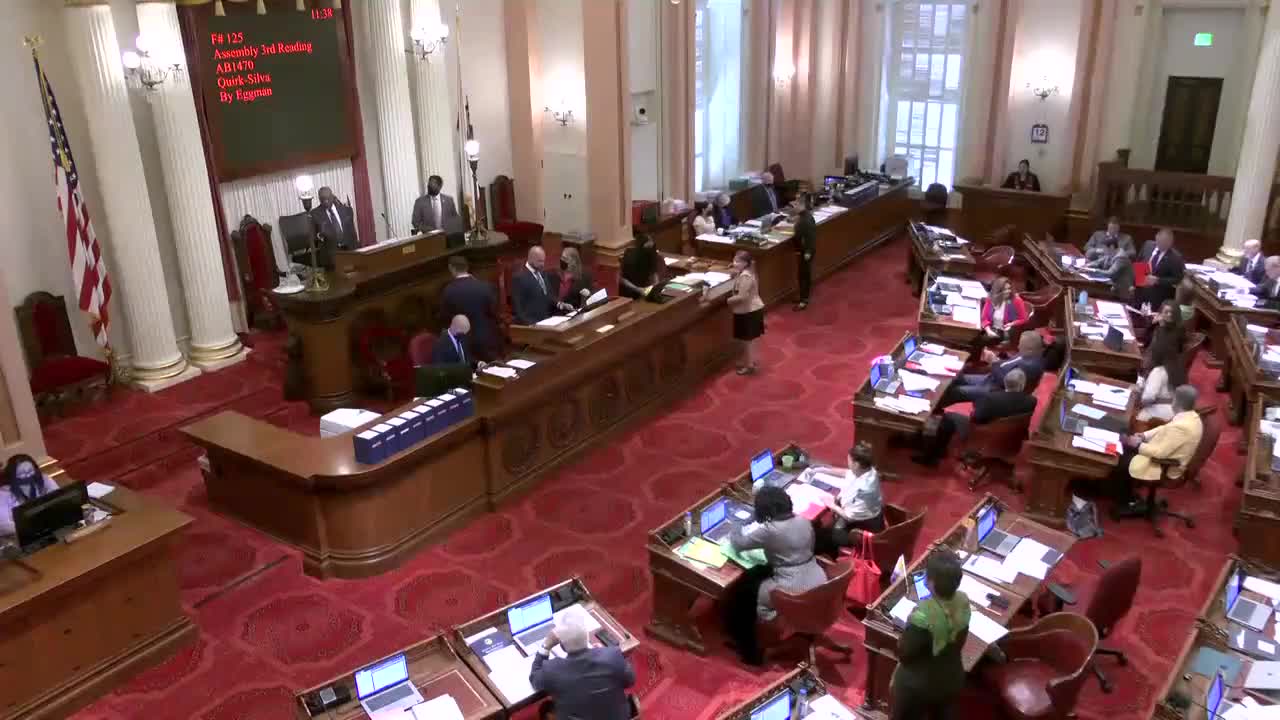 3MIN
Senate Floor
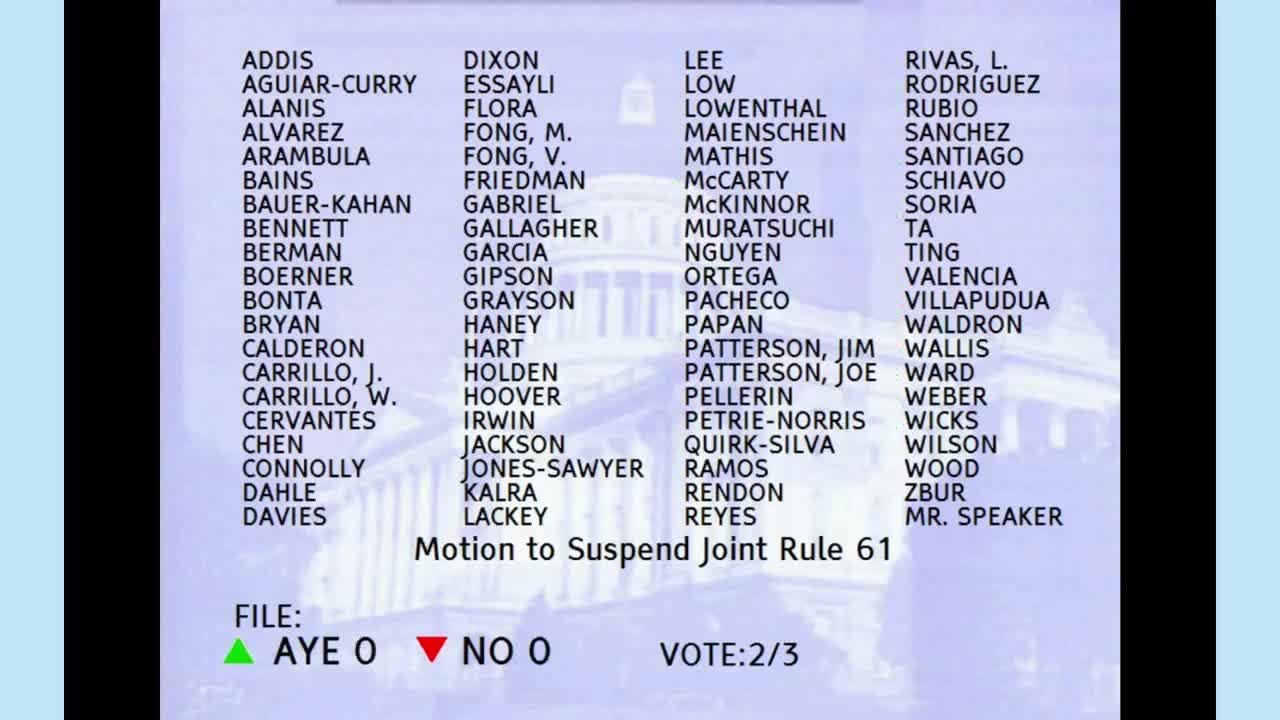 2MIN
Assembly Floor
 5MIN
Assembly Standing Committee on Natural Resources
 4MIN
Senate Floor
 12MIN
Senate Standing Committee on Governance and Finance
 16MIN
Senate Standing Committee on Natural Resources and Water
Bill Author

Bill Co-Author(s):