SB 301: Vehicular air pollution: Zero-Emission Aftermarket Conversion Project.
- Session Year: 2023-2024
- House: Senate
- Latest Version Date: 2024-05-29
Current Status:
Failed
(2024-06-14: In Senate. Consideration of Governor's veto pending.)
Introduced
In Committee
First Chamber
In Committee
Second Chamber
Enacted
Existing law directs the State Air Resources Board to coordinate efforts to attain and maintain ambient air quality standards. Existing law creates the Air Quality Improvement Program, administered by the state board, to fund, upon appropriation by the Legislature, air quality improvement projects relating to fuel and vehicle technologies.
This bill would require the state board to establish the Zero-Emission Aftermarket Conversion Project (ZCAP), upon appropriation by the Legislature in the annual Budget Act or other statute or, at the discretion of the state board, using moneys available from another clean transportation program, to provide an applicant who is a California resident with a rebate for an eligible vehicle that has been converted into a zero-emission vehicle. The rebate issued pursuant to the ZACP would be limited to one per vehicle and a value of up to $4,000. The bill would require the state board to establish guidelines for the ZACP that, among other things, define qualifying conversion-types for used vehicles and establish minimum eligibility criteria for an applicant to be eligible for the rebate. The bill would also require the state boards guidelines to require that an eligible zero-emission vehicle have a range of at least 100 miles and have completed an inspection of safety systems and components by a licensee of the Bureau of Automotive Repair, as provided.
Existing law directs the State Air Resources Board to coordinate efforts to attain and maintain ambient air quality standards. Existing law creates the Air Quality Improvement Program, administered by the state board, to fund, upon appropriation by the Legislature, air quality improvement projects relating to fuel and vehicle technologies.
This bill would require the state board to establish the Zero-Emission Aftermarket Conversion Project (ZACP) by allocating no less than a total of $2,000,000 annually from the Clean Vehicle Rebate Project or any other clean vehicle rebate program, as described, or other state or federal funding sources (ZCAP), upon appropriation by the Legislature in the annual Budget Act or other statute or, at the discretion of the state board, using moneys available from another clean transportation program, to provide an applicant who is a California resident with a rebate for an eligible vehicle that has been converted into a zero-emission vehicle. The rebate issued pursuant to the ZACP would be limited to one per vehicle and a value of up to $4,000. The bill would also require the state board to establish guidelines for the ZACP, as specified, and ZACP that, among other things, define qualifying conversion-types for used vehicles and establish minimum eligibility criteria for an applicant to be eligible for the rebate. The bill would require that if any of the moneys allocated from the Air Quality Improvement Program for a fiscal year for this purpose are not expended by the end of the subsequent fiscal year, those moneys may be retained for the ZACP, repaid to the program they were transferred from, or made available for other zero-emission vehicle rebate programs. The bill would also require the state boards guidelines to require that an eligible zero-emission vehicle have a range of at least 100 miles and have completed an inspection of safety systems and components by a licensee of the Bureau of Automotive Repair, as provided.
Existing law directs the State Air Resources Board to coordinate efforts to attain and maintain ambient air quality standards. Existing law creates the Air Quality Improvement Program, administered by the state board, to fund, upon appropriation by the Legislature, air quality improvement projects relating to fuel and vehicle technologies.
This bill would require the state board to establish the Zero-Emission Aftermarket Conversion Project (ZACP) by allocating up to no less than a total of $2,000,000 annually from the Clean Vehicle Rebate Project Project or any other clean vehicle rebate program, as described, or other state or federal funding sources to provide an applicant who is a California resident with a rebate for an eligible vehicle that has been converted into a zero-emission vehicle. The bill would require the rebate issued pursuant to the ZACP to would be limited to one per vehicle and have a value of up to $2,000. $4,000. The bill would also require the state board to establish guidelines for the program, ZACP, as specified, and minimum eligibility criteria for an applicant to be eligible for the rebate. The bill would require that if any of the moneys allocated from the Clean Vehicle Rebate Project Air Quality Improvement Program for a fiscal year for this purpose are not expended by the end of each the subsequent fiscal year, those moneys shall be may be retained for the ZACP, repaid to the Clean Vehicle Rebate Project. program they were transferred from, or made available for other zero-emission vehicle rebate programs.
Existing law directs the State Air Resources Board to coordinate efforts to attain and maintain ambient air quality standards. Existing law creates the Air Quality Improvement Program, administered by the state board, to fund, upon appropriation by the Legislature, air quality improvement projects relating to fuel and vehicle technologies.
This bill would require the state board to establish the Zero-Emission Aftermarket Conversion Project (ZACP) by allocating up to $2,000,000 annually from the Clean Vehicle Rebate Project or other sources to provide an applicant who is a California resident with a rebate for an eligible vehicle that has been converted into a zero-emission vehicle. The bill would require the rebate issued pursuant to the ZACP to be limited to one per vehicle and have a value of up to $2,000. The bill would also require the state board to establish guidelines for the program, as specified, and minimum eligibility criteria for an applicant to be eligible for the rebate. The bill would require that if any of the moneys allocated from the Clean Vehicle Rebate Project for this purpose are not expended by the end of each fiscal year, those moneys shall be repaid to the Clean Vehicle Rebate Project.
Existing law directs the State Air Resources Board to coordinate efforts to attain and maintain ambient air quality standards. Existing law creates the Air Quality Improvement Program, administered by the state board, to fund, upon appropriation by the Legislature, air quality improvement projects relating to fuel and vehicle technologies.
This bill would require the state board to establish the Zero-Emission Aftermarket Conversion Project (ZACP) by allocating up to $2,000,000 annually from the Clean Vehicle Rebate Project to provide an applicant who is a California resident with a rebate for an eligible vehicle that has been converted into a zero-emission vehicle. The bill would require the rebate issued pursuant to the ZACP to be limited to one per vehicle and have a value of up to $2,000. The bill would also require the state board to establish guidelines for the program, as specified, and minimum eligibility criteria for an applicant to be eligible for the rebate. The bill would require that if any of the moneys allocated for this purpose are not expended by the end of each fiscal year, those moneys shall be repaid to the Clean Vehicle Rebate Project.
For purposes of this article, the following definitions apply:
(a)Air Quality Improvement Program refers to the program established pursuant to Article 3 (commencing with Section 44274).
(b)Eligible vehicle shall mean a light-duty motor vehicle, as defined in Section 415 of the Vehicle Code, originally propelled by a gasoline- or diesel-powered engine.
(c)Light-duty has the same meaning as defined in Section 39035.
(d)Motor vehicle has the same meaning as defined in Section 415 of the Vehicle Code.
(e)Vehicle frame has the same meaning as defined in Section 670.5 of the Vehicle Code.
(f)Zero-emission vehicle has the same meaning as defined in Section 44258.
44274.26.(a)The state board shall establish the Zero-Emission Aftermarket Conversion Project (ZACP) upon appropriation by the Legislature in the annual Budget Act or other statute or, at the discretion of the state board, using moneys available from a clean transportation program that is in effect on or after the date the state board establishes the ZACP, to provide an applicant who is a California resident with a rebate for an eligible vehicle that has been converted into a zero-emission vehicle.
(b)The state board shall develop guidelines for the program that define qualifying conversion-types for used vehicles, define eligible replacement motors, power systems, and parts, establish reasonable warranty requirements for primary system components such as motors and battery packs, and establish minimum eligibility criteria for an applicant to be eligible for the rebate described in subdivision (a). The state boards guidelines shall also include the following requirements:
(1)An eligible zero-emission vehicle shall have completed an inspection of safety systems and components by a licensee of the Bureau of Automotive Repair consistent with the criteria established by the bureau pursuant to Section 9888.5 of the Business and Professions Code, and be registered with the Department of Motor Vehicles as a zero-emission vehicle.
(2)An eligible zero-emission vehicle shall have a range of at least 100 miles.
(3)The equivalent of any manufacturer suggested retail price limit established for the Clean Vehicle Rebate Project for a comparable vehicle category shall apply, based on total zero-emission vehicle cost, including the value of the donor vehicle at the time of the conversion, the cost of the conversion, and the cost of any new vehicle frame that is installed to accommodate a vehicle conversion.
(4)Any income limits established for the Clean Vehicle Rebate Project shall apply.
(c)(1)A rebate issued pursuant to the ZACP shall be limited to one per vehicle and have a value of up to four thousand dollars ($4,000).
(2)In establishing rebate amounts, the state board shall ensure that the rebate issued for a converted zero-emission vehicle provides cost-effective benefits to the state in reducing air pollution and greenhouse gases that are no less than the benefits to the state in reducing air pollution and greenhouse gases with respect to the issuance of rebates for new zero-emission vehicles.
(d)A minimum of 25 percent of the rebates issued pursuant to the ZACP shall be issued to individuals with household incomes at or below 400 percent of the federal poverty level.
(e)The state board shall coordinate the ZACP with the enhanced fleet modernization program and the Clean Cars 4 All Program, established pursuant to Article 11 (commencing with Section 44124) of Chapter 5, the Charge Ahead California Initiative, established pursuant to Chapter 8.5 (commencing with Section 44258), and the Zero-Emission Assurance Project and the Clean Vehicle Rebate Project, established as part of the Air Quality Improvement Program established pursuant to Article 3 (commencing with Section 44274).
For purposes of this article, the following definitions apply:
(a)Air Quality Improvement Program refers to the program established pursuant to Article 3 (commencing with Section 44274).
(b)Eligible vehicle shall mean a light-duty motor vehicle, as defined in Section 415 of the Vehicle Code, originally propelled by a gasoline- or diesel-powered engine, that is registered, or will be registered upon completion of the conversion, with the Department of Motor Vehicles. engine.
(c)Light-duty has the same meaning as defined in Section 39035.
(d)Motor vehicle has the same meaning as defined in Section 415 of the Vehicle Code.
(e)Vehicle frame has the same meaning as defined in Section 670.5 of the Vehicle Code.
(f)Zero-emission vehicle has the same meaning as defined in Section 44258.
44274.26.(a)(1)The state board shall establish the Zero-Emission Aftermarket Conversion Project (ZACP) and shall allocate no less than a total of two million dollars ($2,000,000) annually from the Clean Vehicle Rebate Project or any other clean vehicle rebate program established as part of the Air Quality Improvement Program, or from any other state or federal funding source, upon appropriation by the Legislature in the annual Budget Act or other statute or, at the discretion of the state board, using moneys available from a clean transportation program that is in effect on or after the date the state board establishes the ZACP, to provide an applicant who is a California resident with a rebate for an eligible vehicle that has been converted into a zero-emission vehicle.
(2)If any moneys allocated from the Air Quality Improvement Program in a fiscal year for purposes of this section are not expended by the end of the subsequent fiscal year, those moneys may be retained for the ZACP, repaid to the program they were transferred from, or made available for other zero-emission vehicle rebate programs.(b)The state board shall develop guidelines for the program that define qualifying conversion-types for used vehicles, define eligible replacement motors, power systems, and parts, establish warranty requirements, reasonable warranty requirements for primary system components such as motors and battery packs, and establish minimum eligibility criteria for an applicant to be eligible for the rebate described in subdivision (a). The guidelines shall require a visual safety inspection, developed in conjunction with the Bureau of Automotive Repair, for rebate eligibility. The state boards guidelines shall also include the following requirements:
(1)An eligible zero-emission vehicle shall have completed an inspection of safety systems and components by a licensee of the Bureau of Automotive Repair consistent with the criteria established by the bureau pursuant to Section 9888.5 of the Business and Professions Code, and be registered with the Department of Motor Vehicles as a zero-emission vehicle.
(1)(2)An eligible zero-emission vehicle shall have a range of at least 100 miles.
(2)(3)The equivalent of any manufacturer suggested retail price limit established for the Clean Vehicle Rebate Project for a comparable vehicle category shall apply, based on total zero-emission vehicle cost, including the value of the donor vehicle at the time of the conversion, the cost of the conversion, and the cost of any new vehicle frame that is installed to accommodate a vehicle conversion.
(3)(4)Any income limits established for the Clean Vehicle Rebate Project shall apply.
(c)(1)A rebate issued pursuant to the ZACP shall be limited to one per vehicle and have a value of up to four thousand dollars ($4,000).
(2)In establishing rebate amounts, the state board shall ensure that the rebate issued for a converted zero-emission vehicle provides cost-effective benefits to the state in reducing air pollution and greenhouse gases that are equivalent to no less than the benefits to the state in reducing air pollution and greenhouse gases with respect to the issuance of rebates for new zero-emission vehicles.
(d)A minimum of 25 percent of the rebates issued pursuant to the ZACP shall be issued to individuals with household incomes at or below 400 percent of the federal poverty level.
(e)The state board shall coordinate the ZACP with the enhanced fleet modernization program and the Clean Cars 4 All Program, established pursuant to Article 11 (commencing with Section 44124) of Chapter 5, the Charge Ahead California Initiative, established pursuant to Chapter 8.5 (commencing with Section 44258), and the Zero-Emission Assurance Project and the Clean Vehicle Rebate Project, established as part of the Air Quality Improvement Program established pursuant to Article 3 (commencing with Section 44274).
For purposes of this article, the following definitions apply:
(a)Air Quality Improvement Program refers to the program established pursuant to Article 3 (commencing with Section 44274).
(a)(b)Eligible vehicle shall mean a light-duty motor vehicle, as defined in Section 415 of the Vehicle Code, originally propelled by a gasoline- or diesel-powered engine, that is registered, or will be registered upon completion of the conversion, with the Department of Motor Vehicles.
(b)(c)Light-duty has the same meaning as defined in Section 39035.
(c)(d)Motor vehicle has the same meaning as defined in Section 415 of the Vehicle Code.
(d)(e)Vehicle frame has the same meaning as defined in Section 670.5 of the Vehicle Code.
(e)(f)Zero-emission vehicle has the same meaning as defined in Section 44258.
44274.26.(a)(1)The state board shall establish the Zero-Emission Aftermarket Conversion Project (ZACP) and shall allocate up to no less than a total of two million dollars ($2,000,000) annually from the Clean Vehicle Rebate Project, Project or any other clean vehicle rebate program established as part of the Air Quality Improvement Program established pursuant to Article 3 (commencing with Section 44274), Program, or from any other state or federal funding source, to provide an applicant who is a California resident with a rebate for an eligible vehicle that has been converted into a zero-emission vehicle.
(2)If any moneys allocated from the Clean Vehicle Rebate Project Air Quality Improvement Program in a fiscal year for purposes of this section are not expended by the end of each the subsequent fiscal year, those moneys shall be may be retained for the ZACP, repaid to the Clean Vehicle Rebate Project. program they were transferred from, or made available for other zero-emission vehicle rebate programs.
(b)The state board shall develop guidelines for the program, program that define qualifying conversion-types for used vehicles, define eligible replacement motors, power systems, and parts, establish warranty requirements, and establish minimum eligibility criteria for an applicant to be eligible for the rebate described in subdivision (a). The guidelines shall require a visual safety inspection, developed in conjunction with the Bureau of Automotive Repair, for rebate eligibility. The state boards guidelines shall also include the following requirements:
(1)An eligible zero-emission vehicle shall have a range of at least 100 miles.
(2)The equivalent of any manufacturer suggested retail price limit established for the Clean Vehicle Rebate Project for a comparable vehicle category shall apply, based on total zero-emission vehicle cost, including the value of the donor vehicle at the time of the conversion, the cost of the conversion, and the cost of any new vehicle frame that is installed to accommodate a vehicle conversion.
(3)Any income limits established for the Clean Vehicle Rebate Project shall apply.
(4)In establishing rebate amounts, the state board shall ensure that the rebate issued for a converted zero-emission vehicle provides cost-effective benefits to the state in reducing air pollution and greenhouse gases that are equivalent to the benefits to the state in reducing air pollution and greenhouse gases with respect to the issuance of rebates for new zero-emission vehicles.(c)(1)A rebate issued pursuant to the Zero-Emission Aftermarket Conversion Project ZACP shall be limited to one per vehicle and have a value of up to two four thousand dollars ($2,000). ($4,000).
(2)In establishing rebate amounts, the state board shall ensure that the rebate issued for a converted zero-emission vehicle provides cost-effective benefits to the state in reducing air pollution and greenhouse gases that are equivalent to the benefits to the state in reducing air pollution and greenhouse gases with respect to the issuance of rebates for new zero-emission vehicles.
(d)A minimum of 25 percent of the rebates issued pursuant to the Zero-Emission Aftermarket Conversion Project ZACP shall be issued to those eligible for the Clean Cars 4 All program, as established in Section 44124.5. individuals with household incomes at or below 400 percent of the federal poverty level.
(e)The state board shall coordinate the Zero-Emission Aftermarket Conversion Project ZACP with the enhanced fleet modernization program, program and the Clean Cars 4 All Program, established pursuant to Article 11 (commencing with Section 44124) of Chapter 5, the Charge Ahead California Initiative, established pursuant to Chapter 8.5 (commencing with Section 44258), and the Zero-Emission Assurance Project and the Clean Vehicle Rebate Project, established as part of the Air Quality Improvement Program established pursuant to Article 3 (commencing with Section 44274).
For purposes of this article, the following definitions apply:
(a)Eligible vehicle shall mean a light-duty motor vehicle, as defined in Section 415 of the Vehicle Code, originally propelled by a gasoline- or diesel-powered engine, that is registered, or will be registered upon completion of the conversion, with the Department of Motor Vehicles.
(b)Light-duty has the same meaning as defined in Section 39035.
(c)Motor vehicle has the same meaning as defined in Section 415 of the Vehicle Code.
(d)Vehicle frame has the same meaning as defined in Section 670.5 of the Vehicle Code.
(e)Zero-emission vehicle has the same meaning as defined in Section 44258.
44274.26.(a)(1)The state board shall establish the Zero-Emission Aftermarket Conversion Project (ZACP) and shall allocate up to two million dollars ($2,000,000) annually from the Clean Vehicle Rebate Project, established as part of the Air Quality Improvement Program established pursuant to Article 3 (commencing with Section 44274), or from any other state or federal funding source, to provide an applicant who is a California resident with a rebate for an eligible vehicle that has been converted into a zero-emission vehicle. If any of the moneys allocated for this purpose
(2)If any moneys allocated from the Clean Vehicle Rebate Project for purposes of this section are not expended by the end of each fiscal year, those moneys shall be repaid to the Clean Vehicle Rebate Project.
(b)The state board shall develop guidelines for the program, define qualifying conversion-types for used vehicles, define eligible replacement motors, power systems, and parts, and establish minimum eligibility criteria for an applicant to be eligible for the rebate described in subdivision (a). The state boards guidelines shall include the following requirements:
(1)An eligible zero-emission vehicle shall have a range of at least 100 miles.
(2)The equivalent of any manufacturer suggested retail price limit established for the Clean Vehicle Rebate Project for a comparable vehicle category shall apply, based on total zero-emission vehicle cost, including the value of the donor vehicle at the time of the conversion, the cost of the conversion, and the cost of any new vehicle frame that is installed to accommodate a vehicle conversion.
(3)Any income limits established for the Clean Vehicle Rebate Project shall apply.
(4)In establishing rebate amounts, the state board shall ensure that the rebate issued for a converted zero-emission vehicle provides cost-effective benefits to the state in reducing air pollution and greenhouse gases that are equivalent to the benefits to the state in reducing air pollution and greenhouse gases with respect to the issuance of rebates for new zero-emission vehicles.
(c)A rebate issued pursuant to the Zero-Emission Aftermarket Conversion Project shall be limited to one per vehicle and have a value of up to two thousand dollars ($2,000).
(d)A minimum of 25 percent of the rebates issued pursuant to the Zero-Emission Aftermarket Conversion Project shall be issued to those eligible for the Clean Cars 4 All program, as established in Section 44124.5.
(e)The state board shall coordinate the Zero-Emission Aftermarket Conversion Project with the enhanced fleet modernization program, established pursuant to Article 11 (commencing with Section 44124) of Chapter 5, the Charge Ahead California Initiative, established pursuant to Chapter 8.5 (commencing with Section 44258), and the Clean Vehicle Rebate Project, established as part of the Air Quality Improvement Program established pursuant to Article 3 (commencing with Section 44274).
For purposes of this article, the following definitions apply:
(a)Eligible vehicle shall mean a light-duty motor vehicle, as defined in Section 415 of the Vehicle Code, originally propelled by a gasoline- or diesel-powered engine, that is registered, or will be registered upon completion of the conversion, with the Department of Motor Vehicles.
(b)Light-duty has the same meaning as defined in Section 39035.
(c)Motor vehicle has the same meaning as defined in Section 415 of the Vehicle Code.
(d)Vehicle frame has the same meaning as defined in Section 670.5 of the Vehicle Code.
(e)Zero-emission vehicle has the same meaning as defined in Section 44258.
44274.26.(a)The state board shall establish the Zero-Emission Aftermarket Conversion Project (ZACP) and shall allocate up to two million dollars ($2,000,000) annually from the Clean Vehicle Rebate Project, established as part of the Air Quality Improvement Program established pursuant to Article 3 (commencing with Section 44274), or from any other state or federal funding source, to provide an applicant who is a California resident with a rebate for an eligible vehicle that has been converted into a zero-emission vehicle. If any of the moneys allocated for this purpose are not expended by the end of each fiscal year, those moneys shall be repaid to the Clean Vehicle Rebate Project.
(b)The state board shall develop guidelines for the program, define qualifying conversion-types for used vehicles, define eligible replacement motors, power systems, and parts, and establish minimum eligibility criteria for an applicant to be eligible for the rebate described in subdivision (a). The state boards guidelines shall include the following requirements:
(1)An eligible zero-emission vehicle shall have a range of at least 100 miles.
(2)The equivalent of any manufacturer suggested retail price limit established for the Clean Vehicle Rebate Project for a comparable vehicle category shall apply, based on total zero-emission vehicle cost, including the value of the donor vehicle at the time of the conversion, the cost of the conversion, and the cost of any new vehicle frame that is installed to accommodate a vehicle conversion.
(3)Any income limits established for the Clean Vehicle Rebate Project shall apply.
(4)In establishing rebate amounts, the state board shall ensure that the rebate issued for a converted zero-emission vehicle provides cost-effective benefits to the state in reducing air pollution and greenhouse gases that are equivalent to the benefits to the state in reducing air pollution and greenhouse gases with respect to the issuance of rebates for new zero-emission vehicles.
(c)A rebate issued pursuant to the Zero-Emission Aftermarket Conversion Project shall be limited to one per vehicle and have a value of up to two thousand dollars ($2,000).
(d)A minimum of 25 percent of the rebates issued pursuant to the Zero-Emission Aftermarket Conversion Project shall be issued to those eligible for the Clean Cars 4 All program, as established in Section 44124.5.
(e)The state board shall coordinate the Zero-Emission Aftermarket Conversion Project with the enhanced fleet modernization program, established pursuant to Article 11 (commencing with Section 44124) of Chapter 5, the Charge Ahead California Initiative, established pursuant to Chapter 8.5 (commencing with Section 44258), and the Clean Vehicle Rebate Project, established as part of the Air Quality Improvement Program established pursuant to Article 3 (commencing with Section 44274).
|
Date
|
Status
|
|---|---|
| Jun 14, 2024 | In Senate. Consideration of Governor's veto pending. |
| Jun 14, 2024 | Vetoed by the Governor. |
| Jun 4, 2024 | Enrolled and presented to the Governor at 11 a.m. |
| May 28, 2024 | Assembly amendments concurred in. (Ayes 36. Noes 0. Page 4224.) Ordered to engrossing and enrolling. |
| May 21, 2024 | In Senate. Concurrence in Assembly amendments pending. |
| May 20, 2024 | Read third time. Passed. (Ayes 70. Noes 0. Page 5329.) Ordered to the Senate. |
| Apr 23, 2024 | From inactive file. |
| Apr 23, 2024 | Ordered to third reading. |
| Apr 22, 2024 | Notice of intention to remove from inactive file given by Assembly Member Aguiar-Curry. |
| Sep 13, 2023 | Ordered to inactive file on request of Assembly Member Wilson. |
| Sep 5, 2023 | Read second time. Ordered to third reading. |
| Sep 1, 2023 | Read second time and amended. Ordered to second reading. |
| Sep 1, 2023 | From committee: Do pass as amended. (Ayes 11. Noes 0.) (September 1). |
| Aug 16, 2023 | August 16 set for first hearing. Placed on suspense file. |
| Jun 27, 2023 | From committee: Do pass and re-refer to Com. on APPR. with recommendation: To consent calendar. (Ayes 11. Noes 0.) (June 26). Re-referred to Com. on APPR. |
| Jun 15, 2023 | Referred to Com. on NAT. RES. |
| May 31, 2023 | In Assembly. Read first time. Held at Desk. |
| May 30, 2023 | Read third time. Passed. (Ayes 40. Noes 0. Page 1363.) Ordered to the Assembly. |
| May 26, 2023 | Ordered to special consent calendar. |
| May 22, 2023 | Read second time. Ordered to third reading. |
| May 18, 2023 | Read second time and amended. Ordered to second reading. |
| May 18, 2023 | From committee: Do pass as amended. (Ayes 7. Noes 0. Page 1164.) (May 18). |
| May 12, 2023 | Set for hearing May 18. |
| Apr 24, 2023 | April 24 hearing: Placed on APPR suspense file. |
| Apr 14, 2023 | Set for hearing April 24. |
| Apr 12, 2023 | From committee: Do pass and re-refer to Com. on APPR with recommendation: To consent calendar. (Ayes 16. Noes 0. Page 688.) (April 11). Re-referred to Com. on APPR. |
| Mar 30, 2023 | Set for hearing April 11. |
| Mar 16, 2023 | Read second time and amended. Re-referred to Com. on TRANS. |
| Mar 15, 2023 | From committee: Do pass as amended and re-refer to Com. on TRANS. with recommendation: To consent calendar. (Ayes 7. Noes 0. Page 353.) (March 15). |
| Feb 17, 2023 | Set for hearing March 15. |
| Feb 15, 2023 | Referred to Coms. on E.Q. and TRANS. |
| Feb 3, 2023 | From printer. May be acted upon on or after March 5. |
| Feb 2, 2023 | Introduced. Read first time. To Com. on RLS. for assignment. To print. |
|
Date
|
Description
|
Location
|
Votes
|
|
|---|---|---|---|---|
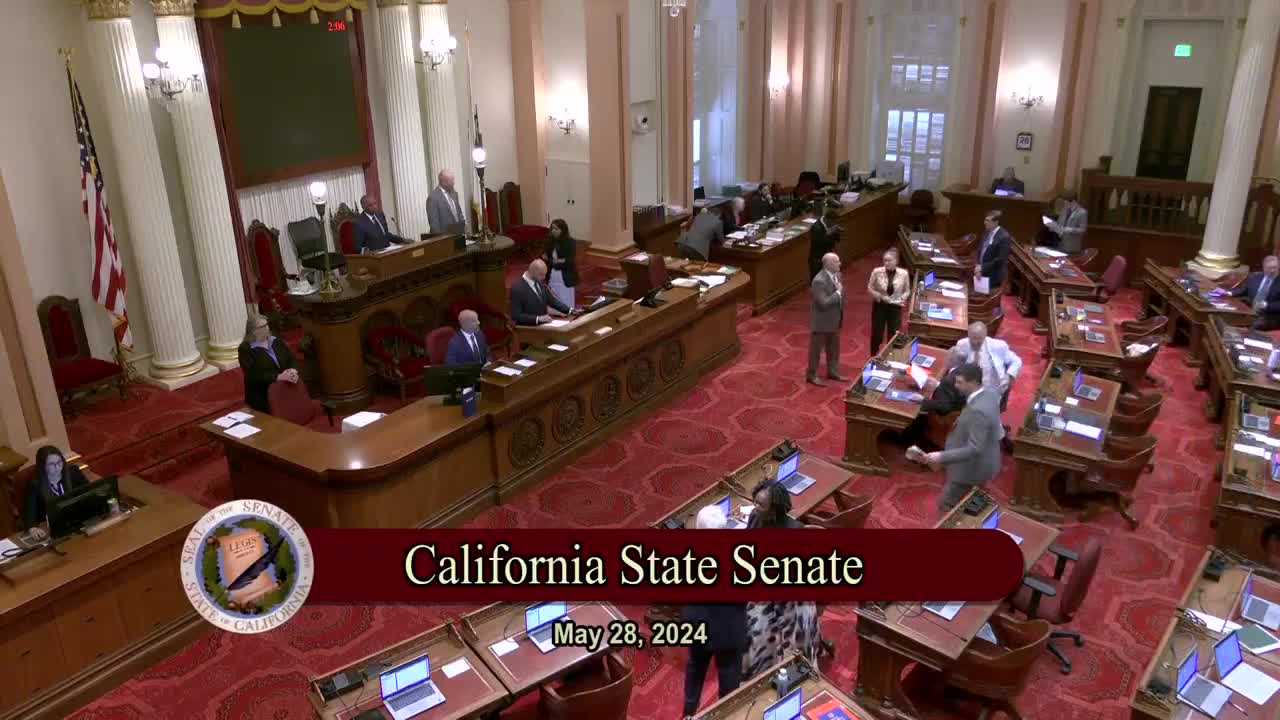
| May 28, 2024 | Unfinished Business SB301 Portantino et al. Concurrence | Senate Floor |
Passed |
|
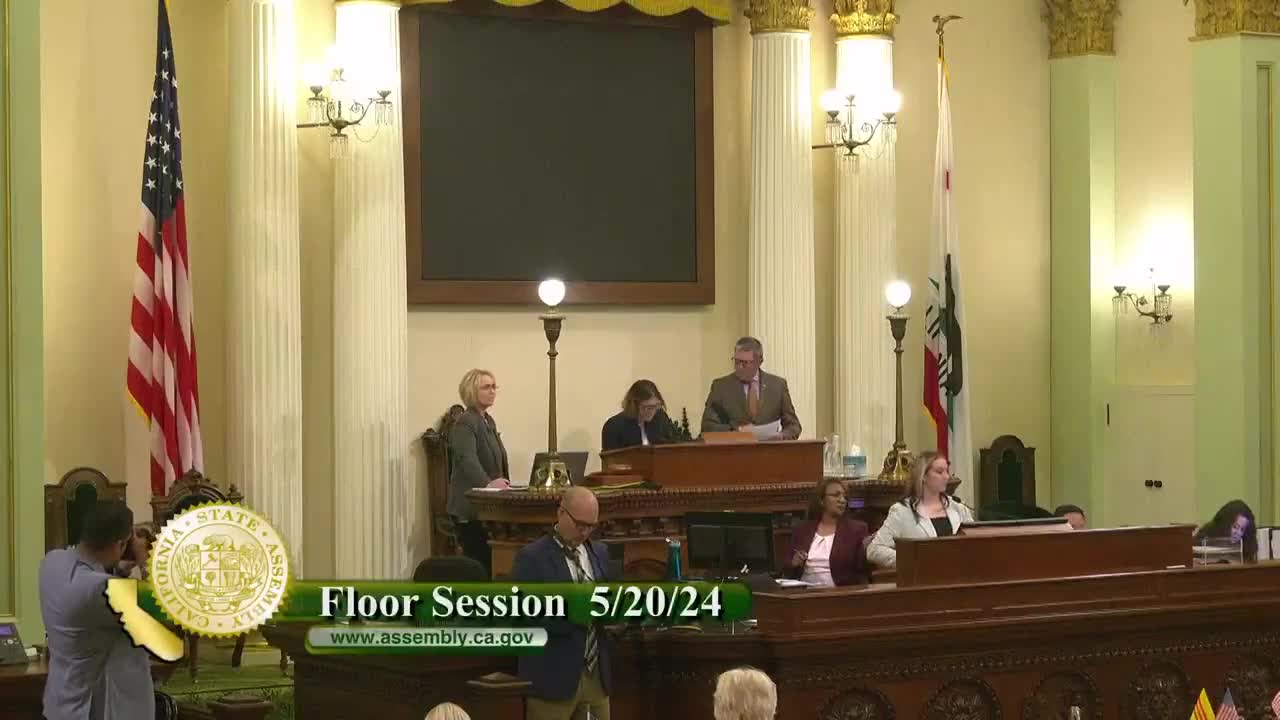
| May 20, 2024 | SB 301 Portantino Senate Third Reading By Wilson | Assembly Floor |
Passed |
|
| Sep 1, 2023 | Do pass as amended. | Assembly Standing Committee on Appropriations |
Passed |
|
| Jun 26, 2023 | Do pass and be re-referred to the Committee on [Appropriations] with recommendation: To Consent Calendar | Assembly Standing Committee on Natural Resources |
Passed |
|
| May 30, 2023 | Special Consent SB301 Portantino et al. | Senate Floor |
Passed |
|
| May 18, 2023 | Do pass as amended | Senate Standing Committee on Appropriations |
Passed |
|
| Apr 24, 2023 | Placed on suspense file | Senate Standing Committee on Appropriations |
Passed |
|
| Apr 11, 2023 | Do pass, but first be re-referred to the Committee on [Appropriations] with the recommendation: To Consent Calendar | Senate Standing Committee on Transportation |
Passed |
|
| Mar 15, 2023 | Do pass as amended, but first amend, and re-refer to the Committee on [Transportation] with the recommendation: To Consent Calendar | Senate Standing Committee on Environmental Quality |
Passed |
This list shows positions taken on this bill by organizations on the date displayed, which is linked to the original source.
Positions by individuals are not included.
|
Organization
|
Position
|
Date
|
|---|---|---|
| Breathe California | ** Support | |
| CalChamber | ** Support | |
| Climate Reality Project Silicon Valley | ** Support | |
| Maxwell Vehicles | ** Support | |
| Specialty Equipment Market Association | ** Support |
SENATE RULES COMMITTEE Office of Senate Floor Analyses (916) 651-1520 Fax: (916) 327-4478 | SB 301 |
VETO
Bill No: SB 301
Author: Portantino (D) and Newman (D), et al.
Enrolled: 5/29/24
Vote: 27
SENATE ENVIRONMENTAL QUALITY COMMITTEE: 7-0, 3/15/23
AYES: Allen, Dahle, Gonzalez, Hurtado, Menjivar, Nguyen, Skinner
SENATE TRANSPORTATION COMMITTEE: 16-0, 4/11/23
AYES: Gonzalez, Niello, Allen, Archuleta, Becker, Blakespear, Cortese, Dahle, Dodd, Limón, McGuire, Newman, Nguyen, Seyarto, Umberg, Wahab
SENATE APPROPRIATIONS COMMITTEE: 7-0, 5/18/23
AYES: Portantino, Jones, Ashby, Bradford, Seyarto, Wahab, Wiener
SENATE FLOOR: 40-0, 5/30/23
AYES: Allen, Alvarado-Gil, Archuleta, Ashby, Atkins, Becker, Blakespear, Bradford, Caballero, Cortese, Dahle, Dodd, Durazo, Eggman, Glazer, Gonzalez, Grove, Hurtado, Jones, Laird, Limón, McGuire, Menjivar, Min, Newman, Nguyen, Niello, Ochoa Bogh, Padilla, Portantino, Roth, Rubio, Seyarto, Skinner, Smallwood-Cuevas, Stern, Umberg, Wahab, Wiener, Wilk
SENATE FLOOR: 36-0, 5/28/24
AYES: Alvarado-Gil, Archuleta, Ashby, Becker, Blakespear, Bradford, Caballero, Cortese, Dahle, Dodd, Durazo, Eggman, Glazer, Gonzalez, Grove, Hurtado, Jones, Laird, Limón, McGuire, Menjivar, Min, Newman, Nguyen, Niello, Padilla, Portantino, Roth, Seyarto, Skinner, Smallwood-Cuevas, Stern, Umberg, Wahab, Wiener, Wilk
NO VOTE RECORDED: Allen, Atkins, Ochoa Bogh, Rubio
ASSEMBLY FLOOR: 70-0, 5/20/24 - See last page for vote
SUBJECT: Vehicular air pollution: Zero-Emission Aftermarket Conversion Project
SOURCE: Specialty Equipment Market Association
DIGEST:
This bill requires the California Air Resources Board (CARB) to establish the Zero-Emission Aftermarket Conversion Project (ZACP) to provide an applicant with a rebate for converting a vehicle into a zero-emission vehicle (ZEV).
ANALYSIS:
Existing law:
- Defines “zero-emission vehicle” (ZEV) as a vehicle that produces no emissions of criteria pollutants, toxic air contaminants, and greenhouse gases (GHGs). (Health and Safety Code (HSC) §44258)
- Establishes Clean Vehicle Rebate Project (CVRP) which provides qualified applicants with a rebate for the purchase of a ZEV. (HSC §44274)
- Establishes the Zero-Emission Assurance Project (ZAP) which provides a qualified applicant with a rebate for the replacement of a battery, fuel cell, or related component or a vehicle service contract related to these components. (HSC §44274.9)
This bill:
- Requires CARB to, subject to an appropriation by the Legislature, provide a qualified applicant with a rebate for an eligible vehicle that has been converted into a ZEV.
- Requires that at least 25% of the funding be allocated to individuals or households at 400% of the federal poverty line or under.
- Requires CARB to develop guidelines for the program, define qualifying conversion-types for used vehicles, define eligible replacement motors, power systems, and parts, and establish minimum eligibility criteria for an applicant to be eligible for a rebate. The guidelines shall:
- Limit ZACP rebates to one per vehicle.
- Require a visual safety inspection, developed in conjunction with the Bureau of Automotive Repair, for rebate eligibility, as well as being registered with the Department of Motor Vehicles as a ZEV.
- Require an eligible ZEV to have a range of at least 100 miles.
- Ensure the value of the vehicle being converted plus the cost of the conversion do not exceed the manufacturer suggested retail price (MSRP) limit established for the CVRP. As of February 24, 2022, those limits are $60,000 for minivans/pickups/SUVs and $45,000 for hatchbacks/sedans/wagons/two-seaters.
- Apply the income limits established for the CVRP to the program established by this bill. As of February 24, 2022, those income limits are $135,000 for single filers, $175,000 for head of household filers, and $200,000 for joint filers.
- Ensure the rebate provides cost-effective benefits to the state in reducing air pollution.
- Defines an “eligible vehicle” as a light-duty vehicle originally propelled by a gasoline- or diesel-powered engine.
- Caps the maximum rebate at $4,000.
- Requires CARB to coordinate the ZACP with the enhanced fleet modernization program, the Charge Ahead California Initiative, and CVRP.
Background
- ZEV Climate Goals. Transitioning California's transportation system away from gasoline to ZEVs is a fundamental part of the state's efforts to reduce GHG emissions and help meet the state's goals to reduce GHG emissions 40% below 1990 levels by 2030. Governor Newsom's Executive Order (EO) N-79-20, dated September 23, 2020, established the goal that 100% of in-state sales of new passenger cars and trucks will be zero-emission by 2035. The EO further requires that 100% of medium- and heavy-duty vehicles in the state be zero-emission by 2045 for all operations where feasible and by 2035 for drayage trucks.
The state has tried to increase the sales of ZEVs by providing rebates to consumers through CVRP, Clean Cars 4 All Program (CC4A), and the Hybrid and Zero-Emission Truck and Bus Voucher Incentive Project (HVIP). These incentives have mainly been funded with cap-and-trade auction revenues. Revenues from the state's cap-and-trade allowance auction, authorized under AB 32 (Núñez, Chapter 488, Statutes of 2006), and reauthorized by SB 32 (Pavley, Chapter 249, Statutes of 2016), are deposited in the Greenhouse Gas Reduction Fund and used for California Climate Investments. Roughly half of the passenger ZEVs sold in California have received incentives from these programs. Overall, the Legislature has appropriated $2.2 billion for low carbon transportation investments.
- What Do ZEV Conversions Cost? An April 25, 2022, article in the Los Angeles Times looked at the market for converting classic cars to ZEVs. According to the article, some shops have a five-year waiting list for vehicle conversions. The cost, according to the article, “starts at around $18,000,” but more expensive builds for high-performance cars can run well past $30,000.
How long a conversion will take to complete will also vary depending on the vehicle, but during a conversion, it isn’t just the engine that is being replaced. It also – in many cases – involves removing the pipes and hoses used for a combustion engine, along with the transmission, gas tank, exhaust system, and more. Plus, depending on the vehicle being converted, other modifications to the car may be necessary to accommodate the batteries.
- Who Approves A Conversion & How Common Are They? According to CARB, any vehicle registered in California may be converted to a 100% electric drive, as long as all power is supplied by on-board batteries. All combustion and fuel system components must be removed prior to inspection by a Bureau of Automotive (BAR) station. The vehicle must arrive at the inspection site under its own power, and the referee must also ensure the vehicle has adequate battery storage capacity for 100% electric operation. Once the inspection is complete, the referee will sign a DMV form so the vehicle can be registered as an EV and removed from the periodic smog inspection program. It should be noted though that this examination only looks at the vehicle’s emissions. There are no other exams or approvals required.
Comments
- Purpose of Bill. According to the author, “This bill will bring California one step closer to accomplishing the goal of reducing greenhouse gas emissions to a level that is sustainable. With a large portion of greenhouse gas emissions coming from the transportation sector in California, it is necessary that we implement a program that encourages people to convert their vehicles to ZEVs to reduce the issues associated with Climate Change.”
- Converting Gas-Powered Vehicles To Electric. The bill’s sponsor, the Specialty Equipment Market Association (SEMA), notes Ford last year introduced an electric crate motor (a fully assembled automobile engine shipped to the installer, originally in a crate) for $3,900 – much less than the cost of a new ZEV.
However, the $3,900 motor cost does not include any of the other parts necessary to convert a vehicle – the control system, batteries, inverter, or many others – nor does it include the cost of labor for someone not taking this on as a do-it-yourself project. The costs of the additional parts are likely to be substantially more than the cost of the motor itself. At least one company, Electric GT, advertises “plug-and-play” kits that include all of the parts necessary to convert a car to an EV with prices ranging from $34,500-$65,000, while EV West advertises some kits in the $8,000-$18,000 range. Neither includes the cost of labor.
- Moving Money May Have Equity Impacts. The new ZACP program will be funded from state or federal funding or any other clean vehicle rebate program. One such program is the Clean Cars 4 All (CC4A) program. CC4A offers up to $9,500 in incentives to low-income Californians to swap out their old cars for zero-emission or hybrid vehicles. CC4A is an equity-focused program geared at getting ZEVs into the hands of low-income Californians. While the CVRP caps income eligibility for single-filers at $135,000, CC4A caps it at 400% of the federal poverty line, or just $58,320 in 2023.
SB 301 requires 25% of the money in the ZACP to go to households at 400% of the federal poverty line. However, whether this 25% carve-out for low-income Californians represents an increase in allocation towards equity projects or a decrease depends on how much money is coming from CC4A or other programs. If more than 25% of the money comes from CC4A, then there would be a net decrease in money allocated to low-income Californians across programs. In addition, determining whether more or less funding for ZEVs has been allocated to low-income Californians in a given year would not be easy to track since unspent funds in the ZACP can be rolled over or returned at the end of the fiscal year.
FISCAL EFFECT: Appropriation: No Fiscal Com.: Yes Local: No
According to the Assembly Appropriations Committee:
- CARB estimates ongoing annual costs of approximately $9.7 million for 46 new positions (Air Quality Improvement Fund and certification fees) to develop and implement the ZACP, develop eligibility criteria, develop and implement safeguards to prevent fraudulent activity, coordinate with other incentive programs, develop and refine calculation methodologies for emissions benefits and other project evaluation metrics, promulgate regulations to develop a new procedure to assess ZEV conversions and determine vehicle range, develop and implement a safety inspection program, create testing and certification requirements for conversion kit manufacturers and installers, and a number of other tasks.
- Ongoing cost pressure of up to $2 million annually (General Fund or special fund) to allocate funding from CVRP, another AQIP rebate program, or another state or federal funding source, to the ZCAP.
SUPPORT: (Verified 6/18/24)
Specialty Equipment Market Association (source)
Breathe California
Maxwell Vehicles
OPPOSITION: (Verified 6/18/24)
None received
GOVERNOR'S VETO MESSAGE:
This bill would require the California Air Resources Board (CARB) to establish the Zero-Emission Aftermarket Conversion Project (ZACP) to provide an applicant with a financial rebate for converting a gasoline- or diesel-fueled vehicle into a zero-emission vehicle (ZEV).
California is showing the world what's possible - fostering innovation and creating space for an industry to flourish as the sale of ZEVs reach record highs, with over 1.8 million ZEVs now on California's roads. The state continues to invest billions of dollars in ZEV deployment and supporting infrastructure to achieve our ambitious climate and clean air goals.
While I share the author's desire to further accelerate the state's transition to ZEVs, this bill creates a new program at a time when the state faces a $44.9 billion shortfall for the 2024-25 fiscal year. Additionally, there is no funding currently identified or available in the state budget to support this new program.
For these reasons, I cannot sign this bill.
ASSEMBLY FLOOR: 70-0, 5/20/24
AYES: Addis, Aguiar-Curry, Alanis, Bauer-Kahan, Bennett, Berman, Boerner, Bonta, Bryan, Calderon, Juan Carrillo, Wendy Carrillo, Chen, Connolly, Davies, Dixon, Essayli, Flora, Mike Fong, Vince Fong, Friedman, Gallagher, Garcia, Gipson, Grayson, Haney, Hart, Hoover, Irwin, Jackson, Jones-Sawyer, Kalra, Lackey, Lee, Low, Lowenthal, Maienschein, McCarty, McKinnor, Muratsuchi, Ortega, Pacheco, Papan, Jim Patterson, Joe Patterson, Pellerin, Petrie-Norris, Quirk-Silva, Ramos, Rendon, Reyes, Rodriguez, Blanca Rubio, Sanchez, Santiago, Schiavo, Soria, Ta, Ting, Valencia, Villapudua, Waldron, Wallis, Ward, Weber, Wicks, Wilson, Wood, Zbur, Robert Rivas
NO VOTE RECORDED: Alvarez, Arambula, Bains, Cervantes, Megan Dahle, Gabriel, Holden, Mathis, Stephanie Nguyen, Luz Rivas
Prepared by: Eric Walters / E.Q. / (916) 651-4108
6/19/24 11:53:25
**** END ****
SENATE RULES COMMITTEE Office of Senate Floor Analyses (916) 651-1520 Fax: (916) 327-4478 | SB 301 |
UNFINISHED BUSINESS
Bill No: SB 301
Author: Portantino (D) and Newman (D), et al.
Amended: 9/1/23
Vote: 21
SENATE ENVIRONMENTAL QUALITY COMMITTEE: 7-0, 3/15/23
AYES: Allen, Dahle, Gonzalez, Hurtado, Menjivar, Nguyen, Skinner
SENATE TRANSPORTATION COMMITTEE: 16-0, 4/11/23
AYES: Gonzalez, Niello, Allen, Archuleta, Becker, Blakespear, Cortese, Dahle, Dodd, Limón, McGuire, Newman, Nguyen, Seyarto, Umberg, Wahab
SENATE APPROPRIATIONS COMMITTEE: 7-0, 5/18/23
AYES: Portantino, Jones, Ashby, Bradford, Seyarto, Wahab, Wiener
SENATE FLOOR: 40-0, 5/30/23
AYES: Allen, Alvarado-Gil, Archuleta, Ashby, Atkins, Becker, Blakespear, Bradford, Caballero, Cortese, Dahle, Dodd, Durazo, Eggman, Glazer, Gonzalez, Grove, Hurtado, Jones, Laird, Limón, McGuire, Menjivar, Min, Newman, Nguyen, Niello, Ochoa Bogh, Padilla, Portantino, Roth, Rubio, Seyarto, Skinner, Smallwood-Cuevas, Stern, Umberg, Wahab, Wiener, Wilk
ASSEMBLY FLOOR: 70-0, 5/20/24 - See last page for vote
SUBJECT: Vehicular air pollution: Zero-Emission Aftermarket Conversion Project
SOURCE: Specialty Equipment Market Association
DIGEST:
This bill requires the California Air Resources Board (CARB) to establish the Zero-Emission Aftermarket Conversion Project (ZACP) to provide an applicant with a rebate for converting a vehicle into a zero-emission vehicle (ZEV).
Assembly Amendments
remove the requirement for CARB to allocate a specific dollar amount to the ZACP, removed the requirement for unused Air Quality Improvement Program monies to go into the ZACP, and added safety inspection and registration requirements.
ANALYSIS:
Existing law:
- Defines “zero-emission vehicle” (ZEV) as a vehicle that produces no emissions of criteria pollutants, toxic air contaminants, and greenhouse gases (GHGs). (Health and Safety Code (HSC) §44258)
- Establishes Clean Vehicle Rebate Project (CVRP) which provides qualified applicants with a rebate for the purchase of a ZEV. (HSC §44274)
- Establishes the Zero-Emission Assurance Project (ZAP) which provides a qualified applicant with a rebate for the replacement of a battery, fuel cell, or related component or a vehicle service contract related to these components. (HSC §44274.9)
This bill:
- Requires CARB to, subject to an appropriation by the Legislature, provide a qualified applicant with a rebate for an eligible vehicle that has been converted into a ZEV.
- Requires that at least 25% of the funding be allocated to individuals or households at 400% of the federal poverty line or under.
- Requires CARB to develop guidelines for the program, define qualifying conversion-types for used vehicles, define eligible replacement motors, power systems, and parts, and establish minimum eligibility criteria for an applicant to be eligible for a rebate. The guidelines shall:
- Limit ZACP rebates to one per vehicle.
- Require a visual safety inspection, developed in conjunction with the Bureau of Automotive Repair, for rebate eligibility, as well as being registered with the Department of Motor Vehicles as a ZEV.
- Require an eligible ZEV to have a range of at least 100 miles.
- Ensure the value of the vehicle being converted plus the cost of the conversion do not exceed the manufacturer suggested retail price (MSRP) limit established for the CVRP. As of February 24, 2022, those limits are $60,000 for minivans/pickups/SUVs and $45,000 for hatchbacks/sedans/wagons/two-seaters.
- Apply the income limits established for the CVRP to the program established by this bill. As of February 24, 2022, those income limits are $135,000 for single filers, $175,000 for head of household filers, and $200,000 for joint filers.
- Ensure the rebate provides cost-effective benefits to the state in reducing air pollution.
- Defines an “eligible vehicle” as a light-duty vehicle originally propelled by a gasoline- or diesel-powered engine.
- Caps the maximum rebate at $4,000.
- Requires CARB to coordinate the ZACP with the enhanced fleet modernization program, the Charge Ahead California Initiative, and CVRP.
Background
- ZEV Climate Goals. Transitioning California's transportation system away from gasoline to ZEVs is a fundamental part of the state's efforts to reduce GHG emissions and help meet the state's goals to reduce GHG emissions 40% below 1990 levels by 2030. Governor Gavin Newsom's Executive Order (EO) N-79-20, dated September 23, 2020, established the goal that 100% of in-state sales of new passenger cars and trucks will be zero-emission by 2035. The EO further requires that 100% of medium- and heavy-duty vehicles in the state be zero-emission by 2045 for all operations where feasible and by 2035 for drayage trucks.
The state has tried to increase the sales of ZEVs by providing rebates to consumers through CVRP, Clean Cars 4 All Program (CC4A), and the Hybrid and Zero-Emission Truck and Bus Voucher Incentive Project (HVIP). These incentives have mainly been funded with cap-and-trade auction revenues. Revenues from the state's cap-and-trade allowance auction, authorized under AB 32 (Núñez, Chapter 488, Statutes of 2006), and reauthorized by SB 32 (Pavley, Chapter 249, Statutes of 2016), are deposited in the Greenhouse Gas Reduction Fund and used for California Climate Investments. Roughly half of the passenger ZEVs sold in California have received incentives from these programs. Overall, the Legislature has appropriated $2.2 billion for low carbon transportation investments.
- What Do ZEV Conversions Cost? An April 25, 2022, article in the Los Angeles Times looked at the market for converting classic cars to ZEVs. According to the article, some shops have a five-year waiting list for vehicle conversions. The cost, according to the article, “starts at around $18,000,” but more expensive builds for high-performance cars can run well past $30,000.
How long a conversion will take to complete will also vary depending on the vehicle, but during a conversion, it isn’t just the engine that is being replaced. It also – in many cases – involves removing the pipes and hoses used for a combustion engine, along with the transmission, gas tank, exhaust system, and more. Plus, depending on the vehicle being converted, other modifications to the car may be necessary to accommodate the batteries.
- Who Approves A Conversion & How Common Are They? According to CARB, any vehicle registered in California may be converted to a 100% electric drive, as long as all power is supplied by on-board batteries. All combustion and fuel system components must be removed prior to inspection by a Bureau of Automotive (BAR) station. The vehicle must arrive at the inspection site under its own power, and the referee must also ensure the vehicle has adequate battery storage capacity for 100% electric operation. Once the inspection is complete, the referee will sign a DMV form so the vehicle can be registered as an EV and removed from the periodic smog inspection program. It should be noted though that this examination only looks at the vehicle’s emissions. There are no other exams or approvals required.
Comments
- Purpose of Bill. According to the author, “This bill will bring California one step closer to accomplishing the goal of reducing greenhouse gas emissions to a level that is sustainable. With a large portion of greenhouse gas emissions coming from the transportation sector in California, it is necessary that we implement a program that encourages people to convert their vehicles to ZEVs to reduce the issues associated with Climate Change.”
- Converting Gas-Powered Vehicles To Electric. The bill’s sponsor, the Specialty Equipment Market Association (SEMA), notes Ford last year introduced an electric crate motor (a fully assembled automobile engine shipped to the installer, originally in a crate) for $3,900 – much less than the cost of a new ZEV.
However, the $3,900 motor cost does not include any of the other parts necessary to convert a vehicle – the control system, batteries, inverter, or many others – nor does it include the cost of labor for someone not taking this on as a do-it-yourself project. The costs of the additional parts are likely to be substantially more than the cost of the motor itself. At least one company, Electric GT, advertises “plug-and-play” kits that include all of the parts necessary to convert a car to an EV with prices ranging from $34,500-$65,000, while EV West advertises some kits in the $8,000-$18,000 range. Neither includes the cost of labor.
- Moving Money May Have Equity Impacts. The new ZACP program will be funded from state or federal funding or any other clean vehicle rebate program. One such program is the Clean Cars 4 All (CC4A) program. CC4A offers up to $9,500 in incentives to low-income Californians to swap out their old cars for zero-emission or hybrid vehicles. CC4A is an equity-focused program geared at getting ZEVs into the hands of low-income Californians. While the CVRP caps income eligibility for single-filers at $135,000, CC4A caps it at 400% of the federal poverty line, or just $58,320 in 2023.
SB 301 requires 25% of the money in the ZACP to go to households at 400% of the federal poverty line. However, whether this 25% carve-out for low-income Californians represents an increase in allocation towards equity projects or a decrease depends on how much money is coming from CC4A or other programs. If more than 25% of the money comes from CC4A, then there would be a net decrease in money allocated to low-income Californians across programs. In addition, determining whether more or less funding for ZEVs has been allocated to low-income Californians in a given year would not be easy to track since unspent funds in the ZACP can be rolled over or returned at the end of the fiscal year.
FISCAL EFFECT: Appropriation: No Fiscal Com.: Yes Local: No
According to the Assembly Appropriations Committee:
- CARB estimates ongoing annual costs of approximately $9.7 million for 46 new positions (Air Quality Improvement Fund and certification fees) to develop and implement the ZACP, develop eligibility criteria, develop and implement safeguards to prevent fraudulent activity, coordinate with other incentive programs, develop and refine calculation methodologies for emissions benefits and other project evaluation metrics, promulgate regulations to develop a new procedure to assess ZEV conversions and determine vehicle range, develop and implement a safety inspection program, create testing and certification requirements for conversion kit manufacturers and installers, and a number of other tasks.
- Ongoing cost pressure of up to $2 million annually (General Fund or special fund) to allocate funding from CVRP, another AQIP rebate program, or another state or federal funding source, to the ZCAP.
SUPPORT: (Verified 5/20/24)
Specialty Equipment Market Association (source)
Breathe California
Maxwell Vehicles
OPPOSITION: (Verified 5/20/24)
ASSEMBLY FLOOR: 70-0, 5/20/24
AYES: Addis, Aguiar-Curry, Alanis, Bauer-Kahan, Bennett, Berman, Boerner, Bonta, Bryan, Calderon, Juan Carrillo, Wendy Carrillo, Chen, Connolly, Davies, Dixon, Essayli, Flora, Mike Fong, Vince Fong, Friedman, Gallagher, Garcia, Gipson, Grayson, Haney, Hart, Hoover, Irwin, Jackson, Jones-Sawyer, Kalra, Lackey, Lee, Low, Lowenthal, Maienschein, McCarty, McKinnor, Muratsuchi, Ortega, Pacheco, Papan, Jim Patterson, Joe Patterson, Pellerin, Petrie-Norris, Quirk-Silva, Ramos, Rendon, Reyes, Rodriguez, Blanca Rubio, Sanchez, Santiago, Schiavo, Soria, Ta, Ting, Valencia, Villapudua, Waldron, Wallis, Ward, Weber, Wicks, Wilson, Wood, Zbur, Robert Rivas
NO VOTE RECORDED: Alvarez, Arambula, Bains, Cervantes, Megan Dahle, Gabriel, Holden, Mathis, Stephanie Nguyen, Luz Rivas
Prepared by: Eric Walters / E.Q. / (916) 651-4108
5/21/24 18:07:44
**** END ****
SENATE THIRD READING
STR Bill Id:SB 301
Author:(Portantino and Newman)
As Amended Ver:September 1, 2023
Majority vote
SUMMARY
Requires the California Air Resources Board (ARB) to establish the Zero-Emission Aftermarket Conversion Project (ZACP) to provide an eligible applicant with a rebate for an eligible vehicle that has been converted into a zero-emission vehicle (ZEV).
Major Provisions
- Requires ARB to establish the ZACP, upon appropriation by the Legislature in the annual Budget Act or other statute, using moneys available from a clean transportation program that is in effect on or after the date the state board establishes the ZACP, to provide an applicant who is a California resident with a rebate up to $4,000 for an eligible vehicle that has been converted into a ZEV.
- Requires ARB to develop guidelines for ZACP that define qualifying conversion-types for used vehicles, define eligible replacement motors, power systems, and parts, establish reasonable warranty requirements for primary system components such as motors and battery packs, and establish minimum eligibility criteria for an applicant to be eligible for the rebate.
- Require the guidelines to require an eligible ZEV to have completed an inspection of safety systems and components by a licensee of the Bureau of Automotive Repair and be registered with the Department of Motor Vehicles as a ZEV.
- Requires a minimum of 25% of the rebates issued pursuant to the ZACP to be issued to individuals with household incomes at or below 400% of the federal poverty level.
- Requires ARB to coordinate the ZACP with the enhanced fleet modernization program and the Clean Cars 4 All, the Charge Ahead California Initiative, and the Zero-Emission Assurance Project.
COMMENTS
California has some of the most ambitious GHG reduction goals in the nation, which include goals to reduce petroleum use in California up to 50% from 2015 levels by 2030, phase out passenger combustion-engine cars by 2035, and reduce GHG emissions 85% below 1990 levels by 2045. The transportation sector represents about 40% of California's total GHG emissions portfolio, and replacing traditional gas-powered cars with ZEVs is a significant part of California's effort to reduce climate emissions.
This bill would require ARB to provide an applicant who is a California resident that meets the income eligibility with a rebate up to $4,000 for a vehicle that has been converted into a ZEV that has a range of at least 100 miles.
According to the United States Department of Energy, although currently uncommon, a vehicle with an internal combustion engine can be converted to an all-electric vehicle by completely removing the engine and adding a battery pack, one or more electric motors, high-voltage cables, and instrumentation.
The benefits of conversion include a decreased demand on resources to build new cars, the avoided manufacturing and associated energy demand for building a new car, affordability for consumers compared to purchasing new ZEVs, and converting traditional gas-powered vehicles to ZEVs can facilitate meeting the state’s ambitious ZEV goals.
According to the Author
SB 301 will bring California one-step closer to accomplishing the goal of reducing greenhouse gas emissions to a level that is sustainable. With a large portion of greenhouse gas emissions coming from the transportation sector in California, it is necessary that we implement a program that encourages people to convert their vehicles to ZEVs to reduce the issues associated with Climate Change.
Arguments in Support
The California Chamber of Commerce writes, "We believe that SB 301 represents a positive step towards easing the burden of the electrification transition that is currently underway. Further, SB 301 would not only benefit the environment, but it would also promote manufacturing and create jobs here in California."
Arguments in Opposition
None on file
FISCAL COMMENTS
According to the Assembly Appropriations Committee, this bill would result in cost pressure of an unknown amount for ARB to establish the ZCAP and implement the requirements of this bill, subject to appropriation (Air Quality Improvement Fund, General Fund, and/ or certification fees), and ongoing cost pressure of an unknown, but likely significant, amount for ARB, at its discretion to allocate funding from one or more clean transportation programs to the ZCAP (General Fund, Greenhouse Gas Reduction Fund, bond funds, federal funds, or other special fund(s)).
VOTES
SENATE FLOOR: 40-0-0
YES: Allen, Alvarado-Gil, Archuleta, Ashby, Atkins, Becker, Blakespear, Bradford, Caballero, Cortese, Dahle, Dodd, Durazo, Eggman, Glazer, Gonzalez, Grove, Hurtado, Jones, Laird, Limón, McGuire, Menjivar, Min, Newman, Nguyen, Niello, Ochoa Bogh, Padilla, Portantino, Roth, Rubio, Seyarto, Skinner, Smallwood-Cuevas, Stern, Umberg, Wahab, Wiener, Wilk
ASM NATURAL RESOURCES: 11-0-0
YES: Luz Rivas, Flora, Addis, Friedman, Hoover, Mathis, Muratsuchi, Pellerin, Ward, Wood, Zbur
ASM APPROPRIATIONS: 11-0-5
YES: Holden, Bryan, Calderon, Wendy Carrillo, Mike Fong, Hart, Lowenthal, Papan, Pellerin, Weber, Wilson
ABS, ABST OR NV: Megan Dahle, Dixon, Mathis, Sanchez, Soria
UPDATED
VERSION: September 1, 2023
CONSULTANT: Paige Brokaw / NAT. RES. / (916)319-2092 FN: 0001584
Date of Hearing: August 16, 2023
ASSEMBLY COMMITTEE ON APPROPRIATIONS
Chris Holden, Chair
SBPCA Bill Id:SB 301
Author:(Portantino) – As Amended Ver:May 18, 2023
Policy Committee: | Natural Resources | Vote: | 11 - 0 |
|
| ||
|
|
Urgency: No State Mandated Local Program: No Reimbursable: No
SUMMARY:
This bill requires the Air Resources Board (ARB) to establish the Zero-Emission Aftermarket Conversion Project (ZACP) by allocating up to $2 million annually for rebates for eligible vehicles that are converted into zero-emission vehicles (ZEVs).
Specifically, this bill:
- Requires ARB to establish the ZACP and allocate no less than $2 million annually from the Clean Vehicle Rebate Project (CVRP) or any other clean vehicle rebate program established as part of the Air Quality Improvement Program (AQIP), or from any other state or federal funding source, to provide an applicant who is a California resident with a rebate for an eligible vehicle that has been converted into a ZEV.
- If any moneys allocated from the AQIP in a fiscal year (FY) for purposes of this bill are not expended by the end of the subsequent FY, authorizes those moneys to be retained for the ZACP, repaid to the program they were transferred from, or made available for other ZEV rebate programs.
- Requires ARB to develop guidelines, as specified, for the ZACP that define qualifying conversion types for used vehicles, define eligible replacement motors, power systems, and parts, establish warranty requirements, and establish minimum eligibility criteria for the program. Requires the guidelines to require a visual safety inspection, developed in conjunction with the Bureau of Automotive Repair, for rebate eligibility.
- Limits a rebate issued pursuant to the ZACP to one per vehicle and to a value of up to $4,000, and requires ARB to ensure the rebate issued for a converted ZEV provides cost-effective benefits to the state in reducing air pollution and GHGs that are equivalent to the benefits to the state in reducing air pollution and GHGs with respect to the issuance of rebates for new ZEVs.
- Requires a minimum of 25% of the rebates issued pursuant to the ZACP to be issued to individuals with household incomes at or below 400% of the federal poverty level.
- Requires ARB to coordinate the ZACP with other specified clean transportation incentive programs.
FISCAL EFFECT:
1) ARB estimates ongoing annual costs of approximately $9.7 million for 46 new positions (Air Quality Improvement Fund and certification fees) to develop and implement the ZACP, develop eligibility criteria, develop and implement safeguards to prevent fraudulent activity, coordinate with other incentive programs, develop and refine calculation methodologies for emissions benefits and other project evaluation metrics, promulgate regulations to develop a new procedure to assess ZEV conversions and determine vehicle range, develop and implement a safety inspection program, create testing and certification requirements for conversion kit manufacturers and installers, and a number of other tasks.
2) Ongoing cost pressure of up to $2 million annually (General Fund or special fund) to allocate funding from CVRP, another AQIP rebate program, or another state or federal funding source, to the ZCAP.
COMMENTS:
1) Purpose. According to the author:
SB 301 will bring California one-step closer to accomplishing the goal of reducing greenhouse gas emissions to a level that is sustainable. With a large portion of greenhouse gas emissions coming from the transportation sector in California, it is necessary that we implement a program that encourages people to convert their vehicles to ZEVs to reduce the issues associated with Climate Change.
2) Background.
ZEV Conversions. Estimates for the cost of converting a vehicle with an internal combustion engine to an all-electric vehicle range from $10,000 to upwards of $60,000. According to ARB:
Any vehicle registered in California may be converted to a 100% electric drive, as long as all power is supplied by on-board batteries. All combustion and fuel system components must be removed prior to inspection by a California Bureau of Automotive Repairs Referee station. The vehicle must arrive at the inspection site under its own power, and the referee will also visually inspect to ensure that the vehicle has adequate battery storage capacity for 100% electric operation. Once the inspection is complete, the referee will sign a DMV "statement of Facts" form so that the vehicle can be registered as an EV and removed from the periodic smog inspection program. The statement of fact form is returned to the California department of motor vehicles.
According to the Department of Consumer Affairs, which oversees the Bureau of Automotive Repair (BAR), BAR has records on 49 vehicles that have been converted to ZEVs since 2017. The Senate Transportation Committee analysis of this bill notes this number is likely artificially low, since there is no way of knowing if a person has converted a vehicle on their own, not utilizing a BAR-approved facility, and any pre-1976 vehicle is exempt from the state’s smog check program, so there is no requirement to register it as a ZEV.
ZEV Rebate Programs. This bill requires ARB to allocate up to $2 million from CVRP or from any other state or federal funding source to fund the ZACP. CVRP offers eligible applicants up to $7,500 to purchase or lease a new plug-in hybrid electric vehicle, battery electric vehicle, or fuel cell electric vehicle. To address a multibillion budget shortfall, the Budget Act of 2023 reduced ZEV spending in fiscal year (FY) 2023-24 from $1.1 billion to $847 million, and allocated $1.4 billion each for FY 2024-25 and 2025-26, and $906 million in FY 2026-27, for a total of $10.1 billion over multiple years and across various programs. CVRP is projected to run out of funds later this year. With no new funding approved for CVRP in the Budget Act of 2023, the program will most likely end before this bill takes effect. However, as noted, there is significant funding available across a number of other state clean transportation programs as well as through the federal Infrastructure Investment and Jobs Act and the Inflation Reduction Act.
Other Considerations. Under CVRP, determining whether a person or a vehicle qualifies for a rebate is a fairly turn-key operation and is, generally speaking, based on the vehicle’s manufacturer’s suggested retail price (MSRP) and applicant’s income. Under the proposed ZACP, there is no obvious MSRP because the vehicles being converted to ZEVs are, generally, used vehicles. So instead of an MSRP, this bill requires adding together the value of the used vehicle, the cost of the conversion, and the cost of any new vehicle frame that is installed to accommodate a ZEV conversion. If that cost is higher than the MSRP limits set under CVRP, a person would not qualify for a rebate under the ZACP. While CARB can determine eligible conversion parts and kits – and the cost of those parts and kits – determining the labor costs associated with a conversion is less straightforward given that labor rates and the time is takes to convert a vehicle are likely to vary widely by vehicle and by geography. Furthermore, as with any used car, establishing the value of the vehicle to be converted will be a unique calculation based on the vehicle’s make, model, vehicle condition, mileage, zip code, and more. It is not clear if ARB is supposed to inspect each applicant’s vehicle to determine its value as well as verify quoted labor rates to determine the cost of a conversion.
In addition, ARB notes that while it certifies conversion kits from an emissions standpoint, it does not have the expertise or equipment to evaluate a converted vehicle’s safety. ARB contends it would need to hire subject matter experts, enforcement staff, and information technology experts in order to develop a robust safety and inspection program under this bill.
Department of Finance (DOF). DOF has taken an oppose position on this bill, stating, among other things, that the bill will result in both significant state costs not included in the 2023 Budget Act as well as potentially significant fee increases. DOF is also concerned that the requirement for ARB to certify conversion kits creates potential liability for the state and may result in litigation against CARB, should a conversion kit be found to be defective.
3) Previous Legislation. AB 2350 (Wilson), of the 2021-2022 Legislative Session, was substantially similar to this bill. AB 2350 was held on the Senate Appropriations Committee’s suspense file.
Analysis Prepared by: Nikita Koraddi / APPR. / (916) 319-2081
Date of Hearing: June 26, 2023
ASSEMBLY COMMITTEE ON NATURAL RESOURCES
Luz Rivas, Chair
SBPCA Bill Id:SB 301
Author:(Portantino) – As Amended Ver:May 18, 2023
SENATE VOTE: 40-0
SUBJECT: Vehicular air pollution: Zero-Emission Aftermarket Conversion Project.
SUMMARY: Requires the California Air Resources Board (ARB) to establish the Zero-Emission Aftermarket Conversion Project (ZACP) by allocating up to $2 million annually from the Clean Vehicle Rebate Project or other sources to provide an applicant who is a California resident with a rebate for an eligible vehicle that has been converted into a zero-emission vehicle (ZEV).
EXISTING LAW:
- Requires ARB, pursuant to California Global Warming Solutions Act of 2006 [AB 32 (Núñez), Chapter 488, Statutes of 2006], to adopt a statewide greenhouse gas (GHG) emissions limit equivalent to 1990 levels by 2020 and to reduce GHGs to 40% below 1990 levels by 2030 and to 85% below 1990 levels by 2045. (Health & Safety (HSC) Code 38500 et seq)
- Establishes the Charge Ahead California Initiative that, among other things, includes the goal of placing at least one million ZEV and near-zero emission vehicles (NZEV) into service by January 1, 2023, and increasing access to these vehicles for disadvantaged, low-income, and moderate income communities and consumers. (HSC 22458)
- Establishes the enhanced fleet modernization program as a voluntary vehicle scrap program that promotes advanced technology for California residents who have low incomes. (HSC 44124-44127)
- Establishes the Clean Cars 4 All Program (CC4A) to be administered by ARB to focus on achieving reductions in the emissions of GHG, improvements in air quality, and benefits to low-income state residents through the replacement of high-polluter motor vehicles with cleaner and more efficient motor vehicles or a mobility option. Requires ARB to set specific, measurable goals for the replacement of passenger vehicles and light- and medium-duty trucks that are high polluters. (HSC 44124.5)
- Establishes the Air Quality Improvement Program (AQIP), administered by ARB in consultation with local air districts, to fund programs that reduce criteria air pollutants, improve air quality, and provide research for alternative fuels and vehicles, vessels, and equipment technologies. (HSC 44274)
- Establishes the Clean Vehicle Rebate Project (CVRP) established as a part of AQIP to expand financing mechanisms, including, but not limited to, a loan or loan-loss reserve credit enhancement program to increase consumer access to zero-emission and near-zero-emission vehicle financing and leasing options that can help lower expenditures on transportation and prequalification or point-of-sale rebates or other methods to increase participation rates among low- and moderate-income consumers. (HSC 44274.9(e)(1)(2))
- Establishes the Clean Vehicle Assistance Program (CVAP) under AQIP to provide grants and other financing opportunities to low-income drivers to offset the cost of electric vehicles and associated charging infrastructure. (HSC 44274)
- Defines “motor vehicle” as a vehicle that is self-propelled (Vehicle Code 415)
THIS BILL:
- Defines terms used in the bill, including “eligible vehicle” to mean a light-duty motor vehicle, as defined in Section 415 of the Vehicle Code, originally propelled by a gasoline- or diesel-powered engine, that is registered, or will be registered upon completion of the conversion, with the Department of Motor Vehicles (DMV).
- Requires ARB to establish the ZACP and allocate no less than a total of $2 million annually from the CVRP or any other clean vehicle rebate program established as part of the AQIP, or from any other state or federal funding source, to provide an applicant who is a California resident with a rebate for an eligible vehicle that has been converted into a ZEV.
- Authorizes, if any moneys allocated from the AQIP in a fiscal year for purposes of this bill are not expended by the end of the subsequent fiscal year, those moneys to be retained for the ZACP, repaid to the program they were transferred from, or made available for other ZEV rebate programs.
- Requires ARB to develop guidelines for ZACP that define qualifying conversion-types for used vehicles, define eligible replacement motors, power systems, and parts, establish warranty requirements, and establish minimum eligibility criteria for an applicant to be eligible for the rebate. Require the guidelines to require a visual safety inspection, developed in conjunction with the Bureau of Automotive Repair, for rebate eligibility.
- Require the guidelines to include the following requirements:
- An eligible ZEV shall have a range of at least 100 miles;
- The equivalent of any manufacturer suggested retail price limit established for the CVRP for a comparable vehicle category shall apply, based on total ZEV cost, including the value of the donor vehicle at the time of the conversion, the cost of the conversion, and the cost of any new vehicle frame that is installed to accommodate a vehicle conversion; and,
- Any income limits established for the CVRP shall apply.
- Limits a rebate issued pursuant to the ZACP to one per vehicle and have a value of up to $4,000.
- Requires ARB to ensure that the rebate issued for a converted ZEV provides cost-effective benefits to the state in reducing air pollution and GHGs that are equivalent to the benefits to the state in reducing air pollution and GHGs with respect to the issuance of rebates for new ZEVs.
- Requires a minimum of 25% of the rebates issued pursuant to the ZACP to be issued to individuals with household incomes at or below 400% of the federal poverty level.
- Requires ARB to coordinate the ZACP with the enhanced fleet modernization program and the CC4A, the Charge Ahead California Initiative, and the Zero-Emission Assurance Project and the CVRP.
FISCAL EFFECT: Unknown
COMMENTS:
- Author’s statement:
SB 301 will bring California one-step closer to accomplishing the goal of reducing greenhouse gas emissions to a level that is sustainable. With a large portion of greenhouse gas emissions coming from the transportation sector in California, it is necessary that we implement a program that encourages people to convert their vehicles to ZEVs to reduce the issues associated with Climate Change.
- Zero Emission Vehicles. ZEV is an umbrella term for hydrogen fuel cell electric vehicles, battery electric vehicles (EVs), and plug-in hybrid electric vehicles (PHEVs). California has some of the most ambitious GHG reduction goals in the nation, which include goals to reduce petroleum use in California up to 50% from 2015 levels by 2030, phase out passenger combustion-engine cars by 2035, and reduce GHG emissions 85% below 1990 levels by 2045. The transportation sector represents about 40% of California's total GHG emissions portfolio, and replacing traditional gas-powered cars with ZEVs is a significant part of California's effort to reduce climate emissions.
Governor Newsom’s ZEV Executive Order N-79-20 set the following ZEV targets for California: 100% of in-state sales of new passenger cars and light-duty trucks will be zero emission by 2035; 100% zero-emission medium and heavy-duty vehicles in the state by 2045, where feasible, and by 2035 for drayage trucks; and, 100% zero-emission off-road vehicles and equipment operations by 2035, where feasible.
ARB’s interim goal is to increase ZEV sales to 35% of all new car purchases by the 2026 model year. Meeting that target would roughly triple ZEV sales from 2021, when they represented 12% of all new cars sold in California.
- ZEV rebate programs. The CVRP offers rebates up to $7,500 on a first-come, first-served basis to offset the cost of ZEVs. Rebates are available to California residents that meet income requirements and purchase or lease an eligible vehicle. To-date, more than 30,000 low-income consumers have been assisted under CVRP. The income eligibility is higher for this program; eligible applicants can earn up to $135,000 for single filers; $175,000 for head-of-household; and, $200,000 for joint filers.
According to ARB’s CC4A annual report for FY 2020/2021, “even with the past [years’] global economic and health crisis, demand for all air quality management district car incentives remained strong. This indicates a continued high level of interest and demand for these incentives among the priority populations.”
Through the support of programs like CVRP, as of February 25, 2022, more than one million plug-in electric cars, pickup trucks, sport utility vehicles, and motorcycles have been sold in California. The data also show that California, with only 10% of the nation’s cars, now accounts for more than 40% of all ZEVs in the country. In fact, a recent study shows that more than 50% of ZEV purchasers would not have purchased a ZEV without a rebate.
ARB’s incentive amounts for these programs are set through an extensive public process that occurs annually through the development of ARB’s funding plan. They are also informed by statute, climate and air quality goals, funding availability, and need projections.
- This bill. SB 301 would require ARB to provide an applicant who is a California resident that meets the income eligibility criteria under CVRP with a rebate up to $4,000 for a vehicle that has been converted into a ZEV that has a range of at least 100 miles.
According to the United States Department of Energy, although currently uncommon, a vehicle with an internal combustion engine can be converted to an all-electric vehicle by completely removing the engine and adding a battery pack, one or more electric motors, high-voltage cables, and instrumentation.
Converting to a ZEV costs about $6,000 in parts and roughly $1,000 to $3,000 for batteries and installation. A more expensive retrofit cost $20,000 or more.
Neither the United States Environmental Protection Agency nor ARB require that ZEV conversions be certified, as long as the conversion does not add a device that produces fuel combustion emissions.
According to ARB, any vehicle registered in California may be converted to a 100% electric drive, as long as all power is supplied by on-board batteries. All combustion and fuel system components must be removed prior to inspection by a California Bureau of Automotive Repairs Referee station. The vehicle must arrive at the inspection site under its own power, and the referee will also visually inspect to ensure that the vehicle has adequate battery storage capacity for 100% electric operation. Once the inspection is complete, the referee will sign a DMV "statement of Facts" form so that the vehicle can be registered as an EV and removed from the periodic smog inspection program. (Individually converted vehicles do not qualify for any incentive programs for Certified ZEVs.)
- Benefits of conversion. The pro’s of conversion include a decreased demand on resources to build new cars, the avoided manufacturing and associated energy demand for building a new car, affordability for consumers compared to purchasing new ZEVs, and converting traditional gas-powered vehicles to ZEVs can facilitate meeting the state’s ambitious ZEV goals.
- Funding. The 2022-23 Budget Act included $6.1 billion for new zero-emission transportation investments over four years. Of these investments, $4.2 billion was appropriated to ARB and the California Energy Commission for heavy duty zero-emission technology advancement and to expand investments in passenger vehicle incentives and infrastructure.
This year, the state is facing a $22.5 billion budget deficit and the Governor’s budget is proposing significant cuts across the board for the state’s climate investments and environmental programs, including $6 billion in cuts to last year’s 5-year climate spending plan. However, the Governor overall proposes maintaining $8.9 billion, or 89 percent, of intended funding for ZEV programs across the five years.
SB 301 would require ARB to allocate up to $2 million from CVRP, or any other state or federal funding source, to support incentives for vehicles converted into ZEVs, and any money unused would revert back to CVRP.
- Related legislation. AB 2350 (Wilson-Grayson, 2022) was identical to this bill, except the rebate amount was capped at $2,000 per converted ZEV. That bill was held in the Senate Appropriations Committee.
REGISTERED SUPPORT / OPPOSITION:
Support
CalChamber
Climate Reality Project, Silicon Valley
Specialty Equipment Market Association
Opposition
None on file
Analysis Prepared by: Paige Brokaw / NAT. RES. /
SENATE RULES COMMITTEE Office of Senate Floor Analyses (916) 651-1520 Fax: (916) 327-4478 | SB 301 |
THIRD READING
Bill No: SB 301
Author: Portantino (D) and Newman (D), et al.
Amended: 5/18/23
Vote: 21
SENATE ENVIRONMENTAL QUALITY COMMITTEE: 7-0, 3/15/23
AYES: Allen, Dahle, Gonzalez, Hurtado, Menjivar, Nguyen, Skinner
SENATE TRANSPORTATION COMMITTEE: 16-0, 4/11/23
AYES: Gonzalez, Niello, Allen, Archuleta, Becker, Blakespear, Cortese, Dahle, Dodd, Limón, McGuire, Newman, Nguyen, Seyarto, Umberg, Wahab
SENATE APPROPRIATIONS COMMITTEE: 7-0, 5/18/23
AYES: Portantino, Jones, Ashby, Bradford, Seyarto, Wahab, Wiener
SUBJECT: Vehicular air pollution: Zero-Emission Aftermarket Conversion Project
SOURCE: Specialty Equipment Market Association
DIGEST:
This bill requires the California Air Resources Board (CARB) to establish the Zero-Emission Aftermarket Conversion Project (ZACP), diverting money from the Clean Vehicle Rebate Project (CVRP) and other state or federal programs to provide an applicant with a rebate for converting a vehicle into a zero-emission vehicle (ZEV).
ANALYSIS:
Existing law:
- Defines “zero-emission vehicle” (ZEV) as a vehicle that produces no emissions of criteria pollutants, toxic air contaminants, and greenhouse gases (GHGs). (Health and Safety Code (HSC) §44258)
- Establishes Clean Vehicle Rebate Project (CVRP) which provides qualified applicants with a rebate for the purchase of a ZEV. (HSC §44274)
- Establishes the Zero-Emission Assurance Project (ZAP) which provides a qualified applicant with a rebate for the replacement of a battery, fuel cell, or related component or a vehicle service contract related to these components. (HSC §44274.9)
This bill:
- Requires CARB to establish the Zero-Emission Aftermarket Conversion Project (ZACP) and allocate no less than $2 million dollars annually from the CVRP or any other clean vehicle rebate program, as described, or other state or federal funding sources to provide a qualified applicant with a rebate for an eligible vehicle that has been converted into a ZEV.
- Requires that at least 25% of the funding be allocated to individuals or households at 400% of the federal poverty line or under.
- Specifies that if any funding for ZACP from the Air Quality Improvement Program is unspent in a fiscal year, the money may be retained for the ZACP or returned to the CVRP or other ZEV rebate program.
- Requires CARB to develop guidelines for the program, define qualifying conversion-types for used vehicles, define eligible replacement motors, power systems, and parts, and establish minimum eligibility criteria for an applicant to be eligible for a rebate. The guidelines shall:
- Limit ZACP rebates to one per vehicle.
- Require a visual safety inspection, developed in conjunction with the Bureau of Automotive Repair, for rebate eligibility.
- Require an eligible ZEV to have a range of at least 100 miles.
- Ensure the value of the vehicle being converted plus the cost of the conversion do not exceed the manufacturer suggested retail price (MSRP) limit established for the CVRP. As of February 24, 2022, those limits are $60,000 for minivans/pickups/SUVs and $45,000 for hatchbacks/sedans/wagons/two-seaters.
- Apply the income limits established for the CVRP to the program established by this bill. As of February 24, 2022, those income limits are $135,000 for single filers, $175,000 for head of household filers, and $200,000 for joint filers.
- Ensure the rebate provides cost-effective benefits to the state in reducing air pollution.
- Defines an “eligible vehicle” as a light-duty vehicle (as currently defined in the Vehicle Code) that is currently – or will after the conversion be – registered with the California Department of Motor Vehicles (DMV).
- Caps the maximum rebate at $4,000.
- Requires CARB to coordinate the ZACP with the enhanced fleet modernization program, the Charge Ahead California Initiative, and CVRP.
Background
- ZEV Climate Goals. Transitioning California's transportation system away from gasoline to ZEVs is a fundamental part of the state's efforts to reduce GHG emissions and help meet the state's goals to reduce GHG emissions 40% below 1990 levels by 2030. Governor Newsom's Executive Order (EO) N-79-20, dated September 23, 2020, established the goal that 100% of in-state sales of new passenger cars and trucks will be zero-emission by 2035. The EO further requires that 100% of medium- and heavy-duty vehicles in the state be zero-emission by 2045 for all operations where feasible and by 2035 for drayage trucks.
The state has tried to increase the sales of ZEVs by providing rebates to consumers through CVRP, Clean Cars 4 All Program (CC4A), and the Hybrid and Zero-Emission Truck and Bus Voucher Incentive Project (HVIP). These incentives have mainly been funded with cap-and-trade auction revenues. Revenues from the state's cap-and-trade allowance auction, authorized under AB 32 (Núñez, Chapter 488, Statutes of 2006), and reauthorized by SB 32 (Pavley, Chapter 249, Statutes of 2016), are deposited in the Greenhouse Gas Reduction Fund and used for California Climate Investments. Roughly half of the passenger ZEVs sold in California have received incentives from these programs. Overall, the Legislature has appropriated $2.2 billion for low carbon transportation investments.
- CVRP Successes. Through November 2022, CVRP has provided rebates for over 500,000 vehicles totaling about $1.2 billion since the project's launch in 2010. Since March 2016, over 42,000 increased rebates have been issued to low-income consumers totaling over $180 million. About 68% of rebates issued went to battery electric vehicles (BEVs), 30% to plug-in electric hybrid vehicles (PHEVs), and about 2% to fuel cell electric vehicles (FCEVs) and zero-emission motorcycles (ZEMs).
- What Will That New ZEV Cost? According to Kelley Blue Book, the average cost of a new ZEV is $56,437, approximately $10,000 more than the cost of the average new internal combustion engine (ICE) vehicle. Even with the monies available from the above mentioned incentive programs, this cost is prohibitive for many Californians. There are, of course, cheaper ZEV alternatives. The cost of a 2023 Nissan Leaf starts at about $28,000 and a 2023 Chevy Bolt starts at $27,800.
- What Do ZEV Conversions Cost? An April 25, 2022, article in the Los Angeles Times looked at the market for converting classic cars to ZEVs. According to the article, some shops have a five-year waiting list for vehicle conversions. The cost, according to the article, “starts at around $18,000,” but more expensive builds for high performance cars can run well past $30,000.
Some websites talk about ZEV conversion kits being available at a minimum of $8,000 – not including the cost of the batteries, other parts that are required to complete a conversion, or the labor – but the cost will vary depending on the car being converted. Other websites advertise conversion kits for classic VWs and Porsches at $68,000-$88,000 (none of which would be qualify for a rebate under the provisions of this bill).
How long a conversion will take to complete will also vary depending on the vehicle, but during a conversion, it isn’t just the engine that is being replaced. It also – in many cases – involves removing the pipes and hoses used for a combustion engine, along with the transmission, gas tank, exhaust system and more. Plus, depending on the vehicle being converted, other modifications to the car may be necessary to accommodate the batteries.
- Who Approves A Conversion & How Common Are They? According to CARB, any vehicle registered in California may be converted to a 100% electric drive, as long as all power is supplied by on-board batteries. All combustion and fuel system components must be removed prior to inspection by a Bureau of Automotive (BAR) station. The vehicle must arrive at the inspection site under its own power, and the referee must also ensure the vehicle has adequate battery storage capacity for 100% electric operation. Once the inspection is complete, the referee will sign a DMV form so the vehicle can be registered as an EV and removed from the periodic smog inspection program. It should be noted though that this examination only looks at the vehicle’s emissions. There are no other exams or approvals required.
How many conversations have taken place is difficult to say given the limited data available. The Los Angeles Times article noted above focuses mainly on conversions done by car enthusiasts and classic car collectors.
As discussed above, after a conversion is completed, a person can re-register their car as an EV and be removed from the state’s smog check program. The DMV does not have any data on how many vehicles fall into that category. However, according to the Department of Consumer Affairs, which oversees BAR, BAR has records on 49 vehicles that have been converted to ZEV since 2017. This is likely artificially low, since there is no way of knowing if a person has converted a vehicle on their own, not utilizing a BAR-approved facility, and any pre-1976 vehicle is exempt from the state’s smog check program, so there is no requirement or incentive to register it as a ZEV.
- CARB Hearing Set For March 23, 2023. Last year, CARB opening a rule making to update its policies related to EV conversions and will discuss it at a March 23, 2023, hearing. According to a published CARB staff report on the issue, the proposal is designed to recognize the unique nature of EV conversions and the associated issues surrounding their review and potential approval.
The proposal would create a new category explicitly for EV conversions, clearly identifying the requirements that must be met to exempt a vehicle from the smog check requirements of current law. The idea is to “clarify, simplify, and streamline the application process for a manufacturer of EV conversions.”
Comments
- Purpose of Bill. According to the author, “This bill will bring California one step closer to accomplishing the goal of reducing greenhouse gas emissions to a level that is sustainable. With a large portion of greenhouse gas emissions coming from the transportation sector in California, it is necessary that we implement a program that encourages people to convert their vehicles to ZEVs to reduce the issues associated with Climate Change.”
- Converting Gas-Powered Vehicles To Electric. This bill’s sponsor, the Specialty Equipment Market Association (SEMA), notes Ford last year introduced an electric crate motor (a fully assembled automobile engine shipped to the installer, originally in a crate) for $3,900 – much less than the cost of a new ZEV.
However, the $3,900 motor cost does not include any of the other parts necessary to convert a vehicle – the control system, batteries, inverter or many others – nor does it include the cost of labor for someone not taking this on as a do-it-yourself project. The costs of the additional parts are likely to be substantially more than the cost of the motor itself. At least one company, Electric GT, advertises “plug-and-play” kits that include all of the parts necessary to convert a car to an EV with prices ranging from $34,500-$65,000, while EV West advertises some kits in the $8,000-$18,000 range. Neither includes the cost of labor.
- Possibly Diverting Money From Successful CVRP. The existing CVRP program is oversubscribed, placing thousands of people on waiting lists nearly every year. Those applicants on the waitlist have historically received their rebate from the following year’s funding, which in turn has contributed to the next year’s wait list being even longer.
Waitlist Year | Start Date | End Date | Length in Days | Total # of Apps on Waitlist | Total Funding Amount of Waitlist Apps |
2011 | 6/20 | 9/30 | 102 | 1,622 | $3,958,828 |
2013 | 5/1 | 6/30 | 60 | 4,545 | $9,277,479 |
2014 | 3/28 | 7/22 | 116 | 16,310 | $33,220,445 |
2016 | 6/11 | 9/28 | 109 | 13,618 | $32,301,003 |
2017 | 6/30 | 11/20 | 143 | 17,161 | $39,432,853 |
2019 | 6/5 | 9/23 | 110 | 19,935 | $46,182,717 |
2021 | 4/23 | 9/15 | 145 | 16,214 | $42,104,250 |
By taking at least $2 million away from the CVRP, as this bill allows CARB to do, it could ensure a minimum of 1,000 people will not be able to receive a CVRP rebate and will be placed on a waiting list.
One difference between SB 301 and last year’s AB 2350 (Wilson), which is virtually identical to this bill, is SB 301 allows the ZACP to be funded by other state and local sources, not requiring it to rely on money from the CVRP at all. The bill requires any unspent funds in the ZACP to revert to the CVRP – even if those dollars did not come from the CVRP.
- ZACP Rebate Decisions Would Have To Be Made Case By Case. Under the CVRP, determining whether a person and a vehicle qualifies for a rebate is a fairly turn-key operation. The CARB lists vehicles that are eligible based on the manufacturer’s suggested retail price (MSRP), which is capped at $60,000 for minivans/pickups/SUVs and $45,000 for hatchbacks/sedans/wagons/two-seaters, and a person’s income. As of February 24, 2022, the income limits are $135,000 for single filers, $175,000 for head of household filers, and $200,000 for joint filers.
Under the proposed ZACP, the same MSRP dollar figures would apply, but with a ZEV conversion, there is no MSRP because these are used vehicles. So instead of an MSRP, this bill requires adding together (a) the value of the used vehicle, (b) the cost of the conversion, and (c) the cost of any new vehicle frame that is installed to accommodate a ZEV conversion. If that cost is higher than the MSRP limits set under the CVRP, then a person would not qualify for a rebate under the ZACP.
While CARB can determine eligible conversion parts and kits – and the cost of those parts and kits – determining the labor costs associated with a conversion is not so easy given that labor rates and the time to convert a vehicle is likely to vary widely by vehicle and by area of the state. Furthermore, as with any used car, establishing the value of the vehicle to be converted will be a unique calculation based on make, model, vehicle condition, mileage, zip code, and more. It is not clear how this process is supposed to take place. Will CARB be required to inspect each applicant’s vehicle to determine its value and to review – and verify – quoted labor rates to determine the cost of conversion and whether someone will qualify for a rebate?
- Moving Money May Have Equity Impacts. The new ZACP program will be funded from the CVRP as well as state or federal funding or any other clean vehicle rebate program. One such program is the Clean Cars 4 All (CC4A) program. CC4A offers up to $9,500 in incentives to low-income Californians to swap out their old cars for zero-emission or hybrid vehicles. CC4A advances the same overall ZEV deployment objectives as the CVRP, but unlike CVRP, it is an equity-focused program geared at getting ZEVs into the hands of low-income Californians. While the CVRP caps income eligibility for single-filers at $135,000, CC4A caps it at 400% of the federal poverty line, or just $58,320 in 2023.
SB 301 requires 25% of the money in the ZACP go to households at 400% of the federal poverty line. However, whether this 25% carve-out for low-income Californians represents an increase in allocation towards equity projects or a decrease depends on how much money is coming from CC4A vs. CVRP or other programs. If more than 25% of the money comes from CC4A, then there would be a net decrease in money allocated to low-income Californians across programs. In addition, determining whether more or less funding for ZEVs has been allocated to low-income Californians in a given year would not be easy to track since unspent funds in the ZACP can be rolled over or returned at the end of the fiscal year.
Related/Prior Legislation
AB 2350 (Wilson, 2022) was virtually identical to SB 301. The bill passed the Senate Environmental Quality Committee on a 7-0 vote but was held on the Senate Appropriations Committee’s suspense file.
AB 193 (Cervantes, Chapter 363, Statutes of 2018) required CARB to establish the Zero-Emission Assurance Project (ZAP) to help encourage purchases of used zero-emission vehicles (ZEVs) and near-ZEVs. This program has not been established because the bill stated it would only take effect upon appropriation of funds from the Legislature and no funds have been appropriated to establish the program.
FISCAL EFFECT: Appropriation: No Fiscal Com.: Yes Local: No
According to the Senate Appropriations Committee:
- Unknown ongoing costs, likely in the millions of dollars annually (Air Quality Improvement Fund and certification fees), for ARB to develop and implement the ZACP.
- Unknown ongoing cost pressure, likely in the millions of dollars annually (General Fund), to allocate funding from clean vehicle rebate programs to the ZCAP.
SUPPORT: (Verified 5/18/23)
Specialty Equipment Market Association (source)
Breathe California
Maxwell Vehicles
OPPOSITION: (Verified 5/18/23)
None received
Prepared by: Evan Goldberg / E.Q. / (916) 651-4108
5/23/23 13:28:07
**** END ****
SENATE COMMITTEE ON
Senator Anthony Portantino, Chair
2023 - 2024 Regular Session
SB 301 (Portantino) - Vehicular air pollution: Zero-Emission Aftermarket Conversion Project
Version: | Policy Vote: |
Urgency: | Mandate: |
Hearing Date: | Consultant: |
Bill Summary:
This bill would require the California Air Resources Board (ARB) to establish the Zero-Emission Aftermarket Conversion Project (ZACP) by allocating funding from the Clean Vehicle Rebate Project (CVRP) to provide rebates for zero-emission vehicle (ZEV) conversions, as specified.
*********** ANALYSIS ADDENDUM – SUSPENSE FILE ***********
The following information is revised to reflect amendments
adopted by the committee on May 18, 2023
Fiscal Impact:
- Unknown ongoing costs, likely in the millions of dollars annually (Air Quality Improvement Fund and certification fees), for ARB to develop and implement the ZACP.
- Unknown ongoing cost pressure, likely in the millions of dollars annually (General Fund), to allocate funding from clean vehicle rebate programs to the ZCAP.
Committee Amendments:
These amendments would adjust the allocation and incentive amounts, and add allowable funding sources to include any clean vehicle rebate program.
-- END --
SENATE COMMITTEE ON APPROPRIATIONS
Senator Anthony Portantino, Chair
2023 - 2024 Regular Session
SB 301 (Portantino) - Vehicular air pollution: Zero-Emission Aftermarket Conversion Project
Version: March 16, 2023 | Policy Vote: E.Q. 7 - 0, TRANS. 16 - 0 |
Urgency: No | Mandate: No |
Hearing Date: April 24, 2023 | Consultant: Ashley Ames |
Bill Summary:
This bill would require the California Air Resources Board (ARB) to establish the Zero-Emission Aftermarket Conversion Project (ZACP) by allocating funding from the Clean Vehicle Rebate Project (CVRP) to provide rebates for zero-emission vehicle (ZEV) conversions, as specified.
Fiscal Impact:
- ARB estimates ongoing costs of about $1.1 million annually (Air Quality Improvement Fund and certification fees) to develop and implement the ZACP.
- Ongoing cost pressure of up to $2 million annually (General Fund) to allocate funding from the CVRP to the ZCAP.
Background:
ZEV climate goals. Transitioning California's transportation system away from gasoline to ZEVs is a fundamental part of the state's efforts to reduce GHG emissions and help meet the state's goals to reduce GHG emissions 40% below 1990 levels by 2030. Governor Newsom's Executive Order (EO) N-79-20, dated September 23, 2020, established the goal that 100% of in-state sales of new passenger cars and trucks will be zero-emission by 2035. The EO further requires that 100% of medium- and heavy-duty vehicles in the state be zero-emission by 2045 for all operations where feasible and by 2035 for drayage trucks.
The state has tried to increase the sales of ZEVs by providing rebates to consumers through CVRP, Clean Cars 4 All Program (CC4A), and the Hybrid and Zero-Emission Truck and Bus Voucher Incentive Project (HVIP). These incentives have mainly been funded with cap-and-trade auction revenues. Revenues from the state's cap-and-trade allowance auction, authorized under AB 32 (Núñez, Chapter 488, Statutes of 2006), and reauthorized by SB 32 (Pavley, Chapter 249, Statutes of 2016), are deposited in the Greenhouse Gas Reduction Fund and used for California Climate Investments. Roughly half of the passenger ZEVs sold in California have received incentives from these programs. Overall, the Legislature has appropriated $2.2 billion for low carbon transportation investments.
CVRP successes. Through January 2022, CVRP has provided rebates for over 450,000 vehicles totaling about $1.04 billion since the project's launch in 2010. Since March 2016, over 30,000 increased rebates have been issued to low-income consumers totaling over $128 million. About 65% of rebates issued went to battery electric vehicles (BEVs), 32% to plug-in electric hybrid vehicles (PHEVs), and about 2% to fuel cell electric vehicles (FCEVs) and zero-emission motorcycles (ZEMs).
Costs of new ZEVs. According to Kelley Blue Book, the average cost of a new ZEV is $56,437, approximately $10,000 more than the cost of the average new internal combustion engine (ICE) vehicle. Even with the monies available from the above mentioned incentive programs, this cost is prohibitive for many Californians. There are, of course, cheaper ZEV alternatives. The cost of a 2022 Nissan Leaf starts at about $28,000 and a 2022 Chevy Bolt starts at $31,500.
Cost of ZEV conversions. An April 25, 2022, article in the Los Angeles Times looked at the market for converting classic cars to ZEVs. According to the article, some shops have a five-year waiting list for vehicle conversions. The cost, according to the article, “starts at around $18,000,” but more expensive builds for high performance cars can run well past $30,000.
Some websites talk about ZEV conversion kits being available at a minimum of $8,000 – not including the cost of the batteries, other parts that are required to complete a conversion, or the labor – but the cost will vary depending on the car being converted. Other websites advertise conversion kits for classic VWs and Porsches at $68,000-$88,000 (none of which would be qualify for a rebate under the provisions of this bill).
How long a conversion will take to complete will also vary depending on the vehicle, but during a conversion, it isn’t just the engine that is being replaced. It also – in many cases – involves removing the pipes and hoses used for a combustion engine, along with the transmission, gas tank, exhaust system and more to be replaced with and an electric motor, inverter, controller, and EV battery. Plus, depending on the vehicle being converted, other modifications to the car may be necessary to accommodate the batteries.
Conversion approval and commonality. According to the ARB, any vehicle registered in California may be converted to a 100% electric drive, as long as all power is supplied by on-board batteries. All combustion and fuel system components must be removed prior to inspection by a Bureau of Automotive (BAR) station. The vehicle must arrive at the inspection site under its own power, and the referee must also ensure the vehicle has adequate battery storage capacity for 100% electric operation. Once the inspection is complete, the referee will sign a Department of Motor Vehicle (DMV) form so the vehicle can be registered as an EV and removed from the periodic smog inspection program. It should be noted though that this examination only looks at the vehicle’s emissions. There are no other exams or approvals required.
How many conversations have taken place is difficult to say given the limited data available. The Los Angeles Times article noted above focuses mainly on conversions done by car enthusiasts and classic car collectors.
As discussed above, after a conversion is completed, a person can re-register their car as an EV and be removed from the state’s smog check program. The DMV does not have any data on how many vehicles fall into that category. However, according to the Department of Consumer Affairs, which oversees BAR, BAR has records on 49 vehicles that have been converted to ZEV since 2017. This is likely artificially low, since there is no way of knowing if a person has converted a vehicle on their own, not utilizing a BAR-approved facility, and any pre-1976 vehicle is exempt from the state’s smog check program, so there is no requirement or incentive to register it as a ZEV.
According to ARB, it has received about 20 applications from the manufacturers to approve ZEV conversion kits, some for diesel engines, some for passenger cars, but most for medium duty, large vans and box trucks.
Emissions benefits and other target markets. Older vehicles already pollute more than newer vehicles partly because the BAR considers the vehicle’s age when setting smog check emission standards. Older cars have less stringent standards than newer ones, as allowances are made for normal wear and tear in a vehicle's emission control system as it ages." Typically, older vehicles have the highest smog check failure rates and under HSC 44011, all pre-1976 model year vehicles are exempt from California’s smog check laws. Therefore, the owners of these vehicles have little incentive to maintain emission control equipment or any mechanism to assure that such equipment has not been modified or removed.
The sponsors of this bill, the Specialty Equipment Market Association (SEMA), conduct an annual trade show. On its website highlighting the November 2021 show, SEMA profiles seven vehicles that have been converted to ZEVs, focusing in large part on the vehicles’ increased speed, performance, and acceleration of some of the sports cars that have been converted to ZEVs. In its letter in support of this bill, SEMA notes “a 1957 Chevy 210 hot rod that has been equipped with Chevrolet’s e-Crate motor” and that “Converting older cars into ZEVs allows consumers to preserve California’s rich car culture while eliminating carbon emissions.”
Proposed Law:
This bill would require ARB to establish the ZACP by allocating funding from the CVRP to provide rebates for ZEV conversions. Specifically, this bill would:
- Require ARB to establish the ZACP and allocate up to $2 million dollars annually from the CVRP to provide a qualified applicant with a rebate for an eligible vehicle that has been converted into a ZEV. Alternatively, ARB could use money from other state or federal funding sources for this purpose. Any unspent money would revert to the CVRP.
- Require ARB to develop guidelines for the program, define qualifying conversion-types for used vehicles, define eligible replacement motors, power systems, and parts, and establish minimum eligibility criteria for an applicant to be eligible for a rebate. The guidelines shall:
- Limit ZACP rebates to one per vehicle.
- Require an eligible ZEV to have a range of at least 100 miles.
- Ensure the value of the vehicle being converted plus the cost of the conversion do not exceed the manufacturer suggested retail price (MSRP) limit established for the CVRP. As of February 24, 2022, those limits are $60,000 for minivans/pickups/SUVs and $45,000 for hatchbacks/sedans/wagons/two-seaters.
- Apply the income limits established for the CVRP to the program established by this bill. As of February 24, 2022, those income limits are $135,000 for single filers, and $200,000 for joint filers.
- Ensure the rebate provides cost-effective benefits to the state in reducing air pollution.
- Cap the maximum rebate at $2,000.
- Direct a minimum of 25% of the rebates issued pursuant to the program established by this bill shall be issued to those eligible for the Clean Cars 4 All program.
- Require ARB to coordinate the ZACP with the enhanced fleet modernization program, the Charge Ahead California Initiative, and CVRP.
Related Legislation:
AB 2350 (Wilson, 2022) was nearly identical to this bill. It was held on the Suspense File in this committee.
Staff Comments:
The demand for California’s clean vehicle incentive programs always exceeds available funding. This shortfall could worsen as incentives get larger to encourage adoption by lower-income Californians. This bill proposes to use funding that would otherwise go to the CVRP for aftermarket retrofits.
The goal of the Clean Vehicle Rebate Programs is to reduce emissions and this type of aftermarket retrofits would seem to do that. The question is whether it is cost effective compared to California’s other clean vehicle programs. Answering this question requires an assessment of whether this rebate would induce people to replace their internal combustion engines who otherwise would not. Part of this calculus would recognize that the CVRP and CC4A often work in tandem with a much more substantial federal tax credit of up to $7500, which aftermarket retrofits do not qualify for. This bill provides for this assessment as it requires ARB to ensure that any rebate from this program provide cost-effective benefits equivalent to the rebates for new ZEVs.
-- END --
SENATE COMMITTEE ON TRANSPORTATION
Senator Lena Gonzalez, Chair
2023 - 2024 Regular
Bill No: SB 301 Hearing Date: 4/11/2023
Author: | Portantino | ||
Version: | 3/16/2023 | ||
Urgency: | No | Fiscal: | Yes |
Consultant: | Randy Chinn | ||
SUBJECT: Vehicular air pollution: Zero-Emission Aftermarket Conversion Project
DIGEST: This bill requires the California Air Resources Board (CARB) to establish the Zero-Emission Aftermarket Conversion Project (ZACP), using funding from the Clean Vehicle Rebate Project (CVRP) to provide an applicant with a rebate for converting a vehicle into a zero-emission vehicle (ZEV).
ANALYSIS:
Existing law:
- Defines “zero-emission vehicle” (ZEV) as a vehicle that produces no emissions of criteria pollutants, toxic air contaminants, and greenhouse gases (GHGs). (HSC §44258)
- Establishes the Clean Vehicle Rebate Project (CVRP) which provides qualified applicants with a rebate for the purchase of a ZEV. (HSC §44274)
This bill:
- Requires CARB to establish the Zero-Emission Aftermarket Conversion Project (ZACP) and allocate up to $2 million dollars annually from the CVRP to provide a qualified applicant with a rebate for an eligible vehicle that has been converted into a ZEV. Alternatively, CARB could use money from other state or federal funding sources for this purpose. Any unspent money would revert to the CVRP.
- Requires CARB to develop guidelines for the program, define qualifying conversion-types for used vehicles, define eligible replacement motors, power systems, and parts, and establish minimum eligibility criteria for an applicant to be eligible for a rebate. The guidelines shall:
- Limit ZACP rebates to one per vehicle.
- Require an eligible ZEV to have a range of at least 100 miles.
- Ensure the value of the vehicle being converted plus the cost of the conversion do not exceed the manufacturer suggested retail price (MSRP) limit established for the CVRP. As of February 24, 2022, those limits are $60,000 for minivans/pickups/SUVs and $45,000 for hatchbacks/sedans/wagons/two-seaters.
- Apply the income limits established for the CVRP to the program established by this bill. As of February 24, 2022, those income limits are $135,000 for single filers, and $200,000 for joint filers.
- Ensure the rebate provides cost-effective benefits to the state in reducing air pollution.
- Caps the maximum rebate at $2,000.
- Directs a minimum of 25% of the rebates issued pursuant to the program established by this bill shall be issued to those eligible for the Clean Cars 4 All program.
- Requires CARB to coordinate the ZACP with the enhanced fleet modernization program, the Charge Ahead California Initiative, and CVRP.
COMMENTS:
- Author’s Statement. “This bill will bring California one step closer to accomplishing the goal of reducing greenhouse gas emissions to a level that is sustainable. With a large portion of greenhouse gas emissions coming from the transportation sector in California, it is necessary that we implement a program that encourages people to convert their vehicles to ZEVs to reduce the issues associated with Climate Change.”
- Ambitious Goals. Meeting California’s ambitious GHG reduction goals means electrifying California’s transportation system, including cars and trucks. Governor Newsom's Executive Order (EO) N-79-20 established the goal that 100% of in-state sales of new passenger cars and trucks will be zero-emission by 2035. The EO further requires that 100% of medium- and heavy-duty vehicles in the state be zero-emission by 2045 for all operations where feasible and by 2035 for drayage trucks.
Supporting these goals are a number of state and federal incentive programs. California’s two biggest light-duty vehicle programs are the CVRP, which has provided rebates for more than 450,000 new vehicles, and the Clean Cars 4 All Program (CC4A), which provides rebates and incentives for new and used vehicles. Neither program provides incentives for after-market conversions.
- Most Bang for the Bucks? The demand for California’s clean vehicle incentive programs always exceeds available funding. This shortfall could worsen as incentives get larger to encourage adoption by lower-income Californians. This bill proposes to use funding that would otherwise go to the CVRP for aftermarket retrofits.
An aftermarket retrofit occurs when a traditionally powered vehicle has its gasoline engine removed and replaced with electric motors and batteries. Much additional work is required relating to the transmission, radiator, electrical systems and the interior heating and cooling system. It is a substantial undertaking well beyond the capabilities of most DIYers.
An April 25, 2022 article in the Los Angeles Times looked at the market for converting classic cars to ZEVs. According to the article, some shops have a five-year waiting list for vehicle conversions. The cost, according to the article, “starts at around $18,000” but more expensive builds for high performance cars can run well past $30,000.
The goal of the Clean Vehicle Rebate Programs is to reduce emissions and this type of aftermarket retrofits would seem to do that. The question is whether it is cost effective compared to California’s other clean vehicle programs. Answering this question requires an assessment of whether this rebate would induce people to replace their internal combustion engines who otherwise wouldn’t. Part of this calculus would recognize that the CVRP and CC4A often work in tandem with a much more substantial federal tax credit of up to $7500, which aftermarket retrofits do not qualify for. This bill provides for this assessment as it requires CARB to ensure that any rebate from this program provide cost-effective benefits equivalent to the rebates for new ZEVs.
- Who Approves A Conversion? According to CARB, any vehicle registered in California may be converted to a 100% electric drive, as long as all power is supplied by on-board batteries. All combustion and fuel system components must be removed prior to inspection by a Bureau of Automotive (BAR) station. The vehicle must arrive at the inspection site under its own power, and the referee must also ensure the vehicle has adequate battery storage capacity for 100% electric operation. Once the inspection is complete, the referee will sign a DMV form so the vehicle can be registered as an EV and removed from the periodic smog inspection program. It should be noted though that this examination only looks at the vehicle’s emissions. There are no other exams or approvals required.
How many conversations have taken place is difficult to say given the limited data available. The Los Angeles Times article noted above focuses mainly on conversions done by car enthusiasts and classic car collectors.
After a conversion is completed, a person can re-register their car as an EV and be removed from the state’s smog check program. The DMV does not have any data on how many vehicles fall into that category.
- Simpler. The bill requires that a minimum of 25% of the rebates go to individuals eligible for the Clean Cars 4 All program, an income-based program. While the principle of ensuring that this program helps those with lower incomes, and not just those who can afford an expensive vehicle retrofit, is reasonable, the criteria for Clean Cars 4 All eligibility is complex, dependent on geographic location, household size, and income. For ease of program administration the author may wish to consider instead using the simpler income limits for the increased CVRP rebate, which is 400% of the federal poverty level.
- Double Referral – This bill was heard by the Senate Environmental Quality Committee on March 15, 2023 and approved 7-0 (consent).
Related Legislation:
AB 2350 (Wilson; 2022) – Virtually identical to this bill. It passed the Senate Transportation Committee on consent but was held in the Senate Appropriations Committee.
FISCAL EFFECT: Appropriation: Fiscal Com.: Local:
Unknown
POSITIONS: (Communicated to the committee before noon on Wednesday, April 5, 2023.)
SUPPORT:
Specialty Equipment Market Association (SEMA) (Sponsor)
Maxwell Vehicles
OPPOSITION:
None received
-- END --
SENATE COMMITTEE ON ENVIRONMENTAL QUALITY
Senator Allen, Chair
2023 - 2024 Regular
Bill No: SB 301
Author: | Portantino and Newman | ||
Version: | 2/2/2023 | Hearing Date: | 3/15/2023 |
Urgency: | No | Fiscal: | Yes |
Consultant: | Evan Goldberg | ||
SUBJECT: Vehicular air pollution: Zero-Emission Aftermarket Conversion Project
DIGEST: Requires the California Air Resources Board (CARB) to establish the Zero-Emission Aftermarket Conversion Project (ZACP), diverting money from the Clean Vehicle Rebate Project (CVRP) to provide an applicant with a rebate for converting a vehicle into a zero-emission vehicle (ZEV).
ANALYSIS:
Existing law:
- Defines “zero-emission vehicle” (ZEV) as a vehicle that produces no emissions of criteria pollutants, toxic air contaminants, and greenhouse gases (GHGs). (Health and Safety Code (HSC) §44258)
- Establishes Clean Vehicle Rebate Project (CVRP) which provides qualified applicants with a rebate for the purchase of a ZEV. (HSC §44274)
- Establishes the Zero-Emission Assurance Project (ZAP) which provides a qualified applicant with a rebate for the replacement of a battery, fuel cell, or related component or a vehicle service contract related to these components. (HSC §44274.9)
This bill:
- Requires CARB to establish the Zero-Emission Aftermarket Conversion Project (ZACP) and allocate up to $2 million dollars annually from the CVRP to provide a qualified applicant with a rebate for an eligible vehicle that has been converted into a ZEV. Any unspent money would be reverted back to the CVRP.
- Allows CARB to, instead of diverting $2 million from the CVRP to fund the ZACP, use money from “other state or federal” funding sources. Any unspent money would be transferred to the CVRP.
- Requires CARB to develop guidelines for the program, define qualifying conversion-types for used vehicles, define eligible replacement motors, power systems, and parts, and establish minimum eligibility criteria for an applicant to be eligible for a rebate. The guidelines shall:
- Limit ZACP rebates to one per vehicle.
- Require an eligible ZEV to have a range of at least 100 miles.
- Ensure the value of the vehicle being converted plus the cost of the conversion do not exceed the manufacturer suggested retail price (MSRP) limit established for the CVRP. As of February 24, 2022, those limits are $60,000 for minivans/pickups/SUVs and $45,000 for hatchbacks/sedans/wagons/two-seaters.
- Apply the income limits established for the CVRP to the program established by this bill. As of February 24, 2022, those income limits are $135,000 for single filers, $175,000 for head of household filers, and $200,000 for joint filers.
- Ensure the rebate provides cost-effective benefits to the state in reducing air pollution.
- Defines an “eligible vehicle” as a light-duty vehicle (as currently defined in the Vehicle Code) that is currently – or will after the conversion be – registered with the California Department of Motor Vehicles (DMV).
- Caps the maximum rebate at $2,000.
- Directs a minimum of 25% of the rebates issued pursuant to the program established by this bill to the Clean Cars 4 All program.
- Requires CARB to coordinate the ZACP with the enhanced fleet modernization program, the Charge Ahead California Initiative, and CVRP.
Background
- ZEV Climate Goals. Transitioning California's transportation system away from gasoline to ZEVs is a fundamental part of the state's efforts to reduce GHG emissions and help meet the state's goals to reduce GHG emissions 40% below 1990 levels by 2030. Governor Newsom's Executive Order (EO) N-79-20, dated September 23, 2020, established the goal that 100% of in-state sales of new passenger cars and trucks will be zero-emission by 2035. The EO further requires that 100% of medium- and heavy-duty vehicles in the state be zero-emission by 2045 for all operations where feasible and by 2035 for drayage trucks.
The state has tried to increase the sales of ZEVs by providing rebates to consumers through CVRP, Clean Cars 4 All Program (CC4A), and the Hybrid and Zero-Emission Truck and Bus Voucher Incentive Project (HVIP). These incentives have mainly been funded with cap-and-trade auction revenues. Revenues from the state's cap-and-trade allowance auction, authorized under AB 32 (Núñez, Chapter 488, Statutes of 2006), and reauthorized by SB 32 (Pavley, Chapter 249, Statutes of 2016), are deposited in the Greenhouse Gas Reduction Fund and used for California Climate Investments. Roughly half of the passenger ZEVs sold in California have received incentives from these programs. Overall, the Legislature has appropriated $2.2 billion for low carbon transportation investments.
- CVRP Successes. Through November 2022, CVRP has provided rebates for over 500,000 vehicles totaling about $1.2 billion since the project's launch in 2010. Since March 2016, over 42,000 increased rebates have been issued to low-income consumers totaling over $180 million. About 68% of rebates issued went to battery electric vehicles (BEVs), 30% to plug-in electric hybrid vehicles (PHEVs), and about 2% to fuel cell electric vehicles (FCEVs) and zero-emission motorcycles (ZEMs).
- What Will That New ZEV Cost? According to Kelley Blue Book, the average cost of a new ZEV is $56,437, approximately $10,000 more than the cost of the average new internal combustion engine (ICE) vehicle. Even with the monies available from the above mentioned incentive programs, this cost is prohibitive for many Californians. There are, of course, cheaper ZEV alternatives. The cost of a 2023 Nissan Leaf starts at about $28,000 and a 2023 Chevy Bolt starts at $27,800.
- What Do ZEV Conversions Cost? An April 25, 2022, article in the Los Angeles Times looked at the market for converting classic cars to ZEVs. According to the article, some shops have a five-year waiting list for vehicle conversions. The cost, according to the article, “starts at around $18,000,” but more expensive builds for high performance cars can run well past $30,000.
Some websites talk about ZEV conversion kits being available at a minimum of $8,000 – not including the cost of the batteries, other parts that are required to complete a conversion, or the labor – but the cost will vary depending on the car being converted. Other websites advertise conversion kits for classic VWs and Porsches at $68,000-$88,000 (none of which would be qualify for a rebate under the provisions of this bill).
How long a conversion will take to complete will also vary depending on the vehicle, but during a conversion, it isn’t just the engine that is being replaced. It also – in many cases – involves removing the pipes and hoses used for a combustion engine, along with the transmission, gas tank, exhaust system and more. Plus, depending on the vehicle being converted, other modifications to the car may be necessary to accommodate the batteries.
- Who Approves A Conversion & How Common Are They? According to CARB, any vehicle registered in California may be converted to a 100% electric drive, as long as all power is supplied by on-board batteries. All combustion and fuel system components must be removed prior to inspection by a Bureau of Automotive (BAR) station. The vehicle must arrive at the inspection site under its own power, and the referee must also ensure the vehicle has adequate battery storage capacity for 100% electric operation. Once the inspection is complete, the referee will sign a DMV form so the vehicle can be registered as an EV and removed from the periodic smog inspection program. It should be noted though that this examination only looks at the vehicle’s emissions. There are no other exams or approvals required.
How many conversations have taken place is difficult to say given the limited data available. The Los Angeles Times article noted above focuses mainly on conversions done by car enthusiasts and classic car collectors.
As discussed above, after a conversion is completed, a person can re-register their car as an EV and be removed from the state’s smog check program. The DMV does not have any data on how many vehicles fall into that category. However, according to the Department of Consumer Affairs, which oversees BAR, BAR has records on 49 vehicles that have been converted to ZEV since 2017. This is likely artificially low, since there is no way of knowing if a person has converted a vehicle on their own, not utilizing a BAR-approved facility, and any pre-1976 vehicle is exempt from the state’s smog check program, so there is no requirement or incentive to register it as a ZEV.
- CARB Hearing Set For March 23, 2023. Last year, CARB opening a rule making to update its policies related to EV conversions and will discuss it at a March 23, 2023, hearing. According to a published CARB staff report on the issue, the proposal is designed to recognize the unique nature of EV conversions and the associated issues surrounding their review and potential approval.
The proposal would create a new category explicitly for EV conversions, clearly identifying the requirements that must be met to exempt a vehicle from the smog check requirements of current law. The idea is to “clarify, simplify, and streamline the application process for a manufacturer of EV conversions.”
Comments
- Purpose of Bill. According to the author, “This bill will bring California one step closer to accomplishing the goal of reducing greenhouse gas emissions to a level that is sustainable. With a large portion of greenhouse gas emissions coming from the transportation sector in California, it is necessary that we implement a program that encourages people to convert their vehicles to ZEVs to reduce the issues associated with Climate Change.”
- Converting Gas-Powered Vehicles To Electric. The bill’s sponsor, the Specialty Equipment Market Association (SEMA), notes Ford last year introduced an electric crate motor (a fully assembled automobile engine shipped to the installer, originally in a crate) for $3,900 – much less than the cost of a new ZEV.
However, the $3,900 motor cost does not include any of the other parts necessary to convert a vehicle – the control system, batteries, inverter or many others – nor does it include the cost of labor for someone not taking this on as a do-it-yourself project. The costs of the additional parts are likely to be substantially more than the cost of the motor itself. At least one company, Electric GT, advertises “plug-and-play” kits that include all of the parts necessary to convert a car to an EV with prices ranging from $34,500-$65,000, while EV West advertises some kits in the $8,000-$18,000 range. Neither includes the cost of labor.
- Possibly Diverting Money From Successful CVRP. The existing CVRP program is oversubscribed, placing thousands of people on waiting lists nearly every year. Those applicants on the waitlist have historically received their rebate from the following year’s funding, which in turn has contributed to the next year’s wait list being even longer.
Waitlist Year | Start Date | End Date | Length in Days | Total # of Apps on Waitlist | Total Funding Amount of Waitlist Apps |
2011 | 6/20 | 9/30 | 102 | 1,622 | $3,958,828 |
2013 | 5/1 | 6/30 | 60 | 4,545 | $9,277,479 |
2014 | 3/28 | 7/22 | 116 | 16,310 | $33,220,445 |
2016 | 6/11 | 9/28 | 109 | 13,618 | $32,301,003 |
2017 | 6/30 | 11/20 | 143 | 17,161 | $39,432,853 |
2019 | 6/5 | 9/23 | 110 | 19,935 | $46,182,717 |
2021 | 4/23 | 9/15 | 145 | 16,214 | $42,104,250 |
By taking up to $2 million away from the CVRP, as this bill allows CARB to do, it could ensure a minimum of 1,000 people will not be able to receive a CVRP rebate and will be placed on a waiting list.
One difference between SB 301 and last year’s AB 2350 (Wilson), which is virtually identical to this bill, is SB 301 allows the ZACP to be funded by other state and local sources, not requiring it to rely on money from the CVRP at all. The bill requires any unspent funds in the ZACP to revert to the CVRP – even if those dollars did not come from the CVRP.
- ZACP Rebate Decisions Would Have To Be Made Case By Case. Under the CVRP, determining whether a person and a vehicle qualifies for a rebate is a fairly turn-key operation. The CARB lists vehicles that are eligible based on the manufacturer’s suggested retail price (MSRP), which is capped at $60,000 for minivans/pickups/SUVs and $45,000 for hatchbacks/sedans/wagons/two-seaters, and a person’s income. As of February 24, 2022, the income limits are $135,000 for single filers, $175,000 for head of household filers, and $200,000 for joint filers.
Under the proposed ZACP, the same MSRP dollar figures would apply, but with a ZEV conversion, there is no MSRP because these are used vehicles. So instead of an MSRP, this bill requires adding together (1) the value of the used vehicle, (2) the cost of the conversion, and (3) the cost of any new vehicle frame that is installed to accommodate a ZEV conversion. If that cost is higher than the MSRP limits set under the CVRP, then a person would not qualify for a rebate under the ZACP.
While CARB can determine eligible conversion parts and kits – and the cost of those parts and kits – determining the labor costs associated with a conversion is not so easy given that labor rates and the time to convert a vehicle is likely to vary widely by vehicle and by area of the state. Furthermore, as with any used car, establishing the value of the vehicle to be converted will be a unique calculation based on make, model, vehicle condition, mileage, zip code, and more.
It is not clear how this process is supposed to take place. Will CARB be required to inspect each applicant’s vehicle to determine its value and to review – and verify – quoted labor rates to determine the cost of conversion and whether someone will qualify for a rebate?
- Technically Speaking. As noted in Comment 2, this bill allows the ZACP to be funded by other state and local sources, not requiring it to rely on money from the CVRP at all. The bill requires any unspent funds in the ZACP to revert to the CVRP – even if those dollars did not come from the CVRP. The author and committee may wish to consider amending the bill to clarify that only the unspent CVRP money would revert back to that account at the of the fiscal year, while other funds would remain in the ZACP for the traditional three-year period after which time unspent money reverts back to the General Fund.
DOUBLE REFERRAL:
If this measure is approved by the Senate Environmental Quality Committee, the do pass motion must include the action to re-refer the bill to the Senate Transportation Committee.
Related/Prior Legislation
AB 2350 (Wilson) of 2022 was virtually identical to SB 301. The measure passed the Senate Environmental Quality Committee on a 7-0 vote but was held on the Senate Appropriations Committee’s suspense file.
AB 193 (Cervantes, Chapter 363, Statutes of 2018), requires ARB to establish the Zero-Emission Assurance Project (ZAP) to help encourage purchases of used zero-emission vehicles (ZEVs) and near-ZEVs. This program has not been established because the bill stated it would only take effect upon appropriation of funds from the Legislature and no funds have been appropriated to establish the program.
SOURCE:
Specialty Equipment Market Association
SUPPORT:
Specialty Equipment Market Association (SEMA)
OPPOSITION:
None received
ARGUMENTS IN SUPPORT:
SEMA, the bill sponsor, writes in support, “As you are aware, converting older cars into ZEVs allows consumers to preserve California’s rich car culture while eliminating carbon emissions. The challenge is meeting the trends we are seeing in the marketplace and incentivizing change. There is currently no state-supported program to incentivize converting a gasoline or diesel-powered vehicle to run on hydrogen or electricity.
“While existing ZEV rebate programs have helped make such vehicles more affordable, cost is still the primary factor limiting adoption. Furthermore, the used ZEV market remains limited given the nascent nature of the technology. To meet California consumers’ demand for more affordable clean transportation options, the state needs new and creative ways to make ZEV ownership more accessible. SB 301 helps accomplish this goal and would allow CARB to explore, in concert with existing programs, alternative options to incentivize consumers to shift to cleaner vehicles. Californian’s appreciation for their classic or older vehicles will surely continue for many years to come and SB 301 would help concert those cars to clean power systems. SB 301 establishes criteria for ensuring low- and moderate-income consumers receive a dedicated percentage of funds from the ZACP and applies criteria mirroring the CVRP income thresholds for the remainder of the program.”
ARGUMENTS IN OPPOSITION:
None received.
-- END --
Discussed in Hearing
View Older Hearings