SB 311: Medi-Cal: Part A buy-in.
- Session Year: 2023-2024
- House: Senate
- Latest Version Date: 2023-10-10
Current Status:
Passed
(2023-10-10: Chaptered by Secretary of State. Chapter 707, Statutes of 2023.)
Introduced
In Committee
First Chamber
In Committee
Second Chamber
Enacted
Existing law establishes the Medi-Cal program, which is administered by the State Department of Health Care Services and under which qualified low-income individuals receive health care services. The Medi-Cal program is, in part, governed and funded by federal Medicaid program provisions. Existing law requires the department, to the extent required by federal law, for Medi-Cal recipients who are qualified Medicare beneficiaries, to pay the Medicare premiums, deductibles, and coinsurance for certain elderly and disabled persons. Existing federal law authorizes states to pay for Medicare benefits for specified enrollees pursuant to either a buy-in agreement to directly enroll and pay premiums or a group payer arrangement to pay premiums.
This bill would require the department to enter into a Medicare Part A buy-in agreement, as defined, for qualified Medicare beneficiaries with the federal Centers for Medicare and Medicaid Services by submitting a state plan amendment. Under the bill, the buy-in agreement would be effective on January 1, 2025, or the date the department communicates to the Department of Finance in writing that systems have been programmed for implementation of these provisions, whichever date is later.
The bill would authorize the department to implement these provisions through all-county letters or similar instructions until regulations are adopted. Under the bill, these provisions would be implemented only to the extent that any necessary federal approvals are obtained and that federal financial participation is available and is not otherwise jeopardized.
To the extent that the bill would increase duties for counties, the bill would impose a state-mandated local program.
The California Constitution requires the state to reimburse local agencies and school districts for certain costs mandated by the state. Statutory provisions establish procedures for making that reimbursement.
This bill would provide that, if the Commission on State Mandates determines that the bill contains costs mandated by the state, reimbursement for those costs shall be made pursuant to the statutory provisions noted above.
Existing law establishes the Medi-Cal program, which is administered by the State Department of Health Care Services and under which qualified low-income individuals receive health care services. The Medi-Cal program is, in part, governed and funded by federal Medicaid program provisions. Existing law requires the department, to the extent required by federal law, for Medi-Cal recipients who are qualified Medicare beneficiaries, to pay the Medicare premiums, deductibles, and coinsurance for certain elderly and disabled persons. Existing federal law authorizes states to pay for Medicare benefits for specified enrollees pursuant to either a buy-in agreement to directly enroll and pay premiums or a group payer arrangement to pay premiums.
This bill would require the department to enter into a Medicare Part A buy-in agreement, as defined, for qualified Medicare beneficiaries with the federal Centers for Medicare and Medicaid Services by submitting a state plan amendment. Under the bill, the buy-in agreement would be effective on January 1, 2025, or the date the department communicates to the Department of Finance in writing that systems have been programmed for implementation of these provisions, whichever date is later.
The bill would authorize the department to implement these provisions through all-county letters or similar instructions until regulations are adopted. Under the bill, these provisions would be implemented only to the extent that any necessary federal approvals are obtained and that federal financial participation is available and is not otherwise jeopardized.
To the extent that the bill would increase duties for counties, the bill would impose a state-mandated local program.
The California Constitution requires the state to reimburse local agencies and school districts for certain costs mandated by the state. Statutory provisions establish procedures for making that reimbursement.
This bill would provide that, if the Commission on State Mandates determines that the bill contains costs mandated by the state, reimbursement for those costs shall be made pursuant to the statutory provisions noted above.
Existing law establishes the Medi-Cal program, which is administered by the State Department of Health Care Services and under which qualified low-income individuals receive health care services. The Medi-Cal program is, in part, governed and funded by federal Medicaid program provisions. Existing law requires the State Department of Health Care Services, department, to the extent required by federal law, for MediCal Medi-Cal recipients who are qualified Medicare beneficiaries, to pay the Medicare premiums, deductibles, and coinsurance for certain elderly and disabled persons. Existing federal law authorizes states to pay for Medicare benefits for specified enrollees pursuant to either a buy-in agreement to directly enroll and pay premiums or a group payer arrangement to pay premiums.
This bill would require the department to submit a state plan amendment no later than January 1, 2024, to enter into a Medicare Part A buy-in agreement with the federal Centers for Medicare and Medicaid Services. To the extent that the bill would increase duties for a county, the bill would create a state-mandated local program.This bill would require the department to enter into a Medicare Part A buy-in agreement, as defined, for qualified Medicare beneficiaries with the federal Centers for Medicare and Medicaid Services by submitting a state plan amendment. Under the bill, the buy-in agreement would be effective on January 1, 2025, or the date the department communicates to the Department of Finance in writing that systems have been programmed for implementation of these provisions, whichever date is later.
The bill would authorize the department to implement these provisions through all-county letters or similar instructions until regulations are adopted. Under the bill, these provisions would be implemented only to the extent that any necessary federal approvals are obtained and that federal financial participation is available and is not otherwise jeopardized.
To the extent that the bill would increase duties for counties, the bill would impose a state-mandated local program.
The California Constitution requires the state to reimburse local agencies and school districts for certain costs mandated by the state. Statutory provisions establish procedures for making that reimbursement.
This bill would provide that, if the Commission on State Mandates determines that the bill contains costs mandated by the state, reimbursement for those costs shall be made pursuant to the statutory provisions noted above.
Existing law establishes the Medi-Cal program, which is administered by the State Department of Health Care Services and under which qualified low-income individuals receive health care services. The Medi-Cal program is, in part, governed and funded by federal Medicaid program provisions. Existing law requires the State Department of Health Care Services, to the extent required by federal law, for MediCal recipients who are qualified Medicare beneficiaries, to pay the Medicare premiums, deductibles, and coinsurance for certain elderly and disabled persons. Existing federal law authorizes states to pay for Medicare benefits for specified enrollees pursuant to either a buy-in agreement to directly enroll and pay premiums or a group payer arrangement to pay premiums.
This bill would require the department to submit a state plan amendment no later than January 1, 2024, to enter into a Medicare Part A buy-in agreement with the federal Centers for Medicare and Medicaid Services. To the extent that the bill would increase duties for a county, the bill would create a state-mandated local program.
The California Constitution requires the state to reimburse local agencies and school districts for certain costs mandated by the state. Statutory provisions establish procedures for making that reimbursement.
This bill would provide that, if the Commission on State Mandates determines that the bill contains costs mandated by the state, reimbursement for those costs shall be made pursuant to the statutory provisions noted above.
(a)To the extent required by federal law for qualified Medicare beneficiaries, the department shall pay the premiums, deductibles, and coinsurance for elderly and disabled persons entitled to benefits under Title XVIII of the federal Social Security Act, whose income does not exceed the federal poverty level and whose resources do not exceed 200 percent of the Supplemental Security Income program standard.
(b)The department shall, in addition to subdivision (a), pay applicable additional premiums, deductibles, and coinsurance for drug coverage extended to qualified Medicare beneficiaries.
(c)The deductible payments required by subdivision (b) may be covered by providing the same drug coverage as offered to categorically needy recipients, as defined in Section 14050.1.
(d)As specified in this section, it is the intent of the Legislature to assist in the payment of Medicare Part B premiums for qualified low-income Medi-Cal beneficiaries who are ineligible for federal sharing or federal contribution for the payment of those premiums.
(e)For a Medi-Cal beneficiary who has a spend down of excess income but who is ineligible for the assistance provided pursuant to subdivision (a), or who is ineligible for any other federally funded assistance for the payment of the beneficiarys Medicare Part B premium, the department shall pay for the beneficiarys Medicare Part B premium in the month following each month that the beneficiarys spend down of excess income has been met.
(f)When a county is informed that an applicant or beneficiary is eligible for Medicare benefits, the county shall determine whether that individual is eligible under the Qualified Medicare Beneficiary (QMB) program, the Specified Low-Income Medicare Beneficiary (SLMB) program, or the Qualifying Individual program and enroll the applicant or beneficiary in the appropriate program.
(g)(1)The department shall enter into a Medicare Part A buy-in agreement for qualified Medicare beneficiaries with the federal Centers for Medicare and Medicaid Services by submitting a state plan amendment with a proposed effective date in accordance with paragraph (2).
(2)Subject to paragraph (3), the Medicare Part A buy-in agreement described in this subdivision shall be effective on January 1, 2025, or the date the department communicates to the Department of Finance in writing that systems have been programmed for implementation of this subdivision, whichever date is later.
(3)This subdivision shall be implemented only to the extent that any necessary federal approvals are obtained and that federal financial participation is available and is not otherwise jeopardized.
(4)Notwithstanding Chapter 3.5 (commencing with Section 11340) of Part 1 of Division 3 of Title 2 of the Government Code, the department, without taking any further regulatory action, may implement, interpret, or make specific this subdivision by means of all-county letters, plan letters, plan or provider bulletins, or similar instructions, until the time regulations are adopted.
(5)For purposes of this subdivision, Medicare Part A buy-in agreement means an agreement authorized by Section 1395v of Title 42 of the United States Code under which the state shall pay Medicare Part A premiums for qualified individuals who are enrolled in both the Medicare Program and the Medi-Cal program.
(h)This section shall become inoperative on the later of either January 1, 2024, or the date on which the determination of the Director of Health Care Services is communicated in writing to the Department of Finance pursuant to paragraph (2) of subdivision (b) of Section 14005.62, and subject to implementation of Section 14005.62 pursuant to subdivision (d) of that section, and shall remain inoperative for time periods in which the department has obtained the necessary federal approvals to implement paragraph (2) of subdivision (b) of Section 14005.62 for the applicable population.
SEC. 2.Section 14005.11 of the Welfare and Institutions Code, as added by Section 70 of Chapter 42 of the Statutes of 2023, is amended to read:14005.11.(a)To the extent required by federal law for qualified beneficiaries enrolled in the Medicare Program, the department shall pay the premiums, deductibles, and coinsurance for elderly and disabled persons entitled to benefits under Title XVIII of the federal Social Security Act, whose income does not exceed the federal poverty level.
(b)The department shall pay, in addition to subdivision (a), applicable additional premiums, deductibles, and coinsurance for drug coverage extended to qualified beneficiaries enrolled in the Medicare Program.
(c)The deductible payments required by subdivision (b) may be covered by providing the same drug coverage as offered to categorically needy recipients, as defined in Section 14050.1.
(d)As specified in this section, it is the intent of the Legislature to assist in the payment of Medicare Part B premiums for qualified low-income Medi-Cal beneficiaries who are ineligible for federal sharing or federal contribution for the payment of those premiums.
(e)For a Medi-Cal beneficiary who has a spend down of excess income but who is ineligible for the assistance provided pursuant to subdivision (a), or who is ineligible for any other federally funded assistance for the payment of the beneficiarys Medicare Part B premium, the department shall pay for the beneficiarys Medicare Part B premium in the month following each month that the beneficiarys spend down of excess income has been met.
(f)When a county is informed that an applicant or beneficiary is eligible for benefits under the Medicare Program, the county shall determine whether that individual is eligible under the Qualified Medicare Beneficiary program, the Specified Low-Income Medicare Beneficiary program, or the Qualifying Individual program, and shall enroll the applicant or beneficiary in the appropriate program.
(g)(1)The department shall enter into a Medicare Part A buy-in agreement for qualified Medicare beneficiaries with the federal Centers for Medicare and Medicaid Services by submitting a state plan amendment with a proposed effective date in accordance with paragraph (2).
(2)Subject to paragraph (3), the Medicare Part A buy-in agreement described in this subdivision shall be effective on January 1, 2025, or the date the department communicates to the Department of Finance in writing that systems have been programmed for implementation of this subdivision, whichever date is later.
(3)This subdivision shall be implemented only to the extent that any necessary federal approvals are obtained and that federal financial participation is available and is not otherwise jeopardized.
(4)Notwithstanding Chapter 3.5 (commencing with Section 11340) of Part 1 of Division 3 of Title 2 of the Government Code, the department, without taking any further regulatory action, may implement, interpret, or make specific this subdivision by means of all-county letters, plan letters, plan or provider bulletins, or similar instructions, until the time regulations are adopted.
(5)For purposes of this subdivision, Medicare Part A buy-in agreement means an agreement authorized by Section 1395v of Title 42 of the United States Code under which the state shall pay Medicare Part A premiums for qualified individuals who are enrolled in both the Medicare Program and the Medi-Cal program.
(h)This section shall become operative on the later of either January 1, 2024, or the date on which the determination of the Director of Health Care Services is communicated in writing to the Department of Finance pursuant to paragraph (2) of subdivision (b) of Section 14005.62, and subject to implementation of Section 14005.62 pursuant to subdivision (d) of that section, and shall remain operative for time periods in which the department has obtained the necessary federal approvals to implement paragraph (2) of subdivision (b) of Section 14005.62 for the applicable population.
SEC. 3.If the Commission on State Mandates determines that this act contains costs mandated by the state, reimbursement to local agencies and school districts for those costs shall be made pursuant to Part 7 (commencing with Section 17500) of Division 4 of Title 2 of the Government Code.
(a)To the extent required by federal law for qualified Medicare beneficiaries, the department shall pay the premiums, deductibles, and coinsurance for elderly and disabled persons entitled to benefits under Title XVIII of the federal Social Security Act, whose income does not exceed the federal poverty level and whose resources do not exceed 200 percent of the Supplemental Security Income program standard.
(b)The department shall, in addition to subdivision (a), pay applicable additional premiums, deductibles, and coinsurance for drug coverage extended to qualified Medicare beneficiaries.
(c)The deductible payments required by subdivision (b) may be covered by providing the same drug coverage as offered to categorically needy recipients, as defined in Section 14050.1.
(d)As specified in this section, it is the intent of the Legislature to assist in the payment of Medicare Part B premiums for qualified low-income Medi-Cal beneficiaries who are ineligible for federal sharing or federal contribution for the payment of those premiums.
(e)For a Medi-Cal beneficiary who has a spend down of excess income but who is ineligible for the assistance provided pursuant to subdivision (a), or who is ineligible for any other federally funded assistance for the payment of the beneficiarys Medicare Part B premium, the department shall pay for the beneficiarys Medicare Part B premium in the month following each month that the beneficiarys spend down of excess income has been met.
(f)When a county is informed that an applicant or beneficiary is eligible for Medicare benefits, the county shall determine whether that individual is eligible under the Qualified Medicare Beneficiary (QMB) program, the Specified Low-Income Medicare Beneficiary (SLMB) program, or the Qualifying Individual program and enroll the applicant or beneficiary in the appropriate program.
(g)(1)The department shall enter into a Medicare Part A buy-in agreement for qualified Medicare beneficiaries with the federal Centers for Medicare and Medicaid Services by submitting a state plan amendment with a proposed effective date in accordance with paragraph (2).
(2)Subject to paragraph (3), the Medicare Part A buy-in agreement described in this subdivision shall be effective on January 1, 2025, or the date the department communicates to the Department of Finance in writing that systems have been programmed for implementation of this subdivision, whichever date is later.
(3)This subdivision shall be implemented only to the extent that any necessary federal approvals are obtained and that federal financial participation is available and is not otherwise jeopardized.
(4)Notwithstanding Chapter 3.5 (commencing with Section 11340) of Part 1 of Division 3 of Title 2 of the Government Code, the department, without taking any further regulatory action, may implement, interpret, or make specific this subdivision by means of all-county letters, plan letters, plan or provider bulletins, or similar instructions, until the time regulations are adopted.
(5)For purposes of this subdivision, Medicare Part A buy-in agreement means an agreement authorized by Section 1395v of Title 42 of the United States Code under which the state shall pay Medicare Part A premiums for qualified individuals who are enrolled in both the Medicare Program and the Medi-Cal program.
(h)This section shall become inoperative on the later of either January 1, 2024, or the date on which the determination of the Director of Health Care Services is communicated in writing to the Department of Finance pursuant to paragraph (2) of subdivision (b) of Section 14005.62, and subject to implementation of Section 14005.62 pursuant to subdivision (d) of that section, and shall remain inoperative for time periods in which the department has obtained the necessary federal approvals to implement paragraph (2) of subdivision (b) of Section 14005.62 for the applicable population.
SEC. 2.Section 14005.11 of the Welfare and Institutions Code, as added by Section 70 of Chapter 42 of the Statutes of 2023, is amended to read:14005.11.(a)To the extent required by federal law for qualified beneficiaries enrolled in the Medicare Program, the department shall pay the premiums, deductibles, and coinsurance for elderly and disabled persons entitled to benefits under Title XVIII of the federal Social Security Act, whose income does not exceed the federal poverty level.
(b)The department shall pay, in addition to subdivision (a), applicable additional premiums, deductibles, and coinsurance for drug coverage extended to qualified beneficiaries enrolled in the Medicare Program.
(c)The deductible payments required by subdivision (b) may be covered by providing the same drug coverage as offered to categorically needy recipients, as defined in Section 14050.1.
(d)As specified in this section, it is the intent of the Legislature to assist in the payment of Medicare Part B premiums for qualified low-income Medi-Cal beneficiaries who are ineligible for federal sharing or federal contribution for the payment of those premiums.
(e)For a Medi-Cal beneficiary who has a spend down of excess income but who is ineligible for the assistance provided pursuant to subdivision (a), or who is ineligible for any other federally funded assistance for the payment of the beneficiarys Medicare Part B premium, the department shall pay for the beneficiarys Medicare Part B premium in the month following each month that the beneficiarys spend down of excess income has been met.
(f)When a county is informed that an applicant or beneficiary is eligible for benefits under the Medicare Program, the county shall determine whether that individual is eligible under the Qualified Medicare Beneficiary program, the Specified Low-Income Medicare Beneficiary program, or the Qualifying Individual program, and shall enroll the applicant or beneficiary in the appropriate program.
(g)(1)The department shall enter into a Medicare Part A buy-in agreement for qualified Medicare beneficiaries with the federal Centers for Medicare and Medicaid Services by submitting a state plan amendment with a proposed effective date in accordance with paragraph (2).
(2)Subject to paragraph (3), the Medicare Part A buy-in agreement described in this subdivision shall be effective on January 1, 2025, or the date the department communicates to the Department of Finance in writing that systems have been programmed for implementation of this subdivision, whichever date is later.
(3)This subdivision shall be implemented only to the extent that any necessary federal approvals are obtained and that federal financial participation is available and is not otherwise jeopardized.
(4)Notwithstanding Chapter 3.5 (commencing with Section 11340) of Part 1 of Division 3 of Title 2 of the Government Code, the department, without taking any further regulatory action, may implement, interpret, or make specific this subdivision by means of all-county letters, plan letters, plan or provider bulletins, or similar instructions, until the time regulations are adopted.
(5)For purposes of this subdivision, Medicare Part A buy-in agreement means an agreement authorized by Section 1395v of Title 42 of the United States Code under which the state shall pay Medicare Part A premiums for qualified individuals who are enrolled in both the Medicare Program and the Medi-Cal program.
(h)This section shall become operative on the later of either January 1, 2024, or the date on which the determination of the Director of Health Care Services is communicated in writing to the Department of Finance pursuant to paragraph (2) of subdivision (b) of Section 14005.62, and subject to implementation of Section 14005.62 pursuant to subdivision (d) of that section, and shall remain operative for time periods in which the department has obtained the necessary federal approvals to implement paragraph (2) of subdivision (b) of Section 14005.62 for the applicable population.
SEC. 3.If the Commission on State Mandates determines that this act contains costs mandated by the state, reimbursement to local agencies and school districts for those costs shall be made pursuant to Part 7 (commencing with Section 17500) of Division 4 of Title 2 of the Government Code.
(a)To the extent required by federal law for qualified Medicare beneficiaries, the department shall pay the premiums, deductibles, and coinsurance for elderly and disabled persons entitled to benefits under Title XVIII of the federal Social Security Act, whose income does not exceed the federal poverty level and whose resources do not exceed 200 percent of the Supplemental Security Income program standard.
(b)The department shall, in addition to subdivision (a), pay applicable additional premiums, deductibles, and coinsurance for drug coverage extended to qualified Medicare beneficiaries.
(c)The deductible payments required by subdivision (b) may be covered by providing the same drug coverage as offered to categorically needy recipients, as defined in Section 14050.1.
(d)As specified in this section, it is the intent of the Legislature to assist in the payment of Medicare Part B premiums for qualified low-income Medi-Cal beneficiaries who are ineligible for federal sharing or federal contribution for the payment of those premiums.
(e)For a Medi-Cal beneficiary who has a spend down of excess income but who is ineligible for the assistance provided pursuant to subdivision (a), or who is ineligible for any other federally funded assistance for the payment of the beneficiarys Medicare Part B premium, the department shall pay for the beneficiarys Medicare Part B premium in the month following each month that the beneficiarys spend down of excess income has been met.
(f)When a county is informed that an applicant or beneficiary is eligible for Medicare benefits, the county shall determine whether that individual is eligible under the Qualified Medicare Beneficiary (QMB) program, the Specified Low-Income Medicare Beneficiary (SLMB) program, or the Qualifying Individual program and enroll the applicant or beneficiary in the appropriate program.
(g)(1)The department shall enter into a Medicare Part A buy-in agreement for qualified Medicare beneficiaries with the federal Centers for Medicare and Medicaid Services by submitting a state plan amendment with a proposed effective date in accordance with paragraph (2).
(2)Subject to paragraph (3), the Medicare Part A buy-in agreement described in this subdivision shall be effective on January 1, 2025, or the date the department communicates to the Department of Finance in writing that systems have been programmed for implementation of this subdivision, whichever date is later.
(3)This subdivision shall be implemented only to the extent that any necessary federal approvals are obtained and that federal financial participation is available and is not otherwise jeopardized.
(4)Notwithstanding Chapter 3.5 (commencing with Section 11340) of Part 1 of Division 3 of Title 2 of the Government Code, the department, without taking any further regulatory action, may implement, interpret, or make specific this subdivision by means of all-county letters, plan letters, plan or provider bulletins, or similar instructions, until the time regulations are adopted.
(5)For purposes of this subdivision, Medicare Part A buy-in agreement means an agreement authorized by Section 1395v of Title 42 of the United States Code under which the state shall pay Medicare Part A premiums for qualified individuals who are enrolled in both the Medicare Program and the Medi-Cal program.
(g)(h)This section shall become inoperative on the later of either January 1, 2024, or the date on which the determination of the Director of Health Care Services is communicated in writing to the Department of Finance pursuant to paragraph (2) of subdivision (b) of Section 14005.62, and subject to implementation of Section 14005.62 pursuant to subdivision (d) of that section, and shall remain inoperative for time periods in which the department has obtained the necessary federal approvals to implement paragraph (2) of subdivision (b) of Section 14005.62 for the applicable population.
SEC. 2.Section 14005.11 of the Welfare and Institutions Code, as added by Section 70 of Chapter 42 of the Statutes of 2023, is amended to read:14005.11.(a)To the extent required by federal law for qualified beneficiaries enrolled in the Medicare Program, the department shall pay the premiums, deductibles, and coinsurance for elderly and disabled persons entitled to benefits under Title XVIII of the federal Social Security Act, whose income does not exceed the federal poverty level.
(b)The department shall pay, in addition to subdivision (a), applicable additional premiums, deductibles, and coinsurance for drug coverage extended to qualified beneficiaries enrolled in the Medicare Program.
(c)The deductible payments required by subdivision (b) may be covered by providing the same drug coverage as offered to categorically needy recipients, as defined in Section 14050.1.
(d)As specified in this section, it is the intent of the Legislature to assist in the payment of Medicare Part B premiums for qualified low-income Medi-Cal beneficiaries who are ineligible for federal sharing or federal contribution for the payment of those premiums.
(e)For a Medi-Cal beneficiary who has a spend down of excess income but who is ineligible for the assistance provided pursuant to subdivision (a), or who is ineligible for any other federally funded assistance for the payment of the beneficiarys Medicare Part B premium, the department shall pay for the beneficiarys Medicare Part B premium in the month following each month that the beneficiarys spend down of excess income has been met.
(f)When a county is informed that an applicant or beneficiary is eligible for benefits under the Medicare Program, the county shall determine whether that individual is eligible under the Qualified Medicare Beneficiary program, the Specified Low-Income Medicare Beneficiary program, or the Qualifying Individual program, and shall enroll the applicant or beneficiary in the appropriate program.
(g)(1)The department shall enter into a Medicare Part A buy-in agreement for qualified Medicare beneficiaries with the federal Centers for Medicare and Medicaid Services by submitting a state plan amendment with a proposed effective date in accordance with paragraph (2).
(2)Subject to paragraph (3), the Medicare Part A buy-in agreement described in this subdivision shall be effective on January 1, 2025, or the date the department communicates to the Department of Finance in writing that systems have been programmed for implementation of this subdivision, whichever date is later.
(3)This subdivision shall be implemented only to the extent that any necessary federal approvals are obtained and that federal financial participation is available and is not otherwise jeopardized.
(4)Notwithstanding Chapter 3.5 (commencing with Section 11340) of Part 1 of Division 3 of Title 2 of the Government Code, the department, without taking any further regulatory action, may implement, interpret, or make specific this subdivision by means of all-county letters, plan letters, plan or provider bulletins, or similar instructions, until the time regulations are adopted.
(5)For purposes of this subdivision, Medicare Part A buy-in agreement means an agreement authorized by Section 1395v of Title 42 of the United States Code under which the state shall pay Medicare Part A premiums for qualified individuals who are enrolled in both the Medicare Program and the Medi-Cal program.
(g)(h)This section shall become operative on the later of either January 1, 2024, or the date on which the determination of the Director of Health Care Services is communicated in writing to the Department of Finance pursuant to paragraph (2) of subdivision (b) of Section 14005.62, and subject to implementation of Section 14005.62 pursuant to subdivision (d) of that section, and shall remain operative for time periods in which the department has obtained the necessary federal approvals to implement paragraph (2) of subdivision (b) of Section 14005.62 for the applicable population.
SEC. 2.SEC. 3.If the Commission on State Mandates determines that this act contains costs mandated by the state, reimbursement to local agencies and school districts for those costs shall be made pursuant to Part 7 (commencing with Section 17500) of Division 4 of Title 2 of the Government Code.
(a)To the extent required by federal law for qualified Medicare beneficiaries, the department shall pay the premiums, deductibles, and coinsurance for elderly and disabled persons entitled to benefits under Title XVIII of the federal Social Security Act, whose income does not exceed the federal poverty level and whose resources do not exceed 200 percent of the Supplemental Security Income program standard.
(b)The department shall, in addition to subdivision (a), pay applicable additional premiums, deductibles, and coinsurance for drug coverage extended to qualified Medicare beneficiaries.
(c)The deductible payments required by subdivision (b) may be covered by providing the same drug coverage as offered to categorically needy recipients, as defined in Section 14050.1.
(d)As specified in this section, it is the intent of the Legislature to assist in the payment of Medicare Part B premiums for qualified low-income Medi-Cal beneficiaries who are ineligible for federal sharing or federal contribution for the payment of those premiums.
(e)For a Medi-Cal beneficiary who has a share of cost but who is ineligible for the assistance provided pursuant to subdivision (a), or who is ineligible for any other federally funded assistance for the payment of the beneficiarys Medicare Part B premium, the department shall pay for the beneficiarys Medicare Part B premium in the month following each month that the beneficiarys share of cost has been met.
(f)When a county is informed that an applicant or beneficiary is eligible for Medicare benefits, the county shall determine whether that individual is eligible under the Qualified Medicare Beneficiary (QMB) program, the Specified Low-Income Medicare Beneficiary (SLMB) program, or the Qualifying Individual program and enroll the applicant or beneficiary in the appropriate program.
(g)The department shall enter into a Medicare Part A buy-in agreement for qualified Medicare beneficiaries with the federal Centers for Medicare and Medicaid Services by submitting a state plan amendment no later than January 1, 2024.
SEC. 2.If the Commission on State Mandates determines that this act contains costs mandated by the state, reimbursement to local agencies and school districts for those costs shall be made pursuant to Part 7 (commencing with Section 17500) of Division 4 of Title 2 of the Government Code.
|
Date
|
Status
|
|---|---|
| Oct 10, 2023 | Chaptered by Secretary of State. Chapter 707, Statutes of 2023. |
| Oct 10, 2023 | Approved by the Governor. |
| Sep 20, 2023 | Enrolled and presented to the Governor at 4:30 p.m. |
| Sep 13, 2023 | Assembly amendments concurred in. (Ayes 39. Noes 0. Page 2738.) Ordered to engrossing and enrolling. |
| Sep 12, 2023 | In Senate. Concurrence in Assembly amendments pending. |
| Sep 12, 2023 | Read third time. Passed. (Ayes 80. Noes 0. Page 3260.) Ordered to the Senate. |
| Sep 6, 2023 | Read third time and amended. |
| Sep 6, 2023 | Ordered to third reading. |
| Sep 5, 2023 | Read second time. Ordered to third reading. |
| Sep 1, 2023 | From committee: Do pass. (Ayes 16. Noes 0.) (September 1). |
| Aug 16, 2023 | August 16 set for first hearing. Placed on suspense file. |
| Jun 13, 2023 | From committee: Do pass and re-refer to Com. on APPR. with recommendation: To consent calendar. (Ayes 15. Noes 0.) (June 13). Re-referred to Com. on APPR. |
| Jun 8, 2023 | Referred to Com. on HEALTH. |
| May 25, 2023 | In Assembly. Read first time. Held at Desk. |
| May 25, 2023 | Read third time. Passed. (Ayes 40. Noes 0. Page 1297.) Ordered to the Assembly. |
| May 23, 2023 | Ordered to special consent calendar. |
| May 18, 2023 | Read second time. Ordered to third reading. |
| May 18, 2023 | From committee: Do pass. (Ayes 7. Noes 0. Page 1165.) (May 18). |
| May 12, 2023 | Set for hearing May 18. |
| Apr 10, 2023 | April 10 hearing: Placed on APPR suspense file. |
| Mar 28, 2023 | Set for hearing April 10. |
| Mar 23, 2023 | From committee: Do pass and re-refer to Com. on APPR with recommendation: To consent calendar. (Ayes 11. Noes 0. Page 473.) (March 22). Re-referred to Com. on APPR. |
| Mar 6, 2023 | Set for hearing March 22. |
| Feb 15, 2023 | Referred to Com. on HEALTH. |
| Feb 7, 2023 | From printer. May be acted upon on or after March 9. |
| Feb 6, 2023 | Introduced. Read first time. To Com. on RLS. for assignment. To print. |
|
Date
|
Description
|
Location
|
Votes
|
|
|---|---|---|---|---|
| Sep 13, 2023 | Unfinished Business SB311 Eggman et al. Concurrence | Senate Floor |
Passed |
|
| Sep 12, 2023 | SB 311 Eggman Senate Third Reading By Wood | Assembly Floor |
Passed |
|
| Sep 1, 2023 | Do pass. | Assembly Standing Committee on Appropriations |
Passed |
|
| Jun 13, 2023 | Do pass and be re-referred to the Committee on [Appropriations] with recommendation: To Consent Calendar | Assembly Standing Committee on Health |
Passed |
|
| May 25, 2023 | Special Consent SB311 Eggman et al. | Senate Floor |
Passed |
|
| May 18, 2023 | Do pass | Senate Standing Committee on Appropriations |
Passed |
|
| Apr 10, 2023 | Placed on suspense file | Senate Standing Committee on Appropriations |
Passed |
|
| Mar 22, 2023 | Do pass, but first be re-referred to the Committee on [Appropriations] with the recommendation: To Consent Calendar | Senate Standing Committee on Health |
Passed |
This list shows positions taken on this bill by organizations on the date displayed, which is linked to the original source.
Positions by individuals are not included.
|
Organization
|
Position
|
Date
|
|---|---|---|
| AARP California | ** Support | |
| Bay Area Legal Aid | ** Support | |
| Bet Tzedek Legal Services | ** Support | |
| California Advocates for Nursing Home Reform | ** Support | |
| California Coalition on Family Caregiving | ** Support | |
| California Health Advocates | ** Support | |
| California Long-Term Care Ombudsman Association | ** Support | |
| California Pan-Ethnic Health Network | ** Support | |
| California Senior Legislature | ** Support | |
| Central California Alliance For Health | ** Support | |
| Choice in Aging | ** Support | |
| Community Access Center | ** Support | |
| Community Legal Aid SoCal | ** Support | |
| Disability Rights California | ** Support | |
| Family Caregiver Alliance | ** Support | |
| Hand in Hand: The Domestic Employers Network | ** Support | |
| Health Access California | ** Support | |
| Health Plan Of San Mateo | ** Support | |
| Inland Empire Health Plan | ** Support | |
| Justice in Aging | ** Support | |
| LA Care Health Plan | ** Support | |
| Legal Aid Society of San Mateo County | ** Support | |
| Local Health Plans Of California | ** Support | |
| National Association Of Social Workers, California Chapter | ** Support | |
| National Health Law Program | ** Support | |
| Neighborhood Legal Services of Los Angeles County | ** Support | |
| Placer Independent Resources Services | ** Support | |
| Senior Coastsiders | ** Support | |
| Senior Services Coalition of Alameda County | ** Support | |
| Steinberg Institute | ** Support | |
| western center on law & poverty | ** Support |
SENATE RULES COMMITTEE Office of Senate Floor Analyses (916) 651-1520 Fax: (916) 327-4478 | SB 311 |
UNFINISHED BUSINESS
Bill No: SB 311
Author: Eggman (D), et al.
Amended: 9/6/23
Vote: 21
SENATE HEALTH COMMITTEE: 11-0, 3/22/23
AYES: Eggman, Nguyen, Glazer, Gonzalez, Hurtado, Limón, Menjivar, Roth, Rubio, Wahab, Wiener
NO VOTE RECORDED: Grove
SENATE APPROPRIATIONS COMMITTEE: 7-0, 5/18/23
AYES: Portantino, Jones, Ashby, Bradford, Seyarto, Wahab, Wiener
SENATE FLOOR: 40-0, 5/25/23
AYES: Allen, Alvarado-Gil, Archuleta, Ashby, Atkins, Becker, Blakespear, Bradford, Caballero, Cortese, Dahle, Dodd, Durazo, Eggman, Glazer, Gonzalez, Grove, Hurtado, Jones, Laird, Limón, McGuire, Menjivar, Min, Newman, Nguyen, Niello, Ochoa Bogh, Padilla, Portantino, Roth, Rubio, Seyarto, Skinner, Smallwood-Cuevas, Stern, Umberg, Wahab, Wiener, Wilk
ASSEMBLY FLOOR: 80-0, 9/12/23 - See last page for vote
SUBJECT: Medi-Cal: Part A buy-in
SOURCE: Justice in Aging
DIGEST:
This bill requires the Department of Health Care Services to enter into a Medicare Part A buy-in agreement with the federal Centers for Medicare and Medicaid Services for the qualified Medicare beneficiary program. Such agreement is intended to facilitate the enrollment of low-income Medi-Cal recipients into Medicare and the payment of their premiums and co-payments.
Assembly Amendments
delay implementation by one year to allow time to make the necessary programming changes; and make other technical changes, such as adding a definition, making implementation contingent on any necessary federal approvals and federal financial participation, and allowing DHCS to implement through policy guidance prior to developing regulations. The amendments also conform the bill to the most recent version of the code section which was amended as a budget trailer bill.
ANALYSIS: Existing federal law requires states to pay the Medicare Part A and Part B premiums and cost-sharing of Medicaid beneficiaries defined as Qualified Medicare Beneficiaries (QMB). Defines QMB as an individual entitled to Medicare Part A whose income does not exceed an amount set by the state that is at least 100% of the federal poverty level. [42 USC §1396a(a)(10)(E)(i); 42 USC §1396d(p)]
Existing state law:
- Establishes the Medi-Cal program, administered by the Department of Health Care Services (DHCS), under which low-income individuals are eligible for medical coverage. [WIC §14000, et seq.]
- Requires DHCS, to the extent required by federal law, to pay the Medicare premiums, deductibles, and coinsurance of Medi-Cal recipients who are QMBs. [WIC §14005.11]
This bill requires DHCS to enter into a Medicare Part A buy-in agreement for the QMB program with the federal Centers for Medicare and Medicaid Services (CMS) by submitting a state plan amendment no later than January 1, 2025.
Comments
- Author’s statement. According to the author, older Californians enrolled in both Medi-Cal and Medicare face a complex process to get help paying their Medicare Part A premiums under the existing QMB program. Part A enrollment is only open three months of the year and individuals must go back and forth between the Social Security Administration and their county Medi-Cal office to get their premiums paid. California can simplify this process by becoming a Part A Buy-In state, which will allow Medi-Cal to automatically enroll individuals with a Part A premium into Part A anytime during the year and eliminate a two-step application process. The only people who are required to pay a premium for Medicare Part A are those who were unable to work the required 40 quarters prior to becoming eligible for Medicare. Becoming a Part A Buy-In state would provide financial relief to these low-income individuals who are disproportionately women, people of color, immigrants, and formerly incarcerated older adults. It would also reduce the payments our Medi-Cal program makes for hospital costs for people who are eligible but not enrolled in Part A and the late enrollment penalties incurred by those who do not immediately enroll in Part A due to confusion about the program.
- Background on State Premium Payment in the QMB Program. The QMB Program is a Medicaid program that covers Medicare Part A and Part B premiums and cost-sharing for low-income Medicare beneficiaries. According to CMS, since 1989, federal law has required state Medicaid programs to provide the QMB program to eligible beneficiaries. Medicare state buy-in agreements facilitate the payment of Medicare premiums by states on behalf of their Medicaid recipients by removing enrollment period restrictions and any late premium enrollment penalties. These agreements permit states to automatically enroll eligible individuals into Medicare Part A or Part B and pay their premiums. All states have Part B buy-in agreements for their QMB programs. Starting in 1990, states had the option to expand their state buy-in agreements to include Part A premiums. States that include Part A premiums in their state buy-in agreements are known as “Part A buy-in states.” States that do not include Part A premiums in their state buy-in agreements are known as “group payer states.” California is one of 14 states that remains a group payer state and does not have a Part A buy-In agreement with CMS to facilitate this enrollment into the QMB program.
What this means in practice is that while the Medi-Cal program will pay for the Part A premiums of those enrolled in the QMB program, these individuals must first enroll into Part A on their own. Individuals who are required to pay Part A premiums are those who did not work sufficient quarters paying into Medicare and are currently paying either $278 or $506 a month, depending on work history. According to proponents of this bill, these individuals typically worked in low-wage jobs in the informal economy, did not work outside the home often due to caregiving needs or discrimination, or are immigrants who naturalized later in life. When these individuals try to enroll in the QMB program at their county Medi-Cal office, they are told that they must first apply for “conditional” Part A at the Social Security Administration (SSA) between January 1 and March 31. After they apply for this conditional status, they return to the county and submit a QMB application for premium assistance.
Once an individual is enrolled in the QMB program, the Medi-Cal program then pays the Medicare Part A premiums. Some individuals fail to complete this process, particularly those with limited English. In addition, those individuals that do not enroll in Part A at the first opportunity face higher Medicare premiums due to late enrollment penalties. These penalties are eventually paid by the state once the person does enroll in the QMB program for the entirety of their enrollment, unless California enters into a Part A buy-in agreement with CMS.
A 2017 report from the Medicaid and CHIP Payment Access Commission (MACPAC) compared data from the Survey of Income and Program Participation and administrative data from the Medicaid Statistical Information System and found only 67% of Californians eligible for QMB and a related program paying only Part B premiums (the Specified Low-Income Medicare Beneficiary program) were enrolled. MACPAC also found this low program enrollment decreases access to health care services unless these individuals have other coverage.
FISCAL EFFECT: Appropriation: No Fiscal Com.: Yes Local: Yes
According to the Assembly Appropriations Committee:
- DHCS estimates a one-time systems update cost for the California Statewide Automated Welfare System totaling $326,000 (50% General Fund (GF), 50% federal funds). DHCS would also require six staff positions to implement the requirements of the bill: one limited-term program analyst for fiscal year (FY) 2024-25 to FY 2027-28, one permanent program analyst from FY 2024-25 and ongoing, and four information technology positions from FY 2024-25 and ongoing. Annual costs for the additional staff positions could reach the high hundreds of thousands of dollars (50% GF, 50% federal funds).
- DHCS anticipates net GF savings of an unknown amount, due to reduced capitation rates for dual-eligible beneficiaries in managed care plans and eliminating late enrollment penalties for Medicare Part A coverage.
SUPPORT: (Verified 9/11/23)
Justice in Aging (source)
AARP California
Bay Area Legal Aid
Bet Tzedek Legal Services
California Advocates for Nursing Home Reform
California Coalition on Family Caregiving
California Health Advocates
California Long-Term Care Ombudsman Association
California Pan-Ethnic Health Network
California Senior Legislature
Central California Alliance for Health
Choice in Aging
Community Access Center
Community Legal Aid SoCal
Disability Rights California
Family Caregiver Alliance
Hand in Hand: The Domestic Employers Network
Health Access California
Health Plan of San Mateo
Inland Empire Health Plan
LA Care Health Plan
Legal Aid Society of San Mateo County
Local Health Plans of California
National Health Law Program
Neighborhood Legal Services of Los Angeles County
Placer Independent Resources Services
Senior Coastsiders
Senior Services Coalition of Alameda County
Steinberg Institute
Western Center on Law & Poverty
OPPOSITION: (Verified 9/11/23)
None received
ARGUMENTS IN SUPPORT: This bill’s sponsor, Justice in Aging, states simplifying enrollment into Part A and QMB will reduce inequities by lessening administrative burdens in the current process. California has committed to making health care more affordable for all Californians and this bill aligns with the principles of the Master Plan for Aging and CalAIM. Under this bill more individuals would qualify to enroll in integrated products like CalAIM’s Dual Eligible Special Needs plan model because they have Medicare Part A and will be fully dually eligible. They also point out that California may also see cost savings through the elimination of state liability for payment of Part A late enrollment penalties for QMBs.
Community Legal Aid SoCal writes that many of the low-income seniors they have helped to enroll in the QMB program have either been provided wrong information by the Social Security Administration when they tried to conditionally enroll in Medicare or misunderstood the process and failed to enroll. Bay Area Legal Aid points out that Medicare Part A premiums amount to over 30% of the income of those eligible for the QMB program and applicants often must pay at least one month of these premiums even when successfully enrolling in the program. Community Access Center points out that eligible individuals would be able to enroll in Medicare at any time of the year without having medical services delayed were California to have a Part A buy-in agreement. The Health Plan of San Mateo writes that they have about a thousand members that have Medicare Part B and Medi-Cal but do not qualify for free Medicare Part A and cannot afford the monthly premium. They reach out to these members every year during the January through March Medicare General Enrollment Period to encourage them to contact SSA and the County to apply for QMB to get free Medicare Part A. Some of these members do successfully apply and are approved for the QMB program. However, the vast majority cannot navigate the confusing application process on their own.
ASSEMBLY FLOOR: 80-0, 9/12/23
AYES: Addis, Aguiar-Curry, Alanis, Alvarez, Arambula, Bains, Bauer-Kahan, Bennett, Berman, Boerner, Bonta, Bryan, Calderon, Juan Carrillo, Wendy Carrillo, Cervantes, Chen, Connolly, Megan Dahle, Davies, Dixon, Essayli, Flora, Mike Fong, Vince Fong, Friedman, Gabriel, Gallagher, Garcia, Gipson, Grayson, Haney, Hart, Holden, Hoover, Irwin, Jackson, Jones-Sawyer, Kalra, Lackey, Lee, Low, Lowenthal, Maienschein, Mathis, McCarty, McKinnor, Muratsuchi, Stephanie Nguyen, Ortega, Pacheco, Papan, Jim Patterson, Joe Patterson, Pellerin, Petrie-Norris, Quirk-Silva, Ramos, Rendon, Reyes, Luz Rivas, Rodriguez, Blanca Rubio, Sanchez, Santiago, Schiavo, Soria, Ta, Ting, Valencia, Villapudua, Waldron, Wallis, Ward, Weber, Wicks, Wilson, Wood, Zbur, Robert Rivas
Prepared by: Jen Flory / HEALTH / (916) 651-4111
9/12/23 19:11:00
**** END ****
SENATE THIRD READING
STR Bill Id:SB 311
Author:(Eggman)
As Amended Ver:September 6, 2023
Majority vote
SUMMARY
Requires the Department of Health Care Services (DHCS), effective on January 1, 2025, or a date designated by DHCS, to enter into a Medicare Part A buy-in agreement for qualified Medicare beneficiaries with the federal Centers for Medicare and Medicaid Services (CMS), contingent on federal approval and federal financial participation.
Major Provisions
COMMENTS
- Medicare Premiums. Medicare Part A covers hospital care, as well as some types of long-term care. Most persons aged 65 or older are automatically entitled to premium-free Part A because they or their spouses paid Medicare payroll taxes for at least 10 years. However, certain low-income older adults either never paid into Medicare A, or worked too little to pay in enough to qualify, and therefore must pay a premium for Part A. Individuals in this situation are disproportionately low-income women, people of color, immigrants, and formerly incarcerated older adults.
Medicare Part B covers other types of health care services, like physician services, and requires a monthly premium payment. Enrollment in Part B is optional, but most beneficiaries with Part A also enroll in Part B.
Some low-income older adults dually eligible for Medicare and Medicaid (Medi-Cal in California) qualify for the qualified Medicare beneficiary (QMB) program, under which the Medi-Cal program pays their Medicare Part A premium (plus the Part B premium and all deductibles and coinsurances).
- Group Payer versus Buy-In States. Medicare Part A buy-in states have a Part A buy-in agreement, meaning they specifically include the payment of the Part A premium for QMBs in their buy-in agreement with CMS. Group payer states do not have a Part A buy-in agreement. California is one of a shrinking minority of group payer states. CMS, which administers the Medicare and Medicaid programs, encourages group payer states to consider entering into a Part A buy-in agreement. In a March 2021 Frequently Asked Questions document, CMS notes there are several benefits of becoming a buy-in state, namely, year-round Medicare enrollment, waiver of late enrollment penalties, and streamlined enrollment into Medicare Part A. Under this bill, California would become a buy-in state.
- State Fiscal Impact. Since the state is financially responsible to pay for services for Medi-Cal eligible beneficiaries, streamlined enrollment of dually eligible QMBs in Medicare may save the state money when Medicare covers these services. For instance, if an individual is dually eligible and enrolled in Medi-Cal and Medicare Part A, Medicare would pay the cost for the individual's hospital stay.
According to a technical assistance brief published by the CMS Medicare-Medicaid Coordination Office, becoming a buy-in state may produce both new state costs and new state savings. For example, premium costs may increase as more QMBs are automatically enrolled when they become eligible. However, these increased costs may be offset by increased enrollment in Medicare Part A. Part A buy-in agreements may also produce savings by removing state liability for Part A late-enrollment premium penalties, increasing enrollment in Medicare-Medicaid integrated care plans, and reducing state administrative burden.
According to the Author
According to the author, the current group payer arrangement has several disadvantages. The author asserts becoming a buy-in state will make Medicare Part A enrollment simpler for beneficiaries and has administrative and financial advantages for the state.
Arguments in Support
Justice in Aging, this bill's sponsor, states simplifying enrollment into Part A and QMB will reduce inequities by lessening administrative burdens in the current process. California has committed to making health care more affordable for all Californians and this bill aligns with the principles the state has put forward to streamline eligibility and administrative processes broadly. They also point out that California may also see cost savings through the elimination of state liability for payment of Part A late enrollment penalties for QMBs.
Community Legal Aid SoCal writes that under the current group payer arrangement, many of the low-income seniors they have helped to enroll in the QMB program have either been provided wrong information by the SSA when they tried to conditionally enroll in Medicare or misunderstood the process and failed to enroll.
Health Plan of San Mateo writes that they have about a thousand members that have Medicare Part B and Medi-Cal but do not qualify for free Medicare Part A and cannot afford the monthly premium. They reach out to these members every year during the January through March Medicare General Enrollment Period to encourage them to contact SSA and the County to apply for QMB to get free Medicare Part A. Some of these members do successfully apply and are approved for the QMB program. However, the vast majority cannot navigate the confusing application process on their own.
Arguments in Opposition
There is no known opposition.
FISCAL COMMENTS
According to the Assembly Appropriations Committee:
- DHCS estimates a one-time systems update cost for the California Statewide Automated Welfare System totaling $326,000 (50% General Fund (GF), 50% federal funds). DHCS would also require six staff positions to implement the requirements of the bill: one limited-term program analyst for fiscal year (FY) 2024-25 to FY 2027-28, one permanent program analyst from FY 2024-25 and ongoing, and four information technology positions from FY 2024-25 and ongoing. Annual costs for the additional staff positions could reach the high hundreds of thousands of dollars (50% GF, 50% federal funds).
- DHCS anticipates net GF savings of an unknown amount, due to reduced capitation rates for dual-eligible beneficiaries in managed care plans and eliminating late enrollment penalties for Medicare Part A coverage.
VOTES
SENATE FLOOR: 40-0-0
YES: Allen, Alvarado-Gil, Archuleta, Ashby, Atkins, Becker, Blakespear, Bradford, Caballero, Cortese, Dahle, Dodd, Durazo, Eggman, Glazer, Gonzalez, Grove, Hurtado, Jones, Laird, Limón, McGuire, Menjivar, Min, Newman, Nguyen, Niello, Ochoa Bogh, Padilla, Portantino, Roth, Rubio, Seyarto, Skinner, Smallwood-Cuevas, Stern, Umberg, Wahab, Wiener, Wilk
ASM HEALTH: 15-0-0
YES: Wood, Waldron, Aguiar-Curry, Arambula, Boerner, Wendy Carrillo, Flora, Vince Fong, Maienschein, McCarty, Joe Patterson, Rodriguez, Santiago, Villapudua, Weber
ASM APPROPRIATIONS: 16-0-0
YES: Holden, Megan Dahle, Bryan, Calderon, Wendy Carrillo, Dixon, Mike Fong, Hart, Lowenthal, Mathis, Papan, Pellerin, Sanchez, Soria, Weber, Wilson
UPDATED
VERSION: September 6, 2023
CONSULTANT: Lisa Murawski / HEALTH / (916) 319-2097 FN: 0001770
SENATE THIRD READING
STR Bill Id:SB 311
Author:(Eggman)
As Introduced Ver:February 6, 2023
Majority vote
SUMMARY
Requires the Department of Health Care Services (DHCS) to enter into a Medicare Part A buy-in agreement for qualified Medicare beneficiaries with the federal Centers for Medicare and Medicaid Services (CMS).
Major Provisions
COMMENTS
- Medicare Premiums. Medicare Part A covers hospital care, as well as some types of long-term care. Most persons aged 65 or older are automatically entitled to premium-free Part A because they or their spouses paid Medicare payroll taxes for at least 10 years. However, certain low-income older adults either never paid into Medicare A, or worked too little to pay in enough to qualify, and therefore must pay a premium for Part A. Individuals in this situation are disproportionately low-income women, people of color, immigrants, and formerly incarcerated older adults.
Medicare Part B covers other types of health care services, like physician services, and requires a monthly premium payment. Enrollment in Part B is optional, but most beneficiaries with Part A also enroll in Part B.
Some low-income older adults dually eligible for Medicare and Medicaid (Medi-Cal in California) qualify for the qualified Medicare beneficiary (QMB) program, under which the Medi-Cal program pays their Medicare Part A premium (plus the Part B premium and all deductibles and coinsurances).
- Group Payer versus Buy-In States. Medicare Part A buy-in states have a Part A buy-in agreement, meaning they specifically include the payment of the Part A premium for QMBs in their buy-in agreement with CMS. Group payer states do not have a Part A buy-in agreement. California is one of a shrinking minority of group payer states. CMS, which administers the Medicare and Medicaid programs, encourages group payer states to consider entering into a Part A buy-in agreement. In a March 2021 Frequently Asked Questions document, CMS notes there are several benefits of becoming a buy-in state, namely, year-round Medicare enrollment, waiver of late enrollment penalties, and streamlined enrollment into Medicare Part A. Under this bill, California would become a buy-in state.
- State Fiscal Impact. Since the state is financially responsible to pay for services for Medi-Cal eligible beneficiaries, streamlined enrollment of dually eligible QMBs in Medicare may save the state money when Medicare covers these services. For instance, if an individual is dually eligible and enrolled in Medi-Cal and Medicare Part A, Medicare would pay the cost for the individual's hospital stay.
According to a technical assistance brief published by the CMS Medicare-Medicaid Coordination Office, becoming a buy-in state may produce both new state costs and new state savings. For example, premium costs may increase as more QMBs are automatically enrolled when they become eligible. However, these increased costs may be offset by increased enrollment in Medicare Part A. Part A buy-in agreements may also produce savings by removing state liability for Part A late-enrollment premium penalties, increasing enrollment in Medicare-Medicaid integrated care plans, and reducing state administrative burden.
According to the Author
According to the author, the current group payer arrangement has several disadvantages. The author asserts becoming a buy-in state will make Medicare Part A enrollment simpler for beneficiaries and has administrative and financial advantages for the state.
Arguments in Support
Justice in Aging, this bill's sponsor, states simplifying enrollment into Part A and QMB will reduce inequities by lessening administrative burdens in the current process. California has committed to making health care more affordable for all Californians and this bill aligns with the principles the state has put forward to streamline eligibility and administrative processes broadly. They also point out that California may also see cost savings through the elimination of state liability for payment of Part A late enrollment penalties for QMBs.
Community Legal Aid SoCal writes that under the current group payer arrangement, many of the low-income seniors they have helped to enroll in the QMB program have either been provided wrong information by the SSA when they tried to conditionally enroll in Medicare or misunderstood the process and failed to enroll.
Health Plan of San Mateo writes that they have about a thousand members that have Medicare Part B and Medi-Cal but do not qualify for free Medicare Part A and cannot afford the monthly premium. They reach out to these members every year during the January through March Medicare General Enrollment Period to encourage them to contact SSA and the County to apply for QMB to get free Medicare Part A. Some of these members do successfully apply and are approved for the QMB program. However, the vast majority cannot navigate the confusing application process on their own.
Arguments in Opposition
There is no known opposition.
FISCAL COMMENTS
According to the Assembly Committee on Appropriations:
- DHCS estimates a one-time systems update cost for the California Statewide Automated Welfare System totaling $326,000 (50% General Fund (GF), 50% federal funds). DHCS would also require six staff positions to implement the requirements of the bill: one limited-term program analyst for fiscal year (FY) 2024-25 to FY 2027-28, one permanent program analyst from FY 2024-25 and ongoing, and four information technology positions from FY 2024-25 and ongoing. Annual costs for the additional staff positions could reach the high hundreds of thousands of dollars (50% GF, 50% federal funds).
- DHCS anticipates net GF savings of an unknown amount, due to reduced capitation rates for dual-eligible beneficiaries in managed care plans and eliminating late enrollment penalties for Medicare Part A coverage.
VOTES
SENATE FLOOR: 40-0-0
YES: Allen, Alvarado-Gil, Archuleta, Ashby, Atkins, Becker, Blakespear, Bradford, Caballero, Cortese, Dahle, Dodd, Durazo, Eggman, Glazer, Gonzalez, Grove, Hurtado, Jones, Laird, Limón, McGuire, Menjivar, Min, Newman, Nguyen, Niello, Ochoa Bogh, Padilla, Portantino, Roth, Rubio, Seyarto, Skinner, Smallwood-Cuevas, Stern, Umberg, Wahab, Wiener, Wilk
ASM HEALTH: 15-0-0
YES: Wood, Waldron, Aguiar-Curry, Arambula, Boerner, Wendy Carrillo, Flora, Vince Fong, Maienschein, McCarty, Joe Patterson, Rodriguez, Santiago, Villapudua, Weber
ASM APPROPRIATIONS: 16-0-0
YES: Holden, Megan Dahle, Bryan, Calderon, Wendy Carrillo, Dixon, Mike Fong, Hart, Lowenthal, Mathis, Papan, Pellerin, Sanchez, Soria, Weber, Wilson
UPDATED
VERSION: February 6, 2023
CONSULTANT: Lisa Murawski / HEALTH / (916) 319-2097 FN: 0001563
Date of Hearing: August 16, 2023
ASSEMBLY COMMITTEE ON APPROPRIATIONS
Chris Holden, Chair
SBPCA Bill Id:SB 311
Author:(Eggman) – As Introduced Ver:February 6, 2023
Policy Committee: | Health | Vote: | 15 - 0 |
|
| ||
|
|
Urgency: No State Mandated Local Program: No Reimbursable: No
SUMMARY:
This bill requires the Department of Health Care Services (DHCS) to enter into a Medicare Part A buy-in agreement with the federal Centers for Medicare and Medicaid Services (CMS) for the Qualified Medicare Beneficiary (QMB) program to facilitate low-income Medi-Cal recipients’ enrollment into Medicare and payment of Medicare premiums and copayments.
FISCAL EFFECT:
DHCS estimates a one-time systems update cost for the California Statewide Automated Welfare System totaling $326,000 (50% General Fund (GF), 50% federal funds). DHCS would also require six staff positions to implement the requirements of the bill: one limited-term program analyst for fiscal year (FY) 2024-25 to FY 2027-28, one permanent program analyst from FY 2024-25 and ongoing, and four information technology positions from FY 2024-25 and ongoing. Annual costs for the additional staff positions could reach the high hundreds of thousands of dollars (50% GF, 50% federal funds).
DHCS anticipates net GF savings of an unknown amount, due to reduced capitation rates for dual-eligible beneficiaries in managed care plans and eliminating late enrollment penalties for Medicare Part A coverage.
COMMENTS:
- Purpose. This bill is sponsored by Justice in Aging, which states simplifying enrollment into Medicare Part A and the QMB program will lessen administrative burdens in the current process and reduce inequities. According to the author:
Older Californians enrolled in both Medi-Cal and Medicare face a complex process to get help paying their Medicare Part A premiums under the existing QMB program. Part A enrollment is only open three months of the year and individuals must go back and forth between the Social Security Administration and their county Medi-Cal office to get their premiums paid. California can simplify this process by becoming a Part A Buy-In state, which will allow Medi-Cal to automatically enroll individuals with a Part A premium into Part A anytime during the year and eliminate a two-step application process. The only people who are required to pay a premium for Medicare Part A are those who were unable to work the required 40 quarters prior to becoming eligible for Medicare. Becoming a Part A Buy-In state would provide financial relief to these low-income individuals who are disproportionately women, people of color, immigrants, and formerly incarcerated older adults. It would also reduce the payments our Medi-Cal program makes for hospital costs for people who are eligible but not enrolled in Part A and the late enrollment penalties incurred by those who do not immediately enroll in Part A due to confusion about the program.
- Background.
Medicare Premiums and QMBs. Medicare Part A covers hospital care and some types of long-term care. Most persons aged 65 or older are automatically entitled to Part A without premiums because they or their spouse paid Medicare payroll taxes for at least 10 years. However, certain older adults either have not paid into Medicare Part A, or did not work and pay in enough to qualify, and therefore must pay a premium for Part A – either $278 or $506 a month, depending on work history. Proponents of this bill state individuals who must pay for Part A typically worked in low-wage jobs in the informal economy, did not work outside the home, or are immigrants who naturalized later in life.
Medicare Part B covers other types of health care, such as physician services and some preventive care, and requires a monthly premium payment. Enrollment in Part B is optional, but most beneficiaries with Part A also enroll in Part B.
Some low-income older adults eligible for both Medicare and Medicaid (Medi-Cal in California) qualify for the QMB program, under which federal law requires the state to pay a QMB’s Part A premiums and Part B premiums and cost-sharing. Federal law defines a QMB as an individual who is entitled to Medicare Part A and whose income is at least 100% of the federal poverty level and does not exceed an amount set by the state.
Medicare Buy-in Agreements. Medicare-state buy-in agreements facilitate states’ payment of Medicare premiums on behalf of the states’ Medicaid recipients by removing enrollment period restrictions and late premium enrollment penalties, and by allowing states to automatically enroll QMBs into Medicare Part A and Part B, and pay the premiums. All states have Part B buy-in agreements for their QMB programs. California has not entered a Part A buy-in agreement with CMS; consequently, California’s Medi-Cal program pays for a QMB’s Part A premiums only after the individual enrolls in Part A on their own. Some individuals fail to complete the QMB enrollment process. In addition, those who do not enroll in Part A at the first opportunity face higher Medicare premiums due to late enrollment penalties, which the state eventually pays once the individual enrolls in the QMB program. As a Part A buy-in state, however, California would provide streamlined enrollment into Medicare Part A and could enroll eligible individuals into Part A once they are enrolled in Part B buy-in.
- State Fiscal Impact. According to a brief published by the CMS Medicare-Medicaid Coordination Office, becoming a buy-in state may produce both new state costs and new state savings. Premium costs may increase as more QMBs are automatically enrolled when they become eligible. However, these increased costs may be offset by increased enrollment in Medicare Part A. Part A buy-in agreements may also produce savings by removing state liability for Part A late-enrollment premium penalties, increasing enrollment in Medicare-Medicaid integrated care plans, and reducing state administrative burden. Because the state is financially responsible for services for Medi-Cal eligible beneficiaries, streamlined enrollment of QMBs in Medicare would save the state money if Medicare covers these services.
Analysis Prepared by: Allegra Kim / APPR. / (916) 319-2081
Date of Hearing: June 13, 2023
ASSEMBLY COMMITTEE ON HEALTH
Jim Wood, Chair
SBPCA Bill Id:SB 311
Author:(Eggman) – As Introduced Ver:February 6, 2023
SENATE VOTE: 40-0
SUBJECT: Medi-Cal: Part A buy-in.
SUMMARY: Requires the Department of Health Care Services (DHCS) to enter into a Medicare Part A buy-in agreement for qualified Medicare beneficiaries with the federal Centers for Medicare and Medicaid Services (CMS) by submitting a state plan amendment no later than January 1, 2024.
EXISTING FEDERAL LAW requires states to pay the Medicare Part A and Part B premiums and cost-sharing of Medicaid beneficiaries defined as Qualified Medicare Beneficiaries (QMB). Defines QMB as an individual entitled to Medicare Part A whose income does not exceed an amount set by the state that is at least 100% of the federal poverty level. [42 U.S. Code (USC) §1396a(a)(10)(E)(i); 42 USC §1396d(p)]
EXISTING STATE LAW:
- Establishes the Medi-Cal program, administered by DHCS, under which low-income individuals are eligible for medical coverage. [Welfare and Institutions Code (WIC) §14000, et seq.]
- Requires DHCS, to the extent required by federal law, to pay the Medicare premiums, deductibles, and coinsurance of Medi-Cal recipients who are QMBs. [WIC §14005.11]
- Establishes the Office of Medicare Innovation and Integration within DHCS to provide leadership and expertise on innovative models for Medicare beneficiaries, including individuals dually eligible for Medicare and Medi-Cal, and to consider and develop strategies for Medicare and Medi-Cal enrollment, among other focus areas, to improve health outcomes, quality, equity, and cost effectiveness. [WIC §14000.6]
FISCAL EFFECT: According to the Senate Appropriations Committee:
- Unknown General Fund (GF) savings in the Medi-Cal program from shifting payments for certain services, such as hospital costs, from Medi-Cal to the federal Medicare program for Part A services.
- Unknown GF savings from eliminating the payment of late enrollment penalties for Medicare Part A coverage.
- Unknown GF costs to cover the Medicare Part A premiums for those who are eligible but not enrolled under the QMB program.
- Cost to counties for administration would be potentially reimbursable by the state, subject to a determination by the Commission on State Mandates.
COMMENTS:
- PURPOSE OF THIS BILL. According to the author, Medi-Cal pays Medicare Part A premiums on behalf of a person who is a QMB. The state has two options for making such payments: paying through a “group payer” arrangement, as is current practice, or becoming a “Medicare Part A buy-in” state. According to the author, the current group payer arrangement has several disadvantages (further discussed in “Group Payer versus Buy-In States,” below). The author asserts becoming a buy-in state will make Medicare Part A enrollment simpler for beneficiaries and has administrative and financial advantages for the state. This bill will require California to transition from paying through the group payer arrangement to become a buy-in state.
- BACKGROUND.
- Medicare Premiums. Medicare Part A covers hospital care, as well as some types of long-term care. Most persons aged 65 or older are automatically entitled to premium-free Part A because they or their spouses paid Medicare payroll taxes for at least 10 years. However, certain low-income older adults either never paid into Medicare A, or worked too little to pay in enough to qualify, and therefore must pay a premium for Part A. Individuals in this situation are disproportionately low-income women, people of color, immigrants, and formerly incarcerated older adults.
Medicare Part B covers other types of health care services, like physician services, and requires a monthly premium payment. Enrollment in Part B is optional, but most beneficiaries with Part A also enroll in Part B.
- Medicare Premiums. Medicare Part A covers hospital care, as well as some types of long-term care. Most persons aged 65 or older are automatically entitled to premium-free Part A because they or their spouses paid Medicare payroll taxes for at least 10 years. However, certain low-income older adults either never paid into Medicare A, or worked too little to pay in enough to qualify, and therefore must pay a premium for Part A. Individuals in this situation are disproportionately low-income women, people of color, immigrants, and formerly incarcerated older adults.
Some low-income older adults dually eligible for Medicare and Medicaid (Medi-Cal in California) qualify for the QMB program, under which the Medi-Cal program pays their Medicare Part A premium (plus the Part B premium and all deductibles and coinsurances).
- Group Payer versus Buy-In States. Medicare Part A buy-in states have a Part A buy-in agreement, meaning they specifically include the payment of the Part A premium for QMBs in their buy-in agreement with CMS. Group payer states do not have a Part A buy-in agreement. California is one of a shrinking minority of group payer states. CMS, which administers the Medicare and Medicaid programs, encourages group payer states to consider entering into a Part A buy-in agreement. In a March 2021 Frequently Asked Questions document, CMS lists the following benefits of becoming a buy-in state:
- Year-round Medicare enrollment. In Part A buy-in states, QMB-eligible individuals can enroll in Medicare Part A at any time of the year and their QMB benefits may begin as soon as the individual is enrolled in Part A and QMB. When states use the group payer arrangement to pay Part A premiums, individuals can only apply during a three-month window each year.
- Waiver of late enrollment penalties. States with Part A buy-in agreements also never have to pay any premium increases that beneficiaries may otherwise incur for enrolling after their Medicare Initial Enrollment Period (“late enrollment penalties”). Part A buy-in states only pay the regular base premium for the individual’s Part A coverage. States that use the group payer arrangement must pay the full premium amount, including any applicable late enrollment penalties.
- Streamlined enrollment into Medicare Part A. Part A buy-in states can enroll QMB-eligible individuals into Part A (and Part A buy-in) once they are enrolled in Part B buy-in. In group payer states, QMB-eligible individuals must always file for actual or conditional Premium-Part A at a Social Security Administration (SSA) field office before the state can enroll those individuals into QMB and begin covering their Part A premiums.
- Group Payer versus Buy-In States. Medicare Part A buy-in states have a Part A buy-in agreement, meaning they specifically include the payment of the Part A premium for QMBs in their buy-in agreement with CMS. Group payer states do not have a Part A buy-in agreement. California is one of a shrinking minority of group payer states. CMS, which administers the Medicare and Medicaid programs, encourages group payer states to consider entering into a Part A buy-in agreement. In a March 2021 Frequently Asked Questions document, CMS lists the following benefits of becoming a buy-in state:
Justice in Aging, this bill’s sponsor, notes Part A enrollment is only open three months of the year for those in group payer states, and individuals must go back and forth between the SSA and their county Medi-Cal office to get their premiums paid. Becoming a buy-in state will allow Medi-Cal to automatically enroll individuals with a Part A premium into Part A anytime during the year and eliminate a two-step application process. Legal aid advocates have reported that SSA staff often have given wrong information about this process or do not understand proper procedures for handling a conditional Part A application.
- State Fiscal Impact. Since the state is financially responsible to pay for services for Medi-Cal eligible beneficiaries, streamlined enrollment of dually eligible QMBs in Medicare may save the state money when Medicare covers these services. For instance, if an individual is dually eligible and enrolled in Medi-Cal and Medicare Part A, Medicare would pay the cost for the individual’s hospital stay.
According to a technical assistance brief published by the CMS Medicare-Medicaid Coordination Office, becoming a buy-in state may produce both new state costs and new state savings. For example, premium costs may increase as more QMBs are automatically enrolled when they become eligible. However, these increased costs may be offset by increased enrollment in Medicare Part A. Part A buy-in agreements may also produce savings by removing state liability for Part A late-enrollment premium penalties, increasing enrollment in Medicare-Medicaid integrated care plans, and reducing state administrative burden.
- SUPPORT. Justice in Aging, this bill’s sponsor, states simplifying enrollment into Part A and QMB will reduce inequities by lessening administrative burdens in the current process. California has committed to making health care more affordable for all Californians and this bill aligns with the principles the state has put forward to streamline eligibility and administrative processes broadly. They also point out that California may also see cost savings through the elimination of state liability for payment of Part A late enrollment penalties for QMBs.
Community Legal Aid SoCal writes that many of the low-income seniors they have helped to enroll in the QMB program have either been provided wrong information by the SSA when they tried to conditionally enroll in Medicare or misunderstood the process and failed to enroll.
Health Plan of San Mateo writes that they have about a thousand members that have Medicare Part B and Medi-Cal but do not qualify for free Medicare Part A and cannot afford the monthly premium. They reach out to these members every year during the January through March Medicare General Enrollment Period to encourage them to contact SSA and the County to apply for QMB to get free Medicare Part A. Some of these members do successfully apply and are approved for the QMB program. However, the vast majority cannot navigate the confusing application process on their own.
REGISTERED SUPPORT / OPPOSITION:
Support
Justice in Aging (sponsor)
AARP
Bay Area Legal Aid
Bet Tzedek Legal Services
California Coalition on Family Caregiving
California Health Advocates
California Pan-Ethnic Health Network
California Senior Legislature
California Advocates for Nursing Home Reform
Central California Alliance for Health
Choice in Aging
Community Access Center
Community Legal Aid SoCal
Disability Rights California
Family Caregiver Alliance
Hand in Hand: the Domestic Employers Network
Health Access California
Health Plan of San Mateo
Inland Empire Health Plan
LA Care Health Plan
Legal Aid Society of San Mateo Countyh
Local Health Plans of California
National Association of Social Workers, California Chapter
National Health Law Program
Senior Coastsiders
Steinberg Institute
Western Center on Law & Poverty, Inc.
Opposition
None on file.
Analysis Prepared by: Lisa Murawski / HEALTH / (916) 319-2097
SENATE RULES COMMITTEE Office of Senate Floor Analyses (916) 651-1520 Fax: (916) 327-4478 | SB 311 |
THIRD READING
Bill No: SB 311
Author: Eggman (D), et al.
Introduced: 2/6/23
Vote: 21
SENATE HEALTH COMMITTEE: 11-0, 3/22/23
AYES: Eggman, Nguyen, Glazer, Gonzalez, Hurtado, Limón, Menjivar, Roth, Rubio, Wahab, Wiener
NO VOTE RECORDED: Grove
SENATE APPROPRIATIONS COMMITTEE: 7-0, 5/18/23
AYES: Portantino, Jones, Ashby, Bradford, Seyarto, Wahab, Wiener
SUBJECT: Medi-Cal: Part A buy-in
SOURCE: Justice in Aging
DIGEST:
This bill requires the Department of Health Care Services to enter into a Medicare Part A buy-in agreement with the federal Centers for Medicare and Medicaid Services for the qualified Medicare beneficiary program. Such agreement is intended to facilitate the enrollment of low-income Medi-Cal recipients into Medicare and the payment of their premiums and co-payments.
ANALYSIS: Existing federal law requires states to pay the Medicare Part A and Part B premiums and cost-sharing of Medicaid beneficiaries defined as Qualified Medicare Beneficiaries (QMB). Defines QMB as an individual entitled to Medicare Part A whose income does not exceed an amount set by the state that is at least 100% of the federal poverty level. [42 USC §1396a(a)(10)(E)(i); 42 USC §1396d(p)]
Existing state law:
- Establishes the Medi-Cal program, administered by the Department of Health Care Services (DHCS), under which low-income individuals are eligible for medical coverage. [WIC §14000, et seq.]
- Requires DHCS, to the extent required by federal law, to pay the Medicare premiums, deductibles, and coinsurance of Medi-Cal recipients who are QMBs. [WIC §14005.11]
This bill requires DHCS to enter into a Medicare Part A buy-in agreement for the QMB program with the federal Centers for Medicare and Medicaid Services (CMS) by submitting a state plan amendment no later than January 1, 2024.
Comments
- Author’s statement. According to the author, older Californians enrolled in both Medi-Cal and Medicare face a complex process to get help paying their Medicare Part A premiums under the existing QMB program. Part A enrollment is only open three months of the year and individuals must go back and forth between the Social Security Administration and their county Medi-Cal office to get their premiums paid. California can simplify this process by becoming a Part A Buy-In state, which will allow Medi-Cal to automatically enroll individuals with a Part A premium into Part A anytime during the year and eliminate a two-step application process. The only people who are required to pay a premium for Medicare Part A are those who were unable to work the required 40 quarters prior to becoming eligible for Medicare. Becoming a Part A Buy-In state would provide financial relief to these low-income individuals who are disproportionately women, people of color, immigrants, and formerly incarcerated older adults. It would also reduce the payments our Medi-Cal program makes for hospital costs for people who are eligible but not enrolled in Part A and the late enrollment penalties incurred by those who do not immediately enroll in Part A due to confusion about the program.
- Background on State Premium Payment in the QMB Program. The QMB Program is a Medicaid program that covers Medicare Part A and Part B premiums and cost-sharing for low-income Medicare beneficiaries. According to CMS, since 1989, federal law has required state Medicaid programs to provide the QMB program to eligible beneficiaries. Medicare state buy-in agreements facilitate the payment of Medicare premiums by states on behalf of their Medicaid recipients by removing enrollment period restrictions and any late premium enrollment penalties. These agreements permit states to automatically enroll eligible individuals into Medicare Part A or Part B and pay their premiums. All states have Part B buy-in agreements for their QMB programs. Starting in 1990, states had the option to expand their state buy-in agreements to include Part A premiums. States that include Part A premiums in their state buy-in agreements are known as “Part A buy-in states.” States that do not include Part A premiums in their state buy-in agreements are known as “group payer states.” California is one of 14 states that remains a group payer state and does not have a Part A buy-In agreement with CMS to facilitate this enrollment into the QMB program.
What this means in practice is that while the Medi-Cal program will pay for the Part A premiums of those enrolled in the QMB program, these individuals must first enroll into Part A on their own. Individuals who are required to pay Part A premiums are those who did not work sufficient quarters paying into Medicare and are currently paying either $278 or $506 a month, depending on work history. According to proponents of this bill, these individuals typically worked in low-wage jobs in the informal economy, did not work outside the home often due to caregiving needs or discrimination, or are immigrants who naturalized later in life. When these individuals try to enroll in the QMB program at their county Medi-Cal office, they are told that they must first apply for “conditional” Part A at the Social Security Administration (SSA) between January 1 and March 31. After they apply for this conditional status, they return to the county and submit a QMB application for premium assistance.
Once an individual is enrolled in the QMB program, the Medi-Cal program then pays the Medicare Part A premiums. Some individuals fail to complete this process, particularly those with limited English. In addition, those individuals that do not enroll in Part A at the first opportunity face higher Medicare premiums due to late enrollment penalties. These penalties are eventually paid by the state once the person does enroll in the QMB program for the entirety of their enrollment, unless California enters into a Part A buy-in agreement with CMS.
A 2017 report from the Medicaid and CHIP Payment Access Commission (MACPAC) compared data from the Survey of Income and Program Participation and administrative data from the Medicaid Statistical Information System and found only 67% of Californians eligible for QMB and a related program paying only Part B premiums (the Specified Low-Income Medicare Beneficiary program) were enrolled. MACPAC also found this low program enrollment decreases access to health care services unless these individuals have other coverage.
FISCAL EFFECT: Appropriation: No Fiscal Com.: Yes Local: Yes
According to the Senate Appropriations Committee:
- Unknown General Fund savings in the Medi-Cal program from shifting payments for certain services, such as hospital costs, from Medi-Cal to the federal Medicare program for Part A services.
- Unknown General Fund savings from eliminating the payment of late enrollment penalties for Medicare Part A coverage.
- Unknown General Fund costs to cover the Medicare Part A premiums for those who are eligible but not enrolled under the QMB program.
- Cost to counties for administration would be potentially reimbursable by the state, subject to a determination by the Commission on State Mandates.
SUPPORT: (Verified 5/18/23)
Justice in Aging (source)
AARP California
Bay Area Legal Aid
Bet Tzedek Legal Services
California Advocates for Nursing Home Reform
California Health Advocates
California Pan-Ethnic Health Network
California Senior Legislature
Choice in Aging
Community Access Center
Community Legal Aid SoCal
Disability Rights California
Family Caregiver Alliance
Hand in Hand: The Domestic Employers Network
Health Access California
Health Plan of San Mateo
Inland Empire Health Plan
LA Care Health Plan
Local Health Plans of California
National Health Law Program
Neighborhood Legal Services of Los Angeles County
Steinberg Institute
Western Center on Law & Poverty
OPPOSITION: (Verified 5/18/23)
None received
ARGUMENTS IN SUPPORT: This bill’s sponsor, Justice in Aging, states simplifying enrollment into Part A and QMB will reduce inequities by lessening administrative burdens in the current process. California has committed to making health care more affordable for all Californians and this bill aligns with the principles of the Master Plan for Aging and CalAIM. Under this bill more individuals would qualify to enroll in integrated products like CalAIM’s Dual Eligible Special Needs plan model because they have Medicare Part A and will be fully dually eligible. They also point out that California may also see cost savings through the elimination of state liability for payment of Part A late enrollment penalties for QMBs.
Community Legal Aid SoCal writes that many of the low-income seniors they have helped to enroll in the QMB program have either been provided wrong information by the Social Security Administration when they tried to conditionally enroll in Medicare or misunderstood the process and failed to enroll. Bay Area Legal Aid points out that Medicare Part A premiums amount to over 30% of the income of those eligible for the QMB program and applicants often must pay at least one month of these premiums even when successfully enrolling in the program. Community Access Center points out that eligible individuals would be able to enroll in Medicare at any time of the year without having medical services delayed were California to have a Part A buy-in agreement. The Health Plan of San Mateo writes that they have about a thousand members that have Medicare Part B and Medi-Cal but do not qualify for free Medicare Part A and cannot afford the monthly premium. They reach out to these members every year during the January through March Medicare General Enrollment Period to encourage them to contact SSA and the County to apply for QMB to get free Medicare Part A. Some of these members do successfully apply and are approved for the QMB program. However, the vast majority cannot navigate the confusing application process on their own.
Prepared by: Jen Flory / HEALTH / (916) 651-4111
5/20/23 12:44:24
**** END ****
SENATE COMMITTEE ON APPROPRIATIONS
Senator Anthony Portantino, Chair
2023 - 2024 Regular Session
SB 311 (Eggman) - Medi-Cal: Part A buy-in
Version: February 6, 2023 | Policy Vote: HEALTH 11 - 0 |
Urgency: No | Mandate: Yes |
Hearing Date: April 10, 2023 | Consultant: Agnes Lee |
Bill Summary:
SB 311 would require the Department of Health Care Services (DHCS) to enter into a Medicare Part A buy-in agreement with the federal Centers for Medicare and Medicaid Services for the qualified Medicare beneficiary (QMB) program.
Fiscal Impact:
- Unknown General Fund savings in the Medi-Cal program from shifting payments for certain services, such as hospital costs, from Medi-Cal to the federal Medicare program for Part A services.
- Unknown General Fund savings from eliminating the payment of late enrollment penalties for Medicare Part A coverage.
- Unknown General Fund costs to cover the Medicare Part A premiums for those who are eligible but not enrolled under the QMB program.
- Cost to counties for administration would be potentially reimbursable by the state, subject to a determination by the Commission on State Mandates.
Background:
The QMB Program is a Medicaid program that covers Medicare Part A and Part B premiums and cost-sharing for low-income Medicare beneficiaries. Since 1989, federal law has required state Medicaid programs to provide the QMB program to eligible beneficiaries. Medicare state buy-in agreements facilitate the payment of Medicare premiums by states on behalf of their Medicaid recipients by removing enrollment period restrictions and any late premium enrollment penalties. These agreements permit states to automatically enroll eligible individuals into Medicare Part A or Part B and pay their premiums. All states have Part B buy-in agreements for their QMB programs. Starting in 1990, states had the option to expand their state buy-in agreements to include Part A premiums. States that include Part A premiums in their state buy-in agreements are known as “Part A buy-in states.” States that do not include Part A premiums in their state buy-in agreements are known as “group payer states.” California is one of 14 states that remains a group payer state and does not have a Part A buy-In agreement to facilitate this enrollment into the QMB program.
What this means in practice is that while the Medi-Cal program will pay for the Part A premiums of those enrolled in the QMB program, these individuals must first enroll into Part A on their own. Individuals who are required to pay Part A premiums are those who did not work sufficient quarters paying into Medicare and are currently paying either $278 or $506 a month, depending on work history. Once an individual is enrolled in the QMB program, the Medi-Cal program then pays the Medicare Part A premiums. Some individuals fail to complete this process, particularly those with limited English. In addition, those individuals that do not enroll in Part A at the first opportunity face higher Medicare premiums due to late enrollment penalties. These penalties are eventually paid by the state once the person does enroll in the QMB program for the entirety of their enrollment.
Proposed Law:
SB 311 would require the DHCS to enter into a Medicare Part A buy-in agreement with the federal Centers for Medicare and Medicaid Services for the QMB program.
-- END --
SENATE COMMITTEE ON HEALTH
Senator Dr. Susan Talamantes Eggman, Chair
BILL NO: SB 311
AUTHOR: | Eggman | ||
VERSION: | February 6, 2023 | ||
HEARING DATE: | March 22, 2023 | ||
CONSULTANT: | Jen Flory | ||
SUBJECT: Medi-Cal: Part A buy-in
SUMMARY:
Requires the Department of Health Care Services to enter into a Medicare Part A buy-in agreement with the federal Centers for Medicare and Medicaid Services for the qualified Medicare beneficiary program. Such agreement is intended to facilitate the enrollment of low-income Medi-Cal recipients into Medicare and the payment of their premiums and co-payments.
Existing federal law:
- Requires states to pay the Medicare Part A and Part B premiums and cost-sharing of Medicaid beneficiaries defined as Qualified Medicare Beneficiaries (QMB). Defines QMB as an individual entitled to Medicare Part A whose income does not exceed an amount set by the state that is at least 100% of the federal poverty level. [42 USC §1396a(a)(10)(E)(i); 42 USC §1396d(p)]
Existing state law:
- Establishes the Medi-Cal program, administered by the Department of Health Care Services (DHCS), under which low-income individuals are eligible for medical coverage. [WIC §14000, et seq.]
- Requires DHCS, to the extent required by federal law, to pay the Medicare premiums, deductibles, and coinsurance of Medi-Cal recipients who are QMBs. [WIC §14005.11]
This bill: Requires DHCS to enter into a Medicare Part A buy-in agreement for the QMB program with the federal Centers for Medicare and Medicaid Services (CMS) by submitting a state plan amendment no later than January 1, 2024.
FISCAL EFFECT:
This bill has not been analyzed by a fiscal committee.
COMMENTS:
- Author’s statement. According to the author, older Californians enrolled in both Medi-Cal and Medicare face a complex process to get help paying their Medicare Part A premiums under the existing QMB program. Part A enrollment is only open three months of the year and individuals must go back and forth between the Social Security Administration and their county Medi-Cal office to get their premiums paid. California can simplify this process by becoming a Part A Buy-In state, which will allow Medi-Cal to automatically enroll individuals with a Part A premium into Part A anytime during the year and eliminate a two-step application process. The only people who are required to pay a premium for Medicare Part A are those who were unable to work the required 40 quarters prior to becoming eligible for Medicare. Becoming a Part A Buy-In state would provide financial relief to these low-income individuals who are disproportionately women, people of color, immigrants, and formerly incarcerated older adults. It would also reduce the payments our Medi-Cal program makes for hospital costs for people who are eligible but not enrolled in Part A and the late enrollment penalties incurred by those who do not immediately enroll in Part A due to confusion about the program.
- Background on State Premium Payment in the QMB Program. The QMB Program is a Medicaid program that covers Medicare Part A and Part B premiums and cost-sharing for low-income Medicare beneficiaries. According to CMS, since 1989, federal law has required state Medicaid programs to provide the QMB program to eligible beneficiaries. Medicare state buy-in agreements facilitate the payment of Medicare premiums by states on behalf of their Medicaid recipients by removing enrollment period restrictions and any late premium enrollment penalties. These agreements permit states to automatically enroll eligible individuals into Medicare Part A or Part B and pay their premiums. All states have Part B buy-in agreements for their QMB programs. Starting in 1990, states had the option to expand their state buy-in agreements to include Part A premiums. States that include Part A premiums in their state buy-in agreements are known as “Part A buy-in states.” States that do not include Part A premiums in their state buy-in agreements are known as “group payer states.” California is one of 14 states that remains a group payer state and does not have a Part A buy-In agreement with CMS to facilitate this enrollment into the QMB program.
What this means in practice is that while the Medi-Cal program will pay for the Part A premiums of those enrolled in the QMB program, these individuals must first enroll into Part A on their own. Individuals who are required to pay Part A premiums are those who did not work sufficient quarters paying into Medicare and are currently paying either $278 or $506 a month, depending on work history. According to proponents of this bill, these individuals typically worked in low-wage jobs in the informal economy, did not work outside the home often due to caregiving needs or discrimination, or are immigrants who naturalized later in life. When these individuals try to enroll in the QMB program at their county Medi-Cal office, they are told that they must first apply for “conditional” Part A at the Social Security Administration (SSA) between January 1 and March 31. After they apply for this conditional status, they return to the county and submit a QMB application for premium assistance.
Once an individual is enrolled in the QMB program, the Medi-Cal program then pays the Medicare Part A premiums. Some individuals fail to complete this process, particularly those with limited English. In addition, those individuals that do not enroll in Part A at the first opportunity face higher Medicare premiums due to late enrollment penalties. These penalties are eventually paid by the state once the person does enroll in the QMB program for the entirety of their enrollment, unless California enters into a Part A buy-in agreement with CMS.
A 2017 report from the Medicaid and CHIP Payment Access Commission (MACPAC) compared data from the Survey of Income and Program Participation and administrative data from the Medicaid Statistical Information System and found only 67% of Californians eligible for QMB and a related program paying only Part B premiums (the Specified Low-Income Medicare Beneficiary program) were enrolled. MACPAC also found this low program enrollment decreases access to health care services unless these individuals have other coverage.
- Support. Sponsors Justice in Aging state simplifying enrollment into Part A and QMB will reduce inequities by lessening administrative burdens in the current process. California has committed to making health care more affordable for all Californians and this bill aligns with the principles of the Master Plan for Aging and CalAIM. Under this bill more individuals would qualify to enroll in integrated products like CalAIM’s Dual Eligible Special Needs plan model because they have Medicare Part A and will be fully dually eligible. They also point out that California may also see cost savings through the elimination of state liability for payment of Part A late enrollment penalties for QMBs.
Community Legal Aid SoCal write that many of the low-income seniors they have helped to enroll in the QMB program have either been provided wrong information by the Social Security Administration when they tried to conditionally enroll in Medicare or misunderstood the process and failed to enroll. Bay Area Legal Aid points out that Medicare Part A premiums amount to over 30% of the income of those eligible for the QMB program and applicants often must pay at least one month of these premiums even when successfully enrolling in the program. Community Access Center points out that eligible individuals would be able to enroll in Medicare at any time of the year without having medical services delayed were California to have a Part A buy-in agreement. The Health Plan of San Mateo writes that they have about a thousand members that have Medicare Part B and Medi-Cal but do not qualify for free Medicare Part A and cannot afford the monthly premium. They reach out to these members every year during the January through March Medicare General Enrollment Period to encourage them to contact SSA and the County to apply for QMB to get free Medicare Part A. Some of these members do successfully apply and are approved for the QMB program. However, the vast majority cannot navigate the confusing application process on their own.
SUPPORT AND OPPOSITION:
Support: Justice in Aging (sponsor)
AARP California
Bay Area Legal Aid
Bet Tzedek Legal Services
California Pan-Ethnic Health Network
California Advocates for Nursing Home Reform
California Health Advocates
Choice in Aging
Community Access Center
Community Legal Aid SoCal
Disability Rights California
Family Caregiver Alliance
Hand in Hand: The Domestic Employers Network
Health Access California
Health Plan of San Mateo
Local Health Plans of California
National Health Law Program
Neighborhood Legal Services of Los Angeles County
Steinberg Institute
Western Center on Law & Poverty
Oppose: None received
-- END --
Discussed in Hearing
View Older Hearings
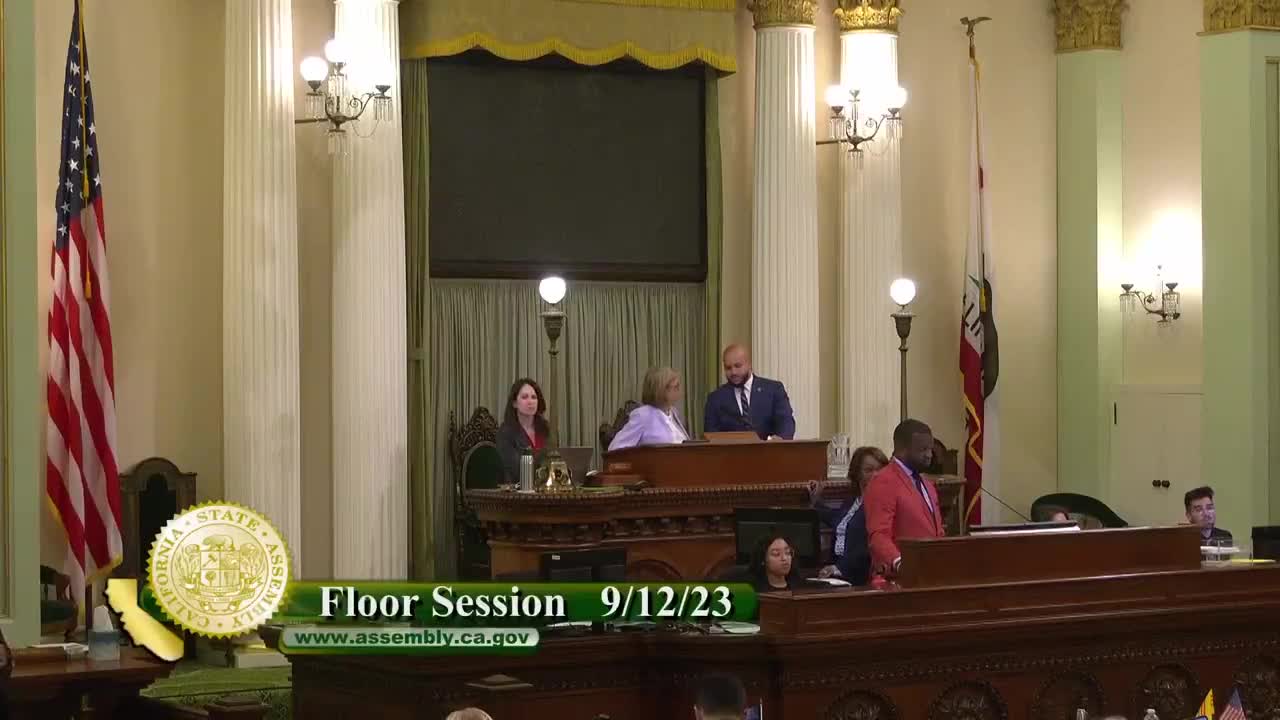
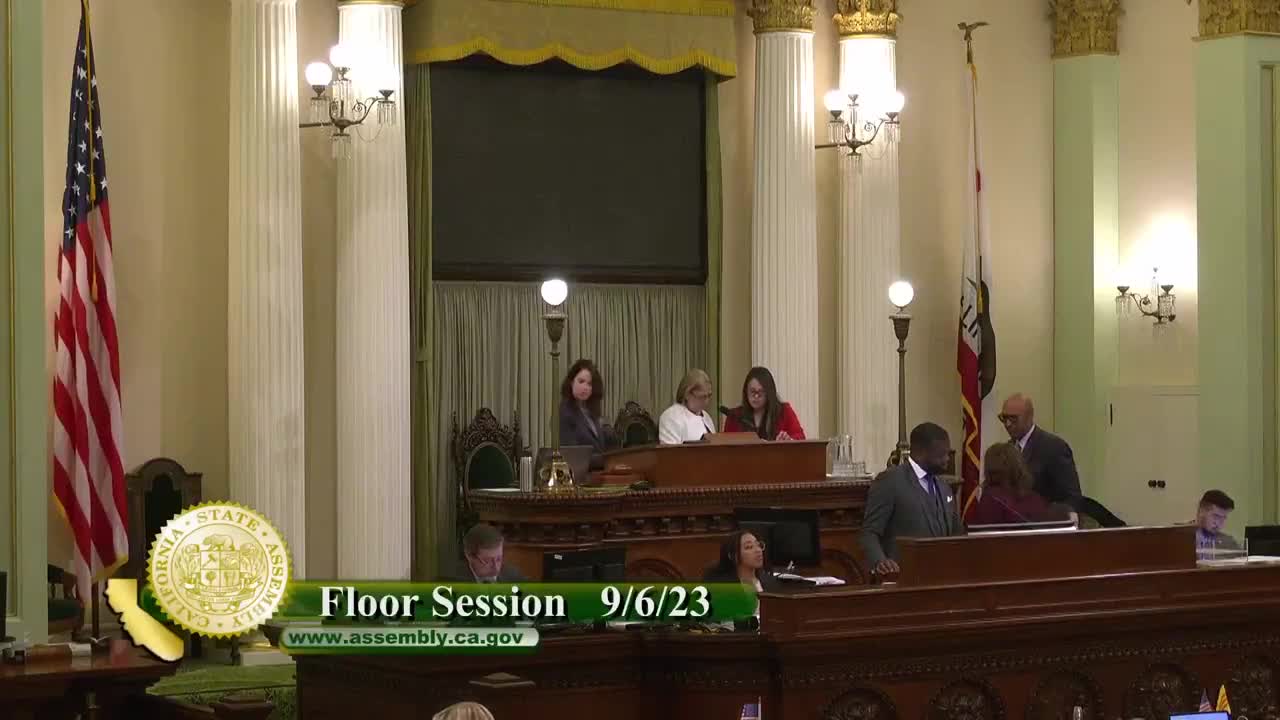
Bill Author
Bill Co-Author(s):