SB 326: The Behavioral Health Services Act.
- Session Year: 2023-2024
- House: Senate
- Latest Version Date: 2023-10-12
Current Status:
Passed
(2023-10-12: Chaptered by Secretary of State. Chapter 790, Statutes of 2023.)
Introduced
In Committee
First Chamber
In Committee
Second Chamber
Enacted
(1)Existing law, the Mental Health Services Act (MHSA), an initiative measure enacted by the voters as Proposition 63 at the November 2, 2004, statewide general election, funds a system of county mental health plans for the provision of mental health services. Existing law authorizes the MHSA to be amended by a 2/3 vote of the Legislature if the amendments are consistent with and further the intent of the MHSA. Existing law authorizes the Legislature to add provisions to clarify procedures and terms of the MHSA by majority vote.
If approved by the voters at the March 5, 2024, statewide primary election, this bill would recast the MHSA by, among other things, renaming it the Behavioral Health Services Act (BHSA), expanding it to include treatment of substance use disorders, changing the county planning process, and expanding services for which counties and the state can use funds. The bill would revise the distribution of MHSA moneys, including allocating up to $36,000,000 to the department for behavioral health workforce funding. The bill would authorize the department to require a county to implement specific evidence-based practices.
This bill would require a county, for behavioral health services eligible for reimbursement pursuant to the federal Social Security Act, to submit the claims for reimbursement to the State Department of Health Care Services (the department) under specific circumstances. The bill would require counties to pursue reimbursement through various channels and would authorize the counties to report issues with managed care plans and insurers to the Department of Managed Health Care or the Department of Insurance.
The MHSA establishes the Mental Health Services Oversight and Accountability Commission and requires it to adopt regulations for programs and expenditures for innovative programs and prevention and early intervention programs established by the act. Existing law requires counties to develop plans for innovative programs funded under the MHSA.
This bill would rename the commission the Behavioral Health Services Oversight and Accountability Commission and would change the composition and duties of the commission, as specified. The bill would delete the provisions relating to innovative programs and instead would require the counties to establish and administer a program to provide housing interventions. The bill would provide that low rent housing project, as defined, does not apply to a project that meets specified criteria.
This bill would make extensive technical and conforming changes.
(2)Existing law, the Bronzan-McCorquodale Act, contains provisions governing the operation and financing of community mental health services for persons with mental disorders in every county through locally administered and locally controlled community mental health programs. Existing law further provides that, to the extent resources are available, community mental health services should be organized to provide an array of treatment options in specified areas, including, among others, case management and individual service plans. Under existing law, mental health services are provided through contracts with county mental health programs.
The bill would authorize the State Department of Health Care Services to develop and revise documentation standards for individual service plans, as specified. The bill would revise the contracting process, including authorizing the department to temporarily withhold funds or impose monetary sanctions on a county behavioral health department that is not in compliance with the contract.
(3)The bill would provide that its provisions are severable.
(4)The bill would provide for the submission of specified sections of this bill and AB 531 to the voters at the March 5, 2024, statewide primary election, as specified.
(5)This bill would declare that it is to take effect immediately as an urgency statute.
(1)Existing law, the Mental Health Services Act (MHSA), an initiative measure enacted by the voters as Proposition 63 at the November 2, 2004, statewide general election, funds a system of county mental health plans for the provision of mental health services. Existing law authorizes the MHSA to be amended by a 2/3 vote of the Legislature if the amendments are consistent with and further the intent of the MHSA. Existing law authorizes the Legislature to add provisions to clarify procedures and terms of the MHSA by majority vote.
If approved by the voters at the March 5, 2024, statewide primary election, this bill would recast the MHSA by, among other things, renaming it the Behavioral Health Services Act (BHSA), expanding it to include treatment of substance use disorders, changing the county planning process, and expanding services for which counties and the state can use funds. The bill would revise the distribution of MHSA moneys, including allocating up to $36,000,000 to the department for behavioral health workforce funding. The bill would authorize the department to require a county to implement specific evidence-based practices.
This bill would require a county, for behavioral health services eligible for reimbursement pursuant to the federal Social Security Act, to submit the claims for reimbursement to the State Department of Health Care Services (the department) under specific circumstances. The bill would require counties to pursue reimbursement through various channels and would authorize the counties to report issues with managed care plans and insurers to the Department of Managed Health Care or the Department of Insurance.
The MHSA establishes the Mental Health Services Oversight and Accountability Commission and requires it to adopt regulations for programs and expenditures for innovative programs and prevention and early intervention programs established by the act. Existing law requires counties to develop plans for innovative programs funded under the MHSA.
This bill would rename the commission the Behavioral Health Services Oversight and Accountability Commission and would change the composition and duties of the commission, as specified. The bill would delete the provisions relating to innovative programs and instead would require the counties to establish and administer a program to provide housing interventions. The bill would provide that low rent housing project, as defined, does not apply to a project that meets specified criteria.
This bill would make extensive technical and conforming changes.
(2)Existing law, the Bronzan-McCorquodale Act, contains provisions governing the operation and financing of community mental health services for persons with mental disorders in every county through locally administered and locally controlled community mental health programs. Existing law further provides that, to the extent resources are available, community mental health services should be organized to provide an array of treatment options in specified areas, including, among others, case management and individual service plans. Under existing law, mental health services are provided through contracts with county mental health programs.
The bill would authorize the State Department of Health Care Services to develop and revise documentation standards for individual service plans, as specified. The bill would revise the contracting process, including authorizing the department to temporarily withhold funds or impose monetary sanctions on a county behavioral health department that is not in compliance with the contract.
(3)The bill would provide that its provisions are severable.
(4)The bill would provide for the submission of specified sections of this bill and AB 531 to the voters at the March 5, 2024, statewide primary election, as specified.
(5)This bill would declare that it is to take effect immediately as an urgency statute.
(1)Existing law, the Mental Health Services Act (MHSA), an initiative measure enacted by the voters as Proposition 63 at the November 2, 2004, statewide general election, funds a system of county mental health plans for the provision of mental health services. Existing law authorizes the MHSA to be amended by a 2/3 vote of the Legislature if the amendments are consistent with and further the intent of the MHSA. Existing law authorizes the Legislature to add provisions to clarify procedures and terms of the MHSA by majority vote.
If approved by the voters at the March 5, 2024, statewide primary election, this bill would recast the MHSA by, among other things, renaming it the Behavioral Health Services Act (BHSA), expanding it to include treatment of substance use disorders, changing the county planning process, and expanding services for which counties and the state can use funds. The bill would revise the distribution of MHSA moneys, including allocating up to $36,000,000 to the department for behavioral health workforce funding. The bill would authorize the department to require a county to implement specific evidence-based practices.
This bill would require a county, for behavioral health services eligible for reimbursement pursuant to the federal Social Security Act, to submit the claims for reimbursement to the State Department of Health Care Services (the department) under specific circumstances. The bill would require counties to pursue reimbursement through various channels and would authorize the counties to report issues with managed care plans and insurers to the Department of Managed Health Care or the Department of Insurance.
The MHSA establishes the Mental Health Services Oversight and Accountability Commission and requires it to adopt regulations for programs and expenditures for innovative programs and prevention and early intervention programs established by the act. Existing law requires counties to develop plans for innovative programs funded under the MHSA.
This bill would rename the commission the Behavioral Health Services Oversight and Accountability Commission and would change the composition and duties of the commission, as specified. The bill would delete the provisions relating to innovative programs and instead would require the counties to establish and administer a program to provide housing interventions. The bill would provide that low rent housing project, as defined, does not apply to a project that meets specified criteria.
This bill would make extensive technical and conforming changes.
(2)Existing law, the Bronzan-McCorquodale Act, contains provisions governing the operation and financing of community mental health services for persons with mental disorders in every county through locally administered and locally controlled community mental health programs. Existing law further provides that, to the extent resources are available, community mental health services should be organized to provide an array of treatment options in specified areas, including, among others, case management and individual service plans. Under existing law, mental health services are provided through contracts with county mental health programs.
The bill would authorize the State Department of Health Care Services to develop and revise documentation standards for individual service plans, as specified. The bill would revise the contracting process, including authorizing the department to temporarily withhold funds or impose monetary sanctions on a county behavioral health department that is not in compliance with the contract.
(3)The bill would provide that its provisions are severable.
(4)The bill would provide for the submission of various and to-be-named specified sections of this bill and AB 531 to the voters at the March 5, 2024, statewide primary election, as specified.
(5)This bill would declare that it is to take effect immediately as an urgency statute.
(1)Existing law, the Mental Health Services Act (MHSA), an initiative measure enacted by the voters as Proposition 63 at the November 2, 2004, statewide general election, funds a system of county mental health plans for the provision of mental health services. Existing law authorizes the MHSA to be amended by a 2/3 vote of the Legislature if the amendments are consistent with and further the intent of the MHSA. Existing law authorizes the Legislature to add provisions to clarify procedures and terms of the MHSA by majority vote.
If approved by the voters at the March 5, 2024, statewide primary election, this bill would recast the MHSA by, among other things, renaming it the Behavioral Health Services Act (BHSA), expanding it to include treatment of substance use disorders, changing the county planning process, and expanding services for which counties and the state can use funds. The bill would revise the distribution of MHSA moneys, including allocating up to $36,000,000 to the department for behavioral health workforce funding. The bill would authorize the department to require a county to implement specific evidence-based practices.
This bill would require a county, for behavioral health services eligible for reimbursement pursuant to the federal Social Security Act, to submit the claims for reimbursement to the State Department of Health Care Services (the department) under specific circumstances. The bill would require counties to pursue reimbursement through various channels and would authorize the counties to report issues with managed care plans and insurers to the Department of Managed Health Care or the Department of Insurance.
The MHSA establishes the Mental Health Services Oversight and Accountability Commission and requires it to adopt regulations for programs and expenditures for innovative programs and prevention and early intervention programs established by the act. Existing law requires counties to develop plans for innovative programs funded under the MHSA.
This bill would rename the commission the Behavioral Health Services Oversight and Accountability Commission and would change the composition and duties of the commission, as specified. The bill would delete the provisions relating to innovative programs and instead would require the counties to establish and administer a program to provide housing interventions. The bill would provide that low rent housing project, as defined, does not apply to a project that meets specified criteria.
This bill would make extensive technical and conforming changes.
(2)Existing law, the Bronzan-McCorquodale Act, contains provisions governing the operation and financing of community mental health services for persons with mental disorders in every county through locally administered and locally controlled community mental health programs. Existing law further provides that, to the extent resources are available, community mental health services should be organized to provide an array of treatment options in specified areas, including, among others, case management and individual service plans. Under existing law, mental health services are provided through contracts with county mental health programs.
The bill would authorize the State Department of Health Care Services to develop and revise documentation standards for individual service plans, as specified. The bill would revise the contracting process, including authorizing the department to temporarily withhold funds or impose monetary sanctions on a county behavioral health department that is not in compliance with the contract.
(3)The bill would provide that its provisions are severable.
(4)The bill would provide for the submission of the Behavioral Health Infrastructure Act and amendments to the MHSA various and to-be-named sections of this bill and AB 531 to the voters at the March 5, 2024, statewide primary election. election, as specified.
(5)This bill would declare that it is to take effect immediately as an urgency statute.
(1)Existing law, the Mental Health Services Act (MHSA), an initiative measure enacted by the voters as Proposition 63 at the November 2, 2004, statewide general election, funds a system of county mental health plans for the provision of mental health services. Existing law authorizes the MHSA to be amended by a 2/3 vote of the Legislature if the amendments are consistent with and further the intent of the MHSA. Existing law authorizes the Legislature to add provisions to clarify procedures and terms of the MHSA by majority vote.
If approved by the voters at the March 5, 2024, statewide primary election, this bill would recast the MHSA by, among other things, renaming it the Behavioral Health Services Act (BHSA), expanding it to include treatment of substance use disorders, changing the county planning process, and expanding services for which counties and the state can use funds. The bill would revise the distribution of MHSA moneys, including allocating up to $36,000,000 to the department for behavioral health workforce funding. The bill would authorize the department to require a county to implement specific evidence-based practices.
This bill would require a county, for behavioral health services eligible for reimbursement pursuant to the federal Social Security Act, to submit the claims for reimbursement to the State Department of Health Care Services (the department) under specific circumstances. The bill would require counties to pursue reimbursement through various channels and would authorize the counties to report issues with managed care plans and insurers to the Department of Managed Health Care or the Department of Insurance.
The MHSA establishes the Mental Health Services Oversight and Accountability Commission and requires it to adopt regulations for programs and expenditures for innovative programs and prevention and early intervention programs established by the act. Existing law requires counties to develop plans for innovative programs funded under the MHSA.
This bill would rename the commission the Behavioral Health Services Oversight and Accountability Commission and would change the composition and duties of the commission, as specified. The bill would delete the provisions relating to innovative programs and instead would require the counties to establish and administer a program to provide housing interventions. The bill would provide that low rent housing project, as defined, does not apply to a project that meets specified criteria.
This bill would make extensive technical and conforming changes.
(2)Existing law, the Bronzan-McCorquodale Act, contains provisions governing the operation and financing of community mental health services for persons with mental disorders in every county through locally administered and locally controlled community mental health programs. Existing law further provides that, to the extent resources are available, community mental health services should be organized to provide an array of treatment options in specified areas, including, among others, case management and individual service plans. Under existing law, mental health services are provided through contracts with county mental health programs.
The bill would authorize the State Department of Health Care Services to develop and revise documentation standards for individual service plans, as specified. The bill would revise the contracting process, including authorizing the department to temporarily withhold funds or impose monetary sanctions on a county behavioral health department that is not in compliance with the contract.
(3)The bill would provide that its provisions are severable.
(4)The bill would provide for the submission of the Behavioral Health Infrastructure Act and amendments to the MHSA to the voters at the March 5, 2024, statewide primary election.
(5)This bill would declare that it is to take effect immediately as an urgency statute.
(1)Existing law, the Mental Health Services Act (MHSA), an initiative measure enacted by the voters as Proposition 63 at the November 2, 2004, statewide general election, funds a system of county mental health plans for the provision of mental health services. Existing law authorizes the MHSA to be amended by a 2/3 vote of the Legislature if the amendments are consistent with and further the intent of the MHSA. Existing law authorizes the Legislature to add provisions to clarify procedures and terms of the MHSA by majority vote.
If approved by the voters at the March 5, 2024, statewide primary election, this bill would delete the provision that establishes vote requirements to amend the MHSA, requiring all amendments of the MHSA to be approved by the voters. The bill would recast the MHSA by, among other things, renaming it the Behavioral Health Services Act (BHSA), expanding it to include treatment of substance use disorders, changing the county planning process, and expanding services for which counties and the state can use funds. The bill would revise the distribution of MHSA moneys, including allocating up to $36,000,000 to the department for behavioral health workforce funding. The bill would authorize the department to require a county to implement specific evidence-based practices.
This bill would require a county, for behavioral health services eligible for reimbursement pursuant to the federal Social Security Act, to submit the claims for reimbursement to the State Department of Health Care Services (the department) under specific circumstances. The bill would require counties to pursue reimbursement through various channels and would authorize the counties to report issues with managed care plans and insurers to the Department of Managed Health Care or the Department of Insurance.
The MHSA establishes the Mental Health Services Oversight and Accountability Commission and requires it to adopt regulations for programs and expenditures for innovative programs and prevention and early intervention programs established by the act. Existing law requires counties to develop plans for innovative programs funded under the MHSA.
This bill would rename the commission the Behavioral Health Services Oversight and Accountability Commission and would change the composition and duties of the commission, as specified. The bill would delete the provisions relating to innovative programs and instead would require the department to establish the priorities and a program, which would be administered by counties, counties to establish and administer a program to provide housing interventions. The bill would provide that low rent housing project, as defined, does not apply to the development of urban or rural dwellings, apartments, or other living accommodations, as specified. a project that meets specified criteria.
This bill would make extensive technical and conforming changes.
(2)Existing law, the Bronzan-McCorquodale Act, contains provisions governing the operation and financing of community mental health services for persons with mental disorders in every county through locally administered and locally controlled community mental health programs. Existing law further provides that, to the extent resources are available, community mental health services should be organized to provide an array of treatment options in specified areas, including, among others, case management and individual service plans. Under existing law, mental health services are provided through contracts with county mental health programs.
The bill would authorize the State Department of Health Care Services to develop and revise documentation standards for individual service plans, as specified. The bill would revise the contracting process, including authorizing the department to temporarily withhold funds or impose monetary sanctions on a county behavioral health department that is not in compliance with the contract.
(3)Existing law establishes the Medi-Cal program, which is administered by the State Department of Health Care Services, under which qualified low-income individuals receive health care services, including Early and Periodic Screening, Diagnosis, and Treatment (EPSDT) services for an individual under 21 years of age. The Medi-Cal program is, in part, governed by, and funded pursuant to, federal Medicaid program provisions. Existing law requires the department, in collaboration with the California Health and Human Services Agency and in consultation with the Mental Health Services Oversight and Accountability Commission, to create a plan for a performance outcomes system for EPSDT mental health services, as specified.This bill would include substance use disorder treatment services provided to eligible Medi-Cal beneficiaries under 21 years of age in the plan for a performance outcome system. (4)(3)The bill would provide that its provisions are severable.
(5)(4)The bill would provide for the submission of the act Behavioral Health Infrastructure Act and amendments to the MHSA to the voters at the March 5, 2024, statewide primary election.
(6)(5)This bill would declare that it is to take effect immediately as an urgency statute.
(1)Existing law, the Mental Health Services Act (MHSA), an initiative measure enacted by the voters as Proposition 63 at the November 2, 2004, statewide general election, funds a system of county mental health plans for the provision of mental health services. Existing law authorizes the MHSA to be amended by a 2/3 vote of the Legislature if the amendments are consistent with and further the intent of the MHSA. Existing law authorizes the Legislature to add provisions to clarify procedures and terms of the MHSA by majority vote.
If approved by the voters at the March 5, 2024, statewide primary election, this bill would delete the provision that establishes vote requirements to amend the MHSA, requiring all amendments of the MHSA to be approved by the voters. The bill would recast the MHSA by, among other things, renaming it the Behavioral Health Services Act (BHSA), expanding it to include treatment of substance use disorders, changing the county planning process, and expanding services for which counties and the state can use funds. The bill would revise the distribution of MHSA moneys, including allocating up to $36,000,000 to the department for behavioral health workforce funding. The bill would authorize the department to require a county to implement specific evidence-based practices.
This bill would require a county, for behavioral health services eligible for reimbursement pursuant to the federal Social Security Act, to submit the claims for reimbursement to the State Department of Health Care Services (the department) under specific circumstances. The bill would require counties to pursue reimbursement through various channels and would authorize the counties to report issues with managed care plans and insurers to the Department of Managed Health Care or the Department of Insurance.
The MHSA establishes the Mental Health Services Oversight and Accountability Commission and requires it to adopt regulations for programs and expenditures for innovative programs and prevention and early intervention programs established by the act. Existing law requires counties to develop plans for innovative programs funded under the MHSA.
This bill would rename the commission the Behavioral Health Services Oversight and Accountability Commission and would change the composition and duties of the commission, as specified. The bill would delete the provisions relating to innovative programs and instead would require the department to establish the priorities and a program, which would be administered by counties, to provide housing interventions. The bill would provide that low rent housing project, as defined, does not apply to the development of urban or rural dwellings, apartments, or other living accommodations, as specified.
This bill would make extensive technical and conforming changes.
(2)Existing law, the Bronzan-McCorquodale Act, contains provisions governing the operation and financing of community mental health services for persons with mental disorders in every county through locally administered and locally controlled community mental health programs. Existing law further provides that, to the extent resources are available, community mental health services should be organized to provide an array of treatment options in specified areas, including, among others, case management and individual service plans. Under existing law, mental health services are provided through contracts with county mental health programs.
The bill would authorize the State Department of Health Care Services to develop and revise documentation standards for individual service plans, as specified. The bill would revise the contracting process, including authorizing the department to temporarily withhold funds or impose monetary sanctions on a county behavioral health department that is not in compliance with the contract.
(3)Existing law establishes the Medi-Cal program, which is administered by the State Department of Health Care Services, under which qualified low-income individuals receive health care services, including Early and Periodic Screening, Diagnosis, and Treatment (EPSDT) services for an individual under 21 years of age. The Medi-Cal program is, in part, governed by, and funded pursuant to, federal Medicaid program provisions. Existing law requires the department, in collaboration with the California Health and Human Services Agency and in consultation with the Mental Health Services Oversight and Accountability Commission, to create a plan for a performance outcomes system for EPSDT mental health services, as specified.
This bill would include substance use disorder treatment services provided to eligible Medi-Cal beneficiaries under 21 years of age in the plan for a performance outcome system.
(4)The bill would provide that its provisions are severable.
(5)The bill would provide for the submission of the act to the voters at the March 5, 2024, statewide primary election.
(6)This bill would declare that it is to take effect immediately as an urgency statute.
(1)Existing law, the Mental Health Services Act (MHSA), an initiative measure enacted by the voters as Proposition 63 at the November 2, 2004, statewide general election, funds a system of county mental health plans for the provision of mental health services. Existing law authorizes the MHSA to be amended by a 2/3 vote of the Legislature if the amendments are consistent with and further the intent of the MHSA. Existing law authorizes the Legislature to add provisions to clarify procedures and terms of the MHSA by majority vote.
If approved by the voters at the March 5, 2024, statewide primary election, this bill would delete the provision that establishes vote requirements to amend the MHSA, requiring all amendments of the MHSA to be approved by the voters. The bill would recast the MHSA by, among other things, renaming it the Behavioral Health Services Act (BHSA), expanding it to include treatment of substance use disorders, changing the county planning process, and expanding services for which counties and the state can use funds. The bill would revise the distribution of MHSA moneys, including allocating up to $36,000,000 to the department for behavioral health workforce funding. The bill would authorize the department to require a county to implement specific evidence-based practices.
This bill would require a county, for behavioral health services eligible for reimbursement pursuant to the federal Social Security Act, to submit the claims for reimbursement to the State Department of Health Care Services (the department) under specific circumstances. The bill would require counties to pursue reimbursement through various channels and would authorize the counties to report issues with managed care plans and insurers to the Department of Managed Health Care or the Department of Insurance.
The MHSA establishes the Mental Health Services Oversight and Accountability Commission and requires it to adopt regulations for programs and expenditures for innovative programs and prevention and early intervention programs established by the act. Existing law requires counties to develop plans for innovative programs funded under the MHSA.
This bill would rename the commission the Behavioral Health Services Oversight and Accountability Commission and would change the composition and duties of the commission, as specified. The bill would delete the provisions relating to innovative programs and instead would require the department to establish the priorities and a program, which would be administered by counties, to provide housing interventions. The bill would provide that low rent housing project, as defined, does not apply to the development of urban or rural dwellings, apartments, or other living accommodations, as specified.
This bill would make extensive technical and conforming changes.
(2)Existing law, the Bronzan-McCorquodale Act, contains provisions governing the operation and financing of community mental health services for persons with mental disorders in every county through locally administered and locally controlled community mental health programs. Existing law further provides that, to the extent resources are available, community mental health services should be organized to provide an array of treatment options in specified areas, including, among others, case management and individual service plans. Under existing law, mental health services are provided through contracts with county mental health programs.
The bill would authorize the State Department of Health Care Services to develop and revise documentation standards for individual service plans, as specified. The bill would revise the contracting process, including authorizing the department to temporarily withhold funds or impose monetary sanctions on a county behavioral health department that is not in compliance with the contract.
(3)Existing law establishes the Medi-Cal program, which is administered by the State Department of Health Care Services, under which qualified low-income individuals receive health care services, including Early and Periodic Screening, Diagnosis, and Treatment (EPSDT) services for an individual under 21 years of age. The Medi-Cal program is, in part, governed by, and funded pursuant to, federal Medicaid program provisions. Existing law requires the department, in collaboration with the California Health and Human Services Agency and in consultation with the Mental Health Services Oversight and Accountability Commission, to create a plan for a performance outcomes system for EPSDT mental health services, as specified.
This bill would include substance use disorder treatment services provided to eligible Medi-Cal beneficiaries under 21 years of age in the plan for a performance outcome system.
(4)The bill would provide that its provisions are severable.
(5)The bill would provide for the submission of the act to the voters at the March 5, 2024, statewide primary election.
Existing law, the Mental Health Services Act, an initiative measure enacted by the voters as Proposition 63 at the November 2, 2004, statewide general election, funds a system of county mental health plans for the provision of mental health services, as specified. The act establishes the Mental Health Services Fund, which is continuously appropriated to, and administered by, the State Department of Health Care Services to fund specified county mental health programs. The act may be amended by the Legislature only by a 2/3 vote of both houses and only so long as the amendment is consistent with and furthers the intent of the act. The Legislature may clarify procedures and terms of the act by majority vote.This bill would require a county, for a behavioral health service eligible for reimbursement pursuant to the federal Social Security Act, to submit the claims for reimbursement to the State Department of Health Care Services under specific circumstances. By imposing a new duty on local officials, this bill would create a state-mandated local program.The bill would make findings that it clarifies procedures and terms of the Mental Health Services Act.The California Constitution requires the state to reimburse local agencies and school districts for certain costs mandated by the state. Statutory provisions establish procedures for making that reimbursement.This bill would provide that, if the Commission on State Mandates determines that the bill contains costs mandated by the state, reimbursement for those costs shall be made pursuant to the statutory provisions noted above.Existing law, the Mental Health Services Act, an initiative measure enacted by the voters as Proposition 63 at the November 2, 2004, statewide general election, funds a system of county mental health plans for the provision of mental health services, as specified. The act establishes the Mental Health Services Fund, which is continuously appropriated to, and administered by, the State Department of Health Care Services to fund specified county mental health programs. The act may be amended by the Legislature only by a 2/3 vote of both houses and only so long as the amendment is consistent with and furthers the intent of the act. The Legislature may clarify procedures and terms of the act by majority vote.
This bill would require a county, for a behavioral health service eligible for reimbursement pursuant to the federal Social Security Act, to submit the claims for reimbursement to the State Department of Health Care Services under specific circumstances. By imposing a new duty on local officials, this bill would create a state-mandated local program.
The bill would make findings that it clarifies procedures and terms of the Mental Health Services Act.
The California Constitution requires the state to reimburse local agencies and school districts for certain costs mandated by the state. Statutory provisions establish procedures for making that reimbursement.
This bill would provide that, if the Commission on State Mandates determines that the bill contains costs mandated by the state, reimbursement for those costs shall be made pursuant to the statutory provisions noted above.
Existing law, the Mental Health Services Act, an initiative statute enacted by the voters as Proposition 63 in the November 2, 2004, statewide general election, establishes the continuously appropriated Mental Health Services Fund to fund various county mental health programs. The act also establishes the Mental Health Services Oversight and Accountability Commission to oversee the administration of the act.The act may be amended by the Legislature only by a 2/3 vote of both houses and only so long as the amendment is consistent with and furthers the intent of the act. The Legislature may clarify procedures and terms of the act by majority vote.This bill would state the intent of the Legislature to enact legislation to modernize the Mental Health Services Act.Existing law, the Mental Health Services Act, an initiative statute enacted by the voters as Proposition 63 in the November 2, 2004, statewide general election, establishes the continuously appropriated Mental Health Services Fund to fund various county mental health programs. The act also establishes the Mental Health Services Oversight and Accountability Commission to oversee the administration of the act.
The act may be amended by the Legislature only by a 2/3 vote of both houses and only so long as the amendment is consistent with and furthers the intent of the act. The Legislature may clarify procedures and terms of the act by majority vote.
This bill would state the intent of the Legislature to enact legislation to modernize the Mental Health Services Act.
The people of the State of California hereby find and declare all of the following:
(a)One in 20 adults in California is living with a serious mental illness (SMI). One in 13 children in California has a serious emotional disturbance (SED) and 30 percent of youth 12 to 24 years of age experience serious psychological distress.
(b)One in 10 Californians meet the criteria for a substance use disorder.
(c)The number of amphetamine-related emergency department (ED) visits increased nearly 50 percent between 2018 and 2020, while the number of non-heroin-related opioid ED visits, including fentanyl ED visits, more than doubled in the same period. Data shows a 121% increase in opioid deaths between 2019 and 2021.
(d)Nationally, suicide rates among youth between 10 and 18 years of age have increased. Hospitals have reported a significant increase in the number of adolescents seeking psychiatric treatment in emergency departments.
(e)Veterans have a higher rate of suicide than the general population and experience higher rates of mental illness or substance abuse disorder. In 2020, there were over 10,000 Californian veterans experiencing homelessness.
(f)Recent research from the University of California, San Francisco found that the majority of homeless Californians (82%) reported a period in their life where they experienced a serious mental health condition. More than one quarter (27%) had been hospitalized for a mental health condition. Nearly two-thirds (65%) reported having had a period in their life in which they regularly used illicit drugs.
(g)Californias behavioral health care system must serve the states diversity of people, families, and communities and reduce gaps in access and outcomes for allincluding gaps due to geography, age, gender, race, ethnicity, or other factors identified by data.
(h)Research shows that incarcerating the mentally ill is counterproductive to rehabilitation and long-term public safety due to recidivism. It costs $100,000 per person to incarcerate an estimated 150,000 people who are mentally ill; treatment provides far better outcomes at far less cost.
(i)The limited availability of community-based care facilities to support rehabilitation and recovery contributes to the growing crisis of homelessness and incarceration among those living with a mental health disorder. Research indicates that the state has a shortage of over 2,700 subacute and nearly 3,000 community residential beds. This shortage leads to huge increases in emergency department visits for mental health treatment at a very high cost.
SEC. 2.The purposes and intent in enacting this act are as follows:
(a)In 2004, California voters passed Proposition 63, the Mental Health Services Act (MHSA) to expand mental health support and services in California communities.
(b)The time has come to modernize the MHSA to focus funds where they are most needed: expanding services to include treatment for those with substance use disorders and prioritizing care for those with the most serious mental illness, including the disproportionate number experiencing unsheltered homelessness.
(c)Reforms will provide guaranteed, ongoing resources for housing for those needing behavioral health services and continuing support for prevention and early intervention. This includes taking a whole person approach that is streamlined and seamless in service delivery, and supports the individuals recovery and well-being.
(d)Reforms will require strict accountability measures to ensure funds are focused on outcomes for all California families and communities and provide transparency for the public, utilizing all available behavioral health fund sources that local governments have at their disposal. Strong oversight will ensure investments are being made in effective, equitable and high-quality care.
(e)Reforms will provide funding for a robust behavioral health workforce, including thousands of counselors and psychologists. The state will lead efforts to recruit, train, and create pathways to high-quality jobs that can meet the growing and changing behavioral health care needs of Californians.
(f)Reforms will provide ongoing funding to build and sustain the necessary treatment centers and professional workforce to treat people with mental illness to avoid incarceration.
(g)Reforms will include bond funding that is intended to build more than 10,000 new treatment beds and supportive housing. Over 100,000 people per year with behavioral health conditions will get treatment, including those experiencing homelessness, veterans, and youth.
(h)The bond will dedicate funding for veterans experiencing challenges with mental health or substance abuse and homelessness.
(i)Overall, this measure strengthens the continuum of care for all Californians and especially the most vulnerable. It provides substantial state investment, improves statewide accountability, and increases Californians access to behavioral health services.
SEC. 3.Section 99277 of the Education Code is amended to read:99277.(a)Upon receiving funding for purposes of this chapter, UCSF, the UC college named in Section 92200, and the UC/CSU California Collaborative on Neurodiversity and Learning shall each appoint one member from the respective institutions. This group shall be charged with the development and oversight of the initiative, and shall function as the institutes management committee. The management committee shall be permitted, but not obligated, to retain a program director to assist in the implementation of the initiative.
(b)An advisory board, with its title and members to be named by the institute, shall be established to serve as an oversight body for the initiative in order to monitor progress and provide leadership from the perspectives of their respective participating organizations, departments, and divisions, and to facilitate collaboration among researchers, practitioners, administrators, legislators, and community stakeholders. The advisory board shall provide expertise and support to the management committee. The membership of the advisory board shall be constituted as set forth in subdivision (c). The advisory board shall be a check on accountability in order to ensure that the initiative is meeting its goals. The advisory board shall also conduct a fiscal review of the distribution of funds to ensure alignment with the goals of the initiative.
(c)The members of the advisory board shall be representatives from the following institutions, organizations, agencies, and groups:
(1)UCSF.
(2)UC college named in Section 92200.
(3)The UC/CSU California Collaborative for Learning and Neurodiversity.
(4)The Mental Health Services Oversight and Accountability Commission.
(5)A Member of the Assembly selected by the Speaker of the Assembly.
(6)A Senator selected by the President pro Tempore of the Senate.
(7)Community representatives, including formerly justice-involved persons and their family members, selected by the Governor, the Speaker of the Assembly, and the President pro Tempore of the Senate.
(d)The advisory board shall meet twice per year, with the potential for additional working group meetings. At each meeting, the advisory board shall participate in a review of reports, including updates on research, practice, and policy efforts, as well as fiscal reporting.
(e)If amendments to the Mental Health Services Act are approved by the voters at the March 5, 2024, statewide primary election, this section shall remain in effect only until January 1, 2025, and as of that date is repealed.
SEC. 4.Section 99277 is added to the Education Code, to read:99277.(a)Upon receiving funding for purposes of this chapter, UCSF, the UC college named in Section 92200, and the UC/CSU California Collaborative on Neurodiversity and Learning shall each appoint one member from the respective institutions. This group shall be charged with the development and oversight of the initiative and shall function as the institutes management committee. The management committee shall be permitted, but not obligated, to retain a program director to assist in the implementation of the initiative.
(b)(1)An advisory board, with its title and members to be named by the institute, shall be established to serve as an oversight body for the initiative in order to monitor progress and provide leadership from the perspectives of their respective participating organizations, departments, and divisions and to facilitate collaboration among researchers, practitioners, administrators, legislators, and community stakeholders.
(2)The advisory board shall provide expertise and support to the management committee.
(3)The advisory board shall be a check on accountability to ensure that the initiative is meeting its goals.
(4)The advisory board shall conduct a fiscal review of the distribution of funds to ensure alignment with the goals of the initiative.
(5)The membership of the advisory board shall be constituted as set forth in subdivision (c).
(c)The members of the advisory board shall be representatives from the following institutions, organizations, agencies, and groups:
(1)UCSF.
(2)UC college named in Section 92200.
(3)The UC/CSU California Collaborative for Learning and Neurodiversity.
(4)The Behavioral Health Services Oversight and Accountability Commission.
(5)A Member of the Assembly selected by the Speaker of the Assembly.
(6)A Senator selected by the President pro Tempore of the Senate.
(7)Community representatives, including formerly justice-involved persons and their family members, selected by the Governor, the Speaker of the Assembly, and the President pro Tempore of the Senate.
(d)(1)The advisory board shall meet twice per year, with the potential for additional working group meetings.
(2)At each meeting, the advisory board shall participate in a review of reports, including updates on research, practice, and policy efforts, as well as fiscal reporting.
(e)This section shall become operative on January 1, 2025, if amendments to the Mental Health Services Act are approved by the voters at the March 5, 2024, statewide primary election.
SEC. 5.Section 131315 of the Health and Safety Code is amended to read:131315.If the Office of Suicide Prevention is established pursuant to Section 131300, all of the following shall apply:
(a)The Office of Suicide Prevention shall consult with the Mental Health Services Oversight and Accountability Commission to implement suicide prevention efforts consistent with the Mental Health Services Oversight and Accountability Commissions Suicide Prevention Report Striving for Zero and described pursuant to Provision 1 of Item 4560-001-3085 of Section 2.00 of the Budget Act of 2020.
(b)This section does not authorize the Office of Suicide Prevention to perform any of the duties required by the commission under Part 3.7 (commencing with Section 5845) of Division 5 of, or administer any program funded by Part 4.5 (commencing with Section 5890) of Division 5 of, the Welfare and Institutions Code.
(c)If amendments to the Mental Health Services Act are approved by the voters at the March 5, 2024, statewide primary election, this section shall remain in effect only until January 1, 2025, and as of that date is repealed.
SEC. 6.Section 131315 is added to the Health and Safety Code, to read:131315.(a)If the Office of Suicide Prevention is established pursuant to Section 131300, both of the following shall apply:
(1)The Office of Suicide Prevention shall consult with the Behavioral Health Services Oversight and Accountability Commission to implement suicide prevention efforts consistent with the Suicide Prevention Report Striving for Zero, as described pursuant to Provision 1 of Item 4560-001-3085 of Section 2.00 of the Budget Act of 2020.
(2)This section does not authorize the Office of Suicide Prevention to perform any of the duties required by the commission under Part 3.7 (commencing with Section 5845) of Division 5 of, or administer a program funded by Part 4.5 (commencing with Section 5890) of Division 5 of, the Welfare and Institutions Code.
(b)This section shall become operative on January 1, 2025, if amendments to the Mental Health Services Act are approved by the voters at the March 5, 2024, statewide primary election.
SEC. 7.Section 19602.5 of the Revenue and Taxation Code is amended to read:19602.5.(a)There is in the State Treasury the Mental Health Services Fund (MHS Fund). The estimated revenue from the additional tax imposed under Section 17043 for the applicable fiscal year, as determined under subparagraph (B) of paragraph (3) of subdivision (c), shall be deposited to the MHS Fund on a monthly basis, subject to an annual adjustment as described in this section.
(b)(1)Beginning with fiscal year 200405 and for each fiscal year thereafter, the Controller shall deposit on a monthly basis in the MHS Fund an amount equal to the applicable percentage of net personal income tax receipts as defined in paragraph (4).
(2)(A)Except as provided in subparagraph (B), the applicable percentage referred to in paragraph (1) shall be 1.76 percent.
(B)For fiscal year 200405, the applicable percentage shall be 0.70 percent.
(3)Beginning with fiscal year 200607, monthly deposits to the MHS Fund pursuant to this subdivision are subject to suspension pursuant to subdivision (f).
(4)For purposes of this subdivision, net personal income tax receipts refers to amounts received by the Franchise Tax Board and the Employment Development Department under the Personal Income Tax Law, as reported by the Franchise Tax Board to the Department of Finance pursuant to law, regulation, procedure, and practice (commonly referred to as the 102 Report) in effect on the effective date of the act establishing this section.
(c)No later than March 1, 2006, and each March 1 thereafter, the Department of Finance, in consultation with the Franchise Tax Board, shall determine the annual adjustment amount for the following fiscal year.
(1)The annual adjustment amount for any fiscal year shall be an amount equal to the amount determined by subtracting the revenue adjustment amount for the applicable revenue adjustment fiscal year, as determined by the Franchise Tax Board under paragraph (3), from the tax liability adjustment amount for applicable tax liability adjustment tax year, as determined by the Franchise Tax Board under paragraph (2).
(2)(A)(i)The tax liability adjustment amount for a tax year is equal to the amount determined by subtracting the estimated tax liability increase from the additional tax imposed under Section 17043 for the applicable year under subparagraph (B) from the amount of the actual tax liability increase from the additional tax imposed under Section 17043 for the applicable tax year, based on the returns filed for that tax year.
(ii)For purposes of the determinations required under this paragraph, actual tax liability increase from the additional tax means the increase in tax liability resulting from the tax of 1 percent imposed under Section 17043, as reflected on the original returns filed by October 15 of the year after the close of the applicable tax year.
(iii)The applicable tax year referred to in this paragraph means the 12-calendar month taxable year beginning on January 1 of the year that is two years before the beginning of the fiscal year for which an annual adjustment amount is calculated.
(B)(i)The estimated tax liability increase from the additional tax for the following tax years is:
Tax Year | Estimated Tax Liability Increase from the Additional Tax |
2005 | $634 million |
2006 | $672 million |
2007 | $713 million |
2008 | $758 million |
(ii)The estimated tax liability increase from the additional tax for the tax year beginning in 2009 and each tax year thereafter shall be determined by applying an annual growth rate of 7 percent to the estimated tax liability increase from additional tax of the immediately preceding tax year.
(3)(A)The revenue adjustment amount is equal to the amount determined by subtracting the estimated revenue from the additional tax for the applicable fiscal year, as determined under subparagraph (B), from the actual amount transferred for the applicable fiscal year.
(B)(i)The estimated revenue from the additional tax for the following applicable fiscal years is:
Applicable Fiscal Year | Estimated Revenue from Additional Tax |
200405 | $254 million |
200506 | $683 million |
200607 | $690 million |
200708 | $733 million |
(ii)The estimated revenue from the additional tax for applicable fiscal year 200708 and each applicable fiscal year thereafter shall be determined by applying an annual growth rate of 7 percent to the estimated revenue from the additional tax of the immediately preceding applicable fiscal year.
(iii)The applicable fiscal year referred to in this paragraph means the fiscal year that is two years before the fiscal year for which an annual adjustment amount is calculated.
(d)The Department of Finance shall notify the Legislature and the Controller of the results of the determinations required under subdivision (c) no later than 10 business days after the determinations are final.
(e)If the annual adjustment amount for a fiscal year is a positive number, the Controller shall transfer that amount from the General Fund to the MHS Fund on July 1 of that fiscal year.
(f)If the annual adjustment amount for a fiscal year is a negative number, the Controller shall suspend monthly transfers to the MHS Fund for that fiscal year, as otherwise required by paragraph (1) of subdivision (b), until the total amount of suspended deposits for that fiscal year equals the amount of the negative annual adjustment amount for that fiscal year.
(g)If amendments to the Mental Health Services Act are approved by the voters at the March 5, 2024, statewide primary election, this section shall remain in effect only until January 1, 2025, and as of that date is repealed.
SEC. 8.Section 19602.5 is added to the Revenue and Taxation Code, to read:19602.5.(a)There is in the State Treasury the Behavioral Health Services (BHS) Fund. The estimated revenue from the additional tax imposed under Section 17043 for the applicable fiscal year, as determined under subparagraph (B) of paragraph (3) of subdivision (c), shall be deposited to the BHS Fund on a monthly basis, subject to an annual adjustment as described in this section.
(b)(1)Each fiscal year, the Controller shall deposit on a monthly basis in the BHS Fund an amount equal to the applicable percentage of net personal income tax receipts as defined in paragraph (4).
(2)The applicable percentage referred to in paragraph (1) shall be 1.76 percent.
(3)Monthly deposits to the BHS Fund pursuant to this subdivision are subject to suspension pursuant to subdivision (f).
(4)For purposes of this subdivision, net personal income tax receipts refers to amounts received by the Franchise Tax Board and the Employment Development Department under the Personal Income Tax Law, as reported by the Franchise Tax Board to the Department of Finance pursuant to law, regulation, procedure, and practice (commonly referred to as the 102 Report) in effect on the effective date of the act establishing this section.
(c)No later than March 1, 2006, and each March 1 thereafter, the Department of Finance, in consultation with the Franchise Tax Board, shall determine the annual adjustment amount for the following fiscal year.
(1)The annual adjustment amount for a fiscal year shall be an amount equal to the amount determined by subtracting the revenue adjustment amount for the applicable revenue adjustment fiscal year, as determined by the Franchise Tax Board under paragraph (3), from the tax liability adjustment amount for applicable tax liability adjustment tax year, as determined by the Franchise Tax Board under paragraph (2).
(2)(A)(i)The tax liability adjustment amount for a tax year is equal to the amount determined by subtracting the estimated tax liability increase from the additional tax imposed under Section 17043 for the applicable year under subparagraph (B) from the amount of the actual tax liability increase from the additional tax imposed under Section 17043 for the applicable tax year, based on the returns filed for that tax year.
(ii)For purposes of the determinations required under this paragraph, actual tax liability increase from the additional tax means the increase in tax liability resulting from the tax of 1 percent imposed under Section 17043 as reflected on the original returns filed by October 15 of the year after the close of the applicable tax year.
(iii)The applicable tax year referred to in this paragraph means the 12-calendar month taxable year beginning on January 1 of the year that is two years before the beginning of the fiscal year for which an annual adjustment amount is calculated.
(B)The estimated tax liability increase from the additional tax for each tax year shall be determined by applying an annual growth rate of 7 percent to the estimated tax liability increase from additional tax of the immediately preceding tax year.
(3)(A)The revenue adjustment amount is equal to the amount determined by subtracting the estimated revenue from the additional tax for the applicable fiscal year, as determined under subparagraph (B), from the actual amount transferred for the applicable fiscal year.
(B)(i)The estimated revenue from the additional tax for each applicable fiscal year shall be determined by applying an annual growth rate of 7 percent to the estimated revenue from the additional tax of the immediately preceding applicable fiscal year.
(ii)The applicable fiscal year referred to in this paragraph means the fiscal year that is two years before the fiscal year for which an annual adjustment amount is calculated.
(d)The Department of Finance shall notify the Legislature and the Controller of the results of the determinations required under subdivision (c) no later than 10 business days after the determinations are final.
(e)If the annual adjustment amount for a fiscal year is a positive number, the Controller shall transfer that amount from the General Fund to the BHS Fund on July 1 of that fiscal year.
(f)If the annual adjustment amount for a fiscal year is a negative number, the Controller shall suspend monthly transfers to the BHS Fund for that fiscal year, as otherwise required by paragraph (1) of subdivision (b), until the total amount of suspended deposits for that fiscal year equals the amount of the negative annual adjustment amount for that fiscal year.
(g)To the extent that there are moneys remaining in the Mental Health Services Fund on the date this section becomes operative, those moneys shall be transferred to the Behavioral Health Services Fund. Amounts owed or encumbered at the time of transfer shall be used in the manner required by the MHSA. Any funds not owed or encumbered by the MHSA may be used in the same manner as any other moneys in the BHS Fund.
(h)This section shall become operative on January 1, 2025, if amendments to the Mental Health Services Act are approved by the voters at the March 5, 2024, statewide primary election.
SEC. 9.Section 1095.5 of the Unemployment Insurance Code is amended to read:1095.5.(a)(1)The director shall permit the use of any information in their possession to the extent necessary to enable the Mental Health Services Oversight and Accountability Commission to receive quarterly wage data of mental health consumers served by the California public mental health system for the purpose of monitoring and evaluating employment outcomes to determine the effectiveness of those services.
(2)The director may require reimbursement for all direct costs incurred in providing any information specified in this section.
(3)The information shall be provided to the extent permitted under applicable federal statute and regulation.
(b)If amendments to the Mental Health Services Act are approved by the voters at the March 5, 2024, statewide primary election, this section shall remain in effect only until January 1, 2025, and as of that date is repealed.
SEC. 10.Section 1095.5 is added to the Unemployment Insurance Code, to read:1095.5.(a)(1)The director shall permit the use of any information in their possession to the extent necessary to enable the Behavioral Health Services Oversight and Accountability Commission to receive quarterly wage data of individuals with a mental health disorder or a substance use disorder, or both, served by the California public mental health and substance use disorder system for the purpose of monitoring and evaluating employment outcomes to determine the effectiveness of those services.
(2)The director may require reimbursement for all direct costs incurred in providing any information specified in this section.
(3)The information shall be provided to the extent permitted under applicable federal statute and regulation.
(b)This section shall become operative on January 1, 2025, if amendments to the Mental Health Services Act are approved by the voters at the March 5, 2024, statewide primary election.
SEC. 11.Section 4090 of the Welfare and Institutions Code is amended to read:4090.(a)The State Department of Health Care Services shall establish, by regulation, standards for the programs listed in Chapter 2.5 (commencing with Section 5670) of Part 2 of Division 5. These standards shall also be applied by the department to any facility licensed as a social rehabilitation facility pursuant to paragraph (7) of subdivision (a) of Section 1502 of the Health and Safety Code.
(b)In establishing the standards required by this section, the department shall not establish standards that in themselves impose any new or increased costs on the programs or facilities affected by the standards.
(c)(1)Notwithstanding subdivision (a), pursuant to Section 5963.05, the State Department of Health Care Services may develop and revise documentation standards for social rehabilitation facilities and community residential treatment programs to be consistent with the standards developed pursuant to paragraph (3) of subdivision (h) of Section 14184.402.
(2)The department shall require social rehabilitation facilities and community residential treatment programs to implement these documentation standards and shall monitor compliance with these standards as part of program reviews.
SEC. 12.Section 4094 of the Welfare and Institutions Code is amended to read:4094.(a)The State Department of Mental Health shall establish, by regulations adopted at the earliest possible date, but no later than December 31, 1994, program standards for any facility licensed as a community treatment facility. This section shall apply only to community treatment facilities described in this subdivision.
(b)Commencing July 1, 2012, the State Department of Health Care Services may adopt or amend regulations pertaining to the program standards for any facility licensed as a community treatment facility.
(c)A certification of compliance issued by the State Department of Health Care Services shall be a condition of licensure for the community treatment facility by the State Department of Social Services. The department may, upon the request of a county, delegate the certification and supervision of a community treatment facility to the county department of mental health.
(d)The State Department of Health Care Services shall adopt regulations to include, but not be limited to, the following:
(1)Procedures by which the Director of Health Care Services shall certify that a facility requesting licensure as a community treatment facility pursuant to Chapter 3 (commencing with Section 1500) of Division 2 of the Health and Safety Code is in compliance with program standards established pursuant to this section.
(2)Procedures by which the Director of Health Care Services shall deny a certification to a facility or decertify a facility that is licensed as a community treatment facility pursuant to Chapter 3 (commencing with Section 1500) of Division 2 of the Health and Safety Code, but no longer complying with program standards established pursuant to this section, in accordance with Chapter 5 (commencing with Section 11500) of Part 1 of Division 3 of Title 2 of the Government Code.
(3)Provisions for site visits by the State Department of Health Care Services for the purpose of reviewing a facilitys compliance with program standards established pursuant to this section.
(4)Provisions for the community care licensing staff of the State Department of Social Services to report to the State Department of Health Care Services when there is reasonable cause to believe that a community treatment facility is not in compliance with program standards established pursuant to this section.
(5)Provisions for the State Department of Health Care Services to provide consultation and documentation to the State Department of Social Services in any administrative proceeding regarding denial, suspension, or revocation of a community treatment facility license.
(e)The standards adopted by regulations pursuant to subdivisions (a) and (b) shall include, but not be limited to, standards for treatment, staffing, and for the use of psychotropic medication, discipline, and restraints in the facilities. The standards shall also meet the requirements of Section 4094.5.
(f)(1)A community treatment facility shall not be required by the State Department of Health Care Services to have 24-hour onsite licensed nursing staff, but shall retain at least one full-time, or full-time-equivalent, registered nurse onsite if all of the following are applicable:
(A)The facility does not use mechanical restraint.
(B)The facility only admits children who have been assessed, at the point of admission, by a licensed primary care provider and a licensed psychiatrist, who have concluded, with respect to each child, that the child does not require medical services that require 24-hour nursing coverage. For purposes of this section, a primary care provider includes a person defined in Section 14254, or a nurse practitioner who has the responsibility for providing initial and primary care to patients, for maintaining the continuity of care, and for initiating referral for specialist care.
(C)Other medical or nursing staff shall be available on call to provide appropriate services, when necessary, within one hour. In order for a placement in a community treatment facility to be funded with federal Aid to Families with Dependent Children-Foster Care on behalf of an eligible child, the facility shall maintain registered or licensed nursing staff and other licensed clinical staff who are onsite, according to the facilitys treatment model, and who are available 24 hours a day and 7 days a week. If consistent with the facility's treatment model, a community treatment facility may access the same nursing resources as those made available to a short-term residential therapeutic program pursuant to Section 4096.55.
(D)All direct care staff shall be trained in first aid and cardiopulmonary resuscitation, and in emergency intervention techniques and methods approved by the Community Care Licensing Division of the State Department of Social Services.
(2)The State Department of Health Care Services may adopt emergency regulations as necessary to implement this subdivision. The adoption of these regulations shall be deemed to be an emergency and necessary for the immediate preservation of the public peace, health and safety, and general welfare. The regulations shall be exempt from review by the Office of Administrative Law and shall become effective immediately upon filing with the Secretary of State. The regulations shall not remain in effect more than 180 days unless the adopting agency complies with all the provisions of Chapter 3.5 (commencing with Section 11340) of Part 1 of Division 3 of Title 2 of the Government Code, as required by subdivision (e) of Section 11346.1 of the Government Code.
(g)During the initial public comment period for the adoption of the regulations required by this section, the community care facility licensing regulations proposed by the State Department of Social Services and the program standards proposed by the State Department of Health Care Services shall be presented simultaneously.
(h)A minor shall be admitted to a community treatment facility only if the requirements of Section 4094.5 of this code, Section 1530.9 of the Health and Safety Code, and either of the following conditions are met:
(1)The minor is within the jurisdiction of the juvenile court, and has made voluntary application for mental health services pursuant to Section 6552.
(2)Informed consent is given by a parent, guardian, conservator, or other person having custody of the minor.
(i)Any minor admitted to a community treatment facility shall have the same due process rights afforded to a minor who may be admitted to a state hospital, pursuant to the holding in In re Roger S. (1977) 19 Cal.3d 921. Minors who are wards or dependents of the court and to whom this subdivision applies shall be afforded due process in accordance with Section 6552 and related case law, including In re Michael E. (1975) 15 Cal.3d 183. Regulations adopted pursuant to Section 4094 shall specify the procedures for ensuring these rights, including provisions for notification of rights and the time and place of hearings.
(j)(1)Notwithstanding subdivisions (a) and (b), pursuant to Section 5963.05, the State Department of Health Care Services may develop and revise documentation standards for community treatment facilities to be consistent with the standards developed pursuant to paragraph (3) of subdivision (h) of Section 14184.402.
(2)The department or the departments delegate shall require community treatment facilities to implement these documentation standards and shall monitor compliance with these standards as part of the program reviews required for certification pursuant to subdivision (c).
SEC. 13.Section 4096.5 of the Welfare and Institutions Code is amended to read:4096.5.(a)This section governs standards for the mental health program approval for short-term residential therapeutic programs, which is required under subdivision (c) of Section 1562.01 of the Health and Safety Code.
(b)All short-term residential therapeutic programs that serve children who have either been assessed as meeting the medical necessity criteria for Medi-Cal specialty mental health services, as provided for in Section 1830.205 or 1830.210 of Title 9 of the California Code of Regulations, or who have been assessed as seriously emotionally disturbed, as defined in subdivision (a) of Section 5600.3, shall obtain and have in good standing a mental health program approval and a Medi-Cal mental health certification, as described in Section 11462.01, issued by the State Department of Health Care Services or a county mental health plan to which the department has delegated approval authority. This approval, which is required pursuant to subdivision (c) of Section 1562.01 of the Health and Safety Code, is a condition for receiving an Aid to Families with Dependent Children-Foster Care rate pursuant to Section 11462.01.
(c)(1)A short-term residential therapeutic program shall not directly provide specialty mental health services without a current mental health program approval. A licensed short-term residential therapeutic program that has not obtained a program approval shall provide children in its care access to appropriate mental health services.
(2)County mental health plans shall ensure that Medi-Cal specialty mental health services, including, but not limited to, services under the Early and Periodic Screening, Diagnosis and Treatment benefit, are provided to all Medi-Cal beneficiaries served by short-term residential therapeutic programs who meet medical necessity criteria, as provided for in Section 1830.205 or 1830.210 of Title 9 of the California Code of Regulations.
(d)(1)The State Department of Health Care Services or a county mental health plan to which the department has delegated mental health program approval authority shall approve or deny mental health program approval requests within 45 days of receiving a request. The State Department of Health Care Services or a county mental health plan to which the department has delegated mental health program approval authority shall issue each mental health program approval for a period of one year, except for approvals granted pursuant to paragraph (2) and provisional approvals granted pursuant to regulations promulgated under subdivision (e), and shall specify the effective date of the approval. Approved entities shall meet all program standards to be reapproved.
(2)(A)Between January 1, 2017, and December 31, 2017, the State Department of Health Care Services, or a county mental health plan to which the department has delegated mental health program approval authority, shall approve or deny a mental health program approval request within 90 days of receipt.
(B)Between January 1, 2017, and December 31, 2017, the State Department of Health Care Services, or a county mental health plan to which the department has delegated mental health program approval authority, may issue a mental health program approval for a period of less than one year.
(e)(1)The State Department of Health Care Services and the county mental health plans to which the department has delegated mental health program approval authority may enforce the mental health program approval standards by taking any of the following actions against a noncompliant short-term residential therapeutic program:
(A)Suspend or revoke a mental health program approval.
(B)Impose monetary penalties.
(C)Place a mental health program on probation.
(D)Require a mental health program to prepare and comply with a corrective action plan.
(2)The State Department of Health Care Services and the county mental health plans to which the department has delegated mental health program approval authority shall provide short-term residential therapeutic programs with due process protections when taking any of the actions described in paragraph (1).
(f)The State Department of Health Care Services, in consultation with the State Department of Social Services, shall promulgate regulations regarding program standards, oversight, enforcement, issuance of mental health program approvals, including provisional approvals that are effective for a period of less than one year, and due process protections related to the mental health program approval process for short-term residential therapeutic programs.
(g)(1)Except for mental health program approval of short-term residential therapeutic programs operated by a county, the State Department of Health Care Services may, upon the request of a county, delegate to that county mental health plan the mental health program approval of short-term residential therapeutic programs within its borders.
(2)Any county to which mental health program approval is delegated pursuant to paragraph (1) shall be responsible for the oversight and enforcement of program standards and the provision of due process for approved and denied entities.
(h)The State Department of Health Care Services or a county mental health plan to which the department has delegated mental health program approval authority shall notify the State Department of Social Services immediately upon the termination of any mental health program approval issued in accordance with subdivisions (b) and (d).
(i)The State Department of Social Services shall notify the State Department of Health Care Services and, if applicable, a county to which the department has delegated mental health program approval authority, immediately upon the revocation of any license issued pursuant to Chapter 3 (commencing with Section 1500) of Division 2 of the Health and Safety Code.
(j)Revocation of a license or a mental health program approval or failure to meet the requirements of subdivision (c) of Section 1562.01 of the Health and Safety Code shall be a basis for rate termination.
(k)(1)Notwithstanding subdivision (f), pursuant to Section 5963.05, the State Department of Health Care Services may develop and revise documentation standards to be consistent with the standards developed pursuant to paragraph (3) of subdivision (h) of Section 14184.402.
(2)The department shall require short-term residential therapeutic programs to implement the documentation standards developed pursuant to paragraph (1) and shall monitor compliance with these standards as part of program reviews.
SEC. 14.Section 5604 of the Welfare and Institutions Code is amended to read:5604.(a)(1)Each community mental health service shall have a mental health board consisting of 10 to 15 members, depending on the preference of the county, appointed by the governing body, except that boards in counties with a population of fewer than 80,000 may have a minimum of five members. A county with more than five supervisors shall have at least the same number of members as the size of its board of supervisors. This section does not limit the ability of the governing body to increase the number of members above 15.
(2)(A)The board shall serve in an advisory role to the governing body, and one member of the board shall be a member of the local governing body. Local mental health boards may recommend appointees to the county supervisors. The board membership should reflect the diversity of the client population in the county to the extent possible.
(B)Fifty percent of the board membership shall be consumers, or the parents, spouses, siblings, or adult children of consumers, who are receiving or have received mental health services. At least 20 percent of the total membership shall be consumers, and at least 20 percent shall be families of consumers.
(C)(i)In counties with a population of 100,000 or more, at least one member of the board shall be a veteran or veteran advocate. In counties with a population of fewer than 100,000, the county shall give a strong preference to appointing at least one member of the board who is a veteran or a veteran advocate.
(ii)To comply with clause (i), a county shall notify its county veterans service officer about vacancies on the board, if a county has a veterans service officer.
(D)In addition to the requirements in subparagraphs (B) and (C), counties are encouraged to appoint individuals who have experience with, and knowledge of, the mental health system. This would include members of the community that engage with individuals living with mental illness in the course of daily operations, such as representatives of county offices of education, large and small businesses, hospitals, hospital districts, physicians practicing in emergency departments, city police chiefs, county sheriffs, and community and nonprofit service providers.
(3)(A)In counties with a population that is fewer than 80,000, at least one member shall be a consumer and at least one member shall be a parent, spouse, sibling, or adult child of a consumer who is receiving, or has received, mental health services.
(B)Notwithstanding subparagraph (A), a board in a county with a population that is fewer than 80,000 that elects to have the board exceed the five-member minimum permitted under paragraph (1) shall be required to comply with paragraph (2).
(b)The mental health board shall review and evaluate the local public mental health system, pursuant to Section 5604.2, and advise the governing body on community mental health services delivered by the local mental health agency or local behavioral health agency, as applicable.
(c)The term of each member of the board shall be for three years. The governing body shall equitably stagger the appointments so that approximately one-third of the appointments expire in each year.
(d)If two or more local agencies jointly establish a community mental health service pursuant to Article 1 (commencing with Section 6500) of Chapter 5 of Division 7 of Title 1 of the Government Code, the mental health board for the community mental health service shall consist of an additional two members for each additional agency, one of whom shall be a consumer or a parent, spouse, sibling, or adult child of a consumer who has received mental health services.
(e)(1)Except as provided in paragraph (2), a member of the board or the members spouse shall not be a full-time or part-time county employee of a county mental health service, an employee of the State Department of Health Care Services, or an employee of, or a paid member of the governing body of, a mental health contract agency.
(2)A consumer of mental health services who has obtained employment with an employer described in paragraph (1) and who holds a position in which the consumer does not have any interest, influence, or authority over any financial or contractual matter concerning the employer may be appointed to the board. The member shall abstain from voting on any financial or contractual issue concerning the members employer that may come before the board.
(f)Members of the board shall abstain from voting on any issue in which the member has a financial interest as defined in Section 87103 of the Government Code.
(g)If it is not possible to secure membership as specified in this section from among persons who reside in the county, the governing body may substitute representatives of the public interest in mental health who are not full-time or part-time employees of the county mental health service, the State Department of Health Care Services, or on the staff of, or a paid member of the governing body of, a mental health contract agency.
(h)The mental health board may be established as an advisory board or a commission, depending on the preference of the county.
(i)For purposes of this section, veteran advocate means either a parent, spouse, or adult child of a veteran, or an individual who is part of a veterans organization, including the Veterans of Foreign Wars or the American Legion.
(j)If amendments to the Mental Health Services Act are approved by the voters at the March 5, 2024, statewide primary election, this section shall become inoperative on January 1, 2025, and as of January 1, 2026, is repealed.
SEC. 15.Section 5604 is added to the Welfare and Institutions Code, to read:5604.(a)(1)(A)Each community mental health service shall have a behavioral health board consisting of 10 to 15 members, depending on the preference of the county, appointed by the governing body, except that a board in a county with a population of fewer than 80,000 may have a minimum of 5 members.
(B)A county with more than five supervisors shall have at least the same number of members as the size of its board of supervisors.
(C)This section does not limit the ability of the governing body to increase the number of members above 15.
(2)(A)(i)The board shall serve in an advisory role to the governing body, and one member of the board shall be a member of the local governing body.
(ii)Local behavioral health boards may recommend appointees to the county supervisors.
(iii)The board membership shall reflect the diversity of the client population in the county to the extent possible.
(B)(i)Fifty percent of the board membership shall be consumers, or the parents, spouses, siblings, or adult children of consumers, who are receiving or have received behavioral health services. At least one of these members shall be an individual who is 25 years of age or younger.
(ii)At least 20 percent of the total membership shall be consumers, and at least 20 percent shall be families of consumers.
(C)(i)In a county with a population of 100,000 or more, at least one member of the board shall be a veteran or veteran advocate. In a county with a population of fewer than 100,000, the county shall give a strong preference to appointing at least one member of the board who is a veteran or a veteran advocate.
(ii)To comply with clause (i), a county shall notify its county veterans service officer about vacancies on the board, if the county has a veterans service officer.
(D)(i)At least one member of the board shall be an employee of a local education agency.
(ii)To comply with clause (i), a county shall notify its county office of education about vacancies on the board.
(E)(i)In addition to the requirements in subparagraphs (B), (C), and (D), counties are encouraged to appoint individuals who have experience with, and knowledge of, the behavioral health system.
(ii)This would include members of the community who engage with individuals living with mental illness or substance use disorder in the course of daily operations, such as representatives of county offices of education, large and small businesses, hospitals, hospital districts, physicians practicing in emergency departments, city police chiefs, county sheriffs, and community and nonprofit service providers.
(3)(A) In counties with a population that is fewer than 80,000, at least one member shall be a consumer and at least one member shall be a parent, spouse, sibling, or adult child of a consumer who is receiving, or has received, mental health or substance use disorder treatment services.
(B)Notwithstanding subparagraph (A), a board in a county with a population that is fewer than 80,000 that elects to have the board exceed the five-member minimum permitted under paragraph (1) shall be required to comply with paragraph (2).
(b)(1)The behavioral health board shall review and evaluate the local public mental health system, pursuant to Section 5604.2, and review and evaluate the local public substance use disorder treatment system.
(2)The behavioral health board shall advise the governing body on community mental health and substance use disorder services delivered by the local mental health agency or local behavioral health agency, as applicable.
(c)(1)The term of each member of the board shall be for three years.
(2)The governing body shall equitably stagger the appointments so that approximately one-third of the appointments expire in each year.
(d)If two or more local agencies jointly establish a community mental health service pursuant to Article 1 (commencing with Section 6500) of Chapter 5 of Division 7 of Title 1 of the Government Code, the behavioral health board for the community mental health service shall consist of an additional two members for each additional agency, one of whom shall be a consumer or a parent, spouse, sibling, or adult child of a consumer who has received mental health or substance use disorder treatment services.
(e)(1)Except as provided in paragraph (2), a member of the board or the members spouse shall not be a full-time or part-time county employee of a county mental health and substance use disorder service, an employee of the State Department of Health Care Services, or an employee of, or a paid member of the governing body of, a mental health or substance use disorder contract agency.
(2)(A)A consumer of behavioral health services who has obtained employment with an employer described in paragraph (1) and who holds a position in which the consumer does not have an interest, influence, or authority over a financial or contractual matter concerning the employer may be appointed to the board.
(B)The member shall abstain from voting on a financial or contractual issue concerning the members employer that may come before the board.
(f)Members of the board shall abstain from voting on an issue in which the member has a financial interest as defined in Section 87103 of the Government Code.
(g)If it is not possible to secure membership as specified in this section from among persons who reside in the county, the governing body may substitute representatives of the public interest in behavioral health who are not full-time or part-time employees of the county behavioral health service, the State Department of Health Care Services, or on the staff of, or a paid member of the governing body of, a behavioral health contract agency.
(h)The behavioral health board may be established as an advisory board or a commission, depending on the preference of the county.
(i)For purposes of this section, veteran advocate means either a parent, spouse, or adult child of a veteran, or an individual who is part of a veterans organization, including the Veterans of Foreign Wars or the American Legion.
(j)This section shall become operative on January 1, 2025, if amendments to the Mental Health Services Act are approved by the voters at the March 5, 2024, statewide primary election.
SEC. 16.Section 5604.1 of the Welfare and Institutions Code is amended to read:5604.1.(a)Local mental health advisory boards shall be subject to the provisions of Chapter 9 (commencing with Section 54950) of Part 1 of Division 2 of Title 5 of the Government Code, relating to meetings of local agencies.
(b)If amendments to the Mental Health Services Act are approved by the voters at the March 5, 2024, statewide primary election, this section shall become inoperative on January 1, 2025, and as of January 1, 2026, is repealed.
SEC. 17.Section 5604.1 is added to the Welfare and Institutions Code, to read:5604.1.(a)Local behavioral health boards are subject to the provisions of Chapter 9 (commencing with Section 54950) of Part 1 of Division 2 of Title 5 of the Government Code, relating to meetings of local agencies.
(b)This section shall become operative on January 1, 2025, if amendments to the Mental Health Services Act are approved by the voters at the March 5, 2024, statewide primary.
SEC. 18.Section 5604.2 of the Welfare and Institutions Code is amended to read:5604.2.(a)The local mental health board shall do all of the following:
(1)Review and evaluate the communitys public mental health needs, services, facilities, and special problems in any facility within the county or jurisdiction where mental health evaluations or services are being provided, including, but not limited to, schools, emergency departments, and psychiatric facilities.
(2)Review any county agreements entered into pursuant to Section 5650. The local mental health board may make recommendations to the governing body regarding concerns identified within these agreements.
(3)Advise the governing body and the local mental health director as to any aspect of the local mental health program. Local mental health boards may request assistance from the local patients rights advocates when reviewing and advising on mental health evaluations or services provided in public facilities with limited access.
(4)Review and approve the procedures used to ensure citizen and professional involvement at all stages of the planning process. Involvement shall include individuals with lived experience of mental illness and their families, community members, advocacy organizations, and mental health professionals. It shall also include other professionals that interact with individuals living with mental illnesses on a daily basis, such as education, emergency services, employment, health care, housing, law enforcement, local business owners, social services, seniors, transportation, and veterans.
(5)Submit an annual report to the governing body on the needs and performance of the countys mental health system.
(6)Review and make recommendations on applicants for the appointment of a local director of mental health services. The board shall be included in the selection process prior to the vote of the governing body.
(7)Review and comment on the countys performance outcome data and communicate its findings to the California Behavioral Health Planning Council.
(8)This part does not limit the ability of the governing body to transfer additional duties or authority to a mental health board.
(b)It is the intent of the Legislature that, as part of its duties pursuant to subdivision (a), the board shall assess the impact of the realignment of services from the state to the county, on services delivered to clients and on the local community.
(c)If amendments to the Mental Health Services Act are approved by the voters at the March 5, 2024, statewide primary election, this section shall become inoperative on January 1, 2025, and as of January 1, 2026, is repealed.
SEC. 19.Section 5604.2 is added to the Welfare and Institutions Code, to read:5604.2.(a)The local behavioral health board shall do all of the following:
(1)Review and evaluate the communitys public behavioral health needs, services, facilities, and special problems in a facility within the county or jurisdiction where mental health or substance use disorder evaluations or services are being provided, including, but not limited to, schools, emergency departments, and psychiatric facilities.
(2)(A)Review county agreements entered into pursuant to Section 5650.
(B)The local behavioral health board may make recommendations to the governing body regarding concerns identified within these agreements.
(3)(A)Advise the governing body and the local behavioral health director as to any aspect of the local behavioral health systems.
(B)Local behavioral health boards may request assistance from the local patients rights advocates when reviewing and advising on mental health or substance use disorder evaluations or services provided in public facilities with limited access.
(4)(A)Review and approve the procedures used to ensure citizen and professional involvement at all stages of the planning process.
(B)Involvement shall include individuals with lived experience of mental illness, substance use disorder, or both, and their families, community members, advocacy organizations, and behavioral health professionals. It shall also include other professionals who interact with individuals living with mental illnesses or substance use disorders on a daily basis, such as education, emergency services, employment, health care, housing, public safety, local business owners, social services, older adults, transportation, and veterans.
(5)Submit an annual report to the governing body on the needs and performance of the countys behavioral health system.
(6)(A) Review and make recommendations on applicants for the appointment of a local director of behavioral health services.
(B)The board shall be included in the selection process prior to the vote of the governing body.
(7)Review and comment on the countys performance outcome data and communicate its findings to the California Behavioral Health Planning Council.
(8)This part does not limit the ability of the governing body to transfer additional duties or authority to a behavioral health board.
(b)It is the intent of the Legislature that, as part of its duties pursuant to subdivision (a), the board shall assess the impact of the realignment of services from the state to the county on services delivered to clients and on the local community.
(c)This section shall become operative on January 1, 2025, if amendments to the Mental Health Services Act are approved by the voters at the March 5, 2024, statewide primary election.
SEC. 20.Section 5604.3 of the Welfare and Institutions Code is amended to read:5604.3.(a)The board of supervisors may pay from any available funds the actual and necessary expenses of the members of the mental health board of a community mental health service incurred incident to the performance of their official duties and functions. The expenses may include travel, lodging, childcare, and meals for the members of an advisory board while on official business as approved by the director of the local mental health program.
(b)Governing bodies are encouraged to provide a budget for the local mental health board, using planning and administrative revenues identified in subdivision (c) of Section 5892, that is sufficient to facilitate the purpose, duties, and responsibilities of the local mental health board.
(c)If amendments to the Mental Health Services Act are approved by the voters at the March 5, 2024, statewide primary election, this section shall become inoperative on January 1, 2025, and as of January 1, 2026, is repealed.
SEC. 21.Section 5604.3 is added to the Welfare and Institutions Code, to read:5604.3.(a)(1)The board of supervisors may pay from available funds the actual and necessary expenses of the members of the behavioral health board of a community mental health service incurred incident to the performance of their official duties and functions.
(2)The expenses may include travel, lodging, childcare, and meals for the members of the board while on official business as approved by the director of the local behavioral health program.
(b)Governing bodies are encouraged to provide a budget for the local behavioral health board using planning and administrative revenues identified in paragraph (1) of subdivision (e) of Section 5892, that is sufficient to facilitate the purpose, duties, and responsibilities of the local behavioral health board.
(c)This section shall become operative on January 1, 2025, if amendments to the Mental Health Services Act are approved by the voters at the March 5, 2024, statewide primary election.
SEC. 22.Section 5604.5 of the Welfare and Institutions Code is amended to read:5604.5.The local mental health board shall develop bylaws to be approved by the governing body which shall do all of the following:
(a)Establish the specific number of members on the mental health board, consistent with subdivision (a) of Section 5604.
(b)Ensure that the composition of the mental health board represents and reflects the diversity and demographics of the county as a whole, to the extent feasible.
(c)Establish that a quorum be one person more than one-half of the appointed members.
(d)Establish that the chairperson of the mental health board be in consultation with the local mental health director.
(e)Establish that there may be an executive committee of the mental health board.
(f)If amendments to the Mental Health Services Act are approved by the voters at the March 5, 2024, statewide primary election, this section shall become inoperative on January 1, 2025, and as of January 1, 2026, is repealed.
SEC. 23.Section 5604.5 is added to the Welfare and Institutions Code, to read:5604.5.The local behavioral health board shall develop bylaws to be approved by the governing body that shall do all of the following:
(a)Establish the specific number of members on the behavioral health board, consistent with subdivision (a) of Section 5604.
(b)Ensure that the composition of the behavioral health board represents and reflects the diversity and demographics of the county as a whole, to the extent feasible.
(c)Establish that a quorum be one person more than one-half of the appointed members.
(d)Establish that the chairperson of the behavioral health board be in consultation with the local behavioral health director.
(e)Establish that there may be an executive committee of the behavioral health board.
(f)This section shall become operative on January 1, 2025, if amendments to the Mental Health Services Act are approved by the voters at the March 5, 2024, statewide primary election.
SEC. 24.Section 5610 of the Welfare and Institutions Code is amended to read:5610.(a)Each county mental health system shall comply with reporting requirements developed by the State Department of Health Care Services, in consultation with the California Behavioral Health Planning Council and the Mental Health Services Oversight and Accountability Commission, which shall be uniform and simplified. The department shall review existing data requirements to eliminate unnecessary requirements and consolidate requirements that are necessary. These requirements shall provide comparability between counties in reports.
(b)The department shall develop, in consultation with the Performance Outcome Committee, the California Behavioral Health Planning Council, and the Mental Health Services Oversight and Accountability Commission, pursuant to Section 5611, and with the California Health and Human Services Agency, uniform definitions and formats for a statewide, nonduplicative client-based information system that includes all information necessary to meet federal mental health grant requirements and state and federal Medicaid reporting requirements, and any other state requirements established by law. The data system, including performance outcome measures reported pursuant to Section 5613, shall be developed by July 1, 1992.
(c)Unless determined necessary by the department to comply with federal law and regulations, the data system developed pursuant to subdivision (b) shall not be more costly than that in place during the 199091 fiscal year.
(d)(1)The department shall develop unique client identifiers that permit development of client-specific cost and outcome measures and related research and analysis.
(2)The departments collection and use of client information, and the development and use of client identifiers, shall be consistent with clients constitutional and statutory rights to privacy and confidentiality.
(3)Data reported to the department may include name and other personal identifiers. That information is confidential and subject to Section 5328 and any other state and federal laws regarding confidential client information.
(4)Personal client identifiers reported to the department shall be protected to ensure confidentiality during transmission and storage through encryption and other appropriate means.
(5)Information reported to the department may be shared with local public mental health agencies submitting records for the same person and that information is subject to Section 5328.
(e)All client information reported to the department pursuant to Chapter 2 (commencing with Section 4030) of Part 1 of Division 4, Sections 5328 to 5772.5, inclusive, Chapter 8.9 (commencing with Section 14700) of Part 3 of Division 9, and any other state and federal laws regarding reporting requirements, consistent with Section 5328, shall not be used for purposes other than those purposes expressly stated in the reporting requirements referred to in this subdivision.
(f)The department may adopt emergency regulations to implement this section in accordance with the Administrative Procedure Act (Chapter 3.5 (commencing with Section 11340) of Part 1 of Division 3 of Title 2 of the Government Code). The adoption of emergency regulations to implement this section that are filed with the Office of Administrative Law within one year of the date on which the act that added this subdivision took effect shall be deemed to be an emergency and necessary for the immediate preservation of the public peace, health and safety, or general welfare and shall remain in effect for no more than 180 days.
(g)If amendments to the Mental Health Services Act are approved by the voters at the March 5, 2024, statewide primary election, this section shall become inoperative on July 1, 2026, and as of January 1, 2027, is repealed.
SEC. 25.Section 5610 is added to the Welfare and Institutions Code, to read:5610.(a)(1)Each county behavioral health system shall comply with reporting requirements developed by the State Department of Health Care Services, in consultation with the California Behavioral Health Planning Council and the Behavioral Health Services Oversight and Accountability Commission, which shall be uniform and simplified.
(2)The department shall review existing data requirements to eliminate unnecessary requirements and consolidate requirements that are necessary.
(3)These requirements shall provide comparability between counties in reports.
(b)(1)The department and the California Health and Human Services Agency shall develop, in consultation with the Performance Outcome Committee, the California Behavioral Health Planning Council, and the Behavioral Health Services Oversight and Accountability Commission, pursuant to Section 5611, uniform definitions and formats for a statewide, nonduplicative, client-based information system that includes all information necessary to meet federal mental health grant requirements, state and federal Medicaid reporting requirements, and other state requirements established by law.
(2)The data system, including performance outcome measures reported pursuant to Section 5613, shall be developed by July 1, 1992.
(c)Unless determined necessary by the department to comply with federal law and regulations, the data system developed pursuant to subdivision (b) shall not be more costly than that in place during the 199091 fiscal year.
(d)(1)The department shall develop unique client identifiers that permit development of client-specific cost and outcome measures and related research and analysis.
(2)The departments collection and use of client information, and the development and use of client identifiers, shall be consistent with clients constitutional and statutory rights to privacy and confidentiality.
(3)(A)Data reported to the department may include name and other personal identifiers.
(B)That information is confidential and subject to Section 5328 and any other state and federal law regarding confidential client information.
(4)Personal client identifiers reported to the department shall be protected to ensure confidentiality during transmission and storage through encryption and other appropriate means.
(5)(A)Information reported to the department may be shared with local public behavioral health agencies submitting records for the same person.
(B)The information described in this paragraph is subject to Section 5328.
(e)All client information reported to the department pursuant to Chapter 2 (commencing with Section 4030) of Part 1 of Division 4 and Sections 5328 to 5772.5, inclusive, Chapter 8.9 (commencing with Section 14700), and any other state and federal law regarding reporting requirements, consistent with Section 5328, shall not be used for purposes other than those purposes expressly stated in the reporting requirements referred to in this subdivision.
(f)The department may adopt emergency regulations to implement this section in accordance with the Administrative Procedure Act (Chapter 3.5 (commencing with Section 11340) of Part 1 of Division 3 of Title 2 of the Government Code). The adoption of emergency regulations to implement this section that are filed with the Office of Administrative Law within one year of the date on which the act that added this subdivision took effect shall be deemed to be an emergency and necessary for the immediate preservation of the public peace, health and safety, or general welfare and shall remain in effect for no more than 180 days.
(g)This section shall become operative on July 1, 2026, if amendments to the Mental Health Services Act are approved by the voters at the March 5, 2024, statewide primary election.
SEC. 26.Section 5613 of the Welfare and Institutions Code is amended to read:5613.(a)Counties shall annually report data on performance measures established pursuant to Section 5612 to the local mental health advisory board and to the Director of Health Care Services.
(b)The Director of Health Care Services shall annually make data on county performance available to the Legislature, and post that data on the departments Internet Web site, by no later than March 15 of each year.
(c)If amendments to the Mental Health Services Act are approved by the voters at the March 5, 2024, statewide primary election, this section shall become inoperative on January 1, 2025, and as of January 1, 2027, is repealed.
SEC. 27.Section 5613 is added to the Welfare and Institutions Code, to read:5613.(a)Counties shall annually report data on performance measures established pursuant to Section 5612 to the local behavioral health board and to the Director of Health Care Services.
(b)The Director of Health Care Services shall annually make data on county performance available to the Legislature and post that data on the departments internet website by no later than March 15 of each year.
(c)This section shall become operative on January 1, 2025, if amendments to the Mental Health Services Act are approved by the voters at the March 5, 2024, statewide primary election.
SEC. 28.Section 5614 of the Welfare and Institutions Code is amended to read:5614.(a)The department, in consultation with the Compliance Advisory Committee that shall have representatives from relevant stakeholders, including, but not limited to, local behavioral health departments, local behavioral health boards and commissions, private and community-based providers, consumers and family members of consumers, local educational agency representatives including, but not limited to, educators and school staff, and advocates, shall establish a protocol for ensuring that local behavioral health departments meet statutory and regulatory requirements for the provision of publicly funded community mental health services provided under this part.
(b)The protocol shall include a procedure for review and assurance of compliance for all of the following elements, and any other element required in law or regulation:
(1)Financial maintenance of effort requirements provided for under Section 17608.05.
(2)Each local behavioral health board has approved procedures that ensure citizen and professional involvement in the local mental health and substance use disorder planning process.
(3)Childrens services are funded pursuant to the requirements of Sections 5704.5 and 5704.6.
(4)The local behavioral health department complies with reporting requirements developed by the department.
(5)To the extent resources are available, the local behavioral health department maintains the program principles and the array of treatment options required under Sections 5600.2 to 5600.9, inclusive.
(6)The local behavioral health department meets the reporting required by the performance outcome systems for adults and children.
(c)(1)The protocol developed pursuant to subdivision (a) shall focus on law and regulations and shall include, but not be limited to, the items specified in subdivision (b).
(2)The protocol shall include data collection procedures so that state review and reporting may occur.
(3)The protocol shall also include a procedure for the provision of technical assistance and formal decision rules and procedures for enforcement consequences when the requirements of law and regulations are not met.
(4)These standards and decision rules shall be established through the consensual stakeholder process established by the department.
(d)If amendments to the Mental Health Services Act are approved by the voters at the March 5, 2024, statewide primary election, this section shall become inoperative on January 1, 2025, and as of January 1, 2027, is repealed.
SEC. 29.Section 5614 is added to the Welfare and Institutions Code, to read:5614.(a)The department, in consultation with the Compliance Advisory Committee that shall have representatives from relevant stakeholders, including, but not limited to, local behavioral health departments, local behavioral health boards and commissions, private and community-based providers, consumers and family members of consumers, local education agency representatives including, but not limited to, educators and school staff, and advocates, shall establish a protocol for ensuring that local behavioral health departments meet statutory and regulatory requirements for the provision of publicly funded community mental health services provided under this part.
(b)The protocol shall include a procedure for review and assurance of compliance for all of the following elements, and any other element required in law or regulation:
(1)Financial maintenance of effort requirements provided for under Section 17608.05.
(2)Each local behavioral health board has approved procedures that ensure citizen and professional involvement in the local mental health and substance use disorder planning process.
(3)Childrens services are funded pursuant to the requirements of Sections 5704.5 and 5704.6.
(4)The local behavioral health department complies with reporting requirements developed by the department.
(5)To the extent resources are available, the local behavioral health department maintains the program principles and the array of treatment options required under Sections 5600.2 to 5600.9, inclusive.
(6)The local behavioral health department meets the reporting required by the performance outcome systems for adults and children.
(c)(1)The protocol developed pursuant to subdivision (a) shall focus on law and regulations and shall include, but not be limited to, the items specified in subdivision (b).
(2)The protocol shall include data collection procedures so that state review and reporting may occur.
(3)The protocol shall also include a procedure for the provision of technical assistance, and formal decision rules and procedures for enforcement consequences when the requirements of law and regulations are not met.
(4)These standards and decision rules shall be established through the consensual stakeholder process established by the department.
(d)This section shall become operative on January 1, 2025, if amendments to the Mental Health Services Act are approved by the voters at the March 5, 2024, statewide primary election.
SEC. 30.Section 5664 of the Welfare and Institutions Code is amended to read:5664.(a)In consultation with the County Behavioral Health Directors Association of California, the State Department of Health Care Services, the Mental Health Services Oversight and Accountability Commission, the California Behavioral Health Planning Council, and the California Health and Human Services Agency, county behavioral health systems shall provide reports and data to meet the information needs of the state, as necessary.
(b)If amendments to the Mental Health Services Act are approved by the voters at the March 5, 2024, statewide primary election, this section shall remain in effect only until January 1, 2025, and as of that date is repealed.
SEC. 31.Section 5664 is added to the Welfare and Institutions Code, to read:5664.(a)In consultation with the County Behavioral Health Directors Association of California, the State Department of Health Care Services, the Behavioral Health Services Oversight and Accountability Commission, the California Behavioral Health Planning Council, and the California Health and Human Services Agency, county behavioral health systems shall provide reports and data to meet the information needs of the state, as necessary.
(b)This section shall become operative on January 1, 2025, if amendments to the Mental Health Services Act are approved by the voters at the March 5, 2024, statewide primary election.
SEC. 32.Section 5675 of the Welfare and Institutions Code is amended to read:5675.(a)(1)Mental health rehabilitation centers shall only be licensed by the State Department of Health Care Services subsequent to application by counties, county contract providers, or other organizations.
(2)In the application for a mental health rehabilitation center, program evaluation measures shall include, but not be limited to, all of the following:
(A)That the clients placed in the facilities show improved global assessment scores as measured by preadmission and postadmission tests.
(B)That the clients placed in the facilities demonstrate improved functional behavior as measured by preadmission and postadmission tests.
(C)That the clients placed in the facilities have reduced medication levels as determined by comparison of preadmission and postadmission records.
(b)The State Department of Health Care Services shall conduct annual licensing inspections of mental health rehabilitation centers.
(c)(1)All regulations relating to the licensing of mental health rehabilitation centers, heretofore adopted by the State Department of Mental Health, or its successor, shall remain in effect and shall be fully enforceable by the State Department of Health Care Services with respect to any facility or program required to be licensed as a mental health rehabilitation center, unless and until readopted, amended, or repealed by the Director of Health Care Services.
(2)The State Department of Health Care Services shall succeed to and be vested with all duties, powers, purposes, functions, responsibilities, and jurisdiction of the State Department of Mental Health, and its successor, if any, as they relate to licensing mental health rehabilitation centers.
(d)(1)Notwithstanding subdivision (c), pursuant to Section 5963.05, the State Department of Health Care Services may develop and revise documentation standards for individual service plans to be consistent with the standards developed pursuant to paragraph (3) of subdivision (h) of Section 14184.402.
(2)The department shall require mental health rehabilitation centers to implement these documentation standards and shall conduct annual licensing inspections and investigations to determine compliance with these standards.
SEC. 33.Section 5771.1 of the Welfare and Institutions Code is amended to read:5771.1.(a)The members of the Mental Health Services Oversight and Accountability Commission established pursuant to Section 5845 are members of the California Behavioral Health Planning Council. They serve in an ex officio capacity when the council is performing its statutory duties pursuant to Section 5772. This membership does not affect the composition requirements for the council specified in Section 5771.
(b)If amendments to the Mental Health Services Act are approved by the voters at the March 5, 2024, statewide primary election, this section shall become inoperative on July 1, 2026, and as of January 1, 2027, is repealed.
SEC. 34.Section 5771.1 is added to the Welfare and Institutions Code, to read:5771.1.(a)The members of the Behavioral Health Services Oversight and Accountability Commission established pursuant to Section 5845 are members of the California Behavioral Health Planning Council.
(b)These members serve in an ex officio capacity when the council is performing its statutory duties pursuant to Section 5772.
(c)This membership does not affect the composition requirements for the council specified in Section 5771.
(d)This section shall become operative on July 1, 2026, if amendments to the Mental Health Services Act are approved by the voters at the March 5, 2024, statewide primary election.
SEC. 35.Section 5805 of the Welfare and Institutions Code is amended to read:5805.(a)The State Department of Health Care Services shall require counties to use available state and matching funds for the client target population as defined in Section 5600.3 to develop a comprehensive array of services as defined in Sections 5600.6 and 5600.7.
(b)If amendments to the Mental Health Services Act are approved by the voters at the March 5, 2024, statewide primary election, this section shall become inoperative on July 1, 2026, and as of January 1, 2027, is repealed.
SEC. 36.Section 5805 is added to the Welfare and Institutions Code, to read:5805.(a)The State Department of Health Care Services shall require counties to use funds distributed pursuant to subdivision (c) of Section 5891 for eligible adults and older adults, as defined in Section 5892, to develop a comprehensive array of services, as defined in Sections 5600.6 and 5600.7, and substance use disorder treatment services, as defined in Section 5891.5.
(b)A county may include services to address first episode psychosis.
(c)This section shall become operative on July 1, 2026, if amendments to the Mental Health Services Act are approved by the voters at the March 5, 2024, statewide primary election.
SEC. 37.Section 5806 of the Welfare and Institutions Code is amended to read:5806.The State Department of Health Care Services shall establish service standards that ensure that members of the target population are identified, and services provided to assist them to live independently, work, and reach their potential as productive citizens. The department shall provide annual oversight of grants issued pursuant to this part for compliance with these standards. These standards shall include, but are not limited to, all of the following:
(a)A service planning and delivery process that is target population based and includes the following:
(1)Determination of the numbers of clients to be served and the programs and services that will be provided to meet their needs. The local director of mental health shall consult with the sheriff, the police chief, the probation officer, the mental health board, contract agencies, and family, client, ethnic, and citizen constituency groups as determined by the director.
(2)Plans for services, including outreach to families whose severely mentally ill adult is living with them, design of mental health services, coordination and access to medications, psychiatric and psychological services, substance abuse services, supportive housing or other housing assistance, vocational rehabilitation, and veterans services. Plans also shall contain evaluation strategies that shall consider cultural, linguistic, gender, age, and special needs of minorities in the target populations. Provision shall be made for a workforce with the cultural background and linguistic skills necessary to remove barriers to mental health services due to limited-English-speaking ability and cultural differences. Recipients of outreach services may include families, the public, primary care physicians, and others who are likely to come into contact with individuals who may be suffering from an untreated severe mental illness who would be likely to become homeless if the illness continued to be untreated for a substantial period of time. Outreach to adults may include adults voluntarily or involuntarily hospitalized as a result of a severe mental illness.
(3)Provision for services to meet the needs of target population clients who are physically disabled.
(4)Provision for services to meet the special needs of older adults.
(5)Provision for family support and consultation services, parenting support and consultation services, and peer support or self-help group support, where appropriate for the individual.
(6)Provision for services to be client-directed and that employ psychosocial rehabilitation and recovery principles.
(7)Provision for psychiatric and psychological services that are integrated with other services and for psychiatric and psychological collaboration in overall service planning.
(8)Provision for services specifically directed to seriously mentally ill young adults 25 years of age or younger who are homeless or at significant risk of becoming homeless. These provisions may include continuation of services that still would be received through other funds had eligibility not been terminated due to age.
(9)Services reflecting special needs of women from diverse cultural backgrounds, including supportive housing that accepts children, personal services coordinator therapeutic treatment, and substance treatment programs that address gender-specific trauma and abuse in the lives of persons with mental illness, and vocational rehabilitation programs that offer job training programs free of gender bias and sensitive to the needs of women.
(10)Provision for housing for clients that is immediate, transitional, permanent, or all of these.
(11)Provision for clients who have been suffering from an untreated severe mental illness for less than one year, and who do not require the full range of services but are at risk of becoming homeless unless a comprehensive individual and family support services plan is implemented. These clients shall be served in a manner that is designed to meet their needs.
(12)Provision for services for veterans.
(b)A client shall have a clearly designated mental health personal services coordinator who may be part of a multidisciplinary treatment team who is responsible for providing or assuring needed services. Responsibilities include complete assessment of the clients needs, development of the clients personal services plan, linkage with all appropriate community services, monitoring of the quality and followthrough of services, and necessary advocacy to ensure that the client receives those services that are agreed to in the personal services plan. A client shall participate in the development of their personal services plan, and responsible staff shall consult with the designated conservator, if one has been appointed, and, with the consent of the client, consult with the family and other significant persons as appropriate.
(c)The individual personal services plan shall ensure that members of the target population involved in the system of care receive age-appropriate, gender-appropriate, and culturally appropriate services or appropriate services based on any characteristic listed or defined in Section 11135 of the Government Code, to the extent feasible, that are designed to enable recipients to:
(1)Live in the most independent, least restrictive housing feasible in the local community, and for clients with children, to live in a supportive housing environment that strives for reunification with their children or assists clients in maintaining custody of their children as is appropriate.
(2)Engage in the highest level of work or productive activity appropriate to their abilities and experience.
(3)Create and maintain a support system consisting of friends, family, and participation in community activities.
(4)Access an appropriate level of academic education or vocational training.
(5)Obtain an adequate income.
(6)Self-manage their illness and exert as much control as possible over both the day-to-day and long-term decisions that affect their lives.
(7)Access necessary physical health care and maintain the best possible physical health.
(8)Reduce or eliminate serious antisocial or criminal behavior and thereby reduce or eliminate their contact with the criminal justice system.
(9)Reduce or eliminate the distress caused by the symptoms of mental illness.
(10)Have freedom from dangerous addictive substances.
(d)The individual personal services plan shall describe the service array that meets the requirements of subdivision (c) and, to the extent applicable to the individual, the requirements of subdivision (a).
(e)If amendments to the Mental Health Services Act are approved by the voters at the March 5, 2024, statewide primary election, this section shall become inoperative on July 1, 2026, and as of January 1, 2027, is repealed.
SEC. 38.Section 5806 is added to the Welfare and Institutions Code, to read:5806.(a)The State Department of Health Care Services shall establish service standards so that adults and older adults in the target population are identified and receive needed and appropriate services from qualified staff in the least restrictive environment to assist them to live independently, work, and thrive in their communities. This section shall not apply to services covered by the Medi-Cal program and services covered by a health care service plan or other insurance coverage. These standards shall include, but are not limited to, all of the following:
(1)For services funded pursuant to subdivision (a) of Section 5892, the county may consult with the stakeholders listed in paragraph (1) of subdivision (a) of Section 5963.03.
(2)(A)Outreach to adults with a serious mental illness or a substance use disorder to provide coordination and access to behavioral health services, medications, housing interventions pursuant to Section 5830, supportive services, as defined in subdivision (g) of Section 5887, and veterans services.
(B)Service planning shall include evaluation strategies that consider cultural, linguistic, gender, age, and special needs of the target populations.
(C)Provision shall be made for a workforce with the cultural background and linguistic skills necessary to remove barriers to mental health services and substance use disorder treatment services due to limited-English-speaking ability and cultural differences.
(D)Recipients of outreach services may include families, the public, primary care physicians, hospitals, including emergency departments, behavioral health urgent care, and others who are likely to come into contact with individuals who may be suffering from either an untreated serious mental illness or substance use disorder, or both, who would likely become homeless or incarcerated if the illness continued to be untreated for a substantial period of time.
(E)Outreach to adults may include adults voluntarily or involuntarily hospitalized as a result of a serious mental illness.
(3)Provision for services for populations with identified disparities in behavioral health outcomes.
(4)Provision for full participation of the family in all aspects of assessment, service planning, and treatment, including, but not limited to, family support and consultation services, parenting support and consultation services, and peer support or self-help group support, where appropriate and when supported by the individual.
(5)Treatment for clients who have been suffering from an untreated serious mental illness or substance use disorder, or both, for less than one year and who do not require the full range of services but are at risk of becoming homeless or incarcerated unless comprehensive individual and family support services are provided consistent with the planning process specified in subdivision (d). This includes services that are available and designed to meet their needs, including housing for clients that is immediate, transitional, permanent, or all of these services.
(6)(A)Provision for services to be client-directed and to employ psychosocial rehabilitation and recovery principles.
(B)Services may be integrated with other services and may include psychiatric and psychological collaboration in overall service planning.
(7)Provision for services specifically directed to young adults 25 years of age or younger with either a serious mental illness or substance use disorder, or both, who are chronically homeless, experiencing homelessness or are at risk of homelessness, as defined in subdivision (j) of Section 5892, or experiencing first episode psychosis. These provisions may include continuation of services that still would be received through other funds had eligibility not been terminated due to age.
(8)Provision for services for frequent users of behavioral health urgent care, crisis stabilization units, and hospitals or emergency room services as the primary resource for mental health and substance use disorder treatment.
(9)Provision for services to meet the special needs of clients who are physically disabled, clients who are intellectually or developmentally disabled, veterans, or persons of American Indian or Alaska Native descent.
(10)Provision for services to meet the special needs of women from diverse cultural backgrounds, including supportive housing that accepts children and youth, personal services coordinators, therapeutic treatment, and substance use disorder treatment programs that address gender-specific trauma and abuse in the lives of persons with either a serious mental illness or a substance use disorder, or both, and vocational rehabilitation programs that offer job training programs free of gender bias and sensitive to the needs of women.
(b)Each adult or older adult shall have a clearly designated personal services coordinator, or case manager who may be part of a multidisciplinary treatment team who is responsible for providing case management services. The personal services coordinator may be a person or entity formally designated as primarily responsible for coordinating the services accessed by the client. The client shall be provided information on how to contact their designated person or entity.
(c)A personal services coordinator shall perform all of the following:
(1)Conduct a comprehensive assessment and periodic reassessment of a clients needs. The assessment shall include all of the following:
(A)Taking the clients history.
(B)Identifying the individuals needs, including reviewing available records and gathering information from other sources, including behavioral health service providers, medical providers, family members, social workers, and others needed to form a complete assessment.
(C)Assessing the clients living arrangements, employment status, and training needs.
(2)Plan for services using information collected through the assessment. The planning process shall do all of the following:
(A)Identify the clients goals and the behavioral health, supportive, medical, educational, social, prevocational, vocational, rehabilitative, housing, or other community services needed to assist the client to reach their goals.
(B)Include active participation of the client and others in the development of the clients goals.
(C)Identify a course of action to address the clients needs.
(D)Address the transition of care when a client has achieved their goals.
(3)Assist the client in accessing needed behavioral health, supportive, medical, educational, social, prevocational, vocational, rehabilitative, housing, or other community services.
(4)Coordinate the services the county furnishes to the client between settings of care, including appropriate discharge planning for short-term hospital and institutional stays.
(5)Coordinate the services the county furnishes to the client with the services the client receives from managed care organizations, the Medicaid fee-for-service delivery system, other human services agencies, and community and social support providers.
(6)Ensure that, in the course of coordinating care, the clients privacy is protected in accordance with all federal and state privacy laws.
(d)The county shall ensure that each provider furnishing services to clients maintains and shares, as appropriate, client health records in accordance with professional standards.
(e)The service planning process shall ensure that adults and older adults receive age-appropriate, gender-appropriate, and culturally appropriate services, or appropriate services based on a characteristic listed or defined in Section 11135 of the Government Code, to the extent feasible, that are designed to enable recipients to:
(1)(A)Live in the most independent, least restrictive housing feasible in the local community and for clients with children and youth, to live in a supportive housing environment that strives for reunification with their children and youth or assists clients in maintaining custody of their children and youth, as appropriate.
(B)Assist individuals to rejoin or return to a home that had previously been maintained with a family member or in a shared housing environment that is supportive of their recovery and stabilization.
(2)Engage in the highest level of work or productive activity appropriate to their abilities and experience.
(3)Create and maintain a support system consisting of friends, family, and participation in community activities.
(4)Access an appropriate level of academic education or vocational training.
(5)Obtain an adequate income.
(6)Self-manage their illness and exert as much control as possible over both the day-to-day and long-term decisions that affect their lives.
(7)Access necessary physical health care and maintain the best possible physical health.
(8)Reduce or eliminate serious antisocial or criminal behavior and thereby reduce or eliminate their contact with the justice system.
(9)Reduce or eliminate the distress caused by the symptoms of either serious mental illness or substance use disorder, or both.
(10)Utilize trauma-informed approaches to reduce trauma and avoid retraumatization.
(f)(1)(A)The clients clinical record shall describe the service array that meets the requirements of subdivisions (c) and (e) and, to the extent applicable to the individual, the requirements of subdivisions (a) and (b).
(B)The State Department of Health Care Services may develop and revise documentation standards for service planning to be consistent with the standards developed pursuant to paragraph (3) of subdivision (h) of Section 14184.402.
(2)Documentation of the service planning process in the clients clinical record pursuant to paragraph (1) may fulfill the documentation requirements for both the Medi-Cal program and this section.
(g)For purposes of this section, behavioral health services shall have the meaning as defined in subdivision (j) of Section 5892.
(h)For purposes of this section, substance use disorder shall have the meaning as defined in subdivision (c) of Section 5891.5.
(i)This section shall become operative on July 1, 2026, if amendments to the Mental Health Services Act are approved by the voters at the March 5, 2024, statewide primary election.
SEC. 39.Section 5813.5 of the Welfare and Institutions Code is amended to read:5813.5.Subject to the availability of funds from the Mental Health Services Fund, the state shall distribute funds for the provision of services under Sections 5801, 5802, and 5806 to county mental health programs. Services shall be available to adults and seniors with severe illnesses who meet the eligibility criteria in subdivisions (b) and (c) of Section 5600.3. For purposes of this act, seniors means older adult persons identified in Part 3 (commencing with Section 5800) of this division.
(a)Funding shall be provided at sufficient levels to ensure that counties can provide each adult and senior served pursuant to this part with the medically necessary mental health services, medications, and supportive services set forth in the applicable treatment plan.
(b)The funding shall only cover the portions of those costs of services that cannot be paid for with other funds, including other mental health funds, public and private insurance, and other local, state, and federal funds.
(c)Each county mental health programs plan shall provide for services in accordance with the system of care for adults and seniors who meet the eligibility criteria in subdivisions (b) and (c) of Section 5600.3.
(d)Planning for services shall be consistent with the philosophy, principles, and practices of the Recovery Vision for mental health consumers:
(1)To promote concepts key to the recovery for individuals who have mental illness: hope, personal empowerment, respect, social connections, self-responsibility, and self-determination.
(2)To promote consumer-operated services as a way to support recovery.
(3)To reflect the cultural, ethnic, and racial diversity of mental health consumers.
(4)To plan for each consumers individual needs.
(e)The plan for each county mental health program shall indicate, subject to the availability of funds as determined by Part 4.5 (commencing with Section 5890) of this division, and other funds available for mental health services, adults and seniors with a severe mental illness being served by this program are either receiving services from this program or have a mental illness that is not sufficiently severe to require the level of services required of this program.
(f)Each county plan and annual update pursuant to Section 5847 shall consider ways to provide services similar to those established pursuant to the Mentally Ill Offender Crime Reduction Grant Program. Funds shall not be used to pay for persons incarcerated in state prison. Funds may be used to provide services to persons who are participating in a presentencing or postsentencing diversion program or who are on parole, probation, postrelease community supervision, or mandatory supervision. When included in county plans pursuant to Section 5847, funds may be used for the provision of mental health services under Sections 5347 and 5348 in counties that elect to participate in the Assisted Outpatient Treatment Demonstration Project Act of 2002 (Article 9 (commencing with Section 5345) of Chapter 2 of Part 1), and for the provision of services to clients pursuant to Part 8 (commencing with Section 5970).
(g)The department shall contract for services with county mental health programs pursuant to Section 5897. After November 2, 2004, the term grants, as used in Sections 5814 and 5814.5, shall refer to those contracts.
(h)If amendments to the Mental Health Services Act are approved by the voters at the March 5, 2024, statewide primary election, this section shall become inoperative on July 1, 2026, and as of January 1, 2027, is repealed.
SEC. 40.Section 5813.5 is added to the Welfare and Institutions Code, to read:5813.5.(a)Counties shall use funds distributed pursuant to subdivision (c) of Section 5891 for the provision of behavioral health services under Sections 5801, 5802, 5806, and 5891.5 to county behavioral health programs. This part does not obligate the counties to use funds from any other source for services pursuant to this part.
(b)Services shall be available to eligible adults and older adults, as defined in Section 5892.
(c)Funding shall be provided at sufficient levels to ensure counties can provide each adult and older adult served pursuant to this part with the medically necessary mental health and substance use disorder treatment services and medications identified during the service planning process pursuant to Section 5806, which are in the applicable client clinical record.
(1)To maximize federal financial participation in furtherance of subdivision (d) of Section 5890, a county shall submit claims for reimbursement to the State Department of Health Care Services in accordance with applicable Medi-Cal rules and procedures for a behavioral health service or supportive service eligible for reimbursement pursuant to Title XIX or XXI of the federal Social Security Act (42 U.S.C. Sec. 1396, et seq. and 1397aa, et seq.) when such service is paid, in whole or in part, using funds from the Behavioral Health Services Fund established pursuant to Section 5890.
(2)(A)To maximize funding from other sources, a county shall seek reimbursement for a behavioral health service, supportive service, housing intervention, or other related activity provided pursuant to subdivision (a) of Section 5892 that is covered by or can be paid from another available funding source, including other mental health funds, substance use disorder funds, public and private insurance, and other local, state, and federal funds. This paragraph does not require counties to exhaust other funding sources before using behavioral health services fund moneys to pay for a service or related activity.
(B)A county shall make a good faith effort to enter into contracts, single case agreements, or other agreements to obtain reimbursement with health care service plans and disability insurance plans, pursuant to Section 1374.72 of the Health and Safety Code and Section 10144.5 of the Insurance Code.
(C)A county shall submit requests for prior authorization for services, request letters of agreement for payment as an out-of-network provider, and pursue other means to obtain reimbursement in accordance with state and federal laws.
(3)(A)A county may report to the Department of Managed Health Care or the Department of Insurance, as appropriate, complaints about a health plans or a health insurers failure to make a good faith effort to contract or enter into a single case agreement or other agreements to obtain reimbursement with the county.
(B)A county may also report to the Department of Managed Health Care or the Department of Insurance, respectively, a failure by a health plan or insurer to timely reimburse the county for services the plan or insurer must cover as required by state or federal law, including, but not limited to, Sections 1374.72 and 1374.721 of the Health and Safety Code and Sections 10144.5 and 10144.52 of the Insurance Code.
(C)Upon receipt of a complaint from a county, the Department of Managed Health Care or the Department of Insurance, as applicable, shall timely investigate the complaint.
(d)Each county behavioral health programs integrated plan pursuant to Section 5963.02 shall provide for services to eligible adults and older adults, as defined in Section 5892, in accordance with the system of care for adults and older adults.
(e)Planning for services shall be consistent with the philosophy, principles, and practices of the Recovery Vision for behavioral health consumers:
(1)To promote concepts key to the recovery for individuals who have a mental illness or substance use disorder, or both: hope, personal empowerment, respect, social connections, self-responsibility, and self-determination.
(2)To promote consumer-operated services as a way to support recovery.
(3)To reflect the cultural, ethnic, and racial diversity of behavioral health consumers by addressing the inequities in behavioral health service delivery.
(4)To plan for each consumers individual needs.
(f)The integrated plan for each county pursuant to Section 5963.02 shall indicate, subject to the availability of funds as determined by Part 4.5 (commencing with Section 5890) and other funds available for behavioral health services as defined in Section 5892, that eligible adults and older adults, as defined in Section 5892, being served by this program are either receiving services from this program or have a mental illness or substance use disorder that is not sufficiently severe to require the level of services required of this program.
(g)(1)Each county integrated plan and annual update pursuant to Section 5963.02 shall consider ways to provide mental health services similar to those established pursuant to the Mentally Ill Offender Crime Reduction Grant Program.
(2)Funds shall not be used to pay for persons incarcerated in state prison.
(3)Funds may be used to provide services to persons who are participating in a presentencing or postsentencing diversion program or who are on parole, probation, postrelease community supervision, or mandatory supervision or in a community reentry program.
(4)When included in county integrated plans pursuant to Section 5963.02, funds may be used for the provision of mental health services under Sections 5347 and 5348 in counties that elect to participate in the Assisted Outpatient Treatment Demonstration Project Act of 2002 (Article 9 (commencing with Section 5345) of Chapter 2 of Part 1) and for the provision of services to clients pursuant to Part 8 (commencing with Section 5970).
(h)(1)The department shall contract for services with county behavioral health programs pursuant to Section 5897.
(2)After November 2, 2004, the term grants, as used in Sections 5814 and 5814.5, shall refer to those contracts.
(i)For purposes of this section, behavioral health services shall have the meaning as defined in subdivision (j) of Section 5892.
(j)For purposes of this section, substance use disorder shall have the meaning as defined in subdivision (c) of Section 5891.5.
(k)For purposes of this section, substance use disorder treatment services shall have the meaning as defined in subdivision (c) of Section 5891.5.
(l)For purposes of this section, supportive services shall have the meaning as defined in subdivision (h) of Section 5887.
(m)This section shall become operative on July 1, 2026, if amendments to the Mental Health Services Act are approved by the voters at the March 5, 2024, statewide primary election.
SEC. 41.Section 5813.6 of the Welfare and Institutions Code is amended to read:5813.6.(a)(1)By July 1 of each year, the Director of Health Care Services shall submit to the Legislature final budget enactment information regarding the expenditure of Proposition 63 funding for each state department, and for each major program category specified in the measure, for local assistance.
(2)This shall include actual past-year expenditures, estimated current-year expenditures, and projected budget-year expenditures of local assistance funding.
(3)It shall also include a complete listing of state support expenditures for the current year and for the budget year by the State Department of Health Care Services, including the number of state positions and any contract funds.
(4)A description of these state expenditures shall accompany the fiscal information the director is required to submit to the Legislature pursuant to this section.
(b)(1)During each fiscal year, the Director of Health Care Services shall submit to the fiscal committees of the Legislature, 30 days in advance, written notice of the intention to expend Proposition 63 local assistance funding in excess of the amounts presented in its May Revision projection for that fiscal year.
(2)The written notice shall include information regarding the amount of the additional spending and its purpose.
SEC. 42.Section 5830 of the Welfare and Institutions Code is amended to read:5830.County mental health programs shall develop plans for innovative programs to be funded pursuant to paragraph (6) of subdivision (a) of Section 5892.
(a)The innovative programs shall have the following purposes:
(1)To increase access to underserved groups.
(2)To increase the quality of services, including better outcomes.
(3)To promote interagency collaboration.
(4)To increase access to services, including, but not limited to, services provided through permanent supportive housing.
(b)All projects included in the innovative program portion of the county plan shall meet the following requirements:
(1)Address one of the following purposes as its primary purpose:
(A)Increase access to underserved groups, which may include providing access through the provision of permanent supportive housing.
(B)Increase the quality of services, including measurable outcomes.
(C)Promote interagency and community collaboration.
(D)Increase access to services, which may include providing access through the provision of permanent supportive housing.
(2)Support innovative approaches by doing one of the following:
(A)Introducing new mental health practices or approaches, including, but not limited to, prevention and early intervention.
(B)Making a change to an existing mental health practice or approach, including, but not limited to, adaptation for a new setting or community.
(C)Introducing a new application to the mental health system of a promising community-driven practice or an approach that has been successful in nonmental health contexts or settings.
(D)Participating in a housing program designed to stabilize a persons living situation while also providing supportive services on site.
(c)An innovative project may affect virtually any aspect of mental health practices or assess a new or changed application of a promising approach to solving persistent, seemingly intractable mental health challenges, including, but not limited to, any of the following:
(1)Administrative, governance, and organizational practices, processes, or procedures.
(2)Advocacy.
(3)Education and training for service providers, including nontraditional mental health practitioners.
(4)Outreach, capacity building, and community development.
(5)System development.
(6)Public education efforts.
(7)Research. If research is chosen for an innovative project, the county mental health program shall consider, but is not required to implement, research of the brain and its physical and biochemical processes that may have broad applications, but that have specific potential for understanding, treating, and managing mental illness, including, but not limited to, research through the Cal-BRAIN program pursuant to Section 92986 of the Education Code or other collaborative, public-private initiatives designed to map the dynamics of neuron activity.
(8)Services and interventions, including prevention, early intervention, and treatment.
(9)Permanent supportive housing development.
(d)If an innovative project has proven to be successful and a county chooses to continue it, the project workplan shall transition to another category of funding as appropriate.
(e)County mental health programs shall expend funds for their innovation programs upon approval by the Mental Health Services Oversight and Accountability Commission.
(f)If amendments to the Mental Health Services Act are approved by the voters at the March 5, 2024, statewide primary election, this section shall become inoperative on July 1, 2026, and as of January 1, 2027, is repealed.
SEC. 43.Section 5830 is added to the Welfare and Institutions Code, to read:5830.(a)(1)Each county shall establish and administer a program for housing interventions to serve persons who are chronically homeless or experiencing homelessness or are at risk of homelessness, as defined in Section 5892, and meet one of the following conditions:
(A)Eligible children and youth, as defined in Section 5892.
(B)Eligible adults and older adults, as defined in Section 5892.
(2)Housing interventions shall not be limited to individuals enrolled in full-service partnerships pursuant to subdivision (d) of Section 5887.
(3)Housing interventions shall not be limited to individuals enrolled in Medi-Cal.
(4)Housing interventions shall not discriminate against or deny access to housing for individuals that are utilizing medications for addiction treatment or other authorized medications.
(5)Housing interventions shall comply with the core components of Housing First, as defined in subdivision (b) of Section 8255, and may include recovery housing, as defined by the federal Department of Housing and Urban Development.
(b)(1)County programs for housing interventions may include any of the following:
(A)Rental subsidies.
(B)Operating subsidies.
(C)Shared housing.
(D)Family housing for eligible children and youth who meet the criteria specified in subdivision (a).
(E)The nonfederal share for transitional rent.
(F)Other housing supports, as defined by the State Department of Health Care Services, including, but not limited to, the community supports policy guide.
(G)Capital development projects, including affordable housing, as described in paragraph (2).
(H)Project-based housing assistance, including master leasing of project-based housing.
(I)Funds pursuant to paragraph (1) of subdivision (a) of Section 5892 shall not be used for mental health and substance use disorder treatment services.
(2)(A)County programs for housing interventions may include capital development projects, under the provisions of Section 5831, to either construct or rehabilitate housing units, or both, for the persons meeting the criteria specified in subdivision (a) consistent with the State Department of Health Care Services guidelines for this purpose.
(B)The units funded pursuant to this provision shall be available in a reasonable timeframe, as specified by the State Department of Health Care Services and consistent with the county integrated plan pursuant to Section 5963.02, and shall meet a cost-per-unit threshold as specified by the State Department of Health Care Services.
(C)For purposes of this section and Section 5831, affordable housing includes supportive housing. Supportive housing has the same meaning as defined in Section 50675.14 of the Health and Safety Code.
(3)County programs for housing interventions shall comply with all requirements specified by the State Department of Health Care Services, pursuant to Section 5963.05, for the purposes of administering paragraphs (1) and (2).
(c)(1)To the extent that necessary federal approvals have been obtained for the Medi-Cal program to cover housing interventions and federal financial participation is available and not otherwise jeopardized, the housing interventions funds distributed pursuant to paragraph (1) of subdivision (a) of Section 5892 may be used for the nonfederal share of Medi-Cal covered housing related services. The housing intervention funds distributed pursuant to paragraph (1) of subdivision (a) of Section 5892 shall only cover the costs that cannot be paid for with Medi-Cal program funds, including costs for Medi-Cal members enrolled in a Medi-Cal managed care plan, as defined in subdivision (j) of Section 14184.101, that does not cover those services.
(2)Funds shall not be used for housing interventions covered by a Medi-Cal managed care plan, as defined in subdivision (j) of Section 14184.101.
(d)Notwithstanding any other law, a capital development project funded pursuant to this section shall not constitute a low rent housing project, as provided for in subdivision (e).
(e)Low rent housing project, as defined in Section 1 of Article XXXIV of the California Constitution, does not apply to a project that meets any of the following criteria:
(1)The project meets both of the following criteria:
(A)Is privately owned housing, receiving no ad valorem property tax exemption other than exemptions granted pursuant to subdivision (f) or (g) of Section 214 of the Revenue and Taxation Code, not fully reimbursed to all taxing entities.
(B)Not more than 49 percent of the dwellings, apartments, or other living accommodations of the development may be occupied by persons of low income.
(2)The project is privately owned housing, is not exempt from ad valorem taxation by reason of public ownership, and is not financed with direct long-term financing from a public body.
(3)The project is intended for owner-occupancy, which may include a limited-equity housing cooperative, as defined in Section 50076.5 of the Health and Safety Code, cooperative, or condominium ownership rather than for rental-occupancy.
(4)The project consists of newly constructed, privately owned, one- to four-family dwellings not located on adjoining sites.
(5)The project consists of existing dwelling units leased by the state public body from the private owner of these dwelling units.
(6)The project consists of the rehabilitation, reconstruction, improvement, or addition to, or replacement of, dwelling units of a previously existing low-rent housing project or a project previously or currently occupied by lower income households, as defined in Section 50079.5 of the Health and Safety Code.
(7)The project consists of the acquisition, rehabilitation, reconstruction, or improvement, or any combination thereof, of a project that, prior to the date of the transaction to acquire, rehabilitate, reconstruct, or improve, or any combination thereof, was subject to a contract for federal or state public body assistance for the purpose of providing affordable housing for low-income households and maintains, or enters into, a contract for federal or state public body assistance for the purpose of providing affordable housing for low-income households.
(8)The project consists of the acquisition, rehabilitation, reconstruction, alterations work, or new construction, or a combination thereof, of lodging facilities or dwelling units using moneys received from the Behavioral Health Services Fund established pursuant to subdivision (a) of Section 5890.
(f)This section shall be implemented only to the extent that funds are provided from the Behavioral Health Services Fund for purposes of this section. This section does not obligate the counties to use funds from any other source for services pursuant to this section.
(g)This section shall become operative on July 1, 2026, if amendments to the Mental Health Services Act are approved by the voters at the March 5, 2024, statewide primary election.
SEC. 44.Section 5831 is added to the Welfare and Institutions Code, to read:5831.(a)(1)Notwithstanding any other law, a capital development project funded, in whole or in part, pursuant to Section 5892 shall be a use by right that shall be subject to the streamlined, ministerial review process, pursuant to subdivision (b), if it meets all of the following criteria:
(A)(i)Affordable housing shall be located in a zone where multifamily residential, office, retail, or parking are a principally permitted use. Nothing here shall be construed to limit other housing interventions pursuant to Section 5830 that conform to existing zoning.
(ii)The intent of capital development funding is to prioritize the production of housing that provides long-term housing stability.
(B)At least 75 percent of the perimeter of the site adjoins parcels that are developed with urban uses.
(C)It satisfies the requirements specified in subparagraphs (B) to (K), inclusive, of paragraph (6) of subdivision (a) of Section 65913.4 of the Government Code.
(D)It is not on a site or adjoined to any site where more than one-third of the square footage on the site is dedicated to industrial use.
(E)The development will meet the following objective zoning standards, objective subdivision standards, and objective design review standards:
(i)For affordable housing, the applicable objective standards shall be those for the zone that allows residential use at a greater density between the following:
(I)The existing zoning designation for the parcel if existing zoning allows for residential use.
(II)The zoning designation for the closest parcel that allows residential use at a density deemed appropriate to accommodate housing for lower income households in that jurisdiction as specified in paragraph (3) of subdivision (c) of Section 65583.2 of the Government Code.
(ii)The applicable objective standards shall be those in effect at the time that the development application is submitted to the local government pursuant to this article.
(iii)A development proposed pursuant to this section shall be eligible for the same density bonus, incentives or concessions, waivers or reductions of development standards, and parking ratios applicable to a project that meets the criteria specified in subparagraph (G) of paragraph (1) of subdivision (b) of Section 65915 of the Government Code.
(F)No housing units were acquired by eminent domain.
(G)The housing units will be in decent, safe, and sanitary condition at the time of their occupancy.
(H)The project meets the labor standards contained in Sections 65912.130 and 65912.131 of the Government Code.
(I)The project provides housing for individuals who meet the criteria specified in subdivision (a) of Section 5830 and their families.
(J)Affordable housing shall require long-term covenants and restrictions require the housing units to be restricted to persons who meet the criteria specified in subdivision (a) for no fewer than 30 years.
(2)(A)For purposes of this subdivision, parcels only separated by a street or highway shall be considered to be adjoined.
(B)For purposes of this subdivision, dedicated to industrial use means any of the following:
(i)The square footage is currently being used as an industrial use.
(ii)The most recently permitted use of the square footage is an industrial use.
(iii)The site was designated for industrial use in the latest version of a local governments general plan adopted before January 1, 2022.
(b)The project shall be subject to the following streamlined, ministerial review process:
(1)(A)If the local government determines that a development submitted pursuant to this article is consistent with the objective planning standards specified in this article, it shall approve the development.
(B)If a local government determines that a development submitted pursuant to this article is in conflict with any of the objective planning standards specified in this article, it shall provide the development proponent written documentation of which standard or standards the development conflicts with, and an explanation for the reason or reasons the development conflicts with that standard or standards, within the following timeframes:
(i)Within 60 days of submission of the development proposal to the local government if the development contains 150 or fewer housing units.
(ii)Within 90 days of submission of the development proposal to the local government if the development contains more than 150 housing units.
(C)If the local government fails to provide the required documentation pursuant to subparagraph (B), the development shall be deemed to satisfy the required objective planning standards.
(D)(i)For purposes of this section, a development is consistent with the objective planning standards if there is substantial evidence that would allow a reasonable person to conclude that the development is consistent with the objective planning standards.
(ii)For purposes of this section, a development is not in conflict with the objective planning standards solely on the basis that application materials are not included, if the application contains substantial evidence that would allow a reasonable person to conclude that the development is consistent with the objective planning standards.
(E)The determination of whether a proposed project submitted pursuant to this section is or is not in conflict with the objective planning standards is not a project as defined in Section 21065 of the Public Resources Code.
(2)Design review of the development may be conducted by the local governments planning commission or any equivalent board or commission responsible for design review. That design review shall be objective and be strictly focused on assessing compliance with criteria required for streamlined, ministerial review of projects, as well as any reasonable objective design standards published and adopted by ordinance or resolution by a local jurisdiction before submittal of the development to the local government, and shall be broadly applicable to developments within the jurisdiction. That design review shall be completed as follows and shall not in any way inhibit, chill, or preclude the ministerial approval provided by this section or its effect, as applicable:
(A)Within 90 days of submittal of the development proposal to the local government pursuant to this section if the development contains 150 or fewer housing units.
(B)Within 180 days of submittal of the development proposal to the local government pursuant to this section if the development contains more than 150 housing units.
(c)Division 13 (commencing with Section 21000) of the Public Resources Code shall not apply to actions taken by the Department of Housing and Community Development, the State Department of Health Care Services, or a local agency not acting as the lead agency to provide financial assistance or insurance for the development and construction of projects built pursuant to this section.
(d)The applicant shall file a notice of exemption with the Office of Planning and Research and the county clerk of the county in which the project is located in the manner specified in subdivisions (b) and (c) of Section 21152 of the Public Resources Code.
(e)For purposes of this section, the following definitions shall apply:
(1)Objective zoning standards, objective subdivision standards, and objective design review standards mean standards that involve no personal or subjective judgment by a public official and are uniformly verifiable by reference to an external and uniform benchmark or criterion available and knowable by both the development applicant or proponent and the public official before submittal. These standards may be embodied in alternative objective land use specifications adopted by a city or county, and may include, but are not limited to, housing overlay zones, specific plans, inclusionary zoning ordinances, and density bonus ordinances.
(2)Use by right means a development project that satisfies both of the following conditions:
(A)The development project does not require a conditional use permit, planned unit development permit, or other discretionary local government review.
(B)The development project is not a project for purposes of Division 13 (commencing with Section 21000) of the Public Resources Code.
(f)This section shall become operative on July 1, 2026, if amendments to the Mental Health Services Act are approved by the voters at the March 5, 2024, statewide primary election.
SEC. 45.Section 5835 of the Welfare and Institutions Code is amended to read:5835.(a)This part shall be known, and may be cited, as the Early Psychosis Intervention Plus (EPI Plus) Program to encompass early psychosis and mood disorder detection and intervention.
(b)As used in this part, the following definitions shall apply:
(1)Commission means the Mental Health Services Oversight and Accountability Commission established pursuant to Section 5845.
(2)Early psychosis and mood disorder detection and intervention refers to a program that utilizes evidence-based approaches and services to identify and support clinical and functional recovery of individuals by reducing the severity of first, or early, episode psychotic symptoms, other early markers of serious mental illness, such as mood disorders, keeping individuals in school or at work, and putting them on a path to better health and wellness. This may include, but is not limited to, all of the following:
(A)Focused outreach to at-risk and in-need populations as applicable.
(B)Recovery-oriented psychotherapy, including cognitive behavioral therapy focusing on cooccurring disorders.
(C)Family psychoeducation and support.
(D)Supported education and employment.
(E)Pharmacotherapy and primary care coordination.
(F)Use of innovative technology for mental health information feedback access that can provide a valued and unique opportunity to assist individuals with mental health needs and to optimize care.
(G)Case management.
(3)County includes a city receiving funds pursuant to Section 5701.5.
(c)If amendments to the Mental Health Services Act are approved by the voters at the March 5, 2024, statewide primary election, this section shall become inoperative on July 1, 2026, and as of January 1, 2027, is repealed.
SEC. 46.Section 5835 is added to the Welfare and Institutions Code, to read:5835.(a)This part shall be known, and may be cited, as the Early Psychosis Intervention (EPI) Plus Program to encompass early psychosis and mood disorder detection and intervention.
(b)As used in this part, the following definitions shall apply:
(1)Commission means the Behavioral Health Services Oversight and Accountability Commission established pursuant to Section 5845.
(2)Early psychosis and mood disorder detection and intervention refers to a program that utilizes evidence-based approaches and services to identify and support clinical and functional recovery of individuals by reducing the severity of first, or early, episode psychotic symptoms, other early markers of serious mental illness, such as mood disorders, keeping individuals in school or at work, and putting them on a path to better health and wellness. This may include, but is not limited to, all of the following:
(A)Focused outreach to at-risk and in-need populations as applicable.
(B)Recovery-oriented psychotherapy, including cognitive behavioral therapy focusing on cooccurring disorders.
(C)Family psychoeducation and support.
(D)Supported education and employment.
(E)Pharmacotherapy and primary care coordination.
(F)Use of innovative technology for mental health information feedback access that can provide a valued and unique opportunity to assist individuals with mental health needs and to optimize care.
(G)Case management.
(3)County includes a city receiving funds pursuant to Section 5701.5.
(c)This section shall become operative on July 1, 2026, if amendments to the Mental Health Services Act are approved by the voters at the March 5, 2024, statewide primary election.
SEC. 47.Section 5835.2 of the Welfare and Institutions Code is amended to read:5835.2.(a)There is hereby established an advisory committee to the commission. The Mental Health Services Oversight and Accountability Commission shall accept nominations and applications to the committee, and the chair of the Mental Health Services Oversight and Accountability Commission shall appoint members to the committee, unless otherwise specified. Membership on the committee shall be as follows:
(1)The chair of the Mental Health Services Oversight and Accountability Commission, or their designee, who shall serve as the chair of the committee.
(2)The president of the County Behavioral Health Directors Association of California, or their designee.
(3)The director of a county behavioral health department that administers an early psychosis and mood disorder detection and intervention-type program in their county.
(4)A representative from a nonprofit community mental health organization that focuses on service delivery to transition-aged youth and young adults.
(5)A psychiatrist or psychologist.
(6)A representative from the Behavioral Health Center of Excellence at the University of California, Davis, or a representative from a similar entity with expertise from within the University of California system.
(7)A representative from a health plan participating in the Medi-Cal managed care program and the employer-based health care market.
(8)A representative from the medical technologies industry who is knowledgeable in advances in technology related to the use of innovative social media and mental health information feedback access.
(9)A representative knowledgeable in evidence-based practices as they pertain to the operations of an early psychosis and mood disorder detection and intervention-type program, including knowledge of other states experiences.
(10)A representative who is a parent or guardian caring for a young child with a mental illness.
(11)An at-large representative identified by the chair.
(12)A representative who is a person with lived experience of a mental illness.
(13)A primary care provider from a licensed primary care clinic that provides integrated primary and behavioral health care.
(b)The advisory committee shall be convened by the chair and shall, at a minimum, do all of the following:
(1)Provide advice and guidance broadly on approaches to early psychosis and mood disorder detection and intervention programs from an evidence-based perspective.
(2)Review and make recommendations on the commissions guidelines or any regulations in the development, design, selection of awards pursuant to this part, and the implementation or oversight of the early psychosis and mood disorder detection and intervention competitive selection process established pursuant to this part.
(3)Assist and advise the commission in the overall evaluation of the early psychosis and mood disorder detection and intervention competitive selection process.
(4)Provide advice and guidance as requested and directed by the chair.
(5)Recommend a core set of standardized clinical and outcome measures that the funded programs would be required to collect, subject to future revision. A free data sharing portal shall be available to all participating programs.
(6)Inform the funded programs about the potential to participate in clinical research studies.
(c)If amendments to the Mental Health Services Act are approved by the voters at the March 5, 2024, statewide primary election, this section shall become inoperative on July 1, 2026, and as of January 1, 2027, is repealed.
SEC. 48.Section 5835.2 is added to the Welfare and Institutions Code, to read:5835.2.(a)There is hereby established an advisory committee to the commission. The Behavioral Health Services Oversight and Accountability Commission shall accept nominations and applications to the committee, and the chair of the Behavioral Health Services Oversight and Accountability Commission shall appoint members to the committee, unless otherwise specified. Membership on the committee shall be as follows:
(1)The chair of the Behavioral Health Services Oversight and Accountability Commission, or their designee, who shall serve as the chair of the committee.
(2)The president of the County Behavioral Health Directors Association of California, or their designee.
(3)The director of a county behavioral health department that administers an early psychosis and mood disorder detection and intervention-type program in their county.
(4)A representative from a nonprofit community mental health organization that focuses on service delivery to transition-aged youth and young adults.
(5)A psychiatrist or psychologist.
(6)A representative from the Behavioral Health Center of Excellence at the University of California, Davis, or a representative from a similar entity with expertise from within the University of California system.
(7)A representative from a health plan participating in the Medi-Cal managed care program and the employer-based health care market.
(8)A representative from the medical technologies industry who is knowledgeable in advances in technology related to the use of innovative social media and mental health information feedback access.
(9)A representative knowledgeable in evidence-based practices as they pertain to the operations of an early psychosis and mood disorder detection and intervention-type program, including knowledge of other states experiences.
(10)A representative who is a parent or guardian caring for a young child with a mental illness.
(11)An at-large representative identified by the chair.
(12)A representative who is a person with lived experience of a mental illness.
(13)A primary care provider from a licensed primary care clinic that provides integrated primary and behavioral health care.
(14)A school social worker, school psychologist, or school counselor holding a pupil personnel services credential.
(15)A California public school administrator.
(16)A representative knowledgeable in community-defined evidence practices and reducing behavioral health disparities.
(b)The advisory committee shall be convened by the chair and shall, at a minimum, do all of the following:
(1)Provide advice and guidance broadly on approaches to early psychosis and mood disorder detection and intervention programs from an evidence-based perspective.
(2)Review and make recommendations on the commissions guidelines or regulations in the development, design, and selection of awards pursuant to this part, and the implementation or oversight of the early psychosis and mood disorder detection and intervention competitive selection process established pursuant to this part.
(3)Assist and advise the commission in the overall evaluation of the early psychosis and mood disorder detection and intervention competitive selection process.
(4)Provide advice and guidance as requested and directed by the chair.
(5)Recommend a core set of standardized clinical and outcome measures that the funded programs would be required to collect, subject to future revision. A free data sharing portal shall be available to all participating programs.
(6)Inform the funded programs about the potential to participate in clinical research studies.
(c)This section shall become operative on July 1, 2026, if amendments to the Mental Health Services Act are approved by the voters at the March 5, 2024, statewide primary election.
SEC. 49.Section 5840 of the Welfare and Institutions Code is amended to read:5840.(a)The State Department of Health Care Services, in coordination with counties, shall establish a program designed to prevent mental illnesses from becoming severe and disabling. The program shall emphasize improving timely access to services for underserved populations.
(b)The program shall include the following components:
(1)Outreach to families, employers, primary care health care providers, and others to recognize the early signs of potentially severe and disabling mental illnesses.
(2)Access and linkage to medically necessary care provided by county mental health programs for children with serious mental illness, as defined in Section 5600.3, and for adults and seniors with severe mental illness, as defined in Section 5600.3, as early in the onset of these conditions as practicable.
(3)Reduction in stigma associated with either being diagnosed with a mental illness or seeking mental health services.
(4)Reduction in discrimination against people with mental illness.
(c)The program shall include mental health services similar to those provided under other programs that are effective in preventing mental illnesses from becoming severe, and shall also include components similar to programs that have been successful in reducing the duration of untreated severe mental illnesses and assisting people in quickly regaining productive lives.
(d)The program shall emphasize strategies to reduce the following negative outcomes that may result from untreated mental illness:
(1)Suicide.
(2)Incarcerations.
(3)School failure or dropout.
(4)Unemployment.
(5)Prolonged suffering.
(6)Homelessness.
(7)Removal of children from their homes.
(e)Prevention and early intervention funds may be used to broaden the provision of community-based mental health services by adding prevention and early intervention services or activities to these services, including prevention and early intervention strategies that address mental health needs, substance misuse or substance use disorders, or needs relating to cooccurring mental health and substance use services.
(f)If amendments to the Mental Health Services Act are approved by the voters at the March 5, 2024, statewide primary election, this section shall become inoperative on July 1, 2026, and as of January 1, 2027, is repealed.
SEC. 50.Section 5840 is added to the Welfare and Institutions Code, to read:5840.(a)(1)Each county shall establish and administer an early intervention program that is designed to prevent mental illnesses and substance use disorders from becoming severe and disabling and to reduce disparities in behavioral health.
(2)Early intervention programs shall be funded pursuant to clause (ii) of subparagraph (A) of paragraph (3) of subdivision (a) of Section 5892.
(b)An early intervention program shall include the following components:
(1)Outreach to families, employers, primary care health care providers, behavioral health urgent care, hospitals, inclusive of emergency departments, education, including early care and learning, T-12, and higher education, and others to recognize the early signs of potentially severe and disabling mental health illnesses and substance use disorders.
(2)(A)Access and linkage to medically necessary care provided by county behavioral health programs as early in the onset of these conditions as practicable.
(B)Access and linkage to care includes the scaling of, and referral to, the Early Psychosis Intervention (EPI) Plus Program, pursuant to Part 3.4 (commencing with Section 5835), Coordinated Specialty Care, or other similar evidence-based practices and community-defined evidence practices for early psychosis and mood disorder detection and intervention programs.
(3)(A)Mental health and substance use disorder treatment services, evidence-based practices and community-defined evidence practices for similar to those provided under other programs that are effective in preventing mental health illnesses and substance use disorders from becoming severe, and components similar to programs that have been successful in reducing the duration of untreated serious mental health illnesses and substance use disorders and assisting people in quickly regaining productive lives.
(B)Mental health treatment services may include services to address first episode psychosis.
(C)Mental health and substance use disorder services shall include services that are demonstrated to be effective at meeting the cultural and linguistic needs of diverse communities.
(D)Mental health and substance use disorder services may be provided to the following eligible children and youth:
(E)Mental health and substance use services may include services that prevent, respond, or treat a behavioral health crisis.
(i)Individual children and youth at high risk for a behavioral health disorder due to experiencing trauma, as evidenced by scoring in the high-risk range under a trauma screening tool such as an adverse childhood experiences (ACEs) screening tool, involvement in the child welfare system or juvenile justice system, or experiencing homelessness.
(ii)Individual children and youth in populations with identified disparities in behavioral health outcomes.
(4)Additional components developed by the State Department of Health Care Services.
(c)(1)The State Department of Health Care Services, in consultation with the Behavioral Health Services Oversight and Accountability Commission, counties, and stakeholders, shall establish a biennial list of evidence-based practices and community-defined evidence practices that may include practices identified pursuant to the Children and Youth Behavioral Health Initiative Act set forth in Chapter 2 (commencing with Section 5961) of Part 7.
(2)Evidence-based practices and community-defined evidence practices may focus on addressing the needs of those who decompensate into severe behavioral health conditions.
(3)Local programs utilizing evidence-based practices and community-defined evidence practices may focus on addressing the needs of underserved communities, such as BIPOC and LGBTQ+.
(4)Counties shall utilize the list to determine which evidence-based practices and community-defined evidence practices to implement locally.
(5)The State Department of Health Care Services may require a county to implement specific evidence-based and community-defined evidence practices.
(d)The early intervention program shall emphasize the reduction of the likelihood of:
(1)Suicide and self-harm.
(2)Incarcerations.
(3)School, including early childhood 0 to 5 years of age, inclusive, TK-12, and higher education, suspension, expulsion, referral to an alternative or community school, or failure to complete.
(4)Unemployment.
(5)Prolonged suffering.
(6)Homelessness.
(7)Removal of children from their homes.
(8)Overdose.
(9)Mental illness in children and youth from social, emotional, developmental, and behavioral needs in early childhood.
(e)For purposes of this section, substance use disorder shall have the meaning as defined in subdivision (c) of Section 5891.5.
(f)For purposes of this section, community-defined evidence practices is defined as an alternative or complement to evidence-based practices, that offers culturally anchored interventions that reflect the values, practices, histories, and lived-experiences of the communities they serve. These practices come from the community and the organizations that serve them and are found to yield positive results as determined by community consensus over time.
(g)This section shall become operative on July 1, 2026, if amendments to the Mental Health Services Act are approved by the voters at the March 5, 2024, statewide primary election.
SEC. 51.Section 5840.5 of the Welfare and Institutions Code is amended to read:5840.5.It is the intent of the Legislature that this chapter achieve all of the following:
(a)Expand the provision of high quality Mental Health Services Act (MHSA) Prevention and Early Intervention (PEI) programs at the county level in California.
(b)Increase the number of PEI programs and systems, including those utilizing community-defined practices, that focus on reducing disparities for unserved, underserved, and inappropriately served racial, ethnic, and cultural communities.
(c)Reduce unnecessary hospitalizations, homelessness, suicides, and inpatient days by appropriately utilizing community-based services and improving timely access to prevention and early intervention services.
(d)Increase participation in community activities, school attendance, social interactions, physical and primary health care services, personal bonding relationships, and rehabilitation, including employment and daily living function development for clients.
(e)Increase collaboration and coordination among primary care, mental health, and aging service providers, and reduce hesitance to seek treatment and services due to mental health stigma.
(f)Create a more focused approach for PEI requirements.
(g)Increase programmatic and fiscal oversight of county MHSA-funded PEI programs.
(h)Encourage counties to coordinate and blend funding streams and initiatives to ensure services are integrated across systems.
(i)Encourage counties to leverage innovative technology platforms.
(j)Reflect the stated goals as outlined in the PEI component of the MHSA, as stated in Section 5840.
(k)This section shall be repealed on January 1, 2026, if amendments to the Mental Health Services Act are approved by the voters at the March 5, 2024, statewide primary election.
SEC. 52.Section 5840.6 of the Welfare and Institutions Code is amended to read:5840.6.For purposes of this chapter, the following definitions shall apply:
(a)Commission means the Mental Health Services Oversight and Accountability Commission established pursuant to Section 5845.
(b)County also includes a city receiving funds pursuant to Section 5701.5.
(c)Prevention and early intervention funds means funds from the Mental Health Services Fund allocated for prevention and early intervention programs pursuant to paragraph (3) of subdivision (a) of Section 5892.
(d)Childhood trauma prevention and early intervention refers to a program that targets children exposed to, or who are at risk of exposure to, adverse and traumatic childhood events and prolonged toxic stress in order to deal with the early origins of mental health needs and prevent long-term mental health concerns. This may include, but is not limited to, all of the following:
(1)Focused outreach and early intervention to at-risk and in-need populations.
(2)Implementation of appropriate trauma and developmental screening and assessment tools with linkages to early intervention services to children that qualify for these services.
(3)Collaborative, strengths-based approaches that appreciate the resilience of trauma survivors and support their parents and caregivers when appropriate.
(4)Support from peer support specialists and community health workers trained to provide mental health services.
(5)Multigenerational family engagement, education, and support for navigation and service referrals across systems that aid the healthy development of children and families.
(6)Linkages to primary care health settings, including, but not limited to, federally qualified health centers, rural health centers, community-based providers, school-based health centers, and school-based programs.
(7)Leveraging the healing value of traditional cultural connections, including policies, protocols, and processes that are responsive to the racial, ethnic, and cultural needs of individuals served and recognition of historical trauma.
(8)Coordinated and blended funding streams to ensure individuals and families experiencing toxic stress have comprehensive and integrated supports across systems.
(e)Early psychosis and mood disorder detection and intervention has the same meaning as set forth in paragraph (2) of subdivision (b) of Section 5835 and may include programming across the age span.
(f)Youth outreach and engagement means strategies that target secondary school and transition age youth, with a priority on partnerships with college mental health programs that educate and engage students and provide either on-campus, off-campus, or linkages to mental health services not provided through the campus to students who are attending colleges and universities, including, but not limited to, public community colleges. Outreach and engagement may include, but is not limited to, all of the following:
(1)Meeting the mental health needs of students that cannot be met through existing education funds.
(2)Establishing direct linkages for students to community-based mental health services.
(3)Addressing direct services, including, but not limited to, increasing college mental health staff-to-student ratios and decreasing wait times.
(4)Participating in evidence-based and community-defined best practice programs for mental health services.
(5)Serving underserved and vulnerable populations, including, but not limited to, lesbian, gay, bisexual, transgender, and queer persons, victims of domestic violence and sexual abuse, and veterans.
(6)Establishing direct linkages for students to community-based mental health services for which reimbursement is available through the students health coverage.
(7)Reducing racial disparities in access to mental health services.
(8)Funding mental health stigma reduction training and activities.
(9)Providing college employees and students with education and training in early identification, intervention, and referral of students with mental health needs.
(10)Interventions for youth with signs of behavioral or emotional problems who are at risk of, or have had any, contact with the juvenile justice system.
(11)Integrated youth mental health programming.
(12)Suicide prevention programming.
(g)Culturally competent and linguistically appropriate prevention and intervention refers to a program that creates critical linkages with community-based organizations, including, but not limited to, clinics licensed or operated under subdivision (a) of Section 1204 of the Health and Safety Code, or clinics exempt from clinic licensure pursuant to subdivision (c) of Section 1206 of the Health and Safety Code.
(1)Culturally competent and linguistically appropriate means the ability to reach underserved cultural populations and address specific barriers related to racial, ethnic, cultural, language, gender, age, economic, or other disparities in mental health services access, quality, and outcomes.
(2)Underserved cultural populations means those who are unlikely to seek help from any traditional mental health service because of stigma, lack of knowledge, or other barriers, including members of ethnically and racially diverse communities, members of the gay, lesbian, bisexual, and transgender communities, and veterans, across their lifespans.
(h)Strategies targeting the mental health needs of older adults means, but is not limited to, all of the following:
(1)Outreach and engagement strategies that target caregivers, victims of elder abuse, and individuals who live alone.
(2)Suicide prevention programming.
(3)Outreach to older adults who are isolated.
(4)Early identification programming of mental health symptoms and disorders, including, but not limited to, anxiety, depression, and psychosis.
(i)If amendments to the Mental Health Services Act are approved by the voters at the March 5, 2024, statewide primary election, this section shall become inoperative on July 1, 2026, and as of January 1, 2027, is repealed.
SEC. 53.Section 5840.6 is added to the Welfare and Institutions Code, to read:5840.6.For purposes of this chapter, the following definitions shall apply:
(a)County includes a city receiving funds pursuant to Section 5701.5.
(b)Early intervention funds means funds from the Behavioral Health Services Fund allocated for early intervention services and programs pursuant to clause (ii) of subparagraph (A) of paragraph (3) of subdivision (a) of Section 5892.
(c)Childhood trauma early intervention refers to a program that targets eligible children and youth exposed to, or who are at risk of exposure to, adverse and traumatic childhood events and prolonged toxic stress in order to deal with the early origins of mental health and substance use disorder needs and prevent long-term mental health and substance use disorder concerns. This may include, but is not limited to, all of the following:
(1)Focused outreach and early intervention to at-risk and in-need populations, including youth experiencing homelessness, justice-involved youth, LGBTQ+ youth, and child welfare-involved youth.
(2)Implementation of appropriate trauma and developmental screening and assessment tools with linkages to early intervention services to eligible children and youth who qualify for these services.
(3)Collaborative, strengths-based approaches that appreciate the resilience of trauma survivors and support their parents and caregivers when appropriate.
(4)Support from peer support specialists, wellness coaches, and community health workers trained to provide mental health and substance use disorder treatment services with an emphasis on culturally and linguistically tailored approaches.
(5)Multigenerational family engagement, education, and support for navigation and service referrals across systems that aid the healthy development of children and youth and their families.
(6)Collaboration with county child welfare agencies and other system partners, including Medi-Cal managed care plans, as defined in subdivision (j) of Section 14184.101, and homeless youth service providers, to address the physical and behavioral health-related needs and social needs of child-welfare-involved youth.
(7)Linkages to primary care health settings, including, but not limited to, federally qualified health centers, rural health centers, community-based providers, school-based health centers, school-linked providers, and school-based programs and community-based organizations specializing in serving underserved communities.
(8)Leveraging the healing value of traditional cultural connections and faith-based organizations, including policies, protocols, and processes that are responsive to the racial, ethnic, and cultural needs of individuals served and recognition of historical trauma.
(9)Blended funding streams to provide individuals and families experiencing toxic stress comprehensive and integrated supports across systems.
(10)Partnerships with local educational agencies and school-based behavioral health professionals to identify and address children exposed to, or who are at risk of exposure to, adverse and traumatic childhood events and prolonged toxic stress.
(d)Early psychosis and mood disorder detection and intervention has the same meaning as set forth in paragraph (2) of subdivision (b) of Section 5835 and may include programming across the age span.
(e)Youth outreach and engagement means strategies that target out-of-school youth and secondary schoolage youth, including, but not limited to, all of the following:
(1)Establishing direct linkages for youth to community-based mental health and substance use disorder treatment services.
(2)Participating in evidence-based practices and community-defined evidence programs for mental health and substance use disorder treatment services.
(3)Providing supports to facilitate access to services and programs, including those utilizing community-defined evidence practices, for underserved and vulnerable populations, including, but not limited to, members of ethnically and racially diverse communities, members of the LGBTQ+ communities, victims of domestic violence and sexual abuse, and veterans.
(4)Establishing direct linkages for students to community-based mental health and substance use disorder treatment services for which reimbursement is available through the students health coverage.
(5)Reducing racial disparities in access to mental health and substance use disorder treatment services.
(6)Providing school employees and students with education and training in early identification, intervention, and referral of students with mental health and substance use disorder needs.
(7)Strategies and programs for youth with signs of behavioral or emotional problems or substance misuse who are at risk of, or have had, contact with the child welfare or juvenile justice system.
(8)Integrated youth mental health and substance use disorder programming.
(f)Culturally competent and linguistically appropriate intervention refers to a program that creates critical linkages with community-based organizations, including, but not limited to, clinics licensed or operated under subdivision (a) of Section 1204 of the Health and Safety Code and clinics exempt from clinic licensure pursuant to subdivision (c) of Section 1206 of the Health and Safety Code. The community-based organizations include facilities and providers licensed or certified by the State Department of Health Care Services, including, but not limited to, residential substance use disorder facilities licensed pursuant to Section 11834.01 of the Health and Safety Code or certified pursuant to Section 11830.1 of the Health and Safety Code and narcotic treatment programs licensed pursuant to Section 11839 of the Health and Safety Code. Community-based organizations may also include those organizations that provide community-defined evidence practices.
(1)Culturally competent and linguistically appropriate means the ability to reach underserved cultural populations and address specific barriers related to racial, ethnic, cultural, language, gender, age, economic, or other disparities in mental health and substance use disorder treatment services access, quality, and outcomes.
(2)Underserved cultural populations means those who are unlikely to seek help from providers of traditional mental health and substance use disorder services because of stigma, lack of knowledge, or other barriers, including members of ethnically and racially diverse communities, members of the LGBTQ+ communities, victims of domestic violence and sexual abuse, and veterans, across their lifespans.
(g)Strategies targeting the mental health and substance use disorder needs of older adults means, but is not limited to, all of the following:
(1)Outreach and engagement strategies that target caregivers, victims of elder abuse, and individuals who live alone.
(2)Outreach to older adults who are isolated.
(3)Programs for early identification of mental health disorders and substance use disorders.
(h)Community-defined evidence practices is defined as an alternative or complement to evidence-based practices, that offer culturally anchored interventions that reflect the values, practices, histories, and lived-experiences of the communities they serve. These practices come from the community and the organizations that serve them and are found to yield positive results as determined by community consensus over time.
(i)This section shall become operative on July 1, 2026, if amendments to the Mental Health Service Act are approved by the voters at the March 5, 2024, statewide primary election.
SEC. 54.Section 5840.7 of the Welfare and Institutions Code is amended to read:5840.7.(a)On or before January 1, 2020, the commission shall establish priorities for the use of prevention and early intervention funds. These priorities shall include, but are not limited to, the following:
(1)Childhood trauma prevention and early intervention to deal with the early origins of mental health needs.
(2)Early psychosis and mood disorder detection and intervention, and mood disorder and suicide prevention programming that occurs across the lifespan.
(3)Youth outreach and engagement strategies that target secondary school and transition age youth, with a priority on partnership with college mental health programs.
(4)Culturally competent and linguistically appropriate prevention and intervention.
(5)Strategies targeting the mental health needs of older adults.
(6)Other programs the commission identifies, with stakeholder participation, that are proven effective in achieving, and are reflective of, the goals stated in Section 5840.
(b)On or before January 1, 2020, the commission shall develop a statewide strategy for monitoring implementation of this part, including enhancing public understanding of prevention and early intervention and creating metrics for assessing the effectiveness of how prevention and early intervention funds are used and the outcomes that are achieved. The commission shall analyze and monitor the established metrics using existing data, if available, and shall propose new data collection and reporting strategies, if necessary.
(c)The commission shall establish a strategy for technical assistance, support, and evaluation to support the successful implementation of the objectives, metrics, data collection, and reporting strategy.
(d)(1)The portion of funds in the county plan relating to prevention and early intervention shall focus on the established priorities, and shall be allocated, as determined by the county, with stakeholder input. A county may include other priorities, as determined through the stakeholder process, either in place of, or in addition to, the established priorities. If the county chooses to include other programs, the plan shall include a description of why those programs are included and metrics by which the effectiveness of those programs is to be measured.
(2)Counties may act jointly to meet the requirements of this section.
(e)If the commission requires additional resources for these purposes, it may prepare a proposal for consideration by the appropriate policy committees of the Legislature.
(f)If amendments to the Mental Health Services Act are approved by the voters at the March 5, 2024, statewide primary election, this section shall become inoperative on July 1, 2026, and as of January 1, 2027, is repealed.
SEC. 55.Section 5840.7 is added to the Welfare and Institutions Code, to read:5840.7.(a)The State Department of Health Care Services, in consultation with the Behavioral Health Services Oversight and Accountability Commission, shall establish priorities for the use of early intervention funds. These priorities shall include, but are not limited to, the following:
(1)Childhood trauma early intervention to deal with the early origins of mental health and substance use disorder treatment needs, including strategies focused on eligible children and youth experiencing homelessness, justice-involved children and youth, child welfare-involved children and youth with a history of trauma, and other populations at risk of developing a mental health disorder or condition as specified in subdivision (d) of Section 14184.402 or substance use disorders. Childhood trauma early intervention services shall not be limited to individuals enrolled in the Medi-Cal program.
(2)Early psychosis and mood disorder detection and intervention and mood disorder programming that occurs across the lifespan.
(3)Outreach and engagement strategies that target early childhood 0 to 5 years of age, inclusive, out-of-school youth, and secondary school youth. Partnerships with community-based organizations and college mental health and substance use disorder programs may be utilized to implement the strategies.
(4)Culturally competent and linguistically appropriate interventions.
(5)Strategies targeting the mental health and substance use disorder needs of older adults.
(6)Strategies targeting the mental health needs of eligible children and youth, as defined in Section 5892, who are 0 to 5 years of age, including, but not limited to, infant and early childhood mental health consultation.
(7)Strategies to advance equity and reduce disparities.
(8)Programs that include community-defined evidence practices and evidence-based practices and mental health and substance use disorder treatment services similar to those provided under other programs that are effective in preventing mental illness and substance use disorders from becoming severe and components similar to programs that have been successful in reducing the duration of untreated severe mental illness and substance use disorders to assist people in quickly regaining productive lives.
(9)Other programs the State Department of Health Care Services identifies that are proven effective in preventing mental illness and substance use disorders from becoming severe and disabling, consistent with Section 5840.
(10)Strategies to address the needs of individuals at high risk of crisis.
(b)(1)(A)The portion of funds in the county plan relating to early intervention shall focus on the established priorities and shall be allocated as determined by the county with stakeholder input.
(B)(i)A county may include other priorities, as determined through the stakeholder process, in addition to the established priorities.
(ii)If a county chooses to include other programs, the plan shall include a description of why those programs are included and metrics by which the effectiveness of those programs is to be measured.
(2)Counties may act jointly to meet the requirements of this section.
(c)This section shall become operative on July 1, 2026, if amendments to the Mental Health Services Act are approved by the voters at the March 5, 2024, statewide primary election.
SEC. 56.Section 5840.8 of the Welfare and Institutions Code is amended to read:5840.8.(a)Notwithstanding the rulemaking provisions of the Administrative Procedure Act (Chapter 3.5 (commencing with Section 11340) of Part 1 of Division 3 of Title 2 of the Government Code), the commission may implement this chapter without taking regulatory action until regulations are adopted. The commission may use information notices or related communications to implement this chapter.
(b)This section shall be repealed on January 1, 2025, if amendments to the Mental Health Services Act are approved by the voters at the March 5, 2024, statewide primary election.
SEC. 57.Section 5845 of the Welfare and Institutions Code is amended to read:5845.(a)The Mental Health Services Oversight and Accountability Commission is hereby established to oversee Part 3 (commencing with Section 5800), the Adult and Older Adult Mental Health System of Care Act; Part 3.1 (commencing with Section 5820), Human Resources, Education, and Training Programs; Part 3.2 (commencing with Section 5830), Innovative Programs; Part 3.6 (commencing with Section 5840), Prevention and Early Intervention Programs; and Part 4 (commencing with Section 5850), the Childrens Mental Health Services Act. The commission shall replace the advisory committee established pursuant to Section 5814. The commission shall consist of 16 voting members as follows:
(1)The Attorney General or the Attorney Generals designee.
(2)The Superintendent of Public Instruction or the Superintendents designee.
(3)The Chairperson of the Senate Committee on Health, the Chairperson of the Senate Committee on Human Services, or another member of the Senate selected by the President pro Tempore of the Senate.
(4)The Chairperson of the Assembly Committee on Health or another member of the Assembly selected by the Speaker of the Assembly.
(5)Two persons with a severe mental illness, a family member of an adult or senior with a severe mental illness, a family member of a child who has or has had a severe mental illness, a physician specializing in alcohol and drug treatment, a mental health professional, a county sheriff, a superintendent of a school district, a representative of a labor organization, a representative of an employer with less than 500 employees, a representative of an employer with more than 500 employees, and a representative of a health care service plan or insurer, all appointed by the Governor. In making appointments, the Governor shall seek individuals who have had personal or family experience with mental illness. At least one person appointed pursuant to this paragraph shall have a background in auditing.
(b)Members shall serve without compensation, but shall be reimbursed for all actual and necessary expenses incurred in the performance of their duties.
(c)The term of each member shall be three years, to be staggered so that approximately one-third of the appointments expire in each year.
(d)In carrying out its duties and responsibilities, the commission may do all of the following:
(1)Meet at least once each quarter at any time and location convenient to the public as it may deem appropriate. All meetings of the commission shall be open to the public.
(2)Within the limit of funds allocated for these purposes, pursuant to the laws and regulations governing state civil service, employ staff, including any clerical, legal, and technical assistance necessary. The commission shall administer its operations separate and apart from the State Department of Health Care Services and the California Health and Human Services Agency.
(3)Establish technical advisory committees, such as a committee of consumers and family members.
(4)Employ all other appropriate strategies necessary or convenient to enable it to fully and adequately perform its duties and exercise the powers expressly granted, notwithstanding any authority expressly granted to an officer or employee of state government.
(5)Enter into contracts.
(6)Obtain data and information from the State Department of Health Care Services, the Office of Statewide Health Planning and Development, or other state or local entities that receive Mental Health Services Act funds, for the commission to utilize in its oversight, review, training and technical assistance, accountability, and evaluation capacity regarding projects and programs supported with Mental Health Services Act funds.
(7)Participate in the joint state-county decisionmaking process, as contained in Section 4061, for training, technical assistance, and regulatory resources to meet the mission and goals of the states mental health system.
(8)Develop strategies to overcome stigma and discrimination, and accomplish all other objectives of Part 3.2 (commencing with Section 5830), Part 3.6 (commencing with Section 5840), and the other provisions of the Mental Health Services Act.
(9)At any time, advise the Governor or the Legislature regarding actions the state may take to improve care and services for people with mental illness.
(10)If the commission identifies a critical issue related to the performance of a county mental health program, it may refer the issue to the State Department of Health Care Services for consideration pursuant to the departments authority in Section 5655.
(11)Assist in providing technical assistance to accomplish the purposes of the Mental Health Services Act, Part 3 (commencing with Section 5800), and Part 4 (commencing with Section 5850) in collaboration with the State Department of Health Care Services and in consultation with the County Behavioral Health Directors Association of California.
(12)Work in collaboration with the State Department of Health Care Services and the California Behavioral Health Planning Council, and in consultation with the County Behavioral Health Directors Association of California, in designing a comprehensive joint plan for a coordinated evaluation of client outcomes in the community-based mental health system, including, but not limited to, parts listed in subdivision (a). The California Health and Human Services Agency shall lead this comprehensive joint plan effort.
(13)Establish a framework and voluntary standard for mental health in the workplace that serves to reduce mental health stigma, increase public, employee, and employer awareness of the recovery goals of the Mental Health Services Act, and provide guidance to Californias employer community to put in place strategies and programs, as determined by the commission, to support the mental health and wellness of employees. The commission shall consult with the Labor and Workforce Development Agency or its designee to develop the standard.
(e)If amendments to the Mental Health Services Act are approved by the voters at the March 5, 2024, statewide primary election, this section shall become inoperative on January 1, 2025, and as of that date is repealed.
SEC. 58.Section 5845 is added to the Welfare and Institutions Code, to read:5845.(a)The Behavioral Health Services Oversight and Accountability Commission is hereby established to promote transformational change in Californias behavioral health system through research, evaluation and tracking outcomes, and other strategies to assess and report progress. The commission shall use this information and analyses to inform the commissions grant making, identify key policy issues and emerging best practices, provide technical assistance and training, promote high-quality programs implemented, and advise the Governor and the Legislature, pursuant to the Behavioral Health Services Act and related components of Californias behavioral health system. For this purpose, the commission shall collaborate with the California Health and Human Services Agency, its departments and other state entities.
(b)(1)The commission shall replace the advisory committee established pursuant to Section 5814.
(2)The commission shall consist of 27 voting members as follows:
(A)The Attorney General or the Attorney Generals designee.
(B)The Superintendent of Public Instruction or the Superintendents designee.
(C)The Chairperson of the Senate Committee on Health, the Chairperson of the Senate Committee on Human Services, or another member of the Senate selected by the President pro Tempore of the Senate, or their designee.
(D)The Chairperson of the Assembly Committee on Health, the Chairperson of the Assembly Committee on Human Services, or another Member of the Assembly selected by the Speaker of the Assembly, or their designee.
(E)(i)The following individuals, all appointed by the Governor:
(I)Two persons who have or have had a mental health disorder.
(II)Two persons who have or have had a substance use disorder.
(III)A family member of an adult or older adult who has or has had a mental health disorder.
(IV)One person who is 25 years of age or younger and has or has had a mental health disorder, substance use disorder, or cooccurring disorder.
(V)A family member of an adult or older adult who has or has had a substance use disorder.
(VI)A family member of a child or youth who has or has had a mental health disorder.
(VII)A family member of a child or youth who has or has had a substance use disorder.
(VIII)A current or former county behavioral health director.
(IX)A physician specializing in substance use disorder treatment, including the provision of medications for addiction treatment.
(X)A mental health professional.
(XI)A professional with expertise in housing and homelessness.
(XII)A county sheriff.
(XIII)A superintendent of a school district.
(XIV)A representative of a labor organization.
(XV)A representative of an employer with less than 500 employees.
(XVI)A representative of an employer with more than 500 employees.
(XVII)A representative of a health care service plan or insurer.
(XVIII)A representative of an aging or disability organization.
(XIX)A person with knowledge and experience in community-defined evidence practices and reducing behavioral health disparities.
(XX)A representative of a children and youth organization.
(XXI)A veteran or a representative of a veterans organization.
(ii)In making appointments, the Governor shall seek individuals who have had personal or family experience with mental illness or substance use disorder.
(c)Members shall serve without compensation but shall be reimbursed for all actual and necessary expenses incurred in the performance of their duties.
(d)The term of each member shall be three years, to be staggered so that approximately one-third of the appointments expire in each year.
(e)(1)The commission shall have an Executive Director.
(2)The Executive Director will be responsible for management over the administrative, fiscal, and program performance of the commission.
(3)The Executive Director shall be selected by the commission.
(f)In carrying out its duties and responsibilities, the commission may do all of the following:
(1)(A)Meet at least once each quarter at a time and location convenient to the public as it may deem appropriate.
(B)All meetings of the commission shall be open to the public.
(2)Within the limit of funds allocated for these purposes, pursuant to the laws and regulations governing state civil service, employ staff, including clerical, legal, and technical assistance, as necessary.
(3)The commission shall administer its operations separate and apart from the State Department of Health Care Services and the California Health and Human Services Agency.
(4)Establish technical advisory committees, such as a committee of consumers and family members, and a reducing disparities committee focusing on demographic, geographic, and other communities. The commission may provide pertinent information gained from those committees to relevant state agencies and departments, including, but not limited to, the California Health and Humans Services Agency and its departments.
(5)Employ all other appropriate strategies necessary or convenient to enable it to fully and adequately perform its duties and exercise the powers expressly granted, notwithstanding authority expressly granted to an officer or employee of state government.
(6)Enter into contracts.
(7)Make reasonable requests for data and information to the State Department of Health Care Services, the Department of Health Care Access and Information, the State Department of Public Health, or other state and local entities that receive Behavioral Health Services Act funds. These entities shall respond in a timely manner and provide information and data in their possession that the commission deems necessary for the purposes of carrying out its responsibilities.
(8)Participate in the joint state-county decisionmaking process, as described in Section 4061, for training, technical assistance, and regulatory resources to meet the mission and goals of the states mental health system.
(9)Identify best practices to overcome stigma and discrimination, in consultation with the State Department of Public Health.
(10)At any time, advise the Governor or the Legislature regarding actions the state may take to improve care and services for people with mental illness or substance use disorder.
(11)If the commission identifies a critical issue related to the performance of a county mental health program, it may refer the issue to the State Department of Health Care Services pursuant to Section 5655 or 5963.04.
(12)Provide technical assistance to counties on implementation planning, training, and capacity building investments as defined by the State Department of Health Care Services and in consultation with the County Behavioral Health Directors Association of California. Technical assistance may also include innovative behavioral health models of care and innovative promising practices pursuant to subparagraph (A) of paragraph (4) of subdivision (a) of Section 5892. Technical assistance may also include compiling and publishing a list of innovative behavioral health models of care programs and promising practices for each of the programs set forth in subparagraphs (1), (2), and (3) of subdivision (a) of Section 5892.
(13)Work in collaboration with the State Department of Health Care Services to define the parameters of a report that includes recommendations for improving and standardizing promising practices across the state based on the technical assistance provided to counties as specified in paragraph (12). The commission shall prepare and publish the report on its internet website. In formulating this report, the commission shall prioritize the perspectives of the California behavioral health community through a robust public engagement process with a focus on priority populations and diverse communities.
(14)Establish a framework and voluntary standard for mental health in the workplace that serves to reduce mental health stigma, increase public, employee, and employer awareness of the recovery goals of the Mental Health Services Act, and provide guidance to Californias employer community to put in place strategies and programs, as determined by the commission, to support the mental health and wellness of employees. The commission shall consult with the Labor and Workforce Development Agency or its designee to develop the standard.
(g)(1)The commission shall work in collaboration with the State Department of Health Care Services and the California Behavioral Health Planning Council, and in consultation with the County Behavioral Health Directors Association of California, to write a report that includes recommendations for improving and standardizing promising practices for Behavioral Health Services Act programs.
(2)The commission shall complete the report and provide a written report on its internet website no later than January 1, 2030, and every three years thereafter.
(h)For purposes of this section, substance use disorder shall have the meaning as defined in subdivision (c) of Section 5891.5.
(i)This section shall become operative on January 1, 2025, if amendments to the Mental Health Services Act are approved by the voters at the March 5, 2024, statewide primary election.
SEC. 59.Section 5845.1 is added to the Welfare and Institutions Code, to read:5845.1.(a)(1)The Behavioral Health Services Act Innovation Partnership Fund is hereby created in the State Treasury.
(2)The fund shall be administered by the state for the purposes of funding a grant program administered by the Behavioral Health Services Oversight and Accountability Commission pursuant to this section and subdivision (f) of Section 5892.
(b)(1)The Behavioral Health Services Oversight and Accountability Commission shall award grants to private, public, and nonprofit partners to promote development of innovative mental health and substance use disorder programs and practices.
(2)The innovative mental health and substance use disorder programs and practices shall be designed for the following purposes:
(A)Improving Behavioral Health Services Act programs and practices funded pursuant to subdivision (a) of Section 5892 for the following groups:
(i)Underserved populations.
(ii)Low-income populations.
(iii)Communities impacted by other behavioral health disparities.
(iv)Other populations, as determined by the Behavioral Health Services Oversight and Accountability Commission.
(B)Meeting statewide Behavioral Health Services Act goals and objectives.
(3)The Behavioral Health Services Oversight and Accountability Commission, in determining the allowable uses of the funds, shall consult with the California Health and Human Services Agency and the State Department of Health Care Services. If the Behavioral Health Services Oversight and Accountability Commission utilizes funding for population-based prevention or workforce innovation grants, the commission shall consult with the State Department of Public Health for population-based prevention innovations and the Department of Health Care Access and Information for workforce innovations.
(c)(1)The Behavioral Health Services Oversight and Accountability Commission shall submit a report to the Legislature by January 1, 2030, and every three years thereafter. The report shall cover the three-fiscal-year period immediately preceding the date of submission.
(2)The report shall include the practices funded pursuant to this section and the extent to which they accomplished the purposes specified in paragraphs (1), (2), and (3) of subdivision (b).
(3)A report to be submitted pursuant to paragraph (1) shall be submitted in compliance with Section 9795 of the Government Code.
SEC. 60.Section 5845.5 of the Welfare and Institutions Code is amended to read:5845.5.In addition to the activities authorized under Section 5845, the commission may establish a fellowship program in accordance with this section for the purpose of providing an experiential learning opportunity for a mental health consumer and a mental health professional.
(a)Participants in the fellowship shall serve on an annual basis and may serve only one term as a fellow.
(b)The fellowship program established under this section shall support the broad goals of the commission, including, but not limited to, subdivision (d) of Section 5846, and be based upon the following principles:
(1)To enhance opportunities for the work of the commission to reflect the perspective of persons with personal experience and state-of-the-art practices in the mental health field.
(2)To strengthen opportunities for the goals of the Mental Health Services Act, and the work of the commission in promoting those goals, to be accessible and understandable to mental health consumers, mental health professionals, and the general public.
(3)To improve opportunities for outreach and engagement with mental health consumers and mental health professionals relating to the work of the commission.
(4)To increase the awareness for mental health consumers and professionals of the goals of the Mental Health Services Act and the role of the state in meeting those goals; the role of public policy, regulation development, fiscal strategies, use of data, research, and evaluation; and communication strategies to improve mental health outcomes in California.
(c)The commission shall establish an advisory committee to provide guidance on the fellowship program goals, design, eligibility criteria, application process, and other issues as the commission deems necessary. The advisory committee shall include persons with personal experience with the mental health system, mental health professionals, persons with experience with similar fellowship programs, and others with diverse perspectives who can assist the commission to meet the goals of the fellowship program.
(d)The commission may enter into an interagency agreement or other contractual agreement with a state, local, or private entity, as determined by the commission, to receive technical assistance or relevant services to support the establishment and implementation of the fellowship program.
(e)The commission shall ensure that the fellowship program does not cause the displacement of any civil service employee. For purposes of this subdivision, displacement means a layoff, a demotion, an involuntary transfer to a new class, an involuntary transfer to a new location requiring a change of residence, a time base reduction, a change in shift or days off, or a reassignment to another position within the same class and general location.
(f)If amendments to the Mental Health Services Act are approved by the voters at the March 5, 2024, statewide primary election, this section shall become inoperative on January 1, 2025, and as of that date is repealed.
SEC. 61.Section 5845.5 is added to the Welfare and Institutions Code, to read:5845.5.In addition to the activities authorized under Section 5845, the commission may establish a fellowship program in accordance with this section for the purpose of providing an experiential learning opportunity for mental health or substance use disorder consumers and mental health or substance use disorder professionals.
(a)Participants in the fellowship shall serve on an annual basis and may serve only one term as a fellow.
(b)The fellowship program established under this section shall support the broad goals of the commission and be based upon the following principles:
(1)To enhance opportunities for the work of the commission to reflect the perspective of persons with personal experience and state-of-the-art practices in the mental health and substance use disorder fields.
(2)To strengthen opportunities for the goals of the Behavioral Health Services Act and the work of the commission in promoting those goals and to be accessible and understandable to mental health and substance use disorder individuals, mental health and substance use disorder professionals, and the general public.
(3)To improve opportunities for outreach and engagement with individuals who have a mental health disorder or a substance use disorder and mental health and substance use disorder professionals relating to the work of the commission.
(4)To increase the awareness of mental health and substance use disorder individuals and professionals of the goals of the Behavioral Health Services Act and both of the following:
(A)The role of the state in meeting those goals.
(B)The role of public policy, regulation development, fiscal strategies, use of data, research, and evaluation and communication strategies to improve mental health and substance use disorder outcomes in California.
(c)(1)The commission shall establish an advisory committee to provide guidance on the fellowship program goals, design, eligibility criteria, application process, and other issues as the commission deems necessary.
(2)The advisory committee shall include persons with personal experience with the mental health and substance use disorder system, mental health and substance use disorder professionals, persons with experience with similar fellowship programs, and others with diverse perspectives who can assist the commission to meet the goals of the fellowship program.
(d)The commission may enter into an interagency agreement or other contractual agreement with a state, local, or private entity, as determined by the commission, to receive technical assistance or relevant services to support the establishment and implementation of the fellowship program.
(e)(1)The commission shall ensure that the fellowship program does not cause the displacement of a civil service employee.
(2)For purposes of this subdivision, displacement means a layoff, a demotion, an involuntary transfer to a new class, an involuntary transfer to a new location requiring a change of residence, a time base reduction, a change in shift or days off, or a reassignment to another position within the same class and general location.
(f)This section shall become operative on January 1, 2025, if amendments to the Mental Health Services Act are approved by the voters at the March 5, 2024, statewide primary election.
SEC. 62.Section 5846 of the Welfare and Institutions Code is amended to read:5846.(a)The commission shall adopt regulations for programs and expenditures pursuant to Part 3.2 (commencing with Section 5830), for innovative programs, and Part 3.6 (commencing with Section 5840), for prevention and early intervention.
(b)Any regulations adopted by the department pursuant to Section 5898 shall be consistent with the commissions regulations.
(c)The commission may provide technical assistance to any county mental health plan as needed to address concerns or recommendations of the commission or when local programs could benefit from technical assistance for improvement of their plans.
(d)The commission shall ensure that the perspective and participation of diverse community members reflective of California populations and others suffering from severe mental illness and their family members is a significant factor in all of its decisions and recommendations.
(e)If amendments to the Mental Health Services Act are approved by the voters at the March 5, 2024, statewide primary election, this section shall become inoperative on January 1, 2025, and as of that date is repealed.
SEC. 63.Section 5847 of the Welfare and Institutions Code is amended to read:5847.Integrated Plans for Prevention, Innovation, and System of Care Services.
(a)Each county mental health program shall prepare and submit a three-year program and expenditure plan, and annual updates, adopted by the county board of supervisors, to the Mental Health Services Oversight and Accountability Commission and the State Department of Health Care Services within 30 days after adoption.
(b)The three-year program and expenditure plan shall be based on available unspent funds and estimated revenue allocations provided by the state and in accordance with established stakeholder engagement and planning requirements, as required in Section 5848. The three-year program and expenditure plan and annual updates shall include all of the following:
(1)A program for prevention and early intervention in accordance with Part 3.6 (commencing with Section 5840).
(2)A program for services to children in accordance with Part 4 (commencing with Section 5850), to include a program pursuant to Chapter 4 (commencing with Section 18250) of Part 6 of Division 9 or provide substantial evidence that it is not feasible to establish a wraparound program in that county.
(3)A program for services to adults and seniors in accordance with Part 3 (commencing with Section 5800).
(4)A program for innovations in accordance with Part 3.2 (commencing with Section 5830).
(5)A program for technological needs and capital facilities needed to provide services pursuant to Part 3 (commencing with Section 5800), Part 3.6 (commencing with Section 5840), and Part 4 (commencing with Section 5850). All plans for proposed facilities with restrictive settings shall demonstrate that the needs of the people to be served cannot be met in a less restrictive or more integrated setting, such as permanent supportive housing.
(6)Identification of shortages in personnel to provide services pursuant to the above programs and the additional assistance needed from the education and training programs established pursuant to Part 3.1 (commencing with Section 5820).
(7)Establishment and maintenance of a prudent reserve to ensure the county program will continue to be able to serve children, adults, and seniors that it is currently serving pursuant to Part 3 (commencing with Section 5800), the Adult and Older Adult Mental Health System of Care Act, Part 3.6 (commencing with Section 5840), Prevention and Early Intervention Programs, and Part 4 (commencing with Section 5850), the Childrens Mental Health Services Act, during years in which revenues for the Mental Health Services Fund are below recent averages adjusted by changes in the state population and the California Consumer Price Index.
(8)Certification by the county behavioral health director, which ensures that the county has complied with all pertinent regulations, laws, and statutes of the Mental Health Services Act, including stakeholder participation and nonsupplantation requirements.
(9)Certification by the county behavioral health director and by the county auditor-controller that the county has complied with any fiscal accountability requirements as directed by the State Department of Health Care Services, and that all expenditures are consistent with the requirements of the Mental Health Services Act.
(c)The programs established pursuant to paragraphs (2) and (3) of subdivision (b) shall include services to address the needs of transition age youth 16 to 25 years of age, inclusive. In implementing this subdivision, county mental health programs shall consider the needs of transition age foster youth.
(d)Each year, the State Department of Health Care Services shall inform the County Behavioral Health Directors Association of California and the Mental Health Services Oversight and Accountability Commission of the methodology used for revenue allocation to the counties.
(e)Each county mental health program shall prepare expenditure plans pursuant to Part 3 (commencing with Section 5800) for adults and seniors, Part 3.2 (commencing with Section 5830) for innovative programs, Part 3.6 (commencing with Section 5840) for prevention and early intervention programs, and Part 4 (commencing with Section 5850) for services for children, and updates to the plans developed pursuant to this section. Each expenditure update shall indicate the number of children, adults, and seniors to be served pursuant to Part 3 (commencing with Section 5800) and Part 4 (commencing with Section 5850) and the cost per person. The expenditure update shall include utilization of unspent funds allocated in the previous year and the proposed expenditure for the same purpose.
(f)A county mental health program shall include an allocation of funds from a reserve established pursuant to paragraph (7) of subdivision (b) for services pursuant to paragraphs (2) and (3) of subdivision (b) in years in which the allocation of funds for services pursuant to subdivision (e) are not adequate to continue to serve the same number of individuals as the county had been serving in the previous fiscal year.
(g)The department shall post on its internet website the three-year program and expenditure plans submitted by every county pursuant to subdivision (a) in a timely manner.
(h)(1)Notwithstanding subdivision (a), a county that is unable to complete and submit a three-year program and expenditure plan or annual update for the 202021 or 202122 fiscal years due to the COVID-19 Public Health Emergency may extend the effective timeframe of its currently approved three-year plan or annual update to include the 202021 and 202122 fiscal years. The county shall submit a three-year program and expenditure plan or annual update to the Mental Health Services Oversight and Accountability Commission and the State Department of Health Care Services by July 1, 2022.
(2)For purposes of this subdivision, COVID-19 Public Health Emergency means the federal Public Health Emergency declaration made pursuant to Section 247d of Title 42 of the United States Code on January 30, 2020, entitled Determination that a Public Health Emergency Exists Nationwide as the Result of the 2019 Novel Coronavirus, and any renewal of that declaration.
(i)Notwithstanding paragraph (7) of subdivision (b) and subdivision (f), a county may, during the 202021 and 202122 fiscal years, use funds from its prudent reserve for prevention and early intervention programs created in accordance with Part 3.6 (commencing with Section 5840) and for services to persons with severe mental illnesses pursuant to Part 4 (commencing with Section 5850) for the childrens system of care and Part 3 (commencing with Section 5800) for the adult and older adult system of care. These services may include housing assistance, as defined in Section 5892.5, to the target population specified in Section 5600.3.
(j)Notwithstanding Chapter 3.5 (commencing with Section 11340) of Part 1 of Division 3 of Title 2 of the Government Code, the department, without taking any further regulatory action, may implement, interpret, or make specific subdivisions (h) and (i) of this section and subdivision (i) of Section 5892 by means of all-county letters or other similar instructions.
(k)If amendments to the Mental Health Services Act are approved by the voters at the March 5, 2024, statewide primary election, this section shall become inoperative on July 1, 2026, and as of January 1, 2027, is repealed.
SEC. 64.Section 5848 of the Welfare and Institutions Code is amended to read:5848.(a)Each three-year program and expenditure plan and update shall be developed with local stakeholders, including adults and seniors with severe mental illness, families of children, adults, and seniors with severe mental illness, providers of services, law enforcement agencies, education, social services agencies, veterans, representatives from veterans organizations, providers of alcohol and drug services, health care organizations, and other important interests. Counties shall demonstrate a partnership with constituents and stakeholders throughout the process that includes meaningful stakeholder involvement on mental health policy, program planning, and implementation, monitoring, quality improvement, evaluation, and budget allocations. A draft plan and update shall be prepared and circulated for review and comment for at least 30 days to representatives of stakeholder interests and any interested party who has requested a copy of the draft plans.
(b)The mental health board established pursuant to Section 5604 shall conduct a public hearing on the draft three-year program and expenditure plan and annual updates at the close of the 30-day comment period required by subdivision (a). Each adopted three-year program and expenditure plan and update shall include any substantive written recommendations for revisions. The adopted three-year program and expenditure plan or update shall summarize and analyze the recommended revisions. The mental health board shall review the adopted plan or update and make recommendations to the local mental health agency or local behavioral health agency, as applicable, for revisions. The local mental health agency or local behavioral health agency, as applicable, shall provide an annual report of written explanations to the local governing body and the State Department of Health Care Services for any substantive recommendations made by the local mental health board that are not included in the final plan or update.
(c)The plans shall include reports on the achievement of performance outcomes for services pursuant to Part 3 (commencing with Section 5800), Part 3.6 (commencing with Section 5840), and Part 4 (commencing with Section 5850) funded by the Mental Health Services Fund and established jointly by the State Department of Health Care Services and the Mental Health Services Oversight and Accountability Commission, in collaboration with the County Behavioral Health Directors Association of California.
(d)Mental health services provided pursuant to Part 3 (commencing with Section 5800) and Part 4 (commencing with Section 5850) shall be included in the review of program performance by the California Behavioral Health Planning Council required by paragraph (2) of subdivision (c) of Section 5772 and in the local mental health boards review and comment on the performance outcome data required by paragraph (7) of subdivision (a) of Section 5604.2.
(e)The department shall annually post on its internet website a summary of the performance outcomes reports submitted by counties if clearly and separately identified by counties as the achievement of performance outcomes pursuant to subdivision (c).
(f)For purposes of this section, substantive recommendations made by the local mental health board means any recommendation that is brought before the board and approved by a majority vote of the membership present at a public hearing of the local mental health board that has established its quorum.
(g)If amendments to the Mental Health Services Act are approved by the voters at the March 5, 2024, statewide primary election, this section shall become inoperative on January 1, 2025, and as of that date is repealed.
SEC. 65.Section 5848.5 of the Welfare and Institutions Code is amended to read:5848.5.(a)The Legislature finds and declares all of the following:
(1)California has realigned public community mental health services to counties and it is imperative that sufficient community-based resources be available to meet the mental health needs of eligible individuals.
(2)Increasing access to effective prevention, early intervention, outpatient, and crisis stabilization services provides an opportunity to reduce costs associated with expensive inpatient and emergency room care and to better meet the needs of individuals with mental health disorders in the least restrictive manner possible.
(3)Almost one-fifth of people with mental health disorders visit a hospital emergency room at least once per year. If an adequate array of crisis services is not available, it leaves an individual with little choice but to access an emergency room for assistance and, potentially, an unnecessary inpatient hospitalization.
(4)Recent reports have called attention to a continuing problem of inappropriate and unnecessary utilization of hospital emergency rooms in California due to limited community-based services for individuals in psychological distress and acute psychiatric crisis. Hospitals report that 70 percent of people taken to emergency rooms for psychiatric evaluation can be stabilized and transferred to a less intensive level of crisis care. Law enforcement personnel report that their personnel need to stay with people in the emergency room waiting area until a placement is found, and that less intensive levels of care tend not to be available.
(5)Comprehensive public and private partnerships at both local and regional levels, including across physical health services, mental health, substance use disorder, law enforcement, social services, and related supports, are necessary to develop and maintain high-quality, patient-centered, and cost-effective care for individuals with mental health disorders that facilitates their recovery and leads towards wellness.
(6)The recovery of individuals with mental health disorders is important for all levels of government, business, and the local community.
(b)This section shall be known, and may be cited, as the Investment in Mental Health Wellness Act of 2013. The objectives of this section are to do all of the following:
(1)Expand access to prevention, early intervention, and treatment services to improve the client experience, achieve recovery and wellness, and reduce costs.
(2)Expand the continuum of services to address crisis prevention, crisis intervention, crisis stabilization, and crisis residential treatment needs that are wellness, resiliency, and recovery oriented.
(3)Add at least 25 mobile crisis support teams and at least 2,000 crisis stabilization and crisis residential treatment beds to bolster capacity at the local level to improve access to mental health crisis services and address unmet mental health care needs.
(4)Add at least 600 triage personnel to provide intensive case management and linkage to services for individuals with mental health care disorders at various points of access, such as at designated community-based service points, homeless shelters, and clinics.
(5)Reduce unnecessary hospitalizations and inpatient days by appropriately utilizing community-based services and improving access to timely assistance.
(6)Reduce recidivism and mitigate unnecessary expenditures of local law enforcement.
(7)Provide local communities with increased financial resources to leverage additional public and private funding sources to achieve improved networks of care for individuals with mental health disorders.
(8)Provide a complete continuum of crisis services for children and youth 21 years of age and under regardless of where they live in the state. The funds included in the 2016 Budget Act for the purpose of developing the continuum of mental health crisis services for children and youth 21 years of age and under shall be for the following objectives:
(A)Provide a continuum of crisis services for children and youth 21 years of age and under, regardless of where they live in the state.
(B)Provide for early intervention and treatment services to improve the client experience, achieve recovery and wellness, and reduce costs.
(C)Expand the continuum of community-based services to address crisis intervention, crisis stabilization, and crisis residential treatment needs that are wellness-, resiliency-, and recovery-oriented.
(D)Add at least 200 mobile crisis support teams.
(E)Add at least 120 crisis stabilization services and beds and crisis residential treatment beds to increase capacity at the local level to improve access to mental health crisis services and address unmet mental health care needs.
(F)Add triage personnel to provide intensive case management and linkage to services for individuals with mental health care disorders at various points of access, such as at designated community-based service points, homeless shelters, schools, and clinics.
(G)Expand family respite care to help families and sustain caregiver health and well-being.
(H)Expand family supportive training and related services designed to help families participate in the planning process, access services, and navigate programs.
(I)Reduce unnecessary hospitalizations and inpatient days by appropriately utilizing community-based services.
(J)Reduce recidivism and mitigate unnecessary expenditures of local law enforcement.
(K)Provide local communities with increased financial resources to leverage additional public and private funding sources to achieve improved networks of care for children and youth 21 years of age and under with mental health disorders.
(c)Through appropriations provided in the annual Budget Act for this purpose, it is the intent of the Legislature to authorize the California Health Facilities Financing Authority, hereafter referred to as the authority, and the Mental Health Services Oversight and Accountability Commission, hereafter referred to as the commission, to administer competitive selection processes or a sole-source contracting process as provided in this section for capital capacity and program expansion to increase capacity for mobile crisis support, crisis intervention, crisis stabilization services, crisis residential treatment, and specified personnel resources.
(d)Funds appropriated by the Legislature to the authority for purposes of this section shall be made available to selected counties, or counties acting jointly. The authority may, at its discretion, also give consideration to private nonprofit corporations and public agencies in an area or region of the state if a county, or counties acting jointly, affirmatively supports this designation and collaboration in lieu of a county government directly receiving grant funds.
(1)Grant awards made by the authority shall be used to expand local resources for the development, capital, equipment acquisition, and applicable program startup or expansion costs to increase capacity for client assistance and services in the following areas:
(A)Crisis intervention, as authorized by Sections 14021.4, 14680, and 14684.
(B)Crisis stabilization, as authorized by Sections 14021.4, 14680, and 14684.
(C)Crisis residential treatment, as authorized by Sections 14021.4, 14680, and 14684 and as provided at a childrens crisis residential program, as defined in Section 1502 of the Health and Safety Code.
(D)Rehabilitative mental health services, as authorized by Sections 14021.4, 14680, and 14684.
(E)Mobile crisis support teams, including personnel and equipment, such as the purchase of vehicles.
(2)The authority shall develop selection criteria to expand local resources, including those described in paragraph (1), and processes for awarding grants after consulting with representatives and interested stakeholders from the mental health community, including, but not limited to, the County Behavioral Health Directors Association of California, service providers, consumer organizations, and other appropriate interests, such as health care providers and law enforcement, as determined by the authority. The authority shall ensure that grants result in cost-effective expansion of the number of community-based crisis resources in regions and communities selected for funding. The authority shall also take into account at least the following criteria and factors when selecting recipients of grants and determining the amount of grant awards:
(A)Description of need, including, at a minimum, a comprehensive description of the project, community need, population to be served, linkage with other public systems of health and mental health care, linkage with local law enforcement, social services, and related assistance, as applicable, and a description of the request for funding.
(B)Ability to serve the target population, which includes individuals eligible for Medi-Cal and individuals eligible for county health and mental health services.
(C)Geographic areas or regions of the state to be eligible for grant awards, which may include rural, suburban, and urban areas, and may include use of the five regional designations utilized by the County Behavioral Health Directors Association of California.
(D)Level of community engagement and commitment to project completion.
(E)Financial support that, in addition to a grant that may be awarded by the authority, will be sufficient to complete and operate the project for which the grant from the authority is awarded.
(F)Ability to provide additional funding support to the project, including public or private funding, federal tax credits and grants, foundation support, and other collaborative efforts.
(G)Memorandum of understanding among project partners, if applicable.
(H)Information regarding the legal status of the collaborating partners, if applicable.
(I)Ability to measure key outcomes, including improved access to services, health and mental health outcomes, and cost benefit of the project.
(3)The authority shall determine maximum grants awards, which shall take into consideration the number of projects awarded to the grantee, as described in paragraph (1), and shall reflect reasonable costs for the project and geographic region. The authority may allocate a grant in increments contingent upon the phases of a project.
(4)Funds awarded by the authority pursuant to this section may be used to supplement, but not to supplant, existing financial and resource commitments of the grantee or any other member of a collaborative effort that has been awarded a grant.
(5)All projects that are awarded grants by the authority shall be completed within a reasonable period of time, to be determined by the authority. Funds shall not be released by the authority until the applicant demonstrates project readiness to the authoritys satisfaction. If the authority determines that a grant recipient has failed to complete the project under the terms specified in awarding the grant, the authority may require remedies, including the return of all or a portion of the grant.
(6)A grantee that receives a grant from the authority under this section shall commit to using that capital capacity and program expansion project, such as the mobile crisis team, crisis stabilization unit, or crisis residential treatment program, for the duration of the expected life of the project.
(7)The authority may consult with a technical assistance entity, as described in paragraph (5) of subdivision (a) of Section 4061, for purposes of implementing this section.
(8)The authority may adopt emergency regulations relating to the grants for the capital capacity and program expansion projects described in this section, including emergency regulations that define eligible costs and determine minimum and maximum grant amounts.
(9)The authority shall provide reports to the fiscal and policy committees of the Legislature on or before May 1, 2014, and on or before May 1, 2015, on the progress of implementation, that include, but are not limited to, the following:
(A)A description of each project awarded funding.
(B)The amount of each grant issued.
(C)A description of other sources of funding for each project.
(D)The total amount of grants issued.
(E)A description of project operation and implementation, including who is being served.
(10)A recipient of a grant provided pursuant to paragraph (1) shall adhere to all applicable laws relating to scope of practice, licensure, certification, staffing, and building codes.
(e)Of the funds specified in paragraph (8) of subdivision (b), it is the intent of the Legislature to authorize the authority to administer competitive selection processes as provided in this section for capital capacity and program expansion to increase capacity for mobile crisis support, crisis intervention, crisis stabilization services, crisis residential treatment, family respite care, family supportive training and related services, and triage personnel resources for children and youth 21 years of age and under.
(f)Funds appropriated by the Legislature to the authority to address crisis services for children and youth 21 years of age and under for the purposes of this section shall be made available to selected counties or counties acting jointly. The authority may, at its discretion, also give consideration to private nonprofit corporations and public agencies in an area or region of the state if a county, or counties acting jointly, affirmatively support this designation and collaboration in lieu of a county government directly receiving grant funds.
(1)Grant awards made by the authority shall be used to expand local resources for the development, capital, equipment acquisition, and applicable program startup or expansion costs to increase capacity for client assistance and crisis services for children and youth 21 years of age and under in the following areas:
(A)Crisis intervention, as authorized by Sections 14021.4, 14680, and 14684.
(B)Crisis stabilization, as authorized by Sections 14021.4, 14680, and 14684.
(C)Crisis residential treatment, as authorized by Sections 14021.4, 14680, and 14684 and as provided at a childrens crisis residential program, as defined in Section 1502 of the Health and Safety Code.
(D)Mobile crisis support teams, including the purchase of equipment and vehicles.
(E)Family respite care.
(2)The authority shall develop selection criteria to expand local resources, including those described in paragraph (1), and processes for awarding grants after consulting with representatives and interested stakeholders from the mental health community, including, but not limited to, county mental health directors, service providers, consumer organizations, and other appropriate interests, such as health care providers and law enforcement, as determined by the authority. The authority shall ensure that grants result in cost-effective expansion of the number of community-based crisis resources in regions and communities selected for funding. The authority shall also take into account at least the following criteria and factors when selecting recipients of grants and determining the amount of grant awards:
(A)Description of need, including, at a minimum, a comprehensive description of the project, community need, population to be served, linkage with other public systems of health and mental health care, linkage with local law enforcement, social services, and related assistance, as applicable, and a description of the request for funding.
(B)Ability to serve the target population, which includes individuals eligible for Medi-Cal and individuals eligible for county health and mental health services.
(C)Geographic areas or regions of the state to be eligible for grant awards, which may include rural, suburban, and urban areas, and may include use of the five regional designations utilized by the California Behavioral Health Directors Association.
(D)Level of community engagement and commitment to project completion.
(E)Financial support that, in addition to a grant that may be awarded by the authority, will be sufficient to complete and operate the project for which the grant from the authority is awarded.
(F)Ability to provide additional funding support to the project, including public or private funding, federal tax credits and grants, foundation support, and other collaborative efforts.
(G)Memorandum of understanding among project partners, if applicable.
(H)Information regarding the legal status of the collaborating partners, if applicable.
(I)Ability to measure key outcomes, including utilization of services, health and mental health outcomes, and cost benefit of the project.
(3)The authority shall determine maximum grant awards, which shall take into consideration the number of projects awarded to the grantee, as described in paragraph (1), and shall reflect reasonable costs for the project, geographic region, and target ages. The authority may allocate a grant in increments contingent upon the phases of a project.
(4)Funds awarded by the authority pursuant to this section may be used to supplement, but not to supplant, existing financial and resource commitments of the grantee or any other member of a collaborative effort that has been awarded a grant.
(5)All projects that are awarded grants by the authority shall be completed within a reasonable period of time, to be determined by the authority. Funds shall not be released by the authority until the applicant demonstrates project readiness to the authoritys satisfaction. If the authority determines that a grant recipient has failed to complete the project under the terms specified in awarding the grant, the authority may require remedies, including the return of all, or a portion, of the grant.
(6)A grantee that receives a grant from the authority under this section shall commit to using that capital capacity and program expansion project, such as the mobile crisis team, crisis stabilization unit, family respite care, or crisis residential treatment program, for the duration of the expected life of the project.
(7)The authority may consult with a technical assistance entity, as described in paragraph (5) of subdivision (a) of Section 4061, for the purposes of implementing this section.
(8)The authority may adopt emergency regulations relating to the grants for the capital capacity and program expansion projects described in this section, including emergency regulations that define eligible costs and determine minimum and maximum grant amounts.
(9)The authority shall provide reports to the fiscal and policy committees of the Legislature on or before January 10, 2018, and annually thereafter, on the progress of implementation, that include, but are not limited to, the following:
(A)A description of each project awarded funding.
(B)The amount of each grant issued.
(C)A description of other sources of funding for each project.
(D)The total amount of grants issued.
(E)A description of project operation and implementation, including who is being served.
(10)A recipient of a grant provided pursuant to paragraph (1) shall adhere to all applicable laws relating to scope of practice, licensure, certification, staffing, and building codes.
(g)Funds appropriated by the Legislature to the commission for purposes of this section shall be allocated to support crisis prevention, early intervention, and crisis response strategies, as determined by the commission with input from peers, county behavioral health agencies, community-based organizations, and others. In allocating these funds, the commission shall consult with the California Health and Human Services Agency and other state agencies as needed, in order to leverage existing funds and share best practices, and shall take into consideration data on populations at risk for experiencing a mental health crisis, including the needs of early childhood, children and youth, transition age youth, adults, and older adults. These funds shall be made available to selected entities, including, but not limited to, counties, counties acting jointly, city mental health departments, other local governmental agencies and community-based organizations such as health care providers, hospitals, health systems, childcare providers, early childhood education providers, and other entities, as determined by the commission through a competitive selection process or a sole-source process, as determined by the commission. The commission may utilize a sole-source process when it determines, during a public hearing, that it is in the public interest to do so and would address barriers to participation for local governmental agencies, including small counties, other local agencies, and community-based organizations, or is aligned with the goals of this section. It is the intent of the Legislature for these funds to be allocated in an efficient manner to encourage prevention, early intervention, and receipt of needed services for individuals with mental health needs, or who are at risk of needing crisis services, and to assist in navigating the local service sector to improve efficiencies and the delivery of services. The commission shall consider existing data sources for populations who are at higher risk for experiencing a mental health crisis when allocating these funds.
(1)Funding may be used to support services, supports, education, and training that are offered in person, by telephone, by videoconference, or by telehealth with the individual in need of assistance, their significant support person, or others, and may be provided anywhere in the community. These service and related activities may include, but are not limited to, the following:
(A)Communication, coordination, and referral.
(B)Monitoring service delivery to ensure the individual accesses and receives services.
(C)Monitoring the individuals progress.
(D)Providing placement service assistance and service plan development.
(E)Education and training.
(F)Innovative, best practice, evidence-based, and related approaches to support crisis prevention, early intervention, and crisis response.
(2)The commission shall take into account at least the following criteria and factors when selecting recipients and determining the amount of grant awards as follows:
(A)Description of need, including potential gaps in local service connections.
(B)Description of funding request, including use of peers and peer support.
(C)Description of how funding will be used to facilitate linkage and access to services, including objectives and anticipated outcomes.
(D)Ability to obtain federal Medicaid reimbursement, when applicable.
(E)Ability to administer an effective service program and the degree to which local agencies and service providers will support and collaborate with the effort.
(F)Geographic areas or regions of the state to be eligible for grant awards, which shall include rural, suburban, and urban areas, and may include use of the five regional designations utilized by the County Behavioral Health Directors Association of California.
(3)The commission shall determine maximum grant awards, and shall take into consideration the level of need, population to be served, and related criteria, as described in paragraph (2), and shall reflect reasonable costs.
(4)Funds awarded by the commission for purposes of this section may be used to supplement, but not supplant, existing financial and resource commitments of the entities that receive the grant.
(5)Notwithstanding any other law, a county, counties acting jointly, a city mental health department, a community-based organization, or other entity that receives an award of funds for the purpose of supporting crisis prevention, early intervention, and crisis response strategies pursuant to this subdivision may be required to provide a matching contribution of local funds. The commission may, at its discretion, allow and approve grants that include matching funds, in whole or in part, to enhance the impact of limited public funding. Matching fund requirements shall not be designed in a manner that will prevent participation from local agencies, community-based organizations, or other entities that are eligible to participate in the funding opportunities created by this section.
(6)Notwithstanding any other law, the commission, without taking any further regulatory action, may implement, interpret, or make specific this section by means of informational letters, bulletins, or similar instructions.
(h)If amendments to the Mental Health Services Act are approved by the voters at the March 5, 2024, statewide primary election, this section shall become inoperative on January 1, 2025, and as of that date is repealed.
SEC. 66.Section 5848.5 is added to the Welfare and Institutions Code, to read:5848.5.(a)The Legislature finds and declares all of the following:
(1)California has realigned public community mental health services to counties, and it is imperative that sufficient community-based resources be available to meet the mental health needs of eligible individuals.
(2)Increasing access to effective prevention, early intervention, outpatient, and crisis stabilization services provides an opportunity to reduce costs associated with expensive inpatient and emergency room care and better meet the needs of individuals with mental health disorders in the least restrictive manner possible.
(3)Almost one-fifth of people with mental health disorders visit a hospital emergency room at least once per year. If an adequate array of crisis services is not available, it leaves an individual with little choice but to access an emergency room for assistance and, potentially, an unnecessary inpatient hospitalization.
(4)Recent reports have called attention to a continuing problem of inappropriate and unnecessary utilization of hospital emergency rooms in California due to limited community-based services for individuals in psychological distress and acute psychiatric crisis. Hospitals report that 70 percent of people taken to emergency rooms for psychiatric evaluation can be stabilized and transferred to a less-intensive level of crisis care. Law enforcement personnel report that their personnel need to stay with people in the emergency room waiting area until a placement is found and that less intensive levels of care tend not to be available.
(5)Comprehensive public and private partnerships at both local and regional levels, including across physical health services, mental health, substance use disorder, law enforcement, social services, and related supports, are necessary to develop and maintain high-quality, patient-centered, and cost-effective care for individuals with mental health disorders that facilitates their recovery and leads towards wellness.
(6)The recovery of individuals with mental health disorders is important for all levels of government, business, and the local community.
(b)This section shall be known, and may be cited, as the Investment in Mental Health Wellness Act of 2013. The objectives of this section are to do all of the following:
(1)Expand access to prevention, early intervention, and treatment services to improve the client experience, achieve recovery and wellness, and reduce costs.
(2)Expand the continuum of services to address crisis prevention, crisis intervention, crisis stabilization, and crisis residential treatment needs that are wellness-, resiliency-, and recovery-oriented.
(3)Add at least 25 mobile crisis support teams and at least 2,000 crisis stabilization and crisis residential treatment beds to bolster capacity at the local level to improve access to mental health crisis services and address unmet mental health care needs.
(4)Add at least 600 triage personnel to provide intensive case management and linkage to services for individuals with a mental health disorder at various points of access, such as at designated community-based service points, homeless shelters, and clinics.
(5)Reduce unnecessary hospitalizations and inpatient days by appropriately utilizing community-based services and improving access to timely assistance.
(6)Reduce recidivism and mitigate unnecessary expenditures of local law enforcement.
(7)Provide local communities with increased financial resources to leverage additional public and private funding sources to achieve improved networks of care for individuals with mental health disorders.
(8)(A)Provide a complete continuum of crisis services for children and youth 21 years of age and under regardless of where they live in the state.
(B)The funds included in the 2016 Budget Act for the purpose of developing the continuum of mental health crisis services for children and youth 21 years of age and under shall be for the following objectives:
(i)Provide a continuum of crisis services for children and youth 21 years of age and under, regardless of where they live in the state.
(ii)Provide for early intervention and treatment services to improve the client experience, achieve recovery and wellness, and reduce costs.
(iii)Expand the continuum of community-based services to address crisis intervention, crisis stabilization, and crisis residential treatment needs that are wellness-, resiliency-, and recovery-oriented.
(iv)Add at least 200 mobile crisis support teams.
(v)Add at least 120 crisis stabilization services and beds and crisis residential treatment beds to increase capacity at the local level and improve access to mental health crisis services and address unmet mental health care needs.
(vi)Add triage personnel to provide intensive case management and linkage to services for individuals with mental health disorders at various points of access, such as at designated community-based service points, homeless shelters, schools, and clinics.
(vii)Expand family respite care to help families and sustain caregiver health and well-being.
(viii)Expand family supportive training and related services designed to help families participate in the planning process, access services, and navigate programs.
(ix)Reduce unnecessary hospitalizations and inpatient days by appropriately utilizing community-based services.
(x)Reduce recidivism and mitigate unnecessary expenditures of local law enforcement.
(xi)Provide local communities with increased financial resources to leverage additional public and private funding sources to achieve improved networks of care for children and youth 21 years of age and under with a mental health disorder.
(c)Through appropriations provided in the annual Budget Act for this purpose, it is the intent of the Legislature to authorize the California Health Facilities Financing Authority, hereafter referred to as the authority, and the Behavioral Health Services Oversight and Accountability Commission, hereafter referred to as the commission, to administer competitive selection processes or a sole-source contracting process as provided in this section for capital capacity and program expansion to increase capacity for mobile crisis support, crisis intervention, crisis stabilization services, crisis residential treatment, and specified personnel resources.
(d)(1)Funds appropriated by the Legislature to the authority for purposes of this section shall be made available to selected counties or counties acting jointly.
(2)The authority may, at its discretion, give consideration to private nonprofit corporations and public agencies in an area or region of the state if a county, or counties acting jointly, affirmatively supports this designation and collaboration in lieu of a county government directly receiving grant funds.
(3)Grant awards made by the authority shall be used to expand local resources for the development, capital, equipment acquisition, and applicable program startup or expansion costs to increase capacity for client assistance and services in the following areas:
(A)Crisis intervention as authorized by Sections 14021.4, 14680, and 14684.
(B)Crisis stabilization as authorized by Sections 14021.4, 14680, and 14684.
(C)Crisis residential treatment as authorized by Sections 14021.4, 14680, and 14684 and as provided at a childrens crisis residential program as defined in Section 1502 of the Health and Safety Code.
(D)Rehabilitative mental health services as authorized by Sections 14021.4, 14680, and 14684.
(E)Mobile crisis support teams, including personnel and equipment, such as the purchase of vehicles.
(4)(A)The authority shall develop selection criteria to expand local resources, including those described in paragraph (3), and processes for awarding grants after consulting with representatives and interested stakeholders from the mental health community, including, but not limited to, the County Behavioral Health Directors Association of California, service providers, consumer organizations, and other appropriate interests, such as health care providers and law enforcement, as determined by the authority.
(B)The authority shall ensure that grants result in cost-effective expansion of the number of community-based crisis resources in regions and communities selected for funding.
(C)The authority shall also take into account at least the following criteria and factors when selecting recipients of grants and determining the amount of grant awards:
(i)Description of need, including, at a minimum, a comprehensive description of the project, community need, population to be served, linkage with other public systems of health and mental health care, linkage with local law enforcement, social services, and related assistance, as applicable, and a description of the request for funding.
(ii)Ability to serve the target population, which includes individuals eligible for Medi-Cal and individuals eligible for county health and mental health services.
(iii)Geographic areas or regions of the state to be eligible for grant awards, which may include rural, suburban, and urban areas, and may include use of the five regional designations utilized by the County Behavioral Health Directors Association of California.
(iv)Level of community engagement and commitment to project completion.
(v)Financial support that, in addition to a grant that may be awarded by the authority, will be sufficient to complete and operate the project for which the grant from the authority is awarded.
(vi)Ability to provide additional funding support to the project, including public or private funding, federal tax credits and grants, foundation support, and other collaborative efforts.
(vii)Memorandum of understanding among project partners, if applicable.
(viii)Information regarding the legal status of the collaborating partners, if applicable.
(ix)Ability to measure key outcomes, including improved access to services, health, and mental health outcomes, and cost benefit of the project.
(5)(A)The authority shall determine maximum grants awards, which shall take into consideration the number of projects awarded to the grantee, as described in paragraph (3), and shall reflect reasonable costs for the project and geographic region.
(B)The authority may allocate a grant in increments contingent upon the phases of a project.
(6)Funds awarded by the authority pursuant to this section may be used to supplement, but not to supplant, existing financial and resource commitments of the grantee or another member of a collaborative effort that has been awarded a grant.
(7)(A)All projects that are awarded grants by the authority shall be completed within a reasonable period of time, to be determined by the authority.
(B)Funds shall not be released by the authority until the applicant demonstrates project readiness to the authoritys satisfaction.
(C)If the authority determines that a grant recipient has failed to complete the project under the terms specified in awarding the grant, the authority may require remedies, including the return of all or a portion of the grant.
(8)A grantee that receives a grant from the authority under this section shall commit to using that capital capacity and program expansion project, such as the mobile crisis team, crisis stabilization unit, or crisis residential treatment program, for the duration of the expected life of the project.
(9)The authority may consult with a technical assistance entity, as described in paragraph (5) of subdivision (a) of Section 4061, for purposes of implementing this section.
(10)The authority may adopt emergency regulations relating to the grants for the capital capacity and program expansion projects described in this section, including emergency regulations that define eligible costs and determine minimum and maximum grant amounts.
(11)The authority shall provide reports to the fiscal and policy committees of the Legislature on or before May 1, 2014, and on or before May 1, 2015, on the progress of implementation, that include, but are not limited to, the following:
(A)A description of each project awarded funding.
(B)The amount of each grant issued.
(C)A description of other sources of funding for each project.
(D)The total amount of grants issued.
(E)A description of project operation and implementation, including who is being served.
(12)A recipient of a grant provided pursuant to paragraph (1) shall adhere to all applicable laws relating to scope of practice, licensure, certification, workforce, and building codes.
(e)Of the funds specified in paragraph (8) of subdivision (b), it is the intent of the Legislature to authorize the authority to administer competitive selection processes as provided in this section for capital capacity and program expansion to increase capacity for mobile crisis support, crisis intervention, crisis stabilization services, crisis residential treatment, family respite care, family supportive training and related services, and triage personnel resources for children and youth 21 years of age and under.
(f)(1)Funds appropriated by the Legislature to the authority to address crisis services for children and youth 21 years of age and under for the purposes of this section shall be made available to selected counties or counties acting jointly.
(2)The authority may, at its discretion, also give consideration to private nonprofit corporations and public agencies in an area or region of the state if a county, or counties acting jointly, affirmatively support this designation and collaboration in lieu of a county government directly receiving grant funds.
(3)Grant awards made by the authority shall be used to expand local resources for the development, capital, equipment acquisition, and applicable program startup or expansion costs to increase capacity for client assistance and crisis services for children and youth 21 years of age and under in the following areas:
(A)Crisis intervention as authorized by Sections 14021.4, 14680, and 14684.
(B)Crisis stabilization as authorized by Sections 14021.4, 14680, and 14684.
(C)Crisis residential treatment as authorized by Sections 14021.4, 14680, and 14684 and as provided at a childrens crisis residential program as defined in Section 1502 of the Health and Safety Code.
(D)Mobile crisis support teams, including the purchase of equipment and vehicles.
(E)Family respite care.
(4)(A)The authority shall develop selection criteria to expand local resources, including those described in paragraph (3), and processes for awarding grants after consulting with representatives and interested stakeholders from the mental health community, including, but not limited to, county mental health directors, service providers, consumer organizations, and other appropriate interests, such as health care providers and law enforcement, as determined by the authority.
(B)The authority shall ensure that grants result in cost-effective expansion of the number of community-based crisis resources in regions and communities selected for funding.
(C)The authority shall also take into account at least the following criteria and factors when selecting recipients of grants and determining the amount of grant awards:
(i)Description of need, including, at a minimum, a comprehensive description of the project, community need, population to be served, linkage with other public systems of health and mental health care, linkage with local law enforcement, social services, and related assistance, as applicable, and a description of the request for funding.
(ii)Ability to serve the target population, which includes individuals eligible for Medi-Cal and individuals eligible for county health and mental health services.
(iii)Geographic areas or regions of the state to be eligible for grant awards, which may include rural, suburban, and urban areas, and may include use of the five regional designations utilized by the California Behavioral Health Directors Association.
(iv)Level of community engagement and commitment to project completion.
(v)Financial support that, in addition to a grant that may be awarded by the authority, will be sufficient to complete and operate the project for which the grant from the authority is awarded.
(vi)Ability to provide additional funding support to the project, including public or private funding, federal tax credits and grants, foundation support, and other collaborative efforts.
(vii)Memorandum of understanding among project partners, if applicable.
(viii)Information regarding the legal status of the collaborating partners, if applicable.
(ix)Ability to measure key outcomes, including utilization of services, health and mental health outcomes, and cost benefit of the project.
(5)(A)The authority shall determine maximum grant awards, which shall take into consideration the number of projects awarded to the grantee, as described in paragraph (1), and shall reflect reasonable costs for the project, geographic region, and target ages.
(B)The authority may allocate a grant in increments contingent upon the phases of a project.
(6)Funds awarded by the authority pursuant to this section may be used to supplement, but not to supplant, existing financial and resource commitments of the grantee or another member of a collaborative effort that has been awarded a grant.
(7)(A)All projects that are awarded grants by the authority shall be completed within a reasonable period of time, to be determined by the authority.
(B)Funds shall not be released by the authority until the applicant demonstrates project readiness to the authoritys satisfaction.
(C)If the authority determines that a grant recipient has failed to complete the project under the terms specified in awarding the grant, the authority may require remedies, including the return of all, or a portion, of the grant.
(8)A grantee that receives a grant from the authority under this section shall commit to using that capital capacity and program expansion project, such as the mobile crisis team, crisis stabilization unit, family respite care, or crisis residential treatment program, for the duration of the expected life of the project.
(9)The authority may consult with a technical assistance entity, as described in paragraph (5) of subdivision (a) of Section 4061, for the purposes of implementing this section.
(10)The authority may adopt emergency regulations relating to the grants for the capital capacity and program expansion projects described in this section, including emergency regulations that define eligible costs and determine minimum and maximum grant amounts.
(11)The authority shall provide reports to the fiscal and policy committees of the Legislature on or before January 10, 2018, and annually thereafter, on the progress of implementation, that include, but are not limited to, all of the following:
(A)A description of each project awarded funding.
(B)The amount of each grant issued.
(C)A description of other sources of funding for each project.
(D)The total amount of grants issued.
(E)A description of project operation and implementation, including who is being served.
(12)A recipient of a grant provided pursuant to paragraph (1) shall adhere to all applicable laws relating to scope of practice, licensure, certification, workforce, and building codes.
(g)(1)(A)Funds appropriated by the Legislature to the commission for purposes of this section shall be allocated to support crisis prevention, early intervention, and crisis response strategies, as determined by the commission with input from peers, county behavioral health agencies, community-based organizations, and others.
(B)In allocating these funds, the commission shall consult with the California Health and Human Services Agency and other state agencies as needed, to leverage existing funds and share best practices and shall take into consideration data on populations at risk for experiencing a mental health crisis, including the needs of early childhood, children and youth, transition age youth, adults, and older adults.
(C)These funds shall be made available to selected entities, including, but not limited to, counties, counties acting jointly, city mental health departments, other local governmental agencies and community-based organizations, such as health care providers, hospitals, health systems, childcare providers, early childhood education providers, and other entities as determined by the commission through a competitive selection process or a sole-source process, as determined by the commission.
(D)The commission may utilize a sole-source process when it determines, during a public hearing, that it is in the public interest to do so and would address barriers to participation for local governmental agencies, including small counties, other local agencies, and community-based organizations or is aligned with the goals of this section.
(E)It is the intent of the Legislature for these funds to be allocated in an efficient manner to encourage prevention, early intervention, and receipt of needed services for individuals with mental health needs, or who are at risk of needing crisis services, and to assist in navigating the local service sector to improve efficiencies and the delivery of services.
(F)The commission shall consider existing data sources for populations who are at higher risk for experiencing a mental health crisis when allocating these funds.
(2)Funding may be used to support services, supports, education, and training that are offered in person, by telephone, by videoconference, or by telehealth with the individual in need of assistance, their significant support person, or others, and may be provided anywhere in the community. These service and related activities may include, but are not limited to, the following:
(A)Communication, coordination, and referral.
(B)Monitoring service delivery to ensure the individual accesses and receives services.
(C)Monitoring the individuals progress.
(D)Providing placement service assistance and service plan development.
(E)Education and training.
(F)Innovative, best practice, evidence-based, and related approaches to support crisis prevention, early intervention, and crisis response.
(3)The commission shall take into account at least the following criteria and factors when selecting recipients and determining the amount of grant awards as follows:
(A)Description of need, including potential gaps in local service connections.
(B)Description of funding request, including use of peers and peer support.
(C)Description of how funding will be used to facilitate linkage and access to services, including objectives and anticipated outcomes.
(D)Ability to obtain federal Medicaid reimbursement, if applicable.
(E)Ability to administer an effective service program and the degree to which local agencies and service providers will support and collaborate with the effort.
(F)Geographic areas or regions of the state to be eligible for grant awards, which shall include rural, suburban, and urban areas, and may include use of the five regional designations utilized by the County Behavioral Health Directors Association of California.
(4)The commission shall determine maximum grant awards and shall take into consideration the level of need, population to be served, and related criteria, as described in paragraph (2), and shall reflect reasonable costs.
(5)Funds awarded by the commission for purposes of this section may be used to supplement, but not supplant, existing financial and resource commitments of the entities that receive the grant.
(6)(A)Notwithstanding any other law, a county, counties acting jointly, a city mental health department, a community-based organization, or other entity that receives an award of funds for the purpose of supporting crisis prevention, early intervention, and crisis response strategies pursuant to this subdivision may be required to provide a matching contribution of local funds.
(B)The commission may, at its discretion, allow and approve grants that include matching funds, in whole or in part, to enhance the impact of limited public funding. Matching fund requirements shall not be designed in a manner that will prevent participation from local agencies, community-based organizations, or other entities that are eligible to participate in the funding opportunities created by this section.
(7)Notwithstanding any other law, the commission, without taking any further regulatory action, may implement, interpret, or make specific this section by means of informational letters, bulletins, or similar instructions.
(h)This section shall become operative on January 1, 2025, if amendments to the Mental Health Services Act are approved by the voters at the March 5, 2024, statewide primary election.
SEC. 67.Section 5849.1 of the Welfare and Institutions Code is amended to read:5849.1.(a)The Legislature finds and declares that this part is consistent with and furthers the purposes of the Mental Health Services Act, enacted by Proposition 63 at the November 2, 2004, statewide general election, within the meaning of Section 18 of that measure.
(b)The Legislature further finds and declares all of the following:
(1)Housing is a key factor for stabilization and recovery to occur and results in improved outcomes for individuals living with a mental illness.
(2)Untreated mental illness can increase the risk of homelessness, especially for single adults.
(3)California has the nations largest homeless population that is disproportionally comprised of women with children, veterans, and the chronically homeless.
(4)California has the largest number of homeless veterans in the United States at 24 percent of the total population in our nation. Fifty percent of Californias veterans live with serious mental illness and 70 percent have a substance use disorder.
(5)Fifty percent of mothers experiencing homelessness have experienced a major depressive episode since becoming homeless and 36 percent of these mothers live with post-traumatic stress disorder and 41 percent have a substance use disorder.
(6)Ninety-three percent of supportive housing tenants who live with mental illness and substance use disorders voluntarily participated in the services offered.
(7)Adults who receive two years of whatever-it-takes, or Full-Service Partnership services, experience a 68-percent reduction in homelessness.
(8)For every dollar of bond funds invested in permanent supportive housing, the state and local governments can leverage a significant amount of additional dollars through tax credits, Medicaid health services funding, and other housing development funds.
(9)Tenants of permanent supportive housing reduced their visits to the emergency department by 56 percent, and their hospital admissions by 45 percent.
(10)The cost in public services for a chronically homeless Californian ranges from $60,000 to $100,000 annually. When housed, these costs are cut in half and some reports show reductions in cost of more than 70 percent, including potentially less involvement with the health and criminal justice systems.
(11)Californians have identified homelessness as their top tier priority; this measure seeks to address the needs of the most vulnerable people within this population.
(12)Having counties provide mental health programming and services is a benefit to the state.
(13)The Department of Housing and Community Development is the state entity with sufficient expertise to implement and oversee a grant or loan program for permanent supportive housing of the target population.
(14)The California Health Facilities Financing Authority is authorized by law to issue bonds and to consult with the Mental Health Services Oversight and Accountability Commission and the State Department of Health Care Services concerning the implementation of a grant or loan program for California counties to support the development of programs that increase access to, and capacity for, crisis mental health services. It is therefore appropriate for the authority to issue bonds and contract for services with the Department of Housing and Community Development to provide grants or loans to California counties for permanent supportive housing for the target population.
(15)Use of bond funding will accelerate the availability of funding for the grant or loan program to provide permanent supportive housing for the target population as compared to relying on annual allocations from the Mental Health Services Fund and better allow counties to provide permanent supportive housing for homeless individuals living with mental illness.
(16)The findings and declarations set forth in subdivision (c) of Section 5849.35 are hereby incorporated herein.
(c)If amendments to the Mental Health Services Act are approved by the voters at the March 5, 2024, statewide primary election, this section shall become inoperative on January 1, 2025, and as of that date, is repealed.
SEC. 68.Section 5849.1 is added to the Welfare and Institutions Code, to read:5849.1.(a)The Legislature finds and declares that this part is consistent with and furthers the purposes of the Mental Health Services Act, enacted by Proposition 63 at the November 2, 2004, statewide general election, within the meaning of Section 18 of that measure.
(b)The Legislature further finds and declares all of the following:
(1)Housing is a key factor for stabilization and recovery to occur and results in improved outcomes for individuals living with a mental illness.
(2)Untreated mental illness can increase the risk of homelessness, especially for single adults.
(3)California has the nations largest homeless population, which is disproportionally comprised of women with children and youth, veterans, and the chronically homeless.
(4)California has the largest number of homeless veterans in the United States at 24 percent of the total population in our nation. Fifty percent of Californias homeless veterans live with serious mental illness and 70 percent have a substance use disorder.
(5)Fifty percent of mothers experiencing homelessness have experienced a major depressive episode since becoming homeless, and 36 percent of these mothers live with post-traumatic stress disorder and 41 percent have a substance use disorder.
(6)Ninety-three percent of supportive housing tenants who live with mental illness and substance use disorders voluntarily participated in the services offered.
(7)Adults who receive two years of whatever-it-takes, or Full-Service Partnership services, experience a 68-percent reduction in homelessness.
(8)For every dollar of bond funds invested in permanent supportive housing, the state and local governments can leverage a significant amount of additional dollars through tax credits, Medicaid health services funding, and other housing development funds.
(9)Tenants of permanent supportive housing reduced their visits to the emergency department by 56 percent and their hospital admissions by 45 percent.
(10)The cost in public services for a chronically homeless Californian ranges from $60,000 to $100,000 annually. When housed, these costs are cut in half and some reports show reductions in cost of more than 70 percent, including potentially less involvement with the health and criminal justice systems.
(11)Californians have identified homelessness as their top tier priority. This measure seeks to address the needs of the most vulnerable people within this population.
(12)Having counties provide mental health programming and services is a benefit to the state.
(13)The Department of Housing and Community Development is the state entity with sufficient expertise to implement and oversee a grant or loan program for permanent supportive housing of the target population.
(14)The California Health Facilities Financing Authority is authorized by law to issue bonds and to consult with the Behavioral Health Services Oversight and Accountability Commission and the State Department of Health Care Services concerning the implementation of a grant or loan program for California counties to support the development of programs that increase access to, and capacity for, crisis mental health services. It is therefore appropriate for the authority to issue bonds and contract for services with the Department of Housing and Community Development to provide grants or loans to California counties for permanent supportive housing for the target population.
(15)Use of bond funding will accelerate the availability of funding for the grant or loan program to provide permanent supportive housing for the target population as compared to relying on annual allocations from the Behavioral Health Services Fund and better allow counties to provide permanent supportive housing for homeless individuals living with mental illness.
(16)The findings and declarations set forth in subdivision (c) of Section 5849.35 are hereby incorporated herein.
(c)This section shall become operative on January 1, 2025, if amendments to the Mental Health Services Act are approved by the voters at the March 5, 2024, statewide primary election.
SEC. 69.Section 5849.2 of the Welfare and Institutions Code is amended to read:5849.2.As used in this part, the following definitions shall apply:
(a)At risk of chronic homelessness includes, but is not limited to, persons who are at high risk of long-term or intermittent homelessness, including persons with mental illness exiting institutionalized settings, including, but not limited to, jail and mental health facilities, who were homeless prior to admission, transition age youth experiencing homelessness or with significant barriers to housing stability, and others, as defined in program guidelines.
(b)Authority means the California Health Facilities Financing Authority established pursuant to Part 7.2 (commencing with Section 15430) of Division 3 of Title 2 of the Government Code.
(c)Chronically homeless has the same meaning as defined in Section 578.3 of Title 24 of the Code of Federal Regulations, as that section read on May 1, 2016.
(d)Commission means the Mental Health Services Oversight and Accountability Commission established by Section 5845.
(e)Committee means the No Place Like Home Program Advisory Committee established pursuant to Section 5849.3.
(f)County includes, but is not limited to, a city and county, and a city receiving funds pursuant to Section 5701.5.
(g)Department means the Department of Housing and Community Development.
(h)Development sponsor has the same meaning as sponsor as defined in Section 50675.2 of the Health and Safety Code.
(i)Fund means the No Place Like Home Fund established pursuant to Section 5849.4.
(j)Homeless has the same meaning as defined in Section 578.3 of Title 24 of the Code of Federal Regulations, as that section read on May 1, 2016.
(k)Permanent supportive housing has the same meaning as supportive housing, as defined in Section 50675.14 of the Health and Safety Code, except that permanent supportive housing shall include associated facilities if used to provide services to housing residents.
(l)Program means the process for awarding funds and distributing moneys to applicants established in Sections 5849.7, 5849.8, and 5849.9 and the ongoing monitoring and enforcement of the applicants activities pursuant to Sections 5849.8, 5849.9, and 5849.11.
(1)Competitive program means that portion of the program established by Section 5849.8.
(2)Distribution program means that portion of the program described in Section 5849.9.
(m)Target population means individuals or households as provided in Section 5600.3 who are homeless, chronically homeless, or at risk of chronic homelessness.
(n)If amendments to the Mental Health Services Act are approved by the voters at the March 5, 2024, statewide primary election, this section shall become inoperative on January 1, 2025, and as of that date is repealed.
SEC. 70.Section 5849.2 is added to the Welfare and Institutions Code, to read:5849.2.As used in this part, the following definitions shall apply:
(a)At risk of chronic homelessness includes, but is not limited to, persons who are at high risk of long-term or intermittent homelessness, including persons with mental illness exiting institutionalized settings, including, but not limited to, jail, mental health, and substance use disorder facilities, who were homeless prior to admission, transition age youth experiencing homelessness or with significant barriers to housing stability, and others, as defined in program guidelines.
(b)Authority means the California Health Facilities Financing Authority established pursuant to Part 7.2 (commencing with Section 15430) of Division 3 of Title 2 of the Government Code.
(c)Chronically homeless has the same meaning as defined in Section 578.3 of Title 24 of the Code of Federal Regulations as that section read on May 1, 2016, or as otherwise modified or expanded by the State Department of Health Care Services.
(d)Commission means the Behavioral Health Services Oversight and Accountability Commission established by Section 5845.
(e)Committee means the No Place Like Home Program Advisory Committee established pursuant to Section 5849.3.
(f)County includes, but is not limited to, a city and a city and county receiving funds pursuant to Section 5701.5.
(g)Department means the Department of Housing and Community Development.
(h)Development sponsor has the same meaning as sponsor as defined in Section 50675.2 of the Health and Safety Code.
(i)Fund means the No Place Like Home Fund established pursuant to Section 5849.4.
(j)Homeless has the same meaning as defined in Section 578.3 of Title 24 of the Code of Federal Regulations as that section read on May 1, 2016.
(k)Permanent supportive housing has the same meaning as supportive housing, as defined in Section 50675.14 of the Health and Safety Code, except that permanent supportive housing shall include associated facilities if used to provide services to housing residents.
(l)(1)Program means the process for awarding funds and distributing moneys to applicants established in Sections 5849.7, 5849.8, and 5849.9 and the ongoing monitoring and enforcement of the applicants activities pursuant to Sections 5849.8, 5849.9, and 5849.11.
(2)Competitive program means the portion of the program established by Section 5849.8.
(3)Distribution program means the portion of the program described in Section 5849.9.
(m)Target population means individuals or households, as provided in Section 5600.3, who are homeless, chronically homeless, or at risk of chronic homelessness.
(n)This section shall become operative on January 1, 2025, if amendments to the Mental Health Services Act are approved by the voters at the March 5, 2024, statewide primary election.
SEC. 71.Section 5849.3 of the Welfare and Institutions Code is amended to read:5849.3.(a)There is hereby established the No Place Like Home Program Advisory Committee. Membership on the committee shall be as follows:
(1)The Director of Housing and Community Development, or their designee, who shall serve as the chairperson of the committee.
(2)The Director of Health Care Services, or their designee, and an additional representative.
(3)The Secretary of Veterans Affairs, or their designee.
(4)The Director of Social Services, or their designee.
(5)The Treasurer, or their designee.
(6)The Chair of the Mental Health Services Oversight and Accountability Commission, or their designee.
(7)A chief administrative officer of a small county or a member of a county board of supervisors of a small county, as provided by subdivision (d) of Section 5849.6, to be appointed by the Governor.
(8)A chief administrative officer of a large county or a member of a county board of supervisors of a large county, as provided by subdivision (b) of Section 5849.6, to be appointed by the Governor.
(9)A director of a county behavioral health department, to be appointed by the Governor.
(10)An administrative officer of a city, to be appointed by the Governor.
(11)A representative of an affordable housing organization, to be appointed by the Speaker of the Assembly.
(12)A resident of supportive housing, to be appointed by the Governor.
(13)A representative of a community mental health organization, to be appointed by the Senate Committee on Rules.
(14)A representative of a local or regional continuum of care organization that coordinates homelessness funding, to be appointed by the Governor.
(b)The committee shall do all of the following:
(1)Assist and advise the department in the implementation of the program.
(2)Review and make recommendations on the departments guidelines.
(3)Review the departments progress in distributing moneys pursuant to this part.
(4)Provide advice and guidance more broadly on statewide homelessness issues.
(c)If amendments to the Mental Health Services Act are approved by the voters at the March 5, 2024, statewide primary election, this section shall become inoperative on January 1, 2025, and as of that date is repealed.
SEC. 72.Section 5849.3 is added to the Welfare and Institutions Code, to read:5849.3.(a)There is hereby established the No Place Like Home Program Advisory Committee. Membership on the committee shall be as follows:
(1)The Director of Housing and Community Development, or their designee, who shall serve as the chairperson of the committee.
(2)The Director of Health Care Services, or their designee, and an additional representative.
(3)The Secretary of Veterans Affairs or their designee.
(4)The Director of Social Services or their designee.
(5)The Treasurer or their designee.
(6)The Chair of the Behavioral Health Services Oversight and Accountability Commission or their designee.
(7)A chief administrative officer of a small county or a member of a county board of supervisors of a small county, as provided by subdivision (d) of Section 5849.6, to be appointed by the Governor.
(8)A chief administrative officer of a large county or a member of a county board of supervisors of a large county, as provided by subdivision (b) of Section 5849.6, to be appointed by the Governor.
(9)A director of a county behavioral health department, to be appointed by the Governor.
(10)An administrative officer of a city, to be appointed by the Governor.
(11)A representative of an affordable housing organization, to be appointed by the Speaker of the Assembly.
(12)A resident of supportive housing, to be appointed by the Governor.
(13)A representative of a community behavioral health organization, to be appointed by the Senate Committee on Rules.
(14)A representative of a local or regional continuum of care organization that coordinates homelessness funding, to be appointed by the Governor.
(b)The committee shall do all of the following:
(1)Assist and advise the department in the implementation of the program.
(2)Review and make recommendations on the departments guidelines.
(3)Review the departments progress in distributing moneys pursuant to this part.
(4)Provide advice and guidance more broadly on statewide homelessness issues.
(c)This section shall become operative on January 1, 2025, if amendments to the Mental Health Services Act are approved by the voters at the March 5, 2024, statewide primary election.
SEC. 73.Section 5852.5 of the Welfare and Institutions Code is amended to read:5852.5.The State Department of Health Care Services, in consultation with the Mental Health Services Oversight and Accountability Commission shall review those counties that have been awarded funds to implement a comprehensive system for the delivery of mental health services to children with serious emotional disturbance and to their families or foster families to determine compliance with either of the following:
(a)The total estimated cost avoidance in all of the following categories shall equal or exceed the applications for funding award moneys:
(1)Group home costs paid by Aid to Families with Dependent Children-Foster Care (AFDC-FC) program.
(2)Children and adolescent state hospital and acute inpatient programs.
(3)Nonpublic school residential placement costs.
(4)Juvenile justice reincarcerations.
(5)Other short- and long-term savings in public funds resulting from the applications for funding award moneys.
(b)If the department determines that the total cost avoidance listed in subdivision (a) does not equal or exceed applications for funding award amounts, the department shall determine that the county that has been awarded funding shall achieve substantial compliance with all of the following goals:
(1)Total cost avoidance in the categories listed in subdivision (a) to exceed 50 percent of the applications for funding award moneys.
(2)A 20-percent reduction in out-of-county ordered placements of juvenile justice wards and social service dependents.
(3)A statistically significant reduction in the rate of recidivism by juvenile offenders.
(4)A 25-percent reduction in the rate of state hospitalization of minors from placements of special education pupils.
(5)A 10-percent reduction in out-of-county nonpublic school residential placements of special education pupils.
(6)Allow at least 50 percent of children at risk of imminent placement served by the intensive in-home crisis treatment programs, which are wholly or partially funded by applications for funding award moneys, to remain at home at least six months.
(7)Statistically significant improvement in school attendance and academic performance of seriously emotionally disturbed special education pupils treated in day treatment programs, which are wholly or partially funded by applications for funding award moneys.
(8)Statistically significant increases in services provided in nonclinic settings among agencies.
(9)Increase in ethnic minority and gender access to services proportionate to the percentage of these groups in the countys schoolage population.
(c)If amendments to the Mental Health Services Act are approved by the voters at the March 5, 2024, statewide primary election, this section shall become inoperative on January 1, 2025, and as of that date is repealed.
SEC. 74.Section 5852.5 is added to the Welfare and Institutions Code, to read:5852.5.The State Department of Health Care Services, in consultation with the Behavioral Health Services Oversight and Accountability Commission, shall review those counties that have been awarded funds to implement a comprehensive system for the delivery of mental health services to children with a serious emotional disturbance and to their families or foster families to determine compliance with either of the following:
(a)The total estimated cost avoidance in all of the following categories shall equal or exceed the applications for funding award moneys:
(1)Group home costs paid by Aid to Families with Dependent Children-Foster Care (AFDC-FC) program.
(2)Children and adolescent state hospital and acute inpatient programs.
(3)Nonpublic school residential placement costs.
(4)Juvenile justice reincarcerations.
(5)Other short- and long-term savings in public funds resulting from the applications for funding award moneys.
(b)If the department determines that the total cost avoidance listed in subdivision (a) does not equal or exceed applications for funding award amounts, the department shall determine that the county that has been awarded funding shall achieve substantial compliance with all of the following goals:
(1)Total cost avoidance in the categories listed in subdivision (a) to exceed 50 percent of the applications for funding award moneys.
(2)A 20-percent reduction in out-of-county ordered placements of juvenile justice wards and social service dependents.
(3)A statistically significant reduction in the rate of recidivism by juvenile offenders.
(4)A 25-percent reduction in the rate of state hospitalization of minors from placements of special education pupils.
(5)A 10-percent reduction in out-of-county nonpublic school residential placements of special education pupils.
(6)Allow at least 50 percent of children at risk of imminent placement served by the intensive in-home crisis treatment programs, which are wholly or partially funded by applications for funding award moneys, to remain at home at least six months.
(7)Statistically significant improvement in school attendance and academic performance of seriously emotionally disturbed special education pupils treated in day treatment programs that are wholly or partially funded by applications for funding award moneys.
(8)Statistically significant increases in services provided in nonclinic settings among agencies.
(9)Increase in ethnic minority and gender access to services proportionate to the percentage of these groups in the countys schoolage population.
(c)This section shall become operative on January 1, 2025, if amendments to the Mental Health Services Act are approved by the voters at the March 5, 2024, statewide primary election.
SEC. 75.Section 5868 of the Welfare and Institutions Code is amended to read:5868.(a)The State Department of Health Care Services shall establish service standards that ensure that children in the target population are identified and receive needed and appropriate services from qualified staff in the least restrictive environment.
(b)The standards shall include, but not be limited to:
(1)Providing a comprehensive assessment and treatment plan for each target population client to be served, and developing programs and services that will meet their needs and facilitate client outcome goals.
(2)Providing for full participation of the family in all aspects of assessment, case planning, and treatment.
(3)Providing methods of assessment and services to meet the cultural, linguistic, and special needs of minorities in the target population.
(4)Providing for staff with the cultural background and linguistic skills necessary to remove barriers to mental health services resulting from a limited ability to speak English or from cultural differences.
(5)Providing mental health case management for all target population clients in, or being considered for, out-of-home placement.
(6)Providing mental health services in the natural environment of the child to the extent feasible and appropriate.
(c)The responsibility of the case managers shall be to ensure that each child receives the following services:
(1)A comprehensive mental health assessment.
(2)Case planning with all appropriate interagency participation.
(3)Linkage with all appropriate mental health services.
(4)Service plan monitoring.
(5)Client advocacy to ensure the provision of needed services.
(d)If amendments to the Mental Health Services Act are approved by the voters at the March 5, 2024, statewide primary election, this section shall become inoperative on July 1, 2026, and as of January 1, 2027, is repealed.
SEC. 76.Section 5868 is added to the Welfare and Institutions Code, to read:5868.(a)The State Department of Health Care Services shall establish service standards so that children and youth in the target population are identified and receive needed and appropriate services from qualified staff in the least restrictive environment to correct or ameliorate their behavioral health condition. This section shall not apply to services covered by the Medi-Cal program and services covered by a health care service plan or other insurance coverage.
(b)These standards shall include, but are not limited to, all of the following:
(1)For services funded pursuant to subdivision (a) of Section 5892, the county may consult with the stakeholders listed in paragraph (1) of subdivision (a) of Section 5963.03.
(2)(A)Outreach to families with a child or youth with a serious emotional disturbance or a substance use disorder to provide coordination and access to behavioral health services, medications, housing interventions pursuant to Section 5830, and supportive services as defined in subdivision (h) of Section 5887.
(B)Service planning shall include evaluation strategies that shall consider cultural, linguistic, gender, age, and special needs of the target populations.
(C)Provision shall be made for a workforce with the cultural background and linguistic skills necessary to remove barriers to mental health and substance use disorder treatment services due to limited-English-speaking ability and cultural differences.
(D)Recipients of outreach services may include families, the public, primary care physicians, hospitals inclusive of emergency departments, behavioral health urgent care, and others who are likely to come into contact with individuals who may be suffering from either an untreated serious emotional disturbance or substance use disorder, or both, who would likely become homeless or incarcerated if the illness continued to be untreated for a substantial period of time.
(3)Provision for services for populations with identified disparities in behavioral health outcomes.
(4)Provision for full participation of the family in all aspects of assessment, service planning, and treatment, including, but not limited to, family support and consultation services, parenting support and consultation services, and peer support or self-help group support, where appropriate for the individual.
(5)Provision for clients who have been suffering from an untreated serious emotional disturbance or substance use disorder, or both, for less than one year and who do not require the full range of services but are at risk of becoming homeless or justice involved unless a comprehensive individual and family support services plan is implemented. These clients shall be served in a manner that is designed to meet their needs, including housing for clients that is immediate, transitional, permanent, or all of these.
(6)Provision for services to be client-directed, to use psychosocial rehabilitation and recovery principles, and to be integrated with other services.
(7)Provision for psychiatric and psychological collaboration in overall service planning.
(8)Provision for services specifically directed to children and youth experiencing first episode psychosis.
(9)Provision for services for frequent users of behavioral health urgent care, crisis stabilization units, and hospitals or emergency departments as the primary resource for mental health and substance use disorder treatment.
(10)Provision for services to meet the special needs of clients who are physically disabled, clients who are intellectually or developmentally disabled, or persons of American Indian or Alaska Native descent.
(c)Each child or youth shall have a clearly designated personal services coordinator or case manager who may be part of a multidisciplinary treatment team that is responsible for providing case management services. The personal services coordinator may be a person or entity formally designated as primarily responsible for coordinating the services accessed by the client. The client shall be provided information on how to contact their designated person or entity.
(d)A personal services coordinator shall perform all of the following:
(1)Conduct a comprehensive assessment and periodic reassessment of a clients needs. The assessment shall include the following:
(A)Taking the clients history.
(B)Identifying the individuals needs, including reviewing available records and gathering information from other sources, including behavioral health service providers, medical providers, family members, social workers, and others needed to form a complete assessment.
(C)Assessing the clients living arrangements, employment or education status, and training needs.
(2)Plan for services using information collected through the assessment. The planning process shall do all of the following:
(A)Identify the clients goals and the behavioral health, supportive, medical, educational, social, prevocational, vocational, rehabilitative, housing, or other community services needed to assist the client to reach their goals.
(B)Include active participation of the client and others in the development of the clients goals.
(C)Identify a course of action to address the clients needs.
(D)Address the transition of care when a client has achieved their goals.
(3)Assist the client in accessing needed behavioral health, supportive, medical, educational, social, prevocational, vocational, rehabilitative, housing, or other community services.
(4)Coordinate the services the county furnishes to the client between settings of care, including appropriate discharge planning for short-term hospital and institutional stays.
(5)Coordinate the services the county furnishes to the client with the services the client receives from managed care organizations, the Medicaid fee-for-service delivery system, other human services agencies, and community and social support providers, including local educational agencies.
(6)Ensure that, in the course of coordinating care, the clients privacy is protected in accordance with all federal and state privacy laws.
(e)The county shall ensure that each provider furnishing services to clients maintains and shares, as appropriate, client health records in accordance with professional standards.
(f)The service planning process shall ensure children and youth receive age-appropriate, gender-appropriate, and culturally appropriate services or appropriate services based on a characteristic listed or defined in Section 11135 of the Government Code, to the extent feasible, that are designed to enable recipients to:
(1)(A)Live in the most independent, least restrictive housing feasible in the local community and to live in a supportive housing environment that strives for family reunification.
(B)Rejoin or return to a home they had previously maintained with a family member or in shared housing environment that is supportive of their recovery and stabilization.
(2)Engage in the highest level of educational or productive activity appropriate to their age, abilities, and experience.
(3)Create and maintain a support system consisting of friends, family, and participation in community activities.
(4)Access necessary physical health care and maintain the best possible physical health.
(5)Reduce or eliminate serious antisocial or criminal behavior and thereby reduce or eliminate their contact with the justice system.
(6)Reduce or eliminate the distress caused by the symptoms of either mental illness or substance use disorder, or both.
(7)Utilize trauma-informed approaches to reduce trauma and avoid retraumatization.
(g)(1)(A)The clients clinical record shall describe the service array that meets the requirements of subdivisions (d) and (f) and, to the extent applicable to the individual, the requirements of subdivision (a) and (b).
(B)The State Department of Health Care Services may develop and revise documentation standards for service planning to be consistent with the standards developed pursuant to paragraph (3) of subdivision (h) of Section 14184.402.
(2)Documentation of the service planning process in the clients clinical record pursuant to paragraph (1) may fulfill the documentation requirements for both the Medi-Cal program and this section.
(h)For purposes of this section, behavioral health services shall have the meaning as defined in Section 5892.
(i)For purposes of this section, substance use disorder shall have the meaning as defined in subdivision (c) of Section 5891.5.
(j)This section shall become operative on July 1, 2026, if amendments to the Mental Health Services Act are approved by the voters at the March 5, 2024, statewide primary election.
SEC. 77.Section 5878.1 of the Welfare and Institutions Code is amended to read:5878.1.(a)It is the intent of this article to establish programs that ensure services will be provided to severely mentally ill children as defined in Section 5878.2 and that they be part of the childrens system of care established pursuant to this part. It is the intent of this act that services provided under this chapter to severely mentally ill children are accountable, developed in partnership with youth and their families, culturally competent, and individualized to the strengths and needs of each child and their family.
(b)Nothing in this act shall be construed to authorize any services to be provided to a minor without the consent of the childs parent or legal guardian beyond those already authorized by existing statute.
(c)If amendments to the Mental Health Services Act are approved by the voters at the March 5, 2024, statewide primary election, this section shall become inoperative on July 1, 2026, and as of January 1, 2027, is repealed.
SEC. 78.Section 5878.1 is added to the Welfare and Institutions Code, to read:5878.1.(a)It is the intent of this article to establish programs that ensure services will be provided to eligible children and youth, as defined in Section 5892, and that they are part of the children and youth system of care established pursuant to this part.
(b)It is the intent of this act that services provided under this chapter are accountable, developed in partnership with youth and their families and child welfare agencies, are culturally competent, and individualized to the strengths and needs of each child and their family.
(c)Nothing in this act shall be construed to authorize a service to be provided to a minor without the consent of the childs parent or legal guardian beyond those already authorized by existing statute.
(d)This section shall become operative on July 1, 2026, if amendments to the Mental Health Services Act are approved by the voters at the March 5, 2024, statewide primary election.
SEC. 79.Section 5878.2 of the Welfare and Institutions Code is amended to read:5878.2.(a)For purposes of this article, children with a serious emotional disturbance means minors under 18 years of age who meet the criteria set forth in subdivision (a) of Section 5600.3.
(b)If amendments to the Mental Health Services Act are approved by the voters at the March 5, 2024, statewide primary election, this section shall become inoperative on July 1, 2026, and as of January 1, 2027, is repealed.
SEC. 80.Section 5878.3 of the Welfare and Institutions Code is amended to read:5878.3.(a)Subject to the availability of funds as determined pursuant to Part 4.5 (commencing with Section 5890) of this division, county mental health programs shall offer services to severely mentally ill children for whom services under any other public or private insurance or other mental health or entitlement program is inadequate or unavailable. Other entitlement programs include but are not limited to mental health services available pursuant to Medi-Cal, child welfare, and special education programs. The funding shall cover only those portions of care that cannot be paid for with public or private insurance, other mental health funds or other entitlement programs.
(b)Funding shall be at sufficient levels to ensure that counties can provide each child served all of the necessary services set forth in the applicable treatment plan developed in accordance with this part, including services where appropriate and necessary to prevent an out of home placement, such as services pursuant to Chapter 4 (commencing with Section 18250) of Part 6 of Division 9.
(c)The State Department of Health Care Services shall contract with county mental health programs for the provision of services under this article in the manner set forth in Section 5897.
(d)If amendments to the Mental Health Services Act are approved by the voters at the March 5, 2024, statewide primary election, this section shall become inoperative on July 1, 2026, and as of January 1, 2027, is repealed.
SEC. 81.Section 5878.3 is added to the Welfare and Institutions Code, to read:5878.3.(a)(1)(A)Counties shall use funds distributed pursuant to subdivision (c) of Section 5891 to offer services to eligible children and youth, as defined in of Section 5892, for whom services under other public or private insurance or other mental health, substance use disorder, or other entitlement program is inadequate or unavailable. Counties are not required to spend funds for services pursuant to this part from any other source, including funds deposited in the mental health account of the local health and welfare fund.
(B)Other entitlement programs include, but are not limited to, mental health and substance use disorder treatment services available pursuant to Medi-Cal, child welfare, and special education programs.
(C)The funding shall cover only those portions of care that cannot be paid for with public or private insurance, other mental health and substance use disorder funds, or other entitlement programs.
(2)To maximize federal financial participation in furtherance of subdivision (d) of Section 5890, a county shall submit claims for reimbursement to the State Department of Health Care Services in accordance with applicable Medi-Cal rules and procedures for a behavioral health service or supportive service eligible for reimbursement pursuant to Title XIX or XXI of the federal Social Security Act (42 U.S.C. Sec. 1396, et seq. and 1397aa, et seq.) when such service is paid, in whole or in part, using funds from the Behavioral Health Services Fund established pursuant to Section 5890.
(3)(A)To maximize funding from other sources, a county shall seek reimbursement for a behavioral health service, supportive service, housing intervention, or other related activity provided pursuant to subdivision (a) of Section 5892 that is covered by, or can be paid from, another available funding source, including other mental health funds, substance use disorder funds, public and private insurance, and other local, state, and federal funds. This paragraph does not require counties to exhaust other funding sources before using behavioral health services fund moneys to pay for a service or related activity.
(B)A county shall make a good faith effort to enter into contracts or single case agreements with health care service plans and disability insurance plans, pursuant to Section 1374.72 of the Health and Safety Code and Section 10144.5 of the Insurance Code, as a contracted provider.
(C)A county shall also submit requests for prior authorization for services, request letters of agreement for payment as an out-of-network provider, and pursue other means to obtain reimbursement in accordance with state and federal laws.
(4)(A)A county may report to the Department of Managed Health Care or the Department of Insurance, as appropriate, complaints about a health plans or a health insurers failure to make a good faith effort to contract or enter into a single case agreement with the county.
(B)A county may also report to the Department of Managed Health Care or the Department of Insurance, respectively, a failure by a health plan or insurer to timely reimburse the county for services the plan or insurer must cover as required by state or federal law, including, but not limited to, Sections 1374.72 and 1374.721 of the Health and Safety Code and Sections 10144.5 and 10144.52 of the Insurance Code.
(C)Upon receipt of a complaint from a county, the Department of Managed Health Care or the Department of Insurance, as applicable, shall timely investigate the complaint.
(b)(1)Funding shall be at sufficient levels to ensure counties can provide each child served all of the services determined to be necessary during the service planning process in accordance with this part, including services where appropriate and necessary to prevent an out of home placement, such as services pursuant to Chapter 4 (commencing with Section 18250) of Part 6 of Division 9.
(2)A county may use this funding to provide services to address first episode psychosis.
(c)The State Department of Health Care Services shall contract with county behavioral health programs for the provision of services under this article in the manner set forth in Section 5897.
(d)For purposes of this section, the following definitions shall apply:
(1)Behavioral health services shall have the meaning as defined in Section 5892.
(2)Substance use disorder treatment services shall have the meaning as defined in subdivision (c) of Section 5891. 5.
(3)Supportive services shall have the meaning as defined in subdivision (h) of Section 5887.
(e)This act shall not be construed to modify or reduce a health plans obligations under the Knox-Keene Health Care Service Plan Act of 1975.
(f)This section shall become operative on July 1, 2026, if amendments to the Mental Health Services Act are approved by the voters at the March 5, 2024, statewide primary election.
SEC. 82.Section 5881 of the Welfare and Institutions Code is amended to read:5881.(a)Evaluation shall be conducted by participating county evaluation staff and, subject to the availability of funds, by the State Department of Health Care Services and the Mental Health Services Oversight and Accountability Commission.
(b)Evaluation at both levels shall do all of the following:
(1)Ensure that county level systems of care are serving the targeted population.
(2)Ensure that the timely performance data related to client outcome and cost avoidance is collected, analyzed, and reported.
(3)Ensure that system of care components are implemented as intended.
(4)Provide information documenting needs for future planning.
(c)If amendments to the Mental Health Services Act are approved by the voters at the March 5, 2024, statewide primary election, this section shall become inoperative on January 1, 2025, and as of that date is repealed.
SEC. 83.Section 5881 is added to the Welfare and Institutions Code, to read:5881.(a)Evaluation shall be conducted by participating county evaluation staff and, subject to the availability of funds, by the State Department of Health Care Services and the Behavioral Health Services Oversight and Accountability Commission.
(b)Evaluation at both levels shall do all of the following:
(1)Ensure county level systems of care are serving the targeted population.
(2)Ensure the timely performance data related to client outcome and cost avoidance is collected, analyzed, and reported.
(3)Ensure system of care components are implemented as intended.
(4)Provide information documenting needs for future planning.
(c)This section shall become operative on January 1, 2025, if amendments to the Mental Health Services Act are approved by the voters at the March 5, 2024, statewide primary election.
SEC. 84.Section 5886 of the Welfare and Institutions Code is amended to read:5886.(a)The Mental Health Student Services Act is hereby established as a mental health partnership grant program for the purpose of establishing mental health partnerships between a countys mental health or behavioral health departments and school districts, charter schools, and the county office of education within the county.
(b)The Mental Health Services Oversight and Accountability Commission shall award grants to county mental health or behavioral health departments to fund partnerships between educational and county mental health entities. Subject to an appropriation for this purpose, commencing with the 202122 fiscal year, the commission shall award a grant under this section to a county mental health or behavioral health department or another lead agency, as identified by the partnership within each county that meets the requirements of this section.
(1)County, city, or multicounty mental health or behavioral health departments, or a consortium of those entities, including multicounty partnerships, may, in partnership with one or more school districts and at least one of the following educational entities located within the county, apply for a grant to fund activities of the partnership:
(A)The county office of education.
(B)A charter school.
(2)An educational entity may be designated as the lead agency at the request of the county, city, or multicounty department, or consortium, and authorized to submit the application. The county, city, or multicounty department, or consortium, shall be the grantee and receive any grant funds awarded pursuant to this section even if an educational entity is designated as the lead agency and submits the application pursuant to this paragraph.
(c)The commission shall establish criteria for awarding funds under the grant program, including the allocation of grant funds pursuant to this section, and shall require that applicants comply with, at a minimum, all of the following requirements:
(1)That all school districts, charter schools, and the county office of education have been invited to participate in the partnership, to the extent possible.
(2)That applicants include with their application a plan developed and approved in collaboration with participating educational entity partners and that include a letter of intent, a memorandum of understanding, or other evidence of support or approval by the governing boards of all partners.
(3)That plans address all of the following goals:
(A)Preventing mental illnesses from becoming severe and disabling.
(B)Improving timely access to services for underserved populations.
(C)Providing outreach to families, employers, primary care health care providers, and others to recognize the early signs of potentially severe and disabling mental illnesses.
(D)Reducing the stigma associated with the diagnosis of a mental illness or seeking mental health services.
(E)Reducing discrimination against people with mental illness.
(F)Preventing negative outcomes in the targeted population, including, but not limited to:
(i)Suicide and attempted suicide.
(ii)Incarceration.
(iii)School failure or dropout.
(iv)Unemployment.
(v)Prolonged suffering.
(vi)Homelessness.
(vii)Removal of children from their homes.
(viii)Involuntary mental health detentions.
(4)That the plan includes a description of the following:
(A)The need for mental health services for children and youth, including campus-based mental health services, as well as potential gaps in local service connections.
(B)The proposed use of funds, which shall include, at a minimum, that funds will be used to provide personnel or peer support.
(C)How the funds will be used to facilitate linkage and access to ongoing and sustained services, including, but not limited to, objectives and anticipated outcomes.
(D)How the partnership will collaborate with preschool and childcare providers, or other early childhood service organizations, to ensure the mental health needs of children are met before and after they transition to a school setting.
(E)The partnerships ability to do all of the following:
(i)Obtain federal Medicaid or other reimbursement, including Early and Periodic Screening, Diagnostic, and Treatment funds, when applicable, or to leverage other funds, when feasible.
(ii)Collect information on the health insurance carrier for each child or youth, with the permission of the child or youths parent, to allow the partnership to seek reimbursement for mental health services provided to children and youth, where applicable.
(iii)Engage a health care service plan or a health insurer in the mental health partnership, when applicable, and to the extent mutually agreed to by the partnership and the plan or insurer.
(iv)Administer an effective service program and the degree to which mental health providers and educational entities will support and collaborate to accomplish the goals of the effort.
(v)Connect children and youth to a source of ongoing mental health services, including, but not limited to, through Medi-Cal, specialty mental health plans, county mental health programs, or private health coverage.
(vi)Continue to provide services and activities under this program after grant funding has been expended.
(d)Grants awarded pursuant to this section shall be used to provide support services that include, at a minimum, all of the following:
(1)Services provided on school campuses, to the extent practicable.
(2)Suicide prevention services.
(3)Drop-out prevention services.
(4)Outreach to high-risk youth and young adults, including, but not limited to, foster youth, youth who identify as lesbian, gay, bisexual, transgender, or queer, and youth who have been expelled or suspended from school.
(5)Placement assistance and development of a service plan that can be sustained over time for students in need of ongoing services.
(e)Funding may also be used to provide other prevention, early intervention, and direct services, including, but not limited to, hiring qualified mental health personnel, professional development for school staff on trauma-informed and evidence-based mental health practices, and other strategies that respond to the mental health needs of children and youth, as determined by the commission.
(f)The commission shall determine the amount of grants and shall take into consideration the level of need and the number of schoolage youth in participating educational entities when determining grant amounts. In determining the distribution of funds appropriated in the 202122 fiscal year, the commission shall take into consideration any previous funding the grantee received under this section.
(g)The commission may establish incentives to provide matching funds by awarding additional grant funds to partnerships that do so.
(h)If the commission is unable to provide a grant to a partnership in a county because of a lack of applicants or because no applicants met the minimum requirements within the timeframes established by the commission, the commission may redistribute those funds to other eligible grantees.
(i)Partnerships currently receiving grants from the Investment in Mental Health Wellness Act of 2013 (Part 3.8 (commencing with Section 5848.5)) are eligible to receive a grant under this section for the expansion of services funded by that grant or for the inclusion of additional educational entity partners within the mental health partnership.
(j)Grants awarded pursuant to this section may be used to supplement, but not supplant, existing financial and resource commitments of the county, city, or multicounty mental health or behavioral health departments, or a consortium of those entities, or educational entities that receive a grant.
(k)(1)The commission shall develop metrics and a system to measure and publicly report on the performance outcomes of services provided using the grants.
(2)(A)The commission shall provide a status report to the fiscal and policy committees of the Legislature on the progress of implementation of this section no later than March 1, 2022, and provide an updated report no later than March 1, 2024. The reports shall address, at a minimum, all of the following:
(i)Successful strategies.
(ii)Identified needs for additional services.
(iii)Lessons learned.
(iv)Numbers of, and demographic information for, the schoolage children and youth served.
(v)Available data on outcomes, including, but not limited to, linkages to ongoing services and success in meeting the goals identified in paragraph (3) of subdivision (c).
(B)The reports to be submitted pursuant to this paragraph shall be submitted in compliance with Section 9795 of the Government Code.
(l)This section does not require the use of funds allocated for the purpose of satisfying the minimum funding obligation under Section 8 of Article XVI of the California Constitution for the partnerships established by this section.
(m)The commission may enter into exclusive or nonexclusive contracts, or amend existing contracts, on a bid or negotiated basis in order to implement this section. Contracts entered into or amended pursuant to this subdivision are exempt from Chapter 6 (commencing with Section 14825) of Part 5.5 of Division 3 of Title 2 of the Government Code, Section 19130 of the Government Code, and Part 2 (commencing with Section 10100) of Division 2 of the Public Contract Code, and shall be exempt from the review or approval of any division of the Department of General Services.
(n)This section shall be implemented only to the extent moneys are appropriated in the annual Budget Act or another statute for purposes of this section.
(o)If amendments to the Mental Health Services Act are approved by the voters at the March 5, 2024, statewide primary election, this section shall become inoperative on January 1, 2025, and as of that date is repealed.
SEC. 85.Section 5886 is added to the Welfare and Institutions Code, to read:5886.(a)The Behavioral Health Student Services Act is hereby established as a mental health partnership grant program for the purpose of establishing mental health partnerships between a countys mental health or behavioral health departments and school districts, charter schools, and the county office of education within the county.
(b)The Behavioral Health Services Oversight and Accountability Commission shall award grants to county mental health or behavioral health departments to fund partnerships between educational and county mental health entities. Subject to an appropriation for this purpose, commencing with the 202122 fiscal year, the commission shall award a grant under this section to a county mental health or behavioral health department, or another lead agency, as identified by the partnership within each county that meets the requirements of this section.
(1)County, city, or multicounty mental health or behavioral health departments, or a consortium of those entities, including multicounty partnerships, may, in partnership with one or more school districts and at least one of the following educational entities located within the county, apply for a grant to fund activities of the partnership:
(A)The county office of education.
(B)A charter school.
(2)(A)An educational entity may be designated as the lead agency at the request of the county, city, or multicounty department, or consortium, and authorized to submit the application.
(B)The county, city, or multicounty department, or consortium, shall be the grantee and receive grant funds awarded pursuant to this section, even if an educational entity is designated as the lead agency and submits the application pursuant to this paragraph.
(c)The commission shall establish criteria for awarding funds under the grant program, including the allocation of grant funds pursuant to this section, and shall require that applicants comply with, at a minimum, all of the following requirements:
(1)That all school districts, charter schools, and the county office of education have been invited to participate in the partnership, to the extent possible.
(2)That applicants include with their application a plan developed and approved in collaboration with participating educational entity partners and that include a letter of intent, a memorandum of understanding, or other evidence of support or approval by the governing boards of all partners.
(3)That plans address all of the following goals:
(A)Preventing mental illnesses from becoming severe and disabling.
(B)Improving timely access to services for underserved populations.
(C)Providing outreach to families, employers, primary care health care providers, and others to recognize the early signs of potentially severe and disabling mental illnesses.
(D)Reducing the stigma associated with the diagnosis of a mental illness or seeking mental health services.
(E)Reducing discrimination against people with mental illness.
(F)Preventing negative outcomes in the targeted population, including, but not limited to, all of the following:
(i)Suicide and attempted suicide.
(ii)Incarceration.
(iii)School failure or dropout.
(iv)Unemployment.
(v)Prolonged suffering.
(vi)Homelessness.
(vii)Removal of children and youth from their homes.
(viii)Involuntary mental health detentions.
(4)That plans include a description of the following:
(A)The need for mental health services for children and youth, including campus-based mental health services and potential gaps in local service connections.
(B)The proposed use of funds, which shall include, at a minimum, that funds will be used to provide personnel or peer support.
(C)How the funds will be used to facilitate linkage and access to ongoing and sustained services, including, but not limited to, objectives and anticipated outcomes.
(D)How the partnership will collaborate with preschool and childcare providers, or other early childhood service organizations, to ensure the mental health needs of children are met before and after they transition to a school setting.
(E)The partnerships ability to do all of the following:
(i)Obtain federal Medicaid or other reimbursement, including Early and Periodic Screening, Diagnostic, and Treatment funds, when applicable, or to leverage other funds, when feasible.
(ii)Collect information on the health insurance carrier for each child or youth, with the permission of the child or youths parent, to allow the partnership to seek reimbursement for mental health services provided to children and youth, where applicable.
(iii)Engage a health care service plan or a health insurer in the mental health partnership, when applicable, and to the extent mutually agreed to by the partnership and the plan or insurer.
(iv)Administer an effective service program and the degree to which mental health providers and educational entities will support and collaborate to accomplish the goals of the effort.
(v)Connect children and youth to a source of ongoing mental health services, including, but not limited to, through Medi-Cal, specialty mental health plans, county mental health programs, or private health coverage.
(vi)Continue to provide services and activities under this program after grant funding has been expended.
(d)Grants awarded pursuant to this section shall be used to provide support services that include, at a minimum, all of the following:
(1)Services provided on school campuses, to the extent practicable.
(2)Suicide prevention services.
(3)Drop-out prevention services.
(4)Outreach to high-risk youth and young adults, including, but not limited to, foster youth, youth who identify as LGBTQ+, victims of domestic violence and sexual abuse, and youth who have been expelled or suspended from school.
(5)Placement assistance and development of a service plan that can be sustained over time for students in need of ongoing services.
(e)Funding may also be used to provide other prevention, early intervention, and direct services, including, but not limited to, hiring qualified mental health personnel, professional development for school staff on trauma-informed and evidence-based mental health practices, and other strategies that respond to the mental health needs of children and youth, as determined by the commission.
(f)(1)The commission shall determine the amount of grants and shall take into consideration the level of need and the number of schoolage youth in participating educational entities when determining grant amounts.
(2)In determining the distribution of funds appropriated in the 202122 fiscal year, the commission shall take into consideration previous funding the grantee received under this section.
(g)The commission may establish incentives to provide matching funds by awarding additional grant funds to partnerships that do so.
(h)If the commission is unable to provide a grant to a partnership in a county because of a lack of applicants or because no applicants met the minimum requirements within the timeframes established by the commission, the commission may redistribute those funds to other eligible grantees.
(i)Partnerships currently receiving grants from the Investment in Mental Health Wellness Act of 2013 (Part 3.8 (commencing with Section 5848.5)) are eligible to receive a grant under this section for the expansion of services funded by that grant or for the inclusion of additional educational entity partners within the mental health partnership.
(j)Grants awarded pursuant to this section may be used to supplement, but not supplant, existing financial and resource commitments of the county, city, or multicounty mental health or behavioral health departments, or a consortium of those entities, or educational entities that receive a grant.
(k)(1)The commission shall develop metrics and a system to measure and publicly report on the performance outcomes of services provided using the grants.
(2)(A)The commission shall provide a status report to the fiscal and policy committees of the Legislature on the progress of implementation of this section no later than March 1, 2022, and provide an updated report no later than March 1, 2024. The reports shall address, at a minimum, all of the following:
(i)Successful strategies.
(ii)Identified needs for additional services.
(iii)Lessons learned.
(iv)Numbers of, and demographic information for, the schoolage children and youth served.
(v)Available data on outcomes, including, but not limited to, linkages to ongoing services and success in meeting the goals identified in paragraph (3) of subdivision (c).
(B)The reports to be submitted pursuant to this paragraph shall be submitted in compliance with Section 9795 of the Government Code.
(l)This section does not require the use of funds allocated for the purpose of satisfying the minimum funding obligation under Section 8 of Article XVI of the California Constitution for the partnerships established by this section.
(m)The commission may enter into exclusive or nonexclusive contracts, or amend existing contracts, on a bid or negotiated basis to implement this section.
(n)This section shall be implemented only to the extent moneys are appropriated in the annual Budget Act or another statute for purposes of this section.
(o)This section shall become operative on January 1, 2025, if amendments to the Mental Health Services Act are approved by the voters at the March 5, 2024, statewide primary election.
SEC. 86.Part 4.1 (commencing with Section 5887) is added to Division 5 of the Welfare and Institutions Code, to read:4.1.Full-Service Partnership5887.(a)Each county shall establish and administer a full service partnership program that include the following services:
(1)Mental health services, supportive services, and substance use disorder treatment services.
(2)Assertive Community Treatment and Forensic Assertive Community Treatment fidelity, Individual Placement and Support model of Supported Employment, high fidelity wraparound, or other evidence-based services and treatment models, as specified by the State Department of Health Care Services. Counties with a population of less than 200,000 may request an exemption from these requirements. Exemption requests shall be subject to approval by the State Department of Health Care Services. The State Department of Health Care Services shall collaborate with the California State Association of Counties and the County Behavioral Health Directors Association of California on reasonable criteria for those requests and a timely and efficient exemption process.
(3)Assertive field-based initiation for substance use disorder treatment services, including the provision of medications for addiction treatment, as specified by the State Department of Health Care Services.
(4)Outpatient behavioral health services, either clinic or field based, necessary for the ongoing evaluation and stabilization of an enrolled individual.
(5)Ongoing engagement services necessary to maintain enrolled individuals in their treatment plan inclusive of clinical and nonclinical services, including services to support maintaining housing.
(6)Other evidence-based services and treatment models, as specified by the State Department of Health Care Services.
(7)The service planning process pursuant to Sections 5806 or 5868 and all services identified during the applicable process.
(8)Housing interventions pursuant to Section 5830.
(b)(1)(A)Full-service partnership services shall be provided pursuant to a whole-person approach that is trauma informed, age appropriate, and in partnership with families or an individuals natural supports.
(B)These services shall be provided in a streamlined and coordinated manner so as to reduce any barriers to services.
(2)Full-service partnership services shall support the individual in the recovery process, reduce health disparities, and be provided for the length of time identified during the service planning process pursuant to Sections 5806 and 5868.
(c)Full-service partnership programs shall employ community-defined evidence practices, as specified by the State Department of Health Care Services.
(d)(1)Full-service partnership programs shall enroll eligible adults and older adults, as defined in Section 5892, who meet the priority population criteria specified in subdivision (c) of Section 5892 and other criteria, as specified by the State Department of Health Care Services.
(2)Full-service partnership programs shall enroll eligible children and youth, as defined in Section 5892.
(e)Full-service partnership programs shall have an established standard of care with levels based on an individuals acuity and criteria for step-down into the least intensive level of care, as specified by the State Department of Health Care Services, in consultation with the Behavioral Health Services Oversight and Accountability Commission, counties, providers, and other stakeholders.
(f)All behavioral health services, as defined in subdivision (j) of Section 5891.5, and supportive services provided to a client enrolled in a full-service partnership shall be paid from the funds allocated pursuant to paragraph (2) of subdivision (a) of Section 5892, subject to Section 5891.
(g)(1)The clinical record of each client participating in a full service partnership program shall describe all services identified during the service planning process pursuant to Sections 5806 and 5868 that are provided to the client pursuant to this section.
(2)The State Department of Health Care Services may develop and revise documentation standards for service planning to be consistent with the standards developed pursuant to paragraph (3) of subdivision (h) of Section 14184.402.
(3)Documentation of the service planning process in the clients clinical record pursuant to paragraph (1) may fulfill the documentation requirements for both the Medi-Cal program and this section.
(h)For purposes of this part, the following definitions shall apply:
(1)Community-defined evidence practices means an alternative or complement to evidence-based practices, that offer culturally anchored interventions that reflect the values, practices, histories, and lived-experiences of the communities they serve. These practices come from the community and the organizations that serve them and are found to yield positive results as determined by community consensus over time.
(2)Substance use disorder treatment services means those services as defined in subdivision (c) of Section 5891.5.
(3)Supportive services means those services necessary to support clients recovery and wellness, including, but not limited to, food, clothing, linkages to needed social services, linkages to programs administered by the federal Social Security Administration, vocational and education-related services, employment assistance, including supported employment, psychosocial rehabilitation, family engagement, psychoeducation, transportation assistance, occupational therapy provided by an occupational therapist, and group and individual activities that promote a sense of purpose and community participation.
(i)This section shall be implemented only to the extent that funds are provided from the Behavioral Health Services Fund for purposes of this section. This section does not obligate the counties to use funds from any other source for services pursuant to this section.
5887.1.This part shall become operative on July 1, 2026, if amendments to the Mental Health Services Act are approved by the voters at the March 5, 2024, statewide primary election.
SEC. 87.Section 5890 of the Welfare and Institutions Code is amended to read:5890.(a)The Mental Health Services Fund is hereby created in the State Treasury. The fund shall be administered by the state. Notwithstanding Section 13340 of the Government Code, all moneys in the fund are, except as provided in subdivision (d) of Section 5892, continuously appropriated, without regard to fiscal years, for the purpose of funding the following programs and other related activities as designated by other provisions of this division:
(1)Part 3 (commencing with Section 5800), the Adult and Older Adult Mental Health System of Care Act.
(2)Part 3.2 (commencing with Section 5830), Innovative Programs.
(3)Part 3.6 (commencing with Section 5840), Prevention and Early Intervention Programs.
(4)Part 3.9 (commencing with Section 5849.1), No Place Like Home Program.
(5)Part 4 (commencing with Section 5850), the Childrens Mental Health Services Act.
(b)The establishment of this fund and any other provisions of the act establishing it or the programs funded shall not be construed to modify the obligation of health care service plans and disability insurance policies to provide coverage for mental health services, including those services required under Section 1374.72 of the Health and Safety Code and Section 10144.5 of the Insurance Code, related to mental health parity. This act shall not be construed to modify the oversight duties of the Department of Managed Health Care or the duties of the Department of Insurance with respect to enforcing these obligations of plans and insurance policies.
(c)This act shall not be construed to modify or reduce the existing authority or responsibility of the State Department of Health Care Services.
(d)The State Department of Health Care Services shall seek approval of all applicable federal Medicaid approvals to maximize the availability of federal funds and eligibility of participating children, adults, and seniors for medically necessary care.
(e)Share of costs for services pursuant to Part 3 (commencing with Section 5800) and Part 4 (commencing with Section 5850) of this division, shall be determined in accordance with the Uniform Method of Determining Ability to Pay applicable to other publicly funded mental health services, unless this Uniform Method is replaced by another method of determining copayments, in which case the new method applicable to other mental health services shall be applicable to services pursuant to Part 3 (commencing with Section 5800) and Part 4 (commencing with Section 5850) of this division.
(f)(1)The Supportive Housing Program Subaccount is hereby created in the Mental Health Services Fund. Notwithstanding Section 13340 of the Government Code, all moneys in the subaccount are reserved and continuously appropriated, without regard to fiscal years, to the California Health Facilities Financing Authority to provide funds to meet its financial obligations pursuant to any service contracts entered into pursuant to Section 5849.35. Notwithstanding any other law, including any other provision of this section, no later than the last day of each month, the Controller shall, before any transfer or expenditure from the fund for any other purpose for the following month, transfer from the Mental Health Services Fund to the Supportive Housing Program Subaccount an amount that has been certified by the California Health Facilities Financing Authority pursuant to paragraph (3) of subdivision (a) of Section 5849.35, but not to exceed an aggregate amount of one hundred forty million dollars ($140,000,000) per year. If, in any month, the amounts in the Mental Health Services Fund are insufficient to fully transfer to the subaccount or the amounts in the subaccount are insufficient to fully pay the amount certified by the California Health Facilities Financing Authority, the shortfall shall be carried over to the next month, to be transferred by the Controller with any transfer required by the preceding sentence. Moneys in the Supportive Housing Program Subaccount shall not be loaned to the General Fund pursuant to Section 16310 or 16381 of the Government Code.
(2)Prior to the issuance of any bonds pursuant to Section 15463 of the Government Code, the Legislature may appropriate for transfer funds in the Mental Health Services Fund to the Supportive Housing Program Subaccount in an amount up to one hundred forty million dollars ($140,000,000) per year. Any amount appropriated for transfer pursuant to this paragraph and deposited in the No Place Like Home Fund shall reduce the authorized but unissued amount of bonds that the California Health Facilities Financing Authority may issue pursuant to Section 15463 of the Government Code by a corresponding amount. Notwithstanding Section 13340 of the Government Code, all moneys in the subaccount transferred pursuant to this paragraph are reserved and continuously appropriated, without regard to fiscal years, for transfer to the No Place Like Home Fund, to be used for purposes of Part 3.9 (commencing with Section 5849.1). The Controller shall, before any transfer or expenditure from the fund for any other purpose for the following month but after any transfer from the fund for purposes of paragraph (1), transfer moneys appropriated from the Mental Health Services Fund to the subaccount pursuant to this paragraph in equal amounts over the following 12-month period, beginning no later than 90 days after the effective date of the appropriation by the Legislature. If, in any month, the amounts in the Mental Health Services Fund are insufficient to fully transfer to the subaccount or the amounts in the subaccount are insufficient to fully pay the amount appropriated for transfer pursuant to this paragraph, the shortfall shall be carried over to the next month.
(3)The sum of any transfers described in paragraphs (1) and (2) shall not exceed an aggregate of one hundred forty million dollars ($140,000,000) per year.
(4)Paragraph (2) shall become inoperative once any bonds authorized pursuant to Section 15463 of the Government Code are issued.
(g)If amendments to the Mental Health Services Act are approved by the voters at the March 5, 2024, statewide primary election, this section shall become inoperative on July 1, 2026, and as of January 1, 2027, is repealed.
SEC. 88.Section 5890 is added to the Welfare and Institutions Code, to read:5890.(a)(1)The Behavioral Health Services Fund is hereby created in the State Treasury.
(2)The fund shall be administered by the state.
(3)Notwithstanding Section 13340 of the Government Code, all moneys in the fund are, except as provided in subdivision (e) of Section 5892, continuously appropriated, without regard to fiscal years, for the purpose of funding the programs, services, and other related activities as specified in Section 5892 and Part 3.9 (commencing with Section 5849.1), the No Place Like Home Program.
(b)(1)The establishment of this fund and other provisions of the act establishing it or the programs funded shall not be construed to modify the obligation of health care service plans and disability insurance policies to provide coverage for behavioral health services, including those services required under Section 1374.72 of the Health and Safety Code and Section 10144.5 of the Insurance Code, related to mental health and substance use disorder parity.
(2)This act does not modify the oversight duties of the Department of Managed Health Care or the duties of the Department of Insurance with respect to enforcing these obligations of plans and insurance policies.
(c)This act does not modify or reduce the existing authority or responsibility of the State Department of Health Care Services.
(d)The State Department of Health Care Services shall seek approval of all applicable federal Medicaid approvals to maximize the availability of federal funds and eligibility of participating children and youth, adults, and older adults for medically necessary care.
(e)Share of costs for services pursuant to Part 3 (commencing with Section 5800) and Part 4 (commencing with Section 5850) shall be determined in accordance with the Uniform Method of Determining Ability to Pay applicable to other publicly funded mental health and substance use disorder treatment services, unless this uniform method is replaced by another method of determining copayments, in which case the new method applicable to other mental health and substance use disorder treatment services shall be applicable to services pursuant to Part 3 (commencing with Section 5800) and Part 4 (commencing with Section 5850).
(f)(1)(A)The Supportive Housing Program Subaccount is hereby created in the Behavioral Health Services Fund.
(B)Notwithstanding Section 13340 of the Government Code, all moneys in the subaccount are reserved and continuously appropriated, without regard to fiscal years, to the California Health Facilities Financing Authority to provide funds to meet its financial obligations pursuant to service contracts entered into pursuant to Section 5849.35.
(C)Notwithstanding any other law, including any other provision of this section, no later than the last day of each month, the Controller shall, before any transfer or expenditure from the fund for any other purpose for the following month, transfer from the Behavioral Health Services Fund to the Supportive Housing Program Subaccount an amount that has been certified by the California Health Facilities Financing Authority pursuant to paragraph (3) of subdivision (a) of Section 5849.35 but not to exceed an aggregate amount of one hundred forty million dollars ($140,000,000) per year.
(D)If, in any month, the amounts in the Behavioral Health Services Fund are insufficient to fully transfer to the subaccount or the amounts in the subaccount are insufficient to fully pay the amount certified by the California Health Facilities Financing Authority, the shortfall shall be carried over to the next month, to be transferred by the Controller with any transfer required by the preceding sentence.
(E)Moneys in the Supportive Housing Program Subaccount shall not be loaned to the General Fund pursuant to Section 16310 or 16381 of the Government Code.
(2)(A)Prior to the issuance of any bonds pursuant to Section 15463 of the Government Code, the Legislature may appropriate for transfer funds in the Behavioral Health Services Fund to the Supportive Housing Program Subaccount in an amount up to one hundred forty million dollars ($140,000,000) per year.
(B)Any amount appropriated for transfer pursuant to this paragraph and deposited in the No Place Like Home Fund shall reduce the authorized but unissued amount of bonds that the California Health Facilities Financing Authority may issue pursuant to Section 15463 of the Government Code by a corresponding amount.
(C)Notwithstanding Section 13340 of the Government Code, all moneys in the subaccount transferred pursuant to this paragraph are reserved and continuously appropriated, without regard to fiscal years, for transfer to the No Place Like Home Fund, to be used for purposes of Part 3.9 (commencing with Section 5849.1).
(D)The Controller shall, before any transfer or expenditure from the fund for any other purpose for the following month but after any transfer from the fund for purposes of paragraph (1), transfer moneys appropriated from the Behavioral Health Services Fund to the subaccount pursuant to this paragraph in equal amounts over the following 12-month period, beginning no later than 90 days after the effective date of the appropriation by the Legislature.
(E)If, in any month, the amounts in the Behavioral Health Services Fund are insufficient to fully transfer to the subaccount or the amounts in the subaccount are insufficient to fully pay the amount appropriated for transfer pursuant to this paragraph, the shortfall shall be carried over to the next month.
(3)The sum of any transfer described in paragraphs (1) and (2) shall not exceed an aggregate of one hundred forty million dollars ($140,000,000) per year.
(4)Paragraph (2) shall become inoperative once bonds authorized pursuant to Section 15463 of the Government Code are issued.
(g)This section shall become operative on July 1, 2026, if amendments to the Mental Health Services Act are approved by the voters at the March 5, 2024, statewide primary election.
SEC. 89.Section 5891 of the Welfare and Institutions Code is amended to read:5891.(a)(1)(A)The funding established pursuant to this act shall be utilized to expand mental health services.
(B)Except as provided in subdivision (j) of Section 5892 due to the states fiscal crisis, these funds shall not be used to supplant existing state or county funds utilized to provide mental health services.
(C)The state shall continue to provide financial support for mental health programs with not less than the same entitlements, amounts of allocations from the General Fund or from the Local Revenue Fund 2011 in the State Treasury, and formula distributions of dedicated funds as provided in the last fiscal year which ended prior to the effective date of this act.
(D)The state shall not make any change to the structure of financing mental health services, which increases a countys share of costs or financial risk for mental health services unless the state includes adequate funding to fully compensate for such increased costs or financial risk.
(E)These funds shall only be used to pay for the programs authorized in Sections 5890 and 5892. These funds may not be used to pay for any other program.
(F)These funds may not be loaned to the General Fund or any other fund of the state, or a county general fund or any other county fund for any purpose other than those authorized by Sections 5890 and 5892.
(2)To maximize federal financial participation in furtherance of subdivision (d) of Section 5890, a county shall submit claims for reimbursement to the State Department of Health Care Services in accordance with applicable Medi-Cal rules and procedures for a behavioral health service or supportive service eligible for reimbursement pursuant to Title XIX or XXI of the federal Social Security Act (42 U.S.C. Sec. 1396, et seq. and 1397aa, et seq.) when such service is paid, in whole or in part, using the funding established pursuant to this act.
(3)(A)To maximize funding from other sources, a county shall seek reimbursement for a behavioral health service, supportive service, housing intervention, or other related activity provided, pursuant to subdivision (a) of Section 5892, that is covered by or can be paid from another available funding source, including other mental health funds, substance use disorder funds, public and private insurance, and other local, state, and federal funds. This paragraph does not require counties to exhaust other funding sources before using behavioral health services fund moneys to pay for a service-related activity.
(B)A county shall make a good faith effort to enter into contracts, single case agreements, or other agreements to obtain reimbursement with health care service plans and disability insurance plans, pursuant to Section 1374.72 of the Health and Safety Code and Section 10144.5 of the Insurance Code.
(C)A county shall also submit requests for prior authorization for services, request letters of agreement for payment as an out-of-network provider, and pursue other means to obtain reimbursement in accordance with state and federal laws.
(b)(1)Notwithstanding subdivision (a), and except as provided in paragraph (2), the Controller may use the funds created pursuant to this part for loans to the General Fund as provided in Sections 16310 and 16381 of the Government Code. Any such loan shall be repaid from the General Fund with interest computed at 110 percent of the Pooled Money Investment Account rate, with interest commencing to accrue on the date the loan is made from the fund. This subdivision does not authorize any transfer that would interfere with the carrying out of the object for which these funds were created.
(2)This subdivision does not apply to the Supportive Housing Program Subaccount created by subdivision (f) of Section 5890 or any moneys paid by the California Health Facilities Financing Authority to the Department of Housing and Community Development as a service fee pursuant to a service contract authorized by Section 5849.35.
(c)Commencing July 1, 2012, on or before the 15th day of each month, pursuant to a methodology provided by the State Department of Health Care Services, the Controller shall distribute to each Local Mental Health Service Fund established by counties pursuant to subdivision (f) of Section 5892, all unexpended and unreserved funds on deposit as of the last day of the prior month in the Mental Health Services Fund, established pursuant to Section 5890, for the provision of programs and other related activities set forth in Part 3 (commencing with Section 5800), Part 3.2 (commencing with Section 5830), Part 3.6 (commencing with Section 5840), Part 3.9 (commencing with Section 5849.1), and Part 4 (commencing with Section 5850).
(d)(1)Counties shall base their expenditures on the county mental health programs three-year program and expenditure plan or annual update, as required by Section 5847.
(2)This subdivision does not affect subdivision (a) or (b).
(e)This act shall not be construed to modify or reduce a health plans obligations under the Knox-Keene Health Care Service Plan Act of 1975.
(f)This section shall become operative immediately if amendments to the Mental Health Services Act are approved by the voters at the March 5, 2024, statewide primary election.
(g)If amendments to the Mental Health Services Act are approved by the voters at the March 5, 2024, statewide primary election, this section shall become inoperative on July 1, 2026, and as of January 1, 2027, is repealed.
SEC. 90.Section 5891 is added to the Welfare and Institutions Code, to read:5891.(a)(1)(A)The funding established pursuant to this act shall be utilized by counties to expand mental health and substance use disorder treatment services.
(B)These funds shall not be used to supplant existing state or county funds utilized to provide mental health services or substance use disorder treatment services.
(C)The state shall continue to provide financial support for mental health and substance use disorder programs with not less than the same entitlements, amounts of allocations from the General Fund or from the Local Revenue Fund 2011 in the State Treasury, and formula distributions of dedicated funds as provided in the last fiscal year which ended prior to the effective date of this act.
(D)The state shall not make a change to the structure of financing mental health and substance use disorder treatment services that increases a countys share of costs or financial risk for behavioral health services unless the state includes adequate funding to fully compensate for such increased costs or financial risk.
(E)These funds shall only be used to pay for the programs authorized in Sections 5890 and 5892.
(F)These funds may not be used to pay for another program.
(G)These funds may not be loaned to the General Fund or another fund of the state, a county general fund, or another county fund for any purpose other than those authorized by Sections 5890 and 5892.
(2)To maximize federal financial participation in furtherance of subdivision (d) of Section 5890, a county shall submit claims for reimbursement to the State Department of Health Care Services in accordance with applicable Medi-Cal rules and procedures for a behavioral health service or supportive service eligible for reimbursement pursuant to Title XIX or XXI of the federal Social Security Act (42 U.S.C. Sec. 1396, et seq. and 1397aa, et seq.) when such service is paid, in whole or in part, using the funding established pursuant to this act.
(3)(A)To maximize funding from other sources, a county shall seek reimbursement for a behavioral health service, supportive service, housing intervention, or other related activity provided, pursuant to subdivision (a) of Section 5892, that is covered by or can be paid from another available funding source, including other mental health funds, substance use disorder funds, public and private insurance, and other local, state, and federal funds. This paragraph does not require counties to exhaust other funding sources before using behavioral health services fund moneys to pay for a service or related activity.
(B)A county shall make a good faith effort to enter into contracts, single case agreements, or other agreements to obtain reimbursement with health care service plans and disability insurance plans, pursuant to Section 1374.72 of the Health and Safety Code and Section 10144.5 of the Insurance Code.
(C)A county shall also submit requests for prior authorization for services, request letters of agreement for payment as an out-of-network provider, and pursue other means to obtain reimbursement in accordance with state and federal laws.
(4)(A)A county may report to the Department of Managed Health Care or the Department of Insurance, as appropriate, complaints about a health plans or a health insurers failure to make a good faith effort to contract or enter into a single case agreement or other agreement with the county.
(B)A county may also report to the Department of Managed Health Care or the Department of Insurance, respectively, a failure by a health plan or insurer to timely reimburse the county for services the plan or insurer must cover as required by state or federal law, including, but not limited to, Sections 1374.72 and 1374.721 of the Health and Safety Code and Sections 10144.5 and 10144.52 of the Insurance Code.
(C)Upon receipt of a complaint from a county, the Department of Managed Health Care or the Department of Insurance, as applicable, shall timely investigate the complaint.
(b)(1)(A)Notwithstanding subdivision (a) and except as provided in paragraph (2), the Controller may use the funds created pursuant to this part for loans to the General Fund as provided in Sections 16310 and 16381 of the Government Code.
(B)Those loans shall be repaid from the General Fund with interest computed at 110 percent of the Pooled Money Investment Account rate, with interest commencing to accrue on the date the loan is made from the fund.
(C)This subdivision does not authorize a transfer that would interfere with the carrying out of the object for which these funds were created.
(2)This subdivision does not apply to the Supportive Housing Program Subaccount created by subdivision (f) of Section 5890 or moneys paid by the California Health Facilities Financing Authority to the Department of Housing and Community Development as a service fee pursuant to a service contract authorized by Section 5849.35.
(c)Commencing July 1, 2012, on or before the 15th day of each month, pursuant to a methodology provided by the State Department of Health Care Services, the Controller shall distribute to each Local Behavioral Health Service Fund established by counties, pursuant to subdivision (f) of Section 5892, all unexpended and unreserved funds on deposit as of the last day of the prior month in the Behavioral Health Services Fund, established pursuant to Section 5890, for the provision of programs and other related activities set forth in Section 5892.
(d)(1)A county shall base its expenditures on the county mental health and substance use disorder programs integrated plan or annual update as required by Section 5963.02 or intermittent update pursuant to subdivision (c) of Section 5963.03.
(2)This subdivision does not affect subdivision (a) or (b).
(e)Each year, the State Department of Health Care Services shall post on its internet website the methodology used for allocating revenue from the Behavioral Health Service Fund to the counties.
(f)For purposes of this section, behavioral health services shall have the meaning as defined in subdivision (k) of Section 5892.
(g)For purposes of this section, substance use disorder shall have the meaning as defined in subdivision (c) of Section 5891.5.
(h)For purposes of this section, substance use disorder treatment services shall have the meaning as defined in subdivision (c) of Section 5891.5.
(i)For purposes of this section, supportive services shall have the meaning as defined in subdivision (h) of Section 5887.
(j)This act shall not be construed to modify or reduce a health plans obligations under the Knox-Keene Health Care Service Plan Act of 1975.
(k)This section shall become operative on July 1, 2026, if amendments to the Mental Health Services Act are approved by the voters at the March 5, 2024, statewide primary election.
SEC. 91.Section 5891.5 of the Welfare and Institutions Code is amended to read:5891.5.(a)(1)The programs in paragraphs (1) to (3), inclusive, and paragraph (5) of subdivision (a) of Section 5890 may include substance use disorder treatment for children, adults, and older adults with cooccurring mental health and substance use disorders who are eligible to receive mental health services pursuant to those programs. The MHSA includes persons with a serious mental disorder and a diagnosis of substance abuse in the definition of persons who are eligible for MHSA services in Sections 5878.2 and 5813.5, which reference paragraph (2) of subdivision (b) of Section 5600.3.
(2)Provision of substance use disorder treatment services pursuant to this section shall comply with all applicable requirements of the Mental Health Services Act.
(3)Treatment of cooccurring mental health and substance use disorders shall be identified in a countys three-year program and expenditure plan or annual update, as required by Section 5847.
(b)(1)When a person being treated for cooccurring mental health and substance use disorders pursuant to subdivision (a) is determined to not need the mental health services that are eligible for funding pursuant to the MHSA, the county shall refer the person receiving treatment to substance use disorder treatment services in a timely manner.
(2)Funding established pursuant to the MHSA may be used to assess whether a person has cooccurring mental health and substance use disorders and to treat a person who is preliminarily assessed to have cooccurring mental health and substance use disorders, even when the person is later determined not to be eligible for services provided with funding established pursuant to the MHSA.
(c)A county shall report to the department, in a form and manner determined by the department, both of the following:
(1)The number of people assessed for cooccurring mental health and substance use disorders.
(2)The number of people assessed for cooccurring mental health and substance use disorders who were ultimately determined to have only a substance use disorder without another cooccurring mental health condition.
(d)The department shall by January 1, 2022, and each January 1 thereafter, publish on its internet website a report summarizing county activities pursuant to this section for the prior fiscal year. Data shall be reported statewide and by county or groupings of counties, as necessary to protect the private health information of persons assessed.
(e)(1)Notwithstanding Chapter 3.5 (commencing with Section 11340) of Part 1 of Division 3 of Title 2 of the Government Code, the department may implement, interpret, or make specific this section by means of plan or county letters, information notices, plan or provider bulletins, or other similar instructions, without taking any further regulatory action.
(2)On or before July 1, 2025, the department shall adopt regulations necessary to implement this section in accordance with the requirements of Chapter 3.5 (commencing with Section 11340) of Part 1 of Division 3 of Title 2 of the Government Code.
(f)If amendments to the Mental Health Services Act are approved by the voters at the March 5, 2024, statewide primary election, this section shall become inoperative on July 1, 2026, and as of January 1, 2027, is repealed.
SEC. 92.Section 5891.5 is added to the Welfare and Institutions Code, to read:5891.5.(a)(1)Notwithstanding any other law, the programs and services and supports in paragraphs (1), (2), and (3) of subdivision (a) of Section 5892 may include substance use disorder treatment services, as defined in this section for children, youth, adults, and older adults.
(2)Notwithstanding Section 5830, the provision of housing interventions to individuals with a substance use disorder shall be optional for counties.
(3)Counties that provide substance use disorder treatment services shall provide all forms of federal Food and Drug Administration approved medications for addiction treatment.
(4)Funding established pursuant to the Behavioral Health Services Act may be used to assess whether a person has a substance use disorder and to treat a person prior to a diagnosis of a substance use disorder, even when the person is later determined not to be eligible for services provided with funding established pursuant to the Behavioral Health Services Act.
(5)Substance use disorder treatment services shall be identified in a countys integrated plan or annual update, as required by Section 5963.02.
(b)(1)A county shall report to the department data and information regarding implementation of this section specified by the department.
(2)The data and information shall be reported in a form, manner, and frequency determined by the department.
(c)(1)For purposes of this section, substance use disorder means an adult, child, or youth who has at least one diagnosis of a moderate or severe substance use disorder from the most current version of the Diagnostic and Statistical Manual of Mental Disorders for Substance-Related and Addictive Disorders, with the exception of tobacco-related disorders and non-substance-related disorders.
(2)For purposes of this section, substance use disorder treatment services include harm reduction, treatment, and recovery services, including federal Food and Drug Administration approved medications.
(d)(1)The department shall, by January 1, 2022, and each January 1 thereafter, publish on its internet website a report summarizing county activities pursuant to this section for the prior fiscal year.
(2)Data shall be reported statewide and by county or groupings of counties, as necessary to protect the private health information of persons assessed.
(e)This section shall become operative on July 1, 2026, if amendments to the Mental Health Services Act are approved by the voters at the March 5, 2024, statewide primary election.
SEC. 93.Section 5892 of the Welfare and Institutions Code is amended to read:5892.(a)In order to promote efficient implementation of this act, the county shall use funds distributed from the Mental Health Services Fund as follows:
(1)In the 200506, 200607, and 200708 fiscal years, 10 percent shall be placed in a trust fund to be expended for education and training programs pursuant to Part 3.1 (commencing with Section 5820).
(2)In the 200506, 200607, and 200708 fiscal years, 10 percent for capital facilities and technological needs shall be distributed to counties in accordance with a formula developed in consultation with the County Behavioral Health Directors Association of California to implement plans developed pursuant to Section 5847.
(3)Twenty percent of funds distributed to the counties pursuant to subdivision (c) of Section 5891 shall be used for prevention and early intervention programs in accordance with Part 3.6 (commencing with Section 5840).
(4)The expenditure for prevention and early intervention may be increased in any county in which the department determines that the increase will decrease the need and cost for additional services to persons with severe mental illness in that county by an amount at least commensurate with the proposed increase.
(5)The balance of funds shall be distributed to county mental health programs for services to persons with severe mental illnesses pursuant to Part 4 (commencing with Section 5850) for the childrens system of care and Part 3 (commencing with Section 5800) for the adult and older adult system of care. These services may include housing assistance, as defined in Section 5892.5, to the target population specified in Section 5600.3.
(6)Five percent of the total funding for each county mental health program for Part 3 (commencing with Section 5800), Part 3.6 (commencing with Section 5840), and Part 4 (commencing with Section 5850), shall be utilized for innovative programs in accordance with Sections 5830, 5847, and 5848.
(b)(1)In any fiscal year after the 200708 fiscal year, programs for services pursuant to Part 3 (commencing with Section 5800) and Part 4 (commencing with Section 5850) may include funds for technological needs and capital facilities, human resource needs, and a prudent reserve to ensure services do not have to be significantly reduced in years in which revenues are below the average of previous years. The total allocation for purposes authorized by this subdivision shall not exceed 20 percent of the average amount of funds allocated to that county for the previous five fiscal years pursuant to this section.
(2)A county shall calculate an amount it establishes as the prudent reserve for its Local Mental Health Services Fund, not to exceed 33 percent of the average community services and support revenue received for the fund in the preceding five years. The county shall reassess the maximum amount of this reserve every five years and certify the reassessment as part of the three-year program and expenditure plan required pursuant to Section 5847.
(3)Notwithstanding Chapter 3.5 (commencing with Section 11340) of Part 1 of Division 3 of Title 2 of the Government Code, the State Department of Health Care Services may allow counties to determine the percentage of funds to allocate across programs created pursuant to Part 4 (commencing with Section 5850) for the childrens system of care and Part 3 (commencing with Section 5800) for the adult and older adult system of care for the 202021 and 202122 fiscal years by means of all-county letters or other similar instructions without taking further regulatory action.
(c)The allocations pursuant to subdivisions (a) and (b) shall include funding for annual planning costs pursuant to Section 5848. The total of these costs shall not exceed 5 percent of the total of annual revenues received for the fund. The planning costs shall include funds for county mental health programs to pay for the costs of consumers, family members, and other stakeholders to participate in the planning process and for the planning and implementation required for private provider contracts to be significantly expanded to provide additional services pursuant to Part 3 (commencing with Section 5800) and Part 4 (commencing with Section 5850).
(d)Prior to making the allocations pursuant to subdivisions (a), (b), and (c), funds shall be reserved for the costs for the State Department of Health Care Services, the California Behavioral Health Planning Council, the Office of Statewide Health Planning and Development, the Mental Health Services Oversight and Accountability Commission, the State Department of Public Health, and any other state agency to implement all duties pursuant to the programs set forth in this section. These costs shall not exceed 5 percent of the total of annual revenues received for the fund. The administrative costs shall include funds to assist consumers and family members to ensure the appropriate state and county agencies give full consideration to concerns about quality, structure of service delivery, or access to services. The amounts allocated for administration shall include amounts sufficient to ensure adequate research and evaluation regarding the effectiveness of services being provided and achievement of the outcome measures set forth in Part 3 (commencing with Section 5800), Part 3.6 (commencing with Section 5840), and Part 4 (commencing with Section 5850). The amount of funds available for the purposes of this subdivision in any fiscal year is subject to appropriation in the annual Budget Act.
(e)In the 200405 fiscal year, funds shall be allocated as follows:
(1)Forty-five percent for education and training pursuant to Part 3.1 (commencing with Section 5820).
(2)Forty-five percent for capital facilities and technology needs in the manner specified by paragraph (2) of subdivision (a).
(3)Five percent for local planning in the manner specified in subdivision (c).
(4)Five percent for state implementation in the manner specified in subdivision (d).
(f)Each county shall place all funds received from the State Mental Health Services Fund in a local Mental Health Services Fund. The Local Mental Health Services Fund balance shall be invested consistent with other county funds and the interest earned on the investments shall be transferred into the fund. The earnings on investment of these funds shall be available for distribution from the fund in future fiscal years.
(g)All expenditures for county mental health programs shall be consistent with a currently approved plan or update pursuant to Section 5847.
(h)(1)Other than funds placed in a reserve in accordance with an approved plan, any funds allocated to a county that have not been spent for their authorized purpose within three years, and the interest accruing on those funds, shall revert to the state to be deposited into the Reversion Account, hereby established in the fund, and available for other counties in future years, provided, however, that funds, including interest accrued on those funds, for capital facilities, technological needs, or education and training may be retained for up to 10 years before reverting to the Reversion Account.
(2)(A)If a county receives approval from the Mental Health Services Oversight and Accountability Commission of a plan for innovative programs, pursuant to subdivision (e) of Section 5830, the countys funds identified in that plan for innovative programs shall not revert to the state pursuant to paragraph (1) so long as they are encumbered under the terms of the approved project plan, including any subsequent amendments approved by the commission, or until three years after the date of approval, whichever is later.
(B)Subparagraph (A) applies to all plans for innovative programs that have received commission approval and are in the process at the time of enactment of the act that added this subparagraph, and to all plans that receive commission approval thereafter.
(3)Notwithstanding paragraph (1), funds allocated to a county with a population of less than 200,000 that have not been spent for their authorized purpose within five years shall revert to the state as described in paragraph (1).
(4)(A)Notwithstanding paragraphs (1) and (2), if a county with a population of less than 200,000 receives approval from the Mental Health Services Oversight and Accountability Commission of a plan for innovative programs, pursuant to subdivision (e) of Section 5830, the countys funds identified in that plan for innovative programs shall not revert to the state pursuant to paragraph (1) so long as they are encumbered under the terms of the approved project plan, including any subsequent amendments approved by the commission, or until five years after the date of approval, whichever is later.
(B)Subparagraph (A) applies to all plans for innovative programs that have received commission approval and are in the process at the time of enactment of the act that added this subparagraph, and to all plans that receive commission approval thereafter.
(i)Notwithstanding subdivision (h) and Section 5892.1, unspent funds allocated to a county, and interest accruing on those funds, which are subject to reversion as of July 1, 2019, and July 1, 2020, shall be subject to reversion on July 1, 2021.
(j)If there are revenues available in the fund after the Mental Health Services Oversight and Accountability Commission has determined there are prudent reserves and no unmet needs for any of the programs funded pursuant to this section, including all purposes of the Prevention and Early Intervention Program, the commission shall develop a plan for expenditures of these revenues to further the purposes of this act and the Legislature may appropriate these funds for any purpose consistent with the commissions adopted plan that furthers the purposes of this act.
(k)If amendments to the Mental Health Services Act are approved by the voters at the March 5, 2024, statewide primary election, this section shall become inoperative on January 1, 2025, and as of that date is repealed.
SEC. 94.Section 5892 is added to the Welfare and Institutions Code, to read:5892.(a)To promote efficient implementation of this act, the county shall use funds distributed from the Mental Health Services Fund as follows:
(1)Twenty percent of funds distributed to the counties pursuant to subdivision (c) of Section 5891 shall be used for prevention and early intervention programs in accordance with Part 3.6 (commencing with Section 5840).
(2)The expenditure for prevention and early intervention may be increased in a county in which the department determines that the increase will decrease the need and cost for additional services to persons with severe mental illness in that county by an amount at least commensurate with the proposed increase.
(3)The balance of funds shall be distributed to county mental health programs for services to persons with severe mental illnesses pursuant to Part 4 (commencing with Section 5850) for the childrens system of care and Part 3 (commencing with Section 5800) for the adult and older adult system of care. These services may include housing assistance, as defined in Section 5892.5, to the target population specified in Section 5600.3.
(4)Five percent of the total funding for each county mental health program for Part 3 (commencing with Section 5800), Part 3.6 (commencing with Section 5840), and Part 4 (commencing with Section 5850) shall be utilized for innovative programs in accordance with Sections 5830, 5847, and 5963.03.
(b)(1)Programs for services pursuant to Part 3 (commencing with Section 5800) and Part 4 (commencing with Section 5850) may include funds for technological needs and capital facilities, human resource needs, and a prudent reserve to ensure services do not have to be significantly reduced in years in which revenues are below the average of previous years. The total allocation for purposes authorized by this subdivision shall not exceed 20 percent of the average amount of funds allocated to that county for the previous five fiscal years pursuant to this section.
(2)A county shall calculate a maximum amount it establishes as the prudent reserve for its Local Behavioral Health Services Fund, not to exceed 33 percent of the average of the total funds distributed to the county pursuant to subdivision (c) of Section 5891 in the preceding five years.
(3)A county with a population of less than 200,000 shall calculate a maximum amount it establishes as the prudent reserve for its Local Behavioral Health Services Fund, not to exceed 25 percent of the average of the total funds distributed to the county pursuant to subdivision (c) of Section 5891 in the preceding five years.
(c)Notwithstanding subdivision (a) of Section 5891, the allocations pursuant to subdivisions (a) and (b) shall include funding for annual planning costs pursuant to Sections 5847 and 5963.03. The total of these costs shall not exceed 5 percent of the total of annual revenues received for the Local Behavioral Health Services Fund. The planning costs shall include funds for county mental health programs to pay for the costs of consumers, family members, and other stakeholders to participate in the planning process and for the planning and implementation required for private provider contracts to be significantly expanded to provide additional services pursuant to Part 3 (commencing with Section 5800) and Part 4 (commencing with Section 5850).
(d)(1)Notwithstanding subdivision (a) of Section 5891, the allocations pursuant to subdivision (a) may include funding to improve plan operations, quality outcomes, fiscal and programmatic data reporting, and monitoring of subcontractor compliance for all county behavioral health programs, including, but not limited to, programs administered by a Medi-Cal behavioral health delivery system, as defined in subdivision (i) of Section 14184.101, and programs funded by the Projects for Assistance in Transition from Homelessness grant, the Community Mental Health Services Block Grant, and other Substance Abuse and Mental Health Services Administration grants.
(2)The total of these costs shall not exceed 2 percent of the total of annual revenues received for the Local Behavioral Health Services Fund.
(3)A county may commence use of funding pursuant to this paragraph on July 1, 2025.
(e)(1)(A)Prior to making the allocations pursuant to subdivisions (a), (b), (c), and (d), funds shall be reserved for state directed purposes for the California Health and Human Services Agency, the State Department of Health Care Services, the California Behavioral Health Planning Council, the Department of Health Care Access and Information, the Behavioral Health Services Oversight and Accountability Commission, the State Department of Public Health, and any other state agency.
(B)These costs shall not exceed 5 percent of the total of annual revenues received for the fund.
(C)The costs shall include funds to assist consumers and family members to ensure the appropriate state and county agencies give full consideration to concerns about quality, structure of service delivery, or access to services.
(D)The amounts allocated for state directed purposes shall include amounts sufficient to ensure adequate research and evaluation regarding the effectiveness of services being provided and achievement of the outcome measures set forth in Part 3 (commencing with Section 5800), Part 3.6 (commencing with Section 5840), and Part 4 (commencing with Section 5850).
(E)The amount of funds available for the purposes of this subdivision in any fiscal year is subject to appropriation in the annual Budget Act.
(2)Prior to making the allocations pursuant to subdivisions (a), (b), (c), and (d), funds shall be reserved for the costs of the Department of Health Care Access and Information to administer a behavioral health workforce initiative in collaboration with the California Health and Human Services Agency. Funding for this purpose shall not exceed thirty-six million dollars. The amount of funds available for the purposes of this subdivision in any fiscal year is subject to appropriation in the annual Budget Act.
(f)Each county shall place all funds received from the State Mental Health Services Fund in a local Mental Health Services Fund. The Local Mental Health Services Fund balance shall be invested consistent with other county funds and the interest earned on the investments shall be transferred into the fund. The earnings on investment of these funds shall be available for distribution from the fund in future fiscal years.
(g)All expenditures for county mental health programs shall be consistent with a currently approved plan or update pursuant to Section 5847.
(h)(1)Other than funds placed in a reserve in accordance with an approved plan, any funds allocated to a county that have not been spent for their authorized purpose within three years, and the interest accruing on those funds, shall revert to the state to be deposited into the Reversion Account, hereby established in the fund, and available for other counties in future years, provided, however, that funds, including interest accrued on those funds, for capital facilities, technological needs, or education and training may be retained for up to 10 years before reverting to the Reversion Account.
(2)(A)If a county receives approval from the Mental Health Services Oversight and Accountability Commission of a plan for innovative programs, pursuant to subdivision (e) of Section 5830, the countys funds identified in that plan for innovative programs shall not revert to the state pursuant to paragraph (1) so long as they are encumbered under the terms of the approved project plan, including any subsequent amendments approved by the commission, or until three years after the date of approval, whichever is later.
(B)Subparagraph (A) applies to all plans for innovative programs that have received commission approval and are in the process at the time of enactment of the act that added this subparagraph, and to all plans that receive commission approval thereafter.
(3)Notwithstanding paragraph (1), funds allocated to a county with a population of less than 200,000 that have not been spent for their authorized purpose within five years shall revert to the state as described in paragraph (1).
(4)(A)Notwithstanding paragraphs (1) and (2), if a county with a population of less than 200,000 receives approval from the Mental Health Services Oversight and Accountability Commission of a plan for innovative programs, pursuant to subdivision (e) of Section 5830, the countys funds identified in that plan for innovative programs shall not revert to the state pursuant to paragraph (1) so long as they are encumbered under the terms of the approved project plan, including any subsequent amendments approved by the commission, or until five years after the date of approval, whichever is later.
(B)Subparagraph (A) applies to all plans for innovative programs that have received commission approval and are in the process at the time of enactment of the act that added this subparagraph, and to all plans that receive commission approval thereafter.
(i)Notwithstanding subdivision (h) and Section 5892.1, unspent funds allocated to a county, and interest accruing on those funds, which are subject to reversion as of July 1, 2019, and July 1, 2020, shall be subject to reversion on July 1, 2021.
(j)If there are revenues available in the fund after the State Department of Health Care Services has determined there are prudent reserves and no unmet needs for any of the programs funded pursuant to this section, the department, in consultation with counties, shall develop a plan for expenditures of these revenues to further the purposes of this act and the Legislature may appropriate these funds for any purpose consistent with the departments plan that furthers the purposes of this act.
(k)This section shall become operative on January 1, 2025, if amendments to the Mental Health Services Act are approved by the voters at the March 5, 2024, statewide primary election.
(l)This section shall become inoperative on July 1, 2026, if amendments to the Mental Health Services Act are approved by the voters at the March 5, 2024, statewide primary election.
SEC. 95.Section 5892 is added to the Welfare and Institutions Code, to read:5892.(a)To promote efficient implementation of this act, subject to subdivision (c), the county shall use funds distributed from the Behavioral Health Services Fund as follows:
(1)(A)(i)Thirty percent of funds distributed to the counties pursuant to subdivision (c) of Section 5891 shall be used for housing interventions programs pursuant to Part 3.2 (commencing with Section 5830).
(ii)Of the funds distributed pursuant to clause (i), 50 percent shall be used for housing interventions for persons who are chronically homeless, with a focus on those in encampments.
(iii)Of the funds distributed to pursuant clause (i), no more than 25 percent may be used for capital development projects pursuant to paragraph (2) of subdivision (b) of Section 5830.
(B)Commencing with the 202629 fiscal years county integrated plan, pursuant to Section 5963.02, and ongoing thereafter, for counties with a population of less than 200,000, the State Department of Health Care Services shall establish criteria and a process for approving county requests for an exemption from subparagraph (A) that considers factors including a countys homeless population, the number of individuals receiving Medi-Cal specialty behavioral health services or substance use disorder treatment services in another county, and other factors as determined by the State Department of Health Care Services. The State Department of Health Care Services shall collaborate with the California State Association of Counties and the County Behavioral Health Directors Association of California on reasonable criteria for those requests and a timely and efficient exemption process. Requests for approval of an exemption under this subparagraph shall be responded to, approved, or denied within 30 days of receipt by the department, or shall otherwise be deemed approved by the department.
(C)Commencing with the 203235 fiscal years county integrated plan, pursuant to Section 5963.02, and ongoing thereafter, the State Department of Health Care Services may establish criteria and a process for approving county requests for an exemption from subparagraph (A) that considers the factors set forth in subparagraph (B), regardless of the population size of the county. The State Department of Health Care Services shall collaborate with the California State Association of Counties and the County Behavioral Health Directors Association of California on reasonable criteria for those requests and a timely and efficient exemption process.
(2)(A)Thirty-five percent of the funds distributed to counties pursuant to subdivision (c) of Section 5891 shall be used for full-service partnership programs pursuant to Part 4.1 (commencing with Section 5887).
(B)Commencing with the 203235 fiscal years county integrated plan, pursuant to Section 5963.02, and ongoing thereafter, the State Department of Health Care Services may establish criteria and a process for approving requests for an exemption from subparagraph (A) that considers factors such as county population, client counts, and other factors as determined by the State Department of Health Care Services. The State Department of Health Care Services shall collaborate with the California State Association of Counties and the County Behavioral Health Directors Association of California on reasonable criteria for those requests and a timely and efficient exemption process.
(C)Housing interventions provided to individuals enrolled in full-service partnership programs shall be funded pursuant to subparagraph (A) of paragraph (1).
(3)(A)Thirty-five percent of the funds distributed to counties pursuant to subdivision (c) of Section 5891 shall be used for the following Behavioral Health Services and Supports:
(i)Services pursuant to Part 4 (commencing with Section 5850) for the childrens system of care and Part 3 (commencing with Section 5800) for the adult and older adult system of care, excluding those services specified in paragraphs (1) and (2).
(ii)Early intervention programs in accordance with Part 3.6 (commencing with Section 5840).
(iii)Outreach and engagement.
(iv)Workforce education and training.
(v)Capital facilities and technological needs.
(vi)Innovative behavioral health pilots and projects.
(B)(i)A county shall utilize at least 51 percent of Behavioral Health Services and Supports funding for early intervention programs.
(ii)A county shall utilize at least 51 percent of the countys funding allocated for early intervention programs to serve individuals who are 25 years of age and younger.
(iii)A county shall comply with other funding allocations specified by the State Department of Health Care Services for the purposes listed in subparagraph (A).
(4)(A)A county may pilot and test innovative behavioral health models of care programs or innovative promising practices for the programs specified in paragraphs (1), (2), and (3).
(B)The goal of these innovative pilots and innovative promising practices is to build the evidence base for the effectiveness of new statewide strategies.
(5)The programs established pursuant to paragraphs (1), (2), (3), and (4) shall include services to address the needs of eligible children and youth, 0 to 5 years of age, inclusive, transition age youth, and foster youth.
(6)A county is only obligated to fund the programs established pursuant to paragraphs (1) to (4), inclusive, with the funds it receives pursuant to subdivision (c) of Section 5891.
(b)(1)A county shall establish and maintain a prudent reserve to ensure county programs are able to continue to meet the needs of children and youth, adults, and older adults participating in housing intervention programs pursuant to paragraph (1) of subdivision (a), full-service partnership programs pursuant to paragraph (2) of subdivision (a), and receiving services pursuant to clauses (i), (ii), and (iii) of paragraph (3) of subdivision (a), during years in which revenues for the Behavioral Health Services Fund are below recent averages adjusted by changes in the state population and the California Consumer Price Index.
(2)Notwithstanding the allocation percentages specified in paragraphs (1), (2), and (3) of subdivision (a), a county may transfer funds into the prudent reserve from housing intervention programs pursuant to paragraph (1) of subdivision (a), full-service partnership programs pursuant to paragraph (2) of subdivision (a), and Behavioral Health Services and Supports pursuant to paragraph (3) of subdivision (a).
(3)A county shall calculate a maximum amount it establishes as the prudent reserve for its Local Behavioral Health Services Fund, not to exceed 20 percent of the average of the total funds distributed to the county pursuant to subdivision (c) of Section 5891 in the preceding five years.
(4)A county with a population of less than 200,000 shall calculate a maximum amount it establishes as the prudent reserve for its Local Behavioral Health Services Fund, not to exceed 25 percent of the average of the total funds distributed to the county pursuant to subdivision (c) of Section 5891 in the preceding five years.
(5)(A)A county shall assess the maximum amount of its prudent reserve pursuant to paragraphs (3) and (4) every three years and shall include a plan for the expenditure of funds exceeding the maximum amount in the countys integrated plan required pursuant to Section 5963.02.
(B)A county shall spend funds exceeding the maximum amount on programs and services authorized in paragraphs (1), (2), and (3) of subdivision (a).
(6)(A)A county shall spend prudent reserve funds on the programs and services authorized in paragraphs (1) and (3), and clauses (i), (ii), and (iii) of paragraph (3) of subdivision (a).
(B)A county shall not spend prudent reserve funds for the purposes specified in paragraph (2) of subdivision (b) of Section 5830.
(c)(1)A county may transfer up to 14 percent of the total funds allocated to the county in a fiscal year between one or more of the purposes authorized in paragraphs (1), (2) and (3) of subdivision (a). A county shall not decrease the allocation for any one of the purposes authorized in paragraph (1), (2) or (3) by more than 7 percent of the total funds allocated to the county in a fiscal year. County changes to the allocation percentages specified in paragraphs (1), (2), and (3) of subdivision (a) shall be subject to the approval of the State Department of Health Care Services.
(2)A county changing its allocation percentages pursuant to this subdivision does not relieve the county from the obligation to comply with any applicable laws, including, but not limited to, clauses (ii) and (iii) of subparagraph (A) of paragraph (1), and paragraphs (3) and (5), of subdivision (a).
(3)A county shall include proposed changes to the allocation percentages in the county integrated plan pursuant to Section 5963.02, and shall consult with local stakeholders pursuant to Section 5963.03.
(4)A county shall submit a request to shift funding allocation to the State Department of Health Care Services for approval after fulfilling the integrated planning and local stakeholder consultation requirements pursuant to Sections 5963.02 and 5963.03. The county shall submit the request for approval in a form and manner, and in accordance with timelines, prescribed by the department. Counties shall provide any other information, records, and reports that the department deems necessary for the purposes of this subdivision. The State Department of Health Care Services shall collaborate with the California State Association of Counties and the County Behavioral Health Directors Association of California on reasonable criteria for those requests and a timely and efficient approval process. Requests for approval of a shift under this subparagraph shall be responded to, approved, or denied within 30 days of receipt by the department, or shall otherwise be deemed approved by the department.
(A)The department shall review a countys request based on the countys compliance with paragraphs (1) and (2) and demonstration that the requested shift is responsive to local priorities, based on, at a minimum, local data and community input in the planning process.
(B)The State Department of Health Care Services may approve a proposed shift in funding allocations for the current integrated planning period based upon data and information a county submits demonstrating the need for the adjustment.
(C)Unless an annual change is approved by the State Department of Health Care Services, approved allocation adjustments are irrevocable during the applicable three-year period and a county shall not adjust the allocation of funds in the countys subsequent annual and intermittent updates to the countys integrated plan. The State Department of Health Care Services shall collaborate with the California State Association of Counties and the County Behavioral Health Directors Association on reasonable criteria for such requests and a timely and efficient approval process. Requests for approval of a change under this subparagraph shall be responded to, approved, or denied within 30 days of receipt by the department, or shall otherwise be deemed approved by the department.
(d)The programs established pursuant to subdivision (a) shall prioritize services for the following populations:
(1)Eligible adults and older adults, as defined in subdivision (k), who satisfy one of the following:
(A)Are chronically homeless or experiencing homelessness or are at risk of homelessness.
(B)Are in, or are at risk of being in, the justice system.
(C)Are reentering the community from prison or jail.
(D)Are at risk of conservatorship pursuant to Chapter 3 (commencing with Section 5350) of Part 1 of Division 5.
(E)Are at risk of institutionalization.
(2)Eligible children and youth, as defined in subdivision (k), who satisfy one of the following:
(A)Are chronically homeless or experiencing homelessness or are at risk of homelessness.
(B)Are in, or at risk of being in, the juvenile justice system.
(C)Are reentering the community from a youth correctional facility.
(D)Are in the child welfare system pursuant to Section 300, 601, or 602.
(E)Are at risk of institutionalization.
(e)(1)(A)Notwithstanding subdivision (a) of Section 5891, the allocations pursuant to subdivision (a) shall include funding for annual planning costs pursuant to Sections 5963.02 and 5963.03.
(B)The total of these costs shall not exceed 5 percent of the total of annual revenues received for the Local Behavioral Health Services Fund.
(C)The planning costs shall include funds for county mental health and substance use disorder programs to pay for the costs of consumers, family members, and other stakeholders to participate in the planning process.
(2)(A)Notwithstanding subdivision (a) of Section 5891, the allocations pursuant to subdivision (a) may include funding to improve plan operations, quality outcomes, fiscal and programmatic data reporting pursuant to Section 5963.04, and monitoring of subcontractor compliance for all county behavioral health programs, including, but not limited to, programs administered by a Medi-Cal behavioral health delivery system, as defined in subdivision (i) of Section 14184.101, and programs funded by the Projects for Assistance in Transition from Homelessness grant, the Community Mental Health Services Block Grant, and other Substance Abuse and Mental Health Services Administration grants.
(B)The total of the costs in subparagraph (A) shall not exceed 2 percent of the total of annual revenues received for the Local Behavioral Health Services Fund. For counties with a population of less than 200,000, the total of the costs in subparagraph (A) shall not exceed 4 percent of the total annual revenues received from the Local Behavioral Health Services Fund.
(C)A county may commence use of funding pursuant to this paragraph on July 1, 2025.
(D)Notwithstanding any other law, new costs to implement this article that exceed existing county obligations and are in excess of the funds provided by subparagraph (B) of paragraph (2) of subdivision (e) shall be evaluated by the State Department of Health Care Services for inclusion in the Governors 202425 May Revision. The department shall consult with the California State Association of Counties and the County Behavioral Health Directors Association of California, no later than March 15, 2024, to evaluate the resources needed to implement this article.
(f)(1)Notwithstanding subdivision (a) of Section 5891, prior to making the allocations pursuant to subdivisions (a), (b), (d), and (e), funds shall be reserved for:
(A)State directed purposes consistent with the Behavioral Health Services Act, for the California Health and Human Services Agency, State Department of Health Care Services, the California Behavioral Health Planning Council, the Department of Health Care Access and Information, the Behavioral Health Services Oversight and Accountability Commission, the State Department of Public Health, and any other state agency.
(B)The costs to assist consumers and family members so that the appropriate state and county agencies give full consideration to concerns about quality, structure of service delivery, or access to services.
(C)The costs for research and evaluation regarding the effectiveness of programs and services listed in subdivision (a) and achievement of the outcome measures and metrics pursuant to subdivision (d) of Section 5897.
(D)(i)The costs of the Department of Health Care Access and Information to implement a behavioral health workforce initiative. The cost for this initiative shall be a minimum of 3 percent of the total funds allocated pursuant to this subdivision.
(ii)This initiative shall be developed in consultation with stakeholders, including, but not limited to, behavioral health professionals, counties, behavioral health education and training programs, and behavioral health consumer advocates. The initiative shall focus on efforts to build and support the workforce to meet the need to provide holistic and quality services and support the development and implementation of strategies for training, supporting, and retaining the county behavioral health workforce and noncounty contracted behavioral health workforce, including efforts to increase the racial, ethnic, and linguistic diversity of behavioral health providers and increase access to behavioral health providers in geographically underserved areas.
(iii)A portion of the workforce initiative may focus on providing technical assistance and support to county contracted providers to implement and maintain workforce provisions that support the stabilization and retention of the broad behavioral health workforce.
(iv)A portion of the workforce initiative may focus on providing technical assistance and support to county and contracted providers to maximize the use of peer support specialists.
(E)The costs for the State Department of Public Health to provide population-based mental health and substance use disorder prevention programs. A minimum of 4 percent of the total funds allocated pursuant to this subdivision shall be distributed to the State Department of Public Health for this purpose. Of these funds, at least 51 percent shall be used for programs serving populations who are 25 years of age or younger. The State Department of Public Health shall consult with the State Department of Health Care Services and the Behavioral Health Services Oversight and Accountability Commission to ensure the provision of these programs.
(i)Population-based prevention programs are activities designed to reduce the prevalence of mental health and substance use disorders and resulting conditions.
(ii)Population-based prevention programs shall incorporate evidence-based promising or community-defined evidence practices and meet one or more of the following conditions:
(I)Target the entire population of the state, county, or particular community to reduce the risk of individuals developing a mental health or substance use disorder.
(II)Target specific populations at elevated risk for a mental health, substance misuse, or substance use disorder.
(III)Reduce stigma associated with seeking help for mental health challenges and substance use disorders.
(IV)Target populations disproportionately impacted by systemic racism and discrimination.
(V)Prevent suicide, self-harm, or overdose.
(iii)Population-based prevention programs may be implemented statewide or in community settings.
(iv)Population-based prevention programs shall not include the provision of early intervention, diagnostic, and treatment for individuals.
(v)Population-based prevention programs shall be provided on a schoolwide or classroom basis and may be provided by a community-based organization off campus or on school grounds.
(vi)School-based prevention supports and programs shall be provided at a school site or arranged for by a school on a schoolwide or classroom basis and shall not provide services and supports for individuals. These supports and programs may include, but are not limited to:
(I)School-based health centers, student wellness centers, or student wellbeing centers.
(II)Activities, including, but not limited to, group coaching and consultation, designed to prevent substance misuse, increase mindfulness, self-regulation, development of protective factors, calming strategies, and communication skills.
(III)Integrated or embedded school-based programs designed to reduce stigma associated with seeking help for mental health challenges and substance use disorders.
(IV)Student mental health first aid programs designed to identify and prevent suicide or overdose.
(V)Integrated training and systems of support for teachers and school administrators designed to mitigate suspension and expulsion practices and assist with classroom management.
(vii)Early childhood population-based prevention programs for children 0 to 5 years of age, inclusive, shall be provided in a range of settings.
(viii)Funding under this provision shall comply with Section 5891 and shall be used to strengthen population-based strategies and not supplant funding for services and supports for which ongoing funding is available through Children and Youth Behavioral Health Initiative or other sources.
(F)The Behavioral Health Services Act Innovation Partnership Fund as provided for in Section 5845.1. A maximum of twenty million dollars ($20,000,000) shall be deposited into the fund annually, for fiscal years 202627 to 203031, inclusive. Thereafter funding shall be determined through the annual budget act.
(G)At its discretion, the commission may utilize funding received in support of the Mental Health Wellness Act to support this section, consistent with subparagraph (F) of paragraph (2) of subdivision (g), and subdivision (h), of Section 5848.5.
(2)The costs for the purposes specified in paragraph (1) shall not exceed 10 percent of the total of annual revenues received for the State Behavioral Health Services Fund. The amount of funds available for the purposes of this subdivision in any fiscal year is subject to appropriation in the annual Budget Act.
(g)Each county shall place all funds received from the State Behavioral Health Services Fund in a local Behavioral Health Services Fund. The Local Behavioral Health Services Fund balance shall be invested consistent with other county funds and the interest earned on the investments shall be transferred into the fund. The earnings on investment of these funds shall be available for distribution from the fund in future fiscal years.
(h)All expenditures for county behavioral health programs shall be consistent with a currently approved county integrated plan or annual update pursuant to Section 5963.02 or an intermittent update prepared pursuant to subdivision (c) of Section 5963.03.
(i)(1)Other than funds placed in a reserve in accordance with an approved plan, any funds allocated to a county that have not been spent for their authorized purpose within three years, and the interest accruing on those funds, shall revert to the state to be deposited into the Reversion Account, hereby established in the fund, and available for other counties in future years, provided, however, that funds, including interest accrued on those funds, for capital facilities, technological needs, or education and training may be retained for up to 10 years before reverting to the Reversion Account.
(2)(A)The Controller shall revert funds by offsetting amounts from each monthly distribution to a countys Local Behavioral Health Service Fund pursuant to subdivision (c) of Section 5891, until the full amount of the reverted funds has been offset. The reverted funds shall be deposited into the Reversion Account for use, consistent with this section and Sections 5890, 5891 and 5891.5, as determined by the State Department of Health Care Services.
(B)Funds that have been reverted that are owed to a county as a result of an audit adjustment, or for other reasons, shall be paid from the Reversion Account. If the balance of funds in the Reversion Account is inadequate, funds owed to a county shall be offset from the monthly distributions to other counties pursuant to subdivision (c) of Section 5891, based on a methodology provided by the State Department of Health Care Services. Owed funds shall be paid to a county in the monthly distribution pursuant to subdivision (c) of Section 5891.
(C)If the State Department of Health Care Services withholds funds from a monthly distribution to a county pursuant to subdivision (e) of Section 5963.04, funds shall be reverted first and the remaining balance shall be withheld.
(3)Notwithstanding paragraph (1), funds allocated to a county with a population of less than 200,000 that have not been spent for their authorized purpose within five years shall revert to the state as described in paragraph (1).
(j)If there are revenues available in the fund after the State Department of Health Care Services has determined there are prudent reserves and no unmet needs for any of the programs funded pursuant to this section, the department, in consultation with counties, shall develop a plan for expenditures of these revenues to further the purposes of this act and the Legislature may appropriate these funds for any purpose consistent with the departments plan that furthers the purposes of this act.
(k)For purposes of this section, the following definitions shall apply:
(1)Behavioral health services means mental health services and substance use disorder treatment services, as defined in Section 5891.5.
(2)Chronically homeless means an individual or family that is chronically homeless, as defined in Section 11360 of Title 42 of the United States Code, or as otherwise modified or expanded by the State Department of Health Care Services.
(3)Experiencing homelessness or are at risk of homelessness means people who are homeless or at risk of homelessness, as defined in Section 91.5 of Title 24 of the Code of Federal Regulations, or as otherwise defined by the State Department of Health Care Services for purposes of the Medi-Cal program.
(4)Outreach and engagement means activities to reach, identify, and engage individuals and communities in the behavioral health system, including peers and families, and to reduce disparities. Counties may include evidence-based practices and community-defined evidence practices in the provision of activities.
(5)Workforce education and training includes, but is not limited to, the following for the county workforce:
(A)Workforce recruitment, development, training, and retention.
(B)Professional licensing and/or certification testing and fees.
(C)Loan repayment.
(D)Retention incentives and stipends.
(E)Internship and apprenticeship programs.
(F)Continuing education.
(G)Efforts to increase the racial, ethnic, and geographic diversity of the behavioral health workforce.
(6)Community-defined evidence practices means an alternative or complement to evidence-based practices, that offer culturally anchored interventions that reflect the values, practices, histories, and lived-experiences of the communities they serve. These practices come from the community and the organizations that serve them and are found to yield positive results as determined by community consensus over time.
(7)(A)Eligible children and youth means persons who are 25 years of age or under, including early childhood or transition age youth who do either of the following:
(i)Meet the criteria specified in subdivision (d) of Section 14184.402, notwithstanding age limitations.
(ii)Have a substance use disorder, as defined in subdivision (c) of Section 5891.5.
(B)Eligible children and youth are not required to be enrolled in the Medi-Cal program.
(8)(A)Eligible adults and older adults means persons who are 26 years of age or older who do either of the following:
(i)Meet the criteria specified in subdivision (c) of Section 14184.402.
(ii)Have a substance use disorder, as defined in subdivision (c) of Section 5891.5.
(B)Eligible adults and older adults are not required to be enrolled in the Medi-Cal program.
(l)This section shall become operative on July 1, 2026, if amendments to the Mental Health Services Act are approved by the voters at the March 5, 2024, statewide primary election.
SEC. 96.Section 5892.1 of the Welfare and Institutions Code is amended to read:5892.1.(a)All unspent funds subject to reversion pursuant to subdivision (h) of Section 5892 as of July 1, 2017, are deemed to have been reverted to the fund and reallocated to the county of origin for the purposes for which they were originally allocated.
(b)(1)The department shall, on or before July 1, 2018, in consultation with counties and other stakeholders, prepare a report to the Legislature identifying the amounts that were subject to reversion prior to July 1, 2017, including to which purposes the unspent funds were allocated pursuant to Section 5892.
(2)Prior to the preparation of the report referenced in paragraph (1), the department shall provide to counties the amounts it has determined are subject to reversion, and provide a process for counties to appeal this determination.
(c)(1)By July 1, 2018, each county with unspent funds subject to reversion that are deemed reverted and reallocated pursuant to subdivision (a) shall prepare a plan to expend these funds on or before July 1, 2020. The plan shall be submitted to the commission for review.
(2)A county with unspent funds that are deemed reverted and reallocated pursuant to subdivision (a) that has not prepared and submitted a plan to the commission pursuant to paragraph (1) as of January 1, 2019, shall remit the unspent funds to the state pursuant to paragraph (1) of subdivision (h) of Section 5892 no later than July 1, 2019.
(d)Funds included in the plan required pursuant to subdivision (c) that are not spent as of July 1, 2020, shall revert to the state pursuant to paragraph (1) of subdivision (h) of Section 5892.
(e)Notwithstanding subdivision (d), innovation funds included in the plan required pursuant to subdivision (c) that are not spent by July 1, 2020, or the end of the project plan approved by the Mental Health Service Oversight and Accountability Commission pursuant to subdivision (e) of Section 5830, whichever is later, shall revert to the state pursuant to subdivision (h) of Section 5892.
(f)(1)The requirement for submitting a report imposed under subdivision (b) is inoperative on July 1, 2022, pursuant to Section 10231.5 of the Government Code.
(2)A report to be submitted pursuant to subdivision (b) shall be submitted in compliance with Section 9795 of the Government Code.
(g)Notwithstanding Chapter 3.5 (commencing with Section 11340) of Part 1 of Division 3 of Title 2 of the Government Code, the department, without taking any further regulatory action, may implement, interpret, or make specific this section, Section 5899.1, and subdivision (h) of Section 5892, by means of all-county letters or other similar instructions, until applicable regulations are adopted in accordance with Section 5898, or until July 1, 2019, whichever occurs first. The all-county letters or other similar instructions shall be issued only after the department provides the opportunity for public participation and comments.
(h)If amendments to the Mental Health Services Act are approved by the voters at the March 5, 2024, statewide primary election, this section shall become inoperative on July 1, 2026, and as of January 1, 2027, is repealed.
SEC. 97.Section 5892.1 is added to the Welfare and Institutions Code, to read:5892.1.(a)All unspent funds subject to reversion pursuant to subdivision (i) of Section 5892 as of July 1, 2017, are deemed to have been reverted to the fund and reallocated to the county of origin for the purposes for which they were originally allocated.
(b)(1)The department shall, on or before July 1, 2018, in consultation with counties and other stakeholders, prepare a report to the Legislature identifying the amounts that were subject to reversion prior to July 1, 2017, including to which purposes the unspent funds were allocated pursuant to Section 5892.
(2)Prior to the preparation of the report referenced in paragraph (1), the department shall provide to counties the amounts it has determined are subject to reversion and provide a process for counties to appeal this determination.
(c)(1)By July 1, 2018, each county with unspent funds subject to reversion that are deemed reverted and reallocated pursuant to subdivision (a) shall prepare a plan to expend these funds on or before July 1, 2020. The plan shall be submitted to the commission for review.
(2)A county with unspent funds that are deemed reverted and reallocated pursuant to subdivision (a) that has not prepared and submitted a plan to the commission pursuant to paragraph (1) as of January 1, 2019, shall remit the unspent funds to the state pursuant to paragraph (1) of subdivision (i) of Section 5892 no later than July 1, 2019.
(d)Funds included in the plan required pursuant to subdivision (c) that are not spent as of July 1, 2020, shall revert to the state pursuant to paragraph (1) of subdivision (i) of Section 5892.
(e)Notwithstanding subdivision (d), innovation funds included in the plan required pursuant to subdivision (c) that are not spent by July 1, 2020, or the end of the project plan approved by the Behavioral Health Service Oversight and Accountability Commission pursuant to subdivision (e) of Section 5830, whichever is later, shall revert to the state pursuant to subdivision (h) of Section 5892.
(f)(1)The requirement for submitting a report imposed under subdivision (b) is inoperative on July 1, 2022, pursuant to Section 10231.5 of the Government Code.
(2)A report to be submitted pursuant to subdivision (b) shall be submitted in compliance with Section 9795 of the Government Code.
(g)(1)Notwithstanding Chapter 3.5 (commencing with Section 11340) of Part 1 of Division 3 of Title 2 of the Government Code, the department, without taking further regulatory action, may implement, interpret, or make specific this section, Section 5899.1, and subdivision (h) of Section 5892 by means of all-county letters or other similar instructions until applicable regulations are adopted in accordance with Section 5898 or until July 1, 2019, whichever occurs first.
(2)The all-county letters or other similar instructions shall be issued only after the department provides the opportunity for public participation and comments.
(h)This section shall be operative on July 1, 2026, if amendments to the Mental Health Services Act are approved by the voters at the March 5, 2024, statewide primary election.
SEC. 98.Section 5892.3 is added to the Welfare and Institutions Code, to read:5892.3.(a)There is hereby created a Behavioral Health Services Act Revenue Stability Workgroup to assess year-over-year fluctuations in tax revenues generated by the Behavioral Health Services Act, in recognition of the need for a reliable strategy for short- and long-term fiscal stability, commencing no later than June 30, 2024.
(b)The workgroup shall develop and recommend solutions to reduce Behavioral Health Services Act revenue volatility and to propose appropriate prudent reserve levels to support the sustainability of county programs and services.
(c)(1)The California Health and Human Services Agency and the State Department of Health Care Services shall jointly convene and lead the workgroup.
(2)Members of the workgroup shall serve without compensation. Members shall include representatives from the following entities:
(A)Behavioral Health Services Oversight and Accountability Commission.
(B)Legislative Analysts Office.
(C)County Behavioral Health Directors Association of California.
(D)California State Association of Counties, including both urban and rural county representatives.
(3)The California Department of Finance may consult with the workgroup, as needed, to provide technical assistance.
(d)The workgroup shall review and analyze current and historical revenues generated pursuant to the Mental Health Services Act and the Behavioral Health Services Act and current and historical prudent reserve levels to develop the recommendations specified in subdivision (b).
(e)On or before June 30, 2025, the California Health and Human Services Agency and the State Department of Health Care Services shall submit a report that includes its recommendations specified in subdivision (b) to the Legislature and the Governors Office.
(f)The workgroup may meet as often as necessary, as determined by the members of the workgroup, until the workgroup is disbanded upon submission of the report specified in subdivision (b).
(g)Prudent reserve requirements specified in this subdivision may be changed, and requirements to mitigate Behavioral Health Services Act revenue volatility and improve fiscal stability may be developed, based upon recommendations made by the Behavioral Health Services Act Revenue Stability Workgroup pursuant to Section 5892.3.
(h)The California Health and Human Services Agency and the State Department of Health Care Services may jointly reconvene the workgroup, if at any point the recommended revenue volatility strategy and prudent reserve requirements no longer adequately support the sustainability of county programs and services given the year-over-year fluctuations in tax revenues generated by the Behavioral Health Services Act.
SEC. 99.Section 5892.5 of the Welfare and Institutions Code is amended to read:5892.5.(a)(1)The California Housing Finance Agency, with the concurrence of the State Department of Health Care Services, shall release unencumbered Mental Health Services Fund moneys dedicated to the Mental Health Services Act housing program upon the written request of the respective county. The county shall use these Mental Health Services Fund moneys released by the agency to provide housing assistance to the target populations who are identified in Section 5600.3.
(2)For purposes of this section, housing assistance means each of the following:
(A)Rental assistance or capitalized operating subsidies.
(B)Security deposits, utility deposits, or other move-in cost assistance.
(C)Utility payments.
(D)Moving cost assistance.
(E)Capital funding to build or rehabilitate housing for homeless, mentally ill persons or mentally ill persons who are at risk of being homeless.
(b)For purposes of administering those funds released to a respective county pursuant to subdivision (a), the county shall comply with all of the requirements described in the Mental Health Services Act, including, but not limited to, Sections 5664, 5847, subdivision (h) of Section 5892, and 5899.
(c)If amendments to the Mental Health Services Act are approved by the voters at the March 5, 2024, statewide primary election, this section shall become inoperative on July 1, 2026, and as of January 1, 2027, is repealed.
SEC. 100.Section 5892.5 is added to the Welfare and Institutions Code, to read:5892.5.(a)(1)The California Housing Finance Agency, with the concurrence of the State Department of Health Care Services, shall release unencumbered Behavioral Health Services Fund moneys dedicated to the Mental Health Services Act housing program upon the written request of the respective county.
(2)The county shall use these Behavioral Health Services Fund moneys released by the agency to provide housing interventions pursuant to Section 5830.
(b)For purposes of administering those funds released to a respective county pursuant to subdivision (a), the county shall comply with all of the requirements described in the Behavioral Health Services Act, including, but not limited to, Section 5664, Section 5963.02, subdivision (g) of Section 5892, and Section 5963.04.
(c)This section shall become operative on July 1, 2026, if amendments to the Mental Health Services Act are approved by the voters at the March 5, 2024, statewide primary election.
SEC. 101.Section 5893 of the Welfare and Institutions Code is amended to read:5893.(a)In any year in which the funds available exceed the amount allocated to counties, such funds shall be carried forward to the next fiscal year to be available for distribution to counties in accordance with Section 5892 in that fiscal year.
(b)All funds deposited into the Mental Health Services Fund shall be invested in the same manner in which other state funds are invested. The fund shall be increased by its share of the amount earned on investments.
(c)If amendments to the Mental Health Services Act are approved by the voters at the March 5, 2024, statewide primary election, this section shall become inoperative on July 1, 2026, and as of January 1, 2027, is repealed.
SEC. 102.Section 5893 is added to the Welfare and Institutions Code, to read:5893.(a)In a year that the funds available exceed the amount allocated to counties, the excess funds shall be carried forward to the next fiscal year to be available for distribution to counties in accordance with Section 5892 in that fiscal year.
(b)(1)All funds deposited into the Behavioral Health Services Fund shall be invested in the same manner that other state funds are invested.
(2)The fund shall be increased by its share of the amount earned on investments.
(c)This section shall become operative on July 1, 2026, if amendments to the Mental Health Services Act are approved by voters at the March 5, 2024, statewide primary election.
SEC. 103.Section 5895 of the Welfare and Institutions Code is amended to read:5895.(a)If any provisions of Part 3 (commencing with Section 5800) or Part 4 (commencing with Section 5850) are repealed or modified so the purposes of this act cannot be accomplished, the funds in the Mental Health Services Fund shall be administered in accordance with those sections as they read on January 1, 2004.
(b)If amendments to the Mental Health Services Act are approved by the voters at the March 5, 2024, statewide primary election, this section shall become inoperative on July 1, 2026, and as of January 1, 2027, is repealed.
SEC. 104.Section 5897 of the Welfare and Institutions Code is amended to read:5897.(a)Notwithstanding any other state law, the State Department of Health Care Services shall implement the mental health services provided by Part 3 (commencing with Section 5800), Part 3.6 (commencing with Section 5840), and Part 4 (commencing with Section 5850) through contracts with county mental health programs or counties acting jointly. A contract may be exclusive and may be awarded on a geographic basis. For purposes of this section, a county mental health program includes a city receiving funds pursuant to Section 5701.5.
(b)Two or more counties acting jointly may agree to deliver or subcontract for the delivery of those mental health services. The agreement may encompass all or any part of the mental health services provided pursuant to these parts. Any agreement between counties shall delineate each countys responsibilities and fiscal liability.
(c)The department shall implement the provisions of Part 3 (commencing with Section 5800), Part 3.2 (commencing with Section 5830), Part 3.6 (commencing with Section 5840), and Part 4 (commencing with Section 5850) through the county mental health services performance contract, as specified in Chapter 2 (commencing with Section 5650) of Part 2.
(d)The department shall conduct program reviews of performance contracts to determine compliance. Each county performance contract shall be reviewed at least once every three years, subject to available funding for this purpose.
(e)When a county mental health program is not in compliance with its performance contract, the department may request a plan of correction with a specific timeline to achieve improvements. The department shall post on its internet website any plans of correction requested and the related findings.
(f)Contracts awarded by the State Department of Health Care Services, the State Department of Public Health, the California Behavioral Health Planning Council, the Office of Statewide Health Planning and Development, and the Mental Health Services Oversight and Accountability Commission pursuant to Part 3 (commencing with Section 5800), Part 3.1 (commencing with Section 5820), Part 3.2 (commencing with Section 5830), Part 3.6 (commencing with Section 5840), Part 3.7 (commencing with Section 5845), Part 4 (commencing with Section 5850), and Part 4.5 (commencing with Section 5890), may be awarded in the same manner in which contracts are awarded pursuant to Section 5814 and the provisions of subdivisions (g) and (h) of Section 5814 shall apply to those contracts.
(g)For purposes of Section 14712, the allocation of funds pursuant to Section 5892 that are used to provide services to Medi-Cal beneficiaries shall be included in calculating anticipated county matching funds and the transfer to the State Department of Health Care Services of the anticipated county matching funds needed for community mental health programs.
(h)If amendments to the Mental Health Services Act are approved by the voters at the March 5, 2024, statewide primary election, this section shall become inoperative on July 1, 2026, and as of January 1, 2027, is repealed.
SEC. 105.Section 5897 is added to the Welfare and Institutions Code, to read:5897.(a)(1)Notwithstanding any other state law, the State Department of Health Care Services shall implement the programs and services specified in subdivision (a) of Section 5892, and related activities, through contracts with a county or counties acting jointly.
(2)A contract may be exclusive and may be awarded on a geographic basis.
(3)For purposes of this section, a county includes a city receiving funds pursuant to Section 5701.5.
(b)(1)Two or more counties acting jointly may agree to deliver or subcontract for the delivery of programs and services pursuant to subdivision (a) of Section 5892.
(2)The agreement may encompass all or part of these programs and services.
(3)An agreement between counties shall delineate each countys responsibilities and fiscal liability.
(c)The department shall contract with counties, or counties acting jointly pursuant to subdivision (a), through the county performance contract as specified in Chapter 2 (commencing with Section 5650) of Part 2.
(d)(1)The department shall conduct program reviews of performance contracts to determine compliance, including compliance with Sections 5963.02 and 5963.04.
(2)Each county performance contract shall be reviewed at least once every three years, subject to available funding for this purpose.
(e)(1)If a county behavioral health department is not in compliance with its performance contract, the department may request a plan of correction with a specific timeline to achieve improvements and take administrative action, including, but not limited to, the temporary withholding of funds and the imposition of monetary sanctions pursuant to Section 5963.04.
(2)The department shall post plans of correction requested and the related findings on its internet website.
(f)Contracts awarded by the State Department of Health Care Services, the State Department of Public Health, the California Behavioral Health Planning Council, the Department of Health Care Access and Information, the Behavioral Health Services Oversight and Accountability Commission and the California Health and Human Services Agency to implement programs and services set forth in subdivision (a) of Section 5892 and programs pursuant to Part 3.1 (commencing with Section 5820) may be awarded in the same manner that contracts are awarded pursuant to Section 5814, and the provisions of subdivisions (g) and (h) of Section 5814 shall apply to those contracts.
(g)For purposes of Section 14712, the allocation of funds pursuant to Section 5892 that are used to provide services to Medi-Cal beneficiaries shall be included in calculating anticipated county matching funds and the transfer to the State Department of Health Care Services of the anticipated county matching funds needed for community mental health programs.
(h)This section shall become operative on July 1, 2026, if amendments to the Mental Health Services Act are approved by voters at the March 5, 2024, statewide primary election.
SEC. 106.Section 5898 of the Welfare and Institutions Code is amended to read:5898.(a)The State Department of Health Care Services, in consultation with the Mental Health Services Oversight and Accountability Commission, shall develop regulations, as necessary, for the State Department of Health Care Services, the Mental Health Services Oversight and Accountability Commission, or designated state and local agencies to implement this act. Regulations adopted pursuant to this section shall be developed with the maximum feasible opportunity for public participation and comments.
(b)If amendments to the Mental Health Services Act are approved by the voters at the March 5, 2024, statewide primary election, this section shall become inoperative on January 1, 2025, and as of that date is repealed.
SEC. 107.Section 5898 is added to the Welfare and Institutions Code, to read:5898.(a)(1)The State Department of Health Care Services shall develop regulations, as necessary, to implement this act.
(2)Regulations adopted pursuant to this section shall be developed with the maximum feasible opportunity for public participation and comments.
(b)This section shall become operative on January 1, 2025, if amendments to the Mental Health Services Act are approved by the voters at the March 5, 2024, statewide primary election.
SEC. 108.Section 5899 of the Welfare and Institutions Code is amended to read:5899.(a)(1)The State Department of Health Care Services, in consultation with the Mental Health Services Oversight and Accountability Commission and the County Behavioral Health Directors Association of California, shall develop and administer instructions for the Annual Mental Health Services Act Revenue and Expenditure Report.
(2)The instructions shall include a requirement that the county certify the accuracy of this report.
(3)With the exception of expenditures and receipts related to the capital facilities and technology needs component described in paragraph (6) of subdivision (d), each county shall adhere to uniform accounting standards and procedures that conform to the Generally Accepted Accounting Principles prescribed by the Controller pursuant to Section 30200 of the Government Code when accounting for receipts and expenditures of Mental Health Services Act (MHSA) funds in preparing the report.
(4)Counties shall report receipts and expenditures related to capital facilities and technology needs using the cash basis of accounting, which recognizes expenditures at the time payment is made.
(5)Each county shall electronically submit the report to the department and to the Mental Health Services Oversight and Accountability Commission.
(6)The department and the commission shall annually post each countys report in a text-searchable format on its internet website in a timely manner.
(b)The department, in consultation with the commission and the County Behavioral Health Directors Association of California, shall revise the instructions described in subdivision (a) by July 1, 2017, and as needed thereafter, to improve the timely and accurate submission of county revenue and expenditure data.
(c)The purpose of the Annual Mental Health Services Act Revenue and Expenditure Report is as follows:
(1)Identify the expenditures of MHSA funds that were distributed to each county.
(2)Quantify the amount of additional funds generated for the mental health system as a result of the MHSA.
(3)Identify unexpended funds and interest earned on MHSA funds.
(4)Determine reversion amounts, if applicable, from prior fiscal year distributions.
(d)This report is intended to provide information that allows for the evaluation of all of the following:
(1)Childrens systems of care.
(2)Prevention and early intervention strategies.
(3)Innovative projects.
(4)Workforce education and training.
(5)Adults and older adults systems of care.
(6)Capital facilities and technology needs.
(e)If a county does not submit the annual revenue and expenditure report described in subdivision (a) by the required deadline, the department may withhold MHSA funds until the reports are submitted.
(f)A county shall also report the amount of MHSA funds that were spent on mental health services for veterans.
(g)By October 1, 2018, and by October 1 of each subsequent year, the department shall, in consultation with counties, publish on its internet website a report detailing funds subject to reversion by county and by originally allocated purpose. The report also shall include the date on which the funds will revert to the Mental Health Services Fund.
(h)If amendments to the Mental Health Services Act are approved by the voters at the March 5, 2024, statewide primary election, this section shall become inoperative on July 1, 2026, and as of January 1, 2027, is repealed.
SEC. 109.Chapter 3 (commencing with Section 5963) is added to Part 7 of Division 5 of the Welfare and Institutions Code, to read:3.Behavioral Health Modernization Act2.Behavioral Health Planning and Reporting5963.(a)It is the intent of the Legislature that this article establish the Integrated Plan for Behavioral Health Services and Outcomes, which each county shall develop every three years to include all of the following:
(1)A demonstration of how the county will utilize various funds for behavioral health services to deliver high-quality, culturally responsive, and timely care along the continuum of services in the least restrictive setting from prevention and wellness in schools and other settings to community-based outpatient care, residential care, crisis care, acute care, and housing services and supports.
(2)A demonstration of how the county will use Behavioral Health Services Act funds to prioritize addressing the needs of those who meet both of the following:
(A)Chronically homeless, experiencing unsheltered homelessness, or are at risk of homelessness, are incarcerated or at risk of being incarcerated, are reentering the community from prison, jail, or a correctional facility, or at risk of institutionalization, conservatorship, or are in the child welfare or adult protective system.
(B)The criteria for eligible adults and older adults, as defined in Section 5892, or for eligible children and youth, as defined in Section 5892.
(3)A demonstration of how the county will strategically invest in early intervention and advancing behavioral health innovation.
(4)A demonstration of how the county has considered other local program planning efforts in the development of the integrated plan to maximize opportunities to leverage funding and services from other programs, including federal funding, Medi-Cal managed care, and commercial health plans.
(5)A demonstration of how the county will support and retain a robust, diverse county and noncounty contracted behavioral health workforce to achieve the statewide and local behavioral health outcome goals.
(6)A development process in partnership with local stakeholders.
(7)A set of measures used to track progress and hold counties accountable in meeting specific outcomes and goals of the integrated plan, including outcomes and goals that reduce disparities.
(8)Information for the state to consider, if necessary, to recommend changes to the countys integrated plan or requiring sanctions to a countys Behavioral Health Services Act funding as a result of a county not meeting its obligations or state outcome metrics.
(b)For purposes of this article, the following definitions apply:
(1)Chronically homeless means an individual or family that is chronically homeless, as defined in Section 11360 of Title 42 of the United States Code, or as otherwise modified or expanded by the State Department of Health Care Services.
(2)Department means the State Department of Health Care Services.
(3)Experiencing homelessness or are at risk of homelessness means people who are homeless or at risk of homelessness, as defined in Section 91.5 of Title 24 of the Code of Federal Regulations, or as otherwise defined by the department.
(4)Integrated plan means the Integrated Plan for Behavioral Health Services and Outcomes required by this section.
(c)Notwithstanding any other law, new and ongoing county and behavioral health agency administrative costs to implement this article and Section 14197.71, any costs for plan development required under this article that exceed the amounts set forth in subparagraph (B) of paragraph (1) of subdivision (e) of Section 5892, and any costs for reporting required by this article that exceed the amounts set forth in subparagraph (B) of paragraph (2) of subdivision (e) of Section 5892, shall be included in the Governors 202425 May Revision. The State Department of Health Care Services shall consult with the California State Association of Counties and the County Behavioral Health Directors Association of California no later than March 15, 2024, to estimate the resources needed to implement this article and Section 14197.71.
5963.01.(a)A county shall work with each Medi-Cal managed care plan, as defined in subdivision (j) of Section 14184.101, that covers residents of the county on development of the managed care plans population needs assessment.
(b)A county shall work with its local health jurisdiction on development of its community health improvement plan.
(c)This section shall become operative on July 1, 2026, if amendments to the Mental Health Services Act are approved by the voters at the March 5, 2024, statewide primary election.
5963.02.(a)(1)Each county shall prepare and submit an integrated plan and annual updates to the Behavioral Health Services Oversight and Accountability Commission and the department.
(2)All references to the three-year program and expenditure plan mean the integrated plan.
(3)Each countys board of supervisors shall approve the integrated plan and annual updates by June 30 prior to the fiscal year or years the integrated plan or update would cover.
(4)A county shall not use the integrated plan to demonstrate compliance with federal law, state law, or requirements imposed by the department related to programs listed in subdivision (c).
(b)(1)Each section of the integrated plan and annual update listed in subdivision (c) shall be based on available funding or obligations under Section 30025 of the Government Code and corresponding contracts for the applicable fiscal years and in accordance with established stakeholder engagement and planning requirements as required in Section 5963.03.
(2)A county shall consider relevant data sources, including local data, to guide addressing local needs, including the prevalence of mental health and substance use disorders, the unmet need for mental health and substance use disorder treatment in the county, behavioral health disparities, and the homelessness point-in-time count, in preparing each integrated plan and annual update, and should use the data to demonstrate how the plan appropriately allocates funding between mental health and substance use disorder treatment services.
(3)A county shall consider the population needs assessment of each Medi-Cal managed care plan, as defined in subdivision (j) of Section 14184.101, that covers residents of the county in preparing each integrated plan and annual update.
(4)A county shall consider the community health improvement plan of the local health jurisdiction for the county in preparing each integrated plan and annual update.
(5)A county shall stratify data to identify behavioral health disparities and consider approaches to eliminate disparities, including, but not limited to, promising practices, models of care, community-defined evidence practices, workforce diversity, and cultural responsiveness in preparing each integrated plan and annual update.
(6)A county shall report and consider the achievement of defined goals and outcomes measures of the prior integrated plan and annual update, in addition to other data and information as specified by the department pursuant to Section 5963.05, in preparing each integrated plan and annual update.
(7)A county with a population greater than 200,000 shall collaborate with the five most populous cities in the county, managed care plans, and continuums of care to outline respective responsibilities and coordination of services related to housing interventions described in Section 5830.
(8)A county shall consider input and feedback into the plan provided by stakeholders, including, but not limited to, those with lived behavioral health experience, including peers and families.
(c)The integrated plan and annual updates shall include a section for each of the following:
(1)(A)Community mental health services provided pursuant to Part 2 (commencing with Section 5600).
(B)Programs and services funded from the Behavioral Health Services Fund pursuant to Section 5890, including a description of how the county meets the requirements of paragraph (7) of subdivision (b).
(C)Programs and services funded by the Projects for Assistance in Transition from Homelessness grant pursuant to Sections 290cc-21 to 290cc-35, inclusive, of Title 42 of the United States Code.
(D)Programs and services funded by the Community Mental Health Services Block Grant pursuant to Sections 300x to 300x-9, inclusive, of Title 42 of the United States Code.
(E)Programs and services funded by the Substance Abuse Block Grant pursuant to Sections 300x-21 to 300x-35, inclusive, of Title 42 of the United States Code.
(F)Programs and services provided pursuant to Article 5 (commencing with Section 14680) of Chapter 8.8 of Part 3 of Division 9 and Chapter 8.9 (commencing with Section 14700) of Part 3 of Division 9.
(G)Programs and services provided pursuant to Article 3.2 (commencing with Section 14124.20) of Chapter 7 of Part 3 of Division 9.
(H)Programs and services provided pursuant to Section 14184.401.
(I)Programs and services funded by distributions from the Opioid Settlements Fund established pursuant to Section 12534 of the Government Code.
(J)Services provided through other federal grants or other county mental health and substance use disorder programs.
(2)A budget that includes the county planned expenditures and reserves for the county distributions from the Behavioral Health Service Fund and any other funds allocated to the county to provide the services and programs set forth in paragraph (1). The budget shall also include proposed adjustments pursuant to the requirements set forth in paragraph (c) of Section 5892.
(3)(A)A description of how the integrated plan and annual update aligns with statewide behavioral health goals and outcome measures, including goals and outcome measures to reduce identified disparities, as defined by the department in consultation with counties, stakeholders, and the Behavioral Health Services and Oversight Accountability Commission, pursuant to Section 5963.05.
(B)Outcome measures may include, but are not limited to, measures that demonstrate achievement of goals to reduce homelessness among those eligible for housing interventions pursuant to Section 5830 and measures that demonstrate reductions in the number of people who are justice-involved in the county and who are eligible adults or older adults, as defined in Section 5892, or eligible children and youth, as defined in Section 5892.
(4)A description of how the integrated plan aligns with local goals and outcome measures for behavioral health, including goals and outcome measures to reduce identified disparities.
(5)The programs and services specified in paragraph (1) shall include descriptions of efforts to reduce identified disparities in behavioral health outcomes.
(6)A description of the data sources considered to meet the requirements specified in paragraph (2) of subdivision (b).
(7)A description of how the county has considered the unique needs of LGBTQ+ youth, justice-involved youth, child welfare-involved, justice-involved adults, and older adults in the housing intervention program pursuant to Part 3.2 (commencing with Section 5830) and Full Service Partnership program pursuant to Part 4.1 (commencing with Section 5887).
(8)A description of its workforce strategy, to include actions the county will take to ensure its county and noncounty contracted behavioral health workforce is well-supported and culturally and linguistically concordant with the population to be served, and robust enough to achieve the statewide and local behavioral health goals and measures. This description shall include how the county will do all of the following:
(A)Maintain and monitor a network of appropriate, high-quality, culturally and linguistically concordant county and noncounty contracted providers, where applicable, that is sufficient to provide adequate access to services and supports for individuals with behavioral health needs.
(B)Meet federal and state standards for timely access to care and services, considering the urgency of the need for services.
(C)Ensure the health and welfare of the individual and support community integration of the individual.
(D)Promote the delivery of services in a culturally competent manner to all individuals, including those with limited English proficiency and diverse cultural and ethnic backgrounds and disabilities, regardless of age, religion, sexual orientation, and gender identity.
(E)Ensure physical access, reasonable accommodations, and accessible equipment for individuals with physical, intellectual and developmental, and mental disabilities.
(F)Select and retain all contracted network providers, including ensuring all contracted providers meet minimum standards for license, certification, training, experience, and credentialing requirements.
(G)Ensure that the contractors hiring practices meet applicable nondiscrimination standards and demonstrate best practices in promoting diversity and equity.
(H)Adequately fund contracts to ensure that noncounty contracted providers are resourced to achieve the behavioral health goals outlined in their contract for the purposes of meeting statewide metrics.
(I)Conduct oversight of compliance of all federal and state laws and regulations of all contracted network providers.
(J)Fill county vacancies and retain county employees providing direct behavioral health services, if applicable.
(9)A description of the system developed to transition a beneficiarys care between the beneficiarys mental health plan and their managed care plan based upon the beneficiarys health condition.
(10)Certification by the county behavioral health director, that ensures that the county has complied with all pertinent regulations, laws, and statutes, including stakeholder participation requirements.
(11)Certification by the county behavioral health director and by the county chief administration officer or their designee that the county has complied with fiscal accountability requirements, as directed by the department, and that all expenditures are consistent with applicable state and federal law.
(d)The county shall submit its integrated plan and annual updates to the department and the commission in a form and manner prescribed by the department.
(e)The department shall post on its internet website, in a timely manner, the integrated plan submitted by every county pursuant to this section.
(f)This section shall become operative on July 1, 2026, if amendments to the Mental Health Services Act are approved by the voters at the March 5, 2024, statewide primary election.
5963.03.(a)(1)Each integrated plan shall be developed with local stakeholders, including, but not limited to, all of the following:
(A)Eligible adults and older adults, as defined in Section 5892.
(B)Families of eligible children and youth, eligible adults, and eligible older adults, as defined in Section 5892.
(C)Youths or youth mental health or substance use disorder organizations.
(D)Providers of mental health services and substance use disorder treatment services.
(E)Public safety partners, including county juvenile justice agencies.
(F)Local education agencies.
(G)Higher education partners.
(H)Early childhood organizations.
(I)Local public health jurisdictions.
(J)County social services and child welfare agencies.
(K)Labor representative organizations.
(L)Veterans.
(M)Representatives from veterans organizations.
(N)Health care organizations, including hospitals.
(O)Health care service plans, including Medi-Cal managed care plans as defined in subdivision (j) of Section 14184.101.
(P)Disability insurers.
(Q)Tribal and Indian Health Program designees established for Medi-Cal Tribal consultation purposes.
(R)The five most populous cities in counties with a population greater than 200,000.
(S)Area agencies on aging.
(T)Independent living centers.
(U)Continuums of care, including representatives from the homeless service provider community.
(V)Regional centers.
(W)Emergency medical services.
(X)Community-based organizations serving culturally and linguistically diverse constituents.
(2)(A)(i)A county shall demonstrate a partnership with constituents and stakeholders throughout the process that includes meaningful stakeholder involvement on mental health and substance use disorder policy, program planning, and implementation, monitoring, workforce, quality improvement, health equity, evaluation, and budget allocations.
(ii)Stakeholders shall include sufficient participation of individuals representing diverse viewpoints, including, but not limited to, representatives from youth from historically marginalized communities, representatives from organizations specializing in working with underserved racially and ethnically diverse communities, representatives from LGBTQ+ communities, victims of domestic violence and sexual abuse, and people with lived experience of homelessness.
(iii)A county may provide supports, including, but not limited to, training and technical assistance, to ensure stakeholders, including peers and families, receive sufficient information and data to meaningfully participate in the development of integrated plans and annual updates.
(B)A draft plan and update shall be prepared and circulated for review and comment for at least 30 days to representatives of stakeholder interest and any interested party who has requested a copy of the draft plan.
(b)(1)The behavioral health board established pursuant to Section 5604 shall conduct a public hearing on the draft integrated plan and annual updates at the close of the 30-day comment period required by subdivision (a).
(2)Each adopted integrated plan and update shall include substantive written recommendations for revisions.
(3)The adopted integrated plan or update shall summarize and analyze the recommended revisions.
(4)The behavioral health board shall review the adopted integrated plan or update and make recommendations to the local mental health agency, local substance use disorder agency, or local behavioral health agency, as applicable, for revisions.
(5)The local mental health agency, local substance use disorder agency, or local behavioral health agency, as applicable, shall provide an annual report of written explanations to the local governing body and the department for substantive recommendations made by the local behavioral health board that are not included in the final integrated plan or update.
(6)A county may provide training to ensure stakeholders receive sufficient information and data to meaningfully participate in the development of integrated plans and annual updates.
(c)(1)A county shall prepare annual updates to its integrated plan and may prepare intermittent updates.
(2)In preparing annual and intermittent updates:
(A)A county is not required to comply with the stakeholder process described in subdivisions (a) and (b).
(B)A county shall post on its internet website all updates to its integrated plan and a summary and justification of the changes made by the updates for a 30-day comment period prior to the effective date of the updates.
(d)For purposes of this section, substantive recommendations made by the local behavioral health board means a recommendation that is brought before the board and approved by a majority vote of the membership present at a public hearing of the local behavioral health board that has established a quorum.
(e)This section shall become operative on January 1, 2025, if amendments to the Mental Health Services Act are approved by the voters at the March 5, 2024, statewide primary election.
5963.04.(a)(1)Annually, counties and Medi-Cal behavioral health delivery systems, as defined in subdivision (i) of Section 14184.101, shall submit the County Behavioral Health Outcomes, Accountability, and Transparency Report to the department.
(2)This report shall include the following data and information that shall be submitted in a form, manner, and in accordance with timelines prescribed by the department:
(A)The countys annual allocation of state and federal behavioral health funds, by category.
(B)The countys annual expenditure of state and federal behavioral health funds, by category.
(C)The amounts of annual and cumulative unspent state and federal behavioral health funds, including funds in a reserve account, by category.
(D)The countys annual expenditure of county general funds and other funds, by category, on mental health or substance use disorder treatment services.
(E)The sources and amounts spent annually as the nonfederal share for Medi-Cal specialty mental health services and Medi-Cal substance use disorder treatment services, by category.
(F)All administrative costs, by category.
(G)All contracted services, and the cost of those contracted services, by category.
(H)Information on behavioral health services provided to persons not covered by Medi-Cal, including, but not limited to, those who are uninsured or covered by Medicare or commercial insurance, by category.
(I)Other data and information, which shall include, but is not limited to, information on spending on children and youth, service utilization data, performance outcome measures across all behavioral health delivery systems, and data and information pertaining to populations with identified disparities in behavioral health outcomes, as specified by the department. This shall include data through the lens of health equity to identify racial, ethnic, age, gender, and other demographic disparities and inform disparity reduction efforts. Other data and information may include the number of people who are eligible adults and older adults, as defined in Section 5892, who are incarcerated, experiencing homelessness, inclusive of the availability of housing, the number of eligible children and youth, as defined in Section 5892, who access evidence based early psychosis and mood disorder detection and intervention programs.
(J)Data and information on workforce measures and metrics, including, but not limited to, all of the following:
(i)Vacancies and efforts to fill vacancies.
(ii)The number of county employees providing direct clinical behavioral health services.
(iii)Whether there is a net change in the number of county employees providing direct clinical behavioral health services compared to the prior year and an explanation for that change.
(b)The department shall establish metrics, in consultation with counties, stakeholders, and the Behavioral Health Services Oversight and Accountability Commission to measure and evaluate the quality and efficacy of the behavioral health services and programs listed in paragraph (1) of subdivision (c) of Section 5963.02. The metrics shall be used to identify demographic and geographic disparities in the quality and efficacy of behavioral health services and programs listed in paragraph (1) of subdivision (c) of Section 5963.02.
(c)Each countys board of supervisors shall attest that the County Behavioral Health Outcomes, Accountability, and Transparency Report is complete and accurate before it is submitted to the department.
(d)Each year, the department shall post on its internet website a statewide County Behavioral Health Outcomes, Accountability, and Transparency Report.
(e)(1)The department may require a county or Medi-Cal behavioral health delivery system, as defined in subdivision (i) of Section 14184.101, to revise its integrated plan or annual update pursuant to Section 5963.02 if the department determines the plan or update fails to adequately address local needs pursuant to paragraph (2) of subdivision (b) of Section 5963.02.
(2)The department may impose a corrective action plan or require a county or Medi-Cal behavioral health delivery system, as defined in subdivision (i) of Section 14184.101, to revise its integrated plan or annual update pursuant to Section 5963.02 if the department determines that the county or delivery system fails to make adequate progress in meeting the metrics established by the department pursuant to subdivision (b).
(3)(A)(i)If a county or Medi-Cal behavioral health delivery system fails to submit the data and information specified in subdivision (a) by the required deadline, or as otherwise required by the department, fails to allocate funding pursuant to Section 5892, or fails to follow the process pursuant to Section 5963.03, the department may impose a corrective action plan, monetary sanctions, or temporarily withhold payments to the county or Medi-Cal behavioral health delivery system, pursuant to Section 14197.7.
(ii)Subject to the guidance issued pursuant to Section 5963.05, if a countys actual expenditures of its allocations from the Behavioral Health Services Fund significantly varies from its budget in Section 5963.02, the department may impose a corrective action plan, monetary sanctions, or temporarily withhold payments to the county pursuant to Section 14197.7.
(iii)Notwithstanding subdivision (o) of Section 14197.7, temporarily withheld payments shall be withheld from the Behavioral Health Services Fund.
(B)(i)Notwithstanding subdivision (q) of Section 14197.7, monetary sanctions collected pursuant to this section shall be deposited in the Behavioral Health Services Act Accountability Fund, which is hereby created in the State Treasury.
(ii)Subject to the departments guidance issued pursuant to Section 5963.05, all monies in the Behavioral Health Services Act Accountability Fund shall be continuously appropriated and allocated and distributed to the county that paid the monetary sanction upon the departments determination that the county has come into compliance.
(C)The department shall temporarily withhold amounts it deems necessary to ensure the county or Medi-Cal behavioral health delivery system comes into compliance.
(D)The department shall release the temporarily withheld funds when it determines the county or Medi-Cal behavioral health delivery system has come into compliance.
(f)This section shall be read in conjunction with, and apply in addition to, any other applicable law that authorizes the department to impose sanctions or otherwise take remedial actions against a county and Medi-Cal behavioral health delivery system.
(g)This section shall become operative on July 1, 2026, if amendments to the Mental Health Services Act are approved by the voters at the March 5, 2024, statewide primary election.
5963.05.(a)Notwithstanding Chapter 3.5 (commencing Section 11340) of Part 1 of Division 3 of Title 2 of the Government Code, the department may implement, interpret, or make specific the amendments made pursuant to this act by means of plan or county letters, information notices, plan or provider bulletins, or other similar instructions without taking further regulatory action.
(b)By July 1, 2033, the department shall adopt regulations necessary to implement, interpret, or make specific the amendments made pursuant to this act in accordance with the requirements of Chapter 3.5 (commencing Section 11340) of Part 1 of Division 3 of Title 2 of the Government Code.
(c)(1)For purposes of implementing this act, the department may enter into exclusive or nonexclusive contracts, or amend existing contracts, on a bid or negotiated basis, including contracts to implement new or change existing information technology systems.
(2)Notwithstanding any other law, contracts entered into or amended, or changes to existing information technology systems made pursuant to this subdivision shall be exempt from Chapter 6 (commencing with Section 14825) of Part 5.5 of Division 3 of Title 2 of the Government Code, Article 4 (commencing with Section 19130) of Chapter 5 of Part 2 of Division 5 of Title 2 of the Government Code, Part 2 (commencing with Section 12100) of Division 2 of the Public Contract Code, the Statewide Information Management Manual, and the State Administrative Manual and shall be exempt from the review or approval of any division of the Department of General Services or the Department of Technology.
(d)This section shall become operative on January 1, 2025, if amendments to the Mental Health Services Act are approved by the voters at the March 5, 2024, statewide primary election.
5963.06.(a)The California State Auditor shall, no later than December 31, 2029, issue to the Governor, the Legislature, the Senate and Assembly Committees on Health, the Assembly Committee on Housing and Community Development, and the Senate Committee on Housing, a comprehensive report on the progress and effectiveness of the implementation of the Behavioral Health Services Act.
(b)The California State Auditor shall conduct the audit required pursuant to subdivision (a) every three years thereafter with the final audit due on or before December 31, 2035. The final report shall include final findings, conclusions, and recommendations on the topics addressed in the previous reports.
(1)The California State Auditor shall make their reports available to the public.
(2)The California State Auditor shall make every effort to provide affected entities with an opportunity to reply to any facts, findings, issues, or conclusions in their reports with which the department may disagree.
(c)The audit conducted pursuant to this section shall include an assessment of the following:
(1)The impact of the policy changes of the Behavioral Health Services Act on the overall delivery of behavioral health services in California.
(2)The timeliness and thoroughness of guidance issued and training and technical assistance provided to impacted entities by the state as it transitions from the existing behavioral health system of care to the reforms envisioned pursuant to this act.
(3)The implementation of the Behavioral Health Services Act by each of the primary entities involved in the transition and implementation, including, but not limited to, the California Health and Human Services Agency, State Department of Health Care Services, Department of Health Care Access and Information, State Department of Public Health, Behavioral Health Services Oversight and Accountability Commission, counties, and county behavioral health directors.
(4)How counties demonstrate progress towards meeting the statewide behavioral health goals and outcome measures developed pursuant to subparagraph (A) of paragraph (3) of subdivision (c) of Section 5963.02.
(5)The fiscal and programmatic aspects of the Behavioral Health Services Act, including reserve levels, reversion activity, services and system outcomes, workforce training, workforce capacity, number of individuals served, number of individuals receiving services, number of individuals receiving housing interventions, as reported to the department by counties.
(6)The revised Behavioral Health Services Act allocations pursuant to paragraphs (1), (2), and (3) of subdivision (a) of Section 5892, gaps in service, and trends in unmet needs.
(7)The degree to which the inclusion of substance use disorders, substance use disorder treatment services, and substance use disorder personnel into the Behavioral Health Services Act has impacted the system of behavioral health care and the degree to which inclusion in the Behavioral Health Services Act has been initially successful.
(8)The effectiveness and outcomes achieved through the population-based prevention programs developed and implemented by the State Department of Public Health.
(9)The effectiveness and compliance by the counties with the revised reporting requirements under the act that added this section.
(10)The departments oversight of the revised Integrated Plan for Behavioral Health Services and Outcomes and County Behavioral Health Outcomes, Accountability, and Transparency Report, including the use of corrective action plans or sanctions, or both.
(11)The coordination and collaboration occurring throughout the transition period between, but not limited to, the California Health and Human Services Agency, State Department of Health Care Services, Behavioral Health Services Oversight and Accountability Commission, counties, and county behavioral health directors, and an identification of areas of improvement if warranted.
(12)Recommendations on any changes or improvements indicated by the audit pursuant to this section.
(d)(1)The California Health and Human Services Agency, State Department of Health Care Services, counties, and Behavioral Health Services Oversight and Accountability Commission staff shall cooperate with all requests of the California State Auditor to the extent such information is available and the State Department of Health Care Services, counties, and Behavioral Health Services Oversight and Accountability Commission shall provide data, information, and case files as requested by the California State Auditor to perform all of their duties, to the extent that information is available.
(2)The California State Auditor may also provide in its reports, additional information to either the department or the Legislature at their discretion or at the request of either the department or the Legislature.
(e)The California State Auditor shall, in making its recommendations, indicate the predicted quickest method of implementing those recommendations, including, but not limited to, regulatory or statutory changes.
(f)This section shall become operative on January 1, 2025, if amendments to the Mental Health Services Act are approved by the voters at the March 5, 2024, statewide primary election.
(g)This section shall become inoperative on June 30, 2036, and, as of January 1, 2037, is repealed.
SEC. 110.Section 14197.7 of the Welfare and Institutions Code is amended to read:14197.7.(a)Notwithstanding any other law, if the director finds that any entity that contracts with the department for the delivery of health care services (contractor), including a Medi-Cal managed care plan or a prepaid health plan, fails to comply with contract requirements, state or federal law or regulations, or the state plan or approved waivers, or for other good cause, the director may terminate the contract or impose sanctions as set forth in this section. Good cause includes, but is not limited to, a finding of deficiency that results in improper denial or delay in the delivery of health care services, potential endangerment to patient care, disruption in the contractors provider network, failure to approve continuity of care, that claims accrued or to accrue have not or will not be recompensed, or a delay in required contractor reporting to the department.
(b)The director may identify findings of noncompliance or good cause through any means, including, but not limited to, findings in audits, investigations, contract compliance reviews, quality improvement system monitoring, routine monitoring, facility site surveys, encounter and provider data submissions, grievances and appeals, network adequacy reviews, assessments of timely access requirements, reviews of utilization data, health plan rating systems, fair hearing decisions, complaints from beneficiaries and other stakeholders, whistleblowers, and contractor self-disclosures.
(c)Except when the director determines that there is an immediate threat to the health of Medi-Cal beneficiaries receiving health care services from the contractor, at the request of the contractor, the department shall hold a public hearing to commence 30 days after notice of intent to terminate the contract has been received by the contractor. The department shall present evidence at the hearing showing good cause for the termination. The department shall assign an administrative law judge who shall provide a written recommendation to the department on the termination of the contract within 30 days after conclusion of the hearing. Reasonable notice of the hearing shall be given to the contractor, Medi-Cal beneficiaries receiving services through the contractor, and other interested parties, including any other persons and organizations as the director may deem necessary. The notice shall state the effective date of, and the reason for, the termination.
(d)In lieu of contract termination, the director shall have the power and authority to require or impose a plan of correction and issue one or more of the following sanctions against a contractor for findings of noncompliance or good cause, including, but not limited to, those specified in subdivision (a):
(1)Temporarily or permanently suspend enrollment and marketing activities.
(2)Require the contractor to suspend or terminate contractor personnel or subcontractors.
(3)Issue one or more of the temporary suspension orders set forth in subdivision (j).
(4)Impose temporary management consistent with the requirements specified in Section 438.706 of Title 42 of the Code of Federal Regulations.
(5)Suspend default enrollment of enrollees who do not select a contractor for the delivery of health care services.
(6)Impose civil monetary sanctions consistent with the dollar amounts and violations specified in Section 438.704 of Title 42 of the Code of Federal Regulations, as follows:
(A)A limit of twenty-five thousand dollars ($25,000) for each determination of the following:
(i)The contractor fails to provide medically necessary services that the contractor is required to provide, under law or under its contract with the department, to an enrollee covered under the contract.
(ii)The contractor misrepresents or falsifies information to an enrollee, potential enrollee, or health care provider.
(iii)The contractor distributes directly, or indirectly through an agent or independent contractor, marketing materials that have not been approved by the state or that contain false or materially misleading information.
(B)A limit of one hundred thousand dollars ($100,000) for each determination of the following:
(i)The contractor conducts any act of discrimination against an enrollee on the basis of their health status or need for health care services. This includes termination of enrollment or refusal to reenroll a beneficiary, except as permitted under the Medicaid program, or any practice that would reasonably be expected to discourage enrollment by beneficiaries whose medical condition or history indicates probable need for substantial future medical services.
(ii)The contractor misrepresents or falsifies information that it furnishes to the federal Centers for Medicare and Medicaid Services or to the department.
(C)A limit of fifteen thousand dollars ($15,000) for each beneficiary the director determines was not enrolled because of a discriminatory practice under clause (i) of subparagraph (B). This sanction is subject to the overall limit of one hundred thousand dollars ($100,000) under subparagraph (B).
(e)Notwithstanding the monetary sanctions imposed for the violations set forth in paragraph (6) of subdivision (d), the director may impose monetary sanctions in accordance with this section based on any of the following:
(1)The contractor violates any federal or state statute or regulation.
(2)The contractor violates any provision of its contract with the department.
(3)The contractor violates any provision of the state plan or approved waivers.
(4)The contractor fails to meet quality metrics or benchmarks established by the department. Any changes to the minimum quality metrics or benchmarks made by the department that are effective on or after January 1, 2020, shall be established in advance of the applicable reporting or performance measurement period, unless required by the federal government.
(5)The contractor fails to demonstrate that it has an adequate network to meet anticipated utilization in its service area.
(6)The contractor fails to comply with network adequacy standards, including, but not limited to, time and distance, timely access, and provider-to-beneficiary ratio requirements pursuant to standards and formulae that are set forth in federal or state law, regulation, state plan or contract, and that are posted in advance to the departments internet website.
(7)The contractor fails to comply with the requirements of a corrective action plan.
(8)The contractor fails to submit timely and accurate network provider data.
(9)The director identifies deficiencies in the contractors delivery of health care services.
(10)The director identifies deficiencies in the contractors operations, including the timely payment of claims.
(11)The contractor fails to comply with reporting requirements, including, but not limited to, those set forth in Section 53862 of Title 22 of the California Code of Regulations.
(12)The contractor fails to timely and accurately process grievances or appeals.
(f)(1)Monetary sanctions imposed pursuant to subdivision (e) may be separately and independently assessed and may also be assessed for each day the contractor fails to correct an identified deficiency. For a deficiency that impacts beneficiaries, each beneficiary impacted constitutes a separate violation. Monetary sanctions shall be assessed in the following amounts:
(A)Up to twenty-five thousand dollars ($25,000) for a first violation.
(B)Up to fifty thousand dollars ($50,000) for a second violation.
(C)Up to one hundred thousand dollars ($100,000) for each subsequent violation.
(2)For monetary sanctions imposed on a contractor that is funded from one or more of the realigned accounts described in paragraphs (2) to (4), inclusive, of subdivision (n), the department shall calculate a percentage of the funds attributable to the contractor to be offset per month pursuant to paragraphs (2) to (4), inclusive, of subdivision (n) until the amount offset equals the amount of the penalty imposed pursuant to paragraph (1).
(g)When assessing sanctions pursuant to this section, the director shall determine the appropriate amount of the penalty for each violation based upon one or more of the following nonexclusive factors:
(1)The nature, scope, and gravity of the violation, including the potential harm or impact on beneficiaries.
(2)The good or bad faith of the contractor.
(3)The contractors history of violations.
(4)The willfulness of the violation.
(5)The nature and extent to which the contractor cooperated with the departments investigation.
(6)The nature and extent to which the contractor aggravated or mitigated any injury or damage caused by the violation.
(7)The nature and extent to which the contractor has taken corrective action to ensure the violation will not recur.
(8)The financial status of the contractor, including whether the sanction will affect the ability of the contractor to come into compliance.
(9)The financial cost of the health care service that was denied, delayed, or modified.
(10)Whether the violation is an isolated incident.
(11)The amount of the penalty necessary to deter similar violations in the future.
(12)Any other mitigating factors presented by the contractor.
(h)Except in exigent circumstances in which there is an immediate risk to the health of beneficiaries, as determined by the department, the director shall give reasonable written notice to the contractor of the intention to impose any of the sanctions authorized by this section and others who may be directly interested, including any other persons and organizations as the director may deem necessary. The notice shall include the effective date for, the duration of, and the reason for each sanction proposed by the director. A contractor may request the department to meet and confer with the contractor to discuss information and evidence that may impact the directors final decision to impose sanctions authorized by this section. The director shall grant a request to meet and confer prior to issuance of a final sanction if the contractor submits the request in writing to the department no later than two business days after the contractors receipt of the directors notice of intention to impose sanctions.
(i)Notwithstanding subdivision (d), the director shall terminate a contract with a contractor that the United States Secretary of Health and Human Services has determined does not meet the requirements for participation in the Medicaid program contained in Subchapter XIX (commencing with Section 1396) of Chapter 7 of Title 42 of the United States Code.
(j)(1)The department may make one or more of the following temporary suspension orders as an immediate sanction:
(A)Temporarily suspend enrollment activities.
(B)Temporarily suspend marketing activities.
(C)Require the contractor to temporarily suspend specified personnel of the contractor.
(D)Require the contractor to temporarily suspend participation by a specified subcontractor.
(2)The temporary suspension orders shall be effective no earlier than 20 days after the notice specified in subdivision (k).
(k)Prior to issuing a temporary suspension order, or temporarily withholding funds pursuant to subdivision (o), the department shall provide the contractor with a written notice. The notice shall state the departments intent to impose a temporary suspension or temporary withhold, and specify the nature and effective date of the temporary suspension or temporary withhold. The contractor shall have 30 calendar days from the date of receipt of the notice to file a written appeal with the department. Upon receipt of a written appeal filed by the contractor, the department shall, within 15 days, set the matter for hearing, which shall be held as soon as possible, but not later than 30 days after receipt of the notice of hearing by the contractor. The hearing may be continued at the request of the contractor if a continuance is necessary to permit presentation of an adequate defense. The temporary suspension order shall remain in effect until the hearing is completed and the department has made a final determination on the merits. However, the temporary suspension order shall be deemed vacated if the director fails to make a final determination on the merits within 60 days after the original hearing has been completed. The department shall stay imposition of a temporary withhold, pursuant to subdivision (o), until the hearing is completed and the department has made a final determination on the merits.
(l)(1)Except as provided in paragraph (2), a contractor may request a hearing in connection with any sanctions applied pursuant to subdivision (d) or (e) within 15 working days after the notice of the effective date of the sanctions has been given, by sending a letter so stating to the address specified in the notice. The department shall stay collection of monetary sanctions upon receipt of the request for a hearing. Collection of the sanction shall remain stayed until the effective date of the final decision of the department.
(2)With respect to mental health plans, the due process and appeals process specified in paragraph (4) of subdivision (b) of Section 14718 shall be made available in connection with any contract termination actions, temporary suspension orders, temporary withholds of funds pursuant to subdivision (o), and sanctions applied pursuant to subdivision (d) or (e).
(m)Except as otherwise provided in this section, all hearings to review the imposition of sanctions, including temporary suspension orders, the withholding or offsetting of funds pursuant to subdivision (n), or the temporary withholding of funds pursuant to subdivision (o), shall be held pursuant to the procedures set forth in Section 100171 of the Health and Safety Code.
(n)(1)If the director imposes monetary sanctions pursuant to this section on a contractor, except for a contractor described in paragraphs (2) to (4), inclusive, the amount of the sanction may be collected by withholding the amount from capitation or other associated payments owed to the contractor.
(2)If the director imposes monetary sanctions on a contractor that is funded from the Mental Health Subaccount, the Mental Health Equity Subaccount, the Vehicle License Collection Account of the Local Revenue Fund, or the Mental Health Account, the director may offset the monetary sanctions from the respective account. The offset is subject to paragraph (2) of subdivision (q).
(3)If the director imposes monetary sanctions on a contractor that is funded from the Behavioral Health Subaccount of the Local Revenue Fund 2011, the director may offset the monetary sanctions from that account from the distribution attributable to the applicable contractor. The offset is subject to paragraph (2) of subdivision (q).
(4)If the director imposes monetary sanctions on a contractor that is funded from any other mental health or substance use disorder realignment funds from which the Controller is authorized to make distributions to the contractor, the director may offset the monetary sanctions from these funds if the funds described in paragraphs (2) and (3) are insufficient for the purposes described in this subdivision, as appropriate. The offset is subject to paragraph (2) of subdivision (q).
(o)(1)Whenever the department determines that a mental health plan or any entity that contracts with the department to provide Drug Medi-Cal services has violated state or federal law, a requirement of this chapter, Chapter 8 (commencing with Section 14200), Chapter 8.8 (commencing with Section 14600), or Chapter 8.9 (commencing with Section 14700), or any regulations, the state plan, or a term or condition of an approved waiver, or a provision of its contract with the department, the department may temporarily withhold payments of federal financial participation and payments from the accounts listed in paragraphs (2) to (4), inclusive, of subdivision (n). The department shall temporarily withhold amounts it deems necessary to ensure the mental health plan or the entity that contracts with the department to provide Drug Medi-Cal services promptly corrects the violation. The department shall release the temporarily withheld funds when it determines the mental health plan or the entity that contracts with the department to provide Drug Medi-Cal services has come into compliance.
(2)A mental health plan, or any entity that contracts with the department to provide Drug Medi-Cal services, may appeal the imposition of a temporary withhold pursuant to this subdivision in accordance with the procedures described in subdivisions (k) and (m). Imposition of a temporary withhold shall be stayed until the effective date of the final decision of the department.
(p)This section shall be read in conjunction with, and apply in addition to, any other applicable law that authorizes the department to impose sanctions or otherwise take remedial action upon contractors.
(q)(1)Notwithstanding any other law, nonfederal moneys collected by the department pursuant to this section, except for moneys collected from a contractor funded from one or more of the realigned accounts described in paragraphs (2) to (4), inclusive, of subdivision (n), shall be deposited into the General Fund for use, and upon appropriation by the Legislature, to address workforce issues in the Medi-Cal program and to improve access to care in the Medi-Cal program.
(2)Monetary sanctions imposed via offset on a contractor that is funded from one or more of the realigned accounts described in paragraphs (2) to (4), inclusive, of subdivision (n) shall be redeposited into the account from which the monetary sanctions were offset pursuant to paragraphs (2) to (4), inclusive, of subdivision (n). The department shall notify the Department of Finance of the percentage reduction for the affected county. The Department of Finance shall subsequently notify the Controller, and the Controller shall redistribute the monetary sanction amount to nonsanctioned counties based on each countys prorated share of the monthly base allocations from the realigned account. With respect to an individual contractor, the department shall not collect via offset more than 25 percent of the total amount of the funds distributed from the applicable account or accounts that are attributable to the contractor in a given month. If the department is not able to collect the full amount of monetary sanctions imposed on a contractor funded from one or more of the realigned accounts described in paragraphs (2) to (4), inclusive, of subdivision (n) in a given month, the department shall continue to offset the amounts attributable to the contractor in subsequent months until the full amount of monetary sanctions has been collected.
(r)(1)Notwithstanding Chapter 3.5 (commencing with Section 11340) of Part 1 of Division 3 of Title 2 of the Government Code, the department may implement, interpret, or make specific this section, in whole or in part, by means of plan or county letters, information notices, plan or provider bulletins, or other similar instructions, without taking any further regulatory action.
(2)By July 1, 2025, the department shall adopt any regulations necessary to implement this section in accordance with the requirements of Chapter 3.5 (commencing with Section 11340) of Part 1 of Division 3 of Title 2 of the Government Code.
(s)This section shall be implemented only to the extent that any necessary federal approvals have been obtained and that federal financial participation is available.
(t)For purposes of this section, contractor means any individual, organization, or entity that enters into a contract with the department to provide services to enrolled Medi-Cal beneficiaries pursuant to any of the following:
(1)Article 2.7 (commencing with Section 14087.3), including dental managed care programs developed pursuant to Section 14087.46.
(2)Article 2.8 (commencing with Section 14087.5).
(3)Article 2.81 (commencing with Section 14087.96).
(4)Article 2.82 (commencing with Section 14087.98).
(5)Article 2.9 (commencing with Section 14088).
(6)Article 2.91 (commencing with Section 14089).
(7)Chapter 8 (commencing with Section 14200), including dental managed care plans.
(8)Chapter 8.9 (commencing with Section 14700).
(9)A county Drug Medi-Cal organized delivery system authorized under the California Medi-Cal 2020 Demonstration pursuant to Article 5.5 (commencing with Section 14184) or a successor demonstration or waiver, as applicable.
(u)If amendments to the Mental Health Services Act are approved by the voters at the March 5, 2024, statewide primary election, this section shall become inoperative on January 1, 2025, and as of that date is repealed.
SEC. 111.Section 14197.7 is added to the Welfare and Institutions Code, to read:14197.7.(a)(1)Notwithstanding any other law, if the director finds that an entity that contracts with the department for the delivery of health care services (contractor), including a Medi-Cal managed care plan or a prepaid health plan, fails to comply with contract requirements, state or federal law or regulations, or the state plan or approved waivers, or for other good cause, the director may terminate the contract or impose sanctions as set forth in this section.
(2)Good cause includes, but is not limited to, a finding of deficiency that results in improper denial or delay in the delivery of health care services, potential endangerment to patient care, disruption in the contractors provider network, failure to approve continuity of care, that claims accrued or to accrue have not or will not be recompensed, or a delay in required contractor reporting to the department.
(b)The director may identify findings of noncompliance or good cause through any means, including, but not limited to, findings in audits, investigations, contract compliance reviews, quality improvement system monitoring, routine monitoring, facility site surveys, encounter and provider data submissions, grievances and appeals, network adequacy reviews, assessments of timely access requirements, reviews of utilization data, health plan rating systems, fair hearing decisions, complaints from beneficiaries and other stakeholders, whistleblowers, and contractor self-disclosures.
(c)(1)Except when the director determines there is an immediate threat to the health of Medi-Cal beneficiaries receiving health care services from the contractor, at the request of the contractor, the department shall hold a public hearing to commence 30 days after notice of intent to terminate the contract has been received by the contractor.
(2)The department shall present evidence at the hearing showing good cause for the termination.
(3)The department shall assign an administrative law judge who shall provide a written recommendation to the department on the termination of the contract within 30 days after conclusion of the hearing.
(4)(A)Reasonable notice of the hearing shall be given to the contractor, Medi-Cal beneficiaries receiving services through the contractor, and other interested parties, including any other person and organization the director may deem necessary.
(B)The notice shall state the effective date of, and the reason for, the termination.
(d)In lieu of contract termination, the director shall have the power and authority to require or impose a plan of correction and issue one or more of the following sanctions against a contractor for findings of noncompliance or good cause, including, but not limited to, those specified in subdivision (a):
(1)Temporarily or permanently suspend enrollment and marketing activities.
(2)Require the contractor to suspend or terminate contractor personnel or subcontractors.
(3)Issue one or more of the temporary suspension orders set forth in subdivision (j).
(4)Impose temporary management consistent with the requirements specified in Section 438.706 of Title 42 of the Code of Federal Regulations.
(5)Suspend default enrollment of enrollees who do not select a contractor for the delivery of health care services.
(6)Impose civil monetary sanctions consistent with the dollar amounts and violations specified in Section 438.704 of Title 42 of the Code of Federal Regulations, as follows:
(A)A limit of twenty-five thousand dollars ($25,000) for each determination of the following:
(i)The contractor fails to provide medically necessary services that the contractor is required to provide, under law or under its contract with the department, to an enrollee covered under the contract.
(ii)The contractor misrepresents or falsifies information to an enrollee, potential enrollee, or health care provider.
(iii)The contractor distributes directly, or indirectly through an agent or independent contractor, marketing materials that have not been approved by the state or that contain false or materially misleading information.
(B)A limit of one hundred thousand dollars ($100,000) for each determination of the following:
(i)The contractor conducts an act of discrimination against an enrollee on the basis of their health status or need for health care services. This includes termination of enrollment or refusal to reenroll a beneficiary, except as permitted under the Medicaid program, or a practice that would reasonably be expected to discourage enrollment by beneficiaries whose medical condition or history indicates probable need for substantial future medical services.
(ii)The contractor misrepresents or falsifies information that it furnishes to the federal Centers for Medicare and Medicaid Services or to the department.
(C)A limit of fifteen thousand dollars ($15,000) for each beneficiary the director determines was not enrolled because of a discriminatory practice under clause (i) of subparagraph (B). This sanction is subject to the overall limit of one hundred thousand dollars ($100,000) under subparagraph (B).
(e)Notwithstanding the monetary sanctions imposed for the violations set forth in paragraph (6) of subdivision (d), the director may impose monetary sanctions in accordance with this section based on any of the following:
(1)The contractor violates a federal or state statute or regulation.
(2)The contractor violates a provision of its contract with the department.
(3)The contractor violates a provision of the state plan or approved waivers.
(4)The contractor fails to meet quality metrics or benchmarks established by the department. Any changes to the minimum quality metrics or benchmarks made by the department that are effective on or after January 1, 2020, shall be established in advance of the applicable reporting or performance measurement period, unless required by the federal government.
(5)The contractor fails to demonstrate that it has an adequate network to meet anticipated utilization in its service area.
(6)The contractor fails to comply with network adequacy standards, including, but not limited to, time and distance, timely access, and provider-to-beneficiary ratio requirements pursuant to standards and formulae that are set forth in federal or state law, regulation, state plan, or contract and that are posted in advance to the departments internet website.
(7)The contractor fails to comply with the requirements of a corrective action plan.
(8)The contractor fails to submit timely and accurate network provider data.
(9)The director identifies deficiencies in the contractors delivery of health care services.
(10)The director identifies deficiencies in the contractors operations, including the timely payment of claims.
(11)The contractor fails to comply with reporting requirements, including, but not limited to, those set forth in Section 53862 of Title 22 of the California Code of Regulations.
(12)The contractor fails to timely and accurately process grievances or appeals.
(f)(1)Monetary sanctions imposed pursuant to subdivision (e) may be separately and independently assessed and may also be assessed for each day the contractor fails to correct an identified deficiency. For a deficiency that impacts beneficiaries, each beneficiary impacted constitutes a separate violation. Monetary sanctions shall be assessed in the following amounts:
(A)Up to twenty-five thousand dollars ($25,000) for a first violation.
(B)Up to fifty thousand dollars ($50,000) for a second violation.
(C)Up to one hundred thousand dollars ($100,000) for each subsequent violation.
(2)For monetary sanctions imposed on a contractor that is funded from one or more of the realigned accounts described in paragraphs (2) to (4), inclusive, of subdivision (n), the department shall calculate a percentage of the funds attributable to the contractor to be offset per month pursuant to paragraphs (2) to (4), inclusive, of subdivision (n) until the amount offset equals the amount of the penalty imposed pursuant to paragraph (1).
(g)When assessing sanctions pursuant to this section, the director shall determine the appropriate amount of the penalty for each violation based upon one or more of the following nonexclusive factors:
(1)The nature, scope, and gravity of the violation, including the potential harm or impact on beneficiaries.
(2)The good or bad faith of the contractor.
(3)The contractors history of violations.
(4)The willfulness of the violation.
(5)The nature and extent to which the contractor cooperated with the departments investigation.
(6)The nature and extent to which the contractor aggravated or mitigated any injury or damage caused by the violation.
(7)The nature and extent to which the contractor has taken corrective action to ensure the violation will not recur.
(8)The financial status of the contractor, including whether the sanction will affect the ability of the contractor to come into compliance.
(9)The financial cost of the health care service that was denied, delayed, or modified.
(10)Whether the violation is an isolated incident.
(11)The amount of the penalty necessary to deter similar violations in the future.
(12)Other mitigating factors presented by the contractor.
(h)(1)Except in exigent circumstances in which there is an immediate risk to the health of beneficiaries, as determined by the department, the director shall give reasonable written notice to the contractor of the intention to impose any of the sanctions authorized by this section and others who may be directly interested, including any other persons and organizations the director may deem necessary.
(2)The notice shall include the effective date for, the duration of, and the reason for each sanction proposed by the director.
(3)A contractor may request the department to meet and confer with the contractor to discuss information and evidence that may impact the directors final decision to impose sanctions authorized by this section.
(4)The director shall grant a request to meet and confer prior to issuance of a final sanction if the contractor submits the request in writing to the department no later than two business days after the contractors receipt of the directors notice of intention to impose sanctions.
(i)Notwithstanding subdivision (d), the director shall terminate a contract with a contractor that the United States Secretary of Health and Human Services has determined does not meet the requirements for participation in the Medicaid program contained in Subchapter XIX (commencing with Section 1396) of Chapter 7 of Title 42 of the United States Code.
(j)(1)The department may make one or more of the following temporary suspension orders as an immediate sanction:
(A)Temporarily suspend enrollment activities.
(B)Temporarily suspend marketing activities.
(C)Require the contractor to temporarily suspend specified personnel of the contractor.
(D)Require the contractor to temporarily suspend participation by a specified subcontractor.
(2)The temporary suspension orders shall be effective no earlier than 20 days after the notice specified in subdivision (k).
(k)(1)Prior to issuing a temporary suspension order, or temporarily withholding funds pursuant to subdivision (o), the department shall provide the contractor with a written notice.
(2)The notice shall state the departments intent to impose a temporary suspension or temporary withhold and specify the nature and effective date of the temporary suspension or temporary withhold.
(3)The contractor shall have 30 calendar days from the date of receipt of the notice to file a written appeal with the department.
(4)Upon receipt of a written appeal filed by the contractor, the department shall, within 15 days, set the matter for hearing, which shall be held as soon as possible but not later than 30 days after receipt of the notice of hearing by the contractor.
(5)The hearing may be continued at the request of the contractor if a continuance is necessary to permit presentation of an adequate defense.
(6)The temporary suspension order shall remain in effect until the hearing is completed and the department has made a final determination on the merits. However, the temporary suspension order shall be deemed vacated if the director fails to make a final determination on the merits within 60 days of the close of the record for the matter.
(7)The department shall stay imposition of a temporary withhold, pursuant to subdivision (o), until the hearing is completed and the department has made a final determination on the merits within 60 days of the close of the record for the matter.
(l)(1)A contractor may request a hearing in connection with sanctions applied pursuant to subdivision (d) or (e) within 15 working days after the notice of the effective date of the sanctions has been given by sending a letter so stating to the address specified in the notice.
(2)The department shall stay collection of monetary sanctions upon receipt of the request for a hearing.
(3)Collection of the sanction shall remain stayed until the effective date of the final decision of the department.
(m)Except as otherwise provided in this section, all hearings to review the imposition of sanctions, including temporary suspension orders, the withholding or offsetting of funds pursuant to subdivision (n), or the temporary withholding of funds pursuant to subdivision (o) shall be held pursuant to the procedures set forth in Section 100171 of the Health and Safety Code.
(n)(1)If the director imposes monetary sanctions pursuant to this section on a contractor, except for a contractor described in paragraphs (2) to (5), inclusive, the amount of the sanction may be collected by withholding the amount from capitation or other associated payments owed to the contractor.
(2)If the director imposes monetary sanctions on a contractor that is funded from the Mental Health Subaccount, the Mental Health Equity Subaccount, the Vehicle License Collection Account of the Local Revenue Fund, or the Mental Health Account, the director may offset the monetary sanctions from the respective account. The offset is subject to paragraph (2) of subdivision (q).
(3)If the director imposes monetary sanctions on a contractor that is funded from the Behavioral Health Subaccount of the Local Revenue Fund 2011, the director may offset the monetary sanctions from that account from the distribution attributable to the applicable contractor. The offset is subject to paragraph (2) of subdivision (q).
(4)If the director imposes monetary sanctions on a contractor that is funded from another mental health or substance use disorder realignment fund from which the Controller is authorized to make distributions to the contractor, the director may offset the monetary sanctions from these funds if the funds described in paragraphs (2) and (3) are insufficient for the purposes described in this subdivision, as appropriate. The offset is subject to paragraph (2) of subdivision (q).
(5)(A)If the director imposes monetary sanctions pursuant to subdivision (e) of Section 5963.04, the director may offset the monetary sanctions from the Behavioral Health Services Fund from the distribution attributable to the applicable contractor.
(B)With respect to an individual contractor, the department shall not collect via offset more than 25 percent of the total amount of the funds distributed from the Behavioral Health Services Fund that are attributable to the contractor in a given month.
(C)If the department is not able to collect the full amount of monetary sanctions imposed on a contractor in a given month, the department shall continue to offset the amounts attributable to the contractor in subsequent months until the full amount of monetary sanctions has been collected. The offset is subject to paragraph (3) of subdivision (q).
(o)(1)(A)Whenever the department determines that a mental health plan or an entity that contracts with the department to provide Drug Medi-Cal services has violated state or federal law, a requirement of this chapter, Chapter 8 (commencing with Section 14200), Chapter 8.8 (commencing with Section 14600), or Chapter 8.9 (commencing with Section 14700), or any regulations, the state plan, a term or condition of an approved waiver, or a provision of its contract with the department, the department may temporarily withhold payments of federal financial participation and payments from the accounts listed in paragraphs (2) to (4), inclusive, of subdivision (n).
(B)The department shall temporarily withhold amounts it deems necessary to ensure the mental health plan or the entity that contracts with the department to provide Drug Medi-Cal services promptly corrects the violation.
(C)The department shall release the temporarily withheld funds when it determines the mental health plan or the entity that contracts with the department to provide Drug Medi-Cal services has come into compliance.
(2)(A)A mental health plan or an entity that contracts with the department to provide Drug Medi-Cal services may appeal the imposition of a temporary withhold pursuant to this subdivision in accordance with the procedures described in subdivisions (k) and (m).
(B)Imposition of a temporary withhold shall be stayed until the effective date of the final decision of the department.
(p)This section shall be read in conjunction with, and apply in addition to, any other applicable law that authorizes the department to impose sanctions or otherwise take remedial action upon contractors.
(q)(1)Notwithstanding any other law, nonfederal moneys collected by the department pursuant to this section, except for moneys collected from a contractor funded from one or more of the realigned accounts described in paragraphs (2) to (4), inclusive, of subdivision (n), shall be deposited into the General Fund for use and, upon appropriation by the Legislature, to address workforce issues in the Medi-Cal program and improve access to care in the Medi-Cal program.
(2)(A)Monetary sanctions imposed via offset on a contractor that is funded from one or more of the realigned accounts described in paragraphs (2) to (4), inclusive, of subdivision (n) shall be redeposited into the account from which the monetary sanctions were offset pursuant to paragraphs (2) to (4), inclusive, of subdivision (n).
(B)The department shall notify the Department of Finance of the percentage reduction for the affected county.
(C)The Department of Finance shall subsequently notify the Controller, and the Controller shall redistribute the monetary sanction amount to nonsanctioned counties based on each countys prorated share of the monthly base allocations from the realigned account.
(D)With respect to an individual contractor, the department shall not collect via offset more than 25 percent of the total amount of the funds distributed from the applicable account or accounts that are attributable to the contractor in a given month.
(E)If the department is not able to collect the full amount of monetary sanctions imposed on a contractor funded from one or more of the realigned accounts described in paragraphs (2) to (4), inclusive, of subdivision (n) in a given month, the department shall continue to offset the amounts attributable to the contractor in subsequent months until the full amount of monetary sanctions has been collected.
(3)Monetary sanctions imposed via offset on a contractor pursuant to subdivision (e) of Section 5963.04 shall be redeposited into the account from which the monetary sanctions were offset pursuant to paragraph (5) of subdivision (n).
(r)Notwithstanding Chapter 3.5 (commencing with Section 11340) of Part 1 of Division 3 of Title 2 of the Government Code, the department may implement, interpret, or make specific this section, in whole or in part, by means of plan or county letters, information notices, plan or provider bulletins, or other similar instructions without taking any further regulatory action.
(s)This section shall be implemented only to the extent that necessary federal approvals have been obtained and that federal financial participation is available.
(t)For purposes of this section, contractor means an individual, organization, or entity that enters into a contract with the department to provide services to enrolled Medi-Cal beneficiaries or other individuals receiving behavioral health services, as applicable, pursuant to any of the following:
(1)Article 2.7 (commencing with Section 14087.3), including dental managed care programs developed pursuant to Section 14087.46.
(2)Article 2.8 (commencing with Section 14087.5).
(3)Article 2.81 (commencing with Section 14087.96).
(4)Article 2.82 (commencing with Section 14087.98).
(5)Article 2.9 (commencing with Section 14088).
(6)Article 2.91 (commencing with Section 14089).
(7)Chapter 8 (commencing with Section 14200), including dental managed care plans.
(8)Chapter 8.9 (commencing with Section 14700).
(9)A county Drug Medi-Cal organized delivery system authorized under the California Medi-Cal 2020 Demonstration pursuant to Article 5.5 (commencing with Section 14184) or a successor demonstration or waiver, as applicable.
(10)Chapter 2 (commencing with Section 5650) of Part 2 of Division 5, solely for purposes of imposition of corrective action plans, monetary sanctions, or temporary withholds pursuant to subdivision (e) of Section 5963.04.
(11)Section 12534 of the Government Code.
(u)This section shall become operative on January 1, 2025, if amendments to the Mental Health Services Act are approved by the voters at the March 5, 2024, statewide primary election.
SEC. 112.Section 14197.71 is added to the Welfare and Institutions Code, to read:14197.71.(a)The department may, at its discretion, align relevant terms of its contract with a Medi-Cal behavioral health delivery system with the terms of its contract with a Medi-Cal managed care plan, as defined in subdivision (j) of Section 14184.101, for those requirements that apply to both entities. Requirements that apply to both entities include, but are not limited to, all of the following:
(1)Organization and administration of the plan, including key administrative staffing requirements.
(2)Financial information.
(3)Information systems.
(4)Quality improvement systems.
(5)Utilization management.
(6)Provider network.
(7)Provider compensation arrangements.
(8)Provider oversight and monitoring.
(9)Access and availability of services, including, but not limited to, reporting of waitlists for behavioral health services or attesting to no waitlists.
(10)Care coordination and data sharing.
(11)Member services.
(12)Member grievances and appeals data.
(13)Reporting requirements.
(14)Other contractual requirements determined by the department.
(b)The department shall establish minimum quality metrics to measure and evaluate the quality and efficacy of services and programs covered under Medi-Cal behavioral health delivery systems.
(c)(1)Each Medi-Cal behavioral health delivery system shall report annually to the county board of supervisors on utilization, quality, patient care expenditures, and other data as determined by the department.
(2)The board of supervisors shall annually submit an attestation to the department that the county is meeting its obligations to provide realigned programs and services pursuant to clauses (i), (iv), and (v) of subparagraph (B) of paragraph (16) of subdivision (f) of Section 30025 of the Government Code.
(d)(1)Notwithstanding any other state or local law, including, but not limited to, Section 5328 of this code and Sections 11812 and 11845.5 of the Health and Safety Code, the sharing of health, social services, housing, and criminal justice information, records, and other data with and among the department, other state departments, including the State Department of Public Health and the State Department of Social Services, Medi-Cal managed care plans, as defined in subdivision (j) of Section 14184.101, Medi-Cal behavioral health delivery systems, as defined in subdivision (i) of Section 14184.101, counties, health care providers, social services organizations, care coordination and case management teams, and other authorized provider or plan entities, and contractors of all of those entities, shall be permitted to the extent necessary and consistent with federal law.
(2)The department shall issue guidance identifying permissible data-sharing arrangements.
(e)For purposes of this section, the term Medi-Cal behavioral health delivery system means an entity or local agency that contracts with the department to provide covered behavioral health Medi-Cal benefits pursuant to Section 14184.400 and Chapter 8.9 (commencing with Section 14700) or a county Drug Medi-Cal Organized Delivery System pilot authorized under the CalAIM Terms and Conditions and described in Section 14184.401 or authorized under the Medi-Cal 2020 Demonstration Project Act pursuant to Article 5.5 (commencing with Section 14184).
(f)This section shall be implemented only to the extent that necessary federal approvals have been obtained and federal financial participation is available and not otherwise jeopardized.
(g)The department shall implement this section no later than January 1, 2027.
SEC. 113.Section 14707.5 of the Welfare and Institutions Code is amended to read:14707.5.(a)It is the intent of the Legislature to develop a performance outcome system for Early and Periodic Screening, Diagnosis, and Treatment (EPSDT) mental health services that will improve outcomes at the individual and system levels and will inform fiscal decisionmaking related to the purchase of services.
(b)The State Department of Health Care Services, in collaboration with the California Health and Human Services Agency, and in consultation with the Mental Health Services Oversight and Accountability Commission, shall create a plan for a performance outcome system for EPSDT mental health services provided to eligible Medi-Cal beneficiaries under the age of 21 pursuant to 42 U.S.C. Section 1396d(a)(4)(B).
(1)Commencing no later than September 1, 2012, the department shall convene a stakeholder advisory committee comprised of representatives of child and youth clients, family members, providers, counties, and the Legislature. This consultation shall inform the creation of a plan for a performance outcome system for EPSDT mental health services.
(2)In developing a plan for a performance outcomes system for EPSDT mental health services, the department shall consider the following objectives, among others:
(A)High-quality and accessible EPSDT mental health services for eligible children and youth, consistent with federal law.
(B)Information that improves practice at the individual, program, and system levels.
(C)Minimization of costs by building upon existing resources to the fullest extent possible.
(D)Reliable data that are collected and analyzed in a timely fashion.
(3)At a minimum, the plan for a performance outcome system for EPSDT mental health services shall consider evidence-based models for performance outcome systems, such as the Child and Adolescent Needs and Strengths (CANS), federal requirements, including the review by the External Quality Review Organization (EQRO), and, timelines for implementation at the provider, county, and state levels.
(c)The State Department of Health Care Services shall provide the performance outcomes system plan, including milestones and timelines, for EPSDT mental health services described in subdivision (a) to all fiscal committees and appropriate policy committees of the Legislature no later than October 1, 2013.
(d)The State Department of Health Care Services shall propose how to implement the performance outcomes system plan for EPSDT mental health services described in subdivision (a) no later than January 10, 2014.
(e)Commencing no later than February 1, 2014, the department shall convene a stakeholder advisory committee comprised of advocates for and representatives of, child and youth clients, family members, managed care health plans, providers, counties, and the Legislature. The committee shall develop methods to routinely measure, assess, and communicate program information regarding informing, identifying, screening, assessing, referring, and linking Medi-Cal eligible beneficiaries to mental health services and supports. The committee shall also review health plan screenings for mental health illness, health plan referrals to Medi-Cal fee-for-service providers, and health plan referrals to county mental health plans, among others. The committee shall make recommendations to the department regarding performance and outcome measures that will contribute to improving timely access to appropriate care for Medi-Cal eligible beneficiaries.
(1)The department shall incorporate into the performance outcomes system established pursuant to this section the screenings and referrals described in this subdivision, including milestones and timelines, and shall provide an updated performance outcomes system plan to all fiscal committees and the appropriate policy committees of the Legislature no later than October 1, 2014.
(2)The department shall propose how to implement the updated performance systems outcome plan described in paragraph (1) no later than January 10, 2015.
(f)If amendments to the Mental Health Services Act are approved by the voters at the March 5, 2024, statewide primary election, this section shall become inoperative on January 1, 2025, and as of that date is repealed.
SEC. 114.Section 14707.5 is added to the Welfare and Institutions Code, to read:14707.5.(a)It is the intent of the Legislature to develop a performance outcome system for Early and Periodic Screening, Diagnosis, and Treatment (EPSDT) mental health services that will improve outcomes at the individual and system levels and will inform fiscal decisionmaking related to the purchase of services.
(b)The State Department of Health Care Services, in collaboration with the California Health and Human Services Agency and in consultation with the Behavioral Health Services Oversight and Accountability Commission, shall create a plan for a performance outcome system for EPSDT mental healthservices provided to eligible Medi-Cal beneficiaries under the age of 21 pursuant to 42 U.S.C. Section 1396d(a)(4)(B).
(1)(A)Commencing no later than September 1, 2012, the department shall convene a stakeholder advisory committee comprised of representatives of child and youth clients, family members, providers, counties, and the Legislature.
(B)This consultation shall inform the creation of a plan for a performance outcome system for EPSDT mental health services.
(2)In developing a plan for a performance outcomes system for EPSDT mental health services, the department shall consider the following objectives, among others:
(A)High-quality and accessible EPSDT mental health services for eligible children and youth, consistent with federal law.
(B)Information that improves practice at the individual, program, and system levels.
(C)Minimization of costs by building upon existing resources to the fullest extent possible.
(D)Reliable data that is collected and analyzed in a timely fashion.
(3)At a minimum, the plan for a performance outcome system for EPSDT mental health services shall consider evidence-based models for performance outcome systems, such as the Child and Adolescent Needs and Strengths (CANS), federal requirements, including the review by the External Quality Review Organization (EQRO), and timelines for implementation at the provider, county, and state levels.
(c)The State Department of Health Care Services shall provide the performance outcomes system plan, including milestones and timelines, for EPSDT mental health services described in subdivision (a) to all fiscal committees and appropriate policy committees of the Legislature no later than October 1, 2013.
(d)The State Department of Health Care Services shall propose how to implement the performance outcomes system plan for EPSDT mental health services described in subdivision (a) no later than January 10, 2014.
(e)(1)(A)Commencing no later than February 1, 2014, the department shall convene a stakeholder advisory committee comprised of advocates for, and representatives of, child and youth clients, family members, managed care health plans, providers, counties, and the Legislature.
(B)The committee shall develop methods to routinely measure, assess, and communicate program information regarding informing, identifying, screening, assessing, referring, and linking Medi-Cal eligible beneficiaries to mental health services and supports.
(C)The committee shall also review health plan screenings for mental health, health plan referrals to Medi-Cal fee-for-service providers, and health plan referrals to county mental health plans, among others.
(D)The committee shall make recommendations to the department regarding performance and outcome measures that will contribute to improving timely access to appropriate care for Medi-Cal eligible beneficiaries.
(2)The department shall incorporate into the performance outcomes system established pursuant to this section the screenings and referrals described in this subdivision, including milestones and timelines, and shall provide an updated performance outcomes system plan to all fiscal committees and the appropriate policy committees of the Legislature no later than October 1, 2014.
(3)The department shall propose how to implement the updated performance systems outcome plan described in paragraph (2) no later than January 10, 2015.
(f)This section shall become operative on January 1, 2025, if amendments to the Mental Health Services Act are approved by the voters at the March 5, 2024, statewide primary election.
SEC. 115.(a)Notwithstanding Chapter 3.5 (commencing with Section 11340) of Part 1 of Division 3 of Title 2 of the Government Code, the State Department of Health Care Services may implement, interpret, or make specific the amendments made pursuant to this measure by means of plan or county letters, information notices, plan or provider bulletins, or other similar instructions without taking further regulatory action.
(b)By July 1, 2033, the State Department of Health Care Services shall adopt regulations necessary to implement, interpret, or make specific the amendments made pursuant to this measure, except for the additions of Article 3 (commencing with Section 5964) of Chapter 3 and Chapter 4 (commencing with Section 5965) of Part 7 of Division 5 of the Welfare and Institutions Code, in accordance with the requirements of Chapter 3.5 (commencing with Section 11340) of Part 1 of Division 3 of Title 2 of the Government Code.
(c)(1)For purposes of implementing this measure, the department may enter into exclusive or nonexclusive contracts, or amend existing contracts, on a bid or negotiated basis, including contracts to implement new or change existing information technology systems.
(2)Notwithstanding any other law, contracts entered into or amended, or changes to existing information technology systems made pursuant to this subdivision shall be exempt from Chapter 6 (commencing with Section 14825) of Part 5.5 of Division 3 of Title 2 of the Government Code, Chapter 5 (commencing with Section 19130) of the Part 2 of Division 5 of Title 2 of the Government Code, Part 2 (commencing with Section 12100) of Division 2 of the Public Contract Code, the Statewide Information Management Manual, and the State Administrative Manual and shall be exempt from the review or approval of any division of the Department of General Services or the Department of Technology.
SEC. 116.The provisions of this act are severable. If any provision of this act or its application is held invalid or unconstitutional by a decision of a court of competent jurisdiction, such decision shall not affect the validity of the remaining portions or applications of this act. The Legislature declares that it would have enacted this act and each portion thereof not declared invalid or unconstitutional without regard to whether any other portion of this act or its application thereof would be subsequently declared invalid or unconstitutional.
SEC. 117.This act shall take effect on January 1, 2025, upon approval by the voters of the amendments to the Mental Health Services Act at the March 5, 2024, statewide primary election.
SEC. 118.(a)Sections 1, 2, 14, 15, 18 to 23, inclusive, 28 to 30, inclusive, 35 to 40, inclusive, 42 to 44, inclusive, 49 to 59, inclusive, 62 to 64, inclusive, 73 to 81, inclusive, 86 to 95, inclusive, 98 to 100, inclusive, 103 to 112, inclusive, 116, and 117 of this act and Section 4 of the Behavioral Health Infrastructure Bond Act, as set forth in Assembly Bill 531 of the 202324 Regular Session, shall be submitted to the voters at the March 5, 2024, statewide primary election, and shall appear on the ballot as a single measure, in accordance with provisions of the Government Code and the Elections Code governing the submission of a statewide measure to the voters.
(b)Notwithstanding Sections 13115 and 13117 of the Elections Code or any other law, the single measure described in subdivision (a), shall be placed as the first measure on the March 5, 2024, statewide primary election ballot and shall be designated as Proposition 1.
(c)Notwithstanding Sections 13115 and 13117 of the Elections Code or any other law, all other measures proposed by the Legislature at the 202324 Regular Session for submission to the voters at the March 5, 2024, statewide primary election, shall immediately follow Proposition 1 and be designated on the statewide primary election ballot as the next in order numerically pursuant to Section 13117 of the Elections Code.
SEC. 119.This act is an urgency statute necessary for the immediate preservation of the public peace, health, or safety within the meaning of Article IV of the California Constitution and shall go into immediate effect. The facts constituting the necessity are:
To protect the health and safety of the states most vulnerable individuals by providing critical housing, mental health, and substance use disorder treatment services within this state, it is necessary for this act to take effect immediately.
The people of the State of California hereby find and declare all of the following:
(a)One in 20 adults in California is living with a serious mental illness (SMI). One in 13 children in California has a serious emotional disturbance (SED) and 30 percent of youth 12 to 24 years of age experience serious psychological distress.
(b)One in 10 Californians meet the criteria for a substance use disorder.
(c)The number of amphetamine-related emergency department (ED) visits increased nearly 50 percent between 2018 and 2020, while the number of non-heroin-related opioid ED visits, including fentanyl ED visits, more than doubled in the same period. Data shows a 121% increase in opioid deaths between 2019 and 2021.
(d)Nationally, suicide rates among youth between 10 and 18 years of age have increased. Hospitals have reported a significant increase in the number of adolescents seeking psychiatric treatment in emergency departments.
(e)Veterans have a higher rate of suicide than the general population and experience higher rates of mental illness or substance abuse disorder. In 2020, there were over 10,000 Californian veterans experiencing homelessness.
(f)Recent research from the University of California, San Francisco found that the majority of homeless Californians (82%) reported a period in their life where they experienced a serious mental health condition. More than one quarter (27%) had been hospitalized for a mental health condition. Nearly two-thirds (65%) reported having had a period in their life in which they regularly used illicit drugs.
(g)Californias behavioral health care system must serve the states diversity of people, families, and communities and reduce gaps in access and outcomes for allincluding gaps due to geography, age, gender, race, ethnicity, or other factors identified by data.
(h)Research shows that incarcerating the mentally ill is counterproductive to rehabilitation and long-term public safety due to recidivism. It costs $100,000 per person to incarcerate an estimated 150,000 people who are mentally ill; treatment provides far better outcomes at far less cost.
(i)The limited availability of community-based care facilities to support rehabilitation and recovery contributes to the growing crisis of homelessness and incarceration among those living with a mental health disorder. Research indicates that the state has a shortage of over 2,700 subacute and nearly 3,000 community residential beds. This shortage leads to huge increases in emergency department visits for mental health treatment at a very high cost.
SEC. 2.The purposes and intent in enacting this act are as follows:
(a)In 2004, California voters passed Proposition 63, the Mental Health Services Act (MHSA) to expand mental health support and services in California communities.
(b)The time has come to modernize the MHSA to focus funds where they are most needed: expanding services to include treatment for those with substance use disorders and prioritizing care for those with the most serious mental illness, including the disproportionate number experiencing unsheltered homelessness.
(c)Reforms will provide guaranteed, ongoing resources for housing for those needing behavioral health services and continuing support for prevention and early intervention. This includes taking a whole person approach that is streamlined and seamless in service delivery, and supports the individuals recovery and well-being.
(d)Reforms will require strict accountability measures to ensure funds are focused on outcomes for all California families and communities and provide transparency for the public, utilizing all available behavioral health fund sources that local governments have at their disposal. Strong oversight will ensure investments are being made in effective, equitable and high-quality care.
(e)Reforms will provide funding for a robust behavioral health workforce, including thousands of counselors and psychologists. The state will lead efforts to recruit, train, and create pathways to high-quality jobs that can meet the growing and changing behavioral health care needs of Californians.
(f)Reforms will provide ongoing funding to build and sustain the necessary treatment centers and professional workforce to treat people with mental illness to avoid incarceration.
(g)Reforms will include bond funding that is intended to build more than 10,000 new treatment beds and supportive housing. Over 100,000 people per year with behavioral health conditions will get treatment, including those experiencing homelessness, veterans, and youth.
(h)The bond will dedicate funding for veterans experiencing challenges with mental health or substance abuse and homelessness.
(i)Overall, this measure strengthens the continuum of care for all Californians and especially the most vulnerable. It provides substantial state investment, improves statewide accountability, and increases Californians access to behavioral health services.
SEC. 3.Section 99277 of the Education Code is amended to read:99277.(a)Upon receiving funding for purposes of this chapter, UCSF, the UC college named in Section 92200, and the UC/CSU California Collaborative on Neurodiversity and Learning shall each appoint one member from the respective institutions. This group shall be charged with the development and oversight of the initiative, and shall function as the institutes management committee. The management committee shall be permitted, but not obligated, to retain a program director to assist in the implementation of the initiative.
(b)An advisory board, with its title and members to be named by the institute, shall be established to serve as an oversight body for the initiative in order to monitor progress and provide leadership from the perspectives of their respective participating organizations, departments, and divisions, and to facilitate collaboration among researchers, practitioners, administrators, legislators, and community stakeholders. The advisory board shall provide expertise and support to the management committee. The membership of the advisory board shall be constituted as set forth in subdivision (c). The advisory board shall be a check on accountability in order to ensure that the initiative is meeting its goals. The advisory board shall also conduct a fiscal review of the distribution of funds to ensure alignment with the goals of the initiative.
(c)The members of the advisory board shall be representatives from the following institutions, organizations, agencies, and groups:
(1)UCSF.
(2)UC college named in Section 92200.
(3)The UC/CSU California Collaborative for Learning and Neurodiversity.
(4)The Mental Health Services Oversight and Accountability Commission.
(5)A Member of the Assembly selected by the Speaker of the Assembly.
(6)A Senator selected by the President pro Tempore of the Senate.
(7)Community representatives, including formerly justice-involved persons and their family members, selected by the Governor, the Speaker of the Assembly, and the President pro Tempore of the Senate.
(d)The advisory board shall meet twice per year, with the potential for additional working group meetings. At each meeting, the advisory board shall participate in a review of reports, including updates on research, practice, and policy efforts, as well as fiscal reporting.
(e)If amendments to the Mental Health Services Act are approved by the voters at the March 5, 2024, statewide primary election, this section shall remain in effect only until January 1, 2025, and as of that date is repealed.
SEC. 4.Section 99277 is added to the Education Code, to read:99277.(a)Upon receiving funding for purposes of this chapter, UCSF, the UC college named in Section 92200, and the UC/CSU California Collaborative on Neurodiversity and Learning shall each appoint one member from the respective institutions. This group shall be charged with the development and oversight of the initiative and shall function as the institutes management committee. The management committee shall be permitted, but not obligated, to retain a program director to assist in the implementation of the initiative.
(b)(1)An advisory board, with its title and members to be named by the institute, shall be established to serve as an oversight body for the initiative in order to monitor progress and provide leadership from the perspectives of their respective participating organizations, departments, and divisions and to facilitate collaboration among researchers, practitioners, administrators, legislators, and community stakeholders.
(2)The advisory board shall provide expertise and support to the management committee.
(3)The advisory board shall be a check on accountability to ensure that the initiative is meeting its goals.
(4)The advisory board shall conduct a fiscal review of the distribution of funds to ensure alignment with the goals of the initiative.
(5)The membership of the advisory board shall be constituted as set forth in subdivision (c).
(c)The members of the advisory board shall be representatives from the following institutions, organizations, agencies, and groups:
(1)UCSF.
(2)UC college named in Section 92200.
(3)The UC/CSU California Collaborative for Learning and Neurodiversity.
(4)The Behavioral Health Services Oversight and Accountability Commission.
(5)A Member of the Assembly selected by the Speaker of the Assembly.
(6)A Senator selected by the President pro Tempore of the Senate.
(7)Community representatives, including formerly justice-involved persons and their family members, selected by the Governor, the Speaker of the Assembly, and the President pro Tempore of the Senate.
(d)(1)The advisory board shall meet twice per year, with the potential for additional working group meetings.
(2)At each meeting, the advisory board shall participate in a review of reports, including updates on research, practice, and policy efforts, as well as fiscal reporting.
(e)This section shall become operative on January 1, 2025, if amendments to the Mental Health Services Act are approved by the voters at the March 5, 2024, statewide primary election.
SEC. 5.Section 131315 of the Health and Safety Code is amended to read:131315.If the Office of Suicide Prevention is established pursuant to Section 131300, all of the following shall apply:
(a)The Office of Suicide Prevention shall consult with the Mental Health Services Oversight and Accountability Commission to implement suicide prevention efforts consistent with the Mental Health Services Oversight and Accountability Commissions Suicide Prevention Report Striving for Zero and described pursuant to Provision 1 of Item 4560-001-3085 of Section 2.00 of the Budget Act of 2020.
(b)This section does not authorize the Office of Suicide Prevention to perform any of the duties required by the commission under Part 3.7 (commencing with Section 5845) of Division 5 of, or administer any program funded by Part 4.5 (commencing with Section 5890) of Division 5 of, the Welfare and Institutions Code.
(c)If amendments to the Mental Health Services Act are approved by the voters at the March 5, 2024, statewide primary election, this section shall remain in effect only until January 1, 2025, and as of that date is repealed.
SEC. 6.Section 131315 is added to the Health and Safety Code, to read:131315.(a)If the Office of Suicide Prevention is established pursuant to Section 131300, both of the following shall apply:
(1)The Office of Suicide Prevention shall consult with the Behavioral Health Services Oversight and Accountability Commission to implement suicide prevention efforts consistent with the Suicide Prevention Report Striving for Zero, as described pursuant to Provision 1 of Item 4560-001-3085 of Section 2.00 of the Budget Act of 2020.
(2)This section does not authorize the Office of Suicide Prevention to perform any of the duties required by the commission under Part 3.7 (commencing with Section 5845) of Division 5 of, or administer a program funded by Part 4.5 (commencing with Section 5890) of Division 5 of, the Welfare and Institutions Code.
(b)This section shall become operative on January 1, 2025, if amendments to the Mental Health Services Act are approved by the voters at the March 5, 2024, statewide primary election.
SEC. 7.Section 19602.5 of the Revenue and Taxation Code is amended to read:19602.5.(a)There is in the State Treasury the Mental Health Services Fund (MHS Fund). The estimated revenue from the additional tax imposed under Section 17043 for the applicable fiscal year, as determined under subparagraph (B) of paragraph (3) of subdivision (c), shall be deposited to the MHS Fund on a monthly basis, subject to an annual adjustment as described in this section.
(b)(1)Beginning with fiscal year 200405 and for each fiscal year thereafter, the Controller shall deposit on a monthly basis in the MHS Fund an amount equal to the applicable percentage of net personal income tax receipts as defined in paragraph (4).
(2)(A)Except as provided in subparagraph (B), the applicable percentage referred to in paragraph (1) shall be 1.76 percent.
(B)For fiscal year 200405, the applicable percentage shall be 0.70 percent.
(3)Beginning with fiscal year 200607, monthly deposits to the MHS Fund pursuant to this subdivision are subject to suspension pursuant to subdivision (f).
(4)For purposes of this subdivision, net personal income tax receipts refers to amounts received by the Franchise Tax Board and the Employment Development Department under the Personal Income Tax Law, as reported by the Franchise Tax Board to the Department of Finance pursuant to law, regulation, procedure, and practice (commonly referred to as the 102 Report) in effect on the effective date of the act establishing this section.
(c)No later than March 1, 2006, and each March 1 thereafter, the Department of Finance, in consultation with the Franchise Tax Board, shall determine the annual adjustment amount for the following fiscal year.
(1)The annual adjustment amount for any fiscal year shall be an amount equal to the amount determined by subtracting the revenue adjustment amount for the applicable revenue adjustment fiscal year, as determined by the Franchise Tax Board under paragraph (3), from the tax liability adjustment amount for applicable tax liability adjustment tax year, as determined by the Franchise Tax Board under paragraph (2).
(2)(A)(i)The tax liability adjustment amount for a tax year is equal to the amount determined by subtracting the estimated tax liability increase from the additional tax imposed under Section 17043 for the applicable year under subparagraph (B) from the amount of the actual tax liability increase from the additional tax imposed under Section 17043 for the applicable tax year, based on the returns filed for that tax year.
(ii)For purposes of the determinations required under this paragraph, actual tax liability increase from the additional tax means the increase in tax liability resulting from the tax of 1 percent imposed under Section 17043, as reflected on the original returns filed by October 15 of the year after the close of the applicable tax year.
(iii)The applicable tax year referred to in this paragraph means the 12-calendar month taxable year beginning on January 1 of the year that is two years before the beginning of the fiscal year for which an annual adjustment amount is calculated.
(B)(i)The estimated tax liability increase from the additional tax for the following tax years is:
Tax Year | Estimated Tax Liability Increase from the Additional Tax |
2005 | $634 million |
2006 | $672 million |
2007 | $713 million |
2008 | $758 million |
(ii)The estimated tax liability increase from the additional tax for the tax year beginning in 2009 and each tax year thereafter shall be determined by applying an annual growth rate of 7 percent to the estimated tax liability increase from additional tax of the immediately preceding tax year.
(3)(A)The revenue adjustment amount is equal to the amount determined by subtracting the estimated revenue from the additional tax for the applicable fiscal year, as determined under subparagraph (B), from the actual amount transferred for the applicable fiscal year.
(B)(i)The estimated revenue from the additional tax for the following applicable fiscal years is:
Applicable Fiscal Year | Estimated Revenue from Additional Tax |
200405 | $254 million |
200506 | $683 million |
200607 | $690 million |
200708 | $733 million |
(ii)The estimated revenue from the additional tax for applicable fiscal year 200708 and each applicable fiscal year thereafter shall be determined by applying an annual growth rate of 7 percent to the estimated revenue from the additional tax of the immediately preceding applicable fiscal year.
(iii)The applicable fiscal year referred to in this paragraph means the fiscal year that is two years before the fiscal year for which an annual adjustment amount is calculated.
(d)The Department of Finance shall notify the Legislature and the Controller of the results of the determinations required under subdivision (c) no later than 10 business days after the determinations are final.
(e)If the annual adjustment amount for a fiscal year is a positive number, the Controller shall transfer that amount from the General Fund to the MHS Fund on July 1 of that fiscal year.
(f)If the annual adjustment amount for a fiscal year is a negative number, the Controller shall suspend monthly transfers to the MHS Fund for that fiscal year, as otherwise required by paragraph (1) of subdivision (b), until the total amount of suspended deposits for that fiscal year equals the amount of the negative annual adjustment amount for that fiscal year.
(g)If amendments to the Mental Health Services Act are approved by the voters at the March 5, 2024, statewide primary election, this section shall remain in effect only until January 1, 2025, and as of that date is repealed.
SEC. 8.Section 19602.5 is added to the Revenue and Taxation Code, to read:19602.5.(a)There is in the State Treasury the Behavioral Health Services (BHS) Fund. The estimated revenue from the additional tax imposed under Section 17043 for the applicable fiscal year, as determined under subparagraph (B) of paragraph (3) of subdivision (c), shall be deposited to the BHS Fund on a monthly basis, subject to an annual adjustment as described in this section.
(b)(1)Each fiscal year, the Controller shall deposit on a monthly basis in the BHS Fund an amount equal to the applicable percentage of net personal income tax receipts as defined in paragraph (4).
(2)The applicable percentage referred to in paragraph (1) shall be 1.76 percent.
(3)Monthly deposits to the BHS Fund pursuant to this subdivision are subject to suspension pursuant to subdivision (f).
(4)For purposes of this subdivision, net personal income tax receipts refers to amounts received by the Franchise Tax Board and the Employment Development Department under the Personal Income Tax Law, as reported by the Franchise Tax Board to the Department of Finance pursuant to law, regulation, procedure, and practice (commonly referred to as the 102 Report) in effect on the effective date of the act establishing this section.
(c)No later than March 1, 2006, and each March 1 thereafter, the Department of Finance, in consultation with the Franchise Tax Board, shall determine the annual adjustment amount for the following fiscal year.
(1)The annual adjustment amount for a fiscal year shall be an amount equal to the amount determined by subtracting the revenue adjustment amount for the applicable revenue adjustment fiscal year, as determined by the Franchise Tax Board under paragraph (3), from the tax liability adjustment amount for applicable tax liability adjustment tax year, as determined by the Franchise Tax Board under paragraph (2).
(2)(A)(i)The tax liability adjustment amount for a tax year is equal to the amount determined by subtracting the estimated tax liability increase from the additional tax imposed under Section 17043 for the applicable year under subparagraph (B) from the amount of the actual tax liability increase from the additional tax imposed under Section 17043 for the applicable tax year, based on the returns filed for that tax year.
(ii)For purposes of the determinations required under this paragraph, actual tax liability increase from the additional tax means the increase in tax liability resulting from the tax of 1 percent imposed under Section 17043 as reflected on the original returns filed by October 15 of the year after the close of the applicable tax year.
(iii)The applicable tax year referred to in this paragraph means the 12-calendar month taxable year beginning on January 1 of the year that is two years before the beginning of the fiscal year for which an annual adjustment amount is calculated.
(B)The estimated tax liability increase from the additional tax for each tax year shall be determined by applying an annual growth rate of 7 percent to the estimated tax liability increase from additional tax of the immediately preceding tax year.
(3)(A)The revenue adjustment amount is equal to the amount determined by subtracting the estimated revenue from the additional tax for the applicable fiscal year, as determined under subparagraph (B), from the actual amount transferred for the applicable fiscal year.
(B)(i)The estimated revenue from the additional tax for each applicable fiscal year shall be determined by applying an annual growth rate of 7 percent to the estimated revenue from the additional tax of the immediately preceding applicable fiscal year.
(ii)The applicable fiscal year referred to in this paragraph means the fiscal year that is two years before the fiscal year for which an annual adjustment amount is calculated.
(d)The Department of Finance shall notify the Legislature and the Controller of the results of the determinations required under subdivision (c) no later than 10 business days after the determinations are final.
(e)If the annual adjustment amount for a fiscal year is a positive number, the Controller shall transfer that amount from the General Fund to the BHS Fund on July 1 of that fiscal year.
(f)If the annual adjustment amount for a fiscal year is a negative number, the Controller shall suspend monthly transfers to the BHS Fund for that fiscal year, as otherwise required by paragraph (1) of subdivision (b), until the total amount of suspended deposits for that fiscal year equals the amount of the negative annual adjustment amount for that fiscal year.
(g)To the extent that there are moneys remaining in the Mental Health Services Fund on the date this section becomes operative, those moneys shall be transferred to the Behavioral Health Services Fund. Amounts owed or encumbered at the time of transfer shall be used in the manner required by the MHSA. Any funds not owed or encumbered by the MHSA may be used in the same manner as any other moneys in the BHS Fund.
(h)This section shall become operative on January 1, 2025, if amendments to the Mental Health Services Act are approved by the voters at the March 5, 2024, statewide primary election.
SEC. 9.Section 1095.5 of the Unemployment Insurance Code is amended to read:1095.5.(a)(1)The director shall permit the use of any information in their possession to the extent necessary to enable the Mental Health Services Oversight and Accountability Commission to receive quarterly wage data of mental health consumers served by the California public mental health system for the purpose of monitoring and evaluating employment outcomes to determine the effectiveness of those services.
(2)The director may require reimbursement for all direct costs incurred in providing any information specified in this section.
(3)The information shall be provided to the extent permitted under applicable federal statute and regulation.
(b)If amendments to the Mental Health Services Act are approved by the voters at the March 5, 2024, statewide primary election, this section shall remain in effect only until January 1, 2025, and as of that date is repealed.
SEC. 10.Section 1095.5 is added to the Unemployment Insurance Code, to read:1095.5.(a)(1)The director shall permit the use of any information in their possession to the extent necessary to enable the Behavioral Health Services Oversight and Accountability Commission to receive quarterly wage data of individuals with a mental health disorder or a substance use disorder, or both, served by the California public mental health and substance use disorder system for the purpose of monitoring and evaluating employment outcomes to determine the effectiveness of those services.
(2)The director may require reimbursement for all direct costs incurred in providing any information specified in this section.
(3)The information shall be provided to the extent permitted under applicable federal statute and regulation.
(b)This section shall become operative on January 1, 2025, if amendments to the Mental Health Services Act are approved by the voters at the March 5, 2024, statewide primary election.
SEC. 11.Section 4090 of the Welfare and Institutions Code is amended to read:4090.(a)The State Department of Health Care Services shall establish, by regulation, standards for the programs listed in Chapter 2.5 (commencing with Section 5670) of Part 2 of Division 5. These standards shall also be applied by the department to any facility licensed as a social rehabilitation facility pursuant to paragraph (7) of subdivision (a) of Section 1502 of the Health and Safety Code.
(b)In establishing the standards required by this section, the department shall not establish standards that in themselves impose any new or increased costs on the programs or facilities affected by the standards.
(c)(1)Notwithstanding subdivision (a), pursuant to Section 5963.05, the State Department of Health Care Services may develop and revise documentation standards for social rehabilitation facilities and community residential treatment programs to be consistent with the standards developed pursuant to paragraph (3) of subdivision (h) of Section 14184.402.
(2)The department shall require social rehabilitation facilities and community residential treatment programs to implement these documentation standards and shall monitor compliance with these standards as part of program reviews.
SEC. 12.Section 4094 of the Welfare and Institutions Code is amended to read:4094.(a)The State Department of Mental Health shall establish, by regulations adopted at the earliest possible date, but no later than December 31, 1994, program standards for any facility licensed as a community treatment facility. This section shall apply only to community treatment facilities described in this subdivision.
(b)Commencing July 1, 2012, the State Department of Health Care Services may adopt or amend regulations pertaining to the program standards for any facility licensed as a community treatment facility.
(c)A certification of compliance issued by the State Department of Health Care Services shall be a condition of licensure for the community treatment facility by the State Department of Social Services. The department may, upon the request of a county, delegate the certification and supervision of a community treatment facility to the county department of mental health.
(d)The State Department of Health Care Services shall adopt regulations to include, but not be limited to, the following:
(1)Procedures by which the Director of Health Care Services shall certify that a facility requesting licensure as a community treatment facility pursuant to Chapter 3 (commencing with Section 1500) of Division 2 of the Health and Safety Code is in compliance with program standards established pursuant to this section.
(2)Procedures by which the Director of Health Care Services shall deny a certification to a facility or decertify a facility that is licensed as a community treatment facility pursuant to Chapter 3 (commencing with Section 1500) of Division 2 of the Health and Safety Code, but no longer complying with program standards established pursuant to this section, in accordance with Chapter 5 (commencing with Section 11500) of Part 1 of Division 3 of Title 2 of the Government Code.
(3)Provisions for site visits by the State Department of Health Care Services for the purpose of reviewing a facilitys compliance with program standards established pursuant to this section.
(4)Provisions for the community care licensing staff of the State Department of Social Services to report to the State Department of Health Care Services when there is reasonable cause to believe that a community treatment facility is not in compliance with program standards established pursuant to this section.
(5)Provisions for the State Department of Health Care Services to provide consultation and documentation to the State Department of Social Services in any administrative proceeding regarding denial, suspension, or revocation of a community treatment facility license.
(e)The standards adopted by regulations pursuant to subdivisions (a) and (b) shall include, but not be limited to, standards for treatment, staffing, and for the use of psychotropic medication, discipline, and restraints in the facilities. The standards shall also meet the requirements of Section 4094.5.
(f)(1)A community treatment facility shall not be required by the State Department of Health Care Services to have 24-hour onsite licensed nursing staff, but shall retain at least one full-time, or full-time-equivalent, registered nurse onsite if all of the following are applicable:
(A)The facility does not use mechanical restraint.
(B)The facility only admits children who have been assessed, at the point of admission, by a licensed primary care provider and a licensed psychiatrist, who have concluded, with respect to each child, that the child does not require medical services that require 24-hour nursing coverage. For purposes of this section, a primary care provider includes a person defined in Section 14254, or a nurse practitioner who has the responsibility for providing initial and primary care to patients, for maintaining the continuity of care, and for initiating referral for specialist care.
(C)Other medical or nursing staff shall be available on call to provide appropriate services, when necessary, within one hour. In order for a placement in a community treatment facility to be funded with federal Aid to Families with Dependent Children-Foster Care on behalf of an eligible child, the facility shall maintain registered or licensed nursing staff and other licensed clinical staff who are onsite, according to the facilitys treatment model, and who are available 24 hours a day and 7 days a week. If consistent with the facility's treatment model, a community treatment facility may access the same nursing resources as those made available to a short-term residential therapeutic program pursuant to Section 4096.55.
(D)All direct care staff shall be trained in first aid and cardiopulmonary resuscitation, and in emergency intervention techniques and methods approved by the Community Care Licensing Division of the State Department of Social Services.
(2)The State Department of Health Care Services may adopt emergency regulations as necessary to implement this subdivision. The adoption of these regulations shall be deemed to be an emergency and necessary for the immediate preservation of the public peace, health and safety, and general welfare. The regulations shall be exempt from review by the Office of Administrative Law and shall become effective immediately upon filing with the Secretary of State. The regulations shall not remain in effect more than 180 days unless the adopting agency complies with all the provisions of Chapter 3.5 (commencing with Section 11340) of Part 1 of Division 3 of Title 2 of the Government Code, as required by subdivision (e) of Section 11346.1 of the Government Code.
(g)During the initial public comment period for the adoption of the regulations required by this section, the community care facility licensing regulations proposed by the State Department of Social Services and the program standards proposed by the State Department of Health Care Services shall be presented simultaneously.
(h)A minor shall be admitted to a community treatment facility only if the requirements of Section 4094.5 of this code, Section 1530.9 of the Health and Safety Code, and either of the following conditions are met:
(1)The minor is within the jurisdiction of the juvenile court, and has made voluntary application for mental health services pursuant to Section 6552.
(2)Informed consent is given by a parent, guardian, conservator, or other person having custody of the minor.
(i)Any minor admitted to a community treatment facility shall have the same due process rights afforded to a minor who may be admitted to a state hospital, pursuant to the holding in In re Roger S. (1977) 19 Cal.3d 921. Minors who are wards or dependents of the court and to whom this subdivision applies shall be afforded due process in accordance with Section 6552 and related case law, including In re Michael E. (1975) 15 Cal.3d 183. Regulations adopted pursuant to Section 4094 shall specify the procedures for ensuring these rights, including provisions for notification of rights and the time and place of hearings.
(j)(1)Notwithstanding subdivisions (a) and (b), pursuant to Section 5963.05, the State Department of Health Care Services may develop and revise documentation standards for community treatment facilities to be consistent with the standards developed pursuant to paragraph (3) of subdivision (h) of Section 14184.402.
(2)The department or the departments delegate shall require community treatment facilities to implement these documentation standards and shall monitor compliance with these standards as part of the program reviews required for certification pursuant to subdivision (c).
SEC. 13.Section 4096.5 of the Welfare and Institutions Code is amended to read:4096.5.(a)This section governs standards for the mental health program approval for short-term residential therapeutic programs, which is required under subdivision (c) of Section 1562.01 of the Health and Safety Code.
(b)All short-term residential therapeutic programs that serve children who have either been assessed as meeting the medical necessity criteria for Medi-Cal specialty mental health services, as provided for in Section 1830.205 or 1830.210 of Title 9 of the California Code of Regulations, or who have been assessed as seriously emotionally disturbed, as defined in subdivision (a) of Section 5600.3, shall obtain and have in good standing a mental health program approval and a Medi-Cal mental health certification, as described in Section 11462.01, issued by the State Department of Health Care Services or a county mental health plan to which the department has delegated approval authority. This approval, which is required pursuant to subdivision (c) of Section 1562.01 of the Health and Safety Code, is a condition for receiving an Aid to Families with Dependent Children-Foster Care rate pursuant to Section 11462.01.
(c)(1)A short-term residential therapeutic program shall not directly provide specialty mental health services without a current mental health program approval. A licensed short-term residential therapeutic program that has not obtained a program approval shall provide children in its care access to appropriate mental health services.
(2)County mental health plans shall ensure that Medi-Cal specialty mental health services, including, but not limited to, services under the Early and Periodic Screening, Diagnosis and Treatment benefit, are provided to all Medi-Cal beneficiaries served by short-term residential therapeutic programs who meet medical necessity criteria, as provided for in Section 1830.205 or 1830.210 of Title 9 of the California Code of Regulations.
(d)(1)The State Department of Health Care Services or a county mental health plan to which the department has delegated mental health program approval authority shall approve or deny mental health program approval requests within 45 days of receiving a request. The State Department of Health Care Services or a county mental health plan to which the department has delegated mental health program approval authority shall issue each mental health program approval for a period of one year, except for approvals granted pursuant to paragraph (2) and provisional approvals granted pursuant to regulations promulgated under subdivision (e), and shall specify the effective date of the approval. Approved entities shall meet all program standards to be reapproved.
(2)(A)Between January 1, 2017, and December 31, 2017, the State Department of Health Care Services, or a county mental health plan to which the department has delegated mental health program approval authority, shall approve or deny a mental health program approval request within 90 days of receipt.
(B)Between January 1, 2017, and December 31, 2017, the State Department of Health Care Services, or a county mental health plan to which the department has delegated mental health program approval authority, may issue a mental health program approval for a period of less than one year.
(e)(1)The State Department of Health Care Services and the county mental health plans to which the department has delegated mental health program approval authority may enforce the mental health program approval standards by taking any of the following actions against a noncompliant short-term residential therapeutic program:
(A)Suspend or revoke a mental health program approval.
(B)Impose monetary penalties.
(C)Place a mental health program on probation.
(D)Require a mental health program to prepare and comply with a corrective action plan.
(2)The State Department of Health Care Services and the county mental health plans to which the department has delegated mental health program approval authority shall provide short-term residential therapeutic programs with due process protections when taking any of the actions described in paragraph (1).
(f)The State Department of Health Care Services, in consultation with the State Department of Social Services, shall promulgate regulations regarding program standards, oversight, enforcement, issuance of mental health program approvals, including provisional approvals that are effective for a period of less than one year, and due process protections related to the mental health program approval process for short-term residential therapeutic programs.
(g)(1)Except for mental health program approval of short-term residential therapeutic programs operated by a county, the State Department of Health Care Services may, upon the request of a county, delegate to that county mental health plan the mental health program approval of short-term residential therapeutic programs within its borders.
(2)Any county to which mental health program approval is delegated pursuant to paragraph (1) shall be responsible for the oversight and enforcement of program standards and the provision of due process for approved and denied entities.
(h)The State Department of Health Care Services or a county mental health plan to which the department has delegated mental health program approval authority shall notify the State Department of Social Services immediately upon the termination of any mental health program approval issued in accordance with subdivisions (b) and (d).
(i)The State Department of Social Services shall notify the State Department of Health Care Services and, if applicable, a county to which the department has delegated mental health program approval authority, immediately upon the revocation of any license issued pursuant to Chapter 3 (commencing with Section 1500) of Division 2 of the Health and Safety Code.
(j)Revocation of a license or a mental health program approval or failure to meet the requirements of subdivision (c) of Section 1562.01 of the Health and Safety Code shall be a basis for rate termination.
(k)(1)Notwithstanding subdivision (f), pursuant to Section 5963.05, the State Department of Health Care Services may develop and revise documentation standards to be consistent with the standards developed pursuant to paragraph (3) of subdivision (h) of Section 14184.402.
(2)The department shall require short-term residential therapeutic programs to implement the documentation standards developed pursuant to paragraph (1) and shall monitor compliance with these standards as part of program reviews.
SEC. 14.Section 5604 of the Welfare and Institutions Code is amended to read:5604.(a)(1)Each community mental health service shall have a mental health board consisting of 10 to 15 members, depending on the preference of the county, appointed by the governing body, except that boards in counties with a population of fewer than 80,000 may have a minimum of five members. A county with more than five supervisors shall have at least the same number of members as the size of its board of supervisors. This section does not limit the ability of the governing body to increase the number of members above 15.
(2)(A)The board shall serve in an advisory role to the governing body, and one member of the board shall be a member of the local governing body. Local mental health boards may recommend appointees to the county supervisors. The board membership should reflect the diversity of the client population in the county to the extent possible.
(B)Fifty percent of the board membership shall be consumers, or the parents, spouses, siblings, or adult children of consumers, who are receiving or have received mental health services. At least 20 percent of the total membership shall be consumers, and at least 20 percent shall be families of consumers.
(C)(i)In counties with a population of 100,000 or more, at least one member of the board shall be a veteran or veteran advocate. In counties with a population of fewer than 100,000, the county shall give a strong preference to appointing at least one member of the board who is a veteran or a veteran advocate.
(ii)To comply with clause (i), a county shall notify its county veterans service officer about vacancies on the board, if a county has a veterans service officer.
(D)In addition to the requirements in subparagraphs (B) and (C), counties are encouraged to appoint individuals who have experience with, and knowledge of, the mental health system. This would include members of the community that engage with individuals living with mental illness in the course of daily operations, such as representatives of county offices of education, large and small businesses, hospitals, hospital districts, physicians practicing in emergency departments, city police chiefs, county sheriffs, and community and nonprofit service providers.
(3)(A)In counties with a population that is fewer than 80,000, at least one member shall be a consumer and at least one member shall be a parent, spouse, sibling, or adult child of a consumer who is receiving, or has received, mental health services.
(B)Notwithstanding subparagraph (A), a board in a county with a population that is fewer than 80,000 that elects to have the board exceed the five-member minimum permitted under paragraph (1) shall be required to comply with paragraph (2).
(b)The mental health board shall review and evaluate the local public mental health system, pursuant to Section 5604.2, and advise the governing body on community mental health services delivered by the local mental health agency or local behavioral health agency, as applicable.
(c)The term of each member of the board shall be for three years. The governing body shall equitably stagger the appointments so that approximately one-third of the appointments expire in each year.
(d)If two or more local agencies jointly establish a community mental health service pursuant to Article 1 (commencing with Section 6500) of Chapter 5 of Division 7 of Title 1 of the Government Code, the mental health board for the community mental health service shall consist of an additional two members for each additional agency, one of whom shall be a consumer or a parent, spouse, sibling, or adult child of a consumer who has received mental health services.
(e)(1)Except as provided in paragraph (2), a member of the board or the members spouse shall not be a full-time or part-time county employee of a county mental health service, an employee of the State Department of Health Care Services, or an employee of, or a paid member of the governing body of, a mental health contract agency.
(2)A consumer of mental health services who has obtained employment with an employer described in paragraph (1) and who holds a position in which the consumer does not have any interest, influence, or authority over any financial or contractual matter concerning the employer may be appointed to the board. The member shall abstain from voting on any financial or contractual issue concerning the members employer that may come before the board.
(f)Members of the board shall abstain from voting on any issue in which the member has a financial interest as defined in Section 87103 of the Government Code.
(g)If it is not possible to secure membership as specified in this section from among persons who reside in the county, the governing body may substitute representatives of the public interest in mental health who are not full-time or part-time employees of the county mental health service, the State Department of Health Care Services, or on the staff of, or a paid member of the governing body of, a mental health contract agency.
(h)The mental health board may be established as an advisory board or a commission, depending on the preference of the county.
(i)For purposes of this section, veteran advocate means either a parent, spouse, or adult child of a veteran, or an individual who is part of a veterans organization, including the Veterans of Foreign Wars or the American Legion.
(j)If amendments to the Mental Health Services Act are approved by the voters at the March 5, 2024, statewide primary election, this section shall become inoperative on January 1, 2025, and as of January 1, 2026, is repealed.
SEC. 15.Section 5604 is added to the Welfare and Institutions Code, to read:5604.(a)(1)(A)Each community mental health service shall have a behavioral health board consisting of 10 to 15 members, depending on the preference of the county, appointed by the governing body, except that a board in a county with a population of fewer than 80,000 may have a minimum of 5 members.
(B)A county with more than five supervisors shall have at least the same number of members as the size of its board of supervisors.
(C)This section does not limit the ability of the governing body to increase the number of members above 15.
(2)(A)(i)The board shall serve in an advisory role to the governing body, and one member of the board shall be a member of the local governing body.
(ii)Local behavioral health boards may recommend appointees to the county supervisors.
(iii)The board membership shall reflect the diversity of the client population in the county to the extent possible.
(B)(i)Fifty percent of the board membership shall be consumers, or the parents, spouses, siblings, or adult children of consumers, who are receiving or have received behavioral health services. At least one of these members shall be an individual who is 25 years of age or younger.
(ii)At least 20 percent of the total membership shall be consumers, and at least 20 percent shall be families of consumers.
(C)(i)In a county with a population of 100,000 or more, at least one member of the board shall be a veteran or veteran advocate. In a county with a population of fewer than 100,000, the county shall give a strong preference to appointing at least one member of the board who is a veteran or a veteran advocate.
(ii)To comply with clause (i), a county shall notify its county veterans service officer about vacancies on the board, if the county has a veterans service officer.
(D)(i)At least one member of the board shall be an employee of a local education agency.
(ii)To comply with clause (i), a county shall notify its county office of education about vacancies on the board.
(E)(i)In addition to the requirements in subparagraphs (B), (C), and (D), counties are encouraged to appoint individuals who have experience with, and knowledge of, the behavioral health system.
(ii)This would include members of the community who engage with individuals living with mental illness or substance use disorder in the course of daily operations, such as representatives of county offices of education, large and small businesses, hospitals, hospital districts, physicians practicing in emergency departments, city police chiefs, county sheriffs, and community and nonprofit service providers.
(3)(A) In counties with a population that is fewer than 80,000, at least one member shall be a consumer and at least one member shall be a parent, spouse, sibling, or adult child of a consumer who is receiving, or has received, mental health or substance use disorder treatment services.
(B)Notwithstanding subparagraph (A), a board in a county with a population that is fewer than 80,000 that elects to have the board exceed the five-member minimum permitted under paragraph (1) shall be required to comply with paragraph (2).
(b)(1)The behavioral health board shall review and evaluate the local public mental health system, pursuant to Section 5604.2, and review and evaluate the local public substance use disorder treatment system.
(2)The behavioral health board shall advise the governing body on community mental health and substance use disorder services delivered by the local mental health agency or local behavioral health agency, as applicable.
(c)(1)The term of each member of the board shall be for three years.
(2)The governing body shall equitably stagger the appointments so that approximately one-third of the appointments expire in each year.
(d)If two or more local agencies jointly establish a community mental health service pursuant to Article 1 (commencing with Section 6500) of Chapter 5 of Division 7 of Title 1 of the Government Code, the behavioral health board for the community mental health service shall consist of an additional two members for each additional agency, one of whom shall be a consumer or a parent, spouse, sibling, or adult child of a consumer who has received mental health or substance use disorder treatment services.
(e)(1)Except as provided in paragraph (2), a member of the board or the members spouse shall not be a full-time or part-time county employee of a county mental health and substance use disorder service, an employee of the State Department of Health Care Services, or an employee of, or a paid member of the governing body of, a mental health or substance use disorder contract agency.
(2)(A)A consumer of behavioral health services who has obtained employment with an employer described in paragraph (1) and who holds a position in which the consumer does not have an interest, influence, or authority over a financial or contractual matter concerning the employer may be appointed to the board.
(B)The member shall abstain from voting on a financial or contractual issue concerning the members employer that may come before the board.
(f)Members of the board shall abstain from voting on an issue in which the member has a financial interest as defined in Section 87103 of the Government Code.
(g)If it is not possible to secure membership as specified in this section from among persons who reside in the county, the governing body may substitute representatives of the public interest in behavioral health who are not full-time or part-time employees of the county behavioral health service, the State Department of Health Care Services, or on the staff of, or a paid member of the governing body of, a behavioral health contract agency.
(h)The behavioral health board may be established as an advisory board or a commission, depending on the preference of the county.
(i)For purposes of this section, veteran advocate means either a parent, spouse, or adult child of a veteran, or an individual who is part of a veterans organization, including the Veterans of Foreign Wars or the American Legion.
(j)This section shall become operative on January 1, 2025, if amendments to the Mental Health Services Act are approved by the voters at the March 5, 2024, statewide primary election.
SEC. 16.Section 5604.1 of the Welfare and Institutions Code is amended to read:5604.1.(a)Local mental health advisory boards shall be subject to the provisions of Chapter 9 (commencing with Section 54950) of Part 1 of Division 2 of Title 5 of the Government Code, relating to meetings of local agencies.
(b)If amendments to the Mental Health Services Act are approved by the voters at the March 5, 2024, statewide primary election, this section shall become inoperative on January 1, 2025, and as of January 1, 2026, is repealed.
SEC. 17.Section 5604.1 is added to the Welfare and Institutions Code, to read:5604.1.(a)Local behavioral health boards are subject to the provisions of Chapter 9 (commencing with Section 54950) of Part 1 of Division 2 of Title 5 of the Government Code, relating to meetings of local agencies.
(b)This section shall become operative on January 1, 2025, if amendments to the Mental Health Services Act are approved by the voters at the March 5, 2024, statewide primary.
SEC. 18.Section 5604.2 of the Welfare and Institutions Code is amended to read:5604.2.(a)The local mental health board shall do all of the following:
(1)Review and evaluate the communitys public mental health needs, services, facilities, and special problems in any facility within the county or jurisdiction where mental health evaluations or services are being provided, including, but not limited to, schools, emergency departments, and psychiatric facilities.
(2)Review any county agreements entered into pursuant to Section 5650. The local mental health board may make recommendations to the governing body regarding concerns identified within these agreements.
(3)Advise the governing body and the local mental health director as to any aspect of the local mental health program. Local mental health boards may request assistance from the local patients rights advocates when reviewing and advising on mental health evaluations or services provided in public facilities with limited access.
(4)Review and approve the procedures used to ensure citizen and professional involvement at all stages of the planning process. Involvement shall include individuals with lived experience of mental illness and their families, community members, advocacy organizations, and mental health professionals. It shall also include other professionals that interact with individuals living with mental illnesses on a daily basis, such as education, emergency services, employment, health care, housing, law enforcement, local business owners, social services, seniors, transportation, and veterans.
(5)Submit an annual report to the governing body on the needs and performance of the countys mental health system.
(6)Review and make recommendations on applicants for the appointment of a local director of mental health services. The board shall be included in the selection process prior to the vote of the governing body.
(7)Review and comment on the countys performance outcome data and communicate its findings to the California Behavioral Health Planning Council.
(8)This part does not limit the ability of the governing body to transfer additional duties or authority to a mental health board.
(b)It is the intent of the Legislature that, as part of its duties pursuant to subdivision (a), the board shall assess the impact of the realignment of services from the state to the county, on services delivered to clients and on the local community.
(c)If amendments to the Mental Health Services Act are approved by the voters at the March 5, 2024, statewide primary election, this section shall become inoperative on January 1, 2025, and as of January 1, 2026, is repealed.
SEC. 19.Section 5604.2 is added to the Welfare and Institutions Code, to read:5604.2.(a)The local behavioral health board shall do all of the following:
(1)Review and evaluate the communitys public behavioral health needs, services, facilities, and special problems in a facility within the county or jurisdiction where mental health or substance use disorder evaluations or services are being provided, including, but not limited to, schools, emergency departments, and psychiatric facilities.
(2)(A)Review county agreements entered into pursuant to Section 5650.
(B)The local behavioral health board may make recommendations to the governing body regarding concerns identified within these agreements.
(3)(A)Advise the governing body and the local behavioral health director as to any aspect of the local behavioral health systems.
(B)Local behavioral health boards may request assistance from the local patients rights advocates when reviewing and advising on mental health or substance use disorder evaluations or services provided in public facilities with limited access.
(4)(A)Review and approve the procedures used to ensure citizen and professional involvement at all stages of the planning process.
(B)Involvement shall include individuals with lived experience of mental illness, substance use disorder, or both, and their families, community members, advocacy organizations, and behavioral health professionals. It shall also include other professionals who interact with individuals living with mental illnesses or substance use disorders on a daily basis, such as education, emergency services, employment, health care, housing, public safety, local business owners, social services, older adults, transportation, and veterans.
(5)Submit an annual report to the governing body on the needs and performance of the countys behavioral health system.
(6)(A) Review and make recommendations on applicants for the appointment of a local director of behavioral health services.
(B)The board shall be included in the selection process prior to the vote of the governing body.
(7)Review and comment on the countys performance outcome data and communicate its findings to the California Behavioral Health Planning Council.
(8)This part does not limit the ability of the governing body to transfer additional duties or authority to a behavioral health board.
(b)It is the intent of the Legislature that, as part of its duties pursuant to subdivision (a), the board shall assess the impact of the realignment of services from the state to the county on services delivered to clients and on the local community.
(c)This section shall become operative on January 1, 2025, if amendments to the Mental Health Services Act are approved by the voters at the March 5, 2024, statewide primary election.
SEC. 20.Section 5604.3 of the Welfare and Institutions Code is amended to read:5604.3.(a)The board of supervisors may pay from any available funds the actual and necessary expenses of the members of the mental health board of a community mental health service incurred incident to the performance of their official duties and functions. The expenses may include travel, lodging, childcare, and meals for the members of an advisory board while on official business as approved by the director of the local mental health program.
(b)Governing bodies are encouraged to provide a budget for the local mental health board, using planning and administrative revenues identified in subdivision (c) of Section 5892, that is sufficient to facilitate the purpose, duties, and responsibilities of the local mental health board.
(c)If amendments to the Mental Health Services Act are approved by the voters at the March 5, 2024, statewide primary election, this section shall become inoperative on January 1, 2025, and as of January 1, 2026, is repealed.
SEC. 21.Section 5604.3 is added to the Welfare and Institutions Code, to read:5604.3.(a)(1)The board of supervisors may pay from available funds the actual and necessary expenses of the members of the behavioral health board of a community mental health service incurred incident to the performance of their official duties and functions.
(2)The expenses may include travel, lodging, childcare, and meals for the members of the board while on official business as approved by the director of the local behavioral health program.
(b)Governing bodies are encouraged to provide a budget for the local behavioral health board using planning and administrative revenues identified in paragraph (1) of subdivision (e) of Section 5892, that is sufficient to facilitate the purpose, duties, and responsibilities of the local behavioral health board.
(c)This section shall become operative on January 1, 2025, if amendments to the Mental Health Services Act are approved by the voters at the March 5, 2024, statewide primary election.
SEC. 22.Section 5604.5 of the Welfare and Institutions Code is amended to read:5604.5.The local mental health board shall develop bylaws to be approved by the governing body which shall do all of the following:
(a)Establish the specific number of members on the mental health board, consistent with subdivision (a) of Section 5604.
(b)Ensure that the composition of the mental health board represents and reflects the diversity and demographics of the county as a whole, to the extent feasible.
(c)Establish that a quorum be one person more than one-half of the appointed members.
(d)Establish that the chairperson of the mental health board be in consultation with the local mental health director.
(e)Establish that there may be an executive committee of the mental health board.
(f)If amendments to the Mental Health Services Act are approved by the voters at the March 5, 2024, statewide primary election, this section shall become inoperative on January 1, 2025, and as of January 1, 2026, is repealed.
SEC. 23.Section 5604.5 is added to the Welfare and Institutions Code, to read:5604.5.The local behavioral health board shall develop bylaws to be approved by the governing body that shall do all of the following:
(a)Establish the specific number of members on the behavioral health board, consistent with subdivision (a) of Section 5604.
(b)Ensure that the composition of the behavioral health board represents and reflects the diversity and demographics of the county as a whole, to the extent feasible.
(c)Establish that a quorum be one person more than one-half of the appointed members.
(d)Establish that the chairperson of the behavioral health board be in consultation with the local behavioral health director.
(e)Establish that there may be an executive committee of the behavioral health board.
(f)This section shall become operative on January 1, 2025, if amendments to the Mental Health Services Act are approved by the voters at the March 5, 2024, statewide primary election.
SEC. 24.Section 5610 of the Welfare and Institutions Code is amended to read:5610.(a)Each county mental health system shall comply with reporting requirements developed by the State Department of Health Care Services, in consultation with the California Behavioral Health Planning Council and the Mental Health Services Oversight and Accountability Commission, which shall be uniform and simplified. The department shall review existing data requirements to eliminate unnecessary requirements and consolidate requirements that are necessary. These requirements shall provide comparability between counties in reports.
(b)The department shall develop, in consultation with the Performance Outcome Committee, the California Behavioral Health Planning Council, and the Mental Health Services Oversight and Accountability Commission, pursuant to Section 5611, and with the California Health and Human Services Agency, uniform definitions and formats for a statewide, nonduplicative client-based information system that includes all information necessary to meet federal mental health grant requirements and state and federal Medicaid reporting requirements, and any other state requirements established by law. The data system, including performance outcome measures reported pursuant to Section 5613, shall be developed by July 1, 1992.
(c)Unless determined necessary by the department to comply with federal law and regulations, the data system developed pursuant to subdivision (b) shall not be more costly than that in place during the 199091 fiscal year.
(d)(1)The department shall develop unique client identifiers that permit development of client-specific cost and outcome measures and related research and analysis.
(2)The departments collection and use of client information, and the development and use of client identifiers, shall be consistent with clients constitutional and statutory rights to privacy and confidentiality.
(3)Data reported to the department may include name and other personal identifiers. That information is confidential and subject to Section 5328 and any other state and federal laws regarding confidential client information.
(4)Personal client identifiers reported to the department shall be protected to ensure confidentiality during transmission and storage through encryption and other appropriate means.
(5)Information reported to the department may be shared with local public mental health agencies submitting records for the same person and that information is subject to Section 5328.
(e)All client information reported to the department pursuant to Chapter 2 (commencing with Section 4030) of Part 1 of Division 4, Sections 5328 to 5772.5, inclusive, Chapter 8.9 (commencing with Section 14700) of Part 3 of Division 9, and any other state and federal laws regarding reporting requirements, consistent with Section 5328, shall not be used for purposes other than those purposes expressly stated in the reporting requirements referred to in this subdivision.
(f)The department may adopt emergency regulations to implement this section in accordance with the Administrative Procedure Act (Chapter 3.5 (commencing with Section 11340) of Part 1 of Division 3 of Title 2 of the Government Code). The adoption of emergency regulations to implement this section that are filed with the Office of Administrative Law within one year of the date on which the act that added this subdivision took effect shall be deemed to be an emergency and necessary for the immediate preservation of the public peace, health and safety, or general welfare and shall remain in effect for no more than 180 days.
(g)If amendments to the Mental Health Services Act are approved by the voters at the March 5, 2024, statewide primary election, this section shall become inoperative on July 1, 2026, and as of January 1, 2027, is repealed.
SEC. 25.Section 5610 is added to the Welfare and Institutions Code, to read:5610.(a)(1)Each county behavioral health system shall comply with reporting requirements developed by the State Department of Health Care Services, in consultation with the California Behavioral Health Planning Council and the Behavioral Health Services Oversight and Accountability Commission, which shall be uniform and simplified.
(2)The department shall review existing data requirements to eliminate unnecessary requirements and consolidate requirements that are necessary.
(3)These requirements shall provide comparability between counties in reports.
(b)(1)The department and the California Health and Human Services Agency shall develop, in consultation with the Performance Outcome Committee, the California Behavioral Health Planning Council, and the Behavioral Health Services Oversight and Accountability Commission, pursuant to Section 5611, uniform definitions and formats for a statewide, nonduplicative, client-based information system that includes all information necessary to meet federal mental health grant requirements, state and federal Medicaid reporting requirements, and other state requirements established by law.
(2)The data system, including performance outcome measures reported pursuant to Section 5613, shall be developed by July 1, 1992.
(c)Unless determined necessary by the department to comply with federal law and regulations, the data system developed pursuant to subdivision (b) shall not be more costly than that in place during the 199091 fiscal year.
(d)(1)The department shall develop unique client identifiers that permit development of client-specific cost and outcome measures and related research and analysis.
(2)The departments collection and use of client information, and the development and use of client identifiers, shall be consistent with clients constitutional and statutory rights to privacy and confidentiality.
(3)(A)Data reported to the department may include name and other personal identifiers.
(B)That information is confidential and subject to Section 5328 and any other state and federal law regarding confidential client information.
(4)Personal client identifiers reported to the department shall be protected to ensure confidentiality during transmission and storage through encryption and other appropriate means.
(5)(A)Information reported to the department may be shared with local public behavioral health agencies submitting records for the same person.
(B)The information described in this paragraph is subject to Section 5328.
(e)All client information reported to the department pursuant to Chapter 2 (commencing with Section 4030) of Part 1 of Division 4 and Sections 5328 to 5772.5, inclusive, Chapter 8.9 (commencing with Section 14700), and any other state and federal law regarding reporting requirements, consistent with Section 5328, shall not be used for purposes other than those purposes expressly stated in the reporting requirements referred to in this subdivision.
(f)The department may adopt emergency regulations to implement this section in accordance with the Administrative Procedure Act (Chapter 3.5 (commencing with Section 11340) of Part 1 of Division 3 of Title 2 of the Government Code). The adoption of emergency regulations to implement this section that are filed with the Office of Administrative Law within one year of the date on which the act that added this subdivision took effect shall be deemed to be an emergency and necessary for the immediate preservation of the public peace, health and safety, or general welfare and shall remain in effect for no more than 180 days.
(g)This section shall become operative on July 1, 2026, if amendments to the Mental Health Services Act are approved by the voters at the March 5, 2024, statewide primary election.
SEC. 26.Section 5613 of the Welfare and Institutions Code is amended to read:5613.(a)Counties shall annually report data on performance measures established pursuant to Section 5612 to the local mental health advisory board and to the Director of Health Care Services.
(b)The Director of Health Care Services shall annually make data on county performance available to the Legislature, and post that data on the departments Internet Web site, by no later than March 15 of each year.
(c)If amendments to the Mental Health Services Act are approved by the voters at the March 5, 2024, statewide primary election, this section shall become inoperative on January 1, 2025, and as of January 1, 2027, is repealed.
SEC. 27.Section 5613 is added to the Welfare and Institutions Code, to read:5613.(a)Counties shall annually report data on performance measures established pursuant to Section 5612 to the local behavioral health board and to the Director of Health Care Services.
(b)The Director of Health Care Services shall annually make data on county performance available to the Legislature and post that data on the departments internet website by no later than March 15 of each year.
(c)This section shall become operative on January 1, 2025, if amendments to the Mental Health Services Act are approved by the voters at the March 5, 2024, statewide primary election.
SEC. 28.Section 5614 of the Welfare and Institutions Code is amended to read:5614.(a)The department, in consultation with the Compliance Advisory Committee that shall have representatives from relevant stakeholders, including, but not limited to, local behavioral health departments, local behavioral health boards and commissions, private and community-based providers, consumers and family members of consumers, local educational agency representatives including, but not limited to, educators and school staff, and advocates, shall establish a protocol for ensuring that local behavioral health departments meet statutory and regulatory requirements for the provision of publicly funded community mental health services provided under this part.
(b)The protocol shall include a procedure for review and assurance of compliance for all of the following elements, and any other element required in law or regulation:
(1)Financial maintenance of effort requirements provided for under Section 17608.05.
(2)Each local behavioral health board has approved procedures that ensure citizen and professional involvement in the local mental health and substance use disorder planning process.
(3)Childrens services are funded pursuant to the requirements of Sections 5704.5 and 5704.6.
(4)The local behavioral health department complies with reporting requirements developed by the department.
(5)To the extent resources are available, the local behavioral health department maintains the program principles and the array of treatment options required under Sections 5600.2 to 5600.9, inclusive.
(6)The local behavioral health department meets the reporting required by the performance outcome systems for adults and children.
(c)(1)The protocol developed pursuant to subdivision (a) shall focus on law and regulations and shall include, but not be limited to, the items specified in subdivision (b).
(2)The protocol shall include data collection procedures so that state review and reporting may occur.
(3)The protocol shall also include a procedure for the provision of technical assistance and formal decision rules and procedures for enforcement consequences when the requirements of law and regulations are not met.
(4)These standards and decision rules shall be established through the consensual stakeholder process established by the department.
(d)If amendments to the Mental Health Services Act are approved by the voters at the March 5, 2024, statewide primary election, this section shall become inoperative on January 1, 2025, and as of January 1, 2027, is repealed.
SEC. 29.Section 5614 is added to the Welfare and Institutions Code, to read:5614.(a)The department, in consultation with the Compliance Advisory Committee that shall have representatives from relevant stakeholders, including, but not limited to, local behavioral health departments, local behavioral health boards and commissions, private and community-based providers, consumers and family members of consumers, local education agency representatives including, but not limited to, educators and school staff, and advocates, shall establish a protocol for ensuring that local behavioral health departments meet statutory and regulatory requirements for the provision of publicly funded community mental health services provided under this part.
(b)The protocol shall include a procedure for review and assurance of compliance for all of the following elements, and any other element required in law or regulation:
(1)Financial maintenance of effort requirements provided for under Section 17608.05.
(2)Each local behavioral health board has approved procedures that ensure citizen and professional involvement in the local mental health and substance use disorder planning process.
(3)Childrens services are funded pursuant to the requirements of Sections 5704.5 and 5704.6.
(4)The local behavioral health department complies with reporting requirements developed by the department.
(5)To the extent resources are available, the local behavioral health department maintains the program principles and the array of treatment options required under Sections 5600.2 to 5600.9, inclusive.
(6)The local behavioral health department meets the reporting required by the performance outcome systems for adults and children.
(c)(1)The protocol developed pursuant to subdivision (a) shall focus on law and regulations and shall include, but not be limited to, the items specified in subdivision (b).
(2)The protocol shall include data collection procedures so that state review and reporting may occur.
(3)The protocol shall also include a procedure for the provision of technical assistance, and formal decision rules and procedures for enforcement consequences when the requirements of law and regulations are not met.
(4)These standards and decision rules shall be established through the consensual stakeholder process established by the department.
(d)This section shall become operative on January 1, 2025, if amendments to the Mental Health Services Act are approved by the voters at the March 5, 2024, statewide primary election.
SEC. 30.Section 5664 of the Welfare and Institutions Code is amended to read:5664.(a)In consultation with the County Behavioral Health Directors Association of California, the State Department of Health Care Services, the Mental Health Services Oversight and Accountability Commission, the California Behavioral Health Planning Council, and the California Health and Human Services Agency, county behavioral health systems shall provide reports and data to meet the information needs of the state, as necessary.
(b)If amendments to the Mental Health Services Act are approved by the voters at the March 5, 2024, statewide primary election, this section shall remain in effect only until January 1, 2025, and as of that date is repealed.
SEC. 31.Section 5664 is added to the Welfare and Institutions Code, to read:5664.(a)In consultation with the County Behavioral Health Directors Association of California, the State Department of Health Care Services, the Behavioral Health Services Oversight and Accountability Commission, the California Behavioral Health Planning Council, and the California Health and Human Services Agency, county behavioral health systems shall provide reports and data to meet the information needs of the state, as necessary.
(b)This section shall become operative on January 1, 2025, if amendments to the Mental Health Services Act are approved by the voters at the March 5, 2024, statewide primary election.
SEC. 32.Section 5675 of the Welfare and Institutions Code is amended to read:5675.(a)(1)Mental health rehabilitation centers shall only be licensed by the State Department of Health Care Services subsequent to application by counties, county contract providers, or other organizations.
(2)In the application for a mental health rehabilitation center, program evaluation measures shall include, but not be limited to, all of the following:
(A)That the clients placed in the facilities show improved global assessment scores as measured by preadmission and postadmission tests.
(B)That the clients placed in the facilities demonstrate improved functional behavior as measured by preadmission and postadmission tests.
(C)That the clients placed in the facilities have reduced medication levels as determined by comparison of preadmission and postadmission records.
(b)The State Department of Health Care Services shall conduct annual licensing inspections of mental health rehabilitation centers.
(c)(1)All regulations relating to the licensing of mental health rehabilitation centers, heretofore adopted by the State Department of Mental Health, or its successor, shall remain in effect and shall be fully enforceable by the State Department of Health Care Services with respect to any facility or program required to be licensed as a mental health rehabilitation center, unless and until readopted, amended, or repealed by the Director of Health Care Services.
(2)The State Department of Health Care Services shall succeed to and be vested with all duties, powers, purposes, functions, responsibilities, and jurisdiction of the State Department of Mental Health, and its successor, if any, as they relate to licensing mental health rehabilitation centers.
(d)(1)Notwithstanding subdivision (c), pursuant to Section 5963.05, the State Department of Health Care Services may develop and revise documentation standards for individual service plans to be consistent with the standards developed pursuant to paragraph (3) of subdivision (h) of Section 14184.402.
(2)The department shall require mental health rehabilitation centers to implement these documentation standards and shall conduct annual licensing inspections and investigations to determine compliance with these standards.
SEC. 33.Section 5771.1 of the Welfare and Institutions Code is amended to read:5771.1.(a)The members of the Mental Health Services Oversight and Accountability Commission established pursuant to Section 5845 are members of the California Behavioral Health Planning Council. They serve in an ex officio capacity when the council is performing its statutory duties pursuant to Section 5772. This membership does not affect the composition requirements for the council specified in Section 5771.
(b)If amendments to the Mental Health Services Act are approved by the voters at the March 5, 2024, statewide primary election, this section shall become inoperative on July 1, 2026, and as of January 1, 2027, is repealed.
SEC. 34.Section 5771.1 is added to the Welfare and Institutions Code, to read:5771.1.(a)The members of the Behavioral Health Services Oversight and Accountability Commission established pursuant to Section 5845 are members of the California Behavioral Health Planning Council.
(b)These members serve in an ex officio capacity when the council is performing its statutory duties pursuant to Section 5772.
(c)This membership does not affect the composition requirements for the council specified in Section 5771.
(d)This section shall become operative on July 1, 2026, if amendments to the Mental Health Services Act are approved by the voters at the March 5, 2024, statewide primary election.
SEC. 35.Section 5805 of the Welfare and Institutions Code is amended to read:5805.(a)The State Department of Health Care Services shall require counties to use available state and matching funds for the client target population as defined in Section 5600.3 to develop a comprehensive array of services as defined in Sections 5600.6 and 5600.7.
(b)If amendments to the Mental Health Services Act are approved by the voters at the March 5, 2024, statewide primary election, this section shall become inoperative on July 1, 2026, and as of January 1, 2027, is repealed.
SEC. 36.Section 5805 is added to the Welfare and Institutions Code, to read:5805.(a)The State Department of Health Care Services shall require counties to use funds distributed pursuant to subdivision (c) of Section 5891 for eligible adults and older adults, as defined in Section 5892, to develop a comprehensive array of services, as defined in Sections 5600.6 and 5600.7, and substance use disorder treatment services, as defined in Section 5891.5.
(b)A county may include services to address first episode psychosis.
(c)This section shall become operative on July 1, 2026, if amendments to the Mental Health Services Act are approved by the voters at the March 5, 2024, statewide primary election.
SEC. 37.Section 5806 of the Welfare and Institutions Code is amended to read:5806.The State Department of Health Care Services shall establish service standards that ensure that members of the target population are identified, and services provided to assist them to live independently, work, and reach their potential as productive citizens. The department shall provide annual oversight of grants issued pursuant to this part for compliance with these standards. These standards shall include, but are not limited to, all of the following:
(a)A service planning and delivery process that is target population based and includes the following:
(1)Determination of the numbers of clients to be served and the programs and services that will be provided to meet their needs. The local director of mental health shall consult with the sheriff, the police chief, the probation officer, the mental health board, contract agencies, and family, client, ethnic, and citizen constituency groups as determined by the director.
(2)Plans for services, including outreach to families whose severely mentally ill adult is living with them, design of mental health services, coordination and access to medications, psychiatric and psychological services, substance abuse services, supportive housing or other housing assistance, vocational rehabilitation, and veterans services. Plans also shall contain evaluation strategies that shall consider cultural, linguistic, gender, age, and special needs of minorities in the target populations. Provision shall be made for a workforce with the cultural background and linguistic skills necessary to remove barriers to mental health services due to limited-English-speaking ability and cultural differences. Recipients of outreach services may include families, the public, primary care physicians, and others who are likely to come into contact with individuals who may be suffering from an untreated severe mental illness who would be likely to become homeless if the illness continued to be untreated for a substantial period of time. Outreach to adults may include adults voluntarily or involuntarily hospitalized as a result of a severe mental illness.
(3)Provision for services to meet the needs of target population clients who are physically disabled.
(4)Provision for services to meet the special needs of older adults.
(5)Provision for family support and consultation services, parenting support and consultation services, and peer support or self-help group support, where appropriate for the individual.
(6)Provision for services to be client-directed and that employ psychosocial rehabilitation and recovery principles.
(7)Provision for psychiatric and psychological services that are integrated with other services and for psychiatric and psychological collaboration in overall service planning.
(8)Provision for services specifically directed to seriously mentally ill young adults 25 years of age or younger who are homeless or at significant risk of becoming homeless. These provisions may include continuation of services that still would be received through other funds had eligibility not been terminated due to age.
(9)Services reflecting special needs of women from diverse cultural backgrounds, including supportive housing that accepts children, personal services coordinator therapeutic treatment, and substance treatment programs that address gender-specific trauma and abuse in the lives of persons with mental illness, and vocational rehabilitation programs that offer job training programs free of gender bias and sensitive to the needs of women.
(10)Provision for housing for clients that is immediate, transitional, permanent, or all of these.
(11)Provision for clients who have been suffering from an untreated severe mental illness for less than one year, and who do not require the full range of services but are at risk of becoming homeless unless a comprehensive individual and family support services plan is implemented. These clients shall be served in a manner that is designed to meet their needs.
(12)Provision for services for veterans.
(b)A client shall have a clearly designated mental health personal services coordinator who may be part of a multidisciplinary treatment team who is responsible for providing or assuring needed services. Responsibilities include complete assessment of the clients needs, development of the clients personal services plan, linkage with all appropriate community services, monitoring of the quality and followthrough of services, and necessary advocacy to ensure that the client receives those services that are agreed to in the personal services plan. A client shall participate in the development of their personal services plan, and responsible staff shall consult with the designated conservator, if one has been appointed, and, with the consent of the client, consult with the family and other significant persons as appropriate.
(c)The individual personal services plan shall ensure that members of the target population involved in the system of care receive age-appropriate, gender-appropriate, and culturally appropriate services or appropriate services based on any characteristic listed or defined in Section 11135 of the Government Code, to the extent feasible, that are designed to enable recipients to:
(1)Live in the most independent, least restrictive housing feasible in the local community, and for clients with children, to live in a supportive housing environment that strives for reunification with their children or assists clients in maintaining custody of their children as is appropriate.
(2)Engage in the highest level of work or productive activity appropriate to their abilities and experience.
(3)Create and maintain a support system consisting of friends, family, and participation in community activities.
(4)Access an appropriate level of academic education or vocational training.
(5)Obtain an adequate income.
(6)Self-manage their illness and exert as much control as possible over both the day-to-day and long-term decisions that affect their lives.
(7)Access necessary physical health care and maintain the best possible physical health.
(8)Reduce or eliminate serious antisocial or criminal behavior and thereby reduce or eliminate their contact with the criminal justice system.
(9)Reduce or eliminate the distress caused by the symptoms of mental illness.
(10)Have freedom from dangerous addictive substances.
(d)The individual personal services plan shall describe the service array that meets the requirements of subdivision (c) and, to the extent applicable to the individual, the requirements of subdivision (a).
(e)If amendments to the Mental Health Services Act are approved by the voters at the March 5, 2024, statewide primary election, this section shall become inoperative on July 1, 2026, and as of January 1, 2027, is repealed.
SEC. 38.Section 5806 is added to the Welfare and Institutions Code, to read:5806.(a)The State Department of Health Care Services shall establish service standards so that adults and older adults in the target population are identified and receive needed and appropriate services from qualified staff in the least restrictive environment to assist them to live independently, work, and thrive in their communities. This section shall not apply to services covered by the Medi-Cal program and services covered by a health care service plan or other insurance coverage. These standards shall include, but are not limited to, all of the following:
(1)For services funded pursuant to subdivision (a) of Section 5892, the county may consult with the stakeholders listed in paragraph (1) of subdivision (a) of Section 5963.03.
(2)(A)Outreach to adults with a serious mental illness or a substance use disorder to provide coordination and access to behavioral health services, medications, housing interventions pursuant to Section 5830, supportive services, as defined in subdivision (g) of Section 5887, and veterans services.
(B)Service planning shall include evaluation strategies that consider cultural, linguistic, gender, age, and special needs of the target populations.
(C)Provision shall be made for a workforce with the cultural background and linguistic skills necessary to remove barriers to mental health services and substance use disorder treatment services due to limited-English-speaking ability and cultural differences.
(D)Recipients of outreach services may include families, the public, primary care physicians, hospitals, including emergency departments, behavioral health urgent care, and others who are likely to come into contact with individuals who may be suffering from either an untreated serious mental illness or substance use disorder, or both, who would likely become homeless or incarcerated if the illness continued to be untreated for a substantial period of time.
(E)Outreach to adults may include adults voluntarily or involuntarily hospitalized as a result of a serious mental illness.
(3)Provision for services for populations with identified disparities in behavioral health outcomes.
(4)Provision for full participation of the family in all aspects of assessment, service planning, and treatment, including, but not limited to, family support and consultation services, parenting support and consultation services, and peer support or self-help group support, where appropriate and when supported by the individual.
(5)Treatment for clients who have been suffering from an untreated serious mental illness or substance use disorder, or both, for less than one year and who do not require the full range of services but are at risk of becoming homeless or incarcerated unless comprehensive individual and family support services are provided consistent with the planning process specified in subdivision (d). This includes services that are available and designed to meet their needs, including housing for clients that is immediate, transitional, permanent, or all of these services.
(6)(A)Provision for services to be client-directed and to employ psychosocial rehabilitation and recovery principles.
(B)Services may be integrated with other services and may include psychiatric and psychological collaboration in overall service planning.
(7)Provision for services specifically directed to young adults 25 years of age or younger with either a serious mental illness or substance use disorder, or both, who are chronically homeless, experiencing homelessness or are at risk of homelessness, as defined in subdivision (j) of Section 5892, or experiencing first episode psychosis. These provisions may include continuation of services that still would be received through other funds had eligibility not been terminated due to age.
(8)Provision for services for frequent users of behavioral health urgent care, crisis stabilization units, and hospitals or emergency room services as the primary resource for mental health and substance use disorder treatment.
(9)Provision for services to meet the special needs of clients who are physically disabled, clients who are intellectually or developmentally disabled, veterans, or persons of American Indian or Alaska Native descent.
(10)Provision for services to meet the special needs of women from diverse cultural backgrounds, including supportive housing that accepts children and youth, personal services coordinators, therapeutic treatment, and substance use disorder treatment programs that address gender-specific trauma and abuse in the lives of persons with either a serious mental illness or a substance use disorder, or both, and vocational rehabilitation programs that offer job training programs free of gender bias and sensitive to the needs of women.
(b)Each adult or older adult shall have a clearly designated personal services coordinator, or case manager who may be part of a multidisciplinary treatment team who is responsible for providing case management services. The personal services coordinator may be a person or entity formally designated as primarily responsible for coordinating the services accessed by the client. The client shall be provided information on how to contact their designated person or entity.
(c)A personal services coordinator shall perform all of the following:
(1)Conduct a comprehensive assessment and periodic reassessment of a clients needs. The assessment shall include all of the following:
(A)Taking the clients history.
(B)Identifying the individuals needs, including reviewing available records and gathering information from other sources, including behavioral health service providers, medical providers, family members, social workers, and others needed to form a complete assessment.
(C)Assessing the clients living arrangements, employment status, and training needs.
(2)Plan for services using information collected through the assessment. The planning process shall do all of the following:
(A)Identify the clients goals and the behavioral health, supportive, medical, educational, social, prevocational, vocational, rehabilitative, housing, or other community services needed to assist the client to reach their goals.
(B)Include active participation of the client and others in the development of the clients goals.
(C)Identify a course of action to address the clients needs.
(D)Address the transition of care when a client has achieved their goals.
(3)Assist the client in accessing needed behavioral health, supportive, medical, educational, social, prevocational, vocational, rehabilitative, housing, or other community services.
(4)Coordinate the services the county furnishes to the client between settings of care, including appropriate discharge planning for short-term hospital and institutional stays.
(5)Coordinate the services the county furnishes to the client with the services the client receives from managed care organizations, the Medicaid fee-for-service delivery system, other human services agencies, and community and social support providers.
(6)Ensure that, in the course of coordinating care, the clients privacy is protected in accordance with all federal and state privacy laws.
(d)The county shall ensure that each provider furnishing services to clients maintains and shares, as appropriate, client health records in accordance with professional standards.
(e)The service planning process shall ensure that adults and older adults receive age-appropriate, gender-appropriate, and culturally appropriate services, or appropriate services based on a characteristic listed or defined in Section 11135 of the Government Code, to the extent feasible, that are designed to enable recipients to:
(1)(A)Live in the most independent, least restrictive housing feasible in the local community and for clients with children and youth, to live in a supportive housing environment that strives for reunification with their children and youth or assists clients in maintaining custody of their children and youth, as appropriate.
(B)Assist individuals to rejoin or return to a home that had previously been maintained with a family member or in a shared housing environment that is supportive of their recovery and stabilization.
(2)Engage in the highest level of work or productive activity appropriate to their abilities and experience.
(3)Create and maintain a support system consisting of friends, family, and participation in community activities.
(4)Access an appropriate level of academic education or vocational training.
(5)Obtain an adequate income.
(6)Self-manage their illness and exert as much control as possible over both the day-to-day and long-term decisions that affect their lives.
(7)Access necessary physical health care and maintain the best possible physical health.
(8)Reduce or eliminate serious antisocial or criminal behavior and thereby reduce or eliminate their contact with the justice system.
(9)Reduce or eliminate the distress caused by the symptoms of either serious mental illness or substance use disorder, or both.
(10)Utilize trauma-informed approaches to reduce trauma and avoid retraumatization.
(f)(1)(A)The clients clinical record shall describe the service array that meets the requirements of subdivisions (c) and (e) and, to the extent applicable to the individual, the requirements of subdivisions (a) and (b).
(B)The State Department of Health Care Services may develop and revise documentation standards for service planning to be consistent with the standards developed pursuant to paragraph (3) of subdivision (h) of Section 14184.402.
(2)Documentation of the service planning process in the clients clinical record pursuant to paragraph (1) may fulfill the documentation requirements for both the Medi-Cal program and this section.
(g)For purposes of this section, behavioral health services shall have the meaning as defined in subdivision (j) of Section 5892.
(h)For purposes of this section, substance use disorder shall have the meaning as defined in subdivision (c) of Section 5891.5.
(i)This section shall become operative on July 1, 2026, if amendments to the Mental Health Services Act are approved by the voters at the March 5, 2024, statewide primary election.
SEC. 39.Section 5813.5 of the Welfare and Institutions Code is amended to read:5813.5.Subject to the availability of funds from the Mental Health Services Fund, the state shall distribute funds for the provision of services under Sections 5801, 5802, and 5806 to county mental health programs. Services shall be available to adults and seniors with severe illnesses who meet the eligibility criteria in subdivisions (b) and (c) of Section 5600.3. For purposes of this act, seniors means older adult persons identified in Part 3 (commencing with Section 5800) of this division.
(a)Funding shall be provided at sufficient levels to ensure that counties can provide each adult and senior served pursuant to this part with the medically necessary mental health services, medications, and supportive services set forth in the applicable treatment plan.
(b)The funding shall only cover the portions of those costs of services that cannot be paid for with other funds, including other mental health funds, public and private insurance, and other local, state, and federal funds.
(c)Each county mental health programs plan shall provide for services in accordance with the system of care for adults and seniors who meet the eligibility criteria in subdivisions (b) and (c) of Section 5600.3.
(d)Planning for services shall be consistent with the philosophy, principles, and practices of the Recovery Vision for mental health consumers:
(1)To promote concepts key to the recovery for individuals who have mental illness: hope, personal empowerment, respect, social connections, self-responsibility, and self-determination.
(2)To promote consumer-operated services as a way to support recovery.
(3)To reflect the cultural, ethnic, and racial diversity of mental health consumers.
(4)To plan for each consumers individual needs.
(e)The plan for each county mental health program shall indicate, subject to the availability of funds as determined by Part 4.5 (commencing with Section 5890) of this division, and other funds available for mental health services, adults and seniors with a severe mental illness being served by this program are either receiving services from this program or have a mental illness that is not sufficiently severe to require the level of services required of this program.
(f)Each county plan and annual update pursuant to Section 5847 shall consider ways to provide services similar to those established pursuant to the Mentally Ill Offender Crime Reduction Grant Program. Funds shall not be used to pay for persons incarcerated in state prison. Funds may be used to provide services to persons who are participating in a presentencing or postsentencing diversion program or who are on parole, probation, postrelease community supervision, or mandatory supervision. When included in county plans pursuant to Section 5847, funds may be used for the provision of mental health services under Sections 5347 and 5348 in counties that elect to participate in the Assisted Outpatient Treatment Demonstration Project Act of 2002 (Article 9 (commencing with Section 5345) of Chapter 2 of Part 1), and for the provision of services to clients pursuant to Part 8 (commencing with Section 5970).
(g)The department shall contract for services with county mental health programs pursuant to Section 5897. After November 2, 2004, the term grants, as used in Sections 5814 and 5814.5, shall refer to those contracts.
(h)If amendments to the Mental Health Services Act are approved by the voters at the March 5, 2024, statewide primary election, this section shall become inoperative on July 1, 2026, and as of January 1, 2027, is repealed.
SEC. 40.Section 5813.5 is added to the Welfare and Institutions Code, to read:5813.5.(a)Counties shall use funds distributed pursuant to subdivision (c) of Section 5891 for the provision of behavioral health services under Sections 5801, 5802, 5806, and 5891.5 to county behavioral health programs. This part does not obligate the counties to use funds from any other source for services pursuant to this part.
(b)Services shall be available to eligible adults and older adults, as defined in Section 5892.
(c)Funding shall be provided at sufficient levels to ensure counties can provide each adult and older adult served pursuant to this part with the medically necessary mental health and substance use disorder treatment services and medications identified during the service planning process pursuant to Section 5806, which are in the applicable client clinical record.
(1)To maximize federal financial participation in furtherance of subdivision (d) of Section 5890, a county shall submit claims for reimbursement to the State Department of Health Care Services in accordance with applicable Medi-Cal rules and procedures for a behavioral health service or supportive service eligible for reimbursement pursuant to Title XIX or XXI of the federal Social Security Act (42 U.S.C. Sec. 1396, et seq. and 1397aa, et seq.) when such service is paid, in whole or in part, using funds from the Behavioral Health Services Fund established pursuant to Section 5890.
(2)(A)To maximize funding from other sources, a county shall seek reimbursement for a behavioral health service, supportive service, housing intervention, or other related activity provided pursuant to subdivision (a) of Section 5892 that is covered by or can be paid from another available funding source, including other mental health funds, substance use disorder funds, public and private insurance, and other local, state, and federal funds. This paragraph does not require counties to exhaust other funding sources before using behavioral health services fund moneys to pay for a service or related activity.
(B)A county shall make a good faith effort to enter into contracts, single case agreements, or other agreements to obtain reimbursement with health care service plans and disability insurance plans, pursuant to Section 1374.72 of the Health and Safety Code and Section 10144.5 of the Insurance Code.
(C)A county shall submit requests for prior authorization for services, request letters of agreement for payment as an out-of-network provider, and pursue other means to obtain reimbursement in accordance with state and federal laws.
(3)(A)A county may report to the Department of Managed Health Care or the Department of Insurance, as appropriate, complaints about a health plans or a health insurers failure to make a good faith effort to contract or enter into a single case agreement or other agreements to obtain reimbursement with the county.
(B)A county may also report to the Department of Managed Health Care or the Department of Insurance, respectively, a failure by a health plan or insurer to timely reimburse the county for services the plan or insurer must cover as required by state or federal law, including, but not limited to, Sections 1374.72 and 1374.721 of the Health and Safety Code and Sections 10144.5 and 10144.52 of the Insurance Code.
(C)Upon receipt of a complaint from a county, the Department of Managed Health Care or the Department of Insurance, as applicable, shall timely investigate the complaint.
(d)Each county behavioral health programs integrated plan pursuant to Section 5963.02 shall provide for services to eligible adults and older adults, as defined in Section 5892, in accordance with the system of care for adults and older adults.
(e)Planning for services shall be consistent with the philosophy, principles, and practices of the Recovery Vision for behavioral health consumers:
(1)To promote concepts key to the recovery for individuals who have a mental illness or substance use disorder, or both: hope, personal empowerment, respect, social connections, self-responsibility, and self-determination.
(2)To promote consumer-operated services as a way to support recovery.
(3)To reflect the cultural, ethnic, and racial diversity of behavioral health consumers by addressing the inequities in behavioral health service delivery.
(4)To plan for each consumers individual needs.
(f)The integrated plan for each county pursuant to Section 5963.02 shall indicate, subject to the availability of funds as determined by Part 4.5 (commencing with Section 5890) and other funds available for behavioral health services as defined in Section 5892, that eligible adults and older adults, as defined in Section 5892, being served by this program are either receiving services from this program or have a mental illness or substance use disorder that is not sufficiently severe to require the level of services required of this program.
(g)(1)Each county integrated plan and annual update pursuant to Section 5963.02 shall consider ways to provide mental health services similar to those established pursuant to the Mentally Ill Offender Crime Reduction Grant Program.
(2)Funds shall not be used to pay for persons incarcerated in state prison.
(3)Funds may be used to provide services to persons who are participating in a presentencing or postsentencing diversion program or who are on parole, probation, postrelease community supervision, or mandatory supervision or in a community reentry program.
(4)When included in county integrated plans pursuant to Section 5963.02, funds may be used for the provision of mental health services under Sections 5347 and 5348 in counties that elect to participate in the Assisted Outpatient Treatment Demonstration Project Act of 2002 (Article 9 (commencing with Section 5345) of Chapter 2 of Part 1) and for the provision of services to clients pursuant to Part 8 (commencing with Section 5970).
(h)(1)The department shall contract for services with county behavioral health programs pursuant to Section 5897.
(2)After November 2, 2004, the term grants, as used in Sections 5814 and 5814.5, shall refer to those contracts.
(i)For purposes of this section, behavioral health services shall have the meaning as defined in subdivision (j) of Section 5892.
(j)For purposes of this section, substance use disorder shall have the meaning as defined in subdivision (c) of Section 5891.5.
(k)For purposes of this section, substance use disorder treatment services shall have the meaning as defined in subdivision (c) of Section 5891.5.
(l)For purposes of this section, supportive services shall have the meaning as defined in subdivision (h) of Section 5887.
(m)This section shall become operative on July 1, 2026, if amendments to the Mental Health Services Act are approved by the voters at the March 5, 2024, statewide primary election.
SEC. 41.Section 5813.6 of the Welfare and Institutions Code is amended to read:5813.6.(a)(1)By July 1 of each year, the Director of Health Care Services shall submit to the Legislature final budget enactment information regarding the expenditure of Proposition 63 funding for each state department, and for each major program category specified in the measure, for local assistance.
(2)This shall include actual past-year expenditures, estimated current-year expenditures, and projected budget-year expenditures of local assistance funding.
(3)It shall also include a complete listing of state support expenditures for the current year and for the budget year by the State Department of Health Care Services, including the number of state positions and any contract funds.
(4)A description of these state expenditures shall accompany the fiscal information the director is required to submit to the Legislature pursuant to this section.
(b)(1)During each fiscal year, the Director of Health Care Services shall submit to the fiscal committees of the Legislature, 30 days in advance, written notice of the intention to expend Proposition 63 local assistance funding in excess of the amounts presented in its May Revision projection for that fiscal year.
(2)The written notice shall include information regarding the amount of the additional spending and its purpose.
SEC. 42.Section 5830 of the Welfare and Institutions Code is amended to read:5830.County mental health programs shall develop plans for innovative programs to be funded pursuant to paragraph (6) of subdivision (a) of Section 5892.
(a)The innovative programs shall have the following purposes:
(1)To increase access to underserved groups.
(2)To increase the quality of services, including better outcomes.
(3)To promote interagency collaboration.
(4)To increase access to services, including, but not limited to, services provided through permanent supportive housing.
(b)All projects included in the innovative program portion of the county plan shall meet the following requirements:
(1)Address one of the following purposes as its primary purpose:
(A)Increase access to underserved groups, which may include providing access through the provision of permanent supportive housing.
(B)Increase the quality of services, including measurable outcomes.
(C)Promote interagency and community collaboration.
(D)Increase access to services, which may include providing access through the provision of permanent supportive housing.
(2)Support innovative approaches by doing one of the following:
(A)Introducing new mental health practices or approaches, including, but not limited to, prevention and early intervention.
(B)Making a change to an existing mental health practice or approach, including, but not limited to, adaptation for a new setting or community.
(C)Introducing a new application to the mental health system of a promising community-driven practice or an approach that has been successful in nonmental health contexts or settings.
(D)Participating in a housing program designed to stabilize a persons living situation while also providing supportive services on site.
(c)An innovative project may affect virtually any aspect of mental health practices or assess a new or changed application of a promising approach to solving persistent, seemingly intractable mental health challenges, including, but not limited to, any of the following:
(1)Administrative, governance, and organizational practices, processes, or procedures.
(2)Advocacy.
(3)Education and training for service providers, including nontraditional mental health practitioners.
(4)Outreach, capacity building, and community development.
(5)System development.
(6)Public education efforts.
(7)Research. If research is chosen for an innovative project, the county mental health program shall consider, but is not required to implement, research of the brain and its physical and biochemical processes that may have broad applications, but that have specific potential for understanding, treating, and managing mental illness, including, but not limited to, research through the Cal-BRAIN program pursuant to Section 92986 of the Education Code or other collaborative, public-private initiatives designed to map the dynamics of neuron activity.
(8)Services and interventions, including prevention, early intervention, and treatment.
(9)Permanent supportive housing development.
(d)If an innovative project has proven to be successful and a county chooses to continue it, the project workplan shall transition to another category of funding as appropriate.
(e)County mental health programs shall expend funds for their innovation programs upon approval by the Mental Health Services Oversight and Accountability Commission.
(f)If amendments to the Mental Health Services Act are approved by the voters at the March 5, 2024, statewide primary election, this section shall become inoperative on July 1, 2026, and as of January 1, 2027, is repealed.
SEC. 43.Section 5830 is added to the Welfare and Institutions Code, to read:5830.(a)(1)Each county shall establish and administer a program for housing interventions to serve persons who are chronically homeless or experiencing homelessness or are at risk of homelessness, as defined in Section 5892, and meet one of the following conditions:
(A)Eligible children and youth, as defined in Section 5892.
(B)Eligible adults and older adults, as defined in Section 5892.
(2)Housing interventions shall not be limited to individuals enrolled in full-service partnerships pursuant to subdivision (d) of Section 5887.
(3)Housing interventions shall not be limited to individuals enrolled in Medi-Cal.
(4)Housing interventions shall not discriminate against or deny access to housing for individuals that are utilizing medications for addiction treatment or other authorized medications.
(5)Housing interventions shall comply with the core components of Housing First, as defined in subdivision (b) of Section 8255, and may include recovery housing, as defined by the federal Department of Housing and Urban Development.
(b)(1)County programs for housing interventions may include any of the following:
(A)Rental subsidies.
(B)Operating subsidies.
(C)Shared housing.
(D)Family housing for eligible children and youth who meet the criteria specified in subdivision (a).
(E)The nonfederal share for transitional rent.
(F)Other housing supports, as defined by the State Department of Health Care Services, including, but not limited to, the community supports policy guide.
(G)Capital development projects, including affordable housing, as described in paragraph (2).
(H)Project-based housing assistance, including master leasing of project-based housing.
(I)Funds pursuant to paragraph (1) of subdivision (a) of Section 5892 shall not be used for mental health and substance use disorder treatment services.
(2)(A)County programs for housing interventions may include capital development projects, under the provisions of Section 5831, to either construct or rehabilitate housing units, or both, for the persons meeting the criteria specified in subdivision (a) consistent with the State Department of Health Care Services guidelines for this purpose.
(B)The units funded pursuant to this provision shall be available in a reasonable timeframe, as specified by the State Department of Health Care Services and consistent with the county integrated plan pursuant to Section 5963.02, and shall meet a cost-per-unit threshold as specified by the State Department of Health Care Services.
(C)For purposes of this section and Section 5831, affordable housing includes supportive housing. Supportive housing has the same meaning as defined in Section 50675.14 of the Health and Safety Code.
(3)County programs for housing interventions shall comply with all requirements specified by the State Department of Health Care Services, pursuant to Section 5963.05, for the purposes of administering paragraphs (1) and (2).
(c)(1)To the extent that necessary federal approvals have been obtained for the Medi-Cal program to cover housing interventions and federal financial participation is available and not otherwise jeopardized, the housing interventions funds distributed pursuant to paragraph (1) of subdivision (a) of Section 5892 may be used for the nonfederal share of Medi-Cal covered housing related services. The housing intervention funds distributed pursuant to paragraph (1) of subdivision (a) of Section 5892 shall only cover the costs that cannot be paid for with Medi-Cal program funds, including costs for Medi-Cal members enrolled in a Medi-Cal managed care plan, as defined in subdivision (j) of Section 14184.101, that does not cover those services.
(2)Funds shall not be used for housing interventions covered by a Medi-Cal managed care plan, as defined in subdivision (j) of Section 14184.101.
(d)Notwithstanding any other law, a capital development project funded pursuant to this section shall not constitute a low rent housing project, as provided for in subdivision (e).
(e)Low rent housing project, as defined in Section 1 of Article XXXIV of the California Constitution, does not apply to a project that meets any of the following criteria:
(1)The project meets both of the following criteria:
(A)Is privately owned housing, receiving no ad valorem property tax exemption other than exemptions granted pursuant to subdivision (f) or (g) of Section 214 of the Revenue and Taxation Code, not fully reimbursed to all taxing entities.
(B)Not more than 49 percent of the dwellings, apartments, or other living accommodations of the development may be occupied by persons of low income.
(2)The project is privately owned housing, is not exempt from ad valorem taxation by reason of public ownership, and is not financed with direct long-term financing from a public body.
(3)The project is intended for owner-occupancy, which may include a limited-equity housing cooperative, as defined in Section 50076.5 of the Health and Safety Code, cooperative, or condominium ownership rather than for rental-occupancy.
(4)The project consists of newly constructed, privately owned, one- to four-family dwellings not located on adjoining sites.
(5)The project consists of existing dwelling units leased by the state public body from the private owner of these dwelling units.
(6)The project consists of the rehabilitation, reconstruction, improvement, or addition to, or replacement of, dwelling units of a previously existing low-rent housing project or a project previously or currently occupied by lower income households, as defined in Section 50079.5 of the Health and Safety Code.
(7)The project consists of the acquisition, rehabilitation, reconstruction, or improvement, or any combination thereof, of a project that, prior to the date of the transaction to acquire, rehabilitate, reconstruct, or improve, or any combination thereof, was subject to a contract for federal or state public body assistance for the purpose of providing affordable housing for low-income households and maintains, or enters into, a contract for federal or state public body assistance for the purpose of providing affordable housing for low-income households.
(8)The project consists of the acquisition, rehabilitation, reconstruction, alterations work, or new construction, or a combination thereof, of lodging facilities or dwelling units using moneys received from the Behavioral Health Services Fund established pursuant to subdivision (a) of Section 5890.
(f)This section shall be implemented only to the extent that funds are provided from the Behavioral Health Services Fund for purposes of this section. This section does not obligate the counties to use funds from any other source for services pursuant to this section.
(g)This section shall become operative on July 1, 2026, if amendments to the Mental Health Services Act are approved by the voters at the March 5, 2024, statewide primary election.
SEC. 44.Section 5831 is added to the Welfare and Institutions Code, to read:5831.(a)(1)Notwithstanding any other law, a capital development project funded, in whole or in part, pursuant to Section 5892 shall be a use by right that shall be subject to the streamlined, ministerial review process, pursuant to subdivision (b), if it meets all of the following criteria:
(A)(i)Affordable housing shall be located in a zone where multifamily residential, office, retail, or parking are a principally permitted use. Nothing here shall be construed to limit other housing interventions pursuant to Section 5830 that conform to existing zoning.
(ii)The intent of capital development funding is to prioritize the production of housing that provides long-term housing stability.
(B)At least 75 percent of the perimeter of the site adjoins parcels that are developed with urban uses.
(C)It satisfies the requirements specified in subparagraphs (B) to (K), inclusive, of paragraph (6) of subdivision (a) of Section 65913.4 of the Government Code.
(D)It is not on a site or adjoined to any site where more than one-third of the square footage on the site is dedicated to industrial use.
(E)The development will meet the following objective zoning standards, objective subdivision standards, and objective design review standards:
(i)For affordable housing, the applicable objective standards shall be those for the zone that allows residential use at a greater density between the following:
(I)The existing zoning designation for the parcel if existing zoning allows for residential use.
(II)The zoning designation for the closest parcel that allows residential use at a density deemed appropriate to accommodate housing for lower income households in that jurisdiction as specified in paragraph (3) of subdivision (c) of Section 65583.2 of the Government Code.
(ii)The applicable objective standards shall be those in effect at the time that the development application is submitted to the local government pursuant to this article.
(iii)A development proposed pursuant to this section shall be eligible for the same density bonus, incentives or concessions, waivers or reductions of development standards, and parking ratios applicable to a project that meets the criteria specified in subparagraph (G) of paragraph (1) of subdivision (b) of Section 65915 of the Government Code.
(F)No housing units were acquired by eminent domain.
(G)The housing units will be in decent, safe, and sanitary condition at the time of their occupancy.
(H)The project meets the labor standards contained in Sections 65912.130 and 65912.131 of the Government Code.
(I)The project provides housing for individuals who meet the criteria specified in subdivision (a) of Section 5830 and their families.
(J)Affordable housing shall require long-term covenants and restrictions require the housing units to be restricted to persons who meet the criteria specified in subdivision (a) for no fewer than 30 years.
(2)(A)For purposes of this subdivision, parcels only separated by a street or highway shall be considered to be adjoined.
(B)For purposes of this subdivision, dedicated to industrial use means any of the following:
(i)The square footage is currently being used as an industrial use.
(ii)The most recently permitted use of the square footage is an industrial use.
(iii)The site was designated for industrial use in the latest version of a local governments general plan adopted before January 1, 2022.
(b)The project shall be subject to the following streamlined, ministerial review process:
(1)(A)If the local government determines that a development submitted pursuant to this article is consistent with the objective planning standards specified in this article, it shall approve the development.
(B)If a local government determines that a development submitted pursuant to this article is in conflict with any of the objective planning standards specified in this article, it shall provide the development proponent written documentation of which standard or standards the development conflicts with, and an explanation for the reason or reasons the development conflicts with that standard or standards, within the following timeframes:
(i)Within 60 days of submission of the development proposal to the local government if the development contains 150 or fewer housing units.
(ii)Within 90 days of submission of the development proposal to the local government if the development contains more than 150 housing units.
(C)If the local government fails to provide the required documentation pursuant to subparagraph (B), the development shall be deemed to satisfy the required objective planning standards.
(D)(i)For purposes of this section, a development is consistent with the objective planning standards if there is substantial evidence that would allow a reasonable person to conclude that the development is consistent with the objective planning standards.
(ii)For purposes of this section, a development is not in conflict with the objective planning standards solely on the basis that application materials are not included, if the application contains substantial evidence that would allow a reasonable person to conclude that the development is consistent with the objective planning standards.
(E)The determination of whether a proposed project submitted pursuant to this section is or is not in conflict with the objective planning standards is not a project as defined in Section 21065 of the Public Resources Code.
(2)Design review of the development may be conducted by the local governments planning commission or any equivalent board or commission responsible for design review. That design review shall be objective and be strictly focused on assessing compliance with criteria required for streamlined, ministerial review of projects, as well as any reasonable objective design standards published and adopted by ordinance or resolution by a local jurisdiction before submittal of the development to the local government, and shall be broadly applicable to developments within the jurisdiction. That design review shall be completed as follows and shall not in any way inhibit, chill, or preclude the ministerial approval provided by this section or its effect, as applicable:
(A)Within 90 days of submittal of the development proposal to the local government pursuant to this section if the development contains 150 or fewer housing units.
(B)Within 180 days of submittal of the development proposal to the local government pursuant to this section if the development contains more than 150 housing units.
(c)Division 13 (commencing with Section 21000) of the Public Resources Code shall not apply to actions taken by the Department of Housing and Community Development, the State Department of Health Care Services, or a local agency not acting as the lead agency to provide financial assistance or insurance for the development and construction of projects built pursuant to this section.
(d)The applicant shall file a notice of exemption with the Office of Planning and Research and the county clerk of the county in which the project is located in the manner specified in subdivisions (b) and (c) of Section 21152 of the Public Resources Code.
(e)For purposes of this section, the following definitions shall apply:
(1)Objective zoning standards, objective subdivision standards, and objective design review standards mean standards that involve no personal or subjective judgment by a public official and are uniformly verifiable by reference to an external and uniform benchmark or criterion available and knowable by both the development applicant or proponent and the public official before submittal. These standards may be embodied in alternative objective land use specifications adopted by a city or county, and may include, but are not limited to, housing overlay zones, specific plans, inclusionary zoning ordinances, and density bonus ordinances.
(2)Use by right means a development project that satisfies both of the following conditions:
(A)The development project does not require a conditional use permit, planned unit development permit, or other discretionary local government review.
(B)The development project is not a project for purposes of Division 13 (commencing with Section 21000) of the Public Resources Code.
(f)This section shall become operative on July 1, 2026, if amendments to the Mental Health Services Act are approved by the voters at the March 5, 2024, statewide primary election.
SEC. 45.Section 5835 of the Welfare and Institutions Code is amended to read:5835.(a)This part shall be known, and may be cited, as the Early Psychosis Intervention Plus (EPI Plus) Program to encompass early psychosis and mood disorder detection and intervention.
(b)As used in this part, the following definitions shall apply:
(1)Commission means the Mental Health Services Oversight and Accountability Commission established pursuant to Section 5845.
(2)Early psychosis and mood disorder detection and intervention refers to a program that utilizes evidence-based approaches and services to identify and support clinical and functional recovery of individuals by reducing the severity of first, or early, episode psychotic symptoms, other early markers of serious mental illness, such as mood disorders, keeping individuals in school or at work, and putting them on a path to better health and wellness. This may include, but is not limited to, all of the following:
(A)Focused outreach to at-risk and in-need populations as applicable.
(B)Recovery-oriented psychotherapy, including cognitive behavioral therapy focusing on cooccurring disorders.
(C)Family psychoeducation and support.
(D)Supported education and employment.
(E)Pharmacotherapy and primary care coordination.
(F)Use of innovative technology for mental health information feedback access that can provide a valued and unique opportunity to assist individuals with mental health needs and to optimize care.
(G)Case management.
(3)County includes a city receiving funds pursuant to Section 5701.5.
(c)If amendments to the Mental Health Services Act are approved by the voters at the March 5, 2024, statewide primary election, this section shall become inoperative on July 1, 2026, and as of January 1, 2027, is repealed.
SEC. 46.Section 5835 is added to the Welfare and Institutions Code, to read:5835.(a)This part shall be known, and may be cited, as the Early Psychosis Intervention (EPI) Plus Program to encompass early psychosis and mood disorder detection and intervention.
(b)As used in this part, the following definitions shall apply:
(1)Commission means the Behavioral Health Services Oversight and Accountability Commission established pursuant to Section 5845.
(2)Early psychosis and mood disorder detection and intervention refers to a program that utilizes evidence-based approaches and services to identify and support clinical and functional recovery of individuals by reducing the severity of first, or early, episode psychotic symptoms, other early markers of serious mental illness, such as mood disorders, keeping individuals in school or at work, and putting them on a path to better health and wellness. This may include, but is not limited to, all of the following:
(A)Focused outreach to at-risk and in-need populations as applicable.
(B)Recovery-oriented psychotherapy, including cognitive behavioral therapy focusing on cooccurring disorders.
(C)Family psychoeducation and support.
(D)Supported education and employment.
(E)Pharmacotherapy and primary care coordination.
(F)Use of innovative technology for mental health information feedback access that can provide a valued and unique opportunity to assist individuals with mental health needs and to optimize care.
(G)Case management.
(3)County includes a city receiving funds pursuant to Section 5701.5.
(c)This section shall become operative on July 1, 2026, if amendments to the Mental Health Services Act are approved by the voters at the March 5, 2024, statewide primary election.
SEC. 47.Section 5835.2 of the Welfare and Institutions Code is amended to read:5835.2.(a)There is hereby established an advisory committee to the commission. The Mental Health Services Oversight and Accountability Commission shall accept nominations and applications to the committee, and the chair of the Mental Health Services Oversight and Accountability Commission shall appoint members to the committee, unless otherwise specified. Membership on the committee shall be as follows:
(1)The chair of the Mental Health Services Oversight and Accountability Commission, or their designee, who shall serve as the chair of the committee.
(2)The president of the County Behavioral Health Directors Association of California, or their designee.
(3)The director of a county behavioral health department that administers an early psychosis and mood disorder detection and intervention-type program in their county.
(4)A representative from a nonprofit community mental health organization that focuses on service delivery to transition-aged youth and young adults.
(5)A psychiatrist or psychologist.
(6)A representative from the Behavioral Health Center of Excellence at the University of California, Davis, or a representative from a similar entity with expertise from within the University of California system.
(7)A representative from a health plan participating in the Medi-Cal managed care program and the employer-based health care market.
(8)A representative from the medical technologies industry who is knowledgeable in advances in technology related to the use of innovative social media and mental health information feedback access.
(9)A representative knowledgeable in evidence-based practices as they pertain to the operations of an early psychosis and mood disorder detection and intervention-type program, including knowledge of other states experiences.
(10)A representative who is a parent or guardian caring for a young child with a mental illness.
(11)An at-large representative identified by the chair.
(12)A representative who is a person with lived experience of a mental illness.
(13)A primary care provider from a licensed primary care clinic that provides integrated primary and behavioral health care.
(b)The advisory committee shall be convened by the chair and shall, at a minimum, do all of the following:
(1)Provide advice and guidance broadly on approaches to early psychosis and mood disorder detection and intervention programs from an evidence-based perspective.
(2)Review and make recommendations on the commissions guidelines or any regulations in the development, design, selection of awards pursuant to this part, and the implementation or oversight of the early psychosis and mood disorder detection and intervention competitive selection process established pursuant to this part.
(3)Assist and advise the commission in the overall evaluation of the early psychosis and mood disorder detection and intervention competitive selection process.
(4)Provide advice and guidance as requested and directed by the chair.
(5)Recommend a core set of standardized clinical and outcome measures that the funded programs would be required to collect, subject to future revision. A free data sharing portal shall be available to all participating programs.
(6)Inform the funded programs about the potential to participate in clinical research studies.
(c)If amendments to the Mental Health Services Act are approved by the voters at the March 5, 2024, statewide primary election, this section shall become inoperative on July 1, 2026, and as of January 1, 2027, is repealed.
SEC. 48.Section 5835.2 is added to the Welfare and Institutions Code, to read:5835.2.(a)There is hereby established an advisory committee to the commission. The Behavioral Health Services Oversight and Accountability Commission shall accept nominations and applications to the committee, and the chair of the Behavioral Health Services Oversight and Accountability Commission shall appoint members to the committee, unless otherwise specified. Membership on the committee shall be as follows:
(1)The chair of the Behavioral Health Services Oversight and Accountability Commission, or their designee, who shall serve as the chair of the committee.
(2)The president of the County Behavioral Health Directors Association of California, or their designee.
(3)The director of a county behavioral health department that administers an early psychosis and mood disorder detection and intervention-type program in their county.
(4)A representative from a nonprofit community mental health organization that focuses on service delivery to transition-aged youth and young adults.
(5)A psychiatrist or psychologist.
(6)A representative from the Behavioral Health Center of Excellence at the University of California, Davis, or a representative from a similar entity with expertise from within the University of California system.
(7)A representative from a health plan participating in the Medi-Cal managed care program and the employer-based health care market.
(8)A representative from the medical technologies industry who is knowledgeable in advances in technology related to the use of innovative social media and mental health information feedback access.
(9)A representative knowledgeable in evidence-based practices as they pertain to the operations of an early psychosis and mood disorder detection and intervention-type program, including knowledge of other states experiences.
(10)A representative who is a parent or guardian caring for a young child with a mental illness.
(11)An at-large representative identified by the chair.
(12)A representative who is a person with lived experience of a mental illness.
(13)A primary care provider from a licensed primary care clinic that provides integrated primary and behavioral health care.
(14)A school social worker, school psychologist, or school counselor holding a pupil personnel services credential.
(15)A California public school administrator.
(16)A representative knowledgeable in community-defined evidence practices and reducing behavioral health disparities.
(b)The advisory committee shall be convened by the chair and shall, at a minimum, do all of the following:
(1)Provide advice and guidance broadly on approaches to early psychosis and mood disorder detection and intervention programs from an evidence-based perspective.
(2)Review and make recommendations on the commissions guidelines or regulations in the development, design, and selection of awards pursuant to this part, and the implementation or oversight of the early psychosis and mood disorder detection and intervention competitive selection process established pursuant to this part.
(3)Assist and advise the commission in the overall evaluation of the early psychosis and mood disorder detection and intervention competitive selection process.
(4)Provide advice and guidance as requested and directed by the chair.
(5)Recommend a core set of standardized clinical and outcome measures that the funded programs would be required to collect, subject to future revision. A free data sharing portal shall be available to all participating programs.
(6)Inform the funded programs about the potential to participate in clinical research studies.
(c)This section shall become operative on July 1, 2026, if amendments to the Mental Health Services Act are approved by the voters at the March 5, 2024, statewide primary election.
SEC. 49.Section 5840 of the Welfare and Institutions Code is amended to read:5840.(a)The State Department of Health Care Services, in coordination with counties, shall establish a program designed to prevent mental illnesses from becoming severe and disabling. The program shall emphasize improving timely access to services for underserved populations.
(b)The program shall include the following components:
(1)Outreach to families, employers, primary care health care providers, and others to recognize the early signs of potentially severe and disabling mental illnesses.
(2)Access and linkage to medically necessary care provided by county mental health programs for children with serious mental illness, as defined in Section 5600.3, and for adults and seniors with severe mental illness, as defined in Section 5600.3, as early in the onset of these conditions as practicable.
(3)Reduction in stigma associated with either being diagnosed with a mental illness or seeking mental health services.
(4)Reduction in discrimination against people with mental illness.
(c)The program shall include mental health services similar to those provided under other programs that are effective in preventing mental illnesses from becoming severe, and shall also include components similar to programs that have been successful in reducing the duration of untreated severe mental illnesses and assisting people in quickly regaining productive lives.
(d)The program shall emphasize strategies to reduce the following negative outcomes that may result from untreated mental illness:
(1)Suicide.
(2)Incarcerations.
(3)School failure or dropout.
(4)Unemployment.
(5)Prolonged suffering.
(6)Homelessness.
(7)Removal of children from their homes.
(e)Prevention and early intervention funds may be used to broaden the provision of community-based mental health services by adding prevention and early intervention services or activities to these services, including prevention and early intervention strategies that address mental health needs, substance misuse or substance use disorders, or needs relating to cooccurring mental health and substance use services.
(f)If amendments to the Mental Health Services Act are approved by the voters at the March 5, 2024, statewide primary election, this section shall become inoperative on July 1, 2026, and as of January 1, 2027, is repealed.
SEC. 50.Section 5840 is added to the Welfare and Institutions Code, to read:5840.(a)(1)Each county shall establish and administer an early intervention program that is designed to prevent mental illnesses and substance use disorders from becoming severe and disabling and to reduce disparities in behavioral health.
(2)Early intervention programs shall be funded pursuant to clause (ii) of subparagraph (A) of paragraph (3) of subdivision (a) of Section 5892.
(b)An early intervention program shall include the following components:
(1)Outreach to families, employers, primary care health care providers, behavioral health urgent care, hospitals, inclusive of emergency departments, education, including early care and learning, T-12, and higher education, and others to recognize the early signs of potentially severe and disabling mental health illnesses and substance use disorders.
(2)(A)Access and linkage to medically necessary care provided by county behavioral health programs as early in the onset of these conditions as practicable.
(B)Access and linkage to care includes the scaling of, and referral to, the Early Psychosis Intervention (EPI) Plus Program, pursuant to Part 3.4 (commencing with Section 5835), Coordinated Specialty Care, or other similar evidence-based practices and community-defined evidence practices for early psychosis and mood disorder detection and intervention programs.
(3)(A)Mental health and substance use disorder treatment services, evidence-based practices and community-defined evidence practices for similar to those provided under other programs that are effective in preventing mental health illnesses and substance use disorders from becoming severe, and components similar to programs that have been successful in reducing the duration of untreated serious mental health illnesses and substance use disorders and assisting people in quickly regaining productive lives.
(B)Mental health treatment services may include services to address first episode psychosis.
(C)Mental health and substance use disorder services shall include services that are demonstrated to be effective at meeting the cultural and linguistic needs of diverse communities.
(D)Mental health and substance use disorder services may be provided to the following eligible children and youth:
(E)Mental health and substance use services may include services that prevent, respond, or treat a behavioral health crisis.
(i)Individual children and youth at high risk for a behavioral health disorder due to experiencing trauma, as evidenced by scoring in the high-risk range under a trauma screening tool such as an adverse childhood experiences (ACEs) screening tool, involvement in the child welfare system or juvenile justice system, or experiencing homelessness.
(ii)Individual children and youth in populations with identified disparities in behavioral health outcomes.
(4)Additional components developed by the State Department of Health Care Services.
(c)(1)The State Department of Health Care Services, in consultation with the Behavioral Health Services Oversight and Accountability Commission, counties, and stakeholders, shall establish a biennial list of evidence-based practices and community-defined evidence practices that may include practices identified pursuant to the Children and Youth Behavioral Health Initiative Act set forth in Chapter 2 (commencing with Section 5961) of Part 7.
(2)Evidence-based practices and community-defined evidence practices may focus on addressing the needs of those who decompensate into severe behavioral health conditions.
(3)Local programs utilizing evidence-based practices and community-defined evidence practices may focus on addressing the needs of underserved communities, such as BIPOC and LGBTQ+.
(4)Counties shall utilize the list to determine which evidence-based practices and community-defined evidence practices to implement locally.
(5)The State Department of Health Care Services may require a county to implement specific evidence-based and community-defined evidence practices.
(d)The early intervention program shall emphasize the reduction of the likelihood of:
(1)Suicide and self-harm.
(2)Incarcerations.
(3)School, including early childhood 0 to 5 years of age, inclusive, TK-12, and higher education, suspension, expulsion, referral to an alternative or community school, or failure to complete.
(4)Unemployment.
(5)Prolonged suffering.
(6)Homelessness.
(7)Removal of children from their homes.
(8)Overdose.
(9)Mental illness in children and youth from social, emotional, developmental, and behavioral needs in early childhood.
(e)For purposes of this section, substance use disorder shall have the meaning as defined in subdivision (c) of Section 5891.5.
(f)For purposes of this section, community-defined evidence practices is defined as an alternative or complement to evidence-based practices, that offers culturally anchored interventions that reflect the values, practices, histories, and lived-experiences of the communities they serve. These practices come from the community and the organizations that serve them and are found to yield positive results as determined by community consensus over time.
(g)This section shall become operative on July 1, 2026, if amendments to the Mental Health Services Act are approved by the voters at the March 5, 2024, statewide primary election.
SEC. 51.Section 5840.5 of the Welfare and Institutions Code is amended to read:5840.5.It is the intent of the Legislature that this chapter achieve all of the following:
(a)Expand the provision of high quality Mental Health Services Act (MHSA) Prevention and Early Intervention (PEI) programs at the county level in California.
(b)Increase the number of PEI programs and systems, including those utilizing community-defined practices, that focus on reducing disparities for unserved, underserved, and inappropriately served racial, ethnic, and cultural communities.
(c)Reduce unnecessary hospitalizations, homelessness, suicides, and inpatient days by appropriately utilizing community-based services and improving timely access to prevention and early intervention services.
(d)Increase participation in community activities, school attendance, social interactions, physical and primary health care services, personal bonding relationships, and rehabilitation, including employment and daily living function development for clients.
(e)Increase collaboration and coordination among primary care, mental health, and aging service providers, and reduce hesitance to seek treatment and services due to mental health stigma.
(f)Create a more focused approach for PEI requirements.
(g)Increase programmatic and fiscal oversight of county MHSA-funded PEI programs.
(h)Encourage counties to coordinate and blend funding streams and initiatives to ensure services are integrated across systems.
(i)Encourage counties to leverage innovative technology platforms.
(j)Reflect the stated goals as outlined in the PEI component of the MHSA, as stated in Section 5840.
(k)This section shall be repealed on January 1, 2026, if amendments to the Mental Health Services Act are approved by the voters at the March 5, 2024, statewide primary election.
SEC. 52.Section 5840.6 of the Welfare and Institutions Code is amended to read:5840.6.For purposes of this chapter, the following definitions shall apply:
(a)Commission means the Mental Health Services Oversight and Accountability Commission established pursuant to Section 5845.
(b)County also includes a city receiving funds pursuant to Section 5701.5.
(c)Prevention and early intervention funds means funds from the Mental Health Services Fund allocated for prevention and early intervention programs pursuant to paragraph (3) of subdivision (a) of Section 5892.
(d)Childhood trauma prevention and early intervention refers to a program that targets children exposed to, or who are at risk of exposure to, adverse and traumatic childhood events and prolonged toxic stress in order to deal with the early origins of mental health needs and prevent long-term mental health concerns. This may include, but is not limited to, all of the following:
(1)Focused outreach and early intervention to at-risk and in-need populations.
(2)Implementation of appropriate trauma and developmental screening and assessment tools with linkages to early intervention services to children that qualify for these services.
(3)Collaborative, strengths-based approaches that appreciate the resilience of trauma survivors and support their parents and caregivers when appropriate.
(4)Support from peer support specialists and community health workers trained to provide mental health services.
(5)Multigenerational family engagement, education, and support for navigation and service referrals across systems that aid the healthy development of children and families.
(6)Linkages to primary care health settings, including, but not limited to, federally qualified health centers, rural health centers, community-based providers, school-based health centers, and school-based programs.
(7)Leveraging the healing value of traditional cultural connections, including policies, protocols, and processes that are responsive to the racial, ethnic, and cultural needs of individuals served and recognition of historical trauma.
(8)Coordinated and blended funding streams to ensure individuals and families experiencing toxic stress have comprehensive and integrated supports across systems.
(e)Early psychosis and mood disorder detection and intervention has the same meaning as set forth in paragraph (2) of subdivision (b) of Section 5835 and may include programming across the age span.
(f)Youth outreach and engagement means strategies that target secondary school and transition age youth, with a priority on partnerships with college mental health programs that educate and engage students and provide either on-campus, off-campus, or linkages to mental health services not provided through the campus to students who are attending colleges and universities, including, but not limited to, public community colleges. Outreach and engagement may include, but is not limited to, all of the following:
(1)Meeting the mental health needs of students that cannot be met through existing education funds.
(2)Establishing direct linkages for students to community-based mental health services.
(3)Addressing direct services, including, but not limited to, increasing college mental health staff-to-student ratios and decreasing wait times.
(4)Participating in evidence-based and community-defined best practice programs for mental health services.
(5)Serving underserved and vulnerable populations, including, but not limited to, lesbian, gay, bisexual, transgender, and queer persons, victims of domestic violence and sexual abuse, and veterans.
(6)Establishing direct linkages for students to community-based mental health services for which reimbursement is available through the students health coverage.
(7)Reducing racial disparities in access to mental health services.
(8)Funding mental health stigma reduction training and activities.
(9)Providing college employees and students with education and training in early identification, intervention, and referral of students with mental health needs.
(10)Interventions for youth with signs of behavioral or emotional problems who are at risk of, or have had any, contact with the juvenile justice system.
(11)Integrated youth mental health programming.
(12)Suicide prevention programming.
(g)Culturally competent and linguistically appropriate prevention and intervention refers to a program that creates critical linkages with community-based organizations, including, but not limited to, clinics licensed or operated under subdivision (a) of Section 1204 of the Health and Safety Code, or clinics exempt from clinic licensure pursuant to subdivision (c) of Section 1206 of the Health and Safety Code.
(1)Culturally competent and linguistically appropriate means the ability to reach underserved cultural populations and address specific barriers related to racial, ethnic, cultural, language, gender, age, economic, or other disparities in mental health services access, quality, and outcomes.
(2)Underserved cultural populations means those who are unlikely to seek help from any traditional mental health service because of stigma, lack of knowledge, or other barriers, including members of ethnically and racially diverse communities, members of the gay, lesbian, bisexual, and transgender communities, and veterans, across their lifespans.
(h)Strategies targeting the mental health needs of older adults means, but is not limited to, all of the following:
(1)Outreach and engagement strategies that target caregivers, victims of elder abuse, and individuals who live alone.
(2)Suicide prevention programming.
(3)Outreach to older adults who are isolated.
(4)Early identification programming of mental health symptoms and disorders, including, but not limited to, anxiety, depression, and psychosis.
(i)If amendments to the Mental Health Services Act are approved by the voters at the March 5, 2024, statewide primary election, this section shall become inoperative on July 1, 2026, and as of January 1, 2027, is repealed.
SEC. 53.Section 5840.6 is added to the Welfare and Institutions Code, to read:5840.6.For purposes of this chapter, the following definitions shall apply:
(a)County includes a city receiving funds pursuant to Section 5701.5.
(b)Early intervention funds means funds from the Behavioral Health Services Fund allocated for early intervention services and programs pursuant to clause (ii) of subparagraph (A) of paragraph (3) of subdivision (a) of Section 5892.
(c)Childhood trauma early intervention refers to a program that targets eligible children and youth exposed to, or who are at risk of exposure to, adverse and traumatic childhood events and prolonged toxic stress in order to deal with the early origins of mental health and substance use disorder needs and prevent long-term mental health and substance use disorder concerns. This may include, but is not limited to, all of the following:
(1)Focused outreach and early intervention to at-risk and in-need populations, including youth experiencing homelessness, justice-involved youth, LGBTQ+ youth, and child welfare-involved youth.
(2)Implementation of appropriate trauma and developmental screening and assessment tools with linkages to early intervention services to eligible children and youth who qualify for these services.
(3)Collaborative, strengths-based approaches that appreciate the resilience of trauma survivors and support their parents and caregivers when appropriate.
(4)Support from peer support specialists, wellness coaches, and community health workers trained to provide mental health and substance use disorder treatment services with an emphasis on culturally and linguistically tailored approaches.
(5)Multigenerational family engagement, education, and support for navigation and service referrals across systems that aid the healthy development of children and youth and their families.
(6)Collaboration with county child welfare agencies and other system partners, including Medi-Cal managed care plans, as defined in subdivision (j) of Section 14184.101, and homeless youth service providers, to address the physical and behavioral health-related needs and social needs of child-welfare-involved youth.
(7)Linkages to primary care health settings, including, but not limited to, federally qualified health centers, rural health centers, community-based providers, school-based health centers, school-linked providers, and school-based programs and community-based organizations specializing in serving underserved communities.
(8)Leveraging the healing value of traditional cultural connections and faith-based organizations, including policies, protocols, and processes that are responsive to the racial, ethnic, and cultural needs of individuals served and recognition of historical trauma.
(9)Blended funding streams to provide individuals and families experiencing toxic stress comprehensive and integrated supports across systems.
(10)Partnerships with local educational agencies and school-based behavioral health professionals to identify and address children exposed to, or who are at risk of exposure to, adverse and traumatic childhood events and prolonged toxic stress.
(d)Early psychosis and mood disorder detection and intervention has the same meaning as set forth in paragraph (2) of subdivision (b) of Section 5835 and may include programming across the age span.
(e)Youth outreach and engagement means strategies that target out-of-school youth and secondary schoolage youth, including, but not limited to, all of the following:
(1)Establishing direct linkages for youth to community-based mental health and substance use disorder treatment services.
(2)Participating in evidence-based practices and community-defined evidence programs for mental health and substance use disorder treatment services.
(3)Providing supports to facilitate access to services and programs, including those utilizing community-defined evidence practices, for underserved and vulnerable populations, including, but not limited to, members of ethnically and racially diverse communities, members of the LGBTQ+ communities, victims of domestic violence and sexual abuse, and veterans.
(4)Establishing direct linkages for students to community-based mental health and substance use disorder treatment services for which reimbursement is available through the students health coverage.
(5)Reducing racial disparities in access to mental health and substance use disorder treatment services.
(6)Providing school employees and students with education and training in early identification, intervention, and referral of students with mental health and substance use disorder needs.
(7)Strategies and programs for youth with signs of behavioral or emotional problems or substance misuse who are at risk of, or have had, contact with the child welfare or juvenile justice system.
(8)Integrated youth mental health and substance use disorder programming.
(f)Culturally competent and linguistically appropriate intervention refers to a program that creates critical linkages with community-based organizations, including, but not limited to, clinics licensed or operated under subdivision (a) of Section 1204 of the Health and Safety Code and clinics exempt from clinic licensure pursuant to subdivision (c) of Section 1206 of the Health and Safety Code. The community-based organizations include facilities and providers licensed or certified by the State Department of Health Care Services, including, but not limited to, residential substance use disorder facilities licensed pursuant to Section 11834.01 of the Health and Safety Code or certified pursuant to Section 11830.1 of the Health and Safety Code and narcotic treatment programs licensed pursuant to Section 11839 of the Health and Safety Code. Community-based organizations may also include those organizations that provide community-defined evidence practices.
(1)Culturally competent and linguistically appropriate means the ability to reach underserved cultural populations and address specific barriers related to racial, ethnic, cultural, language, gender, age, economic, or other disparities in mental health and substance use disorder treatment services access, quality, and outcomes.
(2)Underserved cultural populations means those who are unlikely to seek help from providers of traditional mental health and substance use disorder services because of stigma, lack of knowledge, or other barriers, including members of ethnically and racially diverse communities, members of the LGBTQ+ communities, victims of domestic violence and sexual abuse, and veterans, across their lifespans.
(g)Strategies targeting the mental health and substance use disorder needs of older adults means, but is not limited to, all of the following:
(1)Outreach and engagement strategies that target caregivers, victims of elder abuse, and individuals who live alone.
(2)Outreach to older adults who are isolated.
(3)Programs for early identification of mental health disorders and substance use disorders.
(h)Community-defined evidence practices is defined as an alternative or complement to evidence-based practices, that offer culturally anchored interventions that reflect the values, practices, histories, and lived-experiences of the communities they serve. These practices come from the community and the organizations that serve them and are found to yield positive results as determined by community consensus over time.
(i)This section shall become operative on July 1, 2026, if amendments to the Mental Health Service Act are approved by the voters at the March 5, 2024, statewide primary election.
SEC. 54.Section 5840.7 of the Welfare and Institutions Code is amended to read:5840.7.(a)On or before January 1, 2020, the commission shall establish priorities for the use of prevention and early intervention funds. These priorities shall include, but are not limited to, the following:
(1)Childhood trauma prevention and early intervention to deal with the early origins of mental health needs.
(2)Early psychosis and mood disorder detection and intervention, and mood disorder and suicide prevention programming that occurs across the lifespan.
(3)Youth outreach and engagement strategies that target secondary school and transition age youth, with a priority on partnership with college mental health programs.
(4)Culturally competent and linguistically appropriate prevention and intervention.
(5)Strategies targeting the mental health needs of older adults.
(6)Other programs the commission identifies, with stakeholder participation, that are proven effective in achieving, and are reflective of, the goals stated in Section 5840.
(b)On or before January 1, 2020, the commission shall develop a statewide strategy for monitoring implementation of this part, including enhancing public understanding of prevention and early intervention and creating metrics for assessing the effectiveness of how prevention and early intervention funds are used and the outcomes that are achieved. The commission shall analyze and monitor the established metrics using existing data, if available, and shall propose new data collection and reporting strategies, if necessary.
(c)The commission shall establish a strategy for technical assistance, support, and evaluation to support the successful implementation of the objectives, metrics, data collection, and reporting strategy.
(d)(1)The portion of funds in the county plan relating to prevention and early intervention shall focus on the established priorities, and shall be allocated, as determined by the county, with stakeholder input. A county may include other priorities, as determined through the stakeholder process, either in place of, or in addition to, the established priorities. If the county chooses to include other programs, the plan shall include a description of why those programs are included and metrics by which the effectiveness of those programs is to be measured.
(2)Counties may act jointly to meet the requirements of this section.
(e)If the commission requires additional resources for these purposes, it may prepare a proposal for consideration by the appropriate policy committees of the Legislature.
(f)If amendments to the Mental Health Services Act are approved by the voters at the March 5, 2024, statewide primary election, this section shall become inoperative on July 1, 2026, and as of January 1, 2027, is repealed.
SEC. 55.Section 5840.7 is added to the Welfare and Institutions Code, to read:5840.7.(a)The State Department of Health Care Services, in consultation with the Behavioral Health Services Oversight and Accountability Commission, shall establish priorities for the use of early intervention funds. These priorities shall include, but are not limited to, the following:
(1)Childhood trauma early intervention to deal with the early origins of mental health and substance use disorder treatment needs, including strategies focused on eligible children and youth experiencing homelessness, justice-involved children and youth, child welfare-involved children and youth with a history of trauma, and other populations at risk of developing a mental health disorder or condition as specified in subdivision (d) of Section 14184.402 or substance use disorders. Childhood trauma early intervention services shall not be limited to individuals enrolled in the Medi-Cal program.
(2)Early psychosis and mood disorder detection and intervention and mood disorder programming that occurs across the lifespan.
(3)Outreach and engagement strategies that target early childhood 0 to 5 years of age, inclusive, out-of-school youth, and secondary school youth. Partnerships with community-based organizations and college mental health and substance use disorder programs may be utilized to implement the strategies.
(4)Culturally competent and linguistically appropriate interventions.
(5)Strategies targeting the mental health and substance use disorder needs of older adults.
(6)Strategies targeting the mental health needs of eligible children and youth, as defined in Section 5892, who are 0 to 5 years of age, including, but not limited to, infant and early childhood mental health consultation.
(7)Strategies to advance equity and reduce disparities.
(8)Programs that include community-defined evidence practices and evidence-based practices and mental health and substance use disorder treatment services similar to those provided under other programs that are effective in preventing mental illness and substance use disorders from becoming severe and components similar to programs that have been successful in reducing the duration of untreated severe mental illness and substance use disorders to assist people in quickly regaining productive lives.
(9)Other programs the State Department of Health Care Services identifies that are proven effective in preventing mental illness and substance use disorders from becoming severe and disabling, consistent with Section 5840.
(10)Strategies to address the needs of individuals at high risk of crisis.
(b)(1)(A)The portion of funds in the county plan relating to early intervention shall focus on the established priorities and shall be allocated as determined by the county with stakeholder input.
(B)(i)A county may include other priorities, as determined through the stakeholder process, in addition to the established priorities.
(ii)If a county chooses to include other programs, the plan shall include a description of why those programs are included and metrics by which the effectiveness of those programs is to be measured.
(2)Counties may act jointly to meet the requirements of this section.
(c)This section shall become operative on July 1, 2026, if amendments to the Mental Health Services Act are approved by the voters at the March 5, 2024, statewide primary election.
SEC. 56.Section 5840.8 of the Welfare and Institutions Code is amended to read:5840.8.(a)Notwithstanding the rulemaking provisions of the Administrative Procedure Act (Chapter 3.5 (commencing with Section 11340) of Part 1 of Division 3 of Title 2 of the Government Code), the commission may implement this chapter without taking regulatory action until regulations are adopted. The commission may use information notices or related communications to implement this chapter.
(b)This section shall be repealed on January 1, 2025, if amendments to the Mental Health Services Act are approved by the voters at the March 5, 2024, statewide primary election.
SEC. 57.Section 5845 of the Welfare and Institutions Code is amended to read:5845.(a)The Mental Health Services Oversight and Accountability Commission is hereby established to oversee Part 3 (commencing with Section 5800), the Adult and Older Adult Mental Health System of Care Act; Part 3.1 (commencing with Section 5820), Human Resources, Education, and Training Programs; Part 3.2 (commencing with Section 5830), Innovative Programs; Part 3.6 (commencing with Section 5840), Prevention and Early Intervention Programs; and Part 4 (commencing with Section 5850), the Childrens Mental Health Services Act. The commission shall replace the advisory committee established pursuant to Section 5814. The commission shall consist of 16 voting members as follows:
(1)The Attorney General or the Attorney Generals designee.
(2)The Superintendent of Public Instruction or the Superintendents designee.
(3)The Chairperson of the Senate Committee on Health, the Chairperson of the Senate Committee on Human Services, or another member of the Senate selected by the President pro Tempore of the Senate.
(4)The Chairperson of the Assembly Committee on Health or another member of the Assembly selected by the Speaker of the Assembly.
(5)Two persons with a severe mental illness, a family member of an adult or senior with a severe mental illness, a family member of a child who has or has had a severe mental illness, a physician specializing in alcohol and drug treatment, a mental health professional, a county sheriff, a superintendent of a school district, a representative of a labor organization, a representative of an employer with less than 500 employees, a representative of an employer with more than 500 employees, and a representative of a health care service plan or insurer, all appointed by the Governor. In making appointments, the Governor shall seek individuals who have had personal or family experience with mental illness. At least one person appointed pursuant to this paragraph shall have a background in auditing.
(b)Members shall serve without compensation, but shall be reimbursed for all actual and necessary expenses incurred in the performance of their duties.
(c)The term of each member shall be three years, to be staggered so that approximately one-third of the appointments expire in each year.
(d)In carrying out its duties and responsibilities, the commission may do all of the following:
(1)Meet at least once each quarter at any time and location convenient to the public as it may deem appropriate. All meetings of the commission shall be open to the public.
(2)Within the limit of funds allocated for these purposes, pursuant to the laws and regulations governing state civil service, employ staff, including any clerical, legal, and technical assistance necessary. The commission shall administer its operations separate and apart from the State Department of Health Care Services and the California Health and Human Services Agency.
(3)Establish technical advisory committees, such as a committee of consumers and family members.
(4)Employ all other appropriate strategies necessary or convenient to enable it to fully and adequately perform its duties and exercise the powers expressly granted, notwithstanding any authority expressly granted to an officer or employee of state government.
(5)Enter into contracts.
(6)Obtain data and information from the State Department of Health Care Services, the Office of Statewide Health Planning and Development, or other state or local entities that receive Mental Health Services Act funds, for the commission to utilize in its oversight, review, training and technical assistance, accountability, and evaluation capacity regarding projects and programs supported with Mental Health Services Act funds.
(7)Participate in the joint state-county decisionmaking process, as contained in Section 4061, for training, technical assistance, and regulatory resources to meet the mission and goals of the states mental health system.
(8)Develop strategies to overcome stigma and discrimination, and accomplish all other objectives of Part 3.2 (commencing with Section 5830), Part 3.6 (commencing with Section 5840), and the other provisions of the Mental Health Services Act.
(9)At any time, advise the Governor or the Legislature regarding actions the state may take to improve care and services for people with mental illness.
(10)If the commission identifies a critical issue related to the performance of a county mental health program, it may refer the issue to the State Department of Health Care Services for consideration pursuant to the departments authority in Section 5655.
(11)Assist in providing technical assistance to accomplish the purposes of the Mental Health Services Act, Part 3 (commencing with Section 5800), and Part 4 (commencing with Section 5850) in collaboration with the State Department of Health Care Services and in consultation with the County Behavioral Health Directors Association of California.
(12)Work in collaboration with the State Department of Health Care Services and the California Behavioral Health Planning Council, and in consultation with the County Behavioral Health Directors Association of California, in designing a comprehensive joint plan for a coordinated evaluation of client outcomes in the community-based mental health system, including, but not limited to, parts listed in subdivision (a). The California Health and Human Services Agency shall lead this comprehensive joint plan effort.
(13)Establish a framework and voluntary standard for mental health in the workplace that serves to reduce mental health stigma, increase public, employee, and employer awareness of the recovery goals of the Mental Health Services Act, and provide guidance to Californias employer community to put in place strategies and programs, as determined by the commission, to support the mental health and wellness of employees. The commission shall consult with the Labor and Workforce Development Agency or its designee to develop the standard.
(e)If amendments to the Mental Health Services Act are approved by the voters at the March 5, 2024, statewide primary election, this section shall become inoperative on January 1, 2025, and as of that date is repealed.
SEC. 58.Section 5845 is added to the Welfare and Institutions Code, to read:5845.(a)The Behavioral Health Services Oversight and Accountability Commission is hereby established to promote transformational change in Californias behavioral health system through research, evaluation and tracking outcomes, and other strategies to assess and report progress. The commission shall use this information and analyses to inform the commissions grant making, identify key policy issues and emerging best practices, provide technical assistance and training, promote high-quality programs implemented, and advise the Governor and the Legislature, pursuant to the Behavioral Health Services Act and related components of Californias behavioral health system. For this purpose, the commission shall collaborate with the California Health and Human Services Agency, its departments and other state entities.
(b)(1)The commission shall replace the advisory committee established pursuant to Section 5814.
(2)The commission shall consist of 27 voting members as follows:
(A)The Attorney General or the Attorney Generals designee.
(B)The Superintendent of Public Instruction or the Superintendents designee.
(C)The Chairperson of the Senate Committee on Health, the Chairperson of the Senate Committee on Human Services, or another member of the Senate selected by the President pro Tempore of the Senate, or their designee.
(D)The Chairperson of the Assembly Committee on Health, the Chairperson of the Assembly Committee on Human Services, or another Member of the Assembly selected by the Speaker of the Assembly, or their designee.
(E)(i)The following individuals, all appointed by the Governor:
(I)Two persons who have or have had a mental health disorder.
(II)Two persons who have or have had a substance use disorder.
(III)A family member of an adult or older adult who has or has had a mental health disorder.
(IV)One person who is 25 years of age or younger and has or has had a mental health disorder, substance use disorder, or cooccurring disorder.
(V)A family member of an adult or older adult who has or has had a substance use disorder.
(VI)A family member of a child or youth who has or has had a mental health disorder.
(VII)A family member of a child or youth who has or has had a substance use disorder.
(VIII)A current or former county behavioral health director.
(IX)A physician specializing in substance use disorder treatment, including the provision of medications for addiction treatment.
(X)A mental health professional.
(XI)A professional with expertise in housing and homelessness.
(XII)A county sheriff.
(XIII)A superintendent of a school district.
(XIV)A representative of a labor organization.
(XV)A representative of an employer with less than 500 employees.
(XVI)A representative of an employer with more than 500 employees.
(XVII)A representative of a health care service plan or insurer.
(XVIII)A representative of an aging or disability organization.
(XIX)A person with knowledge and experience in community-defined evidence practices and reducing behavioral health disparities.
(XX)A representative of a children and youth organization.
(XXI)A veteran or a representative of a veterans organization.
(ii)In making appointments, the Governor shall seek individuals who have had personal or family experience with mental illness or substance use disorder.
(c)Members shall serve without compensation but shall be reimbursed for all actual and necessary expenses incurred in the performance of their duties.
(d)The term of each member shall be three years, to be staggered so that approximately one-third of the appointments expire in each year.
(e)(1)The commission shall have an Executive Director.
(2)The Executive Director will be responsible for management over the administrative, fiscal, and program performance of the commission.
(3)The Executive Director shall be selected by the commission.
(f)In carrying out its duties and responsibilities, the commission may do all of the following:
(1)(A)Meet at least once each quarter at a time and location convenient to the public as it may deem appropriate.
(B)All meetings of the commission shall be open to the public.
(2)Within the limit of funds allocated for these purposes, pursuant to the laws and regulations governing state civil service, employ staff, including clerical, legal, and technical assistance, as necessary.
(3)The commission shall administer its operations separate and apart from the State Department of Health Care Services and the California Health and Human Services Agency.
(4)Establish technical advisory committees, such as a committee of consumers and family members, and a reducing disparities committee focusing on demographic, geographic, and other communities. The commission may provide pertinent information gained from those committees to relevant state agencies and departments, including, but not limited to, the California Health and Humans Services Agency and its departments.
(5)Employ all other appropriate strategies necessary or convenient to enable it to fully and adequately perform its duties and exercise the powers expressly granted, notwithstanding authority expressly granted to an officer or employee of state government.
(6)Enter into contracts.
(7)Make reasonable requests for data and information to the State Department of Health Care Services, the Department of Health Care Access and Information, the State Department of Public Health, or other state and local entities that receive Behavioral Health Services Act funds. These entities shall respond in a timely manner and provide information and data in their possession that the commission deems necessary for the purposes of carrying out its responsibilities.
(8)Participate in the joint state-county decisionmaking process, as described in Section 4061, for training, technical assistance, and regulatory resources to meet the mission and goals of the states mental health system.
(9)Identify best practices to overcome stigma and discrimination, in consultation with the State Department of Public Health.
(10)At any time, advise the Governor or the Legislature regarding actions the state may take to improve care and services for people with mental illness or substance use disorder.
(11)If the commission identifies a critical issue related to the performance of a county mental health program, it may refer the issue to the State Department of Health Care Services pursuant to Section 5655 or 5963.04.
(12)Provide technical assistance to counties on implementation planning, training, and capacity building investments as defined by the State Department of Health Care Services and in consultation with the County Behavioral Health Directors Association of California. Technical assistance may also include innovative behavioral health models of care and innovative promising practices pursuant to subparagraph (A) of paragraph (4) of subdivision (a) of Section 5892. Technical assistance may also include compiling and publishing a list of innovative behavioral health models of care programs and promising practices for each of the programs set forth in subparagraphs (1), (2), and (3) of subdivision (a) of Section 5892.
(13)Work in collaboration with the State Department of Health Care Services to define the parameters of a report that includes recommendations for improving and standardizing promising practices across the state based on the technical assistance provided to counties as specified in paragraph (12). The commission shall prepare and publish the report on its internet website. In formulating this report, the commission shall prioritize the perspectives of the California behavioral health community through a robust public engagement process with a focus on priority populations and diverse communities.
(14)Establish a framework and voluntary standard for mental health in the workplace that serves to reduce mental health stigma, increase public, employee, and employer awareness of the recovery goals of the Mental Health Services Act, and provide guidance to Californias employer community to put in place strategies and programs, as determined by the commission, to support the mental health and wellness of employees. The commission shall consult with the Labor and Workforce Development Agency or its designee to develop the standard.
(g)(1)The commission shall work in collaboration with the State Department of Health Care Services and the California Behavioral Health Planning Council, and in consultation with the County Behavioral Health Directors Association of California, to write a report that includes recommendations for improving and standardizing promising practices for Behavioral Health Services Act programs.
(2)The commission shall complete the report and provide a written report on its internet website no later than January 1, 2030, and every three years thereafter.
(h)For purposes of this section, substance use disorder shall have the meaning as defined in subdivision (c) of Section 5891.5.
(i)This section shall become operative on January 1, 2025, if amendments to the Mental Health Services Act are approved by the voters at the March 5, 2024, statewide primary election.
SEC. 59.Section 5845.1 is added to the Welfare and Institutions Code, to read:5845.1.(a)(1)The Behavioral Health Services Act Innovation Partnership Fund is hereby created in the State Treasury.
(2)The fund shall be administered by the state for the purposes of funding a grant program administered by the Behavioral Health Services Oversight and Accountability Commission pursuant to this section and subdivision (f) of Section 5892.
(b)(1)The Behavioral Health Services Oversight and Accountability Commission shall award grants to private, public, and nonprofit partners to promote development of innovative mental health and substance use disorder programs and practices.
(2)The innovative mental health and substance use disorder programs and practices shall be designed for the following purposes:
(A)Improving Behavioral Health Services Act programs and practices funded pursuant to subdivision (a) of Section 5892 for the following groups:
(i)Underserved populations.
(ii)Low-income populations.
(iii)Communities impacted by other behavioral health disparities.
(iv)Other populations, as determined by the Behavioral Health Services Oversight and Accountability Commission.
(B)Meeting statewide Behavioral Health Services Act goals and objectives.
(3)The Behavioral Health Services Oversight and Accountability Commission, in determining the allowable uses of the funds, shall consult with the California Health and Human Services Agency and the State Department of Health Care Services. If the Behavioral Health Services Oversight and Accountability Commission utilizes funding for population-based prevention or workforce innovation grants, the commission shall consult with the State Department of Public Health for population-based prevention innovations and the Department of Health Care Access and Information for workforce innovations.
(c)(1)The Behavioral Health Services Oversight and Accountability Commission shall submit a report to the Legislature by January 1, 2030, and every three years thereafter. The report shall cover the three-fiscal-year period immediately preceding the date of submission.
(2)The report shall include the practices funded pursuant to this section and the extent to which they accomplished the purposes specified in paragraphs (1), (2), and (3) of subdivision (b).
(3)A report to be submitted pursuant to paragraph (1) shall be submitted in compliance with Section 9795 of the Government Code.
SEC. 60.Section 5845.5 of the Welfare and Institutions Code is amended to read:5845.5.In addition to the activities authorized under Section 5845, the commission may establish a fellowship program in accordance with this section for the purpose of providing an experiential learning opportunity for a mental health consumer and a mental health professional.
(a)Participants in the fellowship shall serve on an annual basis and may serve only one term as a fellow.
(b)The fellowship program established under this section shall support the broad goals of the commission, including, but not limited to, subdivision (d) of Section 5846, and be based upon the following principles:
(1)To enhance opportunities for the work of the commission to reflect the perspective of persons with personal experience and state-of-the-art practices in the mental health field.
(2)To strengthen opportunities for the goals of the Mental Health Services Act, and the work of the commission in promoting those goals, to be accessible and understandable to mental health consumers, mental health professionals, and the general public.
(3)To improve opportunities for outreach and engagement with mental health consumers and mental health professionals relating to the work of the commission.
(4)To increase the awareness for mental health consumers and professionals of the goals of the Mental Health Services Act and the role of the state in meeting those goals; the role of public policy, regulation development, fiscal strategies, use of data, research, and evaluation; and communication strategies to improve mental health outcomes in California.
(c)The commission shall establish an advisory committee to provide guidance on the fellowship program goals, design, eligibility criteria, application process, and other issues as the commission deems necessary. The advisory committee shall include persons with personal experience with the mental health system, mental health professionals, persons with experience with similar fellowship programs, and others with diverse perspectives who can assist the commission to meet the goals of the fellowship program.
(d)The commission may enter into an interagency agreement or other contractual agreement with a state, local, or private entity, as determined by the commission, to receive technical assistance or relevant services to support the establishment and implementation of the fellowship program.
(e)The commission shall ensure that the fellowship program does not cause the displacement of any civil service employee. For purposes of this subdivision, displacement means a layoff, a demotion, an involuntary transfer to a new class, an involuntary transfer to a new location requiring a change of residence, a time base reduction, a change in shift or days off, or a reassignment to another position within the same class and general location.
(f)If amendments to the Mental Health Services Act are approved by the voters at the March 5, 2024, statewide primary election, this section shall become inoperative on January 1, 2025, and as of that date is repealed.
SEC. 61.Section 5845.5 is added to the Welfare and Institutions Code, to read:5845.5.In addition to the activities authorized under Section 5845, the commission may establish a fellowship program in accordance with this section for the purpose of providing an experiential learning opportunity for mental health or substance use disorder consumers and mental health or substance use disorder professionals.
(a)Participants in the fellowship shall serve on an annual basis and may serve only one term as a fellow.
(b)The fellowship program established under this section shall support the broad goals of the commission and be based upon the following principles:
(1)To enhance opportunities for the work of the commission to reflect the perspective of persons with personal experience and state-of-the-art practices in the mental health and substance use disorder fields.
(2)To strengthen opportunities for the goals of the Behavioral Health Services Act and the work of the commission in promoting those goals and to be accessible and understandable to mental health and substance use disorder individuals, mental health and substance use disorder professionals, and the general public.
(3)To improve opportunities for outreach and engagement with individuals who have a mental health disorder or a substance use disorder and mental health and substance use disorder professionals relating to the work of the commission.
(4)To increase the awareness of mental health and substance use disorder individuals and professionals of the goals of the Behavioral Health Services Act and both of the following:
(A)The role of the state in meeting those goals.
(B)The role of public policy, regulation development, fiscal strategies, use of data, research, and evaluation and communication strategies to improve mental health and substance use disorder outcomes in California.
(c)(1)The commission shall establish an advisory committee to provide guidance on the fellowship program goals, design, eligibility criteria, application process, and other issues as the commission deems necessary.
(2)The advisory committee shall include persons with personal experience with the mental health and substance use disorder system, mental health and substance use disorder professionals, persons with experience with similar fellowship programs, and others with diverse perspectives who can assist the commission to meet the goals of the fellowship program.
(d)The commission may enter into an interagency agreement or other contractual agreement with a state, local, or private entity, as determined by the commission, to receive technical assistance or relevant services to support the establishment and implementation of the fellowship program.
(e)(1)The commission shall ensure that the fellowship program does not cause the displacement of a civil service employee.
(2)For purposes of this subdivision, displacement means a layoff, a demotion, an involuntary transfer to a new class, an involuntary transfer to a new location requiring a change of residence, a time base reduction, a change in shift or days off, or a reassignment to another position within the same class and general location.
(f)This section shall become operative on January 1, 2025, if amendments to the Mental Health Services Act are approved by the voters at the March 5, 2024, statewide primary election.
SEC. 62.Section 5846 of the Welfare and Institutions Code is amended to read:5846.(a)The commission shall adopt regulations for programs and expenditures pursuant to Part 3.2 (commencing with Section 5830), for innovative programs, and Part 3.6 (commencing with Section 5840), for prevention and early intervention.
(b)Any regulations adopted by the department pursuant to Section 5898 shall be consistent with the commissions regulations.
(c)The commission may provide technical assistance to any county mental health plan as needed to address concerns or recommendations of the commission or when local programs could benefit from technical assistance for improvement of their plans.
(d)The commission shall ensure that the perspective and participation of diverse community members reflective of California populations and others suffering from severe mental illness and their family members is a significant factor in all of its decisions and recommendations.
(e)If amendments to the Mental Health Services Act are approved by the voters at the March 5, 2024, statewide primary election, this section shall become inoperative on January 1, 2025, and as of that date is repealed.
SEC. 63.Section 5847 of the Welfare and Institutions Code is amended to read:5847.Integrated Plans for Prevention, Innovation, and System of Care Services.
(a)Each county mental health program shall prepare and submit a three-year program and expenditure plan, and annual updates, adopted by the county board of supervisors, to the Mental Health Services Oversight and Accountability Commission and the State Department of Health Care Services within 30 days after adoption.
(b)The three-year program and expenditure plan shall be based on available unspent funds and estimated revenue allocations provided by the state and in accordance with established stakeholder engagement and planning requirements, as required in Section 5848. The three-year program and expenditure plan and annual updates shall include all of the following:
(1)A program for prevention and early intervention in accordance with Part 3.6 (commencing with Section 5840).
(2)A program for services to children in accordance with Part 4 (commencing with Section 5850), to include a program pursuant to Chapter 4 (commencing with Section 18250) of Part 6 of Division 9 or provide substantial evidence that it is not feasible to establish a wraparound program in that county.
(3)A program for services to adults and seniors in accordance with Part 3 (commencing with Section 5800).
(4)A program for innovations in accordance with Part 3.2 (commencing with Section 5830).
(5)A program for technological needs and capital facilities needed to provide services pursuant to Part 3 (commencing with Section 5800), Part 3.6 (commencing with Section 5840), and Part 4 (commencing with Section 5850). All plans for proposed facilities with restrictive settings shall demonstrate that the needs of the people to be served cannot be met in a less restrictive or more integrated setting, such as permanent supportive housing.
(6)Identification of shortages in personnel to provide services pursuant to the above programs and the additional assistance needed from the education and training programs established pursuant to Part 3.1 (commencing with Section 5820).
(7)Establishment and maintenance of a prudent reserve to ensure the county program will continue to be able to serve children, adults, and seniors that it is currently serving pursuant to Part 3 (commencing with Section 5800), the Adult and Older Adult Mental Health System of Care Act, Part 3.6 (commencing with Section 5840), Prevention and Early Intervention Programs, and Part 4 (commencing with Section 5850), the Childrens Mental Health Services Act, during years in which revenues for the Mental Health Services Fund are below recent averages adjusted by changes in the state population and the California Consumer Price Index.
(8)Certification by the county behavioral health director, which ensures that the county has complied with all pertinent regulations, laws, and statutes of the Mental Health Services Act, including stakeholder participation and nonsupplantation requirements.
(9)Certification by the county behavioral health director and by the county auditor-controller that the county has complied with any fiscal accountability requirements as directed by the State Department of Health Care Services, and that all expenditures are consistent with the requirements of the Mental Health Services Act.
(c)The programs established pursuant to paragraphs (2) and (3) of subdivision (b) shall include services to address the needs of transition age youth 16 to 25 years of age, inclusive. In implementing this subdivision, county mental health programs shall consider the needs of transition age foster youth.
(d)Each year, the State Department of Health Care Services shall inform the County Behavioral Health Directors Association of California and the Mental Health Services Oversight and Accountability Commission of the methodology used for revenue allocation to the counties.
(e)Each county mental health program shall prepare expenditure plans pursuant to Part 3 (commencing with Section 5800) for adults and seniors, Part 3.2 (commencing with Section 5830) for innovative programs, Part 3.6 (commencing with Section 5840) for prevention and early intervention programs, and Part 4 (commencing with Section 5850) for services for children, and updates to the plans developed pursuant to this section. Each expenditure update shall indicate the number of children, adults, and seniors to be served pursuant to Part 3 (commencing with Section 5800) and Part 4 (commencing with Section 5850) and the cost per person. The expenditure update shall include utilization of unspent funds allocated in the previous year and the proposed expenditure for the same purpose.
(f)A county mental health program shall include an allocation of funds from a reserve established pursuant to paragraph (7) of subdivision (b) for services pursuant to paragraphs (2) and (3) of subdivision (b) in years in which the allocation of funds for services pursuant to subdivision (e) are not adequate to continue to serve the same number of individuals as the county had been serving in the previous fiscal year.
(g)The department shall post on its internet website the three-year program and expenditure plans submitted by every county pursuant to subdivision (a) in a timely manner.
(h)(1)Notwithstanding subdivision (a), a county that is unable to complete and submit a three-year program and expenditure plan or annual update for the 202021 or 202122 fiscal years due to the COVID-19 Public Health Emergency may extend the effective timeframe of its currently approved three-year plan or annual update to include the 202021 and 202122 fiscal years. The county shall submit a three-year program and expenditure plan or annual update to the Mental Health Services Oversight and Accountability Commission and the State Department of Health Care Services by July 1, 2022.
(2)For purposes of this subdivision, COVID-19 Public Health Emergency means the federal Public Health Emergency declaration made pursuant to Section 247d of Title 42 of the United States Code on January 30, 2020, entitled Determination that a Public Health Emergency Exists Nationwide as the Result of the 2019 Novel Coronavirus, and any renewal of that declaration.
(i)Notwithstanding paragraph (7) of subdivision (b) and subdivision (f), a county may, during the 202021 and 202122 fiscal years, use funds from its prudent reserve for prevention and early intervention programs created in accordance with Part 3.6 (commencing with Section 5840) and for services to persons with severe mental illnesses pursuant to Part 4 (commencing with Section 5850) for the childrens system of care and Part 3 (commencing with Section 5800) for the adult and older adult system of care. These services may include housing assistance, as defined in Section 5892.5, to the target population specified in Section 5600.3.
(j)Notwithstanding Chapter 3.5 (commencing with Section 11340) of Part 1 of Division 3 of Title 2 of the Government Code, the department, without taking any further regulatory action, may implement, interpret, or make specific subdivisions (h) and (i) of this section and subdivision (i) of Section 5892 by means of all-county letters or other similar instructions.
(k)If amendments to the Mental Health Services Act are approved by the voters at the March 5, 2024, statewide primary election, this section shall become inoperative on July 1, 2026, and as of January 1, 2027, is repealed.
SEC. 64.Section 5848 of the Welfare and Institutions Code is amended to read:5848.(a)Each three-year program and expenditure plan and update shall be developed with local stakeholders, including adults and seniors with severe mental illness, families of children, adults, and seniors with severe mental illness, providers of services, law enforcement agencies, education, social services agencies, veterans, representatives from veterans organizations, providers of alcohol and drug services, health care organizations, and other important interests. Counties shall demonstrate a partnership with constituents and stakeholders throughout the process that includes meaningful stakeholder involvement on mental health policy, program planning, and implementation, monitoring, quality improvement, evaluation, and budget allocations. A draft plan and update shall be prepared and circulated for review and comment for at least 30 days to representatives of stakeholder interests and any interested party who has requested a copy of the draft plans.
(b)The mental health board established pursuant to Section 5604 shall conduct a public hearing on the draft three-year program and expenditure plan and annual updates at the close of the 30-day comment period required by subdivision (a). Each adopted three-year program and expenditure plan and update shall include any substantive written recommendations for revisions. The adopted three-year program and expenditure plan or update shall summarize and analyze the recommended revisions. The mental health board shall review the adopted plan or update and make recommendations to the local mental health agency or local behavioral health agency, as applicable, for revisions. The local mental health agency or local behavioral health agency, as applicable, shall provide an annual report of written explanations to the local governing body and the State Department of Health Care Services for any substantive recommendations made by the local mental health board that are not included in the final plan or update.
(c)The plans shall include reports on the achievement of performance outcomes for services pursuant to Part 3 (commencing with Section 5800), Part 3.6 (commencing with Section 5840), and Part 4 (commencing with Section 5850) funded by the Mental Health Services Fund and established jointly by the State Department of Health Care Services and the Mental Health Services Oversight and Accountability Commission, in collaboration with the County Behavioral Health Directors Association of California.
(d)Mental health services provided pursuant to Part 3 (commencing with Section 5800) and Part 4 (commencing with Section 5850) shall be included in the review of program performance by the California Behavioral Health Planning Council required by paragraph (2) of subdivision (c) of Section 5772 and in the local mental health boards review and comment on the performance outcome data required by paragraph (7) of subdivision (a) of Section 5604.2.
(e)The department shall annually post on its internet website a summary of the performance outcomes reports submitted by counties if clearly and separately identified by counties as the achievement of performance outcomes pursuant to subdivision (c).
(f)For purposes of this section, substantive recommendations made by the local mental health board means any recommendation that is brought before the board and approved by a majority vote of the membership present at a public hearing of the local mental health board that has established its quorum.
(g)If amendments to the Mental Health Services Act are approved by the voters at the March 5, 2024, statewide primary election, this section shall become inoperative on January 1, 2025, and as of that date is repealed.
SEC. 65.Section 5848.5 of the Welfare and Institutions Code is amended to read:5848.5.(a)The Legislature finds and declares all of the following:
(1)California has realigned public community mental health services to counties and it is imperative that sufficient community-based resources be available to meet the mental health needs of eligible individuals.
(2)Increasing access to effective prevention, early intervention, outpatient, and crisis stabilization services provides an opportunity to reduce costs associated with expensive inpatient and emergency room care and to better meet the needs of individuals with mental health disorders in the least restrictive manner possible.
(3)Almost one-fifth of people with mental health disorders visit a hospital emergency room at least once per year. If an adequate array of crisis services is not available, it leaves an individual with little choice but to access an emergency room for assistance and, potentially, an unnecessary inpatient hospitalization.
(4)Recent reports have called attention to a continuing problem of inappropriate and unnecessary utilization of hospital emergency rooms in California due to limited community-based services for individuals in psychological distress and acute psychiatric crisis. Hospitals report that 70 percent of people taken to emergency rooms for psychiatric evaluation can be stabilized and transferred to a less intensive level of crisis care. Law enforcement personnel report that their personnel need to stay with people in the emergency room waiting area until a placement is found, and that less intensive levels of care tend not to be available.
(5)Comprehensive public and private partnerships at both local and regional levels, including across physical health services, mental health, substance use disorder, law enforcement, social services, and related supports, are necessary to develop and maintain high-quality, patient-centered, and cost-effective care for individuals with mental health disorders that facilitates their recovery and leads towards wellness.
(6)The recovery of individuals with mental health disorders is important for all levels of government, business, and the local community.
(b)This section shall be known, and may be cited, as the Investment in Mental Health Wellness Act of 2013. The objectives of this section are to do all of the following:
(1)Expand access to prevention, early intervention, and treatment services to improve the client experience, achieve recovery and wellness, and reduce costs.
(2)Expand the continuum of services to address crisis prevention, crisis intervention, crisis stabilization, and crisis residential treatment needs that are wellness, resiliency, and recovery oriented.
(3)Add at least 25 mobile crisis support teams and at least 2,000 crisis stabilization and crisis residential treatment beds to bolster capacity at the local level to improve access to mental health crisis services and address unmet mental health care needs.
(4)Add at least 600 triage personnel to provide intensive case management and linkage to services for individuals with mental health care disorders at various points of access, such as at designated community-based service points, homeless shelters, and clinics.
(5)Reduce unnecessary hospitalizations and inpatient days by appropriately utilizing community-based services and improving access to timely assistance.
(6)Reduce recidivism and mitigate unnecessary expenditures of local law enforcement.
(7)Provide local communities with increased financial resources to leverage additional public and private funding sources to achieve improved networks of care for individuals with mental health disorders.
(8)Provide a complete continuum of crisis services for children and youth 21 years of age and under regardless of where they live in the state. The funds included in the 2016 Budget Act for the purpose of developing the continuum of mental health crisis services for children and youth 21 years of age and under shall be for the following objectives:
(A)Provide a continuum of crisis services for children and youth 21 years of age and under, regardless of where they live in the state.
(B)Provide for early intervention and treatment services to improve the client experience, achieve recovery and wellness, and reduce costs.
(C)Expand the continuum of community-based services to address crisis intervention, crisis stabilization, and crisis residential treatment needs that are wellness-, resiliency-, and recovery-oriented.
(D)Add at least 200 mobile crisis support teams.
(E)Add at least 120 crisis stabilization services and beds and crisis residential treatment beds to increase capacity at the local level to improve access to mental health crisis services and address unmet mental health care needs.
(F)Add triage personnel to provide intensive case management and linkage to services for individuals with mental health care disorders at various points of access, such as at designated community-based service points, homeless shelters, schools, and clinics.
(G)Expand family respite care to help families and sustain caregiver health and well-being.
(H)Expand family supportive training and related services designed to help families participate in the planning process, access services, and navigate programs.
(I)Reduce unnecessary hospitalizations and inpatient days by appropriately utilizing community-based services.
(J)Reduce recidivism and mitigate unnecessary expenditures of local law enforcement.
(K)Provide local communities with increased financial resources to leverage additional public and private funding sources to achieve improved networks of care for children and youth 21 years of age and under with mental health disorders.
(c)Through appropriations provided in the annual Budget Act for this purpose, it is the intent of the Legislature to authorize the California Health Facilities Financing Authority, hereafter referred to as the authority, and the Mental Health Services Oversight and Accountability Commission, hereafter referred to as the commission, to administer competitive selection processes or a sole-source contracting process as provided in this section for capital capacity and program expansion to increase capacity for mobile crisis support, crisis intervention, crisis stabilization services, crisis residential treatment, and specified personnel resources.
(d)Funds appropriated by the Legislature to the authority for purposes of this section shall be made available to selected counties, or counties acting jointly. The authority may, at its discretion, also give consideration to private nonprofit corporations and public agencies in an area or region of the state if a county, or counties acting jointly, affirmatively supports this designation and collaboration in lieu of a county government directly receiving grant funds.
(1)Grant awards made by the authority shall be used to expand local resources for the development, capital, equipment acquisition, and applicable program startup or expansion costs to increase capacity for client assistance and services in the following areas:
(A)Crisis intervention, as authorized by Sections 14021.4, 14680, and 14684.
(B)Crisis stabilization, as authorized by Sections 14021.4, 14680, and 14684.
(C)Crisis residential treatment, as authorized by Sections 14021.4, 14680, and 14684 and as provided at a childrens crisis residential program, as defined in Section 1502 of the Health and Safety Code.
(D)Rehabilitative mental health services, as authorized by Sections 14021.4, 14680, and 14684.
(E)Mobile crisis support teams, including personnel and equipment, such as the purchase of vehicles.
(2)The authority shall develop selection criteria to expand local resources, including those described in paragraph (1), and processes for awarding grants after consulting with representatives and interested stakeholders from the mental health community, including, but not limited to, the County Behavioral Health Directors Association of California, service providers, consumer organizations, and other appropriate interests, such as health care providers and law enforcement, as determined by the authority. The authority shall ensure that grants result in cost-effective expansion of the number of community-based crisis resources in regions and communities selected for funding. The authority shall also take into account at least the following criteria and factors when selecting recipients of grants and determining the amount of grant awards:
(A)Description of need, including, at a minimum, a comprehensive description of the project, community need, population to be served, linkage with other public systems of health and mental health care, linkage with local law enforcement, social services, and related assistance, as applicable, and a description of the request for funding.
(B)Ability to serve the target population, which includes individuals eligible for Medi-Cal and individuals eligible for county health and mental health services.
(C)Geographic areas or regions of the state to be eligible for grant awards, which may include rural, suburban, and urban areas, and may include use of the five regional designations utilized by the County Behavioral Health Directors Association of California.
(D)Level of community engagement and commitment to project completion.
(E)Financial support that, in addition to a grant that may be awarded by the authority, will be sufficient to complete and operate the project for which the grant from the authority is awarded.
(F)Ability to provide additional funding support to the project, including public or private funding, federal tax credits and grants, foundation support, and other collaborative efforts.
(G)Memorandum of understanding among project partners, if applicable.
(H)Information regarding the legal status of the collaborating partners, if applicable.
(I)Ability to measure key outcomes, including improved access to services, health and mental health outcomes, and cost benefit of the project.
(3)The authority shall determine maximum grants awards, which shall take into consideration the number of projects awarded to the grantee, as described in paragraph (1), and shall reflect reasonable costs for the project and geographic region. The authority may allocate a grant in increments contingent upon the phases of a project.
(4)Funds awarded by the authority pursuant to this section may be used to supplement, but not to supplant, existing financial and resource commitments of the grantee or any other member of a collaborative effort that has been awarded a grant.
(5)All projects that are awarded grants by the authority shall be completed within a reasonable period of time, to be determined by the authority. Funds shall not be released by the authority until the applicant demonstrates project readiness to the authoritys satisfaction. If the authority determines that a grant recipient has failed to complete the project under the terms specified in awarding the grant, the authority may require remedies, including the return of all or a portion of the grant.
(6)A grantee that receives a grant from the authority under this section shall commit to using that capital capacity and program expansion project, such as the mobile crisis team, crisis stabilization unit, or crisis residential treatment program, for the duration of the expected life of the project.
(7)The authority may consult with a technical assistance entity, as described in paragraph (5) of subdivision (a) of Section 4061, for purposes of implementing this section.
(8)The authority may adopt emergency regulations relating to the grants for the capital capacity and program expansion projects described in this section, including emergency regulations that define eligible costs and determine minimum and maximum grant amounts.
(9)The authority shall provide reports to the fiscal and policy committees of the Legislature on or before May 1, 2014, and on or before May 1, 2015, on the progress of implementation, that include, but are not limited to, the following:
(A)A description of each project awarded funding.
(B)The amount of each grant issued.
(C)A description of other sources of funding for each project.
(D)The total amount of grants issued.
(E)A description of project operation and implementation, including who is being served.
(10)A recipient of a grant provided pursuant to paragraph (1) shall adhere to all applicable laws relating to scope of practice, licensure, certification, staffing, and building codes.
(e)Of the funds specified in paragraph (8) of subdivision (b), it is the intent of the Legislature to authorize the authority to administer competitive selection processes as provided in this section for capital capacity and program expansion to increase capacity for mobile crisis support, crisis intervention, crisis stabilization services, crisis residential treatment, family respite care, family supportive training and related services, and triage personnel resources for children and youth 21 years of age and under.
(f)Funds appropriated by the Legislature to the authority to address crisis services for children and youth 21 years of age and under for the purposes of this section shall be made available to selected counties or counties acting jointly. The authority may, at its discretion, also give consideration to private nonprofit corporations and public agencies in an area or region of the state if a county, or counties acting jointly, affirmatively support this designation and collaboration in lieu of a county government directly receiving grant funds.
(1)Grant awards made by the authority shall be used to expand local resources for the development, capital, equipment acquisition, and applicable program startup or expansion costs to increase capacity for client assistance and crisis services for children and youth 21 years of age and under in the following areas:
(A)Crisis intervention, as authorized by Sections 14021.4, 14680, and 14684.
(B)Crisis stabilization, as authorized by Sections 14021.4, 14680, and 14684.
(C)Crisis residential treatment, as authorized by Sections 14021.4, 14680, and 14684 and as provided at a childrens crisis residential program, as defined in Section 1502 of the Health and Safety Code.
(D)Mobile crisis support teams, including the purchase of equipment and vehicles.
(E)Family respite care.
(2)The authority shall develop selection criteria to expand local resources, including those described in paragraph (1), and processes for awarding grants after consulting with representatives and interested stakeholders from the mental health community, including, but not limited to, county mental health directors, service providers, consumer organizations, and other appropriate interests, such as health care providers and law enforcement, as determined by the authority. The authority shall ensure that grants result in cost-effective expansion of the number of community-based crisis resources in regions and communities selected for funding. The authority shall also take into account at least the following criteria and factors when selecting recipients of grants and determining the amount of grant awards:
(A)Description of need, including, at a minimum, a comprehensive description of the project, community need, population to be served, linkage with other public systems of health and mental health care, linkage with local law enforcement, social services, and related assistance, as applicable, and a description of the request for funding.
(B)Ability to serve the target population, which includes individuals eligible for Medi-Cal and individuals eligible for county health and mental health services.
(C)Geographic areas or regions of the state to be eligible for grant awards, which may include rural, suburban, and urban areas, and may include use of the five regional designations utilized by the California Behavioral Health Directors Association.
(D)Level of community engagement and commitment to project completion.
(E)Financial support that, in addition to a grant that may be awarded by the authority, will be sufficient to complete and operate the project for which the grant from the authority is awarded.
(F)Ability to provide additional funding support to the project, including public or private funding, federal tax credits and grants, foundation support, and other collaborative efforts.
(G)Memorandum of understanding among project partners, if applicable.
(H)Information regarding the legal status of the collaborating partners, if applicable.
(I)Ability to measure key outcomes, including utilization of services, health and mental health outcomes, and cost benefit of the project.
(3)The authority shall determine maximum grant awards, which shall take into consideration the number of projects awarded to the grantee, as described in paragraph (1), and shall reflect reasonable costs for the project, geographic region, and target ages. The authority may allocate a grant in increments contingent upon the phases of a project.
(4)Funds awarded by the authority pursuant to this section may be used to supplement, but not to supplant, existing financial and resource commitments of the grantee or any other member of a collaborative effort that has been awarded a grant.
(5)All projects that are awarded grants by the authority shall be completed within a reasonable period of time, to be determined by the authority. Funds shall not be released by the authority until the applicant demonstrates project readiness to the authoritys satisfaction. If the authority determines that a grant recipient has failed to complete the project under the terms specified in awarding the grant, the authority may require remedies, including the return of all, or a portion, of the grant.
(6)A grantee that receives a grant from the authority under this section shall commit to using that capital capacity and program expansion project, such as the mobile crisis team, crisis stabilization unit, family respite care, or crisis residential treatment program, for the duration of the expected life of the project.
(7)The authority may consult with a technical assistance entity, as described in paragraph (5) of subdivision (a) of Section 4061, for the purposes of implementing this section.
(8)The authority may adopt emergency regulations relating to the grants for the capital capacity and program expansion projects described in this section, including emergency regulations that define eligible costs and determine minimum and maximum grant amounts.
(9)The authority shall provide reports to the fiscal and policy committees of the Legislature on or before January 10, 2018, and annually thereafter, on the progress of implementation, that include, but are not limited to, the following:
(A)A description of each project awarded funding.
(B)The amount of each grant issued.
(C)A description of other sources of funding for each project.
(D)The total amount of grants issued.
(E)A description of project operation and implementation, including who is being served.
(10)A recipient of a grant provided pursuant to paragraph (1) shall adhere to all applicable laws relating to scope of practice, licensure, certification, staffing, and building codes.
(g)Funds appropriated by the Legislature to the commission for purposes of this section shall be allocated to support crisis prevention, early intervention, and crisis response strategies, as determined by the commission with input from peers, county behavioral health agencies, community-based organizations, and others. In allocating these funds, the commission shall consult with the California Health and Human Services Agency and other state agencies as needed, in order to leverage existing funds and share best practices, and shall take into consideration data on populations at risk for experiencing a mental health crisis, including the needs of early childhood, children and youth, transition age youth, adults, and older adults. These funds shall be made available to selected entities, including, but not limited to, counties, counties acting jointly, city mental health departments, other local governmental agencies and community-based organizations such as health care providers, hospitals, health systems, childcare providers, early childhood education providers, and other entities, as determined by the commission through a competitive selection process or a sole-source process, as determined by the commission. The commission may utilize a sole-source process when it determines, during a public hearing, that it is in the public interest to do so and would address barriers to participation for local governmental agencies, including small counties, other local agencies, and community-based organizations, or is aligned with the goals of this section. It is the intent of the Legislature for these funds to be allocated in an efficient manner to encourage prevention, early intervention, and receipt of needed services for individuals with mental health needs, or who are at risk of needing crisis services, and to assist in navigating the local service sector to improve efficiencies and the delivery of services. The commission shall consider existing data sources for populations who are at higher risk for experiencing a mental health crisis when allocating these funds.
(1)Funding may be used to support services, supports, education, and training that are offered in person, by telephone, by videoconference, or by telehealth with the individual in need of assistance, their significant support person, or others, and may be provided anywhere in the community. These service and related activities may include, but are not limited to, the following:
(A)Communication, coordination, and referral.
(B)Monitoring service delivery to ensure the individual accesses and receives services.
(C)Monitoring the individuals progress.
(D)Providing placement service assistance and service plan development.
(E)Education and training.
(F)Innovative, best practice, evidence-based, and related approaches to support crisis prevention, early intervention, and crisis response.
(2)The commission shall take into account at least the following criteria and factors when selecting recipients and determining the amount of grant awards as follows:
(A)Description of need, including potential gaps in local service connections.
(B)Description of funding request, including use of peers and peer support.
(C)Description of how funding will be used to facilitate linkage and access to services, including objectives and anticipated outcomes.
(D)Ability to obtain federal Medicaid reimbursement, when applicable.
(E)Ability to administer an effective service program and the degree to which local agencies and service providers will support and collaborate with the effort.
(F)Geographic areas or regions of the state to be eligible for grant awards, which shall include rural, suburban, and urban areas, and may include use of the five regional designations utilized by the County Behavioral Health Directors Association of California.
(3)The commission shall determine maximum grant awards, and shall take into consideration the level of need, population to be served, and related criteria, as described in paragraph (2), and shall reflect reasonable costs.
(4)Funds awarded by the commission for purposes of this section may be used to supplement, but not supplant, existing financial and resource commitments of the entities that receive the grant.
(5)Notwithstanding any other law, a county, counties acting jointly, a city mental health department, a community-based organization, or other entity that receives an award of funds for the purpose of supporting crisis prevention, early intervention, and crisis response strategies pursuant to this subdivision may be required to provide a matching contribution of local funds. The commission may, at its discretion, allow and approve grants that include matching funds, in whole or in part, to enhance the impact of limited public funding. Matching fund requirements shall not be designed in a manner that will prevent participation from local agencies, community-based organizations, or other entities that are eligible to participate in the funding opportunities created by this section.
(6)Notwithstanding any other law, the commission, without taking any further regulatory action, may implement, interpret, or make specific this section by means of informational letters, bulletins, or similar instructions.
(h)If amendments to the Mental Health Services Act are approved by the voters at the March 5, 2024, statewide primary election, this section shall become inoperative on January 1, 2025, and as of that date is repealed.
SEC. 66.Section 5848.5 is added to the Welfare and Institutions Code, to read:5848.5.(a)The Legislature finds and declares all of the following:
(1)California has realigned public community mental health services to counties, and it is imperative that sufficient community-based resources be available to meet the mental health needs of eligible individuals.
(2)Increasing access to effective prevention, early intervention, outpatient, and crisis stabilization services provides an opportunity to reduce costs associated with expensive inpatient and emergency room care and better meet the needs of individuals with mental health disorders in the least restrictive manner possible.
(3)Almost one-fifth of people with mental health disorders visit a hospital emergency room at least once per year. If an adequate array of crisis services is not available, it leaves an individual with little choice but to access an emergency room for assistance and, potentially, an unnecessary inpatient hospitalization.
(4)Recent reports have called attention to a continuing problem of inappropriate and unnecessary utilization of hospital emergency rooms in California due to limited community-based services for individuals in psychological distress and acute psychiatric crisis. Hospitals report that 70 percent of people taken to emergency rooms for psychiatric evaluation can be stabilized and transferred to a less-intensive level of crisis care. Law enforcement personnel report that their personnel need to stay with people in the emergency room waiting area until a placement is found and that less intensive levels of care tend not to be available.
(5)Comprehensive public and private partnerships at both local and regional levels, including across physical health services, mental health, substance use disorder, law enforcement, social services, and related supports, are necessary to develop and maintain high-quality, patient-centered, and cost-effective care for individuals with mental health disorders that facilitates their recovery and leads towards wellness.
(6)The recovery of individuals with mental health disorders is important for all levels of government, business, and the local community.
(b)This section shall be known, and may be cited, as the Investment in Mental Health Wellness Act of 2013. The objectives of this section are to do all of the following:
(1)Expand access to prevention, early intervention, and treatment services to improve the client experience, achieve recovery and wellness, and reduce costs.
(2)Expand the continuum of services to address crisis prevention, crisis intervention, crisis stabilization, and crisis residential treatment needs that are wellness-, resiliency-, and recovery-oriented.
(3)Add at least 25 mobile crisis support teams and at least 2,000 crisis stabilization and crisis residential treatment beds to bolster capacity at the local level to improve access to mental health crisis services and address unmet mental health care needs.
(4)Add at least 600 triage personnel to provide intensive case management and linkage to services for individuals with a mental health disorder at various points of access, such as at designated community-based service points, homeless shelters, and clinics.
(5)Reduce unnecessary hospitalizations and inpatient days by appropriately utilizing community-based services and improving access to timely assistance.
(6)Reduce recidivism and mitigate unnecessary expenditures of local law enforcement.
(7)Provide local communities with increased financial resources to leverage additional public and private funding sources to achieve improved networks of care for individuals with mental health disorders.
(8)(A)Provide a complete continuum of crisis services for children and youth 21 years of age and under regardless of where they live in the state.
(B)The funds included in the 2016 Budget Act for the purpose of developing the continuum of mental health crisis services for children and youth 21 years of age and under shall be for the following objectives:
(i)Provide a continuum of crisis services for children and youth 21 years of age and under, regardless of where they live in the state.
(ii)Provide for early intervention and treatment services to improve the client experience, achieve recovery and wellness, and reduce costs.
(iii)Expand the continuum of community-based services to address crisis intervention, crisis stabilization, and crisis residential treatment needs that are wellness-, resiliency-, and recovery-oriented.
(iv)Add at least 200 mobile crisis support teams.
(v)Add at least 120 crisis stabilization services and beds and crisis residential treatment beds to increase capacity at the local level and improve access to mental health crisis services and address unmet mental health care needs.
(vi)Add triage personnel to provide intensive case management and linkage to services for individuals with mental health disorders at various points of access, such as at designated community-based service points, homeless shelters, schools, and clinics.
(vii)Expand family respite care to help families and sustain caregiver health and well-being.
(viii)Expand family supportive training and related services designed to help families participate in the planning process, access services, and navigate programs.
(ix)Reduce unnecessary hospitalizations and inpatient days by appropriately utilizing community-based services.
(x)Reduce recidivism and mitigate unnecessary expenditures of local law enforcement.
(xi)Provide local communities with increased financial resources to leverage additional public and private funding sources to achieve improved networks of care for children and youth 21 years of age and under with a mental health disorder.
(c)Through appropriations provided in the annual Budget Act for this purpose, it is the intent of the Legislature to authorize the California Health Facilities Financing Authority, hereafter referred to as the authority, and the Behavioral Health Services Oversight and Accountability Commission, hereafter referred to as the commission, to administer competitive selection processes or a sole-source contracting process as provided in this section for capital capacity and program expansion to increase capacity for mobile crisis support, crisis intervention, crisis stabilization services, crisis residential treatment, and specified personnel resources.
(d)(1)Funds appropriated by the Legislature to the authority for purposes of this section shall be made available to selected counties or counties acting jointly.
(2)The authority may, at its discretion, give consideration to private nonprofit corporations and public agencies in an area or region of the state if a county, or counties acting jointly, affirmatively supports this designation and collaboration in lieu of a county government directly receiving grant funds.
(3)Grant awards made by the authority shall be used to expand local resources for the development, capital, equipment acquisition, and applicable program startup or expansion costs to increase capacity for client assistance and services in the following areas:
(A)Crisis intervention as authorized by Sections 14021.4, 14680, and 14684.
(B)Crisis stabilization as authorized by Sections 14021.4, 14680, and 14684.
(C)Crisis residential treatment as authorized by Sections 14021.4, 14680, and 14684 and as provided at a childrens crisis residential program as defined in Section 1502 of the Health and Safety Code.
(D)Rehabilitative mental health services as authorized by Sections 14021.4, 14680, and 14684.
(E)Mobile crisis support teams, including personnel and equipment, such as the purchase of vehicles.
(4)(A)The authority shall develop selection criteria to expand local resources, including those described in paragraph (3), and processes for awarding grants after consulting with representatives and interested stakeholders from the mental health community, including, but not limited to, the County Behavioral Health Directors Association of California, service providers, consumer organizations, and other appropriate interests, such as health care providers and law enforcement, as determined by the authority.
(B)The authority shall ensure that grants result in cost-effective expansion of the number of community-based crisis resources in regions and communities selected for funding.
(C)The authority shall also take into account at least the following criteria and factors when selecting recipients of grants and determining the amount of grant awards:
(i)Description of need, including, at a minimum, a comprehensive description of the project, community need, population to be served, linkage with other public systems of health and mental health care, linkage with local law enforcement, social services, and related assistance, as applicable, and a description of the request for funding.
(ii)Ability to serve the target population, which includes individuals eligible for Medi-Cal and individuals eligible for county health and mental health services.
(iii)Geographic areas or regions of the state to be eligible for grant awards, which may include rural, suburban, and urban areas, and may include use of the five regional designations utilized by the County Behavioral Health Directors Association of California.
(iv)Level of community engagement and commitment to project completion.
(v)Financial support that, in addition to a grant that may be awarded by the authority, will be sufficient to complete and operate the project for which the grant from the authority is awarded.
(vi)Ability to provide additional funding support to the project, including public or private funding, federal tax credits and grants, foundation support, and other collaborative efforts.
(vii)Memorandum of understanding among project partners, if applicable.
(viii)Information regarding the legal status of the collaborating partners, if applicable.
(ix)Ability to measure key outcomes, including improved access to services, health, and mental health outcomes, and cost benefit of the project.
(5)(A)The authority shall determine maximum grants awards, which shall take into consideration the number of projects awarded to the grantee, as described in paragraph (3), and shall reflect reasonable costs for the project and geographic region.
(B)The authority may allocate a grant in increments contingent upon the phases of a project.
(6)Funds awarded by the authority pursuant to this section may be used to supplement, but not to supplant, existing financial and resource commitments of the grantee or another member of a collaborative effort that has been awarded a grant.
(7)(A)All projects that are awarded grants by the authority shall be completed within a reasonable period of time, to be determined by the authority.
(B)Funds shall not be released by the authority until the applicant demonstrates project readiness to the authoritys satisfaction.
(C)If the authority determines that a grant recipient has failed to complete the project under the terms specified in awarding the grant, the authority may require remedies, including the return of all or a portion of the grant.
(8)A grantee that receives a grant from the authority under this section shall commit to using that capital capacity and program expansion project, such as the mobile crisis team, crisis stabilization unit, or crisis residential treatment program, for the duration of the expected life of the project.
(9)The authority may consult with a technical assistance entity, as described in paragraph (5) of subdivision (a) of Section 4061, for purposes of implementing this section.
(10)The authority may adopt emergency regulations relating to the grants for the capital capacity and program expansion projects described in this section, including emergency regulations that define eligible costs and determine minimum and maximum grant amounts.
(11)The authority shall provide reports to the fiscal and policy committees of the Legislature on or before May 1, 2014, and on or before May 1, 2015, on the progress of implementation, that include, but are not limited to, the following:
(A)A description of each project awarded funding.
(B)The amount of each grant issued.
(C)A description of other sources of funding for each project.
(D)The total amount of grants issued.
(E)A description of project operation and implementation, including who is being served.
(12)A recipient of a grant provided pursuant to paragraph (1) shall adhere to all applicable laws relating to scope of practice, licensure, certification, workforce, and building codes.
(e)Of the funds specified in paragraph (8) of subdivision (b), it is the intent of the Legislature to authorize the authority to administer competitive selection processes as provided in this section for capital capacity and program expansion to increase capacity for mobile crisis support, crisis intervention, crisis stabilization services, crisis residential treatment, family respite care, family supportive training and related services, and triage personnel resources for children and youth 21 years of age and under.
(f)(1)Funds appropriated by the Legislature to the authority to address crisis services for children and youth 21 years of age and under for the purposes of this section shall be made available to selected counties or counties acting jointly.
(2)The authority may, at its discretion, also give consideration to private nonprofit corporations and public agencies in an area or region of the state if a county, or counties acting jointly, affirmatively support this designation and collaboration in lieu of a county government directly receiving grant funds.
(3)Grant awards made by the authority shall be used to expand local resources for the development, capital, equipment acquisition, and applicable program startup or expansion costs to increase capacity for client assistance and crisis services for children and youth 21 years of age and under in the following areas:
(A)Crisis intervention as authorized by Sections 14021.4, 14680, and 14684.
(B)Crisis stabilization as authorized by Sections 14021.4, 14680, and 14684.
(C)Crisis residential treatment as authorized by Sections 14021.4, 14680, and 14684 and as provided at a childrens crisis residential program as defined in Section 1502 of the Health and Safety Code.
(D)Mobile crisis support teams, including the purchase of equipment and vehicles.
(E)Family respite care.
(4)(A)The authority shall develop selection criteria to expand local resources, including those described in paragraph (3), and processes for awarding grants after consulting with representatives and interested stakeholders from the mental health community, including, but not limited to, county mental health directors, service providers, consumer organizations, and other appropriate interests, such as health care providers and law enforcement, as determined by the authority.
(B)The authority shall ensure that grants result in cost-effective expansion of the number of community-based crisis resources in regions and communities selected for funding.
(C)The authority shall also take into account at least the following criteria and factors when selecting recipients of grants and determining the amount of grant awards:
(i)Description of need, including, at a minimum, a comprehensive description of the project, community need, population to be served, linkage with other public systems of health and mental health care, linkage with local law enforcement, social services, and related assistance, as applicable, and a description of the request for funding.
(ii)Ability to serve the target population, which includes individuals eligible for Medi-Cal and individuals eligible for county health and mental health services.
(iii)Geographic areas or regions of the state to be eligible for grant awards, which may include rural, suburban, and urban areas, and may include use of the five regional designations utilized by the California Behavioral Health Directors Association.
(iv)Level of community engagement and commitment to project completion.
(v)Financial support that, in addition to a grant that may be awarded by the authority, will be sufficient to complete and operate the project for which the grant from the authority is awarded.
(vi)Ability to provide additional funding support to the project, including public or private funding, federal tax credits and grants, foundation support, and other collaborative efforts.
(vii)Memorandum of understanding among project partners, if applicable.
(viii)Information regarding the legal status of the collaborating partners, if applicable.
(ix)Ability to measure key outcomes, including utilization of services, health and mental health outcomes, and cost benefit of the project.
(5)(A)The authority shall determine maximum grant awards, which shall take into consideration the number of projects awarded to the grantee, as described in paragraph (1), and shall reflect reasonable costs for the project, geographic region, and target ages.
(B)The authority may allocate a grant in increments contingent upon the phases of a project.
(6)Funds awarded by the authority pursuant to this section may be used to supplement, but not to supplant, existing financial and resource commitments of the grantee or another member of a collaborative effort that has been awarded a grant.
(7)(A)All projects that are awarded grants by the authority shall be completed within a reasonable period of time, to be determined by the authority.
(B)Funds shall not be released by the authority until the applicant demonstrates project readiness to the authoritys satisfaction.
(C)If the authority determines that a grant recipient has failed to complete the project under the terms specified in awarding the grant, the authority may require remedies, including the return of all, or a portion, of the grant.
(8)A grantee that receives a grant from the authority under this section shall commit to using that capital capacity and program expansion project, such as the mobile crisis team, crisis stabilization unit, family respite care, or crisis residential treatment program, for the duration of the expected life of the project.
(9)The authority may consult with a technical assistance entity, as described in paragraph (5) of subdivision (a) of Section 4061, for the purposes of implementing this section.
(10)The authority may adopt emergency regulations relating to the grants for the capital capacity and program expansion projects described in this section, including emergency regulations that define eligible costs and determine minimum and maximum grant amounts.
(11)The authority shall provide reports to the fiscal and policy committees of the Legislature on or before January 10, 2018, and annually thereafter, on the progress of implementation, that include, but are not limited to, all of the following:
(A)A description of each project awarded funding.
(B)The amount of each grant issued.
(C)A description of other sources of funding for each project.
(D)The total amount of grants issued.
(E)A description of project operation and implementation, including who is being served.
(12)A recipient of a grant provided pursuant to paragraph (1) shall adhere to all applicable laws relating to scope of practice, licensure, certification, workforce, and building codes.
(g)(1)(A)Funds appropriated by the Legislature to the commission for purposes of this section shall be allocated to support crisis prevention, early intervention, and crisis response strategies, as determined by the commission with input from peers, county behavioral health agencies, community-based organizations, and others.
(B)In allocating these funds, the commission shall consult with the California Health and Human Services Agency and other state agencies as needed, to leverage existing funds and share best practices and shall take into consideration data on populations at risk for experiencing a mental health crisis, including the needs of early childhood, children and youth, transition age youth, adults, and older adults.
(C)These funds shall be made available to selected entities, including, but not limited to, counties, counties acting jointly, city mental health departments, other local governmental agencies and community-based organizations, such as health care providers, hospitals, health systems, childcare providers, early childhood education providers, and other entities as determined by the commission through a competitive selection process or a sole-source process, as determined by the commission.
(D)The commission may utilize a sole-source process when it determines, during a public hearing, that it is in the public interest to do so and would address barriers to participation for local governmental agencies, including small counties, other local agencies, and community-based organizations or is aligned with the goals of this section.
(E)It is the intent of the Legislature for these funds to be allocated in an efficient manner to encourage prevention, early intervention, and receipt of needed services for individuals with mental health needs, or who are at risk of needing crisis services, and to assist in navigating the local service sector to improve efficiencies and the delivery of services.
(F)The commission shall consider existing data sources for populations who are at higher risk for experiencing a mental health crisis when allocating these funds.
(2)Funding may be used to support services, supports, education, and training that are offered in person, by telephone, by videoconference, or by telehealth with the individual in need of assistance, their significant support person, or others, and may be provided anywhere in the community. These service and related activities may include, but are not limited to, the following:
(A)Communication, coordination, and referral.
(B)Monitoring service delivery to ensure the individual accesses and receives services.
(C)Monitoring the individuals progress.
(D)Providing placement service assistance and service plan development.
(E)Education and training.
(F)Innovative, best practice, evidence-based, and related approaches to support crisis prevention, early intervention, and crisis response.
(3)The commission shall take into account at least the following criteria and factors when selecting recipients and determining the amount of grant awards as follows:
(A)Description of need, including potential gaps in local service connections.
(B)Description of funding request, including use of peers and peer support.
(C)Description of how funding will be used to facilitate linkage and access to services, including objectives and anticipated outcomes.
(D)Ability to obtain federal Medicaid reimbursement, if applicable.
(E)Ability to administer an effective service program and the degree to which local agencies and service providers will support and collaborate with the effort.
(F)Geographic areas or regions of the state to be eligible for grant awards, which shall include rural, suburban, and urban areas, and may include use of the five regional designations utilized by the County Behavioral Health Directors Association of California.
(4)The commission shall determine maximum grant awards and shall take into consideration the level of need, population to be served, and related criteria, as described in paragraph (2), and shall reflect reasonable costs.
(5)Funds awarded by the commission for purposes of this section may be used to supplement, but not supplant, existing financial and resource commitments of the entities that receive the grant.
(6)(A)Notwithstanding any other law, a county, counties acting jointly, a city mental health department, a community-based organization, or other entity that receives an award of funds for the purpose of supporting crisis prevention, early intervention, and crisis response strategies pursuant to this subdivision may be required to provide a matching contribution of local funds.
(B)The commission may, at its discretion, allow and approve grants that include matching funds, in whole or in part, to enhance the impact of limited public funding. Matching fund requirements shall not be designed in a manner that will prevent participation from local agencies, community-based organizations, or other entities that are eligible to participate in the funding opportunities created by this section.
(7)Notwithstanding any other law, the commission, without taking any further regulatory action, may implement, interpret, or make specific this section by means of informational letters, bulletins, or similar instructions.
(h)This section shall become operative on January 1, 2025, if amendments to the Mental Health Services Act are approved by the voters at the March 5, 2024, statewide primary election.
SEC. 67.Section 5849.1 of the Welfare and Institutions Code is amended to read:5849.1.(a)The Legislature finds and declares that this part is consistent with and furthers the purposes of the Mental Health Services Act, enacted by Proposition 63 at the November 2, 2004, statewide general election, within the meaning of Section 18 of that measure.
(b)The Legislature further finds and declares all of the following:
(1)Housing is a key factor for stabilization and recovery to occur and results in improved outcomes for individuals living with a mental illness.
(2)Untreated mental illness can increase the risk of homelessness, especially for single adults.
(3)California has the nations largest homeless population that is disproportionally comprised of women with children, veterans, and the chronically homeless.
(4)California has the largest number of homeless veterans in the United States at 24 percent of the total population in our nation. Fifty percent of Californias veterans live with serious mental illness and 70 percent have a substance use disorder.
(5)Fifty percent of mothers experiencing homelessness have experienced a major depressive episode since becoming homeless and 36 percent of these mothers live with post-traumatic stress disorder and 41 percent have a substance use disorder.
(6)Ninety-three percent of supportive housing tenants who live with mental illness and substance use disorders voluntarily participated in the services offered.
(7)Adults who receive two years of whatever-it-takes, or Full-Service Partnership services, experience a 68-percent reduction in homelessness.
(8)For every dollar of bond funds invested in permanent supportive housing, the state and local governments can leverage a significant amount of additional dollars through tax credits, Medicaid health services funding, and other housing development funds.
(9)Tenants of permanent supportive housing reduced their visits to the emergency department by 56 percent, and their hospital admissions by 45 percent.
(10)The cost in public services for a chronically homeless Californian ranges from $60,000 to $100,000 annually. When housed, these costs are cut in half and some reports show reductions in cost of more than 70 percent, including potentially less involvement with the health and criminal justice systems.
(11)Californians have identified homelessness as their top tier priority; this measure seeks to address the needs of the most vulnerable people within this population.
(12)Having counties provide mental health programming and services is a benefit to the state.
(13)The Department of Housing and Community Development is the state entity with sufficient expertise to implement and oversee a grant or loan program for permanent supportive housing of the target population.
(14)The California Health Facilities Financing Authority is authorized by law to issue bonds and to consult with the Mental Health Services Oversight and Accountability Commission and the State Department of Health Care Services concerning the implementation of a grant or loan program for California counties to support the development of programs that increase access to, and capacity for, crisis mental health services. It is therefore appropriate for the authority to issue bonds and contract for services with the Department of Housing and Community Development to provide grants or loans to California counties for permanent supportive housing for the target population.
(15)Use of bond funding will accelerate the availability of funding for the grant or loan program to provide permanent supportive housing for the target population as compared to relying on annual allocations from the Mental Health Services Fund and better allow counties to provide permanent supportive housing for homeless individuals living with mental illness.
(16)The findings and declarations set forth in subdivision (c) of Section 5849.35 are hereby incorporated herein.
(c)If amendments to the Mental Health Services Act are approved by the voters at the March 5, 2024, statewide primary election, this section shall become inoperative on January 1, 2025, and as of that date, is repealed.
SEC. 68.Section 5849.1 is added to the Welfare and Institutions Code, to read:5849.1.(a)The Legislature finds and declares that this part is consistent with and furthers the purposes of the Mental Health Services Act, enacted by Proposition 63 at the November 2, 2004, statewide general election, within the meaning of Section 18 of that measure.
(b)The Legislature further finds and declares all of the following:
(1)Housing is a key factor for stabilization and recovery to occur and results in improved outcomes for individuals living with a mental illness.
(2)Untreated mental illness can increase the risk of homelessness, especially for single adults.
(3)California has the nations largest homeless population, which is disproportionally comprised of women with children and youth, veterans, and the chronically homeless.
(4)California has the largest number of homeless veterans in the United States at 24 percent of the total population in our nation. Fifty percent of Californias homeless veterans live with serious mental illness and 70 percent have a substance use disorder.
(5)Fifty percent of mothers experiencing homelessness have experienced a major depressive episode since becoming homeless, and 36 percent of these mothers live with post-traumatic stress disorder and 41 percent have a substance use disorder.
(6)Ninety-three percent of supportive housing tenants who live with mental illness and substance use disorders voluntarily participated in the services offered.
(7)Adults who receive two years of whatever-it-takes, or Full-Service Partnership services, experience a 68-percent reduction in homelessness.
(8)For every dollar of bond funds invested in permanent supportive housing, the state and local governments can leverage a significant amount of additional dollars through tax credits, Medicaid health services funding, and other housing development funds.
(9)Tenants of permanent supportive housing reduced their visits to the emergency department by 56 percent and their hospital admissions by 45 percent.
(10)The cost in public services for a chronically homeless Californian ranges from $60,000 to $100,000 annually. When housed, these costs are cut in half and some reports show reductions in cost of more than 70 percent, including potentially less involvement with the health and criminal justice systems.
(11)Californians have identified homelessness as their top tier priority. This measure seeks to address the needs of the most vulnerable people within this population.
(12)Having counties provide mental health programming and services is a benefit to the state.
(13)The Department of Housing and Community Development is the state entity with sufficient expertise to implement and oversee a grant or loan program for permanent supportive housing of the target population.
(14)The California Health Facilities Financing Authority is authorized by law to issue bonds and to consult with the Behavioral Health Services Oversight and Accountability Commission and the State Department of Health Care Services concerning the implementation of a grant or loan program for California counties to support the development of programs that increase access to, and capacity for, crisis mental health services. It is therefore appropriate for the authority to issue bonds and contract for services with the Department of Housing and Community Development to provide grants or loans to California counties for permanent supportive housing for the target population.
(15)Use of bond funding will accelerate the availability of funding for the grant or loan program to provide permanent supportive housing for the target population as compared to relying on annual allocations from the Behavioral Health Services Fund and better allow counties to provide permanent supportive housing for homeless individuals living with mental illness.
(16)The findings and declarations set forth in subdivision (c) of Section 5849.35 are hereby incorporated herein.
(c)This section shall become operative on January 1, 2025, if amendments to the Mental Health Services Act are approved by the voters at the March 5, 2024, statewide primary election.
SEC. 69.Section 5849.2 of the Welfare and Institutions Code is amended to read:5849.2.As used in this part, the following definitions shall apply:
(a)At risk of chronic homelessness includes, but is not limited to, persons who are at high risk of long-term or intermittent homelessness, including persons with mental illness exiting institutionalized settings, including, but not limited to, jail and mental health facilities, who were homeless prior to admission, transition age youth experiencing homelessness or with significant barriers to housing stability, and others, as defined in program guidelines.
(b)Authority means the California Health Facilities Financing Authority established pursuant to Part 7.2 (commencing with Section 15430) of Division 3 of Title 2 of the Government Code.
(c)Chronically homeless has the same meaning as defined in Section 578.3 of Title 24 of the Code of Federal Regulations, as that section read on May 1, 2016.
(d)Commission means the Mental Health Services Oversight and Accountability Commission established by Section 5845.
(e)Committee means the No Place Like Home Program Advisory Committee established pursuant to Section 5849.3.
(f)County includes, but is not limited to, a city and county, and a city receiving funds pursuant to Section 5701.5.
(g)Department means the Department of Housing and Community Development.
(h)Development sponsor has the same meaning as sponsor as defined in Section 50675.2 of the Health and Safety Code.
(i)Fund means the No Place Like Home Fund established pursuant to Section 5849.4.
(j)Homeless has the same meaning as defined in Section 578.3 of Title 24 of the Code of Federal Regulations, as that section read on May 1, 2016.
(k)Permanent supportive housing has the same meaning as supportive housing, as defined in Section 50675.14 of the Health and Safety Code, except that permanent supportive housing shall include associated facilities if used to provide services to housing residents.
(l)Program means the process for awarding funds and distributing moneys to applicants established in Sections 5849.7, 5849.8, and 5849.9 and the ongoing monitoring and enforcement of the applicants activities pursuant to Sections 5849.8, 5849.9, and 5849.11.
(1)Competitive program means that portion of the program established by Section 5849.8.
(2)Distribution program means that portion of the program described in Section 5849.9.
(m)Target population means individuals or households as provided in Section 5600.3 who are homeless, chronically homeless, or at risk of chronic homelessness.
(n)If amendments to the Mental Health Services Act are approved by the voters at the March 5, 2024, statewide primary election, this section shall become inoperative on January 1, 2025, and as of that date is repealed.
SEC. 70.Section 5849.2 is added to the Welfare and Institutions Code, to read:5849.2.As used in this part, the following definitions shall apply:
(a)At risk of chronic homelessness includes, but is not limited to, persons who are at high risk of long-term or intermittent homelessness, including persons with mental illness exiting institutionalized settings, including, but not limited to, jail, mental health, and substance use disorder facilities, who were homeless prior to admission, transition age youth experiencing homelessness or with significant barriers to housing stability, and others, as defined in program guidelines.
(b)Authority means the California Health Facilities Financing Authority established pursuant to Part 7.2 (commencing with Section 15430) of Division 3 of Title 2 of the Government Code.
(c)Chronically homeless has the same meaning as defined in Section 578.3 of Title 24 of the Code of Federal Regulations as that section read on May 1, 2016, or as otherwise modified or expanded by the State Department of Health Care Services.
(d)Commission means the Behavioral Health Services Oversight and Accountability Commission established by Section 5845.
(e)Committee means the No Place Like Home Program Advisory Committee established pursuant to Section 5849.3.
(f)County includes, but is not limited to, a city and a city and county receiving funds pursuant to Section 5701.5.
(g)Department means the Department of Housing and Community Development.
(h)Development sponsor has the same meaning as sponsor as defined in Section 50675.2 of the Health and Safety Code.
(i)Fund means the No Place Like Home Fund established pursuant to Section 5849.4.
(j)Homeless has the same meaning as defined in Section 578.3 of Title 24 of the Code of Federal Regulations as that section read on May 1, 2016.
(k)Permanent supportive housing has the same meaning as supportive housing, as defined in Section 50675.14 of the Health and Safety Code, except that permanent supportive housing shall include associated facilities if used to provide services to housing residents.
(l)(1)Program means the process for awarding funds and distributing moneys to applicants established in Sections 5849.7, 5849.8, and 5849.9 and the ongoing monitoring and enforcement of the applicants activities pursuant to Sections 5849.8, 5849.9, and 5849.11.
(2)Competitive program means the portion of the program established by Section 5849.8.
(3)Distribution program means the portion of the program described in Section 5849.9.
(m)Target population means individuals or households, as provided in Section 5600.3, who are homeless, chronically homeless, or at risk of chronic homelessness.
(n)This section shall become operative on January 1, 2025, if amendments to the Mental Health Services Act are approved by the voters at the March 5, 2024, statewide primary election.
SEC. 71.Section 5849.3 of the Welfare and Institutions Code is amended to read:5849.3.(a)There is hereby established the No Place Like Home Program Advisory Committee. Membership on the committee shall be as follows:
(1)The Director of Housing and Community Development, or their designee, who shall serve as the chairperson of the committee.
(2)The Director of Health Care Services, or their designee, and an additional representative.
(3)The Secretary of Veterans Affairs, or their designee.
(4)The Director of Social Services, or their designee.
(5)The Treasurer, or their designee.
(6)The Chair of the Mental Health Services Oversight and Accountability Commission, or their designee.
(7)A chief administrative officer of a small county or a member of a county board of supervisors of a small county, as provided by subdivision (d) of Section 5849.6, to be appointed by the Governor.
(8)A chief administrative officer of a large county or a member of a county board of supervisors of a large county, as provided by subdivision (b) of Section 5849.6, to be appointed by the Governor.
(9)A director of a county behavioral health department, to be appointed by the Governor.
(10)An administrative officer of a city, to be appointed by the Governor.
(11)A representative of an affordable housing organization, to be appointed by the Speaker of the Assembly.
(12)A resident of supportive housing, to be appointed by the Governor.
(13)A representative of a community mental health organization, to be appointed by the Senate Committee on Rules.
(14)A representative of a local or regional continuum of care organization that coordinates homelessness funding, to be appointed by the Governor.
(b)The committee shall do all of the following:
(1)Assist and advise the department in the implementation of the program.
(2)Review and make recommendations on the departments guidelines.
(3)Review the departments progress in distributing moneys pursuant to this part.
(4)Provide advice and guidance more broadly on statewide homelessness issues.
(c)If amendments to the Mental Health Services Act are approved by the voters at the March 5, 2024, statewide primary election, this section shall become inoperative on January 1, 2025, and as of that date is repealed.
SEC. 72.Section 5849.3 is added to the Welfare and Institutions Code, to read:5849.3.(a)There is hereby established the No Place Like Home Program Advisory Committee. Membership on the committee shall be as follows:
(1)The Director of Housing and Community Development, or their designee, who shall serve as the chairperson of the committee.
(2)The Director of Health Care Services, or their designee, and an additional representative.
(3)The Secretary of Veterans Affairs or their designee.
(4)The Director of Social Services or their designee.
(5)The Treasurer or their designee.
(6)The Chair of the Behavioral Health Services Oversight and Accountability Commission or their designee.
(7)A chief administrative officer of a small county or a member of a county board of supervisors of a small county, as provided by subdivision (d) of Section 5849.6, to be appointed by the Governor.
(8)A chief administrative officer of a large county or a member of a county board of supervisors of a large county, as provided by subdivision (b) of Section 5849.6, to be appointed by the Governor.
(9)A director of a county behavioral health department, to be appointed by the Governor.
(10)An administrative officer of a city, to be appointed by the Governor.
(11)A representative of an affordable housing organization, to be appointed by the Speaker of the Assembly.
(12)A resident of supportive housing, to be appointed by the Governor.
(13)A representative of a community behavioral health organization, to be appointed by the Senate Committee on Rules.
(14)A representative of a local or regional continuum of care organization that coordinates homelessness funding, to be appointed by the Governor.
(b)The committee shall do all of the following:
(1)Assist and advise the department in the implementation of the program.
(2)Review and make recommendations on the departments guidelines.
(3)Review the departments progress in distributing moneys pursuant to this part.
(4)Provide advice and guidance more broadly on statewide homelessness issues.
(c)This section shall become operative on January 1, 2025, if amendments to the Mental Health Services Act are approved by the voters at the March 5, 2024, statewide primary election.
SEC. 73.Section 5852.5 of the Welfare and Institutions Code is amended to read:5852.5.The State Department of Health Care Services, in consultation with the Mental Health Services Oversight and Accountability Commission shall review those counties that have been awarded funds to implement a comprehensive system for the delivery of mental health services to children with serious emotional disturbance and to their families or foster families to determine compliance with either of the following:
(a)The total estimated cost avoidance in all of the following categories shall equal or exceed the applications for funding award moneys:
(1)Group home costs paid by Aid to Families with Dependent Children-Foster Care (AFDC-FC) program.
(2)Children and adolescent state hospital and acute inpatient programs.
(3)Nonpublic school residential placement costs.
(4)Juvenile justice reincarcerations.
(5)Other short- and long-term savings in public funds resulting from the applications for funding award moneys.
(b)If the department determines that the total cost avoidance listed in subdivision (a) does not equal or exceed applications for funding award amounts, the department shall determine that the county that has been awarded funding shall achieve substantial compliance with all of the following goals:
(1)Total cost avoidance in the categories listed in subdivision (a) to exceed 50 percent of the applications for funding award moneys.
(2)A 20-percent reduction in out-of-county ordered placements of juvenile justice wards and social service dependents.
(3)A statistically significant reduction in the rate of recidivism by juvenile offenders.
(4)A 25-percent reduction in the rate of state hospitalization of minors from placements of special education pupils.
(5)A 10-percent reduction in out-of-county nonpublic school residential placements of special education pupils.
(6)Allow at least 50 percent of children at risk of imminent placement served by the intensive in-home crisis treatment programs, which are wholly or partially funded by applications for funding award moneys, to remain at home at least six months.
(7)Statistically significant improvement in school attendance and academic performance of seriously emotionally disturbed special education pupils treated in day treatment programs, which are wholly or partially funded by applications for funding award moneys.
(8)Statistically significant increases in services provided in nonclinic settings among agencies.
(9)Increase in ethnic minority and gender access to services proportionate to the percentage of these groups in the countys schoolage population.
(c)If amendments to the Mental Health Services Act are approved by the voters at the March 5, 2024, statewide primary election, this section shall become inoperative on January 1, 2025, and as of that date is repealed.
SEC. 74.Section 5852.5 is added to the Welfare and Institutions Code, to read:5852.5.The State Department of Health Care Services, in consultation with the Behavioral Health Services Oversight and Accountability Commission, shall review those counties that have been awarded funds to implement a comprehensive system for the delivery of mental health services to children with a serious emotional disturbance and to their families or foster families to determine compliance with either of the following:
(a)The total estimated cost avoidance in all of the following categories shall equal or exceed the applications for funding award moneys:
(1)Group home costs paid by Aid to Families with Dependent Children-Foster Care (AFDC-FC) program.
(2)Children and adolescent state hospital and acute inpatient programs.
(3)Nonpublic school residential placement costs.
(4)Juvenile justice reincarcerations.
(5)Other short- and long-term savings in public funds resulting from the applications for funding award moneys.
(b)If the department determines that the total cost avoidance listed in subdivision (a) does not equal or exceed applications for funding award amounts, the department shall determine that the county that has been awarded funding shall achieve substantial compliance with all of the following goals:
(1)Total cost avoidance in the categories listed in subdivision (a) to exceed 50 percent of the applications for funding award moneys.
(2)A 20-percent reduction in out-of-county ordered placements of juvenile justice wards and social service dependents.
(3)A statistically significant reduction in the rate of recidivism by juvenile offenders.
(4)A 25-percent reduction in the rate of state hospitalization of minors from placements of special education pupils.
(5)A 10-percent reduction in out-of-county nonpublic school residential placements of special education pupils.
(6)Allow at least 50 percent of children at risk of imminent placement served by the intensive in-home crisis treatment programs, which are wholly or partially funded by applications for funding award moneys, to remain at home at least six months.
(7)Statistically significant improvement in school attendance and academic performance of seriously emotionally disturbed special education pupils treated in day treatment programs that are wholly or partially funded by applications for funding award moneys.
(8)Statistically significant increases in services provided in nonclinic settings among agencies.
(9)Increase in ethnic minority and gender access to services proportionate to the percentage of these groups in the countys schoolage population.
(c)This section shall become operative on January 1, 2025, if amendments to the Mental Health Services Act are approved by the voters at the March 5, 2024, statewide primary election.
SEC. 75.Section 5868 of the Welfare and Institutions Code is amended to read:5868.(a)The State Department of Health Care Services shall establish service standards that ensure that children in the target population are identified and receive needed and appropriate services from qualified staff in the least restrictive environment.
(b)The standards shall include, but not be limited to:
(1)Providing a comprehensive assessment and treatment plan for each target population client to be served, and developing programs and services that will meet their needs and facilitate client outcome goals.
(2)Providing for full participation of the family in all aspects of assessment, case planning, and treatment.
(3)Providing methods of assessment and services to meet the cultural, linguistic, and special needs of minorities in the target population.
(4)Providing for staff with the cultural background and linguistic skills necessary to remove barriers to mental health services resulting from a limited ability to speak English or from cultural differences.
(5)Providing mental health case management for all target population clients in, or being considered for, out-of-home placement.
(6)Providing mental health services in the natural environment of the child to the extent feasible and appropriate.
(c)The responsibility of the case managers shall be to ensure that each child receives the following services:
(1)A comprehensive mental health assessment.
(2)Case planning with all appropriate interagency participation.
(3)Linkage with all appropriate mental health services.
(4)Service plan monitoring.
(5)Client advocacy to ensure the provision of needed services.
(d)If amendments to the Mental Health Services Act are approved by the voters at the March 5, 2024, statewide primary election, this section shall become inoperative on July 1, 2026, and as of January 1, 2027, is repealed.
SEC. 76.Section 5868 is added to the Welfare and Institutions Code, to read:5868.(a)The State Department of Health Care Services shall establish service standards so that children and youth in the target population are identified and receive needed and appropriate services from qualified staff in the least restrictive environment to correct or ameliorate their behavioral health condition. This section shall not apply to services covered by the Medi-Cal program and services covered by a health care service plan or other insurance coverage.
(b)These standards shall include, but are not limited to, all of the following:
(1)For services funded pursuant to subdivision (a) of Section 5892, the county may consult with the stakeholders listed in paragraph (1) of subdivision (a) of Section 5963.03.
(2)(A)Outreach to families with a child or youth with a serious emotional disturbance or a substance use disorder to provide coordination and access to behavioral health services, medications, housing interventions pursuant to Section 5830, and supportive services as defined in subdivision (h) of Section 5887.
(B)Service planning shall include evaluation strategies that shall consider cultural, linguistic, gender, age, and special needs of the target populations.
(C)Provision shall be made for a workforce with the cultural background and linguistic skills necessary to remove barriers to mental health and substance use disorder treatment services due to limited-English-speaking ability and cultural differences.
(D)Recipients of outreach services may include families, the public, primary care physicians, hospitals inclusive of emergency departments, behavioral health urgent care, and others who are likely to come into contact with individuals who may be suffering from either an untreated serious emotional disturbance or substance use disorder, or both, who would likely become homeless or incarcerated if the illness continued to be untreated for a substantial period of time.
(3)Provision for services for populations with identified disparities in behavioral health outcomes.
(4)Provision for full participation of the family in all aspects of assessment, service planning, and treatment, including, but not limited to, family support and consultation services, parenting support and consultation services, and peer support or self-help group support, where appropriate for the individual.
(5)Provision for clients who have been suffering from an untreated serious emotional disturbance or substance use disorder, or both, for less than one year and who do not require the full range of services but are at risk of becoming homeless or justice involved unless a comprehensive individual and family support services plan is implemented. These clients shall be served in a manner that is designed to meet their needs, including housing for clients that is immediate, transitional, permanent, or all of these.
(6)Provision for services to be client-directed, to use psychosocial rehabilitation and recovery principles, and to be integrated with other services.
(7)Provision for psychiatric and psychological collaboration in overall service planning.
(8)Provision for services specifically directed to children and youth experiencing first episode psychosis.
(9)Provision for services for frequent users of behavioral health urgent care, crisis stabilization units, and hospitals or emergency departments as the primary resource for mental health and substance use disorder treatment.
(10)Provision for services to meet the special needs of clients who are physically disabled, clients who are intellectually or developmentally disabled, or persons of American Indian or Alaska Native descent.
(c)Each child or youth shall have a clearly designated personal services coordinator or case manager who may be part of a multidisciplinary treatment team that is responsible for providing case management services. The personal services coordinator may be a person or entity formally designated as primarily responsible for coordinating the services accessed by the client. The client shall be provided information on how to contact their designated person or entity.
(d)A personal services coordinator shall perform all of the following:
(1)Conduct a comprehensive assessment and periodic reassessment of a clients needs. The assessment shall include the following:
(A)Taking the clients history.
(B)Identifying the individuals needs, including reviewing available records and gathering information from other sources, including behavioral health service providers, medical providers, family members, social workers, and others needed to form a complete assessment.
(C)Assessing the clients living arrangements, employment or education status, and training needs.
(2)Plan for services using information collected through the assessment. The planning process shall do all of the following:
(A)Identify the clients goals and the behavioral health, supportive, medical, educational, social, prevocational, vocational, rehabilitative, housing, or other community services needed to assist the client to reach their goals.
(B)Include active participation of the client and others in the development of the clients goals.
(C)Identify a course of action to address the clients needs.
(D)Address the transition of care when a client has achieved their goals.
(3)Assist the client in accessing needed behavioral health, supportive, medical, educational, social, prevocational, vocational, rehabilitative, housing, or other community services.
(4)Coordinate the services the county furnishes to the client between settings of care, including appropriate discharge planning for short-term hospital and institutional stays.
(5)Coordinate the services the county furnishes to the client with the services the client receives from managed care organizations, the Medicaid fee-for-service delivery system, other human services agencies, and community and social support providers, including local educational agencies.
(6)Ensure that, in the course of coordinating care, the clients privacy is protected in accordance with all federal and state privacy laws.
(e)The county shall ensure that each provider furnishing services to clients maintains and shares, as appropriate, client health records in accordance with professional standards.
(f)The service planning process shall ensure children and youth receive age-appropriate, gender-appropriate, and culturally appropriate services or appropriate services based on a characteristic listed or defined in Section 11135 of the Government Code, to the extent feasible, that are designed to enable recipients to:
(1)(A)Live in the most independent, least restrictive housing feasible in the local community and to live in a supportive housing environment that strives for family reunification.
(B)Rejoin or return to a home they had previously maintained with a family member or in shared housing environment that is supportive of their recovery and stabilization.
(2)Engage in the highest level of educational or productive activity appropriate to their age, abilities, and experience.
(3)Create and maintain a support system consisting of friends, family, and participation in community activities.
(4)Access necessary physical health care and maintain the best possible physical health.
(5)Reduce or eliminate serious antisocial or criminal behavior and thereby reduce or eliminate their contact with the justice system.
(6)Reduce or eliminate the distress caused by the symptoms of either mental illness or substance use disorder, or both.
(7)Utilize trauma-informed approaches to reduce trauma and avoid retraumatization.
(g)(1)(A)The clients clinical record shall describe the service array that meets the requirements of subdivisions (d) and (f) and, to the extent applicable to the individual, the requirements of subdivision (a) and (b).
(B)The State Department of Health Care Services may develop and revise documentation standards for service planning to be consistent with the standards developed pursuant to paragraph (3) of subdivision (h) of Section 14184.402.
(2)Documentation of the service planning process in the clients clinical record pursuant to paragraph (1) may fulfill the documentation requirements for both the Medi-Cal program and this section.
(h)For purposes of this section, behavioral health services shall have the meaning as defined in Section 5892.
(i)For purposes of this section, substance use disorder shall have the meaning as defined in subdivision (c) of Section 5891.5.
(j)This section shall become operative on July 1, 2026, if amendments to the Mental Health Services Act are approved by the voters at the March 5, 2024, statewide primary election.
SEC. 77.Section 5878.1 of the Welfare and Institutions Code is amended to read:5878.1.(a)It is the intent of this article to establish programs that ensure services will be provided to severely mentally ill children as defined in Section 5878.2 and that they be part of the childrens system of care established pursuant to this part. It is the intent of this act that services provided under this chapter to severely mentally ill children are accountable, developed in partnership with youth and their families, culturally competent, and individualized to the strengths and needs of each child and their family.
(b)Nothing in this act shall be construed to authorize any services to be provided to a minor without the consent of the childs parent or legal guardian beyond those already authorized by existing statute.
(c)If amendments to the Mental Health Services Act are approved by the voters at the March 5, 2024, statewide primary election, this section shall become inoperative on July 1, 2026, and as of January 1, 2027, is repealed.
SEC. 78.Section 5878.1 is added to the Welfare and Institutions Code, to read:5878.1.(a)It is the intent of this article to establish programs that ensure services will be provided to eligible children and youth, as defined in Section 5892, and that they are part of the children and youth system of care established pursuant to this part.
(b)It is the intent of this act that services provided under this chapter are accountable, developed in partnership with youth and their families and child welfare agencies, are culturally competent, and individualized to the strengths and needs of each child and their family.
(c)Nothing in this act shall be construed to authorize a service to be provided to a minor without the consent of the childs parent or legal guardian beyond those already authorized by existing statute.
(d)This section shall become operative on July 1, 2026, if amendments to the Mental Health Services Act are approved by the voters at the March 5, 2024, statewide primary election.
SEC. 79.Section 5878.2 of the Welfare and Institutions Code is amended to read:5878.2.(a)For purposes of this article, children with a serious emotional disturbance means minors under 18 years of age who meet the criteria set forth in subdivision (a) of Section 5600.3.
(b)If amendments to the Mental Health Services Act are approved by the voters at the March 5, 2024, statewide primary election, this section shall become inoperative on July 1, 2026, and as of January 1, 2027, is repealed.
SEC. 80.Section 5878.3 of the Welfare and Institutions Code is amended to read:5878.3.(a)Subject to the availability of funds as determined pursuant to Part 4.5 (commencing with Section 5890) of this division, county mental health programs shall offer services to severely mentally ill children for whom services under any other public or private insurance or other mental health or entitlement program is inadequate or unavailable. Other entitlement programs include but are not limited to mental health services available pursuant to Medi-Cal, child welfare, and special education programs. The funding shall cover only those portions of care that cannot be paid for with public or private insurance, other mental health funds or other entitlement programs.
(b)Funding shall be at sufficient levels to ensure that counties can provide each child served all of the necessary services set forth in the applicable treatment plan developed in accordance with this part, including services where appropriate and necessary to prevent an out of home placement, such as services pursuant to Chapter 4 (commencing with Section 18250) of Part 6 of Division 9.
(c)The State Department of Health Care Services shall contract with county mental health programs for the provision of services under this article in the manner set forth in Section 5897.
(d)If amendments to the Mental Health Services Act are approved by the voters at the March 5, 2024, statewide primary election, this section shall become inoperative on July 1, 2026, and as of January 1, 2027, is repealed.
SEC. 81.Section 5878.3 is added to the Welfare and Institutions Code, to read:5878.3.(a)(1)(A)Counties shall use funds distributed pursuant to subdivision (c) of Section 5891 to offer services to eligible children and youth, as defined in of Section 5892, for whom services under other public or private insurance or other mental health, substance use disorder, or other entitlement program is inadequate or unavailable. Counties are not required to spend funds for services pursuant to this part from any other source, including funds deposited in the mental health account of the local health and welfare fund.
(B)Other entitlement programs include, but are not limited to, mental health and substance use disorder treatment services available pursuant to Medi-Cal, child welfare, and special education programs.
(C)The funding shall cover only those portions of care that cannot be paid for with public or private insurance, other mental health and substance use disorder funds, or other entitlement programs.
(2)To maximize federal financial participation in furtherance of subdivision (d) of Section 5890, a county shall submit claims for reimbursement to the State Department of Health Care Services in accordance with applicable Medi-Cal rules and procedures for a behavioral health service or supportive service eligible for reimbursement pursuant to Title XIX or XXI of the federal Social Security Act (42 U.S.C. Sec. 1396, et seq. and 1397aa, et seq.) when such service is paid, in whole or in part, using funds from the Behavioral Health Services Fund established pursuant to Section 5890.
(3)(A)To maximize funding from other sources, a county shall seek reimbursement for a behavioral health service, supportive service, housing intervention, or other related activity provided pursuant to subdivision (a) of Section 5892 that is covered by, or can be paid from, another available funding source, including other mental health funds, substance use disorder funds, public and private insurance, and other local, state, and federal funds. This paragraph does not require counties to exhaust other funding sources before using behavioral health services fund moneys to pay for a service or related activity.
(B)A county shall make a good faith effort to enter into contracts or single case agreements with health care service plans and disability insurance plans, pursuant to Section 1374.72 of the Health and Safety Code and Section 10144.5 of the Insurance Code, as a contracted provider.
(C)A county shall also submit requests for prior authorization for services, request letters of agreement for payment as an out-of-network provider, and pursue other means to obtain reimbursement in accordance with state and federal laws.
(4)(A)A county may report to the Department of Managed Health Care or the Department of Insurance, as appropriate, complaints about a health plans or a health insurers failure to make a good faith effort to contract or enter into a single case agreement with the county.
(B)A county may also report to the Department of Managed Health Care or the Department of Insurance, respectively, a failure by a health plan or insurer to timely reimburse the county for services the plan or insurer must cover as required by state or federal law, including, but not limited to, Sections 1374.72 and 1374.721 of the Health and Safety Code and Sections 10144.5 and 10144.52 of the Insurance Code.
(C)Upon receipt of a complaint from a county, the Department of Managed Health Care or the Department of Insurance, as applicable, shall timely investigate the complaint.
(b)(1)Funding shall be at sufficient levels to ensure counties can provide each child served all of the services determined to be necessary during the service planning process in accordance with this part, including services where appropriate and necessary to prevent an out of home placement, such as services pursuant to Chapter 4 (commencing with Section 18250) of Part 6 of Division 9.
(2)A county may use this funding to provide services to address first episode psychosis.
(c)The State Department of Health Care Services shall contract with county behavioral health programs for the provision of services under this article in the manner set forth in Section 5897.
(d)For purposes of this section, the following definitions shall apply:
(1)Behavioral health services shall have the meaning as defined in Section 5892.
(2)Substance use disorder treatment services shall have the meaning as defined in subdivision (c) of Section 5891. 5.
(3)Supportive services shall have the meaning as defined in subdivision (h) of Section 5887.
(e)This act shall not be construed to modify or reduce a health plans obligations under the Knox-Keene Health Care Service Plan Act of 1975.
(f)This section shall become operative on July 1, 2026, if amendments to the Mental Health Services Act are approved by the voters at the March 5, 2024, statewide primary election.
SEC. 82.Section 5881 of the Welfare and Institutions Code is amended to read:5881.(a)Evaluation shall be conducted by participating county evaluation staff and, subject to the availability of funds, by the State Department of Health Care Services and the Mental Health Services Oversight and Accountability Commission.
(b)Evaluation at both levels shall do all of the following:
(1)Ensure that county level systems of care are serving the targeted population.
(2)Ensure that the timely performance data related to client outcome and cost avoidance is collected, analyzed, and reported.
(3)Ensure that system of care components are implemented as intended.
(4)Provide information documenting needs for future planning.
(c)If amendments to the Mental Health Services Act are approved by the voters at the March 5, 2024, statewide primary election, this section shall become inoperative on January 1, 2025, and as of that date is repealed.
SEC. 83.Section 5881 is added to the Welfare and Institutions Code, to read:5881.(a)Evaluation shall be conducted by participating county evaluation staff and, subject to the availability of funds, by the State Department of Health Care Services and the Behavioral Health Services Oversight and Accountability Commission.
(b)Evaluation at both levels shall do all of the following:
(1)Ensure county level systems of care are serving the targeted population.
(2)Ensure the timely performance data related to client outcome and cost avoidance is collected, analyzed, and reported.
(3)Ensure system of care components are implemented as intended.
(4)Provide information documenting needs for future planning.
(c)This section shall become operative on January 1, 2025, if amendments to the Mental Health Services Act are approved by the voters at the March 5, 2024, statewide primary election.
SEC. 84.Section 5886 of the Welfare and Institutions Code is amended to read:5886.(a)The Mental Health Student Services Act is hereby established as a mental health partnership grant program for the purpose of establishing mental health partnerships between a countys mental health or behavioral health departments and school districts, charter schools, and the county office of education within the county.
(b)The Mental Health Services Oversight and Accountability Commission shall award grants to county mental health or behavioral health departments to fund partnerships between educational and county mental health entities. Subject to an appropriation for this purpose, commencing with the 202122 fiscal year, the commission shall award a grant under this section to a county mental health or behavioral health department or another lead agency, as identified by the partnership within each county that meets the requirements of this section.
(1)County, city, or multicounty mental health or behavioral health departments, or a consortium of those entities, including multicounty partnerships, may, in partnership with one or more school districts and at least one of the following educational entities located within the county, apply for a grant to fund activities of the partnership:
(A)The county office of education.
(B)A charter school.
(2)An educational entity may be designated as the lead agency at the request of the county, city, or multicounty department, or consortium, and authorized to submit the application. The county, city, or multicounty department, or consortium, shall be the grantee and receive any grant funds awarded pursuant to this section even if an educational entity is designated as the lead agency and submits the application pursuant to this paragraph.
(c)The commission shall establish criteria for awarding funds under the grant program, including the allocation of grant funds pursuant to this section, and shall require that applicants comply with, at a minimum, all of the following requirements:
(1)That all school districts, charter schools, and the county office of education have been invited to participate in the partnership, to the extent possible.
(2)That applicants include with their application a plan developed and approved in collaboration with participating educational entity partners and that include a letter of intent, a memorandum of understanding, or other evidence of support or approval by the governing boards of all partners.
(3)That plans address all of the following goals:
(A)Preventing mental illnesses from becoming severe and disabling.
(B)Improving timely access to services for underserved populations.
(C)Providing outreach to families, employers, primary care health care providers, and others to recognize the early signs of potentially severe and disabling mental illnesses.
(D)Reducing the stigma associated with the diagnosis of a mental illness or seeking mental health services.
(E)Reducing discrimination against people with mental illness.
(F)Preventing negative outcomes in the targeted population, including, but not limited to:
(i)Suicide and attempted suicide.
(ii)Incarceration.
(iii)School failure or dropout.
(iv)Unemployment.
(v)Prolonged suffering.
(vi)Homelessness.
(vii)Removal of children from their homes.
(viii)Involuntary mental health detentions.
(4)That the plan includes a description of the following:
(A)The need for mental health services for children and youth, including campus-based mental health services, as well as potential gaps in local service connections.
(B)The proposed use of funds, which shall include, at a minimum, that funds will be used to provide personnel or peer support.
(C)How the funds will be used to facilitate linkage and access to ongoing and sustained services, including, but not limited to, objectives and anticipated outcomes.
(D)How the partnership will collaborate with preschool and childcare providers, or other early childhood service organizations, to ensure the mental health needs of children are met before and after they transition to a school setting.
(E)The partnerships ability to do all of the following:
(i)Obtain federal Medicaid or other reimbursement, including Early and Periodic Screening, Diagnostic, and Treatment funds, when applicable, or to leverage other funds, when feasible.
(ii)Collect information on the health insurance carrier for each child or youth, with the permission of the child or youths parent, to allow the partnership to seek reimbursement for mental health services provided to children and youth, where applicable.
(iii)Engage a health care service plan or a health insurer in the mental health partnership, when applicable, and to the extent mutually agreed to by the partnership and the plan or insurer.
(iv)Administer an effective service program and the degree to which mental health providers and educational entities will support and collaborate to accomplish the goals of the effort.
(v)Connect children and youth to a source of ongoing mental health services, including, but not limited to, through Medi-Cal, specialty mental health plans, county mental health programs, or private health coverage.
(vi)Continue to provide services and activities under this program after grant funding has been expended.
(d)Grants awarded pursuant to this section shall be used to provide support services that include, at a minimum, all of the following:
(1)Services provided on school campuses, to the extent practicable.
(2)Suicide prevention services.
(3)Drop-out prevention services.
(4)Outreach to high-risk youth and young adults, including, but not limited to, foster youth, youth who identify as lesbian, gay, bisexual, transgender, or queer, and youth who have been expelled or suspended from school.
(5)Placement assistance and development of a service plan that can be sustained over time for students in need of ongoing services.
(e)Funding may also be used to provide other prevention, early intervention, and direct services, including, but not limited to, hiring qualified mental health personnel, professional development for school staff on trauma-informed and evidence-based mental health practices, and other strategies that respond to the mental health needs of children and youth, as determined by the commission.
(f)The commission shall determine the amount of grants and shall take into consideration the level of need and the number of schoolage youth in participating educational entities when determining grant amounts. In determining the distribution of funds appropriated in the 202122 fiscal year, the commission shall take into consideration any previous funding the grantee received under this section.
(g)The commission may establish incentives to provide matching funds by awarding additional grant funds to partnerships that do so.
(h)If the commission is unable to provide a grant to a partnership in a county because of a lack of applicants or because no applicants met the minimum requirements within the timeframes established by the commission, the commission may redistribute those funds to other eligible grantees.
(i)Partnerships currently receiving grants from the Investment in Mental Health Wellness Act of 2013 (Part 3.8 (commencing with Section 5848.5)) are eligible to receive a grant under this section for the expansion of services funded by that grant or for the inclusion of additional educational entity partners within the mental health partnership.
(j)Grants awarded pursuant to this section may be used to supplement, but not supplant, existing financial and resource commitments of the county, city, or multicounty mental health or behavioral health departments, or a consortium of those entities, or educational entities that receive a grant.
(k)(1)The commission shall develop metrics and a system to measure and publicly report on the performance outcomes of services provided using the grants.
(2)(A)The commission shall provide a status report to the fiscal and policy committees of the Legislature on the progress of implementation of this section no later than March 1, 2022, and provide an updated report no later than March 1, 2024. The reports shall address, at a minimum, all of the following:
(i)Successful strategies.
(ii)Identified needs for additional services.
(iii)Lessons learned.
(iv)Numbers of, and demographic information for, the schoolage children and youth served.
(v)Available data on outcomes, including, but not limited to, linkages to ongoing services and success in meeting the goals identified in paragraph (3) of subdivision (c).
(B)The reports to be submitted pursuant to this paragraph shall be submitted in compliance with Section 9795 of the Government Code.
(l)This section does not require the use of funds allocated for the purpose of satisfying the minimum funding obligation under Section 8 of Article XVI of the California Constitution for the partnerships established by this section.
(m)The commission may enter into exclusive or nonexclusive contracts, or amend existing contracts, on a bid or negotiated basis in order to implement this section. Contracts entered into or amended pursuant to this subdivision are exempt from Chapter 6 (commencing with Section 14825) of Part 5.5 of Division 3 of Title 2 of the Government Code, Section 19130 of the Government Code, and Part 2 (commencing with Section 10100) of Division 2 of the Public Contract Code, and shall be exempt from the review or approval of any division of the Department of General Services.
(n)This section shall be implemented only to the extent moneys are appropriated in the annual Budget Act or another statute for purposes of this section.
(o)If amendments to the Mental Health Services Act are approved by the voters at the March 5, 2024, statewide primary election, this section shall become inoperative on January 1, 2025, and as of that date is repealed.
SEC. 85.Section 5886 is added to the Welfare and Institutions Code, to read:5886.(a)The Behavioral Health Student Services Act is hereby established as a mental health partnership grant program for the purpose of establishing mental health partnerships between a countys mental health or behavioral health departments and school districts, charter schools, and the county office of education within the county.
(b)The Behavioral Health Services Oversight and Accountability Commission shall award grants to county mental health or behavioral health departments to fund partnerships between educational and county mental health entities. Subject to an appropriation for this purpose, commencing with the 202122 fiscal year, the commission shall award a grant under this section to a county mental health or behavioral health department, or another lead agency, as identified by the partnership within each county that meets the requirements of this section.
(1)County, city, or multicounty mental health or behavioral health departments, or a consortium of those entities, including multicounty partnerships, may, in partnership with one or more school districts and at least one of the following educational entities located within the county, apply for a grant to fund activities of the partnership:
(A)The county office of education.
(B)A charter school.
(2)(A)An educational entity may be designated as the lead agency at the request of the county, city, or multicounty department, or consortium, and authorized to submit the application.
(B)The county, city, or multicounty department, or consortium, shall be the grantee and receive grant funds awarded pursuant to this section, even if an educational entity is designated as the lead agency and submits the application pursuant to this paragraph.
(c)The commission shall establish criteria for awarding funds under the grant program, including the allocation of grant funds pursuant to this section, and shall require that applicants comply with, at a minimum, all of the following requirements:
(1)That all school districts, charter schools, and the county office of education have been invited to participate in the partnership, to the extent possible.
(2)That applicants include with their application a plan developed and approved in collaboration with participating educational entity partners and that include a letter of intent, a memorandum of understanding, or other evidence of support or approval by the governing boards of all partners.
(3)That plans address all of the following goals:
(A)Preventing mental illnesses from becoming severe and disabling.
(B)Improving timely access to services for underserved populations.
(C)Providing outreach to families, employers, primary care health care providers, and others to recognize the early signs of potentially severe and disabling mental illnesses.
(D)Reducing the stigma associated with the diagnosis of a mental illness or seeking mental health services.
(E)Reducing discrimination against people with mental illness.
(F)Preventing negative outcomes in the targeted population, including, but not limited to, all of the following:
(i)Suicide and attempted suicide.
(ii)Incarceration.
(iii)School failure or dropout.
(iv)Unemployment.
(v)Prolonged suffering.
(vi)Homelessness.
(vii)Removal of children and youth from their homes.
(viii)Involuntary mental health detentions.
(4)That plans include a description of the following:
(A)The need for mental health services for children and youth, including campus-based mental health services and potential gaps in local service connections.
(B)The proposed use of funds, which shall include, at a minimum, that funds will be used to provide personnel or peer support.
(C)How the funds will be used to facilitate linkage and access to ongoing and sustained services, including, but not limited to, objectives and anticipated outcomes.
(D)How the partnership will collaborate with preschool and childcare providers, or other early childhood service organizations, to ensure the mental health needs of children are met before and after they transition to a school setting.
(E)The partnerships ability to do all of the following:
(i)Obtain federal Medicaid or other reimbursement, including Early and Periodic Screening, Diagnostic, and Treatment funds, when applicable, or to leverage other funds, when feasible.
(ii)Collect information on the health insurance carrier for each child or youth, with the permission of the child or youths parent, to allow the partnership to seek reimbursement for mental health services provided to children and youth, where applicable.
(iii)Engage a health care service plan or a health insurer in the mental health partnership, when applicable, and to the extent mutually agreed to by the partnership and the plan or insurer.
(iv)Administer an effective service program and the degree to which mental health providers and educational entities will support and collaborate to accomplish the goals of the effort.
(v)Connect children and youth to a source of ongoing mental health services, including, but not limited to, through Medi-Cal, specialty mental health plans, county mental health programs, or private health coverage.
(vi)Continue to provide services and activities under this program after grant funding has been expended.
(d)Grants awarded pursuant to this section shall be used to provide support services that include, at a minimum, all of the following:
(1)Services provided on school campuses, to the extent practicable.
(2)Suicide prevention services.
(3)Drop-out prevention services.
(4)Outreach to high-risk youth and young adults, including, but not limited to, foster youth, youth who identify as LGBTQ+, victims of domestic violence and sexual abuse, and youth who have been expelled or suspended from school.
(5)Placement assistance and development of a service plan that can be sustained over time for students in need of ongoing services.
(e)Funding may also be used to provide other prevention, early intervention, and direct services, including, but not limited to, hiring qualified mental health personnel, professional development for school staff on trauma-informed and evidence-based mental health practices, and other strategies that respond to the mental health needs of children and youth, as determined by the commission.
(f)(1)The commission shall determine the amount of grants and shall take into consideration the level of need and the number of schoolage youth in participating educational entities when determining grant amounts.
(2)In determining the distribution of funds appropriated in the 202122 fiscal year, the commission shall take into consideration previous funding the grantee received under this section.
(g)The commission may establish incentives to provide matching funds by awarding additional grant funds to partnerships that do so.
(h)If the commission is unable to provide a grant to a partnership in a county because of a lack of applicants or because no applicants met the minimum requirements within the timeframes established by the commission, the commission may redistribute those funds to other eligible grantees.
(i)Partnerships currently receiving grants from the Investment in Mental Health Wellness Act of 2013 (Part 3.8 (commencing with Section 5848.5)) are eligible to receive a grant under this section for the expansion of services funded by that grant or for the inclusion of additional educational entity partners within the mental health partnership.
(j)Grants awarded pursuant to this section may be used to supplement, but not supplant, existing financial and resource commitments of the county, city, or multicounty mental health or behavioral health departments, or a consortium of those entities, or educational entities that receive a grant.
(k)(1)The commission shall develop metrics and a system to measure and publicly report on the performance outcomes of services provided using the grants.
(2)(A)The commission shall provide a status report to the fiscal and policy committees of the Legislature on the progress of implementation of this section no later than March 1, 2022, and provide an updated report no later than March 1, 2024. The reports shall address, at a minimum, all of the following:
(i)Successful strategies.
(ii)Identified needs for additional services.
(iii)Lessons learned.
(iv)Numbers of, and demographic information for, the schoolage children and youth served.
(v)Available data on outcomes, including, but not limited to, linkages to ongoing services and success in meeting the goals identified in paragraph (3) of subdivision (c).
(B)The reports to be submitted pursuant to this paragraph shall be submitted in compliance with Section 9795 of the Government Code.
(l)This section does not require the use of funds allocated for the purpose of satisfying the minimum funding obligation under Section 8 of Article XVI of the California Constitution for the partnerships established by this section.
(m)The commission may enter into exclusive or nonexclusive contracts, or amend existing contracts, on a bid or negotiated basis to implement this section.
(n)This section shall be implemented only to the extent moneys are appropriated in the annual Budget Act or another statute for purposes of this section.
(o)This section shall become operative on January 1, 2025, if amendments to the Mental Health Services Act are approved by the voters at the March 5, 2024, statewide primary election.
SEC. 86.Part 4.1 (commencing with Section 5887) is added to Division 5 of the Welfare and Institutions Code, to read:4.1.Full-Service Partnership5887.(a)Each county shall establish and administer a full service partnership program that include the following services:
(1)Mental health services, supportive services, and substance use disorder treatment services.
(2)Assertive Community Treatment and Forensic Assertive Community Treatment fidelity, Individual Placement and Support model of Supported Employment, high fidelity wraparound, or other evidence-based services and treatment models, as specified by the State Department of Health Care Services. Counties with a population of less than 200,000 may request an exemption from these requirements. Exemption requests shall be subject to approval by the State Department of Health Care Services. The State Department of Health Care Services shall collaborate with the California State Association of Counties and the County Behavioral Health Directors Association of California on reasonable criteria for those requests and a timely and efficient exemption process.
(3)Assertive field-based initiation for substance use disorder treatment services, including the provision of medications for addiction treatment, as specified by the State Department of Health Care Services.
(4)Outpatient behavioral health services, either clinic or field based, necessary for the ongoing evaluation and stabilization of an enrolled individual.
(5)Ongoing engagement services necessary to maintain enrolled individuals in their treatment plan inclusive of clinical and nonclinical services, including services to support maintaining housing.
(6)Other evidence-based services and treatment models, as specified by the State Department of Health Care Services.
(7)The service planning process pursuant to Sections 5806 or 5868 and all services identified during the applicable process.
(8)Housing interventions pursuant to Section 5830.
(b)(1)(A)Full-service partnership services shall be provided pursuant to a whole-person approach that is trauma informed, age appropriate, and in partnership with families or an individuals natural supports.
(B)These services shall be provided in a streamlined and coordinated manner so as to reduce any barriers to services.
(2)Full-service partnership services shall support the individual in the recovery process, reduce health disparities, and be provided for the length of time identified during the service planning process pursuant to Sections 5806 and 5868.
(c)Full-service partnership programs shall employ community-defined evidence practices, as specified by the State Department of Health Care Services.
(d)(1)Full-service partnership programs shall enroll eligible adults and older adults, as defined in Section 5892, who meet the priority population criteria specified in subdivision (c) of Section 5892 and other criteria, as specified by the State Department of Health Care Services.
(2)Full-service partnership programs shall enroll eligible children and youth, as defined in Section 5892.
(e)Full-service partnership programs shall have an established standard of care with levels based on an individuals acuity and criteria for step-down into the least intensive level of care, as specified by the State Department of Health Care Services, in consultation with the Behavioral Health Services Oversight and Accountability Commission, counties, providers, and other stakeholders.
(f)All behavioral health services, as defined in subdivision (j) of Section 5891.5, and supportive services provided to a client enrolled in a full-service partnership shall be paid from the funds allocated pursuant to paragraph (2) of subdivision (a) of Section 5892, subject to Section 5891.
(g)(1)The clinical record of each client participating in a full service partnership program shall describe all services identified during the service planning process pursuant to Sections 5806 and 5868 that are provided to the client pursuant to this section.
(2)The State Department of Health Care Services may develop and revise documentation standards for service planning to be consistent with the standards developed pursuant to paragraph (3) of subdivision (h) of Section 14184.402.
(3)Documentation of the service planning process in the clients clinical record pursuant to paragraph (1) may fulfill the documentation requirements for both the Medi-Cal program and this section.
(h)For purposes of this part, the following definitions shall apply:
(1)Community-defined evidence practices means an alternative or complement to evidence-based practices, that offer culturally anchored interventions that reflect the values, practices, histories, and lived-experiences of the communities they serve. These practices come from the community and the organizations that serve them and are found to yield positive results as determined by community consensus over time.
(2)Substance use disorder treatment services means those services as defined in subdivision (c) of Section 5891.5.
(3)Supportive services means those services necessary to support clients recovery and wellness, including, but not limited to, food, clothing, linkages to needed social services, linkages to programs administered by the federal Social Security Administration, vocational and education-related services, employment assistance, including supported employment, psychosocial rehabilitation, family engagement, psychoeducation, transportation assistance, occupational therapy provided by an occupational therapist, and group and individual activities that promote a sense of purpose and community participation.
(i)This section shall be implemented only to the extent that funds are provided from the Behavioral Health Services Fund for purposes of this section. This section does not obligate the counties to use funds from any other source for services pursuant to this section.
5887.1.This part shall become operative on July 1, 2026, if amendments to the Mental Health Services Act are approved by the voters at the March 5, 2024, statewide primary election.
SEC. 87.Section 5890 of the Welfare and Institutions Code is amended to read:5890.(a)The Mental Health Services Fund is hereby created in the State Treasury. The fund shall be administered by the state. Notwithstanding Section 13340 of the Government Code, all moneys in the fund are, except as provided in subdivision (d) of Section 5892, continuously appropriated, without regard to fiscal years, for the purpose of funding the following programs and other related activities as designated by other provisions of this division:
(1)Part 3 (commencing with Section 5800), the Adult and Older Adult Mental Health System of Care Act.
(2)Part 3.2 (commencing with Section 5830), Innovative Programs.
(3)Part 3.6 (commencing with Section 5840), Prevention and Early Intervention Programs.
(4)Part 3.9 (commencing with Section 5849.1), No Place Like Home Program.
(5)Part 4 (commencing with Section 5850), the Childrens Mental Health Services Act.
(b)The establishment of this fund and any other provisions of the act establishing it or the programs funded shall not be construed to modify the obligation of health care service plans and disability insurance policies to provide coverage for mental health services, including those services required under Section 1374.72 of the Health and Safety Code and Section 10144.5 of the Insurance Code, related to mental health parity. This act shall not be construed to modify the oversight duties of the Department of Managed Health Care or the duties of the Department of Insurance with respect to enforcing these obligations of plans and insurance policies.
(c)This act shall not be construed to modify or reduce the existing authority or responsibility of the State Department of Health Care Services.
(d)The State Department of Health Care Services shall seek approval of all applicable federal Medicaid approvals to maximize the availability of federal funds and eligibility of participating children, adults, and seniors for medically necessary care.
(e)Share of costs for services pursuant to Part 3 (commencing with Section 5800) and Part 4 (commencing with Section 5850) of this division, shall be determined in accordance with the Uniform Method of Determining Ability to Pay applicable to other publicly funded mental health services, unless this Uniform Method is replaced by another method of determining copayments, in which case the new method applicable to other mental health services shall be applicable to services pursuant to Part 3 (commencing with Section 5800) and Part 4 (commencing with Section 5850) of this division.
(f)(1)The Supportive Housing Program Subaccount is hereby created in the Mental Health Services Fund. Notwithstanding Section 13340 of the Government Code, all moneys in the subaccount are reserved and continuously appropriated, without regard to fiscal years, to the California Health Facilities Financing Authority to provide funds to meet its financial obligations pursuant to any service contracts entered into pursuant to Section 5849.35. Notwithstanding any other law, including any other provision of this section, no later than the last day of each month, the Controller shall, before any transfer or expenditure from the fund for any other purpose for the following month, transfer from the Mental Health Services Fund to the Supportive Housing Program Subaccount an amount that has been certified by the California Health Facilities Financing Authority pursuant to paragraph (3) of subdivision (a) of Section 5849.35, but not to exceed an aggregate amount of one hundred forty million dollars ($140,000,000) per year. If, in any month, the amounts in the Mental Health Services Fund are insufficient to fully transfer to the subaccount or the amounts in the subaccount are insufficient to fully pay the amount certified by the California Health Facilities Financing Authority, the shortfall shall be carried over to the next month, to be transferred by the Controller with any transfer required by the preceding sentence. Moneys in the Supportive Housing Program Subaccount shall not be loaned to the General Fund pursuant to Section 16310 or 16381 of the Government Code.
(2)Prior to the issuance of any bonds pursuant to Section 15463 of the Government Code, the Legislature may appropriate for transfer funds in the Mental Health Services Fund to the Supportive Housing Program Subaccount in an amount up to one hundred forty million dollars ($140,000,000) per year. Any amount appropriated for transfer pursuant to this paragraph and deposited in the No Place Like Home Fund shall reduce the authorized but unissued amount of bonds that the California Health Facilities Financing Authority may issue pursuant to Section 15463 of the Government Code by a corresponding amount. Notwithstanding Section 13340 of the Government Code, all moneys in the subaccount transferred pursuant to this paragraph are reserved and continuously appropriated, without regard to fiscal years, for transfer to the No Place Like Home Fund, to be used for purposes of Part 3.9 (commencing with Section 5849.1). The Controller shall, before any transfer or expenditure from the fund for any other purpose for the following month but after any transfer from the fund for purposes of paragraph (1), transfer moneys appropriated from the Mental Health Services Fund to the subaccount pursuant to this paragraph in equal amounts over the following 12-month period, beginning no later than 90 days after the effective date of the appropriation by the Legislature. If, in any month, the amounts in the Mental Health Services Fund are insufficient to fully transfer to the subaccount or the amounts in the subaccount are insufficient to fully pay the amount appropriated for transfer pursuant to this paragraph, the shortfall shall be carried over to the next month.
(3)The sum of any transfers described in paragraphs (1) and (2) shall not exceed an aggregate of one hundred forty million dollars ($140,000,000) per year.
(4)Paragraph (2) shall become inoperative once any bonds authorized pursuant to Section 15463 of the Government Code are issued.
(g)If amendments to the Mental Health Services Act are approved by the voters at the March 5, 2024, statewide primary election, this section shall become inoperative on July 1, 2026, and as of January 1, 2027, is repealed.
SEC. 88.Section 5890 is added to the Welfare and Institutions Code, to read:5890.(a)(1)The Behavioral Health Services Fund is hereby created in the State Treasury.
(2)The fund shall be administered by the state.
(3)Notwithstanding Section 13340 of the Government Code, all moneys in the fund are, except as provided in subdivision (e) of Section 5892, continuously appropriated, without regard to fiscal years, for the purpose of funding the programs, services, and other related activities as specified in Section 5892 and Part 3.9 (commencing with Section 5849.1), the No Place Like Home Program.
(b)(1)The establishment of this fund and other provisions of the act establishing it or the programs funded shall not be construed to modify the obligation of health care service plans and disability insurance policies to provide coverage for behavioral health services, including those services required under Section 1374.72 of the Health and Safety Code and Section 10144.5 of the Insurance Code, related to mental health and substance use disorder parity.
(2)This act does not modify the oversight duties of the Department of Managed Health Care or the duties of the Department of Insurance with respect to enforcing these obligations of plans and insurance policies.
(c)This act does not modify or reduce the existing authority or responsibility of the State Department of Health Care Services.
(d)The State Department of Health Care Services shall seek approval of all applicable federal Medicaid approvals to maximize the availability of federal funds and eligibility of participating children and youth, adults, and older adults for medically necessary care.
(e)Share of costs for services pursuant to Part 3 (commencing with Section 5800) and Part 4 (commencing with Section 5850) shall be determined in accordance with the Uniform Method of Determining Ability to Pay applicable to other publicly funded mental health and substance use disorder treatment services, unless this uniform method is replaced by another method of determining copayments, in which case the new method applicable to other mental health and substance use disorder treatment services shall be applicable to services pursuant to Part 3 (commencing with Section 5800) and Part 4 (commencing with Section 5850).
(f)(1)(A)The Supportive Housing Program Subaccount is hereby created in the Behavioral Health Services Fund.
(B)Notwithstanding Section 13340 of the Government Code, all moneys in the subaccount are reserved and continuously appropriated, without regard to fiscal years, to the California Health Facilities Financing Authority to provide funds to meet its financial obligations pursuant to service contracts entered into pursuant to Section 5849.35.
(C)Notwithstanding any other law, including any other provision of this section, no later than the last day of each month, the Controller shall, before any transfer or expenditure from the fund for any other purpose for the following month, transfer from the Behavioral Health Services Fund to the Supportive Housing Program Subaccount an amount that has been certified by the California Health Facilities Financing Authority pursuant to paragraph (3) of subdivision (a) of Section 5849.35 but not to exceed an aggregate amount of one hundred forty million dollars ($140,000,000) per year.
(D)If, in any month, the amounts in the Behavioral Health Services Fund are insufficient to fully transfer to the subaccount or the amounts in the subaccount are insufficient to fully pay the amount certified by the California Health Facilities Financing Authority, the shortfall shall be carried over to the next month, to be transferred by the Controller with any transfer required by the preceding sentence.
(E)Moneys in the Supportive Housing Program Subaccount shall not be loaned to the General Fund pursuant to Section 16310 or 16381 of the Government Code.
(2)(A)Prior to the issuance of any bonds pursuant to Section 15463 of the Government Code, the Legislature may appropriate for transfer funds in the Behavioral Health Services Fund to the Supportive Housing Program Subaccount in an amount up to one hundred forty million dollars ($140,000,000) per year.
(B)Any amount appropriated for transfer pursuant to this paragraph and deposited in the No Place Like Home Fund shall reduce the authorized but unissued amount of bonds that the California Health Facilities Financing Authority may issue pursuant to Section 15463 of the Government Code by a corresponding amount.
(C)Notwithstanding Section 13340 of the Government Code, all moneys in the subaccount transferred pursuant to this paragraph are reserved and continuously appropriated, without regard to fiscal years, for transfer to the No Place Like Home Fund, to be used for purposes of Part 3.9 (commencing with Section 5849.1).
(D)The Controller shall, before any transfer or expenditure from the fund for any other purpose for the following month but after any transfer from the fund for purposes of paragraph (1), transfer moneys appropriated from the Behavioral Health Services Fund to the subaccount pursuant to this paragraph in equal amounts over the following 12-month period, beginning no later than 90 days after the effective date of the appropriation by the Legislature.
(E)If, in any month, the amounts in the Behavioral Health Services Fund are insufficient to fully transfer to the subaccount or the amounts in the subaccount are insufficient to fully pay the amount appropriated for transfer pursuant to this paragraph, the shortfall shall be carried over to the next month.
(3)The sum of any transfer described in paragraphs (1) and (2) shall not exceed an aggregate of one hundred forty million dollars ($140,000,000) per year.
(4)Paragraph (2) shall become inoperative once bonds authorized pursuant to Section 15463 of the Government Code are issued.
(g)This section shall become operative on July 1, 2026, if amendments to the Mental Health Services Act are approved by the voters at the March 5, 2024, statewide primary election.
SEC. 89.Section 5891 of the Welfare and Institutions Code is amended to read:5891.(a)(1)(A)The funding established pursuant to this act shall be utilized to expand mental health services.
(B)Except as provided in subdivision (j) of Section 5892 due to the states fiscal crisis, these funds shall not be used to supplant existing state or county funds utilized to provide mental health services.
(C)The state shall continue to provide financial support for mental health programs with not less than the same entitlements, amounts of allocations from the General Fund or from the Local Revenue Fund 2011 in the State Treasury, and formula distributions of dedicated funds as provided in the last fiscal year which ended prior to the effective date of this act.
(D)The state shall not make any change to the structure of financing mental health services, which increases a countys share of costs or financial risk for mental health services unless the state includes adequate funding to fully compensate for such increased costs or financial risk.
(E)These funds shall only be used to pay for the programs authorized in Sections 5890 and 5892. These funds may not be used to pay for any other program.
(F)These funds may not be loaned to the General Fund or any other fund of the state, or a county general fund or any other county fund for any purpose other than those authorized by Sections 5890 and 5892.
(2)To maximize federal financial participation in furtherance of subdivision (d) of Section 5890, a county shall submit claims for reimbursement to the State Department of Health Care Services in accordance with applicable Medi-Cal rules and procedures for a behavioral health service or supportive service eligible for reimbursement pursuant to Title XIX or XXI of the federal Social Security Act (42 U.S.C. Sec. 1396, et seq. and 1397aa, et seq.) when such service is paid, in whole or in part, using the funding established pursuant to this act.
(3)(A)To maximize funding from other sources, a county shall seek reimbursement for a behavioral health service, supportive service, housing intervention, or other related activity provided, pursuant to subdivision (a) of Section 5892, that is covered by or can be paid from another available funding source, including other mental health funds, substance use disorder funds, public and private insurance, and other local, state, and federal funds. This paragraph does not require counties to exhaust other funding sources before using behavioral health services fund moneys to pay for a service-related activity.
(B)A county shall make a good faith effort to enter into contracts, single case agreements, or other agreements to obtain reimbursement with health care service plans and disability insurance plans, pursuant to Section 1374.72 of the Health and Safety Code and Section 10144.5 of the Insurance Code.
(C)A county shall also submit requests for prior authorization for services, request letters of agreement for payment as an out-of-network provider, and pursue other means to obtain reimbursement in accordance with state and federal laws.
(b)(1)Notwithstanding subdivision (a), and except as provided in paragraph (2), the Controller may use the funds created pursuant to this part for loans to the General Fund as provided in Sections 16310 and 16381 of the Government Code. Any such loan shall be repaid from the General Fund with interest computed at 110 percent of the Pooled Money Investment Account rate, with interest commencing to accrue on the date the loan is made from the fund. This subdivision does not authorize any transfer that would interfere with the carrying out of the object for which these funds were created.
(2)This subdivision does not apply to the Supportive Housing Program Subaccount created by subdivision (f) of Section 5890 or any moneys paid by the California Health Facilities Financing Authority to the Department of Housing and Community Development as a service fee pursuant to a service contract authorized by Section 5849.35.
(c)Commencing July 1, 2012, on or before the 15th day of each month, pursuant to a methodology provided by the State Department of Health Care Services, the Controller shall distribute to each Local Mental Health Service Fund established by counties pursuant to subdivision (f) of Section 5892, all unexpended and unreserved funds on deposit as of the last day of the prior month in the Mental Health Services Fund, established pursuant to Section 5890, for the provision of programs and other related activities set forth in Part 3 (commencing with Section 5800), Part 3.2 (commencing with Section 5830), Part 3.6 (commencing with Section 5840), Part 3.9 (commencing with Section 5849.1), and Part 4 (commencing with Section 5850).
(d)(1)Counties shall base their expenditures on the county mental health programs three-year program and expenditure plan or annual update, as required by Section 5847.
(2)This subdivision does not affect subdivision (a) or (b).
(e)This act shall not be construed to modify or reduce a health plans obligations under the Knox-Keene Health Care Service Plan Act of 1975.
(f)This section shall become operative immediately if amendments to the Mental Health Services Act are approved by the voters at the March 5, 2024, statewide primary election.
(g)If amendments to the Mental Health Services Act are approved by the voters at the March 5, 2024, statewide primary election, this section shall become inoperative on July 1, 2026, and as of January 1, 2027, is repealed.
SEC. 90.Section 5891 is added to the Welfare and Institutions Code, to read:5891.(a)(1)(A)The funding established pursuant to this act shall be utilized by counties to expand mental health and substance use disorder treatment services.
(B)These funds shall not be used to supplant existing state or county funds utilized to provide mental health services or substance use disorder treatment services.
(C)The state shall continue to provide financial support for mental health and substance use disorder programs with not less than the same entitlements, amounts of allocations from the General Fund or from the Local Revenue Fund 2011 in the State Treasury, and formula distributions of dedicated funds as provided in the last fiscal year which ended prior to the effective date of this act.
(D)The state shall not make a change to the structure of financing mental health and substance use disorder treatment services that increases a countys share of costs or financial risk for behavioral health services unless the state includes adequate funding to fully compensate for such increased costs or financial risk.
(E)These funds shall only be used to pay for the programs authorized in Sections 5890 and 5892.
(F)These funds may not be used to pay for another program.
(G)These funds may not be loaned to the General Fund or another fund of the state, a county general fund, or another county fund for any purpose other than those authorized by Sections 5890 and 5892.
(2)To maximize federal financial participation in furtherance of subdivision (d) of Section 5890, a county shall submit claims for reimbursement to the State Department of Health Care Services in accordance with applicable Medi-Cal rules and procedures for a behavioral health service or supportive service eligible for reimbursement pursuant to Title XIX or XXI of the federal Social Security Act (42 U.S.C. Sec. 1396, et seq. and 1397aa, et seq.) when such service is paid, in whole or in part, using the funding established pursuant to this act.
(3)(A)To maximize funding from other sources, a county shall seek reimbursement for a behavioral health service, supportive service, housing intervention, or other related activity provided, pursuant to subdivision (a) of Section 5892, that is covered by or can be paid from another available funding source, including other mental health funds, substance use disorder funds, public and private insurance, and other local, state, and federal funds. This paragraph does not require counties to exhaust other funding sources before using behavioral health services fund moneys to pay for a service or related activity.
(B)A county shall make a good faith effort to enter into contracts, single case agreements, or other agreements to obtain reimbursement with health care service plans and disability insurance plans, pursuant to Section 1374.72 of the Health and Safety Code and Section 10144.5 of the Insurance Code.
(C)A county shall also submit requests for prior authorization for services, request letters of agreement for payment as an out-of-network provider, and pursue other means to obtain reimbursement in accordance with state and federal laws.
(4)(A)A county may report to the Department of Managed Health Care or the Department of Insurance, as appropriate, complaints about a health plans or a health insurers failure to make a good faith effort to contract or enter into a single case agreement or other agreement with the county.
(B)A county may also report to the Department of Managed Health Care or the Department of Insurance, respectively, a failure by a health plan or insurer to timely reimburse the county for services the plan or insurer must cover as required by state or federal law, including, but not limited to, Sections 1374.72 and 1374.721 of the Health and Safety Code and Sections 10144.5 and 10144.52 of the Insurance Code.
(C)Upon receipt of a complaint from a county, the Department of Managed Health Care or the Department of Insurance, as applicable, shall timely investigate the complaint.
(b)(1)(A)Notwithstanding subdivision (a) and except as provided in paragraph (2), the Controller may use the funds created pursuant to this part for loans to the General Fund as provided in Sections 16310 and 16381 of the Government Code.
(B)Those loans shall be repaid from the General Fund with interest computed at 110 percent of the Pooled Money Investment Account rate, with interest commencing to accrue on the date the loan is made from the fund.
(C)This subdivision does not authorize a transfer that would interfere with the carrying out of the object for which these funds were created.
(2)This subdivision does not apply to the Supportive Housing Program Subaccount created by subdivision (f) of Section 5890 or moneys paid by the California Health Facilities Financing Authority to the Department of Housing and Community Development as a service fee pursuant to a service contract authorized by Section 5849.35.
(c)Commencing July 1, 2012, on or before the 15th day of each month, pursuant to a methodology provided by the State Department of Health Care Services, the Controller shall distribute to each Local Behavioral Health Service Fund established by counties, pursuant to subdivision (f) of Section 5892, all unexpended and unreserved funds on deposit as of the last day of the prior month in the Behavioral Health Services Fund, established pursuant to Section 5890, for the provision of programs and other related activities set forth in Section 5892.
(d)(1)A county shall base its expenditures on the county mental health and substance use disorder programs integrated plan or annual update as required by Section 5963.02 or intermittent update pursuant to subdivision (c) of Section 5963.03.
(2)This subdivision does not affect subdivision (a) or (b).
(e)Each year, the State Department of Health Care Services shall post on its internet website the methodology used for allocating revenue from the Behavioral Health Service Fund to the counties.
(f)For purposes of this section, behavioral health services shall have the meaning as defined in subdivision (k) of Section 5892.
(g)For purposes of this section, substance use disorder shall have the meaning as defined in subdivision (c) of Section 5891.5.
(h)For purposes of this section, substance use disorder treatment services shall have the meaning as defined in subdivision (c) of Section 5891.5.
(i)For purposes of this section, supportive services shall have the meaning as defined in subdivision (h) of Section 5887.
(j)This act shall not be construed to modify or reduce a health plans obligations under the Knox-Keene Health Care Service Plan Act of 1975.
(k)This section shall become operative on July 1, 2026, if amendments to the Mental Health Services Act are approved by the voters at the March 5, 2024, statewide primary election.
SEC. 91.Section 5891.5 of the Welfare and Institutions Code is amended to read:5891.5.(a)(1)The programs in paragraphs (1) to (3), inclusive, and paragraph (5) of subdivision (a) of Section 5890 may include substance use disorder treatment for children, adults, and older adults with cooccurring mental health and substance use disorders who are eligible to receive mental health services pursuant to those programs. The MHSA includes persons with a serious mental disorder and a diagnosis of substance abuse in the definition of persons who are eligible for MHSA services in Sections 5878.2 and 5813.5, which reference paragraph (2) of subdivision (b) of Section 5600.3.
(2)Provision of substance use disorder treatment services pursuant to this section shall comply with all applicable requirements of the Mental Health Services Act.
(3)Treatment of cooccurring mental health and substance use disorders shall be identified in a countys three-year program and expenditure plan or annual update, as required by Section 5847.
(b)(1)When a person being treated for cooccurring mental health and substance use disorders pursuant to subdivision (a) is determined to not need the mental health services that are eligible for funding pursuant to the MHSA, the county shall refer the person receiving treatment to substance use disorder treatment services in a timely manner.
(2)Funding established pursuant to the MHSA may be used to assess whether a person has cooccurring mental health and substance use disorders and to treat a person who is preliminarily assessed to have cooccurring mental health and substance use disorders, even when the person is later determined not to be eligible for services provided with funding established pursuant to the MHSA.
(c)A county shall report to the department, in a form and manner determined by the department, both of the following:
(1)The number of people assessed for cooccurring mental health and substance use disorders.
(2)The number of people assessed for cooccurring mental health and substance use disorders who were ultimately determined to have only a substance use disorder without another cooccurring mental health condition.
(d)The department shall by January 1, 2022, and each January 1 thereafter, publish on its internet website a report summarizing county activities pursuant to this section for the prior fiscal year. Data shall be reported statewide and by county or groupings of counties, as necessary to protect the private health information of persons assessed.
(e)(1)Notwithstanding Chapter 3.5 (commencing with Section 11340) of Part 1 of Division 3 of Title 2 of the Government Code, the department may implement, interpret, or make specific this section by means of plan or county letters, information notices, plan or provider bulletins, or other similar instructions, without taking any further regulatory action.
(2)On or before July 1, 2025, the department shall adopt regulations necessary to implement this section in accordance with the requirements of Chapter 3.5 (commencing with Section 11340) of Part 1 of Division 3 of Title 2 of the Government Code.
(f)If amendments to the Mental Health Services Act are approved by the voters at the March 5, 2024, statewide primary election, this section shall become inoperative on July 1, 2026, and as of January 1, 2027, is repealed.
SEC. 92.Section 5891.5 is added to the Welfare and Institutions Code, to read:5891.5.(a)(1)Notwithstanding any other law, the programs and services and supports in paragraphs (1), (2), and (3) of subdivision (a) of Section 5892 may include substance use disorder treatment services, as defined in this section for children, youth, adults, and older adults.
(2)Notwithstanding Section 5830, the provision of housing interventions to individuals with a substance use disorder shall be optional for counties.
(3)Counties that provide substance use disorder treatment services shall provide all forms of federal Food and Drug Administration approved medications for addiction treatment.
(4)Funding established pursuant to the Behavioral Health Services Act may be used to assess whether a person has a substance use disorder and to treat a person prior to a diagnosis of a substance use disorder, even when the person is later determined not to be eligible for services provided with funding established pursuant to the Behavioral Health Services Act.
(5)Substance use disorder treatment services shall be identified in a countys integrated plan or annual update, as required by Section 5963.02.
(b)(1)A county shall report to the department data and information regarding implementation of this section specified by the department.
(2)The data and information shall be reported in a form, manner, and frequency determined by the department.
(c)(1)For purposes of this section, substance use disorder means an adult, child, or youth who has at least one diagnosis of a moderate or severe substance use disorder from the most current version of the Diagnostic and Statistical Manual of Mental Disorders for Substance-Related and Addictive Disorders, with the exception of tobacco-related disorders and non-substance-related disorders.
(2)For purposes of this section, substance use disorder treatment services include harm reduction, treatment, and recovery services, including federal Food and Drug Administration approved medications.
(d)(1)The department shall, by January 1, 2022, and each January 1 thereafter, publish on its internet website a report summarizing county activities pursuant to this section for the prior fiscal year.
(2)Data shall be reported statewide and by county or groupings of counties, as necessary to protect the private health information of persons assessed.
(e)This section shall become operative on July 1, 2026, if amendments to the Mental Health Services Act are approved by the voters at the March 5, 2024, statewide primary election.
SEC. 93.Section 5892 of the Welfare and Institutions Code is amended to read:5892.(a)In order to promote efficient implementation of this act, the county shall use funds distributed from the Mental Health Services Fund as follows:
(1)In the 200506, 200607, and 200708 fiscal years, 10 percent shall be placed in a trust fund to be expended for education and training programs pursuant to Part 3.1 (commencing with Section 5820).
(2)In the 200506, 200607, and 200708 fiscal years, 10 percent for capital facilities and technological needs shall be distributed to counties in accordance with a formula developed in consultation with the County Behavioral Health Directors Association of California to implement plans developed pursuant to Section 5847.
(3)Twenty percent of funds distributed to the counties pursuant to subdivision (c) of Section 5891 shall be used for prevention and early intervention programs in accordance with Part 3.6 (commencing with Section 5840).
(4)The expenditure for prevention and early intervention may be increased in any county in which the department determines that the increase will decrease the need and cost for additional services to persons with severe mental illness in that county by an amount at least commensurate with the proposed increase.
(5)The balance of funds shall be distributed to county mental health programs for services to persons with severe mental illnesses pursuant to Part 4 (commencing with Section 5850) for the childrens system of care and Part 3 (commencing with Section 5800) for the adult and older adult system of care. These services may include housing assistance, as defined in Section 5892.5, to the target population specified in Section 5600.3.
(6)Five percent of the total funding for each county mental health program for Part 3 (commencing with Section 5800), Part 3.6 (commencing with Section 5840), and Part 4 (commencing with Section 5850), shall be utilized for innovative programs in accordance with Sections 5830, 5847, and 5848.
(b)(1)In any fiscal year after the 200708 fiscal year, programs for services pursuant to Part 3 (commencing with Section 5800) and Part 4 (commencing with Section 5850) may include funds for technological needs and capital facilities, human resource needs, and a prudent reserve to ensure services do not have to be significantly reduced in years in which revenues are below the average of previous years. The total allocation for purposes authorized by this subdivision shall not exceed 20 percent of the average amount of funds allocated to that county for the previous five fiscal years pursuant to this section.
(2)A county shall calculate an amount it establishes as the prudent reserve for its Local Mental Health Services Fund, not to exceed 33 percent of the average community services and support revenue received for the fund in the preceding five years. The county shall reassess the maximum amount of this reserve every five years and certify the reassessment as part of the three-year program and expenditure plan required pursuant to Section 5847.
(3)Notwithstanding Chapter 3.5 (commencing with Section 11340) of Part 1 of Division 3 of Title 2 of the Government Code, the State Department of Health Care Services may allow counties to determine the percentage of funds to allocate across programs created pursuant to Part 4 (commencing with Section 5850) for the childrens system of care and Part 3 (commencing with Section 5800) for the adult and older adult system of care for the 202021 and 202122 fiscal years by means of all-county letters or other similar instructions without taking further regulatory action.
(c)The allocations pursuant to subdivisions (a) and (b) shall include funding for annual planning costs pursuant to Section 5848. The total of these costs shall not exceed 5 percent of the total of annual revenues received for the fund. The planning costs shall include funds for county mental health programs to pay for the costs of consumers, family members, and other stakeholders to participate in the planning process and for the planning and implementation required for private provider contracts to be significantly expanded to provide additional services pursuant to Part 3 (commencing with Section 5800) and Part 4 (commencing with Section 5850).
(d)Prior to making the allocations pursuant to subdivisions (a), (b), and (c), funds shall be reserved for the costs for the State Department of Health Care Services, the California Behavioral Health Planning Council, the Office of Statewide Health Planning and Development, the Mental Health Services Oversight and Accountability Commission, the State Department of Public Health, and any other state agency to implement all duties pursuant to the programs set forth in this section. These costs shall not exceed 5 percent of the total of annual revenues received for the fund. The administrative costs shall include funds to assist consumers and family members to ensure the appropriate state and county agencies give full consideration to concerns about quality, structure of service delivery, or access to services. The amounts allocated for administration shall include amounts sufficient to ensure adequate research and evaluation regarding the effectiveness of services being provided and achievement of the outcome measures set forth in Part 3 (commencing with Section 5800), Part 3.6 (commencing with Section 5840), and Part 4 (commencing with Section 5850). The amount of funds available for the purposes of this subdivision in any fiscal year is subject to appropriation in the annual Budget Act.
(e)In the 200405 fiscal year, funds shall be allocated as follows:
(1)Forty-five percent for education and training pursuant to Part 3.1 (commencing with Section 5820).
(2)Forty-five percent for capital facilities and technology needs in the manner specified by paragraph (2) of subdivision (a).
(3)Five percent for local planning in the manner specified in subdivision (c).
(4)Five percent for state implementation in the manner specified in subdivision (d).
(f)Each county shall place all funds received from the State Mental Health Services Fund in a local Mental Health Services Fund. The Local Mental Health Services Fund balance shall be invested consistent with other county funds and the interest earned on the investments shall be transferred into the fund. The earnings on investment of these funds shall be available for distribution from the fund in future fiscal years.
(g)All expenditures for county mental health programs shall be consistent with a currently approved plan or update pursuant to Section 5847.
(h)(1)Other than funds placed in a reserve in accordance with an approved plan, any funds allocated to a county that have not been spent for their authorized purpose within three years, and the interest accruing on those funds, shall revert to the state to be deposited into the Reversion Account, hereby established in the fund, and available for other counties in future years, provided, however, that funds, including interest accrued on those funds, for capital facilities, technological needs, or education and training may be retained for up to 10 years before reverting to the Reversion Account.
(2)(A)If a county receives approval from the Mental Health Services Oversight and Accountability Commission of a plan for innovative programs, pursuant to subdivision (e) of Section 5830, the countys funds identified in that plan for innovative programs shall not revert to the state pursuant to paragraph (1) so long as they are encumbered under the terms of the approved project plan, including any subsequent amendments approved by the commission, or until three years after the date of approval, whichever is later.
(B)Subparagraph (A) applies to all plans for innovative programs that have received commission approval and are in the process at the time of enactment of the act that added this subparagraph, and to all plans that receive commission approval thereafter.
(3)Notwithstanding paragraph (1), funds allocated to a county with a population of less than 200,000 that have not been spent for their authorized purpose within five years shall revert to the state as described in paragraph (1).
(4)(A)Notwithstanding paragraphs (1) and (2), if a county with a population of less than 200,000 receives approval from the Mental Health Services Oversight and Accountability Commission of a plan for innovative programs, pursuant to subdivision (e) of Section 5830, the countys funds identified in that plan for innovative programs shall not revert to the state pursuant to paragraph (1) so long as they are encumbered under the terms of the approved project plan, including any subsequent amendments approved by the commission, or until five years after the date of approval, whichever is later.
(B)Subparagraph (A) applies to all plans for innovative programs that have received commission approval and are in the process at the time of enactment of the act that added this subparagraph, and to all plans that receive commission approval thereafter.
(i)Notwithstanding subdivision (h) and Section 5892.1, unspent funds allocated to a county, and interest accruing on those funds, which are subject to reversion as of July 1, 2019, and July 1, 2020, shall be subject to reversion on July 1, 2021.
(j)If there are revenues available in the fund after the Mental Health Services Oversight and Accountability Commission has determined there are prudent reserves and no unmet needs for any of the programs funded pursuant to this section, including all purposes of the Prevention and Early Intervention Program, the commission shall develop a plan for expenditures of these revenues to further the purposes of this act and the Legislature may appropriate these funds for any purpose consistent with the commissions adopted plan that furthers the purposes of this act.
(k)If amendments to the Mental Health Services Act are approved by the voters at the March 5, 2024, statewide primary election, this section shall become inoperative on January 1, 2025, and as of that date is repealed.
SEC. 94.Section 5892 is added to the Welfare and Institutions Code, to read:5892.(a)To promote efficient implementation of this act, the county shall use funds distributed from the Mental Health Services Fund as follows:
(1)Twenty percent of funds distributed to the counties pursuant to subdivision (c) of Section 5891 shall be used for prevention and early intervention programs in accordance with Part 3.6 (commencing with Section 5840).
(2)The expenditure for prevention and early intervention may be increased in a county in which the department determines that the increase will decrease the need and cost for additional services to persons with severe mental illness in that county by an amount at least commensurate with the proposed increase.
(3)The balance of funds shall be distributed to county mental health programs for services to persons with severe mental illnesses pursuant to Part 4 (commencing with Section 5850) for the childrens system of care and Part 3 (commencing with Section 5800) for the adult and older adult system of care. These services may include housing assistance, as defined in Section 5892.5, to the target population specified in Section 5600.3.
(4)Five percent of the total funding for each county mental health program for Part 3 (commencing with Section 5800), Part 3.6 (commencing with Section 5840), and Part 4 (commencing with Section 5850) shall be utilized for innovative programs in accordance with Sections 5830, 5847, and 5963.03.
(b)(1)Programs for services pursuant to Part 3 (commencing with Section 5800) and Part 4 (commencing with Section 5850) may include funds for technological needs and capital facilities, human resource needs, and a prudent reserve to ensure services do not have to be significantly reduced in years in which revenues are below the average of previous years. The total allocation for purposes authorized by this subdivision shall not exceed 20 percent of the average amount of funds allocated to that county for the previous five fiscal years pursuant to this section.
(2)A county shall calculate a maximum amount it establishes as the prudent reserve for its Local Behavioral Health Services Fund, not to exceed 33 percent of the average of the total funds distributed to the county pursuant to subdivision (c) of Section 5891 in the preceding five years.
(3)A county with a population of less than 200,000 shall calculate a maximum amount it establishes as the prudent reserve for its Local Behavioral Health Services Fund, not to exceed 25 percent of the average of the total funds distributed to the county pursuant to subdivision (c) of Section 5891 in the preceding five years.
(c)Notwithstanding subdivision (a) of Section 5891, the allocations pursuant to subdivisions (a) and (b) shall include funding for annual planning costs pursuant to Sections 5847 and 5963.03. The total of these costs shall not exceed 5 percent of the total of annual revenues received for the Local Behavioral Health Services Fund. The planning costs shall include funds for county mental health programs to pay for the costs of consumers, family members, and other stakeholders to participate in the planning process and for the planning and implementation required for private provider contracts to be significantly expanded to provide additional services pursuant to Part 3 (commencing with Section 5800) and Part 4 (commencing with Section 5850).
(d)(1)Notwithstanding subdivision (a) of Section 5891, the allocations pursuant to subdivision (a) may include funding to improve plan operations, quality outcomes, fiscal and programmatic data reporting, and monitoring of subcontractor compliance for all county behavioral health programs, including, but not limited to, programs administered by a Medi-Cal behavioral health delivery system, as defined in subdivision (i) of Section 14184.101, and programs funded by the Projects for Assistance in Transition from Homelessness grant, the Community Mental Health Services Block Grant, and other Substance Abuse and Mental Health Services Administration grants.
(2)The total of these costs shall not exceed 2 percent of the total of annual revenues received for the Local Behavioral Health Services Fund.
(3)A county may commence use of funding pursuant to this paragraph on July 1, 2025.
(e)(1)(A)Prior to making the allocations pursuant to subdivisions (a), (b), (c), and (d), funds shall be reserved for state directed purposes for the California Health and Human Services Agency, the State Department of Health Care Services, the California Behavioral Health Planning Council, the Department of Health Care Access and Information, the Behavioral Health Services Oversight and Accountability Commission, the State Department of Public Health, and any other state agency.
(B)These costs shall not exceed 5 percent of the total of annual revenues received for the fund.
(C)The costs shall include funds to assist consumers and family members to ensure the appropriate state and county agencies give full consideration to concerns about quality, structure of service delivery, or access to services.
(D)The amounts allocated for state directed purposes shall include amounts sufficient to ensure adequate research and evaluation regarding the effectiveness of services being provided and achievement of the outcome measures set forth in Part 3 (commencing with Section 5800), Part 3.6 (commencing with Section 5840), and Part 4 (commencing with Section 5850).
(E)The amount of funds available for the purposes of this subdivision in any fiscal year is subject to appropriation in the annual Budget Act.
(2)Prior to making the allocations pursuant to subdivisions (a), (b), (c), and (d), funds shall be reserved for the costs of the Department of Health Care Access and Information to administer a behavioral health workforce initiative in collaboration with the California Health and Human Services Agency. Funding for this purpose shall not exceed thirty-six million dollars. The amount of funds available for the purposes of this subdivision in any fiscal year is subject to appropriation in the annual Budget Act.
(f)Each county shall place all funds received from the State Mental Health Services Fund in a local Mental Health Services Fund. The Local Mental Health Services Fund balance shall be invested consistent with other county funds and the interest earned on the investments shall be transferred into the fund. The earnings on investment of these funds shall be available for distribution from the fund in future fiscal years.
(g)All expenditures for county mental health programs shall be consistent with a currently approved plan or update pursuant to Section 5847.
(h)(1)Other than funds placed in a reserve in accordance with an approved plan, any funds allocated to a county that have not been spent for their authorized purpose within three years, and the interest accruing on those funds, shall revert to the state to be deposited into the Reversion Account, hereby established in the fund, and available for other counties in future years, provided, however, that funds, including interest accrued on those funds, for capital facilities, technological needs, or education and training may be retained for up to 10 years before reverting to the Reversion Account.
(2)(A)If a county receives approval from the Mental Health Services Oversight and Accountability Commission of a plan for innovative programs, pursuant to subdivision (e) of Section 5830, the countys funds identified in that plan for innovative programs shall not revert to the state pursuant to paragraph (1) so long as they are encumbered under the terms of the approved project plan, including any subsequent amendments approved by the commission, or until three years after the date of approval, whichever is later.
(B)Subparagraph (A) applies to all plans for innovative programs that have received commission approval and are in the process at the time of enactment of the act that added this subparagraph, and to all plans that receive commission approval thereafter.
(3)Notwithstanding paragraph (1), funds allocated to a county with a population of less than 200,000 that have not been spent for their authorized purpose within five years shall revert to the state as described in paragraph (1).
(4)(A)Notwithstanding paragraphs (1) and (2), if a county with a population of less than 200,000 receives approval from the Mental Health Services Oversight and Accountability Commission of a plan for innovative programs, pursuant to subdivision (e) of Section 5830, the countys funds identified in that plan for innovative programs shall not revert to the state pursuant to paragraph (1) so long as they are encumbered under the terms of the approved project plan, including any subsequent amendments approved by the commission, or until five years after the date of approval, whichever is later.
(B)Subparagraph (A) applies to all plans for innovative programs that have received commission approval and are in the process at the time of enactment of the act that added this subparagraph, and to all plans that receive commission approval thereafter.
(i)Notwithstanding subdivision (h) and Section 5892.1, unspent funds allocated to a county, and interest accruing on those funds, which are subject to reversion as of July 1, 2019, and July 1, 2020, shall be subject to reversion on July 1, 2021.
(j)If there are revenues available in the fund after the State Department of Health Care Services has determined there are prudent reserves and no unmet needs for any of the programs funded pursuant to this section, the department, in consultation with counties, shall develop a plan for expenditures of these revenues to further the purposes of this act and the Legislature may appropriate these funds for any purpose consistent with the departments plan that furthers the purposes of this act.
(k)This section shall become operative on January 1, 2025, if amendments to the Mental Health Services Act are approved by the voters at the March 5, 2024, statewide primary election.
(l)This section shall become inoperative on July 1, 2026, if amendments to the Mental Health Services Act are approved by the voters at the March 5, 2024, statewide primary election.
SEC. 95.Section 5892 is added to the Welfare and Institutions Code, to read:5892.(a)To promote efficient implementation of this act, subject to subdivision (c), the county shall use funds distributed from the Behavioral Health Services Fund as follows:
(1)(A)(i)Thirty percent of funds distributed to the counties pursuant to subdivision (c) of Section 5891 shall be used for housing interventions programs pursuant to Part 3.2 (commencing with Section 5830).
(ii)Of the funds distributed pursuant to clause (i), 50 percent shall be used for housing interventions for persons who are chronically homeless, with a focus on those in encampments.
(iii)Of the funds distributed to pursuant clause (i), no more than 25 percent may be used for capital development projects pursuant to paragraph (2) of subdivision (b) of Section 5830.
(B)Commencing with the 202629 fiscal years county integrated plan, pursuant to Section 5963.02, and ongoing thereafter, for counties with a population of less than 200,000, the State Department of Health Care Services shall establish criteria and a process for approving county requests for an exemption from subparagraph (A) that considers factors including a countys homeless population, the number of individuals receiving Medi-Cal specialty behavioral health services or substance use disorder treatment services in another county, and other factors as determined by the State Department of Health Care Services. The State Department of Health Care Services shall collaborate with the California State Association of Counties and the County Behavioral Health Directors Association of California on reasonable criteria for those requests and a timely and efficient exemption process. Requests for approval of an exemption under this subparagraph shall be responded to, approved, or denied within 30 days of receipt by the department, or shall otherwise be deemed approved by the department.
(C)Commencing with the 203235 fiscal years county integrated plan, pursuant to Section 5963.02, and ongoing thereafter, the State Department of Health Care Services may establish criteria and a process for approving county requests for an exemption from subparagraph (A) that considers the factors set forth in subparagraph (B), regardless of the population size of the county. The State Department of Health Care Services shall collaborate with the California State Association of Counties and the County Behavioral Health Directors Association of California on reasonable criteria for those requests and a timely and efficient exemption process.
(2)(A)Thirty-five percent of the funds distributed to counties pursuant to subdivision (c) of Section 5891 shall be used for full-service partnership programs pursuant to Part 4.1 (commencing with Section 5887).
(B)Commencing with the 203235 fiscal years county integrated plan, pursuant to Section 5963.02, and ongoing thereafter, the State Department of Health Care Services may establish criteria and a process for approving requests for an exemption from subparagraph (A) that considers factors such as county population, client counts, and other factors as determined by the State Department of Health Care Services. The State Department of Health Care Services shall collaborate with the California State Association of Counties and the County Behavioral Health Directors Association of California on reasonable criteria for those requests and a timely and efficient exemption process.
(C)Housing interventions provided to individuals enrolled in full-service partnership programs shall be funded pursuant to subparagraph (A) of paragraph (1).
(3)(A)Thirty-five percent of the funds distributed to counties pursuant to subdivision (c) of Section 5891 shall be used for the following Behavioral Health Services and Supports:
(i)Services pursuant to Part 4 (commencing with Section 5850) for the childrens system of care and Part 3 (commencing with Section 5800) for the adult and older adult system of care, excluding those services specified in paragraphs (1) and (2).
(ii)Early intervention programs in accordance with Part 3.6 (commencing with Section 5840).
(iii)Outreach and engagement.
(iv)Workforce education and training.
(v)Capital facilities and technological needs.
(vi)Innovative behavioral health pilots and projects.
(B)(i)A county shall utilize at least 51 percent of Behavioral Health Services and Supports funding for early intervention programs.
(ii)A county shall utilize at least 51 percent of the countys funding allocated for early intervention programs to serve individuals who are 25 years of age and younger.
(iii)A county shall comply with other funding allocations specified by the State Department of Health Care Services for the purposes listed in subparagraph (A).
(4)(A)A county may pilot and test innovative behavioral health models of care programs or innovative promising practices for the programs specified in paragraphs (1), (2), and (3).
(B)The goal of these innovative pilots and innovative promising practices is to build the evidence base for the effectiveness of new statewide strategies.
(5)The programs established pursuant to paragraphs (1), (2), (3), and (4) shall include services to address the needs of eligible children and youth, 0 to 5 years of age, inclusive, transition age youth, and foster youth.
(6)A county is only obligated to fund the programs established pursuant to paragraphs (1) to (4), inclusive, with the funds it receives pursuant to subdivision (c) of Section 5891.
(b)(1)A county shall establish and maintain a prudent reserve to ensure county programs are able to continue to meet the needs of children and youth, adults, and older adults participating in housing intervention programs pursuant to paragraph (1) of subdivision (a), full-service partnership programs pursuant to paragraph (2) of subdivision (a), and receiving services pursuant to clauses (i), (ii), and (iii) of paragraph (3) of subdivision (a), during years in which revenues for the Behavioral Health Services Fund are below recent averages adjusted by changes in the state population and the California Consumer Price Index.
(2)Notwithstanding the allocation percentages specified in paragraphs (1), (2), and (3) of subdivision (a), a county may transfer funds into the prudent reserve from housing intervention programs pursuant to paragraph (1) of subdivision (a), full-service partnership programs pursuant to paragraph (2) of subdivision (a), and Behavioral Health Services and Supports pursuant to paragraph (3) of subdivision (a).
(3)A county shall calculate a maximum amount it establishes as the prudent reserve for its Local Behavioral Health Services Fund, not to exceed 20 percent of the average of the total funds distributed to the county pursuant to subdivision (c) of Section 5891 in the preceding five years.
(4)A county with a population of less than 200,000 shall calculate a maximum amount it establishes as the prudent reserve for its Local Behavioral Health Services Fund, not to exceed 25 percent of the average of the total funds distributed to the county pursuant to subdivision (c) of Section 5891 in the preceding five years.
(5)(A)A county shall assess the maximum amount of its prudent reserve pursuant to paragraphs (3) and (4) every three years and shall include a plan for the expenditure of funds exceeding the maximum amount in the countys integrated plan required pursuant to Section 5963.02.
(B)A county shall spend funds exceeding the maximum amount on programs and services authorized in paragraphs (1), (2), and (3) of subdivision (a).
(6)(A)A county shall spend prudent reserve funds on the programs and services authorized in paragraphs (1) and (3), and clauses (i), (ii), and (iii) of paragraph (3) of subdivision (a).
(B)A county shall not spend prudent reserve funds for the purposes specified in paragraph (2) of subdivision (b) of Section 5830.
(c)(1)A county may transfer up to 14 percent of the total funds allocated to the county in a fiscal year between one or more of the purposes authorized in paragraphs (1), (2) and (3) of subdivision (a). A county shall not decrease the allocation for any one of the purposes authorized in paragraph (1), (2) or (3) by more than 7 percent of the total funds allocated to the county in a fiscal year. County changes to the allocation percentages specified in paragraphs (1), (2), and (3) of subdivision (a) shall be subject to the approval of the State Department of Health Care Services.
(2)A county changing its allocation percentages pursuant to this subdivision does not relieve the county from the obligation to comply with any applicable laws, including, but not limited to, clauses (ii) and (iii) of subparagraph (A) of paragraph (1), and paragraphs (3) and (5), of subdivision (a).
(3)A county shall include proposed changes to the allocation percentages in the county integrated plan pursuant to Section 5963.02, and shall consult with local stakeholders pursuant to Section 5963.03.
(4)A county shall submit a request to shift funding allocation to the State Department of Health Care Services for approval after fulfilling the integrated planning and local stakeholder consultation requirements pursuant to Sections 5963.02 and 5963.03. The county shall submit the request for approval in a form and manner, and in accordance with timelines, prescribed by the department. Counties shall provide any other information, records, and reports that the department deems necessary for the purposes of this subdivision. The State Department of Health Care Services shall collaborate with the California State Association of Counties and the County Behavioral Health Directors Association of California on reasonable criteria for those requests and a timely and efficient approval process. Requests for approval of a shift under this subparagraph shall be responded to, approved, or denied within 30 days of receipt by the department, or shall otherwise be deemed approved by the department.
(A)The department shall review a countys request based on the countys compliance with paragraphs (1) and (2) and demonstration that the requested shift is responsive to local priorities, based on, at a minimum, local data and community input in the planning process.
(B)The State Department of Health Care Services may approve a proposed shift in funding allocations for the current integrated planning period based upon data and information a county submits demonstrating the need for the adjustment.
(C)Unless an annual change is approved by the State Department of Health Care Services, approved allocation adjustments are irrevocable during the applicable three-year period and a county shall not adjust the allocation of funds in the countys subsequent annual and intermittent updates to the countys integrated plan. The State Department of Health Care Services shall collaborate with the California State Association of Counties and the County Behavioral Health Directors Association on reasonable criteria for such requests and a timely and efficient approval process. Requests for approval of a change under this subparagraph shall be responded to, approved, or denied within 30 days of receipt by the department, or shall otherwise be deemed approved by the department.
(d)The programs established pursuant to subdivision (a) shall prioritize services for the following populations:
(1)Eligible adults and older adults, as defined in subdivision (k), who satisfy one of the following:
(A)Are chronically homeless or experiencing homelessness or are at risk of homelessness.
(B)Are in, or are at risk of being in, the justice system.
(C)Are reentering the community from prison or jail.
(D)Are at risk of conservatorship pursuant to Chapter 3 (commencing with Section 5350) of Part 1 of Division 5.
(E)Are at risk of institutionalization.
(2)Eligible children and youth, as defined in subdivision (k), who satisfy one of the following:
(A)Are chronically homeless or experiencing homelessness or are at risk of homelessness.
(B)Are in, or at risk of being in, the juvenile justice system.
(C)Are reentering the community from a youth correctional facility.
(D)Are in the child welfare system pursuant to Section 300, 601, or 602.
(E)Are at risk of institutionalization.
(e)(1)(A)Notwithstanding subdivision (a) of Section 5891, the allocations pursuant to subdivision (a) shall include funding for annual planning costs pursuant to Sections 5963.02 and 5963.03.
(B)The total of these costs shall not exceed 5 percent of the total of annual revenues received for the Local Behavioral Health Services Fund.
(C)The planning costs shall include funds for county mental health and substance use disorder programs to pay for the costs of consumers, family members, and other stakeholders to participate in the planning process.
(2)(A)Notwithstanding subdivision (a) of Section 5891, the allocations pursuant to subdivision (a) may include funding to improve plan operations, quality outcomes, fiscal and programmatic data reporting pursuant to Section 5963.04, and monitoring of subcontractor compliance for all county behavioral health programs, including, but not limited to, programs administered by a Medi-Cal behavioral health delivery system, as defined in subdivision (i) of Section 14184.101, and programs funded by the Projects for Assistance in Transition from Homelessness grant, the Community Mental Health Services Block Grant, and other Substance Abuse and Mental Health Services Administration grants.
(B)The total of the costs in subparagraph (A) shall not exceed 2 percent of the total of annual revenues received for the Local Behavioral Health Services Fund. For counties with a population of less than 200,000, the total of the costs in subparagraph (A) shall not exceed 4 percent of the total annual revenues received from the Local Behavioral Health Services Fund.
(C)A county may commence use of funding pursuant to this paragraph on July 1, 2025.
(D)Notwithstanding any other law, new costs to implement this article that exceed existing county obligations and are in excess of the funds provided by subparagraph (B) of paragraph (2) of subdivision (e) shall be evaluated by the State Department of Health Care Services for inclusion in the Governors 202425 May Revision. The department shall consult with the California State Association of Counties and the County Behavioral Health Directors Association of California, no later than March 15, 2024, to evaluate the resources needed to implement this article.
(f)(1)Notwithstanding subdivision (a) of Section 5891, prior to making the allocations pursuant to subdivisions (a), (b), (d), and (e), funds shall be reserved for:
(A)State directed purposes consistent with the Behavioral Health Services Act, for the California Health and Human Services Agency, State Department of Health Care Services, the California Behavioral Health Planning Council, the Department of Health Care Access and Information, the Behavioral Health Services Oversight and Accountability Commission, the State Department of Public Health, and any other state agency.
(B)The costs to assist consumers and family members so that the appropriate state and county agencies give full consideration to concerns about quality, structure of service delivery, or access to services.
(C)The costs for research and evaluation regarding the effectiveness of programs and services listed in subdivision (a) and achievement of the outcome measures and metrics pursuant to subdivision (d) of Section 5897.
(D)(i)The costs of the Department of Health Care Access and Information to implement a behavioral health workforce initiative. The cost for this initiative shall be a minimum of 3 percent of the total funds allocated pursuant to this subdivision.
(ii)This initiative shall be developed in consultation with stakeholders, including, but not limited to, behavioral health professionals, counties, behavioral health education and training programs, and behavioral health consumer advocates. The initiative shall focus on efforts to build and support the workforce to meet the need to provide holistic and quality services and support the development and implementation of strategies for training, supporting, and retaining the county behavioral health workforce and noncounty contracted behavioral health workforce, including efforts to increase the racial, ethnic, and linguistic diversity of behavioral health providers and increase access to behavioral health providers in geographically underserved areas.
(iii)A portion of the workforce initiative may focus on providing technical assistance and support to county contracted providers to implement and maintain workforce provisions that support the stabilization and retention of the broad behavioral health workforce.
(iv)A portion of the workforce initiative may focus on providing technical assistance and support to county and contracted providers to maximize the use of peer support specialists.
(E)The costs for the State Department of Public Health to provide population-based mental health and substance use disorder prevention programs. A minimum of 4 percent of the total funds allocated pursuant to this subdivision shall be distributed to the State Department of Public Health for this purpose. Of these funds, at least 51 percent shall be used for programs serving populations who are 25 years of age or younger. The State Department of Public Health shall consult with the State Department of Health Care Services and the Behavioral Health Services Oversight and Accountability Commission to ensure the provision of these programs.
(i)Population-based prevention programs are activities designed to reduce the prevalence of mental health and substance use disorders and resulting conditions.
(ii)Population-based prevention programs shall incorporate evidence-based promising or community-defined evidence practices and meet one or more of the following conditions:
(I)Target the entire population of the state, county, or particular community to reduce the risk of individuals developing a mental health or substance use disorder.
(II)Target specific populations at elevated risk for a mental health, substance misuse, or substance use disorder.
(III)Reduce stigma associated with seeking help for mental health challenges and substance use disorders.
(IV)Target populations disproportionately impacted by systemic racism and discrimination.
(V)Prevent suicide, self-harm, or overdose.
(iii)Population-based prevention programs may be implemented statewide or in community settings.
(iv)Population-based prevention programs shall not include the provision of early intervention, diagnostic, and treatment for individuals.
(v)Population-based prevention programs shall be provided on a schoolwide or classroom basis and may be provided by a community-based organization off campus or on school grounds.
(vi)School-based prevention supports and programs shall be provided at a school site or arranged for by a school on a schoolwide or classroom basis and shall not provide services and supports for individuals. These supports and programs may include, but are not limited to:
(I)School-based health centers, student wellness centers, or student wellbeing centers.
(II)Activities, including, but not limited to, group coaching and consultation, designed to prevent substance misuse, increase mindfulness, self-regulation, development of protective factors, calming strategies, and communication skills.
(III)Integrated or embedded school-based programs designed to reduce stigma associated with seeking help for mental health challenges and substance use disorders.
(IV)Student mental health first aid programs designed to identify and prevent suicide or overdose.
(V)Integrated training and systems of support for teachers and school administrators designed to mitigate suspension and expulsion practices and assist with classroom management.
(vii)Early childhood population-based prevention programs for children 0 to 5 years of age, inclusive, shall be provided in a range of settings.
(viii)Funding under this provision shall comply with Section 5891 and shall be used to strengthen population-based strategies and not supplant funding for services and supports for which ongoing funding is available through Children and Youth Behavioral Health Initiative or other sources.
(F)The Behavioral Health Services Act Innovation Partnership Fund as provided for in Section 5845.1. A maximum of twenty million dollars ($20,000,000) shall be deposited into the fund annually, for fiscal years 202627 to 203031, inclusive. Thereafter funding shall be determined through the annual budget act.
(G)At its discretion, the commission may utilize funding received in support of the Mental Health Wellness Act to support this section, consistent with subparagraph (F) of paragraph (2) of subdivision (g), and subdivision (h), of Section 5848.5.
(2)The costs for the purposes specified in paragraph (1) shall not exceed 10 percent of the total of annual revenues received for the State Behavioral Health Services Fund. The amount of funds available for the purposes of this subdivision in any fiscal year is subject to appropriation in the annual Budget Act.
(g)Each county shall place all funds received from the State Behavioral Health Services Fund in a local Behavioral Health Services Fund. The Local Behavioral Health Services Fund balance shall be invested consistent with other county funds and the interest earned on the investments shall be transferred into the fund. The earnings on investment of these funds shall be available for distribution from the fund in future fiscal years.
(h)All expenditures for county behavioral health programs shall be consistent with a currently approved county integrated plan or annual update pursuant to Section 5963.02 or an intermittent update prepared pursuant to subdivision (c) of Section 5963.03.
(i)(1)Other than funds placed in a reserve in accordance with an approved plan, any funds allocated to a county that have not been spent for their authorized purpose within three years, and the interest accruing on those funds, shall revert to the state to be deposited into the Reversion Account, hereby established in the fund, and available for other counties in future years, provided, however, that funds, including interest accrued on those funds, for capital facilities, technological needs, or education and training may be retained for up to 10 years before reverting to the Reversion Account.
(2)(A)The Controller shall revert funds by offsetting amounts from each monthly distribution to a countys Local Behavioral Health Service Fund pursuant to subdivision (c) of Section 5891, until the full amount of the reverted funds has been offset. The reverted funds shall be deposited into the Reversion Account for use, consistent with this section and Sections 5890, 5891 and 5891.5, as determined by the State Department of Health Care Services.
(B)Funds that have been reverted that are owed to a county as a result of an audit adjustment, or for other reasons, shall be paid from the Reversion Account. If the balance of funds in the Reversion Account is inadequate, funds owed to a county shall be offset from the monthly distributions to other counties pursuant to subdivision (c) of Section 5891, based on a methodology provided by the State Department of Health Care Services. Owed funds shall be paid to a county in the monthly distribution pursuant to subdivision (c) of Section 5891.
(C)If the State Department of Health Care Services withholds funds from a monthly distribution to a county pursuant to subdivision (e) of Section 5963.04, funds shall be reverted first and the remaining balance shall be withheld.
(3)Notwithstanding paragraph (1), funds allocated to a county with a population of less than 200,000 that have not been spent for their authorized purpose within five years shall revert to the state as described in paragraph (1).
(j)If there are revenues available in the fund after the State Department of Health Care Services has determined there are prudent reserves and no unmet needs for any of the programs funded pursuant to this section, the department, in consultation with counties, shall develop a plan for expenditures of these revenues to further the purposes of this act and the Legislature may appropriate these funds for any purpose consistent with the departments plan that furthers the purposes of this act.
(k)For purposes of this section, the following definitions shall apply:
(1)Behavioral health services means mental health services and substance use disorder treatment services, as defined in Section 5891.5.
(2)Chronically homeless means an individual or family that is chronically homeless, as defined in Section 11360 of Title 42 of the United States Code, or as otherwise modified or expanded by the State Department of Health Care Services.
(3)Experiencing homelessness or are at risk of homelessness means people who are homeless or at risk of homelessness, as defined in Section 91.5 of Title 24 of the Code of Federal Regulations, or as otherwise defined by the State Department of Health Care Services for purposes of the Medi-Cal program.
(4)Outreach and engagement means activities to reach, identify, and engage individuals and communities in the behavioral health system, including peers and families, and to reduce disparities. Counties may include evidence-based practices and community-defined evidence practices in the provision of activities.
(5)Workforce education and training includes, but is not limited to, the following for the county workforce:
(A)Workforce recruitment, development, training, and retention.
(B)Professional licensing and/or certification testing and fees.
(C)Loan repayment.
(D)Retention incentives and stipends.
(E)Internship and apprenticeship programs.
(F)Continuing education.
(G)Efforts to increase the racial, ethnic, and geographic diversity of the behavioral health workforce.
(6)Community-defined evidence practices means an alternative or complement to evidence-based practices, that offer culturally anchored interventions that reflect the values, practices, histories, and lived-experiences of the communities they serve. These practices come from the community and the organizations that serve them and are found to yield positive results as determined by community consensus over time.
(7)(A)Eligible children and youth means persons who are 25 years of age or under, including early childhood or transition age youth who do either of the following:
(i)Meet the criteria specified in subdivision (d) of Section 14184.402, notwithstanding age limitations.
(ii)Have a substance use disorder, as defined in subdivision (c) of Section 5891.5.
(B)Eligible children and youth are not required to be enrolled in the Medi-Cal program.
(8)(A)Eligible adults and older adults means persons who are 26 years of age or older who do either of the following:
(i)Meet the criteria specified in subdivision (c) of Section 14184.402.
(ii)Have a substance use disorder, as defined in subdivision (c) of Section 5891.5.
(B)Eligible adults and older adults are not required to be enrolled in the Medi-Cal program.
(l)This section shall become operative on July 1, 2026, if amendments to the Mental Health Services Act are approved by the voters at the March 5, 2024, statewide primary election.
SEC. 96.Section 5892.1 of the Welfare and Institutions Code is amended to read:5892.1.(a)All unspent funds subject to reversion pursuant to subdivision (h) of Section 5892 as of July 1, 2017, are deemed to have been reverted to the fund and reallocated to the county of origin for the purposes for which they were originally allocated.
(b)(1)The department shall, on or before July 1, 2018, in consultation with counties and other stakeholders, prepare a report to the Legislature identifying the amounts that were subject to reversion prior to July 1, 2017, including to which purposes the unspent funds were allocated pursuant to Section 5892.
(2)Prior to the preparation of the report referenced in paragraph (1), the department shall provide to counties the amounts it has determined are subject to reversion, and provide a process for counties to appeal this determination.
(c)(1)By July 1, 2018, each county with unspent funds subject to reversion that are deemed reverted and reallocated pursuant to subdivision (a) shall prepare a plan to expend these funds on or before July 1, 2020. The plan shall be submitted to the commission for review.
(2)A county with unspent funds that are deemed reverted and reallocated pursuant to subdivision (a) that has not prepared and submitted a plan to the commission pursuant to paragraph (1) as of January 1, 2019, shall remit the unspent funds to the state pursuant to paragraph (1) of subdivision (h) of Section 5892 no later than July 1, 2019.
(d)Funds included in the plan required pursuant to subdivision (c) that are not spent as of July 1, 2020, shall revert to the state pursuant to paragraph (1) of subdivision (h) of Section 5892.
(e)Notwithstanding subdivision (d), innovation funds included in the plan required pursuant to subdivision (c) that are not spent by July 1, 2020, or the end of the project plan approved by the Mental Health Service Oversight and Accountability Commission pursuant to subdivision (e) of Section 5830, whichever is later, shall revert to the state pursuant to subdivision (h) of Section 5892.
(f)(1)The requirement for submitting a report imposed under subdivision (b) is inoperative on July 1, 2022, pursuant to Section 10231.5 of the Government Code.
(2)A report to be submitted pursuant to subdivision (b) shall be submitted in compliance with Section 9795 of the Government Code.
(g)Notwithstanding Chapter 3.5 (commencing with Section 11340) of Part 1 of Division 3 of Title 2 of the Government Code, the department, without taking any further regulatory action, may implement, interpret, or make specific this section, Section 5899.1, and subdivision (h) of Section 5892, by means of all-county letters or other similar instructions, until applicable regulations are adopted in accordance with Section 5898, or until July 1, 2019, whichever occurs first. The all-county letters or other similar instructions shall be issued only after the department provides the opportunity for public participation and comments.
(h)If amendments to the Mental Health Services Act are approved by the voters at the March 5, 2024, statewide primary election, this section shall become inoperative on July 1, 2026, and as of January 1, 2027, is repealed.
SEC. 97.Section 5892.1 is added to the Welfare and Institutions Code, to read:5892.1.(a)All unspent funds subject to reversion pursuant to subdivision (i) of Section 5892 as of July 1, 2017, are deemed to have been reverted to the fund and reallocated to the county of origin for the purposes for which they were originally allocated.
(b)(1)The department shall, on or before July 1, 2018, in consultation with counties and other stakeholders, prepare a report to the Legislature identifying the amounts that were subject to reversion prior to July 1, 2017, including to which purposes the unspent funds were allocated pursuant to Section 5892.
(2)Prior to the preparation of the report referenced in paragraph (1), the department shall provide to counties the amounts it has determined are subject to reversion and provide a process for counties to appeal this determination.
(c)(1)By July 1, 2018, each county with unspent funds subject to reversion that are deemed reverted and reallocated pursuant to subdivision (a) shall prepare a plan to expend these funds on or before July 1, 2020. The plan shall be submitted to the commission for review.
(2)A county with unspent funds that are deemed reverted and reallocated pursuant to subdivision (a) that has not prepared and submitted a plan to the commission pursuant to paragraph (1) as of January 1, 2019, shall remit the unspent funds to the state pursuant to paragraph (1) of subdivision (i) of Section 5892 no later than July 1, 2019.
(d)Funds included in the plan required pursuant to subdivision (c) that are not spent as of July 1, 2020, shall revert to the state pursuant to paragraph (1) of subdivision (i) of Section 5892.
(e)Notwithstanding subdivision (d), innovation funds included in the plan required pursuant to subdivision (c) that are not spent by July 1, 2020, or the end of the project plan approved by the Behavioral Health Service Oversight and Accountability Commission pursuant to subdivision (e) of Section 5830, whichever is later, shall revert to the state pursuant to subdivision (h) of Section 5892.
(f)(1)The requirement for submitting a report imposed under subdivision (b) is inoperative on July 1, 2022, pursuant to Section 10231.5 of the Government Code.
(2)A report to be submitted pursuant to subdivision (b) shall be submitted in compliance with Section 9795 of the Government Code.
(g)(1)Notwithstanding Chapter 3.5 (commencing with Section 11340) of Part 1 of Division 3 of Title 2 of the Government Code, the department, without taking further regulatory action, may implement, interpret, or make specific this section, Section 5899.1, and subdivision (h) of Section 5892 by means of all-county letters or other similar instructions until applicable regulations are adopted in accordance with Section 5898 or until July 1, 2019, whichever occurs first.
(2)The all-county letters or other similar instructions shall be issued only after the department provides the opportunity for public participation and comments.
(h)This section shall be operative on July 1, 2026, if amendments to the Mental Health Services Act are approved by the voters at the March 5, 2024, statewide primary election.
SEC. 98.Section 5892.3 is added to the Welfare and Institutions Code, to read:5892.3.(a)There is hereby created a Behavioral Health Services Act Revenue Stability Workgroup to assess year-over-year fluctuations in tax revenues generated by the Behavioral Health Services Act, in recognition of the need for a reliable strategy for short- and long-term fiscal stability, commencing no later than June 30, 2024.
(b)The workgroup shall develop and recommend solutions to reduce Behavioral Health Services Act revenue volatility and to propose appropriate prudent reserve levels to support the sustainability of county programs and services.
(c)(1)The California Health and Human Services Agency and the State Department of Health Care Services shall jointly convene and lead the workgroup.
(2)Members of the workgroup shall serve without compensation. Members shall include representatives from the following entities:
(A)Behavioral Health Services Oversight and Accountability Commission.
(B)Legislative Analysts Office.
(C)County Behavioral Health Directors Association of California.
(D)California State Association of Counties, including both urban and rural county representatives.
(3)The California Department of Finance may consult with the workgroup, as needed, to provide technical assistance.
(d)The workgroup shall review and analyze current and historical revenues generated pursuant to the Mental Health Services Act and the Behavioral Health Services Act and current and historical prudent reserve levels to develop the recommendations specified in subdivision (b).
(e)On or before June 30, 2025, the California Health and Human Services Agency and the State Department of Health Care Services shall submit a report that includes its recommendations specified in subdivision (b) to the Legislature and the Governors Office.
(f)The workgroup may meet as often as necessary, as determined by the members of the workgroup, until the workgroup is disbanded upon submission of the report specified in subdivision (b).
(g)Prudent reserve requirements specified in this subdivision may be changed, and requirements to mitigate Behavioral Health Services Act revenue volatility and improve fiscal stability may be developed, based upon recommendations made by the Behavioral Health Services Act Revenue Stability Workgroup pursuant to Section 5892.3.
(h)The California Health and Human Services Agency and the State Department of Health Care Services may jointly reconvene the workgroup, if at any point the recommended revenue volatility strategy and prudent reserve requirements no longer adequately support the sustainability of county programs and services given the year-over-year fluctuations in tax revenues generated by the Behavioral Health Services Act.
SEC. 99.Section 5892.5 of the Welfare and Institutions Code is amended to read:5892.5.(a)(1)The California Housing Finance Agency, with the concurrence of the State Department of Health Care Services, shall release unencumbered Mental Health Services Fund moneys dedicated to the Mental Health Services Act housing program upon the written request of the respective county. The county shall use these Mental Health Services Fund moneys released by the agency to provide housing assistance to the target populations who are identified in Section 5600.3.
(2)For purposes of this section, housing assistance means each of the following:
(A)Rental assistance or capitalized operating subsidies.
(B)Security deposits, utility deposits, or other move-in cost assistance.
(C)Utility payments.
(D)Moving cost assistance.
(E)Capital funding to build or rehabilitate housing for homeless, mentally ill persons or mentally ill persons who are at risk of being homeless.
(b)For purposes of administering those funds released to a respective county pursuant to subdivision (a), the county shall comply with all of the requirements described in the Mental Health Services Act, including, but not limited to, Sections 5664, 5847, subdivision (h) of Section 5892, and 5899.
(c)If amendments to the Mental Health Services Act are approved by the voters at the March 5, 2024, statewide primary election, this section shall become inoperative on July 1, 2026, and as of January 1, 2027, is repealed.
SEC. 100.Section 5892.5 is added to the Welfare and Institutions Code, to read:5892.5.(a)(1)The California Housing Finance Agency, with the concurrence of the State Department of Health Care Services, shall release unencumbered Behavioral Health Services Fund moneys dedicated to the Mental Health Services Act housing program upon the written request of the respective county.
(2)The county shall use these Behavioral Health Services Fund moneys released by the agency to provide housing interventions pursuant to Section 5830.
(b)For purposes of administering those funds released to a respective county pursuant to subdivision (a), the county shall comply with all of the requirements described in the Behavioral Health Services Act, including, but not limited to, Section 5664, Section 5963.02, subdivision (g) of Section 5892, and Section 5963.04.
(c)This section shall become operative on July 1, 2026, if amendments to the Mental Health Services Act are approved by the voters at the March 5, 2024, statewide primary election.
SEC. 101.Section 5893 of the Welfare and Institutions Code is amended to read:5893.(a)In any year in which the funds available exceed the amount allocated to counties, such funds shall be carried forward to the next fiscal year to be available for distribution to counties in accordance with Section 5892 in that fiscal year.
(b)All funds deposited into the Mental Health Services Fund shall be invested in the same manner in which other state funds are invested. The fund shall be increased by its share of the amount earned on investments.
(c)If amendments to the Mental Health Services Act are approved by the voters at the March 5, 2024, statewide primary election, this section shall become inoperative on July 1, 2026, and as of January 1, 2027, is repealed.
SEC. 102.Section 5893 is added to the Welfare and Institutions Code, to read:5893.(a)In a year that the funds available exceed the amount allocated to counties, the excess funds shall be carried forward to the next fiscal year to be available for distribution to counties in accordance with Section 5892 in that fiscal year.
(b)(1)All funds deposited into the Behavioral Health Services Fund shall be invested in the same manner that other state funds are invested.
(2)The fund shall be increased by its share of the amount earned on investments.
(c)This section shall become operative on July 1, 2026, if amendments to the Mental Health Services Act are approved by voters at the March 5, 2024, statewide primary election.
SEC. 103.Section 5895 of the Welfare and Institutions Code is amended to read:5895.(a)If any provisions of Part 3 (commencing with Section 5800) or Part 4 (commencing with Section 5850) are repealed or modified so the purposes of this act cannot be accomplished, the funds in the Mental Health Services Fund shall be administered in accordance with those sections as they read on January 1, 2004.
(b)If amendments to the Mental Health Services Act are approved by the voters at the March 5, 2024, statewide primary election, this section shall become inoperative on July 1, 2026, and as of January 1, 2027, is repealed.
SEC. 104.Section 5897 of the Welfare and Institutions Code is amended to read:5897.(a)Notwithstanding any other state law, the State Department of Health Care Services shall implement the mental health services provided by Part 3 (commencing with Section 5800), Part 3.6 (commencing with Section 5840), and Part 4 (commencing with Section 5850) through contracts with county mental health programs or counties acting jointly. A contract may be exclusive and may be awarded on a geographic basis. For purposes of this section, a county mental health program includes a city receiving funds pursuant to Section 5701.5.
(b)Two or more counties acting jointly may agree to deliver or subcontract for the delivery of those mental health services. The agreement may encompass all or any part of the mental health services provided pursuant to these parts. Any agreement between counties shall delineate each countys responsibilities and fiscal liability.
(c)The department shall implement the provisions of Part 3 (commencing with Section 5800), Part 3.2 (commencing with Section 5830), Part 3.6 (commencing with Section 5840), and Part 4 (commencing with Section 5850) through the county mental health services performance contract, as specified in Chapter 2 (commencing with Section 5650) of Part 2.
(d)The department shall conduct program reviews of performance contracts to determine compliance. Each county performance contract shall be reviewed at least once every three years, subject to available funding for this purpose.
(e)When a county mental health program is not in compliance with its performance contract, the department may request a plan of correction with a specific timeline to achieve improvements. The department shall post on its internet website any plans of correction requested and the related findings.
(f)Contracts awarded by the State Department of Health Care Services, the State Department of Public Health, the California Behavioral Health Planning Council, the Office of Statewide Health Planning and Development, and the Mental Health Services Oversight and Accountability Commission pursuant to Part 3 (commencing with Section 5800), Part 3.1 (commencing with Section 5820), Part 3.2 (commencing with Section 5830), Part 3.6 (commencing with Section 5840), Part 3.7 (commencing with Section 5845), Part 4 (commencing with Section 5850), and Part 4.5 (commencing with Section 5890), may be awarded in the same manner in which contracts are awarded pursuant to Section 5814 and the provisions of subdivisions (g) and (h) of Section 5814 shall apply to those contracts.
(g)For purposes of Section 14712, the allocation of funds pursuant to Section 5892 that are used to provide services to Medi-Cal beneficiaries shall be included in calculating anticipated county matching funds and the transfer to the State Department of Health Care Services of the anticipated county matching funds needed for community mental health programs.
(h)If amendments to the Mental Health Services Act are approved by the voters at the March 5, 2024, statewide primary election, this section shall become inoperative on July 1, 2026, and as of January 1, 2027, is repealed.
SEC. 105.Section 5897 is added to the Welfare and Institutions Code, to read:5897.(a)(1)Notwithstanding any other state law, the State Department of Health Care Services shall implement the programs and services specified in subdivision (a) of Section 5892, and related activities, through contracts with a county or counties acting jointly.
(2)A contract may be exclusive and may be awarded on a geographic basis.
(3)For purposes of this section, a county includes a city receiving funds pursuant to Section 5701.5.
(b)(1)Two or more counties acting jointly may agree to deliver or subcontract for the delivery of programs and services pursuant to subdivision (a) of Section 5892.
(2)The agreement may encompass all or part of these programs and services.
(3)An agreement between counties shall delineate each countys responsibilities and fiscal liability.
(c)The department shall contract with counties, or counties acting jointly pursuant to subdivision (a), through the county performance contract as specified in Chapter 2 (commencing with Section 5650) of Part 2.
(d)(1)The department shall conduct program reviews of performance contracts to determine compliance, including compliance with Sections 5963.02 and 5963.04.
(2)Each county performance contract shall be reviewed at least once every three years, subject to available funding for this purpose.
(e)(1)If a county behavioral health department is not in compliance with its performance contract, the department may request a plan of correction with a specific timeline to achieve improvements and take administrative action, including, but not limited to, the temporary withholding of funds and the imposition of monetary sanctions pursuant to Section 5963.04.
(2)The department shall post plans of correction requested and the related findings on its internet website.
(f)Contracts awarded by the State Department of Health Care Services, the State Department of Public Health, the California Behavioral Health Planning Council, the Department of Health Care Access and Information, the Behavioral Health Services Oversight and Accountability Commission and the California Health and Human Services Agency to implement programs and services set forth in subdivision (a) of Section 5892 and programs pursuant to Part 3.1 (commencing with Section 5820) may be awarded in the same manner that contracts are awarded pursuant to Section 5814, and the provisions of subdivisions (g) and (h) of Section 5814 shall apply to those contracts.
(g)For purposes of Section 14712, the allocation of funds pursuant to Section 5892 that are used to provide services to Medi-Cal beneficiaries shall be included in calculating anticipated county matching funds and the transfer to the State Department of Health Care Services of the anticipated county matching funds needed for community mental health programs.
(h)This section shall become operative on July 1, 2026, if amendments to the Mental Health Services Act are approved by voters at the March 5, 2024, statewide primary election.
SEC. 106.Section 5898 of the Welfare and Institutions Code is amended to read:5898.(a)The State Department of Health Care Services, in consultation with the Mental Health Services Oversight and Accountability Commission, shall develop regulations, as necessary, for the State Department of Health Care Services, the Mental Health Services Oversight and Accountability Commission, or designated state and local agencies to implement this act. Regulations adopted pursuant to this section shall be developed with the maximum feasible opportunity for public participation and comments.
(b)If amendments to the Mental Health Services Act are approved by the voters at the March 5, 2024, statewide primary election, this section shall become inoperative on January 1, 2025, and as of that date is repealed.
SEC. 107.Section 5898 is added to the Welfare and Institutions Code, to read:5898.(a)(1)The State Department of Health Care Services shall develop regulations, as necessary, to implement this act.
(2)Regulations adopted pursuant to this section shall be developed with the maximum feasible opportunity for public participation and comments.
(b)This section shall become operative on January 1, 2025, if amendments to the Mental Health Services Act are approved by the voters at the March 5, 2024, statewide primary election.
SEC. 108.Section 5899 of the Welfare and Institutions Code is amended to read:5899.(a)(1)The State Department of Health Care Services, in consultation with the Mental Health Services Oversight and Accountability Commission and the County Behavioral Health Directors Association of California, shall develop and administer instructions for the Annual Mental Health Services Act Revenue and Expenditure Report.
(2)The instructions shall include a requirement that the county certify the accuracy of this report.
(3)With the exception of expenditures and receipts related to the capital facilities and technology needs component described in paragraph (6) of subdivision (d), each county shall adhere to uniform accounting standards and procedures that conform to the Generally Accepted Accounting Principles prescribed by the Controller pursuant to Section 30200 of the Government Code when accounting for receipts and expenditures of Mental Health Services Act (MHSA) funds in preparing the report.
(4)Counties shall report receipts and expenditures related to capital facilities and technology needs using the cash basis of accounting, which recognizes expenditures at the time payment is made.
(5)Each county shall electronically submit the report to the department and to the Mental Health Services Oversight and Accountability Commission.
(6)The department and the commission shall annually post each countys report in a text-searchable format on its internet website in a timely manner.
(b)The department, in consultation with the commission and the County Behavioral Health Directors Association of California, shall revise the instructions described in subdivision (a) by July 1, 2017, and as needed thereafter, to improve the timely and accurate submission of county revenue and expenditure data.
(c)The purpose of the Annual Mental Health Services Act Revenue and Expenditure Report is as follows:
(1)Identify the expenditures of MHSA funds that were distributed to each county.
(2)Quantify the amount of additional funds generated for the mental health system as a result of the MHSA.
(3)Identify unexpended funds and interest earned on MHSA funds.
(4)Determine reversion amounts, if applicable, from prior fiscal year distributions.
(d)This report is intended to provide information that allows for the evaluation of all of the following:
(1)Childrens systems of care.
(2)Prevention and early intervention strategies.
(3)Innovative projects.
(4)Workforce education and training.
(5)Adults and older adults systems of care.
(6)Capital facilities and technology needs.
(e)If a county does not submit the annual revenue and expenditure report described in subdivision (a) by the required deadline, the department may withhold MHSA funds until the reports are submitted.
(f)A county shall also report the amount of MHSA funds that were spent on mental health services for veterans.
(g)By October 1, 2018, and by October 1 of each subsequent year, the department shall, in consultation with counties, publish on its internet website a report detailing funds subject to reversion by county and by originally allocated purpose. The report also shall include the date on which the funds will revert to the Mental Health Services Fund.
(h)If amendments to the Mental Health Services Act are approved by the voters at the March 5, 2024, statewide primary election, this section shall become inoperative on July 1, 2026, and as of January 1, 2027, is repealed.
SEC. 109.Chapter 3 (commencing with Section 5963) is added to Part 7 of Division 5 of the Welfare and Institutions Code, to read:3.Behavioral Health Modernization Act2.Behavioral Health Planning and Reporting5963.(a)It is the intent of the Legislature that this article establish the Integrated Plan for Behavioral Health Services and Outcomes, which each county shall develop every three years to include all of the following:
(1)A demonstration of how the county will utilize various funds for behavioral health services to deliver high-quality, culturally responsive, and timely care along the continuum of services in the least restrictive setting from prevention and wellness in schools and other settings to community-based outpatient care, residential care, crisis care, acute care, and housing services and supports.
(2)A demonstration of how the county will use Behavioral Health Services Act funds to prioritize addressing the needs of those who meet both of the following:
(A)Chronically homeless, experiencing unsheltered homelessness, or are at risk of homelessness, are incarcerated or at risk of being incarcerated, are reentering the community from prison, jail, or a correctional facility, or at risk of institutionalization, conservatorship, or are in the child welfare or adult protective system.
(B)The criteria for eligible adults and older adults, as defined in Section 5892, or for eligible children and youth, as defined in Section 5892.
(3)A demonstration of how the county will strategically invest in early intervention and advancing behavioral health innovation.
(4)A demonstration of how the county has considered other local program planning efforts in the development of the integrated plan to maximize opportunities to leverage funding and services from other programs, including federal funding, Medi-Cal managed care, and commercial health plans.
(5)A demonstration of how the county will support and retain a robust, diverse county and noncounty contracted behavioral health workforce to achieve the statewide and local behavioral health outcome goals.
(6)A development process in partnership with local stakeholders.
(7)A set of measures used to track progress and hold counties accountable in meeting specific outcomes and goals of the integrated plan, including outcomes and goals that reduce disparities.
(8)Information for the state to consider, if necessary, to recommend changes to the countys integrated plan or requiring sanctions to a countys Behavioral Health Services Act funding as a result of a county not meeting its obligations or state outcome metrics.
(b)For purposes of this article, the following definitions apply:
(1)Chronically homeless means an individual or family that is chronically homeless, as defined in Section 11360 of Title 42 of the United States Code, or as otherwise modified or expanded by the State Department of Health Care Services.
(2)Department means the State Department of Health Care Services.
(3)Experiencing homelessness or are at risk of homelessness means people who are homeless or at risk of homelessness, as defined in Section 91.5 of Title 24 of the Code of Federal Regulations, or as otherwise defined by the department.
(4)Integrated plan means the Integrated Plan for Behavioral Health Services and Outcomes required by this section.
(c)Notwithstanding any other law, new and ongoing county and behavioral health agency administrative costs to implement this article and Section 14197.71, any costs for plan development required under this article that exceed the amounts set forth in subparagraph (B) of paragraph (1) of subdivision (e) of Section 5892, and any costs for reporting required by this article that exceed the amounts set forth in subparagraph (B) of paragraph (2) of subdivision (e) of Section 5892, shall be included in the Governors 202425 May Revision. The State Department of Health Care Services shall consult with the California State Association of Counties and the County Behavioral Health Directors Association of California no later than March 15, 2024, to estimate the resources needed to implement this article and Section 14197.71.
5963.01.(a)A county shall work with each Medi-Cal managed care plan, as defined in subdivision (j) of Section 14184.101, that covers residents of the county on development of the managed care plans population needs assessment.
(b)A county shall work with its local health jurisdiction on development of its community health improvement plan.
(c)This section shall become operative on July 1, 2026, if amendments to the Mental Health Services Act are approved by the voters at the March 5, 2024, statewide primary election.
5963.02.(a)(1)Each county shall prepare and submit an integrated plan and annual updates to the Behavioral Health Services Oversight and Accountability Commission and the department.
(2)All references to the three-year program and expenditure plan mean the integrated plan.
(3)Each countys board of supervisors shall approve the integrated plan and annual updates by June 30 prior to the fiscal year or years the integrated plan or update would cover.
(4)A county shall not use the integrated plan to demonstrate compliance with federal law, state law, or requirements imposed by the department related to programs listed in subdivision (c).
(b)(1)Each section of the integrated plan and annual update listed in subdivision (c) shall be based on available funding or obligations under Section 30025 of the Government Code and corresponding contracts for the applicable fiscal years and in accordance with established stakeholder engagement and planning requirements as required in Section 5963.03.
(2)A county shall consider relevant data sources, including local data, to guide addressing local needs, including the prevalence of mental health and substance use disorders, the unmet need for mental health and substance use disorder treatment in the county, behavioral health disparities, and the homelessness point-in-time count, in preparing each integrated plan and annual update, and should use the data to demonstrate how the plan appropriately allocates funding between mental health and substance use disorder treatment services.
(3)A county shall consider the population needs assessment of each Medi-Cal managed care plan, as defined in subdivision (j) of Section 14184.101, that covers residents of the county in preparing each integrated plan and annual update.
(4)A county shall consider the community health improvement plan of the local health jurisdiction for the county in preparing each integrated plan and annual update.
(5)A county shall stratify data to identify behavioral health disparities and consider approaches to eliminate disparities, including, but not limited to, promising practices, models of care, community-defined evidence practices, workforce diversity, and cultural responsiveness in preparing each integrated plan and annual update.
(6)A county shall report and consider the achievement of defined goals and outcomes measures of the prior integrated plan and annual update, in addition to other data and information as specified by the department pursuant to Section 5963.05, in preparing each integrated plan and annual update.
(7)A county with a population greater than 200,000 shall collaborate with the five most populous cities in the county, managed care plans, and continuums of care to outline respective responsibilities and coordination of services related to housing interventions described in Section 5830.
(8)A county shall consider input and feedback into the plan provided by stakeholders, including, but not limited to, those with lived behavioral health experience, including peers and families.
(c)The integrated plan and annual updates shall include a section for each of the following:
(1)(A)Community mental health services provided pursuant to Part 2 (commencing with Section 5600).
(B)Programs and services funded from the Behavioral Health Services Fund pursuant to Section 5890, including a description of how the county meets the requirements of paragraph (7) of subdivision (b).
(C)Programs and services funded by the Projects for Assistance in Transition from Homelessness grant pursuant to Sections 290cc-21 to 290cc-35, inclusive, of Title 42 of the United States Code.
(D)Programs and services funded by the Community Mental Health Services Block Grant pursuant to Sections 300x to 300x-9, inclusive, of Title 42 of the United States Code.
(E)Programs and services funded by the Substance Abuse Block Grant pursuant to Sections 300x-21 to 300x-35, inclusive, of Title 42 of the United States Code.
(F)Programs and services provided pursuant to Article 5 (commencing with Section 14680) of Chapter 8.8 of Part 3 of Division 9 and Chapter 8.9 (commencing with Section 14700) of Part 3 of Division 9.
(G)Programs and services provided pursuant to Article 3.2 (commencing with Section 14124.20) of Chapter 7 of Part 3 of Division 9.
(H)Programs and services provided pursuant to Section 14184.401.
(I)Programs and services funded by distributions from the Opioid Settlements Fund established pursuant to Section 12534 of the Government Code.
(J)Services provided through other federal grants or other county mental health and substance use disorder programs.
(2)A budget that includes the county planned expenditures and reserves for the county distributions from the Behavioral Health Service Fund and any other funds allocated to the county to provide the services and programs set forth in paragraph (1). The budget shall also include proposed adjustments pursuant to the requirements set forth in paragraph (c) of Section 5892.
(3)(A)A description of how the integrated plan and annual update aligns with statewide behavioral health goals and outcome measures, including goals and outcome measures to reduce identified disparities, as defined by the department in consultation with counties, stakeholders, and the Behavioral Health Services and Oversight Accountability Commission, pursuant to Section 5963.05.
(B)Outcome measures may include, but are not limited to, measures that demonstrate achievement of goals to reduce homelessness among those eligible for housing interventions pursuant to Section 5830 and measures that demonstrate reductions in the number of people who are justice-involved in the county and who are eligible adults or older adults, as defined in Section 5892, or eligible children and youth, as defined in Section 5892.
(4)A description of how the integrated plan aligns with local goals and outcome measures for behavioral health, including goals and outcome measures to reduce identified disparities.
(5)The programs and services specified in paragraph (1) shall include descriptions of efforts to reduce identified disparities in behavioral health outcomes.
(6)A description of the data sources considered to meet the requirements specified in paragraph (2) of subdivision (b).
(7)A description of how the county has considered the unique needs of LGBTQ+ youth, justice-involved youth, child welfare-involved, justice-involved adults, and older adults in the housing intervention program pursuant to Part 3.2 (commencing with Section 5830) and Full Service Partnership program pursuant to Part 4.1 (commencing with Section 5887).
(8)A description of its workforce strategy, to include actions the county will take to ensure its county and noncounty contracted behavioral health workforce is well-supported and culturally and linguistically concordant with the population to be served, and robust enough to achieve the statewide and local behavioral health goals and measures. This description shall include how the county will do all of the following:
(A)Maintain and monitor a network of appropriate, high-quality, culturally and linguistically concordant county and noncounty contracted providers, where applicable, that is sufficient to provide adequate access to services and supports for individuals with behavioral health needs.
(B)Meet federal and state standards for timely access to care and services, considering the urgency of the need for services.
(C)Ensure the health and welfare of the individual and support community integration of the individual.
(D)Promote the delivery of services in a culturally competent manner to all individuals, including those with limited English proficiency and diverse cultural and ethnic backgrounds and disabilities, regardless of age, religion, sexual orientation, and gender identity.
(E)Ensure physical access, reasonable accommodations, and accessible equipment for individuals with physical, intellectual and developmental, and mental disabilities.
(F)Select and retain all contracted network providers, including ensuring all contracted providers meet minimum standards for license, certification, training, experience, and credentialing requirements.
(G)Ensure that the contractors hiring practices meet applicable nondiscrimination standards and demonstrate best practices in promoting diversity and equity.
(H)Adequately fund contracts to ensure that noncounty contracted providers are resourced to achieve the behavioral health goals outlined in their contract for the purposes of meeting statewide metrics.
(I)Conduct oversight of compliance of all federal and state laws and regulations of all contracted network providers.
(J)Fill county vacancies and retain county employees providing direct behavioral health services, if applicable.
(9)A description of the system developed to transition a beneficiarys care between the beneficiarys mental health plan and their managed care plan based upon the beneficiarys health condition.
(10)Certification by the county behavioral health director, that ensures that the county has complied with all pertinent regulations, laws, and statutes, including stakeholder participation requirements.
(11)Certification by the county behavioral health director and by the county chief administration officer or their designee that the county has complied with fiscal accountability requirements, as directed by the department, and that all expenditures are consistent with applicable state and federal law.
(d)The county shall submit its integrated plan and annual updates to the department and the commission in a form and manner prescribed by the department.
(e)The department shall post on its internet website, in a timely manner, the integrated plan submitted by every county pursuant to this section.
(f)This section shall become operative on July 1, 2026, if amendments to the Mental Health Services Act are approved by the voters at the March 5, 2024, statewide primary election.
5963.03.(a)(1)Each integrated plan shall be developed with local stakeholders, including, but not limited to, all of the following:
(A)Eligible adults and older adults, as defined in Section 5892.
(B)Families of eligible children and youth, eligible adults, and eligible older adults, as defined in Section 5892.
(C)Youths or youth mental health or substance use disorder organizations.
(D)Providers of mental health services and substance use disorder treatment services.
(E)Public safety partners, including county juvenile justice agencies.
(F)Local education agencies.
(G)Higher education partners.
(H)Early childhood organizations.
(I)Local public health jurisdictions.
(J)County social services and child welfare agencies.
(K)Labor representative organizations.
(L)Veterans.
(M)Representatives from veterans organizations.
(N)Health care organizations, including hospitals.
(O)Health care service plans, including Medi-Cal managed care plans as defined in subdivision (j) of Section 14184.101.
(P)Disability insurers.
(Q)Tribal and Indian Health Program designees established for Medi-Cal Tribal consultation purposes.
(R)The five most populous cities in counties with a population greater than 200,000.
(S)Area agencies on aging.
(T)Independent living centers.
(U)Continuums of care, including representatives from the homeless service provider community.
(V)Regional centers.
(W)Emergency medical services.
(X)Community-based organizations serving culturally and linguistically diverse constituents.
(2)(A)(i)A county shall demonstrate a partnership with constituents and stakeholders throughout the process that includes meaningful stakeholder involvement on mental health and substance use disorder policy, program planning, and implementation, monitoring, workforce, quality improvement, health equity, evaluation, and budget allocations.
(ii)Stakeholders shall include sufficient participation of individuals representing diverse viewpoints, including, but not limited to, representatives from youth from historically marginalized communities, representatives from organizations specializing in working with underserved racially and ethnically diverse communities, representatives from LGBTQ+ communities, victims of domestic violence and sexual abuse, and people with lived experience of homelessness.
(iii)A county may provide supports, including, but not limited to, training and technical assistance, to ensure stakeholders, including peers and families, receive sufficient information and data to meaningfully participate in the development of integrated plans and annual updates.
(B)A draft plan and update shall be prepared and circulated for review and comment for at least 30 days to representatives of stakeholder interest and any interested party who has requested a copy of the draft plan.
(b)(1)The behavioral health board established pursuant to Section 5604 shall conduct a public hearing on the draft integrated plan and annual updates at the close of the 30-day comment period required by subdivision (a).
(2)Each adopted integrated plan and update shall include substantive written recommendations for revisions.
(3)The adopted integrated plan or update shall summarize and analyze the recommended revisions.
(4)The behavioral health board shall review the adopted integrated plan or update and make recommendations to the local mental health agency, local substance use disorder agency, or local behavioral health agency, as applicable, for revisions.
(5)The local mental health agency, local substance use disorder agency, or local behavioral health agency, as applicable, shall provide an annual report of written explanations to the local governing body and the department for substantive recommendations made by the local behavioral health board that are not included in the final integrated plan or update.
(6)A county may provide training to ensure stakeholders receive sufficient information and data to meaningfully participate in the development of integrated plans and annual updates.
(c)(1)A county shall prepare annual updates to its integrated plan and may prepare intermittent updates.
(2)In preparing annual and intermittent updates:
(A)A county is not required to comply with the stakeholder process described in subdivisions (a) and (b).
(B)A county shall post on its internet website all updates to its integrated plan and a summary and justification of the changes made by the updates for a 30-day comment period prior to the effective date of the updates.
(d)For purposes of this section, substantive recommendations made by the local behavioral health board means a recommendation that is brought before the board and approved by a majority vote of the membership present at a public hearing of the local behavioral health board that has established a quorum.
(e)This section shall become operative on January 1, 2025, if amendments to the Mental Health Services Act are approved by the voters at the March 5, 2024, statewide primary election.
5963.04.(a)(1)Annually, counties and Medi-Cal behavioral health delivery systems, as defined in subdivision (i) of Section 14184.101, shall submit the County Behavioral Health Outcomes, Accountability, and Transparency Report to the department.
(2)This report shall include the following data and information that shall be submitted in a form, manner, and in accordance with timelines prescribed by the department:
(A)The countys annual allocation of state and federal behavioral health funds, by category.
(B)The countys annual expenditure of state and federal behavioral health funds, by category.
(C)The amounts of annual and cumulative unspent state and federal behavioral health funds, including funds in a reserve account, by category.
(D)The countys annual expenditure of county general funds and other funds, by category, on mental health or substance use disorder treatment services.
(E)The sources and amounts spent annually as the nonfederal share for Medi-Cal specialty mental health services and Medi-Cal substance use disorder treatment services, by category.
(F)All administrative costs, by category.
(G)All contracted services, and the cost of those contracted services, by category.
(H)Information on behavioral health services provided to persons not covered by Medi-Cal, including, but not limited to, those who are uninsured or covered by Medicare or commercial insurance, by category.
(I)Other data and information, which shall include, but is not limited to, information on spending on children and youth, service utilization data, performance outcome measures across all behavioral health delivery systems, and data and information pertaining to populations with identified disparities in behavioral health outcomes, as specified by the department. This shall include data through the lens of health equity to identify racial, ethnic, age, gender, and other demographic disparities and inform disparity reduction efforts. Other data and information may include the number of people who are eligible adults and older adults, as defined in Section 5892, who are incarcerated, experiencing homelessness, inclusive of the availability of housing, the number of eligible children and youth, as defined in Section 5892, who access evidence based early psychosis and mood disorder detection and intervention programs.
(J)Data and information on workforce measures and metrics, including, but not limited to, all of the following:
(i)Vacancies and efforts to fill vacancies.
(ii)The number of county employees providing direct clinical behavioral health services.
(iii)Whether there is a net change in the number of county employees providing direct clinical behavioral health services compared to the prior year and an explanation for that change.
(b)The department shall establish metrics, in consultation with counties, stakeholders, and the Behavioral Health Services Oversight and Accountability Commission to measure and evaluate the quality and efficacy of the behavioral health services and programs listed in paragraph (1) of subdivision (c) of Section 5963.02. The metrics shall be used to identify demographic and geographic disparities in the quality and efficacy of behavioral health services and programs listed in paragraph (1) of subdivision (c) of Section 5963.02.
(c)Each countys board of supervisors shall attest that the County Behavioral Health Outcomes, Accountability, and Transparency Report is complete and accurate before it is submitted to the department.
(d)Each year, the department shall post on its internet website a statewide County Behavioral Health Outcomes, Accountability, and Transparency Report.
(e)(1)The department may require a county or Medi-Cal behavioral health delivery system, as defined in subdivision (i) of Section 14184.101, to revise its integrated plan or annual update pursuant to Section 5963.02 if the department determines the plan or update fails to adequately address local needs pursuant to paragraph (2) of subdivision (b) of Section 5963.02.
(2)The department may impose a corrective action plan or require a county or Medi-Cal behavioral health delivery system, as defined in subdivision (i) of Section 14184.101, to revise its integrated plan or annual update pursuant to Section 5963.02 if the department determines that the county or delivery system fails to make adequate progress in meeting the metrics established by the department pursuant to subdivision (b).
(3)(A)(i)If a county or Medi-Cal behavioral health delivery system fails to submit the data and information specified in subdivision (a) by the required deadline, or as otherwise required by the department, fails to allocate funding pursuant to Section 5892, or fails to follow the process pursuant to Section 5963.03, the department may impose a corrective action plan, monetary sanctions, or temporarily withhold payments to the county or Medi-Cal behavioral health delivery system, pursuant to Section 14197.7.
(ii)Subject to the guidance issued pursuant to Section 5963.05, if a countys actual expenditures of its allocations from the Behavioral Health Services Fund significantly varies from its budget in Section 5963.02, the department may impose a corrective action plan, monetary sanctions, or temporarily withhold payments to the county pursuant to Section 14197.7.
(iii)Notwithstanding subdivision (o) of Section 14197.7, temporarily withheld payments shall be withheld from the Behavioral Health Services Fund.
(B)(i)Notwithstanding subdivision (q) of Section 14197.7, monetary sanctions collected pursuant to this section shall be deposited in the Behavioral Health Services Act Accountability Fund, which is hereby created in the State Treasury.
(ii)Subject to the departments guidance issued pursuant to Section 5963.05, all monies in the Behavioral Health Services Act Accountability Fund shall be continuously appropriated and allocated and distributed to the county that paid the monetary sanction upon the departments determination that the county has come into compliance.
(C)The department shall temporarily withhold amounts it deems necessary to ensure the county or Medi-Cal behavioral health delivery system comes into compliance.
(D)The department shall release the temporarily withheld funds when it determines the county or Medi-Cal behavioral health delivery system has come into compliance.
(f)This section shall be read in conjunction with, and apply in addition to, any other applicable law that authorizes the department to impose sanctions or otherwise take remedial actions against a county and Medi-Cal behavioral health delivery system.
(g)This section shall become operative on July 1, 2026, if amendments to the Mental Health Services Act are approved by the voters at the March 5, 2024, statewide primary election.
5963.05.(a)Notwithstanding Chapter 3.5 (commencing Section 11340) of Part 1 of Division 3 of Title 2 of the Government Code, the department may implement, interpret, or make specific the amendments made pursuant to this act by means of plan or county letters, information notices, plan or provider bulletins, or other similar instructions without taking further regulatory action.
(b)By July 1, 2033, the department shall adopt regulations necessary to implement, interpret, or make specific the amendments made pursuant to this act in accordance with the requirements of Chapter 3.5 (commencing Section 11340) of Part 1 of Division 3 of Title 2 of the Government Code.
(c)(1)For purposes of implementing this act, the department may enter into exclusive or nonexclusive contracts, or amend existing contracts, on a bid or negotiated basis, including contracts to implement new or change existing information technology systems.
(2)Notwithstanding any other law, contracts entered into or amended, or changes to existing information technology systems made pursuant to this subdivision shall be exempt from Chapter 6 (commencing with Section 14825) of Part 5.5 of Division 3 of Title 2 of the Government Code, Article 4 (commencing with Section 19130) of Chapter 5 of Part 2 of Division 5 of Title 2 of the Government Code, Part 2 (commencing with Section 12100) of Division 2 of the Public Contract Code, the Statewide Information Management Manual, and the State Administrative Manual and shall be exempt from the review or approval of any division of the Department of General Services or the Department of Technology.
(d)This section shall become operative on January 1, 2025, if amendments to the Mental Health Services Act are approved by the voters at the March 5, 2024, statewide primary election.
5963.06.(a)The California State Auditor shall, no later than December 31, 2029, issue to the Governor, the Legislature, the Senate and Assembly Committees on Health, the Assembly Committee on Housing and Community Development, and the Senate Committee on Housing, a comprehensive report on the progress and effectiveness of the implementation of the Behavioral Health Services Act.
(b)The California State Auditor shall conduct the audit required pursuant to subdivision (a) every three years thereafter with the final audit due on or before December 31, 2035. The final report shall include final findings, conclusions, and recommendations on the topics addressed in the previous reports.
(1)The California State Auditor shall make their reports available to the public.
(2)The California State Auditor shall make every effort to provide affected entities with an opportunity to reply to any facts, findings, issues, or conclusions in their reports with which the department may disagree.
(c)The audit conducted pursuant to this section shall include an assessment of the following:
(1)The impact of the policy changes of the Behavioral Health Services Act on the overall delivery of behavioral health services in California.
(2)The timeliness and thoroughness of guidance issued and training and technical assistance provided to impacted entities by the state as it transitions from the existing behavioral health system of care to the reforms envisioned pursuant to this act.
(3)The implementation of the Behavioral Health Services Act by each of the primary entities involved in the transition and implementation, including, but not limited to, the California Health and Human Services Agency, State Department of Health Care Services, Department of Health Care Access and Information, State Department of Public Health, Behavioral Health Services Oversight and Accountability Commission, counties, and county behavioral health directors.
(4)How counties demonstrate progress towards meeting the statewide behavioral health goals and outcome measures developed pursuant to subparagraph (A) of paragraph (3) of subdivision (c) of Section 5963.02.
(5)The fiscal and programmatic aspects of the Behavioral Health Services Act, including reserve levels, reversion activity, services and system outcomes, workforce training, workforce capacity, number of individuals served, number of individuals receiving services, number of individuals receiving housing interventions, as reported to the department by counties.
(6)The revised Behavioral Health Services Act allocations pursuant to paragraphs (1), (2), and (3) of subdivision (a) of Section 5892, gaps in service, and trends in unmet needs.
(7)The degree to which the inclusion of substance use disorders, substance use disorder treatment services, and substance use disorder personnel into the Behavioral Health Services Act has impacted the system of behavioral health care and the degree to which inclusion in the Behavioral Health Services Act has been initially successful.
(8)The effectiveness and outcomes achieved through the population-based prevention programs developed and implemented by the State Department of Public Health.
(9)The effectiveness and compliance by the counties with the revised reporting requirements under the act that added this section.
(10)The departments oversight of the revised Integrated Plan for Behavioral Health Services and Outcomes and County Behavioral Health Outcomes, Accountability, and Transparency Report, including the use of corrective action plans or sanctions, or both.
(11)The coordination and collaboration occurring throughout the transition period between, but not limited to, the California Health and Human Services Agency, State Department of Health Care Services, Behavioral Health Services Oversight and Accountability Commission, counties, and county behavioral health directors, and an identification of areas of improvement if warranted.
(12)Recommendations on any changes or improvements indicated by the audit pursuant to this section.
(d)(1)The California Health and Human Services Agency, State Department of Health Care Services, counties, and Behavioral Health Services Oversight and Accountability Commission staff shall cooperate with all requests of the California State Auditor to the extent such information is available and the State Department of Health Care Services, counties, and Behavioral Health Services Oversight and Accountability Commission shall provide data, information, and case files as requested by the California State Auditor to perform all of their duties, to the extent that information is available.
(2)The California State Auditor may also provide in its reports, additional information to either the department or the Legislature at their discretion or at the request of either the department or the Legislature.
(e)The California State Auditor shall, in making its recommendations, indicate the predicted quickest method of implementing those recommendations, including, but not limited to, regulatory or statutory changes.
(f)This section shall become operative on January 1, 2025, if amendments to the Mental Health Services Act are approved by the voters at the March 5, 2024, statewide primary election.
(g)This section shall become inoperative on June 30, 2036, and, as of January 1, 2037, is repealed.
SEC. 110.Section 14197.7 of the Welfare and Institutions Code is amended to read:14197.7.(a)Notwithstanding any other law, if the director finds that any entity that contracts with the department for the delivery of health care services (contractor), including a Medi-Cal managed care plan or a prepaid health plan, fails to comply with contract requirements, state or federal law or regulations, or the state plan or approved waivers, or for other good cause, the director may terminate the contract or impose sanctions as set forth in this section. Good cause includes, but is not limited to, a finding of deficiency that results in improper denial or delay in the delivery of health care services, potential endangerment to patient care, disruption in the contractors provider network, failure to approve continuity of care, that claims accrued or to accrue have not or will not be recompensed, or a delay in required contractor reporting to the department.
(b)The director may identify findings of noncompliance or good cause through any means, including, but not limited to, findings in audits, investigations, contract compliance reviews, quality improvement system monitoring, routine monitoring, facility site surveys, encounter and provider data submissions, grievances and appeals, network adequacy reviews, assessments of timely access requirements, reviews of utilization data, health plan rating systems, fair hearing decisions, complaints from beneficiaries and other stakeholders, whistleblowers, and contractor self-disclosures.
(c)Except when the director determines that there is an immediate threat to the health of Medi-Cal beneficiaries receiving health care services from the contractor, at the request of the contractor, the department shall hold a public hearing to commence 30 days after notice of intent to terminate the contract has been received by the contractor. The department shall present evidence at the hearing showing good cause for the termination. The department shall assign an administrative law judge who shall provide a written recommendation to the department on the termination of the contract within 30 days after conclusion of the hearing. Reasonable notice of the hearing shall be given to the contractor, Medi-Cal beneficiaries receiving services through the contractor, and other interested parties, including any other persons and organizations as the director may deem necessary. The notice shall state the effective date of, and the reason for, the termination.
(d)In lieu of contract termination, the director shall have the power and authority to require or impose a plan of correction and issue one or more of the following sanctions against a contractor for findings of noncompliance or good cause, including, but not limited to, those specified in subdivision (a):
(1)Temporarily or permanently suspend enrollment and marketing activities.
(2)Require the contractor to suspend or terminate contractor personnel or subcontractors.
(3)Issue one or more of the temporary suspension orders set forth in subdivision (j).
(4)Impose temporary management consistent with the requirements specified in Section 438.706 of Title 42 of the Code of Federal Regulations.
(5)Suspend default enrollment of enrollees who do not select a contractor for the delivery of health care services.
(6)Impose civil monetary sanctions consistent with the dollar amounts and violations specified in Section 438.704 of Title 42 of the Code of Federal Regulations, as follows:
(A)A limit of twenty-five thousand dollars ($25,000) for each determination of the following:
(i)The contractor fails to provide medically necessary services that the contractor is required to provide, under law or under its contract with the department, to an enrollee covered under the contract.
(ii)The contractor misrepresents or falsifies information to an enrollee, potential enrollee, or health care provider.
(iii)The contractor distributes directly, or indirectly through an agent or independent contractor, marketing materials that have not been approved by the state or that contain false or materially misleading information.
(B)A limit of one hundred thousand dollars ($100,000) for each determination of the following:
(i)The contractor conducts any act of discrimination against an enrollee on the basis of their health status or need for health care services. This includes termination of enrollment or refusal to reenroll a beneficiary, except as permitted under the Medicaid program, or any practice that would reasonably be expected to discourage enrollment by beneficiaries whose medical condition or history indicates probable need for substantial future medical services.
(ii)The contractor misrepresents or falsifies information that it furnishes to the federal Centers for Medicare and Medicaid Services or to the department.
(C)A limit of fifteen thousand dollars ($15,000) for each beneficiary the director determines was not enrolled because of a discriminatory practice under clause (i) of subparagraph (B). This sanction is subject to the overall limit of one hundred thousand dollars ($100,000) under subparagraph (B).
(e)Notwithstanding the monetary sanctions imposed for the violations set forth in paragraph (6) of subdivision (d), the director may impose monetary sanctions in accordance with this section based on any of the following:
(1)The contractor violates any federal or state statute or regulation.
(2)The contractor violates any provision of its contract with the department.
(3)The contractor violates any provision of the state plan or approved waivers.
(4)The contractor fails to meet quality metrics or benchmarks established by the department. Any changes to the minimum quality metrics or benchmarks made by the department that are effective on or after January 1, 2020, shall be established in advance of the applicable reporting or performance measurement period, unless required by the federal government.
(5)The contractor fails to demonstrate that it has an adequate network to meet anticipated utilization in its service area.
(6)The contractor fails to comply with network adequacy standards, including, but not limited to, time and distance, timely access, and provider-to-beneficiary ratio requirements pursuant to standards and formulae that are set forth in federal or state law, regulation, state plan or contract, and that are posted in advance to the departments internet website.
(7)The contractor fails to comply with the requirements of a corrective action plan.
(8)The contractor fails to submit timely and accurate network provider data.
(9)The director identifies deficiencies in the contractors delivery of health care services.
(10)The director identifies deficiencies in the contractors operations, including the timely payment of claims.
(11)The contractor fails to comply with reporting requirements, including, but not limited to, those set forth in Section 53862 of Title 22 of the California Code of Regulations.
(12)The contractor fails to timely and accurately process grievances or appeals.
(f)(1)Monetary sanctions imposed pursuant to subdivision (e) may be separately and independently assessed and may also be assessed for each day the contractor fails to correct an identified deficiency. For a deficiency that impacts beneficiaries, each beneficiary impacted constitutes a separate violation. Monetary sanctions shall be assessed in the following amounts:
(A)Up to twenty-five thousand dollars ($25,000) for a first violation.
(B)Up to fifty thousand dollars ($50,000) for a second violation.
(C)Up to one hundred thousand dollars ($100,000) for each subsequent violation.
(2)For monetary sanctions imposed on a contractor that is funded from one or more of the realigned accounts described in paragraphs (2) to (4), inclusive, of subdivision (n), the department shall calculate a percentage of the funds attributable to the contractor to be offset per month pursuant to paragraphs (2) to (4), inclusive, of subdivision (n) until the amount offset equals the amount of the penalty imposed pursuant to paragraph (1).
(g)When assessing sanctions pursuant to this section, the director shall determine the appropriate amount of the penalty for each violation based upon one or more of the following nonexclusive factors:
(1)The nature, scope, and gravity of the violation, including the potential harm or impact on beneficiaries.
(2)The good or bad faith of the contractor.
(3)The contractors history of violations.
(4)The willfulness of the violation.
(5)The nature and extent to which the contractor cooperated with the departments investigation.
(6)The nature and extent to which the contractor aggravated or mitigated any injury or damage caused by the violation.
(7)The nature and extent to which the contractor has taken corrective action to ensure the violation will not recur.
(8)The financial status of the contractor, including whether the sanction will affect the ability of the contractor to come into compliance.
(9)The financial cost of the health care service that was denied, delayed, or modified.
(10)Whether the violation is an isolated incident.
(11)The amount of the penalty necessary to deter similar violations in the future.
(12)Any other mitigating factors presented by the contractor.
(h)Except in exigent circumstances in which there is an immediate risk to the health of beneficiaries, as determined by the department, the director shall give reasonable written notice to the contractor of the intention to impose any of the sanctions authorized by this section and others who may be directly interested, including any other persons and organizations as the director may deem necessary. The notice shall include the effective date for, the duration of, and the reason for each sanction proposed by the director. A contractor may request the department to meet and confer with the contractor to discuss information and evidence that may impact the directors final decision to impose sanctions authorized by this section. The director shall grant a request to meet and confer prior to issuance of a final sanction if the contractor submits the request in writing to the department no later than two business days after the contractors receipt of the directors notice of intention to impose sanctions.
(i)Notwithstanding subdivision (d), the director shall terminate a contract with a contractor that the United States Secretary of Health and Human Services has determined does not meet the requirements for participation in the Medicaid program contained in Subchapter XIX (commencing with Section 1396) of Chapter 7 of Title 42 of the United States Code.
(j)(1)The department may make one or more of the following temporary suspension orders as an immediate sanction:
(A)Temporarily suspend enrollment activities.
(B)Temporarily suspend marketing activities.
(C)Require the contractor to temporarily suspend specified personnel of the contractor.
(D)Require the contractor to temporarily suspend participation by a specified subcontractor.
(2)The temporary suspension orders shall be effective no earlier than 20 days after the notice specified in subdivision (k).
(k)Prior to issuing a temporary suspension order, or temporarily withholding funds pursuant to subdivision (o), the department shall provide the contractor with a written notice. The notice shall state the departments intent to impose a temporary suspension or temporary withhold, and specify the nature and effective date of the temporary suspension or temporary withhold. The contractor shall have 30 calendar days from the date of receipt of the notice to file a written appeal with the department. Upon receipt of a written appeal filed by the contractor, the department shall, within 15 days, set the matter for hearing, which shall be held as soon as possible, but not later than 30 days after receipt of the notice of hearing by the contractor. The hearing may be continued at the request of the contractor if a continuance is necessary to permit presentation of an adequate defense. The temporary suspension order shall remain in effect until the hearing is completed and the department has made a final determination on the merits. However, the temporary suspension order shall be deemed vacated if the director fails to make a final determination on the merits within 60 days after the original hearing has been completed. The department shall stay imposition of a temporary withhold, pursuant to subdivision (o), until the hearing is completed and the department has made a final determination on the merits.
(l)(1)Except as provided in paragraph (2), a contractor may request a hearing in connection with any sanctions applied pursuant to subdivision (d) or (e) within 15 working days after the notice of the effective date of the sanctions has been given, by sending a letter so stating to the address specified in the notice. The department shall stay collection of monetary sanctions upon receipt of the request for a hearing. Collection of the sanction shall remain stayed until the effective date of the final decision of the department.
(2)With respect to mental health plans, the due process and appeals process specified in paragraph (4) of subdivision (b) of Section 14718 shall be made available in connection with any contract termination actions, temporary suspension orders, temporary withholds of funds pursuant to subdivision (o), and sanctions applied pursuant to subdivision (d) or (e).
(m)Except as otherwise provided in this section, all hearings to review the imposition of sanctions, including temporary suspension orders, the withholding or offsetting of funds pursuant to subdivision (n), or the temporary withholding of funds pursuant to subdivision (o), shall be held pursuant to the procedures set forth in Section 100171 of the Health and Safety Code.
(n)(1)If the director imposes monetary sanctions pursuant to this section on a contractor, except for a contractor described in paragraphs (2) to (4), inclusive, the amount of the sanction may be collected by withholding the amount from capitation or other associated payments owed to the contractor.
(2)If the director imposes monetary sanctions on a contractor that is funded from the Mental Health Subaccount, the Mental Health Equity Subaccount, the Vehicle License Collection Account of the Local Revenue Fund, or the Mental Health Account, the director may offset the monetary sanctions from the respective account. The offset is subject to paragraph (2) of subdivision (q).
(3)If the director imposes monetary sanctions on a contractor that is funded from the Behavioral Health Subaccount of the Local Revenue Fund 2011, the director may offset the monetary sanctions from that account from the distribution attributable to the applicable contractor. The offset is subject to paragraph (2) of subdivision (q).
(4)If the director imposes monetary sanctions on a contractor that is funded from any other mental health or substance use disorder realignment funds from which the Controller is authorized to make distributions to the contractor, the director may offset the monetary sanctions from these funds if the funds described in paragraphs (2) and (3) are insufficient for the purposes described in this subdivision, as appropriate. The offset is subject to paragraph (2) of subdivision (q).
(o)(1)Whenever the department determines that a mental health plan or any entity that contracts with the department to provide Drug Medi-Cal services has violated state or federal law, a requirement of this chapter, Chapter 8 (commencing with Section 14200), Chapter 8.8 (commencing with Section 14600), or Chapter 8.9 (commencing with Section 14700), or any regulations, the state plan, or a term or condition of an approved waiver, or a provision of its contract with the department, the department may temporarily withhold payments of federal financial participation and payments from the accounts listed in paragraphs (2) to (4), inclusive, of subdivision (n). The department shall temporarily withhold amounts it deems necessary to ensure the mental health plan or the entity that contracts with the department to provide Drug Medi-Cal services promptly corrects the violation. The department shall release the temporarily withheld funds when it determines the mental health plan or the entity that contracts with the department to provide Drug Medi-Cal services has come into compliance.
(2)A mental health plan, or any entity that contracts with the department to provide Drug Medi-Cal services, may appeal the imposition of a temporary withhold pursuant to this subdivision in accordance with the procedures described in subdivisions (k) and (m). Imposition of a temporary withhold shall be stayed until the effective date of the final decision of the department.
(p)This section shall be read in conjunction with, and apply in addition to, any other applicable law that authorizes the department to impose sanctions or otherwise take remedial action upon contractors.
(q)(1)Notwithstanding any other law, nonfederal moneys collected by the department pursuant to this section, except for moneys collected from a contractor funded from one or more of the realigned accounts described in paragraphs (2) to (4), inclusive, of subdivision (n), shall be deposited into the General Fund for use, and upon appropriation by the Legislature, to address workforce issues in the Medi-Cal program and to improve access to care in the Medi-Cal program.
(2)Monetary sanctions imposed via offset on a contractor that is funded from one or more of the realigned accounts described in paragraphs (2) to (4), inclusive, of subdivision (n) shall be redeposited into the account from which the monetary sanctions were offset pursuant to paragraphs (2) to (4), inclusive, of subdivision (n). The department shall notify the Department of Finance of the percentage reduction for the affected county. The Department of Finance shall subsequently notify the Controller, and the Controller shall redistribute the monetary sanction amount to nonsanctioned counties based on each countys prorated share of the monthly base allocations from the realigned account. With respect to an individual contractor, the department shall not collect via offset more than 25 percent of the total amount of the funds distributed from the applicable account or accounts that are attributable to the contractor in a given month. If the department is not able to collect the full amount of monetary sanctions imposed on a contractor funded from one or more of the realigned accounts described in paragraphs (2) to (4), inclusive, of subdivision (n) in a given month, the department shall continue to offset the amounts attributable to the contractor in subsequent months until the full amount of monetary sanctions has been collected.
(r)(1)Notwithstanding Chapter 3.5 (commencing with Section 11340) of Part 1 of Division 3 of Title 2 of the Government Code, the department may implement, interpret, or make specific this section, in whole or in part, by means of plan or county letters, information notices, plan or provider bulletins, or other similar instructions, without taking any further regulatory action.
(2)By July 1, 2025, the department shall adopt any regulations necessary to implement this section in accordance with the requirements of Chapter 3.5 (commencing with Section 11340) of Part 1 of Division 3 of Title 2 of the Government Code.
(s)This section shall be implemented only to the extent that any necessary federal approvals have been obtained and that federal financial participation is available.
(t)For purposes of this section, contractor means any individual, organization, or entity that enters into a contract with the department to provide services to enrolled Medi-Cal beneficiaries pursuant to any of the following:
(1)Article 2.7 (commencing with Section 14087.3), including dental managed care programs developed pursuant to Section 14087.46.
(2)Article 2.8 (commencing with Section 14087.5).
(3)Article 2.81 (commencing with Section 14087.96).
(4)Article 2.82 (commencing with Section 14087.98).
(5)Article 2.9 (commencing with Section 14088).
(6)Article 2.91 (commencing with Section 14089).
(7)Chapter 8 (commencing with Section 14200), including dental managed care plans.
(8)Chapter 8.9 (commencing with Section 14700).
(9)A county Drug Medi-Cal organized delivery system authorized under the California Medi-Cal 2020 Demonstration pursuant to Article 5.5 (commencing with Section 14184) or a successor demonstration or waiver, as applicable.
(u)If amendments to the Mental Health Services Act are approved by the voters at the March 5, 2024, statewide primary election, this section shall become inoperative on January 1, 2025, and as of that date is repealed.
SEC. 111.Section 14197.7 is added to the Welfare and Institutions Code, to read:14197.7.(a)(1)Notwithstanding any other law, if the director finds that an entity that contracts with the department for the delivery of health care services (contractor), including a Medi-Cal managed care plan or a prepaid health plan, fails to comply with contract requirements, state or federal law or regulations, or the state plan or approved waivers, or for other good cause, the director may terminate the contract or impose sanctions as set forth in this section.
(2)Good cause includes, but is not limited to, a finding of deficiency that results in improper denial or delay in the delivery of health care services, potential endangerment to patient care, disruption in the contractors provider network, failure to approve continuity of care, that claims accrued or to accrue have not or will not be recompensed, or a delay in required contractor reporting to the department.
(b)The director may identify findings of noncompliance or good cause through any means, including, but not limited to, findings in audits, investigations, contract compliance reviews, quality improvement system monitoring, routine monitoring, facility site surveys, encounter and provider data submissions, grievances and appeals, network adequacy reviews, assessments of timely access requirements, reviews of utilization data, health plan rating systems, fair hearing decisions, complaints from beneficiaries and other stakeholders, whistleblowers, and contractor self-disclosures.
(c)(1)Except when the director determines there is an immediate threat to the health of Medi-Cal beneficiaries receiving health care services from the contractor, at the request of the contractor, the department shall hold a public hearing to commence 30 days after notice of intent to terminate the contract has been received by the contractor.
(2)The department shall present evidence at the hearing showing good cause for the termination.
(3)The department shall assign an administrative law judge who shall provide a written recommendation to the department on the termination of the contract within 30 days after conclusion of the hearing.
(4)(A)Reasonable notice of the hearing shall be given to the contractor, Medi-Cal beneficiaries receiving services through the contractor, and other interested parties, including any other person and organization the director may deem necessary.
(B)The notice shall state the effective date of, and the reason for, the termination.
(d)In lieu of contract termination, the director shall have the power and authority to require or impose a plan of correction and issue one or more of the following sanctions against a contractor for findings of noncompliance or good cause, including, but not limited to, those specified in subdivision (a):
(1)Temporarily or permanently suspend enrollment and marketing activities.
(2)Require the contractor to suspend or terminate contractor personnel or subcontractors.
(3)Issue one or more of the temporary suspension orders set forth in subdivision (j).
(4)Impose temporary management consistent with the requirements specified in Section 438.706 of Title 42 of the Code of Federal Regulations.
(5)Suspend default enrollment of enrollees who do not select a contractor for the delivery of health care services.
(6)Impose civil monetary sanctions consistent with the dollar amounts and violations specified in Section 438.704 of Title 42 of the Code of Federal Regulations, as follows:
(A)A limit of twenty-five thousand dollars ($25,000) for each determination of the following:
(i)The contractor fails to provide medically necessary services that the contractor is required to provide, under law or under its contract with the department, to an enrollee covered under the contract.
(ii)The contractor misrepresents or falsifies information to an enrollee, potential enrollee, or health care provider.
(iii)The contractor distributes directly, or indirectly through an agent or independent contractor, marketing materials that have not been approved by the state or that contain false or materially misleading information.
(B)A limit of one hundred thousand dollars ($100,000) for each determination of the following:
(i)The contractor conducts an act of discrimination against an enrollee on the basis of their health status or need for health care services. This includes termination of enrollment or refusal to reenroll a beneficiary, except as permitted under the Medicaid program, or a practice that would reasonably be expected to discourage enrollment by beneficiaries whose medical condition or history indicates probable need for substantial future medical services.
(ii)The contractor misrepresents or falsifies information that it furnishes to the federal Centers for Medicare and Medicaid Services or to the department.
(C)A limit of fifteen thousand dollars ($15,000) for each beneficiary the director determines was not enrolled because of a discriminatory practice under clause (i) of subparagraph (B). This sanction is subject to the overall limit of one hundred thousand dollars ($100,000) under subparagraph (B).
(e)Notwithstanding the monetary sanctions imposed for the violations set forth in paragraph (6) of subdivision (d), the director may impose monetary sanctions in accordance with this section based on any of the following:
(1)The contractor violates a federal or state statute or regulation.
(2)The contractor violates a provision of its contract with the department.
(3)The contractor violates a provision of the state plan or approved waivers.
(4)The contractor fails to meet quality metrics or benchmarks established by the department. Any changes to the minimum quality metrics or benchmarks made by the department that are effective on or after January 1, 2020, shall be established in advance of the applicable reporting or performance measurement period, unless required by the federal government.
(5)The contractor fails to demonstrate that it has an adequate network to meet anticipated utilization in its service area.
(6)The contractor fails to comply with network adequacy standards, including, but not limited to, time and distance, timely access, and provider-to-beneficiary ratio requirements pursuant to standards and formulae that are set forth in federal or state law, regulation, state plan, or contract and that are posted in advance to the departments internet website.
(7)The contractor fails to comply with the requirements of a corrective action plan.
(8)The contractor fails to submit timely and accurate network provider data.
(9)The director identifies deficiencies in the contractors delivery of health care services.
(10)The director identifies deficiencies in the contractors operations, including the timely payment of claims.
(11)The contractor fails to comply with reporting requirements, including, but not limited to, those set forth in Section 53862 of Title 22 of the California Code of Regulations.
(12)The contractor fails to timely and accurately process grievances or appeals.
(f)(1)Monetary sanctions imposed pursuant to subdivision (e) may be separately and independently assessed and may also be assessed for each day the contractor fails to correct an identified deficiency. For a deficiency that impacts beneficiaries, each beneficiary impacted constitutes a separate violation. Monetary sanctions shall be assessed in the following amounts:
(A)Up to twenty-five thousand dollars ($25,000) for a first violation.
(B)Up to fifty thousand dollars ($50,000) for a second violation.
(C)Up to one hundred thousand dollars ($100,000) for each subsequent violation.
(2)For monetary sanctions imposed on a contractor that is funded from one or more of the realigned accounts described in paragraphs (2) to (4), inclusive, of subdivision (n), the department shall calculate a percentage of the funds attributable to the contractor to be offset per month pursuant to paragraphs (2) to (4), inclusive, of subdivision (n) until the amount offset equals the amount of the penalty imposed pursuant to paragraph (1).
(g)When assessing sanctions pursuant to this section, the director shall determine the appropriate amount of the penalty for each violation based upon one or more of the following nonexclusive factors:
(1)The nature, scope, and gravity of the violation, including the potential harm or impact on beneficiaries.
(2)The good or bad faith of the contractor.
(3)The contractors history of violations.
(4)The willfulness of the violation.
(5)The nature and extent to which the contractor cooperated with the departments investigation.
(6)The nature and extent to which the contractor aggravated or mitigated any injury or damage caused by the violation.
(7)The nature and extent to which the contractor has taken corrective action to ensure the violation will not recur.
(8)The financial status of the contractor, including whether the sanction will affect the ability of the contractor to come into compliance.
(9)The financial cost of the health care service that was denied, delayed, or modified.
(10)Whether the violation is an isolated incident.
(11)The amount of the penalty necessary to deter similar violations in the future.
(12)Other mitigating factors presented by the contractor.
(h)(1)Except in exigent circumstances in which there is an immediate risk to the health of beneficiaries, as determined by the department, the director shall give reasonable written notice to the contractor of the intention to impose any of the sanctions authorized by this section and others who may be directly interested, including any other persons and organizations the director may deem necessary.
(2)The notice shall include the effective date for, the duration of, and the reason for each sanction proposed by the director.
(3)A contractor may request the department to meet and confer with the contractor to discuss information and evidence that may impact the directors final decision to impose sanctions authorized by this section.
(4)The director shall grant a request to meet and confer prior to issuance of a final sanction if the contractor submits the request in writing to the department no later than two business days after the contractors receipt of the directors notice of intention to impose sanctions.
(i)Notwithstanding subdivision (d), the director shall terminate a contract with a contractor that the United States Secretary of Health and Human Services has determined does not meet the requirements for participation in the Medicaid program contained in Subchapter XIX (commencing with Section 1396) of Chapter 7 of Title 42 of the United States Code.
(j)(1)The department may make one or more of the following temporary suspension orders as an immediate sanction:
(A)Temporarily suspend enrollment activities.
(B)Temporarily suspend marketing activities.
(C)Require the contractor to temporarily suspend specified personnel of the contractor.
(D)Require the contractor to temporarily suspend participation by a specified subcontractor.
(2)The temporary suspension orders shall be effective no earlier than 20 days after the notice specified in subdivision (k).
(k)(1)Prior to issuing a temporary suspension order, or temporarily withholding funds pursuant to subdivision (o), the department shall provide the contractor with a written notice.
(2)The notice shall state the departments intent to impose a temporary suspension or temporary withhold and specify the nature and effective date of the temporary suspension or temporary withhold.
(3)The contractor shall have 30 calendar days from the date of receipt of the notice to file a written appeal with the department.
(4)Upon receipt of a written appeal filed by the contractor, the department shall, within 15 days, set the matter for hearing, which shall be held as soon as possible but not later than 30 days after receipt of the notice of hearing by the contractor.
(5)The hearing may be continued at the request of the contractor if a continuance is necessary to permit presentation of an adequate defense.
(6)The temporary suspension order shall remain in effect until the hearing is completed and the department has made a final determination on the merits. However, the temporary suspension order shall be deemed vacated if the director fails to make a final determination on the merits within 60 days of the close of the record for the matter.
(7)The department shall stay imposition of a temporary withhold, pursuant to subdivision (o), until the hearing is completed and the department has made a final determination on the merits within 60 days of the close of the record for the matter.
(l)(1)A contractor may request a hearing in connection with sanctions applied pursuant to subdivision (d) or (e) within 15 working days after the notice of the effective date of the sanctions has been given by sending a letter so stating to the address specified in the notice.
(2)The department shall stay collection of monetary sanctions upon receipt of the request for a hearing.
(3)Collection of the sanction shall remain stayed until the effective date of the final decision of the department.
(m)Except as otherwise provided in this section, all hearings to review the imposition of sanctions, including temporary suspension orders, the withholding or offsetting of funds pursuant to subdivision (n), or the temporary withholding of funds pursuant to subdivision (o) shall be held pursuant to the procedures set forth in Section 100171 of the Health and Safety Code.
(n)(1)If the director imposes monetary sanctions pursuant to this section on a contractor, except for a contractor described in paragraphs (2) to (5), inclusive, the amount of the sanction may be collected by withholding the amount from capitation or other associated payments owed to the contractor.
(2)If the director imposes monetary sanctions on a contractor that is funded from the Mental Health Subaccount, the Mental Health Equity Subaccount, the Vehicle License Collection Account of the Local Revenue Fund, or the Mental Health Account, the director may offset the monetary sanctions from the respective account. The offset is subject to paragraph (2) of subdivision (q).
(3)If the director imposes monetary sanctions on a contractor that is funded from the Behavioral Health Subaccount of the Local Revenue Fund 2011, the director may offset the monetary sanctions from that account from the distribution attributable to the applicable contractor. The offset is subject to paragraph (2) of subdivision (q).
(4)If the director imposes monetary sanctions on a contractor that is funded from another mental health or substance use disorder realignment fund from which the Controller is authorized to make distributions to the contractor, the director may offset the monetary sanctions from these funds if the funds described in paragraphs (2) and (3) are insufficient for the purposes described in this subdivision, as appropriate. The offset is subject to paragraph (2) of subdivision (q).
(5)(A)If the director imposes monetary sanctions pursuant to subdivision (e) of Section 5963.04, the director may offset the monetary sanctions from the Behavioral Health Services Fund from the distribution attributable to the applicable contractor.
(B)With respect to an individual contractor, the department shall not collect via offset more than 25 percent of the total amount of the funds distributed from the Behavioral Health Services Fund that are attributable to the contractor in a given month.
(C)If the department is not able to collect the full amount of monetary sanctions imposed on a contractor in a given month, the department shall continue to offset the amounts attributable to the contractor in subsequent months until the full amount of monetary sanctions has been collected. The offset is subject to paragraph (3) of subdivision (q).
(o)(1)(A)Whenever the department determines that a mental health plan or an entity that contracts with the department to provide Drug Medi-Cal services has violated state or federal law, a requirement of this chapter, Chapter 8 (commencing with Section 14200), Chapter 8.8 (commencing with Section 14600), or Chapter 8.9 (commencing with Section 14700), or any regulations, the state plan, a term or condition of an approved waiver, or a provision of its contract with the department, the department may temporarily withhold payments of federal financial participation and payments from the accounts listed in paragraphs (2) to (4), inclusive, of subdivision (n).
(B)The department shall temporarily withhold amounts it deems necessary to ensure the mental health plan or the entity that contracts with the department to provide Drug Medi-Cal services promptly corrects the violation.
(C)The department shall release the temporarily withheld funds when it determines the mental health plan or the entity that contracts with the department to provide Drug Medi-Cal services has come into compliance.
(2)(A)A mental health plan or an entity that contracts with the department to provide Drug Medi-Cal services may appeal the imposition of a temporary withhold pursuant to this subdivision in accordance with the procedures described in subdivisions (k) and (m).
(B)Imposition of a temporary withhold shall be stayed until the effective date of the final decision of the department.
(p)This section shall be read in conjunction with, and apply in addition to, any other applicable law that authorizes the department to impose sanctions or otherwise take remedial action upon contractors.
(q)(1)Notwithstanding any other law, nonfederal moneys collected by the department pursuant to this section, except for moneys collected from a contractor funded from one or more of the realigned accounts described in paragraphs (2) to (4), inclusive, of subdivision (n), shall be deposited into the General Fund for use and, upon appropriation by the Legislature, to address workforce issues in the Medi-Cal program and improve access to care in the Medi-Cal program.
(2)(A)Monetary sanctions imposed via offset on a contractor that is funded from one or more of the realigned accounts described in paragraphs (2) to (4), inclusive, of subdivision (n) shall be redeposited into the account from which the monetary sanctions were offset pursuant to paragraphs (2) to (4), inclusive, of subdivision (n).
(B)The department shall notify the Department of Finance of the percentage reduction for the affected county.
(C)The Department of Finance shall subsequently notify the Controller, and the Controller shall redistribute the monetary sanction amount to nonsanctioned counties based on each countys prorated share of the monthly base allocations from the realigned account.
(D)With respect to an individual contractor, the department shall not collect via offset more than 25 percent of the total amount of the funds distributed from the applicable account or accounts that are attributable to the contractor in a given month.
(E)If the department is not able to collect the full amount of monetary sanctions imposed on a contractor funded from one or more of the realigned accounts described in paragraphs (2) to (4), inclusive, of subdivision (n) in a given month, the department shall continue to offset the amounts attributable to the contractor in subsequent months until the full amount of monetary sanctions has been collected.
(3)Monetary sanctions imposed via offset on a contractor pursuant to subdivision (e) of Section 5963.04 shall be redeposited into the account from which the monetary sanctions were offset pursuant to paragraph (5) of subdivision (n).
(r)Notwithstanding Chapter 3.5 (commencing with Section 11340) of Part 1 of Division 3 of Title 2 of the Government Code, the department may implement, interpret, or make specific this section, in whole or in part, by means of plan or county letters, information notices, plan or provider bulletins, or other similar instructions without taking any further regulatory action.
(s)This section shall be implemented only to the extent that necessary federal approvals have been obtained and that federal financial participation is available.
(t)For purposes of this section, contractor means an individual, organization, or entity that enters into a contract with the department to provide services to enrolled Medi-Cal beneficiaries or other individuals receiving behavioral health services, as applicable, pursuant to any of the following:
(1)Article 2.7 (commencing with Section 14087.3), including dental managed care programs developed pursuant to Section 14087.46.
(2)Article 2.8 (commencing with Section 14087.5).
(3)Article 2.81 (commencing with Section 14087.96).
(4)Article 2.82 (commencing with Section 14087.98).
(5)Article 2.9 (commencing with Section 14088).
(6)Article 2.91 (commencing with Section 14089).
(7)Chapter 8 (commencing with Section 14200), including dental managed care plans.
(8)Chapter 8.9 (commencing with Section 14700).
(9)A county Drug Medi-Cal organized delivery system authorized under the California Medi-Cal 2020 Demonstration pursuant to Article 5.5 (commencing with Section 14184) or a successor demonstration or waiver, as applicable.
(10)Chapter 2 (commencing with Section 5650) of Part 2 of Division 5, solely for purposes of imposition of corrective action plans, monetary sanctions, or temporary withholds pursuant to subdivision (e) of Section 5963.04.
(11)Section 12534 of the Government Code.
(u)This section shall become operative on January 1, 2025, if amendments to the Mental Health Services Act are approved by the voters at the March 5, 2024, statewide primary election.
SEC. 112.Section 14197.71 is added to the Welfare and Institutions Code, to read:14197.71.(a)The department may, at its discretion, align relevant terms of its contract with a Medi-Cal behavioral health delivery system with the terms of its contract with a Medi-Cal managed care plan, as defined in subdivision (j) of Section 14184.101, for those requirements that apply to both entities. Requirements that apply to both entities include, but are not limited to, all of the following:
(1)Organization and administration of the plan, including key administrative staffing requirements.
(2)Financial information.
(3)Information systems.
(4)Quality improvement systems.
(5)Utilization management.
(6)Provider network.
(7)Provider compensation arrangements.
(8)Provider oversight and monitoring.
(9)Access and availability of services, including, but not limited to, reporting of waitlists for behavioral health services or attesting to no waitlists.
(10)Care coordination and data sharing.
(11)Member services.
(12)Member grievances and appeals data.
(13)Reporting requirements.
(14)Other contractual requirements determined by the department.
(b)The department shall establish minimum quality metrics to measure and evaluate the quality and efficacy of services and programs covered under Medi-Cal behavioral health delivery systems.
(c)(1)Each Medi-Cal behavioral health delivery system shall report annually to the county board of supervisors on utilization, quality, patient care expenditures, and other data as determined by the department.
(2)The board of supervisors shall annually submit an attestation to the department that the county is meeting its obligations to provide realigned programs and services pursuant to clauses (i), (iv), and (v) of subparagraph (B) of paragraph (16) of subdivision (f) of Section 30025 of the Government Code.
(d)(1)Notwithstanding any other state or local law, including, but not limited to, Section 5328 of this code and Sections 11812 and 11845.5 of the Health and Safety Code, the sharing of health, social services, housing, and criminal justice information, records, and other data with and among the department, other state departments, including the State Department of Public Health and the State Department of Social Services, Medi-Cal managed care plans, as defined in subdivision (j) of Section 14184.101, Medi-Cal behavioral health delivery systems, as defined in subdivision (i) of Section 14184.101, counties, health care providers, social services organizations, care coordination and case management teams, and other authorized provider or plan entities, and contractors of all of those entities, shall be permitted to the extent necessary and consistent with federal law.
(2)The department shall issue guidance identifying permissible data-sharing arrangements.
(e)For purposes of this section, the term Medi-Cal behavioral health delivery system means an entity or local agency that contracts with the department to provide covered behavioral health Medi-Cal benefits pursuant to Section 14184.400 and Chapter 8.9 (commencing with Section 14700) or a county Drug Medi-Cal Organized Delivery System pilot authorized under the CalAIM Terms and Conditions and described in Section 14184.401 or authorized under the Medi-Cal 2020 Demonstration Project Act pursuant to Article 5.5 (commencing with Section 14184).
(f)This section shall be implemented only to the extent that necessary federal approvals have been obtained and federal financial participation is available and not otherwise jeopardized.
(g)The department shall implement this section no later than January 1, 2027.
SEC. 113.Section 14707.5 of the Welfare and Institutions Code is amended to read:14707.5.(a)It is the intent of the Legislature to develop a performance outcome system for Early and Periodic Screening, Diagnosis, and Treatment (EPSDT) mental health services that will improve outcomes at the individual and system levels and will inform fiscal decisionmaking related to the purchase of services.
(b)The State Department of Health Care Services, in collaboration with the California Health and Human Services Agency, and in consultation with the Mental Health Services Oversight and Accountability Commission, shall create a plan for a performance outcome system for EPSDT mental health services provided to eligible Medi-Cal beneficiaries under the age of 21 pursuant to 42 U.S.C. Section 1396d(a)(4)(B).
(1)Commencing no later than September 1, 2012, the department shall convene a stakeholder advisory committee comprised of representatives of child and youth clients, family members, providers, counties, and the Legislature. This consultation shall inform the creation of a plan for a performance outcome system for EPSDT mental health services.
(2)In developing a plan for a performance outcomes system for EPSDT mental health services, the department shall consider the following objectives, among others:
(A)High-quality and accessible EPSDT mental health services for eligible children and youth, consistent with federal law.
(B)Information that improves practice at the individual, program, and system levels.
(C)Minimization of costs by building upon existing resources to the fullest extent possible.
(D)Reliable data that are collected and analyzed in a timely fashion.
(3)At a minimum, the plan for a performance outcome system for EPSDT mental health services shall consider evidence-based models for performance outcome systems, such as the Child and Adolescent Needs and Strengths (CANS), federal requirements, including the review by the External Quality Review Organization (EQRO), and, timelines for implementation at the provider, county, and state levels.
(c)The State Department of Health Care Services shall provide the performance outcomes system plan, including milestones and timelines, for EPSDT mental health services described in subdivision (a) to all fiscal committees and appropriate policy committees of the Legislature no later than October 1, 2013.
(d)The State Department of Health Care Services shall propose how to implement the performance outcomes system plan for EPSDT mental health services described in subdivision (a) no later than January 10, 2014.
(e)Commencing no later than February 1, 2014, the department shall convene a stakeholder advisory committee comprised of advocates for and representatives of, child and youth clients, family members, managed care health plans, providers, counties, and the Legislature. The committee shall develop methods to routinely measure, assess, and communicate program information regarding informing, identifying, screening, assessing, referring, and linking Medi-Cal eligible beneficiaries to mental health services and supports. The committee shall also review health plan screenings for mental health illness, health plan referrals to Medi-Cal fee-for-service providers, and health plan referrals to county mental health plans, among others. The committee shall make recommendations to the department regarding performance and outcome measures that will contribute to improving timely access to appropriate care for Medi-Cal eligible beneficiaries.
(1)The department shall incorporate into the performance outcomes system established pursuant to this section the screenings and referrals described in this subdivision, including milestones and timelines, and shall provide an updated performance outcomes system plan to all fiscal committees and the appropriate policy committees of the Legislature no later than October 1, 2014.
(2)The department shall propose how to implement the updated performance systems outcome plan described in paragraph (1) no later than January 10, 2015.
(f)If amendments to the Mental Health Services Act are approved by the voters at the March 5, 2024, statewide primary election, this section shall become inoperative on January 1, 2025, and as of that date is repealed.
SEC. 114.Section 14707.5 is added to the Welfare and Institutions Code, to read:14707.5.(a)It is the intent of the Legislature to develop a performance outcome system for Early and Periodic Screening, Diagnosis, and Treatment (EPSDT) mental health services that will improve outcomes at the individual and system levels and will inform fiscal decisionmaking related to the purchase of services.
(b)The State Department of Health Care Services, in collaboration with the California Health and Human Services Agency and in consultation with the Behavioral Health Services Oversight and Accountability Commission, shall create a plan for a performance outcome system for EPSDT mental healthservices provided to eligible Medi-Cal beneficiaries under the age of 21 pursuant to 42 U.S.C. Section 1396d(a)(4)(B).
(1)(A)Commencing no later than September 1, 2012, the department shall convene a stakeholder advisory committee comprised of representatives of child and youth clients, family members, providers, counties, and the Legislature.
(B)This consultation shall inform the creation of a plan for a performance outcome system for EPSDT mental health services.
(2)In developing a plan for a performance outcomes system for EPSDT mental health services, the department shall consider the following objectives, among others:
(A)High-quality and accessible EPSDT mental health services for eligible children and youth, consistent with federal law.
(B)Information that improves practice at the individual, program, and system levels.
(C)Minimization of costs by building upon existing resources to the fullest extent possible.
(D)Reliable data that is collected and analyzed in a timely fashion.
(3)At a minimum, the plan for a performance outcome system for EPSDT mental health services shall consider evidence-based models for performance outcome systems, such as the Child and Adolescent Needs and Strengths (CANS), federal requirements, including the review by the External Quality Review Organization (EQRO), and timelines for implementation at the provider, county, and state levels.
(c)The State Department of Health Care Services shall provide the performance outcomes system plan, including milestones and timelines, for EPSDT mental health services described in subdivision (a) to all fiscal committees and appropriate policy committees of the Legislature no later than October 1, 2013.
(d)The State Department of Health Care Services shall propose how to implement the performance outcomes system plan for EPSDT mental health services described in subdivision (a) no later than January 10, 2014.
(e)(1)(A)Commencing no later than February 1, 2014, the department shall convene a stakeholder advisory committee comprised of advocates for, and representatives of, child and youth clients, family members, managed care health plans, providers, counties, and the Legislature.
(B)The committee shall develop methods to routinely measure, assess, and communicate program information regarding informing, identifying, screening, assessing, referring, and linking Medi-Cal eligible beneficiaries to mental health services and supports.
(C)The committee shall also review health plan screenings for mental health, health plan referrals to Medi-Cal fee-for-service providers, and health plan referrals to county mental health plans, among others.
(D)The committee shall make recommendations to the department regarding performance and outcome measures that will contribute to improving timely access to appropriate care for Medi-Cal eligible beneficiaries.
(2)The department shall incorporate into the performance outcomes system established pursuant to this section the screenings and referrals described in this subdivision, including milestones and timelines, and shall provide an updated performance outcomes system plan to all fiscal committees and the appropriate policy committees of the Legislature no later than October 1, 2014.
(3)The department shall propose how to implement the updated performance systems outcome plan described in paragraph (2) no later than January 10, 2015.
(f)This section shall become operative on January 1, 2025, if amendments to the Mental Health Services Act are approved by the voters at the March 5, 2024, statewide primary election.
SEC. 115.(a)Notwithstanding Chapter 3.5 (commencing with Section 11340) of Part 1 of Division 3 of Title 2 of the Government Code, the State Department of Health Care Services may implement, interpret, or make specific the amendments made pursuant to this measure by means of plan or county letters, information notices, plan or provider bulletins, or other similar instructions without taking further regulatory action.
(b)By July 1, 2033, the State Department of Health Care Services shall adopt regulations necessary to implement, interpret, or make specific the amendments made pursuant to this measure, except for the additions of Article 3 (commencing with Section 5964) of Chapter 3 and Chapter 4 (commencing with Section 5965) of Part 7 of Division 5 of the Welfare and Institutions Code, in accordance with the requirements of Chapter 3.5 (commencing with Section 11340) of Part 1 of Division 3 of Title 2 of the Government Code.
(c)(1)For purposes of implementing this measure, the department may enter into exclusive or nonexclusive contracts, or amend existing contracts, on a bid or negotiated basis, including contracts to implement new or change existing information technology systems.
(2)Notwithstanding any other law, contracts entered into or amended, or changes to existing information technology systems made pursuant to this subdivision shall be exempt from Chapter 6 (commencing with Section 14825) of Part 5.5 of Division 3 of Title 2 of the Government Code, Chapter 5 (commencing with Section 19130) of the Part 2 of Division 5 of Title 2 of the Government Code, Part 2 (commencing with Section 12100) of Division 2 of the Public Contract Code, the Statewide Information Management Manual, and the State Administrative Manual and shall be exempt from the review or approval of any division of the Department of General Services or the Department of Technology.
SEC. 116.The provisions of this act are severable. If any provision of this act or its application is held invalid or unconstitutional by a decision of a court of competent jurisdiction, such decision shall not affect the validity of the remaining portions or applications of this act. The Legislature declares that it would have enacted this act and each portion thereof not declared invalid or unconstitutional without regard to whether any other portion of this act or its application thereof would be subsequently declared invalid or unconstitutional.
SEC. 117.This act shall take effect on January 1, 2025, upon approval by the voters of the amendments to the Mental Health Services Act at the March 5, 2024, statewide primary election.
SEC. 118.(a)Sections 1, 2, 14, 15, 18 to 23, inclusive, 28 to 30, inclusive, 35 to 40, inclusive, 42 to 44, inclusive, 49 to 59, inclusive, 62 to 64, inclusive, 73 to 81, inclusive, 86 to 95, inclusive, 98 to 100, inclusive, 103 to 112, inclusive, 116, and 117 of this act and Section 4 of the Behavioral Health Infrastructure Bond Act, as set forth in Assembly Bill 531 of the 202324 Regular Session, shall be submitted to the voters at the March 5, 2024, statewide primary election, and shall appear on the ballot as a single measure, in accordance with provisions of the Government Code and the Elections Code governing the submission of a statewide measure to the voters.
(b)Notwithstanding Sections 13115 and 13117 of the Elections Code or any other law, the single measure described in subdivision (a), shall be placed as the first measure on the March 5, 2024, statewide primary election ballot and shall be designated as Proposition 1.
(c)Notwithstanding Sections 13115 and 13117 of the Elections Code or any other law, all other measures proposed by the Legislature at the 202324 Regular Session for submission to the voters at the March 5, 2024, statewide primary election, shall immediately follow Proposition 1 and be designated on the statewide primary election ballot as the next in order numerically pursuant to Section 13117 of the Elections Code.
SEC. 119.This act is an urgency statute necessary for the immediate preservation of the public peace, health, or safety within the meaning of Article IV of the California Constitution and shall go into immediate effect. The facts constituting the necessity are:
To protect the health and safety of the states most vulnerable individuals by providing critical housing, mental health, and substance use disorder treatment services within this state, it is necessary for this act to take effect immediately.
The people of the State of California hereby find and declare all of the following:
(a)One in 20 adults in California is living with a serious mental illness (SMI). One in 13 children in California has a serious emotional disturbance (SED) and 30 percent of youth 12 to 24 years of age experience serious psychological distress.
(b)One in 10 Californians meet the criteria for a substance use disorder.
(c)The number of amphetamine-related emergency department (ED) visits increased nearly 50 percent between 2018 and 2020, while the number of non-heroin-related opioid ED visits, including fentanyl ED visits, more than doubled in the same period. Data shows a 121% increase in opioid deaths between 2019 and 2021.
(d)Nationally, suicide rates among youth between 10 and 18 years of age have increased. Hospitals have reported a significant increase in the number of adolescents seeking psychiatric treatment in emergency departments.
(e)Veterans have a higher rate of suicide than the general population and experience higher rates of mental illness or substance abuse disorder. In 2020, there were over 10,000 Californian veterans experiencing homelessness.
(f)Recent research from the University of California, San Francisco found that the majority of homeless Californians (82%) reported a period in their life where they experienced a serious mental health condition. More than one quarter (27%) had been hospitalized for a mental health condition. Nearly two-thirds (65%) reported having had a period in their life in which they regularly used illicit drugs.
(g)Californias behavioral health care system must serve the states diversity of people, families, and communities and reduce gaps in access and outcomes for allincluding gaps due to geography, age, gender, race, ethnicity, or other factors identified by data.
(h)Research shows that incarcerating the mentally ill is counterproductive to rehabilitation and long-term public safety due to recidivism. It costs $100,000 per person to incarcerate an estimated 150,000 people who are mentally ill; treatment provides far better outcomes at far less cost.
(i)The limited availability of community-based care facilities to support rehabilitation and recovery contributes to the growing crisis of homelessness and incarceration among those living with a mental health disorder. Research indicates that the state has a shortage of over 2,700 subacute and nearly 3,000 community residential beds. This shortage leads to huge increases in emergency department visits for mental health treatment at a very high cost.
SEC. 2.The purposes and intent in enacting this act are as follows:
(a)In 2004, California voters passed Proposition 63, the Mental Health Services Act (MHSA) to expand mental health support and services in California communities.
(b)The time has come to modernize the MHSA to focus funds where they are most needed: expanding services to include treatment for those with substance use disorders and prioritizing care for those with the most serious mental illness, including the disproportionate number experiencing unsheltered homelessness.
(c)Reforms will provide guaranteed, ongoing resources for housing for those needing behavioral health services and continuing support for prevention and early intervention. This includes taking a whole person approach that is streamlined and seamless in service delivery, and supports the individuals recovery and well-being.
(d)Reforms will require strict accountability measures to ensure funds are focused on outcomes for all California families and communities and provide transparency for the public, utilizing all available behavioral health fund sources that local governments have at their disposal. Strong oversight will ensure investments are being made in effective, equitable and high-quality care.
(e)Reforms will provide funding for a robust behavioral health workforce, including thousands of counselors and psychologists. The state will lead efforts to recruit, train, and create pathways to high-quality jobs that can meet the growing and changing behavioral health care needs of Californians.
(f)Reforms will provide ongoing funding to build and sustain the necessary treatment centers and professional workforce to treat people with mental illness to avoid incarceration.
(g)Reforms will include bond funding that is intended to build more than 10,000 new treatment beds and supportive housing. Over 100,000 people per year with behavioral health conditions will get treatment, including those experiencing homelessness, veterans, and youth.
(h)The bond will dedicate funding for veterans experiencing challenges with mental health or substance abuse and homelessness.
(i)Overall, this measure strengthens the continuum of care for all Californians and especially the most vulnerable. It provides substantial state investment, improves statewide accountability, and increases Californians access to behavioral health services.
SEC. 3.Section 99277 of the Education Code is amended to read:99277.(a)Upon receiving funding for purposes of this chapter, UCSF, the UC college named in Section 92200, and the UC/CSU California Collaborative on Neurodiversity and Learning shall each appoint one member from the respective institutions. This group shall be charged with the development and oversight of the initiative, and shall function as the institutes management committee. The management committee shall be permitted, but not obligated, to retain a program director to assist in the implementation of the initiative.
(b)An advisory board, with its title and members to be named by the institute, shall be established to serve as an oversight body for the initiative in order to monitor progress and provide leadership from the perspectives of their respective participating organizations, departments, and divisions, and to facilitate collaboration among researchers, practitioners, administrators, legislators, and community stakeholders. The advisory board shall provide expertise and support to the management committee. The membership of the advisory board shall be constituted as set forth in subdivision (c). The advisory board shall be a check on accountability in order to ensure that the initiative is meeting its goals. The advisory board shall also conduct a fiscal review of the distribution of funds to ensure alignment with the goals of the initiative.
(c)The members of the advisory board shall be representatives from the following institutions, organizations, agencies, and groups:
(1)UCSF.
(2)UC college named in Section 92200.
(3)The UC/CSU California Collaborative for Learning and Neurodiversity.
(4)The Mental Health Services Oversight and Accountability Commission.
(5)A Member of the Assembly selected by the Speaker of the Assembly.
(6)A Senator selected by the President pro Tempore of the Senate.
(7)Community representatives, including formerly justice-involved persons and their family members, selected by the Governor, the Speaker of the Assembly, and the President pro Tempore of the Senate.
(d)The advisory board shall meet twice per year, with the potential for additional working group meetings. At each meeting, the advisory board shall participate in a review of reports, including updates on research, practice, and policy efforts, as well as fiscal reporting.
(e)If amendments to the Mental Health Services Act are approved by the voters at the March 5, 2024, statewide primary election, this section shall remain in effect only until January 1, 2025, and as of that date is repealed.
SEC. 4.Section 99277 is added to the Education Code, to read:99277.(a)Upon receiving funding for purposes of this chapter, UCSF, the UC college named in Section 92200, and the UC/CSU California Collaborative on Neurodiversity and Learning shall each appoint one member from the respective institutions. This group shall be charged with the development and oversight of the initiative and shall function as the institutes management committee. The management committee shall be permitted, but not obligated, to retain a program director to assist in the implementation of the initiative.
(b)(1)An advisory board, with its title and members to be named by the institute, shall be established to serve as an oversight body for the initiative in order to monitor progress and provide leadership from the perspectives of their respective participating organizations, departments, and divisions and to facilitate collaboration among researchers, practitioners, administrators, legislators, and community stakeholders.
(2)The advisory board shall provide expertise and support to the management committee.
(3)The advisory board shall be a check on accountability to ensure that the initiative is meeting its goals.
(4)The advisory board shall conduct a fiscal review of the distribution of funds to ensure alignment with the goals of the initiative.
(5)The membership of the advisory board shall be constituted as set forth in subdivision (c).
(c)The members of the advisory board shall be representatives from the following institutions, organizations, agencies, and groups:
(1)UCSF.
(2)UC college named in Section 92200.
(3)The UC/CSU California Collaborative for Learning and Neurodiversity.
(4)The Behavioral Health Services Oversight and Accountability Commission.
(5)A Member of the Assembly selected by the Speaker of the Assembly.
(6)A Senator selected by the President pro Tempore of the Senate.
(7)Community representatives, including formerly justice-involved persons and their family members, selected by the Governor, the Speaker of the Assembly, and the President pro Tempore of the Senate.
(d)(1)The advisory board shall meet twice per year, with the potential for additional working group meetings.
(2)At each meeting, the advisory board shall participate in a review of reports, including updates on research, practice, and policy efforts, as well as fiscal reporting.
(e)This section shall become operative on January 1, 2025, if amendments to the Mental Health Services Act are approved by the voters at the March 5, 2024, statewide primary election.
SEC. 5.Section 131315 of the Health and Safety Code is amended to read:131315.If the Office of Suicide Prevention is established pursuant to Section 131300, all of the following shall apply:
(a)The Office of Suicide Prevention shall consult with the Mental Health Services Oversight and Accountability Commission to implement suicide prevention efforts consistent with the Mental Health Services Oversight and Accountability Commissions Suicide Prevention Report Striving for Zero and described pursuant to Provision 1 of Item 4560-001-3085 of Section 2.00 of the Budget Act of 2020.
(b)This section does not authorize the Office of Suicide Prevention to perform any of the duties required by the commission under Part 3.7 (commencing with Section 5845) of Division 5 of, or administer any program funded by Part 4.5 (commencing with Section 5890) of Division 5 of, the Welfare and Institutions Code.
(c)If amendments to the Mental Health Services Act are approved by the voters at the March 5, 2024, statewide primary election, this section shall remain in effect only until January 1, 2025, and as of that date is repealed.
SEC. 6.Section 131315 is added to the Health and Safety Code, to read:131315.(a)If the Office of Suicide Prevention is established pursuant to Section 131300, both of the following shall apply:
(1)The Office of Suicide Prevention shall consult with the Behavioral Health Services Oversight and Accountability Commission to implement suicide prevention efforts consistent with the Suicide Prevention Report Striving for Zero, as described pursuant to Provision 1 of Item 4560-001-3085 of Section 2.00 of the Budget Act of 2020.
(2)This section does not authorize the Office of Suicide Prevention to perform any of the duties required by the commission under Part 3.7 (commencing with Section 5845) of Division 5 of, or administer a program funded by Part 4.5 (commencing with Section 5890) of Division 5 of, the Welfare and Institutions Code.
(b)This section shall become operative on January 1, 2025, if amendments to the Mental Health Services Act are approved by the voters at the March 5, 2024, statewide primary election.
SEC. 7.Section 19602.5 of the Revenue and Taxation Code is amended to read:19602.5.(a)There is in the State Treasury the Mental Health Services Fund (MHS Fund). The estimated revenue from the additional tax imposed under Section 17043 for the applicable fiscal year, as determined under subparagraph (B) of paragraph (3) of subdivision (c), shall be deposited to the MHS Fund on a monthly basis, subject to an annual adjustment as described in this section.
(b)(1)Beginning with fiscal year 200405 and for each fiscal year thereafter, the Controller shall deposit on a monthly basis in the MHS Fund an amount equal to the applicable percentage of net personal income tax receipts as defined in paragraph (4).
(2)(A)Except as provided in subparagraph (B), the applicable percentage referred to in paragraph (1) shall be 1.76 percent.
(B)For fiscal year 200405, the applicable percentage shall be 0.70 percent.
(3)Beginning with fiscal year 200607, monthly deposits to the MHS Fund pursuant to this subdivision are subject to suspension pursuant to subdivision (f).
(4)For purposes of this subdivision, net personal income tax receipts refers to amounts received by the Franchise Tax Board and the Employment Development Department under the Personal Income Tax Law, as reported by the Franchise Tax Board to the Department of Finance pursuant to law, regulation, procedure, and practice (commonly referred to as the 102 Report) in effect on the effective date of the act establishing this section.
(c)No later than March 1, 2006, and each March 1 thereafter, the Department of Finance, in consultation with the Franchise Tax Board, shall determine the annual adjustment amount for the following fiscal year.
(1)The annual adjustment amount for any fiscal year shall be an amount equal to the amount determined by subtracting the revenue adjustment amount for the applicable revenue adjustment fiscal year, as determined by the Franchise Tax Board under paragraph (3), from the tax liability adjustment amount for applicable tax liability adjustment tax year, as determined by the Franchise Tax Board under paragraph (2).
(2)(A)(i)The tax liability adjustment amount for a tax year is equal to the amount determined by subtracting the estimated tax liability increase from the additional tax imposed under Section 17043 for the applicable year under subparagraph (B) from the amount of the actual tax liability increase from the additional tax imposed under Section 17043 for the applicable tax year, based on the returns filed for that tax year.
(ii)For purposes of the determinations required under this paragraph, actual tax liability increase from the additional tax means the increase in tax liability resulting from the tax of 1 percent imposed under Section 17043, as reflected on the original returns filed by October 15 of the year after the close of the applicable tax year.
(iii)The applicable tax year referred to in this paragraph means the 12-calendar month taxable year beginning on January 1 of the year that is two years before the beginning of the fiscal year for which an annual adjustment amount is calculated.
(B)(i)The estimated tax liability increase from the additional tax for the following tax years is:
Tax Year | Estimated Tax Liability Increase from the Additional Tax |
2005 | $634 million |
2006 | $672 million |
2007 | $713 million |
2008 | $758 million |
(ii)The estimated tax liability increase from the additional tax for the tax year beginning in 2009 and each tax year thereafter shall be determined by applying an annual growth rate of 7 percent to the estimated tax liability increase from additional tax of the immediately preceding tax year.
(3)(A)The revenue adjustment amount is equal to the amount determined by subtracting the estimated revenue from the additional tax for the applicable fiscal year, as determined under subparagraph (B), from the actual amount transferred for the applicable fiscal year.
(B)(i)The estimated revenue from the additional tax for the following applicable fiscal years is:
Applicable Fiscal Year | Estimated Revenue from Additional Tax |
200405 | $254 million |
200506 | $683 million |
200607 | $690 million |
200708 | $733 million |
(ii)The estimated revenue from the additional tax for applicable fiscal year 200708 and each applicable fiscal year thereafter shall be determined by applying an annual growth rate of 7 percent to the estimated revenue from the additional tax of the immediately preceding applicable fiscal year.
(iii)The applicable fiscal year referred to in this paragraph means the fiscal year that is two years before the fiscal year for which an annual adjustment amount is calculated.
(d)The Department of Finance shall notify the Legislature and the Controller of the results of the determinations required under subdivision (c) no later than 10 business days after the determinations are final.
(e)If the annual adjustment amount for a fiscal year is a positive number, the Controller shall transfer that amount from the General Fund to the MHS Fund on July 1 of that fiscal year.
(f)If the annual adjustment amount for a fiscal year is a negative number, the Controller shall suspend monthly transfers to the MHS Fund for that fiscal year, as otherwise required by paragraph (1) of subdivision (b), until the total amount of suspended deposits for that fiscal year equals the amount of the negative annual adjustment amount for that fiscal year.
(g)If amendments to the Mental Health Services Act are approved by the voters at the March 5, 2024, statewide primary election, this section shall remain in effect only until January 1, 2025, and as of that date is repealed.
SEC. 8.Section 19602.5 is added to the Revenue and Taxation Code, to read:19602.5.(a)There is in the State Treasury the Behavioral Health Services (BHS) Fund. The estimated revenue from the additional tax imposed under Section 17043 for the applicable fiscal year, as determined under subparagraph (B) of paragraph (3) of subdivision (c), shall be deposited to the BHS Fund on a monthly basis, subject to an annual adjustment as described in this section.
(b)(1)Each fiscal year, the Controller shall deposit on a monthly basis in the BHS Fund an amount equal to the applicable percentage of net personal income tax receipts as defined in paragraph (4).
(2)The applicable percentage referred to in paragraph (1) shall be 1.76 percent.
(3)Monthly deposits to the BHS Fund pursuant to this subdivision are subject to suspension pursuant to subdivision (f).
(4)For purposes of this subdivision, net personal income tax receipts refers to amounts received by the Franchise Tax Board and the Employment Development Department under the Personal Income Tax Law, as reported by the Franchise Tax Board to the Department of Finance pursuant to law, regulation, procedure, and practice (commonly referred to as the 102 Report) in effect on the effective date of the act establishing this section.
(c)No later than March 1, 2006, and each March 1 thereafter, the Department of Finance, in consultation with the Franchise Tax Board, shall determine the annual adjustment amount for the following fiscal year.
(1)The annual adjustment amount for a fiscal year shall be an amount equal to the amount determined by subtracting the revenue adjustment amount for the applicable revenue adjustment fiscal year, as determined by the Franchise Tax Board under paragraph (3), from the tax liability adjustment amount for applicable tax liability adjustment tax year, as determined by the Franchise Tax Board under paragraph (2).
(2)(A)(i)The tax liability adjustment amount for a tax year is equal to the amount determined by subtracting the estimated tax liability increase from the additional tax imposed under Section 17043 for the applicable year under subparagraph (B) from the amount of the actual tax liability increase from the additional tax imposed under Section 17043 for the applicable tax year, based on the returns filed for that tax year.
(ii)For purposes of the determinations required under this paragraph, actual tax liability increase from the additional tax means the increase in tax liability resulting from the tax of 1 percent imposed under Section 17043 as reflected on the original returns filed by October 15 of the year after the close of the applicable tax year.
(iii)The applicable tax year referred to in this paragraph means the 12-calendar month taxable year beginning on January 1 of the year that is two years before the beginning of the fiscal year for which an annual adjustment amount is calculated.
(B)The estimated tax liability increase from the additional tax for each tax year shall be determined by applying an annual growth rate of 7 percent to the estimated tax liability increase from additional tax of the immediately preceding tax year.
(3)(A)The revenue adjustment amount is equal to the amount determined by subtracting the estimated revenue from the additional tax for the applicable fiscal year, as determined under subparagraph (B), from the actual amount transferred for the applicable fiscal year.
(B)(i)The estimated revenue from the additional tax for each applicable fiscal year shall be determined by applying an annual growth rate of 7 percent to the estimated revenue from the additional tax of the immediately preceding applicable fiscal year.
(ii)The applicable fiscal year referred to in this paragraph means the fiscal year that is two years before the fiscal year for which an annual adjustment amount is calculated.
(d)The Department of Finance shall notify the Legislature and the Controller of the results of the determinations required under subdivision (c) no later than 10 business days after the determinations are final.
(e)If the annual adjustment amount for a fiscal year is a positive number, the Controller shall transfer that amount from the General Fund to the BHS Fund on July 1 of that fiscal year.
(f)If the annual adjustment amount for a fiscal year is a negative number, the Controller shall suspend monthly transfers to the BHS Fund for that fiscal year, as otherwise required by paragraph (1) of subdivision (b), until the total amount of suspended deposits for that fiscal year equals the amount of the negative annual adjustment amount for that fiscal year.
(g)To the extent that there are moneys remaining in the Mental Health Services Fund on the date this section becomes operative, those moneys shall be transferred to the Behavioral Health Services Fund. Amounts owed or encumbered at the time of transfer shall be used in the manner required by the MHSA. Any funds not owed or encumbered by the MHSA may be used in the same manner as any other moneys in the BHS Fund.
(h)This section shall become operative on January 1, 2025, if amendments to the Mental Health Services Act are approved by the voters at the March 5, 2024, statewide primary election.
SEC. 9.Section 1095.5 of the Unemployment Insurance Code is amended to read:1095.5.(a)(1)The director shall permit the use of any information in their possession to the extent necessary to enable the Mental Health Services Oversight and Accountability Commission to receive quarterly wage data of mental health consumers served by the California public mental health system for the purpose of monitoring and evaluating employment outcomes to determine the effectiveness of those services.
(2)The director may require reimbursement for all direct costs incurred in providing any information specified in this section.
(3)The information shall be provided to the extent permitted under applicable federal statute and regulation.
(b)If amendments to the Mental Health Services Act are approved by the voters at the March 5, 2024, statewide primary election, this section shall remain in effect only until January 1, 2025, and as of that date is repealed.
SEC. 10.Section 1095.5 is added to the Unemployment Insurance Code, to read:1095.5.(a)(1)The director shall permit the use of any information in their possession to the extent necessary to enable the Behavioral Health Services Oversight and Accountability Commission to receive quarterly wage data of individuals with a mental health disorder or a substance use disorder, or both, served by the California public mental health and substance use disorder system for the purpose of monitoring and evaluating employment outcomes to determine the effectiveness of those services.
(2)The director may require reimbursement for all direct costs incurred in providing any information specified in this section.
(3)The information shall be provided to the extent permitted under applicable federal statute and regulation.
(b)This section shall become operative on January 1, 2025, if amendments to the Mental Health Services Act are approved by the voters at the March 5, 2024, statewide primary election.
SEC. 11.Section 4090 of the Welfare and Institutions Code is amended to read:4090.(a)The State Department of Health Care Services shall establish, by regulation, standards for the programs listed in Chapter 2.5 (commencing with Section 5670) of Part 2 of Division 5. These standards shall also be applied by the department to any facility licensed as a social rehabilitation facility pursuant to paragraph (7) of subdivision (a) of Section 1502 of the Health and Safety Code.
(b)In establishing the standards required by this section, the department shall not establish standards that in themselves impose any new or increased costs on the programs or facilities affected by the standards.
(c)(1)Notwithstanding subdivision (a), pursuant to Section 5963.05, the State Department of Health Care Services may develop and revise documentation standards for social rehabilitation facilities and community residential treatment programs to be consistent with the standards developed pursuant to paragraph (3) of subdivision (h) of Section 14184.402.
(2)The department shall require social rehabilitation facilities and community residential treatment programs to implement these documentation standards and shall monitor compliance with these standards as part of program reviews.
SEC. 12.Section 4094 of the Welfare and Institutions Code is amended to read:4094.(a)The State Department of Mental Health shall establish, by regulations adopted at the earliest possible date, but no later than December 31, 1994, program standards for any facility licensed as a community treatment facility. This section shall apply only to community treatment facilities described in this subdivision.
(b)Commencing July 1, 2012, the State Department of Health Care Services may adopt or amend regulations pertaining to the program standards for any facility licensed as a community treatment facility.
(c)A certification of compliance issued by the State Department of Health Care Services shall be a condition of licensure for the community treatment facility by the State Department of Social Services. The department may, upon the request of a county, delegate the certification and supervision of a community treatment facility to the county department of mental health.
(d)The State Department of Health Care Services shall adopt regulations to include, but not be limited to, the following:
(1)Procedures by which the Director of Health Care Services shall certify that a facility requesting licensure as a community treatment facility pursuant to Chapter 3 (commencing with Section 1500) of Division 2 of the Health and Safety Code is in compliance with program standards established pursuant to this section.
(2)Procedures by which the Director of Health Care Services shall deny a certification to a facility or decertify a facility that is licensed as a community treatment facility pursuant to Chapter 3 (commencing with Section 1500) of Division 2 of the Health and Safety Code, but no longer complying with program standards established pursuant to this section, in accordance with Chapter 5 (commencing with Section 11500) of Part 1 of Division 3 of Title 2 of the Government Code.
(3)Provisions for site visits by the State Department of Health Care Services for the purpose of reviewing a facilitys compliance with program standards established pursuant to this section.
(4)Provisions for the community care licensing staff of the State Department of Social Services to report to the State Department of Health Care Services when there is reasonable cause to believe that a community treatment facility is not in compliance with program standards established pursuant to this section.
(5)Provisions for the State Department of Health Care Services to provide consultation and documentation to the State Department of Social Services in any administrative proceeding regarding denial, suspension, or revocation of a community treatment facility license.
(e)The standards adopted by regulations pursuant to subdivisions (a) and (b) shall include, but not be limited to, standards for treatment, staffing, and for the use of psychotropic medication, discipline, and restraints in the facilities. The standards shall also meet the requirements of Section 4094.5.
(f)(1)A community treatment facility shall not be required by the State Department of Health Care Services to have 24-hour onsite licensed nursing staff, but shall retain at least one full-time, or full-time-equivalent, registered nurse onsite if all of the following are applicable:
(A)The facility does not use mechanical restraint.
(B)The facility only admits children who have been assessed, at the point of admission, by a licensed primary care provider and a licensed psychiatrist, who have concluded, with respect to each child, that the child does not require medical services that require 24-hour nursing coverage. For purposes of this section, a primary care provider includes a person defined in Section 14254, or a nurse practitioner who has the responsibility for providing initial and primary care to patients, for maintaining the continuity of care, and for initiating referral for specialist care.
(C)Other medical or nursing staff shall be available on call to provide appropriate services, when necessary, within one hour. In order for a placement in a community treatment facility to be funded with federal Aid to Families with Dependent Children-Foster Care on behalf of an eligible child, the facility shall maintain registered or licensed nursing staff and other licensed clinical staff who are onsite, according to the facilitys treatment model, and who are available 24 hours a day and 7 days a week. If consistent with the facility's treatment model, a community treatment facility may access the same nursing resources as those made available to a short-term residential therapeutic program pursuant to Section 4096.55.
(D)All direct care staff shall be trained in first aid and cardiopulmonary resuscitation, and in emergency intervention techniques and methods approved by the Community Care Licensing Division of the State Department of Social Services.
(2)The State Department of Health Care Services may adopt emergency regulations as necessary to implement this subdivision. The adoption of these regulations shall be deemed to be an emergency and necessary for the immediate preservation of the public peace, health and safety, and general welfare. The regulations shall be exempt from review by the Office of Administrative Law and shall become effective immediately upon filing with the Secretary of State. The regulations shall not remain in effect more than 180 days unless the adopting agency complies with all the provisions of Chapter 3.5 (commencing with Section 11340) of Part 1 of Division 3 of Title 2 of the Government Code, as required by subdivision (e) of Section 11346.1 of the Government Code.
(g)During the initial public comment period for the adoption of the regulations required by this section, the community care facility licensing regulations proposed by the State Department of Social Services and the program standards proposed by the State Department of Health Care Services shall be presented simultaneously.
(h)A minor shall be admitted to a community treatment facility only if the requirements of Section 4094.5 of this code, Section 1530.9 of the Health and Safety Code, and either of the following conditions are met:
(1)The minor is within the jurisdiction of the juvenile court, and has made voluntary application for mental health services pursuant to Section 6552.
(2)Informed consent is given by a parent, guardian, conservator, or other person having custody of the minor.
(i)Any minor admitted to a community treatment facility shall have the same due process rights afforded to a minor who may be admitted to a state hospital, pursuant to the holding in In re Roger S. (1977) 19 Cal.3d 921. Minors who are wards or dependents of the court and to whom this subdivision applies shall be afforded due process in accordance with Section 6552 and related case law, including In re Michael E. (1975) 15 Cal.3d 183. Regulations adopted pursuant to Section 4094 shall specify the procedures for ensuring these rights, including provisions for notification of rights and the time and place of hearings.
(j)(1)Notwithstanding subdivisions (a) and (b), pursuant to Section 5963.05, the State Department of Health Care Services may develop and revise documentation standards for community treatment facilities to be consistent with the standards developed pursuant to paragraph (3) of subdivision (h) of Section 14184.402.
(2)The department or the departments delegate shall require community treatment facilities to implement these documentation standards and shall monitor compliance with these standards as part of the program reviews required for certification pursuant to subdivision (c).
SEC. 13.Section 4096.5 of the Welfare and Institutions Code is amended to read:4096.5.(a)This section governs standards for the mental health program approval for short-term residential therapeutic programs, which is required under subdivision (c) of Section 1562.01 of the Health and Safety Code.
(b)All short-term residential therapeutic programs that serve children who have either been assessed as meeting the medical necessity criteria for Medi-Cal specialty mental health services, as provided for in Section 1830.205 or 1830.210 of Title 9 of the California Code of Regulations, or who have been assessed as seriously emotionally disturbed, as defined in subdivision (a) of Section 5600.3, shall obtain and have in good standing a mental health program approval and a Medi-Cal mental health certification, as described in Section 11462.01, issued by the State Department of Health Care Services or a county mental health plan to which the department has delegated approval authority. This approval, which is required pursuant to subdivision (c) of Section 1562.01 of the Health and Safety Code, is a condition for receiving an Aid to Families with Dependent Children-Foster Care rate pursuant to Section 11462.01.
(c)(1)A short-term residential therapeutic program shall not directly provide specialty mental health services without a current mental health program approval. A licensed short-term residential therapeutic program that has not obtained a program approval shall provide children in its care access to appropriate mental health services.
(2)County mental health plans shall ensure that Medi-Cal specialty mental health services, including, but not limited to, services under the Early and Periodic Screening, Diagnosis and Treatment benefit, are provided to all Medi-Cal beneficiaries served by short-term residential therapeutic programs who meet medical necessity criteria, as provided for in Section 1830.205 or 1830.210 of Title 9 of the California Code of Regulations.
(d)(1)The State Department of Health Care Services or a county mental health plan to which the department has delegated mental health program approval authority shall approve or deny mental health program approval requests within 45 days of receiving a request. The State Department of Health Care Services or a county mental health plan to which the department has delegated mental health program approval authority shall issue each mental health program approval for a period of one year, except for approvals granted pursuant to paragraph (2) and provisional approvals granted pursuant to regulations promulgated under subdivision (e), and shall specify the effective date of the approval. Approved entities shall meet all program standards to be reapproved.
(2)(A)Between January 1, 2017, and December 31, 2017, the State Department of Health Care Services, or a county mental health plan to which the department has delegated mental health program approval authority, shall approve or deny a mental health program approval request within 90 days of receipt.
(B)Between January 1, 2017, and December 31, 2017, the State Department of Health Care Services, or a county mental health plan to which the department has delegated mental health program approval authority, may issue a mental health program approval for a period of less than one year.
(e)(1)The State Department of Health Care Services and the county mental health plans to which the department has delegated mental health program approval authority may enforce the mental health program approval standards by taking any of the following actions against a noncompliant short-term residential therapeutic program:
(A)Suspend or revoke a mental health program approval.
(B)Impose monetary penalties.
(C)Place a mental health program on probation.
(D)Require a mental health program to prepare and comply with a corrective action plan.
(2)The State Department of Health Care Services and the county mental health plans to which the department has delegated mental health program approval authority shall provide short-term residential therapeutic programs with due process protections when taking any of the actions described in paragraph (1).
(f)The State Department of Health Care Services, in consultation with the State Department of Social Services, shall promulgate regulations regarding program standards, oversight, enforcement, issuance of mental health program approvals, including provisional approvals that are effective for a period of less than one year, and due process protections related to the mental health program approval process for short-term residential therapeutic programs.
(g)(1)Except for mental health program approval of short-term residential therapeutic programs operated by a county, the State Department of Health Care Services may, upon the request of a county, delegate to that county mental health plan the mental health program approval of short-term residential therapeutic programs within its borders.
(2)Any county to which mental health program approval is delegated pursuant to paragraph (1) shall be responsible for the oversight and enforcement of program standards and the provision of due process for approved and denied entities.
(h)The State Department of Health Care Services or a county mental health plan to which the department has delegated mental health program approval authority shall notify the State Department of Social Services immediately upon the termination of any mental health program approval issued in accordance with subdivisions (b) and (d).
(i)The State Department of Social Services shall notify the State Department of Health Care Services and, if applicable, a county to which the department has delegated mental health program approval authority, immediately upon the revocation of any license issued pursuant to Chapter 3 (commencing with Section 1500) of Division 2 of the Health and Safety Code.
(j)Revocation of a license or a mental health program approval or failure to meet the requirements of subdivision (c) of Section 1562.01 of the Health and Safety Code shall be a basis for rate termination.
(k)(1)Notwithstanding subdivision (f), pursuant to Section 5963.05, the State Department of Health Care Services may develop and revise documentation standards to be consistent with the standards developed pursuant to paragraph (3) of subdivision (h) of Section 14184.402.
(2)The department shall require short-term residential therapeutic programs to implement the documentation standards developed pursuant to paragraph (1) and shall monitor compliance with these standards as part of program reviews.
SEC. 14.Section 5604 of the Welfare and Institutions Code is amended to read:5604.(a)(1)Each community mental health service shall have a mental health board consisting of 10 to 15 members, depending on the preference of the county, appointed by the governing body, except that boards in counties with a population of fewer than 80,000 may have a minimum of five members. A county with more than five supervisors shall have at least the same number of members as the size of its board of supervisors. This section does not limit the ability of the governing body to increase the number of members above 15.
(2)(A)The board shall serve in an advisory role to the governing body, and one member of the board shall be a member of the local governing body. Local mental health boards may recommend appointees to the county supervisors. The board membership should reflect the diversity of the client population in the county to the extent possible.
(B)Fifty percent of the board membership shall be consumers, or the parents, spouses, siblings, or adult children of consumers, who are receiving or have received mental health services. At least 20 percent of the total membership shall be consumers, and at least 20 percent shall be families of consumers.
(C)(i)In counties with a population of 100,000 or more, at least one member of the board shall be a veteran or veteran advocate. In counties with a population of fewer than 100,000, the county shall give a strong preference to appointing at least one member of the board who is a veteran or a veteran advocate.
(ii)To comply with clause (i), a county shall notify its county veterans service officer about vacancies on the board, if a county has a veterans service officer.
(D)In addition to the requirements in subparagraphs (B) and (C), counties are encouraged to appoint individuals who have experience with, and knowledge of, the mental health system. This would include members of the community that engage with individuals living with mental illness in the course of daily operations, such as representatives of county offices of education, large and small businesses, hospitals, hospital districts, physicians practicing in emergency departments, city police chiefs, county sheriffs, and community and nonprofit service providers.
(3)(A)In counties with a population that is fewer than 80,000, at least one member shall be a consumer and at least one member shall be a parent, spouse, sibling, or adult child of a consumer who is receiving, or has received, mental health services.
(B)Notwithstanding subparagraph (A), a board in a county with a population that is fewer than 80,000 that elects to have the board exceed the five-member minimum permitted under paragraph (1) shall be required to comply with paragraph (2).
(b)The mental health board shall review and evaluate the local public mental health system, pursuant to Section 5604.2, and advise the governing body on community mental health services delivered by the local mental health agency or local behavioral health agency, as applicable.
(c)The term of each member of the board shall be for three years. The governing body shall equitably stagger the appointments so that approximately one-third of the appointments expire in each year.
(d)If two or more local agencies jointly establish a community mental health service pursuant to Article 1 (commencing with Section 6500) of Chapter 5 of Division 7 of Title 1 of the Government Code, the mental health board for the community mental health service shall consist of an additional two members for each additional agency, one of whom shall be a consumer or a parent, spouse, sibling, or adult child of a consumer who has received mental health services.
(e)(1)Except as provided in paragraph (2), a member of the board or the members spouse shall not be a full-time or part-time county employee of a county mental health service, an employee of the State Department of Health Care Services, or an employee of, or a paid member of the governing body of, a mental health contract agency.
(2)A consumer of mental health services who has obtained employment with an employer described in paragraph (1) and who holds a position in which the consumer does not have any interest, influence, or authority over any financial or contractual matter concerning the employer may be appointed to the board. The member shall abstain from voting on any financial or contractual issue concerning the members employer that may come before the board.
(f)Members of the board shall abstain from voting on any issue in which the member has a financial interest as defined in Section 87103 of the Government Code.
(g)If it is not possible to secure membership as specified in this section from among persons who reside in the county, the governing body may substitute representatives of the public interest in mental health who are not full-time or part-time employees of the county mental health service, the State Department of Health Care Services, or on the staff of, or a paid member of the governing body of, a mental health contract agency.
(h)The mental health board may be established as an advisory board or a commission, depending on the preference of the county.
(i)For purposes of this section, veteran advocate means either a parent, spouse, or adult child of a veteran, or an individual who is part of a veterans organization, including the Veterans of Foreign Wars or the American Legion.
(j)If amendments to the Mental Health Services Act are approved by the voters at the March 5, 2024, statewide primary election, this section shall become inoperative on January 1, 2025, and as of January 1, 2026, is repealed.
SEC. 15.Section 5604 is added to the Welfare and Institutions Code, to read:5604.(a)(1)(A)Each community mental health service shall have a behavioral health board consisting of 10 to 15 members, depending on the preference of the county, appointed by the governing body, except that a board in a county with a population of fewer than 80,000 may have a minimum of 5 members.
(B)A county with more than five supervisors shall have at least the same number of members as the size of its board of supervisors.
(C)This section does not limit the ability of the governing body to increase the number of members above 15.
(2)(A)(i)The board shall serve in an advisory role to the governing body, and one member of the board shall be a member of the local governing body.
(ii)Local behavioral health boards may recommend appointees to the county supervisors.
(iii)The board membership shall reflect the diversity of the client population in the county to the extent possible.
(B)(i)Fifty percent of the board membership shall be consumers, or the parents, spouses, siblings, or adult children of consumers, who are receiving or have received behavioral health services. At least one of these members shall be an individual who is 25 years of age or younger.
(ii)At least 20 percent of the total membership shall be consumers, and at least 20 percent shall be families of consumers.
(C)(i)In a county with a population of 100,000 or more, at least one member of the board shall be a veteran or veteran advocate. In a county with a population of fewer than 100,000, the county shall give a strong preference to appointing at least one member of the board who is a veteran or a veteran advocate.
(ii)To comply with clause (i), a county shall notify its county veterans service officer about vacancies on the board, if the county has a veterans service officer.
(D)(i)At least one member of the board shall be an employee of a local education agency.
(ii)To comply with clause (i), a county shall notify its county office of education about vacancies on the board.
(E)(i)In addition to the requirements in subparagraphs (B), (C), and (D), counties are encouraged to appoint individuals who have experience with, and knowledge of, the behavioral health system.
(ii)This would include members of the community who engage with individuals living with mental illness or substance use disorder in the course of daily operations, such as representatives of county offices of education, large and small businesses, hospitals, hospital districts, physicians practicing in emergency departments, city police chiefs, county sheriffs, and community and nonprofit service providers.
(3)(A) In counties with a population that is fewer than 80,000, at least one member shall be a consumer and at least one member shall be a parent, spouse, sibling, or adult child of a consumer who is receiving, or has received, mental health or substance use disorder treatment services.
(B)Notwithstanding subparagraph (A), a board in a county with a population that is fewer than 80,000 that elects to have the board exceed the five-member minimum permitted under paragraph (1) shall be required to comply with paragraph (2).
(b)(1)The behavioral health board shall review and evaluate the local public mental health system, pursuant to Section 5604.2, and review and evaluate the local public substance use disorder treatment system.
(2)The behavioral health board shall advise the governing body on community mental health and substance use disorder services delivered by the local mental health agency or local behavioral health agency, as applicable.
(c)(1)The term of each member of the board shall be for three years.
(2)The governing body shall equitably stagger the appointments so that approximately one-third of the appointments expire in each year.
(d)If two or more local agencies jointly establish a community mental health service pursuant to Article 1 (commencing with Section 6500) of Chapter 5 of Division 7 of Title 1 of the Government Code, the behavioral health board for the community mental health service shall consist of an additional two members for each additional agency, one of whom shall be a consumer or a parent, spouse, sibling, or adult child of a consumer who has received mental health or substance use disorder treatment services.
(e)(1)Except as provided in paragraph (2), a member of the board or the members spouse shall not be a full-time or part-time county employee of a county mental health and substance use disorder service, an employee of the State Department of Health Care Services, or an employee of, or a paid member of the governing body of, a mental health or substance use disorder contract agency.
(2)(A)A consumer of behavioral health services who has obtained employment with an employer described in paragraph (1) and who holds a position in which the consumer does not have an interest, influence, or authority over a financial or contractual matter concerning the employer may be appointed to the board.
(B)The member shall abstain from voting on a financial or contractual issue concerning the members employer that may come before the board.
(f)Members of the board shall abstain from voting on an issue in which the member has a financial interest as defined in Section 87103 of the Government Code.
(g)If it is not possible to secure membership as specified in this section from among persons who reside in the county, the governing body may substitute representatives of the public interest in behavioral health who are not full-time or part-time employees of the county behavioral health service, the State Department of Health Care Services, or on the staff of, or a paid member of the governing body of, a behavioral health contract agency.
(h)The behavioral health board may be established as an advisory board or a commission, depending on the preference of the county.
(i)For purposes of this section, veteran advocate means either a parent, spouse, or adult child of a veteran, or an individual who is part of a veterans organization, including the Veterans of Foreign Wars or the American Legion.
(j)This section shall become operative on January 1, 2025, if amendments to the Mental Health Services Act are approved by the voters at the March 5, 2024, statewide primary election.
SEC. 16.Section 5604.1 of the Welfare and Institutions Code is amended to read:5604.1.(a)Local mental health advisory boards shall be subject to the provisions of Chapter 9 (commencing with Section 54950) of Part 1 of Division 2 of Title 5 of the Government Code, relating to meetings of local agencies.
(b)If amendments to the Mental Health Services Act are approved by the voters at the March 5, 2024, statewide primary election, this section shall become inoperative on January 1, 2025, and as of January 1, 2026, is repealed.
SEC. 17.Section 5604.1 is added to the Welfare and Institutions Code, to read:5604.1.(a)Local behavioral health boards are subject to the provisions of Chapter 9 (commencing with Section 54950) of Part 1 of Division 2 of Title 5 of the Government Code, relating to meetings of local agencies.
(b)This section shall become operative on January 1, 2025, if amendments to the Mental Health Services Act are approved by the voters at the March 5, 2024, statewide primary.
SEC. 18.Section 5604.2 of the Welfare and Institutions Code is amended to read:5604.2.(a)The local mental health board shall do all of the following:
(1)Review and evaluate the communitys public mental health needs, services, facilities, and special problems in any facility within the county or jurisdiction where mental health evaluations or services are being provided, including, but not limited to, schools, emergency departments, and psychiatric facilities.
(2)Review any county agreements entered into pursuant to Section 5650. The local mental health board may make recommendations to the governing body regarding concerns identified within these agreements.
(3)Advise the governing body and the local mental health director as to any aspect of the local mental health program. Local mental health boards may request assistance from the local patients rights advocates when reviewing and advising on mental health evaluations or services provided in public facilities with limited access.
(4)Review and approve the procedures used to ensure citizen and professional involvement at all stages of the planning process. Involvement shall include individuals with lived experience of mental illness and their families, community members, advocacy organizations, and mental health professionals. It shall also include other professionals that interact with individuals living with mental illnesses on a daily basis, such as education, emergency services, employment, health care, housing, law enforcement, local business owners, social services, seniors, transportation, and veterans.
(5)Submit an annual report to the governing body on the needs and performance of the countys mental health system.
(6)Review and make recommendations on applicants for the appointment of a local director of mental health services. The board shall be included in the selection process prior to the vote of the governing body.
(7)Review and comment on the countys performance outcome data and communicate its findings to the California Behavioral Health Planning Council.
(8)This part does not limit the ability of the governing body to transfer additional duties or authority to a mental health board.
(b)It is the intent of the Legislature that, as part of its duties pursuant to subdivision (a), the board shall assess the impact of the realignment of services from the state to the county, on services delivered to clients and on the local community.
(c)If amendments to the Mental Health Services Act are approved by the voters at the March 5, 2024, statewide primary election, this section shall become inoperative on January 1, 2025, and as of January 1, 2026, is repealed.
SEC. 19.Section 5604.2 is added to the Welfare and Institutions Code, to read:5604.2.(a)The local behavioral health board shall do all of the following:
(1)Review and evaluate the communitys public behavioral health needs, services, facilities, and special problems in a facility within the county or jurisdiction where mental health or substance use disorder evaluations or services are being provided, including, but not limited to, schools, emergency departments, and psychiatric facilities.
(2)(A)Review county agreements entered into pursuant to Section 5650.
(B)The local behavioral health board may make recommendations to the governing body regarding concerns identified within these agreements.
(3)(A)Advise the governing body and the local behavioral health director as to any aspect of the local behavioral health systems.
(B)Local behavioral health boards may request assistance from the local patients rights advocates when reviewing and advising on mental health or substance use disorder evaluations or services provided in public facilities with limited access.
(4)(A)Review and approve the procedures used to ensure citizen and professional involvement at all stages of the planning process.
(B)Involvement shall include individuals with lived experience of mental illness, substance use disorder, or both, and their families, community members, advocacy organizations, and behavioral health professionals. It shall also include other professionals who interact with individuals living with mental illnesses or substance use disorders on a daily basis, such as education, emergency services, employment, health care, housing, public safety, local business owners, social services, older adults, transportation, and veterans.
(5)Submit an annual report to the governing body on the needs and performance of the countys behavioral health system.
(6)(A) Review and make recommendations on applicants for the appointment of a local director of behavioral health services.
(B)The board shall be included in the selection process prior to the vote of the governing body.
(7)Review and comment on the countys performance outcome data and communicate its findings to the California Behavioral Health Planning Council.
(8)This part does not limit the ability of the governing body to transfer additional duties or authority to a behavioral health board.
(b)It is the intent of the Legislature that, as part of its duties pursuant to subdivision (a), the board shall assess the impact of the realignment of services from the state to the county on services delivered to clients and on the local community.
(c)This section shall become operative on January 1, 2025, if amendments to the Mental Health Services Act are approved by the voters at the March 5, 2024, statewide primary election.
SEC. 20.Section 5604.3 of the Welfare and Institutions Code is amended to read:5604.3.(a)The board of supervisors may pay from any available funds the actual and necessary expenses of the members of the mental health board of a community mental health service incurred incident to the performance of their official duties and functions. The expenses may include travel, lodging, childcare, and meals for the members of an advisory board while on official business as approved by the director of the local mental health program.
(b)Governing bodies are encouraged to provide a budget for the local mental health board, using planning and administrative revenues identified in subdivision (c) of Section 5892, that is sufficient to facilitate the purpose, duties, and responsibilities of the local mental health board.
(c)If amendments to the Mental Health Services Act are approved by the voters at the March 5, 2024, statewide primary election, this section shall become inoperative on January 1, 2025, and as of January 1, 2026, is repealed.
SEC. 21.Section 5604.3 is added to the Welfare and Institutions Code, to read:5604.3.(a)(1)The board of supervisors may pay from available funds the actual and necessary expenses of the members of the behavioral health board of a community mental health service incurred incident to the performance of their official duties and functions.
(2)The expenses may include travel, lodging, childcare, and meals for the members of the board while on official business as approved by the director of the local behavioral health program.
(b)Governing bodies are encouraged to provide a budget for the local behavioral health board using planning and administrative revenues identified in subdivision (d) paragraph (1) of subdivision (e) of Section 5892, that is sufficient to facilitate the purpose, duties, and responsibilities of the local behavioral health board.
(c)This section shall become operative on January 1, 2025, if amendments to the Mental Health Services Act are approved by the voters at the March 5, 2024, statewide primary election.
SEC. 22.Section 5604.5 of the Welfare and Institutions Code is amended to read:5604.5.The local mental health board shall develop bylaws to be approved by the governing body which shall do all of the following:
(a)Establish the specific number of members on the mental health board, consistent with subdivision (a) of Section 5604.
(b)Ensure that the composition of the mental health board represents and reflects the diversity and demographics of the county as a whole, to the extent feasible.
(c)Establish that a quorum be one person more than one-half of the appointed members.
(d)Establish that the chairperson of the mental health board be in consultation with the local mental health director.
(e)Establish that there may be an executive committee of the mental health board.
(f)If amendments to the Mental Health Services Act are approved by the voters at the March 5, 2024, statewide primary election, this section shall become inoperative on January 1, 2025, and as of January 1, 2026, is repealed.
SEC. 23.Section 5604.5 is added to the Welfare and Institutions Code, to read:5604.5.The local behavioral health board shall develop bylaws to be approved by the governing body that shall do all of the following:
(a)Establish the specific number of members on the behavioral health board, consistent with subdivision (a) of Section 5604.
(b)Ensure that the composition of the behavioral health board represents and reflects the diversity and demographics of the county as a whole, to the extent feasible.
(c)Establish that a quorum be one person more than one-half of the appointed members.
(d)Establish that the chairperson of the behavioral health board be in consultation with the local behavioral health director.
(e)Establish that there may be an executive committee of the behavioral health board.
(f)This section shall become operative on January 1, 2025, if amendments to the Mental Health Services Act are approved by the voters at the March 5, 2024, statewide primary election.
SEC. 24.Section 5610 of the Welfare and Institutions Code is amended to read:5610.(a)Each county mental health system shall comply with reporting requirements developed by the State Department of Health Care Services, in consultation with the California Behavioral Health Planning Council and the Mental Health Services Oversight and Accountability Commission, which shall be uniform and simplified. The department shall review existing data requirements to eliminate unnecessary requirements and consolidate requirements that are necessary. These requirements shall provide comparability between counties in reports.
(b)The department shall develop, in consultation with the Performance Outcome Committee, the California Behavioral Health Planning Council, and the Mental Health Services Oversight and Accountability Commission, pursuant to Section 5611, and with the California Health and Human Services Agency, uniform definitions and formats for a statewide, nonduplicative client-based information system that includes all information necessary to meet federal mental health grant requirements and state and federal Medicaid reporting requirements, and any other state requirements established by law. The data system, including performance outcome measures reported pursuant to Section 5613, shall be developed by July 1, 1992.
(c)Unless determined necessary by the department to comply with federal law and regulations, the data system developed pursuant to subdivision (b) shall not be more costly than that in place during the 199091 fiscal year.
(d)(1)The department shall develop unique client identifiers that permit development of client-specific cost and outcome measures and related research and analysis.
(2)The departments collection and use of client information, and the development and use of client identifiers, shall be consistent with clients constitutional and statutory rights to privacy and confidentiality.
(3)Data reported to the department may include name and other personal identifiers. That information is confidential and subject to Section 5328 and any other state and federal laws regarding confidential client information.
(4)Personal client identifiers reported to the department shall be protected to ensure confidentiality during transmission and storage through encryption and other appropriate means.
(5)Information reported to the department may be shared with local public mental health agencies submitting records for the same person and that information is subject to Section 5328.
(e)All client information reported to the department pursuant to Chapter 2 (commencing with Section 4030) of Part 1 of Division 4, Sections 5328 to 5772.5, inclusive, Chapter 8.9 (commencing with Section 14700) of Part 3 of Division 9, and any other state and federal laws regarding reporting requirements, consistent with Section 5328, shall not be used for purposes other than those purposes expressly stated in the reporting requirements referred to in this subdivision.
(f)The department may adopt emergency regulations to implement this section in accordance with the Administrative Procedure Act (Chapter 3.5 (commencing with Section 11340) of Part 1 of Division 3 of Title 2 of the Government Code). The adoption of emergency regulations to implement this section that are filed with the Office of Administrative Law within one year of the date on which the act that added this subdivision took effect shall be deemed to be an emergency and necessary for the immediate preservation of the public peace, health and safety, or general welfare and shall remain in effect for no more than 180 days.
(g)If amendments to the Mental Health Services Act are approved by the voters at the March 5, 2024, statewide primary election, this section shall become inoperative on July 1, 2026, and as of January 1, 2027, is repealed.
SEC. 25.Section 5610 is added to the Welfare and Institutions Code, to read:5610.(a)(1)Each county behavioral health system shall comply with reporting requirements developed by the State Department of Health Care Services, in consultation with the California Behavioral Health Planning Council and the Behavioral Health Services Oversight and Accountability Commission, which shall be uniform and simplified.
(2)The department shall review existing data requirements to eliminate unnecessary requirements and consolidate requirements that are necessary.
(3)These requirements shall provide comparability between counties in reports.
(b)(1)The department and the California Health and Human Services Agency shall develop, in consultation with the Performance Outcome Committee, the California Behavioral Health Planning Council, and the Behavioral Health Services Oversight and Accountability Commission, pursuant to Section 5611, uniform definitions and formats for a statewide, nonduplicative, client-based information system that includes all information necessary to meet federal mental health grant requirements, state and federal Medicaid reporting requirements, and other state requirements established by law.
(2)The data system, including performance outcome measures reported pursuant to Section 5613, shall be developed by July 1, 1992.
(c)Unless determined necessary by the department to comply with federal law and regulations, the data system developed pursuant to subdivision (b) shall not be more costly than that in place during the 199091 fiscal year.
(d)(1)The department shall develop unique client identifiers that permit development of client-specific cost and outcome measures and related research and analysis.
(2)The departments collection and use of client information, and the development and use of client identifiers, shall be consistent with clients constitutional and statutory rights to privacy and confidentiality.
(3)(A)Data reported to the department may include name and other personal identifiers.
(B)That information is confidential and subject to Section 5328 and any other state and federal law regarding confidential client information.
(4)Personal client identifiers reported to the department shall be protected to ensure confidentiality during transmission and storage through encryption and other appropriate means.
(5)(A)Information reported to the department may be shared with local public behavioral health agencies submitting records for the same person.
(B)The information described in this paragraph is subject to Section 5328.
(e)All client information reported to the department pursuant to Chapter 2 (commencing with Section 4030) of Part 1 of Division 4 and Sections 5328 to 5772.5, inclusive, Chapter 8.9 (commencing with Section 14700), and any other state and federal law regarding reporting requirements, consistent with Section 5328, shall not be used for purposes other than those purposes expressly stated in the reporting requirements referred to in this subdivision.
(f)The department may adopt emergency regulations to implement this section in accordance with the Administrative Procedure Act (Chapter 3.5 (commencing with Section 11340) of Part 1 of Division 3 of Title 2 of the Government Code). The adoption of emergency regulations to implement this section that are filed with the Office of Administrative Law within one year of the date on which the act that added this subdivision took effect shall be deemed to be an emergency and necessary for the immediate preservation of the public peace, health and safety, or general welfare and shall remain in effect for no more than 180 days.
(g)This section shall become operative on July 1, 2026, if amendments to the Mental Health Services Act are approved by the voters at the March 5, 2024, statewide primary election.
SEC. 26.Section 5613 of the Welfare and Institutions Code is amended to read:5613.(a)Counties shall annually report data on performance measures established pursuant to Section 5612 to the local behavioral health board and to the Director of Health Care Services.(b)The Director of Health Care Services shall annually make data on county performance available to the Legislature and post that data on the departments internet website by no later than March 15 of each year.SEC. 26.Section 5613 of the Welfare and Institutions Code is amended to read:5613.(a)Counties shall annually report data on performance measures established pursuant to Section 5612 to the local mental health advisory board and to the Director of Health Care Services.
(b)The Director of Health Care Services shall annually make data on county performance available to the Legislature, and post that data on the departments Internet Web site, by no later than March 15 of each year.
(c)If amendments to the Mental Health Services Act are approved by the voters at the March 5, 2024, statewide primary election, this section shall become inoperative on January 1, 2025, and as of January 1, 2027, is repealed.
SEC. 27.Section 5613 is added to the Welfare and Institutions Code, to read:5613.(a)Counties shall annually report data on performance measures established pursuant to Section 5612 to the local behavioral health board and to the Director of Health Care Services.
(b)The Director of Health Care Services shall annually make data on county performance available to the Legislature and post that data on the departments internet website by no later than March 15 of each year.
(c)This section shall become operative on January 1, 2025, if amendments to the Mental Health Services Act are approved by the voters at the March 5, 2024, statewide primary election.
SEC. 27.SEC. 28.Section 5614 of the Welfare and Institutions Code is amended to read:5614.(a)The department, in consultation with the Compliance Advisory Committee that shall have representatives from relevant stakeholders, including, but not limited to, local behavioral health departments, local behavioral health boards and commissions, private and community-based providers, consumers and family members of consumers, local educational agency representatives including, but not limited to, educators and school staff, and advocates, shall establish a protocol for ensuring that local behavioral health departments meet statutory and regulatory requirements for the provision of publicly funded community mental health services provided under this part.
(b)The protocol shall include a procedure for review and assurance of compliance for all of the following elements, and any other element required in law or regulation:
(1)Financial maintenance of effort requirements provided for under Section 17608.05.
(2)Each local behavioral health board has approved procedures that ensure citizen and professional involvement in the local mental health and substance use disorder planning process.
(3)Childrens services are funded pursuant to the requirements of Sections 5704.5 and 5704.6.
(4)The local behavioral health department complies with reporting requirements developed by the department.
(5)To the extent resources are available, the local behavioral health department maintains the program principles and the array of treatment options required under Sections 5600.2 to 5600.9, inclusive.
(6)The local behavioral health department meets the reporting required by the performance outcome systems for adults and children.
(c)(1)The protocol developed pursuant to subdivision (a) shall focus on law and regulations and shall include, but not be limited to, the items specified in subdivision (b).
(2)The protocol shall include data collection procedures so that state review and reporting may occur.
(3)The protocol shall also include a procedure for the provision of technical assistance and formal decision rules and procedures for enforcement consequences when the requirements of law and regulations are not met.
(4)These standards and decision rules shall be established through the consensual stakeholder process established by the department.
(d)If amendments to the Mental Health Services Act are approved by the voters at the March 5, 2024, statewide primary election, this section shall become inoperative on January 1, 2025, and as of January 1, 2027, is repealed.
SEC. 28.SEC. 29.Section 5614 is added to the Welfare and Institutions Code, to read:5614.(a)The department, in consultation with the Compliance Advisory Committee that shall have representatives from relevant stakeholders, including, but not limited to, local behavioral health departments, local behavioral health boards and commissions, private and community-based providers, consumers and family members of consumers, local education agency representatives including, but not limited to, educators and school staff, and advocates, shall establish a protocol for ensuring that local behavioral health departments meet statutory and regulatory requirements for the provision of publicly funded community mental health services provided under this part.
(b)The protocol shall include a procedure for review and assurance of compliance for all of the following elements, and any other element required in law or regulation:
(1)Financial maintenance of effort requirements provided for under Section 17608.05.
(2)Each local behavioral health board has approved procedures that ensure citizen and professional involvement in the local mental health and substance use disorder planning process.
(3)Childrens services are funded pursuant to the requirements of Sections 5704.5 and 5704.6.
(4)The local behavioral health department complies with reporting requirements developed by the department.
(5)To the extent resources are available, the local behavioral health department maintains the program principles and the array of treatment options required under Sections 5600.2 to 5600.9, inclusive.
(6)The local behavioral health department meets the reporting required by the performance outcome systems for adults and children.
(c)(1)The protocol developed pursuant to subdivision (a) shall focus on law and regulations and shall include, but not be limited to, the items specified in subdivision (b).
(2)The protocol shall include data collection procedures so that state review and reporting may occur.
(3)The protocol shall also include a procedure for the provision of technical assistance, and formal decision rules and procedures for enforcement consequences when the requirements of law and regulations are not met.
(4)These standards and decision rules shall be established through the consensual stakeholder process established by the department.
(d)This section shall become operative on January 1, 2025, if amendments to the Mental Health Services Act are approved by the voters at the March 5, 2024, statewide primary election.
SEC. 29.SEC. 30.Section 5664 of the Welfare and Institutions Code is amended to read:5664.(a)In consultation with the County Behavioral Health Directors Association of California, the State Department of Health Care Services, the Mental Health Services Oversight and Accountability Commission, the California Behavioral Health Planning Council, and the California Health and Human Services Agency, county behavioral health systems shall provide reports and data to meet the information needs of the state, as necessary.
(b)If amendments to the Mental Health Services Act are approved by the voters at the March 5, 2024, statewide primary election, this section shall remain in effect only until January 1, 2025, and as of that date is repealed.
SEC. 30.SEC. 31.Section 5664 is added to the Welfare and Institutions Code, to read:5664.(a)In consultation with the County Behavioral Health Directors Association of California, the State Department of Health Care Services, the Behavioral Health Services Oversight and Accountability Commission, the California Behavioral Health Planning Council, and the California Health and Human Services Agency, county behavioral health systems shall provide reports and data to meet the information needs of the state, as necessary.
(b)This section shall become operative on January 1, 2025, if amendments to the Mental Health Services Act are approved by the voters at the March 5, 2024, statewide primary election.
SEC. 31.SEC. 32.Section 5675 of the Welfare and Institutions Code is amended to read:5675.(a)(1)Mental health rehabilitation centers shall only be licensed by the State Department of Health Care Services subsequent to application by counties, county contract providers, or other organizations.
(2)In the application for a mental health rehabilitation center, program evaluation measures shall include, but not be limited to, all of the following:
(A)That the clients placed in the facilities show improved global assessment scores as measured by preadmission and postadmission tests.
(B)That the clients placed in the facilities demonstrate improved functional behavior as measured by preadmission and postadmission tests.
(C)That the clients placed in the facilities have reduced medication levels as determined by comparison of preadmission and postadmission records.
(b)The State Department of Health Care Services shall conduct annual licensing inspections of mental health rehabilitation centers.
(c)(1)All regulations relating to the licensing of mental health rehabilitation centers, heretofore adopted by the State Department of Mental Health, or its successor, shall remain in effect and shall be fully enforceable by the State Department of Health Care Services with respect to any facility or program required to be licensed as a mental health rehabilitation center, unless and until readopted, amended, or repealed by the Director of Health Care Services.
(2)The State Department of Health Care Services shall succeed to and be vested with all duties, powers, purposes, functions, responsibilities, and jurisdiction of the State Department of Mental Health, and its successor, if any, as they relate to licensing mental health rehabilitation centers.
(d)(1)Notwithstanding subdivision (c), pursuant to Section 5963.05, the State Department of Health Care Services may develop and revise documentation standards for individual service plans to be consistent with the standards developed pursuant to paragraph (3) of subdivision (h) of Section 14184.402.
(2)The department shall require mental health rehabilitation centers to implement these documentation standards and shall conduct annual licensing inspections and investigations to determine compliance with these standards.
SEC. 32.SEC. 33.Section 5771.1 of the Welfare and Institutions Code is amended to read:5771.1.(a)The members of the Mental Health Services Oversight and Accountability Commission established pursuant to Section 5845 are members of the California Behavioral Health Planning Council. They serve in an ex officio capacity when the council is performing its statutory duties pursuant to Section 5772. This membership does not affect the composition requirements for the council specified in Section 5771.
(b)If amendments to the Mental Health Services Act are approved by the voters at the March 5, 2024, statewide primary election, this section shall become inoperative on July 1, 2026, and as of January 1, 2027, is repealed.
SEC. 33.SEC. 34.Section 5771.1 is added to the Welfare and Institutions Code, to read:5771.1.(a)The members of the Behavioral Health Services Oversight and Accountability Commission established pursuant to Section 5845 are members of the California Behavioral Health Planning Council.
(b)These members serve in an ex officio capacity when the council is performing its statutory duties pursuant to Section 5772.
(c)This membership does not affect the composition requirements for the council specified in Section 5771.
(d)This section shall become operative on July 1, 2026, if amendments to the Mental Health Services Act are approved by the voters at the March 5, 2024, statewide primary election.
SEC. 34.SEC. 35.Section 5805 of the Welfare and Institutions Code is amended to read:5805.(a)The State Department of Health Care Services shall require counties to use available state and matching funds for the client target population as defined in Section 5600.3 to develop a comprehensive array of services as defined in Sections 5600.6 and 5600.7.
(b)If amendments to the Mental Health Services Act are approved by the voters at the March 5, 2024, statewide primary election, this section shall become inoperative on July 1, 2026, and as of January 1, 2027, is repealed.
SEC. 35.SEC. 36.Section 5805 is added to the Welfare and Institutions Code, to read:5805.(a)The State Department of Health Care Services shall require counties to use available state and matching funds for clients who meet the criteria specified in subdivision (c) of Section 14184.402, and clients with a substance use disorder, as defined in Section 5891.5, funds distributed pursuant to subdivision (c) of Section 5891 for eligible adults and older adults, as defined in Section 5892, to develop a comprehensive array of services, as defined in Sections 5600.6 and 5600.7, and substance use disorder treatment services, as defined in Section 5891.5.
(b)A county may include services to address first episode psychosis.
(c)This section shall become operative on July 1, 2026, if amendments to the Mental Health Services Act are approved by the voters at the March 5, 2024, statewide primary election.
SEC. 36.SEC. 37.Section 5806 of the Welfare and Institutions Code is amended to read:5806.The State Department of Health Care Services shall establish service standards that ensure that members of the target population are identified, and services provided to assist them to live independently, work, and reach their potential as productive citizens. The department shall provide annual oversight of grants issued pursuant to this part for compliance with these standards. These standards shall include, but are not limited to, all of the following:
(a)A service planning and delivery process that is target population based and includes the following:
(1)Determination of the numbers of clients to be served and the programs and services that will be provided to meet their needs. The local director of mental health shall consult with the sheriff, the police chief, the probation officer, the mental health board, contract agencies, and family, client, ethnic, and citizen constituency groups as determined by the director.
(2)Plans for services, including outreach to families whose severely mentally ill adult is living with them, design of mental health services, coordination and access to medications, psychiatric and psychological services, substance abuse services, supportive housing or other housing assistance, vocational rehabilitation, and veterans services. Plans also shall contain evaluation strategies that shall consider cultural, linguistic, gender, age, and special needs of minorities in the target populations. Provision shall be made for a workforce with the cultural background and linguistic skills necessary to remove barriers to mental health services due to limited-English-speaking ability and cultural differences. Recipients of outreach services may include families, the public, primary care physicians, and others who are likely to come into contact with individuals who may be suffering from an untreated severe mental illness who would be likely to become homeless if the illness continued to be untreated for a substantial period of time. Outreach to adults may include adults voluntarily or involuntarily hospitalized as a result of a severe mental illness.
(3)Provision for services to meet the needs of target population clients who are physically disabled.
(4)Provision for services to meet the special needs of older adults.
(5)Provision for family support and consultation services, parenting support and consultation services, and peer support or self-help group support, where appropriate for the individual.
(6)Provision for services to be client-directed and that employ psychosocial rehabilitation and recovery principles.
(7)Provision for psychiatric and psychological services that are integrated with other services and for psychiatric and psychological collaboration in overall service planning.
(8)Provision for services specifically directed to seriously mentally ill young adults 25 years of age or younger who are homeless or at significant risk of becoming homeless. These provisions may include continuation of services that still would be received through other funds had eligibility not been terminated due to age.
(9)Services reflecting special needs of women from diverse cultural backgrounds, including supportive housing that accepts children, personal services coordinator therapeutic treatment, and substance treatment programs that address gender-specific trauma and abuse in the lives of persons with mental illness, and vocational rehabilitation programs that offer job training programs free of gender bias and sensitive to the needs of women.
(10)Provision for housing for clients that is immediate, transitional, permanent, or all of these.
(11)Provision for clients who have been suffering from an untreated severe mental illness for less than one year, and who do not require the full range of services but are at risk of becoming homeless unless a comprehensive individual and family support services plan is implemented. These clients shall be served in a manner that is designed to meet their needs.
(12)Provision for services for veterans.
(b)A client shall have a clearly designated mental health personal services coordinator who may be part of a multidisciplinary treatment team who is responsible for providing or assuring needed services. Responsibilities include complete assessment of the clients needs, development of the clients personal services plan, linkage with all appropriate community services, monitoring of the quality and followthrough of services, and necessary advocacy to ensure that the client receives those services that are agreed to in the personal services plan. A client shall participate in the development of their personal services plan, and responsible staff shall consult with the designated conservator, if one has been appointed, and, with the consent of the client, consult with the family and other significant persons as appropriate.
(c)The individual personal services plan shall ensure that members of the target population involved in the system of care receive age-appropriate, gender-appropriate, and culturally appropriate services or appropriate services based on any characteristic listed or defined in Section 11135 of the Government Code, to the extent feasible, that are designed to enable recipients to:
(1)Live in the most independent, least restrictive housing feasible in the local community, and for clients with children, to live in a supportive housing environment that strives for reunification with their children or assists clients in maintaining custody of their children as is appropriate.
(2)Engage in the highest level of work or productive activity appropriate to their abilities and experience.
(3)Create and maintain a support system consisting of friends, family, and participation in community activities.
(4)Access an appropriate level of academic education or vocational training.
(5)Obtain an adequate income.
(6)Self-manage their illness and exert as much control as possible over both the day-to-day and long-term decisions that affect their lives.
(7)Access necessary physical health care and maintain the best possible physical health.
(8)Reduce or eliminate serious antisocial or criminal behavior and thereby reduce or eliminate their contact with the criminal justice system.
(9)Reduce or eliminate the distress caused by the symptoms of mental illness.
(10)Have freedom from dangerous addictive substances.
(d)The individual personal services plan shall describe the service array that meets the requirements of subdivision (c) and, to the extent applicable to the individual, the requirements of subdivision (a).
(e)If amendments to the Mental Health Services Act are approved by the voters at the March 5, 2024, statewide primary election, this section shall become inoperative on July 1, 2026, and as of January 1, 2027, is repealed.
SEC. 37.SEC. 38.Section 5806 is added to the Welfare and Institutions Code, to read:5806.(a)The State Department of Health Care Services shall establish service standards so that adults and older adults in the target population are identified and receive needed and appropriate services from qualified staff in the least restrictive environment to assist them to live independently, work, and thrive in their communities. This section shall not apply to services covered by the Medi-Cal program and services covered by a health care service plan or other insurance coverage. These standards shall include, but are not limited to, all of the following:
(1)For services funded pursuant to subdivision (a) of Section 5892, the county may consult with the stakeholders listed in paragraph (1) of subdivision (a) of Section 5963.03.
(2)(A)Outreach to adults with a serious mental illness or a substance use disorder to provide coordination and access to behavioral health services, medications, housing interventions pursuant to Section 5830, supportive services, as defined in subdivision (g) of Section 5887, and veterans services.
(B)Service planning shall include evaluation strategies that consider cultural, linguistic, gender, age, and special needs of the target populations.
(C)Provision shall be made for a workforce with the cultural background and linguistic skills necessary to remove barriers to mental health services and substance use disorder treatment services due to limited-English-speaking ability and cultural differences.
(D)Recipients of outreach services may include families, the public, primary care physicians, hospitals, including emergency departments, behavioral health urgent care, and others who are likely to come into contact with individuals who may be suffering from either an untreated serious mental illness or substance use disorder, or both, who would likely become homeless or incarcerated if the illness continued to be untreated for a substantial period of time.
(E)Outreach to adults may include adults voluntarily or involuntarily hospitalized as a result of a serious mental illness.
(3)Provision for services for populations with identified disparities in behavioral health outcomes.
(4)Provision for full participation of the family in all aspects of assessment, service planning, and treatment, including, but not limited to, family support and consultation services, parenting support and consultation services, and peer support or self-help group support, where appropriate for and when supported by the individual.
(5)Treatment for clients who have been suffering from an untreated serious mental illness or substance use disorder, or both, for less than one year and who do not require the full range of services but are at risk of becoming homeless or incarcerated unless comprehensive individual and family support services are provided consistent with the planning process specified in subdivision (d). This includes services that are available and designed to meet their needs, including housing for clients that is immediate, transitional, permanent, or all of these services.
(6)(A)Provision for services to be client-directed and to employ psychosocial rehabilitation and recovery principles.
(B)Services may be integrated with other services and may include psychiatric and psychological collaboration in overall service planning.
(7)Provision for services specifically directed to young adults 25 years of age or younger with either a serious mental illness or substance use disorder, or both, who are chronically homeless, experiencing homelessness or are at risk of homelessness, as defined in subdivision (j) of Section 5892, or experiencing first episode psychosis. These provisions may include continuation of services that still would be received through other funds had eligibility not been terminated due to age.
(8)Provision for services for frequent users of behavioral health urgent care, crisis stabilization units, and hospitals or emergency room services as the primary resource for mental health and substance use disorder treatment.
(9)Provision for services to meet the special needs of clients who are physically disabled, clients who are intellectually or developmentally disabled, veterans, or persons of American Indian or Alaska Native descent.
(10)Provision for services to meet the special needs of women from diverse cultural backgrounds, including supportive housing that accepts children and youth, personal services coordinators, therapeutic treatment, and substance use disorder treatment programs that address gender-specific trauma and abuse in the lives of persons with either a serious mental illness or a substance use disorder, or both, and vocational rehabilitation programs that offer job training programs free of gender bias and sensitive to the needs of women.
(b)Each adult or older adult shall have a clearly designated personal services coordinator, or case manager who may be part of a multidisciplinary treatment team who is responsible for providing case management services. The personal services coordinator may be a person or entity formally designated as primarily responsible for coordinating the services accessed by the client. The client shall be provided information on how to contact their designated person or entity.
(c)A personal services coordinator shall perform all of the following:
(1)Conduct a comprehensive assessment and periodic reassessment of a clients needs. The assessment shall include all of the following:
(A)Taking the clients history.
(B)Identifying the individuals needs, including reviewing available records and gathering information from other sources, including behavioral health service providers, medical providers, family members, social workers, and others needed to form a complete assessment.
(C)Assessing the clients living arrangements, employment status, and training needs.
(2)Plan for services using information collected through the assessment. The planning process shall do all of the following:
(A)Identify the clients goals and the behavioral health, supportive, medical, educational, social, prevocational, vocational, rehabilitative, housing, or other community services needed to assist the client to reach their goals.
(B)Include active participation of the client and others in the development of the clients goals.
(C)Identify a course of action to address the clients needs.
(D)Address the transition of care when a client has achieved their goals.
(3)Assist the client in accessing needed behavioral health, supportive, medical, educational, social, prevocational, vocational, rehabilitative, housing, or other community services.
(4)Coordinate the services the county furnishes to the client between settings of care, including appropriate discharge planning for short-term hospital and institutional stays.
(5)Coordinate the services the county furnishes to the client with the services the client receives from managed care organizations, the Medicaid fee-for-service delivery system, other human services agencies, and community and social support providers.
(6)Ensure that, in the course of coordinating care, the clients privacy is protected in accordance with all federal and state privacy laws.
(d)The county shall ensure that each provider furnishing services to clients maintains and shares, as appropriate, client health records in accordance with professional standards.
(e)The service planning process shall ensure that adults and older adults receive age-appropriate, gender-appropriate, and culturally appropriate services, or appropriate services based on a characteristic listed or defined in Section 11135 of the Government Code, to the extent feasible, that are designed to enable recipients to:
(1)(A)Live in the most independent, least restrictive housing feasible in the local community and for clients with children and youth, to live in a supportive housing environment that strives for reunification with their children and youth or assists clients in maintaining custody of their children and youth, as appropriate.
(B)Assist individuals to rejoin or return to a home that had previously been maintained with a family member or in a shared housing environment that is supportive of their recovery and stabilization.
(2)Engage in the highest level of work or productive activity appropriate to their abilities and experience.
(3)Create and maintain a support system consisting of friends, family, and participation in community activities.
(4)Access an appropriate level of academic education or vocational training.
(5)Obtain an adequate income.
(6)Self-manage their illness and exert as much control as possible over both the day-to-day and long-term decisions that affect their lives.
(7)Access necessary physical health care and maintain the best possible physical health.
(8)Reduce or eliminate serious antisocial or criminal behavior and thereby reduce or eliminate their contact with the justice system.
(9)Reduce or eliminate the distress caused by the symptoms of either serious mental illness or substance use disorder, or both.
(10)Utilize trauma-informed approaches to reduce trauma and avoid retraumatization.
(f)(1)(A)The clients clinical record shall describe the service array that meets the requirements of subdivisions (c) and (e) and, to the extent applicable to the individual, the requirements of subdivisions (a) and (b).
(B)The State Department of Health Care Services may develop and revise documentation standards for service planning to be consistent with the standards developed pursuant to paragraph (3) of subdivision (h) of Section 14184.402.
(2)Documentation of the service planning process in the clients clinical record pursuant to paragraph (1) may fulfill the documentation requirements for both the Medi-Cal program and this section.
(g)For purposes of this section, behavioral health services shall have the meaning as defined in subdivision (j) of Section 5892.
(h)For purposes of this section, substance use disorder shall have the meaning as defined in subdivision (c) of Section 5891.5.
(i)This section shall become operative on July 1, 2026, if amendments to the Mental Health Services Act are approved by the voters at the March 5, 2024, statewide primary election.
SEC. 38.SEC. 39.Section 5813.5 of the Welfare and Institutions Code is amended to read:5813.5.Subject to the availability of funds from the Mental Health Services Fund, the state shall distribute funds for the provision of services under Sections 5801, 5802, and 5806 to county mental health programs. Services shall be available to adults and seniors with severe illnesses who meet the eligibility criteria in subdivisions (b) and (c) of Section 5600.3. For purposes of this act, seniors means older adult persons identified in Part 3 (commencing with Section 5800) of this division.
(a)Funding shall be provided at sufficient levels to ensure that counties can provide each adult and senior served pursuant to this part with the medically necessary mental health services, medications, and supportive services set forth in the applicable treatment plan.
(b)The funding shall only cover the portions of those costs of services that cannot be paid for with other funds, including other mental health funds, public and private insurance, and other local, state, and federal funds.
(c)Each county mental health programs plan shall provide for services in accordance with the system of care for adults and seniors who meet the eligibility criteria in subdivisions (b) and (c) of Section 5600.3.
(d)Planning for services shall be consistent with the philosophy, principles, and practices of the Recovery Vision for mental health consumers:
(1)To promote concepts key to the recovery for individuals who have mental illness: hope, personal empowerment, respect, social connections, self-responsibility, and self-determination.
(2)To promote consumer-operated services as a way to support recovery.
(3)To reflect the cultural, ethnic, and racial diversity of mental health consumers.
(4)To plan for each consumers individual needs.
(e)The plan for each county mental health program shall indicate, subject to the availability of funds as determined by Part 4.5 (commencing with Section 5890) of this division, and other funds available for mental health services, adults and seniors with a severe mental illness being served by this program are either receiving services from this program or have a mental illness that is not sufficiently severe to require the level of services required of this program.
(f)Each county plan and annual update pursuant to Section 5847 shall consider ways to provide services similar to those established pursuant to the Mentally Ill Offender Crime Reduction Grant Program. Funds shall not be used to pay for persons incarcerated in state prison. Funds may be used to provide services to persons who are participating in a presentencing or postsentencing diversion program or who are on parole, probation, postrelease community supervision, or mandatory supervision. When included in county plans pursuant to Section 5847, funds may be used for the provision of mental health services under Sections 5347 and 5348 in counties that elect to participate in the Assisted Outpatient Treatment Demonstration Project Act of 2002 (Article 9 (commencing with Section 5345) of Chapter 2 of Part 1), and for the provision of services to clients pursuant to Part 8 (commencing with Section 5970).
(g)The department shall contract for services with county mental health programs pursuant to Section 5897. After November 2, 2004, the term grants, as used in Sections 5814 and 5814.5, shall refer to those contracts.
(h)If amendments to the Mental Health Services Act are approved by the voters at the March 5, 2024, statewide primary election, this section shall become inoperative on July 1, 2026, and as of January 1, 2027, is repealed.
SEC. 39.SEC. 40.Section 5813.5 is added to the Welfare and Institutions Code, to read:5813.5.(a)Counties shall use funds distributed pursuant to subdivision (c) of Section 5891 for the provision of behavioral health services under Sections 5801, 5802, 5806, and 5891.5 to county behavioral health programs. This part does not obligate the counties to use funds from any other source for services pursuant to this part.
(b)Services shall be available to eligible adults and older adults, as defined in Section 5892.
(c)Funding shall be provided at sufficient levels to ensure counties can provide each adult and older adult served pursuant to this part with the medically necessary mental health and substance use disorder treatment services and medications identified during the service planning process pursuant to Section 5806, which are in the applicable client clinical record.
(1)To maximize federal financial participation in furtherance of subdivision (d) of Section 5890, a county shall submit claims for reimbursement to the State Department of Health Care Services in accordance with applicable Medi-Cal rules and procedures for a behavioral health service or supportive service eligible for reimbursement pursuant to Title XIX or XXI of the federal Social Security Act (42 U.S.C. Sec. 1396, et seq. and 1397aa, et seq.) when such service is paid, in whole or in part, using funds from the Behavioral Health Services Fund established pursuant to Section 5890.
(2)(A)To maximize funding from other sources, a county shall seek reimbursement for a behavioral health service, supportive service, housing intervention, or other related activity provided pursuant to subdivision (a) of Section 5892 that is covered by or can be paid from another available funding source, including other mental health funds, substance use disorder funds, public and private insurance, and other local, state, and federal funds. This paragraph does not require counties to exhaust other funding sources before using behavioral health services fund moneys to pay for a service or related activity.
(B)A county shall make a good faith effort to enter into contracts, single case agreements, or other agreements to obtain reimbursement with health care service plans and disability insurance plans, pursuant to Section 1374.72 of the Health and Safety Code and Section 10144.5 of the Insurance Code.
(C)A county shall submit requests for prior authorization for services, request letters of agreement for payment as an out-of-network provider, and pursue other means to obtain reimbursement in accordance with state and federal laws.
(3)(A)A county may report to the Department of Managed Health Care or the Department of Insurance, as appropriate, complaints about a health plans or a health insurers failure to make a good faith effort to contract or enter into a single case agreement or other agreements to obtain reimbursement with the county.
(B)A county may also report to the Department of Managed Health Care or the Department of Insurance, respectively, a failure by a health plan or insurer to timely reimburse the county for services the plan or insurer must cover as required by state or federal law, including, but not limited to, Sections 1374.72 and 1374.721 of the Health and Safety Code and Sections 10144.5 and 10144.52 of the Insurance Code.
(C)Upon receipt of a complaint from a county, the Department of Managed Health Care or the Department of Insurance, as applicable, shall timely investigate the complaint.
(d)Each county behavioral health programs integrated plan pursuant to Section 5963.02 shall provide for services to eligible adults and older adults, as defined in Section 5892, in accordance with the system of care for adults and older adults.
(e)Planning for services shall be consistent with the philosophy, principles, and practices of the Recovery Vision for behavioral health consumers:
(1)To promote concepts key to the recovery for individuals who have a mental illness or substance use disorder, or both: hope, personal empowerment, respect, social connections, self-responsibility, and self-determination.
(2)To promote consumer-operated services as a way to support recovery.
(3)To reflect the cultural, ethnic, and racial diversity of behavioral health consumers by addressing the inequities in behavioral health service delivery.
(4)To plan for each consumers individual needs.
(f)The integrated plan for each county pursuant to Section 5963.02 shall indicate, subject to the availability of funds as determined by Part 4.5 (commencing with Section 5890) and other funds available for behavioral health services as defined in Section 5892, that eligible adults and older adults, as defined in Section 5892, being served by this program are either receiving services from this program or have a mental illness or substance use disorder that is not sufficiently severe to require the level of services required of this program.
(g)(1)Each county integrated plan and annual update pursuant to Section 5963.02 shall consider ways to provide mental health services similar to those established pursuant to the Mentally Ill Offender Crime Reduction Grant Program.
(2)Funds shall not be used to pay for persons incarcerated in state prison.
(3)Funds may be used to provide services to persons who are participating in a presentencing or postsentencing diversion program or who are on parole, probation, postrelease community supervision, or mandatory supervision or in a community reentry program.
(4)When included in county integrated plans pursuant to Section 5963.02, funds may be used for the provision of mental health services under Sections 5347 and 5348 in counties that elect to participate in the Assisted Outpatient Treatment Demonstration Project Act of 2002 (Article 9 (commencing with Section 5345) of Chapter 2 of Part 1) and for the provision of services to clients pursuant to Part 8 (commencing with Section 5970).
(h)(1)The department shall contract for services with county behavioral health programs pursuant to Section 5897.
(2)After November 2, 2004, the term grants, as used in Sections 5814 and 5814.5, shall refer to those contracts.
(i)For purposes of this section, behavioral health services shall have the meaning as defined in subdivision (j) of Section 5892.
(j)For purposes of this section, substance use disorder shall have the meaning as defined in subdivision (c) of Section 5891.5.
(k)For purposes of this section, substance use disorder treatment services shall have the meaning as defined in subdivision (c) of Section 5891.5.
(l)For purposes of this section, supportive services shall have the meaning as defined in subdivision (h) of Section 5887.
(m)This section shall become operative on July 1, 2026, if amendments to the Mental Health Services Act are approved by the voters at the March 5, 2024, statewide primary election.
SEC. 40.SEC. 41.Section 5813.6 of the Welfare and Institutions Code is amended to read:5813.6.(a)(1)By July 1 of each year, the Director of Health Care Services shall submit to the Legislature final budget enactment information regarding the expenditure of Proposition 63 funding for each state department, and for each major program category specified in the measure, for local assistance.
(2)This shall include actual past-year expenditures, estimated current-year expenditures, and projected budget-year expenditures of local assistance funding.
(3)It shall also include a complete listing of state support expenditures for the current year and for the budget year by the State Department of Health Care Services, including the number of state positions and any contract funds.
(4)A description of these state expenditures shall accompany the fiscal information the director is required to submit to the Legislature pursuant to this section.
(b)(1)During each fiscal year, the Director of Health Care Services shall submit to the fiscal committees of the Legislature, 30 days in advance, written notice of the intention to expend Proposition 63 local assistance funding in excess of the amounts presented in its May Revision projection for that fiscal year.
(2)The written notice shall include information regarding the amount of the additional spending and its purpose.
SEC. 41.SEC. 42.Section 5830 of the Welfare and Institutions Code is amended to read:5830.County mental health programs shall develop plans for innovative programs to be funded pursuant to paragraph (6) of subdivision (a) of Section 5892.
(a)The innovative programs shall have the following purposes:
(1)To increase access to underserved groups.
(2)To increase the quality of services, including better outcomes.
(3)To promote interagency collaboration.
(4)To increase access to services, including, but not limited to, services provided through permanent supportive housing.
(b)All projects included in the innovative program portion of the county plan shall meet the following requirements:
(1)Address one of the following purposes as its primary purpose:
(A)Increase access to underserved groups, which may include providing access through the provision of permanent supportive housing.
(B)Increase the quality of services, including measurable outcomes.
(C)Promote interagency and community collaboration.
(D)Increase access to services, which may include providing access through the provision of permanent supportive housing.
(2)Support innovative approaches by doing one of the following:
(A)Introducing new mental health practices or approaches, including, but not limited to, prevention and early intervention.
(B)Making a change to an existing mental health practice or approach, including, but not limited to, adaptation for a new setting or community.
(C)Introducing a new application to the mental health system of a promising community-driven practice or an approach that has been successful in nonmental health contexts or settings.
(D)Participating in a housing program designed to stabilize a persons living situation while also providing supportive services on site.
(c)An innovative project may affect virtually any aspect of mental health practices or assess a new or changed application of a promising approach to solving persistent, seemingly intractable mental health challenges, including, but not limited to, any of the following:
(1)Administrative, governance, and organizational practices, processes, or procedures.
(2)Advocacy.
(3)Education and training for service providers, including nontraditional mental health practitioners.
(4)Outreach, capacity building, and community development.
(5)System development.
(6)Public education efforts.
(7)Research. If research is chosen for an innovative project, the county mental health program shall consider, but is not required to implement, research of the brain and its physical and biochemical processes that may have broad applications, but that have specific potential for understanding, treating, and managing mental illness, including, but not limited to, research through the Cal-BRAIN program pursuant to Section 92986 of the Education Code or other collaborative, public-private initiatives designed to map the dynamics of neuron activity.
(8)Services and interventions, including prevention, early intervention, and treatment.
(9)Permanent supportive housing development.
(d)If an innovative project has proven to be successful and a county chooses to continue it, the project workplan shall transition to another category of funding as appropriate.
(e)County mental health programs shall expend funds for their innovation programs upon approval by the Mental Health Services Oversight and Accountability Commission.
(f)If amendments to the Mental Health Services Act are approved by the voters at the March 5, 2024, statewide primary election, this section shall become inoperative on July 1, 2026, and as of January 1, 2027, is repealed.
SEC. 42.SEC. 43.Section 5830 is added to the Welfare and Institutions Code, to read:5830.(a)(1)Each county shall establish and administer a program for housing interventions to serve persons who are chronically homeless or experiencing homelessness or are at risk of homelessness, as defined in subdivision (j) of Section 5892, and meet one of the following conditions:
(A)Eligible children and youth, as defined in Section 5892.
(B)Eligible adults and older adults, as defined in Section 5892.
(2)Housing interventions shall not be limited to individuals enrolled in full-service partnerships pursuant to subdivision (d) of Section 5887.
(3)Housing interventions shall not be limited to individuals enrolled in Medi-Cal.
(4)Housing interventions shall not discriminate against or deny access to housing for individuals that are utilizing medications for addiction treatment or other authorized medications.
(5)Housing interventions shall comply with the Housing First requirements of core components of Housing First, as defined in subdivision (b) of Section 8255, and may include recovery housing, as defined by the federal Department of Housing and Urban Development.
(b)(1)County programs for housing interventions may include any of the following:
(A)Rental subsidies.
(B)Operating subsidies.
(C)Shared housing.
(D)Family housing for eligible children and youth who meet the criteria specified in subdivision (a).
(E)The nonfederal share for transitional rent.
(F)Other housing supports, as defined by the State Department of Health Care Services, including, but not limited to, the community supports policy guide.
(G)Capital development projects, including affordable housing, as described in paragraph (2).
(H)Project-based housing assistance, including master leasing of project-based housing.
(I)Funds pursuant to paragraph (1) of subdivision (a) of Section 5892 shall not be used for mental health and substance use disorder treatment services.
(2)(A)County programs for housing interventions may include capital development projects, under the provisions of Section 5831, to either construct or rehabilitate housing units, or both, for the persons meeting the criteria specified in subdivision (a) consistent with the State Department of Health Care Services guidelines for this purpose.
(B)The units funded pursuant to this provision shall be available in a reasonable timeframe, as specified by the State Department of Health Care Services and consistent with the county integrated plan pursuant to Section 5963.02, and shall meet a cost-per-unit threshold as specified by the State Department of Health Care Services.
(C)For purposes of this section and Section 5831, affordable housing includes supportive housing. Supportive housing has the same meaning as defined in Section 50675.14 of the Health and Safety Code.
(3)County programs for housing interventions shall comply with all requirements specified by the State Department of Health Care Services, pursuant to Section 5963.05, for the purposes of administering paragraphs (1) and (2).
(c)(1)To the extent that necessary federal approvals have been obtained for the Medi-Cal program to cover housing interventions and federal financial participation is available and not otherwise jeopardized, the housing interventions funds distributed pursuant to paragraph (1) of subdivision (a) of Section 5892 may be used for the nonfederal share of Medi-Cal covered housing related services. The housing intervention funds distributed pursuant to paragraph (1) of subdivision (a) of Section 5892 shall only cover the costs that cannot be paid for with Medi-Cal program funds, including costs for Medi-Cal members enrolled in a Medi-Cal managed care plan, as defined in subdivision (j) of Section 14184.101, that does not cover those services.
(2)Funds shall not be used for housing interventions covered by a Medi-Cal managed care plan, as defined in subdivision (j) of Section 14184.101.
(d)Notwithstanding any other law, a capital development project funded pursuant to this section shall not constitute a low rent housing project, as provided for in subdivision (e).
(e)Low rent housing project, as defined in Section 1 of Article XXXIV of the California Constitution, does not apply to a project that meets any of the following criteria:
(1)The project meets both of the following criteria:
(A)Is privately owned housing, receiving no ad valorem property tax exemption other than exemptions granted pursuant to subdivision (f) or (g) of Section 214 of the Revenue and Taxation Code, not fully reimbursed to all taxing entities.
(B)Not more than 49 percent of the dwellings, apartments, or other living accommodations of the development may be occupied by persons of low income.
(2)The project is privately owned housing, is not exempt from ad valorem taxation by reason of public ownership, and is not financed with direct long-term financing from a public body.
(3)The project is intended for owner-occupancy, which may include a limited-equity housing cooperative, as defined in Section 50076.5 of the Health and Safety Code, cooperative, or condominium ownership rather than for rental-occupancy.
(4)The project consists of newly constructed, privately owned, one- to four-family dwellings not located on adjoining sites.
(5)The project consists of existing dwelling units leased by the state public body from the private owner of these dwelling units.
(6)The project consists of the rehabilitation, reconstruction, improvement, or addition to, or replacement of, dwelling units of a previously existing low-rent housing project or a project previously or currently occupied by lower income households, as defined in Section 50079.5 of the Health and Safety Code.
(7)The project consists of the acquisition, rehabilitation, reconstruction, or improvement, or any combination thereof, of a project that, prior to the date of the transaction to acquire, rehabilitate, reconstruct, or improve, or any combination thereof, was subject to a contract for federal or state public body assistance for the purpose of providing affordable housing for low-income households and maintains, or enters into, a contract for federal or state public body assistance for the purpose of providing affordable housing for low-income households.
(8)The project consists of the acquisition, rehabilitation, reconstruction, alterations work, or new construction, or a combination thereof, of lodging facilities or dwelling units using moneys received from the Behavioral Health Services Fund established pursuant to subdivision (a) of Section 5890.
(f)This section shall be implemented only to the extent that funds are provided from the Behavioral Health Services Fund for purposes of this section. This section does not obligate the counties to use funds from any other source for services pursuant to this section.
(f)(g)This section shall become operative on July 1, 2026, if amendments to the Mental Health Services Act are approved by the voters at the March 5, 2024, statewide primary election.
SEC. 43.SEC. 44.Section 5831 is added to the Welfare and Institutions Code, to read:5831.(a)(1)Notwithstanding any other law, a capital development project funded, in whole or in part, pursuant to Section 5892 shall be a use by right that shall be subject to the streamlined, ministerial review process, pursuant to subdivision (b), if it meets all of the following criteria:
(A)(i)Affordable housing shall be located in a zone where multifamily residential, office, retail, or parking are a principally permitted use. This section does not limit other housing interventions pursuant to Section 5830 that conform to existing zoning. Nothing here shall be construed to limit other housing interventions pursuant to Section 5830 that conform to existing zoning.
(ii)The intent of capital development funding is to prioritize the production of housing that provides long-term housing stability.
(B)At least 75 percent of the perimeter of the site adjoins parcels that are developed with urban uses.
(C)It satisfies the requirements specified in subparagraphs (B) to (K), inclusive, of paragraph (6) of subdivision (a) of Section 65913.4 of the Government Code.
(D)It is not on a site or adjoined to any site where more than one-third of the square footage on the site is dedicated to industrial use.
(E)The development will meet the following objective zoning standards, objective subdivision standards, and objective design review standards:
(i)The For affordable housing, the applicable objective standards shall be those for the zone that allows residential use at a greater density between the following:
(I)The existing zoning designation for the parcel if existing zoning allows for residential use.
(II)The zoning designation for the closest parcel that allows residential use at a density deemed appropriate to accommodate housing for lower income households in that jurisdiction as specified in paragraph (3) of subdivision (c) of Section 65583.2 of the Government Code.
(ii)The applicable objective standards shall be those in effect at the time that the development application is submitted to the local government pursuant to this article.
(iii)A development proposed pursuant to this section shall be eligible for the same density bonus, incentives or concessions, waivers or reductions of development standards, and parking ratios applicable to a project that meets the criteria specified in subparagraph (G) of paragraph (1) of subdivision (b) of Section 65915 of the Government Code.
(F)No housing units were acquired by eminent domain.
(G)The housing units will be in decent, safe, and sanitary condition at the time of their occupancy.
(H)The project meets the labor standards contained in Sections 65912.130 and 65912.131 of the Government Code.
(I)The project provides housing for individuals who meet the criteria specified in subdivision (a) of Section 5830 and their families.
(J)Affordable housing shall require long-term covenants and restrictions require the housing units to be restricted to persons who meet the criteria specified in subdivision (a) for no fewer than 30 years.
(2)(A)For purposes of this subdivision, parcels only separated by a street or highway shall be considered to be adjoined.
(B)For purposes of this subdivision, dedicated to industrial use means any of the following:
(i)The square footage is currently being used as an industrial use.
(ii)The most recently permitted use of the square footage is an industrial use.
(iii)The site was designated for industrial use in the latest version of a local governments general plan adopted before January 1, 2022.
(b)The project shall be subject to the following streamlined, ministerial review process:
(1)(A)If the local government determines that a development submitted pursuant to this article is consistent with the objective planning standards specified in this article, it shall approve the development.
(B)If a local government determines that a development submitted pursuant to this article is in conflict with any of the objective planning standards specified in this article, it shall provide the development proponent written documentation of which standard or standards the development conflicts with, and an explanation for the reason or reasons the development conflicts with that standard or standards, within the following timeframes:
(i)Within 60 days of submission of the development proposal to the local government if the development contains 150 or fewer housing units.
(ii)Within 90 days of submission of the development proposal to the local government if the development contains more than 150 housing units.
(C)If the local government fails to provide the required documentation pursuant to subparagraph (B), the development shall be deemed to satisfy the required objective planning standards.
(D)(i)For purposes of this section, a development is consistent with the objective planning standards if there is substantial evidence that would allow a reasonable person to conclude that the development is consistent with the objective planning standards.
(ii)For purposes of this section, a development is not in conflict with the objective planning standards solely on the basis that application materials are not included, if the application contains substantial evidence that would allow a reasonable person to conclude that the development is consistent with the objective planning standards.
(E)The determination of whether a proposed project submitted pursuant to this section is or is not in conflict with the objective planning standards is not a project as defined in Section 21065 of the Public Resources Code.
(2)Design review of the development may be conducted by the local governments planning commission or any equivalent board or commission responsible for design review. That design review shall be objective and be strictly focused on assessing compliance with criteria required for streamlined, ministerial review of projects, as well as any reasonable objective design standards published and adopted by ordinance or resolution by a local jurisdiction before submittal of the development to the local government, and shall be broadly applicable to developments within the jurisdiction. That design review shall be completed as follows and shall not in any way inhibit, chill, or preclude the ministerial approval provided by this section or its effect, as applicable:
(A)Within 90 days of submittal of the development proposal to the local government pursuant to this section if the development contains 150 or fewer housing units.
(B)Within 180 days of submittal of the development proposal to the local government pursuant to this section if the development contains more than 150 housing units.
(c)Division 13 (commencing with Section 21000) of the Public Resources Code shall not apply to actions taken by the Department of Housing and Community Development, the State Department of Health Care Services, or a local agency not acting as the lead agency to provide financial assistance or insurance for the development and construction of projects built pursuant to this section.
(d)The applicant shall file a notice of exemption with the Office of Planning and Research and the county clerk of the county in which the project is located in the manner specified in subdivisions (b) and (c) of Section 21152 of the Public Resources Code.
(e)For purposes of this section, the following definitions shall apply:
(1)Objective zoning standards, objective subdivision standards, and objective design review standards mean standards that involve no personal or subjective judgment by a public official and are uniformly verifiable by reference to an external and uniform benchmark or criterion available and knowable by both the development applicant or proponent and the public official before submittal. These standards may be embodied in alternative objective land use specifications adopted by a city or county, and may include, but are not limited to, housing overlay zones, specific plans, inclusionary zoning ordinances, and density bonus ordinances.
(2)Use by right means a development project that satisfies both of the following conditions:
(A)The development project does not require a conditional use permit, planned unit development permit, or other discretionary local government review.
(B)The development project is not a project for purposes of Division 13 (commencing with Section 21000) of the Public Resources Code.
(f)This section shall become operative on July 1, 2026, if amendments to the Mental Health Services Act are approved by the voters at the March 5, 2024, statewide primary election.
SEC. 44.SEC. 45.Section 5835 of the Welfare and Institutions Code is amended to read:5835.(a)This part shall be known, and may be cited, as the Early Psychosis Intervention Plus (EPI Plus) Program to encompass early psychosis and mood disorder detection and intervention.
(b)As used in this part, the following definitions shall apply:
(1)Commission means the Mental Health Services Oversight and Accountability Commission established pursuant to Section 5845.
(2)Early psychosis and mood disorder detection and intervention refers to a program that utilizes evidence-based approaches and services to identify and support clinical and functional recovery of individuals by reducing the severity of first, or early, episode psychotic symptoms, other early markers of serious mental illness, such as mood disorders, keeping individuals in school or at work, and putting them on a path to better health and wellness. This may include, but is not limited to, all of the following:
(A)Focused outreach to at-risk and in-need populations as applicable.
(B)Recovery-oriented psychotherapy, including cognitive behavioral therapy focusing on cooccurring disorders.
(C)Family psychoeducation and support.
(D)Supported education and employment.
(E)Pharmacotherapy and primary care coordination.
(F)Use of innovative technology for mental health information feedback access that can provide a valued and unique opportunity to assist individuals with mental health needs and to optimize care.
(G)Case management.
(3)County includes a city receiving funds pursuant to Section 5701.5.
(c)If amendments to the Mental Health Services Act are approved by the voters at the March 5, 2024, statewide primary election, this section shall become inoperative on July 1, 2026, and as of January 1, 2027, is repealed.
SEC. 45.SEC. 46.Section 5835 is added to the Welfare and Institutions Code, to read:5835.(a)This part shall be known, and may be cited, as the Early Psychosis Intervention (EPI) Plus Program to encompass early psychosis and mood disorder detection and intervention.
(b)As used in this part, the following definitions shall apply:
(1)Commission means the Behavioral Health Services Oversight and Accountability Commission established pursuant to Section 5845.
(2)Early psychosis and mood disorder detection and intervention refers to a program that utilizes evidence-based approaches and services to identify and support clinical and functional recovery of individuals by reducing the severity of first, or early, episode psychotic symptoms, other early markers of serious mental illness, such as mood disorders, keeping individuals in school or at work, and putting them on a path to better health and wellness. This may include, but is not limited to, all of the following:
(A)Focused outreach to at-risk and in-need populations as applicable.
(B)Recovery-oriented psychotherapy, including cognitive behavioral therapy focusing on cooccurring disorders.
(C)Family psychoeducation and support.
(D)Supported education and employment.
(E)Pharmacotherapy and primary care coordination.
(F)Use of innovative technology for mental health information feedback access that can provide a valued and unique opportunity to assist individuals with mental health needs and to optimize care.
(G)Case management.
(3)County includes a city receiving funds pursuant to Section 5701.5.
(c)This section shall become operative on July 1, 2026, if amendments to the Mental Health Services Act are approved by the voters at the March 5, 2024, statewide primary election.
SEC. 46.SEC. 47.Section 5835.2 of the Welfare and Institutions Code is amended to read:5835.2.(a)There is hereby established an advisory committee to the commission. The Mental Health Services Oversight and Accountability Commission shall accept nominations and applications to the committee, and the chair of the Mental Health Services Oversight and Accountability Commission shall appoint members to the committee, unless otherwise specified. Membership on the committee shall be as follows:
(1)The chair of the Mental Health Services Oversight and Accountability Commission, or their designee, who shall serve as the chair of the committee.
(2)The president of the County Behavioral Health Directors Association of California, or their designee.
(3)The director of a county behavioral health department that administers an early psychosis and mood disorder detection and intervention-type program in their county.
(4)A representative from a nonprofit community mental health organization that focuses on service delivery to transition-aged youth and young adults.
(5)A psychiatrist or psychologist.
(6)A representative from the Behavioral Health Center of Excellence at the University of California, Davis, or a representative from a similar entity with expertise from within the University of California system.
(7)A representative from a health plan participating in the Medi-Cal managed care program and the employer-based health care market.
(8)A representative from the medical technologies industry who is knowledgeable in advances in technology related to the use of innovative social media and mental health information feedback access.
(9)A representative knowledgeable in evidence-based practices as they pertain to the operations of an early psychosis and mood disorder detection and intervention-type program, including knowledge of other states experiences.
(10)A representative who is a parent or guardian caring for a young child with a mental illness.
(11)An at-large representative identified by the chair.
(12)A representative who is a person with lived experience of a mental illness.
(13)A primary care provider from a licensed primary care clinic that provides integrated primary and behavioral health care.
(b)The advisory committee shall be convened by the chair and shall, at a minimum, do all of the following:
(1)Provide advice and guidance broadly on approaches to early psychosis and mood disorder detection and intervention programs from an evidence-based perspective.
(2)Review and make recommendations on the commissions guidelines or any regulations in the development, design, selection of awards pursuant to this part, and the implementation or oversight of the early psychosis and mood disorder detection and intervention competitive selection process established pursuant to this part.
(3)Assist and advise the commission in the overall evaluation of the early psychosis and mood disorder detection and intervention competitive selection process.
(4)Provide advice and guidance as requested and directed by the chair.
(5)Recommend a core set of standardized clinical and outcome measures that the funded programs would be required to collect, subject to future revision. A free data sharing portal shall be available to all participating programs.
(6)Inform the funded programs about the potential to participate in clinical research studies.
(c)If amendments to the Mental Health Services Act are approved by the voters at the March 5, 2024, statewide primary election, this section shall become inoperative on July 1, 2026, and as of January 1, 2027, is repealed.
SEC. 47.SEC. 48.Section 5835.2 is added to the Welfare and Institutions Code, to read:5835.2.(a)There is hereby established an advisory committee to the commission. The Behavioral Health Services Oversight and Accountability Commission shall accept nominations and applications to the committee, and the chair of the Behavioral Health Services Oversight and Accountability Commission shall appoint members to the committee, unless otherwise specified. Membership on the committee shall be as follows:
(1)The chair of the Behavioral Health Services Oversight and Accountability Commission, or their designee, who shall serve as the chair of the committee.
(2)The president of the County Behavioral Health Directors Association of California, or their designee.
(3)The director of a county behavioral health department that administers an early psychosis and mood disorder detection and intervention-type program in their county.
(4)A representative from a nonprofit community mental health organization that focuses on service delivery to transition-aged youth and young adults.
(5)A psychiatrist or psychologist.
(6)A representative from the Behavioral Health Center of Excellence at the University of California, Davis, or a representative from a similar entity with expertise from within the University of California system.
(7)A representative from a health plan participating in the Medi-Cal managed care program and the employer-based health care market.
(8)A representative from the medical technologies industry who is knowledgeable in advances in technology related to the use of innovative social media and mental health information feedback access.
(9)A representative knowledgeable in evidence-based practices as they pertain to the operations of an early psychosis and mood disorder detection and intervention-type program, including knowledge of other states experiences.
(10)A representative who is a parent or guardian caring for a young child with a mental illness.
(11)An at-large representative identified by the chair.
(12)A representative who is a person with lived experience of a mental illness.
(13)A primary care provider from a licensed primary care clinic that provides integrated primary and behavioral health care.
(14)A school social worker, school psychologist, or school counselor holding a pupil personnel services credential.
(15)A California public school administrator.
(16)A representative knowledgeable in community-defined evidence practices and reducing behavioral health disparities.
(b)The advisory committee shall be convened by the chair and shall, at a minimum, do all of the following:
(1)Provide advice and guidance broadly on approaches to early psychosis and mood disorder detection and intervention programs from an evidence-based perspective.
(2)Review and make recommendations on the commissions guidelines or regulations in the development, design, and selection of awards pursuant to this part, and the implementation or oversight of the early psychosis and mood disorder detection and intervention competitive selection process established pursuant to this part.
(3)Assist and advise the commission in the overall evaluation of the early psychosis and mood disorder detection and intervention competitive selection process.
(4)Provide advice and guidance as requested and directed by the chair.
(5)Recommend a core set of standardized clinical and outcome measures that the funded programs would be required to collect, subject to future revision. A free data sharing portal shall be available to all participating programs.
(6)Inform the funded programs about the potential to participate in clinical research studies.
(c)This section shall become operative on July 1, 2026, if amendments to the Mental Health Services Act are approved by the voters at the March 5, 2024, statewide primary election.
SEC. 48.SEC. 49.Section 5840 of the Welfare and Institutions Code is amended to read:5840.(a)The State Department of Health Care Services, in coordination with counties, shall establish a program designed to prevent mental illnesses from becoming severe and disabling. The program shall emphasize improving timely access to services for underserved populations.
(b)The program shall include the following components:
(1)Outreach to families, employers, primary care health care providers, and others to recognize the early signs of potentially severe and disabling mental illnesses.
(2)Access and linkage to medically necessary care provided by county mental health programs for children with serious mental illness, as defined in Section 5600.3, and for adults and seniors with severe mental illness, as defined in Section 5600.3, as early in the onset of these conditions as practicable.
(3)Reduction in stigma associated with either being diagnosed with a mental illness or seeking mental health services.
(4)Reduction in discrimination against people with mental illness.
(c)The program shall include mental health services similar to those provided under other programs that are effective in preventing mental illnesses from becoming severe, and shall also include components similar to programs that have been successful in reducing the duration of untreated severe mental illnesses and assisting people in quickly regaining productive lives.
(d)The program shall emphasize strategies to reduce the following negative outcomes that may result from untreated mental illness:
(1)Suicide.
(2)Incarcerations.
(3)School failure or dropout.
(4)Unemployment.
(5)Prolonged suffering.
(6)Homelessness.
(7)Removal of children from their homes.
(e)Prevention and early intervention funds may be used to broaden the provision of community-based mental health services by adding prevention and early intervention services or activities to these services, including prevention and early intervention strategies that address mental health needs, substance misuse or substance use disorders, or needs relating to cooccurring mental health and substance use services.
(f)If amendments to the Mental Health Services Act are approved by the voters at the March 5, 2024, statewide primary election, this section shall become inoperative on July 1, 2026, and as of January 1, 2027, is repealed.
SEC. 49.SEC. 50.Section 5840 is added to the Welfare and Institutions Code, to read:5840.(a)(1)Each county shall establish and administer an early intervention program that is designed to prevent mental illnesses and substance use disorders from becoming severe and disabling and to reduce disparities in behavioral health.
(2)Early intervention programs shall be funded pursuant to clause (ii) of subparagraph (A) of paragraph (3) of subdivision (a) of Section 5892.
(b)An early intervention program shall include the following components:
(1)Outreach to families, employers, primary care health care providers, behavioral health urgent care, hospitals, inclusive of emergency departments, education, including early care and learning, T-12, and higher education, and others to recognize the early signs of potentially severe and disabling mental health illnesses and substance use disorders.
(2)(A)Access and linkage to medically necessary care provided by county behavioral health programs as early in the onset of these conditions as practicable.
(B)Access and linkage to care includes the scaling of, and referral to, the Early Psychosis Intervention (EPI) Plus Program, pursuant to Part 3.4 (commencing with Section 5835), Coordinated Specialty Care, or other similar evidence-based practices and community-defined evidence practices for early psychosis and mood disorder detection and intervention programs.
(3)(A)Mental health and substance use disorder treatment services, evidence-based practices and community-defined evidence practices for similar to those provided under other programs that are effective in preventing mental health illnesses and substance use disorders from becoming severe, and components similar to programs that have been successful in reducing the duration of untreated serious mental health illnesses and substance use disorders and assisting people in quickly regaining productive lives.
(B)Mental health treatment services may include services to address first episode psychosis.
(C)Mental health and substance use disorder services shall include services that are demonstrated to be effective at meeting the cultural and linguistic needs of diverse communities.
(D)Mental health and substance use disorder services may be provided to the following eligible children and youth:
(E)Mental health and substance use services may include services that prevent, respond, or treat a behavioral health crisis.
(i)Individual children and youth at high risk for a behavioral health disorder due to experiencing trauma, as evidenced by scoring in the high-risk range under a trauma screening tool such as an adverse childhood experiences (ACEs) screening tool, involvement in the child welfare system or juvenile justice system, or experiencing homelessness.
(ii)Individual children and youth in populations with identified disparities in behavioral health outcomes.
(4)Additional components developed by the State Department of Health Care Services.
(c)(1)The State Department of Health Care Services, in consultation with the Behavioral Health Services Oversight and Accountability Commission, counties, and stakeholders, shall establish a biennial list of evidence-based practices and community-defined evidence practices that may include practices identified pursuant to the Children and Youth Behavioral Health Initiative Act set forth in Chapter 2 (commencing with Section 5961) of Part 7.
(2)Evidence-based practices and community-defined evidence practices may focus on addressing the needs of those who decompensate into severe behavioral health conditions.
(3)Local programs utilizing evidence-based practices and community-defined evidence practices may focus on addressing the needs of underserved communities, such as BIPOC and LGBTQ+.
(4)Counties shall utilize the list to determine which evidence-based practices and community-defined evidence practices to implement locally.
(5)The State Department of Health Care Services may require a county to implement specific evidence-based and community-defined evidence practices.
(d)The early intervention program shall emphasize the reduction of the likelihood of:
(1)Suicide.(1)Suicide and self-harm.
(2)Incarcerations.
(3)School, including early childhood 0 to 5 years of age, inclusive, TK-12, and higher education, suspension, expulsion, referral to an alternative or community school, or failure to complete.
(4)Unemployment.
(5)Prolonged suffering.
(6)Homelessness.
(7)Removal of children from their homes.
(8)Overdose.
(9)Mental illness in children and youth from social, emotional, developmental, and behavioral needs in early childhood.
(e)For purposes of this section, substance use disorder shall have the meaning as defined in subdivision (c) of Section 5891.5.
(f)For purposes of this section, community-defined evidence practices is defined as an alternative or complement to evidence-based practices, that offers culturally anchored interventions that reflect the values, practices, histories, and lived-experiences of the communities they serve. These practices come from the community and the organizations that serve them and are found to yield positive results as determined by community consensus over time.
(g)This section shall become operative on July 1, 2026, if amendments to the Mental Health Services Act are approved by the voters at the March 5, 2024, statewide primary election.
SEC. 50.SEC. 51.Section 5840.5 of the Welfare and Institutions Code is amended to read:5840.5.It is the intent of the Legislature that this chapter achieve all of the following:
(a)Expand the provision of high quality Mental Health Services Act (MHSA) Prevention and Early Intervention (PEI) programs at the county level in California.
(b)Increase the number of PEI programs and systems, including those utilizing community-defined practices, that focus on reducing disparities for unserved, underserved, and inappropriately served racial, ethnic, and cultural communities.
(c)Reduce unnecessary hospitalizations, homelessness, suicides, and inpatient days by appropriately utilizing community-based services and improving timely access to prevention and early intervention services.
(d)Increase participation in community activities, school attendance, social interactions, physical and primary health care services, personal bonding relationships, and rehabilitation, including employment and daily living function development for clients.
(e)Increase collaboration and coordination among primary care, mental health, and aging service providers, and reduce hesitance to seek treatment and services due to mental health stigma.
(f)Create a more focused approach for PEI requirements.
(g)Increase programmatic and fiscal oversight of county MHSA-funded PEI programs.
(h)Encourage counties to coordinate and blend funding streams and initiatives to ensure services are integrated across systems.
(i)Encourage counties to leverage innovative technology platforms.
(j)Reflect the stated goals as outlined in the PEI component of the MHSA, as stated in Section 5840.
(k)This section shall be repealed on January 1, 2026, if amendments to the Mental Health Services Act are approved by the voters at the March 5, 2024, statewide primary election.
SEC. 51.SEC. 52.Section 5840.6 of the Welfare and Institutions Code is amended to read:5840.6.For purposes of this chapter, the following definitions shall apply:
(a)Commission means the Mental Health Services Oversight and Accountability Commission established pursuant to Section 5845.
(b)County also includes a city receiving funds pursuant to Section 5701.5.
(c)Prevention and early intervention funds means funds from the Mental Health Services Fund allocated for prevention and early intervention programs pursuant to paragraph (3) of subdivision (a) of Section 5892.
(d)Childhood trauma prevention and early intervention refers to a program that targets children exposed to, or who are at risk of exposure to, adverse and traumatic childhood events and prolonged toxic stress in order to deal with the early origins of mental health needs and prevent long-term mental health concerns. This may include, but is not limited to, all of the following:
(1)Focused outreach and early intervention to at-risk and in-need populations.
(2)Implementation of appropriate trauma and developmental screening and assessment tools with linkages to early intervention services to children that qualify for these services.
(3)Collaborative, strengths-based approaches that appreciate the resilience of trauma survivors and support their parents and caregivers when appropriate.
(4)Support from peer support specialists and community health workers trained to provide mental health services.
(5)Multigenerational family engagement, education, and support for navigation and service referrals across systems that aid the healthy development of children and families.
(6)Linkages to primary care health settings, including, but not limited to, federally qualified health centers, rural health centers, community-based providers, school-based health centers, and school-based programs.
(7)Leveraging the healing value of traditional cultural connections, including policies, protocols, and processes that are responsive to the racial, ethnic, and cultural needs of individuals served and recognition of historical trauma.
(8)Coordinated and blended funding streams to ensure individuals and families experiencing toxic stress have comprehensive and integrated supports across systems.
(e)Early psychosis and mood disorder detection and intervention has the same meaning as set forth in paragraph (2) of subdivision (b) of Section 5835 and may include programming across the age span.
(f)Youth outreach and engagement means strategies that target secondary school and transition age youth, with a priority on partnerships with college mental health programs that educate and engage students and provide either on-campus, off-campus, or linkages to mental health services not provided through the campus to students who are attending colleges and universities, including, but not limited to, public community colleges. Outreach and engagement may include, but is not limited to, all of the following:
(1)Meeting the mental health needs of students that cannot be met through existing education funds.
(2)Establishing direct linkages for students to community-based mental health services.
(3)Addressing direct services, including, but not limited to, increasing college mental health staff-to-student ratios and decreasing wait times.
(4)Participating in evidence-based and community-defined best practice programs for mental health services.
(5)Serving underserved and vulnerable populations, including, but not limited to, lesbian, gay, bisexual, transgender, and queer persons, victims of domestic violence and sexual abuse, and veterans.
(6)Establishing direct linkages for students to community-based mental health services for which reimbursement is available through the students health coverage.
(7)Reducing racial disparities in access to mental health services.
(8)Funding mental health stigma reduction training and activities.
(9)Providing college employees and students with education and training in early identification, intervention, and referral of students with mental health needs.
(10)Interventions for youth with signs of behavioral or emotional problems who are at risk of, or have had any, contact with the juvenile justice system.
(11)Integrated youth mental health programming.
(12)Suicide prevention programming.
(g)Culturally competent and linguistically appropriate prevention and intervention refers to a program that creates critical linkages with community-based organizations, including, but not limited to, clinics licensed or operated under subdivision (a) of Section 1204 of the Health and Safety Code, or clinics exempt from clinic licensure pursuant to subdivision (c) of Section 1206 of the Health and Safety Code.
(1)Culturally competent and linguistically appropriate means the ability to reach underserved cultural populations and address specific barriers related to racial, ethnic, cultural, language, gender, age, economic, or other disparities in mental health services access, quality, and outcomes.
(2)Underserved cultural populations means those who are unlikely to seek help from any traditional mental health service because of stigma, lack of knowledge, or other barriers, including members of ethnically and racially diverse communities, members of the gay, lesbian, bisexual, and transgender communities, and veterans, across their lifespans.
(h)Strategies targeting the mental health needs of older adults means, but is not limited to, all of the following:
(1)Outreach and engagement strategies that target caregivers, victims of elder abuse, and individuals who live alone.
(2)Suicide prevention programming.
(3)Outreach to older adults who are isolated.
(4)Early identification programming of mental health symptoms and disorders, including, but not limited to, anxiety, depression, and psychosis.
(i)If amendments to the Mental Health Services Act are approved by the voters at the March 5, 2024, statewide primary election, this section shall become inoperative on July 1, 2026, and as of January 1, 2027, is repealed.
SEC. 52.SEC. 53.Section 5840.6 is added to the Welfare and Institutions Code, to read:5840.6.For purposes of this chapter, the following definitions shall apply:
(a)County includes a city receiving funds pursuant to Section 5701.5.
(b)Early intervention funds means funds from the Behavioral Health Services Fund allocated for early intervention services and programs pursuant to clause (ii) of subparagraph (A) of paragraph (3) of subdivision (a) of Section 5892.
(c)Childhood trauma early intervention refers to a program that targets eligible children and youth exposed to, or who are at risk of exposure to, adverse and traumatic childhood events and prolonged toxic stress in order to deal with the early origins of mental health and substance use disorder needs and prevent long-term mental health and substance use disorder concerns. This may include, but is not limited to, all of the following:
(1)Focused outreach and early intervention to at-risk and in-need populations, including youth experiencing homelessness, justice-involved youth, LGBTQ+ youth, and child welfare-involved youth.
(2)Implementation of appropriate trauma and developmental screening and assessment tools with linkages to early intervention services to eligible children and youth who qualify for these services.
(3)Collaborative, strengths-based approaches that appreciate the resilience of trauma survivors and support their parents and caregivers when appropriate.
(4)Support from peer support specialists, wellness coaches, and community health workers trained to provide mental health and substance use disorder treatment services with an emphasis on culturally and linguistically tailored approaches.
(5)Multigenerational family engagement, education, and support for navigation and service referrals across systems that aid the healthy development of children and youth and their families.
(6)Collaboration with county child welfare agencies and other system partners, including Medi-Cal managed care plans, as defined in subdivision (j) of Section 14184.101, and homeless youth service providers, to address the physical and behavioral health-related needs and social needs of child-welfare-involved youth.
(7)Linkages to primary care health settings, including, but not limited to, federally qualified health centers, rural health centers, community-based providers, school-based health centers, school-linked providers, and school-based programs and community-based organizations specializing in serving underserved communities.
(8)Leveraging the healing value of traditional cultural connections and faith-based organizations, including policies, protocols, and processes that are responsive to the racial, ethnic, and cultural needs of individuals served and recognition of historical trauma.
(9)Blended funding streams to provide individuals and families experiencing toxic stress comprehensive and integrated supports across systems.
(10)Partnerships with local educational agencies and school-based behavioral health professionals to identify and address children exposed to, or who are at risk of exposure to, adverse and traumatic childhood events and prolonged toxic stress.
(d)Early psychosis and mood disorder detection and intervention has the same meaning as set forth in paragraph (2) of subdivision (b) of Section 5835 and may include programming across the age span.
(e)Youth outreach and engagement means strategies that target out-of-school youth and secondary schoolage, schoolage youth, including, but not limited to, all of the following:
(1)Establishing direct linkages for youth to community-based mental health and substance use disorder treatment services.
(2)Participating in evidence-based practices and community-defined evidence programs for mental health and substance use disorder treatment services.
(3)Providing supports to facilitate access to services and programs, including those utilizing community-defined evidence practices, for underserved and vulnerable populations, including, but not limited to, members of ethnically and racially diverse communities, members of the LGBTQ+ communities, victims of domestic violence and sexual abuse, and veterans.
(4)Establishing direct linkages for students to community-based mental health and substance use disorder treatment services for which reimbursement is available through the students health coverage.
(5)Reducing racial disparities in access to mental health and substance use disorder treatment services.
(6)Providing school employees and students with education and training in early identification, intervention, and referral of students with mental health and substance use disorder needs.
(7)Strategies and programs for youth with signs of behavioral or emotional problems or substance misuse who are at risk of, or have had, contact with the child welfare or juvenile justice system.
(8)Integrated youth mental health and substance use disorder programming.
(f)Culturally competent and linguistically appropriate intervention refers to a program that creates critical linkages with community-based organizations, including, but not limited to, clinics licensed or operated under subdivision (a) of Section 1204 of the Health and Safety Code and clinics exempt from clinic licensure pursuant to subdivision (c) of Section 1206 of the Health and Safety Code. The community-based organizations include facilities and providers licensed or certified by the State Department of Health Care Services, including, but not limited to, residential substance use disorder facilities licensed pursuant to Section 11834.01 of the Health and Safety Code or certified pursuant to Section 11830.1 of the Health and Safety Code and narcotic treatment programs licensed pursuant to Section 11839 of the Health and Safety Code. Community-based organizations may also include those organizations that provide community-defined evidence practices.
(1)Culturally competent and linguistically appropriate means the ability to reach underserved cultural populations and address specific barriers related to racial, ethnic, cultural, language, gender, age, economic, or other disparities in mental health and substance use disorder treatment services access, quality, and outcomes.
(2)Underserved cultural populations means those who are unlikely to seek help from providers of traditional mental health and substance use disorder services because of stigma, lack of knowledge, or other barriers, including members of ethnically and racially diverse communities, members of the LGBTQ+ communities, victims of domestic violence and sexual abuse, and veterans, across their lifespans.
(g)Strategies targeting the mental health and substance use disorder needs of older adults means, but is not limited to, all of the following:
(1)Outreach and engagement strategies that target caregivers, victims of elder abuse, and individuals who live alone.
(2)Outreach to older adults who are isolated.
(3)Programs for early identification of mental health disorders and substance use disorders.
(h)Community-defined evidence practices is defined as an alternative or complement to evidence-based practices, that offer culturally anchored interventions that reflect the values, practices, histories, and lived-experiences of the communities they serve. These practices come from the community and the organizations that serve them and are found to yield positive results as determined by community consensus over time.
(i)This section shall become operative on July 1, 2026, if amendments to the Mental Health Service Act are approved by the voters at the March 5, 2024, statewide primary election.
SEC. 53.SEC. 54.Section 5840.7 of the Welfare and Institutions Code is amended to read:5840.7.(a)On or before January 1, 2020, the commission shall establish priorities for the use of prevention and early intervention funds. These priorities shall include, but are not limited to, the following:
(1)Childhood trauma prevention and early intervention to deal with the early origins of mental health needs.
(2)Early psychosis and mood disorder detection and intervention, and mood disorder and suicide prevention programming that occurs across the lifespan.
(3)Youth outreach and engagement strategies that target secondary school and transition age youth, with a priority on partnership with college mental health programs.
(4)Culturally competent and linguistically appropriate prevention and intervention.
(5)Strategies targeting the mental health needs of older adults.
(6)Other programs the commission identifies, with stakeholder participation, that are proven effective in achieving, and are reflective of, the goals stated in Section 5840.
(b)On or before January 1, 2020, the commission shall develop a statewide strategy for monitoring implementation of this part, including enhancing public understanding of prevention and early intervention and creating metrics for assessing the effectiveness of how prevention and early intervention funds are used and the outcomes that are achieved. The commission shall analyze and monitor the established metrics using existing data, if available, and shall propose new data collection and reporting strategies, if necessary.
(c)The commission shall establish a strategy for technical assistance, support, and evaluation to support the successful implementation of the objectives, metrics, data collection, and reporting strategy.
(d)(1)The portion of funds in the county plan relating to prevention and early intervention shall focus on the established priorities, and shall be allocated, as determined by the county, with stakeholder input. A county may include other priorities, as determined through the stakeholder process, either in place of, or in addition to, the established priorities. If the county chooses to include other programs, the plan shall include a description of why those programs are included and metrics by which the effectiveness of those programs is to be measured.
(2)Counties may act jointly to meet the requirements of this section.
(e)If the commission requires additional resources for these purposes, it may prepare a proposal for consideration by the appropriate policy committees of the Legislature.
(f)If amendments to the Mental Health Services Act are approved by the voters at the March 5, 2024, statewide primary election, this section shall become inoperative on July 1, 2026, and as of January 1, 2027, is repealed.
SEC. 54.SEC. 55.Section 5840.7 is added to the Welfare and Institutions Code, to read:5840.7.(a)The State Department of Health Care Services, in consultation with the Behavioral Health Services Oversight and Accountability Commission, shall establish priorities for the use of early intervention funds. These priorities shall include, but are not limited to, the following:
(1)Childhood trauma early intervention to deal with the early origins of mental health and substance use disorder treatment needs, including strategies focused on eligible children and youth experiencing homelessness, justice-involved children and youth, child welfare-involved children and youth with a history of trauma, and other populations at risk of developing a mental health disorder or condition as specified in subdivision (d) of Section 14184.402 or substance use disorders. Childhood trauma early intervention services shall not be limited to individuals enrolled in the Medi-Cal program.
(2)Early psychosis and mood disorder detection and intervention and mood disorder programming that occurs across the lifespan.
(3)Outreach and engagement strategies that target early childhood 0 to 5 years of age, inclusive, out-of-school youth, and secondary school youth. Partnerships with community-based organizations and college mental health and substance use disorder programs may be utilized to implement the strategies.
(4)Culturally competent and linguistically appropriate interventions.
(5)Strategies targeting the mental health and substance use disorder needs of older adults.
(6)Strategies targeting the mental health needs of eligible children and youth, as defined in Section 5892, who are 0 to 5 years of age, including, but not limited to, infant and early childhood mental health consultation.
(7)Strategies to advance equity and reduce disparities.
(8)Programs that include community-defined evidence practices and evidence-based practices and mental health and substance use disorder treatment services similar to those provided under other programs that are effective in preventing mental illness and substance use disorders from becoming severe and components similar to programs that have been successful in reducing the duration of untreated severe mental illness and substance use disorders to assist people in quickly regaining productive lives.
(9)Other programs the State Department of Health Care Services identifies that are proven effective in preventing mental illness and substance use disorders from becoming severe and disabling, consistent with Section 5840.
(10)Strategies to address the needs of individuals at high risk of crisis.
(b)(1)(A)The portion of funds in the county plan relating to early intervention shall focus on the established priorities and shall be allocated as determined by the county with stakeholder input.
(B)(i)A county may include other priorities, as determined through the stakeholder process, in addition to the established priorities.
(ii)If a county chooses to include other programs, the plan shall include a description of why those programs are included and metrics by which the effectiveness of those programs is to be measured.
(2)Counties may act jointly to meet the requirements of this section.
(c)This section shall become operative on July 1, 2026, if amendments to the Mental Health Services Act are approved by the voters at the March 5, 2024, statewide primary election.
SEC. 55.SEC. 56.Section 5840.8 of the Welfare and Institutions Code is amended to read:5840.8.(a)Notwithstanding the rulemaking provisions of the Administrative Procedure Act (Chapter 3.5 (commencing with Section 11340) of Part 1 of Division 3 of Title 2 of the Government Code), the commission may implement this chapter without taking regulatory action until regulations are adopted. The commission may use information notices or related communications to implement this chapter.
(b)This section shall be repealed on January 1, 2025, if amendments to the Mental Health Services Act are approved by the voters at the March 5, 2024, statewide primary election.
SEC. 56.SEC. 57.Section 5845 of the Welfare and Institutions Code is amended to read:5845.(a)The Mental Health Services Oversight and Accountability Commission is hereby established to oversee Part 3 (commencing with Section 5800), the Adult and Older Adult Mental Health System of Care Act; Part 3.1 (commencing with Section 5820), Human Resources, Education, and Training Programs; Part 3.2 (commencing with Section 5830), Innovative Programs; Part 3.6 (commencing with Section 5840), Prevention and Early Intervention Programs; and Part 4 (commencing with Section 5850), the Childrens Mental Health Services Act. The commission shall replace the advisory committee established pursuant to Section 5814. The commission shall consist of 16 voting members as follows:
(1)The Attorney General or the Attorney Generals designee.
(2)The Superintendent of Public Instruction or the Superintendents designee.
(3)The Chairperson of the Senate Committee on Health, the Chairperson of the Senate Committee on Human Services, or another member of the Senate selected by the President pro Tempore of the Senate.
(4)The Chairperson of the Assembly Committee on Health or another member of the Assembly selected by the Speaker of the Assembly.
(5)Two persons with a severe mental illness, a family member of an adult or senior with a severe mental illness, a family member of a child who has or has had a severe mental illness, a physician specializing in alcohol and drug treatment, a mental health professional, a county sheriff, a superintendent of a school district, a representative of a labor organization, a representative of an employer with less than 500 employees, a representative of an employer with more than 500 employees, and a representative of a health care service plan or insurer, all appointed by the Governor. In making appointments, the Governor shall seek individuals who have had personal or family experience with mental illness. At least one person appointed pursuant to this paragraph shall have a background in auditing.
(b)Members shall serve without compensation, but shall be reimbursed for all actual and necessary expenses incurred in the performance of their duties.
(c)The term of each member shall be three years, to be staggered so that approximately one-third of the appointments expire in each year.
(d)In carrying out its duties and responsibilities, the commission may do all of the following:
(1)Meet at least once each quarter at any time and location convenient to the public as it may deem appropriate. All meetings of the commission shall be open to the public.
(2)Within the limit of funds allocated for these purposes, pursuant to the laws and regulations governing state civil service, employ staff, including any clerical, legal, and technical assistance necessary. The commission shall administer its operations separate and apart from the State Department of Health Care Services and the California Health and Human Services Agency.
(3)Establish technical advisory committees, such as a committee of consumers and family members.
(4)Employ all other appropriate strategies necessary or convenient to enable it to fully and adequately perform its duties and exercise the powers expressly granted, notwithstanding any authority expressly granted to an officer or employee of state government.
(5)Enter into contracts.
(6)Obtain data and information from the State Department of Health Care Services, the Office of Statewide Health Planning and Development, or other state or local entities that receive Mental Health Services Act funds, for the commission to utilize in its oversight, review, training and technical assistance, accountability, and evaluation capacity regarding projects and programs supported with Mental Health Services Act funds.
(7)Participate in the joint state-county decisionmaking process, as contained in Section 4061, for training, technical assistance, and regulatory resources to meet the mission and goals of the states mental health system.
(8)Develop strategies to overcome stigma and discrimination, and accomplish all other objectives of Part 3.2 (commencing with Section 5830), Part 3.6 (commencing with Section 5840), and the other provisions of the Mental Health Services Act.
(9)At any time, advise the Governor or the Legislature regarding actions the state may take to improve care and services for people with mental illness.
(10)If the commission identifies a critical issue related to the performance of a county mental health program, it may refer the issue to the State Department of Health Care Services for consideration pursuant to the departments authority in Section 5655.
(11)Assist in providing technical assistance to accomplish the purposes of the Mental Health Services Act, Part 3 (commencing with Section 5800), and Part 4 (commencing with Section 5850) in collaboration with the State Department of Health Care Services and in consultation with the County Behavioral Health Directors Association of California.
(12)Work in collaboration with the State Department of Health Care Services and the California Behavioral Health Planning Council, and in consultation with the County Behavioral Health Directors Association of California, in designing a comprehensive joint plan for a coordinated evaluation of client outcomes in the community-based mental health system, including, but not limited to, parts listed in subdivision (a). The California Health and Human Services Agency shall lead this comprehensive joint plan effort.
(13)Establish a framework and voluntary standard for mental health in the workplace that serves to reduce mental health stigma, increase public, employee, and employer awareness of the recovery goals of the Mental Health Services Act, and provide guidance to Californias employer community to put in place strategies and programs, as determined by the commission, to support the mental health and wellness of employees. The commission shall consult with the Labor and Workforce Development Agency or its designee to develop the standard.
(e)If amendments to the Mental Health Services Act are approved by the voters at the March 5, 2024, statewide primary election, this section shall become inoperative on January 1, 2025, and as of that date is repealed.
SEC. 57.SEC. 58.Section 5845 is added to the Welfare and Institutions Code, to read:5845.(a)The Behavioral Health Services Oversight and Accountability Commission is hereby established to promote transformational change in Californias behavioral health system through research, evaluation and tracking outcomes, and other strategies to assess and report progress. The commission shall use this information and analyses to inform the commissions grant making, identify key policy issues and emerging best practices, provide technical assistance and training, promote high-quality programs implemented, and advise the Governor and the Legislature, pursuant to the Behavioral Health Services Act and related components of Californias behavioral health system. For this purpose, the commission shall collaborate with the California Health and Human Services Agency, its departments and other state entities.
(b)(1)The commission shall replace the advisory committee established pursuant to Section 5814.
(2)The commission shall consist of 27 voting members as follows:
(A)The Attorney General or the Attorney Generals designee.
(B)The Superintendent of Public Instruction or the Superintendents designee.
(C)The Chairperson of the Senate Committee on Health, the Chairperson of the Senate Committee on Human Services, or another member of the Senate selected by the President pro Tempore of the Senate. Senate, or their designee.
(D)The Chairperson of the Assembly Committee on Health Health, the Chairperson of the Assembly Committee on Human Services, or another Member of the Assembly selected by the Speaker of the Assembly. Assembly, or their designee.
(E)(i)The following individuals, all appointed by the Governor:
(I)Two persons who have or have had a mental health disorder.
(II)Two persons who have or have had a substance use disorder.
(III)A family member of an adult or older adult who has or has had a mental health disorder.
(IV)One person who is 25 years of age or younger and has or has had a mental health disorder, substance use disorder, or cooccurring disorder.
(V)A family member of an adult or older adult who has or has had a substance use disorder.
(VI)A family member of a child or youth who has or has had a mental health disorder.
(VII)A family member of a child or youth who has or has had a substance use disorder.
(VIII)A current or former county behavioral health director.
(IX)A physician specializing in substance use disorder treatment, including the provision of medications for addiction treatment.
(X)A mental health professional.
(XI)A professional with expertise in housing and homelessness.
(XII)A county sheriff.
(XIII)A superintendent of a school district.
(XIV)A representative of a labor organization.
(XV)A representative of an employer with less than 500 employees.
(XVI)A representative of an employer with more than 500 employees.
(XVII)A representative of a health care service plan or insurer.
(XVIII)A representative of an aging or disability organization.
(XIX)A person with knowledge and experience in community-defined evidence practices and reducing behavioral health disparities.
(XX)A representative of a children and youth organization.
(XXI)A veteran or a representative of a veterans organization.
(ii)In making appointments, the Governor shall seek individuals who have had personal or family experience with mental illness or substance use disorder.
(c)Members shall serve without compensation but shall be reimbursed for all actual and necessary expenses incurred in the performance of their duties.
(d)The term of each member shall be three years, to be staggered so that approximately one-third of the appointments expire in each year.
(e)(1)The commission shall have an Executive Director.
(2)The Executive Director will be responsible for management over the administrative, fiscal, and program performance of the commission.
(3)The Executive Director shall be selected by the commission.
(f)In carrying out its duties and responsibilities, the commission may do all of the following:
(1)(A)Meet at least once each quarter at a time and location convenient to the public as it may deem appropriate.
(B)All meetings of the commission shall be open to the public.
(2)Within the limit of funds allocated for these purposes, pursuant to the laws and regulations governing state civil service, employ staff, including clerical, legal, and technical assistance, as necessary.
(3)The commission shall administer its operations separate and apart from the State Department of Health Care Services and the California Health and Human Services Agency.
(4)Establish technical advisory committees, such as a committee of consumers and family members, and a reducing disparities committee focusing on demographic, geographic, and other communities. The commission may provide pertinent information gained from those committees to relevant state agencies and departments, including, but not limited to, the California Health and Humans Services Agency and its departments.
(5)Employ all other appropriate strategies necessary or convenient to enable it to fully and adequately perform its duties and exercise the powers expressly granted, notwithstanding authority expressly granted to an officer or employee of state government.
(6)Enter into contracts.
(7)Make reasonable requests for data and information to the State Department of Health Care Services, the Department of Health Care Access and Information, the State Department of Public Health, or other state and local entities that receive Behavioral Health Services Act funds. These entities shall respond in a timely manner and provide information and data in their possession that the commission deems necessary for the purposes of carrying out its responsibilities.
(8)Participate in the joint state-county decisionmaking process, as described in Section 4061, for training, technical assistance, and regulatory resources to meet the mission and goals of the states mental health system.
(9)Identify best practices to overcome stigma and discrimination, in consultation with the State Department of Public Health.
(10)At any time, advise the Governor or the Legislature regarding actions the state may take to improve care and services for people with mental illness or substance use disorder.
(11)If the commission identifies a critical issue related to the performance of a county mental health program, it may refer the issue to the State Department of Health Care Services pursuant to Section 5655 or 5963.04.
(12)Provide technical assistance to counties on implementation planning, training, and capacity building investments as defined by the State Department of Health Care Services and in consultation with the County Behavioral Health Directors Association of California. Technical assistance may also include innovative behavioral health models of care and innovative promising practices pursuant to subparagraph (A) of paragraph (4) of subdivision (a) of Section 5892. Technical assistance may also include compiling and publishing a list of innovative behavioral health models of care programs and promising practices for each of the programs set forth in subparagraphs (1), (2), and (3) of subdivision (a) of Section 5892.
(13)Work in collaboration with the State Department of Health Care Services to define the parameters of a report that includes recommendations for improving and standardizing promising practices across the state based on the technical assistance provided to counties as specified in paragraph (12). The commission shall prepare and publish the report on its internet website. In formulating this report, the commission shall prioritize the perspectives of the California behavioral health community through a robust public engagement process with a focus on priority populations and diverse communities.
(14)Establish a framework and voluntary standard for mental health in the workplace that serves to reduce mental health stigma, increase public, employee, and employer awareness of the recovery goals of the Mental Health Services Act, and provide guidance to Californias employer community to put in place strategies and programs, as determined by the commission, to support the mental health and wellness of employees. The commission shall consult with the Labor and Workforce Development Agency or its designee to develop the standard.
(g)(1)The commission shall work in collaboration with the State Department of Health Care Services and the California Behavioral Health Planning Council, and in consultation with the County Behavioral Health Directors Association of California, to write a report that includes recommendations for improving and standardizing promising practices for Behavioral Health Services Act programs.
(2)The commission shall complete the report and provide a written report on its internet website no later than January 1, 2030, and every three years thereafter.
(h)For purposes of this section, substance use disorder shall have the meaning as defined in subdivision (c) of Section 5891.5.
(i)This section shall become operative on January 1, 2025, if amendments to the Mental Health Services Act are approved by the voters at the March 5, 2024, statewide primary election.
SEC. 58.SEC. 59.Section 5845.1 is added to the Welfare and Institutions Code, to read:5845.1.(a)(1)The Behavioral Health Services Act Innovation Partnership Fund is hereby created in the State Treasury.
(2)The fund shall be administered by the state for the purposes of funding a grant program administered by the Behavioral Health Services Oversight and Accountability Commission pursuant to this section and subdivision (f) of Section 5892.
(b)(1)The Behavioral Health Services Oversight and Accountability Commission shall award grants to private, public, and nonprofit partners to promote development of innovative mental health and substance use disorder programs and practices.
(2)The innovative mental health and substance use disorder programs and practices shall be designed for the following purposes:
(A)Improving Behavioral Health Services Act programs and practices funded pursuant to subdivision (a) of Section 5892 for the following groups:
(i)Underserved populations.
(ii)Low-income populations.
(iii)Communities impacted by other behavioral health disparities.
(iv)Other populations, as determined by the Behavioral Health Services Oversight and Accountability Commission.
(B)Meeting statewide Behavioral Health Services Act goals and objectives.
(3)The Behavioral Health Services Oversight and Accountability Commission, in determining the allowable uses of the funds, shall consult with the California Health and Human Services Agency and the State Department of Health Care Services. If the Behavioral Health Services Oversight and Accountability Commission utilizes funding for population-based prevention or workforce innovation grants, the commission shall consult with the State Department of Public Health for population-based prevention innovations and the Department of Health Care Access and Information for workforce innovations.
(c)(1)The Behavioral Health Services Oversight and Accountability Commission shall submit a report to the Legislature by January 1, 2030, and every three years thereafter. The report shall cover the three-fiscal-year period immediately preceding the date of submission.
(2)The report shall include the practices funded pursuant to this section and the extent to which they accomplished the purposes specified in paragraphs (1), (2), and (3) of subdivision (b).
(3)A report to be submitted pursuant to paragraph (1) shall be submitted in compliance with Section 9795 of the Government Code.
SEC. 59.SEC. 60.Section 5845.5 of the Welfare and Institutions Code is amended to read:5845.5.In addition to the activities authorized under Section 5845, the commission may establish a fellowship program in accordance with this section for the purpose of providing an experiential learning opportunity for a mental health consumer and a mental health professional.
(a)Participants in the fellowship shall serve on an annual basis and may serve only one term as a fellow.
(b)The fellowship program established under this section shall support the broad goals of the commission, including, but not limited to, subdivision (d) of Section 5846, and be based upon the following principles:
(1)To enhance opportunities for the work of the commission to reflect the perspective of persons with personal experience and state-of-the-art practices in the mental health field.
(2)To strengthen opportunities for the goals of the Mental Health Services Act, and the work of the commission in promoting those goals, to be accessible and understandable to mental health consumers, mental health professionals, and the general public.
(3)To improve opportunities for outreach and engagement with mental health consumers and mental health professionals relating to the work of the commission.
(4)To increase the awareness for mental health consumers and professionals of the goals of the Mental Health Services Act and the role of the state in meeting those goals; the role of public policy, regulation development, fiscal strategies, use of data, research, and evaluation; and communication strategies to improve mental health outcomes in California.
(c)The commission shall establish an advisory committee to provide guidance on the fellowship program goals, design, eligibility criteria, application process, and other issues as the commission deems necessary. The advisory committee shall include persons with personal experience with the mental health system, mental health professionals, persons with experience with similar fellowship programs, and others with diverse perspectives who can assist the commission to meet the goals of the fellowship program.
(d)The commission may enter into an interagency agreement or other contractual agreement with a state, local, or private entity, as determined by the commission, to receive technical assistance or relevant services to support the establishment and implementation of the fellowship program.
(e)The commission shall ensure that the fellowship program does not cause the displacement of any civil service employee. For purposes of this subdivision, displacement means a layoff, a demotion, an involuntary transfer to a new class, an involuntary transfer to a new location requiring a change of residence, a time base reduction, a change in shift or days off, or a reassignment to another position within the same class and general location.
(f)If amendments to the Mental Health Services Act are approved by the voters at the March 5, 2024, statewide primary election, this section shall become inoperative on January 1, 2025, and as of that date is repealed.
SEC. 60.SEC. 61.Section 5845.5 is added to the Welfare and Institutions Code, to read:5845.5.In addition to the activities authorized under Section 5845, the commission may establish a fellowship program in accordance with this section for the purpose of providing an experiential learning opportunity for mental health or substance use disorder consumers and mental health or substance use disorder professionals.
(a)Participants in the fellowship shall serve on an annual basis and may serve only one term as a fellow.
(b)The fellowship program established under this section shall support the broad goals of the commission and be based upon the following principles:
(1)To enhance opportunities for the work of the commission to reflect the perspective of persons with personal experience and state-of-the-art practices in the mental health and substance use disorder fields.
(2)To strengthen opportunities for the goals of the Behavioral Health Services Act and the work of the commission in promoting those goals and to be accessible and understandable to mental health and substance use disorder individuals, mental health and substance use disorder professionals, and the general public.
(3)To improve opportunities for outreach and engagement with individuals who have a mental health disorder or a substance use disorder and mental health and substance use disorder professionals relating to the work of the commission.
(4)To increase the awareness of mental health and substance use disorder individuals and professionals of the goals of the Behavioral Health Services Act and both of the following:
(A)The role of the state in meeting those goals.
(B)The role of public policy, regulation development, fiscal strategies, use of data, research, and evaluation and communication strategies to improve mental health and substance use disorder outcomes in California.
(c)(1)The commission shall establish an advisory committee to provide guidance on the fellowship program goals, design, eligibility criteria, application process, and other issues as the commission deems necessary.
(2)The advisory committee shall include persons with personal experience with the mental health and substance use disorder system, mental health and substance use disorder professionals, persons with experience with similar fellowship programs, and others with diverse perspectives who can assist the commission to meet the goals of the fellowship program.
(d)The commission may enter into an interagency agreement or other contractual agreement with a state, local, or private entity, as determined by the commission, to receive technical assistance or relevant services to support the establishment and implementation of the fellowship program.
(e)(1)The commission shall ensure that the fellowship program does not cause the displacement of a civil service employee.
(2)For purposes of this subdivision, displacement means a layoff, a demotion, an involuntary transfer to a new class, an involuntary transfer to a new location requiring a change of residence, a time base reduction, a change in shift or days off, or a reassignment to another position within the same class and general location.
(f)This section shall become operative on January 1, 2025, if amendments to the Mental Health Services Act are approved by the voters at the March 5, 2024, statewide primary election.
SEC. 61.SEC. 62.Section 5846 of the Welfare and Institutions Code is amended to read:5846.(a)The commission shall adopt regulations for programs and expenditures pursuant to Part 3.2 (commencing with Section 5830), for innovative programs, and Part 3.6 (commencing with Section 5840), for prevention and early intervention.
(b)Any regulations adopted by the department pursuant to Section 5898 shall be consistent with the commissions regulations.
(c)The commission may provide technical assistance to any county mental health plan as needed to address concerns or recommendations of the commission or when local programs could benefit from technical assistance for improvement of their plans.
(d)The commission shall ensure that the perspective and participation of diverse community members reflective of California populations and others suffering from severe mental illness and their family members is a significant factor in all of its decisions and recommendations.
(e)If amendments to the Mental Health Services Act are approved by the voters at the March 5, 2024, statewide primary election, this section shall become inoperative on January 1, 2025, and as of that date is repealed.
SEC. 62.SEC. 63.Section 5847 of the Welfare and Institutions Code is amended to read:5847.Integrated Plans for Prevention, Innovation, and System of Care Services.
(a)Each county mental health program shall prepare and submit a three-year program and expenditure plan, and annual updates, adopted by the county board of supervisors, to the Mental Health Services Oversight and Accountability Commission and the State Department of Health Care Services within 30 days after adoption.
(b)The three-year program and expenditure plan shall be based on available unspent funds and estimated revenue allocations provided by the state and in accordance with established stakeholder engagement and planning requirements, as required in Section 5848. The three-year program and expenditure plan and annual updates shall include all of the following:
(1)A program for prevention and early intervention in accordance with Part 3.6 (commencing with Section 5840).
(2)A program for services to children in accordance with Part 4 (commencing with Section 5850), to include a program pursuant to Chapter 4 (commencing with Section 18250) of Part 6 of Division 9 or provide substantial evidence that it is not feasible to establish a wraparound program in that county.
(3)A program for services to adults and seniors in accordance with Part 3 (commencing with Section 5800).
(4)A program for innovations in accordance with Part 3.2 (commencing with Section 5830).
(5)A program for technological needs and capital facilities needed to provide services pursuant to Part 3 (commencing with Section 5800), Part 3.6 (commencing with Section 5840), and Part 4 (commencing with Section 5850). All plans for proposed facilities with restrictive settings shall demonstrate that the needs of the people to be served cannot be met in a less restrictive or more integrated setting, such as permanent supportive housing.
(6)Identification of shortages in personnel to provide services pursuant to the above programs and the additional assistance needed from the education and training programs established pursuant to Part 3.1 (commencing with Section 5820).
(7)Establishment and maintenance of a prudent reserve to ensure the county program will continue to be able to serve children, adults, and seniors that it is currently serving pursuant to Part 3 (commencing with Section 5800), the Adult and Older Adult Mental Health System of Care Act, Part 3.6 (commencing with Section 5840), Prevention and Early Intervention Programs, and Part 4 (commencing with Section 5850), the Childrens Mental Health Services Act, during years in which revenues for the Mental Health Services Fund are below recent averages adjusted by changes in the state population and the California Consumer Price Index.
(8)Certification by the county behavioral health director, which ensures that the county has complied with all pertinent regulations, laws, and statutes of the Mental Health Services Act, including stakeholder participation and nonsupplantation requirements.
(9)Certification by the county behavioral health director and by the county auditor-controller that the county has complied with any fiscal accountability requirements as directed by the State Department of Health Care Services, and that all expenditures are consistent with the requirements of the Mental Health Services Act.
(c)The programs established pursuant to paragraphs (2) and (3) of subdivision (b) shall include services to address the needs of transition age youth 16 to 25 years of age, inclusive. In implementing this subdivision, county mental health programs shall consider the needs of transition age foster youth.
(d)Each year, the State Department of Health Care Services shall inform the County Behavioral Health Directors Association of California and the Mental Health Services Oversight and Accountability Commission of the methodology used for revenue allocation to the counties.
(e)Each county mental health program shall prepare expenditure plans pursuant to Part 3 (commencing with Section 5800) for adults and seniors, Part 3.2 (commencing with Section 5830) for innovative programs, Part 3.6 (commencing with Section 5840) for prevention and early intervention programs, and Part 4 (commencing with Section 5850) for services for children, and updates to the plans developed pursuant to this section. Each expenditure update shall indicate the number of children, adults, and seniors to be served pursuant to Part 3 (commencing with Section 5800) and Part 4 (commencing with Section 5850) and the cost per person. The expenditure update shall include utilization of unspent funds allocated in the previous year and the proposed expenditure for the same purpose.
(f)A county mental health program shall include an allocation of funds from a reserve established pursuant to paragraph (7) of subdivision (b) for services pursuant to paragraphs (2) and (3) of subdivision (b) in years in which the allocation of funds for services pursuant to subdivision (e) are not adequate to continue to serve the same number of individuals as the county had been serving in the previous fiscal year.
(g)The department shall post on its internet website the three-year program and expenditure plans submitted by every county pursuant to subdivision (a) in a timely manner.
(h)(1)Notwithstanding subdivision (a), a county that is unable to complete and submit a three-year program and expenditure plan or annual update for the 202021 or 202122 fiscal years due to the COVID-19 Public Health Emergency may extend the effective timeframe of its currently approved three-year plan or annual update to include the 202021 and 202122 fiscal years. The county shall submit a three-year program and expenditure plan or annual update to the Mental Health Services Oversight and Accountability Commission and the State Department of Health Care Services by July 1, 2022.
(2)For purposes of this subdivision, COVID-19 Public Health Emergency means the federal Public Health Emergency declaration made pursuant to Section 247d of Title 42 of the United States Code on January 30, 2020, entitled Determination that a Public Health Emergency Exists Nationwide as the Result of the 2019 Novel Coronavirus, and any renewal of that declaration.
(i)Notwithstanding paragraph (7) of subdivision (b) and subdivision (f), a county may, during the 202021 and 202122 fiscal years, use funds from its prudent reserve for prevention and early intervention programs created in accordance with Part 3.6 (commencing with Section 5840) and for services to persons with severe mental illnesses pursuant to Part 4 (commencing with Section 5850) for the childrens system of care and Part 3 (commencing with Section 5800) for the adult and older adult system of care. These services may include housing assistance, as defined in Section 5892.5, to the target population specified in Section 5600.3.
(j)Notwithstanding Chapter 3.5 (commencing with Section 11340) of Part 1 of Division 3 of Title 2 of the Government Code, the department, without taking any further regulatory action, may implement, interpret, or make specific subdivisions (h) and (i) of this section and subdivision (i) of Section 5892 by means of all-county letters or other similar instructions.
(k)If amendments to the Mental Health Services Act are approved by the voters at the March 5, 2024, statewide primary election, this section shall become inoperative on July 1, 2026, and as of January 1, 2027, is repealed.
SEC. 63.SEC. 64.Section 5848 of the Welfare and Institutions Code is amended to read:5848.(a)Each three-year program and expenditure plan and update shall be developed with local stakeholders, including adults and seniors with severe mental illness, families of children, adults, and seniors with severe mental illness, providers of services, law enforcement agencies, education, social services agencies, veterans, representatives from veterans organizations, providers of alcohol and drug services, health care organizations, and other important interests. Counties shall demonstrate a partnership with constituents and stakeholders throughout the process that includes meaningful stakeholder involvement on mental health policy, program planning, and implementation, monitoring, quality improvement, evaluation, and budget allocations. A draft plan and update shall be prepared and circulated for review and comment for at least 30 days to representatives of stakeholder interests and any interested party who has requested a copy of the draft plans.
(b)The mental health board established pursuant to Section 5604 shall conduct a public hearing on the draft three-year program and expenditure plan and annual updates at the close of the 30-day comment period required by subdivision (a). Each adopted three-year program and expenditure plan and update shall include any substantive written recommendations for revisions. The adopted three-year program and expenditure plan or update shall summarize and analyze the recommended revisions. The mental health board shall review the adopted plan or update and make recommendations to the local mental health agency or local behavioral health agency, as applicable, for revisions. The local mental health agency or local behavioral health agency, as applicable, shall provide an annual report of written explanations to the local governing body and the State Department of Health Care Services for any substantive recommendations made by the local mental health board that are not included in the final plan or update.
(c)The plans shall include reports on the achievement of performance outcomes for services pursuant to Part 3 (commencing with Section 5800), Part 3.6 (commencing with Section 5840), and Part 4 (commencing with Section 5850) funded by the Mental Health Services Fund and established jointly by the State Department of Health Care Services and the Mental Health Services Oversight and Accountability Commission, in collaboration with the County Behavioral Health Directors Association of California.
(d)Mental health services provided pursuant to Part 3 (commencing with Section 5800) and Part 4 (commencing with Section 5850) shall be included in the review of program performance by the California Behavioral Health Planning Council required by paragraph (2) of subdivision (c) of Section 5772 and in the local mental health boards review and comment on the performance outcome data required by paragraph (7) of subdivision (a) of Section 5604.2.
(e)The department shall annually post on its internet website a summary of the performance outcomes reports submitted by counties if clearly and separately identified by counties as the achievement of performance outcomes pursuant to subdivision (c).
(f)For purposes of this section, substantive recommendations made by the local mental health board means any recommendation that is brought before the board and approved by a majority vote of the membership present at a public hearing of the local mental health board that has established its quorum.
(g)If amendments to the Mental Health Services Act are approved by the voters at the March 5, 2024, statewide primary election, this section shall become inoperative on January 1, 2025, and as of that date is repealed.
SEC. 64.SEC. 65.Section 5848.5 of the Welfare and Institutions Code is amended to read:5848.5.(a)The Legislature finds and declares all of the following:
(1)California has realigned public community mental health services to counties and it is imperative that sufficient community-based resources be available to meet the mental health needs of eligible individuals.
(2)Increasing access to effective prevention, early intervention, outpatient, and crisis stabilization services provides an opportunity to reduce costs associated with expensive inpatient and emergency room care and to better meet the needs of individuals with mental health disorders in the least restrictive manner possible.
(3)Almost one-fifth of people with mental health disorders visit a hospital emergency room at least once per year. If an adequate array of crisis services is not available, it leaves an individual with little choice but to access an emergency room for assistance and, potentially, an unnecessary inpatient hospitalization.
(4)Recent reports have called attention to a continuing problem of inappropriate and unnecessary utilization of hospital emergency rooms in California due to limited community-based services for individuals in psychological distress and acute psychiatric crisis. Hospitals report that 70 percent of people taken to emergency rooms for psychiatric evaluation can be stabilized and transferred to a less intensive level of crisis care. Law enforcement personnel report that their personnel need to stay with people in the emergency room waiting area until a placement is found, and that less intensive levels of care tend not to be available.
(5)Comprehensive public and private partnerships at both local and regional levels, including across physical health services, mental health, substance use disorder, law enforcement, social services, and related supports, are necessary to develop and maintain high-quality, patient-centered, and cost-effective care for individuals with mental health disorders that facilitates their recovery and leads towards wellness.
(6)The recovery of individuals with mental health disorders is important for all levels of government, business, and the local community.
(b)This section shall be known, and may be cited, as the Investment in Mental Health Wellness Act of 2013. The objectives of this section are to do all of the following:
(1)Expand access to prevention, early intervention, and treatment services to improve the client experience, achieve recovery and wellness, and reduce costs.
(2)Expand the continuum of services to address crisis prevention, crisis intervention, crisis stabilization, and crisis residential treatment needs that are wellness, resiliency, and recovery oriented.
(3)Add at least 25 mobile crisis support teams and at least 2,000 crisis stabilization and crisis residential treatment beds to bolster capacity at the local level to improve access to mental health crisis services and address unmet mental health care needs.
(4)Add at least 600 triage personnel to provide intensive case management and linkage to services for individuals with mental health care disorders at various points of access, such as at designated community-based service points, homeless shelters, and clinics.
(5)Reduce unnecessary hospitalizations and inpatient days by appropriately utilizing community-based services and improving access to timely assistance.
(6)Reduce recidivism and mitigate unnecessary expenditures of local law enforcement.
(7)Provide local communities with increased financial resources to leverage additional public and private funding sources to achieve improved networks of care for individuals with mental health disorders.
(8)Provide a complete continuum of crisis services for children and youth 21 years of age and under regardless of where they live in the state. The funds included in the 2016 Budget Act for the purpose of developing the continuum of mental health crisis services for children and youth 21 years of age and under shall be for the following objectives:
(A)Provide a continuum of crisis services for children and youth 21 years of age and under, regardless of where they live in the state.
(B)Provide for early intervention and treatment services to improve the client experience, achieve recovery and wellness, and reduce costs.
(C)Expand the continuum of community-based services to address crisis intervention, crisis stabilization, and crisis residential treatment needs that are wellness-, resiliency-, and recovery-oriented.
(D)Add at least 200 mobile crisis support teams.
(E)Add at least 120 crisis stabilization services and beds and crisis residential treatment beds to increase capacity at the local level to improve access to mental health crisis services and address unmet mental health care needs.
(F)Add triage personnel to provide intensive case management and linkage to services for individuals with mental health care disorders at various points of access, such as at designated community-based service points, homeless shelters, schools, and clinics.
(G)Expand family respite care to help families and sustain caregiver health and well-being.
(H)Expand family supportive training and related services designed to help families participate in the planning process, access services, and navigate programs.
(I)Reduce unnecessary hospitalizations and inpatient days by appropriately utilizing community-based services.
(J)Reduce recidivism and mitigate unnecessary expenditures of local law enforcement.
(K)Provide local communities with increased financial resources to leverage additional public and private funding sources to achieve improved networks of care for children and youth 21 years of age and under with mental health disorders.
(c)Through appropriations provided in the annual Budget Act for this purpose, it is the intent of the Legislature to authorize the California Health Facilities Financing Authority, hereafter referred to as the authority, and the Mental Health Services Oversight and Accountability Commission, hereafter referred to as the commission, to administer competitive selection processes or a sole-source contracting process as provided in this section for capital capacity and program expansion to increase capacity for mobile crisis support, crisis intervention, crisis stabilization services, crisis residential treatment, and specified personnel resources.
(d)Funds appropriated by the Legislature to the authority for purposes of this section shall be made available to selected counties, or counties acting jointly. The authority may, at its discretion, also give consideration to private nonprofit corporations and public agencies in an area or region of the state if a county, or counties acting jointly, affirmatively supports this designation and collaboration in lieu of a county government directly receiving grant funds.
(1)Grant awards made by the authority shall be used to expand local resources for the development, capital, equipment acquisition, and applicable program startup or expansion costs to increase capacity for client assistance and services in the following areas:
(A)Crisis intervention, as authorized by Sections 14021.4, 14680, and 14684.
(B)Crisis stabilization, as authorized by Sections 14021.4, 14680, and 14684.
(C)Crisis residential treatment, as authorized by Sections 14021.4, 14680, and 14684 and as provided at a childrens crisis residential program, as defined in Section 1502 of the Health and Safety Code.
(D)Rehabilitative mental health services, as authorized by Sections 14021.4, 14680, and 14684.
(E)Mobile crisis support teams, including personnel and equipment, such as the purchase of vehicles.
(2)The authority shall develop selection criteria to expand local resources, including those described in paragraph (1), and processes for awarding grants after consulting with representatives and interested stakeholders from the mental health community, including, but not limited to, the County Behavioral Health Directors Association of California, service providers, consumer organizations, and other appropriate interests, such as health care providers and law enforcement, as determined by the authority. The authority shall ensure that grants result in cost-effective expansion of the number of community-based crisis resources in regions and communities selected for funding. The authority shall also take into account at least the following criteria and factors when selecting recipients of grants and determining the amount of grant awards:
(A)Description of need, including, at a minimum, a comprehensive description of the project, community need, population to be served, linkage with other public systems of health and mental health care, linkage with local law enforcement, social services, and related assistance, as applicable, and a description of the request for funding.
(B)Ability to serve the target population, which includes individuals eligible for Medi-Cal and individuals eligible for county health and mental health services.
(C)Geographic areas or regions of the state to be eligible for grant awards, which may include rural, suburban, and urban areas, and may include use of the five regional designations utilized by the County Behavioral Health Directors Association of California.
(D)Level of community engagement and commitment to project completion.
(E)Financial support that, in addition to a grant that may be awarded by the authority, will be sufficient to complete and operate the project for which the grant from the authority is awarded.
(F)Ability to provide additional funding support to the project, including public or private funding, federal tax credits and grants, foundation support, and other collaborative efforts.
(G)Memorandum of understanding among project partners, if applicable.
(H)Information regarding the legal status of the collaborating partners, if applicable.
(I)Ability to measure key outcomes, including improved access to services, health and mental health outcomes, and cost benefit of the project.
(3)The authority shall determine maximum grants awards, which shall take into consideration the number of projects awarded to the grantee, as described in paragraph (1), and shall reflect reasonable costs for the project and geographic region. The authority may allocate a grant in increments contingent upon the phases of a project.
(4)Funds awarded by the authority pursuant to this section may be used to supplement, but not to supplant, existing financial and resource commitments of the grantee or any other member of a collaborative effort that has been awarded a grant.
(5)All projects that are awarded grants by the authority shall be completed within a reasonable period of time, to be determined by the authority. Funds shall not be released by the authority until the applicant demonstrates project readiness to the authoritys satisfaction. If the authority determines that a grant recipient has failed to complete the project under the terms specified in awarding the grant, the authority may require remedies, including the return of all or a portion of the grant.
(6)A grantee that receives a grant from the authority under this section shall commit to using that capital capacity and program expansion project, such as the mobile crisis team, crisis stabilization unit, or crisis residential treatment program, for the duration of the expected life of the project.
(7)The authority may consult with a technical assistance entity, as described in paragraph (5) of subdivision (a) of Section 4061, for purposes of implementing this section.
(8)The authority may adopt emergency regulations relating to the grants for the capital capacity and program expansion projects described in this section, including emergency regulations that define eligible costs and determine minimum and maximum grant amounts.
(9)The authority shall provide reports to the fiscal and policy committees of the Legislature on or before May 1, 2014, and on or before May 1, 2015, on the progress of implementation, that include, but are not limited to, the following:
(A)A description of each project awarded funding.
(B)The amount of each grant issued.
(C)A description of other sources of funding for each project.
(D)The total amount of grants issued.
(E)A description of project operation and implementation, including who is being served.
(10)A recipient of a grant provided pursuant to paragraph (1) shall adhere to all applicable laws relating to scope of practice, licensure, certification, staffing, and building codes.
(e)Of the funds specified in paragraph (8) of subdivision (b), it is the intent of the Legislature to authorize the authority to administer competitive selection processes as provided in this section for capital capacity and program expansion to increase capacity for mobile crisis support, crisis intervention, crisis stabilization services, crisis residential treatment, family respite care, family supportive training and related services, and triage personnel resources for children and youth 21 years of age and under.
(f)Funds appropriated by the Legislature to the authority to address crisis services for children and youth 21 years of age and under for the purposes of this section shall be made available to selected counties or counties acting jointly. The authority may, at its discretion, also give consideration to private nonprofit corporations and public agencies in an area or region of the state if a county, or counties acting jointly, affirmatively support this designation and collaboration in lieu of a county government directly receiving grant funds.
(1)Grant awards made by the authority shall be used to expand local resources for the development, capital, equipment acquisition, and applicable program startup or expansion costs to increase capacity for client assistance and crisis services for children and youth 21 years of age and under in the following areas:
(A)Crisis intervention, as authorized by Sections 14021.4, 14680, and 14684.
(B)Crisis stabilization, as authorized by Sections 14021.4, 14680, and 14684.
(C)Crisis residential treatment, as authorized by Sections 14021.4, 14680, and 14684 and as provided at a childrens crisis residential program, as defined in Section 1502 of the Health and Safety Code.
(D)Mobile crisis support teams, including the purchase of equipment and vehicles.
(E)Family respite care.
(2)The authority shall develop selection criteria to expand local resources, including those described in paragraph (1), and processes for awarding grants after consulting with representatives and interested stakeholders from the mental health community, including, but not limited to, county mental health directors, service providers, consumer organizations, and other appropriate interests, such as health care providers and law enforcement, as determined by the authority. The authority shall ensure that grants result in cost-effective expansion of the number of community-based crisis resources in regions and communities selected for funding. The authority shall also take into account at least the following criteria and factors when selecting recipients of grants and determining the amount of grant awards:
(A)Description of need, including, at a minimum, a comprehensive description of the project, community need, population to be served, linkage with other public systems of health and mental health care, linkage with local law enforcement, social services, and related assistance, as applicable, and a description of the request for funding.
(B)Ability to serve the target population, which includes individuals eligible for Medi-Cal and individuals eligible for county health and mental health services.
(C)Geographic areas or regions of the state to be eligible for grant awards, which may include rural, suburban, and urban areas, and may include use of the five regional designations utilized by the California Behavioral Health Directors Association.
(D)Level of community engagement and commitment to project completion.
(E)Financial support that, in addition to a grant that may be awarded by the authority, will be sufficient to complete and operate the project for which the grant from the authority is awarded.
(F)Ability to provide additional funding support to the project, including public or private funding, federal tax credits and grants, foundation support, and other collaborative efforts.
(G)Memorandum of understanding among project partners, if applicable.
(H)Information regarding the legal status of the collaborating partners, if applicable.
(I)Ability to measure key outcomes, including utilization of services, health and mental health outcomes, and cost benefit of the project.
(3)The authority shall determine maximum grant awards, which shall take into consideration the number of projects awarded to the grantee, as described in paragraph (1), and shall reflect reasonable costs for the project, geographic region, and target ages. The authority may allocate a grant in increments contingent upon the phases of a project.
(4)Funds awarded by the authority pursuant to this section may be used to supplement, but not to supplant, existing financial and resource commitments of the grantee or any other member of a collaborative effort that has been awarded a grant.
(5)All projects that are awarded grants by the authority shall be completed within a reasonable period of time, to be determined by the authority. Funds shall not be released by the authority until the applicant demonstrates project readiness to the authoritys satisfaction. If the authority determines that a grant recipient has failed to complete the project under the terms specified in awarding the grant, the authority may require remedies, including the return of all, or a portion, of the grant.
(6)A grantee that receives a grant from the authority under this section shall commit to using that capital capacity and program expansion project, such as the mobile crisis team, crisis stabilization unit, family respite care, or crisis residential treatment program, for the duration of the expected life of the project.
(7)The authority may consult with a technical assistance entity, as described in paragraph (5) of subdivision (a) of Section 4061, for the purposes of implementing this section.
(8)The authority may adopt emergency regulations relating to the grants for the capital capacity and program expansion projects described in this section, including emergency regulations that define eligible costs and determine minimum and maximum grant amounts.
(9)The authority shall provide reports to the fiscal and policy committees of the Legislature on or before January 10, 2018, and annually thereafter, on the progress of implementation, that include, but are not limited to, the following:
(A)A description of each project awarded funding.
(B)The amount of each grant issued.
(C)A description of other sources of funding for each project.
(D)The total amount of grants issued.
(E)A description of project operation and implementation, including who is being served.
(10)A recipient of a grant provided pursuant to paragraph (1) shall adhere to all applicable laws relating to scope of practice, licensure, certification, staffing, and building codes.
(g)Funds appropriated by the Legislature to the commission for purposes of this section shall be allocated to support crisis prevention, early intervention, and crisis response strategies, as determined by the commission with input from peers, county behavioral health agencies, community-based organizations, and others. In allocating these funds, the commission shall consult with the California Health and Human Services Agency and other state agencies as needed, in order to leverage existing funds and share best practices, and shall take into consideration data on populations at risk for experiencing a mental health crisis, including the needs of early childhood, children and youth, transition age youth, adults, and older adults. These funds shall be made available to selected entities, including, but not limited to, counties, counties acting jointly, city mental health departments, other local governmental agencies and community-based organizations such as health care providers, hospitals, health systems, childcare providers, early childhood education providers, and other entities, as determined by the commission through a competitive selection process or a sole-source process, as determined by the commission. The commission may utilize a sole-source process when it determines, during a public hearing, that it is in the public interest to do so and would address barriers to participation for local governmental agencies, including small counties, other local agencies, and community-based organizations, or is aligned with the goals of this section. It is the intent of the Legislature for these funds to be allocated in an efficient manner to encourage prevention, early intervention, and receipt of needed services for individuals with mental health needs, or who are at risk of needing crisis services, and to assist in navigating the local service sector to improve efficiencies and the delivery of services. The commission shall consider existing data sources for populations who are at higher risk for experiencing a mental health crisis when allocating these funds.
(1)Funding may be used to support services, supports, education, and training that are offered in person, by telephone, by videoconference, or by telehealth with the individual in need of assistance, their significant support person, or others, and may be provided anywhere in the community. These service and related activities may include, but are not limited to, the following:
(A)Communication, coordination, and referral.
(B)Monitoring service delivery to ensure the individual accesses and receives services.
(C)Monitoring the individuals progress.
(D)Providing placement service assistance and service plan development.
(E)Education and training.
(F)Innovative, best practice, evidence-based, and related approaches to support crisis prevention, early intervention, and crisis response.
(2)The commission shall take into account at least the following criteria and factors when selecting recipients and determining the amount of grant awards as follows:
(A)Description of need, including potential gaps in local service connections.
(B)Description of funding request, including use of peers and peer support.
(C)Description of how funding will be used to facilitate linkage and access to services, including objectives and anticipated outcomes.
(D)Ability to obtain federal Medicaid reimbursement, when applicable.
(E)Ability to administer an effective service program and the degree to which local agencies and service providers will support and collaborate with the effort.
(F)Geographic areas or regions of the state to be eligible for grant awards, which shall include rural, suburban, and urban areas, and may include use of the five regional designations utilized by the County Behavioral Health Directors Association of California.
(3)The commission shall determine maximum grant awards, and shall take into consideration the level of need, population to be served, and related criteria, as described in paragraph (2), and shall reflect reasonable costs.
(4)Funds awarded by the commission for purposes of this section may be used to supplement, but not supplant, existing financial and resource commitments of the entities that receive the grant.
(5)Notwithstanding any other law, a county, counties acting jointly, a city mental health department, a community-based organization, or other entity that receives an award of funds for the purpose of supporting crisis prevention, early intervention, and crisis response strategies pursuant to this subdivision may be required to provide a matching contribution of local funds. The commission may, at its discretion, allow and approve grants that include matching funds, in whole or in part, to enhance the impact of limited public funding. Matching fund requirements shall not be designed in a manner that will prevent participation from local agencies, community-based organizations, or other entities that are eligible to participate in the funding opportunities created by this section.
(6)Notwithstanding any other law, the commission, without taking any further regulatory action, may implement, interpret, or make specific this section by means of informational letters, bulletins, or similar instructions.
(h)If amendments to the Mental Health Services Act are approved by the voters at the March 5, 2024, statewide primary election, this section shall become inoperative on January 1, 2025, and as of that date is repealed.
SEC. 65.SEC. 66.Section 5848.5 is added to the Welfare and Institutions Code, to read:5848.5.(a)The Legislature finds and declares all of the following:
(1)California has realigned public community mental health services to counties, and it is imperative that sufficient community-based resources be available to meet the mental health needs of eligible individuals.
(2)Increasing access to effective prevention, early intervention, outpatient, and crisis stabilization services provides an opportunity to reduce costs associated with expensive inpatient and emergency room care and better meet the needs of individuals with mental health disorders in the least restrictive manner possible.
(3)Almost one-fifth of people with mental health disorders visit a hospital emergency room at least once per year. If an adequate array of crisis services is not available, it leaves an individual with little choice but to access an emergency room for assistance and, potentially, an unnecessary inpatient hospitalization.
(4)Recent reports have called attention to a continuing problem of inappropriate and unnecessary utilization of hospital emergency rooms in California due to limited community-based services for individuals in psychological distress and acute psychiatric crisis. Hospitals report that 70 percent of people taken to emergency rooms for psychiatric evaluation can be stabilized and transferred to a less-intensive level of crisis care. Law enforcement personnel report that their personnel need to stay with people in the emergency room waiting area until a placement is found and that less intensive levels of care tend not to be available.
(5)Comprehensive public and private partnerships at both local and regional levels, including across physical health services, mental health, substance use disorder, law enforcement, social services, and related supports, are necessary to develop and maintain high-quality, patient-centered, and cost-effective care for individuals with mental health disorders that facilitates their recovery and leads towards wellness.
(6)The recovery of individuals with mental health disorders is important for all levels of government, business, and the local community.
(b)This section shall be known, and may be cited, as the Investment in Mental Health Wellness Act of 2013. The objectives of this section are to do all of the following:
(1)Expand access to prevention, early intervention, and treatment services to improve the client experience, achieve recovery and wellness, and reduce costs.
(2)Expand the continuum of services to address crisis prevention, crisis intervention, crisis stabilization, and crisis residential treatment needs that are wellness-, resiliency-, and recovery-oriented.
(3)Add at least 25 mobile crisis support teams and at least 2,000 crisis stabilization and crisis residential treatment beds to bolster capacity at the local level to improve access to mental health crisis services and address unmet mental health care needs.
(4)Add at least 600 triage personnel to provide intensive case management and linkage to services for individuals with a mental health disorder at various points of access, such as at designated community-based service points, homeless shelters, and clinics.
(5)Reduce unnecessary hospitalizations and inpatient days by appropriately utilizing community-based services and improving access to timely assistance.
(6)Reduce recidivism and mitigate unnecessary expenditures of local law enforcement.
(7)Provide local communities with increased financial resources to leverage additional public and private funding sources to achieve improved networks of care for individuals with mental health disorders.
(8)(A)Provide a complete continuum of crisis services for children and youth 21 years of age and under regardless of where they live in the state.
(B)The funds included in the 2016 Budget Act for the purpose of developing the continuum of mental health crisis services for children and youth 21 years of age and under shall be for the following objectives:
(i)Provide a continuum of crisis services for children and youth 21 years of age and under, regardless of where they live in the state.
(ii)Provide for early intervention and treatment services to improve the client experience, achieve recovery and wellness, and reduce costs.
(iii)Expand the continuum of community-based services to address crisis intervention, crisis stabilization, and crisis residential treatment needs that are wellness-, resiliency-, and recovery-oriented.
(iv)Add at least 200 mobile crisis support teams.
(v)Add at least 120 crisis stabilization services and beds and crisis residential treatment beds to increase capacity at the local level and improve access to mental health crisis services and address unmet mental health care needs.
(vi)Add triage personnel to provide intensive case management and linkage to services for individuals with mental health disorders at various points of access, such as at designated community-based service points, homeless shelters, schools, and clinics.
(vii)Expand family respite care to help families and sustain caregiver health and well-being.
(viii)Expand family supportive training and related services designed to help families participate in the planning process, access services, and navigate programs.
(ix)Reduce unnecessary hospitalizations and inpatient days by appropriately utilizing community-based services.
(x)Reduce recidivism and mitigate unnecessary expenditures of local law enforcement.
(xi)Provide local communities with increased financial resources to leverage additional public and private funding sources to achieve improved networks of care for children and youth 21 years of age and under with a mental health disorder.
(c)Through appropriations provided in the annual Budget Act for this purpose, it is the intent of the Legislature to authorize the California Health Facilities Financing Authority, hereafter referred to as the authority, and the Behavioral Health Services Oversight and Accountability Commission, hereafter referred to as the commission, to administer competitive selection processes or a sole-source contracting process as provided in this section for capital capacity and program expansion to increase capacity for mobile crisis support, crisis intervention, crisis stabilization services, crisis residential treatment, and specified personnel resources.
(d)(1)Funds appropriated by the Legislature to the authority for purposes of this section shall be made available to selected counties or counties acting jointly.
(2)The authority may, at its discretion, give consideration to private nonprofit corporations and public agencies in an area or region of the state if a county, or counties acting jointly, affirmatively supports this designation and collaboration in lieu of a county government directly receiving grant funds.
(3)Grant awards made by the authority shall be used to expand local resources for the development, capital, equipment acquisition, and applicable program startup or expansion costs to increase capacity for client assistance and services in the following areas:
(A)Crisis intervention as authorized by Sections 14021.4, 14680, and 14684.
(B)Crisis stabilization as authorized by Sections 14021.4, 14680, and 14684.
(C)Crisis residential treatment as authorized by Sections 14021.4, 14680, and 14684 and as provided at a childrens crisis residential program as defined in Section 1502 of the Health and Safety Code.
(D)Rehabilitative mental health services as authorized by Sections 14021.4, 14680, and 14684.
(E)Mobile crisis support teams, including personnel and equipment, such as the purchase of vehicles.
(4)(A)The authority shall develop selection criteria to expand local resources, including those described in paragraph (3), and processes for awarding grants after consulting with representatives and interested stakeholders from the mental health community, including, but not limited to, the County Behavioral Health Directors Association of California, service providers, consumer organizations, and other appropriate interests, such as health care providers and law enforcement, as determined by the authority.
(B)The authority shall ensure that grants result in cost-effective expansion of the number of community-based crisis resources in regions and communities selected for funding.
(C)The authority shall also take into account at least the following criteria and factors when selecting recipients of grants and determining the amount of grant awards:
(i)Description of need, including, at a minimum, a comprehensive description of the project, community need, population to be served, linkage with other public systems of health and mental health care, linkage with local law enforcement, social services, and related assistance, as applicable, and a description of the request for funding.
(ii)Ability to serve the target population, which includes individuals eligible for Medi-Cal and individuals eligible for county health and mental health services.
(iii)Geographic areas or regions of the state to be eligible for grant awards, which may include rural, suburban, and urban areas, and may include use of the five regional designations utilized by the County Behavioral Health Directors Association of California.
(iv)Level of community engagement and commitment to project completion.
(v)Financial support that, in addition to a grant that may be awarded by the authority, will be sufficient to complete and operate the project for which the grant from the authority is awarded.
(vi)Ability to provide additional funding support to the project, including public or private funding, federal tax credits and grants, foundation support, and other collaborative efforts.
(vii)Memorandum of understanding among project partners, if applicable.
(viii)Information regarding the legal status of the collaborating partners, if applicable.
(ix)Ability to measure key outcomes, including improved access to services, health, and mental health outcomes, and cost benefit of the project.
(5)(A)The authority shall determine maximum grants awards, which shall take into consideration the number of projects awarded to the grantee, as described in paragraph (3), and shall reflect reasonable costs for the project and geographic region.
(B)The authority may allocate a grant in increments contingent upon the phases of a project.
(6)Funds awarded by the authority pursuant to this section may be used to supplement, but not to supplant, existing financial and resource commitments of the grantee or another member of a collaborative effort that has been awarded a grant.
(7)(A)All projects that are awarded grants by the authority shall be completed within a reasonable period of time, to be determined by the authority.
(B)Funds shall not be released by the authority until the applicant demonstrates project readiness to the authoritys satisfaction.
(C)If the authority determines that a grant recipient has failed to complete the project under the terms specified in awarding the grant, the authority may require remedies, including the return of all or a portion of the grant.
(8)A grantee that receives a grant from the authority under this section shall commit to using that capital capacity and program expansion project, such as the mobile crisis team, crisis stabilization unit, or crisis residential treatment program, for the duration of the expected life of the project.
(9)The authority may consult with a technical assistance entity, as described in paragraph (5) of subdivision (a) of Section 4061, for purposes of implementing this section.
(10)The authority may adopt emergency regulations relating to the grants for the capital capacity and program expansion projects described in this section, including emergency regulations that define eligible costs and determine minimum and maximum grant amounts.
(11)The authority shall provide reports to the fiscal and policy committees of the Legislature on or before May 1, 2014, and on or before May 1, 2015, on the progress of implementation, that include, but are not limited to, the following:
(A)A description of each project awarded funding.
(B)The amount of each grant issued.
(C)A description of other sources of funding for each project.
(D)The total amount of grants issued.
(E)A description of project operation and implementation, including who is being served.
(12)A recipient of a grant provided pursuant to paragraph (1) shall adhere to all applicable laws relating to scope of practice, licensure, certification, workforce, and building codes.
(e)Of the funds specified in paragraph (8) of subdivision (b), it is the intent of the Legislature to authorize the authority to administer competitive selection processes as provided in this section for capital capacity and program expansion to increase capacity for mobile crisis support, crisis intervention, crisis stabilization services, crisis residential treatment, family respite care, family supportive training and related services, and triage personnel resources for children and youth 21 years of age and under.
(f)(1)Funds appropriated by the Legislature to the authority to address crisis services for children and youth 21 years of age and under for the purposes of this section shall be made available to selected counties or counties acting jointly.
(2)The authority may, at its discretion, also give consideration to private nonprofit corporations and public agencies in an area or region of the state if a county, or counties acting jointly, affirmatively support this designation and collaboration in lieu of a county government directly receiving grant funds.
(3)Grant awards made by the authority shall be used to expand local resources for the development, capital, equipment acquisition, and applicable program startup or expansion costs to increase capacity for client assistance and crisis services for children and youth 21 years of age and under in the following areas:
(A)Crisis intervention as authorized by Sections 14021.4, 14680, and 14684.
(B)Crisis stabilization as authorized by Sections 14021.4, 14680, and 14684.
(C)Crisis residential treatment as authorized by Sections 14021.4, 14680, and 14684 and as provided at a childrens crisis residential program as defined in Section 1502 of the Health and Safety Code.
(D)Mobile crisis support teams, including the purchase of equipment and vehicles.
(E)Family respite care.
(4)(A)The authority shall develop selection criteria to expand local resources, including those described in paragraph (3), and processes for awarding grants after consulting with representatives and interested stakeholders from the mental health community, including, but not limited to, county mental health directors, service providers, consumer organizations, and other appropriate interests, such as health care providers and law enforcement, as determined by the authority.
(B)The authority shall ensure that grants result in cost-effective expansion of the number of community-based crisis resources in regions and communities selected for funding.
(C)The authority shall also take into account at least the following criteria and factors when selecting recipients of grants and determining the amount of grant awards:
(i)Description of need, including, at a minimum, a comprehensive description of the project, community need, population to be served, linkage with other public systems of health and mental health care, linkage with local law enforcement, social services, and related assistance, as applicable, and a description of the request for funding.
(ii)Ability to serve the target population, which includes individuals eligible for Medi-Cal and individuals eligible for county health and mental health services.
(iii)Geographic areas or regions of the state to be eligible for grant awards, which may include rural, suburban, and urban areas, and may include use of the five regional designations utilized by the California Behavioral Health Directors Association.
(iv)Level of community engagement and commitment to project completion.
(v)Financial support that, in addition to a grant that may be awarded by the authority, will be sufficient to complete and operate the project for which the grant from the authority is awarded.
(vi)Ability to provide additional funding support to the project, including public or private funding, federal tax credits and grants, foundation support, and other collaborative efforts.
(vii)Memorandum of understanding among project partners, if applicable.
(viii)Information regarding the legal status of the collaborating partners, if applicable.
(ix)Ability to measure key outcomes, including utilization of services, health and mental health outcomes, and cost benefit of the project.
(5)(A)The authority shall determine maximum grant awards, which shall take into consideration the number of projects awarded to the grantee, as described in paragraph (1), and shall reflect reasonable costs for the project, geographic region, and target ages.
(B)The authority may allocate a grant in increments contingent upon the phases of a project.
(6)Funds awarded by the authority pursuant to this section may be used to supplement, but not to supplant, existing financial and resource commitments of the grantee or another member of a collaborative effort that has been awarded a grant.
(7)(A)All projects that are awarded grants by the authority shall be completed within a reasonable period of time, to be determined by the authority.
(B)Funds shall not be released by the authority until the applicant demonstrates project readiness to the authoritys satisfaction.
(C)If the authority determines that a grant recipient has failed to complete the project under the terms specified in awarding the grant, the authority may require remedies, including the return of all, or a portion, of the grant.
(8)A grantee that receives a grant from the authority under this section shall commit to using that capital capacity and program expansion project, such as the mobile crisis team, crisis stabilization unit, family respite care, or crisis residential treatment program, for the duration of the expected life of the project.
(9)The authority may consult with a technical assistance entity, as described in paragraph (5) of subdivision (a) of Section 4061, for the purposes of implementing this section.
(10)The authority may adopt emergency regulations relating to the grants for the capital capacity and program expansion projects described in this section, including emergency regulations that define eligible costs and determine minimum and maximum grant amounts.
(11)The authority shall provide reports to the fiscal and policy committees of the Legislature on or before January 10, 2018, and annually thereafter, on the progress of implementation, that include, but are not limited to, all of the following:
(A)A description of each project awarded funding.
(B)The amount of each grant issued.
(C)A description of other sources of funding for each project.
(D)The total amount of grants issued.
(E)A description of project operation and implementation, including who is being served.
(12)A recipient of a grant provided pursuant to paragraph (1) shall adhere to all applicable laws relating to scope of practice, licensure, certification, workforce, and building codes.
(g)(1)(A)Funds appropriated by the Legislature to the commission for purposes of this section shall be allocated to support crisis prevention, early intervention, and crisis response strategies, as determined by the commission with input from peers, county behavioral health agencies, community-based organizations, and others.
(B)In allocating these funds, the commission shall consult with the California Health and Human Services Agency and other state agencies as needed, to leverage existing funds and share best practices and shall take into consideration data on populations at risk for experiencing a mental health crisis, including the needs of early childhood, children and youth, transition age youth, adults, and older adults.
(C)These funds shall be made available to selected entities, including, but not limited to, counties, counties acting jointly, city mental health departments, other local governmental agencies and community-based organizations, such as health care providers, hospitals, health systems, childcare providers, early childhood education providers, and other entities as determined by the commission through a competitive selection process or a sole-source process, as determined by the commission.
(D)The commission may utilize a sole-source process when it determines, during a public hearing, that it is in the public interest to do so and would address barriers to participation for local governmental agencies, including small counties, other local agencies, and community-based organizations or is aligned with the goals of this section.
(E)It is the intent of the Legislature for these funds to be allocated in an efficient manner to encourage prevention, early intervention, and receipt of needed services for individuals with mental health needs, or who are at risk of needing crisis services, and to assist in navigating the local service sector to improve efficiencies and the delivery of services.
(F)The commission shall consider existing data sources for populations who are at higher risk for experiencing a mental health crisis when allocating these funds.
(2)Funding may be used to support services, supports, education, and training that are offered in person, by telephone, by videoconference, or by telehealth with the individual in need of assistance, their significant support person, or others, and may be provided anywhere in the community. These service and related activities may include, but are not limited to, the following:
(A)Communication, coordination, and referral.
(B)Monitoring service delivery to ensure the individual accesses and receives services.
(C)Monitoring the individuals progress.
(D)Providing placement service assistance and service plan development.
(E)Education and training.
(F)Innovative, best practice, evidence-based, and related approaches to support crisis prevention, early intervention, and crisis response.
(3)The commission shall take into account at least the following criteria and factors when selecting recipients and determining the amount of grant awards as follows:
(A)Description of need, including potential gaps in local service connections.
(B)Description of funding request, including use of peers and peer support.
(C)Description of how funding will be used to facilitate linkage and access to services, including objectives and anticipated outcomes.
(D)Ability to obtain federal Medicaid reimbursement, if applicable.
(E)Ability to administer an effective service program and the degree to which local agencies and service providers will support and collaborate with the effort.
(F)Geographic areas or regions of the state to be eligible for grant awards, which shall include rural, suburban, and urban areas, and may include use of the five regional designations utilized by the County Behavioral Health Directors Association of California.
(4)The commission shall determine maximum grant awards and shall take into consideration the level of need, population to be served, and related criteria, as described in paragraph (2), and shall reflect reasonable costs.
(5)Funds awarded by the commission for purposes of this section may be used to supplement, but not supplant, existing financial and resource commitments of the entities that receive the grant.
(6)(A)Notwithstanding any other law, a county, counties acting jointly, a city mental health department, a community-based organization, or other entity that receives an award of funds for the purpose of supporting crisis prevention, early intervention, and crisis response strategies pursuant to this subdivision may be required to provide a matching contribution of local funds.
(B)The commission may, at its discretion, allow and approve grants that include matching funds, in whole or in part, to enhance the impact of limited public funding. Matching fund requirements shall not be designed in a manner that will prevent participation from local agencies, community-based organizations, or other entities that are eligible to participate in the funding opportunities created by this section.
(7)Notwithstanding any other law, the commission, without taking any further regulatory action, may implement, interpret, or make specific this section by means of informational letters, bulletins, or similar instructions.
(h)This section shall become operative on January 1, 2025, if amendments to the Mental Health Services Act are approved by the voters at the March 5, 2024, statewide primary election.
SEC. 66.SEC. 67.Section 5849.1 of the Welfare and Institutions Code is amended to read:5849.1.(a)The Legislature finds and declares that this part is consistent with and furthers the purposes of the Mental Health Services Act, enacted by Proposition 63 at the November 2, 2004, statewide general election, within the meaning of Section 18 of that measure.
(b)The Legislature further finds and declares all of the following:
(1)Housing is a key factor for stabilization and recovery to occur and results in improved outcomes for individuals living with a mental illness.
(2)Untreated mental illness can increase the risk of homelessness, especially for single adults.
(3)California has the nations largest homeless population that is disproportionally comprised of women with children, veterans, and the chronically homeless.
(4)California has the largest number of homeless veterans in the United States at 24 percent of the total population in our nation. Fifty percent of Californias veterans live with serious mental illness and 70 percent have a substance use disorder.
(5)Fifty percent of mothers experiencing homelessness have experienced a major depressive episode since becoming homeless and 36 percent of these mothers live with post-traumatic stress disorder and 41 percent have a substance use disorder.
(6)Ninety-three percent of supportive housing tenants who live with mental illness and substance use disorders voluntarily participated in the services offered.
(7)Adults who receive two years of whatever-it-takes, or Full-Service Partnership services, experience a 68-percent reduction in homelessness.
(8)For every dollar of bond funds invested in permanent supportive housing, the state and local governments can leverage a significant amount of additional dollars through tax credits, Medicaid health services funding, and other housing development funds.
(9)Tenants of permanent supportive housing reduced their visits to the emergency department by 56 percent, and their hospital admissions by 45 percent.
(10)The cost in public services for a chronically homeless Californian ranges from $60,000 to $100,000 annually. When housed, these costs are cut in half and some reports show reductions in cost of more than 70 percent, including potentially less involvement with the health and criminal justice systems.
(11)Californians have identified homelessness as their top tier priority; this measure seeks to address the needs of the most vulnerable people within this population.
(12)Having counties provide mental health programming and services is a benefit to the state.
(13)The Department of Housing and Community Development is the state entity with sufficient expertise to implement and oversee a grant or loan program for permanent supportive housing of the target population.
(14)The California Health Facilities Financing Authority is authorized by law to issue bonds and to consult with the Mental Health Services Oversight and Accountability Commission and the State Department of Health Care Services concerning the implementation of a grant or loan program for California counties to support the development of programs that increase access to, and capacity for, crisis mental health services. It is therefore appropriate for the authority to issue bonds and contract for services with the Department of Housing and Community Development to provide grants or loans to California counties for permanent supportive housing for the target population.
(15)Use of bond funding will accelerate the availability of funding for the grant or loan program to provide permanent supportive housing for the target population as compared to relying on annual allocations from the Mental Health Services Fund and better allow counties to provide permanent supportive housing for homeless individuals living with mental illness.
(16)The findings and declarations set forth in subdivision (c) of Section 5849.35 are hereby incorporated herein.
(c)If amendments to the Mental Health Services Act are approved by the voters at the March 5, 2024, statewide primary election, this section shall become inoperative on January 1, 2025, and as of that date, is repealed.
SEC. 67.SEC. 68.Section 5849.1 is added to the Welfare and Institutions Code, to read:5849.1.(a)The Legislature finds and declares that this part is consistent with and furthers the purposes of the Mental Health Services Act, enacted by Proposition 63 at the November 2, 2004, statewide general election, within the meaning of Section 18 of that measure.
(b)The Legislature further finds and declares all of the following:
(1)Housing is a key factor for stabilization and recovery to occur and results in improved outcomes for individuals living with a mental illness.
(2)Untreated mental illness can increase the risk of homelessness, especially for single adults.
(3)California has the nations largest homeless population, which is disproportionally comprised of women with children and youth, veterans, and the chronically homeless.
(4)California has the largest number of homeless veterans in the United States at 24 percent of the total population in our nation. Fifty percent of Californias homeless veterans live with serious mental illness and 70 percent have a substance use disorder.
(5)Fifty percent of mothers experiencing homelessness have experienced a major depressive episode since becoming homeless, and 36 percent of these mothers live with post-traumatic stress disorder and 41 percent have a substance use disorder.
(6)Ninety-three percent of supportive housing tenants who live with mental illness and substance use disorders voluntarily participated in the services offered.
(7)Adults who receive two years of whatever-it-takes, or Full-Service Partnership services, experience a 68-percent reduction in homelessness.
(8)For every dollar of bond funds invested in permanent supportive housing, the state and local governments can leverage a significant amount of additional dollars through tax credits, Medicaid health services funding, and other housing development funds.
(9)Tenants of permanent supportive housing reduced their visits to the emergency department by 56 percent and their hospital admissions by 45 percent.
(10)The cost in public services for a chronically homeless Californian ranges from $60,000 to $100,000 annually. When housed, these costs are cut in half and some reports show reductions in cost of more than 70 percent, including potentially less involvement with the health and criminal justice systems.
(11)Californians have identified homelessness as their top tier priority. This measure seeks to address the needs of the most vulnerable people within this population.
(12)Having counties provide mental health programming and services is a benefit to the state.
(13)The Department of Housing and Community Development is the state entity with sufficient expertise to implement and oversee a grant or loan program for permanent supportive housing of the target population.
(14)The California Health Facilities Financing Authority is authorized by law to issue bonds and to consult with the Behavioral Health Services Oversight and Accountability Commission and the State Department of Health Care Services concerning the implementation of a grant or loan program for California counties to support the development of programs that increase access to, and capacity for, crisis mental health services. It is therefore appropriate for the authority to issue bonds and contract for services with the Department of Housing and Community Development to provide grants or loans to California counties for permanent supportive housing for the target population.
(15)Use of bond funding will accelerate the availability of funding for the grant or loan program to provide permanent supportive housing for the target population as compared to relying on annual allocations from the Behavioral Health Services Fund and better allow counties to provide permanent supportive housing for homeless individuals living with mental illness.
(16)The findings and declarations set forth in subdivision (c) of Section 5849.35 are hereby incorporated herein.
(c)This section shall become operative on January 1, 2025, if amendments to the Mental Health Services Act are approved by the voters at the March 5, 2024, statewide primary election.
SEC. 68.SEC. 69.Section 5849.2 of the Welfare and Institutions Code is amended to read:5849.2.As used in this part, the following definitions shall apply:
(a)At risk of chronic homelessness includes, but is not limited to, persons who are at high risk of long-term or intermittent homelessness, including persons with mental illness exiting institutionalized settings, including, but not limited to, jail and mental health facilities, who were homeless prior to admission, transition age youth experiencing homelessness or with significant barriers to housing stability, and others, as defined in program guidelines.
(b)Authority means the California Health Facilities Financing Authority established pursuant to Part 7.2 (commencing with Section 15430) of Division 3 of Title 2 of the Government Code.
(c)Chronically homeless has the same meaning as defined in Section 578.3 of Title 24 of the Code of Federal Regulations, as that section read on May 1, 2016.
(d)Commission means the Mental Health Services Oversight and Accountability Commission established by Section 5845.
(e)Committee means the No Place Like Home Program Advisory Committee established pursuant to Section 5849.3.
(f)County includes, but is not limited to, a city and county, and a city receiving funds pursuant to Section 5701.5.
(g)Department means the Department of Housing and Community Development.
(h)Development sponsor has the same meaning as sponsor as defined in Section 50675.2 of the Health and Safety Code.
(i)Fund means the No Place Like Home Fund established pursuant to Section 5849.4.
(j)Homeless has the same meaning as defined in Section 578.3 of Title 24 of the Code of Federal Regulations, as that section read on May 1, 2016.
(k)Permanent supportive housing has the same meaning as supportive housing, as defined in Section 50675.14 of the Health and Safety Code, except that permanent supportive housing shall include associated facilities if used to provide services to housing residents.
(l)Program means the process for awarding funds and distributing moneys to applicants established in Sections 5849.7, 5849.8, and 5849.9 and the ongoing monitoring and enforcement of the applicants activities pursuant to Sections 5849.8, 5849.9, and 5849.11.
(1)Competitive program means that portion of the program established by Section 5849.8.
(2)Distribution program means that portion of the program described in Section 5849.9.
(m)Target population means individuals or households as provided in Section 5600.3 who are homeless, chronically homeless, or at risk of chronic homelessness.
(n)If amendments to the Mental Health Services Act are approved by the voters at the March 5, 2024, statewide primary election, this section shall become inoperative on January 1, 2025, and as of that date is repealed.
SEC. 69.SEC. 70.Section 5849.2 is added to the Welfare and Institutions Code, to read:5849.2.As used in this part, the following definitions shall apply:
(a)At risk of chronic homelessness includes, but is not limited to, persons who are at high risk of long-term or intermittent homelessness, including persons with mental illness exiting institutionalized settings, including, but not limited to, jail, mental health, and substance use disorder facilities, who were homeless prior to admission, transition age youth experiencing homelessness or with significant barriers to housing stability, and others, as defined in program guidelines.
(b)Authority means the California Health Facilities Financing Authority established pursuant to Part 7.2 (commencing with Section 15430) of Division 3 of Title 2 of the Government Code.
(c)Chronically homeless has the same meaning as defined in Section 578.3 of Title 24 of the Code of Federal Regulations as that section read on May 1, 2016, or as otherwise modified or expanded by the State Department of Health Care Services.
(d)Commission means the Behavioral Health Services Oversight and Accountability Commission established by Section 5845.
(e)Committee means the No Place Like Home Program Advisory Committee established pursuant to Section 5849.3.
(f)County includes, but is not limited to, a city and a city and county receiving funds pursuant to Section 5701.5.
(g)Department means the Department of Housing and Community Development.
(h)Development sponsor has the same meaning as sponsor as defined in Section 50675.2 of the Health and Safety Code.
(i)Fund means the No Place Like Home Fund established pursuant to Section 5849.4.
(j)Homeless has the same meaning as defined in Section 578.3 of Title 24 of the Code of Federal Regulations as that section read on May 1, 2016.
(k)Permanent supportive housing has the same meaning as supportive housing, as defined in Section 50675.14 of the Health and Safety Code, except that permanent supportive housing shall include associated facilities if used to provide services to housing residents.
(l)(1)Program means the process for awarding funds and distributing moneys to applicants established in Sections 5849.7, 5849.8, and 5849.9 and the ongoing monitoring and enforcement of the applicants activities pursuant to Sections 5849.8, 5849.9, and 5849.11.
(2)Competitive program means the portion of the program established by Section 5849.8.
(3)Distribution program means the portion of the program described in Section 5849.9.
(m)Target population means individuals or households, as provided in Section 5600.3, who are homeless, chronically homeless, or at risk of chronic homelessness.
(n)This section shall become operative on January 1, 2025, if amendments to the Mental Health Services Act are approved by the voters at the March 5, 2024, statewide primary election.
SEC. 70.SEC. 71.Section 5849.3 of the Welfare and Institutions Code is amended to read:5849.3.(a)There is hereby established the No Place Like Home Program Advisory Committee. Membership on the committee shall be as follows:
(1)The Director of Housing and Community Development, or their designee, who shall serve as the chairperson of the committee.
(2)The Director of Health Care Services, or their designee, and an additional representative.
(3)The Secretary of Veterans Affairs, or their designee.
(4)The Director of Social Services, or their designee.
(5)The Treasurer, or their designee.
(6)The Chair of the Mental Health Services Oversight and Accountability Commission, or their designee.
(7)A chief administrative officer of a small county or a member of a county board of supervisors of a small county, as provided by subdivision (d) of Section 5849.6, to be appointed by the Governor.
(8)A chief administrative officer of a large county or a member of a county board of supervisors of a large county, as provided by subdivision (b) of Section 5849.6, to be appointed by the Governor.
(9)A director of a county behavioral health department, to be appointed by the Governor.
(10)An administrative officer of a city, to be appointed by the Governor.
(11)A representative of an affordable housing organization, to be appointed by the Speaker of the Assembly.
(12)A resident of supportive housing, to be appointed by the Governor.
(13)A representative of a community mental health organization, to be appointed by the Senate Committee on Rules.
(14)A representative of a local or regional continuum of care organization that coordinates homelessness funding, to be appointed by the Governor.
(b)The committee shall do all of the following:
(1)Assist and advise the department in the implementation of the program.
(2)Review and make recommendations on the departments guidelines.
(3)Review the departments progress in distributing moneys pursuant to this part.
(4)Provide advice and guidance more broadly on statewide homelessness issues.
(c)If amendments to the Mental Health Services Act are approved by the voters at the March 5, 2024, statewide primary election, this section shall become inoperative on January 1, 2025, and as of that date is repealed.
SEC. 71.SEC. 72.Section 5849.3 is added to the Welfare and Institutions Code, to read:5849.3.(a)There is hereby established the No Place Like Home Program Advisory Committee. Membership on the committee shall be as follows:
(1)The Director of Housing and Community Development, or their designee, who shall serve as the chairperson of the committee.
(2)The Director of Health Care Services, or their designee, and an additional representative.
(3)The Secretary of Veterans Affairs or their designee.
(4)The Director of Social Services or their designee.
(5)The Treasurer or their designee.
(6)The Chair of the Behavioral Health Services Oversight and Accountability Commission or their designee.
(7)A chief administrative officer of a small county or a member of a county board of supervisors of a small county, as provided by subdivision (d) of Section 5849.6, to be appointed by the Governor.
(8)A chief administrative officer of a large county or a member of a county board of supervisors of a large county, as provided by subdivision (b) of Section 5849.6, to be appointed by the Governor.
(9)A director of a county behavioral health department, to be appointed by the Governor.
(10)An administrative officer of a city, to be appointed by the Governor.
(11)A representative of an affordable housing organization, to be appointed by the Speaker of the Assembly.
(12)A resident of supportive housing, to be appointed by the Governor.
(13)A representative of a community behavioral health organization, to be appointed by the Senate Committee on Rules.
(14)A representative of a local or regional continuum of care organization that coordinates homelessness funding, to be appointed by the Governor.
(b)The committee shall do all of the following:
(1)Assist and advise the department in the implementation of the program.
(2)Review and make recommendations on the departments guidelines.
(3)Review the departments progress in distributing moneys pursuant to this part.
(4)Provide advice and guidance more broadly on statewide homelessness issues.
(c)This section shall become operative on January 1, 2025, if amendments to the Mental Health Services Act are approved by the voters at the March 5, 2024, statewide primary election.
SEC. 72.SEC. 73.Section 5852.5 of the Welfare and Institutions Code is amended to read:5852.5.The State Department of Health Care Services, in consultation with the Mental Health Services Oversight and Accountability Commission shall review those counties that have been awarded funds to implement a comprehensive system for the delivery of mental health services to children with serious emotional disturbance and to their families or foster families to determine compliance with either of the following:
(a)The total estimated cost avoidance in all of the following categories shall equal or exceed the applications for funding award moneys:
(1)Group home costs paid by Aid to Families with Dependent Children-Foster Care (AFDC-FC) program.
(2)Children and adolescent state hospital and acute inpatient programs.
(3)Nonpublic school residential placement costs.
(4)Juvenile justice reincarcerations.
(5)Other short- and long-term savings in public funds resulting from the applications for funding award moneys.
(b)If the department determines that the total cost avoidance listed in subdivision (a) does not equal or exceed applications for funding award amounts, the department shall determine that the county that has been awarded funding shall achieve substantial compliance with all of the following goals:
(1)Total cost avoidance in the categories listed in subdivision (a) to exceed 50 percent of the applications for funding award moneys.
(2)A 20-percent reduction in out-of-county ordered placements of juvenile justice wards and social service dependents.
(3)A statistically significant reduction in the rate of recidivism by juvenile offenders.
(4)A 25-percent reduction in the rate of state hospitalization of minors from placements of special education pupils.
(5)A 10-percent reduction in out-of-county nonpublic school residential placements of special education pupils.
(6)Allow at least 50 percent of children at risk of imminent placement served by the intensive in-home crisis treatment programs, which are wholly or partially funded by applications for funding award moneys, to remain at home at least six months.
(7)Statistically significant improvement in school attendance and academic performance of seriously emotionally disturbed special education pupils treated in day treatment programs, which are wholly or partially funded by applications for funding award moneys.
(8)Statistically significant increases in services provided in nonclinic settings among agencies.
(9)Increase in ethnic minority and gender access to services proportionate to the percentage of these groups in the countys school-age schoolage population.
(c)If amendments to the Mental Health Services Act are approved by the voters at the March 5, 2024, statewide primary election, this section shall become inoperative on January 1, 2025, and as of that date is repealed.
SEC. 73.SEC. 74.Section 5852.5 is added to the Welfare and Institutions Code, to read:5852.5.The State Department of Health Care Services, in consultation with the Behavioral Health Services Oversight and Accountability Commission, shall review those counties that have been awarded funds to implement a comprehensive system for the delivery of mental health and substance use disorder treatment services to children with a serious emotional disturbance and to their families or foster families to determine compliance with either of the following:
(a)The total estimated cost avoidance in all of the following categories shall equal or exceed the applications for funding award moneys:
(1)Group home costs paid by Aid to Families with Dependent Children-Foster Care (AFDC-FC) program.
(2)Children and adolescent state hospital and acute inpatient programs.
(3)Nonpublic school residential placement costs.
(4)Juvenile justice reincarcerations.
(5)Other short- and long-term savings in public funds resulting from the applications for funding award moneys.
(b)If the department determines that the total cost avoidance listed in subdivision (a) does not equal or exceed applications for funding award amounts, the department shall determine that the county that has been awarded funding shall achieve substantial compliance with all of the following goals:
(1)Total cost avoidance in the categories listed in subdivision (a) to exceed 50 percent of the applications for funding award moneys.
(2)A 20-percent reduction in out-of-county ordered placements of juvenile justice wards and social service dependents.
(3)A statistically significant reduction in the rate of recidivism by juvenile offenders.
(4)A 25-percent reduction in the rate of state hospitalization of minors from placements of special education pupils.
(5)A 10-percent reduction in out-of-county nonpublic school residential placements of special education pupils.
(6)Allow at least 50 percent of children at risk of imminent placement served by the intensive in-home crisis treatment programs, which are wholly or partially funded by applications for funding award moneys, to remain at home at least six months.
(7)Statistically significant improvement in school attendance and academic performance of seriously emotionally disturbed special education pupils treated in day treatment programs that are wholly or partially funded by applications for funding award moneys.
(8)Statistically significant increases in services provided in nonclinic settings among agencies.
(9)Increase in ethnic minority and gender access to services proportionate to the percentage of these groups in the countys school-age schoolage population.
(c)This section shall become operative on January 1, 2025, if amendments to the Mental Health Services Act are approved by the voters at the March 5, 2024, statewide primary election.
SEC. 74.SEC. 75.Section 5868 of the Welfare and Institutions Code is amended to read:5868.(a)The State Department of Health Care Services shall establish service standards that ensure that children in the target population are identified and receive needed and appropriate services from qualified staff in the least restrictive environment.
(b)The standards shall include, but not be limited to:
(1)Providing a comprehensive assessment and treatment plan for each target population client to be served, and developing programs and services that will meet their needs and facilitate client outcome goals.
(2)Providing for full participation of the family in all aspects of assessment, case planning, and treatment.
(3)Providing methods of assessment and services to meet the cultural, linguistic, and special needs of minorities in the target population.
(4)Providing for staff with the cultural background and linguistic skills necessary to remove barriers to mental health services resulting from a limited ability to speak English or from cultural differences.
(5)Providing mental health case management for all target population clients in, or being considered for, out-of-home placement.
(6)Providing mental health services in the natural environment of the child to the extent feasible and appropriate.
(c)The responsibility of the case managers shall be to ensure that each child receives the following services:
(1)A comprehensive mental health assessment.
(2)Case planning with all appropriate interagency participation.
(3)Linkage with all appropriate mental health services.
(4)Service plan monitoring.
(5)Client advocacy to ensure the provision of needed services.
(d)If amendments to the Mental Health Services Act are approved by the voters at the March 5, 2024, statewide primary election, this section shall become inoperative on July 1, 2026, and as of January 1, 2027, is repealed.
SEC. 75.SEC. 76.Section 5868 is added to the Welfare and Institutions Code, to read:5868.(a)The State Department of Health Care Services shall establish service standards so that children and youth in the target population are identified and receive needed and appropriate services from qualified staff in the least restrictive environment to correct or ameliorate their behavioral health condition. This section shall not apply to services covered by the Medi-Cal program and services covered by a health care service plan or other insurance coverage.
(b)These standards shall include, but are not limited to, all of the following:
(1)For services funded pursuant to subdivision (a) of Section 5892, the county may consult with the stakeholders listed in paragraph (1) of subdivision (a) of Section 5963.03.
(2)(A)Outreach to families with a child or youth with a serious emotional disturbance or a substance use disorder to provide coordination and access to behavioral health services, medications, housing interventions pursuant to Section 5830, and supportive services as defined in subdivision (h) of Section 5887.
(B)Service planning shall include evaluation strategies that shall consider cultural, linguistic, gender, age, and special needs of the target populations.
(C)Provision shall be made for a workforce with the cultural background and linguistic skills necessary to remove barriers to mental health and substance use disorder treatment services due to limited-English-speaking ability and cultural differences.
(D)Recipients of outreach services may include families, the public, primary care physicians, hospitals inclusive of emergency departments, behavioral health urgent care, and others who are likely to come into contact with individuals who may be suffering from either an untreated serious emotional disturbance or substance use disorder, or both, who would likely become homeless or incarcerated if the illness continued to be untreated for a substantial period of time.
(3)Provision for services for populations with identified disparities in behavioral health outcomes.
(4)Provision for full participation of the family in all aspects of assessment, service planning, and treatment, including, but not limited to, family support and consultation services, parenting support and consultation services, and peer support or self-help group support, where appropriate for the individual.
(5)Provision for clients who have been suffering from an untreated serious emotional disturbance or substance use disorder, or both, for less than one year and who do not require the full range of services but are at risk of becoming homeless or justice involved unless a comprehensive individual and family support services plan is implemented. These clients shall be served in a manner that is designed to meet their needs, including housing for clients that is immediate, transitional, permanent, or all of these.
(6)Provision for services to be client-directed, to use psychosocial rehabilitation and recovery principles, and to be integrated with other services.
(7)Provision for psychiatric and psychological collaboration in overall service planning.
(8)Provision for services specifically directed to children and youth experiencing first episode psychosis.
(9)Provision for services for frequent users of behavioral health urgent care, crisis stabilization units, and hospitals or emergency departments as the primary resource for mental health and substance use disorder treatment.
(10)Provision for services to meet the special needs of clients who are physically disabled, clients who are intellectually or developmentally disabled, or persons of American Indian or Alaska Native descent.
(c)Each child or youth shall have a clearly designated personal services coordinator or case manager who may be part of a multidisciplinary treatment team that is responsible for providing case management services. The personal services coordinator may be a person or entity formally designated as primarily responsible for coordinating the services accessed by the client. The client shall be provided information on how to contact their designated person or entity.
(d)A personal services coordinator shall perform all of the following:
(1)Conduct a comprehensive assessment and periodic reassessment of a clients needs. The assessment shall include the following:
(A)Taking the clients history.
(B)Identifying the individuals needs, including reviewing available records and gathering information from other sources, including behavioral health service providers, medical providers, family members, social workers, and others needed to form a complete assessment.
(C)Assessing the clients living arrangements, employment or education status, and training needs.
(2)Plan for services using information collected through the assessment. The planning process shall do all of the following:
(A)Identify the clients goals and the behavioral health, supportive, medical, educational, social, prevocational, vocational, rehabilitative, housing, or other community services needed to assist the client to reach their goals.
(B)Include active participation of the client and others in the development of the clients goals.
(C)Identify a course of action to address the clients needs.
(D)Address the transition of care when a client has achieved their goals.
(3)Assist the client in accessing needed behavioral health, supportive, medical, educational, social, prevocational, vocational, rehabilitative, housing, or other community services.
(4)Coordinate the services the county furnishes to the client between settings of care, including appropriate discharge planning for short-term hospital and institutional stays.
(5)Coordinate the services the county furnishes to the client with the services the client receives from managed care organizations, the Medicaid fee-for-service delivery system, other human services agencies, and community and social support providers, including local educational agencies.
(6)Ensure that, in the course of coordinating care, the clients privacy is protected in accordance with all federal and state privacy laws.
(e)The county shall ensure that each provider furnishing services to clients maintains and shares, as appropriate, client health records in accordance with professional standards.
(f)The service planning process shall ensure children and youth receive age-appropriate, gender-appropriate, and culturally appropriate services or appropriate services based on a characteristic listed or defined in Section 11135 of the Government Code, to the extent feasible, that are designed to enable recipients to:
(1)(A)Live in the most independent, least restrictive housing feasible in the local community and to live in a supportive housing environment that strives for family reunification.
(B)Rejoin or return to a home they had previously maintained with a family member or in shared housing environment that is supportive of their recovery and stabilization.
(2)Engage in the highest level of educational or productive activity appropriate to their age, abilities, and experience.
(3)Create and maintain a support system consisting of friends, family, and participation in community activities.
(4)Access necessary physical health care and maintain the best possible physical health.
(5)Reduce or eliminate serious antisocial or criminal behavior and thereby reduce or eliminate their contact with the justice system.
(6)Reduce or eliminate the distress caused by the symptoms of either mental illness or substance use disorder, or both.
(7)Utilize trauma-informed approaches to reduce trauma and avoid retraumatization.
(g)(1)(A)The clients clinical record shall describe the service array that meets the requirements of subdivisions (d) and (f) and, to the extent applicable to the individual, the requirements of subdivision (a) and (b).
(B)The State Department of Health Care Services may develop and revise documentation standards for service planning to be consistent with the standards developed pursuant to paragraph (3) of subdivision (h) of Section 14184.402.
(2)Documentation of the service planning process in the clients clinical record pursuant to paragraph (1) may fulfill the documentation requirements for both the Medi-Cal program and this section.
(h)For purposes of this section, behavioral health services shall have the meaning as defined in Section 5892.
(i)For purposes of this section, substance use disorder shall have the meaning as defined in subdivision (c) of Section 5891.5.
(j)This section shall become operative on July 1, 2026, if amendments to the Mental Health Services Act are approved by the voters at the March 5, 2024, statewide primary election.
SEC. 76.SEC. 77.Section 5878.1 of the Welfare and Institutions Code is amended to read:5878.1.(a)It is the intent of this article to establish programs that ensure services will be provided to severely mentally ill children as defined in Section 5878.2 and that they be part of the childrens system of care established pursuant to this part. It is the intent of this act that services provided under this chapter to severely mentally ill children are accountable, developed in partnership with youth and their families, culturally competent, and individualized to the strengths and needs of each child and their family.
(b)Nothing in this act shall be construed to authorize any services to be provided to a minor without the consent of the childs parent or legal guardian beyond those already authorized by existing statute.
(c)If amendments to the Mental Health Services Act are approved by the voters at the March 5, 2024, statewide primary election, this section shall become inoperative on July 1, 2026, and as of January 1, 2027, is repealed.
SEC. 77.SEC. 78.Section 5878.1 is added to the Welfare and Institutions Code, to read:5878.1.(a)It is the intent of this article to establish programs that ensure services will be provided to eligible children and youth, as defined in Section 5892, and that they are part of the children and youth system of care established pursuant to this part.
(b)It is the intent of this act that services provided under this chapter are accountable, developed in partnership with youth and their families and child welfare agencies, are culturally competent, and individualized to the strengths and needs of each child and their family.
(c)Nothing in this act shall be construed to authorize a service to be provided to a minor without the consent of the childs parent or legal guardian beyond those already authorized by existing statute.
(d)This section shall become operative on July 1, 2026, if amendments to the Mental Health Services Act are approved by the voters at the March 5, 2024, statewide primary election.
SEC. 78.SEC. 79.Section 5878.2 of the Welfare and Institutions Code is amended to read:5878.2.(a)For purposes of this article, children with a serious emotional disturbance means minors under 18 years of age who meet the criteria set forth in subdivision (a) of Section 5600.3.
(b)If amendments to the Mental Health Services Act are approved by the voters at the March 5, 2024, statewide primary election, this section shall become inoperative on July 1, 2026, and as of January 1, 2027, is repealed.
SEC. 79.SEC. 80.Section 5878.3 of the Welfare and Institutions Code is amended to read:5878.3.(a)Subject to the availability of funds as determined pursuant to Part 4.5 (commencing with Section 5890) of this division, county mental health programs shall offer services to severely mentally ill children for whom services under any other public or private insurance or other mental health or entitlement program is inadequate or unavailable. Other entitlement programs include but are not limited to mental health services available pursuant to Medi-Cal, child welfare, and special education programs. The funding shall cover only those portions of care that cannot be paid for with public or private insurance, other mental health funds or other entitlement programs.
(b)Funding shall be at sufficient levels to ensure that counties can provide each child served all of the necessary services set forth in the applicable treatment plan developed in accordance with this part, including services where appropriate and necessary to prevent an out of home placement, such as services pursuant to Chapter 4 (commencing with Section 18250) of Part 6 of Division 9.
(c)The State Department of Health Care Services shall contract with county mental health programs for the provision of services under this article in the manner set forth in Section 5897.
(d)If amendments to the Mental Health Services Act are approved by the voters at the March 5, 2024, statewide primary election, this section shall become inoperative on July 1, 2026, and as of January 1, 2027, is repealed.
SEC. 80.SEC. 81.Section 5878.3 is added to the Welfare and Institutions Code, to read:5878.3.(a)(1)(A)Counties shall use funds distributed pursuant to subdivision (c) of Section 5891 to offer services to eligible children and youth, as defined in of Section 5892, for whom services under other public or private insurance or other mental health, substance use disorder, or other entitlement program is inadequate or unavailable. Counties are not required to spend funds for services pursuant to this part from any other source, including funds deposited in the mental health account of the local health and welfare fund.
(B)Other entitlement programs include, but are not limited to, mental health and substance use disorder treatment services available pursuant to Medi-Cal, child welfare, and special education programs.
(C)The funding shall cover only those portions of care that cannot be paid for with public or private insurance, other mental health and substance use disorder funds, or other entitlement programs.
(2)To maximize federal financial participation in furtherance of subdivision (d) of Section 5890, a county shall submit claims for reimbursement to the State Department of Health Care Services in accordance with applicable Medi-Cal rules and procedures for a behavioral health service or supportive service eligible for reimbursement pursuant to Title XIX or XXI of the federal Social Security Act (42 U.S.C. Sec. 1396, et seq. and 1397aa, et seq.) when such service is paid, in whole or in part, using funds from the Behavioral Health Services Fund established pursuant to Section 5890.
(3)(A)To maximize funding from other sources, a county shall seek reimbursement for a behavioral health service, supportive service, housing intervention, or other related activity provided pursuant to subdivision (a) of Section 5892 that is covered by, or can be paid from, another available funding source, including other mental health funds, substance use disorder funds, public and private insurance, and other local, state, and federal funds. This paragraph does not require counties to exhaust other funding sources before using behavioral health services fund moneys to pay for a service or related activity.
(B)A county shall make a good faith effort to enter into contracts or single case agreements with health care service plans and disability insurance plans, pursuant to Section 1374.72 of the Health and Safety Code and Section 10144.5 of the Insurance Code, as a contracted provider.
(C)A county shall also submit requests for prior authorization for services, request letters of agreement for payment as an out-of-network provider, and pursue other means to obtain reimbursement in accordance with state and federal laws.
(4)(A)A county may report to the Department of Managed Health Care or the Department of Insurance, as appropriate, complaints about a health plans or a health insurers failure to make a good faith effort to contract or enter into a single case agreement with the county.
(B)A county may also report to the Department of Managed Health Care or the Department of Insurance, respectively, a failure by a health plan or insurer to timely reimburse the county for services the plan or insurer must cover as required by state or federal law, including, but not limited to, Sections 1374.72 and 1374.721 of the Health and Safety Code and Sections 10144.5 and 10144.52 of the Insurance Code.
(C)Upon receipt of a complaint from a county, the Department of Managed Health Care or the Department of Insurance, as applicable, shall timely investigate the complaint.
(b)(1)Funding shall be at sufficient levels to ensure counties can provide each child served all of the services determined to be necessary during the service planning process in accordance with this part, including services where appropriate and necessary to prevent an out of home placement, such as services pursuant to Chapter 4 (commencing with Section 18250) of Part 6 of Division 9.
(2)A county may use this funding to provide services to address first episode psychosis.
(c)The State Department of Health Care Services shall contract with county behavioral health programs for the provision of services under this article in the manner set forth in Section 5897.
(d)For purposes of this section, the following definitions shall apply:
(1)Behavioral health services shall have the meaning as defined in Section 5892.
(2)Substance use disorder treatment services shall have the meaning as defined in subdivision (c) of Section 5891. 5.
(3)Supportive services shall have the meaning as defined in subdivision (h) of Section 5887.
(e)This act shall not be construed to modify or reduce a health plans obligations under the Knox-Keene Health Care Service Plan Act of 1975.
(f)This section shall become operative on July 1, 2026, if amendments to the Mental Health Services Act are approved by the voters at the March 5, 2024, statewide primary election.
SEC. 81.SEC. 82.Section 5881 of the Welfare and Institutions Code is amended to read:5881.(a)Evaluation shall be conducted by participating county evaluation staff and, subject to the availability of funds, by the State Department of Health Care Services and the Mental Health Services Oversight and Accountability Commission.
(b)Evaluation at both levels shall do all of the following:
(1)Ensure that county level systems of care are serving the targeted population.
(2)Ensure that the timely performance data related to client outcome and cost avoidance is collected, analyzed, and reported.
(3)Ensure that system of care components are implemented as intended.
(4)Provide information documenting needs for future planning.
(c)If amendments to the Mental Health Services Act are approved by the voters at the March 5, 2024, statewide primary election, this section shall become inoperative on January 1, 2025, and as of that date is repealed.
SEC. 82.SEC. 83.Section 5881 is added to the Welfare and Institutions Code, to read:5881.(a)Evaluation shall be conducted by participating county evaluation staff and, subject to the availability of funds, by the State Department of Health Care Services and the Behavioral Health Services Oversight and Accountability Commission.
(b)Evaluation at both levels shall do all of the following:
(1)Ensure county level systems of care are serving the targeted population.
(2)Ensure the timely performance data related to client outcome and cost avoidance is collected, analyzed, and reported.
(3)Ensure system of care components are implemented as intended.
(4)Provide information documenting needs for future planning.
(c)This section shall become operative on January 1, 2025, if amendments to the Mental Health Services Act are approved by the voters at the March 5, 2024, statewide primary election.
SEC. 83.SEC. 84.Section 5886 of the Welfare and Institutions Code is amended to read:5886.(a)The Mental Health Student Services Act is hereby established as a mental health partnership grant program for the purpose of establishing mental health partnerships between a countys mental health or behavioral health departments and school districts, charter schools, and the county office of education within the county.
(b)The Mental Health Services Oversight and Accountability Commission shall award grants to county mental health or behavioral health departments to fund partnerships between educational and county mental health entities. Subject to an appropriation for this purpose, commencing with the 202122 fiscal year, the commission shall award a grant under this section to a county mental health or behavioral health department or another lead agency, as identified by the partnership within each county that meets the requirements of this section.
(1)County, city, or multicounty mental health or behavioral health departments, or a consortium of those entities, including multicounty partnerships, may, in partnership with one or more school districts and at least one of the following educational entities located within the county, apply for a grant to fund activities of the partnership:
(A)The county office of education.
(B)A charter school.
(2)An educational entity may be designated as the lead agency at the request of the county, city, or multicounty department, or consortium, and authorized to submit the application. The county, city, or multicounty department, or consortium, shall be the grantee and receive any grant funds awarded pursuant to this section even if an educational entity is designated as the lead agency and submits the application pursuant to this paragraph.
(c)The commission shall establish criteria for awarding funds under the grant program, including the allocation of grant funds pursuant to this section, and shall require that applicants comply with, at a minimum, all of the following requirements:
(1)That all school districts, charter schools, and the county office of education have been invited to participate in the partnership, to the extent possible.
(2)That applicants include with their application a plan developed and approved in collaboration with participating educational entity partners and that include a letter of intent, a memorandum of understanding, or other evidence of support or approval by the governing boards of all partners.
(3)That plans address all of the following goals:
(A)Preventing mental illnesses from becoming severe and disabling.
(B)Improving timely access to services for underserved populations.
(C)Providing outreach to families, employers, primary care health care providers, and others to recognize the early signs of potentially severe and disabling mental illnesses.
(D)Reducing the stigma associated with the diagnosis of a mental illness or seeking mental health services.
(E)Reducing discrimination against people with mental illness.
(F)Preventing negative outcomes in the targeted population, including, but not limited to:
(i)Suicide and attempted suicide.
(ii)Incarceration.
(iii)School failure or dropout.
(iv)Unemployment.
(v)Prolonged suffering.
(vi)Homelessness.
(vii)Removal of children from their homes.
(viii)Involuntary mental health detentions.
(4)That the plan includes a description of the following:
(A)The need for mental health services for children and youth, including campus-based mental health services, as well as potential gaps in local service connections.
(B)The proposed use of funds, which shall include, at a minimum, that funds will be used to provide personnel or peer support.
(C)How the funds will be used to facilitate linkage and access to ongoing and sustained services, including, but not limited to, objectives and anticipated outcomes.
(D)How the partnership will collaborate with preschool and childcare providers, or other early childhood service organizations, to ensure the mental health needs of children are met before and after they transition to a school setting.
(E)The partnerships ability to do all of the following:
(i)Obtain federal Medicaid or other reimbursement, including Early and Periodic Screening, Diagnostic, and Treatment funds, when applicable, or to leverage other funds, when feasible.
(ii)Collect information on the health insurance carrier for each child or youth, with the permission of the child or youths parent, to allow the partnership to seek reimbursement for mental health services provided to children and youth, where applicable.
(iii)Engage a health care service plan or a health insurer in the mental health partnership, when applicable, and to the extent mutually agreed to by the partnership and the plan or insurer.
(iv)Administer an effective service program and the degree to which mental health providers and educational entities will support and collaborate to accomplish the goals of the effort.
(v)Connect children and youth to a source of ongoing mental health services, including, but not limited to, through Medi-Cal, specialty mental health plans, county mental health programs, or private health coverage.
(vi)Continue to provide services and activities under this program after grant funding has been expended.
(d)Grants awarded pursuant to this section shall be used to provide support services that include, at a minimum, all of the following:
(1)Services provided on school campuses, to the extent practicable.
(2)Suicide prevention services.
(3)Drop-out prevention services.
(4)Outreach to high-risk youth and young adults, including, but not limited to, foster youth, youth who identify as lesbian, gay, bisexual, transgender, or queer, and youth who have been expelled or suspended from school.
(5)Placement assistance and development of a service plan that can be sustained over time for students in need of ongoing services.
(e)Funding may also be used to provide other prevention, early intervention, and direct services, including, but not limited to, hiring qualified mental health personnel, professional development for school staff on trauma-informed and evidence-based mental health practices, and other strategies that respond to the mental health needs of children and youth, as determined by the commission.
(f)The commission shall determine the amount of grants and shall take into consideration the level of need and the number of schoolage youth in participating educational entities when determining grant amounts. In determining the distribution of funds appropriated in the 202122 fiscal year, the commission shall take into consideration any previous funding the grantee received under this section.
(g)The commission may establish incentives to provide matching funds by awarding additional grant funds to partnerships that do so.
(h)If the commission is unable to provide a grant to a partnership in a county because of a lack of applicants or because no applicants met the minimum requirements within the timeframes established by the commission, the commission may redistribute those funds to other eligible grantees.
(i)Partnerships currently receiving grants from the Investment in Mental Health Wellness Act of 2013 (Part 3.8 (commencing with Section 5848.5)) are eligible to receive a grant under this section for the expansion of services funded by that grant or for the inclusion of additional educational entity partners within the mental health partnership.
(j)Grants awarded pursuant to this section may be used to supplement, but not supplant, existing financial and resource commitments of the county, city, or multicounty mental health or behavioral health departments, or a consortium of those entities, or educational entities that receive a grant.
(k)(1)The commission shall develop metrics and a system to measure and publicly report on the performance outcomes of services provided using the grants.
(2)(A)The commission shall provide a status report to the fiscal and policy committees of the Legislature on the progress of implementation of this section no later than March 1, 2022, and provide an updated report no later than March 1, 2024. The reports shall address, at a minimum, all of the following:
(i)Successful strategies.
(ii)Identified needs for additional services.
(iii)Lessons learned.
(iv)Numbers of, and demographic information for, the schoolage children and youth served.
(v)Available data on outcomes, including, but not limited to, linkages to ongoing services and success in meeting the goals identified in paragraph (3) of subdivision (c).
(B)The reports to be submitted pursuant to this paragraph shall be submitted in compliance with Section 9795 of the Government Code.
(l)This section does not require the use of funds allocated for the purpose of satisfying the minimum funding obligation under Section 8 of Article XVI of the California Constitution for the partnerships established by this section.
(m)The commission may enter into exclusive or nonexclusive contracts, or amend existing contracts, on a bid or negotiated basis in order to implement this section. Contracts entered into or amended pursuant to this subdivision are exempt from Chapter 6 (commencing with Section 14825) of Part 5.5 of Division 3 of Title 2 of the Government Code, Section 19130 of the Government Code, and Part 2 (commencing with Section 10100) of Division 2 of the Public Contract Code, and shall be exempt from the review or approval of any division of the Department of General Services.
(n)This section shall be implemented only to the extent moneys are appropriated in the annual Budget Act or another statute for purposes of this section.
(o)If amendments to the Mental Health Services Act are approved by the voters at the March 5, 2024, statewide primary election, this section shall become inoperative on January 1, 2025, and as of that date is repealed.
SEC. 84.SEC. 85.Section 5886 is added to the Welfare and Institutions Code, to read:5886.(a)The Behavioral Health Student Services Act is hereby established as a mental health partnership grant program for the purpose of establishing mental health partnerships between a countys mental health or behavioral health departments and school districts, charter schools, and the county office of education within the county.
(b)The Behavioral Health Services Oversight and Accountability Commission shall award grants to county mental health or behavioral health departments to fund partnerships between educational and county mental health entities. Subject to an appropriation for this purpose, commencing with the 202122 fiscal year, the commission shall award a grant under this section to a county mental health or behavioral health department, or another lead agency, as identified by the partnership within each county that meets the requirements of this section.
(1)County, city, or multicounty mental health or behavioral health departments, or a consortium of those entities, including multicounty partnerships, may, in partnership with one or more school districts and at least one of the following educational entities located within the county, apply for a grant to fund activities of the partnership:
(A)The county office of education.
(B)A charter school.
(2)(A)An educational entity may be designated as the lead agency at the request of the county, city, or multicounty department, or consortium, and authorized to submit the application.
(B)The county, city, or multicounty department, or consortium, shall be the grantee and receive grant funds awarded pursuant to this section, even if an educational entity is designated as the lead agency and submits the application pursuant to this paragraph.
(c)The commission shall establish criteria for awarding funds under the grant program, including the allocation of grant funds pursuant to this section, and shall require that applicants comply with, at a minimum, all of the following requirements:
(1)That all school districts, charter schools, and the county office of education have been invited to participate in the partnership, to the extent possible.
(2)That applicants include with their application a plan developed and approved in collaboration with participating educational entity partners and that include a letter of intent, a memorandum of understanding, or other evidence of support or approval by the governing boards of all partners.
(3)That plans address all of the following goals:
(A)Preventing mental illnesses from becoming severe and disabling.
(B)Improving timely access to services for underserved populations.
(C)Providing outreach to families, employers, primary care health care providers, and others to recognize the early signs of potentially severe and disabling mental illnesses.
(D)Reducing the stigma associated with the diagnosis of a mental illness or seeking mental health services.
(E)Reducing discrimination against people with mental illness.
(F)Preventing negative outcomes in the targeted population, including, but not limited to, all of the following:
(i)Suicide and attempted suicide.
(ii)Incarceration.
(iii)School failure or dropout.
(iv)Unemployment.
(v)Prolonged suffering.
(vi)Homelessness.
(vii)Removal of children and youth from their homes.
(viii)Involuntary mental health detentions.
(4)That plans include a description of the following:
(A)The need for mental health services for children and youth, including campus-based mental health services and potential gaps in local service connections.
(B)The proposed use of funds, which shall include, at a minimum, that funds will be used to provide personnel or peer support.
(C)How the funds will be used to facilitate linkage and access to ongoing and sustained services, including, but not limited to, objectives and anticipated outcomes.
(D)How the partnership will collaborate with preschool and childcare providers, or other early childhood service organizations, to ensure the mental health needs of children are met before and after they transition to a school setting.
(E)The partnerships ability to do all of the following:
(i)Obtain federal Medicaid or other reimbursement, including Early and Periodic Screening, Diagnostic, and Treatment funds, when applicable, or to leverage other funds, when feasible.
(ii)Collect information on the health insurance carrier for each child or youth, with the permission of the child or youths parent, to allow the partnership to seek reimbursement for mental health services provided to children and youth, where applicable.
(iii)Engage a health care service plan or a health insurer in the mental health partnership, when applicable, and to the extent mutually agreed to by the partnership and the plan or insurer.
(iv)Administer an effective service program and the degree to which mental health providers and educational entities will support and collaborate to accomplish the goals of the effort.
(v)Connect children and youth to a source of ongoing mental health services, including, but not limited to, through Medi-Cal, specialty mental health plans, county mental health programs, or private health coverage.
(vi)Continue to provide services and activities under this program after grant funding has been expended.
(d)Grants awarded pursuant to this section shall be used to provide support services that include, at a minimum, all of the following:
(1)Services provided on school campuses, to the extent practicable.
(2)Suicide prevention services.
(3)Drop-out prevention services.
(4)Outreach to high-risk youth and young adults, including, but not limited to, foster youth, youth who identify as LGBTQ+, victims of domestic violence and sexual abuse, and youth who have been expelled or suspended from school.
(5)Placement assistance and development of a service plan that can be sustained over time for students in need of ongoing services.
(e)Funding may also be used to provide other prevention, early intervention, and direct services, including, but not limited to, hiring qualified mental health personnel, professional development for school staff on trauma-informed and evidence-based mental health practices, and other strategies that respond to the mental health needs of children and youth, as determined by the commission.
(f)(1)The commission shall determine the amount of grants and shall take into consideration the level of need and the number of school-age schoolage youth in participating educational entities when determining grant amounts.
(2)In determining the distribution of funds appropriated in the 202122 fiscal year, the commission shall take into consideration previous funding the grantee received under this section.
(g)The commission may establish incentives to provide matching funds by awarding additional grant funds to partnerships that do so.
(h)If the commission is unable to provide a grant to a partnership in a county because of a lack of applicants or because no applicants met the minimum requirements within the timeframes established by the commission, the commission may redistribute those funds to other eligible grantees.
(i)Partnerships currently receiving grants from the Investment in Mental Health Wellness Act of 2013 (Part 3.8 (commencing with Section 5848.5)) are eligible to receive a grant under this section for the expansion of services funded by that grant or for the inclusion of additional educational entity partners within the mental health partnership.
(j)Grants awarded pursuant to this section may be used to supplement, but not supplant, existing financial and resource commitments of the county, city, or multicounty mental health or behavioral health departments, or a consortium of those entities, or educational entities that receive a grant.
(k)(1)The commission shall develop metrics and a system to measure and publicly report on the performance outcomes of services provided using the grants.
(2)(A)The commission shall provide a status report to the fiscal and policy committees of the Legislature on the progress of implementation of this section no later than March 1, 2022, and provide an updated report no later than March 1, 2024. The reports shall address, at a minimum, all of the following:
(i)Successful strategies.
(ii)Identified needs for additional services.
(iii)Lessons learned.
(iv)Numbers of, and demographic information for, the schoolage children and youth served.
(v)Available data on outcomes, including, but not limited to, linkages to ongoing services and success in meeting the goals identified in paragraph (3) of subdivision (c).
(B)The reports to be submitted pursuant to this paragraph shall be submitted in compliance with Section 9795 of the Government Code.
(l)This section does not require the use of funds allocated for the purpose of satisfying the minimum funding obligation under Section 8 of Article XVI of the California Constitution for the partnerships established by this section.
(m)The commission may enter into exclusive or nonexclusive contracts, or amend existing contracts, on a bid or negotiated basis to implement this section.
(n)This section shall be implemented only to the extent moneys are appropriated in the annual Budget Act or another statute for purposes of this section.
(o)This section shall become operative on January 1, 2025, if amendments to the Mental Health Services Act are approved by the voters at the March 5, 2024, statewide primary election.
SEC. 85.SEC. 86.Part 4.1 (commencing with Section 5887) is added to Division 5 of the Welfare and Institutions Code, to read:4.1.Full-Service Partnership5887.(a)Each county shall establish and administer a full service partnership program that include the following services:
(1)Mental health services, supportive services, and substance use disorder treatment services.
(2)Assertive Community Treatment and Forensic Assertive Community Treatment fidelity, Individual Placement and Support model of Supported Employment, high fidelity wraparound, or other evidence-based services and treatment models, as specified by the State Department of Health Care Services. Counties with a population of less than 200,000 may request an exemption from these requirements. An exemption shall be justified by the requesting county and approved by the State Department of Health Care Services. Exemption requests shall be subject to approval by the State Department of Health Care Services. The State Department of Health Care Services shall collaborate with the California State Association of Counties and the County Behavioral Health Directors Association of California on reasonable criteria for those requests and a timely and efficient exemption process.
(3)Assertive field-based initiation for substance use disorder treatment services, including the provision of medications for addiction treatment, as specified by the State Department of Health Care Services.
(4)Outpatient behavioral health services, either clinic or field based, necessary for the ongoing evaluation and stabilization of an enrolled individual.
(5)Ongoing engagement services necessary to maintain enrolled individuals in their treatment plan inclusive of clinical and nonclinical services, including services to support maintaining housing.
(4)(6)Other evidence-based services and treatment models, as specified by the State Department of Health Care Services.
(5)(7)The service planning process pursuant to Sections 5806 or 5868 and all services identified during the applicable process.
(6)(8)Housing interventions pursuant to Section 5830.
(b)(1)(A)Full-service partnership services shall be provided pursuant to a whole-person approach that is trauma informed, age appropriate, and in partnership with families or an individuals natural supports.
(B)These services shall be provided in a streamlined and coordinated manner so as to reduce any barriers to services.
(2)Full-service partnership services shall support the individual in the recovery process, reduce health disparities, and be provided for the length of time identified during the service planning process pursuant to Sections 5806 and 5868.
(c)Full-service partnership programs shall employ community-defined evidence practices, as specified by the State Department of Health Care Services.
(d)(1)Full-service partnership programs shall enroll eligible adults and older adults, as defined in Section 5892, who meet the priority population criteria specified in subdivision (c) of Section 5892 and other criteria, as specified by the State Department of Health Care Services.
(2)Full-service partnership programs shall enroll eligible children and youth, as defined in Section 5892.
(e)Full-service partnership programs shall have an established standard of care with levels based on an individuals acuity and criteria for step-down into the least intensive level of care, as specified by the State Department of Health Care Services, in consultation with the Behavioral Health Services Oversight and Accountability Commission, counties, providers, and other stakeholders.
(f)All behavioral health services, as defined in subdivision (j) of Section 5891.5, and supportive services provided to a client enrolled in a full-service partnership shall be paid from the funds allocated pursuant to paragraph (2) of subdivision (a) of Section 5892, subject to Section 5891.
(g)(1)The clinical record of each client participating in a full service partnership program shall describe all services identified during the service planning process pursuant to Sections 5806 and 5868 that are provided to the client pursuant to this section.
(2)The State Department of Health Care Services may develop and revise documentation standards for service planning to be consistent with the standards developed pursuant to paragraph (3) of subdivision (h) of Section 14184.402.
(3)Documentation of the service planning process in the clients clinical record pursuant to paragraph (1) may fulfill the documentation requirements for both the Medi-Cal program and this section.
(h)For purposes of this part, the following definitions shall apply:
(1)Community-defined evidence practices means an alternative or complement to evidence-based practices, that offer culturally anchored interventions that reflect the values, practices, histories, and lived-experiences of the communities they serve. These practices come from the community and the organizations that serve them and are found to yield positive results as determined by community consensus over time.
(2)Substance use disorder treatment services means those services as defined in subdivision (c) of Section 5891.5.
(3)Supportive services means those services necessary to support clients recovery and wellness, including, but not limited to, food, clothing, linkages to needed social services, linkages to programs administered by the federal Social Security Administration, vocational and education-related services, employment assistance, including supported employment, psychosocial rehabilitation, family engagement, psychoeducation, transportation assistance, occupational therapy provided by an occupational therapist, and group and individual activities that promote a sense of purpose and community participation.
(i)This section shall be implemented only to the extent that funds are provided from the Behavioral Health Services Fund for purposes of this section. This section does not obligate the counties to use funds from any other source for services pursuant to this section.
5887.1.This part shall become operative on July 1, 2026, if amendments to the Mental Health Services Act are approved by the voters at the March 5, 2024, statewide primary election.
SEC. 86.SEC. 87.Section 5890 of the Welfare and Institutions Code is amended to read:5890.(a)The Mental Health Services Fund is hereby created in the State Treasury. The fund shall be administered by the state. Notwithstanding Section 13340 of the Government Code, all moneys in the fund are, except as provided in subdivision (d) of Section 5892, continuously appropriated, without regard to fiscal years, for the purpose of funding the following programs and other related activities as designated by other provisions of this division:
(1)Part 3 (commencing with Section 5800), the Adult and Older Adult Mental Health System of Care Act.
(2)Part 3.2 (commencing with Section 5830), Innovative Programs.
(3)Part 3.6 (commencing with Section 5840), Prevention and Early Intervention Programs.
(4)Part 3.9 (commencing with Section 5849.1), No Place Like Home Program.
(5)Part 4 (commencing with Section 5850), the Childrens Mental Health Services Act.
(b)The establishment of this fund and any other provisions of the act establishing it or the programs funded shall not be construed to modify the obligation of health care service plans and disability insurance policies to provide coverage for mental health services, including those services required under Section 1374.72 of the Health and Safety Code and Section 10144.5 of the Insurance Code, related to mental health parity. This act shall not be construed to modify the oversight duties of the Department of Managed Health Care or the duties of the Department of Insurance with respect to enforcing these obligations of plans and insurance policies.
(c)This act shall not be construed to modify or reduce the existing authority or responsibility of the State Department of Health Care Services.
(d)The State Department of Health Care Services shall seek approval of all applicable federal Medicaid approvals to maximize the availability of federal funds and eligibility of participating children, adults, and seniors for medically necessary care.
(e)Share of costs for services pursuant to Part 3 (commencing with Section 5800) and Part 4 (commencing with Section 5850) of this division, shall be determined in accordance with the Uniform Method of Determining Ability to Pay applicable to other publicly funded mental health services, unless this Uniform Method is replaced by another method of determining copayments, in which case the new method applicable to other mental health services shall be applicable to services pursuant to Part 3 (commencing with Section 5800) and Part 4 (commencing with Section 5850) of this division.
(f)(1)The Supportive Housing Program Subaccount is hereby created in the Mental Health Services Fund. Notwithstanding Section 13340 of the Government Code, all moneys in the subaccount are reserved and continuously appropriated, without regard to fiscal years, to the California Health Facilities Financing Authority to provide funds to meet its financial obligations pursuant to any service contracts entered into pursuant to Section 5849.35. Notwithstanding any other law, including any other provision of this section, no later than the last day of each month, the Controller shall, before any transfer or expenditure from the fund for any other purpose for the following month, transfer from the Mental Health Services Fund to the Supportive Housing Program Subaccount an amount that has been certified by the California Health Facilities Financing Authority pursuant to paragraph (3) of subdivision (a) of Section 5849.35, but not to exceed an aggregate amount of one hundred forty million dollars ($140,000,000) per year. If, in any month, the amounts in the Mental Health Services Fund are insufficient to fully transfer to the subaccount or the amounts in the subaccount are insufficient to fully pay the amount certified by the California Health Facilities Financing Authority, the shortfall shall be carried over to the next month, to be transferred by the Controller with any transfer required by the preceding sentence. Moneys in the Supportive Housing Program Subaccount shall not be loaned to the General Fund pursuant to Section 16310 or 16381 of the Government Code.
(2)Prior to the issuance of any bonds pursuant to Section 15463 of the Government Code, the Legislature may appropriate for transfer funds in the Mental Health Services Fund to the Supportive Housing Program Subaccount in an amount up to one hundred forty million dollars ($140,000,000) per year. Any amount appropriated for transfer pursuant to this paragraph and deposited in the No Place Like Home Fund shall reduce the authorized but unissued amount of bonds that the California Health Facilities Financing Authority may issue pursuant to Section 15463 of the Government Code by a corresponding amount. Notwithstanding Section 13340 of the Government Code, all moneys in the subaccount transferred pursuant to this paragraph are reserved and continuously appropriated, without regard to fiscal years, for transfer to the No Place Like Home Fund, to be used for purposes of Part 3.9 (commencing with Section 5849.1). The Controller shall, before any transfer or expenditure from the fund for any other purpose for the following month but after any transfer from the fund for purposes of paragraph (1), transfer moneys appropriated from the Mental Health Services Fund to the subaccount pursuant to this paragraph in equal amounts over the following 12-month period, beginning no later than 90 days after the effective date of the appropriation by the Legislature. If, in any month, the amounts in the Mental Health Services Fund are insufficient to fully transfer to the subaccount or the amounts in the subaccount are insufficient to fully pay the amount appropriated for transfer pursuant to this paragraph, the shortfall shall be carried over to the next month.
(3)The sum of any transfers described in paragraphs (1) and (2) shall not exceed an aggregate of one hundred forty million dollars ($140,000,000) per year.
(4)Paragraph (2) shall become inoperative once any bonds authorized pursuant to Section 15463 of the Government Code are issued.
(g)If amendments to the Mental Health Services Act are approved by the voters at the March 5, 2024, statewide primary election, this section shall become inoperative on July 1, 2026, and as of January 1, 2027, is repealed.
SEC. 87.SEC. 88.Section 5890 is added to the Welfare and Institutions Code, to read:5890.(a)(1)The Behavioral Health Services Fund is hereby created in the State Treasury.
(2)The fund shall be administered by the state.
(3)Notwithstanding Section 13340 of the Government Code, all moneys in the fund are, except as provided in subdivision (e) of Section 5892, continuously appropriated, without regard to fiscal years, for the purpose of funding the programs, services, and other related activities as specified in Section 5892 and Part 3.9 (commencing with Section 5849.1), the No Place Like Home Program.
(b)(1)The establishment of this fund and other provisions of the act establishing it or the programs funded shall not be construed to modify the obligation of health care service plans and disability insurance policies to provide coverage for behavioral health services, including those services required under Section 1374.72 of the Health and Safety Code and Section 10144.5 of the Insurance Code, related to mental health and substance use disorder parity.
(2)This act does not modify the oversight duties of the Department of Managed Health Care or the duties of the Department of Insurance with respect to enforcing these obligations of plans and insurance policies.
(c)This act does not modify or reduce the existing authority or responsibility of the State Department of Health Care Services.
(d)The State Department of Health Care Services shall seek approval of all applicable federal Medicaid approvals to maximize the availability of federal funds and eligibility of participating children and youth, adults, and older adults for medically necessary care.
(e)Share of costs for services pursuant to Part 3 (commencing with Section 5800) and Part 4 (commencing with Section 5850) shall be determined in accordance with the Uniform Method of Determining Ability to Pay applicable to other publicly funded mental health and substance use disorder treatment services, unless this uniform method is replaced by another method of determining copayments, in which case the new method applicable to other mental health and substance use disorder treatment services shall be applicable to services pursuant to Part 3 (commencing with Section 5800) and Part 4 (commencing with Section 5850).
(f)(1)(A)The Supportive Housing Program Subaccount is hereby created in the Behavioral Health Services Fund.
(B)Notwithstanding Section 13340 of the Government Code, all moneys in the subaccount are reserved and continuously appropriated, without regard to fiscal years, to the California Health Facilities Financing Authority to provide funds to meet its financial obligations pursuant to service contracts entered into pursuant to Section 5849.35.
(C)Notwithstanding any other law, including any other provision of this section, no later than the last day of each month, the Controller shall, before any transfer or expenditure from the fund for any other purpose for the following month, transfer from the Behavioral Health Services Fund to the Supportive Housing Program Subaccount an amount that has been certified by the California Health Facilities Financing Authority pursuant to paragraph (3) of subdivision (a) of Section 5849.35 but not to exceed an aggregate amount of one hundred forty million dollars ($140,000,000) per year.
(D)If, in any month, the amounts in the Behavioral Health Services Fund are insufficient to fully transfer to the subaccount or the amounts in the subaccount are insufficient to fully pay the amount certified by the California Health Facilities Financing Authority, the shortfall shall be carried over to the next month, to be transferred by the Controller with any transfer required by the preceding sentence.
(E)Moneys in the Supportive Housing Program Subaccount shall not be loaned to the General Fund pursuant to Section 16310 or 16381 of the Government Code.
(2)(A)Prior to the issuance of any bonds pursuant to Section 15463 of the Government Code, the Legislature may appropriate for transfer funds in the Behavioral Health Services Fund to the Supportive Housing Program Subaccount in an amount up to one hundred forty million dollars ($140,000,000) per year.
(B)Any amount appropriated for transfer pursuant to this paragraph and deposited in the No Place Like Home Fund shall reduce the authorized but unissued amount of bonds that the California Health Facilities Financing Authority may issue pursuant to Section 15463 of the Government Code by a corresponding amount.
(C)Notwithstanding Section 13340 of the Government Code, all moneys in the subaccount transferred pursuant to this paragraph are reserved and continuously appropriated, without regard to fiscal years, for transfer to the No Place Like Home Fund, to be used for purposes of Part 3.9 (commencing with Section 5849.1).
(D)The Controller shall, before any transfer or expenditure from the fund for any other purpose for the following month but after any transfer from the fund for purposes of paragraph (1), transfer moneys appropriated from the Behavioral Health Services Fund to the subaccount pursuant to this paragraph in equal amounts over the following 12-month period, beginning no later than 90 days after the effective date of the appropriation by the Legislature.
(E)If, in any month, the amounts in the Behavioral Health Services Fund are insufficient to fully transfer to the subaccount or the amounts in the subaccount are insufficient to fully pay the amount appropriated for transfer pursuant to this paragraph, the shortfall shall be carried over to the next month.
(3)The sum of any transfer described in paragraphs (1) and (2) shall not exceed an aggregate of one hundred forty million dollars ($140,000,000) per year.
(4)Paragraph (2) shall become inoperative once bonds authorized pursuant to Section 15463 of the Government Code are issued.
(g)This section shall become operative on July 1, 2026, if amendments to the Mental Health Services Act are approved by the voters at the March 5, 2024, statewide primary election.
SEC. 88.SEC. 89.Section 5891 of the Welfare and Institutions Code is amended to read:5891.(a)(1)(A)The funding established pursuant to this act shall be utilized to expand mental health services.
(B)Except as provided in subdivision (j) of Section 5892 due to the states fiscal crisis, these funds shall not be used to supplant existing state or county funds utilized to provide mental health services.
(C)The state shall continue to provide financial support for mental health programs with not less than the same entitlements, amounts of allocations from the General Fund or from the Local Revenue Fund 2011 in the State Treasury, and formula distributions of dedicated funds as provided in the last fiscal year which ended prior to the effective date of this act.
(D)The state shall not make any change to the structure of financing mental health services, which increases a countys share of costs or financial risk for mental health services unless the state includes adequate funding to fully compensate for such increased costs or financial risk.
(E)These funds shall only be used to pay for the programs authorized in Sections 5890 and 5892. These funds may not be used to pay for any other program.
(F)These funds may not be loaned to the General Fund or any other fund of the state, or a county general fund or any other county fund for any purpose other than those authorized by Sections 5890 and 5892.
(2)To maximize federal financial participation in furtherance of subdivision (d) of Section 5890, a county shall submit claims for reimbursement to the State Department of Health Care Services in accordance with applicable Medi-Cal rules and procedures for a behavioral health service or supportive service eligible for reimbursement pursuant to Title XIX or XXI of the federal Social Security Act (42 U.S.C. Sec. 1396, et seq. and 1397aa, et seq.) when such service is paid, in whole or in part, using the funding established pursuant to this act.
(3)(A)To maximize funding from other sources, a county shall seek reimbursement for a behavioral health service, supportive service, housing intervention, or other related activity provided, pursuant to subdivision (a) of Section 5892, that is covered by or can be paid from another available funding source, including other mental health funds, substance use disorder funds, public and private insurance, and other local, state, and federal funds. This paragraph does not require counties to exhaust other funding sources before using behavioral health services fund moneys to pay for a service-related activity.
(B)A county shall make a good faith effort to enter into contracts, single case agreements, or other agreements to obtain reimbursement with health care service plans and disability insurance plans, pursuant to Section 1374.72 of the Health and Safety Code and Section 10144.5 of the Insurance Code.
(C)A county shall also submit requests for prior authorization for services, request letters of agreement for payment as an out-of-network provider, and pursue other means to obtain reimbursement in accordance with state and federal laws.
(b)(1)Notwithstanding subdivision (a), and except as provided in paragraph (2), the Controller may use the funds created pursuant to this part for loans to the General Fund as provided in Sections 16310 and 16381 of the Government Code. Any such loan shall be repaid from the General Fund with interest computed at 110 percent of the Pooled Money Investment Account rate, with interest commencing to accrue on the date the loan is made from the fund. This subdivision does not authorize any transfer that would interfere with the carrying out of the object for which these funds were created.
(2)This subdivision does not apply to the Supportive Housing Program Subaccount created by subdivision (f) of Section 5890 or any moneys paid by the California Health Facilities Financing Authority to the Department of Housing and Community Development as a service fee pursuant to a service contract authorized by Section 5849.35.
(c)Commencing July 1, 2012, on or before the 15th day of each month, pursuant to a methodology provided by the State Department of Health Care Services, the Controller shall distribute to each Local Mental Health Service Fund established by counties pursuant to subdivision (f) of Section 5892, all unexpended and unreserved funds on deposit as of the last day of the prior month in the Mental Health Services Fund, established pursuant to Section 5890, for the provision of programs and other related activities set forth in Part 3 (commencing with Section 5800), Part 3.2 (commencing with Section 5830), Part 3.6 (commencing with Section 5840), Part 3.9 (commencing with Section 5849.1), and Part 4 (commencing with Section 5850).
(d)(1)Counties shall base their expenditures on the county mental health programs three-year program and expenditure plan or annual update, as required by Section 5847.
(2)This subdivision does not affect subdivision (a) or (b).
(e)This act shall not be construed to modify or reduce a health plans obligations under the Knox-Keene Health Care Service Plan Act of 1975.
(f)This section shall become operative immediately if amendments to the Mental Health Services Act are approved by the voters at the March 5, 2024, statewide primary election.
(g)If amendments to the Mental Health Services Act are approved by the voters at the March 5, 2024, statewide primary election, this section shall become inoperative on July 1, 2026, and as of January 1, 2027, is repealed.
SEC. 89.SEC. 90.Section 5891 is added to the Welfare and Institutions Code, to read:5891.(a)(1)(A)The funding established pursuant to this act shall be utilized by counties to expand mental health and substance use disorder treatment services.
(B)These funds shall not be used to supplant existing state or county funds utilized to provide mental health services or substance use disorder treatment services.
(C)The state shall continue to provide financial support for mental health and substance use disorder programs with not less than the same entitlements, amounts of allocations from the General Fund or from the Local Revenue Fund 2011 in the State Treasury, and formula distributions of dedicated funds as provided in the last fiscal year which ended prior to the effective date of this act.
(D)The state shall not make a change to the structure of financing mental health and substance use disorder treatment services that increases a countys share of costs or financial risk for behavioral health services unless the state includes adequate funding to fully compensate for such increased costs or financial risk.
(E)These funds shall only be used to pay for the programs authorized in Sections 5890 and 5892.
(F)These funds may not be used to pay for another program.
(G)These funds may not be loaned to the General Fund or another fund of the state, a county general fund, or another county fund for any purpose other than those authorized by Sections 5890 and 5892.
(2)To maximize federal financial participation in furtherance of subdivision (d) of Section 5890, a county shall submit claims for reimbursement to the State Department of Health Care Services in accordance with applicable Medi-Cal rules and procedures for a behavioral health service or supportive service eligible for reimbursement pursuant to Title XIX or XXI of the federal Social Security Act (42 U.S.C. Sec. 1396, et seq. and 1397aa, et seq.) when such service is paid, in whole or in part, using the funding established pursuant to this act.
(3)(A)To maximize funding from other sources, a county shall seek reimbursement for a behavioral health service, supportive service, housing intervention, or other related activity provided, pursuant to subdivision (a) of Section 5892, that is covered by or can be paid from another available funding source, including other mental health funds, substance use disorder funds, public and private insurance, and other local, state, and federal funds. This paragraph does not require counties to exhaust other funding sources before using behavioral health services fund moneys to pay for a service or related activity.
(B)A county shall make a good faith effort to enter into contracts, single case agreements, or other agreements to obtain reimbursement with health care service plans and disability insurance plans, pursuant to Section 1374.72 of the Health and Safety Code and Section 10144.5 of the Insurance Code.
(C)A county shall also submit requests for prior authorization for services, request letters of agreement for payment as an out-of-network provider, and pursue other means to obtain reimbursement in accordance with state and federal laws.
(4)(A)A county may report to the Department of Managed Health Care or the Department of Insurance, as appropriate, complaints about a health plans or a health insurers failure to make a good faith effort to contract or enter into a single case agreement or other agreement with the county.
(B)A county may also report to the Department of Managed Health Care or the Department of Insurance, respectively, a failure by a health plan or insurer to timely reimburse the county for services the plan or insurer must cover as required by state or federal law, including, but not limited to, Sections 1374.72 and 1374.721 of the Health and Safety Code and Sections 10144.5 and 10144.52 of the Insurance Code.
(C)Upon receipt of a complaint from a county, the Department of Managed Health Care or the Department of Insurance, as applicable, shall timely investigate the complaint.
(b)(1)(A)Notwithstanding subdivision (a) and except as provided in paragraph (2), the Controller may use the funds created pursuant to this part for loans to the General Fund as provided in Sections 16310 and 16381 of the Government Code.
(B)Those loans shall be repaid from the General Fund with interest computed at 110 percent of the Pooled Money Investment Account rate, with interest commencing to accrue on the date the loan is made from the fund.
(C)This subdivision does not authorize a transfer that would interfere with the carrying out of the object for which these funds were created.
(2)This subdivision does not apply to the Supportive Housing Program Subaccount created by subdivision (f) of Section 5890 or moneys paid by the California Health Facilities Financing Authority to the Department of Housing and Community Development as a service fee pursuant to a service contract authorized by Section 5849.35.
(c)Commencing July 1, 2012, on or before the 15th day of each month, pursuant to a methodology provided by the State Department of Health Care Services, the Controller shall distribute to each Local Behavioral Health Service Fund established by counties, pursuant to subdivision (f) of Section 5892, all unexpended and unreserved funds on deposit as of the last day of the prior month in the Behavioral Health Services Fund, established pursuant to Section 5890, for the provision of programs and other related activities set forth in Section 5892.
(d)(1)A county shall base its expenditures on the county mental health and substance use disorder programs integrated plan or annual update as required by Section 5963.02 or intermittent update pursuant to subdivision (c) of Section 5963.03.
(2)This subdivision does not affect subdivision (a) or (b).
(e)Each year, the State Department of Health Care Services shall post on its internet website the methodology used for allocating revenue from the Behavioral Health Service Fund to the counties.
(f)For purposes of this section, behavioral health services shall have the meaning as defined in subdivision (k) of Section 5892.
(g)For purposes of this section, substance use disorder shall have the meaning as defined in subdivision (c) of Section 5891.5.
(h)For purposes of this section, substance use disorder treatment services shall have the meaning as defined in subdivision (c) of Section 5891.5.
(i)For purposes of this section, supportive services shall have the meaning as defined in subdivision (h) of Section 5887.
(j)This act shall not be construed to modify or reduce a health plans obligations under the Knox-Keene Health Care Service Plan Act of 1975.
(k)This section shall become operative on July 1, 2026, if amendments to the Mental Health Services Act are approved by the voters at the March 5, 2024, statewide primary election.
SEC. 90.SEC. 91.Section 5891.5 of the Welfare and Institutions Code is amended to read:5891.5.(a)(1)The programs in paragraphs (1) to (3), inclusive, and paragraph (5) of subdivision (a) of Section 5890 may include substance use disorder treatment for children, adults, and older adults with cooccurring mental health and substance use disorders who are eligible to receive mental health services pursuant to those programs. The MHSA includes persons with a serious mental disorder and a diagnosis of substance abuse in the definition of persons who are eligible for MHSA services in Sections 5878.2 and 5813.5, which reference paragraph (2) of subdivision (b) of Section 5600.3.
(2)Provision of substance use disorder treatment services pursuant to this section shall comply with all applicable requirements of the Mental Health Services Act.
(3)Treatment of cooccurring mental health and substance use disorders shall be identified in a countys three-year program and expenditure plan or annual update, as required by Section 5847.
(b)(1)When a person being treated for cooccurring mental health and substance use disorders pursuant to subdivision (a) is determined to not need the mental health services that are eligible for funding pursuant to the MHSA, the county shall refer the person receiving treatment to substance use disorder treatment services in a timely manner.
(2)Funding established pursuant to the MHSA may be used to assess whether a person has cooccurring mental health and substance use disorders and to treat a person who is preliminarily assessed to have cooccurring mental health and substance use disorders, even when the person is later determined not to be eligible for services provided with funding established pursuant to the MHSA.
(c)A county shall report to the department, in a form and manner determined by the department, both of the following:
(1)The number of people assessed for cooccurring mental health and substance use disorders.
(2)The number of people assessed for cooccurring mental health and substance use disorders who were ultimately determined to have only a substance use disorder without another cooccurring mental health condition.
(d)The department shall by January 1, 2022, and each January 1 thereafter, publish on its internet website a report summarizing county activities pursuant to this section for the prior fiscal year. Data shall be reported statewide and by county or groupings of counties, as necessary to protect the private health information of persons assessed.
(e)(1)Notwithstanding Chapter 3.5 (commencing with Section 11340) of Part 1 of Division 3 of Title 2 of the Government Code, the department may implement, interpret, or make specific this section by means of plan or county letters, information notices, plan or provider bulletins, or other similar instructions, without taking any further regulatory action.
(2)On or before July 1, 2025, the department shall adopt regulations necessary to implement this section in accordance with the requirements of Chapter 3.5 (commencing with Section 11340) of Part 1 of Division 3 of Title 2 of the Government Code.
(f)If amendments to the Mental Health Services Act are approved by the voters at the March 5, 2024, statewide primary election, this section shall become inoperative on July 1, 2026, and as of January 1, 2027, is repealed.
SEC. 91.SEC. 92.Section 5891.5 is added to the Welfare and Institutions Code, to read:5891.5.(a)(1)Notwithstanding any other law, the programs and services and supports in paragraphs (1), (2), and (3) of subdivision (a) of Section 5892 may include substance use disorder treatment services, as defined in this section for children, youth, adults, and older adults.
(2)Notwithstanding Section 5830, the provision of housing interventions to individuals with a substance use disorder shall be optional for counties.
(3)Counties that provide substance use disorder treatment services shall provide all forms of federal Food and Drug Administration approved medications for addiction treatment.
(4)Funding established pursuant to the Behavioral Health Services Act may be used to assess whether a person has a substance use disorder and to treat a person prior to a diagnosis of a substance use disorder, even when the person is later determined not to be eligible for services provided with funding established pursuant to the Behavioral Health Services Act.
(5)Substance use disorder treatment services shall be identified in a countys integrated plan or annual update, as required by Section 5963.02.
(b)(1)A county shall report to the department data and information regarding implementation of this section specified by the department.
(2)The data and information shall be reported in a form, manner, and frequency determined by the department.
(c)(1)For purposes of this section, substance use disorder means an adult, child, or youth who has at least one diagnosis of a moderate or severe substance use disorder from the most current version of the Diagnostic and Statistical Manual of Mental Disorders for Substance-Related and Addictive Disorders, with the exception of tobacco-related disorders and non-substance-related disorders.
(2)For purposes of this section, substance use disorder treatment services include harm reduction, treatment, and recovery services, including federal Food and Drug Administration approved medications.
(d)(1)The department shall, by January 1, 2022, and each January 1 thereafter, publish on its internet website a report summarizing county activities pursuant to this section for the prior fiscal year.
(2)Data shall be reported statewide and by county or groupings of counties, as necessary to protect the private health information of persons assessed.
(e)This section shall become operative on July 1, 2026, if amendments to the Mental Health Services Act are approved by the voters at the March 5, 2024, statewide primary election.
SEC. 92.SEC. 93.Section 5892 of the Welfare and Institutions Code is amended to read:5892.(a)In order to promote efficient implementation of this act, the county shall use funds distributed from the Mental Health Services Fund as follows:
(1)In the 200506, 200607, and 200708 fiscal years, 10 percent shall be placed in a trust fund to be expended for education and training programs pursuant to Part 3.1 (commencing with Section 5820).
(2)In the 200506, 200607, and 200708 fiscal years, 10 percent for capital facilities and technological needs shall be distributed to counties in accordance with a formula developed in consultation with the County Behavioral Health Directors Association of California to implement plans developed pursuant to Section 5847.
(3)Twenty percent of funds distributed to the counties pursuant to subdivision (c) of Section 5891 shall be used for prevention and early intervention programs in accordance with Part 3.6 (commencing with Section 5840).
(4)The expenditure for prevention and early intervention may be increased in any county in which the department determines that the increase will decrease the need and cost for additional services to persons with severe mental illness in that county by an amount at least commensurate with the proposed increase.
(5)The balance of funds shall be distributed to county mental health programs for services to persons with severe mental illnesses pursuant to Part 4 (commencing with Section 5850) for the childrens system of care and Part 3 (commencing with Section 5800) for the adult and older adult system of care. These services may include housing assistance, as defined in Section 5892.5, to the target population specified in Section 5600.3.
(6)Five percent of the total funding for each county mental health program for Part 3 (commencing with Section 5800), Part 3.6 (commencing with Section 5840), and Part 4 (commencing with Section 5850), shall be utilized for innovative programs in accordance with Sections 5830, 5847, and 5848.
(b)(1)In any fiscal year after the 200708 fiscal year, programs for services pursuant to Part 3 (commencing with Section 5800) and Part 4 (commencing with Section 5850) may include funds for technological needs and capital facilities, human resource needs, and a prudent reserve to ensure services do not have to be significantly reduced in years in which revenues are below the average of previous years. The total allocation for purposes authorized by this subdivision shall not exceed 20 percent of the average amount of funds allocated to that county for the previous five fiscal years pursuant to this section.
(2)A county shall calculate an amount it establishes as the prudent reserve for its Local Mental Health Services Fund, not to exceed 33 percent of the average community services and support revenue received for the fund in the preceding five years. The county shall reassess the maximum amount of this reserve every five years and certify the reassessment as part of the three-year program and expenditure plan required pursuant to Section 5847.
(3)Notwithstanding Chapter 3.5 (commencing with Section 11340) of Part 1 of Division 3 of Title 2 of the Government Code, the State Department of Health Care Services may allow counties to determine the percentage of funds to allocate across programs created pursuant to Part 4 (commencing with Section 5850) for the childrens system of care and Part 3 (commencing with Section 5800) for the adult and older adult system of care for the 202021 and 202122 fiscal years by means of all-county letters or other similar instructions without taking further regulatory action.
(c)The allocations pursuant to subdivisions (a) and (b) shall include funding for annual planning costs pursuant to Section 5848. The total of these costs shall not exceed 5 percent of the total of annual revenues received for the fund. The planning costs shall include funds for county mental health programs to pay for the costs of consumers, family members, and other stakeholders to participate in the planning process and for the planning and implementation required for private provider contracts to be significantly expanded to provide additional services pursuant to Part 3 (commencing with Section 5800) and Part 4 (commencing with Section 5850).
(d)Prior to making the allocations pursuant to subdivisions (a), (b), and (c), funds shall be reserved for the costs for the State Department of Health Care Services, the California Behavioral Health Planning Council, the Office of Statewide Health Planning and Development, the Mental Health Services Oversight and Accountability Commission, the State Department of Public Health, and any other state agency to implement all duties pursuant to the programs set forth in this section. These costs shall not exceed 5 percent of the total of annual revenues received for the fund. The administrative costs shall include funds to assist consumers and family members to ensure the appropriate state and county agencies give full consideration to concerns about quality, structure of service delivery, or access to services. The amounts allocated for administration shall include amounts sufficient to ensure adequate research and evaluation regarding the effectiveness of services being provided and achievement of the outcome measures set forth in Part 3 (commencing with Section 5800), Part 3.6 (commencing with Section 5840), and Part 4 (commencing with Section 5850). The amount of funds available for the purposes of this subdivision in any fiscal year is subject to appropriation in the annual Budget Act.
(e)In the 200405 fiscal year, funds shall be allocated as follows:
(1)Forty-five percent for education and training pursuant to Part 3.1 (commencing with Section 5820).
(2)Forty-five percent for capital facilities and technology needs in the manner specified by paragraph (2) of subdivision (a).
(3)Five percent for local planning in the manner specified in subdivision (c).
(4)Five percent for state implementation in the manner specified in subdivision (d).
(f)Each county shall place all funds received from the State Mental Health Services Fund in a local Mental Health Services Fund. The Local Mental Health Services Fund balance shall be invested consistent with other county funds and the interest earned on the investments shall be transferred into the fund. The earnings on investment of these funds shall be available for distribution from the fund in future fiscal years.
(g)All expenditures for county mental health programs shall be consistent with a currently approved plan or update pursuant to Section 5847.
(h)(1)Other than funds placed in a reserve in accordance with an approved plan, any funds allocated to a county that have not been spent for their authorized purpose within three years, and the interest accruing on those funds, shall revert to the state to be deposited into the Reversion Account, hereby established in the fund, and available for other counties in future years, provided, however, that funds, including interest accrued on those funds, for capital facilities, technological needs, or education and training may be retained for up to 10 years before reverting to the Reversion Account.
(2)(A)If a county receives approval from the Mental Health Services Oversight and Accountability Commission of a plan for innovative programs, pursuant to subdivision (e) of Section 5830, the countys funds identified in that plan for innovative programs shall not revert to the state pursuant to paragraph (1) so long as they are encumbered under the terms of the approved project plan, including any subsequent amendments approved by the commission, or until three years after the date of approval, whichever is later.
(B)Subparagraph (A) applies to all plans for innovative programs that have received commission approval and are in the process at the time of enactment of the act that added this subparagraph, and to all plans that receive commission approval thereafter.
(3)Notwithstanding paragraph (1), funds allocated to a county with a population of less than 200,000 that have not been spent for their authorized purpose within five years shall revert to the state as described in paragraph (1).
(4)(A)Notwithstanding paragraphs (1) and (2), if a county with a population of less than 200,000 receives approval from the Mental Health Services Oversight and Accountability Commission of a plan for innovative programs, pursuant to subdivision (e) of Section 5830, the countys funds identified in that plan for innovative programs shall not revert to the state pursuant to paragraph (1) so long as they are encumbered under the terms of the approved project plan, including any subsequent amendments approved by the commission, or until five years after the date of approval, whichever is later.
(B)Subparagraph (A) applies to all plans for innovative programs that have received commission approval and are in the process at the time of enactment of the act that added this subparagraph, and to all plans that receive commission approval thereafter.
(i)Notwithstanding subdivision (h) and Section 5892.1, unspent funds allocated to a county, and interest accruing on those funds, which are subject to reversion as of July 1, 2019, and July 1, 2020, shall be subject to reversion on July 1, 2021.
(j)If there are revenues available in the fund after the Mental Health Services Oversight and Accountability Commission has determined there are prudent reserves and no unmet needs for any of the programs funded pursuant to this section, including all purposes of the Prevention and Early Intervention Program, the commission shall develop a plan for expenditures of these revenues to further the purposes of this act and the Legislature may appropriate these funds for any purpose consistent with the commissions adopted plan that furthers the purposes of this act.
(k)If amendments to the Mental Health Services Act are approved by the voters at the March 5, 2024, statewide primary election, this section shall become inoperative on January 1, 2025, and as of that date is repealed.
SEC. 93.SEC. 94.Section 5892 is added to the Welfare and Institutions Code, to read:5892.(a)To promote efficient implementation of this act, the county shall use funds distributed from the Mental Health Services Fund as follows:
(1)Twenty percent of funds distributed to the counties pursuant to subdivision (c) of Section 5891 shall be used for prevention and early intervention programs in accordance with Part 3.6 (commencing with Section 5840).
(2)The expenditure for prevention and early intervention may be increased in a county in which the department determines that the increase will decrease the need and cost for additional services to persons with severe mental illness in that county by an amount at least commensurate with the proposed increase.
(3)The balance of funds shall be distributed to county mental health programs for services to persons with severe mental illnesses pursuant to Part 4 (commencing with Section 5850) for the childrens system of care and Part 3 (commencing with Section 5800) for the adult and older adult system of care. These services may include housing assistance, as defined in Section 5892.5, to the target population specified in Section 5600.3.
(4)Five percent of the total funding for each county mental health program for Part 3 (commencing with Section 5800), Part 3.6 (commencing with Section 5840), and Part 4 (commencing with Section 5850) shall be utilized for innovative programs in accordance with Sections 5830, 5847, and 5963.03.
(b)(1)Programs for services pursuant to Part 3 (commencing with Section 5800) and Part 4 (commencing with Section 5850) may include funds for technological needs and capital facilities, human resource needs, and a prudent reserve to ensure services do not have to be significantly reduced in years in which revenues are below the average of previous years. The total allocation for purposes authorized by this subdivision shall not exceed 20 percent of the average amount of funds allocated to that county for the previous five fiscal years pursuant to this section.
(2)A county shall calculate a maximum amount it establishes as the prudent reserve for its Local Behavioral Health Services Fund, not to exceed 20 33 percent of the average of the total funds distributed to the county pursuant to subdivision (c) of Section 5891 in the preceding five years.
(3)A county with a population of less than 200,000 shall calculate a maximum amount it establishes as the prudent reserve for its Local Behavioral Health Services Fund, not to exceed 25 percent of the average of the total funds distributed to the county pursuant to subdivision (c) of Section 5891 in the preceding five years.
(c)Notwithstanding subdivision (a) of Section 5891, the allocations pursuant to subdivisions (a) and (b) shall include funding for annual planning costs pursuant to Sections 5847 and 5963.03. The total of these costs shall not exceed 5 percent of the total of annual revenues received for the Local Behavioral Health Services Fund. The planning costs shall include funds for county mental health programs to pay for the costs of consumers, family members, and other stakeholders to participate in the planning process and for the planning and implementation required for private provider contracts to be significantly expanded to provide additional services pursuant to Part 3 (commencing with Section 5800) and Part 4 (commencing with Section 5850).
(d)(1)Notwithstanding subdivision (a) of Section 5891, the allocations pursuant to subdivision (a) may include funding to improve plan operations, quality outcomes, fiscal and programmatic data reporting, and monitoring of subcontractor compliance for all county behavioral health programs, including, but not limited to, programs administered by a Medi-Cal behavioral health delivery system, as defined in subdivision (i) of Section 14184.101, and programs funded by the Projects for Assistance in Transition from Homelessness grant, the Community Mental Health Services Block Grant, and other Substance Abuse and Mental Health Services Administration grants.
(2)The total of these costs shall not exceed 2 percent of the total of annual revenues received for the Local Behavioral Health Services Fund.
(3)A county may commence use of funding pursuant to this paragraph on July 1, 2025.
(e)(1)(A)Prior to making the allocations pursuant to subdivisions (a), (b), (c), and (d), funds shall be reserved for state directed purposes for the California Health and Human Services Agency, the State Department of Health Care Services, the California Behavioral Health Planning Council, the Department of Health Care Access and Information, the Behavioral Health Services Oversight and Accountability Commission, the State Department of Public Health, and any other state agency.
(B)These costs shall not exceed 5 percent of the total of annual revenues received for the fund.
(C)The costs shall include funds to assist consumers and family members to ensure the appropriate state and county agencies give full consideration to concerns about quality, structure of service delivery, or access to services.
(D)The amounts allocated for state directed purposes shall include amounts sufficient to ensure adequate research and evaluation regarding the effectiveness of services being provided and achievement of the outcome measures set forth in Part 3 (commencing with Section 5800), Part 3.6 (commencing with Section 5840), and Part 4 (commencing with Section 5850).
(E)The amount of funds available for the purposes of this subdivision in any fiscal year is subject to appropriation in the annual Budget Act.
(2)Prior to making the allocations pursuant to subdivisions (a), (b), (c), and (d), funds shall be reserved for the costs of the Department of Health Care Access and Information to administer a behavioral health workforce initiative in collaboration with the California Health and Human Services Agency. Funding for this purpose shall not exceed thirty-six million dollars. The amount of funds available for the purposes of this subdivision in any fiscal year is subject to appropriation in the annual Budget Act.
(f)Each county shall place all funds received from the State Mental Health Services Fund in a local Mental Health Services Fund. The Local Mental Health Services Fund balance shall be invested consistent with other county funds and the interest earned on the investments shall be transferred into the fund. The earnings on investment of these funds shall be available for distribution from the fund in future fiscal years.
(g)All expenditures for county mental health programs shall be consistent with a currently approved plan or update pursuant to Section 5847.
(h)(1)Other than funds placed in a reserve in accordance with an approved plan, any funds allocated to a county that have not been spent for their authorized purpose within three years, and the interest accruing on those funds, shall revert to the state to be deposited into the Reversion Account, hereby established in the fund, and available for other counties in future years, provided, however, that funds, including interest accrued on those funds, for capital facilities, technological needs, or education and training may be retained for up to 10 years before reverting to the Reversion Account.
(2)(A)If a county receives approval from the Mental Health Services Oversight and Accountability Commission of a plan for innovative programs, pursuant to subdivision (e) of Section 5830, the countys funds identified in that plan for innovative programs shall not revert to the state pursuant to paragraph (1) so long as they are encumbered under the terms of the approved project plan, including any subsequent amendments approved by the commission, or until three years after the date of approval, whichever is later.
(B)Subparagraph (A) applies to all plans for innovative programs that have received commission approval and are in the process at the time of enactment of the act that added this subparagraph, and to all plans that receive commission approval thereafter.
(3)Notwithstanding paragraph (1), funds allocated to a county with a population of less than 200,000 that have not been spent for their authorized purpose within five years shall revert to the state as described in paragraph (1).
(4)(A)Notwithstanding paragraphs (1) and (2), if a county with a population of less than 200,000 receives approval from the Mental Health Services Oversight and Accountability Commission of a plan for innovative programs, pursuant to subdivision (e) of Section 5830, the countys funds identified in that plan for innovative programs shall not revert to the state pursuant to paragraph (1) so long as they are encumbered under the terms of the approved project plan, including any subsequent amendments approved by the commission, or until five years after the date of approval, whichever is later.
(B)Subparagraph (A) applies to all plans for innovative programs that have received commission approval and are in the process at the time of enactment of the act that added this subparagraph, and to all plans that receive commission approval thereafter.
(i)Notwithstanding subdivision (h) and Section 5892.1, unspent funds allocated to a county, and interest accruing on those funds, which are subject to reversion as of July 1, 2019, and July 1, 2020, shall be subject to reversion on July 1, 2021.
(j)If there are revenues available in the fund after the State Department of Health Care Services has determined there are prudent reserves and no unmet needs for any of the programs funded pursuant to this section, the department, in consultation with counties, shall develop a plan for expenditures of these revenues to further the purposes of this act and the Legislature may appropriate these funds for any purpose consistent with the departments plan that furthers the purposes of this act.
(k)This section shall become operative on January 1, 2025, if amendments to the Mental Health Services Act are approved by the voters at the March 5, 2024, statewide primary election.
(l)This section shall become inoperative on July 1, 2026, if amendments to the Mental Health Services Act are approved by the voters at the March 5, 2024, statewide primary election.
SEC. 94.SEC. 95.Section 5892 is added to the Welfare and Institutions Code, to read:5892.(a)To promote efficient implementation of this act, subject to subdivision (c), the county shall use funds distributed from the Behavioral Health Services Fund as follows:
(1)(A)(i)Thirty percent of funds distributed to the counties pursuant to subdivision (c) of Section 5891 shall be used for housing interventions programs pursuant to Part 3.2 (commencing with Section 5830).
(ii)Of the funds distributed pursuant to clause (i), 50 percent shall be used for housing interventions for persons who are chronically homeless, with a focus on those in encampments.
(iii)Of the funds distributed to pursuant clause (i), no more than 25 percent may be used for capital development projects pursuant to paragraph (2) of subdivision (b) of Section 5830.
(B)Commencing with the 202629 fiscal years county integrated plan, pursuant to Section 5963.02, and ongoing thereafter, for counties with a population of less than 200,000, the State Department of Health Care Services shall establish criteria and a process for approving county requests for an exemption from subparagraph (A) that considers factors including a countys homeless population, the number of individuals receiving Medi-Cal specialty behavioral health services or substance use disorder treatment services in another county, and other factors as determined by the State Department of Health Care Services. The State Department of Health Care Services shall collaborate with the California State Association of Counties and the County Behavioral Health Directors Association of California on reasonable criteria for those requests and a timely and efficient exemption process. Requests for approval of an exemption under this subparagraph shall be responded to, approved, or denied within 30 days of receipt by the department, or shall otherwise be deemed approved by the department.
(C)Commencing with the 203235 fiscal years county integrated plan, pursuant to Section 5963.02, and ongoing thereafter, the State Department of Health Care Services may establish criteria and a process for approving county requests for an exemption from subparagraph (A) that considers the factors set forth in subparagraph (B), regardless of the population size of the county. The State Department of Health Care Services shall collaborate with the California State Association of Counties and the County Behavioral Health Directors Association of California on reasonable criteria for those requests and a timely and efficient exemption process.
(2)(A)Thirty-five percent of the funds distributed to counties pursuant to subdivision (c) of Section 5891 shall be used for full-service partnership programs pursuant to Part 4.1 (commencing with Section 5887).
(B)Commencing with the 203235 fiscal years county integrated plan, pursuant to Section 5963.02, and ongoing thereafter, the State Department of Health Care Services may establish criteria and a process for approving requests for an exemption from subparagraph (A) that considers factors such as county population, client counts, and other factors as determined by the State Department of Health Care Services. The State Department of Health Care Services shall collaborate with the California State Association of Counties and the County Behavioral Health Directors Association of California on reasonable criteria for those requests and a timely and efficient exemption process.
(C)Housing interventions provided to individuals enrolled in full-service partnership programs shall be funded pursuant to subparagraph (A) of paragraph (1).
(3)(A)Thirty-five percent of the funds distributed to counties pursuant to subdivision (c) of Section 5891 shall be used for the following Behavioral Health Services and Supports:
(i)Services pursuant to Part 4 (commencing with Section 5850) for the childrens system of care and Part 3 (commencing with Section 5800) for the adult and older adult system of care, excluding those services specified in paragraphs (1) and (2).
(ii)Early intervention programs in accordance with Part 3.6 (commencing with Section 5840).
(iii)Outreach and engagement.
(iv)Workforce education and training.
(v)Capital facilities and technological needs.
(vi)Innovative behavioral health pilots and projects.
(vii)A prudent reserve established pursuant to subdivision (b).(B)(i)A county shall utilize at least 51 percent of Behavioral Health Services and Supports funding for early intervention programs.
(ii)A county shall utilize at least 51 percent of the countys funding allocated for early intervention programs to serve individuals who are 25 years of age and younger.
(iii)A county shall comply with other funding allocations specified by the State Department of Health Care Services for the purposes listed in subparagraph (A).
(4)(A)A county may pilot and test innovative behavioral health models of care programs or innovative promising practices for the programs specified in paragraphs (1), (2), and (3).
(B)The goal of these innovative pilots and innovative promising practices is to build the evidence base for the effectiveness of new statewide strategies.
(5)The programs established pursuant to paragraphs (1), (2), (3), and (4) shall include services to address the needs of eligible children and youth, 0 to 5 years of age, inclusive, transition age youth, and foster youth.
(6)A county is only obligated to fund the programs established pursuant to paragraphs (1) to (4), inclusive, with the funds it receives pursuant to subdivision (c) of Section 5891.
(b)(1)A county shall establish and maintain a prudent reserve to ensure county programs are able to continue to meet the needs of children and youth, adults, and older adults participating in housing intervention programs pursuant to paragraph (1) of subdivision (a), full-service partnership programs pursuant to paragraph (2) of subdivision (a), and receiving services pursuant to clauses (i), (ii), and (iii) of paragraph (3) of subdivision (a), during years in which revenues for the Behavioral Health Services Fund are below recent averages adjusted by changes in the state population and the California Consumer Price Index.
(2)Notwithstanding the allocation percentages specified in paragraphs (1), (2), and (3) of subdivision (a), a county may transfer funds into the prudent reserve from housing intervention programs pursuant to paragraph (1) of subdivision (a), full-service partnership programs pursuant to paragraph (2) of subdivision (a), and Behavioral Health Services and Supports pursuant to paragraph (3) of subdivision (a).
(2)(3)A county shall calculate a maximum amount it establishes as the prudent reserve for its Local Behavioral Health Services Fund, not to exceed 20 percent of the average of the total funds distributed to the county pursuant to subdivision (c) of Section 5891 in the preceding five years.
(3)(4)A county with a population of less than 200,000 shall calculate a maximum amount it establishes as the prudent reserve for its Local Behavioral Health Services Fund, not to exceed 25 percent of the average of the total funds distributed to the county pursuant to subdivision (c) of Section 5891 in the preceding five years.
(4)(5)(A)A county shall assess the maximum amount of its prudent reserve pursuant to paragraphs (2) and (3) (3) and (4) every three years and shall include a plan for the expenditure of funds exceeding the maximum amount in the countys integrated plan required pursuant to Section 5963.02.
(B)A county shall spend funds exceeding the maximum amount on programs and services authorized in paragraphs (1), (2), and (3) of subdivision (a).
(5)(6)(A)A county shall spend prudent reserve funds on the programs and services authorized in paragraphs (1), and (2), (1) and (3), and clauses (i), (ii), and (iii) of paragraph (3) of subdivision (a).
(B)A county shall not spend prudent reserve funds for the purposes specified in paragraph (2) of subdivision (b) of Section 5830.
(c)(1)A county may change the allocation percentages specified in paragraphs (1), (2), and (3) of subdivision (a), subject to the approval of the State Department of Health Care Services as follows:(A)For the integrated plan covering fiscal years 202627, 202728, and 202829, a(c)(1)A county may transfer up to 14 percent of the total funds allocated to the county in a fiscal year between one or more of the purposes authorized in paragraphs (1), (2) and (3) of subdivision (a). A county shall not decrease the allocation for any one of the purposes authorized in paragraph (1), (2) or (3) by more than 7 percent of the total funds allocated to the county in a fiscal year. County changes to the allocation percentages specified in paragraphs (1), (2), and (3) of subdivision (a) shall be subject to the approval of the State Department of Health Care Services.
(B)For the integrated plan covering fiscal years 202930, 203031, and 203132, a county may transfer up to 12 percent of the total funds allocated to the county in a fiscal year between one or more of the purposes authorized in paragraphs (1), (2) and (3) of subdivision (a). A county shall not decrease the allocation for any one of the purposes authorized in paragraph (1), (2) or (3) by more than 6 percent of the total funds allocated to the county in a fiscal year.(C)For the integrated plan covering fiscal year 203233 and subsequent integrated plans, a county may transfer up to 10 percent of the total funds allocated to the county in a fiscal year between one or more of the purposes authorized in paragraphs (1), (2) and (3) of subdivision (a). A county shall not decrease the allocation for any one of the purposes authorized in paragraph (1), (2) or (3) by more than 5 percent of the total funds allocated to the county in a fiscal year.(D)(2)A county changing its allocation percentages pursuant to this subdivision does not relieve the county from the obligation to comply with any applicable laws, including, but not limited to, clauses (ii) and (iii) of subparagraph (A) of paragraph (1), and paragraphs (3) and (5), of subdivision (a).
(2)(3)A county shall include proposed changes to the allocation percentages in the county integrated plan pursuant to Section 5963.02, and shall consult with local stakeholders pursuant to Section 5963.03.
(3)(4)A county shall submit a request for approval to shift funding allocation to the State Department of Health Care Services for approval after fulfilling the integrated planning and local stakeholder consultation requirements pursuant to Sections 5963.02 and 5963.03. The county shall submit the request for approval in a form and manner, and in accordance with timelines, prescribed by the department. Counties shall provide any other information, records, and reports that the department deems necessary for the purposes of this subdivision. The State Department of Health Care Services shall collaborate with the California State Association of Counties and the County Behavioral Health Directors Association of California on reasonable criteria for those requests and a timely and efficient approval process. Requests for approval of a shift under this subparagraph shall be responded to, approved, or denied within 30 days of receipt by the department, or shall otherwise be deemed approved by the department.
(A)The department shall review a countys request based on the countys compliance with paragraphs (1) and (2) and demonstration that the requested shift is responsive to local priorities, based on, at a minimum, local data and community input in the planning process.
(B)The State Department of Health Care Services may approve a proposed shift in funding allocations for the current integrated planning period based upon data and information a county submits demonstrating the need for the adjustment.
(C)Approved Unless an annual change is approved by the State Department of Health Care Services, approved allocation adjustments are irrevocable during the applicable three-year period. A period and a county shall not adjust the allocation of funds in the countys subsequent annual and intermittent updates to the countys integrated plan. The State Department of Health Care Services shall collaborate with the California State Association of Counties and the County Behavioral Health Directors Association on reasonable criteria for such requests and a timely and efficient approval process. Requests for approval of a change under this subparagraph shall be responded to, approved, or denied within 30 days of receipt by the department, or shall otherwise be deemed approved by the department.
(d)The programs established pursuant to subdivision (a) shall prioritize services for the following populations:
(1)Eligible adults, adults and older adults, as defined in subdivision (k), who satisfy one of the following:
(A)Are chronically homeless or experiencing homelessness or are at risk of homelessness.
(B)Are in, or are at risk of being in, the justice system.
(C)Are reentering the community from prison or jail.
(D)Are at risk of conservatorship pursuant to Chapter 3 (commencing with Section 5350) of Part 1 of Division 5.
(E)Are at risk of institutionalization.
(2)Children and youth who meet the criteria specified in subdivision (d) of Section 14184.402, or have a substance use disorder, as defined in Section 5891.5, and Eligible children and youth, as defined in subdivision (k), who satisfy one of the following:
(A)Are chronically homeless or experiencing homelessness or are at risk of homelessness.
(B)Are in, or at risk of being in, the juvenile justice system.
(C)Are reentering the community from a youth correctional facility.
(D)Are in the child welfare system pursuant to Section 300, 601, or 602.
(E)Are at risk of institutionalization.
(e)(1)(A)Notwithstanding subdivision (a) of Section 5891, the allocations pursuant to subdivision (a) shall include funding for annual planning costs pursuant to Sections 5963.02 and 5963.03.
(B)The total of these costs shall not exceed 5 percent of the total of annual revenues received for the Local Behavioral Health Services Fund.
(C)The planning costs shall include funds for county mental health and substance use disorder programs to pay for the costs of consumers, family members, and other stakeholders to participate in the planning process.
(2)(A)Notwithstanding subdivision (a) of Section 5891, the allocations pursuant to subdivision (a) may include funding to improve plan operations, quality outcomes, fiscal and programmatic data reporting pursuant to Section 5963.04, and monitoring of subcontractor compliance for all county behavioral health programs, including, but not limited to, programs administered by a Medi-Cal behavioral health delivery system, as defined in subdivision (i) of Section 14184.101, and programs funded by the Projects for Assistance in Transition from Homelessness grant, the Community Mental Health Services Block Grant, and other Substance Abuse and Mental Health Services Administration grants.
(B)The total of the costs in subparagraph (A) shall not exceed 2 percent of the total of annual revenues received for the Local Behavioral Health Services Fund. For counties with a population of less than 200,000, the total of the costs in subparagraph (A) shall not exceed 4 percent of the total annual revenues received from the Local Behavioral Health Services Fund.
(C)A county may commence use of funding pursuant to this paragraph on July 1, 2025.
(D)Notwithstanding any other law, new costs to implement this article that exceed existing county obligations and are in excess of the funds provided by subparagraph (B) of paragraph (2) of subdivision (e) shall be evaluated by the State Department of Health Care Services for inclusion in the Governors 202425 May Revision. The department shall consult with the California State Association of Counties and the County Behavioral Health Directors Association of California, no later than March 15, 2024, to evaluate the resources needed to implement this article.
(f)(1)Notwithstanding subdivision (a) of Section 5891, prior to making the allocations pursuant to subdivisions (a), (b), (d), and (e), funds shall be reserved for:
(A)State directed purposes consistent with the Behavioral Health Services Act, for the California Health and Human Services Agency, State Department of Health Care Services, the California Behavioral Health Planning Council, the Department of Health Care Access and Information, the Behavioral Health Services Oversight and Accountability Commission, the State Department of Public Health, and any other state agency.
(B)The costs to assist consumers and family members so that the appropriate state and county agencies give full consideration to concerns about quality, structure of service delivery, or access to services.
(C)The costs for research and evaluation regarding the effectiveness of programs and services listed in subdivision (a) and achievement of the outcome measures and metrics pursuant to subdivision (d) of Section 5897.
(D)(i)The costs of the Department of Health Care Access and Information to implement a behavioral health workforce initiative. The cost for this initiative shall be a minimum of 3 percent of the total funds allocated pursuant to this subdivision.
(ii)This initiative shall be developed in consultation with stakeholders, including, but not limited to, behavioral health professionals, counties, behavioral health education and training programs, and behavioral health consumer advocates. The initiative shall focus on efforts to build and support the workforce to meet the need to provide holistic and quality services and support the development and implementation of strategies for training, supporting, and retaining the county behavioral health workforce and noncounty contracted behavioral health workforce, including efforts to increase the racial, ethnic, and linguistic diversity of behavioral health providers and increase access to behavioral health providers in geographically underserved areas.
(iii)A portion of the workforce initiative may focus on providing technical assistance and support to county contracted providers to implement and maintain workforce provisions that support the stabilization and retention of the broad behavioral health workforce.
(iv)A portion of the workforce initiative may focus on providing technical assistance and support to county and contracted providers to maximize the use of peer support specialists.
(E)The costs for the State Department of Public Health to provide population-based mental health and substance use disorder prevention programs. A minimum of 4 percent of the total funds allocated pursuant to this subdivision shall be distributed to the State Department of Public Health for this purpose. Of these funds, at least 51 percent shall be used for programs serving populations who are 25 years of age or younger. The State Department of Public Health shall consult with the State Department of Health Care Services and the Behavioral Health Services Oversight and Accountability Commission to ensure the provision of these programs.
(i)Population-based prevention programs are activities designed to reduce the prevalence of mental health and substance use disorders and resulting conditions.
(ii)Population-based prevention programs shall incorporate evidence-based practices promising or community-defined evidence practices and meet one or more of the following conditions:
(I)Target the entire population of the state, county, or particular community to reduce the risk of individuals developing a mental health or substance use disorder.
(II)Target specific populations at elevated risk for a mental health health, substance misuse, or substance use disorder.
(III)Reduce stigma associated with seeking help for mental health challenges and substance use disorders.
(IV)Target populations disproportionately impacted by systematic systemic racism and discrimination.
(V)Prevent suicide suicide, self-harm, or overdose.
(VI)(iii)Population-based prevention programs may be implemented statewide or in community settings.
(VII)Population-based prevention programs may be community led, trauma informed, and include cultural affirming strategies.(iii)(iv)Population-based prevention programs shall not include the provision of services and supports early intervention, diagnostic, and treatment for individuals.
(v)Population-based prevention programs shall be provided on a schoolwide or classroom basis and may be provided by a community-based organization off campus or on school grounds.
(iv)(vi)School-based prevention supports and programs shall be provided at a school site or arranged for by a school on a schoolwide or classroom basis and shall not provide services and supports for individuals. These supports and programs may include, but are not limited to:
(I)School-based health centers, student wellness centers, or student wellbeing centers.
(II)Activities, including, but not limited to, group coaching and consultation, designed to prevent substance misuse, increase mindfulness, self-regulation, development of protective factors, calming strategies, and communication skills.
(III)Integrated or embedded school-based programs designed to reduce stigma associated with seeking help for mental health challenges and substance use disorders.
(IV)Student mental health first aid programs designed to identify and prevent suicide or overdose.
(V)Integrated training and systems of support for teachers and school administrators designed to mitigate suspension and expulsion practices and assist with classroom management.
(v)(vii)Early childhood population-based prevention programs for children 0 to 5 years of age, inclusive, shall be provided in a range of settings.
(vi)(viii)Funding under this provision shall comply with Section 5891 and shall be used to strengthen population-based strategies and not supplant funding for services and supports for which ongoing funding is available through Children and Youth Behavioral Health Initiative or other sources.
(F)The Behavioral Health Services Act Innovation Partnership Fund as provided for in Section 5845.1. A maximum of twenty million dollars ($20,000,000) shall be deposited into the fund annually, for fiscal years 202627 to 203031, inclusive. Thereafter funding shall be determined through the annual budget act.
(G)At its discretion, the commission may utilize funding received in support of the Mental Health Wellness Act to support this section, consistent with subparagraph (F) of paragraph (2) of subdivision (g), and subdivision (h), of Section 5848.5.
(2)The costs for the purposes specified in paragraph (1) shall not exceed 10 percent of the total of annual revenues received for the State Behavioral Health Services Fund. The amount of funds available for the purposes of this subdivision in any fiscal year is subject to appropriation in the annual Budget Act.
(g)Each county shall place all funds received from the State Behavioral Health Services Fund in a local Behavioral Health Services Fund. The Local Behavioral Health Services Fund balance shall be invested consistent with other county funds and the interest earned on the investments shall be transferred into the fund. The earnings on investment of these funds shall be available for distribution from the fund in future fiscal years.
(h)All expenditures for county behavioral health programs shall be consistent with a currently approved county integrated plan or annual update pursuant to Section 5963.02 or an intermittent update prepared pursuant to subdivision (c) of Section 5963.03.
(i)(1)Other than funds placed in a reserve in accordance with an approved plan, any funds allocated to a county that have not been spent for their authorized purpose within three years, and the interest accruing on those funds, shall revert to the state to be deposited into the Reversion Account, hereby established in the fund, and available for other counties in future years, provided, however, that funds, including interest accrued on those funds, for capital facilities, technological needs, or education and training may be retained for up to 10 years before reverting to the Reversion Account.
(2)(A)The Controller shall revert funds by offsetting amounts from each monthly distribution to a countys Local Behavioral Health Service Fund pursuant to subdivision (c) of Section 5891, until the full amount of the reverted funds has been offset. The reverted funds shall be deposited into the Reversion Account for use, consistent with this section and Sections 5890, 5891 and 5891.5, as determined by the State Department of Health Care Services.
(B)Funds that have been reverted that are owed to a county as a result of an audit adjustment, or for other reasons, shall be paid from the Reversion Account. If the balance of funds in the Reversion Account is inadequate, funds owed to a county shall be offset from the monthly distributions to other counties pursuant to subdivision (c) of Section 5891, based on a methodology provided by the State Department of Health Care Services. Owed funds shall be paid to a county in the monthly distribution pursuant to subdivision (c) of Section 5891.
(C)If the State Department of Health Care Services withholds funds from a monthly distribution to a county pursuant to subdivision (e) of Section 5963.04, funds shall be reverted first and the remaining balance shall be withheld.
(3)Notwithstanding paragraph (1), funds allocated to a county with a population of less than 200,000 that have not been spent for their authorized purpose within five years shall revert to the state as described in paragraph (1).
(j)If there are revenues available in the fund after the State Department of Health Care Services has determined there are prudent reserves and no unmet needs for any of the programs funded pursuant to this section, the department, in consultation with counties, shall develop a plan for expenditures of these revenues to further the purposes of this act and the Legislature may appropriate these funds for any purpose consistent with the departments plan that furthers the purposes of this act.
(k)For purposes of this section, the following definitions shall apply:
(1)Behavioral health services means mental health services and substance use disorder treatment services, as defined in Section 5891.5.
(2)Chronically homeless means an individual or family that is chronically homeless, as defined in Section 11360 of Title 42 of the United States Code, or as otherwise modified or expanded by the State Department of Health Care Services.
(3)Experiencing homelessness or are at risk of homelessness means people who are homeless or at risk of homelessness, as defined in Section 91.5 of Title 24 of the Code of Federal Regulations, or as otherwise defined by the State Department of Health Care Services for purposes of the Medi-Cal program.
(4)Outreach and engagement means activities to reach, identify, and engage individuals and communities in the behavioral health system, including peers and families, and to reduce disparities. Counties may include evidence-based practices and community-defined evidence practices in the provision of activities.
(5)Workforce education and training includes, but is not limited to, the following for the county workforce:
(A)Workforce recruitment, development, training, and retention.
(B)Professional licensing and/or certification testing and fees.
(C)Loan repayment.
(D)Retention incentives and stipends.
(E)Internship and apprenticeship programs.
(F)Continuing education.
(G)Efforts to increase the racial, ethnic, and geographic diversity of the behavioral health workforce.
(6)Community-defined evidence practices means an alternative or complement to evidence-based practices, that offer culturally anchored interventions that reflect the values, practices, histories, and lived-experiences of the communities they serve. These practices come from the community and the organizations that serve them and are found to yield positive results as determined by community consensus over time.
(7)(A)Eligible children and youth means persons who are 25 years of age or under, including early childhood or transition age youth who do either of the following:
(i)Meet the criteria specified in subdivision (d) of Section 14184.402. 14184.402, notwithstanding age limitations.
(ii)Have a substance use disorder, as defined in subdivision (c) of Section 5891.5.
(B)Eligible children and youth are not required to be enrolled in the Medi-Cal program.
(8)(A)Eligible adults and older adults means persons who are 26 years of age or older who do either of the following:
(i)Meet the criteria specified in subdivision (c) of Section 14184.402.
(ii)Have a substance use disorder, as defined in subdivision (c) of Section 5891.5.
(B)Eligible adults and older adults are not required to be enrolled in the Medi-Cal program.
(l)This section shall become operative on July 1, 2026, if amendments to the Mental Health Services Act are approved by the voters at the March 5, 2024, statewide primary election.
SEC. 95.SEC. 96.Section 5892.1 of the Welfare and Institutions Code is amended to read:5892.1.(a)All unspent funds subject to reversion pursuant to subdivision (h) of Section 5892 as of July 1, 2017, are deemed to have been reverted to the fund and reallocated to the county of origin for the purposes for which they were originally allocated.
(b)(1)The department shall, on or before July 1, 2018, in consultation with counties and other stakeholders, prepare a report to the Legislature identifying the amounts that were subject to reversion prior to July 1, 2017, including to which purposes the unspent funds were allocated pursuant to Section 5892.
(2)Prior to the preparation of the report referenced in paragraph (1), the department shall provide to counties the amounts it has determined are subject to reversion, and provide a process for counties to appeal this determination.
(c)(1)By July 1, 2018, each county with unspent funds subject to reversion that are deemed reverted and reallocated pursuant to subdivision (a) shall prepare a plan to expend these funds on or before July 1, 2020. The plan shall be submitted to the commission for review.
(2)A county with unspent funds that are deemed reverted and reallocated pursuant to subdivision (a) that has not prepared and submitted a plan to the commission pursuant to paragraph (1) as of January 1, 2019, shall remit the unspent funds to the state pursuant to paragraph (1) of subdivision (h) of Section 5892 no later than July 1, 2019.
(d)Funds included in the plan required pursuant to subdivision (c) that are not spent as of July 1, 2020, shall revert to the state pursuant to paragraph (1) of subdivision (h) of Section 5892.
(e)Notwithstanding subdivision (d), innovation funds included in the plan required pursuant to subdivision (c) that are not spent by July 1, 2020, or the end of the project plan approved by the Mental Health Service Oversight and Accountability Commission pursuant to subdivision (e) of Section 5830, whichever is later, shall revert to the state pursuant to subdivision (h) of Section 5892.
(f)(1)The requirement for submitting a report imposed under subdivision (b) is inoperative on July 1, 2022, pursuant to Section 10231.5 of the Government Code.
(2)A report to be submitted pursuant to subdivision (b) shall be submitted in compliance with Section 9795 of the Government Code.
(g)Notwithstanding Chapter 3.5 (commencing with Section 11340) of Part 1 of Division 3 of Title 2 of the Government Code, the department, without taking any further regulatory action, may implement, interpret, or make specific this section, Section 5899.1, and subdivision (h) of Section 5892, by means of all-county letters or other similar instructions, until applicable regulations are adopted in accordance with Section 5898, or until July 1, 2019, whichever occurs first. The all-county letters or other similar instructions shall be issued only after the department provides the opportunity for public participation and comments.
(h)If amendments to the Mental Health Services Act are approved by the voters at the March 5, 2024, statewide primary election, this section shall become inoperative on July 1, 2026, and as of January 1, 2027, is repealed.
SEC. 96.SEC. 97.Section 5892.1 is added to the Welfare and Institutions Code, to read:5892.1.(a)All unspent funds subject to reversion pursuant to subdivision (i) of Section 5892 as of July 1, 2017, are deemed to have been reverted to the fund and reallocated to the county of origin for the purposes for which they were originally allocated.
(b)(1)The department shall, on or before July 1, 2018, in consultation with counties and other stakeholders, prepare a report to the Legislature identifying the amounts that were subject to reversion prior to July 1, 2017, including to which purposes the unspent funds were allocated pursuant to Section 5892.
(2)Prior to the preparation of the report referenced in paragraph (1), the department shall provide to counties the amounts it has determined are subject to reversion and provide a process for counties to appeal this determination.
(c)(1)By July 1, 2018, each county with unspent funds subject to reversion that are deemed reverted and reallocated pursuant to subdivision (a) shall prepare a plan to expend these funds on or before July 1, 2020. The plan shall be submitted to the commission for review.
(2)A county with unspent funds that are deemed reverted and reallocated pursuant to subdivision (a) that has not prepared and submitted a plan to the commission pursuant to paragraph (1) as of January 1, 2019, shall remit the unspent funds to the state pursuant to paragraph (1) of subdivision (i) of Section 5892 no later than July 1, 2019.
(d)Funds included in the plan required pursuant to subdivision (c) that are not spent as of July 1, 2020, shall revert to the state pursuant to paragraph (1) of subdivision (i) of Section 5892.
(e)Notwithstanding subdivision (d), innovation funds included in the plan required pursuant to subdivision (c) that are not spent by July 1, 2020, or the end of the project plan approved by the Behavioral Health Service Oversight and Accountability Commission pursuant to subdivision (e) of Section 5830, whichever is later, shall revert to the state pursuant to subdivision (h) of Section 5892.
(f)(1)The requirement for submitting a report imposed under subdivision (b) is inoperative on July 1, 2022, pursuant to Section 10231.5 of the Government Code.
(2)A report to be submitted pursuant to subdivision (b) shall be submitted in compliance with Section 9795 of the Government Code.
(g)(1)Notwithstanding Chapter 3.5 (commencing with Section 11340) of Part 1 of Division 3 of Title 2 of the Government Code, the department, without taking further regulatory action, may implement, interpret, or make specific this section, Section 5899.1, and subdivision (h) of Section 5892 by means of all-county letters or other similar instructions until applicable regulations are adopted in accordance with Section 5898 or until July 1, 2019, whichever occurs first.
(2)The all-county letters or other similar instructions shall be issued only after the department provides the opportunity for public participation and comments.
(h)This section shall be operative on July 1, 2026, if amendments to the Mental Health Services Act are approved by the voters at the March 5, 2024, statewide primary election.
SEC. 97.SEC. 98.Section 5892.3 is added to the Welfare and Institutions Code, to read:5892.3.(a)There is hereby created a Behavioral Health Services Act Revenue Stability Workgroup to assess year-over-year fluctuations in tax revenues generated by the Behavioral Health Services Act, in recognition of the need for a reliable strategy for short- and long-term fiscal stability, commencing no later than June 30, 2024.
(b)The workgroup shall develop and recommend solutions to reduce Behavioral Health Services Act revenue volatility and to propose appropriate prudent reserve levels to support the sustainability of county programs and services.
(c)(1)The California Health and Human Services Agency and the State Department of Health Care Services shall jointly convene and lead the workgroup.
(2)Members of the workgroup shall serve without compensation. Members shall include representatives from the following entities:
(A)Behavioral Health Services Oversight and Accountability Commission.
(B)Legislative Analysts Office.
(C)County Behavioral Health Directors Association of California.
(D)California State Association of Counties, including both urban and rural county representatives.
(3)The California Department of Finance may consult with the workgroup, as needed, to provide technical assistance.
(d)The workgroup shall review and analyze current and historical revenues generated pursuant to the Mental Health Services Act and the Behavioral Health Services Act and current and historical prudent reserve levels to develop the recommendations specified in subdivision (b).
(e)On or before June 30, 2025, the California Health and Human Services Agency and the State Department of Health Care Services shall submit a report that includes its recommendations specified in subdivision (b) to the Legislature and the Governors Office.
(f)The workgroup may meet as often as necessary, as determined by the members of the workgroup, until the workgroup is disbanded upon submission of the report specified in subdivision (b).
(g)Prudent reserve requirements specified in this subdivision may be changed, and requirements to mitigate Behavioral Health Services Act revenue volatility and improve fiscal stability may be developed, based upon recommendations made by the Behavioral Health Services Act Revenue Stability Workgroup pursuant to Section 5892.3.
(h)This section shall become inoperative on June 30, 2026, and, as of January 1, 2027, is repealed.(h)The California Health and Human Services Agency and the State Department of Health Care Services may jointly reconvene the workgroup, if at any point the recommended revenue volatility strategy and prudent reserve requirements no longer adequately support the sustainability of county programs and services given the year-over-year fluctuations in tax revenues generated by the Behavioral Health Services Act.
SEC. 98.SEC. 99.Section 5892.5 of the Welfare and Institutions Code is amended to read:5892.5.(a)(1)The California Housing Finance Agency, with the concurrence of the State Department of Health Care Services, shall release unencumbered Mental Health Services Fund moneys dedicated to the Mental Health Services Act housing program upon the written request of the respective county. The county shall use these Mental Health Services Fund moneys released by the agency to provide housing assistance to the target populations who are identified in Section 5600.3.
(2)For purposes of this section, housing assistance means each of the following:
(A)Rental assistance or capitalized operating subsidies.
(B)Security deposits, utility deposits, or other move-in cost assistance.
(C)Utility payments.
(D)Moving cost assistance.
(E)Capital funding to build or rehabilitate housing for homeless, mentally ill persons or mentally ill persons who are at risk of being homeless.
(b)For purposes of administering those funds released to a respective county pursuant to subdivision (a), the county shall comply with all of the requirements described in the Mental Health Services Act, including, but not limited to, Sections 5664, 5847, subdivision (h) of Section 5892, and 5899.
(c)If amendments to the Mental Health Services Act are approved by the voters at the March 5, 2024, statewide primary election, this section shall become inoperative on July 1, 2026, and as of January 1, 2027, is repealed.
SEC. 99.SEC. 100.Section 5892.5 is added to the Welfare and Institutions Code, to read:5892.5.(a)(1)The California Housing Finance Agency, with the concurrence of the State Department of Health Care Services, shall release unencumbered Behavioral Health Services Fund moneys dedicated to the Mental Health Services Act housing program upon the written request of the respective county.
(2)The county shall use these Behavioral Health Services Fund moneys released by the agency to provide housing interventions pursuant to Section 5830.
(b)For purposes of administering those funds released to a respective county pursuant to subdivision (a), the county shall comply with all of the requirements described in the Behavioral Health Services Act, including, but not limited to, Section 5664, Section 5963.02, subdivision (g) of Section 5892, and Section 5963.04.
(c)This section shall become operative on July 1, 2026, if amendments to the Mental Health Services Act are approved by the voters at the March 5, 2024, statewide primary election.
SEC. 100.SEC. 101.Section 5893 of the Welfare and Institutions Code is amended to read:5893.(a)In any year in which the funds available exceed the amount allocated to counties, such funds shall be carried forward to the next fiscal year to be available for distribution to counties in accordance with Section 5892 in that fiscal year.
(b)All funds deposited into the Mental Health Services Fund shall be invested in the same manner in which other state funds are invested. The fund shall be increased by its share of the amount earned on investments.
(c)If amendments to the Mental Health Services Act are approved by the voters at the March 5, 2024, statewide primary election, this section shall become inoperative on July 1, 2026, and as of January 1, 2027, is repealed.
SEC. 101.SEC. 102.Section 5893 is added to the Welfare and Institutions Code, to read:5893.(a)In a year that the funds available exceed the amount allocated to counties, the excess funds shall be carried forward to the next fiscal year to be available for distribution to counties in accordance with Section 5892 in that fiscal year.
(b)(1)All funds deposited into the Behavioral Health Services Fund shall be invested in the same manner that other state funds are invested.
(2)The fund shall be increased by its share of the amount earned on investments.
(c)This section shall become operative on July 1, 2026, if amendments to the Mental Health Services Act are approved by voters at the March 5, 2024, statewide primary election.
SEC. 102.SEC. 103.Section 5895 of the Welfare and Institutions Code is amended to read:5895.(a)If any provisions of Part 3 (commencing with Section 5800) or Part 4 (commencing with Section 5850) are repealed or modified so the purposes of this act cannot be accomplished, the funds in the Mental Health Services Fund shall be administered in accordance with those sections as they read on January 1, 2004.
(b)If amendments to the Mental Health Services Act are approved by the voters at the March 5, 2024, statewide primary election, this section shall become inoperative on July 1, 2026, and as of January 1, 2027, is repealed.
SEC. 103.SEC. 104.Section 5897 of the Welfare and Institutions Code is amended to read:5897.(a)Notwithstanding any other state law, the State Department of Health Care Services shall implement the mental health services provided by Part 3 (commencing with Section 5800), Part 3.6 (commencing with Section 5840), and Part 4 (commencing with Section 5850) through contracts with county mental health programs or counties acting jointly. A contract may be exclusive and may be awarded on a geographic basis. For purposes of this section, a county mental health program includes a city receiving funds pursuant to Section 5701.5.
(b)Two or more counties acting jointly may agree to deliver or subcontract for the delivery of those mental health services. The agreement may encompass all or any part of the mental health services provided pursuant to these parts. Any agreement between counties shall delineate each countys responsibilities and fiscal liability.
(c)The department shall implement the provisions of Part 3 (commencing with Section 5800), Part 3.2 (commencing with Section 5830), Part 3.6 (commencing with Section 5840), and Part 4 (commencing with Section 5850) through the county mental health services performance contract, as specified in Chapter 2 (commencing with Section 5650) of Part 2.
(d)The department shall conduct program reviews of performance contracts to determine compliance. Each county performance contract shall be reviewed at least once every three years, subject to available funding for this purpose.
(e)When a county mental health program is not in compliance with its performance contract, the department may request a plan of correction with a specific timeline to achieve improvements. The department shall post on its internet website any plans of correction requested and the related findings.
(f)Contracts awarded by the State Department of Health Care Services, the State Department of Public Health, the California Behavioral Health Planning Council, the Office of Statewide Health Planning and Development, and the Mental Health Services Oversight and Accountability Commission pursuant to Part 3 (commencing with Section 5800), Part 3.1 (commencing with Section 5820), Part 3.2 (commencing with Section 5830), Part 3.6 (commencing with Section 5840), Part 3.7 (commencing with Section 5845), Part 4 (commencing with Section 5850), and Part 4.5 (commencing with Section 5890), may be awarded in the same manner in which contracts are awarded pursuant to Section 5814 and the provisions of subdivisions (g) and (h) of Section 5814 shall apply to those contracts.
(g)For purposes of Section 14712, the allocation of funds pursuant to Section 5892 that are used to provide services to Medi-Cal beneficiaries shall be included in calculating anticipated county matching funds and the transfer to the State Department of Health Care Services of the anticipated county matching funds needed for community mental health programs.
(h)If amendments to the Mental Health Services Act are approved by the voters at the March 5, 2024, statewide primary election, this section shall become inoperative on July 1, 2026, and as of January 1, 2027, is repealed.
SEC. 104.SEC. 105.Section 5897 is added to the Welfare and Institutions Code, to read:5897.(a)(1)Notwithstanding any other state law, the State Department of Health Care Services shall implement the programs and services specified in subdivision (a) of Section 5892, and related activities, through contracts with a county or counties acting jointly.
(2)A contract may be exclusive and may be awarded on a geographic basis.
(3)For purposes of this section, a county includes a city receiving funds pursuant to Section 5701.5.
(b)(1)Two or more counties acting jointly may agree to deliver or subcontract for the delivery of programs and services pursuant to subdivision (a) of Section 5892.
(2)The agreement may encompass all or part of these programs and services.
(3)An agreement between counties shall delineate each countys responsibilities and fiscal liability.
(c)The department shall contract with counties, or counties acting jointly pursuant to subdivision (a), through the county performance contract as specified in Chapter 2 (commencing with Section 5650) of Part 2.
(d)(1)The department shall conduct program reviews of performance contracts to determine compliance, including compliance with Sections 5963.02 and 5963.04.
(2)Each county performance contract shall be reviewed at least once every three years, subject to available funding for this purpose.
(e)(1)If a county behavioral health department is not in compliance with its performance contract, the department may request a plan of correction with a specific timeline to achieve improvements and take administrative action, including, but not limited to, the temporary withholding of funds and the imposition of monetary sanctions pursuant to Section 5963.04.
(2)The department shall post plans of correction requested and the related findings on its internet website.
(f)Contracts awarded by the State Department of Health Care Services, the State Department of Public Health, the California Behavioral Health Planning Council, the Department of Health Care Access and Information, the Behavioral Health Services Oversight and Accountability Commission and the California Health and Human Services Agency to implement programs and services set forth in subdivision (a) of Section 5892 and programs pursuant to Part 3.1 (commencing with Section 5820) may be awarded in the same manner that contracts are awarded pursuant to Section 5814, and the provisions of subdivisions (g) and (h) of Section 5814 shall apply to those contracts.
(g)For purposes of Section 14712, the allocation of funds pursuant to Section 5892 that are used to provide services to Medi-Cal beneficiaries shall be included in calculating anticipated county matching funds and the transfer to the State Department of Health Care Services of the anticipated county matching funds needed for community mental health programs.
(h)This section shall become operative on July 1, 2026, if amendments to the Mental Health Services Act are approved by voters at the March 5, 2024, statewide primary election.
SEC. 105.SEC. 106.Section 5898 of the Welfare and Institutions Code is amended to read:5898.(a)The State Department of Health Care Services, in consultation with the Mental Health Services Oversight and Accountability Commission, shall develop regulations, as necessary, for the State Department of Health Care Services, the Mental Health Services Oversight and Accountability Commission, or designated state and local agencies to implement this act. Regulations adopted pursuant to this section shall be developed with the maximum feasible opportunity for public participation and comments.
(b)If amendments to the Mental Health Services Act are approved by the voters at the March 5, 2024, statewide primary election, this section shall become inoperative on January 1, 2025, and as of that date is repealed.
SEC. 106.SEC. 107.Section 5898 is added to the Welfare and Institutions Code, to read:5898.(a)(1)The State Department of Health Care Services shall develop regulations, as necessary, to implement this act.
(2)Regulations adopted pursuant to this section shall be developed with the maximum feasible opportunity for public participation and comments.
(b)This section shall become operative on January 1, 2025, if amendments to the Mental Health Services Act are approved by the voters at the March 5, 2024, statewide primary election.
SEC. 107.SEC. 108.Section 5899 of the Welfare and Institutions Code is amended to read:5899.(a)(1)The State Department of Health Care Services, in consultation with the Mental Health Services Oversight and Accountability Commission and the County Behavioral Health Directors Association of California, shall develop and administer instructions for the Annual Mental Health Services Act Revenue and Expenditure Report.
(2)The instructions shall include a requirement that the county certify the accuracy of this report.
(3)With the exception of expenditures and receipts related to the capital facilities and technology needs component described in paragraph (6) of subdivision (d), each county shall adhere to uniform accounting standards and procedures that conform to the Generally Accepted Accounting Principles prescribed by the Controller pursuant to Section 30200 of the Government Code when accounting for receipts and expenditures of Mental Health Services Act (MHSA) funds in preparing the report.
(4)Counties shall report receipts and expenditures related to capital facilities and technology needs using the cash basis of accounting, which recognizes expenditures at the time payment is made.
(5)Each county shall electronically submit the report to the department and to the Mental Health Services Oversight and Accountability Commission.
(6)The department and the commission shall annually post each countys report in a text-searchable format on its internet website in a timely manner.
(b)The department, in consultation with the commission and the County Behavioral Health Directors Association of California, shall revise the instructions described in subdivision (a) by July 1, 2017, and as needed thereafter, to improve the timely and accurate submission of county revenue and expenditure data.
(c)The purpose of the Annual Mental Health Services Act Revenue and Expenditure Report is as follows:
(1)Identify the expenditures of MHSA funds that were distributed to each county.
(2)Quantify the amount of additional funds generated for the mental health system as a result of the MHSA.
(3)Identify unexpended funds and interest earned on MHSA funds.
(4)Determine reversion amounts, if applicable, from prior fiscal year distributions.
(d)This report is intended to provide information that allows for the evaluation of all of the following:
(1)Childrens systems of care.
(2)Prevention and early intervention strategies.
(3)Innovative projects.
(4)Workforce education and training.
(5)Adults and older adults systems of care.
(6)Capital facilities and technology needs.
(e)If a county does not submit the annual revenue and expenditure report described in subdivision (a) by the required deadline, the department may withhold MHSA funds until the reports are submitted.
(f)A county shall also report the amount of MHSA funds that were spent on mental health services for veterans.
(g)By October 1, 2018, and by October 1 of each subsequent year, the department shall, in consultation with counties, publish on its internet website a report detailing funds subject to reversion by county and by originally allocated purpose. The report also shall include the date on which the funds will revert to the Mental Health Services Fund.
(h)If amendments to the Mental Health Services Act are approved by the voters at the March 5, 2024, statewide primary election, this section shall become inoperative on July 1, 2026, and as of January 1, 2027, is repealed.
SEC. 108.SEC. 109.Chapter 3 (commencing with Section 5963) is added to Part 7 of Division 5 of the Welfare and Institutions Code, to read:3.Behavioral Health Modernization Act2.Behavioral Health Planning and Reporting5963.(a)It is the intent of the Legislature that this article establish the Integrated Plan for Behavioral Health Services and Outcomes, which each county shall develop every three years to include all of the following:
(1)A demonstration of how the county will utilize various funds for behavioral health services to deliver high-quality, culturally responsive, and timely care along the continuum of services and in the least restrictive setting from prevention and wellness in schools and other settings to community-based outpatient care, residential care, crisis care, acute care, and housing services and supports.
(2)A demonstration of how the county will use Behavioral Health Services Act funds to prioritize addressing the needs of those who meet both of the following:
(A)Chronically homeless, experiencing unsheltered homelessness, or are at risk of homelessness, are incarcerated or at risk of being incarcerated, are reentering the community from prison, jail, or a correctional facility, or at risk of institutionalization, conservatorship, or are in the child welfare or adult protective system.
(B)The criteria for eligible adults and older adults, as defined in Section 5892, or for eligible children and youth, as defined in Section 5892.
(3)A demonstration of how the county will strategically invest in early intervention and advancing behavioral health innovation.
(4)A demonstration of how the county has considered other local program planning efforts in the development of the integrated plan to maximize opportunities to leverage funding and services from other programs, including federal funding, Medi-Cal managed care, and commercial health plans.
(5)A demonstration of how the county will support and retain a robust, diverse county and noncounty contracted behavioral health workforce to achieve the statewide and local behavioral health outcome goals.
(6)A development process in partnership with local stakeholders.
(7)A set of measures used to track progress and hold counties accountable in meeting specific outcomes and goals of the integrated plan, including outcomes and goals that reduce disparities.
(8)Information for the state to consider, if necessary, to recommend changes to the countys integrated plan or requiring sanctions to a countys Behavioral Health Services Act funding as a result of a county not meeting its obligations or state outcome metrics.
(b)For purposes of this article, the following definitions apply:
(1)Chronically homeless means an individual or family that is chronically homeless, as defined in Section 11360 of Title 42 of the United States Code, or as otherwise modified or expanded by the State Department of Health Care Services.
(2)Department means the State Department of Health Care Services.
(3)Experiencing homelessness or are at risk of homelessness means people who are homeless or at risk of homelessness, as defined in Section 91.5 of Title 24 of the Code of Federal Regulations, or as otherwise defined by the department.
(4)Integrated plan means the Integrated Plan for Behavioral Health Services and Outcomes required by this section.
(c)Notwithstanding any other law, new and ongoing county and behavioral health agency administrative costs to implement this article and Section 14197.71, any costs for plan development required under this article that exceed the amounts set forth in subparagraph (B) of paragraph (1) of subdivision (e) of Section 5892, and any costs for reporting required by this article that exceed the amounts set forth in subparagraph (B) of paragraph (2) of subdivision (e) of Section 5892, shall be included in the Governors 202425 May Revision. The State Department of Health Care Services shall consult with the California State Association of Counties and the County Behavioral Health Directors Association of California no later than March 15, 2024, to estimate the resources needed to implement this article and Section 14197.71.
5963.01.(a)A county shall work with each Medi-Cal managed care plan, as defined in subdivision (j) of Section 14184.101, that covers residents of the county on development of the managed care plans population needs assessment.
(b)A county shall work with its local health jurisdiction on development of its community health improvement plan.
(c)This section shall become operative on July 1, 2026, if amendments to the Mental Health Services Act are approved by the voters at the March 5, 2024, statewide primary election.
5963.02.(a)(1)Each county shall prepare and submit an integrated plan and annual updates to the Behavioral Health Services Oversight and Accountability Commission and the department.
(2)All references to the three-year program and expenditure plan mean the integrated plan.
(3)Each countys board of supervisors shall approve the integrated plan and annual updates by June 30 prior to the fiscal year or years the integrated plan or update would cover.
(4)A county shall not use the integrated plan to demonstrate compliance with federal law, state law, or requirements imposed by the department related to programs listed in subdivision (c).
(b)(1)Each section of the integrated plan and annual update listed in subdivision (c) shall be based on available funding or obligations under Section 30025 of the Government Code and corresponding contracts for the applicable fiscal years and in accordance with established stakeholder engagement and planning requirements as required in Section 5963.03.
(2)A county shall consider relevant data sources, including local data, to guide addressing local needs, including the prevalence of mental health and substance use disorders, the unmet need for mental health and substance use disorder treatment in the county, behavioral health disparities, and the homelessness point-in-time count, in preparing each integrated plan and annual update, and should use the data to demonstrate how the plan appropriately allocates funding between mental health and substance use disorder treatment services.
(3)A county shall consider the population needs assessment of each Medi-Cal managed care plan, as defined in subdivision (j) of Section 14184.101, that covers residents of the county in preparing each integrated plan and annual update.
(4)A county shall consider the community health improvement plan of the local health jurisdiction for the county in preparing each integrated plan and annual update.
(5)A county shall stratify data to identify behavioral health disparities and consider approaches to eliminate disparities, including, but not limited to, promising practices, models of care, community-defined evidence practices, workforce diversity, and cultural responsiveness in preparing each integrated plan and annual update.
(6)A county shall report and consider the achievement of defined goals and outcomes measures of the prior integrated plan and annual update, in addition to other data and information as specified by the department pursuant to Section 5963.05, in preparing each integrated plan and annual update.
(7)A county with a population greater than 200,000 shall collaborate with the five most populous cities in the county, managed care plans, and continuums of care to outline respective responsibilities and coordination of services related to housing interventions described in Section 5830.
(8)A county shall consider input and feedback into the plan provided by stakeholders, including, but not limited to, those with lived behavioral health experience, including peers and families.
(c)The integrated plan and annual updates shall include a section for each of the following:
(1)(A)Community mental health services provided pursuant to Part 2 (commencing with Section 5600).
(B)Programs and services funded from the Behavioral Health Services Fund pursuant to Section 5890, including a description of how the county meets the requirements of paragraph (7) of subdivision (b).
(C)Programs and services funded by the Projects for Assistance in Transition from Homelessness grant pursuant to Sections 290cc-21 to 290cc-35, inclusive, of Title 42 of the United States Code.
(D)Programs and services funded by the Community Mental Health Services Block Grant pursuant to Sections 300x to 300x-9, inclusive, of Title 42 of the United States Code.
(E)Programs and services funded by the Substance Abuse Block Grant pursuant to Sections 300x-21 to 300x-35, inclusive, of Title 42 of the United States Code.
(F)Programs and services provided pursuant to Article 5 (commencing with Section 14680) of Chapter 8.8 of Part 3 of Division 9 and Chapter 8.9 (commencing with Section 14700) of Part 3 of Division 9.
(G)Programs and services provided pursuant to Article 3.2 (commencing with Section 14124.20) of Chapter 7 of Part 3 of Division 9.
(H)Programs and services provided pursuant to Section 14184.401.
(I)Programs and services funded by distributions from the Opioid Settlements Fund established pursuant to Section 12534 of the Government Code.
(J)Services provided through other federal grants or other county mental health and substance use disorder programs.
(2)A budget that includes the county planned expenditures and reserves for the county distributions from the Behavioral Health Service Fund and any other funds allocated to the county to provide the services and programs set forth in paragraph (1). The budget shall also include proposed adjustments pursuant to the requirements set forth in paragraph (c) of Section 5892.
(3)(A)A description of how the integrated plan and annual update aligns with statewide behavioral health goals and outcome measures, including goals and outcome measures to reduce identified disparities, as defined by the department in consultation with counties, stakeholders, and the Behavioral Health Services and Oversight Accountability Commission, pursuant to Section 5963.05.
(B)Outcome measures may include, but are not limited to, measures that demonstrate achievement of goals to reduce homelessness among those eligible for housing interventions pursuant to Section 5830 and measures that demonstrate reductions in the number of people who are justice-involved in the county and who are eligible adults or older adults, as defined in Section 5892, or eligible children and youth, as defined in Section 5892.
(4)A description of how the integrated plan aligns with local goals and outcome measures for behavioral health, including goals and outcome measures to reduce identified disparities.
(5)The programs and services specified in paragraph (1) shall include descriptions of efforts to reduce identified disparities in behavioral health outcomes.
(6)A description of the data sources considered to meet the requirements specified in paragraph (2) of subdivision (b).
(7)A description of how the county has considered the unique needs of LGBTQ+ youth, justice-involved youth, child welfare-involved, justice-involved adults, and older adults in the housing intervention program pursuant to Part 3.2 (commencing with Section 5830) and Full Service Partnership program pursuant to Part 4.1 (commencing with Section 5887).
(8)A description of its workforce strategy, to include actions the county will take to ensure its county and noncounty contracted behavioral health workforce is well supported well-supported and culturally and linguistically concordant with the population to be served, and robust enough to achieve the statewide and local behavioral health goals and measures. This description shall include how the county will do all of the following:
(A)Maintain and monitor a network of appropriate, high-quality, culturally and linguistically concordant county and noncounty contracted providers, where applicable, that is sufficient to provide adequate access to services and supports for individuals with behavioral health needs.
(B)Meet federal and state standards for timely access to care and services, considering the urgency of the need for services.
(C)Ensure the health and welfare of the individual and support community integration of the individual.
(D)Promote the delivery of services in a culturally competent manner to all individuals, including those with limited English proficiency and diverse cultural and ethnic backgrounds and disabilities, regardless of age, religion, sexual orientation, and gender identity.
(E)Ensure physical access, reasonable accommodations, and accessible equipment for individuals with physical, intellectual and developmental, and mental disabilities.
(F)Select and retain all contracted network providers, including ensuring all contracted providers meet minimum standards for license, certification, training, experience, and credentialing requirements.
(G)Ensure that the contractors hiring practices meet applicable nondiscrimination standards and demonstrate best practices in promoting diversity and equity.
(H)Adequately fund contracts to ensure that noncounty contracted providers are resourced to achieve the behavioral health goals outlined in their contract for the purposes of meeting statewide metrics.
(I)Conduct oversight of compliance of all federal and state laws and regulations of all contracted network providers.
(J)Fill county vacancies and retain county employees providing direct behavioral health services, if applicable.
(9)A description of the system developed to transition a beneficiarys care between the beneficiarys mental health plan and their managed care plan based upon the beneficiarys health condition.
(10)Certification by the county behavioral health director, that ensures that the county has complied with all pertinent regulations, laws, and statutes, including stakeholder participation requirements.
(11)Certification by the county behavioral health director and by the county auditor-controller chief administration officer or their designee that the county has complied with fiscal accountability requirements, as directed by the department, and that all expenditures are consistent with applicable state and federal law.
(d)The county shall submit its integrated plan and annual updates to the department and the commission in a form and manner prescribed by the department.
(e)The department shall post on its internet website, in a timely manner, the integrated plan submitted by every county pursuant to this section.
(f)This section shall become operative on July 1, 2026, if amendments to the Mental Health Services Act are approved by the voters at the March 5, 2024, statewide primary election.
5963.03.(a)(1)Each integrated plan shall be developed with local stakeholders, including, but not limited to, all of the following:
(A)Eligible adults and older adults, as defined in Section 5892.
(B)Families of eligible children and youth, eligible adults, and eligible older adults, as defined in Section 5892.
(C)Youths or youth mental health or substance use disorder organizations.
(D)Providers of mental health services and substance use disorder treatment services.
(E)Public safety partners, including county juvenile justice agencies.
(F)Local education agencies.
(G)Higher education partners.
(H)Early childhood organizations.
(I)Local public health jurisdictions.
(J)County social services and child welfare agencies.
(K)Labor representative organizations.
(L)Veterans.
(M)Representatives from veterans organizations.
(N)Health care organizations, including hospitals.
(O)Health care service plans, including Medi-Cal managed care plans as defined in subdivision (j) of Section 14184.101.
(P)Disability insurers.
(Q)Tribal and Indian Health Program designees established for Medi-Cal Tribal consultation purposes.
(R)The five most populous cities in counties with a population greater than 200,000.
(S)Area agencies on aging.
(T)Independent living centers.
(U)Continuums of care, including representatives from the homeless service provider community.
(V)Regional centers.
(W)Emergency medical services.
(X)Community-based organizations serving culturally and linguistically diverse constituents.
(2)(A)(i)A county shall demonstrate a partnership with constituents and stakeholders throughout the process that includes meaningful stakeholder involvement on mental health and substance use disorder policy, program planning, and implementation, monitoring, workforce, quality improvement, health equity, evaluation, and budget allocations.
(ii)Stakeholders shall include sufficient participation of individuals representing diverse viewpoints, including, but not limited to, representatives from youth from historically marginalized communities, representatives from organizations specializing in working with underserved racially and ethnically diverse communities, representatives from LGBTQ+ communities, victims of domestic violence and sexual abuse, and people with lived experience of homelessness.
(iii)A county may provide supports, including, but not limited to, training and technical assistance, to ensure stakeholders, including peers and families, receive sufficient information and data to meaningfully participate in the development of integrated plans and annual updates.
(B)A draft plan and update shall be prepared and circulated for review and comment for at least 30 days to representatives of stakeholder interest and any interested party who has requested a copy of the draft plan.
(b)(1)The behavioral health board established pursuant to Section 5604 shall conduct a public hearing on the draft integrated plan and annual updates at the close of the 30-day comment period required by subdivision (a).
(2)Each adopted integrated plan and update shall include substantive written recommendations for revisions.
(3)The adopted integrated plan or update shall summarize and analyze the recommended revisions.
(4)The behavioral health board shall review the adopted integrated plan or update and make recommendations to the local mental health agency, local substance use disorder agency, or local behavioral health agency, as applicable, for revisions.
(5)The local mental health agency, local substance use disorder agency, or local behavioral health agency, as applicable, shall provide an annual report of written explanations to the local governing body and the department for substantive recommendations made by the local behavioral health board that are not included in the final integrated plan or update.
(6)A county may provide training to ensure stakeholders receive sufficient information and data to meaningfully participate in the development of integrated plans and annual updates.
(c)(1)A county shall prepare annual updates to its integrated plan and may prepare intermittent updates.
(2)In preparing annual and intermittent updates:
(A)A county is not required to comply with the stakeholder process described in subdivisions (a) and (b).
(B)A county shall post on its internet website all updates to its integrated plan and a summary and justification of the changes made by the updates for a 30-day comment period prior to the effective date of the updates.
(d)For purposes of this section, substantive recommendations made by the local behavioral health board means a recommendation that is brought before the board and approved by a majority vote of the membership present at a public hearing of the local behavioral health board that has established a quorum.
(e)This section shall become operative on January 1, 2025, if amendments to the Mental Health Services Act are approved by the voters at the March 5, 2024, statewide primary election.
5963.04.(a)(1)Annually, counties and Medi-Cal behavioral health delivery systems, as defined in subdivision (i) of Section 14184.101, shall submit the County Behavioral Health Outcomes, Accountability, and Transparency Report to the department.
(2)This report shall include the following data and information that shall be submitted in a form, manner, and in accordance with timelines prescribed by the department:
(A)The countys annual allocation of state and federal behavioral health funds, by category.
(B)The countys annual expenditure of state and federal behavioral health funds, by category.
(C)The amounts of annual and cumulative unspent state and federal behavioral health funds, including funds in a reserve account, by category.
(D)The countys annual expenditure of county general funds and other funds, by category, on mental health or substance use disorder treatment services.
(E)The sources and amounts spent annually as the nonfederal share for Medi-Cal specialty mental health services and Medi-Cal substance use disorder treatment services, by category.
(F)All administrative costs, by category.
(G)All contracted services, and the cost of those contracted services, by category.
(H)Information on behavioral health services provided to persons not covered by Medi-Cal, including, but not limited to, those who are uninsured or covered by Medicare or commercial insurance, by category.
(I)Other data and information, which shall include, but is not limited to, information on spending on children and youth, service utilization data, performance outcome measures across all behavioral health delivery systems, and data and information pertaining to populations with identified disparities in behavioral health outcomes, as specified by the department. Examples may include, but are not limited to, This shall include data through the lens of health equity to identify racial, ethnic, age, gender, and other demographic disparities and inform disparity reduction efforts, efforts. Other data and information may include the number of people who are eligible adults and older adults, as defined in Section 5892, who are incarcerated, experiencing homelessness, inclusive of the availability of housing, the number of eligible children and youth, as defined in Section 5892, who access evidence based early psychosis and mood disorder detection and intervention programs.
(J)Data and information on workforce measures and metrics, including, but not limited to, all of the following:
(i)Vacancies and efforts to fill vacancies.
(ii)The number of county employees providing direct clinical behavioral health services.
(iii)Whether there is a net change in the number of county employees providing direct clinical behavioral health services compared to the prior year and an explanation for that change.
(b)The department shall establish metrics, in consultation with counties, stakeholders, and the Behavioral Health Services Oversight and Accountability Commission to measure and evaluate the quality and efficacy of the behavioral health services and programs listed in paragraph (1) of subdivision (c) of Section 5963.02. The metrics shall be used to identify demographic and geographic disparities in the quality and efficacy of behavioral health services and programs listed in paragraph (1) of subdivision (c) of Section 5963.02.
(c)Each countys board of supervisors shall attest that the County Behavioral Health Outcomes, Accountability, and Transparency Report is complete and accurate before it is submitted to the department.
(d)Each year, the department shall post on its internet website a statewide County Behavioral Health Outcomes, Accountability, and Transparency Report.
(e)(1)The department may require a county or Medi-Cal behavioral health delivery system, as defined in subdivision (i) of Section 14184.101, to revise its integrated plan or annual update pursuant to Section 5963.02 if the department determines the plan or update fails to adequately address local needs pursuant to paragraph (2) of subdivision (b) of Section 5963.02.
(2)The department may impose a corrective action plan or require a county or Medi-Cal behavioral health delivery system, as defined in subdivision (i) of Section 14184.101, to revise its integrated plan or annual update pursuant to Section 5963.02 if the department determines that the county or delivery system fails to make adequate progress in meeting the metrics established by the department pursuant to subdivision (b).
(3)(A)(i)If a county or Medi-Cal behavioral health delivery system fails to submit the data and information specified in subdivision (a) by the required deadline, or as otherwise required by the department, fails to allocate funding pursuant to Section 5892, or fails to follow the process pursuant to Section 5963.03, the department may impose a corrective action plan, monetary sanctions, or temporarily withhold payments to the county or Medi-Cal behavioral health delivery system, pursuant to Section 14197.7.
(ii)Subject to the guidance issued pursuant to Section 5963.05, if a countys actual expenditures of its allocations from the Behavioral Health Services Fund significantly varies from its budget in Section 5963.02, the department may impose a corrective action plan, monetary sanctions, or temporarily withhold payments to the county pursuant to Section 14197.7.
(iii)Notwithstanding subdivision (o) of Section 14197.7, temporarily withheld payments shall be withheld from the Behavioral Health Services Fund.
(B)(i)Notwithstanding subdivision (q) of Section 14197.7, monetary sanctions collected pursuant to this section shall be deposited in the Behavioral Health Services Act Accountability Fund, which is hereby created in the State Treasury.
(ii)Subject to the departments guidance issued pursuant to Section 5963.05, all monies in the Behavioral Health Services Act Accountability Fund shall be continuously appropriated and allocated and distributed to the county that paid the monetary sanction upon the departments determination that the county has come into compliance.
(C)The department shall temporarily withhold amounts it deems necessary to ensure the county or Medi-Cal behavioral health delivery system comes into compliance.
(D)The department shall release the temporarily withheld funds when it determines the county or Medi-Cal behavioral health delivery system has come into compliance.
(f)This section shall be read in conjunction with, and apply in addition to, any other applicable law that authorizes the department to impose sanctions or otherwise take remedial actions against a county and Medi-Cal behavioral health delivery system.
(g)This section shall become operative on July 1, 2026, if amendments to the Mental Health Services Act are approved by the voters at the March 5, 2024, statewide primary election.
5963.05.(a)Notwithstanding Chapter 3.5 (commencing Section 11340) of Part 1 of Division 3 of Title 2 of the Government Code, the department may implement, interpret, or make specific the amendments made pursuant to this act by means of plan or county letters, information notices, plan or provider bulletins, or other similar instructions without taking further regulatory action.
(b)By July 1, 2033, the department shall adopt regulations necessary to implement, interpret, or make specific the amendments made pursuant to this act in accordance with the requirements of Chapter 3.5 (commencing Section 11340) of Part 1 of Division 3 of Title 2 of the Government Code.
(c)(1)For purposes of implementing this act, the department may enter into exclusive or nonexclusive contracts, or amend existing contracts, on a bid or negotiated basis, including contracts to implement new or change existing information technology systems.
(2)Notwithstanding any other law, contracts entered into or amended, or changes to existing information technology systems made pursuant to this subdivision shall be exempt from Chapter 6 (commencing with Section 14825) of Part 5.5 of Division 3 of Title 2 of the Government Code, Article 4 (commencing with Section 19130) of Chapter 5 of Part 2 of Division 5 of Title 2 of the Government Code, Part 2 (commencing with Section 12100) of Division 2 of the Public Contract Code, the Statewide Information Management Manual, and the State Administrative Manual and shall be exempt from the review or approval of any division of the Department of General Services or the Department of Technology.
(d)This section shall become operative on January 1, 2025, if amendments to the Mental Health Services Act are approved by the voters at the March 5, 2024, statewide primary election.
5963.06.(a)The California State Auditor shall, no later than December 31, 2029, issue to the Governor, the Legislature, the Senate and Assembly Committees on Health, the Assembly Committee on Housing and Community Development, and the Senate Committee on Housing, a comprehensive report on the progress and effectiveness of the implementation of the Behavioral Health Services Act.
(b)The California State Auditor shall conduct the audit required pursuant to subparagraph subdivision (a) every three years thereafter with the final audit due on or before December 31, 2035. The final report shall include final findings, conclusions, and recommendations on the topics addressed in the previous reports.
(1)The California State Auditor shall make their reports available to the public.
(2)The California State Auditor shall make every effort to provide affected entities with an opportunity to reply to any facts, findings, issues, or conclusions in their reports with which the department may disagree.
(c)The audit conducted pursuant to this section shall include an assessment of the following:
(1)The impact of the policy changes of the Behavioral Health Services Act on the overall delivery of behavioral health services in California.
(2)The timeliness and thoroughness of guidance issued and training and technical assistance provided to impacted entities by the state as it transitions from the existing behavioral health system of care to the reforms envisioned pursuant to this act.
(3)The implementation of the Behavioral Health Services Act by each of the primary entities involved in the transition and implementation, including, but not limited to, the California Health and Human Services Agency, State Department of Health Care Services, Department of Health Care Access and Information, State Department of Public Health, Behavioral Health Services Oversight and Accountability Commission, counties, and county behavioral health directors.
(4)How counties demonstrate progress towards meeting the statewide behavioral health goals and outcome measures developed pursuant to subparagraph (A) of paragraph (3) of subdivision (c) of Section 5963.02.
(5)The fiscal and programmatic aspects of the Behavioral Health Services Act, including reserve levels, reversion activity, services and system outcomes, workforce training, workforce capacity, number of individuals served, number of individuals receiving services, number of individuals receiving housing interventions, as reported to the department by counties.
(6)The revised Behavioral Health Services Act allocations pursuant to paragraphs (1), (2), and (3) of subdivision (a) of Section 5892, gaps in service, and trends in unmet needs.
(7)The degree to which the inclusion of substance use disorders, substance use disorder treatment services, and substance use disorder personnel into the Behavioral Health Services Act has impacted the system of behavioral health care and the degree to which inclusion in the Behavioral Health Services Act has been initially successful.
(8)The effectiveness and outcomes achieved through the population-based prevention programs developed and implemented by the State Department of Public Health.
(9)The effectiveness and compliance by the counties with the revised reporting requirements under the act that added this section.
(10)The departments oversight of the revised Integrated Plan for Behavioral Health Services and Outcomes and County Behavioral Health Outcomes, Accountability, and Transparency Report, including the use of corrective action plans or sanctions, or both.
(11)The coordination and collaboration occurring throughout the transition period between, but not limited to, the California Health and Human Services Agency, State Department of Health Care Services, Behavioral Health Services Oversight and Accountability Commission, counties, and county behavioral health directors, and an identification of areas of improvement if warranted.
(12)Recommendations on any changes or improvements indicated by the audit pursuant to this section.
(d)(1)The California Health and Human Services Agency, State Department of Health Care Services, counties, and Behavioral Health Services Oversight and Accountability Commission staff shall cooperate with all requests of the California State Auditor to the extent such information is available and the State Department of Health Care Services, counties, and Behavioral Health Services Oversight and Accountability Commission shall provide data, information, and case files as requested by the California State Auditor to perform all of their duties, to the extent that information is available.
(2)The California State Auditor may also provide in its reports, additional information to either the department or the Legislature at their discretion or at the request of either the department or the Legislature.
(e)The California State Auditor shall, in making its recommendations, indicate the predicted quickest method of implementing those recommendations, including, but not limited to, regulatory or statutory changes.
(f)This section shall become operative on January 1, 2025, if amendments to the Mental Health Services Act are approved by the voters at the March 5, 2024, statewide primary election.
(g)This section shall become inoperative on June 30, 2036, and, as of January 1, 2037, is repealed.
SEC. 109.SEC. 110.Section 14197.7 of the Welfare and Institutions Code is amended to read:14197.7.(a)Notwithstanding any other law, if the director finds that any entity that contracts with the department for the delivery of health care services (contractor), including a Medi-Cal managed care plan or a prepaid health plan, fails to comply with contract requirements, state or federal law or regulations, or the state plan or approved waivers, or for other good cause, the director may terminate the contract or impose sanctions as set forth in this section. Good cause includes, but is not limited to, a finding of deficiency that results in improper denial or delay in the delivery of health care services, potential endangerment to patient care, disruption in the contractors provider network, failure to approve continuity of care, that claims accrued or to accrue have not or will not be recompensed, or a delay in required contractor reporting to the department.
(b)The director may identify findings of noncompliance or good cause through any means, including, but not limited to, findings in audits, investigations, contract compliance reviews, quality improvement system monitoring, routine monitoring, facility site surveys, encounter and provider data submissions, grievances and appeals, network adequacy reviews, assessments of timely access requirements, reviews of utilization data, health plan rating systems, fair hearing decisions, complaints from beneficiaries and other stakeholders, whistleblowers, and contractor self-disclosures.
(c)Except when the director determines that there is an immediate threat to the health of Medi-Cal beneficiaries receiving health care services from the contractor, at the request of the contractor, the department shall hold a public hearing to commence 30 days after notice of intent to terminate the contract has been received by the contractor. The department shall present evidence at the hearing showing good cause for the termination. The department shall assign an administrative law judge who shall provide a written recommendation to the department on the termination of the contract within 30 days after conclusion of the hearing. Reasonable notice of the hearing shall be given to the contractor, Medi-Cal beneficiaries receiving services through the contractor, and other interested parties, including any other persons and organizations as the director may deem necessary. The notice shall state the effective date of, and the reason for, the termination.
(d)In lieu of contract termination, the director shall have the power and authority to require or impose a plan of correction and issue one or more of the following sanctions against a contractor for findings of noncompliance or good cause, including, but not limited to, those specified in subdivision (a):
(1)Temporarily or permanently suspend enrollment and marketing activities.
(2)Require the contractor to suspend or terminate contractor personnel or subcontractors.
(3)Issue one or more of the temporary suspension orders set forth in subdivision (j).
(4)Impose temporary management consistent with the requirements specified in Section 438.706 of Title 42 of the Code of Federal Regulations.
(5)Suspend default enrollment of enrollees who do not select a contractor for the delivery of health care services.
(6)Impose civil monetary sanctions consistent with the dollar amounts and violations specified in Section 438.704 of Title 42 of the Code of Federal Regulations, as follows:
(A)A limit of twenty-five thousand dollars ($25,000) for each determination of the following:
(i)The contractor fails to provide medically necessary services that the contractor is required to provide, under law or under its contract with the department, to an enrollee covered under the contract.
(ii)The contractor misrepresents or falsifies information to an enrollee, potential enrollee, or health care provider.
(iii)The contractor distributes directly, or indirectly through an agent or independent contractor, marketing materials that have not been approved by the state or that contain false or materially misleading information.
(B)A limit of one hundred thousand dollars ($100,000) for each determination of the following:
(i)The contractor conducts any act of discrimination against an enrollee on the basis of their health status or need for health care services. This includes termination of enrollment or refusal to reenroll a beneficiary, except as permitted under the Medicaid program, or any practice that would reasonably be expected to discourage enrollment by beneficiaries whose medical condition or history indicates probable need for substantial future medical services.
(ii)The contractor misrepresents or falsifies information that it furnishes to the federal Centers for Medicare and Medicaid Services or to the department.
(C)A limit of fifteen thousand dollars ($15,000) for each beneficiary the director determines was not enrolled because of a discriminatory practice under clause (i) of subparagraph (B). This sanction is subject to the overall limit of one hundred thousand dollars ($100,000) under subparagraph (B).
(e)Notwithstanding the monetary sanctions imposed for the violations set forth in paragraph (6) of subdivision (d), the director may impose monetary sanctions in accordance with this section based on any of the following:
(1)The contractor violates any federal or state statute or regulation.
(2)The contractor violates any provision of its contract with the department.
(3)The contractor violates any provision of the state plan or approved waivers.
(4)The contractor fails to meet quality metrics or benchmarks established by the department. Any changes to the minimum quality metrics or benchmarks made by the department that are effective on or after January 1, 2020, shall be established in advance of the applicable reporting or performance measurement period, unless required by the federal government.
(5)The contractor fails to demonstrate that it has an adequate network to meet anticipated utilization in its service area.
(6)The contractor fails to comply with network adequacy standards, including, but not limited to, time and distance, timely access, and provider-to-beneficiary ratio requirements pursuant to standards and formulae that are set forth in federal or state law, regulation, state plan or contract, and that are posted in advance to the departments internet website.
(7)The contractor fails to comply with the requirements of a corrective action plan.
(8)The contractor fails to submit timely and accurate network provider data.
(9)The director identifies deficiencies in the contractors delivery of health care services.
(10)The director identifies deficiencies in the contractors operations, including the timely payment of claims.
(11)The contractor fails to comply with reporting requirements, including, but not limited to, those set forth in Section 53862 of Title 22 of the California Code of Regulations.
(12)The contractor fails to timely and accurately process grievances or appeals.
(f)(1)Monetary sanctions imposed pursuant to subdivision (e) may be separately and independently assessed and may also be assessed for each day the contractor fails to correct an identified deficiency. For a deficiency that impacts beneficiaries, each beneficiary impacted constitutes a separate violation. Monetary sanctions shall be assessed in the following amounts:
(A)Up to twenty-five thousand dollars ($25,000) for a first violation.
(B)Up to fifty thousand dollars ($50,000) for a second violation.
(C)Up to one hundred thousand dollars ($100,000) for each subsequent violation.
(2)For monetary sanctions imposed on a contractor that is funded from one or more of the realigned accounts described in paragraphs (2) to (4), inclusive, of subdivision (n), the department shall calculate a percentage of the funds attributable to the contractor to be offset per month pursuant to paragraphs (2) to (4), inclusive, of subdivision (n) until the amount offset equals the amount of the penalty imposed pursuant to paragraph (1).
(g)When assessing sanctions pursuant to this section, the director shall determine the appropriate amount of the penalty for each violation based upon one or more of the following nonexclusive factors:
(1)The nature, scope, and gravity of the violation, including the potential harm or impact on beneficiaries.
(2)The good or bad faith of the contractor.
(3)The contractors history of violations.
(4)The willfulness of the violation.
(5)The nature and extent to which the contractor cooperated with the departments investigation.
(6)The nature and extent to which the contractor aggravated or mitigated any injury or damage caused by the violation.
(7)The nature and extent to which the contractor has taken corrective action to ensure the violation will not recur.
(8)The financial status of the contractor, including whether the sanction will affect the ability of the contractor to come into compliance.
(9)The financial cost of the health care service that was denied, delayed, or modified.
(10)Whether the violation is an isolated incident.
(11)The amount of the penalty necessary to deter similar violations in the future.
(12)Any other mitigating factors presented by the contractor.
(h)Except in exigent circumstances in which there is an immediate risk to the health of beneficiaries, as determined by the department, the director shall give reasonable written notice to the contractor of the intention to impose any of the sanctions authorized by this section and others who may be directly interested, including any other persons and organizations as the director may deem necessary. The notice shall include the effective date for, the duration of, and the reason for each sanction proposed by the director. A contractor may request the department to meet and confer with the contractor to discuss information and evidence that may impact the directors final decision to impose sanctions authorized by this section. The director shall grant a request to meet and confer prior to issuance of a final sanction if the contractor submits the request in writing to the department no later than two business days after the contractors receipt of the directors notice of intention to impose sanctions.
(i)Notwithstanding subdivision (d), the director shall terminate a contract with a contractor that the United States Secretary of Health and Human Services has determined does not meet the requirements for participation in the Medicaid program contained in Subchapter XIX (commencing with Section 1396) of Chapter 7 of Title 42 of the United States Code.
(j)(1)The department may make one or more of the following temporary suspension orders as an immediate sanction:
(A)Temporarily suspend enrollment activities.
(B)Temporarily suspend marketing activities.
(C)Require the contractor to temporarily suspend specified personnel of the contractor.
(D)Require the contractor to temporarily suspend participation by a specified subcontractor.
(2)The temporary suspension orders shall be effective no earlier than 20 days after the notice specified in subdivision (k).
(k)Prior to issuing a temporary suspension order, or temporarily withholding funds pursuant to subdivision (o), the department shall provide the contractor with a written notice. The notice shall state the departments intent to impose a temporary suspension or temporary withhold, and specify the nature and effective date of the temporary suspension or temporary withhold. The contractor shall have 30 calendar days from the date of receipt of the notice to file a written appeal with the department. Upon receipt of a written appeal filed by the contractor, the department shall, within 15 days, set the matter for hearing, which shall be held as soon as possible, but not later than 30 days after receipt of the notice of hearing by the contractor. The hearing may be continued at the request of the contractor if a continuance is necessary to permit presentation of an adequate defense. The temporary suspension order shall remain in effect until the hearing is completed and the department has made a final determination on the merits. However, the temporary suspension order shall be deemed vacated if the director fails to make a final determination on the merits within 60 days after the original hearing has been completed. The department shall stay imposition of a temporary withhold, pursuant to subdivision (o), until the hearing is completed and the department has made a final determination on the merits.
(l)(1)Except as provided in paragraph (2), a contractor may request a hearing in connection with any sanctions applied pursuant to subdivision (d) or (e) within 15 working days after the notice of the effective date of the sanctions has been given, by sending a letter so stating to the address specified in the notice. The department shall stay collection of monetary sanctions upon receipt of the request for a hearing. Collection of the sanction shall remain stayed until the effective date of the final decision of the department.
(2)With respect to mental health plans, the due process and appeals process specified in paragraph (4) of subdivision (b) of Section 14718 shall be made available in connection with any contract termination actions, temporary suspension orders, temporary withholds of funds pursuant to subdivision (o), and sanctions applied pursuant to subdivision (d) or (e).
(m)Except as otherwise provided in this section, all hearings to review the imposition of sanctions, including temporary suspension orders, the withholding or offsetting of funds pursuant to subdivision (n), or the temporary withholding of funds pursuant to subdivision (o), shall be held pursuant to the procedures set forth in Section 100171 of the Health and Safety Code.
(n)(1)If the director imposes monetary sanctions pursuant to this section on a contractor, except for a contractor described in paragraphs (2) to (4), inclusive, the amount of the sanction may be collected by withholding the amount from capitation or other associated payments owed to the contractor.
(2)If the director imposes monetary sanctions on a contractor that is funded from the Mental Health Subaccount, the Mental Health Equity Subaccount, the Vehicle License Collection Account of the Local Revenue Fund, or the Mental Health Account, the director may offset the monetary sanctions from the respective account. The offset is subject to paragraph (2) of subdivision (q).
(3)If the director imposes monetary sanctions on a contractor that is funded from the Behavioral Health Subaccount of the Local Revenue Fund 2011, the director may offset the monetary sanctions from that account from the distribution attributable to the applicable contractor. The offset is subject to paragraph (2) of subdivision (q).
(4)If the director imposes monetary sanctions on a contractor that is funded from any other mental health or substance use disorder realignment funds from which the Controller is authorized to make distributions to the contractor, the director may offset the monetary sanctions from these funds if the funds described in paragraphs (2) and (3) are insufficient for the purposes described in this subdivision, as appropriate. The offset is subject to paragraph (2) of subdivision (q).
(o)(1)Whenever the department determines that a mental health plan or any entity that contracts with the department to provide Drug Medi-Cal services has violated state or federal law, a requirement of this chapter, Chapter 8 (commencing with Section 14200), Chapter 8.8 (commencing with Section 14600), or Chapter 8.9 (commencing with Section 14700), or any regulations, the state plan, or a term or condition of an approved waiver, or a provision of its contract with the department, the department may temporarily withhold payments of federal financial participation and payments from the accounts listed in paragraphs (2) to (4), inclusive, of subdivision (n). The department shall temporarily withhold amounts it deems necessary to ensure the mental health plan or the entity that contracts with the department to provide Drug Medi-Cal services promptly corrects the violation. The department shall release the temporarily withheld funds when it determines the mental health plan or the entity that contracts with the department to provide Drug Medi-Cal services has come into compliance.
(2)A mental health plan, or any entity that contracts with the department to provide Drug Medi-Cal services, may appeal the imposition of a temporary withhold pursuant to this subdivision in accordance with the procedures described in subdivisions (k) and (m). Imposition of a temporary withhold shall be stayed until the effective date of the final decision of the department.
(p)This section shall be read in conjunction with, and apply in addition to, any other applicable law that authorizes the department to impose sanctions or otherwise take remedial action upon contractors.
(q)(1)Notwithstanding any other law, nonfederal moneys collected by the department pursuant to this section, except for moneys collected from a contractor funded from one or more of the realigned accounts described in paragraphs (2) to (4), inclusive, of subdivision (n), shall be deposited into the General Fund for use, and upon appropriation by the Legislature, to address workforce issues in the Medi-Cal program and to improve access to care in the Medi-Cal program.
(2)Monetary sanctions imposed via offset on a contractor that is funded from one or more of the realigned accounts described in paragraphs (2) to (4), inclusive, of subdivision (n) shall be redeposited into the account from which the monetary sanctions were offset pursuant to paragraphs (2) to (4), inclusive, of subdivision (n). The department shall notify the Department of Finance of the percentage reduction for the affected county. The Department of Finance shall subsequently notify the Controller, and the Controller shall redistribute the monetary sanction amount to nonsanctioned counties based on each countys prorated share of the monthly base allocations from the realigned account. With respect to an individual contractor, the department shall not collect via offset more than 25 percent of the total amount of the funds distributed from the applicable account or accounts that are attributable to the contractor in a given month. If the department is not able to collect the full amount of monetary sanctions imposed on a contractor funded from one or more of the realigned accounts described in paragraphs (2) to (4), inclusive, of subdivision (n) in a given month, the department shall continue to offset the amounts attributable to the contractor in subsequent months until the full amount of monetary sanctions has been collected.
(r)(1)Notwithstanding Chapter 3.5 (commencing with Section 11340) of Part 1 of Division 3 of Title 2 of the Government Code, the department may implement, interpret, or make specific this section, in whole or in part, by means of plan or county letters, information notices, plan or provider bulletins, or other similar instructions, without taking any further regulatory action.
(2)By July 1, 2025, the department shall adopt any regulations necessary to implement this section in accordance with the requirements of Chapter 3.5 (commencing with Section 11340) of Part 1 of Division 3 of Title 2 of the Government Code.
(s)This section shall be implemented only to the extent that any necessary federal approvals have been obtained and that federal financial participation is available.
(t)For purposes of this section, contractor means any individual, organization, or entity that enters into a contract with the department to provide services to enrolled Medi-Cal beneficiaries pursuant to any of the following:
(1)Article 2.7 (commencing with Section 14087.3), including dental managed care programs developed pursuant to Section 14087.46.
(2)Article 2.8 (commencing with Section 14087.5).
(3)Article 2.81 (commencing with Section 14087.96).
(4)Article 2.82 (commencing with Section 14087.98).
(5)Article 2.9 (commencing with Section 14088).
(6)Article 2.91 (commencing with Section 14089).
(7)Chapter 8 (commencing with Section 14200), including dental managed care plans.
(8)Chapter 8.9 (commencing with Section 14700).
(9)A county Drug Medi-Cal organized delivery system authorized under the California Medi-Cal 2020 Demonstration pursuant to Article 5.5 (commencing with Section 14184) or a successor demonstration or waiver, as applicable.
(u)If amendments to the Mental Health Services Act are approved by the voters at the March 5, 2024, statewide primary election, this section shall become inoperative on January 1, 2025, and as of that date is repealed.
SEC. 110.SEC. 111.Section 14197.7 is added to the Welfare and Institutions Code, to read:14197.7.(a)(1)Notwithstanding any other law, if the director finds that an entity that contracts with the department for the delivery of health care services (contractor), including a Medi-Cal managed care plan or a prepaid health plan, fails to comply with contract requirements, state or federal law or regulations, or the state plan or approved waivers, or for other good cause, the director may terminate the contract or impose sanctions as set forth in this section.
(2)Good cause includes, but is not limited to, a finding of deficiency that results in improper denial or delay in the delivery of health care services, potential endangerment to patient care, disruption in the contractors provider network, failure to approve continuity of care, that claims accrued or to accrue have not or will not be recompensed, or a delay in required contractor reporting to the department.
(b)The director may identify findings of noncompliance or good cause through any means, including, but not limited to, findings in audits, investigations, contract compliance reviews, quality improvement system monitoring, routine monitoring, facility site surveys, encounter and provider data submissions, grievances and appeals, network adequacy reviews, assessments of timely access requirements, reviews of utilization data, health plan rating systems, fair hearing decisions, complaints from beneficiaries and other stakeholders, whistleblowers, and contractor self-disclosures.
(c)(1)Except when the director determines there is an immediate threat to the health of Medi-Cal beneficiaries receiving health care services from the contractor, at the request of the contractor, the department shall hold a public hearing to commence 30 days after notice of intent to terminate the contract has been received by the contractor.
(2)The department shall present evidence at the hearing showing good cause for the termination.
(3)The department shall assign an administrative law judge who shall provide a written recommendation to the department on the termination of the contract within 30 days after conclusion of the hearing.
(4)(A)Reasonable notice of the hearing shall be given to the contractor, Medi-Cal beneficiaries receiving services through the contractor, and other interested parties, including any other person and organization the director may deem necessary.
(B)The notice shall state the effective date of, and the reason for, the termination.
(d)In lieu of contract termination, the director shall have the power and authority to require or impose a plan of correction and issue one or more of the following sanctions against a contractor for findings of noncompliance or good cause, including, but not limited to, those specified in subdivision (a):
(1)Temporarily or permanently suspend enrollment and marketing activities.
(2)Require the contractor to suspend or terminate contractor personnel or subcontractors.
(3)Issue one or more of the temporary suspension orders set forth in subdivision (j).
(4)Impose temporary management consistent with the requirements specified in Section 438.706 of Title 42 of the Code of Federal Regulations.
(5)Suspend default enrollment of enrollees who do not select a contractor for the delivery of health care services.
(6)Impose civil monetary sanctions consistent with the dollar amounts and violations specified in Section 438.704 of Title 42 of the Code of Federal Regulations, as follows:
(A)A limit of twenty-five thousand dollars ($25,000) for each determination of the following:
(i)The contractor fails to provide medically necessary services that the contractor is required to provide, under law or under its contract with the department, to an enrollee covered under the contract.
(ii)The contractor misrepresents or falsifies information to an enrollee, potential enrollee, or health care provider.
(iii)The contractor distributes directly, or indirectly through an agent or independent contractor, marketing materials that have not been approved by the state or that contain false or materially misleading information.
(B)A limit of one hundred thousand dollars ($100,000) for each determination of the following:
(i)The contractor conducts an act of discrimination against an enrollee on the basis of their health status or need for health care services. This includes termination of enrollment or refusal to reenroll a beneficiary, except as permitted under the Medicaid program, or a practice that would reasonably be expected to discourage enrollment by beneficiaries whose medical condition or history indicates probable need for substantial future medical services.
(ii)The contractor misrepresents or falsifies information that it furnishes to the federal Centers for Medicare and Medicaid Services or to the department.
(C)A limit of fifteen thousand dollars ($15,000) for each beneficiary the director determines was not enrolled because of a discriminatory practice under clause (i) of subparagraph (B). This sanction is subject to the overall limit of one hundred thousand dollars ($100,000) under subparagraph (B).
(e)Notwithstanding the monetary sanctions imposed for the violations set forth in paragraph (6) of subdivision (d), the director may impose monetary sanctions in accordance with this section based on any of the following:
(1)The contractor violates a federal or state statute or regulation.
(2)The contractor violates a provision of its contract with the department.
(3)The contractor violates a provision of the state plan or approved waivers.
(4)The contractor fails to meet quality metrics or benchmarks established by the department. Any changes to the minimum quality metrics or benchmarks made by the department that are effective on or after January 1, 2020, shall be established in advance of the applicable reporting or performance measurement period, unless required by the federal government.
(5)The contractor fails to demonstrate that it has an adequate network to meet anticipated utilization in its service area.
(6)The contractor fails to comply with network adequacy standards, including, but not limited to, time and distance, timely access, and provider-to-beneficiary ratio requirements pursuant to standards and formulae that are set forth in federal or state law, regulation, state plan, or contract and that are posted in advance to the departments internet website.
(7)The contractor fails to comply with the requirements of a corrective action plan.
(8)The contractor fails to submit timely and accurate network provider data.
(9)The director identifies deficiencies in the contractors delivery of health care services.
(10)The director identifies deficiencies in the contractors operations, including the timely payment of claims.
(11)The contractor fails to comply with reporting requirements, including, but not limited to, those set forth in Section 53862 of Title 22 of the California Code of Regulations.
(12)The contractor fails to timely and accurately process grievances or appeals.
(f)(1)Monetary sanctions imposed pursuant to subdivision (e) may be separately and independently assessed and may also be assessed for each day the contractor fails to correct an identified deficiency. For a deficiency that impacts beneficiaries, each beneficiary impacted constitutes a separate violation. Monetary sanctions shall be assessed in the following amounts:
(A)Up to twenty-five thousand dollars ($25,000) for a first violation.
(B)Up to fifty thousand dollars ($50,000) for a second violation.
(C)Up to one hundred thousand dollars ($100,000) for each subsequent violation.
(2)For monetary sanctions imposed on a contractor that is funded from one or more of the realigned accounts described in paragraphs (2) to (4), inclusive, of subdivision (n), the department shall calculate a percentage of the funds attributable to the contractor to be offset per month pursuant to paragraphs (2) to (4), inclusive, of subdivision (n) until the amount offset equals the amount of the penalty imposed pursuant to paragraph (1).
(g)When assessing sanctions pursuant to this section, the director shall determine the appropriate amount of the penalty for each violation based upon one or more of the following nonexclusive factors:
(1)The nature, scope, and gravity of the violation, including the potential harm or impact on beneficiaries.
(2)The good or bad faith of the contractor.
(3)The contractors history of violations.
(4)The willfulness of the violation.
(5)The nature and extent to which the contractor cooperated with the departments investigation.
(6)The nature and extent to which the contractor aggravated or mitigated any injury or damage caused by the violation.
(7)The nature and extent to which the contractor has taken corrective action to ensure the violation will not recur.
(8)The financial status of the contractor, including whether the sanction will affect the ability of the contractor to come into compliance.
(9)The financial cost of the health care service that was denied, delayed, or modified.
(10)Whether the violation is an isolated incident.
(11)The amount of the penalty necessary to deter similar violations in the future.
(12)Other mitigating factors presented by the contractor.
(h)(1)Except in exigent circumstances in which there is an immediate risk to the health of beneficiaries, as determined by the department, the director shall give reasonable written notice to the contractor of the intention to impose any of the sanctions authorized by this section and others who may be directly interested, including any other persons and organizations the director may deem necessary.
(2)The notice shall include the effective date for, the duration of, and the reason for each sanction proposed by the director.
(3)A contractor may request the department to meet and confer with the contractor to discuss information and evidence that may impact the directors final decision to impose sanctions authorized by this section.
(4)The director shall grant a request to meet and confer prior to issuance of a final sanction if the contractor submits the request in writing to the department no later than two business days after the contractors receipt of the directors notice of intention to impose sanctions.
(i)Notwithstanding subdivision (d), the director shall terminate a contract with a contractor that the United States Secretary of Health and Human Services has determined does not meet the requirements for participation in the Medicaid program contained in Subchapter XIX (commencing with Section 1396) of Chapter 7 of Title 42 of the United States Code.
(j)(1)The department may make one or more of the following temporary suspension orders as an immediate sanction:
(A)Temporarily suspend enrollment activities.
(B)Temporarily suspend marketing activities.
(C)Require the contractor to temporarily suspend specified personnel of the contractor.
(D)Require the contractor to temporarily suspend participation by a specified subcontractor.
(2)The temporary suspension orders shall be effective no earlier than 20 days after the notice specified in subdivision (k).
(k)(1)Prior to issuing a temporary suspension order, or temporarily withholding funds pursuant to subdivision (o), the department shall provide the contractor with a written notice.
(2)The notice shall state the departments intent to impose a temporary suspension or temporary withhold and specify the nature and effective date of the temporary suspension or temporary withhold.
(3)The contractor shall have 30 calendar days from the date of receipt of the notice to file a written appeal with the department.
(4)Upon receipt of a written appeal filed by the contractor, the department shall, within 15 days, set the matter for hearing, which shall be held as soon as possible but not later than 30 days after receipt of the notice of hearing by the contractor.
(5)The hearing may be continued at the request of the contractor if a continuance is necessary to permit presentation of an adequate defense.
(6)The temporary suspension order shall remain in effect until the hearing is completed and the department has made a final determination on the merits. However, the temporary suspension order shall be deemed vacated if the director fails to make a final determination on the merits within 60 days of the close of the record for the matter.
(7)The department shall stay imposition of a temporary withhold, pursuant to subdivision (o), until the hearing is completed and the department has made a final determination on the merits within 60 days of the close of the record for the matter.
(l)(1)A contractor may request a hearing in connection with sanctions applied pursuant to subdivision (d) or (e) within 15 working days after the notice of the effective date of the sanctions has been given by sending a letter so stating to the address specified in the notice.
(2)The department shall stay collection of monetary sanctions upon receipt of the request for a hearing.
(3)Collection of the sanction shall remain stayed until the effective date of the final decision of the department.
(m)Except as otherwise provided in this section, all hearings to review the imposition of sanctions, including temporary suspension orders, the withholding or offsetting of funds pursuant to subdivision (n), or the temporary withholding of funds pursuant to subdivision (o) shall be held pursuant to the procedures set forth in Section 100171 of the Health and Safety Code.
(n)(1)If the director imposes monetary sanctions pursuant to this section on a contractor, except for a contractor described in paragraphs (2) to (5), inclusive, the amount of the sanction may be collected by withholding the amount from capitation or other associated payments owed to the contractor.
(2)If the director imposes monetary sanctions on a contractor that is funded from the Mental Health Subaccount, the Mental Health Equity Subaccount, the Vehicle License Collection Account of the Local Revenue Fund, or the Mental Health Account, the director may offset the monetary sanctions from the respective account. The offset is subject to paragraph (2) of subdivision (q).
(3)If the director imposes monetary sanctions on a contractor that is funded from the Behavioral Health Subaccount of the Local Revenue Fund 2011, the director may offset the monetary sanctions from that account from the distribution attributable to the applicable contractor. The offset is subject to paragraph (2) of subdivision (q).
(4)If the director imposes monetary sanctions on a contractor that is funded from another mental health or substance use disorder realignment fund from which the Controller is authorized to make distributions to the contractor, the director may offset the monetary sanctions from these funds if the funds described in paragraphs (2) and (3) are insufficient for the purposes described in this subdivision, as appropriate. The offset is subject to paragraph (2) of subdivision (q).
(5)(A)If the director imposes monetary sanctions pursuant to subdivision (e) of Section 5963.04, the director may offset the monetary sanctions from the Behavioral Health Services Fund from the distribution attributable to the applicable contractor.
(B)With respect to an individual contractor, the department shall not collect via offset more than 25 percent of the total amount of the funds distributed from the Behavioral Health Services Fund that are attributable to the contractor in a given month.
(C)If the department is not able to collect the full amount of monetary sanctions imposed on a contractor in a given month, the department shall continue to offset the amounts attributable to the contractor in subsequent months until the full amount of monetary sanctions has been collected. The offset is subject to paragraph (3) of subdivision (q).
(o)(1)(A)Whenever the department determines that a mental health plan or an entity that contracts with the department to provide Drug Medi-Cal services has violated state or federal law, a requirement of this chapter, Chapter 8 (commencing with Section 14200), Chapter 8.8 (commencing with Section 14600), or Chapter 8.9 (commencing with Section 14700), or any regulations, the state plan, a term or condition of an approved waiver, or a provision of its contract with the department, the department may temporarily withhold payments of federal financial participation and payments from the accounts listed in paragraphs (2) to (4), inclusive, of subdivision (n).
(B)The department shall temporarily withhold amounts it deems necessary to ensure the mental health plan or the entity that contracts with the department to provide Drug Medi-Cal services promptly corrects the violation.
(C)The department shall release the temporarily withheld funds when it determines the mental health plan or the entity that contracts with the department to provide Drug Medi-Cal services has come into compliance.
(2)(A)A mental health plan or an entity that contracts with the department to provide Drug Medi-Cal services may appeal the imposition of a temporary withhold pursuant to this subdivision in accordance with the procedures described in subdivisions (k) and (m).
(B)Imposition of a temporary withhold shall be stayed until the effective date of the final decision of the department.
(p)This section shall be read in conjunction with, and apply in addition to, any other applicable law that authorizes the department to impose sanctions or otherwise take remedial action upon contractors.
(q)(1)Notwithstanding any other law, nonfederal moneys collected by the department pursuant to this section, except for moneys collected from a contractor funded from one or more of the realigned accounts described in paragraphs (2) to (4), inclusive, of subdivision (n), shall be deposited into the General Fund for use and, upon appropriation by the Legislature, to address workforce issues in the Medi-Cal program and improve access to care in the Medi-Cal program.
(2)(A)Monetary sanctions imposed via offset on a contractor that is funded from one or more of the realigned accounts described in paragraphs (2) to (4), inclusive, of subdivision (n) shall be redeposited into the account from which the monetary sanctions were offset pursuant to paragraphs (2) to (4), inclusive, of subdivision (n).
(B)The department shall notify the Department of Finance of the percentage reduction for the affected county.
(C)The Department of Finance shall subsequently notify the Controller, and the Controller shall redistribute the monetary sanction amount to nonsanctioned counties based on each countys prorated share of the monthly base allocations from the realigned account.
(D)With respect to an individual contractor, the department shall not collect via offset more than 25 percent of the total amount of the funds distributed from the applicable account or accounts that are attributable to the contractor in a given month.
(E)If the department is not able to collect the full amount of monetary sanctions imposed on a contractor funded from one or more of the realigned accounts described in paragraphs (2) to (4), inclusive, of subdivision (n) in a given month, the department shall continue to offset the amounts attributable to the contractor in subsequent months until the full amount of monetary sanctions has been collected.
(3)Monetary sanctions imposed via offset on a contractor pursuant to subdivision (e) of Section 5963.04 shall be redeposited into the account from which the monetary sanctions were offset pursuant to paragraph (5) of subdivision (n).
(r)Notwithstanding Chapter 3.5 (commencing with Section 11340) of Part 1 of Division 3 of Title 2 of the Government Code, the department may implement, interpret, or make specific this section, in whole or in part, by means of plan or county letters, information notices, plan or provider bulletins, or other similar instructions without taking any further regulatory action.
(s)This section shall be implemented only to the extent that necessary federal approvals have been obtained and that federal financial participation is available.
(t)For purposes of this section, contractor means an individual, organization, or entity that enters into a contract with the department to provide services to enrolled Medi-Cal beneficiaries or other individuals receiving behavioral health services, as applicable, pursuant to any of the following:
(1)Article 2.7 (commencing with Section 14087.3), including dental managed care programs developed pursuant to Section 14087.46.
(2)Article 2.8 (commencing with Section 14087.5).
(3)Article 2.81 (commencing with Section 14087.96).
(4)Article 2.82 (commencing with Section 14087.98).
(5)Article 2.9 (commencing with Section 14088).
(6)Article 2.91 (commencing with Section 14089).
(7)Chapter 8 (commencing with Section 14200), including dental managed care plans.
(8)Chapter 8.9 (commencing with Section 14700).
(9)A county Drug Medi-Cal organized delivery system authorized under the California Medi-Cal 2020 Demonstration pursuant to Article 5.5 (commencing with Section 14184) or a successor demonstration or waiver, as applicable.
(10)Chapter 2 (commencing with Section 5650) of Part 2 of Division 5, solely for purposes of imposition of corrective action plans, monetary sanctions, or temporary withholds pursuant to subdivision (e) of Section 5963.04.
(11)Section 12534 of the Government Code.
(u)This section shall become operative on January 1, 2025, if amendments to the Mental Health Services Act are approved by the voters at the March 5, 2024, statewide primary election.
SEC. 111.SEC. 112.Section 14197.71 is added to the Welfare and Institutions Code, to read:14197.71.(a)The department may, at its discretion, align relevant terms of its contract with a Medi-Cal behavioral health delivery system with the terms of its contract with a Medi-Cal managed care plan, as defined in subdivision (j) of Section 14184.101, for those requirements that apply to both entities. Requirements that apply to both entities include, but are not limited to, all of the following:
(1)Organization and administration of the plan, including key administrative staffing requirements.
(2)Financial information.
(3)Information systems.
(4)Quality improvement systems.
(5)Utilization management.
(6)Provider network.
(7)Provider compensation arrangements.
(8)Provider oversight and monitoring.
(9)Access and availability of services, including, but not limited to, reporting of waitlists for behavioral health services or attesting to no waitlists.
(10)Care coordination and data sharing.
(11)Member services.
(12)Member grievances and appeals data.
(13)Reporting requirements.
(14)Other contractual requirements determined by the department.
(b)The department shall establish minimum quality metrics to measure and evaluate the quality and efficacy of services and programs covered under Medi-Cal behavioral health delivery systems.
(c)(1)Each Medi-Cal behavioral health delivery system shall report annually to the county board of supervisors on utilization, quality, patient care expenditures, and other data as determined by the department.
(2)The board of supervisors shall annually submit an attestation to the department that the county is meeting its obligations to provide realigned programs and services pursuant to clauses (i), (iv), and (v) of subparagraph (B) of paragraph (16) of subdivision (f) of Section 30025 of the Government Code.
(d)(1)Notwithstanding any other state or local law, including, but not limited to, Section 5328 of this code and Sections 11812 and 11845.5 of the Health and Safety Code, the sharing of health, social services, housing, and criminal justice information, records, and other data with and among the department, other state departments, including the State Department of Public Health and the State Department of Social Services, Medi-Cal managed care plans, as defined in subdivision (j) of Section 14184.101, Medi-Cal behavioral health delivery systems, as defined in subdivision (i) of Section 14184.101, counties, health care providers, social services organizations, care coordination and case management teams, and other authorized provider or plan entities, and contractors of all of those entities, shall be permitted to the extent necessary and consistent with federal law.
(2)The department shall issue guidance identifying permissible data-sharing arrangements.
(e)For purposes of this section, the term Medi-Cal behavioral health delivery system means an entity or local agency that contracts with the department to provide covered behavioral health Medi-Cal benefits pursuant to Section 14184.400 and Chapter 8.9 (commencing with Section 14700) or a county Drug Medi-Cal Organized Delivery System pilot authorized under the CalAIM Terms and Conditions and described in Section 14184.401 or authorized under the Medi-Cal 2020 Demonstration Project Act pursuant to Article 5.5 (commencing with Section 14184).
(f)This section shall be implemented only to the extent that necessary federal approvals have been obtained and federal financial participation is available and not otherwise jeopardized.
(g)The department shall implement this section no later than January 1, 2027.
SEC. 112.SEC. 113.Section 14707.5 of the Welfare and Institutions Code is amended to read:14707.5.(a)It is the intent of the Legislature to develop a performance outcome system for Early and Periodic Screening, Diagnosis, and Treatment (EPSDT) mental health services that will improve outcomes at the individual and system levels and will inform fiscal decisionmaking related to the purchase of services.
(b)The State Department of Health Care Services, in collaboration with the California Health and Human Services Agency, and in consultation with the Mental Health Services Oversight and Accountability Commission, shall create a plan for a performance outcome system for EPSDT mental health services provided to eligible Medi-Cal beneficiaries under the age of 21 pursuant to 42 U.S.C. Section 1396d(a)(4)(B).
(1)Commencing no later than September 1, 2012, the department shall convene a stakeholder advisory committee comprised of representatives of child and youth clients, family members, providers, counties, and the Legislature. This consultation shall inform the creation of a plan for a performance outcome system for EPSDT mental health services.
(2)In developing a plan for a performance outcomes system for EPSDT mental health services, the department shall consider the following objectives, among others:
(A)High-quality and accessible EPSDT mental health services for eligible children and youth, consistent with federal law.
(B)Information that improves practice at the individual, program, and system levels.
(C)Minimization of costs by building upon existing resources to the fullest extent possible.
(D)Reliable data that are collected and analyzed in a timely fashion.
(3)At a minimum, the plan for a performance outcome system for EPSDT mental health services shall consider evidence-based models for performance outcome systems, such as the Child and Adolescent Needs and Strengths (CANS), federal requirements, including the review by the External Quality Review Organization (EQRO), and, timelines for implementation at the provider, county, and state levels.
(c)The State Department of Health Care Services shall provide the performance outcomes system plan, including milestones and timelines, for EPSDT mental health services described in subdivision (a) to all fiscal committees and appropriate policy committees of the Legislature no later than October 1, 2013.
(d)The State Department of Health Care Services shall propose how to implement the performance outcomes system plan for EPSDT mental health services described in subdivision (a) no later than January 10, 2014.
(e)Commencing no later than February 1, 2014, the department shall convene a stakeholder advisory committee comprised of advocates for and representatives of, child and youth clients, family members, managed care health plans, providers, counties, and the Legislature. The committee shall develop methods to routinely measure, assess, and communicate program information regarding informing, identifying, screening, assessing, referring, and linking Medi-Cal eligible beneficiaries to mental health services and supports. The committee shall also review health plan screenings for mental health illness, health plan referrals to Medi-Cal fee-for-service providers, and health plan referrals to county mental health plans, among others. The committee shall make recommendations to the department regarding performance and outcome measures that will contribute to improving timely access to appropriate care for Medi-Cal eligible beneficiaries.
(1)The department shall incorporate into the performance outcomes system established pursuant to this section the screenings and referrals described in this subdivision, including milestones and timelines, and shall provide an updated performance outcomes system plan to all fiscal committees and the appropriate policy committees of the Legislature no later than October 1, 2014.
(2)The department shall propose how to implement the updated performance systems outcome plan described in paragraph (1) no later than January 10, 2015.
(f)If amendments to the Mental Health Services Act are approved by the voters at the March 5, 2024, statewide primary election, this section shall become inoperative on January 1, 2025, and as of that date is repealed.
SEC. 113.SEC. 114.Section 14707.5 is added to the Welfare and Institutions Code, to read:14707.5.(a)It is the intent of the Legislature to develop a performance outcome system for Early and Periodic Screening, Diagnosis, and Treatment (EPSDT) mental health services that will improve outcomes at the individual and system levels and will inform fiscal decisionmaking related to the purchase of services.
(b)The State Department of Health Care Services, in collaboration with the California Health and Human Services Agency and in consultation with the Behavioral Health Services Oversight and Accountability Commission, shall create a plan for a performance outcome system for EPSDT mental health treatmentservices provided to eligible Medi-Cal beneficiaries under the age of 21 pursuant to 42 U.S.C. Section 1396d(a)(4)(B).
(1)(A)Commencing no later than September 1, 2012, the department shall convene a stakeholder advisory committee comprised of representatives of child and youth clients, family members, providers, counties, and the Legislature.
(B)This consultation shall inform the creation of a plan for a performance outcome system for EPSDT mental health services.
(2)In developing a plan for a performance outcomes system for EPSDT mental health services, the department shall consider the following objectives, among others:
(A)High-quality and accessible EPSDT mental health services for eligible children and youth, consistent with federal law.
(B)Information that improves practice at the individual, program, and system levels.
(C)Minimization of costs by building upon existing resources to the fullest extent possible.
(D)Reliable data that is collected and analyzed in a timely fashion.
(3)At a minimum, the plan for a performance outcome system for EPSDT mental health services shall consider evidence-based models for performance outcome systems, such as the Child and Adolescent Needs and Strengths (CANS), federal requirements, including the review by the External Quality Review Organization (EQRO), and timelines for implementation at the provider, county, and state levels.
(c)The State Department of Health Care Services shall provide the performance outcomes system plan, including milestones and timelines, for EPSDT mental health services described in subdivision (a) to all fiscal committees and appropriate policy committees of the Legislature no later than October 1, 2013.
(d)The State Department of Health Care Services shall propose how to implement the performance outcomes system plan for EPSDT mental health services described in subdivision (a) no later than January 10, 2014.
(e)(1)(A)Commencing no later than February 1, 2014, the department shall convene a stakeholder advisory committee comprised of advocates for, and representatives of, child and youth clients, family members, managed care health plans, providers, counties, and the Legislature.
(B)The committee shall develop methods to routinely measure, assess, and communicate program information regarding informing, identifying, screening, assessing, referring, and linking Medi-Cal eligible beneficiaries to mental health services and supports.
(C)The committee shall also review health plan screenings for mental health, health plan referrals to Medi-Cal fee-for-service providers, and health plan referrals to county mental health plans, among others.
(D)The committee shall make recommendations to the department regarding performance and outcome measures that will contribute to improving timely access to appropriate care for Medi-Cal eligible beneficiaries.
(2)The department shall incorporate into the performance outcomes system established pursuant to this section the screenings and referrals described in this subdivision, including milestones and timelines, and shall provide an updated performance outcomes system plan to all fiscal committees and the appropriate policy committees of the Legislature no later than October 1, 2014.
(3)The department shall propose how to implement the updated performance systems outcome plan described in paragraph (2) no later than January 10, 2015.
(f)This section shall become operative on January 1, 2025, if amendments to the Mental Health Services Act are approved by the voters at the March 5, 2024, statewide primary election.
SEC. 114.SEC. 115.(a)Notwithstanding Chapter 3.5 (commencing with Section 11340) of Part 1 of Division 3 of Title 2 of the Government Code, the State Department of Health Care Services may implement, interpret, or make specific the amendments made pursuant to this measure by means of plan or county letters, information notices, plan or provider bulletins, or other similar instructions without taking further regulatory action.
(b)By July 1, 2033, the State Department of Health Care Services shall adopt regulations necessary to implement, interpret, or make specific the amendments made pursuant to this measure, except for the additions of Article 3 (commencing with Section 5964) of Chapter 3 and Chapter 4 (commencing with Section 5965) of Part 7 of Division 5 of the Welfare and Institutions Code, in accordance with the requirements of Chapter 3.5 (commencing with Section 11340) of Part 1 of Division 3 of Title 2 of the Government Code.
(c)(1)For purposes of implementing this measure, the department may enter into exclusive or nonexclusive contracts, or amend existing contracts, on a bid or negotiated basis, including contracts to implement new or change existing information technology systems.
(2)Notwithstanding any other law, contracts entered into or amended, or changes to existing information technology systems made pursuant to this subdivision shall be exempt from Chapter 6 (commencing with Section 14825) of Part 5.5 of Division 3 of Title 2 of the Government Code, Chapter 5 (commencing with Section 19130) of the Part 2 of Division 5 of Title 2 of the Government Code, Part 2 (commencing with Section 12100) of Division 2 of the Public Contract Code, the Statewide Information Management Manual, and the State Administrative Manual and shall be exempt from the review or approval of any division of the Department of General Services or the Department of Technology.
SEC. 115.SEC. 116.The provisions of this act are severable. If any provision of this act or its application is held invalid or unconstitutional by a decision of a court of competent jurisdiction, such decision shall not affect the validity of the remaining portions or applications of this act. The Legislature declares that it would have enacted this act and each portion thereof not declared invalid or unconstitutional without regard to whether any other portion of this act or its application thereof would be subsequently declared invalid or unconstitutional.
SEC. 116.SEC. 117.This act shall take effect on January 1, 2025, upon approval by the voters of the amendments to the Mental Health Services Act at the March 5, 2024, statewide primary election.
SEC. 117.SEC. 118.Sections ____ of this act and Sections ____(a)Sections 1, 2, 14, 15, 18 to 23, inclusive, 28 to 30, inclusive, 35 to 40, inclusive, 42 to 44, inclusive, 49 to 59, inclusive, 62 to 64, inclusive, 73 to 81, inclusive, 86 to 95, inclusive, 98 to 100, inclusive, 103 to 112, inclusive, 116, and 117 of this act and Section 4 of the Behavioral Health Infrastructure Bond Act, as set forth in Assembly Bill 531 of the 202324 Regular Session, shall be submitted to the voters at the March 5, 2024, statewide primary election, and shall appear on the ballot as a single measure, in accordance with provisions of the Government Code and the Elections Code governing the submission of a statewide measure to the voters.
(b)Notwithstanding Sections 13115 and 13117 of the Elections Code or any other law, the single measure described in subdivision (a), shall be placed as the first measure on the March 5, 2024, statewide primary election ballot and shall be designated as Proposition 1.
(c)Notwithstanding Sections 13115 and 13117 of the Elections Code or any other law, all other measures proposed by the Legislature at the 202324 Regular Session for submission to the voters at the March 5, 2024, statewide primary election, shall immediately follow Proposition 1 and be designated on the statewide primary election ballot as the next in order numerically pursuant to Section 13117 of the Elections Code.
SEC. 118.SEC. 119.This act is an urgency statute necessary for the immediate preservation of the public peace, health, or safety within the meaning of Article IV of the California Constitution and shall go into immediate effect. The facts constituting the necessity are:
To protect the health and safety of the states most vulnerable individuals by providing critical housing, mental health, and substance use disorder treatment services within this state, it is necessary for this act to take effect immediately.
The people of the State of California hereby find and declare all the following:
(a)The data is alarming. In 2022, one in 20 adults in California is living with a serious mental illness (SMI), representing a nearly 50-percent increase in the last decade. One in 13 children in California has a serious emotional disturbance (SED), which is more common in children in low-income families, and 30 percent of youth 12 to 24 years of age experience serious psychological distress. One in 10 Californians meet the criteria for a substance use disorder (SUD), and the rate of SUDs among youth 18 to 25 years of age is nearly twice that of adults and more than three times that of adolescents.
(b)The number of amphetamine-related emergency department (ED) visits increased nearly 50 percent between 2018 and 2020, while the number of non-heroin-related opioid, including fentanyl, ED visits more than doubled in the same period. The total cost of care for individuals with behavioral health conditions who use emergency departments and inpatient services is roughly two times higher than those who do not. Hospitals have reported a significant increase in the number of adolescents seeking psychiatric treatment in emergency departments.
(c)Black, indigenous, and communities of color, younger and older individuals, people who are LGBTQ+, victims of domestic violence or sexual abuse, veterans, people involved with the justice system, and people who are experiencing homelessness, among others, are the most impacted.
(d)Black, indigenous, and people of color (BIPOC) experience disparities in access to health care, which may contribute to and sustain racial inequities in behavioral health care. Latinx, Asian, and Pacific Islander Medi-Cal enrollees have the lowest rates of access to services of all racial and ethnic groups and are less likely to have continued engagement with behavioral health services across both managed care and county specialty plans.
(e)Nationally, suicide rates among youth between 10 and 18 years of age have increased, as has the rate for Black and Latinx youth between 10 and 24 years of age in California. LGBTQ+ youth are over four times more likely to attempt suicide than non-LGBTQ+ peers, while multiple suicide risk factors may affect adults 65 years of age and older, including psychiatric and neurocognitive disorders, social exclusion, bereavement, cognitive impairment, and physical illnesses.
(f)Veterans have a higher rate of suicide than the general population and experience higher rates of mental illness or substance use disorder. In 2020, there were over 10,000 Californian veterans experiencing homelessness.
(g)Nearly one-quarter of Californias homeless population have an SMI and are at higher risk of justice involvement. Among recently incarcerated individuals, data suggests that close to one in three people experiencing homelessness are living with an SMI. Overdose is the leading cause of death for people recently released from incarceration.
(h)Meeting the growing demand for behavioral health care has exposed strained infrastructure. There are workforce challenges across professional classifications that do not easily facilitate a career pathway to meet the need for holistic and compassionate behavioral health care and positions that provide a living wage. The current workforce is not diverse enough or culturally representative of those in need. The limited availability of clinically appropriate, culturally competent, community-based care facilities and residential settings to support rehabilitation and recovery contributes to the growing crisis of homelessness and incarceration among those living with a mental health disorder and an SUD. Research in 2021 indicates that the state has a shortage of over 2,700 subacute and nearly 3,000 community residential beds.
(i)More can be done to support capacity, access, and quality of required behavioral health care for individuals who are insured. Enhanced fiscal and programmatic oversight is needed to prevent insured individuals experiencing behavioral health challenges from needing publicly resourced care through the county specialty behavioral health system. By improving planning and administration, performance monitoring, and accountability, individual service and system level outcomes will improve.
SEC. 2.The purposes and intent in enacting this act are as follows:
(a)The state intends to transform its behavioral health system while strengthening the continuum of community-based care options for Californians living with the most significant mental health and substance use disorder (SUD) needs. These efforts include, but are not limited to, California Advancing and Innovating Medi-Cal (CalAIM), Behavioral Health Community-Based Organized Networks of Equitable Care and Treatment (BH-CONNECT), the California Reducing Disparities Project (CRDP), Children and Youth Behavioral Health Initiative (CYBHI), Behavioral Health Continuum Infrastructure Program (BHCIP), Community Assistance, Recovery, and Empowerment (CARE) Act, the 988 Suicide and Crisis Lifeline, and the Crisis Care Continuum.
(b)Further transformation of the behavioral health system requires modernization to account for changes in the health care and behavioral health landscape since the Mental Health Services Act was enacted 20 years ago, including the passage and implementation of the federal Patient Protection and Affordable Care Act, which expanded coverage and required essential health benefits, including behavioral health benefits, for individuals insured under Medicaid. In addition, federal and state parity laws have expanded access to services and affordable coverage. Funding sources should not only be maximized to the fullest extent possible, but must be blended and braided, to leverage public resources for where the unmet need is greatest.
(c)The state continues to align goals and further policies that support delivery system improvements. This includes advancing the use of evidence-based and community-defined evidence programs, taking a whole person approach that is trauma informed, developmentally tailored across the lifespan, streamlined and seamless service delivery, supports the individual in the recovery process, reduces health disparities, and acts in partnership with families and support systems.
(d)The state intends to strengthen oversight over key outcomes so that investments are being made in equitable and high-quality care. Outcome measures, not just process measures, will drive toward meaningful and measurable system change. change, including the reduction of behavioral health disparities. Transparency will increase and revised planning processes will allow strategic alignment of funding and local cross-system collaboration.
(e)The state recognizes the critical role that safe, stable, and affordable housing play in supporting individuals with a mental health disorder and an SUD to thrive in their communities. The state also acknowledges that LGBTQ+ youth, justice involved youth and adults, and older adults have heightened challenges obtaining and maintaining housing. Therefore, dedicated resources towards essential housing interventions for those experiencing a mental health disorder and an SUD are needed for those experiencing, experiencing or who are at risk of experiencing, experiencing homelessness.
(f)Additionally, the state will lead enhanced efforts to address workforce challenges by recruiting, training, and creating a pathway to high-quality jobs that can meet the growing behavioral health care needs of Californians with culturally competent care provided in multiple languages by a diverse workforce. Investments to address the growing demand for quality behavioral health care services across professional classifications should be additive to the workforce and not cause the displacement of any county employee providing direct behavioral health services.
(g)Efforts to streamline the process for approving projects and renovating or building new facilities to accelerate the delivery of care in residential settings made available through additional Behavioral Health Services Act and bond financing is a priority.
(h)Overall, this measure furthers Californias transformation of the behavioral health care system, specifically strengthening the continuum of care for the most vulnerable Californians and the system as a whole. It provides substantial state investment and streamlines the construction of community behavioral health residential settings, modernizes the Mental Health Services Act, and improves statewide accountability and access to behavioral health services. Collectively these connected initiatives provide tools to help Californians with their unique behavioral health challenges.
SEC. 3.Section 99277 of the Education Code is amended to read:99277.(a)Upon receiving funding for purposes of this chapter, UCSF, the UC college named in Section 92200, and the UC/CSU California Collaborative on Neurodiversity and Learning shall each appoint one member from the respective institutions. This group shall be charged with the development and oversight of the initiative, and shall function as the institutes management committee. The management committee shall be permitted, but not obligated, to retain a program director to assist in the implementation of the initiative.
(b)An advisory board, with its title and members to be named by the institute, shall be established to serve as an oversight body for the initiative in order to monitor progress and provide leadership from the perspectives of their respective participating organizations, departments, and divisions, and to facilitate collaboration among researchers, practitioners, administrators, legislators, and community stakeholders. The advisory board shall provide expertise and support to the management committee. The membership of the advisory board shall be constituted as set forth in subdivision (c). The advisory board shall be a check on accountability in order to ensure that the initiative is meeting its goals. The advisory board shall also conduct a fiscal review of the distribution of funds to ensure alignment with the goals of the initiative.
(c)The members of the advisory board shall be representatives from the following institutions, organizations, agencies, and groups:
(1)UCSF.
(2)UC college named in Section 92200.
(3)The UC/CSU California Collaborative for Learning and Neurodiversity.
(4)The Mental Health Services Oversight and Accountability Commission.
(5)A Member of the Assembly selected by the Speaker of the Assembly.
(6)A Senator selected by the President pro Tempore of the Senate.
(7)Community representatives, including formerly justice-involved persons and their family members, selected by the Governor, the Speaker of the Assembly, and the President pro Tempore of the Senate.
(d)The advisory board shall meet twice per year, with the potential for additional working group meetings. At each meeting, the advisory board shall participate in a review of reports, including updates on research, practice, and policy efforts, as well as fiscal reporting.
(e)If amendments to the Mental Health Services Act are approved by the voters at the March 5, 2024, statewide primary election, this section shall remain in effect only until January 1, 2025, and as of that date is repealed.
SEC. 4.Section 99277 is added to the Education Code, to read:99277.(a)Upon receiving funding for purposes of this chapter, UCSF, the UC college named in Section 92200, and the UC/CSU California Collaborative on Neurodiversity and Learning shall each appoint one member from the respective institutions. This group shall be charged with the development and oversight of the initiative and shall function as the institutes management committee. The management committee shall be permitted, but not obligated, to retain a program director to assist in the implementation of the initiative.
(b)(1)An advisory board, with its title and members to be named by the institute, shall be established to serve as an oversight body for the initiative in order to monitor progress and provide leadership from the perspectives of their respective participating organizations, departments, and divisions and to facilitate collaboration among researchers, practitioners, administrators, legislators, and community stakeholders.
(2)The advisory board shall provide expertise and support to the management committee.
(3)The advisory board shall be a check on accountability to ensure that the initiative is meeting its goals.
(4)The advisory board shall conduct a fiscal review of the distribution of funds to ensure alignment with the goals of the initiative.
(5)The membership of the advisory board shall be constituted as set forth in subdivision (c).
(c)The members of the advisory board shall be representatives from the following institutions, organizations, agencies, and groups:
(1)UCSF.
(2)UC college named in Section 92200.
(3)The UC/CSU California Collaborative for Learning and Neurodiversity.
(4)The Behavioral Health Services Oversight and Accountability Commission.
(5)A Member of the Assembly selected by the Speaker of the Assembly.
(6)A Senator selected by the President pro Tempore of the Senate.
(7)Community representatives, including formerly justice-involved persons and their family members, selected by the Governor, the Speaker of the Assembly, and the President pro Tempore of the Senate.
(d)(1)The advisory board shall meet twice per year, with the potential for additional working group meetings.
(2)At each meeting, the advisory board shall participate in a review of reports, including updates on research, practice, and policy efforts, as well as fiscal reporting.
(e)This section shall become operative on January 1, 2025, if amendments to the Mental Health Services Act are approved by the voters at the March 5, 2024, statewide primary election.
SEC. 5.Section 131315 of the Health and Safety Code is amended to read:131315.If the Office of Suicide Prevention is established pursuant to Section 131300, all of the following shall apply:
(a)The Office of Suicide Prevention shall consult with the Mental Health Services Oversight and Accountability Commission to implement suicide prevention efforts consistent with the Mental Health Services Oversight and Accountability Commissions Suicide Prevention Report Striving for Zero and described pursuant to Provision 1 of Item 4560-001-3085 of Section 2.00 of the Budget Act of 2020.
(b)This section does not authorize the Office of Suicide Prevention to perform any of the duties required by the commission under Part 3.7 (commencing with Section 5845) of Division 5 of, or administer any program funded by Part 4.5 (commencing with Section 5890) of Division 5 of, the Welfare and Institutions Code.
(c)If amendments to the Mental Health Services Act are approved by the voters at the March 5, 2024, statewide primary election, this section shall remain in effect only until January 1, 2025, and as of that date is repealed.
SEC. 6.Section 131315 is added to the Health and Safety Code, to read:131315.(a)If the Office of Suicide Prevention is established pursuant to Section 131300, both of the following shall apply:
(1)The Office of Suicide Prevention shall consult with the Behavioral Health Services Oversight and Accountability Commission to implement suicide prevention efforts consistent with the Suicide Prevention Report Striving for Zero, as described pursuant to Provision 1 of Item 4560-001-3085 of Section 2.00 of the Budget Act of 2020.
(2)This section does not authorize the Office of Suicide Prevention to perform any of the duties required by the commission under Part 3.7 (commencing with Section 5845) of Division 5 of, or administer a program funded by Part 4.5 (commencing with Section 5890) of Division 5 of, the Welfare and Institutions Code.
(b)This section shall become operative on January 1, 2025, if amendments to the Mental Health Services Act are approved by the voters at the March 5, 2024, statewide primary election.
SEC. 7.Section 19602.5 of the Revenue and Taxation Code is amended to read:19602.5.(a)There is in the State Treasury the Mental Health Services Fund (MHS Fund). The estimated revenue from the additional tax imposed under Section 17043 for the applicable fiscal year, as determined under subparagraph (B) of paragraph (3) of subdivision (c), shall be deposited to the MHS Fund on a monthly basis, subject to an annual adjustment as described in this section.
(b)(1)Beginning with fiscal year 200405 and for each fiscal year thereafter, the Controller shall deposit on a monthly basis in the MHS Fund an amount equal to the applicable percentage of net personal income tax receipts as defined in paragraph (4).
(2)(A)Except as provided in subparagraph (B), the applicable percentage referred to in paragraph (1) shall be 1.76 percent.
(B)For fiscal year 200405, the applicable percentage shall be 0.70 percent.
(3)Beginning with fiscal year 200607, monthly deposits to the MHS Fund pursuant to this subdivision are subject to suspension pursuant to subdivision (f).
(4)For purposes of this subdivision, net personal income tax receipts refers to amounts received by the Franchise Tax Board and the Employment Development Department under the Personal Income Tax Law, as reported by the Franchise Tax Board to the Department of Finance pursuant to law, regulation, procedure, and practice (commonly referred to as the 102 Report) in effect on the effective date of the act establishing this section.
(c)No later than March 1, 2006, and each March 1 thereafter, the Department of Finance, in consultation with the Franchise Tax Board, shall determine the annual adjustment amount for the following fiscal year.
(1)The annual adjustment amount for any fiscal year shall be an amount equal to the amount determined by subtracting the revenue adjustment amount for the applicable revenue adjustment fiscal year, as determined by the Franchise Tax Board under paragraph (3), from the tax liability adjustment amount for applicable tax liability adjustment tax year, as determined by the Franchise Tax Board under paragraph (2).
(2)(A)(i)The tax liability adjustment amount for a tax year is equal to the amount determined by subtracting the estimated tax liability increase from the additional tax imposed under Section 17043 for the applicable year under subparagraph (B) from the amount of the actual tax liability increase from the additional tax imposed under Section 17043 for the applicable tax year, based on the returns filed for that tax year.
(ii)For purposes of the determinations required under this paragraph, actual tax liability increase from the additional tax means the increase in tax liability resulting from the tax of 1 percent imposed under Section 17043, as reflected on the original returns filed by October 15 of the year after the close of the applicable tax year.
(iii)The applicable tax year referred to in this paragraph means the 12-calendar month taxable year beginning on January 1 of the year that is two years before the beginning of the fiscal year for which an annual adjustment amount is calculated.
(B)(i)The estimated tax liability increase from the additional tax for the following tax years is:
Tax Year | Estimated Tax Liability Increase from the Additional Tax |
2005 | $634 million |
2006 | $672 million |
2007 | $713 million |
2008 | $758 million |
(ii)The estimated tax liability increase from the additional tax for the tax year beginning in 2009 and each tax year thereafter shall be determined by applying an annual growth rate of 7 percent to the estimated tax liability increase from additional tax of the immediately preceding tax year.
(3)(A)The revenue adjustment amount is equal to the amount determined by subtracting the estimated revenue from the additional tax for the applicable fiscal year, as determined under subparagraph (B), from the actual amount transferred for the applicable fiscal year.
(B)(i)The estimated revenue from the additional tax for the following applicable fiscal years is:
Applicable Fiscal Year | Estimated Revenue from Additional Tax |
200405 | $254 million |
200506 | $683 million |
200607 | $690 million |
200708 | $733 million |
(ii)The estimated revenue from the additional tax for applicable fiscal year 200708 and each applicable fiscal year thereafter shall be determined by applying an annual growth rate of 7 percent to the estimated revenue from the additional tax of the immediately preceding applicable fiscal year.
(iii)The applicable fiscal year referred to in this paragraph means the fiscal year that is two years before the fiscal year for which an annual adjustment amount is calculated.
(d)The Department of Finance shall notify the Legislature and the Controller of the results of the determinations required under subdivision (c) no later than 10 business days after the determinations are final.
(e)If the annual adjustment amount for a fiscal year is a positive number, the Controller shall transfer that amount from the General Fund to the MHS Fund on July 1 of that fiscal year.
(f)If the annual adjustment amount for a fiscal year is a negative number, the Controller shall suspend monthly transfers to the MHS Fund for that fiscal year, as otherwise required by paragraph (1) of subdivision (b), until the total amount of suspended deposits for that fiscal year equals the amount of the negative annual adjustment amount for that fiscal year.
(g)If amendments to the Mental Health Services Act are approved by the voters at the March 5, 2024, statewide primary election, this section shall remain in effect only until January 1, 2025, and as of that date is repealed.
SEC. 8.Section 19602.5 is added to the Revenue and Taxation Code, to read:19602.5.(a)There is in the State Treasury the Behavioral Health Services (BHS) Fund. The estimated revenue from the additional tax imposed under Section 17043 for the applicable fiscal year, as determined under subparagraph (B) of paragraph (3) of subdivision (c), shall be deposited to the BHS Fund on a monthly basis, subject to an annual adjustment as described in this section.
(b)(1)Each fiscal year, the Controller shall deposit on a monthly basis in the BHS Fund an amount equal to the applicable percentage of net personal income tax receipts as defined in paragraph (4).
(2)The applicable percentage referred to in paragraph (1) shall be 1.76 percent.
(3)Monthly deposits to the BHS Fund pursuant to this subdivision are subject to suspension pursuant to subdivision (f).
(4)For purposes of this subdivision, net personal income tax receipts refers to amounts received by the Franchise Tax Board and the Employment Development Department under the Personal Income Tax Law, as reported by the Franchise Tax Board to the Department of Finance pursuant to law, regulation, procedure, and practice (commonly referred to as the 102 Report) in effect on the effective date of the act establishing this section.
(c)No later than March 1, 2006, and each March 1 thereafter, the Department of Finance, in consultation with the Franchise Tax Board, shall determine the annual adjustment amount for the following fiscal year.
(1)The annual adjustment amount for a fiscal year shall be an amount equal to the amount determined by subtracting the revenue adjustment amount for the applicable revenue adjustment fiscal year, as determined by the Franchise Tax Board under paragraph (3), from the tax liability adjustment amount for applicable tax liability adjustment tax year, as determined by the Franchise Tax Board under paragraph (2).
(2)(A)(i)The tax liability adjustment amount for a tax year is equal to the amount determined by subtracting the estimated tax liability increase from the additional tax imposed under Section 17043 for the applicable year under subparagraph (B) from the amount of the actual tax liability increase from the additional tax imposed under Section 17043 for the applicable tax year, based on the returns filed for that tax year.
(ii)For purposes of the determinations required under this paragraph, actual tax liability increase from the additional tax means the increase in tax liability resulting from the tax of 1 percent imposed under Section 17043 as reflected on the original returns filed by October 15 of the year after the close of the applicable tax year.
(iii)The applicable tax year referred to in this paragraph means the 12-calendar month taxable year beginning on January 1 of the year that is two years before the beginning of the fiscal year for which an annual adjustment amount is calculated.
(B)The estimated tax liability increase from the additional tax for each tax year shall be determined by applying an annual growth rate of 7 percent to the estimated tax liability increase from additional tax of the immediately preceding tax year.
(3)(A)The revenue adjustment amount is equal to the amount determined by subtracting the estimated revenue from the additional tax for the applicable fiscal year, as determined under subparagraph (B), from the actual amount transferred for the applicable fiscal year.
(B)(i)The estimated revenue from the additional tax for each applicable fiscal year shall be determined by applying an annual growth rate of 7 percent to the estimated revenue from the additional tax of the immediately preceding applicable fiscal year.
(ii)The applicable fiscal year referred to in this paragraph means the fiscal year that is two years before the fiscal year for which an annual adjustment amount is calculated.
(d)The Department of Finance shall notify the Legislature and the Controller of the results of the determinations required under subdivision (c) no later than 10 business days after the determinations are final.
(e)If the annual adjustment amount for a fiscal year is a positive number, the Controller shall transfer that amount from the General Fund to the BHS Fund on July 1 of that fiscal year.
(f)If the annual adjustment amount for a fiscal year is a negative number, the Controller shall suspend monthly transfers to the BHS Fund for that fiscal year, as otherwise required by paragraph (1) of subdivision (b), until the total amount of suspended deposits for that fiscal year equals the amount of the negative annual adjustment amount for that fiscal year.
(g)To the extent that there are moneys remaining in the Mental Health Services Fund on the date this section becomes operative, those moneys shall be transferred to the Behavioral Health Services Fund. Amounts owed or encumbered at the time of transfer shall be used in the manner required by the MHSA. Any funds not owed or encumbered by the MHSA may be used in the same manner as any other moneys in the BHS Fund.
(h)This section shall become operative on January 1, 2025, if amendments to the Mental Health Services Act are approved by the voters at the March 5, 2024, statewide primary election.
SEC. 9.Section 1095.5 of the Unemployment Insurance Code is amended to read:1095.5.(a)(1)The director shall permit the use of any information in their possession to the extent necessary to enable the Mental Health Services Oversight and Accountability Commission to receive quarterly wage data of mental health consumers served by the California public mental health system for the purpose of monitoring and evaluating employment outcomes to determine the effectiveness of those services.
(2)The director may require reimbursement for all direct costs incurred in providing any information specified in this section.
(3)The information shall be provided to the extent permitted under applicable federal statute and regulation.
(b)If amendments to the Mental Health Services Act are approved by the voters at the March 5, 2024, statewide primary election, this section shall remain in effect only until January 1, 2025, and as of that date is repealed.
SEC. 10.Section 1095.5 is added to the Unemployment Insurance Code, to read:1095.5.(a)(1)The director shall permit the use of any information in their possession to the extent necessary to enable the Behavioral Health Services Oversight and Accountability Commission to receive quarterly wage data of individuals with a mental health disorder or a substance use disorder, or both, served by the California public mental health and substance use disorder system for the purpose of monitoring and evaluating employment outcomes to determine the effectiveness of those services.
(2)The director may require reimbursement for all direct costs incurred in providing any information specified in this section.
(3)The information shall be provided to the extent permitted under applicable federal statute and regulation.
(b)This section shall become operative on January 1, 2025, if amendments to the Mental Health Services Act are approved by the voters at the March 5, 2024, statewide primary election.
SEC. 11.Section 4090 of the Welfare and Institutions Code is amended to read:4090.(a)The State Department of Health Care Services shall establish, by regulation, standards for the programs listed in Chapter 2.5 (commencing with Section 5670) of Part 2 of Division 5. These standards shall also be applied by the department to any facility licensed as a social rehabilitation facility pursuant to paragraph (7) of subdivision (a) of Section 1502 of the Health and Safety Code.
(b)In establishing the standards required by this section, the department shall not establish standards that in themselves impose any new or increased costs on the programs or facilities affected by the standards.
(c)(1)Notwithstanding subdivision (a), pursuant to Section 5963.05, the State Department of Health Care Services may develop and revise documentation standards for social rehabilitation facilities and community residential treatment programs to be consistent with the standards developed pursuant to paragraph (3) of subdivision (h) of Section 14184.402.
(2)The department shall require social rehabilitation facilities and community residential treatment programs to implement these documentation standards and shall monitor compliance with these standards as part of program reviews.
SEC. 12.Section 4094 of the Welfare and Institutions Code is amended to read:4094.(a)The State Department of Mental Health shall establish, by regulations adopted at the earliest possible date, but no later than December 31, 1994, program standards for any facility licensed as a community treatment facility. This section shall apply only to community treatment facilities described in this subdivision.
(b)Commencing July 1, 2012, the State Department of Health Care Services may adopt or amend regulations pertaining to the program standards for any facility licensed as a community treatment facility.
(c)A certification of compliance issued by the State Department of Health Care Services shall be a condition of licensure for the community treatment facility by the State Department of Social Services. The department may, upon the request of a county, delegate the certification and supervision of a community treatment facility to the county department of mental health.
(d)The State Department of Health Care Services shall adopt regulations to include, but not be limited to, the following:
(1)Procedures by which the Director of Health Care Services shall certify that a facility requesting licensure as a community treatment facility pursuant to Chapter 3 (commencing with Section 1500) of Division 2 of the Health and Safety Code is in compliance with program standards established pursuant to this section.
(2)Procedures by which the Director of Health Care Services shall deny a certification to a facility or decertify a facility that is licensed as a community treatment facility pursuant to Chapter 3 (commencing with Section 1500) of Division 2 of the Health and Safety Code, but no longer complying with program standards established pursuant to this section, in accordance with Chapter 5 (commencing with Section 11500) of Part 1 of Division 3 of Title 2 of the Government Code.
(3)Provisions for site visits by the State Department of Health Care Services for the purpose of reviewing a facilitys compliance with program standards established pursuant to this section.
(4)Provisions for the community care licensing staff of the State Department of Social Services to report to the State Department of Health Care Services when there is reasonable cause to believe that a community treatment facility is not in compliance with program standards established pursuant to this section.
(5)Provisions for the State Department of Health Care Services to provide consultation and documentation to the State Department of Social Services in any administrative proceeding regarding denial, suspension, or revocation of a community treatment facility license.
(e)The standards adopted by regulations pursuant to subdivisions (a) and (b) shall include, but not be limited to, standards for treatment, staffing, and for the use of psychotropic medication, discipline, and restraints in the facilities. The standards shall also meet the requirements of Section 4094.5.
(f)(1)A community treatment facility shall not be required by the State Department of Health Care Services to have 24-hour onsite licensed nursing staff, but shall retain at least one full-time, or full-time-equivalent, registered nurse onsite if all of the following are applicable:
(A)The facility does not use mechanical restraint.
(B)The facility only admits children who have been assessed, at the point of admission, by a licensed primary care provider and a licensed psychiatrist, who have concluded, with respect to each child, that the child does not require medical services that require 24-hour nursing coverage. For purposes of this section, a primary care provider includes a person defined in Section 14254, or a nurse practitioner who has the responsibility for providing initial and primary care to patients, for maintaining the continuity of care, and for initiating referral for specialist care.
(C)Other medical or nursing staff shall be available on call to provide appropriate services, when necessary, within one hour. In order for a placement in a community treatment facility to be funded with federal Aid to Families with Dependent Children-Foster Care on behalf of an eligible child, the facility shall maintain registered or licensed nursing staff and other licensed clinical staff who are onsite, according to the facilitys treatment model, and who are available 24 hours a day and 7 days a week. If consistent with the facility's treatment model, a community treatment facility may access the same nursing resources as those made available to a short-term residential therapeutic program pursuant to Section 4096.55.
(D)All direct care staff shall be trained in first aid and cardiopulmonary resuscitation, and in emergency intervention techniques and methods approved by the Community Care Licensing Division of the State Department of Social Services.
(2)The State Department of Health Care Services may adopt emergency regulations as necessary to implement this subdivision. The adoption of these regulations shall be deemed to be an emergency and necessary for the immediate preservation of the public peace, health and safety, and general welfare. The regulations shall be exempt from review by the Office of Administrative Law and shall become effective immediately upon filing with the Secretary of State. The regulations shall not remain in effect more than 180 days unless the adopting agency complies with all the provisions of Chapter 3.5 (commencing with Section 11340) of Part 1 of Division 3 of Title 2 of the Government Code, as required by subdivision (e) of Section 11346.1 of the Government Code.
(g)During the initial public comment period for the adoption of the regulations required by this section, the community care facility licensing regulations proposed by the State Department of Social Services and the program standards proposed by the State Department of Health Care Services shall be presented simultaneously.
(h)A minor shall be admitted to a community treatment facility only if the requirements of Section 4094.5 of this code, Section 1530.9 of the Health and Safety Code, and either of the following conditions are met:
(1)The minor is within the jurisdiction of the juvenile court, and has made voluntary application for mental health services pursuant to Section 6552.
(2)Informed consent is given by a parent, guardian, conservator, or other person having custody of the minor.
(i)Any minor admitted to a community treatment facility shall have the same due process rights afforded to a minor who may be admitted to a state hospital, pursuant to the holding in In re Roger S. (1977) 19 Cal.3d 921. Minors who are wards or dependents of the court and to whom this subdivision applies shall be afforded due process in accordance with Section 6552 and related case law, including In re Michael E. (1975) 15 Cal.3d 183. Regulations adopted pursuant to Section 4094 shall specify the procedures for ensuring these rights, including provisions for notification of rights and the time and place of hearings.
(j)(1)Notwithstanding subdivisions (a) and (b), pursuant to Section 5963.05, the State Department of Health Care Services may develop and revise documentation standards for community treatment facilities to be consistent with the standards developed pursuant to paragraph (3) of subdivision (h) of Section 14184.402.
(2)The department or the departments delegate shall require community treatment facilities to implement these documentation standards and shall monitor compliance with these standards as part of the program reviews required for certification pursuant to subdivision (c).
SEC. 13.Section 4096.5 of the Welfare and Institutions Code is amended to read:4096.5.(a)This section governs standards for the mental health program approval for short-term residential therapeutic programs, which is required under subdivision (c) of Section 1562.01 of the Health and Safety Code.
(b)All short-term residential therapeutic programs that serve children who have either been assessed as meeting the medical necessity criteria for Medi-Cal specialty mental health services, as provided for in Section 1830.205 or 1830.210 of Title 9 of the California Code of Regulations, or who have been assessed as seriously emotionally disturbed, as defined in subdivision (a) of Section 5600.3, shall obtain and have in good standing a mental health program approval and a Medi-Cal mental health certification, as described in Section 11462.01, issued by the State Department of Health Care Services or a county mental health plan to which the department has delegated approval authority. This approval, which is required pursuant to subdivision (c) of Section 1562.01 of the Health and Safety Code, is a condition for receiving an Aid to Families with Dependent Children-Foster Care rate pursuant to Section 11462.01.
(c)(1)A short-term residential therapeutic program shall not directly provide specialty mental health services without a current mental health program approval. A licensed short-term residential therapeutic program that has not obtained a program approval shall provide children in its care access to appropriate mental health services.
(2)County mental health plans shall ensure that Medi-Cal specialty mental health services, including, but not limited to, services under the Early and Periodic Screening, Diagnosis and Treatment benefit, are provided to all Medi-Cal beneficiaries served by short-term residential therapeutic programs who meet medical necessity criteria, as provided for in Section 1830.205 or 1830.210 of Title 9 of the California Code of Regulations.
(d)(1)The State Department of Health Care Services or a county mental health plan to which the department has delegated mental health program approval authority shall approve or deny mental health program approval requests within 45 days of receiving a request. The State Department of Health Care Services or a county mental health plan to which the department has delegated mental health program approval authority shall issue each mental health program approval for a period of one year, except for approvals granted pursuant to paragraph (2) and provisional approvals granted pursuant to regulations promulgated under subdivision (e), and shall specify the effective date of the approval. Approved entities shall meet all program standards to be reapproved.
(2)(A)Between January 1, 2017, and December 31, 2017, the State Department of Health Care Services, or a county mental health plan to which the department has delegated mental health program approval authority, shall approve or deny a mental health program approval request within 90 days of receipt.
(B)Between January 1, 2017, and December 31, 2017, the State Department of Health Care Services, or a county mental health plan to which the department has delegated mental health program approval authority, may issue a mental health program approval for a period of less than one year.
(e)(1)The State Department of Health Care Services and the county mental health plans to which the department has delegated mental health program approval authority may enforce the mental health program approval standards by taking any of the following actions against a noncompliant short-term residential therapeutic program:
(A)Suspend or revoke a mental health program approval.
(B)Impose monetary penalties.
(C)Place a mental health program on probation.
(D)Require a mental health program to prepare and comply with a corrective action plan.
(2)The State Department of Health Care Services and the county mental health plans to which the department has delegated mental health program approval authority shall provide short-term residential therapeutic programs with due process protections when taking any of the actions described in paragraph (1).
(f)The State Department of Health Care Services, in consultation with the State Department of Social Services, shall promulgate regulations regarding program standards, oversight, enforcement, issuance of mental health program approvals, including provisional approvals that are effective for a period of less than one year, and due process protections related to the mental health program approval process for short-term residential therapeutic programs.
(g)(1)Except for mental health program approval of short-term residential therapeutic programs operated by a county, the State Department of Health Care Services may, upon the request of a county, delegate to that county mental health plan the mental health program approval of short-term residential therapeutic programs within its borders.
(2)Any county to which mental health program approval is delegated pursuant to paragraph (1) shall be responsible for the oversight and enforcement of program standards and the provision of due process for approved and denied entities.
(h)The State Department of Health Care Services or a county mental health plan to which the department has delegated mental health program approval authority shall notify the State Department of Social Services immediately upon the termination of any mental health program approval issued in accordance with subdivisions (b) and (d).
(i)The State Department of Social Services shall notify the State Department of Health Care Services and, if applicable, a county to which the department has delegated mental health program approval authority, immediately upon the revocation of any license issued pursuant to Chapter 3 (commencing with Section 1500) of Division 2 of the Health and Safety Code.
(j)Revocation of a license or a mental health program approval or failure to meet the requirements of subdivision (c) of Section 1562.01 of the Health and Safety Code shall be a basis for rate termination.
(k)(1)Notwithstanding subdivision (f), pursuant to Section 5963.05, the State Department of Health Care Services may develop and revise documentation standards to be consistent with the standards developed pursuant to paragraph (3) of subdivision (h) of Section 14184.402.
(2)The department shall require short-term residential therapeutic programs to implement the documentation standards developed pursuant to paragraph (1) and shall monitor compliance with these standards as part of program reviews.
SEC. 14.Section 5604 of the Welfare and Institutions Code is amended to read:5604.(a)(1)Each community mental health service shall have a mental health board consisting of 10 to 15 members, depending on the preference of the county, appointed by the governing body, except that boards in counties with a population of fewer than 80,000 may have a minimum of five members. A county with more than five supervisors shall have at least the same number of members as the size of its board of supervisors. This section does not limit the ability of the governing body to increase the number of members above 15.
(2)(A)The board shall serve in an advisory role to the governing body, and one member of the board shall be a member of the local governing body. Local mental health boards may recommend appointees to the county supervisors. The board membership should reflect the diversity of the client population in the county to the extent possible.
(B)Fifty percent of the board membership shall be consumers, or the parents, spouses, siblings, or adult children of consumers, who are receiving or have received mental health services. At least 20 percent of the total membership shall be consumers, and at least 20 percent shall be families of consumers.
(C)(i)In counties with a population of 100,000 or more, at least one member of the board shall be a veteran or veteran advocate. In counties with a population of fewer than 100,000, the county shall give a strong preference to appointing at least one member of the board who is a veteran or a veteran advocate.
(ii)To comply with clause (i), a county shall notify its county veterans service officer about vacancies on the board, if a county has a veterans service officer.
(D)In addition to the requirements in subparagraphs (B) and (C), counties are encouraged to appoint individuals who have experience with, and knowledge of, the mental health system. This would include members of the community that engage with individuals living with mental illness in the course of daily operations, such as representatives of county offices of education, large and small businesses, hospitals, hospital districts, physicians practicing in emergency departments, city police chiefs, county sheriffs, and community and nonprofit service providers.
(3)(A)In counties with a population that is fewer than 80,000, at least one member shall be a consumer and at least one member shall be a parent, spouse, sibling, or adult child of a consumer who is receiving, or has received, mental health services.
(B)Notwithstanding subparagraph (A), a board in a county with a population that is fewer than 80,000 that elects to have the board exceed the five-member minimum permitted under paragraph (1) shall be required to comply with paragraph (2).
(b)The mental health board shall review and evaluate the local public mental health system, pursuant to Section 5604.2, and advise the governing body on community mental health services delivered by the local mental health agency or local behavioral health agency, as applicable.
(c)The term of each member of the board shall be for three years. The governing body shall equitably stagger the appointments so that approximately one-third of the appointments expire in each year.
(d)If two or more local agencies jointly establish a community mental health service pursuant to Article 1 (commencing with Section 6500) of Chapter 5 of Division 7 of Title 1 of the Government Code, the mental health board for the community mental health service shall consist of an additional two members for each additional agency, one of whom shall be a consumer or a parent, spouse, sibling, or adult child of a consumer who has received mental health services.
(e)(1)Except as provided in paragraph (2), a member of the board or the members spouse shall not be a full-time or part-time county employee of a county mental health service, an employee of the State Department of Health Care Services, or an employee of, or a paid member of the governing body of, a mental health contract agency.
(2)A consumer of mental health services who has obtained employment with an employer described in paragraph (1) and who holds a position in which the consumer does not have any interest, influence, or authority over any financial or contractual matter concerning the employer may be appointed to the board. The member shall abstain from voting on any financial or contractual issue concerning the members employer that may come before the board.
(f)Members of the board shall abstain from voting on any issue in which the member has a financial interest as defined in Section 87103 of the Government Code.
(g)If it is not possible to secure membership as specified in this section from among persons who reside in the county, the governing body may substitute representatives of the public interest in mental health who are not full-time or part-time employees of the county mental health service, the State Department of Health Care Services, or on the staff of, or a paid member of the governing body of, a mental health contract agency.
(h)The mental health board may be established as an advisory board or a commission, depending on the preference of the county.
(i)For purposes of this section, veteran advocate means either a parent, spouse, or adult child of a veteran, or an individual who is part of a veterans organization, including the Veterans of Foreign Wars or the American Legion.
(j)If amendments to the Mental Health Services Act are approved by the voters at the March 5, 2024, statewide primary election, this section shall become inoperative on January 1, 2025, and as of January 1, 2026, is repealed.
SEC. 15.Section 5604 is added to the Welfare and Institutions Code, to read:5604.(a)(1)(A)Each community mental health service shall have a behavioral health board consisting of 10 to 15 members, depending on the preference of the county, appointed by the governing body, except that a board in a county with a population of fewer than 80,000 may have a minimum of 5 members.
(B)A county with more than five supervisors shall have at least the same number of members as the size of its board of supervisors.
(C)This section does not limit the ability of the governing body to increase the number of members above 15.
(2)(A)(i)The board shall serve in an advisory role to the governing body, and one member of the board shall be a member of the local governing body.
(ii)Local behavioral health boards may recommend appointees to the county supervisors.
(iii)The board membership shall reflect the diversity of the client population in the county to the extent possible.
(B)(i)Fifty percent of the board membership shall be consumers, or the parents, spouses, siblings, or adult children of consumers, who are receiving or have received behavioral health services. At least one of these members shall be an individual who is 25 years of age or younger.
(ii)At least 20 percent of the total membership shall be consumers, and at least 20 percent shall be families of consumers.
(C)(i)In a county with a population of 100,000 or more, at least one member of the board shall be a veteran or veteran advocate. In a county with a population of fewer than 100,000, the county shall give a strong preference to appointing at least one member of the board who is a veteran or a veteran advocate.
(ii)To comply with clause (i), a county shall notify its county veterans service officer about vacancies on the board, if the county has a veterans service officer.
(D)(i)At least one member of the board shall be an employee of a local education agency.
(ii)To comply with clause (i), a county shall notify its county office of education about vacancies on the board.
(D)(E)(i)In addition to the requirements in subparagraphs (B) and (C), (B), (C), and (D), counties are encouraged to appoint individuals who have experience with, and knowledge of, the behavioral health system.
(ii)This would include members of the community who engage with individuals living with mental illness or substance use disorder in the course of daily operations, such as representatives of county offices of education, large and small businesses, hospitals, hospital districts, physicians practicing in emergency departments, city police chiefs, county sheriffs, and community and nonprofit service providers.
(3)(A) In counties with a population that is fewer than 80,000, at least one member shall be a consumer and at least one member shall be a parent, spouse, sibling, or adult child of a consumer who is receiving, or has received, mental health or substance use disorder treatment services.
(B)Notwithstanding subparagraph (A), a board in a county with a population that is fewer than 80,000 that elects to have the board exceed the five-member minimum permitted under paragraph (1) shall be required to comply with paragraph (2).
(b)(1)The behavioral health board shall review and evaluate the local public mental health system, pursuant to Section 5604.2, and review and evaluate the local public substance use disorder treatment system.
(2)The behavioral health board shall advise the governing body on community mental health and substance use disorder services delivered by the local mental health agency or local behavioral health agency, as applicable.
(c)(1)The term of each member of the board shall be for three years.
(2)The governing body shall equitably stagger the appointments so that approximately one-third of the appointments expire in each year.
(d)If two or more local agencies jointly establish a community mental health service pursuant to Article 1 (commencing with Section 6500) of Chapter 5 of Division 7 of Title 1 of the Government Code, the behavioral health board for the community mental health service shall consist of an additional two members for each additional agency, one of whom shall be a consumer or a parent, spouse, sibling, or adult child of a consumer who has received mental health or substance use disorder treatment services.
(e)(1)Except as provided in paragraph (2), a member of the board or the members spouse shall not be a full-time or part-time county employee of a county mental health and substance use disorder service, an employee of the State Department of Health Care Services, or an employee of, or a paid member of the governing body of, a mental health or substance use disorder contract agency.
(2)(A)A consumer of behavioral health services who has obtained employment with an employer described in paragraph (1) and who holds a position in which the consumer does not have an interest, influence, or authority over a financial or contractual matter concerning the employer may be appointed to the board.
(B)The member shall abstain from voting on a financial or contractual issue concerning the members employer that may come before the board.
(f)Members of the board shall abstain from voting on an issue in which the member has a financial interest as defined in Section 87103 of the Government Code.
(g)If it is not possible to secure membership as specified in this section from among persons who reside in the county, the governing body may substitute representatives of the public interest in behavioral health who are not full-time or part-time employees of the county behavioral health service, the State Department of Health Care Services, or on the staff of, or a paid member of the governing body of, a behavioral health contract agency.
(h)The behavioral health board may be established as an advisory board or a commission, depending on the preference of the county.
(i)For purposes of this section, veteran advocate means either a parent, spouse, or adult child of a veteran, or an individual who is part of a veterans organization, including the Veterans of Foreign Wars or the American Legion.
(j)This section shall become operative on July January 1, 2025, if amendments to the Mental Health Services Act are approved by the voters at the March 5, 2024, statewide primary election.
SEC. 16.Section 5604.1 of the Welfare and Institutions Code is amended to read:5604.1.(a)Local mental health advisory boards shall be subject to the provisions of Chapter 9 (commencing with Section 54950) of Part 1 of Division 2 of Title 5 of the Government Code, relating to meetings of local agencies.
(b)If amendments to the Mental Health Services Act are approved by the voters at the March 5, 2024, statewide primary election, this section shall become inoperative on January 1, 2025, and as of January 1, 2026, is repealed.
SEC. 17.Section 5604.1 is added to the Welfare and Institutions Code, to read:5604.1.(a)Local behavioral health boards are subject to the provisions of Chapter 9 (commencing with Section 54950) of Part 1 of Division 2 of Title 5 of the Government Code, relating to meetings of local agencies.
(b)This section shall become operative on July January 1, 2025, if amendments to the Mental Health Services Act are approved by the voters at the March 5, 2024, statewide primary.
SEC. 18.Section 5604.2 of the Welfare and Institutions Code is amended to read:5604.2.(a)The local mental health board shall do all of the following:
(1)Review and evaluate the communitys public mental health needs, services, facilities, and special problems in any facility within the county or jurisdiction where mental health evaluations or services are being provided, including, but not limited to, schools, emergency departments, and psychiatric facilities.
(2)Review any county agreements entered into pursuant to Section 5650. The local mental health board may make recommendations to the governing body regarding concerns identified within these agreements.
(3)Advise the governing body and the local mental health director as to any aspect of the local mental health program. Local mental health boards may request assistance from the local patients rights advocates when reviewing and advising on mental health evaluations or services provided in public facilities with limited access.
(4)Review and approve the procedures used to ensure citizen and professional involvement at all stages of the planning process. Involvement shall include individuals with lived experience of mental illness and their families, community members, advocacy organizations, and mental health professionals. It shall also include other professionals that interact with individuals living with mental illnesses on a daily basis, such as education, emergency services, employment, health care, housing, law enforcement, local business owners, social services, seniors, transportation, and veterans.
(5)Submit an annual report to the governing body on the needs and performance of the countys mental health system.
(6)Review and make recommendations on applicants for the appointment of a local director of mental health services. The board shall be included in the selection process prior to the vote of the governing body.
(7)Review and comment on the countys performance outcome data and communicate its findings to the California Behavioral Health Planning Council.
(8)This part does not limit the ability of the governing body to transfer additional duties or authority to a mental health board.
(b)It is the intent of the Legislature that, as part of its duties pursuant to subdivision (a), the board shall assess the impact of the realignment of services from the state to the county, on services delivered to clients and on the local community.
(c)If amendments to the Mental Health Services Act are approved by the voters at the March 5, 2024, statewide primary election, this section shall become inoperative on January 1, 2025, and as of January 1, 2026, is repealed.
SEC. 19.Section 5604.2 is added to the Welfare and Institutions Code, to read:5604.2.(a)The local behavioral health board shall do all of the following:
(1)Review and evaluate the communitys public behavioral health needs, services, facilities, and special problems in a facility within the county or jurisdiction where mental health or substance use disorder evaluations or services are being provided, including, but not limited to, schools, emergency departments, and psychiatric facilities.
(2)(A)Review county agreements entered into pursuant to Section 5650.
(B)The local behavioral health board may make recommendations to the governing body regarding concerns identified within these agreements.
(3)(A)Advise the governing body and the local behavioral health director as to any aspect of the local behavioral health systems.
(B)Local behavioral health boards may request assistance from the local patients rights advocates when reviewing and advising on mental health or substance use disorder evaluations or services provided in public facilities with limited access.
(4)(A)Review and approve the procedures used to ensure citizen and professional involvement at all stages of the planning process.
(B)Involvement shall include individuals with lived experience of mental illness, substance use disorder, or both, and their families, community members, advocacy organizations, and behavioral health professionals. It shall also include other professionals who interact with individuals living with mental illnesses or substance use disorders on a daily basis, such as education, emergency services, employment, health care, housing, public safety, local business owners, social services, older adults, transportation, and veterans.
(5)Submit an annual report to the governing body on the needs and performance of the countys behavioral health system.
(6)(A) Review and make recommendations on applicants for the appointment of a local director of behavioral health services.
(B)The board shall be included in the selection process prior to the vote of the governing body.
(7)Review and comment on the countys performance outcome data and communicate its findings to the California Behavioral Health Planning Council.
(8)This part does not limit the ability of the governing body to transfer additional duties or authority to a behavioral health board.
(b)It is the intent of the Legislature that, as part of its duties pursuant to subdivision (a), the board shall assess the impact of the realignment of services from the state to the county on services delivered to clients and on the local community.
(c)This section shall become operative on July January 1, 2025, if amendments to the Mental Health Services Act are approved by the voters at the March 5, 2024, statewide primary election.
SEC. 20.Section 5604.3 of the Welfare and Institutions Code is amended to read:5604.3.(a)The board of supervisors may pay from any available funds the actual and necessary expenses of the members of the mental health board of a community mental health service incurred incident to the performance of their official duties and functions. The expenses may include travel, lodging, childcare, and meals for the members of an advisory board while on official business as approved by the director of the local mental health program.
(b)Governing bodies are encouraged to provide a budget for the local mental health board, using planning and administrative revenues identified in subdivision (c) of Section 5892, that is sufficient to facilitate the purpose, duties, and responsibilities of the local mental health board.
(c)If amendments to the Mental Health Services Act are approved by the voters at the March 5, 2024, statewide primary election, this section shall become inoperative on January 1, 2025, and as of January 1, 2026, is repealed.
SEC. 21.Section 5604.3 is added to the Welfare and Institutions Code, to read:5604.3.(a)(1) The board of supervisors may pay from available funds the actual and necessary expenses of the members of the behavioral health board of a community mental health service incurred incident to the performance of their official duties and functions.
(2)The expenses may include travel, lodging, childcare, and meals for the members of the board while on official business as approved by the director of the local behavioral health program.
(b)Governing bodies are encouraged to provide a budget for the local behavioral health board using planning and administrative revenues identified in subdivision (d) of Section 5892, that is sufficient to facilitate the purpose, duties, and responsibilities of the local behavioral health board.
(c)This section shall become operative on July January 1, 2025, if amendments to the Mental Health Services Act are approved by the voters at the March 5, 2024, statewide primary election.
SEC. 22.Section 5604.5 of the Welfare and Institutions Code is amended to read:5604.5.The local mental health board shall develop bylaws to be approved by the governing body which shall do all of the following:
(a)Establish the specific number of members on the mental health board, consistent with subdivision (a) of Section 5604.
(b)Ensure that the composition of the mental health board represents and reflects the diversity and demographics of the county as a whole, to the extent feasible.
(c)Establish that a quorum be one person more than one-half of the appointed members.
(d)Establish that the chairperson of the mental health board be in consultation with the local mental health director.
(e)Establish that there may be an executive committee of the mental health board.
(f)If amendments to the Mental Health Services Act are approved by the voters at the March 5, 2024, statewide primary election, this section shall become inoperative on January 1, 2025, and as of January 1, 2026, is repealed.
SEC. 23.Section 5604.5 is added to the Welfare and Institutions Code, to read:5604.5.The local behavioral health board shall develop bylaws to be approved by the governing body that shall do all of the following:
(a)Establish the specific number of members on the behavioral health board, consistent with subdivision (a) of Section 5604.
(b)Ensure that the composition of the behavioral health board represents and reflects the diversity and demographics of the county as a whole, to the extent feasible.
(c)Establish that a quorum be one person more than one-half of the appointed members.
(d)Establish that the chairperson of the behavioral health board be in consultation with the local behavioral health director.
(e)Establish that there may be an executive committee of the behavioral health board.
(f)This section shall become operative on July January 1, 2025, if amendments to the Mental Health Services Act are approved by the voters at the March 5, 2024, statewide primary election.
SEC. 24.Section 5610 of the Welfare and Institutions Code is amended to read:5610.(a)Each county mental health system shall comply with reporting requirements developed by the State Department of Health Care Services, in consultation with the California Behavioral Health Planning Council and the Mental Health Services Oversight and Accountability Commission, which shall be uniform and simplified. The department shall review existing data requirements to eliminate unnecessary requirements and consolidate requirements that are necessary. These requirements shall provide comparability between counties in reports.
(b)The department shall develop, in consultation with the Performance Outcome Committee, the California Behavioral Health Planning Council, and the Mental Health Services Oversight and Accountability Commission, pursuant to Section 5611, and with the California Health and Human Services Agency, uniform definitions and formats for a statewide, nonduplicative client-based information system that includes all information necessary to meet federal mental health grant requirements and state and federal Medicaid reporting requirements, and any other state requirements established by law. The data system, including performance outcome measures reported pursuant to Section 5613, shall be developed by July 1, 1992.
(c)Unless determined necessary by the department to comply with federal law and regulations, the data system developed pursuant to subdivision (b) shall not be more costly than that in place during the 199091 fiscal year.
(d)(1)The department shall develop unique client identifiers that permit development of client-specific cost and outcome measures and related research and analysis.
(2)The departments collection and use of client information, and the development and use of client identifiers, shall be consistent with clients constitutional and statutory rights to privacy and confidentiality.
(3)Data reported to the department may include name and other personal identifiers. That information is confidential and subject to Section 5328 and any other state and federal laws regarding confidential client information.
(4)Personal client identifiers reported to the department shall be protected to ensure confidentiality during transmission and storage through encryption and other appropriate means.
(5)Information reported to the department may be shared with local public mental health agencies submitting records for the same person and that information is subject to Section 5328.
(e)All client information reported to the department pursuant to Chapter 2 (commencing with Section 4030) of Part 1 of Division 4, Sections 5328 to 5772.5, inclusive, Chapter 8.9 (commencing with Section 14700) of Part 3 of Division 9, and any other state and federal laws regarding reporting requirements, consistent with Section 5328, shall not be used for purposes other than those purposes expressly stated in the reporting requirements referred to in this subdivision.
(f)The department may adopt emergency regulations to implement this section in accordance with the Administrative Procedure Act (Chapter 3.5 (commencing with Section 11340) of Part 1 of Division 3 of Title 2 of the Government Code). The adoption of emergency regulations to implement this section that are filed with the Office of Administrative Law within one year of the date on which the act that added this subdivision took effect shall be deemed to be an emergency and necessary for the immediate preservation of the public peace, health and safety, or general welfare and shall remain in effect for no more than 180 days.
(g)If amendments to the Mental Health Services Act are approved by the voters at the March 5, 2024, statewide primary election, this section shall become inoperative on July 1, 2026, and as of January 1, 2027, is repealed.
SEC. 25.Section 5610 is added to the Welfare and Institutions Code, to read:5610.(a)(1)Each county behavioral health system shall comply with reporting requirements developed by the State Department of Health Care Services, in consultation with the California Behavioral Health Planning Council and the Behavioral Health Services Oversight and Accountability Commission, which shall be uniform and simplified.
(2)The department shall review existing data requirements to eliminate unnecessary requirements and consolidate requirements that are necessary.
(3)These requirements shall provide comparability between counties in reports.
(b)(1)The department and the California Health and Human Services Agency shall develop, in consultation with the Performance Outcome Committee, the California Behavioral Health Planning Council, and the Behavioral Health Services Oversight and Accountability Commission, pursuant to Section 5611, uniform definitions and formats for a statewide, nonduplicative, client-based information system that includes all information necessary to meet federal mental health grant requirements, state and federal Medicaid reporting requirements, and other state requirements established by law.
(2)The data system, including performance outcome measures reported pursuant to Section 5613, shall be developed by July 1, 1992.
(c)Unless determined necessary by the department to comply with federal law and regulations, the data system developed pursuant to subdivision (b) shall not be more costly than that in place during the 199091 fiscal year.
(d)(1)The department shall develop unique client identifiers that permit development of client-specific cost and outcome measures and related research and analysis.
(2)The departments collection and use of client information, and the development and use of client identifiers, shall be consistent with clients constitutional and statutory rights to privacy and confidentiality.
(3)(A)Data reported to the department may include name and other personal identifiers.
(B)That information is confidential and subject to Section 5328 and any other state and federal law regarding confidential client information.
(4)Personal client identifiers reported to the department shall be protected to ensure confidentiality during transmission and storage through encryption and other appropriate means.
(5)(A)Information reported to the department may be shared with local public behavioral health agencies submitting records for the same person.
(B)The information described in this paragraph is subject to Section 5328.
(e)All client information reported to the department pursuant to Chapter 2 (commencing with Section 4030) of Part 1 of Division 4 and Sections 5328 to 5772.5, inclusive, Chapter 8.9 (commencing with Section 14700), and any other state and federal law regarding reporting requirements, consistent with Section 5328, shall not be used for purposes other than those purposes expressly stated in the reporting requirements referred to in this subdivision.
(f)The department may adopt emergency regulations to implement this section in accordance with the Administrative Procedure Act (Chapter 3.5 (commencing with Section 11340) of Part 1 of Division 3 of Title 2 of the Government Code). The adoption of emergency regulations to implement this section that are filed with the Office of Administrative Law within one year of the date on which the act that added this subdivision took effect shall be deemed to be an emergency and necessary for the immediate preservation of the public peace, health and safety, or general welfare and shall remain in effect for no more than 180 days.
(g)This section shall become operative on July 1, 2026, if amendments to the Mental Health Services Act are approved by the voters at the March 5, 2024, statewide primary election.
SEC. 26.Section 5613 of the Welfare and Institutions Code is amended to read:5613.(a)Counties shall annually report data on performance measures established pursuant to Section 5612 to the local behavioral health board and to the Director of Health Care Services.
(b)The Director of Health Care Services shall annually make data on county performance available to the Legislature and post that data on the departments internet website by no later than March 15 of each year.
SEC. 27.Section 5614 of the Welfare and Institutions Code is amended to read:5614.(a)The department, in consultation with the Compliance Advisory Committee that shall have representatives from relevant stakeholders, including, but not limited to, local behavioral health departments, local behavioral health boards and commissions, private and community-based providers, consumers and family members of consumers, local educational agency representatives including, but not limited to, educators and school staff, and advocates, shall establish a protocol for ensuring that local behavioral health departments meet statutory and regulatory requirements for the provision of publicly funded community mental health services provided under this part.
(b)The protocol shall include a procedure for review and assurance of compliance for all of the following elements, and any other element required in law or regulation:
(1)Financial maintenance of effort requirements provided for under Section 17608.05.
(2)Each local behavioral health board has approved procedures that ensure citizen and professional involvement in the local mental health and substance use disorder planning process.
(3)Childrens services are funded pursuant to the requirements of Sections 5704.5 and 5704.6.
(4)The local behavioral health department complies with reporting requirements developed by the department.
(5)To the extent resources are available, the local behavioral health department maintains the program principles and the array of treatment options required under Sections 5600.2 to 5600.9, inclusive.
(6)The local behavioral health department meets the reporting required by the performance outcome systems for adults and children.
(c)(1)The protocol developed pursuant to subdivision (a) shall focus on law and regulations and shall include, but not be limited to, the items specified in subdivision (b).
(2)The protocol shall include data collection procedures so that state review and reporting may occur.
(3)The protocol shall also include a procedure for the provision of technical assistance and formal decision rules and procedures for enforcement consequences when the requirements of law and regulations are not met.
(4)These standards and decision rules shall be established through the consensual stakeholder process established by the department.
(d)If amendments to the Mental Health Services Act are approved by the voters at the March 5, 2024, statewide primary election, this section shall become inoperative on January 1, 2025, and as of January 1, 2027, is repealed.
SEC. 28.Section 5614 is added to the Welfare and Institutions Code, to read:5614.(a)The department, in consultation with the Compliance Advisory Committee that shall have representatives from relevant stakeholders, including, but not limited to, local behavioral health departments, local behavioral health boards and commissions, private and community-based providers, consumers and family members of consumers, local education agency representatives including, but not limited to, educators and school staff, and advocates, shall establish a protocol for ensuring that local behavioral health departments meet statutory and regulatory requirements for the provision of publicly funded community mental health services provided under this part.
(b)The protocol shall include a procedure for review and assurance of compliance for all of the following elements, and any other element required in law or regulation:
(1)Financial maintenance of effort requirements provided for under Section 17608.05.
(2)Each local behavioral health board has approved procedures that ensure citizen and professional involvement in the local mental health and substance use disorder planning process.
(3)Childrens services are funded pursuant to the requirements of Sections 5704.5 and 5704.6.
(4)The local behavioral health department complies with reporting requirements developed by the department.
(5)To the extent resources are available, the local behavioral health department maintains the program principles and the array of treatment options required under Sections 5600.2 to 5600.9, inclusive.
(6)The local behavioral health department meets the reporting required by the performance outcome systems for adults and children.
(c)(1)The protocol developed pursuant to subdivision (a) shall focus on law and regulations and shall include, but not be limited to, the items specified in subdivision (b).
(2)The protocol shall include data collection procedures so that state review and reporting may occur.
(3)The protocol shall also include a procedure for the provision of technical assistance, and formal decision rules and procedures for enforcement consequences when the requirements of law and regulations are not met.
(4)These standards and decision rules shall be established through the consensual stakeholder process established by the department.
(d)This section shall become operative on January 1, 2025, if amendments to the Mental Health Services Act are approved by the voters at the March 5, 2024, statewide primary election.
SEC. 29.Section 5664 of the Welfare and Institutions Code is amended to read:5664.(a)In consultation with the County Behavioral Health Directors Association of California, the State Department of Health Care Services, the Mental Health Services Oversight and Accountability Commission, the California Behavioral Health Planning Council, and the California Health and Human Services Agency, county behavioral health systems shall provide reports and data to meet the information needs of the state, as necessary.
(b)If amendments to the Mental Health Services Act are approved by the voters at the March 5, 2024, statewide primary election, this section shall remain in effect only until January 1, 2025, and as of that date is repealed.
SEC. 30.Section 5664 is added to the Welfare and Institutions Code, to read:5664.(a)In consultation with the County Behavioral Health Directors Association of California, the State Department of Health Care Services, the Behavioral Health Services Oversight and Accountability Commission, the California Behavioral Health Planning Council, and the California Health and Human Services Agency, county behavioral health systems shall provide reports and data to meet the information needs of the state, as necessary.
(b)This section shall become operative on January 1, 2025, if amendments to the Mental Health Services Act are approved by the voters at the March 5, 2024, statewide primary election.
SEC. 31.Section 5675 of the Welfare and Institutions Code is amended to read:5675.(a)(1)Mental health rehabilitation centers shall only be licensed by the State Department of Health Care Services subsequent to application by counties, county contract providers, or other organizations.
(2)In the application for a mental health rehabilitation center, program evaluation measures shall include, but not be limited to, all of the following:
(A)That the clients placed in the facilities show improved global assessment scores as measured by preadmission and postadmission tests.
(B)That the clients placed in the facilities demonstrate improved functional behavior as measured by preadmission and postadmission tests.
(C)That the clients placed in the facilities have reduced medication levels as determined by comparison of preadmission and postadmission records.
(b)The State Department of Health Care Services shall conduct annual licensing inspections of mental health rehabilitation centers.
(c)(1)All regulations relating to the licensing of mental health rehabilitation centers, heretofore adopted by the State Department of Mental Health, or its successor, shall remain in effect and shall be fully enforceable by the State Department of Health Care Services with respect to any facility or program required to be licensed as a mental health rehabilitation center, unless and until readopted, amended, or repealed by the Director of Health Care Services.
(2)The State Department of Health Care Services shall succeed to and be vested with all duties, powers, purposes, functions, responsibilities, and jurisdiction of the State Department of Mental Health, and its successor, if any, as they relate to licensing mental health rehabilitation centers.
(d)(1)Notwithstanding subdivision (c), pursuant to Section 5963.05, the State Department of Health Care Services may develop and revise documentation standards for individual service plans to be consistent with the standards developed pursuant to paragraph (3) of subdivision (h) of Section 14184.402.
(2)The department shall require mental health rehabilitation centers to implement these documentation standards and shall conduct annual licensing inspections and investigations to determine compliance with these standards.
SEC. 32.Section 5771.1 of the Welfare and Institutions Code is amended to read:5771.1.(a)The members of the Mental Health Services Oversight and Accountability Commission established pursuant to Section 5845 are members of the California Behavioral Health Planning Council. They serve in an ex officio capacity when the council is performing its statutory duties pursuant to Section 5772. This membership does not affect the composition requirements for the council specified in Section 5771.
(b)If amendments to the Mental Health Services Act are approved by the voters at the March 5, 2024, statewide primary election, this section shall become inoperative on July 1, 2026, and as of January 1, 2027, is repealed.
SEC. 33.Section 5771.1 is added to the Welfare and Institutions Code, to read:5771.1.(a)The members of the Behavioral Health Services Oversight and Accountability Commission established pursuant to Section 5845 are members of the California Behavioral Health Planning Council.
(b)These members serve in an ex officio capacity when the council is performing its statutory duties pursuant to Section 5772.
(c)This membership does not affect the composition requirements for the council specified in Section 5771.
(d)This section shall become operative on July 1, 2026, if amendments to the Mental Health Services Act are approved by the voters at the March 5, 2024, statewide primary election.
SEC. 34.Section 5805 of the Welfare and Institutions Code is amended to read:5805.(a)The State Department of Health Care Services shall require counties to use available state and matching funds for the client target population as defined in Section 5600.3 to develop a comprehensive array of services as defined in Sections 5600.6 and 5600.7.
(b)If amendments to the Mental Health Services Act are approved by the voters at the March 5, 2024, statewide primary election, this section shall become inoperative on July 1, 2026, and as of January 1, 2027, is repealed.
SEC. 35.Section 5805 is added to the Welfare and Institutions Code, to read:5805.(a)The State Department of Health Care Services shall require counties to use available state and matching funds for clients who meet the criteria specified in subdivision (c) of Section 14184.402, and clients with a substance use disorder, as defined in Section 5891.5, to develop a comprehensive array of services, as defined in Sections 5600.6 and 5600.7, and substance use disorder treatment services, as defined in Section 5891.5.
(b)A county may include services to address first episode psychosis.
(c)This section shall become operative on July 1, 2026, if amendments to the Mental Health Services Act are approved by the voters at the March 5, 2024, statewide primary election.
SEC. 36.Section 5806 of the Welfare and Institutions Code is amended to read:5806.The State Department of Health Care Services shall establish service standards that ensure that members of the target population are identified, and services provided to assist them to live independently, work, and reach their potential as productive citizens. The department shall provide annual oversight of grants issued pursuant to this part for compliance with these standards. These standards shall include, but are not limited to, all of the following:
(a)A service planning and delivery process that is target population based and includes the following:
(1)Determination of the numbers of clients to be served and the programs and services that will be provided to meet their needs. The local director of mental health shall consult with the sheriff, the police chief, the probation officer, the mental health board, contract agencies, and family, client, ethnic, and citizen constituency groups as determined by the director.
(2)Plans for services, including outreach to families whose severely mentally ill adult is living with them, design of mental health services, coordination and access to medications, psychiatric and psychological services, substance abuse services, supportive housing or other housing assistance, vocational rehabilitation, and veterans services. Plans also shall contain evaluation strategies that shall consider cultural, linguistic, gender, age, and special needs of minorities in the target populations. Provision shall be made for a workforce with the cultural background and linguistic skills necessary to remove barriers to mental health services due to limited-English-speaking ability and cultural differences. Recipients of outreach services may include families, the public, primary care physicians, and others who are likely to come into contact with individuals who may be suffering from an untreated severe mental illness who would be likely to become homeless if the illness continued to be untreated for a substantial period of time. Outreach to adults may include adults voluntarily or involuntarily hospitalized as a result of a severe mental illness.
(3)Provision for services to meet the needs of target population clients who are physically disabled.
(4)Provision for services to meet the special needs of older adults.
(5)Provision for family support and consultation services, parenting support and consultation services, and peer support or self-help group support, where appropriate for the individual.
(6)Provision for services to be client-directed and that employ psychosocial rehabilitation and recovery principles.
(7)Provision for psychiatric and psychological services that are integrated with other services and for psychiatric and psychological collaboration in overall service planning.
(8)Provision for services specifically directed to seriously mentally ill young adults 25 years of age or younger who are homeless or at significant risk of becoming homeless. These provisions may include continuation of services that still would be received through other funds had eligibility not been terminated due to age.
(9)Services reflecting special needs of women from diverse cultural backgrounds, including supportive housing that accepts children, personal services coordinator therapeutic treatment, and substance treatment programs that address gender-specific trauma and abuse in the lives of persons with mental illness, and vocational rehabilitation programs that offer job training programs free of gender bias and sensitive to the needs of women.
(10)Provision for housing for clients that is immediate, transitional, permanent, or all of these.
(11)Provision for clients who have been suffering from an untreated severe mental illness for less than one year, and who do not require the full range of services but are at risk of becoming homeless unless a comprehensive individual and family support services plan is implemented. These clients shall be served in a manner that is designed to meet their needs.
(12)Provision for services for veterans.
(b)A client shall have a clearly designated mental health personal services coordinator who may be part of a multidisciplinary treatment team who is responsible for providing or assuring needed services. Responsibilities include complete assessment of the clients needs, development of the clients personal services plan, linkage with all appropriate community services, monitoring of the quality and followthrough of services, and necessary advocacy to ensure that the client receives those services that are agreed to in the personal services plan. A client shall participate in the development of their personal services plan, and responsible staff shall consult with the designated conservator, if one has been appointed, and, with the consent of the client, consult with the family and other significant persons as appropriate.
(c)The individual personal services plan shall ensure that members of the target population involved in the system of care receive age-appropriate, gender-appropriate, and culturally appropriate services or appropriate services based on any characteristic listed or defined in Section 11135 of the Government Code, to the extent feasible, that are designed to enable recipients to:
(1)Live in the most independent, least restrictive housing feasible in the local community, and for clients with children, to live in a supportive housing environment that strives for reunification with their children or assists clients in maintaining custody of their children as is appropriate.
(2)Engage in the highest level of work or productive activity appropriate to their abilities and experience.
(3)Create and maintain a support system consisting of friends, family, and participation in community activities.
(4)Access an appropriate level of academic education or vocational training.
(5)Obtain an adequate income.
(6)Self-manage their illness and exert as much control as possible over both the day-to-day and long-term decisions that affect their lives.
(7)Access necessary physical health care and maintain the best possible physical health.
(8)Reduce or eliminate serious antisocial or criminal behavior and thereby reduce or eliminate their contact with the criminal justice system.
(9)Reduce or eliminate the distress caused by the symptoms of mental illness.
(10)Have freedom from dangerous addictive substances.
(d)The individual personal services plan shall describe the service array that meets the requirements of subdivision (c) and, to the extent applicable to the individual, the requirements of subdivision (a).
(e)If amendments to the Mental Health Services Act are approved by the voters at the March 5, 2024, statewide primary election, this section shall become inoperative on July 1, 2026, and as of January 1, 2027, is repealed.
SEC. 37.Section 5806 is added to the Welfare and Institutions Code, to read:5806.(a)The State Department of Health Care Services shall establish service standards so that adults and older adults in the target population are identified and receive needed and appropriate services from qualified staff in the least restrictive environment to assist them to live independently, work, and thrive in their communities. This section shall not apply to services covered by the Medi-Cal program and services covered by a health care service plan or other insurance coverage. These standards shall include, but are not limited to, all of the following:
(1)For services funded pursuant to subdivision (a) of Section 5892, the county may consult with the stakeholders listed in paragraph (1) of subdivision (a) of Section 5963.03.
(2)(A)Outreach to adults with a serious mental illness or a substance use disorder to provide coordination and access to behavioral health services, medications, housing interventions pursuant to Section 5830, supportive services, as defined in subdivision (g) of Section 5887, and veterans services.
(B)Service planning shall include evaluation strategies that consider cultural, linguistic, gender, age, and special needs of the target populations.
(C)Provision shall be made for a workforce with the cultural background and linguistic skills necessary to remove barriers to mental health services and substance use disorder treatment services due to limited-English-speaking ability and cultural differences.
(D)Recipients of outreach services may include families, the public, primary care physicians, hospitals, including emergency departments, behavioral health urgent care, and others who are likely to come into contact with individuals who may be suffering from either an untreated serious mental illness or substance use disorder, or both, who would likely become homeless or incarcerated if the illness continued to be untreated for a substantial period of time.
(E)Outreach to adults may include adults voluntarily or involuntarily hospitalized as a result of a serious mental illness.
(3)Provision for services for populations with identified disparities in behavioral health outcomes.
(4)Provision for full participation of the family in all aspects of assessment, service planning, and treatment, including, but not limited to, family support and consultation services, parenting support and consultation services, and peer support or self-help group support, where appropriate for the individual.
(5)Treatment for clients who have been suffering from an untreated serious mental illness or substance use disorder, or both, for less than one year and who do not require the full range of services but are at risk of becoming homeless or incarcerated unless comprehensive individual and family support services are provided consistent with the planning process specified in subdivision (d). This includes services that are available and designed to meet their needs, including housing for clients that is immediate, transitional, permanent, or all of these services.
(6)(A)Provision for services to be client-directed and to employ psychosocial rehabilitation and recovery principles.
(B)Services may be integrated with other services and may include psychiatric and psychological collaboration in overall service planning.
(7)Provision for services specifically directed to young adults 25 years of age or younger with either a serious mental illness or substance use disorder, or both, who are chronically homeless, experiencing homelessness or are at risk of homelessness, as defined in subdivision (j) of Section 5892, or experiencing first episode psychosis. These provisions may include continuation of services that still would be received through other funds had eligibility not been terminated due to age.
(8)Provision for services for frequent users of behavioral health urgent care, crisis stabilization units, and hospitals or emergency room services as the primary resource for mental health and substance use disorder treatment.
(9)Provision for services to meet the special needs of clients who are physically disabled, clients who are intellectually or developmentally disabled, veterans, or persons of American Indian or Alaska Native descent.
(10)Provision for services to meet the special needs of women from diverse cultural backgrounds, including supportive housing that accepts children, children and youth, personal services coordinators, therapeutic treatment, and substance use disorder treatment programs that address gender-specific trauma and abuse in the lives of persons with either a serious mental illness or a substance use disorder, or both, and vocational rehabilitation programs that offer job training programs free of gender bias and sensitive to the needs of women.
(b)Each adult or older adult shall have a clearly designated personal services coordinator, or case manager who may be part of a multidisciplinary treatment team who is responsible for providing case management services. The personal services coordinator may be a person or entity formally designated as primarily responsible for coordinating the services accessed by the client. The client shall be provided information on how to contact their designated person or entity.
(c)A personal services coordinator shall perform all of the following:
(1)Conduct a comprehensive assessment and periodic reassessment of a clients needs. The assessment shall include all of the following:
(A)Taking the clients history.
(B)Identifying the individuals needs, including reviewing available records and gathering information from other sources, including behavioral health service providers, medical providers, family members, social workers, and others needed to form a complete assessment.
(C)Assessing the clients living arrangements, employment status, and training needs.
(2)Plan for services using information collected through the assessment. The planning process shall do all of the following:
(A)Identify the clients goals and the behavioral health, supportive, medical, educational, social, prevocational, vocational, rehabilitative, housing, or other community services needed to assist the client to reach their goals.
(B)Include active participation of the client and others in the development of the clients goals.
(C)Identify a course of action to address the clients needs.
(D)Address the transition of care when a client has achieved their goals.
(3)Assist the client in accessing needed behavioral health, supportive, medical, educational, social, prevocational, vocational, rehabilitative, housing, or other community services.
(4)Coordinate the services the county furnishes to the client between settings of care, including appropriate discharge planning for short-term hospital and institutional stays.
(5)Coordinate the services the county furnishes to the client with the services the client receives from managed care organizations, the Medicaid fee-for-service delivery system, other human services agencies, and community and social support providers.
(6)Ensure that, in the course of coordinating care, the clients privacy is protected in accordance with all federal and state privacy laws.
(d)The county shall ensure that each provider furnishing services to clients maintains and shares, as appropriate, client health records in accordance with professional standards.
(e)The service planning process shall ensure that adults and older adults receive age-appropriate, gender-appropriate, and culturally appropriate services, or appropriate services based on a characteristic listed or defined in Section 11135 of the Government Code, to the extent feasible, that are designed to enable recipients to:
(1)(A)Live in the most independent, least restrictive housing feasible in the local community and for clients with children, children and youth, to live in a supportive housing environment that strives for reunification with their children and youth or assists clients in maintaining custody of their children, children and youth, as appropriate.
(B)Assist individuals to rejoin or return to a home that had previously been maintained with a family member or in a shared housing environment that is supportive of their recovery and stabilization.
(2)Engage in the highest level of work or productive activity appropriate to their abilities and experience.
(3)Create and maintain a support system consisting of friends, family, and participation in community activities.
(4)Access an appropriate level of academic education or vocational training.
(5)Obtain an adequate income.
(6)Self-manage their illness and exert as much control as possible over both the day-to-day and long-term decisions that affect their lives.
(7)Access necessary physical health care and maintain the best possible physical health.
(8)Reduce or eliminate serious antisocial or criminal behavior and thereby reduce or eliminate their contact with the justice system.
(9)Reduce or eliminate the distress caused by the symptoms of either serious mental illness or substance use disorder, or both.
(10)Utilize trauma-informed approaches to reduce trauma and avoid retraumatization.
(f)(1)(A)The clients clinical record shall describe the service array that meets the requirements of subdivisions (c) and (e) and, to the extent applicable to the individual, the requirements of subdivisions (a) and (b).
(B)The State Department of Health Care Services may develop and revise documentation standards for service planning to be consistent with the standards developed pursuant to paragraph (3) of subdivision (h) of Section 14184.402.
(2)Documentation of the service planning process in the clients clinical record pursuant to paragraph (1) may fulfill the documentation requirements for both the Medi-Cal program and this section.
(g)For purposes of this section, behavioral health services shall have the meaning as defined in subdivision (j) of Section 5892.
(h)For purposes of this section, substance use disorder shall have the meaning as defined in subdivision (c) of Section 5891.5.
(i)This section shall become operative on July 1, 2026, if amendments to the Mental Health Services Act are approved by the voters at the March 5, 2024, statewide primary election.
SEC. 38.Section 5813.5 of the Welfare and Institutions Code is amended to read:5813.5.Subject to the availability of funds from the Mental Health Services Fund, the state shall distribute funds for the provision of services under Sections 5801, 5802, and 5806 to county mental health programs. Services shall be available to adults and seniors with severe illnesses who meet the eligibility criteria in subdivisions (b) and (c) of Section 5600.3. For purposes of this act, seniors means older adult persons identified in Part 3 (commencing with Section 5800) of this division.
(a)Funding shall be provided at sufficient levels to ensure that counties can provide each adult and senior served pursuant to this part with the medically necessary mental health services, medications, and supportive services set forth in the applicable treatment plan.
(b)The funding shall only cover the portions of those costs of services that cannot be paid for with other funds, including other mental health funds, public and private insurance, and other local, state, and federal funds.
(c)Each county mental health programs plan shall provide for services in accordance with the system of care for adults and seniors who meet the eligibility criteria in subdivisions (b) and (c) of Section 5600.3.
(d)Planning for services shall be consistent with the philosophy, principles, and practices of the Recovery Vision for mental health consumers:
(1)To promote concepts key to the recovery for individuals who have mental illness: hope, personal empowerment, respect, social connections, self-responsibility, and self-determination.
(2)To promote consumer-operated services as a way to support recovery.
(3)To reflect the cultural, ethnic, and racial diversity of mental health consumers.
(4)To plan for each consumers individual needs.
(e)The plan for each county mental health program shall indicate, subject to the availability of funds as determined by Part 4.5 (commencing with Section 5890) of this division, and other funds available for mental health services, adults and seniors with a severe mental illness being served by this program are either receiving services from this program or have a mental illness that is not sufficiently severe to require the level of services required of this program.
(f)Each county plan and annual update pursuant to Section 5847 shall consider ways to provide services similar to those established pursuant to the Mentally Ill Offender Crime Reduction Grant Program. Funds shall not be used to pay for persons incarcerated in state prison. Funds may be used to provide services to persons who are participating in a presentencing or postsentencing diversion program or who are on parole, probation, postrelease community supervision, or mandatory supervision. When included in county plans pursuant to Section 5847, funds may be used for the provision of mental health services under Sections 5347 and 5348 in counties that elect to participate in the Assisted Outpatient Treatment Demonstration Project Act of 2002 (Article 9 (commencing with Section 5345) of Chapter 2 of Part 1), and for the provision of services to clients pursuant to Part 8 (commencing with Section 5970).
(g)The department shall contract for services with county mental health programs pursuant to Section 5897. After November 2, 2004, the term grants, as used in Sections 5814 and 5814.5, shall refer to those contracts.
(h)If amendments to the Mental Health Services Act are approved by the voters at the March 5, 2024, statewide primary election, this section shall become inoperative on July 1, 2026, and as of January 1, 2027, is repealed.
SEC. 39.Section 5813.5 is added to the Welfare and Institutions Code, to read:5813.5.(a)Subject to the availability of funds from the Behavioral Health Services Fund, the state shall distribute funds Counties shall use funds distributed pursuant to subdivision (c) of Section 5891 for the provision of behavioral health services under Sections 5801, 5802, 5806, and 5891.5 to county behavioral health programs. This part does not obligate the counties to use funds from any other source for services pursuant to this part.
(b)Services shall be available to adults and older adults with serious mental illness who meet the eligibility criteria specified in subdivision (c) of Section 14184.402 and to adults and older adults who have a substance use disorder, as defined in subdivision (c) of Section 5891.5. For purposes of this act, older adults means adult persons identified in Part 3 (commencing with Section 5800). eligible adults and older adults, as defined in Section 5892.
(c)Funding shall be provided at sufficient levels to ensure counties can provide each adult and older adult served pursuant to this part with the medically necessary mental health and substance use disorder treatment services and medications identified during the service planning process pursuant to Section 5806, which are in the applicable client clinical record.
(1)To maximize federal financial participation in furtherance of subdivision (d) of Section 5890, a county shall submit claims for reimbursement to the State Department of Health Care Services in accordance with applicable Medi-Cal rules and procedures for a behavioral health service or supportive service eligible for reimbursement pursuant to Title XIX or XXI of the federal Social Security Act (42 U.S.C. Sec. 1396, et seq. and 1397aa, et seq.) when such service is paid, in whole or in part, using funds from the Behavioral Health Services Fund established pursuant to Section 5890.
(2)(A)To maximize funding from other sources, a county shall seek reimbursement for a behavioral health service, supportive service, housing intervention, or other related activity provided pursuant to subdivision (a) of Section 5892 that is covered by or can be paid from another available funding source, including other mental health funds, substance use disorder funds, public and private insurance, and other local, state, and federal funds. This paragraph does not require counties to exhaust other funding sources before using behavioral health services fund moneys to pay for a service or related activity.
(B)A county shall make a good faith effort to enter into contracts, single case agreements, or other agreements to obtain reimbursement with health care service plans and disability insurance plans, pursuant to Section 1374.72 of the Health and Safety Code and Section 10144.5 of the Insurance Code.
(C)A county shall submit requests for prior authorization for services, request letters of agreement for payment as an out-of-network provider, and pursue other means to obtain reimbursement in accordance with state and federal laws.
(3)(A)A county may report to the Department of Managed Health Care or the Department of Insurance, as appropriate, complaints about a health plans or a health insurers failure to make a good faith effort to contract or enter into a single case agreement or other agreements to obtain reimbursement with the county.
(B)A county may also report to the Department of Managed Health Care or the Department of Insurance, respectively, a failure by a health plan or insurer to timely reimburse the county for services the plan or insurer must cover as required by state or federal law, including, but not limited to, Sections 1374.72 and 1374.721 of the Health and Safety Code and Sections 10144.5 and 10144.52 of the Insurance Code.
(C)Upon receipt of a complaint from a county, the Department of Managed Health Care or the Department of Insurance, as applicable, shall timely investigate the complaint.
(d)Each county behavioral health programs integrated plan pursuant to Section 5963.02 shall provide for services to eligible adults and older adults, as defined in Section 5892, in accordance with the system of care for adults and older adults who meet the eligibility criteria specified in subdivision (c) of Section 14184.402, or who have a substance use disorder, as defined in subdivision (c) of Section 5891.5. adults.
(e)Planning for services shall be consistent with the philosophy, principles, and practices of the Recovery Vision for behavioral health consumers:
(1)To promote concepts key to the recovery for individuals who have a mental illness or substance use disorder, or both: hope, personal empowerment, respect, social connections, self-responsibility, and self-determination.
(2)To promote consumer-operated services as a way to support recovery.
(3)To reflect the cultural, ethnic, and racial diversity of behavioral health consumers by addressing the inequities in behavioral health service delivery.
(4)To plan for each consumers individual needs.
(f)The integrated plan for each county pursuant to Section 5963.02 shall indicate, subject to the availability of funds as determined by Part 4.5 (commencing with Section 5890) and other funds available for behavioral health services as defined in subdivision (j) of Section 5892, adults and older adults who meet the criteria specified in subdivision (c) of Section 14184.402, or have a substance use disorder, or both, that eligible adults and older adults, as defined in Section 5892, being served by this program are either receiving services from this program or have a mental illness or substance use disorder that is not sufficiently severe to require the level of services required of this program.
(g)(1)Each county integrated plan and annual update pursuant to Section 5963.02 shall consider ways to provide mental health services similar to those established pursuant to the Mentally Ill Offender Crime Reduction Grant Program.
(2)Funds shall not be used to pay for persons incarcerated in state prison.
(3)Funds may be used to provide services to persons who are participating in a presentencing or postsentencing diversion program or who are on parole, probation, postrelease community supervision, or mandatory supervision or in a community reentry program.
(4)When included in county integrated plans pursuant to Section 5963.02, funds may be used for the provision of mental health services under Sections 5347 and 5348 in counties that elect to participate in the Assisted Outpatient Treatment Demonstration Project Act of 2002 (Article 9 (commencing with Section 5345) of Chapter 2 of Part 1) and for the provision of services to clients pursuant to Part 8 (commencing with Section 5970).
(h)(1)The department shall contract for services with county behavioral health programs pursuant to Section 5897.
(2)After November 2, 2004, the term grants, as used in Sections 5814 and 5814.5, shall refer to those contracts.
(i)For purposes of this section, behavioral health services shall have the meaning as defined in subdivision (j) of Section 5892.
(j)For purposes of this section, substance use disorder shall have the meaning as defined in subdivision (c) of Section 5891.5.
(k)For purposes of this section, substance use disorder treatment services shall have the meaning as defined in subdivision (c) of Section 5891.5.
(l)For purposes of this section, supportive services shall have the meaning as defined in subdivision (h) of Section 5887.
(m)This section shall become operative on July 1, 2026, if amendments to the Mental Health Services Act are approved by the voters at the March 5, 2024, statewide primary election.
SEC. 40.Section 5813.6 of the Welfare and Institutions Code is amended to read:5813.6.(a)(1)By July 1 of each year, the Director of Health Care Services shall submit to the Legislature final budget enactment information regarding the expenditure of Proposition 63 funding for each state department, and for each major program category specified in the measure, for local assistance.
(2)This shall include actual past-year expenditures, estimated current-year expenditures, and projected budget-year expenditures of local assistance funding.
(3)It shall also include a complete listing of state support expenditures for the current year and for the budget year by the State Department of Health Care Services, including the number of state positions and any contract funds.
(4)A description of these state expenditures shall accompany the fiscal information the director is required to submit to the Legislature pursuant to this section.
(b)(1)During each fiscal year, the Director of Health Care Services shall submit to the fiscal committees of the Legislature, 30 days in advance, written notice of the intention to expend Proposition 63 local assistance funding in excess of the amounts presented in its May Revision projection for that fiscal year.
(2)The written notice shall include information regarding the amount of the additional spending and its purpose.
SEC. 41.Section 5830 of the Welfare and Institutions Code is amended to read:5830.County mental health programs shall develop plans for innovative programs to be funded pursuant to paragraph (6) of subdivision (a) of Section 5892.
(a)The innovative programs shall have the following purposes:
(1)To increase access to underserved groups.
(2)To increase the quality of services, including better outcomes.
(3)To promote interagency collaboration.
(4)To increase access to services, including, but not limited to, services provided through permanent supportive housing.
(b)All projects included in the innovative program portion of the county plan shall meet the following requirements:
(1)Address one of the following purposes as its primary purpose:
(A)Increase access to underserved groups, which may include providing access through the provision of permanent supportive housing.
(B)Increase the quality of services, including measurable outcomes.
(C)Promote interagency and community collaboration.
(D)Increase access to services, which may include providing access through the provision of permanent supportive housing.
(2)Support innovative approaches by doing one of the following:
(A)Introducing new mental health practices or approaches, including, but not limited to, prevention and early intervention.
(B)Making a change to an existing mental health practice or approach, including, but not limited to, adaptation for a new setting or community.
(C)Introducing a new application to the mental health system of a promising community-driven practice or an approach that has been successful in nonmental health contexts or settings.
(D)Participating in a housing program designed to stabilize a persons living situation while also providing supportive services on site.
(c)An innovative project may affect virtually any aspect of mental health practices or assess a new or changed application of a promising approach to solving persistent, seemingly intractable mental health challenges, including, but not limited to, any of the following:
(1)Administrative, governance, and organizational practices, processes, or procedures.
(2)Advocacy.
(3)Education and training for service providers, including nontraditional mental health practitioners.
(4)Outreach, capacity building, and community development.
(5)System development.
(6)Public education efforts.
(7)Research. If research is chosen for an innovative project, the county mental health program shall consider, but is not required to implement, research of the brain and its physical and biochemical processes that may have broad applications, but that have specific potential for understanding, treating, and managing mental illness, including, but not limited to, research through the Cal-BRAIN program pursuant to Section 92986 of the Education Code or other collaborative, public-private initiatives designed to map the dynamics of neuron activity.
(8)Services and interventions, including prevention, early intervention, and treatment.
(9)Permanent supportive housing development.
(d)If an innovative project has proven to be successful and a county chooses to continue it, the project workplan shall transition to another category of funding as appropriate.
(e)County mental health programs shall expend funds for their innovation programs upon approval by the Mental Health Services Oversight and Accountability Commission.
(f)If amendments to the Mental Health Services Act are approved by the voters at the March 5, 2024, statewide primary election, this section shall become inoperative on July 1, 2026, and as of January 1, 2027, is repealed.
SEC. 42.Section 5830 is added to the Welfare and Institutions Code, to read:5830.(a)(1)Each county shall establish and administer a program for housing interventions to serve persons who are chronically homeless or experiencing homelessness or are at risk of homelessness, as defined in subdivision (j) of Section 5892, and meet one of the following conditions:
(A)Children or youth who meet the criteria specified in subdivision (d) of Section 14184.402.(B)Adults and older individuals who meet the criteria specified in subdivision (c) of Section 14184.402.(C)Persons with a substance use disorder, as defined in subdivision (c) of Section 5891.5.(A)Eligible children and youth, as defined in Section 5892.
(B)Eligible adults and older adults, as defined in Section 5892.
(2)Housing interventions shall not be limited to individuals enrolled in full-service partnerships pursuant to subdivision (d) of Section 5887.
(3)Housing interventions shall not be limited to individuals enrolled in Medi-Cal.
(4)Housing interventions shall not discriminate against or deny access to housing for individuals that are utilizing medications for addiction treatment or other authorized medications.
(5)Housing interventions shall comply with the Housing First requirements of subdivision (b) of Section 8255, and may include recovery housing, as defined by the federal Department of Housing and Urban Development.
(b)(1)County programs for housing interventions may include any of the following:
(A)Rental subsidies.
(B)Operating subsidies.
(C)Shared housing.
(D)Family housing for eligible children and youth who meet the criteria specified in subdivision (a).
(E)The nonfederal share for transitional rent.
(F)Other housing supports, as defined by the State Department of Health Care Services, including, but not limited to, the community supports policy guide.
(G)Capital development projects, including affordable housing, as described in paragraph (2).
(H)Project-based housing assistance, including master leasing of project-based housing.
(2)(A)County programs for housing interventions may include capital development projects, under the provisions of Section 5831, to either construct or rehabilitate housing units, or both, for the persons meeting the criteria specified in subdivision (a) consistent with the State Department of Health Care Services guidelines for this purpose.
(B)The units funded pursuant to this provision shall be available in a reasonable timeframe, as specified by the State Department of Health Care Services and consistent with the county integrated plan pursuant to Section 5963.02, and shall meet a cost-per-unit threshold as specified by the State Department of Health Care Services.
(C)For purposes of this section and Section 5831, affordable housing includes supportive housing. Supportive housing has the same meaning as defined in Section 50675.14 of the Health and Safety Code.
(3)County programs for housing interventions shall comply with all requirements specified by the State Department of Health Care Services, pursuant to Section 5963.05, for the purposes of administering paragraphs (1) and (2).
(c)(1)To the extent that necessary federal approvals have been obtained for the Medi-Cal program to cover housing interventions and federal financial participation is available and not otherwise jeopardized, the housing interventions funds distributed pursuant to paragraph (1) of subdivision (a) of Section 5892 may be used for the nonfederal share of Medi-Cal covered housing related services. The housing intervention funds distributed pursuant to paragraph (1) of subdivision (a) of Section 5892 shall only cover the costs that cannot be paid for with Medi-Cal program funds, including costs for Medi-Cal members enrolled in a Medi-Cal managed care plan, as defined in subdivision (j) of Section 14184.101, that does not cover those services.
(2)Funds shall not be used for housing interventions covered by a Medi-Cal managed care plan, as defined in subdivision (j) of Section 14184.101.
(d)Notwithstanding any other law, a capital development project funded pursuant to this section shall not constitute a low rent housing project, as provided for in Section 5831. subdivision (e).
(e)Low rent housing project, as defined in Section 1 of Article XXXIV of the California Constitution, does not apply to a project that meets any of the following criteria:
(1)The project meets both of the following criteria:
(A)Is privately owned housing, receiving no ad valorem property tax exemption other than exemptions granted pursuant to subdivision (f) or (g) of Section 214 of the Revenue and Taxation Code, not fully reimbursed to all taxing entities.
(B)Not more than 49 percent of the dwellings, apartments, or other living accommodations of the development may be occupied by persons of low income.
(2)The project is privately owned housing, is not exempt from ad valorem taxation by reason of public ownership, and is not financed with direct long-term financing from a public body.
(3)The project is intended for owner-occupancy, which may include a limited-equity housing cooperative, as defined in Section 50076.5 of the Health and Safety Code, cooperative, or condominium ownership rather than for rental-occupancy.
(4)The project consists of newly constructed, privately owned, one- to four-family dwellings not located on adjoining sites.
(5)The project consists of existing dwelling units leased by the state public body from the private owner of these dwelling units.
(6)The project consists of the rehabilitation, reconstruction, improvement, or addition to, or replacement of, dwelling units of a previously existing low-rent housing project or a project previously or currently occupied by lower income households, as defined in Section 50079.5 of the Health and Safety Code.
(7)The project consists of the acquisition, rehabilitation, reconstruction, or improvement, or any combination thereof, of a project that, prior to the date of the transaction to acquire, rehabilitate, reconstruct, or improve, or any combination thereof, was subject to a contract for federal or state public body assistance for the purpose of providing affordable housing for low-income households and maintains, or enters into, a contract for federal or state public body assistance for the purpose of providing affordable housing for low-income households.
(8)The project consists of the acquisition, rehabilitation, reconstruction, alterations work, or new construction, or a combination thereof, of lodging facilities or dwelling units using moneys received from the Behavioral Health Services Fund established pursuant to subdivision (a) of Section 5890.
(f)This section shall become operative on July 1, 2026, if amendments to the Mental Health Services Act are approved by the voters at the March 5, 2024, statewide primary election.
SEC. 43.Section 5831 is added to the Welfare and Institutions Code, to read:5831.(a)(1)Notwithstanding any other law, a capital development project funded, in whole or in part, pursuant to Section 5892 shall be a use by right that shall be subject to the streamlined, ministerial review process, pursuant to subdivision (b), if it meets all of the following criteria:
(A)It is located in a zone where multifamily residential use, office, retail, or parking are a principally permitted use.(A)Affordable housing shall be located in a zone where multifamily residential, office, retail, or parking are a principally permitted use. This section does not limit other housing interventions pursuant to Section 5830 that conform to existing zoning.
(B)At least 75 percent of the perimeter of the site adjoins parcels that are developed with urban uses.
(C)It satisfies the requirements specified in subparagraphs (B) to (K), inclusive, of paragraph (6) of subdivision (a) of Section 65913.4 of the Government Code.
(D)It is not on a site or adjoined to any site where more than one-third of the square footage on the site is dedicated to industrial use.
(E)The development will meet the following objective zoning standards, objective subdivision standards, and objective design review standards:
(i)The applicable objective standards shall be those for the zone that allows residential use at a greater density between the following:
(I)The existing zoning designation for the parcel if existing zoning allows multifamily for residential use.
(II)The zoning designation for the closest parcel that allows residential use at a density deemed appropriate to accommodate housing for lower income households in that jurisdiction as specified in paragraph (3) of subdivision (c) of Section 65583.2 of the Government Code.
(ii)The applicable objective standards shall be those in effect at the time that the development application is submitted to the local government pursuant to this article.
(iii)A development proposed pursuant to this section shall be eligible for the same density bonus, incentives or concessions, waivers or reductions of development standards, and parking ratios applicable to a project that meets the criteria specified in subparagraph (G) of paragraph (1) of subdivision (b) of Section 65915 of the Government Code.
(F)No housing units were acquired by eminent domain.
(G)The housing units will be in decent, safe, and sanitary condition at the time of their occupancy.
(H)The project meets the labor standards contained in Sections 65912.130 and 65912.131 of the Government Code.
(I)The project provides housing for individuals who meet the criteria specified in subdivision (a) of Section 5830 and their families.
(J)Long-term Affordable housing shall require long-term covenants and restrictions require the housing units to be restricted to persons who meet the criteria specified in subdivision (a) for no fewer than 30 years.
(2)(A)For purposes of this subdivision, parcels only separated by a street or highway shall be considered to be adjoined.
(B)For purposes of this subdivision, dedicated to industrial use means any of the following:
(i)The square footage is currently being used as an industrial use.
(ii)The most recently permitted use of the square footage is an industrial use.
(iii)The site was designated for industrial use in the latest version of a local governments general plan adopted before January 1, 2022.
(b)The project shall be subject to the following streamlined, ministerial review process:
(1)(A)If the local government determines that a development submitted pursuant to this article is consistent with the objective planning standards specified in this article, it shall approve the development.
(B)If a local government determines that a development submitted pursuant to this article is in conflict with any of the objective planning standards specified in this article, it shall provide the development proponent written documentation of which standard or standards the development conflicts with, and an explanation for the reason or reasons the development conflicts with that standard or standards, within the following timeframes:
(i)Within 60 days of submission of the development proposal to the local government if the development contains 150 or fewer housing units.
(ii)Within 90 days of submission of the development proposal to the local government if the development contains more than 150 housing units.
(C)If the local government fails to provide the required documentation pursuant to subparagraph (B), the development shall be deemed to satisfy the required objective planning standards.
(D)(i)For purposes of this section, a development is consistent with the objective planning standards if there is substantial evidence that would allow a reasonable person to conclude that the development is consistent with the objective planning standards.
(ii)For purposes of this section, a development is not in conflict with the objective planning standards solely on the basis that application materials are not included, if the application contains substantial evidence that would allow a reasonable person to conclude that the development is consistent with the objective planning standards.
(E)The determination of whether a proposed project submitted pursuant to this section is or is not in conflict with the objective planning standards is not a project as defined in Section 21065 of the Public Resources Code.
(2)Design review of the development may be conducted by the local governments planning commission or any equivalent board or commission responsible for design review. That design review shall be objective and be strictly focused on assessing compliance with criteria required for streamlined, ministerial review of projects, as well as any reasonable objective design standards published and adopted by ordinance or resolution by a local jurisdiction before submittal of the development to the local government, and shall be broadly applicable to developments within the jurisdiction. That design review shall be completed as follows and shall not in any way inhibit, chill, or preclude the ministerial approval provided by this section or its effect, as applicable:
(A)Within 90 days of submittal of the development proposal to the local government pursuant to this section if the development contains 150 or fewer housing units.
(B)Within 180 days of submittal of the development proposal to the local government pursuant to this section if the development contains more than 150 housing units.
(c)Division 13 (commencing with Section 21000) of the Public Resources Code shall not apply to actions taken by the Department of Housing and Community Development, the State Department of Health Care Services, or a local agency not acting as the lead agency to provide financial assistance or insurance for the development and construction of projects built pursuant to this section.
(d)The applicant shall file a notice of exemption with the Office of Planning and Research and the county clerk of the county in which the project is located in the manner specified in subdivisions (b) and (c) of Section 21152 of the Public Resources Code.
(e)For purposes of this section, the following definitions shall apply:
(1)Objective zoning standards, objective subdivision standards, and objective design review standards mean standards that involve no personal or subjective judgment by a public official and are uniformly verifiable by reference to an external and uniform benchmark or criterion available and knowable by both the development applicant or proponent and the public official before submittal. These standards may be embodied in alternative objective land use specifications adopted by a city or county, and may include, but are not limited to, housing overlay zones, specific plans, inclusionary zoning ordinances, and density bonus ordinances.
(2)Use by right means a development project that satisfies both of the following conditions:
(A)The development project does not require a conditional use permit, planned unit development permit, or other discretionary local government review.
(B)The development project is not a project for purposes of Division 13 (commencing with Section 21000) of the Public Resources Code.
(f)This section shall become operative on July 1, 2026, if amendments to the Mental Health Services Act are approved by the voters at the March 5, 2024, statewide primary election.
SEC. 44.Section 5835 of the Welfare and Institutions Code is amended to read:5835.(a)This part shall be known, and may be cited, as the Early Psychosis Intervention Plus (EPI Plus) Program to encompass early psychosis and mood disorder detection and intervention.
(b)As used in this part, the following definitions shall apply:
(1)Commission means the Mental Health Services Oversight and Accountability Commission established pursuant to Section 5845.
(2)Early psychosis and mood disorder detection and intervention refers to a program that utilizes evidence-based approaches and services to identify and support clinical and functional recovery of individuals by reducing the severity of first, or early, episode psychotic symptoms, other early markers of serious mental illness, such as mood disorders, keeping individuals in school or at work, and putting them on a path to better health and wellness. This may include, but is not limited to, all of the following:
(A)Focused outreach to at-risk and in-need populations as applicable.
(B)Recovery-oriented psychotherapy, including cognitive behavioral therapy focusing on cooccurring disorders.
(C)Family psychoeducation and support.
(D)Supported education and employment.
(E)Pharmacotherapy and primary care coordination.
(F)Use of innovative technology for mental health information feedback access that can provide a valued and unique opportunity to assist individuals with mental health needs and to optimize care.
(G)Case management.
(3)County includes a city receiving funds pursuant to Section 5701.5.
(c)If amendments to the Mental Health Services Act are approved by the voters at the March 5, 2024, statewide primary election, this section shall become inoperative on July 1, 2026, and as of January 1, 2027, is repealed.
SEC. 45.Section 5835 is added to the Welfare and Institutions Code, to read:5835.(a)This part shall be known, and may be cited, as the Early Psychosis Intervention (EPI) Plus Program to encompass early psychosis and mood disorder detection and intervention.
(b)As used in this part, the following definitions shall apply:
(1)Commission means the Behavioral Health Services Oversight and Accountability Commission established pursuant to Section 5845.
(2)Early psychosis and mood disorder detection and intervention refers to a program that utilizes evidence-based approaches and services to identify and support clinical and functional recovery of individuals by reducing the severity of first, or early, episode psychotic symptoms, other early markers of serious mental illness, such as mood disorders, keeping individuals in school or at work, and putting them on a path to better health and wellness. This may include, but is not limited to, all of the following:
(A)Focused outreach to at-risk and in-need populations as applicable.
(B)Recovery-oriented psychotherapy, including cognitive behavioral therapy focusing on cooccurring disorders.
(C)Family psychoeducation and support.
(D)Supported education and employment.
(E)Pharmacotherapy and primary care coordination.
(F)Use of innovative technology for mental health information feedback access that can provide a valued and unique opportunity to assist individuals with mental health needs and to optimize care.
(G)Case management.
(3)County includes a city receiving funds pursuant to Section 5701.5.
(c)This section shall become operative on July 1, 2026, if amendments to the Mental Health Services Act are approved by the voters at the March 5, 2024, statewide primary election.
SEC. 46.Section 5835.2 of the Welfare and Institutions Code is amended to read:5835.2.(a)There is hereby established an advisory committee to the commission. The Mental Health Services Oversight and Accountability Commission shall accept nominations and applications to the committee, and the chair of the Mental Health Services Oversight and Accountability Commission shall appoint members to the committee, unless otherwise specified. Membership on the committee shall be as follows:
(1)The chair of the Mental Health Services Oversight and Accountability Commission, or their designee, who shall serve as the chair of the committee.
(2)The president of the County Behavioral Health Directors Association of California, or their designee.
(3)The director of a county behavioral health department that administers an early psychosis and mood disorder detection and intervention-type program in their county.
(4)A representative from a nonprofit community mental health organization that focuses on service delivery to transition-aged youth and young adults.
(5)A psychiatrist or psychologist.
(6)A representative from the Behavioral Health Center of Excellence at the University of California, Davis, or a representative from a similar entity with expertise from within the University of California system.
(7)A representative from a health plan participating in the Medi-Cal managed care program and the employer-based health care market.
(8)A representative from the medical technologies industry who is knowledgeable in advances in technology related to the use of innovative social media and mental health information feedback access.
(9)A representative knowledgeable in evidence-based practices as they pertain to the operations of an early psychosis and mood disorder detection and intervention-type program, including knowledge of other states experiences.
(10)A representative who is a parent or guardian caring for a young child with a mental illness.
(11)An at-large representative identified by the chair.
(12)A representative who is a person with lived experience of a mental illness.
(13)A primary care provider from a licensed primary care clinic that provides integrated primary and behavioral health care.
(b)The advisory committee shall be convened by the chair and shall, at a minimum, do all of the following:
(1)Provide advice and guidance broadly on approaches to early psychosis and mood disorder detection and intervention programs from an evidence-based perspective.
(2)Review and make recommendations on the commissions guidelines or any regulations in the development, design, selection of awards pursuant to this part, and the implementation or oversight of the early psychosis and mood disorder detection and intervention competitive selection process established pursuant to this part.
(3)Assist and advise the commission in the overall evaluation of the early psychosis and mood disorder detection and intervention competitive selection process.
(4)Provide advice and guidance as requested and directed by the chair.
(5)Recommend a core set of standardized clinical and outcome measures that the funded programs would be required to collect, subject to future revision. A free data sharing portal shall be available to all participating programs.
(6)Inform the funded programs about the potential to participate in clinical research studies.
(c)If amendments to the Mental Health Services Act are approved by the voters at the March 5, 2024, statewide primary election, this section shall become inoperative on July 1, 2026, and as of January 1, 2027, is repealed.
SEC. 47.Section 5835.2 is added to the Welfare and Institutions Code, to read:5835.2.(a)There is hereby established an advisory committee to the commission. The Behavioral Health Services Oversight and Accountability Commission shall accept nominations and applications to the committee, and the chair of the Behavioral Health Services Oversight and Accountability Commission shall appoint members to the committee, unless otherwise specified. Membership on the committee shall be as follows:
(1)The chair of the Behavioral Health Services Oversight and Accountability Commission, or their designee, who shall serve as the chair of the committee.
(2)The president of the County Behavioral Health Directors Association of California, or their designee.
(3)The director of a county behavioral health department that administers an early psychosis and mood disorder detection and intervention-type program in their county.
(4)A representative from a nonprofit community mental health organization that focuses on service delivery to transition-aged youth and young adults.
(5)A psychiatrist or psychologist.
(6)A representative from the Behavioral Health Center of Excellence at the University of California, Davis, or a representative from a similar entity with expertise from within the University of California system.
(7)A representative from a health plan participating in the Medi-Cal managed care program and the employer-based health care market.
(8)A representative from the medical technologies industry who is knowledgeable in advances in technology related to the use of innovative social media and mental health information feedback access.
(9)A representative knowledgeable in evidence-based practices as they pertain to the operations of an early psychosis and mood disorder detection and intervention-type program, including knowledge of other states experiences.
(10)A representative who is a parent or guardian caring for a young child with a mental illness.
(11)An at-large representative identified by the chair.
(12)A representative who is a person with lived experience of a mental illness.
(13)A primary care provider from a licensed primary care clinic that provides integrated primary and behavioral health care.
(14)A school social worker, school psychologist, or school counselor holding a pupil personnel services credential.
(15)A California public school administrator.
(16)A representative knowledgeable in community-defined evidence practices and reducing behavioral health disparities.
(b)The advisory committee shall be convened by the chair and shall, at a minimum, do all of the following:
(1)Provide advice and guidance broadly on approaches to early psychosis and mood disorder detection and intervention programs from an evidence-based perspective.
(2)Review and make recommendations on the commissions guidelines or regulations in the development, design, and selection of awards pursuant to this part, and the implementation or oversight of the early psychosis and mood disorder detection and intervention competitive selection process established pursuant to this part.
(3)Assist and advise the commission in the overall evaluation of the early psychosis and mood disorder detection and intervention competitive selection process.
(4)Provide advice and guidance as requested and directed by the chair.
(5)Recommend a core set of standardized clinical and outcome measures that the funded programs would be required to collect, subject to future revision. A free data sharing portal shall be available to all participating programs.
(6)Inform the funded programs about the potential to participate in clinical research studies.
(c)This section shall become operative on July 1, 2026, if amendments to the Mental Health Services Act are approved by the voters at the March 5, 2024, statewide primary election.
SEC. 48.Section 5840 of the Welfare and Institutions Code is amended to read:5840.(a)The State Department of Health Care Services, in coordination with counties, shall establish a program designed to prevent mental illnesses from becoming severe and disabling. The program shall emphasize improving timely access to services for underserved populations.
(b)The program shall include the following components:
(1)Outreach to families, employers, primary care health care providers, and others to recognize the early signs of potentially severe and disabling mental illnesses.
(2)Access and linkage to medically necessary care provided by county mental health programs for children with serious mental illness, as defined in Section 5600.3, and for adults and seniors with severe mental illness, as defined in Section 5600.3, as early in the onset of these conditions as practicable.
(3)Reduction in stigma associated with either being diagnosed with a mental illness or seeking mental health services.
(4)Reduction in discrimination against people with mental illness.
(c)The program shall include mental health services similar to those provided under other programs that are effective in preventing mental illnesses from becoming severe, and shall also include components similar to programs that have been successful in reducing the duration of untreated severe mental illnesses and assisting people in quickly regaining productive lives.
(d)The program shall emphasize strategies to reduce the following negative outcomes that may result from untreated mental illness:
(1)Suicide.
(2)Incarcerations.
(3)School failure or dropout.
(4)Unemployment.
(5)Prolonged suffering.
(6)Homelessness.
(7)Removal of children from their homes.
(e)Prevention and early intervention funds may be used to broaden the provision of community-based mental health services by adding prevention and early intervention services or activities to these services, including prevention and early intervention strategies that address mental health needs, substance misuse or substance use disorders, or needs relating to cooccurring mental health and substance use services.
(f)If amendments to the Mental Health Services Act are approved by the voters at the March 5, 2024, statewide primary election, this section shall become inoperative on July 1, 2026, and as of January 1, 2027, is repealed.
SEC. 49.Section 5840 is added to the Welfare and Institutions Code, to read:5840.(a)(1)Each county shall establish and administer an early intervention program that is designed to prevent mental illnesses and substance use disorders from becoming severe and disabling. disabling and to reduce disparities in behavioral health.
(2)Early intervention programs shall be funded pursuant to clause (ii) of subparagraph (A) of paragraph (3) of subdivision (a) of Section 5892.
(b)An early intervention program shall include the following components:
(1)Outreach to families, employers, primary care health care providers, behavioral health urgent care, hospitals, inclusive of emergency departments, education, including early care and learning and T-12, learning, T-12, and higher education, and others to recognize the early signs of potentially severe and disabling mental health illnesses and substance use disorders.
(2)(A)Access and linkage to medically necessary care provided by county behavioral health programs for children and youth who meet the criteria specified in subdivision (d) of Section 14184.402, for adults and older adults who meet the criteria specified in subdivision (c) of Section 14184.402, and for individuals with a substance use disorder, as defined in Section 5891.5, as early in the onset of these conditions as practicable. This
(B)Access and linkage to care includes the scaling of, and referral to, the Early Psychosis Intervention (EPI) Plus Program, pursuant to Part 3.4 (commencing with Section 5835), Coordinated Specialty Care, or other similar evidence-based practices and community-defined evidence practices for early psychosis and mood disorder detection and intervention programs.
(3)(A)Mental health and substance use disorder treatment services, evidence-based practices and community-defined evidence practices for similar to those provided under other programs that are effective in preventing mental health illnesses and substance use disorders from becoming severe, and components similar to programs that have been successful in reducing the duration of untreated serious mental health illnesses and substance use disorders and assisting people in quickly regaining productive lives.
(B)Mental health treatment services may include services to address first episode psychosis.
(C)Mental health and substance use disorder services shall include services that are demonstrated to be effective at meeting the cultural and linguistic needs of diverse communities.
(D)Mental health and substance use disorder services may be provided to the following eligible children and youth:
(i)Individual children and youth at high risk for a behavioral health disorder due to experiencing trauma, as evidenced by scoring in the high-risk range under a trauma screening tool such as an adverse childhood experiences (ACEs) screening tool, involvement in the child welfare system or juvenile justice system, or experiencing homelessness.
(ii)Individual children and youth in populations with identified disparities in behavioral health outcomes.
(4)Additional components developed by the State Department of Health Care Services.
(c)(1)The State Department of Health Care Services, in consultation with the Behavioral Health Services Oversight and Accountability Commission, counties, and stakeholders, shall establish a biennial list of evidence-based practices and community-defined evidence practices that may include practices identified pursuant to the Children and Youth Behavioral Health Initiative Act set forth in Chapter 2 (commencing with Section 5961) of Part 7.
(2)Evidence-based practices and community-defined evidence practices may focus on addressing the needs of those who decompensate into severe behavioral health conditions.
(3)Local programs utilizing evidence-based practices and community-defined evidence practices may focus on addressing the needs of underserved communities, such as BIPOC and LGBTQ+.
(3)(4)Counties shall utilize the list to determine which evidence-based practices and community-defined evidence practices to implement locally.
(4)(5)The State Department of Health Care Services may require a county to implement specific evidence-based practices. and community-defined evidence practices.
(d)The early intervention program shall emphasize the reduction of the likelihood of:
(1)Suicide.
(2)Incarcerations.
(3)School School, including early childhood 0 to 5 years of age, inclusive, TK-12, and higher education, suspension, expulsion, referral to an alternative or community school, or failure to complete.
(4)Unemployment.
(5)Prolonged suffering.
(6)Homelessness.
(7)Removal of children from their homes.
(8)Overdose.
(9)Mental illness in children and youth from social, emotional, developmental, and behavioral needs in early childhood.
(e)For purposes of this section, substance use disorder shall have the meaning as defined in subdivision (c) of Section 5891.5.
(f)For purposes of this section, community-defined evidence practices is defined as an alternative or complement to evidence-based practices, that offers culturally anchored interventions that reflect the values, practices, histories, and lived-experiences of the communities they serve. These practices come from the community and the organizations that serve them and are found to yield positive results as determined by community consensus over time.
(f)(g)This section shall become operative on July 1, 2026, if amendments to the Mental Health Services Act are approved by the voters at the March 5, 2024, statewide primary election.
SEC. 50.Section 5840.5 of the Welfare and Institutions Code is amended to read:5840.5.It is the intent of the Legislature that this chapter achieve all of the following:
(a)Expand the provision of high quality Mental Health Services Act (MHSA) Prevention and Early Intervention (PEI) programs at the county level in California.
(b)Increase the number of PEI programs and systems, including those utilizing community-defined practices, that focus on reducing disparities for unserved, underserved, and inappropriately served racial, ethnic, and cultural communities.
(c)Reduce unnecessary hospitalizations, homelessness, suicides, and inpatient days by appropriately utilizing community-based services and improving timely access to prevention and early intervention services.
(d)Increase participation in community activities, school attendance, social interactions, physical and primary health care services, personal bonding relationships, and rehabilitation, including employment and daily living function development for clients.
(e)Increase collaboration and coordination among primary care, mental health, and aging service providers, and reduce hesitance to seek treatment and services due to mental health stigma.
(f)Create a more focused approach for PEI requirements.
(g)Increase programmatic and fiscal oversight of county MHSA-funded PEI programs.
(h)Encourage counties to coordinate and blend funding streams and initiatives to ensure services are integrated across systems.
(i)Encourage counties to leverage innovative technology platforms.
(j)Reflect the stated goals as outlined in the PEI component of the MHSA, as stated in Section 5840.
(k)This section shall be repealed on January 1, 2026, if amendments to the Mental Health Services Act are approved by the voters at the March 5, 2024, statewide primary election.
SEC. 51.Section 5840.6 of the Welfare and Institutions Code is amended to read:5840.6.For purposes of this chapter, the following definitions shall apply:
(a)Commission means the Mental Health Services Oversight and Accountability Commission established pursuant to Section 5845.
(b)County also includes a city receiving funds pursuant to Section 5701.5.
(c)Prevention and early intervention funds means funds from the Mental Health Services Fund allocated for prevention and early intervention programs pursuant to paragraph (3) of subdivision (a) of Section 5892.
(d)Childhood trauma prevention and early intervention refers to a program that targets children exposed to, or who are at risk of exposure to, adverse and traumatic childhood events and prolonged toxic stress in order to deal with the early origins of mental health needs and prevent long-term mental health concerns. This may include, but is not limited to, all of the following:
(1)Focused outreach and early intervention to at-risk and in-need populations.
(2)Implementation of appropriate trauma and developmental screening and assessment tools with linkages to early intervention services to children that qualify for these services.
(3)Collaborative, strengths-based approaches that appreciate the resilience of trauma survivors and support their parents and caregivers when appropriate.
(4)Support from peer support specialists and community health workers trained to provide mental health services.
(5)Multigenerational family engagement, education, and support for navigation and service referrals across systems that aid the healthy development of children and families.
(6)Linkages to primary care health settings, including, but not limited to, federally qualified health centers, rural health centers, community-based providers, school-based health centers, and school-based programs.
(7)Leveraging the healing value of traditional cultural connections, including policies, protocols, and processes that are responsive to the racial, ethnic, and cultural needs of individuals served and recognition of historical trauma.
(8)Coordinated and blended funding streams to ensure individuals and families experiencing toxic stress have comprehensive and integrated supports across systems.
(e)Early psychosis and mood disorder detection and intervention has the same meaning as set forth in paragraph (2) of subdivision (b) of Section 5835 and may include programming across the age span.
(f)Youth outreach and engagement means strategies that target secondary school and transition age youth, with a priority on partnerships with college mental health programs that educate and engage students and provide either on-campus, off-campus, or linkages to mental health services not provided through the campus to students who are attending colleges and universities, including, but not limited to, public community colleges. Outreach and engagement may include, but is not limited to, all of the following:
(1)Meeting the mental health needs of students that cannot be met through existing education funds.
(2)Establishing direct linkages for students to community-based mental health services.
(3)Addressing direct services, including, but not limited to, increasing college mental health staff-to-student ratios and decreasing wait times.
(4)Participating in evidence-based and community-defined best practice programs for mental health services.
(5)Serving underserved and vulnerable populations, including, but not limited to, lesbian, gay, bisexual, transgender, and queer persons, victims of domestic violence and sexual abuse, and veterans.
(6)Establishing direct linkages for students to community-based mental health services for which reimbursement is available through the students health coverage.
(7)Reducing racial disparities in access to mental health services.
(8)Funding mental health stigma reduction training and activities.
(9)Providing college employees and students with education and training in early identification, intervention, and referral of students with mental health needs.
(10)Interventions for youth with signs of behavioral or emotional problems who are at risk of, or have had any, contact with the juvenile justice system.
(11)Integrated youth mental health programming.
(12)Suicide prevention programming.
(g)Culturally competent and linguistically appropriate prevention and intervention refers to a program that creates critical linkages with community-based organizations, including, but not limited to, clinics licensed or operated under subdivision (a) of Section 1204 of the Health and Safety Code, or clinics exempt from clinic licensure pursuant to subdivision (c) of Section 1206 of the Health and Safety Code.
(1)Culturally competent and linguistically appropriate means the ability to reach underserved cultural populations and address specific barriers related to racial, ethnic, cultural, language, gender, age, economic, or other disparities in mental health services access, quality, and outcomes.
(2)Underserved cultural populations means those who are unlikely to seek help from any traditional mental health service because of stigma, lack of knowledge, or other barriers, including members of ethnically and racially diverse communities, members of the gay, lesbian, bisexual, and transgender communities, and veterans, across their lifespans.
(h)Strategies targeting the mental health needs of older adults means, but is not limited to, all of the following:
(1)Outreach and engagement strategies that target caregivers, victims of elder abuse, and individuals who live alone.
(2)Suicide prevention programming.
(3)Outreach to older adults who are isolated.
(4)Early identification programming of mental health symptoms and disorders, including, but not limited to, anxiety, depression, and psychosis.
(i)If amendments to the Mental Health Services Act are approved by the voters at the March 5, 2024, statewide primary election, this section shall become inoperative on July 1, 2026, and as of January 1, 2027, is repealed.
SEC. 52.Section 5840.6 is added to the Welfare and Institutions Code, to read:5840.6.For purposes of this chapter, the following definitions shall apply:
(a)County includes a city receiving funds pursuant to Section 5701.5.
(b)Early intervention funds means funds from the Behavioral Health Services Fund allocated for early intervention services and programs pursuant to clause (ii) of subparagraph (A) of paragraph (3) of subdivision (a) of Section 5892.
(c)Childhood trauma early intervention refers to a program that targets eligible children and youth exposed to, or who are at risk of exposure to, adverse and traumatic childhood events and prolonged toxic stress in order to deal with the early origins of mental health and substance use disorder needs and prevent long-term mental health and substance use disorder concerns. This may include, but is not limited to, all of the following:
(1)Focused outreach and early intervention to at-risk and in-need populations, including youth experiencing homelessness, justice-involved youth, LGBTQ+ youth, and child welfare-involved youth.
(2)Implementation of appropriate trauma and developmental screening and assessment tools with linkages to early intervention services to eligible children and youth who qualify for these services.
(3)Collaborative, strengths-based approaches that appreciate the resilience of trauma survivors and support their parents and caregivers when appropriate.
(4)Support from peer support specialists, wellness coaches, and community health workers trained to provide mental health and substance use disorder treatment services with an emphasis on culturally and linguistically tailored approaches.
(5)Multigenerational family engagement, education, and support for navigation and service referrals across systems that aid the healthy development of children and youth and their families.
(6)Collaboration with county child welfare agencies and other system partners, including Medi-Cal managed care plans, as defined in subdivision (j) of Section 14184.101, and homeless youth service providers, to address the physical and behavioral health-related needs and social needs of child-welfare-involved youth.
(7)Linkages to primary care health settings, including, but not limited to, federally qualified health centers, rural health centers, community-based providers, school-based health centers, school-linked providers, and school-based programs. programs and community-based organizations specializing in serving underserved communities.
(8)Leveraging the healing value of traditional cultural connections and faith-based organizations, including policies, protocols, and processes that are responsive to the racial, ethnic, and cultural needs of individuals served and recognition of historical trauma.
(9)Blended funding streams to provide individuals and families experiencing toxic stress comprehensive and integrated supports across systems.
(10)Partnerships with local educational agencies and school-based behavioral health professionals to identify and address children exposed to, or who are at risk of exposure to, adverse and traumatic childhood events and prolonged toxic stress.
(d)Early psychosis and mood disorder detection and intervention has the same meaning as set forth in paragraph (2) of subdivision (b) of Section 5835 and may include programming across the age span.
(e)Youth outreach and engagement means strategies that target secondary schoolage and transition age youth, out-of-school youth and secondary schoolage, including, but not limited to, all of the following:
(1)Establishing direct linkages for youth to community-based mental health and substance use disorder treatment services.
(2)Participating in evidence-based practices and community-defined evidence programs for mental health and substance use disorder treatment services.
(3)Providing supports to facilitate access to services and programs programs, including those utilizing community-defined evidence practices, for underserved and vulnerable populations, including, but not limited to, members of ethnically and racially diverse communities, members of the LGBTQ+ communities, victims of domestic violence and sexual abuse, and veterans.
(4)Establishing direct linkages for students to community-based mental health and substance use disorder treatment services for which reimbursement is available through the students health coverage.
(5)Reducing racial disparities in access to mental health and substance use disorder treatment services.
(6)Providing school employees and students with education and training in early identification, intervention, and referral of students with mental health and substance use disorder needs.
(7)Strategies and programs for youth with signs of behavioral or emotional problems or substance misuse who are at risk of, or have had, contact with the child welfare or juvenile justice system.
(8)Integrated youth mental health and substance use disorder programming.
(f)Culturally competent and linguistically appropriate intervention refers to a program that creates critical linkages with community-based organizations, including, but not limited to, clinics licensed or operated under subdivision (a) of Section 1204 of the Health and Safety Code and clinics exempt from clinic licensure pursuant to subdivision (c) of Section 1206 of the Health and Safety Code. The community-based organizations include facilities and providers licensed or certified by the State Department of Health Care Services, including, but not limited to, residential substance use disorder facilities licensed pursuant to Section 11834.01 of the Health and Safety Code or certified pursuant to Section 11830.1 of the Health and Safety Code and narcotic treatment programs licensed pursuant to Section 11839 of the Health and Safety Code. Community-based organizations may also include those organizations that provide community-defined evidence practices.
(1)Culturally competent and linguistically appropriate means the ability to reach underserved cultural populations and address specific barriers related to racial, ethnic, cultural, language, gender, age, economic, or other disparities in mental health and substance use disorder treatment services access, quality, and outcomes.
(2)Underserved cultural populations means those who are unlikely to seek help from providers of traditional mental health and substance use disorder services because of stigma, lack of knowledge, or other barriers, including members of ethnically and racially diverse communities, members of the LGBTQ+ communities, victims of domestic violence and sexual abuse, and veterans, across their lifespans.
(g)Strategies targeting the mental health and substance use disorder needs of older adults means, but is not limited to, all of the following:
(1)Outreach and engagement strategies that target caregivers, victims of elder abuse, and individuals who live alone.
(2)Outreach to older adults who are isolated.
(3)Programs for early identification of mental health disorders and substance use disorders.
(h)Community-defined evidence practices is defined as an alternative or complement to evidence-based practices, that offer culturally anchored interventions that reflect the values, practices, histories, and lived-experiences of the communities they serve. These practices come from the community and the organizations that serve them and are found to yield positive results as determined by community consensus over time.
(h)(i)This section shall become operative on July 1, 2026, if amendments to the Mental Health Service Act are approved by the voters at the March 5, 2024, statewide primary election.
SEC. 53.Section 5840.7 of the Welfare and Institutions Code is amended to read:5840.7.(a)On or before January 1, 2020, the commission shall establish priorities for the use of prevention and early intervention funds. These priorities shall include, but are not limited to, the following:
(1)Childhood trauma prevention and early intervention to deal with the early origins of mental health needs.
(2)Early psychosis and mood disorder detection and intervention, and mood disorder and suicide prevention programming that occurs across the lifespan.
(3)Youth outreach and engagement strategies that target secondary school and transition age youth, with a priority on partnership with college mental health programs.
(4)Culturally competent and linguistically appropriate prevention and intervention.
(5)Strategies targeting the mental health needs of older adults.
(6)Other programs the commission identifies, with stakeholder participation, that are proven effective in achieving, and are reflective of, the goals stated in Section 5840.
(b)On or before January 1, 2020, the commission shall develop a statewide strategy for monitoring implementation of this part, including enhancing public understanding of prevention and early intervention and creating metrics for assessing the effectiveness of how prevention and early intervention funds are used and the outcomes that are achieved. The commission shall analyze and monitor the established metrics using existing data, if available, and shall propose new data collection and reporting strategies, if necessary.
(c)The commission shall establish a strategy for technical assistance, support, and evaluation to support the successful implementation of the objectives, metrics, data collection, and reporting strategy.
(d)(1)The portion of funds in the county plan relating to prevention and early intervention shall focus on the established priorities, and shall be allocated, as determined by the county, with stakeholder input. A county may include other priorities, as determined through the stakeholder process, either in place of, or in addition to, the established priorities. If the county chooses to include other programs, the plan shall include a description of why those programs are included and metrics by which the effectiveness of those programs is to be measured.
(2)Counties may act jointly to meet the requirements of this section.
(e)If the commission requires additional resources for these purposes, it may prepare a proposal for consideration by the appropriate policy committees of the Legislature.
(f)If amendments to the Mental Health Services Act are approved by the voters at the March 5, 2024, statewide primary election, this section shall become inoperative on July 1, 2026, and as of January 1, 2027, is repealed.
SEC. 54.Section 5840.7 is added to the Welfare and Institutions Code, to read:5840.7.(a)The State Department of Health Care Services, in consultation with the Behavioral Health Services Oversight and Accountability Commission, shall establish priorities for the use of early intervention funds. These priorities shall include, but are not limited to, the following:
(1)Childhood trauma early intervention to deal with the early origins of mental health and substance use disorder treatment needs, including strategies focused on eligible children and youth experiencing homelessness, justice-involved children and youth, child welfare-involved children and youth with a history of trauma, and other populations at risk of developing a mental health disorder or condition as specified in subdivision (d) of Section 14184.402 or substance use disorders. Childhood trauma early intervention services shall not be limited to individuals enrolled in the Medi-Cal program.
(2)Early psychosis and mood disorder detection and intervention and mood disorder programming that occurs across the lifespan.
(3)Youth outreach Outreach and engagement strategies that target secondary school and transition age youth with a priority on partnerships with early childhood 0 to 5 years of age, inclusive, out-of-school youth, and secondary school youth. Partnerships with community-based organizations and college mental health and substance use disorder programs. programs may be utilized to implement the strategies.
(4)Culturally competent and linguistically appropriate interventions.
(5)Strategies targeting the mental health and substance use disorder needs of older adults.
(6)Strategies targeting the mental health needs of eligible children and youth, as defined in Section 5892, who are 0 to 5 years of age, including, but not limited to, infant and early childhood mental health consultation.
(6)(7)Strategies to advance equity and reduce disparities.
(7)(8)Programs that include community-defined evidence programs practices and evidence-based practices and mental health and substance use disorder treatment services similar to those provided under other programs that are effective in preventing mental illness and substance use disorders from becoming severe and components similar to programs that have been successful in reducing the duration of untreated severe mental illness and substance use disorders to assist people in quickly regaining productive lives.
(8)(9)Other programs the State Department of Health Care Services identifies that are proven effective in preventing mental illness and substance use disorders from becoming severe and disabling, consistent with Section 5840.
(9)(10)Strategies to address the needs of individuals at high risk of crisis.
(b)(1)(A)The portion of funds in the county plan relating to early intervention shall focus on the established priorities and shall be allocated as determined by the county with stakeholder input.
(B)(i)A county may include other priorities, as determined through the stakeholder process, either in place of or in addition to the established priorities.
(ii)If a county chooses to include other programs, the plan shall include a description of why those programs are included and metrics by which the effectiveness of those programs is to be measured.
(2)Counties may act jointly to meet the requirements of this section.
(c)This section shall become operative on July 1, 2026, if amendments to the Mental Health Services Act are approved by the voters at the March 5, 2024, statewide primary election.
SEC. 55.Section 5840.8 of the Welfare and Institutions Code is amended to read:5840.8.(a)Notwithstanding the rulemaking provisions of the Administrative Procedure Act (Chapter 3.5 (commencing with Section 11340) of Part 1 of Division 3 of Title 2 of the Government Code), the commission may implement this chapter without taking regulatory action until regulations are adopted. The commission may use information notices or related communications to implement this chapter.
(b)This section shall be repealed on January 1, 2025, if amendments to the Mental Health Services Act are approved by the voters at the March 5, 2024, statewide primary election.
SEC. 56.Section 5845 of the Welfare and Institutions Code is amended to read:5845.(a)The Mental Health Services Oversight and Accountability Commission is hereby established to oversee Part 3 (commencing with Section 5800), the Adult and Older Adult Mental Health System of Care Act; Part 3.1 (commencing with Section 5820), Human Resources, Education, and Training Programs; Part 3.2 (commencing with Section 5830), Innovative Programs; Part 3.6 (commencing with Section 5840), Prevention and Early Intervention Programs; and Part 4 (commencing with Section 5850), the Childrens Mental Health Services Act. The commission shall replace the advisory committee established pursuant to Section 5814. The commission shall consist of 16 voting members as follows:
(1)The Attorney General or the Attorney Generals designee.
(2)The Superintendent of Public Instruction or the Superintendents designee.
(3)The Chairperson of the Senate Committee on Health, the Chairperson of the Senate Committee on Human Services, or another member of the Senate selected by the President pro Tempore of the Senate.
(4)The Chairperson of the Assembly Committee on Health or another member of the Assembly selected by the Speaker of the Assembly.
(5)Two persons with a severe mental illness, a family member of an adult or senior with a severe mental illness, a family member of a child who has or has had a severe mental illness, a physician specializing in alcohol and drug treatment, a mental health professional, a county sheriff, a superintendent of a school district, a representative of a labor organization, a representative of an employer with less than 500 employees, a representative of an employer with more than 500 employees, and a representative of a health care service plan or insurer, all appointed by the Governor. In making appointments, the Governor shall seek individuals who have had personal or family experience with mental illness. At least one person appointed pursuant to this paragraph shall have a background in auditing.
(b)Members shall serve without compensation, but shall be reimbursed for all actual and necessary expenses incurred in the performance of their duties.
(c)The term of each member shall be three years, to be staggered so that approximately one-third of the appointments expire in each year.
(d)In carrying out its duties and responsibilities, the commission may do all of the following:
(1)Meet at least once each quarter at any time and location convenient to the public as it may deem appropriate. All meetings of the commission shall be open to the public.
(2)Within the limit of funds allocated for these purposes, pursuant to the laws and regulations governing state civil service, employ staff, including any clerical, legal, and technical assistance necessary. The commission shall administer its operations separate and apart from the State Department of Health Care Services and the California Health and Human Services Agency.
(3)Establish technical advisory committees, such as a committee of consumers and family members.
(4)Employ all other appropriate strategies necessary or convenient to enable it to fully and adequately perform its duties and exercise the powers expressly granted, notwithstanding any authority expressly granted to an officer or employee of state government.
(5)Enter into contracts.
(6)Obtain data and information from the State Department of Health Care Services, the Office of Statewide Health Planning and Development, or other state or local entities that receive Mental Health Services Act funds, for the commission to utilize in its oversight, review, training and technical assistance, accountability, and evaluation capacity regarding projects and programs supported with Mental Health Services Act funds.
(7)Participate in the joint state-county decisionmaking process, as contained in Section 4061, for training, technical assistance, and regulatory resources to meet the mission and goals of the states mental health system.
(8)Develop strategies to overcome stigma and discrimination, and accomplish all other objectives of Part 3.2 (commencing with Section 5830), Part 3.6 (commencing with Section 5840), and the other provisions of the Mental Health Services Act.
(9)At any time, advise the Governor or the Legislature regarding actions the state may take to improve care and services for people with mental illness.
(10)If the commission identifies a critical issue related to the performance of a county mental health program, it may refer the issue to the State Department of Health Care Services for consideration pursuant to the departments authority in Section 5655.
(11)Assist in providing technical assistance to accomplish the purposes of the Mental Health Services Act, Part 3 (commencing with Section 5800), and Part 4 (commencing with Section 5850) in collaboration with the State Department of Health Care Services and in consultation with the County Behavioral Health Directors Association of California.
(12)Work in collaboration with the State Department of Health Care Services and the California Behavioral Health Planning Council, and in consultation with the County Behavioral Health Directors Association of California, in designing a comprehensive joint plan for a coordinated evaluation of client outcomes in the community-based mental health system, including, but not limited to, parts listed in subdivision (a). The California Health and Human Services Agency shall lead this comprehensive joint plan effort.
(13)Establish a framework and voluntary standard for mental health in the workplace that serves to reduce mental health stigma, increase public, employee, and employer awareness of the recovery goals of the Mental Health Services Act, and provide guidance to Californias employer community to put in place strategies and programs, as determined by the commission, to support the mental health and wellness of employees. The commission shall consult with the Labor and Workforce Development Agency or its designee to develop the standard.
(e)If amendments to the Mental Health Services Act are approved by the voters at the March 5, 2024, statewide primary election, this section shall become inoperative on January 1, 2025, and as of that date is repealed.
SEC. 57.Section 5845 is added to the Welfare and Institutions Code, to read:5845.(a)The Behavioral Health Services Oversight and Accountability Commission is hereby established to administer grants, promote transformational change in Californias behavioral health system through research, evaluation and tracking outcomes, and other strategies to assess and report progress. The commission shall use this information and analyses to inform the commissions grant making, identify key policy issues and emerging best practices, provide technical assistance to counties on implementation planning, training, and capacity building investments, and promote high-quality programs implemented pursuant to Section 5892 through the examination of data and outcomes. and training, promote high-quality programs implemented, and advise the Governor and the Legislature, pursuant to the Behavioral Health Services Act and related components of Californias behavioral health system. For this purpose, the commission shall collaborate with the California Health and Human Services Agency, its departments and other state entities.
(b)(1)The commission shall replace the advisory committee established pursuant to Section 5814.
(2)The commission shall consist of 24 27 voting members as follows:
(A)The Attorney General or the Attorney Generals designee.
(B)The Superintendent of Public Instruction or the Superintendents designee.
(C)The Chairperson of the Senate Committee on Health, the Chairperson of the Senate Committee on Human Services, or another member of the Senate selected by the President pro Tempore of the Senate.
(D)The Chairperson of the Assembly Committee on Health or another Member of the Assembly selected by the Speaker of the Assembly.
(E)A county behavioral health director.(F)(E)(i)The following individuals, all appointed by the Governor:
(I)Two persons who have or have had a mental health disorder.
(II)Two persons who have or have had a substance use disorder.
(III)A family member of an adult or older adult who has or has had a mental health disorder.
(IV)One person who is 25 years of age or younger and has or has had a mental health disorder, substance use disorder, or cooccurring disorder.
(V)A family member of an adult or older adult who has or has had a substance use disorder.
(VI)A family member of a child or youth who has or has had a mental health disorder.
(VII)A family member of a child or youth who has or has had a substance use disorder.
(VIII)A current or former county behavioral health director.
(VIII)(IX)A physician specializing in substance use disorder treatment, including the provision of medications for addiction treatment.
(IX)(X)A mental health professional.
(X)(XI)A professional with expertise in housing and homelessness.
(XI)(XII)A county sheriff.
(XII)(XIII)A superintendent of a school district.
(XIII)(XIV)A representative of a labor organization.
(XIV)(XV)A representative of an employer with less than 500 employees.
(XV)(XVI)A representative of an employer with more than 500 employees.
(XVI)(XVII)A representative of a health care service plan or insurer.
(XVII)(XVIII)A representative of an aging or disability organization.
(XIX)A person with knowledge and experience in community-defined evidence practices and reducing behavioral health disparities.
(XX)A representative of a children and youth organization.
(XXI)A veteran or a representative of a veterans organization.
(ii)In making appointments, the Governor shall seek individuals who have had personal or family experience with mental illness or substance use disorder.
(c)Members shall serve without compensation but shall be reimbursed for all actual and necessary expenses incurred in the performance of their duties.
(d)The term of each member shall be three years, to be staggered so that approximately one-third of the appointments expire in each year.
(e)(1)The commission shall have an Executive Director.
(2)The Executive Director will be responsible for management over the administrative, fiscal, and program performance of the commission.
(3)The Executive Director shall be selected by the commission.
(f)In carrying out its duties and responsibilities, the commission may do all of the following:
(1)(A)Meet at least once each quarter at a time and location convenient to the public as it may deem appropriate.
(B)All meetings of the commission shall be open to the public.
(2)Within the limit of funds allocated for these purposes, pursuant to the laws and regulations governing state civil service, employ staff, including clerical, legal, and technical assistance, as necessary.
(3)The commission shall administer its operations separate and apart from the State Department of Health Care Services and the California Health and Human Services Agency.
(4)Establish technical advisory committees, such as a committee of consumers and family members. members, and a reducing disparities committee focusing on demographic, geographic, and other communities. The commission may provide pertinent information gained from those committees to relevant state agencies and departments, including, but not limited to, the California Health and Humans Services Agency and its departments.
(5)Employ all other appropriate strategies necessary or convenient to enable it to fully and adequately perform its duties and exercise the powers expressly granted, notwithstanding authority expressly granted to an officer or employee of state government.
(6)Enter into contracts.
(7)Obtain data and information from the State Department of Health Care Services, the Department of Health Care Access and Information, or other state or local entities that receive Behavioral Health Services Act funds, for the commission to utilize in implementing subdivision (a).(7)Make reasonable requests for data and information to the State Department of Health Care Services, the Department of Health Care Access and Information, the State Department of Public Health, or other state and local entities that receive Behavioral Health Services Act funds. These entities shall respond in a timely manner and provide information and data in their possession that the commission deems necessary for the purposes of carrying out its responsibilities.
(8)Participate in the joint state-county decisionmaking process, as described in Section 4061, for training, technical assistance, and regulatory resources to meet the mission and goals of the states mental health system.
(9)Identify best practices to overcome stigma and discrimination and accomplish all other objectives of the Behavioral Health Services Act. discrimination, in consultation with the State Department of Public Health.
(10)At any time, advise the Governor or the Legislature regarding actions the state may take to improve care and services for people with mental illness or substance use disorder.
(11)If the commission identifies a critical issue related to the performance of a county mental health program, it may refer the issue to the State Department of Health Care Services pursuant to Section 5655 or 5963.04.
(12)Provide technical assistance to counties on implementation planning, training, and capacity building investments as defined by the State Department of Health Care Services and in consultation with the County Behavioral Health Directors Association of California. Technical assistance may also include innovative behavioral health models of care and innovative promising practices pursuant to subparagraph (A) of paragraph (4) of subdivision (a) of Section 5892. Technical assistance may also include compiling and publishing a list of innovative behavioral health models of care programs and promising practices for each of the programs set forth in subparagraphs (1), (2), and (3) of subdivision (a) of Section 5892.
(13)Work in collaboration with the State Department of Health Care Services to define the parameters of a report that includes recommendations for improving and standardizing promising practices across the state based on the technical assistance provided to counties as specified in paragraph (12). The commission shall prepare and publish the report on its internet website. In formulating this report, the commission shall prioritize the perspectives of the California behavioral health community through a robust public engagement process with a focus on priority populations and diverse communities.
(14)Establish a framework and voluntary standard for mental health in the workplace that serves to reduce mental health stigma, increase public, employee, and employer awareness of the recovery goals of the Mental Health Services Act, and provide guidance to Californias employer community to put in place strategies and programs, as determined by the commission, to support the mental health and wellness of employees. The commission shall consult with the Labor and Workforce Development Agency or its designee to develop the standard.
(g)(1)The commission shall work in collaboration with the State Department of Health Care Services and the California Behavioral Health Planning Council, and in consultation with the County Behavioral Health Directors Association of California, to design an evaluation for the programs identified through technical assistance provided to counties as specified in paragraph (12) of subdivision (f). The written evaluation report shall contain return on investment analyses and recommendations for improving and standardizing promising practices across the state. write a report that includes recommendations for improving and standardizing promising practices for Behavioral Health Services Act programs.
(2)The commission shall complete the evaluation report and provide a written evaluation report on its internet website no later than January 1, 2030, and every three years thereafter.
(h)For purposes of this section, substance use disorder shall have the meaning as defined in subdivision (c) of Section 5891.5.
(i)This section shall become operative on January 1, 2025, if amendments to the Mental Health Services Act are approved by the voters at the March 5, 2024, statewide primary election.
SEC. 58.Section 5845.1 is added to the Welfare and Institutions Code, to read:5845.1.(a)(1)The Behavioral Health Services Act Innovation Partnership Fund is hereby created in the State Treasury.
(2)The fund shall be administered by the state for the purposes of funding a grant program administered by the Behavioral Health Services Oversight and Accountability Commission pursuant to this section and subdivision (f) of Section 5892.
(b)(1)The Behavioral Health Services Oversight and Accountability Commission shall award grants to private, public, and nonprofit partners to promote development of innovative mental health and substance use disorder programs and practices.
(2)The innovative mental health and substance use disorder programs and practices shall be designed for the following purposes:
(A)Improving Behavioral Health Services Act programs and practices funded pursuant to subdivision (a) of Section 5892 for the following groups:
(i)Underserved populations.
(ii)Low-income populations.
(iii)Communities impacted by other behavioral health disparities.
(iv)Other populations, as determined by the Behavioral Health Services Oversight and Accountability Commission.
(B)Meeting statewide Behavioral Health Services Act goals and objectives.
(3)The Behavioral Health Services Oversight and Accountability Commission, in determining the allowable uses of the funds, shall consult with the California Health and Human Services Agency and the State Department of Health Care Services. If the Behavioral Health Services Oversight and Accountability Commission utilizes funding for population-based prevention or workforce innovation grants, the commission shall consult with the State Department of Public Health for population-based prevention innovations and the Department of Health Care Access and Information for workforce innovations.
(c)(1)The Behavioral Health Services Oversight and Accountability Commission shall submit a report to the Legislature by January 1, 2030, and every three years thereafter. The report shall cover the three-fiscal-year period immediately preceding the date of submission.
(2)The report shall include the practices funded pursuant to this section and the extent to which they accomplished the purposes specified in paragraphs (1), (2), and (3) of subdivision (b).
(3)A report to be submitted pursuant to paragraph (1) shall be submitted in compliance with Section 9795 of the Government Code.
SEC. 58.SEC. 59.Section 5845.5 of the Welfare and Institutions Code is amended to read:5845.5.In addition to the activities authorized under Section 5845, the commission may establish a fellowship program in accordance with this section for the purpose of providing an experiential learning opportunity for a mental health consumer and a mental health professional.
(a)Participants in the fellowship shall serve on an annual basis and may serve only one term as a fellow.
(b)The fellowship program established under this section shall support the broad goals of the commission, including, but not limited to, subdivision (d) of Section 5846, and be based upon the following principles:
(1)To enhance opportunities for the work of the commission to reflect the perspective of persons with personal experience and state-of-the-art practices in the mental health field.
(2)To strengthen opportunities for the goals of the Mental Health Services Act, and the work of the commission in promoting those goals, to be accessible and understandable to mental health consumers, mental health professionals, and the general public.
(3)To improve opportunities for outreach and engagement with mental health consumers and mental health professionals relating to the work of the commission.
(4)To increase the awareness for mental health consumers and professionals of the goals of the Mental Health Services Act and the role of the state in meeting those goals; the role of public policy, regulation development, fiscal strategies, use of data, research, and evaluation; and communication strategies to improve mental health outcomes in California.
(c)The commission shall establish an advisory committee to provide guidance on the fellowship program goals, design, eligibility criteria, application process, and other issues as the commission deems necessary. The advisory committee shall include persons with personal experience with the mental health system, mental health professionals, persons with experience with similar fellowship programs, and others with diverse perspectives who can assist the commission to meet the goals of the fellowship program.
(d)The commission may enter into an interagency agreement or other contractual agreement with a state, local, or private entity, as determined by the commission, to receive technical assistance or relevant services to support the establishment and implementation of the fellowship program.
(e)The commission shall ensure that the fellowship program does not cause the displacement of any civil service employee. For purposes of this subdivision, displacement means a layoff, a demotion, an involuntary transfer to a new class, an involuntary transfer to a new location requiring a change of residence, a time base reduction, a change in shift or days off, or a reassignment to another position within the same class and general location.
(f)If amendments to the Mental Health Services Act are approved by the voters at the March 5, 2024, statewide primary election, this section shall become inoperative on January 1, 2025, and as of that date is repealed.
SEC. 59.SEC. 60.Section 5845.5 is added to the Welfare and Institutions Code, to read:5845.5.In addition to the activities authorized under Section 5845, the commission may establish a fellowship program in accordance with this section for the purpose of providing an experiential learning opportunity for mental health or substance use disorder consumers and mental health or substance use disorder professionals.
(a)Participants in the fellowship shall serve on an annual basis and may serve only one term as a fellow.
(b)The fellowship program established under this section shall support the broad goals of the commission and be based upon the following principles:
(1)To enhance opportunities for the work of the commission to reflect the perspective of persons with personal experience and state-of-the-art practices in the mental health and substance use disorder fields.
(2)To strengthen opportunities for the goals of the Behavioral Health Services Act and the work of the commission in promoting those goals and to be accessible and understandable to mental health and substance use disorder individuals, mental health and substance use disorder professionals, and the general public.
(3)To improve opportunities for outreach and engagement with individuals who have a mental health disorder or a substance use disorder and mental health and substance use disorder professionals relating to the work of the commission.
(4)To increase the awareness of mental health and substance use disorder individuals and professionals of the goals of the Behavioral Health Services Act and both of the following:
(A)The role of the state in meeting those goals.
(B)The role of public policy, regulation development, fiscal strategies, use of data, research, and evaluation and communication strategies to improve mental health and substance use disorder outcomes in California.
(c)(1)The commission shall establish an advisory committee to provide guidance on the fellowship program goals, design, eligibility criteria, application process, and other issues as the commission deems necessary.
(2)The advisory committee shall include persons with personal experience with the mental health and substance use disorder system, mental health and substance use disorder professionals, persons with experience with similar fellowship programs, and others with diverse perspectives who can assist the commission to meet the goals of the fellowship program.
(d)The commission may enter into an interagency agreement or other contractual agreement with a state, local, or private entity, as determined by the commission, to receive technical assistance or relevant services to support the establishment and implementation of the fellowship program.
(e)(1)The commission shall ensure that the fellowship program does not cause the displacement of a civil service employee.
(2)For purposes of this subdivision, displacement means a layoff, a demotion, an involuntary transfer to a new class, an involuntary transfer to a new location requiring a change of residence, a time base reduction, a change in shift or days off, or a reassignment to another position within the same class and general location.
(f)This section shall become operative on January 1, 2025, if amendments to the Mental Health Services Act are approved by the voters at the March 5, 2024, statewide primary election.
SEC. 60.SEC. 61.Section 5846 of the Welfare and Institutions Code is amended to read:5846.(a)The commission shall adopt regulations for programs and expenditures pursuant to Part 3.2 (commencing with Section 5830), for innovative programs, and Part 3.6 (commencing with Section 5840), for prevention and early intervention.
(b)Any regulations adopted by the department pursuant to Section 5898 shall be consistent with the commissions regulations.
(c)The commission may provide technical assistance to any county mental health plan as needed to address concerns or recommendations of the commission or when local programs could benefit from technical assistance for improvement of their plans.
(d)The commission shall ensure that the perspective and participation of diverse community members reflective of California populations and others suffering from severe mental illness and their family members is a significant factor in all of its decisions and recommendations.
(e)If amendments to the Mental Health Services Act are approved by the voters at the March 5, 2024, statewide primary election, this section shall become inoperative on January 1, 2025, and as of that date is repealed.
SEC. 61.SEC. 62.Section 5847 of the Welfare and Institutions Code is amended to read:5847.Integrated Plans for Prevention, Innovation, and System of Care Services.
(a)Each county mental health program shall prepare and submit a three-year program and expenditure plan, and annual updates, adopted by the county board of supervisors, to the Mental Health Services Oversight and Accountability Commission and the State Department of Health Care Services within 30 days after adoption.
(b)The three-year program and expenditure plan shall be based on available unspent funds and estimated revenue allocations provided by the state and in accordance with established stakeholder engagement and planning requirements, as required in Section 5848. The three-year program and expenditure plan and annual updates shall include all of the following:
(1)A program for prevention and early intervention in accordance with Part 3.6 (commencing with Section 5840).
(2)A program for services to children in accordance with Part 4 (commencing with Section 5850), to include a program pursuant to Chapter 4 (commencing with Section 18250) of Part 6 of Division 9 or provide substantial evidence that it is not feasible to establish a wraparound program in that county.
(3)A program for services to adults and seniors in accordance with Part 3 (commencing with Section 5800).
(4)A program for innovations in accordance with Part 3.2 (commencing with Section 5830).
(5)A program for technological needs and capital facilities needed to provide services pursuant to Part 3 (commencing with Section 5800), Part 3.6 (commencing with Section 5840), and Part 4 (commencing with Section 5850). All plans for proposed facilities with restrictive settings shall demonstrate that the needs of the people to be served cannot be met in a less restrictive or more integrated setting, such as permanent supportive housing.
(6)Identification of shortages in personnel to provide services pursuant to the above programs and the additional assistance needed from the education and training programs established pursuant to Part 3.1 (commencing with Section 5820).
(7)Establishment and maintenance of a prudent reserve to ensure the county program will continue to be able to serve children, adults, and seniors that it is currently serving pursuant to Part 3 (commencing with Section 5800), the Adult and Older Adult Mental Health System of Care Act, Part 3.6 (commencing with Section 5840), Prevention and Early Intervention Programs, and Part 4 (commencing with Section 5850), the Childrens Mental Health Services Act, during years in which revenues for the Mental Health Services Fund are below recent averages adjusted by changes in the state population and the California Consumer Price Index.
(8)Certification by the county behavioral health director, which ensures that the county has complied with all pertinent regulations, laws, and statutes of the Mental Health Services Act, including stakeholder participation and nonsupplantation requirements.
(9)Certification by the county behavioral health director and by the county auditor-controller that the county has complied with any fiscal accountability requirements as directed by the State Department of Health Care Services, and that all expenditures are consistent with the requirements of the Mental Health Services Act.
(c)The programs established pursuant to paragraphs (2) and (3) of subdivision (b) shall include services to address the needs of transition age youth 16 to 25 years of age, inclusive. In implementing this subdivision, county mental health programs shall consider the needs of transition age foster youth.
(d)Each year, the State Department of Health Care Services shall inform the County Behavioral Health Directors Association of California and the Mental Health Services Oversight and Accountability Commission of the methodology used for revenue allocation to the counties.
(e)Each county mental health program shall prepare expenditure plans pursuant to Part 3 (commencing with Section 5800) for adults and seniors, Part 3.2 (commencing with Section 5830) for innovative programs, Part 3.6 (commencing with Section 5840) for prevention and early intervention programs, and Part 4 (commencing with Section 5850) for services for children, and updates to the plans developed pursuant to this section. Each expenditure update shall indicate the number of children, adults, and seniors to be served pursuant to Part 3 (commencing with Section 5800) and Part 4 (commencing with Section 5850) and the cost per person. The expenditure update shall include utilization of unspent funds allocated in the previous year and the proposed expenditure for the same purpose.
(f)A county mental health program shall include an allocation of funds from a reserve established pursuant to paragraph (7) of subdivision (b) for services pursuant to paragraphs (2) and (3) of subdivision (b) in years in which the allocation of funds for services pursuant to subdivision (e) are not adequate to continue to serve the same number of individuals as the county had been serving in the previous fiscal year.
(g)The department shall post on its internet website the three-year program and expenditure plans submitted by every county pursuant to subdivision (a) in a timely manner.
(h)(1)Notwithstanding subdivision (a), a county that is unable to complete and submit a three-year program and expenditure plan or annual update for the 202021 or 202122 fiscal years due to the COVID-19 Public Health Emergency may extend the effective timeframe of its currently approved three-year plan or annual update to include the 202021 and 202122 fiscal years. The county shall submit a three-year program and expenditure plan or annual update to the Mental Health Services Oversight and Accountability Commission and the State Department of Health Care Services by July 1, 2022.
(2)For purposes of this subdivision, COVID-19 Public Health Emergency means the federal Public Health Emergency declaration made pursuant to Section 247d of Title 42 of the United States Code on January 30, 2020, entitled Determination that a Public Health Emergency Exists Nationwide as the Result of the 2019 Novel Coronavirus, and any renewal of that declaration.
(i)Notwithstanding paragraph (7) of subdivision (b) and subdivision (f), a county may, during the 202021 and 202122 fiscal years, use funds from its prudent reserve for prevention and early intervention programs created in accordance with Part 3.6 (commencing with Section 5840) and for services to persons with severe mental illnesses pursuant to Part 4 (commencing with Section 5850) for the childrens system of care and Part 3 (commencing with Section 5800) for the adult and older adult system of care. These services may include housing assistance, as defined in Section 5892.5, to the target population specified in Section 5600.3.
(j)Notwithstanding Chapter 3.5 (commencing with Section 11340) of Part 1 of Division 3 of Title 2 of the Government Code, the department, without taking any further regulatory action, may implement, interpret, or make specific subdivisions (h) and (i) of this section and subdivision (i) of Section 5892 by means of all-county letters or other similar instructions.
(k)If amendments to the Mental Health Services Act are approved by the voters at the March 5, 2024, statewide primary election, this section shall become inoperative on July 1, 2026, and as of January 1, 2027, is repealed.
SEC. 62.SEC. 63.Section 5848 of the Welfare and Institutions Code is amended to read:5848.(a)Each three-year program and expenditure plan and update shall be developed with local stakeholders, including adults and seniors with severe mental illness, families of children, adults, and seniors with severe mental illness, providers of services, law enforcement agencies, education, social services agencies, veterans, representatives from veterans organizations, providers of alcohol and drug services, health care organizations, and other important interests. Counties shall demonstrate a partnership with constituents and stakeholders throughout the process that includes meaningful stakeholder involvement on mental health policy, program planning, and implementation, monitoring, quality improvement, evaluation, and budget allocations. A draft plan and update shall be prepared and circulated for review and comment for at least 30 days to representatives of stakeholder interests and any interested party who has requested a copy of the draft plans.
(b)The mental health board established pursuant to Section 5604 shall conduct a public hearing on the draft three-year program and expenditure plan and annual updates at the close of the 30-day comment period required by subdivision (a). Each adopted three-year program and expenditure plan and update shall include any substantive written recommendations for revisions. The adopted three-year program and expenditure plan or update shall summarize and analyze the recommended revisions. The mental health board shall review the adopted plan or update and make recommendations to the local mental health agency or local behavioral health agency, as applicable, for revisions. The local mental health agency or local behavioral health agency, as applicable, shall provide an annual report of written explanations to the local governing body and the State Department of Health Care Services for any substantive recommendations made by the local mental health board that are not included in the final plan or update.
(c)The plans shall include reports on the achievement of performance outcomes for services pursuant to Part 3 (commencing with Section 5800), Part 3.6 (commencing with Section 5840), and Part 4 (commencing with Section 5850) funded by the Mental Health Services Fund and established jointly by the State Department of Health Care Services and the Mental Health Services Oversight and Accountability Commission, in collaboration with the County Behavioral Health Directors Association of California.
(d)Mental health services provided pursuant to Part 3 (commencing with Section 5800) and Part 4 (commencing with Section 5850) shall be included in the review of program performance by the California Behavioral Health Planning Council required by paragraph (2) of subdivision (c) of Section 5772 and in the local mental health boards review and comment on the performance outcome data required by paragraph (7) of subdivision (a) of Section 5604.2.
(e)The department shall annually post on its internet website a summary of the performance outcomes reports submitted by counties if clearly and separately identified by counties as the achievement of performance outcomes pursuant to subdivision (c).
(f)For purposes of this section, substantive recommendations made by the local mental health board means any recommendation that is brought before the board and approved by a majority vote of the membership present at a public hearing of the local mental health board that has established its quorum.
(g)If amendments to the Mental Health Services Act are approved by the voters at the March 5, 2024, statewide primary election, this section shall become inoperative on January 1, 2025, and as of that date is repealed.
SEC. 63.SEC. 64.Section 5848.5 of the Welfare and Institutions Code is amended to read:5848.5.(a)The Legislature finds and declares all of the following:
(1)California has realigned public community mental health services to counties and it is imperative that sufficient community-based resources be available to meet the mental health needs of eligible individuals.
(2)Increasing access to effective prevention, early intervention, outpatient, and crisis stabilization services provides an opportunity to reduce costs associated with expensive inpatient and emergency room care and to better meet the needs of individuals with mental health disorders in the least restrictive manner possible.
(3)Almost one-fifth of people with mental health disorders visit a hospital emergency room at least once per year. If an adequate array of crisis services is not available, it leaves an individual with little choice but to access an emergency room for assistance and, potentially, an unnecessary inpatient hospitalization.
(4)Recent reports have called attention to a continuing problem of inappropriate and unnecessary utilization of hospital emergency rooms in California due to limited community-based services for individuals in psychological distress and acute psychiatric crisis. Hospitals report that 70 percent of people taken to emergency rooms for psychiatric evaluation can be stabilized and transferred to a less intensive level of crisis care. Law enforcement personnel report that their personnel need to stay with people in the emergency room waiting area until a placement is found, and that less intensive levels of care tend not to be available.
(5)Comprehensive public and private partnerships at both local and regional levels, including across physical health services, mental health, substance use disorder, law enforcement, social services, and related supports, are necessary to develop and maintain high-quality, patient-centered, and cost-effective care for individuals with mental health disorders that facilitates their recovery and leads towards wellness.
(6)The recovery of individuals with mental health disorders is important for all levels of government, business, and the local community.
(b)This section shall be known, and may be cited, as the Investment in Mental Health Wellness Act of 2013. The objectives of this section are to do all of the following:
(1)Expand access to prevention, early intervention, and treatment services to improve the client experience, achieve recovery and wellness, and reduce costs.
(2)Expand the continuum of services to address crisis prevention, crisis intervention, crisis stabilization, and crisis residential treatment needs that are wellness, resiliency, and recovery oriented.
(3)Add at least 25 mobile crisis support teams and at least 2,000 crisis stabilization and crisis residential treatment beds to bolster capacity at the local level to improve access to mental health crisis services and address unmet mental health care needs.
(4)Add at least 600 triage personnel to provide intensive case management and linkage to services for individuals with mental health care disorders at various points of access, such as at designated community-based service points, homeless shelters, and clinics.
(5)Reduce unnecessary hospitalizations and inpatient days by appropriately utilizing community-based services and improving access to timely assistance.
(6)Reduce recidivism and mitigate unnecessary expenditures of local law enforcement.
(7)Provide local communities with increased financial resources to leverage additional public and private funding sources to achieve improved networks of care for individuals with mental health disorders.
(8)Provide a complete continuum of crisis services for children and youth 21 years of age and under regardless of where they live in the state. The funds included in the 2016 Budget Act for the purpose of developing the continuum of mental health crisis services for children and youth 21 years of age and under shall be for the following objectives:
(A)Provide a continuum of crisis services for children and youth 21 years of age and under, regardless of where they live in the state.
(B)Provide for early intervention and treatment services to improve the client experience, achieve recovery and wellness, and reduce costs.
(C)Expand the continuum of community-based services to address crisis intervention, crisis stabilization, and crisis residential treatment needs that are wellness-, resiliency-, and recovery-oriented.
(D)Add at least 200 mobile crisis support teams.
(E)Add at least 120 crisis stabilization services and beds and crisis residential treatment beds to increase capacity at the local level to improve access to mental health crisis services and address unmet mental health care needs.
(F)Add triage personnel to provide intensive case management and linkage to services for individuals with mental health care disorders at various points of access, such as at designated community-based service points, homeless shelters, schools, and clinics.
(G)Expand family respite care to help families and sustain caregiver health and well-being.
(H)Expand family supportive training and related services designed to help families participate in the planning process, access services, and navigate programs.
(I)Reduce unnecessary hospitalizations and inpatient days by appropriately utilizing community-based services.
(J)Reduce recidivism and mitigate unnecessary expenditures of local law enforcement.
(K)Provide local communities with increased financial resources to leverage additional public and private funding sources to achieve improved networks of care for children and youth 21 years of age and under with mental health disorders.
(c)Through appropriations provided in the annual Budget Act for this purpose, it is the intent of the Legislature to authorize the California Health Facilities Financing Authority, hereafter referred to as the authority, and the Mental Health Services Oversight and Accountability Commission, hereafter referred to as the commission, to administer competitive selection processes or a sole-source contracting process as provided in this section for capital capacity and program expansion to increase capacity for mobile crisis support, crisis intervention, crisis stabilization services, crisis residential treatment, and specified personnel resources.
(d)Funds appropriated by the Legislature to the authority for purposes of this section shall be made available to selected counties, or counties acting jointly. The authority may, at its discretion, also give consideration to private nonprofit corporations and public agencies in an area or region of the state if a county, or counties acting jointly, affirmatively supports this designation and collaboration in lieu of a county government directly receiving grant funds.
(1)Grant awards made by the authority shall be used to expand local resources for the development, capital, equipment acquisition, and applicable program startup or expansion costs to increase capacity for client assistance and services in the following areas:
(A)Crisis intervention, as authorized by Sections 14021.4, 14680, and 14684.
(B)Crisis stabilization, as authorized by Sections 14021.4, 14680, and 14684.
(C)Crisis residential treatment, as authorized by Sections 14021.4, 14680, and 14684 and as provided at a childrens crisis residential program, as defined in Section 1502 of the Health and Safety Code.
(D)Rehabilitative mental health services, as authorized by Sections 14021.4, 14680, and 14684.
(E)Mobile crisis support teams, including personnel and equipment, such as the purchase of vehicles.
(2)The authority shall develop selection criteria to expand local resources, including those described in paragraph (1), and processes for awarding grants after consulting with representatives and interested stakeholders from the mental health community, including, but not limited to, the County Behavioral Health Directors Association of California, service providers, consumer organizations, and other appropriate interests, such as health care providers and law enforcement, as determined by the authority. The authority shall ensure that grants result in cost-effective expansion of the number of community-based crisis resources in regions and communities selected for funding. The authority shall also take into account at least the following criteria and factors when selecting recipients of grants and determining the amount of grant awards:
(A)Description of need, including, at a minimum, a comprehensive description of the project, community need, population to be served, linkage with other public systems of health and mental health care, linkage with local law enforcement, social services, and related assistance, as applicable, and a description of the request for funding.
(B)Ability to serve the target population, which includes individuals eligible for Medi-Cal and individuals eligible for county health and mental health services.
(C)Geographic areas or regions of the state to be eligible for grant awards, which may include rural, suburban, and urban areas, and may include use of the five regional designations utilized by the County Behavioral Health Directors Association of California.
(D)Level of community engagement and commitment to project completion.
(E)Financial support that, in addition to a grant that may be awarded by the authority, will be sufficient to complete and operate the project for which the grant from the authority is awarded.
(F)Ability to provide additional funding support to the project, including public or private funding, federal tax credits and grants, foundation support, and other collaborative efforts.
(G)Memorandum of understanding among project partners, if applicable.
(H)Information regarding the legal status of the collaborating partners, if applicable.
(I)Ability to measure key outcomes, including improved access to services, health and mental health outcomes, and cost benefit of the project.
(3)The authority shall determine maximum grants awards, which shall take into consideration the number of projects awarded to the grantee, as described in paragraph (1), and shall reflect reasonable costs for the project and geographic region. The authority may allocate a grant in increments contingent upon the phases of a project.
(4)Funds awarded by the authority pursuant to this section may be used to supplement, but not to supplant, existing financial and resource commitments of the grantee or any other member of a collaborative effort that has been awarded a grant.
(5)All projects that are awarded grants by the authority shall be completed within a reasonable period of time, to be determined by the authority. Funds shall not be released by the authority until the applicant demonstrates project readiness to the authoritys satisfaction. If the authority determines that a grant recipient has failed to complete the project under the terms specified in awarding the grant, the authority may require remedies, including the return of all or a portion of the grant.
(6)A grantee that receives a grant from the authority under this section shall commit to using that capital capacity and program expansion project, such as the mobile crisis team, crisis stabilization unit, or crisis residential treatment program, for the duration of the expected life of the project.
(7)The authority may consult with a technical assistance entity, as described in paragraph (5) of subdivision (a) of Section 4061, for purposes of implementing this section.
(8)The authority may adopt emergency regulations relating to the grants for the capital capacity and program expansion projects described in this section, including emergency regulations that define eligible costs and determine minimum and maximum grant amounts.
(9)The authority shall provide reports to the fiscal and policy committees of the Legislature on or before May 1, 2014, and on or before May 1, 2015, on the progress of implementation, that include, but are not limited to, the following:
(A)A description of each project awarded funding.
(B)The amount of each grant issued.
(C)A description of other sources of funding for each project.
(D)The total amount of grants issued.
(E)A description of project operation and implementation, including who is being served.
(10)A recipient of a grant provided pursuant to paragraph (1) shall adhere to all applicable laws relating to scope of practice, licensure, certification, staffing, and building codes.
(e)Of the funds specified in paragraph (8) of subdivision (b), it is the intent of the Legislature to authorize the authority to administer competitive selection processes as provided in this section for capital capacity and program expansion to increase capacity for mobile crisis support, crisis intervention, crisis stabilization services, crisis residential treatment, family respite care, family supportive training and related services, and triage personnel resources for children and youth 21 years of age and under.
(f)Funds appropriated by the Legislature to the authority to address crisis services for children and youth 21 years of age and under for the purposes of this section shall be made available to selected counties or counties acting jointly. The authority may, at its discretion, also give consideration to private nonprofit corporations and public agencies in an area or region of the state if a county, or counties acting jointly, affirmatively support this designation and collaboration in lieu of a county government directly receiving grant funds.
(1)Grant awards made by the authority shall be used to expand local resources for the development, capital, equipment acquisition, and applicable program startup or expansion costs to increase capacity for client assistance and crisis services for children and youth 21 years of age and under in the following areas:
(A)Crisis intervention, as authorized by Sections 14021.4, 14680, and 14684.
(B)Crisis stabilization, as authorized by Sections 14021.4, 14680, and 14684.
(C)Crisis residential treatment, as authorized by Sections 14021.4, 14680, and 14684 and as provided at a childrens crisis residential program, as defined in Section 1502 of the Health and Safety Code.
(D)Mobile crisis support teams, including the purchase of equipment and vehicles.
(E)Family respite care.
(2)The authority shall develop selection criteria to expand local resources, including those described in paragraph (1), and processes for awarding grants after consulting with representatives and interested stakeholders from the mental health community, including, but not limited to, county mental health directors, service providers, consumer organizations, and other appropriate interests, such as health care providers and law enforcement, as determined by the authority. The authority shall ensure that grants result in cost-effective expansion of the number of community-based crisis resources in regions and communities selected for funding. The authority shall also take into account at least the following criteria and factors when selecting recipients of grants and determining the amount of grant awards:
(A)Description of need, including, at a minimum, a comprehensive description of the project, community need, population to be served, linkage with other public systems of health and mental health care, linkage with local law enforcement, social services, and related assistance, as applicable, and a description of the request for funding.
(B)Ability to serve the target population, which includes individuals eligible for Medi-Cal and individuals eligible for county health and mental health services.
(C)Geographic areas or regions of the state to be eligible for grant awards, which may include rural, suburban, and urban areas, and may include use of the five regional designations utilized by the California Behavioral Health Directors Association.
(D)Level of community engagement and commitment to project completion.
(E)Financial support that, in addition to a grant that may be awarded by the authority, will be sufficient to complete and operate the project for which the grant from the authority is awarded.
(F)Ability to provide additional funding support to the project, including public or private funding, federal tax credits and grants, foundation support, and other collaborative efforts.
(G)Memorandum of understanding among project partners, if applicable.
(H)Information regarding the legal status of the collaborating partners, if applicable.
(I)Ability to measure key outcomes, including utilization of services, health and mental health outcomes, and cost benefit of the project.
(3)The authority shall determine maximum grant awards, which shall take into consideration the number of projects awarded to the grantee, as described in paragraph (1), and shall reflect reasonable costs for the project, geographic region, and target ages. The authority may allocate a grant in increments contingent upon the phases of a project.
(4)Funds awarded by the authority pursuant to this section may be used to supplement, but not to supplant, existing financial and resource commitments of the grantee or any other member of a collaborative effort that has been awarded a grant.
(5)All projects that are awarded grants by the authority shall be completed within a reasonable period of time, to be determined by the authority. Funds shall not be released by the authority until the applicant demonstrates project readiness to the authoritys satisfaction. If the authority determines that a grant recipient has failed to complete the project under the terms specified in awarding the grant, the authority may require remedies, including the return of all, or a portion, of the grant.
(6)A grantee that receives a grant from the authority under this section shall commit to using that capital capacity and program expansion project, such as the mobile crisis team, crisis stabilization unit, family respite care, or crisis residential treatment program, for the duration of the expected life of the project.
(7)The authority may consult with a technical assistance entity, as described in paragraph (5) of subdivision (a) of Section 4061, for the purposes of implementing this section.
(8)The authority may adopt emergency regulations relating to the grants for the capital capacity and program expansion projects described in this section, including emergency regulations that define eligible costs and determine minimum and maximum grant amounts.
(9)The authority shall provide reports to the fiscal and policy committees of the Legislature on or before January 10, 2018, and annually thereafter, on the progress of implementation, that include, but are not limited to, the following:
(A)A description of each project awarded funding.
(B)The amount of each grant issued.
(C)A description of other sources of funding for each project.
(D)The total amount of grants issued.
(E)A description of project operation and implementation, including who is being served.
(10)A recipient of a grant provided pursuant to paragraph (1) shall adhere to all applicable laws relating to scope of practice, licensure, certification, staffing, and building codes.
(g)Funds appropriated by the Legislature to the commission for purposes of this section shall be allocated to support crisis prevention, early intervention, and crisis response strategies, as determined by the commission with input from peers, county behavioral health agencies, community-based organizations, and others. In allocating these funds, the commission shall consult with the California Health and Human Services Agency and other state agencies as needed, in order to leverage existing funds and share best practices, and shall take into consideration data on populations at risk for experiencing a mental health crisis, including the needs of early childhood, children and youth, transition age youth, adults, and older adults. These funds shall be made available to selected entities, including, but not limited to, counties, counties acting jointly, city mental health departments, other local governmental agencies and community-based organizations such as health care providers, hospitals, health systems, childcare providers, early childhood education providers, and other entities, as determined by the commission through a competitive selection process or a sole-source process, as determined by the commission. The commission may utilize a sole-source process when it determines, during a public hearing, that it is in the public interest to do so and would address barriers to participation for local governmental agencies, including small counties, other local agencies, and community-based organizations, or is aligned with the goals of this section. It is the intent of the Legislature for these funds to be allocated in an efficient manner to encourage prevention, early intervention, and receipt of needed services for individuals with mental health needs, or who are at risk of needing crisis services, and to assist in navigating the local service sector to improve efficiencies and the delivery of services. The commission shall consider existing data sources for populations who are at higher risk for experiencing a mental health crisis when allocating these funds.
(1)Funding may be used to support services, supports, education, and training that are offered in person, by telephone, by videoconference, or by telehealth with the individual in need of assistance, their significant support person, or others, and may be provided anywhere in the community. These service and related activities may include, but are not limited to, the following:
(A)Communication, coordination, and referral.
(B)Monitoring service delivery to ensure the individual accesses and receives services.
(C)Monitoring the individuals progress.
(D)Providing placement service assistance and service plan development.
(E)Education and training.
(F)Innovative, best practice, evidence-based, and related approaches to support crisis prevention, early intervention, and crisis response.
(2)The commission shall take into account at least the following criteria and factors when selecting recipients and determining the amount of grant awards as follows:
(A)Description of need, including potential gaps in local service connections.
(B)Description of funding request, including use of peers and peer support.
(C)Description of how funding will be used to facilitate linkage and access to services, including objectives and anticipated outcomes.
(D)Ability to obtain federal Medicaid reimbursement, when applicable.
(E)Ability to administer an effective service program and the degree to which local agencies and service providers will support and collaborate with the effort.
(F)Geographic areas or regions of the state to be eligible for grant awards, which shall include rural, suburban, and urban areas, and may include use of the five regional designations utilized by the County Behavioral Health Directors Association of California.
(3)The commission shall determine maximum grant awards, and shall take into consideration the level of need, population to be served, and related criteria, as described in paragraph (2), and shall reflect reasonable costs.
(4)Funds awarded by the commission for purposes of this section may be used to supplement, but not supplant, existing financial and resource commitments of the entities that receive the grant.
(5)Notwithstanding any other law, a county, counties acting jointly, a city mental health department, a community-based organization, or other entity that receives an award of funds for the purpose of supporting crisis prevention, early intervention, and crisis response strategies pursuant to this subdivision may be required to provide a matching contribution of local funds. The commission may, at its discretion, allow and approve grants that include matching funds, in whole or in part, to enhance the impact of limited public funding. Matching fund requirements shall not be designed in a manner that will prevent participation from local agencies, community-based organizations, or other entities that are eligible to participate in the funding opportunities created by this section.
(6)Notwithstanding any other law, the commission, without taking any further regulatory action, may implement, interpret, or make specific this section by means of informational letters, bulletins, or similar instructions.
(h)If amendments to the Mental Health Services Act are approved by the voters at the March 5, 2024, statewide primary election, this section shall become inoperative on January 1, 2025, and as of that date is repealed.
SEC. 64.SEC. 65.Section 5848.5 is added to the Welfare and Institutions Code, to read:5848.5.(a)The Legislature finds and declares all of the following:
(1)California has realigned public community mental health services to counties, and it is imperative that sufficient community-based resources be available to meet the mental health needs of eligible individuals.
(2)Increasing access to effective prevention, early intervention, outpatient, and crisis stabilization services provides an opportunity to reduce costs associated with expensive inpatient and emergency room care and better meet the needs of individuals with mental health disorders in the least restrictive manner possible.
(3)Almost one-fifth of people with mental health disorders visit a hospital emergency room at least once per year. If an adequate array of crisis services is not available, it leaves an individual with little choice but to access an emergency room for assistance and, potentially, an unnecessary inpatient hospitalization.
(4)Recent reports have called attention to a continuing problem of inappropriate and unnecessary utilization of hospital emergency rooms in California due to limited community-based services for individuals in psychological distress and acute psychiatric crisis. Hospitals report that 70 percent of people taken to emergency rooms for psychiatric evaluation can be stabilized and transferred to a less-intensive level of crisis care. Law enforcement personnel report that their personnel need to stay with people in the emergency room waiting area until a placement is found and that less intensive levels of care tend not to be available.
(5)Comprehensive public and private partnerships at both local and regional levels, including across physical health services, mental health, substance use disorder, law enforcement, social services, and related supports, are necessary to develop and maintain high-quality, patient-centered, and cost-effective care for individuals with mental health disorders that facilitates their recovery and leads towards wellness.
(6)The recovery of individuals with mental health disorders is important for all levels of government, business, and the local community.
(b)This section shall be known, and may be cited, as the Investment in Mental Health Wellness Act of 2013. The objectives of this section are to do all of the following:
(1)Expand access to prevention, early intervention, and treatment services to improve the client experience, achieve recovery and wellness, and reduce costs.
(2)Expand the continuum of services to address crisis prevention, crisis intervention, crisis stabilization, and crisis residential treatment needs that are wellness-, resiliency-, and recovery-oriented.
(3)Add at least 25 mobile crisis support teams and at least 2,000 crisis stabilization and crisis residential treatment beds to bolster capacity at the local level to improve access to mental health crisis services and address unmet mental health care needs.
(4)Add at least 600 triage personnel to provide intensive case management and linkage to services for individuals with a mental health disorder at various points of access, such as at designated community-based service points, homeless shelters, and clinics.
(5)Reduce unnecessary hospitalizations and inpatient days by appropriately utilizing community-based services and improving access to timely assistance.
(6)Reduce recidivism and mitigate unnecessary expenditures of local law enforcement.
(7)Provide local communities with increased financial resources to leverage additional public and private funding sources to achieve improved networks of care for individuals with mental health disorders.
(8)(A)Provide a complete continuum of crisis services for children and youth 21 years of age and under regardless of where they live in the state.
(B)The funds included in the 2016 Budget Act for the purpose of developing the continuum of mental health crisis services for children and youth 21 years of age and under shall be for the following objectives:
(i)Provide a continuum of crisis services for children and youth 21 years of age and under, regardless of where they live in the state.
(ii)Provide for early intervention and treatment services to improve the client experience, achieve recovery and wellness, and reduce costs.
(iii)Expand the continuum of community-based services to address crisis intervention, crisis stabilization, and crisis residential treatment needs that are wellness-, resiliency-, and recovery-oriented.
(iv)Add at least 200 mobile crisis support teams.
(v)Add at least 120 crisis stabilization services and beds and crisis residential treatment beds to increase capacity at the local level and improve access to mental health crisis services and address unmet mental health care needs.
(vi)Add triage personnel to provide intensive case management and linkage to services for individuals with mental health disorders at various points of access, such as at designated community-based service points, homeless shelters, schools, and clinics.
(vii)Expand family respite care to help families and sustain caregiver health and well-being.
(viii)Expand family supportive training and related services designed to help families participate in the planning process, access services, and navigate programs.
(ix)Reduce unnecessary hospitalizations and inpatient days by appropriately utilizing community-based services.
(x)Reduce recidivism and mitigate unnecessary expenditures of local law enforcement.
(xi)Provide local communities with increased financial resources to leverage additional public and private funding sources to achieve improved networks of care for children and youth 21 years of age and under with a mental health disorder.
(c)Through appropriations provided in the annual Budget Act for this purpose, it is the intent of the Legislature to authorize the California Health Facilities Financing Authority, hereafter referred to as the authority, and the Behavioral Health Services Oversight and Accountability Commission, hereafter referred to as the commission, to administer competitive selection processes or a sole-source contracting process as provided in this section for capital capacity and program expansion to increase capacity for mobile crisis support, crisis intervention, crisis stabilization services, crisis residential treatment, and specified personnel resources.
(d)(1)Funds appropriated by the Legislature to the authority for purposes of this section shall be made available to selected counties or counties acting jointly.
(2)The authority may, at its discretion, give consideration to private nonprofit corporations and public agencies in an area or region of the state if a county, or counties acting jointly, affirmatively supports this designation and collaboration in lieu of a county government directly receiving grant funds.
(3)Grant awards made by the authority shall be used to expand local resources for the development, capital, equipment acquisition, and applicable program startup or expansion costs to increase capacity for client assistance and services in the following areas:
(A)Crisis intervention as authorized by Sections 14021.4, 14680, and 14684.
(B)Crisis stabilization as authorized by Sections 14021.4, 14680, and 14684.
(C)Crisis residential treatment as authorized by Sections 14021.4, 14680, and 14684 and as provided at a childrens crisis residential program as defined in Section 1502 of the Health and Safety Code.
(D)Rehabilitative mental health services as authorized by Sections 14021.4, 14680, and 14684.
(E)Mobile crisis support teams, including personnel and equipment, such as the purchase of vehicles.
(4)(A)The authority shall develop selection criteria to expand local resources, including those described in paragraph (3), and processes for awarding grants after consulting with representatives and interested stakeholders from the mental health community, including, but not limited to, the County Behavioral Health Directors Association of California, service providers, consumer organizations, and other appropriate interests, such as health care providers and law enforcement, as determined by the authority.
(B)The authority shall ensure that grants result in cost-effective expansion of the number of community-based crisis resources in regions and communities selected for funding.
(C)The authority shall also take into account at least the following criteria and factors when selecting recipients of grants and determining the amount of grant awards:
(i)Description of need, including, at a minimum, a comprehensive description of the project, community need, population to be served, linkage with other public systems of health and mental health care, linkage with local law enforcement, social services, and related assistance, as applicable, and a description of the request for funding.
(ii)Ability to serve the target population, which includes individuals eligible for Medi-Cal and individuals eligible for county health and mental health services.
(iii)Geographic areas or regions of the state to be eligible for grant awards, which may include rural, suburban, and urban areas, and may include use of the five regional designations utilized by the County Behavioral Health Directors Association of California.
(iv)Level of community engagement and commitment to project completion.
(v)Financial support that, in addition to a grant that may be awarded by the authority, will be sufficient to complete and operate the project for which the grant from the authority is awarded.
(vi)Ability to provide additional funding support to the project, including public or private funding, federal tax credits and grants, foundation support, and other collaborative efforts.
(vii)Memorandum of understanding among project partners, if applicable.
(viii)Information regarding the legal status of the collaborating partners, if applicable.
(ix)Ability to measure key outcomes, including improved access to services, health, and mental health outcomes, and cost benefit of the project.
(5)(A)The authority shall determine maximum grants awards, which shall take into consideration the number of projects awarded to the grantee, as described in paragraph (3), and shall reflect reasonable costs for the project and geographic region.
(B)The authority may allocate a grant in increments contingent upon the phases of a project.
(6)Funds awarded by the authority pursuant to this section may be used to supplement, but not to supplant, existing financial and resource commitments of the grantee or another member of a collaborative effort that has been awarded a grant.
(7)(A)All projects that are awarded grants by the authority shall be completed within a reasonable period of time, to be determined by the authority.
(B)Funds shall not be released by the authority until the applicant demonstrates project readiness to the authoritys satisfaction.
(C)If the authority determines that a grant recipient has failed to complete the project under the terms specified in awarding the grant, the authority may require remedies, including the return of all or a portion of the grant.
(8)A grantee that receives a grant from the authority under this section shall commit to using that capital capacity and program expansion project, such as the mobile crisis team, crisis stabilization unit, or crisis residential treatment program, for the duration of the expected life of the project.
(9)The authority may consult with a technical assistance entity, as described in paragraph (5) of subdivision (a) of Section 4061, for purposes of implementing this section.
(10)The authority may adopt emergency regulations relating to the grants for the capital capacity and program expansion projects described in this section, including emergency regulations that define eligible costs and determine minimum and maximum grant amounts.
(11)The authority shall provide reports to the fiscal and policy committees of the Legislature on or before May 1, 2014, and on or before May 1, 2015, on the progress of implementation, that include, but are not limited to, the following:
(A)A description of each project awarded funding.
(B)The amount of each grant issued.
(C)A description of other sources of funding for each project.
(D)The total amount of grants issued.
(E)A description of project operation and implementation, including who is being served.
(12)A recipient of a grant provided pursuant to paragraph (1) shall adhere to all applicable laws relating to scope of practice, licensure, certification, workforce, and building codes.
(e)Of the funds specified in paragraph (8) of subdivision (b), it is the intent of the Legislature to authorize the authority to administer competitive selection processes as provided in this section for capital capacity and program expansion to increase capacity for mobile crisis support, crisis intervention, crisis stabilization services, crisis residential treatment, family respite care, family supportive training and related services, and triage personnel resources for children and youth 21 years of age and under.
(f)(1)Funds appropriated by the Legislature to the authority to address crisis services for children and youth 21 years of age and under for the purposes of this section shall be made available to selected counties or counties acting jointly.
(2)The authority may, at its discretion, also give consideration to private nonprofit corporations and public agencies in an area or region of the state if a county, or counties acting jointly, affirmatively support this designation and collaboration in lieu of a county government directly receiving grant funds.
(3)Grant awards made by the authority shall be used to expand local resources for the development, capital, equipment acquisition, and applicable program startup or expansion costs to increase capacity for client assistance and crisis services for children and youth 21 years of age and under in the following areas:
(A)Crisis intervention as authorized by Sections 14021.4, 14680, and 14684.
(B)Crisis stabilization as authorized by Sections 14021.4, 14680, and 14684.
(C)Crisis residential treatment as authorized by Sections 14021.4, 14680, and 14684 and as provided at a childrens crisis residential program as defined in Section 1502 of the Health and Safety Code.
(D)Mobile crisis support teams, including the purchase of equipment and vehicles.
(E)Family respite care.
(4)(A)The authority shall develop selection criteria to expand local resources, including those described in paragraph (3), and processes for awarding grants after consulting with representatives and interested stakeholders from the mental health community, including, but not limited to, county mental health directors, service providers, consumer organizations, and other appropriate interests, such as health care providers and law enforcement, as determined by the authority.
(B)The authority shall ensure that grants result in cost-effective expansion of the number of community-based crisis resources in regions and communities selected for funding.
(C)The authority shall also take into account at least the following criteria and factors when selecting recipients of grants and determining the amount of grant awards:
(i)Description of need, including, at a minimum, a comprehensive description of the project, community need, population to be served, linkage with other public systems of health and mental health care, linkage with local law enforcement, social services, and related assistance, as applicable, and a description of the request for funding.
(ii)Ability to serve the target population, which includes individuals eligible for Medi-Cal and individuals eligible for county health and mental health services.
(iii)Geographic areas or regions of the state to be eligible for grant awards, which may include rural, suburban, and urban areas, and may include use of the five regional designations utilized by the California Behavioral Health Directors Association.
(iv)Level of community engagement and commitment to project completion.
(v)Financial support that, in addition to a grant that may be awarded by the authority, will be sufficient to complete and operate the project for which the grant from the authority is awarded.
(vi)Ability to provide additional funding support to the project, including public or private funding, federal tax credits and grants, foundation support, and other collaborative efforts.
(vii)Memorandum of understanding among project partners, if applicable.
(viii)Information regarding the legal status of the collaborating partners, if applicable.
(ix)Ability to measure key outcomes, including utilization of services, health and mental health outcomes, and cost benefit of the project.
(5)(A)The authority shall determine maximum grant awards, which shall take into consideration the number of projects awarded to the grantee, as described in paragraph (1), and shall reflect reasonable costs for the project, geographic region, and target ages.
(B)The authority may allocate a grant in increments contingent upon the phases of a project.
(6)Funds awarded by the authority pursuant to this section may be used to supplement, but not to supplant, existing financial and resource commitments of the grantee or another member of a collaborative effort that has been awarded a grant.
(7)(A)All projects that are awarded grants by the authority shall be completed within a reasonable period of time, to be determined by the authority.
(B)Funds shall not be released by the authority until the applicant demonstrates project readiness to the authoritys satisfaction.
(C)If the authority determines that a grant recipient has failed to complete the project under the terms specified in awarding the grant, the authority may require remedies, including the return of all, or a portion, of the grant.
(8)A grantee that receives a grant from the authority under this section shall commit to using that capital capacity and program expansion project, such as the mobile crisis team, crisis stabilization unit, family respite care, or crisis residential treatment program, for the duration of the expected life of the project.
(9)The authority may consult with a technical assistance entity, as described in paragraph (5) of subdivision (a) of Section 4061, for the purposes of implementing this section.
(10)The authority may adopt emergency regulations relating to the grants for the capital capacity and program expansion projects described in this section, including emergency regulations that define eligible costs and determine minimum and maximum grant amounts.
(11)The authority shall provide reports to the fiscal and policy committees of the Legislature on or before January 10, 2018, and annually thereafter, on the progress of implementation, that include, but are not limited to, all of the following:
(A)A description of each project awarded funding.
(B)The amount of each grant issued.
(C)A description of other sources of funding for each project.
(D)The total amount of grants issued.
(E)A description of project operation and implementation, including who is being served.
(12)A recipient of a grant provided pursuant to paragraph (1) shall adhere to all applicable laws relating to scope of practice, licensure, certification, workforce, and building codes.
(g)(1)(A)Funds appropriated by the Legislature to the commission for purposes of this section shall be allocated to support crisis prevention, early intervention, and crisis response strategies, as determined by the commission with input from peers, county behavioral health agencies, community-based organizations, and others.
(B)In allocating these funds, the commission shall consult with the California Health and Human Services Agency and other state agencies as needed, to leverage existing funds and share best practices and shall take into consideration data on populations at risk for experiencing a mental health crisis, including the needs of early childhood, children and youth, transition age youth, adults, and older adults.
(C)These funds shall be made available to selected entities, including, but not limited to, counties, counties acting jointly, city mental health departments, other local governmental agencies and community-based organizations, such as health care providers, hospitals, health systems, childcare providers, early childhood education providers, and other entities as determined by the commission through a competitive selection process or a sole-source process, as determined by the commission.
(D)The commission may utilize a sole-source process when it determines, during a public hearing, that it is in the public interest to do so and would address barriers to participation for local governmental agencies, including small counties, other local agencies, and community-based organizations or is aligned with the goals of this section.
(E)It is the intent of the Legislature for these funds to be allocated in an efficient manner to encourage prevention, early intervention, and receipt of needed services for individuals with mental health needs, or who are at risk of needing crisis services, and to assist in navigating the local service sector to improve efficiencies and the delivery of services.
(F)The commission shall consider existing data sources for populations who are at higher risk for experiencing a mental health crisis when allocating these funds.
(2)Funding may be used to support services, supports, education, and training that are offered in person, by telephone, by videoconference, or by telehealth with the individual in need of assistance, their significant support person, or others, and may be provided anywhere in the community. These service and related activities may include, but are not limited to, the following:
(A)Communication, coordination, and referral.
(B)Monitoring service delivery to ensure the individual accesses and receives services.
(C)Monitoring the individuals progress.
(D)Providing placement service assistance and service plan development.
(E)Education and training.
(F)Innovative, best practice, evidence-based, and related approaches to support crisis prevention, early intervention, and crisis response.
(3)The commission shall take into account at least the following criteria and factors when selecting recipients and determining the amount of grant awards as follows:
(A)Description of need, including potential gaps in local service connections.
(B)Description of funding request, including use of peers and peer support.
(C)Description of how funding will be used to facilitate linkage and access to services, including objectives and anticipated outcomes.
(D)Ability to obtain federal Medicaid reimbursement, if applicable.
(E)Ability to administer an effective service program and the degree to which local agencies and service providers will support and collaborate with the effort.
(F)Geographic areas or regions of the state to be eligible for grant awards, which shall include rural, suburban, and urban areas, and may include use of the five regional designations utilized by the County Behavioral Health Directors Association of California.
(4)The commission shall determine maximum grant awards and shall take into consideration the level of need, population to be served, and related criteria, as described in paragraph (2), and shall reflect reasonable costs.
(5)Funds awarded by the commission for purposes of this section may be used to supplement, but not supplant, existing financial and resource commitments of the entities that receive the grant.
(6)(A)Notwithstanding any other law, a county, counties acting jointly, a city mental health department, a community-based organization, or other entity that receives an award of funds for the purpose of supporting crisis prevention, early intervention, and crisis response strategies pursuant to this subdivision may be required to provide a matching contribution of local funds.
(B)The commission may, at its discretion, allow and approve grants that include matching funds, in whole or in part, to enhance the impact of limited public funding. Matching fund requirements shall not be designed in a manner that will prevent participation from local agencies, community-based organizations, or other entities that are eligible to participate in the funding opportunities created by this section.
(7)Notwithstanding any other law, the commission, without taking any further regulatory action, may implement, interpret, or make specific this section by means of informational letters, bulletins, or similar instructions.
(h)This section shall become operative on January 1, 2025, if amendments to the Mental Health Services Act are approved by the voters at the March 5, 2024, statewide primary election.
SEC. 65.SEC. 66.Section 5849.1 of the Welfare and Institutions Code is amended to read:5849.1.(a)The Legislature finds and declares that this part is consistent with and furthers the purposes of the Mental Health Services Act, enacted by Proposition 63 at the November 2, 2004, statewide general election, within the meaning of Section 18 of that measure.
(b)The Legislature further finds and declares all of the following:
(1)Housing is a key factor for stabilization and recovery to occur and results in improved outcomes for individuals living with a mental illness.
(2)Untreated mental illness can increase the risk of homelessness, especially for single adults.
(3)California has the nations largest homeless population that is disproportionally comprised of women with children, veterans, and the chronically homeless.
(4)California has the largest number of homeless veterans in the United States at 24 percent of the total population in our nation. Fifty percent of Californias veterans live with serious mental illness and 70 percent have a substance use disorder.
(5)Fifty percent of mothers experiencing homelessness have experienced a major depressive episode since becoming homeless and 36 percent of these mothers live with post-traumatic stress disorder and 41 percent have a substance use disorder.
(6)Ninety-three percent of supportive housing tenants who live with mental illness and substance use disorders voluntarily participated in the services offered.
(7)Adults who receive two years of whatever-it-takes, or Full-Service Partnership services, experience a 68-percent reduction in homelessness.
(8)For every dollar of bond funds invested in permanent supportive housing, the state and local governments can leverage a significant amount of additional dollars through tax credits, Medicaid health services funding, and other housing development funds.
(9)Tenants of permanent supportive housing reduced their visits to the emergency department by 56 percent, and their hospital admissions by 45 percent.
(10)The cost in public services for a chronically homeless Californian ranges from $60,000 to $100,000 annually. When housed, these costs are cut in half and some reports show reductions in cost of more than 70 percent, including potentially less involvement with the health and criminal justice systems.
(11)Californians have identified homelessness as their top tier priority; this measure seeks to address the needs of the most vulnerable people within this population.
(12)Having counties provide mental health programming and services is a benefit to the state.
(13)The Department of Housing and Community Development is the state entity with sufficient expertise to implement and oversee a grant or loan program for permanent supportive housing of the target population.
(14)The California Health Facilities Financing Authority is authorized by law to issue bonds and to consult with the Mental Health Services Oversight and Accountability Commission and the State Department of Health Care Services concerning the implementation of a grant or loan program for California counties to support the development of programs that increase access to, and capacity for, crisis mental health services. It is therefore appropriate for the authority to issue bonds and contract for services with the Department of Housing and Community Development to provide grants or loans to California counties for permanent supportive housing for the target population.
(15)Use of bond funding will accelerate the availability of funding for the grant or loan program to provide permanent supportive housing for the target population as compared to relying on annual allocations from the Mental Health Services Fund and better allow counties to provide permanent supportive housing for homeless individuals living with mental illness.
(16)The findings and declarations set forth in subdivision (c) of Section 5849.35 are hereby incorporated herein.
(c)If amendments to the Mental Health Services Act are approved by the voters at the March 5, 2024, statewide primary election, this section shall become inoperative on January 1, 2025, and as of that date, is repealed.
SEC. 66.SEC. 67.Section 5849.1 is added to the Welfare and Institutions Code, to read:5849.1.(a)The Legislature finds and declares that this part is consistent with and furthers the purposes of the Mental Health Services Act, enacted by Proposition 63 at the November 2, 2004, statewide general election, within the meaning of Section 18 of that measure.
(b)The Legislature further finds and declares all of the following:
(1)Housing is a key factor for stabilization and recovery to occur and results in improved outcomes for individuals living with a mental illness.
(2)Untreated mental illness can increase the risk of homelessness, especially for single adults.
(3)California has the nations largest homeless population, which is disproportionally comprised of women with children, children and youth, veterans, and the chronically homeless.
(4)California has the largest number of homeless veterans in the United States at 24 percent of the total population in our nation. Fifty percent of Californias homeless veterans live with serious mental illness and 70 percent have a substance use disorder.
(5)Fifty percent of mothers experiencing homelessness have experienced a major depressive episode since becoming homeless, and 36 percent of these mothers live with post-traumatic stress disorder and 41 percent have a substance use disorder.
(6)Ninety-three percent of supportive housing tenants who live with mental illness and substance use disorders voluntarily participated in the services offered.
(7)Adults who receive two years of whatever-it-takes, or Full-Service Partnership services, experience a 68-percent reduction in homelessness.
(8)For every dollar of bond funds invested in permanent supportive housing, the state and local governments can leverage a significant amount of additional dollars through tax credits, Medicaid health services funding, and other housing development funds.
(9)Tenants of permanent supportive housing reduced their visits to the emergency department by 56 percent and their hospital admissions by 45 percent.
(10)The cost in public services for a chronically homeless Californian ranges from $60,000 to $100,000 annually. When housed, these costs are cut in half and some reports show reductions in cost of more than 70 percent, including potentially less involvement with the health and criminal justice systems.
(11)Californians have identified homelessness as their top tier priority. This measure seeks to address the needs of the most vulnerable people within this population.
(12)Having counties provide mental health programming and services is a benefit to the state.
(13)The Department of Housing and Community Development is the state entity with sufficient expertise to implement and oversee a grant or loan program for permanent supportive housing of the target population.
(14)The California Health Facilities Financing Authority is authorized by law to issue bonds and to consult with the Behavioral Health Services Oversight and Accountability Commission and the State Department of Health Care Services concerning the implementation of a grant or loan program for California counties to support the development of programs that increase access to, and capacity for, crisis mental health services. It is therefore appropriate for the authority to issue bonds and contract for services with the Department of Housing and Community Development to provide grants or loans to California counties for permanent supportive housing for the target population.
(15)Use of bond funding will accelerate the availability of funding for the grant or loan program to provide permanent supportive housing for the target population as compared to relying on annual allocations from the Behavioral Health Services Fund and better allow counties to provide permanent supportive housing for homeless individuals living with mental illness.
(16)The findings and declarations set forth in subdivision (c) of Section 5849.35 are hereby incorporated herein.
(c)This section shall become operative on January 1, 2025, if amendments to the Mental Health Services Act are approved by the voters at the March 5, 2024, statewide primary election.
SEC. 67.SEC. 68.Section 5849.2 of the Welfare and Institutions Code is amended to read:5849.2.As used in this part, the following definitions shall apply:
(a)At risk of chronic homelessness includes, but is not limited to, persons who are at high risk of long-term or intermittent homelessness, including persons with mental illness exiting institutionalized settings, including, but not limited to, jail and mental health facilities, who were homeless prior to admission, transition age youth experiencing homelessness or with significant barriers to housing stability, and others, as defined in program guidelines.
(b)Authority means the California Health Facilities Financing Authority established pursuant to Part 7.2 (commencing with Section 15430) of Division 3 of Title 2 of the Government Code.
(c)Chronically homeless has the same meaning as defined in Section 578.3 of Title 24 of the Code of Federal Regulations, as that section read on May 1, 2016.
(d)Commission means the Mental Health Services Oversight and Accountability Commission established by Section 5845.
(e)Committee means the No Place Like Home Program Advisory Committee established pursuant to Section 5849.3.
(f)County includes, but is not limited to, a city and county, and a city receiving funds pursuant to Section 5701.5.
(g)Department means the Department of Housing and Community Development.
(h)Development sponsor has the same meaning as sponsor as defined in Section 50675.2 of the Health and Safety Code.
(i)Fund means the No Place Like Home Fund established pursuant to Section 5849.4.
(j)Homeless has the same meaning as defined in Section 578.3 of Title 24 of the Code of Federal Regulations, as that section read on May 1, 2016.
(k)Permanent supportive housing has the same meaning as supportive housing, as defined in Section 50675.14 of the Health and Safety Code, except that permanent supportive housing shall include associated facilities if used to provide services to housing residents.
(l)Program means the process for awarding funds and distributing moneys to applicants established in Sections 5849.7, 5849.8, and 5849.9 and the ongoing monitoring and enforcement of the applicants activities pursuant to Sections 5849.8, 5849.9, and 5849.11.
(1)Competitive program means that portion of the program established by Section 5849.8.
(2)Distribution program means that portion of the program described in Section 5849.9.
(m)Target population means individuals or households as provided in Section 5600.3 who are homeless, chronically homeless, or at risk of chronic homelessness.
(n)If amendments to the Mental Health Services Act are approved by the voters at the March 5, 2024, statewide primary election, this section shall become inoperative on January 1, 2025, and as of that date is repealed.
SEC. 68.SEC. 69.Section 5849.2 is added to the Welfare and Institutions Code, to read:5849.2.As used in this part, the following definitions shall apply:
(a)At risk of chronic homelessness includes, but is not limited to, persons who are at high risk of long-term or intermittent homelessness, including persons with mental illness exiting institutionalized settings, including, but not limited to, jail, mental health, and substance use disorder facilities, who were homeless prior to admission, transition age youth experiencing homelessness or with significant barriers to housing stability, and others, as defined in program guidelines.
(b)Authority means the California Health Facilities Financing Authority established pursuant to Part 7.2 (commencing with Section 15430) of Division 3 of Title 2 of the Government Code.
(c)Chronically homeless has the same meaning as defined in Section 578.3 of Title 24 of the Code of Federal Regulations as that section read on May 1, 2016, or as otherwise modified or expanded by the State Department of Health Care Services.
(d)Commission means the Behavioral Health Services Oversight and Accountability Commission established by Section 5845.
(e)Committee means the No Place Like Home Program Advisory Committee established pursuant to Section 5849.3.
(f)County includes, but is not limited to, a city and a city and county receiving funds pursuant to Section 5701.5.
(g)Department means the Department of Housing and Community Development.
(h)Development sponsor has the same meaning as sponsor as defined in Section 50675.2 of the Health and Safety Code.
(i)Fund means the No Place Like Home Fund established pursuant to Section 5849.4.
(j)Homeless has the same meaning as defined in Section 578.3 of Title 24 of the Code of Federal Regulations as that section read on May 1, 2016.
(k)Permanent supportive housing has the same meaning as supportive housing, as defined in Section 50675.14 of the Health and Safety Code, except that permanent supportive housing shall include associated facilities if used to provide services to housing residents.
(l)(1)Program means the process for awarding funds and distributing moneys to applicants established in Sections 5849.7, 5849.8, and 5849.9 and the ongoing monitoring and enforcement of the applicants activities pursuant to Sections 5849.8, 5849.9, and 5849.11.
(2)Competitive program means the portion of the program established by Section 5849.8.
(3)Distribution program means the portion of the program described in Section 5849.9.
(m)Target population means individuals or households, as provided in Section 5600.3, who are homeless, chronically homeless, or at risk of chronic homelessness.
(n)This section shall become operative on January 1, 2025, if amendments to the Mental Health Services Act are approved by the voters at the March 5, 2024, statewide primary election.
SEC. 69.SEC. 70.Section 5849.3 of the Welfare and Institutions Code is amended to read:5849.3.(a)There is hereby established the No Place Like Home Program Advisory Committee. Membership on the committee shall be as follows:
(1)The Director of Housing and Community Development, or their designee, who shall serve as the chairperson of the committee.
(2)The Director of Health Care Services, or their designee, and an additional representative.
(3)The Secretary of Veterans Affairs, or their designee.
(4)The Director of Social Services, or their designee.
(5)The Treasurer, or their designee.
(6)The Chair of the Mental Health Services Oversight and Accountability Commission, or their designee.
(7)A chief administrative officer of a small county or a member of a county board of supervisors of a small county, as provided by subdivision (d) of Section 5849.6, to be appointed by the Governor.
(8)A chief administrative officer of a large county or a member of a county board of supervisors of a large county, as provided by subdivision (b) of Section 5849.6, to be appointed by the Governor.
(9)A director of a county behavioral health department, to be appointed by the Governor.
(10)An administrative officer of a city, to be appointed by the Governor.
(11)A representative of an affordable housing organization, to be appointed by the Speaker of the Assembly.
(12)A resident of supportive housing, to be appointed by the Governor.
(13)A representative of a community mental health organization, to be appointed by the Senate Committee on Rules.
(14)A representative of a local or regional continuum of care organization that coordinates homelessness funding, to be appointed by the Governor.
(b)The committee shall do all of the following:
(1)Assist and advise the department in the implementation of the program.
(2)Review and make recommendations on the departments guidelines.
(3)Review the departments progress in distributing moneys pursuant to this part.
(4)Provide advice and guidance more broadly on statewide homelessness issues.
(c)If amendments to the Mental Health Services Act are approved by the voters at the March 5, 2024, statewide primary election, this section shall become inoperative on January 1, 2025, and as of that date is repealed.
SEC. 70.SEC. 71.Section 5849.3 is added to the Welfare and Institutions Code, to read:5849.3.(a)There is hereby established the No Place Like Home Program Advisory Committee. Membership on the committee shall be as follows:
(1)The Director of Housing and Community Development, or their designee, who shall serve as the chairperson of the committee.
(2)The Director of Health Care Services, or their designee, and an additional representative.
(3)The Secretary of Veterans Affairs or their designee.
(4)The Director of Social Services or their designee.
(5)The Treasurer or their designee.
(6)The Chair of the Behavioral Health Services Oversight and Accountability Commission or their designee.
(7)A chief administrative officer of a small county or a member of a county board of supervisors of a small county, as provided by subdivision (d) of Section 5849.6, to be appointed by the Governor.
(8)A chief administrative officer of a large county or a member of a county board of supervisors of a large county, as provided by subdivision (b) of Section 5849.6, to be appointed by the Governor.
(9)A director of a county behavioral health department, to be appointed by the Governor.
(10)An administrative officer of a city, to be appointed by the Governor.
(11)A representative of an affordable housing organization, to be appointed by the Speaker of the Assembly.
(12)A resident of supportive housing, to be appointed by the Governor.
(13)A representative of a community behavioral health organization, to be appointed by the Senate Committee on Rules.
(14)A representative of a local or regional continuum of care organization that coordinates homelessness funding, to be appointed by the Governor.
(b)The committee shall do all of the following:
(1)Assist and advise the department in the implementation of the program.
(2)Review and make recommendations on the departments guidelines.
(3)Review the departments progress in distributing moneys pursuant to this part.
(4)Provide advice and guidance more broadly on statewide homelessness issues.
(c)This section shall become operative on January 1, 2025, if amendments to the Mental Health Services Act are approved by the voters at the March 5, 2024, statewide primary election.
SEC. 71.SEC. 72.Section 5852.5 of the Welfare and Institutions Code is amended to read:5852.5.The State Department of Health Care Services, in consultation with the Mental Health Services Oversight and Accountability Commission shall review those counties that have been awarded funds to implement a comprehensive system for the delivery of mental health services to children with serious emotional disturbance and to their families or foster families to determine compliance with either of the following:
(a)The total estimated cost avoidance in all of the following categories shall equal or exceed the applications for funding award moneys:
(1)Group home costs paid by Aid to Families with Dependent Children-Foster Care (AFDC-FC) program.
(2)Children and adolescent state hospital and acute inpatient programs.
(3)Nonpublic school residential placement costs.
(4)Juvenile justice reincarcerations.
(5)Other short- and long-term savings in public funds resulting from the applications for funding award moneys.
(b)If the department determines that the total cost avoidance listed in subdivision (a) does not equal or exceed applications for funding award amounts, the department shall determine that the county that has been awarded funding shall achieve substantial compliance with all of the following goals:
(1)Total cost avoidance in the categories listed in subdivision (a) to exceed 50 percent of the applications for funding award moneys.
(2)A 20-percent reduction in out-of-county ordered placements of juvenile justice wards and social service dependents.
(3)A statistically significant reduction in the rate of recidivism by juvenile offenders.
(4)A 25-percent reduction in the rate of state hospitalization of minors from placements of special education pupils.
(5)A 10-percent reduction in out-of-county nonpublic school residential placements of special education pupils.
(6)Allow at least 50 percent of children at risk of imminent placement served by the intensive in-home crisis treatment programs, which are wholly or partially funded by applications for funding award moneys, to remain at home at least six months.
(7)Statistically significant improvement in school attendance and academic performance of seriously emotionally disturbed special education pupils treated in day treatment programs, which are wholly or partially funded by applications for funding award moneys.
(8)Statistically significant increases in services provided in nonclinic settings among agencies.
(9)Increase in ethnic minority and gender access to services proportionate to the percentage of these groups in the countys school-age population.
(c)If amendments to the Mental Health Services Act are approved by the voters at the March 5, 2024, statewide primary election, this section shall become inoperative on January 1, 2025, and as of that date is repealed.
SEC. 72.SEC. 73.Section 5852.5 is added to the Welfare and Institutions Code, to read:5852.5.The State Department of Health Care Services, in consultation with the Behavioral Health Services Oversight and Accountability Commission, shall review those counties that have been awarded funds to implement a comprehensive system for the delivery of mental health and substance use disorder treatment services to children with a serious emotional disturbance and to their families or foster families to determine compliance with either of the following:
(a)The total estimated cost avoidance in all of the following categories shall equal or exceed the applications for funding award moneys:
(1)Group home costs paid by Aid to Families with Dependent Children-Foster Care (AFDC-FC) program.
(2)Children and adolescent state hospital and acute inpatient programs.
(3)Nonpublic school residential placement costs.
(4)Juvenile justice reincarcerations.
(5)Other short- and long-term savings in public funds resulting from the applications for funding award moneys.
(b)If the department determines that the total cost avoidance listed in subdivision (a) does not equal or exceed applications for funding award amounts, the department shall determine that the county that has been awarded funding shall achieve substantial compliance with all of the following goals:
(1)Total cost avoidance in the categories listed in subdivision (a) to exceed 50 percent of the applications for funding award moneys.
(2)A 20-percent reduction in out-of-county ordered placements of juvenile justice wards and social service dependents.
(3)A statistically significant reduction in the rate of recidivism by juvenile offenders.
(4)A 25-percent reduction in the rate of state hospitalization of minors from placements of special education pupils.
(5)A 10-percent reduction in out-of-county nonpublic school residential placements of special education pupils.
(6)Allow at least 50 percent of children at risk of imminent placement served by the intensive in-home crisis treatment programs, which are wholly or partially funded by applications for funding award moneys, to remain at home at least six months.
(7)Statistically significant improvement in school attendance and academic performance of seriously emotionally disturbed special education pupils treated in day treatment programs that are wholly or partially funded by applications for funding award moneys.
(8)Statistically significant increases in services provided in nonclinic settings among agencies.
(9)Increase in ethnic minority and gender access to services proportionate to the percentage of these groups in the countys school-age population.
(c)This section shall become operative on January 1, 2025, if amendments to the Mental Health Services Act are approved by the voters at the March 5, 2024, statewide primary election.
SEC. 73.SEC. 74.Section 5868 of the Welfare and Institutions Code is amended to read:5868.(a)The State Department of Health Care Services shall establish service standards that ensure that children in the target population are identified and receive needed and appropriate services from qualified staff in the least restrictive environment.
(b)The standards shall include, but not be limited to:
(1)Providing a comprehensive assessment and treatment plan for each target population client to be served, and developing programs and services that will meet their needs and facilitate client outcome goals.
(2)Providing for full participation of the family in all aspects of assessment, case planning, and treatment.
(3)Providing methods of assessment and services to meet the cultural, linguistic, and special needs of minorities in the target population.
(4)Providing for staff with the cultural background and linguistic skills necessary to remove barriers to mental health services resulting from a limited ability to speak English or from cultural differences.
(5)Providing mental health case management for all target population clients in, or being considered for, out-of-home placement.
(6)Providing mental health services in the natural environment of the child to the extent feasible and appropriate.
(c)The responsibility of the case managers shall be to ensure that each child receives the following services:
(1)A comprehensive mental health assessment.
(2)Case planning with all appropriate interagency participation.
(3)Linkage with all appropriate mental health services.
(4)Service plan monitoring.
(5)Client advocacy to ensure the provision of needed services.
(d)If amendments to the Mental Health Services Act are approved by the voters at the March 5, 2024, statewide primary election, this section shall become inoperative on July 1, 2026, and as of January 1, 2027, is repealed.
SEC. 74.SEC. 75.Section 5868 is added to the Welfare and Institutions Code, to read:5868.(a)The State Department of Health Care Services shall establish service standards so that children and youth in the target population are identified and receive needed and appropriate services from qualified staff in the least restrictive environment to correct or ameliorate their behavioral health condition. This section shall not apply to services covered by the Medi-Cal program and services covered by a health care service plan or other insurance coverage.
(b)These standards shall include, but are not limited to, all of the following:
(1)For services funded pursuant to subdivision (a) of Section 5892, the county may consult with the stakeholders listed in paragraph (1) of subdivision (a) of Section 5963.03.
(2)(A)Outreach to families with a child or youth with a serious emotional disturbance or a substance use disorder to provide coordination and access to behavioral health services, medications, housing interventions pursuant to Section 5830, and supportive services as defined in subdivision (h) of Section 5887.
(B)Service planning shall include evaluation strategies that shall consider cultural, linguistic, gender, age, and special needs of the target populations.
(C)Provision shall be made for a workforce with the cultural background and linguistic skills necessary to remove barriers to mental health and substance use disorder treatment services due to limited-English-speaking ability and cultural differences.
(D)Recipients of outreach services may include families, the public, primary care physicians, hospitals inclusive of emergency departments, behavioral health urgent care, and others who are likely to come into contact with individuals who may be suffering from either an untreated serious emotional disturbance or substance use disorder, or both, who would likely become homeless or incarcerated if the illness continued to be untreated for a substantial period of time.
(3)Provision for services for populations with identified disparities in behavioral health outcomes.
(4)Provision for full participation of the family in all aspects of assessment, service planning, and treatment, including, but not limited to, family support and consultation services, parenting support and consultation services, and peer support or self-help group support, where appropriate for the individual.
(5)Provision for clients who have been suffering from an untreated serious emotional disturbance or substance use disorder, or both, for less than one year and who do not require the full range of services but are at risk of becoming homeless or justice involved unless a comprehensive individual and family support services plan is implemented. These clients shall be served in a manner that is designed to meet their needs, including housing for clients that is immediate, transitional, permanent, or all of these.
(6)Provision for services to be client-directed, to use psychosocial rehabilitation and recovery principles, and to be integrated with other services.
(7)Provision for psychiatric and psychological collaboration in overall service planning.
(8)Provision for services specifically directed to children and youth experiencing first episode psychosis.
(9)Provision for services for frequent users of behavioral health urgent care, crisis stabilization units, and hospitals or emergency departments as the primary resource for mental health and substance use disorder treatment.
(10)Provision for services to meet the special needs of clients who are physically disabled, clients who are intellectually or developmentally disabled, or persons of American Indian or Alaska Native descent.
(c)Each child or youth shall have a clearly designated personal services coordinator or case manager who may be part of a multidisciplinary treatment team that is responsible for providing case management services. The personal services coordinator may be a person or entity formally designated as primarily responsible for coordinating the services accessed by the client. The client shall be provided information on how to contact their designated person or entity.
(d)A personal services coordinator shall perform all of the following:
(1)Conduct a comprehensive assessment and periodic reassessment of a clients needs. The assessment shall include the following:
(A)Taking the clients history.
(B)Identifying the individuals needs, including reviewing available records and gathering information from other sources, including behavioral health service providers, medical providers, family members, social workers, and others needed to form a complete assessment.
(C)Assessing the clients living arrangements, employment or education status, and training needs.
(2)Plan for services using information collected through the assessment. The planning process shall do all of the following:
(A)Identify the clients goals and the behavioral health, supportive, medical, educational, social, prevocational, vocational, rehabilitative, housing, or other community services needed to assist the client to reach their goals.
(B)Include active participation of the client and others in the development of the clients goals.
(C)Identify a course of action to address the clients needs.
(D)Address the transition of care when a client has achieved their goals.
(3)Assist the client in accessing needed behavioral health, supportive, medical, educational, social, prevocational, vocational, rehabilitative, housing, or other community services.
(4)Coordinate the services the county furnishes to the client between settings of care, including appropriate discharge planning for short-term hospital and institutional stays.
(5)Coordinate the services the county furnishes to the client with the services the client receives from managed care organizations, the Medicaid fee-for-service delivery system, other human services agencies, and community and social support providers. providers, including local educational agencies.
(6)Ensure that, in the course of coordinating care, the clients privacy is protected in accordance with all federal and state privacy laws.
(e)The county shall ensure that each provider furnishing services to clients maintains and shares, as appropriate, client health records in accordance with professional standards.
(f)The service planning process shall ensure children and youth receive age-appropriate, gender-appropriate, and culturally appropriate services or appropriate services based on a characteristic listed or defined in Section 11135 of the Government Code, to the extent feasible, that are designed to enable recipients to:
(1)(A)Live in the most independent, least restrictive housing feasible in the local community and to live in a supportive housing environment that strives for family reunification.
(B)Rejoin or return to a home they had previously maintained with a family member or in shared housing environment that is supportive of their recovery and stabilization.
(2)Engage in the highest level of educational or productive activity appropriate to their age, abilities, and experience.
(3)Create and maintain a support system consisting of friends, family, and participation in community activities.
(4)Access necessary physical health care and maintain the best possible physical health.
(5)Reduce or eliminate serious antisocial or criminal behavior and thereby reduce or eliminate their contact with the justice system.
(6)Reduce or eliminate the distress caused by the symptoms of either mental illness or substance use disorder, or both.
(7)Utilize trauma-informed approaches to reduce trauma and avoid retraumatization.
(g)(1)(A)The clients clinical record shall describe the service array that meets the requirements of subdivisions (d) and (f) and, to the extent applicable to the individual, the requirements of subdivision (a) and (b).
(B)The State Department of Health Care Services may develop and revise documentation standards for service planning to be consistent with the standards developed pursuant to paragraph (3) of subdivision (h) of Section 14184.402.
(2)Documentation of the service planning process in the clients clinical record pursuant to paragraph (1) may fulfill the documentation requirements for both the Medi-Cal program and this section.
(h)For purposes of this section, behavioral health services shall have the meaning as defined in Section 5892.
(i)For purposes of this section, substance use disorder shall have the meaning as defined in subdivision (c) of Section 5891.5.
(j)This section shall become operative on July 1, 2026, if amendments to the Mental Health Services Act are approved by the voters at the March 5, 2024, statewide primary election.
SEC. 75.SEC. 76.Section 5878.1 of the Welfare and Institutions Code is amended to read:5878.1.(a)It is the intent of this article to establish programs that ensure services will be provided to severely mentally ill children as defined in Section 5878.2 and that they be part of the childrens system of care established pursuant to this part. It is the intent of this act that services provided under this chapter to severely mentally ill children are accountable, developed in partnership with youth and their families, culturally competent, and individualized to the strengths and needs of each child and their family.
(b)Nothing in this act shall be construed to authorize any services to be provided to a minor without the consent of the childs parent or legal guardian beyond those already authorized by existing statute.
(c)If amendments to the Mental Health Services Act are approved by the voters at the March 5, 2024, statewide primary election, this section shall become inoperative on July 1, 2026, and as of January 1, 2027, is repealed.
SEC. 76.SEC. 77.Section 5878.1 is added to the Welfare and Institutions Code, to read:5878.1.(a)It is the intent of this article to establish programs that ensure services will be provided to children and youth who meet the criteria specified in subdivision (d) of Section 14184.402, and to children and youth with a substance use disorder, as defined in Section 5891.5, and that they be eligible children and youth, as defined in Section 5892, and that they are part of the children and youth system of care established pursuant to this part.
(b)It is the intent of this act that services provided under this chapter are accountable, developed in partnership with youth and their families and child welfare agencies, are culturally competent, and individualized to the strengths and needs of each child and their family.
(c)Nothing in this act shall be construed to authorize a service to be provided to a minor without the consent of the childs parent or legal guardian beyond those already authorized by existing statute.
(d)This section shall become operative on July 1, 2026, if amendments to the Mental Health Services Act are approved by the voters at the March 5, 2024, statewide primary election.
SEC. 77.SEC. 78.Section 5878.2 of the Welfare and Institutions Code is amended to read:5878.2.(a)For purposes of this article, children with a serious emotional disturbance means minors under 18 years of age who meet the criteria set forth in subdivision (a) of Section 5600.3.
(b)If amendments to the Mental Health Services Act are approved by the voters at the March 5, 2024, statewide primary election, this section shall become inoperative on July 1, 2026, and as of January 1, 2027, is repealed.
SEC. 78.SEC. 79.Section 5878.3 of the Welfare and Institutions Code is amended to read:5878.3.(a)Subject to the availability of funds as determined pursuant to Part 4.5 (commencing with Section 5890) of this division, county mental health programs shall offer services to severely mentally ill children for whom services under any other public or private insurance or other mental health or entitlement program is inadequate or unavailable. Other entitlement programs include but are not limited to mental health services available pursuant to Medi-Cal, child welfare, and special education programs. The funding shall cover only those portions of care that cannot be paid for with public or private insurance, other mental health funds or other entitlement programs.
(b)Funding shall be at sufficient levels to ensure that counties can provide each child served all of the necessary services set forth in the applicable treatment plan developed in accordance with this part, including services where appropriate and necessary to prevent an out of home placement, such as services pursuant to Chapter 4 (commencing with Section 18250) of Part 6 of Division 9.
(c)The State Department of Health Care Services shall contract with county mental health programs for the provision of services under this article in the manner set forth in Section 5897.
(d)If amendments to the Mental Health Services Act are approved by the voters at the March 5, 2024, statewide primary election, this section shall become inoperative on July 1, 2026, and as of January 1, 2027, is repealed.
SEC. 79.SEC. 80.Section 5878.3 is added to the Welfare and Institutions Code, to read:5878.3.(a)(1)(A)Subject to the availability of funds, as determined pursuant to Part 4.5 (commencing with Section 5890), county behavioral health programs shall offer services to children and youth who meet the criteria specified in subdivision (d) of Section 14184.402, and to children and youth with a substance use disorder, as defined in Section 5891.5, Counties shall use funds distributed pursuant to subdivision (c) of Section 5891 to offer services to eligible children and youth, as defined in of Section 5892, for whom services under other public or private insurance or other mental health, substance use disorder, or other entitlement program is inadequate or unavailable. Counties are not required to spend funds for services pursuant to this part from any other source, including funds deposited in the mental health account of the local health and welfare fund.
(B)Other entitlement programs include, but are not limited to, mental health and substance use disorder treatment services available pursuant to Medi-Cal, child welfare, and special education programs.
(C)The funding shall cover only those portions of care that cannot be paid for with public or private insurance, other mental health and substance use disorder funds, or other entitlement programs.
(2)To maximize federal financial participation in furtherance of subdivision (d) of Section 5890, a county shall submit claims for reimbursement to the State Department of Health Care Services in accordance with applicable Medi-Cal rules and procedures for a behavioral health service or supportive service eligible for reimbursement pursuant to Title XIX or XXI of the federal Social Security Act (42 U.S.C. Sec. 1396, et seq. and 1397aa, et seq.) when such service is paid, in whole or in part, using funds from the Behavioral Health Services Fund established pursuant to Section 5890.
(3)(A)To maximize funding from other sources, a county shall seek reimbursement for a behavioral health service, supportive service, housing intervention, or other related activity provided pursuant to subdivision (a) of Section 5892 that is covered by, or can be paid from, another available funding source, including other mental health funds, substance use disorder funds, public and private insurance, and other local, state, and federal funds. This paragraph does not require counties to exhaust other funding sources before using behavioral health services fund moneys to pay for a service or related activity.
(B)A county shall make a good faith effort to enter into contracts or single case agreements with health care service plans and disability insurance plans, pursuant to Section 1374.72 of the Health and Safety Code and Section 10144.5 of the Insurance Code, as a contracted provider.
(C)A county shall also submit requests for prior authorization for services, request letters of agreement for payment as an out-of-network provider, and pursue other means to obtain reimbursement in accordance with state and federal laws.
(4)(A)A county may report to the Department of Managed Health Care or the Department of Insurance, as appropriate, complaints about a health plans or a health insurers failure to make a good faith effort to contract or enter into a single case agreement with the county.
(B)A county may also report to the Department of Managed Health Care or the Department of Insurance, respectively, a failure by a health plan or insurer to timely reimburse the county for services the plan or insurer must cover as required by state or federal law, including, but not limited to, Sections 1374.72 and 1374.721 of the Health and Safety Code and Sections 10144.5 and 10144.52 of the Insurance Code.
(C)Upon receipt of a complaint from a county, the Department of Managed Health Care or the Department of Insurance, as applicable, shall timely investigate the complaint.
(b)(1)Funding shall be at sufficient levels to ensure counties can provide each child served all of the services determined to be necessary during the service planning process in accordance with this part, including services where appropriate and necessary to prevent an out of home placement, such as services pursuant to Chapter 4 (commencing with Section 18250) of Part 6 of Division 9.
(2)A county may use this funding to provide services to address first episode psychosis.
(c)The State Department of Health Care Services shall contract with county behavioral health programs for the provision of services under this article in the manner set forth in Section 5897.
(d)For purposes of this section, the following definitions shall apply:
(1)Behavioral health services shall have the meaning as defined in subdivision (k) of Section 5892.
(2)Substance use disorder treatment services shall have the meaning as defined in subdivision (c) of Section 5891. 5.
(3)Supportive services shall have the meaning as defined in subdivision (h) of Section 5887.
(e)This act shall not be construed to modify or reduce a health plans obligations under the Knox-Keene Health Care Service Plan Act of 1975.
(f)This section shall become operative on July 1, 2026, if amendments to the Mental Health Services Act are approved by the voters at the March 5, 2024, statewide primary election.
SEC. 80.SEC. 81.Section 5881 of the Welfare and Institutions Code is amended to read:5881.(a)Evaluation shall be conducted by participating county evaluation staff and, subject to the availability of funds, by the State Department of Health Care Services and the Mental Health Services Oversight and Accountability Commission.
(b)Evaluation at both levels shall do all of the following:
(1)Ensure that county level systems of care are serving the targeted population.
(2)Ensure that the timely performance data related to client outcome and cost avoidance is collected, analyzed, and reported.
(3)Ensure that system of care components are implemented as intended.
(4)Provide information documenting needs for future planning.
(c)If amendments to the Mental Health Services Act are approved by the voters at the March 5, 2024, statewide primary election, this section shall become inoperative on January 1, 2025, and as of that date is repealed.
SEC. 81.SEC. 82.Section 5881 is added to the Welfare and Institutions Code, to read:5881.(a)Evaluation shall be conducted by participating county evaluation staff and, subject to the availability of funds, by the State Department of Health Care Services and the Behavioral Health Services Oversight and Accountability Commission.
(b)Evaluation at both levels shall do all of the following:
(1)Ensure county level systems of care are serving the targeted population.
(2)Ensure the timely performance data related to client outcome and cost avoidance is collected, analyzed, and reported.
(3)Ensure system of care components are implemented as intended.
(4)Provide information documenting needs for future planning.
(c)This section shall become operative on January 1, 2025, if amendments to the Mental Health Services Act are approved by the voters at the March 5, 2024, statewide primary election.
SEC. 82.SEC. 83.Section 5886 of the Welfare and Institutions Code is amended to read:5886.(a)The Mental Health Student Services Act is hereby established as a mental health partnership grant program for the purpose of establishing mental health partnerships between a countys mental health or behavioral health departments and school districts, charter schools, and the county office of education within the county.
(b)The Mental Health Services Oversight and Accountability Commission shall award grants to county mental health or behavioral health departments to fund partnerships between educational and county mental health entities. Subject to an appropriation for this purpose, commencing with the 202122 fiscal year, the commission shall award a grant under this section to a county mental health or behavioral health department or another lead agency, as identified by the partnership within each county that meets the requirements of this section.
(1)County, city, or multicounty mental health or behavioral health departments, or a consortium of those entities, including multicounty partnerships, may, in partnership with one or more school districts and at least one of the following educational entities located within the county, apply for a grant to fund activities of the partnership:
(A)The county office of education.
(B)A charter school.
(2)An educational entity may be designated as the lead agency at the request of the county, city, or multicounty department, or consortium, and authorized to submit the application. The county, city, or multicounty department, or consortium, shall be the grantee and receive any grant funds awarded pursuant to this section even if an educational entity is designated as the lead agency and submits the application pursuant to this paragraph.
(c)The commission shall establish criteria for awarding funds under the grant program, including the allocation of grant funds pursuant to this section, and shall require that applicants comply with, at a minimum, all of the following requirements:
(1)That all school districts, charter schools, and the county office of education have been invited to participate in the partnership, to the extent possible.
(2)That applicants include with their application a plan developed and approved in collaboration with participating educational entity partners and that include a letter of intent, a memorandum of understanding, or other evidence of support or approval by the governing boards of all partners.
(3)That plans address all of the following goals:
(A)Preventing mental illnesses from becoming severe and disabling.
(B)Improving timely access to services for underserved populations.
(C)Providing outreach to families, employers, primary care health care providers, and others to recognize the early signs of potentially severe and disabling mental illnesses.
(D)Reducing the stigma associated with the diagnosis of a mental illness or seeking mental health services.
(E)Reducing discrimination against people with mental illness.
(F)Preventing negative outcomes in the targeted population, including, but not limited to:
(i)Suicide and attempted suicide.
(ii)Incarceration.
(iii)School failure or dropout.
(iv)Unemployment.
(v)Prolonged suffering.
(vi)Homelessness.
(vii)Removal of children from their homes.
(viii)Involuntary mental health detentions.
(4)That the plan includes a description of the following:
(A)The need for mental health services for children and youth, including campus-based mental health services, as well as potential gaps in local service connections.
(B)The proposed use of funds, which shall include, at a minimum, that funds will be used to provide personnel or peer support.
(C)How the funds will be used to facilitate linkage and access to ongoing and sustained services, including, but not limited to, objectives and anticipated outcomes.
(D)How the partnership will collaborate with preschool and childcare providers, or other early childhood service organizations, to ensure the mental health needs of children are met before and after they transition to a school setting.
(E)The partnerships ability to do all of the following:
(i)Obtain federal Medicaid or other reimbursement, including Early and Periodic Screening, Diagnostic, and Treatment funds, when applicable, or to leverage other funds, when feasible.
(ii)Collect information on the health insurance carrier for each child or youth, with the permission of the child or youths parent, to allow the partnership to seek reimbursement for mental health services provided to children and youth, where applicable.
(iii)Engage a health care service plan or a health insurer in the mental health partnership, when applicable, and to the extent mutually agreed to by the partnership and the plan or insurer.
(iv)Administer an effective service program and the degree to which mental health providers and educational entities will support and collaborate to accomplish the goals of the effort.
(v)Connect children and youth to a source of ongoing mental health services, including, but not limited to, through Medi-Cal, specialty mental health plans, county mental health programs, or private health coverage.
(vi)Continue to provide services and activities under this program after grant funding has been expended.
(d)Grants awarded pursuant to this section shall be used to provide support services that include, at a minimum, all of the following:
(1)Services provided on school campuses, to the extent practicable.
(2)Suicide prevention services.
(3)Drop-out prevention services.
(4)Outreach to high-risk youth and young adults, including, but not limited to, foster youth, youth who identify as lesbian, gay, bisexual, transgender, or queer, and youth who have been expelled or suspended from school.
(5)Placement assistance and development of a service plan that can be sustained over time for students in need of ongoing services.
(e)Funding may also be used to provide other prevention, early intervention, and direct services, including, but not limited to, hiring qualified mental health personnel, professional development for school staff on trauma-informed and evidence-based mental health practices, and other strategies that respond to the mental health needs of children and youth, as determined by the commission.
(f)The commission shall determine the amount of grants and shall take into consideration the level of need and the number of schoolage youth in participating educational entities when determining grant amounts. In determining the distribution of funds appropriated in the 202122 fiscal year, the commission shall take into consideration any previous funding the grantee received under this section.
(g)The commission may establish incentives to provide matching funds by awarding additional grant funds to partnerships that do so.
(h)If the commission is unable to provide a grant to a partnership in a county because of a lack of applicants or because no applicants met the minimum requirements within the timeframes established by the commission, the commission may redistribute those funds to other eligible grantees.
(i)Partnerships currently receiving grants from the Investment in Mental Health Wellness Act of 2013 (Part 3.8 (commencing with Section 5848.5)) are eligible to receive a grant under this section for the expansion of services funded by that grant or for the inclusion of additional educational entity partners within the mental health partnership.
(j)Grants awarded pursuant to this section may be used to supplement, but not supplant, existing financial and resource commitments of the county, city, or multicounty mental health or behavioral health departments, or a consortium of those entities, or educational entities that receive a grant.
(k)(1)The commission shall develop metrics and a system to measure and publicly report on the performance outcomes of services provided using the grants.
(2)(A)The commission shall provide a status report to the fiscal and policy committees of the Legislature on the progress of implementation of this section no later than March 1, 2022, and provide an updated report no later than March 1, 2024. The reports shall address, at a minimum, all of the following:
(i)Successful strategies.
(ii)Identified needs for additional services.
(iii)Lessons learned.
(iv)Numbers of, and demographic information for, the schoolage children and youth served.
(v)Available data on outcomes, including, but not limited to, linkages to ongoing services and success in meeting the goals identified in paragraph (3) of subdivision (c).
(B)The reports to be submitted pursuant to this paragraph shall be submitted in compliance with Section 9795 of the Government Code.
(l)This section does not require the use of funds allocated for the purpose of satisfying the minimum funding obligation under Section 8 of Article XVI of the California Constitution for the partnerships established by this section.
(m)The commission may enter into exclusive or nonexclusive contracts, or amend existing contracts, on a bid or negotiated basis in order to implement this section. Contracts entered into or amended pursuant to this subdivision are exempt from Chapter 6 (commencing with Section 14825) of Part 5.5 of Division 3 of Title 2 of the Government Code, Section 19130 of the Government Code, and Part 2 (commencing with Section 10100) of Division 2 of the Public Contract Code, and shall be exempt from the review or approval of any division of the Department of General Services.
(n)This section shall be implemented only to the extent moneys are appropriated in the annual Budget Act or another statute for purposes of this section.
(o)If amendments to the Mental Health Services Act are approved by the voters at the March 5, 2024, statewide primary election, this section shall become inoperative on January 1, 2025, and as of that date is repealed.
SEC. 83.SEC. 84.Section 5886 is added to the Welfare and Institutions Code, to read:5886.(a)The Behavioral Health Student Services Act is hereby established as a mental health partnership grant program for the purpose of establishing mental health partnerships between a countys mental health or behavioral health departments and school districts, charter schools, and the county office of education within the county.
(b)The Behavioral Health Services Oversight and Accountability Commission shall award grants to county mental health or behavioral health departments to fund partnerships between educational and county mental health entities. Subject to an appropriation for this purpose, commencing with the 202122 fiscal year, the commission shall award a grant under this section to a county mental health or behavioral health department, or another lead agency, as identified by the partnership within each county that meets the requirements of this section.
(1)County, city, or multicounty mental health or behavioral health departments, or a consortium of those entities, including multicounty partnerships, may, in partnership with one or more school districts and at least one of the following educational entities located within the county, apply for a grant to fund activities of the partnership:
(A)The county office of education.
(B)A charter school.
(2)(A)An educational entity may be designated as the lead agency at the request of the county, city, or multicounty department, or consortium, and authorized to submit the application.
(B)The county, city, or multicounty department, or consortium, shall be the grantee and receive grant funds awarded pursuant to this section, even if an educational entity is designated as the lead agency and submits the application pursuant to this paragraph.
(c)The commission shall establish criteria for awarding funds under the grant program, including the allocation of grant funds pursuant to this section, and shall require that applicants comply with, at a minimum, all of the following requirements:
(1)That all school districts, charter schools, and the county office of education have been invited to participate in the partnership, to the extent possible.
(2)That applicants include with their application a plan developed and approved in collaboration with participating educational entity partners and that include a letter of intent, a memorandum of understanding, or other evidence of support or approval by the governing boards of all partners.
(3)That plans address all of the following goals:
(A)Preventing mental illnesses from becoming severe and disabling.
(B)Improving timely access to services for underserved populations.
(C)Providing outreach to families, employers, primary care health care providers, and others to recognize the early signs of potentially severe and disabling mental illnesses.
(D)Reducing the stigma associated with the diagnosis of a mental illness or seeking mental health services.
(E)Reducing discrimination against people with mental illness.
(F)Preventing negative outcomes in the targeted population, including, but not limited to, all of the following:
(i)Suicide and attempted suicide.
(ii)Incarceration.
(iii)School failure or dropout.
(iv)Unemployment.
(v)Prolonged suffering.
(vi)Homelessness.
(vii)Removal of children and youth from their homes.
(viii)Involuntary mental health detentions.
(4)That plans include a description of the following:
(A)The need for mental health services for children and youth, including campus-based mental health services and potential gaps in local service connections.
(B)The proposed use of funds, which shall include, at a minimum, that funds will be used to provide personnel or peer support.
(C)How the funds will be used to facilitate linkage and access to ongoing and sustained services, including, but not limited to, objectives and anticipated outcomes.
(D)How the partnership will collaborate with preschool and childcare providers, or other early childhood service organizations, to ensure the mental health needs of children are met before and after they transition to a school setting.
(E)The partnerships ability to do all of the following:
(i)Obtain federal Medicaid or other reimbursement, including Early and Periodic Screening, Diagnostic, and Treatment funds, when applicable, or to leverage other funds, when feasible.
(ii)Collect information on the health insurance carrier for each child or youth, with the permission of the child or youths parent, to allow the partnership to seek reimbursement for mental health services provided to children and youth, where applicable.
(iii)Engage a health care service plan or a health insurer in the mental health partnership, when applicable, and to the extent mutually agreed to by the partnership and the plan or insurer.
(iv)Administer an effective service program and the degree to which mental health providers and educational entities will support and collaborate to accomplish the goals of the effort.
(v)Connect children and youth to a source of ongoing mental health services, including, but not limited to, through Medi-Cal, specialty mental health plans, county mental health programs, or private health coverage.
(vi)Continue to provide services and activities under this program after grant funding has been expended.
(d)Grants awarded pursuant to this section shall be used to provide support services that include, at a minimum, all of the following:
(1)Services provided on school campuses, to the extent practicable.
(2)Suicide prevention services.
(3)Drop-out prevention services.
(4)Outreach to high-risk youth and young adults, including, but not limited to, foster youth, youth who identify as LGBTQ+, victims of domestic violence and sexual abuse, and youth who have been expelled or suspended from school.
(5)Placement assistance and development of a service plan that can be sustained over time for students in need of ongoing services.
(e)Funding may also be used to provide other prevention, early intervention, and direct services, including, but not limited to, hiring qualified mental health personnel, professional development for school staff on trauma-informed and evidence-based mental health practices, and other strategies that respond to the mental health needs of children and youth, as determined by the commission.
(f)(1)The commission shall determine the amount of grants and shall take into consideration the level of need and the number of school-age youth in participating educational entities when determining grant amounts.
(2)In determining the distribution of funds appropriated in the 202122 fiscal year, the commission shall take into consideration previous funding the grantee received under this section.
(g)The commission may establish incentives to provide matching funds by awarding additional grant funds to partnerships that do so.
(h)If the commission is unable to provide a grant to a partnership in a county because of a lack of applicants or because no applicants met the minimum requirements within the timeframes established by the commission, the commission may redistribute those funds to other eligible grantees.
(i)Partnerships currently receiving grants from the Investment in Mental Health Wellness Act of 2013 (Part 3.8 (commencing with Section 5848.5)) are eligible to receive a grant under this section for the expansion of services funded by that grant or for the inclusion of additional educational entity partners within the mental health partnership.
(j)Grants awarded pursuant to this section may be used to supplement, but not supplant, existing financial and resource commitments of the county, city, or multicounty mental health or behavioral health departments, or a consortium of those entities, or educational entities that receive a grant.
(k)(1)The commission shall develop metrics and a system to measure and publicly report on the performance outcomes of services provided using the grants.
(2)(A)The commission shall provide a status report to the fiscal and policy committees of the Legislature on the progress of implementation of this section no later than March 1, 2022, and provide an updated report no later than March 1, 2024. The reports shall address, at a minimum, all of the following:
(i)Successful strategies.
(ii)Identified needs for additional services.
(iii)Lessons learned.
(iv)Numbers of, and demographic information for, the schoolage children and youth served.
(v)Available data on outcomes, including, but not limited to, linkages to ongoing services and success in meeting the goals identified in paragraph (3) of subdivision (c).
(B)The reports to be submitted pursuant to this paragraph shall be submitted in compliance with Section 9795 of the Government Code.
(l)This section does not require the use of funds allocated for the purpose of satisfying the minimum funding obligation under Section 8 of Article XVI of the California Constitution for the partnerships established by this section.
(m)The commission may enter into exclusive or nonexclusive contracts, or amend existing contracts, on a bid or negotiated basis to implement this section.
(n)This section shall be implemented only to the extent moneys are appropriated in the annual Budget Act or another statute for purposes of this section.
(o)This section shall become operative on January 1, 2025, if amendments to the Mental Health Services Act are approved by the voters at the March 5, 2024, statewide primary election.
SEC. 84.SEC. 85.Part 4.1 (commencing with Section 5887) is added to Division 5 of the Welfare and Institutions Code, to read:4.1.Full-Service Partnership5887.(a)Each county shall establish and administer a full service partnership program that include the following services:
(1)Mental health services, supportive services, and substance use disorder treatment services.
(2)Assertive Community Treatment and Forensic Assertive Community Treatment fidelity, Individual Placement and Support model of Supported Employment, high fidelity wraparound, or other evidence-based services and treatment models, as specified by the State Department of Health Care Services. Counties with a population of less than 200,000 may request an exemption from these requirements. An exemption shall be justified by the requesting county and approved by the State Department of Health Care Services.
(3)Assertive field-based initiation for substance use disorder treatment services, including the provision of medications for addiction treatment, as specified by the State Department of Health Care Services.
(4)Other evidence-based services and treatment models, as specified by the State Department of Health Care Services.
(5)The service planning process pursuant to Sections 5806 or 5868 and all services identified during the applicable process.
(6)Housing interventions pursuant to Section 5830.
(b)(1)(A)Full-service partnership services shall be provided pursuant to a whole-person approach that is trauma informed informed, age appropriate, and in partnership with families or an individuals natural supports.
(B)These services shall be provided in a streamlined and coordinated manner so as to reduce any barriers to services.
(2)Full-service partnership services shall support the individual in the recovery process, reduce health disparities, and be provided for the length of time identified during the service planning process pursuant to Sections 5806 and 5868.
(c)Full-service partnership programs shall employ community-defined evidence programs, practices, as specified by the State Department of Health Care Services.
(d)(1)Full-service partnership programs shall enroll adults and older adults eligible adults and older adults, as defined in Section 5892, who meet the priority population criteria specified in subdivision (c) of Section 5892 and other criteria, as specified by the State Department of Health Care Services.
(2)Full-service partnership programs shall enroll children and youth who meet the criteria specified in subdivision (d) of Section 14184.402, or who have a substance use disorder as defined in subdivision (c) of Section 5891.5. eligible children and youth, as defined in Section 5892.
(e)Full-service partnership programs shall have an established standard of care with levels based on an individuals acuity and criteria for step-down into the least intensive level of care, as specified by the State Department of Health Care Services, in consultation with the Behavioral Health Services Oversight and Accountability Commission, counties, providers, and other stakeholders.
(f)All behavioral health services, as defined in subdivision (j) of Section 5891.5, and supportive services provided to a client enrolled in a full-service partnership shall be paid from the funds allocated pursuant to paragraph (2) of subdivision (a) of Section 5892, subject to Section 5891.
(g)(1)The clinical record of each client participating in a full service partnership program shall describe all services identified during the service planning process pursuant to Sections 5806 and 5868 that are provided to the client pursuant to this section.
(2)The State Department of Health Care Services may develop and revise documentation standards for service planning to be consistent with the standards developed pursuant to paragraph (3) of subdivision (h) of Section 14184.402.
(3)Documentation of the service planning process in the clients clinical record pursuant to paragraph (1) may fulfill the documentation requirements for both the Medi-Cal program and this section.
(h)Supportive services means those services necessary to support clients recovery and wellness, including, but not limited to, food, clothing, linkages to needed social services, linkages to programs administered by the federal Social Security Administration, vocational and education-related services, employment assistance, including supported employment, psychosocial rehabilitation, family engagement, psychoeducation, transportation assistance, occupational therapy provided by an occupational therapist, and group and individual activities that promote a sense of purpose and community participation.(h)For purposes of this part, the following definitions shall apply:
(1)Community-defined evidence practices means an alternative or complement to evidence-based practices, that offer culturally anchored interventions that reflect the values, practices, histories, and lived-experiences of the communities they serve. These practices come from the community and the organizations that serve them and are found to yield positive results as determined by community consensus over time.
(i)(2)Substance use disorder treatment services means those services as defined in subdivision (c) of Section 5891.5.
(3)Supportive services means those services necessary to support clients recovery and wellness, including, but not limited to, food, clothing, linkages to needed social services, linkages to programs administered by the federal Social Security Administration, vocational and education-related services, employment assistance, including supported employment, psychosocial rehabilitation, family engagement, psychoeducation, transportation assistance, occupational therapy provided by an occupational therapist, and group and individual activities that promote a sense of purpose and community participation.
5887.1.This part shall become operative on July 1, 2026, if amendments to the Mental Health Services Act are approved by the voters at the March 5, 2024, statewide primary election.
SEC. 85.SEC. 86.Section 5890 of the Welfare and Institutions Code is amended to read:5890.(a)The Mental Health Services Fund is hereby created in the State Treasury. The fund shall be administered by the state. Notwithstanding Section 13340 of the Government Code, all moneys in the fund are, except as provided in subdivision (d) of Section 5892, continuously appropriated, without regard to fiscal years, for the purpose of funding the following programs and other related activities as designated by other provisions of this division:
(1)Part 3 (commencing with Section 5800), the Adult and Older Adult Mental Health System of Care Act.
(2)Part 3.2 (commencing with Section 5830), Innovative Programs.
(3)Part 3.6 (commencing with Section 5840), Prevention and Early Intervention Programs.
(4)Part 3.9 (commencing with Section 5849.1), No Place Like Home Program.
(5)Part 4 (commencing with Section 5850), the Childrens Mental Health Services Act.
(b)The establishment of this fund and any other provisions of the act establishing it or the programs funded shall not be construed to modify the obligation of health care service plans and disability insurance policies to provide coverage for mental health services, including those services required under Section 1374.72 of the Health and Safety Code and Section 10144.5 of the Insurance Code, related to mental health parity. This act shall not be construed to modify the oversight duties of the Department of Managed Health Care or the duties of the Department of Insurance with respect to enforcing these obligations of plans and insurance policies.
(c)This act shall not be construed to modify or reduce the existing authority or responsibility of the State Department of Health Care Services.
(d)The State Department of Health Care Services shall seek approval of all applicable federal Medicaid approvals to maximize the availability of federal funds and eligibility of participating children, adults, and seniors for medically necessary care.
(e)Share of costs for services pursuant to Part 3 (commencing with Section 5800) and Part 4 (commencing with Section 5850) of this division, shall be determined in accordance with the Uniform Method of Determining Ability to Pay applicable to other publicly funded mental health services, unless this Uniform Method is replaced by another method of determining copayments, in which case the new method applicable to other mental health services shall be applicable to services pursuant to Part 3 (commencing with Section 5800) and Part 4 (commencing with Section 5850) of this division.
(f)(1)The Supportive Housing Program Subaccount is hereby created in the Mental Health Services Fund. Notwithstanding Section 13340 of the Government Code, all moneys in the subaccount are reserved and continuously appropriated, without regard to fiscal years, to the California Health Facilities Financing Authority to provide funds to meet its financial obligations pursuant to any service contracts entered into pursuant to Section 5849.35. Notwithstanding any other law, including any other provision of this section, no later than the last day of each month, the Controller shall, before any transfer or expenditure from the fund for any other purpose for the following month, transfer from the Mental Health Services Fund to the Supportive Housing Program Subaccount an amount that has been certified by the California Health Facilities Financing Authority pursuant to paragraph (3) of subdivision (a) of Section 5849.35, but not to exceed an aggregate amount of one hundred forty million dollars ($140,000,000) per year. If, in any month, the amounts in the Mental Health Services Fund are insufficient to fully transfer to the subaccount or the amounts in the subaccount are insufficient to fully pay the amount certified by the California Health Facilities Financing Authority, the shortfall shall be carried over to the next month, to be transferred by the Controller with any transfer required by the preceding sentence. Moneys in the Supportive Housing Program Subaccount shall not be loaned to the General Fund pursuant to Section 16310 or 16381 of the Government Code.
(2)Prior to the issuance of any bonds pursuant to Section 15463 of the Government Code, the Legislature may appropriate for transfer funds in the Mental Health Services Fund to the Supportive Housing Program Subaccount in an amount up to one hundred forty million dollars ($140,000,000) per year. Any amount appropriated for transfer pursuant to this paragraph and deposited in the No Place Like Home Fund shall reduce the authorized but unissued amount of bonds that the California Health Facilities Financing Authority may issue pursuant to Section 15463 of the Government Code by a corresponding amount. Notwithstanding Section 13340 of the Government Code, all moneys in the subaccount transferred pursuant to this paragraph are reserved and continuously appropriated, without regard to fiscal years, for transfer to the No Place Like Home Fund, to be used for purposes of Part 3.9 (commencing with Section 5849.1). The Controller shall, before any transfer or expenditure from the fund for any other purpose for the following month but after any transfer from the fund for purposes of paragraph (1), transfer moneys appropriated from the Mental Health Services Fund to the subaccount pursuant to this paragraph in equal amounts over the following 12-month period, beginning no later than 90 days after the effective date of the appropriation by the Legislature. If, in any month, the amounts in the Mental Health Services Fund are insufficient to fully transfer to the subaccount or the amounts in the subaccount are insufficient to fully pay the amount appropriated for transfer pursuant to this paragraph, the shortfall shall be carried over to the next month.
(3)The sum of any transfers described in paragraphs (1) and (2) shall not exceed an aggregate of one hundred forty million dollars ($140,000,000) per year.
(4)Paragraph (2) shall become inoperative once any bonds authorized pursuant to Section 15463 of the Government Code are issued.
(g)If amendments to the Mental Health Services Act are approved by the voters at the March 5, 2024, statewide primary election, this section shall become inoperative on July 1, 2026, and as of January 1, 2027, is repealed.
SEC. 86.SEC. 87.Section 5890 is added to the Welfare and Institutions Code, to read:5890.(a)(1)The Behavioral Health Services Fund is hereby created in the State Treasury.
(2)The fund shall be administered by the state.
(3)Notwithstanding Section 13340 of the Government Code, all moneys in the fund are, except as provided in subdivision (e) of Section 5892, continuously appropriated, without regard to fiscal years, for the purpose of funding the programs, services, and other related activities as specified in Section 5892 and Part 3.9 (commencing with Section 5849.1), the No Place Like Home Program.
(b)(1)The establishment of this fund and other provisions of the act establishing it or the programs funded shall not be construed to modify the obligation of health care service plans and disability insurance policies to provide coverage for behavioral health services, including those services required under Section 1374.72 of the Health and Safety Code and Section 10144.5 of the Insurance Code, related to mental health and substance use disorder parity.
(2)This act does not modify the oversight duties of the Department of Managed Health Care or the duties of the Department of Insurance with respect to enforcing these obligations of plans and insurance policies.
(c)This act does not modify or reduce the existing authority or responsibility of the State Department of Health Care Services.
(d)The State Department of Health Care Services shall seek approval of all applicable federal Medicaid approvals to maximize the availability of federal funds and eligibility of participating children, children and youth, adults, and older adults for medically necessary care.
(e)Share of costs for services pursuant to Part 3 (commencing with Section 5800) and Part 4 (commencing with Section 5850) shall be determined in accordance with the Uniform Method of Determining Ability to Pay applicable to other publicly funded mental health and substance use disorder treatment services, unless this uniform method is replaced by another method of determining copayments, in which case the new method applicable to other mental health and substance use disorder treatment services shall be applicable to services pursuant to Part 3 (commencing with Section 5800) and Part 4 (commencing with Section 5850).
(f)(1)(A)The Supportive Housing Program Subaccount is hereby created in the Behavioral Health Services Fund.
(B)Notwithstanding Section 13340 of the Government Code, all moneys in the subaccount are reserved and continuously appropriated, without regard to fiscal years, to the California Health Facilities Financing Authority to provide funds to meet its financial obligations pursuant to service contracts entered into pursuant to Section 5849.35.
(C)Notwithstanding any other law, including any other provision of this section, no later than the last day of each month, the Controller shall, before any transfer or expenditure from the fund for any other purpose for the following month, transfer from the Behavioral Health Services Fund to the Supportive Housing Program Subaccount an amount that has been certified by the California Health Facilities Financing Authority pursuant to paragraph (3) of subdivision (a) of Section 5849.35 but not to exceed an aggregate amount of one hundred forty million dollars ($140,000,000) per year.
(D)If, in any month, the amounts in the Behavioral Health Services Fund are insufficient to fully transfer to the subaccount or the amounts in the subaccount are insufficient to fully pay the amount certified by the California Health Facilities Financing Authority, the shortfall shall be carried over to the next month, to be transferred by the Controller with any transfer required by the preceding sentence.
(E)Moneys in the Supportive Housing Program Subaccount shall not be loaned to the General Fund pursuant to Section 16310 or 16381 of the Government Code.
(2)(A)Prior to the issuance of any bonds pursuant to Section 15463 of the Government Code, the Legislature may appropriate for transfer funds in the Behavioral Health Services Fund to the Supportive Housing Program Subaccount in an amount up to one hundred forty million dollars ($140,000,000) per year.
(B)Any amount appropriated for transfer pursuant to this paragraph and deposited in the No Place Like Home Fund shall reduce the authorized but unissued amount of bonds that the California Health Facilities Financing Authority may issue pursuant to Section 15463 of the Government Code by a corresponding amount.
(C)Notwithstanding Section 13340 of the Government Code, all moneys in the subaccount transferred pursuant to this paragraph are reserved and continuously appropriated, without regard to fiscal years, for transfer to the No Place Like Home Fund, to be used for purposes of Part 3.9 (commencing with Section 5849.1).
(D)The Controller shall, before any transfer or expenditure from the fund for any other purpose for the following month but after any transfer from the fund for purposes of paragraph (1), transfer moneys appropriated from the Behavioral Health Services Fund to the subaccount pursuant to this paragraph in equal amounts over the following 12-month period, beginning no later than 90 days after the effective date of the appropriation by the Legislature.
(E)If, in any month, the amounts in the Behavioral Health Services Fund are insufficient to fully transfer to the subaccount or the amounts in the subaccount are insufficient to fully pay the amount appropriated for transfer pursuant to this paragraph, the shortfall shall be carried over to the next month.
(3)The sum of any transfer described in paragraphs (1) and (2) shall not exceed an aggregate of one hundred forty million dollars ($140,000,000) per year.
(4)Paragraph (2) shall become inoperative once bonds authorized pursuant to Section 15463 of the Government Code are issued.
(g)This section shall become operative on July 1, 2026, if amendments to the Mental Health Services Act are approved by the voters at the March 5, 2024, statewide primary election.
SEC. 87.SEC. 88.Section 5891 of the Welfare and Institutions Code is amended to read:5891.(a)(1)(A)The funding established pursuant to this act shall be utilized to expand mental health services.
(B)Except as provided in subdivision (j) of Section 5892 due to the states fiscal crisis, these funds shall not be used to supplant existing state or county funds utilized to provide mental health services.
(C)The state shall continue to provide financial support for mental health programs with not less than the same entitlements, amounts of allocations from the General Fund or from the Local Revenue Fund 2011 in the State Treasury, and formula distributions of dedicated funds as provided in the last fiscal year which ended prior to the effective date of this act.
(D)The state shall not make any change to the structure of financing mental health services, which increases a countys share of costs or financial risk for mental health services unless the state includes adequate funding to fully compensate for such increased costs or financial risk.
(E)These funds shall only be used to pay for the programs authorized in Sections 5890 and 5892. These funds may not be used to pay for any other program.
(F)These funds may not be loaned to the General Fund or any other fund of the state, or a county general fund or any other county fund for any purpose other than those authorized by Sections 5890 and 5892.
(2)To maximize federal financial participation in furtherance of subdivision (d) of Section 5890, a county shall submit claims for reimbursement to the State Department of Health Care Services in accordance with applicable Medi-Cal rules and procedures for a behavioral health service or supportive service eligible for reimbursement pursuant to Title XIX or XXI of the federal Social Security Act (42 U.S.C. Sec. 1396, et seq. and 1397aa, et seq.) when such service is paid, in whole or in part, using the funding established pursuant to this act.
(3)(A)To maximize funding from other sources, a county shall seek reimbursement for a behavioral health service, supportive service, housing intervention, or other related activity provided, pursuant to subdivision (a) of Section 5892, that is covered by or can be paid from another available funding source, including other mental health funds, substance use disorder funds, public and private insurance, and other local, state, and federal funds. This paragraph does not require counties to exhaust other funding sources before using behavioral health services fund moneys to pay for a service-related activity.
(B)A county shall make a good faith effort to enter into contracts, single case agreements, or other agreements to obtain reimbursement with health care service plans and disability insurance plans, pursuant to Section 1374.72 of the Health and Safety Code and Section 10144.5 of the Insurance Code.
(C)A county shall also submit requests for prior authorization for services, request letters of agreement for payment as an out-of-network provider, and pursue other means to obtain reimbursement in accordance with state and federal laws.
(b)(1)Notwithstanding subdivision (a), and except as provided in paragraph (2), the Controller may use the funds created pursuant to this part for loans to the General Fund as provided in Sections 16310 and 16381 of the Government Code. Any such loan shall be repaid from the General Fund with interest computed at 110 percent of the Pooled Money Investment Account rate, with interest commencing to accrue on the date the loan is made from the fund. This subdivision does not authorize any transfer that would interfere with the carrying out of the object for which these funds were created.
(2)This subdivision does not apply to the Supportive Housing Program Subaccount created by subdivision (f) of Section 5890 or any moneys paid by the California Health Facilities Financing Authority to the Department of Housing and Community Development as a service fee pursuant to a service contract authorized by Section 5849.35.
(c)Commencing July 1, 2012, on or before the 15th day of each month, pursuant to a methodology provided by the State Department of Health Care Services, the Controller shall distribute to each Local Mental Health Service Fund established by counties pursuant to subdivision (f) of Section 5892, all unexpended and unreserved funds on deposit as of the last day of the prior month in the Mental Health Services Fund, established pursuant to Section 5890, for the provision of programs and other related activities set forth in Part 3 (commencing with Section 5800), Part 3.2 (commencing with Section 5830), Part 3.6 (commencing with Section 5840), Part 3.9 (commencing with Section 5849.1), and Part 4 (commencing with Section 5850).
(d)(1)Counties shall base their expenditures on the county mental health programs three-year program and expenditure plan or annual update, as required by Section 5847.
(2)This subdivision does not affect subdivision (a) or (b).
(e)This act shall not be construed to modify or reduce a health plans obligations under the Knox-Keene Health Care Service Plan Act of 1975.
(f)This section shall become operative immediately if amendments to the Mental Health Services Act are approved by the voters at the March 5, 2024, statewide primary election.
(g)If amendments to the Mental Health Services Act are approved by the voters at the March 5, 2024, statewide primary election, this section shall become inoperative on July 1, 2026, and as of January 1, 2027, is repealed.
SEC. 88.SEC. 89.Section 5891 is added to the Welfare and Institutions Code, to read:5891.(a)(1)(A)The funding established pursuant to this act shall be utilized by counties to expand mental health and substance use disorder treatment services.
(B)These funds shall not be used to supplant existing state or county funds utilized to provide mental health services or substance use disorder treatment services.
(C)The state shall continue to provide financial support for mental health and substance use disorder programs with not less than the same entitlements, amounts of allocations from the General Fund or from the Local Revenue Fund 2011 in the State Treasury, and formula distributions of dedicated funds as provided in the last fiscal year which ended prior to the effective date of this act.
(D)The state shall not make a change to the structure of financing mental health and substance use disorder treatment services that increases a countys share of costs or financial risk for behavioral health services unless the state includes adequate funding to fully compensate for such increased costs or financial risk.
(E)These funds shall only be used to pay for the programs authorized in Sections 5890 and 5892.
(F)These funds may not be used to pay for another program.
(G)These funds may not be loaned to the General Fund or another fund of the state, a county general fund, or another county fund for any purpose other than those authorized by Sections 5890 and 5892.
(2)To maximize federal financial participation in furtherance of subdivision (d) of Section 5890, a county shall submit claims for reimbursement to the State Department of Health Care Services in accordance with applicable Medi-Cal rules and procedures for a behavioral health service or supportive service eligible for reimbursement pursuant to Title XIX or XXI of the federal Social Security Act (42 U.S.C. Sec. 1396, et seq. and 1397aa, et seq.) when such service is paid, in whole or in part, using the funding established pursuant to this act.
(3)(A)To maximize funding from other sources, a county shall seek reimbursement for a behavioral health service, supportive service, housing intervention, or other related activity provided, pursuant to subdivision (a) of Section 5892, that is covered by or can be paid from another available funding source, including other mental health funds, substance use disorder funds, public and private insurance, and other local, state, and federal funds. This paragraph does not require counties to exhaust other funding sources before using behavioral health services fund moneys to pay for a service or related activity.
(B)A county shall make a good faith effort to enter into contracts, single case agreements, or other agreements to obtain reimbursement with health care service plans and disability insurance plans, pursuant to Section 1374.72 of the Health and Safety Code and Section 10144.5 of the Insurance Code.
(C)A county shall also submit requests for prior authorization for services, request letters of agreement for payment as an out-of-network provider, and pursue other means to obtain reimbursement in accordance with state and federal laws.
(4)(A)A county may report to the Department of Managed Health Care or the Department of Insurance, as appropriate, complaints about a health plans or a health insurers failure to make a good faith effort to contract or enter into a single case agreement or other agreement with the county.
(B)A county may also report to the Department of Managed Health Care or the Department of Insurance, respectively, a failure by a health plan or insurer to timely reimburse the county for services the plan or insurer must cover as required by state or federal law, including, but not limited to, Sections 1374.72 and 1374.721 of the Health and Safety Code and Sections 10144.5 and 10144.52 of the Insurance Code.
(C)Upon receipt of a complaint from a county, the Department of Managed Health Care or the Department of Insurance, as applicable, shall timely investigate the complaint.
(b)(1)(A)Notwithstanding subdivision (a) and except as provided in paragraph (2), the Controller may use the funds created pursuant to this part for loans to the General Fund as provided in Sections 16310 and 16381 of the Government Code.
(B)Those loans shall be repaid from the General Fund with interest computed at 110 percent of the Pooled Money Investment Account rate, with interest commencing to accrue on the date the loan is made from the fund.
(C)This subdivision does not authorize a transfer that would interfere with the carrying out of the object for which these funds were created.
(2)This subdivision does not apply to the Supportive Housing Program Subaccount created by subdivision (f) of Section 5890 or moneys paid by the California Health Facilities Financing Authority to the Department of Housing and Community Development as a service fee pursuant to a service contract authorized by Section 5849.35.
(c)Commencing July 1, 2012, on or before the 15th day of each month, pursuant to a methodology provided by the State Department of Health Care Services, the Controller shall distribute to each Local Behavioral Health Service Fund established by counties, pursuant to subdivision (f) of Section 5892, all unexpended and unreserved funds on deposit as of the last day of the prior month in the Behavioral Health Services Fund, established pursuant to Section 5890, for the provision of programs and other related activities set forth in Section 5892.
(d)(1)A county shall base its expenditures on the county mental health and substance use disorder programs integrated plan or annual update as required by Section 5963.02 or intermittent update pursuant to subdivision (c) of Section 5963.03.
(2)This subdivision does not affect subdivision (a) or (b).
(e)Each year, the State Department of Health Care Services shall post on its internet website the methodology used for allocating revenue from the Behavioral Health Service Fund to the counties.
(f)For purposes of this section, behavioral health services shall have the meaning as defined in subdivision (j) (k) of Section 5892.
(g)For purposes of this section, substance use disorder shall have the meaning as defined in subdivision (c) of Section 5891.5.
(h)For purposes of this section, substance use disorder treatment services shall have the meaning as defined in subdivision (c) of Section 5891.5.
(i)For purposes of this section, supportive services shall have the meaning as defined in subdivision (h) of Section 5887.
(j)This act shall not be construed to modify or reduce a health plans obligations under the Knox-Keene Health Care Service Plan Act of 1975.
(k)This section shall become operative on July 1, 2026, if amendments to the Mental Health Services Act are approved by the voters at the March 5, 2024, statewide primary election.
SEC. 89.SEC. 90.Section 5891.5 of the Welfare and Institutions Code is amended to read:5891.5.(a)(1)The programs in paragraphs (1) to (3), inclusive, and paragraph (5) of subdivision (a) of Section 5890 may include substance use disorder treatment for children, adults, and older adults with cooccurring mental health and substance use disorders who are eligible to receive mental health services pursuant to those programs. The MHSA includes persons with a serious mental disorder and a diagnosis of substance abuse in the definition of persons who are eligible for MHSA services in Sections 5878.2 and 5813.5, which reference paragraph (2) of subdivision (b) of Section 5600.3.
(2)Provision of substance use disorder treatment services pursuant to this section shall comply with all applicable requirements of the Mental Health Services Act.
(3)Treatment of cooccurring mental health and substance use disorders shall be identified in a countys three-year program and expenditure plan or annual update, as required by Section 5847.
(b)(1)When a person being treated for cooccurring mental health and substance use disorders pursuant to subdivision (a) is determined to not need the mental health services that are eligible for funding pursuant to the MHSA, the county shall refer the person receiving treatment to substance use disorder treatment services in a timely manner.
(2)Funding established pursuant to the MHSA may be used to assess whether a person has cooccurring mental health and substance use disorders and to treat a person who is preliminarily assessed to have cooccurring mental health and substance use disorders, even when the person is later determined not to be eligible for services provided with funding established pursuant to the MHSA.
(c)A county shall report to the department, in a form and manner determined by the department, both of the following:
(1)The number of people assessed for cooccurring mental health and substance use disorders.
(2)The number of people assessed for cooccurring mental health and substance use disorders who were ultimately determined to have only a substance use disorder without another cooccurring mental health condition.
(d)The department shall by January 1, 2022, and each January 1 thereafter, publish on its internet website a report summarizing county activities pursuant to this section for the prior fiscal year. Data shall be reported statewide and by county or groupings of counties, as necessary to protect the private health information of persons assessed.
(e)(1)Notwithstanding Chapter 3.5 (commencing with Section 11340) of Part 1 of Division 3 of Title 2 of the Government Code, the department may implement, interpret, or make specific this section by means of plan or county letters, information notices, plan or provider bulletins, or other similar instructions, without taking any further regulatory action.
(2)On or before July 1, 2025, the department shall adopt regulations necessary to implement this section in accordance with the requirements of Chapter 3.5 (commencing with Section 11340) of Part 1 of Division 3 of Title 2 of the Government Code.
(f)If amendments to the Mental Health Services Act are approved by the voters at the March 5, 2024, statewide primary election, this section shall become inoperative on July 1, 2026, and as of January 1, 2027, is repealed.
SEC. 90.SEC. 91.Section 5891.5 is added to the Welfare and Institutions Code, to read:5891.5.(a)(1)Notwithstanding any other law, the programs and services and supports in paragraphs (1), (2), and (3) of subdivision (a) of Section 5892 may include substance use disorder treatment services, as defined in this section for children, youth, adults, and older adults.
(2)Notwithstanding Section 5830, the provision of housing interventions to individuals with a substance use disorder shall be optional for counties.
(3)Counties that provide substance use disorder treatment services shall provide all forms of federal Food and Drug Administration approved medications for addiction treatment.
(4)Funding established pursuant to the Behavioral Health Services Act may be used to assess whether a person has a substance use disorder and to treat a person prior to a diagnosis of a substance use disorder, even when the person is later determined not to be eligible for services provided with funding established pursuant to the Behavioral Health Services Act.
(5)Substance use disorder treatment services shall be identified in a countys integrated plan or annual update, as required by Section 5963.02.
(b)(1)A county shall report to the department data and information regarding implementation of this section specified by the department.
(2)The data and information shall be reported in a form, manner, and frequency determined by the department.
(c)(1)For purposes of this section, substance use disorder means an adult, child, or youth who has at least one diagnosis of a moderate or severe substance use disorder from the most current version of the Diagnostic and Statistical Manual of Mental Disorders for Substance-Related and Addictive Disorders, with the exception of tobacco-related disorders and non-substance-related disorders.
(2)For purposes of this section, substance use disorder treatment services include harm reduction, treatment, and recovery services, including federal Food and Drug Administration approved medications.
(d)(1)The department shall, by January 1, 2022, and each January 1 thereafter, publish on its internet website a report summarizing county activities pursuant to this section for the prior fiscal year.
(2)Data shall be reported statewide and by county or groupings of counties, as necessary to protect the private health information of persons assessed.
(e)This section shall become operative on July 1, 2026, if amendments to the Mental Health Services Act are approved by the voters at the March 5, 2024, statewide primary election.
SEC. 91.SEC. 92.Section 5892 of the Welfare and Institutions Code is amended to read:5892.(a)In order to promote efficient implementation of this act, the county shall use funds distributed from the Mental Health Services Fund as follows:
(1)In the 200506, 200607, and 200708 fiscal years, 10 percent shall be placed in a trust fund to be expended for education and training programs pursuant to Part 3.1 (commencing with Section 5820).
(2)In the 200506, 200607, and 200708 fiscal years, 10 percent for capital facilities and technological needs shall be distributed to counties in accordance with a formula developed in consultation with the County Behavioral Health Directors Association of California to implement plans developed pursuant to Section 5847.
(3)Twenty percent of funds distributed to the counties pursuant to subdivision (c) of Section 5891 shall be used for prevention and early intervention programs in accordance with Part 3.6 (commencing with Section 5840).
(4)The expenditure for prevention and early intervention may be increased in any county in which the department determines that the increase will decrease the need and cost for additional services to persons with severe mental illness in that county by an amount at least commensurate with the proposed increase.
(5)The balance of funds shall be distributed to county mental health programs for services to persons with severe mental illnesses pursuant to Part 4 (commencing with Section 5850) for the childrens system of care and Part 3 (commencing with Section 5800) for the adult and older adult system of care. These services may include housing assistance, as defined in Section 5892.5, to the target population specified in Section 5600.3.
(6)Five percent of the total funding for each county mental health program for Part 3 (commencing with Section 5800), Part 3.6 (commencing with Section 5840), and Part 4 (commencing with Section 5850), shall be utilized for innovative programs in accordance with Sections 5830, 5847, and 5848.
(b)(1)In any fiscal year after the 200708 fiscal year, programs for services pursuant to Part 3 (commencing with Section 5800) and Part 4 (commencing with Section 5850) may include funds for technological needs and capital facilities, human resource needs, and a prudent reserve to ensure services do not have to be significantly reduced in years in which revenues are below the average of previous years. The total allocation for purposes authorized by this subdivision shall not exceed 20 percent of the average amount of funds allocated to that county for the previous five fiscal years pursuant to this section.
(2)A county shall calculate an amount it establishes as the prudent reserve for its Local Mental Health Services Fund, not to exceed 33 percent of the average community services and support revenue received for the fund in the preceding five years. The county shall reassess the maximum amount of this reserve every five years and certify the reassessment as part of the three-year program and expenditure plan required pursuant to Section 5847.
(3)Notwithstanding Chapter 3.5 (commencing with Section 11340) of Part 1 of Division 3 of Title 2 of the Government Code, the State Department of Health Care Services may allow counties to determine the percentage of funds to allocate across programs created pursuant to Part 4 (commencing with Section 5850) for the childrens system of care and Part 3 (commencing with Section 5800) for the adult and older adult system of care for the 202021 and 202122 fiscal years by means of all-county letters or other similar instructions without taking further regulatory action.
(c)The allocations pursuant to subdivisions (a) and (b) shall include funding for annual planning costs pursuant to Section 5848. The total of these costs shall not exceed 5 percent of the total of annual revenues received for the fund. The planning costs shall include funds for county mental health programs to pay for the costs of consumers, family members, and other stakeholders to participate in the planning process and for the planning and implementation required for private provider contracts to be significantly expanded to provide additional services pursuant to Part 3 (commencing with Section 5800) and Part 4 (commencing with Section 5850).
(d)Prior to making the allocations pursuant to subdivisions (a), (b), and (c), funds shall be reserved for the costs for the State Department of Health Care Services, the California Behavioral Health Planning Council, the Office of Statewide Health Planning and Development, the Mental Health Services Oversight and Accountability Commission, the State Department of Public Health, and any other state agency to implement all duties pursuant to the programs set forth in this section. These costs shall not exceed 5 percent of the total of annual revenues received for the fund. The administrative costs shall include funds to assist consumers and family members to ensure the appropriate state and county agencies give full consideration to concerns about quality, structure of service delivery, or access to services. The amounts allocated for administration shall include amounts sufficient to ensure adequate research and evaluation regarding the effectiveness of services being provided and achievement of the outcome measures set forth in Part 3 (commencing with Section 5800), Part 3.6 (commencing with Section 5840), and Part 4 (commencing with Section 5850). The amount of funds available for the purposes of this subdivision in any fiscal year is subject to appropriation in the annual Budget Act.
(e)In the 200405 fiscal year, funds shall be allocated as follows:
(1)Forty-five percent for education and training pursuant to Part 3.1 (commencing with Section 5820).
(2)Forty-five percent for capital facilities and technology needs in the manner specified by paragraph (2) of subdivision (a).
(3)Five percent for local planning in the manner specified in subdivision (c).
(4)Five percent for state implementation in the manner specified in subdivision (d).
(f)Each county shall place all funds received from the State Mental Health Services Fund in a local Mental Health Services Fund. The Local Mental Health Services Fund balance shall be invested consistent with other county funds and the interest earned on the investments shall be transferred into the fund. The earnings on investment of these funds shall be available for distribution from the fund in future fiscal years.
(g)All expenditures for county mental health programs shall be consistent with a currently approved plan or update pursuant to Section 5847.
(h)(1)Other than funds placed in a reserve in accordance with an approved plan, any funds allocated to a county that have not been spent for their authorized purpose within three years, and the interest accruing on those funds, shall revert to the state to be deposited into the Reversion Account, hereby established in the fund, and available for other counties in future years, provided, however, that funds, including interest accrued on those funds, for capital facilities, technological needs, or education and training may be retained for up to 10 years before reverting to the Reversion Account.
(2)(A)If a county receives approval from the Mental Health Services Oversight and Accountability Commission of a plan for innovative programs, pursuant to subdivision (e) of Section 5830, the countys funds identified in that plan for innovative programs shall not revert to the state pursuant to paragraph (1) so long as they are encumbered under the terms of the approved project plan, including any subsequent amendments approved by the commission, or until three years after the date of approval, whichever is later.
(B)Subparagraph (A) applies to all plans for innovative programs that have received commission approval and are in the process at the time of enactment of the act that added this subparagraph, and to all plans that receive commission approval thereafter.
(3)Notwithstanding paragraph (1), funds allocated to a county with a population of less than 200,000 that have not been spent for their authorized purpose within five years shall revert to the state as described in paragraph (1).
(4)(A)Notwithstanding paragraphs (1) and (2), if a county with a population of less than 200,000 receives approval from the Mental Health Services Oversight and Accountability Commission of a plan for innovative programs, pursuant to subdivision (e) of Section 5830, the countys funds identified in that plan for innovative programs shall not revert to the state pursuant to paragraph (1) so long as they are encumbered under the terms of the approved project plan, including any subsequent amendments approved by the commission, or until five years after the date of approval, whichever is later.
(B)Subparagraph (A) applies to all plans for innovative programs that have received commission approval and are in the process at the time of enactment of the act that added this subparagraph, and to all plans that receive commission approval thereafter.
(i)Notwithstanding subdivision (h) and Section 5892.1, unspent funds allocated to a county, and interest accruing on those funds, which are subject to reversion as of July 1, 2019, and July 1, 2020, shall be subject to reversion on July 1, 2021.
(j)If there are revenues available in the fund after the Mental Health Services Oversight and Accountability Commission has determined there are prudent reserves and no unmet needs for any of the programs funded pursuant to this section, including all purposes of the Prevention and Early Intervention Program, the commission shall develop a plan for expenditures of these revenues to further the purposes of this act and the Legislature may appropriate these funds for any purpose consistent with the commissions adopted plan that furthers the purposes of this act.
(k)If amendments to the Mental Health Services Act are approved by the voters at the March 5, 2024, statewide primary election, this section shall become inoperative on January 1, 2025, and as of that date is repealed.
SEC. 92.SEC. 93.Section 5892 is added to the Welfare and Institutions Code, to read:5892.(a)To promote efficient implementation of this act, the county shall use funds distributed from the Mental Health Services Fund as follows:
(1)Twenty percent of funds distributed to the counties pursuant to subdivision (c) of Section 5891 shall be used for prevention and early intervention programs in accordance with Part 3.6 (commencing with Section 5840).
(2)The expenditure for prevention and early intervention may be increased in a county in which the department determines that the increase will decrease the need and cost for additional services to persons with severe mental illness in that county by an amount at least commensurate with the proposed increase.
(3)The balance of funds shall be distributed to county mental health programs for services to persons with severe mental illnesses pursuant to Part 4 (commencing with Section 5850) for the childrens system of care and Part 3 (commencing with Section 5800) for the adult and older adult system of care. These services may include housing assistance, as defined in Section 5892.5, to the target population specified in Section 5600.3.
(4)Five percent of the total funding for each county mental health program for Part 3 (commencing with Section 5800), Part 3.6 (commencing with Section 5840), and Part 4 (commencing with Section 5850) shall be utilized for innovative programs in accordance with Sections 5830, 5847, and 5963.03.
(b)(1)Programs for services pursuant to Part 3 (commencing with Section 5800) and Part 4 (commencing with Section 5850) may include funds for technological needs and capital facilities, human resource needs, and a prudent reserve to ensure services do not have to be significantly reduced in years in which revenues are below the average of previous years. The total allocation for purposes authorized by this subdivision shall not exceed 20 percent of the average amount of funds allocated to that county for the previous five fiscal years pursuant to this section.
(2)A county shall calculate a maximum amount it establishes as the prudent reserve for its Local Behavioral Health Services Fund, not to exceed 20 percent of the average of the total funds distributed to the county pursuant to subdivision (c) of Section 5891 in the preceding five years.
(3)A county with a population of less than 200,000 shall calculate a maximum amount it establishes as the prudent reserve for its Local Behavioral Health Services Fund, not to exceed 25 percent of the average of the total funds distributed to the county pursuant to subdivision (c) of Section 5891 in the preceding five years.
(c)Notwithstanding subdivision (a) of Section 5891, the allocations pursuant to subdivisions (a) and (b) shall include funding for annual planning costs pursuant to Sections 5847 and 5963.03. The total of these costs shall not exceed 5 percent of the total of annual revenues received for the Local Behavioral Health Services Fund. The planning costs shall include funds for county mental health programs to pay for the costs of consumers, family members, and other stakeholders to participate in the planning process and for the planning and implementation required for private provider contracts to be significantly expanded to provide additional services pursuant to Part 3 (commencing with Section 5800) and Part 4 (commencing with Section 5850).
(d)(1)Notwithstanding subdivision (a) of Section 5891, the allocations pursuant to subdivision (a) may include funding to improve plan operations, quality outcomes, fiscal and programmatic data reporting, and monitoring of subcontractor compliance for all county behavioral health programs, including, but not limited to, programs administered by a Medi-Cal behavioral health delivery system, as defined in subdivision (i) of Section 14184.101, and programs funded by the Projects for Assistance in Transition from Homelessness grant, the Community Mental Health Services Block Grant, and other Substance Abuse and Mental Health Services Administration grants.
(2)The total of these costs shall not exceed 2 percent of the total of annual revenues received for the Local Behavioral Health Services Fund.
(3)A county may commence use of funding pursuant to this paragraph on July 1, 2025.
(e)(1)(A)Prior to making the allocations pursuant to subdivisions (a), (b), (c), and (d), funds shall be reserved for state directed purposes for the California Health and Human Services Agency, the State Department of Health Care Services, the California Behavioral Health Planning Council, the Department of Health Care Access and Information, the Behavioral Health Services Oversight and Accountability Commission, the State Department of Public Health, and any other state agency.
(B)These costs shall not exceed 5 percent of the total of annual revenues received for the fund.
(C)The costs shall include funds to assist consumers and family members to ensure the appropriate state and county agencies give full consideration to concerns about quality, structure of service delivery, or access to services.
(D)The amounts allocated for state directed purposes shall include amounts sufficient to ensure adequate research and evaluation regarding the effectiveness of services being provided and achievement of the outcome measures set forth in Part 3 (commencing with Section 5800), Part 3.6 (commencing with Section 5840), and Part 4 (commencing with Section 5850).
(E)The amount of funds available for the purposes of this subdivision in any fiscal year is subject to appropriation in the annual Budget Act.
(2)Prior to making the allocations pursuant to subdivisions (a), (b), (c), and (d), funds shall be reserved for the costs of the Department of Health Care Access and Information to administer a behavioral health workforce initiative in collaboration with the California Health and Human Services Agency. Funding for this purpose shall not exceed thirty-six million dollars. The amount of funds available for the purposes of this subdivision in any fiscal year is subject to appropriation in the annual Budget Act.
(f)Each county shall place all funds received from the State Mental Health Services Fund in a local Mental Health Services Fund. The Local Mental Health Services Fund balance shall be invested consistent with other county funds and the interest earned on the investments shall be transferred into the fund. The earnings on investment of these funds shall be available for distribution from the fund in future fiscal years.
(g)All expenditures for county mental health programs shall be consistent with a currently approved plan or update pursuant to Section 5847.
(h)(1)Other than funds placed in a reserve in accordance with an approved plan, any funds allocated to a county that have not been spent for their authorized purpose within three years, and the interest accruing on those funds, shall revert to the state to be deposited into the Reversion Account, hereby established in the fund, and available for other counties in future years, provided, however, that funds, including interest accrued on those funds, for capital facilities, technological needs, or education and training may be retained for up to 10 years before reverting to the Reversion Account.
(2)(A)If a county receives approval from the Mental Health Services Oversight and Accountability Commission of a plan for innovative programs, pursuant to subdivision (e) of Section 5830, the countys funds identified in that plan for innovative programs shall not revert to the state pursuant to paragraph (1) so long as they are encumbered under the terms of the approved project plan, including any subsequent amendments approved by the commission, or until three years after the date of approval, whichever is later.
(B)Subparagraph (A) applies to all plans for innovative programs that have received commission approval and are in the process at the time of enactment of the act that added this subparagraph, and to all plans that receive commission approval thereafter.
(3)Notwithstanding paragraph (1), funds allocated to a county with a population of less than 200,000 that have not been spent for their authorized purpose within five years shall revert to the state as described in paragraph (1).
(4)(A)Notwithstanding paragraphs (1) and (2), if a county with a population of less than 200,000 receives approval from the Mental Health Services Oversight and Accountability Commission of a plan for innovative programs, pursuant to subdivision (e) of Section 5830, the countys funds identified in that plan for innovative programs shall not revert to the state pursuant to paragraph (1) so long as they are encumbered under the terms of the approved project plan, including any subsequent amendments approved by the commission, or until five years after the date of approval, whichever is later.
(B)Subparagraph (A) applies to all plans for innovative programs that have received commission approval and are in the process at the time of enactment of the act that added this subparagraph, and to all plans that receive commission approval thereafter.
(i)Notwithstanding subdivision (h) and Section 5892.1, unspent funds allocated to a county, and interest accruing on those funds, which are subject to reversion as of July 1, 2019, and July 1, 2020, shall be subject to reversion on July 1, 2021.
(j)If there are revenues available in the fund after the State Department of Health Care Services has determined there are prudent reserves and no unmet needs for any of the programs funded pursuant to this section, the department, in consultation with counties, shall develop a plan for expenditures of these revenues to further the purposes of this act and the Legislature may appropriate these funds for any purpose consistent with the departments plan that furthers the purposes of this act.
(k)This section shall become operative on January 1, 2025, if amendments to the Mental Health Services Act are approved by the voters at the March 5, 2024, statewide primary election.
(l)This section shall become inoperative on July 1, 2026, if amendments to the Mental Health Services Act are approved by the voters at the March 5, 2024, statewide primary election.
SEC. 93.SEC. 94.Section 5892 is added to the Welfare and Institutions Code, to read:5892.(a)To promote efficient implementation of this act, subject to subdivision (c), the county shall use funds distributed from the Behavioral Health Services Fund as follows:
(1)(A)(i)Thirty percent of funds distributed to the counties pursuant to subdivision (c) of Section 5891 shall be used for housing interventions programs pursuant to Part 3.2 (commencing with Section 5830).
(ii)Of the funds distributed pursuant to clause (i), 50 percent shall be used for housing interventions for persons who are chronically homeless, with a focus on those in encampments.
(iii)Of the funds distributed to pursuant clause (i), no more than 25 percent may be used for capital development projects pursuant to paragraph (2) of subdivision (b) of Section 5830.
(B)Commencing with the 202629 fiscal years county integrated plan, pursuant to Section 5963.02, and ongoing thereafter, for counties with a population of less than 200,000, the State Department of Health Care Services shall establish criteria and a process for approving county requests for an exemption from subparagraph (A) that considers factors including a countys homeless population, the number of individuals receiving Medi-Cal specialty behavioral health services or substance use disorder treatment services in another county, and other factors as determined by the State Department of Health Care Services.
(C)Commencing with the 203235 fiscal years county integrated plan, pursuant to Section 5963.02, and ongoing thereafter, the State Department of Health Care Services may establish criteria and a process for approving county requests for an exemption from subparagraph (A) that considers the factors set forth in subparagraph (B), regardless of the population size of the county.
(2)(A)Thirty-five percent of the funds distributed to counties pursuant to subdivision (c) of Section 5891 shall be used for full-service partnership programs pursuant to Part 4.1 (commencing with Section 5887).
(B)Commencing with the 203235 fiscal years county integrated plan, pursuant to Section 5963.02, and ongoing thereafter, the State Department of Health Care Services may establish criteria and a process for approving requests for an exemption from subparagraph (A) that considers factors such as county population, client counts, and other factors as determined by the State Department of Health Care Services.
(C)Housing interventions provided to individuals enrolled in full-service partnership programs shall be funded pursuant to subparagraph (A) of paragraph (1).
(3)(A)Thirty-five percent of the funds distributed to counties pursuant to subdivision (c) of Section 5891 shall be used for the following Behavioral Health Services and Supports:
(i)Services pursuant to Part 4 (commencing with Section 5850) for the childrens system of care and Part 3 (commencing with Section 5800) for the adult and older adult system of care, excluding those services specified in paragraphs (1) and (2).
(ii)Early intervention programs in accordance with Part 3.6 (commencing with Section 5840).
(iii)Outreach and engagement.
(iv)Workforce education and training.
(v)Capital facilities and technological needs.
(vi)Innovative behavioral health pilots and projects.
(vii)A prudent reserve established pursuant to subdivision (b).
(B)(i)A county shall utilize at least 51 percent of Behavioral Health Services and Supports funding for early intervention programs.
(ii)A county shall utilize at least 51 percent of the countys funding allocated for early intervention programs to serve individuals who are 25 years of age and younger.
(iii)A county shall comply with other funding allocations specified by the State Department of Health Care Services for the purposes listed in subparagraph (A).
(4)(A)A county may pilot and test innovative behavioral health models of care programs or innovative promising practices for the programs specified in paragraphs (1), (2), and (3).
(B)The goal of these innovative pilots and innovative promising practices is to build the evidence base for the effectiveness of new statewide strategies.
(5)The programs established pursuant to paragraphs (1), (2), (3), and (4) shall include services to address the needs of eligible children and youth, 0 to 5 years of age, inclusive, transition age youth, 16 to 25 years of age, inclusive, and transition age foster youth. and foster youth.
(6)A county is only obligated to fund the programs established pursuant to paragraphs (1) through to (4), inclusive, with the funds it receives pursuant to subdivision (c) of Section 5891.
(b)(1)A county shall establish and maintain a prudent reserve to ensure county programs are able to continue to meet the needs of children, children and youth, adults, and older adults participating in housing intervention programs pursuant to paragraph (1) of subdivision (a), full-service partnership programs pursuant to paragraph (2) of subdivision(a), subdivision (a), and receiving services pursuant to clauses (i), (ii), and (iii) of paragraph (3) of subdivision (a), during years in which revenues for the Behavioral Health Services Fund are below recent averages adjusted by changes in the state population and the California Consumer Price Index.
(2)A county shall calculate a maximum amount it establishes as the prudent reserve for its Local Behavioral Health Services Fund, not to exceed 20 percent of the average of the total funds distributed to the county pursuant to subdivision (c) of Section 5891 in the preceding five years.
(3)A county with a population of less than 200,000 shall calculate a maximum amount it establishes as the prudent reserve for its Local Behavioral Health Services Fund, not to exceed 25 percent of the average of the total funds distributed to the county pursuant to subdivision (c) of Section 5891 in the preceding five years.
(4)(A)A county shall assess the maximum amount of its prudent reserve pursuant to paragraphs (2) and (3) every three years and shall include a plan for the expenditure of funds exceeding the maximum amount in the countys integrated plan required pursuant to Section 5963.02.
(B)A county shall spend funds exceeding the maximum amount on programs and services authorized in paragraphs (1), (2), and (3) of subdivision (a).
(5)(A)A county shall spend prudent reserve funds on the programs and services authorized in paragraphs (1), and (2), and clauses (i), (ii), and (iii) of paragraph (3) of subdivision (a).
(B)A county shall not spend prudent reserve funds for the purposes specified in paragraph (2) of subdivision (b) of Section 5830.
(c)(1)Notwithstanding the allocation percentages specified in paragraphs (1), (2), and (3) of subdivision (a), a county may adjust the allocation percentages A county may change the allocation percentages specified in paragraphs (1), (2), and (3) of subdivision (a), subject to the approval of the State Department of Health Care Services as follows:
(A)For the 202627, 202728, and 202829 fiscal years, a county may shift a maximum of 7 percent of the countys total allocation of funds from a single program set forth in paragraphs (1), (2), and (3) of subdivision (a) to one or more different programs set forth in paragraphs (1), (2), and (3) of subdivision (a). A county shall not shift more than 14 percent of the total funds the county allocated across all programs set forth in paragraphs (1), (2), and (3) of subdivision (a).(B)For the 202930, 203031, and 203132 fiscal years, a county may shift a maximum of 6 percent of the countys total allocation of funds from a single program set forth in paragraphs (1), (2), and (3) of subdivision (a) to one or more different programs set forth in paragraphs (1), (2), and (3) of subdivision (a). A county shall not shift more than 12 percent of the total funds the county allocated across all programs set forth in paragraphs (1), (2), and (3) of subdivision (a).(C)For the 203233 fiscal year and subsequent fiscal years, a county may shift a maximum of 5 percent of the countys total allocation of funds from a single program set forth in paragraphs (1), (2), and (3) of subdivision (a) to one or more different programs set forth in paragraphs (1), (2), and (3) of subdivision (a). A county shall not shift more than 10 percent of the total funds the county allocated across all programs set forth in paragraphs (1), (2), and (3) of subdivision (a).(D)A county shall not adjust the percentage of funds allocated for an individual program established and implemented under a program set forth in paragraphs (1), (2), and (3) of subdivision (a).(A)For the integrated plan covering fiscal years 202627, 202728, and 202829, a county may transfer up to 14 percent of the total funds allocated to the county in a fiscal year between one or more of the purposes authorized in paragraphs (1), (2) and (3) of subdivision (a). A county shall not decrease the allocation for any one of the purposes authorized in paragraph (1), (2) or (3) by more than 7 percent of the total funds allocated to the county in a fiscal year.
(B)For the integrated plan covering fiscal years 202930, 203031, and 203132, a county may transfer up to 12 percent of the total funds allocated to the county in a fiscal year between one or more of the purposes authorized in paragraphs (1), (2) and (3) of subdivision (a). A county shall not decrease the allocation for any one of the purposes authorized in paragraph (1), (2) or (3) by more than 6 percent of the total funds allocated to the county in a fiscal year.
(C)For the integrated plan covering fiscal year 203233 and subsequent integrated plans, a county may transfer up to 10 percent of the total funds allocated to the county in a fiscal year between one or more of the purposes authorized in paragraphs (1), (2) and (3) of subdivision (a). A county shall not decrease the allocation for any one of the purposes authorized in paragraph (1), (2) or (3) by more than 5 percent of the total funds allocated to the county in a fiscal year.
(D)A county changing its allocation percentages pursuant to this subdivision does not relieve the county from the obligation to comply with any applicable laws, including, but not limited to, clauses (ii) and (iii) of subparagraph (A) of paragraph (1), and paragraphs (3) and (5), of subdivision (a).
(2)A county shall include the proposed allocation percentage shifts proposed changes to the allocation percentages in the county integrated plan pursuant to Section 5963.02, and shall consult with local stakeholders pursuant to Section 5963.03.
(3)A county seeking to shift funding allocations shall submit a request for approval to the State Department of Health Care Services after fulfilling the integrated planning and local stakeholder consultation requirements pursuant to Sections 5963.02 and 5963.03. The county shall submit the request for approval in a form and manner, and in accordance with timelines, prescribed by the department. Counties shall provide any other information, records, and reports that the department deems necessary for the purposes of this subdivision. The departments review and approval shall be based on counties compliance with spending restrictions established by this subdivision, compliance with Sections 5963.02 and 5963.03, and
(A)The department shall review a countys request based on the countys compliance with paragraphs (1) and (2) and demonstration that the requested shift is responsive to local priorities, based on, at a minimum, local data and community input in the planning process.
(A)(B)The State Department of Health Care Services may approve a proposed shift in funding allocations for the current integrated planning period based upon data and information a county submits demonstrating the need for the adjustment.
(B)Upon approval of the State Department of Health Care Services, allocation(C)Approved allocation adjustments are irrevocable during the applicable three-year period. A county shall not adjust the allocation of funds in the countys subsequent annual and intermittent updates to the countys integrated plan.
(d)The programs established pursuant to subdivision (a) shall prioritize services for the following populations:
(1)Adults and older adults who meet the criteria specified in subdivision (c) of Section 14184.402, or who have a substance use disorder, as defined in Section 5891.5, and Eligible adults, as defined in subdivision (k), who satisfy one of the following:
(A)Are chronically homeless or experiencing homelessness or are at risk of homelessness.
(B)Are in, or are at risk of being in, the justice system.
(C)Are reentering the community from prison or jail.
(D)Are at risk of conservatorship pursuant to Chapter 3 (commencing with Section 5350) of Part 1 of Division 5.
(E)Are at risk of institutionalization.
(2)Children and youth who meet the criteria specified in subdivision (d) of Section 14184.402, or have a substance use disorder, as defined in Section 5891.5, and who satisfy one of the following:
(A)Are chronically homeless or experiencing homelessness or are at risk of homelessness.
(B)Are in, or at risk of being in, the juvenile justice system.
(C)Are reentering the community from a youth correctional facility.
(D)Are in the child welfare system pursuant to Section 300, 601, or 602.
(E)Are at risk of institutionalization.
(e)(1)(A)Notwithstanding subdivision (a) of Section 5891, the allocations pursuant to subdivision (a) shall include funding for annual planning costs pursuant to Sections 5963.02 and 5963.03.
(B)The total of these costs shall not exceed 5 percent of the total of annual revenues received for the Local Behavioral Health Services Fund.
(C)The planning costs shall include funds for county mental health and substance use disorder programs to pay for the costs of consumers, family members, and other stakeholders to participate in the planning process.
(2)(A)Notwithstanding subdivision (a) of Section 5891, the allocations pursuant to subdivision (a) may include funding to improve plan operations, quality outcomes, fiscal and programmatic data reporting pursuant to Section 5963.04, and monitoring of subcontractor compliance for all county behavioral health programs, including, but not limited to, programs administered by a Medi-Cal behavioral health delivery system, as defined in subdivision (i) of Section 14184.101, and programs funded by the Projects for Assistance in Transition from Homelessness grant, the Community Mental Health Services Block Grant, and other Substance Abuse and Mental Health Services Administration grants.
(B)The total of the costs in subparagraph (A) shall not exceed 2 percent of the total of annual revenues received for the Local Behavioral Health Services Fund. For counties with a population of less than 200,000, the total of the costs in subparagraph (A) shall not exceed 4 percent of the total annual revenues received from the Local Behavioral Health Services Fund.
(C)A county may commence use of funding pursuant to this paragraph on July 1, 2025.
(f)(1)Notwithstanding subdivision (a) of Section 5891, prior to making the allocations pursuant to subdivisions (a), (b), (d), and (e), funds shall be reserved for:
(A)State directed purposes consistent with the Behavioral Health Services Act, for the California Health and Human Services Agency, State Department of Health Care Services, the California Behavioral Health Planning Council, the Department of Health Care Access and Information, the Behavioral Health Services Oversight and Accountability Commission, the State Department of Public Health, and any other state agency.
(B)The costs to assist consumers and family members so that the appropriate state and county agencies give full consideration to concerns about quality, structure of service delivery, or access to services.
(C)The costs for research and evaluation regarding the effectiveness of programs and services listed in subdivision (a) and achievement of the outcome measures and metrics pursuant to subdivision (d) of Section 5897.
(D)(i)The costs of the Department of Health Care Access and Information to implement a behavioral health workforce initiative. The cost for this initiative shall be a minimum of 3 percent of the total funds allocated pursuant to this subdivision.
(ii)This initiative shall be developed in consultation with stakeholders, including, but not limited to, behavioral health professionals, counties, behavioral health education and training programs, and behavioral health consumer advocates. The initiative shall focus on efforts to build and support the workforce to meet the need to provide holistic and quality services and support the development and implementation of strategies for training, supporting, and retaining the county behavioral health workforce and noncounty contracted behavioral health workforce, including efforts to increase the racial, ethnic, and linguistic diversity of behavioral health providers and increase access to behavioral health providers in geographically underserved areas.
(iii)A portion of the workforce initiative may focus on providing technical assistance and support to county contracted providers to implement and maintain workforce provisions that support the stabilization and retention of the broad behavioral health workforce.
(iv)A portion of the workforce initiative may focus on providing technical assistance and support to county and contracted providers to maximize the use of peer support specialists.
(E)The costs for the State Department of Public Health to provide population-based mental health and substance use disorder prevention programs. A minimum of 4 percent of the total funds allocated pursuant to this subdivision shall be distributed to the State Department of Public Health for this purpose. Of these funds, at least 51 percent shall be used for programs serving populations who are 25 years of age or younger. The State Department of Public Health shall consult with the State Department of Health Care Services and the Behavioral Health Services Oversight and Accountability Commission to ensure the provision of these services. programs.
(i)Population-based prevention programs are activities designed to reduce the prevalence of mental health and substance use disorders and resulting conditions.
(ii)Population-based prevention programs shall incorporate evidence-based practices or community-defined evidence practices and meet one or more of the following conditions:
(I)Target the entire population of the state, county, or particular community to reduce the risk of individuals developing a mental health or substance use disorder.
(II)Target specific populations at elevated risk for a mental health or substance use disorder.
(III)Reduce stigma associated with seeking help for mental health challenges and substance use disorders.
(IV)Target populations disproportionately impacted by systematic racism and discrimination.
(V)Prevent suicide or overdose.
(VI)Population-based prevention programs may be implemented statewide or in community settings.
(VII)Population-based prevention programs may be community led, trauma informed, and include cultural affirming strategies.
(iii)Population-based prevention programs shall not include the provision of services and supports for individuals.
(iv)In school-linked and early care and learning settings, population-based School-based prevention supports and programs shall be provided at a school site or arranged for by a school on a schoolwide or classroom basis and shall not provide services and supports for individuals. These supports and programs may include, but are not limited to:
(I)School-based health centers, student wellness centers, or student wellbeing centers.
(II)Activities, including, but not limited to, group coaching and consultation, designed to prevent substance misuse, increase mindfulness, self-regulation, development of protective factors, calming strategies, and communication skills.
(III)Integrated or embedded school-based programs designed to reduce stigma associated with seeking help for mental health challenges and substance use disorders.
(IV)Student mental health first aid programs designed to identify and prevent suicide or overdose.
(V)Integrated training and systems of support for teachers and school administrators designed to mitigate suspension and expulsion practices and assist with classroom management.
(v)Early childhood population-based prevention programs for children 0 to 5 years of age, inclusive, shall be provided in a range of settings.
(vi)Funding under this provision shall comply with Section 5891 and shall be used to strengthen population-based strategies and not supplant funding for services and supports for which ongoing funding is available through Children and Youth Behavioral Health Initiative or other sources.
(F)The Behavioral Health Services Act Innovation Partnership Fund as provided for in Section 5845.1. A maximum of twenty million dollars ($20,000,000) shall be deposited into the fund annually, for fiscal years 202627 to 203031, inclusive. Thereafter funding shall be determined through the annual budget act.
(G)At its discretion, the commission may utilize funding received in support of the Mental Health Wellness Act to support this section, consistent with subparagraph (F) of paragraph (2) of subdivision (g), and subdivision (h), of Section 5848.5.
(2)The costs for the purposes specified in paragraph (1) shall not exceed 10 percent of the total of annual revenues received for the State Behavioral Health Services Fund. The amount of funds available for the purposes of this subdivision in any fiscal year is subject to appropriation in the annual Budget Act.
(g)Each county shall place all funds received from the State Behavioral Health Services Fund in a local Behavioral Health Services Fund. The Local Behavioral Health Services Fund balance shall be invested consistent with other county funds and the interest earned on the investments shall be transferred into the fund. The earnings on investment of these funds shall be available for distribution from the fund in future fiscal years.
(h)All expenditures for county behavioral health programs shall be consistent with a currently approved county integrated plan or annual update pursuant to Section 5963.02 or an intermittent update prepared pursuant to subdivision (c) of Section 5963.03.
(i)(1)Other than funds placed in a reserve in accordance with an approved plan, any funds allocated to a county that have not been spent for their authorized purpose within three years, and the interest accruing on those funds, shall revert to the state to be deposited into the Reversion Account, hereby established in the fund, and available for other counties in future years, provided, however, that funds, including interest accrued on those funds, for capital facilities, technological needs, or education and training may be retained for up to 10 years before reverting to the Reversion Account.
(2)(A)The Controller shall revert funds by offsetting amounts from each monthly distribution to a countys Local Behavioral Health Service Fund pursuant to subdivision (c) of Section 5891, until the full amount of the reverted funds has been offset. The reverted funds shall be deposited into the Reversion Account for use, consistent with this section and Sections 5890, 5891 and 5891.5, as determined by the State Department of Health Care Services.
(B)Funds that have been reverted that are owed to a county as a result of an audit adjustment, or for other reasons, shall be paid from the Reversion Account. If the balance of funds in the Reversion Account is inadequate, funds owed to a county shall be offset from the monthly distributions to other counties pursuant to subdivision (c) of Section 5891, based on a methodology provided by the State Department of Health Care Services. Owed funds shall be paid to a county in the monthly distribution pursuant to subdivision (c) of Section 5891.
(C)If the State Department of Health Care Services withholds funds from a monthly distribution to a county pursuant to subdivision (e) of Section 5963.04, funds shall be reverted first and the remaining balance shall be withheld.
(3)Notwithstanding paragraph (1), funds allocated to a county with a population of less than 200,000 that have not been spent for their authorized purpose within five years shall revert to the state as described in paragraph (1).
(j)If there are revenues available in the fund after the State Department of Health Care Services has determined there are prudent reserves and no unmet needs for any of the programs funded pursuant to this section, the department, in consultation with counties, shall develop a plan for expenditures of these revenues to further the purposes of this act and the Legislature may appropriate these funds for any purpose consistent with the departments plan that furthers the purposes of this act.
(k)For purposes of this section, the following definitions shall apply:
(1)Behavioral health services means mental health services and substance use disorder treatment services, as defined in Section 5891.5.
(2)Chronically homeless means an individual or family that is chronically homeless, as defined in Section 11360 of Title 42 of the United States Code, or as otherwise modified or expanded by the State Department of Health Care Services.
(3)Experiencing homelessness or are at risk of homelessness means people who are homeless or at risk of homelessness, as defined in Section 91.5 of Title 24 of the Code of Federal Regulations, or as otherwise defined by the State Department of Health Care Services for purposes of the Medi-Cal program.
(4)Outreach and engagement means activities to reach, identify, and engage individuals and communities in the behavioral health system and reduce disparities identified by the county. system, including peers and families, and to reduce disparities. Counties may include evidence-based practices and community-defined evidence practices in the provision of activities.
(5)Workforce education and training includes, but is not limited to, the following for the county workforce:
(A)Workforce recruitment, development, training, and retention.
(B)Professional licensing and/or certification testing and fees.
(C)Loan repayment.
(D)Retention incentives and stipends.
(E)Internship and apprenticeship programs.
(F)Continuing education.
(G)Efforts to increase the racial, ethnic, and geographic diversity of the behavioral health workforce.
(6)Community-defined evidence practices means an alternative or complement to evidence-based practices, that offer culturally anchored interventions that reflect the values, practices, histories, and lived-experiences of the communities they serve. These practices come from the community and the organizations that serve them and are found to yield positive results as determined by community consensus over time.
(7)(A)Eligible children and youth means persons who are 25 years of age or under, including early childhood or transition age youth who do either of the following:
(i)Meet the criteria specified in subdivision (d) of Section 14184.402.
(ii)Have a substance use disorder, as defined in subdivision (c) of Section 5891.5.
(B)Eligible children and youth are not required to be enrolled in the Medi-Cal program.
(8)(A)Eligible adults and older adults means persons who are 26 years of age or older who do either of the following:
(i)Meet the criteria specified in subdivision (c) of Section 14184.402.
(ii)Have a substance use disorder, as defined in subdivision (c) of Section 5891.5.
(B)Eligible adults and older adults are not required to be enrolled in the Medi-Cal program.
(l)This section shall become operative on July 1, 2026, if amendments to the Mental Health Services Act are approved by the voters at the March 5, 2024, statewide primary election.
SEC. 94.SEC. 95.Section 5892.1 of the Welfare and Institutions Code is amended to read:5892.1.(a)All unspent funds subject to reversion pursuant to subdivision (h) of Section 5892 as of July 1, 2017, are deemed to have been reverted to the fund and reallocated to the county of origin for the purposes for which they were originally allocated.
(b)(1)The department shall, on or before July 1, 2018, in consultation with counties and other stakeholders, prepare a report to the Legislature identifying the amounts that were subject to reversion prior to July 1, 2017, including to which purposes the unspent funds were allocated pursuant to Section 5892.
(2)Prior to the preparation of the report referenced in paragraph (1), the department shall provide to counties the amounts it has determined are subject to reversion, and provide a process for counties to appeal this determination.
(c)(1)By July 1, 2018, each county with unspent funds subject to reversion that are deemed reverted and reallocated pursuant to subdivision (a) shall prepare a plan to expend these funds on or before July 1, 2020. The plan shall be submitted to the commission for review.
(2)A county with unspent funds that are deemed reverted and reallocated pursuant to subdivision (a) that has not prepared and submitted a plan to the commission pursuant to paragraph (1) as of January 1, 2019, shall remit the unspent funds to the state pursuant to paragraph (1) of subdivision (h) of Section 5892 no later than July 1, 2019.
(d)Funds included in the plan required pursuant to subdivision (c) that are not spent as of July 1, 2020, shall revert to the state pursuant to paragraph (1) of subdivision (h) of Section 5892.
(e)Notwithstanding subdivision (d), innovation funds included in the plan required pursuant to subdivision (c) that are not spent by July 1, 2020, or the end of the project plan approved by the Mental Health Service Oversight and Accountability Commission pursuant to subdivision (e) of Section 5830, whichever is later, shall revert to the state pursuant to subdivision (h) of Section 5892.
(f)(1)The requirement for submitting a report imposed under subdivision (b) is inoperative on July 1, 2022, pursuant to Section 10231.5 of the Government Code.
(2)A report to be submitted pursuant to subdivision (b) shall be submitted in compliance with Section 9795 of the Government Code.
(g)Notwithstanding Chapter 3.5 (commencing with Section 11340) of Part 1 of Division 3 of Title 2 of the Government Code, the department, without taking any further regulatory action, may implement, interpret, or make specific this section, Section 5899.1, and subdivision (h) of Section 5892, by means of all-county letters or other similar instructions, until applicable regulations are adopted in accordance with Section 5898, or until July 1, 2019, whichever occurs first. The all-county letters or other similar instructions shall be issued only after the department provides the opportunity for public participation and comments.
(h)If amendments to the Mental Health Services Act are approved by the voters at the March 5, 2024, statewide primary election, this section shall become inoperative on July 1, 2026, and as of January 1, 2027, is repealed.
SEC. 95.SEC. 96.Section 5892.1 is added to the Welfare and Institutions Code, to read:5892.1.(a)All unspent funds subject to reversion pursuant to subdivision (i) of Section 5892 as of July 1, 2017, are deemed to have been reverted to the fund and reallocated to the county of origin for the purposes for which they were originally allocated.
(b)(1)The department shall, on or before July 1, 2018, in consultation with counties and other stakeholders, prepare a report to the Legislature identifying the amounts that were subject to reversion prior to July 1, 2017, including to which purposes the unspent funds were allocated pursuant to Section 5892.
(2)Prior to the preparation of the report referenced in paragraph (1), the department shall provide to counties the amounts it has determined are subject to reversion and provide a process for counties to appeal this determination.
(c)(1)By July 1, 2018, each county with unspent funds subject to reversion that are deemed reverted and reallocated pursuant to subdivision (a) shall prepare a plan to expend these funds on or before July 1, 2020. The plan shall be submitted to the commission for review.
(2)A county with unspent funds that are deemed reverted and reallocated pursuant to subdivision (a) that has not prepared and submitted a plan to the commission pursuant to paragraph (1) as of January 1, 2019, shall remit the unspent funds to the state pursuant to paragraph (1) of subdivision (i) of Section 5892 no later than July 1, 2019.
(d)Funds included in the plan required pursuant to subdivision (c) that are not spent as of July 1, 2020, shall revert to the state pursuant to paragraph (1) of subdivision (i) of Section 5892.
(e)Notwithstanding subdivision (d), innovation funds included in the plan required pursuant to subdivision (c) that are not spent by July 1, 2020, or the end of the project plan approved by the Behavioral Health Service Oversight and Accountability Commission pursuant to subdivision (e) of Section 5830, whichever is later, shall revert to the state pursuant to subdivision (h) of Section 5892.
(f)(1)The requirement for submitting a report imposed under subdivision (b) is inoperative on July 1, 2022, pursuant to Section 10231.5 of the Government Code.
(2)A report to be submitted pursuant to subdivision (b) shall be submitted in compliance with Section 9795 of the Government Code.
(g)(1)Notwithstanding Chapter 3.5 (commencing with Section 11340) of Part 1 of Division 3 of Title 2 of the Government Code, the department, without taking further regulatory action, may implement, interpret, or make specific this section, Section 5899.1, and subdivision (h) of Section 5892 by means of all-county letters or other similar instructions until applicable regulations are adopted in accordance with Section 5898 or until July 1, 2019, whichever occurs first.
(2)The all-county letters or other similar instructions shall be issued only after the department provides the opportunity for public participation and comments.
(h)This section shall be operative on July 1, 2026, if amendments to the Mental Health Services Act are approved by the voters at the March 5, 2024, statewide primary election.
SEC. 97.Section 5892.3 is added to the Welfare and Institutions Code, to read:5892.3.(a)There is hereby created a Behavioral Health Services Act Revenue Stability Workgroup to assess year-over-year fluctuations in tax revenues generated by the Behavioral Health Services Act, in recognition of the need for a reliable strategy for short- and long-term fiscal stability, commencing no later than June 30, 2024.
(b)The workgroup shall develop and recommend solutions to reduce Behavioral Health Services Act revenue volatility and to propose appropriate prudent reserve levels to support the sustainability of county programs and services.
(c)(1)The California Health and Human Services Agency and the State Department of Health Care Services shall jointly convene and lead the workgroup.
(2)Members of the workgroup shall serve without compensation. Members shall include representatives from the following entities:
(A)Behavioral Health Services Oversight and Accountability Commission.
(B)Legislative Analysts Office.
(C)County Behavioral Health Directors Association of California.
(D)California State Association of Counties, including both urban and rural county representatives.
(3)The California Department of Finance may consult with the workgroup, as needed, to provide technical assistance.
(d)The workgroup shall review and analyze current and historical revenues generated pursuant to the Behavioral Health Services Act and current and historical prudent reserve levels to develop the recommendations specified in subdivision (b).
(e)On or before June 30, 2025, the California Health and Human Services Agency and the State Department of Health Care Services shall submit a report that includes its recommendations specified in subdivision (b) to the Legislature and the Governors Office.
(f)The workgroup may meet as often as necessary, as determined by the members of the workgroup, until the workgroup is disbanded upon submission of the report specified in subdivision (b).
(g)Prudent reserve requirements specified in this subdivision may be changed, and requirements to mitigate Behavioral Health Services Act revenue volatility and improve fiscal stability may be developed, based upon recommendations made by the Behavioral Health Services Act Revenue Stability Workgroup pursuant to Section 5892.3.
(h)This section shall become inoperative on June 30, 2026, and, as of January 1, 2027, is repealed.
SEC. 96.SEC. 98.Section 5892.5 of the Welfare and Institutions Code is amended to read:5892.5.(a)(1)The California Housing Finance Agency, with the concurrence of the State Department of Health Care Services, shall release unencumbered Mental Health Services Fund moneys dedicated to the Mental Health Services Act housing program upon the written request of the respective county. The county shall use these Mental Health Services Fund moneys released by the agency to provide housing assistance to the target populations who are identified in Section 5600.3.
(2)For purposes of this section, housing assistance means each of the following:
(A)Rental assistance or capitalized operating subsidies.
(B)Security deposits, utility deposits, or other move-in cost assistance.
(C)Utility payments.
(D)Moving cost assistance.
(E)Capital funding to build or rehabilitate housing for homeless, mentally ill persons or mentally ill persons who are at risk of being homeless.
(b)For purposes of administering those funds released to a respective county pursuant to subdivision (a), the county shall comply with all of the requirements described in the Mental Health Services Act, including, but not limited to, Sections 5664, 5847, subdivision (h) of Section 5892, and 5899.
(c)If amendments to the Mental Health Services Act are approved by the voters at the March 5, 2024, statewide primary election, this section shall become inoperative on July 1, 2026, and as of January 1, 2027, is repealed.
SEC. 97.SEC. 99.Section 5892.5 is added to the Welfare and Institutions Code, to read:5892.5.(a)(1)The California Housing Finance Agency, with the concurrence of the State Department of Health Care Services, shall release unencumbered Behavioral Health Services Fund moneys dedicated to the Mental Health Services Act housing program upon the written request of the respective county.
(2)The county shall use these Behavioral Health Services Fund moneys released by the agency to provide housing interventions pursuant to Section 5830.
(b)For purposes of administering those funds released to a respective county pursuant to subdivision (a), the county shall comply with all of the requirements described in the Behavioral Health Services Act, including, but not limited to, Section 5664, Section 5963.02, subdivision (g) of Section 5892, and Section 5963.04.
(c)This section shall become operative on July 1, 2026, if amendments to the Mental Health Services Act are approved by the voters at the March 5, 2024, statewide primary election.
SEC. 98.SEC. 100.Section 5893 of the Welfare and Institutions Code is amended to read:5893.(a)In any year in which the funds available exceed the amount allocated to counties, such funds shall be carried forward to the next fiscal year to be available for distribution to counties in accordance with Section 5892 in that fiscal year.
(b)All funds deposited into the Mental Health Services Fund shall be invested in the same manner in which other state funds are invested. The fund shall be increased by its share of the amount earned on investments.
(c)If amendments to the Mental Health Services Act are approved by the voters at the March 5, 2024, statewide primary election, this section shall become inoperative on July 1, 2026, and as of January 1, 2027, is repealed.
SEC. 99.SEC. 101.Section 5893 is added to the Welfare and Institutions Code, to read:5893.(a)In a year that the funds available exceed the amount allocated to counties, the excess funds shall be carried forward to the next fiscal year to be available for distribution to counties in accordance with Section 5892 in that fiscal year.
(b)(1)All funds deposited into the Behavioral Health Services Fund shall be invested in the same manner that other state funds are invested.
(2)The fund shall be increased by its share of the amount earned on investments.
(c)This section shall become operative on July 1, 2026, if amendments to the Mental Health Services Act are approved by voters at the March 5, 2024, statewide primary election.
SEC. 100.SEC. 102.Section 5895 of the Welfare and Institutions Code is amended to read:5895.(a)If any provisions of Part 3 (commencing with Section 5800) or Part 4 (commencing with Section 5850) are repealed or modified so the purposes of this act cannot be accomplished, the funds in the Mental Health Services Fund shall be administered in accordance with those sections as they read on January 1, 2004.
(b)If amendments to the Mental Health Services Act are approved by the voters at the March 5, 2024, statewide primary election, this section shall become inoperative on July 1, 2026, and as of January 1, 2027, is repealed.
SEC. 101.SEC. 103.Section 5897 of the Welfare and Institutions Code is amended to read:5897.(a)Notwithstanding any other state law, the State Department of Health Care Services shall implement the mental health services provided by Part 3 (commencing with Section 5800), Part 3.6 (commencing with Section 5840), and Part 4 (commencing with Section 5850) through contracts with county mental health programs or counties acting jointly. A contract may be exclusive and may be awarded on a geographic basis. For purposes of this section, a county mental health program includes a city receiving funds pursuant to Section 5701.5.
(b)Two or more counties acting jointly may agree to deliver or subcontract for the delivery of those mental health services. The agreement may encompass all or any part of the mental health services provided pursuant to these parts. Any agreement between counties shall delineate each countys responsibilities and fiscal liability.
(c)The department shall implement the provisions of Part 3 (commencing with Section 5800), Part 3.2 (commencing with Section 5830), Part 3.6 (commencing with Section 5840), and Part 4 (commencing with Section 5850) through the county mental health services performance contract, as specified in Chapter 2 (commencing with Section 5650) of Part 2.
(d)The department shall conduct program reviews of performance contracts to determine compliance. Each county performance contract shall be reviewed at least once every three years, subject to available funding for this purpose.
(e)When a county mental health program is not in compliance with its performance contract, the department may request a plan of correction with a specific timeline to achieve improvements. The department shall post on its internet website any plans of correction requested and the related findings.
(f)Contracts awarded by the State Department of Health Care Services, the State Department of Public Health, the California Behavioral Health Planning Council, the Office of Statewide Health Planning and Development, and the Mental Health Services Oversight and Accountability Commission pursuant to Part 3 (commencing with Section 5800), Part 3.1 (commencing with Section 5820), Part 3.2 (commencing with Section 5830), Part 3.6 (commencing with Section 5840), Part 3.7 (commencing with Section 5845), Part 4 (commencing with Section 5850), and Part 4.5 (commencing with Section 5890), may be awarded in the same manner in which contracts are awarded pursuant to Section 5814 and the provisions of subdivisions (g) and (h) of Section 5814 shall apply to those contracts.
(g)For purposes of Section 14712, the allocation of funds pursuant to Section 5892 that are used to provide services to Medi-Cal beneficiaries shall be included in calculating anticipated county matching funds and the transfer to the State Department of Health Care Services of the anticipated county matching funds needed for community mental health programs.
(h)If amendments to the Mental Health Services Act are approved by the voters at the March 5, 2024, statewide primary election, this section shall become inoperative on July 1, 2026, and as of January 1, 2027, is repealed.
SEC. 102.SEC. 104.Section 5897 is added to the Welfare and Institutions Code, to read:5897.(a)(1)Notwithstanding any other state law, the State Department of Health Care Services shall implement the programs and services specified in subdivision (a) of Section 5892, and related activities, through contracts with a county or counties acting jointly.
(2)A contract may be exclusive and may be awarded on a geographic basis.
(3)For purposes of this section, a county includes a city receiving funds pursuant to Section 5701.5.
(b)(1)Two or more counties acting jointly may agree to deliver or subcontract for the delivery of programs and services pursuant to subdivision (a) of Section 5892.
(2)The agreement may encompass all or part of these programs and services.
(3)An agreement between counties shall delineate each countys responsibilities and fiscal liability.
(c)The department shall contract with counties, or counties acting jointly pursuant to subdivision (a), through the county performance contract as specified in Chapter 2 (commencing with Section 5650) of Part 2.
(d)(1)The department shall conduct program reviews of performance contracts to determine compliance, including compliance with Sections 5963.02 and 5963.04.
(2)Each county performance contract shall be reviewed at least once every three years, subject to available funding for this purpose.
(e)(1)If a county behavioral health department is not in compliance with its performance contract, the department may request a plan of correction with a specific timeline to achieve improvements and take administrative action, including, but not limited to, the temporary withholding of funds and the imposition of monetary sanctions pursuant to Section 5963.04.
(2)The department shall post plans of correction requested and the related findings on its internet website.
(f)Contracts awarded by the State Department of Health Care Services, the State Department of Public Health, the California Behavioral Health Planning Council, the Department of Health Care Access and Information, the Behavioral Health Services Oversight and Accountability Commission and the California Health and Human Services Agency to implement programs and services set forth in subdivision (a) of Section 5892 and programs pursuant to Part 3.1 (commencing with Section 5820) may be awarded in the same manner that contracts are awarded pursuant to Section 5814, and the provisions of subdivisions (g) and (h) of Section 5814 shall apply to those contracts.
(g)For purposes of Section 14712, the allocation of funds pursuant to Section 5892 that are used to provide services to Medi-Cal beneficiaries shall be included in calculating anticipated county matching funds and the transfer to the State Department of Health Care Services of the anticipated county matching funds needed for community mental health programs.
(h)This section shall become operative on July 1, 2026, if amendments to the Mental Health Services Act are approved by voters at the March 5, 2024, statewide primary election.
SEC. 103.SEC. 105.Section 5898 of the Welfare and Institutions Code is amended to read:5898.(a)The State Department of Health Care Services, in consultation with the Mental Health Services Oversight and Accountability Commission, shall develop regulations, as necessary, for the State Department of Health Care Services, the Mental Health Services Oversight and Accountability Commission, or designated state and local agencies to implement this act. Regulations adopted pursuant to this section shall be developed with the maximum feasible opportunity for public participation and comments.
(b)If amendments to the Mental Health Services Act are approved by the voters at the March 5, 2024, statewide primary election, this section shall become inoperative on January 1, 2025, and as of that date is repealed.
SEC. 104.SEC. 106.Section 5898 is added to the Welfare and Institutions Code, to read:5898.(a)(1)The State Department of Health Care Services shall develop regulations, as necessary, to implement this act.
(2)Regulations adopted pursuant to this section shall be developed with the maximum feasible opportunity for public participation and comments.
(b)This section shall become operative on January 1, 2025, if amendments to the Mental Health Services Act are approved by the voters at the March 5, 2024, statewide primary election.
SEC. 105.SEC. 107.Section 5899 of the Welfare and Institutions Code is amended to read:5899.(a)(1)The State Department of Health Care Services, in consultation with the Mental Health Services Oversight and Accountability Commission and the County Behavioral Health Directors Association of California, shall develop and administer instructions for the Annual Mental Health Services Act Revenue and Expenditure Report.
(2)The instructions shall include a requirement that the county certify the accuracy of this report.
(3)With the exception of expenditures and receipts related to the capital facilities and technology needs component described in paragraph (6) of subdivision (d), each county shall adhere to uniform accounting standards and procedures that conform to the Generally Accepted Accounting Principles prescribed by the Controller pursuant to Section 30200 of the Government Code when accounting for receipts and expenditures of Mental Health Services Act (MHSA) funds in preparing the report.
(4)Counties shall report receipts and expenditures related to capital facilities and technology needs using the cash basis of accounting, which recognizes expenditures at the time payment is made.
(5)Each county shall electronically submit the report to the department and to the Mental Health Services Oversight and Accountability Commission.
(6)The department and the commission shall annually post each countys report in a text-searchable format on its internet website in a timely manner.
(b)The department, in consultation with the commission and the County Behavioral Health Directors Association of California, shall revise the instructions described in subdivision (a) by July 1, 2017, and as needed thereafter, to improve the timely and accurate submission of county revenue and expenditure data.
(c)The purpose of the Annual Mental Health Services Act Revenue and Expenditure Report is as follows:
(1)Identify the expenditures of MHSA funds that were distributed to each county.
(2)Quantify the amount of additional funds generated for the mental health system as a result of the MHSA.
(3)Identify unexpended funds and interest earned on MHSA funds.
(4)Determine reversion amounts, if applicable, from prior fiscal year distributions.
(d)This report is intended to provide information that allows for the evaluation of all of the following:
(1)Childrens systems of care.
(2)Prevention and early intervention strategies.
(3)Innovative projects.
(4)Workforce education and training.
(5)Adults and older adults systems of care.
(6)Capital facilities and technology needs.
(e)If a county does not submit the annual revenue and expenditure report described in subdivision (a) by the required deadline, the department may withhold MHSA funds until the reports are submitted.
(f)A county shall also report the amount of MHSA funds that were spent on mental health services for veterans.
(g)By October 1, 2018, and by October 1 of each subsequent year, the department shall, in consultation with counties, publish on its internet website a report detailing funds subject to reversion by county and by originally allocated purpose. The report also shall include the date on which the funds will revert to the Mental Health Services Fund.
(h)If amendments to the Mental Health Services Act are approved by the voters at the March 5, 2024, statewide primary election, this section shall become inoperative on July 1, 2026, and as of January 1, 2027, is repealed.
SEC. 106.SEC. 108.Chapter 3 (commencing with Section 5963) is added to Part 7 of Division 5 of the Welfare and Institutions Code, to read:3.Behavioral Health Modernization Act2.Behavioral Health Planning and Reporting5963.(a)It is the intent of the Legislature that this article establish the Integrated Plan for Behavioral Health Services and Outcomes, which each county shall develop every three years to include all of the following:
(1)A demonstration of how the county will utilize various funds for behavioral health services to deliver high-quality high-quality, culturally responsive, and timely care along the continuum of services and the least restrictive setting from prevention and wellness in schools and other settings to community-based outpatient care, residential care, crisis care, acute care, and housing services and supports.
(2)A demonstration of how the county will use Behavioral Health Services Act funds to prioritize addressing the needs of those who meet both of the following:
(A)Chronically homeless, experiencing unsheltered homelessness, or are at risk of homelessness, are incarcerated or at risk of being incarcerated, are reentering the community from prison, jail, or a correctional facility, or at risk of institutionalization, conservatorship, or are in the child welfare or adult protective system.
(B)The criteria specified in subdivisions (c) or (d) of Section 14184.402 or have a substance use disorder. for eligible adults and older adults, as defined in Section 5892, or for eligible children and youth, as defined in Section 5892.
(3)A demonstration of how the county will strategically invest in early intervention. intervention and advancing behavioral health innovation.
(4)A demonstration of how the county has considered other local program planning efforts in the development of the integrated plan to maximize opportunities to leverage funding and services from other programs, including federal funding, Medi-Cal managed care, and commercial health plans.
(5)A demonstration of how the county will support and retain a robust robust, diverse county and noncounty contracted behavioral health workforce to achieve the statewide and local behavioral health outcome goals.
(6)A development process in partnership with local stakeholders.
(7)A set of measures used to track progress and hold counties accountable in meeting specific outcomes and goals of the integrated plan. plan, including outcomes and goals that reduce disparities.
(8)Information for the state to consider, if necessary, to recommend changes to the countys integrated plan or requiring sanctions to a countys Behavioral Health Services Act funding as a result of a county not meeting its obligations or state outcome metrics.
(b)For purposes of this article, the following definitions apply:
(1)Chronically homeless means an individual or family that is chronically homeless, as defined in Section 11360 of Title 42 of the United States Code, or as otherwise modified or expanded by the State Department of Health Care Services.
(2)Department means the State Department of Health Care Services.
(3)Experiencing homelessness or are at risk of homelessness means people who are homeless or at risk of homelessness, as defined in Section 91.5 of Title 24 of the Code of Federal Regulations, or as otherwise defined by the department.
(4)Integrated plan means the Integrated Plan for Behavioral Health Services and Outcomes required by this section.
5963.01.(a)A county shall work with each Medi-Cal managed care plan, as defined in subdivision (j) of Section 14184.101, that covers residents of the county on development of the managed care plans population needs assessment.
(b)A county shall work with its local health jurisdiction on development of its community health improvement plan.
(c)This section shall become operative on July 1, 2026, if amendments to the Mental Health Services Act are approved by the voters at the March 5, 2024, statewide primary election.
5963.02.(a)(1)Each county shall prepare and submit an integrated plan and annual updates to the Behavioral Health Services Oversight and Accountability Commission and the department.
(2)All references to the three-year program and expenditure plan mean the integrated plan.
(3)Each countys board of supervisors shall approve the integrated plan and annual updates by June 30 prior to the fiscal year or years the integrated plan or update would cover.
(4)A county shall not use the integrated plan to demonstrate compliance with federal law, state law, or requirements imposed by the department related to programs listed in subdivision (c).
(b)(1)Each section of the integrated plan and annual update listed in subdivision (c) shall be based on available funding or obligations under Section 30025 of the Government Code and corresponding contracts for the applicable fiscal years and in accordance with established stakeholder engagement and planning requirements as required in Section 5963.03.
(2)A county shall consider relevant data sources, including local data, to guide addressing local needs, including the prevalence of mental health and substance use disorders, the unmet need for mental health and substance use disorder treatment in the county, behavioral health disparities, and the homelessness point-in-time count, in preparing each integrated plan and annual update, and should use the data to appropriately allocate demonstrate how the plan appropriately allocates funding between mental health and substance use disorder treatment services.
(3)A county shall consider the population needs assessment of each Medi-Cal managed care plan, as defined in subdivision (j) of Section 14184.101, that covers residents of the county in preparing each integrated plan and annual update.
(4)A county shall consider the community health improvement plan of the local health jurisdiction for the county in preparing each integrated plan and annual update.
(5)A county shall stratify data to identify behavioral health disparities and consider approaches to eliminate disparities, including, but not limited to, promising practices, models of care, community-defined evidence-based evidence practices, workforce diversity, and cultural responsiveness in preparing each integrated plan and annual update.
(6)A county shall report and consider the achievement of defined goals and outcomes measures of the prior integrated plan and annual update, in addition to other data and information as specified by the department pursuant to Section 5963.05, in preparing each integrated plan and annual update.
(7)A county with a population greater than 200,000 shall collaborate with the five most populous cities in the county, managed care plans, and continuums of care to outline respective responsibilities and coordination of services related to housing interventions described in Section 5830.
(8)A county shall consider input and feedback into the plan provided by stakeholders, including, but not limited to, those with lived behavioral health experience, including peers and families.
(c)The integrated plan and annual updates shall include a section for each of the following:
(1)(A)Community mental health services provided pursuant to Part 2 (commencing with Section 5600).
(B)Programs and services funded from the Behavioral Health Services Fund pursuant to Section 5890, including a description of how the county meets the requirements of paragraph (7) of subdivision (b).
(C)Programs and services funded by the Projects for Assistance in Transition from Homelessness grant pursuant to Sections 290cc-21 to 290cc-35, inclusive, of Title 42 of the United States Code.
(D)Programs and services funded by the Community Mental Health Services Block Grant pursuant to Sections 300x to 300x-9, inclusive, of Title 42 of the United States Code.
(E)Programs and services funded by the Substance Abuse Block Grant pursuant to Sections 300x-21 to 300x-35, inclusive, of Title 42 of the United States Code.
(F)Programs and services provided pursuant to Article 5 (commencing with Section 14680) of Chapter 8.8 of Part 3 of Division 9 and Chapter 8.9 (commencing with Section 14700) of Part 3 of Division 9.
(G)Programs and services provided pursuant to Article 3.2 (commencing with Section 14124.20) of Chapter 7 of Part 3 of Division 9.
(H)Programs and services provided pursuant to Section 14184.401.
(I)Programs and services funded by distributions from the Opioid Settlements Fund established pursuant to Section 12534 of the Government Code.
(J)Services provided through other federal grants or other county mental health and substance use disorder programs.
(2)A budget that includes the county planned expenditures and reserves for the county distributions from the Behavioral Health Service Fund and any other funds allocated to the county to provide the services and programs set forth in paragraph (1). The budget shall also include proposed adjustments pursuant to the requirements set forth in paragraph (c) of Section 5892.
(3)(A)A description of how the integrated plan and annual update aligns with statewide behavioral health goals and outcome measures, including goals and outcome measures to reduce identified disparities, as defined by the department in consultation with counties, stakeholders, and the Behavioral Health Services and Oversight Accountability Commission, pursuant to Section 5963.05.
(B)Outcome measures may include, but are not limited to, measures that demonstrate achievement of goals to reduce unsheltered homelessness among those eligible for housing interventions pursuant to Section 5830 and measures that demonstrate reductions in the number of people who are incarcerated justice-involved in the county and who either meet the criteria specified in subdivision (c) of Section 14184.402 or have a substance use disorder. are eligible adults or older adults, as defined in Section 5892, or eligible children and youth, as defined in Section 5892.
(4)A description of how the integrated plan aligns with local goals and outcome measures for behavioral health. health, including goals and outcome measures to reduce identified disparities.
(5)The programs and services specified in paragraph (1) shall include descriptions of efforts to reduce identified disparities in behavioral health outcomes.
(6)A description of the data sources considered to meet the requirements specified in paragraph (2) of subdivision (b).
(7)A description of how the county has considered the unique needs of LGBTQ+ youth, justice-involved youth, child welfare-involved, justice-involved adults, and older adults in the housing intervention program pursuant to Part 3.2 (commencing with Section 5830) and Full Service Partnership program pursuant to Part 4.1 (commencing with Section 5887).
(7)(8)A description of its workforce strategy, to include actions the county will take to ensure its county and noncounty contracted behavioral health workforce is well supported and linguistically concordant with the population to be served, and robust enough to achieve the statewide and local behavioral health goals and measures. This description shall include how the county will do all of the following:
(A)Maintain and monitor a network of appropriate, high-quality high-quality, culturally and linguistically concordant county and noncounty contracted providers, where applicable, that is sufficient to provide adequate access to services and supports for individuals with behavioral health needs.
(B)Meet federal and state standards for timely access to care and services, considering the urgency of the need for services.
(C)Ensure the health and welfare of the individual and support community integration of the individual.
(D)Promote the delivery of services in a culturally competent manner to all individuals, including those with limited English proficiency and diverse cultural and ethnic backgrounds and disabilities, regardless of age, religion, sexual orientation, and gender identity.
(E)Ensure physical access, reasonable accommodations, and accessible equipment for individuals with physical, intellectual and developmental, and mental disabilities.
(F)Select and retain all contracted network providers, including ensuring all contracted providers meet minimum standards for license, certification, training, experience, and credentialing requirements.
(G)Ensure that the contractors hiring practices meet applicable nondiscrimination standards. standards and demonstrate best practices in promoting diversity and equity.
(H)Adequately fund contracts to ensure that noncounty contracted providers are resourced to achieve the behavioral health goals outlined in their contract for the purposes of meeting statewide metrics.
(I)Conduct oversight of compliance of all federal and state laws and regulations of all contracted network providers.
(J)Fill county vacancies and retain county employees providing direct behavioral health services, if applicable.
(8)(9)A description of the system developed to transition a beneficiarys care between the beneficiarys mental health plan and their managed care plan based upon the beneficiarys health condition.
(9)(10)Certification by the county behavioral health director, that ensures that the county has complied with all pertinent regulations, laws, and statutes, including stakeholder participation requirements.
(10)(11)Certification by the county behavioral health director and by the county auditor-controller that the county has complied with fiscal accountability requirements, as directed by the department, and that all expenditures are consistent with applicable state and federal law.
(d)The county shall submit its integrated plan and annual updates to the department and the commission in a form and manner prescribed by the department.
(e)The department shall post on its internet website, in a timely manner, the integrated plan submitted by every county pursuant to this section.
(f)This section shall become operative on July 1, 2026, if amendments to the Mental Health Services Act are approved by the voters at the March 5, 2024, statewide primary election.
5963.03.(a)(1)Each integrated plan shall be developed with local stakeholders, including, but not limited to, all of the following:
(A)Adults and older adults who meet the criteria specified in subdivision (c) of Section 14184.402 or who are in recovery from a substance use disorder.(B)Families of children, adults, and older adults who meet the criteria specified in subdivision (c) or (d) of Section 14184.402 or with a substance use disorder.(A)Eligible adults and older adults, as defined in Section 5892.
(B)Families of eligible children and youth, eligible adults, and eligible older adults, as defined in Section 5892.
(C)Youths or youth mental health or substance use disorder organizations.
(D)Providers of mental health services and substance use disorder treatment services.
(E)Public safety partners, including county juvenile justice agencies.
(F)Local education agencies.
(G)Higher education partners.
(H)Early childhood organizations.
(I)Local public health jurisdictions.
(J)County social services and child welfare agencies.
(K)Labor representative organizations.
(L)Veterans.
(M)Representatives from veterans organizations.
(N)Health care organizations. organizations, including hospitals.
(O)Health care service plans, including Medi-Cal managed care plans as defined in subdivision (j) of Section 14184.101.
(P)Disability insurers.
(Q)Tribal and Indian Health Program designees established for Medi-Cal Tribal consultation purposes.
(R)The five most populous cities in counties with a population greater than 200,000.
(S)Area agencies on aging.
(T)Independent living centers.
(U)Continuums of care. care, including representatives from the homeless service provider community.
(V)Regional centers.
(W)Emergency medical services.
(X)Community-based organizations serving linguistically diverse constituents.
(2)(A)(i)A county shall demonstrate a partnership with constituents and stakeholders throughout the process that includes meaningful stakeholder involvement on mental health and substance use disorder policy, program planning, and implementation, monitoring, workforce, quality improvement, health equity, evaluation, and budget allocations.
(ii)Stakeholders shall include sufficient participation of individuals representing diverse viewpoints, including, but not limited to, representatives from youth from historically marginalized communities, representatives from organizations specializing in working with underserved racially and ethnically diverse communities, representatives from LGBTQ+ communities, and victims of domestic violence and sexual abuse. abuse, people with lived experience of homelessness.
(iii)A county may provide supports, including, but not limited to, training and technical assistance, to ensure stakeholders, including peers and families, receive sufficient information and data to meaningfully participate in the development of integrated plans and annual updates.
(B)A draft plan and update shall be prepared and circulated for review and comment for at least 30 days to representatives of stakeholder interest and any interested party who has requested a copy of the draft plan.
(b)(1)The behavioral health board established pursuant to Section 5604 shall conduct a public hearing on the draft integrated plan and annual updates at the close of the 30-day comment period required by subdivision (a).
(2)Each adopted integrated plan and update shall include substantive written recommendations for revisions.
(3)The adopted integrated plan or update shall summarize and analyze the recommended revisions.
(4)The behavioral health board shall review the adopted integrated plan or update and make recommendations to the local mental health agency, local substance use disorder agency, or local behavioral health agency, as applicable, for revisions.
(5)The local mental health agency, local substance use disorder agency, or local behavioral health agency, as applicable, shall provide an annual report of written explanations to the local governing body and the department for substantive recommendations made by the local behavioral health board that are not included in the final integrated plan or update.
(c)(1)A county shall prepare annual updates to its integrated plan and may prepare intermittent updates.
(2)In preparing annual and intermittent updates:
(A)A county is not required to comply with the stakeholder process described in subdivisions (a) and (b).
(B)A county shall post on its internet website all updates to its integrated plan and a summary and justification of the changes made by the updates for a 30-day comment period prior to the effective date of the updates.
(d)For purposes of this section, substantive recommendations made by the local behavioral health board means a recommendation that is brought before the board and approved by a majority vote of the membership present at a public hearing of the local behavioral health board that has established a quorum.
(e)This section shall become operative on January 1, 2025, if amendments to the Mental Health Services Act are approved by the voters at the March 5, 2024, statewide primary election.
5963.04.(a)(1)Annually, counties and Medi-Cal behavioral health delivery systems, as defined in subdivision (i) of Section 14184.101, shall submit the County Behavioral Health Outcomes, Accountability, and Transparency Report to the department.
(2)This report shall include the following data and information that shall be submitted in a form, manner, and in accordance with timelines prescribed by the department:
(A)The countys annual allocation of state and federal behavioral health funds, by category.
(B)The countys annual expenditure of state and federal behavioral health funds, by category.
(C)The amounts of annual and cumulative unspent state and federal behavioral health funds, including funds in a reserve account, by category.
(D)The countys annual expenditure of county general funds and other funds, by category, on mental health or substance use disorder treatment services.
(E)The sources and amounts spent annually as the nonfederal share for Medi-Cal specialty mental health services and Medi-Cal substance use disorder treatment services, by category.
(F)All administrative costs, by category.
(G)All contracted services, and the cost of those contracted services, by category.
(H)Information on behavioral health services provided to persons not covered by Medi-Cal, including, but not limited to, those who are uninsured or covered by Medicare or commercial insurance, by category.
(I)Other data and information, which shall include, but is not limited to, information on spending on children and youth, service utilization data, performance outcome measures across all behavioral health delivery systems, and data and information pertaining to populations with identified disparities in behavioral health outcomes, as specified by the department. Examples may include, but are not limited to, data through the lens of health equity to identify racial, ethnic, age, gender, and other demographic disparities and inform disparity reduction efforts, the number of people who meet the criteria specified in subdivision (c) of Section 14184.402, or who have a substance use disorder, or both, are eligible adults and older adults, as defined in Section 5892, who are incarcerated, experiencing homelessness, inclusive of the availability of housing, the number of youth under 26 years of age eligible children and youth, as defined in Section 5892, who access evidence based early psychosis and mood disorder detection and intervention programs.
(J)Data and information on workforce measures and metrics, including, but not limited to, all of the following:
(i)Vacancies and efforts to fill vacancies.
(ii)The number of county employees providing direct clinical behavioral health services.
(iii)Whether there is a net change in the number of county employees providing direct clinical behavioral health services compared to the prior year and an explanation for that change.
(b)The department shall establish metrics, in consultation with counties, stakeholders, and the Behavioral Health Services Oversight and Accountability Commission to measure and evaluate the quality and efficacy of the behavioral health services and programs listed in paragraph (1) of subdivision (c) of Section 5963.02. The metrics shall be used to identify demographic and geographic disparities in the quality and efficacy of behavioral health services and programs listed in paragraph (1) of subdivision (c) of Section 5963.02.
(c)Each countys board of supervisors shall attest that the County Behavioral Health Outcomes, Accountability, and Transparency Report is complete and accurate before it is submitted to the department.
(d)Each year, the department shall post on its internet website a statewide County Behavioral Health Outcomes, Accountability, and Transparency Report.
(e)(1)The department may require a county or Medi-Cal behavioral health delivery system, as defined in subdivision (i) of Section 14184.101, to revise its integrated plan or annual update pursuant to Section 5963.02 if the department determines the plan or update fails to adequately address local needs pursuant to paragraph (2) of subdivision (b) of Section 5963.02.
(2)The department may impose a corrective action plan or require a county or Medi-Cal behavioral health delivery system, as defined in subdivision (i) of Section 14184.101, to revise its integrated plan or annual update pursuant to Section 5963.02 if the department determines that the county or delivery system fails to make adequate progress in meeting the metrics established by the department pursuant to subdivision (b).
(3)(A)(i)If a county or Medi-Cal behavioral health delivery system fails to submit the data and information specified in subdivision (a) by the required deadline, or as otherwise required by the department, fails to allocate funding pursuant to Section 5892, or fails to follow the process pursuant to Section 5963.03, the department may impose a corrective action plan, monetary sanctions, or temporarily withhold payments to the county or Medi-Cal behavioral health delivery system, pursuant to Section 14197.7.
(ii)Subject to the guidance issued pursuant to Section 5963.05, if a countys actual expenditures of its allocations from the Behavioral Health Services Fund significantly varies from its budget in Section 5963.02, the department may impose a corrective action plan, monetary sanctions, or temporarily withhold payments to the county pursuant to Section 14197.7.
(iii)Notwithstanding subdivision (o) of Section 14197.7, temporarily withheld payments shall be withheld from the Behavioral Health Services Fund.
(B)(i)Notwithstanding subdivision (q) of Section 14197.7, monetary sanctions collected pursuant to this section shall be deposited in the Behavioral Health Services Act Accountability Fund, which is hereby created in the State Treasury.
(ii)Subject to the departments guidance issued pursuant to Section 5963.05, all monies in the Behavioral Health Services Act Accountability Fund shall be continuously appropriated and allocated and distributed to the county that paid the monetary sanction upon the departments determination that the county has come into compliance.
(C)The department shall temporarily withhold amounts it deems necessary to ensure the county or Medi-Cal behavioral health delivery system comes into compliance.
(D)The department shall release the temporarily withheld funds when it determines the county or Medi-Cal behavioral health delivery system has come into compliance.
(f)This section shall be read in conjunction with, and apply in addition to, any other applicable law that authorizes the department to impose sanctions or otherwise take remedial actions against a county and Medi-Cal behavioral health delivery system.
(g)This section shall become operative on July 1, 2026, if amendments to the Mental Health Services Act are approved by the voters at the March 5, 2024, statewide primary election.
5963.05.(a)Notwithstanding Chapter 3.5 (commencing Section 11340) of Part 1 of Division 3 of Title 2 of the Government Code, the department may implement, interpret, or make specific the amendments made pursuant to this act by means of plan or county letters, information notices, plan or provider bulletins, or other similar instructions without taking further regulatory action.
(b)By July 1, 2033, the department shall adopt regulations necessary to implement, interpret, or make specific the amendments made pursuant to this act in accordance with the requirements of Chapter 3.5 (commencing Section 11340) of Part 1 of Division 3 of Title 2 of the Government Code.
(c)(1)For purposes of implementing this act, the department may enter into exclusive or nonexclusive contracts, or amend existing contracts, on a bid or negotiated basis, including contracts to implement new or change existing information technology systems.
(2)Notwithstanding any other law, contracts entered into or amended, or changes to existing information technology systems made pursuant to this subdivision shall be exempt from Chapter 6 (commencing with Section 14825) of Part 5.5 of Division 3 of Title 2 of the Government Code, Article 4 (commencing with Section 19130) of Chapter 5 of Part 2 of Division 5 of Title 2 of the Government Code, Part 2 (commencing with Section 12100) of Division 2 of the Public Contract Code, the Statewide Information Management Manual, and the State Administrative Manual and shall be exempt from the review or approval of any division of the Department of General Services or the Department of Technology.
(d)This section shall become operative on January 1, 2025, if amendments to the Mental Health Services Act are approved by the voters at the March 5, 2024, statewide primary election.
5963.06.(a)The California State Auditor shall, no later than December 31, 2029, issue to the Governor, the Legislature, the Senate and Assembly Committees on Health, the Assembly Committee on Housing and Community Development, and the Senate Committee on Housing, a comprehensive report on the progress and effectiveness of the implementation of the Behavioral Health Services Act.
(b)The California State Auditor shall conduct the audit required pursuant to subparagraph (a) every three years thereafter with the final audit due on or before December 31, 2035. The final report shall include final findings, conclusions, and recommendations on the topics addressed in the previous reports.
(1)The California State Auditor shall make their reports available to the public.
(2)The California State Auditor shall make every effort to provide affected entities with an opportunity to reply to any facts, findings, issues, or conclusions in their reports with which the department may disagree.
(c)The audit conducted pursuant to this section shall include an assessment of the following:
(1)The impact of the policy changes of the Behavioral Health Services Act on the overall delivery of behavioral health services in California.
(2)The timeliness and thoroughness of guidance issued and training and technical assistance provided to impacted entities by the state as it transitions from the existing behavioral health system of care to the reforms envisioned pursuant to this act.
(3)The implementation of the Behavioral Health Services Act by each of the primary entities involved in the transition and implementation, including, but not limited to, the California Health and Human Services Agency, State Department of Health Care Services, Department of Health Care Access and Information, State Department of Public Health, Behavioral Health Services Oversight and Accountability Commission, counties, and county behavioral health directors.
(4)How counties demonstrate progress towards meeting the statewide behavioral health goals and outcome measures developed pursuant to subparagraph (A) of paragraph (3) of subdivision (c) of Section 5963.02.
(5)The fiscal and programmatic aspects of the Behavioral Health Services Act, including reserve levels, reversion activity, services and system outcomes, workforce training, workforce capacity, number of individuals served, number of individuals receiving services, number of individuals receiving housing interventions, as reported to the department by counties.
(6)The revised Behavioral Health Services Act allocations pursuant to paragraphs (1), (2), and (3) of subdivision (a) of Section 5892, gaps in service, and trends in unmet needs.
(7)The degree to which the inclusion of substance use disorders, substance use disorder treatment services, and substance use disorder personnel into the Behavioral Health Services Act has impacted the system of behavioral health care and the degree to which inclusion in the Behavioral Health Services Act has been initially successful.
(8)The effectiveness and outcomes achieved through the population-based prevention programs developed and implemented by the State Department of Public Health.
(9)The effectiveness and compliance by the counties with the revised reporting requirements under the act that added this section.
(10)The departments oversight of the revised county reporting requirements and application of improvement plans Integrated Plan for Behavioral Health Services and Outcomes and County Behavioral Health Outcomes, Accountability, and Transparency Report, including the use of corrective action plans or sanctions, or both.
(11)The coordination and collaboration occurring throughout the transition period between, but not limited to, the California Health and Human Services Agency, State Department of Health Care Services, Behavioral Health Services Oversight and Accountability Commission, counties, and county behavioral health directors, and an identification of areas of improvement if warranted.
(12)Recommendations on any changes or improvements indicated by the audit pursuant to this section.
(d)(1)The California Health and Human Services Agency, State Department of Health Care Services, counties, and Behavioral Health Services Oversight and Accountability Commission staff shall cooperate with all requests of the California State Auditor to the extent such information is available and the State Department of Health Care Services, counties, and Behavioral Health Services Oversight and Accountability Commission shall provide data, information, and case files as requested by the California State Auditor to perform all of their duties, to the extent that information is available.
(2)The California State Auditor may also provide in its reports, additional information to either the department or the Legislature at their discretion or at the request of either the department or the Legislature.
(e)The California State Auditor shall, in making its recommendations, indicate the predicted quickest method of implementing those recommendations, including, but not limited to, regulatory or statutory changes.
(f)This section shall become operative on January 1, 2025, if amendments to the Mental Health Services Act are approved by the voters at the March 5, 2024, statewide primary election.
(f)(g)This section shall become inoperative on June 30, 2036, and, as of January 1, 2037, is repealed.
SEC. 107.SEC. 109.Section 14197.7 of the Welfare and Institutions Code is amended to read:14197.7.(a)Notwithstanding any other law, if the director finds that any entity that contracts with the department for the delivery of health care services (contractor), including a Medi-Cal managed care plan or a prepaid health plan, fails to comply with contract requirements, state or federal law or regulations, or the state plan or approved waivers, or for other good cause, the director may terminate the contract or impose sanctions as set forth in this section. Good cause includes, but is not limited to, a finding of deficiency that results in improper denial or delay in the delivery of health care services, potential endangerment to patient care, disruption in the contractors provider network, failure to approve continuity of care, that claims accrued or to accrue have not or will not be recompensed, or a delay in required contractor reporting to the department.
(b)The director may identify findings of noncompliance or good cause through any means, including, but not limited to, findings in audits, investigations, contract compliance reviews, quality improvement system monitoring, routine monitoring, facility site surveys, encounter and provider data submissions, grievances and appeals, network adequacy reviews, assessments of timely access requirements, reviews of utilization data, health plan rating systems, fair hearing decisions, complaints from beneficiaries and other stakeholders, whistleblowers, and contractor self-disclosures.
(c)Except when the director determines that there is an immediate threat to the health of Medi-Cal beneficiaries receiving health care services from the contractor, at the request of the contractor, the department shall hold a public hearing to commence 30 days after notice of intent to terminate the contract has been received by the contractor. The department shall present evidence at the hearing showing good cause for the termination. The department shall assign an administrative law judge who shall provide a written recommendation to the department on the termination of the contract within 30 days after conclusion of the hearing. Reasonable notice of the hearing shall be given to the contractor, Medi-Cal beneficiaries receiving services through the contractor, and other interested parties, including any other persons and organizations as the director may deem necessary. The notice shall state the effective date of, and the reason for, the termination.
(d)In lieu of contract termination, the director shall have the power and authority to require or impose a plan of correction and issue one or more of the following sanctions against a contractor for findings of noncompliance or good cause, including, but not limited to, those specified in subdivision (a):
(1)Temporarily or permanently suspend enrollment and marketing activities.
(2)Require the contractor to suspend or terminate contractor personnel or subcontractors.
(3)Issue one or more of the temporary suspension orders set forth in subdivision (j).
(4)Impose temporary management consistent with the requirements specified in Section 438.706 of Title 42 of the Code of Federal Regulations.
(5)Suspend default enrollment of enrollees who do not select a contractor for the delivery of health care services.
(6)Impose civil monetary sanctions consistent with the dollar amounts and violations specified in Section 438.704 of Title 42 of the Code of Federal Regulations, as follows:
(A)A limit of twenty-five thousand dollars ($25,000) for each determination of the following:
(i)The contractor fails to provide medically necessary services that the contractor is required to provide, under law or under its contract with the department, to an enrollee covered under the contract.
(ii)The contractor misrepresents or falsifies information to an enrollee, potential enrollee, or health care provider.
(iii)The contractor distributes directly, or indirectly through an agent or independent contractor, marketing materials that have not been approved by the state or that contain false or materially misleading information.
(B)A limit of one hundred thousand dollars ($100,000) for each determination of the following:
(i)The contractor conducts any act of discrimination against an enrollee on the basis of their health status or need for health care services. This includes termination of enrollment or refusal to reenroll a beneficiary, except as permitted under the Medicaid program, or any practice that would reasonably be expected to discourage enrollment by beneficiaries whose medical condition or history indicates probable need for substantial future medical services.
(ii)The contractor misrepresents or falsifies information that it furnishes to the federal Centers for Medicare and Medicaid Services or to the department.
(C)A limit of fifteen thousand dollars ($15,000) for each beneficiary the director determines was not enrolled because of a discriminatory practice under clause (i) of subparagraph (B). This sanction is subject to the overall limit of one hundred thousand dollars ($100,000) under subparagraph (B).
(e)Notwithstanding the monetary sanctions imposed for the violations set forth in paragraph (6) of subdivision (d), the director may impose monetary sanctions in accordance with this section based on any of the following:
(1)The contractor violates any federal or state statute or regulation.
(2)The contractor violates any provision of its contract with the department.
(3)The contractor violates any provision of the state plan or approved waivers.
(4)The contractor fails to meet quality metrics or benchmarks established by the department. Any changes to the minimum quality metrics or benchmarks made by the department that are effective on or after January 1, 2020, shall be established in advance of the applicable reporting or performance measurement period, unless required by the federal government.
(5)The contractor fails to demonstrate that it has an adequate network to meet anticipated utilization in its service area.
(6)The contractor fails to comply with network adequacy standards, including, but not limited to, time and distance, timely access, and provider-to-beneficiary ratio requirements pursuant to standards and formulae that are set forth in federal or state law, regulation, state plan or contract, and that are posted in advance to the departments internet website.
(7)The contractor fails to comply with the requirements of a corrective action plan.
(8)The contractor fails to submit timely and accurate network provider data.
(9)The director identifies deficiencies in the contractors delivery of health care services.
(10)The director identifies deficiencies in the contractors operations, including the timely payment of claims.
(11)The contractor fails to comply with reporting requirements, including, but not limited to, those set forth in Section 53862 of Title 22 of the California Code of Regulations.
(12)The contractor fails to timely and accurately process grievances or appeals.
(f)(1)Monetary sanctions imposed pursuant to subdivision (e) may be separately and independently assessed and may also be assessed for each day the contractor fails to correct an identified deficiency. For a deficiency that impacts beneficiaries, each beneficiary impacted constitutes a separate violation. Monetary sanctions shall be assessed in the following amounts:
(A)Up to twenty-five thousand dollars ($25,000) for a first violation.
(B)Up to fifty thousand dollars ($50,000) for a second violation.
(C)Up to one hundred thousand dollars ($100,000) for each subsequent violation.
(2)For monetary sanctions imposed on a contractor that is funded from one or more of the realigned accounts described in paragraphs (2) to (4), inclusive, of subdivision (n), the department shall calculate a percentage of the funds attributable to the contractor to be offset per month pursuant to paragraphs (2) to (4), inclusive, of subdivision (n) until the amount offset equals the amount of the penalty imposed pursuant to paragraph (1).
(g)When assessing sanctions pursuant to this section, the director shall determine the appropriate amount of the penalty for each violation based upon one or more of the following nonexclusive factors:
(1)The nature, scope, and gravity of the violation, including the potential harm or impact on beneficiaries.
(2)The good or bad faith of the contractor.
(3)The contractors history of violations.
(4)The willfulness of the violation.
(5)The nature and extent to which the contractor cooperated with the departments investigation.
(6)The nature and extent to which the contractor aggravated or mitigated any injury or damage caused by the violation.
(7)The nature and extent to which the contractor has taken corrective action to ensure the violation will not recur.
(8)The financial status of the contractor, including whether the sanction will affect the ability of the contractor to come into compliance.
(9)The financial cost of the health care service that was denied, delayed, or modified.
(10)Whether the violation is an isolated incident.
(11)The amount of the penalty necessary to deter similar violations in the future.
(12)Any other mitigating factors presented by the contractor.
(h)Except in exigent circumstances in which there is an immediate risk to the health of beneficiaries, as determined by the department, the director shall give reasonable written notice to the contractor of the intention to impose any of the sanctions authorized by this section and others who may be directly interested, including any other persons and organizations as the director may deem necessary. The notice shall include the effective date for, the duration of, and the reason for each sanction proposed by the director. A contractor may request the department to meet and confer with the contractor to discuss information and evidence that may impact the directors final decision to impose sanctions authorized by this section. The director shall grant a request to meet and confer prior to issuance of a final sanction if the contractor submits the request in writing to the department no later than two business days after the contractors receipt of the directors notice of intention to impose sanctions.
(i)Notwithstanding subdivision (d), the director shall terminate a contract with a contractor that the United States Secretary of Health and Human Services has determined does not meet the requirements for participation in the Medicaid program contained in Subchapter XIX (commencing with Section 1396) of Chapter 7 of Title 42 of the United States Code.
(j)(1)The department may make one or more of the following temporary suspension orders as an immediate sanction:
(A)Temporarily suspend enrollment activities.
(B)Temporarily suspend marketing activities.
(C)Require the contractor to temporarily suspend specified personnel of the contractor.
(D)Require the contractor to temporarily suspend participation by a specified subcontractor.
(2)The temporary suspension orders shall be effective no earlier than 20 days after the notice specified in subdivision (k).
(k)Prior to issuing a temporary suspension order, or temporarily withholding funds pursuant to subdivision (o), the department shall provide the contractor with a written notice. The notice shall state the departments intent to impose a temporary suspension or temporary withhold, and specify the nature and effective date of the temporary suspension or temporary withhold. The contractor shall have 30 calendar days from the date of receipt of the notice to file a written appeal with the department. Upon receipt of a written appeal filed by the contractor, the department shall, within 15 days, set the matter for hearing, which shall be held as soon as possible, but not later than 30 days after receipt of the notice of hearing by the contractor. The hearing may be continued at the request of the contractor if a continuance is necessary to permit presentation of an adequate defense. The temporary suspension order shall remain in effect until the hearing is completed and the department has made a final determination on the merits. However, the temporary suspension order shall be deemed vacated if the director fails to make a final determination on the merits within 60 days after the original hearing has been completed. The department shall stay imposition of a temporary withhold, pursuant to subdivision (o), until the hearing is completed and the department has made a final determination on the merits.
(l)(1)Except as provided in paragraph (2), a contractor may request a hearing in connection with any sanctions applied pursuant to subdivision (d) or (e) within 15 working days after the notice of the effective date of the sanctions has been given, by sending a letter so stating to the address specified in the notice. The department shall stay collection of monetary sanctions upon receipt of the request for a hearing. Collection of the sanction shall remain stayed until the effective date of the final decision of the department.
(2)With respect to mental health plans, the due process and appeals process specified in paragraph (4) of subdivision (b) of Section 14718 shall be made available in connection with any contract termination actions, temporary suspension orders, temporary withholds of funds pursuant to subdivision (o), and sanctions applied pursuant to subdivision (d) or (e).
(m)Except as otherwise provided in this section, all hearings to review the imposition of sanctions, including temporary suspension orders, the withholding or offsetting of funds pursuant to subdivision (n), or the temporary withholding of funds pursuant to subdivision (o), shall be held pursuant to the procedures set forth in Section 100171 of the Health and Safety Code.
(n)(1)If the director imposes monetary sanctions pursuant to this section on a contractor, except for a contractor described in paragraphs (2) to (4), inclusive, the amount of the sanction may be collected by withholding the amount from capitation or other associated payments owed to the contractor.
(2)If the director imposes monetary sanctions on a contractor that is funded from the Mental Health Subaccount, the Mental Health Equity Subaccount, the Vehicle License Collection Account of the Local Revenue Fund, or the Mental Health Account, the director may offset the monetary sanctions from the respective account. The offset is subject to paragraph (2) of subdivision (q).
(3)If the director imposes monetary sanctions on a contractor that is funded from the Behavioral Health Subaccount of the Local Revenue Fund 2011, the director may offset the monetary sanctions from that account from the distribution attributable to the applicable contractor. The offset is subject to paragraph (2) of subdivision (q).
(4)If the director imposes monetary sanctions on a contractor that is funded from any other mental health or substance use disorder realignment funds from which the Controller is authorized to make distributions to the contractor, the director may offset the monetary sanctions from these funds if the funds described in paragraphs (2) and (3) are insufficient for the purposes described in this subdivision, as appropriate. The offset is subject to paragraph (2) of subdivision (q).
(o)(1)Whenever the department determines that a mental health plan or any entity that contracts with the department to provide Drug Medi-Cal services has violated state or federal law, a requirement of this chapter, Chapter 8 (commencing with Section 14200), Chapter 8.8 (commencing with Section 14600), or Chapter 8.9 (commencing with Section 14700), or any regulations, the state plan, or a term or condition of an approved waiver, or a provision of its contract with the department, the department may temporarily withhold payments of federal financial participation and payments from the accounts listed in paragraphs (2) to (4), inclusive, of subdivision (n). The department shall temporarily withhold amounts it deems necessary to ensure the mental health plan or the entity that contracts with the department to provide Drug Medi-Cal services promptly corrects the violation. The department shall release the temporarily withheld funds when it determines the mental health plan or the entity that contracts with the department to provide Drug Medi-Cal services has come into compliance.
(2)A mental health plan, or any entity that contracts with the department to provide Drug Medi-Cal services, may appeal the imposition of a temporary withhold pursuant to this subdivision in accordance with the procedures described in subdivisions (k) and (m). Imposition of a temporary withhold shall be stayed until the effective date of the final decision of the department.
(p)This section shall be read in conjunction with, and apply in addition to, any other applicable law that authorizes the department to impose sanctions or otherwise take remedial action upon contractors.
(q)(1)Notwithstanding any other law, nonfederal moneys collected by the department pursuant to this section, except for moneys collected from a contractor funded from one or more of the realigned accounts described in paragraphs (2) to (4), inclusive, of subdivision (n), shall be deposited into the General Fund for use, and upon appropriation by the Legislature, to address workforce issues in the Medi-Cal program and to improve access to care in the Medi-Cal program.
(2)Monetary sanctions imposed via offset on a contractor that is funded from one or more of the realigned accounts described in paragraphs (2) to (4), inclusive, of subdivision (n) shall be redeposited into the account from which the monetary sanctions were offset pursuant to paragraphs (2) to (4), inclusive, of subdivision (n). The department shall notify the Department of Finance of the percentage reduction for the affected county. The Department of Finance shall subsequently notify the Controller, and the Controller shall redistribute the monetary sanction amount to nonsanctioned counties based on each countys prorated share of the monthly base allocations from the realigned account. With respect to an individual contractor, the department shall not collect via offset more than 25 percent of the total amount of the funds distributed from the applicable account or accounts that are attributable to the contractor in a given month. If the department is not able to collect the full amount of monetary sanctions imposed on a contractor funded from one or more of the realigned accounts described in paragraphs (2) to (4), inclusive, of subdivision (n) in a given month, the department shall continue to offset the amounts attributable to the contractor in subsequent months until the full amount of monetary sanctions has been collected.
(r)(1)Notwithstanding Chapter 3.5 (commencing with Section 11340) of Part 1 of Division 3 of Title 2 of the Government Code, the department may implement, interpret, or make specific this section, in whole or in part, by means of plan or county letters, information notices, plan or provider bulletins, or other similar instructions, without taking any further regulatory action.
(2)By July 1, 2025, the department shall adopt any regulations necessary to implement this section in accordance with the requirements of Chapter 3.5 (commencing with Section 11340) of Part 1 of Division 3 of Title 2 of the Government Code.
(s)This section shall be implemented only to the extent that any necessary federal approvals have been obtained and that federal financial participation is available.
(t)For purposes of this section, contractor means any individual, organization, or entity that enters into a contract with the department to provide services to enrolled Medi-Cal beneficiaries pursuant to any of the following:
(1)Article 2.7 (commencing with Section 14087.3), including dental managed care programs developed pursuant to Section 14087.46.
(2)Article 2.8 (commencing with Section 14087.5).
(3)Article 2.81 (commencing with Section 14087.96).
(4)Article 2.82 (commencing with Section 14087.98).
(5)Article 2.9 (commencing with Section 14088).
(6)Article 2.91 (commencing with Section 14089).
(7)Chapter 8 (commencing with Section 14200), including dental managed care plans.
(8)Chapter 8.9 (commencing with Section 14700).
(9)A county Drug Medi-Cal organized delivery system authorized under the California Medi-Cal 2020 Demonstration pursuant to Article 5.5 (commencing with Section 14184) or a successor demonstration or waiver, as applicable.
(u)If amendments to the Mental Health Services Act are approved by the voters at the March 5, 2024, statewide primary election, this section shall become inoperative on January 1, 2025, and as of that date is repealed.
SEC. 108.SEC. 110.Section 14197.7 is added to the Welfare and Institutions Code, to read:14197.7.(a)(1)Notwithstanding any other law, if the director finds that an entity that contracts with the department for the delivery of health care services (contractor), including a Medi-Cal managed care plan or a prepaid health plan, fails to comply with contract requirements, state or federal law or regulations, or the state plan or approved waivers, or for other good cause, the director may terminate the contract or impose sanctions as set forth in this section.
(2)Good cause includes, but is not limited to, a finding of deficiency that results in improper denial or delay in the delivery of health care services, potential endangerment to patient care, disruption in the contractors provider network, failure to approve continuity of care, that claims accrued or to accrue have not or will not be recompensed, or a delay in required contractor reporting to the department.
(b)The director may identify findings of noncompliance or good cause through any means, including, but not limited to, findings in audits, investigations, contract compliance reviews, quality improvement system monitoring, routine monitoring, facility site surveys, encounter and provider data submissions, grievances and appeals, network adequacy reviews, assessments of timely access requirements, reviews of utilization data, health plan rating systems, fair hearing decisions, complaints from beneficiaries and other stakeholders, whistleblowers, and contractor self-disclosures.
(c)(1)Except when the director determines there is an immediate threat to the health of Medi-Cal beneficiaries receiving health care services from the contractor, at the request of the contractor, the department shall hold a public hearing to commence 30 days after notice of intent to terminate the contract has been received by the contractor.
(2)The department shall present evidence at the hearing showing good cause for the termination.
(3)The department shall assign an administrative law judge who shall provide a written recommendation to the department on the termination of the contract within 30 days after conclusion of the hearing.
(4)(A)Reasonable notice of the hearing shall be given to the contractor, Medi-Cal beneficiaries receiving services through the contractor, and other interested parties, including any other person and organization the director may deem necessary.
(B)The notice shall state the effective date of, and the reason for, the termination.
(d)In lieu of contract termination, the director shall have the power and authority to require or impose a plan of correction and issue one or more of the following sanctions against a contractor for findings of noncompliance or good cause, including, but not limited to, those specified in subdivision (a):
(1)Temporarily or permanently suspend enrollment and marketing activities.
(2)Require the contractor to suspend or terminate contractor personnel or subcontractors.
(3)Issue one or more of the temporary suspension orders set forth in subdivision (j).
(4)Impose temporary management consistent with the requirements specified in Section 438.706 of Title 42 of the Code of Federal Regulations.
(5)Suspend default enrollment of enrollees who do not select a contractor for the delivery of health care services.
(6)Impose civil monetary sanctions consistent with the dollar amounts and violations specified in Section 438.704 of Title 42 of the Code of Federal Regulations, as follows:
(A)A limit of twenty-five thousand dollars ($25,000) for each determination of the following:
(i)The contractor fails to provide medically necessary services that the contractor is required to provide, under law or under its contract with the department, to an enrollee covered under the contract.
(ii)The contractor misrepresents or falsifies information to an enrollee, potential enrollee, or health care provider.
(iii)The contractor distributes directly, or indirectly through an agent or independent contractor, marketing materials that have not been approved by the state or that contain false or materially misleading information.
(B)A limit of one hundred thousand dollars ($100,000) for each determination of the following:
(i)The contractor conducts an act of discrimination against an enrollee on the basis of their health status or need for health care services. This includes termination of enrollment or refusal to reenroll a beneficiary, except as permitted under the Medicaid program, or a practice that would reasonably be expected to discourage enrollment by beneficiaries whose medical condition or history indicates probable need for substantial future medical services.
(ii)The contractor misrepresents or falsifies information that it furnishes to the federal Centers for Medicare and Medicaid Services or to the department.
(C)A limit of fifteen thousand dollars ($15,000) for each beneficiary the director determines was not enrolled because of a discriminatory practice under clause (i) of subparagraph (B). This sanction is subject to the overall limit of one hundred thousand dollars ($100,000) under subparagraph (B).
(e)Notwithstanding the monetary sanctions imposed for the violations set forth in paragraph (6) of subdivision (d), the director may impose monetary sanctions in accordance with this section based on any of the following:
(1)The contractor violates a federal or state statute or regulation.
(2)The contractor violates a provision of its contract with the department.
(3)The contractor violates a provision of the state plan or approved waivers.
(4)The contractor fails to meet quality metrics or benchmarks established by the department. Any changes to the minimum quality metrics or benchmarks made by the department that are effective on or after January 1, 2020, shall be established in advance of the applicable reporting or performance measurement period, unless required by the federal government.
(5)The contractor fails to demonstrate that it has an adequate network to meet anticipated utilization in its service area.
(6)The contractor fails to comply with network adequacy standards, including, but not limited to, time and distance, timely access, and provider-to-beneficiary ratio requirements pursuant to standards and formulae that are set forth in federal or state law, regulation, state plan, or contract and that are posted in advance to the departments internet website.
(7)The contractor fails to comply with the requirements of a corrective action plan.
(8)The contractor fails to submit timely and accurate network provider data.
(9)The director identifies deficiencies in the contractors delivery of health care services.
(10)The director identifies deficiencies in the contractors operations, including the timely payment of claims.
(11)The contractor fails to comply with reporting requirements, including, but not limited to, those set forth in Section 53862 of Title 22 of the California Code of Regulations.
(12)The contractor fails to timely and accurately process grievances or appeals.
(f)(1)Monetary sanctions imposed pursuant to subdivision (e) may be separately and independently assessed and may also be assessed for each day the contractor fails to correct an identified deficiency. For a deficiency that impacts beneficiaries, each beneficiary impacted constitutes a separate violation. Monetary sanctions shall be assessed in the following amounts:
(A)Up to twenty-five thousand dollars ($25,000) for a first violation.
(B)Up to fifty thousand dollars ($50,000) for a second violation.
(C)Up to one hundred thousand dollars ($100,000) for each subsequent violation.
(2)For monetary sanctions imposed on a contractor that is funded from one or more of the realigned accounts described in paragraphs (2) to (4), inclusive, of subdivision (n), the department shall calculate a percentage of the funds attributable to the contractor to be offset per month pursuant to paragraphs (2) to (4), inclusive, of subdivision (n) until the amount offset equals the amount of the penalty imposed pursuant to paragraph (1).
(g)When assessing sanctions pursuant to this section, the director shall determine the appropriate amount of the penalty for each violation based upon one or more of the following nonexclusive factors:
(1)The nature, scope, and gravity of the violation, including the potential harm or impact on beneficiaries.
(2)The good or bad faith of the contractor.
(3)The contractors history of violations.
(4)The willfulness of the violation.
(5)The nature and extent to which the contractor cooperated with the departments investigation.
(6)The nature and extent to which the contractor aggravated or mitigated any injury or damage caused by the violation.
(7)The nature and extent to which the contractor has taken corrective action to ensure the violation will not recur.
(8)The financial status of the contractor, including whether the sanction will affect the ability of the contractor to come into compliance.
(9)The financial cost of the health care service that was denied, delayed, or modified.
(10)Whether the violation is an isolated incident.
(11)The amount of the penalty necessary to deter similar violations in the future.
(12)Other mitigating factors presented by the contractor.
(h)(1)Except in exigent circumstances in which there is an immediate risk to the health of beneficiaries, as determined by the department, the director shall give reasonable written notice to the contractor of the intention to impose any of the sanctions authorized by this section and others who may be directly interested, including any other persons and organizations the director may deem necessary.
(2)The notice shall include the effective date for, the duration of, and the reason for each sanction proposed by the director.
(3)A contractor may request the department to meet and confer with the contractor to discuss information and evidence that may impact the directors final decision to impose sanctions authorized by this section.
(4)The director shall grant a request to meet and confer prior to issuance of a final sanction if the contractor submits the request in writing to the department no later than two business days after the contractors receipt of the directors notice of intention to impose sanctions.
(i)Notwithstanding subdivision (d), the director shall terminate a contract with a contractor that the United States Secretary of Health and Human Services has determined does not meet the requirements for participation in the Medicaid program contained in Subchapter XIX (commencing with Section 1396) of Chapter 7 of Title 42 of the United States Code.
(j)(1)The department may make one or more of the following temporary suspension orders as an immediate sanction:
(A)Temporarily suspend enrollment activities.
(B)Temporarily suspend marketing activities.
(C)Require the contractor to temporarily suspend specified personnel of the contractor.
(D)Require the contractor to temporarily suspend participation by a specified subcontractor.
(2)The temporary suspension orders shall be effective no earlier than 20 days after the notice specified in subdivision (k).
(k)(1)Prior to issuing a temporary suspension order, or temporarily withholding funds pursuant to subdivision (o), the department shall provide the contractor with a written notice.
(2)The notice shall state the departments intent to impose a temporary suspension or temporary withhold and specify the nature and effective date of the temporary suspension or temporary withhold.
(3)The contractor shall have 30 calendar days from the date of receipt of the notice to file a written appeal with the department.
(4)Upon receipt of a written appeal filed by the contractor, the department shall, within 15 days, set the matter for hearing, which shall be held as soon as possible but not later than 30 days after receipt of the notice of hearing by the contractor.
(5)The hearing may be continued at the request of the contractor if a continuance is necessary to permit presentation of an adequate defense.
(6)The temporary suspension order shall remain in effect until the hearing is completed and the department has made a final determination on the merits. However, the temporary suspension order shall be deemed vacated if the director fails to make a final determination on the merits within 60 days of the close of the record for the matter.
(7)The department shall stay imposition of a temporary withhold, pursuant to subdivision (o), until the hearing is completed and the department has made a final determination on the merits within 60 days of the close of the record for the matter.
(l)(1)A contractor may request a hearing in connection with sanctions applied pursuant to subdivision (d) or (e) within 15 working days after the notice of the effective date of the sanctions has been given by sending a letter so stating to the address specified in the notice.
(2)The department shall stay collection of monetary sanctions upon receipt of the request for a hearing.
(3)Collection of the sanction shall remain stayed until the effective date of the final decision of the department.
(m)Except as otherwise provided in this section, all hearings to review the imposition of sanctions, including temporary suspension orders, the withholding or offsetting of funds pursuant to subdivision (n), or the temporary withholding of funds pursuant to subdivision (o) shall be held pursuant to the procedures set forth in Section 100171 of the Health and Safety Code.
(n)(1)If the director imposes monetary sanctions pursuant to this section on a contractor, except for a contractor described in paragraphs (2) to (5), inclusive, the amount of the sanction may be collected by withholding the amount from capitation or other associated payments owed to the contractor.
(2)If the director imposes monetary sanctions on a contractor that is funded from the Mental Health Subaccount, the Mental Health Equity Subaccount, the Vehicle License Collection Account of the Local Revenue Fund, or the Mental Health Account, the director may offset the monetary sanctions from the respective account. The offset is subject to paragraph (2) of subdivision (q).
(3)If the director imposes monetary sanctions on a contractor that is funded from the Behavioral Health Subaccount of the Local Revenue Fund 2011, the director may offset the monetary sanctions from that account from the distribution attributable to the applicable contractor. The offset is subject to paragraph (2) of subdivision (q).
(4)If the director imposes monetary sanctions on a contractor that is funded from another mental health or substance use disorder realignment fund from which the Controller is authorized to make distributions to the contractor, the director may offset the monetary sanctions from these funds if the funds described in paragraphs (2) and (3) are insufficient for the purposes described in this subdivision, as appropriate. The offset is subject to paragraph (2) of subdivision (q).
(5)(A)If the director imposes monetary sanctions pursuant to subdivision (e) of Section 5963.04, the director may offset the monetary sanctions from the Behavioral Health Services Fund from the distribution attributable to the applicable contractor.
(B)With respect to an individual contractor, the department shall not collect via offset more than 25 percent of the total amount of the funds distributed from the Behavioral Health Services Fund that are attributable to the contractor in a given month.
(C)If the department is not able to collect the full amount of monetary sanctions imposed on a contractor in a given month, the department shall continue to offset the amounts attributable to the contractor in subsequent months until the full amount of monetary sanctions has been collected. The offset is subject to paragraph (3) of subdivision (q).
(o)(1)(A)Whenever the department determines that a mental health plan or an entity that contracts with the department to provide Drug Medi-Cal services has violated state or federal law, a requirement of this chapter, Chapter 8 (commencing with Section 14200), Chapter 8.8 (commencing with Section 14600), or Chapter 8.9 (commencing with Section 14700), or any regulations, the state plan, a term or condition of an approved waiver, or a provision of its contract with the department, the department may temporarily withhold payments of federal financial participation and payments from the accounts listed in paragraphs (2) to (4), inclusive, of subdivision (n).
(B)The department shall temporarily withhold amounts it deems necessary to ensure the mental health plan or the entity that contracts with the department to provide Drug Medi-Cal services promptly corrects the violation.
(C)The department shall release the temporarily withheld funds when it determines the mental health plan or the entity that contracts with the department to provide Drug Medi-Cal services has come into compliance.
(2)(A)A mental health plan or an entity that contracts with the department to provide Drug Medi-Cal services may appeal the imposition of a temporary withhold pursuant to this subdivision in accordance with the procedures described in subdivisions (k) and (m).
(B)Imposition of a temporary withhold shall be stayed until the effective date of the final decision of the department.
(p)This section shall be read in conjunction with, and apply in addition to, any other applicable law that authorizes the department to impose sanctions or otherwise take remedial action upon contractors.
(q)(1)Notwithstanding any other law, nonfederal moneys collected by the department pursuant to this section, except for moneys collected from a contractor funded from one or more of the realigned accounts described in paragraphs (2) to (4), inclusive, of subdivision (n), shall be deposited into the General Fund for use and, upon appropriation by the Legislature, to address workforce issues in the Medi-Cal program and improve access to care in the Medi-Cal program.
(2)(A)Monetary sanctions imposed via offset on a contractor that is funded from one or more of the realigned accounts described in paragraphs (2) to (4), inclusive, of subdivision (n) shall be redeposited into the account from which the monetary sanctions were offset pursuant to paragraphs (2) to (4), inclusive, of subdivision (n).
(B)The department shall notify the Department of Finance of the percentage reduction for the affected county.
(C)The Department of Finance shall subsequently notify the Controller, and the Controller shall redistribute the monetary sanction amount to nonsanctioned counties based on each countys prorated share of the monthly base allocations from the realigned account.
(D)With respect to an individual contractor, the department shall not collect via offset more than 25 percent of the total amount of the funds distributed from the applicable account or accounts that are attributable to the contractor in a given month.
(E)If the department is not able to collect the full amount of monetary sanctions imposed on a contractor funded from one or more of the realigned accounts described in paragraphs (2) to (4), inclusive, of subdivision (n) in a given month, the department shall continue to offset the amounts attributable to the contractor in subsequent months until the full amount of monetary sanctions has been collected.
(3)Monetary sanctions imposed via offset on a contractor pursuant to subdivision (e) of Section 5963.04 shall be redeposited into the account from which the monetary sanctions were offset pursuant to paragraph (5) of subdivision (n).
(r)Notwithstanding Chapter 3.5 (commencing with Section 11340) of Part 1 of Division 3 of Title 2 of the Government Code, the department may implement, interpret, or make specific this section, in whole or in part, by means of plan or county letters, information notices, plan or provider bulletins, or other similar instructions without taking any further regulatory action.
(s)This section shall be implemented only to the extent that necessary federal approvals have been obtained and that federal financial participation is available.
(t)For purposes of this section, contractor means an individual, organization, or entity that enters into a contract with the department to provide services to enrolled Medi-Cal beneficiaries or other individuals receiving behavioral health services, as applicable, pursuant to any of the following:
(1)Article 2.7 (commencing with Section 14087.3), including dental managed care programs developed pursuant to Section 14087.46.
(2)Article 2.8 (commencing with Section 14087.5).
(3)Article 2.81 (commencing with Section 14087.96).
(4)Article 2.82 (commencing with Section 14087.98).
(5)Article 2.9 (commencing with Section 14088).
(6)Article 2.91 (commencing with Section 14089).
(7)Chapter 8 (commencing with Section 14200), including dental managed care plans.
(8)Chapter 8.9 (commencing with Section 14700).
(9)A county Drug Medi-Cal organized delivery system authorized under the California Medi-Cal 2020 Demonstration pursuant to Article 5.5 (commencing with Section 14184) or a successor demonstration or waiver, as applicable.
(10)Chapter 2 (commencing with Section 5650) of Part 2 of Division 5, solely for purposes of imposition of corrective action plans, monetary sanctions, or temporary withholds pursuant to subdivision (e) of Section 5963.04.
(11)Section 12534 of the Government Code.
(u)This section shall become operative on January 1, 2025, if amendments to the Mental Health Services Act are approved by the voters at the March 5, 2024, statewide primary election.
SEC. 109.SEC. 111.Section 14197.71 is added to the Welfare and Institutions Code, to read:14197.71.(a)The department may, at its discretion, align relevant terms of its contract with a Medi-Cal behavioral health delivery system with the terms of its contract with a Medi-Cal managed care plan, as defined in subdivision (j) of Section 14184.101, for those requirements that apply to both entities. Requirements that apply to both entities include, but are not limited to, all of the following:
(1)Organization and administration of the plan, including key administrative staffing requirements.
(2)Financial information.
(3)Information systems.
(4)Quality improvement systems.
(5)Utilization management.
(6)Provider network.
(7)Provider compensation arrangements.
(8)Provider oversight and monitoring.
(9)Access and availability of services, including, but not limited to, reporting of waitlists for behavioral health services or attesting to no waitlists.
(10)Care coordination and data sharing.
(11)Member services.
(12)Member grievances and appeals data.
(13)Reporting requirements.
(14)Other contractual requirements determined by the department.
(b)The department shall establish minimum quality metrics to measure and evaluate the quality and efficacy of services and programs covered under Medi-Cal behavioral health delivery systems.
(c)(1)Each Medi-Cal behavioral health delivery system shall report annually to the county board of supervisors on utilization, quality, patient care expenditures, and other data as determined by the department.
(2)The board of supervisors shall annually submit an attestation to the department that the county is meeting its obligations to provide realigned programs and services pursuant to clauses (i), (iv), and (v) of subparagraph (B) of paragraph (16) of subdivision (f) of Section 30025 of the Government Code.
(d)(1)Notwithstanding any other state or local law, including, but not limited to, Section 5328 of this code and Sections 11812 and 11845.5 of the Health and Safety Code, the sharing of health, social services, housing, and criminal justice information, records, and other data with and among the department, other state departments, including the State Department of Public Health and the State Department of Social Services, Medi-Cal managed care plans, as defined in subdivision (j) of Section 14184.101, Medi-Cal behavioral health delivery systems, as defined in subdivision (i) of Section 14184.101, counties, health care providers, social services organizations, care coordination and case management teams, and other authorized provider or plan entities, and contractors of all of those entities, shall be permitted to the extent necessary and consistent with federal law.
(2)The department shall issue guidance identifying permissible data-sharing arrangements.
(e)For purposes of this section, the term Medi-Cal behavioral health delivery system means an entity or local agency that contracts with the department to provide covered behavioral health Medi-Cal benefits pursuant to Section 14184.400 and Chapter 8.9 (commencing with Section 14700) or a county Drug Medi-Cal Organized Delivery System pilot authorized under the CalAIM Terms and Conditions and described in Section 14184.401 or authorized under the Medi-Cal 2020 Demonstration Project Act pursuant to Article 5.5 (commencing with Section 14184).
(f)This section shall be implemented only to the extent that necessary federal approvals have been obtained and federal financial participation is available and not otherwise jeopardized.
(g)The department shall implement this section no later than January 1, 2027.
SEC. 110.SEC. 112.Section 14707.5 of the Welfare and Institutions Code is amended to read:14707.5.(a)It is the intent of the Legislature to develop a performance outcome system for Early and Periodic Screening, Diagnosis, and Treatment (EPSDT) mental health services that will improve outcomes at the individual and system levels and will inform fiscal decisionmaking related to the purchase of services.
(b)The State Department of Health Care Services, in collaboration with the California Health and Human Services Agency, and in consultation with the Mental Health Services Oversight and Accountability Commission, shall create a plan for a performance outcome system for EPSDT mental health services provided to eligible Medi-Cal beneficiaries under the age of 21 pursuant to 42 U.S.C. Section 1396d(a)(4)(B).
(1)Commencing no later than September 1, 2012, the department shall convene a stakeholder advisory committee comprised of representatives of child and youth clients, family members, providers, counties, and the Legislature. This consultation shall inform the creation of a plan for a performance outcome system for EPSDT mental health services.
(2)In developing a plan for a performance outcomes system for EPSDT mental health services, the department shall consider the following objectives, among others:
(A)High-quality and accessible EPSDT mental health services for eligible children and youth, consistent with federal law.
(B)Information that improves practice at the individual, program, and system levels.
(C)Minimization of costs by building upon existing resources to the fullest extent possible.
(D)Reliable data that are collected and analyzed in a timely fashion.
(3)At a minimum, the plan for a performance outcome system for EPSDT mental health services shall consider evidence-based models for performance outcome systems, such as the Child and Adolescent Needs and Strengths (CANS), federal requirements, including the review by the External Quality Review Organization (EQRO), and, timelines for implementation at the provider, county, and state levels.
(c)The State Department of Health Care Services shall provide the performance outcomes system plan, including milestones and timelines, for EPSDT mental health services described in subdivision (a) to all fiscal committees and appropriate policy committees of the Legislature no later than October 1, 2013.
(d)The State Department of Health Care Services shall propose how to implement the performance outcomes system plan for EPSDT mental health services described in subdivision (a) no later than January 10, 2014.
(e)Commencing no later than February 1, 2014, the department shall convene a stakeholder advisory committee comprised of advocates for and representatives of, child and youth clients, family members, managed care health plans, providers, counties, and the Legislature. The committee shall develop methods to routinely measure, assess, and communicate program information regarding informing, identifying, screening, assessing, referring, and linking Medi-Cal eligible beneficiaries to mental health services and supports. The committee shall also review health plan screenings for mental health illness, health plan referrals to Medi-Cal fee-for-service providers, and health plan referrals to county mental health plans, among others. The committee shall make recommendations to the department regarding performance and outcome measures that will contribute to improving timely access to appropriate care for Medi-Cal eligible beneficiaries.
(1)The department shall incorporate into the performance outcomes system established pursuant to this section the screenings and referrals described in this subdivision, including milestones and timelines, and shall provide an updated performance outcomes system plan to all fiscal committees and the appropriate policy committees of the Legislature no later than October 1, 2014.
(2)The department shall propose how to implement the updated performance systems outcome plan described in paragraph (1) no later than January 10, 2015.
(f)If amendments to the Mental Health Services Act are approved by the voters at the March 5, 2024, statewide primary election, this section shall become inoperative on January 1, 2025, and as of that date is repealed.
SEC. 111.SEC. 113.Section 14707.5 is added to the Welfare and Institutions Code, to read:14707.5.(a)It is the intent of the Legislature to develop a performance outcome system for Early and Periodic Screening, Diagnosis, and Treatment (EPSDT) mental health services that will improve outcomes at the individual and system levels and will inform fiscal decisionmaking related to the purchase of services.
(b)The State Department of Health Care Services, in collaboration with the California Health and Human Services Agency and in consultation with the Behavioral Health Services Oversight and Accountability Commission, shall create a plan for a performance outcome system for EPSDT mental health treatment services provided to eligible Medi-Cal beneficiaries under the age of 21 pursuant to 42 U.S.C. Section 1396d(a)(4)(B).
(1)(A)Commencing no later than September 1, 2012, the department shall convene a stakeholder advisory committee comprised of representatives of child and youth clients, family members, providers, counties, and the Legislature.
(B)This consultation shall inform the creation of a plan for a performance outcome system for EPSDT mental health services.
(2)In developing a plan for a performance outcomes system for EPSDT mental health services, the department shall consider the following objectives, among others:
(A)High-quality and accessible EPSDT mental health services for eligible children and youth, consistent with federal law.
(B)Information that improves practice at the individual, program, and system levels.
(C)Minimization of costs by building upon existing resources to the fullest extent possible.
(D)Reliable data that is collected and analyzed in a timely fashion.
(3)At a minimum, the plan for a performance outcome system for EPSDT mental health services shall consider evidence-based models for performance outcome systems, such as the Child and Adolescent Needs and Strengths (CANS), federal requirements, including the review by the External Quality Review Organization (EQRO), and timelines for implementation at the provider, county, and state levels.
(c)The State Department of Health Care Services shall provide the performance outcomes system plan, including milestones and timelines, for EPSDT mental health services described in subdivision (a) to all fiscal committees and appropriate policy committees of the Legislature no later than October 1, 2013.
(d)The State Department of Health Care Services shall propose how to implement the performance outcomes system plan for EPSDT mental health services described in subdivision (a) no later than January 10, 2014.
(e)(1)(A)Commencing no later than February 1, 2014, the department shall convene a stakeholder advisory committee comprised of advocates for, and representatives of, child and youth clients, family members, managed care health plans, providers, counties, and the Legislature.
(B)The committee shall develop methods to routinely measure, assess, and communicate program information regarding informing, identifying, screening, assessing, referring, and linking Medi-Cal eligible beneficiaries to mental health services and supports.
(C)The committee shall also review health plan screenings for mental health, health plan referrals to Medi-Cal fee-for-service providers, and health plan referrals to county mental health plans, among others.
(D)The committee shall make recommendations to the department regarding performance and outcome measures that will contribute to improving timely access to appropriate care for Medi-Cal eligible beneficiaries.
(2)The department shall incorporate into the performance outcomes system established pursuant to this section the screenings and referrals described in this subdivision, including milestones and timelines, and shall provide an updated performance outcomes system plan to all fiscal committees and the appropriate policy committees of the Legislature no later than October 1, 2014.
(3)The department shall propose how to implement the updated performance systems outcome plan described in paragraph (2) no later than January 10, 2015.
(f)This section shall become operative on January 1, 2025, if amendments to the Mental Health Services Act are approved by the voters at the March 5, 2024, statewide primary election.
SEC. 112.SEC. 114.(a)Notwithstanding Chapter 3.5 (commencing with Section 11340) of Part 1 of Division 3 of Title 2 of the Government Code, the department State Department of Health Care Services may implement, interpret, or make specific the amendments made pursuant to this measure by means of plan or county letters, information notices, plan or provider bulletins, or other similar instructions without taking further regulatory action.
(b)By July 1, 2033, the department State Department of Health Care Services shall adopt regulations necessary to implement, interpret, or make specific the amendments made pursuant to this measure, except for the additions of Article 3 (commencing with Section 5964) of Chapter 3 and Chapter 4 (commencing with Section 5965) of Part 7 of Division 5 of the Welfare and Institutions Code, in accordance with the requirements of Chapter 3.5 (commencing with Section 11340) of Part 1 of Division 3 of Title 2 of the Government Code.
(c)(1)For purposes of implementing this measure, the department may enter into exclusive or nonexclusive contracts, or amend existing contracts, on a bid or negotiated basis, including contracts to implement new or change existing information technology systems.
(2)Notwithstanding any other law, contracts entered into or amended, or changes to existing information technology systems made pursuant to this subdivision shall be exempt from Chapter 6 (commencing with Section 14825) of Part 5.5 of Division 3 of Title 2 of the Government Code, Chapter 5 (commencing with Section 19130) of the Part 2 of Division 5 of Title 2 of the Government Code, Part 2 (commencing with Section 12100) of Division 2 of the Public Contract Code, the Statewide Information Management Manual, and the State Administrative Manual and shall be exempt from the review or approval of any division of the Department of General Services or the Department of Technology.
SEC. 113.SEC. 115.The provisions of this act are severable. If any provision of this act or its application is held invalid or unconstitutional by a decision of a court of competent jurisdiction, such decision shall not affect the validity of the remaining portions or applications of this act. The Legislature declares that it would have enacted this act and each portion thereof not declared invalid or unconstitutional without regard to whether any other portion of this act or its application thereof would be subsequently declared invalid or unconstitutional.
SEC. 114.SEC. 116.This act shall take effect on January 1, 2025, upon approval by the voters of the amendments to the Mental Health Services Act at the March 5, 2024, statewide primary election.
SEC. 115.SEC. 117.The Behavioral Health Infrastructure Act and amendments to the Mental Health Services Act Sections ____ of this act and Sections ____ of the Behavioral Health Infrastructure Bond Act, as set forth in Assembly Bill 531 of the 202324 Regular Session, shall be submitted to the voters at the March 5, 2024, statewide primary election election, and shall appear on the ballot as a single measure, in accordance with provisions of the Government Code and the Elections Code governing the submission of a statewide measure to the voters.
SEC. 116.SEC. 118.This act is an urgency statute necessary for the immediate preservation of the public peace, health, or safety within the meaning of Article IV of the California Constitution and shall go into immediate effect. The facts constituting the necessity are:
To protect the health and safety of the states most vulnerable individuals by providing critical housing, mental health, and substance use disorder treatment services within this state, it is necessary for this act to take effect immediately.
The people of the State of California hereby find and declare all the following:
(a)The data is alarming. In 2022, one in 20 adults in California is living with a serious mental illness (SMI), representing a nearly 50-percent increase in the last decade. One in 13 children in California has a serious emotional disturbance (SED), which is more common in children in low-income families, and 30 percent of youth 12 to 24 years of age experience serious psychological distress. One in 10 Californians meet the criteria for a substance use disorder (SUD), and the rate of SUDs among youth 18 to 25 years of age is nearly twice that of adults and more than three times that of adolescents.
(b)The number of amphetamine-related emergency department (ED) visits increased nearly 50 percent between 2018 and 2020, while the number of non-heroin-related opioid, including fentanyl, ED visits more than doubled in the same period. The total cost of care for individuals with behavioral health conditions who use emergency departments and inpatient services is roughly two times higher than those who do not. Hospitals have reported a significant increase in the number of adolescents seeking psychiatric treatment in emergency departments.
(c)Black, indigenous, and communities of color, younger and older individuals, people who are LGBTQ+, victims of domestic violence or sexual abuse, veterans, people involved with the justice system, and people who are experiencing homelessness, among others, are the most impacted.
(d)Black, indigenous, and people of color (BIPOC) experience disparities in access to health care, which may contribute to and sustain racial inequities in behavioral health care. Latinx, Asian, and Pacific Islander Medi-Cal enrollees have the lowest rates of access to services of all racial and ethnic groups and are less likely to have continued engagement with behavioral health services across both managed care and county specialty plans.
(e)Nationally, suicide rates among youth between 10 and 18 years of age have increased, as has the rate for Black and Latinx youth between 10 and 24 years of age in California. LGBTQ+ youth are over four times more likely to attempt suicide than non-LGBTQ+ peers, while multiple suicide risk factors may affect adults 65 years of age and older, including psychiatric and neurocognitive disorders, social exclusion, bereavement, cognitive impairment, and physical illnesses.
(f)Veterans have a higher rate of suicide than the general population and experience higher rates of mental illness or substance use disorder. In 2020, there were over 10,000 Californian veterans experiencing homelessness.
(g)Nearly one-quarter of Californias homeless population have an SMI and are at higher risk of justice involvement. Among recently incarcerated individuals, data suggests that close to one in three people experiencing homelessness are living with an SMI. Overdose is the leading cause of death for people recently released from incarceration.
(h)Meeting the growing demand for behavioral health care has exposed strained infrastructure. There are workforce challenges across professional classifications that do not easily facilitate a career pathway to meet the need for holistic and compassionate behavioral health care and positions that provide a living wage. The current workforce is not diverse enough or culturally representative of those in need. The limited availability of clinically appropriate, culturally competent, community-based care facilities and residential settings to support rehabilitation and recovery contributes to the growing crisis of homelessness and incarceration among those living with a mental health disorder and an SUD. Research in 2021 indicates that the state has a shortage of over 2,700 subacute and nearly 3,000 community residential beds.
(i)More can be done to support capacity, access, and quality of required behavioral health care for individuals who are insured. Enhanced fiscal and programmatic oversight is needed to prevent insured individuals experiencing behavioral health challenges from needing publicly resourced care through the county specialty behavioral health system. By improving planning and administration, performance monitoring, and accountability, individual service and system level outcomes will improve.
SEC. 2.The purposes and intent in enacting this act are as follows:
(a)The state intends to transform its behavioral health system while strengthening the continuum of community-based care options for Californians living with the most significant mental health and substance use disorder (SUD) needs. These efforts include, but are not limited to, California Advancing and Innovating Medi-Cal (CalAIM), Behavioral Health Community-Based Organized Networks of Equitable Care and Treatment (BH-CONNECT), Children and Youth Behavioral Health Initiative (CYBHI), Behavioral Health Continuum Infrastructure Program (BHCIP), Community Assistance, Recovery, and Empowerment (CARE) Act, the 988 Suicide and Crisis Lifeline, and the Crisis Care Continuum.
(b)Further transformation of the behavioral health system requires modernization to account for changes in the health care and behavioral health landscape since the Mental Health Services Act was enacted 20 years ago, including the passage and implementation of the federal Patient Protection and Affordable Care Act, which expanded coverage and required essential health benefits, including behavioral health benefits, for individuals insured under Medicaid. In addition, federal and state parity laws have expanded access to services and affordable coverage. Funding sources should not only be maximized to the fullest extent possible, but must be blended and braided, to leverage public resources for where the unmet need is greatest.
(c)The state continues to align goals and further policies that support delivery system improvements. This includes advancing the use of evidence-based and community-defined evidence programs, taking a whole person approach that is trauma informed, developmentally tailored across the lifespan, streamlined and seamless service delivery, supports the individual in the recovery process, reduces health disparities, and acts in partnership with families and support systems.
(d)The state intends to strengthen oversight over key outcomes so that investments are being made in equitable and high-quality care. Outcome measures, not just process measures, will drive toward meaningful and measurable system change. Transparency will increase and revised planning processes will allow strategic alignment of funding and local cross-system collaboration.
(e)The state recognizes the critical role that safe, stable, and affordable housing play in supporting individuals with a mental health disorder and an SUD to thrive in their communities. The state also acknowledges that LGBTQ+ youth, justice involved youth and adults, and older adults have heightened challenges obtaining and maintaining housing. Therefore, dedicated resources towards essential housing interventions for those experiencing a mental health disorder and an SUD are needed for those experiencing, or who are at risk of experiencing, homelessness.
(f)Additionally, the state will lead enhanced efforts to address workforce challenges by recruiting, training, and creating a pathway to high-quality jobs that can meet the growing behavioral health care needs of Californians with culturally competent care provided in multiple languages by a diverse workforce. Investments to address the growing demand for quality behavioral health care services across professional classifications should be additive to the workforce and not cause the displacement of any county employee providing direct behavioral health services.
(g)Efforts to streamline the process for approving projects and renovating or building new facilities to accelerate the delivery of care in residential settings made available through additional Behavioral Health Services Act and bond financing is a priority.
(h)Overall, this measure furthers Californias transformation of the behavioral health care system, specifically strengthening the continuum of care for the most vulnerable Californians and the system as a whole. It provides substantial state investment and streamlines the construction of community behavioral health residential settings, modernizes the Mental Health Services Act, and improves statewide accountability and access to behavioral health services. Collectively these connected initiatives provide tools to help Californians with their unique behavioral health challenges.
SEC. 3.Section 99277 of the Education Code is amended to read:99277.(a)Upon receiving funding for purposes of this chapter, UCSF, the UC college named in Section 92200, and the UC/CSU California Collaborative on Neurodiversity and Learning shall each appoint one member from the respective institutions. This group shall be charged with the development and oversight of the initiative, and shall function as the institutes management committee. The management committee shall be permitted, but not obligated, to retain a program director to assist in the implementation of the initiative.
(b)An advisory board, with its title and members to be named by the institute, shall be established to serve as an oversight body for the initiative in order to monitor progress and provide leadership from the perspectives of their respective participating organizations, departments, and divisions, and to facilitate collaboration among researchers, practitioners, administrators, legislators, and community stakeholders. The advisory board shall provide expertise and support to the management committee. The membership of the advisory board shall be constituted as set forth in subdivision (c). The advisory board shall be a check on accountability in order to ensure that the initiative is meeting its goals. The advisory board shall also conduct a fiscal review of the distribution of funds to ensure alignment with the goals of the initiative.
(c)The members of the advisory board shall be representatives from the following institutions, organizations, agencies, and groups:
(1)UCSF.
(2)UC college named in Section 92200.
(3)The UC/CSU California Collaborative for Learning and Neurodiversity.
(4)The Mental Health Services Oversight and Accountability Commission.
(5)A Member of the Assembly selected by the Speaker of the Assembly.
(6)A Senator selected by the President pro Tempore of the Senate.
(7)Community representatives, including formerly justice-involved persons and their family members, selected by the Governor, the Speaker of the Assembly, and the President pro Tempore of the Senate.
(d)The advisory board shall meet twice per year, with the potential for additional working group meetings. At each meeting, the advisory board shall participate in a review of reports, including updates on research, practice, and policy efforts, as well as fiscal reporting.
(e)If amendments to the Mental Health Services Act are approved by the voters at the March 5, 2024, statewide primary election, this section shall remain in effect only until January 1, 2025, and as of that date is repealed.
SEC. 4.Section 99277 is added to the Education Code, to read:99277.(a)Upon receiving funding for purposes of this chapter, UCSF, the UC college named in Section 92200, and the UC/CSU California Collaborative on Neurodiversity and Learning shall each appoint one member from the respective institutions. This group shall be charged with the development and oversight of the initiative and shall function as the institutes management committee. The management committee shall be permitted, but not obligated, to retain a program director to assist in the implementation of the initiative.
(b)(1)An advisory board, with its title and members to be named by the institute, shall be established to serve as an oversight body for the initiative in order to monitor progress and provide leadership from the perspectives of their respective participating organizations, departments, and divisions and to facilitate collaboration among researchers, practitioners, administrators, legislators, and community stakeholders.
(2)The advisory board shall provide expertise and support to the management committee.
(3)The advisory board shall be a check on accountability to ensure that the initiative is meeting its goals.
(4)The advisory board shall conduct a fiscal review of the distribution of funds to ensure alignment with the goals of the initiative.
(5)The membership of the advisory board shall be constituted as set forth in subdivision (c).
(c)The members of the advisory board shall be representatives from the following institutions, organizations, agencies, and groups:
(1)UCSF.
(2)UC college named in Section 92200.
(3)The UC/CSU California Collaborative for Learning and Neurodiversity.
(4)The Behavioral Health Services Oversight and Accountability Commission.
(5)A Member of the Assembly selected by the Speaker of the Assembly.
(6)A Senator selected by the President pro Tempore of the Senate.
(7)Community representatives, including formerly justice-involved persons and their family members, selected by the Governor, the Speaker of the Assembly, and the President pro Tempore of the Senate.
(d)(1)The advisory board shall meet twice per year, with the potential for additional working group meetings.
(2)At each meeting, the advisory board shall participate in a review of reports, including updates on research, practice, and policy efforts, as well as fiscal reporting.
(e)This section shall become operative on January 1, 2025, if amendments to the Mental Health Services Act are approved by the voters at the March 5, 2024, statewide primary election.
SEC. 5.Section 131315 of the Health and Safety Code is amended to read:131315.If the Office of Suicide Prevention is established pursuant to Section 131300, all of the following shall apply:
(a)The Office of Suicide Prevention shall consult with the Mental Health Services Oversight and Accountability Commission to implement suicide prevention efforts consistent with the Mental Health Services Oversight and Accountability Commissions Suicide Prevention Report Striving for Zero and described pursuant to Provision 1 of Item 4560-001-3085 of Section 2.00 of the Budget Act of 2020.
(b)This section does not authorize the Office of Suicide Prevention to perform any of the duties required by the commission under Part 3.7 (commencing with Section 5845) of Division 5 of, or administer any program funded by Part 4.5 (commencing with Section 5890) of Division 5 of, the Welfare and Institutions Code.
(c)If amendments to the Mental Health Services Act are approved by the voters at the March 5, 2024, statewide primary election, this section shall remain in effect only until January 1, 2025, and as of that date is repealed.
SEC. 6.Section 131315 is added to the Health and Safety Code, to read:131315.(a)If the Office of Suicide Prevention is established pursuant to Section 131300, both of the following shall apply:
(1)The Office of Suicide Prevention shall consult with the Behavioral Health Services Oversight and Accountability Commission to implement suicide prevention efforts consistent with the Suicide Prevention Report Striving for Zero, as described pursuant to Provision 1 of Item 4560-001-3085 of Section 2.00 of the Budget Act of 2020.
(2)This section does not authorize the Office of Suicide Prevention to perform any of the duties required by the commission under Part 3.7 (commencing with Section 5845) of Division 5 of, or administer a program funded by Part 4.5 (commencing with Section 5890) of Division 5 of, the Welfare and Institutions Code.
(b)This section shall become operative on January 1, 2025, if amendments to the Mental Health Services Act are approved by the voters at the March 5, 2024, statewide primary election.
SEC. 7.Section 19602.5 of the Revenue and Taxation Code is amended to read:19602.5.(a)There is in the State Treasury the Mental Health Services Fund (MHS Fund). The estimated revenue from the additional tax imposed under Section 17043 for the applicable fiscal year, as determined under subparagraph (B) of paragraph (3) of subdivision (c), shall be deposited to the MHS Fund on a monthly basis, subject to an annual adjustment as described in this section.
(b)(1)Beginning with fiscal year 200405 and for each fiscal year thereafter, the Controller shall deposit on a monthly basis in the MHS Fund an amount equal to the applicable percentage of net personal income tax receipts as defined in paragraph (4).
(2)(A)Except as provided in subparagraph (B), the applicable percentage referred to in paragraph (1) shall be 1.76 percent.
(B)For fiscal year 200405, the applicable percentage shall be 0.70 percent.
(3)Beginning with fiscal year 200607, monthly deposits to the MHS Fund pursuant to this subdivision are subject to suspension pursuant to subdivision (f).
(4)For purposes of this subdivision, net personal income tax receipts refers to amounts received by the Franchise Tax Board and the Employment Development Department under the Personal Income Tax Law, as reported by the Franchise Tax Board to the Department of Finance pursuant to law, regulation, procedure, and practice (commonly referred to as the 102 Report) in effect on the effective date of the act establishing this section.
(c)No later than March 1, 2006, and each March 1 thereafter, the Department of Finance, in consultation with the Franchise Tax Board, shall determine the annual adjustment amount for the following fiscal year.
(1)The annual adjustment amount for any fiscal year shall be an amount equal to the amount determined by subtracting the revenue adjustment amount for the applicable revenue adjustment fiscal year, as determined by the Franchise Tax Board under paragraph (3), from the tax liability adjustment amount for applicable tax liability adjustment tax year, as determined by the Franchise Tax Board under paragraph (2).
(2)(A)(i)The tax liability adjustment amount for a tax year is equal to the amount determined by subtracting the estimated tax liability increase from the additional tax imposed under Section 17043 for the applicable year under subparagraph (B) from the amount of the actual tax liability increase from the additional tax imposed under Section 17043 for the applicable tax year, based on the returns filed for that tax year.
(ii)For purposes of the determinations required under this paragraph, actual tax liability increase from the additional tax means the increase in tax liability resulting from the tax of 1 percent imposed under Section 17043, as reflected on the original returns filed by October 15 of the year after the close of the applicable tax year.
(iii)The applicable tax year referred to in this paragraph means the 12-calendar month taxable year beginning on January 1 of the year that is two years before the beginning of the fiscal year for which an annual adjustment amount is calculated.
(B)(i)The estimated tax liability increase from the additional tax for the following tax years is:
Tax Year | Estimated Tax Liability Increase from the Additional Tax |
2005 | $634 million |
2006 | $672 million |
2007 | $713 million |
2008 | $758 million |
(ii)The estimated tax liability increase from the additional tax for the tax year beginning in 2009 and each tax year thereafter shall be determined by applying an annual growth rate of 7 percent to the estimated tax liability increase from additional tax of the immediately preceding tax year.
(3)(A)The revenue adjustment amount is equal to the amount determined by subtracting the estimated revenue from the additional tax for the applicable fiscal year, as determined under subparagraph (B), from the actual amount transferred for the applicable fiscal year.
(B)(i)The estimated revenue from the additional tax for the following applicable fiscal years is:
Applicable Fiscal Year | Estimated Revenue from Additional Tax |
200405 | $254 million |
200506 | $683 million |
200607 | $690 million |
200708 | $733 million |
(ii)The estimated revenue from the additional tax for applicable fiscal year 200708 and each applicable fiscal year thereafter shall be determined by applying an annual growth rate of 7 percent to the estimated revenue from the additional tax of the immediately preceding applicable fiscal year.
(iii)The applicable fiscal year referred to in this paragraph means the fiscal year that is two years before the fiscal year for which an annual adjustment amount is calculated.
(d)The Department of Finance shall notify the Legislature and the Controller of the results of the determinations required under subdivision (c) no later than 10 business days after the determinations are final.
(e)If the annual adjustment amount for a fiscal year is a positive number, the Controller shall transfer that amount from the General Fund to the MHS Fund on July 1 of that fiscal year.
(f)If the annual adjustment amount for a fiscal year is a negative number, the Controller shall suspend monthly transfers to the MHS Fund for that fiscal year, as otherwise required by paragraph (1) of subdivision (b), until the total amount of suspended deposits for that fiscal year equals the amount of the negative annual adjustment amount for that fiscal year.
(g)If amendments to the Mental Health Services Act are approved by the voters at the March 5, 2024, statewide primary election, this section shall remain in effect only until January 1, 2025, and as of that date is repealed.
SEC. 8.Section 19602.5 is added to the Revenue and Taxation Code, to read:19602.5.(a)There is in the State Treasury the Behavioral Health Services (BHS) Fund. The estimated revenue from the additional tax imposed under Section 17043 for the applicable fiscal year, as determined under subparagraph (B) of paragraph (3) of subdivision (c), shall be deposited to the BHS Fund on a monthly basis, subject to an annual adjustment as described in this section.
(b)(1)Each fiscal year, the Controller shall deposit on a monthly basis in the BHS Fund an amount equal to the applicable percentage of net personal income tax receipts as defined in paragraph (4).
(2)The applicable percentage referred to in paragraph (1) shall be 1.76 percent.
(3)Monthly deposits to the BHS Fund pursuant to this subdivision are subject to suspension pursuant to subdivision (f).
(4)For purposes of this subdivision, net personal income tax receipts refers to amounts received by the Franchise Tax Board and the Employment Development Department under the Personal Income Tax Law, as reported by the Franchise Tax Board to the Department of Finance pursuant to law, regulation, procedure, and practice (commonly referred to as the 102 Report) in effect on the effective date of the act establishing this section.
(c)No later than March 1, 2006, and each March 1 thereafter, the Department of Finance, in consultation with the Franchise Tax Board, shall determine the annual adjustment amount for the following fiscal year.
(1)The annual adjustment amount for a fiscal year shall be an amount equal to the amount determined by subtracting the revenue adjustment amount for the applicable revenue adjustment fiscal year, as determined by the Franchise Tax Board under paragraph (3), from the tax liability adjustment amount for applicable tax liability adjustment tax year, as determined by the Franchise Tax Board under paragraph (2).
(2)(A)(i)The tax liability adjustment amount for a tax year is equal to the amount determined by subtracting the estimated tax liability increase from the additional tax imposed under Section 17043 for the applicable year under subparagraph (B) from the amount of the actual tax liability increase from the additional tax imposed under Section 17043 for the applicable tax year, based on the returns filed for that tax year.
(ii)For purposes of the determinations required under this paragraph, actual tax liability increase from the additional tax means the increase in tax liability resulting from the tax of 1 percent imposed under Section 17043 as reflected on the original returns filed by October 15 of the year after the close of the applicable tax year.
(iii)The applicable tax year referred to in this paragraph means the 12-calendar month taxable year beginning on January 1 of the year that is two years before the beginning of the fiscal year for which an annual adjustment amount is calculated.
(B)The estimated tax liability increase from the additional tax for each tax year shall be determined by applying an annual growth rate of 7 percent to the estimated tax liability increase from additional tax of the immediately preceding tax year.
(3)(A)The revenue adjustment amount is equal to the amount determined by subtracting the estimated revenue from the additional tax for the applicable fiscal year, as determined under subparagraph (B), from the actual amount transferred for the applicable fiscal year.
(B)(i)The estimated revenue from the additional tax for each applicable fiscal year shall be determined by applying an annual growth rate of 7 percent to the estimated revenue from the additional tax of the immediately preceding applicable fiscal year.
(ii)The applicable fiscal year referred to in this paragraph means the fiscal year that is two years before the fiscal year for which an annual adjustment amount is calculated.
(d)The Department of Finance shall notify the Legislature and the Controller of the results of the determinations required under subdivision (c) no later than 10 business days after the determinations are final.
(e)If the annual adjustment amount for a fiscal year is a positive number, the Controller shall transfer that amount from the General Fund to the BHS Fund on July 1 of that fiscal year.
(f)If the annual adjustment amount for a fiscal year is a negative number, the Controller shall suspend monthly transfers to the BHS Fund for that fiscal year, as otherwise required by paragraph (1) of subdivision (b), until the total amount of suspended deposits for that fiscal year equals the amount of the negative annual adjustment amount for that fiscal year.
(g)To the extent that there are moneys remaining in the Mental Health Services Fund on the date this section becomes operative, those moneys shall be transferred to the Behavioral Health Services Fund. Amounts owed or encumbered at the time of transfer shall be used in the manner required by the MHSA. Any funds not owed or encumbered by the MHSA may be used in the same manner as any other moneys in the BHS Fund.
(h)This section shall become operative on January 1, 2025, if amendments to the Mental Health Services Act are approved by the voters at the March 5, 2024, statewide primary election.
SEC. 9.Section 1095.5 of the Unemployment Insurance Code is amended to read:1095.5.(a)(1)The director shall permit the use of any information in their possession to the extent necessary to enable the Mental Health Services Oversight and Accountability Commission to receive quarterly wage data of mental health consumers served by the California public mental health system for the purpose of monitoring and evaluating employment outcomes to determine the effectiveness of those services.
(2)The director may require reimbursement for all direct costs incurred in providing any information specified in this section.
(3)The information shall be provided to the extent permitted under applicable federal statute and regulation.
(b)If amendments to the Mental Health Services Act are approved by the voters at the March 5, 2024, statewide primary election, this section shall remain in effect only until January 1, 2025, and as of that date is repealed.
SEC. 10.Section 1095.5 is added to the Unemployment Insurance Code, to read:1095.5.(a)(1)The director shall permit the use of any information in their possession to the extent necessary to enable the Behavioral Health Services Oversight and Accountability Commission to receive quarterly wage data of individuals with a mental health disorder or a substance use disorder, or both, served by the California public mental health and substance use disorder system for the purpose of monitoring and evaluating employment outcomes to determine the effectiveness of those services.
(2)The director may require reimbursement for all direct costs incurred in providing any information specified in this section.
(3)The information shall be provided to the extent permitted under applicable federal statute and regulation.
(b)This section shall become operative on January 1, 2025, if amendments to the Mental Health Services Act are approved by the voters at the March 5, 2024, statewide primary election.
SEC. 11.Section 4090 of the Welfare and Institutions Code is amended to read:4090.(a)The State Department of Health Care Services shall establish, by regulation, standards for the programs listed in Chapter 2.5 (commencing with Section 5670) of Part 2 of Division 5. These standards shall also be applied by the department to any facility licensed as a social rehabilitation facility pursuant to paragraph (7) of subdivision (a) of Section 1502 of the Health and Safety Code.
(b)In establishing the standards required by this section, the department shall not establish standards that in themselves impose any new or increased costs on the programs or facilities affected by the standards.
(c)(1)Notwithstanding subdivision (a), pursuant to Section 5963.05, the State Department of Health Care Services may develop and revise documentation standards for social rehabilitation facilities and community residential treatment programs to be consistent with the standards developed pursuant to paragraph (3) of subdivision (h) of Section 14184.402.
(2)The department shall require social rehabilitation facilities and community residential treatment programs to implement these documentation standards and shall monitor compliance with these standards as part of program reviews.
SEC. 12.Section 4094 of the Welfare and Institutions Code is amended to read:4094.(a)The State Department of Mental Health shall establish, by regulations adopted at the earliest possible date, but no later than December 31, 1994, program standards for any facility licensed as a community treatment facility. This section shall apply only to community treatment facilities described in this subdivision.
(b)Commencing July 1, 2012, the State Department of Health Care Services may adopt or amend regulations pertaining to the program standards for any facility licensed as a community treatment facility.
(c)A certification of compliance issued by the State Department of Health Care Services shall be a condition of licensure for the community treatment facility by the State Department of Social Services. The department may, upon the request of a county, delegate the certification and supervision of a community treatment facility to the county department of mental health.
(d)The State Department of Health Care Services shall adopt regulations to include, but not be limited to, the following:
(1)Procedures by which the Director of Health Care Services shall certify that a facility requesting licensure as a community treatment facility pursuant to Chapter 3 (commencing with Section 1500) of Division 2 of the Health and Safety Code is in compliance with program standards established pursuant to this section.
(2)Procedures by which the Director of Health Care Services shall deny a certification to a facility or decertify a facility that is licensed as a community treatment facility pursuant to Chapter 3 (commencing with Section 1500) of Division 2 of the Health and Safety Code, but no longer complying with program standards established pursuant to this section, in accordance with Chapter 5 (commencing with Section 11500) of Part 1 of Division 3 of Title 2 of the Government Code.
(3)Provisions for site visits by the State Department of Health Care Services for the purpose of reviewing a facilitys compliance with program standards established pursuant to this section.
(4)Provisions for the community care licensing staff of the State Department of Social Services to report to the State Department of Health Care Services when there is reasonable cause to believe that a community treatment facility is not in compliance with program standards established pursuant to this section.
(5)Provisions for the State Department of Health Care Services to provide consultation and documentation to the State Department of Social Services in any administrative proceeding regarding denial, suspension, or revocation of a community treatment facility license.
(e)The standards adopted by regulations pursuant to subdivisions (a) and (b) shall include, but not be limited to, standards for treatment, staffing, and for the use of psychotropic medication, discipline, and restraints in the facilities. The standards shall also meet the requirements of Section 4094.5.
(f)(1)A community treatment facility shall not be required by the State Department of Health Care Services to have 24-hour onsite licensed nursing staff, but shall retain at least one full-time, or full-time-equivalent, registered nurse onsite if all of the following are applicable:
(A)The facility does not use mechanical restraint.
(B)The facility only admits children who have been assessed, at the point of admission, by a licensed primary care provider and a licensed psychiatrist, who have concluded, with respect to each child, that the child does not require medical services that require 24-hour nursing coverage. For purposes of this section, a primary care provider includes a person defined in Section 14254, or a nurse practitioner who has the responsibility for providing initial and primary care to patients, for maintaining the continuity of care, and for initiating referral for specialist care.
(C)Other medical or nursing staff shall be available on call to provide appropriate services, when necessary, within one hour. In order for a placement in a community treatment facility to be funded with federal Aid to Families with Dependent Children-Foster Care on behalf of an eligible child, the facility shall maintain registered or licensed nursing staff and other licensed clinical staff who are onsite, according to the facilitys treatment model, and who are available 24 hours a day and 7 days a week. If consistent with the facility's treatment model, a community treatment facility may access the same nursing resources as those made available to a short-term residential therapeutic program pursuant to Section 4096.55.
(D)All direct care staff shall be trained in first aid and cardiopulmonary resuscitation, and in emergency intervention techniques and methods approved by the Community Care Licensing Division of the State Department of Social Services.
(2)The State Department of Health Care Services may adopt emergency regulations as necessary to implement this subdivision. The adoption of these regulations shall be deemed to be an emergency and necessary for the immediate preservation of the public peace, health and safety, and general welfare. The regulations shall be exempt from review by the Office of Administrative Law and shall become effective immediately upon filing with the Secretary of State. The regulations shall not remain in effect more than 180 days unless the adopting agency complies with all the provisions of Chapter 3.5 (commencing with Section 11340) of Part 1 of Division 3 of Title 2 of the Government Code, as required by subdivision (e) of Section 11346.1 of the Government Code.
(g)During the initial public comment period for the adoption of the regulations required by this section, the community care facility licensing regulations proposed by the State Department of Social Services and the program standards proposed by the State Department of Health Care Services shall be presented simultaneously.
(h)A minor shall be admitted to a community treatment facility only if the requirements of Section 4094.5 of this code, Section 1530.9 of the Health and Safety Code, and either of the following conditions are met:
(1)The minor is within the jurisdiction of the juvenile court, and has made voluntary application for mental health services pursuant to Section 6552.
(2)Informed consent is given by a parent, guardian, conservator, or other person having custody of the minor.
(i)Any minor admitted to a community treatment facility shall have the same due process rights afforded to a minor who may be admitted to a state hospital, pursuant to the holding in In re Roger S. (1977) 19 Cal.3d 921. Minors who are wards or dependents of the court and to whom this subdivision applies shall be afforded due process in accordance with Section 6552 and related case law, including In re Michael E. (1975) 15 Cal.3d 183. Regulations adopted pursuant to Section 4094 shall specify the procedures for ensuring these rights, including provisions for notification of rights and the time and place of hearings.
(j)(1)Notwithstanding subdivisions (a) and (b), pursuant to Section 5963.05, the State Department of Health Care Services may develop and revise documentation standards for community treatment facilities to be consistent with the standards developed pursuant to paragraph (3) of subdivision (h) of Section 14184.402.
(2)The department or the departments delegate shall require community treatment facilities to implement these documentation standards and shall monitor compliance with these standards as part of the program reviews required for certification pursuant to subdivision (c).
SEC. 13.Section 4096.5 of the Welfare and Institutions Code is amended to read:4096.5.(a)This section governs standards for the mental health program approval for short-term residential therapeutic programs, which is required under subdivision (c) of Section 1562.01 of the Health and Safety Code.
(b)All short-term residential therapeutic programs that serve children who have either been assessed as meeting the medical necessity criteria for Medi-Cal specialty mental health services, as provided for in Section 1830.205 or 1830.210 of Title 9 of the California Code of Regulations, or who have been assessed as seriously emotionally disturbed, as defined in subdivision (a) of Section 5600.3, shall obtain and have in good standing a mental health program approval and a Medi-Cal mental health certification, as described in Section 11462.01, issued by the State Department of Health Care Services or a county mental health plan to which the department has delegated approval authority. This approval, which is required pursuant to subdivision (c) of Section 1562.01 of the Health and Safety Code, is a condition for receiving an Aid to Families with Dependent Children-Foster Care rate pursuant to Section 11462.01.
(c)(1)A short-term residential therapeutic program shall not directly provide specialty mental health services without a current mental health program approval. A licensed short-term residential therapeutic program that has not obtained a program approval shall provide children in its care access to appropriate mental health services.
(2)County mental health plans shall ensure that Medi-Cal specialty mental health services, including, but not limited to, services under the Early and Periodic Screening, Diagnosis and Treatment benefit, are provided to all Medi-Cal beneficiaries served by short-term residential therapeutic programs who meet medical necessity criteria, as provided for in Section 1830.205 or 1830.210 of Title 9 of the California Code of Regulations.
(d)(1)The State Department of Health Care Services or a county mental health plan to which the department has delegated mental health program approval authority shall approve or deny mental health program approval requests within 45 days of receiving a request. The State Department of Health Care Services or a county mental health plan to which the department has delegated mental health program approval authority shall issue each mental health program approval for a period of one year, except for approvals granted pursuant to paragraph (2) and provisional approvals granted pursuant to regulations promulgated under subdivision (e), and shall specify the effective date of the approval. Approved entities shall meet all program standards to be reapproved.
(2)(A)Between January 1, 2017, and December 31, 2017, the State Department of Health Care Services, or a county mental health plan to which the department has delegated mental health program approval authority, shall approve or deny a mental health program approval request within 90 days of receipt.
(B)Between January 1, 2017, and December 31, 2017, the State Department of Health Care Services, or a county mental health plan to which the department has delegated mental health program approval authority, may issue a mental health program approval for a period of less than one year.
(e)(1)The State Department of Health Care Services and the county mental health plans to which the department has delegated mental health program approval authority may enforce the mental health program approval standards by taking any of the following actions against a noncompliant short-term residential therapeutic program:
(A)Suspend or revoke a mental health program approval.
(B)Impose monetary penalties.
(C)Place a mental health program on probation.
(D)Require a mental health program to prepare and comply with a corrective action plan.
(2)The State Department of Health Care Services and the county mental health plans to which the department has delegated mental health program approval authority shall provide short-term residential therapeutic programs with due process protections when taking any of the actions described in paragraph (1).
(f)The State Department of Health Care Services, in consultation with the State Department of Social Services, shall promulgate regulations regarding program standards, oversight, enforcement, issuance of mental health program approvals, including provisional approvals that are effective for a period of less than one year, and due process protections related to the mental health program approval process for short-term residential therapeutic programs.
(g)(1)Except for mental health program approval of short-term residential therapeutic programs operated by a county, the State Department of Health Care Services may, upon the request of a county, delegate to that county mental health plan the mental health program approval of short-term residential therapeutic programs within its borders.
(2)Any county to which mental health program approval is delegated pursuant to paragraph (1) shall be responsible for the oversight and enforcement of program standards and the provision of due process for approved and denied entities.
(h)The State Department of Health Care Services or a county mental health plan to which the department has delegated mental health program approval authority shall notify the State Department of Social Services immediately upon the termination of any mental health program approval issued in accordance with subdivisions (b) and (d).
(i)The State Department of Social Services shall notify the State Department of Health Care Services and, if applicable, a county to which the department has delegated mental health program approval authority, immediately upon the revocation of any license issued pursuant to Chapter 3 (commencing with Section 1500) of Division 2 of the Health and Safety Code.
(j)Revocation of a license or a mental health program approval or failure to meet the requirements of subdivision (c) of Section 1562.01 of the Health and Safety Code shall be a basis for rate termination.
(k)(1)Notwithstanding subdivision (f), pursuant to Section 5963.05, the State Department of Health Care Services may develop and revise documentation standards to be consistent with the standards developed pursuant to paragraph (3) of subdivision (h) of Section 14184.402.
(2)The department shall require short-term residential therapeutic programs to implement the documentation standards developed pursuant to paragraph (1) and shall monitor compliance with these standards as part of program reviews.
SEC. 14.Section 5604 of the Welfare and Institutions Code is amended to read:5604.(a)(1)(A)Each community mental health service shall have a behavioral health board consisting of 10 to 15 members, depending on the preference of the county, appointed by the governing body, except that a board in a county with a population of fewer than 80,000 may have a minimum of 5 members.(B)A county with more than five supervisors shall have at least the same number of members as the size of its board of supervisors.(C)This section does not limit the ability of the governing body to increase the number of members above 15.(2)(A)(i)The board shall serve in an advisory role to the governing body, and one member of the board shall be a member of the local governing body.(ii)Local behavioral health boards may recommend appointees to the county supervisors.(iii)The board membership shall reflect the diversity of the client population in the county to the extent possible.(B)(i)Fifty percent of the board membership shall be consumers, or the parents, spouses, siblings, or adult children of consumers, who are receiving or have received behavioral health services. At least one of these members shall be an individual who is 25 years of age or younger.(ii)At least 20 percent of the total membership shall be consumers, and at least 20 percent shall be families of consumers.(C)(i)In a county with a population of 100,000 or more, at least one member of the board shall be a veteran or veteran advocate. In a county with a population of fewer than 100,000, the county shall give a strong preference to appointing at least one member of the board who is a veteran or a veteran advocate.(ii)To comply with clause (i), a county shall notify its county veterans service officer about vacancies on the board, if the county has a veterans service officer.(D)(i)In addition to the requirements in subparagraphs (B) and (C), counties are encouraged to appoint individuals who have experience with, and knowledge of, the behavioral health systems.(ii)This would include members of the community who engage with individuals living with mental illness or substance use disorder in the course of daily operations, such as representatives of county offices of education, large and small businesses, hospitals, hospital districts, physicians practicing in emergency departments, city police chiefs, county sheriffs, and community and nonprofit service providers.(3)(A)In a county with a population that is fewer than 80,000, at least one member shall be a consumer and at least one member shall be a parent, spouse, sibling, or adult child of a consumer who is receiving, or has received, mental health or substance use disorder treatment services.(B)Notwithstanding subparagraph (A), a board in a county with a population that is fewer than 80,000 that elects to have the board exceed the five-member minimum permitted under paragraph (1) shall be required to comply with paragraph (2).(b)(1)The behavioral health board shall review and evaluate the local public mental health system, pursuant to Section 5604.2, and review and evaluate the local public substance use disorder treatment system.(2)The behavioral health board shall advise the governing body on community mental health and substance use disorder services delivered by the local mental health agency or local behavioral health agency, as applicable.(c)(1)The term of each member of the board shall be for three years.(2)The governing body shall equitably stagger the appointments so that approximately one-third of the appointments expire in each year.(d)If two or more local agencies jointly establish a community mental health service pursuant to Article 1 (commencing with Section 6500) of Chapter 5 of Division 7 of Title 1 of the Government Code, the behavioral health board for the community mental health service shall consist of an additional two members for each additional agency, one of whom shall be a consumer or a parent, spouse, sibling, or adult child of a consumer who has received mental health or substance use disorder treatment services.(e)(1)Except as provided in paragraph (2), a member of the board or the members spouse shall not be a full-time or part-time county employee of a county mental health and substance use disorder service, an employee of the State Department of Health Care Services, or an employee of, or a paid member of the governing body of, a mental health or substance use disorder contract agency.(2)(A)A consumer of behavioral health services who has obtained employment with an employer described in paragraph (1) and who holds a position in which the consumer does not have an interest, influence, or authority over a financial or contractual matter concerning the employer may be appointed to the board.(B)The member shall abstain from voting on a financial or contractual issue concerning the members employer that may come before the board.(f)Members of the board shall abstain from voting on an issue in which the member has a financial interest as defined in Section 87103 of the Government Code.(g)If it is not possible to secure membership as specified in this section from among persons who reside in the county, the governing body may substitute representatives of the public interest in behavioral health who are not full-time or part-time employees of the county behavioral health service, the State Department of Health Care Services, or on the staff of, or a paid member of the governing body of, a behavioral health contract agency.(h)The behavioral health board may be established as an advisory board or a commission, depending on the preference of the county.(i)For purposes of this section, veteran advocate means either a parent, spouse, or adult child of a veteran, or an individual who is part of a veterans organization, including the Veterans of Foreign Wars or the American Legion.SEC. 15.Section 5604.1 of the Welfare and Institutions Code is amended to read:5604.1.Local behavioral health boards are subject to the provisions of Chapter 9 (commencing with Section 54950) of Part 1 of Division 2 of Title 5 of the Government Code, relating to meetings of local agencies.SEC. 16.Section 5604.2 of the Welfare and Institutions Code is amended to read:5604.2.(a)The local behavioral health board shall do all of the following:(1)Review and evaluate the communitys public behavioral health needs, services, facilities, and special problems in a facility within the county or jurisdiction where mental health or substance use disorder evaluations or services are being provided, including, but not limited to, schools, emergency departments, and psychiatric facilities.(2)(A)Review county agreements entered into pursuant to Section 5650.(B)The local behavioral health board may make recommendations to the governing body regarding concerns identified within these agreements.(3)(A)Advise the governing body and the local behavioral health director as to any aspect of the local behavioral health systems.(B)Local behavioral health boards may request assistance from the local patients rights advocates when reviewing and advising on mental health or substance use disorder evaluations or services provided in public facilities with limited access.(4)(A)Review and approve the procedures used to ensure citizen and professional involvement at all stages of the planning process.(B)Involvement shall include individuals with lived experience of mental illness, substance use disorder, or both, and their families, community members, advocacy organizations, and behavioral health professionals. It shall also include other professionals who interact with individuals living with mental illnesses or substance use disorders on a daily basis, such as education, emergency services, employment, health care, housing, public safety, local business owners, social services, older adults, transportation, and veterans.(5)Submit an annual report to the governing body on the needs and performance of the countys behavioral health system.(6)(A)Review and make recommendations on applicants for the appointment of a local director of behavioral health services.(B)The board shall be included in the selection process prior to the vote of the governing body.(7)Review and comment on the countys performance outcome data and communicate its findings to the California Behavioral Health Planning Council.(8)This part does not limit the ability of the governing body to transfer additional duties or authority to a behavioral health board.(b)It is the intent of the Legislature that, as part of its duties pursuant to subdivision (a), the board shall assess the impact of the realignment of services from the state to the county on services delivered to clients and on the local community.SEC. 17.Section 5604.3 of the Welfare and Institutions Code is amended to read:5604.3.(a)(1)The board of supervisors may pay from available funds the actual and necessary expenses of the members of the behavioral health board of a community mental health service incurred incident to the performance of their official duties and functions.(2)The expenses may include travel, lodging, childcare, and meals for the members of the board while on official business as approved by the director of the local behavioral health program.(b)Governing bodies are encouraged to provide a budget for the local behavioral health board using planning and administrative revenues identified in subdivision (d) of Section 5892, that is sufficient to facilitate the purpose, duties, and responsibilities of the local behavioral health board.SEC. 18.Section 5604.5 of the Welfare and Institutions Code is amended to read:5604.5.The local behavioral health board shall develop bylaws to be approved by the governing body that shall do all of the following:(a)Establish the specific number of members on the behavioral health board, consistent with subdivision (a) of Section 5604.(b)Ensure that the composition of the behavioral health board represents and reflects the diversity and demographics of the county as a whole, to the extent feasible.(c)Establish that a quorum be one person more than one-half of the appointed members.(d)Establish that the chairperson of the behavioral health board be in consultation with the local behavioral health director.(e)Establish that there may be an executive committee of the behavioral health board.SEC. 14.Section 5604 of the Welfare and Institutions Code is amended to read:5604.(a)(1)Each community mental health service shall have a mental health board consisting of 10 to 15 members, depending on the preference of the county, appointed by the governing body, except that boards in counties with a population of fewer than 80,000 may have a minimum of five members. A county with more than five supervisors shall have at least the same number of members as the size of its board of supervisors. This section does not limit the ability of the governing body to increase the number of members above 15.
(2)(A)The board shall serve in an advisory role to the governing body, and one member of the board shall be a member of the local governing body. Local mental health boards may recommend appointees to the county supervisors. The board membership should reflect the diversity of the client population in the county to the extent possible.
(B)Fifty percent of the board membership shall be consumers, or the parents, spouses, siblings, or adult children of consumers, who are receiving or have received mental health services. At least 20 percent of the total membership shall be consumers, and at least 20 percent shall be families of consumers.
(C)(i)In counties with a population of 100,000 or more, at least one member of the board shall be a veteran or veteran advocate. In counties with a population of fewer than 100,000, the county shall give a strong preference to appointing at least one member of the board who is a veteran or a veteran advocate.
(ii)To comply with clause (i), a county shall notify its county veterans service officer about vacancies on the board, if a county has a veterans service officer.
(D)In addition to the requirements in subparagraphs (B) and (C), counties are encouraged to appoint individuals who have experience with, and knowledge of, the mental health system. This would include members of the community that engage with individuals living with mental illness in the course of daily operations, such as representatives of county offices of education, large and small businesses, hospitals, hospital districts, physicians practicing in emergency departments, city police chiefs, county sheriffs, and community and nonprofit service providers.
(3)(A)In counties with a population that is fewer than 80,000, at least one member shall be a consumer and at least one member shall be a parent, spouse, sibling, or adult child of a consumer who is receiving, or has received, mental health services.
(B)Notwithstanding subparagraph (A), a board in a county with a population that is fewer than 80,000 that elects to have the board exceed the five-member minimum permitted under paragraph (1) shall be required to comply with paragraph (2).
(b)The mental health board shall review and evaluate the local public mental health system, pursuant to Section 5604.2, and advise the governing body on community mental health services delivered by the local mental health agency or local behavioral health agency, as applicable.
(c)The term of each member of the board shall be for three years. The governing body shall equitably stagger the appointments so that approximately one-third of the appointments expire in each year.
(d)If two or more local agencies jointly establish a community mental health service pursuant to Article 1 (commencing with Section 6500) of Chapter 5 of Division 7 of Title 1 of the Government Code, the mental health board for the community mental health service shall consist of an additional two members for each additional agency, one of whom shall be a consumer or a parent, spouse, sibling, or adult child of a consumer who has received mental health services.
(e)(1)Except as provided in paragraph (2), a member of the board or the members spouse shall not be a full-time or part-time county employee of a county mental health service, an employee of the State Department of Health Care Services, or an employee of, or a paid member of the governing body of, a mental health contract agency.
(2)A consumer of mental health services who has obtained employment with an employer described in paragraph (1) and who holds a position in which the consumer does not have any interest, influence, or authority over any financial or contractual matter concerning the employer may be appointed to the board. The member shall abstain from voting on any financial or contractual issue concerning the members employer that may come before the board.
(f)Members of the board shall abstain from voting on any issue in which the member has a financial interest as defined in Section 87103 of the Government Code.
(g)If it is not possible to secure membership as specified in this section from among persons who reside in the county, the governing body may substitute representatives of the public interest in mental health who are not full-time or part-time employees of the county mental health service, the State Department of Health Care Services, or on the staff of, or a paid member of the governing body of, a mental health contract agency.
(h)The mental health board may be established as an advisory board or a commission, depending on the preference of the county.
(i)For purposes of this section, veteran advocate means either a parent, spouse, or adult child of a veteran, or an individual who is part of a veterans organization, including the Veterans of Foreign Wars or the American Legion.
(j)If amendments to the Mental Health Services Act are approved by the voters at the March 5, 2024, statewide primary election, this section shall become inoperative on January 1, 2025, and as of January 1, 2026, is repealed.
SEC. 15.Section 5604 is added to the Welfare and Institutions Code, to read:5604.(a)(1) (A)Each community mental health service shall have a behavioral health board consisting of 10 to 15 members, depending on the preference of the county, appointed by the governing body, except that a board in a county with a population of fewer than 80,000 may have a minimum of 5 members.
(B)A county with more than five supervisors shall have at least the same number of members as the size of its board of supervisors.
(C)This section does not limit the ability of the governing body to increase the number of members above 15.
(2)(A)(i)The board shall serve in an advisory role to the governing body, and one member of the board shall be a member of the local governing body.
(ii)Local behavioral health boards may recommend appointees to the county supervisors.
(iii)The board membership shall reflect the diversity of the client population in the county to the extent possible.
(B)(i)Fifty percent of the board membership shall be consumers, or the parents, spouses, siblings, or adult children of consumers, who are receiving or have received behavioral health services. At least one of these members shall be an individual who is 25 years of age or younger.
(ii) At least 20 percent of the total membership shall be consumers, and at least 20 percent shall be families of consumers.
(C)(i) In a county with a population of 100,000 or more, at least one member of the board shall be a veteran or veteran advocate. In a county with a population of fewer than 100,000, the county shall give a strong preference to appointing at least one member of the board who is a veteran or a veteran advocate.
(ii)To comply with clause (i), a county shall notify its county veterans service officer about vacancies on the board, if the county has a veterans service officer.
(D)(i)In addition to the requirements in subparagraphs (B) and (C), counties are encouraged to appoint individuals who have experience with, and knowledge of, the behavioral health system.
(ii)This would include members of the community who engage with individuals living with mental illness or substance use disorder in the course of daily operations, such as representatives of county offices of education, large and small businesses, hospitals, hospital districts, physicians practicing in emergency departments, city police chiefs, county sheriffs, and community and nonprofit service providers.
(3)(A) In counties with a population that is fewer than 80,000, at least one member shall be a consumer and at least one member shall be a parent, spouse, sibling, or adult child of a consumer who is receiving, or has received, mental health or substance use disorder treatment services.
(B)Notwithstanding subparagraph (A), a board in a county with a population that is fewer than 80,000 that elects to have the board exceed the five-member minimum permitted under paragraph (1) shall be required to comply with paragraph (2).
(b)(1)The behavioral health board shall review and evaluate the local public mental health system, pursuant to Section 5604.2, and review and evaluate the local public substance use disorder treatment system.
(2)The behavioral health board shall advise the governing body on community mental health and substance use disorder services delivered by the local mental health agency or local behavioral health agency, as applicable.
(c)(1)The term of each member of the board shall be for three years.
(2)The governing body shall equitably stagger the appointments so that approximately one-third of the appointments expire in each year.
(d)If two or more local agencies jointly establish a community mental health service pursuant to Article 1 (commencing with Section 6500) of Chapter 5 of Division 7 of Title 1 of the Government Code, the behavioral health board for the community mental health service shall consist of an additional two members for each additional agency, one of whom shall be a consumer or a parent, spouse, sibling, or adult child of a consumer who has received mental health or substance use disorder treatment services.
(e)(1) Except as provided in paragraph (2), a member of the board or the members spouse shall not be a full-time or part-time county employee of a county mental health and substance use disorder service, an employee of the State Department of Health Care Services, or an employee of, or a paid member of the governing body of, a mental health or substance use disorder contract agency.
(2)(A)A consumer of behavioral health services who has obtained employment with an employer described in paragraph (1) and who holds a position in which the consumer does not have an interest, influence, or authority over a financial or contractual matter concerning the employer may be appointed to the board.
(B)The member shall abstain from voting on a financial or contractual issue concerning the members employer that may come before the board.
(f)Members of the board shall abstain from voting on an issue in which the member has a financial interest as defined in Section 87103 of the Government Code.
(g)If it is not possible to secure membership as specified in this section from among persons who reside in the county, the governing body may substitute representatives of the public interest in behavioral health who are not full-time or part-time employees of the county behavioral health service, the State Department of Health Care Services, or on the staff of, or a paid member of the governing body of, a behavioral health contract agency.
(h)The behavioral health board may be established as an advisory board or a commission, depending on the preference of the county.
(i)For purposes of this section, veteran advocate means either a parent, spouse, or adult child of a veteran, or an individual who is part of a veterans organization, including the Veterans of Foreign Wars or the American Legion.
(j)This section shall become operative on July 1, 2025, if amendments to the Mental Health Services Act are approved by the voters at the March 5, 2024, statewide primary election.
SEC. 16.Section 5604.1 of the Welfare and Institutions Code is amended to read:5604.1.(a)Local mental health advisory boards shall be subject to the provisions of Chapter 9 (commencing with Section 54950) of Part 1 of Division 2 of Title 5 of the Government Code, relating to meetings of local agencies.
(b)If amendments to the Mental Health Services Act are approved by the voters at the March 5, 2024, statewide primary election, this section shall become inoperative on January 1, 2025, and as of January 1, 2026, is repealed.
SEC. 17.Section 5604.1 is added to the Welfare and Institutions Code, to read:5604.1.(a)Local behavioral health boards are subject to the provisions of Chapter 9 (commencing with Section 54950) of Part 1 of Division 2 of Title 5 of the Government Code, relating to meetings of local agencies.
(b)This section shall become operative on July 1, 2025, if amendments to the Mental Health Services Act are approved by the voters at the March 5, 2024, statewide primary.
SEC. 18.Section 5604.2 of the Welfare and Institutions Code is amended to read:5604.2.(a)The local mental health board shall do all of the following:
(1)Review and evaluate the communitys public mental health needs, services, facilities, and special problems in any facility within the county or jurisdiction where mental health evaluations or services are being provided, including, but not limited to, schools, emergency departments, and psychiatric facilities.
(2)Review any county agreements entered into pursuant to Section 5650. The local mental health board may make recommendations to the governing body regarding concerns identified within these agreements.
(3)Advise the governing body and the local mental health director as to any aspect of the local mental health program. Local mental health boards may request assistance from the local patients rights advocates when reviewing and advising on mental health evaluations or services provided in public facilities with limited access.
(4)Review and approve the procedures used to ensure citizen and professional involvement at all stages of the planning process. Involvement shall include individuals with lived experience of mental illness and their families, community members, advocacy organizations, and mental health professionals. It shall also include other professionals that interact with individuals living with mental illnesses on a daily basis, such as education, emergency services, employment, health care, housing, law enforcement, local business owners, social services, seniors, transportation, and veterans.
(5)Submit an annual report to the governing body on the needs and performance of the countys mental health system.
(6)Review and make recommendations on applicants for the appointment of a local director of mental health services. The board shall be included in the selection process prior to the vote of the governing body.
(7)Review and comment on the countys performance outcome data and communicate its findings to the California Behavioral Health Planning Council.
(8)This part does not limit the ability of the governing body to transfer additional duties or authority to a mental health board.
(b)It is the intent of the Legislature that, as part of its duties pursuant to subdivision (a), the board shall assess the impact of the realignment of services from the state to the county, on services delivered to clients and on the local community.
(c)If amendments to the Mental Health Services Act are approved by the voters at the March 5, 2024, statewide primary election, this section shall become inoperative on January 1, 2025, and as of January 1, 2026, is repealed.
SEC. 19.Section 5604.2 is added to the Welfare and Institutions Code, to read:5604.2.(a)The local behavioral health board shall do all of the following:
(1)Review and evaluate the communitys public behavioral health needs, services, facilities, and special problems in a facility within the county or jurisdiction where mental health or substance use disorder evaluations or services are being provided, including, but not limited to, schools, emergency departments, and psychiatric facilities.
(2)(A)Review county agreements entered into pursuant to Section 5650.
(B)The local behavioral health board may make recommendations to the governing body regarding concerns identified within these agreements.
(3)(A)Advise the governing body and the local behavioral health director as to any aspect of the local behavioral health systems.
(B)Local behavioral health boards may request assistance from the local patients rights advocates when reviewing and advising on mental health or substance use disorder evaluations or services provided in public facilities with limited access.
(4)(A)Review and approve the procedures used to ensure citizen and professional involvement at all stages of the planning process.
(B)Involvement shall include individuals with lived experience of mental illness, substance use disorder, or both, and their families, community members, advocacy organizations, and behavioral health professionals. It shall also include other professionals who interact with individuals living with mental illnesses or substance use disorders on a daily basis, such as education, emergency services, employment, health care, housing, public safety, local business owners, social services, older adults, transportation, and veterans.
(5)Submit an annual report to the governing body on the needs and performance of the countys behavioral health system.
(6)(A) Review and make recommendations on applicants for the appointment of a local director of behavioral health services.
(B)The board shall be included in the selection process prior to the vote of the governing body.
(7)Review and comment on the countys performance outcome data and communicate its findings to the California Behavioral Health Planning Council.
(8)This part does not limit the ability of the governing body to transfer additional duties or authority to a behavioral health board.
(b)It is the intent of the Legislature that, as part of its duties pursuant to subdivision (a), the board shall assess the impact of the realignment of services from the state to the county on services delivered to clients and on the local community.
(c)This section shall become operative on July 1, 2025, if amendments to the Mental Health Services Act are approved by the voters at the March 5, 2024, statewide primary election.
SEC. 20.Section 5604.3 of the Welfare and Institutions Code is amended to read:5604.3.(a)The board of supervisors may pay from any available funds the actual and necessary expenses of the members of the mental health board of a community mental health service incurred incident to the performance of their official duties and functions. The expenses may include travel, lodging, childcare, and meals for the members of an advisory board while on official business as approved by the director of the local mental health program.
(b)Governing bodies are encouraged to provide a budget for the local mental health board, using planning and administrative revenues identified in subdivision (c) of Section 5892, that is sufficient to facilitate the purpose, duties, and responsibilities of the local mental health board.
(c)If amendments to the Mental Health Services Act are approved by the voters at the March 5, 2024, statewide primary election, this section shall become inoperative on January 1, 2025, and as of January 1, 2026, is repealed.
SEC. 21.Section 5604.3 is added to the Welfare and Institutions Code, to read:5604.3.(a)(1) The board of supervisors may pay from available funds the actual and necessary expenses of the members of the behavioral health board of a community mental health service incurred incident to the performance of their official duties and functions.
(2)The expenses may include travel, lodging, childcare, and meals for the members of the board while on official business as approved by the director of the local behavioral health program.
(b)Governing bodies are encouraged to provide a budget for the local behavioral health board using planning and administrative revenues identified in subdivision (d) of Section 5892, that is sufficient to facilitate the purpose, duties, and responsibilities of the local behavioral health board.
(c)This section shall become operative on July 1, 2025, if amendments to the Mental Health Services Act are approved by the voters at the March 5, 2024, statewide primary election.
SEC. 22.Section 5604.5 of the Welfare and Institutions Code is amended to read:5604.5.The local mental health board shall develop bylaws to be approved by the governing body which shall do all of the following:
(a)Establish the specific number of members on the mental health board, consistent with subdivision (a) of Section 5604.
(b)Ensure that the composition of the mental health board represents and reflects the diversity and demographics of the county as a whole, to the extent feasible.
(c)Establish that a quorum be one person more than one-half of the appointed members.
(d)Establish that the chairperson of the mental health board be in consultation with the local mental health director.
(e)Establish that there may be an executive committee of the mental health board.
(f)If amendments to the Mental Health Services Act are approved by the voters at the March 5, 2024, statewide primary election, this section shall become inoperative on January 1, 2025, and as of January 1, 2026, is repealed.
SEC. 23.Section 5604.5 is added to the Welfare and Institutions Code, to read:5604.5.The local behavioral health board shall develop bylaws to be approved by the governing body that shall do all of the following:
(a)Establish the specific number of members on the behavioral health board, consistent with subdivision (a) of Section 5604.
(b)Ensure that the composition of the behavioral health board represents and reflects the diversity and demographics of the county as a whole, to the extent feasible.
(c)Establish that a quorum be one person more than one-half of the appointed members.
(d)Establish that the chairperson of the behavioral health board be in consultation with the local behavioral health director.
(e)Establish that there may be an executive committee of the behavioral health board.
(f)This section shall become operative on July 1, 2025, if amendments to the Mental Health Services Act are approved by the voters at the March 5, 2024, statewide primary election.
SEC. 19.SEC. 24.Section 5610 of the Welfare and Institutions Code is amended to read:5610.(a)Each county mental health system shall comply with reporting requirements developed by the State Department of Health Care Services, in consultation with the California Behavioral Health Planning Council and the Mental Health Services Oversight and Accountability Commission, which shall be uniform and simplified. The department shall review existing data requirements to eliminate unnecessary requirements and consolidate requirements that are necessary. These requirements shall provide comparability between counties in reports.
(b)The department shall develop, in consultation with the Performance Outcome Committee, the California Behavioral Health Planning Council, and the Mental Health Services Oversight and Accountability Commission, pursuant to Section 5611, and with the California Health and Human Services Agency, uniform definitions and formats for a statewide, nonduplicative client-based information system that includes all information necessary to meet federal mental health grant requirements and state and federal Medicaid reporting requirements, and any other state requirements established by law. The data system, including performance outcome measures reported pursuant to Section 5613, shall be developed by July 1, 1992.
(c)Unless determined necessary by the department to comply with federal law and regulations, the data system developed pursuant to subdivision (b) shall not be more costly than that in place during the 199091 fiscal year.
(d)(1)The department shall develop unique client identifiers that permit development of client-specific cost and outcome measures and related research and analysis.
(2)The departments collection and use of client information, and the development and use of client identifiers, shall be consistent with clients constitutional and statutory rights to privacy and confidentiality.
(3)Data reported to the department may include name and other personal identifiers. That information is confidential and subject to Section 5328 and any other state and federal laws regarding confidential client information.
(4)Personal client identifiers reported to the department shall be protected to ensure confidentiality during transmission and storage through encryption and other appropriate means.
(5)Information reported to the department may be shared with local public mental health agencies submitting records for the same person and that information is subject to Section 5328.
(e)All client information reported to the department pursuant to Chapter 2 (commencing with Section 4030) of Part 1 of Division 4, Sections 5328 to 5772.5, inclusive, Chapter 8.9 (commencing with Section 14700) of Part 3 of Division 9, and any other state and federal laws regarding reporting requirements, consistent with Section 5328, shall not be used for purposes other than those purposes expressly stated in the reporting requirements referred to in this subdivision.
(f)The department may adopt emergency regulations to implement this section in accordance with the Administrative Procedure Act (Chapter 3.5 (commencing with Section 11340) of Part 1 of Division 3 of Title 2 of the Government Code). The adoption of emergency regulations to implement this section that are filed with the Office of Administrative Law within one year of the date on which the act that added this subdivision took effect shall be deemed to be an emergency and necessary for the immediate preservation of the public peace, health and safety, or general welfare and shall remain in effect for no more than 180 days.
(g)If amendments to the Mental Health Services Act are approved by the voters at the March 5, 2024, statewide primary election, this section shall become inoperative on July 1, 2026, and as of January 1, 2027, is repealed.
SEC. 20.SEC. 25.Section 5610 is added to the Welfare and Institutions Code, to read:5610.(a)(1)Each county behavioral health system shall comply with reporting requirements developed by the State Department of Health Care Services, in consultation with the California Behavioral Health Planning Council and the Behavioral Health Services Oversight and Accountability Commission, which shall be uniform and simplified.
(2)The department shall review existing data requirements to eliminate unnecessary requirements and consolidate requirements that are necessary.
(3)These requirements shall provide comparability between counties in reports.
(b)(1)The department and the California Health and Human Services Agency shall develop, in consultation with the Performance Outcome Committee, the California Behavioral Health Planning Council, and the Behavioral Health Services Oversight and Accountability Commission, pursuant to Section 5611, uniform definitions and formats for a statewide, nonduplicative, client-based information system that includes all information necessary to meet federal mental health grant requirements, state and federal Medicaid reporting requirements, and other state requirements established by law.
(2)The data system, including performance outcome measures reported pursuant to Section 5613, shall be developed by July 1, 1992.
(c)Unless determined necessary by the department to comply with federal law and regulations, the data system developed pursuant to subdivision (b) shall not be more costly than that in place during the 199091 fiscal year.
(d)(1)The department shall develop unique client identifiers that permit development of client-specific cost and outcome measures and related research and analysis.
(2)The departments collection and use of client information, and the development and use of client identifiers, shall be consistent with clients constitutional and statutory rights to privacy and confidentiality.
(3)(A)Data reported to the department may include name and other personal identifiers.
(B)That information is confidential and subject to Section 5328 and any other state and federal law regarding confidential client information.
(4)Personal client identifiers reported to the department shall be protected to ensure confidentiality during transmission and storage through encryption and other appropriate means.
(5)(A)Information reported to the department may be shared with local public behavioral health agencies submitting records for the same person.
(B)The information described in this paragraph is subject to Section 5328.
(e)All client information reported to the department pursuant to Chapter 2 (commencing with Section 4030) of Part 1 of Division 4 and Sections 5328 to 5772.5, inclusive, Chapter 8.9 (commencing with Section 14700), and any other state and federal law regarding reporting requirements, consistent with Section 5328, shall not be used for purposes other than those purposes expressly stated in the reporting requirements referred to in this subdivision.
(f)The department may adopt emergency regulations to implement this section in accordance with the Administrative Procedure Act (Chapter 3.5 (commencing with Section 11340) of Part 1 of Division 3 of Title 2 of the Government Code). The adoption of emergency regulations to implement this section that are filed with the Office of Administrative Law within one year of the date on which the act that added this subdivision took effect shall be deemed to be an emergency and necessary for the immediate preservation of the public peace, health and safety, or general welfare and shall remain in effect for no more than 180 days.
(g)This section shall become operative on July 1, 2026, if amendments to the Mental Health Services Act are approved by the voters at the March 5, 2024, statewide primary election.
SEC. 21.SEC. 26.Section 5613 of the Welfare and Institutions Code is amended to read:5613.(a)Counties shall annually report data on performance measures established pursuant to Section 5612 to the local behavioral health board and to the Director of Health Care Services.
(b)The Director of Health Care Services shall annually make data on county performance available to the Legislature and post that data on the departments internet website by no later than March 15 of each year.
SEC. 22.SEC. 27.Section 5614 of the Welfare and Institutions Code is amended to read:5614.(a)The department, in consultation with the Compliance Advisory Committee that shall have representatives from relevant stakeholders, including, but not limited to, local behavioral health departments, local behavioral health boards and commissions, private and community-based providers, consumers and family members of consumers, local educational agency representatives including, but not limited to, educators and school staff, and advocates, shall establish a protocol for ensuring that local behavioral health departments meet statutory and regulatory requirements for the provision of publicly funded community mental health services provided under this part.
(b)The protocol shall include a procedure for review and assurance of compliance for all of the following elements, and any other element required in law or regulation:
(1)Financial maintenance of effort requirements provided for under Section 17608.05.
(2)Each local behavioral health board has approved procedures that ensure citizen and professional involvement in the local mental health and substance use disorder planning process.
(3)Childrens services are funded pursuant to the requirements of Sections 5704.5 and 5704.6.
(4)The local behavioral health department complies with reporting requirements developed by the department.
(5)To the extent resources are available, the local behavioral health department maintains the program principles and the array of treatment options required under Sections 5600.2 to 5600.9, inclusive.
(6)The local behavioral health department meets the reporting required by the performance outcome systems for adults and children.
(c)(1)The protocol developed pursuant to subdivision (a) shall focus on law and regulations and shall include, but not be limited to, the items specified in subdivision (b).
(2)The protocol shall include data collection procedures so that state review and reporting may occur.
(3)The protocol shall also include a procedure for the provision of technical assistance and formal decision rules and procedures for enforcement consequences when the requirements of law and regulations are not met.
(4)These standards and decision rules shall be established through the consensual stakeholder process established by the department.
(d)If amendments to the Mental Health Services Act are approved by the voters at the March 5, 2024, statewide primary election, this section shall become inoperative on January 1, 2025, and as of January 1, 2027, is repealed.
SEC. 23.SEC. 28.Section 5614 is added to the Welfare and Institutions Code, to read:5614.(a)The department, in consultation with the Compliance Advisory Committee that shall have representatives from relevant stakeholders, including, but not limited to, local behavioral health departments, local behavioral health boards and commissions, private and community-based providers, consumers and family members of consumers, and advocates, shall establish a protocol for ensuring that local behavioral health departments meet statutory and regulatory requirements for the provision of publicly funded community mental health services provided under this part.
(b)The protocol shall include a procedure for review and assurance of compliance for all of the following elements, and any other element required in law or regulation:
(1)Financial maintenance of effort requirements provided for under Section 17608.05.
(2)Each local behavioral health board has approved procedures that ensure citizen and professional involvement in the local mental health and substance use disorder planning process.
(3)Childrens services are funded pursuant to the requirements of Sections 5704.5 and 5704.6.
(4)The local behavioral health department complies with reporting requirements developed by the department.
(5)To the extent resources are available, the local behavioral health department maintains the program principles and the array of treatment options required under Sections 5600.2 to 5600.9, inclusive.
(6)The local behavioral health department meets the reporting required by the performance outcome systems for adults and children.
(c)(1)The protocol developed pursuant to subdivision (a) shall focus on law and regulations and shall include, but not be limited to, the items specified in subdivision (b).
(2)The protocol shall include data collection procedures so that state review and reporting may occur.
(3)The protocol shall also include a procedure for the provision of technical assistance, and formal decision rules and procedures for enforcement consequences when the requirements of law and regulations are not met.
(4)These standards and decision rules shall be established through the consensual stakeholder process established by the department.
(d)This section shall become operative on January 1, 2025, if amendments to the Mental Health Services Act are approved by the voters at the March 5, 2024, statewide primary election.
SEC. 24.SEC. 29.Section 5664 of the Welfare and Institutions Code is amended to read:5664.(a)In consultation with the County Behavioral Health Directors Association of California, the State Department of Health Care Services, the Mental Health Services Oversight and Accountability Commission, the California Behavioral Health Planning Council, and the California Health and Human Services Agency, county behavioral health systems shall provide reports and data to meet the information needs of the state, as necessary.
(b)If amendments to the Mental Health Services Act are approved by the voters at the March 5, 2024, statewide primary election, this section shall remain in effect only until January 1, 2025, and as of that date is repealed.
SEC. 25.SEC. 30.Section 5664 is added to the Welfare and Institutions Code, to read:5664.(a)In consultation with the County Behavioral Health Directors Association of California, the State Department of Health Care Services, the Behavioral Health Services Oversight and Accountability Commission, the California Behavioral Health Planning Council, and the California Health and Human Services Agency, county behavioral health systems shall provide reports and data to meet the information needs of the state, as necessary.
(b)This section shall become operative on January 1, 2025, if amendments to the Mental Health Services Act are approved by the voters at the March 5, 2024, statewide primary election.
SEC. 26.SEC. 31.Section 5675 of the Welfare and Institutions Code is amended to read:5675.(a)(1)Mental health rehabilitation centers shall only be licensed by the State Department of Health Care Services subsequent to application by counties, county contract providers, or other organizations.
(2)In the application for a mental health rehabilitation center, program evaluation measures shall include, but not be limited to, all of the following:
(A)That the clients placed in the facilities show improved global assessment scores as measured by preadmission and postadmission tests.
(B)That the clients placed in the facilities demonstrate improved functional behavior as measured by preadmission and postadmission tests.
(C)That the clients placed in the facilities have reduced medication levels as determined by comparison of preadmission and postadmission records.
(b)The State Department of Health Care Services shall conduct annual licensing inspections of mental health rehabilitation centers.
(c)(1)All regulations relating to the licensing of mental health rehabilitation centers, heretofore adopted by the State Department of Mental Health, or its successor, shall remain in effect and shall be fully enforceable by the State Department of Health Care Services with respect to any facility or program required to be licensed as a mental health rehabilitation center, unless and until readopted, amended, or repealed by the Director of Health Care Services.
(2)The State Department of Health Care Services shall succeed to and be vested with all duties, powers, purposes, functions, responsibilities, and jurisdiction of the State Department of Mental Health, and its successor, if any, as they relate to licensing mental health rehabilitation centers.
(d)(1)Notwithstanding subdivision (c), pursuant to Section 5963.05, the State Department of Health Care Services may develop and revise documentation standards for individual service plans to be consistent with the standards developed pursuant to paragraph (3) of subdivision (h) of Section 14184.402.
(2)The department shall require mental health rehabilitation centers to implement these documentation standards and shall conduct annual licensing inspections and investigations to determine compliance with these standards.
SEC. 27.SEC. 32.Section 5771.1 of the Welfare and Institutions Code is amended to read:5771.1.(a)The members of the Mental Health Services Oversight and Accountability Commission established pursuant to Section 5845 are members of the California Behavioral Health Planning Council. They serve in an ex officio capacity when the council is performing its statutory duties pursuant to Section 5772. This membership does not affect the composition requirements for the council specified in Section 5771.
(b)If amendments to the Mental Health Services Act are approved by the voters at the March 5, 2024, statewide primary election, this section shall become inoperative on July 1, 2026, and as of January 1, 2027, is repealed.
SEC. 28.SEC. 33.Section 5771.1 is added to the Welfare and Institutions Code, to read:5771.1.(a)The members of the Behavioral Health Services Oversight and Accountability Commission established pursuant to Section 5845 are members of the California Behavioral Health Planning Council.
(b)These members serve in an ex officio capacity when the council is performing its statutory duties pursuant to Section 5772.
(c)This membership does not affect the composition requirements for the council specified in Section 5771.
(d)This section shall become operative on July 1, 2026, if amendments to the Mental Health Services Act are approved by the voters at the March 5, 2024, statewide primary election.
SEC. 29.SEC. 34.Section 5805 of the Welfare and Institutions Code is amended to read:5805.(a)The State Department of Health Care Services shall require counties to use available state and matching funds for the client target population as defined in Section 5600.3 to develop a comprehensive array of services as defined in Sections 5600.6 and 5600.7.
(b)If amendments to the Mental Health Services Act are approved by the voters at the March 5, 2024, statewide primary election, this section shall become inoperative on July 1, 2026, and as of January 1, 2027, is repealed.
SEC. 30.SEC. 35.Section 5805 is added to the Welfare and Institutions Code, to read:5805.(a)The State Department of Health Care Services shall require counties to use available state and matching funds for clients who meet the criteria specified in subdivision (c) of Section 14184.402, and clients with a substance use disorder, as defined in Section 5891.5, to develop a comprehensive array of services, as defined in Sections 5600.6 and 5600.7, and substance use disorder treatment services, as defined in Section 5891.5.
(b)A county may include services to address first episode psychosis.
(c)This section shall become operative on July 1, 2026, if amendments to the Mental Health Services Act are approved by the voters at the March 5, 2024, statewide primary election.
SEC. 31.SEC. 36.Section 5806 of the Welfare and Institutions Code is amended to read:5806.The State Department of Health Care Services shall establish service standards that ensure that members of the target population are identified, and services provided to assist them to live independently, work, and reach their potential as productive citizens. The department shall provide annual oversight of grants issued pursuant to this part for compliance with these standards. These standards shall include, but are not limited to, all of the following:
(a)A service planning and delivery process that is target population based and includes the following:
(1)Determination of the numbers of clients to be served and the programs and services that will be provided to meet their needs. The local director of mental health shall consult with the sheriff, the police chief, the probation officer, the mental health board, contract agencies, and family, client, ethnic, and citizen constituency groups as determined by the director.
(2)Plans for services, including outreach to families whose severely mentally ill adult is living with them, design of mental health services, coordination and access to medications, psychiatric and psychological services, substance abuse services, supportive housing or other housing assistance, vocational rehabilitation, and veterans services. Plans also shall contain evaluation strategies that shall consider cultural, linguistic, gender, age, and special needs of minorities in the target populations. Provision shall be made for a workforce with the cultural background and linguistic skills necessary to remove barriers to mental health services due to limited-English-speaking ability and cultural differences. Recipients of outreach services may include families, the public, primary care physicians, and others who are likely to come into contact with individuals who may be suffering from an untreated severe mental illness who would be likely to become homeless if the illness continued to be untreated for a substantial period of time. Outreach to adults may include adults voluntarily or involuntarily hospitalized as a result of a severe mental illness.
(3)Provision for services to meet the needs of target population clients who are physically disabled.
(4)Provision for services to meet the special needs of older adults.
(5)Provision for family support and consultation services, parenting support and consultation services, and peer support or self-help group support, where appropriate for the individual.
(6)Provision for services to be client-directed and that employ psychosocial rehabilitation and recovery principles.
(7)Provision for psychiatric and psychological services that are integrated with other services and for psychiatric and psychological collaboration in overall service planning.
(8)Provision for services specifically directed to seriously mentally ill young adults 25 years of age or younger who are homeless or at significant risk of becoming homeless. These provisions may include continuation of services that still would be received through other funds had eligibility not been terminated due to age.
(9)Services reflecting special needs of women from diverse cultural backgrounds, including supportive housing that accepts children, personal services coordinator therapeutic treatment, and substance treatment programs that address gender-specific trauma and abuse in the lives of persons with mental illness, and vocational rehabilitation programs that offer job training programs free of gender bias and sensitive to the needs of women.
(10)Provision for housing for clients that is immediate, transitional, permanent, or all of these.
(11)Provision for clients who have been suffering from an untreated severe mental illness for less than one year, and who do not require the full range of services but are at risk of becoming homeless unless a comprehensive individual and family support services plan is implemented. These clients shall be served in a manner that is designed to meet their needs.
(12)Provision for services for veterans.
(b)A client shall have a clearly designated mental health personal services coordinator who may be part of a multidisciplinary treatment team who is responsible for providing or assuring needed services. Responsibilities include complete assessment of the clients needs, development of the clients personal services plan, linkage with all appropriate community services, monitoring of the quality and followthrough of services, and necessary advocacy to ensure that the client receives those services that are agreed to in the personal services plan. A client shall participate in the development of their personal services plan, and responsible staff shall consult with the designated conservator, if one has been appointed, and, with the consent of the client, consult with the family and other significant persons as appropriate.
(c)The individual personal services plan shall ensure that members of the target population involved in the system of care receive age-appropriate, gender-appropriate, and culturally appropriate services or appropriate services based on any characteristic listed or defined in Section 11135 of the Government Code, to the extent feasible, that are designed to enable recipients to:
(1)Live in the most independent, least restrictive housing feasible in the local community, and for clients with children, to live in a supportive housing environment that strives for reunification with their children or assists clients in maintaining custody of their children as is appropriate.
(2)Engage in the highest level of work or productive activity appropriate to their abilities and experience.
(3)Create and maintain a support system consisting of friends, family, and participation in community activities.
(4)Access an appropriate level of academic education or vocational training.
(5)Obtain an adequate income.
(6)Self-manage their illness and exert as much control as possible over both the day-to-day and long-term decisions that affect their lives.
(7)Access necessary physical health care and maintain the best possible physical health.
(8)Reduce or eliminate serious antisocial or criminal behavior and thereby reduce or eliminate their contact with the criminal justice system.
(9)Reduce or eliminate the distress caused by the symptoms of mental illness.
(10)Have freedom from dangerous addictive substances.
(d)The individual personal services plan shall describe the service array that meets the requirements of subdivision (c) and, to the extent applicable to the individual, the requirements of subdivision (a).
(e)If amendments to the Mental Health Services Act are approved by the voters at the March 5, 2024, statewide primary election, this section shall become inoperative on July 1, 2026, and as of January 1, 2027, is repealed.
SEC. 32.SEC. 37.Section 5806 is added to the Welfare and Institutions Code, to read:5806.(a)The State Department of Health Care Services shall establish service standards so that adults and older adults in the target population are identified and receive needed and appropriate services from qualified staff in the least restrictive environment to assist them to live independently, work, and thrive in their communities. This section shall not apply to services covered by the Medi-Cal program and services covered by a health care service plan or other insurance coverage. These standards shall include, but are not limited to, all of the following:
(1)For services funded pursuant to subdivision (a) of Section 5892, the county may consult with the stakeholders listed in paragraph (1) of subdivision (a) of Section 5963.03.
(2)(A)Outreach to adults with a serious mental illness or a substance use disorder to provide coordination and access to behavioral health services, medications, housing interventions pursuant to Section 5830, supportive services, as defined in subdivision (g) of Section 5887, and veterans services.
(B)Service planning shall include evaluation strategies that consider cultural, linguistic, gender, age, and special needs of the target populations.
(C)Provision shall be made for a workforce with the cultural background and linguistic skills necessary to remove barriers to mental health services and substance use disorder treatment services due to limited-English-speaking ability and cultural differences.
(D)Recipients of outreach services may include families, the public, primary care physicians, hospitals, including emergency departments, behavioral health urgent care, and others who are likely to come into contact with individuals who may be suffering from either an untreated serious mental illness or substance use disorder, or both, who would likely become homeless or incarcerated if the illness continued to be untreated for a substantial period of time.
(E)Outreach to adults may include adults voluntarily or involuntarily hospitalized as a result of a serious mental illness.
(3)Provision for services for populations with identified disparities in behavioral health outcomes.
(4)Provision for full participation of the family in all aspects of assessment, service planning, and treatment, including, but not limited to, family support and consultation services, parenting support and consultation services, and peer support or self-help group support, where appropriate for the individual.
(5)Treatment for clients who have been suffering from an untreated serious mental illness or substance use disorder, or both, for less than one year and who do not require the full range of services but are at risk of becoming homeless or incarcerated unless comprehensive individual and family support services are provided consistent with the planning process specified in subdivision (d). This includes services that are available and designed to meet their needs, including housing for clients that is immediate, transitional, permanent, or all of these services.
(6)(A)Provision for services to be client-directed and to employ psychosocial rehabilitation and recovery principles.
(B)Services may be integrated with other services and may include psychiatric and psychological collaboration in overall service planning.
(7)Provision for services specifically directed to young adults 25 years of age or younger with either a serious mental illness or substance use disorder, or both, who are chronically homeless, experiencing homelessness or are at risk of homelessness, as defined in subdivision (j) of Section 5892, or experiencing first episode psychosis. These provisions may include continuation of services that still would be received through other funds had eligibility not been terminated due to age.
(8)Provision for services for frequent users of behavioral health urgent care, crisis stabilization units, and hospitals or emergency room services as the primary resource for mental health and substance use disorder treatment.
(9)Provision for services to meet the special needs of clients who are physically disabled, clients who are intellectually or developmentally disabled, veterans, or persons of American Indian or Alaska Native descent.
(10)Provision for services to meet the special needs of women from diverse cultural backgrounds, including supportive housing that accepts children, personal services coordinators, therapeutic treatment, and substance use disorder treatment programs that address gender-specific trauma and abuse in the lives of persons with either a serious mental illness or a substance use disorder, or both, and vocational rehabilitation programs that offer job training programs free of gender bias and sensitive to the needs of women.
(b)Each adult or older adult shall have a clearly designated personal services coordinator, or case manager who may be part of a multidisciplinary treatment team who is responsible for providing case management services. The personal services coordinator may be a person or entity formally designated as primarily responsible for coordinating the services accessed by the client. The client shall be provided information on how to contact their designated person or entity.
(c)A personal services coordinator shall perform all of the following:
(1)Conduct a comprehensive assessment and periodic reassessment of a clients needs. The assessment shall include all of the following:
(A)Taking the clients history.
(B)Identifying the individuals needs, including reviewing available records and gathering information from other sources, including behavioral health service providers, medical providers, family members, social workers, and others needed to form a complete assessment.
(C)Assessing the clients living arrangements, employment status, and training needs.
(2)Plan for services using information collected through the assessment. The planning process shall do all of the following:
(A)Identify the clients goals and the behavioral health, supportive, medical, educational, social, prevocational, vocational, rehabilitative, housing, or other community services needed to assist the client to reach their goals.
(B)Include active participation of the client and others in the development of the clients goals.
(C)Identify a course of action to address the clients needs.
(D)Address the transition of care when a client has achieved their goals.
(3)Assist the client in accessing needed behavioral health, supportive, medical, educational, social, prevocational, vocational, rehabilitative, housing, or other community services.
(4)Coordinate the services the county furnishes to the client between settings of care, including appropriate discharge planning for short-term hospital and institutional stays.
(5)Coordinate the services the county furnishes to the client with the services the client receives from managed care organizations, the Medicaid fee-for-service delivery system, other human services agencies, and community and social support providers.
(6)Ensure that, in the course of coordinating care, the clients privacy is protected in accordance with all federal and state privacy laws.
(d)The county shall ensure that each provider furnishing services to clients maintains and shares, as appropriate, client health records in accordance with professional standards.
(e)The service planning process shall ensure that adults and older adults receive age-appropriate, gender-appropriate, and culturally appropriate services, or appropriate services based on a characteristic listed or defined in Section 11135 of the Government Code, to the extent feasible, that are designed to enable recipients to:
(1)(A)Live in the most independent, least restrictive housing feasible in the local community and for clients with children, to live in a supportive housing environment that strives for reunification with their children or assists clients in maintaining custody of their children, as appropriate.
(B)Assist individuals to rejoin or return to a home that had previously been maintained with a family member or in a shared housing environment that is supportive of their recovery and stabilization.
(2)Engage in the highest level of work or productive activity appropriate to their abilities and experience.
(3)Create and maintain a support system consisting of friends, family, and participation in community activities.
(4)Access an appropriate level of academic education or vocational training.
(5)Obtain an adequate income.
(6)Self-manage their illness and exert as much control as possible over both the day-to-day and long-term decisions that affect their lives.
(7)Access necessary physical health care and maintain the best possible physical health.
(8)Reduce or eliminate serious antisocial or criminal behavior and thereby reduce or eliminate their contact with the justice system.
(9)Reduce or eliminate the distress caused by the symptoms of either serious mental illness or substance use disorder, or both.
(10)Utilize trauma-informed approaches to reduce trauma and avoid retraumatization.
(f)(1)(A)The clients clinical record shall describe the service array that meets the requirements of subdivisions (c) and (e) and, to the extent applicable to the individual, the requirements of subdivisions (a) and (b).
(B)The State Department of Health Care Services may develop and revise documentation standards for service planning to be consistent with the standards developed pursuant to paragraph (3) of subdivision (h) of Section 14184.402.
(2)Documentation of the service planning process in the clients clinical record pursuant to paragraph (1) may fulfill the documentation requirements for both the Medi-Cal program and this section.
(g)For purposes of this section, behavioral health services shall have the meaning as defined in subdivision (j) of Section 5892.
(h)For purposes of this section, substance use disorder shall have the meaning as defined in subdivision (c) of Section 5891.5.
(i)This section shall become operative on July 1, 2026, if amendments to the Mental Health Services Act are approved by the voters at the March 5, 2024, statewide primary election.
SEC. 33.SEC. 38.Section 5813.5 of the Welfare and Institutions Code is amended to read:5813.5.Subject to the availability of funds from the Mental Health Services Fund, the state shall distribute funds for the provision of services under Sections 5801, 5802, and 5806 to county mental health programs. Services shall be available to adults and seniors with severe illnesses who meet the eligibility criteria in subdivisions (b) and (c) of Section 5600.3. For purposes of this act, seniors means older adult persons identified in Part 3 (commencing with Section 5800) of this division.
(a)Funding shall be provided at sufficient levels to ensure that counties can provide each adult and senior served pursuant to this part with the medically necessary mental health services, medications, and supportive services set forth in the applicable treatment plan.
(b)The funding shall only cover the portions of those costs of services that cannot be paid for with other funds, including other mental health funds, public and private insurance, and other local, state, and federal funds.
(c)Each county mental health programs plan shall provide for services in accordance with the system of care for adults and seniors who meet the eligibility criteria in subdivisions (b) and (c) of Section 5600.3.
(d)Planning for services shall be consistent with the philosophy, principles, and practices of the Recovery Vision for mental health consumers:
(1)To promote concepts key to the recovery for individuals who have mental illness: hope, personal empowerment, respect, social connections, self-responsibility, and self-determination.
(2)To promote consumer-operated services as a way to support recovery.
(3)To reflect the cultural, ethnic, and racial diversity of mental health consumers.
(4)To plan for each consumers individual needs.
(e)The plan for each county mental health program shall indicate, subject to the availability of funds as determined by Part 4.5 (commencing with Section 5890) of this division, and other funds available for mental health services, adults and seniors with a severe mental illness being served by this program are either receiving services from this program or have a mental illness that is not sufficiently severe to require the level of services required of this program.
(f)Each county plan and annual update pursuant to Section 5847 shall consider ways to provide services similar to those established pursuant to the Mentally Ill Offender Crime Reduction Grant Program. Funds shall not be used to pay for persons incarcerated in state prison. Funds may be used to provide services to persons who are participating in a presentencing or postsentencing diversion program or who are on parole, probation, postrelease community supervision, or mandatory supervision. When included in county plans pursuant to Section 5847, funds may be used for the provision of mental health services under Sections 5347 and 5348 in counties that elect to participate in the Assisted Outpatient Treatment Demonstration Project Act of 2002 (Article 9 (commencing with Section 5345) of Chapter 2 of Part 1), and for the provision of services to clients pursuant to Part 8 (commencing with Section 5970).
(g)The department shall contract for services with county mental health programs pursuant to Section 5897. After November 2, 2004, the term grants, as used in Sections 5814 and 5814.5, shall refer to those contracts.
(h)If amendments to the Mental Health Services Act are approved by the voters at the March 5, 2024, statewide primary election, this section shall become inoperative on July 1, 2026, and as of January 1, 2027, is repealed.
SEC. 34.SEC. 39.Section 5813.5 is added to the Welfare and Institutions Code, to read:5813.5.(a)Subject to the availability of funds from the Behavioral Health Services Fund, the state shall distribute funds for the provision of behavioral health services under Sections 5801, 5802, 5806, and 5891.5 to county behavioral health programs. This part does not obligate the counties to use funds from any other source for services pursuant to this part.
(b)Services shall be available to adults and older adults with serious mental illness who meet the eligibility criteria specified in subdivision (c) of Section 14184.402 and to adults and older adults who have a substance use disorder, as defined in subdivision (c) of Section 5891.5. For purposes of this act, older adults means adult persons identified in Part 3 (commencing with Section 5800).
(c)Funding shall be provided at sufficient levels to ensure counties can provide each adult and older adult served pursuant to this part with the medically necessary mental health and substance use disorder treatment services and medications identified during the service planning process pursuant to Section 5806, which are in the applicable client clinical record.
(1)To maximize federal financial participation in furtherance of subdivision (d) of Section 5890, a county shall submit claims for reimbursement to the State Department of Health Care Services in accordance with applicable Medi-Cal rules and procedures for a behavioral health service or supportive service eligible for reimbursement pursuant to Title XIX or XXI of the federal Social Security Act (42 U.S.C. Sec. 1396, et seq. and 1397aa, et seq.) when such service is paid, in whole or in part, using funds from the Behavioral Health Services Fund established pursuant to Section 5890.
(2)(A)To maximize funding from other sources, a county shall seek reimbursement for a behavioral health service, supportive service, housing intervention, or other related activity provided pursuant to subdivision (a) of Section 5892 that is covered by or can be paid from another available funding source, including other mental health funds, substance use disorder funds, public and private insurance, and other local, state, and federal funds. This paragraph does not require counties to exhaust other funding sources before using behavioral health services fund moneys to pay for a service or related activity.
(B)A county shall make a good faith effort to enter into contracts, single case agreements, or other agreements to obtain reimbursement with health care service plans and disability insurance plans, pursuant to Section 1374.72 of the Health and Safety Code and Section 10144.5 of the Insurance Code.
(C)A county shall submit requests for prior authorization for services, request letters of agreement for payment as an out-of-network provider, and pursue other means to obtain reimbursement in accordance with state and federal laws.
(3)(A)A county may report to the Department of Managed Health Care or the Department of Insurance, as appropriate, complaints about a health plans or a health insurers failure to make a good faith effort to contract or enter into a single case agreement or other agreements to obtain reimbursement with the county.
(B)A county may also report to the Department of Managed Health Care or the Department of Insurance, respectively, a failure by a health plan or insurer to timely reimburse the county for services the plan or insurer must cover as required by state or federal law, including, but not limited to, Sections 1374.72 and 1374.721 of the Health and Safety Code and Sections 10144.5 and 10144.52 of the Insurance Code.
(C)Upon receipt of a complaint from a county, the Department of Managed Health Care or the Department of Insurance, as applicable, shall timely investigate the complaint.
(d)Each county behavioral health programs integrated plan pursuant to Section 5963.02 shall provide for services in accordance with the system of care for adults and older adults who meet the eligibility criteria specified in subdivision (c) of Section 14184.402, or who have a substance use disorder, as defined in subdivision (c) of Section 5891.5.
(e)Planning for services shall be consistent with the philosophy, principles, and practices of the Recovery Vision for behavioral health consumers:
(1)To promote concepts key to the recovery for individuals who have a mental illness or substance use disorder, or both: hope, personal empowerment, respect, social connections, self-responsibility, and self-determination.
(2)To promote consumer-operated services as a way to support recovery.
(3)To reflect the cultural, ethnic, and racial diversity of behavioral health consumers by addressing the inequities in behavioral health service delivery.
(4)To plan for each consumers individual needs.
(f)The integrated plan for each county pursuant to Section 5963.02 shall indicate, subject to the availability of funds as determined by Part 4.5 (commencing with Section 5890) and other funds available for behavioral health services as defined in subdivision (j) of Section 5892, adults and older adults who meet the criteria specified in subdivision (c) of Section 14184.402, or have a substance use disorder, or both, being served by this program are either receiving services from this program or have a mental illness or substance use disorder that is not sufficiently severe to require the level of services required of this program.
(g)(1)Each county integrated plan and annual update pursuant to Section 5963.02 shall consider ways to provide mental health services similar to those established pursuant to the Mentally Ill Offender Crime Reduction Grant Program.
(2)Funds shall not be used to pay for persons incarcerated in state prison.
(3)Funds may be used to provide services to persons who are participating in a presentencing or postsentencing diversion program or who are on parole, probation, postrelease community supervision, or mandatory supervision or in a community reentry program.
(4)When included in county integrated plans pursuant to Section 5963.02, funds may be used for the provision of mental health services under Sections 5347 and 5348 in counties that elect to participate in the Assisted Outpatient Treatment Demonstration Project Act of 2002 (Article 9 (commencing with Section 5345) of Chapter 2 of Part 1) and for the provision of services to clients pursuant to Part 8 (commencing with Section 5970).
(h)(1)The department shall contract for services with county behavioral health programs pursuant to Section 5897.
(2)After November 2, 2004, the term grants, as used in Sections 5814 and 5814.5, shall refer to those contracts.
(i)For purposes of this section, behavioral health services shall have the meaning as defined in subdivision (j) of Section 5892.
(j)For purposes of this section, substance use disorder shall have the meaning as defined in subdivision (c) of Section 5891.5.
(k)For purposes of this section, substance use disorder treatment services shall have the meaning as defined in subdivision (c) of Section 5891.5.
(l)For purposes of this section, supportive services shall have the meaning as defined in subdivision (h) of Section 5887.
(m)This section shall become operative on July 1, 2026, if amendments to the Mental Health Services Act are approved by the voters at the March 5, 2024, statewide primary election.
SEC. 35.SEC. 40.Section 5813.6 of the Welfare and Institutions Code is amended to read:5813.6.(a)(1)By July 1 of each year, the Director of Health Care Services shall submit to the Legislature final budget enactment information regarding the expenditure of Proposition 63 funding for each state department, and for each major program category specified in the measure, for local assistance.
(2)This shall include actual past-year expenditures, estimated current-year expenditures, and projected budget-year expenditures of local assistance funding.
(3)It shall also include a complete listing of state support expenditures for the current year and for the budget year by the State Department of Health Care Services, including the number of state positions and any contract funds.
(4)A description of these state expenditures shall accompany the fiscal information the director is required to submit to the Legislature pursuant to this section.
(b)(1)During each fiscal year, the Director of Health Care Services shall submit to the fiscal committees of the Legislature, 30 days in advance, written notice of the intention to expend Proposition 63 local assistance funding in excess of the amounts presented in its May Revision projection for that fiscal year.
(2)The written notice shall include information regarding the amount of the additional spending and its purpose.
SEC. 36.SEC. 41.Section 5830 of the Welfare and Institutions Code is amended to read:5830.County mental health programs shall develop plans for innovative programs to be funded pursuant to paragraph (6) of subdivision (a) of Section 5892.
(a)The innovative programs shall have the following purposes:
(1)To increase access to underserved groups.
(2)To increase the quality of services, including better outcomes.
(3)To promote interagency collaboration.
(4)To increase access to services, including, but not limited to, services provided through permanent supportive housing.
(b)All projects included in the innovative program portion of the county plan shall meet the following requirements:
(1)Address one of the following purposes as its primary purpose:
(A)Increase access to underserved groups, which may include providing access through the provision of permanent supportive housing.
(B)Increase the quality of services, including measurable outcomes.
(C)Promote interagency and community collaboration.
(D)Increase access to services, which may include providing access through the provision of permanent supportive housing.
(2)Support innovative approaches by doing one of the following:
(A)Introducing new mental health practices or approaches, including, but not limited to, prevention and early intervention.
(B)Making a change to an existing mental health practice or approach, including, but not limited to, adaptation for a new setting or community.
(C)Introducing a new application to the mental health system of a promising community-driven practice or an approach that has been successful in nonmental health contexts or settings.
(D)Participating in a housing program designed to stabilize a persons living situation while also providing supportive services on site.
(c)An innovative project may affect virtually any aspect of mental health practices or assess a new or changed application of a promising approach to solving persistent, seemingly intractable mental health challenges, including, but not limited to, any of the following:
(1)Administrative, governance, and organizational practices, processes, or procedures.
(2)Advocacy.
(3)Education and training for service providers, including nontraditional mental health practitioners.
(4)Outreach, capacity building, and community development.
(5)System development.
(6)Public education efforts.
(7)Research. If research is chosen for an innovative project, the county mental health program shall consider, but is not required to implement, research of the brain and its physical and biochemical processes that may have broad applications, but that have specific potential for understanding, treating, and managing mental illness, including, but not limited to, research through the Cal-BRAIN program pursuant to Section 92986 of the Education Code or other collaborative, public-private initiatives designed to map the dynamics of neuron activity.
(8)Services and interventions, including prevention, early intervention, and treatment.
(9)Permanent supportive housing development.
(d)If an innovative project has proven to be successful and a county chooses to continue it, the project workplan shall transition to another category of funding as appropriate.
(e)County mental health programs shall expend funds for their innovation programs upon approval by the Mental Health Services Oversight and Accountability Commission.
(f)If amendments to the Mental Health Services Act are approved by the voters at the March 5, 2024, statewide primary election, this section shall become inoperative on July 1, 2026, and as of January 1, 2027, is repealed.
SEC. 37.SEC. 42.Section 5830 is added to the Welfare and Institutions Code, to read:5830.(a)(1)Each county shall establish and administer a program for housing interventions to serve persons who are chronically homeless or experiencing homelessness or are at risk of homelessness, as defined in subdivision (j) of Section 5892, and meet one of the following conditions:
(A)Children or youth who meet the criteria specified in subdivision (d) of Section 14184.402.
(B)Adults and older individuals who meet the criteria specified in subdivision (c) of Section 14184.402.
(C)Persons with a substance use disorder, as defined in subdivision (c) of Section 5891.5.
(2)Housing interventions shall not be limited to individuals enrolled in full-service partnerships pursuant to subdivision (d) of Section 5887.
(3)Housing interventions shall not be limited to individuals enrolled in Medi-Cal.
(b)(1)County programs for housing interventions may include any of the following:
(A)Rental subsidies.
(B)Operating subsidies.
(C)Shared housing.
(D)Family housing for children and youth who meet the criteria specified in subdivision (a).
(E)The nonfederal share for transitional rent.
(F)Other housing supports, as defined by the State Department of Health Care Services, including, but not limited to, the community supports policy guide.
(G)Capital development projects, as described in paragraph (2).
(2)(A)County programs for housing interventions may include capital development projects, under the provisions of Section 5831, to either construct or rehabilitate housing units, or both, for the persons meeting the criteria specified in subdivision (a) consistent with the State Department of Health Care Services guidelines for this purpose.
(B)The units funded pursuant to this provision shall be available in a reasonable timeframe, as specified by the State Department of Health Care Services and consistent with the county integrated plan pursuant to Section 5963.02, and shall meet a cost-per-unit threshold as specified by the State Department of Health Care Services.
(3)County programs for housing interventions shall comply with all requirements specified by the State Department of Health Care Services, pursuant to Section 5963.05, for the purposes of administering paragraphs (1) and (2).
(c)(1)To the extent that necessary federal approvals have been obtained for the Medi-Cal program to cover housing interventions and federal financial participation is available and not otherwise jeopardized, the housing interventions funds distributed pursuant to paragraph (1) of subdivision (a) of Section 5892 may be used for the nonfederal share of Medi-Cal covered housing related services. The housing intervention funds distributed pursuant to paragraph (1) of subdivision (a) of Section 5892 shall only cover the costs that cannot be paid for with Medi-Cal program funds, including costs for Medi-Cal members enrolled in a Medi-Cal managed care plan, as defined in subdivision (j) of Section 14184.101, that does not cover those services.
(2)Funds shall not be used for housing interventions covered by a Medi-Cal managed care plan, as defined in subdivision (j) of Section 14184.101.
(d)(1)Notwithstanding any other law, a capital development project funded pursuant to former paragraph (2) of subdivision (a) of Section 5892 shall be deemed consistent and in conformity with any applicable local plan, standard, or requirement and allowed as a permitted use within the zone in which the structure is located and shall not be subject to a conditional use permit, discretionary permit, or to any other discretionary reviews or approvals.(2)Notwithstanding any other law, the California Environmental Quality Act (Division 13 (commencing with Section 21000) of the Public Resources Code) shall not apply to a capital development project funded pursuant to paragraph (1) of subdivision (a) of Section 5892 if all of the following requirements are satisfied:(A)No housing units were acquired by eminent domain.(B)The housing units will be in decent, safe, and sanitary condition at the time of their occupancy.(C)Notwithstanding paragraph (1) of subdivision (a) of Section 1720 of the Labor Code, construction of the project constitutes a public works project for purposes of Chapter 1 (commencing with Section 1720) of Part 7 of Division 2 of the Labor Code.(D)The county obtains an enforceable commitment that all contractors and subcontractors performing work on the project will use a skilled and trained workforce for a proposed rehabilitation, construction, or major alteration in accordance with Chapter 2.9 (commencing with Section 2600) of Part 1 of Division 2 of the Public Contract Code.(E)An acquisition or rehabilitation of housing units is paid for, in whole or part, with public funds.(F)The project provides housing for individuals who meet the criteria specified in subdivision (a) and their families.(G)Long-term covenants and restrictions require the housing units to be restricted to persons who meet the criteria specified in subdivision (a) for no fewer than 30 years.(H)The capital development project does not result in an increase in the existing onsite development footprint of structure, structures, or improvements.(3)If determined that a capital development project is not subject to the California Environmental Quality Act (Division 13 (commencing with Section 21000) of the Public Resources Code) pursuant to this section, the county shall file a notice of exemption with the Office of Planning and Research and the county clerk of the county in which the project is located in the manner specified in subdivisions (b) and (c) of Section 21152 of the Public Resources Code.(4)(d)Notwithstanding any other law, a capital development project funded pursuant to this section shall not constitute a low rent housing project, as provided for in Section 5831.
(e)Low rent housing project, as defined in Section 1 of Article XXXIV of the California Constitution, does not apply to a project that meets any of the following criteria:
(1)The project meets both of the following criteria:
(A)Is privately owned housing, receiving no ad valorem property tax exemption other than exemptions granted pursuant to subdivision (f) or (g) of Section 214 of the Revenue and Taxation Code, not fully reimbursed to all taxing entities.
(B)Not more than 49 percent of the dwellings, apartments, or other living accommodations of the development may be occupied by persons of low income.
(2)The project is privately owned housing, is not exempt from ad valorem taxation by reason of public ownership, and is not financed with direct long-term financing from a public body.
(3)The project is intended for owner-occupancy, which may include a limited-equity housing cooperative, as defined in Section 50076.5 of the Health and Safety Code, cooperative, or condominium ownership rather than for rental-occupancy.
(4)The project consists of newly constructed, privately owned, one- to four-family dwellings not located on adjoining sites.
(5)The project consists of existing dwelling units leased by the state public body from the private owner of these dwelling units.
(6)The project consists of the rehabilitation, reconstruction, improvement, or addition to, or replacement of, dwelling units of a previously existing low-rent housing project or a project previously or currently occupied by lower income households, as defined in Section 50079.5 of the Health and Safety Code.
(7)The project consists of the acquisition, rehabilitation, reconstruction, or improvement, or any combination thereof, of a project that, prior to the date of the transaction to acquire, rehabilitate, reconstruct, or improve, or any combination thereof, was subject to a contract for federal or state public body assistance for the purpose of providing affordable housing for low-income households and maintains, or enters into, a contract for federal or state public body assistance for the purpose of providing affordable housing for low-income households.
(8)The project consists of the acquisition, rehabilitation, reconstruction, alterations work, or new construction, or a combination thereof, of lodging facilities or dwelling units using moneys received from the Behavioral Health Services Fund established pursuant to subdivision (a) of Section 5890.
(e)(f)This section shall become operative on July 1, 2026, if amendments to the Mental Health Services Act are approved by the voters at the March 5, 2024, statewide primary election.
SEC. 38.Section 5831 is added to the Welfare and Institutions Code, to read:5831.Low rent housing project, as defined in Section 1 of Article XXXIV of the California Constitution, does not apply to a project that meets any of the following criteria:(a)The project meets both of the following criteria:(1)Is privately owned housing, receiving no ad valorem property tax exemption other than exemptions granted pursuant to subdivision (f) or (g) of Section 214 of the Revenue and Taxation Code, not fully reimbursed to all taxing entities.(2)Not more than 49 percent of the dwellings, apartments, or other living accommodations of the development may be occupied by persons of low income.(b)The project is privately owned housing, is not exempt from ad valorem taxation by reason of public ownership, and is not financed with direct long-term financing from a public body.(c)The project is intended for owner-occupancy, which may include a limited-equity housing cooperative, as defined in Section 50076.5 of the Health and Safety Code, cooperative, or condominium ownership rather than for rental-occupancy.(d)The project consists of newly constructed, privately owned, one-to-four family dwellings not located on adjoining sites.(e)The project consists of existing dwelling units leased by the state public body from the private owner of these dwelling units.(f)The project consists of the rehabilitation, reconstruction, improvement or addition to, or replacement of, dwelling units of a previously existing low-rent housing project or a project previously or currently occupied by lower income households, as defined in Section 50079.5 of the Health and Safety Code.(g)The project consists of the acquisition, rehabilitation, reconstruction, or improvement, or any combination thereof, of a project that, prior to the date of the transaction to acquire, rehabilitate, reconstruct, or improve, or any combination thereof, was subject to a contract for federal or state public body assistance for the purpose of providing affordable housing for low-income households and maintains, or enters into, a contract for federal or state public body assistance for the purpose of providing affordable housing for low-income households.(h)The project consists of the acquisition, rehabilitation, reconstruction, alterations work, or new construction, or a combination thereof, of lodging facilities or dwelling units using moneys received from the Behavioral Health Services Fund established pursuant to subdivision (a) of Section 5890.(i)This section shall become operative on July 1, 2026, if amendments to the Mental Health Services Act are approved by the voters at the March 5, 2024, statewide primary election.SEC. 43.Section 5831 is added to the Welfare and Institutions Code, to read:5831.(a)(1)Notwithstanding any other law, a capital development project funded, in whole or in part, pursuant to Section 5892 shall be a use by right that shall be subject to the streamlined, ministerial review process, pursuant to subdivision (b), if it meets all of the following criteria:
(A)It is located in a zone where multifamily residential use, office, retail, or parking are a principally permitted use.
(B)At least 75 percent of the perimeter of the site adjoins parcels that are developed with urban uses.
(C)It satisfies the requirements specified in subparagraphs (B) to (K), inclusive, of paragraph (6) of subdivision (a) of Section 65913.4 of the Government Code.
(D)It is not on a site or adjoined to any site where more than one-third of the square footage on the site is dedicated to industrial use.
(E)The development will meet the following objective zoning standards, objective subdivision standards, and objective design review standards:
(i)The applicable objective standards shall be those for the zone that allows residential use at a greater density between the following:
(I)The existing zoning designation for the parcel if existing zoning allows multifamily residential use.
(II)The zoning designation for the closest parcel that allows residential use at a density deemed appropriate to accommodate housing for lower income households in that jurisdiction as specified in paragraph (3) of subdivision (c) of Section 65583.2 of the Government Code.
(ii)The applicable objective standards shall be those in effect at the time that the development application is submitted to the local government pursuant to this article.
(iii)A development proposed pursuant to this section shall be eligible for the same density bonus, incentives or concessions, waivers or reductions of development standards, and parking ratios applicable to a project that meets the criteria specified in subparagraph (G) of paragraph (1) of subdivision (b) of Section 65915 of the Government Code.
(F)No housing units were acquired by eminent domain.
(G)The housing units will be in decent, safe, and sanitary condition at the time of their occupancy.
(H)The project meets the labor standards contained in Sections 65912.130 and 65912.131 of the Government Code.
(I)The project provides housing for individuals who meet the criteria specified in subdivision (a) of Section 5830 and their families.
(J)Long-term covenants and restrictions require the housing units to be restricted to persons who meet the criteria specified in subdivision (a) for no fewer than 30 years.
(2)(A)For purposes of this subdivision, parcels only separated by a street or highway shall be considered to be adjoined.
(B)For purposes of this subdivision, dedicated to industrial use means any of the following:
(i)The square footage is currently being used as an industrial use.
(ii)The most recently permitted use of the square footage is an industrial use.
(iii)The site was designated for industrial use in the latest version of a local governments general plan adopted before January 1, 2022.
(b)The project shall be subject to the following streamlined, ministerial review process:
(1)(A)If the local government determines that a development submitted pursuant to this article is consistent with the objective planning standards specified in this article, it shall approve the development.
(B)If a local government determines that a development submitted pursuant to this article is in conflict with any of the objective planning standards specified in this article, it shall provide the development proponent written documentation of which standard or standards the development conflicts with, and an explanation for the reason or reasons the development conflicts with that standard or standards, within the following timeframes:
(i)Within 60 days of submission of the development proposal to the local government if the development contains 150 or fewer housing units.
(ii)Within 90 days of submission of the development proposal to the local government if the development contains more than 150 housing units.
(C)If the local government fails to provide the required documentation pursuant to subparagraph (B), the development shall be deemed to satisfy the required objective planning standards.
(D)(i)For purposes of this section, a development is consistent with the objective planning standards if there is substantial evidence that would allow a reasonable person to conclude that the development is consistent with the objective planning standards.
(ii)For purposes of this section, a development is not in conflict with the objective planning standards solely on the basis that application materials are not included, if the application contains substantial evidence that would allow a reasonable person to conclude that the development is consistent with the objective planning standards.
(E)The determination of whether a proposed project submitted pursuant to this section is or is not in conflict with the objective planning standards is not a project as defined in Section 21065 of the Public Resources Code.
(2)Design review of the development may be conducted by the local governments planning commission or any equivalent board or commission responsible for design review. That design review shall be objective and be strictly focused on assessing compliance with criteria required for streamlined, ministerial review of projects, as well as any reasonable objective design standards published and adopted by ordinance or resolution by a local jurisdiction before submittal of the development to the local government, and shall be broadly applicable to developments within the jurisdiction. That design review shall be completed as follows and shall not in any way inhibit, chill, or preclude the ministerial approval provided by this section or its effect, as applicable:
(A)Within 90 days of submittal of the development proposal to the local government pursuant to this section if the development contains 150 or fewer housing units.
(B)Within 180 days of submittal of the development proposal to the local government pursuant to this section if the development contains more than 150 housing units.
(c)Division 13 (commencing with Section 21000) of the Public Resources Code shall not apply to actions taken by the Department of Housing and Community Development, the State Department of Health Care Services, or a local agency not acting as the lead agency to provide financial assistance or insurance for the development and construction of projects built pursuant to this section.
(d)The applicant shall file a notice of exemption with the Office of Planning and Research and the county clerk of the county in which the project is located in the manner specified in subdivisions (b) and (c) of Section 21152 of the Public Resources Code.
(e)For purposes of this section, the following definitions shall apply:
(1)Objective zoning standards, objective subdivision standards, and objective design review standards mean standards that involve no personal or subjective judgment by a public official and are uniformly verifiable by reference to an external and uniform benchmark or criterion available and knowable by both the development applicant or proponent and the public official before submittal. These standards may be embodied in alternative objective land use specifications adopted by a city or county, and may include, but are not limited to, housing overlay zones, specific plans, inclusionary zoning ordinances, and density bonus ordinances.
(2)Use by right means a development project that satisfies both of the following conditions:
(A)The development project does not require a conditional use permit, planned unit development permit, or other discretionary local government review.
(B)The development project is not a project for purposes of Division 13 (commencing with Section 21000) of the Public Resources Code.
(f)This section shall become operative on July 1, 2026, if amendments to the Mental Health Services Act are approved by the voters at the March 5, 2024, statewide primary election.
SEC. 39.SEC. 44.Section 5835 of the Welfare and Institutions Code is amended to read:5835.(a)This part shall be known, and may be cited, as the Early Psychosis Intervention Plus (EPI Plus) Program to encompass early psychosis and mood disorder detection and intervention.
(b)As used in this part, the following definitions shall apply:
(1)Commission means the Mental Health Services Oversight and Accountability Commission established pursuant to Section 5845.
(2)Early psychosis and mood disorder detection and intervention refers to a program that utilizes evidence-based approaches and services to identify and support clinical and functional recovery of individuals by reducing the severity of first, or early, episode psychotic symptoms, other early markers of serious mental illness, such as mood disorders, keeping individuals in school or at work, and putting them on a path to better health and wellness. This may include, but is not limited to, all of the following:
(A)Focused outreach to at-risk and in-need populations as applicable.
(B)Recovery-oriented psychotherapy, including cognitive behavioral therapy focusing on cooccurring disorders.
(C)Family psychoeducation and support.
(D)Supported education and employment.
(E)Pharmacotherapy and primary care coordination.
(F)Use of innovative technology for mental health information feedback access that can provide a valued and unique opportunity to assist individuals with mental health needs and to optimize care.
(G)Case management.
(3)County includes a city receiving funds pursuant to Section 5701.5.
(c)If amendments to the Mental Health Services Act are approved by the voters at the March 5, 2024, statewide primary election, this section shall become inoperative on July 1, 2026, and as of January 1, 2027, is repealed.
SEC. 40.SEC. 45.Section 5835 is added to the Welfare and Institutions Code, to read:5835.(a)This part shall be known, and may be cited, as the Early Psychosis Intervention (EPI) Plus Program to encompass early psychosis and mood disorder detection and intervention.
(b)As used in this part, the following definitions shall apply:
(1)Commission means the Behavioral Health Services Oversight and Accountability Commission established pursuant to Section 5845.
(2)Early psychosis and mood disorder detection and intervention refers to a program that utilizes evidence-based approaches and services to identify and support clinical and functional recovery of individuals by reducing the severity of first, or early, episode psychotic symptoms, other early markers of serious mental illness, such as mood disorders, keeping individuals in school or at work, and putting them on a path to better health and wellness. This may include, but is not limited to, all of the following:
(A)Focused outreach to at-risk and in-need populations as applicable.
(B)Recovery-oriented psychotherapy, including cognitive behavioral therapy focusing on cooccurring disorders.
(C)Family psychoeducation and support.
(D)Supported education and employment.
(E)Pharmacotherapy and primary care coordination.
(F)Use of innovative technology for mental health information feedback access that can provide a valued and unique opportunity to assist individuals with mental health needs and to optimize care.
(G)Case management.
(3)County includes a city receiving funds pursuant to Section 5701.5.
(c)This section shall become operative on July 1, 2026, if amendments to the Mental Health Services Act are approved by the voters at the March 5, 2024, statewide primary election.
SEC. 41.SEC. 46.Section 5835.2 of the Welfare and Institutions Code is amended to read:5835.2.(a)There is hereby established an advisory committee to the commission. The Mental Health Services Oversight and Accountability Commission shall accept nominations and applications to the committee, and the chair of the Mental Health Services Oversight and Accountability Commission shall appoint members to the committee, unless otherwise specified. Membership on the committee shall be as follows:
(1)The chair of the Mental Health Services Oversight and Accountability Commission, or their designee, who shall serve as the chair of the committee.
(2)The president of the County Behavioral Health Directors Association of California, or their designee.
(3)The director of a county behavioral health department that administers an early psychosis and mood disorder detection and intervention-type program in their county.
(4)A representative from a nonprofit community mental health organization that focuses on service delivery to transition-aged youth and young adults.
(5)A psychiatrist or psychologist.
(6)A representative from the Behavioral Health Center of Excellence at the University of California, Davis, or a representative from a similar entity with expertise from within the University of California system.
(7)A representative from a health plan participating in the Medi-Cal managed care program and the employer-based health care market.
(8)A representative from the medical technologies industry who is knowledgeable in advances in technology related to the use of innovative social media and mental health information feedback access.
(9)A representative knowledgeable in evidence-based practices as they pertain to the operations of an early psychosis and mood disorder detection and intervention-type program, including knowledge of other states experiences.
(10)A representative who is a parent or guardian caring for a young child with a mental illness.
(11)An at-large representative identified by the chair.
(12)A representative who is a person with lived experience of a mental illness.
(13)A primary care provider from a licensed primary care clinic that provides integrated primary and behavioral health care.
(b)The advisory committee shall be convened by the chair and shall, at a minimum, do all of the following:
(1)Provide advice and guidance broadly on approaches to early psychosis and mood disorder detection and intervention programs from an evidence-based perspective.
(2)Review and make recommendations on the commissions guidelines or any regulations in the development, design, selection of awards pursuant to this part, and the implementation or oversight of the early psychosis and mood disorder detection and intervention competitive selection process established pursuant to this part.
(3)Assist and advise the commission in the overall evaluation of the early psychosis and mood disorder detection and intervention competitive selection process.
(4)Provide advice and guidance as requested and directed by the chair.
(5)Recommend a core set of standardized clinical and outcome measures that the funded programs would be required to collect, subject to future revision. A free data sharing portal shall be available to all participating programs.
(6)Inform the funded programs about the potential to participate in clinical research studies.
(c)If amendments to the Mental Health Services Act are approved by the voters at the March 5, 2024, statewide primary election, this section shall become inoperative on July 1, 2026, and as of January 1, 2027, is repealed.
SEC. 42.SEC. 47.Section 5835.2 is added to the Welfare and Institutions Code, to read:5835.2.(a)There is hereby established an advisory committee to the commission. The Behavioral Health Services Oversight and Accountability Commission shall accept nominations and applications to the committee, and the chair of the Behavioral Health Services Oversight and Accountability Commission shall appoint members to the committee, unless otherwise specified. Membership on the committee shall be as follows:
(1)The chair of the Behavioral Health Services Oversight and Accountability Commission, or their designee, who shall serve as the chair of the committee.
(2)The president of the County Behavioral Health Directors Association of California, or their designee.
(3)The director of a county behavioral health department that administers an early psychosis and mood disorder detection and intervention-type program in their county.
(4)A representative from a nonprofit community mental health organization that focuses on service delivery to transition-aged youth and young adults.
(5)A psychiatrist or psychologist.
(6)A representative from the Behavioral Health Center of Excellence at the University of California, Davis, or a representative from a similar entity with expertise from within the University of California system.
(7)A representative from a health plan participating in the Medi-Cal managed care program and the employer-based health care market.
(8)A representative from the medical technologies industry who is knowledgeable in advances in technology related to the use of innovative social media and mental health information feedback access.
(9)A representative knowledgeable in evidence-based practices as they pertain to the operations of an early psychosis and mood disorder detection and intervention-type program, including knowledge of other states experiences.
(10)A representative who is a parent or guardian caring for a young child with a mental illness.
(11)An at-large representative identified by the chair.
(12)A representative who is a person with lived experience of a mental illness.
(13)A primary care provider from a licensed primary care clinic that provides integrated primary and behavioral health care.
(14)A school social worker, school psychologist, or school counselor holding a pupil personnel services credential.
(b)The advisory committee shall be convened by the chair and shall, at a minimum, do all of the following:
(1)Provide advice and guidance broadly on approaches to early psychosis and mood disorder detection and intervention programs from an evidence-based perspective.
(2)Review and make recommendations on the commissions guidelines or regulations in the development, design, and selection of awards pursuant to this part, and the implementation or oversight of the early psychosis and mood disorder detection and intervention competitive selection process established pursuant to this part.
(3)Assist and advise the commission in the overall evaluation of the early psychosis and mood disorder detection and intervention competitive selection process.
(4)Provide advice and guidance as requested and directed by the chair.
(5)Recommend a core set of standardized clinical and outcome measures that the funded programs would be required to collect, subject to future revision. A free data sharing portal shall be available to all participating programs.
(6)Inform the funded programs about the potential to participate in clinical research studies.
(c)This section shall become operative on July 1, 2026, if amendments to the Mental Health Services Act are approved by the voters at the March 5, 2024, statewide primary election.
SEC. 43.SEC. 48.Section 5840 of the Welfare and Institutions Code is amended to read:5840.(a)The State Department of Health Care Services, in coordination with counties, shall establish a program designed to prevent mental illnesses from becoming severe and disabling. The program shall emphasize improving timely access to services for underserved populations.
(b)The program shall include the following components:
(1)Outreach to families, employers, primary care health care providers, and others to recognize the early signs of potentially severe and disabling mental illnesses.
(2)Access and linkage to medically necessary care provided by county mental health programs for children with serious mental illness, as defined in Section 5600.3, and for adults and seniors with severe mental illness, as defined in Section 5600.3, as early in the onset of these conditions as practicable.
(3)Reduction in stigma associated with either being diagnosed with a mental illness or seeking mental health services.
(4)Reduction in discrimination against people with mental illness.
(c)The program shall include mental health services similar to those provided under other programs that are effective in preventing mental illnesses from becoming severe, and shall also include components similar to programs that have been successful in reducing the duration of untreated severe mental illnesses and assisting people in quickly regaining productive lives.
(d)The program shall emphasize strategies to reduce the following negative outcomes that may result from untreated mental illness:
(1)Suicide.
(2)Incarcerations.
(3)School failure or dropout.
(4)Unemployment.
(5)Prolonged suffering.
(6)Homelessness.
(7)Removal of children from their homes.
(e)Prevention and early intervention funds may be used to broaden the provision of community-based mental health services by adding prevention and early intervention services or activities to these services, including prevention and early intervention strategies that address mental health needs, substance misuse or substance use disorders, or needs relating to cooccurring mental health and substance use services.
(f)If amendments to the Mental Health Services Act are approved by the voters at the March 5, 2024, statewide primary election, this section shall become inoperative on July 1, 2026, and as of January 1, 2027, is repealed.
SEC. 44.SEC. 49.Section 5840 is added to the Welfare and Institutions Code, to read:5840.(a)(1)Each county shall establish and administer an early intervention program that is designed to prevent mental illnesses and substance use disorders from becoming severe and disabling.
(2)Early intervention programs shall be funded pursuant to clause (ii) of subparagraph (A) of paragraph (3) of subdivision (a) of Section 5892.
(b)An early intervention program shall include the following components:
(1)Outreach to families, employers, primary care health care providers, behavioral health urgent care, hospitals, inclusive of emergency departments, education, including early care and learning and T-12, and others to recognize the early signs of potentially severe and disabling mental health illnesses and substance use disorders.
(2)Access and linkage to medically necessary care provided by county behavioral health programs for children and youth who meet the criteria specified in subdivision (d) of Section 14184.402, for adults and older adults who meet the criteria specified in subdivision (c) of Section 14184.402, and for individuals with a substance use disorder, as defined in Section 5891.5, as early in the onset of these conditions as practicable. This includes the scaling of, and referral to, the Early Psychosis Intervention (EPI) Plus Program, pursuant to Part 3.4 (commencing with Section 5835), Coordinated Specialty Care, or other similar evidence-based early psychosis and mood disorder detection and intervention programs.
(3)(A)Mental health and substance use disorder treatment services, similar to those provided under other programs that are effective in preventing mental health illnesses and substance use disorders from becoming severe, and components similar to programs that have been successful in reducing the duration of untreated serious mental health illnesses and substance use disorders and assisting people in quickly regaining productive lives.
(B)Mental health treatment services may include services to address first episode psychosis.
(4)Additional components developed by the State Department of Health Care Services.
(c)(1)The State Department of Health Care Services, in consultation with the Behavioral Health Services Oversight and Accountability Commission, counties, and stakeholders, shall establish a biennial list of evidence-based practices that may include practices identified pursuant to the Children and Youth Behavioral Health Initiative Act set forth in Chapter 2 (commencing with Section 5961) of Part 7.
(2)Evidence-based practices may focus on addressing the needs of those who decompensate into severe behavioral health conditions.
(3)Counties shall utilize the list to determine which evidence-based practices to implement locally.
(4)The State Department of Health Care Services may require a county to implement specific evidence-based practices.
(d)The early intervention program shall emphasize the reduction of the likelihood of:
(1)Suicide.
(2)Incarcerations.
(3)School suspension, expulsion, referral to an alternative or community school, or failure to complete.
(4)Unemployment.
(5)Prolonged suffering.
(6)Homelessness.
(7)Removal of children from their homes.
(8)Overdose.
(9)Mental illness in children and youth from social, emotional, developmental, and behavioral needs in early childhood.
(e)For purposes of this section, substance use disorder shall have the meaning as defined in subdivision (c) of Section 5891.5.
(f)This section shall become operative on July 1, 2026, if amendments to the Mental Health Services Act are approved by the voters at the March 5, 2024, statewide primary election.
SEC. 45.SEC. 50.Section 5840.5 of the Welfare and Institutions Code is amended to read:5840.5.It is the intent of the Legislature that this chapter achieve all of the following:
(a)Expand the provision of high quality Mental Health Services Act (MHSA) Prevention and Early Intervention (PEI) programs at the county level in California.
(b)Increase the number of PEI programs and systems, including those utilizing community-defined practices, that focus on reducing disparities for unserved, underserved, and inappropriately served racial, ethnic, and cultural communities.
(c)Reduce unnecessary hospitalizations, homelessness, suicides, and inpatient days by appropriately utilizing community-based services and improving timely access to prevention and early intervention services.
(d)Increase participation in community activities, school attendance, social interactions, physical and primary health care services, personal bonding relationships, and rehabilitation, including employment and daily living function development for clients.
(e)Increase collaboration and coordination among primary care, mental health, and aging service providers, and reduce hesitance to seek treatment and services due to mental health stigma.
(f)Create a more focused approach for PEI requirements.
(g)Increase programmatic and fiscal oversight of county MHSA-funded PEI programs.
(h)Encourage counties to coordinate and blend funding streams and initiatives to ensure services are integrated across systems.
(i)Encourage counties to leverage innovative technology platforms.
(j)Reflect the stated goals as outlined in the PEI component of the MHSA, as stated in Section 5840.
(k)This section shall be repealed on January 1, 2026, if amendments to the Mental Health Services Act are approved by the voters at the March 5, 2024, statewide primary election.
SEC. 46.SEC. 51.Section 5840.6 of the Welfare and Institutions Code is amended to read:5840.6.For purposes of this chapter, the following definitions shall apply:
(a)Commission means the Mental Health Services Oversight and Accountability Commission established pursuant to Section 5845.
(b)County also includes a city receiving funds pursuant to Section 5701.5.
(c)Prevention and early intervention funds means funds from the Mental Health Services Fund allocated for prevention and early intervention programs pursuant to paragraph (3) of subdivision (a) of Section 5892.
(d)Childhood trauma prevention and early intervention refers to a program that targets children exposed to, or who are at risk of exposure to, adverse and traumatic childhood events and prolonged toxic stress in order to deal with the early origins of mental health needs and prevent long-term mental health concerns. This may include, but is not limited to, all of the following:
(1)Focused outreach and early intervention to at-risk and in-need populations.
(2)Implementation of appropriate trauma and developmental screening and assessment tools with linkages to early intervention services to children that qualify for these services.
(3)Collaborative, strengths-based approaches that appreciate the resilience of trauma survivors and support their parents and caregivers when appropriate.
(4)Support from peer support specialists and community health workers trained to provide mental health services.
(5)Multigenerational family engagement, education, and support for navigation and service referrals across systems that aid the healthy development of children and families.
(6)Linkages to primary care health settings, including, but not limited to, federally qualified health centers, rural health centers, community-based providers, school-based health centers, and school-based programs.
(7)Leveraging the healing value of traditional cultural connections, including policies, protocols, and processes that are responsive to the racial, ethnic, and cultural needs of individuals served and recognition of historical trauma.
(8)Coordinated and blended funding streams to ensure individuals and families experiencing toxic stress have comprehensive and integrated supports across systems.
(e)Early psychosis and mood disorder detection and intervention has the same meaning as set forth in paragraph (2) of subdivision (b) of Section 5835 and may include programming across the age span.
(f)Youth outreach and engagement means strategies that target secondary school and transition age youth, with a priority on partnerships with college mental health programs that educate and engage students and provide either on-campus, off-campus, or linkages to mental health services not provided through the campus to students who are attending colleges and universities, including, but not limited to, public community colleges. Outreach and engagement may include, but is not limited to, all of the following:
(1)Meeting the mental health needs of students that cannot be met through existing education funds.
(2)Establishing direct linkages for students to community-based mental health services.
(3)Addressing direct services, including, but not limited to, increasing college mental health staff-to-student ratios and decreasing wait times.
(4)Participating in evidence-based and community-defined best practice programs for mental health services.
(5)Serving underserved and vulnerable populations, including, but not limited to, lesbian, gay, bisexual, transgender, and queer persons, victims of domestic violence and sexual abuse, and veterans.
(6)Establishing direct linkages for students to community-based mental health services for which reimbursement is available through the students health coverage.
(7)Reducing racial disparities in access to mental health services.
(8)Funding mental health stigma reduction training and activities.
(9)Providing college employees and students with education and training in early identification, intervention, and referral of students with mental health needs.
(10)Interventions for youth with signs of behavioral or emotional problems who are at risk of, or have had any, contact with the juvenile justice system.
(11)Integrated youth mental health programming.
(12)Suicide prevention programming.
(g)Culturally competent and linguistically appropriate prevention and intervention refers to a program that creates critical linkages with community-based organizations, including, but not limited to, clinics licensed or operated under subdivision (a) of Section 1204 of the Health and Safety Code, or clinics exempt from clinic licensure pursuant to subdivision (c) of Section 1206 of the Health and Safety Code.
(1)Culturally competent and linguistically appropriate means the ability to reach underserved cultural populations and address specific barriers related to racial, ethnic, cultural, language, gender, age, economic, or other disparities in mental health services access, quality, and outcomes.
(2)Underserved cultural populations means those who are unlikely to seek help from any traditional mental health service because of stigma, lack of knowledge, or other barriers, including members of ethnically and racially diverse communities, members of the gay, lesbian, bisexual, and transgender communities, and veterans, across their lifespans.
(h)Strategies targeting the mental health needs of older adults means, but is not limited to, all of the following:
(1)Outreach and engagement strategies that target caregivers, victims of elder abuse, and individuals who live alone.
(2)Suicide prevention programming.
(3)Outreach to older adults who are isolated.
(4)Early identification programming of mental health symptoms and disorders, including, but not limited to, anxiety, depression, and psychosis.
(i)If amendments to the Mental Health Services Act are approved by the voters at the March 5, 2024, statewide primary election, this section shall become inoperative on July 1, 2026, and as of January 1, 2027, is repealed.
SEC. 47.SEC. 52.Section 5840.6 is added to the Welfare and Institutions Code, to read:5840.6.For purposes of this chapter, the following definitions shall apply:
(a)County includes a city receiving funds pursuant to Section 5701.5.
(b)Early intervention funds means funds from the Behavioral Health Services Fund allocated for early intervention services and programs pursuant to clause (ii) of subparagraph (A) of paragraph (3) of subdivision (a) of Section 5892.
(c)Childhood trauma early intervention refers to a program that targets children exposed to, or who are at risk of exposure to, adverse and traumatic childhood events and prolonged toxic stress in order to deal with the early origins of mental health and substance use disorder needs and prevent long-term mental health and substance use disorder concerns. This may include, but is not limited to, all of the following:
(1)Focused outreach and early intervention to at-risk and in-need populations, including youth experiencing homelessness, justice-involved youth, and child welfare-involved youth.
(2)Implementation of appropriate trauma and developmental screening and assessment tools with linkages to early intervention services to children who qualify for these services.
(3)Collaborative, strengths-based approaches that appreciate the resilience of trauma survivors and support their parents and caregivers when appropriate.
(4)Support from peer support specialists, wellness coaches, and community health workers trained to provide mental health and substance use disorder treatment services with an emphasis on culturally and linguistically tailored approaches.
(5)Multigenerational family engagement, education, and support for navigation and service referrals across systems that aid the healthy development of children and families.
(6)Collaboration with county child welfare agencies and other system partners, including Medi-Cal managed care plans, as defined in subdivision (j) of Section 14184.101, to address the physical and behavioral health-related needs and social needs of child-welfare-involved youth.
(7)Linkages to primary care health settings, including, but not limited to, federally qualified health centers, rural health centers, community-based providers, school-based health centers, school-linked providers, and school-based programs.
(8)Leveraging the healing value of traditional cultural connections and faith-based organizations, including policies, protocols, and processes that are responsive to the racial, ethnic, and cultural needs of individuals served and recognition of historical trauma.
(9)Blended funding streams to provide individuals and families experiencing toxic stress comprehensive and integrated supports across systems.
(10)Partnerships with local educational agencies and school-based behavioral health professionals to identify and address children exposed to, or who are at risk of exposure to, adverse and traumatic childhood events and prolonged toxic stress.
(d)Early psychosis and mood disorder detection and intervention has the same meaning as set forth in paragraph (2) of subdivision (b) of Section 5835 and may include programming across the age span.
(e)Youth outreach and engagement means strategies that target secondary schoolage and transition age youth, including, but not limited to, all of the following:
(1)Establishing direct linkages for youth to community-based mental health and substance use disorder treatment services.
(2)Participating in evidence-based practices and community-defined evidence programs for mental health and substance use disorder treatment services.
(3)Providing supports to facilitate access to services and programs for underserved and vulnerable populations, including, but not limited to, members of ethnically and racially diverse communities, members of the LGBTQ+ communities, victims of domestic violence and sexual abuse, and veterans.
(4)Establishing direct linkages for students to community-based mental health and substance use disorder treatment services for which reimbursement is available through the students health coverage.
(5)Reducing racial disparities in access to mental health and substance use disorder treatment services.
(6)Providing school employees and students with education and training in early identification, intervention, and referral of students with mental health and substance use disorder needs.
(7)Strategies and programs for youth with signs of behavioral or emotional problems or substance misuse who are at risk of, or have had, contact with the juvenile justice system.
(8)Integrated youth mental health and substance use disorder programming.
(f)Culturally competent and linguistically appropriate intervention refers to a program that creates critical linkages with community-based organizations, including, but not limited to, clinics licensed or operated under subdivision (a) of Section 1204 of the Health and Safety Code and clinics exempt from clinic licensure pursuant to subdivision (c) of Section 1206 of the Health and Safety Code. The community-based organizations include facilities and providers licensed or certified by the State Department of Health Care Services, including, but not limited to, residential substance use disorder facilities licensed pursuant to Section 11834.01 of the Health and Safety Code or certified pursuant to Section 11830.1 of the Health and Safety Code and narcotic treatment programs licensed pursuant to Section 11839 of the Health and Safety Code.
(1)Culturally competent and linguistically appropriate means the ability to reach underserved cultural populations and address specific barriers related to racial, ethnic, cultural, language, gender, age, economic, or other disparities in mental health and substance use disorder treatment services access, quality, and outcomes.
(2)Underserved cultural populations means those who are unlikely to seek help from providers of traditional mental health and substance use disorder services because of stigma, lack of knowledge, or other barriers, including members of ethnically and racially diverse communities, members of the LGBTQ+ communities, victims of domestic violence and sexual abuse, and veterans, across their lifespans.
(g)Strategies targeting the mental health and substance use disorder needs of older adults means, but is not limited to, all of the following:
(1)Outreach and engagement strategies that target caregivers, victims of elder abuse, and individuals who live alone.
(2)Outreach to older adults who are isolated.
(3)Programs for early identification of mental health disorders and substance use disorders.
(h)This section shall become operative on July 1, 2026, if amendments to the Mental Health Service Act are approved by the voters at the March 5, 2024, statewide primary election.
SEC. 48.SEC. 53.Section 5840.7 of the Welfare and Institutions Code is amended to read:5840.7.(a)On or before January 1, 2020, the commission shall establish priorities for the use of prevention and early intervention funds. These priorities shall include, but are not limited to, the following:
(1)Childhood trauma prevention and early intervention to deal with the early origins of mental health needs.
(2)Early psychosis and mood disorder detection and intervention, and mood disorder and suicide prevention programming that occurs across the lifespan.
(3)Youth outreach and engagement strategies that target secondary school and transition age youth, with a priority on partnership with college mental health programs.
(4)Culturally competent and linguistically appropriate prevention and intervention.
(5)Strategies targeting the mental health needs of older adults.
(6)Other programs the commission identifies, with stakeholder participation, that are proven effective in achieving, and are reflective of, the goals stated in Section 5840.
(b)On or before January 1, 2020, the commission shall develop a statewide strategy for monitoring implementation of this part, including enhancing public understanding of prevention and early intervention and creating metrics for assessing the effectiveness of how prevention and early intervention funds are used and the outcomes that are achieved. The commission shall analyze and monitor the established metrics using existing data, if available, and shall propose new data collection and reporting strategies, if necessary.
(c)The commission shall establish a strategy for technical assistance, support, and evaluation to support the successful implementation of the objectives, metrics, data collection, and reporting strategy.
(d)(1)The portion of funds in the county plan relating to prevention and early intervention shall focus on the established priorities, and shall be allocated, as determined by the county, with stakeholder input. A county may include other priorities, as determined through the stakeholder process, either in place of, or in addition to, the established priorities. If the county chooses to include other programs, the plan shall include a description of why those programs are included and metrics by which the effectiveness of those programs is to be measured.
(2)Counties may act jointly to meet the requirements of this section.
(e)If the commission requires additional resources for these purposes, it may prepare a proposal for consideration by the appropriate policy committees of the Legislature.
(f)If amendments to the Mental Health Services Act are approved by the voters at the March 5, 2024, statewide primary election, this section shall become inoperative on July 1, 2026, and as of January 1, 2027, is repealed.
SEC. 49.SEC. 54.Section 5840.7 is added to the Welfare and Institutions Code, to read:5840.7.(a)The State Department of Health Care Services Services, in consultation with the Behavioral Health Services Oversight and Accountability Commission, shall establish priorities for the use of early intervention funds. These priorities shall include, but are not limited to, the following:
(1)Childhood trauma early intervention to deal with the early origins of mental health and substance use disorder treatment needs, including strategies focused on youth experiencing homelessness, justice-involved youth, child welfare-involved youth with a history of trauma, and other populations at risk of developing a mental health disorder or condition as specified in subdivision (d) of Section 14184.402 or substance use disorders.
(2)Early psychosis and mood disorder detection and intervention and mood disorder programming that occurs across the lifespan.
(3)Youth outreach and engagement strategies that target secondary school and transition age youth with a priority on partnerships with college mental health and substance use disorder programs.
(4)Culturally competent and linguistically appropriate interventions.
(5)Strategies targeting the mental health and substance use disorder needs of older adults.
(6)Strategies to advance equity and reduce disparities.
(7)Programs that include community-defined evidence programs and evidence-based practices and mental health and substance use disorder treatment services similar to those provided under other programs that are effective in preventing mental illness and substance use disorders from becoming severe and components similar to programs that have been successful in reducing the duration of untreated severe mental illness and substance use disorders to assist people in quickly regaining productive lives.
(8)Other programs the State Department of Health Care Services identifies that are proven effective in preventing mental illness and substance use disorders from becoming severe and disabling, consistent with Section 5840.
(9)Strategies to address the needs of individuals at high risk of crisis.
(b)(1)(A)The portion of funds in the county plan relating to early intervention shall focus on the established priorities and shall be allocated as determined by the county with stakeholder input.
(B)(i)A county may include other priorities, as determined through the stakeholder process, either in place of or in addition to the established priorities.
(ii)If a county chooses to include other programs, the plan shall include a description of why those programs are included and metrics by which the effectiveness of those programs is to be measured.
(2)Counties may act jointly to meet the requirements of this section.
(c)This section shall become operative on July 1, 2026, if amendments to the Mental Health Services Act are approved by the voters at the March 5, 2024, statewide primary election.
SEC. 50.SEC. 55.Section 5840.8 of the Welfare and Institutions Code is amended to read:5840.8.(a)Notwithstanding the rulemaking provisions of the Administrative Procedure Act (Chapter 3.5 (commencing with Section 11340) of Part 1 of Division 3 of Title 2 of the Government Code), the commission may implement this chapter without taking regulatory action until regulations are adopted. The commission may use information notices or related communications to implement this chapter.
(b)This section shall be repealed on January 1, 2025, if amendments to the Mental Health Services Act are approved by the voters at the March 5, 2024, statewide primary election.
SEC. 51.SEC. 56.Section 5845 of the Welfare and Institutions Code is amended to read:5845.(a)The Mental Health Services Oversight and Accountability Commission is hereby established to oversee Part 3 (commencing with Section 5800), the Adult and Older Adult Mental Health System of Care Act; Part 3.1 (commencing with Section 5820), Human Resources, Education, and Training Programs; Part 3.2 (commencing with Section 5830), Innovative Programs; Part 3.6 (commencing with Section 5840), Prevention and Early Intervention Programs; and Part 4 (commencing with Section 5850), the Childrens Mental Health Services Act. The commission shall replace the advisory committee established pursuant to Section 5814. The commission shall consist of 16 voting members as follows:
(1)The Attorney General or the Attorney Generals designee.
(2)The Superintendent of Public Instruction or the Superintendents designee.
(3)The Chairperson of the Senate Committee on Health, the Chairperson of the Senate Committee on Human Services, or another member of the Senate selected by the President pro Tempore of the Senate.
(4)The Chairperson of the Assembly Committee on Health or another member of the Assembly selected by the Speaker of the Assembly.
(5)Two persons with a severe mental illness, a family member of an adult or senior with a severe mental illness, a family member of a child who has or has had a severe mental illness, a physician specializing in alcohol and drug treatment, a mental health professional, a county sheriff, a superintendent of a school district, a representative of a labor organization, a representative of an employer with less than 500 employees, a representative of an employer with more than 500 employees, and a representative of a health care service plan or insurer, all appointed by the Governor. In making appointments, the Governor shall seek individuals who have had personal or family experience with mental illness. At least one person appointed pursuant to this paragraph shall have a background in auditing.
(b)Members shall serve without compensation, but shall be reimbursed for all actual and necessary expenses incurred in the performance of their duties.
(c)The term of each member shall be three years, to be staggered so that approximately one-third of the appointments expire in each year.
(d)In carrying out its duties and responsibilities, the commission may do all of the following:
(1)Meet at least once each quarter at any time and location convenient to the public as it may deem appropriate. All meetings of the commission shall be open to the public.
(2)Within the limit of funds allocated for these purposes, pursuant to the laws and regulations governing state civil service, employ staff, including any clerical, legal, and technical assistance necessary. The commission shall administer its operations separate and apart from the State Department of Health Care Services and the California Health and Human Services Agency.
(3)Establish technical advisory committees, such as a committee of consumers and family members.
(4)Employ all other appropriate strategies necessary or convenient to enable it to fully and adequately perform its duties and exercise the powers expressly granted, notwithstanding any authority expressly granted to an officer or employee of state government.
(5)Enter into contracts.
(6)Obtain data and information from the State Department of Health Care Services, the Office of Statewide Health Planning and Development, or other state or local entities that receive Mental Health Services Act funds, for the commission to utilize in its oversight, review, training and technical assistance, accountability, and evaluation capacity regarding projects and programs supported with Mental Health Services Act funds.
(7)Participate in the joint state-county decisionmaking process, as contained in Section 4061, for training, technical assistance, and regulatory resources to meet the mission and goals of the states mental health system.
(8)Develop strategies to overcome stigma and discrimination, and accomplish all other objectives of Part 3.2 (commencing with Section 5830), Part 3.6 (commencing with Section 5840), and the other provisions of the Mental Health Services Act.
(9)At any time, advise the Governor or the Legislature regarding actions the state may take to improve care and services for people with mental illness.
(10)If the commission identifies a critical issue related to the performance of a county mental health program, it may refer the issue to the State Department of Health Care Services for consideration pursuant to the departments authority in Section 5655.
(11)Assist in providing technical assistance to accomplish the purposes of the Mental Health Services Act, Part 3 (commencing with Section 5800), and Part 4 (commencing with Section 5850) in collaboration with the State Department of Health Care Services and in consultation with the County Behavioral Health Directors Association of California.
(12)Work in collaboration with the State Department of Health Care Services and the California Behavioral Health Planning Council, and in consultation with the County Behavioral Health Directors Association of California, in designing a comprehensive joint plan for a coordinated evaluation of client outcomes in the community-based mental health system, including, but not limited to, parts listed in subdivision (a). The California Health and Human Services Agency shall lead this comprehensive joint plan effort.
(13)Establish a framework and voluntary standard for mental health in the workplace that serves to reduce mental health stigma, increase public, employee, and employer awareness of the recovery goals of the Mental Health Services Act, and provide guidance to Californias employer community to put in place strategies and programs, as determined by the commission, to support the mental health and wellness of employees. The commission shall consult with the Labor and Workforce Development Agency or its designee to develop the standard.
(e)If amendments to the Mental Health Services Act are approved by the voters at the March 5, 2024, statewide primary election, this section shall become inoperative on January 1, 2025, and as of that date is repealed.
SEC. 52.SEC. 57.Section 5845 is added to the Welfare and Institutions Code, to read:5845.(a)The Behavioral Health Services Oversight and Accountability Commission is hereby established to administer grants, identify key policy issues and emerging best practices, provide technical assistance to counties on implementation planning, training, and capacity building investments, and promote high-quality programs implemented pursuant to Section 5892 through the examination of data and outcomes.
(b)(1)The commission shall replace the advisory committee established pursuant to Section 5814.
(2)The commission shall consist of 24 voting members as follows:
(A)The Attorney General or the Attorney Generals designee.
(B)The Superintendent of Public Instruction or the Superintendents designee.
(C)The Chairperson of the Senate Committee on Health, the Chairperson of the Senate Committee on Human Services, or another member of the Senate selected by the President pro Tempore of the Senate.
(D)The Chairperson of the Assembly Committee on Health or another Member of the Assembly selected by the Speaker of the Assembly.
(E)A county behavioral health director.
(F)(i)The following individuals, all appointed by the Governor:
(I)Two persons who have or have had a mental health disorder.
(II)Two persons who have or have had a substance use disorder.
(III)A family member of an adult or older adult who has or has had a mental health disorder.
(IV)One person who is 25 years of age or younger and has or has had a mental health disorder, substance use disorder, or cooccurring disorder.
(V)A family member of an adult or older adult who has or has had a substance use disorder.
(VI)A family member of a child or youth who has or has had a mental health disorder.
(VII)A family member of a child or youth who has or has had a substance use disorder.
(VIII)A physician specializing in substance use disorder treatment, including the provision of medications for addiction treatment.
(IX)A mental health professional.
(X)A professional with expertise in housing and homelessness.
(XI)A county sheriff.
(XII)A superintendent of a school district.
(XIII)A representative of a labor organization.
(XIV)A representative of an employer with less than 500 employees.
(XV)A representative of an employer with more than 500 employees.
(XVI)A representative of a health care service plan or insurer.
(XVII)A representative of an aging or disability organization.
(ii)In making appointments, the Governor shall seek individuals who have had personal or family experience with mental illness or substance use disorder.
(c)Members shall serve without compensation but shall be reimbursed for all actual and necessary expenses incurred in the performance of their duties.
(d)The term of each member shall be three years, to be staggered so that approximately one-third of the appointments expire in each year.
(e)(1)The commission shall have an Executive Director.
(2)The Executive Director will be responsible for management over the administrative, fiscal, and program performance of the commission.
(3)The Executive Director shall be selected by the commission.
(f)In carrying out its duties and responsibilities, the commission may do all of the following:
(1)(A)Meet at least once each quarter at a time and location convenient to the public as it may deem appropriate.
(B)All meetings of the commission shall be open to the public.
(2)Within the limit of funds allocated for these purposes, pursuant to the laws and regulations governing state civil service, employ staff, including clerical, legal, and technical assistance, as necessary.
(3)The commission shall administer its operations separate and apart from the State Department of Health Care Services and the California Health and Human Services Agency.
(4)Establish technical advisory committees, such as a committee of consumers and family members.
(5)Employ all other appropriate strategies necessary or convenient to enable it to fully and adequately perform its duties and exercise the powers expressly granted, notwithstanding authority expressly granted to an officer or employee of state government.
(6)Enter into contracts.
(7)Obtain data and information from the State Department of Health Care Services, the Department of Health Care Access and Information, or other state or local entities that receive Behavioral Health Services Act funds, for the commission to utilize in implementing subdivision (a).
(8)Participate in the joint state-county decisionmaking process, as described in Section 4061, for training, technical assistance, and regulatory resources to meet the mission and goals of the states mental health system.
(9)Identify best practices to overcome stigma and discrimination and accomplish all other objectives of the Behavioral Health Services Act.
(10)At any time, advise the Governor or the Legislature regarding actions the state may take to improve care and services for people with mental illness or substance use disorder.
(11)If the commission identifies a critical issue related to the performance of a county mental health program, it may refer the issue to the State Department of Health Care Services pursuant to Section 5655 or 5963.04.
(12)Provide technical assistance to counties on implementation planning, training, and capacity building investments as defined by the State Department of Health Care Services and in consultation with the County Behavioral Health Directors Association of California. Technical assistance may also include innovative behavioral health models of care and innovative promising practices pursuant to subparagraph (A) of paragraph (4) of subdivision (a) of Section 5892. Technical assistance may also include compiling and publishing a list of innovative behavioral health models of care programs and promising practices for each of the programs set forth in subparagraphs (1), (2), and (3) of subdivision (a) of Section 5892.
(13)Work in collaboration with the State Department of Health Care Services to define the parameters of a report that includes recommendations for improving and standardizing promising practices across the state based on the technical assistance provided to counties as specified in paragraph (12). The commission shall prepare and publish the report on its internet website.
(14)Establish a framework and voluntary standard for mental health in the workplace that serves to reduce mental health stigma, increase public, employee, and employer awareness of the recovery goals of the Mental Health Services Act, and provide guidance to Californias employer community to put in place strategies and programs, as determined by the commission, to support the mental health and wellness of employees. The commission shall consult with the Labor and Workforce Development Agency or its designee to develop the standard.
(g)(1)The commission shall work in collaboration with the State Department of Health Care Services and the California Behavioral Health Planning Council, and in consultation with the County Behavioral Health Directors Association of California, to design an evaluation for the programs identified through technical assistance provided to counties as specified in paragraph (12) of subdivision (f). The written evaluation report shall contain return on investment analyses and recommendations for improving and standardizing promising practices across the state.
(2)The commission shall complete the evaluation and provide a written evaluation report on its internet website no later than January 1, 2030, and every three years thereafter.
(h)For purposes of this section, substance use disorder shall have the meaning as defined in subdivision (c) of Section 5891.5.
(i)This section shall become operative on January 1, 2025, if amendments to the Mental Health Services Act are approved by the voters at the March 5, 2024, statewide primary election.
SEC. 53.SEC. 58.Section 5845.5 of the Welfare and Institutions Code is amended to read:5845.5.In addition to the activities authorized under Section 5845, the commission may establish a fellowship program in accordance with this section for the purpose of providing an experiential learning opportunity for a mental health consumer and a mental health professional.
(a)Participants in the fellowship shall serve on an annual basis and may serve only one term as a fellow.
(b)The fellowship program established under this section shall support the broad goals of the commission, including, but not limited to, subdivision (d) of Section 5846, and be based upon the following principles:
(1)To enhance opportunities for the work of the commission to reflect the perspective of persons with personal experience and state-of-the-art practices in the mental health field.
(2)To strengthen opportunities for the goals of the Mental Health Services Act, and the work of the commission in promoting those goals, to be accessible and understandable to mental health consumers, mental health professionals, and the general public.
(3)To improve opportunities for outreach and engagement with mental health consumers and mental health professionals relating to the work of the commission.
(4)To increase the awareness for mental health consumers and professionals of the goals of the Mental Health Services Act and the role of the state in meeting those goals; the role of public policy, regulation development, fiscal strategies, use of data, research, and evaluation; and communication strategies to improve mental health outcomes in California.
(c)The commission shall establish an advisory committee to provide guidance on the fellowship program goals, design, eligibility criteria, application process, and other issues as the commission deems necessary. The advisory committee shall include persons with personal experience with the mental health system, mental health professionals, persons with experience with similar fellowship programs, and others with diverse perspectives who can assist the commission to meet the goals of the fellowship program.
(d)The commission may enter into an interagency agreement or other contractual agreement with a state, local, or private entity, as determined by the commission, to receive technical assistance or relevant services to support the establishment and implementation of the fellowship program.
(e)The commission shall ensure that the fellowship program does not cause the displacement of any civil service employee. For purposes of this subdivision, displacement means a layoff, a demotion, an involuntary transfer to a new class, an involuntary transfer to a new location requiring a change of residence, a time base reduction, a change in shift or days off, or a reassignment to another position within the same class and general location.
(f)If amendments to the Mental Health Services Act are approved by the voters at the March 5, 2024, statewide primary election, this section shall become inoperative on January 1, 2025, and as of that date is repealed.
SEC. 54.SEC. 59.Section 5845.5 is added to the Welfare and Institutions Code, to read:5845.5.In addition to the activities authorized under Section 5845, the commission may establish a fellowship program in accordance with this section for the purpose of providing an experiential learning opportunity for mental health or substance use disorder consumers and mental health or substance use disorder professionals.
(a)Participants in the fellowship shall serve on an annual basis and may serve only one term as a fellow.
(b)The fellowship program established under this section shall support the broad goals of the commission and be based upon the following principles:
(1)To enhance opportunities for the work of the commission to reflect the perspective of persons with personal experience and state-of-the-art practices in the mental health and substance use disorder fields.
(2)To strengthen opportunities for the goals of the Behavioral Health Services Act and the work of the commission in promoting those goals and to be accessible and understandable to mental health and substance use disorder individuals, mental health and substance use disorder professionals, and the general public.
(3)To improve opportunities for outreach and engagement with individuals who have a mental health disorder or a substance use disorder and mental health and substance use disorder professionals relating to the work of the commission.
(4)To increase the awareness of mental health and substance use disorder individuals and professionals of the goals of the Behavioral Health Services Act and both of the following:
(A)The role of the state in meeting those goals.
(B)The role of public policy, regulation development, fiscal strategies, use of data, research, and evaluation and communication strategies to improve mental health and substance use disorder outcomes in California.
(c)(1)The commission shall establish an advisory committee to provide guidance on the fellowship program goals, design, eligibility criteria, application process, and other issues as the commission deems necessary.
(2)The advisory committee shall include persons with personal experience with the mental health and substance use disorder system, mental health and substance use disorder professionals, persons with experience with similar fellowship programs, and others with diverse perspectives who can assist the commission to meet the goals of the fellowship program.
(d)The commission may enter into an interagency agreement or other contractual agreement with a state, local, or private entity, as determined by the commission, to receive technical assistance or relevant services to support the establishment and implementation of the fellowship program.
(e)(1)The commission shall ensure that the fellowship program does not cause the displacement of a civil service employee.
(2)For purposes of this subdivision, displacement means a layoff, a demotion, an involuntary transfer to a new class, an involuntary transfer to a new location requiring a change of residence, a time base reduction, a change in shift or days off, or a reassignment to another position within the same class and general location.
(f)This section shall become operative on January 1, 2025, if amendments to the Mental Health Services Act are approved by the voters at the March 5, 2024, statewide primary election.
SEC. 55.SEC. 60.Section 5846 of the Welfare and Institutions Code is amended to read:5846.(a)The commission shall adopt regulations for programs and expenditures pursuant to Part 3.2 (commencing with Section 5830), for innovative programs, and Part 3.6 (commencing with Section 5840), for prevention and early intervention.
(b)Any regulations adopted by the department pursuant to Section 5898 shall be consistent with the commissions regulations.
(c)The commission may provide technical assistance to any county mental health plan as needed to address concerns or recommendations of the commission or when local programs could benefit from technical assistance for improvement of their plans.
(d)The commission shall ensure that the perspective and participation of diverse community members reflective of California populations and others suffering from severe mental illness and their family members is a significant factor in all of its decisions and recommendations.
(e)If amendments to the Mental Health Services Act are approved by the voters at the March 5, 2024, statewide primary election, this section shall become inoperative on January 1, 2025, and as of that date is repealed.
SEC. 56.SEC. 61.Section 5847 of the Welfare and Institutions Code is amended to read:5847.Integrated Plans for Prevention, Innovation, and System of Care Services.
(a)Each county mental health program shall prepare and submit a three-year program and expenditure plan, and annual updates, adopted by the county board of supervisors, to the Mental Health Services Oversight and Accountability Commission and the State Department of Health Care Services within 30 days after adoption.
(b)The three-year program and expenditure plan shall be based on available unspent funds and estimated revenue allocations provided by the state and in accordance with established stakeholder engagement and planning requirements, as required in Section 5848. The three-year program and expenditure plan and annual updates shall include all of the following:
(1)A program for prevention and early intervention in accordance with Part 3.6 (commencing with Section 5840).
(2)A program for services to children in accordance with Part 4 (commencing with Section 5850), to include a program pursuant to Chapter 4 (commencing with Section 18250) of Part 6 of Division 9 or provide substantial evidence that it is not feasible to establish a wraparound program in that county.
(3)A program for services to adults and seniors in accordance with Part 3 (commencing with Section 5800).
(4)A program for innovations in accordance with Part 3.2 (commencing with Section 5830).
(5)A program for technological needs and capital facilities needed to provide services pursuant to Part 3 (commencing with Section 5800), Part 3.6 (commencing with Section 5840), and Part 4 (commencing with Section 5850). All plans for proposed facilities with restrictive settings shall demonstrate that the needs of the people to be served cannot be met in a less restrictive or more integrated setting, such as permanent supportive housing.
(6)Identification of shortages in personnel to provide services pursuant to the above programs and the additional assistance needed from the education and training programs established pursuant to Part 3.1 (commencing with Section 5820).
(7)Establishment and maintenance of a prudent reserve to ensure the county program will continue to be able to serve children, adults, and seniors that it is currently serving pursuant to Part 3 (commencing with Section 5800), the Adult and Older Adult Mental Health System of Care Act, Part 3.6 (commencing with Section 5840), Prevention and Early Intervention Programs, and Part 4 (commencing with Section 5850), the Childrens Mental Health Services Act, during years in which revenues for the Mental Health Services Fund are below recent averages adjusted by changes in the state population and the California Consumer Price Index.
(8)Certification by the county behavioral health director, which ensures that the county has complied with all pertinent regulations, laws, and statutes of the Mental Health Services Act, including stakeholder participation and nonsupplantation requirements.
(9)Certification by the county behavioral health director and by the county auditor-controller that the county has complied with any fiscal accountability requirements as directed by the State Department of Health Care Services, and that all expenditures are consistent with the requirements of the Mental Health Services Act.
(c)The programs established pursuant to paragraphs (2) and (3) of subdivision (b) shall include services to address the needs of transition age youth 16 to 25 years of age, inclusive. In implementing this subdivision, county mental health programs shall consider the needs of transition age foster youth.
(d)Each year, the State Department of Health Care Services shall inform the County Behavioral Health Directors Association of California and the Mental Health Services Oversight and Accountability Commission of the methodology used for revenue allocation to the counties.
(e)Each county mental health program shall prepare expenditure plans pursuant to Part 3 (commencing with Section 5800) for adults and seniors, Part 3.2 (commencing with Section 5830) for innovative programs, Part 3.6 (commencing with Section 5840) for prevention and early intervention programs, and Part 4 (commencing with Section 5850) for services for children, and updates to the plans developed pursuant to this section. Each expenditure update shall indicate the number of children, adults, and seniors to be served pursuant to Part 3 (commencing with Section 5800) and Part 4 (commencing with Section 5850) and the cost per person. The expenditure update shall include utilization of unspent funds allocated in the previous year and the proposed expenditure for the same purpose.
(f)A county mental health program shall include an allocation of funds from a reserve established pursuant to paragraph (7) of subdivision (b) for services pursuant to paragraphs (2) and (3) of subdivision (b) in years in which the allocation of funds for services pursuant to subdivision (e) are not adequate to continue to serve the same number of individuals as the county had been serving in the previous fiscal year.
(g)The department shall post on its internet website the three-year program and expenditure plans submitted by every county pursuant to subdivision (a) in a timely manner.
(h)(1)Notwithstanding subdivision (a), a county that is unable to complete and submit a three-year program and expenditure plan or annual update for the 202021 or 202122 fiscal years due to the COVID-19 Public Health Emergency may extend the effective timeframe of its currently approved three-year plan or annual update to include the 202021 and 202122 fiscal years. The county shall submit a three-year program and expenditure plan or annual update to the Mental Health Services Oversight and Accountability Commission and the State Department of Health Care Services by July 1, 2022.
(2)For purposes of this subdivision, COVID-19 Public Health Emergency means the federal Public Health Emergency declaration made pursuant to Section 247d of Title 42 of the United States Code on January 30, 2020, entitled Determination that a Public Health Emergency Exists Nationwide as the Result of the 2019 Novel Coronavirus, and any renewal of that declaration.
(i)Notwithstanding paragraph (7) of subdivision (b) and subdivision (f), a county may, during the 202021 and 202122 fiscal years, use funds from its prudent reserve for prevention and early intervention programs created in accordance with Part 3.6 (commencing with Section 5840) and for services to persons with severe mental illnesses pursuant to Part 4 (commencing with Section 5850) for the childrens system of care and Part 3 (commencing with Section 5800) for the adult and older adult system of care. These services may include housing assistance, as defined in Section 5892.5, to the target population specified in Section 5600.3.
(j)Notwithstanding Chapter 3.5 (commencing with Section 11340) of Part 1 of Division 3 of Title 2 of the Government Code, the department, without taking any further regulatory action, may implement, interpret, or make specific subdivisions (h) and (i) of this section and subdivision (i) of Section 5892 by means of all-county letters or other similar instructions.
(k)If amendments to the Mental Health Services Act are approved by the voters at the March 5, 2024, statewide primary election, this section shall become inoperative on July 1, 2026, and as of January 1, 2027, is repealed.
SEC. 57.SEC. 62.Section 5848 of the Welfare and Institutions Code is amended to read:5848.(a)Each three-year program and expenditure plan and update shall be developed with local stakeholders, including adults and seniors with severe mental illness, families of children, adults, and seniors with severe mental illness, providers of services, law enforcement agencies, education, social services agencies, veterans, representatives from veterans organizations, providers of alcohol and drug services, health care organizations, and other important interests. Counties shall demonstrate a partnership with constituents and stakeholders throughout the process that includes meaningful stakeholder involvement on mental health policy, program planning, and implementation, monitoring, quality improvement, evaluation, and budget allocations. A draft plan and update shall be prepared and circulated for review and comment for at least 30 days to representatives of stakeholder interests and any interested party who has requested a copy of the draft plans.
(b)The mental health board established pursuant to Section 5604 shall conduct a public hearing on the draft three-year program and expenditure plan and annual updates at the close of the 30-day comment period required by subdivision (a). Each adopted three-year program and expenditure plan and update shall include any substantive written recommendations for revisions. The adopted three-year program and expenditure plan or update shall summarize and analyze the recommended revisions. The mental health board shall review the adopted plan or update and make recommendations to the local mental health agency or local behavioral health agency, as applicable, for revisions. The local mental health agency or local behavioral health agency, as applicable, shall provide an annual report of written explanations to the local governing body and the State Department of Health Care Services for any substantive recommendations made by the local mental health board that are not included in the final plan or update.
(c)The plans shall include reports on the achievement of performance outcomes for services pursuant to Part 3 (commencing with Section 5800), Part 3.6 (commencing with Section 5840), and Part 4 (commencing with Section 5850) funded by the Mental Health Services Fund and established jointly by the State Department of Health Care Services and the Mental Health Services Oversight and Accountability Commission, in collaboration with the County Behavioral Health Directors Association of California.
(d)Mental health services provided pursuant to Part 3 (commencing with Section 5800) and Part 4 (commencing with Section 5850) shall be included in the review of program performance by the California Behavioral Health Planning Council required by paragraph (2) of subdivision (c) of Section 5772 and in the local mental health boards review and comment on the performance outcome data required by paragraph (7) of subdivision (a) of Section 5604.2.
(e)The department shall annually post on its internet website a summary of the performance outcomes reports submitted by counties if clearly and separately identified by counties as the achievement of performance outcomes pursuant to subdivision (c).
(f)For purposes of this section, substantive recommendations made by the local mental health board means any recommendation that is brought before the board and approved by a majority vote of the membership present at a public hearing of the local mental health board that has established its quorum.
(g)If amendments to the Mental Health Services Act are approved by the voters at the March 5, 2024, statewide primary election, this section shall become inoperative on January 1, 2025, and as of that date is repealed.
SEC. 58.SEC. 63.Section 5848.5 of the Welfare and Institutions Code is amended to read:5848.5.(a)The Legislature finds and declares all of the following:
(1)California has realigned public community mental health services to counties and it is imperative that sufficient community-based resources be available to meet the mental health needs of eligible individuals.
(2)Increasing access to effective prevention, early intervention, outpatient, and crisis stabilization services provides an opportunity to reduce costs associated with expensive inpatient and emergency room care and to better meet the needs of individuals with mental health disorders in the least restrictive manner possible.
(3)Almost one-fifth of people with mental health disorders visit a hospital emergency room at least once per year. If an adequate array of crisis services is not available, it leaves an individual with little choice but to access an emergency room for assistance and, potentially, an unnecessary inpatient hospitalization.
(4)Recent reports have called attention to a continuing problem of inappropriate and unnecessary utilization of hospital emergency rooms in California due to limited community-based services for individuals in psychological distress and acute psychiatric crisis. Hospitals report that 70 percent of people taken to emergency rooms for psychiatric evaluation can be stabilized and transferred to a less intensive level of crisis care. Law enforcement personnel report that their personnel need to stay with people in the emergency room waiting area until a placement is found, and that less intensive levels of care tend not to be available.
(5)Comprehensive public and private partnerships at both local and regional levels, including across physical health services, mental health, substance use disorder, law enforcement, social services, and related supports, are necessary to develop and maintain high-quality, patient-centered, and cost-effective care for individuals with mental health disorders that facilitates their recovery and leads towards wellness.
(6)The recovery of individuals with mental health disorders is important for all levels of government, business, and the local community.
(b)This section shall be known, and may be cited, as the Investment in Mental Health Wellness Act of 2013. The objectives of this section are to do all of the following:
(1)Expand access to prevention, early intervention, and treatment services to improve the client experience, achieve recovery and wellness, and reduce costs.
(2)Expand the continuum of services to address crisis prevention, crisis intervention, crisis stabilization, and crisis residential treatment needs that are wellness, resiliency, and recovery oriented.
(3)Add at least 25 mobile crisis support teams and at least 2,000 crisis stabilization and crisis residential treatment beds to bolster capacity at the local level to improve access to mental health crisis services and address unmet mental health care needs.
(4)Add at least 600 triage personnel to provide intensive case management and linkage to services for individuals with mental health care disorders at various points of access, such as at designated community-based service points, homeless shelters, and clinics.
(5)Reduce unnecessary hospitalizations and inpatient days by appropriately utilizing community-based services and improving access to timely assistance.
(6)Reduce recidivism and mitigate unnecessary expenditures of local law enforcement.
(7)Provide local communities with increased financial resources to leverage additional public and private funding sources to achieve improved networks of care for individuals with mental health disorders.
(8)Provide a complete continuum of crisis services for children and youth 21 years of age and under regardless of where they live in the state. The funds included in the 2016 Budget Act for the purpose of developing the continuum of mental health crisis services for children and youth 21 years of age and under shall be for the following objectives:
(A)Provide a continuum of crisis services for children and youth 21 years of age and under, regardless of where they live in the state.
(B)Provide for early intervention and treatment services to improve the client experience, achieve recovery and wellness, and reduce costs.
(C)Expand the continuum of community-based services to address crisis intervention, crisis stabilization, and crisis residential treatment needs that are wellness-, resiliency-, and recovery-oriented.
(D)Add at least 200 mobile crisis support teams.
(E)Add at least 120 crisis stabilization services and beds and crisis residential treatment beds to increase capacity at the local level to improve access to mental health crisis services and address unmet mental health care needs.
(F)Add triage personnel to provide intensive case management and linkage to services for individuals with mental health care disorders at various points of access, such as at designated community-based service points, homeless shelters, schools, and clinics.
(G)Expand family respite care to help families and sustain caregiver health and well-being.
(H)Expand family supportive training and related services designed to help families participate in the planning process, access services, and navigate programs.
(I)Reduce unnecessary hospitalizations and inpatient days by appropriately utilizing community-based services.
(J)Reduce recidivism and mitigate unnecessary expenditures of local law enforcement.
(K)Provide local communities with increased financial resources to leverage additional public and private funding sources to achieve improved networks of care for children and youth 21 years of age and under with mental health disorders.
(c)Through appropriations provided in the annual Budget Act for this purpose, it is the intent of the Legislature to authorize the California Health Facilities Financing Authority, hereafter referred to as the authority, and the Mental Health Services Oversight and Accountability Commission, hereafter referred to as the commission, to administer competitive selection processes or a sole-source contracting process as provided in this section for capital capacity and program expansion to increase capacity for mobile crisis support, crisis intervention, crisis stabilization services, crisis residential treatment, and specified personnel resources.
(d)Funds appropriated by the Legislature to the authority for purposes of this section shall be made available to selected counties, or counties acting jointly. The authority may, at its discretion, also give consideration to private nonprofit corporations and public agencies in an area or region of the state if a county, or counties acting jointly, affirmatively supports this designation and collaboration in lieu of a county government directly receiving grant funds.
(1)Grant awards made by the authority shall be used to expand local resources for the development, capital, equipment acquisition, and applicable program startup or expansion costs to increase capacity for client assistance and services in the following areas:
(A)Crisis intervention, as authorized by Sections 14021.4, 14680, and 14684.
(B)Crisis stabilization, as authorized by Sections 14021.4, 14680, and 14684.
(C)Crisis residential treatment, as authorized by Sections 14021.4, 14680, and 14684 and as provided at a childrens crisis residential program, as defined in Section 1502 of the Health and Safety Code.
(D)Rehabilitative mental health services, as authorized by Sections 14021.4, 14680, and 14684.
(E)Mobile crisis support teams, including personnel and equipment, such as the purchase of vehicles.
(2)The authority shall develop selection criteria to expand local resources, including those described in paragraph (1), and processes for awarding grants after consulting with representatives and interested stakeholders from the mental health community, including, but not limited to, the County Behavioral Health Directors Association of California, service providers, consumer organizations, and other appropriate interests, such as health care providers and law enforcement, as determined by the authority. The authority shall ensure that grants result in cost-effective expansion of the number of community-based crisis resources in regions and communities selected for funding. The authority shall also take into account at least the following criteria and factors when selecting recipients of grants and determining the amount of grant awards:
(A)Description of need, including, at a minimum, a comprehensive description of the project, community need, population to be served, linkage with other public systems of health and mental health care, linkage with local law enforcement, social services, and related assistance, as applicable, and a description of the request for funding.
(B)Ability to serve the target population, which includes individuals eligible for Medi-Cal and individuals eligible for county health and mental health services.
(C)Geographic areas or regions of the state to be eligible for grant awards, which may include rural, suburban, and urban areas, and may include use of the five regional designations utilized by the County Behavioral Health Directors Association of California.
(D)Level of community engagement and commitment to project completion.
(E)Financial support that, in addition to a grant that may be awarded by the authority, will be sufficient to complete and operate the project for which the grant from the authority is awarded.
(F)Ability to provide additional funding support to the project, including public or private funding, federal tax credits and grants, foundation support, and other collaborative efforts.
(G)Memorandum of understanding among project partners, if applicable.
(H)Information regarding the legal status of the collaborating partners, if applicable.
(I)Ability to measure key outcomes, including improved access to services, health and mental health outcomes, and cost benefit of the project.
(3)The authority shall determine maximum grants awards, which shall take into consideration the number of projects awarded to the grantee, as described in paragraph (1), and shall reflect reasonable costs for the project and geographic region. The authority may allocate a grant in increments contingent upon the phases of a project.
(4)Funds awarded by the authority pursuant to this section may be used to supplement, but not to supplant, existing financial and resource commitments of the grantee or any other member of a collaborative effort that has been awarded a grant.
(5)All projects that are awarded grants by the authority shall be completed within a reasonable period of time, to be determined by the authority. Funds shall not be released by the authority until the applicant demonstrates project readiness to the authoritys satisfaction. If the authority determines that a grant recipient has failed to complete the project under the terms specified in awarding the grant, the authority may require remedies, including the return of all or a portion of the grant.
(6)A grantee that receives a grant from the authority under this section shall commit to using that capital capacity and program expansion project, such as the mobile crisis team, crisis stabilization unit, or crisis residential treatment program, for the duration of the expected life of the project.
(7)The authority may consult with a technical assistance entity, as described in paragraph (5) of subdivision (a) of Section 4061, for purposes of implementing this section.
(8)The authority may adopt emergency regulations relating to the grants for the capital capacity and program expansion projects described in this section, including emergency regulations that define eligible costs and determine minimum and maximum grant amounts.
(9)The authority shall provide reports to the fiscal and policy committees of the Legislature on or before May 1, 2014, and on or before May 1, 2015, on the progress of implementation, that include, but are not limited to, the following:
(A)A description of each project awarded funding.
(B)The amount of each grant issued.
(C)A description of other sources of funding for each project.
(D)The total amount of grants issued.
(E)A description of project operation and implementation, including who is being served.
(10)A recipient of a grant provided pursuant to paragraph (1) shall adhere to all applicable laws relating to scope of practice, licensure, certification, staffing, and building codes.
(e)Of the funds specified in paragraph (8) of subdivision (b), it is the intent of the Legislature to authorize the authority to administer competitive selection processes as provided in this section for capital capacity and program expansion to increase capacity for mobile crisis support, crisis intervention, crisis stabilization services, crisis residential treatment, family respite care, family supportive training and related services, and triage personnel resources for children and youth 21 years of age and under.
(f)Funds appropriated by the Legislature to the authority to address crisis services for children and youth 21 years of age and under for the purposes of this section shall be made available to selected counties or counties acting jointly. The authority may, at its discretion, also give consideration to private nonprofit corporations and public agencies in an area or region of the state if a county, or counties acting jointly, affirmatively support this designation and collaboration in lieu of a county government directly receiving grant funds.
(1)Grant awards made by the authority shall be used to expand local resources for the development, capital, equipment acquisition, and applicable program startup or expansion costs to increase capacity for client assistance and crisis services for children and youth 21 years of age and under in the following areas:
(A)Crisis intervention, as authorized by Sections 14021.4, 14680, and 14684.
(B)Crisis stabilization, as authorized by Sections 14021.4, 14680, and 14684.
(C)Crisis residential treatment, as authorized by Sections 14021.4, 14680, and 14684 and as provided at a childrens crisis residential program, as defined in Section 1502 of the Health and Safety Code.
(D)Mobile crisis support teams, including the purchase of equipment and vehicles.
(E)Family respite care.
(2)The authority shall develop selection criteria to expand local resources, including those described in paragraph (1), and processes for awarding grants after consulting with representatives and interested stakeholders from the mental health community, including, but not limited to, county mental health directors, service providers, consumer organizations, and other appropriate interests, such as health care providers and law enforcement, as determined by the authority. The authority shall ensure that grants result in cost-effective expansion of the number of community-based crisis resources in regions and communities selected for funding. The authority shall also take into account at least the following criteria and factors when selecting recipients of grants and determining the amount of grant awards:
(A)Description of need, including, at a minimum, a comprehensive description of the project, community need, population to be served, linkage with other public systems of health and mental health care, linkage with local law enforcement, social services, and related assistance, as applicable, and a description of the request for funding.
(B)Ability to serve the target population, which includes individuals eligible for Medi-Cal and individuals eligible for county health and mental health services.
(C)Geographic areas or regions of the state to be eligible for grant awards, which may include rural, suburban, and urban areas, and may include use of the five regional designations utilized by the California Behavioral Health Directors Association.
(D)Level of community engagement and commitment to project completion.
(E)Financial support that, in addition to a grant that may be awarded by the authority, will be sufficient to complete and operate the project for which the grant from the authority is awarded.
(F)Ability to provide additional funding support to the project, including public or private funding, federal tax credits and grants, foundation support, and other collaborative efforts.
(G)Memorandum of understanding among project partners, if applicable.
(H)Information regarding the legal status of the collaborating partners, if applicable.
(I)Ability to measure key outcomes, including utilization of services, health and mental health outcomes, and cost benefit of the project.
(3)The authority shall determine maximum grant awards, which shall take into consideration the number of projects awarded to the grantee, as described in paragraph (1), and shall reflect reasonable costs for the project, geographic region, and target ages. The authority may allocate a grant in increments contingent upon the phases of a project.
(4)Funds awarded by the authority pursuant to this section may be used to supplement, but not to supplant, existing financial and resource commitments of the grantee or any other member of a collaborative effort that has been awarded a grant.
(5)All projects that are awarded grants by the authority shall be completed within a reasonable period of time, to be determined by the authority. Funds shall not be released by the authority until the applicant demonstrates project readiness to the authoritys satisfaction. If the authority determines that a grant recipient has failed to complete the project under the terms specified in awarding the grant, the authority may require remedies, including the return of all, or a portion, of the grant.
(6)A grantee that receives a grant from the authority under this section shall commit to using that capital capacity and program expansion project, such as the mobile crisis team, crisis stabilization unit, family respite care, or crisis residential treatment program, for the duration of the expected life of the project.
(7)The authority may consult with a technical assistance entity, as described in paragraph (5) of subdivision (a) of Section 4061, for the purposes of implementing this section.
(8)The authority may adopt emergency regulations relating to the grants for the capital capacity and program expansion projects described in this section, including emergency regulations that define eligible costs and determine minimum and maximum grant amounts.
(9)The authority shall provide reports to the fiscal and policy committees of the Legislature on or before January 10, 2018, and annually thereafter, on the progress of implementation, that include, but are not limited to, the following:
(A)A description of each project awarded funding.
(B)The amount of each grant issued.
(C)A description of other sources of funding for each project.
(D)The total amount of grants issued.
(E)A description of project operation and implementation, including who is being served.
(10)A recipient of a grant provided pursuant to paragraph (1) shall adhere to all applicable laws relating to scope of practice, licensure, certification, staffing, and building codes.
(g)Funds appropriated by the Legislature to the commission for purposes of this section shall be allocated to support crisis prevention, early intervention, and crisis response strategies, as determined by the commission with input from peers, county behavioral health agencies, community-based organizations, and others. In allocating these funds, the commission shall consult with the California Health and Human Services Agency and other state agencies as needed, in order to leverage existing funds and share best practices, and shall take into consideration data on populations at risk for experiencing a mental health crisis, including the needs of early childhood, children and youth, transition age youth, adults, and older adults. These funds shall be made available to selected entities, including, but not limited to, counties, counties acting jointly, city mental health departments, other local governmental agencies and community-based organizations such as health care providers, hospitals, health systems, childcare providers, early childhood education providers, and other entities, as determined by the commission through a competitive selection process or a sole-source process, as determined by the commission. The commission may utilize a sole-source process when it determines, during a public hearing, that it is in the public interest to do so and would address barriers to participation for local governmental agencies, including small counties, other local agencies, and community-based organizations, or is aligned with the goals of this section. It is the intent of the Legislature for these funds to be allocated in an efficient manner to encourage prevention, early intervention, and receipt of needed services for individuals with mental health needs, or who are at risk of needing crisis services, and to assist in navigating the local service sector to improve efficiencies and the delivery of services. The commission shall consider existing data sources for populations who are at higher risk for experiencing a mental health crisis when allocating these funds.
(1)Funding may be used to support services, supports, education, and training that are offered in person, by telephone, by videoconference, or by telehealth with the individual in need of assistance, their significant support person, or others, and may be provided anywhere in the community. These service and related activities may include, but are not limited to, the following:
(A)Communication, coordination, and referral.
(B)Monitoring service delivery to ensure the individual accesses and receives services.
(C)Monitoring the individuals progress.
(D)Providing placement service assistance and service plan development.
(E)Education and training.
(F)Innovative, best practice, evidence-based, and related approaches to support crisis prevention, early intervention, and crisis response.
(2)The commission shall take into account at least the following criteria and factors when selecting recipients and determining the amount of grant awards as follows:
(A)Description of need, including potential gaps in local service connections.
(B)Description of funding request, including use of peers and peer support.
(C)Description of how funding will be used to facilitate linkage and access to services, including objectives and anticipated outcomes.
(D)Ability to obtain federal Medicaid reimbursement, when applicable.
(E)Ability to administer an effective service program and the degree to which local agencies and service providers will support and collaborate with the effort.
(F)Geographic areas or regions of the state to be eligible for grant awards, which shall include rural, suburban, and urban areas, and may include use of the five regional designations utilized by the County Behavioral Health Directors Association of California.
(3)The commission shall determine maximum grant awards, and shall take into consideration the level of need, population to be served, and related criteria, as described in paragraph (2), and shall reflect reasonable costs.
(4)Funds awarded by the commission for purposes of this section may be used to supplement, but not supplant, existing financial and resource commitments of the entities that receive the grant.
(5)Notwithstanding any other law, a county, counties acting jointly, a city mental health department, a community-based organization, or other entity that receives an award of funds for the purpose of supporting crisis prevention, early intervention, and crisis response strategies pursuant to this subdivision may be required to provide a matching contribution of local funds. The commission may, at its discretion, allow and approve grants that include matching funds, in whole or in part, to enhance the impact of limited public funding. Matching fund requirements shall not be designed in a manner that will prevent participation from local agencies, community-based organizations, or other entities that are eligible to participate in the funding opportunities created by this section.
(6)Notwithstanding any other law, the commission, without taking any further regulatory action, may implement, interpret, or make specific this section by means of informational letters, bulletins, or similar instructions.
(h)If amendments to the Mental Health Services Act are approved by the voters at the March 5, 2024, statewide primary election, this section shall become inoperative on January 1, 2025, and as of that date is repealed.
SEC. 59.SEC. 64.Section 5848.5 is added to the Welfare and Institutions Code, to read:5848.5.(a)The Legislature finds and declares all of the following:
(1)California has realigned public community mental health services to counties, and it is imperative that sufficient community-based resources be available to meet the mental health needs of eligible individuals.
(2)Increasing access to effective prevention, early intervention, outpatient, and crisis stabilization services provides an opportunity to reduce costs associated with expensive inpatient and emergency room care and better meet the needs of individuals with mental health disorders in the least restrictive manner possible.
(3)Almost one-fifth of people with mental health disorders visit a hospital emergency room at least once per year. If an adequate array of crisis services is not available, it leaves an individual with little choice but to access an emergency room for assistance and, potentially, an unnecessary inpatient hospitalization.
(4)Recent reports have called attention to a continuing problem of inappropriate and unnecessary utilization of hospital emergency rooms in California due to limited community-based services for individuals in psychological distress and acute psychiatric crisis. Hospitals report that 70 percent of people taken to emergency rooms for psychiatric evaluation can be stabilized and transferred to a less-intensive level of crisis care. Law enforcement personnel report that their personnel need to stay with people in the emergency room waiting area until a placement is found and that less intensive levels of care tend not to be available.
(5)Comprehensive public and private partnerships at both local and regional levels, including across physical health services, mental health, substance use disorder, law enforcement, social services, and related supports, are necessary to develop and maintain high-quality, patient-centered, and cost-effective care for individuals with mental health disorders that facilitates their recovery and leads towards wellness.
(6)The recovery of individuals with mental health disorders is important for all levels of government, business, and the local community.
(b)This section shall be known, and may be cited, as the Investment in Mental Health Wellness Act of 2013. The objectives of this section are to do all of the following:
(1)Expand access to prevention, early intervention, and treatment services to improve the client experience, achieve recovery and wellness, and reduce costs.
(2)Expand the continuum of services to address crisis prevention, crisis intervention, crisis stabilization, and crisis residential treatment needs that are wellness-, resiliency-, and recovery-oriented.
(3)Add at least 25 mobile crisis support teams and at least 2,000 crisis stabilization and crisis residential treatment beds to bolster capacity at the local level to improve access to mental health crisis services and address unmet mental health care needs.
(4)Add at least 600 triage personnel to provide intensive case management and linkage to services for individuals with a mental health disorder at various points of access, such as at designated community-based service points, homeless shelters, and clinics.
(5)Reduce unnecessary hospitalizations and inpatient days by appropriately utilizing community-based services and improving access to timely assistance.
(6)Reduce recidivism and mitigate unnecessary expenditures of local law enforcement.
(7)Provide local communities with increased financial resources to leverage additional public and private funding sources to achieve improved networks of care for individuals with mental health disorders.
(8)(A)Provide a complete continuum of crisis services for children and youth 21 years of age and under regardless of where they live in the state.
(B)The funds included in the 2016 Budget Act for the purpose of developing the continuum of mental health crisis services for children and youth 21 years of age and under shall be for the following objectives:
(i)Provide a continuum of crisis services for children and youth 21 years of age and under, regardless of where they live in the state.
(ii)Provide for early intervention and treatment services to improve the client experience, achieve recovery and wellness, and reduce costs.
(iii)Expand the continuum of community-based services to address crisis intervention, crisis stabilization, and crisis residential treatment needs that are wellness-, resiliency-, and recovery-oriented.
(iv)Add at least 200 mobile crisis support teams.
(v)Add at least 120 crisis stabilization services and beds and crisis residential treatment beds to increase capacity at the local level and improve access to mental health crisis services and address unmet mental health care needs.
(vi)Add triage personnel to provide intensive case management and linkage to services for individuals with mental health disorders at various points of access, such as at designated community-based service points, homeless shelters, schools, and clinics.
(vii)Expand family respite care to help families and sustain caregiver health and well-being.
(viii)Expand family supportive training and related services designed to help families participate in the planning process, access services, and navigate programs.
(ix)Reduce unnecessary hospitalizations and inpatient days by appropriately utilizing community-based services.
(x)Reduce recidivism and mitigate unnecessary expenditures of local law enforcement.
(xi)Provide local communities with increased financial resources to leverage additional public and private funding sources to achieve improved networks of care for children and youth 21 years of age and under with a mental health disorder.
(c)Through appropriations provided in the annual Budget Act for this purpose, it is the intent of the Legislature to authorize the California Health Facilities Financing Authority, hereafter referred to as the authority, and the Behavioral Health Services Oversight and Accountability Commission, hereafter referred to as the commission, to administer competitive selection processes or a sole-source contracting process as provided in this section for capital capacity and program expansion to increase capacity for mobile crisis support, crisis intervention, crisis stabilization services, crisis residential treatment, and specified personnel resources.
(d)(1)Funds appropriated by the Legislature to the authority for purposes of this section shall be made available to selected counties or counties acting jointly.
(2)The authority may, at its discretion, give consideration to private nonprofit corporations and public agencies in an area or region of the state if a county, or counties acting jointly, affirmatively supports this designation and collaboration in lieu of a county government directly receiving grant funds.
(3)Grant awards made by the authority shall be used to expand local resources for the development, capital, equipment acquisition, and applicable program startup or expansion costs to increase capacity for client assistance and services in the following areas:
(A)Crisis intervention as authorized by Sections 14021.4, 14680, and 14684.
(B)Crisis stabilization as authorized by Sections 14021.4, 14680, and 14684.
(C)Crisis residential treatment as authorized by Sections 14021.4, 14680, and 14684 and as provided at a childrens crisis residential program as defined in Section 1502 of the Health and Safety Code.
(D)Rehabilitative mental health services as authorized by Sections 14021.4, 14680, and 14684.
(E)Mobile crisis support teams, including personnel and equipment, such as the purchase of vehicles.
(4)(A)The authority shall develop selection criteria to expand local resources, including those described in paragraph (3), and processes for awarding grants after consulting with representatives and interested stakeholders from the mental health community, including, but not limited to, the County Behavioral Health Directors Association of California, service providers, consumer organizations, and other appropriate interests, such as health care providers and law enforcement, as determined by the authority.
(B)The authority shall ensure that grants result in cost-effective expansion of the number of community-based crisis resources in regions and communities selected for funding.
(C)The authority shall also take into account at least the following criteria and factors when selecting recipients of grants and determining the amount of grant awards:
(i)Description of need, including, at a minimum, a comprehensive description of the project, community need, population to be served, linkage with other public systems of health and mental health care, linkage with local law enforcement, social services, and related assistance, as applicable, and a description of the request for funding.
(ii)Ability to serve the target population, which includes individuals eligible for Medi-Cal and individuals eligible for county health and mental health services.
(iii)Geographic areas or regions of the state to be eligible for grant awards, which may include rural, suburban, and urban areas, and may include use of the five regional designations utilized by the County Behavioral Health Directors Association of California.
(iv)Level of community engagement and commitment to project completion.
(v)Financial support that, in addition to a grant that may be awarded by the authority, will be sufficient to complete and operate the project for which the grant from the authority is awarded.
(vi)Ability to provide additional funding support to the project, including public or private funding, federal tax credits and grants, foundation support, and other collaborative efforts.
(vii)Memorandum of understanding among project partners, if applicable.
(viii)Information regarding the legal status of the collaborating partners, if applicable.
(ix)Ability to measure key outcomes, including improved access to services, health, and mental health outcomes, and cost benefit of the project.
(5)(A)The authority shall determine maximum grants awards, which shall take into consideration the number of projects awarded to the grantee, as described in paragraph (3), and shall reflect reasonable costs for the project and geographic region.
(B)The authority may allocate a grant in increments contingent upon the phases of a project.
(6)Funds awarded by the authority pursuant to this section may be used to supplement, but not to supplant, existing financial and resource commitments of the grantee or another member of a collaborative effort that has been awarded a grant.
(7)(A)All projects that are awarded grants by the authority shall be completed within a reasonable period of time, to be determined by the authority.
(B)Funds shall not be released by the authority until the applicant demonstrates project readiness to the authoritys satisfaction.
(C)If the authority determines that a grant recipient has failed to complete the project under the terms specified in awarding the grant, the authority may require remedies, including the return of all or a portion of the grant.
(8)A grantee that receives a grant from the authority under this section shall commit to using that capital capacity and program expansion project, such as the mobile crisis team, crisis stabilization unit, or crisis residential treatment program, for the duration of the expected life of the project.
(9)The authority may consult with a technical assistance entity, as described in paragraph (5) of subdivision (a) of Section 4061, for purposes of implementing this section.
(10)The authority may adopt emergency regulations relating to the grants for the capital capacity and program expansion projects described in this section, including emergency regulations that define eligible costs and determine minimum and maximum grant amounts.
(11)The authority shall provide reports to the fiscal and policy committees of the Legislature on or before May 1, 2014, and on or before May 1, 2015, on the progress of implementation, that include, but are not limited to, the following:
(A)A description of each project awarded funding.
(B)The amount of each grant issued.
(C)A description of other sources of funding for each project.
(D)The total amount of grants issued.
(E)A description of project operation and implementation, including who is being served.
(12)A recipient of a grant provided pursuant to paragraph (1) shall adhere to all applicable laws relating to scope of practice, licensure, certification, workforce, and building codes.
(e)Of the funds specified in paragraph (8) of subdivision (b), it is the intent of the Legislature to authorize the authority to administer competitive selection processes as provided in this section for capital capacity and program expansion to increase capacity for mobile crisis support, crisis intervention, crisis stabilization services, crisis residential treatment, family respite care, family supportive training and related services, and triage personnel resources for children and youth 21 years of age and under.
(f)(1)Funds appropriated by the Legislature to the authority to address crisis services for children and youth 21 years of age and under for the purposes of this section shall be made available to selected counties or counties acting jointly.
(2)The authority may, at its discretion, also give consideration to private nonprofit corporations and public agencies in an area or region of the state if a county, or counties acting jointly, affirmatively support this designation and collaboration in lieu of a county government directly receiving grant funds.
(3)Grant awards made by the authority shall be used to expand local resources for the development, capital, equipment acquisition, and applicable program startup or expansion costs to increase capacity for client assistance and crisis services for children and youth 21 years of age and under in the following areas:
(A)Crisis intervention as authorized by Sections 14021.4, 14680, and 14684.
(B)Crisis stabilization as authorized by Sections 14021.4, 14680, and 14684.
(C)Crisis residential treatment as authorized by Sections 14021.4, 14680, and 14684 and as provided at a childrens crisis residential program as defined in Section 1502 of the Health and Safety Code.
(D)Mobile crisis support teams, including the purchase of equipment and vehicles.
(E)Family respite care.
(4)(A)The authority shall develop selection criteria to expand local resources, including those described in paragraph (3), and processes for awarding grants after consulting with representatives and interested stakeholders from the mental health community, including, but not limited to, county mental health directors, service providers, consumer organizations, and other appropriate interests, such as health care providers and law enforcement, as determined by the authority.
(B)The authority shall ensure that grants result in cost-effective expansion of the number of community-based crisis resources in regions and communities selected for funding.
(C)The authority shall also take into account at least the following criteria and factors when selecting recipients of grants and determining the amount of grant awards:
(i)Description of need, including, at a minimum, a comprehensive description of the project, community need, population to be served, linkage with other public systems of health and mental health care, linkage with local law enforcement, social services, and related assistance, as applicable, and a description of the request for funding.
(ii)Ability to serve the target population, which includes individuals eligible for Medi-Cal and individuals eligible for county health and mental health services.
(iii)Geographic areas or regions of the state to be eligible for grant awards, which may include rural, suburban, and urban areas, and may include use of the five regional designations utilized by the California Behavioral Health Directors Association.
(iv)Level of community engagement and commitment to project completion.
(v)Financial support that, in addition to a grant that may be awarded by the authority, will be sufficient to complete and operate the project for which the grant from the authority is awarded.
(vi)Ability to provide additional funding support to the project, including public or private funding, federal tax credits and grants, foundation support, and other collaborative efforts.
(vii)Memorandum of understanding among project partners, if applicable.
(viii)Information regarding the legal status of the collaborating partners, if applicable.
(ix)Ability to measure key outcomes, including utilization of services, health and mental health outcomes, and cost benefit of the project.
(5)(A)The authority shall determine maximum grant awards, which shall take into consideration the number of projects awarded to the grantee, as described in paragraph (1), and shall reflect reasonable costs for the project, geographic region, and target ages.
(B)The authority may allocate a grant in increments contingent upon the phases of a project.
(6)Funds awarded by the authority pursuant to this section may be used to supplement, but not to supplant, existing financial and resource commitments of the grantee or another member of a collaborative effort that has been awarded a grant.
(7)(A)All projects that are awarded grants by the authority shall be completed within a reasonable period of time, to be determined by the authority.
(B)Funds shall not be released by the authority until the applicant demonstrates project readiness to the authoritys satisfaction.
(C)If the authority determines that a grant recipient has failed to complete the project under the terms specified in awarding the grant, the authority may require remedies, including the return of all, or a portion, of the grant.
(8)A grantee that receives a grant from the authority under this section shall commit to using that capital capacity and program expansion project, such as the mobile crisis team, crisis stabilization unit, family respite care, or crisis residential treatment program, for the duration of the expected life of the project.
(9)The authority may consult with a technical assistance entity, as described in paragraph (5) of subdivision (a) of Section 4061, for the purposes of implementing this section.
(10)The authority may adopt emergency regulations relating to the grants for the capital capacity and program expansion projects described in this section, including emergency regulations that define eligible costs and determine minimum and maximum grant amounts.
(11)The authority shall provide reports to the fiscal and policy committees of the Legislature on or before January 10, 2018, and annually thereafter, on the progress of implementation, that include, but are not limited to, all of the following:
(A)A description of each project awarded funding.
(B)The amount of each grant issued.
(C)A description of other sources of funding for each project.
(D)The total amount of grants issued.
(E)A description of project operation and implementation, including who is being served.
(12)A recipient of a grant provided pursuant to paragraph (1) shall adhere to all applicable laws relating to scope of practice, licensure, certification, workforce, and building codes.
(g)(1)(A)Funds appropriated by the Legislature to the commission for purposes of this section shall be allocated to support crisis prevention, early intervention, and crisis response strategies, as determined by the commission with input from peers, county behavioral health agencies, community-based organizations, and others.
(B)In allocating these funds, the commission shall consult with the California Health and Human Services Agency and other state agencies as needed, to leverage existing funds and share best practices and shall take into consideration data on populations at risk for experiencing a mental health crisis, including the needs of early childhood, children and youth, transition age youth, adults, and older adults.
(C)These funds shall be made available to selected entities, including, but not limited to, counties, counties acting jointly, city mental health departments, other local governmental agencies and community-based organizations, such as health care providers, hospitals, health systems, childcare providers, early childhood education providers, and other entities as determined by the commission through a competitive selection process or a sole-source process, as determined by the commission.
(D)The commission may utilize a sole-source process when it determines, during a public hearing, that it is in the public interest to do so and would address barriers to participation for local governmental agencies, including small counties, other local agencies, and community-based organizations or is aligned with the goals of this section.
(E)It is the intent of the Legislature for these funds to be allocated in an efficient manner to encourage prevention, early intervention, and receipt of needed services for individuals with mental health needs, or who are at risk of needing crisis services, and to assist in navigating the local service sector to improve efficiencies and the delivery of services.
(F)The commission shall consider existing data sources for populations who are at higher risk for experiencing a mental health crisis when allocating these funds.
(2)Funding may be used to support services, supports, education, and training that are offered in person, by telephone, by videoconference, or by telehealth with the individual in need of assistance, their significant support person, or others, and may be provided anywhere in the community. These service and related activities may include, but are not limited to, the following:
(A)Communication, coordination, and referral.
(B)Monitoring service delivery to ensure the individual accesses and receives services.
(C)Monitoring the individuals progress.
(D)Providing placement service assistance and service plan development.
(E)Education and training.
(F)Innovative, best practice, evidence-based, and related approaches to support crisis prevention, early intervention, and crisis response.
(3)The commission shall take into account at least the following criteria and factors when selecting recipients and determining the amount of grant awards as follows:
(A)Description of need, including potential gaps in local service connections.
(B)Description of funding request, including use of peers and peer support.
(C)Description of how funding will be used to facilitate linkage and access to services, including objectives and anticipated outcomes.
(D)Ability to obtain federal Medicaid reimbursement, if applicable.
(E)Ability to administer an effective service program and the degree to which local agencies and service providers will support and collaborate with the effort.
(F)Geographic areas or regions of the state to be eligible for grant awards, which shall include rural, suburban, and urban areas, and may include use of the five regional designations utilized by the County Behavioral Health Directors Association of California.
(4)The commission shall determine maximum grant awards and shall take into consideration the level of need, population to be served, and related criteria, as described in paragraph (2), and shall reflect reasonable costs.
(5)Funds awarded by the commission for purposes of this section may be used to supplement, but not supplant, existing financial and resource commitments of the entities that receive the grant.
(6)(A)Notwithstanding any other law, a county, counties acting jointly, a city mental health department, a community-based organization, or other entity that receives an award of funds for the purpose of supporting crisis prevention, early intervention, and crisis response strategies pursuant to this subdivision may be required to provide a matching contribution of local funds.
(B)The commission may, at its discretion, allow and approve grants that include matching funds, in whole or in part, to enhance the impact of limited public funding. Matching fund requirements shall not be designed in a manner that will prevent participation from local agencies, community-based organizations, or other entities that are eligible to participate in the funding opportunities created by this section.
(7)Notwithstanding any other law, the commission, without taking any further regulatory action, may implement, interpret, or make specific this section by means of informational letters, bulletins, or similar instructions.
(h)This section shall become operative on January 1, 2025, if amendments to the Mental Health Services Act are approved by the voters at the March 5, 2024, statewide primary election.
SEC. 60.SEC. 65.Section 5849.1 of the Welfare and Institutions Code is amended to read:5849.1.(a)The Legislature finds and declares that this part is consistent with and furthers the purposes of the Mental Health Services Act, enacted by Proposition 63 at the November 2, 2004, statewide general election, within the meaning of Section 18 of that measure.
(b)The Legislature further finds and declares all of the following:
(1)Housing is a key factor for stabilization and recovery to occur and results in improved outcomes for individuals living with a mental illness.
(2)Untreated mental illness can increase the risk of homelessness, especially for single adults.
(3)California has the nations largest homeless population that is disproportionally comprised of women with children, veterans, and the chronically homeless.
(4)California has the largest number of homeless veterans in the United States at 24 percent of the total population in our nation. Fifty percent of Californias veterans live with serious mental illness and 70 percent have a substance use disorder.
(5)Fifty percent of mothers experiencing homelessness have experienced a major depressive episode since becoming homeless and 36 percent of these mothers live with post-traumatic stress disorder and 41 percent have a substance use disorder.
(6)Ninety-three percent of supportive housing tenants who live with mental illness and substance use disorders voluntarily participated in the services offered.
(7)Adults who receive two years of whatever-it-takes, or Full-Service Partnership services, experience a 68-percent reduction in homelessness.
(8)For every dollar of bond funds invested in permanent supportive housing, the state and local governments can leverage a significant amount of additional dollars through tax credits, Medicaid health services funding, and other housing development funds.
(9)Tenants of permanent supportive housing reduced their visits to the emergency department by 56 percent, and their hospital admissions by 45 percent.
(10)The cost in public services for a chronically homeless Californian ranges from $60,000 to $100,000 annually. When housed, these costs are cut in half and some reports show reductions in cost of more than 70 percent, including potentially less involvement with the health and criminal justice systems.
(11)Californians have identified homelessness as their top tier priority; this measure seeks to address the needs of the most vulnerable people within this population.
(12)Having counties provide mental health programming and services is a benefit to the state.
(13)The Department of Housing and Community Development is the state entity with sufficient expertise to implement and oversee a grant or loan program for permanent supportive housing of the target population.
(14)The California Health Facilities Financing Authority is authorized by law to issue bonds and to consult with the Mental Health Services Oversight and Accountability Commission and the State Department of Health Care Services concerning the implementation of a grant or loan program for California counties to support the development of programs that increase access to, and capacity for, crisis mental health services. It is therefore appropriate for the authority to issue bonds and contract for services with the Department of Housing and Community Development to provide grants or loans to California counties for permanent supportive housing for the target population.
(15)Use of bond funding will accelerate the availability of funding for the grant or loan program to provide permanent supportive housing for the target population as compared to relying on annual allocations from the Mental Health Services Fund and better allow counties to provide permanent supportive housing for homeless individuals living with mental illness.
(16)The findings and declarations set forth in subdivision (c) of Section 5849.35 are hereby incorporated herein.
(c)If amendments to the Mental Health Services Act are approved by the voters at the March 5, 2024, statewide primary election, this section shall become inoperative on January 1, 2025, and as of that date, is repealed.
SEC. 61.SEC. 66.Section 5849.1 is added to the Welfare and Institutions Code, to read:5849.1.(a)The Legislature finds and declares that this part is consistent with and furthers the purposes of the Mental Health Services Act, enacted by Proposition 63 at the November 2, 2004, statewide general election, within the meaning of Section 18 of that measure.
(b)The Legislature further finds and declares all of the following:
(1)Housing is a key factor for stabilization and recovery to occur and results in improved outcomes for individuals living with a mental illness.
(2)Untreated mental illness can increase the risk of homelessness, especially for single adults.
(3)California has the nations largest homeless population, which is disproportionally comprised of women with children, veterans, and the chronically homeless.
(4)California has the largest number of homeless veterans in the United States at 24 percent of the total population in our nation. Fifty percent of Californias veterans live with serious mental illness and 70 percent have a substance use disorder.
(5)Fifty percent of mothers experiencing homelessness have experienced a major depressive episode since becoming homeless, and 36 percent of these mothers live with post-traumatic stress disorder and 41 percent have a substance use disorder.
(6)Ninety-three percent of supportive housing tenants who live with mental illness and substance use disorders voluntarily participated in the services offered.
(7)Adults who receive two years of whatever-it-takes, or Full-Service Partnership services, experience a 68-percent reduction in homelessness.
(8)For every dollar of bond funds invested in permanent supportive housing, the state and local governments can leverage a significant amount of additional dollars through tax credits, Medicaid health services funding, and other housing development funds.
(9)Tenants of permanent supportive housing reduced their visits to the emergency department by 56 percent and their hospital admissions by 45 percent.
(10)The cost in public services for a chronically homeless Californian ranges from $60,000 to $100,000 annually. When housed, these costs are cut in half and some reports show reductions in cost of more than 70 percent, including potentially less involvement with the health and criminal justice systems.
(11)Californians have identified homelessness as their top tier priority. This measure seeks to address the needs of the most vulnerable people within this population.
(12)Having counties provide mental health programming and services is a benefit to the state.
(13)The Department of Housing and Community Development is the state entity with sufficient expertise to implement and oversee a grant or loan program for permanent supportive housing of the target population.
(14)The California Health Facilities Financing Authority is authorized by law to issue bonds and to consult with the Behavioral Health Services Oversight and Accountability Commission and the State Department of Health Care Services concerning the implementation of a grant or loan program for California counties to support the development of programs that increase access to, and capacity for, crisis mental health services. It is therefore appropriate for the authority to issue bonds and contract for services with the Department of Housing and Community Development to provide grants or loans to California counties for permanent supportive housing for the target population.
(15)Use of bond funding will accelerate the availability of funding for the grant or loan program to provide permanent supportive housing for the target population as compared to relying on annual allocations from the Behavioral Health Services Fund and better allow counties to provide permanent supportive housing for homeless individuals living with mental illness.
(16)The findings and declarations set forth in subdivision (c) of Section 5849.35 are hereby incorporated herein.
(c)This section shall become operative on January 1, 2025, if amendments to the Mental Health Services Act are approved by the voters at the March 5, 2024, statewide primary election.
SEC. 62.SEC. 67.Section 5849.2 of the Welfare and Institutions Code is amended to read:5849.2.As used in this part, the following definitions shall apply:
(a)At risk of chronic homelessness includes, but is not limited to, persons who are at high risk of long-term or intermittent homelessness, including persons with mental illness exiting institutionalized settings, including, but not limited to, jail and mental health facilities, who were homeless prior to admission, transition age youth experiencing homelessness or with significant barriers to housing stability, and others, as defined in program guidelines.
(b)Authority means the California Health Facilities Financing Authority established pursuant to Part 7.2 (commencing with Section 15430) of Division 3 of Title 2 of the Government Code.
(c)Chronically homeless has the same meaning as defined in Section 578.3 of Title 24 of the Code of Federal Regulations, as that section read on May 1, 2016.
(d)Commission means the Mental Health Services Oversight and Accountability Commission established by Section 5845.
(e)Committee means the No Place Like Home Program Advisory Committee established pursuant to Section 5849.3.
(f)County includes, but is not limited to, a city and county, and a city receiving funds pursuant to Section 5701.5.
(g)Department means the Department of Housing and Community Development.
(h)Development sponsor has the same meaning as sponsor as defined in Section 50675.2 of the Health and Safety Code.
(i)Fund means the No Place Like Home Fund established pursuant to Section 5849.4.
(j)Homeless has the same meaning as defined in Section 578.3 of Title 24 of the Code of Federal Regulations, as that section read on May 1, 2016.
(k)Permanent supportive housing has the same meaning as supportive housing, as defined in Section 50675.14 of the Health and Safety Code, except that permanent supportive housing shall include associated facilities if used to provide services to housing residents.
(l)Program means the process for awarding funds and distributing moneys to applicants established in Sections 5849.7, 5849.8, and 5849.9 and the ongoing monitoring and enforcement of the applicants activities pursuant to Sections 5849.8, 5849.9, and 5849.11.
(1)Competitive program means that portion of the program established by Section 5849.8.
(2)Distribution program means that portion of the program described in Section 5849.9.
(m)Target population means individuals or households as provided in Section 5600.3 who are homeless, chronically homeless, or at risk of chronic homelessness.
(n)If amendments to the Mental Health Services Act are approved by the voters at the March 5, 2024, statewide primary election, this section shall become inoperative on January 1, 2025, and as of that date is repealed.
SEC. 63.SEC. 68.Section 5849.2 is added to the Welfare and Institutions Code, to read:5849.2.As used in this part, the following definitions shall apply:
(a)At risk of chronic homelessness includes, but is not limited to, persons who are at high risk of long-term or intermittent homelessness, including persons with mental illness exiting institutionalized settings, including, but not limited to, jail, mental health, and substance use disorder facilities, who were homeless prior to admission, transition age youth experiencing homelessness or with significant barriers to housing stability, and others, as defined in program guidelines.
(b)Authority means the California Health Facilities Financing Authority established pursuant to Part 7.2 (commencing with Section 15430) of Division 3 of Title 2 of the Government Code.
(c)Chronically homeless has the same meaning as defined in Section 578.3 of Title 24 of the Code of Federal Regulations as that section read on May 1, 2016, or as otherwise modified or expanded by the State Department of Health Care Services.
(d)Commission means the Behavioral Health Services Oversight and Accountability Commission established by Section 5845.
(e)Committee means the No Place Like Home Program Advisory Committee established pursuant to Section 5849.3.
(f)County includes, but is not limited to, a city and a city and county receiving funds pursuant to Section 5701.5.
(g)Department means the Department of Housing and Community Development.
(h)Development sponsor has the same meaning as sponsor as defined in Section 50675.2 of the Health and Safety Code.
(i)Fund means the No Place Like Home Fund established pursuant to Section 5849.4.
(j)Homeless has the same meaning as defined in Section 578.3 of Title 24 of the Code of Federal Regulations as that section read on May 1, 2016.
(k)Permanent supportive housing has the same meaning as supportive housing, as defined in Section 50675.14 of the Health and Safety Code, except that permanent supportive housing shall include associated facilities if used to provide services to housing residents.
(l)(1)Program means the process for awarding funds and distributing moneys to applicants established in Sections 5849.7, 5849.8, and 5849.9 and the ongoing monitoring and enforcement of the applicants activities pursuant to Sections 5849.8, 5849.9, and 5849.11.
(2)Competitive program means the portion of the program established by Section 5849.8.
(3)Distribution program means the portion of the program described in Section 5849.9.
(m)Target population means individuals or households, as provided in Section 5600.3, who are homeless, chronically homeless, or at risk of chronic homelessness.
(n)This section shall become operative on January 1, 2025, if amendments to the Mental Health Services Act are approved by the voters at the March 5, 2024, statewide primary election.
SEC. 64.SEC. 69.Section 5849.3 of the Welfare and Institutions Code is amended to read:5849.3.(a)There is hereby established the No Place Like Home Program Advisory Committee. Membership on the committee shall be as follows:
(1)The Director of Housing and Community Development, or their designee, who shall serve as the chairperson of the committee.
(2)The Director of Health Care Services, or their designee, and an additional representative.
(3)The Secretary of Veterans Affairs, or their designee.
(4)The Director of Social Services, or their designee.
(5)The Treasurer, or their designee.
(6)The Chair of the Mental Health Services Oversight and Accountability Commission, or their designee.
(7)A chief administrative officer of a small county or a member of a county board of supervisors of a small county, as provided by subdivision (d) of Section 5849.6, to be appointed by the Governor.
(8)A chief administrative officer of a large county or a member of a county board of supervisors of a large county, as provided by subdivision (b) of Section 5849.6, to be appointed by the Governor.
(9)A director of a county behavioral health department, to be appointed by the Governor.
(10)An administrative officer of a city, to be appointed by the Governor.
(11)A representative of an affordable housing organization, to be appointed by the Speaker of the Assembly.
(12)A resident of supportive housing, to be appointed by the Governor.
(13)A representative of a community mental health organization, to be appointed by the Senate Committee on Rules.
(14)A representative of a local or regional continuum of care organization that coordinates homelessness funding, to be appointed by the Governor.
(b)The committee shall do all of the following:
(1)Assist and advise the department in the implementation of the program.
(2)Review and make recommendations on the departments guidelines.
(3)Review the departments progress in distributing moneys pursuant to this part.
(4)Provide advice and guidance more broadly on statewide homelessness issues.
(c)If amendments to the Mental Health Services Act are approved by the voters at the March 5, 2024, statewide primary election, this section shall become inoperative on January 1, 2025, and as of that date is repealed.
SEC. 65.SEC. 70.Section 5849.3 is added to the Welfare and Institutions Code, to read:5849.3.(a)There is hereby established the No Place Like Home Program Advisory Committee. Membership on the committee shall be as follows:
(1)The Director of Housing and Community Development, or their designee, who shall serve as the chairperson of the committee.
(2)The Director of Health Care Services, or their designee, and an additional representative.
(3)The Secretary of Veterans Affairs or their designee.
(4)The Director of Social Services or their designee.
(5)The Treasurer or their designee.
(6)The Chair of the Behavioral Health Services Oversight and Accountability Commission or their designee.
(7)A chief administrative officer of a small county or a member of a county board of supervisors of a small county, as provided by subdivision (d) of Section 5849.6, to be appointed by the Governor.
(8)A chief administrative officer of a large county or a member of a county board of supervisors of a large county, as provided by subdivision (b) of Section 5849.6, to be appointed by the Governor.
(9)A director of a county behavioral health department, to be appointed by the Governor.
(10)An administrative officer of a city, to be appointed by the Governor.
(11)A representative of an affordable housing organization, to be appointed by the Speaker of the Assembly.
(12)A resident of supportive housing, to be appointed by the Governor.
(13)A representative of a community behavioral health organization, to be appointed by the Senate Committee on Rules.
(14)A representative of a local or regional continuum of care organization that coordinates homelessness funding, to be appointed by the Governor.
(b)The committee shall do all of the following:
(1)Assist and advise the department in the implementation of the program.
(2)Review and make recommendations on the departments guidelines.
(3)Review the departments progress in distributing moneys pursuant to this part.
(4)Provide advice and guidance more broadly on statewide homelessness issues.
(c)This section shall become operative on January 1, 2025, if amendments to the Mental Health Services Act are approved by the voters at the March 5, 2024, statewide primary election.
SEC. 66.SEC. 71.Section 5852.5 of the Welfare and Institutions Code is amended to read:5852.5.The State Department of Health Care Services, in consultation with the Mental Health Services Oversight and Accountability Commission shall review those counties that have been awarded funds to implement a comprehensive system for the delivery of mental health services to children with serious emotional disturbance and to their families or foster families to determine compliance with either of the following:
(a)The total estimated cost avoidance in all of the following categories shall equal or exceed the applications for funding award moneys:
(1)Group home costs paid by Aid to Families with Dependent Children-Foster Care (AFDC-FC) program.
(2)Children and adolescent state hospital and acute inpatient programs.
(3)Nonpublic school residential placement costs.
(4)Juvenile justice reincarcerations.
(5)Other short- and long-term savings in public funds resulting from the applications for funding award moneys.
(b)If the department determines that the total cost avoidance listed in subdivision (a) does not equal or exceed applications for funding award amounts, the department shall determine that the county that has been awarded funding shall achieve substantial compliance with all of the following goals:
(1)Total cost avoidance in the categories listed in subdivision (a) to exceed 50 percent of the applications for funding award moneys.
(2)A 20-percent reduction in out-of-county ordered placements of juvenile justice wards and social service dependents.
(3)A statistically significant reduction in the rate of recidivism by juvenile offenders.
(4)A 25-percent reduction in the rate of state hospitalization of minors from placements of special education pupils.
(5)A 10-percent reduction in out-of-county nonpublic school residential placements of special education pupils.
(6)Allow at least 50 percent of children at risk of imminent placement served by the intensive in-home crisis treatment programs, which are wholly or partially funded by applications for funding award moneys, to remain at home at least six months.
(7)Statistically significant improvement in school attendance and academic performance of seriously emotionally disturbed special education pupils treated in day treatment programs, which are wholly or partially funded by applications for funding award moneys.
(8)Statistically significant increases in services provided in nonclinic settings among agencies.
(9)Increase in ethnic minority and gender access to services proportionate to the percentage of these groups in the countys school-age population.
(c)If amendments to the Mental Health Services Act are approved by the voters at the March 5, 2024, statewide primary election, this section shall become inoperative on January 1, 2025, and as of that date is repealed.
SEC. 67.SEC. 72.Section 5852.5 is added to the Welfare and Institutions Code, to read:5852.5.The State Department of Health Care Services, in consultation with the Behavioral Health Services Oversight and Accountability Commission, shall review those counties that have been awarded funds to implement a comprehensive system for the delivery of mental health and substance use disorder treatment services to children with a serious emotional disturbance and to their families or foster families to determine compliance with either of the following:
(a)The total estimated cost avoidance in all of the following categories shall equal or exceed the applications for funding award moneys:
(1)Group home costs paid by Aid to Families with Dependent Children-Foster Care (AFDC-FC) program.
(2)Children and adolescent state hospital and acute inpatient programs.
(3)Nonpublic school residential placement costs.
(4)Juvenile justice reincarcerations.
(5)Other short- and long-term savings in public funds resulting from the applications for funding award moneys.
(b)If the department determines that the total cost avoidance listed in subdivision (a) does not equal or exceed applications for funding award amounts, the department shall determine that the county that has been awarded funding shall achieve substantial compliance with all of the following goals:
(1)Total cost avoidance in the categories listed in subdivision (a) to exceed 50 percent of the applications for funding award moneys.
(2)A 20-percent reduction in out-of-county ordered placements of juvenile justice wards and social service dependents.
(3)A statistically significant reduction in the rate of recidivism by juvenile offenders.
(4)A 25-percent reduction in the rate of state hospitalization of minors from placements of special education pupils.
(5)A 10-percent reduction in out-of-county nonpublic school residential placements of special education pupils.
(6)Allow at least 50 percent of children at risk of imminent placement served by the intensive in-home crisis treatment programs, which are wholly or partially funded by applications for funding award moneys, to remain at home at least six months.
(7)Statistically significant improvement in school attendance and academic performance of seriously emotionally disturbed special education pupils treated in day treatment programs that are wholly or partially funded by applications for funding award moneys.
(8)Statistically significant increases in services provided in nonclinic settings among agencies.
(9)Increase in ethnic minority and gender access to services proportionate to the percentage of these groups in the countys school-age population.
(c)This section shall become operative on January 1, 2025, if amendments to the Mental Health Services Act are approved by the voters at the March 5, 2024, statewide primary election.
SEC. 68.SEC. 73.Section 5868 of the Welfare and Institutions Code is amended to read:5868.(a)The State Department of Health Care Services shall establish service standards that ensure that children in the target population are identified and receive needed and appropriate services from qualified staff in the least restrictive environment.
(b)The standards shall include, but not be limited to:
(1)Providing a comprehensive assessment and treatment plan for each target population client to be served, and developing programs and services that will meet their needs and facilitate client outcome goals.
(2)Providing for full participation of the family in all aspects of assessment, case planning, and treatment.
(3)Providing methods of assessment and services to meet the cultural, linguistic, and special needs of minorities in the target population.
(4)Providing for staff with the cultural background and linguistic skills necessary to remove barriers to mental health services resulting from a limited ability to speak English or from cultural differences.
(5)Providing mental health case management for all target population clients in, or being considered for, out-of-home placement.
(6)Providing mental health services in the natural environment of the child to the extent feasible and appropriate.
(c)The responsibility of the case managers shall be to ensure that each child receives the following services:
(1)A comprehensive mental health assessment.
(2)Case planning with all appropriate interagency participation.
(3)Linkage with all appropriate mental health services.
(4)Service plan monitoring.
(5)Client advocacy to ensure the provision of needed services.
(d)If amendments to the Mental Health Services Act are approved by the voters at the March 5, 2024, statewide primary election, this section shall become inoperative on July 1, 2026, and as of January 1, 2027, is repealed.
SEC. 69.SEC. 74.Section 5868 is added to the Welfare and Institutions Code, to read:5868.(a)The State Department of Health Care Services shall establish service standards so that children and youth in the target population are identified and receive needed and appropriate services from qualified staff in the least restrictive environment to correct or ameliorate their behavioral health condition. This section shall not apply to services covered by the Medi-Cal program and services covered by a health care service plan or other insurance coverage.
(b)These standards shall include, but are not limited to, all of the following:
(1)For services funded pursuant to subdivision (a) of Section 5892, the county may consult with the stakeholders listed in paragraph (1) of subdivision (a) of Section 5963.03.
(2)(A)Outreach to families with a child or youth with a serious emotional disturbance or a substance use disorder to provide coordination and access to behavioral health services, medications, housing interventions pursuant to Section 5830, and supportive services as defined in subdivision (h) of Section 5887.
(B)Service planning shall include evaluation strategies that shall consider cultural, linguistic, gender, age, and special needs of the target populations.
(C)Provision shall be made for a workforce with the cultural background and linguistic skills necessary to remove barriers to mental health and substance use disorder treatment services due to limited-English-speaking ability and cultural differences.
(D)Recipients of outreach services may include families, the public, primary care physicians, hospitals inclusive of emergency departments, behavioral health urgent care, and others who are likely to come into contact with individuals who may be suffering from either an untreated serious emotional disturbance or substance use disorder, or both, who would likely become homeless or incarcerated if the illness continued to be untreated for a substantial period of time.
(3)Provision for services for populations with identified disparities in behavioral health outcomes.
(4)Provision for full participation of the family in all aspects of assessment, service planning, and treatment, including, but not limited to, family support and consultation services, parenting support and consultation services, and peer support or self-help group support, where appropriate for the individual.
(5)Provision for clients who have been suffering from an untreated serious emotional disturbance or substance use disorder, or both, for less than one year and who do not require the full range of services but are at risk of becoming homeless or justice involved unless a comprehensive individual and family support services plan is implemented. These clients shall be served in a manner that is designed to meet their needs, including housing for clients that is immediate, transitional, permanent, or all of these.
(6)Provision for services to be client-directed, to use psychosocial rehabilitation and recovery principles, and to be integrated with other services.
(7)Provision for psychiatric and psychological collaboration in overall service planning.
(8)Provision for services specifically directed to children and youth experiencing first episode psychosis.
(9)Provision for services for frequent users of behavioral health urgent care, crisis stabilization units, and hospitals or emergency departments as the primary resource for mental health and substance use disorder treatment.
(10)Provision for services to meet the special needs of clients who are physically disabled, clients who are intellectually or developmentally disabled, or persons of American Indian or Alaska Native descent.
(c)Each child or youth shall have a clearly designated personal services coordinator or case manager who may be part of a multidisciplinary treatment team that is responsible for providing case management services. The personal services coordinator may be a person or entity formally designated as primarily responsible for coordinating the services accessed by the client. The client shall be provided information on how to contact their designated person or entity.
(d)A personal services coordinator shall perform all of the following:
(1)Conduct a comprehensive assessment and periodic reassessment of a clients needs. The assessment shall include the following:
(A)Taking the clients history.
(B)Identifying the individuals needs, including reviewing available records and gathering information from other sources, including behavioral health service providers, medical providers, family members, social workers, and others needed to form a complete assessment.
(C)Assessing the clients living arrangements, employment or education status, and training needs.
(2)Plan for services using information collected through the assessment. The planning process shall do all of the following:
(A)Identify the clients goals and the behavioral health, supportive, medical, educational, social, prevocational, vocational, rehabilitative, housing, or other community services needed to assist the client to reach their goals.
(B)Include active participation of the client and others in the development of the clients goals.
(C)Identify a course of action to address the clients needs.
(D)Address the transition of care when a client has achieved their goals.
(3)Assist the client in accessing needed behavioral health, supportive, medical, educational, social, prevocational, vocational, rehabilitative, housing, or other community services.
(4)Coordinate the services the county furnishes to the client between settings of care, including appropriate discharge planning for short-term hospital and institutional stays.
(5)Coordinate the services the county furnishes to the client with the services the client receives from managed care organizations, the Medicaid fee-for-service delivery system, other human services agencies, and community and social support providers.
(6)Ensure that, in the course of coordinating care, the clients privacy is protected in accordance with all federal and state privacy laws.
(e)The county shall ensure that each provider furnishing services to clients maintains and shares, as appropriate, client health records in accordance with professional standards.
(f)The service planning process shall ensure children and youth receive age-appropriate, gender-appropriate, and culturally appropriate services or appropriate services based on a characteristic listed or defined in Section 11135 of the Government Code, to the extent feasible, that are designed to enable recipients to:
(1)(A)Live in the most independent, least restrictive housing feasible in the local community and to live in a supportive housing environment that strives for family reunification.
(B)Rejoin or return to a home they had previously maintained with a family member or in shared housing environment that is supportive of their recovery and stabilization.
(2)Engage in the highest level of educational or productive activity appropriate to their age, abilities, and experience.
(3)Create and maintain a support system consisting of friends, family, and participation in community activities.
(4)Access necessary physical health care and maintain the best possible physical health.
(5)Reduce or eliminate serious antisocial or criminal behavior and thereby reduce or eliminate their contact with the justice system.
(6)Reduce or eliminate the distress caused by the symptoms of either mental illness or substance use disorder, or both.
(7)Utilize trauma-informed approaches to reduce trauma and avoid retraumatization.
(g)(1)(A)The clients clinical record shall describe the service array that meets the requirements of subdivisions (d) and (f) and, to the extent applicable to the individual, the requirements of subdivision (a) and (b).
(B)The State Department of Health Care Services may develop and revise documentation standards for service planning to be consistent with the standards developed pursuant to paragraph (3) of subdivision (h) of Section 14184.402.
(2)Documentation of the service planning process in the clients clinical record pursuant to paragraph (1) may fulfill the documentation requirements for both the Medi-Cal program and this section.
(h)For purposes of this section, behavioral health services shall have the meaning as defined in Section 5892.
(i)For purposes of this section, substance use disorder shall have the meaning as defined in subdivision (c) of Section 5891.5.
(j)This section shall become operative on July 1, 2026, if amendments to the Mental Health Services Act are approved by the voters at the March 5, 2024, statewide primary election.
SEC. 70.SEC. 75.Section 5878.1 of the Welfare and Institutions Code is amended to read:5878.1.(a)It is the intent of this article to establish programs that ensure services will be provided to severely mentally ill children as defined in Section 5878.2 and that they be part of the childrens system of care established pursuant to this part. It is the intent of this act that services provided under this chapter to severely mentally ill children are accountable, developed in partnership with youth and their families, culturally competent, and individualized to the strengths and needs of each child and their family.
(b)Nothing in this act shall be construed to authorize any services to be provided to a minor without the consent of the childs parent or legal guardian beyond those already authorized by existing statute.
(c)If amendments to the Mental Health Services Act are approved by the voters at the March 5, 2024, statewide primary election, this section shall become inoperative on July 1, 2026, and as of January 1, 2027, is repealed.
SEC. 71.SEC. 76.Section 5878.1 is added to the Welfare and Institutions Code, to read:5878.1.(a)It is the intent of this article to establish programs that ensure services will be provided to children and youth who meet the criteria specified in subdivision (d) of Section 14184.402, and to children and youth with a substance use disorder, as defined in Section 5891.5, and that they be part of the children and youth system of care established pursuant to this part.
(b)It is the intent of this act that services provided under this chapter are accountable, developed in partnership with youth and their families and child welfare agencies, are culturally competent, and individualized to the strengths and needs of each child and their family.
(c)Nothing in this act shall be construed to authorize a service to be provided to a minor without the consent of the childs parent or legal guardian beyond those already authorized by existing statute.
(d)This section shall become operative on July 1, 2026, if amendments to the Mental Health Services Act are approved by the voters at the March 5, 2024, statewide primary election.
SEC. 72.SEC. 77.Section 5878.2 of the Welfare and Institutions Code is amended to read:5878.2.(a)For purposes of this article, children with a serious emotional disturbance means minors under 18 years of age who meet the criteria set forth in subdivision (a) of Section 5600.3.
(b)If amendments to the Mental Health Services Act are approved by the voters at the March 5, 2024, statewide primary election, this section shall become inoperative on July 1, 2026, and as of January 1, 2027, is repealed.
SEC. 73.SEC. 78.Section 5878.3 of the Welfare and Institutions Code is amended to read:5878.3.(a)Subject to the availability of funds as determined pursuant to Part 4.5 (commencing with Section 5890) of this division, county mental health programs shall offer services to severely mentally ill children for whom services under any other public or private insurance or other mental health or entitlement program is inadequate or unavailable. Other entitlement programs include but are not limited to mental health services available pursuant to Medi-Cal, child welfare, and special education programs. The funding shall cover only those portions of care that cannot be paid for with public or private insurance, other mental health funds or other entitlement programs.
(b)Funding shall be at sufficient levels to ensure that counties can provide each child served all of the necessary services set forth in the applicable treatment plan developed in accordance with this part, including services where appropriate and necessary to prevent an out of home placement, such as services pursuant to Chapter 4 (commencing with Section 18250) of Part 6 of Division 9.
(c)The State Department of Health Care Services shall contract with county mental health programs for the provision of services under this article in the manner set forth in Section 5897.
(d)If amendments to the Mental Health Services Act are approved by the voters at the March 5, 2024, statewide primary election, this section shall become inoperative on July 1, 2026, and as of January 1, 2027, is repealed.
SEC. 74.SEC. 79.Section 5878.3 is added to the Welfare and Institutions Code, to read:5878.3.(a)(1)(A)Subject to the availability of funds, as determined pursuant to Part 4.5 (commencing with Section 5890), county behavioral health programs shall offer services to children and youth who meet the criteria specified in subdivision (d) of Section 14184.402, and to children and youth with a substance use disorder, as defined in Section 5891.5, for whom services under other public or private insurance or other mental health, substance use disorder, or other entitlement program is inadequate or unavailable. Counties are not required to spend funds for services pursuant to this part from any other source, including funds deposited in the mental health account of the local health and welfare fund.
(B)Other entitlement programs include, but are not limited to, mental health and substance use disorder treatment services available pursuant to Medi-Cal, child welfare, and special education programs.
(C)The funding shall cover only those portions of care that cannot be paid for with public or private insurance, other mental health and substance use disorder funds, or other entitlement programs.
(2)To maximize federal financial participation in furtherance of subdivision (d) of Section 5890, a county shall submit claims for reimbursement to the State Department of Health Care Services in accordance with applicable Medi-Cal rules and procedures for a behavioral health service or supportive service eligible for reimbursement pursuant to Title XIX or XXI of the federal Social Security Act (42 U.S.C. Sec. 1396, et seq. and 1397aa, et seq.) when such service is paid, in whole or in part, using funds from the Behavioral Health Services Fund established pursuant to Section 5890.
(3)(A)To maximize funding from other sources, a county shall seek reimbursement for a behavioral health service, supportive service, housing intervention, or other related activity provided pursuant to subdivision (a) of Section 5892 that is covered by, or can be paid from, another available funding source, including other mental health funds, substance use disorder funds, public and private insurance, and other local, state, and federal funds. This paragraph does not require counties to exhaust other funding sources before using behavioral health services fund moneys to pay for a service or related activity.
(B)A county shall make a good faith effort to enter into contracts or single case agreements with health care service plans and disability insurance plans, pursuant to Section 1374.72 of the Health and Safety Code and Section 10144.5 of the Insurance Code, as a contracted provider.
(C)A county shall also submit requests for prior authorization for services, request letters of agreement for payment as an out-of-network provider, and pursue other means to obtain reimbursement in accordance with state and federal laws.
(4)(A)A county may report to the Department of Managed Health Care or the Department of Insurance, as appropriate, complaints about a health plans or a health insurers failure to make a good faith effort to contract or enter into a single case agreement with the county.
(B)A county may also report to the Department of Managed Health Care or the Department of Insurance, respectively, a failure by a health plan or insurer to timely reimburse the county for services the plan or insurer must cover as required by state or federal law, including, but not limited to, Sections 1374.72 and 1374.721 of the Health and Safety Code and Sections 10144.5 and 10144.52 of the Insurance Code.
(C)Upon receipt of a complaint from a county, the Department of Managed Health Care or the Department of Insurance, as applicable, shall timely investigate the complaint.
(b)(1)Funding shall be at sufficient levels to ensure counties can provide each child served all of the services determined to be necessary during the service planning process in accordance with this part, including services where appropriate and necessary to prevent an out of home placement, such as services pursuant to Chapter 4 (commencing with Section 18250) of Part 6 of Division 9.
(2)A county may use this funding to provide services to address first episode psychosis.
(c)The State Department of Health Care Services shall contract with county behavioral health programs for the provision of services under this article in the manner set forth in Section 5897.
(d)For purposes of this section, the following definitions shall apply:
(1)Behavioral health services shall have the meaning as defined in subdivision (j) (k) of Section 5892.
(2)Substance use disorder treatment services shall have the meaning as defined in subdivision (c) of Section 5891. 5.
(3)Supportive services shall have the meaning as defined in subdivision (h) of Section 5887.
(e)This act shall not be construed to modify or reduce a health plans obligations under the Knox-Keene Health Care Service Plan Act of 1975.
(e)(f)This section shall become operative on July 1, 2026, if amendments to the Mental Health Services Act are approved by the voters at the March 5, 2024, statewide primary election.
SEC. 75.SEC. 80.Section 5881 of the Welfare and Institutions Code is amended to read:5881.(a)Evaluation shall be conducted by participating county evaluation staff and, subject to the availability of funds, by the State Department of Health Care Services and the Mental Health Services Oversight and Accountability Commission.
(b)Evaluation at both levels shall do all of the following:
(1)Ensure that county level systems of care are serving the targeted population.
(2)Ensure that the timely performance data related to client outcome and cost avoidance is collected, analyzed, and reported.
(3)Ensure that system of care components are implemented as intended.
(4)Provide information documenting needs for future planning.
(c)If amendments to the Mental Health Services Act are approved by the voters at the March 5, 2024, statewide primary election, this section shall become inoperative on January 1, 2025, and as of that date is repealed.
SEC. 76.SEC. 81.Section 5881 is added to the Welfare and Institutions Code, to read:5881.(a)Evaluation shall be conducted by participating county evaluation staff and, subject to the availability of funds, by the State Department of Health Care Services and the Behavioral Health Services Oversight and Accountability Commission.
(b)Evaluation at both levels shall do all of the following:
(1)Ensure county level systems of care are serving the targeted population.
(2)Ensure the timely performance data related to client outcome and cost avoidance is collected, analyzed, and reported.
(3)Ensure system of care components are implemented as intended.
(4)Provide information documenting needs for future planning.
(c)This section shall become operative on January 1, 2025, if amendments to the Mental Health Services Act are approved by the voters at the March 5, 2024, statewide primary election.
SEC. 77.SEC. 82.Section 5886 of the Welfare and Institutions Code is amended to read:5886.(a)The Mental Health Student Services Act is hereby established as a mental health partnership grant program for the purpose of establishing mental health partnerships between a countys mental health or behavioral health departments and school districts, charter schools, and the county office of education within the county.
(b)The Mental Health Services Oversight and Accountability Commission shall award grants to county mental health or behavioral health departments to fund partnerships between educational and county mental health entities. Subject to an appropriation for this purpose, commencing with the 202122 fiscal year, the commission shall award a grant under this section to a county mental health or behavioral health department or another lead agency, as identified by the partnership within each county that meets the requirements of this section.
(1)County, city, or multicounty mental health or behavioral health departments, or a consortium of those entities, including multicounty partnerships, may, in partnership with one or more school districts and at least one of the following educational entities located within the county, apply for a grant to fund activities of the partnership:
(A)The county office of education.
(B)A charter school.
(2)An educational entity may be designated as the lead agency at the request of the county, city, or multicounty department, or consortium, and authorized to submit the application. The county, city, or multicounty department, or consortium, shall be the grantee and receive any grant funds awarded pursuant to this section even if an educational entity is designated as the lead agency and submits the application pursuant to this paragraph.
(c)The commission shall establish criteria for awarding funds under the grant program, including the allocation of grant funds pursuant to this section, and shall require that applicants comply with, at a minimum, all of the following requirements:
(1)That all school districts, charter schools, and the county office of education have been invited to participate in the partnership, to the extent possible.
(2)That applicants include with their application a plan developed and approved in collaboration with participating educational entity partners and that include a letter of intent, a memorandum of understanding, or other evidence of support or approval by the governing boards of all partners.
(3)That plans address all of the following goals:
(A)Preventing mental illnesses from becoming severe and disabling.
(B)Improving timely access to services for underserved populations.
(C)Providing outreach to families, employers, primary care health care providers, and others to recognize the early signs of potentially severe and disabling mental illnesses.
(D)Reducing the stigma associated with the diagnosis of a mental illness or seeking mental health services.
(E)Reducing discrimination against people with mental illness.
(F)Preventing negative outcomes in the targeted population, including, but not limited to:
(i)Suicide and attempted suicide.
(ii)Incarceration.
(iii)School failure or dropout.
(iv)Unemployment.
(v)Prolonged suffering.
(vi)Homelessness.
(vii)Removal of children from their homes.
(viii)Involuntary mental health detentions.
(4)That the plan includes a description of the following:
(A)The need for mental health services for children and youth, including campus-based mental health services, as well as potential gaps in local service connections.
(B)The proposed use of funds, which shall include, at a minimum, that funds will be used to provide personnel or peer support.
(C)How the funds will be used to facilitate linkage and access to ongoing and sustained services, including, but not limited to, objectives and anticipated outcomes.
(D)How the partnership will collaborate with preschool and childcare providers, or other early childhood service organizations, to ensure the mental health needs of children are met before and after they transition to a school setting.
(E)The partnerships ability to do all of the following:
(i)Obtain federal Medicaid or other reimbursement, including Early and Periodic Screening, Diagnostic, and Treatment funds, when applicable, or to leverage other funds, when feasible.
(ii)Collect information on the health insurance carrier for each child or youth, with the permission of the child or youths parent, to allow the partnership to seek reimbursement for mental health services provided to children and youth, where applicable.
(iii)Engage a health care service plan or a health insurer in the mental health partnership, when applicable, and to the extent mutually agreed to by the partnership and the plan or insurer.
(iv)Administer an effective service program and the degree to which mental health providers and educational entities will support and collaborate to accomplish the goals of the effort.
(v)Connect children and youth to a source of ongoing mental health services, including, but not limited to, through Medi-Cal, specialty mental health plans, county mental health programs, or private health coverage.
(vi)Continue to provide services and activities under this program after grant funding has been expended.
(d)Grants awarded pursuant to this section shall be used to provide support services that include, at a minimum, all of the following:
(1)Services provided on school campuses, to the extent practicable.
(2)Suicide prevention services.
(3)Drop-out prevention services.
(4)Outreach to high-risk youth and young adults, including, but not limited to, foster youth, youth who identify as lesbian, gay, bisexual, transgender, or queer, and youth who have been expelled or suspended from school.
(5)Placement assistance and development of a service plan that can be sustained over time for students in need of ongoing services.
(e)Funding may also be used to provide other prevention, early intervention, and direct services, including, but not limited to, hiring qualified mental health personnel, professional development for school staff on trauma-informed and evidence-based mental health practices, and other strategies that respond to the mental health needs of children and youth, as determined by the commission.
(f)The commission shall determine the amount of grants and shall take into consideration the level of need and the number of schoolage youth in participating educational entities when determining grant amounts. In determining the distribution of funds appropriated in the 202122 fiscal year, the commission shall take into consideration any previous funding the grantee received under this section.
(g)The commission may establish incentives to provide matching funds by awarding additional grant funds to partnerships that do so.
(h)If the commission is unable to provide a grant to a partnership in a county because of a lack of applicants or because no applicants met the minimum requirements within the timeframes established by the commission, the commission may redistribute those funds to other eligible grantees.
(i)Partnerships currently receiving grants from the Investment in Mental Health Wellness Act of 2013 (Part 3.8 (commencing with Section 5848.5)) are eligible to receive a grant under this section for the expansion of services funded by that grant or for the inclusion of additional educational entity partners within the mental health partnership.
(j)Grants awarded pursuant to this section may be used to supplement, but not supplant, existing financial and resource commitments of the county, city, or multicounty mental health or behavioral health departments, or a consortium of those entities, or educational entities that receive a grant.
(k)(1)The commission shall develop metrics and a system to measure and publicly report on the performance outcomes of services provided using the grants.
(2)(A)The commission shall provide a status report to the fiscal and policy committees of the Legislature on the progress of implementation of this section no later than March 1, 2022, and provide an updated report no later than March 1, 2024. The reports shall address, at a minimum, all of the following:
(i)Successful strategies.
(ii)Identified needs for additional services.
(iii)Lessons learned.
(iv)Numbers of, and demographic information for, the schoolage children and youth served.
(v)Available data on outcomes, including, but not limited to, linkages to ongoing services and success in meeting the goals identified in paragraph (3) of subdivision (c).
(B)The reports to be submitted pursuant to this paragraph shall be submitted in compliance with Section 9795 of the Government Code.
(l)This section does not require the use of funds allocated for the purpose of satisfying the minimum funding obligation under Section 8 of Article XVI of the California Constitution for the partnerships established by this section.
(m)The commission may enter into exclusive or nonexclusive contracts, or amend existing contracts, on a bid or negotiated basis in order to implement this section. Contracts entered into or amended pursuant to this subdivision are exempt from Chapter 6 (commencing with Section 14825) of Part 5.5 of Division 3 of Title 2 of the Government Code, Section 19130 of the Government Code, and Part 2 (commencing with Section 10100) of Division 2 of the Public Contract Code, and shall be exempt from the review or approval of any division of the Department of General Services.
(n)This section shall be implemented only to the extent moneys are appropriated in the annual Budget Act or another statute for purposes of this section.
(o)If amendments to the Mental Health Services Act are approved by the voters at the March 5, 2024, statewide primary election, this section shall become inoperative on January 1, 2025, and as of that date is repealed.
SEC. 78.SEC. 83.Section 5886 is added to the Welfare and Institutions Code, to read:5886.(a)The Behavioral Health Student Services Act is hereby established as a mental health partnership grant program for the purpose of establishing mental health partnerships between a countys mental health or behavioral health departments and school districts, charter schools, and the county office of education within the county.
(b)The Behavioral Health Services Oversight and Accountability Commission shall award grants to county mental health or behavioral health departments to fund partnerships between educational and county mental health entities. Subject to an appropriation for this purpose, commencing with the 202122 fiscal year, the commission shall award a grant under this section to a county mental health or behavioral health department, or another lead agency, as identified by the partnership within each county that meets the requirements of this section.
(1)County, city, or multicounty mental health or behavioral health departments, or a consortium of those entities, including multicounty partnerships, may, in partnership with one or more school districts and at least one of the following educational entities located within the county, apply for a grant to fund activities of the partnership:
(A)The county office of education.
(B)A charter school.
(2)(A)An educational entity may be designated as the lead agency at the request of the county, city, or multicounty department, or consortium, and authorized to submit the application.
(B)The county, city, or multicounty department, or consortium, shall be the grantee and receive grant funds awarded pursuant to this section, even if an educational entity is designated as the lead agency and submits the application pursuant to this paragraph.
(c)The commission shall establish criteria for awarding funds under the grant program, including the allocation of grant funds pursuant to this section, and shall require that applicants comply with, at a minimum, all of the following requirements:
(1)That all school districts, charter schools, and the county office of education have been invited to participate in the partnership, to the extent possible.
(2)That applicants include with their application a plan developed and approved in collaboration with participating educational entity partners and that include a letter of intent, a memorandum of understanding, or other evidence of support or approval by the governing boards of all partners.
(3)That plans address all of the following goals:
(A)Preventing mental illnesses from becoming severe and disabling.
(B)Improving timely access to services for underserved populations.
(C)Providing outreach to families, employers, primary care health care providers, and others to recognize the early signs of potentially severe and disabling mental illnesses.
(D)Reducing the stigma associated with the diagnosis of a mental illness or seeking mental health services.
(E)Reducing discrimination against people with mental illness.
(F)Preventing negative outcomes in the targeted population, including, but not limited to, all of the following:
(i)Suicide and attempted suicide.
(ii)Incarceration.
(iii)School failure or dropout.
(iv)Unemployment.
(v)Prolonged suffering.
(vi)Homelessness.
(vii)Removal of children from their homes.
(viii)Involuntary mental health detentions.
(4)That plans include a description of the following:
(A)The need for mental health services for children and youth, including campus-based mental health services and potential gaps in local service connections.
(B)The proposed use of funds, which shall include, at a minimum, that funds will be used to provide personnel or peer support.
(C)How the funds will be used to facilitate linkage and access to ongoing and sustained services, including, but not limited to, objectives and anticipated outcomes.
(D)How the partnership will collaborate with preschool and childcare providers, or other early childhood service organizations, to ensure the mental health needs of children are met before and after they transition to a school setting.
(E)The partnerships ability to do all of the following:
(i)Obtain federal Medicaid or other reimbursement, including Early and Periodic Screening, Diagnostic, and Treatment funds, when applicable, or to leverage other funds, when feasible.
(ii)Collect information on the health insurance carrier for each child or youth, with the permission of the child or youths parent, to allow the partnership to seek reimbursement for mental health services provided to children and youth, where applicable.
(iii)Engage a health care service plan or a health insurer in the mental health partnership, when applicable, and to the extent mutually agreed to by the partnership and the plan or insurer.
(iv)Administer an effective service program and the degree to which mental health providers and educational entities will support and collaborate to accomplish the goals of the effort.
(v)Connect children and youth to a source of ongoing mental health services, including, but not limited to, through Medi-Cal, specialty mental health plans, county mental health programs, or private health coverage.
(vi)Continue to provide services and activities under this program after grant funding has been expended.
(d)Grants awarded pursuant to this section shall be used to provide support services that include, at a minimum, all of the following:
(1)Services provided on school campuses, to the extent practicable.
(2)Suicide prevention services.
(3)Drop-out prevention services.
(4)Outreach to high-risk youth and young adults, including, but not limited to, foster youth, youth who identify as LGBTQ+, victims of domestic violence and sexual abuse, and youth who have been expelled or suspended from school.
(5)Placement assistance and development of a service plan that can be sustained over time for students in need of ongoing services.
(e)Funding may also be used to provide other prevention, early intervention, and direct services, including, but not limited to, hiring qualified mental health personnel, professional development for school staff on trauma-informed and evidence-based mental health practices, and other strategies that respond to the mental health needs of children and youth, as determined by the commission.
(f)(1)The commission shall determine the amount of grants and shall take into consideration the level of need and the number of school-age youth in participating educational entities when determining grant amounts.
(2)In determining the distribution of funds appropriated in the 202122 fiscal year, the commission shall take into consideration previous funding the grantee received under this section.
(g)The commission may establish incentives to provide matching funds by awarding additional grant funds to partnerships that do so.
(h)If the commission is unable to provide a grant to a partnership in a county because of a lack of applicants or because no applicants met the minimum requirements within the timeframes established by the commission, the commission may redistribute those funds to other eligible grantees.
(i)Partnerships currently receiving grants from the Investment in Mental Health Wellness Act of 2013 (Part 3.8 (commencing with Section 5848.5)) are eligible to receive a grant under this section for the expansion of services funded by that grant or for the inclusion of additional educational entity partners within the mental health partnership.
(j)Grants awarded pursuant to this section may be used to supplement, but not supplant, existing financial and resource commitments of the county, city, or multicounty mental health or behavioral health departments, or a consortium of those entities, or educational entities that receive a grant.
(k)(1)The commission shall develop metrics and a system to measure and publicly report on the performance outcomes of services provided using the grants.
(2)(A)The commission shall provide a status report to the fiscal and policy committees of the Legislature on the progress of implementation of this section no later than March 1, 2022, and provide an updated report no later than March 1, 2024. The reports shall address, at a minimum, all of the following:
(i)Successful strategies.
(ii)Identified needs for additional services.
(iii)Lessons learned.
(iv)Numbers of, and demographic information for, the schoolage children and youth served.
(v)Available data on outcomes, including, but not limited to, linkages to ongoing services and success in meeting the goals identified in paragraph (3) of subdivision (c).
(B)The reports to be submitted pursuant to this paragraph shall be submitted in compliance with Section 9795 of the Government Code.
(l)This section does not require the use of funds allocated for the purpose of satisfying the minimum funding obligation under Section 8 of Article XVI of the California Constitution for the partnerships established by this section.
(m)The commission may enter into exclusive or nonexclusive contracts, or amend existing contracts, on a bid or negotiated basis to implement this section.
(n)This section shall be implemented only to the extent moneys are appropriated in the annual Budget Act or another statute for purposes of this section.
(o)This section shall become operative on January 1, 2025, if amendments to the Mental Health Services Act are approved by the voters at the March 5, 2024, statewide primary election.
SEC. 79.SEC. 84.Part 4.1 (commencing with Section 5887) is added to Division 5 of the Welfare and Institutions Code, to read:4.1.Full-Service Partnership5887.(a)Each county shall establish and administer a full service partnership program that include the following services:
(1)Mental health services, supportive services, and substance use disorder treatment services.
(2)Assertive Community Treatment and Forensic Assertive Community Treatment fidelity, Individual Placement and Support model of Supported Employment, high fidelity wraparound, or other evidence-based services and treatment models, as specified by the State Department of Health Care Services. Counties with a population of less than 200,000 may request an exemption from these requirements. An exemption shall be justified by the requesting county and approved by the State Department of Health Care Services.
(3)Assertive field-based initiation for substance use disorder treatment services, including the provision of medications for addiction treatment, as specified by the State Department of Health Care Services.
(4)Other evidence-based services and treatment models, as specified by the State Department of Health Care Services.
(5)The service planning process pursuant to Sections 5806 or 5868 and all services identified during the applicable process.
(6)Housing interventions pursuant to Section 5830.
(b)(1)(A)Full-service partnership services shall be provided pursuant to a whole-person approach that is trauma informed and in partnership with families or an individuals natural supports.
(B)These services shall be provided in a streamlined and coordinated manner so as to reduce any barriers to services.
(2)Full-service partnership services shall support the individual in the recovery process, reduce health disparities, and be provided for the length of time identified during the service planning process pursuant to Sections 5806 and 5868.
(c)Full-service partnership programs shall employ community-defined evidence programs, as specified by the State Department of Health Care Services.
(d)(1)Full-service partnership programs shall enroll adults and older adults who meet the priority population criteria specified in subdivision (c) of Section 5892 and other criteria, as specified by the State Department of Health Care Services.
(2)Full-service partnership programs shall enroll children and youth who meet the criteria specified in subdivision (d) of Section 14184.402, or who have a substance use disorder as defined in subdivision (c) of Section 5891.5.
(e)Full-service partnership programs shall have an established standard of care with levels based on an individuals acuity and criteria for step-down into the least intensive level of care, as specified by the State Department of Health Care Services, in consultation with the Behavioral Health Services Oversight and Accountability Commission, counties, providers, and other stakeholders.
(f)All behavioral health services, as defined in subdivision (j) of Section 5891.5, and supportive services provided to a client enrolled in a full-service partnership shall be paid from the funds allocated pursuant to paragraph (2) of subdivision (a) of Section 5892, subject to Section 5891.
(g)(1)The clinical record of each client participating in a full service partnership program shall describe all services identified during the service planning process pursuant to Sections 5806 and 5868 that are provided to the client pursuant to this section.
(2)The State Department of Health Care Services may develop and revise documentation standards for service planning to be consistent with the standards developed pursuant to paragraph (3) of subdivision (h) of Section 14184.402.
(3)Documentation of the service planning process in the clients clinical record pursuant to paragraph (1) may fulfill the documentation requirements for both the Medi-Cal program and this section.
(h)Supportive services means those services necessary to support clients recovery and wellness, including, but not limited to, food, clothing, linkages to needed social services, linkages to programs administered by the federal Social Security Administration, vocational and education-related services, employment assistance, including supported employment, psychosocial rehabilitation, family engagement, psychoeducation, transportation assistance, occupational therapy provided by an occupational therapist, and group and individual activities that promote a sense of purpose and community participation.
(i)Substance use disorder treatment services means those services as defined in subdivision (c) of Section 5891.5.
5887.1.This part shall become operative on July 1, 2026, if amendments to the Mental Health Services Act are approved by the voters at the March 5, 2024, statewide primary election.
SEC. 80.SEC. 85.Section 5890 of the Welfare and Institutions Code is amended to read:5890.(a)The Mental Health Services Fund is hereby created in the State Treasury. The fund shall be administered by the state. Notwithstanding Section 13340 of the Government Code, all moneys in the fund are, except as provided in subdivision (d) of Section 5892, continuously appropriated, without regard to fiscal years, for the purpose of funding the following programs and other related activities as designated by other provisions of this division:
(1)Part 3 (commencing with Section 5800), the Adult and Older Adult Mental Health System of Care Act.
(2)Part 3.2 (commencing with Section 5830), Innovative Programs.
(3)Part 3.6 (commencing with Section 5840), Prevention and Early Intervention Programs.
(4)Part 3.9 (commencing with Section 5849.1), No Place Like Home Program.
(5)Part 4 (commencing with Section 5850), the Childrens Mental Health Services Act.
(b)The establishment of this fund and any other provisions of the act establishing it or the programs funded shall not be construed to modify the obligation of health care service plans and disability insurance policies to provide coverage for mental health services, including those services required under Section 1374.72 of the Health and Safety Code and Section 10144.5 of the Insurance Code, related to mental health parity. This act shall not be construed to modify the oversight duties of the Department of Managed Health Care or the duties of the Department of Insurance with respect to enforcing these obligations of plans and insurance policies.
(c)This act shall not be construed to modify or reduce the existing authority or responsibility of the State Department of Health Care Services.
(d)The State Department of Health Care Services shall seek approval of all applicable federal Medicaid approvals to maximize the availability of federal funds and eligibility of participating children, adults, and seniors for medically necessary care.
(e)Share of costs for services pursuant to Part 3 (commencing with Section 5800) and Part 4 (commencing with Section 5850) of this division, shall be determined in accordance with the Uniform Method of Determining Ability to Pay applicable to other publicly funded mental health services, unless this Uniform Method is replaced by another method of determining copayments, in which case the new method applicable to other mental health services shall be applicable to services pursuant to Part 3 (commencing with Section 5800) and Part 4 (commencing with Section 5850) of this division.
(f)(1)The Supportive Housing Program Subaccount is hereby created in the Mental Health Services Fund. Notwithstanding Section 13340 of the Government Code, all moneys in the subaccount are reserved and continuously appropriated, without regard to fiscal years, to the California Health Facilities Financing Authority to provide funds to meet its financial obligations pursuant to any service contracts entered into pursuant to Section 5849.35. Notwithstanding any other law, including any other provision of this section, no later than the last day of each month, the Controller shall, before any transfer or expenditure from the fund for any other purpose for the following month, transfer from the Mental Health Services Fund to the Supportive Housing Program Subaccount an amount that has been certified by the California Health Facilities Financing Authority pursuant to paragraph (3) of subdivision (a) of Section 5849.35, but not to exceed an aggregate amount of one hundred forty million dollars ($140,000,000) per year. If, in any month, the amounts in the Mental Health Services Fund are insufficient to fully transfer to the subaccount or the amounts in the subaccount are insufficient to fully pay the amount certified by the California Health Facilities Financing Authority, the shortfall shall be carried over to the next month, to be transferred by the Controller with any transfer required by the preceding sentence. Moneys in the Supportive Housing Program Subaccount shall not be loaned to the General Fund pursuant to Section 16310 or 16381 of the Government Code.
(2)Prior to the issuance of any bonds pursuant to Section 15463 of the Government Code, the Legislature may appropriate for transfer funds in the Mental Health Services Fund to the Supportive Housing Program Subaccount in an amount up to one hundred forty million dollars ($140,000,000) per year. Any amount appropriated for transfer pursuant to this paragraph and deposited in the No Place Like Home Fund shall reduce the authorized but unissued amount of bonds that the California Health Facilities Financing Authority may issue pursuant to Section 15463 of the Government Code by a corresponding amount. Notwithstanding Section 13340 of the Government Code, all moneys in the subaccount transferred pursuant to this paragraph are reserved and continuously appropriated, without regard to fiscal years, for transfer to the No Place Like Home Fund, to be used for purposes of Part 3.9 (commencing with Section 5849.1). The Controller shall, before any transfer or expenditure from the fund for any other purpose for the following month but after any transfer from the fund for purposes of paragraph (1), transfer moneys appropriated from the Mental Health Services Fund to the subaccount pursuant to this paragraph in equal amounts over the following 12-month period, beginning no later than 90 days after the effective date of the appropriation by the Legislature. If, in any month, the amounts in the Mental Health Services Fund are insufficient to fully transfer to the subaccount or the amounts in the subaccount are insufficient to fully pay the amount appropriated for transfer pursuant to this paragraph, the shortfall shall be carried over to the next month.
(3)The sum of any transfers described in paragraphs (1) and (2) shall not exceed an aggregate of one hundred forty million dollars ($140,000,000) per year.
(4)Paragraph (2) shall become inoperative once any bonds authorized pursuant to Section 15463 of the Government Code are issued.
(g)If amendments to the Mental Health Services Act are approved by the voters at the March 5, 2024, statewide primary election, this section shall become inoperative on July 1, 2026, and as of January 1, 2027, is repealed.
SEC. 81.SEC. 86.Section 5890 is added to the Welfare and Institutions Code, to read:5890.(a)(1)The Behavioral Health Services Fund is hereby created in the State Treasury.
(2)The fund shall be administered by the state.
(3)Notwithstanding Section 13340 of the Government Code, all moneys in the fund are, except as provided in subdivision (e) of Section 5892, continuously appropriated, without regard to fiscal years, for the purpose of funding the programs, services, and other related activities as specified in Section 5892 and Part 3.9 (commencing with Section 5849.1), the No Place Like Home Program.
(b)(1)The establishment of this fund and other provisions of the act establishing it or the programs funded shall not be construed to modify the obligation of health care service plans and disability insurance policies to provide coverage for behavioral health services, including those services required under Section 1374.72 of the Health and Safety Code and Section 10144.5 of the Insurance Code, related to mental health and substance use disorder parity.
(2)This act does not modify the oversight duties of the Department of Managed Health Care or the duties of the Department of Insurance with respect to enforcing these obligations of plans and insurance policies.
(c)This act does not modify or reduce the existing authority or responsibility of the State Department of Health Care Services.
(d)The State Department of Health Care Services shall seek approval of all applicable federal Medicaid approvals to maximize the availability of federal funds and eligibility of participating children, adults, and older adults for medically necessary care.
(e)Share of costs for services pursuant to Part 3 (commencing with Section 5800) and Part 4 (commencing with Section 5850) shall be determined in accordance with the Uniform Method of Determining Ability to Pay applicable to other publicly funded mental health and substance use disorder treatment services, unless this uniform method is replaced by another method of determining copayments, in which case the new method applicable to other mental health and substance use disorder treatment services shall be applicable to services pursuant to Part 3 (commencing with Section 5800) and Part 4 (commencing with Section 5850).
(f)(1)(A)The Supportive Housing Program Subaccount is hereby created in the Behavioral Health Services Fund.
(B)Notwithstanding Section 13340 of the Government Code, all moneys in the subaccount are reserved and continuously appropriated, without regard to fiscal years, to the California Health Facilities Financing Authority to provide funds to meet its financial obligations pursuant to service contracts entered into pursuant to Section 5849.35.
(C)Notwithstanding any other law, including any other provision of this section, no later than the last day of each month, the Controller shall, before any transfer or expenditure from the fund for any other purpose for the following month, transfer from the Behavioral Health Services Fund to the Supportive Housing Program Subaccount an amount that has been certified by the California Health Facilities Financing Authority pursuant to paragraph (3) of subdivision (a) of Section 5849.35 but not to exceed an aggregate amount of one hundred forty million dollars ($140,000,000) per year.
(D)If, in any month, the amounts in the Behavioral Health Services Fund are insufficient to fully transfer to the subaccount or the amounts in the subaccount are insufficient to fully pay the amount certified by the California Health Facilities Financing Authority, the shortfall shall be carried over to the next month, to be transferred by the Controller with any transfer required by the preceding sentence.
(E)Moneys in the Supportive Housing Program Subaccount shall not be loaned to the General Fund pursuant to Section 16310 or 16381 of the Government Code.
(2)(A)Prior to the issuance of any bonds pursuant to Section 15463 of the Government Code, the Legislature may appropriate for transfer funds in the Behavioral Health Services Fund to the Supportive Housing Program Subaccount in an amount up to one hundred forty million dollars ($140,000,000) per year.
(B)Any amount appropriated for transfer pursuant to this paragraph and deposited in the No Place Like Home Fund shall reduce the authorized but unissued amount of bonds that the California Health Facilities Financing Authority may issue pursuant to Section 15463 of the Government Code by a corresponding amount.
(C)Notwithstanding Section 13340 of the Government Code, all moneys in the subaccount transferred pursuant to this paragraph are reserved and continuously appropriated, without regard to fiscal years, for transfer to the No Place Like Home Fund, to be used for purposes of Part 3.9 (commencing with Section 5849.1).
(D)The Controller shall, before any transfer or expenditure from the fund for any other purpose for the following month but after any transfer from the fund for purposes of paragraph (1), transfer moneys appropriated from the Behavioral Health Services Fund to the subaccount pursuant to this paragraph in equal amounts over the following 12-month period, beginning no later than 90 days after the effective date of the appropriation by the Legislature.
(E)If, in any month, the amounts in the Behavioral Health Services Fund are insufficient to fully transfer to the subaccount or the amounts in the subaccount are insufficient to fully pay the amount appropriated for transfer pursuant to this paragraph, the shortfall shall be carried over to the next month.
(3)The sum of any transfer described in paragraphs (1) and (2) shall not exceed an aggregate of one hundred forty million dollars ($140,000,000) per year.
(4)Paragraph (2) shall become inoperative once bonds authorized pursuant to Section 15463 of the Government Code are issued.
(g)This section shall become operative on July 1, 2026, if amendments to the Mental Health Services Act are approved by the voters at the March 5, 2024, statewide primary election.
SEC. 82.SEC. 87.Section 5891 of the Welfare and Institutions Code is amended to read:5891.(a)(1)(A)The funding established pursuant to this act shall be utilized to expand mental health services.
(B)Except as provided in subdivision (j) of Section 5892 due to the states fiscal crisis, these funds shall not be used to supplant existing state or county funds utilized to provide mental health services.
(C)The state shall continue to provide financial support for mental health programs with not less than the same entitlements, amounts of allocations from the General Fund or from the Local Revenue Fund 2011 in the State Treasury, and formula distributions of dedicated funds as provided in the last fiscal year which ended prior to the effective date of this act.
(D)The state shall not make any change to the structure of financing mental health services, which increases a countys share of costs or financial risk for mental health services unless the state includes adequate funding to fully compensate for such increased costs or financial risk.
(E)These funds shall only be used to pay for the programs authorized in Sections 5890 and 5892. These funds may not be used to pay for any other program.
(F)These funds may not be loaned to the General Fund or any other fund of the state, or a county general fund or any other county fund for any purpose other than those authorized by Sections 5890 and 5892.
(2)To maximize federal financial participation in furtherance of subdivision (d) of Section 5890, a county shall submit claims for reimbursement to the State Department of Health Care Services in accordance with applicable Medi-Cal rules and procedures for a behavioral health service or supportive service eligible for reimbursement pursuant to Title XIX or XXI of the federal Social Security Act (42 U.S.C. Sec. 1396, et seq. and 1397aa, et seq.) when such service is paid, in whole or in part, using the funding established pursuant to this act.
(3)(A)To maximize funding from other sources, a county shall seek reimbursement for a behavioral health service, supportive service, housing intervention, or other related activity provided, pursuant to subdivision (a) of Section 5892, that is covered by or can be paid from another available funding source, including other mental health funds, substance use disorder funds, public and private insurance, and other local, state, and federal funds. This paragraph does not require counties to exhaust other funding sources before using behavioral health services fund moneys to pay for a service-related activity.
(B)A county shall make a good faith effort to enter into contracts, single case agreements, or other agreements to obtain reimbursement with health care service plans and disability insurance plans, pursuant to Section 1374.72 of the Health and Safety Code and Section 10144.5 of the Insurance Code.
(C)A county shall also submit requests for prior authorization for services, request letters of agreement for payment as an out-of-network provider, and pursue other means to obtain reimbursement in accordance with state and federal laws.
(b)(1)Notwithstanding subdivision (a), and except as provided in paragraph (2), the Controller may use the funds created pursuant to this part for loans to the General Fund as provided in Sections 16310 and 16381 of the Government Code. Any such loan shall be repaid from the General Fund with interest computed at 110 percent of the Pooled Money Investment Account rate, with interest commencing to accrue on the date the loan is made from the fund. This subdivision does not authorize any transfer that would interfere with the carrying out of the object for which these funds were created.
(2)This subdivision does not apply to the Supportive Housing Program Subaccount created by subdivision (f) of Section 5890 or any moneys paid by the California Health Facilities Financing Authority to the Department of Housing and Community Development as a service fee pursuant to a service contract authorized by Section 5849.35.
(c)Commencing July 1, 2012, on or before the 15th day of each month, pursuant to a methodology provided by the State Department of Health Care Services, the Controller shall distribute to each Local Mental Health Service Fund established by counties pursuant to subdivision (f) of Section 5892, all unexpended and unreserved funds on deposit as of the last day of the prior month in the Mental Health Services Fund, established pursuant to Section 5890, for the provision of programs and other related activities set forth in Part 3 (commencing with Section 5800), Part 3.2 (commencing with Section 5830), Part 3.6 (commencing with Section 5840), Part 3.9 (commencing with Section 5849.1), and Part 4 (commencing with Section 5850).
(d)(1)Counties shall base their expenditures on the county mental health programs three-year program and expenditure plan or annual update, as required by Section 5847.
(2)This subdivision does not affect subdivision (a) or (b).
(e)This act shall not be construed to modify or reduce a health plans obligations under the Knox-Keene Health Care Service Plan Act of 1975.
(e)(f)This section shall become operative immediately if amendments to the Mental Health Services Act are approved by the voters at the March 5, 2024, statewide primary election.
(f)(g)If amendments to the Mental Health Services Act are approved by the voters at the March 5, 2024, statewide primary election, this section shall become inoperative on July 1, 2026, and as of January 1, 2027, is repealed.
SEC. 83.SEC. 88.Section 5891 is added to the Welfare and Institutions Code, to read:5891.(a)(1)(A)The funding established pursuant to this act shall be utilized by counties to expand mental health and substance use disorder treatment services.
(B)These funds shall not be used to supplant existing state or county funds utilized to provide mental health services or substance use disorder treatment services.
(C)The state shall continue to provide financial support for mental health and substance use disorder programs with not less than the same entitlements, amounts of allocations from the General Fund or from the Local Revenue Fund 2011 in the State Treasury, and formula distributions of dedicated funds as provided in the last fiscal year which ended prior to the effective date of this act.
(D)The state shall not make a change to the structure of financing mental health and substance use disorder treatment services that increases a countys share of costs or financial risk for behavioral health services unless the state includes adequate funding to fully compensate for such increased costs or financial risk.
(E)These funds shall only be used to pay for the programs authorized in Sections 5890 and 5892.
(F)These funds may not be used to pay for another program.
(G)These funds may not be loaned to the General Fund or another fund of the state, a county general fund, or another county fund for any purpose other than those authorized by Sections 5890 and 5892.
(2)To maximize federal financial participation in furtherance of subdivision (d) of Section 5890, a county shall submit claims for reimbursement to the State Department of Health Care Services in accordance with applicable Medi-Cal rules and procedures for a behavioral health service or supportive service eligible for reimbursement pursuant to Title XIX or XXI of the federal Social Security Act (42 U.S.C. Sec. 1396, et seq. and 1397aa, et seq.) when such service is paid, in whole or in part, using the funding established pursuant to this act.
(3)(A)To maximize funding from other sources, a county shall seek reimbursement for a behavioral health service, supportive service, housing intervention, or other related activity provided, pursuant to subdivision (a) of Section 5892, that is covered by or can be paid from another available funding source, including other mental health funds, substance use disorder funds, public and private insurance, and other local, state, and federal funds. This paragraph does not require counties to exhaust other funding sources before using behavioral health services fund moneys to pay for a service or related activity.
(B)A county shall make a good faith effort to enter into contracts, single case agreements, or other agreements to obtain reimbursement with health care service plans and disability insurance plans, pursuant to Section 1374.72 of the Health and Safety Code and Section 10144.5 of the Insurance Code.
(C)A county shall also submit requests for prior authorization for services, request letters of agreement for payment as an out-of-network provider, and pursue other means to obtain reimbursement in accordance with state and federal laws.
(4)(A)A county may report to the Department of Managed Health Care or the Department of Insurance, as appropriate, complaints about a health plans or a health insurers failure to make a good faith effort to contract or enter into a single case agreement or other agreement with the county.
(B)A county may also report to the Department of Managed Health Care or the Department of Insurance, respectively, a failure by a health plan or insurer to timely reimburse the county for services the plan or insurer must cover as required by state or federal law, including, but not limited to, Sections 1374.72 and 1374.721 of the Health and Safety Code and Sections 10144.5 and 10144.52 of the Insurance Code.
(C)Upon receipt of a complaint from a county, the Department of Managed Health Care or the Department of Insurance, as applicable, shall timely investigate the complaint.
(b)(1)(A)Notwithstanding subdivision (a) and except as provided in paragraph (2), the Controller may use the funds created pursuant to this part for loans to the General Fund as provided in Sections 16310 and 16381 of the Government Code.
(B)Those loans shall be repaid from the General Fund with interest computed at 110 percent of the Pooled Money Investment Account rate, with interest commencing to accrue on the date the loan is made from the fund.
(C)This subdivision does not authorize a transfer that would interfere with the carrying out of the object for which these funds were created.
(2)This subdivision does not apply to the Supportive Housing Program Subaccount created by subdivision (f) of Section 5890 or moneys paid by the California Health Facilities Financing Authority to the Department of Housing and Community Development as a service fee pursuant to a service contract authorized by Section 5849.35.
(c)Commencing July 1, 2012, on or before the 15th day of each month, pursuant to a methodology provided by the State Department of Health Care Services, the Controller shall distribute to each Local Behavioral Health Service Fund established by counties, pursuant to subdivision (f) of Section 5892, all unexpended and unreserved funds on deposit as of the last day of the prior month in the Behavioral Health Services Fund, established pursuant to Section 5890, for the provision of programs and other related activities set forth in Section 5892.
(d)(1)A county shall base its expenditures on the county mental health and substance use disorder programs integrated plan or annual update as required by Section 5963.02 or intermittent update pursuant to subdivision (c) of Section 5963.03.
(2)This subdivision does not affect subdivision (a) or (b).
(e)Each year, the State Department of Health Care Services shall post on its internet website the methodology used for allocating revenue from the Behavioral Health Service Fund to the counties.
(f)For purposes of this section, behavioral health services shall have the meaning as defined in subdivision (j) of Section 5892.
(g)For purposes of this section, substance use disorder shall have the meaning as defined in subdivision (c) of Section 5891.5.
(h)For purposes of this section, substance use disorder treatment services shall have the meaning as defined in subdivision (c) of Section 5891.5.
(i)For purposes of this section, supportive services shall have the meaning as defined in subdivision (h) of Section 5887.
(j)This act shall not be construed to modify or reduce a health plans obligations under the Knox-Keene Health Care Service Plan Act of 1975.
(j)(k)This section shall become operative on July 1, 2026, if amendments to the Mental Health Services Act are approved by the voters at the March 5, 2024, statewide primary election.
SEC. 84.SEC. 89.Section 5891.5 of the Welfare and Institutions Code is amended to read:5891.5.(a)(1)The programs in paragraphs (1) to (3), inclusive, and paragraph (5) of subdivision (a) of Section 5890 may include substance use disorder treatment for children, adults, and older adults with cooccurring mental health and substance use disorders who are eligible to receive mental health services pursuant to those programs. The MHSA includes persons with a serious mental disorder and a diagnosis of substance abuse in the definition of persons who are eligible for MHSA services in Sections 5878.2 and 5813.5, which reference paragraph (2) of subdivision (b) of Section 5600.3.
(2)Provision of substance use disorder treatment services pursuant to this section shall comply with all applicable requirements of the Mental Health Services Act.
(3)Treatment of cooccurring mental health and substance use disorders shall be identified in a countys three-year program and expenditure plan or annual update, as required by Section 5847.
(b)(1)When a person being treated for cooccurring mental health and substance use disorders pursuant to subdivision (a) is determined to not need the mental health services that are eligible for funding pursuant to the MHSA, the county shall refer the person receiving treatment to substance use disorder treatment services in a timely manner.
(2)Funding established pursuant to the MHSA may be used to assess whether a person has cooccurring mental health and substance use disorders and to treat a person who is preliminarily assessed to have cooccurring mental health and substance use disorders, even when the person is later determined not to be eligible for services provided with funding established pursuant to the MHSA.
(c)A county shall report to the department, in a form and manner determined by the department, both of the following:
(1)The number of people assessed for cooccurring mental health and substance use disorders.
(2)The number of people assessed for cooccurring mental health and substance use disorders who were ultimately determined to have only a substance use disorder without another cooccurring mental health condition.
(d)The department shall by January 1, 2022, and each January 1 thereafter, publish on its internet website a report summarizing county activities pursuant to this section for the prior fiscal year. Data shall be reported statewide and by county or groupings of counties, as necessary to protect the private health information of persons assessed.
(e)(1)Notwithstanding Chapter 3.5 (commencing with Section 11340) of Part 1 of Division 3 of Title 2 of the Government Code, the department may implement, interpret, or make specific this section by means of plan or county letters, information notices, plan or provider bulletins, or other similar instructions, without taking any further regulatory action.
(2)On or before July 1, 2025, the department shall adopt regulations necessary to implement this section in accordance with the requirements of Chapter 3.5 (commencing with Section 11340) of Part 1 of Division 3 of Title 2 of the Government Code.
(f)If amendments to the Mental Health Services Act are approved by the voters at the March 5, 2024, statewide primary election, this section shall become inoperative on July 1, 2026, and as of January 1, 2027, is repealed.
SEC. 85.SEC. 90.Section 5891.5 is added to the Welfare and Institutions Code, to read:5891.5.(a)(1)Notwithstanding any other law, the programs and services and supports in paragraphs (1), (2), and (3) of subdivision (a) of Section 5892 may include substance use disorder treatment services, as defined in this section for children, youth, adults, and older adults.
(2)Notwithstanding Section 5830, the provision of housing interventions to individuals with a substance use disorder shall be optional for counties.
(3)Counties that provide substance use disorder treatment services shall provide all forms of federal Food and Drug Administration approved medications for addiction treatment.
(4)Funding established pursuant to the Behavioral Health Services Act may be used to assess whether a person has a substance use disorder and to treat a person prior to a diagnosis of a substance use disorder, even when the person is later determined not to be eligible for services provided with funding established pursuant to the Behavioral Health Services Act.
(5)Substance use disorder treatment services shall be identified in a countys integrated plan or annual update, as required by Section 5963.02.
(b)(1)A county shall report to the department data and information regarding implementation of this section specified by the department.
(2)The data and information shall be reported in a form, manner, and frequency determined by the department.
(c)(1)For purposes of this section, substance use disorder means an adult, child, or youth who has at least one diagnosis of a moderate or severe substance use disorder from the most current version of the Diagnostic and Statistical Manual of Mental Disorders for Substance-Related and Addictive Disorders, with the exception of tobacco-related disorders and non-substance-related disorders.
(2)For purposes of this section, substance use disorder treatment services include harm reduction, treatment, and recovery services, including federal Food and Drug Administration approved medications.
(d)(1)The department shall, by January 1, 2022, and each January 1 thereafter, publish on its internet website a report summarizing county activities pursuant to this section for the prior fiscal year.
(2)Data shall be reported statewide and by county or groupings of counties, as necessary to protect the private health information of persons assessed.
(e)This section shall become operative on July 1, 2026, if amendments to the Mental Health Services Act are approved by the voters at the March 5, 2024, statewide primary election.
SEC. 86.SEC. 91.Section 5892 of the Welfare and Institutions Code is amended to read:5892.(a)In order to promote efficient implementation of this act, the county shall use funds distributed from the Mental Health Services Fund as follows:
(1)In the 200506, 200607, and 200708 fiscal years, 10 percent shall be placed in a trust fund to be expended for education and training programs pursuant to Part 3.1 (commencing with Section 5820).
(2)In the 200506, 200607, and 200708 fiscal years, 10 percent for capital facilities and technological needs shall be distributed to counties in accordance with a formula developed in consultation with the County Behavioral Health Directors Association of California to implement plans developed pursuant to Section 5847.
(3)Twenty percent of funds distributed to the counties pursuant to subdivision (c) of Section 5891 shall be used for prevention and early intervention programs in accordance with Part 3.6 (commencing with Section 5840).
(4)The expenditure for prevention and early intervention may be increased in any county in which the department determines that the increase will decrease the need and cost for additional services to persons with severe mental illness in that county by an amount at least commensurate with the proposed increase.
(5)The balance of funds shall be distributed to county mental health programs for services to persons with severe mental illnesses pursuant to Part 4 (commencing with Section 5850) for the childrens system of care and Part 3 (commencing with Section 5800) for the adult and older adult system of care. These services may include housing assistance, as defined in Section 5892.5, to the target population specified in Section 5600.3.
(6)Five percent of the total funding for each county mental health program for Part 3 (commencing with Section 5800), Part 3.6 (commencing with Section 5840), and Part 4 (commencing with Section 5850), shall be utilized for innovative programs in accordance with Sections 5830, 5847, and 5848.
(b)(1)In any fiscal year after the 200708 fiscal year, programs for services pursuant to Part 3 (commencing with Section 5800) and Part 4 (commencing with Section 5850) may include funds for technological needs and capital facilities, human resource needs, and a prudent reserve to ensure services do not have to be significantly reduced in years in which revenues are below the average of previous years. The total allocation for purposes authorized by this subdivision shall not exceed 20 percent of the average amount of funds allocated to that county for the previous five fiscal years pursuant to this section.
(2)A county shall calculate an amount it establishes as the prudent reserve for its Local Mental Health Services Fund, not to exceed 33 percent of the average community services and support revenue received for the fund in the preceding five years. The county shall reassess the maximum amount of this reserve every five years and certify the reassessment as part of the three-year program and expenditure plan required pursuant to Section 5847.
(3)Notwithstanding Chapter 3.5 (commencing with Section 11340) of Part 1 of Division 3 of Title 2 of the Government Code, the State Department of Health Care Services may allow counties to determine the percentage of funds to allocate across programs created pursuant to Part 4 (commencing with Section 5850) for the childrens system of care and Part 3 (commencing with Section 5800) for the adult and older adult system of care for the 202021 and 202122 fiscal years by means of all-county letters or other similar instructions without taking further regulatory action.
(c)The allocations pursuant to subdivisions (a) and (b) shall include funding for annual planning costs pursuant to Section 5848. The total of these costs shall not exceed 5 percent of the total of annual revenues received for the fund. The planning costs shall include funds for county mental health programs to pay for the costs of consumers, family members, and other stakeholders to participate in the planning process and for the planning and implementation required for private provider contracts to be significantly expanded to provide additional services pursuant to Part 3 (commencing with Section 5800) and Part 4 (commencing with Section 5850).
(d)Prior to making the allocations pursuant to subdivisions (a), (b), and (c), funds shall be reserved for the costs for the State Department of Health Care Services, the California Behavioral Health Planning Council, the Office of Statewide Health Planning and Development, the Mental Health Services Oversight and Accountability Commission, the State Department of Public Health, and any other state agency to implement all duties pursuant to the programs set forth in this section. These costs shall not exceed 5 percent of the total of annual revenues received for the fund. The administrative costs shall include funds to assist consumers and family members to ensure the appropriate state and county agencies give full consideration to concerns about quality, structure of service delivery, or access to services. The amounts allocated for administration shall include amounts sufficient to ensure adequate research and evaluation regarding the effectiveness of services being provided and achievement of the outcome measures set forth in Part 3 (commencing with Section 5800), Part 3.6 (commencing with Section 5840), and Part 4 (commencing with Section 5850). The amount of funds available for the purposes of this subdivision in any fiscal year is subject to appropriation in the annual Budget Act.
(e)In the 200405 fiscal year, funds shall be allocated as follows:
(1)Forty-five percent for education and training pursuant to Part 3.1 (commencing with Section 5820).
(2)Forty-five percent for capital facilities and technology needs in the manner specified by paragraph (2) of subdivision (a).
(3)Five percent for local planning in the manner specified in subdivision (c).
(4)Five percent for state implementation in the manner specified in subdivision (d).
(f)Each county shall place all funds received from the State Mental Health Services Fund in a local Mental Health Services Fund. The Local Mental Health Services Fund balance shall be invested consistent with other county funds and the interest earned on the investments shall be transferred into the fund. The earnings on investment of these funds shall be available for distribution from the fund in future fiscal years.
(g)All expenditures for county mental health programs shall be consistent with a currently approved plan or update pursuant to Section 5847.
(h)(1)Other than funds placed in a reserve in accordance with an approved plan, any funds allocated to a county that have not been spent for their authorized purpose within three years, and the interest accruing on those funds, shall revert to the state to be deposited into the Reversion Account, hereby established in the fund, and available for other counties in future years, provided, however, that funds, including interest accrued on those funds, for capital facilities, technological needs, or education and training may be retained for up to 10 years before reverting to the Reversion Account.
(2)(A)If a county receives approval from the Mental Health Services Oversight and Accountability Commission of a plan for innovative programs, pursuant to subdivision (e) of Section 5830, the countys funds identified in that plan for innovative programs shall not revert to the state pursuant to paragraph (1) so long as they are encumbered under the terms of the approved project plan, including any subsequent amendments approved by the commission, or until three years after the date of approval, whichever is later.
(B)Subparagraph (A) applies to all plans for innovative programs that have received commission approval and are in the process at the time of enactment of the act that added this subparagraph, and to all plans that receive commission approval thereafter.
(3)Notwithstanding paragraph (1), funds allocated to a county with a population of less than 200,000 that have not been spent for their authorized purpose within five years shall revert to the state as described in paragraph (1).
(4)(A)Notwithstanding paragraphs (1) and (2), if a county with a population of less than 200,000 receives approval from the Mental Health Services Oversight and Accountability Commission of a plan for innovative programs, pursuant to subdivision (e) of Section 5830, the countys funds identified in that plan for innovative programs shall not revert to the state pursuant to paragraph (1) so long as they are encumbered under the terms of the approved project plan, including any subsequent amendments approved by the commission, or until five years after the date of approval, whichever is later.
(B)Subparagraph (A) applies to all plans for innovative programs that have received commission approval and are in the process at the time of enactment of the act that added this subparagraph, and to all plans that receive commission approval thereafter.
(i)Notwithstanding subdivision (h) and Section 5892.1, unspent funds allocated to a county, and interest accruing on those funds, which are subject to reversion as of July 1, 2019, and July 1, 2020, shall be subject to reversion on July 1, 2021.
(j)If there are revenues available in the fund after the Mental Health Services Oversight and Accountability Commission has determined there are prudent reserves and no unmet needs for any of the programs funded pursuant to this section, including all purposes of the Prevention and Early Intervention Program, the commission shall develop a plan for expenditures of these revenues to further the purposes of this act and the Legislature may appropriate these funds for any purpose consistent with the commissions adopted plan that furthers the purposes of this act.
(k)If amendments to the Mental Health Services Act are approved by the voters at the March 5, 2024, statewide primary election, this section shall become inoperative on January 1, 2025, and as of that date is repealed.
SEC. 87.SEC. 92.Section 5892 is added to the Welfare and Institutions Code, to read:5892.(a)To promote efficient implementation of this act, the county shall use funds distributed from the Mental Health Services Fund as follows:
(1)Twenty percent of funds distributed to the counties pursuant to subdivision (c) of Section 5891 shall be used for prevention and early intervention programs in accordance with Part 3.6 (commencing with Section 5840).
(2)The expenditure for prevention and early intervention may be increased in a county in which the department determines that the increase will decrease the need and cost for additional services to persons with severe mental illness in that county by an amount at least commensurate with the proposed increase.
(3)The balance of funds shall be distributed to county mental health programs for services to persons with severe mental illnesses pursuant to Part 4 (commencing with Section 5850) for the childrens system of care and Part 3 (commencing with Section 5800) for the adult and older adult system of care. These services may include housing assistance, as defined in Section 5892.5, to the target population specified in Section 5600.3.
(4)Five percent of the total funding for each county mental health program for Part 3 (commencing with Section 5800), Part 3.6 (commencing with Section 5840), and Part 4 (commencing with Section 5850) shall be utilized for innovative programs in accordance with Sections 5830, 5847, and 5963.03.
(b)(1)Programs for services pursuant to Part 3 (commencing with Section 5800) and Part 4 (commencing with Section 5850) may include funds for technological needs and capital facilities, human resource needs, and a prudent reserve to ensure services do not have to be significantly reduced in years in which revenues are below the average of previous years. The total allocation for purposes authorized by this subdivision shall not exceed 20 percent of the average amount of funds allocated to that county for the previous five fiscal years pursuant to this section.
(2)A county shall calculate a maximum amount it establishes as the prudent reserve for its Local Behavioral Health Services Fund, not to exceed 20 percent of the average of the total funds distributed to the county pursuant to subdivision (c) of Section 5891 in the preceding five years.
(3)A county with a population of less than 200,000 shall calculate a maximum amount it establishes as the prudent reserve for its Local Behavioral Health Services Fund, not to exceed 25 percent of the average of the total funds distributed to the county pursuant to subdivision (c) of Section 5891 in the preceding five years.
(c)Notwithstanding subdivision (a) of Section 5891, the allocations pursuant to subdivisions (a) and (b) shall include funding for annual planning costs pursuant to Sections 5847 and 5963.03. The total of these costs shall not exceed 5 percent of the total of annual revenues received for the Local Behavioral Health Services Fund. The planning costs shall include funds for county mental health programs to pay for the costs of consumers, family members, and other stakeholders to participate in the planning process and for the planning and implementation required for private provider contracts to be significantly expanded to provide additional services pursuant to Part 3 (commencing with Section 5800) and Part 4 (commencing with Section 5850).
(d)(1)Notwithstanding subdivision (a) of Section 5891, the allocations pursuant to subdivision (a) may include funding to improve plan operations, quality outcomes, fiscal and programmatic data reporting, and monitoring of subcontractor compliance for all county behavioral health programs, including, but not limited to, programs administered by a Medi-Cal behavioral health delivery system, as defined in subdivision (i) of Section 14184.101, and programs funded by the Projects for Assistance in Transition from Homelessness grant, the Community Mental Health Services Block Grant, and other Substance Abuse and Mental Health Services Administration grants.
(2)The total of these costs shall not exceed 2 percent of the total of annual revenues received for the Local Behavioral Health Services Fund.
(3)A county may commence use of funding pursuant to this paragraph on July 1, 2025.
(e)(1)(A)Prior to making the allocations pursuant to subdivisions (a), (b), (c), and (d), funds shall be reserved for state directed purposes for the California Health and Human Services Agency, the State Department of Health Care Services, the California Behavioral Health Planning Council, the Department of Health Care Access and Information, the Behavioral Health Services Oversight and Accountability Commission, the State Department of Public Health, and any other state agency.
(B)These costs shall not exceed 5 percent of the total of annual revenues received for the fund.
(C)The costs shall include funds to assist consumers and family members to ensure the appropriate state and county agencies give full consideration to concerns about quality, structure of service delivery, or access to services.
(D)The amounts allocated for state directed purposes shall include amounts sufficient to ensure adequate research and evaluation regarding the effectiveness of services being provided and achievement of the outcome measures set forth in Part 3 (commencing with Section 5800), Part 3.6 (commencing with Section 5840), and Part 4 (commencing with Section 5850).
(E)The amount of funds available for the purposes of this subdivision in any fiscal year is subject to appropriation in the annual Budget Act.
(2)Prior to making the allocations pursuant to subdivisions (a), (b), (c), and (d), funds shall be reserved for the costs of the Department of Health Care Access and Information to administer a behavioral health workforce initiative in collaboration with the California Health and Human Services Agency. Funding for this purpose shall not exceed thirty-six million dollars. The amount of funds available for the purposes of this subdivision in any fiscal year is subject to appropriation in the annual Budget Act.
(f)Each county shall place all funds received from the State Mental Health Services Fund in a local Mental Health Services Fund. The Local Mental Health Services Fund balance shall be invested consistent with other county funds and the interest earned on the investments shall be transferred into the fund. The earnings on investment of these funds shall be available for distribution from the fund in future fiscal years.
(g)All expenditures for county mental health programs shall be consistent with a currently approved plan or update pursuant to Section 5847.
(h)(1)Other than funds placed in a reserve in accordance with an approved plan, any funds allocated to a county that have not been spent for their authorized purpose within three years, and the interest accruing on those funds, shall revert to the state to be deposited into the Reversion Account, hereby established in the fund, and available for other counties in future years, provided, however, that funds, including interest accrued on those funds, for capital facilities, technological needs, or education and training may be retained for up to 10 years before reverting to the Reversion Account.
(2)(A)If a county receives approval from the Mental Health Services Oversight and Accountability Commission of a plan for innovative programs, pursuant to subdivision (e) of Section 5830, the countys funds identified in that plan for innovative programs shall not revert to the state pursuant to paragraph (1) so long as they are encumbered under the terms of the approved project plan, including any subsequent amendments approved by the commission, or until three years after the date of approval, whichever is later.
(B)Subparagraph (A) applies to all plans for innovative programs that have received commission approval and are in the process at the time of enactment of the act that added this subparagraph, and to all plans that receive commission approval thereafter.
(3)Notwithstanding paragraph (1), funds allocated to a county with a population of less than 200,000 that have not been spent for their authorized purpose within five years shall revert to the state as described in paragraph (1).
(4)(A)Notwithstanding paragraphs (1) and (2), if a county with a population of less than 200,000 receives approval from the Mental Health Services Oversight and Accountability Commission of a plan for innovative programs, pursuant to subdivision (e) of Section 5830, the countys funds identified in that plan for innovative programs shall not revert to the state pursuant to paragraph (1) so long as they are encumbered under the terms of the approved project plan, including any subsequent amendments approved by the commission, or until five years after the date of approval, whichever is later.
(B)Subparagraph (A) applies to all plans for innovative programs that have received commission approval and are in the process at the time of enactment of the act that added this subparagraph, and to all plans that receive commission approval thereafter.
(i)Notwithstanding subdivision (h) and Section 5892.1, unspent funds allocated to a county, and interest accruing on those funds, which are subject to reversion as of July 1, 2019, and July 1, 2020, shall be subject to reversion on July 1, 2021.
(j)If there are revenues available in the fund after the State Department of Health Care Services has determined there are prudent reserves and no unmet needs for any of the programs funded pursuant to this section, the department, in consultation with counties, shall develop a plan for expenditures of these revenues to further the purposes of this act and the Legislature may appropriate these funds for any purpose consistent with the departments plan that furthers the purposes of this act.
(k)This section shall become operative on January 1, 2025, if amendments to the Mental Health Services Act are approved by the voters at the March 5, 2024, statewide primary election.
(l)This section shall become inoperative on July 1, 2026, if amendments to the Mental Health Services Act are approved by the voters at the March 5, 2024, statewide primary election.
SEC. 88.SEC. 93.Section 5892 is added to the Welfare and Institutions Code, to read:5892.(a)To promote efficient implementation of this act, subject to subdivision (c), the county shall use funds distributed from the Behavioral Health Services Fund as follows:
(1)(A)(i)Thirty percent of funds distributed to the counties pursuant to subdivision (c) of Section 5891 shall be used for housing interventions programs pursuant to Part 3.2 (commencing with Section 5830).
(ii)Of the funds distributed pursuant to clause (i), 50 percent shall be used for housing interventions for persons who are chronically homeless, with a focus on those in encampments.
(iii)Of the funds distributed to pursuant clause (i), no more than 25 percent may be used for capital development projects pursuant to paragraph (2) of subdivision (b) of Section 5830.
(B)Commencing with the 202629 fiscal years county integrated plan, pursuant to Section 5963.02, and ongoing thereafter, for counties with a population of less than 200,000, the State Department of Health Care Services shall establish criteria and a process for approving county requests for an exemption from subparagraph (A) that considers factors including a countys homeless population, the number of individuals receiving Medi-Cal specialty behavioral health services or substance use disorder treatment services in another county, and other factors as determined by the State Department of Health Care Services.
(C)Commencing with the 203235 fiscal years county integrated plan, pursuant to Section 5963.02, and ongoing thereafter, the State Department of Health Care Services may establish criteria and a process for approving county requests for an exemption from subparagraph (A) that considers the factors set forth in subparagraph (B), regardless of the population size of the county.
(2)(A)Thirty-five percent of the funds distributed to counties pursuant to subdivision (c) of Section 5891 shall be used for full-service partnership programs pursuant to Part 4.1 (commencing with Section 5887).
(B)Commencing with the 203235 fiscal years county integrated plan, pursuant to Section 5963.02, and ongoing thereafter, the State Department of Health Care Services may establish criteria and a process for approving requests for an exemption from subparagraph (A) that considers factors such as county population, client counts, and other factors as determined by the State Department of Health Care Services.
(C)Housing interventions provided to individuals enrolled in full-service partnership programs shall be funded pursuant to subparagraph (A) of paragraph (1).
(3)(A)Thirty-five percent of the funds distributed to counties pursuant to subdivision (c) of Section 5891 shall be used for the following Behavioral Health Services and Supports:
(i)Services pursuant to Part 4 (commencing with Section 5850) for the childrens system of care and Part 3 (commencing with Section 5800) for the adult and older adult system of care, excluding those services specified in paragraphs (1) and (2).
(ii)Early intervention programs in accordance with Part 3.6 (commencing with Section 5840).
(iii)Outreach and engagement.
(iv)Workforce education and training.
(v)Capital facilities and technological needs.
(vi)Innovative behavioral health pilots and projects.
(vii)A prudent reserve established pursuant to subdivision (b).
(B)(i)A county shall utilize at least 51 percent of Behavioral Health Services and Supports funding for early intervention programs.
(ii)A county shall utilize at least 51 percent of the countys funding allocated for early intervention programs to serve individuals who are 25 years of age and younger.
(iii)A county shall comply with other funding allocations specified by the State Department of Health Care Services for the purposes listed in subparagraph (A).
(4)(A)A county may pilot and test innovative behavioral health models of care programs or innovative promising practices for the programs specified in paragraphs (1), (2), and (3).
(B)The goal of these innovative pilots and innovative promising practices is to build the evidence base for the effectiveness of new statewide strategies.
(5)The programs established pursuant to paragraphs (1), (2), (3), and (4) shall include services to address the needs of transition age youth, 16 to 25 years of age, inclusive, and transition age foster youth.
(6)A county is only obligated to fund the programs established pursuant to paragraphs (1) through (4), inclusive, with the funds it receives pursuant to subdivision (c) of Section 5891.
(b)(1)A county shall establish and maintain a prudent reserve to ensure county programs are able to continue to meet the needs of children, adults, and older adults participating in housing intervention programs pursuant to paragraph (1) of subdivision (a), full-service partnership programs pursuant to paragraph (2) of subdivision(a), and receiving services pursuant to clauses (i), (ii), and (iii) of paragraph (3) of subdivision (a), during years in which revenues for the Behavioral Health Services Fund are below recent averages adjusted by changes in the state population and the California Consumer Price Index.
(2)A county shall calculate a maximum amount it establishes as the prudent reserve for its Local Behavioral Health Services Fund, not to exceed 15 20 percent of the average of the total funds distributed to the county pursuant to subdivision (c) of Section 5891 in the preceding five years.
(3)A county with a population of less than 200,000 shall calculate a maximum amount it establishes as the prudent reserve for its Local Behavioral Health Services Fund, not to exceed 20 25 percent of the average of the total funds distributed to the county pursuant to subdivision (c) of Section 5891 in the preceding five years.
(4)(A)A county shall assess the maximum amount of its prudent reserve pursuant to paragraphs (2) and (3) every three years and shall include a plan for the expenditure of funds exceeding the maximum amount in the countys integrated plan required pursuant to Section 5963.02.
(B)A county shall spend funds exceeding the maximum amount on programs and services authorized in paragraphs (1), (2), and (3) of subdivision (a).
(5)(A)A county shall spend prudent reserve funds on the programs and services authorized in paragraphs (1), and (2), and clauses (i), (ii), and (iii) of paragraph (3) of subdivision (a).
(B)A county shall not spend prudent reserve funds for the purposes specified in paragraph (2) of subdivision (b) of Section 5830.
(c)(1)Notwithstanding the allocation percentages specified in paragraphs (1), (2), and (3) of subdivision (a), a county may adjust the allocation percentages subject to the approval of the State Department of Health Care Services as follows:
(A)For the 202627, 202728, and 202829 fiscal years, a county may shift a maximum of 7 percent of the funds a county allocated to countys total allocation of funds from a single program set forth in paragraphs (1), (2), and (3) of subdivision (a) to one or more different programs set forth in paragraphs (1), (2), and (3) of subdivision (a). A county shall not shift more than 14 percent of the total funds the county allocated across all programs set forth in paragraphs (1), (2), and (3) of subdivision (a).
(B)For the 202930, 203031, and 203132 fiscal years, a county may shift a maximum of 6 percent of the funds a county allocated to countys total allocation of funds from a single program set forth in paragraphs (1), (2), and (3) of subdivision (a) to one or more different programs set forth in paragraphs (1), (2), and (3) of subdivision (a). A county shall not shift more than 12 percent of the total funds the county allocated across all programs set forth in paragraphs (1), (2), and (3) of subdivision (a).
(C)For the 203233 fiscal year and subsequent fiscal years, a county may shift a maximum of 5 percent of the funds a county allocated to countys total allocation of funds from a single program set forth in paragraphs (1), (2), and (3) of subdivision (a) to one or more different programs set forth in paragraphs (1), (2), and (3) of subdivision (a). A county shall not shift more than 10 percent of the total funds the county allocated across all programs set forth in paragraphs (1), (2), and (3) of subdivision (a).
(D)A county shall not adjust the percentage of funds allocated for an individual program established and implemented under a program set forth in paragraphs (1), (2), and (3) of subdivision (a).
(2)A county shall include the proposed allocation percentage shifts in the county integrated plan pursuant to Section 5963.02, and shall consult with local stakeholders pursuant to Section 5963.03.
(3)A county seeking to shift funding allocations shall submit a request for approval to the State Department of Health Care Services after fulfilling the integrated planning and local stakeholder consultation requirements pursuant to Sections 5963.02 and 5963.03. The county shall submit the request for approval in a form and manner, and in accordance with timelines, prescribed by the department. Counties shall provide any other information, records, and reports that the department deems necessary for the purposes of this subdivision. The departments review and approval shall be based on counties compliance with spending restrictions established by this subdivision, compliance with Sections 5963.02 and 5963.03, and demonstration that the requested shift is responsive to local priorities, based on, at a minimum, local data and community input in the planning process.
(A)The State Department of Health Care Services may approve a proposed shift in funding allocations for the current integrated planning period based upon data and information a county submits demonstrating the need for the adjustment.
(B)Upon approval of the State Department of Health Care Services, allocation adjustments are irrevocable during the applicable three-year period. A county shall not adjust the allocation of funds in the countys subsequent annual and intermittent updates to the countys integrated plan.
(d)The programs established pursuant to subdivision (a) shall prioritize services for the following populations:
(1)Adults and older adults who meet the criteria specified in subdivision (c) of Section 14184.402, or who have a substance use disorder, as defined in Section 5891.5, and who satisfy one of the following:
(A)Are chronically homeless or experiencing homelessness or are at risk of homelessness.
(B)Are in, or are at risk of being in, the justice system.
(C)Are reentering the community from prison or jail.
(D)Are at risk of conservatorship pursuant to Chapter 3 (commencing with Section 5350) of Part 1 of Division 5.
(E)Are at risk of institutionalization.
(2)Children and youth who meet the criteria specified in subdivision (d) of Section 14184.402, or have a substance use disorder, as defined in Section 5891.5, and who satisfy one of the following:
(A)Are chronically homeless or experiencing homelessness or are at risk of homelessness.
(B)Are in, or at risk of being in, the juvenile justice system.
(C)Are reentering the community from a youth correctional facility.
(D)Are in the child welfare system pursuant to Section 300, 601, or 602.
(E)Are at risk of institutionalization.
(e)(1)(A)Notwithstanding subdivision (a) of Section 5891, the allocations pursuant to subdivision (a) shall include funding for annual planning costs pursuant to Sections 5963.02 and 5963.03.
(B)The total of these costs shall not exceed 5 percent of the total of annual revenues received for the Local Behavioral Health Services Fund.
(C)The planning costs shall include funds for county mental health and substance use disorder programs to pay for the costs of consumers, family members, and other stakeholders to participate in the planning process.
(2)(A)Notwithstanding subdivision (a) of Section 5891, the allocations pursuant to subdivision (a) may include funding to improve plan operations, quality outcomes, fiscal and programmatic data reporting pursuant to Section 5963.04, and monitoring of subcontractor compliance for all county behavioral health programs, including, but not limited to, programs administered by a Medi-Cal behavioral health delivery system, as defined in subdivision (i) of Section 14184.101, and programs funded by the Projects for Assistance in Transition from Homelessness grant, the Community Mental Health Services Block Grant, and other Substance Abuse and Mental Health Services Administration grants.
(B)The total of the costs in subparagraph (A) shall not exceed 2 percent of the total of annual revenues received for the Local Behavioral Health Services Fund. For counties with a population of less than 200,000, the total of the costs in subparagraph (A) shall not exceed 4 percent of the total annual revenues received from the Local Behavioral Health Services Fund.
(C)A county may commence use of funding pursuant to this paragraph on July 1, 2025.
(f)(1)Notwithstanding subdivision (a) of Section 5891, prior to making the allocations pursuant to subdivisions (a), (b), (d), and (e), funds shall be reserved for:
(A)State directed purposes consistent with the Behavioral Health Services Act, for the California Health and Human Services Agency, State Department of Health Care Services, the California Behavioral Health Planning Council, the Department of Health Care Access and Information, the Behavioral Health Services Oversight and Accountability Commission, the State Department of Public Health, and any other state agency.
(B)The costs to assist consumers and family members so that the appropriate state and county agencies give full consideration to concerns about quality, structure of service delivery, or access to services.
(C)The costs for research and evaluation regarding the effectiveness of programs and services listed in subdivision (a) and achievement of the outcome measures and metrics pursuant to subdivision (d) of Section 5897.
(D)(i)The costs of the Department of Health Care Access and Information to implement a behavioral health workforce initiative. The cost for this initiative shall be a minimum of 3 percent of the funds allocated pursuant to this subdivision.
(ii)This initiative shall be developed in consultation with stakeholders, including, but not limited to, behavioral health professionals, counties, behavioral health education and training programs, and behavioral health consumer advocates. The initiative shall focus on efforts to build and support the workforce to meet the need to provide holistic and quality services and support the development and implementation of strategies for training, supporting, and retaining the noncounty contracted behavioral health workforce. workforce, including efforts to increase the racial, ethnic, and linguistic diversity of behavioral health providers and increase access to behavioral health providers in geographically underserved areas.
(iii)A portion of the workforce initiative may focus on providing technical assistance and support to county contracted providers to implement and maintain workforce provisions that support the stabilization and retention of the broad behavioral health workforce.
(E)The costs for the State Department of Public Health to provide population-based mental health and substance use disorder prevention programs. A minimum of 4 percent of the funds allocated pursuant to this subdivision shall be distributed to the State Department of Public Health for this purpose. Of these funds, at least 51 percent shall be used for programs serving populations who are 25 years of age or younger. The State Department of Public Health shall consult with the State Department of Health Care Services and the Behavioral Health Services Oversight and Accountability Commission to ensure the provision of these services.
(i)Population-based prevention programs are activities designed to reduce the prevalence of mental health and substance use disorders and resulting conditions.
(ii)Population-based prevention programs shall incorporate evidence-based practices or community-defined evidence practices and meet one or more of the following conditions:
(I)Target the entire population of the county state, county, or particular community to reduce the risk of individuals developing a mental health or substance use disorder.
(II)Target specific populations at elevated risk for a mental health or substance use disorder.
(III)Reduce stigma associated with seeking help for mental health challenges and substance use disorders.
(IV)Target populations disproportionately impacted by systematic racism and discrimination.
(V)Prevent suicide or overdose.
(VI)Population-based prevention programs may be implemented statewide or in community settings.
(iii)Population-based prevention programs shall not include the provision of services and supports for individuals.
(iv)In school-linked and early care and learning settings, population-based prevention supports and programs shall be provided on a schoolwide or classroom basis and not provide services and supports for individuals.
(2)The costs for the purposes specified in paragraph (1) shall not exceed 10 percent of the total of annual revenues received for the State Behavioral Health Services Fund. The amount of funds available for the purposes of this subdivision in any fiscal year is subject to appropriation in the annual Budget Act.
(g)Each county shall place all funds received from the State Behavioral Health Services Fund in a local Behavioral Health Services Fund. The Local Behavioral Health Services Fund balance shall be invested consistent with other county funds and the interest earned on the investments shall be transferred into the fund. The earnings on investment of these funds shall be available for distribution from the fund in future fiscal years.
(h)All expenditures for county behavioral health programs shall be consistent with a currently approved county integrated plan or annual update pursuant to Section 5963.02 or an intermittent update prepared pursuant to subdivision (c) of Section 5963.03.
(i)(1)Other than funds placed in a reserve in accordance with an approved plan, any funds allocated to a county that have not been spent for their authorized purpose within three years, and the interest accruing on those funds, shall revert to the state to be deposited into the Reversion Account, hereby established in the fund, and available for other counties in future years, provided, however, that funds, including interest accrued on those funds, for capital facilities, technological needs, or education and training may be retained for up to 10 years before reverting to the Reversion Account.
(2)(A)The Controller shall revert funds by offsetting amounts from each monthly distribution to a countys Local Behavioral Health Service Fund pursuant to subdivision (c) of Section 5891, until the full amount of the reverted funds has been offset. The reverted funds shall be deposited into the Reversion Account for use, consistent with this section and Sections 5890, 5891 and 5891.5, as determined by the State Department of Health Care Services.
(B)Funds that have been reverted that are owed to a county as a result of an audit adjustment, or for other reasons, shall be paid from the Reversion Account. If the balance of funds in the Reversion Account is inadequate, funds owed to a county shall be offset from the monthly distributions to other counties pursuant to subdivision (c) of Section 5891, based on a methodology provided by the State Department of Health Care Services. Owed funds shall be paid to a county in the monthly distribution pursuant to subdivision (c) of Section 5891.
(C)If the State Department of Health Care Services withholds funds from a monthly distribution to a county pursuant to subdivision (e) of Section 5963.04, funds shall be reverted first and the remaining balance shall be withheld.
(3)Notwithstanding paragraph (1), funds allocated to a county with a population of less than 200,000 that have not been spent for their authorized purpose within five years shall revert to the state as described in paragraph (1).
(j)If there are revenues available in the fund after the State Department of Health Care Services has determined there are prudent reserves and no unmet needs for any of the programs funded pursuant to this section, the department, in consultation with counties, shall develop a plan for expenditures of these revenues to further the purposes of this act and the Legislature may appropriate these funds for any purpose consistent with the departments plan that furthers the purposes of this act.
(k)For purposes of this section, the following definitions shall apply:
(1)Behavioral health services means mental health services and substance use disorder treatment services, as defined in Section 5891.5.
(2)Chronically homeless means an individual or family that is chronically homeless, as defined in Section 11360 of Title 42 of the United States Code, or as otherwise modified or expanded by the State Department of Health Care Services.
(3)Experiencing homelessness or are at risk of homelessness means people who are homeless or at risk of homelessness, as defined in Section 91.5 of Title 24 of the Code of Federal Regulations, or as otherwise defined by the State Department of Health Care Services for purposes of the Medi-Cal program.
(4)Outreach and engagement means activities to reach, identify, and engage individuals and communities in the behavioral health system and reduce disparities identified by the county.
(5)Workforce education and training includes, but is not limited to, the following for the county workforce:
(A)Workforce recruitment, development, training, and retention.
(B)Professional licensing and/or certification testing and fees.
(C)Loan repayment.
(D)Retention incentives and stipends.
(E)Internship and apprenticeship programs.
(F)Continuing education.
(G)Efforts to increase the racial, ethnic, and geographic diversity of the behavioral health workforce.
(l)This section shall become operative on July 1, 2026, if amendments to the Mental Health Services Act are approved by the voters at the March 5, 2024, statewide primary election.
SEC. 89.SEC. 94.Section 5892.1 of the Welfare and Institutions Code is amended to read:5892.1.(a)All unspent funds subject to reversion pursuant to subdivision (h) of Section 5892 as of July 1, 2017, are deemed to have been reverted to the fund and reallocated to the county of origin for the purposes for which they were originally allocated.
(b)(1)The department shall, on or before July 1, 2018, in consultation with counties and other stakeholders, prepare a report to the Legislature identifying the amounts that were subject to reversion prior to July 1, 2017, including to which purposes the unspent funds were allocated pursuant to Section 5892.
(2)Prior to the preparation of the report referenced in paragraph (1), the department shall provide to counties the amounts it has determined are subject to reversion, and provide a process for counties to appeal this determination.
(c)(1)By July 1, 2018, each county with unspent funds subject to reversion that are deemed reverted and reallocated pursuant to subdivision (a) shall prepare a plan to expend these funds on or before July 1, 2020. The plan shall be submitted to the commission for review.
(2)A county with unspent funds that are deemed reverted and reallocated pursuant to subdivision (a) that has not prepared and submitted a plan to the commission pursuant to paragraph (1) as of January 1, 2019, shall remit the unspent funds to the state pursuant to paragraph (1) of subdivision (h) of Section 5892 no later than July 1, 2019.
(d)Funds included in the plan required pursuant to subdivision (c) that are not spent as of July 1, 2020, shall revert to the state pursuant to paragraph (1) of subdivision (h) of Section 5892.
(e)Notwithstanding subdivision (d), innovation funds included in the plan required pursuant to subdivision (c) that are not spent by July 1, 2020, or the end of the project plan approved by the Mental Health Service Oversight and Accountability Commission pursuant to subdivision (e) of Section 5830, whichever is later, shall revert to the state pursuant to subdivision (h) of Section 5892.
(f)(1)The requirement for submitting a report imposed under subdivision (b) is inoperative on July 1, 2022, pursuant to Section 10231.5 of the Government Code.
(2)A report to be submitted pursuant to subdivision (b) shall be submitted in compliance with Section 9795 of the Government Code.
(g)Notwithstanding Chapter 3.5 (commencing with Section 11340) of Part 1 of Division 3 of Title 2 of the Government Code, the department, without taking any further regulatory action, may implement, interpret, or make specific this section, Section 5899.1, and subdivision (h) of Section 5892, by means of all-county letters or other similar instructions, until applicable regulations are adopted in accordance with Section 5898, or until July 1, 2019, whichever occurs first. The all-county letters or other similar instructions shall be issued only after the department provides the opportunity for public participation and comments.
(h)If amendments to the Mental Health Services Act are approved by the voters at the March 5, 2024, statewide primary election, this section shall become inoperative on July 1, 2026, and as of January 1, 2027, is repealed.
SEC. 90.SEC. 95.Section 5892.1 is added to the Welfare and Institutions Code, to read:5892.1.(a)All unspent funds subject to reversion pursuant to subdivision (i) of Section 5892 as of July 1, 2017, are deemed to have been reverted to the fund and reallocated to the county of origin for the purposes for which they were originally allocated.
(b)(1)The department shall, on or before July 1, 2018, in consultation with counties and other stakeholders, prepare a report to the Legislature identifying the amounts that were subject to reversion prior to July 1, 2017, including to which purposes the unspent funds were allocated pursuant to Section 5892.
(2)Prior to the preparation of the report referenced in paragraph (1), the department shall provide to counties the amounts it has determined are subject to reversion and provide a process for counties to appeal this determination.
(c)(1)By July 1, 2018, each county with unspent funds subject to reversion that are deemed reverted and reallocated pursuant to subdivision (a) shall prepare a plan to expend these funds on or before July 1, 2020. The plan shall be submitted to the commission for review.
(2)A county with unspent funds that are deemed reverted and reallocated pursuant to subdivision (a) that has not prepared and submitted a plan to the commission pursuant to paragraph (1) as of January 1, 2019, shall remit the unspent funds to the state pursuant to paragraph (1) of subdivision (i) of Section 5892 no later than July 1, 2019.
(d)Funds included in the plan required pursuant to subdivision (c) that are not spent as of July 1, 2020, shall revert to the state pursuant to paragraph (1) of subdivision (i) of Section 5892.
(e)Notwithstanding subdivision (d), innovation funds included in the plan required pursuant to subdivision (c) that are not spent by July 1, 2020, or the end of the project plan approved by the Behavioral Health Service Oversight and Accountability Commission pursuant to subdivision (e) of Section 5830, whichever is later, shall revert to the state pursuant to subdivision (h) of Section 5892.
(f)(1)The requirement for submitting a report imposed under subdivision (b) is inoperative on July 1, 2022, pursuant to Section 10231.5 of the Government Code.
(2)A report to be submitted pursuant to subdivision (b) shall be submitted in compliance with Section 9795 of the Government Code.
(g)(1)Notwithstanding Chapter 3.5 (commencing with Section 11340) of Part 1 of Division 3 of Title 2 of the Government Code, the department, without taking further regulatory action, may implement, interpret, or make specific this section, Section 5899.1, and subdivision (h) of Section 5892 by means of all-county letters or other similar instructions until applicable regulations are adopted in accordance with Section 5898 or until July 1, 2019, whichever occurs first.
(2)The all-county letters or other similar instructions shall be issued only after the department provides the opportunity for public participation and comments.
(h)This section shall be operative on July 1, 2026, if amendments to the Mental Health Services Act are approved by the voters at the March 5, 2024, statewide primary election.
SEC. 91.SEC. 96.Section 5892.5 of the Welfare and Institutions Code is amended to read:5892.5.(a)(1)The California Housing Finance Agency, with the concurrence of the State Department of Health Care Services, shall release unencumbered Mental Health Services Fund moneys dedicated to the Mental Health Services Act housing program upon the written request of the respective county. The county shall use these Mental Health Services Fund moneys released by the agency to provide housing assistance to the target populations who are identified in Section 5600.3.
(2)For purposes of this section, housing assistance means each of the following:
(A)Rental assistance or capitalized operating subsidies.
(B)Security deposits, utility deposits, or other move-in cost assistance.
(C)Utility payments.
(D)Moving cost assistance.
(E)Capital funding to build or rehabilitate housing for homeless, mentally ill persons or mentally ill persons who are at risk of being homeless.
(b)For purposes of administering those funds released to a respective county pursuant to subdivision (a), the county shall comply with all of the requirements described in the Mental Health Services Act, including, but not limited to, Sections 5664, 5847, subdivision (h) of Section 5892, and 5899.
(c)If amendments to the Mental Health Services Act are approved by the voters at the March 5, 2024, statewide primary election, this section shall become inoperative on July 1, 2026, and as of January 1, 2027, is repealed.
SEC. 92.SEC. 97.Section 5892.5 is added to the Welfare and Institutions Code, to read:5892.5.(a)(1)The California Housing Finance Agency, with the concurrence of the State Department of Health Care Services, shall release unencumbered Behavioral Health Services Fund moneys dedicated to the Mental Health Services Act housing program upon the written request of the respective county.
(2)The county shall use these Behavioral Health Services Fund moneys released by the agency to provide housing interventions pursuant to Section 5830.
(b)For purposes of administering those funds released to a respective county pursuant to subdivision (a), the county shall comply with all of the requirements described in the Behavioral Health Services Act, including, but not limited to, Section 5664, Section 5963.02, subdivision (g) of Section 5892, and Section 5963.04.
(c)This section shall become operative on July 1, 2026, if amendments to the Mental Health Services Act are approved by the voters at the March 5, 2024, statewide primary election.
SEC. 93.SEC. 98.Section 5893 of the Welfare and Institutions Code is amended to read:5893.(a)In any year in which the funds available exceed the amount allocated to counties, such funds shall be carried forward to the next fiscal year to be available for distribution to counties in accordance with Section 5892 in that fiscal year.
(b)All funds deposited into the Mental Health Services Fund shall be invested in the same manner in which other state funds are invested. The fund shall be increased by its share of the amount earned on investments.
(c)If amendments to the Mental Health Services Act are approved by the voters at the March 5, 2024, statewide primary election, this section shall become inoperative on July 1, 2026, and as of January 1, 2027, is repealed.
SEC. 94.SEC. 99.Section 5893 is added to the Welfare and Institutions Code, to read:5893.(a)In a year that the funds available exceed the amount allocated to counties, the excess funds shall be carried forward to the next fiscal year to be available for distribution to counties in accordance with Section 5892 in that fiscal year.
(b)(1)All funds deposited into the Behavioral Health Services Fund shall be invested in the same manner that other state funds are invested.
(2)The fund shall be increased by its share of the amount earned on investments.
(c)This section shall become operative on July 1, 2026, if amendments to the Mental Health Services Act are approved by voters at the March 5, 2024, statewide primary election.
SEC. 95.SEC. 100.Section 5895 of the Welfare and Institutions Code is amended to read:5895.(a)If any provisions of Part 3 (commencing with Section 5800) or Part 4 (commencing with Section 5850) are repealed or modified so the purposes of this act cannot be accomplished, the funds in the Mental Health Services Fund shall be administered in accordance with those sections as they read on January 1, 2004.
(b)If amendments to the Mental Health Services Act are approved by the voters at the March 5, 2024, statewide primary election, this section shall become inoperative on July 1, 2026, and as of January 1, 2027, is repealed.
SEC. 96.SEC. 101.Section 5897 of the Welfare and Institutions Code is amended to read:5897.(a)Notwithstanding any other state law, the State Department of Health Care Services shall implement the mental health services provided by Part 3 (commencing with Section 5800), Part 3.6 (commencing with Section 5840), and Part 4 (commencing with Section 5850) through contracts with county mental health programs or counties acting jointly. A contract may be exclusive and may be awarded on a geographic basis. For purposes of this section, a county mental health program includes a city receiving funds pursuant to Section 5701.5.
(b)Two or more counties acting jointly may agree to deliver or subcontract for the delivery of those mental health services. The agreement may encompass all or any part of the mental health services provided pursuant to these parts. Any agreement between counties shall delineate each countys responsibilities and fiscal liability.
(c)The department shall implement the provisions of Part 3 (commencing with Section 5800), Part 3.2 (commencing with Section 5830), Part 3.6 (commencing with Section 5840), and Part 4 (commencing with Section 5850) through the county mental health services performance contract, as specified in Chapter 2 (commencing with Section 5650) of Part 2.
(d)The department shall conduct program reviews of performance contracts to determine compliance. Each county performance contract shall be reviewed at least once every three years, subject to available funding for this purpose.
(e)When a county mental health program is not in compliance with its performance contract, the department may request a plan of correction with a specific timeline to achieve improvements. The department shall post on its internet website any plans of correction requested and the related findings.
(f)Contracts awarded by the State Department of Health Care Services, the State Department of Public Health, the California Behavioral Health Planning Council, the Office of Statewide Health Planning and Development, and the Mental Health Services Oversight and Accountability Commission pursuant to Part 3 (commencing with Section 5800), Part 3.1 (commencing with Section 5820), Part 3.2 (commencing with Section 5830), Part 3.6 (commencing with Section 5840), Part 3.7 (commencing with Section 5845), Part 4 (commencing with Section 5850), and Part 4.5 (commencing with Section 5890), may be awarded in the same manner in which contracts are awarded pursuant to Section 5814 and the provisions of subdivisions (g) and (h) of Section 5814 shall apply to those contracts.
(g)For purposes of Section 14712, the allocation of funds pursuant to Section 5892 that are used to provide services to Medi-Cal beneficiaries shall be included in calculating anticipated county matching funds and the transfer to the State Department of Health Care Services of the anticipated county matching funds needed for community mental health programs.
(h)If amendments to the Mental Health Services Act are approved by the voters at the March 5, 2024, statewide primary election, this section shall become inoperative on July 1, 2026, and as of January 1, 2027, is repealed.
SEC. 97.SEC. 102.Section 5897 is added to the Welfare and Institutions Code, to read:5897.(a)(1)Notwithstanding any other state law, the State Department of Health Care Services shall implement the programs and services specified in subdivision (a) of Section 5892, and related activities, through contracts with a county or counties acting jointly.
(2)A contract may be exclusive and may be awarded on a geographic basis.
(3)For purposes of this section, a county includes a city receiving funds pursuant to Section 5701.5.
(b)(1)Two or more counties acting jointly may agree to deliver or subcontract for the delivery of programs and services pursuant to subdivision (a) of Section 5892.
(2)The agreement may encompass all or part of these programs and services.
(3)An agreement between counties shall delineate each countys responsibilities and fiscal liability.
(c)The department shall contract with counties, or counties acting jointly pursuant to subdivision (a), through the county performance contract as specified in Chapter 2 (commencing with Section 5650) of Part 2.
(d)(1)The department shall conduct program reviews of performance contracts to determine compliance, including compliance with Sections 5963.02 and 5963.04.
(2)Each county performance contract shall be reviewed at least once every three years, subject to available funding for this purpose.
(e)(1)If a county behavioral health department is not in compliance with its performance contract, the department may request a plan of correction with a specific timeline to achieve improvements and take administrative action, including, but not limited to, the temporary withholding of funds and the imposition of monetary sanctions pursuant to Section 5963.04.
(2)The department shall post plans of correction requested and the related findings on its internet website.
(f)Contracts awarded by the State Department of Health Care Services, the State Department of Public Health, the California Behavioral Health Planning Council, the Department of Health Care Access and Information, the Behavioral Health Services Oversight and Accountability Commission and the California Health and Human Services Agency to implement programs and services set forth in subdivision (a) of Section 5892 and programs pursuant to Part 3.1 (commencing with Section 5820) may be awarded in the same manner that contracts are awarded pursuant to Section 5814, and the provisions of subdivisions (g) and (h) of Section 5814 shall apply to those contracts.
(g)For purposes of Section 14712, the allocation of funds pursuant to Section 5892 that are used to provide services to Medi-Cal beneficiaries shall be included in calculating anticipated county matching funds and the transfer to the State Department of Health Care Services of the anticipated county matching funds needed for community mental health programs.
(h)This section shall become operative on July 1, 2026, if amendments to the Mental Health Services Act are approved by voters at the March 5, 2024, statewide primary election.
SEC. 98.SEC. 103.Section 5898 of the Welfare and Institutions Code is amended to read:5898.(a)The State Department of Health Care Services, in consultation with the Mental Health Services Oversight and Accountability Commission, shall develop regulations, as necessary, for the State Department of Health Care Services, the Mental Health Services Oversight and Accountability Commission, or designated state and local agencies to implement this act. Regulations adopted pursuant to this section shall be developed with the maximum feasible opportunity for public participation and comments.
(b)If amendments to the Mental Health Services Act are approved by the voters at the March 5, 2024, statewide primary election, this section shall become inoperative on January 1, 2025, and as of that date is repealed.
SEC. 99.SEC. 104.Section 5898 is added to the Welfare and Institutions Code, to read:5898.(a)(1)The State Department of Health Care Services shall develop regulations, as necessary, to implement this act.
(2)Regulations adopted pursuant to this section shall be developed with the maximum feasible opportunity for public participation and comments.
(b)This section shall become operative on January 1, 2025, if amendments to the Mental Health Services Act are approved by the voters at the March 5, 2024, statewide primary election.
SEC. 100.SEC. 105.Section 5899 of the Welfare and Institutions Code is amended to read:5899.(a)(1)The State Department of Health Care Services, in consultation with the Mental Health Services Oversight and Accountability Commission and the County Behavioral Health Directors Association of California, shall develop and administer instructions for the Annual Mental Health Services Act Revenue and Expenditure Report.
(2)The instructions shall include a requirement that the county certify the accuracy of this report.
(3)With the exception of expenditures and receipts related to the capital facilities and technology needs component described in paragraph (6) of subdivision (d), each county shall adhere to uniform accounting standards and procedures that conform to the Generally Accepted Accounting Principles prescribed by the Controller pursuant to Section 30200 of the Government Code when accounting for receipts and expenditures of Mental Health Services Act (MHSA) funds in preparing the report.
(4)Counties shall report receipts and expenditures related to capital facilities and technology needs using the cash basis of accounting, which recognizes expenditures at the time payment is made.
(5)Each county shall electronically submit the report to the department and to the Mental Health Services Oversight and Accountability Commission.
(6)The department and the commission shall annually post each countys report in a text-searchable format on its internet website in a timely manner.
(b)The department, in consultation with the commission and the County Behavioral Health Directors Association of California, shall revise the instructions described in subdivision (a) by July 1, 2017, and as needed thereafter, to improve the timely and accurate submission of county revenue and expenditure data.
(c)The purpose of the Annual Mental Health Services Act Revenue and Expenditure Report is as follows:
(1)Identify the expenditures of MHSA funds that were distributed to each county.
(2)Quantify the amount of additional funds generated for the mental health system as a result of the MHSA.
(3)Identify unexpended funds and interest earned on MHSA funds.
(4)Determine reversion amounts, if applicable, from prior fiscal year distributions.
(d)This report is intended to provide information that allows for the evaluation of all of the following:
(1)Childrens systems of care.
(2)Prevention and early intervention strategies.
(3)Innovative projects.
(4)Workforce education and training.
(5)Adults and older adults systems of care.
(6)Capital facilities and technology needs.
(e)If a county does not submit the annual revenue and expenditure report described in subdivision (a) by the required deadline, the department may withhold MHSA funds until the reports are submitted.
(f)A county shall also report the amount of MHSA funds that were spent on mental health services for veterans.
(g)By October 1, 2018, and by October 1 of each subsequent year, the department shall, in consultation with counties, publish on its internet website a report detailing funds subject to reversion by county and by originally allocated purpose. The report also shall include the date on which the funds will revert to the Mental Health Services Fund.
(h)If amendments to the Mental Health Services Act are approved by the voters at the March 5, 2024, statewide primary election, this section shall become inoperative on July 1, 2026, and as of January 1, 2027, is repealed.
SEC. 101.SEC. 106.Chapter 3 (commencing with Section 5963) is added to Part 7 of Division 5 of the Welfare and Institutions Code, to read:3.Behavioral Health Modernization Act2.Behavioral Health Planning and Reporting5963.(a)It is the intent of the Legislature that this article establish the Integrated Plan for Behavioral Health Services and Outcomes, which each county shall develop every three years to include all of the following:
(1)A demonstration of how the county will utilize various funds for behavioral health services to deliver high-quality and timely care along the continuum of services from prevention and wellness in schools and other settings to community-based outpatient care, residential care, crisis care, acute care, and housing services and supports.
(2)A demonstration of how the county will use Behavioral Health Services Act funds to prioritize addressing the needs of those who meet both of the following:
(A)Chronically homeless, experiencing unsheltered homelessness, or are at risk of homelessness, are incarcerated or at risk of being incarcerated, are reentering the community from prison, jail, or a correctional facility, or at risk of institutionalization, conservatorship, or are in the child welfare or adult protective system.
(B)The criteria specified in subdivisions (c) or (d) of Section 14184.402 or have a substance use disorder.
(3)A demonstration of how the county will strategically invest in early intervention.
(4)A demonstration of how the county has considered other local program planning efforts in the development of the integrated plan to maximize opportunities to leverage funding and services from other programs, including federal funding, Medi-Cal managed care, and commercial health plans.
(5)A demonstration of how the county will support and retain a robust county and noncounty contracted behavioral health workforce to achieve the statewide and local behavioral health outcome goals.
(6)A development process in partnership with local stakeholders.
(7)A set of measures used to track progress and hold counties accountable in meeting specific outcomes and goals of the integrated plan.
(8)Information for the state to consider, if necessary, to recommend changes to the countys integrated plan or requiring sanctions to a countys Behavioral Health Services Act funding as a result of a county not meeting its obligations or state outcome metrics.
(b)For purposes of this article, the following definitions apply:
(1)Chronically homeless means an individual or family that is chronically homeless, as defined in Section 11360 of Title 42 of the United States Code, or as otherwise modified or expanded by the State Department of Health Care Services.
(2)Department means the State Department of Health Care Services.
(3)Experiencing homelessness or are at risk of homelessness means people who are homeless or at risk of homelessness, as defined in Section 91.5 of Title 24 of the Code of Federal Regulations, or as otherwise defined by the department.
(4)Integrated plan means the Integrated Plan for Behavioral Health Services and Outcomes required by this section.
5963.01.(a)A county shall work with each Medi-Cal managed care plan, as defined in subdivision (j) of Section 14184.101, that covers residents of the county on development of the managed care plans population needs assessment.
(b)A county shall work with its local health jurisdiction on development of its community health improvement plan.
(c)This section shall become operative on July 1, 2026, if amendments to the Mental Health Services Act are approved by the voters at the March 5, 2024, statewide primary election.
5963.02.(a)(1)Each county shall prepare and submit an integrated plan and annual updates to the Behavioral Health Services Oversight and Accountability Commission and the department.
(2)All references to the three-year program and expenditure plan mean the integrated plan.
(3)Each countys board of supervisors shall approve the integrated plan and annual updates by June 30 prior to the fiscal year or years the integrated plan or update would cover.
(4)A county shall not use the integrated plan to demonstrate compliance with federal law, state law, or requirements imposed by the department related to programs listed in subdivision (c).
(b)(1)Each section of the integrated plan and annual update listed in subdivision (c) shall be based on available funding or obligations under Section 30025 of the Government Code and corresponding contracts for the applicable fiscal years and in accordance with established stakeholder engagement and planning requirements as required in Section 5963.03.
(2)A county shall consider relevant data sources, including local data, to guide addressing local needs, including the prevalence of mental health and substance use disorders, the unmet need for mental health and substance use disorder treatment in the county, and the homelessness point-in-time count, in preparing each integrated plan and annual update, and should use the data to appropriately allocate funding between mental health and substance use disorder treatment services.
(3)A county shall consider the population needs assessment of each Medi-Cal managed care plan, as defined in subdivision (j) of Section 14184.101, that covers residents of the county in preparing each integrated plan and annual update.
(4)A county shall consider the community health improvement plan of the local health jurisdiction for the county in preparing each integrated plan and annual update.
(5)A county shall stratify data to identify behavioral health disparities and consider approaches to eliminate disparities, including, but not limited to, promising practices, models of care, community-defined evidence-based practices, workforce diversity, and cultural responsiveness in preparing each integrated plan and annual update.
(6)A county shall report and consider the achievement of defined goals and outcomes measures of the prior integrated plan and annual update, in addition to other data and information as specified by the department pursuant to Section 5963.05, in preparing each integrated plan and annual update.
(7)A county with a population greater than 200,000 shall collaborate with the five most populous cities in the county, managed care plans, and continuums of care to outline respective responsibilities and coordination of services related to housing interventions described in Section 5830.
(c)The integrated plan and annual updates shall include a section for each of the following:
(1)(A)Community mental health services provided pursuant to Part 2 (commencing with Section 5600).
(B)Programs and services funded from the Behavioral Health Services Fund pursuant to Section 5890, including a description of how the county meets the requirements of paragraph (7) of subdivision (b).
(C)Programs and services funded by the Projects for Assistance in Transition from Homelessness grant pursuant to Sections 290cc-21 to 290cc-35, inclusive, of Title 42 of the United States Code.
(D)Programs and services funded by the Community Mental Health Services Block Grant pursuant to Sections 300x to 300x-9, inclusive, of Title 42 of the United States Code.
(E)Programs and services funded by the Substance Abuse Block Grant pursuant to Sections 300x-21 to 300x-35, inclusive, of Title 42 of the United States Code.
(F)Programs and services provided pursuant to Article 5 (commencing with Section 14680) of Chapter 8.8 of Part 3 of Division 9 and Chapter 8.9 (commencing with Section 14700) of Part 3 of Division 9.
(G)Programs and services provided pursuant to Article 3.2 (commencing with Section 14124.20) of Chapter 7 of Part 3 of Division 9.
(H)Programs and services provided pursuant to Section 14184.401.
(I)Programs and services funded by distributions from the Opioid Settlements Fund established pursuant to Section 12534 of the Government Code.
(J)Services provided through other federal grants or other county mental health and substance use disorder programs.
(2)A budget that includes the county planned expenditures and reserves for the county distributions from the Behavioral Health Service Fund and any other funds allocated to the county to provide the services and programs set forth in paragraph (1). The budget shall also include proposed adjustments pursuant to the requirements set forth in paragraph (c) of Section 5892.
(3)(A)A description of how the integrated plan and annual update aligns with statewide behavioral health goals and outcome measures, as defined by the department in consultation with counties, stakeholders, and the Behavioral Health Services and Oversight Accountability Commission, pursuant to Section 5963.05.
(B)Outcome measures may include, but are not limited to, measures that demonstrate achievement of goals to reduce unsheltered homelessness among those eligible for housing interventions pursuant to Section 5830 and measures that demonstrate reductions in the number of people who are incarcerated in the county and who either meet the criteria specified in subdivision (c) of Section 14184.402 or have a substance use disorder.
(4)A description of how the integrated plan aligns with local goals and outcome measures for behavioral health.
(5)The programs and services specified in paragraph (1) shall include descriptions of efforts to reduce identified disparities in behavioral health outcomes.
(6)A description of the data sources considered to meet the requirements specified in paragraph (2) of subdivision (b).
(7)A description of its workforce strategy, to include actions the county will take to ensure its county and noncounty contracted behavioral health workforce is well supported and robust enough to achieve the statewide and local behavioral health goals and measures. This description shall include how the county will do all of the following:
(A)Maintain and monitor a network of appropriate, high-quality county and noncounty contracted providers, where applicable, that is sufficient to provide adequate access to services and supports for individuals with behavioral health needs.
(B)Meet federal and state standards for timely access to care and services, considering the urgency of the need for services.
(C)Ensure the health and welfare of the individual and support community integration of the individual.
(D)Promote the delivery of services in a culturally competent manner to all individuals, including those with limited English proficiency and diverse cultural and ethnic backgrounds and disabilities, regardless of age, religion, sexual orientation, and gender identity.
(E)Ensure physical access, reasonable accommodations, and accessible equipment for individuals with physical, intellectual and developmental, and mental disabilities.
(F)Select and retain all contracted network providers, including ensuring all contracted providers meet minimum standards for license, certification, training, experience, and credentialing requirements.
(G)Ensure that the contractors hiring practices meet applicable nondiscrimination standards.
(H)Adequately fund contracts to ensure that noncounty contracted providers are resourced to achieve the behavioral health goals outlined in their contract for the purposes of meeting statewide metrics.
(I)Conduct oversight of compliance of all federal and state laws and regulations of all contracted network providers.
(J)Fill county vacancies and retain county employees providing direct behavioral health services, if applicable.
(8)A description of the system developed to transition a beneficiarys care between the beneficiarys mental health plan and their managed care plan based upon the beneficiarys health condition.
(9)Certification by the county behavioral health director, that ensures that the county has complied with all pertinent regulations, laws, and statutes, including stakeholder participation requirements.
(10)Certification by the county behavioral health director and by the county auditor-controller that the county has complied with fiscal accountability requirements, as directed by the department, and that all expenditures are consistent with applicable state and federal law.
(d)The county shall submit its integrated plan and annual updates to the department in a form and manner prescribed by the department.
(e)The department shall post on its internet website, in a timely manner, the integrated plan submitted by every county pursuant to this section.
(f)This section shall become operative on July 1, 2026, if amendments to the Mental Health Services Act are approved by the voters at the March 5, 2024, statewide primary election.
5963.03.(a)(1)Each integrated plan shall be developed with local stakeholders, including, but not limited to, all of the following:
(A)Adults and older adults who meet the criteria specified in subdivision (c) of Section 14184.402 or who are in recovery from a substance use disorder.
(B)Families of children, adults, and older adults who meet the criteria specified in subdivision (c) or (d) of Section 14184.402 or with a substance use disorder.
(C)Youths or youth mental health or substance use disorder organizations.
(D)Providers of mental health services and substance use disorder treatment services.
(E)Public safety partners. partners, including county juvenile justice agencies.
(F)Education Local education agencies.
(G)Higher education partners.
(H)Early childhood organizations.
(I)Local health jurisdictions.
(J)County social services and child welfare agencies.
(K)Labor representative organizations.
(L)Veterans.
(M)Representatives from veterans organizations.
(N)Health care organizations.
(O)Health care service plans, including Medi-Cal managed care plans as defined in subdivision (j) of Section 14184.101.
(P)Disability insurers.
(Q)Tribal and Indian Health Program designees established for Medi-Cal Tribal consultation purposes.
(R)The five most populous cities in counties with a population greater than 200,000.
(S)Area agencies on aging.
(T)Independent living centers.
(U)Continuums of care.
(V)Regional centers.
(W)Emergency medical services.
(2)(A)(i)A county shall demonstrate a partnership with constituents and stakeholders throughout the process that includes meaningful stakeholder involvement on mental health and substance use disorder policy, program planning, and implementation, monitoring, workforce, quality improvement, health equity, evaluation, and budget allocations.
(ii)Stakeholders shall include sufficient participation of individuals representing diverse viewpoints, including, but not limited to, representatives from youth from historically marginalized communities, representatives from organizations specializing in working with underserved racially and ethnically diverse communities, representatives from LGBTQ+ communities, and victims of domestic violence and sexual abuse.
(B)A draft plan and update shall be prepared and circulated for review and comment for at least 30 days to representatives of stakeholder interest and any interested party who has requested a copy of the draft plan.
(b)(1)The behavioral health board established pursuant to Section 5604 shall conduct a public hearing on the draft integrated plan and annual updates at the close of the 30-day comment period required by subdivision (a).
(2)Each adopted integrated plan and update shall include substantive written recommendations for revisions.
(3)The adopted integrated plan or update shall summarize and analyze the recommended revisions.
(4)The behavioral health board shall review the adopted integrated plan or update and make recommendations to the local mental health agency, local substance use disorder agency, or local behavioral health agency, as applicable, for revisions.
(5)The local mental health agency, local substance use disorder agency, or local behavioral health agency, as applicable, shall provide an annual report of written explanations to the local governing body and the department for substantive recommendations made by the local behavioral health board that are not included in the final integrated plan or update.
(c)(1)A county shall prepare annual updates to its integrated plan and may prepare intermittent updates.
(2)In preparing annual and intermittent updates:
(A)A county is not required to comply with the stakeholder process described in subdivisions (a) and (b).
(B)A county shall post on its internet website all updates to its integrated plan and a summary and justification of the changes made by the updates for a 30-day comment period prior to the effective date of the updates.
(d)For purposes of this section, substantive recommendations made by the local behavioral health board means a recommendation that is brought before the board and approved by a majority vote of the membership present at a public hearing of the local behavioral health board that has established a quorum.
(e)This section shall become operative on January 1, 2025, if amendments to the Mental Health Services Act are approved by the voters at the March 5, 2024, statewide primary election.
5963.04.(a)(1)Annually, counties and Medi-Cal behavioral health delivery systems, as defined in subdivision (i) of Section 14184.101, shall submit the County Behavioral Health Outcomes, Accountability, and Transparency Report to the department.
(2)This report shall include the following data and information that shall be submitted in a form, manner, and in accordance with timelines prescribed by the department:
(A)The countys annual allocation of state and federal behavioral health funds, by category.
(B)The countys annual expenditure of state and federal behavioral health funds, by category.
(C)The amounts of annual and cumulative unspent state and federal behavioral health funds, including funds in a reserve account, by category.
(D)The countys annual expenditure of county general funds and other funds, by category, on mental health or substance use disorder treatment services.
(E)The sources and amounts spent annually as the nonfederal share for Medi-Cal specialty mental health services and Medi-Cal substance use disorder treatment services, by category.
(F)All administrative costs, by category.
(G)All contracted services, and the cost of those contracted services, by category.
(H)Information on behavioral health services provided to persons not covered by Medi-Cal, including, but not limited to, those who are uninsured or covered by Medicare or commercial insurance, by category.
(I)Other data and information, which shall include, but is not limited to, information on spending on children and youth, service utilization data, performance outcome measures across all behavioral health delivery systems, and data and information pertaining to populations with identified disparities in behavioral health outcomes, as specified by the department. Examples may include, but are not limited to, data through the lens of health equity to identify racial, ethnic, age, gender, and other demographic disparities and inform disparity reduction efforts, the number of people who meet the criteria specified in subdivision (c) of Section 14184.402, or who have a substance use disorder, or both, who are incarcerated, experiencing homelessness, inclusive of the availability of housing, the number of youth under 26 years of age who access evidence based early psychosis and mood disorder detection and intervention programs.
(J)Data and information on workforce measures and metrics, including, but not limited to, all of the following:
(i)Vacancies and efforts to fill vacancies.
(ii)The number of county employees providing direct clinical behavioral health services.
(iii)Whether there is a net change in the number of county employees providing direct clinical behavioral health services compared to the prior year and an explanation for that change.
(b)The department shall establish metrics, in consultation with counties, stakeholders, and the Behavioral Health Services Oversight and Accountability Commission to measure and evaluate the quality and efficacy of the behavioral health services and programs listed in paragraph (1) of subdivision (c) of Section 5963.02.
(c)Each countys board of supervisors shall attest that the County Behavioral Health Outcomes, Accountability, and Transparency Report is complete and accurate before it is submitted to the department.
(d)Each year, the department shall post on its internet website a statewide County Behavioral Health Outcomes, Accountability, and Transparency Report.
(e)(1)The department may require a county or Medi-Cal behavioral health delivery system, as defined in subdivision (i) of Section 14184.101, to revise its integrated plan or annual update pursuant to Section 5963.02 if the department determines the plan or update fails to adequately address local needs pursuant to paragraph (2) of subdivision (b) of Section 5963.02.
(2)The department may impose a corrective action plan or require a county or Medi-Cal behavioral health delivery system, as defined in subdivision (i) of Section 14184.101, to revise its integrated plan or annual update pursuant to Section 5963.02 if the department determines that the county or delivery system fails to make adequate progress in meeting the metrics established by the department pursuant to subdivision (b).
(3)(A)(i)If a county or Medi-Cal behavioral health delivery system fails to submit the data and information specified in subdivision (a) by the required deadline, or as otherwise required by the department, fails to allocate funding pursuant to Section 5892, or fails to follow the process pursuant to Section 5963.03, the department may impose a corrective action plan, monetary sanctions, or temporarily withhold payments to the county or Medi-Cal behavioral health delivery system, pursuant to Section 14197.7.
(ii)Subject to the guidance issued pursuant to Section 5963.05, if a countys actual expenditures of its allocations from the Behavioral Health Services Fund significantly varies from its budget in Section 5963.02, the department may impose a corrective action plan, monetary sanctions, or temporarily withhold payments to the county pursuant to Section 14197.7.
(iii)Notwithstanding subdivision (o) of Section 14197.7, temporarily withheld payments shall be withheld from the Behavioral Health Services Fund.
(B)(i)Notwithstanding subdivision (q) of Section 14197.7, monetary sanctions collected pursuant to this section shall be deposited in the Behavioral Health Services Act Accountability Fund, which is hereby created in the State Treasury.
(ii)Subject to the departments guidance issued pursuant to Section 5963.05, all monies in the Behavioral Health Services Act Accountability Fund shall be continuously appropriated and allocated and distributed to the county that paid the monetary sanction upon the departments determination that the county has come into compliance.
(C)The department shall temporarily withhold amounts it deems necessary to ensure the county or Medi-Cal behavioral health delivery system comes into compliance.
(D)The department shall release the temporarily withheld funds when it determines the county or Medi-Cal behavioral health delivery system has come into compliance.
(f)This section shall be read in conjunction with, and apply in addition to, any other applicable law that authorizes the department to impose sanctions or otherwise take remedial actions against a county and Medi-Cal behavioral health delivery system.
(g)This section shall become operative on July 1, 2026, if amendments to the Mental Health Services Act are approved by the voters at the March 5, 2024, statewide primary election.
5963.05.(a)Notwithstanding Chapter 3.5 (commencing Section 11340) of Part 1 of Division 3 of Title 2 of the Government Code, the department may implement, interpret, or make specific the amendments made pursuant to this act by means of plan or county letters, information notices, plan or provider bulletins, or other similar instructions without taking further regulatory action.
(b)By July 1, 2033, the department shall adopt regulations necessary to implement, interpret, or make specific the amendments made pursuant to this act in accordance with the requirements of Chapter 3.5 (commencing Section 11340) of Part 1 of Division 3 of Title 2 of the Government Code.
(c)(1)For purposes of implementing this act, the department may enter into exclusive or nonexclusive contracts, or amend existing contracts, on a bid or negotiated basis, including contracts to implement new or change existing information technology systems.
(2)Notwithstanding any other law, contracts entered into or amended, or changes to existing information technology systems made pursuant to this subdivision shall be exempt from Chapter 6 (commencing with Section 14825) of Part 5.5 of Division 3 of Title 2 of the Government Code, Article 4 (commencing with Section 19130) of Chapter 5 of Part 2 of Division 5 of Title 2 of the Government Code, Part 2 (commencing with Section 12100) of Division 2 of the Public Contract Code, the Statewide Information Management Manual, and the State Administrative Manual and shall be exempt from the review or approval of any division of the Department of General Services or the Department of Technology.
(d)This section shall become operative on January 1, 2025, if amendments to the Mental Health Services Act are approved by the voters at the March 5, 2024, statewide primary election.
5963.06.(a)The California State Auditor shall, no later than December 31, 2029, issue to the Governor, the Legislature, the Senate and Assembly Committees on Health, the Assembly Committee on Housing and Community Development, and the Senate Committee on Housing, a comprehensive report on the progress and effectiveness of the implementation of the Behavioral Health Services Act.
(b)The California State Auditor shall conduct the audit required pursuant to subparagraph (a) every three years thereafter with the final audit due on or before December 31, 2035. The final report shall include final findings, conclusions, and recommendations on the topics addressed in the previous reports.
(1)The California State Auditor shall make their reports available to the public.
(2)The California State Auditor shall make every effort to provide affected entities with an opportunity to reply to any facts, findings, issues, or conclusions in their reports with which the department may disagree.
(c)The audit conducted pursuant to this section shall include an assessment of the following:
(1)The impact of the policy changes of the Behavioral Health Services Act on the overall delivery of behavioral health services in California.
(2)The timeliness and thoroughness of guidance issued and training and technical assistance provided to impacted entities by the state as it transitions from the existing behavioral health system of care to the reforms envisioned pursuant to this act.
(3)The implementation of the Behavioral Health Services Act by each of the primary entities involved in the transition and implementation, including, but not limited to, the California Health and Human Services Agency, State Department of Health Care Services, Department of Health Care Access and Information, State Department of Public Health, Behavioral Health Services Oversight and Accountability Commission, counties, and county behavioral health directors.
(4)How counties demonstrate progress towards meeting the statewide behavioral health goals and outcome measures developed pursuant to subparagraph (A) of paragraph (3) of subdivision (c) of Section 5963.02.
(5)The fiscal and programmatic aspects of the Behavioral Health Services Act, including reserve levels, reversion activity, services and system outcomes, workforce training, workforce capacity, number of individuals served, number of individuals receiving services, number of individuals receiving housing interventions, as reported to the department by counties.
(6)The revised Behavioral Health Services Act allocations pursuant to paragraphs (1), (2), and (3) of subdivision (a) of Section 5892, gaps in service, and trends in unmet needs.
(7)The degree to which the inclusion of substance use disorders, substance use disorder treatment services, and substance use disorder personnel into the Behavioral Health Services Act has impacted the system of behavioral health care and the degree to which inclusion in the Behavioral Health Services Act has been initially successful.
(8)The effectiveness and outcomes achieved through the population-based prevention programs developed and implemented by the State Department of Public Health.
(9)The effectiveness and compliance by the counties with the revised reporting requirements under the act that added this section.
(10)The departments oversight of the revised county reporting requirements and application of improvement plans or sanctions, or both.
(11)The coordination and collaboration occurring throughout the transition period between, but not limited to, the California Health and Human Services Agency, State Department of Health Care Services, Behavioral Health Services Oversight and Accountability Commission, counties, and county behavioral health directors, and an identification of areas of improvement if warranted.
(12)Recommendations on any changes or improvements indicated by the audit pursuant to this section.
(d)(1)The California Health and Human Services Agency, State Department of Health Care Services, counties, and Behavioral Health Services Oversight and Accountability Commission staff shall cooperate with all requests of the California State Auditor to the extent such information is available and the State Department of Health Care Services, counties, and Behavioral Health Services Oversight and Accountability Commission shall provide data, information, and case files as requested by the California State Auditor to perform all of their duties, to the extent that information is available.
(2)The California State Auditor may also provide in its reports, additional information to either the department or the Legislature at their discretion or at the request of either the department or the Legislature.
(e)The California State Auditor shall, in making its recommendations, indicate the predicted quickest method of implementing those recommendations, including, but not limited to, regulatory or statutory changes.
(f)This section shall become inoperative on June 30, 2036, and, as of January 1, 2037, is repealed.
SEC. 102.SEC. 107.Section 14197.7 of the Welfare and Institutions Code is amended to read:14197.7.(a)Notwithstanding any other law, if the director finds that any entity that contracts with the department for the delivery of health care services (contractor), including a Medi-Cal managed care plan or a prepaid health plan, fails to comply with contract requirements, state or federal law or regulations, or the state plan or approved waivers, or for other good cause, the director may terminate the contract or impose sanctions as set forth in this section. Good cause includes, but is not limited to, a finding of deficiency that results in improper denial or delay in the delivery of health care services, potential endangerment to patient care, disruption in the contractors provider network, failure to approve continuity of care, that claims accrued or to accrue have not or will not be recompensed, or a delay in required contractor reporting to the department.
(b)The director may identify findings of noncompliance or good cause through any means, including, but not limited to, findings in audits, investigations, contract compliance reviews, quality improvement system monitoring, routine monitoring, facility site surveys, encounter and provider data submissions, grievances and appeals, network adequacy reviews, assessments of timely access requirements, reviews of utilization data, health plan rating systems, fair hearing decisions, complaints from beneficiaries and other stakeholders, whistleblowers, and contractor self-disclosures.
(c)Except when the director determines that there is an immediate threat to the health of Medi-Cal beneficiaries receiving health care services from the contractor, at the request of the contractor, the department shall hold a public hearing to commence 30 days after notice of intent to terminate the contract has been received by the contractor. The department shall present evidence at the hearing showing good cause for the termination. The department shall assign an administrative law judge who shall provide a written recommendation to the department on the termination of the contract within 30 days after conclusion of the hearing. Reasonable notice of the hearing shall be given to the contractor, Medi-Cal beneficiaries receiving services through the contractor, and other interested parties, including any other persons and organizations as the director may deem necessary. The notice shall state the effective date of, and the reason for, the termination.
(d)In lieu of contract termination, the director shall have the power and authority to require or impose a plan of correction and issue one or more of the following sanctions against a contractor for findings of noncompliance or good cause, including, but not limited to, those specified in subdivision (a):
(1)Temporarily or permanently suspend enrollment and marketing activities.
(2)Require the contractor to suspend or terminate contractor personnel or subcontractors.
(3)Issue one or more of the temporary suspension orders set forth in subdivision (j).
(4)Impose temporary management consistent with the requirements specified in Section 438.706 of Title 42 of the Code of Federal Regulations.
(5)Suspend default enrollment of enrollees who do not select a contractor for the delivery of health care services.
(6)Impose civil monetary sanctions consistent with the dollar amounts and violations specified in Section 438.704 of Title 42 of the Code of Federal Regulations, as follows:
(A)A limit of twenty-five thousand dollars ($25,000) for each determination of the following:
(i)The contractor fails to provide medically necessary services that the contractor is required to provide, under law or under its contract with the department, to an enrollee covered under the contract.
(ii)The contractor misrepresents or falsifies information to an enrollee, potential enrollee, or health care provider.
(iii)The contractor distributes directly, or indirectly through an agent or independent contractor, marketing materials that have not been approved by the state or that contain false or materially misleading information.
(B)A limit of one hundred thousand dollars ($100,000) for each determination of the following:
(i)The contractor conducts any act of discrimination against an enrollee on the basis of their health status or need for health care services. This includes termination of enrollment or refusal to reenroll a beneficiary, except as permitted under the Medicaid program, or any practice that would reasonably be expected to discourage enrollment by beneficiaries whose medical condition or history indicates probable need for substantial future medical services.
(ii)The contractor misrepresents or falsifies information that it furnishes to the federal Centers for Medicare and Medicaid Services or to the department.
(C)A limit of fifteen thousand dollars ($15,000) for each beneficiary the director determines was not enrolled because of a discriminatory practice under clause (i) of subparagraph (B). This sanction is subject to the overall limit of one hundred thousand dollars ($100,000) under subparagraph (B).
(e)Notwithstanding the monetary sanctions imposed for the violations set forth in paragraph (6) of subdivision (d), the director may impose monetary sanctions in accordance with this section based on any of the following:
(1)The contractor violates any federal or state statute or regulation.
(2)The contractor violates any provision of its contract with the department.
(3)The contractor violates any provision of the state plan or approved waivers.
(4)The contractor fails to meet quality metrics or benchmarks established by the department. Any changes to the minimum quality metrics or benchmarks made by the department that are effective on or after January 1, 2020, shall be established in advance of the applicable reporting or performance measurement period, unless required by the federal government.
(5)The contractor fails to demonstrate that it has an adequate network to meet anticipated utilization in its service area.
(6)The contractor fails to comply with network adequacy standards, including, but not limited to, time and distance, timely access, and provider-to-beneficiary ratio requirements pursuant to standards and formulae that are set forth in federal or state law, regulation, state plan or contract, and that are posted in advance to the departments internet website.
(7)The contractor fails to comply with the requirements of a corrective action plan.
(8)The contractor fails to submit timely and accurate network provider data.
(9)The director identifies deficiencies in the contractors delivery of health care services.
(10)The director identifies deficiencies in the contractors operations, including the timely payment of claims.
(11)The contractor fails to comply with reporting requirements, including, but not limited to, those set forth in Section 53862 of Title 22 of the California Code of Regulations.
(12)The contractor fails to timely and accurately process grievances or appeals.
(f)(1)Monetary sanctions imposed pursuant to subdivision (e) may be separately and independently assessed and may also be assessed for each day the contractor fails to correct an identified deficiency. For a deficiency that impacts beneficiaries, each beneficiary impacted constitutes a separate violation. Monetary sanctions shall be assessed in the following amounts:
(A)Up to twenty-five thousand dollars ($25,000) for a first violation.
(B)Up to fifty thousand dollars ($50,000) for a second violation.
(C)Up to one hundred thousand dollars ($100,000) for each subsequent violation.
(2)For monetary sanctions imposed on a contractor that is funded from one or more of the realigned accounts described in paragraphs (2) to (4), inclusive, of subdivision (n), the department shall calculate a percentage of the funds attributable to the contractor to be offset per month pursuant to paragraphs (2) to (4), inclusive, of subdivision (n) until the amount offset equals the amount of the penalty imposed pursuant to paragraph (1).
(g)When assessing sanctions pursuant to this section, the director shall determine the appropriate amount of the penalty for each violation based upon one or more of the following nonexclusive factors:
(1)The nature, scope, and gravity of the violation, including the potential harm or impact on beneficiaries.
(2)The good or bad faith of the contractor.
(3)The contractors history of violations.
(4)The willfulness of the violation.
(5)The nature and extent to which the contractor cooperated with the departments investigation.
(6)The nature and extent to which the contractor aggravated or mitigated any injury or damage caused by the violation.
(7)The nature and extent to which the contractor has taken corrective action to ensure the violation will not recur.
(8)The financial status of the contractor, including whether the sanction will affect the ability of the contractor to come into compliance.
(9)The financial cost of the health care service that was denied, delayed, or modified.
(10)Whether the violation is an isolated incident.
(11)The amount of the penalty necessary to deter similar violations in the future.
(12)Any other mitigating factors presented by the contractor.
(h)Except in exigent circumstances in which there is an immediate risk to the health of beneficiaries, as determined by the department, the director shall give reasonable written notice to the contractor of the intention to impose any of the sanctions authorized by this section and others who may be directly interested, including any other persons and organizations as the director may deem necessary. The notice shall include the effective date for, the duration of, and the reason for each sanction proposed by the director. A contractor may request the department to meet and confer with the contractor to discuss information and evidence that may impact the directors final decision to impose sanctions authorized by this section. The director shall grant a request to meet and confer prior to issuance of a final sanction if the contractor submits the request in writing to the department no later than two business days after the contractors receipt of the directors notice of intention to impose sanctions.
(i)Notwithstanding subdivision (d), the director shall terminate a contract with a contractor that the United States Secretary of Health and Human Services has determined does not meet the requirements for participation in the Medicaid program contained in Subchapter XIX (commencing with Section 1396) of Chapter 7 of Title 42 of the United States Code.
(j)(1)The department may make one or more of the following temporary suspension orders as an immediate sanction:
(A)Temporarily suspend enrollment activities.
(B)Temporarily suspend marketing activities.
(C)Require the contractor to temporarily suspend specified personnel of the contractor.
(D)Require the contractor to temporarily suspend participation by a specified subcontractor.
(2)The temporary suspension orders shall be effective no earlier than 20 days after the notice specified in subdivision (k).
(k)Prior to issuing a temporary suspension order, or temporarily withholding funds pursuant to subdivision (o), the department shall provide the contractor with a written notice. The notice shall state the departments intent to impose a temporary suspension or temporary withhold, and specify the nature and effective date of the temporary suspension or temporary withhold. The contractor shall have 30 calendar days from the date of receipt of the notice to file a written appeal with the department. Upon receipt of a written appeal filed by the contractor, the department shall, within 15 days, set the matter for hearing, which shall be held as soon as possible, but not later than 30 days after receipt of the notice of hearing by the contractor. The hearing may be continued at the request of the contractor if a continuance is necessary to permit presentation of an adequate defense. The temporary suspension order shall remain in effect until the hearing is completed and the department has made a final determination on the merits. However, the temporary suspension order shall be deemed vacated if the director fails to make a final determination on the merits within 60 days after the original hearing has been completed. The department shall stay imposition of a temporary withhold, pursuant to subdivision (o), until the hearing is completed and the department has made a final determination on the merits.
(l)(1)Except as provided in paragraph (2), a contractor may request a hearing in connection with any sanctions applied pursuant to subdivision (d) or (e) within 15 working days after the notice of the effective date of the sanctions has been given, by sending a letter so stating to the address specified in the notice. The department shall stay collection of monetary sanctions upon receipt of the request for a hearing. Collection of the sanction shall remain stayed until the effective date of the final decision of the department.
(2)With respect to mental health plans, the due process and appeals process specified in paragraph (4) of subdivision (b) of Section 14718 shall be made available in connection with any contract termination actions, temporary suspension orders, temporary withholds of funds pursuant to subdivision (o), and sanctions applied pursuant to subdivision (d) or (e).
(m)Except as otherwise provided in this section, all hearings to review the imposition of sanctions, including temporary suspension orders, the withholding or offsetting of funds pursuant to subdivision (n), or the temporary withholding of funds pursuant to subdivision (o), shall be held pursuant to the procedures set forth in Section 100171 of the Health and Safety Code.
(n)(1)If the director imposes monetary sanctions pursuant to this section on a contractor, except for a contractor described in paragraphs (2) to (4), inclusive, the amount of the sanction may be collected by withholding the amount from capitation or other associated payments owed to the contractor.
(2)If the director imposes monetary sanctions on a contractor that is funded from the Mental Health Subaccount, the Mental Health Equity Subaccount, the Vehicle License Collection Account of the Local Revenue Fund, or the Mental Health Account, the director may offset the monetary sanctions from the respective account. The offset is subject to paragraph (2) of subdivision (q).
(3)If the director imposes monetary sanctions on a contractor that is funded from the Behavioral Health Subaccount of the Local Revenue Fund 2011, the director may offset the monetary sanctions from that account from the distribution attributable to the applicable contractor. The offset is subject to paragraph (2) of subdivision (q).
(4)If the director imposes monetary sanctions on a contractor that is funded from any other mental health or substance use disorder realignment funds from which the Controller is authorized to make distributions to the contractor, the director may offset the monetary sanctions from these funds if the funds described in paragraphs (2) and (3) are insufficient for the purposes described in this subdivision, as appropriate. The offset is subject to paragraph (2) of subdivision (q).
(o)(1)Whenever the department determines that a mental health plan or any entity that contracts with the department to provide Drug Medi-Cal services has violated state or federal law, a requirement of this chapter, Chapter 8 (commencing with Section 14200), Chapter 8.8 (commencing with Section 14600), or Chapter 8.9 (commencing with Section 14700), or any regulations, the state plan, or a term or condition of an approved waiver, or a provision of its contract with the department, the department may temporarily withhold payments of federal financial participation and payments from the accounts listed in paragraphs (2) to (4), inclusive, of subdivision (n). The department shall temporarily withhold amounts it deems necessary to ensure the mental health plan or the entity that contracts with the department to provide Drug Medi-Cal services promptly corrects the violation. The department shall release the temporarily withheld funds when it determines the mental health plan or the entity that contracts with the department to provide Drug Medi-Cal services has come into compliance.
(2)A mental health plan, or any entity that contracts with the department to provide Drug Medi-Cal services, may appeal the imposition of a temporary withhold pursuant to this subdivision in accordance with the procedures described in subdivisions (k) and (m). Imposition of a temporary withhold shall be stayed until the effective date of the final decision of the department.
(p)This section shall be read in conjunction with, and apply in addition to, any other applicable law that authorizes the department to impose sanctions or otherwise take remedial action upon contractors.
(q)(1)Notwithstanding any other law, nonfederal moneys collected by the department pursuant to this section, except for moneys collected from a contractor funded from one or more of the realigned accounts described in paragraphs (2) to (4), inclusive, of subdivision (n), shall be deposited into the General Fund for use, and upon appropriation by the Legislature, to address workforce issues in the Medi-Cal program and to improve access to care in the Medi-Cal program.
(2)Monetary sanctions imposed via offset on a contractor that is funded from one or more of the realigned accounts described in paragraphs (2) to (4), inclusive, of subdivision (n) shall be redeposited into the account from which the monetary sanctions were offset pursuant to paragraphs (2) to (4), inclusive, of subdivision (n). The department shall notify the Department of Finance of the percentage reduction for the affected county. The Department of Finance shall subsequently notify the Controller, and the Controller shall redistribute the monetary sanction amount to nonsanctioned counties based on each countys prorated share of the monthly base allocations from the realigned account. With respect to an individual contractor, the department shall not collect via offset more than 25 percent of the total amount of the funds distributed from the applicable account or accounts that are attributable to the contractor in a given month. If the department is not able to collect the full amount of monetary sanctions imposed on a contractor funded from one or more of the realigned accounts described in paragraphs (2) to (4), inclusive, of subdivision (n) in a given month, the department shall continue to offset the amounts attributable to the contractor in subsequent months until the full amount of monetary sanctions has been collected.
(r)(1)Notwithstanding Chapter 3.5 (commencing with Section 11340) of Part 1 of Division 3 of Title 2 of the Government Code, the department may implement, interpret, or make specific this section, in whole or in part, by means of plan or county letters, information notices, plan or provider bulletins, or other similar instructions, without taking any further regulatory action.
(2)By July 1, 2025, the department shall adopt any regulations necessary to implement this section in accordance with the requirements of Chapter 3.5 (commencing with Section 11340) of Part 1 of Division 3 of Title 2 of the Government Code.
(s)This section shall be implemented only to the extent that any necessary federal approvals have been obtained and that federal financial participation is available.
(t)For purposes of this section, contractor means any individual, organization, or entity that enters into a contract with the department to provide services to enrolled Medi-Cal beneficiaries pursuant to any of the following:
(1)Article 2.7 (commencing with Section 14087.3), including dental managed care programs developed pursuant to Section 14087.46.
(2)Article 2.8 (commencing with Section 14087.5).
(3)Article 2.81 (commencing with Section 14087.96).
(4)Article 2.82 (commencing with Section 14087.98).
(5)Article 2.9 (commencing with Section 14088).
(6)Article 2.91 (commencing with Section 14089).
(7)Chapter 8 (commencing with Section 14200), including dental managed care plans.
(8)Chapter 8.9 (commencing with Section 14700).
(9)A county Drug Medi-Cal organized delivery system authorized under the California Medi-Cal 2020 Demonstration pursuant to Article 5.5 (commencing with Section 14184) or a successor demonstration or waiver, as applicable.
(u)If amendments to the Mental Health Services Act are approved by the voters at the March 5, 2024, statewide primary election, this section shall become inoperative on January 1, 2025, and as of that date is repealed.
SEC. 103.SEC. 108.Section 14197.7 is added to the Welfare and Institutions Code, to read:14197.7.(a)(1)Notwithstanding any other law, if the director finds that an entity that contracts with the department for the delivery of health care services (contractor), including a Medi-Cal managed care plan or a prepaid health plan, fails to comply with contract requirements, state or federal law or regulations, or the state plan or approved waivers, or for other good cause, the director may terminate the contract or impose sanctions as set forth in this section.
(2)Good cause includes, but is not limited to, a finding of deficiency that results in improper denial or delay in the delivery of health care services, potential endangerment to patient care, disruption in the contractors provider network, failure to approve continuity of care, that claims accrued or to accrue have not or will not be recompensed, or a delay in required contractor reporting to the department.
(b)The director may identify findings of noncompliance or good cause through any means, including, but not limited to, findings in audits, investigations, contract compliance reviews, quality improvement system monitoring, routine monitoring, facility site surveys, encounter and provider data submissions, grievances and appeals, network adequacy reviews, assessments of timely access requirements, reviews of utilization data, health plan rating systems, fair hearing decisions, complaints from beneficiaries and other stakeholders, whistleblowers, and contractor self-disclosures.
(c)(1)Except when the director determines there is an immediate threat to the health of Medi-Cal beneficiaries receiving health care services from the contractor, at the request of the contractor, the department shall hold a public hearing to commence 30 days after notice of intent to terminate the contract has been received by the contractor.
(2)The department shall present evidence at the hearing showing good cause for the termination.
(3)The department shall assign an administrative law judge who shall provide a written recommendation to the department on the termination of the contract within 30 days after conclusion of the hearing.
(4)(A)Reasonable notice of the hearing shall be given to the contractor, Medi-Cal beneficiaries receiving services through the contractor, and other interested parties, including any other person and organization the director may deem necessary.
(B)The notice shall state the effective date of, and the reason for, the termination.
(d)In lieu of contract termination, the director shall have the power and authority to require or impose a plan of correction and issue one or more of the following sanctions against a contractor for findings of noncompliance or good cause, including, but not limited to, those specified in subdivision (a):
(1)Temporarily or permanently suspend enrollment and marketing activities.
(2)Require the contractor to suspend or terminate contractor personnel or subcontractors.
(3)Issue one or more of the temporary suspension orders set forth in subdivision (j).
(4)Impose temporary management consistent with the requirements specified in Section 438.706 of Title 42 of the Code of Federal Regulations.
(5)Suspend default enrollment of enrollees who do not select a contractor for the delivery of health care services.
(6)Impose civil monetary sanctions consistent with the dollar amounts and violations specified in Section 438.704 of Title 42 of the Code of Federal Regulations, as follows:
(A)A limit of twenty-five thousand dollars ($25,000) for each determination of the following:
(i)The contractor fails to provide medically necessary services that the contractor is required to provide, under law or under its contract with the department, to an enrollee covered under the contract.
(ii)The contractor misrepresents or falsifies information to an enrollee, potential enrollee, or health care provider.
(iii)The contractor distributes directly, or indirectly through an agent or independent contractor, marketing materials that have not been approved by the state or that contain false or materially misleading information.
(B)A limit of one hundred thousand dollars ($100,000) for each determination of the following:
(i)The contractor conducts an act of discrimination against an enrollee on the basis of their health status or need for health care services. This includes termination of enrollment or refusal to reenroll a beneficiary, except as permitted under the Medicaid program, or a practice that would reasonably be expected to discourage enrollment by beneficiaries whose medical condition or history indicates probable need for substantial future medical services.
(ii)The contractor misrepresents or falsifies information that it furnishes to the federal Centers for Medicare and Medicaid Services or to the department.
(C)A limit of fifteen thousand dollars ($15,000) for each beneficiary the director determines was not enrolled because of a discriminatory practice under clause (i) of subparagraph (B). This sanction is subject to the overall limit of one hundred thousand dollars ($100,000) under subparagraph (B).
(e)Notwithstanding the monetary sanctions imposed for the violations set forth in paragraph (6) of subdivision (d), the director may impose monetary sanctions in accordance with this section based on any of the following:
(1)The contractor violates a federal or state statute or regulation.
(2)The contractor violates a provision of its contract with the department.
(3)The contractor violates a provision of the state plan or approved waivers.
(4)The contractor fails to meet quality metrics or benchmarks established by the department. Any changes to the minimum quality metrics or benchmarks made by the department that are effective on or after January 1, 2020, shall be established in advance of the applicable reporting or performance measurement period, unless required by the federal government.
(5)The contractor fails to demonstrate that it has an adequate network to meet anticipated utilization in its service area.
(6)The contractor fails to comply with network adequacy standards, including, but not limited to, time and distance, timely access, and provider-to-beneficiary ratio requirements pursuant to standards and formulae that are set forth in federal or state law, regulation, state plan, or contract and that are posted in advance to the departments internet website.
(7)The contractor fails to comply with the requirements of a corrective action plan.
(8)The contractor fails to submit timely and accurate network provider data.
(9)The director identifies deficiencies in the contractors delivery of health care services.
(10)The director identifies deficiencies in the contractors operations, including the timely payment of claims.
(11)The contractor fails to comply with reporting requirements, including, but not limited to, those set forth in Section 53862 of Title 22 of the California Code of Regulations.
(12)The contractor fails to timely and accurately process grievances or appeals.
(f)(1)Monetary sanctions imposed pursuant to subdivision (e) may be separately and independently assessed and may also be assessed for each day the contractor fails to correct an identified deficiency. For a deficiency that impacts beneficiaries, each beneficiary impacted constitutes a separate violation. Monetary sanctions shall be assessed in the following amounts:
(A)Up to twenty-five thousand dollars ($25,000) for a first violation.
(B)Up to fifty thousand dollars ($50,000) for a second violation.
(C)Up to one hundred thousand dollars ($100,000) for each subsequent violation.
(2)For monetary sanctions imposed on a contractor that is funded from one or more of the realigned accounts described in paragraphs (2) to (4), inclusive, of subdivision (n), the department shall calculate a percentage of the funds attributable to the contractor to be offset per month pursuant to paragraphs (2) to (4), inclusive, of subdivision (n) until the amount offset equals the amount of the penalty imposed pursuant to paragraph (1).
(g)When assessing sanctions pursuant to this section, the director shall determine the appropriate amount of the penalty for each violation based upon one or more of the following nonexclusive factors:
(1)The nature, scope, and gravity of the violation, including the potential harm or impact on beneficiaries.
(2)The good or bad faith of the contractor.
(3)The contractors history of violations.
(4)The willfulness of the violation.
(5)The nature and extent to which the contractor cooperated with the departments investigation.
(6)The nature and extent to which the contractor aggravated or mitigated any injury or damage caused by the violation.
(7)The nature and extent to which the contractor has taken corrective action to ensure the violation will not recur.
(8)The financial status of the contractor, including whether the sanction will affect the ability of the contractor to come into compliance.
(9)The financial cost of the health care service that was denied, delayed, or modified.
(10)Whether the violation is an isolated incident.
(11)The amount of the penalty necessary to deter similar violations in the future.
(12)Other mitigating factors presented by the contractor.
(h)(1)Except in exigent circumstances in which there is an immediate risk to the health of beneficiaries, as determined by the department, the director shall give reasonable written notice to the contractor of the intention to impose any of the sanctions authorized by this section and others who may be directly interested, including any other persons and organizations the director may deem necessary.
(2)The notice shall include the effective date for, the duration of, and the reason for each sanction proposed by the director.
(3)A contractor may request the department to meet and confer with the contractor to discuss information and evidence that may impact the directors final decision to impose sanctions authorized by this section.
(4)The director shall grant a request to meet and confer prior to issuance of a final sanction if the contractor submits the request in writing to the department no later than two business days after the contractors receipt of the directors notice of intention to impose sanctions.
(i)Notwithstanding subdivision (d), the director shall terminate a contract with a contractor that the United States Secretary of Health and Human Services has determined does not meet the requirements for participation in the Medicaid program contained in Subchapter XIX (commencing with Section 1396) of Chapter 7 of Title 42 of the United States Code.
(j)(1)The department may make one or more of the following temporary suspension orders as an immediate sanction:
(A)Temporarily suspend enrollment activities.
(B)Temporarily suspend marketing activities.
(C)Require the contractor to temporarily suspend specified personnel of the contractor.
(D)Require the contractor to temporarily suspend participation by a specified subcontractor.
(2)The temporary suspension orders shall be effective no earlier than 20 days after the notice specified in subdivision (k).
(k)(1)Prior to issuing a temporary suspension order, or temporarily withholding funds pursuant to subdivision (o), the department shall provide the contractor with a written notice.
(2)The notice shall state the departments intent to impose a temporary suspension or temporary withhold and specify the nature and effective date of the temporary suspension or temporary withhold.
(3)The contractor shall have 30 calendar days from the date of receipt of the notice to file a written appeal with the department.
(4)Upon receipt of a written appeal filed by the contractor, the department shall, within 15 days, set the matter for hearing, which shall be held as soon as possible but not later than 30 days after receipt of the notice of hearing by the contractor.
(5)The hearing may be continued at the request of the contractor if a continuance is necessary to permit presentation of an adequate defense.
(6)The temporary suspension order shall remain in effect until the hearing is completed and the department has made a final determination on the merits. However, the temporary suspension order shall be deemed vacated if the director fails to make a final determination on the merits within 60 days of the close of the record for the matter.
(7)The department shall stay imposition of a temporary withhold, pursuant to subdivision (o), until the hearing is completed and the department has made a final determination on the merits within 60 days of the close of the record for the matter.
(l)(1)A contractor may request a hearing in connection with sanctions applied pursuant to subdivision (d) or (e) within 15 working days after the notice of the effective date of the sanctions has been given by sending a letter so stating to the address specified in the notice.
(2)The department shall stay collection of monetary sanctions upon receipt of the request for a hearing.
(3)Collection of the sanction shall remain stayed until the effective date of the final decision of the department.
(m)Except as otherwise provided in this section, all hearings to review the imposition of sanctions, including temporary suspension orders, the withholding or offsetting of funds pursuant to subdivision (n), or the temporary withholding of funds pursuant to subdivision (o) shall be held pursuant to the procedures set forth in Section 100171 of the Health and Safety Code.
(n)(1)If the director imposes monetary sanctions pursuant to this section on a contractor, except for a contractor described in paragraphs (2) to (5), inclusive, the amount of the sanction may be collected by withholding the amount from capitation or other associated payments owed to the contractor.
(2)If the director imposes monetary sanctions on a contractor that is funded from the Mental Health Subaccount, the Mental Health Equity Subaccount, the Vehicle License Collection Account of the Local Revenue Fund, or the Mental Health Account, the director may offset the monetary sanctions from the respective account. The offset is subject to paragraph (2) of subdivision (q).
(3)If the director imposes monetary sanctions on a contractor that is funded from the Behavioral Health Subaccount of the Local Revenue Fund 2011, the director may offset the monetary sanctions from that account from the distribution attributable to the applicable contractor. The offset is subject to paragraph (2) of subdivision (q).
(4)If the director imposes monetary sanctions on a contractor that is funded from another mental health or substance use disorder realignment fund from which the Controller is authorized to make distributions to the contractor, the director may offset the monetary sanctions from these funds if the funds described in paragraphs (2) and (3) are insufficient for the purposes described in this subdivision, as appropriate. The offset is subject to paragraph (2) of subdivision (q).
(5)(A)If the director imposes monetary sanctions pursuant to subdivision (e) of Section 5963.04, the director may offset the monetary sanctions from the Behavioral Health Services Fund from the distribution attributable to the applicable contractor.
(B)With respect to an individual contractor, the department shall not collect via offset more than 25 percent of the total amount of the funds distributed from the Behavioral Health Services Fund that are attributable to the contractor in a given month.
(C)If the department is not able to collect the full amount of monetary sanctions imposed on a contractor in a given month, the department shall continue to offset the amounts attributable to the contractor in subsequent months until the full amount of monetary sanctions has been collected. The offset is subject to paragraph (3) of subdivision (q).
(o)(1)(A)Whenever the department determines that a mental health plan or an entity that contracts with the department to provide Drug Medi-Cal services has violated state or federal law, a requirement of this chapter, Chapter 8 (commencing with Section 14200), Chapter 8.8 (commencing with Section 14600), or Chapter 8.9 (commencing with Section 14700), or any regulations, the state plan, a term or condition of an approved waiver, or a provision of its contract with the department, the department may temporarily withhold payments of federal financial participation and payments from the accounts listed in paragraphs (2) to (4), inclusive, of subdivision (n).
(B)The department shall temporarily withhold amounts it deems necessary to ensure the mental health plan or the entity that contracts with the department to provide Drug Medi-Cal services promptly corrects the violation.
(C)The department shall release the temporarily withheld funds when it determines the mental health plan or the entity that contracts with the department to provide Drug Medi-Cal services has come into compliance.
(2)(A)A mental health plan or an entity that contracts with the department to provide Drug Medi-Cal services may appeal the imposition of a temporary withhold pursuant to this subdivision in accordance with the procedures described in subdivisions (k) and (m).
(B)Imposition of a temporary withhold shall be stayed until the effective date of the final decision of the department.
(p)This section shall be read in conjunction with, and apply in addition to, any other applicable law that authorizes the department to impose sanctions or otherwise take remedial action upon contractors.
(q)(1)Notwithstanding any other law, nonfederal moneys collected by the department pursuant to this section, except for moneys collected from a contractor funded from one or more of the realigned accounts described in paragraphs (2) to (4), inclusive, of subdivision (n), shall be deposited into the General Fund for use and, upon appropriation by the Legislature, to address workforce issues in the Medi-Cal program and improve access to care in the Medi-Cal program.
(2)(A)Monetary sanctions imposed via offset on a contractor that is funded from one or more of the realigned accounts described in paragraphs (2) to (4), inclusive, of subdivision (n) shall be redeposited into the account from which the monetary sanctions were offset pursuant to paragraphs (2) to (4), inclusive, of subdivision (n).
(B)The department shall notify the Department of Finance of the percentage reduction for the affected county.
(C)The Department of Finance shall subsequently notify the Controller, and the Controller shall redistribute the monetary sanction amount to nonsanctioned counties based on each countys prorated share of the monthly base allocations from the realigned account.
(D)With respect to an individual contractor, the department shall not collect via offset more than 25 percent of the total amount of the funds distributed from the applicable account or accounts that are attributable to the contractor in a given month.
(E)If the department is not able to collect the full amount of monetary sanctions imposed on a contractor funded from one or more of the realigned accounts described in paragraphs (2) to (4), inclusive, of subdivision (n) in a given month, the department shall continue to offset the amounts attributable to the contractor in subsequent months until the full amount of monetary sanctions has been collected.
(3)Monetary sanctions imposed via offset on a contractor pursuant to subdivision (e) of Section 5963.04 shall be redeposited into the account from which the monetary sanctions were offset pursuant to paragraph (5) of subdivision (n).
(r)Notwithstanding Chapter 3.5 (commencing with Section 11340) of Part 1 of Division 3 of Title 2 of the Government Code, the department may implement, interpret, or make specific this section, in whole or in part, by means of plan or county letters, information notices, plan or provider bulletins, or other similar instructions without taking any further regulatory action.
(s)This section shall be implemented only to the extent that necessary federal approvals have been obtained and that federal financial participation is available.
(t)For purposes of this section, contractor means an individual, organization, or entity that enters into a contract with the department to provide services to enrolled Medi-Cal beneficiaries or other individuals receiving behavioral health services, as applicable, pursuant to any of the following:
(1)Article 2.7 (commencing with Section 14087.3), including dental managed care programs developed pursuant to Section 14087.46.
(2)Article 2.8 (commencing with Section 14087.5).
(3)Article 2.81 (commencing with Section 14087.96).
(4)Article 2.82 (commencing with Section 14087.98).
(5)Article 2.9 (commencing with Section 14088).
(6)Article 2.91 (commencing with Section 14089).
(7)Chapter 8 (commencing with Section 14200), including dental managed care plans.
(8)Chapter 8.9 (commencing with Section 14700).
(9)A county Drug Medi-Cal organized delivery system authorized under the California Medi-Cal 2020 Demonstration pursuant to Article 5.5 (commencing with Section 14184) or a successor demonstration or waiver, as applicable.
(10)Chapter 2 (commencing with Section 5650) of Part 2 of Division 5, solely for purposes of imposition of corrective action plans, monetary sanctions, or temporary withholds pursuant to subdivision (e) of Section 5963.04.
(11)Section 12534 of the Government Code.
(u)This section shall become operative on January 1, 2025, if amendments to the Mental Health Services Act are approved by the voters at the March 5, 2024, statewide primary election.
SEC. 104.SEC. 109.Section 14197.71 is added to the Welfare and Institutions Code, to read:14197.71.(a)The department may, at its discretion, align relevant terms of its contract with a Medi-Cal behavioral health delivery system with the terms of its contract with a Medi-Cal managed care plan, as defined in subdivision (j) of Section 14184.101, for those requirements that apply to both entities. Requirements that apply to both entities include, but are not limited to, all of the following:
(1)Organization and administration of the plan, including key administrative staffing requirements.
(2)Financial information.
(3)Information systems.
(4)Quality improvement systems.
(5)Utilization management.
(6)Provider network.
(7)Provider compensation arrangements.
(8)Provider oversight and monitoring.
(9)Access and availability of services, including, but not limited to, reporting of waitlists for behavioral health services or attesting to no waitlists.
(10)Care coordination and data sharing.
(11)Member services.
(12)Member grievances and appeals data.
(13)Reporting requirements.
(14)Other contractual requirements determined by the department.
(b)The department shall establish minimum quality metrics to measure and evaluate the quality and efficacy of services and programs covered under Medi-Cal behavioral health delivery systems.
(c)(1)Each Medi-Cal behavioral health delivery system shall report annually to the county board of supervisors on utilization, quality, patient care expenditures, and other data as determined by the department.
(2)The board of supervisors shall annually submit an attestation to the department that the county is meeting its obligations to provide realigned programs and services pursuant to clauses (i), (iv), and (v) of subparagraph (B) of paragraph (16) of subdivision (f) of Section 30025 of the Government Code.
(d)(1)Notwithstanding any other state or local law, including, but not limited to, Section 5328 of this code and Sections 11812 and 11845.5 of the Health and Safety Code, the sharing of health, social services, housing, and criminal justice information, records, and other data with and among the department, other state departments, including the State Department of Public Health and the State Department of Social Services, Medi-Cal managed care plans, as defined in subdivision (j) of Section 14184.101, Medi-Cal behavioral health delivery systems, as defined in subdivision (i) of Section 14184.101, counties, health care providers, social services organizations, care coordination and case management teams, and other authorized provider or plan entities, and contractors of all of those entities, shall be permitted to the extent necessary and consistent with federal law.
(2)The department shall issue guidance identifying permissible data-sharing arrangements.
(e)For purposes of this section, the term Medi-Cal behavioral health delivery system means an entity or local agency that contracts with the department to provide covered behavioral health Medi-Cal benefits pursuant to Section 14184.400 and Chapter 8.9 (commencing with Section 14700) or a county Drug Medi-Cal Organized Delivery System pilot authorized under the CalAIM Terms and Conditions and described in Section 14184.401 or authorized under the Medi-Cal 2020 Demonstration Project Act pursuant to Article 5.5 (commencing with Section 14184).
(f)This section shall be implemented only to the extent that necessary federal approvals have been obtained and federal financial participation is available and not otherwise jeopardized.
(g)The department shall implement this section no later than January 1, 2027.
SEC. 105.SEC. 110.Section 14707.5 of the Welfare and Institutions Code is amended to read:14707.5.(a)It is the intent of the Legislature to develop a performance outcome system for Early and Periodic Screening, Diagnosis, and Treatment (EPSDT) mental health services that will improve outcomes at the individual and system levels and will inform fiscal decisionmaking related to the purchase of services.
(b)The State Department of Health Care Services, in collaboration with the California Health and Human Services Agency, and in consultation with the Mental Health Services Oversight and Accountability Commission, shall create a plan for a performance outcome system for EPSDT mental health services provided to eligible Medi-Cal beneficiaries under the age of 21 pursuant to 42 U.S.C. Section 1396d(a)(4)(B).
(1)Commencing no later than September 1, 2012, the department shall convene a stakeholder advisory committee comprised of representatives of child and youth clients, family members, providers, counties, and the Legislature. This consultation shall inform the creation of a plan for a performance outcome system for EPSDT mental health services.
(2)In developing a plan for a performance outcomes system for EPSDT mental health services, the department shall consider the following objectives, among others:
(A)High-quality and accessible EPSDT mental health services for eligible children and youth, consistent with federal law.
(B)Information that improves practice at the individual, program, and system levels.
(C)Minimization of costs by building upon existing resources to the fullest extent possible.
(D)Reliable data that are collected and analyzed in a timely fashion.
(3)At a minimum, the plan for a performance outcome system for EPSDT mental health services shall consider evidence-based models for performance outcome systems, such as the Child and Adolescent Needs and Strengths (CANS), federal requirements, including the review by the External Quality Review Organization (EQRO), and, timelines for implementation at the provider, county, and state levels.
(c)The State Department of Health Care Services shall provide the performance outcomes system plan, including milestones and timelines, for EPSDT mental health services described in subdivision (a) to all fiscal committees and appropriate policy committees of the Legislature no later than October 1, 2013.
(d)The State Department of Health Care Services shall propose how to implement the performance outcomes system plan for EPSDT mental health services described in subdivision (a) no later than January 10, 2014.
(e)Commencing no later than February 1, 2014, the department shall convene a stakeholder advisory committee comprised of advocates for and representatives of, child and youth clients, family members, managed care health plans, providers, counties, and the Legislature. The committee shall develop methods to routinely measure, assess, and communicate program information regarding informing, identifying, screening, assessing, referring, and linking Medi-Cal eligible beneficiaries to mental health services and supports. The committee shall also review health plan screenings for mental health illness, health plan referrals to Medi-Cal fee-for-service providers, and health plan referrals to county mental health plans, among others. The committee shall make recommendations to the department regarding performance and outcome measures that will contribute to improving timely access to appropriate care for Medi-Cal eligible beneficiaries.
(1)The department shall incorporate into the performance outcomes system established pursuant to this section the screenings and referrals described in this subdivision, including milestones and timelines, and shall provide an updated performance outcomes system plan to all fiscal committees and the appropriate policy committees of the Legislature no later than October 1, 2014.
(2)The department shall propose how to implement the updated performance systems outcome plan described in paragraph (1) no later than January 10, 2015.
(f)If amendments to the Mental Health Services Act are approved by the voters at the March 5, 2024, statewide primary election, this section shall become inoperative on January 1, 2025, and as of that date is repealed.
SEC. 106.SEC. 111.Section 14707.5 is added to the Welfare and Institutions Code, to read:14707.5.(a)It is the intent of the Legislature to develop a performance outcome system for Early and Periodic Screening, Diagnosis, and Treatment (EPSDT) mental health treatment services that will improve outcomes at the individual and system levels and will inform fiscal decisionmaking related to the purchase of services.
(b)The State Department of Health Care Services, in collaboration with the California Health and Human Services Agency and in consultation with the Behavioral Health Services Oversight and Accountability Commission, shall create a plan for a performance outcome system for EPSDT mental health and substance use disorder treatment services provided to eligible Medi-Cal beneficiaries under the age of 21 pursuant to 42 U.S.C. Section 1396d(a)(4)(B).
(1)(A)Commencing no later than September 1, 2012, the department shall convene a stakeholder advisory committee comprised of representatives of child and youth clients, family members, providers, counties, and the Legislature.
(B)This consultation shall inform the creation of a plan for a performance outcome system for EPSDT mental health services.
(2)In developing a plan for a performance outcomes system for EPSDT mental health services, the department shall consider the following objectives, among others:
(A)High-quality and accessible EPSDT mental health services for eligible children and youth, consistent with federal law.
(B)Information that improves practice at the individual, program, and system levels.
(C)Minimization of costs by building upon existing resources to the fullest extent possible.
(D)Reliable data that is collected and analyzed in a timely fashion.
(3)At a minimum, the plan for a performance outcome system for EPSDT mental health and substance use disorder treatment services shall consider evidence-based models for performance outcome systems, such as the Child and Adolescent Needs and Strengths (CANS), federal requirements, including the review by the External Quality Review Organization (EQRO), and timelines for implementation at the provider, county, and state levels.
(c)The State Department of Health Care Services shall provide the performance outcomes system plan, including milestones and timelines, for EPSDT mental health services described in subdivision (a) to all fiscal committees and appropriate policy committees of the Legislature no later than October 1, 2013.
(d)The State Department of Health Care Services shall propose how to implement the performance outcomes system plan for EPSDT mental health and substance use disorder treatment services described in subdivision (a) no later than January 10, 2014.
(e)(1)(A)Commencing no later than February 1, 2014, the department shall convene a stakeholder advisory committee comprised of advocates for, and representatives of, child and youth clients, family members, managed care health plans, providers, counties, and the Legislature.
(B)The committee shall develop methods to routinely measure, assess, and communicate program information regarding informing, identifying, screening, assessing, referring, and linking Medi-Cal eligible beneficiaries to mental health services and supports.
(C)The committee shall also review health plan screenings for mental health, health plan referrals to Medi-Cal fee-for-service providers, and health plan referrals to county mental health plans, Drug Medi-Cal counties, and Drug Medi-Cal organized delivery systems, among others.
(D)The committee shall make recommendations to the department regarding performance and outcome measures that will contribute to improving timely access to appropriate care for Medi-Cal eligible beneficiaries.
(2)The department shall incorporate into the performance outcomes system established pursuant to this section the screenings and referrals described in this subdivision, including milestones and timelines, and shall provide an updated performance outcomes system plan to all fiscal committees and the appropriate policy committees of the Legislature no later than October 1, 2014.
(3)The department shall propose how to implement the updated performance systems outcome plan described in paragraph (2) no later than January 10, 2015.
(f)This section shall become operative on January 1, 2025, if amendments to the Mental Health Services Act are approved by the voters at the March 5, 2024, statewide primary election.
SEC. 107.SEC. 112.(a)Notwithstanding Chapter 3.5 (commencing with Section 11340) of Part 1 of Division 3 of Title 2 of the Government Code, the department may implement, interpret, or make specific the amendments made pursuant to this measure by means of plan or county letters, information notices, plan or provider bulletins, or other similar instructions without taking further regulatory action.
(b)By July 1, 2033, the department shall adopt regulations necessary to implement, interpret, or make specific the amendments made pursuant to this measure, except for the additions of Article 3 (commencing with Section 5964) of Chapter 3 and Chapter 4 (commencing with Section 5965) of Part 7 of Division 5 of the Welfare and Institutions Code, in accordance with the requirements of Chapter 3.5 (commencing with Section 11340) of Part 1 of Division 3 of Title 2 of the Government Code.
(c)(1)For purposes of implementing this measure, the department may enter into exclusive or nonexclusive contracts, or amend existing contracts, on a bid or negotiated basis, including contracts to implement new or change existing information technology systems.
(2)Notwithstanding any other law, contracts entered into or amended, or changes to existing information technology systems made pursuant to this subdivision shall be exempt from Chapter 6 (commencing with Section 14825) of Part 5.5 of Division 3 of Title 2 of the Government Code, Chapter 5 (commencing with Section 19130) of the Part 2 of Division 5 of Title 2 of the Government Code, Part 2 (commencing with Section 12100) of Division 2 of the Public Contract Code, the Statewide Information Management Manual, and the State Administrative Manual and shall be exempt from the review or approval of any division of the Department of General Services or the Department of Technology.
SEC. 108.SEC. 113.The provisions of this act are severable. If any provision of this act or its application is held invalid or unconstitutional by a decision of a court of competent jurisdiction, such decision shall not affect the validity of the remaining portions or applications of this act. The Legislature declares that it would have enacted this act and each portion thereof not declared invalid or unconstitutional without regard to whether any other portion of this act or its application thereof would be subsequently declared invalid or unconstitutional.
SEC. 109.SEC. 114.This act shall take effect on January 1, 2025, upon approval by the voters of the amendments to the Mental Health Services Act at the March 5, 2024, statewide primary election.
SEC. 110.SEC. 115.The Behavioral Health Infrastructure Act and amendments to the Mental Health Services Act shall be submitted to the voters at the March 5, 2024, statewide primary election in accordance with provisions of the Government Code and the Elections Code governing the submission of a statewide measure to the voters.
SEC. 111.SEC. 116.This act is an urgency statute necessary for the immediate preservation of the public peace, health, or safety within the meaning of Article IV of the California Constitution and shall go into immediate effect. The facts constituting the necessity are:
To protect the health and safety of the states most vulnerable individuals by providing critical housing, mental health, and substance use disorder treatment services within this state, it is necessary for this act to take effect immediately.
The people of the State of California hereby find and declare all the following:
(a)The data is alarming. In 2022, one in 20 adults in California is living with a serious mental illness (SMI), representing a nearly 50-percent increase in the last decade. One in 13 children in California has a serious emotional disturbance (SED), which is more common in children in low-income families, and 30 percent of youth 12 to 24 years of age experience serious psychological distress. One in 10 Californians meet the criteria for a substance use disorder (SUD), and the rate of SUDs among youth 18 to 25 years of age is nearly twice that of adults and more than three times that of adolescents.
(b)The number of amphetamine-related emergency department (ED) visits increased nearly 50 percent between 2018 and 2020, while the number of non-heroin-related opioid, including fentanyl, ED visits more than doubled in the same period. The total cost of care for individuals with behavioral health conditions who use emergency departments and inpatient services is roughly two times higher than those who do not. Hospitals have reported a significant increase in the number of adolescents seeking psychiatric treatment in emergency departments.
(c)Black, indigenous, and communities of color, younger and older individuals, people who are LGBTQ+, victims of domestic violence or sexual abuse, veterans, people involved with the justice system, and people who are experiencing homelessness, among others, are the most impacted.
(d)Black, indigenous, and people of color (BIPOC) experience disparities in access to health care, which may contribute to and sustain racial inequities in behavioral health care. Latinx, Asian, and Pacific Islander Medi-Cal enrollees have the lowest rates of access to services of all racial and ethnic groups and are less likely to have continued engagement with behavioral health services across both managed care and county specialty plans.
(e)Nationally, suicide rates among youth between 10 and 18 years of age have increased, as has the rate for Black and Latinx youth between 10 and 24 years of age in California. LGBTQ+ youth are over four times more likely to attempt suicide than non-LGBTQ+ peers, while multiple suicide risk factors may affect adults 65 years of age and older, including psychiatric and neurocognitive disorders, social exclusion, bereavement, cognitive impairment, and physical illnesses.
(f)Veterans have a higher rate of suicide than the general population and experience higher rates of mental illness or substance use disorder. In 2020, there were over 10,000 Californian veterans experiencing homelessness.
(g)Nearly one-quarter of Californias homeless population have an SMI and are at higher risk of justice involvement. Among recently incarcerated individuals, data suggests that close to one in three people experiencing homelessness are living with an SMI. Overdose is the leading cause of death for people recently released from incarceration.
(h)Meeting the growing demand for behavioral health care has exposed strained infrastructure. There are workforce challenges across professional classifications that do not easily facilitate a career pathway to meet the need for holistic and compassionate behavioral health care and positions that provide a living wage. The current workforce is not diverse enough or culturally representative of those in need. The limited availability of clinically appropriate, culturally competent, community-based care facilities and residential settings to support rehabilitation and recovery contributes to the growing crisis of homelessness and incarceration among those living with an SMI a mental health disorder and an SUD. Research in 2021 indicates that the state has a shortage of over 2,700 subacute and nearly 3,000 community residential beds.
(i)More can be done to support capacity, access, and quality of required behavioral health care for individuals who are insured. Enhanced fiscal and programmatic oversight is needed to prevent insured individuals experiencing behavioral health challenges from needing publicly resourced care through the county specialty behavioral health system. By improving planning and administration, performance monitoring, and accountability, individual service and system level outcomes will improve.
SEC. 2.The purposes and intent in enacting this act are as follows:
(a)The state intends to transform its behavioral health system while strengthening the continuum of community-based care options for Californians living with the most significant mental health and substance use disorder (SUD) needs. These efforts include, but are not limited to, California Advancing and Innovating Medi-Cal (CalAIM), Behavioral Health Community-Based Organized Networks of Equitable Care and Treatment (BH-CONNECT), Children and Youth Behavioral Health Initiative (CYBHI), Behavioral Health Continuum Infrastructure Program (BHCIP), Community Assistance, Recovery, and Empowerment (CARE) Act, the 988 Suicide and Crisis Lifeline, and the Crisis Care Continuum.
(b)Further transformation of the behavioral health system requires modernization to account for changes in the health care and behavioral health landscape since the Mental Health Services Act was enacted 20 years ago, including the passage and implementation of the federal Patient Protection and Affordable Care Act, which expanded coverage and required essential health benefits, including behavioral health benefits, for individuals insured under Medicaid. In addition, federal and state parity laws have expanded access to services and affordable coverage. Funding sources should not only be maximized to the fullest extent possible, but must be blended and braided, to leverage public resources for where the unmet need is greatest.
(c)The state continues to align goals and further policies that support delivery system improvements. This includes advancing the use of evidence-based and community-defined evidence programs, taking a whole person approach that is trauma informed, developmentally tailored across the lifespan, streamlined and seamless service delivery, supports the individual in the recovery process, reduces health disparities, and acts in partnership with families and support systems.
(d)The state intends to strengthen oversight over key outcomes so that investments are being made in equitable and high-quality care. Outcome measures, not just process measures, will drive toward meaningful and measurable system change. Transparency will increase and revised planning processes will allow strategic alignment of funding and local cross-system collaboration.
(e)The state recognizes the critical role that safe, stable, and affordable housing play in supporting individuals with a serious mental illness (SMI) mental health disorder and an SUD to thrive in their communities. Therefore, dedicated resources towards essential housing interventions for those experiencing a serious emotional disturbance (SED), an SMI, mental health disorder and an SUD are needed for those experiencing, or who are at risk of experiencing, homelessness.
(f)Additionally, the state will lead enhanced efforts to address workforce challenges by recruiting, training, and creating a pathway to high-quality jobs that can meet the growing behavioral health care needs of Californians with culturally competent care provided in multiple languages by a diverse workforce. Investments to address the growing demand for quality behavioral health care services across professional classifications should be additive to the workforce and not cause the displacement of any county employee providing direct behavioral health services.
(g)Efforts to streamline the process for approving projects and renovating or building new facilities to accelerate the delivery of care in residential settings made available through additional Behavioral Health Services Act and bond financing is a priority.
(h)Overall, this measure furthers Californias transformation of the behavioral health care system, specifically strengthening the continuum of care for the most vulnerable Californians and the system as a whole. It provides substantial state investment and streamlines the construction of community behavioral health residential settings, modernizes the Mental Health Services Act, and improves statewide accountability and access to behavioral health services. Collectively these connected initiatives provide tools to help Californians with their unique behavioral health challenges.
SEC. 3.Section 99277 of the Education Code is amended to read:99277.(a)Upon receiving funding for purposes of this chapter, UCSF, the UC college named in Section 92200, and the UC/CSU California Collaborative on Neurodiversity and Learning shall each appoint one member from the respective institutions. This group shall be charged with the development and oversight of the initiative, and shall function as the institutes management committee. The management committee shall be permitted, but not obligated, to retain a program director to assist in the implementation of the initiative.
(b)An advisory board, with its title and members to be named by the institute, shall be established to serve as an oversight body for the initiative in order to monitor progress and provide leadership from the perspectives of their respective participating organizations, departments, and divisions, and to facilitate collaboration among researchers, practitioners, administrators, legislators, and community stakeholders. The advisory board shall provide expertise and support to the management committee. The membership of the advisory board shall be constituted as set forth in subdivision (c). The advisory board shall be a check on accountability in order to ensure that the initiative is meeting its goals. The advisory board shall also conduct a fiscal review of the distribution of funds to ensure alignment with the goals of the initiative.
(c)The members of the advisory board shall be representatives from the following institutions, organizations, agencies, and groups:
(1)UCSF.
(2)UC college named in Section 92200.
(3)The UC/CSU California Collaborative for Learning and Neurodiversity.
(4)The Mental Health Services Oversight and Accountability Commission.
(5)A Member of the Assembly selected by the Speaker of the Assembly.
(6)A Senator selected by the President pro Tempore of the Senate.
(7)Community representatives, including formerly justice-involved persons and their family members, selected by the Governor, the Speaker of the Assembly, and the President pro Tempore of the Senate.
(d)The advisory board shall meet twice per year, with the potential for additional working group meetings. At each meeting, the advisory board shall participate in a review of reports, including updates on research, practice, and policy efforts, as well as fiscal reporting.
(e)If amendments to the Mental Health Services Act are approved by the voters at the March 5, 2024, statewide primary election, this section shall remain in effect only until January 1, 2025, and as of that date is repealed.
SEC. 4.Section 99277 is added to the Education Code, to read:99277.(a)Upon receiving funding for purposes of this chapter, UCSF, the UC college named in Section 92200, and the UC/CSU California Collaborative on Neurodiversity and Learning shall each appoint one member from the respective institutions. This group shall be charged with the development and oversight of the initiative and shall function as the institutes management committee. The management committee shall be permitted, but not obligated, to retain a program director to assist in the implementation of the initiative.
(b)(1)An advisory board, with its title and members to be named by the institute, shall be established to serve as an oversight body for the initiative in order to monitor progress and provide leadership from the perspectives of their respective participating organizations, departments, and divisions and to facilitate collaboration among researchers, practitioners, administrators, legislators, and community stakeholders.
(2)The advisory board shall provide expertise and support to the management committee.
(3)The advisory board shall be a check on accountability to ensure that the initiative is meeting its goals.
(4)The advisory board shall conduct a fiscal review of the distribution of funds to ensure alignment with the goals of the initiative.
(5)The membership of the advisory board shall be constituted as set forth in subdivision (c).
(c)The members of the advisory board shall be representatives from the following institutions, organizations, agencies, and groups:
(1)UCSF.
(2)UC college named in Section 92200.
(3)The UC/CSU California Collaborative for Learning and Neurodiversity.
(4)The Behavioral Health Services Oversight and Accountability Commission.
(5)A Member of the Assembly selected by the Speaker of the Assembly.
(6)A Senator selected by the President pro Tempore of the Senate.
(7)Community representatives, including formerly justice-involved persons and their family members, selected by the Governor, the Speaker of the Assembly, and the President pro Tempore of the Senate.
(d)(1)The advisory board shall meet twice per year, with the potential for additional working group meetings.
(2)At each meeting, the advisory board shall participate in a review of reports, including updates on research, practice, and policy efforts, as well as fiscal reporting.
(e)This section shall become operative on January 1, 2025, if amendments to the Mental Health Services Act are approved by the voters at the March 5, 2024, statewide primary election.
SEC. 5.Section 131315 of the Health and Safety Code is amended to read:131315.If the Office of Suicide Prevention is established pursuant to Section 131300, all of the following shall apply:
(a)The Office of Suicide Prevention shall consult with the Mental Health Services Oversight and Accountability Commission to implement suicide prevention efforts consistent with the Mental Health Services Oversight and Accountability Commissions Suicide Prevention Report Striving for Zero and described pursuant to Provision 1 of Item 4560-001-3085 of Section 2.00 of the Budget Act of 2020.
(b)This section does not authorize the Office of Suicide Prevention to perform any of the duties required by the commission under Part 3.7 (commencing with Section 5845) of Division 5 of, or administer any program funded by Part 4.5 (commencing with Section 5890) of Division 5 of, the Welfare and Institutions Code.
(c)If amendments to the Mental Health Services Act are approved by the voters at the March 5, 2024, statewide primary election, this section shall remain in effect only until January 1, 2025, and as of that date is repealed.
SEC. 6.Section 131315 is added to the Health and Safety Code, to read:131315.(a)If the Office of Suicide Prevention is established pursuant to Section 131300, both of the following shall apply:
(1)The Office of Suicide Prevention shall consult with the Behavioral Health Services Oversight and Accountability Commission to implement suicide prevention efforts consistent with the Suicide Prevention Report Striving for Zero, as described pursuant to Provision 1 of Item 4560-001-3085 of Section 2.00 of the Budget Act of 2020.
(2)This section does not authorize the Office of Suicide Prevention to perform any of the duties required by the commission under Part 3.7 (commencing with Section 5845) of Division 5 of, or administer a program funded by Part 4.5 (commencing with Section 5890) of Division 5 of, the Welfare and Institutions Code.
(b)This section shall become operative on January 1, 2025, if amendments to the Mental Health Services Act are approved by the voters at the March 5, 2024, statewide primary election.
SEC. 7.Section 19602.5 of the Revenue and Taxation Code is amended to read:19602.5.(a)There is in the State Treasury the Mental Health Services Fund (MHS Fund). The estimated revenue from the additional tax imposed under Section 17043 for the applicable fiscal year, as determined under subparagraph (B) of paragraph (3) of subdivision (c), shall be deposited to the MHS Fund on a monthly basis, subject to an annual adjustment as described in this section.
(b)(1)Beginning with fiscal year 20042005 200405 and for each fiscal year thereafter, the Controller shall deposit on a monthly basis in the MHS Fund an amount equal to the applicable percentage of net personal income tax receipts as defined in paragraph (4).
(2)(A)Except as provided in subparagraph (B), the applicable percentage referred to in paragraph (1) shall be 1.76 percent.
(B)For fiscal year 20042005, 200405, the applicable percentage shall be 0.70 percent.
(3)Beginning with fiscal year 20062007, 200607, monthly deposits to the MHS Fund pursuant to this subdivision are subject to suspension pursuant to subdivision (f).
(4)For purposes of this subdivision, net personal income tax receipts refers to amounts received by the Franchise Tax Board and the Employment Development Department under the Personal Income Tax Law, as reported by the Franchise Tax Board to the Department of Finance pursuant to law, regulation, procedure, and practice (commonly referred to as the 102 Report) in effect on the effective date of the act establishing this section.
(c)No later than March 1, 2006, and each March 1 thereafter, the Department of Finance, in consultation with the Franchise Tax Board, shall determine the annual adjustment amount for the following fiscal year.
(1)The annual adjustment amount for any fiscal year shall be an amount equal to the amount determined by subtracting the revenue adjustment amount for the applicable revenue adjustment fiscal year, as determined by the Franchise Tax Board under paragraph (3), from the tax liability adjustment amount for applicable tax liability adjustment tax year, as determined by the Franchise Tax Board under paragraph (2).
(2)(A)(i)The tax liability adjustment amount for a tax year is equal to the amount determined by subtracting the estimated tax liability increase from the additional tax imposed under Section 17043 for the applicable year under subparagraph (B) from the amount of the actual tax liability increase from the additional tax imposed under Section 17043 for the applicable tax year, based on the returns filed for that tax year.
(ii)For purposes of the determinations required under this paragraph, actual tax liability increase from the additional tax means the increase in tax liability resulting from the tax of 1 percent imposed under Section 17043, as reflected on the original returns filed by October 15 of the year after the close of the applicable tax year.
(iii)The applicable tax year referred to in this paragraph means the 12-calendar month taxable year beginning on January 1 of the year that is two years before the beginning of the fiscal year for which an annual adjustment amount is calculated.
(B)(i)The estimated tax liability increase from the additional tax for the following tax years is:
Tax Year | Estimated Tax Liability Increase from the Additional Tax |
2005 | $634 million |
2006 | $672 million |
2007 | $713 million |
2008 | $758 million |
(ii)The estimated tax liability increase from the additional tax for the tax year beginning in 2009 and each tax year thereafter shall be determined by applying an annual growth rate of 7 percent to the estimated tax liability increase from additional tax of the immediately preceding tax year.
(3)(A)The revenue adjustment amount is equal to the amount determined by subtracting the estimated revenue from the additional tax for the applicable fiscal year, as determined under subparagraph (B), from the actual amount transferred for the applicable fiscal year.
(B)(i)The estimated revenue from the additional tax for the following applicable fiscal years is:
Applicable Fiscal Year | Estimated Revenue from Additional Tax |
200405 | $254 million |
200506 | $683 million |
200607 | $690 million |
200708 | $733 million |
(ii)The estimated revenue from the additional tax for applicable fiscal year 200708 and each applicable fiscal year thereafter shall be determined by applying an annual growth rate of 7 percent to the estimated revenue from the additional tax of the immediately preceding applicable fiscal year.
(iii)The applicable fiscal year referred to in this paragraph means the fiscal year that is two years before the fiscal year for which an annual adjustment amount is calculated.
(d)The Department of Finance shall notify the Legislature and the Controller of the results of the determinations required under subdivision (c) no later than 10 business days after the determinations are final.
(e)If the annual adjustment amount for a fiscal year is a positive number, the Controller shall transfer that amount from the General Fund to the MHS Fund on July 1 of that fiscal year.
(f)If the annual adjustment amount for a fiscal year is a negative number, the Controller shall suspend monthly transfers to the MHS Fund for that fiscal year, as otherwise required by paragraph (1) of subdivision (b), until the total amount of suspended deposits for that fiscal year equals the amount of the negative annual adjustment amount for that fiscal year.
(g)If amendments to the Mental Health Services Act are approved by the voters at the March 5, 2024, statewide primary election, this section shall remain in effect only until January 1, 2025, and as of that date is repealed.
SEC. 8.Section 19602.5 is added to the Revenue and Taxation Code, to read:19602.5.(a)There is in the State Treasury the Behavioral Health Services (BHS) Fund. The estimated revenue from the additional tax imposed under Section 17043 for the applicable fiscal year, as determined under subparagraph (B) of paragraph (3) of subdivision (c), shall be deposited to the BHS Fund on a monthly basis, subject to an annual adjustment as described in this section.
(b)(1)Each fiscal year, the Controller shall deposit on a monthly basis in the BHS Fund an amount equal to the applicable percentage of net personal income tax receipts as defined in paragraph (4).
(2)The applicable percentage referred to in paragraph (1) shall be 1.76 percent.
(3)Monthly deposits to the BHS Fund pursuant to this subdivision are subject to suspension pursuant to subdivision (f).
(4)For purposes of this subdivision, net personal income tax receipts refers to amounts received by the Franchise Tax Board and the Employment Development Department under the Personal Income Tax Law, as reported by the Franchise Tax Board to the Department of Finance pursuant to law, regulation, procedure, and practice (commonly referred to as the 102 Report) in effect on the effective date of the act establishing this section.
(c)No later than March 1, 2006, and each March 1 thereafter, the Department of Finance, in consultation with the Franchise Tax Board, shall determine the annual adjustment amount for the following fiscal year.
(1)The annual adjustment amount for a fiscal year shall be an amount equal to the amount determined by subtracting the revenue adjustment amount for the applicable revenue adjustment fiscal year, as determined by the Franchise Tax Board under paragraph (3), from the tax liability adjustment amount for applicable tax liability adjustment tax year, as determined by the Franchise Tax Board under paragraph (2).
(2)(A)(i)The tax liability adjustment amount for a tax year is equal to the amount determined by subtracting the estimated tax liability increase from the additional tax imposed under Section 17043 for the applicable year under subparagraph (B) from the amount of the actual tax liability increase from the additional tax imposed under Section 17043 for the applicable tax year, based on the returns filed for that tax year.
(ii)For purposes of the determinations required under this paragraph, actual tax liability increase from the additional tax means the increase in tax liability resulting from the tax of 1 percent imposed under Section 17043 as reflected on the original returns filed by October 15 of the year after the close of the applicable tax year.
(iii)The applicable tax year referred to in this paragraph means the 12-calendar month taxable year beginning on January 1 of the year that is two years before the beginning of the fiscal year for which an annual adjustment amount is calculated.
(B)The estimated tax liability increase from the additional tax for each tax year shall be determined by applying an annual growth rate of 7 percent to the estimated tax liability increase from additional tax of the immediately preceding tax year.
(3)(A)The revenue adjustment amount is equal to the amount determined by subtracting the estimated revenue from the additional tax for the applicable fiscal year, as determined under subparagraph (B), from the actual amount transferred for the applicable fiscal year.
(B)(i)The estimated revenue from the additional tax for each applicable fiscal year shall be determined by applying an annual growth rate of 7 percent to the estimated revenue from the additional tax of the immediately preceding applicable fiscal year.
(ii)The applicable fiscal year referred to in this paragraph means the fiscal year that is two years before the fiscal year for which an annual adjustment amount is calculated.
(d)The Department of Finance shall notify the Legislature and the Controller of the results of the determinations required under subdivision (c) no later than 10 business days after the determinations are final.
(e)If the annual adjustment amount for a fiscal year is a positive number, the Controller shall transfer that amount from the General Fund to the BHS Fund on July 1 of that fiscal year.
(f)If the annual adjustment amount for a fiscal year is a negative number, the Controller shall suspend monthly transfers to the BHS Fund for that fiscal year, as otherwise required by paragraph (1) of subdivision (b), until the total amount of suspended deposits for that fiscal year equals the amount of the negative annual adjustment amount for that fiscal year.
(g)To the extent that there are moneys remaining in the Mental Health Services Fund on the date this section becomes operative, those moneys shall be transferred to the Behavioral Health Services Fund. Amounts owed or encumbered at the time of transfer shall be used in the manner required by the MHSA. Any funds not owed or encumbered by the MHSA may be used in the same manner as any other moneys in the BHS Fund.
(h)This section shall become operative on January 1, 2025, if amendments to the Mental Health Services Act are approved by the voters at the March 5, 2024, statewide primary election.
SEC. 9.Section 1095.5 of the Unemployment Insurance Code is amended to read:1095.5.(a)(1)The director shall permit the use of any information in their possession to the extent necessary to enable the Mental Health Services Oversight and Accountability Commission to receive quarterly wage data of mental health consumers served by the California public mental health system for the purpose of monitoring and evaluating employment outcomes to determine the effectiveness of those services.
(2)The director may require reimbursement for all direct costs incurred in providing any information specified in this section.
(3)The information shall be provided to the extent permitted under applicable federal statute and regulation.
(b)If amendments to the Mental Health Services Act are approved by the voters at the March 5, 2024, statewide primary election, this section shall remain in effect only until January 1, 2025, and as of that date is repealed.
SEC. 10.Section 1095.5 is added to the Unemployment Insurance Code, to read:1095.5.(a)(1)The director shall permit the use of any information in their possession to the extent necessary to enable the Behavioral Health Services Oversight and Accountability Commission to receive quarterly wage data of individuals with a mental health disorder or a substance use disorder, or both, served by the California public mental health and substance use disorder system for the purpose of monitoring and evaluating employment outcomes to determine the effectiveness of those services.
(2)The director may require reimbursement for all direct costs incurred in providing any information specified in this section.
(3)The information shall be provided to the extent permitted under applicable federal statute and regulation.
(b)This section shall become operative on January 1, 2025, if amendments to the Mental Health Services Act are approved by the voters at the March 5, 2024, statewide primary election.
SEC. 11.Section 5600.3 of the Welfare and Institutions Code is amended to read:5600.3.To the extent resources are available, the primary goal of the use of funds deposited into the mental health account of the local health and welfare trust fund shall be to serve the target populations identified in the following categories, which do not establish an order of priority:(a)(1)Children or youth who have a serious emotional disturbance.(2)For the purposes of this part, children or youth who have a serious emotional disturbance means minors under 18 years of age who have a mental illness as identified in the most recent edition of the Diagnostic and Statistical Manual of Mental Disorders, other than a primary substance use disorder or developmental disorder, which results in behavior inappropriate to the childs age according to expected developmental norms. Members of this target population shall meet one or more of the following criteria:(A)As a result of the mental illness, the child has substantial impairment in at least two of the following areas: self-care, school functioning, family relationships, or the ability to function in the community; and either of the following occur:(i)The child is at risk of removal from home or has already been removed from the home.(ii)The mental illness and impairments have been present for more than six months or are likely to continue for more than one year without treatment.(B)The child displays one of the following: psychotic features, risk of suicide, or risk of violence due to a mental illness.(C)The child has been assessed pursuant to Article 2 (commencing with Section 56320) of Chapter 4 of Part 30 of Division 4 of Title 2 of the Education Code and determined to have an emotional disturbance as defined in paragraph (4) of subdivision (c) of Section 300.8 of Title 34 of the Code of Federal Regulations.(b)(1)Adults and older adults who have a serious mental illness.(2)(A)(i)For the purposes of this part, serious mental illness means a mental illness that is severe in degree and persistent in duration, which may cause behavioral functioning that interferes substantially with the primary activities of daily living, and which may result in an inability to maintain stable adjustment and independent functioning without treatment, support, and rehabilitation for a long or indefinite period of time.(ii)Serious mental illnesses include, but are not limited to, schizophrenia, bipolar disorder, post-traumatic stress disorder, as well as major affective disorders or other severely disabling mental illnesses.(B)This section does not exclude persons with a serious mental illness and a diagnosis of substance abuse, developmental disability, or other physical or mental illness.(3)Members of this target population shall meet all of the following criteria:(A)The person has a mental illness as identified in the most recent edition of the Diagnostic and Statistical Manual of Mental Disorders, other than a substance use disorder, developmental disorder, or acquired traumatic brain injury pursuant to subdivision (a) of Section 4354 unless that person also has a serious mental illness as defined in paragraph (2).(B)(i)As a result of the mental illness, the person has substantial functional impairments or symptoms or a psychiatric history demonstrating that without treatment there is an imminent risk of decompensation to having substantial impairments or symptoms.(ii)For the purposes of this part, functional impairment means being substantially impaired as the result of a mental illness in independent living, social relationships, vocational skills, or physical condition.(C)As a result of a mental functional impairment and circumstances, the person is likely to become so disabled as to require public assistance, services, or entitlements.(4)For the purpose of organizing outreach and treatment options, to the extent resources are available, this target population includes, but is not limited to, persons who are any of the following:(A)Homeless persons with serious mental illness.(B)Persons evaluated by appropriately licensed persons as requiring care in acute treatment facilities including state hospitals, acute inpatient facilities, institutes for mental disease, and crisis residential programs.(C)Persons arrested or convicted of crimes.(D)Persons who require acute treatment as a result of a first episode of mental illness with psychotic features.(5)(A)California veterans in need of mental health or substance use disorder treatment services and who meet the existing eligibility requirements of this section, shall be provided services to the extent services are available to other adults pursuant to this section.(B)A veteran who may be eligible for mental health or substance use disorder treatment services through the United States Department of Veterans Affairs shall be advised of these services by the county and assisted in linking to those services, to the extent possible, but the eligible veteran shall not be denied county mental or behavioral health services while waiting for a determination of eligibility for, and availability of, behavioral health services provided by the United States Department of Veterans Affairs.(C)An eligible veteran shall not be denied county mental health or substance use disorder treatment services based solely on their status as a veteran, including whether the person is eligible for services provided by the United States Department of Veterans Affairs.(D)Counties shall refer a veteran to the county veterans service officer, if any, to determine the veterans eligibility for, and the availability of, mental health or substance use disorder treatment services provided by the United States Department of Veterans Affairs or other federal health care provider.(E)Counties shall consider contracting with community-based veterans services agencies, where possible, to provide high-quality, veteran-specific mental health or substance use disorder treatment services.(c)Adults or older adults who require, or are at risk of requiring, acute psychiatric inpatient care, residential treatment, or outpatient crisis intervention because of a mental illness with symptoms of psychosis, suicidality, or violence.(d)Persons who need brief treatment as a result of a natural disaster or severe local emergency.SEC. 11.Section 4090 of the Welfare and Institutions Code is amended to read:4090.(a)The State Department of Health Care Services shall establish, by regulation, standards for the programs listed in Chapter 2.5 (commencing with Section 5670) of Part 2 of Division 5. These standards shall also be applied by the department to any facility licensed as a social rehabilitation facility pursuant to paragraph (7) of subdivision (a) of Section 1502 of the Health and Safety Code.
(b)In establishing the standards required by this section, the department shall not establish standards which that in themselves impose any new or increased costs on the programs or facilities affected by the standards.
(c)(1)Notwithstanding subdivision (a), pursuant to Section 5963.05, the State Department of Health Care Services may develop and revise documentation standards for social rehabilitation facilities and community residential treatment programs to be consistent with the standards developed pursuant to paragraph (3) of subdivision (h) of Section 14184.402.
(2)The department shall require social rehabilitation facilities and community residential treatment programs to implement these documentation standards and shall monitor compliance with these standards as part of program reviews.
SEC. 12.Section 4094 of the Welfare and Institutions Code is amended to read:4094.(a)The State Department of Mental Health shall establish, by regulations adopted at the earliest possible date, but no later than December 31, 1994, program standards for any facility licensed as a community treatment facility. This section shall apply only to community treatment facilities described in this subdivision.
(b)Commencing July 1, 2012, the State Department of Health Care Services may adopt or amend regulations pertaining to the program standards for any facility licensed as a community treatment facility.
(c)A certification of compliance issued by the State Department of Health Care Services shall be a condition of licensure for the community treatment facility by the State Department of Social Services. The department may, upon the request of a county, delegate the certification and supervision of a community treatment facility to the county department of mental health.
(d)The State Department of Health Care Services shall adopt regulations to include, but not be limited to, the following:
(1)Procedures by which the Director of Health Care Services shall certify that a facility requesting licensure as a community treatment facility pursuant to Chapter 3 (commencing with Section 1500) of Division 2 of the Health and Safety Code is in compliance with program standards established pursuant to this section.
(2)Procedures by which the Director of Health Care Services shall deny a certification to a facility or decertify a facility that is licensed as a community treatment facility pursuant to Chapter 3 (commencing with Section 1500) of Division 2 of the Health and Safety Code, but no longer complying with program standards established pursuant to this section, in accordance with Chapter 5 (commencing with Section 11500) of Part 1 of Division 3 of Title 2 of the Government Code.
(3)Provisions for site visits by the State Department of Health Care Services for the purpose of reviewing a facilitys compliance with program standards established pursuant to this section.
(4)Provisions for the community care licensing staff of the State Department of Social Services to report to the State Department of Health Care Services when there is reasonable cause to believe that a community treatment facility is not in compliance with program standards established pursuant to this section.
(5)Provisions for the State Department of Health Care Services to provide consultation and documentation to the State Department of Social Services in any administrative proceeding regarding denial, suspension, or revocation of a community treatment facility license.
(e)The standards adopted by regulations pursuant to subdivisions (a) and (b) shall include, but not be limited to, standards for treatment, staffing, and for the use of psychotropic medication, discipline, and restraints in the facilities. The standards shall also meet the requirements of Section 4094.5.
(f)(1)A community treatment facility shall not be required by the State Department of Health Care Services to have 24-hour onsite licensed nursing staff, but shall retain at least one full-time, or full-time-equivalent, registered nurse onsite if all of the following are applicable:
(A)The facility does not use mechanical restraint.
(B)The facility only admits children who have been assessed, at the point of admission, by a licensed primary care provider and a licensed psychiatrist, who have concluded, with respect to each child, that the child does not require medical services that require 24-hour nursing coverage. For purposes of this section, a primary care provider includes a person defined in Section 14254, or a nurse practitioner who has the responsibility for providing initial and primary care to patients, for maintaining the continuity of care, and for initiating referral for specialist care.
(C)Other medical or nursing staff shall be available on call to provide appropriate services, when necessary, within one hour. In order for a placement in a community treatment facility to be funded with federal Aid to Families with Dependent Children-Foster Care on behalf of an eligible child, the facility shall maintain registered or licensed nursing staff and other licensed clinical staff who are onsite, according to the facilitys treatment model, and who are available 24 hours a day and 7 days a week. If consistent with the facility's treatment model, a community treatment facility may access the same nursing resources as those made available to a short-term residential therapeutic program pursuant to Section 4096.55.
(D)All direct care staff shall be trained in first aid and cardiopulmonary resuscitation, and in emergency intervention techniques and methods approved by the Community Care Licensing Division of the State Department of Social Services.
(2)The State Department of Health Care Services may adopt emergency regulations as necessary to implement this subdivision. The adoption of these regulations shall be deemed to be an emergency and necessary for the immediate preservation of the public peace, health and safety, and general welfare. The regulations shall be exempt from review by the Office of Administrative Law and shall become effective immediately upon filing with the Secretary of State. The regulations shall not remain in effect more than 180 days unless the adopting agency complies with all the provisions of Chapter 3.5 (commencing with Section 11340) of Part 1 of Division 3 of Title 2 of the Government Code, as required by subdivision (e) of Section 11346.1 of the Government Code.
(g)During the initial public comment period for the adoption of the regulations required by this section, the community care facility licensing regulations proposed by the State Department of Social Services and the program standards proposed by the State Department of Health Care Services shall be presented simultaneously.
(h)A minor shall be admitted to a community treatment facility only if the requirements of Section 4094.5 of this code, Section 1530.9 of the Health and Safety Code, and either of the following conditions are met:
(1)The minor is within the jurisdiction of the juvenile court, and has made voluntary application for mental health services pursuant to Section 6552.
(2)Informed consent is given by a parent, guardian, conservator, or other person having custody of the minor.
(i)Any minor admitted to a community treatment facility shall have the same due process rights afforded to a minor who may be admitted to a state hospital, pursuant to the holding in In re Roger S. (1977) 19 Cal.3d 921. Minors who are wards or dependents of the court and to whom this subdivision applies shall be afforded due process in accordance with Section 6552 and related case law, including In re Michael E. (1975) 15 Cal.3d 183. Regulations adopted pursuant to Section 4094 shall specify the procedures for ensuring these rights, including provisions for notification of rights and the time and place of hearings.
(j)(1)Notwithstanding subdivisions (a) and (b), pursuant to Section 5963.05, the State Department of Health Care Services may develop and revise documentation standards for community treatment facilities to be consistent with the standards developed pursuant to paragraph (3) of subdivision (h) of Section 14184.402.
(2)The department or the departments delegate shall require community treatment facilities to implement these documentation standards and shall monitor compliance with these standards as part of the program reviews required for certification pursuant to subdivision (c).
SEC. 13.Section 4096.5 of the Welfare and Institutions Code is amended to read:4096.5.(a)This section governs standards for the mental health program approval for short-term residential therapeutic programs, which is required under subdivision (c) of Section 1562.01 of the Health and Safety Code.
(b)All short-term residential therapeutic programs that serve children who have either been assessed as meeting the medical necessity criteria for Medi-Cal specialty mental health services, as provided for in Section 1830.205 or 1830.210 of Title 9 of the California Code of Regulations, or who have been assessed as seriously emotionally disturbed, as defined in subdivision (a) of Section 5600.3, shall obtain and have in good standing a mental health program approval and a Medi-Cal mental health certification, as described in Section 11462.01, issued by the State Department of Health Care Services or a county mental health plan to which the department has delegated approval authority. This approval, which is required pursuant to subdivision (c) of Section 1562.01 of the Health and Safety Code, is a condition for receiving an Aid to Families with Dependent Children-Foster Care rate pursuant to Section 11462.01.
(c)(1)A short-term residential therapeutic program shall not directly provide specialty mental health services without a current mental health program approval. A licensed short-term residential therapeutic program that has not obtained a program approval shall provide children in its care access to appropriate mental health services.
(2)County mental health plans shall ensure that Medi-Cal specialty mental health services, including, but not limited to, services under the Early and Periodic Screening, Diagnosis and Treatment benefit, are provided to all Medi-Cal beneficiaries served by short-term residential therapeutic programs who meet medical necessity criteria, as provided for in Section 1830.205 or 1830.210 of Title 9 of the California Code of Regulations.
(d)(1)The State Department of Health Care Services or a county mental health plan to which the department has delegated mental health program approval authority shall approve or deny mental health program approval requests within 45 days of receiving a request. The State Department of Health Care Services or a county mental health plan to which the department has delegated mental health program approval authority shall issue each mental health program approval for a period of one year, except for approvals granted pursuant to paragraph (2) and provisional approvals granted pursuant to regulations promulgated under subdivision (e), and shall specify the effective date of the approval. Approved entities shall meet all program standards to be reapproved.
(2)(A)Between January 1, 2017, and December 31, 2017, the State Department of Health Care Services, or a county mental health plan to which the department has delegated mental health program approval authority, shall approve or deny a mental health program approval request within 90 days of receipt.
(B)Between January 1, 2017, and December 31, 2017, the State Department of Health Care Services, or a county mental health plan to which the department has delegated mental health program approval authority, may issue a mental health program approval for a period of less than one year.
(e)(1)The State Department of Health Care Services and the county mental health plans to which the department has delegated mental health program approval authority may enforce the mental health program approval standards by taking any of the following actions against a noncompliant short-term residential therapeutic program:
(A)Suspend or revoke a mental health program approval.
(B)Impose monetary penalties.
(C)Place a mental health program on probation.
(D)Require a mental health program to prepare and comply with a corrective action plan.
(2)The State Department of Health Care Services and the county mental health plans to which the department has delegated mental health program approval authority shall provide short-term residential therapeutic programs with due process protections when taking any of the actions described in paragraph (1).
(f)The State Department of Health Care Services, in consultation with the State Department of Social Services, shall promulgate regulations regarding program standards, oversight, enforcement, issuance of mental health program approvals, including provisional approvals that are effective for a period of less than one year, and due process protections related to the mental health program approval process for short-term residential therapeutic programs.
(g)(1)Except for mental health program approval of short-term residential therapeutic programs operated by a county, the State Department of Health Care Services may, upon the request of a county, delegate to that county mental health plan the mental health program approval of short-term residential therapeutic programs within its borders.
(2)Any county to which mental health program approval is delegated pursuant to paragraph (1) shall be responsible for the oversight and enforcement of program standards and the provision of due process for approved and denied entities.
(h)The State Department of Health Care Services or a county mental health plan to which the department has delegated mental health program approval authority shall notify the State Department of Social Services immediately upon the termination of any mental health program approval issued in accordance with subdivisions (b) and (d).
(i)The State Department of Social Services shall notify the State Department of Health Care Services and, if applicable, a county to which the department has delegated mental health program approval authority, immediately upon the revocation of any license issued pursuant to Chapter 3 (commencing with Section 1500) of Division 2 of the Health and Safety Code.
(j)Revocation of a license or a mental health program approval or failure to meet the requirements of subdivision (c) of Section 1562.01 of the Health and Safety Code shall be a basis for rate termination.
(k)(1)Notwithstanding subdivision (f), pursuant to Section 5963.05, the State Department of Health Care Services may develop and revise documentation standards to be consistent with the standards developed pursuant to paragraph (3) of subdivision (h) of Section 14184.402.
(2)The department shall require short-term residential therapeutic programs to implement the documentation standards developed pursuant to paragraph (1) and shall monitor compliance with these standards as part of program reviews.
SEC. 12.SEC. 14.Section 5604 of the Welfare and Institutions Code is amended to read:5604.(a)(1)(A)Each community mental health service shall have a behavioral health board consisting of 10 to 15 members, depending on the preference of the county, appointed by the governing body, except that a board in a county with a population of fewer than 80,000 may have a minimum of 5 members.
(B)A county with more than five supervisors shall have at least the same number of members as the size of its board of supervisors.
(C)This section does not limit the ability of the governing body to increase the number of members above 15.
(2)(A)(i)The board shall serve in an advisory role to the governing body, and one member of the board shall be a member of the local governing body.
(ii)Local behavioral health boards may recommend appointees to the county supervisors.
(iii)The board membership shall reflect the diversity of the client population in the county to the extent possible.
(B)(i)Fifty percent of the board membership shall be consumers, or the parents, spouses, siblings, or adult children of consumers, who are receiving or have received behavioral health services. At least one of these members shall be an individual who is 25 years of age or younger.
(ii)At least 20 percent of the total membership shall be consumers, and at least 20 percent shall be families of consumers.
(C)(i)In a county with a population of 100,000 or more, at least one member of the board shall be a veteran or veteran advocate. In a county with a population of fewer than 100,000, the county shall give a strong preference to appointing at least one member of the board who is a veteran or a veteran advocate.
(ii)To comply with clause (i), a county shall notify its county veterans service officer about vacancies on the board, if the county has a veterans service officer.
(D)(i)In addition to the requirements in subparagraphs (B) and (C), counties are encouraged to appoint individuals who have experience with, and knowledge of, the behavioral health systems.
(ii)This would include members of the community who engage with individuals living with mental illness or substance use disorder in the course of daily operations, such as representatives of county offices of education, large and small businesses, hospitals, hospital districts, physicians practicing in emergency departments, city police chiefs, county sheriffs, and community and nonprofit service providers.
(3)(A)In a county with a population that is fewer than 80,000, at least one member shall be a consumer and at least one member shall be a parent, spouse, sibling, or adult child of a consumer who is receiving, or has received, mental health or substance use disorder treatment services.
(B)Notwithstanding subparagraph (A), a board in a county with a population that is fewer than 80,000 that elects to have the board exceed the five-member minimum permitted under paragraph (1) shall be required to comply with paragraph (2).
(b)(1)The behavioral health board shall review and evaluate the local public mental health system, pursuant to Section 5604.2, and review and evaluate the local public substance use disorder treatment system.
(2)The behavioral health board shall advise the governing body on community mental health and substance use disorder services delivered by the local mental health agency or local behavioral health agency, as applicable.
(c)(1)The term of each member of the board shall be for three years.
(2)The governing body shall equitably stagger the appointments so that approximately one-third of the appointments expire in each year.
(d)If two or more local agencies jointly establish a community mental health service pursuant to Article 1 (commencing with Section 6500) of Chapter 5 of Division 7 of Title 1 of the Government Code, the behavioral health board for the community mental health service shall consist of an additional two members for each additional agency, one of whom shall be a consumer or a parent, spouse, sibling, or adult child of a consumer who has received mental health or substance use disorder treatment services.
(e)(1)Except as provided in paragraph (2), a member of the board or the members spouse shall not be a full-time or part-time county employee of a county mental health and substance use disorder service, an employee of the State Department of Health Care Services, or an employee of, or a paid member of the governing body of, a mental health or substance use disorder contract agency.
(2)(A)A consumer of behavioral health services who has obtained employment with an employer described in paragraph (1) and who holds a position in which the consumer does not have an interest, influence, or authority over a financial or contractual matter concerning the employer may be appointed to the board.
(B)The member shall abstain from voting on a financial or contractual issue concerning the members employer that may come before the board.
(f)Members of the board shall abstain from voting on an issue in which the member has a financial interest as defined in Section 87103 of the Government Code.
(g)If it is not possible to secure membership as specified in this section from among persons who reside in the county, the governing body may substitute representatives of the public interest in behavioral health who are not full-time or part-time employees of the county behavioral health service, the State Department of Health Care Services, or on the staff of, or a paid member of the governing body of, a behavioral health contract agency.
(h)The behavioral health board may be established as an advisory board or a commission, depending on the preference of the county.
(i)For purposes of this section, veteran advocate means either a parent, spouse, or adult child of a veteran, or an individual who is part of a veterans organization, including the Veterans of Foreign Wars or the American Legion.
SEC. 13.SEC. 15.Section 5604.1 of the Welfare and Institutions Code is amended to read:5604.1.Local behavioral health boards are subject to the provisions of Chapter 9 (commencing with Section 54950) of Part 1 of Division 2 of Title 5 of the Government Code, relating to meetings of local agencies.
SEC. 14.SEC. 16.Section 5604.2 of the Welfare and Institutions Code is amended to read:5604.2.(a)The local behavioral health board shall do all of the following:
(1)Review and evaluate the communitys public behavioral health needs, services, facilities, and special problems in a facility within the county or jurisdiction where mental health or substance use disorder evaluations or services are being provided, including, but not limited to, schools, emergency departments, and psychiatric facilities.
(2)(A)Review county agreements entered into pursuant to Section 5650.
(B)The local behavioral health board may make recommendations to the governing body regarding concerns identified within these agreements.
(3)(A)Advise the governing body and the local behavioral health director as to any aspect of the local behavioral health systems.
(B)Local behavioral health boards may request assistance from the local patients rights advocates when reviewing and advising on mental health or substance use disorder evaluations or services provided in public facilities with limited access.
(4)(A)Review and approve the procedures used to ensure citizen and professional involvement at all stages of the planning process.
(B)Involvement shall include individuals with lived experience of mental illness, substance use disorder, or both, and their families, community members, advocacy organizations, and behavioral health professionals. It shall also include other professionals who interact with individuals living with mental illnesses or substance use disorders on a daily basis, such as education, emergency services, employment, health care, housing, public safety, local business owners, social services, older adults, transportation, and veterans.
(5)Submit an annual report to the governing body on the needs and performance of the countys behavioral health system.
(6)(A)Review and make recommendations on applicants for the appointment of a local director of behavioral health services.
(B)The board shall be included in the selection process prior to the vote of the governing body.
(7)Review and comment on the countys performance outcome data and communicate its findings to the California Behavioral Health Planning Council.
(8)This part does not limit the ability of the governing body to transfer additional duties or authority to a behavioral health board.
(b)It is the intent of the Legislature that, as part of its duties pursuant to subdivision (a), the board shall assess the impact of the realignment of services from the state to the county on services delivered to clients and on the local community.
SEC. 15.SEC. 17.Section 5604.3 of the Welfare and Institutions Code is amended to read:5604.3.(a)(1)The board of supervisors may pay from available funds the actual and necessary expenses of the members of the behavioral health board of a community mental health service incurred incident to the performance of their official duties and functions.
(2)The expenses may include travel, lodging, childcare, and meals for the members of the board while on official business as approved by the director of the local behavioral health program.
(b)Governing bodies are encouraged to provide a budget for the local behavioral health board using planning and administrative revenues identified in subdivision (d) of Section 5892, that is sufficient to facilitate the purpose, duties, and responsibilities of the local behavioral health board.
SEC. 16.SEC. 18.Section 5604.5 of the Welfare and Institutions Code is amended to read:5604.5.The local behavioral health board shall develop bylaws to be approved by the governing body that shall do all of the following:
(a)Establish the specific number of members on the behavioral health board, consistent with subdivision (a) of Section 5604.
(b)Ensure that the composition of the behavioral health board represents and reflects the diversity and demographics of the county as a whole, to the extent feasible.
(c)Establish that a quorum be one person more than one-half of the appointed members.
(d)Establish that the chairperson of the behavioral health board be in consultation with the local behavioral health director.
(e)Establish that there may be an executive committee of the behavioral health board.
SEC. 17.SEC. 19.Section 5610 of the Welfare and Institutions Code is amended to read:5610.(a)Each county mental health system shall comply with reporting requirements developed by the State Department of Health Care Services, in consultation with the California Behavioral Health Planning Council and the Mental Health Services Oversight and Accountability Commission, which shall be uniform and simplified. The department shall review existing data requirements to eliminate unnecessary requirements and consolidate requirements which that are necessary. These requirements shall provide comparability between counties in reports.
(b)The department shall develop, in consultation with the Performance Outcome Committee, the California Behavioral Health Planning Council, and the Mental Health Services Oversight and Accountability Commission, pursuant to Section 5611, and with the California Health and Human Services Agency, uniform definitions and formats for a statewide, nonduplicative client-based information system that includes all information necessary to meet federal mental health grant requirements and state and federal Medicaid reporting requirements, and any other state requirements established by law. The data system, including performance outcome measures reported pursuant to Section 5613, shall be developed by July 1, 1992.
(c)Unless determined necessary by the department to comply with federal law and regulations, the data system developed pursuant to subdivision (b) shall not be more costly than that in place during the 199091 fiscal year.
(d)(1)The department shall develop unique client identifiers that permit development of client-specific cost and outcome measures and related research and analysis.
(2)The departments collection and use of client information, and the development and use of client identifiers, shall be consistent with clients constitutional and statutory rights to privacy and confidentiality.
(3)Data reported to the department may include name and other personal identifiers. That information is confidential and subject to Section 5328 and any other state and federal laws regarding confidential client information.
(4)Personal client identifiers reported to the department shall be protected to ensure confidentiality during transmission and storage through encryption and other appropriate means.
(5)Information reported to the department may be shared with local public mental health agencies submitting records for the same person and that information is subject to Section 5328.
(e)All client information reported to the department pursuant to Chapter 2 (commencing with Section 4030) of Part 1 of Division 4, Sections 5328 to 5772.5, inclusive, Chapter 8.9 (commencing with Section 14700) of Part 3 of Division 9, and any other state and federal laws regarding reporting requirements, consistent with Section 5328, shall not be used for purposes other than those purposes expressly stated in the reporting requirements referred to in this subdivision.
(f)The department may adopt emergency regulations to implement this section in accordance with the Administrative Procedure Act (Chapter 3.5 (commencing with Section 11340) of Part 1 of Division 3 of Title 2 of the Government Code). The adoption of emergency regulations to implement this section that are filed with the Office of Administrative Law within one year of the date on which the act that added this subdivision took effect shall be deemed to be an emergency and necessary for the immediate preservation of the public peace, health and safety, or general welfare and shall remain in effect for no more than 180 days.
(g)If amendments to the Mental Health Services Act are approved by the voters at the March 5, 2024, statewide primary election, this section shall become inoperative on July 1, 2026, and as of January 1, 2027, is repealed.
SEC. 18.SEC. 20.Section 5610 is added to the Welfare and Institutions Code, to read:5610.(a)(1)Each county behavioral health system shall comply with reporting requirements developed by the State Department of Health Care Services, in consultation with the California Behavioral Health Planning Council and the Behavioral Health Services Oversight and Accountability Commission, which shall be uniform and simplified.
(2)The department shall review existing data requirements to eliminate unnecessary requirements and consolidate requirements that are necessary.
(3)These requirements shall provide comparability between counties in reports.
(b)(1)The department and the California Health and Human Services Agency shall develop, in consultation with the Performance Outcome Committee, the California Behavioral Health Planning Council, and the Behavioral Health Services Oversight and Accountability Commission, pursuant to Section 5611, uniform definitions and formats for a statewide, nonduplicative, client-based information system that includes all information necessary to meet federal mental health and substance use disorder grant requirements, state and federal Medicaid reporting requirements, and other state requirements established by law.
(2)The data system, including performance outcome measures reported pursuant to Section 5613, shall be developed by July 1, 1992.
(c)Unless determined necessary by the department to comply with federal law and regulations, the data system developed pursuant to subdivision (b) shall not be more costly than that in place during the 199091 fiscal year.
(d)(1)The department shall develop unique client identifiers that permit development of client-specific cost and outcome measures and related research and analysis.
(2)The departments collection and use of client information, and the development and use of client identifiers, shall be consistent with clients constitutional and statutory rights to privacy and confidentiality.
(3)(A)Data reported to the department may include name and other personal identifiers.
(B)That information is confidential and subject to Section 5328 and any other state and federal law regarding confidential client information.
(4)Personal client identifiers reported to the department shall be protected to ensure confidentiality during transmission and storage through encryption and other appropriate means.
(5)(A)Information reported to the department may be shared with local public behavioral health agencies submitting records for the same person.
(B)The information described in this paragraph is subject to Section 5328.
(e)All client information reported to the department pursuant to Chapter 2 (commencing with Section 4030) of Part 1 of Division 4 and Sections 5328 to 5772.5, inclusive, Chapter 8.9 (commencing with Section 14700), and any other state and federal law regarding reporting requirements, consistent with Section 5328, shall not be used for purposes other than those purposes expressly stated in the reporting requirements referred to in this subdivision.
(f)The department may adopt emergency regulations to implement this section in accordance with the Administrative Procedure Act (Chapter 3.5 (commencing with Section 11340) of Part 1 of Division 3 of Title 2 of the Government Code). The adoption of emergency regulations to implement this section that are filed with the Office of Administrative Law within one year of the date on which the act that added this subdivision took effect shall be deemed to be an emergency and necessary for the immediate preservation of the public peace, health and safety, or general welfare and shall remain in effect for no more than 180 days.
(g)This section shall become operative on July 1, 2026, if amendments to the Mental Health Services Act are approved by the voters at the March 5, 2024, statewide primary election.
SEC. 19.SEC. 21.Section 5613 of the Welfare and Institutions Code is amended to read:5613.(a)Counties shall annually report data on performance measures established pursuant to Section 5612 to the local behavioral health board and to the Director of Health Care Services.
(b)The Director of Health Care Services shall annually make data on county performance available to the Legislature and post that data on the departments internet website by no later than March 15 of each year.
SEC. 20.SEC. 22.Section 5614 of the Welfare and Institutions Code is amended to read:5614.(a)The department, in consultation with the Compliance Advisory Committee that shall have representatives from relevant stakeholders, including, but not limited to, local behavioral health departments, local behavioral health boards and commissions, private and community-based providers, consumers and family members of consumers, and advocates, shall establish a protocol for ensuring that local behavioral health departments meet statutory and regulatory requirements for the provision of publicly funded community mental health services provided under this part.
(b)The protocol shall include a procedure for review and assurance of compliance for all of the following elements, and any other element required in law or regulation:
(1)Financial maintenance of effort requirements provided for under Section 17608.05.
(2)Each local behavioral health board has approved procedures that ensure citizen and professional involvement in the local mental health and substance use disorder planning process.
(3)Childrens services are funded pursuant to the requirements of Sections 5704.5 and 5704.6.
(4)The local behavioral health department complies with reporting requirements developed by the department.
(5)To the extent resources are available, the local behavioral health department maintains the program principles and the array of treatment options required under Sections 5600.2 to 5600.9, inclusive.
(6)The local behavioral health department meets the reporting required by the performance outcome systems for adults and children.
(c)(1)The protocol developed pursuant to subdivision (a) shall focus on law and regulations and shall include, but not be limited to, the items specified in subdivision (b).
(2)The protocol shall include data collection procedures so that state review and reporting may occur.
(3)The protocol shall also include a procedure for the provision of technical assistance and formal decision rules and procedures for enforcement consequences when the requirements of law and regulations are not met.
(4)These standards and decision rules shall be established through the consensual stakeholder process established by the department.
(d)If amendments to the Mental Health Services Act are approved by the voters at the March 5, 2024, statewide primary election, this section shall become inoperative on January 1, 2025, and as of January 1, 2027, is repealed.
SEC. 23.Section 5614 is added to the Welfare and Institutions Code, to read:5614.(a)The department, in consultation with the Compliance Advisory Committee that shall have representatives from relevant stakeholders, including, but not limited to, local behavioral health departments, local behavioral health boards and commissions, private and community-based providers, consumers and family members of consumers, and advocates, shall establish a protocol for ensuring that local behavioral health departments meet statutory and regulatory requirements for the provision of publicly funded community mental health services provided under this part.
(b)The protocol shall include a procedure for review and assurance of compliance for all of the following elements, and any other element required in law or regulation:
(1)Financial maintenance of effort requirements provided for under Section 17608.05.
(2)Each local behavioral health board has approved procedures that ensure citizen and professional involvement in the local mental health and substance use disorder planning process.
(3)Childrens services are funded pursuant to the requirements of Sections 5704.5 and 5704.6.
(4)The local behavioral health department complies with reporting requirements developed by the department.
(5)To the extent resources are available, the local behavioral health department maintains the program principles and the array of treatment options required under Sections 5600.2 to 5600.9, inclusive.
(6)The local behavioral health department meets the reporting required by the performance outcome systems for adults and children.
(c)(1)The protocol developed pursuant to subdivision (a) shall focus on law and regulations and shall include, but not be limited to, the items specified in subdivision (b).
(2)The protocol shall include data collection procedures so that state review and reporting may occur.
(3)The protocol shall also include a procedure for the provision of technical assistance, and formal decision rules and procedures for enforcement consequences when the requirements of law and regulations are not met.
(4)These standards and decision rules shall be established through the consensual stakeholder process established by the department.
(d)This section shall become operative on January 1, 2025, if amendments to the Mental Health Services Act are approved by the voters at the March 5, 2024, statewide primary election.
SEC. 24.Section 5664 of the Welfare and Institutions Code is amended to read:5664.(a)In consultation with the County Behavioral Health Directors Association of California, the State Department of Health Care Services, the Mental Health Services Oversight and Accountability Commission, the California Behavioral Health Planning Council, and the California Health and Human Services Agency, county behavioral health systems shall provide reports and data to meet the information needs of the state, as necessary.
(b)If amendments to the Mental Health Services Act are approved by the voters at the March 5, 2024, statewide primary election, this section shall remain in effect only until January 1, 2025, and as of that date is repealed.
SEC. 25.Section 5664 is added to the Welfare and Institutions Code, to read:5664.(a)In consultation with the County Behavioral Health Directors Association of California, the State Department of Health Care Services, the Behavioral Health Services Oversight and Accountability Commission, the California Behavioral Health Planning Council, and the California Health and Human Services Agency, county behavioral health systems shall provide reports and data to meet the information needs of the state, as necessary.
(b)This section shall become operative on January 1, 2025, if amendments to the Mental Health Services Act are approved by the voters at the March 5, 2024, statewide primary election.
SEC. 21.SEC. 26.Section 5675 of the Welfare and Institutions Code is amended to read:5675.(a)(1)Mental health rehabilitation centers shall only be licensed by the State Department of Health Care Services subsequent to application by counties, county contract providers, or other organizations.
(2)In the application for a mental health rehabilitation center, program evaluation measures shall include, but not be limited to, all of the following:
(A)That the clients placed in the facilities show improved global assessment scores as measured by preadmission and postadmission tests.
(B)That the clients placed in the facilities demonstrate improved functional behavior as measured by preadmission and postadmission tests.
(C)That the clients placed in the facilities have reduced medication levels as determined by comparison of preadmission and postadmission records.
(b)The State Department of Health Care Services shall conduct annual licensing inspections of mental health rehabilitation centers.
(c)(1)All regulations relating to the licensing of mental health rehabilitation centers, heretofore adopted by the State Department of Mental Health, or its successor, shall remain in effect and shall be fully enforceable by the State Department of Health Care Services with respect to any facility or program required to be licensed as a mental health rehabilitation center, unless and until readopted, amended, or repealed by the Director of Health Care Services.
(2)The State Department of Health Care Services shall succeed to and be vested with all duties, powers, purposes, functions, responsibilities, and jurisdiction of the State Department of Mental Health, and its successor, if any, as they relate to licensing mental health rehabilitation centers.
(d)(1)Notwithstanding subdivision (c), pursuant to Section 5963.05, the State Department of Health Care Services may develop and revise documentation standards for individual service plans to be consistent with the standards developed pursuant to paragraph (3) of subdivision (h) of Section 14184.402.
(2)The department shall require mental health rehabilitation centers to implement these documentation standards and shall conduct annual licensing inspections and investigations to determine compliance with these standards.
SEC. 22.SEC. 27.Section 5771.1 of the Welfare and Institutions Code is amended to read:5771.1.(a)The members of the Mental Health Services Oversight and Accountability Commission established pursuant to Section 5845 are members of the California Behavioral Health Planning Council. They serve in an ex officio capacity when the council is performing its statutory duties pursuant to Section 5772. This membership does not affect the composition requirements for the council specified in Section 5771.
(b)If amendments to the Mental Health Services Act are approved by the voters at the March 5, 2024, statewide primary election, this section shall become inoperative on July 1, 2026, and as of January 1, 2027, is repealed.
SEC. 23.SEC. 28.Section 5771.1 is added to the Welfare and Institutions Code, to read:5771.1.(a)The members of the Behavioral Health Services Oversight and Accountability Commission established pursuant to Section 5845 are members of the California Behavioral Health Planning Council.
(b)These members serve in an ex officio capacity when the council is performing its statutory duties pursuant to Section 5772.
(c)This membership does not affect the composition requirements for the council specified in Section 5771.
(d)This section shall become operative on July 1, 2026, if amendments to the Mental Health Services Act are approved by the voters at the March 5, 2024, statewide primary election.
SEC. 24.SEC. 29.Section 5805 of the Welfare and Institutions Code is amended to read:5805.(a)The State Department of Health Care Services shall require counties to use available state and matching funds for the client target population as defined in Section 5600.3 to develop a comprehensive array of services as defined in Sections 5600.6 and 5600.7.
(b)If amendments to the Mental Health Services Act are approved by the voters at the March 5, 2024, statewide primary election, this section shall become inoperative on July 1, 2026, and as of January 1, 2027, is repealed.
SEC. 25.SEC. 30.Section 5805 is added to the Welfare and Institutions Code, to read:5805.(a)The State Department of Health Care Services shall require counties to use available state and matching funds for the client target populations, as defined in Section 5600.3, and individuals with a clients who meet the criteria specified in subdivision (c) of Section 14184.402, and clients with a substance use disorder, as defined in Section 5891.5, to develop a comprehensive array of services, as defined in Sections 5600.6 and 5600.7, and substance use disorder treatment services, as defined in Section 5891.5.
(b)A county may include services to address first episode psychosis.
(c)This section shall become operative on July 1, 2026, if amendments to the Mental Health Services Act are approved by the voters at the March 5, 2024, statewide primary election.
SEC. 26.SEC. 31.Section 5806 of the Welfare and Institutions Code is amended to read:5806.The State Department of Health Care Services shall establish service standards that ensure that members of the target population are identified, and services provided to assist them to live independently, work, and reach their potential as productive citizens. The department shall provide annual oversight of grants issued pursuant to this part for compliance with these standards. These standards shall include, but are not limited to, all of the following:
(a)A service planning and delivery process that is target population based and includes the following:
(1)Determination of the numbers of clients to be served and the programs and services that will be provided to meet their needs. The local director of mental health shall consult with the sheriff, the police chief, the probation officer, the mental health board, contract agencies, and family, client, ethnic, and citizen constituency groups as determined by the director.
(2)Plans for services, including outreach to families whose severely mentally ill adult is living with them, design of mental health services, coordination and access to medications, psychiatric and psychological services, substance abuse services, supportive housing or other housing assistance, vocational rehabilitation, and veterans services. Plans also shall contain evaluation strategies that shall consider cultural, linguistic, gender, age, and special needs of minorities in the target populations. Provision shall be made for a workforce with the cultural background and linguistic skills necessary to remove barriers to mental health services due to limited-English-speaking ability and cultural differences. Recipients of outreach services may include families, the public, primary care physicians, and others who are likely to come into contact with individuals who may be suffering from an untreated severe mental illness who would be likely to become homeless if the illness continued to be untreated for a substantial period of time. Outreach to adults may include adults voluntarily or involuntarily hospitalized as a result of a severe mental illness.
(3)Provision for services to meet the needs of target population clients who are physically disabled.
(4)Provision for services to meet the special needs of older adults.
(5)Provision for family support and consultation services, parenting support and consultation services, and peer support or self-help group support, where appropriate for the individual.
(6)Provision for services to be client-directed and that employ psychosocial rehabilitation and recovery principles.
(7)Provision for psychiatric and psychological services that are integrated with other services and for psychiatric and psychological collaboration in overall service planning.
(8)Provision for services specifically directed to seriously mentally ill young adults 25 years of age or younger who are homeless or at significant risk of becoming homeless. These provisions may include continuation of services that still would be received through other funds had eligibility not been terminated due to age.
(9)Services reflecting special needs of women from diverse cultural backgrounds, including supportive housing that accepts children, personal services coordinator therapeutic treatment, and substance treatment programs that address gender-specific trauma and abuse in the lives of persons with mental illness, and vocational rehabilitation programs that offer job training programs free of gender bias and sensitive to the needs of women.
(10)Provision for housing for clients that is immediate, transitional, permanent, or all of these.
(11)Provision for clients who have been suffering from an untreated severe mental illness for less than one year, and who do not require the full range of services but are at risk of becoming homeless unless a comprehensive individual and family support services plan is implemented. These clients shall be served in a manner that is designed to meet their needs.
(12)Provision for services for veterans.
(b)A client shall have a clearly designated mental health personal services coordinator who may be part of a multidisciplinary treatment team who is responsible for providing or assuring needed services. Responsibilities include complete assessment of the clients needs, development of the clients personal services plan, linkage with all appropriate community services, monitoring of the quality and followthrough of services, and necessary advocacy to ensure that the client receives those services that are agreed to in the personal services plan. A client shall participate in the development of their personal services plan, and responsible staff shall consult with the designated conservator, if one has been appointed, and, with the consent of the client, consult with the family and other significant persons as appropriate.
(c)The individual personal services plan shall ensure that members of the target population involved in the system of care receive age-appropriate, gender-appropriate, and culturally appropriate services or appropriate services based on any characteristic listed or defined in Section 11135 of the Government Code, to the extent feasible, that are designed to enable recipients to:
(1)Live in the most independent, least restrictive housing feasible in the local community, and for clients with children, to live in a supportive housing environment that strives for reunification with their children or assists clients in maintaining custody of their children as is appropriate.
(2)Engage in the highest level of work or productive activity appropriate to their abilities and experience.
(3)Create and maintain a support system consisting of friends, family, and participation in community activities.
(4)Access an appropriate level of academic education or vocational training.
(5)Obtain an adequate income.
(6)Self-manage their illness and exert as much control as possible over both the day-to-day and long-term decisions that affect their lives.
(7)Access necessary physical health care and maintain the best possible physical health.
(8)Reduce or eliminate serious antisocial or criminal behavior and thereby reduce or eliminate their contact with the criminal justice system.
(9)Reduce or eliminate the distress caused by the symptoms of mental illness.
(10)Have freedom from dangerous addictive substances.
(d)The individual personal services plan shall describe the service array that meets the requirements of subdivision (c) and, to the extent applicable to the individual, the requirements of subdivision (a).
(e)If amendments to the Mental Health Services Act are approved by the voters at the March 5, 2024, statewide primary election, this section shall become inoperative on July 1, 2026, and as of January 1, 2027, is repealed.
SEC. 27.SEC. 32.Section 5806 is added to the Welfare and Institutions Code, to read:5806.(a)The State Department of Health Care Services shall establish service standards so that adults and older adults in the target population are identified and receive needed and appropriate services from qualified staff in the least restrictive environment to assist them to live independently, work, and thrive in their communities. The department shall provide annual oversight of counties for compliance with these requirements that This section shall not apply to services covered by the Medi-Cal program and services covered by a health care service plan or other insurance coverage. These standards shall include, but are not limited to, all of the following:
(1)Determination of the numbers of clients to be served and the programs and services that will be provided to meet their needs.(2)The local director of behavioral health shall consult with the sheriff, the police chief, the probation officer, chief of emergency medical services, the behavioral health board, Medi-Cal managed care plans, as defined in subdivision (j) of Section 14184.101, child welfare departments, contract providers and agencies, and family, client, ethnic, and citizen constituency groups, as determined by the director.(1)For services funded pursuant to subdivision (a) of Section 5892, the county may consult with the stakeholders listed in paragraph (1) of subdivision (a) of Section 5963.03.
(3)(2)(A)Outreach to adults with a serious mental illness or a substance use disorder to provide coordination and access to behavioral health services, medications, housing interventions pursuant to Section 5830, supportive services, as defined in subdivision (g) of Section 5887, and veterans services.
(B)Service planning shall include evaluation strategies that consider cultural, linguistic, gender, age, and special needs of the target populations.
(C)Provision shall be made for a workforce with the cultural background and linguistic skills necessary to remove barriers to mental health services and substance use disorder treatment services due to limited-English-speaking ability and cultural differences.
(D)Recipients of outreach services may include families, the public, primary care physicians, hospitals, including emergency departments, behavioral health urgent care, and others who are likely to come into contact with individuals who may be suffering from either an untreated serious mental illness or substance use disorder, or both, who would likely become homeless or incarcerated if the illness continued to be untreated for a substantial period of time.
(E)Outreach to adults may include adults voluntarily or involuntarily hospitalized as a result of a serious mental illness.
(4)(3)Provision for services for populations with identified disparities in behavioral health outcomes.
(5)(4)Provision for full participation of the family in all aspects of assessment, service planning, and treatment, including, but not limited to, family support and consultation services, parenting support and consultation services, and peer support or self-help group support, where appropriate for the individual.
(6)(5)Treatment for clients who have been suffering from an untreated serious mental illness or substance use disorder, or both, for less than one year and who do not require the full range of services but are at risk of becoming homeless or incarcerated unless comprehensive individual and family support services are provided consistent with the planning process specified in subdivision (d). This includes services that are available and designed to meet their needs, including housing for clients that is immediate, transitional, permanent, or all of these services.
(7)(6)(A)Provision for services to be client-directed and to employ psychosocial rehabilitation and recovery principles.
(B)Services may be integrated with other services and may include psychiatric and psychological collaboration in overall service planning.
(8)(7)Provision for services specifically directed to young adults 25 years of age or younger with either a serious mental illness or substance use disorder, or both, who are chronically homeless, experiencing homelessness or are at risk of homelessness, as defined in subdivision (j) of Section 5892, or experiencing first episode psychosis. These provisions may include continuation of services that still would be received through other funds had eligibility not been terminated due to age.
(9)(8)Provision for services for frequent users of behavioral health urgent care, crisis stabilization units, and hospitals or emergency room services as the primary resource for mental health and substance use disorder treatment.
(10)(9)Provision for services to meet the special needs of clients who are physically disabled, clients who are intellectually or developmentally disabled, veterans, or persons of American Indian or Alaska Native descent.
(11)(10)Provision for services to meet the special needs of women from diverse cultural backgrounds, including supportive housing that accepts children, personal services coordinators, therapeutic treatment, and substance use disorder treatment programs that address gender-specific trauma and abuse in the lives of persons with either a serious mental illness or a substance use disorder, or both, and vocational rehabilitation programs that offer job training programs free of gender bias and sensitive to the needs of women.
(b)Each adult or older adult shall have a clearly designated mental health personal services coordinator personal services coordinator, or case manager who may be part of a multidisciplinary treatment team who is responsible for providing or ensuring needed behavioral health services and supportive services for individuals enrolled in full-service partnerships pursuant to Section 5887. case management services. The personal services coordinator may be a person or entity formally designated as primarily responsible for coordinating the services accessed by the client. The client shall be provided information on how to contact their designated person or entity.
(c)The personal services coordinator or case manager is responsible for each adult or older adult receiving the following:(1)A comprehensive mental health and substance use disorder assessment.(2)Service planning with all appropriate interagency participation and developing programs and services that will meet their needs and facilitate client outcome goals.(3)Linkage with all appropriate mental health and substance use disorder treatment services.(4)Monitoring of the quality and followthrough of service delivery.(5)Advocacy to ensure the provision of needed behavioral health services identified during the service planning process.(6)A client shall participate in the service planning process, and responsible staff shall consult with the designated conservator, if one has been appointed, and, with the consent of the client, consult with the family and other significant persons as appropriate.(7)Trauma-informed behavioral health services to reduce trauma and avoid retraumatization.(c)A personal services coordinator shall perform all of the following:
(1)Conduct a comprehensive assessment and periodic reassessment of a clients needs. The assessment shall include all of the following:
(A)Taking the clients history.
(B)Identifying the individuals needs, including reviewing available records and gathering information from other sources, including behavioral health service providers, medical providers, family members, social workers, and others needed to form a complete assessment.
(C)Assessing the clients living arrangements, employment status, and training needs.
(2)Plan for services using information collected through the assessment. The planning process shall do all of the following:
(A)Identify the clients goals and the behavioral health, supportive, medical, educational, social, prevocational, vocational, rehabilitative, housing, or other community services needed to assist the client to reach their goals.
(B)Include active participation of the client and others in the development of the clients goals.
(C)Identify a course of action to address the clients needs.
(D)Address the transition of care when a client has achieved their goals.
(3)Assist the client in accessing needed behavioral health, supportive, medical, educational, social, prevocational, vocational, rehabilitative, housing, or other community services.
(4)Coordinate the services the county furnishes to the client between settings of care, including appropriate discharge planning for short-term hospital and institutional stays.
(5)Coordinate the services the county furnishes to the client with the services the client receives from managed care organizations, the Medicaid fee-for-service delivery system, other human services agencies, and community and social support providers.
(6)Ensure that, in the course of coordinating care, the clients privacy is protected in accordance with all federal and state privacy laws.
(d)The county shall ensure that each provider furnishing services to clients maintains and shares, as appropriate, client health records in accordance with professional standards.
(d)(e)The service planning process shall ensure that adults and older adults receive age-appropriate, gender-appropriate, and culturally appropriate services, or appropriate services based on a characteristic listed or defined in Section 11135 of the Government Code, to the extent feasible, that are designed to enable recipients to:
(1)(A)Live in the most independent, least restrictive housing feasible in the local community and for clients with children, to live in a supportive housing environment that strives for reunification with their children or assists clients in maintaining custody of their children, as appropriate.
(B)Assist individuals to rejoin or return to a home that had previously been maintained with a family member or in a shared housing environment that is supportive of their recovery and stabilization.
(2)Engage in the highest level of work or productive activity appropriate to their abilities and experience.
(3)Create and maintain a support system consisting of friends, family, and participation in community activities.
(4)Access an appropriate level of academic education or vocational training.
(5)Obtain an adequate income.
(6)Self-manage their illness and exert as much control as possible over both the day-to-day and long-term decisions that affect their lives.
(7)Access necessary physical health care and maintain the best possible physical health.
(8)Reduce or eliminate serious antisocial or criminal behavior and thereby reduce or eliminate their contact with the justice system.
(9)Reduce or eliminate the distress caused by the symptoms of either serious mental illness or substance use disorder, or both.
(10)Utilize trauma-informed approaches to reduce trauma and avoid retraumatization.
(e)(f)(1)(A)The clients clinical record shall describe the service array that meets the requirements of subdivisions (c) and (d) (e) and, to the extent applicable to the individual, the requirements of subdivisions (a) and (b).
(B)The State Department of Health Care Services may develop and revise documentation standards for service planning to be consistent with the standards developed pursuant to paragraph (3) of subdivision (h) of Section 14184.402.
(2)Documentation of the service planning process in the clients clinical record pursuant to paragraph (1) may fulfill the documentation requirements for both the Medi-Cal program and this section.
(f)(g)For purposes of this section, behavioral health services shall have the meaning as defined in subdivision (j) of Section 5892.
(g)(h)For purposes of this section, substance use disorder shall have the meaning as defined in subdivision (c) of Section 5891.5.
(h)(i)This section shall become operative on July 1, 2026, if amendments to the Mental Health Services Act are approved by the voters at the March 5, 2024, statewide primary election.
SEC. 28.SEC. 33.Section 5813.5 of the Welfare and Institutions Code is amended to read:5813.5.Subject to the availability of funds from the Mental Health Services Fund, the state shall distribute funds for the provision of services under Sections 5801, 5802, and 5806 to county mental health programs. Services shall be available to adults and seniors with severe illnesses identified in the categories who meet the eligibility criteria in subdivisions (b) and (c) of Section 5600.3. For purposes of this act, seniors means older adult persons identified in Part 3 (commencing with Section 5800) of this division.
(a)Funding shall be provided at sufficient levels to ensure that counties can provide each adult and senior served pursuant to this part with the medically necessary mental health services, medications, and supportive services set forth in the applicable treatment plan.
(b)The funding shall only cover the portions of those costs of services that cannot be paid for with other funds, including other mental health funds, public and private insurance, and other local, state, and federal funds.
(c)Each county mental health programs plan shall provide for services in accordance with the system of care for adults and seniors who meet the eligibility criteria in subdivisions (b) and (c) of Section 5600.3.
(d)Planning for services shall be consistent with the philosophy, principles, and practices of the Recovery Vision for mental health consumers:
(1)To promote concepts key to the recovery for individuals who have mental illness: hope, personal empowerment, respect, social connections, self-responsibility, and self-determination.
(2)To promote consumer-operated services as a way to support recovery.
(3)To reflect the cultural, ethnic, and racial diversity of mental health consumers.
(4)To plan for each consumers individual needs.
(e)The plan for each county mental health program shall indicate, subject to the availability of funds as determined by Part 4.5 (commencing with Section 5890) of this division, and other funds available for mental health services, adults and seniors with a severe mental illness being served by this program are either receiving services from this program or have a mental illness that is not sufficiently severe to require the level of services required of this program.
(f)Each county plan and annual update pursuant to Section 5847 shall consider ways to provide services similar to those established pursuant to the Mentally Ill Offender Crime Reduction Grant Program. Funds shall not be used to pay for persons incarcerated in state prison. Funds may be used to provide services to persons who are participating in a presentencing or postsentencing diversion program or who are on parole, probation, postrelease community supervision, or mandatory supervision. When included in county plans pursuant to Section 5847, funds may be used for the provision of mental health services under Sections 5347 and 5348 in counties that elect to participate in the Assisted Outpatient Treatment Demonstration Project Act of 2002 (Article 9 (commencing with Section 5345) of Chapter 2 of Part 1), and for the provision of services to clients pursuant to Part 8 (commencing with Section 5970).
(g)The department shall contract for services with county mental health programs pursuant to Section 5897. After November 2, 2004, the term grants, as used in Sections 5814 and 5814.5, shall refer to those contracts.
(h)If amendments to the Mental Health Services Act are approved by the voters at the March 5, 2024, statewide primary election, this section shall become inoperative on July 1, 2026, and as of January 1, 2027, is repealed.
SEC. 29.SEC. 34.Section 5813.5 is added to the Welfare and Institutions Code, to read:5813.5.(a)Subject to the availability of funds from the Behavioral Health Services Fund, the state shall distribute funds for the provision of behavioral health services under Sections 5801, 5802, 5806, and 5891.5 to county behavioral health programs. Services programs. This part does not obligate the counties to use funds from any other source for services pursuant to this part.
(b)Services shall be available to adults and older adults with serious mental illness identified in the categories in subdivisions (b) and (c) of Section 5600.3 who meet the eligibility criteria specified in subdivision (c) of Section 14184.402 and to adults and older adults who have a substance use disorder, as defined in subdivision (c) of Section 5891.5. For purposes of this act, older adults means adult persons identified in Part 3 (commencing with Section 5800).
(a)(c)Funding shall be provided at sufficient levels to ensure counties can provide each adult and older adult served pursuant to this part with the medically necessary mental health and substance use disorder treatment services and medications identified during the service planning process pursuant to Section 5806, which are in the applicable client clinical record.
(1)To maximize federal financial participation in furtherance of subdivision (d) of Section 5890, a county shall submit claims for reimbursement to the State Department of Health Care Services in accordance with applicable Medi-Cal rules and procedures for a behavioral health service or supportive service eligible for reimbursement pursuant to Title XIX or XXI of the federal Social Security Act (42 U.S.C. Sec. 1396, et seq. and 1397aa, et seq.) when such service is paid, in whole or in part, using funds from the Behavioral Health Services Fund established pursuant to Section 5890.
(2)(A)To maximize funding from other sources, a county shall seek reimbursement for a behavioral health service, supportive service, housing intervention, prevention service, or other related activity provided pursuant to subdivision (a) of Section 5892 that is covered by or can be paid from another available funding source, including other mental health funds, substance use disorder funds, public and private insurance, and other local, state, and federal funds. This paragraph does not require counties to exhaust other funding sources before using behavioral health services fund moneys to pay for a service or related activity.
(B)A county shall make a good faith effort to contract enter into contracts, single case agreements, or other agreements to obtain reimbursement with health care service plans and disability insurance plans, pursuant to Section 1374.72 of the Health and Safety Code and Section 10144.5 of the Insurance Code, as an in-network provider. Code.
(C)A county shall submit requests for prior authorization for services, request letters of agreement for payment as an out-of-network provider, and pursue other means to obtain reimbursement in accordance with state and federal laws.
(3)(A)A county may report to the Department of Managed Health Care or the Department of Insurance, as appropriate, complaints about a health plans or a health insurers failure to work in good faith with the county to contract with the county or to be an in-network provider of the health plan or insurer. make a good faith effort to contract or enter into a single case agreement or other agreements to obtain reimbursement with the county.
(B)A county may also report to the Department of Managed Health Care or the Department of Insurance, respectively, a failure by a health plan or insurer to timely reimburse the county for services the plan or insurer must cover as required by state or federal law, including, but not limited to, Sections 1374.72 and 1374.721 of the Health and Safety Code and Sections 10144.5 and 10144.52 of the Insurance Code.
(C)Upon receipt of a complaint from a county, the Department of Managed Health Care or the Department of Insurance, as applicable, shall timely investigate the complaint.
(b)(d)Each county behavioral health programs integrated plan pursuant to Section 5963.02 shall provide for services in accordance with the system of care for adults and older adults identified in the categories in subdivisions (b) and (c) of Section 5600.3 who meet the eligibility criteria specified in subdivision (c) of Section 14184.402, or who have a substance use disorder, as defined in subdivision (c) of Section 5891.5.
(c)(e)Planning for services shall be consistent with the philosophy, principles, and practices of the Recovery Vision for behavioral health consumers:
(1)To promote concepts key to the recovery for individuals who have a mental illness or substance use disorder, or both: hope, personal empowerment, respect, social connections, self-responsibility, and self-determination.
(2)To promote consumer-operated services as a way to support recovery.
(3)To reflect the cultural, ethnic, and racial diversity of behavioral health consumers by addressing the inequities in behavioral health service delivery.
(4)To plan for each consumers individual needs.
(d)(f)The integrated plan for each county behavioral health program pursuant to Section 5963.02 shall indicate, subject to the availability of funds as determined by Part 4.5 (commencing with Section 5890) and other funds available for behavioral health services as defined in subdivision (j) of Section 5892, adults and older adults with a serious mental illness or who meet the criteria specified in subdivision (c) of Section 14184.402, or have a substance use disorder, or both, being served by this program are either receiving services from this program or have a mental illness or substance use disorder that is not sufficiently severe to require the level of services required of this program.
(e)(g)(1)Each county integrated plan and annual update pursuant to Section 5963.02 shall consider ways to provide mental health services similar to those established pursuant to the Mentally Ill Offender Crime Reduction Grant Program.
(2)Funds shall not be used to pay for persons incarcerated in state prison.
(3)Funds may be used to provide services to persons who are participating in a presentencing or postsentencing diversion program or who are on parole, probation, postrelease community supervision, or mandatory supervision or in a community reentry program.
(4)When included in county integrated plans pursuant to Section 5963.02, funds may be used for the provision of mental health services under Sections 5347 and 5348 in counties that elect to participate in the Assisted Outpatient Treatment Demonstration Project Act of 2002 (Article 9 (commencing with Section 5345) of Chapter 2 of Part 1) and for the provision of services to clients pursuant to Part 8 (commencing with Section 5970).
(f)(h)(1)The department shall contract for services with county behavioral health programs pursuant to Section 5897.
(2)After November 2, 2004, the term grants, as used in Sections 5814 and 5814.5, shall refer to those contracts.
(g)(i)For purposes of this section, behavioral health services shall have the meaning as defined in subdivision (j) of Section 5892.
(h)(j)For purposes of this section, substance use disorder shall have the meaning as defined in subdivision (c) of Section 5891.5.
(i)(k)For purposes of this section, substance use disorder treatment services shall have the meaning as defined in subdivision (c) of Section 5891.5.
(l)For purposes of this section, supportive services shall have the meaning as defined in subdivision (h) of Section 5887.
(j)(m)This section shall become operative on July 1, 2026, if amendments to the Mental Health Services Act are approved by the voters at the March 5, 2024, statewide primary election.
SEC. 30.SEC. 35.Section 5813.6 of the Welfare and Institutions Code is amended to read:5813.6.(a)(1)At the time of the release of the May Revision, By July 1 of each year, the Director of Health Care Services shall submit to the Legislature final budget enactment information regarding the projected expenditure of Proposition 63 funding for each state department, and for each major program category specified in the measure, for local assistance.
(2)This shall include actual past-year expenditures, estimated current-year expenditures, and projected budget-year expenditures of local assistance funding.
(3)It shall also include a complete listing of state support expenditures for the current year and for the budget year by the State Department of Health Care Services, including the number of state positions and any contract funds.
(4)A description of these state expenditures shall accompany the fiscal information the director is required to submit to the Legislature pursuant to this section.
(b)(1)During each fiscal year, the Director of Health Care Services shall submit to the fiscal committees of the Legislature, 30 days in advance, written notice of the intention to expend Proposition 63 local assistance funding in excess of the amounts presented in its May Revision projection for that fiscal year.
(2)The written notice shall include information regarding the amount of the additional spending and its purpose.
SEC. 31.Section 5814 of the Welfare and Institutions Code is amended to read:5814.(a)(1)This part shall be implemented only to the extent that funds are appropriated for purposes of this part. To the extent that funds are made available, the first priority shall go to maintain funding for the existing programs that meet adult system of care contract goals. The next priority for funding shall be given to counties with a high incidence of persons who are severely mentally ill and homeless or at risk of homelessness, and meet the criteria developed pursuant to paragraphs (3) and (4).(2)The Director of Health Care Services shall establish a methodology for awarding grants under this part consistent with the legislative intent expressed in Section 5802, and in consultation with the advisory committee established in this subdivision.(3)(A)The Director of Health Care Services shall establish an advisory committee for the purpose of providing advice regarding the development of criteria for the award of grants, and the identification of specific performance measures for evaluating the effectiveness of grants. The committee shall review evaluation reports and make findings on evidence-based best practices and recommendations for grant conditions. At not less than one meeting annually, the advisory committee shall provide to the director written comments on the performance of each of the county programs. Upon request by the department, each participating county that is the subject of a comment shall provide a written response to the comment. The department shall comment on each of these responses at a subsequent meeting.(B)The committee shall include, but not be limited to, representatives from state, county, and community veterans services and disabled veterans outreach programs, supportive housing and other housing assistance programs, law enforcement, county mental health and private providers of local mental health services and mental health outreach services, the Department of Corrections and Rehabilitation, local substance abuse services providers, the Department of Rehabilitation, providers of local employment services, the State Department of Social Services, the Department of Housing and Community Development, a service provider to transition youth, the United Advocates for Children of California, the California Mental Health Advocates for Children and Youth, the Mental Health Association of California, the California Alliance for the Mentally Ill, the California Network of Mental Health Clients, the California Behavioral Health Planning Council, the Mental Health Services Oversight and Accountability Commission, and other appropriate entities.(4)The criteria for the award of grants shall include, but not be limited to, all of the following:(A)A description of a comprehensive strategic plan for providing outreach, prevention, intervention, and evaluation in a cost appropriate manner corresponding to the criteria specified in subdivision (c).(B)A description of the local population to be served, ability to administer an effective service program, and the degree to which local agencies and advocates will support and collaborate with program efforts.(C)A description of efforts to maximize the use of other state, federal, and local funds or services that can support and enhance the effectiveness of these programs.(5)In order to reduce the cost of providing supportive housing for clients, counties that receive a grant pursuant to this part after January 1, 2004, shall enter into contracts with sponsors of supportive housing projects to the greatest extent possible. Participating counties are encouraged to commit a portion of their grants to rental assistance for a specified number of housing units in exchange for the counties clients having the right of first refusal to rent the assisted units.(b)In each year in which additional funding is provided by the annual Budget Act the State Department of Health Care Services shall establish programs that offer individual counties sufficient funds to comprehensively serve severely mentally ill adults who are homeless, recently released from a county jail or the state prison, or others who are untreated, unstable, and at significant risk of incarceration or homelessness unless treatment is provided to them and who are severely mentally ill adults. For purposes of this subdivision, seriously mentally ill adults are those individuals described in subdivision (b) of Section 5600.3. In consultation with the advisory committee established pursuant to paragraph (3) of subdivision (a), the department shall report to the Legislature on or before May 1 of each year in which additional funding is provided, and shall evaluate, at a minimum, the effectiveness of the strategies in providing successful outreach and reducing homelessness, involvement with local law enforcement, and other measures identified by the department. The evaluation shall include for each program funded in the current fiscal year as much of the following as available information permits:(1)The number of persons served, and of those, the number who receive extensive community mental health services.(2)The number of persons who are able to maintain housing, including the type of housing and whether it is emergency, transitional, or permanent housing, as defined by the department.(3)(A)The amount of grant funding spent on each type of housing.(B)Other local, state, or federal funds or programs used to house clients.(4)The number of persons with contacts with local law enforcement and the extent to which local and state incarceration has been reduced or avoided.(5)The number of persons participating in employment service programs including competitive employment.(6)The number of persons contacted in outreach efforts who appear to be seriously mentally ill, as described in Section 5600.3, who have refused treatment after completion of all applicable outreach measures.(7)The amount of hospitalization that has been reduced or avoided.(8)The extent to which veterans identified through these programs outreach are receiving federally funded veterans services for which they are eligible.(9)The extent to which programs funded for three or more years are making a measurable and significant difference on the street, in hospitals, and in jails, as compared to other counties or as compared to those counties in previous years.(10)For those who have been enrolled in this program for at least two years and who were enrolled in Medi-Cal prior to, and at the time they were enrolled in, this program, a comparison of their Medi-Cal hospitalizations and other Medi-Cal costs for the two years prior to enrollment and the two years after enrollment in this program.(11)The number of persons served who were and were not receiving Medi-Cal benefits in the 12-month period prior to enrollment and, to the extent possible, the number of emergency room visits and other medical costs for those not enrolled in Medi-Cal in the prior 12-month period.(c)To the extent that state savings associated with providing integrated services for the mentally ill are quantified, it is the intent of the Legislature to capture those savings in order to provide integrated services to additional adults.(d)Each project shall include outreach and service grants in accordance with a contract between the state and approved counties that reflects the number of anticipated contacts with people who are homeless or at risk of homelessness, and the number of those who are severely mentally ill and who are likely to be successfully referred for treatment and will remain in treatment as necessary.(e)All counties that receive funding shall be subject to specific terms and conditions of oversight and training, which shall be developed by the department, in consultation with the advisory committee.(f)(1)As used in this part, receiving extensive mental health services means having a personal services coordinator, as described in subdivision (b) of Section 5806, and having an individual personal service plan, as described in subdivision (c) of Section 5806.(2)The funding provided pursuant to this part shall be sufficient to provide mental health services, medically necessary medications to treat severe mental illnesses, alcohol and drug services, transportation, supportive housing and other housing assistance, vocational rehabilitation and supported employment services, money management assistance for accessing other health care and obtaining federal income and housing support, accessing veterans services, stipends, and other incentives to attract and retain sufficient numbers of qualified professionals as necessary to provide the necessary levels of these services. These grants shall, however, pay for only that portion of the costs of those services not otherwise provided by federal funds or other state funds.(3)Methods used by counties to contract for services pursuant to paragraph (2) shall promote prompt and flexible use of funds, consistent with the scope of services for which the county has contracted with each provider.(g)Contracts awarded pursuant to this part shall be exempt from the Public Contract Code and the state administrative manual and shall not be subject to the approval of the Department of General Services.(h)Notwithstanding any other provision of law, funds awarded to counties pursuant to this part and Part 4 (commencing with Section 5850) shall not require a local match in funds.(i)If amendments to the Mental Health Services Act are approved by the voters at the March 5, 2024, statewide primary election, this section shall become inoperative on January 1, 2025, and as of that date is repealed.SEC. 32.Section 5814 is added to the Welfare and Institutions Code, to read:5814.(a)(1)This part shall be implemented only to the extent that funds are appropriated for purposes of this part. To the extent that funds are made available, the first priority shall go to maintain funding for the existing programs that meet adult system of care contract goals. The next priority for funding shall be given to counties with a high incidence of persons with serious mental illness and homeless, or at risk of homelessness, and meet the criteria developed pursuant to paragraphs (3) and (4).(2)The Director of Health Care Services shall establish a methodology for awarding grants under this part consistent with the legislative intent expressed in Section 5802 and in consultation with the advisory committee established in this subdivision.(3)(A)(i)The Director of Health Care Services shall establish an advisory committee for the purpose of providing advice regarding the development of criteria for the award of grants and the identification of specific performance measures for evaluating the effectiveness of grants.(ii)The committee shall review evaluation reports and make findings on evidence-based best practices and recommendations for grant conditions.(iii)At not less than one meeting annually, the advisory committee shall provide to the director written comments on the performance of each of the county programs.(iv)Upon request by the department, each participating county that is the subject of a comment shall provide a written response to the comment. The department shall comment on each of these responses at a subsequent meeting.(B)The committee shall include, but not be limited to, representatives from each of the following:(i)State, county, and community veterans services and disabled veterans outreach programs.(ii)Supportive housing and other housing assistance programs.(iii)Law enforcement.(iv)County behavioral health and private providers of local mental health and substance use disorder treatment services and mental health and substance use disorder outreach services.(v)The Department of Corrections and Rehabilitation.(vi)Local substance abuse services providers.(vii)The Department of Rehabilitation.(viii)Providers of local employment services.(ix)The State Department of Social Services.(x)The Department of Housing and Community Development.(xi)A service provider to transition youth.(xii)The United Advocates for Children of California.(xiii)The California Mental Health Advocates for Children and Youth.(xiv)The Mental Health Association of California.(xv)The California Alliance for the Mentally Ill.(xvi)The California Network of Mental Health Clients.(xvii)The California Behavioral Health Planning Council.(xviii)The Behavioral Health Services Oversight and Accountability Commission.(xix)Other appropriate entities.(4)The criteria for the award of grants shall include, but not be limited to, all of the following:(A)A description of a comprehensive strategic plan for providing outreach, prevention, intervention, and evaluation in a cost-appropriate manner corresponding to the criteria specified in subdivision (c).(B)A description of the local population to be served, the ability to administer an effective service program, and the degree to which local agencies and advocates will support and collaborate with program efforts.(C)A description of efforts to maximize the use of other state, federal, and local funds or services that can support and enhance the effectiveness of these programs.(5)(A)To reduce the cost of providing supportive housing for clients, counties that receive a grant pursuant to this part after January 1, 2004, shall enter into contracts with sponsors of supportive housing projects to the greatest extent possible.(B)Participating counties are encouraged to commit a portion of their grants to rental assistance for a specified number of housing units in exchange for the counties clients having the right of first refusal to rent the assisted units.(b)(1)(A)In each year that additional funding is provided by the annual Budget Act, the State Department of Health Care Services shall establish programs that offer individual counties sufficient funds to comprehensively serve severely mentally ill adults who are homeless, recently released from a county jail or the state prison, or others who are untreated, unstable, and at significant risk of incarceration or homelessness unless treatment is provided to them.(B)For purposes of this subdivision, seriously mentally ill adults are those individuals described in subdivision (b) of Section 5600.3.(2)In consultation with the advisory committee established pursuant to paragraph (3) of subdivision (a), the department shall report to the Legislature on or before May 1 of each year that additional funding is provided and shall evaluate, at a minimum, the effectiveness of the strategies in providing successful outreach and reducing homelessness, involvement with local law enforcement, and other measures identified by the department.(3)The evaluation shall include, for each program funded in the current fiscal year, as much of the following as available information permits:(A)The number of persons served and, of those, the number who receive extensive community mental health and substance use disorder treatment services.(B)The number of persons who are able to maintain housing, including the type of housing and whether it is emergency, transitional, or permanent housing as defined by the department.(C)(i)The amount of grant funding spent on each type of housing.(ii)Other local, state, or federal funds or programs used to house clients.(D)The number of persons with contacts with local law enforcement and the extent to which local and state incarceration has been reduced or avoided.(E)The number of persons participating in employment service programs, including competitive employment.(F)The number of persons contacted in outreach efforts who appear to have a serious mental illness, as described in Section 5600.3, and who have refused treatment after completion of all applicable outreach measures.(G)The amount of hospitalization that has been reduced or avoided.(H)The extent to which veterans identified through these programs outreach are receiving federally funded veterans services for which they are eligible.(I)The extent to which programs funded for three or more years are making a measurable and significant difference on the street, in hospitals, and in jails as compared to other counties or as compared to those counties in previous years.(J)For those who have been enrolled in this program for at least two years and who were enrolled in Medi-Cal prior to, and at the time they were enrolled in, this program, a comparison of their Medi-Cal hospitalizations and other Medi-Cal costs for the two years prior to enrollment and the two years after enrollment in this program.(K)The number of persons served who were and were not receiving Medi-Cal benefits in the 12-month period prior to enrollment and, to the extent possible, the number of emergency room visits and other medical costs for those not enrolled in Medi-Cal in the prior 12-month period.(c)To the extent that state savings associated with providing integrated services for the mentally ill are quantified, it is the intent of the Legislature to capture those savings in order to provide integrated services to additional adults.(d)Each project shall include outreach and service grants in accordance with a contract between the state and approved counties that reflects the number of anticipated contacts with people who are homeless or at risk of homelessness and the number of those who are seriously mentally ill and who are likely to be successfully referred for treatment and will remain in treatment, as necessary.(e)All counties that receive funding shall be subject to specific terms and conditions of oversight and training, which shall be developed by the department in consultation with the advisory committee.(f)(1)As used in this part, receiving extensive mental health and substance use disorder treatment services means having a personal services coordinator, as described in subdivision (b) of Section 5806, and having an individual personal service plan as described in subdivision (c) of Section 5806.(2)The funding provided pursuant to this part shall be sufficient to provide mental health and substance use disorder treatment services, medically necessary medications to treat serious mental illnesses, alcohol and drug services, transportation, supportive housing, and other housing assistance, vocational rehabilitation and supported employment services, money management assistance for accessing other health care and obtaining federal income and housing support, accessing veterans services, stipends, and other incentives to attract and retain sufficient numbers of qualified professionals as necessary to provide the necessary levels of these services. These grants shall, however, pay for only that portion of the costs of those services not otherwise provided by federal funds or other state funds.(3)Methods used by counties to contract for services pursuant to paragraph (2) shall promote prompt and flexible use of funds consistent with the scope of services for which the county has contracted with each provider.(g)Contracts awarded pursuant to this part shall be exempt from the Public Contract Code and the state administrative manual and shall not be subject to the approval of the Department of General Services.(h)Notwithstanding any other provision of law, funds awarded to counties pursuant to this part and Part 4 (commencing with Section 5850) do not require a local match in funds.(i)This section shall become operative on January 1, 2025, if amendments to the Mental Health Services Act are approved by the voters at the March 5, 2024, statewide primary election.SEC. 33.SEC. 36.Section 5830 of the Welfare and Institutions Code is amended to read:5830.County mental health programs shall develop plans for innovative programs to be funded pursuant to paragraph (6) of subdivision (a) of Section 5892.
(a)The innovative programs shall have the following purposes:
(1)To increase access to underserved groups.
(2)To increase the quality of services, including better outcomes.
(3)To promote interagency collaboration.
(4)To increase access to services, including, but not limited to, services provided through permanent supportive housing.
(b)All projects included in the innovative program portion of the county plan shall meet the following requirements:
(1)Address one of the following purposes as its primary purpose:
(A)Increase access to underserved groups, which may include providing access through the provision of permanent supportive housing.
(B)Increase the quality of services, including measurable outcomes.
(C)Promote interagency and community collaboration.
(D)Increase access to services, which may include providing access through the provision of permanent supportive housing.
(2)Support innovative approaches by doing one of the following:
(A)Introducing new mental health practices or approaches, including, but not limited to, prevention and early intervention.
(B)Making a change to an existing mental health practice or approach, including, but not limited to, adaptation for a new setting or community.
(C)Introducing a new application to the mental health system of a promising community-driven practice or an approach that has been successful in nonmental health contexts or settings.
(D)Participating in a housing program designed to stabilize a persons living situation while also providing supportive services on site.
(c)An innovative project may affect virtually any aspect of mental health practices or assess a new or changed application of a promising approach to solving persistent, seemingly intractable mental health challenges, including, but not limited to, any of the following:
(1)Administrative, governance, and organizational practices, processes, or procedures.
(2)Advocacy.
(3)Education and training for service providers, including nontraditional mental health practitioners.
(4)Outreach, capacity building, and community development.
(5)System development.
(6)Public education efforts.
(7)Research. If research is chosen for an innovative project, the county mental health program shall consider, but is not required to implement, research of the brain and its physical and biochemical processes that may have broad applications, but that have specific potential for understanding, treating, and managing mental illness, including, but not limited to, research through the Cal-BRAIN program pursuant to Section 92986 of the Education Code or other collaborative, public-private initiatives designed to map the dynamics of neuron activity.
(8)Services and interventions, including prevention, early intervention, and treatment.
(9)Permanent supportive housing development.
(d)If an innovative project has proven to be successful and a county chooses to continue it, the project workplan shall transition to another category of funding as appropriate.
(e)County mental health programs shall expend funds for their innovation programs upon approval by the Mental Health Services Oversight and Accountability Commission.
(f)If amendments to the Mental Health Services Act are approved by the voters at the March 5, 2024, statewide primary election, this section shall become inoperative on July 1, 2026, and as of January 1, 2027, is repealed.
SEC. 34.SEC. 37.Section 5830 is added to the Welfare and Institutions Code, to read:5830.(a)(1)The State Department of Health Care Services shall establish a program, to be administered locally by counties utilizing funds pursuant to paragraph (1) of subdivision (a) of Section 5892, to provide housing interventions for Each county shall establish and administer a program for housing interventions to serve persons who are chronically homeless or experiencing homelessness or are at risk of homelessness, as defined in subdivision (j) of Section 5892, and meet one of the following conditions:
(A)Children or youth with a serious emotional disturbance, as defined in Section 5600.3. who meet the criteria specified in subdivision (d) of Section 14184.402.
(B)Adults and older individuals with a serious mental illness, as defined in Section 5600.3. who meet the criteria specified in subdivision (c) of Section 14184.402.
(C)Persons with a substance use disorder, as defined in subdivision (c) of Section 5891.5.
(2)Housing interventions shall not be limited to individuals enrolled in full-service partnerships pursuant to Section 5892. subdivision (d) of Section 5887.
(3)Housing interventions shall not be limited to individuals enrolled in Medi-Cal.
(b)(1)County programs for housing interventions may include any of the following:
(A)Rental subsidies.
(B)Operating subsidies.
(C)Shared housing.
(D)Family housing for children and youth who meet the criteria specified in subdivision (a).
(E)The nonfederal share for transitional rent.
(F)Other housing supports, as defined by the State Department of Health Care Services. Services, including, but not limited to, the community supports policy guide.
(G)Capital development projects, as described in paragraph (2).
(2)(A)County programs for housing interventions may include capital development projects, under the provisions of Section 5831, to either construct or rehabilitate housing units, or both, for the persons meeting the criteria specified in subdivision (a) when authorized by the State Department of Health Care Services for this purpose, which will be no sooner than for the fiscal year 20322035 integrated plan. consistent with the State Department of Health Care Services guidelines for this purpose.
(B)The units funded under pursuant to this provision shall be available for use in the fiscal year in which the allocation is made in a reasonable timeframe, as specified by the State Department of Health Care Services and consistent with the county integrated plan pursuant to Section 5963.02, and shall meet a cost-per-unit threshold as specified by the State Department of Health Care Services.
(3)County programs for housing interventions shall comply with all requirements specified by the State Department of Health Care Services, pursuant to Section 5963.05, for the purposes of administering paragraphs (1) and (2).
(c)(1)To the extent that necessary federal approvals have been obtained for the Medi-Cal program to cover housing interventions and federal financial participation is available and not otherwise jeopardized, the housing interventions funds distributed pursuant to paragraph (1) of subdivision (a) of Section 5892 may be used for the nonfederal share of Medi-Cal covered housing related services and shall only cover the costs that cannot be paid for with Medi-Cal program funds. services. The housing intervention funds distributed pursuant to paragraph (1) of subdivision (a) of Section 5892 shall only cover the costs that cannot be paid for with Medi-Cal program funds, including costs for Medi-Cal members enrolled in a Medi-Cal managed care plan, as defined in subdivision (j) of Section 14184.101, that does not cover those services.
(2)Funds cannot shall not be used for housing interventions covered by a Medi-Cal managed care plan, as defined in subdivision (j) of Section 14184.101.
(d)(1)Notwithstanding any other law, a capital development project funded pursuant to former paragraph (2) of subdivision (a) of Section 5892 shall be deemed consistent and in conformity with any applicable local plan, standard, or requirement and allowed as a permitted use within the zone in which the structure is located and shall not be subject to a conditional use permit, discretionary permit, or to any other discretionary reviews or approvals.
(2)Notwithstanding any other law, the California Environmental Quality Act (Division 13 (commencing with Section 21000) of the Public Resources Code) shall not apply to a capital development project funded pursuant to paragraph (1) of subdivision (a) of Section 5892 if all of the following requirements are satisfied:
(A)No housing units were acquired by eminent domain.
(B)The housing units will be in decent, safe, and sanitary condition at the time of their occupancy.
(C)Notwithstanding paragraph (1) of subdivision (a) of Section 1720 of the Labor Code, construction of the project constitutes a public works project for purposes of Chapter 1 (commencing with Section 1720) of Part 7 of Division 2 of the Labor Code.
(D)The county obtains an enforceable commitment that all contractors and subcontractors performing work on the project will use a skilled and trained workforce for a proposed rehabilitation, construction, or major alteration in accordance with Chapter 2.9 (commencing with Section 2600) of Part 1 of Division 2 of the Public Contract Code.
(E)An acquisition or rehabilitation of housing units is paid for, in whole or part, with public funds.
(F)The project provides housing for individuals who meet the criteria specified in subdivision (a) and their families.
(G)Long-term covenants and restrictions require the housing units to be restricted to persons who meet the criteria specified in subdivision (a) for no fewer than 30 years.
(H)The capital development project does not result in an increase in the existing onsite development footprint of structure, structures, or improvements.
(3)If determined that a capital development project is not subject to the California Environmental Quality Act (Division 13 (commencing with Section 21000) of the Public Resources Code) pursuant to this section, the county shall file a notice of exemption with the Office of Planning and Research and the county clerk of the county in which the project is located in the manner specified in subdivisions (b) and (c) of Section 21152 of the Public Resources Code.
(4)Notwithstanding any other law, this section shall comply with Section 5831. a capital development project funded pursuant to this section shall not constitute a low rent housing project, as provided for in Section 5831.
(e)This section shall become operative on July 1, 2026, if amendments to the Mental Health Services Act are approved by the voters at the March 5, 2024, statewide primary election.
SEC. 35.SEC. 38.Section 5831 is added to the Welfare and Institutions Code, to read:5831.The term low Low rent housing project, as defined in Section 1 of Article XXXIV of the California Constitution, does not apply to a development comprised of urban or rural dwellings, apartments, or other living accommodations that meets any of the following criteria: project that meets any of the following criteria:
(a)The development meets both of the following criteria: project meets both of the following criteria:
(1)It is Is privately owned housing, receiving no ad valorem property tax exemption other than exemptions granted pursuant to subdivision (f) or (g) of Section 214 of the Revenue and Taxation Code, not fully reimbursed to all taxing entities.
(2)Not more than 49 percent of the dwellings, apartments, or other living accommodations of the development are may be occupied by persons of low income.
(b)The development project is privately owned housing, is not exempt from ad valorem taxation by reason of public ownership, and is not financed with direct long-term financing from a public body.
(c)The development project is intended for owner-occupancy, which may include a limited-equity housing cooperative, as defined in Section 50076.5 of the Health and Safety Code, cooperative, or condominium ownership rather than for rental-occupancy.
(d)The development project consists of newly constructed, privately owned, one-to-four family dwellings not located on adjoining sites.
(e)The development project consists of existing dwelling units leased by the state public body from the private owner of these dwelling units.
(f)The development project consists of the rehabilitation, reconstruction, improvement or addition to, or replacement of, dwelling units of a previously existing low-rent housing project or a project previously or currently occupied by lower income households, as defined in Section 50079.5 of the Health and Safety Code.
(g)The development project consists of the acquisition, rehabilitation, reconstruction, or improvement, or a any combination thereof, of a rental housing development project that, prior to the date of the transaction to acquire, rehabilitate, reconstruct, or improve, or a any combination thereof, was subject to a contract for federal or state public body assistance for the purpose of providing affordable housing for low-income households and maintains, or enters into, a contract for federal or state public body assistance for the purpose of providing affordable housing for low-income households.
(h)The development project consists of the acquisition, rehabilitation, reconstruction, alterations work, or new construction, or a combination thereof, of lodging facilities or dwelling units using moneys received from the Behavioral Health Services Fund established pursuant to subdivision (a) of Section 5890.
(i)This section shall become operative on July 1, 2026, if amendments to the Mental Health Services Act are approved by the voters at the March 5, 2024, statewide primary election.
SEC. 36.SEC. 39.Section 5835 of the Welfare and Institutions Code is amended to read:5835.(a)This part shall be known, and may be cited, as the Early Psychosis Intervention Plus (EPI Plus) Program to encompass early psychosis and mood disorder detection and intervention.
(b)As used in this part, the following definitions shall apply:
(1)Commission means the Mental Health Services Oversight and Accountability Commission established pursuant to Section 5845.
(2)Early psychosis and mood disorder detection and intervention refers to a program that utilizes evidence-based approaches and services to identify and support clinical and functional recovery of individuals by reducing the severity of first, or early, episode psychotic symptoms, other early markers of serious mental illness, such as mood disorders, keeping individuals in school or at work, and putting them on a path to better health and wellness. This may include, but is not limited to, all of the following:
(A)Focused outreach to at-risk and in-need populations as applicable.
(B)Recovery-oriented psychotherapy, including cognitive behavioral therapy focusing on cooccurring disorders.
(C)Family psychoeducation and support.
(D)Supported education and employment.
(E)Pharmacotherapy and primary care coordination.
(F)Use of innovative technology for mental health information feedback access that can provide a valued and unique opportunity to assist individuals with mental health needs and to optimize care.
(G)Case management.
(3)County includes a city receiving funds pursuant to Section 5701.5.
(c)If amendments to the Mental Health Services Act are approved by the voters at the March 5, 2024, statewide primary election, this section shall become inoperative on July 1, 2026, and as of January 1, 2027, is repealed.
SEC. 37.SEC. 40.Section 5835 is added to the Welfare and Institutions Code, to read:5835.(a)This part shall be known, and may be cited, as the Early Psychosis Intervention (EPI) Plus Program to encompass early psychosis and mood disorder detection and intervention.
(b)As used in this part, the following definitions shall apply:
(1)Commission means the Behavioral Health Services Oversight and Accountability Commission established pursuant to Section 5845.
(2)Early psychosis and mood disorder detection and intervention refers to a program that utilizes evidence-based approaches and services to identify and support clinical and functional recovery of individuals by reducing the severity of first, or early, episode psychotic symptoms, other early markers of serious mental illness, such as mood disorders, keeping individuals in school or at work, and putting them on a path to better health and wellness. This may include, but is not limited to, all of the following:
(A)Focused outreach to at-risk and in-need populations as applicable.
(B)Recovery-oriented psychotherapy, including cognitive behavioral therapy focusing on cooccurring disorders.
(C)Family psychoeducation and support.
(D)Supported education and employment.
(E)Pharmacotherapy and primary care coordination.
(F)Use of innovative technology for mental health information feedback access that can provide a valued and unique opportunity to assist individuals with mental health needs and to optimize care.
(G)Case management.
(3)County includes a city receiving funds pursuant to Section 5701.5.
(c)This section shall become operative on July 1, 2026, if amendments to the Mental Health Services Act are approved by the voters at the March 5, 2024, statewide primary election.
SEC. 38.SEC. 41.Section 5835.2 of the Welfare and Institutions Code is amended to read:5835.2.(a)There is hereby established an advisory committee to the commission. The Mental Health Services Oversight and Accountability Commission shall accept nominations and applications to the committee, and the chair of the Mental Health Services Oversight and Accountability Commission shall appoint members to the committee, unless otherwise specified. Membership on the committee shall be as follows:
(1)The chair of the Mental Health Services Oversight and Accountability Commission, or their designee, who shall serve as the chair of the committee.
(2)The president of the County Behavioral Health Directors Association of California, or their designee.
(3)The director of a county behavioral health department that administers an early psychosis and mood disorder detection and intervention-type program in their county.
(4)A representative from a nonprofit community mental health organization that focuses on service delivery to transition-aged youth and young adults.
(5)A psychiatrist or psychologist.
(6)A representative from the Behavioral Health Center of Excellence at the University of California, Davis, or a representative from a similar entity with expertise from within the University of California system.
(7)A representative from a health plan participating in the Medi-Cal managed care program and the employer-based health care market.
(8)A representative from the medical technologies industry who is knowledgeable in advances in technology related to the use of innovative social media and mental health information feedback access.
(9)A representative knowledgeable in evidence-based practices as they pertain to the operations of an early psychosis and mood disorder detection and intervention-type program, including knowledge of other states experiences.
(10)A representative who is a parent or guardian caring for a young child with a mental illness.
(11)An at-large representative identified by the chair.
(12)A representative who is a person with lived experience of a mental illness.
(13)A primary care provider from a licensed primary care clinic that provides integrated primary and behavioral health care.
(b)The advisory committee shall be convened by the chair and shall, at a minimum, do all of the following:
(1)Provide advice and guidance broadly on approaches to early psychosis and mood disorder detection and intervention programs from an evidence-based perspective.
(2)Review and make recommendations on the commissions guidelines or any regulations in the development, design, selection of awards pursuant to this part, and the implementation or oversight of the early psychosis and mood disorder detection and intervention competitive selection process established pursuant to this part.
(3)Assist and advise the commission in the overall evaluation of the early psychosis and mood disorder detection and intervention competitive selection process.
(4)Provide advice and guidance as requested and directed by the chair.
(5)Recommend a core set of standardized clinical and outcome measures that the funded programs would be required to collect, subject to future revision. A free data sharing portal shall be available to all participating programs.
(6)Inform the funded programs about the potential to participate in clinical research studies.
(c)If amendments to the Mental Health Services Act are approved by the voters at the March 5, 2024, statewide primary election, this section shall become inoperative on July 1, 2026, and as of January 1, 2027, is repealed.
SEC. 39.SEC. 42.Section 5835.2 is added to the Welfare and Institutions Code, to read:5835.2.(a)There is hereby established an advisory committee to the commission. The Behavioral Health Services Oversight and Accountability Commission shall accept nominations and applications to the committee, and the chair of the Behavioral Health Services Oversight and Accountability Commission shall appoint members to the committee, unless otherwise specified. Membership on the committee shall be as follows:
(1)The chair of the Behavioral Health Services Oversight and Accountability Commission, or their designee, who shall serve as the chair of the committee.
(2)The president of the County Behavioral Health Directors Association of California, or their designee.
(3)The director of a county behavioral health department that administers an early psychosis and mood disorder detection and intervention-type program in their county.
(4)A representative from a nonprofit community mental health organization that focuses on service delivery to transition-aged youth and young adults.
(5)A psychiatrist or psychologist.
(6)A representative from the Behavioral Health Center of Excellence at the University of California, Davis, or a representative from a similar entity with expertise from within the University of California system.
(7)A representative from a health plan participating in the Medi-Cal managed care program and the employer-based health care market.
(8)A representative from the medical technologies industry who is knowledgeable in advances in technology related to the use of innovative social media and mental health information feedback access.
(9)A representative knowledgeable in evidence-based practices as they pertain to the operations of an early psychosis and mood disorder detection and intervention-type program, including knowledge of other states experiences.
(10)A representative who is a parent or guardian caring for a young child with a mental illness.
(11)An at-large representative identified by the chair.
(12)A representative who is a person with lived experience of a mental illness.
(13)A primary care provider from a licensed primary care clinic that provides integrated primary and behavioral health care.
(14)A school social worker, school psychologist, or school counselor holding a pupil personnel services credential.
(b)The advisory committee shall be convened by the chair and shall, at a minimum, do all of the following:
(1)Provide advice and guidance broadly on approaches to early psychosis and mood disorder detection and intervention programs from an evidence-based perspective.
(2)Review and make recommendations on the commissions guidelines or regulations in the development, design, and selection of awards pursuant to this part, and the implementation or oversight of the early psychosis and mood disorder detection and intervention competitive selection process established pursuant to this part.
(3)Assist and advise the commission in the overall evaluation of the early psychosis and mood disorder detection and intervention competitive selection process.
(4)Provide advice and guidance as requested and directed by the chair.
(5)Recommend a core set of standardized clinical and outcome measures that the funded programs would be required to collect, subject to future revision. A free data sharing portal shall be available to all participating programs.
(6)Inform the funded programs about the potential to participate in clinical research studies.
(c)This section shall become operative on July 1, 2026, if amendments to the Mental Health Services Act are approved by the voters at the March 5, 2024, statewide primary election.
SEC. 40.SEC. 43.Section 5840 of the Welfare and Institutions Code is amended to read:5840.(a)The State Department of Health Care Services, in coordination with counties, shall establish a program designed to prevent mental illnesses from becoming severe and disabling. The program shall emphasize improving timely access to services for underserved populations.
(b)The program shall include the following components:
(1)Outreach to families, employers, primary care health care providers, and others to recognize the early signs of potentially severe and disabling mental illnesses.
(2)Access and linkage to medically necessary care provided by county mental health programs for children with serious mental illness, as defined in Section 5600.3, and for adults and seniors with severe mental illness, as defined in Section 5600.3, as early in the onset of these conditions as practicable.
(3)Reduction in stigma associated with either being diagnosed with a mental illness or seeking mental health services.
(4)Reduction in discrimination against people with mental illness.
(c)The program shall include mental health services similar to those provided under other programs that are effective in preventing mental illnesses from becoming severe, and shall also include components similar to programs that have been successful in reducing the duration of untreated severe mental illnesses and assisting people in quickly regaining productive lives.
(d)The program shall emphasize strategies to reduce the following negative outcomes that may result from untreated mental illness:
(1)Suicide.
(2)Incarcerations.
(3)School failure or dropout.
(4)Unemployment.
(5)Prolonged suffering.
(6)Homelessness.
(7)Removal of children from their homes.
(e)Prevention and early intervention funds may be used to broaden the provision of community-based mental health services by adding prevention and early intervention services or activities to these services, including prevention and early intervention strategies that address mental health needs, substance misuse or substance use disorders, or needs relating to cooccurring mental health and substance use services.
(f)If amendments to the Mental Health Services Act are approved by the voters at the March 5, 2024, statewide primary election, this section shall become inoperative on July 1, 2026, and as of January 1, 2027, is repealed.
SEC. 41.SEC. 44.Section 5840 is added to the Welfare and Institutions Code, to read:5840.(a)(1)The State Department of Health Care Services, in coordination with counties, shall establish an early intervention program Each county shall establish and administer an early intervention program that is designed to prevent mental illnesses and substance use disorders from becoming severe and disabling.
(2)Early intervention programs shall be funded pursuant to clause (ii) of subparagraph (A) of paragraph (5) (3) of subdivision (a) of Section 5892.
(b)The An early intervention program shall include the following components:
(1)Outreach to families, employers, primary care health care providers, behavioral health urgent care, hospitals, inclusive of emergency departments, and others to recognize the early signs of potentially severe and disabling mental health illnesses and substance use disorders.
(2)Access and linkage to medically necessary care provided by county behavioral health programs for children and youth who have a serious emotional disturbance, as defined in Section 5600.3, for adults and older adults with a serious mental illness, as defined in Section 5600.3, and for individuals with a substance use disorder, as early in the onset of these conditions as practicable. This includes the scaling of and referral to the Early Psychosis Intervention (EPI) Plus Program or meet the criteria specified in subdivision (d) of Section 14184.402, for adults and older adults who meet the criteria specified in subdivision (c) of Section 14184.402, and for individuals with a substance use disorder, as defined in Section 5891.5, as early in the onset of these conditions as practicable. This includes the scaling of, and referral to, the Early Psychosis Intervention (EPI) Plus Program, pursuant to Part 3.4 (commencing with Section 5835), Coordinated Specialty Care, or other similar evidence based evidence-based early psychosis and mood disorder detection and intervention programs.
(3)(A)Mental health and substance use disorder treatment services, similar to those provided under other programs that are effective in preventing mental health illnesses and substance use disorders from becoming severe, and components similar to programs that have been successful in reducing the duration of untreated serious mental health illnesses and substance use disorders and assisting people in quickly regaining productive lives.
(B)Mental health treatment services may include services to address first episode psychosis.
(4)(A)The State Department of Health Care Services shall establish a biennial list of evidence-based practices.(4)Additional components developed by the State Department of Health Care Services.
(c)(1)The State Department of Health Care Services, in consultation with the Behavioral Health Services Oversight and Accountability Commission, counties, and stakeholders, shall establish a biennial list of evidence-based practices that may include practices identified pursuant to the Children and Youth Behavioral Health Initiative Act set forth in Chapter 2 (commencing with Section 5961) of Part 7.
(B)(2)Evidence-based practices may focus on addressing the needs of those who decompensate into severe behavioral health conditions.
(C)(3)Counties shall utilize the list to determine which evidence-based practices to implement locally.
(D)(4)The State Department of Health Care Services may require a county to implement specific evidence-based practices.
(5)Additional components developed by the State Department of Health Care Services.(c)(d)The early intervention program shall emphasize the reduction of the likelihood of:
(1)Suicide.
(2)Incarcerations.
(3)School failure or dropout. suspension, expulsion, referral to an alternative or community school, or failure to complete.
(4)Unemployment.
(5)Prolonged suffering.
(6)Homelessness.
(7)Removal of children from their homes.
(8)Overdose.
(d)(e)For purposes of this section, substance use disorder shall have the meaning as defined in subdivision (c) of Section 5891.5.
(e)(f)This section shall become operative on July 1, 2026, if amendments to the Mental Health Services Act are approved by the voters at the March 5, 2024, statewide primary election.
SEC. 42.Section 5840.5 of the Welfare and Institutions Code is repealed.SEC. 45.Section 5840.5 of the Welfare and Institutions Code is amended to read:5840.5.It is the intent of the Legislature that this chapter achieve all of the following:
(a)Expand the provision of high quality Mental Health Services Act (MHSA) Prevention and Early Intervention (PEI) programs at the county level in California.
(b)Increase the number of PEI programs and systems, including those utilizing community-defined practices, that focus on reducing disparities for unserved, underserved, and inappropriately served racial, ethnic, and cultural communities.
(c)Reduce unnecessary hospitalizations, homelessness, suicides, and inpatient days by appropriately utilizing community-based services and improving timely access to prevention and early intervention services.
(d)Increase participation in community activities, school attendance, social interactions, physical and primary health care services, personal bonding relationships, and rehabilitation, including employment and daily living function development for clients.
(e)Increase collaboration and coordination among primary care, mental health, and aging service providers, and reduce hesitance to seek treatment and services due to mental health stigma.
(f)Create a more focused approach for PEI requirements.
(g)Increase programmatic and fiscal oversight of county MHSA-funded PEI programs.
(h)Encourage counties to coordinate and blend funding streams and initiatives to ensure services are integrated across systems.
(i)Encourage counties to leverage innovative technology platforms.
(j)Reflect the stated goals as outlined in the PEI component of the MHSA, as stated in Section 5840.
(k)This section shall be repealed on January 1, 2026, if amendments to the Mental Health Services Act are approved by the voters at the March 5, 2024, statewide primary election.
SEC. 43.SEC. 46.Section 5840.6 of the Welfare and Institutions Code is amended to read:5840.6.For purposes of this chapter, the following definitions shall apply:
(a)Commission means the Mental Health Services Oversight and Accountability Commission established pursuant to Section 5845.
(b)County also includes a city receiving funds pursuant to Section 5701.5.
(c)Prevention and early intervention funds means funds from the Mental Health Services Fund allocated for prevention and early intervention programs pursuant to paragraph (3) of subdivision (a) of Section 5892.
(d)Childhood trauma prevention and early intervention refers to a program that targets children exposed to, or who are at risk of exposure to, adverse and traumatic childhood events and prolonged toxic stress in order to deal with the early origins of mental health needs and prevent long-term mental health concerns. This may include, but is not limited to, all of the following:
(1)Focused outreach and early intervention to at-risk and in-need populations.
(2)Implementation of appropriate trauma and developmental screening and assessment tools with linkages to early intervention services to children that qualify for these services.
(3)Collaborative, strengths-based approaches that appreciate the resilience of trauma survivors and support their parents and caregivers when appropriate.
(4)Support from peer support specialists and community health workers trained to provide mental health services.
(5)Multigenerational family engagement, education, and support for navigation and service referrals across systems that aid the healthy development of children and families.
(6)Linkages to primary care health settings, including, but not limited to, federally qualified health centers, rural health centers, community-based providers, school-based health centers, and school-based programs.
(7)Leveraging the healing value of traditional cultural connections, including policies, protocols, and processes that are responsive to the racial, ethnic, and cultural needs of individuals served and recognition of historical trauma.
(8)Coordinated and blended funding streams to ensure individuals and families experiencing toxic stress have comprehensive and integrated supports across systems.
(e)Early psychosis and mood disorder detection and intervention has the same meaning as set forth in paragraph (2) of subdivision (b) of Section 5835 and may include programming across the age span.
(f)Youth outreach and engagement means strategies that target secondary school and transition age youth, with a priority on partnerships with college mental health programs that educate and engage students and provide either on-campus, off-campus, or linkages to mental health services not provided through the campus to students who are attending colleges and universities, including, but not limited to, public community colleges. Outreach and engagement may include, but is not limited to, all of the following:
(1)Meeting the mental health needs of students that cannot be met through existing education funds.
(2)Establishing direct linkages for students to community-based mental health services.
(3)Addressing direct services, including, but not limited to, increasing college mental health staff-to-student ratios and decreasing wait times.
(4)Participating in evidence-based and community-defined best practice programs for mental health services.
(5)Serving underserved and vulnerable populations, including, but not limited to, lesbian, gay, bisexual, transgender, and queer persons, victims of domestic violence and sexual abuse, and veterans.
(6)Establishing direct linkages for students to community-based mental health services for which reimbursement is available through the students health coverage.
(7)Reducing racial disparities in access to mental health services.
(8)Funding mental health stigma reduction training and activities.
(9)Providing college employees and students with education and training in early identification, intervention, and referral of students with mental health needs.
(10)Interventions for youth with signs of behavioral or emotional problems who are at risk of, or have had any, contact with the juvenile justice system.
(11)Integrated youth mental health programming.
(12)Suicide prevention programming.
(g)Culturally competent and linguistically appropriate prevention and intervention refers to a program that creates critical linkages with community-based organizations, including, but not limited to, clinics licensed or operated under subdivision (a) of Section 1204 of the Health and Safety Code, or clinics exempt from clinic licensure pursuant to subdivision (c) of Section 1206 of the Health and Safety Code.
(1)Culturally competent and linguistically appropriate means the ability to reach underserved cultural populations and address specific barriers related to racial, ethnic, cultural, language, gender, age, economic, or other disparities in mental health services access, quality, and outcomes.
(2)Underserved cultural populations means those who are unlikely to seek help from any traditional mental health service because of stigma, lack of knowledge, or other barriers, including members of ethnically and racially diverse communities, members of the gay, lesbian, bisexual, and transgender communities, and veterans, across their lifespans.
(h)Strategies targeting the mental health needs of older adults means, but is not limited to, all of the following:
(1)Outreach and engagement strategies that target caregivers, victims of elder abuse, and individuals who live alone.
(2)Suicide prevention programming.
(3)Outreach to older adults who are isolated.
(4)Early identification programming of mental health symptoms and disorders, including, but not limited to, anxiety, depression, and psychosis.
(i)If amendments to the Mental Health Services Act are approved by the voters at the March 5, 2024, statewide primary election, this section shall become inoperative on July 1, 2026, and as of January 1, 2027, is repealed.
SEC. 44.SEC. 47.Section 5840.6 is added to the Welfare and Institutions Code, to read:5840.6.For purposes of this chapter, the following definitions shall apply:
(a)County includes a city receiving funds pursuant to Section 5701.5.
(b)Early intervention funds means funds from the Behavioral Health Services Fund allocated for early intervention services and programs pursuant to clause (ii) of subparagraph (A) of paragraph (5) (3) of subdivision (a) of Section 5892.
(c)Childhood trauma early intervention refers to a program that targets children exposed to, or who are at risk of exposure to, adverse and traumatic childhood events and prolonged toxic stress in order to deal with the early origins of mental health and substance use disorder needs and prevent long-term mental health and substance use disorder concerns. This may include, but is not limited to, all of the following:
(1)Focused outreach and early intervention to at-risk and in-need populations, including youth experiencing homelessness, justice-involved youth, and child welfare-involved youth.
(2)Implementation of appropriate trauma and developmental screening and assessment tools with linkages to early intervention services to children who qualify for these services.
(3)Collaborative, strengths-based approaches that appreciate the resilience of trauma survivors and support their parents and caregivers when appropriate.
(4)Support from peer support specialists, wellness coaches, and community health workers trained to provide mental health and substance use disorder treatment services with an emphasis on culturally and linguistically tailored approaches.
(5)Multigenerational family engagement, education, and support for navigation and service referrals across systems that aid the healthy development of children and families.
(6)Collaboration with county child welfare agencies and other system partners, including Medi-Cal managed care plans, as defined in subdivision (j) of Section 14184.101, to address the physical, mental health, substance use and health-related physical and behavioral health-related needs and social needs of child-welfare-involved youth.
(7)Linkages to primary care health settings, including, but not limited to, federally qualified health centers, rural health centers, community-based providers, school-based health centers, school-linked providers, and school-based programs.
(8)Leveraging the healing value of traditional cultural connections and faith-based organizations, including policies, protocols, and processes that are responsive to the racial, ethnic, and cultural needs of individuals served and recognition of historical trauma.
(9)Blended funding streams to provide individuals and families experiencing toxic stress comprehensive and integrated supports across systems.
(d)Early psychosis and mood disorder detection and intervention has the same meaning as set forth in paragraph (2) of subdivision (b) of Section 5835 and may include programming across the age span.
(e)Youth outreach and engagement means strategies that target secondary schoolage and transition-age youth transition age youth, including, but not limited to, all of the following:
(1)Establishing direct linkages for youth to community-based mental health and substance use disorder treatment services.
(2)Participating in evidence-based practices and community-defined evidence programs for mental health and substance use disorder treatment services.
(3)Providing supports to facilitate access to services and programs for underserved and vulnerable populations, including, but not limited to, members of ethnically and racially diverse communities, members of the LGBTQ+ communities, victims of domestic violence and sexual abuse, and veterans.
(4)Establishing direct linkages for students to community-based mental health and substance use disorder treatment services for which reimbursement is available through the students health coverage.
(5)Reducing racial disparities in access to mental health and substance use disorder treatment services.
(6)Providing school employees and students with education and training in early identification, intervention, and referral of students with mental health and substance use disorder needs.
(7)Strategies and programs for youth with signs of behavioral or emotional problems or substance misuse who are at risk of, or have had, contact with the juvenile justice system.
(8)Integrated youth mental health and substance use disorder programming.
(f)Culturally competent and linguistically appropriate prevention and intervention refers to a program that creates critical linkages with community-based organizations, including, but not limited to, clinics licensed or operated under subdivision (a) of Section 1204 of the Health and Safety Code and clinics exempt from clinic licensure pursuant to subdivision (c) of Section 1206 of the Health and Safety Code. The community-based organizations include facilities and providers licensed or certified by the State Department of Health Care Services, including, but not limited to, residential substance use disorder facilities licensed pursuant to Section 11834.01 of the Health and Safety Code or certified pursuant to Section 11830.1 of the Health and Safety Code and narcotic treatment programs licensed pursuant to Section 11839 of the Health and Safety Code.
(1)Culturally competent and linguistically appropriate means the ability to reach underserved cultural populations and address specific barriers related to racial, ethnic, cultural, language, gender, age, economic, or other disparities in mental health and substance use disorder treatment services access, quality, and outcomes.
(2)Underserved cultural populations means those who are unlikely to seek help from providers of traditional mental health and substance use disorder services because of stigma, lack of knowledge, or other barriers, including members of ethnically and racially diverse communities, members of the LGBTQ+ communities, victims of domestic violence and sexual abuse, and veterans, across their lifespans.
(g)Strategies targeting the mental health and substance use disorder needs of older adults means, but is not limited to, all of the following:
(1)Outreach and engagement strategies that target caregivers, victims of elder abuse, and individuals who live alone.
(2)Outreach to older adults who are isolated.
(3)Programs for early identification of mental health disorders and substance use disorders.
(h)This section shall become operative on July 1, 2026, if amendments to the Mental Health Service Act are approved by the voters at the March 5, 2024, statewide primary election.
SEC. 45.SEC. 48.Section 5840.7 of the Welfare and Institutions Code is amended to read:5840.7.(a)On or before January 1, 2020, the commission shall establish priorities for the use of prevention and early intervention funds. These priorities shall include, but are not limited to, the following:
(1)Childhood trauma prevention and early intervention to deal with the early origins of mental health needs.
(2)Early psychosis and mood disorder detection and intervention, and mood disorder and suicide prevention programming that occurs across the lifespan.
(3)Youth outreach and engagement strategies that target secondary school and transition age youth, with a priority on partnership with college mental health programs.
(4)Culturally competent and linguistically appropriate prevention and intervention.
(5)Strategies targeting the mental health needs of older adults.
(6)Other programs the commission identifies, with stakeholder participation, that are proven effective in achieving, and are reflective of, the goals stated in Section 5840.
(b)On or before January 1, 2020, the commission shall develop a statewide strategy for monitoring implementation of this part, including enhancing public understanding of prevention and early intervention and creating metrics for assessing the effectiveness of how prevention and early intervention funds are used and the outcomes that are achieved. The commission shall analyze and monitor the established metrics using existing data, if available, and shall propose new data collection and reporting strategies, if necessary.
(c)The commission shall establish a strategy for technical assistance, support, and evaluation to support the successful implementation of the objectives, metrics, data collection, and reporting strategy.
(d)(1)The portion of funds in the county plan relating to prevention and early intervention shall focus on the established priorities, and shall be allocated, as determined by the county, with stakeholder input. A county may include other priorities, as determined through the stakeholder process, either in place of, or in addition to, the established priorities. If the county chooses to include other programs, the plan shall include a description of why those programs are included and metrics by which the effectiveness of those programs is to be measured.
(2)Counties may act jointly to meet the requirements of this section.
(e)If the commission requires additional resources for these purposes, it may prepare a proposal for consideration by the appropriate policy committees of the Legislature.
(f)If amendments to the Mental Health Services Act are approved by the voters at the March 5, 2024, statewide primary election, this section shall become inoperative on July 1, 2026, and as of January 1, 2027, is repealed.
SEC. 46.SEC. 49.Section 5840.7 is added to the Welfare and Institutions Code, to read:5840.7.(a)The State Department of Health Care Services shall establish priorities for the use of early intervention funds. These priorities shall include, but are not limited to, the following:
(1)Childhood trauma early intervention to deal with the early origins of mental health and substance use disorder treatment needs, including strategies focused on youth experiencing homelessness, justice-involved youth, child welfare-involved youth with a history of trauma, and other populations at risk of developing serious emotional disturbance a mental health disorder or condition as specified in subdivision (d) of Section 14184.402 or substance use disorders.
(2)Early psychosis and mood disorder detection and intervention and mood disorder programming that occurs across the lifespan.
(3)Youth outreach and engagement strategies that target secondary school and transition age youth with a priority on partnerships with college mental health and substance use disorder programs.
(4)Culturally competent and linguistically appropriate interventions.
(5)Strategies targeting the mental health and substance use disorder needs of older adults.
(6)Strategies to advance equity and reduce disparities.
(7)Programs that include community-defined evidence programs and evidence-based practices and mental health and substance use disorder treatment services similar to those provided under other programs that are effective in preventing mental illness and substance use disorders from becoming severe and components similar to programs that have been successful in reducing the duration of untreated severe mental illness and substance use disorders to assist people in quickly regaining productive lives.
(8)Other programs the State Department of Health Care Services identifies that are proven effective in achieving, and are reflective of, the goals stated in Section 5840. preventing mental illness and substance use disorders from becoming severe and disabling, consistent with Section 5840.
(9)Strategies to address the needs of individuals at high risk of crisis.
(b)(1)(A)The portion of funds in the county plan relating to early intervention shall focus on the established priorities and shall be allocated as determined by the county with stakeholder input.
(B)(i)A county may include other priorities, as determined through the stakeholder process, either in place of or in addition to the established priorities.
(ii)If a county chooses to include other programs, the plan shall include a description of why those programs are included and metrics by which the effectiveness of those programs is to be measured.
(2)Counties may act jointly to meet the requirements of this section.
(c)This section shall become operative on July 1, 2026, if amendments to the Mental Health Services Act are approved by the voters at the March 5, 2024, statewide primary election.
SEC. 47.SEC. 50.Section 5840.8 of the Welfare and Institutions Code is amended to read:5840.8.(a)Notwithstanding the rulemaking provisions of the Administrative Procedure Act (Chapter 3.5 (commencing with Section 11340) of Part 1 of Division 3 of Title 2 of the Government Code), the commission may implement this chapter without taking regulatory action until regulations are adopted. The commission may use information notices or related communications to implement this chapter.
(b)This section shall be repealed on January 1, 2025, if amendments to the Mental Health Services Act are approved by the voters at the March 5, 2024, statewide primary election.
SEC. 48.Chapter 3 (commencing with Section 5840.10) is added to Part 3.6 of Division 5 of the Welfare and Institutions Code, to read:3.Population-based Prevention.5840.10.(a)Population-based prevention programs are activities designed to reduce the prevalence of mental health and substance use disorders and resulting conditions.(b)Population-based prevention programs shall incorporate evidence-based practices or community-defined evidence practices and meet one or more of the following conditions:(1)Target the entire population of the county to reduce the risk of individuals developing a mental health or substance use disorder.(2)Target specific populations at elevated risk for a mental health or substance use disorder.(3)Reduce stigma associated with seeking help for mental health challenges and substance use disorders.(4)Target populations disproportionately impacted by systematic racism and discrimination.(5)Prevent suicide or overdose.(c)Population-based prevention programs may be implemented statewide or in community settings.(d)Population-based prevention programs shall not include the provision of services and supports for individuals.(e)In school-linked settings, population-based prevention supports and programs shall be provided on a schoolwide or classroom basis and not provide services and supports for individuals.5840.11.This chapter shall become operative on July 1, 2026, if amendments to the Mental Health Services Act are approved by the voters at the March 5, 2024, statewide primary election.SEC. 49.SEC. 51.Section 5845 of the Welfare and Institutions Code is amended to read:5845.(a)The Mental Health Services Oversight and Accountability Commission is hereby established to oversee Part 3 (commencing with Section 5800), the Adult and Older Adult Mental Health System of Care Act; Part 3.1 (commencing with Section 5820), Human Resources, Education, and Training Programs; Part 3.2 (commencing with Section 5830), Innovative Programs; Part 3.6 (commencing with Section 5840), Prevention and Early Intervention Programs; and Part 4 (commencing with Section 5850), the Childrens Mental Health Services Act. The commission shall replace the advisory committee established pursuant to Section 5814. The commission shall consist of 16 voting members as follows:
(1)The Attorney General or the Attorney Generals designee.
(2)The Superintendent of Public Instruction or the Superintendents designee.
(3)The Chairperson of the Senate Committee on Health, the Chairperson of the Senate Committee on Human Services, or another member of the Senate selected by the President pro Tempore of the Senate.
(4)The Chairperson of the Assembly Committee on Health or another member of the Assembly selected by the Speaker of the Assembly.
(5)Two persons with a severe mental illness, a family member of an adult or senior with a severe mental illness, a family member of a child who has or has had a severe mental illness, a physician specializing in alcohol and drug treatment, a mental health professional, a county sheriff, a superintendent of a school district, a representative of a labor organization, a representative of an employer with less than 500 employees, a representative of an employer with more than 500 employees, and a representative of a health care service plan or insurer, all appointed by the Governor. In making appointments, the Governor shall seek individuals who have had personal or family experience with mental illness. At least one person appointed pursuant to this paragraph shall have a background in auditing.
(b)Members shall serve without compensation, but shall be reimbursed for all actual and necessary expenses incurred in the performance of their duties.
(c)The term of each member shall be three years, to be staggered so that approximately one-third of the appointments expire in each year.
(d)In carrying out its duties and responsibilities, the commission may do all of the following:
(1)Meet at least once each quarter at any time and location convenient to the public as it may deem appropriate. All meetings of the commission shall be open to the public.
(2)Within the limit of funds allocated for these purposes, pursuant to the laws and regulations governing state civil service, employ staff, including any clerical, legal, and technical assistance necessary. The commission shall administer its operations separate and apart from the State Department of Health Care Services and the California Health and Human Services Agency.
(3)Establish technical advisory committees, such as a committee of consumers and family members.
(4)Employ all other appropriate strategies necessary or convenient to enable it to fully and adequately perform its duties and exercise the powers expressly granted, notwithstanding any authority expressly granted to an officer or employee of state government.
(5)Enter into contracts.
(6)Obtain data and information from the State Department of Health Care Services, the Office of Statewide Health Planning and Development, or other state or local entities that receive Mental Health Services Act funds, for the commission to utilize in its oversight, review, training and technical assistance, accountability, and evaluation capacity regarding projects and programs supported with Mental Health Services Act funds.
(7)Participate in the joint state-county decisionmaking process, as contained in Section 4061, for training, technical assistance, and regulatory resources to meet the mission and goals of the states mental health system.
(8)Develop strategies to overcome stigma and discrimination, and accomplish all other objectives of Part 3.2 (commencing with Section 5830), Part 3.6 (commencing with Section 5840), and the other provisions of the Mental Health Services Act.
(9)At any time, advise the Governor or the Legislature regarding actions the state may take to improve care and services for people with mental illness.
(10)If the commission identifies a critical issue related to the performance of a county mental health program, it may refer the issue to the State Department of Health Care Services for consideration pursuant to the departments authority in Section 5655.
(11)Assist in providing technical assistance to accomplish the purposes of the Mental Health Services Act, Part 3 (commencing with Section 5800), and Part 4 (commencing with Section 5850) in collaboration with the State Department of Health Care Services and in consultation with the County Behavioral Health Directors Association of California.
(12)Work in collaboration with the State Department of Health Care Services and the California Behavioral Health Planning Council, and in consultation with the County Behavioral Health Directors Association of California, in designing a comprehensive joint plan for a coordinated evaluation of client outcomes in the community-based mental health system, including, but not limited to, parts listed in subdivision (a). The California Health and Human Services Agency shall lead this comprehensive joint plan effort.
(13)Establish a framework and voluntary standard for mental health in the workplace that serves to reduce mental health stigma, increase public, employee, and employer awareness of the recovery goals of the Mental Health Services Act, and provide guidance to Californias employer community to put in place strategies and programs, as determined by the commission, to support the mental health and wellness of employees. The commission shall consult with the Labor and Workforce Development Agency or its designee to develop the standard.
(e)If amendments to the Mental Health Services Act are approved by the voters at the March 5, 2024, statewide primary election, this section shall become inoperative on January 1, 2025, and as of that date is repealed.
SEC. 50.SEC. 52.Section 5845 is added to the Welfare and Institutions Code, to read:5845.(a)The Behavioral Health Services Oversight and Accountability Commission is hereby established to administer grants, identify key policy issues and emerging best practices, provide technical assistance to counties on implementation planning, training, and capacity building investments, and promote high-quality programs implemented pursuant to Section 5892 through the examination of data and outcomes.
(b)(1)The commission shall replace the advisory committee established pursuant to Section 5814.
(2)The commission shall consist of 20 24 voting members as follows:
(A)The Attorney General or the Attorney Generals designee.
(B)The Superintendent of Public Instruction or the Superintendents designee.
(C)The Chairperson of the Senate Committee on Health, the Chairperson of the Senate Committee on Human Services, or another member of the Senate selected by the President pro Tempore of the Senate.
(D)The Chairperson of the Assembly Committee on Health or another Member of the Assembly selected by the Speaker of the Assembly.
(E)A county behavioral health director.
(F)(i)The following individuals, all appointed by the Governor:
(I)One person who has or who has had a serious mental illness.(II)One person who has or who has had a substance use disorder.(I)Two persons who have or have had a mental health disorder.
(II)Two persons who have or have had a substance use disorder.
(III)A family member of an adult or older adult with a serious mental illness. who has or has had a mental health disorder.
(IV)One person who is 25 years of age or younger and has or has had a mental health disorder, substance use disorder, or cooccurring disorder.
(IV)(V)A family member of an adult or older adult who has or has had a substance use disorder.
(V)(VI)A family member of a child or youth who has or has had a serious mental illness. mental health disorder.
(VI)(VII)A family member of a child or youth who has or has had a substance use disorder.
(VII)(VIII)A physician specializing in substance use disorder treatment, including the provision of medications for addiction treatment.
(VIII)(IX)A mental health professional.
(IX)(X)A professional with expertise in housing and homelessness.
(X)(XI)A county sheriff.
(XI)(XII)A superintendent of a school district.
(XII)(XIII)A representative of a labor organization.
(XIII)(XIV)A representative of an employer with less than 500 employees.
(XIV)(XV)A representative of an employer with more than 500 employees.
(XV)(XVI)A representative of a health care service plan or insurer.
(XVII)A representative of an aging or disability organization.
(ii)In making appointments, the Governor shall seek individuals who have had personal or family experience with mental illness or substance use disorder.
(c)Members shall serve without compensation but shall be reimbursed for all actual and necessary expenses incurred in the performance of their duties.
(d)The term of each member shall be three years, to be staggered so that approximately one-third of the appointments expire in each year.
(e)(1)The commission shall have an Executive Director.
(2)The Executive Director will be responsible for management over the administrative, fiscal, and program performance of the commission.
(3)The Executive Director shall be selected by the commission.
(f)In carrying out its duties and responsibilities, the commission may do all of the following:
(1)(A)Meet at least once each quarter at a time and location convenient to the public as it may deem appropriate.
(B)All meetings of the commission shall be open to the public.
(2)Within the limit of funds allocated for these purposes, pursuant to the laws and regulations governing state civil service, employ staff, including clerical, legal, and technical assistance, as necessary.
(3)The commission shall administer its operations separate and apart from the State Department of Health Care Services and the California Health and Human Services Agency.
(4)Establish technical advisory committees, such as a committee of consumers and family members.
(5)Employ all other appropriate strategies necessary or convenient to enable it to fully and adequately perform its duties and exercise the powers expressly granted, notwithstanding authority expressly granted to an officer or employee of state government.
(6)Enter into contracts.
(7)At the discretion of Obtain data and information from the State Department of Health Care Services, the Department of Health Care Access and Information, or other state or local entities that receive Behavioral Health Services Act funds, the commission may obtain data and information for the commission to utilize in implementing paragraph (1) of subdivision (a) regarding projects and programs supported with Behavioral Health Services Act funds. subdivision (a).
(8)Participate in the joint state-county decisionmaking process, as described in Section 4061, for training, technical assistance, and regulatory resources to meet the mission and goals of the states mental health system.
(9)Identify best practices to overcome stigma and discrimination and accomplish all other objectives of the Behavioral Health Services Act.
(10)At any time, advise the Governor or the Legislature regarding actions the state may take to improve care and services for people with mental illness or substance use disorder.
(11)If the commission identifies a critical issue related to the performance of a county mental health program, it may refer the issue to the State Department of Health Care Services pursuant to Section 5655. Section 5655 or 5963.04.
(12)Assist in providing technical assistance to accomplish the purposes of the Behavioral Health Services Act in collaboration with Provide technical assistance to counties on implementation planning, training, and capacity building investments as defined by the State Department of Health Care Services and in consultation with the County Behavioral Health Directors Association of California. Technical assistance may also include innovative behavioral health models of care and innovative promising practices pursuant to subparagraph (A) of paragraph (4) of subdivision (a) of Section 5892. Technical assistance may also include compiling and publishing a list of innovative behavioral health models of care programs and promising practices for each of the programs set forth in subparagraphs (1), (2), and (3) of subdivision (a) of Section 5892.
(13)(A)Work in collaboration with the State Department of Health Care Services and the California Behavioral Health Planning Council, and in consultation with the County Behavioral Health Directors Association of California, in designing a comprehensive joint plan for a coordinated evaluation of client outcomes in the community-based mental health and substance use disorder system, including, but not limited to, parts listed in subdivision (a).(B)The California Health and Human Services Agency shall lead this comprehensive joint plan effort.(13)Work in collaboration with the State Department of Health Care Services to define the parameters of a report that includes recommendations for improving and standardizing promising practices across the state based on the technical assistance provided to counties as specified in paragraph (12). The commission shall prepare and publish the report on its internet website.
(14)Establish a framework and voluntary standard for mental health in the workplace that serves to reduce mental health stigma, increase public, employee, and employer awareness of the recovery goals of the Mental Health Services Act, and provide guidance to Californias employer community to put in place strategies and programs, as determined by the commission, to support the mental health and wellness of employees. The commission shall consult with the Labor and Workforce Development Agency or its designee to develop the standard.
(g)(1)The commission shall work in collaboration with the State Department of Health Care Services and the California Behavioral Health Planning Council, and in consultation with the County Behavioral Health Directors Association of California, to design an evaluation for the programs identified through technical assistance provided to counties as specified in paragraph (12) of subdivision (f). The written evaluation report shall contain return on investment analyses and recommendations for improving and standardizing promising practices across the state.
(2)The commission shall complete the evaluation and provide a written evaluation report on its internet website no later than January 1, 2030, and every three years thereafter.
(g)(h)For purposes of this section, substance use disorder shall have the meaning as defined in subdivision (c) of Section 5891.5.
(h)(i)This section shall become operative on January 1, 2025, if amendments to the Mental Health Services Act are approved by the voters at the March 5, 2024, statewide primary election.
SEC. 51.SEC. 53.Section 5845.5 of the Welfare and Institutions Code is amended to read:5845.5.In addition to the activities authorized under Section 5845, the commission may establish a fellowship program in accordance with this section for the purpose of providing an experiential learning opportunity for a mental health consumer and a mental health professional.
(a)Participants in the fellowship shall serve on an annual basis and may serve only one term as a fellow.
(b)The fellowship program established under this section shall support the broad goals of the commission, including, but not limited to, subdivision (d) of Section 5846, and be based upon the following principles:
(1)To enhance opportunities for the work of the commission to reflect the perspective of persons with personal experience and state-of-the-art practices in the mental health field.
(2)To strengthen opportunities for the goals of the Mental Health Services Act, and the work of the commission in promoting those goals, to be accessible and understandable to mental health consumers, mental health professionals, and the general public.
(3)To improve opportunities for outreach and engagement with mental health consumers and mental health professionals relating to the work of the commission.
(4)To increase the awareness for mental health consumers and professionals of the goals of the Mental Health Services Act and the role of the state in meeting those goals; the role of public policy, regulation development, fiscal strategies, use of data, research, and evaluation; and communication strategies to improve mental health outcomes in California.
(c)The commission shall establish an advisory committee to provide guidance on the fellowship program goals, design, eligibility criteria, application process, and other issues as the commission deems necessary. The advisory committee shall include persons with personal experience with the mental health system, mental health professionals, persons with experience with similar fellowship programs, and others with diverse perspectives who can assist the commission to meet the goals of the fellowship program.
(d)The commission may enter into an interagency agreement or other contractual agreement with a state, local, or private entity, as determined by the commission, to receive technical assistance or relevant services to support the establishment and implementation of the fellowship program.
(e)The commission shall ensure that the fellowship program does not cause the displacement of any civil service employee. For purposes of this subdivision, displacement means a layoff, a demotion, an involuntary transfer to a new class, an involuntary transfer to a new location requiring a change of residence, a time base reduction, a change in shift or days off, or a reassignment to another position within the same class and general location.
(f)If amendments to the Mental Health Services Act are approved by the voters at the March 5, 2024, statewide primary election, this section shall become inoperative on January 1, 2025, and as of that date is repealed.
SEC. 52.SEC. 54.Section 5845.5 is added to the Welfare and Institutions Code, to read:5845.5.In addition to the activities authorized under Section 5845, the commission may establish a fellowship program in accordance with this section for the purpose of providing an experiential learning opportunity for mental health or substance use disorder consumers and mental health or substance use disorder professionals.
(a)Participants in the fellowship shall serve on an annual basis and may serve only one term as a fellow.
(b)The fellowship program established under this section shall support the broad goals of the commission and be based upon the following principles:
(1)To enhance opportunities for the work of the commission to reflect the perspective of persons with personal experience and state-of-the-art practices in the mental health and substance use disorder fields.
(2)To strengthen opportunities for the goals of the Behavioral Health Services Act and the work of the commission in promoting those goals and to be accessible and understandable to mental health and substance use disorder individuals, mental health and substance use disorder professionals, and the general public.
(3)To improve opportunities for outreach and engagement with individuals who have a mental health disorder or a substance use disorder and mental health and substance use disorder professionals relating to the work of the commission.
(4)To increase the awareness of mental health and substance use disorder individuals and professionals of the goals of the Behavioral Health Services Act and both of the following:
(A)The role of the state in meeting those goals.
(B)The role of public policy, regulation development, fiscal strategies, use of data, research, and evaluation and communication strategies to improve mental health and substance use disorder outcomes in California.
(c)(1)The commission shall establish an advisory committee to provide guidance on the fellowship program goals, design, eligibility criteria, application process, and other issues as the commission deems necessary.
(2)The advisory committee shall include persons with personal experience with the mental health and substance use disorder system, mental health and substance use disorder professionals, persons with experience with similar fellowship programs, and others with diverse perspectives who can assist the commission to meet the goals of the fellowship program.
(d)The commission may enter into an interagency agreement or other contractual agreement with a state, local, or private entity, as determined by the commission, to receive technical assistance or relevant services to support the establishment and implementation of the fellowship program.
(e)(1)The commission shall ensure that the fellowship program does not cause the displacement of a civil service employee.
(2)For purposes of this subdivision, displacement means a layoff, a demotion, an involuntary transfer to a new class, an involuntary transfer to a new location requiring a change of residence, a time base reduction, a change in shift or days off, or a reassignment to another position within the same class and general location.
(f)This section shall become operative on January 1, 2025, if amendments to the Mental Health Services Act are approved by the voters at the March 5, 2024, statewide primary election.
SEC. 53.SEC. 55.Section 5846 of the Welfare and Institutions Code is amended to read:5846.(a)The commission shall adopt regulations for programs and expenditures pursuant to Part 3.2 (commencing with Section 5830), for innovative programs, and Part 3.6 (commencing with Section 5840), for prevention and early intervention.
(b)Any regulations adopted by the department pursuant to Section 5898 shall be consistent with the commissions regulations.
(c)The commission may provide technical assistance to any county mental health plan as needed to address concerns or recommendations of the commission or when local programs could benefit from technical assistance for improvement of their plans.
(d)The commission shall ensure that the perspective and participation of diverse community members reflective of California populations and others suffering from severe mental illness and their family members is a significant factor in all of its decisions and recommendations.
(e)If amendments to the Mental Health Services Act are approved by the voters at the March 5, 2024, statewide primary election, this section shall become inoperative on January 1, 2025, and as of that date is repealed.
SEC. 54.SEC. 56.Section 5847 of the Welfare and Institutions Code is amended to read:5847.Integrated Plans for Prevention, Innovation, and System of Care Services.
(a)Each county mental health program shall prepare and submit a three-year program and expenditure plan, and annual updates, adopted by the county board of supervisors, to the Mental Health Services Oversight and Accountability Commission and the State Department of Health Care Services within 30 days after adoption.
(b)The three-year program and expenditure plan shall be based on available unspent funds and estimated revenue allocations provided by the state and in accordance with established stakeholder engagement and planning requirements, as required in Section 5848. The three-year program and expenditure plan and annual updates shall include all of the following:
(1)A program for prevention and early intervention in accordance with Part 3.6 (commencing with Section 5840).
(2)A program for services to children in accordance with Part 4 (commencing with Section 5850), to include a program pursuant to Chapter 4 (commencing with Section 18250) of Part 6 of Division 9 or provide substantial evidence that it is not feasible to establish a wraparound program in that county.
(3)A program for services to adults and seniors in accordance with Part 3 (commencing with Section 5800).
(4)A program for innovations in accordance with Part 3.2 (commencing with Section 5830).
(5)A program for technological needs and capital facilities needed to provide services pursuant to Part 3 (commencing with Section 5800), Part 3.6 (commencing with Section 5840), and Part 4 (commencing with Section 5850). All plans for proposed facilities with restrictive settings shall demonstrate that the needs of the people to be served cannot be met in a less restrictive or more integrated setting, such as permanent supportive housing.
(6)Identification of shortages in personnel to provide services pursuant to the above programs and the additional assistance needed from the education and training programs established pursuant to Part 3.1 (commencing with Section 5820).
(7)Establishment and maintenance of a prudent reserve to ensure the county program will continue to be able to serve children, adults, and seniors that it is currently serving pursuant to Part 3 (commencing with Section 5800), the Adult and Older Adult Mental Health System of Care Act, Part 3.6 (commencing with Section 5840), Prevention and Early Intervention Programs, and Part 4 (commencing with Section 5850), the Childrens Mental Health Services Act, during years in which revenues for the Mental Health Services Fund are below recent averages adjusted by changes in the state population and the California Consumer Price Index.
(8)Certification by the county behavioral health director, which ensures that the county has complied with all pertinent regulations, laws, and statutes of the Mental Health Services Act, including stakeholder participation and nonsupplantation requirements.
(9)Certification by the county behavioral health director and by the county auditor-controller that the county has complied with any fiscal accountability requirements as directed by the State Department of Health Care Services, and that all expenditures are consistent with the requirements of the Mental Health Services Act.
(c)The programs established pursuant to paragraphs (2) and (3) of subdivision (b) shall include services to address the needs of transition age youth 16 to 25 years of age. age, inclusive. In implementing this subdivision, county mental health programs shall consider the needs of transition age foster youth.
(d)Each year, the State Department of Health Care Services shall inform the County Behavioral Health Directors Association of California and the Mental Health Services Oversight and Accountability Commission of the methodology used for revenue allocation to the counties.
(e)Each county mental health program shall prepare expenditure plans pursuant to Part 3 (commencing with Section 5800) for adults and seniors, Part 3.2 (commencing with Section 5830) for innovative programs, Part 3.6 (commencing with Section 5840) for prevention and early intervention programs, and Part 4 (commencing with Section 5850) for services for children, and updates to the plans developed pursuant to this section. Each expenditure update shall indicate the number of children, adults, and seniors to be served pursuant to Part 3 (commencing with Section 5800) and Part 4 (commencing with Section 5850) and the cost per person. The expenditure update shall include utilization of unspent funds allocated in the previous year and the proposed expenditure for the same purpose.
(f)A county mental health program shall include an allocation of funds from a reserve established pursuant to paragraph (7) of subdivision (b) for services pursuant to paragraphs (2) and (3) of subdivision (b) in years in which the allocation of funds for services pursuant to subdivision (e) are not adequate to continue to serve the same number of individuals as the county had been serving in the previous fiscal year.
(g)The department shall post on its internet website the three-year program and expenditure plans submitted by every county pursuant to subdivision (a) in a timely manner.
(h)(1)Notwithstanding subdivision (a), a county that is unable to complete and submit a three-year program and expenditure plan or annual update for the 202021 or 202122 fiscal years due to the COVID-19 Public Health Emergency may extend the effective timeframe of its currently approved three-year plan or annual update to include the 202021 and 202122 fiscal years. The county shall submit a three-year program and expenditure plan or annual update to the Mental Health Services Oversight and Accountability Commission and the State Department of Health Care Services by July 1, 2022.
(2)For purposes of this subdivision, COVID-19 Public Health Emergency means the federal Public Health Emergency declaration made pursuant to Section 247d of Title 42 of the United States Code on January 30, 2020, entitled Determination that a Public Health Emergency Exists Nationwide as the Result of the 2019 Novel Coronavirus, and any renewal of that declaration.
(i)Notwithstanding paragraph (7) of subdivision (b) and subdivision (f), a county may, during the 202021 and 202122 fiscal years, use funds from its prudent reserve for prevention and early intervention programs created in accordance with Part 3.6 (commencing with Section 5840) and for services to persons with severe mental illnesses pursuant to Part 4 (commencing with Section 5850) for the childrens system of care and Part 3 (commencing with Section 5800) for the adult and older adult system of care. These services may include housing assistance, as defined in Section 5892.5, to the target population specified in Section 5600.3.
(j)Notwithstanding Chapter 3.5 (commencing with Section 11340) of Part 1 of Division 3 of Title 2 of the Government Code, the department, without taking any further regulatory action, may implement, interpret, or make specific subdivisions (h) and (i) of this section and subdivision (i) of Section 5892 by means of all-county letters or other similar instructions.
(k)If amendments to the Mental Health Services Act are approved by the voters at the March 5, 2024, statewide primary election, this section shall become inoperative on July 1, 2026, and as of January 1, 2027, is repealed.
SEC. 55.SEC. 57.Section 5848 of the Welfare and Institutions Code is amended to read:5848.(a)Each three-year program and expenditure plan and update shall be developed with local stakeholders, including adults and seniors with severe mental illness, families of children, adults, and seniors with severe mental illness, providers of services, law enforcement agencies, education, social services agencies, veterans, representatives from veterans organizations, providers of alcohol and drug services, health care organizations, and other important interests. Counties shall demonstrate a partnership with constituents and stakeholders throughout the process that includes meaningful stakeholder involvement on mental health policy, program planning, and implementation, monitoring, quality improvement, evaluation, and budget allocations. A draft plan and update shall be prepared and circulated for review and comment for at least 30 days to representatives of stakeholder interests and any interested party who has requested a copy of the draft plans.
(b)The mental health board established pursuant to Section 5604 shall conduct a public hearing on the draft three-year program and expenditure plan and annual updates at the close of the 30-day comment period required by subdivision (a). Each adopted three-year program and expenditure plan and update shall include any substantive written recommendations for revisions. The adopted three-year program and expenditure plan or update shall summarize and analyze the recommended revisions. The mental health board shall review the adopted plan or update and make recommendations to the local mental health agency or local behavioral health agency, as applicable, for revisions. The local mental health agency or local behavioral health agency, as applicable, shall provide an annual report of written explanations to the local governing body and the State Department of Health Care Services for any substantive recommendations made by the local mental health board that are not included in the final plan or update.
(c)The plans shall include reports on the achievement of performance outcomes for services pursuant to Part 3 (commencing with Section 5800), Part 3.6 (commencing with Section 5840), and Part 4 (commencing with Section 5850) funded by the Mental Health Services Fund and established jointly by the State Department of Health Care Services and the Mental Health Services Oversight and Accountability Commission, in collaboration with the County Behavioral Health Directors Association of California.
(d)Mental health services provided pursuant to Part 3 (commencing with Section 5800) and Part 4 (commencing with Section 5850) shall be included in the review of program performance by the California Behavioral Health Planning Council required by paragraph (2) of subdivision (c) of Section 5772 and in the local mental health boards review and comment on the performance outcome data required by paragraph (7) of subdivision (a) of Section 5604.2.
(e)The department shall annually post on its internet website a summary of the performance outcomes reports submitted by counties if clearly and separately identified by counties as the achievement of performance outcomes pursuant to subdivision (c).
(f)For purposes of this section, substantive recommendations made by the local mental health board means any recommendation that is brought before the board and approved by a majority vote of the membership present at a public hearing of the local mental health board that has established its quorum.
(g)If amendments to the Mental Health Services Act are approved by the voters at the March 5, 2024, statewide primary election, this section shall become inoperative on January 1, 2025, and as of that date is repealed.
SEC. 56.SEC. 58.Section 5848.5 of the Welfare and Institutions Code is amended to read:5848.5.(a)The Legislature finds and declares all of the following:
(1)California has realigned public community mental health services to counties and it is imperative that sufficient community-based resources be available to meet the mental health needs of eligible individuals.
(2)Increasing access to effective prevention, early intervention, outpatient, and crisis stabilization services provides an opportunity to reduce costs associated with expensive inpatient and emergency room care and to better meet the needs of individuals with mental health disorders in the least restrictive manner possible.
(3)Almost one-fifth of people with mental health disorders visit a hospital emergency room at least once per year. If an adequate array of crisis services is not available, it leaves an individual with little choice but to access an emergency room for assistance and, potentially, an unnecessary inpatient hospitalization.
(4)Recent reports have called attention to a continuing problem of inappropriate and unnecessary utilization of hospital emergency rooms in California due to limited community-based services for individuals in psychological distress and acute psychiatric crisis. Hospitals report that 70 percent of people taken to emergency rooms for psychiatric evaluation can be stabilized and transferred to a less intensive level of crisis care. Law enforcement personnel report that their personnel need to stay with people in the emergency room waiting area until a placement is found, and that less intensive levels of care tend not to be available.
(5)Comprehensive public and private partnerships at both local and regional levels, including across physical health services, mental health, substance use disorder, law enforcement, social services, and related supports, are necessary to develop and maintain high-quality, patient-centered, and cost-effective care for individuals with mental health disorders that facilitates their recovery and leads towards wellness.
(6)The recovery of individuals with mental health disorders is important for all levels of government, business, and the local community.
(b)This section shall be known, and may be cited, as the Investment in Mental Health Wellness Act of 2013. The objectives of this section are to do all of the following:
(1)Expand access to prevention, early intervention, and treatment services to improve the client experience, achieve recovery and wellness, and reduce costs.
(2)Expand the continuum of services to address crisis prevention, crisis intervention, crisis stabilization, and crisis residential treatment needs that are wellness, resiliency, and recovery oriented.
(3)Add at least 25 mobile crisis support teams and at least 2,000 crisis stabilization and crisis residential treatment beds to bolster capacity at the local level to improve access to mental health crisis services and address unmet mental health care needs.
(4)Add at least 600 triage personnel to provide intensive case management and linkage to services for individuals with mental health care disorders at various points of access, such as at designated community-based service points, homeless shelters, and clinics.
(5)Reduce unnecessary hospitalizations and inpatient days by appropriately utilizing community-based services and improving access to timely assistance.
(6)Reduce recidivism and mitigate unnecessary expenditures of local law enforcement.
(7)Provide local communities with increased financial resources to leverage additional public and private funding sources to achieve improved networks of care for individuals with mental health disorders.
(8)Provide a complete continuum of crisis services for children and youth 21 years of age and under regardless of where they live in the state. The funds included in the 2016 Budget Act for the purpose of developing the continuum of mental health crisis services for children and youth 21 years of age and under shall be for the following objectives:
(A)Provide a continuum of crisis services for children and youth 21 years of age and under, regardless of where they live in the state.
(B)Provide for early intervention and treatment services to improve the client experience, achieve recovery and wellness, and reduce costs.
(C)Expand the continuum of community-based services to address crisis intervention, crisis stabilization, and crisis residential treatment needs that are wellness-, resiliency-, and recovery-oriented.
(D)Add at least 200 mobile crisis support teams.
(E)Add at least 120 crisis stabilization services and beds and crisis residential treatment beds to increase capacity at the local level to improve access to mental health crisis services and address unmet mental health care needs.
(F)Add triage personnel to provide intensive case management and linkage to services for individuals with mental health care disorders at various points of access, such as at designated community-based service points, homeless shelters, schools, and clinics.
(G)Expand family respite care to help families and sustain caregiver health and well-being.
(H)Expand family supportive training and related services designed to help families participate in the planning process, access services, and navigate programs.
(I)Reduce unnecessary hospitalizations and inpatient days by appropriately utilizing community-based services.
(J)Reduce recidivism and mitigate unnecessary expenditures of local law enforcement.
(K)Provide local communities with increased financial resources to leverage additional public and private funding sources to achieve improved networks of care for children and youth 21 years of age and under with mental health disorders.
(c)Through appropriations provided in the annual Budget Act for this purpose, it is the intent of the Legislature to authorize the California Health Facilities Financing Authority, hereafter referred to as the authority, and the Mental Health Services Oversight and Accountability Commission, hereafter referred to as the commission, to administer competitive selection processes or a sole-source contracting process as provided in this section for capital capacity and program expansion to increase capacity for mobile crisis support, crisis intervention, crisis stabilization services, crisis residential treatment, and specified personnel resources.
(d)Funds appropriated by the Legislature to the authority for purposes of this section shall be made available to selected counties, or counties acting jointly. The authority may, at its discretion, also give consideration to private nonprofit corporations and public agencies in an area or region of the state if a county, or counties acting jointly, affirmatively supports this designation and collaboration in lieu of a county government directly receiving grant funds.
(1)Grant awards made by the authority shall be used to expand local resources for the development, capital, equipment acquisition, and applicable program startup or expansion costs to increase capacity for client assistance and services in the following areas:
(A)Crisis intervention, as authorized by Sections 14021.4, 14680, and 14684.
(B)Crisis stabilization, as authorized by Sections 14021.4, 14680, and 14684.
(C)Crisis residential treatment, as authorized by Sections 14021.4, 14680, and 14684 and as provided at a childrens crisis residential program, as defined in Section 1502 of the Health and Safety Code.
(D)Rehabilitative mental health services, as authorized by Sections 14021.4, 14680, and 14684.
(E)Mobile crisis support teams, including personnel and equipment, such as the purchase of vehicles.
(2)The authority shall develop selection criteria to expand local resources, including those described in paragraph (1), and processes for awarding grants after consulting with representatives and interested stakeholders from the mental health community, including, but not limited to, the County Behavioral Health Directors Association of California, service providers, consumer organizations, and other appropriate interests, such as health care providers and law enforcement, as determined by the authority. The authority shall ensure that grants result in cost-effective expansion of the number of community-based crisis resources in regions and communities selected for funding. The authority shall also take into account at least the following criteria and factors when selecting recipients of grants and determining the amount of grant awards:
(A)Description of need, including, at a minimum, a comprehensive description of the project, community need, population to be served, linkage with other public systems of health and mental health care, linkage with local law enforcement, social services, and related assistance, as applicable, and a description of the request for funding.
(B)Ability to serve the target population, which includes individuals eligible for Medi-Cal and individuals eligible for county health and mental health services.
(C)Geographic areas or regions of the state to be eligible for grant awards, which may include rural, suburban, and urban areas, and may include use of the five regional designations utilized by the County Behavioral Health Directors Association of California.
(D)Level of community engagement and commitment to project completion.
(E)Financial support that, in addition to a grant that may be awarded by the authority, will be sufficient to complete and operate the project for which the grant from the authority is awarded.
(F)Ability to provide additional funding support to the project, including public or private funding, federal tax credits and grants, foundation support, and other collaborative efforts.
(G)Memorandum of understanding among project partners, if applicable.
(H)Information regarding the legal status of the collaborating partners, if applicable.
(I)Ability to measure key outcomes, including improved access to services, health and mental health outcomes, and cost benefit of the project.
(3)The authority shall determine maximum grants awards, which shall take into consideration the number of projects awarded to the grantee, as described in paragraph (1), and shall reflect reasonable costs for the project and geographic region. The authority may allocate a grant in increments contingent upon the phases of a project.
(4)Funds awarded by the authority pursuant to this section may be used to supplement, but not to supplant, existing financial and resource commitments of the grantee or any other member of a collaborative effort that has been awarded a grant.
(5)All projects that are awarded grants by the authority shall be completed within a reasonable period of time, to be determined by the authority. Funds shall not be released by the authority until the applicant demonstrates project readiness to the authoritys satisfaction. If the authority determines that a grant recipient has failed to complete the project under the terms specified in awarding the grant, the authority may require remedies, including the return of all or a portion of the grant.
(6)A grantee that receives a grant from the authority under this section shall commit to using that capital capacity and program expansion project, such as the mobile crisis team, crisis stabilization unit, or crisis residential treatment program, for the duration of the expected life of the project.
(7)The authority may consult with a technical assistance entity, as described in paragraph (5) of subdivision (a) of Section 4061, for purposes of implementing this section.
(8)The authority may adopt emergency regulations relating to the grants for the capital capacity and program expansion projects described in this section, including emergency regulations that define eligible costs and determine minimum and maximum grant amounts.
(9)The authority shall provide reports to the fiscal and policy committees of the Legislature on or before May 1, 2014, and on or before May 1, 2015, on the progress of implementation, that include, but are not limited to, the following:
(A)A description of each project awarded funding.
(B)The amount of each grant issued.
(C)A description of other sources of funding for each project.
(D)The total amount of grants issued.
(E)A description of project operation and implementation, including who is being served.
(10)A recipient of a grant provided pursuant to paragraph (1) shall adhere to all applicable laws relating to scope of practice, licensure, certification, staffing, and building codes.
(e)Of the funds specified in paragraph (8) of subdivision (b), it is the intent of the Legislature to authorize the authority to administer competitive selection processes as provided in this section for capital capacity and program expansion to increase capacity for mobile crisis support, crisis intervention, crisis stabilization services, crisis residential treatment, family respite care, family supportive training and related services, and triage personnel resources for children and youth 21 years of age and under.
(f)Funds appropriated by the Legislature to the authority to address crisis services for children and youth 21 years of age and under for the purposes of this section shall be made available to selected counties or counties acting jointly. The authority may, at its discretion, also give consideration to private nonprofit corporations and public agencies in an area or region of the state if a county, or counties acting jointly, affirmatively support this designation and collaboration in lieu of a county government directly receiving grant funds.
(1)Grant awards made by the authority shall be used to expand local resources for the development, capital, equipment acquisition, and applicable program startup or expansion costs to increase capacity for client assistance and crisis services for children and youth 21 years of age and under in the following areas:
(A)Crisis intervention, as authorized by Sections 14021.4, 14680, and 14684.
(B)Crisis stabilization, as authorized by Sections 14021.4, 14680, and 14684.
(C)Crisis residential treatment, as authorized by Sections 14021.4, 14680, and 14684 and as provided at a childrens crisis residential program, as defined in Section 1502 of the Health and Safety Code.
(D)Mobile crisis support teams, including the purchase of equipment and vehicles.
(E)Family respite care.
(2)The authority shall develop selection criteria to expand local resources, including those described in paragraph (1), and processes for awarding grants after consulting with representatives and interested stakeholders from the mental health community, including, but not limited to, county mental health directors, service providers, consumer organizations, and other appropriate interests, such as health care providers and law enforcement, as determined by the authority. The authority shall ensure that grants result in cost-effective expansion of the number of community-based crisis resources in regions and communities selected for funding. The authority shall also take into account at least the following criteria and factors when selecting recipients of grants and determining the amount of grant awards:
(A)Description of need, including, at a minimum, a comprehensive description of the project, community need, population to be served, linkage with other public systems of health and mental health care, linkage with local law enforcement, social services, and related assistance, as applicable, and a description of the request for funding.
(B)Ability to serve the target population, which includes individuals eligible for Medi-Cal and individuals eligible for county health and mental health services.
(C)Geographic areas or regions of the state to be eligible for grant awards, which may include rural, suburban, and urban areas, and may include use of the five regional designations utilized by the California Behavioral Health Directors Association.
(D)Level of community engagement and commitment to project completion.
(E)Financial support that, in addition to a grant that may be awarded by the authority, will be sufficient to complete and operate the project for which the grant from the authority is awarded.
(F)Ability to provide additional funding support to the project, including public or private funding, federal tax credits and grants, foundation support, and other collaborative efforts.
(G)Memorandum of understanding among project partners, if applicable.
(H)Information regarding the legal status of the collaborating partners, if applicable.
(I)Ability to measure key outcomes, including utilization of services, health and mental health outcomes, and cost benefit of the project.
(3)The authority shall determine maximum grant awards, which shall take into consideration the number of projects awarded to the grantee, as described in paragraph (1), and shall reflect reasonable costs for the project, geographic region, and target ages. The authority may allocate a grant in increments contingent upon the phases of a project.
(4)Funds awarded by the authority pursuant to this section may be used to supplement, but not to supplant, existing financial and resource commitments of the grantee or any other member of a collaborative effort that has been awarded a grant.
(5)All projects that are awarded grants by the authority shall be completed within a reasonable period of time, to be determined by the authority. Funds shall not be released by the authority until the applicant demonstrates project readiness to the authoritys satisfaction. If the authority determines that a grant recipient has failed to complete the project under the terms specified in awarding the grant, the authority may require remedies, including the return of all, or a portion, of the grant.
(6)A grantee that receives a grant from the authority under this section shall commit to using that capital capacity and program expansion project, such as the mobile crisis team, crisis stabilization unit, family respite care, or crisis residential treatment program, for the duration of the expected life of the project.
(7)The authority may consult with a technical assistance entity, as described in paragraph (5) of subdivision (a) of Section 4061, for the purposes of implementing this section.
(8)The authority may adopt emergency regulations relating to the grants for the capital capacity and program expansion projects described in this section, including emergency regulations that define eligible costs and determine minimum and maximum grant amounts.
(9)The authority shall provide reports to the fiscal and policy committees of the Legislature on or before January 10, 2018, and annually thereafter, on the progress of implementation, that include, but are not limited to, the following:
(A)A description of each project awarded funding.
(B)The amount of each grant issued.
(C)A description of other sources of funding for each project.
(D)The total amount of grants issued.
(E)A description of project operation and implementation, including who is being served.
(10)A recipient of a grant provided pursuant to paragraph (1) shall adhere to all applicable laws relating to scope of practice, licensure, certification, staffing, and building codes.
(g)Funds appropriated by the Legislature to the commission for purposes of this section shall be allocated to support crisis prevention, early intervention, and crisis response strategies, as determined by the commission with input from peers, county behavioral health agencies, community-based organizations, and others. In allocating these funds, the commission shall consult with the California Health and Human Services Agency and other state agencies as needed, in order to leverage existing funds and share best practices, and shall take into consideration data on populations at risk for experiencing a mental health crisis, including the needs of early childhood, children and youth, transition-age transition age youth, adults, and older adults. These funds shall be made available to selected entities, including, but not limited to, counties, counties acting jointly, city mental health departments, other local governmental agencies and community-based organizations such as health care providers, hospitals, health systems, childcare providers, early childhood education providers, and other entities, as determined by the commission through a competitive selection process or a sole-source process, as determined by the commission. The commission may utilize a sole-source process when it determines, during a public hearing, that it is in the public interest to do so and would address barriers to participation for local governmental agencies, including small counties, other local agencies, and community-based organizations, or is aligned with the goals of this section. It is the intent of the Legislature for these funds to be allocated in an efficient manner to encourage prevention, early intervention, and receipt of needed services for individuals with mental health needs, or who are at risk of needing crisis services, and to assist in navigating the local service sector to improve efficiencies and the delivery of services. The commission shall consider existing data sources for populations who are at higher risk for experiencing a mental health crisis when allocating these funds.
(1)Funding may be used to support services, supports, education, and training that are offered in person, by telephone, by videoconference, or by telehealth with the individual in need of assistance, their significant support person, or others, and may be provided anywhere in the community. These service and related activities may include, but are not limited to, the following:
(A)Communication, coordination, and referral.
(B)Monitoring service delivery to ensure the individual accesses and receives services.
(C)Monitoring the individuals progress.
(D)Providing placement service assistance and service plan development.
(E)Education and training.
(F)Innovative, best practice, evidence-based, and related approaches to support crisis prevention, early intervention, and crisis response.
(2)The commission shall take into account at least the following criteria and factors when selecting recipients and determining the amount of grant awards as follows:
(A)Description of need, including potential gaps in local service connections.
(B)Description of funding request, including use of peers and peer support.
(C)Description of how funding will be used to facilitate linkage and access to services, including objectives and anticipated outcomes.
(D)Ability to obtain federal Medicaid reimbursement, when applicable.
(E)Ability to administer an effective service program and the degree to which local agencies and service providers will support and collaborate with the effort.
(F)Geographic areas or regions of the state to be eligible for grant awards, which shall include rural, suburban, and urban areas, and may include use of the five regional designations utilized by the County Behavioral Health Directors Association of California.
(3)The commission shall determine maximum grant awards, and shall take into consideration the level of need, population to be served, and related criteria, as described in paragraph (2), and shall reflect reasonable costs.
(4)Funds awarded by the commission for purposes of this section may be used to supplement, but not supplant, existing financial and resource commitments of the entities that receive the grant.
(5)Notwithstanding any other law, a county, counties acting jointly, a city mental health department, a community-based organization, or other entity that receives an award of funds for the purpose of supporting crisis prevention, early intervention, and crisis response strategies pursuant to this subdivision may be required to provide a matching contribution of local funds. The commission may, at its discretion, allow and approve grants that include matching funds, in whole or in part, to enhance the impact of limited public funding. Matching fund requirements shall not be designed in a manner that will prevent participation from local agencies, community-based organizations, or other entities that are eligible to participate in the funding opportunities created by this section.
(6)Notwithstanding any other law, the commission, without taking any further regulatory action, may implement, interpret, or make specific this section by means of informational letters, bulletins, or similar instructions.
(h)If amendments to the Mental Health Services Act are approved by the voters at the March 5, 2024, statewide primary election, this section shall become inoperative on January 1, 2025, and as of that date is repealed.
SEC. 57.SEC. 59.Section 5848.5 is added to the Welfare and Institutions Code, to read:5848.5.(a)The Legislature finds and declares all of the following:
(1)California has realigned public community mental health services to counties, and it is imperative that sufficient community-based resources be available to meet the mental health needs of eligible individuals.
(2)Increasing access to effective prevention, early intervention, outpatient, and crisis stabilization services provides an opportunity to reduce costs associated with expensive inpatient and emergency room care and better meet the needs of individuals with mental health disorders in the least restrictive manner possible.
(3)Almost one-fifth of people with mental health disorders visit a hospital emergency room at least once per year. If an adequate array of crisis services is not available, it leaves an individual with little choice but to access an emergency room for assistance and, potentially, an unnecessary inpatient hospitalization.
(4)Recent reports have called attention to a continuing problem of inappropriate and unnecessary utilization of hospital emergency rooms in California due to limited community-based services for individuals in psychological distress and acute psychiatric crisis. Hospitals report that 70 percent of people taken to emergency rooms for psychiatric evaluation can be stabilized and transferred to a less-intensive level of crisis care. Law enforcement personnel report that their personnel need to stay with people in the emergency room waiting area until a placement is found and that less intensive levels of care tend not to be available.
(5)Comprehensive public and private partnerships at both local and regional levels, including across physical health services, mental health, substance use disorder, law enforcement, social services, and related supports, are necessary to develop and maintain high-quality, patient-centered, and cost-effective care for individuals with mental health disorders that facilitates their recovery and leads towards wellness.
(6)The recovery of individuals with mental health disorders is important for all levels of government, business, and the local community.
(b)This section shall be known, and may be cited, as the Investment in Mental Health Wellness Act of 2013. The objectives of this section are to do all of the following:
(1)Expand access to prevention, early intervention, and treatment services to improve the client experience, achieve recovery and wellness, and reduce costs.
(2)Expand the continuum of services to address crisis prevention, crisis intervention, crisis stabilization, and crisis residential treatment needs that are wellness-, resiliency-, and recovery-oriented.
(3)Add at least 25 mobile crisis support teams and at least 2,000 crisis stabilization and crisis residential treatment beds to bolster capacity at the local level to improve access to mental health crisis services and address unmet mental health care needs.
(4)Add at least 600 triage personnel to provide intensive case management and linkage to services for individuals with a mental health disorder at various points of access, such as at designated community-based service points, homeless shelters, and clinics.
(5)Reduce unnecessary hospitalizations and inpatient days by appropriately utilizing community-based services and improving access to timely assistance.
(6)Reduce recidivism and mitigate unnecessary expenditures of local law enforcement.
(7)Provide local communities with increased financial resources to leverage additional public and private funding sources to achieve improved networks of care for individuals with mental health disorders.
(8)(A)Provide a complete continuum of crisis services for children and youth 21 years of age and under regardless of where they live in the state.
(B)The funds included in the 2016 Budget Act for the purpose of developing the continuum of mental health crisis services for children and youth 21 years of age and under shall be for the following objectives:
(i)Provide a continuum of crisis services for children and youth 21 years of age and under, regardless of where they live in the state.
(ii)Provide for early intervention and treatment services to improve the client experience, achieve recovery and wellness, and reduce costs.
(iii)Expand the continuum of community-based services to address crisis intervention, crisis stabilization, and crisis residential treatment needs that are wellness-, resiliency-, and recovery-oriented.
(iv)Add at least 200 mobile crisis support teams.
(v)Add at least 120 crisis stabilization services and beds and crisis residential treatment beds to increase capacity at the local level and improve access to mental health crisis services and address unmet mental health care needs.
(vi)Add triage personnel to provide intensive case management and linkage to services for individuals with mental health disorders at various points of access, such as at designated community-based service points, homeless shelters, schools, and clinics.
(vii)Expand family respite care to help families and sustain caregiver health and well-being.
(viii)Expand family supportive training and related services designed to help families participate in the planning process, access services, and navigate programs.
(ix)Reduce unnecessary hospitalizations and inpatient days by appropriately utilizing community-based services.
(x)Reduce recidivism and mitigate unnecessary expenditures of local law enforcement.
(xi)Provide local communities with increased financial resources to leverage additional public and private funding sources to achieve improved networks of care for children and youth 21 years of age and under with a mental health disorder.
(c)Through appropriations provided in the annual Budget Act for this purpose, it is the intent of the Legislature to authorize the California Health Facilities Financing Authority, hereafter referred to as the authority, and the Behavioral Health Services Oversight and Accountability Commission, hereafter referred to as the commission, to administer competitive selection processes or a sole-source contracting process as provided in this section for capital capacity and program expansion to increase capacity for mobile crisis support, crisis intervention, crisis stabilization services, crisis residential treatment, and specified personnel resources.
(d)(1)Funds appropriated by the Legislature to the authority for purposes of this section shall be made available to selected counties or counties acting jointly.
(2)The authority may, at its discretion, give consideration to private nonprofit corporations and public agencies in an area or region of the state if a county, or counties acting jointly, affirmatively supports this designation and collaboration in lieu of a county government directly receiving grant funds.
(3)Grant awards made by the authority shall be used to expand local resources for the development, capital, equipment acquisition, and applicable program startup or expansion costs to increase capacity for client assistance and services in the following areas:
(A)Crisis intervention as authorized by Sections 14021.4, 14680, and 14684.
(B)Crisis stabilization as authorized by Sections 14021.4, 14680, and 14684.
(C)Crisis residential treatment as authorized by Sections 14021.4, 14680, and 14684 and as provided at a childrens crisis residential program as defined in Section 1502 of the Health and Safety Code.
(D)Rehabilitative mental health services as authorized by Sections 14021.4, 14680, and 14684.
(E)Mobile crisis support teams, including personnel and equipment, such as the purchase of vehicles.
(4)(A)The authority shall develop selection criteria to expand local resources, including those described in paragraph (3), and processes for awarding grants after consulting with representatives and interested stakeholders from the mental health community, including, but not limited to, the County Behavioral Health Directors Association of California, service providers, consumer organizations, and other appropriate interests, such as health care providers and law enforcement, as determined by the authority.
(B)The authority shall ensure that grants result in cost-effective expansion of the number of community-based crisis resources in regions and communities selected for funding.
(C)The authority shall also take into account at least the following criteria and factors when selecting recipients of grants and determining the amount of grant awards:
(i)Description of need, including, at a minimum, a comprehensive description of the project, community need, population to be served, linkage with other public systems of health and mental health care, linkage with local law enforcement, social services, and related assistance, as applicable, and a description of the request for funding.
(ii)Ability to serve the target population, which includes individuals eligible for Medi-Cal and individuals eligible for county health and mental health services.
(iii)Geographic areas or regions of the state to be eligible for grant awards, which may include rural, suburban, and urban areas, and may include use of the five regional designations utilized by the County Behavioral Health Directors Association of California.
(iv)Level of community engagement and commitment to project completion.
(v)Financial support that, in addition to a grant that may be awarded by the authority, will be sufficient to complete and operate the project for which the grant from the authority is awarded.
(vi)Ability to provide additional funding support to the project, including public or private funding, federal tax credits and grants, foundation support, and other collaborative efforts.
(vii)Memorandum of understanding among project partners, if applicable.
(viii)Information regarding the legal status of the collaborating partners, if applicable.
(ix)Ability to measure key outcomes, including improved access to services, health, and mental health outcomes, and cost benefit of the project.
(5)(A)The authority shall determine maximum grants awards, which shall take into consideration the number of projects awarded to the grantee, as described in paragraph (3), and shall reflect reasonable costs for the project and geographic region.
(B)The authority may allocate a grant in increments contingent upon the phases of a project.
(6)Funds awarded by the authority pursuant to this section may be used to supplement, but not to supplant, existing financial and resource commitments of the grantee or another member of a collaborative effort that has been awarded a grant.
(7)(A)All projects that are awarded grants by the authority shall be completed within a reasonable period of time, to be determined by the authority.
(B)Funds shall not be released by the authority until the applicant demonstrates project readiness to the authoritys satisfaction.
(C)If the authority determines that a grant recipient has failed to complete the project under the terms specified in awarding the grant, the authority may require remedies, including the return of all or a portion of the grant.
(8)A grantee that receives a grant from the authority under this section shall commit to using that capital capacity and program expansion project, such as the mobile crisis team, crisis stabilization unit, or crisis residential treatment program, for the duration of the expected life of the project.
(9)The authority may consult with a technical assistance entity, as described in paragraph (5) of subdivision (a) of Section 4061, for purposes of implementing this section.
(10)The authority may adopt emergency regulations relating to the grants for the capital capacity and program expansion projects described in this section, including emergency regulations that define eligible costs and determine minimum and maximum grant amounts.
(11)The authority shall provide reports to the fiscal and policy committees of the Legislature on or before May 1, 2014, and on or before May 1, 2015, on the progress of implementation, that include, but are not limited to, the following:
(A)A description of each project awarded funding.
(B)The amount of each grant issued.
(C)A description of other sources of funding for each project.
(D)The total amount of grants issued.
(E)A description of project operation and implementation, including who is being served.
(12)A recipient of a grant provided pursuant to paragraph (1) shall adhere to all applicable laws relating to scope of practice, licensure, certification, workforce, and building codes.
(e)Of the funds specified in paragraph (8) of subdivision (b), it is the intent of the Legislature to authorize the authority to administer competitive selection processes as provided in this section for capital capacity and program expansion to increase capacity for mobile crisis support, crisis intervention, crisis stabilization services, crisis residential treatment, family respite care, family supportive training and related services, and triage personnel resources for children and youth 21 years of age and under.
(f)(1)Funds appropriated by the Legislature to the authority to address crisis services for children and youth 21 years of age and under for the purposes of this section shall be made available to selected counties or counties acting jointly.
(2)The authority may, at its discretion, also give consideration to private nonprofit corporations and public agencies in an area or region of the state if a county, or counties acting jointly, affirmatively support this designation and collaboration in lieu of a county government directly receiving grant funds.
(3)Grant awards made by the authority shall be used to expand local resources for the development, capital, equipment acquisition, and applicable program startup or expansion costs to increase capacity for client assistance and crisis services for children and youth 21 years of age and under in the following areas:
(A)Crisis intervention as authorized by Sections 14021.4, 14680, and 14684.
(B)Crisis stabilization as authorized by Sections 14021.4, 14680, and 14684.
(C)Crisis residential treatment as authorized by Sections 14021.4, 14680, and 14684 and as provided at a childrens crisis residential program as defined in Section 1502 of the Health and Safety Code.
(D)Mobile crisis support teams, including the purchase of equipment and vehicles.
(E)Family respite care.
(4)(A)The authority shall develop selection criteria to expand local resources, including those described in paragraph (3), and processes for awarding grants after consulting with representatives and interested stakeholders from the mental health community, including, but not limited to, county mental health directors, service providers, consumer organizations, and other appropriate interests, such as health care providers and law enforcement, as determined by the authority.
(B)The authority shall ensure that grants result in cost-effective expansion of the number of community-based crisis resources in regions and communities selected for funding.
(C)The authority shall also take into account at least the following criteria and factors when selecting recipients of grants and determining the amount of grant awards:
(i)Description of need, including, at a minimum, a comprehensive description of the project, community need, population to be served, linkage with other public systems of health and mental health care, linkage with local law enforcement, social services, and related assistance, as applicable, and a description of the request for funding.
(ii)Ability to serve the target population, which includes individuals eligible for Medi-Cal and individuals eligible for county health and mental health services.
(iii)Geographic areas or regions of the state to be eligible for grant awards, which may include rural, suburban, and urban areas, and may include use of the five regional designations utilized by the California Behavioral Health Directors Association.
(iv)Level of community engagement and commitment to project completion.
(v)Financial support that, in addition to a grant that may be awarded by the authority, will be sufficient to complete and operate the project for which the grant from the authority is awarded.
(vi)Ability to provide additional funding support to the project, including public or private funding, federal tax credits and grants, foundation support, and other collaborative efforts.
(vii)Memorandum of understanding among project partners, if applicable.
(viii)Information regarding the legal status of the collaborating partners, if applicable.
(ix)Ability to measure key outcomes, including utilization of services, health and mental health outcomes, and cost benefit of the project.
(5)(A)The authority shall determine maximum grant awards, which shall take into consideration the number of projects awarded to the grantee, as described in paragraph (1), and shall reflect reasonable costs for the project, geographic region, and target ages.
(B)The authority may allocate a grant in increments contingent upon the phases of a project.
(6)Funds awarded by the authority pursuant to this section may be used to supplement, but not to supplant, existing financial and resource commitments of the grantee or another member of a collaborative effort that has been awarded a grant.
(7)(A)All projects that are awarded grants by the authority shall be completed within a reasonable period of time, to be determined by the authority.
(B)Funds shall not be released by the authority until the applicant demonstrates project readiness to the authoritys satisfaction.
(C)If the authority determines that a grant recipient has failed to complete the project under the terms specified in awarding the grant, the authority may require remedies, including the return of all, or a portion, of the grant.
(8)A grantee that receives a grant from the authority under this section shall commit to using that capital capacity and program expansion project, such as the mobile crisis team, crisis stabilization unit, family respite care, or crisis residential treatment program, for the duration of the expected life of the project.
(9)The authority may consult with a technical assistance entity, as described in paragraph (5) of subdivision (a) of Section 4061, for the purposes of implementing this section.
(10)The authority may adopt emergency regulations relating to the grants for the capital capacity and program expansion projects described in this section, including emergency regulations that define eligible costs and determine minimum and maximum grant amounts.
(11)The authority shall provide reports to the fiscal and policy committees of the Legislature on or before January 10, 2018, and annually thereafter, on the progress of implementation, that include, but are not limited to, all of the following:
(A)A description of each project awarded funding.
(B)The amount of each grant issued.
(C)A description of other sources of funding for each project.
(D)The total amount of grants issued.
(E)A description of project operation and implementation, including who is being served.
(12)A recipient of a grant provided pursuant to paragraph (1) shall adhere to all applicable laws relating to scope of practice, licensure, certification, workforce, and building codes.
(g)(1)(A)Funds appropriated by the Legislature to the commission for purposes of this section shall be allocated to support crisis prevention, early intervention, and crisis response strategies, as determined by the commission with input from peers, county behavioral health agencies, community-based organizations, and others.
(B)In allocating these funds, the commission shall consult with the California Health and Human Services Agency and other state agencies as needed, to leverage existing funds and share best practices and shall take into consideration data on populations at risk for experiencing a mental health crisis, including the needs of early childhood, children and youth, transition-age transition age youth, adults, and older adults.
(C)These funds shall be made available to selected entities, including, but not limited to, counties, counties acting jointly, city mental health departments, other local governmental agencies and community-based organizations, such as health care providers, hospitals, health systems, childcare providers, early childhood education providers, and other entities as determined by the commission through a competitive selection process or a sole-source process, as determined by the commission.
(D)The commission may utilize a sole-source process when it determines, during a public hearing, that it is in the public interest to do so and would address barriers to participation for local governmental agencies, including small counties, other local agencies, and community-based organizations or is aligned with the goals of this section.
(E)It is the intent of the Legislature for these funds to be allocated in an efficient manner to encourage prevention, early intervention, and receipt of needed services for individuals with mental health needs, or who are at risk of needing crisis services, and to assist in navigating the local service sector to improve efficiencies and the delivery of services.
(F)The commission shall consider existing data sources for populations who are at higher risk for experiencing a mental health crisis when allocating these funds.
(2)Funding may be used to support services, supports, education, and training that are offered in person, by telephone, by videoconference, or by telehealth with the individual in need of assistance, their significant support person, or others, and may be provided anywhere in the community. These service and related activities may include, but are not limited to, the following:
(A)Communication, coordination, and referral.
(B)Monitoring service delivery to ensure the individual accesses and receives services.
(C)Monitoring the individuals progress.
(D)Providing placement service assistance and service plan development.
(E)Education and training.
(F)Innovative, best practice, evidence-based, and related approaches to support crisis prevention, early intervention, and crisis response.
(3)The commission shall take into account at least the following criteria and factors when selecting recipients and determining the amount of grant awards as follows:
(A)Description of need, including potential gaps in local service connections.
(B)Description of funding request, including use of peers and peer support.
(C)Description of how funding will be used to facilitate linkage and access to services, including objectives and anticipated outcomes.
(D)Ability to obtain federal Medicaid reimbursement, if applicable.
(E)Ability to administer an effective service program and the degree to which local agencies and service providers will support and collaborate with the effort.
(F)Geographic areas or regions of the state to be eligible for grant awards, which shall include rural, suburban, and urban areas, and may include use of the five regional designations utilized by the County Behavioral Health Directors Association of California.
(4)The commission shall determine maximum grant awards and shall take into consideration the level of need, population to be served, and related criteria, as described in paragraph (2), and shall reflect reasonable costs.
(5)Funds awarded by the commission for purposes of this section may be used to supplement, but not supplant, existing financial and resource commitments of the entities that receive the grant.
(6)(A)Notwithstanding any other law, a county, counties acting jointly, a city mental health department, a community-based organization, or other entity that receives an award of funds for the purpose of supporting crisis prevention, early intervention, and crisis response strategies pursuant to this subdivision may be required to provide a matching contribution of local funds.
(B)The commission may, at its discretion, allow and approve grants that include matching funds, in whole or in part, to enhance the impact of limited public funding. Matching fund requirements shall not be designed in a manner that will prevent participation from local agencies, community-based organizations, or other entities that are eligible to participate in the funding opportunities created by this section.
(7)Notwithstanding any other law, the commission, without taking any further regulatory action, may implement, interpret, or make specific this section by means of informational letters, bulletins, or similar instructions.
(h)This section shall become operative on January 1, 2025, if amendments to the Mental Health Services Act are approved by the voters at the March 5, 2024, statewide primary election.
SEC. 58.SEC. 60.Section 5849.1 of the Welfare and Institutions Code is amended to read:5849.1.(a)The Legislature finds and declares that this part is consistent with and furthers the purposes of the Mental Health Services Act, enacted by Proposition 63 at the November 2, 2004, statewide general election, within the meaning of Section 18 of that measure.
(b)The Legislature further finds and declares all of the following:
(1)Housing is a key factor for stabilization and recovery to occur and results in improved outcomes for individuals living with a mental illness.
(2)Untreated mental illness can increase the risk of homelessness, especially for single adults.
(3)California has the nations largest homeless population that is disproportionally comprised of women with children, veterans, and the chronically homeless.
(4)California has the largest number of homeless veterans in the United States at 24 percent of the total population in our nation. Fifty percent of Californias veterans live with serious mental illness and 70 percent have a substance use disorder.
(5)Fifty percent of mothers experiencing homelessness have experienced a major depressive episode since becoming homeless and 36 percent of these mothers live with post-traumatic stress disorder and 41 percent have a substance use disorder.
(6)Ninety-three percent of supportive housing tenants who live with mental illness and substance use disorders voluntarily participated in the services offered.
(7)Adults who receive two years of whatever-it-takes, or Full Service Full-Service Partnership services, experience a 68 percent 68-percent reduction in homelessness.
(8)For every dollar of bond funds invested in permanent supportive housing, the state and local governments can leverage a significant amount of additional dollars through tax credits, Medicaid health services funding, and other housing development funds.
(9)Tenants of permanent supportive housing reduced their visits to the emergency department by 56 percent, and their hospital admissions by 45 percent.
(10)The cost in public services for a chronically homeless Californian ranges from $60,000 to $100,000 annually. When housed, these costs are cut in half and some reports show reductions in cost of more than 70 percent, including potentially less involvement with the health and criminal justice systems.
(11)Californians have identified homelessness as their top tier priority; this measure seeks to address the needs of the most vulnerable people within this population.
(12)Having counties provide mental health programming and services is a benefit to the state.
(13)The Department of Housing and Community Development is the state entity with sufficient expertise to implement and oversee a grant or loan program for permanent supportive housing of the target population.
(14)The California Health Facilities Financing Authority is authorized by law to issue bonds and to consult with the Mental Health Services Oversight and Accountability Commission and the State Department of Health Care Services concerning the implementation of a grant or loan program for California counties to support the development of programs that increase access to, and capacity for, crisis mental health services. It is therefore appropriate for the authority to issue bonds and contract for services with the Department of Housing and Community Development to provide grants or loans to California counties for permanent supportive housing for the target population.
(15)Use of bond funding will accelerate the availability of funding for the grant or loan program to provide permanent supportive housing for the target population as compared to relying on annual allocations from the Mental Health Services Fund and better allow counties to provide permanent supportive housing for homeless individuals living with mental illness.
(16)The findings and declarations set forth in subdivision (c) of Section 5849.35 are hereby incorporated herein.
(c)If amendments to the Mental Health Services Act are approved by the voters at the March 5, 2024, statewide primary election, this section shall become inoperative on January 1, 2025, and as of that date, is repealed.
SEC. 59.SEC. 61.Section 5849.1 is added to the Welfare and Institutions Code, to read:5849.1.(a)The Legislature finds and declares that this part is consistent with and furthers the purposes of the Mental Health Services Act, enacted by Proposition 63 at the November 2, 2004, statewide general election, within the meaning of Section 18 of that measure.
(b)The Legislature further finds and declares all of the following:
(1)Housing is a key factor for stabilization and recovery to occur and results in improved outcomes for individuals living with a mental illness.
(2)Untreated mental illness can increase the risk of homelessness, especially for single adults.
(3)California has the nations largest homeless population, which is disproportionally comprised of women with children, veterans, and the chronically homeless.
(4)California has the largest number of homeless veterans in the United States at 24 percent of the total population in our nation. Fifty percent of Californias veterans live with serious mental illness and 70 percent have a substance use disorder.
(5)Fifty percent of mothers experiencing homelessness have experienced a major depressive episode since becoming homeless, and 36 percent of these mothers live with post-traumatic stress disorder and 41 percent have a substance use disorder.
(6)Ninety-three percent of supportive housing tenants who live with mental illness and substance use disorders voluntarily participated in the services offered.
(7)Adults who receive two years of whatever-it-takes, or Full-Service Partnership services, experience a 68-percent reduction in homelessness.
(8)For every dollar of bond funds invested in permanent supportive housing, the state and local governments can leverage a significant amount of additional dollars through tax credits, Medicaid health services funding, and other housing development funds.
(9)Tenants of permanent supportive housing reduced their visits to the emergency department by 56 percent and their hospital admissions by 45 percent.
(10)The cost in public services for a chronically homeless Californian ranges from $60,000 to $100,000 annually. When housed, these costs are cut in half and some reports show reductions in cost of more than 70 percent, including potentially less involvement with the health and criminal justice systems.
(11)Californians have identified homelessness as their top tier priority. This measure seeks to address the needs of the most vulnerable people within this population.
(12)Having counties provide mental health programming and services is a benefit to the state.
(13)The Department of Housing and Community Development is the state entity with sufficient expertise to implement and oversee a grant or loan program for permanent supportive housing of the target population.
(14)The California Health Facilities Financing Authority is authorized by law to issue bonds and to consult with the Behavioral Health Services Oversight and Accountability Commission and the State Department of Health Care Services concerning the implementation of a grant or loan program for California counties to support the development of programs that increase access to, and capacity for, crisis mental health services. It is therefore appropriate for the authority to issue bonds and contract for services with the Department of Housing and Community Development to provide grants or loans to California counties for permanent supportive housing for the target population.
(15)Use of bond funding will accelerate the availability of funding for the grant or loan program to provide permanent supportive housing for the target population as compared to relying on annual allocations from the Behavioral Health Services Fund and better allow counties to provide permanent supportive housing for homeless individuals living with mental illness.
(16)The findings and declarations set forth in subdivision (c) of Section 5849.35 are hereby incorporated herein.
(c)This section shall become operative on January 1, 2025, if amendments to the Mental Health Services Act are approved by the voters at the March 5, 2024, statewide primary election.
SEC. 60.SEC. 62.Section 5849.2 of the Welfare and Institutions Code is amended to read:5849.2.As used in this part, the following definitions shall apply:
(a)At risk of chronic homelessness includes, but is not limited to, persons who are at high risk of long-term or intermittent homelessness, including persons with mental illness exiting institutionalized settings, including, but not limited to, jail and mental health facilities, who were homeless prior to admission, transition age youth experiencing homelessness or with significant barriers to housing stability, and others, as defined in program guidelines.
(b)Authority means the California Health Facilities Financing Authority established pursuant to Part 7.2 (commencing with Section 15430) of Division 3 of Title 2 of the Government Code.
(c)Chronically homeless has the same meaning as defined in Section 578.3 of Title 24 of the Code of Federal Regulations, as that section read on May 1, 2016.
(d)Commission means the Mental Health Services Oversight and Accountability Commission established by Section 5845.
(e)Committee means the No Place Like Home Program Advisory Committee established pursuant to Section 5849.3.
(f)County includes, but is not limited to, a city and county, and a city receiving funds pursuant to Section 5701.5.
(g)Department means the Department of Housing and Community Development.
(h)Development sponsor has the same meaning as sponsor as defined in Section 50675.2 of the Health and Safety Code.
(i)Fund means the No Place Like Home Fund established pursuant to Section 5849.4.
(j)Homeless has the same meaning as defined in Section 578.3 of Title 24 of the Code of Federal Regulations, as that section read on May 1, 2016.
(k)Permanent supportive housing has the same meaning as supportive housing, as defined in Section 50675.14 of the Health and Safety Code, except that permanent supportive housing shall include associated facilities if used to provide services to housing residents.
(l)Program means the process for awarding funds and distributing moneys to applicants established in Sections 5849.7, 5849.8, and 5849.9 and the ongoing monitoring and enforcement of the applicants activities pursuant to Sections 5849.8, 5849.9, and 5849.11.
(1)Competitive program means that portion of the program established by Section 5849.8.
(2)Distribution program means that portion of the program described in Section 5849.9.
(m)Target population means individuals or households as provided in Section 5600.3 who are homeless, chronically homeless, or at risk of chronic homelessness.
(n)If amendments to the Mental Health Services Act are approved by the voters at the March 5, 2024, statewide primary election, this section shall become inoperative on January 1, 2025, and as of that date is repealed.
SEC. 61.SEC. 63.Section 5849.2 is added to the Welfare and Institutions Code, to read:5849.2.As used in this part, the following definitions shall apply:
(a)At risk of chronic homelessness includes, but is not limited to, persons who are at high risk of long-term or intermittent homelessness, including persons with mental illness exiting institutionalized settings, including, but not limited to, jail, mental health, and substance use disorder facilities, who were homeless prior to admission, transition-age transition age youth experiencing homelessness or with significant barriers to housing stability, and others, as defined in program guidelines.
(b)Authority means the California Health Facilities Financing Authority established pursuant to Part 7.2 (commencing with Section 15430) of Division 3 of Title 2 of the Government Code.
(c)Chronically homeless has the same meaning as defined in Section 578.3 of Title 24 of the Code of Federal Regulations as that section read on May 1, 2016. 2016, or as otherwise modified or expanded by the State Department of Health Care Services.
(d)Commission means the Behavioral Health Services Oversight and Accountability Commission established by Section 5845.
(e)Committee means the No Place Like Home Program Advisory Committee established pursuant to Section 5849.3.
(f)County includes, but is not limited to, a city and a city and county receiving funds pursuant to Section 5701.5.
(g)Department means the Department of Housing and Community Development.
(h)Development sponsor has the same meaning as sponsor as defined in Section 50675.2 of the Health and Safety Code.
(i)Fund means the No Place Like Home Fund established pursuant to Section 5849.4.
(j)Homeless has the same meaning as defined in Section 578.3 of Title 24 of the Code of Federal Regulations as that section read on May 1, 2016.
(k)Permanent supportive housing has the same meaning as supportive housing, as defined in Section 50675.14 of the Health and Safety Code, except that permanent supportive housing shall include associated facilities if used to provide services to housing residents.
(l)(1)Program means the process for awarding funds and distributing moneys to applicants established in Sections 5849.7, 5849.8, and 5849.9 and the ongoing monitoring and enforcement of the applicants activities pursuant to Sections 5849.8, 5849.9, and 5849.11.
(2)Competitive program means the portion of the program established by Section 5849.8.
(3)Distribution program means the portion of the program described in Section 5849.9.
(m)Target population means individuals or households, as provided in Section 5600.3, who are homeless, chronically homeless, or at risk of chronic homelessness.
(n)This section shall become operative on January 1, 2025, if amendments to the Mental Health Services Act are approved by the voters at the March 5, 2024, statewide primary election.
SEC. 62.SEC. 64.Section 5849.3 of the Welfare and Institutions Code is amended to read:5849.3.(a)There is hereby established the No Place Like Home Program Advisory Committee. Membership on the committee shall be as follows:
(1)The Director of Housing and Community Development, or their designee, who shall serve as the chairperson of the committee.
(2)The Director of Health Care Services, or their designee, and an additional representative.
(3)The Secretary of Veterans Affairs, or their designee.
(4)The Director of Social Services, or their designee.
(5)The Treasurer, or their designee.
(6)The Chair of the Mental Health Services Oversight and Accountability Commission, or their designee.
(7)A chief administrative officer of a small county or a member of a county board of supervisors of a small county, as provided by subdivision (d) of Section 5849.6, to be appointed by the Governor.
(8)A chief administrative officer of a large county or a member of a county board of supervisors of a large county, as provided by subdivision (b) of Section 5849.6, to be appointed by the Governor.
(9)A director of a county behavioral health department, to be appointed by the Governor.
(10)An administrative officer of a city, to be appointed by the Governor.
(11)A representative of an affordable housing organization, to be appointed by the Speaker of the Assembly.
(12)A resident of supportive housing, to be appointed by the Governor.
(13)A representative of a community mental health organization, to be appointed by the Senate Committee on Rules.
(14)A representative of a local or regional continuum of care organization that coordinates homelessness funding, to be appointed by the Governor.
(b)The committee shall do all of the following:
(1)Assist and advise the department in the implementation of the program.
(2)Review and make recommendations on the departments guidelines.
(3)Review the departments progress in distributing moneys pursuant to this part.
(4)Provide advice and guidance more broadly on statewide homelessness issues.
(c)If amendments to the Mental Health Services Act are approved by the voters at the March 5, 2024, statewide primary election, this section shall become inoperative on January 1, 2025, and as of that date is repealed.
SEC. 63.SEC. 65.Section 5849.3 is added to the Welfare and Institutions Code, to read:5849.3.(a)There is hereby established the No Place Like Home Program Advisory Committee. Membership on the committee shall be as follows:
(1)The Director of Housing and Community Development, or their designee, who shall serve as the chairperson of the committee.
(2)The Director of Health Care Services, or their designee, and an additional representative.
(3)The Secretary of Veterans Affairs or their designee.
(4)The Director of Social Services or their designee.
(5)The Treasurer or their designee.
(6)The Chair of the Behavioral Health Services Oversight and Accountability Commission or their designee.
(7)A chief administrative officer of a small county or a member of a county board of supervisors of a small county, as provided by subdivision (d) of Section 5849.6, to be appointed by the Governor.
(8)A chief administrative officer of a large county or a member of a county board of supervisors of a large county, as provided by subdivision (b) of Section 5849.6, to be appointed by the Governor.
(9)A director of a county behavioral health department, to be appointed by the Governor.
(10)An administrative officer of a city, to be appointed by the Governor.
(11)A representative of an affordable housing organization, to be appointed by the Speaker of the Assembly.
(12)A resident of supportive housing, to be appointed by the Governor.
(13)A representative of a community behavioral health organization, to be appointed by the Senate Committee on Rules.
(14)A representative of a local or regional continuum of care organization that coordinates homelessness funding, to be appointed by the Governor.
(b)The committee shall do all of the following:
(1)Assist and advise the department in the implementation of the program.
(2)Review and make recommendations on the departments guidelines.
(3)Review the departments progress in distributing moneys pursuant to this part.
(4)Provide advice and guidance more broadly on statewide homelessness issues.
(c)This section shall become operative on January 1, 2025, if amendments to the Mental Health Services Act are approved by the voters at the March 5, 2024, statewide primary election.
SEC. 64.SEC. 66.Section 5852.5 of the Welfare and Institutions Code is amended to read:5852.5.The State Department of Health Care Services, in consultation with the Mental Health Services Oversight and Accountability Commission shall review those counties that have been awarded funds to implement a comprehensive system for the delivery of mental health services to children with serious emotional disturbance and to their families or foster families to determine compliance with either of the following:
(a)The total estimated cost avoidance in all of the following categories shall equal or exceed the applications for funding award moneys:
(1)Group home costs paid by Aid to Families with Dependent Children-Foster Care (AFDC-FC) program.
(2)Children and adolescent state hospital and acute inpatient programs.
(3)Nonpublic school residential placement costs.
(4)Juvenile justice reincarcerations.
(5)Other short- and long-term savings in public funds resulting from the applications for funding award moneys.
(b)If the department determines that the total cost avoidance listed in subdivision (a) does not equal or exceed applications for funding award amounts, the department shall determine that the county that has been awarded funding shall achieve substantial compliance with all of the following goals:
(1)Total cost avoidance in the categories listed in subdivision (a) to exceed 50 percent of the applications for funding award moneys.
(2)A 20-percent reduction in out-of-county ordered placements of juvenile justice wards and social service dependents.
(3)A statistically significant reduction in the rate of recidivism by juvenile offenders.
(4)A 25-percent reduction in the rate of state hospitalization of minors from placements of special education pupils.
(5)A 10-percent reduction in out-of-county nonpublic school residential placements of special education pupils.
(6)Allow at least 50 percent of children at risk of imminent placement served by the intensive in-home crisis treatment programs, which are wholly or partially funded by applications for funding award moneys, to remain at home at least six months.
(7)Statistically significant improvement in school attendance and academic performance of seriously emotionally disturbed special education pupils treated in day treatment programs programs, which are wholly or partially funded by applications for funding award moneys.
(8)Statistically significant increases in services provided in nonclinic settings among agencies.
(9)Increase in ethnic minority and gender access to services proportionate to the percentage of these groups in the countys school-age population.
(c)If amendments to the Mental Health Services Act are approved by the voters at the March 5, 2024, statewide primary election, this section shall become inoperative on January 1, 2025, and as of that date is repealed.
SEC. 65.SEC. 67.Section 5852.5 is added to the Welfare and Institutions Code, to read:5852.5.The State Department of Health Care Services, in consultation with the Behavioral Health Services Oversight and Accountability Commission, shall review those counties that have been awarded funds to implement a comprehensive system for the delivery of mental health and substance use disorder treatment services to children with a serious emotional disturbance and to their families or foster families to determine compliance with either of the following:
(a)The total estimated cost avoidance in all of the following categories shall equal or exceed the applications for funding award moneys:
(1)Group home costs paid by Aid to Families with Dependent Children-Foster Care (AFDC-FC) program.
(2)Children and adolescent state hospital and acute inpatient programs.
(3)Nonpublic school residential placement costs.
(4)Juvenile justice reincarcerations.
(5)Other short- and long-term savings in public funds resulting from the applications for funding award moneys.
(b)If the department determines that the total cost avoidance listed in subdivision (a) does not equal or exceed applications for funding award amounts, the department shall determine that the county that has been awarded funding shall achieve substantial compliance with all of the following goals:
(1)Total cost avoidance in the categories listed in subdivision (a) to exceed 50 percent of the applications for funding award moneys.
(2)A 20-percent reduction in out-of-county ordered placements of juvenile justice wards and social service dependents.
(3)A statistically significant reduction in the rate of recidivism by juvenile offenders.
(4)A 25-percent reduction in the rate of state hospitalization of minors from placements of special education pupils.
(5)A 10-percent reduction in out-of-county nonpublic school residential placements of special education pupils.
(6)Allow at least 50 percent of children at risk of imminent placement served by the intensive in-home crisis treatment programs, which are wholly or partially funded by applications for funding award moneys, to remain at home at least six months.
(7)Statistically significant improvement in school attendance and academic performance of seriously emotionally disturbed special education pupils treated in day treatment programs that are wholly or partially funded by applications for funding award moneys.
(8)Statistically significant increases in services provided in nonclinic settings among agencies.
(9)Increase in ethnic minority and gender access to services proportionate to the percentage of these groups in the countys school-age population.
(c)This section shall become operative on January 1, 2025, if amendments to the Mental Health Services Act are approved by the voters at the March 5, 2024, statewide primary election.
SEC. 66.SEC. 68.Section 5868 of the Welfare and Institutions Code is amended to read:5868.(a)The State Department of Health Care Services shall establish service standards that ensure that children in the target population are identified and receive needed and appropriate services from qualified staff in the least restrictive environment.
(b)The standards shall include, but not be limited to:
(1)Providing a comprehensive assessment and treatment plan for each target population client to be served, and developing programs and services that will meet their needs and facilitate client outcome goals.
(2)Providing for full participation of the family in all aspects of assessment, case planning, and treatment.
(3)Providing methods of assessment and services to meet the cultural, linguistic, and special needs of minorities in the target population.
(4)Providing for staff with the cultural background and linguistic skills necessary to remove barriers to mental health services resulting from a limited ability to speak English or from cultural differences.
(5)Providing mental health case management for all target population clients in, or being considered for, out-of-home placement.
(6)Providing mental health services in the natural environment of the child to the extent feasible and appropriate.
(c)The responsibility of the case managers shall be to ensure that each child receives the following services:
(1)A comprehensive mental health assessment.
(2)Case planning with all appropriate interagency participation.
(3)Linkage with all appropriate mental health services.
(4)Service plan monitoring.
(5)Client advocacy to ensure the provision of needed services.
(d)If amendments to the Mental Health Services Act are approved by the voters at the March 5, 2024, statewide primary election, this section shall become inoperative on July 1, 2026, and as of January 1, 2027, is repealed.
SEC. 67.SEC. 69.Section 5868 is added to the Welfare and Institutions Code, to read:5868.(a)(1)The State Department of Health Care Services shall establish service requirements that ensure standards so that children and youth in the target population are identified and receive needed and appropriate services from a qualified workforce qualified staff in the least restrictive and natural environment to correct or ameliorate their behavioral health condition. This section shall not apply to services covered by the Medi-Cal program and services covered by a health care service plan or other insurance coverage.
(2)The department shall provide annual oversight to this part for compliance with these requirements.(b)These requirements standards shall include, but are not limited to, all of the following:
(1)Determination of the numbers of clients to be served and the programs and services that will be provided to meet their needs.(2)The local director of behavioral health shall consult with the sheriff, the police chief, the probation officer, the chief of emergency medical services, the behavioral health board, Medi-Cal managed care plans, as defined in subdivision (j) of Section 14184.101, child welfare departments, contract providers and agencies, and family, client, ethnic, and citizen constituency groups as determined by the director.(1)For services funded pursuant to subdivision (a) of Section 5892, the county may consult with the stakeholders listed in paragraph (1) of subdivision (a) of Section 5963.03.
(3)(2)(A)Outreach to families with a child or youth with a serious emotional disturbance or a substance use disorder to provide coordination and access to behavioral health services, medications, housing interventions pursuant to Section 5830, and supportive services as defined in subdivision (g) (h) of Section 5887.
(B)Service planning shall include evaluation strategies that shall consider cultural, linguistic, gender, age, and special needs of the target populations.
(C)Provision shall be made for a workforce with the cultural background and linguistic skills necessary to remove barriers to mental health and substance use disorder treatment services due to limited-English-speaking ability and cultural differences.
(D)Recipients of outreach services may include families, the public, primary care physicians, hospitals inclusive of emergency departments, behavioral health urgent care, and others who are likely to come into contact with individuals who may be suffering from either an untreated serious emotional disturbance or substance use disorder, or both, who would likely become homeless or incarcerated if the illness continued to be untreated for a substantial period of time.
(4)(3)Provision for services for populations with identified disparities in behavioral health outcomes.
(5)(4)Provision for full participation of the family in all aspects of assessment, service planning, and treatment, including, but not limited to, family support and consultation services, parenting support and consultation services, and peer support or self-help group support, where appropriate for the individual.
(6)(5)Provision for clients who have been suffering from an untreated serious emotional disturbance or substance use disorder, or both, for less than one year and who do not require the full range of services but are at risk of becoming homeless or justice involved unless a comprehensive individual and family support services plan is implemented. These clients shall be served in a manner that is designed to meet their needs, including housing for clients that is immediate, transitional, permanent, or all of these.
(7)(6)Provision for services to be client-directed, to use psychosocial rehabilitation and recovery principles, and to be integrated with other services.
(8)(7)Provision for psychiatric and psychological collaboration in overall service planning.
(9)(8)Provision for services specifically directed to children and youth experiencing first episode psychosis.
(10)(9)Provision for services for frequent users of behavioral health urgent care, crisis stabilization units, and hospitals or emergency departments as the primary resource for mental health and substance use disorder treatment.
(11)(10)Provision for services to meet the special needs of clients who are physically disabled, clients who are intellectually or developmentally disabled, or persons of American Indian or Alaska Native descent.
(c)(1)Each child or youth shall have a clearly designated personal services coordinator or case manager who may be part of a multidisciplinary treatment team. team that is responsible for providing case management services. The personal services coordinator may be a person or entity formally designated as primarily responsible for coordinating the services accessed by the client. The client shall be provided information on how to contact their designated person or entity.
(2)The personal services coordinator or case manager shall be responsible for providing or assuring that the child or youth receives needed behavioral health services and supportive services for individuals enrolled in full-service partnerships pursuant to Section 5887.(d)The responsibility of the personal services coordinator or case managers shall be to ensure that each child or youth receives the following:(1)A comprehensive mental health and substance use disorder assessment, including trauma screening.(2)(A)Service planning with all appropriate interagency participation and developing programs and services that will meet their needs and facilitate achievement of the outcome goals.(B)A client shall participate in the service planning process, and responsible staff shall consult with the designated conservator, if one has been appointed, and, with the consent of the client, consult with the family and other significant persons, as appropriate.(3)Linkage with all appropriate mental health and substance use disorder treatment services and supportive services for each child or youth enrolled in full-service partnerships pursuant to Section 5887.(4)Monitoring of the quality and followthrough of services provided.(5)Advocacy to ensure the provision of needed behavioral health services identified during the service planning process.(6)Behavioral health case management for target population clients in, or being considered for, out-of-home placement.(7)A smooth transition from children and youth behavioral health programs, services, and supports to adult behavioral health programs, services, and supports.(8)Trauma-informed behavioral health services to reduce trauma and avoid retraumatization.(d)A personal services coordinator shall perform all of the following:
(1)Conduct a comprehensive assessment and periodic reassessment of a clients needs. The assessment shall include the following:
(A)Taking the clients history.
(B)Identifying the individuals needs, including reviewing available records and gathering information from other sources, including behavioral health service providers, medical providers, family members, social workers, and others needed to form a complete assessment.
(C)Assessing the clients living arrangements, employment or education status, and training needs.
(2)Plan for services using information collected through the assessment. The planning process shall do all of the following:
(A)Identify the clients goals and the behavioral health, supportive, medical, educational, social, prevocational, vocational, rehabilitative, housing, or other community services needed to assist the client to reach their goals.
(B)Include active participation of the client and others in the development of the clients goals.
(C)Identify a course of action to address the clients needs.
(D)Address the transition of care when a client has achieved their goals.
(3)Assist the client in accessing needed behavioral health, supportive, medical, educational, social, prevocational, vocational, rehabilitative, housing, or other community services.
(4)Coordinate the services the county furnishes to the client between settings of care, including appropriate discharge planning for short-term hospital and institutional stays.
(5)Coordinate the services the county furnishes to the client with the services the client receives from managed care organizations, the Medicaid fee-for-service delivery system, other human services agencies, and community and social support providers.
(6)Ensure that, in the course of coordinating care, the clients privacy is protected in accordance with all federal and state privacy laws.
(e)The county shall ensure that each provider furnishing services to clients maintains and shares, as appropriate, client health records in accordance with professional standards.
(e)(f)The service planning process shall ensure children and youth receive age-appropriate, gender-appropriate, and culturally appropriate services or appropriate services based on a characteristic listed or defined in Section 11135 of the Government Code, to the extent feasible, that are designed to enable recipients to:
(1)(A)Live in the most independent, least restrictive housing feasible in the local community and to live in a supportive housing environment that strives for family reunification.
(B)Rejoin or return to a home they had previously maintained with a family member or in shared housing environment that is supportive of their recovery and stabilization.
(2)Engage in the highest level of educational or productive activity appropriate to their age, abilities, and experience.
(3)Create and maintain a support system consisting of friends, family, and participation in community activities.
(4)Access necessary physical health care and maintain the best possible physical health.
(5)Reduce or eliminate serious antisocial or criminal behavior and thereby reduce or eliminate their contact with the criminal justice system.
(6)Reduce or eliminate the distress caused by the symptoms of either mental illness or substance use disorder, or both.
(7)Utilize trauma-informed approaches to reduce trauma and avoid retraumatization.
(f)(g)(1)(A)The clients clinical record shall describe the service array that meets the requirements of subdivisions (c) and (d) (d) and (f) and, to the extent applicable to the individual, the requirements of subdivision (a) and (b).
(B)The State Department of Health Care Services may develop and revise documentation standards for service planning to be consistent with the standards developed pursuant to paragraph (3) of subdivision (h) of Section 14184.402.
(2)Documentation of the service planning process in the clients clinical record pursuant to paragraph (1) may fulfill the documentation requirements for both the Medi-Cal program and this section.
(g)(h)For purposes of this section, behavioral health services shall have the meaning as defined in Section 5892.
(h)(i)For purposes of this section, substance use disorder shall have the meaning as defined in subdivision (c) of Section 5891.5.
(i)(j)This section shall become operative on July 1, 2026, if amendments to the Mental Health Services Act are approved by the voters at the March 5, 2024, statewide primary election.
SEC. 68.SEC. 70.Section 5878.1 of the Welfare and Institutions Code is amended to read:5878.1.(a)It is the intent of this article to establish programs that ensure services will be provided to severely mentally ill children as defined in Section 5878.2 and that they be part of the childrens system of care established pursuant to this part. It is the intent of this act that services provided under this chapter to severely mentally ill children are accountable, developed in partnership with youth and their families, culturally competent, and individualized to the strengths and needs of each child and their family.
(b)Nothing in this act shall be construed to authorize any services to be provided to a minor without the consent of the childs parent or legal guardian beyond those already authorized by existing statute.
(c)If amendments to the Mental Health Services Act are approved by the voters at the March 5, 2024, statewide primary election, this section shall become inoperative on July 1, 2026, and as of January 1, 2027, is repealed.
SEC. 69.SEC. 71.Section 5878.1 is added to the Welfare and Institutions Code, to read:5878.1.(a)It is the intent of this article to establish programs that ensure services will be provided to children and youth with a serious emotional disturbance, as defined in Section 5878.2, who meet the criteria specified in subdivision (d) of Section 14184.402, and to children and youth with a substance use disorder, as defined in Section 5891.5, and that they be part of the children and youth system of care established pursuant to this part.
(b)It is the intent of this act that services provided under this chapter are accountable, developed in partnership with youth and their families and child welfare agencies, are culturally competent, and individualized to the strengths and needs of each child and their family.
(c)Nothing in this act shall be construed to authorize a service to be provided to a minor without the consent of the childs parent or legal guardian beyond those already authorized by existing statute.
(d)This section shall become operative on July 1, 2026, if amendments to the Mental Health Services Act are approved by the voters at the March 5, 2024, statewide primary election.
SEC. 70.SEC. 72.Section 5878.2 of the Welfare and Institutions Code is amended to read:5878.2.(a)For purposes of this article, children with a serious emotional disturbance means minors under 18 years of age who meet the criteria set forth in subdivision (a) of Section 5600.3.
(b)If amendments to the Mental Health Services Act are approved by the voters at the March 5, 2024, statewide primary election, this section shall become inoperative on July 1, 2026, and as of January 1, 2027, is repealed.
SEC. 71.SEC. 73.Section 5878.3 of the Welfare and Institutions Code is amended to read:5878.3.(a)Subject to the availability of funds as determined pursuant to Part 4.5 (commencing with Section 5890) of this division, county mental health programs shall offer services to severely mentally ill children for whom services under any other public or private insurance or other mental health or entitlement program is inadequate or unavailable. Other entitlement programs include but are not limited to mental health services available pursuant to Medi-Cal, child welfare, and special education programs. The funding shall cover only those portions of care that cannot be paid for with public or private insurance, other mental health funds or other entitlement programs.
(b)Funding shall be at sufficient levels to ensure that counties can provide each child served all of the necessary services set forth in the applicable treatment plan developed in accordance with this part, including services where appropriate and necessary to prevent an out of home placement, such as services pursuant to Chapter 4 (commencing with Section 18250) of Part 6 of Division 9.
(c)The State Department of Health Care Services shall contract with county mental health programs for the provision of services under this article in the manner set forth in Section 5897.
(d)If amendments to the Mental Health Services Act are approved by the voters at the March 5, 2024, statewide primary election, this section shall become inoperative on July 1, 2026, and as of January 1, 2027, is repealed.
SEC. 72.SEC. 74.Section 5878.3 is added to the Welfare and Institutions Code, to read:5878.3.(a)(1)(A)Subject to the availability of funds, as determined pursuant to Part 4.5 (commencing with Section 5890), county behavioral health programs shall offer services to children and youth with a serious emotional disturbance, as defined in Section 5878.2, and who meet the criteria specified in subdivision (d) of Section 14184.402, and to children and youth with a substance use disorder, as defined in Section 5891.5, for whom services under other public or private insurance or other mental health, substance use disorder, or other entitlement program is inadequate or unavailable. Counties are not required to spend funds for services pursuant to this part from any other source, including funds deposited in the mental health account of the local health and welfare fund.
(B)Other entitlement programs include, but are not limited to, mental health and substance use disorder treatment services available pursuant to Medi-Cal, child welfare, and special education programs.
(C)The funding shall cover only those portions of care that cannot be paid for with public or private insurance, other mental health and substance use disorder funds, or other entitlement programs.
(2)To maximize federal financial participation in furtherance of subdivision (d) of Section 5890, a county shall submit claims for reimbursement to the State Department of Health Care Services in accordance with applicable Medi-Cal rules and procedures for a behavioral health service or supportive service eligible for reimbursement pursuant to Title XIX or XXI of the federal Social Security Act (42 U.S.C. Sec. 1396, et seq. and 1397aa, et seq.) when such service is paid, in whole or in part, using funds from the Behavioral Health Services Fund established pursuant to Section 5890.
(3)(A)To maximize funding from other sources, a county shall seek reimbursement for a behavioral health service, supportive service, housing intervention, prevention service, or other related activity provided pursuant to subdivision (a) of Section 5892 that is covered by, or can be paid from, another available funding source, including other mental health funds, substance use disorder funds, public and private insurance, and other local, state, and federal funds. This paragraph does not require counties to exhaust other funding sources before using behavioral health services fund moneys to pay for a service or related activity.
(B)A county shall make a good faith effort to contract enter into contracts or single case agreements with health care service plans and disability insurance plans, pursuant to Section 1374.72 of the Health and Safety Code and Section 10144.5 of the Insurance Code, as an in-network provider. a contracted provider.
(C)A county shall also submit requests for prior authorization for services, request letters of agreement for payment as an out-of-network provider, and pursue other means to obtain reimbursement in accordance with state and federal laws.
(4)(A)A county may report to the Department of Managed Health Care or the Department of Insurance, as appropriate, complaints about a health plans or a health insurers failure to work in good faith with the county, to contract with the county, or to be an in-network provider of the health plan or insurer. make a good faith effort to contract or enter into a single case agreement with the county.
(B)A county may also report to the Department of Managed Health Care or the Department of Insurance, respectively, a failure by a health plan or insurer to timely reimburse the county for services the plan or insurer must cover as required by state or federal law, including, but not limited to, Sections 1374.72 and 1374.721 of the Health and Safety Code and Sections 10144.5 and 10144.52 of the Insurance Code.
(C)Upon receipt of a complaint from a county, the Department of Managed Health Care or the Department of Insurance, as applicable, shall timely investigate the complaint.
(b)(1)Funding shall be at sufficient levels to ensure counties can provide each child served all of the services determined to be necessary during the service planning process in accordance with this part, including services where appropriate and necessary to prevent an out of home placement, such as services pursuant to Chapter 4 (commencing with Section 18250) of Part 6 of Division 9.
(2)A county may use this funding to provide services to address first episode psychosis.
(c)The State Department of Health Care Services shall contract with county behavioral health programs for the provision of services under this article in the manner set forth in Section 5897.
(d)For purposes of this section, supportive services shall have the meaning as defined in subdivision (g) of Section 5887. section, the following definitions shall apply:
(1)Behavioral health services shall have the meaning as defined in subdivision (j) of Section 5892.
(2)Substance use disorder treatment services shall have the meaning as defined in subdivision (c) of Section 5891. 5.
(3)Supportive services shall have the meaning as defined in subdivision (h) of Section 5887.
(e)This section shall become operative on July 1, 2026, if amendments to the Mental Health Services Act are approved by the voters at the March 5, 2024, statewide primary election.
SEC. 73.SEC. 75.Section 5881 of the Welfare and Institutions Code is amended to read:5881.(a)Evaluation shall be conducted by participating county evaluation staff and, subject to the availability of funds, by the State Department of Health Care Services and the Mental Health Services Oversight and Accountability Commission.
(b)Evaluation at both levels shall do all of the following:
(1)Ensure that county level systems of care are serving the targeted population.
(2)Ensure that the timely performance data related to client outcome and cost avoidance is collected, analyzed, and reported.
(3)Ensure that system of care components are implemented as intended.
(4)Provide information documenting needs for future planning.
(c)If amendments to the Mental Health Services Act are approved by the voters at the March 5, 2024, statewide primary election, this section shall become inoperative on January 1, 2025, and as of that date is repealed.
SEC. 74.SEC. 76.Section 5881 is added to the Welfare and Institutions Code, to read:5881.(a)Evaluation shall be conducted by participating county evaluation staff and, subject to the availability of funds, by the State Department of Health Care Services and the Behavioral Health Services Oversight and Accountability Commission.
(b)Evaluation at both levels shall do all of the following:
(1)Ensure county level systems of care are serving the targeted population.
(2)Ensure the timely performance data related to client outcome and cost avoidance is collected, analyzed, and reported.
(3)Ensure system of care components are implemented as intended.
(4)Provide information documenting needs for future planning.
(c)This section shall become operative on January 1, 2025, if amendments to the Mental Health Services Act are approved by the voters at the March 5, 2024, statewide primary election.
SEC. 75.SEC. 77.Section 5886 of the Welfare and Institutions Code is amended to read:5886.(a)The Mental Health Student Services Act is hereby established as a mental health partnership grant program for the purpose of establishing mental health partnerships between a countys mental health or behavioral health departments and school districts, charter schools, and the county office of education within the county.
(b)The Mental Health Services Oversight and Accountability Commission shall award grants to county mental health or behavioral health departments to fund partnerships between educational and county mental health entities. Subject to an appropriation for this purpose, commencing with the 202122 fiscal year, the commission shall award a grant under this section to a county mental health or behavioral health department or another lead agency, as identified by the partnership within each county that meets the requirements of this section.
(1)County, city, or multicounty mental health or behavioral health departments, or a consortium of those entities, including multicounty partnerships, may, in partnership with one or more school districts and at least one of the following educational entities located within the county, apply for a grant to fund activities of the partnership:
(A)The county office of education.
(B)A charter school.
(2)An educational entity may be designated as the lead agency at the request of the county, city, or multicounty department, or consortium, and authorized to submit the application. The county, city, or multicounty department, or consortium, shall be the grantee and receive any grant funds awarded pursuant to this section even if an educational entity is designated as the lead agency and submits the application pursuant to this paragraph.
(c)The commission shall establish criteria for awarding funds under the grant program, including the allocation of grant funds pursuant to this section, and shall require that applicants comply with, at a minimum, all of the following requirements:
(1)That all school districts, charter schools, and the county office of education have been invited to participate in the partnership, to the extent possible.
(2)That applicants include with their application a plan developed and approved in collaboration with participating educational entity partners and that include a letter of intent, a memorandum of understanding, or other evidence of support or approval by the governing boards of all partners.
(3)That plans address all of the following goals:
(A)Preventing mental illnesses from becoming severe and disabling.
(B)Improving timely access to services for underserved populations.
(C)Providing outreach to families, employers, primary care health care providers, and others to recognize the early signs of potentially severe and disabling mental illnesses.
(D)Reducing the stigma associated with the diagnosis of a mental illness or seeking mental health services.
(E)Reducing discrimination against people with mental illness.
(F)Preventing negative outcomes in the targeted population, including, but not limited to:
(i)Suicide and attempted suicide.
(ii)Incarceration.
(iii)School failure or dropout.
(iv)Unemployment.
(v)Prolonged suffering.
(vi)Homelessness.
(vii)Removal of children from their homes.
(viii)Involuntary mental health detentions.
(4)That the plan includes a description of the following:
(A)The need for mental health services for children and youth, including campus-based mental health services, as well as potential gaps in local service connections.
(B)The proposed use of funds, which shall include, at a minimum, that funds will be used to provide personnel or peer support.
(C)How the funds will be used to facilitate linkage and access to ongoing and sustained services, including, but not limited to, objectives and anticipated outcomes.
(D)How the partnership will collaborate with preschool and childcare providers, or other early childhood service organizations, to ensure the mental health needs of children are met before and after they transition to a school setting.
(E)The partnerships ability to do all of the following:
(i)Obtain federal Medicaid or other reimbursement, including Early and Periodic Screening, Diagnostic, and Treatment funds, when applicable, or to leverage other funds, when feasible.
(ii)Collect information on the health insurance carrier for each child or youth, with the permission of the child or youths parent, to allow the partnership to seek reimbursement for mental health services provided to children and youth, where applicable.
(iii)Engage a health care service plan or a health insurer in the mental health partnership, when applicable, and to the extent mutually agreed to by the partnership and the plan or insurer.
(iv)Administer an effective service program and the degree to which mental health providers and educational entities will support and collaborate to accomplish the goals of the effort.
(v)Connect children and youth to a source of ongoing mental health services, including, but not limited to, through Medi-Cal, specialty mental health plans, county mental health programs, or private health coverage.
(vi)Continue to provide services and activities under this program after grant funding has been expended.
(d)Grants awarded pursuant to this section shall be used to provide support services that include, at a minimum, all of the following:
(1)Services provided on school campuses, to the extent practicable.
(2)Suicide prevention services.
(3)Drop-out prevention services.
(4)Outreach to high-risk youth and young adults, including, but not limited to, foster youth, youth who identify as lesbian, gay, bisexual, transgender, or queer, and youth who have been expelled or suspended from school.
(5)Placement assistance and development of a service plan that can be sustained over time for students in need of ongoing services.
(e)Funding may also be used to provide other prevention, early intervention, and direct services, including, but not limited to, hiring qualified mental health personnel, professional development for school staff on trauma-informed and evidence-based mental health practices, and other strategies that respond to the mental health needs of children and youth, as determined by the commission.
(f)The commission shall determine the amount of grants and shall take into consideration the level of need and the number of schoolage youth in participating educational entities when determining grant amounts. In determining the distribution of funds appropriated in the 202122 fiscal year, the commission shall take into consideration any previous funding the grantee received under this section.
(g)The commission may establish incentives to provide matching funds by awarding additional grant funds to partnerships that do so.
(h)If the commission is unable to provide a grant to a partnership in a county because of a lack of applicants or because no applicants met the minimum requirements within the timeframes established by the commission, the commission may redistribute those funds to other eligible grantees.
(i)Partnerships currently receiving grants from the Investment in Mental Health Wellness Act of 2013 (Part 3.8 (commencing with Section 5848.5)) are eligible to receive a grant under this section for the expansion of services funded by that grant or for the inclusion of additional educational entity partners within the mental health partnership.
(j)Grants awarded pursuant to this section may be used to supplement, but not supplant, existing financial and resource commitments of the county, city, or multi-county multicounty mental health or behavioral health departments, or a consortium of those entities, or educational entities that receive a grant.
(k)(1)The commission shall develop metrics and a system to measure and publicly report on the performance outcomes of services provided using the grants.
(2)(A)The commission shall provide a status report to the fiscal and policy committees of the Legislature on the progress of implementation of this section no later than March 1, 2022, and provide an updated report no later than March 1, 2024. The reports shall address, at a minimum, all of the following:
(i)Successful strategies.
(ii)Identified needs for additional services.
(iii)Lessons learned.
(iv)Numbers of, and demographic information for, the schoolage children and youth served.
(v)Available data on outcomes, including, but not limited to, linkages to ongoing services and success in meeting the goals identified in paragraph (3) of subdivision (c).
(B)The reports to be submitted pursuant to this paragraph shall be submitted in compliance with Section 9795 of the Government Code.
(l)This section does not require the use of funds allocated for the purpose of satisfying the minimum funding obligation under Section 8 of Article XVI of the California Constitution for the partnerships established by this section.
(m)The commission may enter into exclusive or nonexclusive contracts, or amend existing contracts, on a bid or negotiated basis in order to implement this section. Contracts entered into or amended pursuant to this subdivision are exempt from Chapter 6 (commencing with Section 14825) of Part 5.5 of Division 3 of Title 2 of the Government Code, Section 19130 of the Government Code, and Part 2 (commencing with Section 10100) of Division 2 of the Public Contract Code, and shall be exempt from the review or approval of any division of the Department of General Services.
(n)This section shall be implemented only to the extent moneys are appropriated in the annual Budget Act or another statute for purposes of this section.
(o)If amendments to the Mental Health Services Act are approved by the voters at the March 5, 2024, statewide primary election, this section shall become inoperative on January 1, 2025, and as of that date is repealed.
SEC. 76.SEC. 78.Section 5886 is added to the Welfare and Institutions Code, to read:5886.(a)The Behavioral Health Student Services Act is hereby established as a mental health partnership grant program for the purpose of establishing mental health partnerships between a countys mental health or behavioral health departments and school districts, charter schools, and the county office of education within the county.
(b)The Behavioral Health Services Oversight and Accountability Commission shall award grants to county mental health or behavioral health departments to fund partnerships between educational and county mental health entities. Subject to an appropriation for this purpose, commencing with the 202122 fiscal year, the commission shall award a grant under this section to a county mental health or behavioral health department, or another lead agency, as identified by the partnership within each county that meets the requirements of this section.
(1)County, city, or multicounty mental health or behavioral health departments, or a consortium of those entities, including multicounty partnerships, may, in partnership with one or more school districts and at least one of the following educational entities located within the county, apply for a grant to fund activities of the partnership:
(A)The county office of education.
(B)A charter school.
(2)(A)An educational entity may be designated as the lead agency at the request of the county, city, or multicounty department, or consortium, and authorized to submit the application.
(B)The county, city, or multicounty department, or consortium, shall be the grantee and receive grant funds awarded pursuant to this section, even if an educational entity is designated as the lead agency and submits the application pursuant to this paragraph.
(c)The commission shall establish criteria for awarding funds under the grant program, including the allocation of grant funds pursuant to this section, and shall require that applicants comply with, at a minimum, all of the following requirements:
(1)That all school districts, charter schools, and the county office of education have been invited to participate in the partnership, to the extent possible.
(2)That applicants include with their application a plan developed and approved in collaboration with participating educational entity partners and that include a letter of intent, a memorandum of understanding, or other evidence of support or approval by the governing boards of all partners.
(3)That plans address all of the following goals:
(A)Preventing mental illnesses from becoming severe and disabling.
(B)Improving timely access to services for underserved populations.
(C)Providing outreach to families, employers, primary care health care providers, and others to recognize the early signs of potentially severe and disabling mental illnesses.
(D)Reducing the stigma associated with the diagnosis of a mental illness or seeking mental health services.
(E)Reducing discrimination against people with mental illness.
(F)Preventing negative outcomes in the targeted population, including, but not limited to, all of the following:
(i)Suicide and attempted suicide.
(ii)Incarceration.
(iii)School failure or dropout.
(iv)Unemployment.
(v)Prolonged suffering.
(vi)Homelessness.
(vii)Removal of children from their homes.
(viii)Involuntary mental health detentions.
(4)That plans include a description of the following:
(A)The need for mental health services for children and youth, including campus-based mental health services and potential gaps in local service connections.
(B)The proposed use of funds, which shall include, at a minimum, that funds will be used to provide personnel or peer support.
(C)How the funds will be used to facilitate linkage and access to ongoing and sustained services, including, but not limited to, objectives and anticipated outcomes.
(D)How the partnership will collaborate with preschool and childcare providers, or other early childhood service organizations, to ensure the mental health needs of children are met before and after they transition to a school setting.
(E)The partnerships ability to do all of the following:
(i)Obtain federal Medicaid or other reimbursement, including Early and Periodic Screening, Diagnostic, and Treatment funds, when applicable, or to leverage other funds, when feasible.
(ii)Collect information on the health insurance carrier for each child or youth, with the permission of the child or youths parent, to allow the partnership to seek reimbursement for mental health services provided to children and youth, where applicable.
(iii)Engage a health care service plan or a health insurer in the mental health partnership, when applicable, and to the extent mutually agreed to by the partnership and the plan or insurer.
(iv)Administer an effective service program and the degree to which mental health providers and educational entities will support and collaborate to accomplish the goals of the effort.
(v)Connect children and youth to a source of ongoing mental health services, including, but not limited to, through Medi-Cal, specialty mental health plans, county mental health programs, or private health coverage.
(vi)Continue to provide services and activities under this program after grant funding has been expended.
(d)Grants awarded pursuant to this section shall be used to provide support services that include, at a minimum, all of the following:
(1)Services provided on school campuses, to the extent practicable.
(2)Suicide prevention services.
(3)Drop-out prevention services.
(4)Outreach to high-risk youth and young adults, including, but not limited to, foster youth, youth who identify as LGBTQ+, victims of domestic violence and sexual abuse, and youth who have been expelled or suspended from school.
(5)Placement assistance and development of a service plan that can be sustained over time for students in need of ongoing services.
(e)Funding may also be used to provide other prevention, early intervention, and direct services, including, but not limited to, hiring qualified mental health personnel, professional development for school staff on trauma-informed and evidence-based mental health practices, and other strategies that respond to the mental health needs of children and youth, as determined by the commission.
(f)(1)The commission shall determine the amount of grants and shall take into consideration the level of need and the number of school-age youth in participating educational entities when determining grant amounts.
(2)In determining the distribution of funds appropriated in the 202122 fiscal year, the commission shall take into consideration previous funding the grantee received under this section.
(g)The commission may establish incentives to provide matching funds by awarding additional grant funds to partnerships that do so.
(h)If the commission is unable to provide a grant to a partnership in a county because of a lack of applicants or because no applicants met the minimum requirements within the timeframes established by the commission, the commission may redistribute those funds to other eligible grantees.
(i)Partnerships currently receiving grants from the Investment in Mental Health Wellness Act of 2013 (Part 3.8 (commencing with Section 5848.5)) are eligible to receive a grant under this section for the expansion of services funded by that grant or for the inclusion of additional educational entity partners within the mental health partnership.
(j)Grants awarded pursuant to this section may be used to supplement, but not supplant, existing financial and resource commitments of the county, city, or multi-county multicounty mental health or behavioral health departments, or a consortium of those entities, or educational entities that receive a grant.
(k)(1)The commission shall develop metrics and a system to measure and publicly report on the performance outcomes of services provided using the grants.
(2)(A)The commission shall provide a status report to the fiscal and policy committees of the Legislature on the progress of implementation of this section no later than March 1, 2022, and provide an updated report no later than March 1, 2024. The reports shall address, at a minimum, all of the following:
(i)Successful strategies.
(ii)Identified needs for additional services.
(iii)Lessons learned.
(iv)Numbers of, and demographic information for, the schoolage children and youth served.
(v)Available data on outcomes, including, but not limited to, linkages to ongoing services and success in meeting the goals identified in paragraph (3) of subdivision (c).
(B)The reports to be submitted pursuant to this paragraph shall be submitted in compliance with Section 9795 of the Government Code.
(l)This section does not require the use of funds allocated for the purpose of satisfying the minimum funding obligation under Section 8 of Article XVI of the California Constitution for the partnerships established by this section.
(m)The commission may enter into exclusive or nonexclusive contracts, or amend existing contracts, on a bid or negotiated basis to implement this section.
(n)This section shall be implemented only to the extent moneys are appropriated in the annual Budget Act or another statute for purposes of this section.
(o)This section shall become operative on January 1, 2025, if amendments to the Mental Health Services Act are approved by the voters at the March 5, 2024, statewide primary election.
SEC. 77.SEC. 79.Part 4.1 (commencing with Section 5887) is added to Division 5 of the Welfare and Institutions Code, to read:4.1.Full-Service Partnership5887.(a)Full-service partnership programs shall include Each county shall establish and administer a full service partnership program that include the following services:
(1)Behavioral health services, substance use disorder treatment services, as defined in Section 5891.5, and supportive services.(1)Mental health services, supportive services, and substance use disorder treatment services.
(2)Assertive Community Treatment and Forensic Assertive Community Treatment to fidelity and other evidence-based services and treatment models, as specified by the State Department of Health Care Services. fidelity, Individual Placement and Support model of Supported Employment, high fidelity wraparound, or other evidence-based services and treatment models, as specified by the State Department of Health Care Services. Counties with a population of less than 200,000 may request an exemption from these requirements. An exemption shall be justified by the requesting county and approved by the State Department of Health Care Services.
(3)All services identified during the service planning process pursuant to Sections 5806 and 5868.(3)Assertive field-based initiation for substance use disorder treatment services, including the provision of medications for addiction treatment, as specified by the State Department of Health Care Services.
(4)Other evidence-based services and treatment models, as specified by the State Department of Health Care Services.
(5)The service planning process pursuant to Sections 5806 or 5868 and all services identified during the applicable process.
(4)(6)Housing interventions pursuant to Section 5830.
(b)(1)(A)Full-service partnership services shall be provided pursuant to a whole-person approach that is trauma informed and in partnership with families or an individuals natural supports.
(B)These services shall be provided in a streamlined and coordinated manner so as to reduce any barriers to services.
(2)Full-service partnership services shall support the individual in the recovery process, reduce health disparities, and be provided for the length of time identified during the service planning process pursuant to Sections 5806 and 5868.
(c)Full-service partnership programs shall employ community-defined evidence programs, as specified by the State Department of Health Care Services.
(d)(1)Full-service partnership programs shall enroll adults and older adults who meet the priority population criteria specified in subdivision (c) of Section 5892 and other criteria, as specified by the State Department of Health Care Services.
(2)Full-service partnership programs shall enroll children and youth with a serious emotional disturbance, as defined in Section 5600.3, or a substance use disorder, as defined in Section 5891.5. who meet the criteria specified in subdivision (d) of Section 14184.402, or who have a substance use disorder as defined in subdivision (c) of Section 5891.5.
(e)Full-service partnership programs shall have an established standard of care with levels based on an individuals acuity and criteria for step-down into the least intensive level of care, as specified by the State Department of Health Care Services. Services, in consultation with the Behavioral Health Services Oversight and Accountability Commission, counties, providers, and other stakeholders.
(f)All behavioral health and substance use disorder treatment services, as defined in subdivision (j) of Section 5891.5, and supportive services provided to a client enrolled in a full-service partnership shall be paid from the funds allocated pursuant to paragraph (2) of subdivision (a) of Section 5892, subject to Section 5891.
(g)(1)The clinical record of each client participating in a full service partnership program shall describe all services identified during the service planning process pursuant to Sections 5806 and 5868 that are provided to the client pursuant to this section.
(2)The State Department of Health Care Services may develop and revise documentation standards for service planning to be consistent with the standards developed pursuant to paragraph (3) of subdivision (h) of Section 14184.402.
(3)Documentation of the service planning process in the clients clinical record pursuant to paragraph (1) may fulfill the documentation requirements for both the Medi-Cal program and this section.
(g)(h)Supportive services means those services necessary to support clients recovery and wellness, including, but not limited to, food, clothing, linkages to needed social services, linkages to programs administered by the federal Social Security Administration, vocational and education-related services, employment assistance, including supported employment, psychosocial rehabilitation, family engagement, psychoeducation, transportation assistance, occupational therapy provided by an occupational therapist, and group and individual activities that promote a sense of purpose and community participation.
(i)Substance use disorder treatment services means those services as defined in subdivision (c) of Section 5891.5.
5887.1.This part shall become operative on July 1, 2026, if amendments to the Mental Health Services Act are approved by the voters at the March 5, 2024, statewide primary election.
SEC. 78.SEC. 80.Section 5890 of the Welfare and Institutions Code is amended to read:5890.(a)The Mental Health Services Fund is hereby created in the State Treasury. The fund shall be administered by the state. Notwithstanding Section 13340 of the Government Code, all moneys in the fund are, except as provided in subdivision (d) of Section 5892, continuously appropriated, without regard to fiscal years, for the purpose of funding the following programs and other related activities as designated by other provisions of this division:
(1)Part 3 (commencing with Section 5800), the Adult and Older Adult Mental Health System of Care Act.
(2)Part 3.2 (commencing with Section 5830), Innovative Programs.
(3)Part 3.6 (commencing with Section 5840), Prevention and Early Intervention Programs.
(4)Part 3.9 (commencing with Section 5849.1), No Place Like Home Program.
(5)Part 4 (commencing with Section 5850), the Childrens Mental Health Services Act.
(b)The establishment of this fund and any other provisions of the act establishing it or the programs funded shall not be construed to modify the obligation of health care service plans and disability insurance policies to provide coverage for mental health services, including those services required under Section 1374.72 of the Health and Safety Code and Section 10144.5 of the Insurance Code, related to mental health parity. This act shall not be construed to modify the oversight duties of the Department of Managed Health Care or the duties of the Department of Insurance with respect to enforcing these obligations of plans and insurance policies.
(c)This act shall not be construed to modify or reduce the existing authority or responsibility of the State Department of Health Care Services.
(d)The State Department of Health Care Services shall seek approval of all applicable federal Medicaid approvals to maximize the availability of federal funds and eligibility of participating children, adults, and seniors for medically necessary care.
(e)Share of costs for services pursuant to Part 3 (commencing with Section 5800) and Part 4 (commencing with Section 5850) of this division, shall be determined in accordance with the Uniform Method of Determining Ability to Pay applicable to other publicly funded mental health services, unless this Uniform Method is replaced by another method of determining copayments, in which case the new method applicable to other mental health services shall be applicable to services pursuant to Part 3 (commencing with Section 5800) and Part 4 (commencing with Section 5850) of this division.
(f)(1)The Supportive Housing Program Subaccount is hereby created in the Mental Health Services Fund. Notwithstanding Section 13340 of the Government Code, all moneys in the subaccount are reserved and continuously appropriated, without regard to fiscal years, to the California Health Facilities Financing Authority to provide funds to meet its financial obligations pursuant to any service contracts entered into pursuant to Section 5849.35. Notwithstanding any other law, including any other provision of this section, no later than the last day of each month, the Controller shall, before any transfer or expenditure from the fund for any other purpose for the following month, transfer from the Mental Health Services Fund to the Supportive Housing Program Subaccount an amount that has been certified by the California Health Facilities Financing Authority pursuant to paragraph (3) of subdivision (a) of Section 5849.35, but not to exceed an aggregate amount of one hundred forty million dollars ($140,000,000) per year. If in any month If, in any month, the amounts in the Mental Health Services Fund are insufficient to fully transfer to the subaccount or the amounts in the subaccount are insufficient to fully pay the amount certified by the California Health Facilities Financing Authority, the shortfall shall be carried over to the next month, to be transferred by the Controller with any transfer required by the preceding sentence. Moneys in the Supportive Housing Program Subaccount shall not be loaned to the General Fund pursuant to Section 16310 or 16381 of the Government Code.
(2)Prior to the issuance of any bonds pursuant to Section 15463 of the Government Code, the Legislature may appropriate for transfer funds in the Mental Health Services Fund to the Supportive Housing Program Subaccount in an amount up to one hundred forty million dollars ($140,000,000) per year. Any amount appropriated for transfer pursuant to this paragraph and deposited in the No Place Like Home Fund shall reduce the authorized but unissued amount of bonds that the California Health Facilities Financing Authority may issue pursuant to Section 15463 of the Government Code by a corresponding amount. Notwithstanding Section 13340 of the Government Code, all moneys in the subaccount transferred pursuant to this paragraph are reserved and continuously appropriated, without regard to fiscal years, for transfer to the No Place Like Home Fund, to be used for purposes of Part 3.9 (commencing with Section 5849.1). The Controller shall, before any transfer or expenditure from the fund for any other purpose for the following month but after any transfer from the fund for purposes of paragraph (1), transfer moneys appropriated from the Mental Health Services Fund to the subaccount pursuant to this paragraph in equal amounts over the following 12-month period, beginning no later than 90 days after the effective date of the appropriation by the Legislature. If in any month If, in any month, the amounts in the Mental Health Services Fund are insufficient to fully transfer to the subaccount or the amounts in the subaccount are insufficient to fully pay the amount appropriated for transfer pursuant to this paragraph, the shortfall shall be carried over to the next month.
(3)The sum of any transfers described in paragraphs (1) and (2) shall not exceed an aggregate of one hundred forty million dollars ($140,000,000) per year.
(4)Paragraph (2) shall become inoperative once any bonds authorized pursuant to Section 15463 of the Government Code are issued.
(g)If amendments to the Mental Health Services Act are approved by the voters at the March 5, 2024, statewide primary election, this section shall become inoperative on July 1, 2026, and as of January 1, 2027, is repealed.
SEC. 79.SEC. 81.Section 5890 is added to the Welfare and Institutions Code, to read:5890.(a)(1)The Behavioral Health Services Fund is hereby created in the State Treasury.
(2)The fund shall be administered by the State Department of Health Care Services. state.
(3)Notwithstanding Section 13340 of the Government Code, all moneys in the fund are, except as provided in subdivision (d) (e) of Section 5892, continuously appropriated, without regard to fiscal years, for the purpose of funding the programs, services, and other related activities as specified in Section 5892 and Part 3.9 (commencing with Section 5849.1), the No Place Like Home Program.
(b)(1)The establishment of this fund and other provisions of the act establishing it or the programs funded shall not be construed to modify the obligation of health care service plans and disability insurance policies to provide coverage for behavioral health services, including those services required under Section 1374.72 of the Health and Safety Code and Section 10144.5 of the Insurance Code, related to mental health and substance use disorder parity.
(2)This act does not modify the oversight duties of the Department of Managed Health Care or the duties of the Department of Insurance with respect to enforcing these obligations of plans and insurance policies.
(c)This act does not modify or reduce the existing authority or responsibility of the State Department of Health Care Services.
(d)The State Department of Health Care Services shall seek approval of all applicable federal Medicaid approvals to maximize the availability of federal funds and eligibility of participating children, adults, and older adults for medically necessary care.
(e)Share of costs for services pursuant to Part 3 (commencing with Section 5800) and Part 4 (commencing with Section 5850) shall be determined in accordance with the Uniform Method of Determining Ability to Pay applicable to other publicly funded mental health and substance use disorder treatment services, unless this uniform method is replaced by another method of determining copayments, in which case the new method applicable to other mental health and substance use disorder treatment services shall be applicable to services pursuant to Part 3 (commencing with Section 5800) and Part 4 (commencing with Section 5850).
(f)(1)(A)The Supportive Housing Program Subaccount is hereby created in the Behavioral Health Services Fund.
(B)Notwithstanding Section 13340 of the Government Code, all moneys in the subaccount are reserved and continuously appropriated, without regard to fiscal years, to the California Health Facilities Financing Authority to provide funds to meet its financial obligations pursuant to service contracts entered into pursuant to Section 5849.35.
(C)Notwithstanding any other law, including any other provision of this section, no later than the last day of each month, the Controller shall, before any transfer or expenditure from the fund for any other purpose for the following month, transfer from the Behavioral Health Services Fund to the Supportive Housing Program Subaccount an amount that has been certified by the California Health Facilities Financing Authority pursuant to paragraph (3) of subdivision (a) of Section 5849.35 but not to exceed an aggregate amount of one hundred forty million dollars ($140,000,000) per year.
(D)If, in any month, the amounts in the Behavioral Health Services Fund are insufficient to fully transfer to the subaccount or the amounts in the subaccount are insufficient to fully pay the amount certified by the California Health Facilities Financing Authority, the shortfall shall be carried over to the next month, to be transferred by the Controller with any transfer required by the preceding sentence.
(E)Moneys in the Supportive Housing Program Subaccount shall not be loaned to the General Fund pursuant to Section 16310 or 16381 of the Government Code.
(2)(A)Prior to the issuance of any bonds pursuant to Section 15463 of the Government Code, the Legislature may appropriate for transfer funds in the Behavioral Health Services Fund to the Supportive Housing Program Subaccount in an amount up to one hundred forty million dollars ($140,000,000) per year.
(B)Any amount appropriated for transfer pursuant to this paragraph and deposited in the No Place Like Home Fund shall reduce the authorized but unissued amount of bonds that the California Health Facilities Financing Authority may issue pursuant to Section 15463 of the Government Code by a corresponding amount.
(C)Notwithstanding Section 13340 of the Government Code, all moneys in the subaccount transferred pursuant to this paragraph are reserved and continuously appropriated, without regard to fiscal years, for transfer to the No Place Like Home Fund, to be used for purposes of Part 3.9 (commencing with Section 5849.1).
(D)The Controller shall, before any transfer or expenditure from the fund for any other purpose for the following month but after any transfer from the fund for purposes of paragraph (1), transfer moneys appropriated from the Behavioral Health Services Fund to the subaccount pursuant to this paragraph in equal amounts over the following 12-month period, beginning no later than 90 days after the effective date of the appropriation by the Legislature.
(E)If, in any month, the amounts in the Behavioral Health Services Fund are insufficient to fully transfer to the subaccount or the amounts in the subaccount are insufficient to fully pay the amount appropriated for transfer pursuant to this paragraph, the shortfall shall be carried over to the next month.
(3)The sum of any transfer described in paragraphs (1) and (2) shall not exceed an aggregate of one hundred forty million dollars ($140,000,000) per year.
(4)Paragraph (2) shall become inoperative once bonds authorized pursuant to Section 15463 of the Government Code are issued.
(g)This section shall become operative on July 1, 2026, if amendments to the Mental Health Services Act are approved by the voters at the March 5, 2024, statewide primary election.
SEC. 80.SEC. 82.Section 5891 of the Welfare and Institutions Code is amended to read:5891.(a)(1)(A)The funding established pursuant to this act shall be utilized to expand mental health services.
(B)Except as provided in subdivision (j) of Section 5892 due to the states fiscal crisis, these funds shall not be used to supplant existing state or county funds utilized to provide mental health services.
(C)The state shall continue to provide financial support for mental health programs with not less than the same entitlements, amounts of allocations from the General Fund or from the Local Revenue Fund 2011 in the State Treasury, and formula distributions of dedicated funds as provided in the last fiscal year which ended prior to the effective date of this act.
(D)The state shall not make any change to the structure of financing mental health services, which increases a countys share of costs or financial risk for mental health services unless the state includes adequate funding to fully compensate for such increased costs or financial risk.
(E)These funds shall only be used to pay for the programs authorized in Sections 5890 and 5892. These funds may not be used to pay for any other program.
(F)These funds may not be loaned to the General Fund or any other fund of the state, or a county general fund or any other county fund for any purpose other than those authorized by Sections 5890 and 5892.
(2)To maximize federal financial participation in furtherance of subdivision (d) of Section 5890, a county shall submit claims for reimbursement to the State Department of Health Care Services in accordance with applicable Medi-Cal rules and procedures for a behavioral health service or supportive service eligible for reimbursement pursuant to Title XIX or XXI of the federal Social Security Act (42 U.S.C. Sec. 1396, et seq. and 1397aa, et seq.) when such service is paid, in whole or in part, using the funding established pursuant to this act.
(3)(A)To maximize funding from other sources, a county shall seek reimbursement for a behavioral health service, supportive service, housing intervention, prevention service, or other related activity provided, pursuant to subdivision (a) of Section 5892, that is covered by or can be paid from another available funding source, including other mental health funds, substance use disorder funds, public and private insurance, and other local, state, and federal funds. This paragraph does not require counties to exhaust other funding sources before using behavioral health services fund moneys to pay for a service-related activity.
(B)A county shall make a good faith effort to contract enter into contracts, single case agreements, or other agreements to obtain reimbursement with health care service plans and disability insurance plans, pursuant to Section 1374.72 of the Health and Safety Code and Section 10144.5 of the Insurance Code, as an in-network provider. Code.
(C)A county shall also submit requests for prior authorization for services, request letters of agreement for payment as an out-of-network provider, and pursue other means to obtain reimbursement in accordance with state and federal laws.
(b)(1)Notwithstanding subdivision (a), and except as provided in paragraph (2), the Controller may use the funds created pursuant to this part for loans to the General Fund as provided in Sections 16310 and 16381 of the Government Code. Any such loan shall be repaid from the General Fund with interest computed at 110 percent of the Pooled Money Investment Account rate, with interest commencing to accrue on the date the loan is made from the fund. This subdivision does not authorize any transfer that would interfere with the carrying out of the object for which these funds were created.
(2)This subdivision does not apply to the Supportive Housing Program Subaccount created by subdivision (f) of Section 5890 or any moneys paid by the California Health Facilities Financing Authority to the Department of Housing and Community Development as a service fee pursuant to a service contract authorized by Section 5849.35.
(c)Commencing July 1, 2012, on or before the 15th day of each month, pursuant to a methodology provided by the State Department of Health Care Services, the Controller shall distribute to each Local Mental Health Service Fund established by counties pursuant to subdivision (f) of Section 5892, all unexpended and unreserved funds on deposit as of the last day of the prior month in the Mental Health Services Fund, established pursuant to Section 5890, for the provision of programs and other related activities set forth in Part 3 (commencing with Section 5800), Part 3.2 (commencing with Section 5830), Part 3.6 (commencing with Section 5840), Part 3.9 (commencing with Section 5849.1), and Part 4 (commencing with Section 5850).
(d)(1)Counties shall base their expenditures on the county mental health programs three-year program and expenditure plan or annual update, as required by Section 5847.
(2)This subdivision does not affect subdivision (a) or (b).
(e)This section shall become operative immediately if amendments to the Mental Health Services Act are approved by the voters at the March 5, 2024, statewide primary election.
(f)If amendments to the Mental Health Services Act are approved by the voters at the March 5, 2024, statewide primary election, this section shall become inoperative on July 1, 2026, and as of January 1, 2027, is repealed.
SEC. 81.SEC. 83.Section 5891 is added to the Welfare and Institutions Code, to read:5891.(a)(1)(A)The funding established pursuant to this act shall be utilized by counties to expand mental health and substance use disorder treatment services.
(B)Except as provided in subdivision (j) of Section 5892, due to the states fiscal crisis, these These funds shall not be used to supplant existing state or county funds utilized to provide mental health services. services or substance use disorder treatment services.
(C)The state shall continue to provide financial support for mental health and substance use disorder programs with not less than the same entitlements, amounts of allocations from the General Fund or from the Local Revenue Fund 2011 in the State Treasury, and formula distributions of dedicated funds as provided in the last fiscal year which ended prior to the effective date of this act.
(D)The state shall not make a change to the structure of financing mental health and substance use disorder treatment services that increases a countys share of costs or financial risk for behavioral health services unless the state includes adequate funding to fully compensate for such increased costs or financial risk.
(E)These funds shall only be used to pay for the programs authorized in Sections 5890 and 5892.
(F)These funds may not be used to pay for another program.
(G)These funds may not be loaned to the General Fund or another fund of the state, a county general fund, or another county fund for any purpose other than those authorized by Sections 5890 and 5892.
(2)To maximize federal financial participation in furtherance of subdivision (d) of Section 5890, a county shall submit claims for reimbursement to the State Department of Health Care Services in accordance with applicable Medi-Cal rules and procedures for a behavioral health service or supportive service eligible for reimbursement pursuant to Title XIX or XXI of the federal Social Security Act (42 U.S.C. Sec. 1396, et seq. and 1397aa, et seq.) when such service is paid, in whole or in part, using the funding established pursuant to this act.
(3)(A)To maximize funding from other sources, a county shall seek reimbursement for a behavioral health service, supportive service, housing intervention, prevention service, or other related activity provided, pursuant to subdivision (a) of Section 5892, that is covered by or can be paid from another available funding source, including other mental health funds, substance use disorder funds, public and private insurance, and other local, state, and federal funds. This paragraph does not require counties to exhaust other funding sources before using behavioral health services fund moneys to pay for a service or related activity.
(B)A county shall make a good faith effort to contract enter into contracts, single case agreements, or other agreements to obtain reimbursement with health care service plans and disability insurance plans, pursuant to Section 1374.72 of the Health and Safety Code and Section 10144.5 of the Insurance Code, as an in-network provider. Code.
(C)A county shall also submit requests for prior authorization for services, request letters of agreement for payment as an out-of-network provider, and pursue other means to obtain reimbursement in accordance with state and federal laws.
(4)(A)A county may report to the Department of Managed Health Care or the Department of Insurance, as appropriate, complaints about a health plans or a health insurers failure to work in good faith with the county to contract with the county or to be an in-network provider of the health plan or insurer. make a good faith effort to contract or enter into a single case agreement or other agreement with the county.
(B)A county may also report to the Department of Managed Health Care or the Department of Insurance, respectively, a failure by a health plan or insurer to timely reimburse the county for services the plan or insurer must cover as required by state or federal law, including, but not limited to, Sections 1374.72 and 1374.721 of the Health and Safety Code and Sections 10144.5 and 10144.52 of the Insurance Code.
(C)Upon receipt of a complaint from a county, the Department of Managed Health Care or the Department of Insurance, as applicable, shall timely investigate the complaint.
(b)(1)(A)Notwithstanding subdivision (a) and except as provided in paragraph (2), the Controller may use the funds created pursuant to this part for loans to the General Fund as provided in Sections 16310 and 16381 of the Government Code.
(B)Those loans shall be repaid from the General Fund with interest computed at 110 percent of the Pooled Money Investment Account rate, with interest commencing to accrue on the date the loan is made from the fund.
(C)This subdivision does not authorize a transfer that would interfere with the carrying out of the object for which these funds were created.
(2)This subdivision does not apply to the Supportive Housing Program Subaccount created by subdivision (f) of Section 5890 or moneys paid by the California Health Facilities Financing Authority to the Department of Housing and Community Development as a service fee pursuant to a service contract authorized by Section 5849.35.
(c)Commencing July 1, 2012, on or before the 15th day of each month, pursuant to a methodology provided by the State Department of Health Care Services, the Controller shall distribute to each Local Behavioral Health Service Fund established by counties, pursuant to subdivision (g) (f) of Section 5892, all unexpended and unreserved funds on deposit as of the last day of the prior month in the Behavioral Health Services Fund, established pursuant to Section 5890, for the provision of programs and other related activities set forth in Section 5892.
(d)(1)A county shall base its expenditures on the county mental health and substance use disorder programs integrated plan or annual update as required by Section 5963.02. 5963.02 or intermittent update pursuant to subdivision (c) of Section 5963.03.
(2)This subdivision does not affect subdivision (a) or (b).
(e)Each year, the State Department of Health Care Services shall post on its internet website the methodology used for allocating revenue from the Behavioral Health Service Fund to the counties.
(f)For purposes of this section, behavioral health services shall have the meaning as defined in subdivision (j) of Section 5892.
(g)For purposes of this section, substance use disorder shall have the meaning as defined in subdivision (c) of Section 5891.5.
(h)For purposes of this section, substance use disorder treatment services shall have the meaning as defined in subdivision (c) of Section 5891.5.
(i)For purposes of this section, supportive services shall have the meaning as defined in subdivision (h) of Section 5887.
(i)(j)This section shall become operative on July 1, 2026, if amendments to the Mental Health Services Act are approved by the voters at the March 5, 2024, statewide primary election.
SEC. 82.SEC. 84.Section 5891.5 of the Welfare and Institutions Code is amended to read:5891.5.(a)(1)The programs in paragraphs (1) to (3), inclusive, and paragraph (5) of subdivision (a) of Section 5890 may include substance use disorder treatment for children, adults, and older adults with cooccurring mental health and substance use disorders who are eligible to receive mental health services pursuant to those programs. The MHSA includes persons with a serious mental disorder and a diagnosis of substance abuse in the definition of persons who are eligible for MHSA services in Sections 5878.2 and 5813.5, which reference paragraph (2) of subdivision (b) of Section 5600.3.
(2)Provision of substance use disorder treatment services pursuant to this section shall comply with all applicable requirements of the Mental Health Services Act.
(3)Treatment of cooccurring mental health and substance use disorders shall be identified in a countys three-year program and expenditure plan or annual update, as required by Section 5847.
(b)(1)When a person being treated for cooccurring mental health and substance use disorders pursuant to subdivision (a) is determined to not need the mental health services that are eligible for funding pursuant to the MHSA, the county shall refer the person receiving treatment to substance use disorder treatment services in a timely manner.
(2)Funding established pursuant to the MHSA may be used to assess whether a person has cooccurring mental health and substance use disorders and to treat a person who is preliminarily assessed to have cooccurring mental health and substance use disorders, even when the person is later determined not to be eligible for services provided with funding established pursuant to the MHSA.
(c)A county shall report to the department, in a form and manner determined by the department, both of the following:
(1)The number of people assessed for cooccurring mental health and substance use disorders.
(2)The number of people assessed for cooccurring mental health and substance use disorders who were ultimately determined to have only a substance use disorder without another cooccurring mental health condition.
(d)The department shall by January 1, 2022, and each January 1 thereafter, publish on its internet website a report summarizing county activities pursuant to this section for the prior fiscal year. Data shall be reported statewide and by county or groupings of counties, as necessary to protect the private health information of persons assessed.
(e)(1)Notwithstanding Chapter 3.5 (commencing with Section 11340) of Part 1 of Division 3 of Title 2 of the Government Code, the department may implement, interpret, or make specific this section by means of plan or county letters, information notices, plan or provider bulletins, or other similar instructions, without taking any further regulatory action.
(2)On or before July 1, 2025, the department shall adopt regulations necessary to implement this section in accordance with the requirements of Chapter 3.5 (commencing with Section 11340) of Part 1 of Division 3 of Title 2 of the Government Code.
(f)If amendments to the Mental Health Services Act are approved by the voters at the March 5, 2024, statewide primary election, this section shall become inoperative on July 1, 2026, and as of January 1, 2027, is repealed.
SEC. 83.SEC. 85.Section 5891.5 is added to the Welfare and Institutions Code, to read:5891.5.(a)(1)The programs in paragraphs (2) Notwithstanding any other law, the programs and services and supports in paragraphs (1), (2), and (3) of subdivision (a) of Section 5892 shall may include substance use disorder treatment services, as defined in this section for children, youth, adults, and older adults with a substance use disorder. adults.
(2)Notwithstanding Section 5830, the provision of housing interventions to individuals with a substance use disorder shall be optional for counties.
(2)(3)Counties that provide substance use disorder treatment services shall provide all forms of federal Food and Drug Administration approved medications for addiction treatment.
(3)The programs in Section 5840.10 may include services to reduce the risk to children and youth of developing a substance use disorder.(4)Funding established pursuant to the Behavioral Health Services Act may be used to assess whether a person has a substance use disorder and to treat a person prior to a diagnosis of a substance use disorder, even when the person is later determined not to be eligible for services provided with funding established pursuant to the Behavioral Health Services Act.
(5)Substance use disorder treatment services shall be identified in a countys integrated plan or annual update, as required by Section 5963.02.
(b)(1)A county shall report to the department data and information regarding implementation of this section specified by the department.
(2)The data and information shall be reported in a form, manner, and frequency determined by the department.
(c)(1)For purposes of this section, substance use disorder means an adult, child, or youth who has at least one diagnosis of a moderate or severe substance use disorder from the most current version of the Diagnostic and Statistical Manual of Mental Disorders (DSM) for Substance-Related and Addictive Disorders, with the exception of tobacco-related disorders and non-substance-related disorders.
(2)For purposes of this section, substance use disorder treatment services include harm reduction, treatment, and recovery services, including federal Food and Drug Administration approved medications.
(d)(1)The department shall, by January 1, 2022, and each January 1 thereafter, publish on its internet website a report summarizing county activities pursuant to this section for the prior fiscal year.
(2)Data shall be reported statewide and by county or groupings of counties, as necessary to protect the private health information of persons assessed.
(e)This section shall become operative on July 1, 2026, if amendments to the Mental Health Services Act are approved by the voters at the March 5, 2024, statewide primary election.
SEC. 84.SEC. 86.Section 5892 of the Welfare and Institutions Code is amended to read:5892.(a)In order to promote efficient implementation of this act, the county shall use funds distributed from the Mental Health Services Fund as follows:
(1)In the 200506, 200607, and 200708 fiscal years, 10 percent shall be placed in a trust fund to be expended for education and training programs pursuant to Part 3.1 (commencing with Section 5820).
(2)In the 200506, 200607, and 200708 fiscal years, 10 percent for capital facilities and technological needs shall be distributed to counties in accordance with a formula developed in consultation with the County Behavioral Health Directors Association of California to implement plans developed pursuant to Section 5847.
(3)Twenty percent of funds distributed to the counties pursuant to subdivision (c) of Section 5891 shall be used for prevention and early intervention programs in accordance with Part 3.6 (commencing with Section 5840).
(4)The expenditure for prevention and early intervention may be increased in any county in which the department determines that the increase will decrease the need and cost for additional services to persons with severe mental illness in that county by an amount at least commensurate with the proposed increase.
(5)The balance of funds shall be distributed to county mental health programs for services to persons with severe mental illnesses pursuant to Part 4 (commencing with Section 5850) for the childrens system of care and Part 3 (commencing with Section 5800) for the adult and older adult system of care. These services may include housing assistance, as defined in Section 5892.5, to the target population specified in Section 5600.3.
(6)Five percent of the total funding for each county mental health program for Part 3 (commencing with Section 5800), Part 3.6 (commencing with Section 5840), and Part 4 (commencing with Section 5850), shall be utilized for innovative programs in accordance with Sections 5830, 5847, and 5848.
(b)(1)In any fiscal year after the 200708 fiscal year, programs for services pursuant to Part 3 (commencing with Section 5800) and Part 4 (commencing with Section 5850) may include funds for technological needs and capital facilities, human resource needs, and a prudent reserve to ensure services do not have to be significantly reduced in years in which revenues are below the average of previous years. The total allocation for purposes authorized by this subdivision shall not exceed 20 percent of the average amount of funds allocated to that county for the previous five fiscal years pursuant to this section.
(2)A county shall calculate an amount it establishes as the prudent reserve for its Local Mental Health Services Fund, not to exceed 33 percent of the average community services and support revenue received for the fund in the preceding five years. The county shall reassess the maximum amount of this reserve every five years and certify the reassessment as part of the three-year program and expenditure plan required pursuant to Section 5847.
(3)Notwithstanding Chapter 3.5 (commencing with Section 11340) of Part 1 of Division 3 of Title 2 of the Government Code, the State Department of Health Care Services may allow counties to determine the percentage of funds to allocate across programs created pursuant to Part 4 (commencing with Section 5850) for the childrens system of care and Part 3 (commencing with Section 5800) for the adult and older adult system of care for the 202021 and 202122 fiscal years by means of all-county letters or other similar instructions without taking further regulatory action.
(c)The allocations pursuant to subdivisions (a) and (b) shall include funding for annual planning costs pursuant to Section 5848. The total of these costs shall not exceed 5 percent of the total of annual revenues received for the fund. The planning costs shall include funds for county mental health programs to pay for the costs of consumers, family members, and other stakeholders to participate in the planning process and for the planning and implementation required for private provider contracts to be significantly expanded to provide additional services pursuant to Part 3 (commencing with Section 5800) and Part 4 (commencing with Section 5850).
(d)Prior to making the allocations pursuant to subdivisions (a), (b), and (c), funds shall be reserved for the costs for the State Department of Health Care Services, the California Behavioral Health Planning Council, the Office of Statewide Health Planning and Development, the Mental Health Services Oversight and Accountability Commission, the State Department of Public Health, and any other state agency to implement all duties pursuant to the programs set forth in this section. These costs shall not exceed 5 percent of the total of annual revenues received for the fund. The administrative costs shall include funds to assist consumers and family members to ensure the appropriate state and county agencies give full consideration to concerns about quality, structure of service delivery, or access to services. The amounts allocated for administration shall include amounts sufficient to ensure adequate research and evaluation regarding the effectiveness of services being provided and achievement of the outcome measures set forth in Part 3 (commencing with Section 5800), Part 3.6 (commencing with Section 5840), and Part 4 (commencing with Section 5850). The amount of funds available for the purposes of this subdivision in any fiscal year is subject to appropriation in the annual Budget Act.
(e)In the 200405 fiscal year, funds shall be allocated as follows:
(1)Forty-five percent for education and training pursuant to Part 3.1 (commencing with Section 5820).
(2)Forty-five percent for capital facilities and technology needs in the manner specified by paragraph (2) of subdivision (a).
(3)Five percent for local planning in the manner specified in subdivision (c).
(4)Five percent for state implementation in the manner specified in subdivision (d).
(f)Each county shall place all funds received from the State Mental Health Services Fund in a local Mental Health Services Fund. The Local Mental Health Services Fund balance shall be invested consistent with other county funds and the interest earned on the investments shall be transferred into the fund. The earnings on investment of these funds shall be available for distribution from the fund in future fiscal years.
(g)All expenditures for county mental health programs shall be consistent with a currently approved plan or update pursuant to Section 5847.
(h)(1)Other than funds placed in a reserve in accordance with an approved plan, any funds allocated to a county that have not been spent for their authorized purpose within three years, and the interest accruing on those funds, shall revert to the state to be deposited into the Reversion Account, hereby established in the fund, and available for other counties in future years, provided, however, that funds, including interest accrued on those funds, for capital facilities, technological needs, or education and training may be retained for up to 10 years before reverting to the Reversion Account.
(2)(A)If a county receives approval from the Mental Health Services Oversight and Accountability Commission of a plan for innovative programs, pursuant to subdivision (e) of Section 5830, the countys funds identified in that plan for innovative programs shall not revert to the state pursuant to paragraph (1) so long as they are encumbered under the terms of the approved project plan, including any subsequent amendments approved by the commission, or until three years after the date of approval, whichever is later.
(B)Subparagraph (A) applies to all plans for innovative programs that have received commission approval and are in the process at the time of enactment of the act that added this subparagraph, and to all plans that receive commission approval thereafter.
(3)Notwithstanding paragraph (1), funds allocated to a county with a population of less than 200,000 that have not been spent for their authorized purpose within five years shall revert to the state as described in paragraph (1).
(4)(A)Notwithstanding paragraphs (1) and (2), if a county with a population of less than 200,000 receives approval from the Mental Health Services Oversight and Accountability Commission of a plan for innovative programs, pursuant to subdivision (e) of Section 5830, the countys funds identified in that plan for innovative programs shall not revert to the state pursuant to paragraph (1) so long as they are encumbered under the terms of the approved project plan, including any subsequent amendments approved by the commission, or until five years after the date of approval, whichever is later.
(B)Subparagraph (A) applies to all plans for innovative programs that have received commission approval and are in the process at the time of enactment of the act that added this subparagraph, and to all plans that receive commission approval thereafter.
(i)Notwithstanding subdivision (h) and Section 5892.1, unspent funds allocated to a county, and interest accruing on those funds, which are subject to reversion as of July 1, 2019, and July 1, 2020, shall be subject to reversion on July 1, 2021.
(j)If there are revenues available in the fund after the Mental Health Services Oversight and Accountability Commission has determined there are prudent reserves and no unmet needs for any of the programs funded pursuant to this section, including all purposes of the Prevention and Early Intervention Program, the commission shall develop a plan for expenditures of these revenues to further the purposes of this act and the Legislature may appropriate these funds for any purpose consistent with the commissions adopted plan that furthers the purposes of this act.
(k)If amendments to the Mental Health Services Act are approved by the voters at the March 5, 2024, statewide primary election, this section shall become inoperative on January 1, 2025, and as of that date is repealed.
SEC. 85.SEC. 87.Section 5892 is added to the Welfare and Institutions Code, to read:5892.(a)To promote efficient implementation of this act, the county shall use funds distributed from the Mental Health Services Fund as follows:
(1)Twenty percent of funds distributed to the counties pursuant to subdivision (c) of Section 5891 shall be used for prevention and early intervention programs in accordance with Part 3.6 (commencing with Section 5840).
(2)The expenditure for prevention and early intervention may be increased in a county in which the department determines that the increase will decrease the need and cost for additional services to persons with severe mental illness in that county by an amount at least commensurate with the proposed increase.
(3)The balance of funds shall be distributed to county mental health programs for services to persons with severe mental illnesses pursuant to Part 4 (commencing with Section 5850) for the childrens system of care and Part 3 (commencing with Section 5800) for the adult and older adult system of care. These services may include housing assistance, as defined in Section 5892.5, to the target population specified in Section 5600.3.
(4)Five percent of the total funding for each county mental health program for Part 3 (commencing with Section 5800), Part 3.6 (commencing with Section 5840), and Part 4 (commencing with Section 5850) shall be utilized for innovative programs in accordance with Sections 5830, 5847, and 5848. 5963.03.
(b)(1)Programs for services pursuant to Part 3 (commencing with Section 5800) and Part 4 (commencing with Section 5850) may include funds for technological needs and capital facilities, human resource needs, and a prudent reserve to ensure services do not have to be significantly reduced in years in which revenues are below the average of previous years. The total allocation for purposes authorized by this subdivision shall not exceed 20 percent of the average amount of funds allocated to that county for the previous five fiscal years pursuant to this section.
(2)A county shall calculate a maximum amount it establishes as the prudent reserve for its Local Behavioral Health Services Fund, not to exceed 20 percent of the average of the total funds distributed to the county pursuant to subdivision (c) of Section 5891 in the preceding five years.
(3)A county with a population of less than 200,000 shall calculate a maximum amount it establishes as the prudent reserve for its Local Behavioral Health Services Fund, not to exceed 25 percent of the average of the total funds distributed to the county pursuant to subdivision (c) of Section 5891 in the preceding five years.
(c)The Notwithstanding subdivision (a) of Section 5891, the allocations pursuant to subdivisions (a) and (b) shall include funding for annual planning costs pursuant to Section 5848. Sections 5847 and 5963.03. The total of these costs shall not exceed 5 percent of the total of annual revenues received for the fund. Local Behavioral Health Services Fund. The planning costs shall include funds for county mental health programs to pay for the costs of consumers, family members, and other stakeholders to participate in the planning process and for the planning and implementation required for private provider contracts to be significantly expanded to provide additional services pursuant to Part 3 (commencing with Section 5800) and Part 4 (commencing with Section 5850).
(d)(1)(A)Notwithstanding subdivision (a) of Section 5891, the allocations pursuant to subdivision (a) shall include funding for annual planning costs pursuant to Sections 5963.02 and 5963.03.(B)The total of these costs shall not exceed 5 percent of the total of annual revenues received for the Local Behavioral Health Services Fund.(C)The planning costs shall include funds for county mental health and substance use disorder programs to pay for the costs of consumers, family members, and other stakeholders to participate in the planning process.(2)(A)(d)(1)Notwithstanding subdivision (a) of Section 5891, the allocations pursuant to subdivision (a) may include funding to improve plan operations, quality outcomes, fiscal and programmatic data reporting, and monitoring of subcontractor compliance for all county behavioral health programs, including, but not limited to, programs administered by a Medi-Cal behavioral health delivery system, as defined in subdivision (i) of Section 14184.101, and programs funded by the Projects for Assistance in Transition from Homelessness grant, the Community Mental Health Services Block Grant, and other Substance Abuse and Mental Health Services Administration grants.
(B)(2)The total of these costs shall not exceed 2 percent of the total of annual revenues received for the Local Behavioral Health Services Fund.
(C)(3)A county may commence use of funding pursuant to this paragraph on July 1, 2025.
(e)(1)(A)Prior to making the allocations pursuant to subdivisions (a), (b), (c), and (d), funds shall be reserved for state directed purposes for the California Health and Human Services Agency, the State Department of Health Care Services, the California Behavioral Health Planning Council, the Department of Health Care Access and Information, the Behavioral Health Services Oversight and Accountability Commission, the State Department of Public Health, and any other state agency.
(B)These costs shall not exceed 5 percent of the total of annual revenues received for the fund.
(C)The costs shall include funds to assist consumers and family members to ensure the appropriate state and county agencies give full consideration to concerns about quality, structure of service delivery, or access to services.
(D)The amounts allocated for state directed purposes shall include amounts sufficient to ensure adequate research and evaluation regarding the effectiveness of services being provided and achievement of the outcome measures set forth in Part 3 (commencing with Section 5800), Part 3.6 (commencing with Section 5840), and Part 4 (commencing with Section 5850).
(E)The amount of funds available for the purposes of this subdivision in any fiscal year is subject to appropriation in the annual Budget Act.
(2)Prior to making the allocations pursuant to subdivisions (a), (b), (c), and (d), funds shall be reserved for the costs of the California Health and Human Services Agency to administer a behavioral health workforce initiative. Department of Health Care Access and Information to administer a behavioral health workforce initiative in collaboration with the California Health and Human Services Agency. Funding for this purpose shall not exceed thirty-six million dollars. The amount of funds available for the purposes of this subdivision in any fiscal year is subject to appropriation in the annual Budget Act.
(f)Each county shall place all funds received from the State Mental Health Services Fund in a local Mental Health Services Fund. The Local Mental Health Services Fund balance shall be invested consistent with other county funds and the interest earned on the investments shall be transferred into the fund. The earnings on investment of these funds shall be available for distribution from the fund in future fiscal years.
(g)All expenditures for county mental health programs shall be consistent with a currently approved plan or update pursuant to Section 5847.
(h)(1)Other than funds placed in a reserve in accordance with an approved plan, any funds allocated to a county that have not been spent for their authorized purpose within three years, and the interest accruing on those funds, shall revert to the state to be deposited into the Reversion Account, hereby established in the fund, and available for other counties in future years, provided, however, that funds, including interest accrued on those funds, for capital facilities, technological needs, or education and training may be retained for up to 10 years before reverting to the Reversion Account.
(2)(A)If a county receives approval from the Mental Health Services Oversight and Accountability Commission of a plan for innovative programs, pursuant to subdivision (e) of Section 5830, the countys funds identified in that plan for innovative programs shall not revert to the state pursuant to paragraph (1) so long as they are encumbered under the terms of the approved project plan, including any subsequent amendments approved by the commission, or until three years after the date of approval, whichever is later.
(B)Subparagraph (A) applies to all plans for innovative programs that have received commission approval and are in the process at the time of enactment of the act that added this subparagraph, and to all plans that receive commission approval thereafter.
(3)Notwithstanding paragraph (1), funds allocated to a county with a population of less than 200,000 that have not been spent for their authorized purpose within five years shall revert to the state as described in paragraph (1).
(4)(A)Notwithstanding paragraphs (1) and (2), if a county with a population of less than 200,000 receives approval from the Mental Health Services Oversight and Accountability Commission of a plan for innovative programs, pursuant to subdivision (e) of Section 5830, the countys funds identified in that plan for innovative programs shall not revert to the state pursuant to paragraph (1) so long as they are encumbered under the terms of the approved project plan, including any subsequent amendments approved by the commission, or until five years after the date of approval, whichever is later.
(B)Subparagraph (A) applies to all plans for innovative programs that have received commission approval and are in the process at the time of enactment of the act that added this subparagraph, and to all plans that receive commission approval thereafter.
(i)Notwithstanding subdivision (h) and Section 5892.1, unspent funds allocated to a county, and interest accruing on those funds, which are subject to reversion as of July 1, 2019, and July 1, 2020, shall be subject to reversion on July 1, 2021.
(j)If there are revenues available in the fund after the State Department of Health Care Services has determined there are prudent reserves and no unmet needs for any of the programs funded pursuant to this section, the department, in consultation with counties, shall develop a plan for expenditures of these revenues to further the purposes of this act and the Legislature may appropriate these funds for any purpose consistent with the departments plan that furthers the purposes of this act.
(k)This section shall become operative on January 1, 2025, if amendments to the Mental Health Services Act are approved by the voters at the March 5, 2024, statewide primary election.
(l)This section shall become inoperative on July 1, 2026, if amendments to the Mental Health Services Act are approved by the voters at the March 5, 2024, statewide primary election.
SEC. 86.SEC. 88.Section 5892 is added to the Welfare and Institutions Code, to read:5892.(a)To promote efficient implementation of this act, the county shall use funds distributed from the Behavioral Health Services Fund as follows:
(1)(A)(i)Thirty percent of funds distributed to the counties pursuant to subdivision (c) of Section 5891 shall be used for housing interventions programs pursuant to Part 3.2 (commencing with Section 5830).
(ii)Of these funds, the funds distributed pursuant to clause (i), 50 percent shall be used for housing interventions for persons who are chronically homeless, with a focus on those in encampments.
(iii)Of these funds, the funds distributed to pursuant clause (i), no more than 25 percent may be used for capital development projects pursuant to paragraph (2) of subdivision (b) of Section 5830.
(B)Commencing with the 202629 fiscal years county integrated plan, pursuant to Section 5963.02, and ongoing thereafter, for counties with a population of less than 200,000, the State Department of Health Care Services shall establish criteria and a process for approving county requests for an exemption from subparagraph (A) that considers factors including a countys homeless population, the number of individuals receiving Medi-Cal specialty behavioral health services or substance use disorder treatment services in another county, and other factors as determined by the State Department of Health Care Services.
(B)(C)Commencing with the 20322035 203235 fiscal years integrated plan, county integrated plan, pursuant to Section 5963.02, and ongoing thereafter, the State Department of Health Care Services may establish criteria and a process for approving county requests for an exemption from subparagraph (A) that considers factors such as a countys homeless population, the number of individuals receiving Medi-Cal specialty behavioral health services or substance use disorder treatment services in another county, and other factors as determined by the State Department of Health Care Services. the factors set forth in subparagraph (B), regardless of the population size of the county.
(2)(A)Thirty-five percent of the funds shall be distributed to counties distributed to counties pursuant to subdivision (c) of Section 5891 shall be used for full-service partnership programs pursuant to Part 4.1 (commencing with Section 5887).
(B)Commencing with the 20322035 203235 fiscal years integrated plan, years county integrated plan, pursuant to Section 5963.02, and ongoing thereafter, the State Department of Health Care Services may establish criteria and a process for approving requests for an exemption from subparagraph (A) that considers factors such as county population, client counts, and other factors as determined by the State Department of Health Care Services.
(C)Housing interventions provided to individuals enrolled in full-service partnership programs shall be funded pursuant to subparagraph (A) of paragraph (1).
(3)(A)Thirty percent of the funds shall be distributed to counties Thirty-five percent of the funds distributed to counties pursuant to subdivision (c) of Section 5891 shall be used for the following Behavioral Health Services and Supports:
(i)Services pursuant to Part 4 (commencing with Section 5850) for the childrens system of care and Part 3 (commencing with Section 5800) for the adult and older adult system of care, excluding those services specified in paragraphs (1) and (2).
(ii)Early intervention programs in accordance with Part 3.6 (commencing with Section 5840).
(iii)Outreach and engagement.
(iii)(iv)Workforce education and training.
(iv)(v)Capital facilities and technological needs.
(v)(vi)Innovative behavioral health pilots and projects.
(vi)(vii)A prudent reserve established pursuant to subdivision (b).
(B)(i)A county shall utilize a majority at least 51 percent of Behavioral Health Services and Supports funding for early intervention programs.
(ii)A county shall utilize at least 51 percent of the countys funding allocated for early intervention programs to serve individuals who are 25 years of age and younger.
(ii)(iii)A county shall comply with other funding allocations specified by the State Department of Health Care Services for the purposes listed in subparagraph (A).
(4)Five percent of the funds shall be distributed to counties for population-based mental health and substance use disorder prevention programs pursuant to Chapter 3 (commencing with Section 5840.10) of Part 3.6.(5)(4)(A)A county may pilot and test innovative behavioral health models of care programs or innovative promising practices for the programs specified in paragraphs (1), (2), and (4) and clauses (i) through (iii), inclusive, of subparagraph (A) of paragraph (3). and (3).
(B)The goal of these innovative pilots and innovative promising practices is to build the evidence base for the effectiveness of new statewide strategies.
(6)(5)The programs established pursuant to paragraphs (1), (2), and (3) (3), and (4) shall include services to address the needs of transition-age transition age youth, 16 to 25 years of age, inclusive, and transition-age transition age foster youth.
(6)A county is only obligated to fund the programs established pursuant to paragraphs (1) through (4), inclusive, with the funds it receives pursuant to subdivision (c) of Section 5891.
(b)(1)A county shall establish and maintain a prudent reserve to ensure county programs are able to continue to meet the needs of children, adults, and older adults served pursuant to full-service partnership programs pursuant to paragraph (2) of subdivision (a), population-based prevention programs pursuant to paragraph (4) of subdivision (a), the Adult and Older Adult Mental Health System of Care Act (Part 3 (commencing with Section 5800)), Innovative Programs, including housing interventions, (Part 3.2 (commencing with Section 5830)), Prevention and Early Intervention Programs (Part 3.6 (commencing with Section 5840)), and the Childrens Mental Health Services Act (Part 4 (commencing with Section 5850)) participating in housing intervention programs pursuant to paragraph (1) of subdivision (a), full-service partnership programs pursuant to paragraph (2) of subdivision(a), and receiving services pursuant to clauses (i), (ii), and (iii) of paragraph (3) of subdivision (a), during years in which revenues for the Behavioral Health Services Fund are below recent averages adjusted by changes in the state population and the California Consumer Price Index.
(2)A county shall calculate a maximum amount it establishes as the prudent reserve for its Local Behavioral Health Services Fund, not to exceed 20 15 percent of the average of the total funds distributed to the county pursuant to subdivision (c) of Section 5891 in the preceding five years.
(3)A county with a population of less than 200,000 shall calculate a maximum amount it establishes as the prudent reserve for its Local Behavioral Health Services Fund, not to exceed 25 20 percent of the average of the total funds distributed to the county pursuant to subdivision (c) of Section 5891 in the preceding five years.
(4)(A)A county shall assess the maximum amount of its prudent reserve pursuant to paragraphs (2) and (3) every three years and shall include a plan for the expenditure of funds exceeding the maximum amount in the countys integrated plan required pursuant to Section 5963.02.
(B)A county may shall spend funds exceeding the maximum amount on programs and services authorized in paragraphs (1), (2), (3), and (4) and (3) of subdivision (a).
(5)(A)A county may shall spend prudent reserve funds on the programs and services authorized in paragraphs (1), (2), and (4) and clauses (i) and (ii) and (2), and clauses (i), (ii), and (iii) of paragraph (3) of subdivision (a).
(B)A county may shall not spend prudent reserve funds for the purposes specified in paragraph (2) of subdivision (b) of Section 5830.
(c)(1)Notwithstanding the allocation percentages specified in paragraphs (1), (2), and (3) of subdivision (a), a county may adjust the allocation percentages subject to the approval of the State Department of Health Care Services as follows:
(A)For the 202627, 202728, and 202829 fiscal years, a county may shift a maximum of 7 percent of the funds a county allocated to a single program set forth in paragraphs (1), (2), and (3) of subdivision (a) to one or more different programs set forth in paragraphs (1), (2), and (3) of subdivision (a). A county shall not shift more than 14 percent of the total funds the county allocated across all programs set forth in paragraphs (1), (2), and (3) of subdivision (a).
(B)For the 202930, 203031, and 203132 fiscal years, a county may shift a maximum of 6 percent of the funds a county allocated to a single program set forth in paragraphs (1), (2), and (3) of subdivision (a) to one or more different programs set forth in paragraphs (1), (2), and (3) of subdivision (a). A county shall not shift more than 12 percent of the total funds the county allocated across all programs set forth in paragraphs (1), (2), and (3) of subdivision (a).
(C)For the 203233 fiscal year and subsequent fiscal years, a county may shift a maximum of 5 percent of the funds a county allocated to a single program set forth in paragraphs (1), (2), and (3) of subdivision (a) to one or more different programs set forth in paragraphs (1), (2), and (3) of subdivision (a). A county shall not shift more than 10 percent of the total funds the county allocated across all programs set forth in paragraphs (1), (2), and (3) of subdivision (a).
(D)A county shall not adjust the percentage of funds allocated for an individual program established and implemented under a program set forth in paragraphs (1), (2), and (3) of subdivision (a).
(2)A county shall include the proposed allocation percentage shifts in the county integrated plan pursuant to Section 5963.02, and shall consult with local stakeholders pursuant to Section 5963.03.
(3)A county seeking to shift funding allocations shall submit a request for approval to the State Department of Health Care Services after fulfilling the integrated planning and local stakeholder consultation requirements pursuant to Sections 5963.02 and 5963.03. The county shall submit the request for approval in a form and manner, and in accordance with timelines, prescribed by the department. Counties shall provide any other information, records, and reports that the department deems necessary for the purposes of this subdivision. The departments review and approval shall be based on counties compliance with spending restrictions established by this subdivision, compliance with Sections 5963.02 and 5963.03, and demonstration that the requested shift is responsive to local priorities, based on, at a minimum, local data and community input in the planning process.
(A)The State Department of Health Care Services may approve a proposed shift in funding allocations for the current integrated planning period based upon data and information a county submits demonstrating the need for the adjustment.
(B)Upon approval of the State Department of Health Care Services, allocation adjustments are irrevocable during the applicable three-year period. A county shall not adjust the allocation of funds in the countys subsequent annual and intermittent updates to the countys integrated plan.
(c)(d)The programs established pursuant to subdivision (a) shall prioritize services for the following populations:
(1)Adults and older adults with a serious mental illness, as defined in Section 5600.3, or who meet the criteria specified in subdivision (c) of Section 14184.402, or who have a substance use disorder, as defined in Section 5891.5, and who satisfy one of the following:
(A)Are chronically homeless or experiencing homelessness or are at risk of homelessness.
(B)Are in, or are at risk of being in, the justice system.
(C)Are reentering the community from prison or jail.
(D)Are at risk of conservatorship pursuant to Chapter 3 (commencing with Section 5350) of Part 1 of Division 5.
(E)Are at risk of institutionalization.
(2)Children and youth with a serious emotional disturbance, as defined in Section 5600.3, or who meet the criteria specified in subdivision (d) of Section 14184.402, or have a substance use disorder, as defined in Section 5891.5, and who satisfy one of the following:
(A)Are chronically homeless or experiencing homelessness or are at risk of homelessness.
(B)Are in, or at risk of being in, the juvenile justice system.
(C)Are reentering the community from a youth correctional facility.
(D)Are in the child welfare system pursuant to Sections 300, 601, and 602. Section 300, 601, or 602.
(E)Are at risk of institutionalization.
(d)(e)(1)(A)Notwithstanding subdivision (a) of Section 5891, the allocations pursuant to subdivision (a) shall include funding for annual planning costs pursuant to Sections 5963.02 and 5963.03.
(B)The total of these costs shall not exceed 5 percent of the total of annual revenues received for the Local Behavioral Health Services Fund.
(C)The planning costs shall include funds for county mental health and substance use disorder programs to pay for the costs of consumers, family members, and other stakeholders to participate in the planning process.
(2)(A)Notwithstanding subdivision (a) of Section 5891, the allocations pursuant to subdivision (a) may include funding to improve plan operations, quality outcomes, fiscal and programmatic data reporting, reporting pursuant to Section 5963.04, and monitoring of subcontractor compliance for all county behavioral health programs, including, but not limited to, programs administered by a Medi-Cal behavioral health delivery system, as defined in subdivision (i) of Section 14184.101, and programs funded by the Projects for Assistance in Transition from Homelessness grant, the Community Mental Health Services Block Grant, and other Substance Abuse and Mental Health Services Administration grants.
(B)The total of these costs the costs in subparagraph (A) shall not exceed 2 percent of the total of annual revenues received for the Local Behavioral Health Services Fund. For counties with a population of less than 200,000, the total of the costs in subparagraph (A) shall not exceed 4 percent of the total annual revenues received from the Local Behavioral Health Services Fund.
(C)A county may commence use of funding pursuant to this paragraph on July 1, 2025.
(e)This subdivision shall be effective commencing July 1, 2026.(1)Prior to(f)(1)Notwithstanding subdivision (a) of Section 5891, prior to making the allocations pursuant to subdivisions (a), (b), (c), and (d), (d), and (e), funds shall be reserved for:
(A)State directed purposes consistent with the Behavioral Health Services Act, for the California Health and Human Services Agency, State Department of Health Care Services, the California Behavioral Health Planning Council, the Department of Health Care Access and Information, the Behavioral Health Services Oversight and Accountability Commission, the State Department of Public Health, and any other state agency.
(B)The costs to assist consumers and family members so that the appropriate state and county agencies give full consideration to concerns about quality, structure of service delivery, or access to services.
(C)The costs for research and evaluation regarding the effectiveness of programs and services listed in subdivision (a) and achievement of the outcome measures and metrics pursuant to subdivision (d) of Section 5897.
(D)(i)The costs of the California Health and Human Services Agency Department of Health Care Access and Information to implement a behavioral health workforce initiative. The cost for this initiative shall not exceed be a minimum of 3 percent of the funds allocated pursuant to this subdivision.
(ii)This initiative shall be developed in consultation with labor stakeholders and stakeholders, including, but not limited to, behavioral health professionals, counties, behavioral health education and training programs, and behavioral health consumer advocates. The initiative shall focus on efforts to build and support the workforce to meet the need to provide holistic and quality services and support the development and implementation of strategies to for training, supporting, and retaining the non-county noncounty contracted behavioral health workforce.
(iii)A portion of the workforce initiative may focus on providing technical assistance and support to county contracted providers to implement and maintain workforce provisions that support the stabilization and retention of the broad behavioral health workforce.
(E)The costs for the State Department of Public Health to provide population-based mental health and substance use disorder prevention programs. A minimum of 4 percent of the funds allocated pursuant to this subdivision shall be distributed to the State Department of Public Health for this purpose. Of these funds, at least 51 percent shall be used for programs serving populations who are 25 years of age or younger. The State Department of Public Health shall consult with the State Department of Health Care Services and the Behavioral Health Services Oversight and Accountability Commission to ensure the provision of these services.
(i)Population-based prevention programs are activities designed to reduce the prevalence of mental health and substance use disorders and resulting conditions.
(ii)Population-based prevention programs shall incorporate evidence-based practices or community-defined evidence practices and meet one or more of the following conditions:
(I)Target the entire population of the county to reduce the risk of individuals developing a mental health or substance use disorder.
(II)Target specific populations at elevated risk for a mental health or substance use disorder.
(III)Reduce stigma associated with seeking help for mental health challenges and substance use disorders.
(IV)Target populations disproportionately impacted by systematic racism and discrimination.
(V)Prevent suicide or overdose.
(VI)Population-based prevention programs may be implemented statewide or in community settings.
(iii)Population-based prevention programs shall not include the provision of services and supports for individuals.
(iv)In school-linked settings, population-based prevention supports and programs shall be provided on a schoolwide or classroom basis and not provide services and supports for individuals.
(2)The costs for the purposes specified in paragraph (1) shall not exceed 8 10 percent of the total of annual revenues received for the fund. State Behavioral Health Services Fund. The amount of funds available for the purposes of this subdivision in any fiscal year is subject to appropriation in the annual Budget Act.
(f)(g)Each county shall place all funds received from the State Behavioral Health Services Fund in a local Behavioral Health Services Fund. The Local Behavioral Health Services Fund balance shall be invested consistent with other county funds and the interest earned on the investments shall be transferred into the fund. The earnings on investment of these funds shall be available for distribution from the fund in future fiscal years.
(g)(h)All expenditures for county behavioral health programs shall be consistent with a currently approved plan or update pursuant to Section 5847. county integrated plan or annual update pursuant to Section 5963.02 or an intermittent update prepared pursuant to subdivision (c) of Section 5963.03.
(h)(i)(1)Other than funds placed in a reserve in accordance with an approved plan, any funds allocated to a county that have not been spent for their authorized purpose within three years, and the interest accruing on those funds, shall revert to the state to be deposited into the Reversion Account, hereby established in the fund, and available for other counties in future years, provided, however, that funds, including interest accrued on those funds, for capital facilities, technological needs, or education and training may be retained for up to 10 years before reverting to the Reversion Account.
(2)(A)The Controller shall revert funds by offsetting amounts from each monthly distribution to a countys Local Behavioral Health Service Fund pursuant to subdivision (c) of Section 5891, until the full amount of the reverted funds has been offset. The reverted funds shall be deposited into the Reversion Account for use, consistent with this section and Sections 5890, 5891 and 5891.5, as determined by the State Department of Health Care Services.
(B)Funds that have been reverted that are owed to a county as a result of an audit adjustment, or for other reasons, shall be paid from the Reversion Account. If the balance of funds in the Reversion Account is inadequate, funds owed to a county shall be offset from the monthly distributions to other counties pursuant to subdivision (c) of Section 5891, based on a methodology provided by the State Department of Health Care Services. Owed funds shall be paid to a county in the monthly distribution pursuant to subdivision (c) of Section 5891.
(C)If the State Department of Health Care Services withholds funds from a monthly distribution to a county pursuant to subdivision (e) of Section 5963.04, funds shall be reverted first and the remaining balance shall be withheld.
(3)Notwithstanding paragraph (1), funds allocated to a county with a population of less than 200,000 that have not been spent for their authorized purpose within five years shall revert to the state as described in paragraph (1).
(i)(j)If there are revenues available in the fund after the State Department of Health Care Services has determined there are prudent reserves and no unmet needs for any of the programs funded pursuant to this section, the department, in consultation with counties, shall develop a plan for expenditures of these revenues to further the purposes of this act and the Legislature may appropriate these funds for any purpose consistent with the departments plan that furthers the purposes of this act.
(j)(k)For purposes of this section, and elsewhere in law where specified, the following definitions shall apply:
(1)Experiencing homelessness or are at risk of homelessness means people who are homeless or at risk of homelessness, as defined in Section 91.5 of Title 24 of the Code of Federal Regulations, or as otherwise defined by the State Department of Health Care Services for purposes of the Medi-Cal program.(2)Chronically homeless means an individual or family that is chronically homeless, as defined in Section 11360 of Title 42 of the United States Code, or as otherwise defined by the State Department of Health Care Services.(3)(1)Behavioral health services means mental health services and substance use disorder treatment services, as defined in Section 5891.5.
(2)Chronically homeless means an individual or family that is chronically homeless, as defined in Section 11360 of Title 42 of the United States Code, or as otherwise modified or expanded by the State Department of Health Care Services.
(3)Experiencing homelessness or are at risk of homelessness means people who are homeless or at risk of homelessness, as defined in Section 91.5 of Title 24 of the Code of Federal Regulations, or as otherwise defined by the State Department of Health Care Services for purposes of the Medi-Cal program.
(4)Outreach and engagement means activities to reach, identify, and engage individuals and communities in the behavioral health system and reduce disparities identified by the county.
(4)(5)Workforce education and training includes, but is not limited to, the following for the county workforce:
(A)Workforce recruitment, development, training, and retention.
(B)Professional licensing and/or certification testing and fees.
(C)Loan repayment.
(D)Retention incentives and stipends.
(E)Internship and apprenticeship programs.
(F)Continuing education.
(G)Efforts to increase the racial, ethnic, and geographic diversity of the behavioral health workforce.
(k)(l)This section shall become operative on July 1, 2026, if amendments to the Mental Health Services Act are approved by the voters at the March 5, 2024, statewide primary election.
SEC. 87.SEC. 89.Section 5892.1 of the Welfare and Institutions Code is amended to read:5892.1.(a)All unspent funds subject to reversion pursuant to subdivision (h) of Section 5892 as of July 1, 2017, are deemed to have been reverted to the fund and reallocated to the county of origin for the purposes for which they were originally allocated.
(b)(1)The department shall, on or before July 1, 2018, in consultation with counties and other stakeholders, prepare a report to the Legislature identifying the amounts that were subject to reversion prior to July 1, 2017, including to which purposes the unspent funds were allocated pursuant to Section 5892.
(2)Prior to the preparation of the report referenced in paragraph (1), the department shall provide to counties the amounts it has determined are subject to reversion, and provide a process for counties to appeal this determination.
(c)(1)By July 1, 2018, each county with unspent funds subject to reversion that are deemed reverted and reallocated pursuant to subdivision (a) shall prepare a plan to expend these funds on or before July 1, 2020. The plan shall be submitted to the commission for review.
(2)A county with unspent funds that are deemed reverted and reallocated pursuant to subdivision (a) that has not prepared and submitted a plan to the commission pursuant to paragraph (1) as of January 1, 2019, shall remit the unspent funds to the state pursuant to paragraph (1) of subdivision (h) of Section 5892 no later than July 1, 2019.
(d)Funds included in the plan required pursuant to subdivision (c) that are not spent as of July 1, 2020, shall revert to the state pursuant to paragraph (1) of subdivision (h) of Section 5892.
(e)Notwithstanding subdivision (d), innovation funds included in the plan required pursuant to subdivision (c) that are not spent by July 1, 2020, or the end of the project plan approved by the Mental Health Service Oversight and Accountability Commission pursuant to subdivision (e) of Section 5830, whichever is later, shall revert to the state pursuant to subdivision (h) of Section 5892.
(f)(1)The requirement for submitting a report imposed under subdivision (b) is inoperative on July 1, 2022, pursuant to Section 10231.5 of the Government Code.
(2)A report to be submitted pursuant to subdivision (b) shall be submitted in compliance with Section 9795 of the Government Code.
(g)Notwithstanding Chapter 3.5 (commencing with Section 11340) of Part 1 of Division 3 of Title 2 of the Government Code, the department, without taking any further regulatory action, may implement, interpret, or make specific this section, Section 5899.1, and subdivision (h) of Section 5892, by means of all-county letters or other similar instructions, until applicable regulations are adopted in accordance with Section 5898, or until July 1, 2019, whichever occurs first. The all-county letters or other similar instructions shall be issued only after the department provides the opportunity for public participation and comments.
(h)If amendments to the Mental Health Services Act are approved by the voters at the March 5, 2024, statewide primary election, this section shall become inoperative on July 1, 2026, and as of January 1, 2027, is repealed.
SEC. 88.SEC. 90.Section 5892.1 is added to the Welfare and Institutions Code, to read:5892.1.(a)All unspent funds subject to reversion pursuant to subdivision (i) of Section 5892 as of July 1, 2017, are deemed to have been reverted to the fund and reallocated to the county of origin for the purposes for which they were originally allocated.
(b)(1)The department shall, on or before July 1, 2018, in consultation with counties and other stakeholders, prepare a report to the Legislature identifying the amounts that were subject to reversion prior to July 1, 2017, including to which purposes the unspent funds were allocated pursuant to Section 5892.
(2)Prior to the preparation of the report referenced in paragraph (1), the department shall provide to counties the amounts it has determined are subject to reversion and provide a process for counties to appeal this determination.
(c)(1)By July 1, 2018, each county with unspent funds subject to reversion that are deemed reverted and reallocated pursuant to subdivision (a) shall prepare a plan to expend these funds on or before July 1, 2020. The plan shall be submitted to the commission for review.
(2)A county with unspent funds that are deemed reverted and reallocated pursuant to subdivision (a) that has not prepared and submitted a plan to the commission pursuant to paragraph (1) as of January 1, 2019, shall remit the unspent funds to the state pursuant to paragraph (1) of subdivision (i) of Section 5892 no later than July 1, 2019.
(d)Funds included in the plan required pursuant to subdivision (c) that are not spent as of July 1, 2020, shall revert to the state pursuant to paragraph (1) of subdivision (i) of Section 5892.
(e)Notwithstanding subdivision (d), innovation funds included in the plan required pursuant to subdivision (c) that are not spent by July 1, 2020, or the end of the project plan approved by the Behavioral Health Service Oversight and Accountability Commission pursuant to subdivision (e) of Section 5830, whichever is later, shall revert to the state pursuant to subdivision (h) of Section 5892.
(f)(1)The requirement for submitting a report imposed under subdivision (b) is inoperative on July 1, 2022, pursuant to Section 10231.5 of the Government Code.
(2)A report to be submitted pursuant to subdivision (b) shall be submitted in compliance with Section 9795 of the Government Code.
(g)(1)Notwithstanding Chapter 3.5 (commencing with Section 11340) of Part 1 of Division 3 of Title 2 of the Government Code, the department, without taking further regulatory action, may implement, interpret, or make specific this section, Section 5899.1, and subdivision (h) of Section 5892 by means of all-county letters or other similar instructions until applicable regulations are adopted in accordance with Section 5898 or until July 1, 2019, whichever occurs first.
(2)The all-county letters or other similar instructions shall be issued only after the department provides the opportunity for public participation and comments.
(h)This section shall be operative on July 1, 2026, if amendments to the Mental Health Services Act are approved by the voters at the March 5, 2024, statewide primary election.
SEC. 89.SEC. 91.Section 5892.5 of the Welfare and Institutions Code is amended to read:5892.5.(a)(1)The California Housing Finance Agency, with the concurrence of the State Department of Health Care Services, shall release unencumbered Mental Health Services Fund moneys dedicated to the Mental Health Services Act housing program upon the written request of the respective county. The county shall use these Mental Health Services Fund moneys released by the agency to provide housing assistance to the target populations who are identified in Section 5600.3.
(2)For purposes of this section, housing assistance means each of the following:
(A)Rental assistance or capitalized operating subsidies.
(B)Security deposits, utility deposits, or other move-in cost assistance.
(C)Utility payments.
(D)Moving cost assistance.
(E)Capital funding to build or rehabilitate housing for homeless, mentally ill persons or mentally ill persons who are at risk of being homeless.
(b)For purposes of administering those funds released to a respective county pursuant to subdivision (a), the county shall comply with all of the requirements described in the Mental Health Services Act, including, but not limited to, Sections 5664, 5847, subdivision (h) of Section 5892, and 5899.
(c)If amendments to the Mental Health Services Act are approved by the voters at the March 5, 2024, statewide primary election, this section shall become inoperative on July 1, 2026, and as of January 1, 2027, is repealed.
SEC. 90.SEC. 92.Section 5892.5 is added to the Welfare and Institutions Code, to read:5892.5.(a)(1)The California Housing Finance Agency, with the concurrence of the State Department of Health Care Services, shall release unencumbered Behavioral Health Services Fund moneys dedicated to the Behavioral Mental Health Services Act housing program upon the written request of the respective county.
(2)The county shall use these Behavioral Health Services Fund moneys released by the agency to provide housing interventions pursuant to Section 5830.
(b)For purposes of administering those funds released to a respective county pursuant to subdivision (a), the county shall comply with all of the requirements described in the Behavioral Health Services Act, including, but not limited to, Section 5664, Section 5963.02, subdivision (j) (g) of Section 5892, and Section 5963.04.
(c)This section shall become operative on July 1, 2026, if amendments to the Mental Health Services Act are approved by the voters at the March 5, 2024, statewide primary election.
SEC. 91.SEC. 93.Section 5893 of the Welfare and Institutions Code is amended to read:5893.(a)In any year in which the funds available exceed the amount allocated to counties, such funds shall be carried forward to the next fiscal year to be available for distribution to counties in accordance with Section 5892 in that fiscal year.
(b)All funds deposited into the Mental Health Services Fund shall be invested in the same manner in which other state funds are invested. The fund shall be increased by its share of the amount earned on investments.
(c)If amendments to the Mental Health Services Act are approved by the voters at the March 5, 2024, statewide primary election, this section shall become inoperative on July 1, 2026, and as of January 1, 2027, is repealed.
SEC. 92.SEC. 94.Section 5893 is added to the Welfare and Institutions Code, to read:5893.(a)In a year that the funds available exceed the amount allocated to counties, the excess funds shall be carried forward to the next fiscal year to be available for distribution to counties in accordance with Section 5892 in that fiscal year.
(b)(1)All funds deposited into the Behavioral Health Services Fund shall be invested in the same manner that other state funds are invested.
(2)The fund shall be increased by its share of the amount earned on investments.
(c)This section shall become operative on July 1, 2026, if amendments to the Mental Health Services Act are approved by voters at the March 5, 2024, statewide primary election.
SEC. 93.SEC. 95.Section 5895 of the Welfare and Institutions Code is amended to read:5895.(a)If any provisions of Part 3 (commencing with Section 5800) or Part 4 (commencing with Section 5850) are repealed or modified so the purposes of this act cannot be accomplished, the funds in the Mental Health Services Fund shall be administered in accordance with those sections as they read on January 1, 2004.
(b)If amendments to the Mental Health Services Act are approved by the voters at the March 5, 2024, statewide primary election, this section shall become inoperative on July 1, 2026, and as of January 1, 2027, is repealed.
SEC. 94.SEC. 96.Section 5897 of the Welfare and Institutions Code is amended to read:5897.(a)Notwithstanding any other state law, the State Department of Health Care Services shall implement the mental health services provided by Part 3 (commencing with Section 5800), Part 3.6 (commencing with Section 5840), and Part 4 (commencing with Section 5850) through contracts with county mental health programs or counties acting jointly. A contract may be exclusive and may be awarded on a geographic basis. For purposes of this section, a county mental health program includes a city receiving funds pursuant to Section 5701.5.
(b)Two or more counties acting jointly may agree to deliver or subcontract for the delivery of those mental health services. The agreement may encompass all or any part of the mental health services provided pursuant to these parts. Any agreement between counties shall delineate each countys responsibilities and fiscal liability.
(c)The department shall implement the provisions of Part 3 (commencing with Section 5800), Part 3.2 (commencing with Section 5830), Part 3.6 (commencing with Section 5840), and Part 4 (commencing with Section 5850) through the county mental health services performance contract, as specified in Chapter 2 (commencing with Section 5650) of Part 2.
(d)The department shall conduct program reviews of performance contracts to determine compliance. Each county performance contract shall be reviewed at least once every three years, subject to available funding for this purpose.
(e)When a county mental health program is not in compliance with its performance contract, the department may request a plan of correction with a specific timeline to achieve improvements. The department shall post on its internet website any plans of correction requested and the related findings.
(f)Contracts awarded by the State Department of Health Care Services, the State Department of Public Health, the California Behavioral Health Planning Council, the Office of Statewide Health Planning and Development, and the Mental Health Services Oversight and Accountability Commission pursuant to Part 3 (commencing with Section 5800), Part 3.1 (commencing with Section 5820), Part 3.2 (commencing with Section 5830), Part 3.6 (commencing with Section 5840), Part 3.7 (commencing with Section 5845), Part 4 (commencing with Section 5850), and Part 4.5 (commencing with Section 5890), may be awarded in the same manner in which contracts are awarded pursuant to Section 5814 and the provisions of subdivisions (g) and (h) of Section 5814 shall apply to those contracts.
(g)For purposes of Section 14712, the allocation of funds pursuant to Section 5892 that are used to provide services to Medi-Cal beneficiaries shall be included in calculating anticipated county matching funds and the transfer to the State Department of Health Care Services of the anticipated county matching funds needed for community mental health programs.
(h)If amendments to the Mental Health Services Act are approved by the voters at the March 5, 2024, statewide primary election, this section shall become inoperative on July 1, 2026, and as of January 1, 2027, is repealed.
SEC. 95.SEC. 97.Section 5897 is added to the Welfare and Institutions Code, to read:5897.(a)(1)Notwithstanding any other state law, the State Department of Health Care Services shall implement the programs and services specified in subdivision (a) of Section 5892, and related activities, through contracts with a county or counties acting jointly.
(2)A contract may be exclusive and may be awarded on a geographic basis.
(3)For purposes of this section, a county includes a city receiving funds pursuant to Section 5701.5.
(b)(1)Two or more counties acting jointly may agree to deliver or subcontract for the delivery of programs and services pursuant to subdivision (a) of Section 5892.
(2)The agreement may encompass all or part of these programs and services.
(3)An agreement between counties shall delineate each countys responsibilities and fiscal liability.
(c)The department shall contract with counties, or counties acting jointly pursuant to subdivision (a), through the county behavioral health services performance contract as specified in Chapter 2 (commencing with Section 5650) of Part 2.
(d)(1)The department shall conduct program reviews of performance contracts to determine compliance, including compliance with Sections 5963.02 and 5963.04.
(2)Each county performance contract shall be reviewed at least once every three years, subject to available funding for this purpose.
(e)(1)If a county behavioral health department is not in compliance with its performance contract, the department may request a plan of correction with a specific timeline to achieve improvements and take administrative action, including, but not limited to, the temporary withholding of funds and the imposition of monetary sanctions pursuant to Sections 5655, 5963.04, and 14197.7. Section 5963.04.
(2)The department shall post plans of correction requested and the related findings on its internet website.
(f)Contracts awarded by the State Department of Health Care Services, the State Department of Public Health, the California Behavioral Health Planning Council, the Department of Health Care Access and Information, the Behavioral Health Services Oversight and Accountability Commission and the California Health and Human Services Agency to implement programs and services set forth in subdivision (a) of Section 5892 and programs pursuant to Part 3.1 (commencing with Section 5820) may be awarded in the same manner that contracts are awarded pursuant to Section 5814, and the provisions of subdivisions (g) and (h) of Section 5814 shall apply to those contracts.
(g)For purposes of Section 14712, the allocation of funds pursuant to Section 5892 that are used to provide services to Medi-Cal beneficiaries shall be included in calculating anticipated county matching funds and the transfer to the State Department of Health Care Services of the anticipated county matching funds needed for community mental health programs.
(g)(h)This section shall become operative on July 1, 2026, if amendments to the Mental Health Services Act are approved by voters at the March 5, 2024, statewide primary election.
SEC. 96.SEC. 98.Section 5898 of the Welfare and Institutions Code is amended to read:5898.(a)The State Department of Health Care Services, in consultation with the Mental Health Services Oversight and Accountability Commission, shall develop regulations, as necessary, for the State Department of Health Care Services, the Mental Health Services Oversight and Accountability Commission, or designated state and local agencies to implement this act. Regulations adopted pursuant to this section shall be developed with the maximum feasible opportunity for public participation and comments.
(b)If amendments to the Mental Health Services Act are approved by the voters at the March 5, 2024, statewide primary election, this section shall become inoperative on January 1, 2025, and as of that date is repealed.
SEC. 97.SEC. 99.Section 5898 is added to the Welfare and Institutions Code, to read:5898.(a)(1)The State Department of Health Care Services shall develop regulations, as necessary, to implement this act.
(2)Regulations adopted pursuant to this section shall be developed with the maximum feasible opportunity for public participation and comments.
(b)This section shall become operative on January 1, 2025, if amendments to the Mental Health Services Act are approved by the voters at the March 5, 2024, statewide primary election.
SEC. 98.SEC. 100.Section 5899 of the Welfare and Institutions Code is amended to read:5899.(a)(1)The State Department of Health Care Services, in consultation with the Mental Health Services Oversight and Accountability Commission and the County Behavioral Health Directors Association of California, shall develop and administer instructions for the Annual Mental Health Services Act Revenue and Expenditure Report.
(2)The instructions shall include a requirement that the county certify the accuracy of this report.
(3)With the exception of expenditures and receipts related to the capital facilities and technology needs component described in paragraph (6) of subdivision (d), each county shall adhere to uniform accounting standards and procedures that conform to the Generally Accepted Accounting Principles prescribed by the Controller pursuant to Section 30200 of the Government Code when accounting for receipts and expenditures of Mental Health Services Act (MHSA) funds in preparing the report.
(4)Counties shall report receipts and expenditures related to capital facilities and technology needs using the cash basis of accounting, which recognizes expenditures at the time payment is made.
(5)Each county shall electronically submit the report to the department and to the Mental Health Services Oversight and Accountability Commission.
(6)The department and the commission shall annually post each countys report in a text-searchable format on its internet website in a timely manner.
(b)The department, in consultation with the commission and the County Behavioral Health Directors Association of California, shall revise the instructions described in subdivision (a) by July 1, 2017, and as needed thereafter, to improve the timely and accurate submission of county revenue and expenditure data.
(c)The purpose of the Annual Mental Health Services Act Revenue and Expenditure Report is as follows:
(1)Identify the expenditures of MHSA funds that were distributed to each county.
(2)Quantify the amount of additional funds generated for the mental health system as a result of the MHSA.
(3)Identify unexpended funds and interest earned on MHSA funds.
(4)Determine reversion amounts, if applicable, from prior fiscal year distributions.
(d)This report is intended to provide information that allows for the evaluation of all of the following:
(1)Childrens systems of care.
(2)Prevention and early intervention strategies.
(3)Innovative projects.
(4)Workforce education and training.
(5)Adults and older adults systems of care.
(6)Capital facilities and technology needs.
(e)If a county does not submit the annual revenue and expenditure report described in subdivision (a) by the required deadline, the department may withhold MHSA funds until the reports are submitted.
(f)A county shall also report the amount of MHSA funds that were spent on mental health services for veterans.
(g)By October 1, 2018, and by October 1 of each subsequent year, the department shall, in consultation with counties, publish on its internet website a report detailing funds subject to reversion by county and by originally allocated purpose. The report also shall include the date on which the funds will revert to the Mental Health Services Fund.
(h)If amendments to the Mental Health Services Act are approved by the voters at the March 5, 2024, statewide primary election, this section shall become inoperative on July 1, 2026, and as of January 1, 2027, is repealed.
SEC. 99.Chapter 3 (commencing with Section 5962) is added to Part 7 of Division 5 of the Welfare and Institutions Code, to read:3.Behavioral Health Modernization Act1.Veterans Behavioral Health and Housing5962.(a)The Department of Housing and Community Development, in consultation with the Department of Veterans Affairs, shall determine the methodology and distribution of the grant funds, used for the purposes specified in paragraph (2) of subdivision (a) of Section 5965.04, to those entities it determines to be qualified.(b)The Department of Housing and Community Development and the Department of Veterans Affairs shall work collaboratively pursuant to a memorandum of understanding to carry out the duties and functions of this article.5962.01.As used in this article, the following terms have the following meanings:(a)Department means the Department of Housing and Community Development.(b)Behavioral health challenge means, but is not limited to, a veteran who has a serious mental illness, as defined in Section 5600.3, or a substance use disorder, as defined in Section 5891.5.5962.02.(a)The department shall issue guidance regarding the implementation of this article by July 1, 2027.(b)In developing the guidance referenced in subdivision (a), the department shall consult with the Department of Veterans Affairs regarding supportive services plan standards and other program areas where the Department of Veterans Affairs holds expertise.5962.03.(a)Notwithstanding any other law, funds allocated for the purposes specified in paragraph (2) of subdivision (a) of Section 5965.04 shall be disbursed in accordance with the Multifamily Housing Program as provided in Chapter 6.7 (commencing with Section 50675) of Part 2 of Division 31 of the Health and Safety Code and this article, including as grants to cities, counties, and other local public entities, as necessary, consistent with applicable law and guidance, for the following uses:(1)Acquisition, rehabilitation, or acquisition and rehabilitation of motels, hotels, hostels, or other sites and assets, including apartments, homes, adult residential facilities, residential care facilities for the elderly, manufactured housing, commercial properties, and other buildings with existing uses that could be converted to permanent or interim housing.(2)Master leasing of properties for noncongregant housing.(3)Conversion of units from nonresidential to residential.(4)New construction of dwelling units.(5)The purchase of affordability covenants and restrictions for units.(6)Relocation costs for individuals who are being displaced as a result of rehabilitation of existing units.(7)Upon request and upon demonstration by the eligible applicant that other resources are not available for this purpose, the department may, in its sole discretion, provide funding for capitalized operating subsidies for units purchased, converted, or altered with funds provided pursuant to this section.(b)Where possible, the department shall allocate the funds described in subdivision (a) in a manner that takes into consideration all of the following:(1)Geographic need across the state.(2)The demonstrated ability of the applicant to fund ongoing operating reserves, with priority given to an applicant who demonstrates a commitment to the sustained operations of these units, utilizing ongoing federal and state resources, including, but not limited to, the Veterans Affairs Supportive Housing program and the Behavioral Health Services Act.(3)The creation of new permanent housing options.(c)A conflict between the requirements of the Multifamily Housing Program and this article shall be resolved in favor of this article as may be set forth in the guidance authorized by Section 5962.02.(d)Up to 5 percent of the funds appropriated for this article may be expended for the costs to administer this program.5962.04.(a)Notwithstanding any other law, any project funded by a grant pursuant to this article shall be deemed consistent and in conformity with any applicable local plan, standard, or requirement and any applicable coastal plan, local or otherwise, shall be allowed as a permitted use within the zone where the structure is located, and shall not be subject to a conditional use permit, discretionary permit, or to any other discretionary reviews or approvals.(b)Notwithstanding any other law, the California Environmental Quality Act (Division 13 (commencing with Section 21000) of the Public Resources Code) does not apply to a project, including a phased project, funded by a grant pursuant to this chapter if, where applicable, all of the following applicable requirements are satisfied:(1)No units were acquired by eminent domain.(2)The units will be in decent, safe, and sanitary condition at the time of occupancy.(3)Notwithstanding paragraph (1) of subdivision (a) of Section 1720 of the Labor Code, construction of the project constitutes a public works project for purposes of Chapter 1 (commencing with Section 1720) of Part 7 of Division 2 of the Labor Code.(4)The project proponent obtains an enforceable commitment that all contractors and subcontractors performing work on the project will use a skilled and trained workforce for any proposed rehabilitation, construction, or major alterations in accordance with Chapter 2.9 (commencing with Section 2600) of Part 1 of Division 2 of the Public Contract Code.(5)The project proponent submits to the lead agency a letter of support from a county, city, city and county, or other local public entity for any proposed rehabilitation, construction, or major alteration work.(6)Any acquisition is paid for, in whole or part, with public funds.(7)The project provides housing units for veterans who are experiencing homelessness, or at risk of homelessness, and who are living with a behavioral health challenge.(8)Long-term covenants and restrictions require the units to be restricted to veterans who are experiencing homelessness, or at risk of homelessness, and are living with a behavioral health challenge for no fewer than 55 years.(9)(A)The project does not result in an increase in the existing onsite development footprint of structure, structures, or improvements by more than 10 percent.(B)An increase to the existing, onsite development footprint shall be exclusively to support the provision of, or conversion to, housing for the designated population, including, but not limited to, both of the following:(i)Achieving compliance with local, state, and federal requirements.(ii)Providing sufficient space for the provision of services and amenities.(c)If a project applicant determines that a project is not subject to the California Environmental Quality Act (Division 13 (commencing with Section 21000) of the Public Resources Code) pursuant to this section and the lead agency for the project publicly concurs in that determination, the project applicant shall file a notice of exemption with the Office of Planning and Research and the county clerk of the county where the project is located in the manner specified in subdivisions (b) and (c) of Section 21152 of the Public Resources Code.5962.05.The department shall administer funding, as set forth below, subject to modifications set forth by the guidance required by Section 5962.02:(a)The department may accept funding applications and issue awards on a continuous, over-the-counter basis until the funding has been exhausted or as otherwise required by law.(b)(1)Each award shall be expended on the uses authorized in subdivision (a) of Section 5962.03 and in accordance with all relevant representations and descriptions in the application, within eight months of the date of the award.(2)Applicants may ask the department for an extension of this timeframe on the grounds and according to the procedures set forth in the guidelines.(3)The department director shall have reasonable discretion to approve or deny an extension upon conducting a full and good faith review of the applicants extension request.2.Behavioral Health Planning and Reporting5963.(a)It is the intent of the Legislature that this chapter establish the Integrated Plan for Behavioral Health Services and Outcomes, which each county shall develop every three years to include all of the following:(1)A demonstration of how the county will utilize various funds for behavioral health services to deliver high-quality and timely care along the continuum of services from prevention and wellness in schools and other settings to community-based outpatient care, residential care, crisis care, acute care, and housing services and supports.(2)A demonstration of how the county will use Behavioral Health Services Act funds to prioritize addressing the needs of those with the most severe mental illness, serious emotional disturbance, and substance use disorders who are experiencing unsheltered homelessness, are incarcerated or at risk of being incarcerated, or have been hospitalized or institutionalized as a result of their behavioral health condition.(3)A demonstration of how the county will strategically invest in population-based prevention, early intervention, and innovation.(4)A demonstration of how the county has considered other local program planning efforts in the development of the integrated plan to maximize opportunities to leverage funding and services from other programs, including federal funding, Medi-Cal managed care, and commercial health plans.(5)A demonstration of how the county will support and retain a robust county and non-county contracted behavioral health workforce to achieve the statewide and local behavioral health outcome goals.(6)A development process in partnership with local stakeholders.(7)A set of measures used to track progress and hold counties accountable in meeting specific outcomes and goals of the integrated plan.(8)Information for the state to consider, if necessary to recommend changes to the countys integrated plan or requiring sanctions to a countys Behavioral Health Services Act funding as a result of a county not meeting its obligations or state outcome metrics.(b)For purposes of this article, the following definitions apply:(1)Department means the State Department of Health Care Services.(2)Integrated plan means the Integrated Plan for Behavioral Health Services and Outcomes required by this section.5963.01.(a)A county shall work with each Medi-Cal managed care plan, as defined in subdivision (j) of Section 14184.101, that covers residents of the county on development of the Managed Care plans population needs assessment.(b)A county shall work with its local health jurisdiction on development of its community health improvement plan.(c)This section shall become operative on July 1, 2026, if amendments to the Mental Health Services Act are approved by the voters at the March 5, 2024, statewide primary election.5963.02.(a)(1)Each county shall prepare and submit an integrated plan and annual updates to the Behavioral Health Services Oversight and Accountability Commission and the department.(2)All references to the three-year program and expenditure plan mean the integrated plan.(3)Each countys Board of Supervisors shall approve the integrated plan and annual updates by June 30 prior to the fiscal year or years the integrated plan or update would cover.(4)A county shall not use the integrated plan to demonstrate compliance with federal law, state law, or requirements imposed by the department related to programs listed in subdivision (c).(b)(1)Each section of the integrated plan and annual update listed in subdivision (c) shall be based on available funding or obligations under Section 30025 of the Government Code and corresponding contracts, for the applicable fiscal years and in accordance with established stakeholder engagement and planning requirements as required in Section 5963.03.(2)A county shall consider relevant data sources to guide addressing local needs, including the prevalence of mental health and substance use disorders, the unmet need for mental health and substance use disorder treatment in the county, and the homelessness point-in-time count, in preparing each integrated plan and annual update, and should use the data to appropriately allocate funding between mental health and substance use disorder treatment services.(3)A county shall consider the population needs assessment of each Medi-Cal managed care plan, as defined in subdivision (j) of Section 14184.101, that covers residents of the county in preparing each integrated plan and annual update.(4)A county shall consider the community health improvement plan of the local health jurisdiction for the county in preparing each integrated plan and annual update.(5)A county shall stratify data to identify behavioral health disparities and consider approaches to eliminate disparities, including, but not limited to, promising practices, models of care, community-defined evidence-based practices, workforce diversity, and cultural responsiveness in preparing each integrated plan and annual update.(6)A county shall report and consider the achievement of defined goals and outcomes measures of the prior integrated plan and annual update, in addition to other data and information as specified by the department pursuant to Section 5963.05, in preparing each integrated plan and annual update.(7)A county with more than 200,000 population shall collaborate with the five most populous cities in the county, managed care plans, and continuums of care to outline respective responsibilities and coordination of services related to housing interventions described in Section 5830.(c)The integrated plan and annual updates shall include a section for each of the following:(1)(A)Community mental health services provided pursuant to Part 2 (commencing with Section 5600).(B)Programs and services funded from the Behavioral Health Services Fund pursuant to Section 5890, including a description of how the county meets the requirements of paragraph (7) of subdivision (b).(C)Programs and services funded by the Projects for Assistance in Transition from Homelessness grant pursuant to Sections 290cc-21 through 290cc-35, inclusive, of Title 42 of the United States Code.(D)Programs and services funded by the Community Mental Health Services Block Grant pursuant to Sections 300x through 300x-9, inclusive, of Title 42 of the United States Code.(E)Programs and services funded by the Substance Abuse Block Grant pursuant to Sections 300x-21 through 300x-35, inclusive, of Title 42 of the United States Code.(F)Programs and services provided pursuant to Article 5 (commencing with Section 14680) of Chapter 8.8 of Part 3 of Division 9 and Chapter 8.9 (commencing with Section 14700) of Part 3 of Division 9.(G)Programs and services provided pursuant to Article 3.2 (commencing with Section 14124.20) of Chapter 7 of Part 3 of Division 9.(H)Programs and services provided pursuant to Section 14184.401.(I)Programs and services funded by distributions from the Opioid Settlements Fund established pursuant to Section 12534 of the Government Code.(J)Services provided through other federal grants or other county mental health and substance use disorder programs.(2)(A)A description of how the integrated plan and annual update aligns with statewide behavioral health goals and outcome measures, as defined by the department in consultation with counties and stakeholders, pursuant to Section 5963.05.(B)Outcome measures may include, but not be limited to, measures that demonstrate achievement of goals to reduce unsheltered homelessness among those eligible for housing interventions pursuant to Section 5830 and measures that demonstrate reductions in the number of people with serious mental illness and substance use disorders who are incarcerated in the county.(3)A description of how the integrated plan aligns with local goals and outcome measures for behavioral health.(4)The programs and services specified in paragraph (1) shall include descriptions of efforts to reduce identified disparities in behavioral health outcomes.(5)A description of the data sources considered to meet the requirements specified in paragraph (2) of subdivision (b).(6)A description of its workforce strategy, to include actions the county will take to ensure its county and non-county contracted behavioral health workforce is well supported and robust enough to achieve the statewide and local behavioral health goals and measures. This description shall include how the county will do all of the following:(A)Maintain and monitor a network of appropriate, high-quality county and non-county contracted providers, where applicable, that is sufficient to provide adequate access to services and supports for individuals with behavioral health needs.(B)Meet federal and state standards for timely access to care and services, considering the urgency of the need for services.(C)Ensure the health and welfare of the individual and support community integration of the individual.(D)Promote the delivery of services in a culturally competent manner to all individuals, including those with limited English proficiency and diverse cultural and ethnic backgrounds and disabilities, regardless of age, religion, sexual orientation, and gender identity.(E)Ensure physical access, reasonable accommodations, and accessible equipment for individuals with physical, intellectual and developmental, and mental disabilities.(F)Select and retain all contracted network providers, including ensuring all contracted providers meet minimum standards for license, certification, training, experience, and credentialing requirements.(G)Ensure that the contractors hiring practices meet applicable nondiscrimination standards.(H)Adequately fund contracts to ensure that non-county contracted providers are resourced to achieve the behavioral health goals outlined in their contract for the purposes of meeting statewide metrics.(I)Conduct oversight of compliance of all federal and state laws and regulations of all contracted network providers.(J)Fill county vacancies and retain county employees providing direct behavioral health services, if applicable.(7)Certification by the county behavioral health director, that ensures that the county has complied with all pertinent regulations, laws, and statutes, including stakeholder participation requirements.(8)Certification by the county behavioral health director and by the county auditor-controller that the county has complied with fiscal accountability requirements, as directed by the department, and that all expenditures are consistent with applicable state and federal law.(d)The county shall submit its integrated plan and annual updates to the department in a form and manner prescribed by the department.(e)The department shall post on its internet website, in a timely manner, the integrated plan submitted by every county pursuant to subdivision (a).(f)This section shall become operative on July 1, 2026, if amendments to the Mental Health Services Act are approved by the voters at the March 5, 2024, statewide primary election.5963.03.(a)(1)Each integrated plan shall be developed with local stakeholders, including, but not limited to, all of the following:(A)Adults and older adults with serious mental illness or in recovery from a substance use disorder.(B)Families of children, adults, and older adults with serious mental illness or with a substance use disorder.(C)Youths or youth mental health or substance use disorder organizations.(D)Providers of mental health services and substance use disorder treatment services.(E)Public safety partners.(F)Education agencies.(G)Higher education partners.(H)Early childhood organizations.(I)Local health jurisdictions.(J)County social services and child welfare agencies.(K)Labor representative organizations.(L)Veterans.(M)Representatives from veterans organizations.(N)Health care organizations.(O)Health care service plans, including Medi-Cal managed care plans as defined in subdivision (j) of Section 14184.101.(P)Disability insurers.(Q)Tribal and Indian Health Program designees established for Medi-Cal Tribal consultation purposes.(R)The five most populous cities in counties with a population greater than 200,000.(S)Area agencies on aging.(T)Independent living centers.(U)Continuums of care.(V)Regional centers.(2)(A)(i)A county shall demonstrate a partnership with constituents and stakeholders throughout the process that includes meaningful stakeholder involvement on mental health and substance use disorder policy, program planning, and implementation, monitoring, workforce, quality improvement, health equity, evaluation, and budget allocations.(ii)Stakeholders shall include sufficient participation of individuals representing diverse viewpoints, including, but not limited to, representatives from youth from historically marginalized communities, representatives from organizations specializing in working with underserved racially and ethnically diverse communities, representatives from LGBTQ+ communities, and victims of domestic violence and sexual abuse.(B)A draft plan and update shall be prepared and circulated for review and comment for at least 30 days to representatives of stakeholder interest and any interested party who has requested a copy of the draft plan.(b)(1)The behavioral health board established pursuant to Section 5604 shall conduct a public hearing on the draft integrated plan and annual updates at the close of the 30-day comment period required by subdivision (a).(2)Each adopted integrated plan and update shall include substantive written recommendations for revisions.(3)The adopted integrated plan or update shall summarize and analyze the recommended revisions.(4)The behavioral health board shall review the adopted integrated plan or update and make recommendations to the local mental health agency or local behavioral health agency, as applicable, for revisions.(5)The local mental health agency, local substance use disorder agency, or local behavioral health agency, as applicable, shall provide an annual report of written explanations to the local governing body and the department for substantive recommendations made by the local behavioral health board that are not included in the final integrated plan or update.(c)(1)A county shall prepare annual updates to its integrated plan and may prepare intermittent updates.(2)In preparing annual and intermittent updates:(A)A county is not required to comply with the stakeholder process described in subdivisions (a) and (b).(B)A county shall post on its internet website all updates to its integrated plan and a summary and justification of the changes made by the updates for a 30-day comment period prior to the effective date of the updates.(d)For purposes of this section, substantive recommendations made by the local behavioral health board means a recommendation that is brought before the board and approved by a majority vote of the membership present at a public hearing of the local behavioral health board that has established a quorum.(e)This section shall become operative on January 1, 2025, if amendments to the Mental Health Services Act are approved by the voters at the March 5, 2024, statewide primary election.5963.04.(a)(1)Annually, counties and Medi-Cal behavioral health delivery systems, as defined in subdivision (i) of Section 14184.101, shall submit the County Behavioral Health Outcomes, Accountability, and Transparency Report to the department.(2)This report shall include the following data and information that shall be submitted in a form, manner, and in accordance with timelines prescribed by the department:(A)The countys annual allocation of state and federal behavioral health funds, by category.(B)The countys annual expenditure of state and federal behavioral health funds, by category.(C)The amounts of annual and cumulative unspent state and federal behavioral health funds, including funds in a reserve account, by category.(D)The countys annual expenditure of county general funds and other funds, by category, on mental health or substance use disorder treatment services.(E)The sources and amounts spent annually as the nonfederal share for Medi-Cal specialty mental health services and Medi-Cal substance use disorder treatment services, by category.(F)All administrative costs, by category.(G)All contracted services, and the cost of those contracted services, by category.(H)Information on behavioral health services provided to persons not covered by Medi-Cal, including, but not limited to, those who are uninsured or covered by Medicare or commercial insurance, by category.(I)Other data and information, which shall include, but is not limited to, service utilization data, performance outcome measures across all behavioral health delivery systems, and data and information pertaining to populations with identified disparities in behavioral health outcomes, as specified by the department. Examples may include, but are not limited to, data through the lens of health equity to identify racial, ethnic, and other demographic disparities and inform disparity reduction efforts, the number of people with serious mental illness or substance use disorder, or both, who are incarcerated, experiencing homelessness, inclusive of the availability of housing, the number of youth under 26 years of age who access evidence based early psychosis and mood disorder detection and intervention programs.(J)Data and information on workforce measures and metrics, including, but not limited to, all of the following:(i)Vacancies and efforts to fill vacancies.(ii)The number of county employees providing direct clinical behavioral health services.(iii)Whether there is a net change in the number of county employees providing direct clinical behavioral health services compared to the prior year and an explanation for that change.(b)The department may establish metrics, in consultation with counties and stakeholders, to measure and evaluate the quality and efficacy of the behavioral health services and programs listed in paragraph (1) of subdivision (c) of Section 5963.02.(c)Each countys board of supervisors shall attest that the County Behavioral Health Outcomes, Accountability, and Transparency Report is complete and accurate before it is submitted to the department.(d)Each year, the department shall post on its internet website a statewide County Behavioral Health Outcomes, Accountability, and Transparency Report.(e)(1)The department may require a county or Medi-Cal behavioral health delivery system, as defined in subdivision (i) of Section 14184.101, to revise its integrated plan or annual update pursuant to Section 5963.02 if the department determines the plan or update fails to adequately address local needs pursuant to paragraph (2) of subdivision (b) of Section 5963.02.(2)The department may impose a corrective action plan or require a county or Medi-Cal behavioral health delivery system, as defined in subdivision (i) of Section 14184.101, to revise its integrated plan or annual update pursuant to Section 5963.02 if the department determines that the county or delivery system fails to make adequate progress in meeting the metrics established by the department pursuant to subdivision (b).(3)(A)(i)If a county or Medi-Cal behavioral health delivery system fails to submit the data and information specified in subdivision (a) by the required deadline, or as otherwise required by the department, fails to allocate funding pursuant to Section 5892, or fails to follow the process pursuant to Section 5963.03, the department may impose a corrective action plan or monetary sanctions pursuant to Section 14197.7 and temporarily withhold payments to the county or Medi-Cal behavioral health delivery system.(ii)Notwithstanding any other law, payments shall be withheld from the Behavioral Health Services Fund.(B)The department shall temporarily withhold amounts it deems necessary to ensure the county or Medi-Cal behavioral health delivery system comes into compliance.(C)The department shall release the temporarily withheld funds when it determines the county or Medi-Cal behavioral health delivery system has come into compliance.(f)This section shall be read in conjunction with, and apply in addition to, any other applicable law that authorizes the department to impose sanctions or otherwise take remedial actions against a county and Medi-Cal behavioral health delivery system.(g)This section shall become operative on July 1, 2026, if amendments to the Mental Health Services Act are approved by the voters at the March 5, 2024, statewide primary election.5963.05.(a)Notwithstanding Chapter 3.5 (commencing Section 11340) of Part 1 of Division 3 of Title 2 of the Government Code, the department may implement, interpret, or make specific the amendments made pursuant to this act by means of plan or county letters, information notices, plan or provider bulletins, or other similar instructions without taking further regulatory action.(b)By July 1, 2033, the department shall adopt regulations necessary to implement, interpret, or make specific the amendments made pursuant to this act in accordance with the requirements of Chapter 3.5 (commencing Section 11340) of Part 1 of Division 3 of Title 2 of the Government Code.(c)(1)For purposes of implementing this act, the department may enter into exclusive or nonexclusive contracts, or amend existing contracts, on a bid or negotiated basis, including contracts to implement new or change existing information technology systems.(2)Notwithstanding any other law, contracts entered into or amended, or changes to existing information technology systems made pursuant to this subdivision shall be exempt from Chapter 6 (commencing with Section 14825) of Part 5.5 of Division 3 of Title 2 of the Government Code, Article 4 (commencing with Section 19130) of Chapter 5 of Part 2 of Division 5 of Title 2 of the Government Code, Part 2 (commencing with Section 12100) of Division 2 of the Public Contract Code, the Statewide Information Management Manual, and the State Administrative Manual and shall be exempt from the review or approval of any division of the Department of General Services or the Department of Technology.(d)This section shall become operative on January 1, 2025, if amendments to the Mental Health Services Act are approved by the voters at the March 5, 2024, statewide primary election.3.Behavioral Health Infrastructure Act Grant Program5964.(a)(1)Community-based treatment settings and residential care settings referenced in paragraph (1) of subdivision (a) of Section 5965.04 shall include, but not be limited to, residential behavioral health treatment facilities.(2)Settings shall be voluntary, unlocked, and create step downs from higher acuity levels of care along the behavioral health care continuum.(b)These facilities shall focus on stabilizing and rehabilitating residents behavioral health conditions, building recovery skills, encouraging community involvement, and support residents continued treatment and long-term recovery.(c)Eligible facilities will be defined by the department.5964.01.As used in this article, department means the State Department of Health Care Services.5964.02.(a)(1)Except as provided in subdivision (b), the department shall determine the methodology and distribution of the grant funds that are allocated for the purposes specified in paragraph (1) of subdivision (a) of Section 5965.04 to those entities it determines to be qualified.(2)The department shall issue guidance regarding the implementation of this article by July 1, 2027.(b)To receive grant funds pursuant to subdivision (a), an entity shall meet, to the extent applicable and as required by the department, all of the following conditions:(1)Provide matching funds or real property.(2)Expend grant funds to supplement, and not supplant, existing funds to construct, acquire, and rehabilitate capital assets.(3)Report data, in a form and manner and as specified by the department, to the department within 90 days of the end of each quarter for the first five years.(4)Operate services in the financed facility for the intended purpose for a minimum of 30 years.(c)Up to 5 percent of the funds appropriated for this article may be expended for the costs to administer this program.5964.03.Notwithstanding Chapter 3.5 (commencing with Section 11340) of Part 1 of Division 3 of Title 2 of the Government Code, the department may implement, interpret, or make specific this article, in whole or in part, by means of information notices or other similar instructions without taking further regulatory action.5964.04.For purposes of implementing this article, the department may enter into exclusive or nonexclusive contracts, or amend existing contracts, on a bid or negotiated basis.5964.05.(a)Notwithstanding any other law, a project funded by a grant pursuant to this article shall be deemed consistent and in conformity with any applicable local plan, standard, or requirement and allowed as a permitted use within the zone that the structure is located and shall not be subject to a conditional use permit, discretionary permit, or to other discretionary reviews or approvals.(b)Notwithstanding any other law, the California Environmental Quality Act (Division 13 (commencing with Section 21000) of the Public Resources Code) does not apply to a project, including a phased project, funded by a grant pursuant to this article if, where applicable, all of the following applicable requirements are satisfied:(1)The project is not acquired by eminent domain.(2)(A)The project applicant demonstrates that the project is, and will continue to be, licensed by, and in good standing with, the department or other state licensing entity at the time of, and for the duration of, occupancy.(B)The project shall be in decent, safe, and sanitary condition at the time of occupancy.(3)Notwithstanding paragraph (1) of subdivision (a) of Section 1720 of the Labor Code, construction of the project constitutes a public works project for purposes of Chapter 1 (commencing with Section 1720) of Part 7 of Division 2 of the Labor Code.(4)The project applicant obtains an enforceable commitment that all contractors and subcontractors performing work on the project will use a skilled and trained workforce for a proposed rehabilitation, construction, or major alteration in accordance with Chapter 2.9 (commencing with Section 2600) of Part 1 of Division 2 of the Public Contract Code.(5)The project applicant submits to the lead agency a letter of support, or other durable documentary proof for the project, from a county, city, or other local public entity for a new proposed construction, major alteration work, or rehabilitation.(6)The project applicant demonstrates that not less than 95 percent of the total cost of a new construction, facility acquisition, or rehabilitation project is paid for with public funds, private nonprofit funds, or philanthropic funds.(7)The project applicant demonstrates that the project expands the availability of behavioral health treatment services in the subject jurisdiction.(8)The project applicant demonstrates that there are long-term covenants and restrictions that require the project to be used to provide behavioral health treatment for no less than 30 years, and those covenants and restrictions may not be amended or extinguished by a subsequent title holder, owner, or operator.(9)The project does not result in an increase in the existing onsite development footprint of structures or improvements.(c)If a project applicant determines that a project is not subject to the California Environmental Quality Act (Division 13 (commencing with Section 21000) of the Public Resources Code) pursuant to this section and the lead agency for the project publicly concurs in that determination, the project applicant shall file a notice of exemption with the Office of Planning and Research and the county clerk of the county where the project is located and in the manner specified in subdivisions (b) and (c) of Section 21152 of the Public Resources Code.5964.06.Low rent housing project, as defined in Section 1 of Article XXXIV of the California Constitution, does not apply to a project pursuant to this section that meets any of the following criteria:(a)The project is privately owned housing, receiving no ad valorem property tax exemption other than exemptions granted pursuant to subdivision (f) or (g) of Section 214 of the Revenue and Taxation Code, not fully reimbursed to all taxing entities, and not more than 49 percent of the dwellings, apartments, or other living accommodations of the development may be occupied by persons of low income.(b)The project is privately owned housing, is not exempt from ad valorem taxation by reason of public ownership, and is not financed with direct, long-term financing from a public body.(c)The project is intended for owner occupancy, which may include a limited-equity housing cooperative as defined in Section 50076.5 of the Health and Safety Code, or cooperative or condominium ownership rather than for rental-occupancy.(d)The project consists of newly constructed, privately owned, one to four family dwellings not located on adjoining sites.(e)The project consists of existing dwelling units leased by the state public body from the private owner of these dwelling units.(f)The project consists of the rehabilitation, reconstruction, improvement, or addition to, or replacement of, dwelling units of a previously existing low-rent housing project or a project previously or currently occupied by lower-income households as defined in Section 50079.5 of the Health and Safety Code.(g)The project consists of the acquisition, rehabilitation, reconstruction, or improvement, or any combination thereof, of a project that, prior to the date of the transaction to acquire, rehabilitate, reconstruct, or improve, or any combination thereof, was subject to a contract for federal or state public body assistance for the purpose of providing affordable housing for low-income households and maintains, or enters into, a contract for federal or state public body assistance for the purpose of providing affordable housing for low-income households.5964.07.The provisions of this article are severable. If any provision of this article or its application is held invalid, that invalidity shall not affect other provisions or applications that can be given effect without the invalid provision or application.SEC. 101.Chapter 3 (commencing with Section 5963) is added to Part 7 of Division 5 of the Welfare and Institutions Code, to read:3.Behavioral Health Modernization Act2.Behavioral Health Planning and Reporting5963.(a)It is the intent of the Legislature that this article establish the Integrated Plan for Behavioral Health Services and Outcomes, which each county shall develop every three years to include all of the following:
(1)A demonstration of how the county will utilize various funds for behavioral health services to deliver high-quality and timely care along the continuum of services from prevention and wellness in schools and other settings to community-based outpatient care, residential care, crisis care, acute care, and housing services and supports.
(2)A demonstration of how the county will use Behavioral Health Services Act funds to prioritize addressing the needs of those who meet both of the following:
(A)Chronically homeless, experiencing unsheltered homelessness, or are at risk of homelessness, are incarcerated or at risk of being incarcerated, are reentering the community from prison, jail, or a correctional facility, or at risk of institutionalization, conservatorship, or are in the child welfare or adult protective system.
(B)The criteria specified in subdivisions (c) or (d) of Section 14184.402 or have a substance use disorder.
(3)A demonstration of how the county will strategically invest in early intervention.
(4)A demonstration of how the county has considered other local program planning efforts in the development of the integrated plan to maximize opportunities to leverage funding and services from other programs, including federal funding, Medi-Cal managed care, and commercial health plans.
(5)A demonstration of how the county will support and retain a robust county and noncounty contracted behavioral health workforce to achieve the statewide and local behavioral health outcome goals.
(6)A development process in partnership with local stakeholders.
(7)A set of measures used to track progress and hold counties accountable in meeting specific outcomes and goals of the integrated plan.
(8)Information for the state to consider, if necessary, to recommend changes to the countys integrated plan or requiring sanctions to a countys Behavioral Health Services Act funding as a result of a county not meeting its obligations or state outcome metrics.
(b)For purposes of this article, the following definitions apply:
(1)Chronically homeless means an individual or family that is chronically homeless, as defined in Section 11360 of Title 42 of the United States Code, or as otherwise modified or expanded by the State Department of Health Care Services.
(2)Department means the State Department of Health Care Services.
(3)Experiencing homelessness or are at risk of homelessness means people who are homeless or at risk of homelessness, as defined in Section 91.5 of Title 24 of the Code of Federal Regulations, or as otherwise defined by the department.
(4)Integrated plan means the Integrated Plan for Behavioral Health Services and Outcomes required by this section.
5963.01.(a)A county shall work with each Medi-Cal managed care plan, as defined in subdivision (j) of Section 14184.101, that covers residents of the county on development of the managed care plans population needs assessment.
(b)A county shall work with its local health jurisdiction on development of its community health improvement plan.
(c)This section shall become operative on July 1, 2026, if amendments to the Mental Health Services Act are approved by the voters at the March 5, 2024, statewide primary election.
5963.02.(a)(1)Each county shall prepare and submit an integrated plan and annual updates to the Behavioral Health Services Oversight and Accountability Commission and the department.
(2)All references to the three-year program and expenditure plan mean the integrated plan.
(3)Each countys board of supervisors shall approve the integrated plan and annual updates by June 30 prior to the fiscal year or years the integrated plan or update would cover.
(4)A county shall not use the integrated plan to demonstrate compliance with federal law, state law, or requirements imposed by the department related to programs listed in subdivision (c).
(b)(1)Each section of the integrated plan and annual update listed in subdivision (c) shall be based on available funding or obligations under Section 30025 of the Government Code and corresponding contracts for the applicable fiscal years and in accordance with established stakeholder engagement and planning requirements as required in Section 5963.03.
(2)A county shall consider relevant data sources, including local data, to guide addressing local needs, including the prevalence of mental health and substance use disorders, the unmet need for mental health and substance use disorder treatment in the county, and the homelessness point-in-time count, in preparing each integrated plan and annual update, and should use the data to appropriately allocate funding between mental health and substance use disorder treatment services.
(3)A county shall consider the population needs assessment of each Medi-Cal managed care plan, as defined in subdivision (j) of Section 14184.101, that covers residents of the county in preparing each integrated plan and annual update.
(4)A county shall consider the community health improvement plan of the local health jurisdiction for the county in preparing each integrated plan and annual update.
(5)A county shall stratify data to identify behavioral health disparities and consider approaches to eliminate disparities, including, but not limited to, promising practices, models of care, community-defined evidence-based practices, workforce diversity, and cultural responsiveness in preparing each integrated plan and annual update.
(6)A county shall report and consider the achievement of defined goals and outcomes measures of the prior integrated plan and annual update, in addition to other data and information as specified by the department pursuant to Section 5963.05, in preparing each integrated plan and annual update.
(7)A county with a population greater than 200,000 shall collaborate with the five most populous cities in the county, managed care plans, and continuums of care to outline respective responsibilities and coordination of services related to housing interventions described in Section 5830.
(c)The integrated plan and annual updates shall include a section for each of the following:
(1)(A)Community mental health services provided pursuant to Part 2 (commencing with Section 5600).
(B)Programs and services funded from the Behavioral Health Services Fund pursuant to Section 5890, including a description of how the county meets the requirements of paragraph (7) of subdivision (b).
(C)Programs and services funded by the Projects for Assistance in Transition from Homelessness grant pursuant to Sections 290cc-21 to 290cc-35, inclusive, of Title 42 of the United States Code.
(D)Programs and services funded by the Community Mental Health Services Block Grant pursuant to Sections 300x to 300x-9, inclusive, of Title 42 of the United States Code.
(E)Programs and services funded by the Substance Abuse Block Grant pursuant to Sections 300x-21 to 300x-35, inclusive, of Title 42 of the United States Code.
(F)Programs and services provided pursuant to Article 5 (commencing with Section 14680) of Chapter 8.8 of Part 3 of Division 9 and Chapter 8.9 (commencing with Section 14700) of Part 3 of Division 9.
(G)Programs and services provided pursuant to Article 3.2 (commencing with Section 14124.20) of Chapter 7 of Part 3 of Division 9.
(H)Programs and services provided pursuant to Section 14184.401.
(I)Programs and services funded by distributions from the Opioid Settlements Fund established pursuant to Section 12534 of the Government Code.
(J)Services provided through other federal grants or other county mental health and substance use disorder programs.
(2)A budget that includes the county planned expenditures and reserves for the county distributions from the Behavioral Health Service Fund and any other funds allocated to the county to provide the services and programs set forth in paragraph (1). The budget shall also include proposed adjustments pursuant to the requirements set forth in paragraph (c) of Section 5892.
(3)(A)A description of how the integrated plan and annual update aligns with statewide behavioral health goals and outcome measures, as defined by the department in consultation with counties, stakeholders, and the Behavioral Health Services and Oversight Accountability Commission, pursuant to Section 5963.05.
(B)Outcome measures may include, but are not limited to, measures that demonstrate achievement of goals to reduce unsheltered homelessness among those eligible for housing interventions pursuant to Section 5830 and measures that demonstrate reductions in the number of people who are incarcerated in the county and who either meet the criteria specified in subdivision (c) of Section 14184.402 or have a substance use disorder.
(4)A description of how the integrated plan aligns with local goals and outcome measures for behavioral health.
(5)The programs and services specified in paragraph (1) shall include descriptions of efforts to reduce identified disparities in behavioral health outcomes.
(6)A description of the data sources considered to meet the requirements specified in paragraph (2) of subdivision (b).
(7)A description of its workforce strategy, to include actions the county will take to ensure its county and noncounty contracted behavioral health workforce is well supported and robust enough to achieve the statewide and local behavioral health goals and measures. This description shall include how the county will do all of the following:
(A)Maintain and monitor a network of appropriate, high-quality county and noncounty contracted providers, where applicable, that is sufficient to provide adequate access to services and supports for individuals with behavioral health needs.
(B)Meet federal and state standards for timely access to care and services, considering the urgency of the need for services.
(C)Ensure the health and welfare of the individual and support community integration of the individual.
(D)Promote the delivery of services in a culturally competent manner to all individuals, including those with limited English proficiency and diverse cultural and ethnic backgrounds and disabilities, regardless of age, religion, sexual orientation, and gender identity.
(E)Ensure physical access, reasonable accommodations, and accessible equipment for individuals with physical, intellectual and developmental, and mental disabilities.
(F)Select and retain all contracted network providers, including ensuring all contracted providers meet minimum standards for license, certification, training, experience, and credentialing requirements.
(G)Ensure that the contractors hiring practices meet applicable nondiscrimination standards.
(H)Adequately fund contracts to ensure that noncounty contracted providers are resourced to achieve the behavioral health goals outlined in their contract for the purposes of meeting statewide metrics.
(I)Conduct oversight of compliance of all federal and state laws and regulations of all contracted network providers.
(J)Fill county vacancies and retain county employees providing direct behavioral health services, if applicable.
(8)A description of the system developed to transition a beneficiarys care between the beneficiarys mental health plan and their managed care plan based upon the beneficiarys health condition.
(9)Certification by the county behavioral health director, that ensures that the county has complied with all pertinent regulations, laws, and statutes, including stakeholder participation requirements.
(10)Certification by the county behavioral health director and by the county auditor-controller that the county has complied with fiscal accountability requirements, as directed by the department, and that all expenditures are consistent with applicable state and federal law.
(d)The county shall submit its integrated plan and annual updates to the department in a form and manner prescribed by the department.
(e)The department shall post on its internet website, in a timely manner, the integrated plan submitted by every county pursuant to this section.
(f)This section shall become operative on July 1, 2026, if amendments to the Mental Health Services Act are approved by the voters at the March 5, 2024, statewide primary election.
5963.03.(a)(1)Each integrated plan shall be developed with local stakeholders, including, but not limited to, all of the following:
(A)Adults and older adults who meet the criteria specified in subdivision (c) of Section 14184.402 or who are in recovery from a substance use disorder.
(B)Families of children, adults, and older adults who meet the criteria specified in subdivision (c) or (d) of Section 14184.402 or with a substance use disorder.
(C)Youths or youth mental health or substance use disorder organizations.
(D)Providers of mental health services and substance use disorder treatment services.
(E)Public safety partners.
(F)Education agencies.
(G)Higher education partners.
(H)Early childhood organizations.
(I)Local health jurisdictions.
(J)County social services and child welfare agencies.
(K)Labor representative organizations.
(L)Veterans.
(M)Representatives from veterans organizations.
(N)Health care organizations.
(O)Health care service plans, including Medi-Cal managed care plans as defined in subdivision (j) of Section 14184.101.
(P)Disability insurers.
(Q)Tribal and Indian Health Program designees established for Medi-Cal Tribal consultation purposes.
(R)The five most populous cities in counties with a population greater than 200,000.
(S)Area agencies on aging.
(T)Independent living centers.
(U)Continuums of care.
(V)Regional centers.
(2)(A)(i)A county shall demonstrate a partnership with constituents and stakeholders throughout the process that includes meaningful stakeholder involvement on mental health and substance use disorder policy, program planning, and implementation, monitoring, workforce, quality improvement, health equity, evaluation, and budget allocations.
(ii)Stakeholders shall include sufficient participation of individuals representing diverse viewpoints, including, but not limited to, representatives from youth from historically marginalized communities, representatives from organizations specializing in working with underserved racially and ethnically diverse communities, representatives from LGBTQ+ communities, and victims of domestic violence and sexual abuse.
(B)A draft plan and update shall be prepared and circulated for review and comment for at least 30 days to representatives of stakeholder interest and any interested party who has requested a copy of the draft plan.
(b)(1)The behavioral health board established pursuant to Section 5604 shall conduct a public hearing on the draft integrated plan and annual updates at the close of the 30-day comment period required by subdivision (a).
(2)Each adopted integrated plan and update shall include substantive written recommendations for revisions.
(3)The adopted integrated plan or update shall summarize and analyze the recommended revisions.
(4)The behavioral health board shall review the adopted integrated plan or update and make recommendations to the local mental health agency, local substance use disorder agency, or local behavioral health agency, as applicable, for revisions.
(5)The local mental health agency, local substance use disorder agency, or local behavioral health agency, as applicable, shall provide an annual report of written explanations to the local governing body and the department for substantive recommendations made by the local behavioral health board that are not included in the final integrated plan or update.
(c)(1)A county shall prepare annual updates to its integrated plan and may prepare intermittent updates.
(2)In preparing annual and intermittent updates:
(A)A county is not required to comply with the stakeholder process described in subdivisions (a) and (b).
(B)A county shall post on its internet website all updates to its integrated plan and a summary and justification of the changes made by the updates for a 30-day comment period prior to the effective date of the updates.
(d)For purposes of this section, substantive recommendations made by the local behavioral health board means a recommendation that is brought before the board and approved by a majority vote of the membership present at a public hearing of the local behavioral health board that has established a quorum.
(e)This section shall become operative on January 1, 2025, if amendments to the Mental Health Services Act are approved by the voters at the March 5, 2024, statewide primary election.
5963.04.(a)(1)Annually, counties and Medi-Cal behavioral health delivery systems, as defined in subdivision (i) of Section 14184.101, shall submit the County Behavioral Health Outcomes, Accountability, and Transparency Report to the department.
(2)This report shall include the following data and information that shall be submitted in a form, manner, and in accordance with timelines prescribed by the department:
(A)The countys annual allocation of state and federal behavioral health funds, by category.
(B)The countys annual expenditure of state and federal behavioral health funds, by category.
(C)The amounts of annual and cumulative unspent state and federal behavioral health funds, including funds in a reserve account, by category.
(D)The countys annual expenditure of county general funds and other funds, by category, on mental health or substance use disorder treatment services.
(E)The sources and amounts spent annually as the nonfederal share for Medi-Cal specialty mental health services and Medi-Cal substance use disorder treatment services, by category.
(F)All administrative costs, by category.
(G)All contracted services, and the cost of those contracted services, by category.
(H)Information on behavioral health services provided to persons not covered by Medi-Cal, including, but not limited to, those who are uninsured or covered by Medicare or commercial insurance, by category.
(I)Other data and information, which shall include, but is not limited to, service utilization data, performance outcome measures across all behavioral health delivery systems, and data and information pertaining to populations with identified disparities in behavioral health outcomes, as specified by the department. Examples may include, but are not limited to, data through the lens of health equity to identify racial, ethnic, age, gender, and other demographic disparities and inform disparity reduction efforts, the number of people who meet the criteria specified in subdivision (c) of Section 14184.402, or who have a substance use disorder, or both, who are incarcerated, experiencing homelessness, inclusive of the availability of housing, the number of youth under 26 years of age who access evidence based early psychosis and mood disorder detection and intervention programs.
(J)Data and information on workforce measures and metrics, including, but not limited to, all of the following:
(i)Vacancies and efforts to fill vacancies.
(ii)The number of county employees providing direct clinical behavioral health services.
(iii)Whether there is a net change in the number of county employees providing direct clinical behavioral health services compared to the prior year and an explanation for that change.
(b)The department shall establish metrics, in consultation with counties, stakeholders, and the Behavioral Health Services Oversight and Accountability Commission to measure and evaluate the quality and efficacy of the behavioral health services and programs listed in paragraph (1) of subdivision (c) of Section 5963.02.
(c)Each countys board of supervisors shall attest that the County Behavioral Health Outcomes, Accountability, and Transparency Report is complete and accurate before it is submitted to the department.
(d)Each year, the department shall post on its internet website a statewide County Behavioral Health Outcomes, Accountability, and Transparency Report.
(e)(1)The department may require a county or Medi-Cal behavioral health delivery system, as defined in subdivision (i) of Section 14184.101, to revise its integrated plan or annual update pursuant to Section 5963.02 if the department determines the plan or update fails to adequately address local needs pursuant to paragraph (2) of subdivision (b) of Section 5963.02.
(2)The department may impose a corrective action plan or require a county or Medi-Cal behavioral health delivery system, as defined in subdivision (i) of Section 14184.101, to revise its integrated plan or annual update pursuant to Section 5963.02 if the department determines that the county or delivery system fails to make adequate progress in meeting the metrics established by the department pursuant to subdivision (b).
(3)(A)(i)If a county or Medi-Cal behavioral health delivery system fails to submit the data and information specified in subdivision (a) by the required deadline, or as otherwise required by the department, fails to allocate funding pursuant to Section 5892, or fails to follow the process pursuant to Section 5963.03, the department may impose a corrective action plan, monetary sanctions, or temporarily withhold payments to the county or Medi-Cal behavioral health delivery system, pursuant to Section 14197.7.
(ii)Subject to the guidance issued pursuant to Section 5963.05, if a countys actual expenditures of its allocations from the Behavioral Health Services Fund significantly varies from its budget in Section 5963.02, the department may impose a corrective action plan, monetary sanctions, or temporarily withhold payments to the county pursuant to Section 14197.7.
(iii)Notwithstanding subdivision (o) of Section 14197.7, temporarily withheld payments shall be withheld from the Behavioral Health Services Fund.
(B)(i)Notwithstanding subdivision (q) of Section 14197.7, monetary sanctions collected pursuant to this section shall be deposited in the Behavioral Health Services Act Accountability Fund, which is hereby created in the State Treasury.
(ii)Subject to the departments guidance issued pursuant to Section 5963.05, all monies in the Behavioral Health Services Act Accountability Fund shall be allocated and distributed to the county that paid the monetary sanction upon the departments determination that the county has come into compliance.
(C)The department shall temporarily withhold amounts it deems necessary to ensure the county or Medi-Cal behavioral health delivery system comes into compliance.
(D)The department shall release the temporarily withheld funds when it determines the county or Medi-Cal behavioral health delivery system has come into compliance.
(f)This section shall be read in conjunction with, and apply in addition to, any other applicable law that authorizes the department to impose sanctions or otherwise take remedial actions against a county and Medi-Cal behavioral health delivery system.
(g)This section shall become operative on July 1, 2026, if amendments to the Mental Health Services Act are approved by the voters at the March 5, 2024, statewide primary election.
5963.05.(a)Notwithstanding Chapter 3.5 (commencing Section 11340) of Part 1 of Division 3 of Title 2 of the Government Code, the department may implement, interpret, or make specific the amendments made pursuant to this act by means of plan or county letters, information notices, plan or provider bulletins, or other similar instructions without taking further regulatory action.
(b)By July 1, 2033, the department shall adopt regulations necessary to implement, interpret, or make specific the amendments made pursuant to this act in accordance with the requirements of Chapter 3.5 (commencing Section 11340) of Part 1 of Division 3 of Title 2 of the Government Code.
(c)(1)For purposes of implementing this act, the department may enter into exclusive or nonexclusive contracts, or amend existing contracts, on a bid or negotiated basis, including contracts to implement new or change existing information technology systems.
(2)Notwithstanding any other law, contracts entered into or amended, or changes to existing information technology systems made pursuant to this subdivision shall be exempt from Chapter 6 (commencing with Section 14825) of Part 5.5 of Division 3 of Title 2 of the Government Code, Article 4 (commencing with Section 19130) of Chapter 5 of Part 2 of Division 5 of Title 2 of the Government Code, Part 2 (commencing with Section 12100) of Division 2 of the Public Contract Code, the Statewide Information Management Manual, and the State Administrative Manual and shall be exempt from the review or approval of any division of the Department of General Services or the Department of Technology.
(d)This section shall become operative on January 1, 2025, if amendments to the Mental Health Services Act are approved by the voters at the March 5, 2024, statewide primary election.
SEC. 100.SEC. 102.Section 14197.7 of the Welfare and Institutions Code is amended to read:14197.7.(a)Notwithstanding any other law, if the director finds that any entity that contracts with the department for the delivery of health care services (contractor), including a Medi-Cal managed care plan or a prepaid health plan, fails to comply with contract requirements, state or federal law or regulations, or the state plan or approved waivers, or for other good cause, the director may terminate the contract or impose sanctions as set forth in this section. Good cause includes, but is not limited to, a finding of deficiency that results in improper denial or delay in the delivery of health care services, potential endangerment to patient care, disruption in the contractors provider network, failure to approve continuity of care, that claims accrued or to accrue have not or will not be recompensed, or a delay in required contractor reporting to the department.
(b)The director may identify findings of noncompliance or good cause through any means, including, but not limited to, findings in audits, investigations, contract compliance reviews, quality improvement system monitoring, routine monitoring, facility site surveys, encounter and provider data submissions, grievances and appeals, network adequacy reviews, assessments of timely access requirements, reviews of utilization data, health plan rating systems, fair hearing decisions, complaints from beneficiaries and other stakeholders, whistleblowers, and contractor self-disclosures.
(c)Except when the director determines that there is an immediate threat to the health of Medi-Cal beneficiaries receiving health care services from the contractor, at the request of the contractor, the department shall hold a public hearing to commence 30 days after notice of intent to terminate the contract has been received by the contractor. The department shall present evidence at the hearing showing good cause for the termination. The department shall assign an administrative law judge who shall provide a written recommendation to the department on the termination of the contract within 30 days after conclusion of the hearing. Reasonable notice of the hearing shall be given to the contractor, Medi-Cal beneficiaries receiving services through the contractor, and other interested parties, including any other persons and organizations as the director may deem necessary. The notice shall state the effective date of, and the reason for, the termination.
(d)In lieu of contract termination, the director shall have the power and authority to require or impose a plan of correction and issue one or more of the following sanctions against a contractor for findings of noncompliance or good cause, including, but not limited to, those specified in subdivision (a):
(1)Temporarily or permanently suspend enrollment and marketing activities.
(2)Require the contractor to suspend or terminate contractor personnel or subcontractors.
(3)Issue one or more of the temporary suspension orders set forth in subdivision (j).
(4)Impose temporary management consistent with the requirements specified in Section 438.706 of Title 42 of the Code of Federal Regulations.
(5)Suspend default enrollment of enrollees who do not select a contractor for the delivery of health care services.
(6)Impose civil monetary sanctions consistent with the dollar amounts and violations specified in Section 438.704 of Title 42 of the Code of Federal Regulations, as follows:
(A)A limit of twenty-five thousand dollars ($25,000) for each determination of the following:
(i)The contractor fails to provide medically necessary services that the contractor is required to provide, under law or under its contract with the department, to an enrollee covered under the contract.
(ii)The contractor misrepresents or falsifies information to an enrollee, potential enrollee, or health care provider.
(iii)The contractor distributes directly, or indirectly through an agent or independent contractor, marketing materials that have not been approved by the state or that contain false or materially misleading information.
(B)A limit of one hundred thousand dollars ($100,000) for each determination of the following:
(i)The contractor conducts any act of discrimination against an enrollee on the basis of their health status or need for health care services. This includes termination of enrollment or refusal to reenroll a beneficiary, except as permitted under the Medicaid program, or any practice that would reasonably be expected to discourage enrollment by beneficiaries whose medical condition or history indicates probable need for substantial future medical services.
(ii)The contractor misrepresents or falsifies information that it furnishes to the federal Centers for Medicare and Medicaid Services or to the department.
(C)A limit of fifteen thousand dollars ($15,000) for each beneficiary the director determines was not enrolled because of a discriminatory practice under clause (i) of subparagraph (B). This sanction is subject to the overall limit of one hundred thousand dollars ($100,000) under subparagraph (B).
(e)Notwithstanding the monetary sanctions imposed for the violations set forth in paragraph (6) of subdivision (d), the director may impose monetary sanctions in accordance with this section based on any of the following:
(1)The contractor violates any federal or state statute or regulation.
(2)The contractor violates any provision of its contract with the department.
(3)The contractor violates any provision of the state plan or approved waivers.
(4)The contractor fails to meet quality metrics or benchmarks established by the department. Any changes to the minimum quality metrics or benchmarks made by the department that are effective on or after January 1, 2020, shall be established in advance of the applicable reporting or performance measurement period, unless required by the federal government.
(5)The contractor fails to demonstrate that it has an adequate network to meet anticipated utilization in its service area.
(6)The contractor fails to comply with network adequacy standards, including, but not limited to, time and distance, timely access, and provider-to-beneficiary ratio requirements pursuant to standards and formulae that are set forth in federal or state law, regulation, state plan or contract, and that are posted in advance to the departments internet website.
(7)The contractor fails to comply with the requirements of a corrective action plan.
(8)The contractor fails to submit timely and accurate network provider data.
(9)The director identifies deficiencies in the contractors delivery of health care services.
(10)The director identifies deficiencies in the contractors operations, including the timely payment of claims.
(11)The contractor fails to comply with reporting requirements, including, but not limited to, those set forth in Section 53862 of Title 22 of the California Code of Regulations.
(12)The contractor fails to timely and accurately process grievances or appeals.
(f)(1)Monetary sanctions imposed pursuant to subdivision (e) may be separately and independently assessed and may also be assessed for each day the contractor fails to correct an identified deficiency. For a deficiency that impacts beneficiaries, each beneficiary impacted constitutes a separate violation. Monetary sanctions shall be assessed in the following amounts:
(A)Up to twenty-five thousand dollars ($25,000) for a first violation.
(B)Up to fifty thousand dollars ($50,000) for a second violation.
(C)Up to one hundred thousand dollars ($100,000) for each subsequent violation.
(2)For monetary sanctions imposed on a contractor that is funded from one or more of the realigned accounts described in paragraphs (2) to (4), inclusive, of subdivision (n), the department shall calculate a percentage of the funds attributable to the contractor to be offset per month pursuant to paragraphs (2) to (4), inclusive, of subdivision (n) until the amount offset equals the amount of the penalty imposed pursuant to paragraph (1).
(g)When assessing sanctions pursuant to this section, the director shall determine the appropriate amount of the penalty for each violation based upon one or more of the following nonexclusive factors:
(1)The nature, scope, and gravity of the violation, including the potential harm or impact on beneficiaries.
(2)The good or bad faith of the contractor.
(3)The contractors history of violations.
(4)The willfulness of the violation.
(5)The nature and extent to which the contractor cooperated with the departments investigation.
(6)The nature and extent to which the contractor aggravated or mitigated any injury or damage caused by the violation.
(7)The nature and extent to which the contractor has taken corrective action to ensure the violation will not recur.
(8)The financial status of the contractor, including whether the sanction will affect the ability of the contractor to come into compliance.
(9)The financial cost of the health care service that was denied, delayed, or modified.
(10)Whether the violation is an isolated incident.
(11)The amount of the penalty necessary to deter similar violations in the future.
(12)Any other mitigating factors presented by the contractor.
(h)Except in exigent circumstances in which there is an immediate risk to the health of beneficiaries, as determined by the department, the director shall give reasonable written notice to the contractor of the intention to impose any of the sanctions authorized by this section and others who may be directly interested, including any other persons and organizations as the director may deem necessary. The notice shall include the effective date for, the duration of, and the reason for each sanction proposed by the director. A contractor may request the department to meet and confer with the contractor to discuss information and evidence that may impact the directors final decision to impose sanctions authorized by this section. The director shall grant a request to meet and confer prior to issuance of a final sanction if the contractor submits the request in writing to the department no later than two business days after the contractors receipt of the directors notice of intention to impose sanctions.
(i)Notwithstanding subdivision (d), the director shall terminate a contract with a contractor that the United States Secretary of Health and Human Services has determined does not meet the requirements for participation in the Medicaid program contained in Subchapter XIX (commencing with Section 1396) of Chapter 7 of Title 42 of the United States Code.
(j)(1)The department may make one or more of the following temporary suspension orders as an immediate sanction:
(A)Temporarily suspend enrollment activities.
(B)Temporarily suspend marketing activities.
(C)Require the contractor to temporarily suspend specified personnel of the contractor.
(D)Require the contractor to temporarily suspend participation by a specified subcontractor.
(2)The temporary suspension orders shall be effective no earlier than 20 days after the notice specified in subdivision (k).
(k)Prior to issuing a temporary suspension order, or temporarily withholding funds pursuant to subdivision (o), the department shall provide the contractor with a written notice. The notice shall state the departments intent to impose a temporary suspension or temporary withhold, and specify the nature and effective date of the temporary suspension or temporary withhold. The contractor shall have 30 calendar days from the date of receipt of the notice to file a written appeal with the department. Upon receipt of a written appeal filed by the contractor, the department shall shall, within 15 days days, set the matter for hearing, which shall be held as soon as possible, but not later than 30 days after receipt of the notice of hearing by the contractor. The hearing may be continued at the request of the contractor if a continuance is necessary to permit presentation of an adequate defense. The temporary suspension order shall remain in effect until the hearing is completed and the department has made a final determination on the merits. However, the temporary suspension order shall be deemed vacated if the director fails to make a final determination on the merits within 60 days after the original hearing has been completed. The department shall stay imposition of a temporary withhold, pursuant to subdivision (o), until the hearing is completed and the department has made a final determination on the merits.
(l)(1)Except as provided in paragraph (2), a contractor may request a hearing in connection with any sanctions applied pursuant to subdivision (d) or (e) within 15 working days after the notice of the effective date of the sanctions has been given, by sending a letter so stating to the address specified in the notice. The department shall stay collection of monetary sanctions upon receipt of the request for a hearing. Collection of the sanction shall remain stayed until the effective date of the final decision of the department.
(2)With respect to mental health plans, the due process and appeals process specified in paragraph (4) of subdivision (b) of Section 14718 shall be made available in connection with any contract termination actions, temporary suspension orders, temporary withholds of funds pursuant to subdivision (o), and sanctions applied pursuant to subdivision (d) or (e).
(m)Except as otherwise provided in this section, all hearings to review the imposition of sanctions, including temporary suspension orders, the withholding or offsetting of funds pursuant to subdivision (n), or the temporary withholding of funds pursuant to subdivision (o), shall be held pursuant to the procedures set forth in Section 100171 of the Health and Safety Code.
(n)(1)If the director imposes monetary sanctions pursuant to this section on a contractor, except for a contractor described in paragraphs (2) to (4), inclusive, the amount of the sanction may be collected by withholding the amount from capitation or other associated payments owed to the contractor.
(2)If the director imposes monetary sanctions on a contractor that is funded from the Mental Health Subaccount, the Mental Health Equity Subaccount, the Vehicle License Collection Account of the Local Revenue Fund, or the Mental Health Account, the director may offset the monetary sanctions from the respective account. The offset is subject to paragraph (2) of subdivision (q).
(3)If the director imposes monetary sanctions on a contractor that is funded from the Behavioral Health Subaccount of the Local Revenue Fund 2011, the director may offset the monetary sanctions from that account from the distribution attributable to the applicable contractor. The offset is subject to paragraph (2) of subdivision (q).
(4)If the director imposes monetary sanctions on a contractor that is funded from any other mental health or substance use disorder realignment funds from which the Controller is authorized to make distributions to the contractor, the director may offset the monetary sanctions from these funds if the funds described in paragraphs (2) and (3) are insufficient for the purposes described in this subdivision, as appropriate. The offset is subject to paragraph (2) of subdivision (q).
(o)(1)Whenever the department determines that a mental health plan or any entity that contracts with the department to provide Drug Medi-Cal services has violated state or federal law, a requirement of this chapter, Chapter 8 (commencing with Section 14200), Chapter 8.8 (commencing with Section 14600), or Chapter 8.9 (commencing with Section 14700), or any regulations, the state plan, or a term or condition of an approved waiver, or a provision of its contract with the department, the department may temporarily withhold payments of federal financial participation and payments from the accounts listed in paragraphs (2) to (4), inclusive, of subdivision (n). The department shall temporarily withhold amounts it deems necessary to ensure the mental health plan or the entity that contracts with the department to provide Drug Medi-Cal services promptly corrects the violation. The department shall release the temporarily withheld funds when it determines the mental health plan or the entity that contracts with the department to provide Drug Medi-Cal services has come into compliance.
(2)A mental health plan, or any entity that contracts with the department to provide Drug Medi-Cal services, may appeal the imposition of a temporary withhold pursuant to this subdivision in accordance with the procedures described in subdivisions (k) and (m). Imposition of a temporary withhold shall be stayed until the effective date of the final decision of the department.
(p)This section shall be read in conjunction with, and apply in addition to, any other applicable law that authorizes the department to impose sanctions or otherwise take remedial action upon contractors.
(q)(1)Notwithstanding any other law, nonfederal moneys collected by the department pursuant to this section, except for moneys collected from a contractor funded from one or more of the realigned accounts described in paragraphs (2) to (4), inclusive, of subdivision (n), shall be deposited into the General Fund for use, and upon appropriation by the Legislature, to address workforce issues in the Medi-Cal program and to improve access to care in the Medi-Cal program.
(2)Monetary sanctions imposed via offset on a contractor that is funded from one or more of the realigned accounts described in paragraphs (2) to (4), inclusive, of subdivision (n) shall be redeposited into the account from which the monetary sanctions were offset pursuant to paragraphs (2) to (4), inclusive, of subdivision (n). The department shall notify the Department of Finance of the percentage reduction for the affected county. The Department of Finance shall subsequently notify the Controller, and the Controller shall redistribute the monetary sanction amount to nonsanctioned counties based on each countys prorated share of the monthly base allocations from the realigned account. With respect to an individual contractor, the department shall not collect via offset more than 25 percent of the total amount of the funds distributed from the applicable account or accounts that are attributable to the contractor in a given month. If the department is not able to collect the full amount of monetary sanctions imposed on a contractor funded from one or more of the realigned accounts described in paragraphs (2) to (4), inclusive, of subdivision (n) in a given month, the department shall continue to offset the amounts attributable to the contractor in subsequent months until the full amount of monetary sanctions has been collected.
(r)(1)Notwithstanding Chapter 3.5 (commencing with Section 11340) of Part 1 of Division 3 of Title 2 of the Government Code, the department may implement, interpret, or make specific this section, in whole or in part, by means of plan or county letters, information notices, plan or provider bulletins, or other similar instructions, without taking any further regulatory action.
(2)By July 1, 2025, the department shall adopt any regulations necessary to implement this section in accordance with the requirements of Chapter 3.5 (commencing with Section 11340) of Part 1 of Division 3 of Title 2 of the Government Code.
(s)This section shall be implemented only to the extent that any necessary federal approvals have been obtained and that federal financial participation is available.
(t)For purposes of this section, contractor means any individual, organization, or entity that enters into a contract with the department to provide services to enrolled Medi-Cal beneficiaries pursuant to any of the following:
(1)Article 2.7 (commencing with Section 14087.3), including dental managed care programs developed pursuant to Section 14087.46.
(2)Article 2.8 (commencing with Section 14087.5).
(3)Article 2.81 (commencing with Section 14087.96).
(4)Article 2.82 (commencing with Section 14087.98).
(5)Article 2.9 (commencing with Section 14088).
(6)Article 2.91 (commencing with Section 14089).
(7)Chapter 8 (commencing with Section 14200), including dental managed care plans.
(8)Chapter 8.9 (commencing with Section 14700).
(9)A county Drug Medi-Cal organized delivery system authorized under the California Medi-Cal 2020 Demonstration pursuant to Article 5.5 (commencing with Section 14184) or a successor demonstration or waiver, as applicable.
(u)If amendments to the Mental Health Services Act are approved by the voters at the March 5, 2024, statewide primary election, this section shall become inoperative on January 1, 2025, and as of that date is repealed.
SEC. 101.SEC. 103.Section 14197.7 is added to the Welfare and Institutions Code, to read:14197.7.(a)(1)Notwithstanding any other law, if the director finds that an entity that contracts with the department for the delivery of health care services (contractor), including a Medi-Cal managed care plan or a prepaid health plan, fails to comply with contract requirements, state or federal law or regulations, or the state plan or approved waivers, or for other good cause, the director may terminate the contract or impose sanctions as set forth in this section.
(2)Good cause includes, but is not limited to, a finding of deficiency that results in improper denial or delay in the delivery of health care services, potential endangerment to patient care, disruption in the contractors provider network, failure to approve continuity of care, that claims accrued or to accrue have not or will not be recompensed, or a delay in required contractor reporting to the department.
(b)The director may identify findings of noncompliance or good cause through any means, including, but not limited to, findings in audits, investigations, contract compliance reviews, quality improvement system monitoring, routine monitoring, facility site surveys, encounter and provider data submissions, grievances and appeals, network adequacy reviews, assessments of timely access requirements, reviews of utilization data, health plan rating systems, fair hearing decisions, complaints from beneficiaries and other stakeholders, whistleblowers, and contractor self-disclosures.
(c)(1)Except when the director determines there is an immediate threat to the health of Medi-Cal beneficiaries receiving health care services from the contractor, at the request of the contractor, the department shall hold a public hearing to commence 30 days after notice of intent to terminate the contract has been received by the contractor.
(2)The department shall present evidence at the hearing showing good cause for the termination.
(3)The department shall assign an administrative law judge who shall provide a written recommendation to the department on the termination of the contract within 30 days after conclusion of the hearing.
(4)(A)Reasonable notice of the hearing shall be given to the contractor, Medi-Cal beneficiaries receiving services through the contractor, and other interested parties, including any other person and organization the director may deem necessary.
(B)The notice shall state the effective date of, and the reason for, the termination.
(d)In lieu of contract termination, the director shall have the power and authority to require or impose a plan of correction and issue one or more of the following sanctions against a contractor for findings of noncompliance or good cause, including, but not limited to, those specified in subdivision (a):
(1)Temporarily or permanently suspend enrollment and marketing activities.
(2)Require the contractor to suspend or terminate contractor personnel or subcontractors.
(3)Issue one or more of the temporary suspension orders set forth in subdivision (j).
(4)Impose temporary management consistent with the requirements specified in Section 438.706 of Title 42 of the Code of Federal Regulations.
(5)Suspend default enrollment of enrollees who do not select a contractor for the delivery of health care services.
(6)Impose civil monetary sanctions consistent with the dollar amounts and violations specified in Section 438.704 of Title 42 of the Code of Federal Regulations, as follows:
(A)A limit of twenty-five thousand dollars ($25,000) for each determination of the following:
(i)The contractor fails to provide medically necessary services that the contractor is required to provide, under law or under its contract with the department, to an enrollee covered under the contract.
(ii)The contractor misrepresents or falsifies information to an enrollee, potential enrollee, or health care provider.
(iii)The contractor distributes directly, or indirectly through an agent or independent contractor, marketing materials that have not been approved by the state or that contain false or materially misleading information.
(B)A limit of one hundred thousand dollars ($100,000) for each determination of the following:
(i)The contractor conducts an act of discrimination against an enrollee on the basis of their health status or need for health care services. This includes termination of enrollment or refusal to reenroll a beneficiary, except as permitted under the Medicaid program, or a practice that would reasonably be expected to discourage enrollment by beneficiaries whose medical condition or history indicates probable need for substantial future medical services.
(ii)The contractor misrepresents or falsifies information that it furnishes to the federal Centers for Medicare and Medicaid Services or to the department.
(C)A limit of fifteen thousand dollars ($15,000) for each beneficiary the director determines was not enrolled because of a discriminatory practice under clause (i) of subparagraph (B). This sanction is subject to the overall limit of one hundred thousand dollars ($100,000) under subparagraph (B).
(e)Notwithstanding the monetary sanctions imposed for the violations set forth in paragraph (6) of subdivision (d), the director may impose monetary sanctions in accordance with this section based on any of the following:
(1)The contractor violates a federal or state statute or regulation.
(2)The contractor violates a provision of its contract with the department.
(3)The contractor violates a provision of the state plan or approved waivers.
(4)The contractor fails to meet quality metrics or benchmarks established by the department. Any changes to the minimum quality metrics or benchmarks made by the department that are effective on or after January 1, 2020, shall be established in advance of the applicable reporting or performance measurement period, unless required by the federal government.
(5)The contractor fails to demonstrate that it has an adequate network to meet anticipated utilization in its service area.
(6)The contractor fails to comply with network adequacy standards, including, but not limited to, time and distance, timely access, and provider-to-beneficiary ratio requirements pursuant to standards and formulae that are set forth in federal or state law, regulation, state plan, or contract and that are posted in advance to the departments internet website.
(7)The contractor fails to comply with the requirements of a corrective action plan.
(8)The contractor fails to submit timely and accurate network provider data.
(9)The director identifies deficiencies in the contractors delivery of health care services.
(10)The director identifies deficiencies in the contractors operations, including the timely payment of claims.
(11)The contractor fails to comply with reporting requirements, including, but not limited to, those set forth in Section 53862 of Title 22 of the California Code of Regulations.
(12)The contractor fails to timely and accurately process grievances or appeals.
(f)(1)Monetary sanctions imposed pursuant to subdivision (e) may be separately and independently assessed and may also be assessed for each day the contractor fails to correct an identified deficiency. For a deficiency that impacts beneficiaries, each beneficiary impacted constitutes a separate violation. Monetary sanctions shall be assessed in the following amounts:
(A)Up to twenty-five thousand dollars ($25,000) for a first violation.
(B)Up to fifty thousand dollars ($50,000) for a second violation.
(C)Up to one hundred thousand dollars ($100,000) for each subsequent violation.
(2)For monetary sanctions imposed on a contractor that is funded from one or more of the realigned accounts described in paragraphs (2) to (4), inclusive, of subdivision (n), the department shall calculate a percentage of the funds attributable to the contractor to be offset per month pursuant to paragraphs (2) to (4), inclusive, of subdivision (n) until the amount offset equals the amount of the penalty imposed pursuant to paragraph (1).
(g)When assessing sanctions pursuant to this section, the director shall determine the appropriate amount of the penalty for each violation based upon one or more of the following nonexclusive factors:
(1)The nature, scope, and gravity of the violation, including the potential harm or impact on beneficiaries.
(2)The good or bad faith of the contractor.
(3)The contractors history of violations.
(4)The willfulness of the violation.
(5)The nature and extent to which the contractor cooperated with the departments investigation.
(6)The nature and extent to which the contractor aggravated or mitigated any injury or damage caused by the violation.
(7)The nature and extent to which the contractor has taken corrective action to ensure the violation will not recur.
(8)The financial status of the contractor, including whether the sanction will affect the ability of the contractor to come into compliance.
(9)The financial cost of the health care service that was denied, delayed, or modified.
(10)Whether the violation is an isolated incident.
(11)The amount of the penalty necessary to deter similar violations in the future.
(12)Other mitigating factors presented by the contractor.
(h)(1)Except in exigent circumstances in which there is an immediate risk to the health of beneficiaries, as determined by the department, the director shall give reasonable written notice to the contractor of the intention to impose any of the sanctions authorized by this section and others who may be directly interested, including any other persons and organizations the director may deem necessary.
(2)The notice shall include the effective date for, the duration of, and the reason for each sanction proposed by the director.
(3)A contractor may request the department to meet and confer with the contractor to discuss information and evidence that may impact the directors final decision to impose sanctions authorized by this section.
(4)The director shall grant a request to meet and confer prior to issuance of a final sanction if the contractor submits the request in writing to the department no later than two business days after the contractors receipt of the directors notice of intention to impose sanctions.
(i)Notwithstanding subdivision (d), the director shall terminate a contract with a contractor that the United States Secretary of Health and Human Services has determined does not meet the requirements for participation in the Medicaid program contained in Subchapter XIX (commencing with Section 1396) of Chapter 7 of Title 42 of the United States Code.
(j)(1)The department may make one or more of the following temporary suspension orders as an immediate sanction:
(A)Temporarily suspend enrollment activities.
(B)Temporarily suspend marketing activities.
(C)Require the contractor to temporarily suspend specified personnel of the contractor.
(D)Require the contractor to temporarily suspend participation by a specified subcontractor.
(2)The temporary suspension orders shall be effective no earlier than 20 days after the notice specified in subdivision (k).
(k)(1)Prior to issuing a temporary suspension order, or temporarily withholding funds pursuant to subdivision (o), the department shall provide the contractor with a written notice.
(2)The notice shall state the departments intent to impose a temporary suspension or temporary withhold and specify the nature and effective date of the temporary suspension or temporary withhold.
(3)The contractor shall have 30 calendar days from the date of receipt of the notice to file a written appeal with the department.
(4)Upon receipt of a written appeal filed by the contractor, the department shall, within 15 days, set the matter for hearing, which shall be held as soon as possible but not later than 30 days after receipt of the notice of hearing by the contractor.
(5)The hearing may be continued at the request of the contractor if a continuance is necessary to permit presentation of an adequate defense.
(6)The temporary suspension order shall remain in effect until the hearing is completed and the department has made a final determination on the merits. However, the temporary suspension order shall be deemed vacated if the director fails to make a final determination on the merits within 60 days of the close of the record for the matter.
(7)The department shall stay imposition of a temporary withhold, pursuant to subdivision (o), until the hearing is completed and the department has made a final determination on the merits within 60 days of the close of the record for the matter.
(l)(1)A contractor may request a hearing in connection with sanctions applied pursuant to subdivision (d) or (e) within 15 working days after the notice of the effective date of the sanctions has been given by sending a letter so stating to the address specified in the notice.
(2)The department shall stay collection of monetary sanctions upon receipt of the request for a hearing.
(3)Collection of the sanction shall remain stayed until the effective date of the final decision of the department.
(m)Except as otherwise provided in this section, all hearings to review the imposition of sanctions, including temporary suspension orders, the withholding or offsetting of funds pursuant to subdivision (n), or the temporary withholding of funds pursuant to subdivision (o) shall be held pursuant to the procedures set forth in Section 100171 of the Health and Safety Code.
(n)(1)If the director imposes monetary sanctions pursuant to this section on a contractor, except for a contractor described in paragraphs (2) to (5), inclusive, the amount of the sanction may be collected by withholding the amount from capitation or other associated payments owed to the contractor.
(2)If the director imposes monetary sanctions on a contractor that is funded from the Mental Health Subaccount, the Mental Health Equity Subaccount, the Vehicle License Collection Account of the Local Revenue Fund, or the Mental Health Account, the director may offset the monetary sanctions from the respective account. The offset is subject to paragraph (2) of subdivision (q).
(3)If the director imposes monetary sanctions on a contractor that is funded from the Behavioral Health Subaccount of the Local Revenue Fund 2011, the director may offset the monetary sanctions from that account from the distribution attributable to the applicable contractor. The offset is subject to paragraph (2) of subdivision (q).
(4)If the director imposes monetary sanctions on a contractor that is funded from another mental health or substance use disorder realignment fund from which the Controller is authorized to make distributions to the contractor, the director may offset the monetary sanctions from these funds if the funds described in paragraphs (2) and (3) are insufficient for the purposes described in this subdivision, as appropriate. The offset is subject to paragraph (2) of subdivision (q).
(5)(A)If the director imposes monetary sanctions pursuant to subdivision (e) of Section 5963.04, the director may offset the monetary sanctions from the Behavioral Health Services Fund from the distribution attributable to the applicable contractor.
(B)With respect to an individual contractor, the department shall not collect via offset more than 25 percent of the total amount of the funds distributed from the Behavioral Health Services Fund that are attributable to the contractor in a given month.
(C)If the department is not able to collect the full amount of monetary sanctions imposed on a contractor in a given month, the department shall continue to offset the amounts attributable to the contractor in subsequent months until the full amount of monetary sanctions has been collected. The offset is subject to paragraph (3) of subdivision (q).
(o)(1)(A)Whenever the department determines that a mental health plan or an entity that contracts with the department to provide Drug Medi-Cal services has violated state or federal law, a requirement of this chapter, Chapter 8 (commencing with Section 14200), Chapter 8.8 (commencing with Section 14600), or Chapter 8.9 (commencing with Section 14700), or any regulations, the state plan, a term or condition of an approved waiver, or a provision of its contract with the department, the department may temporarily withhold payments of federal financial participation and payments from the accounts listed in paragraphs (2) to (4), inclusive, of subdivision (n).
(B)The department shall temporarily withhold amounts it deems necessary to ensure the mental health plan or the entity that contracts with the department to provide Drug Medi-Cal services promptly corrects the violation.
(C)The department shall release the temporarily withheld funds when it determines the mental health plan or the entity that contracts with the department to provide Drug Medi-Cal services has come into compliance.
(2)(A)A mental health plan or an entity that contracts with the department to provide Drug Medi-Cal services may appeal the imposition of a temporary withhold pursuant to this subdivision in accordance with the procedures described in subdivisions (k) and (m).
(B)Imposition of a temporary withhold shall be stayed until the effective date of the final decision of the department.
(p)This section shall be read in conjunction with, and apply in addition to, any other applicable law that authorizes the department to impose sanctions or otherwise take remedial action upon contractors.
(q)(1)Notwithstanding any other law, nonfederal moneys collected by the department pursuant to this section, except for moneys collected from a contractor funded from one or more of the realigned accounts described in paragraphs (2) to (4), inclusive, of subdivision (n), shall be deposited into the General Fund for use and, upon appropriation by the Legislature, to address workforce issues in the Medi-Cal program and improve access to care in the Medi-Cal program.
(2)(A)Monetary sanctions imposed via offset on a contractor that is funded from one or more of the realigned accounts described in paragraphs (2) to (4), inclusive, of subdivision (n) shall be redeposited into the account from which the monetary sanctions were offset pursuant to paragraphs (2) to (4), inclusive, of subdivision (n).
(B)The department shall notify the Department of Finance of the percentage reduction for the affected county.
(C)The Department of Finance shall subsequently notify the Controller, and the Controller shall redistribute the monetary sanction amount to nonsanctioned counties based on each countys prorated share of the monthly base allocations from the realigned account.
(D)With respect to an individual contractor, the department shall not collect via offset more than 25 percent of the total amount of the funds distributed from the applicable account or accounts that are attributable to the contractor in a given month.
(E)If the department is not able to collect the full amount of monetary sanctions imposed on a contractor funded from one or more of the realigned accounts described in paragraphs (2) to (4), inclusive, of subdivision (n) in a given month, the department shall continue to offset the amounts attributable to the contractor in subsequent months until the full amount of monetary sanctions has been collected.
(3)Monetary sanctions imposed via offset on a contractor pursuant to subdivision (e) of Section 5963.04 shall be redeposited into the account from which the monetary sanctions were offset pursuant to paragraph (5) of subdivision (n).
(r)(1)Notwithstanding Chapter 3.5 (commencing with Section 11340) of Part 1 of Division 3 of Title 2 of the Government Code, the department may implement, interpret, or make specific this section, in whole or in part, by means of plan or county letters, information notices, plan or provider bulletins, or other similar instructions without taking any further regulatory action.
(2)By July 1, 2030, the department shall adopt regulations necessary to implement this section in accordance with the requirements of Chapter 3.5 (commencing with Section 11340) of Part 1 of Division 3 of Title 2 of the Government Code.(s)This section shall be implemented only to the extent that necessary federal approvals have been obtained and that federal financial participation is available.
(t)For purposes of this section, contractor means an individual, organization, or entity that enters into a contract with the department to provide services to enrolled Medi-Cal beneficiaries or other individuals receiving behavioral health services, as applicable, pursuant to any of the following:
(1)Article 2.7 (commencing with Section 14087.3), including dental managed care programs developed pursuant to Section 14087.46.
(2)Article 2.8 (commencing with Section 14087.5).
(3)Article 2.81 (commencing with Section 14087.96).
(4)Article 2.82 (commencing with Section 14087.98).
(5)Article 2.9 (commencing with Section 14088).
(6)Article 2.91 (commencing with Section 14089).
(7)Chapter 8 (commencing with Section 14200), including dental managed care plans.
(8)Chapter 8.9 (commencing with Section 14700).
(9)A county Drug Medi-Cal organized delivery system authorized under the California Medi-Cal 2020 Demonstration pursuant to Article 5.5 (commencing with Section 14184) or a successor demonstration or waiver, as applicable.
(10)Part 4.5 (commencing with Section 5890) of Division 5.(11)(10)Chapter 2 (commencing with Section 5650) of Part 2 of Division 5, solely for purposes of imposition of monetary sanctions corrective action plans, monetary sanctions, or temporary withholds pursuant to subdivision (e) of Section 5963.04.
(12)(11)Section 12534 of the Government Code.
(u)This section shall become operative on January 1, 2025, if amendments to the Mental Health Services Act are approved by the voters at the March 5, 2024, statewide primary election.
SEC. 102.SEC. 104.Section 14197.71 is added to the Welfare and Institutions Code, to read:14197.71.(a)The department may, at its discretion, align relevant terms of its contract with a Medi-Cal behavioral health delivery system with the terms of its contract with a Medi-Cal managed care plan, as defined in subdivision (j) of Section 14184.101, for those requirements that apply to both entities. Requirements that apply to both entities include, but are not limited to, all of the following:
(1)Organization and administration of the plan, including key administrative staffing requirements.
(2)Financial information.
(3)Information systems.
(4)Quality improvement systems.
(5)Utilization management.
(6)Provider network.
(7)Provider compensation arrangements.
(8)Provider oversight and monitoring.
(9)Access and availability of services, including, but not limited to, reporting of waitlists for behavioral health services or attesting to no waitlists.
(10)Care coordination and data sharing.
(11)Member services.
(12)Member grievances and appeals data.
(13)Reporting requirements.
(14)Other contractual requirements determined by the department.
(b)The department shall establish minimum quality metrics to measure and evaluate the quality and efficacy of services and programs covered under Medi-Cal behavioral health delivery systems.
(c)(1)Each Medi-Cal behavioral health delivery system shall report annually to the county board of supervisors on utilization, quality, patient care expenditures, and other data as determined by the department.
(2)The board of supervisors shall annually submit an attestation to the department that the county is meeting its obligations to provide realigned programs and services pursuant to clauses (i), (iv), and (v) of subparagraph (B) of paragraph (16) of subdivision (f) of Section 30025 of the Government Code.
(d)(1)Notwithstanding any other state or local law, including, but not limited to, Section 5328 of this code and Sections 11812 and 11845.5 of the Health and Safety Code, the sharing of health, social services, housing, and criminal justice information, records, and other data with and among the department, other state departments, including the State Department of Public Health and the State Department of Social Services, Medi-Cal managed care plans, as defined in subdivision (j) of Section 14184.101, Medi-Cal behavioral health delivery systems, as defined in subdivision (i) of Section 14184.101, counties, health care providers, social services organizations, care coordination and case management teams, and other authorized provider or plan entities, and contractors of all of those entities, shall be permitted to the extent necessary and consistent with federal law.
(2)The department shall issue guidance identifying permissible data-sharing arrangements.
(e)For purposes of this section, the term Medi-Cal behavioral health delivery system means an entity or local agency that contracts with the department to provide covered behavioral health Medi-Cal benefits pursuant to Section 14184.400 and Chapter 8.9 (commencing with Section 14700) or a county Drug Medi-Cal Organized Delivery System pilot authorized under the CalAIM Terms and Conditions and described in Section 14184.401 or authorized under the Medi-Cal 2020 Demonstration Project Act pursuant to Article 5.5 (commencing with Section 14184).
(f)This section shall be implemented only to the extent that necessary federal approvals have been obtained and federal financial participation is available and not otherwise jeopardized.
(g)The department shall implement this section no later than January 1, 2027.
SEC. 103.SEC. 105.Section 14707.5 of the Welfare and Institutions Code is amended to read:14707.5.(a)It is the intent of the Legislature to develop a performance outcome system for Early and Periodic Screening, Diagnosis, and Treatment (EPSDT) mental health services that will improve outcomes at the individual and system levels and will inform fiscal decisionmaking related to the purchase of services.
(b)The State Department of Health Care Services, in collaboration with the California Health and Human Services Agency, and in consultation with the Mental Health Services Oversight and Accountability Commission, shall create a plan for a performance outcome system for EPSDT mental health services provided to eligible Medi-Cal beneficiaries under the age of 21 pursuant to 42 U.S.C. Section 1396d(a)(4)(B).
(1)Commencing no later than September 1, 2012, the department shall convene a stakeholder advisory committee comprised of representatives of child and youth clients, family members, providers, counties, and the Legislature. This consultation shall inform the creation of a plan for a performance outcome system for EPSDT mental health services.
(2)In developing a plan for a performance outcomes system for EPSDT mental health services, the department shall consider the following objectives, among others:
(A)High-quality and accessible EPSDT mental health services for eligible children and youth, consistent with federal law.
(B)Information that improves practice at the individual, program, and system levels.
(C)Minimization of costs by building upon existing resources to the fullest extent possible.
(D)Reliable data that are collected and analyzed in a timely fashion.
(3)At a minimum, the plan for a performance outcome system for EPSDT mental health services shall consider evidence-based models for performance outcome systems, such as the Child and Adolescent Needs and Strengths (CANS), federal requirements, including the review by the External Quality Review Organization (EQRO), and, timelines for implementation at the provider, county, and state levels.
(c)The State Department of Health Care Services shall provide the performance outcomes system plan, including milestones and timelines, for EPSDT mental health services described in subdivision (a) to all fiscal committees and appropriate policy committees of the Legislature no later than October 1, 2013.
(d)The State Department of Health Care Services shall propose how to implement the performance outcomes system plan for EPSDT mental health services described in subdivision (a) no later than January 10, 2014.
(e)Commencing no later than February 1, 2014, the department shall convene a stakeholder advisory committee comprised of advocates for and representatives of, child and youth clients, family members, managed care health plans, providers, counties, and the Legislature. The committee shall develop methods to routinely measure, assess, and communicate program information regarding informing, identifying, screening, assessing, referring, and linking Medi-Cal eligible beneficiaries to mental health services and supports. The committee shall also review health plan screenings for mental health illness, health plan referrals to Medi-Cal fee-for-service providers, and health plan referrals to county mental health plans, among others. The committee shall make recommendations to the department regarding performance and outcome measures that will contribute to improving timely access to appropriate care for Medi-Cal eligible beneficiaries.
(1)The department shall incorporate into the performance outcomes system established pursuant to this section the screenings and referrals described in this subdivision, including milestones and timelines, and shall provide an updated performance outcomes system plan to all fiscal committees and the appropriate policy committees of the Legislature no later than October 1, 2014.
(2)The department shall propose how to implement the updated performance systems outcome plan described in paragraph (1) no later than January 10, 2015.
(f)If amendments to the Mental Health Services Act are approved by the voters at the March 5, 2024, statewide primary election, this section shall become inoperative on January 1, 2025, and as of that date is repealed.
SEC. 104.SEC. 106.Section 14707.5 is added to the Welfare and Institutions Code, to read:14707.5.(a)It is the intent of the Legislature to develop a performance outcome system for Early and Periodic Screening, Diagnosis, and Treatment (EPSDT) mental health and substance use disorder treatment services that will improve outcomes at the individual and system levels and will inform fiscal decisionmaking related to the purchase of services.
(b)The State Department of Health Care Services, in collaboration with the California Health and Human Services Agency and in consultation with the Behavioral Health Services Oversight and Accountability Commission, shall create a plan for a performance outcome system for EPSDT mental health and substance use disorder treatment services provided to eligible Medi-Cal beneficiaries under the age of 21 pursuant to 42 U.S.C. Section 1396d(a)(4)(B).
(1)(A)Commencing no later than September 1, 2012, the department shall convene a stakeholder advisory committee comprised of representatives of child and youth clients, family members, providers, counties, and the Legislature.
(B)This consultation shall inform the creation of a plan for a performance outcome system for EPSDT mental health and substance use disorder treatment services.
(2)In developing a plan for a performance outcomes system for EPSDT mental health and substance use disorder treatment services, the department shall consider the following objectives, among others:
(A)High-quality and accessible EPSDT mental health and substance use disorder treatment services for eligible children and youth, consistent with federal law.
(B)Information that improves practice at the individual, program, and system levels.
(C)Minimization of costs by building upon existing resources to the fullest extent possible.
(D)Reliable data that is collected and analyzed in a timely fashion.
(3)At a minimum, the plan for a performance outcome system for EPSDT mental health and substance use disorder treatment services shall consider evidence-based models for performance outcome systems, such as the Child and Adolescent Needs and Strengths (CANS), federal requirements, including the review by the External Quality Review Organization (EQRO), and timelines for implementation at the provider, county, and state levels.
(c)The State Department of Health Care Services shall provide the performance outcomes system plan, including milestones and timelines, for EPSDT mental health and substance use disorder treatment services described in subdivision (a) to all fiscal committees and appropriate policy committees of the Legislature no later than October 1, 2013.
(d)The State Department of Health Care Services shall propose how to implement the performance outcomes system plan for EPSDT mental health and substance use disorder treatment services described in subdivision (a) no later than January 10, 2014.
(e)(1)(A)Commencing no later than February 1, 2014, the department shall convene a stakeholder advisory committee comprised of advocates for, and representatives of, child and youth clients, family members, managed care health plans, providers, counties, and the Legislature.
(B)The committee shall develop methods to routinely measure, assess, and communicate program information regarding informing, identifying, screening, assessing, referring, and linking Medi-Cal eligible beneficiaries to mental health and substance use disorder treatment services and supports.
(C)The committee shall also review health plan screenings for mental health and substance use disorder, health, health plan referrals to Medi-Cal fee-for-service providers, and health plan referrals to county mental health plans, Drug Medi-Cal counties, and Drug Medi-Cal organized delivery systems, among others.
(D)The committee shall make recommendations to the department regarding performance and outcome measures that will contribute to improving timely access to appropriate care for Medi-Cal eligible beneficiaries.
(2)The department shall incorporate into the performance outcomes system established pursuant to this section the screenings and referrals described in this subdivision, including milestones and timelines, and shall provide an updated performance outcomes system plan to all fiscal committees and the appropriate policy committees of the Legislature no later than October 1, 2014.
(3)The department shall propose how to implement the updated performance systems outcome plan described in paragraph (2) no later than January 10, 2015.
(f)This section shall become operative on January 1, 2025, if amendments to the Mental Health Services Act are approved by the voters at the March 5, 2024, statewide primary election.
SEC. 105.Section 18 of the Mental Health Services Act, as added by Proposition 63 at the November 2, 2004, statewide general election, is amended to read:Sec. 18.(a)This act shall be broadly construed to accomplish its purposes. All of the provisions of this act may be amended by a two-thirds vote of the Legislature so long as such amendments are consistent with and further the intent of this act. The Legislature may by majority vote add provisions to clarify procedures and terms including the procedures for the collection of the tax surcharge imposed by Section 12 of this act.(b)If amendments to the Mental Health Services Act are approved by the voters at the March 5, 2024, statewide primary election, this section shall become inoperative on January 1, 2025, and as of that date is repealed.SEC. 106.SEC. 107.(a)Notwithstanding Chapter 3.5 (commencing with Section 11340) of Part 1 of Division 3 of Title 2 of the Government Code, the department may implement, interpret, or make specific the amendments made pursuant to this act measure by means of plan or county letters, information notices, plan or provider bulletins, or other similar instructions without taking further regulatory action.
(b)By July 1, 2033, the department shall adopt regulations necessary to implement, interpret, or make specific the amendments made pursuant to this act, measure, except for the additions of Article 3 (commencing with Section 5964) of Chapter 3 and Chapter 4 (commencing with Section 5965) of Part 7 of Division 5 of the Welfare and Institutions Code, in accordance with the requirements of Chapter 3.5 (commencing with Section 11340) of Part 1 of Division 3 of Title 2 of the Government Code.
(c)(1)For purposes of implementing this act, measure, the department may enter into exclusive or nonexclusive contracts, or amend existing contracts, on a bid or negotiated basis, including contracts to implement new or change existing information technology systems.
(2)Notwithstanding any other law, contracts entered into or amended, or changes to existing information technology systems made pursuant to this subdivision shall be exempt from Chapter 6 (commencing with Section 14825) of Part 5.5 of Division 3 of Title 2 of the Government Code, Chapter 5 (commencing with Section 19130) of the Part 2 of Division 5 of Title 2 of the Government Code, Part 2 (commencing with Section 12100) of Division 2 of the Public Contract Code, the Statewide Information Management Manual, and the State Administrative Manual and shall be exempt from the review or approval of any division of the Department of General Services or the Department of Technology.
SEC. 107.SEC. 108.The provisions of this act are severable. If any provision of this act or its application is held invalid or unconstitutional by a decision of a court of competent jurisdiction, such decision shall not affect the validity of the remaining portions or applications of this act. The Legislature declares that it would have enacted this act and each portion thereof not declared invalid or unconstitutional without regard to whether any other portion of this act or its application thereof would be subsequently declared invalid or unconstitutional.
SEC. 108.SEC. 109.This act shall take effect on January 1, 2025, upon approval by the voters of the Behavioral Health Infrastructure Act and amendments to the Mental Health Services Act at the March 5, 2024, statewide primary election.
SEC. 109.SEC. 110.The Behavioral Health Infrastructure Act and amendments to the Mental Health Services Act shall be submitted to the voters at the March 5, 2024, statewide primary election in accordance with provisions of the Government Code and the Elections Code governing the submission of a statewide measure to the voters.
SEC. 110.SEC. 111.This act is an urgency statute necessary for the immediate preservation of the public peace, health, or safety within the meaning of Article IV of the California Constitution and shall go into immediate effect. The facts constituting the necessity are:
To protect the health and safety of the states most vulnerable individuals by providing critical housing, mental health, and substance use disorder treatment services within this state, it is necessary for this act to take effect immediately.
The people of the State of California hereby find and declare all the following:
(a)The data is alarming. In 2022, one in 20 adults in California is living with a serious mental illness (SMI), representing a nearly 50-percent increase in the last decade. One in 13 children in California has a serious emotional disturbance (SED), which is more common in children in low-income families, and 30 percent of youth 12 to 24 years of age experience serious psychological distress. One in 10 Californians meet the criteria for a substance use disorder (SUD), and the rate of SUDs among youth 18 to 25 years of age is nearly twice that of adults and more than three times that of adolescents.
(b)The number of amphetamine-related emergency department (ED) visits increased nearly 50 percent between 2018 and 2020, while the number of non-heroin-related opioid, including fentanyl, ED visits more than doubled in the same period. The total cost of care for individuals with behavioral health conditions who use emergency departments and inpatient services is roughly two times higher than those who do not. Hospitals have reported a significant increase in the number of adolescents seeking psychiatric treatment in emergency departments.
(c)Black, indigenous, and communities of color, younger and older individuals, people who are LGBTQ+, victims of domestic violence or sexual abuse, veterans, people involved with the justice system, and people who are experiencing homelessness, among others, are the most impacted.
(d)Black, indigenous, and people of color (BIPOC) experience disparities in access to health care, which may contribute to and sustain racial inequities in behavioral health care. Latinx, Asian, and Pacific Islander Medi-Cal enrollees have the lowest rates of access to services of all racial and ethnic groups and are less likely to have continued engagement with behavioral health services across both managed care and county specialty plans.
(e)Nationally, suicide rates among youth between 10 and 18 years of age have increased, as has the rate for Black and Latinx youth between 10 and 24 years of age in California. LGBTQ+ youth are over four times more likely to attempt suicide than non-LGBTQ+ peers, while multiple suicide risk factors may affect adults 65 years of age and older, including psychiatric and neurocognitive disorders, social exclusion, bereavement, cognitive impairment, and physical illnesses.
(f)Veterans have a higher rate of suicide than the general population and experience higher rates of mental illness or substance use disorder. In 2020, there were over 10,000 Californian veterans experiencing homelessness.
(g)Nearly one-quarter of Californias homeless population have an SMI and are at higher risk of justice involvement. Among recently incarcerated individuals, data suggests that close to one in three people experiencing homelessness are living with an SMI. Overdose is the leading cause of death for people recently released from incarceration.
(h)Meeting the growing demand for behavioral health care has exposed strained infrastructure. There are workforce challenges across professional classifications that do not easily facilitate a career pathway to meet the need for holistic and compassionate behavioral health care and positions that provide a living wage. The current workforce is not diverse enough or culturally representative of those in need. The limited availability of clinically appropriate, culturally competent, community-based care facilities and residential settings to support rehabilitation and recovery contributes to the growing crisis of homelessness and incarceration among those living with an SMI and an SUD. Research in 2021 indicates that the state has a shortage of over 2,700 subacute and nearly 3,000 community residential beds.
(i)More can be done to support capacity, access, and quality of required behavioral health care for individuals who are insured. Enhanced fiscal and programmatic oversight is needed to prevent insured individuals experiencing behavioral health challenges from needing publicly resourced care through the county specialty behavioral health system. By improving planning and administration, performance monitoring, and accountability, individual service and system level outcomes will improve.
SEC. 2.The purposes and intent in enacting this act are as follows:
(a)The state intends to transform its behavioral health system while strengthening the continuum of community-based care options for Californians living with the most significant mental health and substance use disorder (SUD) needs. These efforts include, but are not limited to, California Advancing and Innovating Medi-Cal (CalAIM), Behavioral Health Community-Based Organized Networks of Equitable Care and Treatment (BH-CONNECT), Children and Youth Behavioral Health Initiative (CYBHI), Behavioral Health Continuum Infrastructure Program (BHCIP), Community Assistance, Recovery, and Empowerment (CARE) Act, the 988 Suicide and Crisis Lifeline, and the Crisis Care Continuum.
(b)Further transformation of the behavioral health system requires modernization to account for changes in the health care and behavioral health landscape since the Mental Health Services Act was enacted 20 years ago, including the passage and implementation of the federal Patient Protection and Affordable Care Act, which expanded coverage and required essential health benefits, including behavioral health benefits, for individuals insured under Medicaid. In addition, federal and state parity laws have expanded access to services and affordable coverage. Funding sources should not only be maximized to the fullest extent possible, but must be blended and braided, to leverage public resources for where the unmet need is greatest.
(c)The state continues to align goals and further policies that support delivery system improvements. This includes advancing the use of evidence-based and community-defined evidence programs, taking a whole person approach that is trauma informed, developmentally tailored across the lifespan, streamlined and seamless service delivery, supports the individual in the recovery process, reduces health disparities, and acts in partnership with families and support systems.
(d)The state intends to strengthen oversight over key outcomes so that investments are being made in equitable and high-quality care. Outcome measures, not just process measures, will drive toward meaningful and measurable system change. Transparency will increase and revised planning processes will allow strategic alignment of funding and local cross-system collaboration.
(e)The state recognizes the critical role that safe, stable, and affordable housing play in supporting individuals with a serious mental illness (SMI) and an SUD to thrive in their communities. Therefore, dedicated resources towards essential housing interventions for those experiencing a serious emotional disturbance (SED), an SMI, and an SUD are needed for those experiencing, or who are at risk of experiencing, homelessness.
(f)Additionally, the state will lead enhanced efforts to address workforce challenges by recruiting, training, and creating a pathway to high-quality jobs that can meet the growing behavioral health care needs of Californians with culturally competent care provided in multiple languages by a diverse workforce. Investments to address the growing demand for quality behavioral health care services across professional classifications should be additive to the workforce and not cause the displacement of any county employee providing direct behavioral health services.
(g)Efforts to streamline the process for approving projects and renovating or building new facilities to accelerate the delivery of care in residential settings made available through additional Behavioral Health Services Act and bond financing is a priority.
(h)Overall, this measure furthers Californias transformation of the behavioral health care system, specifically strengthening the continuum of care for the most vulnerable Californians and the system as a whole. It provides substantial state investment and streamlines the construction of community behavioral health residential settings, modernizes the Mental Health Services Act, and improves statewide accountability and access to behavioral health services. Collectively these connected initiatives provide tools to help Californians with their unique behavioral health challenges.
SEC. 3.Section 99277 of the Education Code is amended to read:99277.(a)Upon receiving funding for purposes of this chapter, UCSF, the UC college named in Section 92200, and the UC/CSU California Collaborative on Neurodiversity and Learning shall each appoint one member from the respective institutions. This group shall be charged with the development and oversight of the initiative, and shall function as the institutes management committee. The management committee shall be permitted, but not obligated, to retain a program director to assist in the implementation of the initiative.
(b)An advisory board, with its title and members to be named by the institute, shall be established to serve as an oversight body for the initiative in order to monitor progress and provide leadership from the perspectives of their respective participating organizations, departments, and divisions, and to facilitate collaboration among researchers, practitioners, administrators, legislators, and community stakeholders. The advisory board shall provide expertise and support to the management committee. The membership of the advisory board shall be constituted as set forth in subdivision (c). The advisory board shall be a check on accountability in order to ensure that the initiative is meeting its goals. The advisory board shall also conduct a fiscal review of the distribution of funds to ensure alignment with the goals of the initiative.
(c)The members of the advisory board shall be representatives from the following institutions, organizations, agencies, and groups:
(1)UCSF.
(2)UC college named in Section 92200.
(3)The UC/CSU California Collaborative for Learning and Neurodiversity.
(4)The Mental Health Services Oversight and Accountability Commission.
(5)A Member of the Assembly selected by the Speaker of the Assembly.
(6)A Senator selected by the President pro Tempore of the Senate.
(7)Community representatives, including formerly justice-involved persons and their family members, selected by the Governor, the Speaker of the Assembly, and the President pro Tempore of the Senate.
(d)The advisory board shall meet twice per year, with the potential for additional working group meetings. At each meeting, the advisory board shall participate in a review of reports, including updates on research, practice, and policy efforts, as well as fiscal reporting.
(e)If amendments to the Mental Health Services Act are approved by the voters at the March 5, 2024, statewide primary election, this section shall remain in effect only until January 1, 2025, and as of that date is repealed.
SEC. 4.Section 99277 is added to the Education Code, to read:99277.(a)Upon receiving funding for purposes of this chapter, UCSF, the UC college named in Section 92200, and the UC/CSU California Collaborative on Neurodiversity and Learning shall each appoint one member from the respective institutions. This group shall be charged with the development and oversight of the initiative and shall function as the institutes management committee. The management committee shall be permitted, but not obligated, to retain a program director to assist in the implementation of the initiative.
(b)(1)An advisory board, with its title and members to be named by the institute, shall be established to serve as an oversight body for the initiative in order to monitor progress and provide leadership from the perspectives of their respective participating organizations, departments, and divisions and to facilitate collaboration among researchers, practitioners, administrators, legislators, and community stakeholders.
(2)The advisory board shall provide expertise and support to the management committee.
(3)The advisory board shall be a check on accountability to ensure that the initiative is meeting its goals.
(4)The advisory board shall conduct a fiscal review of the distribution of funds to ensure alignment with the goals of the initiative.
(5)The membership of the advisory board shall be constituted as set forth in subdivision (c).
(c)The members of the advisory board shall be representatives from the following institutions, organizations, agencies, and groups:
(1)UCSF.
(2)UC college named in Section 92200.
(3)The UC/CSU California Collaborative for Learning and Neurodiversity.
(4)The Behavioral Health Services Oversight and Accountability Commission.
(5)A Member of the Assembly selected by the Speaker of the Assembly.
(6)A Senator selected by the President pro Tempore of the Senate.
(7)Community representatives, including formerly justice-involved persons and their family members, selected by the Governor, the Speaker of the Assembly, and the President pro Tempore of the Senate.
(d)(1)The advisory board shall meet twice per year, with the potential for additional working group meetings.
(2)At each meeting, the advisory board shall participate in a review of reports, including updates on research, practice, and policy efforts, as well as fiscal reporting.
(e)This section shall become operative on January 1, 2025, if amendments to the Mental Health Services Act are approved by the voters at the March 5, 2024, statewide primary election.
SEC. 5.Section 131315 of the Health and Safety Code is amended to read:131315.If the Office of Suicide Prevention is established pursuant to Section 131300, all of the following shall apply:
(a)The Office of Suicide Prevention shall consult with the Mental Health Services Oversight and Accountability Commission to implement suicide prevention efforts consistent with the Mental Health Services Oversight and Accountability Commissions Suicide Prevention Report Striving for Zero and described pursuant to Provision 1 of Item 4560-001-3085 of Section 2.00 of the Budget Act of 2020.
(b)This section does not authorize the Office of Suicide Prevention to perform any of the duties required by the commission under Part 3.7 (commencing with Section 5845) of Division 5 of, or administer any program funded by Part 4.5 (commencing with Section 5890) of Division 5 of, the Welfare and Institutions Code.
(c)If amendments to the Mental Health Services Act are approved by the voters at the March 5, 2024, statewide primary election, this section shall remain in effect only until January 1, 2025, and as of that date is repealed.
SEC. 6.Section 131315 is added to the Health and Safety Code, to read:131315.(a)If the Office of Suicide Prevention is established pursuant to Section 131300, both of the following shall apply:
(1)The Office of Suicide Prevention shall consult with the Behavioral Health Services Oversight and Accountability Commission to implement suicide prevention efforts consistent with the Suicide Prevention Report Striving for Zero, as described pursuant to Provision 1 of Item 4560-001-3085 of Section 2.00 of the Budget Act of 2020.
(2)This section does not authorize the Office of Suicide Prevention to perform any of the duties required by the commission under Part 3.7 (commencing with Section 5845) of Division 5 of, or administer a program funded by Part 4.5 (commencing with Section 5890) of Division 5 of, the Welfare and Institutions Code.
(b)This section shall become operative on January 1, 2025, if amendments to the Mental Health Services Act are approved by the voters at the March 5, 2024, statewide primary election.
SEC. 7.Section 19602.5 of the Revenue and Taxation Code is amended to read:19602.5.(a)There is in the State Treasury the Mental Health Services Fund (MHS Fund). The estimated revenue from the additional tax imposed under Section 17043 for the applicable fiscal year, as determined under subparagraph (B) of paragraph (3) of subdivision (c), shall be deposited to the MHS Fund on a monthly basis, subject to an annual adjustment as described in this section.
(b)(1)Beginning with fiscal year 20042005 and for each fiscal year thereafter, the Controller shall deposit on a monthly basis in the MHS Fund an amount equal to the applicable percentage of net personal income tax receipts as defined in paragraph (4).
(2)(A)Except as provided in subparagraph (B), the applicable percentage referred to in paragraph (1) shall be 1.76 percent.
(B)For fiscal year 20042005, the applicable percentage shall be 0.70 percent.
(3)Beginning with fiscal year 20062007, monthly deposits to the MHS Fund pursuant to this subdivision are subject to suspension pursuant to subdivision (f).
(4)For purposes of this subdivision, net personal income tax receipts refers to amounts received by the Franchise Tax Board and the Employment Development Department under the Personal Income Tax Law, as reported by the Franchise Tax Board to the Department of Finance pursuant to law, regulation, procedure, and practice (commonly referred to as the 102 Report) in effect on the effective date of the act establishing this section.
(c)No later than March 1, 2006, and each March 1 thereafter, the Department of Finance, in consultation with the Franchise Tax Board, shall determine the annual adjustment amount for the following fiscal year.
(1)The annual adjustment amount for any fiscal year shall be an amount equal to the amount determined by subtracting the revenue adjustment amount for the applicable revenue adjustment fiscal year, as determined by the Franchise Tax Board under paragraph (3), from the tax liability adjustment amount for applicable tax liability adjustment tax year, as determined by the Franchise Tax Board under paragraph (2).
(2)(A)(i)The tax liability adjustment amount for a tax year is equal to the amount determined by subtracting the estimated tax liability increase from the additional tax imposed under Section 17043 for the applicable year under subparagraph (B) from the amount of the actual tax liability increase from the additional tax imposed under Section 17043 for the applicable tax year, based on the returns filed for that tax year.
(ii)For purposes of the determinations required under this paragraph, actual tax liability increase from the additional tax means the increase in tax liability resulting from the tax of 1 percent imposed under Section 17043, as reflected on the original returns filed by October 15 of the year after the close of the applicable tax year.
(iii)The applicable tax year referred to in this paragraph means the 12-calendar month taxable year beginning on January 1 of the year that is two years before the beginning of the fiscal year for which an annual adjustment amount is calculated.
(B)(i)The estimated tax liability increase from the additional tax for the following tax years is:
Tax Year | Estimated Tax Liability Increase from the Additional Tax |
2005 | $634 million |
2006 | $672 million |
2007 | $713 million |
2008 | $758 million |
(ii)The estimated tax liability increase from the additional tax for the tax year beginning in 2009 and each tax year thereafter shall be determined by applying an annual growth rate of 7 percent to the estimated tax liability increase from additional tax of the immediately preceding tax year.
(3)(A)The revenue adjustment amount is equal to the amount determined by subtracting the estimated revenue from the additional tax for the applicable fiscal year, as determined under subparagraph (B), from the actual amount transferred for the applicable fiscal year.
(B)(i)The estimated revenue from the additional tax for the following applicable fiscal years is:
Applicable Fiscal Year | Estimated Revenue from Additional Tax |
200405 | $254 million |
200506 | $683 million |
200607 | $690 million |
200708 | $733 million |
(ii)The estimated revenue from the additional tax for applicable fiscal year 200708 and each applicable fiscal year thereafter shall be determined by applying an annual growth rate of 7 percent to the estimated revenue from the additional tax of the immediately preceding applicable fiscal year.
(iii)The applicable fiscal year referred to in this paragraph means the fiscal year that is two years before the fiscal year for which an annual adjustment amount is calculated.
(d)The Department of Finance shall notify the Legislature and the Controller of the results of the determinations required under subdivision (c) no later than 10 business days after the determinations are final.
(e)If the annual adjustment amount for a fiscal year is a positive number, the Controller shall transfer that amount from the General Fund to the MHS Fund on July 1 of that fiscal year.
(f)If the annual adjustment amount for a fiscal year is a negative number, the Controller shall suspend monthly transfers to the MHS Fund for that fiscal year, as otherwise required by paragraph (1) of subdivision (b), until the total amount of suspended deposits for that fiscal year equals the amount of the negative annual adjustment amount for that fiscal year.
(g)If amendments to the Mental Health Services Act are approved by the voters at the March 5, 2024, statewide primary election, this section shall remain in effect only until January 1, 2025, and as of that date is repealed.
SEC. 8.Section 19602.5 is added to the Revenue and Taxation Code, to read:19602.5.(a)There is in the State Treasury the Behavioral Health Services (BHS) Fund. The estimated revenue from the additional tax imposed under Section 17043 for the applicable fiscal year, as determined under subparagraph (B) of paragraph (3) of subdivision (c), shall be deposited to the BHS Fund on a monthly basis, subject to an annual adjustment as described in this section.
(b)(1)Each fiscal year, the Controller shall deposit on a monthly basis in the BHS Fund an amount equal to the applicable percentage of net personal income tax receipts as defined in paragraph (4).
(2)The applicable percentage referred to in paragraph (1) shall be 1.76 percent.
(3)Monthly deposits to the BHS Fund pursuant to this subdivision are subject to suspension pursuant to subdivision (f).
(4)For purposes of this subdivision, net personal income tax receipts refers to amounts received by the Franchise Tax Board and the Employment Development Department under the Personal Income Tax Law, as reported by the Franchise Tax Board to the Department of Finance pursuant to law, regulation, procedure, and practice (commonly referred to as the 102 Report) in effect on the effective date of the act establishing this section.
(c)No later than March 1, 2006, and each March 1 thereafter, the Department of Finance, in consultation with the Franchise Tax Board, shall determine the annual adjustment amount for the following fiscal year.
(1)The annual adjustment amount for a fiscal year shall be an amount equal to the amount determined by subtracting the revenue adjustment amount for the applicable revenue adjustment fiscal year, as determined by the Franchise Tax Board under paragraph (3), from the tax liability adjustment amount for applicable tax liability adjustment tax year, as determined by the Franchise Tax Board under paragraph (2).
(2)(A)(i)The tax liability adjustment amount for a tax year is equal to the amount determined by subtracting the estimated tax liability increase from the additional tax imposed under Section 17043 for the applicable year under subparagraph (B) from the amount of the actual tax liability increase from the additional tax imposed under Section 17043 for the applicable tax year, based on the returns filed for that tax year.
(ii)For purposes of the determinations required under this paragraph, actual tax liability increase from the additional tax means the increase in tax liability resulting from the tax of 1 percent imposed under Section 17043 as reflected on the original returns filed by October 15 of the year after the close of the applicable tax year.
(iii)The applicable tax year referred to in this paragraph means the 12-calendar month taxable year beginning on January 1 of the year that is two years before the beginning of the fiscal year for which an annual adjustment amount is calculated.
(B)The estimated tax liability increase from the additional tax for each tax year shall be determined by applying an annual growth rate of 7 percent to the estimated tax liability increase from additional tax of the immediately preceding tax year.
(3)(A)The revenue adjustment amount is equal to the amount determined by subtracting the estimated revenue from the additional tax for the applicable fiscal year, as determined under subparagraph (B), from the actual amount transferred for the applicable fiscal year.
(B)(i)The estimated revenue from the additional tax for each applicable fiscal year shall be determined by applying an annual growth rate of 7 percent to the estimated revenue from the additional tax of the immediately preceding applicable fiscal year.
(ii)The applicable fiscal year referred to in this paragraph means the fiscal year that is two years before the fiscal year for which an annual adjustment amount is calculated.
(d)The Department of Finance shall notify the Legislature and the Controller of the results of the determinations required under subdivision (c) no later than 10 business days after the determinations are final.
(e)If the annual adjustment amount for a fiscal year is a positive number, the Controller shall transfer that amount from the General Fund to the BHS Fund on July 1 of that fiscal year.
(f)If the annual adjustment amount for a fiscal year is a negative number, the Controller shall suspend monthly transfers to the BHS Fund for that fiscal year, as otherwise required by paragraph (1) of subdivision (b), until the total amount of suspended deposits for that fiscal year equals the amount of the negative annual adjustment amount for that fiscal year.
(g)To the extent that there are moneys remaining in the Mental Health Services Fund on the date this section becomes operative, those moneys shall be transferred to the Behavioral Health Services Fund. Amounts owed or encumbered at the time of transfer shall be used in the manner required by the MHSA. Any funds not owed or encumbered by the MHSA may be used in the same manner as any other moneys in the BHS Fund.
(h)This section shall become operative on January 1, 2025, if amendments to the Mental Health Services Act are approved by the voters at the March 5, 2024, statewide primary election.
SEC. 9.Section 1095.5 of the Unemployment Insurance Code is amended to read:1095.5.(a)(1)The director shall permit the use of any information in their possession to the extent necessary to enable the Mental Health Services Oversight and Accountability Commission to receive quarterly wage data of mental health consumers served by the California public mental health system for the purpose of monitoring and evaluating employment outcomes to determine the effectiveness of those services.
(2)The director may require reimbursement for all direct costs incurred in providing any information specified in this section.
(3)The information shall be provided to the extent permitted under applicable federal statute and regulation.
(b)If amendments to the Mental Health Services Act are approved by the voters at the March 5, 2024, statewide primary election, this section shall remain in effect only until January 1, 2025, and as of that date is repealed.
SEC. 10.Section 1095.5 is added to the Unemployment Insurance Code, to read:1095.5.(a)(1)The director shall permit the use of any information in their possession to the extent necessary to enable the Behavioral Health Services Oversight and Accountability Commission to receive quarterly wage data of individuals with a mental health disorder or a substance use disorder, or both, served by the California public mental health and substance use disorder system for the purpose of monitoring and evaluating employment outcomes to determine the effectiveness of those services.
(2)The director may require reimbursement for all direct costs incurred in providing any information specified in this section.
(3)The information shall be provided to the extent permitted under applicable federal statute and regulation.
(b)This section shall become operative on January 1, 2025, if amendments to the Mental Health Services Act are approved by the voters at the March 5, 2024, statewide primary election.
SEC. 11.Section 5600.3 of the Welfare and Institutions Code is amended to read:5600.3.To the extent resources are available, the primary goal of the use of funds deposited into the mental health account of the local health and welfare trust fund shall be to serve the target populations identified in the following categories, which do not establish an order of priority:
(a)(1)Children or youth who have a serious emotional disturbance.
(2)For the purposes of this part, children or youth who have a serious emotional disturbance means minors under 18 years of age who have a mental illness as identified in the most recent edition of the Diagnostic and Statistical Manual of Mental Disorders, other than a primary substance use disorder or developmental disorder, which results in behavior inappropriate to the childs age according to expected developmental norms. Members of this target population shall meet one or more of the following criteria:
(A)As a result of the mental illness, the child has substantial impairment in at least two of the following areas: self-care, school functioning, family relationships, or the ability to function in the community; and either of the following occur:
(i)The child is at risk of removal from home or has already been removed from the home.
(ii)The mental illness and impairments have been present for more than six months or are likely to continue for more than one year without treatment.
(B)The child displays one of the following: psychotic features, risk of suicide, or risk of violence due to a mental illness.
(C)The child has been assessed pursuant to Article 2 (commencing with Section 56320) of Chapter 4 of Part 30 of Division 4 of Title 2 of the Education Code and determined to have an emotional disturbance as defined in paragraph (4) of subdivision (c) of Section 300.8 of Title 34 of the Code of Federal Regulations.
(b)(1)Adults and older adults who have a serious mental illness.
(2)(A)(i)For the purposes of this part, serious mental illness means a mental illness that is severe in degree and persistent in duration, which may cause behavioral functioning that interferes substantially with the primary activities of daily living, and which may result in an inability to maintain stable adjustment and independent functioning without treatment, support, and rehabilitation for a long or indefinite period of time.
(ii)Serious mental illnesses include, but are not limited to, schizophrenia, bipolar disorder, post-traumatic stress disorder, as well as major affective disorders or other severely disabling mental illnesses.
(B)This section does not exclude persons with a serious mental illness and a diagnosis of substance abuse, developmental disability, or other physical or mental illness.
(3)Members of this target population shall meet all of the following criteria:
(A)The person has a mental illness as identified in the most recent edition of the Diagnostic and Statistical Manual of Mental Disorders, other than a substance use disorder, developmental disorder, or acquired traumatic brain injury pursuant to subdivision (a) of Section 4354 unless that person also has a serious mental illness as defined in paragraph (2).
(B)(i)As a result of the mental illness, the person has substantial functional impairments or symptoms or a psychiatric history demonstrating that without treatment there is an imminent risk of decompensation to having substantial impairments or symptoms.
(ii)For the purposes of this part, functional impairment means being substantially impaired as the result of a mental illness in independent living, social relationships, vocational skills, or physical condition.
(C)As a result of a mental functional impairment and circumstances, the person is likely to become so disabled as to require public assistance, services, or entitlements.
(4)For the purpose of organizing outreach and treatment options, to the extent resources are available, this target population includes, but is not limited to, persons who are any of the following:
(A)Homeless persons with serious mental illness.
(B)Persons evaluated by appropriately licensed persons as requiring care in acute treatment facilities including state hospitals, acute inpatient facilities, institutes for mental disease, and crisis residential programs.
(C)Persons arrested or convicted of crimes.
(D)Persons who require acute treatment as a result of a first episode of mental illness with psychotic features.
(5)(A)California veterans in need of mental health or substance use disorder treatment services and who meet the existing eligibility requirements of this section, shall be provided services to the extent services are available to other adults pursuant to this section.
(B)A veteran who may be eligible for mental health or substance use disorder treatment services through the United States Department of Veterans Affairs shall be advised of these services by the county and assisted in linking to those services, to the extent possible, but the eligible veteran shall not be denied county mental or behavioral health services while waiting for a determination of eligibility for, and availability of, behavioral health services provided by the United States Department of Veterans Affairs.
(C)An eligible veteran shall not be denied county mental health or substance use disorder treatment services based solely on their status as a veteran, including whether the person is eligible for services provided by the United States Department of Veterans Affairs.
(D)Counties shall refer a veteran to the county veterans service officer, if any, to determine the veterans eligibility for, and the availability of, mental health or substance use disorder treatment services provided by the United States Department of Veterans Affairs or other federal health care provider.
(E)Counties shall consider contracting with community-based veterans services agencies, where possible, to provide high-quality, veteran-specific mental health or substance use disorder treatment services.
(c)Adults or older adults who require, or are at risk of requiring, acute psychiatric inpatient care, residential treatment, or outpatient crisis intervention because of a mental illness with symptoms of psychosis, suicidality, or violence.
(d)Persons who need brief treatment as a result of a natural disaster or severe local emergency.
SEC. 12.Section 5604 of the Welfare and Institutions Code is amended to read:5604.(a)(1)(A)Each community mental health service shall have a behavioral health board consisting of 10 to 15 members, depending on the preference of the county, appointed by the governing body, except that a board in a county with a population of fewer than 80,000 may have a minimum of 5 members.
(B)A county with more than five supervisors shall have at least the same number of members as the size of its board of supervisors.
(C)This section does not limit the ability of the governing body to increase the number of members above 15.
(2)(A)(i)The board shall serve in an advisory role to the governing body, and one member of the board shall be a member of the local governing body.
(ii)Local behavioral health boards may recommend appointees to the county supervisors.
(iii)The board membership shall reflect the diversity of the client population in the county to the extent possible.
(B)(i)Fifty percent of the board membership shall be consumers, or the parents, spouses, siblings, or adult children of consumers, who are receiving or have received behavioral health services.
(ii)At least 20 percent of the total membership shall be consumers, and at least 20 percent shall be families of consumers.
(C)(i)In a county with a population of 100,000 or more, at least one member of the board shall be a veteran or veteran advocate. In a county with a population of fewer than 100,000, the county shall give a strong preference to appointing at least one member of the board who is a veteran or a veteran advocate.
(ii)To comply with clause (i), a county shall notify its county veterans service officer about vacancies on the board, if the county has a veterans service officer.
(D)(i)In addition to the requirements in subparagraphs (B) and (C), counties are encouraged to appoint individuals who have experience with, and knowledge of, the behavioral health systems.
(ii)This would include members of the community who engage with individuals living with mental illness or substance use disorder in the course of daily operations, such as representatives of county offices of education, large and small businesses, hospitals, hospital districts, physicians practicing in emergency departments, city police chiefs, county sheriffs, and community and nonprofit service providers.
(3)(A)In a county with a population that is fewer than 80,000, at least one member shall be a consumer and at least one member shall be a parent, spouse, sibling, or adult child of a consumer who is receiving, or has received, mental health or substance use disorder treatment services.
(B)Notwithstanding subparagraph (A), a board in a county with a population that is fewer than 80,000 that elects to have the board exceed the five-member minimum permitted under paragraph (1) shall be required to comply with paragraph (2).
(b)(1)The behavioral health board shall review and evaluate the local public mental health system, pursuant to Section 5604.2, and review and evaluate the local public substance use disorder treatment system.
(2)The behavioral health board shall advise the governing body on community mental health and substance use disorder services delivered by the local mental health agency or local behavioral health agency, as applicable.
(c)(1)The term of each member of the board shall be for three years.
(2)The governing body shall equitably stagger the appointments so that approximately one-third of the appointments expire in each year.
(d)If two or more local agencies jointly establish a community mental health service pursuant to Article 1 (commencing with Section 6500) of Chapter 5 of Division 7 of Title 1 of the Government Code, the behavioral health board for the community mental health service shall consist of an additional two members for each additional agency, one of whom shall be a consumer or a parent, spouse, sibling, or adult child of a consumer who has received mental health or substance use disorder treatment services.
(e)(1)Except as provided in paragraph (2), a member of the board or the members spouse shall not be a full-time or part-time county employee of a county mental health and substance use disorder service, an employee of the State Department of Health Care Services, or an employee of, or a paid member of the governing body of, a mental health or substance use disorder contract agency.
(2)(A)A consumer of behavioral health services who has obtained employment with an employer described in paragraph (1) and who holds a position in which the consumer does not have an interest, influence, or authority over a financial or contractual matter concerning the employer may be appointed to the board.
(B)The member shall abstain from voting on a financial or contractual issue concerning the members employer that may come before the board.
(f)Members of the board shall abstain from voting on an issue in which the member has a financial interest as defined in Section 87103 of the Government Code.
(g)If it is not possible to secure membership as specified in this section from among persons who reside in the county, the governing body may substitute representatives of the public interest in behavioral health who are not full-time or part-time employees of the county behavioral health service, the State Department of Health Care Services, or on the staff of, or a paid member of the governing body of, a behavioral health contract agency.
(h)The behavioral health board may be established as an advisory board or a commission, depending on the preference of the county.
(i)For purposes of this section, veteran advocate means either a parent, spouse, or adult child of a veteran, or an individual who is part of a veterans organization, including the Veterans of Foreign Wars or the American Legion.
SEC. 13.Section 5604.1 of the Welfare and Institutions Code is amended to read:5604.1.Local behavioral health boards are subject to the provisions of Chapter 9 (commencing with Section 54950) of Part 1 of Division 2 of Title 5 of the Government Code, relating to meetings of local agencies.
SEC. 14.Section 5604.2 of the Welfare and Institutions Code is amended to read:5604.2.(a)The local behavioral health board shall do all of the following:
(1)Review and evaluate the communitys public behavioral health needs, services, facilities, and special problems in a facility within the county or jurisdiction where mental health or substance use disorder evaluations or services are being provided, including, but not limited to, schools, emergency departments, and psychiatric facilities.
(2)(A)Review county agreements entered into pursuant to Section 5650.
(B)The local behavioral health board may make recommendations to the governing body regarding concerns identified within these agreements.
(3)(A)Advise the governing body and the local behavioral health director as to any aspect of the local behavioral health systems.
(B)Local behavioral health boards may request assistance from the local patients rights advocates when reviewing and advising on mental health or substance use disorder evaluations or services provided in public facilities with limited access.
(4)(A)Review and approve the procedures used to ensure citizen and professional involvement at all stages of the planning process.
(B)Involvement shall include individuals with lived experience of mental illness, substance use disorder, or both, and their families, community members, advocacy organizations, and behavioral health professionals. It shall also include other professionals who interact with individuals living with mental illnesses or substance use disorders on a daily basis, such as education, emergency services, employment, health care, housing, public safety, local business owners, social services, older adults, transportation, and veterans.
(5)Submit an annual report to the governing body on the needs and performance of the countys behavioral health system.
(6)(A)Review and make recommendations on applicants for the appointment of a local director of behavioral health services.
(B)The board shall be included in the selection process prior to the vote of the governing body.
(7)Review and comment on the countys performance outcome data and communicate its findings to the California Behavioral Health Planning Council.
(8)This part does not limit the ability of the governing body to transfer additional duties or authority to a behavioral health board.
(b)It is the intent of the Legislature that, as part of its duties pursuant to subdivision (a), the board shall assess the impact of the realignment of services from the state to the county on services delivered to clients and on the local community.
SEC. 15.Section 5604.3 of the Welfare and Institutions Code is amended to read:5604.3.(a)(1)The board of supervisors may pay from available funds the actual and necessary expenses of the members of the behavioral health board of a community mental health service incurred incident to the performance of their official duties and functions.
(2)The expenses may include travel, lodging, childcare, and meals for the members of the board while on official business as approved by the director of the local behavioral health program.
(b)Governing bodies are encouraged to provide a budget for the local behavioral health board using planning and administrative revenues identified in subdivision (d) of Section 5892, that is sufficient to facilitate the purpose, duties, and responsibilities of the local behavioral health board.
SEC. 16.Section 5604.5 of the Welfare and Institutions Code is amended to read:5604.5.The local behavioral health board shall develop bylaws to be approved by the governing body that shall do all of the following:
(a)Establish the specific number of members on the behavioral health board, consistent with subdivision (a) of Section 5604.
(b)Ensure that the composition of the behavioral health board represents and reflects the diversity and demographics of the county as a whole, to the extent feasible.
(c)Establish that a quorum be one person more than one-half of the appointed members.
(d)Establish that the chairperson of the behavioral health board be in consultation with the local behavioral health director.
(e)Establish that there may be an executive committee of the behavioral health board.
SEC. 17.Section 5610 of the Welfare and Institutions Code is amended to read:5610.(a)Each county mental health system shall comply with reporting requirements developed by the State Department of Health Care Services, in consultation with the California Behavioral Health Planning Council and the Mental Health Services Oversight and Accountability Commission, which shall be uniform and simplified. The department shall review existing data requirements to eliminate unnecessary requirements and consolidate requirements which are necessary. These requirements shall provide comparability between counties in reports.
(b)The department shall develop, in consultation with the Performance Outcome Committee, the California Behavioral Health Planning Council, and the Mental Health Services Oversight and Accountability Commission, pursuant to Section 5611, and with the California Health and Human Services Agency, uniform definitions and formats for a statewide, nonduplicative client-based information system that includes all information necessary to meet federal mental health grant requirements and state and federal Medicaid reporting requirements, and any other state requirements established by law. The data system, including performance outcome measures reported pursuant to Section 5613, shall be developed by July 1, 1992.
(c)Unless determined necessary by the department to comply with federal law and regulations, the data system developed pursuant to subdivision (b) shall not be more costly than that in place during the 199091 fiscal year.
(d)(1)The department shall develop unique client identifiers that permit development of client-specific cost and outcome measures and related research and analysis.
(2)The departments collection and use of client information, and the development and use of client identifiers, shall be consistent with clients constitutional and statutory rights to privacy and confidentiality.
(3)Data reported to the department may include name and other personal identifiers. That information is confidential and subject to Section 5328 and any other state and federal laws regarding confidential client information.
(4)Personal client identifiers reported to the department shall be protected to ensure confidentiality during transmission and storage through encryption and other appropriate means.
(5)Information reported to the department may be shared with local public mental health agencies submitting records for the same person and that information is subject to Section 5328.
(e)All client information reported to the department pursuant to Chapter 2 (commencing with Section 4030) of Part 1 of Division 4, Sections 5328 to 5772.5, inclusive, Chapter 8.9 (commencing with Section 14700) of Part 3 of Division 9, and any other state and federal laws regarding reporting requirements, consistent with Section 5328, shall not be used for purposes other than those purposes expressly stated in the reporting requirements referred to in this subdivision.
(f)The department may adopt emergency regulations to implement this section in accordance with the Administrative Procedure Act (Chapter 3.5 (commencing with Section 11340) of Part 1 of Division 3 of Title 2 of the Government Code). The adoption of emergency regulations to implement this section that are filed with the Office of Administrative Law within one year of the date on which the act that added this subdivision took effect shall be deemed to be an emergency and necessary for the immediate preservation of the public peace, health and safety, or general welfare and shall remain in effect for no more than 180 days.
(g)If amendments to the Mental Health Services Act are approved by the voters at the March 5, 2024, statewide primary election, this section shall become inoperative on July 1, 2026, and as of January 1, 2027, is repealed.
SEC. 18.Section 5610 is added to the Welfare and Institutions Code, to read:5610.(a)(1)Each county behavioral health system shall comply with reporting requirements developed by the State Department of Health Care Services, in consultation with the California Behavioral Health Planning Council and the Behavioral Health Services Oversight and Accountability Commission, which shall be uniform and simplified.
(2)The department shall review existing data requirements to eliminate unnecessary requirements and consolidate requirements that are necessary.
(3)These requirements shall provide comparability between counties in reports.
(b)(1)The department and the California Health and Human Services Agency shall develop, in consultation with the Performance Outcome Committee, the California Behavioral Health Planning Council, and the Behavioral Health Services Oversight and Accountability Commission, pursuant to Section 5611, uniform definitions and formats for a statewide, nonduplicative, client-based information system that includes all information necessary to meet federal mental health and substance use disorder grant requirements, state and federal Medicaid reporting requirements, and other state requirements established by law.
(2)The data system, including performance outcome measures reported pursuant to Section 5613, shall be developed by July 1, 1992.
(c)Unless determined necessary by the department to comply with federal law and regulations, the data system developed pursuant to subdivision (b) shall not be more costly than that in place during the 199091 fiscal year.
(d)(1)The department shall develop unique client identifiers that permit development of client-specific cost and outcome measures and related research and analysis.
(2)The departments collection and use of client information, and the development and use of client identifiers, shall be consistent with clients constitutional and statutory rights to privacy and confidentiality.
(3)(A)Data reported to the department may include name and other personal identifiers.
(B)That information is confidential and subject to Section 5328 and any other state and federal law regarding confidential client information.
(4)Personal client identifiers reported to the department shall be protected to ensure confidentiality during transmission and storage through encryption and other appropriate means.
(5)(A)Information reported to the department may be shared with local public behavioral health agencies submitting records for the same person.
(B)The information described in this paragraph is subject to Section 5328.
(e)All client information reported to the department pursuant to Chapter 2 (commencing with Section 4030) of Part 1 of Division 4 and Sections 5328 to 5772.5, inclusive, Chapter 8.9 (commencing with Section 14700), and any other state and federal law regarding reporting requirements, consistent with Section 5328, shall not be used for purposes other than those purposes expressly stated in the reporting requirements referred to in this subdivision.
(f)The department may adopt emergency regulations to implement this section in accordance with the Administrative Procedure Act (Chapter 3.5 (commencing with Section 11340) of Part 1 of Division 3 of Title 2 of the Government Code). The adoption of emergency regulations to implement this section that are filed with the Office of Administrative Law within one year of the date on which the act that added this subdivision took effect shall be deemed to be an emergency and necessary for the immediate preservation of the public peace, health and safety, or general welfare and shall remain in effect for no more than 180 days.
(g)This section shall become operative on July 1, 2026, if amendments to the Mental Health Services Act are approved by the voters at the March 5, 2024, statewide primary election.
SEC. 19.Section 5613 of the Welfare and Institutions Code is amended to read:5613.(a)Counties shall annually report data on performance measures established pursuant to Section 5612 to the local behavioral health board and to the Director of Health Care Services.
(b)The Director of Health Care Services shall annually make data on county performance available to the Legislature and post that data on the departments internet website by no later than March 15 of each year.
SEC. 20.Section 5614 of the Welfare and Institutions Code is amended to read:5614.(a)The department, in consultation with the Compliance Advisory Committee that shall have representatives from relevant stakeholders, including, but not limited to, local behavioral health departments, local behavioral health boards and commissions, private and community-based providers, consumers and family members of consumers, and advocates, shall establish a protocol for ensuring that local behavioral health departments meet statutory and regulatory requirements for the provision of publicly funded community mental health services provided under this part.
(b)The protocol shall include a procedure for review and assurance of compliance for all of the following elements, and any other element required in law or regulation:
(1)Financial maintenance of effort requirements provided for under Section 17608.05.
(2)Each local behavioral health board has approved procedures that ensure citizen and professional involvement in the local mental health and substance use disorder planning process.
(3)Childrens services are funded pursuant to the requirements of Sections 5704.5 and 5704.6.
(4)The local behavioral health department complies with reporting requirements developed by the department.
(5)To the extent resources are available, the local behavioral health department maintains the program principles and the array of treatment options required under Sections 5600.2 to 5600.9, inclusive.
(6)The local behavioral health department meets the reporting required by the performance outcome systems for adults and children.
(c)(1)The protocol developed pursuant to subdivision (a) shall focus on law and regulations and shall include, but not be limited to, the items specified in subdivision (b).
(2)The protocol shall include data collection procedures so that state review and reporting may occur.
(3)The protocol shall also include a procedure for the provision of technical assistance and formal decision rules and procedures for enforcement consequences when the requirements of law and regulations are not met.
(4)These standards and decision rules shall be established through the consensual stakeholder process established by the department.
SEC. 21.Section 5675 of the Welfare and Institutions Code is amended to read:5675.(a)(1)Mental health rehabilitation centers shall only be licensed by the State Department of Health Care Services subsequent to application by counties, county contract providers, or other organizations.
(2)In the application for a mental health rehabilitation center, program evaluation measures shall include, but not be limited to, all of the following:
(A)That the clients placed in the facilities show improved global assessment scores as measured by preadmission and postadmission tests.
(B)That the clients placed in the facilities demonstrate improved functional behavior as measured by preadmission and postadmission tests.
(C)That the clients placed in the facilities have reduced medication levels as determined by comparison of preadmission and postadmission records.
(b)The State Department of Health Care Services shall conduct annual licensing inspections of mental health rehabilitation centers.
(c)(1)All regulations relating to the licensing of mental health rehabilitation centers, heretofore adopted by the State Department of Mental Health, or its successor, shall remain in effect and shall be fully enforceable by the State Department of Health Care Services with respect to any facility or program required to be licensed as a mental health rehabilitation center, unless and until readopted, amended, or repealed by the Director of Health Care Services.
(2)The State Department of Health Care Services shall succeed to and be vested with all duties, powers, purposes, functions, responsibilities, and jurisdiction of the State Department of Mental Health, and its successor, if any, as they relate to licensing mental health rehabilitation centers.
(d)(1)Notwithstanding subdivision (c), pursuant to Section 5963.05, the State Department of Health Care Services may develop and revise documentation standards for individual service plans to be consistent with the standards developed pursuant to paragraph (3) of subdivision (h) of Section 14184.402.
(2)The department shall require mental health rehabilitation centers to implement these documentation standards and shall conduct annual licensing inspections and investigations to determine compliance with these standards.
SEC. 22.Section 5771.1 of the Welfare and Institutions Code is amended to read:5771.1.(a)The members of the Mental Health Services Oversight and Accountability Commission established pursuant to Section 5845 are members of the California Behavioral Health Planning Council. They serve in an ex officio capacity when the council is performing its statutory duties pursuant to Section 5772. This membership does not affect the composition requirements for the council specified in Section 5771.
(b)If amendments to the Mental Health Services Act are approved by the voters at the March 5, 2024, statewide primary election, this section shall become inoperative on July 1, 2026, and as of January 1, 2027, is repealed.
SEC. 23.Section 5771.1 is added to the Welfare and Institutions Code, to read:5771.1.(a)The members of the Behavioral Health Services Oversight and Accountability Commission established pursuant to Section 5845 are members of the California Behavioral Health Planning Council.
(b)These members serve in an ex officio capacity when the council is performing its statutory duties pursuant to Section 5772.
(c)This membership does not affect the composition requirements for the council specified in Section 5771.
(d)This section shall become operative on July 1, 2026, if amendments to the Mental Health Services Act are approved by the voters at the March 5, 2024, statewide primary election.
SEC. 24.Section 5805 of the Welfare and Institutions Code is amended to read:5805.(a)The State Department of Health Care Services shall require counties to use available state and matching funds for the client target population as defined in Section 5600.3 to develop a comprehensive array of services as defined in Sections 5600.6 and 5600.7.
(b)If amendments to the Mental Health Services Act are approved by the voters at the March 5, 2024, statewide primary election, this section shall become inoperative on July 1, 2026, and as of January 1, 2027, is repealed.
SEC. 25.Section 5805 is added to the Welfare and Institutions Code, to read:5805.(a)The State Department of Health Care Services shall require counties to use available state and matching funds for the client target populations, as defined in Section 5600.3, and individuals with a substance use disorder, as defined in Section 5891.5, to develop a comprehensive array of services, as defined in Sections 5600.6 and 5600.7, and substance use disorder treatment services, as defined in Section 5891.5.
(b)A county may include services to address first episode psychosis.
(c)This section shall become operative on July 1, 2026, if amendments to the Mental Health Services Act are approved by the voters at the March 5, 2024, statewide primary election.
SEC. 26.Section 5806 of the Welfare and Institutions Code is amended to read:5806.The State Department of Health Care Services shall establish service standards that ensure that members of the target population are identified, and services provided to assist them to live independently, work, and reach their potential as productive citizens. The department shall provide annual oversight of grants issued pursuant to this part for compliance with these standards. These standards shall include, but are not limited to, all of the following:
(a)A service planning and delivery process that is target population based and includes the following:
(1)Determination of the numbers of clients to be served and the programs and services that will be provided to meet their needs. The local director of mental health shall consult with the sheriff, the police chief, the probation officer, the mental health board, contract agencies, and family, client, ethnic, and citizen constituency groups as determined by the director.
(2)Plans for services, including outreach to families whose severely mentally ill adult is living with them, design of mental health services, coordination and access to medications, psychiatric and psychological services, substance abuse services, supportive housing or other housing assistance, vocational rehabilitation, and veterans services. Plans also shall contain evaluation strategies that shall consider cultural, linguistic, gender, age, and special needs of minorities in the target populations. Provision shall be made for a workforce with the cultural background and linguistic skills necessary to remove barriers to mental health services due to limited-English-speaking ability and cultural differences. Recipients of outreach services may include families, the public, primary care physicians, and others who are likely to come into contact with individuals who may be suffering from an untreated severe mental illness who would be likely to become homeless if the illness continued to be untreated for a substantial period of time. Outreach to adults may include adults voluntarily or involuntarily hospitalized as a result of a severe mental illness.
(3)Provision for services to meet the needs of target population clients who are physically disabled.
(4)Provision for services to meet the special needs of older adults.
(5)Provision for family support and consultation services, parenting support and consultation services, and peer support or self-help group support, where appropriate for the individual.
(6)Provision for services to be client-directed and that employ psychosocial rehabilitation and recovery principles.
(7)Provision for psychiatric and psychological services that are integrated with other services and for psychiatric and psychological collaboration in overall service planning.
(8)Provision for services specifically directed to seriously mentally ill young adults 25 years of age or younger who are homeless or at significant risk of becoming homeless. These provisions may include continuation of services that still would be received through other funds had eligibility not been terminated due to age.
(9)Services reflecting special needs of women from diverse cultural backgrounds, including supportive housing that accepts children, personal services coordinator therapeutic treatment, and substance treatment programs that address gender-specific trauma and abuse in the lives of persons with mental illness, and vocational rehabilitation programs that offer job training programs free of gender bias and sensitive to the needs of women.
(10)Provision for housing for clients that is immediate, transitional, permanent, or all of these.
(11)Provision for clients who have been suffering from an untreated severe mental illness for less than one year, and who do not require the full range of services but are at risk of becoming homeless unless a comprehensive individual and family support services plan is implemented. These clients shall be served in a manner that is designed to meet their needs.
(12)Provision for services for veterans.
(b)A client shall have a clearly designated mental health personal services coordinator who may be part of a multidisciplinary treatment team who is responsible for providing or assuring needed services. Responsibilities include complete assessment of the clients needs, development of the clients personal services plan, linkage with all appropriate community services, monitoring of the quality and followthrough of services, and necessary advocacy to ensure that the client receives those services that are agreed to in the personal services plan. A client shall participate in the development of their personal services plan, and responsible staff shall consult with the designated conservator, if one has been appointed, and, with the consent of the client, consult with the family and other significant persons as appropriate.
(c)The individual personal services plan shall ensure that members of the target population involved in the system of care receive age-appropriate, gender-appropriate, and culturally appropriate services or appropriate services based on any characteristic listed or defined in Section 11135 of the Government Code, to the extent feasible, that are designed to enable recipients to:
(1)Live in the most independent, least restrictive housing feasible in the local community, and for clients with children, to live in a supportive housing environment that strives for reunification with their children or assists clients in maintaining custody of their children as is appropriate.
(2)Engage in the highest level of work or productive activity appropriate to their abilities and experience.
(3)Create and maintain a support system consisting of friends, family, and participation in community activities.
(4)Access an appropriate level of academic education or vocational training.
(5)Obtain an adequate income.
(6)Self-manage their illness and exert as much control as possible over both the day-to-day and long-term decisions that affect their lives.
(7)Access necessary physical health care and maintain the best possible physical health.
(8)Reduce or eliminate serious antisocial or criminal behavior and thereby reduce or eliminate their contact with the criminal justice system.
(9)Reduce or eliminate the distress caused by the symptoms of mental illness.
(10)Have freedom from dangerous addictive substances.
(d)The individual personal services plan shall describe the service array that meets the requirements of subdivision (c) and, to the extent applicable to the individual, the requirements of subdivision (a).
(e)If amendments to the Mental Health Services Act are approved by the voters at the March 5, 2024, statewide primary election, this section shall become inoperative on July 1, 2026, and as of January 1, 2027, is repealed.
SEC. 27.Section 5806 is added to the Welfare and Institutions Code, to read:5806.(a)The State Department of Health Care Services shall establish service standards so that adults and older adults in the target population are identified and receive needed and appropriate services from qualified staff in the least restrictive environment to assist them to live independently, work, and thrive in their communities. The department shall provide annual oversight of counties for compliance with these requirements that shall include, but are not limited to, all of the following:
(1)Determination of the numbers of clients to be served and the programs and services that will be provided to meet their needs.
(2)The local director of behavioral health shall consult with the sheriff, the police chief, the probation officer, chief of emergency medical services, the behavioral health board, Medi-Cal managed care plans, as defined in subdivision (j) of Section 14184.101, child welfare departments, contract providers and agencies, and family, client, ethnic, and citizen constituency groups, as determined by the director.
(3)(A)Outreach to adults with a serious mental illness or a substance use disorder to provide coordination and access to behavioral health services, medications, housing interventions pursuant to Section 5830, supportive services, as defined in subdivision (g) of Section 5887, and veterans services.
(B)Service planning shall include evaluation strategies that consider cultural, linguistic, gender, age, and special needs of the target populations.
(C)Provision shall be made for a workforce with the cultural background and linguistic skills necessary to remove barriers to mental health services and substance use disorder treatment services due to limited-English-speaking ability and cultural differences.
(D)Recipients of outreach services may include families, the public, primary care physicians, hospitals, including emergency departments, behavioral health urgent care, and others who are likely to come into contact with individuals who may be suffering from either an untreated serious mental illness or substance use disorder, or both, who would likely become homeless or incarcerated if the illness continued to be untreated for a substantial period of time.
(E)Outreach to adults may include adults voluntarily or involuntarily hospitalized as a result of a serious mental illness.
(4)Provision for services for populations with identified disparities in behavioral health outcomes.
(5)Provision for full participation of the family in all aspects of assessment, service planning, and treatment, including, but not limited to, family support and consultation services, parenting support and consultation services, and peer support or self-help group support, where appropriate for the individual.
(6)Treatment for clients who have been suffering from an untreated serious mental illness or substance use disorder, or both, for less than one year and who do not require the full range of services but are at risk of becoming homeless or incarcerated unless comprehensive individual and family support services are provided consistent with the planning process specified in subdivision (d). This includes services that are available and designed to meet their needs, including housing for clients that is immediate, transitional, permanent, or all of these services.
(7)(A)Provision for services to be client-directed and to employ psychosocial rehabilitation and recovery principles.
(B)Services may be integrated with other services and may include psychiatric and psychological collaboration in overall service planning.
(8)Provision for services specifically directed to young adults 25 years of age or younger with either a serious mental illness or substance use disorder, or both, who are chronically homeless, experiencing homelessness or are at risk of homelessness, as defined in subdivision (j) of Section 5892, or experiencing first episode psychosis. These provisions may include continuation of services that still would be received through other funds had eligibility not been terminated due to age.
(9)Provision for services for frequent users of behavioral health urgent care, crisis stabilization units, and hospitals or emergency room services as the primary resource for mental health and substance use disorder treatment.
(10)Provision for services to meet the special needs of clients who are physically disabled, clients who are intellectually or developmentally disabled, veterans, or persons of American Indian or Alaska Native descent.
(11)Provision for services to meet the special needs of women from diverse cultural backgrounds, including supportive housing that accepts children, personal services coordinators, therapeutic treatment, and substance use disorder treatment programs that address gender-specific trauma and abuse in the lives of persons with either a serious mental illness or a substance use disorder, or both, and vocational rehabilitation programs that offer job training programs free of gender bias and sensitive to the needs of women.
(b)Each adult or older adult shall have a clearly designated mental health personal services coordinator or case manager who may be part of a multidisciplinary treatment team who is responsible for providing or ensuring needed behavioral health services and supportive services for individuals enrolled in full-service partnerships pursuant to Section 5887.
(c)The personal services coordinator or case manager is responsible for each adult or older adult receiving the following:
(1)A comprehensive mental health and substance use disorder assessment.
(2)Service planning with all appropriate interagency participation and developing programs and services that will meet their needs and facilitate client outcome goals.
(3)Linkage with all appropriate mental health and substance use disorder treatment services.
(4)Monitoring of the quality and followthrough of service delivery.
(5)Advocacy to ensure the provision of needed behavioral health services identified during the service planning process.
(6)A client shall participate in the service planning process, and responsible staff shall consult with the designated conservator, if one has been appointed, and, with the consent of the client, consult with the family and other significant persons as appropriate.
(7)Trauma-informed behavioral health services to reduce trauma and avoid retraumatization.
(d)The service planning process shall ensure that adults and older adults receive age-appropriate, gender-appropriate, and culturally appropriate services, or appropriate services based on a characteristic listed or defined in Section 11135 of the Government Code, to the extent feasible, that are designed to enable recipients to:
(1)(A)Live in the most independent, least restrictive housing feasible in the local community and for clients with children, to live in a supportive housing environment that strives for reunification with their children or assists clients in maintaining custody of their children, as appropriate.
(B)Assist individuals to rejoin or return to a home that had previously been maintained with a family member or in a shared housing environment that is supportive of their recovery and stabilization.
(2)Engage in the highest level of work or productive activity appropriate to their abilities and experience.
(3)Create and maintain a support system consisting of friends, family, and participation in community activities.
(4)Access an appropriate level of academic education or vocational training.
(5)Obtain an adequate income.
(6)Self-manage their illness and exert as much control as possible over both the day-to-day and long-term decisions that affect their lives.
(7)Access necessary physical health care and maintain the best possible physical health.
(8)Reduce or eliminate serious antisocial or criminal behavior and thereby reduce or eliminate their contact with the justice system.
(9)Reduce or eliminate the distress caused by the symptoms of either serious mental illness or substance use disorder, or both.
(10)Utilize trauma-informed approaches to reduce trauma and avoid retraumatization.
(e)The clients clinical record shall describe the service array that meets the requirements of subdivisions (c) and (d) and, to the extent applicable to the individual, the requirements of subdivisions (a) and (b).
(f)For purposes of this section, behavioral health services shall have the meaning as defined in subdivision (j) of Section 5892.
(g)For purposes of this section, substance use disorder shall have the meaning as defined in subdivision (c) of Section 5891.5.
(h)This section shall become operative on July 1, 2026, if amendments to the Mental Health Services Act are approved by the voters at the March 5, 2024, statewide primary election.
SEC. 28.Section 5813.5 of the Welfare and Institutions Code is amended to read:5813.5.Subject to the availability of funds from the Mental Health Services Fund, the state shall distribute funds for the provision of services under Sections 5801, 5802, and 5806 to county mental health programs. Services shall be available to adults and seniors with severe illnesses identified in the categories in subdivisions (b) and (c) of Section 5600.3. For purposes of this act, seniors means older adult persons identified in Part 3 (commencing with Section 5800) of this division.
(a)Funding shall be provided at sufficient levels to ensure that counties can provide each adult and senior served pursuant to this part with the medically necessary mental health services, medications, and supportive services set forth in the applicable treatment plan.
(b)The funding shall only cover the portions of those costs of services that cannot be paid for with other funds, including other mental health funds, public and private insurance, and other local, state, and federal funds.
(c)Each county mental health programs plan shall provide for services in accordance with the system of care for adults and seniors who meet the eligibility criteria in subdivisions (b) and (c) of Section 5600.3.
(d)Planning for services shall be consistent with the philosophy, principles, and practices of the Recovery Vision for mental health consumers:
(1)To promote concepts key to the recovery for individuals who have mental illness: hope, personal empowerment, respect, social connections, self-responsibility, and self-determination.
(2)To promote consumer-operated services as a way to support recovery.
(3)To reflect the cultural, ethnic, and racial diversity of mental health consumers.
(4)To plan for each consumers individual needs.
(e)The plan for each county mental health program shall indicate, subject to the availability of funds as determined by Part 4.5 (commencing with Section 5890) of this division, and other funds available for mental health services, adults and seniors with a severe mental illness being served by this program are either receiving services from this program or have a mental illness that is not sufficiently severe to require the level of services required of this program.
(f)Each county plan and annual update pursuant to Section 5847 shall consider ways to provide services similar to those established pursuant to the Mentally Ill Offender Crime Reduction Grant Program. Funds shall not be used to pay for persons incarcerated in state prison. Funds may be used to provide services to persons who are participating in a presentencing or postsentencing diversion program or who are on parole, probation, postrelease community supervision, or mandatory supervision. When included in county plans pursuant to Section 5847, funds may be used for the provision of mental health services under Sections 5347 and 5348 in counties that elect to participate in the Assisted Outpatient Treatment Demonstration Project Act of 2002 (Article 9 (commencing with Section 5345) of Chapter 2 of Part 1), and for the provision of services to clients pursuant to Part 8 (commencing with Section 5970).
(g)The department shall contract for services with county mental health programs pursuant to Section 5897. After November 2, 2004, the term grants, as used in Sections 5814 and 5814.5, shall refer to those contracts.
(h)If amendments to the Mental Health Services Act are approved by the voters at the March 5, 2024, statewide primary election, this section shall become inoperative on July 1, 2026, and as of January 1, 2027, is repealed.
SEC. 29.Section 5813.5 is added to the Welfare and Institutions Code, to read:5813.5.Subject to the availability of funds from the Behavioral Health Services Fund, the state shall distribute funds for the provision of behavioral health services under Sections 5801, 5802, 5806, and 5891.5 to county behavioral health programs. Services shall be available to adults and older adults with serious mental illness identified in the categories in subdivisions (b) and (c) of Section 5600.3 and to adults and older adults who have a substance use disorder, as defined in subdivision (c) of Section 5891.5. For purposes of this act, older adults means adult persons identified in Part 3 (commencing with Section 5800).
(a)Funding shall be provided at sufficient levels to ensure counties can provide each adult and older adult served pursuant to this part with the medically necessary mental health and substance use disorder treatment services and medications identified during the service planning process pursuant to Section 5806, which are in the applicable client clinical record.
(1)To maximize federal financial participation in furtherance of subdivision (d) of Section 5890, a county shall submit claims for reimbursement to the State Department of Health Care Services in accordance with applicable Medi-Cal rules and procedures for a behavioral health service or supportive service eligible for reimbursement pursuant to Title XIX or XXI of the federal Social Security Act (42 U.S.C. Sec. 1396, et seq. and 1397aa, et seq.) when such service is paid, in whole or in part, using funds from the Behavioral Health Services Fund established pursuant to Section 5890.
(2)(A)To maximize funding from other sources, a county shall seek reimbursement for a behavioral health service, supportive service, housing intervention, prevention service, or other related activity provided pursuant to subdivision (a) of Section 5892 that is covered by or can be paid from another available funding source, including other mental health funds, substance use disorder funds, public and private insurance, and other local, state, and federal funds.
(B)A county shall make a good faith effort to contract with health care service plans and disability insurance plans, pursuant to Section 1374.72 of the Health and Safety Code and Section 10144.5 of the Insurance Code, as an in-network provider.
(C)A county shall submit requests for prior authorization for services, request letters of agreement for payment as an out-of-network provider, and pursue other means to obtain reimbursement in accordance with state and federal laws.
(3)(A)A county may report to the Department of Managed Health Care or the Department of Insurance, as appropriate, complaints about a health plans or a health insurers failure to work in good faith with the county to contract with the county or to be an in-network provider of the health plan or insurer.
(B)A county may also report to the Department of Managed Health Care or the Department of Insurance, respectively, a failure by a health plan or insurer to timely reimburse the county for services the plan or insurer must cover as required by state or federal law, including, but not limited to, Sections 1374.72 and 1374.721 of the Health and Safety Code and Sections 10144.5 and 10144.52 of the Insurance Code.
(C)Upon receipt of a complaint from a county, the Department of Managed Health Care or the Department of Insurance, as applicable, shall timely investigate the complaint.
(b)Each county behavioral health programs integrated plan pursuant to Section 5963.02 shall provide for services in accordance with the system of care for adults and older adults identified in the categories in subdivisions (b) and (c) of Section 5600.3 or who have a substance use disorder, as defined in subdivision (c) of Section 5891.5.
(c)Planning for services shall be consistent with the philosophy, principles, and practices of the Recovery Vision for behavioral health consumers:
(1)To promote concepts key to the recovery for individuals who have a mental illness or substance use disorder, or both: hope, personal empowerment, respect, social connections, self-responsibility, and self-determination.
(2)To promote consumer-operated services as a way to support recovery.
(3)To reflect the cultural, ethnic, and racial diversity of behavioral health consumers by addressing the inequities in behavioral health service delivery.
(4)To plan for each consumers individual needs.
(d)The integrated plan for each county behavioral health program pursuant to Section 5963.02 shall indicate, subject to the availability of funds as determined by Part 4.5 (commencing with Section 5890) and other funds available for behavioral health services as defined in subdivision (j) of Section 5892, adults and older adults with a serious mental illness or substance use disorder, or both, being served by this program are either receiving services from this program or have a mental illness or substance use disorder that is not sufficiently severe to require the level of services required of this program.
(e)(1)Each county integrated plan and annual update pursuant to Section 5963.02 shall consider ways to provide mental health services similar to those established pursuant to the Mentally Ill Offender Crime Reduction Grant Program.
(2)Funds shall not be used to pay for persons incarcerated in state prison.
(3)Funds may be used to provide services to persons who are participating in a presentencing or postsentencing diversion program or who are on parole, probation, postrelease community supervision, or mandatory supervision or in a community reentry program.
(4)When included in county plans pursuant to Section 5963.02, funds may be used for the provision of mental health services under Sections 5347 and 5348 in counties that elect to participate in the Assisted Outpatient Treatment Demonstration Project Act of 2002 (Article 9 (commencing with Section 5345) of Chapter 2 of Part 1) and for the provision of services to clients pursuant to Part 8 (commencing with Section 5970).
(f)(1)The department shall contract for services with county behavioral health programs pursuant to Section 5897.
(2)After November 2, 2004, the term grants, as used in Sections 5814 and 5814.5, shall refer to those contracts.
(g)For purposes of this section, behavioral health services shall have the meaning as defined in subdivision (j) of Section 5892.
(h)For purposes of this section, substance use disorder shall have the meaning as defined in subdivision (c) of Section 5891.5.
(i)For purposes of this section, substance use disorder treatment services shall have the meaning as defined in subdivision (c) of Section 5891.5.
(j)This section shall become operative on July 1, 2026, if amendments to the Mental Health Services Act are approved by the voters at the March 5, 2024, statewide primary election.
SEC. 30.Section 5813.6 of the Welfare and Institutions Code is amended to read:5813.6.(a)(1)At the time of the release of the May Revision, the Director of Health Care Services shall submit to the Legislature information regarding the projected expenditure of Proposition 63 funding for each state department, and for each major program category specified in the measure, for local assistance.
(2)This shall include actual past-year expenditures, estimated current-year expenditures, and projected budget-year expenditures of local assistance funding.
(3)It shall also include a complete listing of state support expenditures for the current year and for the budget year by the State Department of Health Care Services, including the number of state positions and any contract funds.
(4)A description of these state expenditures shall accompany the fiscal information the director is required to submit to the Legislature pursuant to this section.
(b)(1)During each fiscal year, the Director of Health Care Services shall submit to the fiscal committees of the Legislature, 30 days in advance, written notice of the intention to expend Proposition 63 local assistance funding in excess of the amounts presented in its May Revision projection for that fiscal year.
(2)The written notice shall include information regarding the amount of the additional spending and its purpose.
SEC. 31.Section 5814 of the Welfare and Institutions Code is amended to read:5814.(a)(1)This part shall be implemented only to the extent that funds are appropriated for purposes of this part. To the extent that funds are made available, the first priority shall go to maintain funding for the existing programs that meet adult system of care contract goals. The next priority for funding shall be given to counties with a high incidence of persons who are severely mentally ill and homeless or at risk of homelessness, and meet the criteria developed pursuant to paragraphs (3) and (4).
(2)The Director of Health Care Services shall establish a methodology for awarding grants under this part consistent with the legislative intent expressed in Section 5802, and in consultation with the advisory committee established in this subdivision.
(3)(A)The Director of Health Care Services shall establish an advisory committee for the purpose of providing advice regarding the development of criteria for the award of grants, and the identification of specific performance measures for evaluating the effectiveness of grants. The committee shall review evaluation reports and make findings on evidence-based best practices and recommendations for grant conditions. At not less than one meeting annually, the advisory committee shall provide to the director written comments on the performance of each of the county programs. Upon request by the department, each participating county that is the subject of a comment shall provide a written response to the comment. The department shall comment on each of these responses at a subsequent meeting.
(B)The committee shall include, but not be limited to, representatives from state, county, and community veterans services and disabled veterans outreach programs, supportive housing and other housing assistance programs, law enforcement, county mental health and private providers of local mental health services and mental health outreach services, the Department of Corrections and Rehabilitation, local substance abuse services providers, the Department of Rehabilitation, providers of local employment services, the State Department of Social Services, the Department of Housing and Community Development, a service provider to transition youth, the United Advocates for Children of California, the California Mental Health Advocates for Children and Youth, the Mental Health Association of California, the California Alliance for the Mentally Ill, the California Network of Mental Health Clients, the California Behavioral Health Planning Council, the Mental Health Services Oversight and Accountability Commission, and other appropriate entities.
(4)The criteria for the award of grants shall include, but not be limited to, all of the following:
(A)A description of a comprehensive strategic plan for providing outreach, prevention, intervention, and evaluation in a cost appropriate manner corresponding to the criteria specified in subdivision (c).
(B)A description of the local population to be served, ability to administer an effective service program, and the degree to which local agencies and advocates will support and collaborate with program efforts.
(C)A description of efforts to maximize the use of other state, federal, and local funds or services that can support and enhance the effectiveness of these programs.
(5)In order to reduce the cost of providing supportive housing for clients, counties that receive a grant pursuant to this part after January 1, 2004, shall enter into contracts with sponsors of supportive housing projects to the greatest extent possible. Participating counties are encouraged to commit a portion of their grants to rental assistance for a specified number of housing units in exchange for the counties clients having the right of first refusal to rent the assisted units.
(b)In each year in which additional funding is provided by the annual Budget Act the State Department of Health Care Services shall establish programs that offer individual counties sufficient funds to comprehensively serve severely mentally ill adults who are homeless, recently released from a county jail or the state prison, or others who are untreated, unstable, and at significant risk of incarceration or homelessness unless treatment is provided to them and who are severely mentally ill adults. For purposes of this subdivision, seriously mentally ill adults are those individuals described in subdivision (b) of Section 5600.3. In consultation with the advisory committee established pursuant to paragraph (3) of subdivision (a), the department shall report to the Legislature on or before May 1 of each year in which additional funding is provided, and shall evaluate, at a minimum, the effectiveness of the strategies in providing successful outreach and reducing homelessness, involvement with local law enforcement, and other measures identified by the department. The evaluation shall include for each program funded in the current fiscal year as much of the following as available information permits:
(1)The number of persons served, and of those, the number who receive extensive community mental health services.
(2)The number of persons who are able to maintain housing, including the type of housing and whether it is emergency, transitional, or permanent housing, as defined by the department.
(3)(A)The amount of grant funding spent on each type of housing.
(B)Other local, state, or federal funds or programs used to house clients.
(4)The number of persons with contacts with local law enforcement and the extent to which local and state incarceration has been reduced or avoided.
(5)The number of persons participating in employment service programs including competitive employment.
(6)The number of persons contacted in outreach efforts who appear to be seriously mentally ill, as described in Section 5600.3, who have refused treatment after completion of all applicable outreach measures.
(7)The amount of hospitalization that has been reduced or avoided.
(8)The extent to which veterans identified through these programs outreach are receiving federally funded veterans services for which they are eligible.
(9)The extent to which programs funded for three or more years are making a measurable and significant difference on the street, in hospitals, and in jails, as compared to other counties or as compared to those counties in previous years.
(10)For those who have been enrolled in this program for at least two years and who were enrolled in Medi-Cal prior to, and at the time they were enrolled in, this program, a comparison of their Medi-Cal hospitalizations and other Medi-Cal costs for the two years prior to enrollment and the two years after enrollment in this program.
(11)The number of persons served who were and were not receiving Medi-Cal benefits in the 12-month period prior to enrollment and, to the extent possible, the number of emergency room visits and other medical costs for those not enrolled in Medi-Cal in the prior 12-month period.
(c)To the extent that state savings associated with providing integrated services for the mentally ill are quantified, it is the intent of the Legislature to capture those savings in order to provide integrated services to additional adults.
(d)Each project shall include outreach and service grants in accordance with a contract between the state and approved counties that reflects the number of anticipated contacts with people who are homeless or at risk of homelessness, and the number of those who are severely mentally ill and who are likely to be successfully referred for treatment and will remain in treatment as necessary.
(e)All counties that receive funding shall be subject to specific terms and conditions of oversight and training, which shall be developed by the department, in consultation with the advisory committee.
(f)(1)As used in this part, receiving extensive mental health services means having a personal services coordinator, as described in subdivision (b) of Section 5806, and having an individual personal service plan, as described in subdivision (c) of Section 5806.
(2)The funding provided pursuant to this part shall be sufficient to provide mental health services, medically necessary medications to treat severe mental illnesses, alcohol and drug services, transportation, supportive housing and other housing assistance, vocational rehabilitation and supported employment services, money management assistance for accessing other health care and obtaining federal income and housing support, accessing veterans services, stipends, and other incentives to attract and retain sufficient numbers of qualified professionals as necessary to provide the necessary levels of these services. These grants shall, however, pay for only that portion of the costs of those services not otherwise provided by federal funds or other state funds.
(3)Methods used by counties to contract for services pursuant to paragraph (2) shall promote prompt and flexible use of funds, consistent with the scope of services for which the county has contracted with each provider.
(g)Contracts awarded pursuant to this part shall be exempt from the Public Contract Code and the state administrative manual and shall not be subject to the approval of the Department of General Services.
(h)Notwithstanding any other provision of law, funds awarded to counties pursuant to this part and Part 4 (commencing with Section 5850) shall not require a local match in funds.
(i)If amendments to the Mental Health Services Act are approved by the voters at the March 5, 2024, statewide primary election, this section shall become inoperative on January 1, 2025, and as of that date is repealed.
SEC. 32.Section 5814 is added to the Welfare and Institutions Code, to read:5814.(a)(1)This part shall be implemented only to the extent that funds are appropriated for purposes of this part. To the extent that funds are made available, the first priority shall go to maintain funding for the existing programs that meet adult system of care contract goals. The next priority for funding shall be given to counties with a high incidence of persons with serious mental illness and homeless, or at risk of homelessness, and meet the criteria developed pursuant to paragraphs (3) and (4).
(2)The Director of Health Care Services shall establish a methodology for awarding grants under this part consistent with the legislative intent expressed in Section 5802 and in consultation with the advisory committee established in this subdivision.
(3)(A)(i)The Director of Health Care Services shall establish an advisory committee for the purpose of providing advice regarding the development of criteria for the award of grants and the identification of specific performance measures for evaluating the effectiveness of grants.
(ii)The committee shall review evaluation reports and make findings on evidence-based best practices and recommendations for grant conditions.
(iii)At not less than one meeting annually, the advisory committee shall provide to the director written comments on the performance of each of the county programs.
(iv)Upon request by the department, each participating county that is the subject of a comment shall provide a written response to the comment. The department shall comment on each of these responses at a subsequent meeting.
(B)The committee shall include, but not be limited to, representatives from each of the following:
(i)State, county, and community veterans services and disabled veterans outreach programs.
(ii)Supportive housing and other housing assistance programs.
(iii)Law enforcement.
(iv)County behavioral health and private providers of local mental health and substance use disorder treatment services and mental health and substance use disorder outreach services.
(v)The Department of Corrections and Rehabilitation.
(vi)Local substance abuse services providers.
(vii)The Department of Rehabilitation.
(viii)Providers of local employment services.
(ix)The State Department of Social Services.
(x)The Department of Housing and Community Development.
(xi)A service provider to transition youth.
(xii)The United Advocates for Children of California.
(xiii)The California Mental Health Advocates for Children and Youth.
(xiv)The Mental Health Association of California.
(xv)The California Alliance for the Mentally Ill.
(xvi)The California Network of Mental Health Clients.
(xvii)The California Behavioral Health Planning Council.
(xviii)The Behavioral Health Services Oversight and Accountability Commission.
(xix)Other appropriate entities.
(4)The criteria for the award of grants shall include, but not be limited to, all of the following:
(A)A description of a comprehensive strategic plan for providing outreach, prevention, intervention, and evaluation in a cost-appropriate manner corresponding to the criteria specified in subdivision (c).
(B)A description of the local population to be served, the ability to administer an effective service program, and the degree to which local agencies and advocates will support and collaborate with program efforts.
(C)A description of efforts to maximize the use of other state, federal, and local funds or services that can support and enhance the effectiveness of these programs.
(5)(A)To reduce the cost of providing supportive housing for clients, counties that receive a grant pursuant to this part after January 1, 2004, shall enter into contracts with sponsors of supportive housing projects to the greatest extent possible.
(B)Participating counties are encouraged to commit a portion of their grants to rental assistance for a specified number of housing units in exchange for the counties clients having the right of first refusal to rent the assisted units.
(b)(1)(A)In each year that additional funding is provided by the annual Budget Act, the State Department of Health Care Services shall establish programs that offer individual counties sufficient funds to comprehensively serve severely mentally ill adults who are homeless, recently released from a county jail or the state prison, or others who are untreated, unstable, and at significant risk of incarceration or homelessness unless treatment is provided to them.
(B)For purposes of this subdivision, seriously mentally ill adults are those individuals described in subdivision (b) of Section 5600.3.
(2)In consultation with the advisory committee established pursuant to paragraph (3) of subdivision (a), the department shall report to the Legislature on or before May 1 of each year that additional funding is provided and shall evaluate, at a minimum, the effectiveness of the strategies in providing successful outreach and reducing homelessness, involvement with local law enforcement, and other measures identified by the department.
(3)The evaluation shall include, for each program funded in the current fiscal year, as much of the following as available information permits:
(A)The number of persons served and, of those, the number who receive extensive community mental health and substance use disorder treatment services.
(B)The number of persons who are able to maintain housing, including the type of housing and whether it is emergency, transitional, or permanent housing as defined by the department.
(C)(i)The amount of grant funding spent on each type of housing.
(ii)Other local, state, or federal funds or programs used to house clients.
(D)The number of persons with contacts with local law enforcement and the extent to which local and state incarceration has been reduced or avoided.
(E)The number of persons participating in employment service programs, including competitive employment.
(F)The number of persons contacted in outreach efforts who appear to have a serious mental illness, as described in Section 5600.3, and who have refused treatment after completion of all applicable outreach measures.
(G)The amount of hospitalization that has been reduced or avoided.
(H)The extent to which veterans identified through these programs outreach are receiving federally funded veterans services for which they are eligible.
(I)The extent to which programs funded for three or more years are making a measurable and significant difference on the street, in hospitals, and in jails as compared to other counties or as compared to those counties in previous years.
(J)For those who have been enrolled in this program for at least two years and who were enrolled in Medi-Cal prior to, and at the time they were enrolled in, this program, a comparison of their Medi-Cal hospitalizations and other Medi-Cal costs for the two years prior to enrollment and the two years after enrollment in this program.
(K)The number of persons served who were and were not receiving Medi-Cal benefits in the 12-month period prior to enrollment and, to the extent possible, the number of emergency room visits and other medical costs for those not enrolled in Medi-Cal in the prior 12-month period.
(c)To the extent that state savings associated with providing integrated services for the mentally ill are quantified, it is the intent of the Legislature to capture those savings in order to provide integrated services to additional adults.
(d)Each project shall include outreach and service grants in accordance with a contract between the state and approved counties that reflects the number of anticipated contacts with people who are homeless or at risk of homelessness and the number of those who are seriously mentally ill and who are likely to be successfully referred for treatment and will remain in treatment, as necessary.
(e)All counties that receive funding shall be subject to specific terms and conditions of oversight and training, which shall be developed by the department in consultation with the advisory committee.
(f)(1)As used in this part, receiving extensive mental health and substance use disorder treatment services means having a personal services coordinator, as described in subdivision (b) of Section 5806, and having an individual personal service plan as described in subdivision (c) of Section 5806.
(2)The funding provided pursuant to this part shall be sufficient to provide mental health and substance use disorder treatment services, medically necessary medications to treat serious mental illnesses, alcohol and drug services, transportation, supportive housing, and other housing assistance, vocational rehabilitation and supported employment services, money management assistance for accessing other health care and obtaining federal income and housing support, accessing veterans services, stipends, and other incentives to attract and retain sufficient numbers of qualified professionals as necessary to provide the necessary levels of these services. These grants shall, however, pay for only that portion of the costs of those services not otherwise provided by federal funds or other state funds.
(3)Methods used by counties to contract for services pursuant to paragraph (2) shall promote prompt and flexible use of funds consistent with the scope of services for which the county has contracted with each provider.
(g)Contracts awarded pursuant to this part shall be exempt from the Public Contract Code and the state administrative manual and shall not be subject to the approval of the Department of General Services.
(h)Notwithstanding any other provision of law, funds awarded to counties pursuant to this part and Part 4 (commencing with Section 5850) do not require a local match in funds.
(i)This section shall become operative on January 1, 2025, if amendments to the Mental Health Services Act are approved by the voters at the March 5, 2024, statewide primary election.
SEC. 33.Section 5830 of the Welfare and Institutions Code is amended to read:5830.County mental health programs shall develop plans for innovative programs to be funded pursuant to paragraph (6) of subdivision (a) of Section 5892.
(a)The innovative programs shall have the following purposes:
(1)To increase access to underserved groups.
(2)To increase the quality of services, including better outcomes.
(3)To promote interagency collaboration.
(4)To increase access to services, including, but not limited to, services provided through permanent supportive housing.
(b)All projects included in the innovative program portion of the county plan shall meet the following requirements:
(1)Address one of the following purposes as its primary purpose:
(A)Increase access to underserved groups, which may include providing access through the provision of permanent supportive housing.
(B)Increase the quality of services, including measurable outcomes.
(C)Promote interagency and community collaboration.
(D)Increase access to services, which may include providing access through the provision of permanent supportive housing.
(2)Support innovative approaches by doing one of the following:
(A)Introducing new mental health practices or approaches, including, but not limited to, prevention and early intervention.
(B)Making a change to an existing mental health practice or approach, including, but not limited to, adaptation for a new setting or community.
(C)Introducing a new application to the mental health system of a promising community-driven practice or an approach that has been successful in nonmental health contexts or settings.
(D)Participating in a housing program designed to stabilize a persons living situation while also providing supportive services on site.
(c)An innovative project may affect virtually any aspect of mental health practices or assess a new or changed application of a promising approach to solving persistent, seemingly intractable mental health challenges, including, but not limited to, any of the following:
(1)Administrative, governance, and organizational practices, processes, or procedures.
(2)Advocacy.
(3)Education and training for service providers, including nontraditional mental health practitioners.
(4)Outreach, capacity building, and community development.
(5)System development.
(6)Public education efforts.
(7)Research. If research is chosen for an innovative project, the county mental health program shall consider, but is not required to implement, research of the brain and its physical and biochemical processes that may have broad applications, but that have specific potential for understanding, treating, and managing mental illness, including, but not limited to, research through the Cal-BRAIN program pursuant to Section 92986 of the Education Code or other collaborative, public-private initiatives designed to map the dynamics of neuron activity.
(8)Services and interventions, including prevention, early intervention, and treatment.
(9)Permanent supportive housing development.
(d)If an innovative project has proven to be successful and a county chooses to continue it, the project workplan shall transition to another category of funding as appropriate.
(e)County mental health programs shall expend funds for their innovation programs upon approval by the Mental Health Services Oversight and Accountability Commission.
(f)If amendments to the Mental Health Services Act are approved by the voters at the March 5, 2024, statewide primary election, this section shall become inoperative on July 1, 2026, and as of January 1, 2027, is repealed.
SEC. 34.Section 5830 is added to the Welfare and Institutions Code, to read:5830.(a)(1)The State Department of Health Care Services shall establish a program, to be administered locally by counties utilizing funds pursuant to paragraph (1) of subdivision (a) of Section 5892, to provide housing interventions for persons who are chronically homeless or experiencing homelessness or are at risk of homelessness, as defined in Section 5892, and meet one of the following conditions:
(A)Children or youth with a serious emotional disturbance, as defined in Section 5600.3.
(B)Adults and older individuals with a serious mental illness, as defined in Section 5600.3.
(C)Persons with a substance use disorder, as defined in Section 5891.5.
(2)Housing interventions shall not be limited to individuals enrolled in full-service partnerships pursuant to Section 5892.
(b)(1)County programs for housing interventions may include any of the following:
(A)Rental subsidies.
(B)Operating subsidies.
(C)Shared housing.
(D)Family housing for children and youth who meet the criteria specified in subdivision (a).
(E)The nonfederal share for transitional rent.
(F)Other housing supports, as defined by the State Department of Health Care Services.
(2)(A)County programs for housing interventions may include capital development projects, under the provisions of Section 5831, to either construct or rehabilitate housing units, or both, for the persons meeting the criteria specified in subdivision (a) when authorized by the State Department of Health Care Services for this purpose, which will be no sooner than for the fiscal year 20322035 integrated plan.
(B)The units funded under this provision shall be available for use in the fiscal year in which the allocation is made and shall meet a cost-per-unit threshold as specified by the State Department of Health Care Services.
(3)County programs for housing interventions shall comply with all requirements specified by the State Department of Health Care Services, pursuant to Section 5963.05, for the purposes of administering paragraphs (1) and (2).
(c)(1)To the extent that necessary federal approvals have been obtained for the Medi-Cal program to cover housing interventions and federal financial participation is available and not otherwise jeopardized, the housing interventions funds distributed pursuant to subdivision (a) of Section 5892 may be used for the nonfederal share of Medi-Cal covered housing related services and shall only cover the costs that cannot be paid for with Medi-Cal program funds.
(2)Funds cannot be used for housing interventions covered by a Medi-Cal managed care plan, as defined in subdivision (j) of Section 14184.101.
(d)(1)Notwithstanding any other law, a capital development project funded pursuant to former paragraph (2) of subdivision (a) of Section 5892 shall be deemed consistent and in conformity with any applicable local plan, standard, or requirement and allowed as a permitted use within the zone in which the structure is located and shall not be subject to a conditional use permit, discretionary permit, or to any other discretionary reviews or approvals.
(2)Notwithstanding any other law, the California Environmental Quality Act (Division 13 (commencing with Section 21000) of the Public Resources Code) shall not apply to a capital development project funded pursuant to paragraph (1) of subdivision (a) of Section 5892 if all of the following requirements are satisfied:
(A)No housing units were acquired by eminent domain.
(B)The housing units will be in decent, safe, and sanitary condition at the time of their occupancy.
(C)Notwithstanding paragraph (1) of subdivision (a) of Section 1720 of the Labor Code, construction of the project constitutes a public works project for purposes of Chapter 1 (commencing with Section 1720) of Part 7 of Division 2 of the Labor Code.
(D)The county obtains an enforceable commitment that all contractors and subcontractors performing work on the project will use a skilled and trained workforce for a proposed rehabilitation, construction, or major alteration in accordance with Chapter 2.9 (commencing with Section 2600) of Part 1 of Division 2 of the Public Contract Code.
(E)An acquisition or rehabilitation of housing units is paid for, in whole or part, with public funds.
(F)The project provides housing for individuals who meet the criteria specified in subdivision (a) and their families.
(G)Long-term covenants and restrictions require the housing units to be restricted to persons who meet the criteria specified in subdivision (a) for no fewer than 30 years.
(H)The capital development project does not result in an increase in the existing onsite development footprint of structure, structures, or improvements.
(3)If determined that a capital development project is not subject to the California Environmental Quality Act (Division 13 (commencing with Section 21000) of the Public Resources Code) pursuant to this section, the county shall file a notice of exemption with the Office of Planning and Research and the county clerk of the county in which the project is located in the manner specified in subdivisions (b) and (c) of Section 21152 of the Public Resources Code.
(4)Notwithstanding any other law, this section shall comply with Section 5831.
(e)This section shall become operative on July 1, 2026, if amendments to the Mental Health Services Act are approved by the voters at the March 5, 2024, statewide primary election.
SEC. 35.Section 5831 is added to the Welfare and Institutions Code, to read:5831.The term low rent housing project, as defined in Section 1 of Article XXXIV of the California Constitution, does not apply to a development comprised of urban or rural dwellings, apartments, or other living accommodations that meets any of the following criteria:
(a)The development meets both of the following criteria:
(1)It is privately owned housing, receiving no ad valorem property tax exemption other than exemptions granted pursuant to subdivision (f) or (g) of Section 214 of the Revenue and Taxation Code, not fully reimbursed to all taxing entities.
(2)Not more than 49 percent of the dwellings, apartments, or other living accommodations of the development are occupied by persons of low income.
(b)The development is privately owned housing, is not exempt from ad valorem taxation by reason of public ownership, and is not financed with direct long-term financing from a public body.
(c)The development is intended for owner-occupancy, which may include a limited-equity housing cooperative, as defined in Section 50076.5 of the Health and Safety Code, cooperative, or condominium ownership rather than for rental-occupancy.
(d)The development consists of newly constructed, privately owned, one-to-four family dwellings not located on adjoining sites.
(e)The development consists of existing dwelling units leased by the state public body from the private owner of these dwelling units.
(f)The development consists of the rehabilitation, reconstruction, improvement or addition to, or replacement of, dwelling units of a previously existing low-rent housing project or a project previously or currently occupied by lower income households, as defined in Section 50079.5 of the Health and Safety Code.
(g)The development consists of the acquisition, rehabilitation, reconstruction, or improvement, or a combination thereof, of a rental housing development that, prior to the date of the transaction to acquire, rehabilitate, reconstruct, or improve, or a combination thereof, was subject to a contract for federal or state public body assistance for the purpose of providing affordable housing for low-income households and maintains, or enters into, a contract for federal or state public body assistance for the purpose of providing affordable housing for low-income households.
(h)The development consists of the acquisition, rehabilitation, reconstruction, alterations work, or new construction, or a combination thereof, of lodging facilities or dwelling units using moneys received from the Behavioral Health Services Fund established pursuant to subdivision (a) of Section 5890.
(i)This section shall become operative on July 1, 2026, if amendments to the Mental Health Services Act are approved by the voters at the March 5, 2024, statewide primary election.
SEC. 36.Section 5835 of the Welfare and Institutions Code is amended to read:5835.(a)This part shall be known, and may be cited, as the Early Psychosis Intervention Plus (EPI Plus) Program to encompass early psychosis and mood disorder detection and intervention.
(b)As used in this part, the following definitions shall apply:
(1)Commission means the Mental Health Services Oversight and Accountability Commission established pursuant to Section 5845.
(2)Early psychosis and mood disorder detection and intervention refers to a program that utilizes evidence-based approaches and services to identify and support clinical and functional recovery of individuals by reducing the severity of first, or early, episode psychotic symptoms, other early markers of serious mental illness, such as mood disorders, keeping individuals in school or at work, and putting them on a path to better health and wellness. This may include, but is not limited to, all of the following:
(A)Focused outreach to at-risk and in-need populations as applicable.
(B)Recovery-oriented psychotherapy, including cognitive behavioral therapy focusing on cooccurring disorders.
(C)Family psychoeducation and support.
(D)Supported education and employment.
(E)Pharmacotherapy and primary care coordination.
(F)Use of innovative technology for mental health information feedback access that can provide a valued and unique opportunity to assist individuals with mental health needs and to optimize care.
(G)Case management.
(3)County includes a city receiving funds pursuant to Section 5701.5.
(c)If amendments to the Mental Health Services Act are approved by the voters at the March 5, 2024, statewide primary election, this section shall become inoperative on July 1, 2026, and as of January 1, 2027, is repealed.
SEC. 37.Section 5835 is added to the Welfare and Institutions Code, to read:5835.(a)This part shall be known, and may be cited, as the Early Psychosis Intervention (EPI) Plus Program to encompass early psychosis and mood disorder detection and intervention.
(b)As used in this part, the following definitions shall apply:
(1)Commission means the Behavioral Health Services Oversight and Accountability Commission established pursuant to Section 5845.
(2)Early psychosis and mood disorder detection and intervention refers to a program that utilizes evidence-based approaches and services to identify and support clinical and functional recovery of individuals by reducing the severity of first, or early, episode psychotic symptoms, other early markers of serious mental illness, such as mood disorders, keeping individuals in school or at work, and putting them on a path to better health and wellness. This may include, but is not limited to, all of the following:
(A)Focused outreach to at-risk and in-need populations as applicable.
(B)Recovery-oriented psychotherapy, including cognitive behavioral therapy focusing on cooccurring disorders.
(C)Family psychoeducation and support.
(D)Supported education and employment.
(E)Pharmacotherapy and primary care coordination.
(F)Use of innovative technology for mental health information feedback access that can provide a valued and unique opportunity to assist individuals with mental health needs and to optimize care.
(G)Case management.
(3)County includes a city receiving funds pursuant to Section 5701.5.
(c)This section shall become operative on July 1, 2026, if amendments to the Mental Health Services Act are approved by the voters at the March 5, 2024, statewide primary election.
SEC. 38.Section 5835.2 of the Welfare and Institutions Code is amended to read:5835.2.(a)There is hereby established an advisory committee to the commission. The Mental Health Services Oversight and Accountability Commission shall accept nominations and applications to the committee, and the chair of the Mental Health Services Oversight and Accountability Commission shall appoint members to the committee, unless otherwise specified. Membership on the committee shall be as follows:
(1)The chair of the Mental Health Services Oversight and Accountability Commission, or their designee, who shall serve as the chair of the committee.
(2)The president of the County Behavioral Health Directors Association of California, or their designee.
(3)The director of a county behavioral health department that administers an early psychosis and mood disorder detection and intervention-type program in their county.
(4)A representative from a nonprofit community mental health organization that focuses on service delivery to transition-aged youth and young adults.
(5)A psychiatrist or psychologist.
(6)A representative from the Behavioral Health Center of Excellence at the University of California, Davis, or a representative from a similar entity with expertise from within the University of California system.
(7)A representative from a health plan participating in the Medi-Cal managed care program and the employer-based health care market.
(8)A representative from the medical technologies industry who is knowledgeable in advances in technology related to the use of innovative social media and mental health information feedback access.
(9)A representative knowledgeable in evidence-based practices as they pertain to the operations of an early psychosis and mood disorder detection and intervention-type program, including knowledge of other states experiences.
(10)A representative who is a parent or guardian caring for a young child with a mental illness.
(11)An at-large representative identified by the chair.
(12)A representative who is a person with lived experience of a mental illness.
(13)A primary care provider from a licensed primary care clinic that provides integrated primary and behavioral health care.
(b)The advisory committee shall be convened by the chair and shall, at a minimum, do all of the following:
(1)Provide advice and guidance broadly on approaches to early psychosis and mood disorder detection and intervention programs from an evidence-based perspective.
(2)Review and make recommendations on the commissions guidelines or any regulations in the development, design, selection of awards pursuant to this part, and the implementation or oversight of the early psychosis and mood disorder detection and intervention competitive selection process established pursuant to this part.
(3)Assist and advise the commission in the overall evaluation of the early psychosis and mood disorder detection and intervention competitive selection process.
(4)Provide advice and guidance as requested and directed by the chair.
(5)Recommend a core set of standardized clinical and outcome measures that the funded programs would be required to collect, subject to future revision. A free data sharing portal shall be available to all participating programs.
(6)Inform the funded programs about the potential to participate in clinical research studies.
(c)If amendments to the Mental Health Services Act are approved by the voters at the March 5, 2024, statewide primary election, this section shall become inoperative on July 1, 2026, and as of January 1, 2027, is repealed.
SEC. 39.Section 5835.2 is added to the Welfare and Institutions Code, to read:5835.2.(a)There is hereby established an advisory committee to the commission. The Behavioral Health Services Oversight and Accountability Commission shall accept nominations and applications to the committee, and the chair of the Behavioral Health Services Oversight and Accountability Commission shall appoint members to the committee, unless otherwise specified. Membership on the committee shall be as follows:
(1)The chair of the Behavioral Health Services Oversight and Accountability Commission, or their designee, who shall serve as the chair of the committee.
(2)The president of the County Behavioral Health Directors Association of California, or their designee.
(3)The director of a county behavioral health department that administers an early psychosis and mood disorder detection and intervention-type program in their county.
(4)A representative from a nonprofit community mental health organization that focuses on service delivery to transition-aged youth and young adults.
(5)A psychiatrist or psychologist.
(6)A representative from the Behavioral Health Center of Excellence at the University of California, Davis, or a representative from a similar entity with expertise from within the University of California system.
(7)A representative from a health plan participating in the Medi-Cal managed care program and the employer-based health care market.
(8)A representative from the medical technologies industry who is knowledgeable in advances in technology related to the use of innovative social media and mental health information feedback access.
(9)A representative knowledgeable in evidence-based practices as they pertain to the operations of an early psychosis and mood disorder detection and intervention-type program, including knowledge of other states experiences.
(10)A representative who is a parent or guardian caring for a young child with a mental illness.
(11)An at-large representative identified by the chair.
(12)A representative who is a person with lived experience of a mental illness.
(13)A primary care provider from a licensed primary care clinic that provides integrated primary and behavioral health care.
(b)The advisory committee shall be convened by the chair and shall, at a minimum, do all of the following:
(1)Provide advice and guidance broadly on approaches to early psychosis and mood disorder detection and intervention programs from an evidence-based perspective.
(2)Review and make recommendations on the commissions guidelines or regulations in the development, design, and selection of awards pursuant to this part, and the implementation or oversight of the early psychosis and mood disorder detection and intervention competitive selection process established pursuant to this part.
(3)Assist and advise the commission in the overall evaluation of the early psychosis and mood disorder detection and intervention competitive selection process.
(4)Provide advice and guidance as requested and directed by the chair.
(5)Recommend a core set of standardized clinical and outcome measures that the funded programs would be required to collect, subject to future revision. A free data sharing portal shall be available to all participating programs.
(6)Inform the funded programs about the potential to participate in clinical research studies.
(c)This section shall become operative on July 1, 2026, if amendments to the Mental Health Services Act are approved by the voters at the March 5, 2024, statewide primary election.
SEC. 40.Section 5840 of the Welfare and Institutions Code is amended to read:5840.(a)The State Department of Health Care Services, in coordination with counties, shall establish a program designed to prevent mental illnesses from becoming severe and disabling. The program shall emphasize improving timely access to services for underserved populations.
(b)The program shall include the following components:
(1)Outreach to families, employers, primary care health care providers, and others to recognize the early signs of potentially severe and disabling mental illnesses.
(2)Access and linkage to medically necessary care provided by county mental health programs for children with serious mental illness, as defined in Section 5600.3, and for adults and seniors with severe mental illness, as defined in Section 5600.3, as early in the onset of these conditions as practicable.
(3)Reduction in stigma associated with either being diagnosed with a mental illness or seeking mental health services.
(4)Reduction in discrimination against people with mental illness.
(c)The program shall include mental health services similar to those provided under other programs that are effective in preventing mental illnesses from becoming severe, and shall also include components similar to programs that have been successful in reducing the duration of untreated severe mental illnesses and assisting people in quickly regaining productive lives.
(d)The program shall emphasize strategies to reduce the following negative outcomes that may result from untreated mental illness:
(1)Suicide.
(2)Incarcerations.
(3)School failure or dropout.
(4)Unemployment.
(5)Prolonged suffering.
(6)Homelessness.
(7)Removal of children from their homes.
(e)Prevention and early intervention funds may be used to broaden the provision of community-based mental health services by adding prevention and early intervention services or activities to these services, including prevention and early intervention strategies that address mental health needs, substance misuse or substance use disorders, or needs relating to cooccurring mental health and substance use services.
(f)If amendments to the Mental Health Services Act are approved by the voters at the March 5, 2024, statewide primary election, this section shall become inoperative on July 1, 2026, and as of January 1, 2027, is repealed.
SEC. 41.Section 5840 is added to the Welfare and Institutions Code, to read:5840.(a)(1)The State Department of Health Care Services, in coordination with counties, shall establish an early intervention program designed to prevent mental illnesses and substance use disorders from becoming severe and disabling.
(2)Early intervention programs shall be funded pursuant to clause (ii) of subparagraph (A) of paragraph (5) of subdivision (a) of Section 5892.
(b)The program shall include the following components:
(1)Outreach to families, employers, primary care health care providers, behavioral health urgent care, hospitals, inclusive of emergency departments, and others to recognize the early signs of potentially severe and disabling mental health illnesses and substance use disorders.
(2)Access and linkage to medically necessary care provided by county behavioral health programs for children and youth who have a serious emotional disturbance, as defined in Section 5600.3, for adults and older adults with a serious mental illness, as defined in Section 5600.3, and for individuals with a substance use disorder, as early in the onset of these conditions as practicable. This includes the scaling of and referral to the Early Psychosis Intervention (EPI) Plus Program or other similar evidence based early psychosis and mood disorder detection and intervention programs.
(3)(A)Mental health and substance use disorder treatment services, similar to those provided under other programs that are effective in preventing mental health illnesses and substance use disorders from becoming severe, and components similar to programs that have been successful in reducing the duration of untreated serious mental health illnesses and substance use disorders and assisting people in quickly regaining productive lives.
(B)Mental health treatment services may include services to address first episode psychosis.
(4)(A)The State Department of Health Care Services shall establish a biennial list of evidence-based practices.
(B)Evidence-based practices may focus on addressing the needs of those who decompensate into severe behavioral health conditions.
(C)Counties shall utilize the list to determine which evidence-based practices to implement locally.
(D)The State Department of Health Care Services may require a county to implement specific evidence-based practices.
(5)Additional components developed by the State Department of Health Care Services.
(c)The early intervention program shall emphasize the reduction of the likelihood of:
(1)Suicide.
(2)Incarcerations.
(3)School failure or dropout.
(4)Unemployment.
(5)Prolonged suffering.
(6)Homelessness.
(7)Removal of children from their homes.
(8)Overdose.
(d)For purposes of this section, substance use disorder shall have the meaning as defined in subdivision (c) of Section 5891.5.
(e)This section shall become operative on July 1, 2026, if amendments to the Mental Health Services Act are approved by the voters at the March 5, 2024, statewide primary election.
SEC. 42.Section 5840.5 of the Welfare and Institutions Code is repealed.SEC. 43.Section 5840.6 of the Welfare and Institutions Code is amended to read:5840.6.For purposes of this chapter, the following definitions shall apply:
(a)Commission means the Mental Health Services Oversight and Accountability Commission established pursuant to Section 5845.
(b)County also includes a city receiving funds pursuant to Section 5701.5.
(c)Prevention and early intervention funds means funds from the Mental Health Services Fund allocated for prevention and early intervention programs pursuant to paragraph (3) of subdivision (a) of Section 5892.
(d)Childhood trauma prevention and early intervention refers to a program that targets children exposed to, or who are at risk of exposure to, adverse and traumatic childhood events and prolonged toxic stress in order to deal with the early origins of mental health needs and prevent long-term mental health concerns. This may include, but is not limited to, all of the following:
(1)Focused outreach and early intervention to at-risk and in-need populations.
(2)Implementation of appropriate trauma and developmental screening and assessment tools with linkages to early intervention services to children that qualify for these services.
(3)Collaborative, strengths-based approaches that appreciate the resilience of trauma survivors and support their parents and caregivers when appropriate.
(4)Support from peer support specialists and community health workers trained to provide mental health services.
(5)Multigenerational family engagement, education, and support for navigation and service referrals across systems that aid the healthy development of children and families.
(6)Linkages to primary care health settings, including, but not limited to, federally qualified health centers, rural health centers, community-based providers, school-based health centers, and school-based programs.
(7)Leveraging the healing value of traditional cultural connections, including policies, protocols, and processes that are responsive to the racial, ethnic, and cultural needs of individuals served and recognition of historical trauma.
(8)Coordinated and blended funding streams to ensure individuals and families experiencing toxic stress have comprehensive and integrated supports across systems.
(e)Early psychosis and mood disorder detection and intervention has the same meaning as set forth in paragraph (2) of subdivision (b) of Section 5835 and may include programming across the age span.
(f)Youth outreach and engagement means strategies that target secondary school and transition age youth, with a priority on partnerships with college mental health programs that educate and engage students and provide either on-campus, off-campus, or linkages to mental health services not provided through the campus to students who are attending colleges and universities, including, but not limited to, public community colleges. Outreach and engagement may include, but is not limited to, all of the following:
(1)Meeting the mental health needs of students that cannot be met through existing education funds.
(2)Establishing direct linkages for students to community-based mental health services.
(3)Addressing direct services, including, but not limited to, increasing college mental health staff-to-student ratios and decreasing wait times.
(4)Participating in evidence-based and community-defined best practice programs for mental health services.
(5)Serving underserved and vulnerable populations, including, but not limited to, lesbian, gay, bisexual, transgender, and queer persons, victims of domestic violence and sexual abuse, and veterans.
(6)Establishing direct linkages for students to community-based mental health services for which reimbursement is available through the students health coverage.
(7)Reducing racial disparities in access to mental health services.
(8)Funding mental health stigma reduction training and activities.
(9)Providing college employees and students with education and training in early identification, intervention, and referral of students with mental health needs.
(10)Interventions for youth with signs of behavioral or emotional problems who are at risk of, or have had any, contact with the juvenile justice system.
(11)Integrated youth mental health programming.
(12)Suicide prevention programming.
(g)Culturally competent and linguistically appropriate prevention and intervention refers to a program that creates critical linkages with community-based organizations, including, but not limited to, clinics licensed or operated under subdivision (a) of Section 1204 of the Health and Safety Code, or clinics exempt from clinic licensure pursuant to subdivision (c) of Section 1206 of the Health and Safety Code.
(1)Culturally competent and linguistically appropriate means the ability to reach underserved cultural populations and address specific barriers related to racial, ethnic, cultural, language, gender, age, economic, or other disparities in mental health services access, quality, and outcomes.
(2)Underserved cultural populations means those who are unlikely to seek help from any traditional mental health service because of stigma, lack of knowledge, or other barriers, including members of ethnically and racially diverse communities, members of the gay, lesbian, bisexual, and transgender communities, and veterans, across their lifespans.
(h)Strategies targeting the mental health needs of older adults means, but is not limited to, all of the following:
(1)Outreach and engagement strategies that target caregivers, victims of elder abuse, and individuals who live alone.
(2)Suicide prevention programming.
(3)Outreach to older adults who are isolated.
(4)Early identification programming of mental health symptoms and disorders, including, but not limited to, anxiety, depression, and psychosis.
(i)If amendments to the Mental Health Services Act are approved by the voters at the March 5, 2024, statewide primary election, this section shall become inoperative on July 1, 2026, and as of January 1, 2027, is repealed.
SEC. 44.Section 5840.6 is added to the Welfare and Institutions Code, to read:5840.6.For purposes of this chapter, the following definitions shall apply:
(a)County includes a city receiving funds pursuant to Section 5701.5.
(b)Early intervention funds means funds from the Behavioral Health Services Fund allocated for early intervention services and programs pursuant to clause (ii) of subparagraph (A) of paragraph (5) of subdivision (a) of Section 5892.
(c)Childhood trauma early intervention refers to a program that targets children exposed to, or who are at risk of exposure to, adverse and traumatic childhood events and prolonged toxic stress in order to deal with the early origins of mental health and substance use disorder needs and prevent long-term mental health and substance use disorder concerns. This may include, but is not limited to, all of the following:
(1)Focused outreach and early intervention to at-risk and in-need populations, including youth experiencing homelessness, justice-involved youth, and child welfare-involved youth.
(2)Implementation of appropriate trauma and developmental screening and assessment tools with linkages to early intervention services to children who qualify for these services.
(3)Collaborative, strengths-based approaches that appreciate the resilience of trauma survivors and support their parents and caregivers when appropriate.
(4)Support from peer support specialists, wellness coaches, and community health workers trained to provide mental health and substance use disorder treatment services with an emphasis on culturally and linguistically tailored approaches.
(5)Multigenerational family engagement, education, and support for navigation and service referrals across systems that aid the healthy development of children and families.
(6)Collaboration with county child welfare agencies and other system partners, including Medi-Cal managed care plans, as defined in subdivision (j) of Section 14184.101, to address the physical, mental health, substance use and health-related social needs of child-welfare-involved youth.
(7)Linkages to primary care health settings, including, but not limited to, federally qualified health centers, rural health centers, community-based providers, school-based health centers, school-linked providers, and school-based programs.
(8)Leveraging the healing value of traditional cultural connections and faith-based organizations, including policies, protocols, and processes that are responsive to the racial, ethnic, and cultural needs of individuals served and recognition of historical trauma.
(9)Blended funding streams to provide individuals and families experiencing toxic stress comprehensive and integrated supports across systems.
(d)Early psychosis and mood disorder detection and intervention has the same meaning as set forth in paragraph (2) of subdivision (b) of Section 5835 and may include programming across the age span.
(e)Youth outreach and engagement means strategies that target secondary schoolage and transition-age youth including, but not limited to, all of the following:
(1)Establishing direct linkages for youth to community-based mental health and substance use disorder treatment services.
(2)Participating in evidence-based practices and community-defined evidence programs for mental health and substance use disorder treatment services.
(3)Providing supports to facilitate access to services and programs for underserved and vulnerable populations, including, but not limited to, members of ethnically and racially diverse communities, members of the LGBTQ+ communities, victims of domestic violence and sexual abuse, and veterans.
(4)Establishing direct linkages for students to community-based mental health and substance use disorder treatment services for which reimbursement is available through the students health coverage.
(5)Reducing racial disparities in access to mental health and substance use disorder treatment services.
(6)Providing school employees and students with education and training in early identification, intervention, and referral of students with mental health and substance use disorder needs.
(7)Strategies and programs for youth with signs of behavioral or emotional problems or substance misuse who are at risk of, or have had, contact with the juvenile justice system.
(8)Integrated youth mental health and substance use disorder programming.
(f)Culturally competent and linguistically appropriate prevention and intervention refers to a program that creates critical linkages with community-based organizations, including, but not limited to, clinics licensed or operated under subdivision (a) of Section 1204 of the Health and Safety Code and clinics exempt from clinic licensure pursuant to subdivision (c) of Section 1206 of the Health and Safety Code. The community-based organizations include facilities and providers licensed or certified by the State Department of Health Care Services, including, but not limited to, residential substance use disorder facilities licensed pursuant to Section 11834.01 of the Health and Safety Code or certified pursuant to Section 11830.1 of the Health and Safety Code and narcotic treatment programs licensed pursuant to Section 11839 of the Health and Safety Code.
(1)Culturally competent and linguistically appropriate means the ability to reach underserved cultural populations and address specific barriers related to racial, ethnic, cultural, language, gender, age, economic, or other disparities in mental health and substance use disorder treatment services access, quality, and outcomes.
(2)Underserved cultural populations means those who are unlikely to seek help from providers of traditional mental health and substance use disorder services because of stigma, lack of knowledge, or other barriers, including members of ethnically and racially diverse communities, members of the LGBTQ+ communities, victims of domestic violence and sexual abuse, and veterans, across their lifespans.
(g)Strategies targeting the mental health and substance use disorder needs of older adults means, but is not limited to, all of the following:
(1)Outreach and engagement strategies that target caregivers, victims of elder abuse, and individuals who live alone.
(2)Outreach to older adults who are isolated.
(3)Programs for early identification of mental health disorders and substance use disorders.
(h)This section shall become operative on July 1, 2026, if amendments to the Mental Health Service Act are approved by the voters at the March 5, 2024, statewide primary election.
SEC. 45.Section 5840.7 of the Welfare and Institutions Code is amended to read:5840.7.(a)On or before January 1, 2020, the commission shall establish priorities for the use of prevention and early intervention funds. These priorities shall include, but are not limited to, the following:
(1)Childhood trauma prevention and early intervention to deal with the early origins of mental health needs.
(2)Early psychosis and mood disorder detection and intervention, and mood disorder and suicide prevention programming that occurs across the lifespan.
(3)Youth outreach and engagement strategies that target secondary school and transition age youth, with a priority on partnership with college mental health programs.
(4)Culturally competent and linguistically appropriate prevention and intervention.
(5)Strategies targeting the mental health needs of older adults.
(6)Other programs the commission identifies, with stakeholder participation, that are proven effective in achieving, and are reflective of, the goals stated in Section 5840.
(b)On or before January 1, 2020, the commission shall develop a statewide strategy for monitoring implementation of this part, including enhancing public understanding of prevention and early intervention and creating metrics for assessing the effectiveness of how prevention and early intervention funds are used and the outcomes that are achieved. The commission shall analyze and monitor the established metrics using existing data, if available, and shall propose new data collection and reporting strategies, if necessary.
(c)The commission shall establish a strategy for technical assistance, support, and evaluation to support the successful implementation of the objectives, metrics, data collection, and reporting strategy.
(d)(1)The portion of funds in the county plan relating to prevention and early intervention shall focus on the established priorities, and shall be allocated, as determined by the county, with stakeholder input. A county may include other priorities, as determined through the stakeholder process, either in place of, or in addition to, the established priorities. If the county chooses to include other programs, the plan shall include a description of why those programs are included and metrics by which the effectiveness of those programs is to be measured.
(2)Counties may act jointly to meet the requirements of this section.
(e)If the commission requires additional resources for these purposes, it may prepare a proposal for consideration by the appropriate policy committees of the Legislature.
(f)If amendments to the Mental Health Services Act are approved by the voters at the March 5, 2024, statewide primary election, this section shall become inoperative on July 1, 2026, and as of January 1, 2027, is repealed.
SEC. 46.Section 5840.7 is added to the Welfare and Institutions Code, to read:5840.7.(a)The State Department of Health Care Services shall establish priorities for the use of early intervention funds. These priorities shall include, but are not limited to, the following:
(1)Childhood trauma early intervention to deal with the early origins of mental health and substance use disorder needs, including strategies focused on youth experiencing homelessness, justice-involved youth, child welfare-involved youth with a history of trauma, and other populations at risk of developing serious emotional disturbance or substance use disorders.
(2)Early psychosis and mood disorder detection and intervention and mood disorder programming that occurs across the lifespan.
(3)Youth outreach and engagement strategies that target secondary school and transition age youth with a priority on partnerships with college mental health and substance use disorder programs.
(4)Culturally competent and linguistically appropriate interventions.
(5)Strategies targeting the mental health and substance use disorder needs of older adults.
(6)Strategies to advance equity and reduce disparities.
(7)Programs that include community-defined evidence programs and evidence-based practices and mental health and substance use disorder treatment services similar to those provided under other programs that are effective in preventing mental illness and substance use disorders from becoming severe and components similar to programs that have been successful in reducing the duration of untreated severe mental illness and substance use disorders to assist people in quickly regaining productive lives.
(8)Other programs the State Department of Health Care Services identifies that are proven effective in achieving, and are reflective of, the goals stated in Section 5840.
(9)Strategies to address the needs of individuals at high risk of crisis.
(b)(1)(A)The portion of funds in the county plan relating to early intervention shall focus on the established priorities and shall be allocated as determined by the county with stakeholder input.
(B)(i)A county may include other priorities, as determined through the stakeholder process, either in place of or in addition to the established priorities.
(ii)If a county chooses to include other programs, the plan shall include a description of why those programs are included and metrics by which the effectiveness of those programs is to be measured.
(2)Counties may act jointly to meet the requirements of this section.
(c)This section shall become operative on July 1, 2026, if amendments to the Mental Health Services Act are approved by the voters at the March 5, 2024, statewide primary election.
SEC. 47.Section 5840.8 of the Welfare and Institutions Code is amended to read:5840.8.(a)Notwithstanding the rulemaking provisions of the Administrative Procedure Act (Chapter 3.5 (commencing with Section 11340) of Part 1 of Division 3 of Title 2 of the Government Code), the commission may implement this chapter without taking regulatory action until regulations are adopted. The commission may use information notices or related communications to implement this chapter.
(b)This section shall be repealed on January 1, 2025, if amendments to the Mental Health Services Act are approved by the voters at the March 5, 2024, statewide primary election.
SEC. 48.Chapter 3 (commencing with Section 5840.10) is added to Part 3.6 of Division 5 of the Welfare and Institutions Code, to read:3.Population-based Prevention.5840.10.(a)Population-based prevention programs are activities designed to reduce the prevalence of mental health and substance use disorders and resulting conditions.
(b)Population-based prevention programs shall incorporate evidence-based practices or community-defined evidence practices and meet one or more of the following conditions:
(1)Target the entire population of the county to reduce the risk of individuals developing a mental health or substance use disorder.
(2)Target specific populations at elevated risk for a mental health or substance use disorder.
(3)Reduce stigma associated with seeking help for mental health challenges and substance use disorders.
(4)Target populations disproportionately impacted by systematic racism and discrimination.
(5)Prevent suicide or overdose.
(c)Population-based prevention programs may be implemented statewide or in community settings.
(d)Population-based prevention programs shall not include the provision of services and supports for individuals.
(e)In school-linked settings, population-based prevention supports and programs shall be provided on a schoolwide or classroom basis and not provide services and supports for individuals.
5840.11.This chapter shall become operative on July 1, 2026, if amendments to the Mental Health Services Act are approved by the voters at the March 5, 2024, statewide primary election.
SEC. 49.Section 5845 of the Welfare and Institutions Code is amended to read:5845.(a)The Mental Health Services Oversight and Accountability Commission is hereby established to oversee Part 3 (commencing with Section 5800), the Adult and Older Adult Mental Health System of Care Act; Part 3.1 (commencing with Section 5820), Human Resources, Education, and Training Programs; Part 3.2 (commencing with Section 5830), Innovative Programs; Part 3.6 (commencing with Section 5840), Prevention and Early Intervention Programs; and Part 4 (commencing with Section 5850), the Childrens Mental Health Services Act. The commission shall replace the advisory committee established pursuant to Section 5814. The commission shall consist of 16 voting members as follows:
(1)The Attorney General or the Attorney Generals designee.
(2)The Superintendent of Public Instruction or the Superintendents designee.
(3)The Chairperson of the Senate Committee on Health, the Chairperson of the Senate Committee on Human Services, or another member of the Senate selected by the President pro Tempore of the Senate.
(4)The Chairperson of the Assembly Committee on Health or another member of the Assembly selected by the Speaker of the Assembly.
(5)Two persons with a severe mental illness, a family member of an adult or senior with a severe mental illness, a family member of a child who has or has had a severe mental illness, a physician specializing in alcohol and drug treatment, a mental health professional, a county sheriff, a superintendent of a school district, a representative of a labor organization, a representative of an employer with less than 500 employees, a representative of an employer with more than 500 employees, and a representative of a health care service plan or insurer, all appointed by the Governor. In making appointments, the Governor shall seek individuals who have had personal or family experience with mental illness. At least one person appointed pursuant to this paragraph shall have a background in auditing.
(b)Members shall serve without compensation, but shall be reimbursed for all actual and necessary expenses incurred in the performance of their duties.
(c)The term of each member shall be three years, to be staggered so that approximately one-third of the appointments expire in each year.
(d)In carrying out its duties and responsibilities, the commission may do all of the following:
(1)Meet at least once each quarter at any time and location convenient to the public as it may deem appropriate. All meetings of the commission shall be open to the public.
(2)Within the limit of funds allocated for these purposes, pursuant to the laws and regulations governing state civil service, employ staff, including any clerical, legal, and technical assistance necessary. The commission shall administer its operations separate and apart from the State Department of Health Care Services and the California Health and Human Services Agency.
(3)Establish technical advisory committees, such as a committee of consumers and family members.
(4)Employ all other appropriate strategies necessary or convenient to enable it to fully and adequately perform its duties and exercise the powers expressly granted, notwithstanding any authority expressly granted to an officer or employee of state government.
(5)Enter into contracts.
(6)Obtain data and information from the State Department of Health Care Services, the Office of Statewide Health Planning and Development, or other state or local entities that receive Mental Health Services Act funds, for the commission to utilize in its oversight, review, training and technical assistance, accountability, and evaluation capacity regarding projects and programs supported with Mental Health Services Act funds.
(7)Participate in the joint state-county decisionmaking process, as contained in Section 4061, for training, technical assistance, and regulatory resources to meet the mission and goals of the states mental health system.
(8)Develop strategies to overcome stigma and discrimination, and accomplish all other objectives of Part 3.2 (commencing with Section 5830), Part 3.6 (commencing with Section 5840), and the other provisions of the Mental Health Services Act.
(9)At any time, advise the Governor or the Legislature regarding actions the state may take to improve care and services for people with mental illness.
(10)If the commission identifies a critical issue related to the performance of a county mental health program, it may refer the issue to the State Department of Health Care Services for consideration pursuant to the departments authority in Section 5655.
(11)Assist in providing technical assistance to accomplish the purposes of the Mental Health Services Act, Part 3 (commencing with Section 5800), and Part 4 (commencing with Section 5850) in collaboration with the State Department of Health Care Services and in consultation with the County Behavioral Health Directors Association of California.
(12)Work in collaboration with the State Department of Health Care Services and the California Behavioral Health Planning Council, and in consultation with the County Behavioral Health Directors Association of California, in designing a comprehensive joint plan for a coordinated evaluation of client outcomes in the community-based mental health system, including, but not limited to, parts listed in subdivision (a). The California Health and Human Services Agency shall lead this comprehensive joint plan effort.
(13)Establish a framework and voluntary standard for mental health in the workplace that serves to reduce mental health stigma, increase public, employee, and employer awareness of the recovery goals of the Mental Health Services Act, and provide guidance to Californias employer community to put in place strategies and programs, as determined by the commission, to support the mental health and wellness of employees. The commission shall consult with the Labor and Workforce Development Agency or its designee to develop the standard.
(e)If amendments to the Mental Health Services Act are approved by the voters at the March 5, 2024, statewide primary election, this section shall become inoperative on January 1, 2025, and as of that date is repealed.
SEC. 50.Section 5845 is added to the Welfare and Institutions Code, to read:5845.(a)The Behavioral Health Services Oversight and Accountability Commission is hereby established to administer grants, identify key policy issues and emerging best practices, and promote high-quality programs implemented pursuant to Section 5892 through the examination of data and outcomes.
(b)(1)The commission shall replace the advisory committee established pursuant to Section 5814.
(2)The commission shall consist of 20 voting members as follows:
(A)The Attorney General or the Attorney Generals designee.
(B)The Superintendent of Public Instruction or the Superintendents designee.
(C)The Chairperson of the Senate Committee on Health, the Chairperson of the Senate Committee on Human Services, or another member of the Senate selected by the President pro Tempore of the Senate.
(D)The Chairperson of the Assembly Committee on Health or another Member of the Assembly selected by the Speaker of the Assembly.
(E)A county behavioral health director.
(F)(i)The following individuals, all appointed by the Governor:
(I)One person who has or who has had a serious mental illness.
(II)One person who has or who has had a substance use disorder.
(III)A family member of an adult or older adult with a serious mental illness.
(IV)A family member of an adult or older adult who has or has had a substance use disorder.
(V)A family member of a child or youth who has or has had a serious mental illness.
(VI)A family member of a child or youth who has or has had a substance use disorder.
(VII)A physician specializing in substance use disorder treatment, including the provision of medications for addiction treatment.
(VIII)A mental health professional.
(IX)A professional with expertise in housing and homelessness.
(X)A county sheriff.
(XI)A superintendent of a school district.
(XII)A representative of a labor organization.
(XIII)A representative of an employer with less than 500 employees.
(XIV)A representative of an employer with more than 500 employees.
(XV)A representative of a health care service plan or insurer.
(ii)In making appointments, the Governor shall seek individuals who have had personal or family experience with mental illness or substance use disorder.
(c)Members shall serve without compensation but shall be reimbursed for all actual and necessary expenses incurred in the performance of their duties.
(d)The term of each member shall be three years, to be staggered so that approximately one-third of the appointments expire in each year.
(e)(1)The commission shall have an Executive Director.
(2)The Executive Director will be responsible for management over the administrative, fiscal, and program performance of the commission.
(f)In carrying out its duties and responsibilities, the commission may do all of the following:
(1)(A)Meet at least once each quarter at a time and location convenient to the public as it may deem appropriate.
(B)All meetings of the commission shall be open to the public.
(2)Within the limit of funds allocated for these purposes, pursuant to the laws and regulations governing state civil service, employ staff, including clerical, legal, and technical assistance, as necessary.
(3)The commission shall administer its operations separate and apart from the State Department of Health Care Services and the California Health and Human Services Agency.
(4)Establish technical advisory committees, such as a committee of consumers and family members.
(5)Employ all other appropriate strategies necessary or convenient to enable it to fully and adequately perform its duties and exercise the powers expressly granted, notwithstanding authority expressly granted to an officer or employee of state government.
(6)Enter into contracts.
(7)At the discretion of the State Department of Health Care Services, the Department of Health Care Access and Information, or other state or local entities that receive Behavioral Health Services Act funds, the commission may obtain data and information for the commission to utilize in implementing paragraph (1) of subdivision (a) regarding projects and programs supported with Behavioral Health Services Act funds.
(8)Participate in the joint state-county decisionmaking process, as described in Section 4061, for training, technical assistance, and regulatory resources to meet the mission and goals of the states mental health system.
(9)Identify best practices to overcome stigma and discrimination and accomplish all other objectives of the Behavioral Health Services Act.
(10)At any time, advise the Governor or the Legislature regarding actions the state may take to improve care and services for people with mental illness or substance use disorder.
(11)If the commission identifies a critical issue related to the performance of a county mental health program, it may refer the issue to the State Department of Health Care Services pursuant to Section 5655.
(12)Assist in providing technical assistance to accomplish the purposes of the Behavioral Health Services Act in collaboration with the State Department of Health Care Services and in consultation with the County Behavioral Health Directors Association of California.
(13)(A)Work in collaboration with the State Department of Health Care Services and the California Behavioral Health Planning Council, and in consultation with the County Behavioral Health Directors Association of California, in designing a comprehensive joint plan for a coordinated evaluation of client outcomes in the community-based mental health and substance use disorder system, including, but not limited to, parts listed in subdivision (a).
(B)The California Health and Human Services Agency shall lead this comprehensive joint plan effort.
(14)Establish a framework and voluntary standard for mental health in the workplace that serves to reduce mental health stigma, increase public, employee, and employer awareness of the recovery goals of the Mental Health Services Act, and provide guidance to Californias employer community to put in place strategies and programs, as determined by the commission, to support the mental health and wellness of employees. The commission shall consult with the Labor and Workforce Development Agency or its designee to develop the standard.
(g)For purposes of this section, substance use disorder shall have the meaning as defined in subdivision (c) of Section 5891.5.
(h)This section shall become operative on January 1, 2025, if amendments to the Mental Health Services Act are approved by the voters at the March 5, 2024, statewide primary election.
SEC. 51.Section 5845.5 of the Welfare and Institutions Code is amended to read:5845.5.In addition to the activities authorized under Section 5845, the commission may establish a fellowship program in accordance with this section for the purpose of providing an experiential learning opportunity for a mental health consumer and a mental health professional.
(a)Participants in the fellowship shall serve on an annual basis and may serve only one term as a fellow.
(b)The fellowship program established under this section shall support the broad goals of the commission, including, but not limited to, subdivision (d) of Section 5846, and be based upon the following principles:
(1)To enhance opportunities for the work of the commission to reflect the perspective of persons with personal experience and state-of-the-art practices in the mental health field.
(2)To strengthen opportunities for the goals of the Mental Health Services Act, and the work of the commission in promoting those goals, to be accessible and understandable to mental health consumers, mental health professionals, and the general public.
(3)To improve opportunities for outreach and engagement with mental health consumers and mental health professionals relating to the work of the commission.
(4)To increase the awareness for mental health consumers and professionals of the goals of the Mental Health Services Act and the role of the state in meeting those goals; the role of public policy, regulation development, fiscal strategies, use of data, research, and evaluation; and communication strategies to improve mental health outcomes in California.
(c)The commission shall establish an advisory committee to provide guidance on the fellowship program goals, design, eligibility criteria, application process, and other issues as the commission deems necessary. The advisory committee shall include persons with personal experience with the mental health system, mental health professionals, persons with experience with similar fellowship programs, and others with diverse perspectives who can assist the commission to meet the goals of the fellowship program.
(d)The commission may enter into an interagency agreement or other contractual agreement with a state, local, or private entity, as determined by the commission, to receive technical assistance or relevant services to support the establishment and implementation of the fellowship program.
(e)The commission shall ensure that the fellowship program does not cause the displacement of any civil service employee. For purposes of this subdivision, displacement means a layoff, a demotion, an involuntary transfer to a new class, an involuntary transfer to a new location requiring a change of residence, a time base reduction, a change in shift or days off, or a reassignment to another position within the same class and general location.
(f)If amendments to the Mental Health Services Act are approved by the voters at the March 5, 2024, statewide primary election, this section shall become inoperative on January 1, 2025, and as of that date is repealed.
SEC. 52.Section 5845.5 is added to the Welfare and Institutions Code, to read:5845.5.In addition to the activities authorized under Section 5845, the commission may establish a fellowship program in accordance with this section for the purpose of providing an experiential learning opportunity for mental health or substance use disorder consumers and mental health or substance use disorder professionals.
(a)Participants in the fellowship shall serve on an annual basis and may serve only one term as a fellow.
(b)The fellowship program established under this section shall support the broad goals of the commission and be based upon the following principles:
(1)To enhance opportunities for the work of the commission to reflect the perspective of persons with personal experience and state-of-the-art practices in the mental health and substance use disorder fields.
(2)To strengthen opportunities for the goals of the Behavioral Health Services Act and the work of the commission in promoting those goals and to be accessible and understandable to mental health and substance use disorder individuals, mental health and substance use disorder professionals, and the general public.
(3)To improve opportunities for outreach and engagement with individuals who have a mental health disorder or a substance use disorder and mental health and substance use disorder professionals relating to the work of the commission.
(4)To increase the awareness of mental health and substance use disorder individuals and professionals of the goals of the Behavioral Health Services Act and both of the following:
(A)The role of the state in meeting those goals.
(B)The role of public policy, regulation development, fiscal strategies, use of data, research, and evaluation and communication strategies to improve mental health and substance use disorder outcomes in California.
(c)(1)The commission shall establish an advisory committee to provide guidance on the fellowship program goals, design, eligibility criteria, application process, and other issues as the commission deems necessary.
(2)The advisory committee shall include persons with personal experience with the mental health and substance use disorder system, mental health and substance use disorder professionals, persons with experience with similar fellowship programs, and others with diverse perspectives who can assist the commission to meet the goals of the fellowship program.
(d)The commission may enter into an interagency agreement or other contractual agreement with a state, local, or private entity, as determined by the commission, to receive technical assistance or relevant services to support the establishment and implementation of the fellowship program.
(e)(1)The commission shall ensure that the fellowship program does not cause the displacement of a civil service employee.
(2)For purposes of this subdivision, displacement means a layoff, a demotion, an involuntary transfer to a new class, an involuntary transfer to a new location requiring a change of residence, a time base reduction, a change in shift or days off, or a reassignment to another position within the same class and general location.
(f)This section shall become operative on January 1, 2025, if amendments to the Mental Health Services Act are approved by the voters at the March 5, 2024, statewide primary election.
SEC. 53.Section 5846 of the Welfare and Institutions Code is amended to read:5846.(a)The commission shall adopt regulations for programs and expenditures pursuant to Part 3.2 (commencing with Section 5830), for innovative programs, and Part 3.6 (commencing with Section 5840), for prevention and early intervention.
(b)Any regulations adopted by the department pursuant to Section 5898 shall be consistent with the commissions regulations.
(c)The commission may provide technical assistance to any county mental health plan as needed to address concerns or recommendations of the commission or when local programs could benefit from technical assistance for improvement of their plans.
(d)The commission shall ensure that the perspective and participation of diverse community members reflective of California populations and others suffering from severe mental illness and their family members is a significant factor in all of its decisions and recommendations.
(e)If amendments to the Mental Health Services Act are approved by the voters at the March 5, 2024, statewide primary election, this section shall become inoperative on January 1, 2025, and as of that date is repealed.
SEC. 54.Section 5847 of the Welfare and Institutions Code is amended to read:5847.Integrated Plans for Prevention, Innovation, and System of Care Services.
(a)Each county mental health program shall prepare and submit a three-year program and expenditure plan, and annual updates, adopted by the county board of supervisors, to the Mental Health Services Oversight and Accountability Commission and the State Department of Health Care Services within 30 days after adoption.
(b)The three-year program and expenditure plan shall be based on available unspent funds and estimated revenue allocations provided by the state and in accordance with established stakeholder engagement and planning requirements, as required in Section 5848. The three-year program and expenditure plan and annual updates shall include all of the following:
(1)A program for prevention and early intervention in accordance with Part 3.6 (commencing with Section 5840).
(2)A program for services to children in accordance with Part 4 (commencing with Section 5850), to include a program pursuant to Chapter 4 (commencing with Section 18250) of Part 6 of Division 9 or provide substantial evidence that it is not feasible to establish a wraparound program in that county.
(3)A program for services to adults and seniors in accordance with Part 3 (commencing with Section 5800).
(4)A program for innovations in accordance with Part 3.2 (commencing with Section 5830).
(5)A program for technological needs and capital facilities needed to provide services pursuant to Part 3 (commencing with Section 5800), Part 3.6 (commencing with Section 5840), and Part 4 (commencing with Section 5850). All plans for proposed facilities with restrictive settings shall demonstrate that the needs of the people to be served cannot be met in a less restrictive or more integrated setting, such as permanent supportive housing.
(6)Identification of shortages in personnel to provide services pursuant to the above programs and the additional assistance needed from the education and training programs established pursuant to Part 3.1 (commencing with Section 5820).
(7)Establishment and maintenance of a prudent reserve to ensure the county program will continue to be able to serve children, adults, and seniors that it is currently serving pursuant to Part 3 (commencing with Section 5800), the Adult and Older Adult Mental Health System of Care Act, Part 3.6 (commencing with Section 5840), Prevention and Early Intervention Programs, and Part 4 (commencing with Section 5850), the Childrens Mental Health Services Act, during years in which revenues for the Mental Health Services Fund are below recent averages adjusted by changes in the state population and the California Consumer Price Index.
(8)Certification by the county behavioral health director, which ensures that the county has complied with all pertinent regulations, laws, and statutes of the Mental Health Services Act, including stakeholder participation and nonsupplantation requirements.
(9)Certification by the county behavioral health director and by the county auditor-controller that the county has complied with any fiscal accountability requirements as directed by the State Department of Health Care Services, and that all expenditures are consistent with the requirements of the Mental Health Services Act.
(c)The programs established pursuant to paragraphs (2) and (3) of subdivision (b) shall include services to address the needs of transition age youth 16 to 25 years of age. In implementing this subdivision, county mental health programs shall consider the needs of transition age foster youth.
(d)Each year, the State Department of Health Care Services shall inform the County Behavioral Health Directors Association of California and the Mental Health Services Oversight and Accountability Commission of the methodology used for revenue allocation to the counties.
(e)Each county mental health program shall prepare expenditure plans pursuant to Part 3 (commencing with Section 5800) for adults and seniors, Part 3.2 (commencing with Section 5830) for innovative programs, Part 3.6 (commencing with Section 5840) for prevention and early intervention programs, and Part 4 (commencing with Section 5850) for services for children, and updates to the plans developed pursuant to this section. Each expenditure update shall indicate the number of children, adults, and seniors to be served pursuant to Part 3 (commencing with Section 5800) and Part 4 (commencing with Section 5850) and the cost per person. The expenditure update shall include utilization of unspent funds allocated in the previous year and the proposed expenditure for the same purpose.
(f)A county mental health program shall include an allocation of funds from a reserve established pursuant to paragraph (7) of subdivision (b) for services pursuant to paragraphs (2) and (3) of subdivision (b) in years in which the allocation of funds for services pursuant to subdivision (e) are not adequate to continue to serve the same number of individuals as the county had been serving in the previous fiscal year.
(g)The department shall post on its internet website the three-year program and expenditure plans submitted by every county pursuant to subdivision (a) in a timely manner.
(h)(1)Notwithstanding subdivision (a), a county that is unable to complete and submit a three-year program and expenditure plan or annual update for the 202021 or 202122 fiscal years due to the COVID-19 Public Health Emergency may extend the effective timeframe of its currently approved three-year plan or annual update to include the 202021 and 202122 fiscal years. The county shall submit a three-year program and expenditure plan or annual update to the Mental Health Services Oversight and Accountability Commission and the State Department of Health Care Services by July 1, 2022.
(2)For purposes of this subdivision, COVID-19 Public Health Emergency means the federal Public Health Emergency declaration made pursuant to Section 247d of Title 42 of the United States Code on January 30, 2020, entitled Determination that a Public Health Emergency Exists Nationwide as the Result of the 2019 Novel Coronavirus, and any renewal of that declaration.
(i)Notwithstanding paragraph (7) of subdivision (b) and subdivision (f), a county may, during the 202021 and 202122 fiscal years, use funds from its prudent reserve for prevention and early intervention programs created in accordance with Part 3.6 (commencing with Section 5840) and for services to persons with severe mental illnesses pursuant to Part 4 (commencing with Section 5850) for the childrens system of care and Part 3 (commencing with Section 5800) for the adult and older adult system of care. These services may include housing assistance, as defined in Section 5892.5, to the target population specified in Section 5600.3.
(j)Notwithstanding Chapter 3.5 (commencing with Section 11340) of Part 1 of Division 3 of Title 2 of the Government Code, the department, without taking any further regulatory action, may implement, interpret, or make specific subdivisions (h) and (i) of this section and subdivision (i) of Section 5892 by means of all-county letters or other similar instructions.
(k)If amendments to the Mental Health Services Act are approved by the voters at the March 5, 2024, statewide primary election, this section shall become inoperative on July 1, 2026, and as of January 1, 2027, is repealed.
SEC. 55.Section 5848 of the Welfare and Institutions Code is amended to read:5848.(a)Each three-year program and expenditure plan and update shall be developed with local stakeholders, including adults and seniors with severe mental illness, families of children, adults, and seniors with severe mental illness, providers of services, law enforcement agencies, education, social services agencies, veterans, representatives from veterans organizations, providers of alcohol and drug services, health care organizations, and other important interests. Counties shall demonstrate a partnership with constituents and stakeholders throughout the process that includes meaningful stakeholder involvement on mental health policy, program planning, and implementation, monitoring, quality improvement, evaluation, and budget allocations. A draft plan and update shall be prepared and circulated for review and comment for at least 30 days to representatives of stakeholder interests and any interested party who has requested a copy of the draft plans.
(b)The mental health board established pursuant to Section 5604 shall conduct a public hearing on the draft three-year program and expenditure plan and annual updates at the close of the 30-day comment period required by subdivision (a). Each adopted three-year program and expenditure plan and update shall include any substantive written recommendations for revisions. The adopted three-year program and expenditure plan or update shall summarize and analyze the recommended revisions. The mental health board shall review the adopted plan or update and make recommendations to the local mental health agency or local behavioral health agency, as applicable, for revisions. The local mental health agency or local behavioral health agency, as applicable, shall provide an annual report of written explanations to the local governing body and the State Department of Health Care Services for any substantive recommendations made by the local mental health board that are not included in the final plan or update.
(c)The plans shall include reports on the achievement of performance outcomes for services pursuant to Part 3 (commencing with Section 5800), Part 3.6 (commencing with Section 5840), and Part 4 (commencing with Section 5850) funded by the Mental Health Services Fund and established jointly by the State Department of Health Care Services and the Mental Health Services Oversight and Accountability Commission, in collaboration with the County Behavioral Health Directors Association of California.
(d)Mental health services provided pursuant to Part 3 (commencing with Section 5800) and Part 4 (commencing with Section 5850) shall be included in the review of program performance by the California Behavioral Health Planning Council required by paragraph (2) of subdivision (c) of Section 5772 and in the local mental health boards review and comment on the performance outcome data required by paragraph (7) of subdivision (a) of Section 5604.2.
(e)The department shall annually post on its internet website a summary of the performance outcomes reports submitted by counties if clearly and separately identified by counties as the achievement of performance outcomes pursuant to subdivision (c).
(f)For purposes of this section, substantive recommendations made by the local mental health board means any recommendation that is brought before the board and approved by a majority vote of the membership present at a public hearing of the local mental health board that has established its quorum.
(g)If amendments to the Mental Health Services Act are approved by the voters at the March 5, 2024, statewide primary election, this section shall become inoperative on January 1, 2025, and as of that date is repealed.
SEC. 56.Section 5848.5 of the Welfare and Institutions Code is amended to read:5848.5.(a)The Legislature finds and declares all of the following:
(1)California has realigned public community mental health services to counties and it is imperative that sufficient community-based resources be available to meet the mental health needs of eligible individuals.
(2)Increasing access to effective prevention, early intervention, outpatient, and crisis stabilization services provides an opportunity to reduce costs associated with expensive inpatient and emergency room care and to better meet the needs of individuals with mental health disorders in the least restrictive manner possible.
(3)Almost one-fifth of people with mental health disorders visit a hospital emergency room at least once per year. If an adequate array of crisis services is not available, it leaves an individual with little choice but to access an emergency room for assistance and, potentially, an unnecessary inpatient hospitalization.
(4)Recent reports have called attention to a continuing problem of inappropriate and unnecessary utilization of hospital emergency rooms in California due to limited community-based services for individuals in psychological distress and acute psychiatric crisis. Hospitals report that 70 percent of people taken to emergency rooms for psychiatric evaluation can be stabilized and transferred to a less intensive level of crisis care. Law enforcement personnel report that their personnel need to stay with people in the emergency room waiting area until a placement is found, and that less intensive levels of care tend not to be available.
(5)Comprehensive public and private partnerships at both local and regional levels, including across physical health services, mental health, substance use disorder, law enforcement, social services, and related supports, are necessary to develop and maintain high-quality, patient-centered, and cost-effective care for individuals with mental health disorders that facilitates their recovery and leads towards wellness.
(6)The recovery of individuals with mental health disorders is important for all levels of government, business, and the local community.
(b)This section shall be known, and may be cited, as the Investment in Mental Health Wellness Act of 2013. The objectives of this section are to do all of the following:
(1)Expand access to prevention, early intervention, and treatment services to improve the client experience, achieve recovery and wellness, and reduce costs.
(2)Expand the continuum of services to address crisis prevention, crisis intervention, crisis stabilization, and crisis residential treatment needs that are wellness, resiliency, and recovery oriented.
(3)Add at least 25 mobile crisis support teams and at least 2,000 crisis stabilization and crisis residential treatment beds to bolster capacity at the local level to improve access to mental health crisis services and address unmet mental health care needs.
(4)Add at least 600 triage personnel to provide intensive case management and linkage to services for individuals with mental health care disorders at various points of access, such as at designated community-based service points, homeless shelters, and clinics.
(5)Reduce unnecessary hospitalizations and inpatient days by appropriately utilizing community-based services and improving access to timely assistance.
(6)Reduce recidivism and mitigate unnecessary expenditures of local law enforcement.
(7)Provide local communities with increased financial resources to leverage additional public and private funding sources to achieve improved networks of care for individuals with mental health disorders.
(8)Provide a complete continuum of crisis services for children and youth 21 years of age and under regardless of where they live in the state. The funds included in the 2016 Budget Act for the purpose of developing the continuum of mental health crisis services for children and youth 21 years of age and under shall be for the following objectives:
(A)Provide a continuum of crisis services for children and youth 21 years of age and under, regardless of where they live in the state.
(B)Provide for early intervention and treatment services to improve the client experience, achieve recovery and wellness, and reduce costs.
(C)Expand the continuum of community-based services to address crisis intervention, crisis stabilization, and crisis residential treatment needs that are wellness-, resiliency-, and recovery-oriented.
(D)Add at least 200 mobile crisis support teams.
(E)Add at least 120 crisis stabilization services and beds and crisis residential treatment beds to increase capacity at the local level to improve access to mental health crisis services and address unmet mental health care needs.
(F)Add triage personnel to provide intensive case management and linkage to services for individuals with mental health care disorders at various points of access, such as at designated community-based service points, homeless shelters, schools, and clinics.
(G)Expand family respite care to help families and sustain caregiver health and well-being.
(H)Expand family supportive training and related services designed to help families participate in the planning process, access services, and navigate programs.
(I)Reduce unnecessary hospitalizations and inpatient days by appropriately utilizing community-based services.
(J)Reduce recidivism and mitigate unnecessary expenditures of local law enforcement.
(K)Provide local communities with increased financial resources to leverage additional public and private funding sources to achieve improved networks of care for children and youth 21 years of age and under with mental health disorders.
(c)Through appropriations provided in the annual Budget Act for this purpose, it is the intent of the Legislature to authorize the California Health Facilities Financing Authority, hereafter referred to as the authority, and the Mental Health Services Oversight and Accountability Commission, hereafter referred to as the commission, to administer competitive selection processes or a sole-source contracting process as provided in this section for capital capacity and program expansion to increase capacity for mobile crisis support, crisis intervention, crisis stabilization services, crisis residential treatment, and specified personnel resources.
(d)Funds appropriated by the Legislature to the authority for purposes of this section shall be made available to selected counties, or counties acting jointly. The authority may, at its discretion, also give consideration to private nonprofit corporations and public agencies in an area or region of the state if a county, or counties acting jointly, affirmatively supports this designation and collaboration in lieu of a county government directly receiving grant funds.
(1)Grant awards made by the authority shall be used to expand local resources for the development, capital, equipment acquisition, and applicable program startup or expansion costs to increase capacity for client assistance and services in the following areas:
(A)Crisis intervention, as authorized by Sections 14021.4, 14680, and 14684.
(B)Crisis stabilization, as authorized by Sections 14021.4, 14680, and 14684.
(C)Crisis residential treatment, as authorized by Sections 14021.4, 14680, and 14684 and as provided at a childrens crisis residential program, as defined in Section 1502 of the Health and Safety Code.
(D)Rehabilitative mental health services, as authorized by Sections 14021.4, 14680, and 14684.
(E)Mobile crisis support teams, including personnel and equipment, such as the purchase of vehicles.
(2)The authority shall develop selection criteria to expand local resources, including those described in paragraph (1), and processes for awarding grants after consulting with representatives and interested stakeholders from the mental health community, including, but not limited to, the County Behavioral Health Directors Association of California, service providers, consumer organizations, and other appropriate interests, such as health care providers and law enforcement, as determined by the authority. The authority shall ensure that grants result in cost-effective expansion of the number of community-based crisis resources in regions and communities selected for funding. The authority shall also take into account at least the following criteria and factors when selecting recipients of grants and determining the amount of grant awards:
(A)Description of need, including, at a minimum, a comprehensive description of the project, community need, population to be served, linkage with other public systems of health and mental health care, linkage with local law enforcement, social services, and related assistance, as applicable, and a description of the request for funding.
(B)Ability to serve the target population, which includes individuals eligible for Medi-Cal and individuals eligible for county health and mental health services.
(C)Geographic areas or regions of the state to be eligible for grant awards, which may include rural, suburban, and urban areas, and may include use of the five regional designations utilized by the County Behavioral Health Directors Association of California.
(D)Level of community engagement and commitment to project completion.
(E)Financial support that, in addition to a grant that may be awarded by the authority, will be sufficient to complete and operate the project for which the grant from the authority is awarded.
(F)Ability to provide additional funding support to the project, including public or private funding, federal tax credits and grants, foundation support, and other collaborative efforts.
(G)Memorandum of understanding among project partners, if applicable.
(H)Information regarding the legal status of the collaborating partners, if applicable.
(I)Ability to measure key outcomes, including improved access to services, health and mental health outcomes, and cost benefit of the project.
(3)The authority shall determine maximum grants awards, which shall take into consideration the number of projects awarded to the grantee, as described in paragraph (1), and shall reflect reasonable costs for the project and geographic region. The authority may allocate a grant in increments contingent upon the phases of a project.
(4)Funds awarded by the authority pursuant to this section may be used to supplement, but not to supplant, existing financial and resource commitments of the grantee or any other member of a collaborative effort that has been awarded a grant.
(5)All projects that are awarded grants by the authority shall be completed within a reasonable period of time, to be determined by the authority. Funds shall not be released by the authority until the applicant demonstrates project readiness to the authoritys satisfaction. If the authority determines that a grant recipient has failed to complete the project under the terms specified in awarding the grant, the authority may require remedies, including the return of all or a portion of the grant.
(6)A grantee that receives a grant from the authority under this section shall commit to using that capital capacity and program expansion project, such as the mobile crisis team, crisis stabilization unit, or crisis residential treatment program, for the duration of the expected life of the project.
(7)The authority may consult with a technical assistance entity, as described in paragraph (5) of subdivision (a) of Section 4061, for purposes of implementing this section.
(8)The authority may adopt emergency regulations relating to the grants for the capital capacity and program expansion projects described in this section, including emergency regulations that define eligible costs and determine minimum and maximum grant amounts.
(9)The authority shall provide reports to the fiscal and policy committees of the Legislature on or before May 1, 2014, and on or before May 1, 2015, on the progress of implementation, that include, but are not limited to, the following:
(A)A description of each project awarded funding.
(B)The amount of each grant issued.
(C)A description of other sources of funding for each project.
(D)The total amount of grants issued.
(E)A description of project operation and implementation, including who is being served.
(10)A recipient of a grant provided pursuant to paragraph (1) shall adhere to all applicable laws relating to scope of practice, licensure, certification, staffing, and building codes.
(e)Of the funds specified in paragraph (8) of subdivision (b), it is the intent of the Legislature to authorize the authority to administer competitive selection processes as provided in this section for capital capacity and program expansion to increase capacity for mobile crisis support, crisis intervention, crisis stabilization services, crisis residential treatment, family respite care, family supportive training and related services, and triage personnel resources for children and youth 21 years of age and under.
(f)Funds appropriated by the Legislature to the authority to address crisis services for children and youth 21 years of age and under for the purposes of this section shall be made available to selected counties or counties acting jointly. The authority may, at its discretion, also give consideration to private nonprofit corporations and public agencies in an area or region of the state if a county, or counties acting jointly, affirmatively support this designation and collaboration in lieu of a county government directly receiving grant funds.
(1)Grant awards made by the authority shall be used to expand local resources for the development, capital, equipment acquisition, and applicable program startup or expansion costs to increase capacity for client assistance and crisis services for children and youth 21 years of age and under in the following areas:
(A)Crisis intervention, as authorized by Sections 14021.4, 14680, and 14684.
(B)Crisis stabilization, as authorized by Sections 14021.4, 14680, and 14684.
(C)Crisis residential treatment, as authorized by Sections 14021.4, 14680, and 14684 and as provided at a childrens crisis residential program, as defined in Section 1502 of the Health and Safety Code.
(D)Mobile crisis support teams, including the purchase of equipment and vehicles.
(E)Family respite care.
(2)The authority shall develop selection criteria to expand local resources, including those described in paragraph (1), and processes for awarding grants after consulting with representatives and interested stakeholders from the mental health community, including, but not limited to, county mental health directors, service providers, consumer organizations, and other appropriate interests, such as health care providers and law enforcement, as determined by the authority. The authority shall ensure that grants result in cost-effective expansion of the number of community-based crisis resources in regions and communities selected for funding. The authority shall also take into account at least the following criteria and factors when selecting recipients of grants and determining the amount of grant awards:
(A)Description of need, including, at a minimum, a comprehensive description of the project, community need, population to be served, linkage with other public systems of health and mental health care, linkage with local law enforcement, social services, and related assistance, as applicable, and a description of the request for funding.
(B)Ability to serve the target population, which includes individuals eligible for Medi-Cal and individuals eligible for county health and mental health services.
(C)Geographic areas or regions of the state to be eligible for grant awards, which may include rural, suburban, and urban areas, and may include use of the five regional designations utilized by the California Behavioral Health Directors Association.
(D)Level of community engagement and commitment to project completion.
(E)Financial support that, in addition to a grant that may be awarded by the authority, will be sufficient to complete and operate the project for which the grant from the authority is awarded.
(F)Ability to provide additional funding support to the project, including public or private funding, federal tax credits and grants, foundation support, and other collaborative efforts.
(G)Memorandum of understanding among project partners, if applicable.
(H)Information regarding the legal status of the collaborating partners, if applicable.
(I)Ability to measure key outcomes, including utilization of services, health and mental health outcomes, and cost benefit of the project.
(3)The authority shall determine maximum grant awards, which shall take into consideration the number of projects awarded to the grantee, as described in paragraph (1), and shall reflect reasonable costs for the project, geographic region, and target ages. The authority may allocate a grant in increments contingent upon the phases of a project.
(4)Funds awarded by the authority pursuant to this section may be used to supplement, but not to supplant, existing financial and resource commitments of the grantee or any other member of a collaborative effort that has been awarded a grant.
(5)All projects that are awarded grants by the authority shall be completed within a reasonable period of time, to be determined by the authority. Funds shall not be released by the authority until the applicant demonstrates project readiness to the authoritys satisfaction. If the authority determines that a grant recipient has failed to complete the project under the terms specified in awarding the grant, the authority may require remedies, including the return of all, or a portion, of the grant.
(6)A grantee that receives a grant from the authority under this section shall commit to using that capital capacity and program expansion project, such as the mobile crisis team, crisis stabilization unit, family respite care, or crisis residential treatment program, for the duration of the expected life of the project.
(7)The authority may consult with a technical assistance entity, as described in paragraph (5) of subdivision (a) of Section 4061, for the purposes of implementing this section.
(8)The authority may adopt emergency regulations relating to the grants for the capital capacity and program expansion projects described in this section, including emergency regulations that define eligible costs and determine minimum and maximum grant amounts.
(9)The authority shall provide reports to the fiscal and policy committees of the Legislature on or before January 10, 2018, and annually thereafter, on the progress of implementation, that include, but are not limited to, the following:
(A)A description of each project awarded funding.
(B)The amount of each grant issued.
(C)A description of other sources of funding for each project.
(D)The total amount of grants issued.
(E)A description of project operation and implementation, including who is being served.
(10)A recipient of a grant provided pursuant to paragraph (1) shall adhere to all applicable laws relating to scope of practice, licensure, certification, staffing, and building codes.
(g)Funds appropriated by the Legislature to the commission for purposes of this section shall be allocated to support crisis prevention, early intervention, and crisis response strategies, as determined by the commission with input from peers, county behavioral health agencies, community-based organizations, and others. In allocating these funds, the commission shall consult with the California Health and Human Services Agency and other state agencies as needed, in order to leverage existing funds and share best practices, and shall take into consideration data on populations at risk for experiencing a mental health crisis, including the needs of early childhood, children and youth, transition-age youth, adults, and older adults. These funds shall be made available to selected entities, including, but not limited to, counties, counties acting jointly, city mental health departments, other local governmental agencies and community-based organizations such as health care providers, hospitals, health systems, childcare providers, early childhood education providers, and other entities, as determined by the commission through a competitive selection process or a sole-source process, as determined by the commission. The commission may utilize a sole-source process when it determines, during a public hearing, that it is in the public interest to do so and would address barriers to participation for local governmental agencies, including small counties, other local agencies, and community-based organizations, or is aligned with the goals of this section. It is the intent of the Legislature for these funds to be allocated in an efficient manner to encourage prevention, early intervention, and receipt of needed services for individuals with mental health needs, or who are at risk of needing crisis services, and to assist in navigating the local service sector to improve efficiencies and the delivery of services. The commission shall consider existing data sources for populations who are at higher risk for experiencing a mental health crisis when allocating these funds.
(1)Funding may be used to support services, supports, education, and training that are offered in person, by telephone, by videoconference, or by telehealth with the individual in need of assistance, their significant support person, or others, and may be provided anywhere in the community. These service and related activities may include, but are not limited to, the following:
(A)Communication, coordination, and referral.
(B)Monitoring service delivery to ensure the individual accesses and receives services.
(C)Monitoring the individuals progress.
(D)Providing placement service assistance and service plan development.
(E)Education and training.
(F)Innovative, best practice, evidence-based, and related approaches to support crisis prevention, early intervention, and crisis response.
(2)The commission shall take into account at least the following criteria and factors when selecting recipients and determining the amount of grant awards as follows:
(A)Description of need, including potential gaps in local service connections.
(B)Description of funding request, including use of peers and peer support.
(C)Description of how funding will be used to facilitate linkage and access to services, including objectives and anticipated outcomes.
(D)Ability to obtain federal Medicaid reimbursement, when applicable.
(E)Ability to administer an effective service program and the degree to which local agencies and service providers will support and collaborate with the effort.
(F)Geographic areas or regions of the state to be eligible for grant awards, which shall include rural, suburban, and urban areas, and may include use of the five regional designations utilized by the County Behavioral Health Directors Association of California.
(3)The commission shall determine maximum grant awards, and shall take into consideration the level of need, population to be served, and related criteria, as described in paragraph (2), and shall reflect reasonable costs.
(4)Funds awarded by the commission for purposes of this section may be used to supplement, but not supplant, existing financial and resource commitments of the entities that receive the grant.
(5)Notwithstanding any other law, a county, counties acting jointly, a city mental health department, a community-based organization, or other entity that receives an award of funds for the purpose of supporting crisis prevention, early intervention, and crisis response strategies pursuant to this subdivision may be required to provide a matching contribution of local funds. The commission may, at its discretion, allow and approve grants that include matching funds, in whole or in part, to enhance the impact of limited public funding. Matching fund requirements shall not be designed in a manner that will prevent participation from local agencies, community-based organizations, or other entities that are eligible to participate in the funding opportunities created by this section.
(6)Notwithstanding any other law, the commission, without taking any further regulatory action, may implement, interpret, or make specific this section by means of informational letters, bulletins, or similar instructions.
(h)If amendments to the Mental Health Services Act are approved by the voters at the March 5, 2024, statewide primary election, this section shall become inoperative on January 1, 2025, and as of that date is repealed.
SEC. 57.Section 5848.5 is added to the Welfare and Institutions Code, to read:5848.5.(a)The Legislature finds and declares all of the following:
(1)California has realigned public community mental health services to counties, and it is imperative that sufficient community-based resources be available to meet the mental health needs of eligible individuals.
(2)Increasing access to effective prevention, early intervention, outpatient, and crisis stabilization services provides an opportunity to reduce costs associated with expensive inpatient and emergency room care and better meet the needs of individuals with mental health disorders in the least restrictive manner possible.
(3)Almost one-fifth of people with mental health disorders visit a hospital emergency room at least once per year. If an adequate array of crisis services is not available, it leaves an individual with little choice but to access an emergency room for assistance and, potentially, an unnecessary inpatient hospitalization.
(4)Recent reports have called attention to a continuing problem of inappropriate and unnecessary utilization of hospital emergency rooms in California due to limited community-based services for individuals in psychological distress and acute psychiatric crisis. Hospitals report that 70 percent of people taken to emergency rooms for psychiatric evaluation can be stabilized and transferred to a less-intensive level of crisis care. Law enforcement personnel report that their personnel need to stay with people in the emergency room waiting area until a placement is found and that less intensive levels of care tend not to be available.
(5)Comprehensive public and private partnerships at both local and regional levels, including across physical health services, mental health, substance use disorder, law enforcement, social services, and related supports, are necessary to develop and maintain high-quality, patient-centered, and cost-effective care for individuals with mental health disorders that facilitates their recovery and leads towards wellness.
(6)The recovery of individuals with mental health disorders is important for all levels of government, business, and the local community.
(b)This section shall be known, and may be cited, as the Investment in Mental Health Wellness Act of 2013. The objectives of this section are to do all of the following:
(1)Expand access to prevention, early intervention, and treatment services to improve the client experience, achieve recovery and wellness, and reduce costs.
(2)Expand the continuum of services to address crisis prevention, crisis intervention, crisis stabilization, and crisis residential treatment needs that are wellness-, resiliency-, and recovery-oriented.
(3)Add at least 25 mobile crisis support teams and at least 2,000 crisis stabilization and crisis residential treatment beds to bolster capacity at the local level to improve access to mental health crisis services and address unmet mental health care needs.
(4)Add at least 600 triage personnel to provide intensive case management and linkage to services for individuals with a mental health disorder at various points of access, such as at designated community-based service points, homeless shelters, and clinics.
(5)Reduce unnecessary hospitalizations and inpatient days by appropriately utilizing community-based services and improving access to timely assistance.
(6)Reduce recidivism and mitigate unnecessary expenditures of local law enforcement.
(7)Provide local communities with increased financial resources to leverage additional public and private funding sources to achieve improved networks of care for individuals with mental health disorders.
(8)(A)Provide a complete continuum of crisis services for children and youth 21 years of age and under regardless of where they live in the state.
(B)The funds included in the 2016 Budget Act for the purpose of developing the continuum of mental health crisis services for children and youth 21 years of age and under shall be for the following objectives:
(i)Provide a continuum of crisis services for children and youth 21 years of age and under, regardless of where they live in the state.
(ii)Provide for early intervention and treatment services to improve the client experience, achieve recovery and wellness, and reduce costs.
(iii)Expand the continuum of community-based services to address crisis intervention, crisis stabilization, and crisis residential treatment needs that are wellness-, resiliency-, and recovery-oriented.
(iv)Add at least 200 mobile crisis support teams.
(v)Add at least 120 crisis stabilization services and beds and crisis residential treatment beds to increase capacity at the local level and improve access to mental health crisis services and address unmet mental health care needs.
(vi)Add triage personnel to provide intensive case management and linkage to services for individuals with mental health disorders at various points of access, such as at designated community-based service points, homeless shelters, schools, and clinics.
(vii)Expand family respite care to help families and sustain caregiver health and well-being.
(viii)Expand family supportive training and related services designed to help families participate in the planning process, access services, and navigate programs.
(ix)Reduce unnecessary hospitalizations and inpatient days by appropriately utilizing community-based services.
(x)Reduce recidivism and mitigate unnecessary expenditures of local law enforcement.
(xi)Provide local communities with increased financial resources to leverage additional public and private funding sources to achieve improved networks of care for children and youth 21 years of age and under with a mental health disorder.
(c)Through appropriations provided in the annual Budget Act for this purpose, it is the intent of the Legislature to authorize the California Health Facilities Financing Authority, hereafter referred to as the authority, and the Behavioral Health Services Oversight and Accountability Commission, hereafter referred to as the commission, to administer competitive selection processes or a sole-source contracting process as provided in this section for capital capacity and program expansion to increase capacity for mobile crisis support, crisis intervention, crisis stabilization services, crisis residential treatment, and specified personnel resources.
(d)(1)Funds appropriated by the Legislature to the authority for purposes of this section shall be made available to selected counties or counties acting jointly.
(2)The authority may, at its discretion, give consideration to private nonprofit corporations and public agencies in an area or region of the state if a county, or counties acting jointly, affirmatively supports this designation and collaboration in lieu of a county government directly receiving grant funds.
(3)Grant awards made by the authority shall be used to expand local resources for the development, capital, equipment acquisition, and applicable program startup or expansion costs to increase capacity for client assistance and services in the following areas:
(A)Crisis intervention as authorized by Sections 14021.4, 14680, and 14684.
(B)Crisis stabilization as authorized by Sections 14021.4, 14680, and 14684.
(C)Crisis residential treatment as authorized by Sections 14021.4, 14680, and 14684 and as provided at a childrens crisis residential program as defined in Section 1502 of the Health and Safety Code.
(D)Rehabilitative mental health services as authorized by Sections 14021.4, 14680, and 14684.
(E)Mobile crisis support teams, including personnel and equipment, such as the purchase of vehicles.
(4)(A)The authority shall develop selection criteria to expand local resources, including those described in paragraph (3), and processes for awarding grants after consulting with representatives and interested stakeholders from the mental health community, including, but not limited to, the County Behavioral Health Directors Association of California, service providers, consumer organizations, and other appropriate interests, such as health care providers and law enforcement, as determined by the authority.
(B)The authority shall ensure that grants result in cost-effective expansion of the number of community-based crisis resources in regions and communities selected for funding.
(C)The authority shall also take into account at least the following criteria and factors when selecting recipients of grants and determining the amount of grant awards:
(i)Description of need, including, at a minimum, a comprehensive description of the project, community need, population to be served, linkage with other public systems of health and mental health care, linkage with local law enforcement, social services, and related assistance, as applicable, and a description of the request for funding.
(ii)Ability to serve the target population, which includes individuals eligible for Medi-Cal and individuals eligible for county health and mental health services.
(iii)Geographic areas or regions of the state to be eligible for grant awards, which may include rural, suburban, and urban areas, and may include use of the five regional designations utilized by the County Behavioral Health Directors Association of California.
(iv)Level of community engagement and commitment to project completion.
(v)Financial support that, in addition to a grant that may be awarded by the authority, will be sufficient to complete and operate the project for which the grant from the authority is awarded.
(vi)Ability to provide additional funding support to the project, including public or private funding, federal tax credits and grants, foundation support, and other collaborative efforts.
(vii)Memorandum of understanding among project partners, if applicable.
(viii)Information regarding the legal status of the collaborating partners, if applicable.
(ix)Ability to measure key outcomes, including improved access to services, health, and mental health outcomes, and cost benefit of the project.
(5)(A)The authority shall determine maximum grants awards, which shall take into consideration the number of projects awarded to the grantee, as described in paragraph (3), and shall reflect reasonable costs for the project and geographic region.
(B)The authority may allocate a grant in increments contingent upon the phases of a project.
(6)Funds awarded by the authority pursuant to this section may be used to supplement, but not to supplant, existing financial and resource commitments of the grantee or another member of a collaborative effort that has been awarded a grant.
(7)(A)All projects that are awarded grants by the authority shall be completed within a reasonable period of time, to be determined by the authority.
(B)Funds shall not be released by the authority until the applicant demonstrates project readiness to the authoritys satisfaction.
(C)If the authority determines that a grant recipient has failed to complete the project under the terms specified in awarding the grant, the authority may require remedies, including the return of all or a portion of the grant.
(8)A grantee that receives a grant from the authority under this section shall commit to using that capital capacity and program expansion project, such as the mobile crisis team, crisis stabilization unit, or crisis residential treatment program, for the duration of the expected life of the project.
(9)The authority may consult with a technical assistance entity, as described in paragraph (5) of subdivision (a) of Section 4061, for purposes of implementing this section.
(10)The authority may adopt emergency regulations relating to the grants for the capital capacity and program expansion projects described in this section, including emergency regulations that define eligible costs and determine minimum and maximum grant amounts.
(11)The authority shall provide reports to the fiscal and policy committees of the Legislature on or before May 1, 2014, and on or before May 1, 2015, on the progress of implementation, that include, but are not limited to, the following:
(A)A description of each project awarded funding.
(B)The amount of each grant issued.
(C)A description of other sources of funding for each project.
(D)The total amount of grants issued.
(E)A description of project operation and implementation, including who is being served.
(12)A recipient of a grant provided pursuant to paragraph (1) shall adhere to all applicable laws relating to scope of practice, licensure, certification, workforce, and building codes.
(e)Of the funds specified in paragraph (8) of subdivision (b), it is the intent of the Legislature to authorize the authority to administer competitive selection processes as provided in this section for capital capacity and program expansion to increase capacity for mobile crisis support, crisis intervention, crisis stabilization services, crisis residential treatment, family respite care, family supportive training and related services, and triage personnel resources for children and youth 21 years of age and under.
(f)(1)Funds appropriated by the Legislature to the authority to address crisis services for children and youth 21 years of age and under for the purposes of this section shall be made available to selected counties or counties acting jointly.
(2)The authority may, at its discretion, also give consideration to private nonprofit corporations and public agencies in an area or region of the state if a county, or counties acting jointly, affirmatively support this designation and collaboration in lieu of a county government directly receiving grant funds.
(3)Grant awards made by the authority shall be used to expand local resources for the development, capital, equipment acquisition, and applicable program startup or expansion costs to increase capacity for client assistance and crisis services for children and youth 21 years of age and under in the following areas:
(A)Crisis intervention as authorized by Sections 14021.4, 14680, and 14684.
(B)Crisis stabilization as authorized by Sections 14021.4, 14680, and 14684.
(C)Crisis residential treatment as authorized by Sections 14021.4, 14680, and 14684 and as provided at a childrens crisis residential program as defined in Section 1502 of the Health and Safety Code.
(D)Mobile crisis support teams, including the purchase of equipment and vehicles.
(E)Family respite care.
(4)(A)The authority shall develop selection criteria to expand local resources, including those described in paragraph (3), and processes for awarding grants after consulting with representatives and interested stakeholders from the mental health community, including, but not limited to, county mental health directors, service providers, consumer organizations, and other appropriate interests, such as health care providers and law enforcement, as determined by the authority.
(B)The authority shall ensure that grants result in cost-effective expansion of the number of community-based crisis resources in regions and communities selected for funding.
(C)The authority shall also take into account at least the following criteria and factors when selecting recipients of grants and determining the amount of grant awards:
(i)Description of need, including, at a minimum, a comprehensive description of the project, community need, population to be served, linkage with other public systems of health and mental health care, linkage with local law enforcement, social services, and related assistance, as applicable, and a description of the request for funding.
(ii)Ability to serve the target population, which includes individuals eligible for Medi-Cal and individuals eligible for county health and mental health services.
(iii)Geographic areas or regions of the state to be eligible for grant awards, which may include rural, suburban, and urban areas, and may include use of the five regional designations utilized by the California Behavioral Health Directors Association.
(iv)Level of community engagement and commitment to project completion.
(v)Financial support that, in addition to a grant that may be awarded by the authority, will be sufficient to complete and operate the project for which the grant from the authority is awarded.
(vi)Ability to provide additional funding support to the project, including public or private funding, federal tax credits and grants, foundation support, and other collaborative efforts.
(vii)Memorandum of understanding among project partners, if applicable.
(viii)Information regarding the legal status of the collaborating partners, if applicable.
(ix)Ability to measure key outcomes, including utilization of services, health and mental health outcomes, and cost benefit of the project.
(5)(A)The authority shall determine maximum grant awards, which shall take into consideration the number of projects awarded to the grantee, as described in paragraph (1), and shall reflect reasonable costs for the project, geographic region, and target ages.
(B)The authority may allocate a grant in increments contingent upon the phases of a project.
(6)Funds awarded by the authority pursuant to this section may be used to supplement, but not to supplant, existing financial and resource commitments of the grantee or another member of a collaborative effort that has been awarded a grant.
(7)(A)All projects that are awarded grants by the authority shall be completed within a reasonable period of time, to be determined by the authority.
(B)Funds shall not be released by the authority until the applicant demonstrates project readiness to the authoritys satisfaction.
(C)If the authority determines that a grant recipient has failed to complete the project under the terms specified in awarding the grant, the authority may require remedies, including the return of all, or a portion, of the grant.
(8)A grantee that receives a grant from the authority under this section shall commit to using that capital capacity and program expansion project, such as the mobile crisis team, crisis stabilization unit, family respite care, or crisis residential treatment program, for the duration of the expected life of the project.
(9)The authority may consult with a technical assistance entity, as described in paragraph (5) of subdivision (a) of Section 4061, for the purposes of implementing this section.
(10)The authority may adopt emergency regulations relating to the grants for the capital capacity and program expansion projects described in this section, including emergency regulations that define eligible costs and determine minimum and maximum grant amounts.
(11)The authority shall provide reports to the fiscal and policy committees of the Legislature on or before January 10, 2018, and annually thereafter, on the progress of implementation, that include, but are not limited to, all of the following:
(A)A description of each project awarded funding.
(B)The amount of each grant issued.
(C)A description of other sources of funding for each project.
(D)The total amount of grants issued.
(E)A description of project operation and implementation, including who is being served.
(12)A recipient of a grant provided pursuant to paragraph (1) shall adhere to all applicable laws relating to scope of practice, licensure, certification, workforce, and building codes.
(g)(1)(A)Funds appropriated by the Legislature to the commission for purposes of this section shall be allocated to support crisis prevention, early intervention, and crisis response strategies, as determined by the commission with input from peers, county behavioral health agencies, community-based organizations, and others.
(B)In allocating these funds, the commission shall consult with the California Health and Human Services Agency and other state agencies as needed, to leverage existing funds and share best practices and shall take into consideration data on populations at risk for experiencing a mental health crisis, including the needs of early childhood, children and youth, transition-age youth, adults, and older adults.
(C)These funds shall be made available to selected entities, including, but not limited to, counties, counties acting jointly, city mental health departments, other local governmental agencies and community-based organizations, such as health care providers, hospitals, health systems, childcare providers, early childhood education providers, and other entities as determined by the commission through a competitive selection process or a sole-source process, as determined by the commission.
(D)The commission may utilize a sole-source process when it determines, during a public hearing, that it is in the public interest to do so and would address barriers to participation for local governmental agencies, including small counties, other local agencies, and community-based organizations or is aligned with the goals of this section.
(E)It is the intent of the Legislature for these funds to be allocated in an efficient manner to encourage prevention, early intervention, and receipt of needed services for individuals with mental health needs, or who are at risk of needing crisis services, and to assist in navigating the local service sector to improve efficiencies and the delivery of services.
(F)The commission shall consider existing data sources for populations who are at higher risk for experiencing a mental health crisis when allocating these funds.
(2)Funding may be used to support services, supports, education, and training that are offered in person, by telephone, by videoconference, or by telehealth with the individual in need of assistance, their significant support person, or others, and may be provided anywhere in the community. These service and related activities may include, but are not limited to, the following:
(A)Communication, coordination, and referral.
(B)Monitoring service delivery to ensure the individual accesses and receives services.
(C)Monitoring the individuals progress.
(D)Providing placement service assistance and service plan development.
(E)Education and training.
(F)Innovative, best practice, evidence-based, and related approaches to support crisis prevention, early intervention, and crisis response.
(3)The commission shall take into account at least the following criteria and factors when selecting recipients and determining the amount of grant awards as follows:
(A)Description of need, including potential gaps in local service connections.
(B)Description of funding request, including use of peers and peer support.
(C)Description of how funding will be used to facilitate linkage and access to services, including objectives and anticipated outcomes.
(D)Ability to obtain federal Medicaid reimbursement, if applicable.
(E)Ability to administer an effective service program and the degree to which local agencies and service providers will support and collaborate with the effort.
(F)Geographic areas or regions of the state to be eligible for grant awards, which shall include rural, suburban, and urban areas, and may include use of the five regional designations utilized by the County Behavioral Health Directors Association of California.
(4)The commission shall determine maximum grant awards and shall take into consideration the level of need, population to be served, and related criteria, as described in paragraph (2), and shall reflect reasonable costs.
(5)Funds awarded by the commission for purposes of this section may be used to supplement, but not supplant, existing financial and resource commitments of the entities that receive the grant.
(6)(A)Notwithstanding any other law, a county, counties acting jointly, a city mental health department, a community-based organization, or other entity that receives an award of funds for the purpose of supporting crisis prevention, early intervention, and crisis response strategies pursuant to this subdivision may be required to provide a matching contribution of local funds.
(B)The commission may, at its discretion, allow and approve grants that include matching funds, in whole or in part, to enhance the impact of limited public funding. Matching fund requirements shall not be designed in a manner that will prevent participation from local agencies, community-based organizations, or other entities that are eligible to participate in the funding opportunities created by this section.
(7)Notwithstanding any other law, the commission, without taking any further regulatory action, may implement, interpret, or make specific this section by means of informational letters, bulletins, or similar instructions.
(h)This section shall become operative on January 1, 2025, if amendments to the Mental Health Services Act are approved by the voters at the March 5, 2024, statewide primary election.
SEC. 58.Section 5849.1 of the Welfare and Institutions Code is amended to read:5849.1.(a)The Legislature finds and declares that this part is consistent with and furthers the purposes of the Mental Health Services Act, enacted by Proposition 63 at the November 2, 2004, statewide general election, within the meaning of Section 18 of that measure.
(b)The Legislature further finds and declares all of the following:
(1)Housing is a key factor for stabilization and recovery to occur and results in improved outcomes for individuals living with a mental illness.
(2)Untreated mental illness can increase the risk of homelessness, especially for single adults.
(3)California has the nations largest homeless population that is disproportionally comprised of women with children, veterans, and the chronically homeless.
(4)California has the largest number of homeless veterans in the United States at 24 percent of the total population in our nation. Fifty percent of Californias veterans live with serious mental illness and 70 percent have a substance use disorder.
(5)Fifty percent of mothers experiencing homelessness have experienced a major depressive episode since becoming homeless and 36 percent of these mothers live with post-traumatic stress disorder and 41 percent have a substance use disorder.
(6)Ninety-three percent of supportive housing tenants who live with mental illness and substance use disorders voluntarily participated in the services offered.
(7)Adults who receive two years of whatever-it-takes, or Full Service Partnership services, experience a 68 percent reduction in homelessness.
(8)For every dollar of bond funds invested in permanent supportive housing, the state and local governments can leverage a significant amount of additional dollars through tax credits, Medicaid health services funding, and other housing development funds.
(9)Tenants of permanent supportive housing reduced their visits to the emergency department by 56 percent, and their hospital admissions by 45 percent.
(10)The cost in public services for a chronically homeless Californian ranges from $60,000 to $100,000 annually. When housed, these costs are cut in half and some reports show reductions in cost of more than 70 percent, including potentially less involvement with the health and criminal justice systems.
(11)Californians have identified homelessness as their top tier priority; this measure seeks to address the needs of the most vulnerable people within this population.
(12)Having counties provide mental health programming and services is a benefit to the state.
(13)The Department of Housing and Community Development is the state entity with sufficient expertise to implement and oversee a grant or loan program for permanent supportive housing of the target population.
(14)The California Health Facilities Financing Authority is authorized by law to issue bonds and to consult with the Mental Health Services Oversight and Accountability Commission and the State Department of Health Care Services concerning the implementation of a grant or loan program for California counties to support the development of programs that increase access to, and capacity for, crisis mental health services. It is therefore appropriate for the authority to issue bonds and contract for services with the Department of Housing and Community Development to provide grants or loans to California counties for permanent supportive housing for the target population.
(15)Use of bond funding will accelerate the availability of funding for the grant or loan program to provide permanent supportive housing for the target population as compared to relying on annual allocations from the Mental Health Services Fund and better allow counties to provide permanent supportive housing for homeless individuals living with mental illness.
(16)The findings and declarations set forth in subdivision (c) of Section 5849.35 are hereby incorporated herein.
(c)If amendments to the Mental Health Services Act are approved by the voters at the March 5, 2024, statewide primary election, this section shall become inoperative on January 1, 2025, and as of that date, is repealed.
SEC. 59.Section 5849.1 is added to the Welfare and Institutions Code, to read:5849.1.(a)The Legislature finds and declares that this part is consistent with and furthers the purposes of the Mental Health Services Act, enacted by Proposition 63 at the November 2, 2004, statewide general election, within the meaning of Section 18 of that measure.
(b)The Legislature further finds and declares all of the following:
(1)Housing is a key factor for stabilization and recovery to occur and results in improved outcomes for individuals living with a mental illness.
(2)Untreated mental illness can increase the risk of homelessness, especially for single adults.
(3)California has the nations largest homeless population, which is disproportionally comprised of women with children, veterans, and the chronically homeless.
(4)California has the largest number of homeless veterans in the United States at 24 percent of the total population in our nation. Fifty percent of Californias veterans live with serious mental illness and 70 percent have a substance use disorder.
(5)Fifty percent of mothers experiencing homelessness have experienced a major depressive episode since becoming homeless, and 36 percent of these mothers live with post-traumatic stress disorder and 41 percent have a substance use disorder.
(6)Ninety-three percent of supportive housing tenants who live with mental illness and substance use disorders voluntarily participated in the services offered.
(7)Adults who receive two years of whatever-it-takes, or Full-Service Partnership services, experience a 68-percent reduction in homelessness.
(8)For every dollar of bond funds invested in permanent supportive housing, the state and local governments can leverage a significant amount of additional dollars through tax credits, Medicaid health services funding, and other housing development funds.
(9)Tenants of permanent supportive housing reduced their visits to the emergency department by 56 percent and their hospital admissions by 45 percent.
(10)The cost in public services for a chronically homeless Californian ranges from $60,000 to $100,000 annually. When housed, these costs are cut in half and some reports show reductions in cost of more than 70 percent, including potentially less involvement with the health and criminal justice systems.
(11)Californians have identified homelessness as their top tier priority. This measure seeks to address the needs of the most vulnerable people within this population.
(12)Having counties provide mental health programming and services is a benefit to the state.
(13)The Department of Housing and Community Development is the state entity with sufficient expertise to implement and oversee a grant or loan program for permanent supportive housing of the target population.
(14)The California Health Facilities Financing Authority is authorized by law to issue bonds and to consult with the Behavioral Health Services Oversight and Accountability Commission and the State Department of Health Care Services concerning the implementation of a grant or loan program for California counties to support the development of programs that increase access to, and capacity for, crisis mental health services. It is therefore appropriate for the authority to issue bonds and contract for services with the Department of Housing and Community Development to provide grants or loans to California counties for permanent supportive housing for the target population.
(15)Use of bond funding will accelerate the availability of funding for the grant or loan program to provide permanent supportive housing for the target population as compared to relying on annual allocations from the Behavioral Health Services Fund and better allow counties to provide permanent supportive housing for homeless individuals living with mental illness.
(16)The findings and declarations set forth in subdivision (c) of Section 5849.35 are hereby incorporated herein.
(c)This section shall become operative on January 1, 2025, if amendments to the Mental Health Services Act are approved by the voters at the March 5, 2024, statewide primary election.
SEC. 60.Section 5849.2 of the Welfare and Institutions Code is amended to read:5849.2.As used in this part, the following definitions shall apply:
(a)At risk of chronic homelessness includes, but is not limited to, persons who are at high risk of long-term or intermittent homelessness, including persons with mental illness exiting institutionalized settings, including, but not limited to, jail and mental health facilities, who were homeless prior to admission, transition age youth experiencing homelessness or with significant barriers to housing stability, and others, as defined in program guidelines.
(b)Authority means the California Health Facilities Financing Authority established pursuant to Part 7.2 (commencing with Section 15430) of Division 3 of Title 2 of the Government Code.
(c)Chronically homeless has the same meaning as defined in Section 578.3 of Title 24 of the Code of Federal Regulations, as that section read on May 1, 2016.
(d)Commission means the Mental Health Services Oversight and Accountability Commission established by Section 5845.
(e)Committee means the No Place Like Home Program Advisory Committee established pursuant to Section 5849.3.
(f)County includes, but is not limited to, a city and county, and a city receiving funds pursuant to Section 5701.5.
(g)Department means the Department of Housing and Community Development.
(h)Development sponsor has the same meaning as sponsor as defined in Section 50675.2 of the Health and Safety Code.
(i)Fund means the No Place Like Home Fund established pursuant to Section 5849.4.
(j)Homeless has the same meaning as defined in Section 578.3 of Title 24 of the Code of Federal Regulations, as that section read on May 1, 2016.
(k)Permanent supportive housing has the same meaning as supportive housing, as defined in Section 50675.14 of the Health and Safety Code, except that permanent supportive housing shall include associated facilities if used to provide services to housing residents.
(l)Program means the process for awarding funds and distributing moneys to applicants established in Sections 5849.7, 5849.8, and 5849.9 and the ongoing monitoring and enforcement of the applicants activities pursuant to Sections 5849.8, 5849.9, and 5849.11.
(1)Competitive program means that portion of the program established by Section 5849.8.
(2)Distribution program means that portion of the program described in Section 5849.9.
(m)Target population means individuals or households as provided in Section 5600.3 who are homeless, chronically homeless, or at risk of chronic homelessness.
(n)If amendments to the Mental Health Services Act are approved by the voters at the March 5, 2024, statewide primary election, this section shall become inoperative on January 1, 2025, and as of that date is repealed.
SEC. 61.Section 5849.2 is added to the Welfare and Institutions Code, to read:5849.2.As used in this part, the following definitions shall apply:
(a)At risk of chronic homelessness includes, but is not limited to, persons who are at high risk of long-term or intermittent homelessness, including persons with mental illness exiting institutionalized settings, including, but not limited to, jail, mental health, and substance use disorder facilities, who were homeless prior to admission, transition-age youth experiencing homelessness or with significant barriers to housing stability, and others, as defined in program guidelines.
(b)Authority means the California Health Facilities Financing Authority established pursuant to Part 7.2 (commencing with Section 15430) of Division 3 of Title 2 of the Government Code.
(c)Chronically homeless has the same meaning as defined in Section 578.3 of Title 24 of the Code of Federal Regulations as that section read on May 1, 2016.
(d)Commission means the Behavioral Health Services Oversight and Accountability Commission established by Section 5845.
(e)Committee means the No Place Like Home Program Advisory Committee established pursuant to Section 5849.3.
(f)County includes, but is not limited to, a city and a city and county receiving funds pursuant to Section 5701.5.
(g)Department means the Department of Housing and Community Development.
(h)Development sponsor has the same meaning as sponsor as defined in Section 50675.2 of the Health and Safety Code.
(i)Fund means the No Place Like Home Fund established pursuant to Section 5849.4.
(j)Homeless has the same meaning as defined in Section 578.3 of Title 24 of the Code of Federal Regulations as that section read on May 1, 2016.
(k)Permanent supportive housing has the same meaning as supportive housing, as defined in Section 50675.14 of the Health and Safety Code, except that permanent supportive housing shall include associated facilities if used to provide services to housing residents.
(l)(1)Program means the process for awarding funds and distributing moneys to applicants established in Sections 5849.7, 5849.8, and 5849.9 and the ongoing monitoring and enforcement of the applicants activities pursuant to Sections 5849.8, 5849.9, and 5849.11.
(2)Competitive program means the portion of the program established by Section 5849.8.
(3)Distribution program means the portion of the program described in Section 5849.9.
(m)Target population means individuals or households, as provided in Section 5600.3, who are homeless, chronically homeless, or at risk of chronic homelessness.
(n)This section shall become operative on January 1, 2025, if amendments to the Mental Health Services Act are approved by the voters at the March 5, 2024, statewide primary election.
SEC. 62.Section 5849.3 of the Welfare and Institutions Code is amended to read:5849.3.(a)There is hereby established the No Place Like Home Program Advisory Committee. Membership on the committee shall be as follows:
(1)The Director of Housing and Community Development, or their designee, who shall serve as the chairperson of the committee.
(2)The Director of Health Care Services, or their designee, and an additional representative.
(3)The Secretary of Veterans Affairs, or their designee.
(4)The Director of Social Services, or their designee.
(5)The Treasurer, or their designee.
(6)The Chair of the Mental Health Services Oversight and Accountability Commission, or their designee.
(7)A chief administrative officer of a small county or a member of a county board of supervisors of a small county, as provided by subdivision (d) of Section 5849.6, to be appointed by the Governor.
(8)A chief administrative officer of a large county or a member of a county board of supervisors of a large county, as provided by subdivision (b) of Section 5849.6, to be appointed by the Governor.
(9)A director of a county behavioral health department, to be appointed by the Governor.
(10)An administrative officer of a city, to be appointed by the Governor.
(11)A representative of an affordable housing organization, to be appointed by the Speaker of the Assembly.
(12)A resident of supportive housing, to be appointed by the Governor.
(13)A representative of a community mental health organization, to be appointed by the Senate Committee on Rules.
(14)A representative of a local or regional continuum of care organization that coordinates homelessness funding, to be appointed by the Governor.
(b)The committee shall do all of the following:
(1)Assist and advise the department in the implementation of the program.
(2)Review and make recommendations on the departments guidelines.
(3)Review the departments progress in distributing moneys pursuant to this part.
(4)Provide advice and guidance more broadly on statewide homelessness issues.
(c)If amendments to the Mental Health Services Act are approved by the voters at the March 5, 2024, statewide primary election, this section shall become inoperative on January 1, 2025, and as of that date is repealed.
SEC. 63.Section 5849.3 is added to the Welfare and Institutions Code, to read:5849.3.(a)There is hereby established the No Place Like Home Program Advisory Committee. Membership on the committee shall be as follows:
(1)The Director of Housing and Community Development, or their designee, who shall serve as the chairperson of the committee.
(2)The Director of Health Care Services, or their designee, and an additional representative.
(3)The Secretary of Veterans Affairs or their designee.
(4)The Director of Social Services or their designee.
(5)The Treasurer or their designee.
(6)The Chair of the Behavioral Health Services Oversight and Accountability Commission or their designee.
(7)A chief administrative officer of a small county or a member of a county board of supervisors of a small county, as provided by subdivision (d) of Section 5849.6, to be appointed by the Governor.
(8)A chief administrative officer of a large county or a member of a county board of supervisors of a large county, as provided by subdivision (b) of Section 5849.6, to be appointed by the Governor.
(9)A director of a county behavioral health department, to be appointed by the Governor.
(10)An administrative officer of a city, to be appointed by the Governor.
(11)A representative of an affordable housing organization, to be appointed by the Speaker of the Assembly.
(12)A resident of supportive housing, to be appointed by the Governor.
(13)A representative of a community behavioral health organization, to be appointed by the Senate Committee on Rules.
(14)A representative of a local or regional continuum of care organization that coordinates homelessness funding, to be appointed by the Governor.
(b)The committee shall do all of the following:
(1)Assist and advise the department in the implementation of the program.
(2)Review and make recommendations on the departments guidelines.
(3)Review the departments progress in distributing moneys pursuant to this part.
(4)Provide advice and guidance more broadly on statewide homelessness issues.
(c)This section shall become operative on January 1, 2025, if amendments to the Mental Health Services Act are approved by the voters at the March 5, 2024, statewide primary election.
SEC. 64.Section 5852.5 of the Welfare and Institutions Code is amended to read:5852.5.The State Department of Health Care Services, in consultation with the Mental Health Services Oversight and Accountability Commission shall review those counties that have been awarded funds to implement a comprehensive system for the delivery of mental health services to children with serious emotional disturbance and to their families or foster families to determine compliance with either of the following:
(a)The total estimated cost avoidance in all of the following categories shall equal or exceed the applications for funding award moneys:
(1)Group home costs paid by Aid to Families with Dependent Children-Foster Care (AFDC-FC) program.
(2)Children and adolescent state hospital and acute inpatient programs.
(3)Nonpublic school residential placement costs.
(4)Juvenile justice reincarcerations.
(5)Other short- and long-term savings in public funds resulting from the applications for funding award moneys.
(b)If the department determines that the total cost avoidance listed in subdivision (a) does not equal or exceed applications for funding award amounts, the department shall determine that the county that has been awarded funding shall achieve substantial compliance with all of the following goals:
(1)Total cost avoidance in the categories listed in subdivision (a) to exceed 50 percent of the applications for funding award moneys.
(2)A 20-percent reduction in out-of-county ordered placements of juvenile justice wards and social service dependents.
(3)A statistically significant reduction in the rate of recidivism by juvenile offenders.
(4)A 25-percent reduction in the rate of state hospitalization of minors from placements of special education pupils.
(5)A 10-percent reduction in out-of-county nonpublic school residential placements of special education pupils.
(6)Allow at least 50 percent of children at risk of imminent placement served by the intensive in-home crisis treatment programs, which are wholly or partially funded by applications for funding award moneys, to remain at home at least six months.
(7)Statistically significant improvement in school attendance and academic performance of seriously emotionally disturbed special education pupils treated in day treatment programs which are wholly or partially funded by applications for funding award moneys.
(8)Statistically significant increases in services provided in nonclinic settings among agencies.
(9)Increase in ethnic minority and gender access to services proportionate to the percentage of these groups in the countys school-age population.
(c)If amendments to the Mental Health Services Act are approved by the voters at the March 5, 2024, statewide primary election, this section shall become inoperative on January 1, 2025, and as of that date is repealed.
SEC. 65.Section 5852.5 is added to the Welfare and Institutions Code, to read:5852.5.The State Department of Health Care Services, in consultation with the Behavioral Health Services Oversight and Accountability Commission, shall review those counties that have been awarded funds to implement a comprehensive system for the delivery of mental health and substance use disorder treatment services to children with a serious emotional disturbance and to their families or foster families to determine compliance with either of the following:
(a)The total estimated cost avoidance in all of the following categories shall equal or exceed the applications for funding award moneys:
(1)Group home costs paid by Aid to Families with Dependent Children-Foster Care (AFDC-FC) program.
(2)Children and adolescent state hospital and acute inpatient programs.
(3)Nonpublic school residential placement costs.
(4)Juvenile justice reincarcerations.
(5)Other short- and long-term savings in public funds resulting from the applications for funding award moneys.
(b)If the department determines that the total cost avoidance listed in subdivision (a) does not equal or exceed applications for funding award amounts, the department shall determine that the county that has been awarded funding shall achieve substantial compliance with all of the following goals:
(1)Total cost avoidance in the categories listed in subdivision (a) to exceed 50 percent of the applications for funding award moneys.
(2)A 20-percent reduction in out-of-county ordered placements of juvenile justice wards and social service dependents.
(3)A statistically significant reduction in the rate of recidivism by juvenile offenders.
(4)A 25-percent reduction in the rate of state hospitalization of minors from placements of special education pupils.
(5)A 10-percent reduction in out-of-county nonpublic school residential placements of special education pupils.
(6)Allow at least 50 percent of children at risk of imminent placement served by the intensive in-home crisis treatment programs, which are wholly or partially funded by applications for funding award moneys, to remain at home at least six months.
(7)Statistically significant improvement in school attendance and academic performance of seriously emotionally disturbed special education pupils treated in day treatment programs that are wholly or partially funded by applications for funding award moneys.
(8)Statistically significant increases in services provided in nonclinic settings among agencies.
(9)Increase in ethnic minority and gender access to services proportionate to the percentage of these groups in the countys school-age population.
(c)This section shall become operative on January 1, 2025, if amendments to the Mental Health Services Act are approved by the voters at the March 5, 2024, statewide primary election.
SEC. 66.Section 5868 of the Welfare and Institutions Code is amended to read:5868.(a)The State Department of Health Care Services shall establish service standards that ensure that children in the target population are identified and receive needed and appropriate services from qualified staff in the least restrictive environment.
(b)The standards shall include, but not be limited to:
(1)Providing a comprehensive assessment and treatment plan for each target population client to be served, and developing programs and services that will meet their needs and facilitate client outcome goals.
(2)Providing for full participation of the family in all aspects of assessment, case planning, and treatment.
(3)Providing methods of assessment and services to meet the cultural, linguistic, and special needs of minorities in the target population.
(4)Providing for staff with the cultural background and linguistic skills necessary to remove barriers to mental health services resulting from a limited ability to speak English or from cultural differences.
(5)Providing mental health case management for all target population clients in, or being considered for, out-of-home placement.
(6)Providing mental health services in the natural environment of the child to the extent feasible and appropriate.
(c)The responsibility of the case managers shall be to ensure that each child receives the following services:
(1)A comprehensive mental health assessment.
(2)Case planning with all appropriate interagency participation.
(3)Linkage with all appropriate mental health services.
(4)Service plan monitoring.
(5)Client advocacy to ensure the provision of needed services.
(d)If amendments to the Mental Health Services Act are approved by the voters at the March 5, 2024, statewide primary election, this section shall become inoperative on July 1, 2026, and as of January 1, 2027, is repealed.
SEC. 67.Section 5868 is added to the Welfare and Institutions Code, to read:5868.(a)(1)The State Department of Health Care Services shall establish service requirements that ensure that children and youth in the target population are identified and receive needed and appropriate services from a qualified workforce in the least restrictive and natural environment to correct or ameliorate their behavioral health condition.
(2)The department shall provide annual oversight to this part for compliance with these requirements.
(b)These requirements shall include, but are not limited to, all of the following:
(1)Determination of the numbers of clients to be served and the programs and services that will be provided to meet their needs.
(2)The local director of behavioral health shall consult with the sheriff, the police chief, the probation officer, the chief of emergency medical services, the behavioral health board, Medi-Cal managed care plans, as defined in subdivision (j) of Section 14184.101, child welfare departments, contract providers and agencies, and family, client, ethnic, and citizen constituency groups as determined by the director.
(3)(A)Outreach to families with a child or youth with a serious emotional disturbance or a substance use disorder to provide coordination and access to behavioral health services, medications, housing interventions pursuant to Section 5830, and supportive services as defined in subdivision (g) of Section 5887.
(B)Service planning shall include evaluation strategies that shall consider cultural, linguistic, gender, age, and special needs of the target populations.
(C)Provision shall be made for a workforce with the cultural background and linguistic skills necessary to remove barriers to mental health and substance use disorder treatment services due to limited-English-speaking ability and cultural differences.
(D)Recipients of outreach services may include families, the public, primary care physicians, hospitals inclusive of emergency departments, behavioral health urgent care, and others who are likely to come into contact with individuals who may be suffering from either an untreated serious emotional disturbance or substance use disorder, or both, who would likely become homeless or incarcerated if the illness continued to be untreated for a substantial period of time.
(4)Provision for services for populations with identified disparities in behavioral health outcomes.
(5)Provision for full participation of the family in all aspects of assessment, service planning, and treatment, including, but not limited to, family support and consultation services, parenting support and consultation services, and peer support or self-help group support, where appropriate for the individual.
(6)Provision for clients who have been suffering from an untreated serious emotional disturbance or substance use disorder, or both, for less than one year and who do not require the full range of services but are at risk of becoming homeless or justice involved unless a comprehensive individual and family support services plan is implemented. These clients shall be served in a manner that is designed to meet their needs, including housing for clients that is immediate, transitional, permanent, or all of these.
(7)Provision for services to be client-directed, to use psychosocial rehabilitation and recovery principles, and to be integrated with other services.
(8)Provision for psychiatric and psychological collaboration in overall service planning.
(9)Provision for services specifically directed to children and youth experiencing first episode psychosis.
(10)Provision for services for frequent users of behavioral health urgent care, crisis stabilization units, and hospitals or emergency departments as the primary resource for mental health and substance use disorder treatment.
(11)Provision for services to meet the special needs of clients who are physically disabled, clients who are intellectually or developmentally disabled, or persons of American Indian or Alaska Native descent.
(c)(1)Each child or youth shall have a clearly designated personal services coordinator or case manager who may be part of a multidisciplinary treatment team.
(2)The personal services coordinator or case manager shall be responsible for providing or assuring that the child or youth receives needed behavioral health services and supportive services for individuals enrolled in full-service partnerships pursuant to Section 5887.
(d)The responsibility of the personal services coordinator or case managers shall be to ensure that each child or youth receives the following:
(1)A comprehensive mental health and substance use disorder assessment, including trauma screening.
(2)(A)Service planning with all appropriate interagency participation and developing programs and services that will meet their needs and facilitate achievement of the outcome goals.
(B)A client shall participate in the service planning process, and responsible staff shall consult with the designated conservator, if one has been appointed, and, with the consent of the client, consult with the family and other significant persons, as appropriate.
(3)Linkage with all appropriate mental health and substance use disorder treatment services and supportive services for each child or youth enrolled in full-service partnerships pursuant to Section 5887.
(4)Monitoring of the quality and followthrough of services provided.
(5)Advocacy to ensure the provision of needed behavioral health services identified during the service planning process.
(6)Behavioral health case management for target population clients in, or being considered for, out-of-home placement.
(7)A smooth transition from children and youth behavioral health programs, services, and supports to adult behavioral health programs, services, and supports.
(8)Trauma-informed behavioral health services to reduce trauma and avoid retraumatization.
(e)The service planning process shall ensure children and youth receive age-appropriate, gender-appropriate, and culturally appropriate services or appropriate services based on a characteristic listed or defined in Section 11135 of the Government Code, to the extent feasible, that are designed to enable recipients to:
(1)(A)Live in the most independent, least restrictive housing feasible in the local community and to live in a supportive housing environment that strives for family reunification.
(B)Rejoin or return to a home they had previously maintained with a family member or in shared housing environment that is supportive of their recovery and stabilization.
(2)Engage in the highest level of educational or productive activity appropriate to their age, abilities, and experience.
(3)Create and maintain a support system consisting of friends, family, and participation in community activities.
(4)Access necessary physical health care and maintain the best possible physical health.
(5)Reduce or eliminate serious antisocial or criminal behavior and thereby reduce or eliminate their contact with the criminal justice system.
(6)Reduce or eliminate the distress caused by the symptoms of either mental illness or substance use disorder, or both.
(7)Utilize trauma-informed approaches to reduce trauma and avoid retraumatization.
(f)(1)(A)The clients clinical record shall describe the service array that meets the requirements of subdivisions (c) and (d) and, to the extent applicable to the individual, the requirements of subdivision (a) and (b).
(B)The State Department of Health Care Services may develop and revise documentation standards for service planning to be consistent with the standards developed pursuant to paragraph (3) of subdivision (h) of Section 14184.402.
(2)Documentation of the service planning process in the clients clinical record pursuant to paragraph (1) may fulfill the documentation requirements for both the Medi-Cal program and this section.
(g)For purposes of this section, behavioral health services shall have the meaning as defined in Section 5892.
(h)For purposes of this section, substance use disorder shall have the meaning as defined in subdivision (c) of Section 5891.5.
(i)This section shall become operative on July 1, 2026, if amendments to the Mental Health Services Act are approved by the voters at the March 5, 2024, statewide primary election.
SEC. 68.Section 5878.1 of the Welfare and Institutions Code is amended to read:5878.1.(a)It is the intent of this article to establish programs that ensure services will be provided to severely mentally ill children as defined in Section 5878.2 and that they be part of the childrens system of care established pursuant to this part. It is the intent of this act that services provided under this chapter to severely mentally ill children are accountable, developed in partnership with youth and their families, culturally competent, and individualized to the strengths and needs of each child and their family.
(b)Nothing in this act shall be construed to authorize any services to be provided to a minor without the consent of the childs parent or legal guardian beyond those already authorized by existing statute.
(c)If amendments to the Mental Health Services Act are approved by the voters at the March 5, 2024, statewide primary election, this section shall become inoperative on July 1, 2026, and as of January 1, 2027, is repealed.
SEC. 69.Section 5878.1 is added to the Welfare and Institutions Code, to read:5878.1.(a)It is the intent of this article to establish programs that ensure services will be provided to children and youth with a serious emotional disturbance, as defined in Section 5878.2, and to children and youth with a substance use disorder, as defined in Section 5891.5, and that they be part of the children and youth system of care established pursuant to this part.
(b)It is the intent of this act that services provided under this chapter are accountable, developed in partnership with youth and their families and child welfare agencies, are culturally competent, and individualized to the strengths and needs of each child and their family.
(c)Nothing in this act shall be construed to authorize a service to be provided to a minor without the consent of the childs parent or legal guardian beyond those already authorized by existing statute.
(d)This section shall become operative on July 1, 2026, if amendments to the Mental Health Services Act are approved by the voters at the March 5, 2024, statewide primary election.
SEC. 70.Section 5878.2 of the Welfare and Institutions Code is amended to read:5878.2.For purposes of this article, children with a serious emotional disturbance means minors under 18 years of age who meet the criteria set forth in subdivision (a) of Section 5600.3.
SEC. 71.Section 5878.3 of the Welfare and Institutions Code is amended to read:5878.3.(a)Subject to the availability of funds as determined pursuant to Part 4.5 (commencing with Section 5890) of this division, county mental health programs shall offer services to severely mentally ill children for whom services under any other public or private insurance or other mental health or entitlement program is inadequate or unavailable. Other entitlement programs include but are not limited to mental health services available pursuant to Medi-Cal, child welfare, and special education programs. The funding shall cover only those portions of care that cannot be paid for with public or private insurance, other mental health funds or other entitlement programs.
(b)Funding shall be at sufficient levels to ensure that counties can provide each child served all of the necessary services set forth in the applicable treatment plan developed in accordance with this part, including services where appropriate and necessary to prevent an out of home placement, such as services pursuant to Chapter 4 (commencing with Section 18250) of Part 6 of Division 9.
(c)The State Department of Health Care Services shall contract with county mental health programs for the provision of services under this article in the manner set forth in Section 5897.
(d)If amendments to the Mental Health Services Act are approved by the voters at the March 5, 2024, statewide primary election, this section shall become inoperative on July 1, 2026, and as of January 1, 2027, is repealed.
SEC. 72.Section 5878.3 is added to the Welfare and Institutions Code, to read:5878.3.(a)(1)(A)Subject to the availability of funds, as determined pursuant to Part 4.5 (commencing with Section 5890), county behavioral health programs shall offer services to children and youth with a serious emotional disturbance, as defined in Section 5878.2, and children and youth with a substance use disorder, as defined in Section 5891.5, for whom services under other public or private insurance or other mental health, substance use disorder, or other entitlement program is inadequate or unavailable.
(B)Other entitlement programs include, but are not limited to, mental health and substance use disorder treatment services available pursuant to Medi-Cal, child welfare, and special education programs.
(C)The funding shall cover only those portions of care that cannot be paid for with public or private insurance, other mental health and substance use disorder funds, or other entitlement programs.
(2)To maximize federal financial participation in furtherance of subdivision (d) of Section 5890, a county shall submit claims for reimbursement to the State Department of Health Care Services in accordance with applicable Medi-Cal rules and procedures for a behavioral health service or supportive service eligible for reimbursement pursuant to Title XIX or XXI of the federal Social Security Act (42 U.S.C. Sec. 1396, et seq. and 1397aa, et seq.) when such service is paid, in whole or in part, using funds from the Behavioral Health Services Fund established pursuant to Section 5890.
(3)(A)To maximize funding from other sources, a county shall seek reimbursement for a behavioral health service, supportive service, housing intervention, prevention service, or other related activity provided pursuant to subdivision (a) of Section 5892 that is covered by, or can be paid from, another available funding source, including other mental health funds, substance use disorder funds, public and private insurance, and other local, state, and federal funds.
(B)A county shall make a good faith effort to contract with health care service plans and disability insurance plans, pursuant to Section 1374.72 of the Health and Safety Code and Section 10144.5 of the Insurance Code, as an in-network provider.
(C)A county shall also submit requests for prior authorization for services, request letters of agreement for payment as an out-of-network provider, and pursue other means to obtain reimbursement in accordance with state and federal laws.
(4)(A)A county may report to the Department of Managed Health Care or the Department of Insurance, as appropriate, complaints about a health plans or a health insurers failure to work in good faith with the county, to contract with the county, or to be an in-network provider of the health plan or insurer.
(B)A county may also report to the Department of Managed Health Care or the Department of Insurance, respectively, a failure by a health plan or insurer to timely reimburse the county for services the plan or insurer must cover as required by state or federal law, including, but not limited to, Sections 1374.72 and 1374.721 of the Health and Safety Code and Sections 10144.5 and 10144.52 of the Insurance Code.
(C)Upon receipt of a complaint from a county, the Department of Managed Health Care or the Department of Insurance, as applicable, shall timely investigate the complaint.
(b)(1)Funding shall be at sufficient levels to ensure counties can provide each child served all of the services determined to be necessary during the service planning process in accordance with this part, including services where appropriate and necessary to prevent an out of home placement, such as services pursuant to Chapter 4 (commencing with Section 18250) of Part 6 of Division 9.
(2)A county may use this funding to provide services to address first episode psychosis.
(c)The State Department of Health Care Services shall contract with county behavioral health programs for the provision of services under this article in the manner set forth in Section 5897.
(d)For purposes of this section, supportive services shall have the meaning as defined in subdivision (g) of Section 5887.
(e)This section shall become operative on July 1, 2026, if amendments to the Mental Health Services Act are approved by the voters at the March 5, 2024, statewide primary election.
SEC. 73.Section 5881 of the Welfare and Institutions Code is amended to read:5881.(a)Evaluation shall be conducted by participating county evaluation staff and, subject to the availability of funds, by the State Department of Health Care Services and the Mental Health Services Oversight and Accountability Commission.
(b)Evaluation at both levels shall do all of the following:
(1)Ensure that county level systems of care are serving the targeted population.
(2)Ensure that the timely performance data related to client outcome and cost avoidance is collected, analyzed, and reported.
(3)Ensure that system of care components are implemented as intended.
(4)Provide information documenting needs for future planning.
(c)If amendments to the Mental Health Services Act are approved by the voters at the March 5, 2024, statewide primary election, this section shall become inoperative on January 1, 2025, and as of that date is repealed.
SEC. 74.Section 5881 is added to the Welfare and Institutions Code, to read:5881.(a)Evaluation shall be conducted by participating county evaluation staff and, subject to the availability of funds, by the State Department of Health Care Services and the Behavioral Health Services Oversight and Accountability Commission.
(b)Evaluation at both levels shall do all of the following:
(1)Ensure county level systems of care are serving the targeted population.
(2)Ensure the timely performance data related to client outcome and cost avoidance is collected, analyzed, and reported.
(3)Ensure system of care components are implemented as intended.
(4)Provide information documenting needs for future planning.
(c)This section shall become operative on January 1, 2025, if amendments to the Mental Health Services Act are approved by the voters at the March 5, 2024, statewide primary election.
SEC. 75.Section 5886 of the Welfare and Institutions Code is amended to read:5886.(a)The Mental Health Student Services Act is hereby established as a mental health partnership grant program for the purpose of establishing mental health partnerships between a countys mental health or behavioral health departments and school districts, charter schools, and the county office of education within the county.
(b)The Mental Health Services Oversight and Accountability Commission shall award grants to county mental health or behavioral health departments to fund partnerships between educational and county mental health entities. Subject to an appropriation for this purpose, commencing with the 202122 fiscal year, the commission shall award a grant under this section to a county mental health or behavioral health department or another lead agency, as identified by the partnership within each county that meets the requirements of this section.
(1)County, city, or multicounty mental health or behavioral health departments, or a consortium of those entities, including multicounty partnerships, may, in partnership with one or more school districts and at least one of the following educational entities located within the county, apply for a grant to fund activities of the partnership:
(A)The county office of education.
(B)A charter school.
(2)An educational entity may be designated as the lead agency at the request of the county, city, or multicounty department, or consortium, and authorized to submit the application. The county, city, or multicounty department, or consortium, shall be the grantee and receive any grant funds awarded pursuant to this section even if an educational entity is designated as the lead agency and submits the application pursuant to this paragraph.
(c)The commission shall establish criteria for awarding funds under the grant program, including the allocation of grant funds pursuant to this section, and shall require that applicants comply with, at a minimum, all of the following requirements:
(1)That all school districts, charter schools, and the county office of education have been invited to participate in the partnership, to the extent possible.
(2)That applicants include with their application a plan developed and approved in collaboration with participating educational entity partners and that include a letter of intent, a memorandum of understanding, or other evidence of support or approval by the governing boards of all partners.
(3)That plans address all of the following goals:
(A)Preventing mental illnesses from becoming severe and disabling.
(B)Improving timely access to services for underserved populations.
(C)Providing outreach to families, employers, primary care health care providers, and others to recognize the early signs of potentially severe and disabling mental illnesses.
(D)Reducing the stigma associated with the diagnosis of a mental illness or seeking mental health services.
(E)Reducing discrimination against people with mental illness.
(F)Preventing negative outcomes in the targeted population, including, but not limited to:
(i)Suicide and attempted suicide.
(ii)Incarceration.
(iii)School failure or dropout.
(iv)Unemployment.
(v)Prolonged suffering.
(vi)Homelessness.
(vii)Removal of children from their homes.
(viii)Involuntary mental health detentions.
(4)That the plan includes a description of the following:
(A)The need for mental health services for children and youth, including campus-based mental health services, as well as potential gaps in local service connections.
(B)The proposed use of funds, which shall include, at a minimum, that funds will be used to provide personnel or peer support.
(C)How the funds will be used to facilitate linkage and access to ongoing and sustained services, including, but not limited to, objectives and anticipated outcomes.
(D)How the partnership will collaborate with preschool and childcare providers, or other early childhood service organizations, to ensure the mental health needs of children are met before and after they transition to a school setting.
(E)The partnerships ability to do all of the following:
(i)Obtain federal Medicaid or other reimbursement, including Early and Periodic Screening, Diagnostic, and Treatment funds, when applicable, or to leverage other funds, when feasible.
(ii)Collect information on the health insurance carrier for each child or youth, with the permission of the child or youths parent, to allow the partnership to seek reimbursement for mental health services provided to children and youth, where applicable.
(iii)Engage a health care service plan or a health insurer in the mental health partnership, when applicable, and to the extent mutually agreed to by the partnership and the plan or insurer.
(iv)Administer an effective service program and the degree to which mental health providers and educational entities will support and collaborate to accomplish the goals of the effort.
(v)Connect children and youth to a source of ongoing mental health services, including, but not limited to, through Medi-Cal, specialty mental health plans, county mental health programs, or private health coverage.
(vi)Continue to provide services and activities under this program after grant funding has been expended.
(d)Grants awarded pursuant to this section shall be used to provide support services that include, at a minimum, all of the following:
(1)Services provided on school campuses, to the extent practicable.
(2)Suicide prevention services.
(3)Drop-out prevention services.
(4)Outreach to high-risk youth and young adults, including, but not limited to, foster youth, youth who identify as lesbian, gay, bisexual, transgender, or queer, and youth who have been expelled or suspended from school.
(5)Placement assistance and development of a service plan that can be sustained over time for students in need of ongoing services.
(e)Funding may also be used to provide other prevention, early intervention, and direct services, including, but not limited to, hiring qualified mental health personnel, professional development for school staff on trauma-informed and evidence-based mental health practices, and other strategies that respond to the mental health needs of children and youth, as determined by the commission.
(f)The commission shall determine the amount of grants and shall take into consideration the level of need and the number of schoolage youth in participating educational entities when determining grant amounts. In determining the distribution of funds appropriated in the 202122 fiscal year, the commission shall take into consideration any previous funding the grantee received under this section.
(g)The commission may establish incentives to provide matching funds by awarding additional grant funds to partnerships that do so.
(h)If the commission is unable to provide a grant to a partnership in a county because of a lack of applicants or because no applicants met the minimum requirements within the timeframes established by the commission, the commission may redistribute those funds to other eligible grantees.
(i)Partnerships currently receiving grants from the Investment in Mental Health Wellness Act of 2013 (Part 3.8 (commencing with Section 5848.5)) are eligible to receive a grant under this section for the expansion of services funded by that grant or for the inclusion of additional educational entity partners within the mental health partnership.
(j)Grants awarded pursuant to this section may be used to supplement, but not supplant, existing financial and resource commitments of the county, city, or multi-county mental health or behavioral health departments, or a consortium of those entities, or educational entities that receive a grant.
(k)(1)The commission shall develop metrics and a system to measure and publicly report on the performance outcomes of services provided using the grants.
(2)(A)The commission shall provide a status report to the fiscal and policy committees of the Legislature on the progress of implementation of this section no later than March 1, 2022, and provide an updated report no later than March 1, 2024. The reports shall address, at a minimum, all of the following:
(i)Successful strategies.
(ii)Identified needs for additional services.
(iii)Lessons learned.
(iv)Numbers of, and demographic information for, the schoolage children and youth served.
(v)Available data on outcomes, including, but not limited to, linkages to ongoing services and success in meeting the goals identified in paragraph (3) of subdivision (c).
(B)The reports to be submitted pursuant to this paragraph shall be submitted in compliance with Section 9795 of the Government Code.
(l)This section does not require the use of funds allocated for the purpose of satisfying the minimum funding obligation under Section 8 of Article XVI of the California Constitution for the partnerships established by this section.
(m)The commission may enter into exclusive or nonexclusive contracts, or amend existing contracts, on a bid or negotiated basis in order to implement this section. Contracts entered into or amended pursuant to this subdivision are exempt from Chapter 6 (commencing with Section 14825) of Part 5.5 of Division 3 of Title 2 of the Government Code, Section 19130 of the Government Code, and Part 2 (commencing with Section 10100) of Division 2 of the Public Contract Code, and shall be exempt from the review or approval of any division of the Department of General Services.
(n)This section shall be implemented only to the extent moneys are appropriated in the annual Budget Act or another statute for purposes of this section.
(o)If amendments to the Mental Health Services Act are approved by the voters at the March 5, 2024, statewide primary election, this section shall become inoperative on January 1, 2025, and as of that date is repealed.
SEC. 76.Section 5886 is added to the Welfare and Institutions Code, to read:5886.(a)The Behavioral Health Student Services Act is hereby established as a mental health partnership grant program for the purpose of establishing mental health partnerships between a countys mental health or behavioral health departments and school districts, charter schools, and the county office of education within the county.
(b)The Behavioral Health Services Oversight and Accountability Commission shall award grants to county mental health or behavioral health departments to fund partnerships between educational and county mental health entities. Subject to an appropriation for this purpose, commencing with the 202122 fiscal year, the commission shall award a grant under this section to a county mental health or behavioral health department, or another lead agency, as identified by the partnership within each county that meets the requirements of this section.
(1)County, city, or multicounty mental health or behavioral health departments, or a consortium of those entities, including multicounty partnerships, may, in partnership with one or more school districts and at least one of the following educational entities located within the county, apply for a grant to fund activities of the partnership:
(A)The county office of education.
(B)A charter school.
(2)(A)An educational entity may be designated as the lead agency at the request of the county, city, or multicounty department, or consortium, and authorized to submit the application.
(B)The county, city, or multicounty department, or consortium, shall be the grantee and receive grant funds awarded pursuant to this section, even if an educational entity is designated as the lead agency and submits the application pursuant to this paragraph.
(c)The commission shall establish criteria for awarding funds under the grant program, including the allocation of grant funds pursuant to this section, and shall require that applicants comply with, at a minimum, all of the following requirements:
(1)That all school districts, charter schools, and the county office of education have been invited to participate in the partnership, to the extent possible.
(2)That applicants include with their application a plan developed and approved in collaboration with participating educational entity partners and that include a letter of intent, a memorandum of understanding, or other evidence of support or approval by the governing boards of all partners.
(3)That plans address all of the following goals:
(A)Preventing mental illnesses from becoming severe and disabling.
(B)Improving timely access to services for underserved populations.
(C)Providing outreach to families, employers, primary care health care providers, and others to recognize the early signs of potentially severe and disabling mental illnesses.
(D)Reducing the stigma associated with the diagnosis of a mental illness or seeking mental health services.
(E)Reducing discrimination against people with mental illness.
(F)Preventing negative outcomes in the targeted population, including, but not limited to, all of the following:
(i)Suicide and attempted suicide.
(ii)Incarceration.
(iii)School failure or dropout.
(iv)Unemployment.
(v)Prolonged suffering.
(vi)Homelessness.
(vii)Removal of children from their homes.
(viii)Involuntary mental health detentions.
(4)That plans include a description of the following:
(A)The need for mental health services for children and youth, including campus-based mental health services and potential gaps in local service connections.
(B)The proposed use of funds, which shall include, at a minimum, that funds will be used to provide personnel or peer support.
(C)How the funds will be used to facilitate linkage and access to ongoing and sustained services, including, but not limited to, objectives and anticipated outcomes.
(D)How the partnership will collaborate with preschool and childcare providers, or other early childhood service organizations, to ensure the mental health needs of children are met before and after they transition to a school setting.
(E)The partnerships ability to do all of the following:
(i)Obtain federal Medicaid or other reimbursement, including Early and Periodic Screening, Diagnostic, and Treatment funds, when applicable, or to leverage other funds, when feasible.
(ii)Collect information on the health insurance carrier for each child or youth, with the permission of the child or youths parent, to allow the partnership to seek reimbursement for mental health services provided to children and youth, where applicable.
(iii)Engage a health care service plan or a health insurer in the mental health partnership, when applicable, and to the extent mutually agreed to by the partnership and the plan or insurer.
(iv)Administer an effective service program and the degree to which mental health providers and educational entities will support and collaborate to accomplish the goals of the effort.
(v)Connect children and youth to a source of ongoing mental health services, including, but not limited to, through Medi-Cal, specialty mental health plans, county mental health programs, or private health coverage.
(vi)Continue to provide services and activities under this program after grant funding has been expended.
(d)Grants awarded pursuant to this section shall be used to provide support services that include, at a minimum, all of the following:
(1)Services provided on school campuses, to the extent practicable.
(2)Suicide prevention services.
(3)Drop-out prevention services.
(4)Outreach to high-risk youth and young adults, including, but not limited to, foster youth, youth who identify as LGBTQ+, victims of domestic violence and sexual abuse, and youth who have been expelled or suspended from school.
(5)Placement assistance and development of a service plan that can be sustained over time for students in need of ongoing services.
(e)Funding may also be used to provide other prevention, early intervention, and direct services, including, but not limited to, hiring qualified mental health personnel, professional development for school staff on trauma-informed and evidence-based mental health practices, and other strategies that respond to the mental health needs of children and youth, as determined by the commission.
(f)(1)The commission shall determine the amount of grants and shall take into consideration the level of need and the number of school-age youth in participating educational entities when determining grant amounts.
(2)In determining the distribution of funds appropriated in the 202122 fiscal year, the commission shall take into consideration previous funding the grantee received under this section.
(g)The commission may establish incentives to provide matching funds by awarding additional grant funds to partnerships that do so.
(h)If the commission is unable to provide a grant to a partnership in a county because of a lack of applicants or because no applicants met the minimum requirements within the timeframes established by the commission, the commission may redistribute those funds to other eligible grantees.
(i)Partnerships currently receiving grants from the Investment in Mental Health Wellness Act of 2013 (Part 3.8 (commencing with Section 5848.5)) are eligible to receive a grant under this section for the expansion of services funded by that grant or for the inclusion of additional educational entity partners within the mental health partnership.
(j)Grants awarded pursuant to this section may be used to supplement, but not supplant, existing financial and resource commitments of the county, city, or multi-county mental health or behavioral health departments, or a consortium of those entities, or educational entities that receive a grant.
(k)(1)The commission shall develop metrics and a system to measure and publicly report on the performance outcomes of services provided using the grants.
(2)(A)The commission shall provide a status report to the fiscal and policy committees of the Legislature on the progress of implementation of this section no later than March 1, 2022, and provide an updated report no later than March 1, 2024. The reports shall address, at a minimum, all of the following:
(i)Successful strategies.
(ii)Identified needs for additional services.
(iii)Lessons learned.
(iv)Numbers of, and demographic information for, the schoolage children and youth served.
(v)Available data on outcomes, including, but not limited to, linkages to ongoing services and success in meeting the goals identified in paragraph (3) of subdivision (c).
(B)The reports to be submitted pursuant to this paragraph shall be submitted in compliance with Section 9795 of the Government Code.
(l)This section does not require the use of funds allocated for the purpose of satisfying the minimum funding obligation under Section 8 of Article XVI of the California Constitution for the partnerships established by this section.
(m)The commission may enter into exclusive or nonexclusive contracts, or amend existing contracts, on a bid or negotiated basis to implement this section.
(n)This section shall be implemented only to the extent moneys are appropriated in the annual Budget Act or another statute for purposes of this section.
(o)This section shall become operative on January 1, 2025, if amendments to the Mental Health Services Act are approved by the voters at the March 5, 2024, statewide primary election.
SEC. 77.Part 4.1 (commencing with Section 5887) is added to Division 5 of the Welfare and Institutions Code, to read:4.1.Full-Service Partnership5887.(a)Full-service partnership programs shall include the following services:
(1)Behavioral health services, substance use disorder treatment services, as defined in Section 5891.5, and supportive services.
(2)Assertive Community Treatment and Forensic Assertive Community Treatment to fidelity and other evidence-based services and treatment models, as specified by the State Department of Health Care Services.
(3)All services identified during the service planning process pursuant to Sections 5806 and 5868.
(4)Housing interventions pursuant to Section 5830.
(b)(1)(A)Full-service partnership services shall be provided pursuant to a whole-person approach that is trauma informed and in partnership with families or an individuals natural supports.
(B)These services shall be provided in a streamlined and coordinated manner so as to reduce any barriers to services.
(2)Full-service partnership services shall support the individual in the recovery process, reduce health disparities, and be provided for the length of time identified during the service planning process pursuant to Sections 5806 and 5868.
(c)Full-service partnership programs shall employ community-defined evidence programs, as specified by the State Department of Health Care Services.
(d)(1)Full-service partnership programs shall enroll adults and older adults who meet the priority population criteria specified in subdivision (c) of Section 5892 and other criteria, as specified by the State Department of Health Care Services.
(2)Full-service partnership programs shall enroll children and youth with a serious emotional disturbance, as defined in Section 5600.3, or a substance use disorder, as defined in Section 5891.5.
(e)Full-service partnership programs shall have an established standard of care with levels based on an individuals acuity and criteria for step-down into the least intensive level of care, as specified by the State Department of Health Care Services.
(f)All behavioral health and substance use disorder treatment services, as defined in Section 5891.5, and supportive services provided to a client enrolled in a full-service partnership shall be paid from the funds allocated pursuant to Section 5892, subject to Section 5891.
(g)Supportive services means those services necessary to support clients recovery and wellness, including, but not limited to, food, clothing, linkages to needed social services, linkages to programs administered by the federal Social Security Administration, vocational and education-related services, employment assistance, family engagement, psychoeducation, transportation assistance, occupational therapy provided by an occupational therapist, and group and individual activities that promote a sense of purpose and community participation.
5887.1.This part shall become operative on July 1, 2026, if amendments to the Mental Health Services Act are approved by the voters at the March 5, 2024, statewide primary election.
SEC. 78.Section 5890 of the Welfare and Institutions Code is amended to read:5890.(a)The Mental Health Services Fund is hereby created in the State Treasury. The fund shall be administered by the state. Notwithstanding Section 13340 of the Government Code, all moneys in the fund are, except as provided in subdivision (d) of Section 5892, continuously appropriated, without regard to fiscal years, for the purpose of funding the following programs and other related activities as designated by other provisions of this division:
(1)Part 3 (commencing with Section 5800), the Adult and Older Adult Mental Health System of Care Act.
(2)Part 3.2 (commencing with Section 5830), Innovative Programs.
(3)Part 3.6 (commencing with Section 5840), Prevention and Early Intervention Programs.
(4)Part 3.9 (commencing with Section 5849.1), No Place Like Home Program.
(5)Part 4 (commencing with Section 5850), the Childrens Mental Health Services Act.
(b)The establishment of this fund and any other provisions of the act establishing it or the programs funded shall not be construed to modify the obligation of health care service plans and disability insurance policies to provide coverage for mental health services, including those services required under Section 1374.72 of the Health and Safety Code and Section 10144.5 of the Insurance Code, related to mental health parity. This act shall not be construed to modify the oversight duties of the Department of Managed Health Care or the duties of the Department of Insurance with respect to enforcing these obligations of plans and insurance policies.
(c)This act shall not be construed to modify or reduce the existing authority or responsibility of the State Department of Health Care Services.
(d)The State Department of Health Care Services shall seek approval of all applicable federal Medicaid approvals to maximize the availability of federal funds and eligibility of participating children, adults, and seniors for medically necessary care.
(e)Share of costs for services pursuant to Part 3 (commencing with Section 5800) and Part 4 (commencing with Section 5850) of this division, shall be determined in accordance with the Uniform Method of Determining Ability to Pay applicable to other publicly funded mental health services, unless this Uniform Method is replaced by another method of determining copayments, in which case the new method applicable to other mental health services shall be applicable to services pursuant to Part 3 (commencing with Section 5800) and Part 4 (commencing with Section 5850) of this division.
(f)(1)The Supportive Housing Program Subaccount is hereby created in the Mental Health Services Fund. Notwithstanding Section 13340 of the Government Code, all moneys in the subaccount are reserved and continuously appropriated, without regard to fiscal years, to the California Health Facilities Financing Authority to provide funds to meet its financial obligations pursuant to any service contracts entered into pursuant to Section 5849.35. Notwithstanding any other law, including any other provision of this section, no later than the last day of each month, the Controller shall, before any transfer or expenditure from the fund for any other purpose for the following month, transfer from the Mental Health Services Fund to the Supportive Housing Program Subaccount an amount that has been certified by the California Health Facilities Financing Authority pursuant to paragraph (3) of subdivision (a) of Section 5849.35, but not to exceed an aggregate amount of one hundred forty million dollars ($140,000,000) per year. If in any month the amounts in the Mental Health Services Fund are insufficient to fully transfer to the subaccount or the amounts in the subaccount are insufficient to fully pay the amount certified by the California Health Facilities Financing Authority, the shortfall shall be carried over to the next month, to be transferred by the Controller with any transfer required by the preceding sentence. Moneys in the Supportive Housing Program Subaccount shall not be loaned to the General Fund pursuant to Section 16310 or 16381 of the Government Code.
(2)Prior to the issuance of any bonds pursuant to Section 15463 of the Government Code, the Legislature may appropriate for transfer funds in the Mental Health Services Fund to the Supportive Housing Program Subaccount in an amount up to one hundred forty million dollars ($140,000,000) per year. Any amount appropriated for transfer pursuant to this paragraph and deposited in the No Place Like Home Fund shall reduce the authorized but unissued amount of bonds that the California Health Facilities Financing Authority may issue pursuant to Section 15463 of the Government Code by a corresponding amount. Notwithstanding Section 13340 of the Government Code, all moneys in the subaccount transferred pursuant to this paragraph are reserved and continuously appropriated, without regard to fiscal years, for transfer to the No Place Like Home Fund, to be used for purposes of Part 3.9 (commencing with Section 5849.1). The Controller shall, before any transfer or expenditure from the fund for any other purpose for the following month but after any transfer from the fund for purposes of paragraph (1), transfer moneys appropriated from the Mental Health Services Fund to the subaccount pursuant to this paragraph in equal amounts over the following 12-month period, beginning no later than 90 days after the effective date of the appropriation by the Legislature. If in any month the amounts in the Mental Health Services Fund are insufficient to fully transfer to the subaccount or the amounts in the subaccount are insufficient to fully pay the amount appropriated for transfer pursuant to this paragraph, the shortfall shall be carried over to the next month.
(3)The sum of any transfers described in paragraphs (1) and (2) shall not exceed an aggregate of one hundred forty million dollars ($140,000,000) per year.
(4)Paragraph (2) shall become inoperative once any bonds authorized pursuant to Section 15463 of the Government Code are issued.
(g)If amendments to the Mental Health Services Act are approved by the voters at the March 5, 2024, statewide primary election, this section shall become inoperative on July 1, 2026, and as of January 1, 2027, is repealed.
SEC. 79.Section 5890 is added to the Welfare and Institutions Code, to read:5890.(a)(1)The Behavioral Health Services Fund is hereby created in the State Treasury.
(2)The fund shall be administered by the State Department of Health Care Services.
(3)Notwithstanding Section 13340 of the Government Code, all moneys in the fund are, except as provided in subdivision (d) of Section 5892, continuously appropriated, without regard to fiscal years, for the purpose of funding the programs, services, and other related activities as specified in Section 5892 and Part 3.9 (commencing with Section 5849.1), the No Place Like Home Program.
(b)(1)The establishment of this fund and other provisions of the act establishing it or the programs funded shall not be construed to modify the obligation of health care service plans and disability insurance policies to provide coverage for behavioral health services, including those services required under Section 1374.72 of the Health and Safety Code and Section 10144.5 of the Insurance Code, related to mental health and substance use disorder parity.
(2)This act does not modify the oversight duties of the Department of Managed Health Care or the duties of the Department of Insurance with respect to enforcing these obligations of plans and insurance policies.
(c)This act does not modify or reduce the existing authority or responsibility of the State Department of Health Care Services.
(d)The State Department of Health Care Services shall seek approval of all applicable federal Medicaid approvals to maximize the availability of federal funds and eligibility of participating children, adults, and older adults for medically necessary care.
(e)Share of costs for services pursuant to Part 3 (commencing with Section 5800) and Part 4 (commencing with Section 5850) shall be determined in accordance with the Uniform Method of Determining Ability to Pay applicable to other publicly funded mental health and substance use disorder treatment services, unless this uniform method is replaced by another method of determining copayments, in which case the new method applicable to other mental health and substance use disorder treatment services shall be applicable to services pursuant to Part 3 (commencing with Section 5800) and Part 4 (commencing with Section 5850).
(f)(1)(A)The Supportive Housing Program Subaccount is hereby created in the Behavioral Health Services Fund.
(B)Notwithstanding Section 13340 of the Government Code, all moneys in the subaccount are reserved and continuously appropriated, without regard to fiscal years, to the California Health Facilities Financing Authority to provide funds to meet its financial obligations pursuant to service contracts entered into pursuant to Section 5849.35.
(C)Notwithstanding any other law, including any other provision of this section, no later than the last day of each month, the Controller shall, before any transfer or expenditure from the fund for any other purpose for the following month, transfer from the Behavioral Health Services Fund to the Supportive Housing Program Subaccount an amount that has been certified by the California Health Facilities Financing Authority pursuant to paragraph (3) of subdivision (a) of Section 5849.35 but not to exceed an aggregate amount of one hundred forty million dollars ($140,000,000) per year.
(D)If, in any month, the amounts in the Behavioral Health Services Fund are insufficient to fully transfer to the subaccount or the amounts in the subaccount are insufficient to fully pay the amount certified by the California Health Facilities Financing Authority, the shortfall shall be carried over to the next month, to be transferred by the Controller with any transfer required by the preceding sentence.
(E)Moneys in the Supportive Housing Program Subaccount shall not be loaned to the General Fund pursuant to Section 16310 or 16381 of the Government Code.
(2)(A)Prior to the issuance of any bonds pursuant to Section 15463 of the Government Code, the Legislature may appropriate for transfer funds in the Behavioral Health Services Fund to the Supportive Housing Program Subaccount in an amount up to one hundred forty million dollars ($140,000,000) per year.
(B)Any amount appropriated for transfer pursuant to this paragraph and deposited in the No Place Like Home Fund shall reduce the authorized but unissued amount of bonds that the California Health Facilities Financing Authority may issue pursuant to Section 15463 of the Government Code by a corresponding amount.
(C)Notwithstanding Section 13340 of the Government Code, all moneys in the subaccount transferred pursuant to this paragraph are reserved and continuously appropriated, without regard to fiscal years, for transfer to the No Place Like Home Fund, to be used for purposes of Part 3.9 (commencing with Section 5849.1).
(D)The Controller shall, before any transfer or expenditure from the fund for any other purpose for the following month but after any transfer from the fund for purposes of paragraph (1), transfer moneys appropriated from the Behavioral Health Services Fund to the subaccount pursuant to this paragraph in equal amounts over the following 12-month period, beginning no later than 90 days after the effective date of the appropriation by the Legislature.
(E)If, in any month, the amounts in the Behavioral Health Services Fund are insufficient to fully transfer to the subaccount or the amounts in the subaccount are insufficient to fully pay the amount appropriated for transfer pursuant to this paragraph, the shortfall shall be carried over to the next month.
(3)The sum of any transfer described in paragraphs (1) and (2) shall not exceed an aggregate of one hundred forty million dollars ($140,000,000) per year.
(4)Paragraph (2) shall become inoperative once bonds authorized pursuant to Section 15463 of the Government Code are issued.
(g)This section shall become operative on July 1, 2026, if amendments to the Mental Health Services Act are approved by the voters at the March 5, 2024, statewide primary election.
SEC. 80.Section 5891 of the Welfare and Institutions Code is amended to read:5891.(a)(1)(A)The funding established pursuant to this act shall be utilized to expand mental health services.
(B)Except as provided in subdivision (j) of Section 5892 due to the states fiscal crisis, these funds shall not be used to supplant existing state or county funds utilized to provide mental health services.
(C)The state shall continue to provide financial support for mental health programs with not less than the same entitlements, amounts of allocations from the General Fund or from the Local Revenue Fund 2011 in the State Treasury, and formula distributions of dedicated funds as provided in the last fiscal year which ended prior to the effective date of this act.
(D)The state shall not make any change to the structure of financing mental health services, which increases a countys share of costs or financial risk for mental health services unless the state includes adequate funding to fully compensate for such increased costs or financial risk.
(E)These funds shall only be used to pay for the programs authorized in Sections 5890 and 5892. These funds may not be used to pay for any other program.
(F)These funds may not be loaned to the General Fund or any other fund of the state, or a county general fund or any other county fund for any purpose other than those authorized by Sections 5890 and 5892.
(2)To maximize federal financial participation in furtherance of subdivision (d) of Section 5890, a county shall submit claims for reimbursement to the State Department of Health Care Services in accordance with applicable Medi-Cal rules and procedures for a behavioral health service or supportive service eligible for reimbursement pursuant to Title XIX or XXI of the federal Social Security Act (42 U.S.C. Sec. 1396, et seq. and 1397aa, et seq.) when such service is paid, in whole or in part, using the funding established pursuant to this act.
(3)(A)To maximize funding from other sources, a county shall seek reimbursement for a behavioral health service, supportive service, housing intervention, prevention service, or other related activity provided, pursuant to subdivision (a) of Section 5892, that is covered by or can be paid from another available funding source, including other mental health funds, substance use disorder funds, public and private insurance, and other local, state, and federal funds.
(B)A county shall make a good faith effort to contract with health care service plans and disability insurance plans, pursuant to Section 1374.72 of the Health and Safety Code and Section 10144.5 of the Insurance Code, as an in-network provider.
(C)A county shall also submit requests for prior authorization for services, request letters of agreement for payment as an out-of-network provider, and pursue other means to obtain reimbursement in accordance with state and federal laws.
(b)(1)Notwithstanding subdivision (a), and except as provided in paragraph (2), the Controller may use the funds created pursuant to this part for loans to the General Fund as provided in Sections 16310 and 16381 of the Government Code. Any such loan shall be repaid from the General Fund with interest computed at 110 percent of the Pooled Money Investment Account rate, with interest commencing to accrue on the date the loan is made from the fund. This subdivision does not authorize any transfer that would interfere with the carrying out of the object for which these funds were created.
(2)This subdivision does not apply to the Supportive Housing Program Subaccount created by subdivision (f) of Section 5890 or any moneys paid by the California Health Facilities Financing Authority to the Department of Housing and Community Development as a service fee pursuant to a service contract authorized by Section 5849.35.
(c)Commencing July 1, 2012, on or before the 15th day of each month, pursuant to a methodology provided by the State Department of Health Care Services, the Controller shall distribute to each Local Mental Health Service Fund established by counties pursuant to subdivision (f) of Section 5892, all unexpended and unreserved funds on deposit as of the last day of the prior month in the Mental Health Services Fund, established pursuant to Section 5890, for the provision of programs and other related activities set forth in Part 3 (commencing with Section 5800), Part 3.2 (commencing with Section 5830), Part 3.6 (commencing with Section 5840), Part 3.9 (commencing with Section 5849.1), and Part 4 (commencing with Section 5850).
(d)(1)Counties shall base their expenditures on the county mental health programs three-year program and expenditure plan or annual update, as required by Section 5847.
(2)This subdivision does not affect subdivision (a) or (b).
(e)This section shall become operative immediately if amendments to the Mental Health Services Act are approved by the voters at the March 5, 2024, statewide primary election.
(f)If amendments to the Mental Health Services Act are approved by the voters at the March 5, 2024, statewide primary election, this section shall become inoperative on July 1, 2026, and as of January 1, 2027, is repealed.
SEC. 81.Section 5891 is added to the Welfare and Institutions Code, to read:5891.(a)(1)(A)The funding established pursuant to this act shall be utilized by counties to expand mental health and substance use disorder treatment services.
(B)Except as provided in subdivision (j) of Section 5892, due to the states fiscal crisis, these funds shall not be used to supplant existing state or county funds utilized to provide mental health services.
(C)The state shall continue to provide financial support for mental health and substance use disorder programs with not less than the same entitlements, amounts of allocations from the General Fund or from the Local Revenue Fund 2011 in the State Treasury, and formula distributions of dedicated funds as provided in the last fiscal year which ended prior to the effective date of this act.
(D)The state shall not make a change to the structure of financing mental health and substance use disorder treatment services that increases a countys share of costs or financial risk for behavioral health services unless the state includes adequate funding to fully compensate for such increased costs or financial risk.
(E)These funds shall only be used to pay for the programs authorized in Sections 5890 and 5892.
(F)These funds may not be used to pay for another program.
(G)These funds may not be loaned to the General Fund or another fund of the state, a county general fund, or another county fund for any purpose other than those authorized by Sections 5890 and 5892.
(2)To maximize federal financial participation in furtherance of subdivision (d) of Section 5890, a county shall submit claims for reimbursement to the State Department of Health Care Services in accordance with applicable Medi-Cal rules and procedures for a behavioral health service or supportive service eligible for reimbursement pursuant to Title XIX or XXI of the federal Social Security Act (42 U.S.C. Sec. 1396, et seq. and 1397aa, et seq.) when such service is paid, in whole or in part, using the funding established pursuant to this act.
(3)(A)To maximize funding from other sources, a county shall seek reimbursement for a behavioral health service, supportive service, housing intervention, prevention service, or other related activity provided, pursuant to subdivision (a) of Section 5892, that is covered by or can be paid from another available funding source, including other mental health funds, substance use disorder funds, public and private insurance, and other local, state, and federal funds.
(B)A county shall make a good faith effort to contract with health care service plans and disability insurance plans, pursuant to Section 1374.72 of the Health and Safety Code and Section 10144.5 of the Insurance Code, as an in-network provider.
(C)A county shall also submit requests for prior authorization for services, request letters of agreement for payment as an out-of-network provider, and pursue other means to obtain reimbursement in accordance with state and federal laws.
(4)(A)A county may report to the Department of Managed Health Care or the Department of Insurance, as appropriate, complaints about a health plans or a health insurers failure to work in good faith with the county to contract with the county or to be an in-network provider of the health plan or insurer.
(B)A county may also report to the Department of Managed Health Care or the Department of Insurance, respectively, a failure by a health plan or insurer to timely reimburse the county for services the plan or insurer must cover as required by state or federal law, including, but not limited to, Sections 1374.72 and 1374.721 of the Health and Safety Code and Sections 10144.5 and 10144.52 of the Insurance Code.
(C)Upon receipt of a complaint from a county, the Department of Managed Health Care or the Department of Insurance, as applicable, shall timely investigate the complaint.
(b)(1)(A)Notwithstanding subdivision (a) and except as provided in paragraph (2), the Controller may use the funds created pursuant to this part for loans to the General Fund as provided in Sections 16310 and 16381 of the Government Code.
(B)Those loans shall be repaid from the General Fund with interest computed at 110 percent of the Pooled Money Investment Account rate, with interest commencing to accrue on the date the loan is made from the fund.
(C)This subdivision does not authorize a transfer that would interfere with the carrying out of the object for which these funds were created.
(2)This subdivision does not apply to the Supportive Housing Program Subaccount created by subdivision (f) of Section 5890 or moneys paid by the California Health Facilities Financing Authority to the Department of Housing and Community Development as a service fee pursuant to a service contract authorized by Section 5849.35.
(c)Commencing July 1, 2012, on or before the 15th day of each month, pursuant to a methodology provided by the State Department of Health Care Services, the Controller shall distribute to each Local Behavioral Health Service Fund established by counties, pursuant to subdivision (g) of Section 5892, all unexpended and unreserved funds on deposit as of the last day of the prior month in the Behavioral Health Services Fund, established pursuant to Section 5890, for the provision of programs and other related activities set forth in Section 5892.
(d)(1)A county shall base its expenditures on the county mental health and substance use disorder programs integrated plan or annual update as required by Section 5963.02.
(2)This subdivision does not affect subdivision (a) or (b).
(e)Each year, the State Department of Health Care Services shall post on its internet website the methodology used for allocating revenue from the Behavioral Health Service Fund to the counties.
(f)For purposes of this section, behavioral health services shall have the meaning as defined in subdivision (j) of Section 5892.
(g)For purposes of this section, substance use disorder shall have the meaning as defined in subdivision (c) of Section 5891.5.
(h)For purposes of this section, substance use disorder treatment services shall have the meaning as defined in subdivision (c) of Section 5891.5.
(i)This section shall become operative on July 1, 2026, if amendments to the Mental Health Services Act are approved by the voters at the March 5, 2024, statewide primary election.
SEC. 82.Section 5891.5 of the Welfare and Institutions Code is amended to read:5891.5.(a)(1)The programs in paragraphs (1) to (3), inclusive, and paragraph (5) of subdivision (a) of Section 5890 may include substance use disorder treatment for children, adults, and older adults with cooccurring mental health and substance use disorders who are eligible to receive mental health services pursuant to those programs. The MHSA includes persons with a serious mental disorder and a diagnosis of substance abuse in the definition of persons who are eligible for MHSA services in Sections 5878.2 and 5813.5, which reference paragraph (2) of subdivision (b) of Section 5600.3.
(2)Provision of substance use disorder treatment services pursuant to this section shall comply with all applicable requirements of the Mental Health Services Act.
(3)Treatment of cooccurring mental health and substance use disorders shall be identified in a countys three-year program and expenditure plan or annual update, as required by Section 5847.
(b)(1)When a person being treated for cooccurring mental health and substance use disorders pursuant to subdivision (a) is determined to not need the mental health services that are eligible for funding pursuant to the MHSA, the county shall refer the person receiving treatment to substance use disorder treatment services in a timely manner.
(2)Funding established pursuant to the MHSA may be used to assess whether a person has cooccurring mental health and substance use disorders and to treat a person who is preliminarily assessed to have cooccurring mental health and substance use disorders, even when the person is later determined not to be eligible for services provided with funding established pursuant to the MHSA.
(c)A county shall report to the department, in a form and manner determined by the department, both of the following:
(1)The number of people assessed for cooccurring mental health and substance use disorders.
(2)The number of people assessed for cooccurring mental health and substance use disorders who were ultimately determined to have only a substance use disorder without another cooccurring mental health condition.
(d)The department shall by January 1, 2022, and each January 1 thereafter, publish on its internet website a report summarizing county activities pursuant to this section for the prior fiscal year. Data shall be reported statewide and by county or groupings of counties, as necessary to protect the private health information of persons assessed.
(e)(1)Notwithstanding Chapter 3.5 (commencing with Section 11340) of Part 1 of Division 3 of Title 2 of the Government Code, the department may implement, interpret, or make specific this section by means of plan or county letters, information notices, plan or provider bulletins, or other similar instructions, without taking any further regulatory action.
(2)On or before July 1, 2025, the department shall adopt regulations necessary to implement this section in accordance with the requirements of Chapter 3.5 (commencing with Section 11340) of Part 1 of Division 3 of Title 2 of the Government Code.
(f)If amendments to the Mental Health Services Act are approved by the voters at the March 5, 2024, statewide primary election, this section shall become inoperative on July 1, 2026, and as of January 1, 2027, is repealed.
SEC. 83.Section 5891.5 is added to the Welfare and Institutions Code, to read:5891.5.(a)(1)The programs in paragraphs (2) and (3) of subdivision (a) of Section 5892 shall include substance use disorder treatment services, as defined in this section for children, youth, adults, and older adults with a substance use disorder.
(2)Counties that provide substance use disorder treatment services shall provide all forms of federal Food and Drug Administration approved medications for addiction treatment.
(3)The programs in Section 5840.10 may include services to reduce the risk to children and youth of developing a substance use disorder.
(4)Funding established pursuant to the Behavioral Health Services Act may be used to assess whether a person has a substance use disorder and to treat a person prior to a diagnosis of a substance use disorder, even when the person is later determined not to be eligible for services provided with funding established pursuant to the Behavioral Health Services Act.
(5)Substance use disorder treatment services shall be identified in a countys integrated plan or annual update, as required by Section 5963.02.
(b)(1)A county shall report to the department data and information regarding implementation of this section specified by the department.
(2)The data and information shall be reported in a form, manner, and frequency determined by the department.
(c)(1)For purposes of this section, substance use disorder means an adult, child, or youth who has at least one diagnosis of a moderate or severe substance use disorder from the most current version of the Diagnostic and Statistical Manual of Mental Disorders (DSM) for Substance-Related and Addictive Disorders, with the exception of tobacco-related disorders and non-substance-related disorders.
(2)For purposes of this section, substance use disorder treatment services include harm reduction, treatment, and recovery services, including federal Food and Drug Administration approved medications.
(d)(1)The department shall, by January 1, 2022, and each January 1 thereafter, publish on its internet website a report summarizing county activities pursuant to this section for the prior fiscal year.
(2)Data shall be reported statewide and by county or groupings of counties, as necessary to protect the private health information of persons assessed.
(e)This section shall become operative on July 1, 2026, if amendments to the Mental Health Services Act are approved by the voters at the March 5, 2024, statewide primary election.
SEC. 84.Section 5892 of the Welfare and Institutions Code is amended to read:5892.(a)In order to promote efficient implementation of this act, the county shall use funds distributed from the Mental Health Services Fund as follows:
(1)In the 200506, 200607, and 200708 fiscal years, 10 percent shall be placed in a trust fund to be expended for education and training programs pursuant to Part 3.1 (commencing with Section 5820).
(2)In the 200506, 200607, and 200708 fiscal years, 10 percent for capital facilities and technological needs shall be distributed to counties in accordance with a formula developed in consultation with the County Behavioral Health Directors Association of California to implement plans developed pursuant to Section 5847.
(3)Twenty percent of funds distributed to the counties pursuant to subdivision (c) of Section 5891 shall be used for prevention and early intervention programs in accordance with Part 3.6 (commencing with Section 5840).
(4)The expenditure for prevention and early intervention may be increased in any county in which the department determines that the increase will decrease the need and cost for additional services to persons with severe mental illness in that county by an amount at least commensurate with the proposed increase.
(5)The balance of funds shall be distributed to county mental health programs for services to persons with severe mental illnesses pursuant to Part 4 (commencing with Section 5850) for the childrens system of care and Part 3 (commencing with Section 5800) for the adult and older adult system of care. These services may include housing assistance, as defined in Section 5892.5, to the target population specified in Section 5600.3.
(6)Five percent of the total funding for each county mental health program for Part 3 (commencing with Section 5800), Part 3.6 (commencing with Section 5840), and Part 4 (commencing with Section 5850), shall be utilized for innovative programs in accordance with Sections 5830, 5847, and 5848.
(b)(1)In any fiscal year after the 200708 fiscal year, programs for services pursuant to Part 3 (commencing with Section 5800) and Part 4 (commencing with Section 5850) may include funds for technological needs and capital facilities, human resource needs, and a prudent reserve to ensure services do not have to be significantly reduced in years in which revenues are below the average of previous years. The total allocation for purposes authorized by this subdivision shall not exceed 20 percent of the average amount of funds allocated to that county for the previous five fiscal years pursuant to this section.
(2)A county shall calculate an amount it establishes as the prudent reserve for its Local Mental Health Services Fund, not to exceed 33 percent of the average community services and support revenue received for the fund in the preceding five years. The county shall reassess the maximum amount of this reserve every five years and certify the reassessment as part of the three-year program and expenditure plan required pursuant to Section 5847.
(3)Notwithstanding Chapter 3.5 (commencing with Section 11340) of Part 1 of Division 3 of Title 2 of the Government Code, the State Department of Health Care Services may allow counties to determine the percentage of funds to allocate across programs created pursuant to Part 4 (commencing with Section 5850) for the childrens system of care and Part 3 (commencing with Section 5800) for the adult and older adult system of care for the 202021 and 202122 fiscal years by means of all-county letters or other similar instructions without taking further regulatory action.
(c)The allocations pursuant to subdivisions (a) and (b) shall include funding for annual planning costs pursuant to Section 5848. The total of these costs shall not exceed 5 percent of the total of annual revenues received for the fund. The planning costs shall include funds for county mental health programs to pay for the costs of consumers, family members, and other stakeholders to participate in the planning process and for the planning and implementation required for private provider contracts to be significantly expanded to provide additional services pursuant to Part 3 (commencing with Section 5800) and Part 4 (commencing with Section 5850).
(d)Prior to making the allocations pursuant to subdivisions (a), (b), and (c), funds shall be reserved for the costs for the State Department of Health Care Services, the California Behavioral Health Planning Council, the Office of Statewide Health Planning and Development, the Mental Health Services Oversight and Accountability Commission, the State Department of Public Health, and any other state agency to implement all duties pursuant to the programs set forth in this section. These costs shall not exceed 5 percent of the total of annual revenues received for the fund. The administrative costs shall include funds to assist consumers and family members to ensure the appropriate state and county agencies give full consideration to concerns about quality, structure of service delivery, or access to services. The amounts allocated for administration shall include amounts sufficient to ensure adequate research and evaluation regarding the effectiveness of services being provided and achievement of the outcome measures set forth in Part 3 (commencing with Section 5800), Part 3.6 (commencing with Section 5840), and Part 4 (commencing with Section 5850). The amount of funds available for the purposes of this subdivision in any fiscal year is subject to appropriation in the annual Budget Act.
(e)In the 200405 fiscal year, funds shall be allocated as follows:
(1)Forty-five percent for education and training pursuant to Part 3.1 (commencing with Section 5820).
(2)Forty-five percent for capital facilities and technology needs in the manner specified by paragraph (2) of subdivision (a).
(3)Five percent for local planning in the manner specified in subdivision (c).
(4)Five percent for state implementation in the manner specified in subdivision (d).
(f)Each county shall place all funds received from the State Mental Health Services Fund in a local Mental Health Services Fund. The Local Mental Health Services Fund balance shall be invested consistent with other county funds and the interest earned on the investments shall be transferred into the fund. The earnings on investment of these funds shall be available for distribution from the fund in future fiscal years.
(g)All expenditures for county mental health programs shall be consistent with a currently approved plan or update pursuant to Section 5847.
(h)(1)Other than funds placed in a reserve in accordance with an approved plan, any funds allocated to a county that have not been spent for their authorized purpose within three years, and the interest accruing on those funds, shall revert to the state to be deposited into the Reversion Account, hereby established in the fund, and available for other counties in future years, provided, however, that funds, including interest accrued on those funds, for capital facilities, technological needs, or education and training may be retained for up to 10 years before reverting to the Reversion Account.
(2)(A)If a county receives approval from the Mental Health Services Oversight and Accountability Commission of a plan for innovative programs, pursuant to subdivision (e) of Section 5830, the countys funds identified in that plan for innovative programs shall not revert to the state pursuant to paragraph (1) so long as they are encumbered under the terms of the approved project plan, including any subsequent amendments approved by the commission, or until three years after the date of approval, whichever is later.
(B)Subparagraph (A) applies to all plans for innovative programs that have received commission approval and are in the process at the time of enactment of the act that added this subparagraph, and to all plans that receive commission approval thereafter.
(3)Notwithstanding paragraph (1), funds allocated to a county with a population of less than 200,000 that have not been spent for their authorized purpose within five years shall revert to the state as described in paragraph (1).
(4)(A)Notwithstanding paragraphs (1) and (2), if a county with a population of less than 200,000 receives approval from the Mental Health Services Oversight and Accountability Commission of a plan for innovative programs, pursuant to subdivision (e) of Section 5830, the countys funds identified in that plan for innovative programs shall not revert to the state pursuant to paragraph (1) so long as they are encumbered under the terms of the approved project plan, including any subsequent amendments approved by the commission, or until five years after the date of approval, whichever is later.
(B)Subparagraph (A) applies to all plans for innovative programs that have received commission approval and are in the process at the time of enactment of the act that added this subparagraph, and to all plans that receive commission approval thereafter.
(i)Notwithstanding subdivision (h) and Section 5892.1, unspent funds allocated to a county, and interest accruing on those funds, which are subject to reversion as of July 1, 2019, and July 1, 2020, shall be subject to reversion on July 1, 2021.
(j)If there are revenues available in the fund after the Mental Health Services Oversight and Accountability Commission has determined there are prudent reserves and no unmet needs for any of the programs funded pursuant to this section, including all purposes of the Prevention and Early Intervention Program, the commission shall develop a plan for expenditures of these revenues to further the purposes of this act and the Legislature may appropriate these funds for any purpose consistent with the commissions adopted plan that furthers the purposes of this act.
(k)If amendments to the Mental Health Services Act are approved by the voters at the March 5, 2024, statewide primary election, this section shall become inoperative on January 1, 2025, and as of that date is repealed.
SEC. 85.Section 5892 is added to the Welfare and Institutions Code, to read:5892.(a)To promote efficient implementation of this act, the county shall use funds distributed from the Mental Health Services Fund as follows:
(1)Twenty percent of funds distributed to the counties pursuant to subdivision (c) of Section 5891 shall be used for prevention and early intervention programs in accordance with Part 3.6 (commencing with Section 5840).
(2)The expenditure for prevention and early intervention may be increased in a county in which the department determines that the increase will decrease the need and cost for additional services to persons with severe mental illness in that county by an amount at least commensurate with the proposed increase.
(3)The balance of funds shall be distributed to county mental health programs for services to persons with severe mental illnesses pursuant to Part 4 (commencing with Section 5850) for the childrens system of care and Part 3 (commencing with Section 5800) for the adult and older adult system of care. These services may include housing assistance, as defined in Section 5892.5, to the target population specified in Section 5600.3.
(4)Five percent of the total funding for each county mental health program for Part 3 (commencing with Section 5800), Part 3.6 (commencing with Section 5840), and Part 4 (commencing with Section 5850) shall be utilized for innovative programs in accordance with Sections 5830, 5847, and 5848.
(b)(1)Programs for services pursuant to Part 3 (commencing with Section 5800) and Part 4 (commencing with Section 5850) may include funds for technological needs and capital facilities, human resource needs, and a prudent reserve to ensure services do not have to be significantly reduced in years in which revenues are below the average of previous years. The total allocation for purposes authorized by this subdivision shall not exceed 20 percent of the average amount of funds allocated to that county for the previous five fiscal years pursuant to this section.
(2)A county shall calculate a maximum amount it establishes as the prudent reserve for its Local Behavioral Health Services Fund, not to exceed 20 percent of the average of the total funds distributed to the county pursuant to subdivision (c) of Section 5891 in the preceding five years.
(3)A county with a population of less than 200,000 shall calculate a maximum amount it establishes as the prudent reserve for its Local Behavioral Health Services Fund, not to exceed 25 percent of the average of the total funds distributed to the county pursuant to subdivision (c) of Section 5891 in the preceding five years.
(c)The allocations pursuant to subdivisions (a) and (b) shall include funding for annual planning costs pursuant to Section 5848. The total of these costs shall not exceed 5 percent of the total of annual revenues received for the fund. The planning costs shall include funds for county mental health programs to pay for the costs of consumers, family members, and other stakeholders to participate in the planning process and for the planning and implementation required for private provider contracts to be significantly expanded to provide additional services pursuant to Part 3 (commencing with Section 5800) and Part 4 (commencing with Section 5850).
(d)(1)(A)Notwithstanding subdivision (a) of Section 5891, the allocations pursuant to subdivision (a) shall include funding for annual planning costs pursuant to Sections 5963.02 and 5963.03.
(B)The total of these costs shall not exceed 5 percent of the total of annual revenues received for the Local Behavioral Health Services Fund.
(C)The planning costs shall include funds for county mental health and substance use disorder programs to pay for the costs of consumers, family members, and other stakeholders to participate in the planning process.
(2)(A)Notwithstanding subdivision (a) of Section 5891, the allocations pursuant to subdivision (a) may include funding to improve plan operations, quality outcomes, fiscal and programmatic data reporting, and monitoring of subcontractor compliance for all county behavioral health programs, including, but not limited to, programs administered by a Medi-Cal behavioral health delivery system, as defined in subdivision (i) of Section 14184.101, and programs funded by the Projects for Assistance in Transition from Homelessness grant, the Community Mental Health Services Block Grant, and other Substance Abuse and Mental Health Services Administration grants.
(B)The total of these costs shall not exceed 2 percent of the total of annual revenues received for the Local Behavioral Health Services Fund.
(C)A county may commence use of funding pursuant to this paragraph on July 1, 2025.
(e)(1)(A)Prior to making the allocations pursuant to subdivisions (a), (b), (c), and (d), funds shall be reserved for state directed purposes for the California Health and Human Services Agency, the State Department of Health Care Services, the California Behavioral Health Planning Council, the Department of Health Care Access and Information, the Behavioral Health Services Oversight and Accountability Commission, the State Department of Public Health, and any other state agency.
(B)These costs shall not exceed 5 percent of the total of annual revenues received for the fund.
(C)The costs shall include funds to assist consumers and family members to ensure the appropriate state and county agencies give full consideration to concerns about quality, structure of service delivery, or access to services.
(D)The amounts allocated for state directed purposes shall include amounts sufficient to ensure adequate research and evaluation regarding the effectiveness of services being provided and achievement of the outcome measures set forth in Part 3 (commencing with Section 5800), Part 3.6 (commencing with Section 5840), and Part 4 (commencing with Section 5850).
(E)The amount of funds available for the purposes of this subdivision in any fiscal year is subject to appropriation in the annual Budget Act.
(2)Prior to making the allocations pursuant to subdivisions (a), (b), (c), and (d), funds shall be reserved for the costs of the California Health and Human Services Agency to administer a behavioral health workforce initiative. Funding for this purpose shall not exceed thirty-six million dollars. The amount of funds available for the purposes of this subdivision in any fiscal year is subject to appropriation in the annual Budget Act.
(f)Each county shall place all funds received from the State Mental Health Services Fund in a local Mental Health Services Fund. The Local Mental Health Services Fund balance shall be invested consistent with other county funds and the interest earned on the investments shall be transferred into the fund. The earnings on investment of these funds shall be available for distribution from the fund in future fiscal years.
(g)All expenditures for county mental health programs shall be consistent with a currently approved plan or update pursuant to Section 5847.
(h)(1)Other than funds placed in a reserve in accordance with an approved plan, any funds allocated to a county that have not been spent for their authorized purpose within three years, and the interest accruing on those funds, shall revert to the state to be deposited into the Reversion Account, hereby established in the fund, and available for other counties in future years, provided, however, that funds, including interest accrued on those funds, for capital facilities, technological needs, or education and training may be retained for up to 10 years before reverting to the Reversion Account.
(2)(A)If a county receives approval from the Mental Health Services Oversight and Accountability Commission of a plan for innovative programs, pursuant to subdivision (e) of Section 5830, the countys funds identified in that plan for innovative programs shall not revert to the state pursuant to paragraph (1) so long as they are encumbered under the terms of the approved project plan, including any subsequent amendments approved by the commission, or until three years after the date of approval, whichever is later.
(B)Subparagraph (A) applies to all plans for innovative programs that have received commission approval and are in the process at the time of enactment of the act that added this subparagraph, and to all plans that receive commission approval thereafter.
(3)Notwithstanding paragraph (1), funds allocated to a county with a population of less than 200,000 that have not been spent for their authorized purpose within five years shall revert to the state as described in paragraph (1).
(4)(A)Notwithstanding paragraphs (1) and (2), if a county with a population of less than 200,000 receives approval from the Mental Health Services Oversight and Accountability Commission of a plan for innovative programs, pursuant to subdivision (e) of Section 5830, the countys funds identified in that plan for innovative programs shall not revert to the state pursuant to paragraph (1) so long as they are encumbered under the terms of the approved project plan, including any subsequent amendments approved by the commission, or until five years after the date of approval, whichever is later.
(B)Subparagraph (A) applies to all plans for innovative programs that have received commission approval and are in the process at the time of enactment of the act that added this subparagraph, and to all plans that receive commission approval thereafter.
(i)Notwithstanding subdivision (h) and Section 5892.1, unspent funds allocated to a county, and interest accruing on those funds, which are subject to reversion as of July 1, 2019, and July 1, 2020, shall be subject to reversion on July 1, 2021.
(j)If there are revenues available in the fund after the State Department of Health Care Services has determined there are prudent reserves and no unmet needs for any of the programs funded pursuant to this section, the department, in consultation with counties, shall develop a plan for expenditures of these revenues to further the purposes of this act and the Legislature may appropriate these funds for any purpose consistent with the departments plan that furthers the purposes of this act.
(k)This section shall become operative on January 1, 2025, if amendments to the Mental Health Services Act are approved by the voters at the March 5, 2024, statewide primary election.
(l)This section shall become inoperative on July 1, 2026, if amendments to the Mental Health Services Act are approved by the voters at the March 5, 2024, statewide primary election.
SEC. 86.Section 5892 is added to the Welfare and Institutions Code, to read:5892.(a)To promote efficient implementation of this act, the county shall use funds distributed from the Behavioral Health Services Fund as follows:
(1)(A)(i)Thirty percent of funds distributed to the counties pursuant to subdivision (c) of Section 5891 shall be used for housing interventions programs pursuant to Part 3.2 (commencing with Section 5830).
(ii)Of these funds, 50 percent shall be used for housing interventions for persons who are chronically homeless, with a focus on those in encampments.
(iii)Of these funds, no more than 25 percent may be used for capital development projects pursuant to paragraph (2) of subdivision (b) of Section 5830.
(B)Commencing with the 20322035 fiscal years integrated plan, and ongoing thereafter, the State Department of Health Care Services may establish criteria and a process for approving requests for an exemption from subparagraph (A) that considers factors such as a countys homeless population, the number of individuals receiving Medi-Cal specialty behavioral health services or substance use disorder treatment services in another county, and other factors as determined by the State Department of Health Care Services.
(2)(A)Thirty-five percent of the funds shall be distributed to counties for full-service partnership programs pursuant to Part 4.1 (commencing with Section 5887).
(B)Commencing with the 20322035 fiscal years integrated plan, and ongoing thereafter, the State Department of Health Care Services may establish criteria and a process for approving requests for an exemption from subparagraph (A) that considers factors such as county population, client counts, and other factors as determined by the State Department of Health Care Services.
(C)Housing interventions provided to individuals enrolled in full-service partnership programs shall be funded pursuant to subparagraph (A) of paragraph (1).
(3)(A)Thirty percent of the funds shall be distributed to counties for the following Behavioral Health Services and Supports:
(i)Services pursuant to Part 4 (commencing with Section 5850) for the childrens system of care and Part 3 (commencing with Section 5800) for the adult and older adult system of care, excluding those services specified in paragraphs (1) and (2).
(ii)Early intervention programs in accordance with Part 3.6 (commencing with Section 5840).
(iii)Workforce education and training.
(iv)Capital facilities and technological needs.
(v)Innovative behavioral health pilots and projects.
(vi)A prudent reserve established pursuant to subdivision (b).
(B)(i)A county shall utilize a majority of Behavioral Health Services and Supports funding for early intervention programs.
(ii)A county shall comply with other funding allocations specified by the State Department of Health Care Services for the purposes listed in subparagraph (A).
(4)Five percent of the funds shall be distributed to counties for population-based mental health and substance use disorder prevention programs pursuant to Chapter 3 (commencing with Section 5840.10) of Part 3.6.
(5)(A)A county may pilot and test innovative behavioral health models of care programs or innovative promising practices for the programs specified in paragraphs (1), (2), and (4) and clauses (i) through (iii), inclusive, of subparagraph (A) of paragraph (3).
(B)The goal of these innovative pilots and innovative promising practices is to build the evidence base for the effectiveness of new statewide strategies.
(6)The programs established pursuant to paragraphs (1), (2), and (3) shall include services to address the needs of transition-age youth, 16 to 25 years of age, and transition-age foster youth.
(b)(1)A county shall establish and maintain a prudent reserve to ensure county programs are able to continue to meet the needs of children, adults, and older adults served pursuant to full-service partnership programs pursuant to paragraph (2) of subdivision (a), population-based prevention programs pursuant to paragraph (4) of subdivision (a), the Adult and Older Adult Mental Health System of Care Act (Part 3 (commencing with Section 5800)), Innovative Programs, including housing interventions, (Part 3.2 (commencing with Section 5830)), Prevention and Early Intervention Programs (Part 3.6 (commencing with Section 5840)), and the Childrens Mental Health Services Act (Part 4 (commencing with Section 5850)) during years in which revenues for the Behavioral Health Services Fund are below recent averages adjusted by changes in the state population and the California Consumer Price Index.
(2)A county shall calculate a maximum amount it establishes as the prudent reserve for its Local Behavioral Health Services Fund, not to exceed 20 percent of the average of the total funds distributed to the county pursuant to subdivision (c) of Section 5891 in the preceding five years.
(3)A county with a population of less than 200,000 shall calculate a maximum amount it establishes as the prudent reserve for its Local Behavioral Health Services Fund, not to exceed 25 percent of the average of the total funds distributed to the county pursuant to subdivision (c) of Section 5891 in the preceding five years.
(4)(A)A county shall assess the maximum amount of its prudent reserve pursuant to paragraphs (2) and (3) every three years and shall include a plan for the expenditure of funds exceeding the maximum amount in the countys integrated plan required pursuant to Section 5963.02.
(B)A county may spend funds exceeding the maximum amount on programs and services authorized in paragraphs (1), (2), (3), and (4) of subdivision (a).
(5)(A)A county may spend prudent reserve funds on the programs and services authorized in paragraphs (1), (2), and (4) and clauses (i) and (ii) of paragraph (3) of subdivision (a).
(B)A county may not spend prudent reserve funds for the purposes specified in paragraph (2) of subdivision (b) of Section 5830.
(c)The programs established pursuant to subdivision (a) shall prioritize services for the following populations:
(1)Adults and older adults with a serious mental illness, as defined in Section 5600.3, or substance use disorder, as defined in Section 5891.5, who satisfy one of the following:
(A)Are chronically homeless or experiencing homelessness or are at risk of homelessness.
(B)Are in, or are at risk of being in, the justice system.
(C)Are reentering the community from prison or jail.
(D)Are at risk of conservatorship pursuant to Chapter 3 (commencing with Section 5350) of Part 1 of Division 5.
(E)Are at risk of institutionalization.
(2)Children and youth with a serious emotional disturbance, as defined in Section 5600.3, or a substance use disorder, as defined in Section 5891.5, who satisfy one of the following:
(A)Are chronically homeless or experiencing homelessness or are at risk of homelessness.
(B)Are in, or at risk of being in, the juvenile justice system.
(C)Are reentering the community from a youth correctional facility.
(D)Are in the child welfare system pursuant to Sections 300, 601, and 602.
(E)Are at risk of institutionalization.
(d)(1)(A)Notwithstanding subdivision (a) of Section 5891, the allocations pursuant to subdivision (a) shall include funding for annual planning costs pursuant to Sections 5963.02 and 5963.03.
(B)The total of these costs shall not exceed 5 percent of the total of annual revenues received for the Local Behavioral Health Services Fund.
(C)The planning costs shall include funds for county mental health and substance use disorder programs to pay for the costs of consumers, family members, and other stakeholders to participate in the planning process.
(2)(A)Notwithstanding subdivision (a) of Section 5891, the allocations pursuant to subdivision (a) may include funding to improve plan operations, quality outcomes, fiscal and programmatic data reporting, and monitoring of subcontractor compliance for all county behavioral health programs, including, but not limited to, programs administered by a Medi-Cal behavioral health delivery system, as defined in subdivision (i) of Section 14184.101, and programs funded by the Projects for Assistance in Transition from Homelessness grant, the Community Mental Health Services Block Grant, and other Substance Abuse and Mental Health Services Administration grants.
(B)The total of these costs shall not exceed 2 percent of the total of annual revenues received for the Local Behavioral Health Services Fund.
(C)A county may commence use of funding pursuant to this paragraph on July 1, 2025.
(e)This subdivision shall be effective commencing July 1, 2026.
(1)Prior to making the allocations pursuant to subdivisions (a), (b), (c), and (d), funds shall be reserved for:
(A)State directed purposes consistent with the Behavioral Health Services Act, for the California Health and Human Services Agency, State Department of Health Care Services, the California Behavioral Health Planning Council, the Department of Health Care Access and Information, the Behavioral Health Services Oversight and Accountability Commission, the State Department of Public Health, and any other state agency.
(B)The costs to assist consumers and family members so that the appropriate state and county agencies give full consideration to concerns about quality, structure of service delivery, or access to services.
(C)The costs for research and evaluation regarding the effectiveness of programs and services listed in subdivision (a) and achievement of the outcome measures and metrics pursuant to subdivision (d) of Section 5897.
(D)(i)The costs of the California Health and Human Services Agency to implement a behavioral health workforce initiative. The cost for this initiative shall not exceed 3 percent of the funds allocated pursuant to this subdivision.
(ii)This initiative shall be developed in consultation with labor stakeholders and shall focus on efforts to build and support the workforce to meet the need to provide holistic and quality services and support the development and implementation of strategies to for training, supporting, and retaining the non-county contracted behavioral health workforce.
(iii)A portion of the workforce initiative may focus on providing technical assistance and support to county contracted providers to implement and maintain workforce provisions that support the stabilization and retention of the broad behavioral health workforce.
(2)The costs for the purposes specified in paragraph (1) shall not exceed 8 percent of the total of annual revenues received for the fund. The amount of funds available for the purposes of this subdivision in any fiscal year is subject to appropriation in the annual Budget Act.
(f)Each county shall place all funds received from the State Behavioral Health Services Fund in a local Behavioral Health Services Fund. The Local Behavioral Health Services Fund balance shall be invested consistent with other county funds and the interest earned on the investments shall be transferred into the fund. The earnings on investment of these funds shall be available for distribution from the fund in future fiscal years.
(g)All expenditures for county behavioral health programs shall be consistent with a currently approved plan or update pursuant to Section 5847.
(h)(1)Other than funds placed in a reserve in accordance with an approved plan, any funds allocated to a county that have not been spent for their authorized purpose within three years, and the interest accruing on those funds, shall revert to the state to be deposited into the Reversion Account, hereby established in the fund, and available for other counties in future years, provided, however, that funds, including interest accrued on those funds, for capital facilities, technological needs, or education and training may be retained for up to 10 years before reverting to the Reversion Account.
(2)(A)The Controller shall revert funds by offsetting amounts from each monthly distribution to a countys Local Behavioral Health Service Fund pursuant to subdivision (c) of Section 5891, until the full amount of the reverted funds has been offset. The reverted funds shall be deposited into the Reversion Account for use, consistent with this section and Sections 5890, 5891 and 5891.5, as determined by the State Department of Health Care Services.
(B)Funds that have been reverted that are owed to a county as a result of an audit adjustment, or for other reasons, shall be paid from the Reversion Account. If the balance of funds in the Reversion Account is inadequate, funds owed to a county shall be offset from the monthly distributions to other counties pursuant to subdivision (c) of Section 5891, based on a methodology provided by the State Department of Health Care Services. Owed funds shall be paid to a county in the monthly distribution pursuant to subdivision (c) of Section 5891.
(C)If the State Department of Health Care Services withholds funds from a monthly distribution to a county pursuant to subdivision (e) of Section 5963.04, funds shall be reverted first and the remaining balance shall be withheld.
(3)Notwithstanding paragraph (1), funds allocated to a county with a population of less than 200,000 that have not been spent for their authorized purpose within five years shall revert to the state as described in paragraph (1).
(i)If there are revenues available in the fund after the State Department of Health Care Services has determined there are prudent reserves and no unmet needs for any of the programs funded pursuant to this section, the department, in consultation with counties, shall develop a plan for expenditures of these revenues to further the purposes of this act and the Legislature may appropriate these funds for any purpose consistent with the departments plan that furthers the purposes of this act.
(j)For purposes of this section, and elsewhere in law where specified, the following definitions shall apply:
(1)Experiencing homelessness or are at risk of homelessness means people who are homeless or at risk of homelessness, as defined in Section 91.5 of Title 24 of the Code of Federal Regulations, or as otherwise defined by the State Department of Health Care Services for purposes of the Medi-Cal program.
(2)Chronically homeless means an individual or family that is chronically homeless, as defined in Section 11360 of Title 42 of the United States Code, or as otherwise defined by the State Department of Health Care Services.
(3)Behavioral health services means mental health services and substance use disorder treatment services, as defined in Section 5891.5.
(4)Workforce education and training includes, but is not limited to, the following for the county workforce:
(A)Workforce recruitment, development, training, and retention.
(B)Professional licensing and/or certification testing and fees.
(C)Loan repayment.
(D)Retention incentives and stipends.
(E)Internship and apprenticeship programs.
(F)Continuing education.
(G)Efforts to increase the racial, ethnic, and geographic diversity of the behavioral health workforce.
(k)This section shall become operative on July 1, 2026, if amendments to the Mental Health Services Act are approved by the voters at the March 5, 2024, statewide primary election.
SEC. 87.Section 5892.1 of the Welfare and Institutions Code is amended to read:5892.1.(a)All unspent funds subject to reversion pursuant to subdivision (h) of Section 5892 as of July 1, 2017, are deemed to have been reverted to the fund and reallocated to the county of origin for the purposes for which they were originally allocated.
(b)(1)The department shall, on or before July 1, 2018, in consultation with counties and other stakeholders, prepare a report to the Legislature identifying the amounts that were subject to reversion prior to July 1, 2017, including to which purposes the unspent funds were allocated pursuant to Section 5892.
(2)Prior to the preparation of the report referenced in paragraph (1), the department shall provide to counties the amounts it has determined are subject to reversion, and provide a process for counties to appeal this determination.
(c)(1)By July 1, 2018, each county with unspent funds subject to reversion that are deemed reverted and reallocated pursuant to subdivision (a) shall prepare a plan to expend these funds on or before July 1, 2020. The plan shall be submitted to the commission for review.
(2)A county with unspent funds that are deemed reverted and reallocated pursuant to subdivision (a) that has not prepared and submitted a plan to the commission pursuant to paragraph (1) as of January 1, 2019, shall remit the unspent funds to the state pursuant to paragraph (1) of subdivision (h) of Section 5892 no later than July 1, 2019.
(d)Funds included in the plan required pursuant to subdivision (c) that are not spent as of July 1, 2020, shall revert to the state pursuant to paragraph (1) of subdivision (h) of Section 5892.
(e)Notwithstanding subdivision (d), innovation funds included in the plan required pursuant to subdivision (c) that are not spent by July 1, 2020, or the end of the project plan approved by the Mental Health Service Oversight and Accountability Commission pursuant to subdivision (e) of Section 5830, whichever is later, shall revert to the state pursuant to subdivision (h) of Section 5892.
(f)(1)The requirement for submitting a report imposed under subdivision (b) is inoperative on July 1, 2022, pursuant to Section 10231.5 of the Government Code.
(2)A report to be submitted pursuant to subdivision (b) shall be submitted in compliance with Section 9795 of the Government Code.
(g)Notwithstanding Chapter 3.5 (commencing with Section 11340) of Part 1 of Division 3 of Title 2 of the Government Code, the department, without taking any further regulatory action, may implement, interpret, or make specific this section, Section 5899.1, and subdivision (h) of Section 5892, by means of all-county letters or other similar instructions, until applicable regulations are adopted in accordance with Section 5898, or until July 1, 2019, whichever occurs first. The all-county letters or other similar instructions shall be issued only after the department provides the opportunity for public participation and comments.
(h)If amendments to the Mental Health Services Act are approved by the voters at the March 5, 2024, statewide primary election, this section shall become inoperative on July 1, 2026, and as of January 1, 2027, is repealed.
SEC. 88.Section 5892.1 is added to the Welfare and Institutions Code, to read:5892.1.(a)All unspent funds subject to reversion pursuant to subdivision (i) of Section 5892 as of July 1, 2017, are deemed to have been reverted to the fund and reallocated to the county of origin for the purposes for which they were originally allocated.
(b)(1)The department shall, on or before July 1, 2018, in consultation with counties and other stakeholders, prepare a report to the Legislature identifying the amounts that were subject to reversion prior to July 1, 2017, including to which purposes the unspent funds were allocated pursuant to Section 5892.
(2)Prior to the preparation of the report referenced in paragraph (1), the department shall provide to counties the amounts it has determined are subject to reversion and provide a process for counties to appeal this determination.
(c)(1)By July 1, 2018, each county with unspent funds subject to reversion that are deemed reverted and reallocated pursuant to subdivision (a) shall prepare a plan to expend these funds on or before July 1, 2020. The plan shall be submitted to the commission for review.
(2)A county with unspent funds that are deemed reverted and reallocated pursuant to subdivision (a) that has not prepared and submitted a plan to the commission pursuant to paragraph (1) as of January 1, 2019, shall remit the unspent funds to the state pursuant to paragraph (1) of subdivision (i) of Section 5892 no later than July 1, 2019.
(d)Funds included in the plan required pursuant to subdivision (c) that are not spent as of July 1, 2020, shall revert to the state pursuant to paragraph (1) of subdivision (i) of Section 5892.
(e)Notwithstanding subdivision (d), innovation funds included in the plan required pursuant to subdivision (c) that are not spent by July 1, 2020, or the end of the project plan approved by the Behavioral Health Service Oversight and Accountability Commission pursuant to subdivision (e) of Section 5830, whichever is later, shall revert to the state pursuant to subdivision (h) of Section 5892.
(f)(1)The requirement for submitting a report imposed under subdivision (b) is inoperative on July 1, 2022, pursuant to Section 10231.5 of the Government Code.
(2)A report to be submitted pursuant to subdivision (b) shall be submitted in compliance with Section 9795 of the Government Code.
(g)(1)Notwithstanding Chapter 3.5 (commencing with Section 11340) of Part 1 of Division 3 of Title 2 of the Government Code, the department, without taking further regulatory action, may implement, interpret, or make specific this section, Section 5899.1, and subdivision (h) of Section 5892 by means of all-county letters or other similar instructions until applicable regulations are adopted in accordance with Section 5898 or until July 1, 2019, whichever occurs first.
(2)The all-county letters or other similar instructions shall be issued only after the department provides the opportunity for public participation and comments.
(h)This section shall be operative on July 1, 2026, if amendments to the Mental Health Services Act are approved by the voters at the March 5, 2024, statewide primary election.
SEC. 89.Section 5892.5 of the Welfare and Institutions Code is amended to read:5892.5.(a)(1)The California Housing Finance Agency, with the concurrence of the State Department of Health Care Services, shall release unencumbered Mental Health Services Fund moneys dedicated to the Mental Health Services Act housing program upon the written request of the respective county. The county shall use these Mental Health Services Fund moneys released by the agency to provide housing assistance to the target populations who are identified in Section 5600.3.
(2)For purposes of this section, housing assistance means each of the following:
(A)Rental assistance or capitalized operating subsidies.
(B)Security deposits, utility deposits, or other move-in cost assistance.
(C)Utility payments.
(D)Moving cost assistance.
(E)Capital funding to build or rehabilitate housing for homeless, mentally ill persons or mentally ill persons who are at risk of being homeless.
(b)For purposes of administering those funds released to a respective county pursuant to subdivision (a), the county shall comply with all of the requirements described in the Mental Health Services Act, including, but not limited to, Sections 5664, 5847, subdivision (h) of Section 5892, and 5899.
(c)If amendments to the Mental Health Services Act are approved by the voters at the March 5, 2024, statewide primary election, this section shall become inoperative on July 1, 2026, and as of January 1, 2027, is repealed.
SEC. 90.Section 5892.5 is added to the Welfare and Institutions Code, to read:5892.5.(a)(1)The California Housing Finance Agency, with the concurrence of the State Department of Health Care Services, shall release unencumbered Behavioral Health Services Fund moneys dedicated to the Behavioral Health Services Act housing program upon the written request of the respective county.
(2)The county shall use these Behavioral Health Services Fund moneys released by the agency to provide housing interventions pursuant to Section 5830.
(b)For purposes of administering those funds released to a respective county pursuant to subdivision (a), the county shall comply with all of the requirements described in the Behavioral Health Services Act, including, but not limited to, Section 5664, Section 5963.02, subdivision (j) of Section 5892, and Section 5963.04.
(c)This section shall become operative on July 1, 2026, if amendments to the Mental Health Services Act are approved by the voters at the March 5, 2024, statewide primary election.
SEC. 91.Section 5893 of the Welfare and Institutions Code is amended to read:5893.(a)In any year in which the funds available exceed the amount allocated to counties, such funds shall be carried forward to the next fiscal year to be available for distribution to counties in accordance with Section 5892 in that fiscal year.
(b)All funds deposited into the Mental Health Services Fund shall be invested in the same manner in which other state funds are invested. The fund shall be increased by its share of the amount earned on investments.
(c)If amendments to the Mental Health Services Act are approved by the voters at the March 5, 2024, statewide primary election, this section shall become inoperative on July 1, 2026, and as of January 1, 2027, is repealed.
SEC. 92.Section 5893 is added to the Welfare and Institutions Code, to read:5893.(a)In a year that the funds available exceed the amount allocated to counties, the excess funds shall be carried forward to the next fiscal year to be available for distribution to counties in accordance with Section 5892 in that fiscal year.
(b)(1)All funds deposited into the Behavioral Health Services Fund shall be invested in the same manner that other state funds are invested.
(2)The fund shall be increased by its share of the amount earned on investments.
(c)This section shall become operative on July 1, 2026, if amendments to the Mental Health Services Act are approved by voters at the March 5, 2024, statewide primary election.
SEC. 93.Section 5895 of the Welfare and Institutions Code is amended to read:5895.(a)If any provisions of Part 3 (commencing with Section 5800) or Part 4 (commencing with Section 5850) are repealed or modified so the purposes of this act cannot be accomplished, the funds in the Mental Health Services Fund shall be administered in accordance with those sections as they read on January 1, 2004.
(b)If amendments to the Mental Health Services Act are approved by the voters at the March 5, 2024, statewide primary election, this section shall become inoperative on July 1, 2026, and as of January 1, 2027, is repealed.
SEC. 94.Section 5897 of the Welfare and Institutions Code is amended to read:5897.(a)Notwithstanding any other state law, the State Department of Health Care Services shall implement the mental health services provided by Part 3 (commencing with Section 5800), Part 3.6 (commencing with Section 5840), and Part 4 (commencing with Section 5850) through contracts with county mental health programs or counties acting jointly. A contract may be exclusive and may be awarded on a geographic basis. For purposes of this section, a county mental health program includes a city receiving funds pursuant to Section 5701.5.
(b)Two or more counties acting jointly may agree to deliver or subcontract for the delivery of those mental health services. The agreement may encompass all or any part of the mental health services provided pursuant to these parts. Any agreement between counties shall delineate each countys responsibilities and fiscal liability.
(c)The department shall implement the provisions of Part 3 (commencing with Section 5800), Part 3.2 (commencing with Section 5830), Part 3.6 (commencing with Section 5840), and Part 4 (commencing with Section 5850) through the county mental health services performance contract, as specified in Chapter 2 (commencing with Section 5650) of Part 2.
(d)The department shall conduct program reviews of performance contracts to determine compliance. Each county performance contract shall be reviewed at least once every three years, subject to available funding for this purpose.
(e)When a county mental health program is not in compliance with its performance contract, the department may request a plan of correction with a specific timeline to achieve improvements. The department shall post on its internet website any plans of correction requested and the related findings.
(f)Contracts awarded by the State Department of Health Care Services, the State Department of Public Health, the California Behavioral Health Planning Council, the Office of Statewide Health Planning and Development, and the Mental Health Services Oversight and Accountability Commission pursuant to Part 3 (commencing with Section 5800), Part 3.1 (commencing with Section 5820), Part 3.2 (commencing with Section 5830), Part 3.6 (commencing with Section 5840), Part 3.7 (commencing with Section 5845), Part 4 (commencing with Section 5850), and Part 4.5 (commencing with Section 5890), may be awarded in the same manner in which contracts are awarded pursuant to Section 5814 and the provisions of subdivisions (g) and (h) of Section 5814 shall apply to those contracts.
(g)For purposes of Section 14712, the allocation of funds pursuant to Section 5892 that are used to provide services to Medi-Cal beneficiaries shall be included in calculating anticipated county matching funds and the transfer to the State Department of Health Care Services of the anticipated county matching funds needed for community mental health programs.
(h)If amendments to the Mental Health Services Act are approved by the voters at the March 5, 2024, statewide primary election, this section shall become inoperative on July 1, 2026, and as of January 1, 2027, is repealed.
SEC. 95.Section 5897 is added to the Welfare and Institutions Code, to read:5897.(a)(1)Notwithstanding any other state law, the State Department of Health Care Services shall implement the programs and services specified in subdivision (a) of Section 5892, and related activities, through contracts with a county or counties acting jointly.
(2)A contract may be exclusive and may be awarded on a geographic basis.
(3)For purposes of this section, a county includes a city receiving funds pursuant to Section 5701.5.
(b)(1)Two or more counties acting jointly may agree to deliver or subcontract for the delivery of programs and services pursuant to subdivision (a) of Section 5892.
(2)The agreement may encompass all or part of these programs and services.
(3)An agreement between counties shall delineate each countys responsibilities and fiscal liability.
(c)The department shall contract with counties, or counties acting jointly pursuant to subdivision (a), through the county behavioral health services performance contract as specified in Chapter 2 (commencing with Section 5650) of Part 2.
(d)(1)The department shall conduct program reviews of performance contracts to determine compliance, including compliance with Sections 5963.02 and 5963.04.
(2)Each county performance contract shall be reviewed at least once every three years, subject to available funding for this purpose.
(e)(1)If a county behavioral health department is not in compliance with its performance contract, the department may request a plan of correction with a specific timeline to achieve improvements and take administrative action, including, but not limited to, the temporary withholding of funds and the imposition of monetary sanctions pursuant to Sections 5655, 5963.04, and 14197.7.
(2)The department shall post plans of correction requested and the related findings on its internet website.
(f)Contracts awarded by the State Department of Health Care Services, the State Department of Public Health, the California Behavioral Health Planning Council, the Department of Health Care Access and Information, and the California Health and Human Services Agency to implement programs and services set forth in subdivision (a) of Section 5892 and programs pursuant to Part 3.1 (commencing with Section 5820) may be awarded in the same manner that contracts are awarded pursuant to Section 5814, and the provisions of subdivisions (g) and (h) of Section 5814 shall apply to those contracts.
(g)This section shall become operative on July 1, 2026, if amendments to the Mental Health Services Act are approved by voters at the March 5, 2024, statewide primary election.
SEC. 96.Section 5898 of the Welfare and Institutions Code is amended to read:5898.(a)The State Department of Health Care Services, in consultation with the Mental Health Services Oversight and Accountability Commission, shall develop regulations, as necessary, for the State Department of Health Care Services, the Mental Health Services Oversight and Accountability Commission, or designated state and local agencies to implement this act. Regulations adopted pursuant to this section shall be developed with the maximum feasible opportunity for public participation and comments.
(b)If amendments to the Mental Health Services Act are approved by the voters at the March 5, 2024, statewide primary election, this section shall become inoperative on January 1, 2025, and as of that date is repealed.
SEC. 97.Section 5898 is added to the Welfare and Institutions Code, to read:5898.(a)(1)The State Department of Health Care Services shall develop regulations, as necessary, to implement this act.
(2)Regulations adopted pursuant to this section shall be developed with the maximum feasible opportunity for public participation and comments.
(b)This section shall become operative on January 1, 2025, if amendments to the Mental Health Services Act are approved by the voters at the March 5, 2024, statewide primary election.
SEC. 98.Section 5899 of the Welfare and Institutions Code is amended to read:5899.(a)(1)The State Department of Health Care Services, in consultation with the Mental Health Services Oversight and Accountability Commission and the County Behavioral Health Directors Association of California, shall develop and administer instructions for the Annual Mental Health Services Act Revenue and Expenditure Report.
(2)The instructions shall include a requirement that the county certify the accuracy of this report.
(3)With the exception of expenditures and receipts related to the capital facilities and technology needs component described in paragraph (6) of subdivision (d), each county shall adhere to uniform accounting standards and procedures that conform to the Generally Accepted Accounting Principles prescribed by the Controller pursuant to Section 30200 of the Government Code when accounting for receipts and expenditures of Mental Health Services Act (MHSA) funds in preparing the report.
(4)Counties shall report receipts and expenditures related to capital facilities and technology needs using the cash basis of accounting, which recognizes expenditures at the time payment is made.
(5)Each county shall electronically submit the report to the department and to the Mental Health Services Oversight and Accountability Commission.
(6)The department and the commission shall annually post each countys report in a text-searchable format on its internet website in a timely manner.
(b)The department, in consultation with the commission and the County Behavioral Health Directors Association of California, shall revise the instructions described in subdivision (a) by July 1, 2017, and as needed thereafter, to improve the timely and accurate submission of county revenue and expenditure data.
(c)The purpose of the Annual Mental Health Services Act Revenue and Expenditure Report is as follows:
(1)Identify the expenditures of MHSA funds that were distributed to each county.
(2)Quantify the amount of additional funds generated for the mental health system as a result of the MHSA.
(3)Identify unexpended funds and interest earned on MHSA funds.
(4)Determine reversion amounts, if applicable, from prior fiscal year distributions.
(d)This report is intended to provide information that allows for the evaluation of all of the following:
(1)Childrens systems of care.
(2)Prevention and early intervention strategies.
(3)Innovative projects.
(4)Workforce education and training.
(5)Adults and older adults systems of care.
(6)Capital facilities and technology needs.
(e)If a county does not submit the annual revenue and expenditure report described in subdivision (a) by the required deadline, the department may withhold MHSA funds until the reports are submitted.
(f)A county shall also report the amount of MHSA funds that were spent on mental health services for veterans.
(g)By October 1, 2018, and by October 1 of each subsequent year, the department shall, in consultation with counties, publish on its internet website a report detailing funds subject to reversion by county and by originally allocated purpose. The report also shall include the date on which the funds will revert to the Mental Health Services Fund.
(h)If amendments to the Mental Health Services Act are approved by the voters at the March 5, 2024, statewide primary election, this section shall become inoperative on July 1, 2026, and as of January 1, 2027, is repealed.
SEC. 99.Chapter 3 (commencing with Section 5962) is added to Part 7 of Division 5 of the Welfare and Institutions Code, to read:3.Behavioral Health Modernization Act1.Veterans Behavioral Health and Housing5962.(a)The Department of Housing and Community Development, in consultation with the Department of Veterans Affairs, shall determine the methodology and distribution of the grant funds, used for the purposes specified in paragraph (2) of subdivision (a) of Section 5965.04, to those entities it determines to be qualified.
(b)The Department of Housing and Community Development and the Department of Veterans Affairs shall work collaboratively pursuant to a memorandum of understanding to carry out the duties and functions of this article.
5962.01.As used in this article, the following terms have the following meanings:
(a)Department means the Department of Housing and Community Development.
(b)Behavioral health challenge means, but is not limited to, a veteran who has a serious mental illness, as defined in Section 5600.3, or a substance use disorder, as defined in Section 5891.5.
5962.02.(a)The department shall issue guidance regarding the implementation of this article by July 1, 2027.
(b)In developing the guidance referenced in subdivision (a), the department shall consult with the Department of Veterans Affairs regarding supportive services plan standards and other program areas where the Department of Veterans Affairs holds expertise.
5962.03.(a)Notwithstanding any other law, funds allocated for the purposes specified in paragraph (2) of subdivision (a) of Section 5965.04 shall be disbursed in accordance with the Multifamily Housing Program as provided in Chapter 6.7 (commencing with Section 50675) of Part 2 of Division 31 of the Health and Safety Code and this article, including as grants to cities, counties, and other local public entities, as necessary, consistent with applicable law and guidance, for the following uses:
(1)Acquisition, rehabilitation, or acquisition and rehabilitation of motels, hotels, hostels, or other sites and assets, including apartments, homes, adult residential facilities, residential care facilities for the elderly, manufactured housing, commercial properties, and other buildings with existing uses that could be converted to permanent or interim housing.
(2)Master leasing of properties for noncongregant housing.
(3)Conversion of units from nonresidential to residential.
(4)New construction of dwelling units.
(5)The purchase of affordability covenants and restrictions for units.
(6)Relocation costs for individuals who are being displaced as a result of rehabilitation of existing units.
(7)Upon request and upon demonstration by the eligible applicant that other resources are not available for this purpose, the department may, in its sole discretion, provide funding for capitalized operating subsidies for units purchased, converted, or altered with funds provided pursuant to this section.
(b)Where possible, the department shall allocate the funds described in subdivision (a) in a manner that takes into consideration all of the following:
(1)Geographic need across the state.
(2)The demonstrated ability of the applicant to fund ongoing operating reserves, with priority given to an applicant who demonstrates a commitment to the sustained operations of these units, utilizing ongoing federal and state resources, including, but not limited to, the Veterans Affairs Supportive Housing program and the Behavioral Health Services Act.
(3)The creation of new permanent housing options.
(c)A conflict between the requirements of the Multifamily Housing Program and this article shall be resolved in favor of this article as may be set forth in the guidance authorized by Section 5962.02.
(d)Up to 5 percent of the funds appropriated for this article may be expended for the costs to administer this program.
5962.04.(a)Notwithstanding any other law, any project funded by a grant pursuant to this article shall be deemed consistent and in conformity with any applicable local plan, standard, or requirement and any applicable coastal plan, local or otherwise, shall be allowed as a permitted use within the zone where the structure is located, and shall not be subject to a conditional use permit, discretionary permit, or to any other discretionary reviews or approvals.
(b)Notwithstanding any other law, the California Environmental Quality Act (Division 13 (commencing with Section 21000) of the Public Resources Code) does not apply to a project, including a phased project, funded by a grant pursuant to this chapter if, where applicable, all of the following applicable requirements are satisfied:
(1)No units were acquired by eminent domain.
(2)The units will be in decent, safe, and sanitary condition at the time of occupancy.
(3)Notwithstanding paragraph (1) of subdivision (a) of Section 1720 of the Labor Code, construction of the project constitutes a public works project for purposes of Chapter 1 (commencing with Section 1720) of Part 7 of Division 2 of the Labor Code.
(4)The project proponent obtains an enforceable commitment that all contractors and subcontractors performing work on the project will use a skilled and trained workforce for any proposed rehabilitation, construction, or major alterations in accordance with Chapter 2.9 (commencing with Section 2600) of Part 1 of Division 2 of the Public Contract Code.
(5)The project proponent submits to the lead agency a letter of support from a county, city, city and county, or other local public entity for any proposed rehabilitation, construction, or major alteration work.
(6)Any acquisition is paid for, in whole or part, with public funds.
(7)The project provides housing units for veterans who are experiencing homelessness, or at risk of homelessness, and who are living with a behavioral health challenge.
(8)Long-term covenants and restrictions require the units to be restricted to veterans who are experiencing homelessness, or at risk of homelessness, and are living with a behavioral health challenge for no fewer than 55 years.
(9)(A)The project does not result in an increase in the existing onsite development footprint of structure, structures, or improvements by more than 10 percent.
(B)An increase to the existing, onsite development footprint shall be exclusively to support the provision of, or conversion to, housing for the designated population, including, but not limited to, both of the following:
(i)Achieving compliance with local, state, and federal requirements.
(ii)Providing sufficient space for the provision of services and amenities.
(c)If a project applicant determines that a project is not subject to the California Environmental Quality Act (Division 13 (commencing with Section 21000) of the Public Resources Code) pursuant to this section and the lead agency for the project publicly concurs in that determination, the project applicant shall file a notice of exemption with the Office of Planning and Research and the county clerk of the county where the project is located in the manner specified in subdivisions (b) and (c) of Section 21152 of the Public Resources Code.
5962.05.The department shall administer funding, as set forth below, subject to modifications set forth by the guidance required by Section 5962.02:
(a)The department may accept funding applications and issue awards on a continuous, over-the-counter basis until the funding has been exhausted or as otherwise required by law.
(b)(1)Each award shall be expended on the uses authorized in subdivision (a) of Section 5962.03 and in accordance with all relevant representations and descriptions in the application, within eight months of the date of the award.
(2)Applicants may ask the department for an extension of this timeframe on the grounds and according to the procedures set forth in the guidelines.
(3)The department director shall have reasonable discretion to approve or deny an extension upon conducting a full and good faith review of the applicants extension request.
2.Behavioral Health Planning and Reporting5963.(a)It is the intent of the Legislature that this chapter establish the Integrated Plan for Behavioral Health Services and Outcomes, which each county shall develop every three years to include all of the following:
(1)A demonstration of how the county will utilize various funds for behavioral health services to deliver high-quality and timely care along the continuum of services from prevention and wellness in schools and other settings to community-based outpatient care, residential care, crisis care, acute care, and housing services and supports.
(2)A demonstration of how the county will use Behavioral Health Services Act funds to prioritize addressing the needs of those with the most severe mental illness, serious emotional disturbance, and substance use disorders who are experiencing unsheltered homelessness, are incarcerated or at risk of being incarcerated, or have been hospitalized or institutionalized as a result of their behavioral health condition.
(3)A demonstration of how the county will strategically invest in population-based prevention, early intervention, and innovation.
(4)A demonstration of how the county has considered other local program planning efforts in the development of the integrated plan to maximize opportunities to leverage funding and services from other programs, including federal funding, Medi-Cal managed care, and commercial health plans.
(5)A demonstration of how the county will support and retain a robust county and non-county contracted behavioral health workforce to achieve the statewide and local behavioral health outcome goals.
(6)A development process in partnership with local stakeholders.
(7)A set of measures used to track progress and hold counties accountable in meeting specific outcomes and goals of the integrated plan.
(8)Information for the state to consider, if necessary to recommend changes to the countys integrated plan or requiring sanctions to a countys Behavioral Health Services Act funding as a result of a county not meeting its obligations or state outcome metrics.
(b)For purposes of this article, the following definitions apply:
(1)Department means the State Department of Health Care Services.
(2)Integrated plan means the Integrated Plan for Behavioral Health Services and Outcomes required by this section.
5963.01.(a)A county shall work with each Medi-Cal managed care plan, as defined in subdivision (j) of Section 14184.101, that covers residents of the county on development of the Managed Care plans population needs assessment.
(b)A county shall work with its local health jurisdiction on development of its community health improvement plan.
(c)This section shall become operative on July 1, 2026, if amendments to the Mental Health Services Act are approved by the voters at the March 5, 2024, statewide primary election.
5963.02.(a)(1)Each county shall prepare and submit an integrated plan and annual updates to the Behavioral Health Services Oversight and Accountability Commission and the department.
(2)All references to the three-year program and expenditure plan mean the integrated plan.
(3)Each countys Board of Supervisors shall approve the integrated plan and annual updates by June 30 prior to the fiscal year or years the integrated plan or update would cover.
(4)A county shall not use the integrated plan to demonstrate compliance with federal law, state law, or requirements imposed by the department related to programs listed in subdivision (c).
(b)(1)Each section of the integrated plan and annual update listed in subdivision (c) shall be based on available funding or obligations under Section 30025 of the Government Code and corresponding contracts, for the applicable fiscal years and in accordance with established stakeholder engagement and planning requirements as required in Section 5963.03.
(2)A county shall consider relevant data sources to guide addressing local needs, including the prevalence of mental health and substance use disorders, the unmet need for mental health and substance use disorder treatment in the county, and the homelessness point-in-time count, in preparing each integrated plan and annual update, and should use the data to appropriately allocate funding between mental health and substance use disorder treatment services.
(3)A county shall consider the population needs assessment of each Medi-Cal managed care plan, as defined in subdivision (j) of Section 14184.101, that covers residents of the county in preparing each integrated plan and annual update.
(4)A county shall consider the community health improvement plan of the local health jurisdiction for the county in preparing each integrated plan and annual update.
(5)A county shall stratify data to identify behavioral health disparities and consider approaches to eliminate disparities, including, but not limited to, promising practices, models of care, community-defined evidence-based practices, workforce diversity, and cultural responsiveness in preparing each integrated plan and annual update.
(6)A county shall report and consider the achievement of defined goals and outcomes measures of the prior integrated plan and annual update, in addition to other data and information as specified by the department pursuant to Section 5963.05, in preparing each integrated plan and annual update.
(7)A county with more than 200,000 population shall collaborate with the five most populous cities in the county, managed care plans, and continuums of care to outline respective responsibilities and coordination of services related to housing interventions described in Section 5830.
(c)The integrated plan and annual updates shall include a section for each of the following:
(1)(A)Community mental health services provided pursuant to Part 2 (commencing with Section 5600).
(B)Programs and services funded from the Behavioral Health Services Fund pursuant to Section 5890, including a description of how the county meets the requirements of paragraph (7) of subdivision (b).
(C)Programs and services funded by the Projects for Assistance in Transition from Homelessness grant pursuant to Sections 290cc-21 through 290cc-35, inclusive, of Title 42 of the United States Code.
(D)Programs and services funded by the Community Mental Health Services Block Grant pursuant to Sections 300x through 300x-9, inclusive, of Title 42 of the United States Code.
(E)Programs and services funded by the Substance Abuse Block Grant pursuant to Sections 300x-21 through 300x-35, inclusive, of Title 42 of the United States Code.
(F)Programs and services provided pursuant to Article 5 (commencing with Section 14680) of Chapter 8.8 of Part 3 of Division 9 and Chapter 8.9 (commencing with Section 14700) of Part 3 of Division 9.
(G)Programs and services provided pursuant to Article 3.2 (commencing with Section 14124.20) of Chapter 7 of Part 3 of Division 9.
(H)Programs and services provided pursuant to Section 14184.401.
(I)Programs and services funded by distributions from the Opioid Settlements Fund established pursuant to Section 12534 of the Government Code.
(J)Services provided through other federal grants or other county mental health and substance use disorder programs.
(2)(A)A description of how the integrated plan and annual update aligns with statewide behavioral health goals and outcome measures, as defined by the department in consultation with counties and stakeholders, pursuant to Section 5963.05.
(B)Outcome measures may include, but not be limited to, measures that demonstrate achievement of goals to reduce unsheltered homelessness among those eligible for housing interventions pursuant to Section 5830 and measures that demonstrate reductions in the number of people with serious mental illness and substance use disorders who are incarcerated in the county.
(3)A description of how the integrated plan aligns with local goals and outcome measures for behavioral health.
(4)The programs and services specified in paragraph (1) shall include descriptions of efforts to reduce identified disparities in behavioral health outcomes.
(5)A description of the data sources considered to meet the requirements specified in paragraph (2) of subdivision (b).
(6)A description of its workforce strategy, to include actions the county will take to ensure its county and non-county contracted behavioral health workforce is well supported and robust enough to achieve the statewide and local behavioral health goals and measures. This description shall include how the county will do all of the following:
(A)Maintain and monitor a network of appropriate, high-quality county and non-county contracted providers, where applicable, that is sufficient to provide adequate access to services and supports for individuals with behavioral health needs.
(B)Meet federal and state standards for timely access to care and services, considering the urgency of the need for services.
(C)Ensure the health and welfare of the individual and support community integration of the individual.
(D)Promote the delivery of services in a culturally competent manner to all individuals, including those with limited English proficiency and diverse cultural and ethnic backgrounds and disabilities, regardless of age, religion, sexual orientation, and gender identity.
(E)Ensure physical access, reasonable accommodations, and accessible equipment for individuals with physical, intellectual and developmental, and mental disabilities.
(F)Select and retain all contracted network providers, including ensuring all contracted providers meet minimum standards for license, certification, training, experience, and credentialing requirements.
(G)Ensure that the contractors hiring practices meet applicable nondiscrimination standards.
(H)Adequately fund contracts to ensure that non-county contracted providers are resourced to achieve the behavioral health goals outlined in their contract for the purposes of meeting statewide metrics.
(I)Conduct oversight of compliance of all federal and state laws and regulations of all contracted network providers.
(J)Fill county vacancies and retain county employees providing direct behavioral health services, if applicable.
(7)Certification by the county behavioral health director, that ensures that the county has complied with all pertinent regulations, laws, and statutes, including stakeholder participation requirements.
(8)Certification by the county behavioral health director and by the county auditor-controller that the county has complied with fiscal accountability requirements, as directed by the department, and that all expenditures are consistent with applicable state and federal law.
(d)The county shall submit its integrated plan and annual updates to the department in a form and manner prescribed by the department.
(e)The department shall post on its internet website, in a timely manner, the integrated plan submitted by every county pursuant to subdivision (a).
(f)This section shall become operative on July 1, 2026, if amendments to the Mental Health Services Act are approved by the voters at the March 5, 2024, statewide primary election.
5963.03.(a)(1)Each integrated plan shall be developed with local stakeholders, including, but not limited to, all of the following:
(A)Adults and older adults with serious mental illness or in recovery from a substance use disorder.
(B)Families of children, adults, and older adults with serious mental illness or with a substance use disorder.
(C)Youths or youth mental health or substance use disorder organizations.
(D)Providers of mental health services and substance use disorder treatment services.
(E)Public safety partners.
(F)Education agencies.
(G)Higher education partners.
(H)Early childhood organizations.
(I)Local health jurisdictions.
(J)County social services and child welfare agencies.
(K)Labor representative organizations.
(L)Veterans.
(M)Representatives from veterans organizations.
(N)Health care organizations.
(O)Health care service plans, including Medi-Cal managed care plans as defined in subdivision (j) of Section 14184.101.
(P)Disability insurers.
(Q)Tribal and Indian Health Program designees established for Medi-Cal Tribal consultation purposes.
(R)The five most populous cities in counties with a population greater than 200,000.
(S)Area agencies on aging.
(T)Independent living centers.
(U)Continuums of care.
(V)Regional centers.
(2)(A)(i)A county shall demonstrate a partnership with constituents and stakeholders throughout the process that includes meaningful stakeholder involvement on mental health and substance use disorder policy, program planning, and implementation, monitoring, workforce, quality improvement, health equity, evaluation, and budget allocations.
(ii)Stakeholders shall include sufficient participation of individuals representing diverse viewpoints, including, but not limited to, representatives from youth from historically marginalized communities, representatives from organizations specializing in working with underserved racially and ethnically diverse communities, representatives from LGBTQ+ communities, and victims of domestic violence and sexual abuse.
(B)A draft plan and update shall be prepared and circulated for review and comment for at least 30 days to representatives of stakeholder interest and any interested party who has requested a copy of the draft plan.
(b)(1)The behavioral health board established pursuant to Section 5604 shall conduct a public hearing on the draft integrated plan and annual updates at the close of the 30-day comment period required by subdivision (a).
(2)Each adopted integrated plan and update shall include substantive written recommendations for revisions.
(3)The adopted integrated plan or update shall summarize and analyze the recommended revisions.
(4)The behavioral health board shall review the adopted integrated plan or update and make recommendations to the local mental health agency or local behavioral health agency, as applicable, for revisions.
(5)The local mental health agency, local substance use disorder agency, or local behavioral health agency, as applicable, shall provide an annual report of written explanations to the local governing body and the department for substantive recommendations made by the local behavioral health board that are not included in the final integrated plan or update.
(c)(1)A county shall prepare annual updates to its integrated plan and may prepare intermittent updates.
(2)In preparing annual and intermittent updates:
(A)A county is not required to comply with the stakeholder process described in subdivisions (a) and (b).
(B)A county shall post on its internet website all updates to its integrated plan and a summary and justification of the changes made by the updates for a 30-day comment period prior to the effective date of the updates.
(d)For purposes of this section, substantive recommendations made by the local behavioral health board means a recommendation that is brought before the board and approved by a majority vote of the membership present at a public hearing of the local behavioral health board that has established a quorum.
(e)This section shall become operative on January 1, 2025, if amendments to the Mental Health Services Act are approved by the voters at the March 5, 2024, statewide primary election.
5963.04.(a)(1)Annually, counties and Medi-Cal behavioral health delivery systems, as defined in subdivision (i) of Section 14184.101, shall submit the County Behavioral Health Outcomes, Accountability, and Transparency Report to the department.
(2)This report shall include the following data and information that shall be submitted in a form, manner, and in accordance with timelines prescribed by the department:
(A)The countys annual allocation of state and federal behavioral health funds, by category.
(B)The countys annual expenditure of state and federal behavioral health funds, by category.
(C)The amounts of annual and cumulative unspent state and federal behavioral health funds, including funds in a reserve account, by category.
(D)The countys annual expenditure of county general funds and other funds, by category, on mental health or substance use disorder treatment services.
(E)The sources and amounts spent annually as the nonfederal share for Medi-Cal specialty mental health services and Medi-Cal substance use disorder treatment services, by category.
(F)All administrative costs, by category.
(G)All contracted services, and the cost of those contracted services, by category.
(H)Information on behavioral health services provided to persons not covered by Medi-Cal, including, but not limited to, those who are uninsured or covered by Medicare or commercial insurance, by category.
(I)Other data and information, which shall include, but is not limited to, service utilization data, performance outcome measures across all behavioral health delivery systems, and data and information pertaining to populations with identified disparities in behavioral health outcomes, as specified by the department. Examples may include, but are not limited to, data through the lens of health equity to identify racial, ethnic, and other demographic disparities and inform disparity reduction efforts, the number of people with serious mental illness or substance use disorder, or both, who are incarcerated, experiencing homelessness, inclusive of the availability of housing, the number of youth under 26 years of age who access evidence based early psychosis and mood disorder detection and intervention programs.
(J)Data and information on workforce measures and metrics, including, but not limited to, all of the following:
(i)Vacancies and efforts to fill vacancies.
(ii)The number of county employees providing direct clinical behavioral health services.
(iii)Whether there is a net change in the number of county employees providing direct clinical behavioral health services compared to the prior year and an explanation for that change.
(b)The department may establish metrics, in consultation with counties and stakeholders, to measure and evaluate the quality and efficacy of the behavioral health services and programs listed in paragraph (1) of subdivision (c) of Section 5963.02.
(c)Each countys board of supervisors shall attest that the County Behavioral Health Outcomes, Accountability, and Transparency Report is complete and accurate before it is submitted to the department.
(d)Each year, the department shall post on its internet website a statewide County Behavioral Health Outcomes, Accountability, and Transparency Report.
(e)(1)The department may require a county or Medi-Cal behavioral health delivery system, as defined in subdivision (i) of Section 14184.101, to revise its integrated plan or annual update pursuant to Section 5963.02 if the department determines the plan or update fails to adequately address local needs pursuant to paragraph (2) of subdivision (b) of Section 5963.02.
(2)The department may impose a corrective action plan or require a county or Medi-Cal behavioral health delivery system, as defined in subdivision (i) of Section 14184.101, to revise its integrated plan or annual update pursuant to Section 5963.02 if the department determines that the county or delivery system fails to make adequate progress in meeting the metrics established by the department pursuant to subdivision (b).
(3)(A)(i)If a county or Medi-Cal behavioral health delivery system fails to submit the data and information specified in subdivision (a) by the required deadline, or as otherwise required by the department, fails to allocate funding pursuant to Section 5892, or fails to follow the process pursuant to Section 5963.03, the department may impose a corrective action plan or monetary sanctions pursuant to Section 14197.7 and temporarily withhold payments to the county or Medi-Cal behavioral health delivery system.
(ii)Notwithstanding any other law, payments shall be withheld from the Behavioral Health Services Fund.
(B)The department shall temporarily withhold amounts it deems necessary to ensure the county or Medi-Cal behavioral health delivery system comes into compliance.
(C)The department shall release the temporarily withheld funds when it determines the county or Medi-Cal behavioral health delivery system has come into compliance.
(f)This section shall be read in conjunction with, and apply in addition to, any other applicable law that authorizes the department to impose sanctions or otherwise take remedial actions against a county and Medi-Cal behavioral health delivery system.
(g)This section shall become operative on July 1, 2026, if amendments to the Mental Health Services Act are approved by the voters at the March 5, 2024, statewide primary election.
5963.05.(a)Notwithstanding Chapter 3.5 (commencing Section 11340) of Part 1 of Division 3 of Title 2 of the Government Code, the department may implement, interpret, or make specific the amendments made pursuant to this act by means of plan or county letters, information notices, plan or provider bulletins, or other similar instructions without taking further regulatory action.
(b)By July 1, 2033, the department shall adopt regulations necessary to implement, interpret, or make specific the amendments made pursuant to this act in accordance with the requirements of Chapter 3.5 (commencing Section 11340) of Part 1 of Division 3 of Title 2 of the Government Code.
(c)(1)For purposes of implementing this act, the department may enter into exclusive or nonexclusive contracts, or amend existing contracts, on a bid or negotiated basis, including contracts to implement new or change existing information technology systems.
(2)Notwithstanding any other law, contracts entered into or amended, or changes to existing information technology systems made pursuant to this subdivision shall be exempt from Chapter 6 (commencing with Section 14825) of Part 5.5 of Division 3 of Title 2 of the Government Code, Article 4 (commencing with Section 19130) of Chapter 5 of Part 2 of Division 5 of Title 2 of the Government Code, Part 2 (commencing with Section 12100) of Division 2 of the Public Contract Code, the Statewide Information Management Manual, and the State Administrative Manual and shall be exempt from the review or approval of any division of the Department of General Services or the Department of Technology.
(d)This section shall become operative on January 1, 2025, if amendments to the Mental Health Services Act are approved by the voters at the March 5, 2024, statewide primary election.
3.Behavioral Health Infrastructure Act Grant Program5964.(a)(1)Community-based treatment settings and residential care settings referenced in paragraph (1) of subdivision (a) of Section 5965.04 shall include, but not be limited to, residential behavioral health treatment facilities.
(2)Settings shall be voluntary, unlocked, and create step downs from higher acuity levels of care along the behavioral health care continuum.
(b)These facilities shall focus on stabilizing and rehabilitating residents behavioral health conditions, building recovery skills, encouraging community involvement, and support residents continued treatment and long-term recovery.
(c)Eligible facilities will be defined by the department.
5964.01.As used in this article, department means the State Department of Health Care Services.
5964.02.(a)(1)Except as provided in subdivision (b), the department shall determine the methodology and distribution of the grant funds that are allocated for the purposes specified in paragraph (1) of subdivision (a) of Section 5965.04 to those entities it determines to be qualified.
(2)The department shall issue guidance regarding the implementation of this article by July 1, 2027.
(b)To receive grant funds pursuant to subdivision (a), an entity shall meet, to the extent applicable and as required by the department, all of the following conditions:
(1)Provide matching funds or real property.
(2)Expend grant funds to supplement, and not supplant, existing funds to construct, acquire, and rehabilitate capital assets.
(3)Report data, in a form and manner and as specified by the department, to the department within 90 days of the end of each quarter for the first five years.
(4)Operate services in the financed facility for the intended purpose for a minimum of 30 years.
(c)Up to 5 percent of the funds appropriated for this article may be expended for the costs to administer this program.
5964.03.Notwithstanding Chapter 3.5 (commencing with Section 11340) of Part 1 of Division 3 of Title 2 of the Government Code, the department may implement, interpret, or make specific this article, in whole or in part, by means of information notices or other similar instructions without taking further regulatory action.
5964.04.For purposes of implementing this article, the department may enter into exclusive or nonexclusive contracts, or amend existing contracts, on a bid or negotiated basis.
5964.05.(a)Notwithstanding any other law, a project funded by a grant pursuant to this article shall be deemed consistent and in conformity with any applicable local plan, standard, or requirement and allowed as a permitted use within the zone that the structure is located and shall not be subject to a conditional use permit, discretionary permit, or to other discretionary reviews or approvals.
(b)Notwithstanding any other law, the California Environmental Quality Act (Division 13 (commencing with Section 21000) of the Public Resources Code) does not apply to a project, including a phased project, funded by a grant pursuant to this article if, where applicable, all of the following applicable requirements are satisfied:
(1)The project is not acquired by eminent domain.
(2)(A)The project applicant demonstrates that the project is, and will continue to be, licensed by, and in good standing with, the department or other state licensing entity at the time of, and for the duration of, occupancy.
(B)The project shall be in decent, safe, and sanitary condition at the time of occupancy.
(3)Notwithstanding paragraph (1) of subdivision (a) of Section 1720 of the Labor Code, construction of the project constitutes a public works project for purposes of Chapter 1 (commencing with Section 1720) of Part 7 of Division 2 of the Labor Code.
(4)The project applicant obtains an enforceable commitment that all contractors and subcontractors performing work on the project will use a skilled and trained workforce for a proposed rehabilitation, construction, or major alteration in accordance with Chapter 2.9 (commencing with Section 2600) of Part 1 of Division 2 of the Public Contract Code.
(5)The project applicant submits to the lead agency a letter of support, or other durable documentary proof for the project, from a county, city, or other local public entity for a new proposed construction, major alteration work, or rehabilitation.
(6)The project applicant demonstrates that not less than 95 percent of the total cost of a new construction, facility acquisition, or rehabilitation project is paid for with public funds, private nonprofit funds, or philanthropic funds.
(7)The project applicant demonstrates that the project expands the availability of behavioral health treatment services in the subject jurisdiction.
(8)The project applicant demonstrates that there are long-term covenants and restrictions that require the project to be used to provide behavioral health treatment for no less than 30 years, and those covenants and restrictions may not be amended or extinguished by a subsequent title holder, owner, or operator.
(9)The project does not result in an increase in the existing onsite development footprint of structures or improvements.
(c)If a project applicant determines that a project is not subject to the California Environmental Quality Act (Division 13 (commencing with Section 21000) of the Public Resources Code) pursuant to this section and the lead agency for the project publicly concurs in that determination, the project applicant shall file a notice of exemption with the Office of Planning and Research and the county clerk of the county where the project is located and in the manner specified in subdivisions (b) and (c) of Section 21152 of the Public Resources Code.
5964.06.Low rent housing project, as defined in Section 1 of Article XXXIV of the California Constitution, does not apply to a project pursuant to this section that meets any of the following criteria:
(a)The project is privately owned housing, receiving no ad valorem property tax exemption other than exemptions granted pursuant to subdivision (f) or (g) of Section 214 of the Revenue and Taxation Code, not fully reimbursed to all taxing entities, and not more than 49 percent of the dwellings, apartments, or other living accommodations of the development may be occupied by persons of low income.
(b)The project is privately owned housing, is not exempt from ad valorem taxation by reason of public ownership, and is not financed with direct, long-term financing from a public body.
(c)The project is intended for owner occupancy, which may include a limited-equity housing cooperative as defined in Section 50076.5 of the Health and Safety Code, or cooperative or condominium ownership rather than for rental-occupancy.
(d)The project consists of newly constructed, privately owned, one to four family dwellings not located on adjoining sites.
(e)The project consists of existing dwelling units leased by the state public body from the private owner of these dwelling units.
(f)The project consists of the rehabilitation, reconstruction, improvement, or addition to, or replacement of, dwelling units of a previously existing low-rent housing project or a project previously or currently occupied by lower-income households as defined in Section 50079.5 of the Health and Safety Code.
(g)The project consists of the acquisition, rehabilitation, reconstruction, or improvement, or any combination thereof, of a project that, prior to the date of the transaction to acquire, rehabilitate, reconstruct, or improve, or any combination thereof, was subject to a contract for federal or state public body assistance for the purpose of providing affordable housing for low-income households and maintains, or enters into, a contract for federal or state public body assistance for the purpose of providing affordable housing for low-income households.
5964.07.The provisions of this article are severable. If any provision of this article or its application is held invalid, that invalidity shall not affect other provisions or applications that can be given effect without the invalid provision or application.
SEC. 100.Section 14197.7 of the Welfare and Institutions Code is amended to read:14197.7.(a)Notwithstanding any other law, if the director finds that any entity that contracts with the department for the delivery of health care services (contractor), including a Medi-Cal managed care plan or a prepaid health plan, fails to comply with contract requirements, state or federal law or regulations, or the state plan or approved waivers, or for other good cause, the director may terminate the contract or impose sanctions as set forth in this section. Good cause includes, but is not limited to, a finding of deficiency that results in improper denial or delay in the delivery of health care services, potential endangerment to patient care, disruption in the contractors provider network, failure to approve continuity of care, that claims accrued or to accrue have not or will not be recompensed, or a delay in required contractor reporting to the department.
(b)The director may identify findings of noncompliance or good cause through any means, including, but not limited to, findings in audits, investigations, contract compliance reviews, quality improvement system monitoring, routine monitoring, facility site surveys, encounter and provider data submissions, grievances and appeals, network adequacy reviews, assessments of timely access requirements, reviews of utilization data, health plan rating systems, fair hearing decisions, complaints from beneficiaries and other stakeholders, whistleblowers, and contractor self-disclosures.
(c)Except when the director determines that there is an immediate threat to the health of Medi-Cal beneficiaries receiving health care services from the contractor, at the request of the contractor, the department shall hold a public hearing to commence 30 days after notice of intent to terminate the contract has been received by the contractor. The department shall present evidence at the hearing showing good cause for the termination. The department shall assign an administrative law judge who shall provide a written recommendation to the department on the termination of the contract within 30 days after conclusion of the hearing. Reasonable notice of the hearing shall be given to the contractor, Medi-Cal beneficiaries receiving services through the contractor, and other interested parties, including any other persons and organizations as the director may deem necessary. The notice shall state the effective date of, and the reason for, the termination.
(d)In lieu of contract termination, the director shall have the power and authority to require or impose a plan of correction and issue one or more of the following sanctions against a contractor for findings of noncompliance or good cause, including, but not limited to, those specified in subdivision (a):
(1)Temporarily or permanently suspend enrollment and marketing activities.
(2)Require the contractor to suspend or terminate contractor personnel or subcontractors.
(3)Issue one or more of the temporary suspension orders set forth in subdivision (j).
(4)Impose temporary management consistent with the requirements specified in Section 438.706 of Title 42 of the Code of Federal Regulations.
(5)Suspend default enrollment of enrollees who do not select a contractor for the delivery of health care services.
(6)Impose civil monetary sanctions consistent with the dollar amounts and violations specified in Section 438.704 of Title 42 of the Code of Federal Regulations, as follows:
(A)A limit of twenty-five thousand dollars ($25,000) for each determination of the following:
(i)The contractor fails to provide medically necessary services that the contractor is required to provide, under law or under its contract with the department, to an enrollee covered under the contract.
(ii)The contractor misrepresents or falsifies information to an enrollee, potential enrollee, or health care provider.
(iii)The contractor distributes directly, or indirectly through an agent or independent contractor, marketing materials that have not been approved by the state or that contain false or materially misleading information.
(B)A limit of one hundred thousand dollars ($100,000) for each determination of the following:
(i)The contractor conducts any act of discrimination against an enrollee on the basis of their health status or need for health care services. This includes termination of enrollment or refusal to reenroll a beneficiary, except as permitted under the Medicaid program, or any practice that would reasonably be expected to discourage enrollment by beneficiaries whose medical condition or history indicates probable need for substantial future medical services.
(ii)The contractor misrepresents or falsifies information that it furnishes to the federal Centers for Medicare and Medicaid Services or to the department.
(C)A limit of fifteen thousand dollars ($15,000) for each beneficiary the director determines was not enrolled because of a discriminatory practice under clause (i) of subparagraph (B). This sanction is subject to the overall limit of one hundred thousand dollars ($100,000) under subparagraph (B).
(e)Notwithstanding the monetary sanctions imposed for the violations set forth in paragraph (6) of subdivision (d), the director may impose monetary sanctions in accordance with this section based on any of the following:
(1)The contractor violates any federal or state statute or regulation.
(2)The contractor violates any provision of its contract with the department.
(3)The contractor violates any provision of the state plan or approved waivers.
(4)The contractor fails to meet quality metrics or benchmarks established by the department. Any changes to the minimum quality metrics or benchmarks made by the department that are effective on or after January 1, 2020, shall be established in advance of the applicable reporting or performance measurement period, unless required by the federal government.
(5)The contractor fails to demonstrate that it has an adequate network to meet anticipated utilization in its service area.
(6)The contractor fails to comply with network adequacy standards, including, but not limited to, time and distance, timely access, and provider-to-beneficiary ratio requirements pursuant to standards and formulae that are set forth in federal or state law, regulation, state plan or contract, and that are posted in advance to the departments internet website.
(7)The contractor fails to comply with the requirements of a corrective action plan.
(8)The contractor fails to submit timely and accurate network provider data.
(9)The director identifies deficiencies in the contractors delivery of health care services.
(10)The director identifies deficiencies in the contractors operations, including the timely payment of claims.
(11)The contractor fails to comply with reporting requirements, including, but not limited to, those set forth in Section 53862 of Title 22 of the California Code of Regulations.
(12)The contractor fails to timely and accurately process grievances or appeals.
(f)(1)Monetary sanctions imposed pursuant to subdivision (e) may be separately and independently assessed and may also be assessed for each day the contractor fails to correct an identified deficiency. For a deficiency that impacts beneficiaries, each beneficiary impacted constitutes a separate violation. Monetary sanctions shall be assessed in the following amounts:
(A)Up to twenty-five thousand dollars ($25,000) for a first violation.
(B)Up to fifty thousand dollars ($50,000) for a second violation.
(C)Up to one hundred thousand dollars ($100,000) for each subsequent violation.
(2)For monetary sanctions imposed on a contractor that is funded from one or more of the realigned accounts described in paragraphs (2) to (4), inclusive, of subdivision (n), the department shall calculate a percentage of the funds attributable to the contractor to be offset per month pursuant to paragraphs (2) to (4), inclusive, of subdivision (n) until the amount offset equals the amount of the penalty imposed pursuant to paragraph (1).
(g)When assessing sanctions pursuant to this section, the director shall determine the appropriate amount of the penalty for each violation based upon one or more of the following nonexclusive factors:
(1)The nature, scope, and gravity of the violation, including the potential harm or impact on beneficiaries.
(2)The good or bad faith of the contractor.
(3)The contractors history of violations.
(4)The willfulness of the violation.
(5)The nature and extent to which the contractor cooperated with the departments investigation.
(6)The nature and extent to which the contractor aggravated or mitigated any injury or damage caused by the violation.
(7)The nature and extent to which the contractor has taken corrective action to ensure the violation will not recur.
(8)The financial status of the contractor, including whether the sanction will affect the ability of the contractor to come into compliance.
(9)The financial cost of the health care service that was denied, delayed, or modified.
(10)Whether the violation is an isolated incident.
(11)The amount of the penalty necessary to deter similar violations in the future.
(12)Any other mitigating factors presented by the contractor.
(h)Except in exigent circumstances in which there is an immediate risk to the health of beneficiaries, as determined by the department, the director shall give reasonable written notice to the contractor of the intention to impose any of the sanctions authorized by this section and others who may be directly interested, including any other persons and organizations as the director may deem necessary. The notice shall include the effective date for, the duration of, and the reason for each sanction proposed by the director. A contractor may request the department to meet and confer with the contractor to discuss information and evidence that may impact the directors final decision to impose sanctions authorized by this section. The director shall grant a request to meet and confer prior to issuance of a final sanction if the contractor submits the request in writing to the department no later than two business days after the contractors receipt of the directors notice of intention to impose sanctions.
(i)Notwithstanding subdivision (d), the director shall terminate a contract with a contractor that the United States Secretary of Health and Human Services has determined does not meet the requirements for participation in the Medicaid program contained in Subchapter XIX (commencing with Section 1396) of Chapter 7 of Title 42 of the United States Code.
(j)(1)The department may make one or more of the following temporary suspension orders as an immediate sanction:
(A)Temporarily suspend enrollment activities.
(B)Temporarily suspend marketing activities.
(C)Require the contractor to temporarily suspend specified personnel of the contractor.
(D)Require the contractor to temporarily suspend participation by a specified subcontractor.
(2)The temporary suspension orders shall be effective no earlier than 20 days after the notice specified in subdivision (k).
(k)Prior to issuing a temporary suspension order, or temporarily withholding funds pursuant to subdivision (o), the department shall provide the contractor with a written notice. The notice shall state the departments intent to impose a temporary suspension or temporary withhold, and specify the nature and effective date of the temporary suspension or temporary withhold. The contractor shall have 30 calendar days from the date of receipt of the notice to file a written appeal with the department. Upon receipt of a written appeal filed by the contractor, the department shall within 15 days set the matter for hearing, which shall be held as soon as possible, but not later than 30 days after receipt of the notice of hearing by the contractor. The hearing may be continued at the request of the contractor if a continuance is necessary to permit presentation of an adequate defense. The temporary suspension order shall remain in effect until the hearing is completed and the department has made a final determination on the merits. However, the temporary suspension order shall be deemed vacated if the director fails to make a final determination on the merits within 60 days after the original hearing has been completed. The department shall stay imposition of a temporary withhold, pursuant to subdivision (o), until the hearing is completed and the department has made a final determination on the merits.
(l)(1)Except as provided in paragraph (2), a contractor may request a hearing in connection with any sanctions applied pursuant to subdivision (d) or (e) within 15 working days after the notice of the effective date of the sanctions has been given, by sending a letter so stating to the address specified in the notice. The department shall stay collection of monetary sanctions upon receipt of the request for a hearing. Collection of the sanction shall remain stayed until the effective date of the final decision of the department.
(2)With respect to mental health plans, the due process and appeals process specified in paragraph (4) of subdivision (b) of Section 14718 shall be made available in connection with any contract termination actions, temporary suspension orders, temporary withholds of funds pursuant to subdivision (o), and sanctions applied pursuant to subdivision (d) or (e).
(m)Except as otherwise provided in this section, all hearings to review the imposition of sanctions, including temporary suspension orders, the withholding or offsetting of funds pursuant to subdivision (n), or the temporary withholding of funds pursuant to subdivision (o), shall be held pursuant to the procedures set forth in Section 100171 of the Health and Safety Code.
(n)(1)If the director imposes monetary sanctions pursuant to this section on a contractor, except for a contractor described in paragraphs (2) to (4), inclusive, the amount of the sanction may be collected by withholding the amount from capitation or other associated payments owed to the contractor.
(2)If the director imposes monetary sanctions on a contractor that is funded from the Mental Health Subaccount, the Mental Health Equity Subaccount, the Vehicle License Collection Account of the Local Revenue Fund, or the Mental Health Account, the director may offset the monetary sanctions from the respective account. The offset is subject to paragraph (2) of subdivision (q).
(3)If the director imposes monetary sanctions on a contractor that is funded from the Behavioral Health Subaccount of the Local Revenue Fund 2011, the director may offset the monetary sanctions from that account from the distribution attributable to the applicable contractor. The offset is subject to paragraph (2) of subdivision (q).
(4)If the director imposes monetary sanctions on a contractor that is funded from any other mental health or substance use disorder realignment funds from which the Controller is authorized to make distributions to the contractor, the director may offset the monetary sanctions from these funds if the funds described in paragraphs (2) and (3) are insufficient for the purposes described in this subdivision, as appropriate. The offset is subject to paragraph (2) of subdivision (q).
(o)(1)Whenever the department determines that a mental health plan or any entity that contracts with the department to provide Drug Medi-Cal services has violated state or federal law, a requirement of this chapter, Chapter 8 (commencing with Section 14200), Chapter 8.8 (commencing with Section 14600), or Chapter 8.9 (commencing with Section 14700), or any regulations, the state plan, or a term or condition of an approved waiver, or a provision of its contract with the department, the department may temporarily withhold payments of federal financial participation and payments from the accounts listed in paragraphs (2) to (4), inclusive, of subdivision (n). The department shall temporarily withhold amounts it deems necessary to ensure the mental health plan or the entity that contracts with the department to provide Drug Medi-Cal services promptly corrects the violation. The department shall release the temporarily withheld funds when it determines the mental health plan or the entity that contracts with the department to provide Drug Medi-Cal services has come into compliance.
(2)A mental health plan, or any entity that contracts with the department to provide Drug Medi-Cal services, may appeal the imposition of a temporary withhold pursuant to this subdivision in accordance with the procedures described in subdivisions (k) and (m). Imposition of a temporary withhold shall be stayed until the effective date of the final decision of the department.
(p)This section shall be read in conjunction with, and apply in addition to, any other applicable law that authorizes the department to impose sanctions or otherwise take remedial action upon contractors.
(q)(1)Notwithstanding any other law, nonfederal moneys collected by the department pursuant to this section, except for moneys collected from a contractor funded from one or more of the realigned accounts described in paragraphs (2) to (4), inclusive, of subdivision (n), shall be deposited into the General Fund for use, and upon appropriation by the Legislature, to address workforce issues in the Medi-Cal program and to improve access to care in the Medi-Cal program.
(2)Monetary sanctions imposed via offset on a contractor that is funded from one or more of the realigned accounts described in paragraphs (2) to (4), inclusive, of subdivision (n) shall be redeposited into the account from which the monetary sanctions were offset pursuant to paragraphs (2) to (4), inclusive, of subdivision (n). The department shall notify the Department of Finance of the percentage reduction for the affected county. The Department of Finance shall subsequently notify the Controller, and the Controller shall redistribute the monetary sanction amount to nonsanctioned counties based on each countys prorated share of the monthly base allocations from the realigned account. With respect to an individual contractor, the department shall not collect via offset more than 25 percent of the total amount of the funds distributed from the applicable account or accounts that are attributable to the contractor in a given month. If the department is not able to collect the full amount of monetary sanctions imposed on a contractor funded from one or more of the realigned accounts described in paragraphs (2) to (4), inclusive, of subdivision (n) in a given month, the department shall continue to offset the amounts attributable to the contractor in subsequent months until the full amount of monetary sanctions has been collected.
(r)(1)Notwithstanding Chapter 3.5 (commencing with Section 11340) of Part 1 of Division 3 of Title 2 of the Government Code, the department may implement, interpret, or make specific this section, in whole or in part, by means of plan or county letters, information notices, plan or provider bulletins, or other similar instructions, without taking any further regulatory action.
(2)By July 1, 2025, the department shall adopt any regulations necessary to implement this section in accordance with the requirements of Chapter 3.5 (commencing with Section 11340) of Part 1 of Division 3 of Title 2 of the Government Code.
(s)This section shall be implemented only to the extent that any necessary federal approvals have been obtained and that federal financial participation is available.
(t)For purposes of this section, contractor means any individual, organization, or entity that enters into a contract with the department to provide services to enrolled Medi-Cal beneficiaries pursuant to any of the following:
(1)Article 2.7 (commencing with Section 14087.3), including dental managed care programs developed pursuant to Section 14087.46.
(2)Article 2.8 (commencing with Section 14087.5).
(3)Article 2.81 (commencing with Section 14087.96).
(4)Article 2.82 (commencing with Section 14087.98).
(5)Article 2.9 (commencing with Section 14088).
(6)Article 2.91 (commencing with Section 14089).
(7)Chapter 8 (commencing with Section 14200), including dental managed care plans.
(8)Chapter 8.9 (commencing with Section 14700).
(9)A county Drug Medi-Cal organized delivery system authorized under the California Medi-Cal 2020 Demonstration pursuant to Article 5.5 (commencing with Section 14184) or a successor demonstration or waiver, as applicable.
(u)If amendments to the Mental Health Services Act are approved by the voters at the March 5, 2024, statewide primary election, this section shall become inoperative on January 1, 2025, and as of that date is repealed.
SEC. 101.Section 14197.7 is added to the Welfare and Institutions Code, to read:14197.7.(a)(1)Notwithstanding any other law, if the director finds that an entity that contracts with the department for the delivery of health care services (contractor), including a Medi-Cal managed care plan or a prepaid health plan, fails to comply with contract requirements, state or federal law or regulations, or the state plan or approved waivers, or for other good cause, the director may terminate the contract or impose sanctions as set forth in this section.
(2)Good cause includes, but is not limited to, a finding of deficiency that results in improper denial or delay in the delivery of health care services, potential endangerment to patient care, disruption in the contractors provider network, failure to approve continuity of care, that claims accrued or to accrue have not or will not be recompensed, or a delay in required contractor reporting to the department.
(b)The director may identify findings of noncompliance or good cause through any means, including, but not limited to, findings in audits, investigations, contract compliance reviews, quality improvement system monitoring, routine monitoring, facility site surveys, encounter and provider data submissions, grievances and appeals, network adequacy reviews, assessments of timely access requirements, reviews of utilization data, health plan rating systems, fair hearing decisions, complaints from beneficiaries and other stakeholders, whistleblowers, and contractor self-disclosures.
(c)(1)Except when the director determines there is an immediate threat to the health of Medi-Cal beneficiaries receiving health care services from the contractor, at the request of the contractor, the department shall hold a public hearing to commence 30 days after notice of intent to terminate the contract has been received by the contractor.
(2)The department shall present evidence at the hearing showing good cause for the termination.
(3)The department shall assign an administrative law judge who shall provide a written recommendation to the department on the termination of the contract within 30 days after conclusion of the hearing.
(4)(A)Reasonable notice of the hearing shall be given to the contractor, Medi-Cal beneficiaries receiving services through the contractor, and other interested parties, including any other person and organization the director may deem necessary.
(B)The notice shall state the effective date of, and the reason for, the termination.
(d)In lieu of contract termination, the director shall have the power and authority to require or impose a plan of correction and issue one or more of the following sanctions against a contractor for findings of noncompliance or good cause, including, but not limited to, those specified in subdivision (a):
(1)Temporarily or permanently suspend enrollment and marketing activities.
(2)Require the contractor to suspend or terminate contractor personnel or subcontractors.
(3)Issue one or more of the temporary suspension orders set forth in subdivision (j).
(4)Impose temporary management consistent with the requirements specified in Section 438.706 of Title 42 of the Code of Federal Regulations.
(5)Suspend default enrollment of enrollees who do not select a contractor for the delivery of health care services.
(6)Impose civil monetary sanctions consistent with the dollar amounts and violations specified in Section 438.704 of Title 42 of the Code of Federal Regulations, as follows:
(A)A limit of twenty-five thousand dollars ($25,000) for each determination of the following:
(i)The contractor fails to provide medically necessary services that the contractor is required to provide, under law or under its contract with the department, to an enrollee covered under the contract.
(ii)The contractor misrepresents or falsifies information to an enrollee, potential enrollee, or health care provider.
(iii)The contractor distributes directly, or indirectly through an agent or independent contractor, marketing materials that have not been approved by the state or that contain false or materially misleading information.
(B)A limit of one hundred thousand dollars ($100,000) for each determination of the following:
(i)The contractor conducts an act of discrimination against an enrollee on the basis of their health status or need for health care services. This includes termination of enrollment or refusal to reenroll a beneficiary, except as permitted under the Medicaid program, or a practice that would reasonably be expected to discourage enrollment by beneficiaries whose medical condition or history indicates probable need for substantial future medical services.
(ii)The contractor misrepresents or falsifies information that it furnishes to the federal Centers for Medicare and Medicaid Services or to the department.
(C)A limit of fifteen thousand dollars ($15,000) for each beneficiary the director determines was not enrolled because of a discriminatory practice under clause (i) of subparagraph (B). This sanction is subject to the overall limit of one hundred thousand dollars ($100,000) under subparagraph (B).
(e)Notwithstanding the monetary sanctions imposed for the violations set forth in paragraph (6) of subdivision (d), the director may impose monetary sanctions in accordance with this section based on any of the following:
(1)The contractor violates a federal or state statute or regulation.
(2)The contractor violates a provision of its contract with the department.
(3)The contractor violates a provision of the state plan or approved waivers.
(4)The contractor fails to meet quality metrics or benchmarks established by the department. Any changes to the minimum quality metrics or benchmarks made by the department that are effective on or after January 1, 2020, shall be established in advance of the applicable reporting or performance measurement period, unless required by the federal government.
(5)The contractor fails to demonstrate that it has an adequate network to meet anticipated utilization in its service area.
(6)The contractor fails to comply with network adequacy standards, including, but not limited to, time and distance, timely access, and provider-to-beneficiary ratio requirements pursuant to standards and formulae that are set forth in federal or state law, regulation, state plan, or contract and that are posted in advance to the departments internet website.
(7)The contractor fails to comply with the requirements of a corrective action plan.
(8)The contractor fails to submit timely and accurate network provider data.
(9)The director identifies deficiencies in the contractors delivery of health care services.
(10)The director identifies deficiencies in the contractors operations, including the timely payment of claims.
(11)The contractor fails to comply with reporting requirements, including, but not limited to, those set forth in Section 53862 of Title 22 of the California Code of Regulations.
(12)The contractor fails to timely and accurately process grievances or appeals.
(f)(1)Monetary sanctions imposed pursuant to subdivision (e) may be separately and independently assessed and may also be assessed for each day the contractor fails to correct an identified deficiency. For a deficiency that impacts beneficiaries, each beneficiary impacted constitutes a separate violation. Monetary sanctions shall be assessed in the following amounts:
(A)Up to twenty-five thousand dollars ($25,000) for a first violation.
(B)Up to fifty thousand dollars ($50,000) for a second violation.
(C)Up to one hundred thousand dollars ($100,000) for each subsequent violation.
(2)For monetary sanctions imposed on a contractor that is funded from one or more of the realigned accounts described in paragraphs (2) to (4), inclusive, of subdivision (n), the department shall calculate a percentage of the funds attributable to the contractor to be offset per month pursuant to paragraphs (2) to (4), inclusive, of subdivision (n) until the amount offset equals the amount of the penalty imposed pursuant to paragraph (1).
(g)When assessing sanctions pursuant to this section, the director shall determine the appropriate amount of the penalty for each violation based upon one or more of the following nonexclusive factors:
(1)The nature, scope, and gravity of the violation, including the potential harm or impact on beneficiaries.
(2)The good or bad faith of the contractor.
(3)The contractors history of violations.
(4)The willfulness of the violation.
(5)The nature and extent to which the contractor cooperated with the departments investigation.
(6)The nature and extent to which the contractor aggravated or mitigated any injury or damage caused by the violation.
(7)The nature and extent to which the contractor has taken corrective action to ensure the violation will not recur.
(8)The financial status of the contractor, including whether the sanction will affect the ability of the contractor to come into compliance.
(9)The financial cost of the health care service that was denied, delayed, or modified.
(10)Whether the violation is an isolated incident.
(11)The amount of the penalty necessary to deter similar violations in the future.
(12)Other mitigating factors presented by the contractor.
(h)(1)Except in exigent circumstances in which there is an immediate risk to the health of beneficiaries, as determined by the department, the director shall give reasonable written notice to the contractor of the intention to impose any of the sanctions authorized by this section and others who may be directly interested, including any other persons and organizations the director may deem necessary.
(2)The notice shall include the effective date for, the duration of, and the reason for each sanction proposed by the director.
(3)A contractor may request the department to meet and confer with the contractor to discuss information and evidence that may impact the directors final decision to impose sanctions authorized by this section.
(4)The director shall grant a request to meet and confer prior to issuance of a final sanction if the contractor submits the request in writing to the department no later than two business days after the contractors receipt of the directors notice of intention to impose sanctions.
(i)Notwithstanding subdivision (d), the director shall terminate a contract with a contractor that the United States Secretary of Health and Human Services has determined does not meet the requirements for participation in the Medicaid program contained in Subchapter XIX (commencing with Section 1396) of Chapter 7 of Title 42 of the United States Code.
(j)(1)The department may make one or more of the following temporary suspension orders as an immediate sanction:
(A)Temporarily suspend enrollment activities.
(B)Temporarily suspend marketing activities.
(C)Require the contractor to temporarily suspend specified personnel of the contractor.
(D)Require the contractor to temporarily suspend participation by a specified subcontractor.
(2)The temporary suspension orders shall be effective no earlier than 20 days after the notice specified in subdivision (k).
(k)(1)Prior to issuing a temporary suspension order, or temporarily withholding funds pursuant to subdivision (o), the department shall provide the contractor with a written notice.
(2)The notice shall state the departments intent to impose a temporary suspension or temporary withhold and specify the nature and effective date of the temporary suspension or temporary withhold.
(3)The contractor shall have 30 calendar days from the date of receipt of the notice to file a written appeal with the department.
(4)Upon receipt of a written appeal filed by the contractor, the department shall, within 15 days, set the matter for hearing, which shall be held as soon as possible but not later than 30 days after receipt of the notice of hearing by the contractor.
(5)The hearing may be continued at the request of the contractor if a continuance is necessary to permit presentation of an adequate defense.
(6)The temporary suspension order shall remain in effect until the hearing is completed and the department has made a final determination on the merits. However, the temporary suspension order shall be deemed vacated if the director fails to make a final determination on the merits within 60 days of the close of the record for the matter.
(7)The department shall stay imposition of a temporary withhold, pursuant to subdivision (o), until the hearing is completed and the department has made a final determination on the merits within 60 days of the close of the record for the matter.
(l)(1)A contractor may request a hearing in connection with sanctions applied pursuant to subdivision (d) or (e) within 15 working days after the notice of the effective date of the sanctions has been given by sending a letter so stating to the address specified in the notice.
(2)The department shall stay collection of monetary sanctions upon receipt of the request for a hearing.
(3)Collection of the sanction shall remain stayed until the effective date of the final decision of the department.
(m)Except as otherwise provided in this section, all hearings to review the imposition of sanctions, including temporary suspension orders, the withholding or offsetting of funds pursuant to subdivision (n), or the temporary withholding of funds pursuant to subdivision (o) shall be held pursuant to the procedures set forth in Section 100171 of the Health and Safety Code.
(n)(1)If the director imposes monetary sanctions pursuant to this section on a contractor, except for a contractor described in paragraphs (2) to (5), inclusive, the amount of the sanction may be collected by withholding the amount from capitation or other associated payments owed to the contractor.
(2)If the director imposes monetary sanctions on a contractor that is funded from the Mental Health Subaccount, the Mental Health Equity Subaccount, the Vehicle License Collection Account of the Local Revenue Fund, or the Mental Health Account, the director may offset the monetary sanctions from the respective account. The offset is subject to paragraph (2) of subdivision (q).
(3)If the director imposes monetary sanctions on a contractor that is funded from the Behavioral Health Subaccount of the Local Revenue Fund 2011, the director may offset the monetary sanctions from that account from the distribution attributable to the applicable contractor. The offset is subject to paragraph (2) of subdivision (q).
(4)If the director imposes monetary sanctions on a contractor that is funded from another mental health or substance use disorder realignment fund from which the Controller is authorized to make distributions to the contractor, the director may offset the monetary sanctions from these funds if the funds described in paragraphs (2) and (3) are insufficient for the purposes described in this subdivision, as appropriate. The offset is subject to paragraph (2) of subdivision (q).
(5)(A)If the director imposes monetary sanctions pursuant to subdivision (e) of Section 5963.04, the director may offset the monetary sanctions from the Behavioral Health Services Fund from the distribution attributable to the applicable contractor.
(B)With respect to an individual contractor, the department shall not collect via offset more than 25 percent of the total amount of the funds distributed from the Behavioral Health Services Fund that are attributable to the contractor in a given month.
(C)If the department is not able to collect the full amount of monetary sanctions imposed on a contractor in a given month, the department shall continue to offset the amounts attributable to the contractor in subsequent months until the full amount of monetary sanctions has been collected. The offset is subject to paragraph (3) of subdivision (q).
(o)(1)(A)Whenever the department determines that a mental health plan or an entity that contracts with the department to provide Drug Medi-Cal services has violated state or federal law, a requirement of this chapter, Chapter 8 (commencing with Section 14200), Chapter 8.8 (commencing with Section 14600), or Chapter 8.9 (commencing with Section 14700), or any regulations, the state plan, a term or condition of an approved waiver, or a provision of its contract with the department, the department may temporarily withhold payments of federal financial participation and payments from the accounts listed in paragraphs (2) to (4), inclusive, of subdivision (n).
(B)The department shall temporarily withhold amounts it deems necessary to ensure the mental health plan or the entity that contracts with the department to provide Drug Medi-Cal services promptly corrects the violation.
(C)The department shall release the temporarily withheld funds when it determines the mental health plan or the entity that contracts with the department to provide Drug Medi-Cal services has come into compliance.
(2)(A)A mental health plan or an entity that contracts with the department to provide Drug Medi-Cal services may appeal the imposition of a temporary withhold pursuant to this subdivision in accordance with the procedures described in subdivisions (k) and (m).
(B)Imposition of a temporary withhold shall be stayed until the effective date of the final decision of the department.
(p)This section shall be read in conjunction with, and apply in addition to, any other applicable law that authorizes the department to impose sanctions or otherwise take remedial action upon contractors.
(q)(1)Notwithstanding any other law, nonfederal moneys collected by the department pursuant to this section, except for moneys collected from a contractor funded from one or more of the realigned accounts described in paragraphs (2) to (4), inclusive, of subdivision (n), shall be deposited into the General Fund for use and, upon appropriation by the Legislature, to address workforce issues in the Medi-Cal program and improve access to care in the Medi-Cal program.
(2)(A)Monetary sanctions imposed via offset on a contractor that is funded from one or more of the realigned accounts described in paragraphs (2) to (4), inclusive, of subdivision (n) shall be redeposited into the account from which the monetary sanctions were offset pursuant to paragraphs (2) to (4), inclusive, of subdivision (n).
(B)The department shall notify the Department of Finance of the percentage reduction for the affected county.
(C)The Department of Finance shall subsequently notify the Controller, and the Controller shall redistribute the monetary sanction amount to nonsanctioned counties based on each countys prorated share of the monthly base allocations from the realigned account.
(D)With respect to an individual contractor, the department shall not collect via offset more than 25 percent of the total amount of the funds distributed from the applicable account or accounts that are attributable to the contractor in a given month.
(E)If the department is not able to collect the full amount of monetary sanctions imposed on a contractor funded from one or more of the realigned accounts described in paragraphs (2) to (4), inclusive, of subdivision (n) in a given month, the department shall continue to offset the amounts attributable to the contractor in subsequent months until the full amount of monetary sanctions has been collected.
(3)Monetary sanctions imposed via offset on a contractor pursuant to subdivision (e) of Section 5963.04 shall be redeposited into the account from which the monetary sanctions were offset pursuant to paragraph (5) of subdivision (n).
(r)(1)Notwithstanding Chapter 3.5 (commencing with Section 11340) of Part 1 of Division 3 of Title 2 of the Government Code, the department may implement, interpret, or make specific this section, in whole or in part, by means of plan or county letters, information notices, plan or provider bulletins, or other similar instructions without taking any further regulatory action.
(2)By July 1, 2030, the department shall adopt regulations necessary to implement this section in accordance with the requirements of Chapter 3.5 (commencing with Section 11340) of Part 1 of Division 3 of Title 2 of the Government Code.
(s)This section shall be implemented only to the extent that necessary federal approvals have been obtained and that federal financial participation is available.
(t)For purposes of this section, contractor means an individual, organization, or entity that enters into a contract with the department to provide services to enrolled Medi-Cal beneficiaries or other individuals receiving behavioral health services, as applicable, pursuant to any of the following:
(1)Article 2.7 (commencing with Section 14087.3), including dental managed care programs developed pursuant to Section 14087.46.
(2)Article 2.8 (commencing with Section 14087.5).
(3)Article 2.81 (commencing with Section 14087.96).
(4)Article 2.82 (commencing with Section 14087.98).
(5)Article 2.9 (commencing with Section 14088).
(6)Article 2.91 (commencing with Section 14089).
(7)Chapter 8 (commencing with Section 14200), including dental managed care plans.
(8)Chapter 8.9 (commencing with Section 14700).
(9)A county Drug Medi-Cal organized delivery system authorized under the California Medi-Cal 2020 Demonstration pursuant to Article 5.5 (commencing with Section 14184) or a successor demonstration or waiver, as applicable.
(10)Part 4.5 (commencing with Section 5890) of Division 5.
(11)Chapter 2 (commencing with Section 5650) of Part 2 of Division 5, solely for purposes of imposition of monetary sanctions pursuant to subdivision (e) of Section 5963.04.
(12)Section 12534 of the Government Code.
(u)This section shall become operative on January 1, 2025, if amendments to the Mental Health Services Act are approved by the voters at the March 5, 2024, statewide primary election.
SEC. 102.Section 14197.71 is added to the Welfare and Institutions Code, to read:14197.71.(a)The department may, at its discretion, align relevant terms of its contract with a Medi-Cal behavioral health delivery system with the terms of its contract with a Medi-Cal managed care plan, as defined in subdivision (j) of Section 14184.101, for those requirements that apply to both entities. Requirements that apply to both entities include, but are not limited to, all of the following:
(1)Organization and administration of the plan, including key administrative staffing requirements.
(2)Financial information.
(3)Information systems.
(4)Quality improvement systems.
(5)Utilization management.
(6)Provider network.
(7)Provider compensation arrangements.
(8)Provider oversight and monitoring.
(9)Access and availability of services, including, but not limited to, reporting of waitlists for behavioral health services or attesting to no waitlists.
(10)Care coordination and data sharing.
(11)Member services.
(12)Member grievances and appeals data.
(13)Reporting requirements.
(14)Other contractual requirements determined by the department.
(b)The department shall establish minimum quality metrics to measure and evaluate the quality and efficacy of services and programs covered under Medi-Cal behavioral health delivery systems.
(c)(1)Each Medi-Cal behavioral health delivery system shall report annually to the county board of supervisors on utilization, quality, patient care expenditures, and other data as determined by the department.
(2)The board of supervisors shall annually submit an attestation to the department that the county is meeting its obligations to provide realigned programs and services pursuant to clauses (i), (iv), and (v) of subparagraph (B) of paragraph (16) of subdivision (f) of Section 30025 of the Government Code.
(d)(1)Notwithstanding any other state or local law, including, but not limited to, Section 5328 of this code and Sections 11812 and 11845.5 of the Health and Safety Code, the sharing of health, social services, housing, and criminal justice information, records, and other data with and among the department, other state departments, including the State Department of Public Health and the State Department of Social Services, Medi-Cal managed care plans, as defined in subdivision (j) of Section 14184.101, Medi-Cal behavioral health delivery systems, as defined in subdivision (i) of Section 14184.101, counties, health care providers, social services organizations, care coordination and case management teams, and other authorized provider or plan entities, and contractors of all of those entities, shall be permitted to the extent necessary and consistent with federal law.
(2)The department shall issue guidance identifying permissible data-sharing arrangements.
(e)For purposes of this section, the term Medi-Cal behavioral health delivery system means an entity or local agency that contracts with the department to provide covered behavioral health Medi-Cal benefits pursuant to Section 14184.400 and Chapter 8.9 (commencing with Section 14700) or a county Drug Medi-Cal Organized Delivery System pilot authorized under the CalAIM Terms and Conditions and described in Section 14184.401 or authorized under the Medi-Cal 2020 Demonstration Project Act pursuant to Article 5.5 (commencing with Section 14184).
(f)This section shall be implemented only to the extent that necessary federal approvals have been obtained and federal financial participation is available and not otherwise jeopardized.
(g)The department shall implement this section no later than January 1, 2027.
SEC. 103.Section 14707.5 of the Welfare and Institutions Code is amended to read:14707.5.(a)It is the intent of the Legislature to develop a performance outcome system for Early and Periodic Screening, Diagnosis, and Treatment (EPSDT) mental health services that will improve outcomes at the individual and system levels and will inform fiscal decisionmaking related to the purchase of services.
(b)The State Department of Health Care Services, in collaboration with the California Health and Human Services Agency, and in consultation with the Mental Health Services Oversight and Accountability Commission, shall create a plan for a performance outcome system for EPSDT mental health services provided to eligible Medi-Cal beneficiaries under the age of 21 pursuant to 42 U.S.C. Section 1396d(a)(4)(B).
(1)Commencing no later than September 1, 2012, the department shall convene a stakeholder advisory committee comprised of representatives of child and youth clients, family members, providers, counties, and the Legislature. This consultation shall inform the creation of a plan for a performance outcome system for EPSDT mental health services.
(2)In developing a plan for a performance outcomes system for EPSDT mental health services, the department shall consider the following objectives, among others:
(A)High-quality and accessible EPSDT mental health services for eligible children and youth, consistent with federal law.
(B)Information that improves practice at the individual, program, and system levels.
(C)Minimization of costs by building upon existing resources to the fullest extent possible.
(D)Reliable data that are collected and analyzed in a timely fashion.
(3)At a minimum, the plan for a performance outcome system for EPSDT mental health services shall consider evidence-based models for performance outcome systems, such as the Child and Adolescent Needs and Strengths (CANS), federal requirements, including the review by the External Quality Review Organization (EQRO), and, timelines for implementation at the provider, county, and state levels.
(c)The State Department of Health Care Services shall provide the performance outcomes system plan, including milestones and timelines, for EPSDT mental health services described in subdivision (a) to all fiscal committees and appropriate policy committees of the Legislature no later than October 1, 2013.
(d)The State Department of Health Care Services shall propose how to implement the performance outcomes system plan for EPSDT mental health services described in subdivision (a) no later than January 10, 2014.
(e)Commencing no later than February 1, 2014, the department shall convene a stakeholder advisory committee comprised of advocates for and representatives of, child and youth clients, family members, managed care health plans, providers, counties, and the Legislature. The committee shall develop methods to routinely measure, assess, and communicate program information regarding informing, identifying, screening, assessing, referring, and linking Medi-Cal eligible beneficiaries to mental health services and supports. The committee shall also review health plan screenings for mental health illness, health plan referrals to Medi-Cal fee-for-service providers, and health plan referrals to county mental health plans, among others. The committee shall make recommendations to the department regarding performance and outcome measures that will contribute to improving timely access to appropriate care for Medi-Cal eligible beneficiaries.
(1)The department shall incorporate into the performance outcomes system established pursuant to this section the screenings and referrals described in this subdivision, including milestones and timelines, and shall provide an updated performance outcomes system plan to all fiscal committees and the appropriate policy committees of the Legislature no later than October 1, 2014.
(2)The department shall propose how to implement the updated performance systems outcome plan described in paragraph (1) no later than January 10, 2015.
(f)If amendments to the Mental Health Services Act are approved by the voters at the March 5, 2024, statewide primary election, this section shall become inoperative on January 1, 2025, and as of that date is repealed.
SEC. 104.Section 14707.5 is added to the Welfare and Institutions Code, to read:14707.5.(a)It is the intent of the Legislature to develop a performance outcome system for Early and Periodic Screening, Diagnosis, and Treatment (EPSDT) mental health and substance use disorder treatment services that will improve outcomes at the individual and system levels and will inform fiscal decisionmaking related to the purchase of services.
(b)The State Department of Health Care Services, in collaboration with the California Health and Human Services Agency and in consultation with the Behavioral Health Services Oversight and Accountability Commission, shall create a plan for a performance outcome system for EPSDT mental health and substance use disorder treatment services provided to eligible Medi-Cal beneficiaries under the age of 21 pursuant to 42 U.S.C. Section 1396d(a)(4)(B).
(1)(A)Commencing no later than September 1, 2012, the department shall convene a stakeholder advisory committee comprised of representatives of child and youth clients, family members, providers, counties, and the Legislature.
(B)This consultation shall inform the creation of a plan for a performance outcome system for EPSDT mental health and substance use disorder treatment services.
(2)In developing a plan for a performance outcomes system for EPSDT mental health and substance use disorder treatment services, the department shall consider the following objectives, among others:
(A)High-quality and accessible EPSDT mental health and substance use disorder treatment services for eligible children and youth, consistent with federal law.
(B)Information that improves practice at the individual, program, and system levels.
(C)Minimization of costs by building upon existing resources to the fullest extent possible.
(D)Reliable data that is collected and analyzed in a timely fashion.
(3)At a minimum, the plan for a performance outcome system for EPSDT mental health and substance use disorder treatment services shall consider evidence-based models for performance outcome systems, such as the Child and Adolescent Needs and Strengths (CANS), federal requirements, including the review by the External Quality Review Organization (EQRO), and timelines for implementation at the provider, county, and state levels.
(c)The State Department of Health Care Services shall provide the performance outcomes system plan, including milestones and timelines, for EPSDT mental health and substance use disorder treatment services described in subdivision (a) to all fiscal committees and appropriate policy committees of the Legislature no later than October 1, 2013.
(d)The State Department of Health Care Services shall propose how to implement the performance outcomes system plan for EPSDT mental health and substance use disorder treatment services described in subdivision (a) no later than January 10, 2014.
(e)(1)(A)Commencing no later than February 1, 2014, the department shall convene a stakeholder advisory committee comprised of advocates for, and representatives of, child and youth clients, family members, managed care health plans, providers, counties, and the Legislature.
(B)The committee shall develop methods to routinely measure, assess, and communicate program information regarding informing, identifying, screening, assessing, referring, and linking Medi-Cal eligible beneficiaries to mental health and substance use disorder treatment services and supports.
(C)The committee shall also review health plan screenings for mental health and substance use disorder, health plan referrals to Medi-Cal fee-for-service providers, and health plan referrals to county mental health plans, Drug Medi-Cal counties, and Drug Medi-Cal organized delivery systems, among others.
(D)The committee shall make recommendations to the department regarding performance and outcome measures that will contribute to improving timely access to appropriate care for Medi-Cal eligible beneficiaries.
(2)The department shall incorporate into the performance outcomes system established pursuant to this section the screenings and referrals described in this subdivision, including milestones and timelines, and shall provide an updated performance outcomes system plan to all fiscal committees and the appropriate policy committees of the Legislature no later than October 1, 2014.
(3)The department shall propose how to implement the updated performance systems outcome plan described in paragraph (2) no later than January 10, 2015.
(f)This section shall become operative on January 1, 2025, if amendments to the Mental Health Services Act are approved by the voters at the March 5, 2024, statewide primary election.
SEC. 105.Section 18 of the Mental Health Services Act, as added by Proposition 63 at the November 2, 2004, statewide general election, is amended to read:Sec. 18.(a)This act shall be broadly construed to accomplish its purposes. All of the provisions of this act may be amended by a two-thirds vote of the Legislature so long as such amendments are consistent with and further the intent of this act. The Legislature may by majority vote add provisions to clarify procedures and terms including the procedures for the collection of the tax surcharge imposed by Section 12 of this act.
(b)If amendments to the Mental Health Services Act are approved by the voters at the March 5, 2024, statewide primary election, this section shall become inoperative on January 1, 2025, and as of that date is repealed.
SEC. 106.(a)Notwithstanding Chapter 3.5 (commencing with Section 11340) of Part 1 of Division 3 of Title 2 of the Government Code, the department may implement, interpret, or make specific the amendments made pursuant to this act by means of plan or county letters, information notices, plan or provider bulletins, or other similar instructions without taking further regulatory action.
(b)By July 1, 2033, the department shall adopt regulations necessary to implement, interpret, or make specific the amendments made pursuant to this act, except for the additions of Article 3 (commencing with Section 5964) of Chapter 3 and Chapter 4 (commencing with Section 5965) of Part 7 of Division 5 of the Welfare and Institutions Code, in accordance with the requirements of Chapter 3.5 (commencing with Section 11340) of Part 1 of Division 3 of Title 2 of the Government Code.
(c)(1)For purposes of implementing this act, the department may enter into exclusive or nonexclusive contracts, or amend existing contracts, on a bid or negotiated basis, including contracts to implement new or change existing information technology systems.
(2)Notwithstanding any other law, contracts entered into or amended, or changes to existing information technology systems made pursuant to this subdivision shall be exempt from Chapter 6 (commencing with Section 14825) of Part 5.5 of Division 3 of Title 2 of the Government Code, Chapter 5 (commencing with Section 19130) of the Part 2 of Division 5 of Title 2 of the Government Code, Part 2 (commencing with Section 12100) of Division 2 of the Public Contract Code, the Statewide Information Management Manual, and the State Administrative Manual and shall be exempt from the review or approval of any division of the Department of General Services or the Department of Technology.
SEC. 107.The provisions of this act are severable. If any provision of this act or its application is held invalid or unconstitutional by a decision of a court of competent jurisdiction, such decision shall not affect the validity of the remaining portions or applications of this act. The Legislature declares that it would have enacted this act and each portion thereof not declared invalid or unconstitutional without regard to whether any other portion of this act or its application thereof would be subsequently declared invalid or unconstitutional.
SEC. 108.This act shall take effect on January 1, 2025, upon approval by the voters of the Behavioral Health Infrastructure Act and amendments to the Mental Health Services Act at the March 5, 2024, statewide primary election.
SEC. 109.The Behavioral Health Infrastructure Act and amendments to the Mental Health Services Act shall be submitted to the voters at the March 5, 2024, statewide primary election in accordance with provisions of the Government Code and the Elections Code governing the submission of a statewide measure to the voters.
SEC. 110.This act is an urgency statute necessary for the immediate preservation of the public peace, health, or safety within the meaning of Article IV of the California Constitution and shall go into immediate effect. The facts constituting the necessity are:
To protect the health and safety of the states most vulnerable individuals by providing critical housing, mental health, and substance use disorder treatment services within this state, it is necessary for this act to take effect immediately.
The people of the State of California hereby find and declare all the following:
(a)The data is alarming. In 2022, one in 20 adults in California is living with a serious mental illness (SMI), representing a nearly 50-percent increase in the last decade. One in 13 children in California has a serious emotional disturbance (SED), which is more common in children in low-income families, and 30 percent of youth 12 to 24 years of age experience serious psychological distress. One in 10 Californians meet the criteria for a substance use disorder (SUD), and the rate of SUDs among youth 18 to 25 years of age is nearly twice that of adults and more than three times that of adolescents.
(b)The number of amphetamine-related emergency department (ED) visits increased nearly 50 percent between 2018 and 2020, while the number of non-heroin-related opioid, including fentanyl, ED visits more than doubled in the same period. The total cost of care for individuals with behavioral health conditions who use emergency departments and inpatient services is roughly two times higher than those who do not. Hospitals have reported a significant increase in the number of adolescents seeking psychiatric treatment in emergency departments.
(c)Black, indigenous, and communities of color, younger and older individuals, people who are LGBTQ+, victims of domestic violence or sexual abuse, veterans, people involved with the justice system, and people who are experiencing homelessness, among others, are the most impacted.
(d)Black, indigenous, and people of color (BIPOC) experience disparities in access to health care, which may contribute to and sustain racial inequities in behavioral health care. Latinx, Asian, and Pacific Islander Medi-Cal enrollees have the lowest rates of access to services of all racial and ethnic groups and are less likely to have continued engagement with behavioral health services across both managed care and county specialty plans.
(e)Nationally, suicide rates among youth between 10 and 18 years of age have increased, as has the rate for Black and Latinx youth between 10 and 24 years of age in California. LGBTQ+ youth are over four times more likely to attempt suicide than non-LGBTQ+ peers, while multiple suicide risk factors may affect adults 65 years of age and older, including psychiatric and neurocognitive disorders, social exclusion, bereavement, cognitive impairment, and physical illnesses.
(f)Veterans have a higher rate of suicide than the general population and experience higher rates of mental illness or substance use disorder. In 2020, there were over 10,000 Californian veterans experiencing homelessness.
(g)Nearly one-quarter of Californias homeless population have an SMI and are at higher risk of justice involvement. Among recently incarcerated individuals, data suggests that close to one in three people experiencing homelessness are living with an SMI. Overdose is the leading cause of death for people recently released from incarceration.
(h)Meeting the growing demand for behavioral health care has exposed strained infrastructure. There are workforce challenges across professional classifications that do not easily facilitate a career pathway to meet the need for holistic and compassionate behavioral health care and positions that provide a living wage. The current workforce is not diverse enough or culturally representative of those in need. The limited availability of clinically appropriate, culturally competent, community-based care facilities and residential settings to support rehabilitation and recovery contributes to the growing crisis of homelessness and incarceration among those living with an SMI and an SUD. Research in 2021 indicates that the state has a shortage of over 2,700 subacute and nearly 3,000 community residential beds.
(i)More can be done to support capacity, access, and quality of required behavioral health care for individuals who are insured. Enhanced fiscal and programmatic oversight is needed to prevent insured individuals experiencing behavioral health challenges from needing publicly resourced care through the county specialty behavioral health system. By improving planning and administration, performance monitoring, and accountability, individual service and system level outcomes will improve.
SEC. 2.The purposes and intent in enacting this act are as follows:
(a)The state intends to transform its behavioral health system while strengthening the continuum of community-based care options for Californians living with the most significant mental health and substance use disorder (SUD) needs. These efforts include, but are not limited to, California Advancing and Innovating Medi-Cal (CalAIM), Behavioral Health Community-Based Organized Networks of Equitable Care and Treatment (BH-CONNECT), Children and Youth Behavioral Health Initiative (CYBHI), Behavioral Health Continuum Infrastructure Program (BHCIP), Community Assistance, Recovery, and Empowerment (CARE) Act, the 988 Suicide and Crisis Lifeline, and the Crisis Care Continuum.
(b)Further transformation of the behavioral health system requires modernization to account for changes in the health care and behavioral health landscape since the Mental Health Services Act was enacted 20 years ago, including the passage and implementation of the federal Patient Protection and Affordable Care Act, which expanded coverage and required essential health benefits, including behavioral health benefits, for individuals insured under Medicaid. In addition, federal and state parity laws have expanded access to services and affordable coverage. Funding sources should not only be maximized to the fullest extent possible, but must be blended and braided, to leverage public resources for where the unmet need is greatest.
(c)The state continues to align goals and further policies that support delivery system improvements. This includes advancing the use of evidence-based and community-defined evidence programs, taking a whole person approach that is trauma informed, developmentally tailored across the lifespan, streamlined and seamless service delivery, supports the individual in the recovery process, reduces health disparities, and acts in partnership with families and support systems.
(d)The state intends to strengthen oversight over key outcomes so that investments are being made in equitable and high-quality care. Outcome measures, not just process measures, will drive toward meaningful and measurable system change. Transparency will increase and revised planning processes will allow strategic alignment of funding and local cross-system collaboration.
(e)The state recognizes the critical role that safe, stable, and affordable housing play in supporting individuals with a serious mental illness (SMI) and an SUD to thrive in their communities. Therefore, dedicated resources towards essential housing interventions for those experiencing a serious emotional disturbance (SED), an SMI, and an SUD are needed for those experiencing, or who are at risk of experiencing, homelessness.
(f)Additionally, the state will lead enhanced efforts to address workforce challenges by recruiting, training, and creating a pathway to high-quality jobs that can meet the growing behavioral health care needs of Californians with culturally competent care provided in multiple languages by a diverse workforce. Investments to address the growing demand for quality behavioral health care services across professional classifications should be additive to the workforce and not cause the displacement of any county employee providing direct behavioral health services.
(g)Efforts to streamline the process for approving projects and renovating or building new facilities to accelerate the delivery of care in residential settings made available through additional Behavioral Health Services Act and bond financing is a priority.
(h)Overall, this measure furthers Californias transformation of the behavioral health care system, specifically strengthening the continuum of care for the most vulnerable Californians and the system as a whole. It provides substantial state investment and streamlines the construction of community behavioral health residential settings, modernizes the Mental Health Services Act, and improves statewide accountability and access to behavioral health services. Collectively these connected initiatives provide tools to help Californians with their unique behavioral health challenges.
SEC. 3.Section 99277 of the Education Code is amended to read:99277.(a)Upon receiving funding for purposes of this chapter, UCSF, the UC college named in Section 92200, and the UC/CSU California Collaborative on Neurodiversity and Learning shall each appoint one member from the respective institutions. This group shall be charged with the development and oversight of the initiative, and shall function as the institutes management committee. The management committee shall be permitted, but not obligated, to retain a program director to assist in the implementation of the initiative.
(b)An advisory board, with its title and members to be named by the institute, shall be established to serve as an oversight body for the initiative in order to monitor progress and provide leadership from the perspectives of their respective participating organizations, departments, and divisions, and to facilitate collaboration among researchers, practitioners, administrators, legislators, and community stakeholders. The advisory board shall provide expertise and support to the management committee. The membership of the advisory board shall be constituted as set forth in subdivision (b). (c). The advisory board shall be a check on accountability in order to ensure that the initiative is meeting its goals. The advisory board shall also conduct a fiscal review of the distribution of funds to ensure alignment with the goals of the initiative.
(c)The members of the advisory board shall be representatives from the following institutions, organizations, agencies, and groups:
(1)UCSF.
(2)UC college named in Section 92200.
(3)The UC/CSU California Collaborative for Learning and Neurodiversity.
(4)The Mental Health Services Oversight and Accountability Commission.
(5)A Member of the Assembly selected by the Speaker of the Assembly.
(6)A Senator selected by the President pro Tempore of the Senate.
(7)Community representatives, including formerly justice-involved persons and their family members, selected by the Governor, the Speaker of the Assembly, and the President pro Tempore of the Senate.
(d)The advisory board shall meet twice per year, with the potential for additional working group meetings. At each meeting, the advisory board shall participate in a review of reports, including updates on research, practice, and policy efforts, as well as fiscal reporting.
(e)If amendments to the Mental Health Services Act are approved by the voters at the March 5, 2024, statewide primary election, this section shall remain in effect only until January 1, 2025, and as of that date is repealed.
SEC. 4.Section 99277 is added to the Education Code, to read:99277.(a)Upon receiving funding for purposes of this chapter, UCSF, the UC college named in Section 92200, and the UC/CSU California Collaborative on Neurodiversity and Learning shall each appoint one member from the respective institutions. This group shall be charged with the development and oversight of the initiative and shall function as the institutes management committee. The management committee shall be permitted, but not obligated, to retain a program director to assist in the implementation of the initiative.
(b)(1)An advisory board, with its title and members to be named by the institute, shall be established to serve as an oversight body for the initiative in order to monitor progress and provide leadership from the perspectives of their respective participating organizations, departments, and divisions and to facilitate collaboration among researchers, practitioners, administrators, legislators, and community stakeholders.
(2)The advisory board shall provide expertise and support to the management committee.
(3)The advisory board shall be a check on accountability to ensure that the initiative is meeting its goals.
(4)The advisory board shall conduct a fiscal review of the distribution of funds to ensure alignment with the goals of the initiative.
(5)The membership of the advisory board shall be constituted as set forth in subdivision (c).
(c)The members of the advisory board shall be representatives from the following institutions, organizations, agencies, and groups:
(1)UCSF.
(2)UC college named in Section 92200.
(3)The UC/CSU California Collaborative for Learning and Neurodiversity.
(4)The Behavioral Health Services Oversight and Accountability Commission.
(5)A Member of the Assembly selected by the Speaker of the Assembly.
(6)A Senator selected by the President pro Tempore of the Senate.
(7)Community representatives, including formerly justice-involved persons and their family members, selected by the Governor, the Speaker of the Assembly, and the President pro Tempore of the Senate.
(d)(1)The advisory board shall meet twice per year, with the potential for additional working group meetings.
(2)At each meeting, the advisory board shall participate in a review of reports, including updates on research, practice, and policy efforts, as well as fiscal reporting.
(e)This section shall become operative on January 1, 2025, if amendments to the Mental Health Services Act are approved by the voters at the March 5, 2024, statewide primary election.
SEC. 5.Section 131315 of the Health and Safety Code is amended to read:131315.If the Office of Suicide Prevention is established pursuant to Section 131300, all of the following shall apply:
(a)The Office of Suicide Prevention shall consult with the Mental Health Services Oversight and Accountability Commission to implement suicide prevention efforts consistent with the Mental Health Services Oversight and Accountability Commissions Suicide Prevention Report Striving for Zero and described pursuant to Provision 1 of Item 4560-001-3085 of Section 2.00 of the Budget Act of 2020.
(b)This section does not authorize the Office of Suicide Prevention to perform any of the duties required by the commission under Part 3.7 (commencing with Section 5845) of Division 5 of, or administer any program funded by Part 4.5 (commencing with Section 5890) of Division 5 of, the Welfare and Institutions Code.
(c)If amendments to the Mental Health Services Act are approved by the voters at the March 5, 2024, statewide primary election, this section shall remain in effect only until January 1, 2025, and as of that date is repealed.
SEC. 6.Section 131315 is added to the Health and Safety Code, to read:131315.(a)If the Office of Suicide Prevention is established pursuant to Section 131300, both of the following shall apply:
(1)The Office of Suicide Prevention shall consult with the Behavioral Health Services Oversight and Accountability Commission to implement suicide prevention efforts consistent with the Suicide Prevention Report Striving for Zero, as described pursuant to Provision 1 of Item 4560-001-3085 of Section 2.00 of the Budget Act of 2020.
(2)This section does not authorize the Office of Suicide Prevention to perform any of the duties required by the commission under Part 3.7 (commencing with Section 5845) of Division 5 of, or administer a program funded by Part 4.5 (commencing with Section 5890) of Division 5 of, the Welfare and Institutions Code.
(b)This section shall become operative on January 1, 2025, if amendments to the Mental Health Services Act are approved by the voters at the March 5, 2024, statewide primary election.
SEC. 7.Section 19602.5 of the Revenue and Taxation Code is amended to read:19602.5.(a)There is in the State Treasury the Mental Health Services Fund (MHS Fund). The estimated revenue from the additional tax imposed under Section 17043 for the applicable fiscal year, as determined under subparagraph (B) of paragraph (3) of subdivision (c), shall be deposited to the MHS Fund on a monthly basis, subject to an annual adjustment as described in this section.
(b)(1)Beginning with fiscal year 20042005 and for each fiscal year thereafter, the Controller shall deposit on a monthly basis in the MHS Fund an amount equal to the applicable percentage of net personal income tax receipts as defined in paragraph (4).
(2)(A)Except as provided in subparagraph (B), the applicable percentage referred to in paragraph (1) shall be 1.76 percent.
(B)For fiscal year 20042005, the applicable percentage shall be 0.70 percent.
(3)Beginning with fiscal year 20062007, monthly deposits to the MHS Fund pursuant to this subdivision are subject to suspension pursuant to subdivision (f).
(4)For purposes of this subdivision, net personal income tax receipts refers to amounts received by the Franchise Tax Board and the Employment Development Department under the Personal Income Tax Law, as reported by the Franchise Tax Board to the Department of Finance pursuant to law, regulation, procedure, and practice (commonly referred to as the 102 Report) in effect on the effective date of the act establishing this section.
(c)No later than March 1, 2006, and each March 1 thereafter, the Department of Finance, in consultation with the Franchise Tax Board, shall determine the annual adjustment amount for the following fiscal year.
(1)The annual adjustment amount for any fiscal year shall be an amount equal to the amount determined by subtracting the revenue adjustment amount for the applicable revenue adjustment fiscal year, as determined by the Franchise Tax Board under paragraph (3), from the tax liability adjustment amount for applicable tax liability adjustment tax year, as determined by the Franchise Tax Board under paragraph (2).
(2)(A)(i)The tax liability adjustment amount for a tax year is equal to the amount determined by subtracting the estimated tax liability increase from the additional tax imposed under Section 17043 for the applicable year under subparagraph (B) from the amount of the actual tax liability increase from the additional tax imposed under Section 17043 for the applicable tax year, based on the returns filed for that tax year.
(ii)For purposes of the determinations required under this paragraph, actual tax liability increase from the additional tax means the increase in tax liability resulting from the tax of 1 percent imposed under Section 17043, as reflected on the original returns filed by October 15 of the year after the close of the applicable tax year.
(iii)The applicable tax year referred to in this paragraph means the 12-calendar month taxable year beginning on January 1 of the year that is two years before the beginning of the fiscal year for which an annual adjustment amount is calculated.
(B)(i)The estimated tax liability increase from the additional tax for the following tax years is:
Tax Year | Estimated Tax Liability Increase from the Additional Tax |
2005 | $634 million |
2006 | $672 million |
2007 | $713 million |
2008 | $758 million |
(ii)The estimated tax liability increase from the additional tax for the tax year beginning in 2009 and each tax year thereafter shall be determined by applying an annual growth rate of 7 percent to the estimated tax liability increase from additional tax of the immediately preceding tax year.
(3)(A)The revenue adjustment amount is equal to the amount determined by subtracting the estimated revenue from the additional tax for the applicable fiscal year, as determined under subparagraph (B), from the actual amount transferred for the applicable fiscal year.
(B)(i)The estimated revenue from the additional tax for the following applicable fiscal years is:
Applicable Fiscal Year | Estimated Revenue from Additional Tax |
200405 | $254 million |
200506 | $683 million |
200607 | $690 million |
200708 | $733 million |
(ii)The estimated revenue from the additional tax for applicable fiscal year 200708 and each applicable fiscal year thereafter shall be determined by applying an annual growth rate of 7 percent to the estimated revenue from the additional tax of the immediately preceding applicable fiscal year.
(iii)The applicable fiscal year referred to in this paragraph means the fiscal year that is two years before the fiscal year for which an annual adjustment amount is calculated.
(d)The Department of Finance shall notify the Legislature and the Controller of the results of the determinations required under subdivision (c) no later than 10 business days after the determinations are final.
(e)If the annual adjustment amount for a fiscal year is a positive number, the Controller shall transfer that amount from the General Fund to the MHS Fund on July 1 of that fiscal year.
(f)If the annual adjustment amount for a fiscal year is a negative number, the Controller shall suspend monthly transfers to the MHS Fund for that fiscal year, as otherwise required by paragraph (1) of subdivision (b), until the total amount of suspended deposits for that fiscal year equals the amount of the negative annual adjustment amount for that fiscal year.
(g)If amendments to the Mental Health Services Act are approved by the voters at the March 5, 2024, statewide primary election, this section shall remain in effect only until January 1, 2025, and as of that date is repealed.
SEC. 8.Section 19602.5 is added to the Revenue and Taxation Code, to read:19602.5.(a)There is in the State Treasury the Behavioral Health Services (BHS) Fund. The estimated revenue from the additional tax imposed under Section 17043 for the applicable fiscal year, as determined under subparagraph (B) of paragraph (3) of subdivision (c), shall be deposited to the BHS Fund on a monthly basis, subject to an annual adjustment as described in this section.
(b)(1)Each fiscal year, the Controller shall deposit on a monthly basis in the BHS Fund an amount equal to the applicable percentage of net personal income tax receipts as defined in paragraph (4).
(2)The applicable percentage referred to in paragraph (1) shall be 1.76 percent.
(3)Monthly deposits to the BHS Fund pursuant to this subdivision are subject to suspension pursuant to subdivision (f).
(4)For purposes of this subdivision, net personal income tax receipts refers to amounts received by the Franchise Tax Board and the Employment Development Department under the Personal Income Tax Law, as reported by the Franchise Tax Board to the Department of Finance pursuant to law, regulation, procedure, and practice (commonly referred to as the 102 Report) in effect on the effective date of the act establishing this section.
(c)No later than March 1, 2006, and each March 1 thereafter, the Department of Finance, in consultation with the Franchise Tax Board, shall determine the annual adjustment amount for the following fiscal year.
(1)The annual adjustment amount for a fiscal year shall be an amount equal to the amount determined by subtracting the revenue adjustment amount for the applicable revenue adjustment fiscal year, as determined by the Franchise Tax Board under paragraph (3), from the tax liability adjustment amount for applicable tax liability adjustment tax year, as determined by the Franchise Tax Board under paragraph (2).
(2)(A)(i)The tax liability adjustment amount for a tax year is equal to the amount determined by subtracting the estimated tax liability increase from the additional tax imposed under Section 17043 for the applicable year under subparagraph (B) from the amount of the actual tax liability increase from the additional tax imposed under Section 17043 for the applicable tax year, based on the returns filed for that tax year.
(ii)For purposes of the determinations required under this paragraph, actual tax liability increase from the additional tax means the increase in tax liability resulting from the tax of 1 percent imposed under Section 17043 as reflected on the original returns filed by October 15 of the year after the close of the applicable tax year.
(iii)The applicable tax year referred to in this paragraph means the 12-calendar month taxable year beginning on January 1 of the year that is two years before the beginning of the fiscal year for which an annual adjustment amount is calculated.
(B)The estimated tax liability increase from the additional tax for each tax year shall be determined by applying an annual growth rate of 7 percent to the estimated tax liability increase from additional tax of the immediately preceding tax year.
(3)(A)The revenue adjustment amount is equal to the amount determined by subtracting the estimated revenue from the additional tax for the applicable fiscal year, as determined under subparagraph (B), from the actual amount transferred for the applicable fiscal year.
(B)(i)The estimated revenue from the additional tax for each applicable fiscal year shall be determined by applying an annual growth rate of 7 percent to the estimated revenue from the additional tax of the immediately preceding applicable fiscal year.
(ii)The applicable fiscal year referred to in this paragraph means the fiscal year that is two years before the fiscal year for which an annual adjustment amount is calculated.
(d)The Department of Finance shall notify the Legislature and the Controller of the results of the determinations required under subdivision (c) no later than 10 business days after the determinations are final.
(e)If the annual adjustment amount for a fiscal year is a positive number, the Controller shall transfer that amount from the General Fund to the BHS Fund on July 1 of that fiscal year.
(f)If the annual adjustment amount for a fiscal year is a negative number, the Controller shall suspend monthly transfers to the BHS Fund for that fiscal year, as otherwise required by paragraph (1) of subdivision (b), until the total amount of suspended deposits for that fiscal year equals the amount of the negative annual adjustment amount for that fiscal year.
(g)To the extent that there are moneys remaining in the Mental Health Services Fund on the date this section becomes operative, those moneys shall be transferred to the Behavioral Health Services Fund. Amounts owed or encumbered at the time of transfer shall be used in the manner required by the MHSA. Any funds not owed or encumbered by the MHSA may be used in the same manner as any other moneys in the BHS Fund.
(h)This section shall become operative on January 1, 2025, if amendments to the Mental Health Services Act are approved by the voters at the March 5, 2024, statewide primary election.
SEC. 9.Section 1095.5 of the Unemployment Insurance Code is amended to read:1095.5.(a)(1)The director shall permit the use of any information in his or her their possession to the extent necessary to enable the Mental Health Services Oversight and Accountability Commission to receive quarterly wage data of mental health consumers served by the California public mental health system for the purpose of monitoring and evaluating employment outcomes to determine the effectiveness of those services, and may services.
(2)The director may require reimbursement for all direct costs incurred in providing any and all information specified in this section. The
(3)The information shall be provided to the extent permitted under applicable federal statute and regulation.
(b)If amendments to the Mental Health Services Act are approved by the voters at the March 5, 2024, statewide primary election, this section shall remain in effect only until January 1, 2025, and as of that date is repealed.
SEC. 10.Section 1095.5 is added to the Unemployment Insurance Code, to read:1095.5.(a)(1)The director shall permit the use of any information in their possession to the extent necessary to enable the Behavioral Health Services Oversight and Accountability Commission to receive quarterly wage data of individuals with a mental health disorder or a substance use disorder, or both, served by the California public mental health and substance use disorder system for the purpose of monitoring and evaluating employment outcomes to determine the effectiveness of those services.
(2)The director may require reimbursement for all direct costs incurred in providing any information specified in this section.
(3)The information shall be provided to the extent permitted under applicable federal statute and regulation.
(b)This section shall become operative on January 1, 2025, if amendments to the Mental Health Services Act are approved by the voters at the March 5, 2024, statewide primary election.
SEC. 11.Section 5600.3 of the Welfare and Institutions Code is amended to read:5600.3.To the extent resources are available, the primary goal of the use of funds deposited in into the mental health account of the local health and welfare trust fund should shall be to serve the target populations identified in the following categories, which shall not be construed as establishing do not establish an order of priority:
(a)(1)Seriously emotionally disturbed children or adolescents.(a)(1)Children or youth who have a serious emotional disturbance.
(2)For the purposes of this part, seriously emotionally disturbed children or adolescents children or youth who have a serious emotional disturbance means minors under the age of 18 years of age who have a mental disorder illness as identified in the most recent edition of the Diagnostic and Statistical Manual of Mental Disorders, other than a primary substance use disorder or developmental disorder, which results in behavior inappropriate to the childs age according to expected developmental norms. Members of this target population shall meet one or more of the following criteria:
(A)As a result of the mental disorder, illness, the child has substantial impairment in at least two of the following areas: self-care, school functioning, family relationships, or the ability to function in the community; and either of the following occur:
(i)The child is at risk of removal from home or has already been removed from the home.
(ii)The mental disorder illness and impairments have been present for more than six months or are likely to continue for more than one year without treatment.
(B)The child displays one of the following: psychotic features, risk of suicide suicide, or risk of violence due to a mental disorder. illness.
(C)The child has been assessed pursuant to Article 2 (commencing with Section 56320) of Chapter 4 of Part 30 of Division 4 of Title 2 of the Education Code and determined to have an emotional disturbance, disturbance as defined in paragraph (4) of subdivision (c) of Section 300.8 of Title 34 of the Code of Federal Regulations.
(b)(1)Adults and older adults who have a serious mental disorder. illness.
(2)(A)(i)For the purposes of this part, serious mental disorder illness means a mental disorder illness that is severe in degree and persistent in duration, which may cause behavioral functioning which that interferes substantially with the primary activities of daily living, and which may result in an inability to maintain stable adjustment and independent functioning without treatment, support, and rehabilitation for a long or indefinite period of time. Serious mental disorders
(ii)Serious mental illnesses include, but are not limited to, schizophrenia, bipolar disorder, post-traumatic stress disorder, as well as major affective disorders or other severely disabling mental disorders. This illnesses.
(B)This section shall not be construed to does not exclude persons with a serious mental disorder illness and a diagnosis of substance abuse, developmental disability, or other physical or mental disorder. illness.
(3)Members of this target population shall meet all of the following criteria:
(A)The person has a mental disorder illness as identified in the most recent edition of the Diagnostic and Statistical Manual of Mental Disorders, other than a substance use disorder or disorder, developmental disorder disorder, or acquired traumatic brain injury pursuant to subdivision (a) of Section 4354 unless that person also has a serious mental disorder illness as defined in paragraph (2).
(B)(i)As a result of the mental disorder, illness, the person has substantial functional impairments or symptoms, symptoms or a psychiatric history demonstrating that without treatment there is an imminent risk of decompensation to having substantial impairments or symptoms.
(ii)For the purposes of this part, functional impairment means being substantially impaired as the result of a mental disorder illness in independent living, social relationships, vocational skills, or physical condition.
(C)As a result of a mental functional impairment and circumstances, the person is likely to become so disabled as to require public assistance, services, or entitlements.
(4)For the purpose of organizing outreach and treatment options, to the extent resources are available, this target population includes, but is not limited to, persons who are any of the following:
(A)Homeless persons who are mentally ill. with serious mental illness.
(B)Persons evaluated by appropriately licensed persons as requiring care in acute treatment facilities including state hospitals, acute inpatient facilities, institutes for mental disease, and crisis residential programs.
(C)Persons arrested or convicted of crimes.
(D)Persons who require acute treatment as a result of a first episode of mental illness with psychotic features.
(5)(A)California veterans in need of mental health or substance use disorder treatment services and who meet the existing eligibility requirements of this section, shall be provided services to the extent services are available to other adults pursuant to this section. Veterans
(B)A veteran who may be eligible for mental health or substance use disorder treatment services through the United States Department of Veterans Affairs should shall be advised of these services by the county and assisted in linking to those services, to the extent possible, but the eligible veteran shall not be denied county mental or behavioral health services while waiting for a determination of eligibility for, and availability of, mental or behavioral health services provided by the United States Department of Veterans Affairs.
(A)(C)An eligible veteran shall not be denied county mental health or substance use disorder treatment services based solely on his or her their status as a veteran, including whether or not the person is eligible for services provided by the United States Department of Veterans Affairs.
(B)(D)Counties shall refer a veteran to the county veterans service officer, if any, to determine the veterans eligibility for, and the availability of, mental health or substance use disorder treatment services provided by the United States Department of Veterans Affairs or other federal health care provider.
(C)(E)Counties should shall consider contracting with community-based veterans services agencies, where possible, to provide high-quality, veteran specific veteran-specific mental health or substance use disorder treatment services.
(c)Adults or older adults who require require, or are at risk of requiring requiring, acute psychiatric inpatient care, residential treatment, or outpatient crisis intervention because of a mental disorder illness with symptoms of psychosis, suicidality, or violence.
(d)Persons who need brief treatment as a result of a natural disaster or severe local emergency.
SEC. 12.Section 5604 of the Welfare and Institutions Code is amended to read:5604.(a)(1)(A)Each community mental health service shall have a mental behavioral health board consisting of 10 to 15 members, depending on the preference of the county, appointed by the governing body, except that boards in counties a board in a county with a population of fewer than 80,000 may have a minimum of five 5 members. A
(B)A county with more than five supervisors shall have at least the same number of members as the size of its board of supervisors. This
(C)This section does not limit the ability of the governing body to increase the number of members above 15.
(2)(A)(i)The board shall serve in an advisory role to the governing body, and one member of the board shall be a member of the local governing body. Local mental
(ii)Local behavioral health boards may recommend appointees to the county supervisors. The
(iii)The board membership should shall reflect the diversity of the client population in the county to the extent possible.
(B)(i)Fifty percent of the board membership shall be consumers, or the parents, spouses, siblings, or adult children of consumers, who are receiving or have received mental behavioral health services. At
(ii)At least 20 percent of the total membership shall be consumers, and at least 20 percent shall be families of consumers.
(C)(i)In counties a county with a population of 100,000 or more, at least one member of the board shall be a veteran or veteran advocate. In counties a county with a population of fewer than 100,000, the county shall give a strong preference to appointing at least one member of the board who is a veteran or a veteran advocate.
(ii)To comply with clause (i), a county shall notify its county veterans service officer about vacancies on the board, if a the county has a veterans service officer.
(D)(i)In addition to the requirements in subparagraphs (B) and (C), counties are encouraged to appoint individuals who have experience with, and knowledge of, the mental behavioral health system. This systems.
(ii)This would include members of the community that who engage with individuals living with mental illness or substance use disorder in the course of daily operations, such as representatives of county offices of education, large and small businesses, hospitals, hospital districts, physicians practicing in emergency departments, city police chiefs, county sheriffs, and community and nonprofit service providers.
(3)(A)In counties a county with a population that is fewer than 80,000, at least one member shall be a consumer and at least one member shall be a parent, spouse, sibling, or adult child of a consumer who is receiving, or has received, mental health or substance use disorder treatment services.
(B)Notwithstanding subparagraph (A), a board in a county with a population that is fewer than 80,000 that elects to have the board exceed the five-member minimum permitted under paragraph (1) shall be required to comply with paragraph (2).
(b)(1)The mental behavioral health board shall review and evaluate the local public mental health system, pursuant to Section 5604.2, and advise review and evaluate the local public substance use disorder treatment system.
(2)The behavioral health board shall advise the governing body on community mental health and substance use disorder services delivered by the local mental health agency or local behavioral health agency, as applicable.
(c)(1)The term of each member of the board shall be for three years. The
(2)The governing body shall equitably stagger the appointments so that approximately one-third of the appointments expire in each year.
(d)If two or more local agencies jointly establish a community mental health service pursuant to Article 1 (commencing with Section 6500) of Chapter 5 of Division 7 of Title 1 of the Government Code, the mental behavioral health board for the community mental health service shall consist of an additional two members for each additional agency, one of whom shall be a consumer or a parent, spouse, sibling, or adult child of a consumer who has received mental health or substance use disorder treatment services.
(e)(1)Except as provided in paragraph (2), a member of the board or the members spouse shall not be a full-time or part-time county employee of a county mental health and substance use disorder service, an employee of the State Department of Health Care Services, or an employee of, or a paid member of the governing body of, a mental health or substance use disorder contract agency.
(2)(A)A consumer of mental behavioral health services who has obtained employment with an employer described in paragraph (1) and who holds a position in which the consumer does not have any an interest, influence, or authority over any a financial or contractual matter concerning the employer may be appointed to the board. The
(B)The member shall abstain from voting on any a financial or contractual issue concerning the members employer that may come before the board.
(f)Members of the board shall abstain from voting on any an issue in which the member has a financial interest as defined in Section 87103 of the Government Code.
(g)If it is not possible to secure membership as specified in this section from among persons who reside in the county, the governing body may substitute representatives of the public interest in mental behavioral health who are not full-time or part-time employees of the county mental behavioral health service, the State Department of Health Care Services, or on the staff of, or a paid member of the governing body of, a mental behavioral health contract agency.
(h)The mental behavioral health board may be established as an advisory board or a commission, depending on the preference of the county.
(i)For purposes of this section, veteran advocate means either a parent, spouse, or adult child of a veteran, or an individual who is part of a veterans organization, including the Veterans of Foreign Wars or the American Legion.
SEC. 13.Section 5604.1 of the Welfare and Institutions Code is amended to read:5604.1.Local mental behavioral health advisory boards shall be boards are subject to the provisions of Chapter 9 (commencing with Section 54950) of Part 1 of Division 2 of Title 5 of the Government Code, relating to meetings of local agencies.
SEC. 14.Section 5604.2 of the Welfare and Institutions Code is amended to read:5604.2.(a)The local mental behavioral health board shall do all of the following:
(1)Review and evaluate the communitys public mental behavioral health needs, services, facilities, and special problems in any a facility within the county or jurisdiction where mental health or substance use disorder evaluations or services are being provided, including, but not limited to, schools, emergency departments, and psychiatric facilities.
(2)(A)Review any county agreements entered into pursuant to Section 5650. The
(B)The local mental behavioral health board may make recommendations to the governing body regarding concerns identified within these agreements.
(3)(A)Advise the governing body and the local mental behavioral health director as to any aspect of the local mental behavioral health program. Local mental systems.
(B)Local behavioral health boards may request assistance from the local patients rights advocates when reviewing and advising on mental health or substance use disorder evaluations or services provided in public facilities with limited access.
(4)(A)Review and approve the procedures used to ensure citizen and professional involvement at all stages of the planning process. Involvement
(B)Involvement shall include individuals with lived experience of mental illness illness, substance use disorder, or both, and their families, community members, advocacy organizations, and mental behavioral health professionals. It shall also include other professionals that who interact with individuals living with mental illnesses or substance use disorders on a daily basis, such as education, emergency services, employment, health care, housing, law enforcement, public safety, local business owners, social services, seniors, older adults, transportation, and veterans.
(5)Submit an annual report to the governing body on the needs and performance of the countys mental behavioral health system.
(6)(A)Review and make recommendations on applicants for the appointment of a local director of mental behavioral health services. The
(B)The board shall be included in the selection process prior to the vote of the governing body.
(7)Review and comment on the countys performance outcome data and communicate its findings to the California Behavioral Health Planning Council.
(8)This part does not limit the ability of the governing body to transfer additional duties or authority to a mental behavioral health board.
(b)It is the intent of the Legislature that, as part of its duties pursuant to subdivision (a), the board shall assess the impact of the realignment of services from the state to the county, county on services delivered to clients and on the local community.
SEC. 15.Section 5604.3 of the Welfare and Institutions Code is amended to read:5604.3.(a)(1)The board of supervisors may pay from any available funds the actual and necessary expenses of the members of the mental behavioral health board of a community mental health service incurred incident to the performance of their official duties and functions. The
(2)The expenses may include travel, lodging, childcare, and meals for the members of an advisory the board while on official business as approved by the director of the local mental behavioral health program.
(b)Governing bodies are encouraged to provide a budget for the local mental health board, behavioral health board using planning and administrative revenues identified in subdivision (c) (d) of Section 5892, that is sufficient to facilitate the purpose, duties, and responsibilities of the local mental behavioral health board.
SEC. 16.Section 5604.5 of the Welfare and Institutions Code is amended to read:5604.5.The local mental behavioral health board shall develop bylaws to be approved by the governing body which that shall do all of the following:
(a)Establish the specific number of members on the mental behavioral health board, consistent with subdivision (a) of Section 5604.
(b)Ensure that the composition of the mental behavioral health board represents and reflects the diversity and demographics of the county as a whole, to the extent feasible.
(c)Establish that a quorum be one person more than one-half of the appointed members.
(d)Establish that the chairperson of the mental behavioral health board be in consultation with the local mental behavioral health director.
(e)Establish that there may be an executive committee of the mental behavioral health board.
SEC. 17.Section 5610 of the Welfare and Institutions Code is amended to read:5610.(a)Each county mental health system shall comply with reporting requirements developed by the State Department of Health Care Services, in consultation with the California Behavioral Health Planning Council and the Mental Health Services Oversight and Accountability Commission, which shall be uniform and simplified. The department shall review existing data requirements to eliminate unnecessary requirements and consolidate requirements which are necessary. These requirements shall provide comparability between counties in reports.
(b)The department shall develop, in consultation with the Performance Outcome Committee, the California Behavioral Health Planning Council, and the Mental Health Services Oversight and Accountability Commission, pursuant to Section 5611, and with the California Health and Human Services Agency, uniform definitions and formats for a statewide, nonduplicative client-based information system that includes all information necessary to meet federal mental health grant requirements and state and federal Medicaid reporting requirements, and any other state requirements established by law. The data system, including performance outcome measures reported pursuant to Section 5613, shall be developed by July 1, 1992.
(c)Unless determined necessary by the department to comply with federal law and regulations, the data system developed pursuant to subdivision (b) shall not be more costly than that in place during the 199091 fiscal year.
(d)(1)The department shall develop unique client identifiers that permit development of client-specific cost and outcome measures and related research and analysis.
(2)The departments collection and use of client information, and the development and use of client identifiers, shall be consistent with clients constitutional and statutory rights to privacy and confidentiality.
(3)Data reported to the department may include name and other personal identifiers. That information is confidential and subject to Section 5328 and any other state and federal laws regarding confidential client information.
(4)Personal client identifiers reported to the department shall be protected to ensure confidentiality during transmission and storage through encryption and other appropriate means.
(5)Information reported to the department may be shared with local public mental health agencies submitting records for the same person and that information is subject to Section 5328.
(e)All client information reported to the department pursuant to Chapter 2 (commencing with Section 4030) of Part 1 of Division 4 and 4, Sections 5328 to 5772.5, inclusive, Chapter 8.9 (commencing with Section 14700), 14700) of Part 3 of Division 9, and any other state and federal laws regarding reporting requirements, consistent with Section 5328, shall not be used for purposes other than those purposes expressly stated in the reporting requirements referred to in this subdivision.
(f)The department may adopt emergency regulations to implement this section in accordance with the Administrative Procedure Act (Chapter 3.5 (commencing with Section 11340) of Part 1 of Division 3 of Title 2 of the Government Code). The adoption of emergency regulations to implement this section that are filed with the Office of Administrative Law within one year of the date on which the act that added this subdivision took effect shall be deemed to be an emergency and necessary for the immediate preservation of the public peace, health and safety, or general welfare and shall remain in effect for no more than 180 days.
(g)If amendments to the Mental Health Services Act are approved by the voters at the March 5, 2024, statewide primary election, this section shall become inoperative on July 1, 2026, and as of January 1, 2027, is repealed.
SEC. 18.Section 5610 is added to the Welfare and Institutions Code, to read:5610.(a)(1)Each county behavioral health system shall comply with reporting requirements developed by the State Department of Health Care Services, in consultation with the California Behavioral Health Planning Council and the Behavioral Health Services Oversight and Accountability Commission, which shall be uniform and simplified.
(2)The department shall review existing data requirements to eliminate unnecessary requirements and consolidate requirements that are necessary.
(3)These requirements shall provide comparability between counties in reports.
(b)(1)The department and the California Health and Human Services Agency shall develop, in consultation with the Performance Outcome Committee, the California Behavioral Health Planning Council, and the Behavioral Health Services Oversight and Accountability Commission, pursuant to Section 5611, uniform definitions and formats for a statewide, nonduplicative, client-based information system that includes all information necessary to meet federal mental health and substance use disorder grant requirements, state and federal Medicaid reporting requirements, and other state requirements established by law.
(2)The data system, including performance outcome measures reported pursuant to Section 5613, shall be developed by July 1, 1992.
(c)Unless determined necessary by the department to comply with federal law and regulations, the data system developed pursuant to subdivision (b) shall not be more costly than that in place during the 199091 fiscal year.
(d)(1)The department shall develop unique client identifiers that permit development of client-specific cost and outcome measures and related research and analysis.
(2)The departments collection and use of client information, and the development and use of client identifiers, shall be consistent with clients constitutional and statutory rights to privacy and confidentiality.
(3)(A)Data reported to the department may include name and other personal identifiers.
(B)That information is confidential and subject to Section 5328 and any other state and federal law regarding confidential client information.
(4)Personal client identifiers reported to the department shall be protected to ensure confidentiality during transmission and storage through encryption and other appropriate means.
(5)(A)Information reported to the department may be shared with local public behavioral health agencies submitting records for the same person.
(B)The information described in this paragraph is subject to Section 5328.
(e)All client information reported to the department pursuant to Chapter 2 (commencing with Section 4030) of Part 1 of Division 4 and Sections 5328 to 5772.5, inclusive, Chapter 8.9 (commencing with Section 14700), and any other state and federal law regarding reporting requirements, consistent with Section 5328, shall not be used for purposes other than those purposes expressly stated in the reporting requirements referred to in this subdivision.
(f)The department may adopt emergency regulations to implement this section in accordance with the Administrative Procedure Act (Chapter 3.5 (commencing with Section 11340) of Part 1 of Division 3 of Title 2 of the Government Code). The adoption of emergency regulations to implement this section that are filed with the Office of Administrative Law within one year of the date on which the act that added this subdivision took effect shall be deemed to be an emergency and necessary for the immediate preservation of the public peace, health and safety, or general welfare and shall remain in effect for no more than 180 days.
(g)This section shall become operative on July 1, 2026, if amendments to the Mental Health Services Act are approved by the voters at the March 5, 2024, statewide primary election.
SEC. 19.Section 5613 of the Welfare and Institutions Code is amended to read:5613.(a)Counties shall annually report data on performance measures established pursuant to Section 5612 to the local mental behavioral health advisory board and to the Director of Health Care Services.
(b)The Director of Health Care Services shall annually make data on county performance available to the Legislature, Legislature and post that data on the departments Internet Web site, internet website by no later than March 15 of each year.
SEC. 20.Section 5614 of the Welfare and Institutions Code is amended to read:5614.(a)The department, in consultation with the Compliance Advisory Committee that shall have representatives from relevant stakeholders, including, but not limited to, local mental behavioral health departments, local mental behavioral health boards and commissions, private and community-based providers, consumers and family members of consumers, and advocates, shall establish a protocol for ensuring that local mental behavioral health departments meet statutory and regulatory requirements for the provision of publicly funded community mental health services provided under this part.
(b)The protocol shall include a procedure for review and assurance of compliance for all of the following elements, and any other elements element required in law or regulation:
(1)Financial maintenance of effort requirements provided for under Section 17608.05.
(2)Each local mental behavioral health board has approved procedures that ensure citizen and professional involvement in the local mental health and substance use disorder planning process.
(3)Childrens services are funded pursuant to the requirements of Sections 5704.5 and 5704.6.
(4)The local mental behavioral health department complies with reporting requirements developed by the department.
(5)To the extent resources are available, the local mental behavioral health department maintains the program principles and the array of treatment options required under Sections 5600.2 to 5600.9, inclusive.
(6)The local mental behavioral health department meets the reporting required by the performance outcome systems for adults and children.
(c)(1)The protocol developed pursuant to subdivision (a) shall focus on law and regulations and shall include, but not be limited to, the items specified in subdivision (b). The
(2)The protocol shall include data collection procedures so that state review and reporting may occur. The
(3)The protocol shall also include a procedure for the provision of technical assistance, assistance and formal decision rules and procedures for enforcement consequences when the requirements of law and regulations are not met. These
(4)These standards and decision rules shall be established through the consensual stakeholder process established by the department.
SEC. 21.Section 5675 of the Welfare and Institutions Code is amended to read:5675.(a)(1)Mental health rehabilitation centers shall only be licensed by the State Department of Health Care Services subsequent to application by counties, county contract providers, or other organizations. In
(2)In the application for a mental health rehabilitation center, program evaluation measures shall include, but not be limited to: to, all of the following:
(1)(A)That the clients placed in the facilities show improved global assessment scores, scores as measured by preadmission and postadmission tests.
(2)(B)That the clients placed in the facilities demonstrate improved functional behavior as measured by preadmission and postadmission tests.
(3)(C)That the clients placed in the facilities have reduced medication levels as determined by comparison of preadmission and postadmission records.
(b)The State Department of Health Care Services shall conduct annual licensing inspections of mental health rehabilitation centers.
(c)(1)All regulations relating to the licensing of mental health rehabilitation centers, heretofore adopted by the State Department of Mental Health, or its successor, shall remain in effect and shall be fully enforceable by the State Department of Health Care Services with respect to any facility or program required to be licensed as a mental health rehabilitation center, unless and until readopted, amended, or repealed by the Director of Health Care Services. The
(2)The State Department of Health Care Services shall succeed to and be vested with all duties, powers, purposes, functions, responsibilities, and jurisdiction of the State Department of Mental Health, and its successor, if any, as they relate to licensing mental health rehabilitation centers.
(d)(1)Notwithstanding subdivision (c), pursuant to Section 5963.05, the State Department of Health Care Services may develop and revise documentation standards for individual service plans to be consistent with the standards developed pursuant to paragraph (3) of subdivision (h) of Section 14184.402.
(2)The department shall require mental health rehabilitation centers to implement these documentation standards and shall conduct annual licensing inspections and investigations to determine compliance with these standards.
SEC. 22.Section 5771.1 of the Welfare and Institutions Code is amended to read:5771.1.(a)The members of the Mental Health Services Oversight and Accountability Commission established pursuant to Section 5845 are members of the California Behavioral Health Planning Council. They serve in an ex officio capacity when the council is performing its statutory duties pursuant to Section 5772. This membership does not affect the composition requirements for the council specified in Section 5771.
(b)If amendments to the Mental Health Services Act are approved by the voters at the March 5, 2024, statewide primary election, this section shall become inoperative on July 1, 2026, and as of January 1, 2027, is repealed.
SEC. 23.Section 5771.1 is added to the Welfare and Institutions Code, to read:5771.1.(a)The members of the Behavioral Health Services Oversight and Accountability Commission established pursuant to Section 5845 are members of the California Behavioral Health Planning Council.
(b)These members serve in an ex officio capacity when the council is performing its statutory duties pursuant to Section 5772.
(c)This membership does not affect the composition requirements for the council specified in Section 5771.
(d)This section shall become operative on July 1, 2026, if amendments to the Mental Health Services Act are approved by the voters at the March 5, 2024, statewide primary election.
SEC. 24.Section 5805 of the Welfare and Institutions Code is amended to read:5805.(a)The State Department of Health Care Services shall require counties to use available state and matching funds for the client target population as defined in Section 5600.3 to develop a comprehensive array of services as defined in Sections 5600.6 and 5600.7.
(b)If amendments to the Mental Health Services Act are approved by the voters at the March 5, 2024, statewide primary election, this section shall become inoperative on July 1, 2026, and as of January 1, 2027, is repealed.
SEC. 25.Section 5805 is added to the Welfare and Institutions Code, to read:5805.(a)The State Department of Health Care Services shall require counties to use available state and matching funds for the client target populations, as defined in Section 5600.3, and individuals with a substance use disorder, as defined in Section 5891.5, to develop a comprehensive array of services, as defined in Sections 5600.6 and 5600.7, and substance use disorder treatment services, as defined in Section 5891.5.
(b)A county may include services to address first episode psychosis.
(c)This section shall become operative on July 1, 2026, if amendments to the Mental Health Services Act are approved by the voters at the March 5, 2024, statewide primary election.
SEC. 26.Section 5806 of the Welfare and Institutions Code is amended to read:5806.The State Department of Health Care Services shall establish service standards that ensure that members of the target population are identified, and services provided to assist them to live independently, work, and reach their potential as productive citizens. The department shall provide annual oversight of grants issued pursuant to this part for compliance with these standards. These standards shall include, but are not limited to, all of the following:
(a)A service planning and delivery process that is target population based and includes the following:
(1)Determination of the numbers of clients to be served and the programs and services that will be provided to meet their needs. The local director of mental health shall consult with the sheriff, the police chief, the probation officer, the mental health board, contract agencies, and family, client, ethnic, and citizen constituency groups as determined by the director.
(2)Plans for services, including outreach to families whose severely mentally ill adult is living with them, design of mental health services, coordination and access to medications, psychiatric and psychological services, substance abuse services, supportive housing or other housing assistance, vocational rehabilitation, and veterans services. Plans also shall contain evaluation strategies, strategies that shall consider cultural, linguistic, gender, age, and special needs of minorities in the target populations. Provision shall be made for staff a workforce with the cultural background and linguistic skills necessary to remove barriers to mental health services due to limited-English-speaking ability and cultural differences. Recipients of outreach services may include families, the public, primary care physicians, and others who are likely to come into contact with individuals who may be suffering from an untreated severe mental illness who would be likely to become homeless if the illness continued to be untreated for a substantial period of time. Outreach to adults may include adults voluntarily or involuntarily hospitalized as a result of a severe mental illness.
(3)Provision for services to meet the needs of target population clients who are physically disabled.
(4)Provision for services to meet the special needs of older adults.
(5)Provision for family support and consultation services, parenting support and consultation services, and peer support or self-help group support, where appropriate for the individual.
(6)Provision for services to be client-directed and that employ psychosocial rehabilitation and recovery principles.
(7)Provision for psychiatric and psychological services that are integrated with other services and for psychiatric and psychological collaboration in overall service planning.
(8)Provision for services specifically directed to seriously mentally ill young adults 25 years of age or younger who are homeless or at significant risk of becoming homeless. These provisions may include continuation of services that still would be received through other funds had eligibility not been terminated due to age.
(9)Services reflecting special needs of women from diverse cultural backgrounds, including supportive housing that accepts children, personal services coordinator therapeutic treatment, and substance treatment programs that address gender-specific trauma and abuse in the lives of persons with mental illness, and vocational rehabilitation programs that offer job training programs free of gender bias and sensitive to the needs of women.
(10)Provision for housing for clients that is immediate, transitional, permanent, or all of these.
(11)Provision for clients who have been suffering from an untreated severe mental illness for less than one year, and who do not require the full range of services but are at risk of becoming homeless unless a comprehensive individual and family support services plan is implemented. These clients shall be served in a manner that is designed to meet their needs.
(12)Provision for services for veterans.
(b)A client shall have a clearly designated mental health personal services coordinator who may be part of a multidisciplinary treatment team who is responsible for providing or assuring needed services. Responsibilities include complete assessment of the clients needs, development of the clients personal services plan, linkage with all appropriate community services, monitoring of the quality and followthrough of services, and necessary advocacy to ensure that the client receives those services that are agreed to in the personal services plan. A client shall participate in the development of his or her their personal services plan, and responsible staff shall consult with the designated conservator, if one has been appointed, and, with the consent of the client, consult with the family and other significant persons as appropriate.
(c)The individual personal services plan shall ensure that members of the target population involved in the system of care receive age-appropriate, gender-appropriate, and culturally appropriate services or appropriate services based on any characteristic listed or defined in Section 11135 of the Government Code, to the extent feasible, that are designed to enable recipients to:
(1)Live in the most independent, least restrictive housing feasible in the local community, and for clients with children, to live in a supportive housing environment that strives for reunification with their children or assists clients in maintaining custody of their children as is appropriate.
(2)Engage in the highest level of work or productive activity appropriate to their abilities and experience.
(3)Create and maintain a support system consisting of friends, family, and participation in community activities.
(4)Access an appropriate level of academic education or vocational training.
(5)Obtain an adequate income.
(6)Self-manage their illness and exert as much control as possible over both the day-to-day and long-term decisions that affect their lives.
(7)Access necessary physical health care and maintain the best possible physical health.
(8)Reduce or eliminate serious antisocial or criminal behavior and thereby reduce or eliminate their contact with the criminal justice system.
(9)Reduce or eliminate the distress caused by the symptoms of mental illness.
(10)Have freedom from dangerous addictive substances.
(d)The individual personal services plan shall describe the service array that meets the requirements of subdivision (c), and (c) and, to the extent applicable to the individual, the requirements of subdivision (a).
(e)If amendments to the Mental Health Services Act are approved by the voters at the March 5, 2024, statewide primary election, this section shall become inoperative on July 1, 2026, and as of January 1, 2027, is repealed.
SEC. 27.Section 5806 is added to the Welfare and Institutions Code, to read:5806.(a)The State Department of Health Care Services shall establish service standards so that adults and older adults in the target population are identified and receive needed and appropriate services from qualified staff in the least restrictive environment to assist them to live independently, work, and thrive in their communities. The department shall provide annual oversight of counties for compliance with these requirements that shall include, but are not limited to, all of the following:
(1)Determination of the numbers of clients to be served and the programs and services that will be provided to meet their needs.
(2)The local director of behavioral health shall consult with the sheriff, the police chief, the probation officer, chief of emergency medical services, the behavioral health board, Medi-Cal managed care plans, as defined in subdivision (j) of Section 14184.101, child welfare departments, contract providers and agencies, and family, client, ethnic, and citizen constituency groups, as determined by the director.
(3)(A)Outreach to adults with a serious mental illness or a substance use disorder to provide coordination and access to behavioral health services, medications, housing interventions pursuant to Section 5830, supportive services, as defined in subdivision (g) of Section 5887, and veterans services.
(B)Service planning shall include evaluation strategies that consider cultural, linguistic, gender, age, and special needs of the target populations.
(C)Provision shall be made for a workforce with the cultural background and linguistic skills necessary to remove barriers to mental health services and substance use disorder treatment services due to limited-English-speaking ability and cultural differences.
(D)Recipients of outreach services may include families, the public, primary care physicians, hospitals, including emergency departments, behavioral health urgent care, and others who are likely to come into contact with individuals who may be suffering from either an untreated serious mental illness or substance use disorder, or both, who would likely become homeless or incarcerated if the illness continued to be untreated for a substantial period of time.
(E)Outreach to adults may include adults voluntarily or involuntarily hospitalized as a result of a serious mental illness.
(4)Provision for services for populations with identified disparities in behavioral health outcomes.
(5)Provision for full participation of the family in all aspects of assessment, service planning, and treatment, including, but not limited to, family support and consultation services, parenting support and consultation services, and peer support or self-help group support, where appropriate for the individual.
(6)Treatment for clients who have been suffering from an untreated serious mental illness or substance use disorder, or both, for less than one year and who do not require the full range of services but are at risk of becoming homeless or incarcerated unless comprehensive individual and family support services are provided consistent with the planning process specified in subdivision (d). This includes services that are available and designed to meet their needs, including housing for clients that is immediate, transitional, permanent, or all of these services.
(7)(A)Provision for services to be client-directed and to employ psychosocial rehabilitation and recovery principles.
(B)Services may be integrated with other services and may include psychiatric and psychological collaboration in overall service planning.
(8)Provision for services specifically directed to young adults 25 years of age or younger with either a serious mental illness or substance use disorder, or both, who are chronically homeless, experiencing homelessness or are at risk of homelessness, as defined in subdivision (j) of Section 5892, or experiencing first episode psychosis. These provisions may include continuation of services that still would be received through other funds had eligibility not been terminated due to age.
(9)Provision for services for frequent users of behavioral health urgent care, crisis stabilization units, and hospitals or emergency room services as the primary resource for mental health and substance use disorder treatment.
(10)Provision for services to meet the special needs of clients who are physically disabled, clients who are intellectually or developmentally disabled, veterans, or persons of American Indian or Alaska Native descent.
(11)Provision for services to meet the special needs of women from diverse cultural backgrounds, including supportive housing that accepts children, personal services coordinators, therapeutic treatment, and substance use disorder treatment programs that address gender-specific trauma and abuse in the lives of persons with either a serious mental illness or a substance use disorder, or both, and vocational rehabilitation programs that offer job training programs free of gender bias and sensitive to the needs of women.
(b)Each adult or older adult shall have a clearly designated mental health personal services coordinator or case manager who may be part of a multidisciplinary treatment team who is responsible for providing or ensuring needed behavioral health services and supportive services for individuals enrolled in full-service partnerships pursuant to Section 5887.
(c)The personal services coordinator or case manager is responsible for each adult or older adult receiving the following:
(1)A comprehensive mental health and substance use disorder assessment.
(2)Service planning with all appropriate interagency participation and developing programs and services that will meet their needs and facilitate client outcome goals.
(3)Linkage with all appropriate mental health and substance use disorder treatment services.
(4)Monitoring of the quality and followthrough of service delivery.
(5)Advocacy to ensure the provision of needed behavioral health services identified during the service planning process.
(6)A client shall participate in the service planning process, and responsible staff shall consult with the designated conservator, if one has been appointed, and, with the consent of the client, consult with the family and other significant persons as appropriate.
(7)Trauma-informed behavioral health services to reduce trauma and avoid retraumatization.
(d)The service planning process shall ensure that adults and older adults receive age-appropriate, gender-appropriate, and culturally appropriate services, or appropriate services based on a characteristic listed or defined in Section 11135 of the Government Code, to the extent feasible, that are designed to enable recipients to:
(1)(A)Live in the most independent, least restrictive housing feasible in the local community and for clients with children, to live in a supportive housing environment that strives for reunification with their children or assists clients in maintaining custody of their children, as appropriate.
(B)Assist individuals to rejoin or return to a home that had previously been maintained with a family member or in a shared housing environment that is supportive of their recovery and stabilization.
(2)Engage in the highest level of work or productive activity appropriate to their abilities and experience.
(3)Create and maintain a support system consisting of friends, family, and participation in community activities.
(4)Access an appropriate level of academic education or vocational training.
(5)Obtain an adequate income.
(6)Self-manage their illness and exert as much control as possible over both the day-to-day and long-term decisions that affect their lives.
(7)Access necessary physical health care and maintain the best possible physical health.
(8)Reduce or eliminate serious antisocial or criminal behavior and thereby reduce or eliminate their contact with the justice system.
(9)Reduce or eliminate the distress caused by the symptoms of either serious mental illness or substance use disorder, or both.
(10)Utilize trauma-informed approaches to reduce trauma and avoid retraumatization.
(e)The clients clinical record shall describe the service array that meets the requirements of subdivisions (c) and (d) and, to the extent applicable to the individual, the requirements of subdivisions (a) and (b).
(f)For purposes of this section, behavioral health services shall have the meaning as defined in subdivision (j) of Section 5892.
(g)For purposes of this section, substance use disorder shall have the meaning as defined in subdivision (c) of Section 5891.5.
(h)This section shall become operative on July 1, 2026, if amendments to the Mental Health Services Act are approved by the voters at the March 5, 2024, statewide primary election.
SEC. 28.Section 5813.5 of the Welfare and Institutions Code is amended to read:5813.5.Subject to the availability of funds from the Mental Health Services Fund, the state shall distribute funds for the provision of services under Sections 5801, 5802, and 5806 to county mental health programs. Services shall be available to adults and seniors with severe illnesses who meet the eligibility criteria identified in the categories in subdivisions (b) and (c) of Section 5600.3. For purposes of this act, seniors means older adult persons identified in Part 3 (commencing with Section 5800) of this division.
(a)Funding shall be provided at sufficient levels to ensure that counties can provide each adult and senior served pursuant to this part with the medically necessary mental health services, medications, and supportive services set forth in the applicable treatment plan.
(b)The funding shall only cover the portions of those costs of services that cannot be paid for with other funds, including other mental health funds, public and private insurance, and other local, state, and federal funds.
(c)Each county mental health programs plan shall provide for services in accordance with the system of care for adults and seniors who meet the eligibility criteria in subdivisions (b) and (c) of Section 5600.3.
(d)Planning for services shall be consistent with the philosophy, principles, and practices of the Recovery Vision for mental health consumers:
(1)To promote concepts key to the recovery for individuals who have mental illness: hope, personal empowerment, respect, social connections, self-responsibility, and self-determination.
(2)To promote consumer-operated services as a way to support recovery.
(3)To reflect the cultural, ethnic, and racial diversity of mental health consumers.
(4)To plan for each consumers individual needs.
(e)The plan for each county mental health program shall indicate, subject to the availability of funds as determined by Part 4.5 (commencing with Section 5890) of this division, and other funds available for mental health services, adults and seniors with a severe mental illness being served by this program are either receiving services from this program or have a mental illness that is not sufficiently severe to require the level of services required of this program.
(f)Each county plan and annual update pursuant to Section 5847 shall consider ways to provide services similar to those established pursuant to the Mentally Ill Offender Crime Reduction Grant Program. Funds shall not be used to pay for persons incarcerated in state prison. Funds may be used to provide services to persons who are participating in a presentencing or postsentencing diversion program or who are on parole, probation, postrelease community supervision, or mandatory supervision. When included in county plans pursuant to Section 5847, funds may be used for the provision of mental health services under Sections 5347 and 5348 in counties that elect to participate in the Assisted Outpatient Treatment Demonstration Project Act of 2002 (Article 9 (commencing with Section 5345) of Chapter 2 of Part 1), and for the provision of services to clients pursuant to Part 8 (commencing with Section 5970).
(g)The department shall contract for services with county mental health programs pursuant to Section 5897. After November 2, 2004, the term grants, as used in Sections 5814 and 5814.5, shall refer to those contracts.
(h)If amendments to the Mental Health Services Act are approved by the voters at the March 5, 2024, statewide primary election, this section shall become inoperative on July 1, 2026, and as of January 1, 2027, is repealed.
SEC. 29.Section 5813.5 is added to the Welfare and Institutions Code, to read:5813.5.Subject to the availability of funds from the Behavioral Health Services Fund, the state shall distribute funds for the provision of behavioral health services under Sections 5801, 5802, 5806, and 5891.5 to county behavioral health programs. Services shall be available to adults and older adults with serious mental illness identified in the categories in subdivisions (b) and (c) of Section 5600.3 and to adults and older adults who have a substance use disorder, as defined in subdivision (c) of Section 5891.5. For purposes of this act, older adults means adult persons identified in Part 3 (commencing with Section 5800).
(a)Funding shall be provided at sufficient levels to ensure counties can provide each adult and older adult served pursuant to this part with the medically necessary mental health and substance use disorder treatment services and medications identified during the service planning process pursuant to Section 5806, which are in the applicable client clinical record.
(1)To maximize federal financial participation in furtherance of subdivision (d) of Section 5890, a county shall submit claims for reimbursement to the State Department of Health Care Services in accordance with applicable Medi-Cal rules and procedures for a behavioral health service or supportive service eligible for reimbursement pursuant to Title XIX or XXI of the federal Social Security Act (42 U.S.C. Sec. 1396, et seq. and 1397aa, et seq.) when such service is paid, in whole or in part, using funds from the Behavioral Health Services Fund established pursuant to Section 5890.
(2)(A)To maximize funding from other sources, a county shall seek reimbursement for a behavioral health service, supportive service, housing intervention, prevention service, or other related activity provided pursuant to subdivision (a) of Section 5892 that is covered by or can be paid from another available funding source, including other mental health funds, substance use disorder funds, public and private insurance, and other local, state, and federal funds.
(B)A county shall make a good faith effort to contract with health care service plans and disability insurance plans, pursuant to Section 1374.72 of the Health and Safety Code and Section 10144.5 of the Insurance Code, as an in-network provider.
(C)A county shall submit requests for prior authorization for services, request letters of agreement for payment as an out-of-network provider, and pursue other means to obtain reimbursement in accordance with state and federal laws.
(3)(A)A county may report to the Department of Managed Health Care or the Department of Insurance, as appropriate, complaints about a health plans or a health insurers failure to work in good faith with the county to contract with the county or to be an in-network provider of the health plan or insurer.
(B)A county may also report to the Department of Managed Health Care or the Department of Insurance, respectively, a failure by a health plan or insurer to timely reimburse the county for services the plan or insurer must cover as required by state or federal law, including, but not limited to, Sections 1374.72 and 1374.721 of the Health and Safety Code and Sections 10144.5 and 10144.52 of the Insurance Code.
(C)Upon receipt of a complaint from a county, the Department of Managed Health Care or the Department of Insurance, as applicable, shall timely investigate the complaint.
(b)Each county behavioral health programs integrated plan pursuant to Section 5963.02 shall provide for services in accordance with the system of care for adults and older adults identified in the categories in subdivisions (b) and (c) of Section 5600.3 or who have a substance use disorder, as defined in subdivision (c) of Section 5891.5.
(c)Planning for services shall be consistent with the philosophy, principles, and practices of the Recovery Vision for behavioral health consumers:
(1)To promote concepts key to the recovery for individuals who have a mental illness or substance use disorder, or both: hope, personal empowerment, respect, social connections, self-responsibility, and self-determination.
(2)To promote consumer-operated services as a way to support recovery.
(3)To reflect the cultural, ethnic, and racial diversity of behavioral health consumers by addressing the inequities in behavioral health service delivery.
(4)To plan for each consumers individual needs.
(d)The integrated plan for each county behavioral health program pursuant to Section 5963.02 shall indicate, subject to the availability of funds as determined by Part 4.5 (commencing with Section 5890) and other funds available for behavioral health services as defined in subdivision (j) of Section 5892, adults and older adults with a serious mental illness or substance use disorder, or both, being served by this program are either receiving services from this program or have a mental illness or substance use disorder that is not sufficiently severe to require the level of services required of this program.
(e)(1)Each county integrated plan and annual update pursuant to Section 5963.02 shall consider ways to provide mental health services similar to those established pursuant to the Mentally Ill Offender Crime Reduction Grant Program.
(2)Funds shall not be used to pay for persons incarcerated in state prison.
(3)Funds may be used to provide services to persons who are participating in a presentencing or postsentencing diversion program or who are on parole, probation, postrelease community supervision, or mandatory supervision or in a community reentry program.
(4)When included in county plans pursuant to Section 5963.02, funds may be used for the provision of mental health services under Sections 5347 and 5348 in counties that elect to participate in the Assisted Outpatient Treatment Demonstration Project Act of 2002 (Article 9 (commencing with Section 5345) of Chapter 2 of Part 1) and for the provision of services to clients pursuant to Part 8 (commencing with Section 5970).
(f)(1)The department shall contract for services with county behavioral health programs pursuant to Section 5897.
(2)After November 2, 2004, the term grants, as used in Sections 5814 and 5814.5, shall refer to those contracts.
(g)For purposes of this section, behavioral health services shall have the meaning as defined in subdivision (j) of Section 5892.
(h)For purposes of this section, substance use disorder shall have the meaning as defined in subdivision (c) of Section 5891.5.
(i)For purposes of this section, substance use disorder treatment services shall have the meaning as defined in subdivision (c) of Section 5891.5.
(j)This section shall become operative on July 1, 2026, if amendments to the Mental Health Services Act are approved by the voters at the March 5, 2024, statewide primary election.
SEC. 30.Section 5813.6 of the Welfare and Institutions Code is amended to read:5813.6.(a)(1)At the time of the release of the January 10 budget plan and the May Revision, the Director of Health Care Services shall submit to the Legislature information regarding the projected expenditure of Proposition 63 funding for each state department, and for each major program category specified in the measure, for local assistance. This
(2)This shall include actual past-year expenditures, estimated current-year expenditures, and projected budget-year expenditures of local assistance funding. In addition, it
(3)It shall also include a complete listing of state support expenditures for the current year and for the budget year by the State Department of Health Care Services, including the number of state positions and any contract funds. A
(4)A description of these state expenditures shall accompany the fiscal information the director is required to submit to the Legislature pursuant to this section.
(b)(1)During each fiscal year, the Director of Health Care Services shall submit to the fiscal committees of the Legislature, 30 days in advance, written notice of the intention to expend Proposition 63 local assistance funding in excess of the amounts presented in its May Revision projection for that fiscal year. The
(2)The written notice shall include information regarding the amount of the additional spending and its purpose.
SEC. 31.Section 5814 of the Welfare and Institutions Code is amended to read:5814.(a)(1)This part shall be implemented only to the extent that funds are appropriated for purposes of this part. To the extent that funds are made available, the first priority shall go to maintain funding for the existing programs that meet adult system of care contract goals. The next priority for funding shall be given to counties with a high incidence of persons who are severely mentally ill and homeless or at risk of homelessness, and meet the criteria developed pursuant to paragraphs (3) and (4).
(2)The Director of Health Care Services shall establish a methodology for awarding grants under this part consistent with the legislative intent expressed in Section 5802, and in consultation with the advisory committee established in this subdivision.
(3)(A)The Director of Health Care Services shall establish an advisory committee for the purpose of providing advice regarding the development of criteria for the award of grants, and the identification of specific performance measures for evaluating the effectiveness of grants. The committee shall review evaluation reports and make findings on evidence-based best practices and recommendations for grant conditions. At not less than one meeting annually, the advisory committee shall provide to the director written comments on the performance of each of the county programs. Upon request by the department, each participating county that is the subject of a comment shall provide a written response to the comment. The department shall comment on each of these responses at a subsequent meeting.
(B)The committee shall include, but not be limited to, representatives from state, county, and community veterans services and disabled veterans outreach programs, supportive housing and other housing assistance programs, law enforcement, county mental health and private providers of local mental health services and mental health outreach services, the Department of Corrections and Rehabilitation, local substance abuse services providers, the Department of Rehabilitation, providers of local employment services, the State Department of Social Services, the Department of Housing and Community Development, a service provider to transition youth, the United Advocates for Children of California, the California Mental Health Advocates for Children and Youth, the Mental Health Association of California, the California Alliance for the Mentally Ill, the California Network of Mental Health Clients, the California Behavioral Health Planning Council, the Mental Health Services Oversight and Accountability Commission, and other appropriate entities.
(4)The criteria for the award of grants shall include, but not be limited to, all of the following:
(A)A description of a comprehensive strategic plan for providing outreach, prevention, intervention, and evaluation in a cost appropriate manner corresponding to the criteria specified in subdivision (c).
(B)A description of the local population to be served, ability to administer an effective service program, and the degree to which local agencies and advocates will support and collaborate with program efforts.
(C)A description of efforts to maximize the use of other state, federal, and local funds or services that can support and enhance the effectiveness of these programs.
(5)In order to reduce the cost of providing supportive housing for clients, counties that receive a grant pursuant to this part after January 1, 2004, shall enter into contracts with sponsors of supportive housing projects to the greatest extent possible. Participating counties are encouraged to commit a portion of their grants to rental assistance for a specified number of housing units in exchange for the counties clients having the right of first refusal to rent the assisted units.
(b)In each year in which additional funding is provided by the annual Budget Act the State Department of Health Care Services shall establish programs that offer individual counties sufficient funds to comprehensively serve severely mentally ill adults who are homeless, recently released from a county jail or the state prison, or others who are untreated, unstable, and at significant risk of incarceration or homelessness unless treatment is provided to them and who are severely mentally ill adults. For purposes of this subdivision, severely mentally ill adults seriously mentally ill adults are those individuals described in subdivision (b) of Section 5600.3. In consultation with the advisory committee established pursuant to paragraph (3) of subdivision (a), the department shall report to the Legislature on or before May 1 of each year in which additional funding is provided, and shall evaluate, at a minimum, the effectiveness of the strategies in providing successful outreach and reducing homelessness, involvement with local law enforcement, and other measures identified by the department. The evaluation shall include for each program funded in the current fiscal year as much of the following as available information permits:
(1)The number of persons served, and of those, the number who receive extensive community mental health services.
(2)The number of persons who are able to maintain housing, including the type of housing and whether it is emergency, transitional, or permanent housing, as defined by the department.
(3)(A)The amount of grant funding spent on each type of housing.
(B)Other local, state, or federal funds or programs used to house clients.
(4)The number of persons with contacts with local law enforcement and the extent to which local and state incarceration has been reduced or avoided.
(5)The number of persons participating in employment service programs including competitive employment.
(6)The number of persons contacted in outreach efforts who appear to be severely seriously mentally ill, as described in Section 5600.3, who have refused treatment after completion of all applicable outreach measures.
(7)The amount of hospitalization that has been reduced or avoided.
(8)The extent to which veterans identified through these programs outreach are receiving federally funded veterans services for which they are eligible.
(9)The extent to which programs funded for three or more years are making a measurable and significant difference on the street, in hospitals, and in jails, as compared to other counties or as compared to those counties in previous years.
(10)For those who have been enrolled in this program for at least two years and who were enrolled in Medi-Cal prior to, and at the time they were enrolled in, this program, a comparison of their Medi-Cal hospitalizations and other Medi-Cal costs for the two years prior to enrollment and the two years after enrollment in this program.
(11)The number of persons served who were and were not receiving Medi-Cal benefits in the 12-month period prior to enrollment and, to the extent possible, the number of emergency room visits and other medical costs for those not enrolled in Medi-Cal in the prior 12-month period.
(c)To the extent that state savings associated with providing integrated services for the mentally ill are quantified, it is the intent of the Legislature to capture those savings in order to provide integrated services to additional adults.
(d)Each project shall include outreach and service grants in accordance with a contract between the state and approved counties that reflects the number of anticipated contacts with people who are homeless or at risk of homelessness, and the number of those who are severely mentally ill and who are likely to be successfully referred for treatment and will remain in treatment as necessary.
(e)All counties that receive funding shall be subject to specific terms and conditions of oversight and training, which shall be developed by the department, in consultation with the advisory committee.
(f)(1)As used in this part, receiving extensive mental health services means having a personal services coordinator, as described in subdivision (b) of Section 5806, and having an individual personal service plan, as described in subdivision (c) of Section 5806.
(2)The funding provided pursuant to this part shall be sufficient to provide mental health services, medically necessary medications to treat severe mental illnesses, alcohol and drug services, transportation, supportive housing and other housing assistance, vocational rehabilitation and supported employment services, money management assistance for accessing other health care and obtaining federal income and housing support, accessing veterans services, stipends, and other incentives to attract and retain sufficient numbers of qualified professionals as necessary to provide the necessary levels of these services. These grants shall, however, pay for only that portion of the costs of those services not otherwise provided by federal funds or other state funds.
(3)Methods used by counties to contract for services pursuant to paragraph (2) shall promote prompt and flexible use of funds, consistent with the scope of services for which the county has contracted with each provider.
(g)Contracts awarded pursuant to this part shall be exempt from the Public Contract Code and the state administrative manual and shall not be subject to the approval of the Department of General Services.
(h)Notwithstanding any other provision of law, funds awarded to counties pursuant to this part and Part 4 (commencing with Section 5850) shall not require a local match in funds.
(i)If amendments to the Mental Health Services Act are approved by the voters at the March 5, 2024, statewide primary election, this section shall become inoperative on January 1, 2025, and as of that date is repealed.
SEC. 32.Section 5814 is added to the Welfare and Institutions Code, to read:5814.(a)(1)This part shall be implemented only to the extent that funds are appropriated for purposes of this part. To the extent that funds are made available, the first priority shall go to maintain funding for the existing programs that meet adult system of care contract goals. The next priority for funding shall be given to counties with a high incidence of persons with serious mental illness and homeless, or at risk of homelessness, and meet the criteria developed pursuant to paragraphs (3) and (4).
(2)The Director of Health Care Services shall establish a methodology for awarding grants under this part consistent with the legislative intent expressed in Section 5802 and in consultation with the advisory committee established in this subdivision.
(3)(A)(i)The Director of Health Care Services shall establish an advisory committee for the purpose of providing advice regarding the development of criteria for the award of grants and the identification of specific performance measures for evaluating the effectiveness of grants.
(ii)The committee shall review evaluation reports and make findings on evidence-based best practices and recommendations for grant conditions.
(iii)At not less than one meeting annually, the advisory committee shall provide to the director written comments on the performance of each of the county programs.
(iv)Upon request by the department, each participating county that is the subject of a comment shall provide a written response to the comment. The department shall comment on each of these responses at a subsequent meeting.
(B)The committee shall include, but not be limited to, representatives from each of the following:
(i)State, county, and community veterans services and disabled veterans outreach programs.
(ii)Supportive housing and other housing assistance programs.
(iii)Law enforcement.
(iv)County behavioral health and private providers of local mental health and substance use disorder treatment services and mental health and substance use disorder outreach services.
(v)The Department of Corrections and Rehabilitation.
(vi)Local substance abuse services providers.
(vii)The Department of Rehabilitation.
(viii)Providers of local employment services.
(ix)The State Department of Social Services.
(x)The Department of Housing and Community Development.
(xi)A service provider to transition youth.
(xii)The United Advocates for Children of California.
(xiii)The California Mental Health Advocates for Children and Youth.
(xiv)The Mental Health Association of California.
(xv)The California Alliance for the Mentally Ill.
(xvi)The California Network of Mental Health Clients.
(xvii)The California Behavioral Health Planning Council.
(xviii)The Behavioral Health Services Oversight and Accountability Commission.
(xix)Other appropriate entities.
(4)The criteria for the award of grants shall include, but not be limited to, all of the following:
(A)A description of a comprehensive strategic plan for providing outreach, prevention, intervention, and evaluation in a cost-appropriate manner corresponding to the criteria specified in subdivision (c).
(B)A description of the local population to be served, the ability to administer an effective service program, and the degree to which local agencies and advocates will support and collaborate with program efforts.
(C)A description of efforts to maximize the use of other state, federal, and local funds or services that can support and enhance the effectiveness of these programs.
(5)(A)To reduce the cost of providing supportive housing for clients, counties that receive a grant pursuant to this part after January 1, 2004, shall enter into contracts with sponsors of supportive housing projects to the greatest extent possible.
(B)Participating counties are encouraged to commit a portion of their grants to rental assistance for a specified number of housing units in exchange for the counties clients having the right of first refusal to rent the assisted units.
(b)(1)(A)In each year that additional funding is provided by the annual Budget Act, the State Department of Health Care Services shall establish programs that offer individual counties sufficient funds to comprehensively serve severely mentally ill adults who are homeless, recently released from a county jail or the state prison, or others who are untreated, unstable, and at significant risk of incarceration or homelessness unless treatment is provided to them.
(B)For purposes of this subdivision, seriously mentally ill adults are those individuals described in subdivision (b) of Section 5600.3.
(2)In consultation with the advisory committee established pursuant to paragraph (3) of subdivision (a), the department shall report to the Legislature on or before May 1 of each year that additional funding is provided and shall evaluate, at a minimum, the effectiveness of the strategies in providing successful outreach and reducing homelessness, involvement with local law enforcement, and other measures identified by the department.
(3)The evaluation shall include, for each program funded in the current fiscal year, as much of the following as available information permits:
(A)The number of persons served and, of those, the number who receive extensive community mental health and substance use disorder treatment services.
(B)The number of persons who are able to maintain housing, including the type of housing and whether it is emergency, transitional, or permanent housing as defined by the department.
(C)(i)The amount of grant funding spent on each type of housing.
(ii)Other local, state, or federal funds or programs used to house clients.
(D)The number of persons with contacts with local law enforcement and the extent to which local and state incarceration has been reduced or avoided.
(E)The number of persons participating in employment service programs, including competitive employment.
(F)The number of persons contacted in outreach efforts who appear to have a serious mental illness, as described in Section 5600.3, and who have refused treatment after completion of all applicable outreach measures.
(G)The amount of hospitalization that has been reduced or avoided.
(H)The extent to which veterans identified through these programs outreach are receiving federally funded veterans services for which they are eligible.
(I)The extent to which programs funded for three or more years are making a measurable and significant difference on the street, in hospitals, and in jails as compared to other counties or as compared to those counties in previous years.
(J)For those who have been enrolled in this program for at least two years and who were enrolled in Medi-Cal prior to, and at the time they were enrolled in, this program, a comparison of their Medi-Cal hospitalizations and other Medi-Cal costs for the two years prior to enrollment and the two years after enrollment in this program.
(K)The number of persons served who were and were not receiving Medi-Cal benefits in the 12-month period prior to enrollment and, to the extent possible, the number of emergency room visits and other medical costs for those not enrolled in Medi-Cal in the prior 12-month period.
(c)To the extent that state savings associated with providing integrated services for the mentally ill are quantified, it is the intent of the Legislature to capture those savings in order to provide integrated services to additional adults.
(d)Each project shall include outreach and service grants in accordance with a contract between the state and approved counties that reflects the number of anticipated contacts with people who are homeless or at risk of homelessness and the number of those who are seriously mentally ill and who are likely to be successfully referred for treatment and will remain in treatment, as necessary.
(e)All counties that receive funding shall be subject to specific terms and conditions of oversight and training, which shall be developed by the department in consultation with the advisory committee.
(f)(1)As used in this part, receiving extensive mental health and substance use disorder treatment services means having a personal services coordinator, as described in subdivision (b) of Section 5806, and having an individual personal service plan as described in subdivision (c) of Section 5806.
(2)The funding provided pursuant to this part shall be sufficient to provide mental health and substance use disorder treatment services, medically necessary medications to treat serious mental illnesses, alcohol and drug services, transportation, supportive housing, and other housing assistance, vocational rehabilitation and supported employment services, money management assistance for accessing other health care and obtaining federal income and housing support, accessing veterans services, stipends, and other incentives to attract and retain sufficient numbers of qualified professionals as necessary to provide the necessary levels of these services. These grants shall, however, pay for only that portion of the costs of those services not otherwise provided by federal funds or other state funds.
(3)Methods used by counties to contract for services pursuant to paragraph (2) shall promote prompt and flexible use of funds consistent with the scope of services for which the county has contracted with each provider.
(g)Contracts awarded pursuant to this part shall be exempt from the Public Contract Code and the state administrative manual and shall not be subject to the approval of the Department of General Services.
(h)Notwithstanding any other provision of law, funds awarded to counties pursuant to this part and Part 4 (commencing with Section 5850) do not require a local match in funds.
(i)This section shall become operative on January 1, 2025, if amendments to the Mental Health Services Act are approved by the voters at the March 5, 2024, statewide primary election.
SEC. 33.Section 5830 of the Welfare and Institutions Code is amended to read:5830.County mental health programs shall develop plans for innovative programs to be funded pursuant to paragraph (6) of subdivision (a) of Section 5892.
(a)The innovative programs shall have the following purposes:
(1)To increase access to underserved groups.
(2)To increase the quality of services, including better outcomes.
(3)To promote interagency collaboration.
(4)To increase access to services, including, but not limited to, services provided through permanent supportive housing.
(b)All projects included in the innovative program portion of the county plan shall meet the following requirements:
(1)Address one of the following purposes as its primary purpose:
(A)Increase access to underserved groups, which may include providing access through the provision of permanent supportive housing.
(B)Increase the quality of services, including measurable outcomes.
(C)Promote interagency and community collaboration.
(D)Increase access to services, which may include providing access through the provision of permanent supportive housing.
(2)Support innovative approaches by doing one of the following:
(A)Introducing new mental health practices or approaches, including, but not limited to, prevention and early intervention.
(B)Making a change to an existing mental health practice or approach, including, but not limited to, adaptation for a new setting or community.
(C)Introducing a new application to the mental health system of a promising community-driven practice or an approach that has been successful in nonmental health contexts or settings.
(D)Participating in a housing program designed to stabilize a persons living situation while also providing supportive services on site.
(c)An innovative project may affect virtually any aspect of mental health practices or assess a new or changed application of a promising approach to solving persistent, seemingly intractable mental health challenges, including, but not limited to, any of the following:
(1)Administrative, governance, and organizational practices, processes, or procedures.
(2)Advocacy.
(3)Education and training for service providers, including nontraditional mental health practitioners.
(4)Outreach, capacity building, and community development.
(5)System development.
(6)Public education efforts.
(7)Research. If research is chosen for an innovative project, the county mental health program shall consider, but is not required to implement, research of the brain and its physical and biochemical processes that may have broad applications, but that have specific potential for understanding, treating, and managing mental illness, including, but not limited to, research through the Cal-BRAIN program pursuant to Section 92986 of the Education Code or other collaborative, public-private initiatives designed to map the dynamics of neuron activity.
(8)Services and interventions, including prevention, early intervention, and treatment.
(9)Permanent supportive housing development.
(d)If an innovative project has proven to be successful and a county chooses to continue it, the project workplan shall transition to another category of funding as appropriate.
(e)County mental health programs shall expend funds for their innovation programs upon approval by the Mental Health Services Oversight and Accountability Commission.
(f)If amendments to the Mental Health Services Act are approved by the voters at the March 5, 2024, statewide primary election, this section shall become inoperative on July 1, 2026, and as of January 1, 2027, is repealed.
SEC. 34.Section 5830 is added to the Welfare and Institutions Code, to read:5830.(a)(1)The State Department of Health Care Services shall establish a program, to be administered locally by counties utilizing funds pursuant to paragraph (1) of subdivision (a) of Section 5892, to provide housing interventions for persons who are chronically homeless or experiencing homelessness or are at risk of homelessness, as defined in Section 5892, and meet one of the following conditions:
(A)Children or youth with a serious emotional disturbance, as defined in Section 5600.3.
(B)Adults and older individuals with a serious mental illness, as defined in Section 5600.3.
(C)Persons with a substance use disorder, as defined in Section 5891.5.
(2)Housing interventions shall not be limited to individuals enrolled in full-service partnerships pursuant to Section 5892.
(b)(1)County programs for housing interventions may include any of the following:
(A)Rental subsidies.
(B)Operating subsidies.
(C)Shared housing.
(D)Family housing for children and youth who meet the criteria specified in subdivision (a).
(E)The nonfederal share for transitional rent.
(F)Other housing supports, as defined by the State Department of Health Care Services.
(2)(A)County programs for housing interventions may include capital development projects, under the provisions of Section 5831, to either construct or rehabilitate housing units, or both, for the persons meeting the criteria specified in subdivision (a) when authorized by the State Department of Health Care Services for this purpose, which will be no sooner than for the fiscal year 20322035 integrated plan.
(B)The units funded under this provision shall be available for use in the fiscal year in which the allocation is made and shall meet a cost-per-unit threshold as specified by the State Department of Health Care Services.
(3)County programs for housing interventions shall comply with all requirements specified by the State Department of Health Care Services, pursuant to Section 5963.05, for the purposes of administering paragraphs (1) and (2).
(c)(1)To the extent that necessary federal approvals have been obtained for the Medi-Cal program to cover housing interventions and federal financial participation is available and not otherwise jeopardized, the housing interventions funds distributed pursuant to subdivision (a) of Section 5892 may be used for the nonfederal share of Medi-Cal covered housing related services and shall only cover the costs that cannot be paid for with Medi-Cal program funds.
(2)Funds cannot be used for housing interventions covered by a Medi-Cal managed care plan, as defined in subdivision (j) of Section 14184.101.
(d)(1)Notwithstanding any other law, a capital development project funded pursuant to former paragraph (2) of subdivision (a) of Section 5892 shall be deemed consistent and in conformity with any applicable local plan, standard, or requirement and allowed as a permitted use within the zone in which the structure is located and shall not be subject to a conditional use permit, discretionary permit, or to any other discretionary reviews or approvals.
(2)Notwithstanding any other law, the California Environmental Quality Act (Division 13 (commencing with Section 21000) of the Public Resources Code) shall not apply to a capital development project funded pursuant to paragraph (1) of subdivision (a) of Section 5892 if all of the following requirements are satisfied:
(A)No housing units were acquired by eminent domain.
(B)The housing units will be in decent, safe, and sanitary condition at the time of their occupancy.
(C)Notwithstanding paragraph (1) of subdivision (a) of Section 1720 of the Labor Code, construction of the project constitutes a public works project for purposes of Chapter 1 (commencing with Section 1720) of Part 7 of Division 2 of the Labor Code.
(D)The county obtains an enforceable commitment that all contractors and subcontractors performing work on the project will use a skilled and trained workforce for a proposed rehabilitation, construction, or major alteration in accordance with Chapter 2.9 (commencing with Section 2600) of Part 1 of Division 2 of the Public Contract Code.
(E)An acquisition or rehabilitation of housing units is paid for, in whole or part, with public funds.
(F)The project provides housing for individuals who meet the criteria specified in subdivision (a) and their families.
(G)Long-term covenants and restrictions require the housing units to be restricted to persons who meet the criteria specified in subdivision (a) for no fewer than 30 years.
(H)The capital development project does not result in an increase in the existing onsite development footprint of structure, structures, or improvements.
(3)If determined that a capital development project is not subject to the California Environmental Quality Act (Division 13 (commencing with Section 21000) of the Public Resources Code) pursuant to this section, the county shall file a notice of exemption with the Office of Planning and Research and the county clerk of the county in which the project is located in the manner specified in subdivisions (b) and (c) of Section 21152 of the Public Resources Code.
(4)Notwithstanding any other law, this section shall comply with Section 5831.
(e)This section shall become operative on July 1, 2026, if amendments to the Mental Health Services Act are approved by the voters at the March 5, 2024, statewide primary election.
SEC. 35.Section 5831 is added to the Welfare and Institutions Code, to read:5831.The term low rent housing project, as defined in Section 1 of Article XXXIV of the California Constitution, does not apply to a development comprised of urban or rural dwellings, apartments, or other living accommodations that meets any of the following criteria:
(a)The development meets both of the following criteria:
(1)It is privately owned housing, receiving no ad valorem property tax exemption other than exemptions granted pursuant to subdivision (f) or (g) of Section 214 of the Revenue and Taxation Code, not fully reimbursed to all taxing entities.
(2)Not more than 49 percent of the dwellings, apartments, or other living accommodations of the development are occupied by persons of low income.
(b)The development is privately owned housing, is not exempt from ad valorem taxation by reason of public ownership, and is not financed with direct long-term financing from a public body.
(c)The development is intended for owner-occupancy, which may include a limited-equity housing cooperative, as defined in Section 50076.5 of the Health and Safety Code, cooperative, or condominium ownership rather than for rental-occupancy.
(d)The development consists of newly constructed, privately owned, one-to-four family dwellings not located on adjoining sites.
(e)The development consists of existing dwelling units leased by the state public body from the private owner of these dwelling units.
(f)The development consists of the rehabilitation, reconstruction, improvement or addition to, or replacement of, dwelling units of a previously existing low-rent housing project or a project previously or currently occupied by lower income households, as defined in Section 50079.5 of the Health and Safety Code.
(g)The development consists of the acquisition, rehabilitation, reconstruction, or improvement, or a combination thereof, of a rental housing development that, prior to the date of the transaction to acquire, rehabilitate, reconstruct, or improve, or a combination thereof, was subject to a contract for federal or state public body assistance for the purpose of providing affordable housing for low-income households and maintains, or enters into, a contract for federal or state public body assistance for the purpose of providing affordable housing for low-income households.
(h)The development consists of the acquisition, rehabilitation, reconstruction, alterations work, or new construction, or a combination thereof, of lodging facilities or dwelling units using moneys received from the Behavioral Health Services Fund established pursuant to subdivision (a) of Section 5890.
(i)This section shall become operative on July 1, 2026, if amendments to the Mental Health Services Act are approved by the voters at the March 5, 2024, statewide primary election.
SEC. 36.Section 5835 of the Welfare and Institutions Code is amended to read:5835.(a)This part shall be known, and may be cited, as the Early Psychosis Intervention Plus (EPI Plus) Program to encompass early psychosis and mood disorder detection and intervention.
(b)As used in this part, the following definitions shall apply:
(1)Commission means the Mental Health Services Oversight and Accountability Commission established pursuant to Section 5845.
(2)Early psychosis and mood disorder detection and intervention refers to a program that utilizes evidence-based approaches and services to identify and support clinical and functional recovery of individuals by reducing the severity of first, or early, episode psychotic symptoms, other early markers of serious mental illness, such as mood disorders, keeping individuals in school or at work, and putting them on a path to better health and wellness. This may include, but is not limited to, all of the following:
(A)Focused outreach to at-risk and in-need populations as applicable.
(B)Recovery-oriented psychotherapy, including cognitive behavioral therapy focusing on cooccurring disorders.
(C)Family psychoeducation and support.
(D)Supported education and employment.
(E)Pharmacotherapy and primary care coordination.
(F)Use of innovative technology for mental health information feedback access that can provide a valued and unique opportunity to assist individuals with mental health needs and to optimize care.
(G)Case management.
(3)County includes a city receiving funds pursuant to Section 5701.5.
(c)If amendments to the Mental Health Services Act are approved by the voters at the March 5, 2024, statewide primary election, this section shall become inoperative on July 1, 2026, and as of January 1, 2027, is repealed.
SEC. 37.Section 5835 is added to the Welfare and Institutions Code, to read:5835.(a)This part shall be known, and may be cited, as the Early Psychosis Intervention (EPI) Plus Program to encompass early psychosis and mood disorder detection and intervention.
(b)As used in this part, the following definitions shall apply:
(1)Commission means the Behavioral Health Services Oversight and Accountability Commission established pursuant to Section 5845.
(2)Early psychosis and mood disorder detection and intervention refers to a program that utilizes evidence-based approaches and services to identify and support clinical and functional recovery of individuals by reducing the severity of first, or early, episode psychotic symptoms, other early markers of serious mental illness, such as mood disorders, keeping individuals in school or at work, and putting them on a path to better health and wellness. This may include, but is not limited to, all of the following:
(A)Focused outreach to at-risk and in-need populations as applicable.
(B)Recovery-oriented psychotherapy, including cognitive behavioral therapy focusing on cooccurring disorders.
(C)Family psychoeducation and support.
(D)Supported education and employment.
(E)Pharmacotherapy and primary care coordination.
(F)Use of innovative technology for mental health information feedback access that can provide a valued and unique opportunity to assist individuals with mental health needs and to optimize care.
(G)Case management.
(3)County includes a city receiving funds pursuant to Section 5701.5.
(c)This section shall become operative on July 1, 2026, if amendments to the Mental Health Services Act are approved by the voters at the March 5, 2024, statewide primary election.
SEC. 38.Section 5835.2 of the Welfare and Institutions Code is amended to read:5835.2.(a)There is hereby established an advisory committee to the commission. The Mental Health Services Oversight and Accountability Commission shall accept nominations and applications to the committee, and the chair of the Mental Health Services Oversight and Accountability Commission shall appoint members to the committee, unless otherwise specified. Membership on the committee shall be as follows:
(1)The chair of the Mental Health Services Oversight and Accountability Commission, or his or her their designee, who shall serve as the chair of the committee.
(2)The president of the County Behavioral Health Directors Association of California, or his or her their designee.
(3)The director of a county behavioral health department that administers an early psychosis and mood disorder detection and intervention-type program in his or her their county.
(4)A representative from a nonprofit community mental health organization that focuses on service delivery to transition-aged youth and young adults.
(5)A psychiatrist or psychologist.
(6)A representative from the Behavioral Health Center of Excellence at the University of California, Davis, or a representative from a similar entity with expertise from within the University of California system.
(7)A representative from a health plan participating in the Medi-Cal managed care program and the employer-based health care market.
(8)A representative from the medical technologies industry who is knowledgeable in advances in technology related to the use of innovative social media and mental health information feedback access.
(9)A representative knowledgeable in evidence-based practices as they pertain to the operations of an early psychosis and mood disorder detection and intervention-type program, including knowledge of other states experiences.
(10)A representative who is a parent or guardian caring for a young child with a mental illness.
(11)An at-large representative identified by the chair.
(12)A representative who is a person with lived experience of a mental illness.
(13)A primary care provider from a licensed primary care clinic that provides integrated primary and behavioral health care.
(b)The advisory committee shall be convened by the chair and shall, at a minimum, do all of the following:
(1)Provide advice and guidance broadly on approaches to early psychosis and mood disorder detection and intervention programs from an evidence-based perspective.
(2)Review and make recommendations on the commissions guidelines or any regulations in the development, design, selection of awards pursuant to this part, and the implementation or oversight of the early psychosis and mood disorder detection and intervention competitive selection process established pursuant to this part.
(3)Assist and advise the commission in the overall evaluation of the early psychosis and mood disorder detection and intervention competitive selection process.
(4)Provide advice and guidance as requested and directed by the chair.
(5)Recommend a core set of standardized clinical and outcome measures that the funded programs would be required to collect, subject to future revision. A free data sharing portal shall be available to all participating programs.
(6)Inform the funded programs about the potential to participate in clinical research studies.
(c)If amendments to the Mental Health Services Act are approved by the voters at the March 5, 2024, statewide primary election, this section shall become inoperative on July 1, 2026, and as of January 1, 2027, is repealed.
SEC. 39.Section 5835.2 is added to the Welfare and Institutions Code, to read:5835.2.(a)There is hereby established an advisory committee to the commission. The Behavioral Health Services Oversight and Accountability Commission shall accept nominations and applications to the committee, and the chair of the Behavioral Health Services Oversight and Accountability Commission shall appoint members to the committee, unless otherwise specified. Membership on the committee shall be as follows:
(1)The chair of the Behavioral Health Services Oversight and Accountability Commission, or their designee, who shall serve as the chair of the committee.
(2)The president of the County Behavioral Health Directors Association of California, or their designee.
(3)The director of a county behavioral health department that administers an early psychosis and mood disorder detection and intervention-type program in their county.
(4)A representative from a nonprofit community mental health organization that focuses on service delivery to transition-aged youth and young adults.
(5)A psychiatrist or psychologist.
(6)A representative from the Behavioral Health Center of Excellence at the University of California, Davis, or a representative from a similar entity with expertise from within the University of California system.
(7)A representative from a health plan participating in the Medi-Cal managed care program and the employer-based health care market.
(8)A representative from the medical technologies industry who is knowledgeable in advances in technology related to the use of innovative social media and mental health information feedback access.
(9)A representative knowledgeable in evidence-based practices as they pertain to the operations of an early psychosis and mood disorder detection and intervention-type program, including knowledge of other states experiences.
(10)A representative who is a parent or guardian caring for a young child with a mental illness.
(11)An at-large representative identified by the chair.
(12)A representative who is a person with lived experience of a mental illness.
(13)A primary care provider from a licensed primary care clinic that provides integrated primary and behavioral health care.
(b)The advisory committee shall be convened by the chair and shall, at a minimum, do all of the following:
(1)Provide advice and guidance broadly on approaches to early psychosis and mood disorder detection and intervention programs from an evidence-based perspective.
(2)Review and make recommendations on the commissions guidelines or regulations in the development, design, and selection of awards pursuant to this part, and the implementation or oversight of the early psychosis and mood disorder detection and intervention competitive selection process established pursuant to this part.
(3)Assist and advise the commission in the overall evaluation of the early psychosis and mood disorder detection and intervention competitive selection process.
(4)Provide advice and guidance as requested and directed by the chair.
(5)Recommend a core set of standardized clinical and outcome measures that the funded programs would be required to collect, subject to future revision. A free data sharing portal shall be available to all participating programs.
(6)Inform the funded programs about the potential to participate in clinical research studies.
(c)This section shall become operative on July 1, 2026, if amendments to the Mental Health Services Act are approved by the voters at the March 5, 2024, statewide primary election.
SEC. 40.Section 5840 of the Welfare and Institutions Code is amended to read:5840.(a)The State Department of Health Care Services, in coordination with counties, shall establish a program designed to prevent mental illnesses from becoming severe and disabling. The program shall emphasize improving timely access to services for underserved populations.
(b)The program shall include the following components:
(1)Outreach to families, employers, primary care health care providers, and others to recognize the early signs of potentially severe and disabling mental illnesses.
(2)Access and linkage to medically necessary care provided by county mental health programs for children with severe serious mental illness, as defined in Section 5600.3, and for adults and seniors with severe mental illness, as defined in Section 5600.3, as early in the onset of these conditions as practicable.
(3)Reduction in stigma associated with either being diagnosed with a mental illness or seeking mental health services.
(4)Reduction in discrimination against people with mental illness.
(c)The program shall include mental health services similar to those provided under other programs that are effective in preventing mental illnesses from becoming severe, and shall also include components similar to programs that have been successful in reducing the duration of untreated severe mental illnesses and assisting people in quickly regaining productive lives.
(d)The program shall emphasize strategies to reduce the following negative outcomes that may result from untreated mental illness:
(1)Suicide.
(2)Incarcerations.
(3)School failure or dropout.
(4)Unemployment.
(5)Prolonged suffering.
(6)Homelessness.
(7)Removal of children from their homes.
(e)Prevention and early intervention funds may be used to broaden the provision of community-based mental health services by adding prevention and early intervention services or activities to these services, including prevention and early intervention strategies that address mental health needs, substance misuse or substance use disorders, or needs relating to cooccurring mental health and substance use services.
(f)In consultation with mental health stakeholders, and consistent with regulations from the Mental Health Services Oversight and Accountability Commission, pursuant to Section 5846, the department shall revise the program elements in Section 5840 applicable to all county mental health programs in future years to reflect what is learned about the most effective prevention and intervention programs for children, adults, and seniors.(f)If amendments to the Mental Health Services Act are approved by the voters at the March 5, 2024, statewide primary election, this section shall become inoperative on July 1, 2026, and as of January 1, 2027, is repealed.
SEC. 41.Section 5840 is added to the Welfare and Institutions Code, to read:5840.(a)(1)The State Department of Health Care Services, in coordination with counties, shall establish an early intervention program designed to prevent mental illnesses and substance use disorders from becoming severe and disabling.
(2)Early intervention programs shall be funded pursuant to clause (ii) of subparagraph (A) of paragraph (5) of subdivision (a) of Section 5892.
(b)The program shall include the following components:
(1)Outreach to families, employers, primary care health care providers, behavioral health urgent care, hospitals, inclusive of emergency departments, and others to recognize the early signs of potentially severe and disabling mental health illnesses and substance use disorders.
(2)Access and linkage to medically necessary care provided by county behavioral health programs for children and youth who have a serious emotional disturbance, as defined in Section 5600.3, for adults and older adults with a serious mental illness, as defined in Section 5600.3, and for individuals with a substance use disorder, as early in the onset of these conditions as practicable. This includes the scaling of and referral to the Early Psychosis Intervention (EPI) Plus Program or other similar evidence based early psychosis and mood disorder detection and intervention programs.
(3)(A)Mental health and substance use disorder treatment services, similar to those provided under other programs that are effective in preventing mental health illnesses and substance use disorders from becoming severe, and components similar to programs that have been successful in reducing the duration of untreated serious mental health illnesses and substance use disorders and assisting people in quickly regaining productive lives.
(B)Mental health treatment services may include services to address first episode psychosis.
(4)(A)The State Department of Health Care Services shall establish a biennial list of evidence-based practices.
(B)Evidence-based practices may focus on addressing the needs of those who decompensate into severe behavioral health conditions.
(C)Counties shall utilize the list to determine which evidence-based practices to implement locally.
(D)The State Department of Health Care Services may require a county to implement specific evidence-based practices.
(5)Additional components developed by the State Department of Health Care Services.
(c)The early intervention program shall emphasize the reduction of the likelihood of:
(1)Suicide.
(2)Incarcerations.
(3)School failure or dropout.
(4)Unemployment.
(5)Prolonged suffering.
(6)Homelessness.
(7)Removal of children from their homes.
(8)Overdose.
(d)For purposes of this section, substance use disorder shall have the meaning as defined in subdivision (c) of Section 5891.5.
(e)This section shall become operative on July 1, 2026, if amendments to the Mental Health Services Act are approved by the voters at the March 5, 2024, statewide primary election.
SEC. 42.Section 5840.5 of the Welfare and Institutions Code is repealed.5840.5.It is the intent of the Legislature that this chapter achieve all of the following:(a)Expand the provision of high quality Mental Health Services Act (MHSA) Prevention and Early Intervention (PEI) programs at the county level in California.(b)Increase the number of PEI programs and systems, including those utilizing community-defined practices, that focus on reducing disparities for unserved, underserved, and inappropriately served racial, ethnic, and cultural communities.(c)Reduce unnecessary hospitalizations, homelessness, suicides, and inpatient days by appropriately utilizing community-based services and improving timely access to prevention and early intervention services.(d)Increase participation in community activities, school attendance, social interactions, physical and primary health care services, personal bonding relationships, and rehabilitation, including employment and daily living function development for clients.(e)Increase collaboration and coordination among primary care, mental health, and aging service providers, and reduce hesitance to seek treatment and services due to mental health stigma.(f)Create a more focused approach for PEI requirements.(g)Increase programmatic and fiscal oversight of county MHSA-funded PEI programs.(h)Encourage counties to coordinate and blend funding streams and initiatives to ensure services are integrated across systems.(i)Encourage counties to leverage innovative technology platforms.(j)Reflect the stated goals as outlined in the PEI component of the MHSA, as stated in Section 5840.SEC. 43.Section 5840.6 of the Welfare and Institutions Code is amended to read:5840.6.For purposes of this chapter, the following definitions shall apply:
(a)Commission means the Mental Health Services Oversight and Accountability Commission established pursuant to Section 5845.
(b)County also includes a city receiving funds pursuant to Section 5701.5.
(c)Prevention and early intervention funds means funds from the Mental Health Services Fund allocated for prevention and early intervention programs pursuant to paragraph (3) of subdivision (a) of Section 5892.
(d)Childhood trauma prevention and early intervention refers to a program that targets children exposed to, or who are at risk of exposure to, adverse and traumatic childhood events and prolonged toxic stress in order to deal with the early origins of mental health needs and prevent long-term mental health concerns. This may include, but is not limited to, all of the following:
(1)Focused outreach and early intervention to at-risk and in-need populations.
(2)Implementation of appropriate trauma and developmental screening and assessment tools with linkages to early intervention services to children that qualify for these services.
(3)Collaborative, strengths-based approaches that appreciate the resilience of trauma survivors and support their parents and caregivers when appropriate.
(4)Support from peer support specialists and community health workers trained to provide mental health services.
(5)Multigenerational family engagement, education, and support for navigation and service referrals across systems that aid the healthy development of children and families.
(6)Linkages to primary care health settings, including, but not limited to, federally qualified health centers, rural health centers, community-based providers, school-based health centers, and school-based programs.
(7)Leveraging the healing value of traditional cultural connections, including policies, protocols, and processes that are responsive to the racial, ethnic, and cultural needs of individuals served and recognition of historical trauma.
(8)Coordinated and blended funding streams to ensure individuals and families experiencing toxic stress have comprehensive and integrated supports across systems.
(e)Early psychosis and mood disorder detection and intervention has the same meaning as set forth in paragraph (2) of subdivision (b) of Section 5835 and may include programming across the age span.
(f)Youth outreach and engagement means strategies that target secondary school and transition age youth, with a priority on partnerships with college mental health programs that educate and engage students and provide either on-campus, off-campus, or linkages to mental health services not provided through the campus to students who are attending colleges and universities, including, but not limited to, public community colleges. Outreach and engagement may include, but is not limited to, all of the following:
(1)Meeting the mental health needs of students that cannot be met through existing education funds.
(2)Establishing direct linkages for students to community-based mental health services.
(3)Addressing direct services, including, but not limited to, increasing college mental health staff-to-student ratios and decreasing wait times.
(4)Participating in evidence-based and community-defined best practice programs for mental health services.
(5)Serving underserved and vulnerable populations, including, but not limited to, lesbian, gay, bisexual, transgender, and queer persons, victims of domestic violence and sexual abuse, and veterans.
(6)Establishing direct linkages for students to community-based mental health services for which reimbursement is available through the students health coverage.
(7)Reducing racial disparities in access to mental health services.
(8)Funding mental health stigma reduction training and activities.
(9)Providing college employees and students with education and training in early identification, intervention, and referral of students with mental health needs.
(10)Interventions for youth with signs of behavioral or emotional problems who are at risk of, or have had any, contact with the juvenile justice system.
(11)Integrated youth mental health programming.
(12)Suicide prevention programming.
(g)Culturally competent and linguistically appropriate prevention and intervention refers to a program that creates critical linkages with community-based organizations, including, but not limited to, clinics licensed or operated under subdivision (a) of Section 1204 of the Health and Safety Code, or clinics exempt from clinic licensure pursuant to subdivision (c) of Section 1206 of the Health and Safety Code.
(1)Culturally competent and linguistically appropriate means the ability to reach underserved cultural populations and address specific barriers related to racial, ethnic, cultural, language, gender, age, economic, or other disparities in mental health services access, quality, and outcomes.
(2)Underserved cultural populations means those who are unlikely to seek help from any traditional mental health service because of stigma, lack of knowledge, or other barriers, including members of ethnically and racially diverse communities, members of the gay, lesbian, bisexual, and transgender communities, and veterans, across their lifespans.
(h)Strategies targeting the mental health needs of older adults means, but is not limited to, all of the following:
(1)Outreach and engagement strategies that target caregivers, victims of elder abuse, and individuals who live alone.
(2)Suicide prevention programming.
(3)Outreach to older adults who are isolated.
(4)Early identification programming of mental health symptoms and disorders, including, but not limited to, anxiety, depression, and psychosis.
(i)If amendments to the Mental Health Services Act are approved by the voters at the March 5, 2024, statewide primary election, this section shall become inoperative on July 1, 2026, and as of January 1, 2027, is repealed.
SEC. 44.Section 5840.6 is added to the Welfare and Institutions Code, to read:5840.6.For purposes of this chapter, the following definitions shall apply:
(a)County includes a city receiving funds pursuant to Section 5701.5.
(b)Early intervention funds means funds from the Behavioral Health Services Fund allocated for early intervention services and programs pursuant to clause (ii) of subparagraph (A) of paragraph (5) of subdivision (a) of Section 5892.
(c)Childhood trauma early intervention refers to a program that targets children exposed to, or who are at risk of exposure to, adverse and traumatic childhood events and prolonged toxic stress in order to deal with the early origins of mental health and substance use disorder needs and prevent long-term mental health and substance use disorder concerns. This may include, but is not limited to, all of the following:
(1)Focused outreach and early intervention to at-risk and in-need populations, including youth experiencing homelessness, justice-involved youth, and child welfare-involved youth.
(2)Implementation of appropriate trauma and developmental screening and assessment tools with linkages to early intervention services to children who qualify for these services.
(3)Collaborative, strengths-based approaches that appreciate the resilience of trauma survivors and support their parents and caregivers when appropriate.
(4)Support from peer support specialists, wellness coaches, and community health workers trained to provide mental health and substance use disorder treatment services with an emphasis on culturally and linguistically tailored approaches.
(5)Multigenerational family engagement, education, and support for navigation and service referrals across systems that aid the healthy development of children and families.
(6)Collaboration with county child welfare agencies and other system partners, including Medi-Cal managed care plans, as defined in subdivision (j) of Section 14184.101, to address the physical, mental health, substance use and health-related social needs of child-welfare-involved youth.
(7)Linkages to primary care health settings, including, but not limited to, federally qualified health centers, rural health centers, community-based providers, school-based health centers, school-linked providers, and school-based programs.
(8)Leveraging the healing value of traditional cultural connections and faith-based organizations, including policies, protocols, and processes that are responsive to the racial, ethnic, and cultural needs of individuals served and recognition of historical trauma.
(9)Blended funding streams to provide individuals and families experiencing toxic stress comprehensive and integrated supports across systems.
(d)Early psychosis and mood disorder detection and intervention has the same meaning as set forth in paragraph (2) of subdivision (b) of Section 5835 and may include programming across the age span.
(e)Youth outreach and engagement means strategies that target secondary schoolage and transition-age youth including, but not limited to, all of the following:
(1)Establishing direct linkages for youth to community-based mental health and substance use disorder treatment services.
(2)Participating in evidence-based practices and community-defined evidence programs for mental health and substance use disorder treatment services.
(3)Providing supports to facilitate access to services and programs for underserved and vulnerable populations, including, but not limited to, members of ethnically and racially diverse communities, members of the LGBTQ+ communities, victims of domestic violence and sexual abuse, and veterans.
(4)Establishing direct linkages for students to community-based mental health and substance use disorder treatment services for which reimbursement is available through the students health coverage.
(5)Reducing racial disparities in access to mental health and substance use disorder treatment services.
(6)Providing school employees and students with education and training in early identification, intervention, and referral of students with mental health and substance use disorder needs.
(7)Strategies and programs for youth with signs of behavioral or emotional problems or substance misuse who are at risk of, or have had, contact with the juvenile justice system.
(8)Integrated youth mental health and substance use disorder programming.
(f)Culturally competent and linguistically appropriate prevention and intervention refers to a program that creates critical linkages with community-based organizations, including, but not limited to, clinics licensed or operated under subdivision (a) of Section 1204 of the Health and Safety Code and clinics exempt from clinic licensure pursuant to subdivision (c) of Section 1206 of the Health and Safety Code. The community-based organizations include facilities and providers licensed or certified by the State Department of Health Care Services, including, but not limited to, residential substance use disorder facilities licensed pursuant to Section 11834.01 of the Health and Safety Code or certified pursuant to Section 11830.1 of the Health and Safety Code and narcotic treatment programs licensed pursuant to Section 11839 of the Health and Safety Code.
(1)Culturally competent and linguistically appropriate means the ability to reach underserved cultural populations and address specific barriers related to racial, ethnic, cultural, language, gender, age, economic, or other disparities in mental health and substance use disorder treatment services access, quality, and outcomes.
(2)Underserved cultural populations means those who are unlikely to seek help from providers of traditional mental health and substance use disorder services because of stigma, lack of knowledge, or other barriers, including members of ethnically and racially diverse communities, members of the LGBTQ+ communities, victims of domestic violence and sexual abuse, and veterans, across their lifespans.
(g)Strategies targeting the mental health and substance use disorder needs of older adults means, but is not limited to, all of the following:
(1)Outreach and engagement strategies that target caregivers, victims of elder abuse, and individuals who live alone.
(2)Outreach to older adults who are isolated.
(3)Programs for early identification of mental health disorders and substance use disorders.
(h)This section shall become operative on July 1, 2026, if amendments to the Mental Health Service Act are approved by the voters at the March 5, 2024, statewide primary election.
SEC. 45.Section 5840.7 of the Welfare and Institutions Code is amended to read:5840.7.(a)On or before January 1, 2020, the commission shall establish priorities for the use of prevention and early intervention funds. These priorities shall include, but are not limited to, the following:
(1)Childhood trauma prevention and early intervention to deal with the early origins of mental health needs.
(2)Early psychosis and mood disorder detection and intervention, and mood disorder and suicide prevention programming that occurs across the lifespan.
(3)Youth outreach and engagement strategies that target secondary school and transition age youth, with a priority on partnership with college mental health programs.
(4)Culturally competent and linguistically appropriate prevention and intervention.
(5)Strategies targeting the mental health needs of older adults.
(6)Other programs the commission identifies, with stakeholder participation, that are proven effective in achieving, and are reflective of, the goals stated in Section 5840.
(b)On or before January 1, 2020, the commission shall develop a statewide strategy for monitoring implementation of this part, including enhancing public understanding of prevention and early intervention and creating metrics for assessing the effectiveness of how prevention and early intervention funds are used and the outcomes that are achieved. The commission shall analyze and monitor the established metrics using existing data, if available, and shall propose new data collection and reporting strategies, if necessary.
(c)The commission shall establish a strategy for technical assistance, support, and evaluation to support the successful implementation of the objectives, metrics, data collection, and reporting strategy.
(d)(1)The portion of funds in the county plan relating to prevention and early intervention shall focus on the established priorities, and shall be allocated, as determined by the county, with stakeholder input. A county may include other priorities, as determined through the stakeholder process, either in place of, or in addition to, the established priorities. If the county chooses to include other programs, the plan shall include a description of why those programs are included and metrics by which the effectiveness of those programs is to be measured.
(2)Counties may act jointly to meet the requirements of this section.
(e)If the commission requires additional resources for these purposes, it may prepare a proposal for consideration by the appropriate policy committees of the Legislature.
(f)If amendments to the Mental Health Services Act are approved by the voters at the March 5, 2024, statewide primary election, this section shall become inoperative on July 1, 2026, and as of January 1, 2027, is repealed.
SEC. 46.Section 5840.7 is added to the Welfare and Institutions Code, to read:5840.7.(a)The State Department of Health Care Services shall establish priorities for the use of early intervention funds. These priorities shall include, but are not limited to, the following:
(1)Childhood trauma early intervention to deal with the early origins of mental health and substance use disorder needs, including strategies focused on youth experiencing homelessness, justice-involved youth, child welfare-involved youth with a history of trauma, and other populations at risk of developing serious emotional disturbance or substance use disorders.
(2)Early psychosis and mood disorder detection and intervention and mood disorder programming that occurs across the lifespan.
(3)Youth outreach and engagement strategies that target secondary school and transition age youth with a priority on partnerships with college mental health and substance use disorder programs.
(4)Culturally competent and linguistically appropriate interventions.
(5)Strategies targeting the mental health and substance use disorder needs of older adults.
(6)Strategies to advance equity and reduce disparities.
(7)Programs that include community-defined evidence programs and evidence-based practices and mental health and substance use disorder treatment services similar to those provided under other programs that are effective in preventing mental illness and substance use disorders from becoming severe and components similar to programs that have been successful in reducing the duration of untreated severe mental illness and substance use disorders to assist people in quickly regaining productive lives.
(8)Other programs the State Department of Health Care Services identifies that are proven effective in achieving, and are reflective of, the goals stated in Section 5840.
(9)Strategies to address the needs of individuals at high risk of crisis.
(b)(1)(A)The portion of funds in the county plan relating to early intervention shall focus on the established priorities and shall be allocated as determined by the county with stakeholder input.
(B)(i)A county may include other priorities, as determined through the stakeholder process, either in place of or in addition to the established priorities.
(ii)If a county chooses to include other programs, the plan shall include a description of why those programs are included and metrics by which the effectiveness of those programs is to be measured.
(2)Counties may act jointly to meet the requirements of this section.
(c)This section shall become operative on July 1, 2026, if amendments to the Mental Health Services Act are approved by the voters at the March 5, 2024, statewide primary election.
SEC. 47.Section 5840.8 of the Welfare and Institutions Code is amended to read:5840.8.(a)Notwithstanding the rulemaking provisions of the Administrative Procedure Act (Chapter 3.5 (commencing with Section 11340) of Part 1 of Division 3 of Title 2 of the Government Code), the commission may implement this chapter without taking regulatory action until regulations are adopted. The commission may use information notices or related communications to implement this chapter.
(b)This section shall be repealed on January 1, 2025, if amendments to the Mental Health Services Act are approved by the voters at the March 5, 2024, statewide primary election.
SEC. 48.Chapter 3 (commencing with Section 5840.10) is added to Part 3.6 of Division 5 of the Welfare and Institutions Code, to read:3.Population-based Prevention.5840.10.(a)Population-based prevention programs are activities designed to reduce the prevalence of mental health and substance use disorders and resulting conditions.
(b)Population-based prevention programs shall incorporate evidence-based practices or community-defined evidence practices and meet one or more of the following conditions:
(1)Target the entire population of the county to reduce the risk of individuals developing a mental health or substance use disorder.
(2)Target specific populations at elevated risk for a mental health or substance use disorder.
(3)Reduce stigma associated with seeking help for mental health challenges and substance use disorders.
(4)Target populations disproportionately impacted by systematic racism and discrimination.
(5)Prevent suicide or overdose.
(c)Population-based prevention programs may be implemented statewide or in community settings.
(d)Population-based prevention programs shall not include the provision of services and supports for individuals.
(e)In school-linked settings, population-based prevention supports and programs shall be provided on a schoolwide or classroom basis and not provide services and supports for individuals.
5840.11.This chapter shall become operative on July 1, 2026, if amendments to the Mental Health Services Act are approved by the voters at the March 5, 2024, statewide primary election.
SEC. 49.Section 5845 of the Welfare and Institutions Code is amended to read:5845.(a)The Mental Health Services Oversight and Accountability Commission is hereby established to oversee Part 3 (commencing with Section 5800), the Adult and Older Adult Mental Health System of Care Act; Part 3.1 (commencing with Section 5820), Human Resources, Education, and Training Programs; Part 3.2 (commencing with Section 5830), Innovative Programs; Part 3.6 (commencing with Section 5840), Prevention and Early Intervention Programs; and Part 4 (commencing with Section 5850), the Childrens Mental Health Services Act. The commission shall replace the advisory committee established pursuant to Section 5814. The commission shall consist of 16 voting members as follows:
(1)The Attorney General or the Attorney Generals designee.
(2)The Superintendent of Public Instruction or the Superintendents designee.
(3)The Chairperson of the Senate Committee on Health, the Chairperson of the Senate Committee on Human Services, or another member of the Senate selected by the President pro Tempore of the Senate.
(4)The Chairperson of the Assembly Committee on Health or another member of the Assembly selected by the Speaker of the Assembly.
(5)Two persons with a severe mental illness, a family member of an adult or senior with a severe mental illness, a family member of a child who has or has had a severe mental illness, a physician specializing in alcohol and drug treatment, a mental health professional, a county sheriff, a superintendent of a school district, a representative of a labor organization, a representative of an employer with less than 500 employees, a representative of an employer with more than 500 employees, and a representative of a health care service plan or insurer, all appointed by the Governor. In making appointments, the Governor shall seek individuals who have had personal or family experience with mental illness. At least one person appointed pursuant to this paragraph shall have a background in auditing.
(b)Members shall serve without compensation, but shall be reimbursed for all actual and necessary expenses incurred in the performance of their duties.
(c)The term of each member shall be three years, to be staggered so that approximately one-third of the appointments expire in each year.
(d)In carrying out its duties and responsibilities, the commission may do all of the following:
(1)Meet at least once each quarter at any time and location convenient to the public as it may deem appropriate. All meetings of the commission shall be open to the public.
(2)Within the limit of funds allocated for these purposes, pursuant to the laws and regulations governing state civil service, employ staff, including any clerical, legal, and technical assistance necessary. The commission shall administer its operations separate and apart from the State Department of Health Care Services and the California Health and Human Services Agency.
(3)Establish technical advisory committees, such as a committee of consumers and family members.
(4)Employ all other appropriate strategies necessary or convenient to enable it to fully and adequately perform its duties and exercise the powers expressly granted, notwithstanding any authority expressly granted to an officer or employee of state government.
(5)Enter into contracts.
(6)Obtain data and information from the State Department of Health Care Services, the Office of Statewide Health Planning and Development, or other state or local entities that receive Mental Health Services Act funds, for the commission to utilize in its oversight, review, training and technical assistance, accountability, and evaluation capacity regarding projects and programs supported with Mental Health Services Act funds.
(7)Participate in the joint state-county decisionmaking process, as contained in Section 4061, for training, technical assistance, and regulatory resources to meet the mission and goals of the states mental health system.
(8)Develop strategies to overcome stigma and discrimination, and accomplish all other objectives of Part 3.2 (commencing with Section 5830), Part 3.6 (commencing with Section 5840), and the other provisions of the Mental Health Services Act.
(9)At any time, advise the Governor or the Legislature regarding actions the state may take to improve care and services for people with mental illness.
(10)If the commission identifies a critical issue related to the performance of a county mental health program, it may refer the issue to the State Department of Health Care Services for consideration pursuant to the departments authority in Section 5655.
(11)Assist in providing technical assistance to accomplish the purposes of the Mental Health Services Act, Part 3 (commencing with Section 5800), and Part 4 (commencing with Section 5850) in collaboration with the State Department of Health Care Services and in consultation with the County Behavioral Health Directors Association of California.
(12)Work in collaboration with the State Department of Health Care Services and the California Behavioral Health Planning Council, and in consultation with the County Behavioral Health Directors Association of California, in designing a comprehensive joint plan for a coordinated evaluation of client outcomes in the community-based mental health system, including, but not limited to, parts listed in subdivision (a). The California Health and Human Services Agency shall lead this comprehensive joint plan effort.
(13)Establish a framework and voluntary standard for mental health in the workplace that serves to reduce mental health stigma, increase public, employee, and employer awareness of the recovery goals of the Mental Health Services Act, and provide guidance to Californias employer community to put in place strategies and programs, as determined by the commission, to support the mental health and wellness of employees. The commission shall consult with the Labor and Workforce Development Agency or its designee to develop the standard.
(e)If amendments to the Mental Health Services Act are approved by the voters at the March 5, 2024, statewide primary election, this section shall become inoperative on January 1, 2025, and as of that date is repealed.
SEC. 50.Section 5845 is added to the Welfare and Institutions Code, to read:5845.(a)The Behavioral Health Services Oversight and Accountability Commission is hereby established to administer grants, identify key policy issues and emerging best practices, and promote high-quality programs implemented pursuant to Section 5892 through the examination of data and outcomes.
(b)(1)The commission shall replace the advisory committee established pursuant to Section 5814.
(2)The commission shall consist of 20 voting members as follows:
(A)The Attorney General or the Attorney Generals designee.
(B)The Superintendent of Public Instruction or the Superintendents designee.
(C)The Chairperson of the Senate Committee on Health, the Chairperson of the Senate Committee on Human Services, or another member of the Senate selected by the President pro Tempore of the Senate.
(D)The Chairperson of the Assembly Committee on Health or another Member of the Assembly selected by the Speaker of the Assembly.
(E)A county behavioral health director.
(F)(i)The following individuals, all appointed by the Governor:
(I)One person who has or who has had a serious mental illness.
(II)One person who has or who has had a substance use disorder.
(III)A family member of an adult or older adult with a serious mental illness.
(IV)A family member of an adult or older adult who has or has had a substance use disorder.
(V)A family member of a child or youth who has or has had a serious mental illness.
(VI)A family member of a child or youth who has or has had a substance use disorder.
(VII)A physician specializing in substance use disorder treatment, including the provision of medications for addiction treatment.
(VIII)A mental health professional.
(IX)A professional with expertise in housing and homelessness.
(X)A county sheriff.
(XI)A superintendent of a school district.
(XII)A representative of a labor organization.
(XIII)A representative of an employer with less than 500 employees.
(XIV)A representative of an employer with more than 500 employees.
(XV)A representative of a health care service plan or insurer.
(ii)In making appointments, the Governor shall seek individuals who have had personal or family experience with mental illness or substance use disorder.
(c)Members shall serve without compensation but shall be reimbursed for all actual and necessary expenses incurred in the performance of their duties.
(d)The term of each member shall be three years, to be staggered so that approximately one-third of the appointments expire in each year.
(e)(1)The commission shall have an Executive Director.
(2)The Executive Director will be responsible for management over the administrative, fiscal, and program performance of the commission.
(f)In carrying out its duties and responsibilities, the commission may do all of the following:
(1)(A)Meet at least once each quarter at a time and location convenient to the public as it may deem appropriate.
(B)All meetings of the commission shall be open to the public.
(2)Within the limit of funds allocated for these purposes, pursuant to the laws and regulations governing state civil service, employ staff, including clerical, legal, and technical assistance, as necessary.
(3)The commission shall administer its operations separate and apart from the State Department of Health Care Services and the California Health and Human Services Agency.
(4)Establish technical advisory committees, such as a committee of consumers and family members.
(5)Employ all other appropriate strategies necessary or convenient to enable it to fully and adequately perform its duties and exercise the powers expressly granted, notwithstanding authority expressly granted to an officer or employee of state government.
(6)Enter into contracts.
(7)At the discretion of the State Department of Health Care Services, the Department of Health Care Access and Information, or other state or local entities that receive Behavioral Health Services Act funds, the commission may obtain data and information for the commission to utilize in implementing paragraph (1) of subdivision (a) regarding projects and programs supported with Behavioral Health Services Act funds.
(8)Participate in the joint state-county decisionmaking process, as described in Section 4061, for training, technical assistance, and regulatory resources to meet the mission and goals of the states mental health system.
(9)Identify best practices to overcome stigma and discrimination and accomplish all other objectives of the Behavioral Health Services Act.
(10)At any time, advise the Governor or the Legislature regarding actions the state may take to improve care and services for people with mental illness or substance use disorder.
(11)If the commission identifies a critical issue related to the performance of a county mental health program, it may refer the issue to the State Department of Health Care Services pursuant to Section 5655.
(12)Assist in providing technical assistance to accomplish the purposes of the Behavioral Health Services Act in collaboration with the State Department of Health Care Services and in consultation with the County Behavioral Health Directors Association of California.
(13)(A)Work in collaboration with the State Department of Health Care Services and the California Behavioral Health Planning Council, and in consultation with the County Behavioral Health Directors Association of California, in designing a comprehensive joint plan for a coordinated evaluation of client outcomes in the community-based mental health and substance use disorder system, including, but not limited to, parts listed in subdivision (a).
(B)The California Health and Human Services Agency shall lead this comprehensive joint plan effort.
(14)Establish a framework and voluntary standard for mental health in the workplace that serves to reduce mental health stigma, increase public, employee, and employer awareness of the recovery goals of the Mental Health Services Act, and provide guidance to Californias employer community to put in place strategies and programs, as determined by the commission, to support the mental health and wellness of employees. The commission shall consult with the Labor and Workforce Development Agency or its designee to develop the standard.
(g)For purposes of this section, substance use disorder shall have the meaning as defined in subdivision (c) of Section 5891.5.
(h)This section shall become operative on January 1, 2025, if amendments to the Mental Health Services Act are approved by the voters at the March 5, 2024, statewide primary election.
SEC. 51.Section 5845.5 of the Welfare and Institutions Code is amended to read:5845.5.In addition to the activities authorized under Section 5845, the commission may establish a fellowship program in accordance with this section for the purpose of providing an experiential learning opportunity for a mental health consumer and a mental health professional.
(a)Participants in the fellowship shall serve on an annual basis and may serve only one term as a fellow.
(b)The fellowship program established under this section shall support the broad goals of the commission, including, but not limited to, subdivision (d) of Section 5846, and be based upon the following principles:
(1)To enhance opportunities for the work of the commission to reflect the perspective of persons with personal experience and state-of-the-art practices in the mental health field.
(2)To strengthen opportunities for the goals of the Mental Health Services Act, and the work of the commission in promoting those goals, to be accessible and understandable to mental health consumers, mental health professionals, and the general public.
(3)To improve opportunities for outreach and engagement with mental health consumers and mental health professionals relating to the work of the commission.
(4)To increase the awareness for mental health consumers and professionals of the goals of the Mental Health Services Act and the role of the state in meeting those goals; the role of public policy, regulation development, fiscal strategies, use of data, research, and evaluation; and communication strategies to improve mental health outcomes in California.
(c)The commission shall establish an advisory committee to provide guidance on the fellowship program goals, design, eligibility criteria, application process, and other issues as the commission deems necessary. The advisory committee shall include persons with personal experience with the mental health system, mental health professionals, persons with experience with similar fellowship programs, and others with diverse perspectives who can assist the commission to meet the goals of the fellowship program.
(d)The commission may enter into an interagency agreement or other contractual agreement with a state, local, or private entity, as determined by the commission, to receive technical assistance or relevant services to support the establishment and implementation of the fellowship program.
(e)The commission shall ensure that the fellowship program does not cause the displacement of any civil service employee. For purposes of this subdivision, displacement means a layoff, a demotion, an involuntary transfer to a new class, an involuntary transfer to a new location requiring a change of residence, a time base reduction, a change in shift or days off, or a reassignment to another position within the same class and general location.
(f)If amendments to the Mental Health Services Act are approved by the voters at the March 5, 2024, statewide primary election, this section shall become inoperative on January 1, 2025, and as of that date is repealed.
SEC. 52.Section 5845.5 is added to the Welfare and Institutions Code, to read:5845.5.In addition to the activities authorized under Section 5845, the commission may establish a fellowship program in accordance with this section for the purpose of providing an experiential learning opportunity for mental health or substance use disorder consumers and mental health or substance use disorder professionals.
(a)Participants in the fellowship shall serve on an annual basis and may serve only one term as a fellow.
(b)The fellowship program established under this section shall support the broad goals of the commission and be based upon the following principles:
(1)To enhance opportunities for the work of the commission to reflect the perspective of persons with personal experience and state-of-the-art practices in the mental health and substance use disorder fields.
(2)To strengthen opportunities for the goals of the Behavioral Health Services Act and the work of the commission in promoting those goals and to be accessible and understandable to mental health and substance use disorder individuals, mental health and substance use disorder professionals, and the general public.
(3)To improve opportunities for outreach and engagement with individuals who have a mental health disorder or a substance use disorder and mental health and substance use disorder professionals relating to the work of the commission.
(4)To increase the awareness of mental health and substance use disorder individuals and professionals of the goals of the Behavioral Health Services Act and both of the following:
(A)The role of the state in meeting those goals.
(B)The role of public policy, regulation development, fiscal strategies, use of data, research, and evaluation and communication strategies to improve mental health and substance use disorder outcomes in California.
(c)(1)The commission shall establish an advisory committee to provide guidance on the fellowship program goals, design, eligibility criteria, application process, and other issues as the commission deems necessary.
(2)The advisory committee shall include persons with personal experience with the mental health and substance use disorder system, mental health and substance use disorder professionals, persons with experience with similar fellowship programs, and others with diverse perspectives who can assist the commission to meet the goals of the fellowship program.
(d)The commission may enter into an interagency agreement or other contractual agreement with a state, local, or private entity, as determined by the commission, to receive technical assistance or relevant services to support the establishment and implementation of the fellowship program.
(e)(1)The commission shall ensure that the fellowship program does not cause the displacement of a civil service employee.
(2)For purposes of this subdivision, displacement means a layoff, a demotion, an involuntary transfer to a new class, an involuntary transfer to a new location requiring a change of residence, a time base reduction, a change in shift or days off, or a reassignment to another position within the same class and general location.
(f)This section shall become operative on January 1, 2025, if amendments to the Mental Health Services Act are approved by the voters at the March 5, 2024, statewide primary election.
SEC. 53.Section 5846 of the Welfare and Institutions Code is amended to read:5846.(a)The commission shall adopt regulations for programs and expenditures pursuant to Part 3.2 (commencing with Section 5830), for innovative programs, and Part 3.6 (commencing with Section 5840), for prevention and early intervention.
(b)Any regulations adopted by the department pursuant to Section 5898 shall be consistent with the commissions regulations.
(c)The commission may provide technical assistance to any county mental health plan as needed to address concerns or recommendations of the commission or when local programs could benefit from technical assistance for improvement of their plans.
(d)The commission shall ensure that the perspective and participation of diverse community members reflective of California populations and others suffering from severe mental illness and their family members is a significant factor in all of its decisions and recommendations.
(e)If amendments to the Mental Health Services Act are approved by the voters at the March 5, 2024, statewide primary election, this section shall become inoperative on January 1, 2025, and as of that date is repealed.
SEC. 54.Section 5847 of the Welfare and Institutions Code is amended to read:5847.Integrated Plans for Prevention, Innovation, and System of Care Services.
(a)Each county mental health program shall prepare and submit a three-year program and expenditure plan, and annual updates, adopted by the county board of supervisors, to the Mental Health Services Oversight and Accountability Commission and the State Department of Health Care Services within 30 days after adoption.
(b)The three-year program and expenditure plan shall be based on available unspent funds and estimated revenue allocations provided by the state and in accordance with established stakeholder engagement and planning requirements, as required in Section 5848. The three-year program and expenditure plan and annual updates shall include all of the following:
(1)A program for prevention and early intervention in accordance with Part 3.6 (commencing with Section 5840).
(2)A program for services to children in accordance with Part 4 (commencing with Section 5850), to include a program pursuant to Chapter 4 (commencing with Section 18250) of Part 6 of Division 9 or provide substantial evidence that it is not feasible to establish a wraparound program in that county.
(3)A program for services to adults and seniors in accordance with Part 3 (commencing with Section 5800).
(4)A program for innovations in accordance with Part 3.2 (commencing with Section 5830).
(5)A program for technological needs and capital facilities needed to provide services pursuant to Part 3 (commencing with Section 5800), Part 3.6 (commencing with Section 5840), and Part 4 (commencing with Section 5850). All plans for proposed facilities with restrictive settings shall demonstrate that the needs of the people to be served cannot be met in a less restrictive or more integrated setting, such as permanent supportive housing.
(6)Identification of shortages in personnel to provide services pursuant to the above programs and the additional assistance needed from the education and training programs established pursuant to Part 3.1 (commencing with Section 5820).
(7)Establishment and maintenance of a prudent reserve to ensure the county program will continue to be able to serve children, adults, and seniors that it is currently serving pursuant to Part 3 (commencing with Section 5800), the Adult and Older Adult Mental Health System of Care Act, Part 3.6 (commencing with Section 5840), Prevention and Early Intervention Programs, and Part 4 (commencing with Section 5850), the Childrens Mental Health Services Act, during years in which revenues for the Mental Health Services Fund are below recent averages adjusted by changes in the state population and the California Consumer Price Index.
(8)Certification by the county behavioral health director, which ensures that the county has complied with all pertinent regulations, laws, and statutes of the Mental Health Services Act, including stakeholder participation and nonsupplantation requirements.
(9)Certification by the county behavioral health director and by the county auditor-controller that the county has complied with any fiscal accountability requirements as directed by the State Department of Health Care Services, and that all expenditures are consistent with the requirements of the Mental Health Services Act.
(c)The programs established pursuant to paragraphs (2) and (3) of subdivision (b) shall include services to address the needs of transition age youth 16 to 25 years of age. In implementing this subdivision, county mental health programs shall consider the needs of transition age foster youth.
(d)Each year, the State Department of Health Care Services shall inform the County Behavioral Health Directors Association of California and the Mental Health Services Oversight and Accountability Commission of the methodology used for revenue allocation to the counties.
(e)Each county mental health program shall prepare expenditure plans pursuant to Part 3 (commencing with Section 5800) for adults and seniors, Part 3.2 (commencing with Section 5830) for innovative programs, Part 3.6 (commencing with Section 5840) for prevention and early intervention programs, and Part 4 (commencing with Section 5850) for services for children, and updates to the plans developed pursuant to this section. Each expenditure update shall indicate the number of children, adults, and seniors to be served pursuant to Part 3 (commencing with Section 5800), 5800) and Part 4 (commencing with Section 5850), 5850) and the cost per person. The expenditure update shall include utilization of unspent funds allocated in the previous year and the proposed expenditure for the same purpose.
(f)A county mental health program shall include an allocation of funds from a reserve established pursuant to paragraph (7) of subdivision (b) for services pursuant to paragraphs (2) and (3) of subdivision (b) in years in which the allocation of funds for services pursuant to subdivision (e) are not adequate to continue to serve the same number of individuals as the county had been serving in the previous fiscal year.
(g)The department shall post on its internet website the three-year program and expenditure plans submitted by every county pursuant to subdivision (a) in a timely manner.
(h)(1)Notwithstanding subdivision (a), a county that is unable to complete and submit a three-year program and expenditure plan or annual update for the 202021 or 202122 fiscal years due to the COVID-19 Public Health Emergency may extend the effective timeframe of its currently approved three-year plan or annual update to include the 202021 and 202122 fiscal years. The county shall submit a three-year program and expenditure plan or annual update to the Mental Health Services Oversight and Accountability Commission and the State Department of Health Care Services by July 1, 2022.
(2)For purposes of this subdivision, COVID-19 Public Health Emergency means the federal Public Health Emergency declaration made pursuant to Section 247d of Title 42 of the United States Code on January 30, 2020, entitled Determination that a Public Health Emergency Exists Nationwide as the Result of the 2019 Novel Coronavirus, and any renewal of that declaration.
(i)Notwithstanding paragraph (7) of subdivision (b) and subdivision (f), a county may, during the 202021 and 202122 fiscal years, use funds from its prudent reserve for prevention and early intervention programs created in accordance with Part 3.6 (commencing with Section 5840) and for services to persons with severe mental illnesses pursuant to Part 4 (commencing with Section 5850) for the childrens system of care and Part 3 (commencing with Section 5800) for the adult and older adult system of care. These services may include housing assistance, as defined in Section 5892.5, to the target population specified in Section 5600.3.
(j)Notwithstanding Chapter 3.5 (commencing with Section 11340) of Part 1 of Division 3 of Title 2 of the Government Code, the department, without taking any further regulatory action, may implement, interpret, or make specific subdivisions (h) and (i) of this section and subdivision (i) of Section 5892 by means of all-county letters or other similar instructions.
(k)If amendments to the Mental Health Services Act are approved by the voters at the March 5, 2024, statewide primary election, this section shall become inoperative on July 1, 2026, and as of January 1, 2027, is repealed.
SEC. 55.Section 5848 of the Welfare and Institutions Code is amended to read:5848.(a)Each three-year program and expenditure plan and update shall be developed with local stakeholders, including adults and seniors with severe mental illness, families of children, adults, and seniors with severe mental illness, providers of services, law enforcement agencies, education, social services agencies, veterans, representatives from veterans organizations, providers of alcohol and drug services, health care organizations, and other important interests. Counties shall demonstrate a partnership with constituents and stakeholders throughout the process that includes meaningful stakeholder involvement on mental health policy, program planning, and implementation, monitoring, quality improvement, evaluation, and budget allocations. A draft plan and update shall be prepared and circulated for review and comment for at least 30 days to representatives of stakeholder interests and any interested party who has requested a copy of the draft plans.
(b)The mental health board established pursuant to Section 5604 shall conduct a public hearing on the draft three-year program and expenditure plan and annual updates at the close of the 30-day comment period required by subdivision (a). Each adopted three-year program and expenditure plan and update shall include any substantive written recommendations for revisions. The adopted three-year program and expenditure plan or update shall summarize and analyze the recommended revisions. The mental health board shall review the adopted plan or update and make recommendations to the local mental health agency or local behavioral health agency, as applicable, for revisions. The local mental health agency or local behavioral health agency, as applicable, shall provide an annual report of written explanations to the local governing body and the State Department of Health Care Services for any substantive recommendations made by the local mental health board that are not included in the final plan or update.
(c)The plans shall include reports on the achievement of performance outcomes for services pursuant to Part 3 (commencing with Section 5800), Part 3.6 (commencing with Section 5840), and Part 4 (commencing with Section 5850) funded by the Mental Health Services Fund and established jointly by the State Department of Health Care Services and the Mental Health Services Oversight and Accountability Commission, in collaboration with the County Behavioral Health Directors Association of California.
(d)Mental health services provided pursuant to Part 3 (commencing with Section 5800) and Part 4 (commencing with Section 5850) shall be included in the review of program performance by the California Behavioral Health Planning Council required by paragraph (2) of subdivision (c) of Section 5772 and in the local mental health boards review and comment on the performance outcome data required by paragraph (7) of subdivision (a) of Section 5604.2.
(e)The department shall annually post on its internet website a summary of the performance outcomes reports submitted by counties if clearly and separately identified by counties as the achievement of performance outcomes pursuant to subdivision (c).
(f)For purposes of this section, substantive recommendations made by the local mental health board means any recommendation that is brought before the board and approved by a majority vote of the membership present at a public hearing of the local mental health board that has established its quorum.
(g)If amendments to the Mental Health Services Act are approved by the voters at the March 5, 2024, statewide primary election, this section shall become inoperative on January 1, 2025, and as of that date is repealed.
SEC. 56.Section 5848.5 of the Welfare and Institutions Code is amended to read:5848.5.(a)The Legislature finds and declares all of the following:
(1)California has realigned public community mental health services to counties and it is imperative that sufficient community-based resources be available to meet the mental health needs of eligible individuals.
(2)Increasing access to effective prevention, early intervention, outpatient, and crisis stabilization services provides an opportunity to reduce costs associated with expensive inpatient and emergency room care and to better meet the needs of individuals with mental health disorders in the least restrictive manner possible.
(3)Almost one-fifth of people with mental health disorders visit a hospital emergency room at least once per year. If an adequate array of crisis services is not available, it leaves an individual with little choice but to access an emergency room for assistance and, potentially, an unnecessary inpatient hospitalization.
(4)Recent reports have called attention to a continuing problem of inappropriate and unnecessary utilization of hospital emergency rooms in California due to limited community-based services for individuals in psychological distress and acute psychiatric crisis. Hospitals report that 70 percent of people taken to emergency rooms for psychiatric evaluation can be stabilized and transferred to a less intensive level of crisis care. Law enforcement personnel report that their personnel need to stay with people in the emergency room waiting area until a placement is found, and that less intensive levels of care tend not to be available.
(5)Comprehensive public and private partnerships at both local and regional levels, including across physical health services, mental health, substance use disorder, law enforcement, social services, and related supports, are necessary to develop and maintain high quality, high-quality, patient-centered, and cost-effective care for individuals with mental health disorders that facilitates their recovery and leads towards wellness.
(6)The recovery of individuals with mental health disorders is important for all levels of government, business, and the local community.
(b)This section shall be known, and may be cited, as the Investment in Mental Health Wellness Act of 2013. The objectives of this section are to do all of the following:
(1)Expand access to prevention, early intervention, and treatment services to improve the client experience, achieve recovery and wellness, and reduce costs.
(2)Expand the continuum of services to address crisis prevention, crisis intervention, crisis stabilization, and crisis residential treatment needs that are wellness, resiliency, and recovery oriented.
(3)Add at least 25 mobile crisis support teams and at least 2,000 crisis stabilization and crisis residential treatment beds to bolster capacity at the local level to improve access to mental health crisis services and address unmet mental health care needs.
(4)Add at least 600 triage personnel to provide intensive case management and linkage to services for individuals with mental health care disorders at various points of access, such as at designated community-based service points, homeless shelters, and clinics.
(5)Reduce unnecessary hospitalizations and inpatient days by appropriately utilizing community-based services and improving access to timely assistance.
(6)Reduce recidivism and mitigate unnecessary expenditures of local law enforcement.
(7)Provide local communities with increased financial resources to leverage additional public and private funding sources to achieve improved networks of care for individuals with mental health disorders.
(8)Provide a complete continuum of crisis services for children and youth 21 years of age and under regardless of where they live in the state. The funds included in the 2016 Budget Act for the purpose of developing the continuum of mental health crisis services for children and youth 21 years of age and under shall be for the following objectives:
(A)Provide a continuum of crisis services for children and youth 21 years of age and under, regardless of where they live in the state.
(B)Provide for early intervention and treatment services to improve the client experience, achieve recovery and wellness, and reduce costs.
(C)Expand the continuum of community-based services to address crisis intervention, crisis stabilization, and crisis residential treatment needs that are wellness-, resiliency-, and recovery-oriented.
(D)Add at least 200 mobile crisis support teams.
(E)Add at least 120 crisis stabilization services and beds and crisis residential treatment beds to increase capacity at the local level to improve access to mental health crisis services and address unmet mental health care needs.
(F)Add triage personnel to provide intensive case management and linkage to services for individuals with mental health care disorders at various points of access, such as at designated community-based service points, homeless shelters, schools, and clinics.
(G)Expand family respite care to help families and sustain caregiver health and well-being.
(H)Expand family supportive training and related services designed to help families participate in the planning process, access services, and navigate programs.
(I)Reduce unnecessary hospitalizations and inpatient days by appropriately utilizing community-based services.
(J)Reduce recidivism and mitigate unnecessary expenditures of local law enforcement.
(K)Provide local communities with increased financial resources to leverage additional public and private funding sources to achieve improved networks of care for children and youth 21 years of age and under with mental health disorders.
(c)Through appropriations provided in the annual Budget Act for this purpose, it is the intent of the Legislature to authorize the California Health Facilities Financing Authority, hereafter referred to as the authority, and the Mental Health Services Oversight and Accountability Commission, hereafter referred to as the commission, to administer competitive selection processes or a sole-source contracting process as provided in this section for capital capacity and program expansion to increase capacity for mobile crisis support, crisis intervention, crisis stabilization services, crisis residential treatment, and specified personnel resources.
(d)Funds appropriated by the Legislature to the authority for purposes of this section shall be made available to selected counties, or counties acting jointly. The authority may, at its discretion, also give consideration to private nonprofit corporations and public agencies in an area or region of the state if a county, or counties acting jointly, affirmatively supports this designation and collaboration in lieu of a county government directly receiving grant funds.
(1)Grant awards made by the authority shall be used to expand local resources for the development, capital, equipment acquisition, and applicable program startup or expansion costs to increase capacity for client assistance and services in the following areas:
(A)Crisis intervention, as authorized by Sections 14021.4, 14680, and 14684.
(B)Crisis stabilization, as authorized by Sections 14021.4, 14680, and 14684.
(C)Crisis residential treatment, as authorized by Sections 14021.4, 14680, and 14684 and as provided at a childrens crisis residential program, as defined in Section 1502 of the Health and Safety Code.
(D)Rehabilitative mental health services, as authorized by Sections 14021.4, 14680, and 14684.
(E)Mobile crisis support teams, including personnel and equipment, such as the purchase of vehicles.
(2)The authority shall develop selection criteria to expand local resources, including those described in paragraph (1), and processes for awarding grants after consulting with representatives and interested stakeholders from the mental health community, including, but not limited to, the County Behavioral Health Directors Association of California, service providers, consumer organizations, and other appropriate interests, such as health care providers and law enforcement, as determined by the authority. The authority shall ensure that grants result in cost-effective expansion of the number of community-based crisis resources in regions and communities selected for funding. The authority shall also take into account at least the following criteria and factors when selecting recipients of grants and determining the amount of grant awards:
(A)Description of need, including, at a minimum, a comprehensive description of the project, community need, population to be served, linkage with other public systems of health and mental health care, linkage with local law enforcement, social services, and related assistance, as applicable, and a description of the request for funding.
(B)Ability to serve the target population, which includes individuals eligible for Medi-Cal and individuals eligible for county health and mental health services.
(C)Geographic areas or regions of the state to be eligible for grant awards, which may include rural, suburban, and urban areas, and may include use of the five regional designations utilized by the County Behavioral Health Directors Association of California.
(D)Level of community engagement and commitment to project completion.
(E)Financial support that, in addition to a grant that may be awarded by the authority, will be sufficient to complete and operate the project for which the grant from the authority is awarded.
(F)Ability to provide additional funding support to the project, including public or private funding, federal tax credits and grants, foundation support, and other collaborative efforts.
(G)Memorandum of understanding among project partners, if applicable.
(H)Information regarding the legal status of the collaborating partners, if applicable.
(I)Ability to measure key outcomes, including improved access to services, health and mental health outcomes, and cost benefit of the project.
(3)The authority shall determine maximum grants awards, which shall take into consideration the number of projects awarded to the grantee, as described in paragraph (1), and shall reflect reasonable costs for the project and geographic region. The authority may allocate a grant in increments contingent upon the phases of a project.
(4)Funds awarded by the authority pursuant to this section may be used to supplement, but not to supplant, existing financial and resource commitments of the grantee or any other member of a collaborative effort that has been awarded a grant.
(5)All projects that are awarded grants by the authority shall be completed within a reasonable period of time, to be determined by the authority. Funds shall not be released by the authority until the applicant demonstrates project readiness to the authoritys satisfaction. If the authority determines that a grant recipient has failed to complete the project under the terms specified in awarding the grant, the authority may require remedies, including the return of all or a portion of the grant.
(6)A grantee that receives a grant from the authority under this section shall commit to using that capital capacity and program expansion project, such as the mobile crisis team, crisis stabilization unit, or crisis residential treatment program, for the duration of the expected life of the project.
(7)The authority may consult with a technical assistance entity, as described in paragraph (5) of subdivision (a) of Section 4061, for purposes of implementing this section.
(8)The authority may adopt emergency regulations relating to the grants for the capital capacity and program expansion projects described in this section, including emergency regulations that define eligible costs and determine minimum and maximum grant amounts.
(9)The authority shall provide reports to the fiscal and policy committees of the Legislature on or before May 1, 2014, and on or before May 1, 2015, on the progress of implementation, that include, but are not limited to, the following:
(A)A description of each project awarded funding.
(B)The amount of each grant issued.
(C)A description of other sources of funding for each project.
(D)The total amount of grants issued.
(E)A description of project operation and implementation, including who is being served.
(10)A recipient of a grant provided pursuant to paragraph (1) shall adhere to all applicable laws relating to scope of practice, licensure, certification, staffing, and building codes.
(e)Of the funds specified in paragraph (8) of subdivision (b), it is the intent of the Legislature to authorize the authority to administer competitive selection processes as provided in this section for capital capacity and program expansion to increase capacity for mobile crisis support, crisis intervention, crisis stabilization services, crisis residential treatment, family respite care, family supportive training and related services, and triage personnel resources for children and youth 21 years of age and under.
(f)Funds appropriated by the Legislature to the authority to address crisis services for children and youth 21 years of age and under for the purposes of this section shall be made available to selected counties or counties acting jointly. The authority may, at its discretion, also give consideration to private nonprofit corporations and public agencies in an area or region of the state if a county, or counties acting jointly, affirmatively support this designation and collaboration in lieu of a county government directly receiving grant funds.
(1)Grant awards made by the authority shall be used to expand local resources for the development, capital, equipment acquisition, and applicable program startup or expansion costs to increase capacity for client assistance and crisis services for children and youth 21 years of age and under in the following areas:
(A)Crisis intervention, as authorized by Sections 14021.4, 14680, and 14684.
(B)Crisis stabilization, as authorized by Sections 14021.4, 14680, and 14684.
(C)Crisis residential treatment, as authorized by Sections 14021.4, 14680, and 14684 and as provided at a childrens crisis residential program, as defined in Section 1502 of the Health and Safety Code.
(D)Mobile crisis support teams, including the purchase of equipment and vehicles.
(E)Family respite care.
(2)The authority shall develop selection criteria to expand local resources, including those described in paragraph (1), and processes for awarding grants after consulting with representatives and interested stakeholders from the mental health community, including, but not limited to, county mental health directors, service providers, consumer organizations, and other appropriate interests, such as health care providers and law enforcement, as determined by the authority. The authority shall ensure that grants result in cost-effective expansion of the number of community-based crisis resources in regions and communities selected for funding. The authority shall also take into account at least the following criteria and factors when selecting recipients of grants and determining the amount of grant awards:
(A)Description of need, including, at a minimum, a comprehensive description of the project, community need, population to be served, linkage with other public systems of health and mental health care, linkage with local law enforcement, social services, and related assistance, as applicable, and a description of the request for funding.
(B)Ability to serve the target population, which includes individuals eligible for Medi-Cal and individuals eligible for county health and mental health services.
(C)Geographic areas or regions of the state to be eligible for grant awards, which may include rural, suburban, and urban areas, and may include use of the five regional designations utilized by the California Behavioral Health Directors Association.
(D)Level of community engagement and commitment to project completion.
(E)Financial support that, in addition to a grant that may be awarded by the authority, will be sufficient to complete and operate the project for which the grant from the authority is awarded.
(F)Ability to provide additional funding support to the project, including public or private funding, federal tax credits and grants, foundation support, and other collaborative efforts.
(G)Memorandum of understanding among project partners, if applicable.
(H)Information regarding the legal status of the collaborating partners, if applicable.
(I)Ability to measure key outcomes, including utilization of services, health and mental health outcomes, and cost benefit of the project.
(3)The authority shall determine maximum grant awards, which shall take into consideration the number of projects awarded to the grantee, as described in paragraph (1), and shall reflect reasonable costs for the project, geographic region, and target ages. The authority may allocate a grant in increments contingent upon the phases of a project.
(4)Funds awarded by the authority pursuant to this section may be used to supplement, but not to supplant, existing financial and resource commitments of the grantee or any other member of a collaborative effort that has been awarded a grant.
(5)All projects that are awarded grants by the authority shall be completed within a reasonable period of time, to be determined by the authority. Funds shall not be released by the authority until the applicant demonstrates project readiness to the authoritys satisfaction. If the authority determines that a grant recipient has failed to complete the project under the terms specified in awarding the grant, the authority may require remedies, including the return of all, or a portion, of the grant.
(6)A grantee that receives a grant from the authority under this section shall commit to using that capital capacity and program expansion project, such as the mobile crisis team, crisis stabilization unit, family respite care, or crisis residential treatment program, for the duration of the expected life of the project.
(7)The authority may consult with a technical assistance entity, as described in paragraph (5) of subdivision (a) of Section 4061, for the purposes of implementing this section.
(8)The authority may adopt emergency regulations relating to the grants for the capital capacity and program expansion projects described in this section, including emergency regulations that define eligible costs and determine minimum and maximum grant amounts.
(9)The authority shall provide reports to the fiscal and policy committees of the Legislature on or before January 10, 2018, and annually thereafter, on the progress of implementation, that include, but are not limited to, the following:
(A)A description of each project awarded funding.
(B)The amount of each grant issued.
(C)A description of other sources of funding for each project.
(D)The total amount of grants issued.
(E)A description of project operation and implementation, including who is being served.
(10)A recipient of a grant provided pursuant to paragraph (1) shall adhere to all applicable laws relating to scope of practice, licensure, certification, staffing, and building codes.
(g)Funds appropriated by the Legislature to the commission for purposes of this section shall be allocated to support crisis prevention, early intervention, and crisis response strategies, as determined by the commission with input from peers, county behavioral health agencies, community-based organizations, and others. In allocating these funds, the commission shall consult with the California Health and Human Services Agency and other state agencies as needed, in order to leverage existing funds and share best practices, and shall take into consideration data on populations at risk for experiencing a mental health crisis, including the needs of early childhood, children and youth, transition-age youth, adults, and older adults. These funds shall be made available to selected entities, including, but not limited to, counties, counties acting jointly, city mental health departments, other local governmental agencies and community-based organizations such as health care providers, hospitals, health systems, childcare providers, early childhood education providers, and other entities, as determined by the commission through a competitive selection process or a sole-source process, as determined by the commission. The commission may utilize a sole-source process when it determines, during a public hearing, that it is in the public interest to do so and would address barriers to participation for local governmental agencies, including small counties, other local agencies, and community-based organizations, or is aligned with the goals of this section. It is the intent of the Legislature for these funds to be allocated in an efficient manner to encourage prevention, early intervention, and receipt of needed services for individuals with mental health needs, or who are at risk of needing crisis services, and to assist in navigating the local service sector to improve efficiencies and the delivery of services. The commission shall consider existing data sources for populations who are at higher risk for experiencing a mental health crisis when allocating these funds.
(1)Funding may be used to support services, supports, education, and training that are offered in person, by telephone, by videoconference, or by telehealth with the individual in need of assistance, their significant support person, or others, and may be provided anywhere in the community. These service and related activities may include, but are not limited to, the following:
(A)Communication, coordination, and referral.
(B)Monitoring service delivery to ensure the individual accesses and receives services.
(C)Monitoring the individuals progress.
(D)Providing placement service assistance and service plan development.
(E)Education and training.
(F)Innovative, best practice, evidence-based, and related approaches to support crisis prevention, early intervention, and crisis response.
(2)The commission shall take into account at least the following criteria and factors when selecting recipients and determining the amount of grant awards as follows:
(A)Description of need, including potential gaps in local service connections.
(B)Description of funding request, including use of peers and peer support.
(C)Description of how funding will be used to facilitate linkage and access to services, including objectives and anticipated outcomes.
(D)Ability to obtain federal Medicaid reimbursement, when applicable.
(E)Ability to administer an effective service program and the degree to which local agencies and service providers will support and collaborate with the effort.
(F)Geographic areas or regions of the state to be eligible for grant awards, which shall include rural, suburban, and urban areas, and may include use of the five regional designations utilized by the County Behavioral Health Directors Association of California.
(3)The commission shall determine maximum grant awards, and shall take into consideration the level of need, population to be served, and related criteria, as described in paragraph (2), and shall reflect reasonable costs.
(4)Funds awarded by the commission for purposes of this section may be used to supplement, but not supplant, existing financial and resource commitments of the entities that receive the grant.
(5)Notwithstanding any other law, a county, counties acting jointly, a city mental health department, a community-based organization, or other entity that receives an award of funds for the purpose of supporting crisis prevention, early intervention, and crisis response strategies pursuant to this subdivision may be required to provide a matching contribution of local funds. The commission may, at its discretion, allow and approve grants that include matching funds, in whole or in part, to enhance the impact of limited public funding. Matching fund requirements shall not be designed in a manner that will prevent participation from local agencies, community-based organizations, or other entities that are eligible to participate in the funding opportunities created by this section.
(6)Notwithstanding any other law, the commission, without taking any further regulatory action, may implement, interpret, or make specific this section by means of informational letters, bulletins, or similar instructions.
(h)If amendments to the Mental Health Services Act are approved by the voters at the March 5, 2024, statewide primary election, this section shall become inoperative on January 1, 2025, and as of that date is repealed.
SEC. 57.Section 5848.5 is added to the Welfare and Institutions Code, to read:5848.5.(a)The Legislature finds and declares all of the following:
(1)California has realigned public community mental health services to counties, and it is imperative that sufficient community-based resources be available to meet the mental health needs of eligible individuals.
(2)Increasing access to effective prevention, early intervention, outpatient, and crisis stabilization services provides an opportunity to reduce costs associated with expensive inpatient and emergency room care and better meet the needs of individuals with mental health disorders in the least restrictive manner possible.
(3)Almost one-fifth of people with mental health disorders visit a hospital emergency room at least once per year. If an adequate array of crisis services is not available, it leaves an individual with little choice but to access an emergency room for assistance and, potentially, an unnecessary inpatient hospitalization.
(4)Recent reports have called attention to a continuing problem of inappropriate and unnecessary utilization of hospital emergency rooms in California due to limited community-based services for individuals in psychological distress and acute psychiatric crisis. Hospitals report that 70 percent of people taken to emergency rooms for psychiatric evaluation can be stabilized and transferred to a less-intensive level of crisis care. Law enforcement personnel report that their personnel need to stay with people in the emergency room waiting area until a placement is found and that less intensive levels of care tend not to be available.
(5)Comprehensive public and private partnerships at both local and regional levels, including across physical health services, mental health, substance use disorder, law enforcement, social services, and related supports, are necessary to develop and maintain high-quality, patient-centered, and cost-effective care for individuals with mental health disorders that facilitates their recovery and leads towards wellness.
(6)The recovery of individuals with mental health disorders is important for all levels of government, business, and the local community.
(b)This section shall be known, and may be cited, as the Investment in Mental Health Wellness Act of 2013. The objectives of this section are to do all of the following:
(1)Expand access to prevention, early intervention, and treatment services to improve the client experience, achieve recovery and wellness, and reduce costs.
(2)Expand the continuum of services to address crisis prevention, crisis intervention, crisis stabilization, and crisis residential treatment needs that are wellness-, resiliency-, and recovery-oriented.
(3)Add at least 25 mobile crisis support teams and at least 2,000 crisis stabilization and crisis residential treatment beds to bolster capacity at the local level to improve access to mental health crisis services and address unmet mental health care needs.
(4)Add at least 600 triage personnel to provide intensive case management and linkage to services for individuals with a mental health disorder at various points of access, such as at designated community-based service points, homeless shelters, and clinics.
(5)Reduce unnecessary hospitalizations and inpatient days by appropriately utilizing community-based services and improving access to timely assistance.
(6)Reduce recidivism and mitigate unnecessary expenditures of local law enforcement.
(7)Provide local communities with increased financial resources to leverage additional public and private funding sources to achieve improved networks of care for individuals with mental health disorders.
(8)(A)Provide a complete continuum of crisis services for children and youth 21 years of age and under regardless of where they live in the state.
(B)The funds included in the 2016 Budget Act for the purpose of developing the continuum of mental health crisis services for children and youth 21 years of age and under shall be for the following objectives:
(i)Provide a continuum of crisis services for children and youth 21 years of age and under, regardless of where they live in the state.
(ii)Provide for early intervention and treatment services to improve the client experience, achieve recovery and wellness, and reduce costs.
(iii)Expand the continuum of community-based services to address crisis intervention, crisis stabilization, and crisis residential treatment needs that are wellness-, resiliency-, and recovery-oriented.
(iv)Add at least 200 mobile crisis support teams.
(v)Add at least 120 crisis stabilization services and beds and crisis residential treatment beds to increase capacity at the local level and improve access to mental health crisis services and address unmet mental health care needs.
(vi)Add triage personnel to provide intensive case management and linkage to services for individuals with mental health disorders at various points of access, such as at designated community-based service points, homeless shelters, schools, and clinics.
(vii)Expand family respite care to help families and sustain caregiver health and well-being.
(viii)Expand family supportive training and related services designed to help families participate in the planning process, access services, and navigate programs.
(ix)Reduce unnecessary hospitalizations and inpatient days by appropriately utilizing community-based services.
(x)Reduce recidivism and mitigate unnecessary expenditures of local law enforcement.
(xi)Provide local communities with increased financial resources to leverage additional public and private funding sources to achieve improved networks of care for children and youth 21 years of age and under with a mental health disorder.
(c)Through appropriations provided in the annual Budget Act for this purpose, it is the intent of the Legislature to authorize the California Health Facilities Financing Authority, hereafter referred to as the authority, and the Behavioral Health Services Oversight and Accountability Commission, hereafter referred to as the commission, to administer competitive selection processes or a sole-source contracting process as provided in this section for capital capacity and program expansion to increase capacity for mobile crisis support, crisis intervention, crisis stabilization services, crisis residential treatment, and specified personnel resources.
(d)(1)Funds appropriated by the Legislature to the authority for purposes of this section shall be made available to selected counties or counties acting jointly.
(2)The authority may, at its discretion, give consideration to private nonprofit corporations and public agencies in an area or region of the state if a county, or counties acting jointly, affirmatively supports this designation and collaboration in lieu of a county government directly receiving grant funds.
(3)Grant awards made by the authority shall be used to expand local resources for the development, capital, equipment acquisition, and applicable program startup or expansion costs to increase capacity for client assistance and services in the following areas:
(A)Crisis intervention as authorized by Sections 14021.4, 14680, and 14684.
(B)Crisis stabilization as authorized by Sections 14021.4, 14680, and 14684.
(C)Crisis residential treatment as authorized by Sections 14021.4, 14680, and 14684 and as provided at a childrens crisis residential program as defined in Section 1502 of the Health and Safety Code.
(D)Rehabilitative mental health services as authorized by Sections 14021.4, 14680, and 14684.
(E)Mobile crisis support teams, including personnel and equipment, such as the purchase of vehicles.
(4)(A)The authority shall develop selection criteria to expand local resources, including those described in paragraph (3), and processes for awarding grants after consulting with representatives and interested stakeholders from the mental health community, including, but not limited to, the County Behavioral Health Directors Association of California, service providers, consumer organizations, and other appropriate interests, such as health care providers and law enforcement, as determined by the authority.
(B)The authority shall ensure that grants result in cost-effective expansion of the number of community-based crisis resources in regions and communities selected for funding.
(C)The authority shall also take into account at least the following criteria and factors when selecting recipients of grants and determining the amount of grant awards:
(i)Description of need, including, at a minimum, a comprehensive description of the project, community need, population to be served, linkage with other public systems of health and mental health care, linkage with local law enforcement, social services, and related assistance, as applicable, and a description of the request for funding.
(ii)Ability to serve the target population, which includes individuals eligible for Medi-Cal and individuals eligible for county health and mental health services.
(iii)Geographic areas or regions of the state to be eligible for grant awards, which may include rural, suburban, and urban areas, and may include use of the five regional designations utilized by the County Behavioral Health Directors Association of California.
(iv)Level of community engagement and commitment to project completion.
(v)Financial support that, in addition to a grant that may be awarded by the authority, will be sufficient to complete and operate the project for which the grant from the authority is awarded.
(vi)Ability to provide additional funding support to the project, including public or private funding, federal tax credits and grants, foundation support, and other collaborative efforts.
(vii)Memorandum of understanding among project partners, if applicable.
(viii)Information regarding the legal status of the collaborating partners, if applicable.
(ix)Ability to measure key outcomes, including improved access to services, health, and mental health outcomes, and cost benefit of the project.
(5)(A)The authority shall determine maximum grants awards, which shall take into consideration the number of projects awarded to the grantee, as described in paragraph (3), and shall reflect reasonable costs for the project and geographic region.
(B)The authority may allocate a grant in increments contingent upon the phases of a project.
(6)Funds awarded by the authority pursuant to this section may be used to supplement, but not to supplant, existing financial and resource commitments of the grantee or another member of a collaborative effort that has been awarded a grant.
(7)(A)All projects that are awarded grants by the authority shall be completed within a reasonable period of time, to be determined by the authority.
(B)Funds shall not be released by the authority until the applicant demonstrates project readiness to the authoritys satisfaction.
(C)If the authority determines that a grant recipient has failed to complete the project under the terms specified in awarding the grant, the authority may require remedies, including the return of all or a portion of the grant.
(8)A grantee that receives a grant from the authority under this section shall commit to using that capital capacity and program expansion project, such as the mobile crisis team, crisis stabilization unit, or crisis residential treatment program, for the duration of the expected life of the project.
(9)The authority may consult with a technical assistance entity, as described in paragraph (5) of subdivision (a) of Section 4061, for purposes of implementing this section.
(10)The authority may adopt emergency regulations relating to the grants for the capital capacity and program expansion projects described in this section, including emergency regulations that define eligible costs and determine minimum and maximum grant amounts.
(11)The authority shall provide reports to the fiscal and policy committees of the Legislature on or before May 1, 2014, and on or before May 1, 2015, on the progress of implementation, that include, but are not limited to, the following:
(A)A description of each project awarded funding.
(B)The amount of each grant issued.
(C)A description of other sources of funding for each project.
(D)The total amount of grants issued.
(E)A description of project operation and implementation, including who is being served.
(12)A recipient of a grant provided pursuant to paragraph (1) shall adhere to all applicable laws relating to scope of practice, licensure, certification, workforce, and building codes.
(e)Of the funds specified in paragraph (8) of subdivision (b), it is the intent of the Legislature to authorize the authority to administer competitive selection processes as provided in this section for capital capacity and program expansion to increase capacity for mobile crisis support, crisis intervention, crisis stabilization services, crisis residential treatment, family respite care, family supportive training and related services, and triage personnel resources for children and youth 21 years of age and under.
(f)(1)Funds appropriated by the Legislature to the authority to address crisis services for children and youth 21 years of age and under for the purposes of this section shall be made available to selected counties or counties acting jointly.
(2)The authority may, at its discretion, also give consideration to private nonprofit corporations and public agencies in an area or region of the state if a county, or counties acting jointly, affirmatively support this designation and collaboration in lieu of a county government directly receiving grant funds.
(3)Grant awards made by the authority shall be used to expand local resources for the development, capital, equipment acquisition, and applicable program startup or expansion costs to increase capacity for client assistance and crisis services for children and youth 21 years of age and under in the following areas:
(A)Crisis intervention as authorized by Sections 14021.4, 14680, and 14684.
(B)Crisis stabilization as authorized by Sections 14021.4, 14680, and 14684.
(C)Crisis residential treatment as authorized by Sections 14021.4, 14680, and 14684 and as provided at a childrens crisis residential program as defined in Section 1502 of the Health and Safety Code.
(D)Mobile crisis support teams, including the purchase of equipment and vehicles.
(E)Family respite care.
(4)(A)The authority shall develop selection criteria to expand local resources, including those described in paragraph (3), and processes for awarding grants after consulting with representatives and interested stakeholders from the mental health community, including, but not limited to, county mental health directors, service providers, consumer organizations, and other appropriate interests, such as health care providers and law enforcement, as determined by the authority.
(B)The authority shall ensure that grants result in cost-effective expansion of the number of community-based crisis resources in regions and communities selected for funding.
(C)The authority shall also take into account at least the following criteria and factors when selecting recipients of grants and determining the amount of grant awards:
(i)Description of need, including, at a minimum, a comprehensive description of the project, community need, population to be served, linkage with other public systems of health and mental health care, linkage with local law enforcement, social services, and related assistance, as applicable, and a description of the request for funding.
(ii)Ability to serve the target population, which includes individuals eligible for Medi-Cal and individuals eligible for county health and mental health services.
(iii)Geographic areas or regions of the state to be eligible for grant awards, which may include rural, suburban, and urban areas, and may include use of the five regional designations utilized by the California Behavioral Health Directors Association.
(iv)Level of community engagement and commitment to project completion.
(v)Financial support that, in addition to a grant that may be awarded by the authority, will be sufficient to complete and operate the project for which the grant from the authority is awarded.
(vi)Ability to provide additional funding support to the project, including public or private funding, federal tax credits and grants, foundation support, and other collaborative efforts.
(vii)Memorandum of understanding among project partners, if applicable.
(viii)Information regarding the legal status of the collaborating partners, if applicable.
(ix)Ability to measure key outcomes, including utilization of services, health and mental health outcomes, and cost benefit of the project.
(5)(A)The authority shall determine maximum grant awards, which shall take into consideration the number of projects awarded to the grantee, as described in paragraph (1), and shall reflect reasonable costs for the project, geographic region, and target ages.
(B)The authority may allocate a grant in increments contingent upon the phases of a project.
(6)Funds awarded by the authority pursuant to this section may be used to supplement, but not to supplant, existing financial and resource commitments of the grantee or another member of a collaborative effort that has been awarded a grant.
(7)(A)All projects that are awarded grants by the authority shall be completed within a reasonable period of time, to be determined by the authority.
(B)Funds shall not be released by the authority until the applicant demonstrates project readiness to the authoritys satisfaction.
(C)If the authority determines that a grant recipient has failed to complete the project under the terms specified in awarding the grant, the authority may require remedies, including the return of all, or a portion, of the grant.
(8)A grantee that receives a grant from the authority under this section shall commit to using that capital capacity and program expansion project, such as the mobile crisis team, crisis stabilization unit, family respite care, or crisis residential treatment program, for the duration of the expected life of the project.
(9)The authority may consult with a technical assistance entity, as described in paragraph (5) of subdivision (a) of Section 4061, for the purposes of implementing this section.
(10)The authority may adopt emergency regulations relating to the grants for the capital capacity and program expansion projects described in this section, including emergency regulations that define eligible costs and determine minimum and maximum grant amounts.
(11)The authority shall provide reports to the fiscal and policy committees of the Legislature on or before January 10, 2018, and annually thereafter, on the progress of implementation, that include, but are not limited to, all of the following:
(A)A description of each project awarded funding.
(B)The amount of each grant issued.
(C)A description of other sources of funding for each project.
(D)The total amount of grants issued.
(E)A description of project operation and implementation, including who is being served.
(12)A recipient of a grant provided pursuant to paragraph (1) shall adhere to all applicable laws relating to scope of practice, licensure, certification, workforce, and building codes.
(g)(1)(A)Funds appropriated by the Legislature to the commission for purposes of this section shall be allocated to support crisis prevention, early intervention, and crisis response strategies, as determined by the commission with input from peers, county behavioral health agencies, community-based organizations, and others.
(B)In allocating these funds, the commission shall consult with the California Health and Human Services Agency and other state agencies as needed, to leverage existing funds and share best practices and shall take into consideration data on populations at risk for experiencing a mental health crisis, including the needs of early childhood, children and youth, transition-age youth, adults, and older adults.
(C)These funds shall be made available to selected entities, including, but not limited to, counties, counties acting jointly, city mental health departments, other local governmental agencies and community-based organizations, such as health care providers, hospitals, health systems, childcare providers, early childhood education providers, and other entities as determined by the commission through a competitive selection process or a sole-source process, as determined by the commission.
(D)The commission may utilize a sole-source process when it determines, during a public hearing, that it is in the public interest to do so and would address barriers to participation for local governmental agencies, including small counties, other local agencies, and community-based organizations or is aligned with the goals of this section.
(E)It is the intent of the Legislature for these funds to be allocated in an efficient manner to encourage prevention, early intervention, and receipt of needed services for individuals with mental health needs, or who are at risk of needing crisis services, and to assist in navigating the local service sector to improve efficiencies and the delivery of services.
(F)The commission shall consider existing data sources for populations who are at higher risk for experiencing a mental health crisis when allocating these funds.
(2)Funding may be used to support services, supports, education, and training that are offered in person, by telephone, by videoconference, or by telehealth with the individual in need of assistance, their significant support person, or others, and may be provided anywhere in the community. These service and related activities may include, but are not limited to, the following:
(A)Communication, coordination, and referral.
(B)Monitoring service delivery to ensure the individual accesses and receives services.
(C)Monitoring the individuals progress.
(D)Providing placement service assistance and service plan development.
(E)Education and training.
(F)Innovative, best practice, evidence-based, and related approaches to support crisis prevention, early intervention, and crisis response.
(3)The commission shall take into account at least the following criteria and factors when selecting recipients and determining the amount of grant awards as follows:
(A)Description of need, including potential gaps in local service connections.
(B)Description of funding request, including use of peers and peer support.
(C)Description of how funding will be used to facilitate linkage and access to services, including objectives and anticipated outcomes.
(D)Ability to obtain federal Medicaid reimbursement, if applicable.
(E)Ability to administer an effective service program and the degree to which local agencies and service providers will support and collaborate with the effort.
(F)Geographic areas or regions of the state to be eligible for grant awards, which shall include rural, suburban, and urban areas, and may include use of the five regional designations utilized by the County Behavioral Health Directors Association of California.
(4)The commission shall determine maximum grant awards and shall take into consideration the level of need, population to be served, and related criteria, as described in paragraph (2), and shall reflect reasonable costs.
(5)Funds awarded by the commission for purposes of this section may be used to supplement, but not supplant, existing financial and resource commitments of the entities that receive the grant.
(6)(A)Notwithstanding any other law, a county, counties acting jointly, a city mental health department, a community-based organization, or other entity that receives an award of funds for the purpose of supporting crisis prevention, early intervention, and crisis response strategies pursuant to this subdivision may be required to provide a matching contribution of local funds.
(B)The commission may, at its discretion, allow and approve grants that include matching funds, in whole or in part, to enhance the impact of limited public funding. Matching fund requirements shall not be designed in a manner that will prevent participation from local agencies, community-based organizations, or other entities that are eligible to participate in the funding opportunities created by this section.
(7)Notwithstanding any other law, the commission, without taking any further regulatory action, may implement, interpret, or make specific this section by means of informational letters, bulletins, or similar instructions.
(h)This section shall become operative on January 1, 2025, if amendments to the Mental Health Services Act are approved by the voters at the March 5, 2024, statewide primary election.
SEC. 58.Section 5849.1 of the Welfare and Institutions Code is amended to read:5849.1.(a)The Legislature finds and declares that this part is consistent with and furthers the purposes of the Mental Health Services Act, enacted by Proposition 63 at the November 2, 2004, statewide general election, within the meaning of Section 18 of that measure.
(b)The Legislature further finds and declares all of the following:
(1)Housing is a key factor for stabilization and recovery to occur and results in improved outcomes for individuals living with a mental illness.
(2)Untreated mental illness can increase the risk of homelessness, especially for single adults.
(3)California has the nations largest homeless population that is disproportionally comprised of women with children, veterans, and the chronically homeless.
(4)California has the largest number of homeless veterans in the United States at 24 percent of the total population in our nation. Fifty percent of Californias veterans live with serious mental illness and 70 percent have a substance use disorder.
(5)Fifty percent of mothers experiencing homelessness have experienced a major depressive episode since becoming homeless and 36 percent of these mothers live with post-traumatic stress disorder and 41 percent have a substance use disorder.
(6)Ninety-three percent of supportive housing tenants who live with mental illness and substance use disorders voluntarily participated in the services offered.
(7)Adults who receive two years of whatever-it-takes, or Full Service Partnership services, experience a 68 percent reduction in homelessness.
(8)For every dollar of bond funds invested in permanent supportive housing, the state and local governments can leverage a significant amount of additional dollars through tax credits, Medicaid health services funding, and other housing development funds.
(9)Tenants of permanent supportive housing reduced their visits to the emergency department by 56 percent, and their hospital admissions by 45 percent.
(10)The cost in public services for a chronically homeless Californian ranges from $60,000 to $100,000 annually. When housed, these costs are cut in half and some reports show reductions in cost of more than 70 percent, including potentially less involvement with the health and criminal justice systems.
(11)Californians have identified homelessness as their top tier priority; this measure seeks to address the needs of the most vulnerable people within this population.
(12)Having counties provide mental health programming and services is a benefit to the state.
(13)The Department of Housing and Community Development is the state entity with sufficient expertise to implement and oversee a grant or loan program for permanent supportive housing of the target population.
(14)The California Health Facilities Financing Authority is authorized by law to issue bonds and to consult with the Mental Health Services Oversight and Accountability Commission and the State Department of Health Care Services concerning the implementation of a grant or loan program for California counties to support the development of programs that increase access to, and capacity for, crisis mental health services. It is therefore appropriate for the authority to issue bonds and contract for services with the Department of Housing and Community Development to provide grants or loans to California counties for permanent supportive housing for the target population.
(15)Use of bond funding will accelerate the availability of funding for the grant or loan program to provide permanent supportive housing for the target population as compared to relying on annual allocations from the Mental Health Services Fund and better allow counties to provide permanent supportive housing for homeless individuals living with mental illness.
(16)The findings and declarations set forth in subdivision (c) of Section 5849.35 are hereby incorporated herein.
(c)If amendments to the Mental Health Services Act are approved by the voters at the March 5, 2024, statewide primary election, this section shall become inoperative on January 1, 2025, and as of that date, is repealed.
SEC. 59.Section 5849.1 is added to the Welfare and Institutions Code, to read:5849.1.(a)The Legislature finds and declares that this part is consistent with and furthers the purposes of the Mental Health Services Act, enacted by Proposition 63 at the November 2, 2004, statewide general election, within the meaning of Section 18 of that measure.
(b)The Legislature further finds and declares all of the following:
(1)Housing is a key factor for stabilization and recovery to occur and results in improved outcomes for individuals living with a mental illness.
(2)Untreated mental illness can increase the risk of homelessness, especially for single adults.
(3)California has the nations largest homeless population, which is disproportionally comprised of women with children, veterans, and the chronically homeless.
(4)California has the largest number of homeless veterans in the United States at 24 percent of the total population in our nation. Fifty percent of Californias veterans live with serious mental illness and 70 percent have a substance use disorder.
(5)Fifty percent of mothers experiencing homelessness have experienced a major depressive episode since becoming homeless, and 36 percent of these mothers live with post-traumatic stress disorder and 41 percent have a substance use disorder.
(6)Ninety-three percent of supportive housing tenants who live with mental illness and substance use disorders voluntarily participated in the services offered.
(7)Adults who receive two years of whatever-it-takes, or Full-Service Partnership services, experience a 68-percent reduction in homelessness.
(8)For every dollar of bond funds invested in permanent supportive housing, the state and local governments can leverage a significant amount of additional dollars through tax credits, Medicaid health services funding, and other housing development funds.
(9)Tenants of permanent supportive housing reduced their visits to the emergency department by 56 percent and their hospital admissions by 45 percent.
(10)The cost in public services for a chronically homeless Californian ranges from $60,000 to $100,000 annually. When housed, these costs are cut in half and some reports show reductions in cost of more than 70 percent, including potentially less involvement with the health and criminal justice systems.
(11)Californians have identified homelessness as their top tier priority. This measure seeks to address the needs of the most vulnerable people within this population.
(12)Having counties provide mental health programming and services is a benefit to the state.
(13)The Department of Housing and Community Development is the state entity with sufficient expertise to implement and oversee a grant or loan program for permanent supportive housing of the target population.
(14)The California Health Facilities Financing Authority is authorized by law to issue bonds and to consult with the Behavioral Health Services Oversight and Accountability Commission and the State Department of Health Care Services concerning the implementation of a grant or loan program for California counties to support the development of programs that increase access to, and capacity for, crisis mental health services. It is therefore appropriate for the authority to issue bonds and contract for services with the Department of Housing and Community Development to provide grants or loans to California counties for permanent supportive housing for the target population.
(15)Use of bond funding will accelerate the availability of funding for the grant or loan program to provide permanent supportive housing for the target population as compared to relying on annual allocations from the Behavioral Health Services Fund and better allow counties to provide permanent supportive housing for homeless individuals living with mental illness.
(16)The findings and declarations set forth in subdivision (c) of Section 5849.35 are hereby incorporated herein.
(c)This section shall become operative on January 1, 2025, if amendments to the Mental Health Services Act are approved by the voters at the March 5, 2024, statewide primary election.
SEC. 60.Section 5849.2 of the Welfare and Institutions Code is amended to read:5849.2.As used in this part, the following definitions shall apply:
(a)At risk of chronic homelessness includes, but is not limited to, persons who are at high risk of long-term or intermittent homelessness, including persons with mental illness exiting institutionalized settings, including, but not limited to, jail and mental health facilities, who were homeless prior to admission, transition age youth experiencing homelessness or with significant barriers to housing stability, and others, as defined in program guidelines.
(b)Authority means the California Health Facilities Financing Authority established pursuant to Part 7.2 (commencing with Section 15430) of Division 3 of Title 2 of the Government Code.
(c)Chronically homeless has the same meaning as defined in Section 578.3 of Title 24 of the Code of Federal Regulations, as that section read on May 1, 2016.
(d)Commission means the Mental Health Services Oversight and Accountability Commission established by Section 5845.
(e)Committee means the No Place Like Home Program Advisory Committee established pursuant to Section 5849.3.
(f)County includes, but is not limited to, a city and county, and a city receiving funds pursuant to Section 5701.5.
(g)Department means the Department of Housing and Community Development.
(h)Development sponsor has the same meaning as sponsor as defined in Section 50675.2 of the Health and Safety Code.
(i)Fund means the No Place Like Home Fund established pursuant to Section 5849.4.
(j)Homeless has the same meaning as defined in Section 578.3 of Title 24 of the Code of Federal Regulations, as that section read on May 1, 2016.
(k)Permanent supportive housing has the same meaning as supportive housing, as defined in Section 50675.14 of the Health and Safety Code, except that permanent supportive housing shall include associated facilities if used to provide services to housing residents.
(l)Program means the process for awarding funds and distributing moneys to applicants established in Sections 5849.7, 5849.8, and 5849.9 and the ongoing monitoring and enforcement of the applicants activities pursuant to Sections 5849.8, 5849.9, and 5849.11.
(1)Competitive program means that portion of the program established by Section 5849.8.
(2)Distribution program means that portion of the program described in Section 5849.9.
(m)Target population means individuals or households as provided in Section 5600.3 who are homeless, chronically homeless, or at risk of chronic homelessness.
(n)If amendments to the Mental Health Services Act are approved by the voters at the March 5, 2024, statewide primary election, this section shall become inoperative on January 1, 2025, and as of that date is repealed.
SEC. 61.Section 5849.2 is added to the Welfare and Institutions Code, to read:5849.2.As used in this part, the following definitions shall apply:
(a)At risk of chronic homelessness includes, but is not limited to, persons who are at high risk of long-term or intermittent homelessness, including persons with mental illness exiting institutionalized settings, including, but not limited to, jail, mental health, and substance use disorder facilities, who were homeless prior to admission, transition-age youth experiencing homelessness or with significant barriers to housing stability, and others, as defined in program guidelines.
(b)Authority means the California Health Facilities Financing Authority established pursuant to Part 7.2 (commencing with Section 15430) of Division 3 of Title 2 of the Government Code.
(c)Chronically homeless has the same meaning as defined in Section 578.3 of Title 24 of the Code of Federal Regulations as that section read on May 1, 2016.
(d)Commission means the Behavioral Health Services Oversight and Accountability Commission established by Section 5845.
(e)Committee means the No Place Like Home Program Advisory Committee established pursuant to Section 5849.3.
(f)County includes, but is not limited to, a city and a city and county receiving funds pursuant to Section 5701.5.
(g)Department means the Department of Housing and Community Development.
(h)Development sponsor has the same meaning as sponsor as defined in Section 50675.2 of the Health and Safety Code.
(i)Fund means the No Place Like Home Fund established pursuant to Section 5849.4.
(j)Homeless has the same meaning as defined in Section 578.3 of Title 24 of the Code of Federal Regulations as that section read on May 1, 2016.
(k)Permanent supportive housing has the same meaning as supportive housing, as defined in Section 50675.14 of the Health and Safety Code, except that permanent supportive housing shall include associated facilities if used to provide services to housing residents.
(l)(1)Program means the process for awarding funds and distributing moneys to applicants established in Sections 5849.7, 5849.8, and 5849.9 and the ongoing monitoring and enforcement of the applicants activities pursuant to Sections 5849.8, 5849.9, and 5849.11.
(2)Competitive program means the portion of the program established by Section 5849.8.
(3)Distribution program means the portion of the program described in Section 5849.9.
(m)Target population means individuals or households, as provided in Section 5600.3, who are homeless, chronically homeless, or at risk of chronic homelessness.
(n)This section shall become operative on January 1, 2025, if amendments to the Mental Health Services Act are approved by the voters at the March 5, 2024, statewide primary election.
SEC. 62.Section 5849.3 of the Welfare and Institutions Code is amended to read:5849.3.(a)There is hereby established the No Place Like Home Program Advisory Committee. Membership on the committee shall be as follows:
(1)The Director of Housing and Community Development, or his or her their designee, who shall serve as the chairperson of the committee.
(2)The Director of Health Care Services, or his or her their designee, and an additional representative.
(3)The Secretary of Veterans Affairs, or his or her their designee.
(4)The Director of Social Services, or his or her their designee.
(5)The Treasurer, or his or her their designee.
(6)The Chair of the Mental Health Services Oversight and Accountability Commission, or his or her their designee.
(7)A chief administrative officer of a small county or a member of a county board of supervisors of a small county, as provided by subdivision (d) of Section 5849.6, to be appointed by the Governor.
(8)A chief administrative officer of a large county or a member of a county board of supervisors of a large county, as provided by subdivision (b) of Section 5849.6, to be appointed by the Governor.
(9)A director of a county behavioral health department, to be appointed by the Governor.
(10)An administrative officer of a city, to be appointed by the Governor.
(11)A representative of an affordable housing organization, to be appointed by the Speaker of the Assembly.
(12)A resident of supportive housing, to be appointed by the Governor.
(13)A representative of a community mental health organization, to be appointed by the Senate Committee on Rules.
(14)A representative of a local or regional continuum of care organization that coordinates homelessness funding, to be appointed by the Governor.
(b)The committee shall do all of the following:
(1)Assist and advise the department in the implementation of the program.
(2)Review and make recommendations on the departments guidelines.
(3)Review the departments progress in distributing moneys pursuant to this part.
(4)Provide advice and guidance more broadly on statewide homelessness issues.
(c)If amendments to the Mental Health Services Act are approved by the voters at the March 5, 2024, statewide primary election, this section shall become inoperative on January 1, 2025, and as of that date is repealed.
SEC. 63.Section 5849.3 is added to the Welfare and Institutions Code, to read:5849.3.(a)There is hereby established the No Place Like Home Program Advisory Committee. Membership on the committee shall be as follows:
(1)The Director of Housing and Community Development, or their designee, who shall serve as the chairperson of the committee.
(2)The Director of Health Care Services, or their designee, and an additional representative.
(3)The Secretary of Veterans Affairs or their designee.
(4)The Director of Social Services or their designee.
(5)The Treasurer or their designee.
(6)The Chair of the Behavioral Health Services Oversight and Accountability Commission or their designee.
(7)A chief administrative officer of a small county or a member of a county board of supervisors of a small county, as provided by subdivision (d) of Section 5849.6, to be appointed by the Governor.
(8)A chief administrative officer of a large county or a member of a county board of supervisors of a large county, as provided by subdivision (b) of Section 5849.6, to be appointed by the Governor.
(9)A director of a county behavioral health department, to be appointed by the Governor.
(10)An administrative officer of a city, to be appointed by the Governor.
(11)A representative of an affordable housing organization, to be appointed by the Speaker of the Assembly.
(12)A resident of supportive housing, to be appointed by the Governor.
(13)A representative of a community behavioral health organization, to be appointed by the Senate Committee on Rules.
(14)A representative of a local or regional continuum of care organization that coordinates homelessness funding, to be appointed by the Governor.
(b)The committee shall do all of the following:
(1)Assist and advise the department in the implementation of the program.
(2)Review and make recommendations on the departments guidelines.
(3)Review the departments progress in distributing moneys pursuant to this part.
(4)Provide advice and guidance more broadly on statewide homelessness issues.
(c)This section shall become operative on January 1, 2025, if amendments to the Mental Health Services Act are approved by the voters at the March 5, 2024, statewide primary election.
SEC. 64.Section 5852.5 of the Welfare and Institutions Code is amended to read:5852.5.The State Department of Health Care Services, in consultation with the Mental Health Services Oversight and Accountability Commission shall review those counties that have been awarded funds to implement a comprehensive system for the delivery of mental health services to children with serious emotional disturbance and to their families or foster families to determine compliance with either of the following:
(a)The total estimated cost avoidance in all of the following categories shall equal or exceed the applications for funding award moneys:
(1)Group home costs paid by Aid to Families with Dependent Children-Foster Care (AFDC-FC) program.
(2)Children and adolescent state hospital and acute inpatient programs.
(3)Nonpublic school residential placement costs.
(4)Juvenile justice reincarcerations.
(5)Other short- and long-term savings in public funds resulting from the applications for funding award moneys.
(b)If the department determines that the total cost avoidance listed in subdivision (a) does not equal or exceed applications for funding award amounts, the department shall determine that the county that has been awarded funding shall achieve substantial compliance with all of the following goals:
(1)Total cost avoidance in the categories listed in subdivision (a) to exceed 50 percent of the applications for funding award moneys.
(2)A 20-percent reduction in out-of-county ordered placements of juvenile justice wards and social service dependents.
(3)A statistically significant reduction in the rate of recidivism by juvenile offenders.
(4)A 25-percent reduction in the rate of state hospitalization of minors from placements of special education pupils.
(5)A 10-percent reduction in out-of-county nonpublic school residential placements of special education pupils.
(6)Allow at least 50 percent of children at risk of imminent placement served by the intensive in-home crisis treatment programs, which are wholly or partially funded by applications for funding award moneys, to remain at home at least six months.
(7)Statistically significant improvement in school attendance and academic performance of seriously emotionally disturbed special education pupils treated in day treatment programs which are wholly or partially funded by applications for funding award moneys.
(8)Statistically significant increases in services provided in nonclinic settings among agencies.
(9)Increase in ethnic minority and gender access to services proportionate to the percentage of these groups in the countys school-age population.
(c)If amendments to the Mental Health Services Act are approved by the voters at the March 5, 2024, statewide primary election, this section shall become inoperative on January 1, 2025, and as of that date is repealed.
SEC. 65.Section 5852.5 is added to the Welfare and Institutions Code, to read:5852.5.The State Department of Health Care Services, in consultation with the Behavioral Health Services Oversight and Accountability Commission, shall review those counties that have been awarded funds to implement a comprehensive system for the delivery of mental health and substance use disorder treatment services to children with a serious emotional disturbance and to their families or foster families to determine compliance with either of the following:
(a)The total estimated cost avoidance in all of the following categories shall equal or exceed the applications for funding award moneys:
(1)Group home costs paid by Aid to Families with Dependent Children-Foster Care (AFDC-FC) program.
(2)Children and adolescent state hospital and acute inpatient programs.
(3)Nonpublic school residential placement costs.
(4)Juvenile justice reincarcerations.
(5)Other short- and long-term savings in public funds resulting from the applications for funding award moneys.
(b)If the department determines that the total cost avoidance listed in subdivision (a) does not equal or exceed applications for funding award amounts, the department shall determine that the county that has been awarded funding shall achieve substantial compliance with all of the following goals:
(1)Total cost avoidance in the categories listed in subdivision (a) to exceed 50 percent of the applications for funding award moneys.
(2)A 20-percent reduction in out-of-county ordered placements of juvenile justice wards and social service dependents.
(3)A statistically significant reduction in the rate of recidivism by juvenile offenders.
(4)A 25-percent reduction in the rate of state hospitalization of minors from placements of special education pupils.
(5)A 10-percent reduction in out-of-county nonpublic school residential placements of special education pupils.
(6)Allow at least 50 percent of children at risk of imminent placement served by the intensive in-home crisis treatment programs, which are wholly or partially funded by applications for funding award moneys, to remain at home at least six months.
(7)Statistically significant improvement in school attendance and academic performance of seriously emotionally disturbed special education pupils treated in day treatment programs that are wholly or partially funded by applications for funding award moneys.
(8)Statistically significant increases in services provided in nonclinic settings among agencies.
(9)Increase in ethnic minority and gender access to services proportionate to the percentage of these groups in the countys school-age population.
(c)This section shall become operative on January 1, 2025, if amendments to the Mental Health Services Act are approved by the voters at the March 5, 2024, statewide primary election.
SEC. 66.Section 5868 of the Welfare and Institutions Code is amended to read:5868.(a)The State Department of Health Care Services shall establish service standards that ensure that children in the target population are identified and receive needed and appropriate services from qualified staff in the least restrictive environment.
(b)The standards shall include, but not be limited to:
(1)Providing a comprehensive assessment and treatment plan for each target population client to be served, and developing programs and services that will meet their needs and facilitate client outcome goals.
(2)Providing for full participation of the family in all aspects of assessment, case planning, and treatment.
(3)Providing methods of assessment and services to meet the cultural, linguistic, and special needs of minorities in the target population.
(4)Providing for staff with the cultural background and linguistic skills necessary to remove barriers to mental health services resulting from a limited ability to speak English or from cultural differences.
(5)Providing mental health case management for all target population clients in, or being considered for, out-of-home placement.
(6)Providing mental health services in the natural environment of the child to the extent feasible and appropriate.
(c)The responsibility of the case managers shall be to ensure that each child receives the following services:
(1)A comprehensive mental health assessment.
(2)Case planning with all appropriate interagency participation.
(3)Linkage with all appropriate mental health services.
(4)Service plan monitoring.
(5)Client advocacy to ensure the provision of needed services.
(d)If amendments to the Mental Health Services Act are approved by the voters at the March 5, 2024, statewide primary election, this section shall become inoperative on July 1, 2026, and as of January 1, 2027, is repealed.
SEC. 67.Section 5868 is added to the Welfare and Institutions Code, to read:5868.(a)(1)The State Department of Health Care Services shall establish service requirements that ensure that children and youth in the target population are identified and receive needed and appropriate services from a qualified workforce in the least restrictive and natural environment to correct or ameliorate their behavioral health condition.
(2)The department shall provide annual oversight to this part for compliance with these requirements.
(b)These requirements shall include, but are not limited to, all of the following:
(1)Determination of the numbers of clients to be served and the programs and services that will be provided to meet their needs.
(2)The local director of behavioral health shall consult with the sheriff, the police chief, the probation officer, the chief of emergency medical services, the behavioral health board, Medi-Cal managed care plans, as defined in subdivision (j) of Section 14184.101, child welfare departments, contract providers and agencies, and family, client, ethnic, and citizen constituency groups as determined by the director.
(3)(A)Outreach to families with a child or youth with a serious emotional disturbance or a substance use disorder to provide coordination and access to behavioral health services, medications, housing interventions pursuant to Section 5830, and supportive services as defined in subdivision (g) of Section 5887.
(B)Service planning shall include evaluation strategies that shall consider cultural, linguistic, gender, age, and special needs of the target populations.
(C)Provision shall be made for a workforce with the cultural background and linguistic skills necessary to remove barriers to mental health and substance use disorder treatment services due to limited-English-speaking ability and cultural differences.
(D)Recipients of outreach services may include families, the public, primary care physicians, hospitals inclusive of emergency departments, behavioral health urgent care, and others who are likely to come into contact with individuals who may be suffering from either an untreated serious emotional disturbance or substance use disorder, or both, who would likely become homeless or incarcerated if the illness continued to be untreated for a substantial period of time.
(4)Provision for services for populations with identified disparities in behavioral health outcomes.
(5)Provision for full participation of the family in all aspects of assessment, service planning, and treatment, including, but not limited to, family support and consultation services, parenting support and consultation services, and peer support or self-help group support, where appropriate for the individual.
(6)Provision for clients who have been suffering from an untreated serious emotional disturbance or substance use disorder, or both, for less than one year and who do not require the full range of services but are at risk of becoming homeless or justice involved unless a comprehensive individual and family support services plan is implemented. These clients shall be served in a manner that is designed to meet their needs, including housing for clients that is immediate, transitional, permanent, or all of these.
(7)Provision for services to be client-directed, to use psychosocial rehabilitation and recovery principles, and to be integrated with other services.
(8)Provision for psychiatric and psychological collaboration in overall service planning.
(9)Provision for services specifically directed to children and youth experiencing first episode psychosis.
(10)Provision for services for frequent users of behavioral health urgent care, crisis stabilization units, and hospitals or emergency departments as the primary resource for mental health and substance use disorder treatment.
(11)Provision for services to meet the special needs of clients who are physically disabled, clients who are intellectually or developmentally disabled, or persons of American Indian or Alaska Native descent.
(c)(1)Each child or youth shall have a clearly designated personal services coordinator or case manager who may be part of a multidisciplinary treatment team.
(2)The personal services coordinator or case manager shall be responsible for providing or assuring that the child or youth receives needed behavioral health services and supportive services for individuals enrolled in full-service partnerships pursuant to Section 5887.
(d)The responsibility of the personal services coordinator or case managers shall be to ensure that each child or youth receives the following:
(1)A comprehensive mental health and substance use disorder assessment, including trauma screening.
(2)(A)Service planning with all appropriate interagency participation and developing programs and services that will meet their needs and facilitate achievement of the outcome goals.
(B)A client shall participate in the service planning process, and responsible staff shall consult with the designated conservator, if one has been appointed, and, with the consent of the client, consult with the family and other significant persons, as appropriate.
(3)Linkage with all appropriate mental health and substance use disorder treatment services and supportive services for each child or youth enrolled in full-service partnerships pursuant to Section 5887.
(4)Monitoring of the quality and followthrough of services provided.
(5)Advocacy to ensure the provision of needed behavioral health services identified during the service planning process.
(6)Behavioral health case management for target population clients in, or being considered for, out-of-home placement.
(7)A smooth transition from children and youth behavioral health programs, services, and supports to adult behavioral health programs, services, and supports.
(8)Trauma-informed behavioral health services to reduce trauma and avoid retraumatization.
(e)The service planning process shall ensure children and youth receive age-appropriate, gender-appropriate, and culturally appropriate services or appropriate services based on a characteristic listed or defined in Section 11135 of the Government Code, to the extent feasible, that are designed to enable recipients to:
(1)(A)Live in the most independent, least restrictive housing feasible in the local community and to live in a supportive housing environment that strives for family reunification.
(B)Rejoin or return to a home they had previously maintained with a family member or in shared housing environment that is supportive of their recovery and stabilization.
(2)Engage in the highest level of educational or productive activity appropriate to their age, abilities, and experience.
(3)Create and maintain a support system consisting of friends, family, and participation in community activities.
(4)Access necessary physical health care and maintain the best possible physical health.
(5)Reduce or eliminate serious antisocial or criminal behavior and thereby reduce or eliminate their contact with the criminal justice system.
(6)Reduce or eliminate the distress caused by the symptoms of either mental illness or substance use disorder, or both.
(7)Utilize trauma-informed approaches to reduce trauma and avoid retraumatization.
(f)(1)(A)The clients clinical record shall describe the service array that meets the requirements of subdivisions (c) and (d) and, to the extent applicable to the individual, the requirements of subdivision (a) and (b).
(B)The State Department of Health Care Services may develop and revise documentation standards for service planning to be consistent with the standards developed pursuant to paragraph (3) of subdivision (h) of Section 14184.402.
(2)Documentation of the service planning process in the clients clinical record pursuant to paragraph (1) may fulfill the documentation requirements for both the Medi-Cal program and this section.
(g)For purposes of this section, behavioral health services shall have the meaning as defined in Section 5892.
(h)For purposes of this section, substance use disorder shall have the meaning as defined in subdivision (c) of Section 5891.5.
(i)This section shall become operative on July 1, 2026, if amendments to the Mental Health Services Act are approved by the voters at the March 5, 2024, statewide primary election.
SEC. 68.Section 5878.1 of the Welfare and Institutions Code is amended to read:5878.1.(a)It is the intent of this article to establish programs that ensure services will be provided to severely mentally ill children as defined in Section 5878.2 and that they be part of the childrens system of care established pursuant to this part. It is the intent of this act that services provided under this chapter to severely mentally ill children are accountable, developed in partnership with youth and their families, culturally competent, and individualized to the strengths and needs of each child and his or her their family.
(b)Nothing in this act shall be construed to authorize any services to be provided to a minor without the consent of the childs parent or legal guardian beyond those already authorized by existing statute.
(c)If amendments to the Mental Health Services Act are approved by the voters at the March 5, 2024, statewide primary election, this section shall become inoperative on July 1, 2026, and as of January 1, 2027, is repealed.
SEC. 69.Section 5878.1 is added to the Welfare and Institutions Code, to read:5878.1.(a)It is the intent of this article to establish programs that ensure services will be provided to children and youth with a serious emotional disturbance, as defined in Section 5878.2, and to children and youth with a substance use disorder, as defined in Section 5891.5, and that they be part of the children and youth system of care established pursuant to this part.
(b)It is the intent of this act that services provided under this chapter are accountable, developed in partnership with youth and their families and child welfare agencies, are culturally competent, and individualized to the strengths and needs of each child and their family.
(c)Nothing in this act shall be construed to authorize a service to be provided to a minor without the consent of the childs parent or legal guardian beyond those already authorized by existing statute.
(d)This section shall become operative on July 1, 2026, if amendments to the Mental Health Services Act are approved by the voters at the March 5, 2024, statewide primary election.
SEC. 70.Section 5878.2 of the Welfare and Institutions Code is amended to read:5878.2.For purposes of this article, severely mentally ill children children with a serious emotional disturbance means minors under the age of 18 years of age who meet the criteria set forth in subdivision (a) of Section 5600.3.
SEC. 71.Section 5878.3 of the Welfare and Institutions Code is amended to read:5878.3.(a)Subject to the availability of funds as determined pursuant to Part 4.5 (commencing with Section 5890) of this division, county mental health programs shall offer services to severely mentally ill children for whom services under any other public or private insurance or other mental health or entitlement program is inadequate or unavailable. Other entitlement programs include but are not limited to mental health services available pursuant to Medi-Cal, child welfare, and special education programs. The funding shall cover only those portions of care that cannot be paid for with public or private insurance, other mental health funds or other entitlement programs.
(b)Funding shall be at sufficient levels to ensure that counties can provide each child served all of the necessary services set forth in the applicable treatment plan developed in accordance with this part, including services where appropriate and necessary to prevent an out of home placement, such as services pursuant to Chapter 4 (commencing with Section 18250) of Part 6 of Division 9.
(c)The State Department of Health Care Services shall contract with county mental health programs for the provision of services under this article in the manner set forth in Section 5897.
(d)If amendments to the Mental Health Services Act are approved by the voters at the March 5, 2024, statewide primary election, this section shall become inoperative on July 1, 2026, and as of January 1, 2027, is repealed.
SEC. 72.Section 5878.3 is added to the Welfare and Institutions Code, to read:5878.3.(a)(1)(A)Subject to the availability of funds, as determined pursuant to Part 4.5 (commencing with Section 5890), county behavioral health programs shall offer services to children and youth with a serious emotional disturbance, as defined in Section 5878.2, and children and youth with a substance use disorder, as defined in Section 5891.5, for whom services under other public or private insurance or other mental health, substance use disorder, or other entitlement program is inadequate or unavailable.
(B)Other entitlement programs include, but are not limited to, mental health and substance use disorder treatment services available pursuant to Medi-Cal, child welfare, and special education programs.
(C)The funding shall cover only those portions of care that cannot be paid for with public or private insurance, other mental health and substance use disorder funds, or other entitlement programs.
(2)To maximize federal financial participation in furtherance of subdivision (d) of Section 5890, a county shall submit claims for reimbursement to the State Department of Health Care Services in accordance with applicable Medi-Cal rules and procedures for a behavioral health service or supportive service eligible for reimbursement pursuant to Title XIX or XXI of the federal Social Security Act (42 U.S.C. Sec. 1396, et seq. and 1397aa, et seq.) when such service is paid, in whole or in part, using funds from the Behavioral Health Services Fund established pursuant to Section 5890.
(3)(A)To maximize funding from other sources, a county shall seek reimbursement for a behavioral health service, supportive service, housing intervention, prevention service, or other related activity provided pursuant to subdivision (a) of Section 5892 that is covered by, or can be paid from, another available funding source, including other mental health funds, substance use disorder funds, public and private insurance, and other local, state, and federal funds.
(B)A county shall make a good faith effort to contract with health care service plans and disability insurance plans, pursuant to Section 1374.72 of the Health and Safety Code and Section 10144.5 of the Insurance Code, as an in-network provider.
(C)A county shall also submit requests for prior authorization for services, request letters of agreement for payment as an out-of-network provider, and pursue other means to obtain reimbursement in accordance with state and federal laws.
(4)(A)A county may report to the Department of Managed Health Care or the Department of Insurance, as appropriate, complaints about a health plans or a health insurers failure to work in good faith with the county, to contract with the county, or to be an in-network provider of the health plan or insurer.
(B)A county may also report to the Department of Managed Health Care or the Department of Insurance, respectively, a failure by a health plan or insurer to timely reimburse the county for services the plan or insurer must cover as required by state or federal law, including, but not limited to, Sections 1374.72 and 1374.721 of the Health and Safety Code and Sections 10144.5 and 10144.52 of the Insurance Code.
(C)Upon receipt of a complaint from a county, the Department of Managed Health Care or the Department of Insurance, as applicable, shall timely investigate the complaint.
(b)(1)Funding shall be at sufficient levels to ensure counties can provide each child served all of the services determined to be necessary during the service planning process in accordance with this part, including services where appropriate and necessary to prevent an out of home placement, such as services pursuant to Chapter 4 (commencing with Section 18250) of Part 6 of Division 9.
(2)A county may use this funding to provide services to address first episode psychosis.
(c)The State Department of Health Care Services shall contract with county behavioral health programs for the provision of services under this article in the manner set forth in Section 5897.
(d)For purposes of this section, supportive services shall have the meaning as defined in subdivision (g) of Section 5887.
(e)This section shall become operative on July 1, 2026, if amendments to the Mental Health Services Act are approved by the voters at the March 5, 2024, statewide primary election.
SEC. 73.Section 5881 of the Welfare and Institutions Code is amended to read:5881.(a)Evaluation shall be conducted by participating county evaluation staff and, subject to the availability of funds, by the State Department of Health Care Services and the Mental Health Services Oversight and Accountability Commission.
(b)Evaluation at both levels shall do all of the following:
(1)Ensure that county level systems of care are serving the targeted population.
(2)Ensure that the timely performance data related to client outcome and cost avoidance is collected, analyzed, and reported.
(3)Ensure that system of care components are implemented as intended.
(4)Provide information documenting needs for future planning.
(c)If amendments to the Mental Health Services Act are approved by the voters at the March 5, 2024, statewide primary election, this section shall become inoperative on January 1, 2025, and as of that date is repealed.
SEC. 74.Section 5881 is added to the Welfare and Institutions Code, to read:5881.(a)Evaluation shall be conducted by participating county evaluation staff and, subject to the availability of funds, by the State Department of Health Care Services and the Behavioral Health Services Oversight and Accountability Commission.
(b)Evaluation at both levels shall do all of the following:
(1)Ensure county level systems of care are serving the targeted population.
(2)Ensure the timely performance data related to client outcome and cost avoidance is collected, analyzed, and reported.
(3)Ensure system of care components are implemented as intended.
(4)Provide information documenting needs for future planning.
(c)This section shall become operative on January 1, 2025, if amendments to the Mental Health Services Act are approved by the voters at the March 5, 2024, statewide primary election.
SEC. 75.Section 5886 of the Welfare and Institutions Code is amended to read:5886.(a)The Mental Health Student Services Act is hereby established as a mental health partnership grant program for the purpose of establishing mental health partnerships between a countys mental health or behavioral health departments and school districts, charter schools, and the county office of education within the county.
(b)The Mental Health Services Oversight and Accountability Commission shall award grants to county mental health or behavioral health departments to fund partnerships between educational and county mental health entities. Subject to an appropriation for this purpose, commencing with the 202122 fiscal year, the commission shall award a grant under this section to a county mental health or behavioral health department or another lead agency, as identified by the partnership within each county that meets the requirements of this section.
(1)County, city, or multicounty mental health or behavioral health departments, or a consortium of those entities, including multicounty partnerships, may, in partnership with one or more school districts and at least one of the following educational entities located within the county, apply for a grant to fund activities of the partnership:
(A)The county office of education.
(B)A charter school.
(2)An educational entity may be designated as the lead agency at the request of the county, city, or multicounty department, or consortium, and authorized to submit the application. The county, city, or multicounty department, or consortium, shall be the grantee and receive any grant funds awarded pursuant to this section even if an educational entity is designated as the lead agency and submits the application pursuant to this paragraph.
(c)The commission shall establish criteria for awarding funds under the grant program, including the allocation of grant funds pursuant to this section, and shall require that applicants comply with, at a minimum, all of the following requirements:
(1)That all school districts, charter schools, and the county office of education have been invited to participate in the partnership, to the extent possible.
(2)That applicants include with their application a plan developed and approved in collaboration with participating educational entity partners and that include a letter of intent, a memorandum of understanding, or other evidence of support or approval by the governing boards of all partners.
(3)That plans address all of the following goals:
(A)Preventing mental illnesses from becoming severe and disabling.
(B)Improving timely access to services for underserved populations.
(C)Providing outreach to families, employers, primary care health care providers, and others to recognize the early signs of potentially severe and disabling mental illnesses.
(D)Reducing the stigma associated with the diagnosis of a mental illness or seeking mental health services.
(E)Reducing discrimination against people with mental illness.
(F)Preventing negative outcomes in the targeted population, including, but not limited to:
(i)Suicide and attempted suicide.
(ii)Incarceration.
(iii)School failure or dropout.
(iv)Unemployment.
(v)Prolonged suffering.
(vi)Homelessness.
(vii)Removal of children from their homes.
(viii)Involuntary mental health detentions.
(4)That the plan includes a description of the following:
(A)The need for mental health services for children and youth, including campus-based mental health services, as well as potential gaps in local service connections.
(B)The proposed use of funds, which shall include, at a minimum, that funds will be used to provide personnel or peer support.
(C)How the funds will be used to facilitate linkage and access to ongoing and sustained services, including, but not limited to, objectives and anticipated outcomes.
(D)How the partnership will collaborate with preschool and childcare providers, or other early childhood service organizations, to ensure the mental health needs of children are met before and after they transition to a school setting.
(E)The partnerships ability to do all of the following:
(i)Obtain federal Medicaid or other reimbursement, including Early and Periodic Screening, Diagnostic, and Treatment funds, when applicable, or to leverage other funds, when feasible.
(ii)Collect information on the health insurance carrier for each child or youth, with the permission of the child or youths parent, to allow the partnership to seek reimbursement for mental health services provided to children and youth, where applicable.
(iii)Engage a health care service plan or a health insurer in the mental health partnership, when applicable, and to the extent mutually agreed to by the partnership and the plan or insurer.
(iv)Administer an effective service program and the degree to which mental health providers and educational entities will support and collaborate to accomplish the goals of the effort.
(v)Connect children and youth to a source of ongoing mental health services, including, but not limited to, through Medi-Cal, specialty mental health plans, county mental health programs, or private health coverage.
(vi)Continue to provide services and activities under this program after grant funding has been expended.
(d)Grants awarded pursuant to this section shall be used to provide support services that include, at a minimum, all of the following:
(1)Services provided on school campuses, to the extent practicable.
(2)Suicide prevention services.
(3)Drop-out prevention services.
(4)Outreach to high-risk youth and young adults, including, but not limited to, foster youth, youth who identify as lesbian, gay, bisexual, transgender, or queer, and youth who have been expelled or suspended from school.
(5)Placement assistance and development of a service plan that can be sustained over time for students in need of ongoing services.
(e)Funding may also be used to provide other prevention, early intervention, and direct services, including, but not limited to, hiring qualified mental health personnel, professional development for school staff on trauma-informed and evidence-based mental health practices, and other strategies that respond to the mental health needs of children and youth, as determined by the commission.
(f)The commission shall determine the amount of grants and shall take into consideration the level of need and the number of schoolage youth in participating educational entities when determining grant amounts. In determining the distribution of funds appropriated in the 202122 fiscal year, the commission shall take into consideration any previous funding the grantee received under this section.
(g)The commission may establish incentives to provide matching funds by awarding additional grant funds to partnerships that do so.
(h)If the commission is unable to provide a grant to a partnership in a county because of a lack of applicants or because no applicants met the minimum requirements within the timeframes established by the commission, the commission may redistribute those funds to other eligible grantees.
(i)Partnerships currently receiving grants from the Investment in Mental Health Wellness Act of 2013 (Part 3.8 (commencing with Section 5848.5)) are eligible to receive a grant under this section for the expansion of services funded by that grant or for the inclusion of additional educational entity partners within the mental health partnership.
(j)Grants awarded pursuant to this section may be used to supplement, but not supplant, existing financial and resource commitments of the county, city, or multi-county mental health or behavioral health departments, or a consortium of those entities, or educational entities that receive a grant.
(k)(1)The commission shall develop metrics and a system to measure and publicly report on the performance outcomes of services provided using the grants.
(2)(A)The commission shall provide a status report to the fiscal and policy committees of the Legislature on the progress of implementation of this section no later than March 1, 2022, and provide an updated report no later than March 1, 2024. The reports shall address, at a minimum, all of the following:
(i)Successful strategies.
(ii)Identified needs for additional services.
(iii)Lessons learned.
(iv)Numbers of, and demographic information for, the schoolage children and youth served.
(v)Available data on outcomes, including, but not limited to, linkages to ongoing services and success in meeting the goals identified in paragraph (3) of subdivision (c).
(B)The reports to be submitted pursuant to this paragraph shall be submitted in compliance with Section 9795 of the Government Code.
(l)This section does not require the use of funds allocated for the purpose of satisfying the minimum funding obligation under Section 8 of Article XVI of the California Constitution for the partnerships established by this section.
(m)The commission may enter into exclusive or nonexclusive contracts, or amend existing contracts, on a bid or negotiated basis in order to implement this section. Contracts entered into or amended pursuant to this subdivision are exempt from Chapter 6 (commencing with Section 14825) of Part 5.5 of Division 3 of Title 2 of the Government Code, Section 19130 of the Government Code, and Part 2 (commencing with Section 10100) of Division 2 of the Public Contract Code, and shall be exempt from the review or approval of any division of the Department of General Services.
(n)This section shall be implemented only to the extent moneys are appropriated in the annual Budget Act or another statute for purposes of this section.
(o)If amendments to the Mental Health Services Act are approved by the voters at the March 5, 2024, statewide primary election, this section shall become inoperative on January 1, 2025, and as of that date is repealed.
SEC. 76.Section 5886 is added to the Welfare and Institutions Code, to read:5886.(a)The Behavioral Health Student Services Act is hereby established as a mental health partnership grant program for the purpose of establishing mental health partnerships between a countys mental health or behavioral health departments and school districts, charter schools, and the county office of education within the county.
(b)The Behavioral Health Services Oversight and Accountability Commission shall award grants to county mental health or behavioral health departments to fund partnerships between educational and county mental health entities. Subject to an appropriation for this purpose, commencing with the 202122 fiscal year, the commission shall award a grant under this section to a county mental health or behavioral health department, or another lead agency, as identified by the partnership within each county that meets the requirements of this section.
(1)County, city, or multicounty mental health or behavioral health departments, or a consortium of those entities, including multicounty partnerships, may, in partnership with one or more school districts and at least one of the following educational entities located within the county, apply for a grant to fund activities of the partnership:
(A)The county office of education.
(B)A charter school.
(2)(A)An educational entity may be designated as the lead agency at the request of the county, city, or multicounty department, or consortium, and authorized to submit the application.
(B)The county, city, or multicounty department, or consortium, shall be the grantee and receive grant funds awarded pursuant to this section, even if an educational entity is designated as the lead agency and submits the application pursuant to this paragraph.
(c)The commission shall establish criteria for awarding funds under the grant program, including the allocation of grant funds pursuant to this section, and shall require that applicants comply with, at a minimum, all of the following requirements:
(1)That all school districts, charter schools, and the county office of education have been invited to participate in the partnership, to the extent possible.
(2)That applicants include with their application a plan developed and approved in collaboration with participating educational entity partners and that include a letter of intent, a memorandum of understanding, or other evidence of support or approval by the governing boards of all partners.
(3)That plans address all of the following goals:
(A)Preventing mental illnesses from becoming severe and disabling.
(B)Improving timely access to services for underserved populations.
(C)Providing outreach to families, employers, primary care health care providers, and others to recognize the early signs of potentially severe and disabling mental illnesses.
(D)Reducing the stigma associated with the diagnosis of a mental illness or seeking mental health services.
(E)Reducing discrimination against people with mental illness.
(F)Preventing negative outcomes in the targeted population, including, but not limited to, all of the following:
(i)Suicide and attempted suicide.
(ii)Incarceration.
(iii)School failure or dropout.
(iv)Unemployment.
(v)Prolonged suffering.
(vi)Homelessness.
(vii)Removal of children from their homes.
(viii)Involuntary mental health detentions.
(4)That plans include a description of the following:
(A)The need for mental health services for children and youth, including campus-based mental health services and potential gaps in local service connections.
(B)The proposed use of funds, which shall include, at a minimum, that funds will be used to provide personnel or peer support.
(C)How the funds will be used to facilitate linkage and access to ongoing and sustained services, including, but not limited to, objectives and anticipated outcomes.
(D)How the partnership will collaborate with preschool and childcare providers, or other early childhood service organizations, to ensure the mental health needs of children are met before and after they transition to a school setting.
(E)The partnerships ability to do all of the following:
(i)Obtain federal Medicaid or other reimbursement, including Early and Periodic Screening, Diagnostic, and Treatment funds, when applicable, or to leverage other funds, when feasible.
(ii)Collect information on the health insurance carrier for each child or youth, with the permission of the child or youths parent, to allow the partnership to seek reimbursement for mental health services provided to children and youth, where applicable.
(iii)Engage a health care service plan or a health insurer in the mental health partnership, when applicable, and to the extent mutually agreed to by the partnership and the plan or insurer.
(iv)Administer an effective service program and the degree to which mental health providers and educational entities will support and collaborate to accomplish the goals of the effort.
(v)Connect children and youth to a source of ongoing mental health services, including, but not limited to, through Medi-Cal, specialty mental health plans, county mental health programs, or private health coverage.
(vi)Continue to provide services and activities under this program after grant funding has been expended.
(d)Grants awarded pursuant to this section shall be used to provide support services that include, at a minimum, all of the following:
(1)Services provided on school campuses, to the extent practicable.
(2)Suicide prevention services.
(3)Drop-out prevention services.
(4)Outreach to high-risk youth and young adults, including, but not limited to, foster youth, youth who identify as LGBTQ+, victims of domestic violence and sexual abuse, and youth who have been expelled or suspended from school.
(5)Placement assistance and development of a service plan that can be sustained over time for students in need of ongoing services.
(e)Funding may also be used to provide other prevention, early intervention, and direct services, including, but not limited to, hiring qualified mental health personnel, professional development for school staff on trauma-informed and evidence-based mental health practices, and other strategies that respond to the mental health needs of children and youth, as determined by the commission.
(f)(1)The commission shall determine the amount of grants and shall take into consideration the level of need and the number of school-age youth in participating educational entities when determining grant amounts.
(2)In determining the distribution of funds appropriated in the 202122 fiscal year, the commission shall take into consideration previous funding the grantee received under this section.
(g)The commission may establish incentives to provide matching funds by awarding additional grant funds to partnerships that do so.
(h)If the commission is unable to provide a grant to a partnership in a county because of a lack of applicants or because no applicants met the minimum requirements within the timeframes established by the commission, the commission may redistribute those funds to other eligible grantees.
(i)Partnerships currently receiving grants from the Investment in Mental Health Wellness Act of 2013 (Part 3.8 (commencing with Section 5848.5)) are eligible to receive a grant under this section for the expansion of services funded by that grant or for the inclusion of additional educational entity partners within the mental health partnership.
(j)Grants awarded pursuant to this section may be used to supplement, but not supplant, existing financial and resource commitments of the county, city, or multi-county mental health or behavioral health departments, or a consortium of those entities, or educational entities that receive a grant.
(k)(1)The commission shall develop metrics and a system to measure and publicly report on the performance outcomes of services provided using the grants.
(2)(A)The commission shall provide a status report to the fiscal and policy committees of the Legislature on the progress of implementation of this section no later than March 1, 2022, and provide an updated report no later than March 1, 2024. The reports shall address, at a minimum, all of the following:
(i)Successful strategies.
(ii)Identified needs for additional services.
(iii)Lessons learned.
(iv)Numbers of, and demographic information for, the schoolage children and youth served.
(v)Available data on outcomes, including, but not limited to, linkages to ongoing services and success in meeting the goals identified in paragraph (3) of subdivision (c).
(B)The reports to be submitted pursuant to this paragraph shall be submitted in compliance with Section 9795 of the Government Code.
(l)This section does not require the use of funds allocated for the purpose of satisfying the minimum funding obligation under Section 8 of Article XVI of the California Constitution for the partnerships established by this section.
(m)The commission may enter into exclusive or nonexclusive contracts, or amend existing contracts, on a bid or negotiated basis to implement this section.
(n)This section shall be implemented only to the extent moneys are appropriated in the annual Budget Act or another statute for purposes of this section.
(o)This section shall become operative on January 1, 2025, if amendments to the Mental Health Services Act are approved by the voters at the March 5, 2024, statewide primary election.
SEC. 77.Part 4.1 (commencing with Section 5887) is added to Division 5 of the Welfare and Institutions Code, to read:4.1.Full-Service Partnership5887.(a)Full-service partnership programs shall include the following services:
(1)Behavioral health services, substance use disorder treatment services, as defined in Section 5891.5, and supportive services.
(2)Assertive Community Treatment and Forensic Assertive Community Treatment to fidelity and other evidence-based services and treatment models, as specified by the State Department of Health Care Services.
(3)All services identified during the service planning process pursuant to Sections 5806 and 5868.
(4)Housing interventions pursuant to Section 5830.
(b)(1)(A)Full-service partnership services shall be provided pursuant to a whole-person approach that is trauma informed and in partnership with families or an individuals natural supports.
(B)These services shall be provided in a streamlined and coordinated manner so as to reduce any barriers to services.
(2)Full-service partnership services shall support the individual in the recovery process, reduce health disparities, and be provided for the length of time identified during the service planning process pursuant to Sections 5806 and 5868.
(c)Full-service partnership programs shall employ community-defined evidence programs, as specified by the State Department of Health Care Services.
(d)(1)Full-service partnership programs shall enroll adults and older adults who meet the priority population criteria specified in subdivision (c) of Section 5892 and other criteria, as specified by the State Department of Health Care Services.
(2)Full-service partnership programs shall enroll children and youth with a serious emotional disturbance, as defined in Section 5600.3, or a substance use disorder, as defined in Section 5891.5.
(e)Full-service partnership programs shall have an established standard of care with levels based on an individuals acuity and criteria for step-down into the least intensive level of care, as specified by the State Department of Health Care Services.
(f)All behavioral health and substance use disorder treatment services, as defined in Section 5891.5, and supportive services provided to a client enrolled in a full-service partnership shall be paid from the funds allocated pursuant to Section 5892, subject to Section 5891.
(g)Supportive services means those services necessary to support clients recovery and wellness, including, but not limited to, food, clothing, linkages to needed social services, linkages to programs administered by the federal Social Security Administration, vocational and education-related services, employment assistance, family engagement, psychoeducation, transportation assistance, occupational therapy provided by an occupational therapist, and group and individual activities that promote a sense of purpose and community participation.
5887.1.This part shall become operative on July 1, 2026, if amendments to the Mental Health Services Act are approved by the voters at the March 5, 2024, statewide primary election.
SEC. 78.Section 5890 of the Welfare and Institutions Code is amended to read:5890.(a)The Mental Health Services Fund is hereby created in the State Treasury. The fund shall be administered by the state. Notwithstanding Section 13340 of the Government Code, all moneys in the fund are, except as provided in subdivision (d) of Section 5892, continuously appropriated, without regard to fiscal years, for the purpose of funding the following programs and other related activities as designated by other provisions of this division:
(1)Part 3 (commencing with Section 5800), the Adult and Older Adult Mental Health System of Care Act.
(2)Part 3.2 (commencing with Section 5830), Innovative Programs.
(3)Part 3.6 (commencing with Section 5840), Prevention and Early Intervention Programs.
(4)Part 3.9 (commencing with Section 5849.1), No Place Like Home Program.
(5)Part 4 (commencing with Section 5850), the Childrens Mental Health Services Act.
(b)The establishment of this fund and any other provisions of the act establishing it or the programs funded shall not be construed to modify the obligation of health care service plans and disability insurance policies to provide coverage for mental health services, including those services required under Section 1374.72 of the Health and Safety Code and Section 10144.5 of the Insurance Code, related to mental health parity. This act shall not be construed to modify the oversight duties of the Department of Managed Health Care or the duties of the Department of Insurance with respect to enforcing these obligations of plans and insurance policies.
(c)This act shall not be construed to modify or reduce the existing authority or responsibility of the State Department of Health Care Services.
(d)The State Department of Health Care Services shall seek approval of all applicable federal Medicaid approvals to maximize the availability of federal funds and eligibility of participating children, adults, and seniors for medically necessary care.
(e)Share of costs for services pursuant to Part 3 (commencing with Section 5800) and Part 4 (commencing with Section 5850) of this division, shall be determined in accordance with the Uniform Method of Determining Ability to Pay applicable to other publicly funded mental health services, unless this Uniform Method is replaced by another method of determining copayments, in which case the new method applicable to other mental health services shall be applicable to services pursuant to Part 3 (commencing with Section 5800) and Part 4 (commencing with Section 5850) of this division.
(f)(1)The Supportive Housing Program Subaccount is hereby created in the Mental Health Services Fund. Notwithstanding Section 13340 of the Government Code, all moneys in the subaccount are reserved and continuously appropriated, without regard to fiscal years, to the California Health Facilities Financing Authority to provide funds to meet its financial obligations pursuant to any service contracts entered into pursuant to Section 5849.35. Notwithstanding any other law, including any other provision of this section, no later than the last day of each month, the Controller shall, before any transfer or expenditure from the fund for any other purpose for the following month, transfer from the Mental Health Services Fund to the Supportive Housing Program Subaccount an amount that has been certified by the California Health Facilities Financing Authority pursuant to paragraph (3) of subdivision (a) of Section 5849.35, but not to exceed an aggregate amount of one hundred forty million dollars ($140,000,000) per year. If in any month the amounts in the Mental Health Services Fund are insufficient to fully transfer to the subaccount or the amounts in the subaccount are insufficient to fully pay the amount certified by the California Health Facilities Financing Authority, the shortfall shall be carried over to the next month, to be transferred by the Controller with any transfer required by the preceding sentence. Moneys in the Supportive Housing Program Subaccount shall not be loaned to the General Fund pursuant to Section 16310 or 16381 of the Government Code.
(2)Prior to the issuance of any bonds pursuant to Section 15463 of the Government Code, the Legislature may appropriate for transfer funds in the Mental Health Services Fund to the Supportive Housing Program Subaccount in an amount up to one hundred forty million dollars ($140,000,000) per year. Any amount appropriated for transfer pursuant to this paragraph and deposited in the No Place Like Home Fund shall reduce the authorized but unissued amount of bonds that the California Health Facilities Financing Authority may issue pursuant to Section 15463 of the Government Code by a corresponding amount. Notwithstanding Section 13340 of the Government Code, all moneys in the subaccount transferred pursuant to this paragraph are reserved and continuously appropriated, without regard to fiscal years, for transfer to the No Place Like Home Fund, to be used for purposes of Part 3.9 (commencing with Section 5849.1). The Controller shall, before any transfer or expenditure from the fund for any other purpose for the following month but after any transfer from the fund for purposes of paragraph (1), transfer moneys appropriated from the Mental Health Services Fund to the subaccount pursuant to this paragraph in equal amounts over the following 12-month period, beginning no later than 90 days after the effective date of the appropriation by the Legislature. If in any month the amounts in the Mental Health Services Fund are insufficient to fully transfer to the subaccount or the amounts in the subaccount are insufficient to fully pay the amount appropriated for transfer pursuant to this paragraph, the shortfall shall be carried over to the next month.
(3)The sum of any transfers described in paragraphs (1) and (2) shall not exceed an aggregate of one hundred forty million dollars ($140,000,000) per year.
(4)Paragraph (2) shall become inoperative once any bonds authorized pursuant to Section 15463 of the Government Code are issued.
(g)If amendments to the Mental Health Services Act are approved by the voters at the March 5, 2024, statewide primary election, this section shall become inoperative on July 1, 2026, and as of January 1, 2027, is repealed.
SEC. 79.Section 5890 is added to the Welfare and Institutions Code, to read:5890.(a)(1)The Behavioral Health Services Fund is hereby created in the State Treasury.
(2)The fund shall be administered by the State Department of Health Care Services.
(3)Notwithstanding Section 13340 of the Government Code, all moneys in the fund are, except as provided in subdivision (d) of Section 5892, continuously appropriated, without regard to fiscal years, for the purpose of funding the programs, services, and other related activities as specified in Section 5892 and Part 3.9 (commencing with Section 5849.1), the No Place Like Home Program.
(b)(1)The establishment of this fund and other provisions of the act establishing it or the programs funded shall not be construed to modify the obligation of health care service plans and disability insurance policies to provide coverage for behavioral health services, including those services required under Section 1374.72 of the Health and Safety Code and Section 10144.5 of the Insurance Code, related to mental health and substance use disorder parity.
(2)This act does not modify the oversight duties of the Department of Managed Health Care or the duties of the Department of Insurance with respect to enforcing these obligations of plans and insurance policies.
(c)This act does not modify or reduce the existing authority or responsibility of the State Department of Health Care Services.
(d)The State Department of Health Care Services shall seek approval of all applicable federal Medicaid approvals to maximize the availability of federal funds and eligibility of participating children, adults, and older adults for medically necessary care.
(e)Share of costs for services pursuant to Part 3 (commencing with Section 5800) and Part 4 (commencing with Section 5850) shall be determined in accordance with the Uniform Method of Determining Ability to Pay applicable to other publicly funded mental health and substance use disorder treatment services, unless this uniform method is replaced by another method of determining copayments, in which case the new method applicable to other mental health and substance use disorder treatment services shall be applicable to services pursuant to Part 3 (commencing with Section 5800) and Part 4 (commencing with Section 5850).
(f)(1)(A)The Supportive Housing Program Subaccount is hereby created in the Behavioral Health Services Fund.
(B)Notwithstanding Section 13340 of the Government Code, all moneys in the subaccount are reserved and continuously appropriated, without regard to fiscal years, to the California Health Facilities Financing Authority to provide funds to meet its financial obligations pursuant to service contracts entered into pursuant to Section 5849.35.
(C)Notwithstanding any other law, including any other provision of this section, no later than the last day of each month, the Controller shall, before any transfer or expenditure from the fund for any other purpose for the following month, transfer from the Behavioral Health Services Fund to the Supportive Housing Program Subaccount an amount that has been certified by the California Health Facilities Financing Authority pursuant to paragraph (3) of subdivision (a) of Section 5849.35 but not to exceed an aggregate amount of one hundred forty million dollars ($140,000,000) per year.
(D)If, in any month, the amounts in the Behavioral Health Services Fund are insufficient to fully transfer to the subaccount or the amounts in the subaccount are insufficient to fully pay the amount certified by the California Health Facilities Financing Authority, the shortfall shall be carried over to the next month, to be transferred by the Controller with any transfer required by the preceding sentence.
(E)Moneys in the Supportive Housing Program Subaccount shall not be loaned to the General Fund pursuant to Section 16310 or 16381 of the Government Code.
(2)(A)Prior to the issuance of any bonds pursuant to Section 15463 of the Government Code, the Legislature may appropriate for transfer funds in the Behavioral Health Services Fund to the Supportive Housing Program Subaccount in an amount up to one hundred forty million dollars ($140,000,000) per year.
(B)Any amount appropriated for transfer pursuant to this paragraph and deposited in the No Place Like Home Fund shall reduce the authorized but unissued amount of bonds that the California Health Facilities Financing Authority may issue pursuant to Section 15463 of the Government Code by a corresponding amount.
(C)Notwithstanding Section 13340 of the Government Code, all moneys in the subaccount transferred pursuant to this paragraph are reserved and continuously appropriated, without regard to fiscal years, for transfer to the No Place Like Home Fund, to be used for purposes of Part 3.9 (commencing with Section 5849.1).
(D)The Controller shall, before any transfer or expenditure from the fund for any other purpose for the following month but after any transfer from the fund for purposes of paragraph (1), transfer moneys appropriated from the Behavioral Health Services Fund to the subaccount pursuant to this paragraph in equal amounts over the following 12-month period, beginning no later than 90 days after the effective date of the appropriation by the Legislature.
(E)If, in any month, the amounts in the Behavioral Health Services Fund are insufficient to fully transfer to the subaccount or the amounts in the subaccount are insufficient to fully pay the amount appropriated for transfer pursuant to this paragraph, the shortfall shall be carried over to the next month.
(3)The sum of any transfer described in paragraphs (1) and (2) shall not exceed an aggregate of one hundred forty million dollars ($140,000,000) per year.
(4)Paragraph (2) shall become inoperative once bonds authorized pursuant to Section 15463 of the Government Code are issued.
(g)This section shall become operative on July 1, 2026, if amendments to the Mental Health Services Act are approved by the voters at the March 5, 2024, statewide primary election.
SEC. 80.Section 5891 of the Welfare and Institutions Code is amended to read:5891.(a)(1)(A)The funding established pursuant to this act shall be utilized to expand mental health services. Except
(B)Except as provided in subdivision (j) of Section 5892 due to the states fiscal crisis, these funds shall not be used to supplant existing state or county funds utilized to provide mental health services. The
(C)The state shall continue to provide financial support for mental health programs with not less than the same entitlements, amounts of allocations from the General Fund or from the Local Revenue Fund 2011 in the State Treasury, and formula distributions of dedicated funds as provided in the last fiscal year which ended prior to the effective date of this act. The
(D)The state shall not make any change to the structure of financing mental health services, which increases a countys share of costs or financial risk for mental health services unless the state includes adequate funding to fully compensate for such increased costs or financial risk. These
(E)These funds shall only be used to pay for the programs authorized in Sections 5890 and 5892. These funds may not be used to pay for any other program. These
(F)These funds may not be loaned to the General Fund or any other fund of the state, or a county general fund or any other county fund for any purpose other than those authorized by Sections 5890 and 5892.
(2)To maximize federal financial participation in furtherance of subdivision (d) of Section 5890, a county shall submit claims for reimbursement to the State Department of Health Care Services in accordance with applicable Medi-Cal rules and procedures for a behavioral health service or supportive service eligible for reimbursement pursuant to Title XIX or XXI of the federal Social Security Act (42 U.S.C. Sec. 1396, et seq. and 1397aa, et seq.) when such service is paid, in whole or in part, using the funding established pursuant to this act.
(3)(A)To maximize funding from other sources, a county shall seek reimbursement for a behavioral health service, supportive service, housing intervention, prevention service, or other related activity provided, pursuant to subdivision (a) of Section 5892, that is covered by or can be paid from another available funding source, including other mental health funds, substance use disorder funds, public and private insurance, and other local, state, and federal funds.
(B)A county shall make a good faith effort to contract with health care service plans and disability insurance plans, pursuant to Section 1374.72 of the Health and Safety Code and Section 10144.5 of the Insurance Code, as an in-network provider.
(C)A county shall also submit requests for prior authorization for services, request letters of agreement for payment as an out-of-network provider, and pursue other means to obtain reimbursement in accordance with state and federal laws.
(b)(1)Notwithstanding subdivision (a), and except as provided in paragraph (2), the Controller may use the funds created pursuant to this part for loans to the General Fund as provided in Sections 16310 and 16381 of the Government Code. Any such loan shall be repaid from the General Fund with interest computed at 110 percent of the Pooled Money Investment Account rate, with interest commencing to accrue on the date the loan is made from the fund. This subdivision does not authorize any transfer that would interfere with the carrying out of the object for which these funds were created.
(2)This subdivision does not apply to the Supportive Housing Program Subaccount created by subdivision (f) of Section 5890 or any moneys paid by the California Health Facilities Financing Authority to the Department of Housing and Community Development as a service fee pursuant to a service contract authorized by Section 5849.35.
(c)Commencing July 1, 2012, on or before the 15th day of each month, pursuant to a methodology provided by the State Department of Health Care Services, the Controller shall distribute to each Local Mental Health Service Fund established by counties pursuant to subdivision (f) of Section 5892, all unexpended and unreserved funds on deposit as of the last day of the prior month in the Mental Health Services Fund, established pursuant to Section 5890, for the provision of programs and other related activities set forth in Part 3 (commencing with Section 5800), Part 3.2 (commencing with Section 5830), Part 3.6 (commencing with Section 5840), Part 3.9 (commencing with Section 5849.1), and Part 4 (commencing with Section 5850).
(d)(1)Counties shall base their expenditures on the county mental health programs three-year program and expenditure plan or annual update, as required by Section 5847. Nothing in this subdivision shall affect
(2)This subdivision does not affect subdivision (a) or (b).
(e)This section shall become operative immediately if amendments to the Mental Health Services Act are approved by the voters at the March 5, 2024, statewide primary election.
(f)If amendments to the Mental Health Services Act are approved by the voters at the March 5, 2024, statewide primary election, this section shall become inoperative on July 1, 2026, and as of January 1, 2027, is repealed.
SEC. 81.Section 5891 is added to the Welfare and Institutions Code, to read:5891.(a)(1)(A)The funding established pursuant to this act shall be utilized by counties to expand mental health and substance use disorder treatment services.
(B)Except as provided in subdivision (j) of Section 5892, due to the states fiscal crisis, these funds shall not be used to supplant existing state or county funds utilized to provide mental health services.
(C)The state shall continue to provide financial support for mental health and substance use disorder programs with not less than the same entitlements, amounts of allocations from the General Fund or from the Local Revenue Fund 2011 in the State Treasury, and formula distributions of dedicated funds as provided in the last fiscal year which ended prior to the effective date of this act.
(D)The state shall not make a change to the structure of financing mental health and substance use disorder treatment services that increases a countys share of costs or financial risk for behavioral health services unless the state includes adequate funding to fully compensate for such increased costs or financial risk.
(E)These funds shall only be used to pay for the programs authorized in Sections 5890 and 5892.
(F)These funds may not be used to pay for another program.
(G)These funds may not be loaned to the General Fund or another fund of the state, a county general fund, or another county fund for any purpose other than those authorized by Sections 5890 and 5892.
(2)To maximize federal financial participation in furtherance of subdivision (d) of Section 5890, a county shall submit claims for reimbursement to the State Department of Health Care Services in accordance with applicable Medi-Cal rules and procedures for a behavioral health service or supportive service eligible for reimbursement pursuant to Title XIX or XXI of the federal Social Security Act (42 U.S.C. Sec. 1396, et seq. and 1397aa, et seq.) when such service is paid, in whole or in part, using the funding established pursuant to this act.
(3)(A)To maximize funding from other sources, a county shall seek reimbursement for a behavioral health service, supportive service, housing intervention, prevention service, or other related activity provided, pursuant to subdivision (a) of Section 5892, that is covered by or can be paid from another available funding source, including other mental health funds, substance use disorder funds, public and private insurance, and other local, state, and federal funds.
(B)A county shall make a good faith effort to contract with health care service plans and disability insurance plans, pursuant to Section 1374.72 of the Health and Safety Code and Section 10144.5 of the Insurance Code, as an in-network provider.
(C)A county shall also submit requests for prior authorization for services, request letters of agreement for payment as an out-of-network provider, and pursue other means to obtain reimbursement in accordance with state and federal laws.
(4)(A)A county may report to the Department of Managed Health Care or the Department of Insurance, as appropriate, complaints about a health plans or a health insurers failure to work in good faith with the county to contract with the county or to be an in-network provider of the health plan or insurer.
(B)A county may also report to the Department of Managed Health Care or the Department of Insurance, respectively, a failure by a health plan or insurer to timely reimburse the county for services the plan or insurer must cover as required by state or federal law, including, but not limited to, Sections 1374.72 and 1374.721 of the Health and Safety Code and Sections 10144.5 and 10144.52 of the Insurance Code.
(C)Upon receipt of a complaint from a county, the Department of Managed Health Care or the Department of Insurance, as applicable, shall timely investigate the complaint.
(b)(1)(A)Notwithstanding subdivision (a) and except as provided in paragraph (2), the Controller may use the funds created pursuant to this part for loans to the General Fund as provided in Sections 16310 and 16381 of the Government Code.
(B)Those loans shall be repaid from the General Fund with interest computed at 110 percent of the Pooled Money Investment Account rate, with interest commencing to accrue on the date the loan is made from the fund.
(C)This subdivision does not authorize a transfer that would interfere with the carrying out of the object for which these funds were created.
(2)This subdivision does not apply to the Supportive Housing Program Subaccount created by subdivision (f) of Section 5890 or moneys paid by the California Health Facilities Financing Authority to the Department of Housing and Community Development as a service fee pursuant to a service contract authorized by Section 5849.35.
(c)Commencing July 1, 2012, on or before the 15th day of each month, pursuant to a methodology provided by the State Department of Health Care Services, the Controller shall distribute to each Local Behavioral Health Service Fund established by counties, pursuant to subdivision (g) of Section 5892, all unexpended and unreserved funds on deposit as of the last day of the prior month in the Behavioral Health Services Fund, established pursuant to Section 5890, for the provision of programs and other related activities set forth in Section 5892.
(d)(1)A county shall base its expenditures on the county mental health and substance use disorder programs integrated plan or annual update as required by Section 5963.02.
(2)This subdivision does not affect subdivision (a) or (b).
(e)Each year, the State Department of Health Care Services shall post on its internet website the methodology used for allocating revenue from the Behavioral Health Service Fund to the counties.
(f)For purposes of this section, behavioral health services shall have the meaning as defined in subdivision (j) of Section 5892.
(g)For purposes of this section, substance use disorder shall have the meaning as defined in subdivision (c) of Section 5891.5.
(h)For purposes of this section, substance use disorder treatment services shall have the meaning as defined in subdivision (c) of Section 5891.5.
(i)This section shall become operative on July 1, 2026, if amendments to the Mental Health Services Act are approved by the voters at the March 5, 2024, statewide primary election.
SEC. 82.Section 5891.5 of the Welfare and Institutions Code is amended to read:5891.5.(a)(1)The programs in paragraphs (1) to (3), inclusive, and paragraph (5) of subdivision (a) of Section 5890 may include substance use disorder treatment for children, adults, and older adults with cooccurring mental health and substance use disorders who are eligible to receive mental health services pursuant to those programs. The MHSA includes persons with a serious mental disorder and a diagnosis of substance abuse in the definition of persons who are eligible for MHSA services in Sections 5878.2 and 5813.5, which reference paragraph (2) of subdivision (b) of Section 5600.3.
(2)Provision of substance use disorder treatment services pursuant to this section shall comply with all applicable requirements of the Mental Health Services Act.
(3)Treatment of cooccurring mental health and substance use disorders shall be identified in a countys three-year program and expenditure plan or annual update, as required by Section 5847.
(b)(1)When a person being treated for cooccurring mental health and substance use disorders pursuant to subdivision (a) is determined to not need the mental health services that are eligible for funding pursuant to the MHSA, the county shall refer the person receiving treatment to substance use disorder treatment services in a timely manner.
(2)Funding established pursuant to the MHSA may be used to assess whether a person has cooccurring mental health and substance use disorders and to treat a person who is preliminarily assessed to have cooccurring mental health and substance use disorders, even when the person is later determined not to be eligible for services provided with funding established pursuant to the MHSA.
(c)A county shall report to the department, in a form and manner determined by the department, both of the following:
(1)The number of people assessed for cooccurring mental health and substance use disorders.
(2)The number of people assessed for cooccurring mental health and substance use disorders who were ultimately determined to have only a substance use disorder without another cooccurring mental health condition.
(d)The department shall by January 1, 2022, and each January 1 thereafter, publish on its internet website a report summarizing county activities pursuant to this section for the prior fiscal year. Data shall be reported statewide and by county or groupings of counties, as necessary to protect the private health information of persons assessed.
(e)(1)Notwithstanding Chapter 3.5 (commencing with Section 11340) of Part 1 of Division 3 of Title 2 of the Government Code, the department may implement, interpret, or make specific this section by means of plan or county letters, information notices, plan or provider bulletins, or other similar instructions, without taking any further regulatory action.
(2)On or before July 1, 2025, the department shall adopt regulations necessary to implement this section in accordance with the requirements of Chapter 3.5 (commencing with Section 11340) of Part 1 of Division 3 of Title 2 of the Government Code.
(f)If amendments to the Mental Health Services Act are approved by the voters at the March 5, 2024, statewide primary election, this section shall become inoperative on July 1, 2026, and as of January 1, 2027, is repealed.
SEC. 83.Section 5891.5 is added to the Welfare and Institutions Code, to read:5891.5.(a)(1)The programs in paragraphs (2) and (3) of subdivision (a) of Section 5892 shall include substance use disorder treatment services, as defined in this section for children, youth, adults, and older adults with a substance use disorder.
(2)Counties that provide substance use disorder treatment services shall provide all forms of federal Food and Drug Administration approved medications for addiction treatment.
(3)The programs in Section 5840.10 may include services to reduce the risk to children and youth of developing a substance use disorder.
(4)Funding established pursuant to the Behavioral Health Services Act may be used to assess whether a person has a substance use disorder and to treat a person prior to a diagnosis of a substance use disorder, even when the person is later determined not to be eligible for services provided with funding established pursuant to the Behavioral Health Services Act.
(5)Substance use disorder treatment services shall be identified in a countys integrated plan or annual update, as required by Section 5963.02.
(b)(1)A county shall report to the department data and information regarding implementation of this section specified by the department.
(2)The data and information shall be reported in a form, manner, and frequency determined by the department.
(c)(1)For purposes of this section, substance use disorder means an adult, child, or youth who has at least one diagnosis of a moderate or severe substance use disorder from the most current version of the Diagnostic and Statistical Manual of Mental Disorders (DSM) for Substance-Related and Addictive Disorders, with the exception of tobacco-related disorders and non-substance-related disorders.
(2)For purposes of this section, substance use disorder treatment services include harm reduction, treatment, and recovery services, including federal Food and Drug Administration approved medications.
(d)(1)The department shall, by January 1, 2022, and each January 1 thereafter, publish on its internet website a report summarizing county activities pursuant to this section for the prior fiscal year.
(2)Data shall be reported statewide and by county or groupings of counties, as necessary to protect the private health information of persons assessed.
(e)This section shall become operative on July 1, 2026, if amendments to the Mental Health Services Act are approved by the voters at the March 5, 2024, statewide primary election.
SEC. 84.Section 5892 of the Welfare and Institutions Code is amended to read:5892.(a)In order to promote efficient implementation of this act, the county shall use funds distributed from the Mental Health Services Fund as follows:
(1)In the 200506, 200607, and 200708 fiscal years, 10 percent shall be placed in a trust fund to be expended for education and training programs pursuant to Part 3.1 (commencing with Section 5820).
(2)In the 200506, 200607, and 200708 fiscal years, 10 percent for capital facilities and technological needs shall be distributed to counties in accordance with a formula developed in consultation with the County Behavioral Health Directors Association of California to implement plans developed pursuant to Section 5847.
(3)Twenty percent of funds distributed to the counties pursuant to subdivision (c) of Section 5891 shall be used for prevention and early intervention programs in accordance with Part 3.6 (commencing with Section 5840).
(4)The expenditure for prevention and early intervention may be increased in any county in which the department determines that the increase will decrease the need and cost for additional services to persons with severe mental illness in that county by an amount at least commensurate with the proposed increase.
(5)The balance of funds shall be distributed to county mental health programs for services to persons with severe mental illnesses pursuant to Part 4 (commencing with Section 5850) for the childrens system of care and Part 3 (commencing with Section 5800) for the adult and older adult system of care. These services may include housing assistance, as defined in Section 5892.5, to the target population specified in Section 5600.3.
(6)Five percent of the total funding for each county mental health program for Part 3 (commencing with Section 5800), Part 3.6 (commencing with Section 5840), and Part 4 (commencing with Section 5850), shall be utilized for innovative programs in accordance with Sections 5830, 5847, and 5848.
(b)(1)In any fiscal year after the 200708 fiscal year, programs for services pursuant to Part 3 (commencing with Section 5800) and Part 4 (commencing with Section 5850) may include funds for technological needs and capital facilities, human resource needs, and a prudent reserve to ensure services do not have to be significantly reduced in years in which revenues are below the average of previous years. The total allocation for purposes authorized by this subdivision shall not exceed 20 percent of the average amount of funds allocated to that county for the previous five fiscal years pursuant to this section.
(2)A county shall calculate an amount it establishes as the prudent reserve for its Local Mental Health Services Fund, not to exceed 33 percent of the average community services and support revenue received for the fund in the preceding five years. The county shall reassess the maximum amount of this reserve every five years and certify the reassessment as part of the three-year program and expenditure plan required pursuant to Section 5847.
(3)Notwithstanding Chapter 3.5 (commencing with Section 11340) of Part 1 of Division 3 of Title 2 of the Government Code, the State Department of Health Care Services may allow counties to determine the percentage of funds to allocate across programs created pursuant to Part 4 (commencing with Section 5850) for the childrens system of care and Part 3 (commencing with Section 5800) for the adult and older adult system of care for the 202021 and 202122 fiscal years by means of all-county letters or other similar instructions without taking further regulatory action.
(c)The allocations pursuant to subdivisions (a) and (b) shall include funding for annual planning costs pursuant to Section 5848. The total of these costs shall not exceed 5 percent of the total of annual revenues received for the fund. The planning costs shall include funds for county mental health programs to pay for the costs of consumers, family members, and other stakeholders to participate in the planning process and for the planning and implementation required for private provider contracts to be significantly expanded to provide additional services pursuant to Part 3 (commencing with Section 5800) and Part 4 (commencing with Section 5850).
(d)Prior to making the allocations pursuant to subdivisions (a), (b), and (c), funds shall be reserved for the costs for the State Department of Health Care Services, the California Behavioral Health Planning Council, the Office of Statewide Health Planning and Development, the Mental Health Services Oversight and Accountability Commission, the State Department of Public Health, and any other state agency to implement all duties pursuant to the programs set forth in this section. These costs shall not exceed 5 percent of the total of annual revenues received for the fund. The administrative costs shall include funds to assist consumers and family members to ensure the appropriate state and county agencies give full consideration to concerns about quality, structure of service delivery, or access to services. The amounts allocated for administration shall include amounts sufficient to ensure adequate research and evaluation regarding the effectiveness of services being provided and achievement of the outcome measures set forth in Part 3 (commencing with Section 5800), Part 3.6 (commencing with Section 5840), and Part 4 (commencing with Section 5850). The amount of funds available for the purposes of this subdivision in any fiscal year is subject to appropriation in the annual Budget Act.
(e)In the 200405 fiscal year, funds shall be allocated as follows:
(1)Forty-five percent for education and training pursuant to Part 3.1 (commencing with Section 5820).
(2)Forty-five percent for capital facilities and technology needs in the manner specified by paragraph (2) of subdivision (a).
(3)Five percent for local planning in the manner specified in subdivision (c).
(4)Five percent for state implementation in the manner specified in subdivision (d).
(f)Each county shall place all funds received from the State Mental Health Services Fund in a local Mental Health Services Fund. The Local Mental Health Services Fund balance shall be invested consistent with other county funds and the interest earned on the investments shall be transferred into the fund. The earnings on investment of these funds shall be available for distribution from the fund in future fiscal years.
(g)All expenditures for county mental health programs shall be consistent with a currently approved plan or update pursuant to Section 5847.
(h)(1)Other than funds placed in a reserve in accordance with an approved plan, any funds allocated to a county that have not been spent for their authorized purpose within three years, and the interest accruing on those funds, shall revert to the state to be deposited into the Reversion Account, hereby established in the fund, and available for other counties in future years, provided, however, that funds, including interest accrued on those funds, for capital facilities, technological needs, or education and training may be retained for up to 10 years before reverting to the Reversion Account.
(2)(A)If a county receives approval from the Mental Health Services Oversight and Accountability Commission of a plan for innovative programs, pursuant to subdivision (e) of Section 5830, the countys funds identified in that plan for innovative programs shall not revert to the state pursuant to paragraph (1) so long as they are encumbered under the terms of the approved project plan, including any subsequent amendments approved by the commission, or until three years after the date of approval, whichever is later.
(B)Subparagraph (A) applies to all plans for innovative programs that have received commission approval and are in the process at the time of enactment of the act that added this subparagraph, and to all plans that receive commission approval thereafter.
(3)Notwithstanding paragraph (1), funds allocated to a county with a population of less than 200,000 that have not been spent for their authorized purpose within five years shall revert to the state as described in paragraph (1).
(4)(A)Notwithstanding paragraphs (1) and (2), if a county with a population of less than 200,000 receives approval from the Mental Health Services Oversight and Accountability Commission of a plan for innovative programs, pursuant to subdivision (e) of Section 5830, the countys funds identified in that plan for innovative programs shall not revert to the state pursuant to paragraph (1) so long as they are encumbered under the terms of the approved project plan, including any subsequent amendments approved by the commission, or until five years after the date of approval, whichever is later.
(B)Subparagraph (A) applies to all plans for innovative programs that have received commission approval and are in the process at the time of enactment of the act that added this subparagraph, and to all plans that receive commission approval thereafter.
(i)Notwithstanding subdivision (h) and Section 5892.1, unspent funds allocated to a county, and interest accruing on those funds, which are subject to reversion as of July 1, 2019, and July 1, 2020, shall be subject to reversion on July 1, 2021.
(j)If there are revenues available in the fund after the Mental Health Services Oversight and Accountability Commission has determined there are prudent reserves and no unmet needs for any of the programs funded pursuant to this section, including all purposes of the Prevention and Early Intervention Program, the commission shall develop a plan for expenditures of these revenues to further the purposes of this act and the Legislature may appropriate these funds for any purpose consistent with the commissions adopted plan that furthers the purposes of this act.
(k)If amendments to the Mental Health Services Act are approved by the voters at the March 5, 2024, statewide primary election, this section shall become inoperative on January 1, 2025, and as of that date is repealed.
SEC. 85.Section 5892 is added to the Welfare and Institutions Code, to read:5892.(a)To promote efficient implementation of this act, the county shall use funds distributed from the Mental Health Services Fund as follows:
(1)Twenty percent of funds distributed to the counties pursuant to subdivision (c) of Section 5891 shall be used for prevention and early intervention programs in accordance with Part 3.6 (commencing with Section 5840).
(2)The expenditure for prevention and early intervention may be increased in a county in which the department determines that the increase will decrease the need and cost for additional services to persons with severe mental illness in that county by an amount at least commensurate with the proposed increase.
(3)The balance of funds shall be distributed to county mental health programs for services to persons with severe mental illnesses pursuant to Part 4 (commencing with Section 5850) for the childrens system of care and Part 3 (commencing with Section 5800) for the adult and older adult system of care. These services may include housing assistance, as defined in Section 5892.5, to the target population specified in Section 5600.3.
(4)Five percent of the total funding for each county mental health program for Part 3 (commencing with Section 5800), Part 3.6 (commencing with Section 5840), and Part 4 (commencing with Section 5850) shall be utilized for innovative programs in accordance with Sections 5830, 5847, and 5848.
(b)(1)Programs for services pursuant to Part 3 (commencing with Section 5800) and Part 4 (commencing with Section 5850) may include funds for technological needs and capital facilities, human resource needs, and a prudent reserve to ensure services do not have to be significantly reduced in years in which revenues are below the average of previous years. The total allocation for purposes authorized by this subdivision shall not exceed 20 percent of the average amount of funds allocated to that county for the previous five fiscal years pursuant to this section.
(2)A county shall calculate a maximum amount it establishes as the prudent reserve for its Local Behavioral Health Services Fund, not to exceed 20 percent of the average of the total funds distributed to the county pursuant to subdivision (c) of Section 5891 in the preceding five years.
(3)A county with a population of less than 200,000 shall calculate a maximum amount it establishes as the prudent reserve for its Local Behavioral Health Services Fund, not to exceed 25 percent of the average of the total funds distributed to the county pursuant to subdivision (c) of Section 5891 in the preceding five years.
(c)The allocations pursuant to subdivisions (a) and (b) shall include funding for annual planning costs pursuant to Section 5848. The total of these costs shall not exceed 5 percent of the total of annual revenues received for the fund. The planning costs shall include funds for county mental health programs to pay for the costs of consumers, family members, and other stakeholders to participate in the planning process and for the planning and implementation required for private provider contracts to be significantly expanded to provide additional services pursuant to Part 3 (commencing with Section 5800) and Part 4 (commencing with Section 5850).
(d)(1)(A)Notwithstanding subdivision (a) of Section 5891, the allocations pursuant to subdivision (a) shall include funding for annual planning costs pursuant to Sections 5963.02 and 5963.03.
(B)The total of these costs shall not exceed 5 percent of the total of annual revenues received for the Local Behavioral Health Services Fund.
(C)The planning costs shall include funds for county mental health and substance use disorder programs to pay for the costs of consumers, family members, and other stakeholders to participate in the planning process.
(2)(A)Notwithstanding subdivision (a) of Section 5891, the allocations pursuant to subdivision (a) may include funding to improve plan operations, quality outcomes, fiscal and programmatic data reporting, and monitoring of subcontractor compliance for all county behavioral health programs, including, but not limited to, programs administered by a Medi-Cal behavioral health delivery system, as defined in subdivision (i) of Section 14184.101, and programs funded by the Projects for Assistance in Transition from Homelessness grant, the Community Mental Health Services Block Grant, and other Substance Abuse and Mental Health Services Administration grants.
(B)The total of these costs shall not exceed 2 percent of the total of annual revenues received for the Local Behavioral Health Services Fund.
(C)A county may commence use of funding pursuant to this paragraph on July 1, 2025.
(e)(1)(A)Prior to making the allocations pursuant to subdivisions (a), (b), (c), and (d), funds shall be reserved for state directed purposes for the California Health and Human Services Agency, the State Department of Health Care Services, the California Behavioral Health Planning Council, the Department of Health Care Access and Information, the Behavioral Health Services Oversight and Accountability Commission, the State Department of Public Health, and any other state agency.
(B)These costs shall not exceed 5 percent of the total of annual revenues received for the fund.
(C)The costs shall include funds to assist consumers and family members to ensure the appropriate state and county agencies give full consideration to concerns about quality, structure of service delivery, or access to services.
(D)The amounts allocated for state directed purposes shall include amounts sufficient to ensure adequate research and evaluation regarding the effectiveness of services being provided and achievement of the outcome measures set forth in Part 3 (commencing with Section 5800), Part 3.6 (commencing with Section 5840), and Part 4 (commencing with Section 5850).
(E)The amount of funds available for the purposes of this subdivision in any fiscal year is subject to appropriation in the annual Budget Act.
(2)Prior to making the allocations pursuant to subdivisions (a), (b), (c), and (d), funds shall be reserved for the costs of the California Health and Human Services Agency to administer a behavioral health workforce initiative. Funding for this purpose shall not exceed thirty-six million dollars. The amount of funds available for the purposes of this subdivision in any fiscal year is subject to appropriation in the annual Budget Act.
(f)Each county shall place all funds received from the State Mental Health Services Fund in a local Mental Health Services Fund. The Local Mental Health Services Fund balance shall be invested consistent with other county funds and the interest earned on the investments shall be transferred into the fund. The earnings on investment of these funds shall be available for distribution from the fund in future fiscal years.
(g)All expenditures for county mental health programs shall be consistent with a currently approved plan or update pursuant to Section 5847.
(h)(1)Other than funds placed in a reserve in accordance with an approved plan, any funds allocated to a county that have not been spent for their authorized purpose within three years, and the interest accruing on those funds, shall revert to the state to be deposited into the Reversion Account, hereby established in the fund, and available for other counties in future years, provided, however, that funds, including interest accrued on those funds, for capital facilities, technological needs, or education and training may be retained for up to 10 years before reverting to the Reversion Account.
(2)(A)If a county receives approval from the Mental Health Services Oversight and Accountability Commission of a plan for innovative programs, pursuant to subdivision (e) of Section 5830, the countys funds identified in that plan for innovative programs shall not revert to the state pursuant to paragraph (1) so long as they are encumbered under the terms of the approved project plan, including any subsequent amendments approved by the commission, or until three years after the date of approval, whichever is later.
(B)Subparagraph (A) applies to all plans for innovative programs that have received commission approval and are in the process at the time of enactment of the act that added this subparagraph, and to all plans that receive commission approval thereafter.
(3)Notwithstanding paragraph (1), funds allocated to a county with a population of less than 200,000 that have not been spent for their authorized purpose within five years shall revert to the state as described in paragraph (1).
(4)(A)Notwithstanding paragraphs (1) and (2), if a county with a population of less than 200,000 receives approval from the Mental Health Services Oversight and Accountability Commission of a plan for innovative programs, pursuant to subdivision (e) of Section 5830, the countys funds identified in that plan for innovative programs shall not revert to the state pursuant to paragraph (1) so long as they are encumbered under the terms of the approved project plan, including any subsequent amendments approved by the commission, or until five years after the date of approval, whichever is later.
(B)Subparagraph (A) applies to all plans for innovative programs that have received commission approval and are in the process at the time of enactment of the act that added this subparagraph, and to all plans that receive commission approval thereafter.
(i)Notwithstanding subdivision (h) and Section 5892.1, unspent funds allocated to a county, and interest accruing on those funds, which are subject to reversion as of July 1, 2019, and July 1, 2020, shall be subject to reversion on July 1, 2021.
(j)If there are revenues available in the fund after the State Department of Health Care Services has determined there are prudent reserves and no unmet needs for any of the programs funded pursuant to this section, the department, in consultation with counties, shall develop a plan for expenditures of these revenues to further the purposes of this act and the Legislature may appropriate these funds for any purpose consistent with the departments plan that furthers the purposes of this act.
(k)This section shall become operative on January 1, 2025, if amendments to the Mental Health Services Act are approved by the voters at the March 5, 2024, statewide primary election.
(l)This section shall become inoperative on July 1, 2026, if amendments to the Mental Health Services Act are approved by the voters at the March 5, 2024, statewide primary election.
SEC. 86.Section 5892 is added to the Welfare and Institutions Code, to read:5892.(a)To promote efficient implementation of this act, the county shall use funds distributed from the Behavioral Health Services Fund as follows:
(1)(A)(i)Thirty percent of funds distributed to the counties pursuant to subdivision (c) of Section 5891 shall be used for housing interventions programs pursuant to Part 3.2 (commencing with Section 5830).
(ii)Of these funds, 50 percent shall be used for housing interventions for persons who are chronically homeless, with a focus on those in encampments.
(iii)Of these funds, no more than 25 percent may be used for capital development projects pursuant to paragraph (2) of subdivision (b) of Section 5830.
(B)Commencing with the 20322035 fiscal years integrated plan, and ongoing thereafter, the State Department of Health Care Services may establish criteria and a process for approving requests for an exemption from subparagraph (A) that considers factors such as a countys homeless population, the number of individuals receiving Medi-Cal specialty behavioral health services or substance use disorder treatment services in another county, and other factors as determined by the State Department of Health Care Services.
(2)(A)Thirty-five percent of the funds shall be distributed to counties for full-service partnership programs pursuant to Part 4.1 (commencing with Section 5887).
(B)Commencing with the 20322035 fiscal years integrated plan, and ongoing thereafter, the State Department of Health Care Services may establish criteria and a process for approving requests for an exemption from subparagraph (A) that considers factors such as county population, client counts, and other factors as determined by the State Department of Health Care Services.
(C)Housing interventions provided to individuals enrolled in full-service partnership programs shall be funded pursuant to subparagraph (A) of paragraph (1).
(3)(A)Thirty percent of the funds shall be distributed to counties for the following Behavioral Health Services and Supports:
(i)Services pursuant to Part 4 (commencing with Section 5850) for the childrens system of care and Part 3 (commencing with Section 5800) for the adult and older adult system of care, excluding those services specified in paragraphs (1) and (2).
(ii)Early intervention programs in accordance with Part 3.6 (commencing with Section 5840).
(iii)Workforce education and training.
(iv)Capital facilities and technological needs.
(v)Innovative behavioral health pilots and projects.
(vi)A prudent reserve established pursuant to subdivision (b).
(B)(i)A county shall utilize a majority of Behavioral Health Services and Supports funding for early intervention programs.
(ii)A county shall comply with other funding allocations specified by the State Department of Health Care Services for the purposes listed in subparagraph (A).
(4)Five percent of the funds shall be distributed to counties for population-based mental health and substance use disorder prevention programs pursuant to Chapter 3 (commencing with Section 5840.10) of Part 3.6.
(5)(A)A county may pilot and test innovative behavioral health models of care programs or innovative promising practices for the programs specified in paragraphs (1), (2), and (4) and clauses (i) through (iii), inclusive, of subparagraph (A) of paragraph (3).
(B)The goal of these innovative pilots and innovative promising practices is to build the evidence base for the effectiveness of new statewide strategies.
(6)The programs established pursuant to paragraphs (1), (2), and (3) shall include services to address the needs of transition-age youth, 16 to 25 years of age, and transition-age foster youth.
(b)(1)A county shall establish and maintain a prudent reserve to ensure county programs are able to continue to meet the needs of children, adults, and older adults served pursuant to full-service partnership programs pursuant to paragraph (2) of subdivision (a), population-based prevention programs pursuant to paragraph (4) of subdivision (a), the Adult and Older Adult Mental Health System of Care Act (Part 3 (commencing with Section 5800)), Innovative Programs, including housing interventions, (Part 3.2 (commencing with Section 5830)), Prevention and Early Intervention Programs (Part 3.6 (commencing with Section 5840)), and the Childrens Mental Health Services Act (Part 4 (commencing with Section 5850)) during years in which revenues for the Behavioral Health Services Fund are below recent averages adjusted by changes in the state population and the California Consumer Price Index.
(2)A county shall calculate a maximum amount it establishes as the prudent reserve for its Local Behavioral Health Services Fund, not to exceed 20 percent of the average of the total funds distributed to the county pursuant to subdivision (c) of Section 5891 in the preceding five years.
(3)A county with a population of less than 200,000 shall calculate a maximum amount it establishes as the prudent reserve for its Local Behavioral Health Services Fund, not to exceed 25 percent of the average of the total funds distributed to the county pursuant to subdivision (c) of Section 5891 in the preceding five years.
(4)(A)A county shall assess the maximum amount of its prudent reserve pursuant to paragraphs (2) and (3) every three years and shall include a plan for the expenditure of funds exceeding the maximum amount in the countys integrated plan required pursuant to Section 5963.02.
(B)A county may spend funds exceeding the maximum amount on programs and services authorized in paragraphs (1), (2), (3), and (4) of subdivision (a).
(5)(A)A county may spend prudent reserve funds on the programs and services authorized in paragraphs (1), (2), and (4) and clauses (i) and (ii) of paragraph (3) of subdivision (a).
(B)A county may not spend prudent reserve funds for the purposes specified in paragraph (2) of subdivision (b) of Section 5830.
(c)The programs established pursuant to subdivision (a) shall prioritize services for the following populations:
(1)Adults and older adults with a serious mental illness, as defined in Section 5600.3, or substance use disorder, as defined in Section 5891.5, who satisfy one of the following:
(A)Are chronically homeless or experiencing homelessness or are at risk of homelessness.
(B)Are in, or are at risk of being in, the justice system.
(C)Are reentering the community from prison or jail.
(D)Are at risk of conservatorship pursuant to Chapter 3 (commencing with Section 5350) of Part 1 of Division 5.
(E)Are at risk of institutionalization.
(2)Children and youth with a serious emotional disturbance, as defined in Section 5600.3, or a substance use disorder, as defined in Section 5891.5, who satisfy one of the following:
(A)Are chronically homeless or experiencing homelessness or are at risk of homelessness.
(B)Are in, or at risk of being in, the juvenile justice system.
(C)Are reentering the community from a youth correctional facility.
(D)Are in the child welfare system pursuant to Sections 300, 601, and 602.
(E)Are at risk of institutionalization.
(d)(1)(A)Notwithstanding subdivision (a) of Section 5891, the allocations pursuant to subdivision (a) shall include funding for annual planning costs pursuant to Sections 5963.02 and 5963.03.
(B)The total of these costs shall not exceed 5 percent of the total of annual revenues received for the Local Behavioral Health Services Fund.
(C)The planning costs shall include funds for county mental health and substance use disorder programs to pay for the costs of consumers, family members, and other stakeholders to participate in the planning process.
(2)(A)Notwithstanding subdivision (a) of Section 5891, the allocations pursuant to subdivision (a) may include funding to improve plan operations, quality outcomes, fiscal and programmatic data reporting, and monitoring of subcontractor compliance for all county behavioral health programs, including, but not limited to, programs administered by a Medi-Cal behavioral health delivery system, as defined in subdivision (i) of Section 14184.101, and programs funded by the Projects for Assistance in Transition from Homelessness grant, the Community Mental Health Services Block Grant, and other Substance Abuse and Mental Health Services Administration grants.
(B)The total of these costs shall not exceed 2 percent of the total of annual revenues received for the Local Behavioral Health Services Fund.
(C)A county may commence use of funding pursuant to this paragraph on July 1, 2025.
(e)This subdivision shall be effective commencing July 1, 2026.
(1)Prior to making the allocations pursuant to subdivisions (a), (b), (c), and (d), funds shall be reserved for:
(A)State directed purposes consistent with the Behavioral Health Services Act, for the California Health and Human Services Agency, State Department of Health Care Services, the California Behavioral Health Planning Council, the Department of Health Care Access and Information, the Behavioral Health Services Oversight and Accountability Commission, the State Department of Public Health, and any other state agency.
(B)The costs to assist consumers and family members so that the appropriate state and county agencies give full consideration to concerns about quality, structure of service delivery, or access to services.
(C)The costs for research and evaluation regarding the effectiveness of programs and services listed in subdivision (a) and achievement of the outcome measures and metrics pursuant to subdivision (d) of Section 5897.
(D)(i)The costs of the California Health and Human Services Agency to implement a behavioral health workforce initiative. The cost for this initiative shall not exceed 3 percent of the funds allocated pursuant to this subdivision.
(ii)This initiative shall be developed in consultation with labor stakeholders and shall focus on efforts to build and support the workforce to meet the need to provide holistic and quality services and support the development and implementation of strategies to for training, supporting, and retaining the non-county contracted behavioral health workforce.
(iii)A portion of the workforce initiative may focus on providing technical assistance and support to county contracted providers to implement and maintain workforce provisions that support the stabilization and retention of the broad behavioral health workforce.
(2)The costs for the purposes specified in paragraph (1) shall not exceed 8 percent of the total of annual revenues received for the fund. The amount of funds available for the purposes of this subdivision in any fiscal year is subject to appropriation in the annual Budget Act.
(f)Each county shall place all funds received from the State Behavioral Health Services Fund in a local Behavioral Health Services Fund. The Local Behavioral Health Services Fund balance shall be invested consistent with other county funds and the interest earned on the investments shall be transferred into the fund. The earnings on investment of these funds shall be available for distribution from the fund in future fiscal years.
(g)All expenditures for county behavioral health programs shall be consistent with a currently approved plan or update pursuant to Section 5847.
(h)(1)Other than funds placed in a reserve in accordance with an approved plan, any funds allocated to a county that have not been spent for their authorized purpose within three years, and the interest accruing on those funds, shall revert to the state to be deposited into the Reversion Account, hereby established in the fund, and available for other counties in future years, provided, however, that funds, including interest accrued on those funds, for capital facilities, technological needs, or education and training may be retained for up to 10 years before reverting to the Reversion Account.
(2)(A)The Controller shall revert funds by offsetting amounts from each monthly distribution to a countys Local Behavioral Health Service Fund pursuant to subdivision (c) of Section 5891, until the full amount of the reverted funds has been offset. The reverted funds shall be deposited into the Reversion Account for use, consistent with this section and Sections 5890, 5891 and 5891.5, as determined by the State Department of Health Care Services.
(B)Funds that have been reverted that are owed to a county as a result of an audit adjustment, or for other reasons, shall be paid from the Reversion Account. If the balance of funds in the Reversion Account is inadequate, funds owed to a county shall be offset from the monthly distributions to other counties pursuant to subdivision (c) of Section 5891, based on a methodology provided by the State Department of Health Care Services. Owed funds shall be paid to a county in the monthly distribution pursuant to subdivision (c) of Section 5891.
(C)If the State Department of Health Care Services withholds funds from a monthly distribution to a county pursuant to subdivision (e) of Section 5963.04, funds shall be reverted first and the remaining balance shall be withheld.
(3)Notwithstanding paragraph (1), funds allocated to a county with a population of less than 200,000 that have not been spent for their authorized purpose within five years shall revert to the state as described in paragraph (1).
(i)If there are revenues available in the fund after the State Department of Health Care Services has determined there are prudent reserves and no unmet needs for any of the programs funded pursuant to this section, the department, in consultation with counties, shall develop a plan for expenditures of these revenues to further the purposes of this act and the Legislature may appropriate these funds for any purpose consistent with the departments plan that furthers the purposes of this act.
(j)For purposes of this section, and elsewhere in law where specified, the following definitions shall apply:
(1)Experiencing homelessness or are at risk of homelessness means people who are homeless or at risk of homelessness, as defined in Section 91.5 of Title 24 of the Code of Federal Regulations, or as otherwise defined by the State Department of Health Care Services for purposes of the Medi-Cal program.
(2)Chronically homeless means an individual or family that is chronically homeless, as defined in Section 11360 of Title 42 of the United States Code, or as otherwise defined by the State Department of Health Care Services.
(3)Behavioral health services means mental health services and substance use disorder treatment services, as defined in Section 5891.5.
(4)Workforce education and training includes, but is not limited to, the following for the county workforce:
(A)Workforce recruitment, development, training, and retention.
(B)Professional licensing and/or certification testing and fees.
(C)Loan repayment.
(D)Retention incentives and stipends.
(E)Internship and apprenticeship programs.
(F)Continuing education.
(G)Efforts to increase the racial, ethnic, and geographic diversity of the behavioral health workforce.
(k)This section shall become operative on July 1, 2026, if amendments to the Mental Health Services Act are approved by the voters at the March 5, 2024, statewide primary election.
SEC. 87.Section 5892.1 of the Welfare and Institutions Code is amended to read:5892.1.(a)All unspent funds subject to reversion pursuant to subdivision (h) of Section 5892 as of July 1, 2017, are deemed to have been reverted to the fund and reallocated to the county of origin for the purposes for which they were originally allocated.
(b)(1)The department shall, on or before July 1, 2018, in consultation with counties and other stakeholders, prepare a report to the Legislature identifying the amounts that were subject to reversion prior to July 1, 2017, including to which purposes the unspent funds were allocated pursuant to Section 5892.
(2)Prior to the preparation of the report referenced in paragraph (1), the department shall provide to counties the amounts it has determined are subject to reversion, and provide a process for counties to appeal this determination.
(c)(1)By July 1, 2018, each county with unspent funds subject to reversion that are deemed reverted and reallocated pursuant to subdivision (a) shall prepare a plan to expend these funds on or before July 1, 2020. The plan shall be submitted to the commission for review.
(2)A county with unspent funds that are deemed reverted and reallocated pursuant to subdivision (a) that has not prepared and submitted a plan to the commission pursuant to paragraph (1) as of January 1, 2019, shall remit the unspent funds to the state pursuant to paragraph (1) of subdivision (h) of Section 5892 no later than July 1, 2019.
(d)Funds included in the plan required pursuant to subdivision (c) that are not spent as of July 1, 2020, shall revert to the state pursuant to paragraph (1) of subdivision (h) of Section 5892.
(e)Notwithstanding subdivision (d), innovation funds included in the plan required pursuant to subdivision (c) that are not spent by July 1, 2020, or the end of the project plan approved by the Mental Health Service Oversight and Accountability Commission pursuant to subdivision (e) of Section 5830, whichever is later, shall revert to the state pursuant to subdivision (h) of Section 5892.
(f)(1)The requirement for submitting a report imposed under subdivision (b) is inoperative on July 1, 2022, pursuant to Section 10231.5 of the Government Code.
(2)A report to be submitted pursuant to subdivision (b) shall be submitted in compliance with Section 9795 of the Government Code.
(g)Notwithstanding Chapter 3.5 (commencing with Section 11340) of Part 1 of Division 3 of Title 2 of the Government Code, the department, without taking any further regulatory action, may implement, interpret, or make specific this section, Section 5899.1, and subdivision (h) of Section 5892, by means of all-county letters or other similar instructions, until applicable regulations are adopted in accordance with Section 5898, or until July 1, 2019, whichever occurs first. The all-county letters or other similar instructions shall be issued only after the department provides the opportunity for public participation and comments.
(h)If amendments to the Mental Health Services Act are approved by the voters at the March 5, 2024, statewide primary election, this section shall become inoperative on July 1, 2026, and as of January 1, 2027, is repealed.
SEC. 88.Section 5892.1 is added to the Welfare and Institutions Code, to read:5892.1.(a)All unspent funds subject to reversion pursuant to subdivision (i) of Section 5892 as of July 1, 2017, are deemed to have been reverted to the fund and reallocated to the county of origin for the purposes for which they were originally allocated.
(b)(1)The department shall, on or before July 1, 2018, in consultation with counties and other stakeholders, prepare a report to the Legislature identifying the amounts that were subject to reversion prior to July 1, 2017, including to which purposes the unspent funds were allocated pursuant to Section 5892.
(2)Prior to the preparation of the report referenced in paragraph (1), the department shall provide to counties the amounts it has determined are subject to reversion and provide a process for counties to appeal this determination.
(c)(1)By July 1, 2018, each county with unspent funds subject to reversion that are deemed reverted and reallocated pursuant to subdivision (a) shall prepare a plan to expend these funds on or before July 1, 2020. The plan shall be submitted to the commission for review.
(2)A county with unspent funds that are deemed reverted and reallocated pursuant to subdivision (a) that has not prepared and submitted a plan to the commission pursuant to paragraph (1) as of January 1, 2019, shall remit the unspent funds to the state pursuant to paragraph (1) of subdivision (i) of Section 5892 no later than July 1, 2019.
(d)Funds included in the plan required pursuant to subdivision (c) that are not spent as of July 1, 2020, shall revert to the state pursuant to paragraph (1) of subdivision (i) of Section 5892.
(e)Notwithstanding subdivision (d), innovation funds included in the plan required pursuant to subdivision (c) that are not spent by July 1, 2020, or the end of the project plan approved by the Behavioral Health Service Oversight and Accountability Commission pursuant to subdivision (e) of Section 5830, whichever is later, shall revert to the state pursuant to subdivision (h) of Section 5892.
(f)(1)The requirement for submitting a report imposed under subdivision (b) is inoperative on July 1, 2022, pursuant to Section 10231.5 of the Government Code.
(2)A report to be submitted pursuant to subdivision (b) shall be submitted in compliance with Section 9795 of the Government Code.
(g)(1)Notwithstanding Chapter 3.5 (commencing with Section 11340) of Part 1 of Division 3 of Title 2 of the Government Code, the department, without taking further regulatory action, may implement, interpret, or make specific this section, Section 5899.1, and subdivision (h) of Section 5892 by means of all-county letters or other similar instructions until applicable regulations are adopted in accordance with Section 5898 or until July 1, 2019, whichever occurs first.
(2)The all-county letters or other similar instructions shall be issued only after the department provides the opportunity for public participation and comments.
(h)This section shall be operative on July 1, 2026, if amendments to the Mental Health Services Act are approved by the voters at the March 5, 2024, statewide primary election.
SEC. 89.Section 5892.5 of the Welfare and Institutions Code is amended to read:5892.5.(a)(1)The California Housing Finance Agency, with the concurrence of the State Department of Health Care Services, shall release unencumbered Mental Health Services Fund moneys dedicated to the Mental Health Services Act housing program upon the written request of the respective county. The county shall use these Mental Health Services Fund moneys released by the agency to provide housing assistance to the target populations who are identified in Section 5600.3.
(2)For purposes of this section, housing assistance means each of the following:
(A)Rental assistance or capitalized operating subsidies.
(B)Security deposits, utility deposits, or other move-in cost assistance.
(C)Utility payments.
(D)Moving cost assistance.
(E)Capital funding to build or rehabilitate housing for homeless, mentally ill persons or mentally ill persons who are at risk of being homeless.
(b)For purposes of administering those funds released to a respective county pursuant to subdivision (a), the county shall comply with all of the requirements described in the Mental Health Services Act, including, but not limited to, Sections 5664, 5847, subdivision (h) of Section 5892, and 5899.
(c)If amendments to the Mental Health Services Act are approved by the voters at the March 5, 2024, statewide primary election, this section shall become inoperative on July 1, 2026, and as of January 1, 2027, is repealed.
SEC. 90.Section 5892.5 is added to the Welfare and Institutions Code, to read:5892.5.(a)(1)The California Housing Finance Agency, with the concurrence of the State Department of Health Care Services, shall release unencumbered Behavioral Health Services Fund moneys dedicated to the Behavioral Health Services Act housing program upon the written request of the respective county.
(2)The county shall use these Behavioral Health Services Fund moneys released by the agency to provide housing interventions pursuant to Section 5830.
(b)For purposes of administering those funds released to a respective county pursuant to subdivision (a), the county shall comply with all of the requirements described in the Behavioral Health Services Act, including, but not limited to, Section 5664, Section 5963.02, subdivision (j) of Section 5892, and Section 5963.04.
(c)This section shall become operative on July 1, 2026, if amendments to the Mental Health Services Act are approved by the voters at the March 5, 2024, statewide primary election.
SEC. 91.Section 5893 of the Welfare and Institutions Code is amended to read:5893.(a)In any year in which the funds available exceed the amount allocated to counties, such funds shall be carried forward to the next fiscal year to be available for distribution to counties in accordance with Section 5892 in that fiscal year.
(b)All funds deposited into the Mental Health Services Fund shall be invested in the same manner in which other state funds are invested. The fund shall be increased by its share of the amount earned on investments.
(c)If amendments to the Mental Health Services Act are approved by the voters at the March 5, 2024, statewide primary election, this section shall become inoperative on July 1, 2026, and as of January 1, 2027, is repealed.
SEC. 92.Section 5893 is added to the Welfare and Institutions Code, to read:5893.(a)In a year that the funds available exceed the amount allocated to counties, the excess funds shall be carried forward to the next fiscal year to be available for distribution to counties in accordance with Section 5892 in that fiscal year.
(b)(1)All funds deposited into the Behavioral Health Services Fund shall be invested in the same manner that other state funds are invested.
(2)The fund shall be increased by its share of the amount earned on investments.
(c)This section shall become operative on July 1, 2026, if amendments to the Mental Health Services Act are approved by voters at the March 5, 2024, statewide primary election.
SEC. 93.Section 5895 of the Welfare and Institutions Code is amended to read:5895.In the event (a)If any provisions of Part 3 (commencing with Section 5800), 5800) or Part 4 (commencing with Section 5850) of this division, are repealed or modified so the purposes of this act cannot be accomplished, the funds in the Mental Health Services Fund shall be administered in accordance with those sections as they read on January 1, 2004.
(b)If amendments to the Mental Health Services Act are approved by the voters at the March 5, 2024, statewide primary election, this section shall become inoperative on July 1, 2026, and as of January 1, 2027, is repealed.
SEC. 94.Section 5897 of the Welfare and Institutions Code is amended to read:5897.(a)Notwithstanding any other state law, the State Department of Health Care Services shall implement the mental health services provided by Part 3 (commencing with Section 5800), Part 3.6 (commencing with Section 5840), and Part 4 (commencing with Section 5850) through contracts with county mental health programs or counties acting jointly. A contract may be exclusive and may be awarded on a geographic basis. For purposes of this section, a county mental health program includes a city receiving funds pursuant to Section 5701.5.
(b)Two or more counties acting jointly may agree to deliver or subcontract for the delivery of those mental health services. The agreement may encompass all or any part of the mental health services provided pursuant to these parts. Any agreement between counties shall delineate each countys responsibilities and fiscal liability.
(c)The department shall implement the provisions of Part 3 (commencing with Section 5800), Part 3.2 (commencing with Section 5830), Part 3.6 (commencing with Section 5840), and Part 4 (commencing with Section 5850) through the county mental health services performance contract, as specified in Chapter 2 (commencing with Section 5650) of Part 2.
(d)The department shall conduct program reviews of performance contracts to determine compliance. Each county performance contract shall be reviewed at least once every three years, subject to available funding for this purpose.
(e)When a county mental health program is not in compliance with its performance contract, the department may request a plan of correction with a specific timeline to achieve improvements. The department shall post on its Internet Web site internet website any plans of correction requested and the related findings.
(f)Contracts awarded by the State Department of Health Care Services, the State Department of Public Health, the California Behavioral Health Planning Council, the Office of Statewide Health Planning and Development, and the Mental Health Services Oversight and Accountability Commission pursuant to Part 3 (commencing with Section 5800), Part 3.1 (commencing with Section 5820), Part 3.2 (commencing with Section 5830), Part 3.6 (commencing with Section 5840), Part 3.7 (commencing with Section 5845), Part 4 (commencing with Section 5850), and Part 4.5 (commencing with Section 5890), may be awarded in the same manner in which contracts are awarded pursuant to Section 5814 and the provisions of subdivisions (g) and (h) of Section 5814 shall apply to those contracts.
(g)For purposes of Section 14712, the allocation of funds pursuant to Section 5892 that are used to provide services to Medi-Cal beneficiaries shall be included in calculating anticipated county matching funds and the transfer to the State Department of Health Care Services of the anticipated county matching funds needed for community mental health programs.
(h)If amendments to the Mental Health Services Act are approved by the voters at the March 5, 2024, statewide primary election, this section shall become inoperative on July 1, 2026, and as of January 1, 2027, is repealed.
SEC. 95.Section 5897 is added to the Welfare and Institutions Code, to read:5897.(a)(1)Notwithstanding any other state law, the State Department of Health Care Services shall implement the programs and services specified in subdivision (a) of Section 5892, and related activities, through contracts with a county or counties acting jointly.
(2)A contract may be exclusive and may be awarded on a geographic basis.
(3)For purposes of this section, a county includes a city receiving funds pursuant to Section 5701.5.
(b)(1)Two or more counties acting jointly may agree to deliver or subcontract for the delivery of programs and services pursuant to subdivision (a) of Section 5892.
(2)The agreement may encompass all or part of these programs and services.
(3)An agreement between counties shall delineate each countys responsibilities and fiscal liability.
(c)The department shall contract with counties, or counties acting jointly pursuant to subdivision (a), through the county behavioral health services performance contract as specified in Chapter 2 (commencing with Section 5650) of Part 2.
(d)(1)The department shall conduct program reviews of performance contracts to determine compliance, including compliance with Sections 5963.02 and 5963.04.
(2)Each county performance contract shall be reviewed at least once every three years, subject to available funding for this purpose.
(e)(1)If a county behavioral health department is not in compliance with its performance contract, the department may request a plan of correction with a specific timeline to achieve improvements and take administrative action, including, but not limited to, the temporary withholding of funds and the imposition of monetary sanctions pursuant to Sections 5655, 5963.04, and 14197.7.
(2)The department shall post plans of correction requested and the related findings on its internet website.
(f)Contracts awarded by the State Department of Health Care Services, the State Department of Public Health, the California Behavioral Health Planning Council, the Department of Health Care Access and Information, and the California Health and Human Services Agency to implement programs and services set forth in subdivision (a) of Section 5892 and programs pursuant to Part 3.1 (commencing with Section 5820) may be awarded in the same manner that contracts are awarded pursuant to Section 5814, and the provisions of subdivisions (g) and (h) of Section 5814 shall apply to those contracts.
(g)This section shall become operative on July 1, 2026, if amendments to the Mental Health Services Act are approved by voters at the March 5, 2024, statewide primary election.
SEC. 96.Section 5898 of the Welfare and Institutions Code is amended to read:5898.(a)The State Department of Health Care Services, in consultation with the Mental Health Services Oversight and Accountability Commission, shall develop regulations, as necessary, for the State Department of Health Care Services, the Mental Health Services Oversight and Accountability Commission, or designated state and local agencies to implement this act. Regulations adopted pursuant to this section shall be developed with the maximum feasible opportunity for public participation and comments.
(b)If amendments to the Mental Health Services Act are approved by the voters at the March 5, 2024, statewide primary election, this section shall become inoperative on January 1, 2025, and as of that date is repealed.
SEC. 97.Section 5898 is added to the Welfare and Institutions Code, to read:5898.(a)(1)The State Department of Health Care Services shall develop regulations, as necessary, to implement this act.
(2)Regulations adopted pursuant to this section shall be developed with the maximum feasible opportunity for public participation and comments.
(b)This section shall become operative on January 1, 2025, if amendments to the Mental Health Services Act are approved by the voters at the March 5, 2024, statewide primary election.
SEC. 98.Section 5899 of the Welfare and Institutions Code is amended to read:5899.(a)(1)The State Department of Health Care Services, in consultation with the Mental Health Services Oversight and Accountability Commission and the County Behavioral Health Directors Association of California, shall develop and administer instructions for the Annual Mental Health Services Act Revenue and Expenditure Report. The
(2)The instructions shall include a requirement that the county certify the accuracy of this report. With
(3)With the exception of expenditures and receipts related to the capital facilities and technology needs component described in paragraph (6) of subdivision (d), each county shall adhere to uniform accounting standards and procedures that conform to the Generally Accepted Accounting Principles prescribed by the Controller pursuant to Section 30200 of the Government Code when accounting for receipts and expenditures of Mental Health Services Act (MHSA) funds in preparing the report. Counties
(4)Counties shall report receipts and expenditures related to capital facilities and technology needs using the cash basis of accounting, which recognizes expenditures at the time payment is made. Each
(5)Each county shall electronically submit the report to the department and to the Mental Health Services Oversight and Accountability Commission. The
(6)The department and the commission shall annually post each countys report in a text-searchable format on its Internet Web site internet website in a timely manner.
(b)The department, in consultation with the commission and the County Behavioral Health Directors Association of California, shall revise the instructions described in subdivision (a) by July 1, 2017, and as needed thereafter, to improve the timely and accurate submission of county revenue and expenditure data.
(c)The purpose of the Annual Mental Health Services Act Revenue and Expenditure Report is as follows:
(1)Identify the expenditures of MHSA funds that were distributed to each county.
(2)Quantify the amount of additional funds generated for the mental health system as a result of the MHSA.
(3)Identify unexpended funds, funds and interest earned on MHSA funds.
(4)Determine reversion amounts, if applicable, from prior fiscal year distributions.
(d)This report is intended to provide information that allows for the evaluation of all of the following:
(1)Childrens systems of care.
(2)Prevention and early intervention strategies.
(3)Innovative projects.
(4)Workforce education and training.
(5)Adults and older adults systems of care.
(6)Capital facilities and technology needs.
(e)If a county does not submit the annual revenue and expenditure report described in subdivision (a) by the required deadline, the department may withhold MHSA funds until the reports are submitted.
(f)A county shall also report the amount of MHSA funds that were spent on mental health services for veterans.
(g)By October 1, 2018, and by October 1 of each subsequent year, the department shall, in consultation with counties, publish on its Internet Web site internet website a report detailing funds subject to reversion by county and by originally allocated purpose. The report also shall include the date on which the funds will revert to the Mental Health Services Fund.
(h)If amendments to the Mental Health Services Act are approved by the voters at the March 5, 2024, statewide primary election, this section shall become inoperative on July 1, 2026, and as of January 1, 2027, is repealed.
SEC. 99.Chapter 3 (commencing with Section 5962) is added to Part 7 of Division 5 of the Welfare and Institutions Code, to read:3.Behavioral Health Modernization Act1.Veterans Behavioral Health and Housing5962.(a)The Department of Housing and Community Development, in consultation with the Department of Veterans Affairs, shall determine the methodology and distribution of the grant funds, used for the purposes specified in paragraph (2) of subdivision (a) of Section 5965.04, to those entities it determines to be qualified.
(b)The Department of Housing and Community Development and the Department of Veterans Affairs shall work collaboratively pursuant to a memorandum of understanding to carry out the duties and functions of this article.
5962.01.As used in this article, the following terms have the following meanings:
(a)Department means the Department of Housing and Community Development.
(b)Behavioral health challenge means, but is not limited to, a veteran who has a serious mental illness, as defined in Section 5600.3, or a substance use disorder, as defined in Section 5891.5.
5962.02.(a)The department shall issue guidance regarding the implementation of this article by July 1, 2027.
(b)In developing the guidance referenced in subdivision (a), the department shall consult with the Department of Veterans Affairs regarding supportive services plan standards and other program areas where the Department of Veterans Affairs holds expertise.
5962.03.(a)Notwithstanding any other law, funds allocated for the purposes specified in paragraph (2) of subdivision (a) of Section 5965.04 shall be disbursed in accordance with the Multifamily Housing Program as provided in Chapter 6.7 (commencing with Section 50675) of Part 2 of Division 31 of the Health and Safety Code and this article, including as grants to cities, counties, and other local public entities, as necessary, consistent with applicable law and guidance, for the following uses:
(1)Acquisition, rehabilitation, or acquisition and rehabilitation of motels, hotels, hostels, or other sites and assets, including apartments, homes, adult residential facilities, residential care facilities for the elderly, manufactured housing, commercial properties, and other buildings with existing uses that could be converted to permanent or interim housing.
(2)Master leasing of properties for noncongregant housing.
(3)Conversion of units from nonresidential to residential.
(4)New construction of dwelling units.
(5)The purchase of affordability covenants and restrictions for units.
(6)Relocation costs for individuals who are being displaced as a result of rehabilitation of existing units.
(7)Upon request and upon demonstration by the eligible applicant that other resources are not available for this purpose, the department may, in its sole discretion, provide funding for capitalized operating subsidies for units purchased, converted, or altered with funds provided pursuant to this section.
(b)Where possible, the department shall allocate the funds described in subdivision (a) in a manner that takes into consideration all of the following:
(1)Geographic need across the state.
(2)The demonstrated ability of the applicant to fund ongoing operating reserves, with priority given to an applicant who demonstrates a commitment to the sustained operations of these units, utilizing ongoing federal and state resources, including, but not limited to, the Veterans Affairs Supportive Housing program and the Behavioral Health Services Act.
(3)The creation of new permanent housing options.
(c)A conflict between the requirements of the Multifamily Housing Program and this article shall be resolved in favor of this article as may be set forth in the guidance authorized by Section 5962.02.
(d)Up to 5 percent of the funds appropriated for this article may be expended for the costs to administer this program.
5962.04.(a)Notwithstanding any other law, any project funded by a grant pursuant to this article shall be deemed consistent and in conformity with any applicable local plan, standard, or requirement and any applicable coastal plan, local or otherwise, shall be allowed as a permitted use within the zone where the structure is located, and shall not be subject to a conditional use permit, discretionary permit, or to any other discretionary reviews or approvals.
(b)Notwithstanding any other law, the California Environmental Quality Act (Division 13 (commencing with Section 21000) of the Public Resources Code) does not apply to a project, including a phased project, funded by a grant pursuant to this chapter if, where applicable, all of the following applicable requirements are satisfied:
(1)No units were acquired by eminent domain.
(2)The units will be in decent, safe, and sanitary condition at the time of occupancy.
(3)Notwithstanding paragraph (1) of subdivision (a) of Section 1720 of the Labor Code, construction of the project constitutes a public works project for purposes of Chapter 1 (commencing with Section 1720) of Part 7 of Division 2 of the Labor Code.
(4)The project proponent obtains an enforceable commitment that all contractors and subcontractors performing work on the project will use a skilled and trained workforce for any proposed rehabilitation, construction, or major alterations in accordance with Chapter 2.9 (commencing with Section 2600) of Part 1 of Division 2 of the Public Contract Code.
(5)The project proponent submits to the lead agency a letter of support from a county, city, city and county, or other local public entity for any proposed rehabilitation, construction, or major alteration work.
(6)Any acquisition is paid for, in whole or part, with public funds.
(7)The project provides housing units for veterans who are experiencing homelessness, or at risk of homelessness, and who are living with a behavioral health challenge.
(8)Long-term covenants and restrictions require the units to be restricted to veterans who are experiencing homelessness, or at risk of homelessness, and are living with a behavioral health challenge for no fewer than 55 years.
(9)(A)The project does not result in an increase in the existing onsite development footprint of structure, structures, or improvements by more than 10 percent.
(B)An increase to the existing, onsite development footprint shall be exclusively to support the provision of, or conversion to, housing for the designated population, including, but not limited to, both of the following:
(i)Achieving compliance with local, state, and federal requirements.
(ii)Providing sufficient space for the provision of services and amenities.
(c)If a project applicant determines that a project is not subject to the California Environmental Quality Act (Division 13 (commencing with Section 21000) of the Public Resources Code) pursuant to this section and the lead agency for the project publicly concurs in that determination, the project applicant shall file a notice of exemption with the Office of Planning and Research and the county clerk of the county where the project is located in the manner specified in subdivisions (b) and (c) of Section 21152 of the Public Resources Code.
5962.05.The department shall administer funding, as set forth below, subject to modifications set forth by the guidance required by Section 5962.02:
(a)The department may accept funding applications and issue awards on a continuous, over-the-counter basis until the funding has been exhausted or as otherwise required by law.
(b)(1)Each award shall be expended on the uses authorized in subdivision (a) of Section 5962.03 and in accordance with all relevant representations and descriptions in the application, within eight months of the date of the award.
(2)Applicants may ask the department for an extension of this timeframe on the grounds and according to the procedures set forth in the guidelines.
(3)The department director shall have reasonable discretion to approve or deny an extension upon conducting a full and good faith review of the applicants extension request.
2.Behavioral Health Planning and Reporting5963.(a)It is the intent of the Legislature that this chapter establish the Integrated Plan for Behavioral Health Services and Outcomes, which each county shall develop every three years to include all of the following:
(1)A demonstration of how the county will utilize various funds for behavioral health services to deliver high-quality and timely care along the continuum of services from prevention and wellness in schools and other settings to community-based outpatient care, residential care, crisis care, acute care, and housing services and supports.
(2)A demonstration of how the county will use Behavioral Health Services Act funds to prioritize addressing the needs of those with the most severe mental illness, serious emotional disturbance, and substance use disorders who are experiencing unsheltered homelessness, are incarcerated or at risk of being incarcerated, or have been hospitalized or institutionalized as a result of their behavioral health condition.
(3)A demonstration of how the county will strategically invest in population-based prevention, early intervention, and innovation.
(4)A demonstration of how the county has considered other local program planning efforts in the development of the integrated plan to maximize opportunities to leverage funding and services from other programs, including federal funding, Medi-Cal managed care, and commercial health plans.
(5)A demonstration of how the county will support and retain a robust county and non-county contracted behavioral health workforce to achieve the statewide and local behavioral health outcome goals.
(6)A development process in partnership with local stakeholders.
(7)A set of measures used to track progress and hold counties accountable in meeting specific outcomes and goals of the integrated plan.
(8)Information for the state to consider, if necessary to recommend changes to the countys integrated plan or requiring sanctions to a countys Behavioral Health Services Act funding as a result of a county not meeting its obligations or state outcome metrics.
(b)For purposes of this article, the following definitions apply:
(1)Department means the State Department of Health Care Services.
(2)Integrated plan means the Integrated Plan for Behavioral Health Services and Outcomes required by this section.
5963.01.(a)A county shall work with each Medi-Cal managed care plan, as defined in subdivision (j) of Section 14184.101, that covers residents of the county on development of the Managed Care plans population needs assessment.
(b)A county shall work with its local health jurisdiction on development of its community health improvement plan.
(c)This section shall become operative on July 1, 2026, if amendments to the Mental Health Services Act are approved by the voters at the March 5, 2024, statewide primary election.
5963.02.(a)(1)Each county shall prepare and submit an integrated plan and annual updates to the Behavioral Health Services Oversight and Accountability Commission and the department.
(2)All references to the three-year program and expenditure plan mean the integrated plan.
(3)Each countys Board of Supervisors shall approve the integrated plan and annual updates by June 30 prior to the fiscal year or years the integrated plan or update would cover.
(4)A county shall not use the integrated plan to demonstrate compliance with federal law, state law, or requirements imposed by the department related to programs listed in subdivision (c).
(b)(1)Each section of the integrated plan and annual update listed in subdivision (c) shall be based on available funding or obligations under Section 30025 of the Government Code and corresponding contracts, for the applicable fiscal years and in accordance with established stakeholder engagement and planning requirements as required in Section 5963.03.
(2)A county shall consider relevant data sources to guide addressing local needs, including the prevalence of mental health and substance use disorders, the unmet need for mental health and substance use disorder treatment in the county, and the homelessness point-in-time count, in preparing each integrated plan and annual update, and should use the data to appropriately allocate funding between mental health and substance use disorder treatment services.
(3)A county shall consider the population needs assessment of each Medi-Cal managed care plan, as defined in subdivision (j) of Section 14184.101, that covers residents of the county in preparing each integrated plan and annual update.
(4)A county shall consider the community health improvement plan of the local health jurisdiction for the county in preparing each integrated plan and annual update.
(5)A county shall stratify data to identify behavioral health disparities and consider approaches to eliminate disparities, including, but not limited to, promising practices, models of care, community-defined evidence-based practices, workforce diversity, and cultural responsiveness in preparing each integrated plan and annual update.
(6)A county shall report and consider the achievement of defined goals and outcomes measures of the prior integrated plan and annual update, in addition to other data and information as specified by the department pursuant to Section 5963.05, in preparing each integrated plan and annual update.
(7)A county with more than 200,000 population shall collaborate with the five most populous cities in the county, managed care plans, and continuums of care to outline respective responsibilities and coordination of services related to housing interventions described in Section 5830.
(c)The integrated plan and annual updates shall include a section for each of the following:
(1)(A)Community mental health services provided pursuant to Part 2 (commencing with Section 5600).
(B)Programs and services funded from the Behavioral Health Services Fund pursuant to Section 5890, including a description of how the county meets the requirements of paragraph (7) of subdivision (b).
(C)Programs and services funded by the Projects for Assistance in Transition from Homelessness grant pursuant to Sections 290cc-21 through 290cc-35, inclusive, of Title 42 of the United States Code.
(D)Programs and services funded by the Community Mental Health Services Block Grant pursuant to Sections 300x through 300x-9, inclusive, of Title 42 of the United States Code.
(E)Programs and services funded by the Substance Abuse Block Grant pursuant to Sections 300x-21 through 300x-35, inclusive, of Title 42 of the United States Code.
(F)Programs and services provided pursuant to Article 5 (commencing with Section 14680) of Chapter 8.8 of Part 3 of Division 9 and Chapter 8.9 (commencing with Section 14700) of Part 3 of Division 9.
(G)Programs and services provided pursuant to Article 3.2 (commencing with Section 14124.20) of Chapter 7 of Part 3 of Division 9.
(H)Programs and services provided pursuant to Section 14184.401.
(I)Programs and services funded by distributions from the Opioid Settlements Fund established pursuant to Section 12534 of the Government Code.
(J)Services provided through other federal grants or other county mental health and substance use disorder programs.
(2)(A)A description of how the integrated plan and annual update aligns with statewide behavioral health goals and outcome measures, as defined by the department in consultation with counties and stakeholders, pursuant to Section 5963.05.
(B)Outcome measures may include, but not be limited to, measures that demonstrate achievement of goals to reduce unsheltered homelessness among those eligible for housing interventions pursuant to Section 5830 and measures that demonstrate reductions in the number of people with serious mental illness and substance use disorders who are incarcerated in the county.
(3)A description of how the integrated plan aligns with local goals and outcome measures for behavioral health.
(4)The programs and services specified in paragraph (1) shall include descriptions of efforts to reduce identified disparities in behavioral health outcomes.
(5)A description of the data sources considered to meet the requirements specified in paragraph (2) of subdivision (b).
(6)A description of its workforce strategy, to include actions the county will take to ensure its county and non-county contracted behavioral health workforce is well supported and robust enough to achieve the statewide and local behavioral health goals and measures. This description shall include how the county will do all of the following:
(A)Maintain and monitor a network of appropriate, high-quality county and non-county contracted providers, where applicable, that is sufficient to provide adequate access to services and supports for individuals with behavioral health needs.
(B)Meet federal and state standards for timely access to care and services, considering the urgency of the need for services.
(C)Ensure the health and welfare of the individual and support community integration of the individual.
(D)Promote the delivery of services in a culturally competent manner to all individuals, including those with limited English proficiency and diverse cultural and ethnic backgrounds and disabilities, regardless of age, religion, sexual orientation, and gender identity.
(E)Ensure physical access, reasonable accommodations, and accessible equipment for individuals with physical, intellectual and developmental, and mental disabilities.
(F)Select and retain all contracted network providers, including ensuring all contracted providers meet minimum standards for license, certification, training, experience, and credentialing requirements.
(G)Ensure that the contractors hiring practices meet applicable nondiscrimination standards.
(H)Adequately fund contracts to ensure that non-county contracted providers are resourced to achieve the behavioral health goals outlined in their contract for the purposes of meeting statewide metrics.
(I)Conduct oversight of compliance of all federal and state laws and regulations of all contracted network providers.
(J)Fill county vacancies and retain county employees providing direct behavioral health services, if applicable.
(7)Certification by the county behavioral health director, that ensures that the county has complied with all pertinent regulations, laws, and statutes, including stakeholder participation requirements.
(8)Certification by the county behavioral health director and by the county auditor-controller that the county has complied with fiscal accountability requirements, as directed by the department, and that all expenditures are consistent with applicable state and federal law.
(d)The county shall submit its integrated plan and annual updates to the department in a form and manner prescribed by the department.
(e)The department shall post on its internet website, in a timely manner, the integrated plan submitted by every county pursuant to subdivision (a).
(f)This section shall become operative on July 1, 2026, if amendments to the Mental Health Services Act are approved by the voters at the March 5, 2024, statewide primary election.
5963.03.(a)(1)Each integrated plan shall be developed with local stakeholders, including, but not limited to, all of the following:
(A)Adults and older adults with serious mental illness or in recovery from a substance use disorder.
(B)Families of children, adults, and older adults with serious mental illness or with a substance use disorder.
(C)Youths or youth mental health or substance use disorder organizations.
(D)Providers of mental health services and substance use disorder treatment services.
(E)Public safety partners.
(F)Education agencies.
(G)Higher education partners.
(H)Early childhood organizations.
(I)Local health jurisdictions.
(J)County social services and child welfare agencies.
(K)Labor representative organizations.
(L)Veterans.
(M)Representatives from veterans organizations.
(N)Health care organizations.
(O)Health care service plans, including Medi-Cal managed care plans as defined in subdivision (j) of Section 14184.101.
(P)Disability insurers.
(Q)Tribal and Indian Health Program designees established for Medi-Cal Tribal consultation purposes.
(R)The five most populous cities in counties with a population greater than 200,000.
(S)Area agencies on aging.
(T)Independent living centers.
(U)Continuums of care.
(V)Regional centers.
(2)(A)(i)A county shall demonstrate a partnership with constituents and stakeholders throughout the process that includes meaningful stakeholder involvement on mental health and substance use disorder policy, program planning, and implementation, monitoring, workforce, quality improvement, health equity, evaluation, and budget allocations.
(ii)Stakeholders shall include sufficient participation of individuals representing diverse viewpoints, including, but not limited to, representatives from youth from historically marginalized communities, representatives from organizations specializing in working with underserved racially and ethnically diverse communities, representatives from LGBTQ+ communities, and victims of domestic violence and sexual abuse.
(B)A draft plan and update shall be prepared and circulated for review and comment for at least 30 days to representatives of stakeholder interest and any interested party who has requested a copy of the draft plan.
(b)(1)The behavioral health board established pursuant to Section 5604 shall conduct a public hearing on the draft integrated plan and annual updates at the close of the 30-day comment period required by subdivision (a).
(2)Each adopted integrated plan and update shall include substantive written recommendations for revisions.
(3)The adopted integrated plan or update shall summarize and analyze the recommended revisions.
(4)The behavioral health board shall review the adopted integrated plan or update and make recommendations to the local mental health agency or local behavioral health agency, as applicable, for revisions.
(5)The local mental health agency, local substance use disorder agency, or local behavioral health agency, as applicable, shall provide an annual report of written explanations to the local governing body and the department for substantive recommendations made by the local behavioral health board that are not included in the final integrated plan or update.
(c)(1)A county shall prepare annual updates to its integrated plan and may prepare intermittent updates.
(2)In preparing annual and intermittent updates:
(A)A county is not required to comply with the stakeholder process described in subdivisions (a) and (b).
(B)A county shall post on its internet website all updates to its integrated plan and a summary and justification of the changes made by the updates for a 30-day comment period prior to the effective date of the updates.
(d)For purposes of this section, substantive recommendations made by the local behavioral health board means a recommendation that is brought before the board and approved by a majority vote of the membership present at a public hearing of the local behavioral health board that has established a quorum.
(e)This section shall become operative on January 1, 2025, if amendments to the Mental Health Services Act are approved by the voters at the March 5, 2024, statewide primary election.
5963.04.(a)(1)Annually, counties and Medi-Cal behavioral health delivery systems, as defined in subdivision (i) of Section 14184.101, shall submit the County Behavioral Health Outcomes, Accountability, and Transparency Report to the department.
(2)This report shall include the following data and information that shall be submitted in a form, manner, and in accordance with timelines prescribed by the department:
(A)The countys annual allocation of state and federal behavioral health funds, by category.
(B)The countys annual expenditure of state and federal behavioral health funds, by category.
(C)The amounts of annual and cumulative unspent state and federal behavioral health funds, including funds in a reserve account, by category.
(D)The countys annual expenditure of county general funds and other funds, by category, on mental health or substance use disorder treatment services.
(E)The sources and amounts spent annually as the nonfederal share for Medi-Cal specialty mental health services and Medi-Cal substance use disorder treatment services, by category.
(F)All administrative costs, by category.
(G)All contracted services, and the cost of those contracted services, by category.
(H)Information on behavioral health services provided to persons not covered by Medi-Cal, including, but not limited to, those who are uninsured or covered by Medicare or commercial insurance, by category.
(I)Other data and information, which shall include, but is not limited to, service utilization data, performance outcome measures across all behavioral health delivery systems, and data and information pertaining to populations with identified disparities in behavioral health outcomes, as specified by the department. Examples may include, but are not limited to, data through the lens of health equity to identify racial, ethnic, and other demographic disparities and inform disparity reduction efforts, the number of people with serious mental illness or substance use disorder, or both, who are incarcerated, experiencing homelessness, inclusive of the availability of housing, the number of youth under 26 years of age who access evidence based early psychosis and mood disorder detection and intervention programs.
(J)Data and information on workforce measures and metrics, including, but not limited to, all of the following:
(i)Vacancies and efforts to fill vacancies.
(ii)The number of county employees providing direct clinical behavioral health services.
(iii)Whether there is a net change in the number of county employees providing direct clinical behavioral health services compared to the prior year and an explanation for that change.
(b)The department may establish metrics, in consultation with counties and stakeholders, to measure and evaluate the quality and efficacy of the behavioral health services and programs listed in paragraph (1) of subdivision (c) of Section 5963.02.
(c)Each countys board of supervisors shall attest that the County Behavioral Health Outcomes, Accountability, and Transparency Report is complete and accurate before it is submitted to the department.
(d)Each year, the department shall post on its internet website a statewide County Behavioral Health Outcomes, Accountability, and Transparency Report.
(e)(1)The department may require a county or Medi-Cal behavioral health delivery system, as defined in subdivision (i) of Section 14184.101, to revise its integrated plan or annual update pursuant to Section 5963.02 if the department determines the plan or update fails to adequately address local needs pursuant to paragraph (2) of subdivision (b) of Section 5963.02.
(2)The department may impose a corrective action plan or require a county or Medi-Cal behavioral health delivery system, as defined in subdivision (i) of Section 14184.101, to revise its integrated plan or annual update pursuant to Section 5963.02 if the department determines that the county or delivery system fails to make adequate progress in meeting the metrics established by the department pursuant to subdivision (b).
(3)(A)(i)If a county or Medi-Cal behavioral health delivery system fails to submit the data and information specified in subdivision (a) by the required deadline, or as otherwise required by the department, fails to allocate funding pursuant to Section 5892, or fails to follow the process pursuant to Section 5963.03, the department may impose a corrective action plan or monetary sanctions pursuant to Section 14197.7 and temporarily withhold payments to the county or Medi-Cal behavioral health delivery system.
(ii)Notwithstanding any other law, payments shall be withheld from the Behavioral Health Services Fund.
(B)The department shall temporarily withhold amounts it deems necessary to ensure the county or Medi-Cal behavioral health delivery system comes into compliance.
(C)The department shall release the temporarily withheld funds when it determines the county or Medi-Cal behavioral health delivery system has come into compliance.
(f)This section shall be read in conjunction with, and apply in addition to, any other applicable law that authorizes the department to impose sanctions or otherwise take remedial actions against a county and Medi-Cal behavioral health delivery system.
(g)This section shall become operative on July 1, 2026, if amendments to the Mental Health Services Act are approved by the voters at the March 5, 2024, statewide primary election.
5963.05.(a)Notwithstanding Chapter 3.5 (commencing Section 11340) of Part 1 of Division 3 of Title 2 of the Government Code, the department may implement, interpret, or make specific the amendments made pursuant to this act by means of plan or county letters, information notices, plan or provider bulletins, or other similar instructions without taking further regulatory action.
(b)By July 1, 2033, the department shall adopt regulations necessary to implement, interpret, or make specific the amendments made pursuant to this act in accordance with the requirements of Chapter 3.5 (commencing Section 11340) of Part 1 of Division 3 of Title 2 of the Government Code.
(c)(1)For purposes of implementing this act, the department may enter into exclusive or nonexclusive contracts, or amend existing contracts, on a bid or negotiated basis, including contracts to implement new or change existing information technology systems.
(2)Notwithstanding any other law, contracts entered into or amended, or changes to existing information technology systems made pursuant to this subdivision shall be exempt from Chapter 6 (commencing with Section 14825) of Part 5.5 of Division 3 of Title 2 of the Government Code, Article 4 (commencing with Section 19130) of Chapter 5 of Part 2 of Division 5 of Title 2 of the Government Code, Part 2 (commencing with Section 12100) of Division 2 of the Public Contract Code, the Statewide Information Management Manual, and the State Administrative Manual and shall be exempt from the review or approval of any division of the Department of General Services or the Department of Technology.
(d)This section shall become operative on January 1, 2025, if amendments to the Mental Health Services Act are approved by the voters at the March 5, 2024, statewide primary election.
3.Behavioral Health Infrastructure Act Grant Program5964.(a)(1)Community-based treatment settings and residential care settings referenced in paragraph (1) of subdivision (a) of Section 5965.04 shall include, but not be limited to, residential behavioral health treatment facilities.
(2)Settings shall be voluntary, unlocked, and create step downs from higher acuity levels of care along the behavioral health care continuum.
(b)These facilities shall focus on stabilizing and rehabilitating residents behavioral health conditions, building recovery skills, encouraging community involvement, and support residents continued treatment and long-term recovery.
(c)Eligible facilities will be defined by the department.
5964.01.As used in this article, department means the State Department of Health Care Services.
5964.02.(a)(1)Except as provided in subdivision (b), the department shall determine the methodology and distribution of the grant funds that are allocated for the purposes specified in paragraph (1) of subdivision (a) of Section 5965.04 to those entities it determines to be qualified.
(2)The department shall issue guidance regarding the implementation of this article by July 1, 2027.
(b)To receive grant funds pursuant to subdivision (a), an entity shall meet, to the extent applicable and as required by the department, all of the following conditions:
(1)Provide matching funds or real property.
(2)Expend grant funds to supplement, and not supplant, existing funds to construct, acquire, and rehabilitate capital assets.
(3)Report data, in a form and manner and as specified by the department, to the department within 90 days of the end of each quarter for the first five years.
(4)Operate services in the financed facility for the intended purpose for a minimum of 30 years.
(c)Up to 5 percent of the funds appropriated for this article may be expended for the costs to administer this program.
5964.03.Notwithstanding Chapter 3.5 (commencing with Section 11340) of Part 1 of Division 3 of Title 2 of the Government Code, the department may implement, interpret, or make specific this article, in whole or in part, by means of information notices or other similar instructions without taking further regulatory action.
5964.04.For purposes of implementing this article, the department may enter into exclusive or nonexclusive contracts, or amend existing contracts, on a bid or negotiated basis.
5964.05.(a)Notwithstanding any other law, a project funded by a grant pursuant to this article shall be deemed consistent and in conformity with any applicable local plan, standard, or requirement and allowed as a permitted use within the zone that the structure is located and shall not be subject to a conditional use permit, discretionary permit, or to other discretionary reviews or approvals.
(b)Notwithstanding any other law, the California Environmental Quality Act (Division 13 (commencing with Section 21000) of the Public Resources Code) does not apply to a project, including a phased project, funded by a grant pursuant to this article if, where applicable, all of the following applicable requirements are satisfied:
(1)The project is not acquired by eminent domain.
(2)(A)The project applicant demonstrates that the project is, and will continue to be, licensed by, and in good standing with, the department or other state licensing entity at the time of, and for the duration of, occupancy.
(B)The project shall be in decent, safe, and sanitary condition at the time of occupancy.
(3)Notwithstanding paragraph (1) of subdivision (a) of Section 1720 of the Labor Code, construction of the project constitutes a public works project for purposes of Chapter 1 (commencing with Section 1720) of Part 7 of Division 2 of the Labor Code.
(4)The project applicant obtains an enforceable commitment that all contractors and subcontractors performing work on the project will use a skilled and trained workforce for a proposed rehabilitation, construction, or major alteration in accordance with Chapter 2.9 (commencing with Section 2600) of Part 1 of Division 2 of the Public Contract Code.
(5)The project applicant submits to the lead agency a letter of support, or other durable documentary proof for the project, from a county, city, or other local public entity for a new proposed construction, major alteration work, or rehabilitation.
(6)The project applicant demonstrates that not less than 95 percent of the total cost of a new construction, facility acquisition, or rehabilitation project is paid for with public funds, private nonprofit funds, or philanthropic funds.
(7)The project applicant demonstrates that the project expands the availability of behavioral health treatment services in the subject jurisdiction.
(8)The project applicant demonstrates that there are long-term covenants and restrictions that require the project to be used to provide behavioral health treatment for no less than 30 years, and those covenants and restrictions may not be amended or extinguished by a subsequent title holder, owner, or operator.
(9)The project does not result in an increase in the existing onsite development footprint of structures or improvements.
(c)If a project applicant determines that a project is not subject to the California Environmental Quality Act (Division 13 (commencing with Section 21000) of the Public Resources Code) pursuant to this section and the lead agency for the project publicly concurs in that determination, the project applicant shall file a notice of exemption with the Office of Planning and Research and the county clerk of the county where the project is located and in the manner specified in subdivisions (b) and (c) of Section 21152 of the Public Resources Code.
5964.06.Low rent housing project, as defined in Section 1 of Article XXXIV of the California Constitution, does not apply to a project pursuant to this section that meets any of the following criteria:
(a)The project is privately owned housing, receiving no ad valorem property tax exemption other than exemptions granted pursuant to subdivision (f) or (g) of Section 214 of the Revenue and Taxation Code, not fully reimbursed to all taxing entities, and not more than 49 percent of the dwellings, apartments, or other living accommodations of the development may be occupied by persons of low income.
(b)The project is privately owned housing, is not exempt from ad valorem taxation by reason of public ownership, and is not financed with direct, long-term financing from a public body.
(c)The project is intended for owner occupancy, which may include a limited-equity housing cooperative as defined in Section 50076.5 of the Health and Safety Code, or cooperative or condominium ownership rather than for rental-occupancy.
(d)The project consists of newly constructed, privately owned, one to four family dwellings not located on adjoining sites.
(e)The project consists of existing dwelling units leased by the state public body from the private owner of these dwelling units.
(f)The project consists of the rehabilitation, reconstruction, improvement, or addition to, or replacement of, dwelling units of a previously existing low-rent housing project or a project previously or currently occupied by lower-income households as defined in Section 50079.5 of the Health and Safety Code.
(g)The project consists of the acquisition, rehabilitation, reconstruction, or improvement, or any combination thereof, of a project that, prior to the date of the transaction to acquire, rehabilitate, reconstruct, or improve, or any combination thereof, was subject to a contract for federal or state public body assistance for the purpose of providing affordable housing for low-income households and maintains, or enters into, a contract for federal or state public body assistance for the purpose of providing affordable housing for low-income households.
5964.07.The provisions of this article are severable. If any provision of this article or its application is held invalid, that invalidity shall not affect other provisions or applications that can be given effect without the invalid provision or application.
SEC. 100.Section 14197.7 of the Welfare and Institutions Code is amended to read:14197.7.(a)Notwithstanding any other law, if the director finds that any entity that contracts with the department for the delivery of health care services (contractor), including a Medi-Cal managed care plan or a prepaid health plan, fails to comply with contract requirements, state or federal law or regulations, or the state plan or approved waivers, or for other good cause, the director may terminate the contract or impose sanctions as set forth in this section. Good cause includes, but is not limited to, a finding of deficiency that results in improper denial or delay in the delivery of health care services, potential endangerment to patient care, disruption in the contractors provider network, failure to approve continuity of care, that claims accrued or to accrue have not or will not be recompensed, or a delay in required contractor reporting to the department.
(b)The director may identify findings of noncompliance or good cause through any means, including, but not limited to, findings in audits, investigations, contract compliance reviews, quality improvement system monitoring, routine monitoring, facility site surveys, encounter and provider data submissions, grievances and appeals, network adequacy reviews, assessments of timely access requirements, reviews of utilization data, health plan rating systems, fair hearing decisions, complaints from beneficiaries and other stakeholders, whistleblowers, and contractor self-disclosures.
(c)Except when the director determines that there is an immediate threat to the health of Medi-Cal beneficiaries receiving health care services from the contractor, at the request of the contractor, the department shall hold a public hearing to commence 30 days after notice of intent to terminate the contract has been received by the contractor. The department shall present evidence at the hearing showing good cause for the termination. The department shall assign an administrative law judge who shall provide a written recommendation to the department on the termination of the contract within 30 days after conclusion of the hearing. Reasonable notice of the hearing shall be given to the contractor, Medi-Cal beneficiaries receiving services through the contractor, and other interested parties, including any other persons and organizations as the director may deem necessary. The notice shall state the effective date of, and the reason for, the termination.
(d)In lieu of contract termination, the director shall have the power and authority to require or impose a plan of correction and issue one or more of the following sanctions against a contractor for findings of noncompliance or good cause, including, but not limited to, those specified in subdivision (a):
(1)Temporarily or permanently suspend enrollment and marketing activities.
(2)Require the contractor to suspend or terminate contractor personnel or subcontractors.
(3)Issue one or more of the temporary suspension orders set forth in subdivision (j).
(4)Impose temporary management consistent with the requirements specified in Section 438.706 of Title 42 of the Code of Federal Regulations.
(5)Suspend default enrollment of enrollees who do not select a contractor for the delivery of health care services.
(6)Impose civil monetary sanctions consistent with the dollar amounts and violations specified in Section 438.704 of Title 42 of the Code of Federal Regulations, as follows:
(A)A limit of twenty-five thousand dollars ($25,000) for each determination of the following:
(i)The contractor fails to provide medically necessary services that the contractor is required to provide, under law or under its contract with the department, to an enrollee covered under the contract.
(ii)The contractor misrepresents or falsifies information to an enrollee, potential enrollee, or health care provider.
(iii)The contractor distributes directly, or indirectly through an agent or independent contractor, marketing materials that have not been approved by the state or that contain false or materially misleading information.
(B)A limit of one hundred thousand dollars ($100,000) for each determination of the following:
(i)The contractor conducts any act of discrimination against an enrollee on the basis of their health status or need for health care services. This includes termination of enrollment or refusal to reenroll a beneficiary, except as permitted under the Medicaid program, or any practice that would reasonably be expected to discourage enrollment by beneficiaries whose medical condition or history indicates probable need for substantial future medical services.
(ii)The contractor misrepresents or falsifies information that it furnishes to the federal Centers for Medicare and Medicaid Services or to the department.
(C)A limit of fifteen thousand dollars ($15,000) for each beneficiary the director determines was not enrolled because of a discriminatory practice under clause (i) of subparagraph (B). This sanction is subject to the overall limit of one hundred thousand dollars ($100,000) under subparagraph (B).
(e)Notwithstanding the monetary sanctions imposed for the violations set forth in paragraph (6) of subdivision (d), the director may impose monetary sanctions in accordance with this section based on any of the following:
(1)The contractor violates any federal or state statute or regulation.
(2)The contractor violates any provision of its contract with the department.
(3)The contractor violates any provision of the state plan or approved waivers.
(4)The contractor fails to meet quality metrics or benchmarks established by the department. Any changes to the minimum quality metrics or benchmarks made by the department that are effective on or after January 1, 2020, shall be established in advance of the applicable reporting or performance measurement period, unless required by the federal government.
(5)The contractor fails to demonstrate that it has an adequate network to meet anticipated utilization in its service area.
(6)The contractor fails to comply with network adequacy standards, including, but not limited to, time and distance, timely access, and provider-to-beneficiary ratio requirements pursuant to standards and formulae that are set forth in federal or state law, regulation, state plan or contract, and that are posted in advance to the departments internet website.
(7)The contractor fails to comply with the requirements of a corrective action plan.
(8)The contractor fails to submit timely and accurate network provider data.
(9)The director identifies deficiencies in the contractors delivery of health care services.
(10)The director identifies deficiencies in the contractors operations, including the timely payment of claims.
(11)The contractor fails to comply with reporting requirements, including, but not limited to, those set forth in Section 53862 of Title 22 of the California Code of Regulations.
(12)The contractor fails to timely and accurately process grievances or appeals.
(f)(1)Monetary sanctions imposed pursuant to subdivision (e) may be separately and independently assessed and may also be assessed for each day the contractor fails to correct an identified deficiency. For a deficiency that impacts beneficiaries, each beneficiary impacted constitutes a separate violation. Monetary sanctions shall be assessed in the following amounts:
(A)Up to twenty-five thousand dollars ($25,000) for a first violation.
(B)Up to fifty thousand dollars ($50,000) for a second violation.
(C)Up to one hundred thousand dollars ($100,000) for each subsequent violation.
(2)For monetary sanctions imposed on a contractor that is funded from one or more of the realigned accounts described in paragraphs (2) to (4), inclusive, of subdivision (n), the department shall calculate a percentage of the funds attributable to the contractor to be offset per month pursuant to paragraphs (2) to (4), inclusive, of subdivision (n) until the amount offset equals the amount of the penalty imposed pursuant to paragraph (1).
(g)When assessing sanctions pursuant to this section, the director shall determine the appropriate amount of the penalty for each violation based upon one or more of the following nonexclusive factors:
(1)The nature, scope, and gravity of the violation, including the potential harm or impact on beneficiaries.
(2)The good or bad faith of the contractor.
(3)The contractors history of violations.
(4)The willfulness of the violation.
(5)The nature and extent to which the contractor cooperated with the departments investigation.
(6)The nature and extent to which the contractor aggravated or mitigated any injury or damage caused by the violation.
(7)The nature and extent to which the contractor has taken corrective action to ensure the violation will not recur.
(8)The financial status of the contractor, including whether the sanction will affect the ability of the contractor to come into compliance.
(9)The financial cost of the health care service that was denied, delayed, or modified.
(10)Whether the violation is an isolated incident.
(11)The amount of the penalty necessary to deter similar violations in the future.
(12)Any other mitigating factors presented by the contractor.
(h)Except in exigent circumstances in which there is an immediate risk to the health of beneficiaries, as determined by the department, the director shall give reasonable written notice to the contractor of the intention to impose any of the sanctions authorized by this section and others who may be directly interested, including any other persons and organizations as the director may deem necessary. The notice shall include the effective date for, the duration of, and the reason for each sanction proposed by the director. A contractor may request the department to meet and confer with the contractor to discuss information and evidence that may impact the directors final decision to impose sanctions authorized by this section. The director shall grant a request to meet and confer prior to issuance of a final sanction if the contractor submits the request in writing to the department no later than two business days after the contractors receipt of the directors notice of intention to impose sanctions.
(i)Notwithstanding subdivision (d), the director shall terminate a contract with a contractor that the United States Secretary of Health and Human Services has determined does not meet the requirements for participation in the Medicaid program contained in Subchapter XIX (commencing with Section 1396) of Chapter 7 of Title 42 of the United States Code.
(j)(1)The department may make one or more of the following temporary suspension orders as an immediate sanction:
(A)Temporarily suspend enrollment activities.
(B)Temporarily suspend marketing activities.
(C)Require the contractor to temporarily suspend specified personnel of the contractor.
(D)Require the contractor to temporarily suspend participation by a specified subcontractor.
(2)The temporary suspension orders shall be effective no earlier than 20 days after the notice specified in subdivision (k).
(k)Prior to issuing a temporary suspension order, or temporarily withholding funds pursuant to subdivision (o), the department shall provide the contractor with a written notice. The notice shall state the departments intent to impose a temporary suspension or temporary withhold, and specify the nature and effective date of the temporary suspension or temporary withhold. The contractor shall have 30 calendar days from the date of receipt of the notice to file a written appeal with the department. Upon receipt of a written appeal filed by the contractor, the department shall within 15 days set the matter for hearing, which shall be held as soon as possible, but not later than 30 days after receipt of the notice of hearing by the contractor. The hearing may be continued at the request of the contractor if a continuance is necessary to permit presentation of an adequate defense. The temporary suspension order shall remain in effect until the hearing is completed and the department has made a final determination on the merits. However, the temporary suspension order shall be deemed vacated if the director fails to make a final determination on the merits within 60 days after the original hearing has been completed. The department shall stay imposition of a temporary withhold, pursuant to subdivision (o), until the hearing is completed and the department has made a final determination on the merits.
(l)(1)Except as provided in paragraph (2), a contractor may request a hearing in connection with any sanctions applied pursuant to subdivision (d) or (e) within 15 working days after the notice of the effective date of the sanctions has been given, by sending a letter so stating to the address specified in the notice. The department shall stay collection of monetary sanctions upon receipt of the request for a hearing. Collection of the sanction shall remain stayed until the effective date of the final decision of the department.
(2)With respect to mental health plans, the due process and appeals process specified in paragraph (4) of subdivision (b) of Section 14718 shall be made available in connection with any contract termination actions, temporary suspension orders, temporary withholds of funds pursuant to subdivision (o), and sanctions applied pursuant to subdivision (d) or (e).
(m)Except as otherwise provided in this section, all hearings to review the imposition of sanctions, including temporary suspension orders, the withholding or offsetting of funds pursuant to subdivision (n), or the temporary withholding of funds pursuant to subdivision (o), shall be held pursuant to the procedures set forth in Section 100171 of the Health and Safety Code.
(n)(1)If the director imposes monetary sanctions pursuant to this section on a contractor, except for a contractor described in paragraphs (2) to (4), inclusive, the amount of the sanction may be collected by withholding the amount from capitation or other associated payments owed to the contractor.
(2)If the director imposes monetary sanctions on a contractor that is funded from the Mental Health Subaccount, the Mental Health Equity Subaccount, the Vehicle License Collection Account of the Local Revenue Fund, or the Mental Health Account, the director may offset the monetary sanctions from the respective account. The offset is subject to paragraph (2) of subdivision (q).
(3)If the director imposes monetary sanctions on a contractor that is funded from the Behavioral Health Subaccount of the Local Revenue Fund 2011, the director may offset the monetary sanctions from that account from the distribution attributable to the applicable contractor. The offset is subject to paragraph (2) of subdivision (q).
(4)If the director imposes monetary sanctions on a contractor that is funded from any other mental health or substance use disorder realignment funds from which the Controller is authorized to make distributions to the contractor, the director may offset the monetary sanctions from these funds if the funds described in paragraphs (2) and (3) are insufficient for the purposes described in this subdivision, as appropriate. The offset is subject to paragraph (2) of subdivision (q).
(o)(1)Whenever the department determines that a mental health plan or any entity that contracts with the department to provide Drug Medi-Cal services has violated state or federal law, a requirement of this chapter, Chapter 8 (commencing with Section 14200), Chapter 8.8 (commencing with Section 14600), or Chapter 8.9 (commencing with Section 14700), or any regulations, the state plan, or a term or condition of an approved waiver, or a provision of its contract with the department, the department may temporarily withhold payments of federal financial participation and payments from the accounts listed in paragraphs (2) to (4), inclusive, of subdivision (n). The department shall temporarily withhold amounts it deems necessary to ensure the mental health plan or the entity that contracts with the department to provide Drug Medi-Cal services promptly corrects the violation. The department shall release the temporarily withheld funds when it determines the mental health plan or the entity that contracts with the department to provide Drug Medi-Cal services has come into compliance.
(2)A mental health plan, or any entity that contracts with the department to provide Drug Medi-Cal services, may appeal the imposition of a temporary withhold pursuant to this subdivision in accordance with the procedures described in subdivisions (k) and (m). Imposition of a temporary withhold shall be stayed until the effective date of the final decision of the department.
(p)This section shall be read in conjunction with, and apply in addition to, any other applicable law that authorizes the department to impose sanctions or otherwise take remedial action upon contractors.
(q)(1)Notwithstanding any other law, nonfederal moneys collected by the department pursuant to this section, except for moneys collected from a contractor funded from one or more of the realigned accounts described in paragraphs (2) to (4), inclusive, of subdivision (n), shall be deposited into the General Fund for use, and upon appropriation by the Legislature, to address workforce issues in the Medi-Cal program and to improve access to care in the Medi-Cal program.
(2)Monetary sanctions imposed via offset on a contractor that is funded from one or more of the realigned accounts described in paragraphs (2) to (4), inclusive, of subdivision (n) shall be redeposited into the account from which the monetary sanctions were offset pursuant to paragraphs (2) to (4), inclusive, of subdivision (n). The department shall notify the Department of Finance of the percentage reduction for the affected county. The Department of Finance shall subsequently notify the Controller, and the Controller shall redistribute the monetary sanction amount to nonsanctioned counties based on each countys prorated share of the monthly base allocations from the realigned account. With respect to an individual contractor, the department shall not collect via offset more than 25 percent of the total amount of the funds distributed from the applicable account or accounts that are attributable to the contractor in a given month. If the department is not able to collect the full amount of monetary sanctions imposed on a contractor funded from one or more of the realigned accounts described in paragraphs (2) to (4), inclusive, of subdivision (n) in a given month, the department shall continue to offset the amounts attributable to the contractor in subsequent months until the full amount of monetary sanctions has been collected.
(r)(1)Notwithstanding Chapter 3.5 (commencing with Section 11340) of Part 1 of Division 3 of Title 2 of the Government Code, the department may implement, interpret, or make specific this section, in whole or in part, by means of plan or county letters, information notices, plan or provider bulletins, or other similar instructions, without taking any further regulatory action.
(2)By July 1, 2025, the department shall adopt any regulations necessary to implement this section in accordance with the requirements of Chapter 3.5 (commencing with Section 11340) of Part 1 of Division 3 of Title 2 of the Government Code.
(s)This section shall be implemented only to the extent that any necessary federal approvals have been obtained and that federal financial participation is available.
(t)For purposes of this section, contractor means any individual, organization, or entity that enters into a contract with the department to provide services to enrolled Medi-Cal beneficiaries pursuant to any of the following:
(1)Article 2.7 (commencing with Section 14087.3), including dental managed care programs developed pursuant to Section 14087.46.
(2)Article 2.8 (commencing with Section 14087.5).
(3)Article 2.81 (commencing with Section 14087.96).
(4)Article 2.82 (commencing with Section 14087.98).
(5)Article 2.9 (commencing with Section 14088).
(6)Article 2.91 (commencing with Section 14089).
(7)Chapter 8 (commencing with Section 14200), including dental managed care plans.
(8)Chapter 8.9 (commencing with Section 14700).
(9)A county Drug Medi-Cal organized delivery system authorized under the California Medi-Cal 2020 Demonstration pursuant to Article 5.5 (commencing with Section 14184) or a successor demonstration or waiver, as applicable.
(u)If amendments to the Mental Health Services Act are approved by the voters at the March 5, 2024, statewide primary election, this section shall become inoperative on January 1, 2025, and as of that date is repealed.
SEC. 101.Section 14197.7 is added to the Welfare and Institutions Code, to read:14197.7.(a)(1)Notwithstanding any other law, if the director finds that an entity that contracts with the department for the delivery of health care services (contractor), including a Medi-Cal managed care plan or a prepaid health plan, fails to comply with contract requirements, state or federal law or regulations, or the state plan or approved waivers, or for other good cause, the director may terminate the contract or impose sanctions as set forth in this section.
(2)Good cause includes, but is not limited to, a finding of deficiency that results in improper denial or delay in the delivery of health care services, potential endangerment to patient care, disruption in the contractors provider network, failure to approve continuity of care, that claims accrued or to accrue have not or will not be recompensed, or a delay in required contractor reporting to the department.
(b)The director may identify findings of noncompliance or good cause through any means, including, but not limited to, findings in audits, investigations, contract compliance reviews, quality improvement system monitoring, routine monitoring, facility site surveys, encounter and provider data submissions, grievances and appeals, network adequacy reviews, assessments of timely access requirements, reviews of utilization data, health plan rating systems, fair hearing decisions, complaints from beneficiaries and other stakeholders, whistleblowers, and contractor self-disclosures.
(c)(1)Except when the director determines there is an immediate threat to the health of Medi-Cal beneficiaries receiving health care services from the contractor, at the request of the contractor, the department shall hold a public hearing to commence 30 days after notice of intent to terminate the contract has been received by the contractor.
(2)The department shall present evidence at the hearing showing good cause for the termination.
(3)The department shall assign an administrative law judge who shall provide a written recommendation to the department on the termination of the contract within 30 days after conclusion of the hearing.
(4)(A)Reasonable notice of the hearing shall be given to the contractor, Medi-Cal beneficiaries receiving services through the contractor, and other interested parties, including any other person and organization the director may deem necessary.
(B)The notice shall state the effective date of, and the reason for, the termination.
(d)In lieu of contract termination, the director shall have the power and authority to require or impose a plan of correction and issue one or more of the following sanctions against a contractor for findings of noncompliance or good cause, including, but not limited to, those specified in subdivision (a):
(1)Temporarily or permanently suspend enrollment and marketing activities.
(2)Require the contractor to suspend or terminate contractor personnel or subcontractors.
(3)Issue one or more of the temporary suspension orders set forth in subdivision (j).
(4)Impose temporary management consistent with the requirements specified in Section 438.706 of Title 42 of the Code of Federal Regulations.
(5)Suspend default enrollment of enrollees who do not select a contractor for the delivery of health care services.
(6)Impose civil monetary sanctions consistent with the dollar amounts and violations specified in Section 438.704 of Title 42 of the Code of Federal Regulations, as follows:
(A)A limit of twenty-five thousand dollars ($25,000) for each determination of the following:
(i)The contractor fails to provide medically necessary services that the contractor is required to provide, under law or under its contract with the department, to an enrollee covered under the contract.
(ii)The contractor misrepresents or falsifies information to an enrollee, potential enrollee, or health care provider.
(iii)The contractor distributes directly, or indirectly through an agent or independent contractor, marketing materials that have not been approved by the state or that contain false or materially misleading information.
(B)A limit of one hundred thousand dollars ($100,000) for each determination of the following:
(i)The contractor conducts an act of discrimination against an enrollee on the basis of their health status or need for health care services. This includes termination of enrollment or refusal to reenroll a beneficiary, except as permitted under the Medicaid program, or a practice that would reasonably be expected to discourage enrollment by beneficiaries whose medical condition or history indicates probable need for substantial future medical services.
(ii)The contractor misrepresents or falsifies information that it furnishes to the federal Centers for Medicare and Medicaid Services or to the department.
(C)A limit of fifteen thousand dollars ($15,000) for each beneficiary the director determines was not enrolled because of a discriminatory practice under clause (i) of subparagraph (B). This sanction is subject to the overall limit of one hundred thousand dollars ($100,000) under subparagraph (B).
(e)Notwithstanding the monetary sanctions imposed for the violations set forth in paragraph (6) of subdivision (d), the director may impose monetary sanctions in accordance with this section based on any of the following:
(1)The contractor violates a federal or state statute or regulation.
(2)The contractor violates a provision of its contract with the department.
(3)The contractor violates a provision of the state plan or approved waivers.
(4)The contractor fails to meet quality metrics or benchmarks established by the department. Any changes to the minimum quality metrics or benchmarks made by the department that are effective on or after January 1, 2020, shall be established in advance of the applicable reporting or performance measurement period, unless required by the federal government.
(5)The contractor fails to demonstrate that it has an adequate network to meet anticipated utilization in its service area.
(6)The contractor fails to comply with network adequacy standards, including, but not limited to, time and distance, timely access, and provider-to-beneficiary ratio requirements pursuant to standards and formulae that are set forth in federal or state law, regulation, state plan, or contract and that are posted in advance to the departments internet website.
(7)The contractor fails to comply with the requirements of a corrective action plan.
(8)The contractor fails to submit timely and accurate network provider data.
(9)The director identifies deficiencies in the contractors delivery of health care services.
(10)The director identifies deficiencies in the contractors operations, including the timely payment of claims.
(11)The contractor fails to comply with reporting requirements, including, but not limited to, those set forth in Section 53862 of Title 22 of the California Code of Regulations.
(12)The contractor fails to timely and accurately process grievances or appeals.
(f)(1)Monetary sanctions imposed pursuant to subdivision (e) may be separately and independently assessed and may also be assessed for each day the contractor fails to correct an identified deficiency. For a deficiency that impacts beneficiaries, each beneficiary impacted constitutes a separate violation. Monetary sanctions shall be assessed in the following amounts:
(A)Up to twenty-five thousand dollars ($25,000) for a first violation.
(B)Up to fifty thousand dollars ($50,000) for a second violation.
(C)Up to one hundred thousand dollars ($100,000) for each subsequent violation.
(2)For monetary sanctions imposed on a contractor that is funded from one or more of the realigned accounts described in paragraphs (2) to (4), inclusive, of subdivision (n), the department shall calculate a percentage of the funds attributable to the contractor to be offset per month pursuant to paragraphs (2) to (4), inclusive, of subdivision (n) until the amount offset equals the amount of the penalty imposed pursuant to paragraph (1).
(g)When assessing sanctions pursuant to this section, the director shall determine the appropriate amount of the penalty for each violation based upon one or more of the following nonexclusive factors:
(1)The nature, scope, and gravity of the violation, including the potential harm or impact on beneficiaries.
(2)The good or bad faith of the contractor.
(3)The contractors history of violations.
(4)The willfulness of the violation.
(5)The nature and extent to which the contractor cooperated with the departments investigation.
(6)The nature and extent to which the contractor aggravated or mitigated any injury or damage caused by the violation.
(7)The nature and extent to which the contractor has taken corrective action to ensure the violation will not recur.
(8)The financial status of the contractor, including whether the sanction will affect the ability of the contractor to come into compliance.
(9)The financial cost of the health care service that was denied, delayed, or modified.
(10)Whether the violation is an isolated incident.
(11)The amount of the penalty necessary to deter similar violations in the future.
(12)Other mitigating factors presented by the contractor.
(h)(1)Except in exigent circumstances in which there is an immediate risk to the health of beneficiaries, as determined by the department, the director shall give reasonable written notice to the contractor of the intention to impose any of the sanctions authorized by this section and others who may be directly interested, including any other persons and organizations the director may deem necessary.
(2)The notice shall include the effective date for, the duration of, and the reason for each sanction proposed by the director.
(3)A contractor may request the department to meet and confer with the contractor to discuss information and evidence that may impact the directors final decision to impose sanctions authorized by this section.
(4)The director shall grant a request to meet and confer prior to issuance of a final sanction if the contractor submits the request in writing to the department no later than two business days after the contractors receipt of the directors notice of intention to impose sanctions.
(i)Notwithstanding subdivision (d), the director shall terminate a contract with a contractor that the United States Secretary of Health and Human Services has determined does not meet the requirements for participation in the Medicaid program contained in Subchapter XIX (commencing with Section 1396) of Chapter 7 of Title 42 of the United States Code.
(j)(1)The department may make one or more of the following temporary suspension orders as an immediate sanction:
(A)Temporarily suspend enrollment activities.
(B)Temporarily suspend marketing activities.
(C)Require the contractor to temporarily suspend specified personnel of the contractor.
(D)Require the contractor to temporarily suspend participation by a specified subcontractor.
(2)The temporary suspension orders shall be effective no earlier than 20 days after the notice specified in subdivision (k).
(k)(1)Prior to issuing a temporary suspension order, or temporarily withholding funds pursuant to subdivision (o), the department shall provide the contractor with a written notice.
(2)The notice shall state the departments intent to impose a temporary suspension or temporary withhold and specify the nature and effective date of the temporary suspension or temporary withhold.
(3)The contractor shall have 30 calendar days from the date of receipt of the notice to file a written appeal with the department.
(4)Upon receipt of a written appeal filed by the contractor, the department shall, within 15 days, set the matter for hearing, which shall be held as soon as possible but not later than 30 days after receipt of the notice of hearing by the contractor.
(5)The hearing may be continued at the request of the contractor if a continuance is necessary to permit presentation of an adequate defense.
(6)The temporary suspension order shall remain in effect until the hearing is completed and the department has made a final determination on the merits. However, the temporary suspension order shall be deemed vacated if the director fails to make a final determination on the merits within 60 days of the close of the record for the matter.
(7)The department shall stay imposition of a temporary withhold, pursuant to subdivision (o), until the hearing is completed and the department has made a final determination on the merits within 60 days of the close of the record for the matter.
(l)(1)A contractor may request a hearing in connection with sanctions applied pursuant to subdivision (d) or (e) within 15 working days after the notice of the effective date of the sanctions has been given by sending a letter so stating to the address specified in the notice.
(2)The department shall stay collection of monetary sanctions upon receipt of the request for a hearing.
(3)Collection of the sanction shall remain stayed until the effective date of the final decision of the department.
(m)Except as otherwise provided in this section, all hearings to review the imposition of sanctions, including temporary suspension orders, the withholding or offsetting of funds pursuant to subdivision (n), or the temporary withholding of funds pursuant to subdivision (o) shall be held pursuant to the procedures set forth in Section 100171 of the Health and Safety Code.
(n)(1)If the director imposes monetary sanctions pursuant to this section on a contractor, except for a contractor described in paragraphs (2) to (5), inclusive, the amount of the sanction may be collected by withholding the amount from capitation or other associated payments owed to the contractor.
(2)If the director imposes monetary sanctions on a contractor that is funded from the Mental Health Subaccount, the Mental Health Equity Subaccount, the Vehicle License Collection Account of the Local Revenue Fund, or the Mental Health Account, the director may offset the monetary sanctions from the respective account. The offset is subject to paragraph (2) of subdivision (q).
(3)If the director imposes monetary sanctions on a contractor that is funded from the Behavioral Health Subaccount of the Local Revenue Fund 2011, the director may offset the monetary sanctions from that account from the distribution attributable to the applicable contractor. The offset is subject to paragraph (2) of subdivision (q).
(4)If the director imposes monetary sanctions on a contractor that is funded from another mental health or substance use disorder realignment fund from which the Controller is authorized to make distributions to the contractor, the director may offset the monetary sanctions from these funds if the funds described in paragraphs (2) and (3) are insufficient for the purposes described in this subdivision, as appropriate. The offset is subject to paragraph (2) of subdivision (q).
(5)(A)If the director imposes monetary sanctions pursuant to subdivision (e) of Section 5963.04, the director may offset the monetary sanctions from the Behavioral Health Services Fund from the distribution attributable to the applicable contractor.
(B)With respect to an individual contractor, the department shall not collect via offset more than 25 percent of the total amount of the funds distributed from the Behavioral Health Services Fund that are attributable to the contractor in a given month.
(C)If the department is not able to collect the full amount of monetary sanctions imposed on a contractor in a given month, the department shall continue to offset the amounts attributable to the contractor in subsequent months until the full amount of monetary sanctions has been collected. The offset is subject to paragraph (3) of subdivision (q).
(o)(1)(A)Whenever the department determines that a mental health plan or an entity that contracts with the department to provide Drug Medi-Cal services has violated state or federal law, a requirement of this chapter, Chapter 8 (commencing with Section 14200), Chapter 8.8 (commencing with Section 14600), or Chapter 8.9 (commencing with Section 14700), or any regulations, the state plan, a term or condition of an approved waiver, or a provision of its contract with the department, the department may temporarily withhold payments of federal financial participation and payments from the accounts listed in paragraphs (2) to (4), inclusive, of subdivision (n).
(B)The department shall temporarily withhold amounts it deems necessary to ensure the mental health plan or the entity that contracts with the department to provide Drug Medi-Cal services promptly corrects the violation.
(C)The department shall release the temporarily withheld funds when it determines the mental health plan or the entity that contracts with the department to provide Drug Medi-Cal services has come into compliance.
(2)(A)A mental health plan or an entity that contracts with the department to provide Drug Medi-Cal services may appeal the imposition of a temporary withhold pursuant to this subdivision in accordance with the procedures described in subdivisions (k) and (m).
(B)Imposition of a temporary withhold shall be stayed until the effective date of the final decision of the department.
(p)This section shall be read in conjunction with, and apply in addition to, any other applicable law that authorizes the department to impose sanctions or otherwise take remedial action upon contractors.
(q)(1)Notwithstanding any other law, nonfederal moneys collected by the department pursuant to this section, except for moneys collected from a contractor funded from one or more of the realigned accounts described in paragraphs (2) to (4), inclusive, of subdivision (n), shall be deposited into the General Fund for use and, upon appropriation by the Legislature, to address workforce issues in the Medi-Cal program and improve access to care in the Medi-Cal program.
(2)(A)Monetary sanctions imposed via offset on a contractor that is funded from one or more of the realigned accounts described in paragraphs (2) to (4), inclusive, of subdivision (n) shall be redeposited into the account from which the monetary sanctions were offset pursuant to paragraphs (2) to (4), inclusive, of subdivision (n).
(B)The department shall notify the Department of Finance of the percentage reduction for the affected county.
(C)The Department of Finance shall subsequently notify the Controller, and the Controller shall redistribute the monetary sanction amount to nonsanctioned counties based on each countys prorated share of the monthly base allocations from the realigned account.
(D)With respect to an individual contractor, the department shall not collect via offset more than 25 percent of the total amount of the funds distributed from the applicable account or accounts that are attributable to the contractor in a given month.
(E)If the department is not able to collect the full amount of monetary sanctions imposed on a contractor funded from one or more of the realigned accounts described in paragraphs (2) to (4), inclusive, of subdivision (n) in a given month, the department shall continue to offset the amounts attributable to the contractor in subsequent months until the full amount of monetary sanctions has been collected.
(3)Monetary sanctions imposed via offset on a contractor pursuant to subdivision (e) of Section 5963.04 shall be redeposited into the account from which the monetary sanctions were offset pursuant to paragraph (5) of subdivision (n).
(r)(1)Notwithstanding Chapter 3.5 (commencing with Section 11340) of Part 1 of Division 3 of Title 2 of the Government Code, the department may implement, interpret, or make specific this section, in whole or in part, by means of plan or county letters, information notices, plan or provider bulletins, or other similar instructions without taking any further regulatory action.
(2)By July 1, 2030, the department shall adopt regulations necessary to implement this section in accordance with the requirements of Chapter 3.5 (commencing with Section 11340) of Part 1 of Division 3 of Title 2 of the Government Code.
(s)This section shall be implemented only to the extent that necessary federal approvals have been obtained and that federal financial participation is available.
(t)For purposes of this section, contractor means an individual, organization, or entity that enters into a contract with the department to provide services to enrolled Medi-Cal beneficiaries or other individuals receiving behavioral health services, as applicable, pursuant to any of the following:
(1)Article 2.7 (commencing with Section 14087.3), including dental managed care programs developed pursuant to Section 14087.46.
(2)Article 2.8 (commencing with Section 14087.5).
(3)Article 2.81 (commencing with Section 14087.96).
(4)Article 2.82 (commencing with Section 14087.98).
(5)Article 2.9 (commencing with Section 14088).
(6)Article 2.91 (commencing with Section 14089).
(7)Chapter 8 (commencing with Section 14200), including dental managed care plans.
(8)Chapter 8.9 (commencing with Section 14700).
(9)A county Drug Medi-Cal organized delivery system authorized under the California Medi-Cal 2020 Demonstration pursuant to Article 5.5 (commencing with Section 14184) or a successor demonstration or waiver, as applicable.
(10)Part 4.5 (commencing with Section 5890) of Division 5.
(11)Chapter 2 (commencing with Section 5650) of Part 2 of Division 5, solely for purposes of imposition of monetary sanctions pursuant to subdivision (e) of Section 5963.04.
(12)Section 12534 of the Government Code.
(u)This section shall become operative on January 1, 2025, if amendments to the Mental Health Services Act are approved by the voters at the March 5, 2024, statewide primary election.
SEC. 102.Section 14197.71 is added to the Welfare and Institutions Code, to read:14197.71.(a)The department may, at its discretion, align relevant terms of its contract with a Medi-Cal behavioral health delivery system with the terms of its contract with a Medi-Cal managed care plan, as defined in subdivision (j) of Section 14184.101, for those requirements that apply to both entities. Requirements that apply to both entities include, but are not limited to, all of the following:
(1)Organization and administration of the plan, including key administrative staffing requirements.
(2)Financial information.
(3)Information systems.
(4)Quality improvement systems.
(5)Utilization management.
(6)Provider network.
(7)Provider compensation arrangements.
(8)Provider oversight and monitoring.
(9)Access and availability of services, including, but not limited to, reporting of waitlists for behavioral health services or attesting to no waitlists.
(10)Care coordination and data sharing.
(11)Member services.
(12)Member grievances and appeals data.
(13)Reporting requirements.
(14)Other contractual requirements determined by the department.
(b)The department shall establish minimum quality metrics to measure and evaluate the quality and efficacy of services and programs covered under Medi-Cal behavioral health delivery systems.
(c)(1)Each Medi-Cal behavioral health delivery system shall report annually to the county board of supervisors on utilization, quality, patient care expenditures, and other data as determined by the department.
(2)The board of supervisors shall annually submit an attestation to the department that the county is meeting its obligations to provide realigned programs and services pursuant to clauses (i), (iv), and (v) of subparagraph (B) of paragraph (16) of subdivision (f) of Section 30025 of the Government Code.
(d)(1)Notwithstanding any other state or local law, including, but not limited to, Section 5328 of this code and Sections 11812 and 11845.5 of the Health and Safety Code, the sharing of health, social services, housing, and criminal justice information, records, and other data with and among the department, other state departments, including the State Department of Public Health and the State Department of Social Services, Medi-Cal managed care plans, as defined in subdivision (j) of Section 14184.101, Medi-Cal behavioral health delivery systems, as defined in subdivision (i) of Section 14184.101, counties, health care providers, social services organizations, care coordination and case management teams, and other authorized provider or plan entities, and contractors of all of those entities, shall be permitted to the extent necessary and consistent with federal law.
(2)The department shall issue guidance identifying permissible data-sharing arrangements.
(e)For purposes of this section, the term Medi-Cal behavioral health delivery system means an entity or local agency that contracts with the department to provide covered behavioral health Medi-Cal benefits pursuant to Section 14184.400 and Chapter 8.9 (commencing with Section 14700) or a county Drug Medi-Cal Organized Delivery System pilot authorized under the CalAIM Terms and Conditions and described in Section 14184.401 or authorized under the Medi-Cal 2020 Demonstration Project Act pursuant to Article 5.5 (commencing with Section 14184).
(f)This section shall be implemented only to the extent that necessary federal approvals have been obtained and federal financial participation is available and not otherwise jeopardized.
(g)The department shall implement this section no later than January 1, 2027.
SEC. 103.Section 14707.5 of the Welfare and Institutions Code is amended to read:14707.5.(a)It is the intent of the Legislature to develop a performance outcome system for Early and Periodic Screening, Diagnosis, and Treatment (EPSDT) mental health services that will improve outcomes at the individual and system levels and will inform fiscal decisionmaking related to the purchase of services.
(b)The State Department of Health Care Services, in collaboration with the California Health and Human Services Agency, and in consultation with the Mental Health Services Oversight and Accountability Commission, shall create a plan for a performance outcome system for EPSDT mental health services provided to eligible Medi-Cal beneficiaries under the age of 21 pursuant to 42 U.S.C. Section 1396d(a)(4)(B).
(1)Commencing no later than September 1, 2012, the department shall convene a stakeholder advisory committee comprised of representatives of child and youth clients, family members, providers, counties, and the Legislature. This consultation shall inform the creation of a plan for a performance outcome system for EPSDT mental health services.
(2)In developing a plan for a performance outcomes system for EPSDT mental health services, the department shall consider the following objectives, among others:
(A)High quality High-quality and accessible EPSDT mental health services for eligible children and youth, consistent with federal law.
(B)Information that improves practice at the individual, program, and system levels.
(C)Minimization of costs by building upon existing resources to the fullest extent possible.
(D)Reliable data that are collected and analyzed in a timely fashion.
(3)At a minimum, the plan for a performance outcome system for EPSDT mental health services shall consider evidence-based models for performance outcome systems, such as the Child and Adolescent Needs and Strengths (CANS), federal requirements, including the review by the External Quality Review Organization (EQRO), and, timelines for implementation at the provider, county, and state levels.
(c)The State Department of Health Care Services shall provide the performance outcomes system plan, including milestones and timelines, for EPSDT mental health services described in subdivision (a) to all fiscal committees and appropriate policy committees of the Legislature no later than October 1, 2013.
(d)The State Department of Health Care Services shall propose how to implement the performance outcomes system plan for EPSDT mental health services described in subdivision (a) no later than January 10, 2014.
(e)Commencing no later than February 1, 2014, the department shall convene a stakeholder advisory committee comprised of advocates for and representatives of, child and youth clients, family members, managed care health plans, providers, counties, and the Legislature. The committee shall develop methods to routinely measure, assess, and communicate program information regarding informing, identifying, screening, assessing, referring, and linking Medi-Cal eligible beneficiaries to mental health services and supports. The committee shall also review health plan screenings for mental health illness, health plan referrals to Medi-Cal fee-for-service providers, and health plan referrals to county mental health plans, among others. The committee shall make recommendations to the department regarding performance and outcome measures that will contribute to improving timely access to appropriate care for Medi-Cal eligible beneficiaries.
(1)The department shall incorporate into the performance outcomes system established pursuant to this section the screenings and referrals described in this subdivision, including milestones and timelines, and shall provide an updated performance outcomes system plan to all fiscal committees and the appropriate policy committees of the Legislature no later than October 1, 2014.
(2)The department shall propose how to implement the updated performance systems outcome plan described in paragraph (1) no later than January 10, 2015.
(f)If amendments to the Mental Health Services Act are approved by the voters at the March 5, 2024, statewide primary election, this section shall become inoperative on January 1, 2025, and as of that date is repealed.
SEC. 104.Section 14707.5 is added to the Welfare and Institutions Code, to read:14707.5.(a)It is the intent of the Legislature to develop a performance outcome system for Early and Periodic Screening, Diagnosis, and Treatment (EPSDT) mental health and substance use disorder treatment services that will improve outcomes at the individual and system levels and will inform fiscal decisionmaking related to the purchase of services.
(b)The State Department of Health Care Services, in collaboration with the California Health and Human Services Agency and in consultation with the Behavioral Health Services Oversight and Accountability Commission, shall create a plan for a performance outcome system for EPSDT mental health and substance use disorder treatment services provided to eligible Medi-Cal beneficiaries under the age of 21 pursuant to 42 U.S.C. Section 1396d(a)(4)(B).
(1)(A)Commencing no later than September 1, 2012, the department shall convene a stakeholder advisory committee comprised of representatives of child and youth clients, family members, providers, counties, and the Legislature.
(B)This consultation shall inform the creation of a plan for a performance outcome system for EPSDT mental health and substance use disorder treatment services.
(2)In developing a plan for a performance outcomes system for EPSDT mental health and substance use disorder treatment services, the department shall consider the following objectives, among others:
(A)High-quality and accessible EPSDT mental health and substance use disorder treatment services for eligible children and youth, consistent with federal law.
(B)Information that improves practice at the individual, program, and system levels.
(C)Minimization of costs by building upon existing resources to the fullest extent possible.
(D)Reliable data that is collected and analyzed in a timely fashion.
(3)At a minimum, the plan for a performance outcome system for EPSDT mental health and substance use disorder treatment services shall consider evidence-based models for performance outcome systems, such as the Child and Adolescent Needs and Strengths (CANS), federal requirements, including the review by the External Quality Review Organization (EQRO), and timelines for implementation at the provider, county, and state levels.
(c)The State Department of Health Care Services shall provide the performance outcomes system plan, including milestones and timelines, for EPSDT mental health and substance use disorder treatment services described in subdivision (a) to all fiscal committees and appropriate policy committees of the Legislature no later than October 1, 2013.
(d)The State Department of Health Care Services shall propose how to implement the performance outcomes system plan for EPSDT mental health and substance use disorder treatment services described in subdivision (a) no later than January 10, 2014.
(e)(1)(A)Commencing no later than February 1, 2014, the department shall convene a stakeholder advisory committee comprised of advocates for, and representatives of, child and youth clients, family members, managed care health plans, providers, counties, and the Legislature.
(B)The committee shall develop methods to routinely measure, assess, and communicate program information regarding informing, identifying, screening, assessing, referring, and linking Medi-Cal eligible beneficiaries to mental health and substance use disorder treatment services and supports.
(C)The committee shall also review health plan screenings for mental health and substance use disorder, health plan referrals to Medi-Cal fee-for-service providers, and health plan referrals to county mental health plans, Drug Medi-Cal counties, and Drug Medi-Cal organized delivery systems, among others.
(D)The committee shall make recommendations to the department regarding performance and outcome measures that will contribute to improving timely access to appropriate care for Medi-Cal eligible beneficiaries.
(2)The department shall incorporate into the performance outcomes system established pursuant to this section the screenings and referrals described in this subdivision, including milestones and timelines, and shall provide an updated performance outcomes system plan to all fiscal committees and the appropriate policy committees of the Legislature no later than October 1, 2014.
(3)The department shall propose how to implement the updated performance systems outcome plan described in paragraph (2) no later than January 10, 2015.
(f)This section shall become operative on January 1, 2025, if amendments to the Mental Health Services Act are approved by the voters at the March 5, 2024, statewide primary election.
SEC. 105.Section 18 of the Mental Health Services Act, as added by Proposition 63 at the November 2, 2004, statewide general election, is amended to read:Sec. 18.(a)This act shall be broadly construed to accomplish its purposes. All of the provisions of this act may be amended by a two-thirds vote of the Legislature so long as such amendments are consistent with and further the intent of this act. The Legislature may by majority vote add provisions to clarify procedures and terms including the procedures for the collection of the tax surcharge imposed by Section 12 of this act.
(b)If amendments to the Mental Health Services Act are approved by the voters at the March 5, 2024, statewide primary election, this section shall become inoperative on January 1, 2025, and as of that date is repealed.
SEC. 106.(a)Notwithstanding Chapter 3.5 (commencing with Section 11340) of Part 1 of Division 3 of Title 2 of the Government Code, the department may implement, interpret, or make specific the amendments made pursuant to this act by means of plan or county letters, information notices, plan or provider bulletins, or other similar instructions without taking further regulatory action.
(b)By July 1, 2033, the department shall adopt regulations necessary to implement, interpret, or make specific the amendments made pursuant to this act, except for the additions of Article 3 (commencing with Section 5964) of Chapter 3 and Chapter 4 (commencing with Section 5965) of Part 7 of Division 5 of the Welfare and Institutions Code, in accordance with the requirements of Chapter 3.5 (commencing with Section 11340) of Part 1 of Division 3 of Title 2 of the Government Code.
(c)(1)For purposes of implementing this act, the department may enter into exclusive or nonexclusive contracts, or amend existing contracts, on a bid or negotiated basis, including contracts to implement new or change existing information technology systems.
(2)Notwithstanding any other law, contracts entered into or amended, or changes to existing information technology systems made pursuant to this subdivision shall be exempt from Chapter 6 (commencing with Section 14825) of Part 5.5 of Division 3 of Title 2 of the Government Code, Chapter 5 (commencing with Section 19130) of the Part 2 of Division 5 of Title 2 of the Government Code, Part 2 (commencing with Section 12100) of Division 2 of the Public Contract Code, the Statewide Information Management Manual, and the State Administrative Manual and shall be exempt from the review or approval of any division of the Department of General Services or the Department of Technology.
SEC. 107.The provisions of this act are severable. If any provision of this act or its application is held invalid or unconstitutional by a decision of a court of competent jurisdiction, such decision shall not affect the validity of the remaining portions or applications of this act. The Legislature declares that it would have enacted this act and each portion thereof not declared invalid or unconstitutional without regard to whether any other portion of this act or its application thereof would be subsequently declared invalid or unconstitutional.
SEC. 108.This act shall take effect on January 1, 2025, upon approval by the voters of the Behavioral Health Infrastructure Act and amendments to the Mental Health Services Act at the March 5, 2024, statewide primary election.
SEC. 109.The Behavioral Health Infrastructure Act and amendments to the Mental Health Services Act shall be submitted to the voters at the March 5, 2024, statewide primary election in accordance with provisions of the Government Code and the Elections Code governing the submission of a statewide measure to the voters.
SECTION 1.Section 5891 of the Welfare and Institutions Code is amended to read:5891.(a)(1)The funding established pursuant to this act shall be utilized to expand mental health services. These funds shall not be used to supplant existing state or county funds utilized to provide mental health services. The state shall continue to provide financial support for mental health programs with not less than the same entitlements, amounts of allocations from the General Fund or from the Local Revenue Fund 2011 in the State Treasury, and formula distributions of dedicated funds as provided in the 200304 fiscal year. The state shall not make any change to the structure of financing mental health services that increase a countys share of costs or financial risk for mental health services unless the state includes adequate funding to fully compensate for the increased costs or financial risk. These funds shall only be used to pay for the programs authorized in Sections 5890 and 5892. These funds may not be used to pay for any other program. These funds may not be loaned to the General Fund or any other fund of the state, or a county general fund or any other county fund for any purpose other than those authorized by Sections 5890 and 5892.(2)In order to maximize federal financial participation in furtherance of subdivision (d) of Section 5890, a county shall submit claims for reimbursement to the State Department of Health Care Services in accordance with applicable Medi-Cal rules and procedures for a behavioral health service eligible for reimbursement pursuant to Title XIX or XXI of the federal Social Security Act (42 U.S.C. Secs. 1396 et seq. and 1397aa et seq.) when that service is paid, in whole or in part, using the funding established pursuant to this section.(b)(1)Notwithstanding subdivision (a), and except as provided in paragraph (2), the Controller may use the funds created pursuant to this part for loans to the General Fund as provided in Sections 16310 and 16381 of the Government Code. Any loan shall be repaid from the General Fund with interest computed at 110 percent of the Pooled Money Investment Account rate, with interest commencing to accrue on the date the loan is made from the fund. This subdivision does not authorize any transfer that would interfere with the carrying out of the object for which these funds were created.(2)This subdivision does not apply to the Supportive Housing Program Subaccount created by subdivision (f) of Section 5890 or any moneys paid by the California Health Facilities Financing Authority to the Department of Housing and Community Development as a service fee pursuant to a service contract authorized by Section 5849.35.(c)Commencing July 1, 2012, on or before the 15th day of each month, pursuant to a methodology provided by the State Department of Health Care Services, the Controller shall distribute to each Local Mental Health Service Fund established by counties pursuant to subdivision (f) of Section 5892, all unexpended and unreserved funds on deposit as of the last day of the prior month in the Mental Health Services Fund, established pursuant to Section 5890, for the provision of programs and other related activities set forth in Part 3 (commencing with Section 5800), Part 3.2 (commencing with Section 5830), Part 3.6 (commencing with Section 5840), Part 3.9 (commencing with Section 5849.1), and Part 4 (commencing with Section 5850).(d)Counties shall base their expenditures on the county mental health programs three-year program and expenditure plan or annual update, as required by Section 5847. This section does not affect subdivision (a) or (b).SEC. 2.If the Commission on State Mandates determines that this act contains costs mandated by the state, reimbursement to local agencies and school districts for those costs shall be made pursuant to Part 7 (commencing with Section 17500) of Division 4 of Title 2 of the Government Code.SEC. 3.The Legislature finds and declares that this act adds provisions to clarify procedures and terms of the Mental Health Services Act, enacted by Proposition 63 at the November 2, 2004, statewide general election.(a)(1)The funding established pursuant to this act shall be utilized to expand mental health services. Except as provided in subdivision (j) of Section 5892 due to the states fiscal crisis, these These funds shall not be used to supplant existing state or county funds utilized to provide mental health services. The state shall continue to provide financial support for mental health programs with not less than the same entitlements, amounts of allocations from the General Fund or from the Local Revenue Fund 2011 in the State Treasury, and formula distributions of dedicated funds as provided in the last fiscal year which ended prior to the effective date of this act. 200304 fiscal year. The state shall not make any change to the structure of financing mental health services, which increases services that increase a countys share of costs or financial risk for mental health services unless the state includes adequate funding to fully compensate for such the increased costs or financial risk. These funds shall only be used to pay for the programs authorized in Sections 5890 and 5892. These funds may not be used to pay for any other program. These funds may not be loaned to the General Fund or any other fund of the state, or a county general fund or any other county fund for any purpose other than those authorized by Sections 5890 and 5892.
(2)In order to maximize federal financial participation in furtherance of subdivision (d) of Section 5890, a county shall submit claims for reimbursement to the State Department of Health Care Services in accordance with applicable Medi-Cal rules and procedures for a behavioral health service eligible for reimbursement pursuant to Title XIX or XXI of the federal Social Security Act (42 U.S.C. Secs. 1396 et seq. and 1397aa et seq.) when that service is paid, in whole or in part, using the funding established pursuant to this section.
(b)(1)Notwithstanding subdivision (a), and except as provided in paragraph (2), the Controller may use the funds created pursuant to this part for loans to the General Fund as provided in Sections 16310 and 16381 of the Government Code. Any such loan shall be repaid from the General Fund with interest computed at 110 percent of the Pooled Money Investment Account rate, with interest commencing to accrue on the date the loan is made from the fund. This subdivision does not authorize any transfer that would interfere with the carrying out of the object for which these funds were created.
(2)This subdivision does not apply to the Supportive Housing Program Subaccount created by subdivision (f) of Section 5890 or any moneys paid by the California Health Facilities Financing Authority to the Department of Housing and Community Development as a service fee pursuant to a service contract authorized by Section 5849.35.
(c)Commencing July 1, 2012, on or before the 15th day of each month, pursuant to a methodology provided by the State Department of Health Care Services, the Controller shall distribute to each Local Mental Health Service Fund established by counties pursuant to subdivision (f) of Section 5892, all unexpended and unreserved funds on deposit as of the last day of the prior month in the Mental Health Services Fund, established pursuant to Section 5890, for the provision of programs and other related activities set forth in Part 3 (commencing with Section 5800), Part 3.2 (commencing with Section 5830), Part 3.6 (commencing with Section 5840), Part 3.9 (commencing with Section 5849.1), and Part 4 (commencing with Section 5850).
(d)Counties shall base their expenditures on the county mental health programs three-year program and expenditure plan or annual update, as required by Section 5847. Nothing in this subdivision shall This section does not affect subdivision (a) or (b).
SEC. 2.If the Commission on State Mandates determines that this act contains costs mandated by the state, reimbursement to local agencies and school districts for those costs shall be made pursuant to Part 7 (commencing with Section 17500) of Division 4 of Title 2 of the Government Code.
SEC. 3.The Legislature finds and declares that this act adds provisions to clarify procedures and terms of the Mental Health Services Act, enacted by Proposition 63 at the November 2, 2004, statewide general election.
SECTION 1.It is the intent of the Legislature to enact legislation to modernize the Mental Health Services Act.It is the intent of the Legislature to enact legislation to modernize the Mental Health Services Act.
|
Date
|
Status
|
|---|---|
| Oct 12, 2023 | Chaptered by Secretary of State. Chapter 790, Statutes of 2023. |
| Oct 12, 2023 | Approved by the Governor. |
| Sep 21, 2023 | Enrolled and presented to the Governor at 4 p.m. |
| Sep 14, 2023 | Urgency clause adopted. |
| Sep 14, 2023 | Assembly amendments concurred in. (Ayes 40. Noes 0. Page 2780.) Ordered to engrossing and enrolling. |
| Sep 13, 2023 | From committee: That the Assembly amendments be concurred in. (Ayes 12. Noes 0. Page 2770.) |
| Sep 12, 2023 | From committee: Be re-referred to Com. on HEALTH pursuant to Senate Rule 29.10(d). (Ayes 4. Noes 0. Page 2683.) Re-referred to Com. on HEALTH. |
| Sep 12, 2023 | Re-referred to Com. on RLS pursuant to Senate Rule 29.10(d). |
| Sep 12, 2023 | In Senate. Concurrence in Assembly amendments pending. |
| Sep 12, 2023 | Read third time. Urgency clause adopted. Passed. (Ayes 68. Noes 7. Page 3256.) Ordered to the Senate. |
| Sep 8, 2023 | Read third time and amended. |
| Sep 8, 2023 | Ordered to third reading. |
| Sep 8, 2023 | Assembly Rule 69 suspended. |
| Sep 6, 2023 | Read second time. Ordered to third reading. |
| Sep 5, 2023 | Read second time and amended. Ordered to second reading. |
| Sep 5, 2023 | From committee: Do pass as amended. (Ayes 11. Noes 1.) (September 1). |
| Sep 1, 2023 | September 1 set for first hearing. Placed on suspense file. |
| Aug 29, 2023 | From committee: Do pass and re-refer to Com. on APPR. (Ayes 6. Noes 0.) (August 28). Re-referred to Com. on APPR. |
| Aug 23, 2023 | From committee with author's amendments. Read second time and amended. Re-referred to Com. on H. & C.D. |
| Aug 23, 2023 | From committee: Do pass and re-refer to Com. on H. & C.D. (Ayes 11. Noes 0.) (August 22). Re-referred to Com. on H. & C.D. |
| Aug 15, 2023 | From committee with author's amendments. Read second time and amended. Re-referred to Com. on HEALTH. |
| Jul 13, 2023 | Read second time and amended. Re-referred to Com. on HEALTH. |
| Jul 12, 2023 | From committee: Amend and re-refer to Com. on HEALTH. (Ayes 15. Noes 0.) (July 11). |
| Jun 19, 2023 | From committee with author's amendments. Read second time and amended. Re-referred to Com. on HEALTH. |
| Jun 1, 2023 | Referred to Com. on HEALTH. |
| May 25, 2023 | In Assembly. Read first time. Held at Desk. |
| May 24, 2023 | Read third time. Passed. (Ayes 39. Noes 0. Page 1252.) Ordered to the Assembly. |
| May 18, 2023 | From committee: Do pass. (Ayes 6. Noes 0. Page 1165.) (May 18). |
| May 18, 2023 | Read second time. Ordered to third reading. |
| May 12, 2023 | Set for hearing May 18. |
| May 8, 2023 | May 8 hearing: Placed on APPR suspense file. |
| May 1, 2023 | Set for hearing May 8. |
| Apr 27, 2023 | From committee: Do pass and re-refer to Com. on APPR. (Ayes 11. Noes 0. Page 940.) (April 26). Re-referred to Com. on APPR. |
| Apr 12, 2023 | Set for hearing April 26. |
| Mar 29, 2023 | Re-referred to Com. on HEALTH. |
| Mar 21, 2023 | From committee with author's amendments. Read second time and amended. Re-referred to Com. on RLS. |
| Feb 15, 2023 | Referred to Com. on RLS. |
| Feb 8, 2023 | From printer. May be acted upon on or after March 10. |
| Feb 7, 2023 | Introduced. Read first time. To Com. on RLS. for assignment. To print. |
|
Date
|
Description
|
Location
|
Votes
|
|
|---|---|---|---|---|
| Sep 14, 2023 | Unfinished Business SB326 Eggman et al. Urgency Clause Concurrence | Senate Floor |
Passed |
|
| Sep 13, 2023 | That the Assembly amendments be concurred in | Senate Standing Committee on Health |
Passed |
|
| Sep 12, 2023 | SB 326 Eggman Third Reading Urgency By Wood | Assembly Floor |
Passed |
|
| Sep 1, 2023 | Do pass as amended. | Assembly Standing Committee on Appropriations |
Passed |
|
| Aug 28, 2023 | Do pass and be re-referred to the Committee on [Appropriations] | Assembly Standing Committee on Housing and Community Development |
Passed |
|
| Aug 22, 2023 | Do pass and be re-referred to the Committee on [Housing and Community Development] | Assembly Standing Committee on Health |
Passed |
|
| Jul 11, 2023 | Amend, and re-refer to the Committee on [Health] | Assembly Standing Committee on Health |
Passed |
|
| May 24, 2023 | Senate 3rd Reading SB326 Eggman | Senate Floor |
Passed |
|
| May 18, 2023 | Do pass | Senate Standing Committee on Appropriations |
Passed |
|
| May 8, 2023 | Placed on suspense file | Senate Standing Committee on Appropriations |
Passed |
|
| Apr 26, 2023 | Do pass, but first be re-referred to the Committee on [Appropriations] | Senate Standing Committee on Health |
Passed |
This list shows positions taken on this bill by organizations on the date displayed, which is linked to the original source.
Positions by individuals are not included.
|
Organization
|
Position
|
Date
|
|---|---|---|
| AARP | ** Support | |
| ACLU | * Against | Sep 13, 2023 |
| Alameda County Office Of Education | ** Against | |
| AlzheimerS San Diego | ** Support | |
| API Equality LA | ** Against | |
| Asian American Recovery Services | ** Against | |
| Asian Americans Advancing Justice Southern California | ** Against | |
| Association Of California School Administrators | * Against Unless Amend | Aug 22, 2023 |
| Association Of Community Human Service Agencies | ** Support | |
| Bakersfield, CA | * Support | Sep 13, 2023 |
| Big Brothers Big Sisters of California | * For If Amend | Aug 28, 2023 |
| Big City Mayors | * Support | Sep 13, 2023 |
| Big City Mayors Coalition | ** Support | |
| Broad Alliance of Housing First Organizations | ** Against | |
| CA Behavioral Health Planning Council | ** Against | |
| Cal Voices | ** Against | |
| California Academy of Child and Adolescent Psychiatry | * Against Unless Amend | Aug 22, 2023 |
| California Advisors, LLC | * Support | Sep 13, 2023 |
| California Alliance of Behavioral Health Agencies | * Neutral | Aug 28, 2023 |
| California Alliance Of Child And Family Services | ** Against | |
| California Association of Alcohol and Drug Program Executives | ** Support | |
| California Association of Local Behavioral Health Boards and Commissions | * Against Unless Amend | Aug 22, 2023 |
| California Association of Mental Health Peer Run Organizations | ** Against | |
| California Association of Peer Professionals | * Against | Aug 22, 2023 |
| California Association Of School Counselors | ** Against | |
| California Association Of School Psychologists | ** Against | |
| California Association of School Social Workers | ** Against | |
| California Association of Social Rehabilitation Agencies | ** Against | |
| California Black Women's Health Project | ** Against | |
| California Black Women’s Health Network | ** Against | |
| California Business Roundtable | ** Support | |
| California Chamber Of Commerce | ** Support | |
| California Children's Hospital Assn | ** Support | |
| California Children’s Trust | ** Support | |
| California Coalition for Mental Health | * Against Unless Amend | Aug 22, 2023 |
| California Coalition For Youth | * Against Unless Amend | Aug 28, 2023 |
| California Conference of Carpenters | ** Support | |
| California Consortium of Addiction Programs and Professionals | * Support | Aug 22, 2023 |
| California Council Of Community Behavioral Health Agencies | ** Against | |
| California County Superintendents | ** Against | |
| California Downtown Association | ** Support | |
| California Hospital Association | ** Support | |
| California Hospital Association | * Support | Sep 13, 2023 |
| California Housing Consortium | ** Support | |
| California Housing Partnership | ** Support | |
| California Housing Partnership | * Support | Sep 13, 2023 |
| California Medical Association | * Support | Aug 28, 2023 |
| California Pan-Ethnic Health Network | ** Against | |
| California Professional Firefighters | ** Support | |
| California Retailers Association | ** Support | |
| California School Boards Association | ** Against | |
| California School Nurses Association | ** Against | |
| California Society Of Addiction Medicine | * Support | Aug 22, 2023 |
| California State Association Of Counties | * Against Unless Amend | Aug 28, 2023 |
| California Teachers Association | ** Against | |
| California Youth Connection | * Against | Aug 22, 2023 |
| California Youth Empowerment Network | * Against | Aug 28, 2023 |
| Carlsbad | * Support | Aug 28, 2023 |
| Catholic Charities of the East Bay | ** Against | |
| Cedars Sinai | ** Support | |
| Chicano Federation Of San Diego County | ** Support | |
| Chief Probation Officers Of California | ** Against | |
| Children Now | * Against Unless Amend | Aug 28, 2023 |
| Children's Bureau of Southern California | ** Against | |
| ChildrenS Institute | ** Support | |
| Childrens Partnership | ** Support | |
| City and County of San Francisco, Board of Supervisors | ** Support | |
| City of Alameda | ** Support | |
| City of Bakersfield | ** Support | |
| City of Berkeley | * Support | Aug 28, 2023 |
| city of carlsbad | ** Support | |
| City of Chico | ** Support | |
| City of Compton | ** Support | |
| City of El Cajon | ** Support | |
| City of El Monte | ** Support | |
| City of Emeryville | * Support | Aug 28, 2023 |
| City of Fountain Valley | ** Support | |
| City Of Fowler | ** Support | |
| City Of Fullerton | ** Support | |
| City Of Hayward | ** Support | |
| City Of La Mesa | ** Support | |
| City of Lindsay | ** Support | |
| City Of Livermore | ** Against | |
| City of Monterey | ** Support | |
| City of Moorpark | ** Support | |
| City of Moreno Valley | ** Support | |
| City Of Newark | ** Support | |
| City of Newark, California | ** Support | |
| City Of Oakland | * Support | Aug 28, 2023 |
| City of Palo Alto | * Support | Aug 28, 2023 |
| city of paramount | ** Support | |
| City Of Parlier | ** Support | |
| City of Perris | ** Support | |
| City of Riverside | ** Support | |
| City Of Salinas | ** Support | |
| City Of San Diego | ** Support | |
| City Of San Diego | * Support | Sep 13, 2023 |
| City of San Diego Councilmember Raul Campillo | ** Support | |
| City of San Fernando | ** Support | |
| City of San Francisco | * Support | Sep 13, 2023 |
| City of San Jose | ** Support | |
| City of San Leandro | ** Support | |
| City of San Rafael | ** Support | |
| City of Santa Barbara | ** Support | |
| City of Stockton | ** Support | |
| City of Stockton | * Support | Sep 13, 2023 |
| City Of Tracy | ** Support | |
| City of West Hollywood | ** Support | |
| Clinica Sierra Vista | ** Support | |
| Comite Civico del Valle, Inc. | ** Support | |
| Communities Voices | * Against | Aug 22, 2023 |
| Corporation For Supportive Housing | * Support | Aug 28, 2023 |
| Councilmember Raul Campillo, City of San Diego | ** Support | |
| County Behavioral Health Directors Association | * Against Unless Amend | Aug 28, 2023 |
| County Behavioral Health Directors Association of California | ** Against | |
| County Health Executives Association Of California | ** Against | |
| County of Monterey | ** Against | |
| county of sacramento | ** Against | |
| County of Santa Clara | ** Against | |
| County Welfare Directors Association of California | ** Against | |
| Crisis House | ** Support | |
| Darrell Steinberg, Mayor Of Sacramento | ** Support | |
| Deborah Penrose, Mayor of Half Moon Bay | ** Support | |
| Depression And Bipolar Support Alliance | ** Against | |
| Devine & Gong, Inc. | ** Support | |
| Disability Rights California | ** Against | |
| Eden Housing | ** Support | |
| El Camino Homeless Organization | ** Support | |
| Faith And Community Empowerment | ** Against | |
| Families Advocating for the Seriously Mentally Ill | ** Against | |
| Father Joe's Villages | ** Support | |
| First 5 Alameda County | ** Against | |
| First 5 Association Of California | ** Support | |
| Fresno County Board of Supervisors | * Against Unless Amend | Aug 28, 2023 |
| Greater Riverside Chambers of Commerce | ** Support | |
| Greater Sacramento Urban League | ** Support | |
| Hmong Cultural Center of Butte County | ** Against | |
| Hope the Mission | ** Support | |
| Housing California | * Support | Aug 28, 2023 |
| Humanidad Therapy and Education Services | ** Against | |
| Illumination Foundation | ** Support | |
| indian health council, inc. | ** Against | |
| Inland Empire Coalition of Mayors | ** Support | |
| Jerry Dyer, Mayor of City of Fresno | ** Support | |
| Jerry Dyer, Mayor, City of Fresno | ** Support | |
| Jewish Family Service of Los Angeles | ** Against | |
| Jewish Family Service of San Diego | ** Support | |
| Jewish Foundation Service of San Diego | ** Support | |
| Julian A. Gold, M.D., Mayor, City of Beverly Hills | ** Support | |
| Kern County Board of Supervisors | * Against Unless Amend | Aug 28, 2023 |
| Kings Tulare Homeless Alliance | ** Support | |
| Koreatown Youth and Community Center | ** Support | |
| Koreatown Youth and Community Center INC. | ** Support | |
| League Of California Cities | ** Support | |
| LGBTQ Ta Center - Center for Applied Research Solutions | ** Against | |
| LGBTQ TA Center for Applied Research Solutions | ** Against | |
| Lieutenant Governor Eleni Kounalakis | ** Support | |
| Los Angeles County | ** Against | |
| Los Angeles Unified School District | ** Against | |
| Matt Mahan, Mayor, City of San José | ** Support | |
| Mayor Karen Goh | * Support | Aug 22, 2023 |
| Mayor of Beverly Hills | * Support | Aug 28, 2023 |
| Mayor of Half Moon Bay | * Support | Aug 28, 2023 |
| Mayor of Sacramento | * Support | Aug 28, 2023 |
| Mayor of San Francisco | * Support | Aug 28, 2023 |
| Melissa Blaustein, Mayor of Sausalito | ** Support | |
| Mental Health America of California | ** Against | |
| Mental Health Services ACT Steering Committee, County of Sacramento | ** Against | |
| Mental Health Services Oversight and Accountability Commission | ** Support | |
| Moreno & Associates | ** Against | |
| National Alliance on Mental Illness California | ** Support | |
| National Alliance to End Homelessness | * Support | Aug 28, 2023 |
| National Asian Pacific American Families Against Substance Abuse | ** Against | |
| National Center for Youth Law | ** Support | |
| Nevada County Board of Supervisors | * Against Unless Amend | Aug 28, 2023 |
| Oasis Legal Services | ** Against | |
| Openhouse | ** Against | |
| Orange County Board of Supervisors | ** For If Amend | Aug 28, 2023 |
| Painted Brain | * Against Unless Amend | Aug 22, 2023 |
| Pallet | ** Support | |
| Pallet Shelter | ** Support | |
| Parkview Legacy | ** Support | |
| Parkview Legacy Foundation | ** Support | |
| Peer Recovery Services | * Against | Aug 22, 2023 |
| Peers Envisioning and Engaging in Recovery Services | ** Against | |
| Poverello House | ** Support | |
| Poverello House in Fresno | ** Support | |
| Racial & Ethnic Mental Health Disparities Coalition | ** Against | |
| Richmond Area Multi-Services, INC. | ** Against | |
| Rural County Representatives Of California | * Against Unless Amend | Aug 28, 2023 |
| Sacramento County Mental Health Board | * Against Unless Amend | Aug 28, 2023 |
| Sacramento County Mental Health Services Act Steering Committee | ** Against | |
| Sacramento Housing Alliance | * Support | Aug 28, 2023 |
| Safe Passages | ** Against | |
| Safe Place For Youth | ** Support | |
| Salt + Light Works | ** Support | |
| Salt and Light Works | ** Support | |
| Salvation Army in San Diego | ** Support | |
| San Diego Housing Commission | ** Support | |
| San Diego Oasis | ** Support | |
| San Francisco Chamber of Commerce | ** Support | |
| San Gabriel Valley Economic Partnership | ** Support | |
| San Joaquin Pride Center | * Against Unless Amend | Aug 22, 2023 |
| San Jose Chamber of Commerce | ** Support | |
| Santa Clara County Office Of Education | ** Against | |
| Scripps Health | ** Support | |
| Service Employees International Union California | ** Support | |
| Sierra Wind Wellness and Recovery Center | * Against | Aug 22, 2023 |
| Sierra Wind Wellness and Recovery Center | * Against | Aug 22, 2023 |
| Sierra Wind Wellness and Recovery Center | * Against | Aug 22, 2023 |
| Sierra Wind Wellness and Recovery Center | * Against | Aug 22, 2023 |
| Silicon Valley Leadership Group | ** Support | |
| Silicon Valley Leadership Group | * Support | Sep 13, 2023 |
| Solano County Board of Supervisors | * Against Unless Amend | Aug 28, 2023 |
| South Asian Network | ** Support | |
| Southern California Rental Housing Association | ** Support | |
| Special Service For Groups, Inc. | ** Against | |
| State Building And Construction Trades Council Of Ca | ** Against | |
| Steinberg Institute | ** Support | |
| Sutter Health | ** Support | |
| Sycamores | ** Against | |
| The Cambodian Family | ** Against | |
| The Fresno Center | ** Against | |
| the los angeles trust for children's health | ** Against | |
| The Salvation Army, a California Corporation | ** Support | |
| The Umbrella Effect: Project Becky | ** Support | |
| The Village Project, Inc. | ** Against | |
| Underwood Strategic Insight | ** Against | |
| United States Veterans Initiative - Inglewood | ** Support | |
| Urban Counties of California | * Against Unless Amend | Aug 28, 2023 |
| VALLEY INDUSTRY AND COMMERCE ASSOCIATION | ** Support | |
| Wellhead Electric Company, Inc. | ** Support | |
| West Fresno Family Resource Center | ** Against | |
| Western Fresno Family Resource Center | ** Against | |
| Whole Systems Learning | ** Against | |
| Wiseplace | ** Support | |
| Youth Law Center | ** Against |
SENATE RULES COMMITTEE Office of Senate Floor Analyses (916) 651-1520 Fax: (916) 327-4478 | SB 326 |
UNFINISHED BUSINESS
Bill No: SB 326
Author: Eggman (D), et al.
Amended: 9/8/23
Vote: 27 - Urgency
PRIOR SENATE VOTES NOT RELEVANT
SENATE HEALTH COMMITTEE: 12-0, 9/13/23 (Pursuant to Senate Rule 29.10)
AYES: Eggman, Nguyen, Glazer, Gonzalez, Grove, Hurtado, Limón, Menjivar, Roth, Rubio, Wahab, Wiener
ASSEMBLY FLOOR: 68-7, 9/12/23 - See last page for vote
SUBJECT: The Behavioral Health Services Act
SOURCE: Author
DIGEST:
This bill revises and recasts the Mental Health Services Act (MHSA) as the Behavioral Health Services Act (BHSA) if voters approve amendments to the MHSA at the March 5, 2024 statewide primary election. This bill clarifies that county behavioral health programs are permitted to use BHSA funds to treat primary substance use disorder conditions and makes conforming changes throughout the BHSA. This bill restructures current MHSA funding buckets. This bill enhances the current process for local planning of various services funded by the BHSA, and for oversight, accountability, and reporting of BHSA funds.
Assembly Amendments
delete the contents of this bill as passed by the Senate, and replace with the provisions contained in this bill.
ANALYSIS:
Existing law:
- Establishes MHSA to provide funds to county mental health (MH) programs (CMHPs) to expand services, develop innovative programs, and integrate service plans for mentally ill children, adults, and older adults through a 1% income tax on personal income above $1 million. Establishes the Mental Health Services Fund (MHSF) to fund the various programs. [WIC §5813.5 and §5890 and RTC §17043]
- Distributes MHSF moneys generally as follows:
- 20% to CMHPs for PEI programs;
- 80% to CMHPs to fund the adult/older adult and the children’s systems of care. [WIC §5892]
- Requires each CMHP to prepare and submit a three-year plan, and annual updates, to the Department of Health Care Services (DHCS) and the Mental Health Services Oversight and Accountability Commission (MHSOAC) after review from a local mental health board and approval from the board of supervisors, and input from local stakeholders, as specified. [WIC §5847 and §5848]
- Requires a county to calculate an amount it establishes as the prudent reserve for its Local MH Services Fund, not to exceed 33%, as specified. [WIC §5892]
- Requires the MHSOAC to consist of 16 voting members as follows:
- The Attorney General or his or her designee;
- The Superintendent of Public Instruction or his or her designee;
- The Chair of the Senate Health and Human Services Committee or another member of the Senate selected by the President pro Tempore of the Senate;
- The Chair of the Assembly Health Committee or another member of the Assembly selected by the Speaker of the Assembly; and,
- Twelve members appointed by the Governor that include:
- Two people with a severe mental illness;
- A family member of an adult or senior with a severe mental illness;
- A family member of a child who has or has had a severe mental illness;
- A physician specializing in alcohol and drug treatment;
- A mental health professional;
- A county sheriff;
- A superintendent of a school district;
- A representative of a labor organization;
- A representative of an employer with less than 500 employees;
- A representative of an employer with more than 500 employees; and,
- A representative of a health care services plan or insurer. [WIC §5845]
- Prohibits MHSA funds from being used to supplant existing state or county funds utilized to provide MH services. [WIC §5891]
- Specifies that community MH services should be organized to provide an array of treatment options in the following areas, to the extent resources are available: precrisis and crisis services; comprehensive evaluation and assessment; individual service plans; medication education and management; case management; 24-hour treatment services; rehabilitation and support services; vocational rehabilitation; residential services; services for the homeless; and group services. [WIC §5600.4]
- Requires each community MH service to have a MH board (MHB) consisting of ten to 15 members, appointed by the governing board, with added requirements for counties depending on the size of its population and the size of its board of supervisors. Specifies MHB membership. [WIC §5604]
This bill:
General Provisions
- Revises and recasts the MHSA as the BHSA, if voters approve amendments to the MHSA at the March 5, 2024 statewide primary election. Clarifies that counties are permitted to use BHSA funds to treat primary SUD conditions, and makes conforming changes throughout the BHSA.
- Renames the MHSF as the BHSF and makes conforming changes. Prohibits the state from making any change to the structure of financing MH services that increases a county BH program’s (CBHP) share of costs or financial risk for MH services. Requires BHSF funds to be utilized by CBHPs to expand MH and SUD treatment services.
Changes to Funding Buckets
- Distributes BHSF moneys generally as follows:
- 30% of funds to CBHPs for housing interventions programs, with 50% of these funds used for housing interventions for persons who are chronically homeless, with a focus on those in encampments, and up to 25% for capital development projects, as specified. Permits CBHPs with a population less than 200,000, beginning in fiscal year 2026, to seek an exemption from this requirement, as specified. Permits other counties, beginning 2032, to seek an exemption from this requirement;
- 35% of funds to CBHPs for FSPs. Permits CBHPs, beginning in fiscal year 2032, to seek an exemption from this requirement, as specified;
- 35% of funds to CBHPs for BH Services and Supports (BHSS) for services to children and youth and adults/older adults, early intervention, outreach and engagement, workforce education and training, capital facilities and technological needs, and innovative BH pilots and projects. Requires at least 51% of BHSS funds to be used for early intervention, and 51% of those funds for programs to serve individuals who are 25 years and younger;
- Prudent reserve to ensure CBHP programs are able to continue to meet the needs of the populations served with BHSF funds. Requires counties to calculate a maximum amount from its Local BH Services Fund not to exceed 20% for the prudent reserve. Requires counties with a population of less than 200,000 to calculate to calculate a maximum amount not to exceed 25%;
- At least 3% of total funds for the Department of Health Care Access and Information (HCAI) to implement a statewide BH workforce initiative; and,
- At least 4% to the California Department of Public Health (CDPH) for population-based MH and SUD prevention programs, with at least 51% of these funds to be used for programs serving populations who are 25 years or younger, with specified priorities such as reduction of stigma and racial disparities.
- Permits a CBHP to transfer up to 14% of the total BHSF funds between one or more of the purposes authorized in the BHSA upon approval from DHCS, as specified.
CBHP Three-Year Integrated Plans And Reporting
- Requires each CBHP to prepare and submit an integrated plan and annual updates to the BHSOAC and DHCS, to replace the existing three-year plans under the MHSA. Requires each CBHP to follow the same process as outlined in 4) above of existing law, including requiring approval of the board of supervisors and seeking stakeholder input in developing the integrated plan. Requires a CBHP with a population greater than 200,000 to collaborate with the five most populous cities in the county, managed care plans, and continuums of care to outline respective responsibilities and coordination of services related to housing interventions.
- Requires each CBHP to submit its integrated plan and annual updates to DHCS and the BHSOAC. Requires the integrated plan and annual updates to include more information than the current three-year plan, including all of a CBHP’s community MH services; a description of how underserved populations will be prioritized; and, a description of its workforce strategy.
- Requires CBHPs and Medi-Cal BH delivery systems annually to submit a County Behavioral Health Outcomes, Accountability, and Transparency Report to DHCS with an accounting of all funds used to for BH services, like realignment and Medi-Cal funds, not just BHSF funds.
BHSOAC
- Renames the MHSOAC as the BHSOAC and expands its membership to 27 to include additional Governor appointees as follows:
- Two Persons who have or have had a SUD;
- A person who is 25 years or younger and has or has had a MH disorder, SUD, or co-occurring disorder;
- A family member of an adult or older adult who has or has had a SUD;
- A current or former behavioral health director;
- A family member of a child or youth who has or has had a SUD;
- A professional with expertise in housing and homelessness;
- A representative of an aging or disability organization;
- A person with knowledge and experience in community-defined evidence practices and reducing BH disparities;
- A representative of a children and youth organization; and,
- A veteran or a representative of a veteran organization.
Creation of Housing Interventions, Early Intervention Programs, and FSPs
- Requires each CBHP to establish and administer a program for housing interventions that can include such things as rental subsidies, operating subsidies, shared housing, family housing for eligible children and youth who meet the specified criteria, and, other housing supports, as defined by DHCS.
- Requires each CBHP to establish and administer an early intervention program (EIP) to emphasize the reduction of the likelihood of specified consequences emphasized under the PEI program under the MHSA, such as suicide and self-harm; incarcerations; school (including early childhood up to five years, TK-12, and higher education) suspension, expulsion, referral to an alternative or community school, or failure to complete; homelessness; overdose; and, mental illness in children and youth from social, emotional, developmental, and behavioral needs in early childhood. Requires DHCS, in consultation with the BHSOAC, to establish priorities for the use of EIP funds, as specified.
- Codifies the requirement for CBHPs to establish and administer an FSP program, for eligible adults/older adults and children and youth, as a whole-person approach that is trauma informed, age appropriate, and in partnership with families or an individual’s natural supports.
California State Auditor Reports
- Requires the California State Auditor (CSA), no later than December 31, 2029, to issue a comprehensive report on the progress and effectiveness of the implementation of the BHSA, with recommendations. Requires the CSA to conduct the audit every three years thereafter with the final audit due on or before December 31, 2035.
Miscellaneous Provisions
- Establishes a BHSA Revenue Stability Workgroup to assess year-over-year fluctuations in tax revenues generated by the BHSA in recognition of the need for a reliable strategy for short- and long-term fiscal stability, commencing no later than June 30, 2024.
- Establishes the BHSA Innovation Partnership Fund in the State Treasury, administered by the BHSOAC, to award grants to promote development of innovative MH and SUD programs and practices, and improving BHSA programs and practices for underserved populations, low-income populations, communities impacted by other BH disparities, and other populations, as determined by the BHSOAC.
- Repeals provisions throughout the MHSA related to Innovative and PEI programs as separate funding categories.
- Renames MHBs as BH boards (BHB) and makes conforming changes.
- Requires CBHPs, in order to maximize federal financial participation, to submit claims to DHCS in accordance with applicable Medi-Cal rules and procedures, as specified. Requires a CBHP to make a good faith effort to enter into contracts, single case agreements, or other agreements to obtain reimbursement with health care service plans and disability insurance plans, as specified.
- Permits DHCS to develop and revise documentation standards to be consistent with standards developed under the California Advancing and Innovating Medi-Cal Act clinical auditing standards for various programs related to the BHSA.
Comments
- Author’s statement. According to the author, in nearly 20 years since its original passage by the voters, the MHSA has been a lifeline to individuals, families, and critical programs throughout California, and has allowed for significant build out of community-based services, providing early intervention and an emphasis on doing "whatever it takes." Like any policy, it’s time to review where the MHSA has succeeded and where it can be improved, given so much has changed in our health care system, our understanding of BH and SUDs, and evolving needs in our communities. This bill asks voters to approve significant updates to the MHSA, including how funds are used, prioritization of certain at-risk populations, and enhanced outcome measures and accountability, and will be paired with a bond proposal to create additional community-based based BH treatment facilities. It’s time for us to build on the successes of the past, with all we’ve learned since its original passage and the new landscape in BH care in California, to create a BHSA that meets the needs of 2023 and beyond.
- MHSA. Approved by voters in 2004, the MHSA places a 1% tax on personal income over $1 million and dedicates the associated revenues to mental health services. According to the MHSOAC, the MHSA was informed and inspired by the emergence of effective practices for dealing with serious mental health conditions and legislatively sponsored pilot projects in comprehensive services that improved outcomes, including reductions in homelessness, criminal justice involvement, and hospitalizations for individuals with serious mental health conditions. Proposition 63, the voter initiative which enacted the MHSA, also incorporated recommendations from two Little Hoover Commission reports that were developed through two years of public hearings, advisory committee meetings, consultations, and site visits. The unanimous recommendations by the bipartisan Little Hoover Commission called for an end to rationed services and for transforming the mental health system by providing tailored and comprehensive care, and investing in prevention, early intervention, and innovation as essential to reducing human suffering. The vast majority of MHSA revenues—at least 95%—goes directly to counties, which use it to support a variety of services for individuals with or at risk of mental illness. Currently, the MHSA establishes broad categories for how counties can spend the funding: CSS, which funds direct service provision with the bulk of the funds used for FSPs; PEI, which funds services that prevent mental illness before it becomes severe; and Innovation, which encourages counties to experiment with new approaches to addressing mental illness. Counties are also permitted to use MHSA funds for Capital Facilities and Technological Needs, which creates additional county infrastructure, such as additional clinics and facilities and/or development of a technological infrastructure for the mental health system, such as electronic health records for mental health services, as well as Workforce Education and Training, which provides training for existing county mental health employees, outreach and recruitment to increase employment in the mental health system, and financial incentives to recruit or retain employees within the public mental health system.
The MHSA requires each CMHP to prepare and submit a three-year plan to DHCS, after review from a local mental health board and approval from the board of supervisors. The plan must be updated each year and approved by DHCS after review and comment by the MHSOAC. DHCS is required to provide guidelines to counties related to each component of the MHSA. In the three-year plans, CMHPs are required to include a list of all programs for which MHSA funding is being requested, with local stakeholder input, and that identifies how the funds will be spent and which populations will be served. The MHSA makes explicit reference to those with co-occurring conditions and permits use of funds to treat those with a co-occurring SUD, as long as an individual has a primary mental health condition. CMHPs also must submit their plans for approval to the MHSOAC before they can spend innovation program funds. Counties generally have three years to spend funds (smaller counties have five years) before DHCS can revert funds back to the Mental Health Services Fund for redistribution to other counties.
- Support in concept/support if amended. Housing California, the Corporation for Supportive Housing, and the National Alliance to End Homelessness recommend explicitly ensuring that CMHPs fund services for individuals accessing housing interventions; recommend prioritizing services programs, like FSPs, to housing projects the CMHP and other local agencies fund; avoiding a ceiling for housing spending; expanding eligibility for housing interventions to people with BH conditions who may not have a diagnosed serious mental illness or the most serious mental illness; and, expanding the list of eligible uses to reflect some of these uses: housing navigation, landlord incentives, move-in costs, costs associated with master leasing, problem solving and diversion interventions that result in an individual retaining or moving into permanent housing, and housing retention services. The Children’s Institute supports if amended to maintain services for children and families.
- Oppose unless amended. The California Pan-Ethnic Health Network states that people of color continue to have the highest rates of unmet MH needs in California and are uniquely impacted by the consequences of a MH system that has failed to develop and incorporate treatment approaches that recognize diversity. People of color are also most likely to experience trauma from mass incarceration, racialized poverty, and systemic discrimination, any and all of which exacerbate MH needs. CPEHN further states that recent amendments make it optional for counties to provide housing interventions to people living with SUDs, making grave problems worse and undermining the goal of providing housing support services for people with BH conditions. Counties should not be able to deny housing supports and interventions to individuals simply because they are living with a SUD, and this unjust exclusion threatens the progress made in viewing SUDs as health conditions. CPEHN is disappointed to see the continued exclusion of any requirement that CBHPs utilize housing intervention dollars with a racial equity analysis, argues that this bill fails to address inequities across the BH delivery system, limiting its focus to modernizing the MHSA while ignoring the need for comprehensive reforms and the need to leverage funding throughout the BH system. Families Advocating for the Seriously Mentally Ill states that this bill does not preserve the language in the MHSA that allows money to be used for secure acute and sub-acute treatment facilities when appropriate, arguing that hospitals provide an essential level of care for loved ones with serious mental illnesses, and does not create a right to treatment, which was contained in a bill from the previous Legislative Session. The Youth Law Center (YLC) would like to see this bill amended to include set asides for children and youth, including transition-age youth (between the ages of 16 and 25), in each funding category along with broader language that supports the state’s efforts to expand access to services through other initiatives. YLC believes these set asides are important components of the state’s efforts toward comprehensive MH reform in California. A coalition of racial equity advocates oppose unless the bill is amended to allocate at least 5% of total funds for CDPH’s population-based prevention efforts, rather than the 4% specified in this bill.
- Concerns. CSAC, Rural County Representatives of California, CBHDA, County Welfare Directors Association, County Health Executives Association of California, and the Chief Probation Officers of California (counties) appreciate the latest amendments that strengthen the this bill, including added flexibility that counties may use to fund reserves and the added collaboration with county organizations on important provisions of the proposal. Counties, however, have several remaining concerns, including the bill still results in significantly less funding for core services. Counties have a significant and growing obligation to fund BH services under the Medi-Cal entitlement and use MHSA funds to support that obligation. This proposal leaves counties with fewer resources to do so, including less funding available to use as Medi-Cal match to draw down additional federal dollars. Counties also state that the housing interventions definition remains too restrictive and will make it more difficult for counties to flexibly tailor programs and fund both subsidies and the robust housing support services some individuals require to be successful in accessing and maintaining housing stability as envisioned by this bill. Counties further argue that reserves remain inadequate, volatility remains unaddressed in the near-term under the revised proposal, and new prescriptive state requirements direct how counties must spend BHSA funds and restrict a county’s ability to design programs best suited to serving local communities. The California Behavioral Health Planning Council states that there should be no loss in services provided to Californians as a result of changes to the MHSA and recommends the Legislature reduce the required percentage for housing interventions to a range of 15% to 20%; allow CBHPs to determine funding levels within the required range; and allow counties with verifiable low percentages of chronically homeless individuals more flexibility with their use of housing funds now versus waiting until 2032-35 to allow exemptions for counties over 200,000. Santa Clara County remains concerned and requests this bill be amended to establish minimum percentages as follows: 10% for housing, 20% for FSPs, and 18% for PEI. Once such targets are obtained, CBHPs should be authorized to flexibly allocate remaining MHSA dollars for BH and housing-related services. Nevada County shares concerns expressed by Santa Clara County recommends utilizing rolling averages of revenues and to consider minimum amounts for each bucket, allowing counties to then flex total funds spent per bucket based on local needs and as conditions change over time. Sycamores and Safe Place for Youth also believe CBHPs should only have to devote a minimum percentage for housing interventions. Nevada County would also like to see rural counties receive an automatic exemption from critical areas of this bill without need for express permission from the state in order to prevent unnecessary burdensome administration. While the California Council of Community Behavioral Health Agencies (CBHA) is neutral on this bill, they express concerns that relying on managed care plans (MCPs) to ease the burden on an overwhelmed system is not a realistic solution, and their providers currently offer a higher and more comprehensive level of service than MCPs. CBHA is also concerned that some of the requirements regarding Assertive Community Treatment and Forensic Assertive Community Treatment to fidelity and the inclusion of field-based medication-assisted treatment in FSPs will fundamentally alter the model. Mental Health America of Los Angeles believes the proposal in its current form falls short in critical ways that could have the unintended impact of leaving just as many people homeless and living on the streets as before the reform, cutting critical services. The California Coalition for Mental Health states that reducing outpatient services, crisis response, prevention services, and outreach impacts historically unserved and underserved populations and all Californians, and the proposed BHSA percentage buckets that hinge on increased federal matching could result in reduced providers and reduced MH services.
[NOTE: For more information, see the Senate Health Committee analysis dated September 13, 2023]
FISCAL EFFECT: Appropriation: No Fiscal Com.: Yes Local: No
According to the Assembly Appropriations Committee:
- DHCS notes the enacted FY 2023-24 budget includes an approved budget change proposal for $40 million ($20 million (MHSF); $20 million federal funds) to support DHCS’s responsibilities under this bill.
- According to CBHDA, counties leverage half of MHSA funding to draw down federal funds through the Medi-Cal program. CBHDA contends this bill diverts funding to support non-Medi-Cal billable services such as housing, and will result in funding for core outpatient, crisis, recovery-oriented services and outreach and engagement services being cut by more than 50%. A majority of the services that would be cut are core mental health services that can be matched with federal funds under Medi-Cal; therefore, CBHDA contends revenue losses would be doubled, to approximately $1 billion (MHSF, federal funds). CBHDA further notes the state proposes to divert approximately $108 million from local MHSA funds to the state for state-directed workforce initiatives (MHSF).
- MHSOAC estimates ongoing costs of approximately $5.4 million beginning FY 2024-25 with additional significant costs of an unknown amount for staff, contracting with outside experts to complete analyses, consulting fees, and other activities (MHSF).
- The Secretary of State estimates this bill will require an estimated 54 additional pages to the March 2024 Presidential Primary Election Voter Information Guide (VIG). Based on an average cost of $123,359 per page, the total cost to add this bill to the VIG will be $6.7 million (General Fund).
- DMHC estimates the total costs of this bill to be between $181,000 and $190,000 in FY 2023-24 and annually thereafter (Managed Care Fund).
- CDI estimates costs of $607,000 in FY 2026-27 and $557,000 in FY 2027-28 and ongoing (Insurance Fund).
- Costs of an unknown, but significant amount to CDPH.
- The Franchise Tax Board estimates costs of approximately $310,000 for FY 2024-25 (General Fund).
- CSA anticipates that, given the amount of time before the first report is due and the length of time between reports, costs will be absorbable within existing resources.
- No costs to the Department of Housing and Community Development.
SUPPORT: (Verified 9/12/23)
Lieutenant Governor Eleni Kounalakis
AARP
Alzheimer’s San Diego
Big City Mayors Coalition
California Business Roundtable
California Chamber of Commerce
California Children’s Trust
California Conference of Carpenters
California Downtown Association
California Hospital Association
California Housing Consortium
California Housing Partnership
California Professional Firefighters
California Retailers Association
Cedars Sinai
Chicano Federation of San Diego County
Children’s Partnership
City and County of San Francisco Board of Supervisors
City of Alameda
City of Bakersfield
City of Carlsbad
City of Chico
City of Compton
City of El Cajon
City of El Monte
City of Fountain Valley
City of Fullerton
City of Hayward
City of Lindsay
City of Monterey
City of Moreno Valley
City of Moorpark
City of Newark
City of Paramount
City of Parlier
City of Perris
City of Riverside
City of Salinas
City of San Diego
City of San Jose
City of San Fernando
City of San Leandro
City of San Rafael
City of Santa Barbara
City of Stockton
City of Tracy
City of West Hollywood
Clinica Sierra Vista
Comite Civico del Valle, Inc.
Councilmember Raul Campillo, City of San Diego
Eden Housing
El Camino Homeless Organization
Father Joe's Villages
First 5 Association of California
Greater Riverside Chambers of Commerce
Greater Sacramento Urban League
Hope the Mission
Illumination Foundation
Inland Empire Coalition of Mayors
Jewish Foundation Service of San Diego
Kings Tulare Homeless Alliance
Koreatown Youth and Community Center
League of California Cities
Mayor Daniel T. Parra, City of Fowler
Mayor Darrell Steinberg, City of Sacramento
Mayor Deborah Penrose, City of Half Moon Bay
Mayor Jerry Dyer, City of Fresno
Mayor Julian A. Gold, City of Beverly Hills
Mayor London N. Breed, City and County of San Francisco
Mayor Mark Arapostathis, City of La Mesa
Mayor Melissa Blaustein, City of Sausalito
Mayor Michael Hannon, City of Newark
Mayor Sheng Thao, City of Oakland
Mayor Tyller Williamson, City of Monterey
Mental Health Services Oversight and Accountability Commission
National Alliance on Mental Illness California
Pallet
Parkview Legacy Foundation
Poverello House in Fresno
Salt + Light Works
Salvation Army in San Diego
San Diego Housing Commission
San Diego Oasis
San Francisco Chamber of Commerce
San Gabriel Valley Economic Partnership
San Jose Chamber of Commerce
Scripps Health
Service Employees International Union California
Silicon Valley Leadership Group
South Asian Network
Southern California Rental Housing Association
Steinberg Institute
Sutter Health
The Umbrella Effect: Project Becky
Valley Industry and Commerce Association
Wellhead Electric Company, Inc.
WISEPlace
OPPOSITION: (Verified 9/12/23)
API Equality LA
Asian American Recovery Services
Asian Americans Advancing Justice Southern California
Cal Voices
California Association of Mental Health Peer Run Organizations
California Black Women’s Health Network
California Pan-Ethnic Health Network
Catholic Charities of the East Bay
Depression and Bipolar Support Alliance
Disability Rights California
Faith and Community Empowerment
Families Advocating for the Seriously Mentally Ill
Hmong Cultural Center of Butte County
Humanidad Therapy and Education Services
Indian Health Council, Inc.
LGBTQ TA Center for Applied Research Solutions
Mental Health America of California
Moreno & Associates
National Asian Pacific American Families Against Substance Abuse
Openhouse
Peers Envisioning and Engaging in Recovery Services
Racial & Ethnic Mental Health Disparities Coalition
Richmond Area Multi-Services, Inc.
Sacramento County Mental Health Services Act Steering Committee
Safe Passages
Special Services for Groups, Inc.
The Cambodian Family
The Village Project, Inc.
Underwood Strategic Insight
Western Fresno Family Resource Center
Whole Systems Learning
Youth Law Center
Three individuals
ARGUMENTS IN SUPPORT: The Big City Mayors Coalition, representing the state’s 13 largest cities, including Los Angeles, San Diego, San Jose, San Francisco, and Sacramento, state this bill will modernize the MHSA by providing ongoing funding for BH housing, expanding funding to cover drug treatment services, and prioritizing services for our most vulnerable unhoused Californians. Mayors of California’s largest cities are on the frontlines of addressing California’s homelessness crisis and are focused on reforms that ensure necessary housing and services are developed to address the needs of unhoused individuals with severe mental illness and SUD. This bill will transform the way BH services are delivered in California. Various other cities write that it is time to review where the MHSA has succeeded and whether it can be improved given so much has changed in our health care system, our understanding of BH and SUD, and evolving needs in our communities. Other supporters state that given the historic opportunity this effort represents to ensure our entire continuum of care is responsive to the needs of historically marginalized children, youth, and families, they are grateful that recent amendments preserve essential set-asides for children and youth services and continue to advance the state’s ongoing efforts to build a comprehensive, whole-child ecosystem for child and youth MH. California faces a confluence of crises—homelessness, serious mental illness, and SUDs—and this moment demands bold and comprehensive action. Among Californians experiencing homelessness, nearly 40,000 have a serious mental illness and over 36,000 have a chronic SUD. A recent RAND study reveals a shortage of at least 6,000 BH beds in the state. This critical shortage leads not only to unnecessary lengthy stays in locked settings and hospitals but also compounds the growing crisis. The need for MH and SUD treatment services is even more acute among our state’s veterans. First 5 Association of California appreciates the Administration and Legislature for amending the bill to specifically highlight the importance of addressing the MH needs of California’s youngest children.
ARGUMENTS IN OPPOSITION: Cal Voices argues that this bill contains language that vaguely defines programs such as FSPs, Assertive Community Treatment, timeliness of care standards, and housing interventions, giving sweeping legislative interpretation to DHCS. Cal Voices also states that this bill prioritizes involuntary clinical interventions over voluntary, recovery-based, client-driven services, and it permits CBHPs to create annual and intermittent updates to their integrated plans without any involvement of BH stakeholders, bypassing the local planning process altogether. Cal Voices further argues that the reduction in the current CSS category to the new BHSS funding percentage will affect services and affect CBHPs’ ability to use peer support specialists, who are currently funded through the MHSA. Mental Health America of California (MHAC) states that an initiative of this magnitude should not be rushed through the legislative process without significant stakeholder involvement and detailed analyses, arguing that the MHSA was drafted over several years, and included meaningful and substantial input from a broad variety of stakeholders, to ensure that it would meet the needs of Californians with MH challenges who receive services in the public MH care system. MHAC further states that changes to the MHSA should be designed after the current statewide mental health reforms have taken effect, such as the California Advancing and Innovating Medi-Cal, the Children and Youth Behavioral Health Initiative, the Behavioral Health Community-Based Organized Networks of Equitable Care and Treatment, Medi-Cal Mobile Crisis and 988 expansion, and the Behavioral Health Continuum Infrastructure Program. MHAC also argues that California’s high number of unhoused people is the direct result of a severe lack of affordable housing, and we must address this issue prior to amending the MHSA. Disability Rights California, the California Association of Mental Health Peer Run Organizations, and Peers Envisioning and Engaging in Recovery Services echoes many of the arguments made by Cal Voices. The Depression and Bipolar Support Alliance shares concerns about this proposal not being fully vetted by those who will be most impacted by its implementation and is very concerned about the inclusion of the SUD population without any increase in funding.
ASSEMBLY FLOOR: 68-7, 9/12/23
AYES: Addis, Aguiar-Curry, Alanis, Alvarez, Arambula, Bains, Bauer-Kahan, Bennett, Berman, Boerner, Bonta, Bryan, Calderon, Juan Carrillo, Wendy Carrillo, Cervantes, Chen, Connolly, Flora, Mike Fong, Friedman, Gabriel, Garcia, Gipson, Grayson, Haney, Hart, Holden, Hoover, Irwin, Jackson, Jones-Sawyer, Kalra, Lackey, Lee, Low, Lowenthal, Maienschein, McCarty, McKinnor, Muratsuchi, Stephanie Nguyen, Ortega, Pacheco, Papan, Pellerin, Petrie-Norris, Quirk-Silva, Ramos, Rendon, Reyes, Luz Rivas, Rodriguez, Blanca Rubio, Santiago, Soria, Ting, Valencia, Villapudua, Waldron, Wallis, Ward, Weber, Wicks, Wilson, Wood, Zbur, Robert Rivas
NOES: Megan Dahle, Essayli, Vince Fong, Gallagher, Mathis, Joe Patterson, Sanchez
NO VOTE RECORDED: Davies, Dixon, Jim Patterson, Schiavo, Ta
Prepared by: Reyes Diaz / HEALTH / (916) 651-4111
9/13/23 18:28:20
SENATE COMMITTEE ON HEALTH
Senator Dr. Susan Talamantes Eggman, Chair
BILL NO: SB 326
AUTHOR: | Eggman | ||
VERSION: | September 8, 2023 | ||
HEARING DATE: | September 13, 2023 | ||
CONSULTANT: | Reyes Diaz | ||
PURSUANT TO SENATE RULE 29.10
SUBJECT: The Behavioral Health Services Act
SUMMARY:
Revises and recasts the Mental Health Services Act as the Behavioral Health Services Act (BHSA) if voters approve amendments to the MHSA at the March 5, 2024, statewide primary election. Clarifies that county behavioral health programs are permitted to use BHSA funds to treat primary substance use disorder conditions and makes conforming changes throughout the BHSA. Enhances the current process for local planning of various services funded by the BHSA, and for oversight, accountability, and reporting of BHSA funds.
Existing law:
- Establishes the Mental Health Services Act (MHSA), enacted by voters in 2004 as Proposition 63, to provide funds to county mental health (MH) programs (CMHPs) to expand services, develop innovative programs, and integrate service plans for mentally ill children, adults, and older adults through a 1% income tax on personal income above $1 million. [WIC §5813.5, et seq. and RTC §17043]
- Establishes the Mental Health Services Fund (MHSF), administered by the state, where all MHSA funds are deposited and, except as provided, continuously appropriated to counties without regard to fiscal years for the purpose of funding the Adult and Older Adult Mental Health System of Care Act; Innovate Programs; Prevention and Early Intervention (PEI) Programs; the No Place Like Home Program; and, the Children’s Mental Health Services Act. [WIC § 5890 et seq.]
- Distributes MHSF moneys generally as follows:
- 20% to CMHPs for PEI programs;
- 80% to CMHPs to fund the adult/older adult and the children’s systems of care (with at least 50% to fund full-service partnerships [FSPs]);
- 5% to CMHPs for Innovative programs;
- Up to 5% to CMHPs for planning costs, as specified; and,
- Up to 5% to various state department and entities to implement all duties for programs funded by the MHSF. [WIC §5892]
- Requires each CMHP to prepare and submit a three-year plan, and annual updates for each three-year period, to the Department of Health Care Services (DHCS) and the Mental Health Services Oversight and Accountability Commission (MHSOAC) after review from a local mental health board and approval from the board of supervisors. Requires development of the three-year plans to include a community stakeholder process and include a list of all programs for which MHSA funding is being requested and that identifies how the funds will be spent and which populations will be served. [WIC §5847 and §5848]
- Permits MHSA funds to be used to include substance use disorder (SUD) treatment for children, adults, and older adults with co-occurring MH and SUD who are eligible to receive mental health services pursuant to those programs. [WIC §5891.5]
- Requires a county to calculate an amount it establishes as the prudent reserve for its Local MH Services Fund, not to exceed 33% of the average Community Services and Supports (CSS) revenue (from the 80% that funds the adult/older adult and children’s systems of care) received for the fund in the preceding five years. [WIC §5892]
- Requires the MHSOAC to consist of 16 voting members as follows:
- The Attorney General or his or her designee;
- The Superintendent of Public Instruction or his or her designee;
- The Chair of the Senate Health and Human Services Committee or another member of the Senate selected by the President pro Tempore of the Senate;
- The Chair of the Assembly Health Committee or another member of the Assembly selected by the Speaker of the Assembly; and,
- Twelve members appointed by the Governor that include:
- Two people with a severe mental illness;
- A family member of an adult or senior with a severe mental illness;
- A family member of a child who has or has had a severe mental illness;
- A physician specializing in alcohol and drug treatment;
- A mental health professional;
- A county sheriff;
- A superintendent of a school district;
- A representative of a labor organization;
- A representative of an employer with less than 500 employees;
- A representative of an employer with more than 500 employees; and,
- A representative of a health care services plan or insurer. [WIC §5845]
- Prohibits MHSA funds from being used to supplant existing state or county funds utilized to provide MH services. [WIC §5891]
- Establishes the Early Psychosis Intervention Plus Program directing the MHSOAC to implement a program establishing a framework and strategy to support collaborative efforts to shift emphasis in California’s MH system to early detection and intervention. [WIC §5835 et seq.]
- Specifies that community MH services should be organized to provide an array of treatment options in the following areas, to the extent resources are available: precrisis and crisis services; comprehensive evaluation and assessment; individual service plans; medication education and management; case management; 24-hour treatment services; rehabilitation and support services; vocational rehabilitation; residential services; services for the homeless; and group services. [WIC §5600.4]
- Requires each community MH service to have a MH board (MHB) consisting of ten to 15 members, depending on the preference of the county, appointed by the governing board, with added requirements for counties depending on the size of its population and the size of its board of supervisors. Requires 50% of the MHB membership to be consumers, or the parents, spouses, siblings, or adult children of consumers, who are receiving or have received mental health services, and at least 20% of the total membership to be consumers, and at least 20% to be families of consumers. Encourages counties to appoint individuals to a MHB with specified knowledge and experience, such as those who engage with individuals living with mental illness in the course of daily operations. Requires at least one member of a MHB to be a veteran or veteran advocate in a county with a population of 100,000 or more, as specified. [WIC §5604]
This bill:
General provisions
- Revises and recasts the MHSA as the BHSA, if voters approve amendments to the MHSA at the March 5, 2024 statewide primary election. Clarifies that counties are permitted to use BHSA funds to treat primary SUD conditions, and makes conforming changes throughout the BHSA.
- Renames the MHSF as the BHSF and makes conforming changes throughout the various sections of existing law that make up the BHSA and reference the BHSF. Prohibits the state from making any change to the structure of financing MH services that increases a county BH program’s (CBHP) share of costs or financial risk for MH services unless the state includes adequate funding to fully compensate for such increased costs or financial risk. Requires BHSF funds to be utilized by CBHPs to expand MH and SUD treatment services, and not to supplant existing state or CBHP funds for those purposes.
Changes to funding buckets
- Distributes BHSF moneys generally as follows:
- 30% of funds to CBHPs for housing interventions programs, with 50% of these funds used for housing interventions for persons who are chronically homeless, with a focus on those in encampments, and up to 25% for capital development projects, as specified. Permits CBHPs with a population less than 200,000, beginning in fiscal year 2026, to seek an exemption from this requirement, as specified. Permits other counties, beginning 2032, to seek an exemption from this requirement;
- 35% of funds to CBHPs for FSPs. Permits CBHPs, beginning in fiscal year 2032, to seek an exemption from this requirement, as specified;
- 35% of funds to CBHPs for BH Services and Supports (BHSS) for services to children and youth and adults/older adults, early intervention, outreach and engagement, workforce education and training, capital facilities and technological needs, and innovative BH pilots and projects. Requires at least 51% of BHSS funds to be used for early intervention, and 51% of those funds for programs to serve individuals who are 25 years and younger;
- Prudent reserve to ensure CBHP programs are able to continue to meet the needs of the populations served with BHSF funds. Requires counties to calculate a maximum amount from its Local BH Services Fund not to exceed 20% for the prudent reserve. Requires counties with a population of less than 200,000 to calculate to calculate a maximum amount not to exceed 25%;
- Up to 5% for planning costs, with up to 2% to include funding to improve plan operations, quality outcomes, fiscal and programmatic data reporting, and monitoring of subcontractor compliance for all BH programs;
- At least 3% of total funds for the Department of Health Care Access and Information (HCAI) to implement a BH workforce initiative; and,
- At least 4% to the California Department of Public Health (CDPH) for population-based MH and SUD prevention programs, with at least 51% of these funds to be used for programs serving populations who are 25 years or younger, with specified priorities such as reduction of stigma and racial disparities.
- Permits a CBHP to transfer up to 14% of the total BHSF funds allocated in a fiscal year between one or more of the purposes authorized in the BHSA upon approval from DHCS, as specified.
- Prioritizes BHSF funding to serve adults/older adults and children and youth that are chronically homeless or experiencing homelessness or are at risk of homelessness; are in, or are at risk of being in, the justice system; are reentering the community from prison or jail, or youth correctional facility; at risk of institutionalization; at risk of conservatorship (adults/older adults); or in the child welfare system.
CBHP three-year integrated plans and reporting
- Requires each CBHP to develop, every three years, an Integrated Plan for Behavioral Health Services and Outcomes, rather than the existing three-year revenue and expenditure report, which includes:
- A demonstration of how the CBHP:
- Will utilize various funds for behavioral health services;
- Will use BHSA funds to prioritize addressing the needs of those who meet service criteria;
- Will strategically invest in early intervention and advancing BH innovation;
- Has considered other local program planning efforts in the development of the integrated plan to maximize opportunities to leverage funding and services from other programs; and,
- Will support and retain a robust, diverse county and non-county contracted BH workforce to achieve the statewide and local behavioral health outcome goals;
- A development process in partnership with local stakeholders;
- A set of measures used to track progress and hold CBHPs accountable in meeting specific outcomes and goals of the integrated plan; and,
- Information for the state to consider, if necessary, to recommend changes to the CBHP’s integrated plan or requiring sanctions to a CBHP’s BHSA funding as a result of not meeting its obligations or state outcome metrics.
- A demonstration of how the CBHP:
- Requires each CBHP to prepare and submit an integrated plan and annual updates to the BHSOAC and DHCS. Requires each CBHP to follow the same process as outlined in 4) above of existing law, including requiring approval of the board of supervisors and seeking stakeholder input in developing the integrated plan. Requires a CBHP with a population greater than 200,000 to collaborate with the five most populous cities in the county, managed care plans, and continuums of care to outline respective responsibilities and coordination of services related to housing interventions.
- Requires each CBHP to submit its integrated plan and annual updates to DHCS and the BHSOAC in a form and manner prescribed by DHCS, and to be developed with local stakeholders. Requires DHCS to post on its website, in a timely manner, the integrated plan submitted by every CBHP. Requires the integrated plan and annual updates to include a section for each of the following:
- Community mental health services, as specified;
- A budget that includes the CBHP’s planned expenditures and reserves for the distributions from the BHSF and any other funds allocated to the CBHP to provide services and programs;
- A description of how the integrated plan and annual update aligns with statewide BH goals and outcome measures, including goals and outcome measures to reduce identified disparities, as defined by DHCS in consultation with counties, stakeholders, and the BHSOAC;
- A description of how the integrated plan aligns with local goals and outcome measures for BH, including goals and outcome measures to reduce identified disparities;
- A description of how the CBHP has considered the unique needs of LGBTQ+ youth, justice-involved youth, child welfare-involved youth, justice-involved adults, and older adults in the housing intervention program;
- A description of its workforce strategy, to include actions the CBHP will take to ensure its county and non-county contracted BH workforce is well-supported and culturally and linguistically concordant with the population to be served, and robust enough to achieve the statewide and local behavioral health goals and measures;
- A description of the system developed to transition a beneficiary’s care between the beneficiary’s MH plan and their managed care plan based upon the beneficiary’s health condition;
- Certification by the county BH director that ensures that the CBHP has complied with all pertinent regulations, laws, and statutes, including stakeholder participation requirements; and,
- Certification by the county BH director and by the county chief administration officer or their designee that the CBHP has complied with fiscal accountability requirements, as directed by DHCS, and that all expenditures are consistent with applicable state and federal law.
- Requires CBHPs and Medi-Cal BH delivery systems annually to submit a County Behavioral Health Outcomes, Accountability, and Transparency Report to DHCS. Requires a county’s board of supervisors to attest that the report is complete and accurate before it is submitted. Requires the report to include such information as:
- The CBHP’s annual allocation of state and federal BH funds, by category;
- The CBHP’s annual expenditure of state and federal BH funds, by category;
- The amounts of annual and cumulative unspent state and federal BH funds, including funds in a reserve account, by category;
- The CBHP’s annual expenditure of county general funds and other funds, by category, on MH or SUD treatment services;
- The sources and amounts spent annually as the nonfederal share for Medi-Cal specialty MH services and Medi-Cal SUD treatment services, by category;
- All administrative costs, by category;
- All contracted services, and the cost of those contracted services, by category;
- Information on BH services provided to persons not covered by Medi-Cal, as specified;
- Other data and information such as information on spending on children and youth, service utilization data, performance outcome measures across all BH delivery systems, and data and information pertaining to populations with identified disparities in BH outcomes, as specified by DHCS; and,
- Data and information on workforce measures and metrics, as specified.
- Requires DHCS to establish metrics to measure and evaluate the quality and efficacy of specified BH services and programs.
BHSOAC
- Renames the MHSOAC as the BHSOAC and makes conforming changes throughout the BHSA. Expands the BHSOAC to 27 members to include additional Governor appointees as follows:
- Two Persons who have or have had a SUD;
- A person who is 25 years or younger and has or has had a MH disorder, SUD, or co-occurring disorder;
- A family member of an adult or older adult who has or has had a SUD;
- A current or former behavioral health director;
- A family member of a child or youth who has or has had a SUD;
- A professional with expertise in housing and homelessness;
- A representative of an aging or disability organization;
- A person with knowledge and experience in community-defined evidence practices and reducing BH disparities;
- A representative of a children and youth organization; and,
- A veteran or a representative of a veteran organization.
- Expands the duties of the BHSOAC to include working in collaboration with DHCS, and in consultation with specified entities, to design an evaluation for the program for which it provides technical assistance. Requires a written evaluation report that contains return on investment analyses and recommendations for improving and standardizing promising practices across the state. Requires the BHSOAC to complete the written evaluation and post it on its website no later than January 1, 2030, and every three years thereafter.
Creation of housing interventions, early intervention programs, and FSPs
- Requires each CBHP to establish and administer a program for housing interventions to serve children and youth or adults and older adults who are chronically homeless or experiencing homelessness or are at risk of homelessness, as defined, and meet specified eligibility criteria. Requires housing interventions for individuals with SUDs to be optional for CBHPs. Permits housing interventions to include such things as rental subsidies, operating subsidies, shared housing, family housing for eligible children and youth who meet the specified criteria, and, other housing supports, as defined by DHCS, including, but not limited to, the community supports policy guide. Prohibits housing interventions from being limited to those in FSPs or to Medi-Cal enrollees, and from discriminating against those who utilize addiction treatment medications.
- Requires each CBHP to establish and administer an early intervention program (EIP) that is designed to prevent mental illnesses and SUDs from becoming severe and disabling and to reduce disparities in behavioral health. Requires an EIP to include such things as outreach to specified entities, access and linkage to medically necessary care provided by county behavioral health programs, MH and SUD treatment services, and additional components developed by DHCS. Requires DHCS, in consultation with specified entities, to establish a biennial list of evidence-based practices and community-defined evidence practices for the EIP, as specified. Requires the EIP to emphasize the reduction of the likelihood of specified consequences emphasized under the PEI program under the MHSA, such as suicide and self-harm; incarcerations; school (including early childhood up to 5 years, TK-12, and higher education) suspension, expulsion, referral to an alternative or community school, or failure to complete; homelessness; overdose; and, mental illness in children and youth from social, emotional, developmental, and behavioral needs in early childhood.
- Requires DHCS, in consultation with the BHSOAC, to establish priorities for the use of EIP funds, as specified. Requires a portion of the funds in the county plan on the established priorities and to be allocated by the CBHP with stakeholder input. Permits a CMHP to choose to include other programs if the CBHP’s plan includes a description of why those programs are included and metrics by which their effectiveness will be measured.
- Codifies the requirement for CBHPs to establish and administer an FSP program, for eligible adults/older adults and children and youth, as a whole-person approach that is trauma informed, age appropriate, and in partnership with families or an individual’s natural supports that includes services such as:
- MH, supportive, and SUD treatment services;
- Assertive Community Treatment and Forensic Assertive Community Treatment fidelity, Individual Placement and Support model of Supported Employment, high fidelity wraparound, or other evidence-based services and treatment models, as specified by DHCS;
- Assertive field-based initiation for SUD treatment services;
- Outpatient BH services, either clinic or field based;
- Service planning process; and,
- Housing interventions.
California State Auditor reports
- Requires the California State Auditor (CSA), no later than December 31, 2029, to issue to the Governor, the Legislature, the Senate and Assembly Committees on Health, the Assembly Committee on Housing and Community Development, and the Senate Committee on Housing, a comprehensive report on the progress and effectiveness of the implementation of the BHSA. Requires the CSA to conduct the audit every three years thereafter with the final audit due on or before December 31, 2035. Requires the final report to include final findings, conclusions, and recommendations on the topics addressed in the previous reports. Requires the CSA to make their reports available to the public, and make every effort to provide affected entities with an opportunity to reply to any facts, findings, issues, or conclusions in their reports with which DHCS may disagree.
- Requires the CSA audit to include:
- The impact of the policy changes of the BHSA on the overall delivery of BH services in California;
- The timeliness and thoroughness of guidance issued and training and technical assistance provided to impacted entities by the state as it transitions from the existing BH system of care to the reforms envisioned pursuant to this bill;
- The implementation of the BHSA by each of the primary entities involved in the transition and implementation, including, but not limited to, the California Health and Human Services Agency (CHHSA), DHCS, HCAI, CDPH, BHSOAC, CBHPs, and county BH directors;
- How CBHPs demonstrate progress towards meeting the statewide BH goals and outcome measures;
- The fiscal and programmatic aspects of the BHSA, including reserve levels, reversion activity, services and system outcomes, workforce training, workforce capacity, number of individuals served, number of individuals receiving services, number of individuals receiving housing interventions, as reported to DHCS by the CBHPs;
- The revised BHSA funding allocations, gaps in service, and trends in unmet needs;
- The degree to which the inclusion of SUDs, SUD treatment services, and SUD personnel into the BHSA has impacted the system of BH care, and the degree to which inclusion in the BHSA has been initially successful;
- The effectiveness and outcomes achieved through the population-based prevention programs developed and implemented by CDPH;
- The effectiveness and compliance by the CBHPs with the revised reporting requirements in this bill;
- DHCS’s oversight of the revised Integrated Plan for Behavioral Health Services and Outcomes and County Behavioral Health Outcomes, Accountability, and Transparency Report, including the use of corrective action plans or sanctions, or both;
- The coordination and collaboration occurring throughout the transition period between, but not limited to, the CHHSA, DHCS, BHSAOC, CBHPs, and county BH directors, and an identification of areas of improvement if warranted; and,
- Recommendations on any changes or improvements indicated by the audit.
- Requires CHHSA, DHCS, CBHPs, and BHSAOC staff to cooperate with all requests of the CSA to the extent such information is available. Requires these entities to provide data, information, and case files as requested by the CSA to perform all of their duties, to the extent that information is available.
- Permits the CSA also to provide in its reports additional information to either DHCS or the Legislature at its discretion or at the request of either DHCS or the Legislature. Requires the CSA, in making its recommendations, to indicate the predicted quickest method of implementing those recommendations, including, but not limited to, regulatory or statutory changes. Makes the CSA report requirement inoperative on June 30, 2036, and repealed as of January 1, 2037.
Miscellaneous provisions
- Establishes a BHSA Revenue Stability Workgroup to assess year-over-year fluctuations in tax revenues generated by the BHSA in recognition of the need for a reliable strategy for short- and long-term fiscal stability, commencing no later than June 30, 2024. Requires the workgroup to develop and recommend solutions to reduce BHSA revenue volatility and to propose appropriate prudent reserve levels to support the sustainability of funded programs and services. Requires CHHSA and DHCS to jointly convene and lead the workgroup, consisting of members representing the following entities: the BHSOAC, the Legislative Analyst’s Office, the County Behavioral Health Director’s Association of California (CBHDA), and the California State Association of Counties (CSAC), including both urban and rural county representatives.
- Establishes the BHSA Innovation Partnership Fund in the State Treasury, administered by the BHSOAC, to award grants to private, public, and nonprofit partners to promote development of innovative MH and SUD programs and practices, and improving BHSA programs and practices for underserved populations, low-income populations, communities impacted by other BH disparities, and, other populations, as determined by the BHSOAC. Requires the BHSOAC to submit a report to the Legislature by January 1, 2030, and every three years thereafter that covers the three fiscal year period immediately preceding the date of submission.
- Repeals provisions throughout the MHSA related to Innovative and PEI programs as separate funding categories.
- Renames MHBs as BH boards (BHB) and makes conforming changes. Adds representatives from various sectors, including primary and higher education, social services, child welfare, youth-focused groups, and racial disparities groups to various advisory committees, BHBs, and other entities throughout the BHSA. Requires at least one member of a BHB to be an individual who is 25 years of age or younger and one member to be an employee of a local education agency, as specified.
- Requires CBHPs, in order to maximize federal financial participation, to submit claims to DHCS in accordance with applicable Medi-Cal rules and procedures for a BH service or supportive service eligible for reimbursement under the Medi-Cal program, as specified, when such service is paid for using the BHSF. Requires CBHPs to additionally seek reimbursement for specified services that are covered by or can be paid from another available funding source, as specified.
- Requires a CBHP to make a good faith effort to enter into contracts, single case agreements, or other agreements to obtain reimbursement with health care service plans and disability insurance plans, as specified. Requires CBHPs to submit requests for prior authorization, request letters of agreement for payment as an out-of-network provider, and pursue other means to obtain reimbursement. Permits CBHPs to report to the Department of Managed Health Care (DMHC) or the Department of Insurance (CDI) complaints about a health plan’s or a health insurer’s failure to make a good faith effort to contract or enter into agreements with the CBHP. Requires DMHC and CDI to timely investigate the complaints, as specified.
- Permits DHCS to develop and revise documentation standards to be consistent with standards developed under the California Advancing and Innovating Medi-Cal Act clinical auditing standards for various programs related to the BHSA.
FISCAL EFFECT:
According to the Assembly Appropriations Committee:
- DHCS notes the enacted FY 2023-24 budget includes an approved budget change proposal for $40 million ($20 million (MHSF); $20 million federal funds) to support DHCS’s responsibilities under this bill.
- According to CBHDA, counties leverage half of MHSA funding to draw down federal funds through the Medi-Cal program. CBHDA contends this bill diverts funding to support non-Medi-Cal billable services such as housing, and will result in funding for core outpatient, crisis, recovery-oriented services and outreach and engagement services being cut by more than 50%. A majority of the services that would be cut are core mental health services that can be matched with federal funds under Medi-Cal; therefore, CBHDA contends revenue losses would be doubled, to approximately $1 billion (MHSF, federal funds). CBHDA further notes the state proposes to divert approximately $108 million from local MHSA funds to the state for state-directed workforce initiatives (MHSF).
- MHSOAC estimates ongoing costs of approximately $5.4 million beginning FY 2024-25 with additional significant costs of an unknown amount for staff, contracting with outside experts to complete analyses, consulting fees, and other activities (MHSF).
- The Secretary of State estimates this bill will require an estimated 54 additional pages to the March 2024 Presidential Primary Election Voter Information Guide (VIG). Based on an average cost of $123,359 per page, the total cost to add this bill to the VIG will be $6.7 million (General Fund).
- DMHC estimates the total costs of this bill to be between $181,000 and $190,000 in FY 2023-24 and annually thereafter (Managed Care Fund).
- CDI estimates costs of $607,000 in FY 2026-27 and $557,000 in FY 2027-28 and ongoing (Insurance Fund).
- Costs of an unknown, but significant amount to CDPH.
- The Franchise Tax Board estimates costs of approximately $310,000 for FY 2024-25 (General Fund).
- CSA anticipates that, given the amount of time before the first report is due and the length of time between reports, costs will be absorbable within existing resources.
- No costs to the Department of Housing and Community Development.
COMMENTS:
- Author’s statement. According to the author, in nearly 20 years since its original passage by the voters, the MHSA has been a lifeline to individuals, families, and critical programs throughout California, and has allowed for significant build out of community-based services, providing early intervention and an emphasis on doing "whatever it takes." Like any policy, it’s time to review where the MHSA has succeeded and where it can be improved, given so much has changed in our health care system, our understanding of BH and SUDs, and evolving needs in our communities. This bill asks voters to approve significant updates to the MHSA, including how funds are used, prioritization of certain at-risk populations, and enhanced outcome measures and accountability, and will be paired with a bond proposal to create additional community-based based BH treatment facilities. It’s time for us to build on the successes of the past, with all we’ve learned since its original passage and the new landscape in BH care in California, to create a BHSA that meets the needs of 2023 and beyond.
- MHSA. Approved by voters in 2004, the MHSA places a 1% tax on personal income over $1 million and dedicates the associated revenues to mental health services. According to the MHSOAC, the MHSA was informed and inspired by the emergence of effective practices for dealing with serious mental health conditions and legislatively sponsored pilot projects in comprehensive services that improved outcomes, including reductions in homelessness, criminal justice involvement, and hospitalizations for individuals with serious mental health conditions. Proposition 63, the voter initiative which enacted the MHSA, also incorporated recommendations from two Little Hoover Commission reports that were developed through two years of public hearings, advisory committee meetings, consultations, and site visits. The unanimous recommendations by the bipartisan Little Hoover Commission called for an end to rationed services and for transforming the mental health system by providing tailored and comprehensive care, and investing in prevention, early intervention, and innovation as essential to reducing human suffering. The vast majority of MHSA revenues—at least 95%—goes directly to counties, which use it to support a variety of services for individuals with or at risk of mental illness. Currently, the MHSA establishes broad categories for how counties can spend the funding: CSS, which funds direct service provision with the bulk of the funds used for FSPs; PEI, which funds services that prevent mental illness before it becomes severe; and Innovation, which encourages counties to experiment with new approaches to addressing mental illness. Counties are also permitted to use MHSA funds for Capital Facilities and Technological Needs, which creates additional county infrastructure, such as additional clinics and facilities and/or development of a technological infrastructure for the mental health system, such as electronic health records for mental health services, as well as Workforce Education and Training, which provides training for existing county mental health employees, outreach and recruitment to increase employment in the mental health system, and financial incentives to recruit or retain employees within the public mental health system.
The MHSA requires each CMHP to prepare and submit a three-year plan to DHCS, after review from a local mental health board and approval from the board of supervisors. The plan must be updated each year and approved by DHCS after review and comment by the MHSOAC. DHCS is required to provide guidelines to counties related to each component of the MHSA. In the three-year plans, CMHPs are required to include a list of all programs for which MHSA funding is being requested, with local stakeholder input, and that identifies how the funds will be spent and which populations will be served. The MHSA makes explicit reference to those with co-occurring conditions and permits use of funds to treat those with a co-occurring SUD, as long as an individual has a primary mental health condition. CMHPs also must submit their plans for approval to the MHSOAC before they can spend innovation program funds. Counties generally have three years to spend funds (smaller counties have five years) before DHCS can revert funds back to the Mental Health Services Fund for redistribution to other counties.
- Recent MHSA audits. Since its inception, there have been several audits on the MHSA. Two recent audits came about as a result of attention on large amounts of revenue in counties that were allegedly not spending the funds (although some argued that the nature of the MHSA allows counties to encumber funds while they are in county coffers), an increasing focus on the state’s involuntary commitment laws, and overall state spending on the behavioral health system.
In February 2018, the CSA issued a report, “The State Could Better Ensure the Effective Use of MHSA Funding,” and noted that a general lack of oversight from the state, particularly DHCS, resulted in CMHPs amassing unspent MHSA funds. As an example, for Fiscal Year (FY) 2015-16, CMHPs had accumulated $2.5 billion in unspent funds, of which $231 million should have been returned to the state to be redistributed among the CMHPs. For the same FY, CMHPs cumulatively held reserves of $535 million in MHSA funds, of which the CSA estimated between $157 million and $274 million were excessive and should have been returned to the state. The CSA attributed this to DHCS not having developed a process for recovering the unspent funds, known as reversion, nor developed a prudent reserve formula for CMHPs. Additionally, the CSA stated that DHCS’s findings (through contracted consultants) that a formula with a range of between 64% and 82% of withheld funds for a prudent reserve maximum level was excessive when compared to the MHSA revenue trends. The CSA further stated that a lack of enforcement from DHCS, such as withholding funds to noncompliant CMHPs, does not incentivize CMHPs to submit required annual revenue and expenditure reports, which would assist DHCS in tracking unspent funds. The CSA noted that in the same FY, only one of the 59 CMHPs submitted its annual report by the regulatory deadline. The CSA further argued DHCS could use historical declines in MHSA funding for the CSS bucket to establish a reasonable prudent reserve level for CMHPs. The CSA identified 33% as the worst decline in MHSA funding to CMHPs in any one FY, while the average decline—for FYs in which declines occurred—was 23%. The CSA concluded that DHCS could use either of these numbers to determine a reasonable prudent reserve level and to establish a process for allowing CMHPs to move funds to or from their reserves. As a result, of this audit, SB 192 (Beall, Chapter 328, Statutes of 2018) established a reversion account within the Mental Health Services Fund and established the prudent reserve formula for CMHPs of no more than 33% of the CSS moneys received in the preceding five years.
In July 2020, the CSA released a report on the Lanterman-Petris-Short (LPS) Act, which focused largely on county implementation. The report focused on three counties’ (Los Angeles, San Francisco, and Shasta) definitions of the criteria for involuntary holds and criteria for conservatorship, and whether the counties have consistently followed those criteria; differences in approaches among the counties; funding sources and whether funding is a barrier to implementing the LPS Act; and, the availability of treatment resources in each county. As part of the overall findings, the CSA concluded that the state does not know the extent to which billions in funding has assisted individuals with mental illness. The CSA stated that in FY 2018-19, counties received more than $7.5 billion in state and federal mental health dollars from three major types of funds: Medi-Cal; realignment; and, the MHSA. While the MHSA has the most comprehensive reporting requirements out of the three funding types, the CSA stated there is no source of consistent public reporting for the funds. Realignment funds, according to the CSA, require some reporting, but it generally does not allow for the public to easily know how the funds are being spent or if they are helping those with mental illness. One report is not designed for public reporting, and another does not include all realignment funds. Likewise, the CSA stated that DHCS’s reporting for Medi-Cal funds includes some legislatively mandated performance outcome reports, but that this reporting is insufficient for providing a comprehensive understanding of services offered by CMHPs because they are limited to the services for which Medi-Cal pays. (For instance, Medi-Cal does not pay for services provided at state hospitals for those being treated under the LPS Act.)
The CSA highlighted the MHSA as containing comprehensive public reporting requirements, but identified some issues that make it difficult for stakeholders to determine the balance of unspent funds that CMHPs maintain. For example, the CSA found that CMHPs’ unspent funds after FY 2018-19, excluding funds they are permitted to reserve, represented between 73% and 175% of their respective 2018-19 MHSA revenues. The CSA stated that while some CMHPs argued that most of those funds were already allocated, it is still important for stakeholders to be able to access information about those unspent balances. One complication in being able to highlight that information is a result of DHCS changing the template it provides to CMHPs for yearly MHSA revenue and expenditure reporting, which no longer asks CMHPs to provide their total unspent funds. Additionally, according to the CSA, DHCS adopted regulations that effectively prohibit it from changing the content of the yearly CMHP reports without revising its regulations. Without that information, stakeholders and the MHSOAC are unable to completely understand MHSA funding and expenditures. As a result, the CSA recommended that the Legislature assign primary responsibility to the MHSOAC for comprehensive tracking of spending on mental health programs and service from major fund sources, and of program and service level and statewide outcome data, including CMHPs directly reporting to the MHSOAC.
- Major changes under the BHSA proposal contained in this bill. Generally, the MHSA already allows money to be used for SUDs, which is a mental health condition. But the proposed revamp would explicitly permit counties to fund services for those with SUDs and not have to document that the person has a primary mental health condition. Other major transformations include a dedicated funding stream to bolster the public mental health system workforce and expand the allowable uses of those funds, such as for recruiting and retaining the current workforce, which consistently seeks opportunities in the private sector, and training. The proposal also places a strong focus on maximizing other funding streams, particularly drawing down federal dollars as a match for BHSA funds and ensuring that private insurance companies reimburse counties for the services they are responsible to provide. Following is a highlight of some of the major proposed changes:
Update to local categorical funding buckets: The MHSA currently requires counties to allocate approximately 20% to PEI and 80% to CSS, and 5% of those total funds for Innovative programs. Up to 5% of total funds are required to be spent on annual planning costs, which include such things as allowing a CMHP to pay for the costs of consumers, family members, and other stakeholders to participate in the planning process and for the planning and implementation required for private provider contracts to be significantly expanded to provide additional services. Another up to 5% is required to be disbursed to specified state entities to implement all duties pursuant to the programs under the MHSA. The BHSA proposal would eliminate the separate PEI and Innovative funding buckets and restructure other funding in the following ways:
- 30% of the BHSA for housing interventions for individuals with serious mental illness/serious emotional disturbance and/or SUD. Counties will manage and direct the funds toward local priorities that meet designated purposes including, but not limited to, rental subsidies, operating subsidies, capital investments, and nonfederal share for transitional rent. Half of these funds must be used for housing interventions for individuals who are chronically homeless with a focus on those in encampments;
- 35% for of the BHSA for FSPs (which currently fall under the CSS bucket, with the majority of CSS funds being required to be used for FSPs) to be optimized to leverage Medicaid as much as is allowable. Counties will not report federal financial participation in the FSP bucket, only BHSA expenditures. FSPs will have an established standard of care with levels based on an individual’s acuity and criteria for step-down to an FSP level that provides the greatest degree of independence and self-determination;
- 30% for BHSS (non FSP), Early Intervention, Capital Facilities and Technological Needs, Workforce Education and Training, Innovative pilots, and prudent reserve. A majority of the BHSS allocation must be spent on Early Intervention. This proposal is one of the most controversial for some stakeholders because it lumps PEI and Innovative programs into one bucket with other categories, and no longer requires counties (only permits them) to provide PEI services or pilot Innovative programs. The Administration maintains that PEI remains a key component and a priority within the proposal. Under the BHSA, prevention and early intervention programs will maintain at least 20% of local funding: 5% for population-based prevention, and at least 15% for early intervention, since a majority of the 30% of the new BHSS component must go to Early Intervention; and,
- 5% for Population-Based Prevention for mental health and SUD prevention programming. Counties may pilot and test behavioral health models of care programs, community defined practices, or promising practices for the programs specified in all the above. The goal is to build the evidence base for the effectiveness of new statewide strategies to implement an equitable behavioral system.
Broaden the target population to include those with debilitating SUDs: The proposal authorizes BHSA funding to provide treatment and services to individuals who have a debilitating SUD but do not have a co-occurring mental health disorder, and increases access to SUD services for individuals with moderate and severe SUD. The BHSA requires counties to incorporate SUD prevalence and local unmet need data into spending plans and uses data to inform and develop accountability to improve the balance of funding for SUD.
Workforce: The MHSA provided initial state funds for Workforce Education and Training (WET), and allowed counties to use local MHSA funds as an option for WET. The BHSA proposal expands the use of local BHSA funds under the WET component to include workforce recruitment, development, training, and retention; professional licensing and/or certification testing and fees; loan repayment; retention incentives and stipends; internship and apprenticeship programs; continuing education; and, efforts to increase the racial, ethnic, and geographic diversity of the behavioral health workforce in the public system. There will also be a dedicated allocation of state-directed funds, which includes 3% to CHHSA for statewide behavioral health initiatives. This 3% is in addition to the existing 5% of BHSA revenues that are used for state directed purposes. Of this, $36 million will go to DHCS for BH-CONNECT (part of the CalAIM 1115 demonstration waiver) for workforce investments of $480 million annually and $2.4 billion total for the five-year demonstration period, pending federal approval.
Focus on the most vulnerable: The proposal focuses on adults with serious mental illness (SMI) or SUDs who are or at risk of experiencing homelessness or who are at risk of being justice involved, at risk of institutionalization, and/or meet the criteria for behavioral health linkages under the CalAIM Justice Involved Initiative, as well as adults with SMI at-risk of conservatorship. Children and youth with serious emotional disturbance or a SUD, who are experiencing homelessness, are involved or at risk of being justice involved, at risk of institutionalization, and/or meet the criteria for behavioral health linkages under the CalAIM Justice Involved Initiative or are in or transitioning out of the child welfare system are also a major focus.
Fiscal accountability, updates to county spending, and revise county processes: The BHSA proposal requires counties to bill Medi-Cal for all reimbursable services in accordance with Medicaid State Plan and applicable waivers to further stretch scarce dollars and leverage BHSA to maximize federal funding for services. Counties are required to maximize funding from other sources, such as private insurance, and will be required to make a good faith effort to contract with commercial health plans. Counties will be able to report to state regulators their complaints about a health plan’s failure to work in good faith and/or failure to timely reimburse for services for which they are responsible. The proposal reduces allowable prudent reserve amounts from 33% to 20% for large counties and 25% for small counties and requires a reassessment of the prudent reserve more frequently from every five years to every three years. The BHSA proposal authorizes up to 2% of local BHSA revenue to be used for administrative resources to assist counties in improving plan operations, quality outcomes, reporting fiscal and programmatic data, and monitoring subcontractor compliance for all county behavioral health funding. The BHSA proposal includes a more comprehensive community planning process and county reporting to reflect all public behavioral health spending through the development of an Integrated Plan for Behavioral Health Services and Outcomes (which replaces the current three-year plan required of counties) that reflects uses of BHSA funding, as well as other funding. Counties will still be required to submit integrated plans every three years with annual updates (required under the MHSA). This BHSA proposal enhances county reporting of behavioral health spending, regardless of source of funding, and county reporting behavioral health outcomes.
- Related legislation. SB 551 (Portantino) requires MHB membership to consist of employees of a local educational agency and individuals who are 25 years of age or younger, as specified. SB 551 is on the Assembly Floor Inactive File.
AB 289 (Holden) expands the list of local stakeholders with which a CMHP is required to develop and annually update the three-year program and expenditure plan pursuant to the MHSA. AB 289 has been ordered to Engrossing and Enrolling.
AB 531 (Irwin) authorizes, subject to voter approval, the issuance of $4.68 billion in general obligation to be issued to DHCS and Department of Housing and Community Development to fund supportive housing for veterans at risk of or experiencing homelessness with BH challenges, as well as unlocked residential facilities for those veterans with BH challenges. AB 531 is pending on the Senate Floor.
- Prior legislation. AB 738 (Nguyen, Chapter 378, Statutes of 2022) requires at least one member of a mental health board (MHB) to be a veteran or veteran advocate in a county with a population of 100,000 or more, as specified.
AB 1352 (Waldron, Chapter 460, Statutes of 2019) makes various changes to MHBs, including permitting MHBs to report directly to the county governing body, and granting MHBs autonomy to act, review, and report independently from the county MH/BH agencies.
AB 1688 (Committee on Health, Chapter 511, Statutes of 2017) requires the California Behavioral Health Planning Council, in conjunction with other statewide and local MH and SUD organizations, to assist in the coordination of training and information to MHBs to ensure that they can effectively carry out their duties.
AB 1288 (Bronzan, Chapter 89, Statutes of 1991) made various changes to community MH services, including the requirements for MHBs.
- Support. The California Big City Mayors coalition, representing the state’s 13 largest cities, including Los Angeles, San Diego, San Jose, San Francisco, and Sacramento, state this bill will modernize the MHSA by providing ongoing funding for BH housing, expanding funding to cover drug treatment services, and prioritizing services for our most vulnerable unhoused Californians. Mayors of California’s largest cities are on the frontlines of addressing California’s homelessness crisis and are focused on reforms that ensure necessary housing and services are developed to address the needs of unhoused individuals with severe mental illness and SUD. This bill will transform the way BH services are delivered in California. Various other cities write that it is time to review where the MHSA has succeeded and whether it can be improved given so much has changed in our health care system, our understanding of BH and SUD, and evolving needs in our communities. Other supporters state that given the historic opportunity this effort represents to ensure our entire continuum of care is responsive to the needs of historically marginalized children, youth, and families, they are grateful that recent amendments preserve essential set-asides for children and youth services and continue to advance the state’s ongoing efforts to build a comprehensive, whole-child ecosystem for child and youth MH. California faces a confluence of crises—homelessness, serious mental illness, and SUDs—and this moment demands bold and comprehensive action. Among Californians experiencing homelessness, nearly 40,000 have a serious mental illness and over 36,000 have a chronic SUD. A recent RAND study reveals a shortage of at least 6,000 BH beds in the state. This critical shortage leads not only to unnecessary lengthy stays in locked settings and hospitals but also compounds the growing crisis. The need for MH and SUD treatment services is even more acute among our state’s veterans. First 5 Association of California appreciates the Administration and Legislature for amending the bill to specifically highlight the importance of addressing the MH needs of California’s youngest children.
- Support in concept/support if amended. Housing California, the Corporation for Supportive Housing, and the National Alliance to End Homelessness recommend explicitly ensuring that CMHPs fund services for individuals accessing housing interventions; recommend prioritizing services programs, like FSPs, to housing projects the CMHP and other local agencies fund; avoiding a ceiling for housing spending; expanding eligibility for housing interventions to people with BH conditions who may not have a diagnosed serious mental illness or the most serious mental illness; and, expanding the list of eligible uses to reflect some of these uses: housing navigation, landlord incentives, move-in costs, costs associated with master leasing, problem solving and diversion interventions that result in an individual retaining or moving into permanent housing, and housing retention services. The Children’s Institute supports if amended to maintain (PEI) services for children and families.
- Opposition. Cal Voices argues that this bill contains language that vaguely defines programs such as FSPs, Assertive Community Treatment, timeliness of care standards, and housing interventions, giving sweeping legislative interpretation to DHCS. Cal Voices also states that this bill prioritizes involuntary clinical interventions over voluntary, recovery-based, client-driven services, and it permits CBHPs to create annual and intermittent updates to their integrated plans without any involvement of BH stakeholders, bypassing the local planning process altogether. Cal Voices further argues that the reduction in the current CSS category to the new BHSS funding percentage will affect services and affect CBHPs’ ability to use peer support specialists, who are currently funded through the MHSA. Mental Health America of California (MHAC) states that an initiative of this magnitude should not be rushed through the legislative process without significant stakeholder involvement and detailed analyses, arguing that the MHSA was drafted over several years, and included meaningful and substantial input from a broad variety of stakeholders, to ensure that it would meet the needs of Californians with MH challenges who receive services in the public MH care system. MHAC further states that changes to the MHSA should be designed after the current statewide mental health reforms have taken effect, such as the California Advancing and Innovating Medi-Cal, the Children and Youth Behavioral Health Initiative, the Behavioral Health Community-Based Organized Networks of Equitable Care and Treatment, Medi-Cal Mobile Crisis and 988 expansion, and the Behavioral Health Continuum Infrastructure Program. MHAC also argues that California’s high number of unhoused people is the direct result of a severe lack of affordable housing, and we must address this issue prior to amending the MHSA. Disability Rights California, the California Association of Mental Health Peer Run Organizations, and Peers Envisioning and Engaging in Recovery Services echoes many of the arguments made by Cal Voices. The Depression and Bipolar Support Alliance shares concerns about this proposal not being fully vetted by those who will be most impacted by its implementation and is very concerned about the inclusion of the SUD population without any increase in funding.
- Oppose unless amended. The California Pan-Ethnic Health Network states that people of color continue to have the highest rates of unmet MH needs in California and are uniquely impacted by the consequences of a MH system that has failed to develop and incorporate treatment approaches that recognize diversity. People of color are also most likely to experience trauma from mass incarceration, racialized poverty, and systemic discrimination, any and all of which exacerbate MH needs. CPEHN further states that recent amendments make it optional for counties to provide housing interventions to people living with SUDs, making grave problems worse and undermining the goal of providing housing support services for people with BH conditions. Counties should not be able to deny housing supports and interventions to individuals simply because they are living with a SUD, and this unjust exclusion threatens the progress made in viewing SUDs as health conditions. CPEHN is disappointed to see the continued exclusion of any requirement that CBHPs utilize housing intervention dollars with a racial equity analysis, argues that this bill fails to address inequities across the BH delivery system, limiting its focus to modernizing the MHSA while ignoring the need for comprehensive reforms and the need to leverage funding throughout the BH system. Families Advocating for the Seriously Mentally Ill states that this bill does not preserve the language in the MHSA that allows money to be used for secure acute and sub-acute treatment facilities when appropriate, arguing that hospitals provide an essential level of care for loved ones with serious mental illnesses, and does not create a right to treatment, which was contained in a bill from the previous Legislative Session. The Youth Law Center (YLC) would like to see this bill amended to include set asides for children and youth, including transition-age youth (between the ages of 16 and 25), in each funding category along with broader language that supports the state’s efforts to expand access to services through other initiatives. YLC believes these set asides are important components of the state’s efforts toward comprehensive MH reform in California. A coalition of racial equity advocates oppose unless the bill is amended to allocate at least 5% of total funds for CDPH’s population-based prevention efforts, rather than the 4% specified in this bill.
- Concerns. CSAC, Rural County Representatives of California, CBHDA, County Welfare Directors Association, County Health Executives Association of California, and the Chief Probation Officers of California (counties) appreciate the latest amendments that strengthen the this bill, including added flexibility that counties may use to fund reserves and the added collaboration with county organizations on important provisions of the proposal. Counties, however, have several remaining concerns, including the bill still results in significantly less funding for core services. Counties have a significant and growing obligation to fund BH services under the Medi-Cal entitlement and use MHSA funds to support that obligation. This proposal leaves counties with fewer resources to do so, including less funding available to use as Medi-Cal match to draw down additional federal dollars. Counties also state that the housing interventions definition remains too restrictive and will make it more difficult for counties to flexibly tailor programs and fund both subsidies and the robust housing support services some individuals require to be successful in accessing and maintaining housing stability as envisioned by this bill. Counties further argue that reserves remain inadequate, volatility remains unaddressed in the near-term under the revised proposal, and new prescriptive state requirements direct how counties must spend BHSA funds and restrict a county’s ability to design programs best suited to serving local communities. The California Behavioral Health Planning Council states that there should be no loss in services provided to Californians as a result of changes to the MHSA and recommends the Legislature reduce the required percentage for housing interventions to a range of 15% to 20%; allow CBHPs to determine funding levels within the required range; and allow counties with verifiable low percentages of chronically homeless individuals more flexibility with their use of housing funds now versus waiting until 2032-35 to allow exemptions for counties over 200,000. Santa Clara County remains concerned and requests this bill be amended to establish minimum percentages as follows: 10% for housing, 20% for FSPs, and 18% for PEI. Once such targets are obtained, CBHPs should be authorized to flexibly allocate remaining MHSA dollars for BH and housing-related services. Nevada County shares concerns expressed by Santa Clara County recommends utilizing rolling averages of revenues and to consider minimum amounts for each bucket, allowing counties to then flex total funds spent per bucket based on local needs and as conditions change over time. Sycamores and Safe Place for Youth also believe CBHPs should only have to devote a minimum percentage for housing interventions. Nevada County would also like to see rural counties receive an automatic exemption from critical areas of this bill without need for express permission from the state in order to prevent unnecessary burdensome administration. While the California Council of Community Behavioral Health Agencies (CBHA) is neutral on this bill, they express concerns that relying on managed care plans (MCPs) to ease the burden on an overwhelmed system is not a realistic solution, and their providers currently offer a higher and more comprehensive level of service than MCPs. CBHA is also concerned that some of the requirements regarding Assertive Community Treatment and Forensic Assertive Community Treatment to fidelity and the inclusion of field-based medication-assisted treatment in FSPs will fundamentally alter the model. Mental Health America of Los Angeles believes the proposal in its current form falls short in critical ways that could have the unintended impact of leaving just as many people homeless and living on the streets as before the reform, cutting critical services. The California Coalition for Mental Health states that reducing outpatient services, crisis response, prevention services, and outreach impacts historically unserved and underserved populations and all Californians, and the proposed BHSA percentage buckets that hinge on increased federal matching could result in reduced providers and reduced MH services.
SUPPORT AND OPPOSITION:
Support: AARP
Alzheimer’s San Diego
Big City Mayors Coalition
California Business Roundtable
California Chamber of Commerce
California Children’s Trust
California Conference of Carpenters
California Downtown Association
California Hospital Association
California Housing Consortium
California Housing Partnership
California Professional Firefighters
California Retailers Association
Cedars Sinai
Chicano Federation of San Diego County
Children’s Partnership
City and County of San Francisco Board of Supervisors
City of Alameda
City of Bakersfield
City of Carlsbad
City of Chico
City of Compton
City of El Cajon
City of El Monte
City of Fountain Valley
City of Fullerton
City of Hayward
City of Lindsay
City of Monterey
City of Moreno Valley
City of Moorpark
City of Newark
City of Paramount
City of Parlier
City of Perris
City of Riverside
City of Salinas
City of San Diego
City of San Jose
City of San Fernando
City of San Leandro
City of San Rafael
City of Santa Barbara
City of Stockton
City of Tracy
City of West Hollywood
Clinica Sierra Vista
Comite Civico del Valle, Inc.
Councilmember Raul Campillo, City of San Diego
Eden Housing
El Camino Homeless Organization
Father Joe's Villages
First 5 Association of California
Greater Riverside Chambers of Commerce
Greater Sacramento Urban League
Hope the Mission
Illumination Foundation
Inland Empire Coalition of Mayors
Jewish Foundation Service of San Diego
Kings Tulare Homeless Alliance
Koreatown Youth and Community Center
League of California Cities
Lieutenant Governor Eleni Kounalakis
Mayor Daniel T. Parra, City of Fowler
Mayor Darrell Steinberg, City of Sacramento
Mayor Deborah Penrose, City of Half Moon Bay
Mayor Jerry Dyer, City of Fresno
Mayor Julian A. Gold, City of Beverly Hills
Mayor London N. Breed, City and County of San Francisco
Mayor Mark Arapostathis, City of La Mesa
Mayor Melissa Blaustein, City of Sausalito
Mayor Michael Hannon, City of Newark
Mayor Sheng Thao, City of Oakland
Mayor Tyller Williamson, City of Monterey
Mental Health Services Oversight and Accountability Commission
National Alliance on Mental Illness California
Pallet
Parkview Legacy Foundation
Poverello House in Fresno
Salt + Light Works
Salvation Army in San Diego
San Diego Housing Commission
San Diego Oasis
San Francisco Chamber of Commerce
San Gabriel Valley Economic Partnership
San Jose Chamber of Commerce
Scripps Health
Service Employees International Union California
Silicon Valley Leadership Group
South Asian Network
Southern California Rental Housing Association
Steinberg Institute
Sutter Health
The Umbrella Effect: Project Becky
Valley Industry and Commerce Association
Wellhead Electric Company, Inc.
WISEPlace
Oppose: API Equality LA (unless amended)
Asian American Recovery Services (unless amended)
Asian Americans Advancing Justice Southern California (unless amended)
Cal Voices
California Association of Mental Health Peer Run Organizations
California Black Women’s Health Network (unless amended)
California Pan-Ethnic Health Network (unless amended)
Catholic Charities of the East Bay (unless amended)
Depression and Bipolar Support Alliance
Disability Rights California
Faith and Community Empowerment (unless amended)
Families Advocating for the Seriously Mentally Ill (unless amended)
Hmong Cultural Center of Butte County (unless amended)
Humanidad Therapy and Education Services (unless amended)
Indian Health Council, Inc. (unless amended)
LGBTQ TA Center for Applied Research Solutions (unless amended)
Mental Health America of California
Moreno & Associates (unless amended)
National Asian Pacific American Families Against Substance Abuse (unless amended)
Openhouse (unless amended)
Peers Envisioning and Engaging in Recovery Services
Racial & Ethnic Mental Health Disparities Coalition (unless amended)
Richmond Area Multi-Services, Inc. (unless amended)
Sacramento County Mental Health Services Act Steering Committee
Safe Passages (unless amended)
Special Services for Groups, Inc. (unless amended)
The Cambodian Family (unless amended)
The Village Project, Inc. (unless amended)
Underwood Strategic Insight (unless amended)
Western Fresno Family Resource Center (unless amended)
Whole Systems Learning (unless amended)
Youth Law Center (unless amended)
Three individuals
-- END --
SENATE THIRD READING
STR Bill Id:SB 326
Author:(Eggman)
As Amended Ver:September 8, 2023
2/3 vote. Urgency
SUMMARY
Recasts the Mental Health Services Act (MHSA) as the Behavioral Health Services Act (BHSA) and modifies local and state spending priorities under the BHSA, including requiring 30% of all local BHSA funds to be spent on housing interventions, as specified; eliminating allocations for local mental health prevention-based programs and recasting other local spending categories; and, adding a state-level population-based prevention and stigma reduction program and statewide workforce program. Allows BHSA funding to be used to provide services to individuals with substance use disorders (SUD) regardless of whether they have additional mental health diagnoses or needs. Makes most changes subject to voter approval on the March 5, 2024, primary election ballot (combined with AB 531 (Irwin) the Behavioral Health Infrastructure Bond Act. Contains an urgency clause to ensure this bill takes effect immediately upon enactment.
Major Provisions
Governor Newsom, introduced the "Proposal to Modernize California's Behavioral Health System" (the proposal) in March of 2023 and is the sponsor of this bill that codifies the proposal. The proposal is aimed at specifically addressing critical gaps in the continuum of care for the most vulnerable Californians, including new funding for housing, residential health care settings and the behavioral health (BH) workforce, refining the MHSA to stretch limited dollars and meeting the needs of those with the most severe mental health and/or debilitating substance use conditions and finally to strengthen county accountability and statewide access to behavioral health services (BHS).
The Governor's proposal consists of three key elements:
- Authorization of a $6.3 billion general obligation bond (originally a $4.6 billion bond) to fund 10,000 new residential treatment and housing settings through community BH residential settings; permanent supportive housing for people experiencing or at risk of homelessness who have BH conditions; and, housing for veterans experiencing or at risk of homelessness who have BH conditions (AB 531 (Irwin) of the current legislative session is the sister bill to this bill, containing the housing bond provisions);
- Modernization of the MHSA and creation of the BHSA; and,
- Improve statewide accountability, transparency, and access to BHS.
See comments below for specific provisions.
COMMENTS
Specific Provisions of this Bill.
- MHSA and BHSA Funding Allocations.
- Current MHSA Funding Allocations. The MHSA currently provides funding for programs within five specific allocations and various other, discussed below.
- Community Services and Supports (CSS): Seventy-six percent of the county's MHSA CSS allocation goes toward CSS. Of this amount half, or 38%, is to fund CSS wrap around services and full service partnerships (FSPs). CSS provides direct mental health services to the severely and seriously mentally ill (SMI). Regulation requires counties to direct the majority of its CSS funds to FSPs are county coordinated plans, in collaboration with the client and the family to provide the full spectrum of community services. These services consist of mental health services and supports, such as peer support and crisis intervention services; and non-mental health services and supports, such as food, clothing, housing, and the cost of medical treatment;
- Current MHSA Funding Allocations. The MHSA currently provides funding for programs within five specific allocations and various other, discussed below.
Prevention and Early Intervention (PEI): Nineteen percent of the county's MHSA allocation is to go toward PEI with 51% specifically directed toward children and youth under 25 years of age. PEI provides services to mental health clients in order to help prevent mental illness from becoming severe and disabling.
- Innovation: Five percent of the county's MHSA allocation is to fund Innovation.
Innovation provides services and approaches that are creative in an effort to address mental health clients' persistent issues, such as improving services for underserved or unserved populations within the community.
- Capital Facilities and Technological Needs: Funded through the CSS allocation this components funds the creation of additional county infrastructure such as additional clinics and facilities and/or development of a technological infrastructure for the mental health system, such as electronic health records for mental health services.
- Workforce Education and Training (WET): Funded through the CSS allocation, this component provides funding for training of existing county mental health employees, outreach and recruitment to increase employment in the mental health system, and financial incentives to recruit or retain employees within the public mental health system.
- Reserves. CSS also funds prudent reserves. Counties are required to calculate an amount to be held as prudent reserves and is required to reassess the maximum amount of this reserve every five years. The current prudent reserve ceiling is 33%.
- State Directed Allocation. Under the MHSA, 5% of the total MHSA revenue is reserved for the costs for DHCS, Mental Health Services and Oversight Accountability Commission (MHSOAC) and other agencies to implement all duties assigned to them. These costs are not to exceed 5%.
- Proposed BHSA Allocations:
- Behavioral Health Services and Supports (BHSS). The BHSS encompasses much of what was currently contained within the CSS allocation with the exception of FSPs and the provision of allowable housing services. It is the component where the majority of direct client services are provided such as outreach, clinical services, and crisis management/stabilization services. In addition to early intervention programs, outreach and engagement, WET, capital facilities and technological needs, innovative BH pilots and projects. Under the BHSA, 35% of the county's total BHSA revenue will fund BHSS activities. Fifty-one percent of the BHSS funding is required to go to early intervention activities and 51% of that portion is to be dedicated to early intervention programs to serve individuals who are 25 years of age and younger.
Concerns Raised and Response. Counties and other stakeholders have expressed deep concerns about BHSA's significant reduction in flexible funding. The California Behavioral Health Directors Association (CBHDA) indicates new requirements for housing and restrictions on PEI significantly reduce the amount of funding available for "core services," in turn requiring deep cuts at the local level to basic mental health services. CBHDA notes this flexible funding drops from 37% of the MHSA allocations today to about 15% under the original BHSS proposal. CBHDA argues core services, such as outpatient, crisis services, outreach, and recovery services (such as peer-based services) are required to establish and maintain stability for high-risk consumers and save lives. According to CBHDA, counties report the local impact is projected to be a 50-80% cut to these core outpatient, crisis, and recovery services.
- FSPs. Under the BHSA, 35% of the county's total BHSA revenue will fund FSPs. Housing provided as part of a FSP are to be funded through the Housing Intervention component discussed below. FSPs are currently defined in regulation but under the BHSA will now be defined in statute. They have been more clearly defined in this bill to include a number of mental health services, supportive services, SUD treatment services, housing, and other evidence-based practices, including Assertive Community Treatment (ACT) and Forensic Assertive Community Treatment (FACT) to fidelity.
Concerns Raised and Response. Although no significant concerns are noted on the amounts that are required to be spent on FSP under BHSA, children's advocates note about half of FSP spending is currently on children, and a number of advocates have requested a set-aside for children across all spending categories, including FSP. No significant concerns were noted on the insertion of the definition of FSP in statute, although counties express general concern about language that is open-ended and allows DHCS to impose new, potentially unfunded, requirements on local programs. In addition, county representatives expressed the challenge small counties would face to implement high-intensity evidence-based programs such as ACT and FACT to fidelity, and noted these programs may not be necessary or viable in sparsely populated regions. In response, the August 15 amendments offer flexibility and allow counties with a population of less than 200,000 to request an exemption from requirements to implement ACT and FACT.
- Housing Intervention. Under the BHSA, 30% of the county's total BHSA revenue will fund housing interventions, a new component of BHSA that requires each county to establish and administer a program for housing interventions to serve persons who are chronically homeless or experiencing homelessness or are at risk of homelessness and meet specific criteria. Fifty percent of these funds are to be used for housing interventions for persons who are chronically homeless, with a focus on those in encampments. County programs for housing intervention will not be limited to individuals enrolled in FSPs or those enrolled in Medi-Cal. County programs for housing interventions may include things such as rental subsidies, operating subsidies, shared housing, family housing for children and youth who meet the specified criteria, the nonfederal share for transitional rent, and other housing supports.
Concerns Raised and Response. Counties, as well as numerous stakeholders across the spectrum, express concern about the mandatory reallocation of mental health funding to housing services, expressing the current inadequacy of mental health resources to address increasing demand. Stakeholders further argue the carve-out of 30% of revenues in each county to fund housing unfairly pits critical services and populations against each other in a competition for limited resources, and makes the BHSA less responsive to other community mental health priorities. Many stakeholders request reducing or eliminating the allocation to housing, and/or including supportive services to a broader priority population as allowable spending in the housing category.
- Reserves. Similar to the reserve allocations under the existing MHSA, counties will be required to calculate a reserve amount and to recalculate it every five years. Under the BHSA, the reserve limit for large counties has been reduced from 33% of CSS revenues to 20% of total BHSA revenues; the limit for counties under 200,000 in population has similarly been reduced from 33% to 25%.
Concerns Raised and Response. The Legislative Analyst's Office (LAO) has expressed concerns about the proposed reduction to reserve levels. In July 2023, in response to these proposed changes, the LAO performed a detailed analysis of appropriate reserve levels based on the extreme volatility of the tax that funds MHSA. LAO notes that the MHSA tax is concentrated on a very small number of taxpayers with income over $1 million, with the majority of revenues attributable to about 13,000 filers with income over $5 million, whose income is more reliant on extremely volatile sources like capital gains. According to LAO, MHSA tax revenue is about three times more volatile than General Fund (GF) tax revenues, and is nearly five times more volatile than the sales and use tax. The LAO notes the use of such a volatile funding source is a mismatch for community mental health services provided on an ongoing basis, and sufficiently mitigating MHSA revenue volatility with a reserve policy alone is challenging.
According to the LAO's analysis, based on the current extreme MHSA revenue volatility, allowable county reserves would have to be around two-thirds higher than their current levels to provide reasonable protection against declines in revenue. The BHSA proposal on reserves, according to LAO, would therefore move allowable reserves in the wrong direction.
Originally prudent reserves could only be funded through the BHSS component of the BHSA however, recent amendments provide that counties may fund their prudent reserves from the BHSS, FSP, and housing intervention components. Additionally, this bill now establishes a Behavioral Health Services Act Revenue Stability Workgroup to assess year-over-year fluctuations in tax revenues generated by the BHSA, in recognition of the need for a reliable strategy for short- and long-term fiscal stability, commencing no later than June 30, 2024.
- State Directed Allocation. Under the BHSA, the State Directed Allocation increases from five % to 10%. The State is expanding its role to ensure critical elements that further the goals of this bill are achieved. In addition to their administrative costs the state proposes to create and implement through the Department of Health Care Access and Information a BH Workforce Initiative. This proposal will assist in drawing down an estimated $2.4 billion in federal monies over the next five years through the Medi-Cal BH-CONNECT demonstration project to help build the BH workforce in California. Additionally, through the Department of Public Health (DPH), the state intends to provide a population-based mental health and SUD prevention program, as defined.
Concerns Raised and Response. Counties express concerns about the overall reduction in local funding as a result of the increase in state funding from 5% to 10% of total BHSA revenues. Counties argue this increase in state funding will further reduce resources available for local services, given state allocations are taken "off the top," before local allocations are made.
In particular, the 10% of state-directed dollars includes a 4% set-aside for a state-level population-based prevention program, which is intended to replace a local BHSA funding category for population-based prevention that was included in the July 13, 2023, version of this bill. Counties express disappointment with the addition of the state-level prevention program, noting counties were hoping some local prevention programs could potentially be spared from cuts by using the local BHSA funding category for population based-prevention. CBHDA requests that, in order to avoid forcing counties to make further cuts to essential prevention programs serving schools, Black, Indigenous, and People of Color, LGBTQ+, immigrant and other underserved populations, the BHSA be amended to restore the local BHSA funding category.
No concerns have been expressed generally on the concept of a state workforce initiative, which may provide additional economies of scale from state-level administration, but counties have noted concern about the redirection of workforce funding from the local to the state level.
- Flexibility and Exemptions. Within the BHSA, there is afforded a degree of flexibility in funding allocations. Additionally, smaller counties are provided with some exemptions to allow for greater latitude based on rural county needs, resources and capacity.
A county may adjust the revenue allocation percentages, subject to DHCS approval, in order to be responsive to evolving county needs and requirements. This allowances provides that a county, subject to DHCS approval may shift a maximum of 7% of the funds allocated to a single program to one or more different programs with a maximum shift of 14% across all programs.
- MHSA Community Program Planning (CPP) Process. The MHSA requires each county mental health department to prepare and submit a three-year plan to DHCS that must be updated each year and approved by DHCS after review and comment by the MHSOAC. The CPP process provides a structured process that counties are to use in partnership with stakeholders in determining how best to utilize funds that become available from the MHSA. This bill adopts a new process (similar in some ways to the CPP but much more robust) that still requires each county to develop, every three years an Integrated Plan for Behavioral Health Services and Outcomes, (IPBHSO) in consultation with stakeholders and across all BH activities not just MHSA/BHSA related. The relevant list of stakeholders is significantly expanded and the IPBHSO requires a county to continually demonstrate a partnership with constituents and stakeholders in multiple areas, including mental health and SUD policy development, program planning and implementation, monitoring, workforce, quality improvements, health equity, evaluation and budget allocations. For a county with a population greater than 200,000, it requires collaboration with the five most populous cities in the county, managed care plans, and continuums of care to outline respective responsibilities and coordination of services relating to housing interventions. The IPBHSO also requires counties and Medi-Cal BH delivery systems, to submit annually the County Behavioral Health Outcomes, Accountability and Transparency report. Moreover, the IPBHSO requires DHCS to establish metrics to measure and evaluate the quality and efficacy of the BHS and programs. This new planning process also permits DHCS to impose corrective action plans, monetary sanctions or temporarily withhold payments to the county or Medi-Cal BH delivery system if they fail to meet the requirements of the IPBHSO.
Concerns Raised and Response: CalVoices expresses concerns regarding the IPBHSO, and requests significant amendments to the integrated planning process to increase stakeholder input (including requiring stakeholder input for annual updates as well as three-year plans), add standards for cultural competence and community collaboration, and other items. A number of stakeholders similarly request to require stakeholder input on annual updates, instead of just requiring stakeholder input for the three-year plan.
- MHSOAC. The MHSA creates the 16-member Commission and specifies in statute its broad oversight of the community-based BH system, including MHSA. In practice, the MHSOAC has largely focused on oversight of projects related to MHSA. Since the MHSOAC is an independent commission, it has also in past years raised concerns about perceived shortcomings in county administration and state oversight of MHSA. The BHSA proposes changes to narrow and more clearly define the statutory charge of the BHSOAC and removes a majority of the oversight authority. The newly constituted BHSOAC is defined as an entity responsible for administering grants, identifying key policy issues and emerging best practices, providing technical assistance (TA) to counties on implementation planning, training, and capacity building investments; and promoting high-quality county programs for BHSA funded programs. The BHSA gives the BHSOAC authority to provide TA which may also include innovative BH models of care and innovative promising practices, and establishes new reporting and evaluation duties. The BHSA also adds 11 new members to the BHSOAC, making a total of 27.
Concerns Raised and Response. Significant concerns were expressed by numerous stakeholders across the BH continuum about the bills' prior version of BHSA, which would have significantly narrowed the BHSOAC's independence, role, and ability to access data. However, recent amendments address many of the concerns raised clarifying their role and autonomy.
- Addition of SUD. Currently, the MHSA permits SUD services to be provided using MHSA funds when an individual with a mental health disorder also has a SUD. Co-occurring conditions require a unique and oftentimes complex treatment plan and related services. The existence of a co-occurring SUD, if left untreated, can hamper a person's ability and willingness to successfully participate in appropriate treatment of their mental illness. For this reason, co-occurring SUD treatment services has been permitted. This bill initially required counties to offer SUD treatment services for individuals with a SUD that do not have an underlying mental illness.
Concerns Raised and Response. Significant concerns were expressed by numerous stakeholders that the inclusion of standalone SUD treatment services would further impact the availability of BHSA resources for mental health services. Nearly 10% of Californians have a diagnosable SUD. In response to these concerns, the August 15, amendments to this bill instead permitted counties to provide SUD treatment services under the BHSA.
- BHSA Audits. This bill calls for a series of audits to be performed by the California State Auditor over the course of the first nine to ten years of BHSA implementation beginning with the first audit to be completed no later than December 31, 2029, and the final audit to be completed no later than December 31, 2035. The audits, which are to provide a comprehensive report on the progress and effectiveness of the implementation of the BHSA, are to be issued to the Governor, the Legislature, the Senate and Assembly Committees on Health, the Assembly Committee on Housing and Community Development, and the Senate Committee on Housing and are to also be made available to the public.
- Prevalence of Mental Illness in California. The California HealthCare Foundation (CHCF) issued a publication in July 2022, entitled, "Mental Health in California: Waiting for Care, (report)" which found that nearly one in seven adults (an estimated 4.4 million individuals) statewide experiences a mental illness of some kind. One in 26 (an estimated 1.2 million individuals) has a SMI that makes it difficult to carry out daily activities. Additionally one in 14 (an estimated 621,000) children has a serious emotional disturbances (SED) that limits functioning in family, school, or community.
- Prevalence of SUD in California. A 2022 publication also from the CHCF, entitled "Substance Use in California: Prevalence and Treatment" reported that substance use in California is widespread with over half of Californians over age 12 reporting using alcohol in the past month and 20% reporting using cannabis in the past year. According to the report, 9% of Californians have met the criteria for a SUD within the last year. While the health care system is moving toward acknowledging SUDs as a chronic illness, only about 10% of people with an SUD within the last year received treatment. Overdose deaths from both opioids and psychostimulants (such as amphetamines), are soaring. This issue, compounded by the increased availability of fentanyl, has resulted in a 10-fold increase in fentanyl related deaths between 2015 and 2019. The DPH's Opioid Overdose Dashboard reported 7,175 deaths related to "any" opioid overdose in 2021, with 5,961 (83%) of those deaths fentanyl related.
- Homelessness in California. Over 173,000 individuals in California experience homelessness on any given night, based on the most recent annual point in time (PIT) count conducted in January 2022. This is largely considered an undercount of the actual number of people experiencing homelessness because it does not consider those that are couch-surfing or temporarily housed in non-traditional shelters. Of those individuals, over 115,000 are unsheltered, meaning they live on the streets, sleep in cars, camp in parks, or are otherwise staying in places not meant for human habitation. California accounted for 30% of the country's homeless population in 2022, despite the state making up less than 12% of the nation's total population. In addition, California is home to 50% of the country's unsheltered people. Significant racial disproportionality exists among those experiencing homelessness. People who identify as Black/African American are overrepresented in California's population of people experiencing homelessness. According to the 2022 PIT count, 30% of the homeless population are Black/African American, while only comprising 6% of the state's overall population. Although some individuals struggle with substance abuse or mental illness, a growing group of people fall into homelessness due to a mismatch between wages and housing costs. One in three households in the state does not earn enough money to meet their basic needs
- Amendment Process for MHSA and BHSA. The MHSA was a voter initiated initiative, passed in 2004 and is funded by a 1% income tax on personal income in excess of $1 million per year. This bill seeks to create the BHSA. In doing this, the legislation both amends existing sections of the MHSA and adds entirely new provisions. This means that future legislation to amend the provisions of this bill could be subject to the vote requirements set forth in the original MHSA, or the vote requirements of traditional Legislative measures. Future legislation that amends provisions determined to be part of the original MHSA language would continue to be subject to the existing vote requirements. Provisions not part of the original MHSA will not be subject to the restricted authorization, however to determine if legislation amends the MHSA or the BHSA, a legal analysis will be required. In summary, future amendments to the provisions of this bill could be subject to a two-thirds vote, a majority vote, or a majority vote plus voter approval and will require a case-by-case analysis by counsel.
According to the Author
In the nearly 20 years since its original passage by the voters, the MHSA has been a lifeline to individuals, families, and critical programs throughout California. MHSA has allowed for significant build out of community-based services and provided early intervention and an emphasis on doing "whatever it takes." The author states that like any policy, it's time to review where the MHSA has succeeded and where it can be improved given so much has changed in our health care system, our understanding of BH and substance use, and evolving needs in our communities.
Arguments in Support
The California Big City Mayors coalition, representing the state's 13 largest cities, including Los Angeles, San Diego, San Jose, San Francisco, and Sacramento, state this bill will modernize the MHSA by providing ongoing funding for BH housing, expanding funding to cover drug treatment services, and prioritizing services for our most vulnerable unhoused Californians. Mayors of California's largest cities are on the frontlines of addressing California's homelessness crisis and are focused on reforms that ensure the necessary housing and services are developed to address the needs of unhoused individuals with severe mental illness and substance use disorders. This bill will transform the way BHS are delivered in California. Various other cities write that it is time to review where the MHSA has succeeded and whether it can be improved given so much has changed in our health care system, our understanding of BH and substance use, and evolving needs in our communities.
Arguments in Support if Amended
The California Children's Hospital Association is in a support if amended position and requests amendments to set aside specific funding for children and youth, preferably in all BHSA funding areas. Safe Place for Youth seeks the following amendments: to allocate half of the newly proposed 5% prevention population-based activities and half of the Early Intervention funds within the newly proposed BHSS for children and youth; require counties to spend half of the allocation in the new 35% FSP category on programs for children and young people; re-consider the percentage set aside for Housing Interventions and allow for flexibility at the county level by requiring only a minimum percentage; hold stable the existing percentages related to funding for Children and Youth until the full impact of CalAIM and the CYBHI can be measured and determined to be effective; and, adopt the SMHS access criteria to ensure all children and youth with a BH treatment need can access the services to meet that need.
Arguments in Opposition
Please see individual sections under Specific Provisions of this bill for opposition related to various provisions.
FISCAL COMMENTS
According to the Assembly Appropriations Committee:
- DHCS notes the enacted FY 2023-24 budget includes an approved budget change proposal for $40 million ($20 million Mental Health Services Fund (MHSF); $20 million federal funds) to support DHCS' responsibilities under this bill.
- According to CBHDA, counties leverage half of MHSA funding to draw down federal funds through the Medi-Cal program. CBHDA contends this bill diverts funding to support non-Medi-Cal billable services such as housing, and will result in funding for core outpatient, crisis, recovery-oriented services and outreach and engagement services being cut by more than 50%. A majority of the services that would be cut are core mental health services that can be matched with federal funds under Medi-Cal; therefore, CBHDA contends revenue losses would be doubled, to approximately $1 billion (MHSF, federal funds). CBHDA further notes the state proposes to divert approximately $108 million from local MHSA funds to the state for state-directed workforce initiatives (MHSF).
- MHSOAC estimates ongoing costs of approximately $5.4 million beginning FY 2024-25 with additional significant costs of an unknown amount for staff, contracting with outside experts to complete analyses, consulting fees, and other activities (MHSF).
- The Secretary of State estimates this bill will require an estimated 54 additional pages to the March 2024 Presidential Primary Election Voter Information Guide (VIG). Based on an average cost of $123,359 per page, the total cost to add this bill to the VIG will be $6.7 million (General Fund).
- The Department of Managed Health Care (DMHC) estimates the total costs of this bill to (DMHC) to be between $181,000 and $190,000 in FY 2023-24 and annually thereafter (Managed Care Fund).
- The Department of Insurance estimates costs of $607,000 in FY 2026-27 and $557,000 in FY 2027-28 and ongoing (Insurance Fund).
- Costs of an unknown, but significant amount to DPH.
- The Franchise Tax Board estimates costs of approximately $310,000 for FY 2024-25 (General Fund).
- The State Auditor anticipates that, given the amount of time before the first report is due and the length of time between reports, costs will be absorbable within existing resources.
- No costs to the Department of Housing and Community Development.
VOTES
SENATE FLOOR: 39-0-1
YES: Allen, Alvarado-Gil, Archuleta, Ashby, Atkins, Becker, Blakespear, Bradford, Caballero, Cortese, Dahle, Dodd, Durazo, Eggman, Glazer, Gonzalez, Grove, Hurtado, Jones, Laird, McGuire, Menjivar, Min, Newman, Nguyen, Niello, Ochoa Bogh, Padilla, Portantino, Roth, Rubio, Seyarto, Skinner, Smallwood-Cuevas, Stern, Umberg, Wahab, Wiener, Wilk
ABS, ABST OR NV: Limón
ASM HEALTH: 11-0-4
YES: Wood, Waldron, Aguiar-Curry, Arambula, Boerner, Wendy Carrillo, Maienschein, McCarty, Rodriguez, Santiago, Weber
ABS, ABST OR NV: Flora, Vince Fong, Dixon, Villapudua
ASM HOUSING AND COMMUNITY DEVELOPMENT: 6-0-2
YES: Wicks, Wendy Carrillo, Gabriel, Kalra, Quirk-Silva, Ward
ABS, ABST OR NV: Joe Patterson, Sanchez
ASM APPROPRIATIONS: 11-1-4
YES: Holden, Bryan, Calderon, Wendy Carrillo, Mike Fong, Hart, Lowenthal, Papan, Pellerin, Weber, Wilson
NO: Megan Dahle
ABS, ABST OR NV: Dixon, Mathis, Sanchez, Soria
ASM HEALTH: 15-0-0
YES: Wood, Waldron, Aguiar-Curry, Arambula, Boerner, Wendy Carrillo, Flora, Vince Fong, Maienschein, McCarty, Joe Patterson, Rodriguez, Santiago, Villapudua, Weber
UPDATED
VERSION: September 8, 2023
CONSULTANT: Judith Babcock / HEALTH / (916) 319-2097 FN: 0002185
SENATE THIRD READING
STR Bill Id:SB 326
Author:(Eggman)
As Amended Ver:September 5, 2023
2/3 vote. Urgency
SUMMARY
Recasts the Mental Health Services Act (MHSA) as the Behavioral Health Services Act (BHSA) and modifies local and state spending priorities under the BHSA, including requiring 30% of all local BHSA funds to be spent on housing interventions, as specified; eliminating allocations for local mental health prevention-based programs and recasting other local spending categories; and, adding a state-level population-based prevention and stigma reduction program and statewide workforce program. Allows BHSA funding to be used to provide services to individuals with substance use disorders (SUD) regardless of whether they have additional mental health diagnoses or needs. Makes most changes subject to voter approval on the March 5, 2024, primary election ballot. Contains an urgency clause to ensure this bill takes effect immediately upon enactment.
Major Provisions
Governor Newsom, introduced the "Proposal to Modernize California's Behavioral Health System" (the proposal) in March of 2023 and is the sponsor of this bill that codifies the proposal. The proposal is aimed at specifically addressing critical gaps in the continuum of care for the most vulnerable Californians, including new funding for housing, residential health care settings and the behavioral health (BH) workforce, refining the MHSA to stretch limited dollars and meeting the needs of those with the most severe mental health and/or debilitating substance use conditions and finally to strengthen county accountability and statewide access to behavioral health services (BHS).
The Governor's proposal consists of three key elements:
- Authorization of a $4.7 billion general obligation bond to fund 10,000 new residential treatment and housing settings through unlocked community BH residential settings; permanent supportive housing for people experiencing or at risk of homelessness who have BH conditions; and, housing for veterans experiencing or at risk of homelessness who have BH conditions (AB 531 (Irwin) of the current legislative session is the sister bill to this bill, containing the housing bond provisions);
- Modernization of the MHSA and creation of the BHSA; and,
- Improve statewide accountability, transparency, and access to BHS.
See comments below for specific provisions.
COMMENTS
Specific Provisions of this Bill.
- MHSA and BHSA Funding Allocations.
- Current MHSA Funding Allocations. The MHSA currently provides funding for programs within five specific allocations and various other, discussed below.
- Community Services and Supports (CSS): Seventy-six percent of the county's MHSA CSS allocation goes toward CSS. Of this amount half, or 38%, is to fund CSS wrap around services and full service partnerships (FSPs). CSS provides direct mental health services to the severely and seriously mentally ill (SMI). Regulation requires counties to direct the majority of its CSS funds to FSPs are county coordinated plans, in collaboration with the client and the family to provide the full spectrum of community services. These services consist of mental health services and supports, such as peer support and crisis intervention services; and non-mental health services and supports, such as food, clothing, housing, and the cost of medical treatment;
- Current MHSA Funding Allocations. The MHSA currently provides funding for programs within five specific allocations and various other, discussed below.
Prevention and Early Intervention (PEI): Nineteen percent of the county's MHSA allocation is to go toward PEI with 51% specifically directed toward children and youth under 25 years of age. PEI provides services to mental health clients in order to help prevent mental illness from becoming severe and disabling.
- Innovation: Five percent of the county's MHSA allocation is to fund Innovation.
Innovation provides services and approaches that are creative in an effort to address mental health clients' persistent issues, such as improving services for underserved or unserved populations within the community.
- Capital Facilities and Technological Needs: Funded through the CSS allocation this components funds the creation of additional county infrastructure such as additional clinics and facilities and/or development of a technological infrastructure for the mental health system, such as electronic health records for mental health services.
- Workforce Education and Training (WET): Funded through the CSS allocation, this component provides funding for training of existing county mental health employees, outreach and recruitment to increase employment in the mental health system, and financial incentives to recruit or retain employees within the public mental health system.
- Reserves. CSS also funds prudent reserves. Counties are required to calculate an amount to be held as prudent reserves and is required to reassess the maximum amount of this reserve every five years. The current prudent reserve ceiling is 33%.
- State Directed Allocation. Under the MHSA, 5% of the total MHSA revenue is reserved for the costs for DHCS, Mental Health Services and Oversight Accountability Commission (MHSOAC) and other agencies to implement all duties assigned to them. These costs are not to exceed 5%.
- Proposed BHSA Allocations:
- Behavioral Health Services and Supports (BHSS). The BHSS encompasses much of what was currently contained within the CSS allocation with the exception of FSPs and the provision of allowable housing services. It is the component where the majority of direct client services are provided such as outreach, clinical services, and crisis management/stabilization services. In addition to early intervention programs, outreach and engagement, WET, capital facilities and technological needs, innovative BH pilots and projects and the prudent reserve are also funded from the BHSS allocation. Under the BHSA, 35% of the county's total BHSA revenue will fund BHSS activities. Fifty-one percent of the BHSS funding is required to go to early intervention activities and 51% of that portion is to be dedicated to early intervention programs to serve individuals who are 25 years of age and younger.
Concerns Raised and Response. Counties and other stakeholders have expressed deep concerns about BHSA's significant reduction in flexible funding. The California Behavioral Health Directors Association (CBHDA) indicates new requirements for housing and restrictions on PEI significantly reduce the amount of funding available for "core services," in turn requiring deep cuts at the local level to basic mental health services. CBHDA notes this flexible funding drops from 37% of the MHSA allocations today to about 15% under the original BHSS proposal. CBHDA argues core services, such as outpatient, crisis services, outreach, and recovery services (such as peer-based services) are required to establish and maintain stability for high-risk consumers and save lives. According to CBHDA, counties report the local impact is projected to be a 50-80% cut to these core outpatient, crisis, and recovery services.
- FSPs. Under the BHSA, 35% of the county's total BHSA revenue will fund FSPs. Housing provided as part of a FSP are to be funded through the Housing Intervention component discussed below. FSPs are currently defined in regulation but under the BHSA will now be defined in statute. They have been more clearly defined in this bill to include a number of mental health services, supportive services, SUD treatment services, housing, and other evidence-based practices, including Assertive Community Treatment (ACT) and Forensic Assertive Community Treatment (FACT) to fidelity.
Concerns Raised and Response. Although no significant concerns are noted on the amounts that are required to be spent on FSP under BHSA, children's advocates note about half of FSP spending is currently on children, and a number of advocates have requested a set-aside for children across all spending categories, including FSP. No significant concerns were noted on the insertion of the definition of FSP in statute, although counties express general concern about language that is open-ended and allows DHCS to impose new, potentially unfunded, requirements on local programs. In addition, county representatives expressed the challenge small counties would face to implement high-intensity evidence-based programs such as ACT and FACT to fidelity, and noted these programs may not be necessary or viable in sparsely populated regions. In response, the August 15 amendments offer flexibility and allow counties with a population of less than 200,000 to request an exemption from requirements to implement ACT and FACT.
- Housing Intervention. Under the BHSA, 30% of the county's total BHSA revenue will fund housing interventions, a new component of BHSA that requires each county to establish and administer a program for housing interventions to serve persons who are chronically homeless or experiencing homelessness or are at risk of homelessness and meet specific criteria. Fifty percent of these funds are to be used for housing interventions for persons who are chronically homeless, with a focus on those in encampments. County programs for housing intervention will not be limited to individuals enrolled in FSPs or those enrolled in Medi-Cal. County programs for housing interventions may include things such as rental subsidies, operating subsidies, shared housing, family housing for children and youth who meet the specified criteria, the nonfederal share for transitional rent, and other housing supports.
Concerns Raised and Response. Counties, as well as numerous stakeholders across the spectrum, express concern about the mandatory reallocation of mental health funding to housing services, expressing the current inadequacy of mental health resources to address increasing demand. Stakeholders further argue the carve-out of 30% of revenues in each county to fund housing unfairly pits critical services and populations against each other in a competition for limited resources, and makes the BHSA less responsive to other community mental health priorities. Many stakeholders request reducing or eliminating the allocation to housing, and/or including supportive services to a broader priority population as allowable spending in the housing category.
- Reserves. Similar to the reserve allocations under the existing MHSA, counties will be required to calculate a reserve amount and to recalculate it every five years. Under the BHSA, the reserve limit for large counties has been reduced from 33% of CSS revenues to 20% of total BHSA revenues; the limit for counties under 200,000 in population has similarly been reduced from 33% to 25%.
Concerns Raised and Response. The Legislative Analyst's Office (LAO) has expressed concerns about the proposed reduction to reserve levels. In July 2023, in response to these proposed changes, the LAO performed a detailed analysis of appropriate reserve levels based on the extreme volatility of the tax that funds MHSA. LAO notes that the MHSA tax is concentrated on a very small number of taxpayers with income over $1 million, with the majority of revenues attributable to about 13,000 filers with income over $5 million, whose income is more reliant on extremely volatile sources like capital gains. According to LAO, MHSA tax revenue is about three times more volatile than General Fund (GF) tax revenues, and is nearly five times more volatile than the sales and use tax. The LAO notes the use of such a volatile funding source is a mismatch for community mental health services provided on an ongoing basis, and sufficiently mitigating MHSA revenue volatility with a reserve policy alone is challenging.
According to the LAO's analysis, based on the current extreme MHSA revenue volatility, allowable county reserves would have to be around two-thirds higher than their current levels to provide reasonable protection against declines in revenue. The BHSA proposal on reserves, according to LAO, would therefore move allowable reserves in the wrong direction.
- State Directed Allocation. Under the BHSA, the State Directed Allocation increases from five % to 10%. The State is expanding its role to ensure critical elements that further the goals of this bill are achieved. In addition to their administrative costs the state proposes to create and implement through the Department of Health Care Access and Information a BH Workforce Initiative. This proposal will assist in drawing down an estimated $2.4 billion in federal monies over the next five years through the Medi-Cal BH-CONNECT demonstration project to help build the BH workforce in California. Additionally, through the Department of Public Health (DPH), the state intends to provide a population-based mental health and SUD prevention program, as defined.
Concerns Raised and Response. Counties express concerns about the overall reduction in local funding as a result of the increase in state funding from 5% to 10% of total BHSA revenues. Counties argue this increase in state funding will further reduce resources available for local services, given state allocations are taken "off the top," before local allocations are made.
In particular, the 10% of state-directed dollars includes a 4% set-aside for a state-level population-based prevention program, which is intended to replace a local BHSA funding category for population-based prevention that was included in the July 13, 2023, version of this bill. Counties express disappointment with the addition of the state-level prevention program, noting counties were hoping some local prevention programs could potentially be spared from cuts by using the local BHSA funding category for population based-prevention. CBHDA requests that, in order to avoid forcing counties to make further cuts to essential prevention programs serving schools, Black, Indigenous, and People of Color, LGBTQ+, immigrant and other underserved populations, the BHSA be amended to restore the local BHSA funding category.
No concerns have been expressed generally on the concept of a state workforce initiative, which may provide additional economies of scale from state-level administration, but counties have noted concern about the redirection of workforce funding from the local to the state level.
- Flexibility and Exemptions. Within the BHSA, there is afforded a degree of flexibility in funding allocations. Additionally, smaller counties are provided with some exemptions to allow for greater latitude based on rural county needs, resources and capacity.
A county may adjust the revenue allocation percentages, subject to DHCS approval, in order to be responsive to evolving county needs and requirements. These allowances are as follows:
- In 2026-27, 2027-28 and 2028-29 fiscal years (FYs), a county may shift a maximum of 7% of the funds allocated to a single program to one or more different programs with a maximum shift of 14% across all programs;
- In 2029-30, 2030-31, and 2031-32, the shift is reduced to a maximum of 6% from any single program with a maximum total shift of 12% across all programs; and,
- In 2032-33 and for subsequent FYs, the shift is reduced to a maximum of 5% from any single program with a maximum total shift of 10% across all programs.
- MHSA Community Program Planning (CPP) Process. The MHSA requires each county mental health department to prepare and submit a three-year plan to DHCS that must be updated each year and approved by DHCS after review and comment by the MHSOAC. The CPP process provides a structured process that counties are to use in partnership with stakeholders in determining how best to utilize funds that become available from the MHSA. This bill adopts a new process (similar in some ways to the CPP but much more robust) that still requires each county to develop, every three years an Integrated Plan for Behavioral Health Services and Outcomes, (IPBHSO) in consultation with stakeholders and across all BH activities not just MHSA/BHSA related. The relevant list of stakeholders is significantly expanded and the IPBHSO requires a county to continually demonstrate a partnership with constituents and stakeholders in multiple areas, including mental health and SUD policy development, program planning and implementation, monitoring, workforce, quality improvements, health equity, evaluation and budget allocations. For a county with a population greater than 200,000, it requires collaboration with the five most populous cities in the county, managed care plans, and continuums of care to outline respective responsibilities and coordination of services relating to housing interventions. The IPBHSO also requires counties and Medi-Cal BH delivery systems, to submit annually the County Behavioral Health Outcomes, Accountability and Transparency report. Moreover, the IPBHSO requires DHCS to establish metrics to measure and evaluate the quality and efficacy of the BHS and programs. This new planning process also permits DHCS to impose corrective action plans, monetary sanctions or temporarily withhold payments to the county or Medi-Cal BH delivery system if they fail to meet the requirements of the IPBHSO.
Concerns Raised and Response: CalVoices expresses concerns regarding the IPBHSO, and requests significant amendments to the integrated planning process to increase stakeholder input (including requiring stakeholder input for annual updates as well as three-year plans), add standards for cultural competence and community collaboration, and other items. A number of stakeholders similarly request to require stakeholder input on annual updates, instead of just requiring stakeholder input for the three-year plan.
- MHSOAC. The MHSA creates the 16-member Commission and specifies in statute its broad oversight of the community-based BH system, including MHSA. In practice, the MHSOAC has largely focused on oversight of projects related to MHSA. Since the MHSOAC is an independent commission, it has also in past years raised concerns about perceived shortcomings in county administration and state oversight of MHSA. The BHSA proposes changes to narrow and more clearly define the statutory charge of the BHSOAC and removes a majority of the oversight authority. The newly constituted BHSOAC is defined as an entity responsible for administering grants, identifying key policy issues and emerging best practices, providing technical assistance (TA) to counties on implementation planning, training, and capacity building investments; and promoting high-quality county programs for BHSA funded programs. The BHSA gives the BHSOAC authority to provide TA which may also include innovative BH models of care and innovative promising practices, and establishes new reporting and evaluation duties. The BHSA also adds eight new members to the BHSOAC, making a total of 24.
Concerns Raised and Response. Significant concerns were expressed by numerous stakeholders across the BH continuum about the bills' prior version of BHSA, which would have significantly narrowed the BHSOAC's independence, role, and ability to access data. However, recent amendments address many of the concerns raised with the exception of their role as an independent oversight agency.
- Addition of SUD. Currently, the MHSA permits SUD services to be provided using MHSA funds when an individual with a mental health disorder also has a SUD. Co-occurring conditions require a unique and oftentimes complex treatment plan and related services. The existence of a co-occurring SUD, if left untreated, can hamper a person's ability and willingness to successfully participate in appropriate treatment of their mental illness. For this reason, co-occurring SUD treatment services has been permitted. This bill initially required counties to offer SUD treatment services for individuals with a SUD that do not have an underlying mental illness.
Concerns Raised and Response. Significant concerns were expressed by numerous stakeholders that the inclusion of standalone SUD treatment services would further impact the availability of BHSA resources for mental health services. Nearly 10% of Californians have a diagnosable SUD. In response to these concerns, the August 15, amendments to this bill instead permitted counties to provide SUD treatment services under the BHSA.
- BHSA Audits. This bill calls for a series of audits to be performed by the California State Auditor over the course of the first nine to ten years of BHSA implementation beginning with the first audit to be completed no later than December 31, 2029, and the final audit to be completed no later than December 31, 2035. The audits, which are to provide a comprehensive report on the progress and effectiveness of the implementation of the BHSA, are to be issued to the Governor, the Legislature, the Senate and Assembly Committees on Health, the Assembly Committee on Housing and Community Development, and the Senate Committee on Housing and are to also be made available to the public.
- Prevalence of Mental Illness in California. The California HealthCare Foundation (CHCF) issued a publication in July 2022, entitled, "Mental Health in California: Waiting for Care, (report)" which found that nearly one in seven adults (an estimated 4.4 million individuals) statewide experiences a mental illness of some kind. One in 26 (an estimated 1.2 million individuals) has a SMI that makes it difficult to carry out daily activities. Additionally one in 14 (an estimated 621,000) children has a serious emotional disturbances (SED) that limits functioning in family, school, or community.
- Prevalence of SUD in California. A 2022 publication also from the CHCF, entitled "Substance Use in California: Prevalence and Treatment" reported that substance use in California is widespread with over half of Californians over age 12 reporting using alcohol in the past month and 20% reporting using cannabis in the past year. According to the report, 9% of Californians have met the criteria for a SUD within the last year. While the health care system is moving toward acknowledging SUDs as a chronic illness, only about 10% of people with an SUD within the last year received treatment. Overdose deaths from both opioids and psychostimulants (such as amphetamines), are soaring. This issue, compounded by the increased availability of fentanyl, has resulted in a 10-fold increase in fentanyl related deaths between 2015 and 2019. The DPH's Opioid Overdose Dashboard reported 7,175 deaths related to "any" opioid overdose in 2021, with 5,961 (83%) of those deaths fentanyl related.
- Homelessness in California. Over 173,000 individuals in California experience homelessness on any given night, based on the most recent annual point in time (PIT) count conducted in January 2022. This is largely considered an undercount of the actual number of people experiencing homelessness because it does not consider those that are couch-surfing or temporarily housed in non-traditional shelters. Of those individuals, over 115,000 are unsheltered, meaning they live on the streets, sleep in cars, camp in parks, or are otherwise staying in places not meant for human habitation. California accounted for 30% of the country's homeless population in 2022, despite the state making up less than 12% of the nation's total population. In addition, California is home to 50% of the country's unsheltered people. Significant racial disproportionality exists among those experiencing homelessness. People who identify as Black/African American are overrepresented in California's population of people experiencing homelessness. According to the 2022 PIT count, 30% of the homeless population are Black/African American, while only comprising 6% of the state's overall population. Although some individuals struggle with substance abuse or mental illness, a growing group of people fall into homelessness due to a mismatch between wages and housing costs. One in three households in the state does not earn enough money to meet their basic needs
- Amendment Process for MHSA and BHSA. The MHSA was a voter initiated initiative, passed in 2004 and is funded by a 1% income tax on personal income in excess of $1 million per year. This bill seeks to create the BHSA. In doing this, the legislation both amends existing sections of the MHSA and adds entirely new provisions. This means that future legislation to amend the provisions of this bill could be subject to the vote requirements set forth in the original MHSA, or the vote requirements of traditional Legislative measures. Future legislation that amends provisions determined to be part of the original MHSA language would continue to be subject to the existing vote requirements. Provisions not part of the original MHSA will not be subject to the restricted authorization, however to determine if legislation amends the MHSA or the BHSA, a legal analysis will be required. In summary, future amendments to the provisions of this bill could be subject to a two-thirds vote, a majority vote, or a majority vote plus voter approval and will require a case-by-case analysis by counsel.
According to the Author
In the nearly 20 years since its original passage by the voters, the MHSA has been a lifeline to individuals, families, and critical programs throughout California. MHSA has allowed for significant build out of community-based services and provided early intervention and an emphasis on doing "whatever it takes." The author states that like any policy, it's time to review where the MHSA has succeeded and where it can be improved given so much has changed in our health care system, our understanding of BH and substance use, and evolving needs in our communities.
Arguments in Support
The California Big City Mayors coalition, representing the state's 13 largest cities, including Los Angeles, San Diego, San Jose, San Francisco, and Sacramento, state this bill will modernize the MHSA by providing ongoing funding for BH housing, expanding funding to cover drug treatment services, and prioritizing services for our most vulnerable unhoused Californians. Mayors of California's largest cities are on the frontlines of addressing California's homelessness crisis and are focused on reforms that ensure the necessary housing and services are developed to address the needs of unhoused individuals with severe mental illness and substance use disorders. This bill will transform the way BHS are delivered in California. Various other cities write that it is time to review where the MHSA has succeeded and whether it can be improved given so much has changed in our health care system, our understanding of BH and substance use, and evolving needs in our communities.
Arguments in Support if Amended
The California Children's Hospital Association is in a support if amended position and requests amendments to set aside specific funding for children and youth, preferably in all BHSA funding areas. Safe Place for Youth seeks the following amendments: to allocate half of the newly proposed 5% prevention population-based activities and half of the Early Intervention funds within the newly proposed BHSS for children and youth; require counties to spend half of the allocation in the new 35% FSP category on programs for children and young people; re-consider the percentage set aside for Housing Interventions and allow for flexibility at the county level by requiring only a minimum percentage; hold stable the existing percentages related to funding for Children and Youth until the full impact of CalAIM and the CYBHI can be measured and determined to be effective; and, adopt the SMHS access criteria to ensure all children and youth with a BH treatment need can access the services to meet that need.
Arguments in Opposition
Please see individual sections under Specific Provisions of this bill for opposition related to various provisions.
FISCAL COMMENTS
According to the Assembly Appropriations Committee:
- DHCS notes the enacted FY 2023-24 budget includes an approved budget change proposal for $40 million ($20 million Mental Health Services Fund (MHSF); $20 million federal funds) to support DHCS' responsibilities under this bill.
- According to CBHDA, counties leverage half of MHSA funding to draw down federal funds through the Medi-Cal program. CBHDA contends this bill diverts funding to support non-Medi-Cal billable services such as housing, and will result in funding for core outpatient, crisis, recovery-oriented services and outreach and engagement services being cut by more than 50%. A majority of the services that would be cut are core mental health services that can be matched with federal funds under Medi-Cal; therefore, CBHDA contends revenue losses would be doubled, to approximately $1 billion (MHSF, federal funds). CBHDA further notes the state proposes to divert approximately $108 million from local MHSA funds to the state for state-directed workforce initiatives (MHSF).
- MHSOAC estimates ongoing costs of approximately $5 million beginning FY 2024-25 with additional significant costs of an unknown amount for staff, contracting with outside experts to complete analyses, consulting fees, and other activities (MHSF).
- The Secretary of State estimates this bill will require an estimated 54 additional pages to the March 2024 Presidential Primary Election Voter Information Guide (VIG). Based on an average cost of $123,359 per page, the total cost to add this bill to the VIG will be $6.7 million (General Fund).
- The Department of Managed Health Care (DMHC) estimates the total costs of this bill to (DMHC) to be between $181,000 and $190,000 in FY 2023-24 and annually thereafter (Managed Care Fund).
- The Department of Insurance estimates costs of $607,000 in FY 2026-27 and $557,000 in FY 2027-28 and ongoing (Insurance Fund).
- Costs of an unknown, but significant amount to DPH.
- The Franchise Tax Board estimates costs of approximately $310,000 for FY 2024-25 (General Fund).
- The State Auditor anticipates that, given the amount of time before the first report is due and the length of time between reports, costs will be absorbable within existing resources.
- No costs to the Department of Housing and Community Development.
VOTES
SENATE FLOOR: 39-0-1
YES: Allen, Alvarado-Gil, Archuleta, Ashby, Atkins, Becker, Blakespear, Bradford, Caballero, Cortese, Dahle, Dodd, Durazo, Eggman, Glazer, Gonzalez, Grove, Hurtado, Jones, Laird, McGuire, Menjivar, Min, Newman, Nguyen, Niello, Ochoa Bogh, Padilla, Portantino, Roth, Rubio, Seyarto, Skinner, Smallwood-Cuevas, Stern, Umberg, Wahab, Wiener, Wilk
ABS, ABST OR NV: Limón
ASM HEALTH: 11-0-4
YES: Wood, Waldron, Aguiar-Curry, Arambula, Boerner, Wendy Carrillo, Maienschein, McCarty, Rodriguez, Santiago, Weber
ABS, ABST OR NV: Flora, Vince Fong, Dixon, Villapudua
ASM HOUSING AND COMMUNITY DEVELOPMENT: 6-0-2
YES: Wicks, Wendy Carrillo, Gabriel, Kalra, Quirk-Silva, Ward
ABS, ABST OR NV: Joe Patterson, Sanchez
ASM APPROPRIATIONS: 11-1-4
YES: Holden, Bryan, Calderon, Wendy Carrillo, Mike Fong, Hart, Lowenthal, Papan, Pellerin, Weber, Wilson
NO: Megan Dahle
ABS, ABST OR NV: Dixon, Mathis, Sanchez, Soria
ASM HEALTH: 15-0-0
YES: Wood, Waldron, Aguiar-Curry, Arambula, Boerner, Wendy Carrillo, Flora, Vince Fong, Maienschein, McCarty, Joe Patterson, Rodriguez, Santiago, Villapudua, Weber
UPDATED
VERSION: September 5, 2023
CONSULTANT: Judith Babcock / HEALTH / (916) 319-2097 FN: 0001663
Date of Hearing: September 1, 2023
ASSEMBLY COMMITTEE ON APPROPRIATIONS
Chris Holden, Chair
SBPCA Bill Id:SB 326
Author:(Eggman) – As Amended Ver:August 23, 2023
Policy Committee: | Health | Vote: | 15 - 0 |
Health | 11 - 0 | ||
Housing and Community Development | 6 - 0 |
Urgency: Yes State Mandated Local Program: No Reimbursable: No
SUMMARY:
This bill recasts the Mental Health Services Act (MHSA) as the Behavioral Health Services Act (BHSA) and allows BHSA funding to be used to provide services to individuals with substance use disorders (SUDs), regardless of whether they have additional mental health diagnoses.
The bill modifies local and state spending priorities under the BHSA to require 30% of local BHSA funds to be spent on housing interventions, eliminates allocations for local mental health prevention-based programs and recasts other local spending categories, and adds a state-level population-based prevention and stigma reduction program and statewide workforce program. This bill also requires counties to more comprehensively plan and report on behavioral health services (BHS), sources of funding, and outcomes. The bill requires the state to establish outcome metrics for BHS and authorizes the Department of Health Care Services (DHCS) to enforce county compliance with BHSA requirements through a variety of specified mechanisms. This bill makes most changes subject to voter approval on the March 2024 primary election ballot, and contains an urgency clause.
Specifically, this bill, contingent on approval by the voters at the March 5, 2024 statewide primary election and effective January 1, 2025, repeals provisions of the MHSA and recasts them as the BHSA to do the following, among other things:
- Rename the Mental Health Services Fund as the BHS Fund, the Mental Health Services Oversight and Accountability Commission as the Behavioral Health Services Oversight and Accountability Commission (BHSOAC), and local mental health boards as behavioral health boards (BHBs).
- Require counties to use funds from the BHS Fund as follows:
- 30% for housing interventions, as defined, allocated as follows:
- 50% for persons who are chronically homeless, with a focus on those in encampments.
- No more than 25% for capital development projects.
- Commencing with the county integrated plan for fiscal years (FYs) 2026-27 through 2028-29, allows DHCS to establish criteria and a process for approving county requests for an exemption from a) i), above, for counties with a population of less than 200,000, depending on factors determined by DHCS.
- Commencing with the county integrated plan for FYs 2032-3 through 2034-35, allows DHCS to establish criteria and a process for approving requests for an exemption under a) i), above, that considers factors set out in (iii), above, regardless of a county’s population size.
- 35% for Full Service Partnerships (FSPs). (FSPs include a wide variety of services that address mental health, SUD treatment needs, housing, and employment; are trauma informed; involve family and partners; are streamlined and reduce barriers to services; reduce health disparities; among other requirements.) Commencing with the county integrated plan for FYs 2032-33 through 2034-35, DHCS may establish criteria and a process for approving requests for an exemption from ii), above, based on county factors DHCS determines. Housing interventions provided to individuals enrolled in FSPs are to be funded under a) i), above.
- 35% for the following Behavioral Health Supports and Services (BHSS), including:
- Services designated under the Children’s MHSA (CMHSA) system of care and Adult and Older Adult Mental Health (AOAA) System of Care Act, excluding those services specified in a) and b), above.
- Early intervention programs.
- Outreach and engagement.
- Workforce education and training.
- Capital facilities and technological needs.
- Innovative behavioral health (BH) pilots and projects.
- A prudent reserve, as defined.
- 30% for housing interventions, as defined, allocated as follows:
At least 51% of BHSS funding must be used for early intervention programs, and at least 51% of the funding allocated for early intervention programs must be used to serve individuals who are 25 years of age or younger.
- Allows a county to pilot and test innovative BH models of care programs or innovative promising practices for housing interventions, FSPs, and BHSS, and specifies the goal of an innovative pilot or innovative promising practice is to build the evidence base for the effectiveness of new statewide strategies.
- Requires programs established pursuant to the provisions described above for housing interventions, FSPs, BHSS and innovative programs to include services to address the needs of transition-age youth, 16 to 25 years of age, and transition-age foster youth.
- Specifies that a county is obligated to fund the programs established in housing interventions, FSPs, BHSS and innovative programs, inclusive, only with the funds it receives from the BHS.
FISCAL EFFECT:
- DHCS notes the enacted fiscal year (FY) 2023-24 budget includes an approved budget change proposal (BCP) for $40 million ($20 million Mental Health Services Fund (MHSF); $20 million federal funds) to support DHCS’ responsibilities under this bill.
- According to the County Behavioral Health Directors Association (CBHDA), counties leverage half of MHSA funding to draw down federal funds through the Medi-Cal program. CBHDA contends this bill diverts funding to support non-Medi-Cal billable services such as housing, and will result in funding for core outpatient, crisis, recovery-oriented services and outreach and engagement services being cut by more than 50%. A majority of the services that would be cut are core mental health services that can be matched with federal funds under Medi-Cal; therefore, CBHDA contends revenue losses would be doubled, to approximately $1 billion (MHSF, federal funds).
CBHDA further notes the state proposes to divert approximately $108 million from local MHSA funds to the state for state-directed workforce initiatives (MHSF). - The Secretary of State estimates this bill will require an estimated 54 additional pages to the March 2024 Presidential Primary Election Voter Information Guide (VIG). Based on an average cost of $123,359 per page, the total cost to add this bill to the VIG will be $6.7 million (General Fund).
- The Department of Managed Health Care (DMHC) estimates the total costs of this bill to (DMHC) to be between $181,000 and $190,000 in FY 2023-24 and annually thereafter (Managed Care Fund).
- Costs of an unknown, but likely minor and absorbable amount to the Department of Insurance.
- Costs of an unknown, but likely significant amount to the Department of Public Health.
- The Franchise Tax Board estimates costs of approximately $310,000 for FY 2024-25 (General Fund).
- The State Auditor anticipates that, given the amount of time before the first report is due and the length of time between reports, costs will be absorbable within existing resources.
- No costs to the Department of Housing and Community Development.
COMMENTS:
- Purpose. According to the author:
In the nearly 20 years since its original passage by the voters, the MHSA has been a lifeline to individuals, families, and critical programs throughout California. MHSA has allowed for significant build out of community-based services and provided early intervention and an emphasis on doing "whatever it takes." Like any policy, it's time to review where the MHSA has succeeded and where it can be improved given so much has changed in our health care system, our understanding of BH and substance use, and evolving needs in our communities. This bill would ask the voters to approve significant updates to the MHSA, including how funds are used, prioritization of certain at-risk populations, enhanced outcome measures and accountability, and it will be paired with a bond proposal to create additional community-based based mental health treatment facilities. It's time for us to build on the successes of the past, with all we've learned since its original passage and the new landscape in mental health care in California, to create a BHSA that meets the needs of 2023 and beyond.
Governor Newsom, the sponsor of this bill, introduced the Proposal to Modernize California’s Behavioral Health System (proposal) in March of 2023. The Governor intended the proposal to address critical gaps in the continuum of care for the most vulnerable Californians, include new funding for housing, residential health care settings and the BH workforce, refine the MHSA to stretch limited dollars and meet the needs of those with the most severe BH conditions, and to strengthen county accountability and statewide access to BHS. This bill codifies the proposal.
- Bond Measure. A companion measure, AB 531 (Irwin) enacts the Behavioral Health Infrastructure Bond Act of 2023, which places a $4.68 billion general obligation bond authorization before voters at the March, 2024 statewide primary election to fund behavioral health infrastructure.
- Background.
MHSA. Proposition 63, approved by voters in the November 2004 General Election, enacted the MHSA, which imposes a 1% tax on taxable incomes in excess of $1 million for taxable years beginning on or after January 1, 2005, to provide a dedicated funding source for the expansion of mental health treatment options. The MHSA funds 30% of the state’s mental health system, but has never undergone full-scale reform since its initial passage. With the passage of the federal Affordable Care Act and state laws requiring parity of physical and mental health services, as described below, the landscape has changed.
This bill proposes a comprehensive set of reforms, many of which will require approval by the voters on the March 2024 Ballot. Key reforms in this bill do the following:
- Broaden the target population to include those with debilitating SUDs.
- Focus on the most vulnerable and most at-risk.
- Update local categorical funding allocations.
- Allocate 4% of total BHSA funds for state directed initiatives to address population-based prevention programs.
- Allocate 3% of total BHSA funds for state directed initiatives to expand the BH workforce, including combining $36 million with the California Behavioral Health Community-Based Organized Networks of Equitable Care and Treatment (BH-CONNECT) for workforce investments of $480 million annually and $2.4 billion total for the five-year demonstration period (pending federal approval).
- Transform the county MHSA planning process through the Integrated Plan for Behavioral Health Services and Outcomes.
- Improve transparency and accountability for BH funding and outcomes.
- Broaden the target population to include those with debilitating SUDs.
BHS Delivery. Under state law, BHS are considered essential health benefits and all health plans are required to provide coverage for BHS, including SUDs. Additionally, under both federal and state law, BHS must be offered in such a way as to achieve parity with medical services. For example, BHS must achieve parity with medical conditions in network adequacy, geographic (time of travel and distance to treatment) and timely access standards, and financial requirements, such as copayments and deductibles. Although legally required to be covered by Medi-Cal and commercial insurance, access to timely, appropriate BH care remains a challenge for many individuals covered by public and private insurance.
- Private Coverage. An individual who has private health care coverage, whether through an individual plan purchased by the individual, or a group plan through their employer, must have access to mental health services. The individual or the employer pays premiums directly to the plans. Under private pay insurance, beneficiaries access mental health services in much the same way they would regular medical care. Services may be offered through a mental health provider that contracts with the health plan as part of their provider network or through a specialized mental health plan that the primary health care plan has sub-contracted with to provide BHS. Individuals insured under private coverage receive all their BH benefits through their plans, regardless of the severity of their mental illness.
- Medi-Cal. In California, the state Medicaid program is Medi-Cal. As the primary payer of mental health services, and the program entity responsible for the coverage of over one-third of Californians, Medi-Cal provides the mental health coverage as a fundamental component of the state’s mental health delivery system. Under Medi-Cal, BHS are largely delivered under two systems. Counties administer mental health plans that provide specialty mental health services (SMHS) to those with serious mental illness (SMI), as well as SUD treatment services through the Drug Medi-Cal Organized Delivery System. Medi-Cal managed care plans provide services for those with less severe needs.
BH Financing. The funding of community mental health services in California involves multiple, distinct funding streams, each of which may have specific objectives and requirements tied to its use. In 2019 a report titled “Overview of Public Community Mental Health Services Funding and the MHSA,” the Legislative Analyst’s Office (LAO) estimated community mental health services funding in California was approximately $9.8 billion. Funds were provided primarily through the following:
- Federal funds (primarily Medi-Cal, $4.3 billion).
- MHSA ($2.0 billion).
- Local Realignment Revenues ($2.7 billion).
- State General Fund ($0.8 billion).
Approximately $7.9 billion of the above funds went to county mental health services and $1.9 billion to MCMC and fee-for-service Medi-Cal.
The California HealthCare Foundation reported SUD treatment accounted for 1% of all health care expenditures in the US in 2020. Of the $42.1 billion spent on SUD in 2020, 28% was paid for by Medicaid, approximately 20% was paid through private coverage, 9% was out-of-pocket, and other public sources accounted for 38%. The federal Substance Abuse and Mental Health Services Administration (SAMHSA) administers the Substance Abuse Block Grants that serves as a safety net for individuals without health insurance or other resource who seek substance use treatment and prevention services. Block grant funds are allocated to the states and pay predominantly for outpatient services and, to a much lesser extent, residential services and inpatient substance abuse detoxification. The block grants account for about 15% of the total substance abuse public health financing in the US.
Recent Investments and Initiatives in California’s BH System. Recently, the Legislature has focused increasingly on addressing the mental health crisis in California. The state has committed billions of dollars to improving and transforming the mental health system in California, adopting numerous initiatives to address specific aspects of the crisis, including school-based mental health services, educational campaigns, housing for those with mental illness, building out the facilities infrastructure to increase the number of treatment beds, and increasing the BH workforce, among others.
Recent MHSA Audits. Two recent audits were initiated as a result of attention on large amounts of revenue in counties that were allegedly not spending the funds, attention on the state’s involuntary commitment laws, and overall state spending on the BH system. In a February 2018 report, the California State Auditor (CSA) noted that a general lack of oversight from the state, particularly DHCS, resulted in county mental health plans (CMHPs) amassing unspent MHSA funds. For example, for FY 2015-16, CMHPs had accumulated $2.5 billion in unspent funds, of which $231 million should have been returned to the state to be redistributed among the CMHPs. In the same year CMHPs held combined reserves of $535 million in MHSA funds, of which the CSA estimated between $157 million and $274 million should have been returned to the state. The CSA noted DHCS had neither developed a process for recovering the unspent funds, known as reversion, nor developed a prudent reserve formula for CMHPs. Additionally, the CSA asserted DHCS’s findings that a formula for a range of 64% to 82% withheld funds for a prudent reserve level was excessive. The CSA further stated that a lack of enforcement from DHCS did not incentivize CMHPs to submit required annual revenue and expenditure reports, which would help DHCS in tracking unspent funds. The CSA reported that in the same year, only one of the 59 CMHPs submitted its annual report by the regulatory deadline. As a result of the CSA audit, SB 192 (Beall), Chapter 328, Statutes of 2018, established a reversion account within the MHSF and established the prudent reserve formula for CMHPs of no more than 33% of the CSS moneys received in the preceding five years. Some counties still revert funds back to the state because they are unable to expend the funds in the time frames allotted.
In July 2020, the CSA released a report on the Lanterman-Petris-Short (LPS) Act, focused largely on county implementation. The CSA concluded the state does not know the extent to which billions of dollars has assisted individuals with mental illness, as there is no source of consistent public reporting for the funds. The CSA noted the MHSA imposes comprehensive public reporting requirements, but it is difficult for stakeholders to determine the balance of unspent funds that CMHPs maintain. The CSA again pointed to some acts on the part of DHCS as contributing to the lack of information that obscures MHSA funding and expenditures. As a result, the CSA recommended that the Legislature assign to MHSOAC primary responsibility for comprehensive tracking of spending on mental health programs and services from major fund sources, and of program and service level and statewide outcome data.
- Support. The California Big City Mayors coalition, representing the state’s 13 largest cities, state this bill will modernize the MHSA by providing ongoing funding for BH housing, expanding funding to cover drug treatment services, and prioritizing services for our most vulnerable unhoused Californians. Mayors of California’s largest cities state they are on the front lines of addressing California’s homelessness crisis and are focused on reforms that ensure the necessary housing and services are developed to address the needs of unhoused individuals with SMI and SUDs. Various other cities write it is time to review where the MHSA has succeeded and whether it can be improved. The United States Veterans Initiative Inglewood argue it is long overdue that we modernize our approach to serving our fellow Californians who are most in need of the mental health care they deserve - those with SMI, experiencing or at risk of homelessness, and veterans who spend their nights on the streets. A coalition of California’s leading affordable housing, homelessness, and housing justice organizations, as well as local jurisdictions and local elected officials, write this bill would advance a suite of needed interventions to make significant strides towards addressing our housing and homelessness crisis. The Silicon Valley Leadership Group writes bold and comprehensive action is needed to both close the shortages in BH beds and to reduce the number of chronically homeless persons.
- Concerns. The California State Association of Counties and organizations representing rural counties, urban counties, county health executives, county welfare directors, county behavioral health directors, and chief probation officers sent a joint letter requesting amendments to maintain MHSA funding for core mental health services, add protections against fiscal volatility, narrow the proposal to MHSA reform, and provide more flexibility in use of housing funds. The coalition expresses concern that recent decoupling of this bill from the housing bond measure, AB 531 (Irwin), arguing passage of this bill without the associated infrastructure support raises concerns about the future capacity to meet placement needs of those served under the BHSA to safely stabilize, heal, and receive ongoing support.
- Related Legislation.
- SB 43 (Eggman) expands the definition of “gravely disabled” to include a condition in which a person, as a result of a severe substance use disorder, or a co-occurring mental health disorder and a severe substance use disorder, is, in addition to the basic personal needs as described, unable to provide for their personal safety or necessary medical care, as defined. SB 43 is pending on the suspense file in this committee.
- AB 531 (Irwin) authorizes, subject to voter approval, the issuance of $4.68 billion in general obligation bonds to be issued to DHCS and the Department of Housing and Community Development (DHCD), to fund supportive housing and unlocked residential facilities for veterans experiencing or at risk of homelessness with BH challenges. AB 531 is pending on the suspense file in Senate Appropriations Committee.
- AB 1657 (Wicks) includes intent language authorizing the issuance of bonds to be used to finance housing-related programs for homeless people and funding for affordable housing for extremely low-income and very-low-income Californians. AB 1657 is pending on the suspense file in Senate Appropriations Committee.
- Prior Legislation.
- SB 1338 (Umberg), Chapter 319, Statutes of 2022, established the Community Assistance, Recovery, and Empowerment (CARE) Act and authorized specified persons to petition a civil court to create a voluntary CARE agreement or a court-ordered CARE plan and implement services, to be provided by county BH agencies, to provide BH care, including stabilization medication, housing, and other enumerated services to adults who are experiencing an SMI and have a diagnosis in the disorder class schizophrenia and other psychotic disorders, and meet other specified criteria.
- AB 1618 (Committee on Budget), Chapter 43, Statutes of 2016, established the No Place Like Home Program, to be administered by the Department of Housing and Community Development (DHCD). AB 1618 required DHCD to award $2 billion through a competitive program among counties to finance capital costs and to capitalize operating reserves, of permanent supportive housing for the target population, and to allocate $1.8 billion to a competitive program for applicants meeting specified eligibility requirements. The bill also required DHCD to allocate $200 million among all counties in amounts based on a calculation of the number of homeless persons in each county or in $500,000 amounts to each county, and appropriated $6.2 million from the MHSF to DHCD for technical and application preparation assistance to counties. Finally, it required counties to annually report to DHCD on activities funded under these provisions.
Analysis Prepared by: Allegra Kim / APPR. / (916) 319-2081
Date of Hearing: August 28, 2023
ASSEMBLY COMMITTEE ON HOUSING AND COMMUNITY DEVELOPMENT
Buffy Wicks, Chair
SBPCA Bill Id:SB 326
Author:(Eggman) – As Amended Ver:August 23, 2023
SENATE VOTE: Not relevant.
SUBJECT: The Behavioral Health Services Act
SUMMARY: Recasts the Mental Health Services Act (MHSA) as the Behavioral Health Services Act (BHSA) and modifies local and state spending priorities under the BHSA, including requiring 30% of all local BHSA funds to be spent on housing interventions, as specified; eliminating allocations for local mental health prevention-based programs and recasting other local spending categories; and adding a state-level population-based prevention and stigma reduction program and statewide workforce program. Allows BHSA funding to be used to provide services to individuals with substance use disorders (SUD) regardless of whether they have additional mental health diagnoses or needs. Requires counties to more comprehensively plan and report on behavioral health services (BHS), sources of funding, and outcomes, and requires the state to establish outcome metrics for BHS and programs. Authorizes the Department of Health Care Services (DHCS) to enforce county compliance with BHSA planning, spending, and data reporting requirements through a variety of mechanisms, including requiring changes to BHSA spending plans, imposition of monetary sanctions or temporary withholds, and imposition of corrective action plans, as specified. Makes most changes subject to voter approval on the March 5, 2024, primary election ballot. Contains an urgency clause to ensure this bill takes effect immediately upon enactment. Specifically, this bill:
NOTE: THIS SUMMARY ONLY INCLUDES PROVISISON OF THE BILL THAT ARE GERMANE TO THE HOUSING AND COMMUNITY DEVELOPMENT COMMITTEE. PLEASE REVIEW THE ASSEMBLY HEALTH ANALYSIS FOR ANALYSIS OF THE ENTIRE BILL.
- Requires counties to use funds distributed from the Behavioral Health Services (BHS) Fund as follows:
- Requires 30% of funds distributed to the counties to be used for housing interventions programs, as defined. Allocates these funds as follows:
- Fifty percent to be used for persons who are chronically homeless, with a focus on those in encampments;
- No more than 25% may be used for capital development projects;
- Permits, commencing with the 2026-29 Fiscal year’s county integrated plan, and ongoing thereafter, for counties with a population of less than 200,000, DHCS to establish criteria and a process for approving county requests for an exemption from a) i) above that considers factors including a county’s homeless population, the number of individuals receiving Medi-Cal specialty BHS or SUD treatment services in another county, and other factors as determined by DHCS; and,
- Permits, commencing with the 2032-2035 FYs’ county integrated plan, and ongoing thereafter, DHCS to establish criteria and a process for approving requests for an exemption under a) i) above that considers factors set out in (iii) above regardless of the population size of the county;
- Requires 35% of the funds to be distributed to counties for Full Service Partnerships (FSPs), as defined:
- Permits, commencing with the 2032-2035 FYs’ county integrated plan, and ongoing thereafter, DHCS to establish criteria and a process for approving requests for an exemption from ii) above that considers factors such as county population, client counts, and other factors as determined by DHCS; and,
- Provides that housing interventions provided to individuals enrolled in FSPs are to be funded under a) i) above;
- Requires 35% of the funds to be distributed to counties for the following Behavioral Health Supports and Services (BHSS):
- Services designated under the Children’s MHSA (CMHSA) system of care and Adult and Older Adult Mental Health (AOAA) System of Care Act, excluding those services specified a) and b) above;
- Early intervention programs, as specified;
- Outreach and engagement;
- Workforce education and training;
- Capital facilities and technological needs;
- Innovative BH pilots and projects;
- A prudent reserve;
- Requires a county to use at least 51% of BHSS funding for early intervention programs;
- Requires a county to use at least 51% of the county’s funding allocated for early intervention programs to serve individuals who are 25 years of age and younger; and,
- Requires a county to comply with other funding allocations specified by DHCS for the purposes of i) through iv) above.
- Permits a county to pilot and test innovative BH models of care programs or innovative promising practices for housing interventions, FSPs, and BHSS:
- Specifies the goal of these innovative pilots and innovative promising practices is to build the evidence base for the effectiveness of new statewide strategies.
- The programs established above for housing interventions, FSPs, BHSS and innovative programs are to include services to address the needs of transition age youth, 16 to 25 years of age, and transition age foster youth;
- Specifies that a county is only obligated to fund the programs established in housing intervention, FSPs, BHSS and innovative programs inclusive with the funds it receives from the BHS.
- Requires 30% of funds distributed to the counties to be used for housing interventions programs, as defined. Allocates these funds as follows:
Housing Interventions:
- Requires each county that receives BHSA funding to establish and administer a program for housing interventions to serve persons who are chronically homeless, experiencing homelessness, or at risk of homelessness and meet one of the following conditions:
- Children or youth, as defined;
- Adults or older individuals, as defined; or
- Persons with a substance use disorder, as defined.
- Provides that housing interventions are not limited to those individuals enrolled in FSPs, as defined.
- Provides that housing interventions are not limited to individuals enrolled in Med-Cal.
- Provides that county programs for housing interventions may include all of the following:
- Rental subsidies;
- Operating subsidies;
- Shared housing;
- Family housing for children and children, as specified;
- The nonfederal share for transitional rent;
- Other housing supports, as defined by DHCS, including but not limited to those listed in the Community Supports Policy Guide; and
- Capital development projects.
- Provides that county programs may include capital development projects to construct or rehabilitate housing units for persons experiencing homelessness who meet the criteria of 1) above, consistent with guidelines developed by DHCS.
- Requires capital development projects to be available within a reasonable time frame as specified by DHCS and subject to cost-per-unit as specified by DHCS.
- Provides that to the extent that necessary federal approvals have been obtained for the Medi-Cal program to cover housing interventions and federal financial participation is available and not otherwise jeopardized, the housing interventions funds may be used for the nonfederal share of Medi-Cal covered housing related services. Provides that the housing intervention funds shall only cover the costs that cannot be paid for with Medi-Cal program funds, including costs for Medi-Cal members enrolled in a Medi-Cal managed care plan, as defined, that does not cover those services.
- Prohibits the use of housing intervention funds for housing interventions covered by a Medi-Cal managed care plan, as defined.
- Requires DHCS to implement any changes to this Act through specified procedures, adopt regulations as needed, enter into contracts or amend contracts as specified.
Streamlining for capital development projects funded by the BHSA:
- Provides that a capital development project that receives funding under BHSA is a use by right that is subject to a streamlined, ministerial review process if all of the following criteria are met:
- It is located in a zone where multifamily residential use, office, retail, or parking are a principally permitted use;
- At least 75% of the perimeter of the site adjoins parcels that are developed with urban uses, as specified;
- It is not located on one of the following sensitive environmental sites:
- Prime farmland or farmland of statewide importance, as defined;
- Wetlands, as defined;
- Within a very high fire hazard severity zone, as defined;
- A hazardous waste site, as defined;
- Within a delineated earthquake fault zone, as defined;
- Within a special flood hazard area, as defined;
- Within a regulatory floodway as deformed by the Federal Emergency Management Agency, as defined;
- Lands identified for conservation in an adopted natural community conservation plan, as defined;
- Habitat for protected species, as defined; or
- Lands under conservation easement.
- It is not on a site or adjoined to any site where more than one-third of the square footage on the site is dedicated to industrial use, as specified;
- Defines “dedicated to industrial use” to mean any of the following:
- The square footage is currently being used as an industrial use;
- The most recently permitted use of the square footage is an industrial use; or
- The site was designated for industrial use in the latest version of a local government’s general plan adopted before January 1, 2022.
- Defines “dedicated to industrial use” to mean any of the following:
- The development meets the following objective zoning standards, objective subdivision standards, and objective design review standards:
- The applicable objective standards shall be those for the zone that allows residential use at a greater density between the following:
- The existing zoning designation for the parcel if existing zoning allows multifamily residential use; and
- The zoning designation for the closest parcel that allows residential use at a density deemed appropriate to accommodate housing for lower income households in that jurisdiction, as specified in paragraph (3) of subdivision (c) of Section 65583.2 of the Government Code.
- The applicable objective standards shall be those in effect at the time that the development application is submitted to the local government.
- No housing units were acquired by eminent domain;
- The housing units will be in decent, safe, and sanitary condition at the time of their occupancy;
- The project pays prevailing wage, meets specified enforcement standards, and provides health care; and
- The project provides housing for individuals who meet the criteria specified:
- Children or youth, as defined;
- Adults or older individuals, as defined; or
- Persons with a substance use disorder, as defined.
- Long-term covenants and restrictions require the housing units to be restricted to persons who meet the criteria specified in a) for no fewer than 30 years.
- Provides that a development proposed pursuant to this section shall be eligible for the same density bonus, incentives or concessions, waivers or reductions of development standards, and parking ratios applicable to a project that meets the criteria specified in subparagraph (G) of paragraph (1) of subdivision (b) of Section 65915 of the Government Code.
- Requires a local government that determines a development is consistent with the objective planning standards specified in this article to approve the development.
- Requires a local government that determines a development that is submitted through this ministerial process is in conflict with any of the objective planning standards, as specified, to provide the development proponent written documentation of which standard or standards the development conflicts with, and an explanation for the reason or reasons the development conflicts with that standard or standards, within the following timeframes:
- Within 60 days of submittal of the development proposal to the local government if the development contains 150 or fewer housing units;
- Within 90 days of submittal of the development proposal to the local government if the development contains more than 150 housing units; and
- Provides that if the local government fails to provide the required documentation pursuant to subparagraph 4), the development shall be deemed to satisfy the required objective planning standards.
- Provides that a development is consistent with the objective planning standards if there is substantial evidence that would allow a reasonable person to conclude that the development is consistent with the objective planning standards.
- Provides that a development is not in conflict with the objective planning standards solely on the basis that application materials are not included, if the application contains substantial evidence that would allow a reasonable person to conclude that the development is consistent with the objective planning standards.
- Provides that the determination of whether a proposed project submitted pursuant to this section is or is not in conflict with the objective planning standards is not a “project” as defined in Section 21065 of the Public Resources Code.
- Provides that design review of the development may be conducted by the local government’s planning commission or any equivalent board or commission responsible for design review. That design review shall be objective and be strictly focused on assessing compliance with criteria required for streamlined, ministerial review of projects, as well as any reasonable objective design standards published and adopted by ordinance or resolution by a local jurisdiction before submittal of the development to the local government, and shall be broadly applicable to developments within the jurisdiction. That design review shall be completed as follows and shall not in any way inhibit, chill, or preclude the ministerial approval provided by this section or its effect, as applicable:
- Within 90 days of submittal of the development proposal to the local government pursuant to this section if the development contains 150 or fewer housing units; and
- Within 180 days of submittal of the development proposal to the local government pursuant to this section if the development contains more than 150 housing units.
- Provides that CEQA shall not apply to actions taken by the Department of Housing and Community Development, DHCS, or a local agency not acting as the lead agency to provide financial assistance or insurance for the development and construction of projects built pursuant to this section.
- Requires an applicant to file a notice of exemption with the Office of Planning and Research and the county clerk of the county in which the project is located in the manner specified in subdivisions (b) and (c) of Section 21152 of the Public Resources Code.
EXISTING LAW:
- Defines “chronically homeless” to mean an individual or family that:
- Is homeless and lives or resides in a place not meant for human habitation, a safe haven, or in an emergency shelter;
- Has been homeless and living or residing in a place not meant for human habitation, a safe haven, or in an emergency shelter continuously for at least one year or on at least four separate occasions in the last three years; and
- Has an adult head of household (or a minor head of household if no adult is present in the household) with a diagnosable substance use disorder, serious mental illness, developmental disability, post-traumatic stress disorder, cognitive impairments resulting from a brain injury, or chronic physical illness or disability, including the co-occurrence of two or more of those conditions; or
- A person who currently lives or resides in an institutional care facility, including a jail, substance abuse or mental health treatment facility, hospital or other similar facility, and has resided there for fewer than 90 days shall be considered chronically homeless if such person met all of the requirements described in subparagraph a) prior to entering that facility. (Section 11360 of Title 42 of the United States Code)
MHSA
- Establishes the MHSA, enacted by voters in 2004 as Proposition 63, to provide funds to counties to expand services, develop innovative programs, and integrated service plans for mentally ill children, adults, and seniors through a 1% income tax on personal income above $1 million.
- Establishes the Mental Health Services Oversight and Accountability Commission (MHSOAC) to oversee the implementation of MHSA, made up of 16 members appointed by the Governor, and the Legislature, as specified. (Welfare and Institutions Code (WIC) § 5845 through § 5846)
- Permits amendments to the MHSA by a two-thirds vote of both houses of the Legislature and only as long as the amendment is consistent with and furthers the intent of the MHSA. Permits provisions clarifying the procedures and terms of the MHSA to be amended by majority vote. (Section 18 of the MHSA)
- Requires a county to calculate an amount it establishes as the prudent reserve for its Local Mental Health Services Fund, not to exceed 33% of the average community services and support revenue received for the fund in the preceding five years. (WIC § 5892 b)(2))
- Requires each county mental health department to prepare and submit a three-year plan to DHCS that must be updated each year and approved by DHCS after review and comment by the MHSOAC. Requires development of the three-year plans to include a community stakeholder process and include a list of all programs for which MHSA funding is being requested and that identifies how the funds will be spent and which populations will be served. (WIC §5847 and § 5848)
No Place Like Home (NPLH)
- Establishes the NPLH program, which authorizes the California Department of Housing and Community Development (HCD) to implement the program by adopting regulations, guidelines and administering a competitive grant program to make awards to counties for the purpose of financing capital costs of permanent supportive housing for a target population as specified. (WIC Section 5849.1 et seq.)
- Authorizes the California Health Facilities Financing Authority to issue taxable or tax-exempt bonds in an amount not to exceed $2 billion dollars for the purpose of financing permanent supportive housing pursuant to the NPLH program and to use bond proceeds as specified. (Government Code Section 15463)
BH System of Care
- Establishes the BMA in 1992-93 that governs the operation and financing of community mental health services for individuals diagnosed with mental illnesses in every county through locally administered and controlled community mental health programs. (WIC § 5600 et seq.)
- Enacts the 1999 Realignment that transferred several programs and responsibilities from the state to counties, changing the way state and county costs are shared for certain social services programs, transfers health and mental health service responsibilities and costs to the counties, and increases the sale tax and vehicle license fee and dedicates these increased revenues to the new financial obligations of counties for realigned programs and responsibilities.
- Enacts the 2011 Realignment that shifted the responsibility and funding for a series of major programs from the state to the local government with the most significant policy change being the shift of responsibility for adult offenders and parolees from the state to the counties. The 2011 Realignment also allocated a portion of the state’s sales and use tax and vehicle license fee revenues to counties to administer child welfare and foster care programs.
- Establishes the Adult and Older Adult Mental Health System of Care Act (AOAA) for adults and older adults with SMI to assist adults and older adults achieve their optimal level of self-sufficiency and independence by providing mental health services, substance abuse treatment, and in-home supportive services. Provides for the protection of older and dependent adults through investigations, case management, and the conservatorship process as necessary. (WIC § 5800 et seq.)
- Requires DHCS to establish service standards within the AOAA that ensure members of the target population are identified, and services provided to assist them to live independently, work, and reach their potential as productive citizens. (WIC § 5806)
- Establishes the CMHSA to provide a comprehensive, interagency system of care for the delivery of mental health services to seriously emotionally and behaviorally disturbed children and their families. (WIC § 5851, et seq.)
- Establishes the Mental Health Student Services Act as a mental health partnership grant program between county mental health or BH departments and school districts, charter schools, and the county office of education within the county. (WIC § 5886 et seq.)
DHCS and Medi-Cal
- Establishes the Medi-Cal Program, a state-federal program administered by DHCS, to provide comprehensive health benefits to low-income individuals who meet specified eligibility criteria, under which federal financial participation is available to fund covered services to eligible individuals. (WIC § 14000 et seq.)
- Establishes a schedule of benefits under the Medi-Cal program, which includes federally required and optional Medicaid benefits. (WIC § 14132)
- Includes mental health and substance use services in the essential health benefits package established under state law as Medi-Cal benefits. (WIC § 14132.03)
- Requires DHCS to implement mental health managed care through contracts with mental health plans. Requires DHCS to contract with a county or counties acting jointly for the delivery of SMHS to each county’s eligible Medi-Cal beneficiary population. Requires mental health plans to bear the financial risk for the cost of providing medically necessary SMHS to Medi-Cal beneficiaries and establishes related requirements. (WIC § 14700 et seq.)
- Requires each county to be responsible for providing or arranging for the provision of SMHS to Medi-Cal beneficiaries in their county. Defines SMHS to mean the impact of the beneficiary’s condition is severe enough to require the services of a specialist as opposed to a generalist in the field of mental health. (WIC § 14705)
- Requires Medi-Cal managed care (MCMC) plans to provide mental health benefits covered in the state’s Medicaid state plan, excluding those benefits provided by county mental health plans under the SMHS Waiver. (WIC § 14189)
- Requires DHCS to require any mental health plan that provides Medi-Cal SMHS to enter into a memorandum of understanding with any MCMC plan that provides Medi-Cal health services to some of the same Medi-Cal recipients served by the mental health plan. (WIC § 14715)
- Establishes CalAIM, and requires the implementation of DHCS’s CalAIM initiative to support the following goals:
- Identify and manage the risk and needs of Medi-Cal beneficiaries through whole-person-care approaches and addressing social determinants of health;
- Transition and transform the Medi-Cal program to a more consistent and seamless system by reducing complexity and increasing flexibility; and,
- Improve quality outcomes, reduce health disparities, and drive delivery system transformation and innovation through value-based initiatives, modernization of systems, and payment reform. (WIC § 14184.100)
- Establishes a CalAIM term of January 1, 2022, to December 31, 2026, inclusive, and any extensions. (WIC § 14184.101)
SUDs and SUD Treatment Services
- Establishes the DMC program that provides medically necessary SUD treatment services to eligible Medi-Cal beneficiaries for specific, approved services. Permits DHCS to enter into contracts with each county, or enter into contracts directly with certified medication-assisted treatment providers, for the provision of various alcohol and drug use treatment services, including SUD services. (HSC 14021.30 et seq.)
- Grants DHCS the sole authority in state government to administer, license, certify, and regulate all SUD functions and programs. (HSC §11750, et seq.)
- Defines SUD Treatment Services to include harm reduction, treatment, and recovery services, including federal Food and Drug Administration approved medications. (WIC § 5891.5)
FISCAL EFFECT: Unknown.
COMMENTS:
Author’s Statement: According to the author, “In nearly twenty years since its original passage by the voters, the Mental Health Services Act has been a lifeline to individuals, families, and critical programs throughout California. The Act has allowed for significant build out of community-based services and provided early intervention and an emphasis on doing ‘whatever it takes.’ Like any policy, it's time to review where the Act has succeeded and where it can be improved, given so much has changed in our health care system, our understanding of behavioral health and substance use, and evolving needs in our communities. SB 326 would ask the voters to approve significant updates to the Act, including how funds are used, prioritization of certain at-risk populations, enhanced outcome measures and accountability, and will be paired with a bond proposal to create additional community-based based mental health treatment facilities. It's time for us to build on the successes of the past, with all we've learned since its original passage and the new landscape in mental health care in California, to create a Behavioral Health Services Act that meets the needs of 2023 and beyond.”
Background: This bill and AB 531 (Irwin) make up Governor Newsom’s proposal to modernize California’s behavioral health system. The proposal is aimed at addressing critical gaps in the continuum of care for the most vulnerable Californians, include new funding for housing, residential health care settings and the behavioral health (BH) workforce, refining the MHSA to stretch limited dollars, and meeting the needs of those with the most severe mental health and/or debilitating substance use conditions and finally to strengthen county accountability and statewide access to BHS.
The Governor’s proposal consists of three key elements:
- Authorization of a $4.7 billion general obligation bond, contained in AB 531 (Irwin), to fund 10,000 new residential treatment and housing settings through unlocked community BH residential settings; permanent supportive housing for people experiencing or at risk of homelessness who have BH conditions; and housing for veterans experiencing or at risk of homelessness who have BH conditions;
- Modernization of the MHSA and creation of the BHSA; and,
- Improved statewide accountability, transparency, and access to BHS.
The MHSA currently funds 30% of the state’s mental health system, but has not undergone full scale reform since its initial passing in 2004. The passage of the Affordable Care Act and parity laws have altered the BH landscape and this proposal is aimed at modernizing the MHSA to account for expanded coverage under Medi-Cal. This bill proposes a comprehensive set of reforms, many of which will require approval by the voters on the March 2024 Ballot. Key proposed reforms include:
- Rename the MHSA to the BHSA;
- Broaden the target population to include those with debilitating SUDs;
- Focus on the most vulnerable and most at-risk;
- Update Local Categorical Funding Allocations;
- Allocate 4% of total BHSA funds for state directed initiatives to address Population-Based Prevention Programs;
- Allocate 3% of total BHSA funds for state directed initiatives to expand the BH workforce, including braiding $36 million with the California Behavioral Health Community-Based Organized Networks of Equitable Care and Treatment (BH-CONNECT) for workforce investments of $480 million annually and $2.4 billion total for the five-year demonstration period (pending federal approval);
- Transform the county MHSA planning process through the IPBHSO; and,
- Improve transparency and accountability for BH funding and outcomes.
The major housing provisions include:
Revise funding priorities in MHSA: MHSA requires counties to spend funds on Community Services (CSS), which support a broad range of direct service provision (such as outpatient treatment). About 20% of CSS funding can be used for capital facilities, technological needs, workforce, education and training, and deposits for counties’ prudent reserves. While not required by MHSA, state regulations currently require counties to use 50% of CSS funding for FSPs. FSPs provide mental health and wraparound services—such as housing and employment support—for individuals with the greatest mental health needs. Nineteen percent of MHSA funding for counties must be used on Prevention and Early Intervention (PEI) activities, which are aimed at preventing mental illnesses before they become severe. The remaining 5% is directed to innovation programs, with the goal of encouraging counties to experiment with new approaches to treating and preventing mental illness.
Under the Governor’s proposal, the focus of the funding allocations would be shifted toward both FSPs (as a statutory requirement) and housing. Counties would be required to spend 35% of funding on FSP programs. In addition, under the Governor’s proposal, 30% of MHSA county funding would be used on housing intervention programs for the provision of housing or infrastructure funding to create new housing. Housing intervention services provided to FSP participants would be counted under this category.
Housing interventions: Under the BHSA, a county is required to use 30% of total BHSA revenues to fund housing interventions. Fifty percent of these funds are to be used for housing interventions for persons who are chronically homeless, with a focus on those living in encampments. No more than 25% may be used for capital development projects, as specified.
Counties will establish and administer a program for housing interventions including rental subsidies, operating subsidies, shared housing, family housing for children and youth who meet the specified criteria, the nonfederal share for transitional rent, and other housing supports. Counties could fund community supports that are covered under CalAIM and are included in Community Supports Policy Guide published by DHCS. Community supports include housing related costs in three categories: Housing Transition Navigation Services; Housing Deposits; and Housing Tenancy and Sustaining Services (defined further below).
County programs for housing intervention will not be limited to individuals enrolled in FSPs or those enrolled in Medi-Cal. Funds cannot be used for the housing interventions covered by a MCMC plan. Counties can use fund for capital development to construct or rehabilitate housing units for specified individuals with BH challenges, provided funds are spent within a reasonable time period. DHCS will adopt guidelines that specify the amount of time counties have to spend down dollars for capital development.
Streamlining BHSA funded capital development projects: The BHSA allows counties to use housing intervention funds for capital developments. Capital developments are not defined but could include supportive housing, unlocked community-based residential facilities for individuals transitioning out of homelessness. If a capital development is funded in whole or in part by BHSA, it would be a use by right that is subject to a streamlined, ministerial review process. To qualify, a development would need to meet specified criteria, including: be located on a site zoned for multi-family or mixed use, not be located on a sensitive environmental site, and the developer would be required to comply with labor standards including paying workers a prevailing wage and providing health care. This process is similar to existing statutory by right provisions, including SB 35 (Wiener), Chapter 366, Statutes of 2017 and AB 2011 (Wicks), Chapter 647, Statutes of 2022.
Homelessness in California: Over 173,000 individuals in California experience homelessness on any given night, based on the most recent annual point in time (PIT) count conducted in January 2022. This is largely considered an undercount of the actual number of people experiencing homelessness because it does not consider those that are couch-surfing or temporarily housed in non-traditional shelters. Of those individuals, over 115,000 are unsheltered, meaning they live on the streets, sleep in cars, camp in parks, or are otherwise staying in places not meant for human habitation. California accounted for 30% of the country's homeless population in 2022, despite the state making up less than 12% of the nation’s total population. In addition, California is home to 50% of the country's unsheltered people. Significant racial disproportionality exists among those experiencing homelessness. People who identify as Black/African American are overrepresented in California's population of people experiencing homelessness. According to the 2022 PIT count, 30% of the homeless population are Black/African American, while only comprising 6% of the state’s overall population. In addition, based on the 2022 PIT count, California has 10,395 veterans experiencing homelessness, and 7,392 are unsheltered. California has 31% of the total homelessness veteran population in the country.
Based on the 2022 PIT count, 60,905 people in the state are chronically homeless and of those 45,132 are unsheltered. An individual is considered chronically homeless if they have a disability as defined under federal law; are living in a place not meant for human habitation, safe haven or an emergency shelter; and have been homeless for at least 12 months or on at least four separate occasions in the last three years. In addition, an individual who has been residing in an institutional care facility, including jail, substance abuse or mental health treatment facility, hospital, or another similar facility, for fewer than 90 days and met all of the criteria previously stated is also considered chronically homeless.
The causes and duration of homelessness are varied. According to the 2022 PIT Count, 23% (39,700) of the 171,500 people experiencing homelessness in California suffered from severe mental illness and 21% (36,000) suffered from a chronic SUD. There is likely overlap between these two populations, the degree to which is unknown. Although some individuals struggle with substance abuse or mental illness, a growing group of people fall into homelessness due to a mismatch between wages and housing costs. One in three households in the state does not earn enough money to meet their basic needs. Over 89% of extremely low-income renter households are rent-burdened and over 64% of lower-income households are rent-burdened currently.
According to the Statewide Housing Plan, to meet California’s unmet housing needs, the state needs an additional 2.5 million housing units, including 1.2 million for lower-income households. Decades of underbuilding have led to a lack of housing overall, particularly housing that is affordable to lower-income households. The state needs an additional 180,000 new units of housing a year to keep up with demand – including about 80,000 units of housing affordable to lower-income households. By contrast, production in the past decade has been under 100,000 units per year – including less than 20,000 units of affordable housing.
In the last seven years, the state has taken major steps to increase the supply of housing by requiring local governments to plan and zone for 2.5 million new housing units, holding local governments accountable for approving housing, and streamlining both affordable housing and mixed-income housing. Despite increased financial investments from the state and some local governments, communities face a basic inflow/outflow challenge: as people experiencing homelessness are successfully housed, more individuals fall into homelessness. In San Diego last year, for every 10 homeless people who found housing, 13 more became homeless; in 2018 in Los Angeles County, for every 133 individuals moved into housing, another 150 became homeless each day.
California Statewide Study of People Experiencing Homelessness: In June 2023, the University of California-San Francisco, Benioff Homelessness and Housing Initiative released a study of homelessness in the United States since the mid-1990s. The study provides a comprehensive look at the causes and consequences of homelessness in California and recommends policy changes to shape programs in response. Researchers interviewed adults experiencing homelessness in eight regions of the state, representing urban, rural, and suburban areas. Among other findings, the study found individuals with certain vulnerabilities, those with a history of trauma, and/or those from racially minoritized groups are at higher risk of experiencing homelessness.
The study found that for most of the participants, the cost of housing had simply become unsustainable. Participants reported a median monthly household income of $960 in the six months prior to their homelessness, and most believed that either rental subsidies or one-time financial help would have prevented their homelessness. Participants of the study also had experienced multiple forms of trauma throughout their life, increasing their vulnerability to homelessness and contributing to their mental health and substance use challenges. Two-thirds reported current mental health symptoms and more than a third experienced physical or sexual violence during this episode of homelessness. More than a third had visited an emergency department in the prior six months.
People who experience homelessness have higher rates of mental health conditions and substance use than the general population. For many, these problems predated their first episode of homelessness. One in five who used substances reported that they wanted substance use treatment – but couldn’t get it. The majority (82%) reported a period in their life where they experienced a serious mental health condition. More than one quarter (27%) had been hospitalized for a mental health condition; 56% of these hospitalizations occurred prior to the first instance of homelessness. Nearly two thirds (65%) reported having had a period in their life in which they regularly used illicit drugs. Almost two thirds (62%) reported having had a period in their life with heavy drinking (defined as drinking at least three times a week to get drunk, or heavy intermittent drinking). More than half (57%) who ever had regular use of illicit drugs or regular heavy alcohol use had ever received treatment.
Housing First: Decades of research demonstrate that evidence-based approaches like supportive housing – affordable housing coupled with wrap-around services – resolves homelessness for most individuals. In addition, the state has a policy of Housing First, which is an approach that prioritizes providing permanent housing to people experiencing homelessness, thus ending their homelessness and serving as a platform from which they can pursue personal goals and improve their quality of life. Over more than a decade, dozens of studies conducted across the country
demonstrate that the costs of delivering supportive housing using a Housing First model are offset in large part by reductions in the use of crisis services, including shelters, jails, ambulances, and hospitals. Many state and local programs effectively utilize these evidence-based approaches to address homelessness; however, the number of people falling into homelessness continues to overwhelm the response system and surpasses the affordable housing stock in many communities. These factors lead to persistently high rates of homelessness despite recent state and local investments. Other strategies, such as rental assistance and help with identifying and securing housing (housing navigation) can also help with those individuals who need prevention tools to avoid homelessness.
Despite the overwhelming data and evidence that Housing First works to end homelessness, there is a growing national movement to roll back Housing First policies. This short-sighted and misleading push fails to recognize that Housing First is not the root cause of continued increases in homelessness; rather, it is the lack of affordable housing for lower income households. The federal government recently reasserted its commitment to Housing First in “All In: the Federal Strategic Plan to End Homelessness” and emphasized the need to focus on data-driven solutions like permanent housing linked to wrap-around services that end homelessness.
In 2018, the state required all programs that serve people experiencing homelessness to comply with Housing First. Any new program, including any created by this bill, is required to comply with Housing First.
MHSA and Housing: MHSA does not require counties to spend funding on housing. Housing costs and supports are an eligible use under community supports and innovation programs. SB 326 would require 30 percent of MHSA funding to be used for housing interventions. The proposal also requires that 50 percent of the funds in this category be used on housing interventions for individuals who are chronically homeless.
According to the LAO, estimating the amount of MHSA funding that currently goes toward housing interventions is difficult because housing is not explicitly captured in current reporting. LAO estimates county innovation program spending in 2021-22 was $91 million, and that housing would be a small portion of that amount. Using estimates from 2021-22 program estimates of $2.1 billion in revenues, LAO estimates that counties would need to spend $626 million on the housing interventions under the Governor’s proposal.
The Legislature prioritized MHSA funding for development of permanent supportive housing through the No Place Like Home (NPLH) program. The NPLH Act of 2018 (Proposition 2) authorized $2 billion in bonds to construct new, and rehabilitate existing, permanent supportive housing for people who need mental health services and are experiencing homelessness or are at risk of homelessness. The housing support provided through NPLH is paired with mental health services. Counties were required to commit 20 years of funding for the supportive services for supportive housing developments funded by NPLH. All bond funding has been allocated as of August 2022. The bonds will be repaid over time using MHSA funds. NPLH has supported 247 projects and 7,852 housing units are anticipated. As of August 2022, 119 projects are under construction, 30 projects have been completed, and 498 units have units have been completed and are occupied.
CalAIM and Housing-Related Community Supports: CalAIM is a collection of major initiatives spearheaded by DHCS that align with the administration’s program improvement goals, including addressing social drivers of health, reducing program complexity and increasing flexibility, and modernizing payment structures to promote better outcomes.
One component of CalAIM that addresses social drivers of health is called Community Supports. Community Supports are services that can be provided by MCMC plans as cost-effective alternatives to traditional medical services or settings. Fourteen Community Supports were approved through CalAIM, of which three are housing-related:
- Housing Transition Navigation Services: Help finding, applying for, and securing housing for members experiencing homelessness or at risk of homelessness;
- Housing Deposits: Assistance with housing security deposits, utilities set-up fees, first and last month’s rent, and first month of utilities. Members can also receive funding for medically necessary items like air conditioners, heaters, and hospital beds to ensure their new homes are safe for move-in; and,
- Housing Tenancy and Sustaining Services: Support to maintain safe and stable tenancy once housing is secured, such as coordination with landlords to address issues, assistance with the annual housing recertification process, and linkage to community resources to prevent eviction.
Most MCMC plans are currently providing housing supports, and DHCS indicated earlier this month that housing supports are the most popular Community Supports offered, with more than 40% of MCMC members who received Community Supports using housing transition navigation services to help find, secure, and maintain housing. Housing tenancy and sustaining services, as well as housing deposits, are also currently being provided through managed care plans. Although CalAIM is federally approved only through December 31, 2026, the Administration has communicated its intent that Community Supports would eventually transition to become Medi-Cal benefits, without an expiration date.
AB 531 (Irwin): A companion bill to this proposal, AB 531 (Irwin) would authorize $4.68 billion to fund permanent supportive housing (PSH) for veterans and unlocked, residential treatment beds for people at risk of or experiencing homelessness. PSH and residential beds would be for people with BH challenges. The goal of the bond is to construct or rehabilitate up to 10,000 behavioral health beds in residential settings and housing units for veterans and other individuals experiencing or at risk of homelessness. Residential treatment beds funded by the bond could be streamlined using the new ministerial process in SB 326 – see below. PSH could also be streamlined using existing processes allowed under SB 35 (Wiener) or AB 2162 (Chiu).
Challenges for Permanent Supportive Housing: PSH offers long-term stable housing and services to support individuals and families who need ongoing assistance to maintain housing stability and prepare to enter the job market, school, and other community activities. Decades of research show that supportive housing with a Housing First requirement ends homelessness among people who experience chronic homelessness. Supportive housing can lower public health costs, improve property values, and decreases recidivism in local jails and state prisons. For these reasons, the state has invested millions of dollars in leveraging federal and local dollars to create more supportive housing. To be successful, supportive housing requires ongoing funding to support services that help tenants maintain housing. Funding for supportive services comes from numerous sources, including county MHSA allocations, federal grants managed by local Continuums of Care, as well as philanthropic sources.
A recent Terner Center study states that proper funding for operating and services is necessary to ensure that supportive housing tenants do not fall back into homelessness. However, the study found that funding for both of these is insufficient. Properties with lower budgeted resources had higher rates of rent arrears and move-outs, increasing the risk of residents returning to homelessness, after accounting for the properties’ locations. Between 2019 and 2022, the average annual per-unit cost for the sample of properties with PSH units was $17,000. The higher costs of supportive housing are a result of a need for more highly trained staff to provide supportive services and increased maintenance costs.
Streamlining for Housing Projects: To expedite the construction of housing, the Legislature has enacted several streamlining, by right processes for affordable housing and market rate housing with a percentage of affordable housing. These include:
- In 2017, SB 35 (Wiener) created a streamlined approval process for infill projects with two or more residential units in localities that have failed to produce sufficient housing to meet regional housing allocation numbers.
- AB 2011 (Wicks), Chapter 647, Statutes of 2022 required housing development projects to be a use by right on specified sites zoned for retail, office, or parking. To qualify for by right, a developer is required to pay prevailing wages for all construction workers on projects with 10 or more units, and with enforcement provisions. Additionally, in projects with over 50 units, all construction workers are entitled to healthcare benefits and paid prevailing wages. These larger projects also require all contactors to either participate in state approved apprenticeship programs or request the dispatch of apprentices. In other words, projects move forward if one trades apprenticeship programs cannot or will not dispatch apprentices.
- In addition, AB 2162 (Chiu) creates a by right approval process for developments that are 100% affordable to lower income households that restrict at least 20% of the units to supportive housing for people experiencing homelessness.
SB 326 would create a by right, streamlining process for capital developments that are wholly or in part funded by BHSA. Capital developments are not defined but likely would include PSH and voluntary, unlocked, community-based treatment and residential care settings. The capital development of both of these types of developments would be funded under AB 531 (Irwin), the $4.68 billion bond that is a companion to this bill.
Additional refinement to the language in the bill may be required to set parameters around how to determine the comparable zoning for residential facilities. The standards in the bill are based on units per acre which is the standard for housing units, but residential facilities do not have a unit count.
Housing for Youth and Transition-Age Youth: The Governor’s initial proposal shifted MHSA funding towards FSPs and housing interventions and away from other services, such as outpatient or crisis intervention services. According to the LAO, while there could have been an increase in MHSA funding for children and youth services within FSPs, there likely would have been a reduction in MHSA funding available for other children and youth services. Recent amendments address this issue by adding a statutory requirement for counties to spend 51% of early intervention funding and for the California Department of Public Health to spend 51% of population-based prevention services on individuals 25 years of age and younger. The amendments not only set a statutory minimum level of funding for children and youth mental health services, but also include, unlike the initial proposal, transition-age youth (individuals 16 to 25 years of age) in those services. As counties currently use MHSA funding for children and youth services within FSPs (which has no children and youth spending requirement) and it is unclear how many current children and youth services would be classified as early intervention, it is still unknown how the revised proposal would impact current county spending on children and youth services. However, the revised proposal provides greater certainty that counties would spend at least a minimum amount on children and youth services overall.
Advocates remain concerned that youth and transition age youth may still face a disadvantage for funding. They would like a set-aside for youth and transition age youth in the housing intervention program. They also point to the requirement that 50% of funds for housing interventions must go toward chronically homelessness individuals, with a focus on individuals living in encampments, as disadvantaging youth. Adults are more likely to meet the definition of chronically homeless. Youth are more likely to be living in cars or “couch surfing” and less likely to be living on the street or in encampments.
Arguments in Support: The California Big City Mayors coalition, representing the state’s 13 largest cities, including Los Angeles, San Diego, San Jose, San Francisco, and Sacramento, state this bill will modernize the MHSA by providing ongoing funding for BH housing, expanding funding to cover drug treatment services, and prioritizing services for our most vulnerable unhoused Californians. Mayors of California’s largest cities are on the frontlines of addressing California’s homelessness crisis and are focused on reforms that ensure the necessary housing and services are developed to address the needs of unhoused individuals with severe mental illness and substance use disorders. This bill will transform the way BHS are delivered in California. Various other cities write that it is time to review where the MHSA has succeeded and whether it can be improved given so much has changed in our health care system, our understanding of BH and substance use, and evolving needs in our communities.
The United States Veterans Initiative Inglewood state that it is long overdue that we modernize our approach to serving our fellow Californians who are most in need of the mental health care they deserve - those with serious mental illnesses, experiencing or at risk of homelessness, and veterans who spend their nights on the streets.
A coalition of California’s leading affordable housing, homelessness, and housing justice organizations, as well as local jurisdictions and local elected officials, write that this bill would advance a suite of needed interventions to make significant strides towards addressing our housing and homelessness crisis.
Safe Place for Youth seeks the following amendments: to allocate half of the newly proposed 5% prevention population-based activities and half of the Early Intervention funds within the newly proposed BHSS for children and youth; require counties to spend half of the allocation in the new 35% FSP category on programs for children and young people; re-consider the percentage set aside for Housing Interventions and allow for flexibility at the county level by requiring only a minimum percentage; hold stable the existing percentages related to funding for Children and Youth until the full impact of CalAIM and the CYBHI can be measured and determined to be effective; and, adopt the SMHS access criteria to ensure all children and youth with a BH treatment need can access the services to meet that need.
The California Association of Alcohol and Drug Program Executives, Inc. proposes an amendment to this bill and to the housing bond, that would prohibit any housing program receiving public funds from discriminating against, or denying access to housing or services to individuals because they are currently undergoing medications for addiction treatment.
Arguments in Opposition: Counties, as well as numerous stakeholders across the spectrum, express concern about the mandatory reallocation of mental health funding to housing services, expressing the current inadequacy of mental health resources to address increasing demand. Stakeholders further argue the carve-out of 30% of revenues in each county to fund housing unfairly pits critical services and populations against each other in a competition for limited resources, and makes the BHSA less responsive to other community mental health priorities. Many stakeholders request reducing or eliminating the allocation to housing, and/or including supportive services to a broader population as allowable spending in the housing category.
Significant concerns have also been expressed by a number of stakeholders about a perceived narrow definition of what qualifies as a “housing intervention.” The original BHSA proposal limited housing interventions to a small subset of ongoing housing costs, including rent and operating revenues, as well as other services defined by DHCS. The administration has indicated its intention was to include a broad range of housing support services in this definition, and the August 15 amendments clarify that housing supports include, but are not limited to those in the “Community Supports Policy Guide.” This guide (Medi-Cal Community Supports, or In Lieu of Services, Policy Guide), updated by DHCS as of July 2023, includes the three CalAIM housing-related supports mentioned above: housing transition navigation services; a wide range of housing-related deposits and one-time costs; and housing tenancy and sustaining services, which can include training, benefits advocacy, eviction prevention, and assisting in issues like resolving disputes with landlords.
Committee Amendments:
The committee may wish to consider the following amendments:
- Adopt the following amendments that were inadvertently left out of the set amendments taken in Assembly Health Committee:
- In Section 5830 add “(H) Project-based housing assistance, including master leasing of project-based housing.”
- In Section 5830 correct an incorrect reference. Subdivision (d) should refer to a low-rent housing project as provided for in subdivision (e), not Section 5831.
- Require that housing interventions funded by counties conform to Housing
First. This amendment would be consistent with state policy that all housing programs funded by the state are Housing First. - The by right, streamlining provisions in the bill could be used by both PSH and unlocked residential treatment bed providers. However, while PSH generally operates under 55-year affordable covenants, unlocked residential treatment facilities do not.
- Apply the requirement for 55-year covenants only to PSH.
- The by right, streamlining provisions require an applicant to determine the density for a capital development based on the nearest multi-family development. Residential treatment centers fall under zoning for health facilities and are zoned for beds, not for units.
- Make residential facilities by right on sites that are zoned for health care facilities, office, retail, or parking as a principally permitted use.
RELATED LEGISLATION.
SB 43 (Eggman) of the current legislative session expands the definition of “gravely disabled” to also include a condition in which a person, as a result of a severe substance use disorder, or a co-occurring mental health disorder and a severe substance use disorder, is, in addition to the basic personal needs as described, unable to provide for their personal safety or necessary medical care, as defined. Authorizes counties to defer implementation of these provisions to January 1, 2025, as specified. SB 43 is pending in the Assembly Appropriations Committee.
AB 531 (Irwin) of the current legislative session authorizes, subject to voter approval, the issuance of $4.68 billion in general obligation to be issued by the DHCS and HCD, to fund supportive housing for veterans experiencing or at risk of homelessness with BH challenges and unlocked residential facilities for individuals with BH challenges experiencing or at risk of homelessness. AB 531 is pending in the Senate Appropriations Committee.
AB 1657 (Wicks) of the current legislative session authorizes the issuance of $10 billion in bonds to be used to finance housing-related homelessness programs and funding for affordable housing for extremely low-income and very low-income Californians. AB 1657 is pending in the Senate Appropriations Committee.
Double Referred: This bill is double referred. It was heard in the Assembly Committee on
Health and passed on a vote of 11-0 on August 22, 2023.
REGISTERED SUPPORT / OPPOSITION:
Support
AARP
Alzheimer's San Diego
Big City Mayors
California Conference of Carpenters
California Hospital Association
California Professional Firefighters
California Retailers Association
California State Council of Service Employees International Union (SEIU California)
Cedars Sinai
Chicano Federation of San Diego County
City of Bakersfield
City of Carlsbad
City of Compton
City of Fountain Valley
City of Fowler
City of Fullerton
City of Lindsay
City of Moreno Valley
City of Oakland
City of Paramount
City of Parlier
City of Perris
City of Riverside
City of Salinas
City of San Diego
City of San Leandro
City of San Rafael
City of Stockton
Clinica Sierra Vista
Comite Civico Del Valle
Crisis House
Darrell Steinberg, Mayor of Sacramento
Devine & Gong, INC.
El Camino Homeless Organization
Father Joe's Villages
Greater Riverside Chambers of Commerce
Greater Sacramento Urban League
Hope the Mission
Illumination Foundation
Jerry Dyer, Mayor of City of Fresno
Jewish Family Service of San Diego
Kings Tulare Homeless Alliance
Koreatown Youth and Community Center INC.
League of California Cities
Mayor Farrah N. Khan, City of Irvine
Mayor Jen Wolosin City of Menlo Park
Mayor Julian A. Gold, M.D., City of Beverly Hills
Mayor of City & County of San Francisco London Breed
National Alliance on Mental Illness (NAMI-CA)
Pallet Shelter
Parkview Legacy
Poverello House
Salt and Light Works
San Diego Oasis
San Gabriel Valley Economic Partnership
Scripps Health
Solano County Board of Supervisors
Southern California Rental Housing Association
Steinberg Institute
The Salvation Army, a California Corporation
The Umbrella Effect: Project Becky
United States Veterans Initiative - Inglewood
Valley Industry and Commerce Association (VICA)
Wiseplace
Support If Amended
California Children's Hospital Assn
National Center for Youth Law
The Children's Partnership
Opposition
ACLU California Action
Cal Voices
California Assoc. of Mental Health Peer Run Organizations (CAMHPRO)
Mental Health America of California
Mental Health Services ACT Steering Committee, County of Sacramento
Oasis Legal Services
Oppose Unless Amended
Alameda County Families Advocating for the Seriously Mentally Ill
California Coalition for Youth
California Pan - Ethnic Health Network
County of Fresno
County of Monterey
First 5 Association of California
Other (Includes Letters of Concern, Neutral Positions, and Support in Concept)
California Alliance of Child and Family Services
California Council of Community Behavioral Health Agencies
California Council of Community Behavioral Health Agencies (CBHA)
California State Association of Counties
Chief Probation Officers' of California (CPOC)
Corporation for Supportive Housing
County Behavioral Health Directors Association of California
County Health Executives Association of California (CHEAC)
County of Nevada, California
County of Santa Clara
County Welfare Directors Association of California (CWDA)
Housing California
National Alliance to End Homelessness
Orange; County of
Rural County Representatives of California (RCRC)
State Building and Construction Trades Council of Ca
Urban Counties of California (UCC)
Analysis Prepared by: Lisa Engel / H. & C.D. / (916) 319-2085
Date of Hearing: August 22, 2023
ASSEMBLY COMMITTEE ON HEALTH
Jim Wood, Chair
SBPCA Bill Id:SB 326
Author:(Eggman) – As Amended Ver:August 15, 2023
SENATE VOTE: Not relevant.
SUBJECT: The Behavioral Health Services Act.
SUMMARY: Recasts the Mental Health Services Act (MHSA) as the Behavioral Health Services Act (BHSA) and modifies local and state spending priorities under the BHSA, including requiring 30% of all local BHSA funds to be spent on housing interventions, as specified; eliminating allocations for local mental health prevention-based programs and recasting other local spending categories; and, adding a state-level population-based prevention and stigma reduction program and statewide workforce program. Allows BHSA funding to be used to provide services to individuals with substance use disorders (SUD) regardless of whether they have additional mental health diagnoses or needs. Requires counties to more comprehensively plan and report on behavioral health services (BHS), sources of funding, and outcomes, and requires the state to establish outcome metrics for BHS and programs. Authorizes the Department of Health Care Services (DHCS) to enforce county compliance with BHSA planning, spending, and data reporting requirements through a variety of mechanisms, including requiring changes to BHSA spending plans, imposition of monetary sanctions or temporary withholds, and imposition of corrective action plans, as specified. Makes most changes subject to voter approval on the March 5, 2024, primary election ballot. Contains an urgency clause to ensure this bill takes effect immediately upon enactment. Specifically, this bill:
NOTE: The summary below includes numbers in brackets to correspond to section numbers in the bill.
- {Sec 3&4} Repeals, effective January 1, 2025, if amendments to the MHSA are approved by voters at the March 5, 2024, primary election, existing provisions relating to the establishment of an oversight body for the California Collaborative on Neurodiversity and Learning. Recasts similar provisions effective January 1, 2025 and changes the name of the Mental Health Services Oversight and Accountability Commission (MHSOAC) to the Behavioral Health Services Oversight and Accountability Commission (BHSOAC).
- {Sec 5&6}Repeals, effective January 1, 2025, if amendments to the MHSA are approved, as specified, existing provisions requiring the Office of Suicide Prevention to consult with the MHSOAC. Recasts similar provisions effective January 1, 2025, and changes the name of the MHSOAC to the BHSOAC.
- {Sec 7&8} Repeals, effective January 1, 2025, if amendments to the MHSA are approved, as specified, existing provisions relating to the establishment of the Mental Health Services Fund (MHS Fund) and the delineation of applicable percentages for determining deposits into the MHS Fund. Recasts, effective January 1, 2025, similar provisions; deletes obsolete provisions; changes the name of the MHS Fund to the BHS Fund; and requires to the extent there are moneys remaining in the MHS Fund, those moneys to be transferred to the BHS Fund. Requires that amounts owed or encumbered at the time of transfer are to be used in the manner required by the MHSA and that any funds not owed or encumbered by the MHSA may be used in the same manner as any other moneys in the BHS Fund.
- {Sec 9&10} Makes technical changes and repeals, effective January 1, 2025, if amendments to the MHSA are approved, as specified, existing provisions allowing the Director of the Employment Development Department to permit the use of information in their possession to the extent necessary to enable the MHSOAC to receive quarterly wage data on mental health consumers serviced by the California public mental health system. Recasts similar provisions effective January 1, 2025; renames the MHSOAC to the BHSOAC; and, adds individuals with SUDs and who are served by the SUD system to the information made available to the BHSOAC.
- {Sec 11} Amends the Bronzan McCorquodale Act (BMA) related to DHCS establishing standards for community residential mental health programs or a licensed social rehabilitation facility by permitting DHCS to develop and revise documentation standards for social rehabilitation facilities and community residential treatment programs to be consistent with the standards developed under the California Advancing and Innovating Medi-Cal (CalAIM) Program. Requires DHCS to require social rehabilitation facilities and community residential treatment programs to implement the documentation standards and to monitor compliance with the standards as part of program reviews.
- {Sec 12} Amends the BMA related to programs for serious emotionally disturbed (SED) children and Court Wards and dependents to permit DHCS to develop and revise documentation standards for community treatment facilities to be consistent with the standards developed under CalAIM. Permits DHCS or DHCS’ delegate to require community treatment facilities to implement these documentation standards and to monitor compliance with these standards as part of the program reviews required for certification of these facilities.
- {Sec 13} Amends the BMA related to the standards for approval for short-term residential therapeutic programs permitting DHCS to develop and revise documentation standards to be consistent with the standards developed under CalAIM and to require short-term residential therapeutic programs to implement the documentation standards and to monitor compliance with the standards as part of program reviews.
- {Sec 14-18} Renames local mental health boards to BH boards (BHBs). Requires composition of BHBs to include individuals who have engaged with individuals living with SUDs. Requires at least one of the members to be an individual who is 25 years of age or younger. Requires the BHB to also advise the governing body and community on SUD services in addition to mental health. Includes SUD into the duties and responsibilities of the BHB. Makes other technical and conforming changes.
- {Sec 19&20} Makes inoperative on July 1, 2026, and repeals, effective January 1, 2027, if amendments to the MHSA are approved, as specified, provisions relating to the county mental health systems’ reporting requirements to DHCS.
- {Sec 22} Makes inoperative on January 1, 2025 and repeals effective January 1, 2027, if amendments to the MHSA are approved, as specified, provisions relating to the establishment of a protocol for ensuring Local Behavioral Health Departments (BHDs) meet statutory and regulatory requirements for the provision of publicly funded community mental health services. Adds SUD to the existing protocols for the provision of publicly funded community BH services. Makes conforming changes.
- {Sec 23} Adds provisions that become operative on January 1, 2025, if amendments to the MHSA are approved, as specified, requiring DHCS in consultation with the Compliance Advisory Committee that has representatives from relevant stakeholders, including, but not limited to, local BHDs, local BHBs and commissions, private and community-based providers, consumers and family members of consumers, and advocates, to establish a protocol for ensuring that local BHDs meet statutory and regulatory requirements for the provision of publicly funded community mental health services. Requires the protocol to include a procedure for review and assurance of compliance for all of the following elements, and any other element required in law or regulation:
- Financial maintenance of effort requirements provided under county matching fund requirements;
- Each local BHD has approved procedures to ensure citizen and professional involvement in the local mental health and SUD planning process;
- Children’s services are funded in accordance with the financial requirement provisions of the BMA;
- The local BHD complies with reporting requirements developed by DHCS;
- To the extent resources are available, the local BHD maintains the program principles and the array of treatment options required under the BMA; and,
- The local BHD meets the reporting required by the performance outcome systems for adults and children.
Requires the protocol developed to:
- Focus on law and regulations and to include, but not be limited to the items specified in a) through f) above;
- Include data collection procedures so that state review and reporting may occur.
- Include a procedure for the provision of technical assistance, and formal decision rules and procedures for enforcement consequences when the requirements of law and regulations are not met; and,
- Require the standards and decision rules to be established using the consensual stakeholder process established by DHCS.
- {Sec 24&25} Makes inoperative and repeals on January 1, 2025, if amendments to the MHSA are approved by the voters, as specified, provisions that require county BH systems to, in consultation with California Behavioral Health Directors Association (CBHDA), DHCS, MHSOAC, California Behavioral Health Planning Council (CBHPC) and the California Health and Human Services Agency (CHHSA) provide reports and data to meet the information needs of the state, as necessary. Recasts these provisions effective January 1, 2024, if amendments to the MHSA are approved, as specified, and renames the MSHOAC to the BHSOAC.
- {Sec 26} Authorizes DHCS to develop and revise documentation standards for individual service plans for use in mental health rehabilitation centers to be consistent with standards developed for the Medi-Cal 2020 Demonstration Project. Requires mental health rehabilitation centers to implement these documentation standards. Requires DHCS to conduct annual licensing inspections and investigations to determine compliance with these standards.
- {Sec 27&28} Makes inoperative July 1, 2026, and repeals on January 1, 2027, if amendments to the MHSA are approved, as specified, provisions making the members of the MHSOAC ex-officio members of the CBHPC. Recasts these similar provisions, effective July 1, 2026.
- {Sec 29&30} Makes inoperative July 1, 2026, and repeals on January 1, 2027, if amendments to the MHSA are approved, as specified, provisions requiring counties to use available state and matching funds for target populations defined in BMA to develop a comprehensive array of services for adults and older adults meeting those target populations. Recasts these similar provisions, effective July 1, 2026, but also requires counties to use available state and matching funds for clients with SUD, as defined in this bill, and to develop SUD treatment services. Permits a county to include services to address first episode psychosis.
- {Sec 31&32} Makes inoperative July 1, 2026, and repeals on January 1, 2027, if amendments to the MHSA are approved, as specified, provisions that delineates DHCS established service standards under the Adult and Older Adult Mental Health System of Care Act (AOAA) to ensure members of the targeted populations are identified and services are provided to assist them to live independently, work, and reach their potential as productive citizens. Recasts these similar provisions effective July 1, 2026. Specifies that these provisions do not apply to services covered by the Medi-Cal program and services covered by a health care service plan or other insurance coverage. Deletes existing provisions that specify that the standards include determination of the numbers of clients to be served and the programs and services that will be provided to meet their needs. Deletes existing provision specifying who the local director of BH must meet with and instead provides that the county may consult with the stakeholders listed in 75) below. Expands service standards to also require the following:
- Services are received from qualified staff in the least restrictive environment;
- Outreach to adults with SUD in order to provide coordination and access to BHS as designated and to include veteran services;
- Permit hospitals, emergency departments (EDs) and behavioral health (BH) urgent care to be recipients of outreach services;
- Add as recipient of outreach services individuals with SUD or those with both serious mental illness (SMI) and SUD, and those at risk of incarceration if the illness continues to be untreated;
- Provision for services for populations with identified disparities in BH outcomes;
- Treatment for clients who have been suffering from an untreated SMI or SUD, or both for less than one year and who do not require the full range of services but are at risk of becoming homeless or incarcerated unless comprehensive individual and family support services are provided;
- Add individuals with SUD to the provision of services specifically directed to young adults 25 years of age or younger;
- Provision for services for frequent users of BH urgent care, crisis stabilization units, and hospitals or emergency room services as the primary resource for mental health and SUD treatment;
- Provision for services to meet the special needs of clients who are physically disabled, intellectually or developmentally disabled, veterans, or persons of American Indian or Alaskan Native descent;
- That the services coordinator or case manager ensures that adults or older adults receive trauma informed BHS to reduce trauma and avoid re-traumatization;
- That the service planning process is designed to assist individuals to rejoin or return to a home that had previously been maintained with a family member or in a shared housing environment that is supportive of recovery and stabilization; and,
- That in addition to SMI, the service planning process is designed to reduce or eliminate the distress caused by the symptoms of SUD or both SMI and SUD.
Requires the personal services coordinator to be a person or entity formally designated as primarily responsible for coordinating the services accessed by the client. Requires the client to be provided information on how to contact their designated person or entity. Deletes provisions specifying the responsibilities of the personal services coordinator and recasts them to include all of the following:
- Conduct a comprehensive assessment and periodic reassessment of a client’s needs. Requires the assessment to include all of the following:
- Taking the client’s history;
- Identifying the individual’s needs, including reviewing available records and gathering information from other sources, including BHS providers, medical providers, family members, social workers, and others needed to form a complete assessment; and,
- Assessing the client’s living arrangements, employment status, and training needs.
- Plan for services using information collected through the assessment. Requires the planning process to do all of the following:
- Identify the client’s goals and the BH, supportive, medical, educational, social, prevocational, vocational, rehabilitative, housing, or other community services needed to assist the client to reach their goals;
- Include active participation of the client and others in the development of the client’s goals;
- Identify a course of action to address the client’s needs; and,
- Address the transition of care when a client has achieved their goals.
- Assist the client in accessing needed BH, supportive, medical, educational, social, prevocational, vocational, rehabilitative, housing, or other community services;
- Coordinate the services the county furnishes to the client between settings of care, including appropriate discharge planning for short-term hospital and institutional stays;
- Coordinate the services the county furnishes to the client with the services the client receives from managed care organizations, the Medicaid fee-for-service delivery system, other human services agencies, and community and social support providers; and,
- Ensure that, in the course of coordinating care, the client’s privacy is protected in accordance with all federal and state privacy laws.
- Conduct a comprehensive assessment and periodic reassessment of a client’s needs. Requires the assessment to include all of the following:
Requires the county to ensure that each provider furnishing services to clients maintains and shares, as appropriate, client health records in accordance with professional standards. Permits DHCS to develop and revise documentation standards for service planning to be consistent with the standards developed under the CalAIM program. Permits the documentation of the service planning process in the client’s clinical record to fulfill the documentation requirements for both the Medi-Cal program and the above provisions.
- {Sec 33&34} Makes inoperative July 1, 2026, and repeals on January 1, 2027, if amendments to the MHSA are approved, as specified, provisions relating to county obligations for financial participation under the AOAA. Recasts similar provisions, effective July 1, 2026. Specifies that these provisions do not obligate the counties to use funds from any other source for services under these provisions. Deletes reference to individuals identified in the BMA as having a SMI or who are at risk of requiring acute psychiatric care, residential treatment, or outpatient crisis intervention because of a mental disorder with symptoms of psychosis, suicidality, or violence and replaces with those who meet the eligibility criteria of medically necessary determinations for covered specialty mental health services (SMHS) specified under the CalAIM program and to adults and older adults who have at least one diagnosis of a moderate or severe SUD as specified. Requires funding to be provided to also ensure counties provide SUD treatment services for AOAA. Expands existing financial participation provisions to include the following:
- To maximize federal financial participation (FFP), counties to submit claims for reimbursement to DHCS in compliance with applicable Medi-Cal rules and procedures for a Behavioral Health Supports and Service (BHSS) eligible for federal reimbursement when the service is paid, in whole or in part, using funds from the BHS Fund;
- To maximize funding from other sources, a county to seek reimbursement for a BHS, supportive service, housing intervention, or other related activity that is covered by or can be paid from another available funding source, including other mental health funds, SUD funds, public and private insurance, and other local, state and federal funds. Specifies that this requirement does not require counties to exhaust other funding sources before using BHS fund moneys to pay for a service or related activity;
- A county to make a good faith effort to enter into contracts, single case agreements or other agreements to obtain reimbursement with health care service plans and disability insurance plans;
- A county to submit requests for prior authorization for services, request letters of agreement for payment as an out-of-network provider, and pursue another means to obtain reimbursement in accordance with state and federal laws;
- Authorize a county to report to the Department of Managed Health Care (DMHC) or the Department of Insurance (CDI), complaints about a health plan’s or a health insurer’s failure to make a good faith effort to contract or enter into a single case agreement or other agreements to obtain reimbursement with the county;
- Authorize a county to also report to DMHC or CDI a failure by a health plan or insurer to timely reimburse the county for services the plan or insurer must cover as required by state or federal law;
- The DMHC or CDI to investigate complaints in a timely manner;
- Require that each county BH program’s integrated plan provides services in accordance with the system of care for adults and older adults identified as those with SMI or those who require, or are at risk of requiring, acute psychiatric, inpatient care, residential treatment, or outpatient crisis intervention because of a mental illness with symptoms of psychosis, suicidality, or violence or who have a SUD; and,
- Defines for purposes of the above provisions, the following terms:
- “BHS” means mental health services and SUD treatment services;
- “SUD” means an adult, child, or youth who has at least one diagnosis of a moderate or serve SUD from the most current version of the Diagnostic and Statistical Manual of Mental Health Disorders (DSM) for Substance-Related and Addictive Disorders;
- “SUD treatment services” means services to include harm reduction, treatment, and recovery services, including federal Food and Drug Administration (FDA) approved medications; and,
- “Supportive services” means the same as defined under Full Service Partnerships (FSPs) in 58) below.
- {Sec 35} Deletes the requirement under the AOAA that the Director of DHCS submit to the Legislature at the release of the January 10, budget plan, information regarding the projected expenditure of Proposition 63 funding for each state department, and for each major program category, and instead requires by July 1 of each year, DHCS to submit to the Legislature final budget enactment language. Makes other technical revisions.
- {Sec 36} Makes inoperative July 1, 2026, and repeals on January 1, 2027, if amendments to the MHSA are approved, as specified, provisions that require county mental health programs to develop plans for innovative programs under the MHSA that are aimed at, among other things, increasing access to underserved groups, increasing the quality of services, promoting interagency collaboration, and increasing access to services. Replaces these provisions with 21) below.
- {Sec 37} Requires the provisions in 21) though 28) below to become effective July 1, 2026, if amendments to the MSHA, are approved by the voters at the March 5, 2024, statewide primary election.
Requires each county to establish and administer a housing intervention program using 30% of the county allocated MHSA funds to provide housing interventions for persons who are chronically homeless or experiencing homelessness or are at risk of homelessness and meet one of the following conditions:
- Children or youth who meet the eligibility criteria of medically necessary determinations for covered SMHS specified under the CalAIM program;
- Adults and older individuals who meet the eligibility criteria of medically necessary determinations for covered SMHS specified under the CalAIM program; and,
- Persons who have at least one diagnosis of a moderate or severe SUD, as specified.
- {Sec 37} Prohibits limiting housing interventions under 20) above to individuals enrolled in FSP’s. Permits housing intervention to be available to individuals who are not enrolled in Medi-Cal.
- {Sec 37} Permits county programs for housing interventions to include any of the following:
- Rental subsidies;
- Operating subsidies;
- Shared housing;
- Family housing for children and youth who have an SED;
- The nonfederal share for transitional rent;
- Other housing supports as defined by the DHCS, including but not limited to, the community supports policy guide; and,
- Capital development projects, as described in 23) below.
- {Sec 37} Permits county programs for housing interventions to include capital development projects to either construct or rehabilitate housing units, or both, for those meeting criteria consistent with DHCS’ guidelines for this purpose.
- {Sec 37} Requires the units funded under 23) above to be available in a reasonable timeframe, as specified by DHCS and consistent with the county integrated plan specified in 72) through 77) below and to meet a cost-per-unit threshold as specified by DHCS.
- {Sec 37}Requires county programs for housing interventions to comply with all requirements as specified by DHCS.
- {Sec37} Permits to the extent that necessary federal approvals have been obtained for the Medi-Cal program to cover housing interventions and federal financial participation is available and not otherwise jeopardized, the housing interventions funds to be used for the nonfederal share of Medi-Cal covered housing related services. Requires that the housing intervention funds distributed under these provisions to only cover the costs that cannot be paid for with Medi-Cal program funds, including costs for Medi-Cal members enrolled in a Medi-Cal managed care (MCMC) plan that does not cover those services.
- {Sec 37} Prohibits funds from being used for housing interventions covered by a MCMC plan.
- {Sec37} Deems capital development projects funded under the capital developments and technological needs allocation of the MHSA, as consistent and in conformity with any applicable local plan, standard, or requirement and allowed as a permitted use within the zone in which the structure is located and is not subject to a conditional use permit, discretionary permit, or to any other discretionary reviews or approvals.
- {Sec37} Prohibits applying the California Environmental Quality Act (CEQA) to capital development projects funded under the 30% housing intervention allocation of the BHSA if all of the following requirements are satisfied:
- No housing units were acquired by eminent domain;
- The housing units will be in decent, safe, and sanitary condition at the time of their occupancy;
- Construction of the project constitutes a public works projects, as specified;
- The county obtains an enforceable commitment that all contractors and subcontractors performing work on the project will use a skilled and trained workforce for a proposed rehabilitation, construction, or major alteration, as specified;
- An acquisition or rehabilitation of housing units is paid for in whole or part, with public funds;
- The project provides housing for individuals who meet the criteria specified in 20) above and their families;
- Long-term covenants and restrictions require the housing units to be restricted to persons who meet the criteria specified in 20) above for no fewer than 30 years; and,
- The capital development project does not result in an increase in the existing onsite development footprint of structure, structure, or improvements.
- {Sec 37} Requires, if determined that a capital development project is not subject to CEQA, the county to file a notice of exemption with the Office of Planning and Research and the county clerk of the county in which the project is located.
- {Sec 37} Specifies that a capital development project funded under these provisions not constitute a “low rent housing project.”
- {Sec 38}Prohibits the term “low rent housing project” as defined in the California Constitution from applying to a project that meets any of the following criteria:
- The project meets both of the following criteria;
- Is privately owned housing, receiving no “ad valorem” property tax exemption other than those granted as specified by law; and,
- Not more than 49% of the dwellings, apartments, or other living accommodations of the development may be occupied by persons of low income.
- The project is privately owned housing, is not exempt from “ad valorem” taxation by reason of public ownership, and is not financed with direct long-term financing from a public body;
- The project is intended for owner-occupancy, which may include a limited-equity housing cooperative, as defined, cooperative, or condominium ownership rather than for rental-occupancy;
- The project consists of newly constructed, privately owned, one-to-four family dwellings not located on adjoining sites;
- The project consists of existing dwelling units leased by the state public body from the private owner of these dwellings;
- The project consists of the rehabilitation, reconstruction, improvement or addition to, or replacement of, dwelling units of a previously existing low-rent housing project or project previously or currently occupied by lower income households, as defined;
- The project consists of the acquisition, rehabilitation, reconstruction, or improvement, or any combination thereof, of a project that, prior to the date of the transaction to acquire, rehabilitate, reconstruct or improve, or any combination thereof, was subject to a contract for federal or state public body assistance for the purpose of providing affordable housing for low-income household and maintains or enters into, a contract for federal or state public body assistance for the purpose of providing affordable housing for low-income households; and,
- The project consists of the acquisition, rehabilitation, reconstruction, alterations work, or new construction, or a combination thereof, of lodging facilities or dwelling unit using moneys received from the BHS Fund.
- The project meets both of the following criteria;
Specifies that these provisions become operative on July 1, 2026, if amendments to the MHSA are approved by the voters at the March 5, 2024, statewide primary election.
- {Sec 39&40} Makes inoperative July 1, 2026 and repeals on January 1, 2027, if amendments to the MHSA are approved, as specified, provisions establishing within the MHSA the Early Psychosis Intervention (EPI) Plus Program to encompass early psychosis and mood disorder detection and intervention. Recasts, effective July 1, 2026, similar provisions.
- {Sec 41&42} Makes inoperative July 1, 2026, and repeals on January 1, 2027, if amendments to the MHSA are approved, as specified, provisions establishing an advisory committee to the MHSOAC, the function of which is to administer a competitive selection process to create new and to expand and improve the fidelity of existing, service capacity for early psychosis and mood disorder detection and intervention services in California. Recasts, effective July 1, 2026, similar provisions, adds a school social worker, school psychologist, or school counselor holding a pupil personnel services credential to the membership of the advisory committee, and makes technical changes.
- {Sec 43&44} Makes inoperative July 1, 2026, and repeals on January 1, 2027, if amendments to the MHSA are approved, as specified, provisions requiring DHCS in coordination with counties to establish a Prevention and Early Intervention (PEI) program designed to prevent mental illnesses from becoming severe and disabling. Deletes provisions requiring DHCS, in consultation with mental health stakeholders and consistent with regulations from the MHSOAC, to revise the program elements applicable to all county mental health programs in future years to reflect what is learned about the most effective prevention and intervention programs for children, adults, and seniors. Recasts, effective January 1, 2026, similar provisions requiring each county to establish and administer a program limited to an early intervention program that is designed to prevent mental illnesses and SUDs from becoming severe and disabling. Other new provisions do the following:
- Adds SUD to the program service area;
- Clarifies that access and linkage to medically necessary care be provided by county BH programs for children and youth, and individuals with a SUD meeting specified eligibility criteria as early in the onset of these conditions as practicable. Specifies that this includes the scaling of, and referral to, the EPI Plus Program, Coordinated Specialty Care, or other similar evidence-based early psychosis and mood disorder detection and intervention programs;
- Requires DHCS, in consultation with the BHSOAC, counties and stakeholders, to establish a biennial list of evidence-based practices (EBP) that may include practices identified in the Children and Youth Behavioral Health Initiative Act (CYBHI). Permits EBPs to focus on addressing the needs of those who decompensate into severe BH conditions. Requires counties to utilize the list to determine which EBPs to implement locally and permits DHCS to require a county to implement specific EBPs;
- Require early intervention programs to emphasize the reduction or likelihood of school suspension, expulsion, referral to an alternative or community school, or failure to complete;
- Permits mental health treatment services to include services to address first episode psychosis; and,
- Adds overdose to the list of early intervention focus areas.
- {Sec 45} Repeals effective January 1, 2026, if amendments to the MHSA are approved, as specified, provisions related to the provision of PEI programs at the county level. Repeals provisions that are aimed at achieving all the following:
- Expanding the provision of high quality MHSA PEI programs at the county level in California;
- Increasing the number of PEI programs and systems, including those utilizing community-defined practices, that focus on reducing disparities for unserved, underserved, and inappropriately served racial, ethnic, and cultural communities;
- Reducing unnecessary hospitalizations, homelessness, suicides, and inpatient days by appropriately utilizing community-based services and improving timely access to prevention and early intervention services;
- Increasing participation in community activities, school attendance, social interactions, physical and primary health care services, personal bonding relationships, and rehabilitation, including employment and daily living function development for clients;
- Increasing collaboration and coordination among primary care, mental health, and aging service providers, and reduce hesitance to seek treatment and services due to mental health stigma;
- Creating a more focused approach for PEI requirements;
- Increasing programmatic and fiscal oversight of county MHSA-funded PEI programs;
- Encouraging counties to coordinate and blend funding streams and initiatives to ensure services are integrated across systems;
- Encouraging counties to leverage innovative technology platforms; and,
- Reflect the stated goals as outlined in the PEI component of the MHSA.
- {Sec 46&47} Makes inoperative July 1, 2026, and repeals on January 1, 2027, if amendments to the MHSA are approved, as specified, definitions of terms applicable to the PEI Program including but not limited to: “Commission” to mean the MHSOAC; childhood trauma prevention and early intervention; early psychosis and mood disorder detection and intervention; youth outreach and engagement; culturally competent and linguistically appropriate prevention and intervention. Recasts, effective July 1, 2026, similar provisions changing the name of the PEI program to Early Intervention and includes the following new provisions:
- Establishes a new definition of childhood trauma early intervention and incorporates SUD and SUD treatment services;
- Renames the MHS Fund to BHS Fund; and removes MHSOAC from the definitions;
- Includes youth experiencing homelessness, justice-involved youth, and child welfare-involved youth in the definition of at-risk and in-need populations;
- Requires collaboration with county child welfare agencies and other system partners including MCMC plans to address the physical and BH-related needs and social needs of child-welfare involved youth;
- Deletes under the definition of “youth outreach and engagement” strategies: i) meeting the mental health needs of students that cannot be met through existing education funds; ii) addressing direct services including, but not limited to, increasing college mental health staff to student ratios and decreasing wait times; and, iii) suicide prevention programming. Requires youth outreach and engagement to provide school employees, instead of only college employees with specified training and education;
- Deletes suicide prevention programming;
- Includes in the definition of culturally competent and linguistically appropriate intervention, community-based organizations which includes facilities and providers licensed or certified by DHCS including licensed residential SUD facilities and Narcotic Treatment Programs (NTPs); and,
- Makes other technical amendments.
- {Sec 48} Makes inoperative July 1, 2026, and repeals on January 1, 2027, if amendments to the MHSA are approved, as specified, provisions requiring on or before January 1, 2020, the MHSOAC to: establish priorities for the use of PEI funds as specified; develop a statewide strategy for monitoring implementation of the PEI programming; establish a strategy for technical assistance support and evaluation to support the successful implementation of the objectives, metrics, data collection and reporting; requires the funds in the county plan relating to PEI to focus on the established priorities; permits counties to include other priorities as determined through the stakeholder process; and, permits counties to act jointly to meet the requirements of the section.
- [Sec 49} Recasts, effective July 1, 2026, similar provisions to those in 38) above but deletes reference to PEI and replaces this with “early intervention” (EI) and requires DHCS to establish priorities for the use of EI, instead of the MHSOAC. Deletes all of MHSOAC functions under the former PEI, including monitoring, technical assistance, support and evaluation to support successful implementation of the PEI. Other EI provisions include:
- Adds as EI priorities SUDs, and strategies to advance equity and reduce disparities;
- Includes in the childhood trauma early intervention strategies focused on youth experiencing homelessness; justice-involved youth child welfare-involved youth with a history of trauma, and other populations at risk of developing a mental health disorder or condition as specified under the CalAIM program and SUD;
- Incorporates programs that include community defined evidence programs and EBP and mental health and SUD treatment services; and,
- Adds other programs DHCS identifies that are proven effective in preventing mental illness and SUD from becoming severe and disabling consistent with the PEI programs and strategies to address the needs of individuals at high risk of crisis.
- {Sec 49} Requires, effective July 1, 2026, if amendments to the MHSA are approved by the voters at the March 5, 2024, statewide primary election, the portion of funds in the county plan relating to EI to focus on the established priorities and to be allocated as determined by the county with stakeholder input. Permits a county to include other priorities as determined by the stakeholder process, either in place of or in addition to the established priorities. Requires a county that chooses to include other programs to include a description of why those programs are included and metrics by which the effectiveness of those programs will be measured. Permits counties to act jointly.
- {Sec 50} Repeals, effective January 1, 2025, if amendments to the MHSA are approved by the voters at the March 5, 2024, statewide primary election, provisions that allow the MHSOAC to implement the PEI program without taking regulatory action until regulations are adopted, authorizing the use of information notices or related communications.
- {Sec 51} Makes inoperative and repeals on January 1, 2025, if amendments to the MHSA are approved, as specified, provisions establishing the MHSOAC to oversee the AOAA, the Human Resources, Education, and Training Programs, Innovative Programs, PEI Programs and the Children’s MHSA. MHSOAC provisions deleted include, but are not limited to the following:
- The 16 members of the MHSOAC, as specified;
- Requirement to meet at least once quarterly;
- Employ staff, within the limit of funds allocated;
- Administer its operations separate and apart from the DHCS and CHHSA;
- Establish technical advisory committees;
- Employ appropriate strategies necessary or convenient to enable it to fully and adequately perform its duties and exercise the powers expressly granted;
- Enter into contracts;
- Obtain data and information the DHCS, Office of Statewide Health Planning and Development, (now the Department of Health Care Access and Information (HCAI)) or other state or local entities that receive MHSA funds necessary for the MHSOAC to use in its oversight, review, training and technical assistance, accountability, and evaluation capacity regarding projects and programs supported with MHSA funds;
- Participate in the joint state-county decision-making process as specified for training, technical assistance, and regulatory resources to meet the mission and goals of the state’s mental health system;
- Develop strategies to overcome stigma and discrimination and accomplish all other objectives of the innovative programs and the PEI program as well as other provisions of the MHSA;
- Advise the Governor or the Legislature regarding actions the state may take to improve care and services for people with mental illness;
- Refer to DHCS any identification of a critical issue related to the performance of a county mental health program;
- Assist in providing technical assistance to accomplish the purposes of the MHSA in collaboration with DHCS and in consultation with CBHDA;
- Work in collaboration with DHCS, the CBHPC, and in consultation with CBHDA in designing a comprehensive joint plan for a coordinated evaluation of client outcomes in the community-based mental health system led by CHSSA; and,
- Establish, in consultation with the Labor and Workforce Development Agency or its designee a framework and voluntary standard for mental health in the workplace that serve to reduce mental health stigma, increase public, employee, and employer awareness of the recovery goals of the MHSA, and provide guidance to California’s employer community to put in place strategies and programs, as determined by MHSOAC, to support the mental health and wellness of employees.
- {Sec 52} Recasts, effective January 1, 2025, if amendments to the MHSA are approved, as specified, provisions similar to those in 42) above with the following changes:
- Renames the MHSOAC to the BHSOAC and revises the function of BHSOAC to instead administer grants, identify key policy issues and emerging best practices, provide technical assistance to counties on implementation planning, training, and capacity building investments, and promote high-quality programs implemented under the BHSA through the examination of data and outcomes;
- Increases the membership of the BHSOAC from 16 to 24 members by increasing the number of persons who have or have had a mental health disorder from one to two; increasing the number of persons who have or have had a SUD from one to two; adding one person who is 25 years of age or younger and has or has had a mental health disorder, SUD, or co-occurring disorder, and a representative of an aging or disability organization;
- Specifies the BHSOAC to have an Executive Director responsible for management over the administrative fiscal, and program performance of the BHSOAC and requires the Executive Director to be selected by the BHSOAC;
- Authorizes BHSOAC to obtain data and information from DHCS, HCAI, or other state or local entities that receive BHSA funds, for the BHSOAC to use in implementing 42) above;
- Requires the BHSOAC to provide technical assistance to counties on implementation, planning, training and capacity building investments as defined by DHCS and in consultation with the CBHDA. Provides that technical assistance may also include innovative BH models of care and innovative promising practices as defined. Provides that technical assistance may also include compiling and publishing a list of innovate BH models of care programs and promising practices for each of the programs in the housing intervention, FSPs and BHSS program described in 64) below;
- Deletes the provision requiring the BHSOAC, in collaboration with the DHCS, CBHPC and in consultation with CBHDA in designing a comprehensive joint plan for a coordinated evaluation of client outcomes in the community-based mental health and SUD system;
- Requires BHSOAC, in collaboration with DHCS, to define the parameters of a report that includes recommendations for improving and standardizing promising practices across the state based on the technical assistance provided to counties, as specified. Requires the BHSOAC to prepare and publish the report on its internet website;
- Requires the BHSOAC, in collaboration with the DHCS, CBHPC, and in consultation with CBHDA to design an evaluation for the programs identified through technical assistance provided to counties. Requires the written evaluation report to contain return on investment analyses and recommendations for improving and standardizing promising practices across the state. Requires BHSOAC to complete the evaluation and provide a written evaluation report on its internet website no later than January 1, 2030, and every three years thereafter; and,
- Advise the Governor or the Legislature regarding actions the state may take to improve care and services for people with mental illness or SUD.
- {Sec 53&54} Repeals on January 1, 2025, if amendments to the MHSA are approved, as specified, provisions authorizing the MHSOAC to establish a fellowship program for the purpose of providing an experiential learning opportunity for a mental health consumer and a mental health professional. Recasts, effective January 1, 2025, and includes a SUD consumer and a SUD professional in the fellowship program requirements.
- {Sec 55} Repeals on January 1, 2025, if amendments to the MHSA are approved, as specified, regulatory authority for the MHSOAC to adopt regulations for programs and expenditures for innovative programs and for PEI programs.
- {Sec 56&57} Repeals on January 1, 2025, if amendments to the MHSA are approved, as specified, all provisions related to the development of county integrated plans for Prevention, Innovation and System of Care Services, including: i) provisions that require each county mental health program to prepare and submit a three-year program and expenditure plan, and annual updates, adopted by the county board of supervisors, to the MHSOAC and DHCS within 30 days after adoption; ii) the stakeholder process to be used in developing the three-year plans, the public hearing process, the inclusion of reports on the achievement of performance outcomes for services; iii) the requirement for DHCS to annually post on its internet website a summary of the performance outcomes submitted by counties; and, iv) repeals the role of the mental health board.
- {Sec 58 & 59} Makes inoperative and repeals on January 1, 2025, if amendments to the MHSA are approved, as specified, all provisions including findings and declarations related to the Investment in Mental Health Wellness Act of 2013. Recasts in its entirety, effective January 1, 2025, the same provisions, including all findings and declarations.
- {Sec 60&61} Repeals on January 1, 2025, if amendments to the MHSA are approved, as specified, findings and declarations related to the No Place Like Home Program (NPLHP). Recasts, effective January 1 2025, the same findings and declarations, renaming the MHSOAC to the BHSOAC and the MHS Fund to the BHS Fund.
- {Sec 62& 63} Repeals on January 1, 2025, if amendments to the MHSA are approved, as specified, all definitions applying to the NPLHP. Recasts, effective January 1, 2025, the same definitions, adding SUD facilities to the definition of “at risk of chronic homelessness,” defines “chronically homeless” to have the same meaning as defined in federal regulations or as modified or expanded by DHCS.
- {Sec 64&65} Repeals provisions relating to the NPLHP Advisory Committee on January 1, 2025, if amendments to the MHSA are approved, a specified. Recasts, effective January 1, 2025, the same provisions, and makes other technical amendments.
- {Sec 66&67} Repeals on January 1, 2025, if amendments to the MHSA are approved, as specified, provisions under the Children’s MHSA (CMHSA) requiring DHCS, in consultation with MHSOAC to review counties that have been awarded funds to implement a comprehensive system for the delivery of mental health services to children with SED and to their families or foster families.
- {Sec 68&69} Makes inoperative on July 1, 2026 and repeals effective January 1, 2027, if amendments to the MHSA are approved, as specified, provisions in the CMHSA related to county system of care requirements. Recasts and modifies, effective July 1 2026, if amendments to the MHSA are approved, as specified, requirements relating to the CMHSA, as follows:
- Requires the DCHS to establish service standards that ensure children and youth in the target population are identified and receive needed and appropriate services from qualified staff in the least restrictive environment to correct or ameliorate their BH conditions. Provides that these provisions do not apply to services covered by the Medi-Cal program and services covered by a health care service plan or other insurance coverage;
- Specifies CMHSA standards to include, but not be limited to all of the following:
- For services funded under 64) below, the county may consult with the stakeholders as defined in the Integrated Plan for Behavioral Health Services and Outcomes (IPBHSO) in 74) below;
- Outreach to families with a child or youth with a SED or SUD to provide coordination and access to BHS, medications, housing interventions, and supportive services as defined;
- Service planning to include evaluation strategies that consider cultural, linguistic, gender, age, and special needs of the target populations;
- Provisions to be made for a workforce with the cultural background and linguistic skills necessary to remove barriers to mental health and SUD treatment services due to limited-English-speaking ability and cultural differences;
- Recipients of outreach services may include families, the public, primary care physicians, hospitals inclusive of EDs, BH urgent care, and others who are likely to come into contact with individuals who may be suffering from either an untreated SED or SUD, or both, who would likely become homeless or incarcerated if the illness continued to be untreated for a substantial period of time;
- Provision for services for populations with identified disparities in BH outcomes;
- Provision for full participation of the family in all aspects of assessment, service planning, and treatment, including, but not limited to, family support and consultation services, parenting support and consultation services, and peer support or self-help group support, where appropriate for the individual;
- Provision for clients who have been suffering from an untreated SED or SUD, or both, for less than one year and who do not require the full range of services but are at risk of becoming homeless or justice involved unless a comprehensive individual and family support services plan is implemented. These clients to be served in a manner that is designed to meet their needs, including housing for clients that is immediate, transitional, permanent, or all of these;
- Provision for services to be client-directed, to use psychosocial rehabilitation and recovery principles, and to be integrated with other services;
- Provision for psychiatric and psychological collaboration in overall service planning;
- Provision for services specifically directed to children and youth experiencing first episode psychosis;
- Provision for services for frequent users of BH urgent care, crisis stabilization units, and hospitals or EDs as the primary resource for mental health and SUD treatment; and,
- Provision for services to meet the special needs of clients who are physically disabled, clients who are intellectually or developmentally disabled, or persons of American Indian or Alaska Native descent.
- Requires each child or youth to have a clearly designated personal services coordinator or case manager who may be part of a multidisciplinary treatment team that is responsible for providing case management services. Permits the personal services coordinator to be a person or entity formally designated as primarily responsible for coordinating the services accessed by the client. Requires the client to be provided information on how to contact their designated person or entity;
- Requires a personal services coordinator to perform all of the following:
- Conduct a comprehensive assessment and periodic reassessment of a client’s needs. Requires the assessment to include the following:
- Taking the client’s history;
- Identifying the individual’s needs, including reviewing available records and gathering information from other sources, including BHS providers, medical providers, family members, social workers, and others needed to form a complete assessment; and,
- Assessing the client’s living arrangements, employment or education status, and training needs.
- Plan for services using information collected through the assessment. Requires the planning process to do all of the following:
- Identify the client’s goals and the BH, supportive, medical, educational, social, prevocational, vocational, rehabilitative, housing, or other community services needed to assist the client to reach their goals;
- Include active participation of the client and others in the development of the client’s goals;
- Identify a course of action to address the client’s needs; and,
- Address the transition of care when a client has achieved their goals.
- Assist the client in accessing needed BH, supportive, medical, educational, social, prevocational, vocational, rehabilitative, housing, or other community services;
- Coordinate the services the county furnishes to the client between settings of care, including appropriate discharge planning for short-term hospital and institutional stays;
- Coordinate the services the county furnishes to the client with the services the client receives from managed care organizations, the Medicaid fee-for-service delivery system, other human services agencies, and community and social support providers; and,
- Ensure that, in the course of coordinating care, the client’s privacy is protected in accordance with all federal and state privacy laws.
- Conduct a comprehensive assessment and periodic reassessment of a client’s needs. Requires the assessment to include the following:
- Requires the county to ensure that each provider furnishing services to clients maintains and shares, as appropriate, client health records in accordance with professional standards.
- Requires the service planning process to ensure children and youth receive age-appropriate, gender-appropriate, and culturally appropriate services or appropriate services based on a characteristic listed or defined in statute that prohibit discrimination on the basis of, among other things, sex, race, color, religion, ancestry, national origin, and disability, to the extent feasible, that are designed to enable recipients to:
- Live in the most independent, least restrictive housing feasible in the local community and to live in a supportive housing environment that strives for family reunification;
- Rejoin or return to a home they had previously maintained with a family member or in shared housing environment that is supportive of their recovery and stabilization;
- Engage in the highest level of educational or productive activity appropriate to their age, abilities, and experience;
- Create and maintain a support system consisting of friends, family, and participation in community activities;
- Access necessary physical health care and maintain the best possible physical health;
- Reduce or eliminate serious antisocial or criminal behavior and thereby reduce or eliminate their contact with the justice system;
- Reduce or eliminate the distress caused by the symptoms of either mental illness or SUD, or both; and,
- Utilize trauma-informed approaches to reduce trauma and avoid re-traumatization.
- Requires the client’s clinical record to describe the service array that meets the requirements of c) and e) above and, to the extent applicable to the individual, the requirements of subdivision a) and b) above;
- Permits DHCS to develop and revise documentation standards for service planning to be consistent with the standards developed under the CalAIM;
- Permits the documentation of the service planning process in the client’s clinical record to fulfill the documentation requirements for both the Medi-Cal program and the above provisions;
- Defines for purposes of the above provisions, “BHS” to mean mental health services and SUD treatment services that include harm reduction, treatment, and recovery services including FDA approved medications; and,
- Defines for purposes of the above provisions, “SUD” to mean a child or youth who has at least one diagnosis of a moderate or severe SUD from the most current version of the DSM for Substance-Related and Addictive Disorders, with the exception of tobacco-related disorders and non-substance-related disorders.
- {Sec 70&71} Makes inoperative on July 1, 2026, and repeals effective January 1, 2027, if amendments to the MHSA are approved, as specified, intent of the CMHSA to establish programs to ensure services will be provided to severely mentally ill children and that they be part of the children’s system of care established under the CMHSA. Recasts similar provisions, effective July 1, 2026, and specifies that services also be provided to children and youth who meet the criteria of medically necessary determinations for covered SMHS specified under the CalAIM program and to children and youth who have at least one diagnosis of a moderate or severe SUD and that services be developed in partnership with child welfare agencies;
- {Sec 72} Makes inoperative on July 1, 2026 and repeals as of January 1, 2027 if amendments to the MHSA are approved, as specified, the definition of children with a SED to mean minors under 18 years of age.
- {Sec 73&74} Makes inoperative on July 1, 2026, and repeals effective January 1, 2027, if amendments to the MHSA are approved, as specified, provisions under the CMHSA that requires subject to the availability of funds as determined by the MHS Fund, county mental health programs to offer services to SMI children for whom services under any other public or private insurance or other mental health or entitlement program is inadequate or unavailable and that the funding is to cover only those portions of care that cannot be paid for with public or private insurance, other mental health funds or other entitlement programs. Recasts, effective July 1, 2026, if amendments to the MHSA are approved, as specified, similar provisions as well as clarifying services are to be provided to children and youth who meet the criteria of medically necessary determinations for covered SMHS specified under the CalAIM program and to children and youth who have at least one diagnosis of a moderate or severe SUD. Specifies that counties are not required to spend funds for services under these provisions from any other source, including funds deposited in the mental health account of the local health and welfare fund. Includes the following provisions:
- Requires a county in order to maximize FFP to submit claims for reimbursement to DHCS in accordance with applicable Medi-Cal rules and procedures for a BHSS eligible for reimbursement under the Social Security Act when such service is paid, in whole or in part, using funds from the BHS Fund;
- Requires a county, to maximize funding from other sources, to seek reimbursement for a BHSS, housing intervention, or other related activities that is covered by or can be paid from, another available funding source, including other mental health funds, SUD funds, public and private insurance, and other local, state and federal funds. Provides that this provision does not require counties to exhaust other funding sources before using BHS Fund moneys to pay for a service or related activity;
- Requires a county to make a good faith effort to enter into contracts or single case agreements with health care service plans and disability insurance plans as a contracted provider;
- Requires a county to submit requests for prior authorization for services, request letters of agreement for payment as an out-of-network providers, and pursue other means to obtain reimbursement in accordance with state and federal laws;
- Permits a county to report to DMHC or CDI, as appropriate complaints about a health plan’s or a health insurer’s failure to make a good faith effort to contract or enter into a single case agreement with the county.
- Permits a county to report to DMHC or CDI, respectively, a failure by a health plan or insurer to timely reimburse the county for services the plan or insurer must cover as required by state or federal law;
- Requires the DMHC or CDI upon receipt of a complaint from a county to perform a timely investigation of the complaint;
- Requires funding to be at sufficient levels to ensure counties can provide each child served all of the services determined to be necessary during the services planning process, including services where appropriate and necessary to prevent an out of home placement, as specified;
- Permits a county to use this funding to provide services to address first episode psychosis; and,
- Defines for purposes of the above provisions the following:
- BHS means mental health services and SUD treatment services as defined in ii) below;
- SUD treatment services includes harm reduction, treatment, and recovery services, including federal FDA approved medications; and,
- Supportive services means those services necessary to support clients’ recovery and wellness, including, but not limited to food, clothing, linages to needed social services, linkages to programs administered by the federal Social Security Administration, vocational and education related services, employment assistance, including supported employment, psychosocial rehabilitation, family engagement, psychoeducation, transportation assistance, occupational therapy provided by an occupational therapist, and group and individual activities that promote a sense of purpose and community participation.
- {Sec 75&76} Repeals as of January 1, 2025, if amendments to the MHSA are approved, as specified, provisions related to systems evaluations under the CMHSA. Recasts these provisions, effective January 1 2025, if amendments to the MHSA are approved.
- {Sec 77&78} Repeals as of January 1, 2025, if amendments to the MHSA are approved, as specified, the Mental Health Student Services Act (MHSSA) which is a grant program administered by the MHSOAC for establishing mental health partnerships between a county’s mental health or BH departments and school districts, charter schools and the county office of education within the county. Recasts, and renames the grant program as the Behavioral Health Student Services Act, effective January 1, 2025, if amendments to the MHSA are approved, as specified. Requires grant recipients to provide, outreach to victims of domestic violence and sexual abuse. Deletes the provision that contracts entered into or amended by the BHSOAC under the MHSSA are exempt from the review or approval of any division of the Department of General Services.
- {Sec 79} Makes operative July 1, 2026, if amendments to the MHSA are approved, as specified, new provisions requiring each county to establish and administer a FSP program, clarifying and defining FSPs and requiring FSP programs to:
- Include the following services:
- Mental health services, supportive services, and SUD treatment services;
- Assertive Community Treatment and Forensic Assertive Community Treatment to fidelity. Individual placement and support model of Supported Employment, high fidelity wraparound, or other evidence-based services and treatment models, as specified by DHCS. Counties with a population of less than 200,000 may request an exemption from these requirements which must be justified by the requesting county and approved by the DHCS;
- Assertive field-based initiation for SUD treatment services, including the provision of medications for addiction treatment, as specified by DHCS;
- Other evidence-based services and treatment models, as specified by DHCS;
- The service planning process 16) or 52) above and all services identified during the applicable process; and,
- Housing intervention as detailed in 20) through 27) above.
- Requires FSP services to be provided under a whole-person approach that is trauma informed and in partnership with families or an individual’s natural supporters;
- Requires FSP services to be provided in a streamlined and coordinated manner so as to reduce any barriers to services;
- Requires FSP services to support the individual in the recovery process, reduce health disparities, and be provided for the length of time identified during the service planning process identified in 16) and 32) above;
- Requires FSP programs to employ community-defined evidence programs as specified by DHCS;
- Requires FSP programs to enroll adults and older adults who meet the priority population criteria specified in 64) below and other criteria as specified by DHCS;
- Requires FSP programs to enroll children and youth who meet the criteria, as specified or a SUD as defined;
- Requires FSP programs to have an established standard of care with levels based on an individuals’ acuity and criteria for step-down into the least intensive level of care as specified by DHCS in consultation with the BHSOAC, counties, providers and other stakeholders;
- Requires all BHSS provided to a client enrolled in an FSP to be paid from the funds allocated in 64);
- Requires the clinical record of each client participating in a FSP program to describe all services identified during the service planning process described in 16) and 32) above that are provided to the client under the above provisions;
- Permits DHCS to develop and revise documentation standards for service planning to be consistent with the standards developed under the CalAIM program;
- Permits documentation of the service planning process in the client’s clinical record to fulfill the documentation requirements for both the Medi-Cal program;
- Defines supportive services to mean those services necessary consistent with 55) j) iii) above; and,
- Defines SUD treatment services to include harm reduction, treatment, and recovery services, including federal FDA approved medications.
- Include the following services:
- {Sec 80&81} Makes inoperative on July 1, 2026, and repeals effective January 1, 2027, if amendments to the MHSA are approved, as specified, provisions establishing the MHS Fund in the State Treasury and specifying the fund is to be administered by the state. Deletes specific references for the appropriation of funds to the following: Innovative Programs; PEI Programs; and, the CMHSA. Recasts these provisions, effective July 1, 2026, if amendments to the MHSA are approved, as specified, and incorporates by reference the AOAA, Innovative Programs, Housing Interventions, Population Based Prevention Programs, Early Intervention, and the CMHSA. Renames the MHS Fund to the BHS Fund; specifies that DHCS is to administer the fund; and, adds SUD and SUD treatment services related to parity and funding of services.
- {Sec 82&83} Amends existing provisions, to become operative immediately if amendments to the MHSA are approved, as specified, related to the use and purpose of funds established under the MHS Fund. Requires counties to do the following:
- To maximize FFP, submit claims for reimbursement to DHCS in compliance with applicable Medi-Cal rules and procedures for a BHSS eligible for federal reimbursement when the service is paid, in whole or in part, using funds from the BHS Fund;
- To maximize funding from other sources, counties to seek reimbursement for a BHSS, housing intervention, or other related activity that is covered by or can be paid from another available funding source, including other mental health funds, SUD funds, public and private insurance or other local, state and federal funds. Specifies that this provision does not require counties to exhaust other funding sources before using BHS Fund monies to pay for a service-related activity;
- To make a good faith effort to enter into contracts, single case agreements, or other agreements to obtain reimbursement with health care service plans and disability insurance plans; and,
- To submit requests for prior authorization for services, request letters of agreement for payment as an out-of-network provider, and pursue another means to obtain reimbursement in accordance with state and federal laws;
Makes the above provisions including amendments, inoperative on July 1, 2026, and repeals effective January 1, 2027, if amendments to the MHSA are approved, as specified. Recasts these same provisions including amendments, effective July 1, 2026, if amendments to the MHSA are approved, as specified, and further amends the provisions to:
- Add SUD treatment services;
- Authorize a county to report to DMHC or CDI, complaints about a health plan’s or a health insurer’s failure to work in good faith with the county to contract with the county or to be an in-network provider of the health plan or insurer;
- Authorize a county to report to DMHC or CDI a failure by a health plan or insurer to timely reimburse the county for services the plan or insurer must cover as required by state or federal law;
- Require DMHC or CDI, upon receipt of a complaint from a county, to investigate complaints in a timely manner;
- Requires a county to base its expenditures on the county mental health and SUD program’s integrated plan or annual update as specified;
- Requires DHCS to post on its internet website annually, the methodology used for allocating revenue from the BHS Fund to the counties; and,
- Defines for purposes of these provisions, BHS, SUD, SUD treatment services, and supportive services.
- {Sec 84&85} Makes inoperative on July 1, 2026, and repeals effective January 1, 2027, if amendments to the MHSA are approved, as specified, provisions specifying that programs may include SUD treatment services for children, adults, and older adults with co-occurring mental health and SUDs who are eligible to receive mental health services under MHSA programs. Recasts and amends similar provisions, effective July 1, 2026, if amendments to the MHSA are approved, as specified, to do the following:
- Permits the inclusion of SUD treatment for children, youth, adults and older adults. Deletes references to co-occurring SUD, including the requirement to refer persons receiving mental health services and in a timely manner when individuals receiving mental health services and services for a co-occurring SUD, no longer require mental health services that are eligible under the MHSA;
- Makes optional for counties, the provision of housing interventions to individuals with a SUD;
- Requires counties that provide SUD treatment services to provide all forms of federal FDA approved medications for addiction treatment;
- Clarifies that funding under the BHSA may be used to assess whether a person has a SUD and to treat a person prior to a diagnosis of a SUD, even when the person is later determined not to be eligible for services provided with funding under the BHSA;
- Requires that SUD treatment services to be identified in a county’ integrated plan or annual update;
- Requires a county to report to DHCS data and information regarding implementation of this provision specified by DHCS;
- Deletes the provision allowing DHCS to implement, interpret, or make specific by means of plan or county letters, information notices, plan or provider bulletins, or other similar instructions without taking any further regulatory action;
- Defines for purposes of the above provisions, SUD to mean an adult, child, or youth who has at least one diagnosis of a moderate or severe SUD from the most current version of the DSM for Substance-Related and Addictive Disorders; and,
- Defines for purposes of the above provisions, SUD treatment services to include harm reduction, treatment, and recovery services, including federal FDA approved medication.
- {Sec 86} Makes inoperative and repeals on January 1, 2025, if amendments to the MHSA are approved, as specified, outdated provisions aimed at promoting efficient implementation of the MHSA, and deletes the following:
- Allocation of funds for education and training programs, capital facilities and technological needs; and,
- Permission for counties to determine the percentage of funds to allocate across programs created under the CMHSA and the AOAA system of care for FYs 2020-21 and 2021-22 FYs by means of all-county letters or other similar instructions without regulatory action.
- {Sec 87} Recasts the allocation and distribution of MHSA funds, effective January 1, 2025, if amendments to the MHSA are approved, as specified, as follows. Makes these provisions inoperative on July 1, 2026.
- Deletes provisions that allowed the allocation to include funding for annual planning costs; limited the funding to not exceed 5% of the total of annual revenues received for the local BHS Fund; and specified that the planning costs include funds for county mental health and SUD programs to pay for the costs of consumers, family members, and other stakeholders to participate;
- Decreases the maximum prudent reserve a county may establish for the local MHS Fund from 33% to 20% of the average of the total funds distributed to the county for the preceding five years;
- Permits a county with a population of less than 200,000 to calculate a maximum amount it establishes as the prudent reserve for its local MHS Fund, to not exceed 25% of the average of the total funds distributed to the county for the preceding five years;
- Requires the allocation for prevention and early intervention services to persons with severe mental illness under the CMHSA and AOAA, and innovative programs to include funding for annual planning costs; but the total of these costs are not to exceed 5% of the total of annual revenues. Requires the planning costs to include funds for county mental health and SUD programs to pay for the costs of consumer, family members and other stakeholders to participate in the planning process;
- Specifies that the allocation for prevention and early intervention, services to persons with severe mental illness under the CMHSA and AOAA and innovative programs to include funding to improve plan operations, quality outcomes, fiscal and programmatic data reporting and monitoring of subcontractor compliance for all county BH programs, including but not limited to, programs administered by a Medi-Cal BH delivery system and programs funded by the Projects for Assistance in Transition from Homelessness grant, the Community Mental Health Services Block Grant, and other Substance Abuse and Mental Health Services Administration grants.
- Requires the total of these costs not to exceed 2% of the total of annual revenues received for the local BHS Fund; and,
- Permits a county to commence use of these funds on July 1, 2025.
- Requires prior to making the specified allocations, funds to be reserved for state directed purposes for the CHSSA, the costs for DHCS, CPHPC, HCAI, BHSOAC, the State Department of Public Health (DPH) and any other state agency. Requires the following:
- The costs to exceed 5% of the total annual revenues received for the MHS Fund;
- The costs to include funds to assist consumers and family members to ensure the appropriate state and county agencies give full consideration to concerns about quality, structure of service delivery, or access to services;
- The amounts allocated for state directed purposes to be sufficient to ensure adequate research and evaluation regarding the effectiveness of services being provided and achievement of the outcome measures established in the AOAA and the CMHSA; and,
- The amount of funds available for these purposes to be subject to appropriation in the annual Budget act.
- Requires prior to making the specified allocations, funds to be reserved for the costs of HCAI to administer a BH workforce initiative in collaboration with CHHSA. Prohibits funding for this purpose from exceeding $36,000,000. Requires that these amounts are subject to appropriation in the annual Budget Act; and,
- Deletes the authority of MHSOAC and vests this with DHCS as the entity to determine if there are prudent reserves in counties and no unmet needs for any of the programs in consultation with counties to develop a plan for expenditures of these revenues to further the purposes of the MSHA and the Legislature may appropriate these funds for any purpose consistent with the MSHOAC’s adopted plan that furthers the purposes of this act.
- {Sec 88} Recasts 62) above, effective July 1, 2026, if amendments to the MHSA are approved as specified, with substantive amendments on the distribution of BHSA funds to counties under the BHSA as follows:
- Requires that to promote efficient implementation of the BHSA, the county is to use funds distributed from the BHS Fund as follows:
- Requires 30% of funds distributed to the counties to be used for housing interventions programs as defined under 20) through 27) above. Allocates these funds as follows:
- Fifty percent to be used for persons who are chronically homeless, with a focus on those in encampments;
- No more than 25% may be used for capital development projects under 22) above;
- Permits, commencing with the 2026-29 Fiscal year’s county integrated plan, and ongoing thereafter, for counties with a population of less than 200,000, DHCS to establish criteria and a process for approving county requests for an exemption from a) i) above that considers factors including a county’s homeless population, the number of individuals receiving Medi-Cal specialty BHS or SUD treatment services in another county, and other factors as determined by DHCS; and,
- Permits, commencing with the 2032-2035 FYs’ county integrated plan, and ongoing thereafter, to establish criteria and a process for approving requests for an exemption under a) i) above that considers factors set out in (3) above regardless of the population size of the county;
- Requires 35% of the funds to be distributed to counties for FSPs as defined under 58) above;
- Permits, commencing with the 2032–2035 FYs county integrated plan, and ongoing thereafter, DHCS to establish criteria and a process for approving requests for an exemption from ii) above that considers factors such as county population, client counts, and other factors as determined by DHCS; and,
- Provides that housing interventions provided to individuals enrolled in FSPs to be funded under a) i) above;
- Requires 35% of the funds to be distributed to counties for the following BHSS:
- Services designated under the CMHSA and the AOAA system of care, excluding those services specified i) and ii) above;
- Early intervention programs, as specified;
- Outreach and engagement;
- Workforce education and training;
- Capital facilities and technological needs;
- Innovative BH pilots and projects;
- A prudent reserve established under b) below;
- Requires a county to use at least 51% of BHSS funding for early intervention programs.
- Requires a county to use at least 51% of the county’s funding allocated for early intervention programs to serve individuals who are 25 years of age and younger; and,
- Requires a county to comply with other funding allocations specified by DHCS for the purposes of (1) through (6) above.
- Permits a county to pilot and test innovative BH models of care programs or innovative promising practices for housing interventions; FSPs, and BHSS:
- Specifies the goal of these innovative pilots and innovative promising practices is to build the evidence base for the effectiveness of new statewide strategies.
- The programs established above for housing interventions, FSPs, BHSS and innovative programs are to include services to address the needs of transition age youth, 16 to 25 years of age, and transition age foster youth;
- Specifies that a county is only obligated to fund the programs established in housing intervention, FSPs, BHSS and innovative programs inclusive with the funds it receives under 64) above.
- Requires 30% of funds distributed to the counties to be used for housing interventions programs as defined under 20) through 27) above. Allocates these funds as follows:
- Requires a county to establish and maintain a prudent reserve to ensure county programs are able to continue to meet the needs of children, adults, and older participating in housing intervention programs, FSPs and receiving services under BHSS and the early intervention provisions during years in which revenues for the BHS Fund are below recent averages adjusted by changes in the state population and the California Consumer Price Index.
- Requires a county to calculate a maximum amount it establishes as the prudent reserve for its local BHS Fund, not to exceed 15% of the average of the total funds distributed to the county in the preceding five years;
- Requires a county with a population of less than 200,000 to calculate a maximum amount it establishes as the prudent reserve for its local BHS Fund, not to exceed 20% of the average of the total funds distributed to the county in the preceding five years;
- Requires a county to assess the maximum amount of its prudent reserve under i) and ii) above every three years and to include a plan for the expenditure of funds exceeding the maximum amount in the county’s integrated plan as required;
- Requires a county to spend funds exceeding the maximum amount on programs and services authorized under housing interventions FSPs, BHSS, and EI;
- Requires a county to spend prudent reserve funds on the programs and services authorized under housing intervention programs, FSPs, and, BHSS (clauses 8, 9, and 10 of a) iii) above); and,
- Prohibits a county from spending prudent reserve funds for the purposes of capital development projects as described in 23) above;
- Permits a county to adjust the allocation percentages for housing intervention, FSPs and BHSS subject to the approval of DHCS as follows:
- For the 2026–27, 2027–28, and 2028–29 FYs, a county may shift a maximum of 7% of the funds allocated to a single program under housing interventions, FSPs and BHSS to one or more of the other programs. Prohibits a county from shifting more than 14% of the total funds the county allocated across all programs set forth for housing interventions, FSPs and BHSS;
- For the 2029–30, 2030–31, and 2031–32 FYs, a county may shift a maximum of 6% of the funds allocated to a single program under housing interventions, FSPs and BHSS to one or more of the other programs. Prohibits a county from shifting more than 12% of the total funds the county allocated across all programs set forth for housing interventions, FSPs and BHSS;
- For the 2032–33 FY and subsequent FYs, allows a county to shift a maximum of 5% of the funds allocated to a single program under housing interventions, FSPs and BHSS to one or more of the other programs. Prohibits a county from shifting more than 10% of the total funds the county allocated across all programs set forth for housing interventions, FSPs and BHSS;
- A county may not adjust the percentage of funds allocated for an individual program established and implemented under a program under housing intervention, FSPs, and BHSS;
- A county is to include the proposed allocation percentage shifts in the county integrated plan, and to consult with local stakeholders;
- Requires a county seeking to shift funding allocations to submit a request for approval to DHCS after fulfilling the integrated planning and local stakeholder consultation requirements, as specified. Requires the county to submit the request for approval in a form and manner, and in accordance with timelines, prescribed by DHCS. Requires counties to provide any other information, records, and reports that DHCS deems necessary for the purposes of these provisions. Specifies that DHCS’ approval be based on counties’ compliance with spending restrictions established by these provisions and in compliance with 72) through 77) below, and demonstration that the requested shift is responsive to local priorities, based on, at a minimum, local data and community input in the planning process.
- Permits DHCS to approve a proposed shift in funding allocations for the current integrated planning period based upon data and information a county submits demonstrating the need for the adjustment; and,
- Upon approval of DHCS, allocation adjustments are irrevocable during the applicable three-year period. A county may not adjust the allocation of funds in the county’s subsequent annual and intermittent updates to the county’s integrated plan.
- Requires the programs established under housing interventions, FSPs, and BHSS to prioritize services for the following populations:
- Adults or older adults who meet the specified criteria under CalAIM or SUD, as defined and who satisfy one of the following:
- Are chronically homeless or experiencing homelessness or are at risk of homelessness;
- Are in, or are at risk of being in, the justice system;
- Are reentering the community from prison or jail;
- Are at risk of conservatorship under the Lanterman Petris Short Act; or
- Are at risk of institutionalization;
- Children and youth who meet specified criteria under CalAIM or SUD, as defined and who satisfy one of the following:
- Are chronically homeless or experiencing homelessness or are at risk of homelessness;
- Are in, or at risk of being in, the juvenile justice system;
- Are reentering the community from a youth correctional facility;
- Are in the child welfare system; or,
- Are at risk of institutionalization;
- Adults or older adults who meet the specified criteria under CalAIM or SUD, as defined and who satisfy one of the following:
- Specifies that the allocations under a) above include funding for annual planning costs as specified under the IPBHSO in 72) through 77) below.
- Requires the total of these costs to not exceed 5% of the total of annual revenues received for the local BHS Fund;
- Requires the planning costs to include funds for county mental health and SUD programs to pay for the costs of consumers, family members, and other stakeholders to participate in the planning process;
- Requires the allocations under a) to include funding to improve plan operations, quality outcomes, fiscal and programmatic data reporting under the IPBHSO in 72) through 77) below and monitoring of subcontractor compliance for all county BH programs, including, but not limited to, programs administered by a Medi-Cal BH delivery system, and programs funded by the Projects for Assistance in Transition from Homelessness grant, the Community Mental Health Services Block Grant, and other Substance Abuse and Mental Health Services Administration grants;
- Requires the total of costs in iii) above not exceed 2% of the total of annual revenues received for the local BHS Fund. Permits counties with a population of less than 200,000 to allocate no more than 4% of the total annual revenues received from the local BHS Fund for these purposes; and,
- Permits a county to commence use of the funding in iii) above on July 1, 2025.
- Requires the following provisions to become effective July 1, 2026;
- Prior to making the allocations in a), b), d) and e) above, funds are to be reserved for:
- State directed purposes consistent with the BHSA, for the CHHSA, DHCS, CBHPC, HCAI, BHSOAC, DPH, and any other state agency;
- The costs to assist consumers and family members so that the appropriate state and county agencies give full consideration to concerns about quality, structure of service delivery, or access to services;
- The costs for research and evaluation regarding the effectiveness of programs and services listed in subdivision (a) and achievement of the outcome measures and metrics under 69);
- The costs to HCAI to implement a BH workforce and the cost for the initiative to be a minimum of 3% of the funds allocated.
- Requires this workforce initiative to be developed in consultation with labor stakeholders including but not limited to BH professionals, counties, BH education and training programs, and BH consumer advocates. Requires the initiative to focus on efforts to build and support the workforce to meet the need to provide holistic and quality services and support the development and implementation of strategies for training, supporting, and retaining the noncounty contracted BH workforce; and,
- Permits a portion of the workforce initiative to focus on providing technical assistance and support to county contracted providers to implement and maintain workforce provisions that support the stabilization and retention of the broad BH workforce.
- The costs for DPH to provide population-based mental health and SUD prevention programs. A minimum of 4% of the funds allocated under state directed purposes are to be distributed to DPH for this purpose. Of these funds, at least 51% are to be used for programs serving populations who are 25 years of age or younger. Requires DPH to consult with DHCS and BHSOAC to ensure the provision of these services.
- Defines population-based prevention programs as activities designed to reduce the prevalence of mental health and SUDs and resulting conditions;
- Requires population-based prevention programs to incorporate EBP or community-defined evidence practices and meet one or more of the following conditions:
- Prior to making the allocations in a), b), d) and e) above, funds are to be reserved for:
- Requires that to promote efficient implementation of the BHSA, the county is to use funds distributed from the BHS Fund as follows:
Target the entire population of the county to reduce the risk of individuals developing a mental health or SUD;
Target specific populations at elevated risk for a mental health or SUD;
Reduce stigma associated with seeking help for mental health challenges and SUDs;
Target populations disproportionately impacted by systematic racism and discrimination; and,
Prevent suicide or overdose.
- Permits population-based prevention programs to be implemented statewide or in community settings.
- Prohibits population-based prevention programs from including the provision of services and supports for individuals; and,
- Specifies that in school-linked settings, population-based prevention supports and programs are to be provided on a school wide or classroom basis and not provide services and supports for individuals.
- Requires the costs for the purposes specified in 64) e) i) above not to exceed 10% of the total of annual revenues received for the BHS Fund. Requires the amount of funds available for the purposes of this provision in any FY subject to appropriation in the annual Budget Act;
- Requires each county to place all funds received from the BHS Fund into a local BHS Fund. Requires the local BHS Fund balance to be invested consistent with other county funds and the interest earned on the investments transferred into the fund. Requires that the earnings on investment of these funds are to be available for distribution from the fund in future FYs.
- Requires all expenditures for county BH programs to be consistent with a currently approved county integrated plan or annual update or an intermittent update prepared, as specified.
- Requires that other than for funds placed in a reserve in accordance with an approved plan, any funds allocated to a county that have not been spent for their authorized purpose within three years, and the interest accruing on those funds, to revert to the state to be deposited into the Reversion Account, hereby established in the fund, and available for other counties in future years, provided, however, that funds, including interest accrued on those funds, for capital facilities, technological needs, or education and training may be retained for up to 10 years before reverting to the Reversion Account.
- Requires the Controller to revert funds by offsetting amounts from each monthly distribution to a county’s local BHS Fund as described, until the full amount of the reverted funds has been offset. Requires the reverted funds to be deposited into the Reversion Account for use, consistent with existing law, as determined by DHCS
- Requires funds that have been reverted that are owed to a county as a result of an audit adjustment, or for other reasons, are to be paid from the Reversion Account. Requires that if the balance of funds in the Reversion Account is inadequate, funds owed to a county to be offset from the monthly distributions to other counties, based on a methodology provided by DHCS. Requires owed funds are to be paid to a county in the monthly distribution, as defined;
- Requires that if DHCS withholds funds from a monthly distribution to a county, funds to be reverted first and the remaining balance to be withheld; and,
- Requires funds allocated to a county with a population of less than 200,000 that have not been spent for their authorized purpose within five years are to revert to the state as described in i) above.
- Requires if there are revenues available in the fund after DHCS has determined there are prudent reserves and no unmet needs for any of the programs funded under these provisions, DHCS, in consultation with counties, to develop a plan for expenditures of these revenues to further the purposes of this act and permits the Legislature to appropriate these funds for any purpose consistent with DHCS’ plan that furthers the purposes of this act.
- Defines the following for purposes of this bill:
- “BHS” means mental health services and SUD treatment services, as defined;
- “Chronically homeless” means an individual or family that is chronically homeless as defined in federal law, or as otherwise modified or expanded by DHCS;
- “Experiencing homelessness or are at risk of homelessness” means people who are homeless or at risk of homelessness, as defined in federal regulations or as otherwise defined by DHCS for purposes of the Medi-Cal program;
- “Outreach and engagement” means activities to reach, identify, and engage individuals and communities in the BH system and reduce disparities identified by the county; and,
- “Workforce education and training” includes, but is not limited to, the following for the county workforce:
- Workforce recruitment, development, training, and retention;
- Professional licensing and/or certification testing and fees;
- Loan repayment;
- Retention incentives and stipends;
- Internship and apprenticeship programs;
- Continuing education; and,
- Efforts to increase the racial, ethnic, and geographic diversity of the BH workforce.
- {Sec 89&90} Makes inoperative July 1, 2026 and repeals effective January 1, 2027, if amendments to the MHSA are approved, as specified, provisions specifying reporting requirements related to the reversion policies of unspent MHSA funds. Recasts, effective January 1, 2027, if amendments to the MHSA are approved, as specified, the same provisions, and renames the MHSOAC to the BHSOAC.
- {Sec 91&92} Makes inoperative July 1, 2026, and repeals effective January 1, 2027, if amendments to the MHSA are approved, as specified, provisions related to the California Health Care Facilities Financing Authority’s (CHFFA) release of unencumbered MHS Fund moneys dedicated to the MHSA housing program upon written request of the respective county. Recasts effective January 1, 2027, the same provisions if amendments to the MHSA are approved, as specified, and deletes provisions that define “housing assistance,” renames the MHS Fund to the BHS Fund and makes the moneys released by CHFFA to provide housing interventions under the MHSA housing program upon written request of the respective county. Requires for purposes of administering the funds released by CHFFA to the counties, the counties to comply with all of the requirements described in the BHSA.
- {Sec 93&94} Makes inoperative on July 1, 2026, and repeals effective January 1, 2027, if amendments to the MHSA are approved, as specified, provisions providing that in any year in which the funds available in the MHS Fund exceed the amount allocated to counties, such funds will be carried forward to the next FY to be available for distribution to counties. Recasts, effective January 1, 2027, if amendments to the MHSA are approved, as specified, the same provisions renaming the MHS Fund to the BHS Fund.
- {Sec 95} Makes technical amendments to provisions related to how the funds in the MHS Fund are to be administered in the event provisions of the AOAA or the CMHSA are repealed or modified so that the purposes of the MHSA cannot be accomplished. Makes these provision inoperative on July 1, 2026 and repeals them effective January 1, 2027, if amendments to the MHSA are approved, as specified.
- {Sec 96&97} Makes inoperative on July 1, 2026, and repeals effective January 1, 2027 if amendments to the MHSA are approved, as specified, provisions related to DHCS’s authority to implement the mental health services provided in the AOAA and the CMHSA through contracts with county mental health programs or counties acting jointly and DHCS’ requirement to conduct programs reviews of performance contracts to determine compliance at least once every three years, subject to available funding for this purpose. Recasts, effective January 1, 2027 if amendments to the MHSA are approved, as specified, similar provisions and makes additional changes as follows:
- Specifies the programs and services, and related activities to be implemented are under the BHSA as described in 64) a) above;
- Deletes existing provisions that for purposes of the transition of community based Medi-Cal Mental Health services, the funds under 64) a) above that are used to provide services to Medi-Cal beneficiaries are to be included in calculating anticipated county matching funds and the transfer to DHCS of the anticipated county matching funds needed for community mental health programs;
- Specifies that DHCS’s performance contract reviews to determine compliance also comply with requirements set forth in the IPBHSO provisions under 72) through 77) below;
- Authorizes DHCS if a county BH department is not in compliance with its performance contract, to, in addition to requesting a plan of correction within a specific timeline to achieve improvements, take administrative action, including, but not limited to the temporary withholding of funds and the imposition of monetary sanctions as described under 72) through 77) below; and,
- Requires that the allocation of funds under the BHSA that are used to provide services to Medi-Cal beneficiaries be included in calculating anticipated county matching funds and the transfer to DHCS of the anticipated county matching funds needed for community mental health programs.
- {Sec 98&99} Makes inoperative and repeals effective January 1, 2025, if amendments to the MHSA are approved, as specified, provisions requiring DHCS, in consultation with MHSOAC to develop necessary regulations for DHCS, MHSOAC, or other designated state and local agencies to implement the MHSA and requiring the regulations to be adopted with the maximum feasible opportunity for public participation and comments. Recasts, effective January 1, 2025, if amendments to the MHSA are approved, as specified, similar provisions and removes the requirement for DHCS to consult with the BHSOAC.
- {Sec 100} Makes technical amendments to and subsequently makes inoperative effective July 1, 2026 and repeals as of January 1, 2027, if amendments to the MHSA are approved as specified, provisions requiring:
- DHCS in consultation with MHSOAC and CBHDA to develop and administer instruction for the Annual MHSA Revenue and Expenditure Report;
- DHCS in consultation with MHSOAC and CBHDA, review the instruction by July 1, 2017 and as needed thereafter, to improve the timely and accurate submission of county revenue and expenditure data;
- Defines the purpose of the Annual MHSA Revenue and Expenditure Report;
- Permits DHCS if a county does not submit the annual revenue and expenditure report to withhold MHSA funds until the reports are submitted;
- Requires a county to also report the amount of MHSA funds that were spent on mental services for veterans; and,
- Requires that by October 1, 2018 and by October 1 of each subsequent year, DHCS to, in consultation with counties, publish on its internet website a report detailing funds subject to reversion by county and by originally allocated purpose. Requires this report to also include the date on which the funds will revert to the MHS Fund.
- {Sec 101} Provides that the provisions below become operative on July 1, 2026, if amendments to the MHSA are approved, as specified.
- Establishes the IPBHSO, and requires each county to develop every three years and to include all of the following:
- A demonstration of how the county will utilize various funds for BHS to deliver high-quality and timely care along the continuum of services from prevention and wellness in schools and other settings to community-based outpatient care, residential care, crisis care, acute care, and housing services and supports;
- A demonstration of how the county will use BHSA funds to prioritize addressing the needs of those who meet both of the following:
- Chronically homeless, experiencing unsheltered homelessness, or are at risk of homelessness, are incarcerated or at risk of being incarcerated, are reentering the community from prison, jail, or a correctional facility, or at risk of institutionalization, conservatorship, or are in the child welfare or adult protective system; and,
- The criteria specified under the CalAIM program or have a SUD.
- A demonstration of how the county will strategically invest in early intervention;
- A demonstration of how the county has considered other local program planning efforts in the development of the integrated plan to maximize opportunities to leverage funding and services from other programs, including federal funding, MCMC, and commercial health plans;
- A demonstration of how the county will support and retain a robust county and noncounty contracted BH workforce to achieve the statewide and local BH outcome goals;
- A development process in partnership with local stakeholders;
- A set of measures used to track progress and hold counties accountable in meeting specific outcomes and goals of the integrated plan;
- Information for the state to consider, if necessary, to recommend changes to the county’s integrated plan or requiring sanctions to a county’s BHSA funding as a result of a county not meeting its obligations or state outcome metrics.
- Defines for purposes of the above provisions, the following definitions:
- “Chronically homeless” means an individual or family that is chronically homeless, as defined in federal law, or as otherwise modified or expanded by DHCS;
- “Department” means DHCS;
- “Experiencing homelessness or are at risk of homelessness” means people who are homeless or at risk of homelessness, as defined in federal regulation, or as otherwise defined by DHCS; and,
- “Integrated plan” means the Integrated Plan for Behavioral Health Services and Outcomes required by these provisions.
- Establishes the IPBHSO, and requires each county to develop every three years and to include all of the following:
- {Sec 101} Provides that the provisions below become operative on July 1, 2026, if amendments to the MHSA are approved, as specified.
- Requires a county to work with each MCMC plan, as defined, that covers residents of the county on development of the managed care plan’s population needs assessment; and
- Requires a county to work with its local health jurisdiction on development of its community health improvement plan.
- {Sec 101} Provides that the provisions below become operative on July 1, 2026, if amendments to the MHSA are approved, as specified.
- Requires each county to prepare and submit an integrated plan and annual updates to the BHSOAC and DHCS;
- Provides that all references to the three-year program and expenditure plan means the integrated plan;
- Requires each county’s board of supervisors to approve the integrated plan and annual updates by June 30, prior to the FY or years the integrated plan or update would cover;
- Prohibits a county from using the integrated plan to demonstrate compliance with federal law, state law, or requirements imposed by the department related to specified programs listed in l) below;
- Provides that each section of the integrated plan and annual update listed in c) be based on available funding or obligations, as specified and corresponding contracts for the applicable FYs and in accordance with established stakeholder engagement and planning requirements as specified;
- Requires a county to consider relevant data sources, including local data, to guide addressing local needs, including the prevalence of mental health and SUD, the unmet need for mental health and SUD treatment in the county, and the homelessness point-in-time count, in preparing each integrated plan and annual update, and use the data to appropriately allocate funding between mental health and SUD treatment services;
- Requires a county to consider the population needs assessment of each MCMC plan, as defined, that covers residents of the county in preparing each integrated plan and annual update;
- Requires a county to consider the community health improvement plan of the local health jurisdiction for the county in preparing each integrated plan and annual update;
- Requires a county to stratify data to identify BH disparities and consider approaches to eliminate disparities, including, but not limited to, promising practices, models of care, community-defined EBP, workforce diversity, and cultural responsiveness in preparing each integrated plan and annual update;
- Requires a county in preparing each integrated plan and annual update, to report and consider the achievement of defined goals and outcomes measures of the prior integrated plan and annual update, in addition to other data and information as specified by the DHCS in these provisions;
- Requires a county with a population greater than 200,000 to collaborate with the five most populous cities in the county, managed care plans, and continuums of care to outline respective responsibilities and coordination of services related to housing interventions described in 21) through 32) above;
- Requires the integrated plan and annual updates to include a section for each of the following:
- Community mental health services provided under the BMA;
- Programs and services funded from the BHS Fund, including a description of how the county meets the requirements of k) above;
- Programs and services funded by the federal Projects for Assistance in Transition from Homelessness Grant;
- Programs and services funded by the federal Community Mental Health Services Block Grant as specified;
- Programs and services funded by the federal Substance Abuse Block Grant;
- Programs and services provided under the Transition of Community Based Medi-Cal Mental Health provisions;
- Programs and services provided the Drug Medi-Cal Treatment Program;
- Programs and services provided the Medi-Cal 2020 Demonstration Project Act;
- Programs and services funded by distributions from the Opioid Settlements Fund; and,
- Services provided through other federal grants or other county mental health and SUD programs.
- A budget that includes the county planned expenditures and reserves for the county distributions from the BHS Fund and any other funds allocated to the county to provide services and programs required. Requires the budget to also include proposed adjustments, as specified;
- Requires a description of how the integrated plan and annual update aligns with statewide BH goals and outcome measures, as defined by DHCS in consultation with counties, stakeholders, and the BHSOAC;
- Requires outcome measures to include, but not be limited to, measures that demonstrate achievement of goals to reduce unsheltered homelessness among those eligible for housing interventions under 21) through 32) above and measures that demonstrate reductions in the number of people who are incarcerated in the county and who either meet the criteria specified under the CalAIM Program or have a SUD;
- Requires a description of how the integrated plan aligns with local goals and outcome measures for BH;
- Requires the programs and services specified in i) above to include a description of efforts to reduce identified disparities in BH outcomes;
- Requires a description of the data sources considered to meet the requirements under f) above;
- Requires a description of its workforce strategy, to include actions the county will take to ensure its county and noncounty contracted BH workforce is well supported and robust enough to achieve the statewide and local BH goals and measures. Requires the description to include how the county will do all of the following:
- Maintain and monitor a network of appropriate, high-quality county and noncounty contracted providers, where applicable, that is sufficient to provide adequate access to services and supports for individuals with BH needs;
- Meet federal and state standards for timely access to care and services, considering the urgency of the need for services;
- Ensure the health and welfare of the individual and support community integration of the individual;
- Promote the delivery of services in a culturally competent manner to all individuals, including those with limited English proficiency and diverse cultural and ethnic backgrounds and disabilities, regardless of age, religion, sexual orientation, and gender identity;
- Ensure physical access, reasonable accommodations, and accessible equipment for individuals with physical, intellectual and developmental, and mental disabilities;
- Select and retain all contracted network providers, including ensuring all contracted providers meet minimum standards for license, certification, training, experience, and credentialing requirements;
- Ensure that the contractor’s hiring practices meet applicable nondiscrimination standards;
- Adequately fund contracts to ensure that noncounty contracted providers are resourced to achieve the BH goals outlined in their contract for the purposes of meeting statewide metrics;
- Conduct oversight of compliance of all federal and state laws and regulations of all contracted network providers; and,
- Fill county vacancies and retain county employees providing direct BHS, if applicable.
- Requires a description of the system developed to transition a beneficiary’s care between the beneficiary’s mental health plan and their managed care plan based upon the beneficiary’s health condition;
- Requires certification by the county BH director that ensures that the county has complied with all pertinent regulations, laws, and statutes, including stakeholder participation requirements;
- Requires certification by the county BH director and by the county auditor-controller that the county has complied with fiscal accountability requirements, as directed by DHCS, and that all expenditures are consistent with applicable state and federal law;
- Requires the county to submit its integrated plan and annual updates to the department in a form and manner prescribed by the DHCS; and,
- Requires DHCS to post on its internet website, in a timely manner, the integrated plan submitted by every county.
- {Sec 101} Provides that the provisions below become operative on January 1, 2025, if amendments to the MHSA are approved, as specified.
- Requires each integrated plan to be developed with local stakeholders, including, but not limited to, all of the following:
- Adults and older adults who meet the criteria specified under the CalAIM Program or who are in recovery from a SUD;
- Families of children, adults, and older adults who meet the criteria under the CalAIM Program or with a SUD;
- Youths or youth mental health or SUD organizations;
- Providers of mental health services and SUD treatment services;
- Public safety partners;
- Education agencies;
- Higher education partners;
- Early childhood organizations;
- Local health jurisdictions;
- County social services and child welfare agencies;
- Labor representative organizations;
- Veterans;
- Representatives from veterans organizations;
- Health care organizations;
- Health care service plans, including MCMC plans as defined under the CalAIM Program;
- Disability insurers;
- Tribal and Indian Health Program designees established for Medi-Cal Tribal consultation purposes;
- The five most populous cities in counties with a population greater than 200,000;
- Area agencies on aging;
- Independent living centers;
- Continuums of care; and,
- Regional centers.
- Requires a county to demonstrate a partnership with constituents and stakeholders throughout the process that includes meaningful stakeholder involvement on mental health and SUD policy, program planning, and implementation, monitoring, workforce, quality improvement, health equity, evaluation, and budget allocations;
- Requires stakeholders to include sufficient participation of individuals representing diverse viewpoints, including, but not limited to, representatives from youth from historically marginalized communities, representatives from organizations specializing in working with underserved racially and ethnically diverse communities, representatives from LGBTQ+ communities, and victims of domestic violence and sexual abuse;
- Requires a draft plan and update to be prepared and circulated for review and comment for at least 30 days to representatives of stakeholder interest and any interested party who has requested a copy of the draft plan;
- Requires the BHB established under 8) above to conduct a public hearing on the draft integrated plan and annual updates at the close of the 30-day required comment period;
- Requires each adopted integrated plan and update to include substantive written recommendations for revisions;
- Requires the adopted integrated plan or update to summarize and analyze the recommended revisions;
- Requires the BHB to review the adopted integrated plan or update and make recommendations to the local mental health agency, local SUD agency, or local BH agency, as applicable, for revisions;
- Requires the local mental health agency, local SUD agency, or local BH agency, as applicable, to provide an annual report of written explanations to the local governing body and DHCS for substantive recommendations made by the local BH board that are not included in the final integrated plan or update;
- Requires a county to prepare annual updates to its integrated plan and allows them to prepare intermittent updates;
- Requires that in preparing annual and intermittent updates:
- A county is not required to comply with the stakeholder process described in subdivisions a) and e) above; and,
- A county to post on its internet website all updates to its integrated plan and a summary and justification of the changes made by the updates for a 30-day comment period prior to the effective date of the updates;
- Provides for purposes of these provisions, “substantive recommendations made by the local BHB” means a recommendation that is brought before the board and approved by a majority vote of the membership present at a public hearing of the local BH board that has established a quorum.
- Requires each integrated plan to be developed with local stakeholders, including, but not limited to, all of the following:
- {Sec 101} Provides that the provisions below become operative on July 1, 2026, if amendments to the MHSA are approved, as specified.
- Requires annually, counties and Medi-Cal BH delivery systems, as defined under the CalAIM Program to submit the County Behavioral Health Outcomes, Accountability, and Transparency Report to DHCS;
- Requires this report to include the following data and information to be submitted in a form, manner, and in accordance with timelines prescribed by DHCS:
- The county’s annual allocation of state and federal BH funds, by category;
- The county’s annual expenditure of state and federal BH funds, by category;
- The amounts of annual and cumulative unspent state and federal BH funds, including funds in a reserve account, by category;
- The county’s annual expenditure of county general funds and other funds, by category, on mental health or SUD treatment services;
- The sources and amounts spent annually as the nonfederal share for Medi-Cal SMHS and Medi-Cal SUD treatment services, by category;
- All administrative costs, by category;
- All contracted services, and the cost of those contracted services, by category;
- Information on BHS provided to persons not covered by Medi-Cal, including, but not limited to, those who are uninsured or covered by Medicare or commercial insurance, by category;
- Other data and information, which includes, but is not limited to, service utilization data, performance outcome measures across all BH delivery systems, and data and information pertaining to populations with identified disparities in BH outcomes, as specified by DHCS. Examples may include, but are not limited to, data through the lens of health equity to identify racial, ethnic, age, gender, and other demographic disparities and inform disparity reduction efforts, the number of people who meet the criteria specified in the CalAIM Program, or who have a SUD, or both, who are incarcerated, experiencing homelessness, inclusive of the availability of housing, the number of youth under 26 years of age who access evidence based early psychosis and mood disorder detection and intervention programs. Data and information on workforce measures and metrics, including, but not limited to, all of the following:
- Vacancies and efforts to fill vacancies;
- The number of county employees providing direct clinical BHS; and,
- Whether there is a net change in the number of county employees providing direct clinical BHS compared to the prior year and an explanation for that change.
- Requires DHCS to establish metrics, in consultation with counties, stakeholders, and the BHSOAC to measure and evaluate the quality and efficacy of the BHS and programs listed as specified;
- Requires each county’s board of supervisors to attest that the County Behavioral Health Outcomes, Accountability, and Transparency Report is complete and accurate before it is submitted to DHCS;
- Requires each year, DHCS to post on its internet website a statewide County Behavioral Health Outcomes, Accountability, and Transparency Report;
- Permits DHCS to require a county or Medi-Cal BH delivery system, as defined, to revise its integrated plan or annual update if DHCS determines the plan or update fails to adequately address local needs;
- Permits DHCS to impose a corrective action plan or require a county or Medi-Cal BH delivery system, as defined, to revise its integrated plan or annual update if DHCS determines that the county or delivery system fails to make adequate progress in meeting the metrics established by DHCS;
- Provides that if a county or Medi-Cal BH delivery system fails to submit the data and information specified by the required deadline, or as otherwise required by DHCS, fails to allocate funding, or fails to follow the process, DHCS may impose a corrective action plan, monetary sanctions, or temporarily withhold payments to the county or Medi-Cal BH delivery system;
- Provides that if a county’s actual expenditures of its allocations from the BHS Fund significantly varies from its budget under 74) above, DHCS may impose a corrective action plan, monetary sanctions, or temporarily withhold payments to the county.
- Requires that temporarily withheld payments be withheld from the BHS Fund;
- Requires that monetary sanctions collected under these provisions be deposited in the Behavioral Health Services Act Accountability Fund (BHSAAF), which is hereby created in the State Treasury;
- Requires that subject to DHCS’ guidance issued in 77) below, all monies in the BHSAAF be allocated and distributed to the county that paid the monetary sanction upon DHCS’ determination that the county has come into compliance;
- Requires DHCS to temporarily withhold amounts it deems necessary to ensure the county or Medi-Cal BH delivery system comes into compliance;
- Requires DHCS to release the temporarily withheld funds when it determines the county or Medi-Cal BH delivery system has come into compliance; and,
- Provides that these provisions be read in conjunction with, and apply in addition to, any other applicable law that authorizes DHCS to impose sanctions or otherwise take remedial actions against a county and Medi-Cal BH delivery system.
- {Sec 101} Provides that the provisions below become operative on January 1, 2025, if amendments to the MHSA are approved, as specified.
- Permits DHCS to implement, interpret, or make specific the amendments made under this bill by means of plan or county letters, information notices, plan or provider bulletins, or other similar instructions without taking further regulatory action;
- Requires by July 1, 2033, DHCS to adopt regulations necessary to implement, interpret, or make specific the amendments made pursuant to this act, as specified;
- Provides that for purposes of implementing this act, DHCS may enter into exclusive or nonexclusive contracts, or amend existing contracts, on a bid or negotiated basis, including contracts to implement new or change existing information technology systems; and,
- Specifies that contracts entered into or amended, or changes to existing information technology systems made under this bill are exempt from Government Code, Public Contract Code, the Statewide Information Management Manual, and the State Administrative Manual and from the review or approval of any division of the Department of General Services or the Department of Technology.
- {Sec 102&103} Makes inoperative on January 1, 2025, and repeals as of that date, if amendments to the MHSA are approved, as specified, provisions governing the imposition of monetary sanctions and other related enforcement actions on MCMC plan contractors. Recasts and amends similar provisions, effective January 1, 2025, if amendments to the MHSA are approved, as specified, to do the following:
- Applies existing law provisions governing the imposition of monetary sanctions and other related enforcement actions on MCMC plan contractors, to counties in their administration of BHSA and the Opioid Settlement Fund; and,
- Specifies DHCS’s authority to identify findings of county noncompliance with specified requirements through a variety of means, impose corrective action plans, impose monetary sanctions, and implement monetary sanctions via withholding of up to 25% of the funds due to a county monthly from the BHS Fund.
- {Sec 104} Allows DHCS to align relevant terms of its contract with a Medi-Cal mental health plan or Drug Medi-Cal Organized Delivery System (DMC-ODS) plan with the terms of its contract with a MCMC plan, for those requirements that apply to both entities, including requirements related to quality improvement, access to services, provider networks and compensation arrangements, and other requirements.
- {Sec 104} Requires DHCS to establish minimum quality metrics to measure and evaluate the quality and efficacy of services and programs covered under Medi-Cal mental health plans and DMC-ODS plans.
- {Sec 104} Requires each Medi-Cal mental health plan or DMC-ODS plan to report annually to the applicable county board of supervisors on utilization, quality, patient care expenditures, and other data as determined by DHCS, and requires each county board of supervisors to annually attest to DHCS that the county is meeting its obligations to provide realigned services, as specified.
- {Sec 104} Exempts the sharing of health, social services, housing and criminal justice information, records, and other data with and among DHCS, other state departments, MCMC plans, county-administered Medi-Cal mental health and DMC-ODS plans, counties, health care providers, social services organizations, care coordination and case management teams, or other authorized providers or plan entities, and contractors of all of those entities, from local and state privacy laws and allows sharing of data to the extent necessary and consistent with federal and state law. Requires DHCS to issue guidance identifying permissible data-sharing arrangements.
- {Sec 105&106} Makes inoperative on January 1, 2025, and repeals as of that date, if amendments to the MHSA are approved, as specified, provisions of current law establishing the Early and Periodic Screening, Diagnosis and Treatment (EPSDT) performance outcome system for mental health services. Recasts and amends similar provisions, effective January 1, 2025, if amendments to the MHSA are approved, as specified, to add SUD services to the EPSDT performance outcome system.
- {Section 107} Specifies the following provisions and exempts them from the Administrative Regulations and Rulemaking provisions of the Government Codes:
- DHCS authority to implement, interpret, or make specific the amendments made under the BHSA by means of plan or county letters, information notices, plan or provider bulletins, or other similar instructions without taking further regulatory action.
- Requirement for DHCS by July 1, 2033, to adopt regulations necessary to implement, interpret or make specific the amendments made under the MHSA.
- DHCS authority for purposes of implementing the BHSA, to enter into exclusive or nonexclusive contracts, or amend existing contracts, on a bid or negotiated basis, including contracts to implement new or change existing information technology systems;
- Exempts contracts entered into or amended or changes to existing information technology systems made as part of this bill from the California State Contractor Registry provisions under the Department of General Services, the Personal Services Contract provisions under State Civil Service, the Acquisition of Information Technology Goods and Services, under the Public Contract Code, the Statewide Information Management Manual, and the State Administrative Manual and further exempt from the review or approval of any division of the Department of General Services or the Department of Technology.
- {Section 108} Contains severability provisions in the event certain provisions are held invalid or unconstitutional, as specified.
- {Section 109} Provides that this bill will take effect on January 1, 2025, upon approval by the voters of the amendments to the MHSA at the March 5, 2024, statewide primary election.
- {Section 110} Requires the Behavioral Health Infrastructure Act and amendments to the MHSA to be submitted to the voters at the March 5, 2024, statewide primary election in accordance with provisions of the Government Code and the Elections Code, as specified.
- {Sec 1} States it is the intent of the BHSA to modernize the MHSA to account for changes in the health care and BH landscape enactment 20 years ago, that the state intends to further align goals and policies that improve the BH delivery system, and that the BHSA is intended to strengthen oversight of key outcomes and strengthen the continuum of care for the most vulnerable Californians and the BH system as a whole.
- {Sec 2} Finds and declares the prevalence and growth in BH needs is alarming, cites a number of statistics validating the level of BH need in California, and notes that certain groups suffer disproportionately and experience disparities in access to care. Finds meeting the growing demand for BH care has exposed strained infrastructure, declares the importance of addressing BH workforce shortages, and declares enhanced planning, oversight, and performance monitoring will improve individual service and system level outcomes.
EXISTING LAW:
BH System of Care
- Establishes the BMA in 1992-93 that governs the operation and financing of community mental health services for individuals diagnosed with mental illnesses in every county through locally administered and controlled community mental health programs. [Welfare and Institutions Code (WIC) § 5600 et seq.]
- Enacts the 1999 Realignment that transferred several programs and responsibilities from the state to counties, changing the way state and county costs are shared for certain social services programs, transfers health and mental health service responsibilities and costs to the counties, and increases the sale tax and vehicle license fee and dedicates these increased revenues to the new financial obligations of counties for realigned programs and responsibilities.
- Enacts the 2011 Realignment that shifted the responsibility and funding for a series of major programs from the state to the local government with the most significant policy change being the shift of responsibility for adult offenders and parolees from the state to the counties. The 2011 Realignment also allocated a portion of the state’s sales and use tax and vehicle license fee revenues to counties to administer child welfare and foster care programs.
- Establishes the AOAA for adults and older adults with SMI to assist adults and older adults achieve their optimal level of self-sufficiency and independence by providing mental health services, substance abuse treatment, and in-home supportive services. Provides for the protection of older and dependent adults through investigations, case management, and the conservatorship process as necessary. [WIC § 5800 et seq.]
- Requires DHCS to establish service standards within the AOAA that ensure members of the target population are identified, and services provided to assist them to live independently, work, and reach their potential as productive citizens. [WIC § 5806]
- Establishes the CMHSA to provide a comprehensive, interagency system of care for the delivery of mental health services to seriously emotionally and behaviorally disturbed children and their families. [WIC § 5851, et seq.]
- Establishes the Mental Health Student Services Act as a mental health partnership grant program between county mental health or BH departments and school districts, charter schools, and the county office of education within the county. [WIC § 5886 et seq.]
MHSA
- Establishes the MHSA, enacted by voters in 2004 as Proposition 63, to provide funds to counties to expand services, develop innovative programs, and integrated service plans for mentally ill children, adults, and seniors through a 1% income tax on personal income above $1 million.
- Establishes the MHSOAC to oversee the implementation of MHSA, made up of 16 members appointed by the Governor, and the Legislature, as specified. [WIC § 5845 through § 5846]
- Permits amendments to the MHSA by a two-thirds vote of both houses of the Legislature and only as long as the amendment is consistent with and furthers the intent of the MHSA. Permits provisions clarifying the procedures and terms of the MHSA to be amended by majority vote. [Section 18 of the MHSA]
- Establishes the MHS Fund administered by the state where all MHSA funds are deposited and except as provided, continuously appropriated without regard to FYs, for the purpose of funding the AOAA, Innovate Programs, PEI Programs, the NPLHP and the CMHSA. [WIC § 5890 et seq.]
- Requires a county to calculate an amount it establishes as the prudent reserve for its Local Mental Health Services Fund, not to exceed 33% of the average community services and support revenue received for the fund in the preceding five years. [WIC § 5892 b)(2)]
- Requires each county mental health department to prepare and submit a three-year plan to DHCS that must be updated each year and approved by DHCS after review and comment by the MHSOAC. Requires development of the three-year plans to include a community stakeholder process and include a list of all programs for which MHSA funding is being requested and that identifies how the funds will be spent and which populations will be served. [WIC §5847 and § 5848]
- Establishes the Early Psychosis Intervention Plus Program directing the MHSOAC to implement a program establishing a framework and strategy to support collaborative efforts to shift emphasis in California’s mental health system to early detection and intervention. [WIC § 5835 et seq.]
DHCS and Medi-Cal
- Establishes the Medi-Cal Program, a state-federal program administered by DHCS, to provide comprehensive health benefits to low-income individuals who meet specified eligibility criteria, under which federal financial participation is available to fund covered services to eligible individuals. [Welfare and Institutions Code (WIC) § 14000 et seq.]
- Establishes a schedule of benefits under the Medi-Cal program, which includes federally required and optional Medicaid benefits. [WIC § 14132]
- Includes mental health and substance use services in the essential health benefits package established under state law as Medi-Cal benefits. [WIC § 14132.03]
- Requires DHCS to implement mental health managed care through contracts with mental health plans. Requires DHCS to contract with a county or counties acting jointly for the delivery of SMHS to each county’s eligible Medi-Cal beneficiary population. Requires mental health plans to bear the financial risk for the cost of providing medically necessary SMHS to Medi-Cal beneficiaries and establishes related requirements. [WIC § 14700 et seq.]
- Requires each county to be responsible for providing or arranging for the provision of SMHS to Medi-Cal beneficiaries in their county. Defines SMHS to mean the impact of the beneficiary’s condition is severe enough to require the services of a specialist as opposed to a generalist in the field of mental health. [WIC § 14705]
- Requires MCMC plans to provide mental health benefits covered in the state’s Medicaid state plan, excluding those benefits provided by county mental health plans under the SMHS Waiver. [WIC § 14189]
- Requires DHCS to require any mental health plan that provides Medi-Cal SMHS to enter into a memorandum of understanding with any MCMC plan that provides Medi-Cal health services to some of the same Medi-Cal recipients served by the mental health plan. [WIC § 14715]
- Establishes CalAIM, and requires the implementation of DHCS’s CalAIM initiative to support the following goals:
- Identify and manage the risk and needs of Medi-Cal beneficiaries through whole-person-care approaches and addressing social determinants of health;
- Transition and transform the Medi-Cal program to a more consistent and seamless system by reducing complexity and increasing flexibility; and,
- Improve quality outcomes, reduce health disparities, and drive delivery system transformation and innovation through value-based initiatives, modernization of systems, and payment reform. [WIC § 14184.100]
- Establishes a CalAIM term of January 1, 2022, to December 31, 2026, inclusive, and any extensions. [WIC § 14184.101]
Health Benefits and Commercial Coverage
- Establishes the DMHC to regulate health plans under the Knox-Keene Health Care Service Plan Act of 1975 and the CDI to regulate health insurers. [Health and Safety Code (HSC) §1340, et seq., and Insurance Code (INS) §106, et seq.]
- Establishes as California's Essential Health Benefits benchmark under the Patient Protection and Affordable Care Act (ACA), the Kaiser Small Group Health Maintenance Organization, existing California health insurance mandates, and the 10 ACA mandated benefits. [HSC §1367.005 and INS §10112.27]
- Defines “basic health care services” as all of the following:
- Physician services, including consultation and referral;
- Hospital inpatient services and ambulatory care services;
- Diagnostic laboratory and therapeutic radiologic services;
- Home health services;
- Preventive health services;
- Emergency health care services, including ambulance and ambulance transport services and out-of-area coverage. Basic health care services includes ambulance and ambulance transport services provided through the 911 emergency response system; and,
- Hospice care, as specified. [HSC §1345]
- Requires every disability insurance policy and health plan that provides hospital, medical, or surgical coverage to provide coverage for medically necessary treatment of mental health and SUDs, under the same terms and conditions applied to other medical conditions, as specified. [HSC §1374.72 and INS §10144.5]
- Defines medically necessary treatment of mental health or SUD including that the service or product is in accordance with generally accepted standards of mental health or SUD care, clinically appropriate in terms of type, frequency, extent, site, and duration. [HSC §1374.72 and INS §10144.5]
- Requires a health plan or insurer that provides hospital, medical, or surgical coverage to base any medical necessity determination or the utilization review criteria on current generally accepted standards of mental health and SUD care, as specified. Requires medical necessity determinations concerning service intensity, level of care placement, continued stay, and transfer or discharge of enrollees diagnosed with MH and SUDs to be conducted in accordance with specified requirements.[HSC §1374.72 and INS §10144.5]
- Requires DMHC to develop and adopt regulations to ensure that enrollees have access to health care services in a timely manner, regarding:
- Waiting times for appointments, including primary and specialty care physicians;
- Care in an episode of illness, including timeliness of referrals and obtaining other services, as needed; and,
- Waiting time to speak to a physician, registered nurse, or other qualified health professional trained to screen or triage. [HSC §1367.03]
- Defines mental health and SUD as a mental health condition or SUD that falls under any of the diagnostic categories listed in the mental and behavioral disorders chapter of the most recent edition of the International Classification of Diseases or that is listed in the most recent version of the Diagnostic and Statistical Manual of Mental Disorders.
SUDs and SUD Treatment Services
- Establishes the DMC program that provides medically necessary SUD treatment services to eligible Medi-Cal beneficiaries for specific, approved services. Permits DHCS to enter into contracts with each county, or enter into contracts directly with certified MAT providers, for the provision of various alcohol and drug use treatment services, including SUD services. [HSC 14021.30 et seq]
- Grants DHCS the sole authority in state government to administer, license, certify, and regulate all SUD functions and programs. [HSC §11750, et seq]
- Defines SUD Treatment Services to include harm reduction, treatment, and recovery services, including federal Food and Drug Administration approved medications. [WIC § 5891.5]
Workforce, Education and Training
- Establishes the HCAI, formerly the Office of Statewide Health Planning and Development) to, among other functions, collect, analyze, and publish data about healthcare workforce and health professional training, identify areas of health workforce shortages, and provide scholarships, loan repayments, and grants to students, graduates, and institutions providing direct patient care in areas of unmet need. Authorizes HCAI to award competitive grants to entities and individuals it deems qualified to expand the supply of BH counselors, coaches, peer supports, and other allied health care providers serving children and youth. [HSC § 127000, § 127825, et seq.]
- Establishes the Health Professions Education Fund within HCAI to provide loans to students. Authorizes HCAI to receive private donations and specifies that all money in the fund is continuously appropriated to HCAI. [HSC § 128355]
- Establishes the Licensed Mental Health Services Provider Education Program (LMHSPEP) with the mission of increasing and diversifying California’s health care workforce by providing scholarships and loan repayments to health professional students and graduates who provide direct patient care in those communities. Funds LMHSPEP through a $20 surcharge for renewal and licensure fees of psychologists, marriage and family therapists, and licensed clinical social workers in California. [HSC § 128454]
Housing
- Establishes the NPLHP, which authorizes the California Department of Housing and Community Development (HCD) to implement the program by adopting regulations, guidelines and administering a competitive grant program to make awards to counties for the purpose of financing capital costs of permanent supportive housing for a target population as specified. [WIC §5849.1 et seq.]
- Authorizes the CHFFA to issue taxable or tax-exempt bonds in an amount not to exceed $2 billion dollars for the purpose of financing permanent supportive housing pursuant to the NPLHP and to use bond proceeds as specified. [Government Code (GC) Section 15463]
- Creates the NPLHP Fund to receive the proceeds from the issuance of bonds by the State Treasurer, other federal or state grants, interest and loan repayments and provides that it is continuously appropriated for the implementation of the NPLHP. [WIC § 5849.4]
- Requires specified procedures for measures submitted to the voters, including requiring measures submitted by the Legislature to appear on the ballot of the first statewide election occurring at least 131 days after adoption of the proposal by the Legislature, as specified. [Election Code § 9040]
- Establishes the Home Key program to provide grants to cities, counties, and other government entities, to develop housing for individuals and families who are experiencing homelessness or who are at risk of homelessness. [HSC § 5-0675.1.1]
- Requires any project that uses Home Key funds is deemed consistent and in conformity with any applicable local plan, standard, or requirement, and any applicable coastal plan, local or otherwise, and allowed as a permitted use, within the zone in which the structure is located, and to not be subject to a conditional use permit, discretionary permit, or any other discretionary reviews or approvals. [HSC § 50675.1.3] Exempts from the CEQA a development that receives funds form Home Key if specified requirements are met. [HSC § 50675.1.4]
- Establishes the Homelessness, Housing, Assistance and Prevention (HHAP) Program to provide jurisdictions with one-time grant funds to support regional coordination and expand or develop local capacity to address immediate homelessness challenges informed by a best-practices framework focused on moving homeless individuals and families into permanent housing and supporting the efforts of those individuals and families to maintain their permanent housing. Directs the California Interagency Council on Homelessness (CA-ICH) to administer HHAP. [GC § 50216]
- Requires HHAP to be used for evidence-based solutions that address and prevent homelessness among eligible populations as specified. [GC Section 50220.7]
FISCAL EFFECT: This bill, as amended, has not been analyzed by a fiscal committee.
COMMENTS:
- PURPOSE OF THIS BILL. According to the author, in the nearly 20 years since its original passage by the voters, the MHSA has been a lifeline to individuals, families, and critical programs throughout California. MHSA has allowed for significant build out of community-based services and provided early intervention and an emphasis on doing "whatever it takes." The author states that like any policy, it's time to review where the MHSA has succeeded and where it can be improved given so much has changed in our health care system, our understanding of BH and substance use, and evolving needs in our communities. This bill would ask the voters to approve significant updates to the MHSA, including how funds are used, prioritization of certain at-risk populations, enhanced outcome measures and accountability, and it will be paired with a bond proposal to create additional community-based based mental health treatment facilities. In concluding, the author states, it's time for us to build on the successes of the past, with all we've learned since its original passage and the new landscape in mental health care in California, to create a BHSA that meets the needs of 2023 and beyond.
Governor Newsom is the sponsor of this bill having introduced his Proposal to Modernize California’s Behavioral Health System (the proposal) in March of 2023. This bill codifies the proposal which is aimed at specifically addressing critical gaps in the continuum of care for the most vulnerable Californians, include new funding for housing, residential health care settings and the BH workforce, refining the MHSA to stretch limited dollars and meeting the needs of those with the most severe mental health and/or debilitating substance use conditions and finally to strengthen county accountability and statewide access to BHS.
The Governor’s proposal consists of three key elements:- Authorization of a $4.7 billion general obligation bond to fund 10,000 new residential treatment and housing settings through unlocked community BH residential settings; permanent supportive housing for people experiencing or at risk of homelessness who have BH conditions; and, housing for veterans experiencing or at risk of homelessness who have BH conditions;
- Modernization of the MHSA and creation of the BHSA; and,
- Improve statewide accountability, transparency, and access to BHS.
While the MHSA currently funds 30% of the state’s mental health system, the MHSA has never undergone full scale reform since its initial passing in 2004. With the passage of the ACA and parity laws, the landscape has altered and this proposal is aimed at modernizing the MHSA to account for expanded coverage under Medi-Cal.
This bill proposes a comprehensive set of reforms, many of which will require approval by the voters on the March 2024 Ballot. Key proposed reforms include:
- Rename the MHSA to the BHSA;
- Broaden the target population to include those with debilitating SUDs;
- Focus on the most vulnerable and most at-risk;
- Update Local Categorical Funding Allocations;
- Allocate 4% of total BHSA funds for state directed initiatives to address Population-Based Prevention Programs;
- Allocate three percent of total BHSA funds for state directed initiatives to expand the BH workforce, including braiding $36 million with the California Behavioral Health Community-Based Organized Networks of Equitable Care and Treatment (BH-CONNECT) for workforce investments of $480 million annually and $2.4 billion total for the five-year demonstration period (pending federal approval);
- Transform the county MHSA planning process through the IPBHSO; and,
- Improve transparency and accountability for BH funding and outcomes.
- BACKGROUND.
- BH and Housing in California.
- Prevalence of Mental Illness in California. The California HealthCare Foundation (CHCF) issued a publication in July 2022, entitled, “Mental Health in California: Waiting for Care, (report)” which found that nearly one in seven adults (an estimated 4.4 million individuals) statewide experiences a mental illness of some kind. One in 26 (an estimated 1.2 million individuals) has a SMI that makes it difficult to carry out daily activities. Additionally one in 14 (an estimated 621,000) children has a SED that limits functioning in family, school, or community.
Additional major findings from CHCF’s report include: California’s statewide suicide rate was slightly below the national average, although rates varied in the state by gender, race/ethnicity, and county; close to two-thirds of adults with a mental illness and two-thirds of adolescents with major depressive episodes did not get treatment; The prevalence of SMI varied by income, with much higher rates of mental illness for both children and adults in families with incomes below 100% of the federal poverty level. The prevalence of SMI among adults ranged by region from highs in Northern and Sierra (4.9%) and San Joaquin Valley (4.8%) to a low in the Greater Bay Area (2.9%). The rate of SED among children in California regions did not vary much by region and hovered between a low of 6.8% (Greater Bay Area) and a high of 7.8% (San Joaquin Valley); Rates of SMI among California adults varied considerably among racial and ethnic groups, American Indian and Alaska Native adults experienced the highest rates (6.8%) followed by Blacks (5.3%) and Multiracial (4.9%); Females were slightly more likely than males to experience SMI and Californians aged 35-44 had the highest rate of SMI and those 65 and over the lowest rate; Adult females were more likely than males to experience serious psychological distress (SPD) (a measure of psychological distress occurring in the past year using a standardized screening tool) with rates for females increasing by 60% from 2015 to 2019; and, rates of SPD for adults who are bisexual gay, lesbian, or homosexual were higher than for adults who are straight or heterosexual.
- Prevalence of Mental Illness in California. The California HealthCare Foundation (CHCF) issued a publication in July 2022, entitled, “Mental Health in California: Waiting for Care, (report)” which found that nearly one in seven adults (an estimated 4.4 million individuals) statewide experiences a mental illness of some kind. One in 26 (an estimated 1.2 million individuals) has a SMI that makes it difficult to carry out daily activities. Additionally one in 14 (an estimated 621,000) children has a SED that limits functioning in family, school, or community.
- BH and Housing in California.
In perhaps the most recent and damning release of data, the federal Centers for Disease Control and Prevention (CDC) released a “Youth Risk Behavior Survey 2011-2021,” in which federal researchers characterized teen girls across the United States as being “engulfed in a growing wave of violence and trauma.” The survey reflects that nearly one in three high school girls reported in 2021 that they seriously considered suicide – up nearly 60% from a decade ago. Almost 15% of teen girls said they were forced to have sex, an increase of 27% over two years. Moreover, almost three in five teenage girls reported feeling so persistently sad or hopeless almost every day for at least two weeks in a row that they stopped regular activities – a figure that was double the rate for boys.
The CHCF report demonstrates that people of color, those with low socio-economic status, and the LGTBQ+ community not only have a higher prevalence of mental health disorders but also suffer from the lack of access to and receipt of appropriate mental health treatment.
Mental health equity can be defined as the state in which everyone has a fair and just opportunity to reach their highest level of mental health and emotional well-being. According to the CDC’s Office of Minority Health and Health Equity’s July 12, 2022 report entitled “Prioritizing Minority Mental Health,” “Mental health care is important for mental wellbeing, yet many people from racial and ethnic minority groups face obstacles in accessing needed care. These obstacles may include lack or insufficient health insurance, lack of racial and ethnic diversity among mental healthcare providers, lack of culturally competent providers, financial strain, and stigma.” These or similar obstacles are also present for the LGTBQIA+ communities and result in higher incidences of mental health issues than for the general population.
- Prevalence of SUD in California. SUDs are recognized within the DSM which is the American Psychiatric Association’s gold-standard text on the names, symptoms, and diagnostic features of every recognized mental illness – including addictions. The DSM recognizes substance-related disorders resulting from the use of 10 separate classes of drugs including alcohol, cannabis, hallucinogens, opioids, and sedatives stimulants (amphetamine type substances, cocaine). There are two groups of substance-related disorders: SUDs and substance-induced disorders. SUDs are patterns of symptoms resulting from the use of a substance that one continues to take, despite experiencing problems as a result. SUDs span a wide variety of problems arising from substance use, and cover 11 different criteria: The 11 criteria in the DSM can be grouped into four primary categories: physical dependence, risky use, social problems, and impaired control. The DSM allows clinicians to specify how severe or how much of a problem the SUD is depending on how many symptoms are identified. Mild SUD is two to three symptoms, moderate SUD is four to five, and six or more indicate a severe SUD. Understanding the severity of SUDs facilitates doctors and therapists determining which treatments to recommend and choosing the appropriate level of care. Substance-induced disorders involve problems that are caused by the effects of substances, including substance-induced mental disorders. Substance-induced disorders, include psychosis, bipolar and related disorders; depressive disorders; delirium; and, neurocognitive disorders. Substance/medication-induced mental disorders are mental problems that develop in people who did not have mental health problems before using substances.
A 2022 publication from the CHCF, entitled “Substance Use in California: Prevalence and Treatment” reported that substance use in California is widespread with over half of Californians over age 12 reporting using alcohol in the past month and 20% reporting using marijuana in the past year. According to the report, 9% of Californians have met the criteria for a SUD within the last year. While the health care system is moving toward acknowledging SUDs as a chronic illness, only about 10% of people with an SUD within the last year received treatment. Overdose deaths from both opioids and psychostimulants (such as amphetamines), are soaring. This issue, compounded by the increased availability of fentanyl, has resulted in a 10-fold increase in fentanyl related deaths between 2015 and 2019. The DPH’s Opioid Overdose Dashboard reported 7,175 deaths related to “any” opioid overdose in 2021, with 5,961 (83%) of those deaths fentanyl related.
SUDs and opioid use disorders disproportionately affect low-income individuals. Thus, Medi-Cal plays an essential role in reducing the burden associated with this condition throughout the state. Nationally, the Medicaid program represents the single largest source of coverage for SUD services and accounts for 27% of all SUD treatment spending in the US. In California, a total of 1.2 million beneficiaries had an SUD in 2015, which means that almost half of all Californians with SUD are covered by the program and for purposes of this bill, access to SUD treatment and inclusion in the BHSA relates almost specifically to the Medicaid population.
California delineates the specific services that are available through the DMC program, which are services that have been approved by the Center for Medicare and Medicaid Services (CMS) through either California’s Medicaid state plan or state plan amendments. These services are available to all Medi-Cal beneficiaries regardless of their county of residence. These services have been carved out of MCMC plan contracts. Instead, County Alcohol & Other Drug Programs are responsible for contracting with DHCS-certified providers to arrange, provide, or subcontract for provision of DMC services, using funding provided by the state through the Behavioral Health Subaccount allocation. If a county fails to contract with SUD providers, DHCS will directly contract with SUD providers in that county. In all cases, DHCS remains ultimately responsible for ensuring access to DMC services for all Medi-Cal beneficiaries irrespective of their county of residence.
There are currently five services available under the DMC program:
- Methadone maintenance treatment at Narcotic Treatment Programs (NTPs);
- Intensive outpatient treatment (IOT);
- Outpatient drug free treatment;
- Perinatal residential SUD services; and
- Naltrexone treatment services.
Each of these benefits includes services such as intake, admission physical examination, body specimen screens, laboratory tests, treatment planning (and discharge planning in the case of perinatal residential services), physician and nursing services and medical direction, and individual and/or group counseling, which consists of groups of two to twelve individuals, only one of which must be a Medi-Cal beneficiary for reimbursement. Provision of methadone medication is available as a service under the NTP benefit; crisis intervention and collateral services are available for beneficiaries receiving IOT, outpatient drug free treatment, perinatal residential, and naltrexone treatment services; and services related to parenting education are available under the perinatal residential benefit.
In 2015, California became the first state to obtain federal approval to increase and improve access to SUD services. (See Medi-Cal background section for more detail information on the DMC-ODS.) Of significant note is that the DMC-ODS programs seeks to adopt the American Society of Addiction Medicine’s (ASAM) continuum of care, recognizing that different interventions are necessary for individuals with SUD with different levels of necessity. Individuals that have yet to develop an SUD but are at risk of developing one may need early intervention whereas individuals with serious SUDs and at high risk of overdose may require intensive inpatient or residential treatment.
To provide the whole continuum of care, the DMC-ODS program makes available several SUD services in addition to the services already available. The new services include: additional medication services at NTPs, (restricted to methadone under DMC); residential services for all eligible beneficiaries (restricted to perinatal services under DMC); at least one ASAM level of withdrawal management; recovery services; case management; physician consultation; partial hospitalization; and additional MAT services.
Despite the heavy burden of SUDs on California’s population, only 10% of all individuals with SUD in the state are actively receiving MAT for their chronic condition. MAT, which is the gold standard of SUD treatment and has been proven effective in decreasing the risk of overdose, consists of treatment with one of the three medications approved by the FDA for SUD treatment: buprenorphine, methadone, and naltrexone. MAT is often provided in conjunction with behavioral therapy, but research shows that its effectiveness is not tied to these additional interventions. Nonetheless, other services, such as counseling, care management, and coordination between SUD services and physical health, mental health, and social services are key for treating this condition.
- Homelessness in California. Over 173,000 individuals in California experience homelessness on any given night, based on the most recent annual point in time (PIT) count conducted in January 2022. This is largely considered an undercount of the actual number of people experiencing homelessness because it does not consider those that are couch-surfing or temporarily housed in non-traditional shelters. Of those individuals, over 115,000 are unsheltered, meaning they live on the streets, sleep in cars, camp in parks, or are otherwise staying in places not meant for human habitation. California accounted for 30% of the country's homeless population in 2022, despite the state making up less than 12% of the nation’s total population. In addition, California is home to 50% of the country's unsheltered people. Significant racial disproportionality exists among those experiencing homelessness. People who identify as Black/African American are overrepresented in California's population of people experiencing homelessness. According to the 2022 PIT count, 30% of the homeless population are Black/African American, while only comprising 6% of the state’s overall population.
The causes and duration of homelessness are varied. Some individuals experiencing homelessness are chronically homeless, meaning they have experienced homelessness for at least a year — or repeatedly — while struggling with a disabling condition such as a serious mental illness, substance use disorder, or physical disability. Based on the 2022 PIT count, 60,905 people in the state are chronically homeless and of those 45,132 are unsheltered. An individual is considered chronically homeless if they have a disability as defined under federal law; are living in a place not meant for human habitation, safe haven or an emergency shelter; and have been homeless for at least 12 months or on at least four separate occasions in the last three years. In addition, an individual who has been residing in an institutional care facility, including jail, substance abuse or mental health treatment facility, hospital, or another similar facility, for fewer than 90 days and met all of the criteria previously stated is also considered chronically homeless.
Although some individuals struggle with substance abuse or mental illness, a growing group of people fall into homelessness due to a mismatch between wages and housing costs. One in three households in the state does not earn enough money to meet their basic needs. From October 1, 2020, to September 20, 2021, the average Fair Market Rent for a two-bedroom apartment in the state was $2,030. To afford rent and utilities without being rent-burdened (paying more than 30% of income toward rent), a household must earn $6,766 per month or $81,191 per year. This translates into an hourly wage of $39.03 for a full-time worker. The top five most common occupations in California – home health care workers, fast food workers, cashiers, laborers, and retail salespersons – pay less than the wage needed to afford a home. Over 89% of extremely low-income renter households in California are rent-burdened and over 64% of lower-income households are rent-burdened currently.
According to the Statewide Housing Plan, to meet California’s unmet housing needs, the state needs an additional 2.5 million housing units, including 1.2 million for lower-income households. Decades of underbuilding have led to a lack of housing overall, particularly housing that is affordable to lower-income households. The state needs an additional 180,000 new units of housing a year to keep up with demand – including about 80,000 units of housing affordable to lower-income households. By contrast, production in the past decade has been under 100,000 units per year – including less than 20,000 units of affordable housing.
Despite recent investments over the last few years, state and local governments have not significantly invested in affordable housing production in decades, leading to a lack of supply. In addition, local governments have failed to adequately zone or plan for affordable housing for decades. In the last seven years, the state has taken major steps to increase the supply of housing by requiring local governments to plan and zone for 2.5 million new housing units, holding local governments accountable for approving housing, and streamlining both affordable housing and mixed-income housing. Despite increased financial investments from the state and some local governments, communities face a basic inflow/outflow challenge: as people experiencing homelessness are successfully housed, more individuals fall into homelessness. In San Diego last year, for every 10 homeless people who found housing, 13 more became homeless; in 2018 in Los Angeles County, for every 133 individuals moved into housing, another 150 became homeless each day.- Veterans Homelessness: A majority of California’s veterans are considered cost-burdened and pay more than 30% of their income towards housing-related costs. In addition, based on the 2022 PIT count, California has 10,395 veterans experiencing homelessness, 7,392 are unsheltered. California has 31% of the total homelessness veteran population in the country.
- California Statewide Study of People Experiencing Homelessness (the study). In June 2023, the University of California-San Francisco, Benioff Homelessness and Housing Initiative released a comprehensive study of homelessness in the United States since the mid-1990s. The study provides a comprehensive look at the causes and consequences of homelessness in California and recommends policy changes to shape programs in response. The study interviewed adults experiencing homelessness in eight regions of the state, representing urban, rural, and suburban areas. Among other findings, the study found Individuals with certain vulnerabilities, those with a history of trauma, and/or those from racially minoritized groups, are at higher risk of experiencing homelessness. People who experience homelessness have higher rates of mental health conditions and substance use than the general population. For many, these problems predated their first episode of homelessness. The study found that the state’s homeless population is aging, with 47% of all adults aged 50 or older, and that Black and Native Americans are dramatically overrepresented. Contrary to myths of homeless migration, most were Californians: 90% of participants lost their last housing in California and 75% of participants live in the same county as where they were last housed. Nine out of ten spent time unsheltered since they became homeless. The median length of homelessness was 22 months. The study found that for most of the participants, the cost of housing had simply become unsustainable. Participants reported a median monthly household income of $960 in the six months prior to their homelessness, and most believed that either rental subsidies or one-time financial help would have prevented their homelessness. Participants of the study also had experienced multiple forms of trauma throughout their life, increasing their vulnerability to homelessness and contributing to their mental health and substance use challenges. Two-thirds reported current mental health symptoms and more than a third experienced physical or sexual violence during this episode of homelessness. More than a third had visited an EDs in the prior six months. One in five who used substances reported that they wanted substance use treatment – but couldn’t get it. Specifically, participants reported high lifetime rates of mental health and substance use challenges. The majority (82%) reported a period in their life where they experienced a serious mental health condition. More than one quarter (27%) had been hospitalized for a mental health condition; 56% of these hospitalizations occurred prior to the first instance of homelessness. Nearly two thirds (65%) reported having had a period in their life in which they regularly used illicit drugs. Almost two thirds (62%) reported having had a period in their life with heavy drinking (defined as drinking at least three times a week to get drunk, or heavy intermittent drinking). More than half (57%) who ever had regular use of illicit drugs or regular heavy alcohol use had ever received treatment.
- BH Delivery System. Under California law, BHS are considered essential health benefits and all health plans are required to provide coverage for BHS, including SUDs. Additionally, under both Federal and California law, BHS must be offered in such a way as to achieve parity with medical services, ensuring they are covered under the same terms and conditions as other medical conditions – meaning that BHS must achieve parity with medical conditions in areas such as, but not limited to, network adequacy, geographic (time of travel and distance to treatment) and timely access standards (appointment availability), and financial requirements such as copayments and deductibles.
- Homelessness in California. Over 173,000 individuals in California experience homelessness on any given night, based on the most recent annual point in time (PIT) count conducted in January 2022. This is largely considered an undercount of the actual number of people experiencing homelessness because it does not consider those that are couch-surfing or temporarily housed in non-traditional shelters. Of those individuals, over 115,000 are unsheltered, meaning they live on the streets, sleep in cars, camp in parks, or are otherwise staying in places not meant for human habitation. California accounted for 30% of the country's homeless population in 2022, despite the state making up less than 12% of the nation’s total population. In addition, California is home to 50% of the country's unsheltered people. Significant racial disproportionality exists among those experiencing homelessness. People who identify as Black/African American are overrepresented in California's population of people experiencing homelessness. According to the 2022 PIT count, 30% of the homeless population are Black/African American, while only comprising 6% of the state’s overall population.
Although BHS are legally required to be covered by Medi-Cal and commercial insurance, access to timely, appropriate BH care remains a challenge for many individuals covered by public and private insurance.
- Private Coverage: If an individual has private coverage whether through an individual plan purchased by themselves or a group plan through their employer, they have access to mental health services. Either the individual or the employer pays premiums directly to the plans. Under private pay insurance, beneficiaries access mental health services in much the same way they would regular medical care. They would seek out a mental health provider either directly or through a referral from their primary care provider. These services may be offered through a mental health provider that contracts with the health plan as part of their provider network or through a specialized mental health plan that the primary health care plan has sub-contracted with to provide BHS, (examples of specialized mental health plans include Beacon and Managed Health Network.) Unlike Medicaid (described below) where care is provided via a two-prong approach based on severity of mental illness, individuals insured under private coverage receive the all their BH benefits through their single plan regardless of the severity of their mental illness.
- Medicaid/Medi-Cal: Medicaid is a joint state and federal program that operates under both federal and state laws and regulations. Federal Medicaid law sets broad requirements for the program and mandates coverage of some populations and benefits, while inclusion of other populations and benefits are optional for the states. States make the operational and policy decisions to determine who is eligible for enrollment, which services are covered, and how payments are set. In California, the state Medicaid program is Medi-Cal. As the primary payer of mental health services, and the program entity responsible for the coverage of over one-third of Californians, the mental health coverage provided under Medi-Cal is a fundamental component of the state’s mental health delivery system. Under Medi-Cal, BHS are largely delivered under two systems. Counties administer mental health plans that provide SMHS to those with SMI, as well as SUD treatment services through DMC-ODS. MCMC plans provide services for those with less severe needs.
- SMHS. The Medi-Cal SMHS waiver program provides SMHS to eligible Medi-Cal beneficiaries through county mental health plans (MHPs). SMHS are currently provided by 56 MHPs, which cover all 58 counties in the state, including two joint-county arrangements in Sutter/Yuba and Placer/Sierra counties. MHPs are required to provide or arrange for the provision of SMHS to beneficiaries in their counties that meet medical necessity criteria, consistent with the beneficiaries' mental health treatment needs and goals.
County MHPs are required to provide SMHS to adults when they have significant impairment and/or a reasonable probability of significant deterioration in an important area of life functioning, and the condition is due to a diagnosed mental health disorder or a suspected, undiagnosed mental disorder. Criteria for county-delivered SMHS for children are more expansive, and these criteria were recently broadened and clarified as a component of CalAIM BH initiatives, to provide a “No Wrong Door” policy to ensure children can be evaluated and begin treatment regardless of whether they seek services through MCMC plan or a county MHP.
SMHS are covered under the California Medicaid State Plan, defined and detailed in the MHP contract, and include a comprehensive array of services including mental health services, medication support services, day treatment intensive services, day rehabilitation, targeted case management, and a range of crisis services and inpatient and residential psychiatric services, as well as all other medically necessary SMHS for beneficiaries under the age of 21. - DMC-ODS. In most counties, SUD services are provided through the DMC-ODS, a Section 1115 Demonstration initiative to provide extended SUD services to Medi-Cal members. DMC-ODS was established under the state’s Medi-Cal 2020 Section 1115 demonstration and reauthorized under the CalAIM Section 1115 demonstration and 1915(b) waiver in December 2021.
Participation in the DMC-ODS is voluntary for counties, and requires that counties provide access to all levels of care along the continuum defined in ASAM Criteria. Currently, 37 counties participate in DMC-ODS, representing approximately 96% of Medi-Cal members, soon to be 97% with the addition of Mariposa County. DMC-ODS services are provided by county DMC-ODS plans and includes a variety of outpatient and residential drug treatment and recovery services.
Members who reside in counties that have not opted into DMC-ODS receive their SUD services through the DMC program. The DMC program covers fewer SUD services for individuals ages 21 and older than DMC-ODS, and relies on a fee-for-service delivery system. DMC services include NTP services and some outpatient treatment and counseling services, Naltrexone treatment services, and limited residential treatment services. - Non-Specialty Mental Health Services (NSMHS) through MCMC. MCMC plans cover a set of mental health benefits that DHCS used to refer to as “mild to moderate” mental health services, but are now called NSMHS. These include a variety of outpatient mental health evaluation, consultation, and treatment services.
- Background on Other Key Medicaid Provisions.
- FFP. Medi-Cal and the Children’s Health Insurance Program provides comprehensive health care coverage at no or low cost for over 15.5 million low-income individuals, or more than one in three Californians. Medicaid programs operate under specified federal authorities that allow states to claim federal matching funds, or FFP, for services rendered. FFP is the federal government's share of a state's expenditures under the Medicaid program. The Medicaid state plan provides authority to establish eligibility and the majority of Medi-Cal services, while other services and programs are authorized under federal approval of various demonstration projects and waivers, described further below.
FFP is available according to the applicable federal medical assistance percentage (FMAP) for various services and eligibility categories. For instance, most services for elderly and disabled individuals are subject to an FMAP of 50%, which means the federal government will pay 50% of the cost and state pays the remainder, through state General Fund or other nonfederal fund source available to the state (this is the nonfederal share of the cost). In some instances, counties are able to leverage FFP when they provide Medi-Cal covered services to eligible individuals.
Counties provide services using local funds (most often, dollars allocated to the county via 1991 Realignment, 2011 Realignment, or MHSA), and the county is able to claim FFP to receive partial reimbursement (for instance, 50% of the cost of the service) from the federal government. If a Medi-Cal eligible individual is enrolled in a FSP, for example, some of the services provided to the individual are Medi-Cal covered services for which a county can claim FFP. - Medicaid Waivers and Demonstrations. States are subject to federal law and strict federal rules that guide the provision of Medicaid services. However, federal law also authorizes the CMS, which oversees state Medicaid programs, to approve demonstrations and waivers. Under these authorities, states are granted flexibility to design, deliver and receive FFP for Medicaid services in ways that are not otherwise authorized under Medicaid rules.
Under Section 1115 of the federal Social Security Act (SSA), CMS may waive certain provisions of the Medicaid law to give states additional flexibility to design and improve their programs. Similarly, Section 1915(b) of the SSA provides states with the flexibility to modify their delivery systems by allowing CMS to waive federal statutory requirements for comparability, state wideness, and freedom of choice of providers, that otherwise apply to Medicaid programs. Many states, including California, have active 1115 demonstrations and Section 1915(b) waivers. California is currently preparing an application for a new BH-related Section 1115 demonstration, BH-CONNECT, further discussed below.
- FFP. Medi-Cal and the Children’s Health Insurance Program provides comprehensive health care coverage at no or low cost for over 15.5 million low-income individuals, or more than one in three Californians. Medicaid programs operate under specified federal authorities that allow states to claim federal matching funds, or FFP, for services rendered. FFP is the federal government's share of a state's expenditures under the Medicaid program. The Medicaid state plan provides authority to establish eligibility and the majority of Medi-Cal services, while other services and programs are authorized under federal approval of various demonstration projects and waivers, described further below.
- BH Financing. The funding of community mental health services in California is quite complex and involves multiple, distinct funding streams. To further compound this complexity, each of those funding streams may have specific objectives and requirements tied to its use. In a report dated August 21, 2019, (most recent report) entitled an “Overview of Public Community Mental Health Services Funding and the MHSA,” the Legislative Analyst’s Office (LAO) estimated and found that, community mental health services funding in California was approximately $9.8 billion. The source of these funds were provided primarily through the following:
- Federal Funds (primarily Medi-Cal) $4.3 Billion;
- MHSA $2.0 Billion;
- Local Realignment Revenues $2.7 Billion; and,
- State General Fund $0.8 Billion.
Of those funds, approximately $7.9 billion went to county mental health services and $1.9 billion to MCMC and fee-for-service. Thus, about 80% of total funding for community mental health services went to county mental health agencies and the remaining 20% of funding is either paid out directly by DHCS for specific benefits such as psychotropic medications or goes to MCMCs to pay for outpatient therapy for Medi-Cal enrollees (primarily adults) with mild-to-moderate mental illness. With the exception of some MHSA funding within specific allocations of the MHSA (i.e., PEI and innovation) most of these monies support direct patient care.
The CHCF SUD report, found that SUD treatment accounted for 1% of all health care expenditures in the US in 2020. The breakdown reflects that of the $42.1 billion spent on SUD in 2020, 28% was paid for by Medicaid, private coverage was approximately 20%, out-of-pocket 9% and other public sources accounted for 38%. The Federal Substance Abuse and Mental Health Services Administration (SAMHSA) administers the Substance Abuse Block Grants that serves as a safety net for individuals without health insurance or other resource who seek substance use treatment and prevention services. Block grant funds are allocated to the states and pay predominantly for outpatient services and to a much lesser extent, residential services and inpatient substance abuse detoxification. The block grants account for about 15% of the total substance abuse public health financing in the US.
- Recent Investments and Initiatives in California’s BH System. The focus of the Legislature over the past two to three years has increasingly been on addressing the mental health crisis in California. Numerous new initiatives have been adopted aimed at addressing specific aspects of the crisis including:
- School based mental health services;
- Educational campaigns;
- Provision of housing for individuals suffering from mental illness;
- Requiring mental health services for specific populations;
- Building out the facilities infrastructure to ensure there are sufficient treatment beds; and,
- Increasing the BH workforce; and many more.
- Recent Investments and Initiatives in California’s BH System. The focus of the Legislature over the past two to three years has increasingly been on addressing the mental health crisis in California. Numerous new initiatives have been adopted aimed at addressing specific aspects of the crisis including:
Billions of dollars have been committed to improving and transforming the mental health system in California. The following represents just a sample of some major (and lessor) efforts across health, housing and education. This is not by any means a comprehensive list but demonstrates the breadth and scope of efforts all envisioned as pieces of the solution. This bill is intended as another major piece of the solution. While some of the funds allocated for these programs are ongoing, some programs provide one-time funding with specific goals and timelines for completion in order to create the appropriate support necessary to ultimately provide greater access for those individuals in our state requiring services and supports to live safe and meaningful lives.
- Mental Health Student Services Act (MHSSA);
- CYBHI;
- School BH Infrastructure Grants;
- BH Continuum Infrastructure Program;
- Expansion of the Incompetent to Stand Trial Diversion Program;
- Development of Mental Health and Wellness Instructional Resources and Training;
- BH Workforce Development;
- Community Assistance, Recovery, and Empowerment (CARE) Court;
- BH Bridge Housing;
- CalAIM (Medi-Cal) BH Initiatives;
- 988 BH Emergency Crisis Phone Line;
- Creation of an Office of Suicide Prevention;
- Enhanced Funding for BH Oriented Teacher Training;
- School Health Demonstration Project;
- Community Schools;
- Project Cal-Well;
- Project Cal-Stop;
- Medi-Cal Justice-Involved Initiative;
- Medi-Cal MAT Expansion Program;
- Medi-Cal Community-Based Mobile Crisis Intervention Services; and,
- CalHOPE Crisis Counseling Assistance and Training Program.
- CalAIM. Two key current state initiatives are particularly relevant to understanding the context of BHSA reforms: BH and housing initiatives in CalAIM, and the state’s pending Section 1115 Demonstration, titled BH-CONNECT Demonstration. CalAIM is a collection of major initiatives spearheaded by DHCS that align with the administration’s program improvement goals, including addressing social drivers of health, reducing program complexity and increasing flexibility, and modernizing payment structures to promote better outcomes. The majority of CalAIM proposals were put forward in 2021 through two comprehensive applications to the federal government for a Section 1115 demonstration and Section 1915(b) waiver, as explained above. DHCS received approval on December 29, 2021, for both the demonstration and waiver, effective through December 31, 2026.
- BH system. BH system reforms under CalAIM include, among other projects, broadening eligibility for SMHS for children, standardizing screening tools, reforming documentation requirements and standards, and changing reimbursement methodologies and medical claiming codes for BHS; and,
- Housing-Related Community Supports. One component of CalAIM that addresses social drivers of health is called Community Supports. Community Supports are services that can be provided by MCMC plans as cost-effective alternatives to traditional medical services or settings. Fourteen Community Supports were approved through CalAIM, of which three are housing-related:
- Housing Transition Navigation Services (Help finding, applying for, and securing housing for members experiencing homelessness or at risk of homelessness);
- Housing Deposits (Assistance with housing security deposits, utilities set-up fees, first and last month’s rent, and first month of utilities. Members can also receive funding for medically necessary items like air conditioners, heaters, and hospital beds to ensure their new homes are safe for move-in); and,
- Housing Tenancy and Sustaining Services (Support to maintain safe and stable tenancy once housing is secured, such as coordination with landlords to address issues, assistance with the annual housing recertification process, and linkage to community resources to prevent eviction.)
Most MCMC plans are currently providing housing supports, and DHCS indicated earlier this month that housing supports are the most popular Community Supports offered, with more than 40% of MCMC members who received Community Supports using housing transition navigation services to help find, secure, and maintain housing. Housing tenancy and sustaining services, as well as housing deposits, are also currently being provided through managed care plans. Although CalAIM is federally approved only through December 31, 2026, the Administration has communicated its intent that Community Supports would eventually transition to become Medi-Cal benefits, without an expiration date.
- BH-CONNECT Demonstration. Per federal Medicaid law, FFP is generally not available for stays in inpatient psychiatric or residential facilities larger than 16 beds, referred to in federal law as institutions of mental disease (IMDs). In 2018, CMS released a guidance letter to states outlining a number of options to improve delivery of Medicaid BHS. In this letter, CMS described an opportunity for a Section 1115 demonstration project to receive FFP for services furnished to Medicaid beneficiaries during short-term stays for acute care in psychiatric hospitals or residential treatment settings that qualify as IMDs, if those states are also taking action, through these demonstrations, to ensure good quality of care in IMDs and to improve access to community-based services. Accordingly, California is pursuing a waiver titled BH-CONNECT which seeks to leverage this opportunity to expand the continuum of community-based BHS for Medi-Cal members living with SMI or SED. Under the waiver, DHCS is seeking federal authority to claim FFP for a discrete set of activities that generally cannot otherwise be covered under Medi-Cal state plan authorities. In August 2023, DHCS released a draft of the waiver application, including the following components for which DHCS is seeking FFP under the demonstration:
- A $2.4 billion workforce initiative to invest in a robust, diverse BH workforce to support Medi-Cal members living with SMI/SED, of which 15% of the funding will be through a 3% state set-aside from BHSA;
- Activity Stipends and incentives to support children and youth involved in child welfare who are also receiving SMHS;
- A statewide incentive program to support BH delivery systems in strengthening quality infrastructure, improving performance on quality measures, and reducing disparities in BH access and outcomes;
- An incentive program for opt-in counties to support and reward counties in implementing community-based services and EBPs for Medi-Cal members living with SMI/SED and/or a SUD;
- Transitional rent services for up to six months for eligible high-need members who are experiencing or at risk of homelessness; and,
- FFP for care provided during short-term stays in IMDs.
In addition, the draft application specified DHCS intends to submit state plan amendments to implement additional EBPs, including Assertive Community Treatment (ACT), Forensic ACT (FACT), Coordinated Specialty Care for First Episode Psychosis, Individual Placement and Support (IPS) model of Supported Employment, community health worker services for outreach and engagement in specialty mental health, and clubhouse services. In addition, DHCS intends to implement other related improvements under the state’s existing federal authorities, including clarification of coverage for EBP for children and youth, improvements related to caring for foster youth, and new Centers of Excellence to offer training and technical assistance.
Under the BH-CONNECT demonstration, it is envisioned that county MHPs will be able to “opt in” to receive FFP for care provided during short-term stays in IMDs if they meet a robust set of additional requirements consistent with applicable CMS guidance. These requirements include providing a full array of enhanced community-based services and EBPs available through the BH-CONNECT demonstration, meeting key CMS requirements related to accreditation and ED strategies, and meeting robust accountability requirements to ensure care provided in residential and inpatient settings is short-term and high-quality.
As it relates to this bill, the administration has pointed out a number of services counties currently provide will, assuming federal approval, now be eligible for FFP through BH-CONNECT. The administration indicates an expectation that this, in turn, should free up local BH funding, to the extent counties are currently providing these services at 100% local cost and are unable to claim FFP. These services that would be newly eligible for federal reimbursement include, most significantly, inpatient and residential stays in facilities considered IMDs, but also other services counties may be providing using 100% local funds, such as community health worker services or transitional rent. Counties have countered that although FFP may be newly available for some services, the corresponding requirements to improve the continuum of care and offer additional services will take additional money to implement. This would mean counties would be able to improve services, but would not necessarily have resources “freed up” by participating in the demonstration.
- BH Parity.
- Federal Mental Health Parity. In 1996, the U.S. Congress passed the Mental Health Parity Act (MHPA), which prohibits large group health plans from imposing higher annual or lifetime dollar limits on MH benefits. However, the MHPA did not mandate coverage for MH services and only applied to group health plans that offered MH benefits. The MHPA also did not apply to SUDs, services limits, limitations on the types of facilities covered, or differences in cost sharing, and plans could have stricter prior authorization requirements for MH services than for other medical services.
- State Mental Health Parity. In 1999, California passed AB 88 (Thompson), Chapter 534, Statutes of 1999, which requires a health plan contract or disability insurance policy to provide coverage for the diagnosis and medically necessary services of SMIs of a person of any age and of SEDs of a child. Benefits must be applied under the same terms and conditions as applied to other medical conditions. AB 88 also requires copayments, deductibles and maximum lifetime benefits to be applied equally to all benefits under the plan.
- Federal Act. In 2008, Congress passed the federal Act to cover some of the gaps in the MHPA. Similar to the MHPA, the Act only applies to large-group health plans. However, the federal Act also included Medicare Advantage plans offered through group health plans, state and local government plans, Medicaid managed care plans, and state Children’s Health Insurance Program plans. Unlike the MHPA, the federal Act prohibited differences in services limits, cost-sharing, in-and-out-of-network coverage, and applied to services for SUDs.
The federal Act requires, if health plans include services for mental health/SUDs as part of their benefits, to provide those services under the same terms and conditions as other medical services. The federal Act eliminated all differences between mental health/SUDs and other medical services as they related to: services and visit limits; deductibles; copayments; coinsurance; and, the use of out-of-network providers when a health plan gave this option. Further, federal regulations in 2010 and then the final rule in 2013, prohibited health plans from imposing a financial requirement or services limit restriction that is more restrictive than what are offered for medical and surgical benefits in the same classification. Both DMHC and CDI provide regulatory oversight of federal and California parity laws and are monitoring filings for compliance with these laws.
- Recent MHSA Audits Since its inception, there have been several audits on the MHSA. Two recent audits came about as a result of attention on large amounts of revenue in counties that were allegedly not spending the funds (although some argued that the nature of the MHSA allows counties to encumber funds while they are in county coffers), an increasing focus on the state’s involuntary commitment laws, and overall state spending on the BH system.
In February 2018, the California State Auditor (CSA) issued a report, “The State Could Better Ensure the Effective Use of MHSA Funding,” and noted that a general lack of oversight from the state, particularly DHCS, resulted in county mental health plans (CMHPs) amassing unspent MHSA funds. As an example, for FY 2015-16, CMHPs had accumulated $2.5 billion in unspent funds, of which $231 million should have been returned to the state to be redistributed among the CMHPs. For the same FY, CMHPs cumulatively held reserves of $535 million in MHSA funds, of which the CSA estimated between $157 million and $274 million were excessive and should have been returned to the state. The CSA attributed this to DHCS not having developed a process for recovering the unspent funds, known as reversion, nor developed a prudent reserve formula for CMHPs. Additionally, the CSA stated that DHCS’s findings (through contracted consultants) that a formula with a range of between 64% and 82% of withheld funds for a prudent reserve maximum level was excessive when compared to the MHSA revenue trends. The CSA further stated that a lack of enforcement from DHCS, such as withholding funds to noncompliant CMHPs, does not incentivize CMHPs to submit required annual revenue and expenditure reports, which would assist DHCS in tracking unspent funds. The CSA noted that in the same FY, only one of the 59 CMHPs submitted its annual report by the regulatory deadline.
- BH Parity.
The CSA further argued DHCS could use historical declines in MHSA funding for the Community Support Services(CSS) allocation to establish a reasonable prudent reserve level for CMHPs. The CSA identified 33% as the worst decline in MHSA funding to CMHPs in any one FY, while the average decline—for FYs in which declines occurred—was 23%. The CSA concluded that DHCS could use either of these numbers to determine a reasonable prudent reserve level and to establish a process for allowing CMHPs to move funds to or from their reserves. As a result, of this audit, SB 192 (Beall), Chapter 328, Statutes of 2018, established a reversion account within the Mental Health Services Fund and established the prudent reserve formula for CMHPs of no more than 33% of the CSS moneys received in the preceding five years. Despite the threshold provided, some counties are still unable to spend down their revenues and end up reverting funds back to the state because they are unable to expend the funds in the time frames allotted.
In July 2020, the CSA released a report on the Lanterman-Petris-Short (LPS) Act, which focused largely on county implementation. The report focused on three counties’ (Los Angeles, San Francisco, and Shasta) definitions of the criteria for involuntary holds and criteria for conservatorship, and whether the counties have consistently followed those criteria; differences in approaches among the counties; funding sources and whether funding is a barrier to implementing the LPS Act; and, the availability of treatment resources in each county. As part of the overall findings, the CSA concluded that the state does not know the extent to which billions in funding has assisted individuals with mental illness. The CSA stated that in FY 2018-19, counties received more than $7.5 billion in state and federal mental health dollars from three major types of funds: Medi-Cal; realignment; and, the MHSA. While the MHSA has the most comprehensive reporting requirements out of the three funding types, the CSA stated there is no source of consistent public reporting for the funds. Realignment funds, according to the CSA, require some reporting, but it generally does not allow for the public to easily know how the funds are being spent or if they are helping those with mental illness. One report is not designed for public reporting, and another does not include all realignment funds. Likewise, the CSA stated that DHCS’s reporting for Medi-Cal funds includes some legislatively mandated performance outcome reports, but that this reporting is insufficient for providing a comprehensive understanding of services offered by CMHPs because they are limited to the services for which Medi-Cal pays. (For instance, Medi-Cal does not pay for services provided at state hospitals for those being treated under the LPS Act.)
The CSA highlighted the MHSA as containing comprehensive public reporting requirements, but identified some issues that make it difficult for stakeholders to determine the balance of unspent funds that CMHPs maintain. For example, the CSA found that CMHPs’ unspent funds after FY 2018-19, excluding funds they are permitted to reserve, represented between 73% and 175% of their respective 2018-19 MHSA revenues. The CSA stated that while some CMHPs argued that most of those funds were already allocated, it is still important for stakeholders to be able to access information about those unspent balances. One complication in being able to highlight that information is a result of DHCS changing the template it provides to CMHPs for yearly MHSA revenue and expenditure reporting, which no longer asks CMHPs to provide their total unspent funds. Additionally, according to the CSA, DHCS adopted regulations that effectively prohibit it from changing the content of the yearly CMHP reports without revising its regulations. Without that information, stakeholders and the MHSOAC are unable to completely understand MHSA funding and expenditures. As a result, the CSA recommended that the Legislature assign primary responsibility to the MHSOAC for comprehensive tracking of spending on mental health programs and service from major fund sources, and of program and service level and statewide outcome data, including CMHPs directly reporting to the MHSOAC.
- Major Provisions of this Bill.
- MHSA and BHSA Funding Allocations.
- Current MHSA Funding Allocations. The MHSA currently provides funding for programs within five components, discussed below.
- MHSA and BHSA Funding Allocations.
- Community Services and Supports (CSS): Provides direct mental health services to the severely and seriously mentally ill, such as mental health treatment, cost of health care treatment, and housing supports. Regulation requires counties to direct the majority of its CSS funds to FSPs. FSPs are county coordinated plans, in collaboration with the client and the family to provide the full spectrum of community services. These services consist of mental health services and supports, such as peer support and crisis intervention services; and non-mental health services and supports, such as food, clothing, housing, and the cost of medical treatment;
- Current Allocation. Seventy-six percent of the county’s MHSA allocation is to go toward the CSS component. Of this amount half, or 38%, is to fund CSS wrap around services and FSPs.
- PEI: Provides services to mental health clients in order to help prevent mental illness from becoming severe and disabling.
- Current Allocation. Nineteen percent of the county’s MHSA allocation is to go toward PEI with 51% specifically directed toward children and youth under 25 years of age.
- Innovation: Provides services and approaches that are creative in an effort to address mental health clients’ persistent issues, such as improving services for underserved or unserved populations within the community.
- Current Allocation: Five percent of the county’s MHSA allocation is to fund Innovation.
- Capital Facilities and Technological Needs: Creates additional county infrastructure such as additional clinics and facilities and/or development of a technological infrastructure for the mental health system, such as electronic health records for mental health services.
- Current Allocation. No specific allocation; costs for these efforts are funded through the CSS allocation.
- Workforce Education and Training (WET): Provides training for existing county mental health employees, outreach and recruitment to increase employment in the mental health system, and financial incentives to recruit or retain employees within the public mental health system.
- Current Allocation. No specific allocation; costs for these efforts are funded through the CSS allocation.
- Reserves. While not a separate allocation under the MHSA, counties are required to calculate an amount for the purposes of establishing a prudent reserve for its local MHS Fund. It is required to reassess the maximum amount of this reserve every five years and to certify the reassessment as part of the three-year planning process. It should be noted that the amount of reserves that counties keep has been fraught with controversy. For example, in 2017 newspaper articles reported that as of June 2017, $1.6 billion in reserve were held by nearly three-quarters of the counties in the state. Subsequently, the Legislature requested the State Auditor to conduct an audit of the MHSA on unspent MHSA funds and DHCS’s oversight of these funds (See the Audit Section under background for a more detailed discussion on this issue).
- Current Allocation. No specific allocation; prudent reserves are not to exceed 33% of the average CSS revenue received for the fund in the preceding five years and the CSS allocation is used to fund reserves.
- State Directed Allocation. Under the MHSA, 5% of the total MHSA revenue is reserved for the costs for DHCS, MHSOAC and other agencies to implement all duties assigned to them. These costs are not to exceed 5%.
- Community Services and Supports (CSS): Provides direct mental health services to the severely and seriously mentally ill, such as mental health treatment, cost of health care treatment, and housing supports. Regulation requires counties to direct the majority of its CSS funds to FSPs. FSPs are county coordinated plans, in collaboration with the client and the family to provide the full spectrum of community services. These services consist of mental health services and supports, such as peer support and crisis intervention services; and non-mental health services and supports, such as food, clothing, housing, and the cost of medical treatment;
- Proposed BHSA Allocations:
- BHSS. The BHSS encompasses much of what was currently contained within the CSS allocation with the exception of FSPs and the provision of allowable housing services. It is the component where the majority of direct client services are provided such as outreach, clinical services, and crisis management/stabilization services. In addition to early intervention programs, outreach and engagement, WET, capital facilities and technological needs, innovative BH pilots and projects and the prudent reserve are also funded from the BHSS allocation.
- Proposed Allocation. Under the BHSA, 35% of the county’s total BHSA revenue will fund BHSS activities. Fifty-one percent of the BHSS funding is required to go to early intervention activities and 51% of that portion is to be dedicated to early intervention programs to serve individuals who are 25 years of age and younger.
As noted above, under the prior local MHSA PEI allocations, 19% of revenues were allocated to PEI with 51% of these revenues spent on youth. Under the proposed BHSS allocation, approximately 18% of revenues will be allocated to early intervention (with no prevention component), with a similar requirement that 51% of the revenues be spent on youth. However, the early intervention programs funded through the BHSS are intended to be more targeted and subject to a greater level of standardization. The proposed BHSS authorizes DHCS to define additional required components and to establish, in consultation with specified entities, a list of evidence-based practices.
Approximately 17% of total revenues would be available for counties for all other services under BHSS, which is the most flexible funding allocation. - Concerns Raised and Response. Counties and other stakeholders have expressed deep concerns about BHSA’s significant reduction in flexible funding. CBHDA indicates new requirements for housing and restrictions on prevention and early intervention significantly reduce the amount of funding available for “core services,” in turn requiring deep cuts at the local level to basic mental health services. CBHDA notes this flexible funding drops from 37% of the MHSA allocations today to about 15% under the original BHSS proposal. CBHDA argues core services, such as outpatient, crisis services, outreach, and recovery services (such as peer-based services) are required to establish and maintain stability for high-risk consumers and save lives. According to CBHDA, counties report the local impact is projected to be a 50-80% cut to these core outpatient, crisis, and recovery services. CBHDA notes this is compounded by a historical lack of growth in the other two major revenue streams currently used to support county BH agencies: 1991 and 2011 realignment. Furthermore, CHBDA notes county BH funding is not tied to caseload or need, and points out the number of Californians living with a serious mental illness has increased by nearly 50% and use of opioids has more than doubled in the last decade.
Many stakeholders argue there is a need to preserve funding for prevention programs and preserve more flexible funding in the BHSS, and put a lower priority on funding early intervention at the proposed level. For instance, Los Angeles County suggests maintaining 15% for prevention and allocating 5% for early intervention. Other stakeholders have expressed concern that many evidence-based early intervention programs noted—Early Psychosis Intervention, for instance—are high-cost and too rigid and clinically focused to meaningfully serve diverse populations in a culturally competent manner. The Racial & Ethnic Mental Health Disparities Coalition and a large coalition representing providers who serve underserved communities accordingly argues for preserving the current MHSA PEI category as-is, noting this is the only category from which many programs responsive to the needs of diverse communities, such as racial/ethnic communities and LGBTQ+ communities, can be funded. California Association of Social Rehabilitation Agencies (CASRA) indicates requiring a majority of the funds to be used for early intervention is too restrictive and further limits the use of the BHSS Category. CASRA similarly argues for reducing early intervention to 5% of BHSA revenues, pointing out the SAMHSA already requires 10% of SAMHSA block grant funds be used for evidence based early intervention programs for psychosis. It is worth noting however, that DHCS examined the programs currently offered through the PEI and indicated that many of the programs labeled “prevention” would qualify under the new “early intervention” scope of activity and thus the elimination of prevention as a standalone category for individual services may not be as impactful as anticipated.
The August 15 amendments to this bill alter BHSS allocations by a slight increase to the percentage allocated to BHSS, correspondingly increasing the amount required to be spent on early intervention as well as the flexible funding percentage which constitutes the remainder of that category. Additionally, the amendments would allow counties to move dollars into this more flexible funding category from the housing interventions or FSP categories. In the initial three-year planning cycle under BHSA, counties will be able to move up to 14% of total revenues into more flexible uses, and this percentage that can be transferred decreases over time to a maximum of 10% ongoing. The recent amendments do not resolve concerns that funding for diverse communities and upstream prevention will be severely restricted by changes imposed by BHSA; the proposal is clearly intended to target resources at individuals with the most severe needs and shift county spending towards implementation of a more standardized set of EBPs that are in general less customized for the needs of diverse communities. The amendments that offer additional flexibility to counties and allow counties to transfer funds between categories appear to partially, though not fully, mitigate county concerns related to service cuts to core mental health services. Concerns about the amount of revenue dedicated to early intervention, and the potential restrictive nature of the early intervention programs that will be implemented under BHSS, have not been addressed.
- Proposed Allocation. Under the BHSA, 35% of the county’s total BHSA revenue will fund BHSS activities. Fifty-one percent of the BHSS funding is required to go to early intervention activities and 51% of that portion is to be dedicated to early intervention programs to serve individuals who are 25 years of age and younger.
- FSPs. FSPs are currently defined in regulation but under the BHSA will now be defined in statute. They have been more clearly defined in this bill to include a number of mental health services, supportive services, SUD treatment services, housing, and other evidence-based practices, including ACT and FACT to fidelity.
- Proposed Allocation. Under the BHSA, 35% of the county’s total BHSA revenue will fund FSPs. Housing provided as part of a FSP are to be funded through the Housing Intervention component discussed below.
- Concerns Raised and Response. Although no significant concerns are noted on the amounts that are required to be spent on FSP under BHSA, children’s advocates note about half of FSP spending is currently on children, and a number of advocates have requested a set-aside for children across all spending categories, including FSP. (The bill as amended August 15, includes a set-aside for youth under 25, only for the state’s population-based prevention category and for the local early intervention category.) No significant concerns were noted on the insertion of the definition of FSP in statute, although counties express general concern about language that is open-ended and allows DHCS to impose new, potentially unfunded, requirements on local programs. In addition, county representatives expressed the challenge small counties would face to implement high-intensity evidence-based programs such as ACT and FACT to fidelity, and noted these programs may not be necessary or viable in sparsely populated regions. In response, the August 15 amendments offer flexibility and allow counties with a population of less than 200,000 to request an exemption from requirements to implement ACT and FACT.
- Housing Intervention. A new component of BHSA requires each county to establish and administer a program for housing interventions to serve persons who are chronically homeless or experiencing homelessness or are at risk of homelessness and meet specific criteria. County programs for housing intervention will not be limited to individuals enrolled in FSPs or those enrolled in Medi-Cal. County programs for housing interventions may include things such as rental subsidies, operating subsidies, shared housing, family housing for children and youth who meet the specified criteria, the nonfederal share for transitional rent, and other housing supports.
- Proposed Allocation. Under the BHSA, 30% of the county’s total BHSA revenue will fund housing interventions. Fifty percent of these funds are to be used for housing interventions for persons who are chronically homeless, with a focus on those in encampments. No more than 25% may be used for capital development projects, as specified.
- Concerns Raised and Response. Counties, as well as numerous stakeholders across the spectrum, express concern about the mandatory reallocation of mental health funding to housing services, expressing the current inadequacy of mental health resources to address increasing demand. Stakeholders further argue the carve-out of 30% of revenues in each county to fund housing unfairly pits critical services and populations against each other in a competition for limited resources, and makes the BHSA less responsive to other community mental health priorities. Many stakeholders request reducing or eliminating the allocation to housing, and/or including supportive services to a broader priority population as allowable spending in the housing category.
Because the state has historically not collected data from counties in a manner that can be readily analyzed for this purpose, no solid figures are available about precisely how much MHSA funding counties currently use specifically for housing. However, based on a review of publicly available expenditure data on programs across all counties, the LAO in July 2023 estimated approximately $226 million (or around 11%) in current local MHSA revenues were spent on housing in 2021-22. To meet the threshold of 30% of the $2.1 billion total revenues in that same year, counties would have needed to increase spending by approximately $400 million to a total of $630 million. These estimates reinforce the assertion of counties that the requirement to allocate 30% of MHSA revenues to housing is a significant redirection of funds from flexible mental health uses to a new purpose. As noted in the discussion of concerns related to the BHSS category, above, the inclusion of the 30% housing interventions category generally has the effect of proportionately reducing flexible funding in the BHSS category that could otherwise be spent on core mental health services.
In its response to these concerns, the administration has indicated that it has made unprecedented investments of billions of dollars to bolster the BH system in recent years, as discussed in “Recent Investments in California’s Behavioral Health System,” above. For instance, the administration has pointed to the implementation of the CYBHI fee schedule. When launched, it will require Medi-Cal and commercial managed care plans and insurers to reimburse for a defined set of school-based mental health services, which should in turn reduce demand for counties to provide PEI services for youth with less serious needs. Furthermore, the administration has signaled its intent to further pursue policy and administrative action to hold commercial and MCMC plans accountable for their roles in providing BHS, which should likewise reduce demand for counties to fund these services. In addition, the administration has pointed to new federal resources that will be available through the BH-CONNECT waiver for facility-based services that are not currently federally reimbursable; however, as discussed, counties dispute the assertion that they will reap a net financial benefit for the waiver, given the waiver requires them to concurrently implement and fund a variety of new programs in order to participate.
Despite the assertions that new BH initiatives will reduce the need to continue current mental health spending priorities under MHSA, the LAO has concluded based on their review of the modernization proposals, that the administration has not provided an assessment of how the changes may negatively impact current services. The administration has not provided any fiscal estimates demonstrating how the new BH investments will offset losses in ongoing, flexible funding under BHSA, and mitigate severe cuts to core local mental health services. Counties and child advocates also note that although the investments in BH have been significant, many of them are also one-time in nature, not ongoing. As noted above, the increased flexibility to transfer funds between categories should partially mitigate county concerns related to service cuts to core mental health services by allowing them to react.
Significant concerns have also been expressed by a number of stakeholders about a perceived narrow definition of what qualifies as a “housing intervention.” The original BHSA proposal limited housing interventions to a small subset of ongoing housing costs, including rent and operating revenues, as well as other services defined by DHCS. The administration has indicated its intention was to include a broad range of housing support services in this definition, and the August 15 amendments clarify that housing supports include, but are not limited to the “community supports policy guide.” This guide (Medi-Cal Community Supports, or In Lieu of Services, Policy Guide), updated by DHCS as of July 2023, includes three housing-related supports: housing transition navigation services; a wide range of housing-related deposits and one-time costs; and housing tenancy and sustaining services, which can include training, benefits advocacy, eviction prevention, and assisting in issues like resolving disputes with landlords.
- Reserves. Similar to the reserve allocations under the existing MHSA, counties will be required to calculate a reserve amount and to recalculate it every five years.
- Proposed Allocation. Under the BHSA, the reserve limit for large counties has been reduced from 33% of CSS revenues to 20% of total BHSA revenues; the limit for counties under 200,000 in population has similarly been reduced from 33% to 25%.
- Concerns Raised and Response. The LAO has expressed concerns about the proposed reduction to reserve levels. In July 2023, in response to these proposed changes, the LAO performed a detailed analysis of appropriate reserve levels based on the extreme volatility of the tax that funds MHSA. LAO notes that the MHSA tax is concentrated on a very small number of taxpayers with income over $1 million, with the majority of revenues attributable to about 13,000 filers with income over $5 million, whose income is more reliant on extremely volatile sources like capital gains. According to LAO, MHSA tax revenue is about three times more volatile than General Fund tax revenues, and is nearly five times more volatile than the sales and use tax. The LAO notes the use of such a volatile funding source is a mismatch for community mental health services provided on an ongoing basis, and sufficiently mitigating MHSA revenue volatility with a reserve policy alone is challenging. LAO offers recommendations to swap the funding source for one less volatile.
According to the LAO’s analysis, based on the current extreme MHSA revenue volatility, allowable county reserves would have to be around two-thirds higher than their current levels to provide reasonable protection against declines in revenue. The BHSA proposal on reserves, according to LAO, would therefore move allowable reserves in the wrong direction.
CBHDA similarly indicates MHSA volatility directly impacts their ability to adequately plan, spend, and report on fund uses. CBHDA notes BHSA proposes funding restrictions that would render planning for and spending these funds as required even more challenging than it is today. CBHDA offers a variety of suggestions to address volatility, including allowing counties to make one-time expenditures in capital, workforce, and innovations, when funding levels exceed the five-year rolling average. CBHDA projects these programs will be otherwise unfunded or underfunded based on individual county impact modeling. The administration has not proposed changes that directly address these concerns but has been in dialogue with counties on this issue.
- State Directed Allocation. Under the BHSA, the State is expanding its role to ensure critical elements that further the goals of this bill are achieved. In addition to their administrative costs the state proposes to create and implement through HCAI a BH Workforce Initiative. This proposal will assist in drawing down an estimated $2.4 billion in federal monies over the next five years through the Medi-Cal BH-CONNECT demonstration project to help build the BH workforce in California. Additionally, through DPH, the state intends to provide a population-based mental health and SUD prevention program, as defined.
- Proposed Allocation. The State Directed Allocation increases from 5% to 10% to be allocated as follows:
- BHSS. The BHSS encompasses much of what was currently contained within the CSS allocation with the exception of FSPs and the provision of allowable housing services. It is the component where the majority of direct client services are provided such as outreach, clinical services, and crisis management/stabilization services. In addition to early intervention programs, outreach and engagement, WET, capital facilities and technological needs, innovative BH pilots and projects and the prudent reserve are also funded from the BHSS allocation.
Three percent to administrative overhead to cover the costs to CHHSA, DHCS, CBHPC, HCAI, BHSOAC, DPH and other state agencies for the purposes of assisting consumers and family members so that full consideration is given to concerns about quality, structure of service delivery, or access to services, and the costs for research and evaluation regarding the effectiveness of programs and services and achievement of the outcome measurers and metric;
A minimum of 3% to the HCAI BH Workforce initiative to focus on efforts to build and support the workforce to meet the need to provide holistic and quality services and support the development and implementation of strategies for training, supporting, and retaining the noncounty contracted BH workforce; and,
A minimum of 4% to DPH for population-based mental health and SUD prevention programs that: a) target the entire population of a county to reduce the risk of individuals developing a mental health disorder or SUD; b) target specific populations at elevated risk for a mental health disorder or SUD; c) reduce stigma associated with seeking help for mental health challenges and SUD; d) Target populations disproportionately impacted by systematic racism and discrimination; and, e) prevent suicide or overdose.
- Concerns Raised and Response. Counties express concerns about the overall reduction in local funding as a result of the increase in state funding from 5% to 10% of total BHSA revenues. Counties argue this increase in state funding will further reduce resources for local services, given state allocations are taken “off the top,” before local allocations are made.
In particular, the 10% of state-directed dollars includes a 4% set-aside for a state-level population-based prevention program, which is intended to replace a local BHSA funding category for population-based prevention that was included in the July 13, 2023, version of this bill. Counties express disappointment with the addition of the state-level prevention program, noting counties were hoping some local prevention programs could potentially be spared from cuts by using the local BHSA funding category for population based-prevention. CBHDA requests that, in order to avoid forcing counties to make further cuts to essential prevention programs serving schools, Black, Indigenous, and People of Color, LGBTQ+, immigrant and other underserved populations, the BHSA be amended to restore the local BHSA funding category.
No concerns have been expressed generally on the concept of a state workforce initiative, which may provide additional economies of scale from state-level administration, but counties have noted concern about the redirection of workforce funding from the local to the state level.
- Concerns Raised and Response. Counties express concerns about the overall reduction in local funding as a result of the increase in state funding from 5% to 10% of total BHSA revenues. Counties argue this increase in state funding will further reduce resources for local services, given state allocations are taken “off the top,” before local allocations are made.
 Comparison of Allocations. For ease of comparison the chart below represents the existing allocations under the MHSA and the proposed allocations under the BHSA. For example, the chart clearly reflects the significant reduction in funds available for county use (and flexibility) within what was traditionally the CSS allocation versus the level of funding available for BHSS.
- MHSA Community Program Planning (CPP) Process. The MHSA requires each county mental health department to prepare and submit a three-year plan to DHCS that must be updated each year and approved by DHCS after review and comment by the MHSOAC. In their three-year plans, counties are required to include a list of all programs for which MHSA funding is being requested and that identifies how the funds will be spent and which populations will be served. Counties must submit their plans for approval to the MHSOAC before the counties may spend certain categories of funding including PEI and Innovation funds.
The CPP process provides a structured process that counties are to use in partnership with stakeholders in determining how best to utilize funds that become available from the MHSA. The county MHSA CPP process must adhere to the following general standards.- Community Collaboration is a process by which clients and/or families receiving services, other community members, agencies, organizations, and businesses work together to share information and resources in order to fulfill shared vision and goals;
- Cultural Competence means to ensure that equal access is provided to equal quality of services to all racial/ethnic, cultural, and linguistic communities. Disparities are identified and strategies developed to eliminate disparities. Cultural competence means that program planning and service delivery takes into account diverse belief systems and the impact of historic forms of racism and discrimination on the mental health of community members. Services and supports utilize strengths and forms of healing that are unique to an individual’s racial/ethnic, cultural, and linguistic community. Service providers are trained to understand and address the needs and values of the particular communities they serve, and strategies are developed and implemented to promote equal opportunities for those involved in service delivery who share the cultural characteristics of individuals with SMI/SED in the community;
- Integrated Services Experience means the client, and when appropriate the client's family, accesses a full range of services provided by multiple agencies, programs and funding sources in a comprehensive and coordinated manner;
- Client Driven means that the client has the primary decision-making role in identifying their needs, preferences and strengths and a shared decision-making role in determining the services and supports that are most effective and helpful for them. Client-driven programs/services use clients' input as the main factor for planning, policies, procedures, service delivery, evaluation, and the definition and determination of outcomes;
- Family Driven means that families of children and youth with SED have a primary decision-making role in the care of their own children, including the identification of needs, preferences, and strengths, and a shared decision-making role in determining the services and supports that would be most effective and helpful for their children. Family-driven programs/services use the input of families as the main factor for planning, policies, procedures, service delivery, evaluation, and the definition and determination of outcomes; and,
- Wellness, Recovery, and Resilience focused means that planning for services are consistent with the philosophy, principles, and practices of the Recovery Vision for mental health consumers: “To promote concepts key to the recovery for individuals who have mental illness: hope, personal empowerment, respect, social connections, self-responsibility, and self-determination. To promote consumer-operated services as a way to support recovery.”
The MHSA CPP processes, must include the following participants and processes:
- Clients and family members: Involvement of clients with SMI/SED and their family members in all aspects of the Community Program Planning Process;
- Broad-based constituents: Participation of stakeholders including adults and seniors with SMI, families of children, adults, and seniors with SMI/SED, providers of services, law enforcement agencies, education, social services agencies, veterans, representatives from veterans organizations, providers of alcohol and drug services, health care organizations, and other important interests;
- Underserved populations: Participation from representatives of unserved and/or underserved populations and family members of unserved/underserved populations; and,
- Diversity: Stakeholders that “reflect the diversity of the demographics of the County, including but not limited to, geographic location, age, gender, and race/ethnicity, and have the opportunity to participate in the CPP process.
The MHSA CPP processes must include: training; outreach to clients with SMI/SED, and their family members, to ensure the opportunity to participate; and a local review process prior to submitting the Three-Year Program and Expenditure Plans or Annual Updates that includes a 30-day public comment period. Counties must submit documentation of Three-Year Program and Expenditure Plans and Annual Updates that includes:
- A description of methods used to circulate copies of the draft Three-Year Program and Expenditure Plan or Annual Update to representatives of stakeholders' interests and any other interested parties who request the draft for the purpose of public comment;
- Documentation that a public hearing was held by the local mental health board/commission, including the date of the hearing;
- A summary and analysis of any substantive recommendations; and,
- A description of any substantive changes made to the proposed Three-Year Program and Expenditure Plan or annual update that was circulated.
- Proposed Revisions to CPP Process: This bill adopts a new process (similar in some ways to the CPP but much more robust) that still requires each county to develop, every three years an IPBHSO, in consultation with stakeholders. The relevant list of stakeholders is significantly expanded and the IPBHSO requires a county to continually demonstrate a partnership with constituents and stakeholders in multiple areas, including mental health and SUD policy development, program planning and implementation, monitoring, workforce, quality improvements, health equity, evaluation and budget allocations. Development of the plan requires a county to consider the community health improvement plan of the local health jurisdiction. For a county with a population greater than 200,000, it requires collaboration with the five most populous cities in the county, managed care plans, and continuums of care to outline respective responsibilities and coordination of services relating to housing interventions. The IPBHSO also requires counties and Medi-Cal BH delivery systems, to submit annually the County Behavioral Health Outcomes, Accountability and Transparency report. Moreover, the IPBHSO requires DHCS to establish metrics to measure and evaluate the quality and efficacy of the BHS and programs. This new planning process also permits DHCS to impose corrective action plans, monetary sanctions or temporarily withhold payments to the county or Medi-Cal BH delivery system if they fail to meet the requirements of the IPBHSO.
- Concerns Raised and Response: CalVoices expresses concerns regarding the IPBHSO, and requests significant amendments to the integrated planning process to increase stakeholder input (including requiring stakeholder input for annual updates as well as three-year plans), add standards for cultural competence and community collaboration, and other items. A number of stakeholders similarly request to require stakeholder input on annual updates, instead of just requiring stakeholder input for the three-year plan.
Children’s advocates request a longer time than 30 days to review and provide feedback to a county’s three-year plans, as well as to ensure the three-year plans include information about the amount and percentage of funds spent on youth.
The administration addressed a request from the Steinberg Institute to require, instead of authorize, DHCS to establish metrics to measure and evaluate the quality and efficacy of the BHS and programs.
- MHSOAC. The MHSA creates the 16-member Commission and specifies in statute its broad oversight of the community-based BH system, including MHSA. In practice, the MHSOAC has largely focused on oversight of projects related to MHSA. In recent years, the MHSOAC has championed and administered numerous policy and transparency measures, including programs related to student mental health, mental health crisis supports, suicide prevention, and workplace mental health, as well as launching a Fiscal Transparency Dashboard. Since the MHSOAC is an independent commission, it has also in past years raised concerns about perceived shortcomings in county administration and state oversight of MHSA.
- Proposed Changes. The BHSA proposes changes to narrow and more clearly define the statutory charge of the BHSOAC. The newly constituted BHSOAC is defined as an entity responsible for administering grants, identifying key policy issues and emerging best practices, providing technical assistance (TA) to counties on implementation planning, training, and capacity building investments; and promoting high-quality county programs for BHSA funded programs. Although this bill is narrowing the role of the BHSOAC in statute, this new definition is similar to MHSOAC’s current role. The BHSA gives the BHSOAC authority to provide TA which may also include innovative BH models of care and innovative promising practices, and establishes new reporting and evaluation duties.
The BHSA also adds eight new members to the BHSOAC, making a total of 24. These new additions include the following:
- A county BH director;
- Two persons who have or have had a SUD;
- One person who is 25 years of age or younger and has or has had a mental health disorder, SUD, or co-occurring disorder;
- A family member of an adult or older adult who has or has had a SUD;
- A family member of a child or youth who has or has had a SUD;
- A professional with expertise in housing and homelessness; and,
- A representative of an aging or disability organization.
BHSA also specifies the duties of the Executive Director and that the executive director is selected by the commission.
- Concerns Raised and Response. Significant concerns were expressed by numerous stakeholders across the BH continuum about the bills’ prior version of BHSA, which would have significantly narrowed the BHSOAC’s independence, role, and ability to access data. However, recent amendments address many of the concerns raised.
- Addition of SUD. Currently, the MHSA permits SUD services to be provided using MHSA funds when an individual with a mental health disorder also has a SUD. Co-occurring conditions require a unique and oftentimes complex treatment plan and related services. The existence of a co-occurring SUD, if left untreated, can hamper a person’s ability and willingness to successfully participate in appropriate treatment of their mental illness. For this reason, co-occurring SUD treatment services has been permitted.
- Proposed Revisions. This bill initially required counties to offer SUD treatment services for individuals with a SUD that do not have an underlying mental illness.
- Concerns Raised and Response. Significant concerns were expressed by numerous stakeholders that the inclusion of SUD treatment services would further impact the availability of BHSA resources. Nearly 10% of Californians have a diagnosable SUD. In response to these concerns, the August 15, amendments to this bill instead permitted counties to provide SUD treatment services under the BHSA. However, there are remaining provisions that continue to require the services to be provided or explicitly state that the counties shall, as an example, develop an IPBHSO or budget based on county data that provides for mental health and SUD treatment services. If a county’s plan does not include SUD and DHCS determines SUD treatment is needed, it permits DHCS to alter the three-IPBHSO and/or budget if they determine that SUD treatment is needed in a county. As this bill moves forward, the author may wish to make the provisions consistent to ensure that counties are only allowed to provide SUD services.
- Flexibility and Exemptions. Within the BHSA, there is afforded a degree of flexibility in funding allocations. Additionally, smaller counties are provided with some exemptions to allow for greater latitude based on rural county needs, resources and capacity.
A county may adjust the revenue allocation percentages, subject to DHCS approval, in order to be responsive to evolving county needs and requirements. These allowances are as follows:
- In 2026-27, 2027-28 and 2028-29 FYs, a county may shift a maximum of 7% of the funds allocated to a single program to one or more different programs with a maximum shift of 14% across all programs;
- In 2029-30, 2030-31, and 2031-32, the shift is reduced to a maximum of 6% from any single program with a maximum total shift of 12% across all programs; and,
- In 2032-33 and for subsequent FYs, the shift is reduced to a maximum of 5% from any single program with a maximum total shift of 10% across all programs.
- Amendment Process for MHSA and BHSA. The MHSA was a voter initiated initiative, passed in 2004 and is funded by a 1% income tax on personal income in excess of $1 million per year.
This bill seeks to create the BHSA. In doing this, the legislation both amends the existing sections of the MHSA and adds entirely new provisions. As explained below, this means that future legislation to amend the provisions of this bill could be subject to the vote requirements set forth in the original MHSA, or the vote requirements of traditional Legislative measures.
Section 18 of the MHSA contains specific language authorizing the Legislature to amend it:
“This act shall be broadly construed to accomplish its purposes. All of the provisions of this act may be amended by a two-thirds vote of the Legislature so long as such amendments are consistent with and further the intent of this act. The Legislature may by majority vote add provisions to clarify procedures and terms including the procedures for the collection of the tax surcharge imposed by Section 12 of this act.”
Future legislation that amends provisions determined to be part of the original MHSA language would continue to be subject to these Section 18 vote requirements. Provisions not part of the original MHSA will not be subject to the restricted authorization of Section 18. To determine if legislation amends the MHSA, the following legal analysis will have to be performed:
- Does the legislation seek to amend the MHSA? Legislation amends the MHSA (or any voter initiative) if it prohibits what the initiative authorizes, or authorizes what the initiative prohibits. (People v. Pearson (2010) 48 Cal.4th 564.)
- If it does, are the amendments consistent with the restricted authorization of Section 18 of the MHSA?
- If yes, which vote threshold from section 18 applies two-thirds or majority? This is a fact-specific analysis as to whether the legislation is making clarifying amendments or amendments that further the intent of the MHSA.
- If no, the amendments must be approved by the voters.
- If it does not, the legislation would be subject to a majority vote, absent another reason for a higher vote threshold. This is because, as a legislative proposition, the doctrine of legislative entrenchment (one legislature binding a future legislature) prohibits any measure from setting a vote threshold above that of a simple majority. (California Chamber of Commerce v. State Air Resources Bd. (2017) 10 Cal.App.5th 604, 618, fn. 4.)
In summary, future amendments to the provisions of this bill could be subject to a two-thirds vote, a majority vote, or a majority vote plus voter approval and will require a case-by-case analysis by counsel.
- SUPPORT. The California Big City Mayors coalition, representing the state’s 13 largest cities, including Los Angeles, San Diego, San Jose, San Francisco, and Sacramento, state this bill will modernize the MHSA by providing ongoing funding for BH housing, expanding funding to cover drug treatment services, and prioritizing services for our most vulnerable unhoused Californians. Mayors of California’s largest cities are on the frontlines of addressing California’s homelessness crisis and are focused on reforms that ensure the necessary housing and services are developed to address the needs of unhoused individuals with severe mental illness and substance use disorders. This bill will transform the way BHS are delivered in California. Various other cities write that it is time to review where the MHSA has succeeded and whether it can be improved given so much has changed in our health care system, our understanding of BH and substance use, and evolving needs in our communities.
The United States Veterans Initiative Inglewood state that it is long overdue that we modernize our approach to serving our fellow Californians who are most in need of the mental health care they deserve - those with serious mental illnesses, experiencing or at risk of homelessness, and veterans who spend their nights on the streets. A coalition of California’s leading affordable housing, homelessness, and housing justice organizations, as well as local jurisdictions and local elected officials, write that this bill would advance a suite of needed interventions to make significant strides towards addressing our housing and homelessness crisis. The Silicon Valley Leadership Group (SVLG) writes that providing long-term and sustainable shelter to unhoused Californians; ensuring access to BH programs and treatment; and, addressing the growing substance abuse disorder epidemic remain among the most vexing challenges facing state and local governments. SVLG concludes that bold and comprehensive action is needed to both close the shortages in BH beds and to reduce the number of chronically homeless persons.
- SUPPORT IF AMENDED. The California Children’s Hospital Association is in a support if amended position and requests amendments to set aside specific funding for children and youth, preferably in all BHSA funding areas.
Safe Place for Youth seeks the following amendments: to allocate half of the newly proposed 5% prevention population-based activities and half of the Early Intervention funds within the newly proposed BHSS for children and youth; require counties to spend half of the allocation in the new 35% FSP category on programs for children and young people; re-consider the percentage set aside for Housing Interventions and allow for flexibility at the county level by requiring only a minimum percentage; hold stable the existing percentages related to funding for Children and Youth until the full impact of CalAIM and the CYBHI can be measured and determined to be effective; and, adopt the SMHS access criteria to ensure all children and youth with a BH treatment need can access the services to meet that need.
The California Association of Alcohol and Drug Program Executives, Inc. proposes an amendment to this bill and to the housing bond, that would prohibit any housing program receiving public funds from discriminating against, or denying access to housing or services to individuals because they are currently undergoing medications for addiction treatment. - RELATED LEGISLATION.
- SB 43 (Eggman) expands the definition of “gravely disabled” to also include a condition in which a person, as a result of a severe substance use disorder, or a co-occurring mental health disorder and a severe substance use disorder, is, in addition to the basic personal needs as described, unable to provide for their personal safety or necessary medical care, as defined. Authorizes counties to defer implementation of these provisions to January 1, 2025, as specified. SB 43 is pending in the Assembly Appropriations Committee.
- AB 531 (Irwin) authorizes, subject to voter approval, the issuance of $4.68 billion in general obligation to be issued to the DHCS and Department of Housing and Community Development (DHCD), to fund supportive housing for veterans experiencing or at risk of homelessness with BH challenges and unlocked residential facilities with BH challenges. AB 531 is pending in the Senate Appropriations Committee.
- AB 1657 (Wicks) includes intent language authorizing the issuance of bonds to be used to finance housing-related homeless programs and funding for affordable housing for extremely low income and very low income Californians. AB 1657 is pending in Senate Appropriations Committee.
- PREVIOUS LEGISLATION.
- SB 1338 (Umberg), Chapter 319, Statutes of 2022, establishes the Community Assistance, Recovery, and Empowerment (CARE) Act. Authorizes specified adult persons to petition a civil court to create a voluntary CARE agreement or a court-ordered CARE plan and implement services, to be provided by county BH agencies, to provide BH care, including stabilization medication, housing, and other enumerated services to adults who are currently experiencing a severe mental illness and have a diagnosis identified in the disorder class schizophrenia and other psychotic disorders, and who meet other specified criteria.
- AB 1618 (Committee on Budget), Chapter 43, Statutes of 2016, establishes the No Place Like Home Program, to be administered by the DHCD. Requires DHCD to award $2,000,000,000 through a competitive program among counties to finance capital costs, including, but not limited to, acquisition, design, construction, rehabilitation, or preservation, and to capitalize operating reserves, of permanent supportive housing for the target population, as specified. Requires DHCD to allocate $1,800,000,000 to a competitive program, as specified, and requires that applicants meet specified requirements to be eligible to apply for funding and requires DHCD to evaluate applications using specified criteria. Requires DHCD to award moneys in four rounds, as provided. Requires DHCD to allocate $200,000,000 among all counties within this state in amounts based on a calculation of the number of homeless persons residing in each county or in $500,000 amounts, whichever is greater for each county. Establishes, and continuously appropriate, the No Place Like Home Fund for these purposes. Appropriates $6,200,000 from the Mental Health Services Fund to the DHCD to provide technical and application preparation assistance to counties. Requires counties to annually report to DHCD on activities funded under these provisions.
- ONGOING CONSIDERATIONS.
- Need for Oversight of State and Local Implementation. Many stakeholders have noted concerns about the process, timing, and volume of major changes to the BH delivery system included in this bill. This bill contains numerous and far-reaching provisions that promise to lead to major shifts in spending priorities, community planning processes, and reporting, among other impacts that will play out across 58 counties and hundreds of communities throughout California. Counties are perhaps the most essential players in the successful implementation of this bill. In addition, a number of state entities share responsibility for implementation. Although DHCS is responsible for implementing the majority of the changes contained in the BHSA, there are also key roles for BHSOAC, HCAI, and DPH at the state level. California voters, who will be asked to approve this measure, deserve confidence that the range of complex and ambitious changes contained in this bill are implemented effectively and timely by all parties, and that unintended consequences are monitored and mitigated. The current version of this bill has no provisions that require ongoing, comprehensive monitoring of the implementation of this monumental endeavor. Although amendments agreed to between the author, sponsor and this Committee include an audit every three years until 2035, there is a need to continue to follow, assess, monitor implementation, and adopt meaningful changes to ensure the populations this bill seeks to serve are receiving appropriate services.
- Children and Youth/Prevention. Many child and youth advocates and community-based organizations, and community mental health providers express deep concern this bill will result in drastic ongoing reductions in funding for prevention-focused programs, particularly those serving children and youth. For instance, REMHDCO explains, the Sweet Potato program at the West Fresno Family Resource Center is a prevention program that aims to prevent and/or reduce school drop-out, gang involvement, and substance use initiation for African American youth ages 12-15 by decreasing internalized oppression, hopelessness, and low collective efficacy, while increasing engagement in collective economic activity, college intentions, mentoring, and leadership development. This type of culturally responsive, prevention-focused work with youth was funded by MHSA dollars through the state-administered California Reducing Disparities Project (CRDP). It is an example of the type of project that could currently be funded under local MHSA PEI or Innovation dollars, but given the significant reduction in funding under this bill would likely not be funded locally and which may not meet the new, stricter BHSA requirements, which prohibit spending on individual prevention and instead prioritize funding for the highest-needs mental health and SUD clients. Another example of a program eligible for funding through MHSA but unlikely to be funded via local BHSA funds is NAMI on Campus, a replicable model of mental health-focused student-led clubs that educate their communities about the importance of mental health and wellness. It is possible the 4% state directed set-aside for population-based prevention could fund projects like this, depending what strategic investments the DPH decides to make with these dollars, but the changes introduced by BHSA will restrict counties’ ability to use BHSA moneys to fund current, high-priority prevention-focused projects
Currently, the PEI component of MHSA funds a large number of small, community-based organizations that have strong community connections and often have evolved to serve a particular community; many of these programs represent approaches to PEI that are not “billable” to Medi-Cal or commercial coverage. Although Medi-Cal has expanded services that embrace more preventive approaches tackling social determinants of health, such as case management and community health worker services, as a whole it is still largely focused on medically necessary clinical services and reliant on medical documentation. Similarly, the CYBHI fee schedule, when implemented, will focus on a discrete set of billable services provided to students. Thus, the gap created by the elimination of the MHSA PEI funding category appears unlikely to be filled by an expansion in the availability of clinical services. Without new and sufficient funding sources, it appears funding for many currently funded PEI efforts is likely to be severely reduced or eliminated as a result of BHSA’s reprioritization of dollars towards housing and individuals with the most serious mental health and SUD needs.
The long-term effect of this reprioritization and potential elimination of prevention and youth-focused services is unknown. According to a 2022 comprehensive evaluation report of community-defined evidence practice programs implemented through CRDP to serve five distinct populations (African Americans, Asians and Pacific Islanders, Latinos, LGBTQ+, and Native American communities), implementation of CRDP demonstrated that despite the efforts of California’s mental health professionals, current clinically focused approaches too often fail to address key determinants of mental health needs and challenges. The report found from a prevention standpoint, for every dollar invested in the initiative, which used there were cost savings of over $4. Monitoring and mitigating the impact on programs that have demonstrated success in effectively serving children and youth, and reducing mental health disparities in diverse populations, will be an important collective effort for the administration, stakeholders, and the Legislature as BHSA is implemented.
- Sufficiency of MHSA Allocations. Despite the introduction of this bill as a major overhaul and refocusing of resources to the highest needs, including housing, there has been no accompanying estimate of how the overall demand, cost, or need for BH services compares to currently available resources at the state or local level. The sufficiency of MHSA allocations under current law, as well as overall funding levels for BH services in California, is a major unanswered question that heightens the debate around BHSA and BH services generally.
An assessment done prior to the development of the BH-CONNECT waiver, “Assessing the Continuum of Care for Behavioral Health Services in California: Data, Stakeholder Perspectives, and Implications,” did not find BH services were adequately funded or accessible in California. Instead, it concluded more treatment options are vital for children and youth living with significant mental health and SUDs, and that PEI are critical for children and youth, especially those who are at high risk.
Stakeholders providing input into the assessment also noted a shortage of psychiatrists and other individual practitioners, particularly in the Medi-Cal program, and a maldistribution of providers throughout the state. Smaller counties reported greater shortages of outpatient services, especially mental health clinics. Stakeholders also noted that, despite pockets of innovation, there are significant shortages in the availability of mobile crisis services across California; and that almost all counties reported interest in expanding or improving mobile crisis services.
CHBDA notes county BH funding generally is not tied to caseload or need, and points out the number of Californians living with a SMI has increased by nearly 50% and use of opioids has more than doubled in the last decade. CBHDA also points to a historical lack of growth in the other two major revenue streams currently used to support county BH agencies: 1991 and 2011 realignment. Although the state realigned Medi-Cal BH services to counties in 2011, it is important for the state to continually assess the overall level of resource adequacy as compared to the need for services, in addition to holding counties accountable for their legal responsibilities. To the extent counties are currently using MHSA funds to meet increased demand for services and backfill for perceived insufficient growth in 1991 or 2011 realignment funds, it is likely a redirection of MHSA funds to new uses will have real-world consequences for consumers of services.
This bill intends to remedy the historical lack of comprehensive BH funding data, which is a welcome change that should improve the “birds-eye view” of the overall resources allocated to BH statewide from public sources. However, this bill also makes major shifts to a key BH funding source prior to the collection and analysis of such data. As implementation of this bill moves forward and data is compiled and analyzed, it is critical that the state develop a more sophisticated understanding of the adequacy of resources allocated to BH as compared to the need for services, and make proposals and decisions based on such data and analysis. - Inclusion of Stand-Alone SUD. As previously noted, there are certain provisions of this bill that continue to require the provision of SUD services. As this bill moves forward, the author may wish to make the provisions consistent to ensure that counties are only allowed to provide SUD services.
- Sufficiency of MHSA Allocations. Despite the introduction of this bill as a major overhaul and refocusing of resources to the highest needs, including housing, there has been no accompanying estimate of how the overall demand, cost, or need for BH services compares to currently available resources at the state or local level. The sufficiency of MHSA allocations under current law, as well as overall funding levels for BH services in California, is a major unanswered question that heightens the debate around BHSA and BH services generally.
- COMMITTEE AMENDMENTS.
- Health Committee Amendments. The Committee, the author and the administration have agreed to adopt the following amendments, as recommended by the Committee:
- Oversight. Require the California State Auditor to, no later than December 31, 2029, issue a comprehensive audit on the progress and effectiveness of BHSA implementation, as specified, and require two subsequent audits with the final audit due December 31, 2035.
- BHSOAC Consultation. Ensure DHCS consults with the BHSOAC in the development of priorities for the use of early intervention funds.
- Consumer Protection. Clarify new requirements imposed on counties to seek reimbursement from health plans do not absolve health plans from meeting their existing-law obligations to provide and pay for services.
- Workforce. Ensure the workforce initiative addresses geographic access and racial, ethnic, and linguistic diversity of the BH workforce.
- Children’s Spending. Ensure spending on children and youth is tracked.
- Correction Amendments. In addition to minor, technical, and conforming amendments:
- Reserves. Correction of a drafting error in August 15, 2023, amendments, to revert reserve amounts for small and large counties back to 20% and 25%, respectively.
- EPSDT System. Remove SUD from provisions related to the EPSDT performance outcome system, to conform to August 15, 2023, amendments.
- Housing Committee Amendments. This Committee, Assembly Housing and Community Development Committee, the author and the Administration have agreed to the following housing-related amendments:
- Master Leasing. Clarify project-based housing assistance, including master leasing of project-based housing, is an allowable use of housing intervention funds.
- Capital Development Projects. Modify streamlining provisions that apply to capital development projects to be consistent with current-law provisions.
- Additional Author/Administration Amendments. This Committee has agreed to the following amendments, as requested by the author and the administration:
- Stakeholder Representation and Input.
- Add LEA representation on the Compliance Advisory Committee.
- Clarify that public safety partners who are consulted in the development of an integrated plan include county juvenile justice agencies.
- Add local emergency medical services to the list of entities to be included in the integrated planning process.
- Intent language. Add language in intent section related to LGBTQ and justice-involved youth and older adults’ unique challenges with housing and services.
- Population-based Prevention.
- Clarify DPH’s prevention work can be statewide, countywide, or focused on a particular community.
- Clarify school-linked programs include early care and learning.
- Early Intervention.
- Include early care and learning settings in early intervention outreach.
- Require early intervention to also emphasize reduction in mental illness in children and youth from social, emotional, developmental and behavioral needs in early childhood.
- Add partnerships with LEAs and school-based BH professionals, as specified, to the definition of childhood trauma early intervention.
- Fiscal Provisions.
- Clarify counties may adjust allocation percentages based on a percentage of total funds, not a percentage of each funding category (i.e., allow a county to shift up to 5%-7% of total funds from one category to another.)
- Allow the BHSA Accountability Fund to be continuously appropriated to allow timely distributions of funds back to sanctioned counties.
- Stakeholder Representation and Input.
- Health Committee Amendments. The Committee, the author and the administration have agreed to adopt the following amendments, as recommended by the Committee:
REGISTERED SUPPORT / OPPOSITION:
Support
City of San Diego Councilmember Raul Campillo
Darrell Steinberg, Mayor of Sacramento
Deborah Penrose, Mayor of Half Moon Bay
Jerry Dyer, Mayor, City of Fresno
Julian A. Gold, M.D., Mayor, City of Beverly Hills
London Breed, Mayor of City & County of San Francisco
Matt Mahan, Mayor, City of San José
Melissa Blaustein, Mayor of Sausalito
American Association of Retired Persons (AARP)
Alzheimer's San Diego
Big City Mayors Coalition
California Hospital Association
California Professional Firefighters
California Retailers Association
California State Council of Service Employees International Union (SEIU California)
Chicano Federation of San Diego County
City of Carlsbad
City of Chico
City of El Cajon
City of El Monte
City of Fountain Valley
City of Fowler
City of Fullerton
City of La Mesa
City of Lindsay
City of Moreno Valley
City of Newark, California
City of Oakland
City of Paramount
City of Parlier
City of Perris
City of Riverside
City of Salinas
City of San Diego
City of San Fernando
City of San Leandro
City of San Rafael
City of Tracy
City of West Hollywood
Clinica Sierra Vista
Comite Civico Del Valle
Eden Housing
El Camino Homeless Organization
Father Joe's Villages
Greater Riverside Chambers of Commerce
Hope the Mission
Illumination Foundation
Inland Empire Coalition of Mayors (IECOM)
Jewish Family Service of San Diego
Kings Tulare Homeless Alliance
Koreatown Youth and Community Center INC.
National Alliance on Mental Illness (NAMI-CA)
Poverello House
Salt and Light Works
San Diego Oasis
San Francisco Chamber of Commerce
San Gabriel Valley Economic Partnership
San Jose Chamber of Commerce
Silicon Valley Leadership Group
South Asian Network
Southern California Rental Housing Association
Steinberg Institute
The Salvation Army, a California Corporation
The Umbrella Effect: Project Becky
United States Veterans Initiative - Inglewood
Valley Industry and Commerce Association (VICA)
Support if Amended
Association of Community Human Service Agencies
California Association of Alcohol and Drug Program Executives
California Children's Hospital Association
Children's Institute
Safe Place for Youth
The Children's Partnership
Oppose
Cal Voices
California Association of Mental Health Peer Run Organizations (CAMHPRO)
Depression and Bi-Polar Support Alliance California
Disability Rights California
First 5 Association of California
Mental Health America of California
Peers Envisioning and Engaging in Recovery Services (PEERS)
Oppose Unless Amended
Alameda County Families Advocating for the Seriously Mentally Ill
API Equality-LA
Asian American Recovery Services
Asian Americans Advancing Justice-Southern California
Association of California School Administrators
California Association of Mental Health Peer Run Organizations
California Black Women's Health Project
California Coalition for Youth
California Pan - Ethnic Health Network
Catholic Charities East Bay
Children Now
Faith and Community Empowerment
First 5 Alameda County
Hmong Cultural Center of Butte County
Humanidad Therapy and Education Services
Indian Health Council, INC.
LGBTQ Ta Center - Center for Applied Research Solutions
National Asian Pacific American Families Against Substance Abuse (NAPAFASA)
Openhouse
Racial and Ethnic Mental Health Disparities Coalition
Richmond Area Multi-Services, INC.
Safe Passages
Special Service for Groups, INC.
The Cambodian Family
The Fresno Center
The Los Angeles Trust for Children's Health
The Village Project, INC.
Underwood Strategic Insight
West Fresno Family Resource Center
Whole Systems Learning
Youth Law Center
Other (Includes Letters of Concern, Neutral Positions, and Support in Concept)
ACLU California Action
Alameda County Office of Education
Broad Alliance of Housing First Organizations
CA Behavioral Health Planning Council
California Alliance of Child and Family Services
California Association of Local Behavioral Health Boards and Commissions
California Association of School Counselors
California Association of School Psychologists
California Association of School Social Workers
California Association of Social Rehabilitation Agencies
California Association of Local Behavioral Health Boards and Commissions
California Coalition for Mental Health
California Council of Community Behavioral Health Agencies
California County Superintendents
California School Boards Association
California School Nurses Association
California State Association of Counties
California State Association of Counties (CSAC)
California Teachers Association
California Youth Empowerment Network
Chief Probation Officers' of California (CPOC)
Children's Bureau of Southern California
City of Livermore
Corporation for Supportive Housing
County Behavioral Health Directors Association of California
County Health Executives Association of California (CHEAC)
County of Kern
County of Sacramento
County of Santa Clara
County Welfare Directors Association of California (CWDA)
Depression and Bipolar Support Alliance
Housing California
Jewish Family Service of Los Angeles (UNREG)
Los Angeles County
Los Angeles Unified School District
Mental Health America of Los Angeles
National Alliance to End Homelessness
Rural County Representatives of California (RCRC)
Santa Clara County Office of Education
Sycamores
Urban Counties of California (UCC)
Analysis Prepared by: Judith Babcock and Lisa Murawski/ HEALTH / (916) 319-2097
Date of Hearing: July 11, 2023
ASSEMBLY COMMITTEE ON HEALTH
Jim Wood, Chair
SBPCA Bill Id:SB 326
Author:(Eggman) – As Amended Ver:June 19, 2023
SENATE VOTE: Not relevant.
SUBJECT: The Behavioral Health Services Act.
SUMMARY: Reforms the mental health system in California and in particular the Mental Health Services Act (MHSA), established by voter initiative in 2004 as a 1% personal income tax for those earning more than $1 million a year. Deletes, if approved by the voters at the March 5, 2024, statewide primary election, provisions that establish vote requirements for the Legislature to amend the MHSA, requiring all amendments of the MHSA to be approved by the voters. Recasts the MHSA by, among other provisions, renaming it the Behavioral Health Services Act, expanding it to include treatment of substance use disorders, changing the county planning process, increasing reporting, transparency and accountability, and expanding services for which counties and the state can use funds. Renames the Mental Health Services Oversight and Accountability Commission to the Behavioral Health Services Oversight and Accountability Commission and changes the composition and duties of the commission, as specified. Revises the distribution of MHSA moneys, including allocating up to $36 million to the California Health and Human Services Agency for behavioral health workforce funding. Authorizes the Department of Health Care Services to require a county to implement specific evidence-based practices. Deletes the provisions requiring innovative programs at the county level and requires counties to use up to 30% of their MHSA designated funds to provide housing interventions.
FISCAL IMPACT. This bill, as amended, has not yet been analyzed by a fiscal committee.
COMMENTS.
- PURPOSE OF THIS BILL. According to the author, in nearly 20 years since its original passage by the voters, the MHSA has been a lifeline to individuals, families, and critical programs throughout California. MHSA has allowed for significant build out of community-based services and provided early intervention and an emphasis on doing "whatever it takes." The author states that like any policy, it's time to review where the MHSA has succeeded and where it can be improved given so much has changed in our health care system, our understanding of behavioral health and substance use, and evolving needs in our communities. This bill would ask the voters to approve significant updates to the MHSA, including how funds are used, prioritization of certain at-risk populations, enhanced outcome measures and accountability, and it will be paired with a bond proposal to create additional community-based based mental health treatment facilities. In concluding, the author states, it's time for us to build on the successes of the past, with all we've learned since its original passage and the new landscape in mental health care in California, to create a Behavioral Health Services Act that meets the needs of 2023 and beyond.
- BACKGROUND. The Committee is voting on this bill for purposes of adding an urgency clause only.
Analysis Prepared by: Judith Babcock / HEALTH / (916) 319-2097
SENATE RULES COMMITTEE Office of Senate Floor Analyses (916) 651-1520 Fax: (916) 327-4478 | SB 326 |
THIRD READING
Bill No: SB 326
Author: Eggman (D)
Amended: 3/21/23
Vote: 21
SENATE HEALTH COMMITTEE: 11-0, 4/26/23
AYES: Eggman, Glazer, Gonzalez, Grove, Hurtado, Limón, Menjivar, Roth, Rubio, Wahab, Wiener
NO VOTE RECORDED: Nguyen
SENATE APPROPRIATIONS COMMITTEE: 6-0, 5/18/23
AYES: Portantino, Ashby, Bradford, Seyarto, Wahab, Wiener
NO VOTE RECORDED: Jones
SUBJECT: Mental Health Services Act
SOURCE: Author
DIGEST:
This bill requires a county, in order to maximize federal financial participation, to submit claims for reimbursement to the Department of Health Care Services (DHCS) for a behavioral health service eligible for reimbursement through Medi-Cal when that service is paid, in whole or in part, using Mental Health Services Act funds.
ANALYSIS:
Existing law:
- Establishes the Mental Health Services Act (MHSA), enacted by voters in 2004 as Proposition 63, to provide funds to counties to expand services, develop innovative programs, and integrate service plans for mentally ill children, adults, and seniors through a 1% income tax on personal income above $1 million. [WIC §5890, et seq.]
- Prohibits MHSA funds from being used to supplant existing state or county funds utilized to provide mental health services. [WIC §5891]
This bill requires a county, in order to maximize federal financial participation, to submit claims for reimbursement to DHCS, as specified, for a behavioral health service eligible for reimbursement through Medi-Cal when that service is paid, in whole or in part, using MHSA funds.
Comments
- MHSA. The MHSA requires each county mental health program (CMHP) to prepare and submit a three-year plan to DHCS that must be updated each year and approved by DHCS after review and comment by the Mental Health Services Oversight and Accountability Commission (MHSOAC). DHCS is required to provide guidelines to CMHPs related to each component of the MHSA. In the three-year plans, CMHPs are required to include a list of all programs for which MHSA funding is being requested, identifies how the funds will be spent, and which populations will be served. The MHSA makes explicit reference to those with co-occurring conditions and permits use of funds to treat those with a co-occurring substance use disorders (SUDs), as long as an individual has a primary mental health condition. CMHPs also must submit their plans for approval to the MHSOAC before they can spend innovation program funds. The MHSA provides funding for programs generally within these five components:
- Community Services and Supports (CSS): Provides direct mental health services to the severely and seriously mentally ill, such as mental health treatment, cost of health care treatment, and housing supports. Regulations require CMHPs to direct the majority of its CSS funds to FSPs, which are county-coordinated plans, in collaboration with the client and the family, to provide the full spectrum of community services. These services consist of mental health services and supports, such as peer support and crisis intervention services; and non-mental health services and supports, such as food, clothing, housing, and the cost of medical treatment;
- Prevention and Early Intervention (PEI): Provides services to mental health clients in order to help prevent mental illness from becoming severe and disabling;
- Innovation: Provides services and approaches that are creative in an effort to address mental health clients’ persistent issues, such as improving services for underserved or unserved populations within the community;
- Capital Facilities and Technological Needs: Creates additional county infrastructure, such as additional clinics and facilities and/or development of a technological infrastructure for the mental health system, such as electronic health records for mental health services; and,
- Workforce Education and Training: Provides training for existing county mental health employees, outreach and recruitment to increase employment in the mental health system, and financial incentives to recruit or retain employees within the public mental health system.
- MHSA reform plan. On March 19, 2023, Governor Newsom, in partnership with Senator Susan Eggman (the Chair of this Committee), announced a proposed next step to modernize how California treats mental illness, SUDs, and homelessness. Part of the proposal would amend the MHSA, leading to at least $1 billion every year in local assistance for housing and residential services for people experiencing mental illness and SUDs, and allowing MHSA funds to serve people with SUDs. According to the Governor’s statement, the MHSA was originally passed 20 years ago, and it is now time to refresh it so it can better meet the challenges the state faces. The Governor’s Administration plans to work in close partnership with legislative leaders in this space, as well as with the California State Association of Counties, other critical local government stakeholders, community-based service organizations, advocates, and people with lived experience as bill language is developed. Preliminary plans would restructure the existing MHSA funding components to include:
- 30% for housing and enhanced care in residential settings for individuals with serious mental illness/serious emotional disturbance and/or SUDs; and,
- A services bucket with two sub-categories, including: 35% of the local assistance for FSPs, which should be optimized to leverage Medicaid as much as is allowable; and 35% for other services that include CSS (non-FSP), PEI, Capital Facilities and Technological Needs, Workforce and Education Training, and prudent reserve. To reduce overlap with the Children and Youth Behavioral Health Initiative and to close the gap in preventive services, PEI dollars for schools are intended to be focused on school wide behavioral health supports and programs, and not services and supports for individuals.
FISCAL EFFECT: Appropriation: No Fiscal Com.: Yes Local: Yes
According to the Senate Appropriations Committee, unknown costs to DHCS to administer and process the claims, and unknown costs to counties for claiming activities. Cost to counties for administration would be potentially reimbursable by the state, subject to a determination by the Commission on State Mandates.
SUPPORT: (Verified 5/18/23)
None received
OPPOSITION: (Verified 5/18/23)
Depression and Bipolar Support Alliance
ARGUMENTS IN SUPPORT: According to the author, since its passage by voters in 2004, the MHSA has provided more than $18 billion to strengthen the state’s behavioral health infrastructure and support services focused on wellness and recovery. Its successes include broad expansion of the proven Full-Service Partnership (FSP) model, creation of wellness and recovery centers throughout the state, and a shift in public attitudes toward people with behavioral health problems. This bill would require counties to submit claims pursuant to Medi-Cal rules and regulations in order to maximize the availability of federal funds.
ARGUMENTS IN OPPOSITION: The Depression and Bipolar Support Alliance argues that while the bill would make findings that it clarifies procedures and terms of the MHSA, this in fact substantially amends, degrades, and begins the dismantling of the MHSA.
Prepared by: Reyes Diaz / HEALTH / (916) 651-4111
5/20/23 12:44:30
**** END ****
SENATE COMMITTEE ON
Senator Anthony Portantino, Chair
2023 - 2024 Regular Session
SB 326 (Eggman) - Mental Health Services Act
Version: | Policy Vote: |
Urgency: | Mandate: |
Hearing Date: | Consultant: |
Bill Summary:
SB 326 would require a county, in order to maximize federal financial participation, to submit claims for reimbursement to the Department of Health Care Services (DHCS) for a behavioral health service eligible for reimbursement through Medi-Cal when that service is paid, in whole or in part, using Mental Health Services Act (MHSA) funds.
Fiscal Impact:
- Unknown costs to DHCS to administer and process the claims.
- Unknown costs to counties for claiming activities. Cost to counties for administration would be potentially reimbursable by the state, subject to a determination by the Commission on State Mandates.
Background:
Existing law establishes the Mental Health Services Act (MHSA), enacted by voters in 2004 as Proposition 63, to provide funds to counties to expand services, develop innovative programs, and integrate service plans for mentally ill children, adults, and seniors through a 1 percent income tax on personal income above $1 million. The law prohibits MHSA funds from being used to supplant existing state or county funds utilized to provide mental health services. Most of the MHSA revenues are allocated to county behavioral health programs.
The Medi-Cal program, administered by the Department of Health Care Services (DHCS), provides medical coverage for eligible low-income individuals. Through the federal Medicaid program, the state may receive matching federal funds for eligible Medi-Cal administration and services, which includes eligible mental health services. California must provide the state’s share of funds to match federal dollars. Medi-Cal “specialty mental health services” are delivered through counties, which operate county mental health plans. The counties primarily use county “realignment” dollars to provide California’s match for federal Medicaid funding for eligible mental health expenditures.
Proposed Law:
SB 326 would require a county, in order to maximize federal financial participation, to submit claims for reimbursement to DHCS for a behavioral health service eligible for reimbursement through Medi-Cal when that service is paid, in whole or in part, using MHSA funds.
-- END --
SENATE COMMITTEE ON HEALTH
Senator Dr. Susan Talamantes Eggman, Chair
BILL NO: SB 326
AUTHOR: | Eggman | ||
VERSION: | March 21, 2023 | ||
HEARING DATE: | April 26, 2023 | ||
CONSULTANT: | Reyes Diaz | ||
SUBJECT: Mental Health Services Act
SUMMARY:
Requires a county, in order to maximize federal financial participation, to submit claims for reimbursement to the Department of Health Care Services (DHCS) for a behavioral health service eligible for reimbursement through Medi-Cal when that service is paid, in whole or in part, using Mental Health Services Act funds.
Existing law:
- Establishes the Mental Health Services Act (MHSA), enacted by voters in 2004 as Proposition 63, to provide funds to counties to expand services, develop innovative programs, and integrate service plans for mentally ill children, adults, and seniors through a 1% income tax on personal income above $1 million. [WIC §5890, et seq.]
- Prohibits MHSA funds from being used to supplant existing state or county funds utilized to provide mental health services. [WIC §5891]
This bill: Requires a county, in order to maximize federal financial participation, to submit claims for reimbursement to DHCS, as specified, for a behavioral health service eligible for reimbursement through Medi-Cal when that service is paid, in whole or in part, using MHSA funds.
FISCAL EFFECT:
This bill has not been analyzed by a fiscal committee.
COMMENTS:
- Author’s statement. According to the author, since its passage by voters in 2004, the MHSA has provided more than $18 billion to strengthen the state’s behavioral health infrastructure and support services focused on wellness and recovery. Its successes include broad expansion of the proven Full-Service Partnership (FSP) model, creation of wellness and recovery centers throughout the state, and a shift in public attitudes toward people with behavioral health problems. This bill would require counties to submit claims pursuant to Medi-Cal rules and regulations in order to maximize the availability of federal funds.
- MHSA. The MHSA requires each county mental health program (CMHP) to prepare and submit a three-year plan to DHCS that must be updated each year and approved by DHCS after review and comment by the Mental Health Services Oversight and Accountability Commission (MHSOAC). DHCS is required to provide guidelines to CMHPs related to each component of the MHSA. In the three-year plans, CMHPs are required to include a list of all programs for which MHSA funding is being requested, identifies how the funds will be spent, and which populations will be served. The MHSA makes explicit reference to those with co-occurring conditions and permits use of funds to treat those with a co-occurring substance use disorders (SUDs), as long as an individual has a primary mental health condition. CMHPs also must submit their plans for approval to the MHSOAC before they can spend innovation program funds. The MHSA provides funding for programs generally within these five components:
- Community Services and Supports (CSS): Provides direct mental health services to the severely and seriously mentally ill, such as mental health treatment, cost of health care treatment, and housing supports. Regulations require CMHPs to direct the majority of its CSS funds to FSPs, which are county-coordinated plans, in collaboration with the client and the family, to provide the full spectrum of community services. These services consist of mental health services and supports, such as peer support and crisis intervention services; and non-mental health services and supports, such as food, clothing, housing, and the cost of medical treatment;
- Prevention and Early Intervention (PEI): Provides services to mental health clients in order to help prevent mental illness from becoming severe and disabling;
- Innovation: Provides services and approaches that are creative in an effort to address mental health clients’ persistent issues, such as improving services for underserved or unserved populations within the community;
- Capital Facilities and Technological Needs: Creates additional county infrastructure, such as additional clinics and facilities and/or development of a technological infrastructure for the mental health system, such as electronic health records for mental health services; and,
- Workforce Education and Training: Provides training for existing county mental health employees, outreach and recruitment to increase employment in the mental health system, and financial incentives to recruit or retain employees within the public mental health system.
- MHSA reform plan. On March 19, 2023, Governor Newsom, in partnership with Senator Susan Eggman (the Chair of this Committee), announced a proposed next step to modernize how California treats mental illness, SUDs, and homelessness. Part of the proposal would amend the MHSA, leading to at least $1 billion every year in local assistance for housing and residential services for people experiencing mental illness and SUDs, and allowing MHSA funds to serve people with SUDs. According to the Governor’s statement, the MHSA was originally passed 20 years ago, and it is now time to refresh it so it can better meet the challenges the state faces. The Governor’s Administration plans to work in close partnership with legislative leaders in this space, as well as with the California State Association of Counties, other critical local government stakeholders, community-based service organizations, advocates, and people with lived experience as bill language is developed. Preliminary plans would restructure the existing MHSA funding components to include:
- 30% for housing and enhanced care in residential settings for individuals with serious mental illness/serious emotional disturbance and/or SUDs; and,
- A services bucket with two sub-categories, including: 35% of the local assistance for FSPs, which should be optimized to leverage Medicaid as much as is allowable; and 35% for other services that include CSS (non-FSP), PEI, Capital Facilities and Technological Needs, Workforce and Education Training, and prudent reserve. To reduce overlap with the Children and Youth Behavioral Health Initiative and to close the gap in preventive services, PEI dollars for schools are intended to be focused on school wide behavioral health supports and programs, and not services and supports for individuals.
- Related legislation. SB 551 (Portantino) requires at least 20% of MHSA PEI funds to be used to provide direct services on campuses, as specified. Requires mental health board (MHB) membership to consist of at least 20% employees of a local educational agency and at least 20% individuals who are 25 years of age or younger. Prohibits more than 50% of the members of a MHB from owning or operating an organization or business that financially benefits from a proposed or adopted MHSA plan. SB 551 is set to be heard in this Committee on April 26, 2023.
SUPPORT AND OPPOSITION:
Support: None received
Oppose: None received
-- END --
Discussed in Hearing
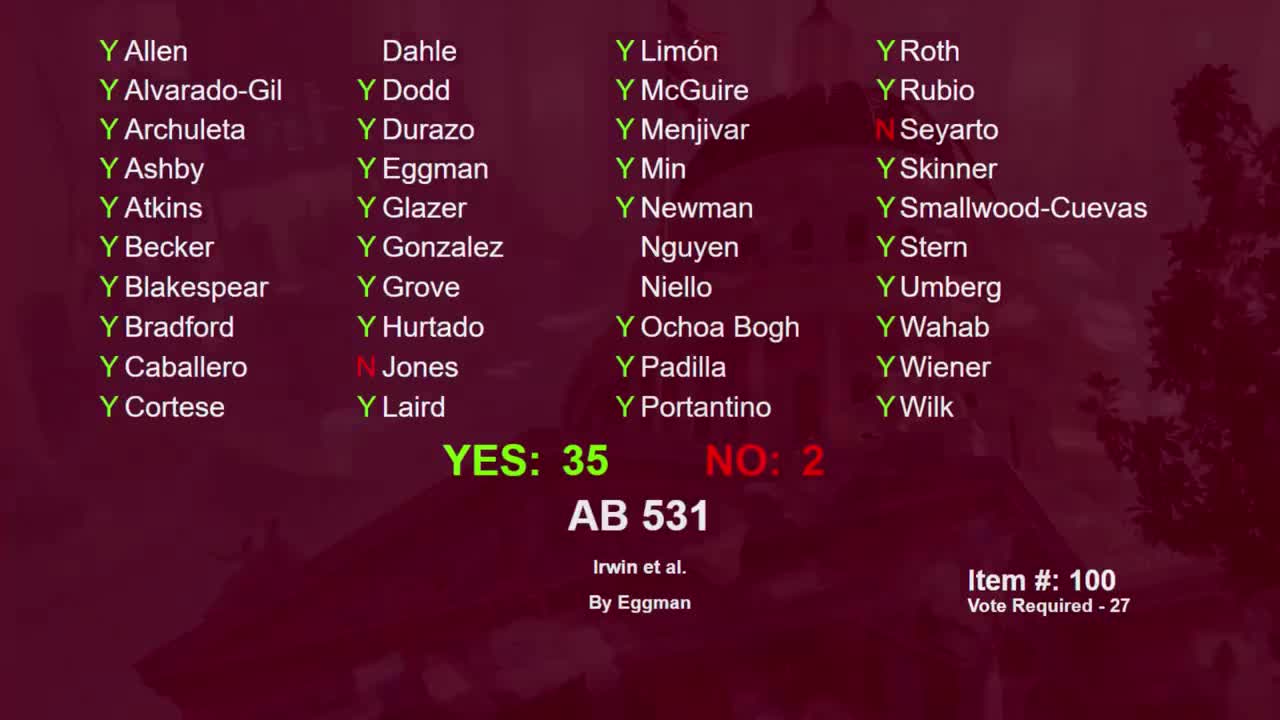 17MIN
Senate Floor
 13MIN
Senate Standing Committee on Health
 18MIN
Assembly Floor
 1MIN
Assembly Floor
 45MIN
Assembly Standing Committee on Housing and Community Development
 1H
Assembly Standing Committee on Health
 1MIN
Senate Floor
 3MIN
Senate Standing Committee on Health
Bill Author
Bill Co-Author(s):
