SB 368: Firearms: requirements for licensed dealers.
- Session Year: 2023-2024
- House: Senate
- Latest Version Date: 2023-09-26
Current Status:
Passed
(2023-09-26: Chaptered by Secretary of State. Chapter 251, Statutes of 2023.)
Introduced
In Committee
First Chamber
In Committee
Second Chamber
Enacted
Existing law regulates licensed firearms dealers and provides that a license is subject to forfeiture for a breach of specified prohibitions in existing law. Existing law authorizes the temporary transfer of a firearm without a firearms dealers participation to a person who is 18 years of age or older for safekeeping to prevent it from being used to attempt suicide, as specified.
This bill would require a licensed firearms dealer, as specified, to accept for storage a firearm transferred by an individual to prevent it from being accessed or used during periods of crisis or heightened risk to the owner of the firearm or members of their household. The bill would also authorize a licensed firearms dealer to accept for storage a firearm for a lawful purpose not otherwise stated in the law. The bill would make these provisions subject to certain conditions and would establish a procedure for the return of a firearm to the original transferor, including situations when a dealer cannot legally return a firearm. A violation of various provisions involving the transfer of firearms is a crime. By changing the scope of these offenses, this bill would impose a state-mandated local program. The bill would authorize a firearms dealer to charge a reasonable fee, as specified, for the storage of a firearm pursuant to these provisions. The bill would also state that it has no affect on the liability under existing law, if any, of a firearms dealer who returns a stored firearm to its owner, as specified.
The California Constitution generally provides that the Legislature has no power to authorize lotteries and shall prohibit the sale of lottery tickets in the state, except for private, nonprofit, eligible organizations to conduct raffles as a funding mechanism to provide support for their own or another private, nonprofit, eligible organizations beneficial and charitable works, subject to certain conditions.
This bill would prohibit a licensed firearms dealer from offering an opportunity to win an item of inventory in a game dominated by chance and would except from this prohibition nonprofit organizations under certain circumstances.
Existing law, subject to exceptions, provides that any person who has been convicted of certain misdemeanors may not, within 10 years of the conviction, own, purchase, receive, possess, or have under their custody or control, any firearm and makes a violation of that prohibition a crime. Existing law authorizes a court in certain circumstances to reduce, eliminate, or condition that prohibition.
This bill would, subject to exceptions, provide that any person convicted of a misdemeanor violation of the above-described prohibition on or after January 1, 2024, and who within 10 years of that conviction owns, purchases, receives, possesses, or has under their custody or control, any firearm guilty of a misdemeanor or a felony. Because a violation of these provisions would be a crime, and because this bill would expand the application of the crime to a larger class of potential offenders, this bill would impose a state-mandated local program.
The California Constitution requires the state to reimburse local agencies and school districts for certain costs mandated by the state. Statutory provisions establish procedures for making that reimbursement.
This bill would provide that no reimbursement is required by this act for a specified reason.
This bill would incorporate additional changes to Section 11106 of the Penal Code proposed by AB 732 to be operative only if this bill and AB 732 are enacted and this bill is enacted last.
This bill would also incorporate additional changes to Section 29805 of the Penal Code proposed by SB 2 to be operative only if this bill and SB 2 are enacted and this bill is enacted last.
Existing law regulates licensed firearms dealers and provides that a license is subject to forfeiture for a breach of specified prohibitions in existing law. Existing law authorizes the temporary transfer of a firearm without a firearms dealers participation to a person who is 18 years of age or older for safekeeping to prevent it from being used to attempt suicide, as specified.
This bill would require a licensed firearms dealer dealer, as specified, to accept for storage a firearm transferred by an individual to prevent it from being accessed or used to attempt suicide. during periods of crisis or heightened risk to the owner of the firearm or members of their household. The bill would also authorize a licensed firearms dealer to accept for storage a firearm for a lawful purpose not otherwise stated in the law. The bill would make these provisions subject to certain conditions and would establish a procedure for the return of a firearm to the original transferor, including situations when a dealer cannot legally return a firearm. A violation of various provisions involving the transfer of firearms is a crime. By changing the scope of these offenses, this bill would impose a state-mandated local program. The bill would authorize a firearms dealer to charge a reasonable fee, as specified, for the storage of a firearm pursuant to these provisions. The bill would also state that it has no affect on the liability under existing law, if any, of a firearms dealer who returns a stored firearm to its owner, as specified.
The California Constitution generally provides that the Legislature has no power to authorize lotteries and shall prohibit the sale of lottery tickets in the state, except for private, nonprofit, eligible organizations to conduct raffles as a funding mechanism to provide support for their own or another private, nonprofit, eligible organizations beneficial and charitable works, subject to certain conditions.
This bill would prohibit a licensed firearms dealer from offering an opportunity to win an item of inventory in a game dominated by chance and would except from this prohibition nonprofit organizations under certain circumstances.
Existing law, subject to exceptions, provides that any person who has been convicted of certain misdemeanors may not, within 10 years of the conviction, own, purchase, receive, possess, or have under their custody or control, any firearm and makes a violation of that prohibition a crime. Existing law authorizes a court in certain circumstances to reduce, eliminate, or condition that prohibition.
This bill would, subject to exceptions, provide that any person convicted of a misdemeanor violation of the above-described prohibition on or after January 1, 2024, and who within 10 years of that conviction owns, purchases, receives, possesses, or has under their custody or control, any firearm guilty of a misdemeanor or a felony. Because a violation of these provisions would be a crime, and because this bill would expand the application of the crime to a larger class of potential offenders, this bill would impose a state-mandated local program.
The California Constitution requires the state to reimburse local agencies and school districts for certain costs mandated by the state. Statutory provisions establish procedures for making that reimbursement.
This bill would provide that no reimbursement is required by this act for a specified reason.
This bill would incorporate additional changes to Section 11106 of the Penal Code proposed by AB 732 to be operative only if this bill and AB 732 are enacted and this bill is enacted last.
This bill would also incorporate additional changes to Section 29805 of the Penal Code proposed by SB 2 to be operative only if this bill and SB 2 are enacted and this bill is enacted last.
Existing law regulates licensed firearms dealers and provides that a license is subject to forfeiture for a breach of specified prohibitions in existing law. Existing law authorizes the temporary transfer of a firearm without a firearms dealers participation to a person who is 18 years of age or older for safekeeping to prevent it from being used to attempt suicide, as specified.
This bill would require a licensed firearms dealer to accept for storage a firearm transferred by an individual to prevent it from being accessed or used to attempt suicide. The bill would also authorize a licensed firearms dealer to accept for storage a firearm for a lawful purpose not otherwise stated in the law. The bill would make these provisions subject to certain conditions and would establish a procedure for the return of a firearm to the original transferor, including situations when a dealer cannot legally return a firearm. A violation of various provisions involving the transfer of firearms is a crime. By changing the scope of these offenses, this bill would impose a state-mandated local program.
The California Constitution generally provides that the Legislature has no power to authorize lotteries and shall prohibit the sale of lottery tickets in the state, except for private, nonprofit, eligible organizations to conduct raffles as a funding mechanism to provide support for their own or another private, nonprofit, eligible organizations beneficial and charitable works, subject to certain conditions.
This bill would prohibit a licensed firearms dealer from offering an opportunity to win an item of inventory in a game dominated by chance and would except from this prohibition nonprofit organizations under certain circumstances.
Existing law, subject to exceptions, provides that any person who has been convicted of certain misdemeanors may not, within 10 years of the conviction, own, purchase, receive, possess, or have under their custody or control, any firearm and makes a violation of that prohibition a crime. Existing law authorizes a court in certain circumstances to reduce, eliminate, or condition that prohibition.
This bill would, subject to exceptions, provide that any person convicted of a misdemeanor violation of the above-described prohibition on or after January 1, 2024, and who within 10 years of that conviction owns, purchases, receives, possesses, or has under their custody or control, any firearm guilty of a misdemeanor or a felony. Because a violation of these provisions would be a crime, and because this bill would expand the application of the crime to a larger class of potential offenders, this bill would impose a state-mandated local program. The bill would additionally require the Department of Justice to create an evaluation process to determine whether an extension of a 10-year prohibition is warranted. The bill would, for those subject to such a prohibition due to a conviction on or after January 1, 2024, require the department to review whether the prohibition should be extended, provide notice and opportunity to be heard to the person, and establish a process for the person to appeal any extension of the prohibition instituted by the department.
The California Constitution requires the state to reimburse local agencies and school districts for certain costs mandated by the state. Statutory provisions establish procedures for making that reimbursement.
This bill would provide that no reimbursement is required by this act for a specified reason.
Existing law regulates licensed firearms dealers and provides that a license is subject to forfeiture for a breach of specified prohibitions in existing law. Existing law authorizes the temporary transfer of a firearm without a firearms dealers participation to a person who is 18 years of age or older for safekeeping to prevent it from being used to attempt suicide, as specified.
This bill would require a licensed firearms dealer to accept for storage a firearm transferred by an individual to prevent it from being accessed or used to attempt suicide. The bill would also authorize a licensed firearms dealer to accept for storage a firearm for a lawful purpose not otherwise stated in the law. The bill would make these provisions subject to certain conditions and would establish a procedure for the return of a firearm to the original transferor, including situations when a dealer cannot legally return a firearm. A violation of various provisions involving the transfer of firearms is a crime. By changing the scope of these offenses, this bill would impose a state-mandated local program.
Existing law states that the requirement that the sale, delivery, or transfer of a firearm be conducted by a firearms dealer does not apply to the sale, delivery, or transfer to an authorized representative of a government, as specified, and the government is acquiring the firearm as part of an authorized, voluntary program.This bill would require a licensed firearm dealer to establish a voluntary program to repurchase firearms from individuals in consultation with the Department of Justice.The California Constitution generally provides that the Legislature has no power to authorize lotteries and shall prohibit the sale of lottery tickets in the state, except for private, nonprofit, eligible organizations to conduct raffles as a funding mechanism to provide support for their own or another private, nonprofit, eligible organizations beneficial and charitable works, subject to certain conditions.
This bill would prohibit a licensed firearms dealer from offering an opportunity to win an item of inventory in a game dominated by chance and would except from this prohibition nonprofit organizations under certain circumstances.
Existing law, subject to exceptions, provides that any person who has been convicted of certain misdemeanors may not, within 10 years of the conviction, own, purchase, receive, possess, or have under their custody or control, any firearm and makes a violation of that prohibition a crime. Existing law authorizes a court in certain circumstances to reduce, eliminate, or condition that prohibition.
This bill would, subject to exceptions, provide that any person convicted of a misdemeanor violation of the above-described prohibition on or after January 1, 2024, and who within 10 years of that conviction owns, purchases, receives, possesses, or has under their custody or control, any firearm guilty of a misdemeanor or a felony. Because a violation of these provisions would be a crime, and because this bill would expand the application of the crime to a larger class of potential offenders, this bill would impose a state-mandated local program. The bill would additionally require the Department of Justice to create an evaluation process to determine whether an extension of a 10-year prohibition is warranted. The bill would, for those subject to such a prohibition due to a conviction on or after January 1, 2024, require the department to review whether the prohibition should be extended, provide notice and opportunity to be heard to the person, and establish a process for the person to appeal any extension of the prohibition instituted by the department.
The California Constitution requires the state to reimburse local agencies and school districts for certain costs mandated by the state. Statutory provisions establish procedures for making that reimbursement.
This bill would provide that no reimbursement is required by this act for a specified reason.
Existing law regulates licensed firearms dealers and provides that a license is subject to forfeiture for a breach of specified prohibitions in existing law. Existing law authorizes the temporary transfer of a firearm without a firearms dealers participation to a person who is 18 years of age or older for safekeeping to prevent it from being used to attempt suicide, as specified.
This bill would require a licensed firearms dealer to accept for storage a firearm transferred by an individual to prevent it from being accessed or used to attempt suicide. The bill would also authorize a licensed firearms dealer to accept for storage a firearm for a lawful purpose not otherwise stated in the law. The bill would make these provisions subject to certain conditions and would establish a procedure for the return of a firearm to the original transferor, including situations when a dealer cannot legally return a firearm. A violation of various provisions involving the transfer of firearms is a crime. By changing the scope of these offenses, this bill would impose a state-mandated local program.
Existing law states that the requirement that the sale, delivery, or transfer of a firearm be conducted by a firearms dealer does not apply to the sale, delivery, or transfer to an authorized representative of a government, as specified, and the government is acquiring the firearm as part of an authorized, voluntary program.
This bill would require a licensed firearm dealer to establish a voluntary program to repurchase firearms from individuals in consultation with the Department of Justice.
The California Constitution generally provides that the Legislature has no power to authorize lotteries and shall prohibit the sale of lottery tickets in the state, except for private, nonprofit, eligible organizations to conduct raffles as a funding mechanism to provide support for their own or another private, nonprofit, eligible organizations beneficial and charitable works, subject to certain conditions.
This bill would prohibit a licensed firearms dealer from offering an opportunity to win an item of inventory in a game dominated by chance and would except from this prohibition nonprofit organizations under certain circumstances.
Existing law, subject to exceptions, provides that any person who has been convicted of certain misdemeanors may not, within 10 years of the conviction, own, purchase, receive, possess, or have under their custody or control, any firearm and makes a violation of that prohibition a crime. Existing law authorizes a court in certain circumstances to reduce, eliminate, or condition that prohibition.
This bill would, subject to exceptions, provide that any person convicted of a misdemeanor violation of the above-described prohibition on or after January 1, 2024, and who within 10 years of that conviction owns, purchases, receives, possesses, or has under their custody or control, any firearm guilty of a misdemeanor or a felony. Because a violation of these provisions would be a crime, and because this bill would expand the application of the crime to a larger class of potential offenders, this bill would impose a state-mandated local program. The bill would additionally require the Department of Justice to create an evaluation process to determine whether an extension of a 10-year prohibition is warranted. The bill would, for those subject to such a prohibition due to a conviction on or after January 1, 2024, require the department to review whether the prohibition should be extended, provide notice and opportunity to be heard to the person, and establish a process for the person to appeal any extension of the prohibition instituted by the department.
The California Constitution requires the state to reimburse local agencies and school districts for certain costs mandated by the state. Statutory provisions establish procedures for making that reimbursement.
This bill would provide that no reimbursement is required by this act for a specified reason.
(a)(1)In order to assist in the investigation of crime, the prosecution of civil actions by city attorneys pursuant to paragraph (3) of subdivision (b), the arrest and prosecution of criminals, and the recovery of lost, stolen, or found property, the Attorney General shall keep and properly file a complete record of all of the following:
(A)All copies of fingerprints.
(B)Copies of licenses to carry firearms issued pursuant to Section 26150, 26155, 26170, or 26215.
(C)Information reported to the Department of Justice pursuant to subdivision (e) of Section 18120, Section 26225, 26556, 26892, 27875, 27920, 27966, 28050, 29180, 29830, or paragraph (2) of subdivision (e) of Section 32000.
(D)Dealers Records of Sale of firearms.
(E)Reports provided pursuant to Article 1 (commencing with Section 27500) of Chapter 4 of Division 6 of Title 4 of Part 6, or pursuant to any provision listed in subdivision (a) of Section 16585.
(F)Forms provided pursuant to Section 12084, as that section read prior to being repealed on January 1, 2006.
(G)Reports provided pursuant to Article 1 (commencing with Section 26700) and Article 2 (commencing with Section 26800) of Chapter 2 of Division 6 of Title 4 of Part 6, that are not Dealers Records of Sale of firearms.
(H)Information provided pursuant to Section 28255.
(I)Reports of stolen, lost, found, pledged, or pawned property in any city or county of this state.
(2)The Attorney General shall, upon proper application therefor, furnish the information to the officers referred to in Section 11105.
(b)(1)The Attorney General shall permanently keep and properly file and maintain all information reported to the Department of Justice pursuant to the following provisions as to firearms and maintain a registry thereof:
(A)Article 1 (commencing with Section 26700) and Article 2 (commencing with Section 26800) of Chapter 2 of Division 6 of Title 4 of Part 6.
(B)Article 1 (commencing with Section 27500) of Chapter 4 of Division 6 of Title 4 of Part 6.
(C)Chapter 5 (commencing with Section 28050) of Division 6 of Title 4 of Part 6.
(D)Any provision listed in subdivision (a) of Section 16585.
(E)Former Section 12084.
(F)Section 28255.
(G)Section 29180.
(H)Paragraph (2) of subdivision (e) of Section 32000.
(I)Any other law.
(2)The registry shall consist of all of the following:
(A)The name, address, identification of, place of birth (state or country), complete telephone number, occupation, sex, description, and all legal names and aliases ever used by the owner or person being loaned the particular firearm as listed on the information provided to the department on the Dealers Record of Sale, the Law Enforcement Firearms Transfer (LEFT), as defined in former Section 12084, or reports made to the department pursuant to any provision listed in subdivision (a) of Section 16585, Section 28255 or 29180, or any other law.
(B)The name and address of, and other information about, any person (whether a dealer or a private party) from whom the owner acquired or the person being loaned the particular firearm and when the firearm was acquired or loaned as listed on the information provided to the department on the Dealers Record of Sale, the LEFT, or reports made to the department pursuant to any provision listed in subdivision (a) of Section 16585 or any other law.
(C)Any waiting period exemption applicable to the transaction which resulted in the owner of or the person being loaned the particular firearm acquiring or being loaned that firearm.
(D)The manufacturers name if stamped on the firearm, model name or number if stamped on the firearm, and, if applicable, the serial number, other number (if more than one serial number is stamped on the firearm), caliber, type of firearm, if the firearm is new or used, barrel length, and color of the firearm, or, if the firearm is not a handgun and does not have a serial number or any identification number or mark assigned to it, that shall be noted.
(3)Information in the registry referred to in this subdivision shall, upon proper application therefor, be furnished to the officers referred to in Section 11105, to a city attorney prosecuting a civil action, solely for use in prosecuting that civil action and not for any other purpose, or to the person listed in the registry as the owner or person who is listed as being loaned the particular firearm.
(4)If any person is listed in the registry as the owner of a firearm through a Dealers Record of Sale prior to 1979, and the person listed in the registry requests by letter that the Attorney General store and keep the record electronically, as well as in the records existing photographic, photostatic, or nonerasable optically stored form, the Attorney General shall do so within three working days of receipt of the request. The Attorney General shall, in writing, and as soon as practicable, notify the person requesting electronic storage of the record that the request has been honored as required by this paragraph.
(c)(1)If the conditions specified in paragraph (2) are met, any officer referred to in paragraphs (1) to (6), inclusive, of subdivision (b) of Section 11105 may disseminate the name of the subject of the record, the number of the firearms listed in the record, and the description of any firearm, including the make, model, and caliber, from the record relating to any firearms sale, transfer, registration, or license record, or any information reported to the Department of Justice pursuant to any of the following:
(A)Section 26225, 26556, 27875, 27920, 27966, or 29180.
(B)Article 1 (commencing with Section 26700) and Article 2 (commencing with Section 26800) of Chapter 2 of Division 6 of Title 4 of Part 6.
(C)Article 1 (commencing with Section 27500) of Chapter 4 of Division 6 of Title 4 of Part 6.
(D)Chapter 5 (commencing with Section 28050) of Division 6 of Title 4 of Part 6.
(E)Article 2 (commencing with Section 28150) of Chapter 6 of Division 6 of Title 4 of Part 6.
(F)Article 5 (commencing with Section 30900) of Chapter 2 of Division 10 of Title 4 of Part 6.
(G)Chapter 2 (commencing with Section 33850) of Division 11 of Title 4 of Part 6.
(H)Any provision listed in subdivision (a) of Section 16585.
(I)Paragraph (2) of subdivision (e) of Section 32000.
(2)Information may be disseminated pursuant to paragraph (1) only if all of the following conditions are satisfied:
(A)The subject of the record has been arraigned for a crime in which the victim is a person described in subdivisions (a) to (f), inclusive, of Section 6211 of the Family Code and is being prosecuted or is serving a sentence for the crime, or the subject of the record is the subject of an emergency protective order, a temporary restraining order, or an order after hearing, which is in effect and has been issued by a family court under the Domestic Violence Prevention Act set forth in Division 10 (commencing with Section 6200) of the Family Code.
(B)The information is disseminated only to the victim of the crime or to the person who has obtained the emergency protective order, the temporary restraining order, or the order after hearing issued by the family court.
(C)Whenever a law enforcement officer disseminates the information authorized by this subdivision, that officer or another officer assigned to the case shall immediately provide the victim of the crime with a Victims of Domestic Violence card, as specified in subparagraph (H) of paragraph (9) of subdivision (c) of Section 13701.
(3)The victim or person to whom information is disseminated pursuant to this subdivision may disclose it as they deem necessary to protect themselves or another person from bodily harm by the person who is the subject of the record.
(d)All information collected pursuant to this section shall be maintained by the department and shall be available to researchers affiliated with the California Firearm Violence Research Center at UC Davis for academic and policy research purposes upon proper request and following approval by the centers governing institutional review board when required. At the departments discretion, and subject to Section 14240, information collected pursuant to this section may be provided to any other nonprofit bona fide research institution accredited by the United States Department of Education or the Council for Higher Education Accreditation for the study of the prevention of violence and following approval by the institutions governing institutional review board or human subjects committee when required. Material identifying individuals shall only be provided for research or statistical activities and shall not be transferred, revealed, or used for purposes other than research or statistical activities, and reports or publications derived therefrom shall not identify specific individuals. Reasonable costs to the department associated with the departments processing of such data may be billed to the researcher. If a request for data or letter of support for research using the data is denied, the department shall provide a written statement of the specific reasons for the denial.
SEC. 1.1.Section 11106 of the Penal Code is amended to read:11106.(a)(1)In order to assist in the investigation of crime, the prosecution of civil actions by city attorneys pursuant to paragraph (3) of subdivision (b), the arrest and prosecution of criminals, and the recovery of lost, stolen, or found property, the Attorney General shall keep and properly file a complete record of all of the following:
(A)All copies of fingerprints.
(B)Copies of licenses to carry firearms issued pursuant to Section 26150, 26155, 26170, or 26215.
(C)Information reported to the Department of Justice pursuant to subdivision (e) of Section 18120, Section 26225, 26556, 26892, 27875, 27920, 27966, 28050, 29180, 29830, or paragraph (2) of subdivision (e) of Section 32000.
(D)Dealers Records of Sale of firearms.
(E)Reports provided pursuant to Article 1 (commencing with Section 27500) of Chapter 4 of Division 6 of Title 4 of Part 6, or pursuant to any provision listed in subdivision (a) of Section 16585.
(F)Forms provided pursuant to Section 12084, as that section read prior to being repealed on January 1, 2006.
(G)Reports provided pursuant to Article 1 (commencing with Section 26700) and Article 2 (commencing with Section 26800) of Chapter 2 of Division 6 of Title 4 of Part 6, that are not Dealers Records of Sale of firearms.
(H)Information provided pursuant to Section 28255.
(I)Reports of stolen, lost, found, pledged, or pawned property in any city or county of this state.
(J)Reports or information provided to the Department of Justice pursuant to Section 29813.
(2)The Attorney General shall, upon proper application therefor, furnish the information to the officers referred to in Section 11105.
(b)(1)The Attorney General shall permanently keep and properly file and maintain all information reported to the Department of Justice pursuant to the following provisions as to firearms and maintain a registry thereof:
(A)Article 1 (commencing with Section 26700) and Article 2 (commencing with Section 26800) of Chapter 2 of Division 6 of Title 4 of Part 6.
(B)Article 1 (commencing with Section 27500) of Chapter 4 of Division 6 of Title 4 of Part 6.
(C)Chapter 5 (commencing with Section 28050) of Division 6 of Title 4 of Part 6.
(D)Any provision listed in subdivision (a) of Section 16585.
(E)Former Section 12084.
(F)Section 28255.
(G)Section 29180.
(H)Paragraph (2) of subdivision (e) of Section 32000.
(I)Any other law.
(2)The registry shall consist of all of the following:
(A)The name, address, identification of, place of birth (state or country), complete telephone number, occupation, sex, description, and all legal names and aliases ever used by the owner or person being loaned the particular firearm as listed on the information provided to the department on the Dealers Record of Sale, the Law Enforcement Firearms Transfer (LEFT), as defined in former Section 12084, or reports made to the department pursuant to any provision listed in subdivision (a) of Section 16585, Section 28255 or 29180, or any other law.
(B)The name and address of, and other information about, any person (whether a dealer or a private party) from whom the owner acquired or the person being loaned the particular firearm and when the firearm was acquired or loaned as listed on the information provided to the department on the Dealers Record of Sale, the LEFT, or reports made to the department pursuant to any provision listed in subdivision (a) of Section 16585 or any other law.
(C)Any waiting period exemption applicable to the transaction which resulted in the owner of or the person being loaned the particular firearm acquiring or being loaned that firearm.
(D)The manufacturers name if stamped on the firearm, model name or number if stamped on the firearm, and, if applicable, the serial number, other number (if more than one serial number is stamped on the firearm), caliber, type of firearm, if the firearm is new or used, barrel length, and color of the firearm, or, if the firearm is not a handgun and does not have a serial number or any identification number or mark assigned to it, that shall be noted.
(3)Information in the registry referred to in this subdivision shall, upon proper application therefor, be furnished to the officers referred to in Section 11105, to a city attorney prosecuting a civil action, solely for use in prosecuting that civil action and not for any other purpose, or to the person listed in the registry as the owner or person who is listed as being loaned the particular firearm.
(4)If any person is listed in the registry as the owner of a firearm through a Dealers Record of Sale prior to 1979, and the person listed in the registry requests by letter that the Attorney General store and keep the record electronically, as well as in the records existing photographic, photostatic, or nonerasable optically stored form, the Attorney General shall do so within three working days of receipt of the request. The Attorney General shall, in writing, and as soon as practicable, notify the person requesting electronic storage of the record that the request has been honored as required by this paragraph.
(c)(1)If the conditions specified in paragraph (2) are met, any officer referred to in paragraphs (1) to (6), inclusive, of subdivision (b) of Section 11105 may disseminate the name of the subject of the record, the number of the firearms listed in the record, and the description of any firearm, including the make, model, and caliber, from the record relating to any firearms sale, transfer, registration, or license record, or any information reported to the Department of Justice pursuant to any of the following:
(A)Section 26225, 26556, 27875, 27920, 27966, or 29180.
(B)Article 1 (commencing with Section 26700) and Article 2 (commencing with Section 26800) of Chapter 2 of Division 6 of Title 4 of Part 6.
(C)Article 1 (commencing with Section 27500) of Chapter 4 of Division 6 of Title 4 of Part 6.
(D)Chapter 5 (commencing with Section 28050) of Division 6 of Title 4 of Part 6.
(E)Article 2 (commencing with Section 28150) of Chapter 6 of Division 6 of Title 4 of Part 6.
(F)Article 5 (commencing with Section 30900) of Chapter 2 of Division 10 of Title 4 of Part 6.
(G)Chapter 2 (commencing with Section 33850) of Division 11 of Title 4 of Part 6.
(H)Any provision listed in subdivision (a) of Section 16585.
(I)Paragraph (2) of subdivision (e) of Section 32000.
(2)Information may be disseminated pursuant to paragraph (1) only if all of the following conditions are satisfied:
(A)The subject of the record has been arraigned for a crime in which the victim is a person described in subdivisions (a) to (f), inclusive, of Section 6211 of the Family Code and is being prosecuted or is serving a sentence for the crime, or the subject of the record is the subject of an emergency protective order, a temporary restraining order, or an order after hearing, which is in effect and has been issued by a family court under the Domestic Violence Prevention Act set forth in Division 10 (commencing with Section 6200) of the Family Code.
(B)The information is disseminated only to the victim of the crime or to the person who has obtained the emergency protective order, the temporary restraining order, or the order after hearing issued by the family court.
(C)Whenever a law enforcement officer disseminates the information authorized by this subdivision, that officer or another officer assigned to the case shall immediately provide the victim of the crime with a Victims of Domestic Violence card, as specified in subparagraph (H) of paragraph (9) of subdivision (c) of Section 13701.
(3)The victim or person to whom information is disseminated pursuant to this subdivision may disclose it as they deem necessary to protect themselves or another person from bodily harm by the person who is the subject of the record.
(d)All information collected pursuant to this section shall be maintained by the department and shall be available to researchers affiliated with the California Firearm Violence Research Center at UC Davis for academic and policy research purposes upon proper request and following approval by the centers governing institutional review board when required. At the departments discretion, and subject to Section 14240, information collected pursuant to this section may be provided to any other nonprofit bona fide research institution accredited by the United States Department of Education or the Council for Higher Education Accreditation for the study of the prevention of violence and following approval by the institutions governing institutional review board or human subjects committee when required. Material identifying individuals shall only be provided for research or statistical activities and shall not be transferred, revealed, or used for purposes other than research or statistical activities, and reports or publications derived therefrom shall not identify specific individuals. Reasonable costs to the department associated with the departments processing of such data may be billed to the researcher. If a request for data or letter of support for research using the data is denied, the department shall provide a written statement of the specific reasons for the denial.
SEC. 2.Section 11108.2 of the Penal Code is amended to read:11108.2.(a)A law enforcement agency shall enter or cause to be entered into the Department of Justice Automated Firearms System each firearm that has been reported stolen, lost, found, recovered, held for safekeeping, surrendered pursuant to Section 26892, 28050, or 29830, relinquished pursuant to Section 6389 of the Family Code, or under observation, within seven calendar days after being notified of the precipitating event.
(b)Information about a firearm entered into the automated system for firearms shall remain in the system until the reported firearm has been found, recovered, is no longer under observation, or the record is determined to have been entered in error.
(c)Any costs incurred by the Department of Justice to implement subdivision (b) shall be reimbursed from funds other than fees charged and collected pursuant to Sections 28225, 28230, and 28233.
(d)As used in this section, law enforcement agency means a police or sheriffs department, or any department or agency of the state or any political subdivision thereof that employs any peace officer as defined in Section 830, including, but not limited to, the Department of the California Highway Patrol, the Department of Fish and Wildlife, the University of California or California State University Police Departments, and the police department of any school district, transit district, airport, and harbor, port, or housing authority.
SEC. 3.Section 25555 of the Penal Code is amended to read:25555.(a)Section 25400 does not apply to, or affect, the transportation of a firearm by a person in order to comply with or utilize Section 26556, 26892, 27875, 27920, 27925, 29810, or 29830, as it pertains to that firearm.
(b)Section 25400 does not apply to or affect the transportation of a firearm by a person in order to comply with paragraph (2) of subdivision (e) of Section 32000 as it pertains to that firearm.
(c)Section 25400 does not apply to, or affect the transportation of, a firearm by a person in order to comply with Section 6389 of the Family Code.
SEC. 4.Section 26379 of the Penal Code is amended to read:26379.Paragraph (1) of subdivision (a) of Section 26350 does not apply to, or affect, the open carrying of an unloaded handgun incident to any of the following:
(a)Complying with Section 27560 or 27565, as it pertains to that handgun.
(b)Section 28000, as it pertains to that handgun.
(c)Section 27850 or 31725, as it pertains to that handgun.
(d)Complying with Section 27875, as it pertains to that handgun.
(e)Complying with or utilizing Section 26556, 26892, 27920, 27925, 29810, or 29830, as it pertains to that handgun.
(f)Complying with paragraph (2) of subdivision (e) of Section 32000, as it pertains to that handgun.
(g)Complying with Section 6389 of the Family Code, as it pertains to that handgun.
SEC. 5.Section 26405 of the Penal Code is amended to read:26405.Section 26400 does not apply to, or affect, the carrying of an unloaded firearm that is not a handgun in any of the following circumstances:
(a)By a person when carried within a place of business, a place of residence, or on private real property, if that person, by virtue of subdivision (a) of Section 25605, may carry a firearm within that place of business, place of residence, or on that private real property owned or lawfully occupied by that person.
(b)By a person when carried within a place of business, a place of residence, or on private real property, if done with the permission of a person who, by virtue of subdivision (a) of Section 25605, may carry a firearm within that place of business, place of residence, or on that private real property owned or lawfully occupied by that person.
(c)When the firearm is either in a locked container or encased and it is being transported directly between places where a person is not prohibited from possessing that firearm and the course of travel shall include only those deviations between authorized locations as are reasonably necessary under the circumstances.
(d)If the person possessing the firearm reasonably believes that they are in grave danger because of circumstances forming the basis of a current restraining order issued by a court against another person or persons who has or have been found to pose a threat to the persons life or safety. This subdivision may not apply when the circumstances involve a mutual restraining order issued pursuant to Division 10 (commencing with Section 6200) of the Family Code absent a factual finding of a specific threat to the persons life or safety. Upon a trial for violating Section 26400, the trier of fact shall determine whether the defendant was acting out of a reasonable belief that they were in grave danger.
(e)By a peace officer or an honorably retired peace officer if that officer may carry a concealed firearm pursuant to Article 2 (commencing with Section 25450) of Chapter 2, or a loaded firearm pursuant to Article 3 (commencing with Section 25900) of Chapter 3.
(f)By a person to the extent that person may openly carry a loaded firearm that is not a handgun pursuant to Article 4 (commencing with Section 26000) of Chapter 3.
(g)As merchandise by a person who is engaged in the business of manufacturing, importing, wholesaling, repairing, or dealing in firearms and who is licensed to engage in that business, or the authorized representative or authorized agent of that person, while engaged in the lawful course of the business.
(h)By a duly authorized military or civil organization, or the members thereof, while parading or while rehearsing or practicing parading, when at the meeting place of the organization.
(i)By a member of a club or organization organized for the purpose of practicing shooting at targets upon established target ranges, whether public or private, while the members are using firearms that are not handguns upon the target ranges or incident to the use of a firearm that is not a handgun at that target range.
(j)By a licensed hunter while engaged in hunting or while transporting that firearm when going to or returning from that hunting expedition.
(k)Incident to transportation of a handgun by a person operating a licensed common carrier, or by an authorized agent or employee thereof, when transported in conformance with applicable federal law.
(l)By a member of an organization chartered by the Congress of the United States or a nonprofit mutual or public benefit corporation organized and recognized as a nonprofit tax-exempt organization by the Internal Revenue Service while on official parade duty or ceremonial occasions of that organization or while rehearsing or practicing for official parade duty or ceremonial occasions.
(m)Within a gun show conducted pursuant to Article 1 (commencing with Section 27200) and Article 2 (commencing with Section 27300) of Chapter 3 of Division 6.
(n)Within a school zone, as defined in Section 626.9, if that carrying is not prohibited by Section 626.9.
(o)When in accordance with the provisions of Section 171b.
(p)By a person while engaged in the act of making or attempting to make a lawful arrest.
(q)By a person engaged in firearms-related activities, while on the premises of a fixed place of business that is licensed to conduct and conducts, as a regular course of its business, activities related to the sale, making, repair, transfer, pawn, or the use of firearms, or related to firearms training.
(r)By an authorized participant in, or an authorized employee or agent of a supplier of firearms for, a motion picture, television, or video production or entertainment event, when the participant lawfully uses that firearm as part of that production or event, as part of rehearsing or practicing for participation in that production or event, or while the participant or authorized employee or agent is at that production or event, or rehearsal or practice for that production or event.
(s)Incident to obtaining an identification number or mark assigned for that firearm from the Department of Justice pursuant to Section 23910.
(t)At an established public target range while the person is using that firearm upon that target range.
(u)By a person when that person is summoned by a peace officer to assist in making arrests or preserving the peace, while the person is actually engaged in assisting that officer.
(v)Incident to any of the following:
(1)Complying with Section 27560 or 27565, as it pertains to that firearm.
(2)Section 28000, as it pertains to that firearm.
(3)Section 27850 or 31725, as it pertains to that firearm.
(4)Complying with Section 27875, as it pertains to that firearm.
(5)Complying with or utilizing Section 26556, 26892, 27920, 27925, 27966, 29810, or 29830, as it pertains to that firearm.
(6)Complying with Section 6389 of the Family Code, as it pertains to that firearm.
(w)Incident to, and in the course and scope of, training of, or by an individual to become a sworn peace officer as part of a course of study approved by the Commission on Peace Officer Standards and Training.
(x)Incident to, and in the course and scope of, training of, or by an individual to become licensed pursuant to Chapter 4 (commencing with Section 26150) as part of a course of study necessary or authorized by the person authorized to issue the license pursuant to that chapter.
(y)Incident to and at the request of a sheriff, chief, or other head of a municipal police department.
(z)If all of the following conditions are satisfied:
(1)The open carrying occurs at an auction, raffle, or similar event of a nonprofit public benefit or mutual benefit corporation at which firearms are auctioned, raffled, or otherwise sold to fund the activities of that corporation or the local chapters of that corporation.
(2)The unloaded firearm that is not a handgun is to be auctioned, raffled, or otherwise sold for that nonprofit public benefit or mutual benefit corporation.
(3)The unloaded firearm that is not a handgun is to be delivered by a person licensed pursuant to, and operating in accordance with, Sections 26700 to 26915, inclusive.
(aa)Pursuant to paragraph (3) of subdivision (b) of Section 171c.
(ab)Pursuant to Section 171d.
(ac)Pursuant to subparagraph (F) of paragraph (1) of subdivision (c) of Section 171.7.
(ad)On publicly owned land, if the possession and use of an unloaded firearm that is not a handgun is specifically permitted by the managing agency of the land and the person carrying that firearm is in lawful possession of that firearm.
(ae)By any of the following:
(1)The carrying of an unloaded firearm that is not a handgun that is regulated pursuant to Chapter 1 (commencing with Section 18710) of Division 5 of Title 2 by a person who holds a permit issued pursuant to Article 3 (commencing with Section 18900) of that chapter, if the carrying of that firearm is conducted in accordance with the terms and conditions of the permit.
(2)The carrying of an unloaded firearm that is not a handgun that is regulated pursuant to Chapter 2 (commencing with Section 30500) of Division 10 by a person who holds a permit issued pursuant to Section 31005, if the carrying of that firearm is conducted in accordance with the terms and conditions of the permit.
(3)The carrying of an unloaded firearm that is not a handgun that is regulated pursuant to Chapter 6 (commencing with Section 32610) of Division 10 by a person who holds a permit issued pursuant to Section 32650, if the carrying of that firearm is conducted in accordance with the terms and conditions of the permit.
(4)The carrying of an unloaded firearm that is not a handgun that is regulated pursuant to Article 2 (commencing with Section 33300) of Chapter 8 of Division 10 by a person who holds a permit issued pursuant to Section 33300, if the carrying of that firearm is conducted in accordance with the terms and conditions of the permit.
(af)By a licensed hunter while actually engaged in training a dog for the purpose of using the dog in hunting that is not prohibited by law, or while transporting the firearm while going to or returning from that training.
(ag)Pursuant to the provisions of subdivision (d) of Section 171.5.
(ah)By a person who is engaged in the business of manufacturing ammunition and who is licensed to engage in that business, or the authorized representative or authorized agent of that person, while the firearm is being used in the lawful course and scope of the licensees activities as a person licensed pursuant to Chapter 44 (commencing with Section 921) of Title 18 of the United States Code and regulations issued pursuant thereto.
(ai)On the navigable waters of this state that are held in public trust, if the possession and use of an unloaded firearm that is not a handgun is not prohibited by the managing agency thereof and the person carrying the firearm is in lawful possession of the firearm.
SEC. 6.Section 26577 of the Penal Code is amended to read:26577.Section 26500 does not apply to a delivery or transfer of firearms made to a dealer pursuant to Section 26892 or 29830 for storage by that dealer.
SEC. 7.Section 26892 is added to the Penal Code, to read:26892.(a)Except as otherwise provided in subdivision (g), a licensee shall accept a firearm for storage from an individual if all of the following conditions are met:
(1)The firearm is voluntarily and temporarily transferred to the licensee for safekeeping to prevent it from being accessed or used by the transferor or other persons that may gain access to it in the transferors household, causing significant danger of personal injury to themselves or others.
(2)The licensee does not use the firearm for any purpose, except storage.
(3)The duration of the loan is limited to that amount of time reasonably necessary to prevent the harm described in paragraph (1).
(b)(1)A licensee may accept a firearm for storage from an individual for a purpose that is not unlawful that is not otherwise set forth in subdivision (a) or Section 29830.
(2)A licensee who accepts a firearm for storage pursuant to this subdivision is not to use the firearm for any purpose other than storage.
(c)A firearm that is returned by a dealer to the owner of the firearm pursuant to this section shall be returned in accordance with the procedures set forth in Section 27540 and Article 1 (commencing with Section 26700) and Article 2 (commencing with Section 26800) of Chapter 2 of Division 6.
(d)If the dealer cannot legally return the firearm to the transferor or person loaning the firearm, then the following procedure shall apply:
(1)The transferor or person loaning the firearm may request, and the dealer shall grant, that the dealer retain possession of the firearm for a period of up to 45 days so that the transferor or the person loaning the firearm may designate a person to take possession of that firearm in accordance with Section 27540. This 45-day period shall be in addition to the waiting period described in Sections 26815 and 27540, and any time necessary to process a transaction.
(2)If, before the end of the 45-day period, the transferor or person loaning the firearm designates a person to receive the firearm and that person completes an application to purchase, the dealer shall process the transaction in accordance with the provisions of Section 27540.
(3)If the transferor or person loaning the firearm, does not request that the firearm be held by the dealer pursuant to this subdivision, the firearm cannot be delivered to the designated person, or the 45-day period expires without action by the person loaning the firearm, the dealer, shall forthwith deliver the firearm to the sheriff of the county or the chief of police or other head of a municipal police department of any city or city and county, where the dealership is located, who shall then dispose of the firearm in the manner provided by Sections 18000, 18005, and 34000.
(e)(1)A dealer who takes possession of a firearm pursuant to this section shall within 48 hours of taking possession of the firearm, notify the Department of Justice in a manner and format prescribed by the department.
(2)If a dealer retains possession of a firearm pursuant to subdivision (d), the dealer shall within 72 hours after retaining possession of the firearm, notify the Department of Justice in a manner and format prescribed by the department.
(f)A licensee may charge a reasonable fee for the storage of the firearm pursuant to this section. The fee for storage shall be the same fee as the fee charged for storage of a firearm pursuant to Section 29830.
(g)(1)Subdivision (a) applies only to a licensee that operates a retail premises open to the general public that sells firearms.
(2)A licensee that sells only handguns is not required to accept any long gun for storage, and any licensee that sells only long guns is not required to accept any handgun for storage.
(3)No licensee is required to store more than 20 firearms per calendar year pursuant to this section.
SEC. 8.Section 26894 is added to the Penal Code, to read:26894.(a)A licensee shall not offer an opportunity to win an item of inventory in a game dominated by chance.
(b)Subdivision (a) shall not apply to a raffle conducted by a licensee organized as a nonprofit public benefit corporation pursuant to Part 2 (commencing with Section 5110) of Division 2 of Title 1 of the Corporations Code, or as a mutual benefit corporation pursuant to Part 3 (commencing with Section 7110) of Division 2 of Title 1 of the Corporations Code, if the nonprofit public benefit or mutual benefit corporation obtained the dealers license solely and exclusively to assist that corporation or local chapters of that corporation in conducting auctions, raffles, or similar events at which firearms are auctioned or raffled off to fund the activities of that corporation or the local chapters of the corporation.
SEC. 9.Section 29805 of the Penal Code is amended to read:29805.(a)(1)Except as provided in Section 29855, subdivision (a) of Section 29800, or subdivision (b), any person who has been convicted of a misdemeanor violation of Section 71, 76, 136.1, 136.5, or 140, subdivision (d) of Section 148, subdivision (f) of Section 148.5, Section 171b, paragraph (1) of subdivision (a) of Section 171c, Section 171d, 186.28, 240, 241, 242, 243, 243.4, 244.5, 245, 245.5, 246.3, 247, 273.5, 273.6, 417, 417.6, 422, 422.6, 626.9, 646.9, 830.95, 17500, 17510, 25300, 25800, 30315, or 32625, subdivision (b) or (d) of Section 26100, or Section 27510, or Section 8100, 8101, or 8103 of the Welfare and Institutions Code, any firearm-related offense pursuant to Sections 871.5 and 1001.5 of the Welfare and Institutions Code, Section 487 if the property taken was a firearm, or of the conduct punished in subdivision (c) of Section 27590, and who, within 10 years of the conviction, owns, purchases, receives, or has in possession or under custody or control, any firearm is guilty of a public offense, punishable by imprisonment in a county jail not exceeding one year or in the state prison, by a fine not exceeding one thousand dollars ($1,000), or by both that imprisonment and fine.
(2)Any person who has an outstanding warrant for any misdemeanor offense described in this subdivision, and who has knowledge of the outstanding warrant, and who owns, purchases, receives, or has in possession or under custody or control any firearm is guilty of a public offense, punishable by imprisonment in a county jail not exceeding one year or in the state prison, by a fine not exceeding one thousand dollars ($1,000), or by both that imprisonment and fine.
(b)Any person who is convicted, on or after January 1, 2019, of a misdemeanor violation of Section 273.5, and who subsequently owns, purchases, receives, or has in possession or under custody or control, any firearm is guilty of a public offense, punishable by imprisonment in a county jail not exceeding one year or in the state prison, by a fine not exceeding one thousand dollars ($1,000), or by both that imprisonment and fine.
(c)Any person who is convicted on or after January 1, 2020, of a misdemeanor violation of Section 25100, 25135, or 25200, and who, within 10 years of the conviction owns, purchases, receives, or has in possession or under custody or control, any firearm is guilty of a public offense, punishable by imprisonment in a county jail not exceeding one year or in the state prison, by a fine not exceeding one thousand dollars ($1,000), or by both that fine and imprisonment.
(d)Any person who is convicted on or after January 1, 2023, of a misdemeanor violation of Section 273a, subdivision (b) or (c) of Section 368, or subdivision (e) or (f) of Section 29180, and who, within 10 years of the conviction owns, purchases, receives, or has in possession or under custody or control, any firearm is guilty of a public offense, punishable by imprisonment in a county jail not exceeding one year or in the state prison, by a fine not exceeding one thousand dollars ($1,000), or by both that fine and imprisonment.
(e)Except as provided in Section 29855 or subdivision (a) of Section 29800, any person who is convicted on or after January 1, 2024, of a misdemeanor violation of this section, and who, within 10 years of the conviction owns, purchases, receives, or has in possession or under custody or control, any firearm is guilty of a public offense, punishable by imprisonment in a county jail not exceeding one year or in the state prison, by a fine not exceeding one thousand dollars ($1,000), or by both that fine and imprisonment.
(f)The court, on forms prescribed by the Department of Justice, shall notify the department of persons subject to this section. However, the prohibition in this section may be reduced, eliminated, or conditioned as provided in Section 29855 or 29860.
SEC. 9.1.Section 29805 of the Penal Code is amended to read:29805.(a)(1)Except as provided in Section 29855, subdivision (a) of Section 29800, or subdivision (b), any person who has been convicted of a misdemeanor violation of Section 71, 76, 136.1, 136.5, or 140, subdivision (d) of Section 148, subdivision (f) of Section 148.5, Section 171b, paragraph (1) of subdivision (a) of Section 171c, Section 171d, 186.28, 240, 241, 242, 243, 243.4, 244.5, 245, 245.5, 246.3, 247, 273.5, 273.6, 417, 417.6, 422, 422.6, 626.9, 646.9, 830.95, 17500, 17510, 25300, 25800, 30315, or 32625, subdivision (b) or (d) of Section 26100, or Section 27510, or Section 8100, 8101, or 8103 of the Welfare and Institutions Code, any firearm-related offense pursuant to Sections 871.5 and 1001.5 of the Welfare and Institutions Code, Section 487 if the property taken was a firearm, or of the conduct punished in subdivision (c) of Section 27590, and who, within 10 years of the conviction, owns, purchases, receives, or has in possession or under custody or control, any firearm is guilty of a public offense, punishable by imprisonment in a county jail not exceeding one year or in the state prison, by a fine not exceeding one thousand dollars ($1,000), or by both that imprisonment and fine.
(2)Any person who has an outstanding warrant for any misdemeanor offense described in this subdivision, and who has knowledge of the outstanding warrant, and who owns, purchases, receives, or has in possession or under custody or control any firearm is guilty of a public offense, punishable by imprisonment in a county jail not exceeding one year or in the state prison, by a fine not exceeding one thousand dollars ($1,000), or by both that imprisonment and fine.
(b)Any person who is convicted, on or after January 1, 2019, of a misdemeanor violation of Section 273.5, and who subsequently owns, purchases, receives, or has in possession or under custody or control, any firearm is guilty of a public offense, punishable by imprisonment in a county jail not exceeding one year or in the state prison, by a fine not exceeding one thousand dollars ($1,000), or by both that imprisonment and fine.
(c)Any person who is convicted on or after January 1, 2020, of a misdemeanor violation of Section 25100, 25135, or 25200, and who, within 10 years of the conviction owns, purchases, receives, or has in possession or under custody or control, any firearm is guilty of a public offense, punishable by imprisonment in a county jail not exceeding one year or in the state prison, by a fine not exceeding one thousand dollars ($1,000), or by both that fine and imprisonment.
(d)Any person who is convicted on or after January 1, 2023, of a misdemeanor violation of Section 273a, subdivision (b) or (c) of Section 368, or subdivision (e) or (f) of Section 29180, and who, within 10 years of the conviction owns, purchases, receives, or has in possession or under custody or control, any firearm is guilty of a public offense, punishable by imprisonment in a county jail not exceeding one year or in the state prison, by a fine not exceeding one thousand dollars ($1,000), or by both that fine and imprisonment.
(e)Except as provided in Section 29855 or subdivision (a) of Section 29800, any person who is convicted on or after January 1, 2024, of a misdemeanor violation of this section, and who, within 10 years of the conviction owns, purchases, receives, or has in possession or under custody or control, any firearm is guilty of a public offense, punishable by imprisonment in a county jail not exceeding one year or in the state prison, by a fine not exceeding one thousand dollars ($1,000), or by both that fine and imprisonment.
(f)Any person who is convicted on or after January 1, 2024, of a misdemeanor violation of paragraph (5), (6), or (7) of subdivision (c) of Section 25400, paragraph (5), (6), or (7) of subdivision (c) of Section 25850, subdivision (a) of Section 26350, or subdivision (a) of Section 26400, and who, within 10 years of the conviction owns, purchases, receives, or has in possession or under custody or control, any firearm is guilty of a public offense, punishable by imprisonment in a county jail not exceeding one year or in the state prison, by a fine not exceeding one thousand dollars ($1,000), or by both that fine and imprisonment.
(g)The court, on forms prescribed by the Department of Justice, shall notify the department of persons subject to this section. However, the prohibition in this section may be reduced, eliminated, or conditioned as provided in Section 29855 or 29860.
SEC. 10.Section 32110 of the Penal Code is amended to read:32110.Article 4 (commencing with Section 31900) and Article 5 (commencing with Section 32000) shall not apply to any of the following:
(a)The sale, loan, or transfer of any firearm pursuant to Chapter 5 (commencing with Section 28050) of Division 6 in order to comply with Section 27545.
(b)The sale, loan, or transfer of any firearm that is exempt from the provisions of Section 27545 pursuant to any applicable exemption contained in Article 2 (commencing with Section 27600) or Article 6 (commencing with Section 27850) of Chapter 4 of Division 6, if the sale, loan, or transfer complies with the requirements of that applicable exemption to Section 27545.
(c)The sale, loan, or transfer of any firearm as described in paragraph (3) of subdivision (b) of Section 32000.
(d)The delivery of a pistol, revolver, or other firearm capable of being concealed upon the person to a person licensed pursuant to Sections 26700 to 26915, inclusive, for the purposes of the service or repair of that firearm.
(e)The return of a pistol, revolver, or other firearm capable of being concealed upon the person by a person licensed pursuant to Sections 26700 to 26915, inclusive, to its owner where that firearm was initially delivered in the circumstances set forth in subdivision (a), (d), (f), (i), (l), or (m).
(f)The delivery of a pistol, revolver, or other firearm capable of being concealed upon the person to a person licensed pursuant to Sections 26700 to 26915, inclusive, for the purpose of a consignment sale or as collateral for a pawnbroker loan.
(g)The sale, loan, or transfer of any pistol, revolver, or other firearm capable of being concealed upon the person listed as a curio or relic, as defined in Section 478.11 of Title 27 of the Code of Federal Regulations.
(h)The sale, loan, or transfer of any semiautomatic pistol that is to be used solely as a prop during the course of a motion picture, television, or video production by an authorized participant therein in the course of making that production or event or by an authorized employee or agent of the entity producing that production or event.
(i)The delivery of a pistol, revolver, or other firearm capable of being concealed upon the person to a person licensed pursuant to Sections 26700 to 26915, inclusive, where the firearm is being loaned by the licensee to a consultant-evaluator.
(j)The delivery of a pistol, revolver, or other firearm capable of being concealed upon the person by a person licensed pursuant to Sections 26700 to 26915, inclusive, where the firearm is being loaned by the licensee to a consultant-evaluator.
(k)The return of a pistol, revolver, or other firearm capable of being concealed upon the person to a person licensed pursuant to Sections 26700 to 26915, inclusive, where it was initially delivered pursuant to subdivision (j).
(l)The delivery of a pistol, revolver, or other firearm capable of being concealed upon the person to a person licensed pursuant to Sections 26700 to 26915, inclusive, for the purposes of storage of that firearm pursuant to Section 26892 or 29830.
(m)The delivery of a pistol, revolver, or other firearm capable of being concealed upon the person by a person licensed pursuant to Sections 26700 to 26915, inclusive, to a person other than the owner pursuant to Section 26892.
SEC. 11.Nothing in this act affects the civil liability under existing law, if any, of a firearms dealer who stores a firearm pursuant to Section 26892 or Section 29830 of the Penal Code and returns that firearm to the owner of the firearm in accordance with the procedures set forth in Section 27540 and Article 1 (commencing with Section 26700) and Article 2 (commencing with Section 26800) of Chapter 2 of Division 6 of the Penal Code.
SEC. 12.The provisions of this act are severable. If any provision of this act or its application is held invalid, that invalidity shall not affect other provisions or applications that can be given effect without the invalid provision or application.
SEC. 13.No reimbursement is required by this act pursuant to Section 6 of Article XIIIB of the California Constitution because the only costs that may be incurred by a local agency or school district will be incurred because this act creates a new crime or infraction, eliminates a crime or infraction, or changes the penalty for a crime or infraction, within the meaning of Section 17556 of the Government Code, or changes the definition of a crime within the meaning of Section 6 of Article XIIIB of the California Constitution.
SEC. 14.(a)Section 1.1 of this bill incorporates amendments to Section 11106 of the Penal Code proposed by both this bill and Assembly Bill 732. That section shall only become operative if (1) both bills are enacted and become effective on or before January 1, 2024, (2) each bill amends Section 11106 of the Penal Code, and (3) this bill is enacted after Assembly Bill 732, in which case Section 1 of this bill shall not become operative.
(b)Section 9.1 of this bill incorporates amendments to Section 29805 of the Penal Code proposed by both this bill and Senate Bill 2. That section shall only become operative if (1) both bills are enacted and become effective on or before January 1, 2024, (2) each bill amends Section 29805 of the Penal Code, and (3) this bill is enacted after Senate Bill 2, in which case Section 9 of this bill shall not become operative.
(a)(1)In order to assist in the investigation of crime, the prosecution of civil actions by city attorneys pursuant to paragraph (3) of subdivision (b), the arrest and prosecution of criminals, and the recovery of lost, stolen, or found property, the Attorney General shall keep and properly file a complete record of all of the following:
(A)All copies of fingerprints.
(B)Copies of licenses to carry firearms issued pursuant to Section 26150, 26155, 26170, or 26215.
(C)Information reported to the Department of Justice pursuant to subdivision (e) of Section 18120, Section 26225, 26556, 26892, 27875, 27920, 27966, 28050, 29180, 29830, or paragraph (2) of subdivision (e) of Section 32000.
(D)Dealers Records of Sale of firearms.
(E)Reports provided pursuant to Article 1 (commencing with Section 27500) of Chapter 4 of Division 6 of Title 4 of Part 6, or pursuant to any provision listed in subdivision (a) of Section 16585.
(F)Forms provided pursuant to Section 12084, as that section read prior to being repealed on January 1, 2006.
(G)Reports provided pursuant to Article 1 (commencing with Section 26700) and Article 2 (commencing with Section 26800) of Chapter 2 of Division 6 of Title 4 of Part 6, that are not Dealers Records of Sale of firearms.
(H)Information provided pursuant to Section 28255.
(I)Reports of stolen, lost, found, pledged, or pawned property in any city or county of this state.
(2)The Attorney General shall, upon proper application therefor, furnish the information to the officers referred to in Section 11105.
(b)(1)The Attorney General shall permanently keep and properly file and maintain all information reported to the Department of Justice pursuant to the following provisions as to firearms and maintain a registry thereof:
(A)Article 1 (commencing with Section 26700) and Article 2 (commencing with Section 26800) of Chapter 2 of Division 6 of Title 4 of Part 6.
(B)Article 1 (commencing with Section 27500) of Chapter 4 of Division 6 of Title 4 of Part 6.
(C)Chapter 5 (commencing with Section 28050) of Division 6 of Title 4 of Part 6.
(D)Any provision listed in subdivision (a) of Section 16585.
(E)Former Section 12084.
(F)Section 28255.
(G)Section 29180.
(H)Paragraph (2) of subdivision (e) of Section 32000.
(I)Any other law.
(2)The registry shall consist of all of the following:
(A)The name, address, identification of, place of birth (state or country), complete telephone number, occupation, sex, description, and all legal names and aliases ever used by the owner or person being loaned the particular firearm as listed on the information provided to the department on the Dealers Record of Sale, the Law Enforcement Firearms Transfer (LEFT), as defined in former Section 12084, or reports made to the department pursuant to any provision listed in subdivision (a) of Section 16585, Section 28255 or 29180, or any other law.
(B)The name and address of, and other information about, any person (whether a dealer or a private party) from whom the owner acquired or the person being loaned the particular firearm and when the firearm was acquired or loaned as listed on the information provided to the department on the Dealers Record of Sale, the LEFT, or reports made to the department pursuant to any provision listed in subdivision (a) of Section 16585 or any other law.
(C)Any waiting period exemption applicable to the transaction which resulted in the owner of or the person being loaned the particular firearm acquiring or being loaned that firearm.
(D)The manufacturers name if stamped on the firearm, model name or number if stamped on the firearm, and, if applicable, the serial number, other number (if more than one serial number is stamped on the firearm), caliber, type of firearm, if the firearm is new or used, barrel length, and color of the firearm, or, if the firearm is not a handgun and does not have a serial number or any identification number or mark assigned to it, that shall be noted.
(3)Information in the registry referred to in this subdivision shall, upon proper application therefor, be furnished to the officers referred to in Section 11105, to a city attorney prosecuting a civil action, solely for use in prosecuting that civil action and not for any other purpose, or to the person listed in the registry as the owner or person who is listed as being loaned the particular firearm.
(4)If any person is listed in the registry as the owner of a firearm through a Dealers Record of Sale prior to 1979, and the person listed in the registry requests by letter that the Attorney General store and keep the record electronically, as well as in the records existing photographic, photostatic, or nonerasable optically stored form, the Attorney General shall do so within three working days of receipt of the request. The Attorney General shall, in writing, and as soon as practicable, notify the person requesting electronic storage of the record that the request has been honored as required by this paragraph.
(c)(1)If the conditions specified in paragraph (2) are met, any officer referred to in paragraphs (1) to (6), inclusive, of subdivision (b) of Section 11105 may disseminate the name of the subject of the record, the number of the firearms listed in the record, and the description of any firearm, including the make, model, and caliber, from the record relating to any firearms sale, transfer, registration, or license record, or any information reported to the Department of Justice pursuant to any of the following:
(A)Section 26225, 26556, 27875, 27920, 27966, or 29180.
(B)Article 1 (commencing with Section 26700) and Article 2 (commencing with Section 26800) of Chapter 2 of Division 6 of Title 4 of Part 6.
(C)Article 1 (commencing with Section 27500) of Chapter 4 of Division 6 of Title 4 of Part 6.
(D)Chapter 5 (commencing with Section 28050) of Division 6 of Title 4 of Part 6.
(E)Article 2 (commencing with Section 28150) of Chapter 6 of Division 6 of Title 4 of Part 6.
(F)Article 5 (commencing with Section 30900) of Chapter 2 of Division 10 of Title 4 of Part 6.
(G)Chapter 2 (commencing with Section 33850) of Division 11 of Title 4 of Part 6.
(H)Any provision listed in subdivision (a) of Section 16585.
(I)Paragraph (2) of subdivision (e) of Section 32000.
(2)Information may be disseminated pursuant to paragraph (1) only if all of the following conditions are satisfied:
(A)The subject of the record has been arraigned for a crime in which the victim is a person described in subdivisions (a) to (f), inclusive, of Section 6211 of the Family Code and is being prosecuted or is serving a sentence for the crime, or the subject of the record is the subject of an emergency protective order, a temporary restraining order, or an order after hearing, which is in effect and has been issued by a family court under the Domestic Violence Prevention Act set forth in Division 10 (commencing with Section 6200) of the Family Code.
(B)The information is disseminated only to the victim of the crime or to the person who has obtained the emergency protective order, the temporary restraining order, or the order after hearing issued by the family court.
(C)Whenever a law enforcement officer disseminates the information authorized by this subdivision, that officer or another officer assigned to the case shall immediately provide the victim of the crime with a Victims of Domestic Violence card, as specified in subparagraph (H) of paragraph (9) of subdivision (c) of Section 13701.
(3)The victim or person to whom information is disseminated pursuant to this subdivision may disclose it as they deem necessary to protect themselves or another person from bodily harm by the person who is the subject of the record.
(d)All information collected pursuant to this section shall be maintained by the department and shall be available to researchers affiliated with the California Firearm Violence Research Center at UC Davis for academic and policy research purposes upon proper request and following approval by the centers governing institutional review board when required. At the departments discretion, and subject to Section 14240, information collected pursuant to this section may be provided to any other nonprofit bona fide research institution accredited by the United States Department of Education or the Council for Higher Education Accreditation for the study of the prevention of violence and following approval by the institutions governing institutional review board or human subjects committee when required. Material identifying individuals shall only be provided for research or statistical activities and shall not be transferred, revealed, or used for purposes other than research or statistical activities, and reports or publications derived therefrom shall not identify specific individuals. Reasonable costs to the department associated with the departments processing of such data may be billed to the researcher. If a request for data or letter of support for research using the data is denied, the department shall provide a written statement of the specific reasons for the denial.
SEC. 1.1.Section 11106 of the Penal Code is amended to read:11106.(a)(1)In order to assist in the investigation of crime, the prosecution of civil actions by city attorneys pursuant to paragraph (3) of subdivision (b), the arrest and prosecution of criminals, and the recovery of lost, stolen, or found property, the Attorney General shall keep and properly file a complete record of all of the following:
(A)All copies of fingerprints.
(B)Copies of licenses to carry firearms issued pursuant to Section 26150, 26155, 26170, or 26215.
(C)Information reported to the Department of Justice pursuant to subdivision (e) of Section 18120, Section 26225, 26556, 26892, 27875, 27920, 27966, 28050, 29180, 29830, or paragraph (2) of subdivision (e) of Section 32000.
(D)Dealers Records of Sale of firearms.
(E)Reports provided pursuant to Article 1 (commencing with Section 27500) of Chapter 4 of Division 6 of Title 4 of Part 6, or pursuant to any provision listed in subdivision (a) of Section 16585.
(F)Forms provided pursuant to Section 12084, as that section read prior to being repealed on January 1, 2006.
(G)Reports provided pursuant to Article 1 (commencing with Section 26700) and Article 2 (commencing with Section 26800) of Chapter 2 of Division 6 of Title 4 of Part 6, that are not Dealers Records of Sale of firearms.
(H)Information provided pursuant to Section 28255.
(I)Reports of stolen, lost, found, pledged, or pawned property in any city or county of this state.
(J)Reports or information provided to the Department of Justice pursuant to Section 29813.
(2)The Attorney General shall, upon proper application therefor, furnish the information to the officers referred to in Section 11105.
(b)(1)The Attorney General shall permanently keep and properly file and maintain all information reported to the Department of Justice pursuant to the following provisions as to firearms and maintain a registry thereof:
(A)Article 1 (commencing with Section 26700) and Article 2 (commencing with Section 26800) of Chapter 2 of Division 6 of Title 4 of Part 6.
(B)Article 1 (commencing with Section 27500) of Chapter 4 of Division 6 of Title 4 of Part 6.
(C)Chapter 5 (commencing with Section 28050) of Division 6 of Title 4 of Part 6.
(D)Any provision listed in subdivision (a) of Section 16585.
(E)Former Section 12084.
(F)Section 28255.
(G)Section 29180.
(H)Paragraph (2) of subdivision (e) of Section 32000.
(I)Any other law.
(2)The registry shall consist of all of the following:
(A)The name, address, identification of, place of birth (state or country), complete telephone number, occupation, sex, description, and all legal names and aliases ever used by the owner or person being loaned the particular firearm as listed on the information provided to the department on the Dealers Record of Sale, the Law Enforcement Firearms Transfer (LEFT), as defined in former Section 12084, or reports made to the department pursuant to any provision listed in subdivision (a) of Section 16585, Section 28255 or 29180, or any other law.
(B)The name and address of, and other information about, any person (whether a dealer or a private party) from whom the owner acquired or the person being loaned the particular firearm and when the firearm was acquired or loaned as listed on the information provided to the department on the Dealers Record of Sale, the LEFT, or reports made to the department pursuant to any provision listed in subdivision (a) of Section 16585 or any other law.
(C)Any waiting period exemption applicable to the transaction which resulted in the owner of or the person being loaned the particular firearm acquiring or being loaned that firearm.
(D)The manufacturers name if stamped on the firearm, model name or number if stamped on the firearm, and, if applicable, the serial number, other number (if more than one serial number is stamped on the firearm), caliber, type of firearm, if the firearm is new or used, barrel length, and color of the firearm, or, if the firearm is not a handgun and does not have a serial number or any identification number or mark assigned to it, that shall be noted.
(3)Information in the registry referred to in this subdivision shall, upon proper application therefor, be furnished to the officers referred to in Section 11105, to a city attorney prosecuting a civil action, solely for use in prosecuting that civil action and not for any other purpose, or to the person listed in the registry as the owner or person who is listed as being loaned the particular firearm.
(4)If any person is listed in the registry as the owner of a firearm through a Dealers Record of Sale prior to 1979, and the person listed in the registry requests by letter that the Attorney General store and keep the record electronically, as well as in the records existing photographic, photostatic, or nonerasable optically stored form, the Attorney General shall do so within three working days of receipt of the request. The Attorney General shall, in writing, and as soon as practicable, notify the person requesting electronic storage of the record that the request has been honored as required by this paragraph.
(c)(1)If the conditions specified in paragraph (2) are met, any officer referred to in paragraphs (1) to (6), inclusive, of subdivision (b) of Section 11105 may disseminate the name of the subject of the record, the number of the firearms listed in the record, and the description of any firearm, including the make, model, and caliber, from the record relating to any firearms sale, transfer, registration, or license record, or any information reported to the Department of Justice pursuant to any of the following:
(A)Section 26225, 26556, 27875, 27920, 27966, or 29180.
(B)Article 1 (commencing with Section 26700) and Article 2 (commencing with Section 26800) of Chapter 2 of Division 6 of Title 4 of Part 6.
(C)Article 1 (commencing with Section 27500) of Chapter 4 of Division 6 of Title 4 of Part 6.
(D)Chapter 5 (commencing with Section 28050) of Division 6 of Title 4 of Part 6.
(E)Article 2 (commencing with Section 28150) of Chapter 6 of Division 6 of Title 4 of Part 6.
(F)Article 5 (commencing with Section 30900) of Chapter 2 of Division 10 of Title 4 of Part 6.
(G)Chapter 2 (commencing with Section 33850) of Division 11 of Title 4 of Part 6.
(H)Any provision listed in subdivision (a) of Section 16585.
(I)Paragraph (2) of subdivision (e) of Section 32000.
(2)Information may be disseminated pursuant to paragraph (1) only if all of the following conditions are satisfied:
(A)The subject of the record has been arraigned for a crime in which the victim is a person described in subdivisions (a) to (f), inclusive, of Section 6211 of the Family Code and is being prosecuted or is serving a sentence for the crime, or the subject of the record is the subject of an emergency protective order, a temporary restraining order, or an order after hearing, which is in effect and has been issued by a family court under the Domestic Violence Prevention Act set forth in Division 10 (commencing with Section 6200) of the Family Code.
(B)The information is disseminated only to the victim of the crime or to the person who has obtained the emergency protective order, the temporary restraining order, or the order after hearing issued by the family court.
(C)Whenever a law enforcement officer disseminates the information authorized by this subdivision, that officer or another officer assigned to the case shall immediately provide the victim of the crime with a Victims of Domestic Violence card, as specified in subparagraph (H) of paragraph (9) of subdivision (c) of Section 13701.
(3)The victim or person to whom information is disseminated pursuant to this subdivision may disclose it as they deem necessary to protect themselves or another person from bodily harm by the person who is the subject of the record.
(d)All information collected pursuant to this section shall be maintained by the department and shall be available to researchers affiliated with the California Firearm Violence Research Center at UC Davis for academic and policy research purposes upon proper request and following approval by the centers governing institutional review board when required. At the departments discretion, and subject to Section 14240, information collected pursuant to this section may be provided to any other nonprofit bona fide research institution accredited by the United States Department of Education or the Council for Higher Education Accreditation for the study of the prevention of violence and following approval by the institutions governing institutional review board or human subjects committee when required. Material identifying individuals shall only be provided for research or statistical activities and shall not be transferred, revealed, or used for purposes other than research or statistical activities, and reports or publications derived therefrom shall not identify specific individuals. Reasonable costs to the department associated with the departments processing of such data may be billed to the researcher. If a request for data or letter of support for research using the data is denied, the department shall provide a written statement of the specific reasons for the denial.
SEC. 2.Section 11108.2 of the Penal Code is amended to read:11108.2.(a)A law enforcement agency shall enter or cause to be entered into the Department of Justice Automated Firearms System each firearm that has been reported stolen, lost, found, recovered, held for safekeeping, surrendered pursuant to Section 26892, 28050, or 29830, relinquished pursuant to Section 6389 of the Family Code, or under observation, within seven calendar days after being notified of the precipitating event.
(b)Information about a firearm entered into the automated system for firearms shall remain in the system until the reported firearm has been found, recovered, is no longer under observation, or the record is determined to have been entered in error.
(c)Any costs incurred by the Department of Justice to implement subdivision (b) shall be reimbursed from funds other than fees charged and collected pursuant to Sections 28225, 28230, and 28233.
(d)As used in this section, law enforcement agency means a police or sheriffs department, or any department or agency of the state or any political subdivision thereof that employs any peace officer as defined in Section 830, including, but not limited to, the Department of the California Highway Patrol, the Department of Fish and Wildlife, the University of California or California State University Police Departments, and the police department of any school district, transit district, airport, and harbor, port, or housing authority.
SEC. 2.SEC. 3.Section 25555 of the Penal Code is amended to read:25555.(a)Section 25400 does not apply to, or affect, the transportation of a firearm by a person in order to comply with or utilize Section 26556, 26892, 27875, 27920, 27925, 29810, or 29830, as it pertains to that firearm.
(b)Section 25400 does not apply to or affect the transportation of a firearm by a person in order to comply with paragraph (2) of subdivision (e) of Section 32000 as it pertains to that firearm.
(c)Section 25400 does not apply to, or affect the transportation of, a firearm by a person in order to comply with Section 6389 of the Family Code.
SEC. 3.SEC. 4.Section 26379 of the Penal Code is amended to read:26379.Paragraph (1) of subdivision (a) of Section 26350 does not apply to, or affect, the open carrying of an unloaded handgun incident to any of the following:
(a)Complying with Section 27560 or 27565, as it pertains to that handgun.
(b)Section 28000, as it pertains to that handgun.
(c)Section 27850 or 31725, as it pertains to that handgun.
(d)Complying with Section 27875, as it pertains to that handgun.
(e)Complying with or utilizing Section 26556, 26892, 27920, 27925, 29810, or 29830, as it pertains to that handgun.
(f)Complying with paragraph (2) of subdivision (e) of Section 32000, as it pertains to that handgun.
(g)Complying with Section 6389 of the Family Code, as it pertains to that handgun.
SEC. 4.SEC. 5.Section 26405 of the Penal Code is amended to read:26405.Section 26400 does not apply to, or affect, the carrying of an unloaded firearm that is not a handgun in any of the following circumstances:
(a)By a person when carried within a place of business, a place of residence, or on private real property, if that person, by virtue of subdivision (a) of Section 25605, may carry a firearm within that place of business, place of residence, or on that private real property owned or lawfully occupied by that person.
(b)By a person when carried within a place of business, a place of residence, or on private real property, if done with the permission of a person who, by virtue of subdivision (a) of Section 25605, may carry a firearm within that place of business, place of residence, or on that private real property owned or lawfully occupied by that person.
(c)When the firearm is either in a locked container or encased and it is being transported directly between places where a person is not prohibited from possessing that firearm and the course of travel shall include only those deviations between authorized locations as are reasonably necessary under the circumstances.
(d)If the person possessing the firearm reasonably believes that they are in grave danger because of circumstances forming the basis of a current restraining order issued by a court against another person or persons who has or have been found to pose a threat to the persons life or safety. This subdivision may not apply when the circumstances involve a mutual restraining order issued pursuant to Division 10 (commencing with Section 6200) of the Family Code absent a factual finding of a specific threat to the persons life or safety. Upon a trial for violating Section 26400, the trier of fact shall determine whether the defendant was acting out of a reasonable belief that they were in grave danger.
(e)By a peace officer or an honorably retired peace officer if that officer may carry a concealed firearm pursuant to Article 2 (commencing with Section 25450) of Chapter 2, or a loaded firearm pursuant to Article 3 (commencing with Section 25900) of Chapter 3.
(f)By a person to the extent that person may openly carry a loaded firearm that is not a handgun pursuant to Article 4 (commencing with Section 26000) of Chapter 3.
(g)As merchandise by a person who is engaged in the business of manufacturing, importing, wholesaling, repairing, or dealing in firearms and who is licensed to engage in that business, or the authorized representative or authorized agent of that person, while engaged in the lawful course of the business.
(h)By a duly authorized military or civil organization, or the members thereof, while parading or while rehearsing or practicing parading, when at the meeting place of the organization.
(i)By a member of a club or organization organized for the purpose of practicing shooting at targets upon established target ranges, whether public or private, while the members are using firearms that are not handguns upon the target ranges or incident to the use of a firearm that is not a handgun at that target range.
(j)By a licensed hunter while engaged in hunting or while transporting that firearm when going to or returning from that hunting expedition.
(k)Incident to transportation of a handgun by a person operating a licensed common carrier, or by an authorized agent or employee thereof, when transported in conformance with applicable federal law.
(l)By a member of an organization chartered by the Congress of the United States or a nonprofit mutual or public benefit corporation organized and recognized as a nonprofit tax-exempt organization by the Internal Revenue Service while on official parade duty or ceremonial occasions of that organization or while rehearsing or practicing for official parade duty or ceremonial occasions.
(m)Within a gun show conducted pursuant to Article 1 (commencing with Section 27200) and Article 2 (commencing with Section 27300) of Chapter 3 of Division 6.
(n)Within a school zone, as defined in Section 626.9, if that carrying is not prohibited by Section 626.9.
(o)When in accordance with the provisions of Section 171b.
(p)By a person while engaged in the act of making or attempting to make a lawful arrest.
(q)By a person engaged in firearms-related activities, while on the premises of a fixed place of business that is licensed to conduct and conducts, as a regular course of its business, activities related to the sale, making, repair, transfer, pawn, or the use of firearms, or related to firearms training.
(r)By an authorized participant in, or an authorized employee or agent of a supplier of firearms for, a motion picture, television, or video production or entertainment event, when the participant lawfully uses that firearm as part of that production or event, as part of rehearsing or practicing for participation in that production or event, or while the participant or authorized employee or agent is at that production or event, or rehearsal or practice for that production or event.
(s)Incident to obtaining an identification number or mark assigned for that firearm from the Department of Justice pursuant to Section 23910.
(t)At an established public target range while the person is using that firearm upon that target range.
(u)By a person when that person is summoned by a peace officer to assist in making arrests or preserving the peace, while the person is actually engaged in assisting that officer.
(v)Incident to any of the following:
(1)Complying with Section 27560 or 27565, as it pertains to that firearm.
(2)Section 28000, as it pertains to that firearm.
(3)Section 27850 or 31725, as it pertains to that firearm.
(4)Complying with Section 27875, as it pertains to that firearm.
(5)Complying with or utilizing Section 26556, 26892, 27920, 27925, 27966, 29810, or 29830, as it pertains to that firearm.
(6)Complying with Section 6389 of the Family Code, as it pertains to that firearm.
(w)Incident to, and in the course and scope of, training of, or by an individual to become a sworn peace officer as part of a course of study approved by the Commission on Peace Officer Standards and Training.
(x)Incident to, and in the course and scope of, training of, or by an individual to become licensed pursuant to Chapter 4 (commencing with Section 26150) as part of a course of study necessary or authorized by the person authorized to issue the license pursuant to that chapter.
(y)Incident to and at the request of a sheriff, chief, or other head of a municipal police department.
(z)If all of the following conditions are satisfied:
(1)The open carrying occurs at an auction, raffle, or similar event of a nonprofit public benefit or mutual benefit corporation at which firearms are auctioned, raffled, or otherwise sold to fund the activities of that corporation or the local chapters of that corporation.
(2)The unloaded firearm that is not a handgun is to be auctioned, raffled, or otherwise sold for that nonprofit public benefit or mutual benefit corporation.
(3)The unloaded firearm that is not a handgun is to be delivered by a person licensed pursuant to, and operating in accordance with, Sections 26700 to 26915, inclusive.
(aa)Pursuant to paragraph (3) of subdivision (b) of Section 171c.
(ab)Pursuant to Section 171d.
(ac)Pursuant to subparagraph (F) of paragraph (1) of subdivision (c) of Section 171.7.
(ad)On publicly owned land, if the possession and use of an unloaded firearm that is not a handgun is specifically permitted by the managing agency of the land and the person carrying that firearm is in lawful possession of that firearm.
(ae)By any of the following:
(1)The carrying of an unloaded firearm that is not a handgun that is regulated pursuant to Chapter 1 (commencing with Section 18710) of Division 5 of Title 2 by a person who holds a permit issued pursuant to Article 3 (commencing with Section 18900) of that chapter, if the carrying of that firearm is conducted in accordance with the terms and conditions of the permit.
(2)The carrying of an unloaded firearm that is not a handgun that is regulated pursuant to Chapter 2 (commencing with Section 30500) of Division 10 by a person who holds a permit issued pursuant to Section 31005, if the carrying of that firearm is conducted in accordance with the terms and conditions of the permit.
(3)The carrying of an unloaded firearm that is not a handgun that is regulated pursuant to Chapter 6 (commencing with Section 32610) of Division 10 by a person who holds a permit issued pursuant to Section 32650, if the carrying of that firearm is conducted in accordance with the terms and conditions of the permit.
(4)The carrying of an unloaded firearm that is not a handgun that is regulated pursuant to Article 2 (commencing with Section 33300) of Chapter 8 of Division 10 by a person who holds a permit issued pursuant to Section 33300, if the carrying of that firearm is conducted in accordance with the terms and conditions of the permit.
(af)By a licensed hunter while actually engaged in training a dog for the purpose of using the dog in hunting that is not prohibited by law, or while transporting the firearm while going to or returning from that training.
(ag)Pursuant to the provisions of subdivision (d) of Section 171.5.
(ah)By a person who is engaged in the business of manufacturing ammunition and who is licensed to engage in that business, or the authorized representative or authorized agent of that person, while the firearm is being used in the lawful course and scope of the licensees activities as a person licensed pursuant to Chapter 44 (commencing with Section 921) of Title 18 of the United States Code and regulations issued pursuant thereto.
(ai)On the navigable waters of this state that are held in public trust, if the possession and use of an unloaded firearm that is not a handgun is not prohibited by the managing agency thereof and the person carrying the firearm is in lawful possession of the firearm.
SEC. 5.SEC. 6.Section 26577 of the Penal Code is amended to read:26577.Section 26500 does not apply to a delivery or transfer of firearms made to a dealer pursuant to Section 26892 or 29830 for storage by that dealer.
SEC. 6.SEC. 7.Section 26892 is added to the Penal Code, to read:26892.(a)A Except as otherwise provided in subdivision (g), a licensee shall accept a firearm for storage from an individual if all of the following conditions are met:
(1)The firearm is voluntarily and temporarily transferred to the licensee for safekeeping to prevent it from being accessed or used to attempt suicide by the transferor or another person that may gain access to it in the transferors household. other persons that may gain access to it in the transferors household, causing significant danger of personal injury to themselves or others.
(2)The licensee does not use the firearm for any purpose, except storage.
(3)The duration of the loan is limited to that amount of time reasonably necessary to prevent the harm described in paragraph (1).
(b)(1)A licensee may accept a firearm for storage from an individual for a purpose that is not unlawful that is not otherwise set forth in subdivision (a) or Section 29830.
(2)A licensee who accepts a firearm for storage pursuant to this subdivision is not to use the firearm for any purpose other than storage.
(c)A firearm that is returned by a dealer to the owner of the firearm pursuant to this section shall be returned in accordance with the procedures set forth in Section 27540 and Article 1 (commencing with Section 26700) and Article 2 (commencing with Section 26800) of Chapter 2 of Division 6.
(d)If the dealer cannot legally return the firearm to the transferor or person loaning the firearm, then the following procedure shall apply:
(1)The transferor or person loaning the firearm may request, and the dealer shall grant, that the dealer retain possession of the firearm for a period of up to 45 days so that the transferor or the person loaning the firearm may designate a person to take possession of that firearm in accordance with Section 27540. This 45-day period shall be in addition to the waiting period described in Sections 26815 and 27540, and any time necessary to process a transaction.
(2)If, before the end of the 45-day period, the transferor or person loaning the firearm designates a person to receive the firearm and that person completes an application to purchase, the dealer shall process the transaction in accordance with the provisions of Section 27540.
(3)If the transferor or person loaning the firearm, does not request that the firearm be held by the dealer pursuant to this subdivision, the firearm cannot be delivered to the designated person, or the 45-day period expires without action by the person loaning the firearm, the dealer, shall forthwith deliver the firearm to the sheriff of the county or the chief of police or other head of a municipal police department of any city or city and county, where the dealership is located, who shall then dispose of the firearm in the manner provided by Sections 18000, 18005, and 34000.
(g)(e)(1)A dealer who takes possession of a firearm pursuant to this section shall within 48 hours of taking possession of the firearm, notify the Department of Justice in a manner and format prescribed by the department.
(2)If a dealer retains possession of a firearm pursuant to subdivision (d), the dealer shall within 72 hours after retaining possession of the firearm, notify the Department of Justice in a manner and format prescribed by the department.
(f)A licensee may charge a reasonable fee for the storage of the firearm pursuant to this section. The fee for storage shall be the same fee as the fee charged for storage of a firearm pursuant to Section 29830.
(g)(1)Subdivision (a) applies only to a licensee that operates a retail premises open to the general public that sells firearms.
(2)A licensee that sells only handguns is not required to accept any long gun for storage, and any licensee that sells only long guns is not required to accept any handgun for storage.
(3)No licensee is required to store more than 20 firearms per calendar year pursuant to this section.
SEC. 7.SEC. 8.Section 26894 is added to the Penal Code, to read:26894.(a)A licensee shall not offer an opportunity to win an item of inventory in a game dominated by chance.
(b)Subdivision (a) shall not apply to a raffle conducted by a licensee organized as a nonprofit public benefit corporation pursuant to Part 2 (commencing with Section 5110) of Division 2 of Title 1 of the Corporations Code, or as a mutual benefit corporation pursuant to Part 3 (commencing with Section 7110) of Division 2 of Title 1 of the Corporations Code, if the nonprofit public benefit or mutual benefit corporation obtained the dealers license solely and exclusively to assist that corporation or local chapters of that corporation in conducting auctions, raffles, or similar events at which firearms are auctioned or raffled off to fund the activities of that corporation or the local chapters of the corporation.
SEC. 8.SEC. 9.Section 29805 of the Penal Code is amended to read:29805.(a)(1)Except as provided in Section 29855, subdivision (a) of Section 29800, or subdivision (b), any person who has been convicted of a misdemeanor violation of Section 71, 76, 136.1, 136.5, or 140, subdivision (d) of Section 148, subdivision (f) of Section 148.5, Section 171b, paragraph (1) of subdivision (a) of Section 171c, Section 171d, 186.28, 240, 241, 242, 243, 243.4, 244.5, 245, 245.5, 246.3, 247, 273.5, 273.6, 417, 417.6, 422, 422.6, 626.9, 646.9, 830.95, 17500, 17510, 25300, 25800, 30315, or 32625, subdivision (b) or (d) of Section 26100, or Section 27510, or Section 8100, 8101, or 8103 of the Welfare and Institutions Code, any firearm-related offense pursuant to Sections 871.5 and 1001.5 of the Welfare and Institutions Code, Section 487 if the property taken was a firearm, or of the conduct punished in subdivision (c) of Section 27590, and who, within 10 years of the conviction, owns, purchases, receives, or has in possession or under custody or control, any firearm is guilty of a public offense, punishable by imprisonment in a county jail not exceeding one year or in the state prison, by a fine not exceeding one thousand dollars ($1,000), or by both that imprisonment and fine.
(2)Any person who has an outstanding warrant for any misdemeanor offense described in this subdivision, and who has knowledge of the outstanding warrant, and who owns, purchases, receives, or has in possession or under custody or control any firearm is guilty of a public offense, punishable by imprisonment in a county jail not exceeding one year or in the state prison, by a fine not exceeding one thousand dollars ($1,000), or by both that imprisonment and fine.
(b)Any person who is convicted, on or after January 1, 2019, of a misdemeanor violation of Section 273.5, and who subsequently owns, purchases, receives, or has in possession or under custody or control, any firearm is guilty of a public offense, punishable by imprisonment in a county jail not exceeding one year or in the state prison, by a fine not exceeding one thousand dollars ($1,000), or by both that imprisonment and fine.
(c)Any person who is convicted on or after January 1, 2020, of a misdemeanor violation of Section 25100, 25135, or 25200, and who, within 10 years of the conviction owns, purchases, receives, or has in possession or under custody or control, any firearm is guilty of a public offense, punishable by imprisonment in a county jail not exceeding one year or in the state prison, by a fine not exceeding one thousand dollars ($1,000), or by both that fine and imprisonment.
(d)Any person who is convicted on or after January 1, 2023, of a misdemeanor violation of Section 273a, subdivision (b), (c), or (f) (b) or (c) of Section 368, or subdivision (e) or (f) of Section 29180, and who, within 10 years of the conviction owns, purchases, receives, or has in possession or under custody or control, any firearm is guilty of a public offense, punishable by imprisonment in a county jail not exceeding one year or in the state prison, by a fine not exceeding one thousand dollars ($1,000), or by both that fine and imprisonment.
(e)Except as provided in Section 29855 or subdivision (a) of Section 29800, any person who is convicted on or after January 1, 2024, of a misdemeanor violation of this section, and who, within 10 years of the conviction owns, purchases, receives, or has in possession or under custody or control, any firearm is guilty of a public offense, punishable by imprisonment in a county jail not exceeding one year or in the state prison, by a fine not exceeding one thousand dollars ($1,000), or by both that fine and imprisonment.
(f)The court, on forms prescribed by the Department of Justice, shall notify the department of persons subject to this section. However, the prohibition in this section may be reduced, eliminated, or conditioned as provided in Section 29855 or 29860.
SEC. 9.1.Section 29805 of the Penal Code is amended to read:29805.(a)(1)Except as provided in Section 29855, subdivision (a) of Section 29800, or subdivision (b), any person who has been convicted of a misdemeanor violation of Section 71, 76, 136.1, 136.5, or 140, subdivision (d) of Section 148, subdivision (f) of Section 148.5, Section 171b, paragraph (1) of subdivision (a) of Section 171c, Section 171d, 186.28, 240, 241, 242, 243, 243.4, 244.5, 245, 245.5, 246.3, 247, 273.5, 273.6, 417, 417.6, 422, 422.6, 626.9, 646.9, 830.95, 17500, 17510, 25300, 25800, 30315, or 32625, subdivision (b) or (d) of Section 26100, or Section 27510, or Section 8100, 8101, or 8103 of the Welfare and Institutions Code, any firearm-related offense pursuant to Sections 871.5 and 1001.5 of the Welfare and Institutions Code, Section 487 if the property taken was a firearm, or of the conduct punished in subdivision (c) of Section 27590, and who, within 10 years of the conviction, owns, purchases, receives, or has in possession or under custody or control, any firearm is guilty of a public offense, punishable by imprisonment in a county jail not exceeding one year or in the state prison, by a fine not exceeding one thousand dollars ($1,000), or by both that imprisonment and fine.
(2)Any person who has an outstanding warrant for any misdemeanor offense described in this subdivision, and who has knowledge of the outstanding warrant, and who owns, purchases, receives, or has in possession or under custody or control any firearm is guilty of a public offense, punishable by imprisonment in a county jail not exceeding one year or in the state prison, by a fine not exceeding one thousand dollars ($1,000), or by both that imprisonment and fine.
(b)Any person who is convicted, on or after January 1, 2019, of a misdemeanor violation of Section 273.5, and who subsequently owns, purchases, receives, or has in possession or under custody or control, any firearm is guilty of a public offense, punishable by imprisonment in a county jail not exceeding one year or in the state prison, by a fine not exceeding one thousand dollars ($1,000), or by both that imprisonment and fine.
(c)Any person who is convicted on or after January 1, 2020, of a misdemeanor violation of Section 25100, 25135, or 25200, and who, within 10 years of the conviction owns, purchases, receives, or has in possession or under custody or control, any firearm is guilty of a public offense, punishable by imprisonment in a county jail not exceeding one year or in the state prison, by a fine not exceeding one thousand dollars ($1,000), or by both that fine and imprisonment.
(d)Any person who is convicted on or after January 1, 2023, of a misdemeanor violation of Section 273a, subdivision (b), (c), or (f) (b) or (c) of Section 368, or subdivision (e) or (f) of Section 29180, and who, within 10 years of the conviction owns, purchases, receives, or has in possession or under custody or control, any firearm is guilty of a public offense, punishable by imprisonment in a county jail not exceeding one year or in the state prison, by a fine not exceeding one thousand dollars ($1,000), or by both that fine and imprisonment.
(e)Except as provided in Section 29855 or subdivision (a) of Section 29800, any person who is convicted on or after January 1, 2024, of a misdemeanor violation of this section, and who, within 10 years of the conviction owns, purchases, receives, or has in possession or under custody or control, any firearm is guilty of a public offense, punishable by imprisonment in a county jail not exceeding one year or in the state prison, by a fine not exceeding one thousand dollars ($1,000), or by both that fine and imprisonment.
(f)Any person who is convicted on or after January 1, 2024, of a misdemeanor violation of paragraph (5), (6), or (7) of subdivision (c) of Section 25400, paragraph (5), (6), or (7) of subdivision (c) of Section 25850, subdivision (a) of Section 26350, or subdivision (a) of Section 26400, and who, within 10 years of the conviction owns, purchases, receives, or has in possession or under custody or control, any firearm is guilty of a public offense, punishable by imprisonment in a county jail not exceeding one year or in the state prison, by a fine not exceeding one thousand dollars ($1,000), or by both that fine and imprisonment.
(e)(g)The court, on forms prescribed by the Department of Justice, shall notify the department of persons subject to this section. However, the prohibition in this section may be reduced, eliminated, or conditioned as provided in Section 29855 or 29860.
SEC. 9.SEC. 10.Section 32110 of the Penal Code is amended to read:32110.Article 4 (commencing with Section 31900) and Article 5 (commencing with Section 32000) shall not apply to any of the following:
(a)The sale, loan, or transfer of any firearm pursuant to Chapter 5 (commencing with Section 28050) of Division 6 in order to comply with Section 27545.
(b)The sale, loan, or transfer of any firearm that is exempt from the provisions of Section 27545 pursuant to any applicable exemption contained in Article 2 (commencing with Section 27600) or Article 6 (commencing with Section 27850) of Chapter 4 of Division 6, if the sale, loan, or transfer complies with the requirements of that applicable exemption to Section 27545.
(c)The sale, loan, or transfer of any firearm as described in paragraph (3) of subdivision (b) of Section 32000.
(d)The delivery of a pistol, revolver, or other firearm capable of being concealed upon the person to a person licensed pursuant to Sections 26700 to 26915, inclusive, for the purposes of the service or repair of that firearm.
(e)The return of a pistol, revolver, or other firearm capable of being concealed upon the person by a person licensed pursuant to Sections 26700 to 26915, inclusive, to its owner where that firearm was initially delivered in the circumstances set forth in subdivision (a), (d), (f), (i), (l), or (m).
(f)The delivery of a pistol, revolver, or other firearm capable of being concealed upon the person to a person licensed pursuant to Sections 26700 to 26915, inclusive, for the purpose of a consignment sale or as collateral for a pawnbroker loan.
(g)The sale, loan, or transfer of any pistol, revolver, or other firearm capable of being concealed upon the person listed as a curio or relic, as defined in Section 478.11 of Title 27 of the Code of Federal Regulations.
(h)The sale, loan, or transfer of any semiautomatic pistol that is to be used solely as a prop during the course of a motion picture, television, or video production by an authorized participant therein in the course of making that production or event or by an authorized employee or agent of the entity producing that production or event.
(i)The delivery of a pistol, revolver, or other firearm capable of being concealed upon the person to a person licensed pursuant to Sections 26700 to 26915, inclusive, where the firearm is being loaned by the licensee to a consultant-evaluator.
(j)The delivery of a pistol, revolver, or other firearm capable of being concealed upon the person by a person licensed pursuant to Sections 26700 to 26915, inclusive, where the firearm is being loaned by the licensee to a consultant-evaluator.
(k)The return of a pistol, revolver, or other firearm capable of being concealed upon the person to a person licensed pursuant to Sections 26700 to 26915, inclusive, where it was initially delivered pursuant to subdivision (j).
(l)The delivery of a pistol, revolver, or other firearm capable of being concealed upon the person to a person licensed pursuant to Sections 26700 to 26915, inclusive, for the purposes of storage of that firearm pursuant to Section 26892 or 29830.
(m)The delivery of a pistol, revolver, or other firearm capable of being concealed upon the person by a person licensed pursuant to Sections 26700 to 26915, inclusive, to a person other than the owner pursuant to Section 26892.
SEC. 11.Nothing in this act affects the civil liability under existing law, if any, of a firearms dealer who stores a firearm pursuant to Section 26892 or Section 29830 of the Penal Code and returns that firearm to the owner of the firearm in accordance with the procedures set forth in Section 27540 and Article 1 (commencing with Section 26700) and Article 2 (commencing with Section 26800) of Chapter 2 of Division 6 of the Penal Code.
SEC. 10.SEC. 12.The provisions of this act are severable. If any provision of this act or its application is held invalid, that invalidity shall not affect other provisions or applications that can be given effect without the invalid provision or application.
SEC. 11.SEC. 13.No reimbursement is required by this act pursuant to Section 6 of Article XIIIB of the California Constitution because the only costs that may be incurred by a local agency or school district will be incurred because this act creates a new crime or infraction, eliminates a crime or infraction, or changes the penalty for a crime or infraction, within the meaning of Section 17556 of the Government Code, or changes the definition of a crime within the meaning of Section 6 of Article XIIIB of the California Constitution.
SEC. 14.(a)Section 1.1 of this bill incorporates amendments to Section 11106 of the Penal Code proposed by both this bill and Assembly Bill 732. That section shall only become operative if (1) both bills are enacted and become effective on or before January 1, 2024, (2) each bill amends Section 11106 of the Penal Code, and (3) this bill is enacted after Assembly Bill 732, in which case Section 1 of this bill shall not become operative.
(b)Section 9.1 of this bill incorporates amendments to Section 29805 of the Penal Code proposed by both this bill and Senate Bill 2. That section shall only become operative if (1) both bills are enacted and become effective on or before January 1, 2024, (2) each bill amends Section 29805 of the Penal Code, and (3) this bill is enacted after Senate Bill 2, in which case Section 9 of this bill shall not become operative.
(a)(1)In order to assist in the investigation of crime, the prosecution of civil actions by city attorneys pursuant to paragraph (3) of subdivision (b), the arrest and prosecution of criminals, and the recovery of lost, stolen, or found property, the Attorney General shall keep and properly file a complete record of all of the following:
(A)All copies of fingerprints.
(B)Copies of licenses to carry firearms issued pursuant to Section 26150, 26155, 26170, or 26215.
(C)Information reported to the Department of Justice pursuant to subdivision (e) of Section 18120, Section 26225, 26556, 26892, 27875, 27920, 27966, 28050, 29180, 29830, or paragraph (2) of subdivision (e) of Section 32000.
(D)Dealers Records of Sale of firearms.
(E)Reports provided pursuant to Article 1 (commencing with Section 27500) of Chapter 4 of Division 6 of Title 4 of Part 6, or pursuant to any provision listed in subdivision (a) of Section 16585.
(F)Forms provided pursuant to Section 12084, as that section read prior to being repealed on January 1, 2006.
(G)Reports provided pursuant to Article 1 (commencing with Section 26700) and Article 2 (commencing with Section 26800) of Chapter 2 of Division 6 of Title 4 of Part 6, that are not Dealers Records of Sale of firearms.
(H)Information provided pursuant to Section 28255.
(I)Reports of stolen, lost, found, pledged, or pawned property in any city or county of this state.
(2)The Attorney General shall, upon proper application therefor, furnish the information to the officers referred to in Section 11105.
(b)(1)The Attorney General shall permanently keep and properly file and maintain all information reported to the Department of Justice pursuant to the following provisions as to firearms and maintain a registry thereof:
(A)Article 1 (commencing with Section 26700) and Article 2 (commencing with Section 26800) of Chapter 2 of Division 6 of Title 4 of Part 6.
(B)Article 1 (commencing with Section 27500) of Chapter 4 of Division 6 of Title 4 of Part 6.
(C)Chapter 5 (commencing with Section 28050) of Division 6 of Title 4 of Part 6.
(D)Any provision listed in subdivision (a) of Section 16585.
(E)Former Section 12084.
(F)Section 28255.
(G)Section 29180.
(H)Paragraph (2) of subdivision (e) of Section 32000.
(I)Any other law.
(2)The registry shall consist of all of the following:
(A)The name, address, identification of, place of birth (state or country), complete telephone number, occupation, sex, description, and all legal names and aliases ever used by the owner or person being loaned the particular firearm as listed on the information provided to the department on the Dealers Record of Sale, the Law Enforcement Firearms Transfer (LEFT), as defined in former Section 12084, or reports made to the department pursuant to any provision listed in subdivision (a) of Section 16585, Section 28255 or 29180, or any other law.
(B)The name and address of, and other information about, any person (whether a dealer or a private party) from whom the owner acquired or the person being loaned the particular firearm and when the firearm was acquired or loaned as listed on the information provided to the department on the Dealers Record of Sale, the LEFT, or reports made to the department pursuant to any provision listed in subdivision (a) of Section 16585 or any other law.
(C)Any waiting period exemption applicable to the transaction which resulted in the owner of or the person being loaned the particular firearm acquiring or being loaned that firearm.
(D)The manufacturers name if stamped on the firearm, model name or number if stamped on the firearm, and, if applicable, the serial number, other number (if more than one serial number is stamped on the firearm), caliber, type of firearm, if the firearm is new or used, barrel length, and color of the firearm, or, if the firearm is not a handgun and does not have a serial number or any identification number or mark assigned to it, that shall be noted.
(3)Information in the registry referred to in this subdivision shall, upon proper application therefor, be furnished to the officers referred to in Section 11105, to a city attorney prosecuting a civil action, solely for use in prosecuting that civil action and not for any other purpose, or to the person listed in the registry as the owner or person who is listed as being loaned the particular firearm.
(4)If any person is listed in the registry as the owner of a firearm through a Dealers Record of Sale prior to 1979, and the person listed in the registry requests by letter that the Attorney General store and keep the record electronically, as well as in the records existing photographic, photostatic, or nonerasable optically stored form, the Attorney General shall do so within three working days of receipt of the request. The Attorney General shall, in writing, and as soon as practicable, notify the person requesting electronic storage of the record that the request has been honored as required by this paragraph.
(c)(1)If the conditions specified in paragraph (2) are met, any officer referred to in paragraphs (1) to (6), inclusive, of subdivision (b) of Section 11105 may disseminate the name of the subject of the record, the number of the firearms listed in the record, and the description of any firearm, including the make, model, and caliber, from the record relating to any firearms sale, transfer, registration, or license record, or any information reported to the Department of Justice pursuant to any of the following:
(A)Section 26225, 26556, 27875, 27920, 27966, or 29180.
(B)Article 1 (commencing with Section 26700) and Article 2 (commencing with Section 26800) of Chapter 2 of Division 6 of Title 4 of Part 6.
(C)Article 1 (commencing with Section 27500) of Chapter 4 of Division 6 of Title 4 of Part 6.
(D)Chapter 5 (commencing with Section 28050) of Division 6 of Title 4 of Part 6.
(E)Article 2 (commencing with Section 28150) of Chapter 6 of Division 6 of Title 4 of Part 6.
(F)Article 5 (commencing with Section 30900) of Chapter 2 of Division 10 of Title 4 of Part 6.
(G)Chapter 2 (commencing with Section 33850) of Division 11 of Title 4 of Part 6.
(H)Any provision listed in subdivision (a) of Section 16585.
(I)Paragraph (2) of subdivision (e) of Section 32000.
(2)Information may be disseminated pursuant to paragraph (1) only if all of the following conditions are satisfied:
(A)The subject of the record has been arraigned for a crime in which the victim is a person described in subdivisions (a) to (f), inclusive, of Section 6211 of the Family Code and is being prosecuted or is serving a sentence for the crime, or the subject of the record is the subject of an emergency protective order, a temporary restraining order, or an order after hearing, which is in effect and has been issued by a family court under the Domestic Violence Prevention Act set forth in Division 10 (commencing with Section 6200) of the Family Code.
(B)The information is disseminated only to the victim of the crime or to the person who has obtained the emergency protective order, the temporary restraining order, or the order after hearing issued by the family court.
(C)Whenever a law enforcement officer disseminates the information authorized by this subdivision, that officer or another officer assigned to the case shall immediately provide the victim of the crime with a Victims of Domestic Violence card, as specified in subparagraph (H) of paragraph (9) of subdivision (c) of Section 13701.
(3)The victim or person to whom information is disseminated pursuant to this subdivision may disclose it as they deem necessary to protect themselves or another person from bodily harm by the person who is the subject of the record.
(d)All information collected pursuant to this section shall be maintained by the department and shall be available to researchers affiliated with the California Firearm Violence Research Center at UC Davis for academic and policy research purposes upon proper request and following approval by the centers governing institutional review board when required. At the departments discretion, and subject to Section 14240, information collected pursuant to this section may be provided to any other nonprofit bona fide research institution accredited by the United States Department of Education or the Council for Higher Education Accreditation for the study of the prevention of violence and following approval by the institutions governing institutional review board or human subjects committee when required. Material identifying individuals shall only be provided for research or statistical activities and shall not be transferred, revealed, or used for purposes other than research or statistical activities, and reports or publications derived therefrom shall not identify specific individuals. Reasonable costs to the department associated with the departments processing of such data may be billed to the researcher. If a request for data or letter of support for research using the data is denied, the department shall provide a written statement of the specific reasons for the denial.
SEC. 2.Section 25555 of the Penal Code is amended to read:25555.(a)Section 25400 does not apply to, or affect, the transportation of a firearm by a person in order to comply with or utilize Section 26556, 26892, 27875, 27920, 27925, 29810, or 29830, as it pertains to that firearm.
(b)Section 25400 does not apply to or affect the transportation of a firearm by a person in order to comply with paragraph (2) of subdivision (e) of Section 32000 as it pertains to that firearm.
(c)Section 25400 does not apply to, or affect the transportation of, a firearm by a person in order to comply with Section 6389 of the Family Code.
SEC. 3.Section 26379 of the Penal Code is amended to read:26379.Paragraph (1) of subdivision (a) of Section 26350 does not apply to, or affect, the open carrying of an unloaded handgun incident to any of the following:
(a)Complying with Section 27560 or 27565, as it pertains to that handgun.
(b)Section 28000, as it pertains to that handgun.
(c)Section 27850 or 31725, as it pertains to that handgun.
(d)Complying with Section 27875, as it pertains to that handgun.
(e)Complying with or utilizing Section 26556, 26892, 27920, 27925, 29810, or 29830, as it pertains to that handgun.
(f)Complying with paragraph (2) of subdivision (e) of Section 32000, as it pertains to that handgun.
(g)Complying with Section 6389 of the Family Code, as it pertains to that handgun.
SEC. 4.Section 26405 of the Penal Code is amended to read:26405.Section 26400 does not apply to, or affect, the carrying of an unloaded firearm that is not a handgun in any of the following circumstances:
(a)By a person when carried within a place of business, a place of residence, or on private real property, if that person, by virtue of subdivision (a) of Section 25605, may carry a firearm within that place of business, place of residence, or on that private real property owned or lawfully occupied by that person.
(b)By a person when carried within a place of business, a place of residence, or on private real property, if done with the permission of a person who, by virtue of subdivision (a) of Section 25605, may carry a firearm within that place of business, place of residence, or on that private real property owned or lawfully occupied by that person.
(c)When the firearm is either in a locked container or encased and it is being transported directly between places where a person is not prohibited from possessing that firearm and the course of travel shall include only those deviations between authorized locations as are reasonably necessary under the circumstances.
(d)If the person possessing the firearm reasonably believes that they are in grave danger because of circumstances forming the basis of a current restraining order issued by a court against another person or persons who has or have been found to pose a threat to the persons life or safety. This subdivision may not apply when the circumstances involve a mutual restraining order issued pursuant to Division 10 (commencing with Section 6200) of the Family Code absent a factual finding of a specific threat to the persons life or safety. Upon a trial for violating Section 26400, the trier of fact shall determine whether the defendant was acting out of a reasonable belief that they were in grave danger.
(e)By a peace officer or an honorably retired peace officer if that officer may carry a concealed firearm pursuant to Article 2 (commencing with Section 25450) of Chapter 2, or a loaded firearm pursuant to Article 3 (commencing with Section 25900) of Chapter 3.
(f)By a person to the extent that person may openly carry a loaded firearm that is not a handgun pursuant to Article 4 (commencing with Section 26000) of Chapter 3.
(g)As merchandise by a person who is engaged in the business of manufacturing, importing, wholesaling, repairing, or dealing in firearms and who is licensed to engage in that business, or the authorized representative or authorized agent of that person, while engaged in the lawful course of the business.
(h)By a duly authorized military or civil organization, or the members thereof, while parading or while rehearsing or practicing parading, when at the meeting place of the organization.
(i)By a member of a club or organization organized for the purpose of practicing shooting at targets upon established target ranges, whether public or private, while the members are using firearms that are not handguns upon the target ranges or incident to the use of a firearm that is not a handgun at that target range.
(j)By a licensed hunter while engaged in hunting or while transporting that firearm when going to or returning from that hunting expedition.
(k)Incident to transportation of a handgun by a person operating a licensed common carrier, or by an authorized agent or employee thereof, when transported in conformance with applicable federal law.
(l)By a member of an organization chartered by the Congress of the United States or a nonprofit mutual or public benefit corporation organized and recognized as a nonprofit tax-exempt organization by the Internal Revenue Service while on official parade duty or ceremonial occasions of that organization or while rehearsing or practicing for official parade duty or ceremonial occasions.
(m)Within a gun show conducted pursuant to Article 1 (commencing with Section 27200) and Article 2 (commencing with Section 27300) of Chapter 3 of Division 6.
(n)Within a school zone, as defined in Section 626.9, if that carrying is not prohibited by Section 626.9.
(o)When in accordance with the provisions of Section 171b.
(p)By a person while engaged in the act of making or attempting to make a lawful arrest.
(q)By a person engaged in firearms-related activities, while on the premises of a fixed place of business that is licensed to conduct and conducts, as a regular course of its business, activities related to the sale, making, repair, transfer, pawn, or the use of firearms, or related to firearms training.
(r)By an authorized participant in, or an authorized employee or agent of a supplier of firearms for, a motion picture, television, or video production or entertainment event, when the participant lawfully uses that firearm as part of that production or event, as part of rehearsing or practicing for participation in that production or event, or while the participant or authorized employee or agent is at that production or event, or rehearsal or practice for that production or event.
(s)Incident to obtaining an identification number or mark assigned for that firearm from the Department of Justice pursuant to Section 23910.
(t)At an established public target range while the person is using that firearm upon that target range.
(u)By a person when that person is summoned by a peace officer to assist in making arrests or preserving the peace, while the person is actually engaged in assisting that officer.
(v)Incident to any of the following:
(1)Complying with Section 27560 or 27565, as it pertains to that firearm.
(2)Section 28000, as it pertains to that firearm.
(3)Section 27850 or 31725, as it pertains to that firearm.
(4)Complying with Section 27875, as it pertains to that firearm.
(5)Complying with or utilizing Section 26556, 26892, 27920, 27925, 27966, 29810, or 29830, as it pertains to that firearm.
(6)Complying with Section 6389 of the Family Code, as it pertains to that firearm.
(w)Incident to, and in the course and scope of, training of, or by an individual to become a sworn peace officer as part of a course of study approved by the Commission on Peace Officer Standards and Training.
(x)Incident to, and in the course and scope of, training of, or by an individual to become licensed pursuant to Chapter 4 (commencing with Section 26150) as part of a course of study necessary or authorized by the person authorized to issue the license pursuant to that chapter.
(y)Incident to and at the request of a sheriff, chief, or other head of a municipal police department.
(z)If all of the following conditions are satisfied:
(1)The open carrying occurs at an auction, raffle, or similar event of a nonprofit public benefit or mutual benefit corporation at which firearms are auctioned, raffled, or otherwise sold to fund the activities of that corporation or the local chapters of that corporation.
(2)The unloaded firearm that is not a handgun is to be auctioned, raffled, or otherwise sold for that nonprofit public benefit or mutual benefit corporation.
(3)The unloaded firearm that is not a handgun is to be delivered by a person licensed pursuant to, and operating in accordance with, Sections 26700 to 26915, inclusive.
(aa)Pursuant to paragraph (3) of subdivision (b) of Section 171c.
(ab)Pursuant to Section 171d.
(ac)Pursuant to subparagraph (F) of paragraph (1) of subdivision (c) of Section 171.7.
(ad)On publicly owned land, if the possession and use of an unloaded firearm that is not a handgun is specifically permitted by the managing agency of the land and the person carrying that firearm is in lawful possession of that firearm.
(ae)By any of the following:
(1)The carrying of an unloaded firearm that is not a handgun that is regulated pursuant to Chapter 1 (commencing with Section 18710) of Division 5 of Title 2 by a person who holds a permit issued pursuant to Article 3 (commencing with Section 18900) of that chapter, if the carrying of that firearm is conducted in accordance with the terms and conditions of the permit.
(2)The carrying of an unloaded firearm that is not a handgun that is regulated pursuant to Chapter 2 (commencing with Section 30500) of Division 10 by a person who holds a permit issued pursuant to Section 31005, if the carrying of that firearm is conducted in accordance with the terms and conditions of the permit.
(3)The carrying of an unloaded firearm that is not a handgun that is regulated pursuant to Chapter 6 (commencing with Section 32610) of Division 10 by a person who holds a permit issued pursuant to Section 32650, if the carrying of that firearm is conducted in accordance with the terms and conditions of the permit.
(4)The carrying of an unloaded firearm that is not a handgun that is regulated pursuant to Article 2 (commencing with Section 33300) of Chapter 8 of Division 10 by a person who holds a permit issued pursuant to Section 33300, if the carrying of that firearm is conducted in accordance with the terms and conditions of the permit.
(af)By a licensed hunter while actually engaged in training a dog for the purpose of using the dog in hunting that is not prohibited by law, or while transporting the firearm while going to or returning from that training.
(ag)Pursuant to the provisions of subdivision (d) of Section 171.5.
(ah)By a person who is engaged in the business of manufacturing ammunition and who is licensed to engage in that business, or the authorized representative or authorized agent of that person, while the firearm is being used in the lawful course and scope of the licensees activities as a person licensed pursuant to Chapter 44 (commencing with Section 921) of Title 18 of the United States Code and regulations issued pursuant thereto.
(ai)On the navigable waters of this state that are held in public trust, if the possession and use of an unloaded firearm that is not a handgun is not prohibited by the managing agency thereof and the person carrying the firearm is in lawful possession of the firearm.
SEC. 5.Section 26577 of the Penal Code is amended to read:26577.Section 26500 does not apply to a delivery or transfer of firearms made to a dealer pursuant to Section 26892 or 29830 for storage by that dealer.
SEC. 6.Section 26892 is added to the Penal Code, to read:26892.(a)A licensee shall accept a firearm for storage from an individual if all of the following conditions are met:
(1)The firearm is voluntarily and temporarily transferred to the licensee for safekeeping to prevent it from being accessed or used to attempt suicide by the transferor or another person that may gain access to it in the transferors household.
(2)The licensee does not use the firearm for any purpose, except storage.
(3)The duration of the loan is limited to that amount of time reasonably necessary to prevent the harm described in paragraph (1).
(b)(1)A licensee may accept a firearm for storage from an individual for a purpose that is not unlawful that is not otherwise set forth in subdivision (a) or Section 29830.
(2)A licensee who accepts a firearm for storage pursuant to this subdivision is not to use the firearm for any purpose other than storage.
(c)A firearm that is returned by a dealer to the owner of the firearm pursuant to this section shall be returned in accordance with the procedures set forth in Section 27540 and Article 1 (commencing with Section 26700) and Article 2 (commencing with Section 26800) of Chapter 2 of Division 6.
(d)If the dealer cannot legally return the firearm to the transferor or person loaning the firearm, then the following procedure shall apply:
(1)The transferor or person loaning the firearm may request, and the dealer shall grant, that the dealer retain possession of the firearm for a period of up to 45 days so that the transferor or the person loaning the firearm may designate a person to take possession of that firearm in accordance with Section 27540. This 45-day period shall be in addition to the waiting period described in Sections 26815 and 27540, and any time necessary to process a transaction.
(2)If, before the end of the 45-day period, the transferor or person loaning the firearm designates a person to receive the firearm and that person completes an application to purchase, the dealer shall process the transaction in accordance with the provisions of Section 27540.
(3)If the transferor or person loaning the firearm, does not request that the firearm be held by the dealer pursuant to this subdivision, the firearm cannot be delivered to the designated person, or the 45-day period expires without action by the person loaning the firearm, the dealer, shall forthwith deliver the firearm to the sheriff of the county or the chief of police or other head of a municipal police department of any city or city and county, where the dealership is located, who shall then dispose of the firearm in the manner provided by Sections 18000, 18005, and 34000.
(g)(1)A dealer who takes possession of a firearm pursuant to this section shall within 48 hours of taking possession of the firearm, notify the Department of Justice in a manner and format prescribed by the department.
(2)If a dealer retains possession of a firearm pursuant to subdivision (d), the dealer shall within 72 hours after retaining possession of the firearm, notify the Department of Justice in a manner and format prescribed by the department.
SEC. 7.Section 26894 is added to the Penal Code, to read:26894.(a)A licensee shall not offer an opportunity to win an item of inventory in a game dominated by chance.
(b)Subdivision (a) shall not apply to a raffle conducted by a licensee organized as a nonprofit public benefit corporation pursuant to Part 2 (commencing with Section 5110) of Division 2 of Title 1 of the Corporations Code, or as a mutual benefit corporation pursuant to Part 3 (commencing with Section 7110) of Division 2 of Title 1 of the Corporations Code, if the nonprofit public benefit or mutual benefit corporation obtained the dealers license solely and exclusively to assist that corporation or local chapters of that corporation in conducting auctions, raffles, or similar events at which firearms are auctioned or raffled off to fund the activities of that corporation or the local chapters of the corporation.
SEC. 8.Section 29805 of the Penal Code is amended to read:29805.(a)(1)Except as provided in Section 29855, subdivision (a) of Section 29800, or subdivision (b), any person who has been convicted of a misdemeanor violation of Section 71, 76, 136.1, 136.5, or 140, subdivision (d) of Section 148, subdivision (f) of Section 148.5, Section 171b, paragraph (1) of subdivision (a) of Section 171c, Section 171d, 186.28, 240, 241, 242, 243, 243.4, 244.5, 245, 245.5, 246.3, 247, 273.5, 273.6, 417, 417.6, 422, 422.6, 626.9, 646.9, 830.95, 17500, 17510, 25300, 25800, 30315, or 32625, subdivision (b) or (d) of Section 26100, or Section 27510, or Section 8100, 8101, or 8103 of the Welfare and Institutions Code, any firearm-related offense pursuant to Sections 871.5 and 1001.5 of the Welfare and Institutions Code, Section 487 if the property taken was a firearm, or of the conduct punished in subdivision (c) of Section 27590, and who, within 10 years of the conviction, owns, purchases, receives, or has in possession or under custody or control, any firearm is guilty of a public offense, punishable by imprisonment in a county jail not exceeding one year or in the state prison, by a fine not exceeding one thousand dollars ($1,000), or by both that imprisonment and fine.
(2)Any person who has an outstanding warrant for any misdemeanor offense described in this subdivision, and who has knowledge of the outstanding warrant, and who owns, purchases, receives, or has in possession or under custody or control any firearm is guilty of a public offense, punishable by imprisonment in a county jail not exceeding one year or in the state prison, by a fine not exceeding one thousand dollars ($1,000), or by both that imprisonment and fine.
(b)Any person who is convicted, on or after January 1, 2019, of a misdemeanor violation of Section 273.5, and who subsequently owns, purchases, receives, or has in possession or under custody or control, any firearm is guilty of a public offense, punishable by imprisonment in a county jail not exceeding one year or in the state prison, by a fine not exceeding one thousand dollars ($1,000), or by both that imprisonment and fine.
(c)Any person who is convicted on or after January 1, 2020, of a misdemeanor violation of Section 25100, 25135, or 25200, and who, within 10 years of the conviction owns, purchases, receives, or has in possession or under custody or control, any firearm is guilty of a public offense, punishable by imprisonment in a county jail not exceeding one year or in the state prison, by a fine not exceeding one thousand dollars ($1,000), or by both that fine and imprisonment.
(d)Any person who is convicted on or after January 1, 2023, of a misdemeanor violation of Section 273a, subdivision (b), (c), or (f) of Section 368, or subdivision (e) or (f) of Section 29180, and who, within 10 years of the conviction owns, purchases, receives, or has in possession or under custody or control, any firearm is guilty of a public offense, punishable by imprisonment in a county jail not exceeding one year or in the state prison, by a fine not exceeding one thousand dollars ($1,000), or by both that fine and imprisonment.
(e)Except as provided in Section 29855 or subdivision (a) of Section 29800, any person who is convicted on or after January 1, 2024, of a misdemeanor violation of this section, and who, within 10 years of the conviction owns, purchases, receives, or has in possession or under custody or control, any firearm is guilty of a public offense, punishable by imprisonment in a county jail not exceeding one year or in the state prison, by a fine not exceeding one thousand dollars ($1,000), or by both that fine and imprisonment.
(f)The court, on forms prescribed by the Department of Justice, shall notify the department of persons subject to this section. However, the prohibition in this section may be reduced, eliminated, or conditioned as provided in Section 29855 or 29860.
SEC. 9.Section 29806 is added to the Penal Code, to read:29806.(a)This section shall apply only to those persons who are prohibited from owning, purchasing, receiving, possessing, or having under their custody or control a firearm pursuant to Section 29805 due to a conviction on or after January 1, 2024.(b)The Department of Justice shall create an evaluation process to determine whether an extension of a prohibition imposed pursuant to Section 29805 is warranted.(c)Prior to the end of a persons 10-year prohibition pursuant to Section 29805, the Department of Justice shall review whether the prohibition should be extended and provide notice and opportunity to be heard to the person. The Department of Justice shall establish a process for the person to appeal any extension of the prohibition instituted the department.SEC. 10.SEC. 9.Section 32110 of the Penal Code is amended to read:32110.Article 4 (commencing with Section 31900) and Article 5 (commencing with Section 32000) shall not apply to any of the following:
(a)The sale, loan, or transfer of any firearm pursuant to Chapter 5 (commencing with Section 28050) of Division 6 in order to comply with Section 27545.
(b)The sale, loan, or transfer of any firearm that is exempt from the provisions of Section 27545 pursuant to any applicable exemption contained in Article 2 (commencing with Section 27600) or Article 6 (commencing with Section 27850) of Chapter 4 of Division 6, if the sale, loan, or transfer complies with the requirements of that applicable exemption to Section 27545.
(c)The sale, loan, or transfer of any firearm as described in paragraph (3) of subdivision (b) of Section 32000.
(d)The delivery of a pistol, revolver, or other firearm capable of being concealed upon the person to a person licensed pursuant to Sections 26700 to 26915, inclusive, for the purposes of the service or repair of that firearm.
(e)The return of a pistol, revolver, or other firearm capable of being concealed upon the person by a person licensed pursuant to Sections 26700 to 26915, inclusive, to its owner where that firearm was initially delivered in the circumstances set forth in subdivision (a), (d), (f), (i), (l), or (m).
(f)The delivery of a pistol, revolver, or other firearm capable of being concealed upon the person to a person licensed pursuant to Sections 26700 to 26915, inclusive, for the purpose of a consignment sale or as collateral for a pawnbroker loan.
(g)The sale, loan, or transfer of any pistol, revolver, or other firearm capable of being concealed upon the person listed as a curio or relic, as defined in Section 478.11 of Title 27 of the Code of Federal Regulations.
(h)The sale, loan, or transfer of any semiautomatic pistol that is to be used solely as a prop during the course of a motion picture, television, or video production by an authorized participant therein in the course of making that production or event or by an authorized employee or agent of the entity producing that production or event.
(i)The delivery of a pistol, revolver, or other firearm capable of being concealed upon the person to a person licensed pursuant to Sections 26700 to 26915, inclusive, where the firearm is being loaned by the licensee to a consultant-evaluator.
(j)The delivery of a pistol, revolver, or other firearm capable of being concealed upon the person by a person licensed pursuant to Sections 26700 to 26915, inclusive, where the firearm is being loaned by the licensee to a consultant-evaluator.
(k)The return of a pistol, revolver, or other firearm capable of being concealed upon the person to a person licensed pursuant to Sections 26700 to 26915, inclusive, where it was initially delivered pursuant to subdivision (j).
(l)The delivery of a pistol, revolver, or other firearm capable of being concealed upon the person to a person licensed pursuant to Sections 26700 to 26915, inclusive, for the purposes of storage of that firearm pursuant to Section 26892 or 29830.
(m)The delivery of a pistol, revolver, or other firearm capable of being concealed upon the person by a person licensed pursuant to Sections 26700 to 26915, inclusive, to a person other than the owner pursuant to Section 26892.
SEC. 11.SEC. 10.The provisions of this act are severable. If any provision of this act or its application is held invalid, that invalidity shall not affect other provisions or applications that can be given effect without the invalid provision or application.
SEC. 12.SEC. 11.No reimbursement is required by this act pursuant to Section 6 of Article XIIIB of the California Constitution because the only costs that may be incurred by a local agency or school district will be incurred because this act creates a new crime or infraction, eliminates a crime or infraction, or changes the penalty for a crime or infraction, within the meaning of Section 17556 of the Government Code, or changes the definition of a crime within the meaning of Section 6 of Article XIIIB of the California Constitution.
(a)(1)In order to assist in the investigation of crime, the prosecution of civil actions by city attorneys pursuant to paragraph (3) of subdivision (b), the arrest and prosecution of criminals, and the recovery of lost, stolen, or found property, the Attorney General shall keep and properly file a complete record of all of the following:
(A)All copies of fingerprints.
(B)Copies of licenses to carry firearms issued pursuant to Section 26150, 26155, 26170, or 26215.
(C)Information reported to the Department of Justice pursuant to subdivision (e) of Section 18120, Section 26225, 26556, 26892, 27875, 27920, 27966, 28050, 29180, 29830, or paragraph (2) of subdivision (e) of Section 32000.
(D)Dealers Records of Sale of firearms.
(E)Reports provided pursuant to Article 1 (commencing with Section 27500) of Chapter 4 of Division 6 of Title 4 of Part 6, or pursuant to any provision listed in subdivision (a) of Section 16585.
(F)Forms provided pursuant to Section 12084, as that section read prior to being repealed on January 1, 2006.
(G)Reports provided pursuant to Article 1 (commencing with Section 26700) and Article 2 (commencing with Section 26800) of Chapter 2 of Division 6 of Title 4 of Part 6, that are not Dealers Records of Sale of firearms.
(H)Information provided pursuant to Section 28255.
(I)Reports of stolen, lost, found, pledged, or pawned property in any city or county of this state.
(2)The Attorney General shall, upon proper application therefor, furnish the information to the officers referred to in Section 11105.
(b)(1)The Attorney General shall permanently keep and properly file and maintain all information reported to the Department of Justice pursuant to the following provisions as to firearms and maintain a registry thereof:
(A)Article 1 (commencing with Section 26700) and Article 2 (commencing with Section 26800) of Chapter 2 of Division 6 of Title 4 of Part 6.
(B)Article 1 (commencing with Section 27500) of Chapter 4 of Division 6 of Title 4 of Part 6.
(C)Chapter 5 (commencing with Section 28050) of Division 6 of Title 4 of Part 6.
(D)Any provision listed in subdivision (a) of Section 16585.
(E)Former Section 12084.
(F)Section 28255.
(G)Section 29180.
(H)Paragraph (2) of subdivision (e) of Section 32000.
(I)Any other law.
(2)The registry shall consist of all of the following:
(A)The name, address, identification of, place of birth (state or country), complete telephone number, occupation, sex, description, and all legal names and aliases ever used by the owner or person being loaned the particular firearm as listed on the information provided to the department on the Dealers Record of Sale, the Law Enforcement Firearms Transfer (LEFT), as defined in former Section 12084, or reports made to the department pursuant to any provision listed in subdivision (a) of Section 16585, Section 28255 or 29180, or any other law.
(B)The name and address of, and other information about, any person (whether a dealer or a private party) from whom the owner acquired or the person being loaned the particular firearm and when the firearm was acquired or loaned as listed on the information provided to the department on the Dealers Record of Sale, the LEFT, or reports made to the department pursuant to any provision listed in subdivision (a) of Section 16585 or any other law.
(C)Any waiting period exemption applicable to the transaction which resulted in the owner of or the person being loaned the particular firearm acquiring or being loaned that firearm.
(D)The manufacturers name if stamped on the firearm, model name or number if stamped on the firearm, and, if applicable, the serial number, other number (if more than one serial number is stamped on the firearm), caliber, type of firearm, if the firearm is new or used, barrel length, and color of the firearm, or, if the firearm is not a handgun and does not have a serial number or any identification number or mark assigned to it, that shall be noted.
(3)Information in the registry referred to in this subdivision shall, upon proper application therefor, be furnished to the officers referred to in Section 11105, to a city attorney prosecuting a civil action, solely for use in prosecuting that civil action and not for any other purpose, or to the person listed in the registry as the owner or person who is listed as being loaned the particular firearm.
(4)If any person is listed in the registry as the owner of a firearm through a Dealers Record of Sale prior to 1979, and the person listed in the registry requests by letter that the Attorney General store and keep the record electronically, as well as in the records existing photographic, photostatic, or nonerasable optically stored form, the Attorney General shall do so within three working days of receipt of the request. The Attorney General shall, in writing, and as soon as practicable, notify the person requesting electronic storage of the record that the request has been honored as required by this paragraph.
(c)(1)If the conditions specified in paragraph (2) are met, any officer referred to in paragraphs (1) to (6), inclusive, of subdivision (b) of Section 11105 may disseminate the name of the subject of the record, the number of the firearms listed in the record, and the description of any firearm, including the make, model, and caliber, from the record relating to any firearms sale, transfer, registration, or license record, or any information reported to the Department of Justice pursuant to any of the following:
(A)Section 26225, 26556, 27875, 27920, 27966, or 29180.
(B)Article 1 (commencing with Section 26700) and Article 2 (commencing with Section 26800) of Chapter 2 of Division 6 of Title 4 of Part 6.
(C)Article 1 (commencing with Section 27500) of Chapter 4 of Division 6 of Title 4 of Part 6.
(D)Chapter 5 (commencing with Section 28050) of Division 6 of Title 4 of Part 6.
(E)Article 2 (commencing with Section 28150) of Chapter 6 of Division 6 of Title 4 of Part 6.
(F)Article 5 (commencing with Section 30900) of Chapter 2 of Division 10 of Title 4 of Part 6.
(G)Chapter 2 (commencing with Section 33850) of Division 11 of Title 4 of Part 6.
(H)Any provision listed in subdivision (a) of Section 16585.
(I)Paragraph (2) of subdivision (e) of Section 32000.
(2)Information may be disseminated pursuant to paragraph (1) only if all of the following conditions are satisfied:
(A)The subject of the record has been arraigned for a crime in which the victim is a person described in subdivisions (a) to (f), inclusive, of Section 6211 of the Family Code and is being prosecuted or is serving a sentence for the crime, or the subject of the record is the subject of an emergency protective order, a temporary restraining order, or an order after hearing, which is in effect and has been issued by a family court under the Domestic Violence Prevention Act set forth in Division 10 (commencing with Section 6200) of the Family Code.
(B)The information is disseminated only to the victim of the crime or to the person who has obtained the emergency protective order, the temporary restraining order, or the order after hearing issued by the family court.
(C)Whenever a law enforcement officer disseminates the information authorized by this subdivision, that officer or another officer assigned to the case shall immediately provide the victim of the crime with a Victims of Domestic Violence card, as specified in subparagraph (H) of paragraph (9) of subdivision (c) of Section 13701.
(3)The victim or person to whom information is disseminated pursuant to this subdivision may disclose it as they deem necessary to protect themselves or another person from bodily harm by the person who is the subject of the record.
(d)All information collected pursuant to this section shall be maintained by the department and shall be available to researchers affiliated with the California Firearm Violence Research Center at UC Davis for academic and policy research purposes upon proper request and following approval by the centers governing institutional review board when required. At the departments discretion, and subject to Section 14240, information collected pursuant to this section may be provided to any other nonprofit bona fide research institution accredited by the United States Department of Education or the Council for Higher Education Accreditation for the study of the prevention of violence and following approval by the institutions governing institutional review board or human subjects committee when required. Material identifying individuals shall only be provided for research or statistical activities and shall not be transferred, revealed, or used for purposes other than research or statistical activities, and reports or publications derived therefrom shall not identify specific individuals. Reasonable costs to the department associated with the departments processing of such data may be billed to the researcher. If a request for data or letter of support for research using the data is denied, the department shall provide a written statement of the specific reasons for the denial.
SEC. 2.Section 25555 of the Penal Code is amended to read:25555.(a)Section 25400 does not apply to, or affect, the transportation of a firearm by a person in order to comply with or utilize Section 26556, 26892, 27875, 27920, 27925, 29810, or 29830, as it pertains to that firearm.
(b)Section 25400 does not apply to or affect the transportation of a firearm by a person in order to comply with paragraph (2) of subdivision (e) of Section 32000 as it pertains to that firearm.
(c)Section 25400 does not apply to, or affect the transportation of, a firearm by a person in order to comply with Section 6389 of the Family Code.
SEC. 3.Section 26379 of the Penal Code is amended to read:26379.Paragraph (1) of subdivision (a) of Section 26350 does not apply to, or affect, the open carrying of an unloaded handgun incident to any of the following:
(a)Complying with Section 27560 or 27565, as it pertains to that handgun.
(b)Section 28000, as it pertains to that handgun.
(c)Section 27850 or 31725, as it pertains to that handgun.
(d)Complying with Section 27875, as it pertains to that handgun.
(e)Complying with or utilizing Section 26556, 26892, 27920, 27925, 29810, or 29830, as it pertains to that handgun.
(f)Complying with paragraph (2) of subdivision (e) of Section 32000, as it pertains to that handgun.
(g)Complying with Section 6389 of the Family Code, as it pertains to that handgun.
SEC. 4.Section 26405 of the Penal Code is amended to read:26405.Section 26400 does not apply to, or affect, the carrying of an unloaded firearm that is not a handgun in any of the following circumstances:
(a)By a person when carried within a place of business, a place of residence, or on private real property, if that person, by virtue of subdivision (a) of Section 25605, may carry a firearm within that place of business, place of residence, or on that private real property owned or lawfully occupied by that person.
(b)By a person when carried within a place of business, a place of residence, or on private real property, if done with the permission of a person who, by virtue of subdivision (a) of Section 25605, may carry a firearm within that place of business, place of residence, or on that private real property owned or lawfully occupied by that person.
(c)When the firearm is either in a locked container or encased and it is being transported directly between places where a person is not prohibited from possessing that firearm and the course of travel shall include only those deviations between authorized locations as are reasonably necessary under the circumstances.
(d)If the person possessing the firearm reasonably believes that they are in grave danger because of circumstances forming the basis of a current restraining order issued by a court against another person or persons who has or have been found to pose a threat to the persons life or safety. This subdivision may not apply when the circumstances involve a mutual restraining order issued pursuant to Division 10 (commencing with Section 6200) of the Family Code absent a factual finding of a specific threat to the persons life or safety. Upon a trial for violating Section 26400, the trier of fact shall determine whether the defendant was acting out of a reasonable belief that they were in grave danger.
(e)By a peace officer or an honorably retired peace officer if that officer may carry a concealed firearm pursuant to Article 2 (commencing with Section 25450) of Chapter 2, or a loaded firearm pursuant to Article 3 (commencing with Section 25900) of Chapter 3.
(f)By a person to the extent that person may openly carry a loaded firearm that is not a handgun pursuant to Article 4 (commencing with Section 26000) of Chapter 3.
(g)As merchandise by a person who is engaged in the business of manufacturing, importing, wholesaling, repairing, or dealing in firearms and who is licensed to engage in that business, or the authorized representative or authorized agent of that person, while engaged in the lawful course of the business.
(h)By a duly authorized military or civil organization, or the members thereof, while parading or while rehearsing or practicing parading, when at the meeting place of the organization.
(i)By a member of a club or organization organized for the purpose of practicing shooting at targets upon established target ranges, whether public or private, while the members are using firearms that are not handguns upon the target ranges or incident to the use of a firearm that is not a handgun at that target range.
(j)By a licensed hunter while engaged in hunting or while transporting that firearm when going to or returning from that hunting expedition.
(k)Incident to transportation of a handgun by a person operating a licensed common carrier, or by an authorized agent or employee thereof, when transported in conformance with applicable federal law.
(l)By a member of an organization chartered by the Congress of the United States or a nonprofit mutual or public benefit corporation organized and recognized as a nonprofit tax-exempt organization by the Internal Revenue Service while on official parade duty or ceremonial occasions of that organization or while rehearsing or practicing for official parade duty or ceremonial occasions.
(m)Within a gun show conducted pursuant to Article 1 (commencing with Section 27200) and Article 2 (commencing with Section 27300) of Chapter 3 of Division 6.
(n)Within a school zone, as defined in Section 626.9, if that carrying is not prohibited by Section 626.9.
(o)When in accordance with the provisions of Section 171b.
(p)By a person while engaged in the act of making or attempting to make a lawful arrest.
(q)By a person engaged in firearms-related activities, while on the premises of a fixed place of business that is licensed to conduct and conducts, as a regular course of its business, activities related to the sale, making, repair, transfer, pawn, or the use of firearms, or related to firearms training.
(r)By an authorized participant in, or an authorized employee or agent of a supplier of firearms for, a motion picture, television, or video production or entertainment event, when the participant lawfully uses that firearm as part of that production or event, as part of rehearsing or practicing for participation in that production or event, or while the participant or authorized employee or agent is at that production or event, or rehearsal or practice for that production or event.
(s)Incident to obtaining an identification number or mark assigned for that firearm from the Department of Justice pursuant to Section 23910.
(t)At an established public target range while the person is using that firearm upon that target range.
(u)By a person when that person is summoned by a peace officer to assist in making arrests or preserving the peace, while the person is actually engaged in assisting that officer.
(v)Incident to any of the following:
(1)Complying with Section 27560 or 27565, as it pertains to that firearm.
(2)Section 28000, as it pertains to that firearm.
(3)Section 27850 or 31725, as it pertains to that firearm.
(4)Complying with Section 27875, as it pertains to that firearm.
(5)Complying with or utilizing Section 26556, 26892, 27920, 27925, 27966, 29810, or 29830, as it pertains to that firearm.
(6)Complying with Section 6389 of the Family Code, as it pertains to that firearm.
(w)Incident to, and in the course and scope of, training of, or by an individual to become a sworn peace officer as part of a course of study approved by the Commission on Peace Officer Standards and Training.
(x)Incident to, and in the course and scope of, training of, or by an individual to become licensed pursuant to Chapter 4 (commencing with Section 26150) as part of a course of study necessary or authorized by the person authorized to issue the license pursuant to that chapter.
(y)Incident to and at the request of a sheriff, chief, or other head of a municipal police department.
(z)If all of the following conditions are satisfied:
(1)The open carrying occurs at an auction, raffle, or similar event of a nonprofit public benefit or mutual benefit corporation at which firearms are auctioned, raffled, or otherwise sold to fund the activities of that corporation or the local chapters of that corporation.
(2)The unloaded firearm that is not a handgun is to be auctioned, raffled, or otherwise sold for that nonprofit public benefit or mutual benefit corporation.
(3)The unloaded firearm that is not a handgun is to be delivered by a person licensed pursuant to, and operating in accordance with, Sections 26700 to 26915, inclusive.
(aa)Pursuant to paragraph (3) of subdivision (b) of Section 171c.
(ab)Pursuant to Section 171d.
(ac)Pursuant to subparagraph (F) of paragraph (1) of subdivision (c) of Section 171.7.
(ad)On publicly owned land, if the possession and use of an unloaded firearm that is not a handgun is specifically permitted by the managing agency of the land and the person carrying that firearm is in lawful possession of that firearm.
(ae)By any of the following:
(1)The carrying of an unloaded firearm that is not a handgun that is regulated pursuant to Chapter 1 (commencing with Section 18710) of Division 5 of Title 2 by a person who holds a permit issued pursuant to Article 3 (commencing with Section 18900) of that chapter, if the carrying of that firearm is conducted in accordance with the terms and conditions of the permit.
(2)The carrying of an unloaded firearm that is not a handgun that is regulated pursuant to Chapter 2 (commencing with Section 30500) of Division 10 by a person who holds a permit issued pursuant to Section 31005, if the carrying of that firearm is conducted in accordance with the terms and conditions of the permit.
(3)The carrying of an unloaded firearm that is not a handgun that is regulated pursuant to Chapter 6 (commencing with Section 32610) of Division 10 by a person who holds a permit issued pursuant to Section 32650, if the carrying of that firearm is conducted in accordance with the terms and conditions of the permit.
(4)The carrying of an unloaded firearm that is not a handgun that is regulated pursuant to Article 2 (commencing with Section 33300) of Chapter 8 of Division 10 by a person who holds a permit issued pursuant to Section 33300, if the carrying of that firearm is conducted in accordance with the terms and conditions of the permit.
(af)By a licensed hunter while actually engaged in training a dog for the purpose of using the dog in hunting that is not prohibited by law, or while transporting the firearm while going to or returning from that training.
(ag)Pursuant to the provisions of subdivision (d) of Section 171.5.
(ah)By a person who is engaged in the business of manufacturing ammunition and who is licensed to engage in that business, or the authorized representative or authorized agent of that person, while the firearm is being used in the lawful course and scope of the licensees activities as a person licensed pursuant to Chapter 44 (commencing with Section 921) of Title 18 of the United States Code and regulations issued pursuant thereto.
(ai)On the navigable waters of this state that are held in public trust, if the possession and use of an unloaded firearm that is not a handgun is not prohibited by the managing agency thereof and the person carrying the firearm is in lawful possession of the firearm.
SEC. 5.Section 26577 of the Penal Code is amended to read:26577.Section 26500 does not apply to a delivery or transfer of firearms made to a dealer pursuant to Section 26892 or 29830 for storage by that dealer.
SEC. 6.Section 26892 is added to the Penal Code, to read:26892.(a)A licensee shall accept a firearm for storage from an individual if all of the following conditions are met:
(1)The firearm is voluntarily and temporarily transferred to the licensee for safekeeping to prevent it from being accessed or used to attempt suicide by the transferor or another person that may gain access to it in the transferors household.
(2)The licensee does not use the firearm for any purpose, except storage.
(3)The duration of the loan is limited to that amount of time reasonably necessary to prevent the harm described in paragraph (1).
(b)(1)A licensee may accept a firearm for storage from an individual for a purpose that is not unlawful that is not otherwise set forth in subdivision (a) or Section 29830.
(2)A licensee who accepts a firearm for storage pursuant to this subdivision is not to use the firearm for any purpose other than storage.
(c)A firearm that is returned by a dealer to the owner of the firearm pursuant to this section shall be returned in accordance with the procedures set forth in Section 27540 and Article 1 (commencing with Section 26700) and Article 2 (commencing with Section 26800) of Chapter 2 of Division 6.
(d)If the dealer cannot legally return the firearm to the seller, transferor, transferor or person loaning the firearm, then the following procedure shall apply:
(1)The seller, transferor, transferor or person loaning the firearm may request, and the dealer shall grant, that the dealer retain possession of the firearm for a period of up to 45 days so that the transferor or seller or the person loaning the firearm may designate a person to take possession of that firearm in accordance with Section 27540. This 45-day period shall be in addition to the waiting period described in Sections 26815 and 27540, and any time necessary to process a transaction.
(2)If, before the end of the 45-day period, the seller, transferor, transferor or person loaning the firearm designates a person to receive the firearm and that person completes an application to purchase, the dealer shall process the transaction in accordance with the provisions of Section 27540.
(3)If the seller, transferor, transferor or person loaning the firearm, does not request that the firearm be held by the dealer pursuant to this subdivision, or the firearm cannot be delivered to the designated person, or the 45-day period expires without action by the person loaning the firearm, the dealer, shall forthwith deliver the firearm to the sheriff of the county or the chief of police or other head of a municipal police department of any city or city and county, where the dealership is located, who shall then dispose of the firearm in the manner provided by Sections 18000, 18005, and 34000.
(g)(1)A dealer who takes possession of a firearm pursuant to this section shall within 48 hours of taking possession of the firearm, notify the Department of Justice in a manner and format prescribed by the department.
(2)If a dealer retains possession of a firearm pursuant to subdivision (d), the dealer shall within 72 hours after retaining possession of the firearm, notify the Department of Justice in a manner and format prescribed by the department.
SEC. 7.Section 26893 is added to the Penal Code, to read:26893.A licensee shall, in consultation with the Department of Justice, establish and maintain a program to repurchase firearms.SEC. 8.SEC. 7.Section 26894 is added to the Penal Code, to read:26894.(a)A licensee shall not offer an opportunity to win an item of inventory in a game dominated by chance.
(b)Subdivision (a) shall not apply to a raffle conducted by a licensee organized as a nonprofit public benefit corporation pursuant to Part 2 (commencing with Section 5110) of Division 2 of Title 1 of the Corporations Code, or as a mutual benefit corporation pursuant to Part 3 (commencing with Section 7110) of Division 2 of Title 1 of the Corporations Code, if both of the following conditions are satisfied:
(1)The if the nonprofit public benefit or mutual benefit corporation obtained the dealers license solely and exclusively to assist that corporation or local chapters of that corporation in conducting auctions, raffles, or similar events at which firearms are auctioned or raffled off to fund the activities of that corporation or the local chapters of the corporation.
(2)The firearms are not handguns.SEC. 9.SEC. 8.Section 29805 of the Penal Code is amended to read:29805.(a)(1)Except as provided in Section 29855, subdivision (a) of Section 29800, or subdivision (b), any person who has been convicted of a misdemeanor violation of Section 71, 76, 136.1, 136.5, or 140, subdivision (d) of Section 148, subdivision (f) of Section 148.5, Section 171b, paragraph (1) of subdivision (a) of Section 171c, Section 171d, 186.28, 240, 241, 242, 243, 243.4, 244.5, 245, 245.5, 246.3, 247, 273.5, 273.6, 417, 417.6, 422, 422.6, 626.9, 646.9, 830.95, 17500, 17510, 25300, 25800, 30315, or 32625, subdivision (b) or (d) of Section 26100, or Section 27510, or Section 8100, 8101, or 8103 of the Welfare and Institutions Code, any firearm-related offense pursuant to Sections 871.5 and 1001.5 of the Welfare and Institutions Code, Section 487 if the property taken was a firearm, or of the conduct punished in subdivision (c) of Section 27590, and who, within 10 years of the conviction, owns, purchases, receives, or has in possession or under custody or control, any firearm is guilty of a public offense, punishable by imprisonment in a county jail not exceeding one year or in the state prison, by a fine not exceeding one thousand dollars ($1,000), or by both that imprisonment and fine.
(2)Any person who has an outstanding warrant for any misdemeanor offense described in this subdivision, and who has knowledge of the outstanding warrant, and who owns, purchases, receives, or has in possession or under custody or control any firearm is guilty of a public offense, punishable by imprisonment in a county jail not exceeding one year or in the state prison, by a fine not exceeding one thousand dollars ($1,000), or by both that imprisonment and fine.
(b)Any person who is convicted, on or after January 1, 2019, of a misdemeanor violation of Section 273.5, and who subsequently owns, purchases, receives, or has in possession or under custody or control, any firearm is guilty of a public offense, punishable by imprisonment in a county jail not exceeding one year or in the state prison, by a fine not exceeding one thousand dollars ($1,000), or by both that imprisonment and fine.
(c)Any person who is convicted on or after January 1, 2020, of a misdemeanor violation of Section 25100, 25135, or 25200, and who, within 10 years of the conviction owns, purchases, receives, or has in possession or under custody or control, any firearm is guilty of a public offense, punishable by imprisonment in a county jail not exceeding one year or in the state prison, by a fine not exceeding one thousand dollars ($1,000), or by both that fine and imprisonment.
(d)Any person who is convicted on or after January 1, 2023, of a misdemeanor violation of Section 273a, subdivision (b), (c), or (f) of Section 368, or subdivision (e) or (f) of Section 29180, and who, within 10 years of the conviction owns, purchases, receives, or has in possession or under custody or control, any firearm is guilty of a public offense, punishable by imprisonment in a county jail not exceeding one year or in the state prison, by a fine not exceeding one thousand dollars ($1,000), or by both that fine and imprisonment.
(e)Except as provided in Section 29855 or subdivision (a) of Section 29800, any person who is convicted on or after January 1, 2024, of a misdemeanor violation of this section, and who, within 10 years of the conviction owns, purchases, receives, or has in possession or under custody or control, any firearm is guilty of a public offense, punishable by imprisonment in a county jail not exceeding one year or in the state prison, by a fine not exceeding one thousand dollars ($1,000), or by both that fine and imprisonment.
(f)The court, on forms prescribed by the Department of Justice, shall notify the department of persons subject to this section. However, the prohibition in this section may be reduced, eliminated, or conditioned as provided in Section 29855 or 29860.
SEC. 10.SEC. 9.Section 29806 is added to the Penal Code, to read:29806.(a)This section shall apply only to those persons who are prohibited from owning, purchasing, receiving, possessing, or having under their custody or control a firearm pursuant to Section 29805 due to a conviction on or after January 1, 2024.
(b)The Department of Justice shall create an evaluation process to determine whether an extension of a prohibition imposed pursuant to Section 29805 is warranted.
(c)Prior to the end of a persons 10-year prohibition pursuant to Section 29805, the Department of Justice shall review whether the prohibition should be extended and provide notice and opportunity to be heard to the person. The Department of Justice shall establish a process for the person to appeal any extension of the prohibition instituted the department.
SEC. 11.SEC. 10.Section 32110 of the Penal Code is amended to read:32110.Article 4 (commencing with Section 31900) and Article 5 (commencing with Section 32000) shall not apply to any of the following:
(a)The sale, loan, or transfer of any firearm pursuant to Chapter 5 (commencing with Section 28050) of Division 6 in order to comply with Section 27545.
(b)The sale, loan, or transfer of any firearm that is exempt from the provisions of Section 27545 pursuant to any applicable exemption contained in Article 2 (commencing with Section 27600) or Article 6 (commencing with Section 27850) of Chapter 4 of Division 6, if the sale, loan, or transfer complies with the requirements of that applicable exemption to Section 27545.
(c)The sale, loan, or transfer of any firearm as described in paragraph (3) of subdivision (b) of Section 32000.
(d)The delivery of a pistol, revolver, or other firearm capable of being concealed upon the person to a person licensed pursuant to Sections 26700 to 26915, inclusive, for the purposes of the service or repair of that firearm.
(e)The return of a pistol, revolver, or other firearm capable of being concealed upon the person by a person licensed pursuant to Sections 26700 to 26915, inclusive, to its owner where that firearm was initially delivered in the circumstances set forth in subdivision (a), (d), (f), (i), (l), or (m).
(f)The delivery of a pistol, revolver, or other firearm capable of being concealed upon the person to a person licensed pursuant to Sections 26700 to 26915, inclusive, for the purpose of a consignment sale or as collateral for a pawnbroker loan.
(g)The sale, loan, or transfer of any pistol, revolver, or other firearm capable of being concealed upon the person listed as a curio or relic, as defined in Section 478.11 of Title 27 of the Code of Federal Regulations.
(h)The sale, loan, or transfer of any semiautomatic pistol that is to be used solely as a prop during the course of a motion picture, television, or video production by an authorized participant therein in the course of making that production or event or by an authorized employee or agent of the entity producing that production or event.
(i)The delivery of a pistol, revolver, or other firearm capable of being concealed upon the person to a person licensed pursuant to Sections 26700 to 26915, inclusive, where the firearm is being loaned by the licensee to a consultant-evaluator.
(j)The delivery of a pistol, revolver, or other firearm capable of being concealed upon the person by a person licensed pursuant to Sections 26700 to 26915, inclusive, where the firearm is being loaned by the licensee to a consultant-evaluator.
(k)The return of a pistol, revolver, or other firearm capable of being concealed upon the person to a person licensed pursuant to Sections 26700 to 26915, inclusive, where it was initially delivered pursuant to subdivision (j).
(l)The delivery of a pistol, revolver, or other firearm capable of being concealed upon the person to a person licensed pursuant to Sections 26700 to 26915, inclusive, for the purposes of storage of that firearm pursuant to Section 26892 or 29830.
(m)The delivery of a pistol, revolver, or other firearm capable of being concealed upon the person by a person licensed pursuant to Sections 26700 to 26915, inclusive, to a person other than the owner pursuant to Section 26892.
SEC. 12.SEC. 11.The provisions of this act are severable. If any provision of this act or its application is held invalid, that invalidity shall not affect other provisions or applications that can be given effect without the invalid provision or application.
SEC. 13.SEC. 12.No reimbursement is required by this act pursuant to Section 6 of Article XIIIB of the California Constitution because the only costs that may be incurred by a local agency or school district will be incurred because this act creates a new crime or infraction, eliminates a crime or infraction, or changes the penalty for a crime or infraction, within the meaning of Section 17556 of the Government Code, or changes the definition of a crime within the meaning of Section 6 of Article XIIIB of the California Constitution.
(a)(1)In order to assist in the investigation of crime, the prosecution of civil actions by city attorneys pursuant to paragraph (3) of subdivision (b), the arrest and prosecution of criminals, and the recovery of lost, stolen, or found property, the Attorney General shall keep and properly file a complete record of all of the following:
(A)All copies of fingerprints.
(B)Copies of licenses to carry firearms issued pursuant to Section 26150, 26155, 26170, or 26215.
(C)Information reported to the Department of Justice pursuant to subdivision (e) of Section 18120, Section 26225, 26556, 26892, 27875, 27920, 27966, 28050, 29180, 29830, or paragraph (2) of subdivision (e) of Section 32000.
(D)Dealers Records of Sale of firearms.
(E)Reports provided pursuant to Article 1 (commencing with Section 27500) of Chapter 4 of Division 6 of Title 4 of Part 6, or pursuant to any provision listed in subdivision (a) of Section 16585.
(F)Forms provided pursuant to Section 12084, as that section read prior to being repealed on January 1, 2006.
(G)Reports provided pursuant to Article 1 (commencing with Section 26700) and Article 2 (commencing with Section 26800) of Chapter 2 of Division 6 of Title 4 of Part 6, that are not Dealers Records of Sale of firearms.
(H)Information provided pursuant to Section 28255.
(I)Reports of stolen, lost, found, pledged, or pawned property in any city or county of this state.
(2)The Attorney General shall, upon proper application therefor, furnish the information to the officers referred to in Section 11105.
(b)(1)The Attorney General shall permanently keep and properly file and maintain all information reported to the Department of Justice pursuant to the following provisions as to firearms and maintain a registry thereof:
(A)Article 1 (commencing with Section 26700) and Article 2 (commencing with Section 26800) of Chapter 2 of Division 6 of Title 4 of Part 6.
(B)Article 1 (commencing with Section 27500) of Chapter 4 of Division 6 of Title 4 of Part 6.
(C)Chapter 5 (commencing with Section 28050) of Division 6 of Title 4 of Part 6.
(D)Any provision listed in subdivision (a) of Section 16585.
(E)Former Section 12084.
(F)Section 28255.
(G)Section 29180.
(H)Paragraph (2) of subdivision (e) of Section 32000.
(I)Any other law.
(2)The registry shall consist of all of the following:
(A)The name, address, identification of, place of birth (state or country), complete telephone number, occupation, sex, description, and all legal names and aliases ever used by the owner or person being loaned the particular firearm as listed on the information provided to the department on the Dealers Record of Sale, the Law Enforcement Firearms Transfer (LEFT), as defined in former Section 12084, or reports made to the department pursuant to any provision listed in subdivision (a) of Section 16585, Section 28255 or 29180, or any other law.
(B)The name and address of, and other information about, any person (whether a dealer or a private party) from whom the owner acquired or the person being loaned the particular firearm and when the firearm was acquired or loaned as listed on the information provided to the department on the Dealers Record of Sale, the LEFT, or reports made to the department pursuant to any provision listed in subdivision (a) of Section 16585 or any other law.
(C)Any waiting period exemption applicable to the transaction which resulted in the owner of or the person being loaned the particular firearm acquiring or being loaned that firearm.
(D)The manufacturers name if stamped on the firearm, model name or number if stamped on the firearm, and, if applicable, the serial number, other number (if more than one serial number is stamped on the firearm), caliber, type of firearm, if the firearm is new or used, barrel length, and color of the firearm, or, if the firearm is not a handgun and does not have a serial number or any identification number or mark assigned to it, that shall be noted.
(3)Information in the registry referred to in this subdivision shall, upon proper application therefor, be furnished to the officers referred to in Section 11105, to a city attorney prosecuting a civil action, solely for use in prosecuting that civil action and not for any other purpose, or to the person listed in the registry as the owner or person who is listed as being loaned the particular firearm.
(4)If any person is listed in the registry as the owner of a firearm through a Dealers Record of Sale prior to 1979, and the person listed in the registry requests by letter that the Attorney General store and keep the record electronically, as well as in the records existing photographic, photostatic, or nonerasable optically stored form, the Attorney General shall do so within three working days of receipt of the request. The Attorney General shall, in writing, and as soon as practicable, notify the person requesting electronic storage of the record that the request has been honored as required by this paragraph.
(c)(1)If the conditions specified in paragraph (2) are met, any officer referred to in paragraphs (1) to (6), inclusive, of subdivision (b) of Section 11105 may disseminate the name of the subject of the record, the number of the firearms listed in the record, and the description of any firearm, including the make, model, and caliber, from the record relating to any firearms sale, transfer, registration, or license record, or any information reported to the Department of Justice pursuant to any of the following:
(A)Section 26225, 26556, 27875, 27920, 27966, or 29180.
(B)Article 1 (commencing with Section 26700) and Article 2 (commencing with Section 26800) of Chapter 2 of Division 6 of Title 4 of Part 6.
(C)Article 1 (commencing with Section 27500) of Chapter 4 of Division 6 of Title 4 of Part 6.
(D)Chapter 5 (commencing with Section 28050) of Division 6 of Title 4 of Part 6.
(E)Article 2 (commencing with Section 28150) of Chapter 6 of Division 6 of Title 4 of Part 6.
(F)Article 5 (commencing with Section 30900) of Chapter 2 of Division 10 of Title 4 of Part 6.
(G)Chapter 2 (commencing with Section 33850) of Division 11 of Title 4 of Part 6.
(H)Any provision listed in subdivision (a) of Section 16585.
(I)Paragraph (2) of subdivision (e) of Section 32000.
(2)Information may be disseminated pursuant to paragraph (1) only if all of the following conditions are satisfied:
(A)The subject of the record has been arraigned for a crime in which the victim is a person described in subdivisions (a) to (f), inclusive, of Section 6211 of the Family Code and is being prosecuted or is serving a sentence for the crime, or the subject of the record is the subject of an emergency protective order, a temporary restraining order, or an order after hearing, which is in effect and has been issued by a family court under the Domestic Violence Prevention Act set forth in Division 10 (commencing with Section 6200) of the Family Code.
(B)The information is disseminated only to the victim of the crime or to the person who has obtained the emergency protective order, the temporary restraining order, or the order after hearing issued by the family court.
(C)Whenever a law enforcement officer disseminates the information authorized by this subdivision, that officer or another officer assigned to the case shall immediately provide the victim of the crime with a Victims of Domestic Violence card, as specified in subparagraph (H) of paragraph (9) of subdivision (c) of Section 13701.
(3)The victim or person to whom information is disseminated pursuant to this subdivision may disclose it as they deem necessary to protect themselves or another person from bodily harm by the person who is the subject of the record.
(d)All information collected pursuant to this section shall be maintained by the department and shall be available to researchers affiliated with the California Firearm Violence Research Center at UC Davis for academic and policy research purposes upon proper request and following approval by the centers governing institutional review board when required. At the departments discretion, and subject to Section 14240, information collected pursuant to this section may be provided to any other nonprofit bona fide research institution accredited by the United States Department of Education or the Council for Higher Education Accreditation for the study of the prevention of violence and following approval by the institutions governing institutional review board or human subjects committee when required. Material identifying individuals shall only be provided for research or statistical activities and shall not be transferred, revealed, or used for purposes other than research or statistical activities, and reports or publications derived therefrom shall not identify specific individuals. Reasonable costs to the department associated with the departments processing of such data may be billed to the researcher. If a request for data or letter of support for research using the data is denied, the department shall provide a written statement of the specific reasons for the denial.
SEC. 2.Section 25555 of the Penal Code is amended to read:25555.(a)Section 25400 does not apply to, or affect, the transportation of a firearm by a person in order to comply with Section 26556, 27870, 27875, 27915, or utilize Section 26556, 26892, 27875, 27920, 27925, 29810, or 29830, as it pertains to that firearm.
(b)Section 25400 does not apply to or affect the transportation of a firearm by a person in order to comply with paragraph (2) of subdivision (e) of Section 32000 as it pertains to that firearm.
(c)Section 25400 does not apply to, or affect the transportation of, a firearm by a person in order to comply with Section 6389 of the Family Code.
SEC. 3.Section 26379 of the Penal Code is amended to read:26379.Paragraph (1) of subdivision (a) of Section 26350 does not apply to, or affect, the open carrying of an unloaded handgun incident to any of the following:
(a)Complying with Section 27560 or 27565, as it pertains to that handgun.
(b)Section 28000, as it pertains to that handgun.
(c)Section 27850 or 31725, as it pertains to that handgun.
(d)Complying with Section 27870 or 27875, as it pertains to that handgun.
(e)Complying with Section 26556, 27915, or utilizing Section 26556, 26892, 27920, 27925, 29810, or 29830, as it pertains to that handgun.
(f)Complying with paragraph (2) of subdivision (e) of Section 32000, as it pertains to that handgun.
(g)Complying with Section 6389 of the Family Code, as it pertains to that handgun.
SEC. 4.Section 26405 of the Penal Code is amended to read:26405.Section 26400 does not apply to, or affect, the carrying of an unloaded firearm that is not a handgun in any of the following circumstances:
(a)By a person when carried within a place of business, a place of residence, or on private real property, if that person, by virtue of subdivision (a) of Section 25605, may carry a firearm within that place of business, place of residence, or on that private real property owned or lawfully occupied by that person.
(b)By a person when carried within a place of business, a place of residence, or on private real property, if done with the permission of a person who, by virtue of subdivision (a) of Section 25605, may carry a firearm within that place of business, place of residence, or on that private real property owned or lawfully occupied by that person.
(c)When the firearm is either in a locked container or encased and it is being transported directly between places where a person is not prohibited from possessing that firearm and the course of travel shall include only those deviations between authorized locations as are reasonably necessary under the circumstances.
(d)If the person possessing the firearm reasonably believes that they are in grave danger because of circumstances forming the basis of a current restraining order issued by a court against another person or persons who has or have been found to pose a threat to the persons life or safety. This subdivision may not apply when the circumstances involve a mutual restraining order issued pursuant to Division 10 (commencing with Section 6200) of the Family Code absent a factual finding of a specific threat to the persons life or safety. Upon a trial for violating Section 26400, the trier of fact shall determine whether the defendant was acting out of a reasonable belief that they were in grave danger.
(e)By a peace officer or an honorably retired peace officer if that officer may carry a concealed firearm pursuant to Article 2 (commencing with Section 25450) of Chapter 2, or a loaded firearm pursuant to Article 3 (commencing with Section 25900) of Chapter 3.
(f)By a person to the extent that person may openly carry a loaded firearm that is not a handgun pursuant to Article 4 (commencing with Section 26000) of Chapter 3.
(g)As merchandise by a person who is engaged in the business of manufacturing, importing, wholesaling, repairing, or dealing in firearms and who is licensed to engage in that business, or the authorized representative or authorized agent of that person, while engaged in the lawful course of the business.
(h)By a duly authorized military or civil organization, or the members thereof, while parading or while rehearsing or practicing parading, when at the meeting place of the organization.
(i)By a member of a club or organization organized for the purpose of practicing shooting at targets upon established target ranges, whether public or private, while the members are using firearms that are not handguns upon the target ranges or incident to the use of a firearm that is not a handgun at that target range.
(j)By a licensed hunter while engaged in hunting or while transporting that firearm when going to or returning from that hunting expedition.
(k)Incident to transportation of a handgun by a person operating a licensed common carrier, or by an authorized agent or employee thereof, when transported in conformance with applicable federal law.
(l)By a member of an organization chartered by the Congress of the United States or a nonprofit mutual or public benefit corporation organized and recognized as a nonprofit tax-exempt organization by the Internal Revenue Service while on official parade duty or ceremonial occasions of that organization or while rehearsing or practicing for official parade duty or ceremonial occasions.
(m)Within a gun show conducted pursuant to Article 1 (commencing with Section 27200) and Article 2 (commencing with Section 27300) of Chapter 3 of Division 6.
(n)Within a school zone, as defined in Section 626.9, if that carrying is not prohibited by Section 626.9.
(o)When in accordance with the provisions of Section 171b.
(p)By a person while engaged in the act of making or attempting to make a lawful arrest.
(q)By a person engaged in firearms-related activities, while on the premises of a fixed place of business that is licensed to conduct and conducts, as a regular course of its business, activities related to the sale, making, repair, transfer, pawn, or the use of firearms, or related to firearms training.
(r)By an authorized participant in, or an authorized employee or agent of a supplier of firearms for, a motion picture, television, or video production or entertainment event, when the participant lawfully uses that firearm as part of that production or event, as part of rehearsing or practicing for participation in that production or event, or while the participant or authorized employee or agent is at that production or event, or rehearsal or practice for that production or event.
(s)Incident to obtaining an identification number or mark assigned for that firearm from the Department of Justice pursuant to Section 23910.
(t)At an established public target range while the person is using that firearm upon that target range.
(u)By a person when that person is summoned by a peace officer to assist in making arrests or preserving the peace, while the person is actually engaged in assisting that officer.
(v)Incident to any of the following:
(1)Complying with Section 27560 or 27565, as it pertains to that firearm.
(2)Section 28000, as it pertains to that firearm.
(3)Section 27850 or 31725, as it pertains to that firearm.
(4)Complying with Section 27870 or 27875, as it pertains to that firearm.
(5)Complying with Section 26556, 27915, or utilizing Section 26556, 26892, 27920, 27925, 27966, 29810, or 29830, as it pertains to that firearm.
(6)Complying with Section 6389 of the Family Code, as it pertains to that firearm.
(w)Incident to, and in the course and scope of, training of, or by an individual to become a sworn peace officer as part of a course of study approved by the Commission on Peace Officer Standards and Training.
(x)Incident to, and in the course and scope of, training of, or by an individual to become licensed pursuant to Chapter 4 (commencing with Section 26150) as part of a course of study necessary or authorized by the person authorized to issue the license pursuant to that chapter.
(y)Incident to and at the request of a sheriff, chief, or other head of a municipal police department.
(z)If all of the following conditions are satisfied:
(1)The open carrying occurs at an auction, raffle, or similar event of a nonprofit public benefit or mutual benefit corporation at which firearms are auctioned, raffled, or otherwise sold to fund the activities of that corporation or the local chapters of that corporation.
(2)The unloaded firearm that is not a handgun is to be auctioned, raffled, or otherwise sold for that nonprofit public benefit or mutual benefit corporation.
(3)The unloaded firearm that is not a handgun is to be delivered by a person licensed pursuant to, and operating in accordance with, Sections 26700 to 26915, inclusive.
(aa)Pursuant to paragraph (3) of subdivision (b) of Section 171c.
(ab)Pursuant to Section 171d.
(ac)Pursuant to subparagraph (F) of paragraph (1) of subdivision (c) of Section 171.7.
(ad)On publicly owned land, if the possession and use of an unloaded firearm that is not a handgun is specifically permitted by the managing agency of the land and the person carrying that firearm is in lawful possession of that firearm.
(ae)By any of the following:
(1)The carrying of an unloaded firearm that is not a handgun that is regulated pursuant to Chapter 1 (commencing with Section 18710) of Division 5 of Title 2 by a person who holds a permit issued pursuant to Article 3 (commencing with Section 18900) of that chapter, if the carrying of that firearm is conducted in accordance with the terms and conditions of the permit.
(2)The carrying of an unloaded firearm that is not a handgun that is regulated pursuant to Chapter 2 (commencing with Section 30500) of Division 10 by a person who holds a permit issued pursuant to Section 31005, if the carrying of that firearm is conducted in accordance with the terms and conditions of the permit.
(3)The carrying of an unloaded firearm that is not a handgun that is regulated pursuant to Chapter 6 (commencing with Section 32610) of Division 10 by a person who holds a permit issued pursuant to Section 32650, if the carrying of that firearm is conducted in accordance with the terms and conditions of the permit.
(4)The carrying of an unloaded firearm that is not a handgun that is regulated pursuant to Article 2 (commencing with Section 33300) of Chapter 8 of Division 10 by a person who holds a permit issued pursuant to Section 33300, if the carrying of that firearm is conducted in accordance with the terms and conditions of the permit.
(af)By a licensed hunter while actually engaged in training a dog for the purpose of using the dog in hunting that is not prohibited by law, or while transporting the firearm while going to or returning from that training.
(ag)Pursuant to the provisions of subdivision (d) of Section 171.5.
(ah)By a person who is engaged in the business of manufacturing ammunition and who is licensed to engage in that business, or the authorized representative or authorized agent of that person, while the firearm is being used in the lawful course and scope of the licensees activities as a person licensed pursuant to Chapter 44 (commencing with Section 921) of Title 18 of the United States Code and regulations issued pursuant thereto.
(ai)On the navigable waters of this state that are held in public trust, if the possession and use of an unloaded firearm that is not a handgun is not prohibited by the managing agency thereof and the person carrying the firearm is in lawful possession of the firearm.
SEC. 5.Section 26577 of the Penal Code is amended to read:26577.Section 26500 does not apply to a delivery or transfer of firearms made to a dealer pursuant to Section 26892 or 29830 for storage by that dealer.
SEC. 6.Section 26892 is added to the Penal Code, to read:26892.(a)A licensee shall accept a firearm for storage from an individual if all of the following conditions are met:
(1)The firearm is voluntarily and temporarily transferred to the licensee for safekeeping to prevent it from being accessed or used to attempt suicide by the transferor or another person that may gain access to it in the transferors household.
(2)The licensee does not use the firearm for any purpose, except storage.
(3)The duration of the loan is limited to that amount of time reasonably necessary to prevent the harm described in paragraph (1).
(b)(1)A licensee may accept a firearm for storage from an individual for a purpose that is not unlawful that is not otherwise set forth in subdivision (a) or Section 29830.
(2)A licensee who accepts a firearm for storage pursuant to this subdivision is not to use the firearm for any purpose other than storage.
(c)A firearm that is returned by a dealer to the owner of the firearm pursuant to this section shall be returned in accordance with the procedures set forth in Section 27540 and Article 1 (commencing with Section 26700) and Article 2 (commencing with Section 26800) of Chapter 2 of Division 6.
(d)If the dealer cannot legally return the firearm to the seller, transferor, or person loaning the firearm, then the following procedure shall apply:
(1)The seller, transferor, or person loaning the firearm may request, and the dealer shall grant, that the dealer retain possession of the firearm for a period of up to 45 days so that the transferor or seller or the person loaning the firearm may designate a person to take possession of that firearm in accordance with Section 27540. This 45-day period shall be in addition to the waiting period described in Sections 26815 and 27540, and any time necessary to process a transaction.
(2)If, before the end of the 45-day period, the seller, transferor, or person loaning the firearm designates a person to receive the firearm and that person completes an application to purchase, the dealer shall process the transaction in accordance with the provisions of Section 27540.
(3)If the seller, transferor, or person loaning the firearm, does not request that the firearm be held by the dealer pursuant to this subdivision, or the firearm cannot be delivered to the designated person, the dealer, shall forthwith deliver the firearm to the sheriff of the county or the chief of police or other head of a municipal police department of any city or city and county, where the dealership is located, who shall then dispose of the firearm in the manner provided by Sections 18000, 18005, and 34000.
(g)(1)A dealer who takes possession of a firearm pursuant to this section shall within 48 hours of taking possession of the firearm, notify the Department of Justice in a manner and format prescribed by the department.
(2)If a dealer retains possession of a firearm pursuant to subdivision (d), the dealer shall within 72 hours after retaining possession of the firearm, notify the Department of Justice in a manner and format prescribed by the department.
SEC. 7.Section 26893 is added to the Penal Code, to read:26893.A licensee shall, in consultation with the Department of Justice, establish and maintain a program to repurchase firearms.
SEC. 8.Section 26894 is added to the Penal Code, to read:26894.(a)A licensee shall not offer an opportunity to win an item of inventory in a game dominated by chance.
(b)Subdivision (a) shall not apply to a raffle conducted by a licensee organized as a nonprofit public benefit corporation pursuant to Part 2 (commencing with Section 5110) of Division 2 of Title 1 of the Corporations Code, or as a mutual benefit corporation pursuant to Part 3 (commencing with Section 7110) of Division 2 of Title 1 of the Corporations Code, if both of the following conditions are satisfied:
(1)The nonprofit public benefit or mutual benefit corporation obtained the dealers license solely and exclusively to assist that corporation or local chapters of that corporation in conducting auctions, raffles, or similar events at which firearms are auctioned or raffled off to fund the activities of that corporation or the local chapters of the corporation.
(2)The firearms are not handguns.
SEC. 9.Section 29805 of the Penal Code is amended to read:29805.(a)(1)Except as provided in Section 29855, subdivision (a) of Section 29800, or subdivision (b), any person who has been convicted of a misdemeanor violation of Section 71, 76, 136.1, 136.5, or 140, subdivision (d) of Section 148, subdivision (f) of Section 148.5, Section 171b, paragraph (1) of subdivision (a) of Section 171c, Section 171d, 186.28, 240, 241, 242, 243, 243.4, 244.5, 245, 245.5, 246.3, 247, 273.5, 273.6, 417, 417.6, 422, 422.6, 626.9, 646.9, 830.95, 17500, 17510, 25300, 25800, 30315, or 32625, subdivision (b) or (d) of Section 26100, or Section 27510, or Section 8100, 8101, or 8103 of the Welfare and Institutions Code, any firearm-related offense pursuant to Sections 871.5 and 1001.5 of the Welfare and Institutions Code, Section 487 if the property taken was a firearm, or of the conduct punished in subdivision (c) of Section 27590, and who, within 10 years of the conviction, owns, purchases, receives, or has in possession or under custody or control, any firearm is guilty of a public offense, punishable by imprisonment in a county jail not exceeding one year or in the state prison, by a fine not exceeding one thousand dollars ($1,000), or by both that imprisonment and fine.
(2)Any person who has an outstanding warrant for any misdemeanor offense described in this subdivision, and who has knowledge of the outstanding warrant, and who owns, purchases, receives, or has in possession or under custody or control any firearm is guilty of a public offense, punishable by imprisonment in a county jail not exceeding one year or in the state prison, by a fine not exceeding one thousand dollars ($1,000), or by both that imprisonment and fine.
(b)Any person who is convicted, on or after January 1, 2019, of a misdemeanor violation of Section 273.5, and who subsequently owns, purchases, receives, or has in possession or under custody or control, any firearm is guilty of a public offense, punishable by imprisonment in a county jail not exceeding one year or in the state prison, by a fine not exceeding one thousand dollars ($1,000), or by both that imprisonment and fine.
(c)Any person who is convicted on or after January 1, 2020, of a misdemeanor violation of Section 25100, 25135, or 25200, and who, within 10 years of the conviction owns, purchases, receives, or has in possession or under custody or control, any firearm is guilty of a public offense, punishable by imprisonment in a county jail not exceeding one year or in the state prison, by a fine not exceeding one thousand dollars ($1,000), or by both that fine and imprisonment.
(d)Any person who is convicted on or after January 1, 2023, of a misdemeanor violation of Section 273a, subdivision (b), (c), or (f) of Section 368, or subdivision (e) or (f) of Section 29180, and who, within 10 years of the conviction owns, purchases, receives, or has in possession or under custody or control, any firearm is guilty of a public offense, punishable by imprisonment in a county jail not exceeding one year or in the state prison, by a fine not exceeding one thousand dollars ($1,000), or by both that fine and imprisonment.
(e)Except as provided in Section 29855 or subdivision (a) of Section 29800, any person who is convicted on or after January 1, 2024, of a misdemeanor violation of this section, and who, within 10 years of the conviction owns, purchases, receives, or has in possession or under custody or control, any firearm is guilty of a public offense, punishable by imprisonment in a county jail not exceeding one year or in the state prison, by a fine not exceeding one thousand dollars ($1,000), or by both that fine and imprisonment.
(e)(f)The court, on forms prescribed by the Department of Justice, shall notify the department of persons subject to this section. However, the prohibition in this section may be reduced, eliminated, or conditioned as provided in Section 29855 or 29860.
SEC. 10.Section 29806 is added to the Penal Code, to read:29806.(a)This section shall apply only to those persons who are prohibited from owning, purchasing, receiving, possessing, or having under their custody or control a firearm pursuant to Section 29805 due to a conviction on or after January 1, 2024.
(b)The Department of Justice shall create an evaluation process to determine whether an extension of a prohibition imposed pursuant to Section 29805 is warranted.
(c)Prior to the end of a persons 10-year prohibition pursuant to Section 29805, the Department of Justice shall review whether the prohibition should be extended and provide notice and opportunity to be heard to the person. The Department of Justice shall establish a process for the person to appeal any extension of the prohibition instituted the department.
SEC. 11.Section 32110 of the Penal Code is amended to read:32110.Article 4 (commencing with Section 31900) and Article 5 (commencing with Section 32000) shall not apply to any of the following:
(a)The sale, loan, or transfer of any firearm pursuant to Chapter 5 (commencing with Section 28050) of Division 6 in order to comply with Section 27545.
(b)The sale, loan, or transfer of any firearm that is exempt from the provisions of Section 27545 pursuant to any applicable exemption contained in Article 2 (commencing with Section 27600) or Article 6 (commencing with Section 27850) of Chapter 4 of Division 6, if the sale, loan, or transfer complies with the requirements of that applicable exemption to Section 27545.
(c)The sale, loan, or transfer of any firearm as described in paragraph (3) of subdivision (b) of Section 32000.
(d)The delivery of a pistol, revolver, or other firearm capable of being concealed upon the person to a person licensed pursuant to Sections 26700 to 26915, inclusive, for the purposes of the service or repair of that firearm.
(e)The return of a pistol, revolver, or other firearm capable of being concealed upon the person by a person licensed pursuant to Sections 26700 to 26915, inclusive, to its owner where that firearm was initially delivered in the circumstances set forth in subdivision (a), (d), (f), or (i). (i), (l), or (m).
(f)The delivery of a pistol, revolver, or other firearm capable of being concealed upon the person to a person licensed pursuant to Sections 26700 to 26915, inclusive, for the purpose of a consignment sale or as collateral for a pawnbroker loan.
(g)The sale, loan, or transfer of any pistol, revolver, or other firearm capable of being concealed upon the person listed as a curio or relic, as defined in Section 478.11 of Title 27 of the Code of Federal Regulations.
(h)The sale, loan, or transfer of any semiautomatic pistol that is to be used solely as a prop during the course of a motion picture, television, or video production by an authorized participant therein in the course of making that production or event or by an authorized employee or agent of the entity producing that production or event.
(i)The delivery of a pistol, revolver, or other firearm capable of being concealed upon the person to a person licensed pursuant to Sections 26700 to 26915, inclusive, where the firearm is being loaned by the licensee to a consultant-evaluator.
(j)The delivery of a pistol, revolver, or other firearm capable of being concealed upon the person by a person licensed pursuant to Sections 26700 to 26915, inclusive, where the firearm is being loaned by the licensee to a consultant-evaluator.
(k)The return of a pistol, revolver, or other firearm capable of being concealed upon the person to a person licensed pursuant to Sections 26700 to 26915, inclusive, where it was initially delivered pursuant to subdivision (j).
(l)The delivery of a pistol, revolver, or other firearm capable of being concealed upon the person to a person licensed pursuant to Sections 26700 to 26915, inclusive, for the purposes of storage of that firearm pursuant to Section 26892 or 29830.
(m)The delivery of a pistol, revolver, or other firearm capable of being concealed upon the person by a person licensed pursuant to Sections 26700 to 26915, inclusive, to a person other than the owner pursuant to Section 26892.
SEC. 12.The provisions of this act are severable. If any provision of this act or its application is held invalid, that invalidity shall not affect other provisions or applications that can be given effect without the invalid provision or application.
SEC. 13.No reimbursement is required by this act pursuant to Section 6 of Article XIIIB of the California Constitution because the only costs that may be incurred by a local agency or school district will be incurred because this act creates a new crime or infraction, eliminates a crime or infraction, or changes the penalty for a crime or infraction, within the meaning of Section 17556 of the Government Code, or changes the definition of a crime within the meaning of Section 6 of Article XIIIB of the California Constitution.
|
Date
|
Status
|
|---|---|
| Sep 26, 2023 | Chaptered by Secretary of State. Chapter 251, Statutes of 2023. |
| Sep 26, 2023 | Approved by the Governor. |
| Sep 18, 2023 | Enrolled and presented to the Governor at 3 p.m. |
| Sep 12, 2023 | Assembly amendments concurred in. (Ayes 29. Noes 10. Page 2674.) Ordered to engrossing and enrolling. |
| Sep 11, 2023 | In Senate. Concurrence in Assembly amendments pending. |
| Sep 11, 2023 | Read third time. Passed. (Ayes 62. Noes 15. Page 3156.) Ordered to the Senate. |
| Sep 7, 2023 | Read third time and amended. |
| Sep 7, 2023 | Ordered to third reading. |
| Sep 7, 2023 | Assembly Rule 69 suspended. (Ayes 62. Noes 15. Page 3010.) |
| Sep 5, 2023 | Read second time. Ordered to third reading. |
| Sep 1, 2023 | From committee: Do pass. (Ayes 12. Noes 4.) (September 1). |
| Aug 16, 2023 | August 16 set for first hearing. Placed on suspense file. |
| Jun 29, 2023 | Read second time and amended. Re-referred to Com. on APPR. |
| Jun 28, 2023 | From committee: Do pass as amended and re-refer to Com. on APPR. (Ayes 6. Noes 1.) (June 27). |
| Jun 1, 2023 | Referred to Com. on PUB. S. |
| May 25, 2023 | In Assembly. Read first time. Held at Desk. |
| May 24, 2023 | Read third time. Passed. (Ayes 30. Noes 8. Page 1253.) Ordered to the Assembly. |
| May 18, 2023 | Read second time. Ordered to third reading. |
| May 18, 2023 | From committee: Do pass. (Ayes 5. Noes 2. Page 1167.) (May 18). |
| May 12, 2023 | Set for hearing May 18. |
| Apr 17, 2023 | April 17 hearing: Placed on APPR suspense file. |
| Apr 10, 2023 | Set for hearing April 17. |
| Mar 30, 2023 | Read second time and amended. Re-referred to Com. on APPR. |
| Mar 29, 2023 | From committee: Do pass as amended and re-refer to Com. on APPR. (Ayes 4. Noes 0. Page 579.) (March 28). |
| Mar 2, 2023 | Set for hearing March 28. |
| Feb 15, 2023 | Referred to Com. on PUB S. |
| Feb 9, 2023 | From printer. May be acted upon on or after March 11. |
| Feb 8, 2023 | Introduced. Read first time. To Com. on RLS. for assignment. To print. |
|
Date
|
Description
|
Location
|
Votes
|
|
|---|---|---|---|---|
| Sep 12, 2023 | Unfinished Business SB368 Portantino et al. Concurrence | Senate Floor |
Passed |
|
| Sep 11, 2023 | SB 368 Portantino Senate Third Reading By Bauer-Kahan | Assembly Floor |
Passed |
|
| Sep 1, 2023 | Do pass. | Assembly Standing Committee on Appropriations |
Passed |
|
| Jun 27, 2023 | Do pass as amended and be re-referred to the Committee on [Appropriations] | Assembly Standing Committee on Public Safety |
Passed |
|
| May 24, 2023 | Senate 3rd Reading SB368 Portantino et al. | Senate Floor |
Passed |
|
| May 18, 2023 | Do pass | Senate Standing Committee on Appropriations |
Passed |
|
| Apr 17, 2023 | Placed on suspense file | Senate Standing Committee on Appropriations |
Passed |
|
| Mar 28, 2023 | Do pass as amended, but first amend, and re-refer to the Committee on [Appropriations] | Senate Standing Committee on Public Safety |
Passed |
This list shows positions taken on this bill by organizations on the date displayed, which is linked to the original source.
Positions by individuals are not included.
|
Organization
|
Position
|
Date
|
|---|---|---|
| California District Attorneys Association | ** Support | |
| California Federation Of Teachers | ** Support | |
| California Rifle and Pistol Association | ** Against | |
| City of Alameda | ** Support | |
| Defendingconstitutionalrights.com | ** Against | |
| Gun Owners of America | * Against | Mar 28, 2023 |
| Gun Owners Of California Inc | ** Against | |
| National Network of Safe Communities | * Against | Mar 28, 2023 |
| National Rifle Assocation | * Against | Mar 28, 2023 |
| National Shooting Sports Foundation, Inc. | * Against | Jun 27, 2023 |
| Retailers and Ranges | * Against | Mar 28, 2023 |
| Trade Association for America's Gun Manufacturers | * Against | Mar 28, 2023 |
| Women Against Gun Violence | ** Support |
SENATE RULES COMMITTEE Office of Senate Floor Analyses (916) 651-1520 Fax: (916) 327-4478 | SB 368 |
UNFINISHED BUSINESS
Bill No: SB 368
Author: Portantino (D), et al.
Amended: 9/7/23
Vote: 21
SENATE PUBLIC SAFETY COMMITTEE: 4-0, 3/28/23
AYES: Wahab, Bradford, Skinner, Wiener
NO VOTE RECORDED: Ochoa Bogh
SENATE APPROPRIATIONS COMMITTEE: 5-2, 5/18/23
AYES: Portantino, Ashby, Bradford, Wahab, Wiener
NOES: Jones, Seyarto
SENATE FLOOR: 30-8, 5/24/23
AYES: Allen, Archuleta, Ashby, Atkins, Becker, Blakespear, Bradford, Caballero, Cortese, Dodd, Durazo, Eggman, Glazer, Gonzalez, Hurtado, Laird, McGuire, Menjivar, Min, Newman, Padilla, Portantino, Roth, Rubio, Skinner, Smallwood-Cuevas, Stern, Umberg, Wahab, Wiener
NOES: Alvarado-Gil, Dahle, Grove, Jones, Nguyen, Niello, Seyarto, Wilk
NO VOTE RECORDED: Limón, Ochoa Bogh
ASSEMBLY FLOOR: 62-15, 9/11/23 - See last page for vote
SUBJECT: Firearms: requirements for licensed dealers
SOURCE: Author
DIGEST:
This bill establishes a process by which firearms can be temporarily transferred to licensed firearm dealers for storage in order to prevent them from being used during periods of crisis or heightened risk to the owner of the firearm or members of the household; prohibits firearms licensees from offering an opportunity to win an item of inventory in a game dominated by chance, with narrow exceptions; provides that a violation of the 10-year ban on purchasing and possessing firearms for specified misdemeanors is itself a misdemeanor subject to a 10-year firearms ban;
Assembly Amendments
permit dealers to charge a reasonable fee for the storage of the firearm, as specified, and narrows the applicability of the storage provision to licensees that operate a retail premises open to the general public that sells firearms, as specified; clarify that the bill has no effect on the liability, under existing law, of a firearms dealer who returns a stored firearm to its owner; includes double jointing provisions to avoid chaptering conflicts; make other minor technical and clarifying changes.
ANALYSIS:
Existing law:
- Prohibits, generally, the sale, lease or transfer of firearms unless the person has been issued a license by the California Department of Justice, and establishes various exceptions to this prohibition. (Penal Code §§26500 – 26625.)
- Provides that a license to sell firearms is subject to forfeiture for any violation of a number of specified prohibitions and requirements, with limited exceptions. (Penal Code §§26800 – 26915.)
- Requires firearms licensees to conspicuously post within the licensed premises a notice provided by a suicide prevention program, as specified. (Penal Code §26835(b).)
- Provides that where neither party to a firearms transaction holds a dealer’s license, the parties shall complete the transaction through a licensed firearms dealer. (Penal Code §27545.)
- Establishes an exception to the above requirement if the firearm is voluntarily and temporarily transferred to another person who is 18 years of age or older for safekeeping to prevent it from being accessed or used to attempt suicide by the transferor or another person that might access it, and if other specified conditions are met. (Penal Code §27882(a).)
- Provides that the requirement that the sale, delivery, lease or transfer of a firearm be conducted by a licensed firearms dealer does not apply to the sale, delivery or transfer of a firearm to an authorized representative of a city, city and county, county, or state government, or of the federal government, where the firearm is being acquired for the governmental entity, and the entity is acquiring the firearm as part of an authorized, voluntary program in which the entity is buying or receiving firearms from private individuals. (Penal Code § 26576(a).)
- Provides that the requirement that private party transactions be conducted through a licensed firearms dealer does not apply to the sale, delivery or transfer of a firearm to an authorized representative of a city, city and county, county, or state government, or of the federal government, where the firearm is being acquired for the governmental entity, and the entity is acquiring the firearm as part of an authorized, voluntary program in which the entity is buying or receiving firearms from private individuals. (Penal Code § 27850(a).)
- Provides that the requirement that private party transactions be conducted through a licensed firearms dealer does not apply to the loan or transfer of a firearm other than a handgun in certain situations related to charity auctions, raffles or similar events, subject to other limitations. (Penal Code §§27900, 27905.)
- Requires the Attorney General to keep a properly file a complete record of various criminal records, documents, report and licenses in order to assist in the investigation of crime, the prosecution of civil actions by city attorneys, the arrest and prosecution of criminals, and the recovery of lost, stolen or found property. (Penal Code § 11106(a).)
- Prohibits, generally, the carrying of a concealed firearm, punishable as a misdemeanor, and provides that the prohibition does not apply to, or affect, the transportation of a firearm by a person in order to comply with specified provisions of existing law. (Penal Code §§ 25400 & 25555.)
- Prohibits, generally, openly carrying an unloaded handgun on the person, as specified, and provides that the prohibition does not apply to, or affect, the open carrying of an unloaded handgun incident to or in order to comply with specified provisions of existing law. (Penal Code §§26350 & 26379)
- Prohibits, generally, carrying an unloaded non-handgun on the person, as specified, and provides that the prohibition does not apply to, or affect, the carrying of an unloaded non-firearm handgun under specified circumstances, including incident to or in order to comply with specified provisions of existing law. (Penal Code §§26400 & 26405.)
- Contains various rules, definitions and prohibitions governing unsafe handguns and provides that specified conduct is exempt from those rules, definitions and prohibitions. (Penal Code §§31900 et. seq. and §32110.)
- Provides that the Legislature has no power to authorize lotteries, and shall prohibit the sale of lottery tickets in the State, except through the California State Lottery. (Cal. Const. Art IV. Sec 19(a), (d).)
- Provides that notwithstanding the above restriction, the Legislature may authorize private, nonprofit, eligible organizations, as defined by the Legislature, to conduct raffles as a funding mechanism to provide support for their own or another private, nonprofit, eligible organization’s beneficial and charitable works, under specified conditions. (Cal. Const. Art IV. Sec. 19(f).)
- Defines a lottery as any scheme for the disposal or distribution of property by chance, among persons who have paid or promised to pay any valuable consideration for the chance of obtaining such property or a portion of it, upon any agreement, understanding, or expectation that it is to be distributed of disposed of by lot or chance, whether called a lottery, raffle, gift enterprise, or by whatever name the same may be known. (Penal Code §319.)
- Makes it a misdemeanor for any person to contrive, prepare, set up, propose, or draw any lottery, except as specified. (Penal Code §320 et. seq.)
- Provides that persons convicted of specified serious or violent misdemeanors are prohibited from possession of firearms for a period of 10 years and that a violation of that prohibition is punishable as a misdemeanor with imprisonment up to one year or as a state prison felony. (Pen. Code, § 29805 (a).)
- Includes within the list of misdemeanors triggering a 10 year firearm prohibition the crimes of stalking, sexual battery, assault with a deadly weapon, battery with serious bodily injury, brandishing a firearm of deadly weapon, assault with force likely to produce great bodily injury, battery on a peace officer, corporal injury to spouse, cohabitant or fellow parent, child abuse, elder abuse, unsafe storage of a firearm, and threats of bodily injury or death, among other misdemeanors. (Penal Code, § 29805 (a).)
- Provides that a person who is prohibited from owning or possessing a firearm, ammunition feeding device, or ammunition may transfer any firearm, ammunition feeding device or ammunition in his or her possession to a licensed firearms or ammunition dealer for storage during the duration of the prohibition, as specified. (Penal Code §29830.)
- Permits any person convicted of a specified misdemeanor, before that misdemeanor was added to the list of misdemeanors triggering a 10-year prohibition, to petition for relief. In deciding the petition, a court must ensure the petitioner is not otherwise prohibited, and may consider the interest of justice, any relevant evidence, and the totality of the circumstances. (Pen. Code, § 29860.)
This bill:
- Provides that a licensed firearms dealer shall accept a firearm for storage from an individual if all of the following conditions are met:
- The firearm is voluntarily and temporarily transferred to the licensee for safekeeping to prevent it from being accessed or used to cause significant danger of personal injury to themselves or others.
- The licensee does not use the firearm for any purpose except storage.
- The duration of the loan is limited to the amount of time reasonably necessary to prevent the harm described above.
- Exempts firearm dealers who do not operate retail premises open to the general public.
- Authorizes a licensee to accept a firearm for storage from an individual for a purpose that is not unlawful and not otherwise set forth in this bill or under specified provisions of existing law.
- Provides that a firearm that is returned by a dealer to the owner of the firearm pursuant to its provisions shall be returned in accordance with specified procedures set forth in existing law.
- Specifies that if the dealer cannot legally return the firearm to the transferor or person loaning the firearm, then the following procedure shall apply:
- The transferor or person loaning the firearm may request, and the dealer shall grant, that the dealer retain possession of the firearm for up to 45 days, in addition to the 10-day waiting period and any time needed to process a transaction, so that the transferor may designate a person to take possession pursuant to existing law.
- If, before the end of the 45-day period, the transferor or person loaning the firearm designates a person to receive the firearm and that person completes an application to purchase, the dealer shall process the transaction in accordance with existing law.
- If the transferor, or person loaning the firearm does not request that the firearm be held by the dealer, or the firearm cannot be delivered to the designated person, or the 45-day period expires without action by the person loaning the firearm, the dealer shall deliver the firearm to the sheriff of the county or the chief of police or other local law enforcement head where the dealership is located, who shall then dispose of the firearm in accordance with existing law.
- Provides that a dealer who takes possession of a firearm pursuant to its provisions shall, within 48 hours of taking possession, notify the DOJ in a manner and format prescribed by the department.
- Provides that if a dealer retains possession of a firearm pursuant to its provisions, the dealer shall within 72 hours after retaining possession of the firearm, notify the DOJ in a manner and format prescribed by the department.
- Provides that a licensee may charge a reasonable fee to store a firearm per the above.
- Requires the DOJ to keep and properly file a complete record of information it receives pursuant to the above provisions.
- Provides that the prohibitions against concealed carry of a firearm and openly carrying a firearm, as well as rules, definition, and prohibitions related to unsafe handguns, shall not apply to specified conduct undertaken in order to comply with the provisions above related to the transfer of a firearm to a licensee.
- Provides that a firearm licensee shall not offer an opportunity to win an item of inventory in a game dominated by chance.
- Specifies that the prohibition above shall not apply to a raffle conducted by a licensee organized as a nonprofit public benefit corporation or mutual benefit corporation pursuant to existing law if the nonprofit or mutual benefit corporation obtained the dealer’s license solely and exclusively to assist that corporation or local chapters of that corporation in conducting auctions, raffles, or similar events at which firearms are auctioned or raffled off to fund the activities of that corporation or the local chapters of the corporation.
- Provides that any person who is convicted on or after January 1, 2024 of misdemeanor violation of the 10-year ban on owning and possessing firearms for specified misdemeanors, is guilty of a misdemeanor, except as specified.
- Provides that nothing in the bill affects the civil liability under existing law, if any, of a firearms dealer who stores a firearm pursuant to the provisions of this bill and returns that firearm to the owner in accordance with specified provisions of existing law.
- Contains several findings and declarations as well as a severability clause.
Comments
According to the author, “As we are witnessing the proliferation of tragic gun violence, it is our moral obligation to ensure public safety by enacting comprehensive firearm reform policies. The data tells us that when compared to households without firearms, households with firearms have a higher risk of suicide and accidental firearm injury to members of that household. Currently there is no review for people coming off the prohibited gun list and there are many offenses that clearly make someone incapable of being a responsible gun owner. Implementing gun buyback programs can reduce violence and risk of suicide by compensating participants who voluntarily turn in firearms to a public agency or community-based organization, especially during a mental health crisis. SB 368 will save lives.”
California law generally requires all firearm sales, loans and transfers to be conducted through a licensed firearms dealer. This rule holds even when neither party to the transaction is a licensed dealer – these types of transactions are generally referred to as “private party transactions.” In a private party transaction, the seller, transferor or lender must deliver the firearm to a licensed dealer, who may only deliver the firearm to the recipient after the expiration of the 10-day waiting period and the completion of a background check. Further, the dealer may not deliver the firearm if a background check shows that the recipient is prohibited from possessing firearms, or the dealer is notified by the DOJ that the transaction may not proceed. The requirement that a private party transfer be completed through a licensed dealer is subject to several relatively narrow exceptions.
In 2019, the author of this bill authored a measure (SB 172, Portantino, Ch. 840, Stats. of 2019), adding another exemption to that list, permitting the temporary transfer of a firearm without a dealer’s participation to a person who is 18 years of age or older for safekeeping to prevent it from being used to attempt suicide by the transferor or another person that may gain access to it in the transferor’s household. SB 172 also placed several restrictions on the protective transfer authorized under its provisions, namely, that the transferee may not use the firearm for any purpose, the firearm must be unloaded and safely secure, the duration of the transfer is limited to the amount of time reasonably necessary to prevent the harm, and that the transferee must deliver the firearm to law enforcement if the transferor becomes a prohibited person.
This bill seeks to address this issue by expanding the scope of permissible protective transfers and requiring licensees to accept a firearm for storage if 1) the firearm is voluntarily and temporarily transferred to the licensee to prevent it from being used in a suicide, 2) the licensee does not use the firearm for any purpose except storage, and 3) the duration of the transfer is limited to the amount of time reasonably necessary to prevent the harm. The bill also permits dealers to accept a firearm for storage for any lawful purpose, as long as the dealer does not use the firearm for any purpose besides storage. Additionally, the bill establishes a procedure for instances in which the dealer cannot legally return the firearm to the person delivering the gun for storage. In those instances, the person delivering the firearm may request that the dealer retain possession for a period of up to 45 and designate another individual who can purchase or otherwise take possession of the firearm. When the person delivering the firearm does not request that it be retained by the dealer, the 45-day period lapses with no action by the person loaning the firearm, or the firearm cannot be delivered to the designated person, the dealer must deliver the firearm to law enforcement.
This bill also provides that firearms licensees may not offer an opportunity to win an item of inventory in a game dominated by chance. However, the bill carves out an exception for raffles conducted by licensees organized as a nonprofit or mutual benefit organization, as long as the organization obtained the dealer’s license for the sole purpose of conducting firearm auctions and raffles to fund its activities. Thus, this bill would only allow the small fraction of California firearms licensees that are also nonprofit or mutual benefit organizations – usually conservation and sportsman’s groups – to hold firearm raffles and similar events.
Existing state and federal law contains a myriad of prohibitions on the possession and attempted purchase of firearms by certain individuals. Under both state and federal law, all felony convictions lead to a lifetime prohibition. California law goes further and imposes a 10-year prohibition on the possession and purchase of firearms for individuals convicted of numerous misdemeanor offenses that involve either violence or threat of violence. Violation of the ban is itself a misdemeanor. This bill adds to the list of misdemeanors that triggers a 10-year firearm ban a violation of the ban itself, conviction for which occurs on or after January 1, 2024. That is, if someone already subject to a 10-year ban is convicted of the misdemeanor crime of possessing, owning or purchasing a firearm during that time, the 10 year clock starts again.
FISCAL EFFECT: Appropriation: No Fiscal Com.: Yes Local: Yes
According to the Assembly Appropriations Committee:
- One-time costs (Dealer’s Record of Sale (DROS) Fund) to DOJ to update its firearms databases so dealers can complete the reporting required by this bill. DOJ reports costs of $159,000 in fiscal year (FY) 2023-24, $154,000 in FY 2024-25, and $78,000 in FY 2025-26 to update the Automated Firearm System (AFS) and DROS Entry System (DES). DOJ notes that if the DROS Fund cannot support these costs, the department may need a General Fund appropriation. Ongoing costs (General Fund) of $5,000 annually to DOJ for staffing to process arrest fingerprints for the new crime created by this bill.
- Cost pressures (Trial Court Trust Fund, General Fund) of an unknown but potentially significant amount to the courts to adjudicate violations of the alternate felony-misdemeanor created by this bill. A defendant charged with a misdemeanor or felony is entitled to no-cost legal representation and a jury trial. Actual court costs will depend on the number of violations, prosecutorial discretion, and the amount of court time needed to adjudicate each case. Although courts are not funded on the basis of workload, increased pressure on the Trial Court Trust Fund may create a need for increased funding for courts from the General Fund. The 2023-24 budget includes $105 million from the General Fund to backfill declining revenue to the Trial Court Trust Fund.
- Costs (General Fund) to the California Department of Corrections and Rehabilitation (CDCR) of an unknown but potentially significant amount to incarcerate people sentenced to state prison terms under this bill. The offense added by this bill is punishable by up to one year in state prison. According to a 2022 estimate by the Legislative Analyst’s Office, the average annual cost to incarcerate one person in state prison is $106,000. Actual costs to CDCR will depend on the number of violations, the number of felony convictions, and the sentences issued.
SUPPORT: (Verified 9/11/23)
California District Attorneys Association
California Federation of Teachers
City of Alameda
March for Our Lives Action Fund
Women Against Gun Violence
OPPOSITION: (Verified 9/11/23)
California Rifle and Pistol Association
Defendingconstitutionalrights.com
Gun Owners of California, Inc.
ASSEMBLY FLOOR: 62-15, 9/11/23
AYES: Addis, Aguiar-Curry, Alvarez, Arambula, Bains, Bauer-Kahan, Bennett, Berman, Boerner, Bonta, Bryan, Calderon, Juan Carrillo, Wendy Carrillo, Cervantes, Connolly, Mike Fong, Friedman, Gabriel, Garcia, Gipson, Grayson, Haney, Hart, Holden, Irwin, Jackson, Jones-Sawyer, Kalra, Lee, Low, Lowenthal, Maienschein, McCarty, McKinnor, Muratsuchi, Stephanie Nguyen, Ortega, Pacheco, Papan, Pellerin, Petrie-Norris, Quirk-Silva, Ramos, Rendon, Reyes, Luz Rivas, Rodriguez, Blanca Rubio, Santiago, Schiavo, Soria, Ting, Valencia, Villapudua, Ward, Weber, Wicks, Wilson, Wood, Zbur, Robert Rivas
NOES: Alanis, Megan Dahle, Davies, Dixon, Essayli, Flora, Vince Fong, Gallagher, Lackey, Mathis, Jim Patterson, Joe Patterson, Sanchez, Ta, Waldron
NO VOTE RECORDED: Chen, Hoover, Wallis
Prepared by: Alex Barnett / PUB. S. /
9/11/23 19:44:47
**** END ****
SENATE THIRD READING
STR Bill Id:SB 368
Author:(Portantino)
As Amended Ver:September 7, 2023
Majority vote
SUMMARY
Establishes a process by which firearms can be temporarily transferred to licensed firearm dealers for storage in order to prevent them from being accessed or used to cause significant danger of personal injury to self or others.
Major Provisions
- Requires a firearm dealer to store a firearm under the following circumstances:
- The firearm is voluntarily and temporarily transferred to prevent it from being accessed or used by the transferor, or other persons that may gain access to it in the transferor's household, to cause significant danger of personal injury to themselves or others;
- The firearm dealer only stores it and does not otherwise use it; and,
- The duration of the loan is limited to the time necessary to reasonably prevent the significant danger of personal injury.
- Exempts firearm dealers who do not operate retail premises open to the general public.
- Specifies that a firearm dealer who sells only handguns is not required to accept any long gun for storage, and that a firearm dealer who sells only long guns is not required to accept handguns for storage.
- Provides that a firearm dealer may charge a reasonable fee for the storage of the firearm, as specified.
- Specifies that a firearms dealer is not required to store more than 20 firearms per calendar year.
- Clarifies that a firearm dealer can still accept storage of a firearm for other lawful purposes.
- Specifies the manner in which the firearm is required to be returned.
- States that, if the dealer cannot legally transfer the firearm back to the transferor, then the following procedure shall apply:
- The transferor can require the dealer to retain possession for no more than 45 days so the transferor can designate another person to take possession, and requires the dealer to process the transaction, as specified; or
- If the transferor does not make a request, or the firearm cannot otherwise be delivered, the dealer must transfer the firearm to law enforcement who must then destroy the firearm, as specified.
- Requires a dealer taking possession of a firearm pursuant to these provisions to notify the Department of Justice (DOJ) within 48 hours, as specified.
- Prohibits a firearm dealer from offering an opportunity to win a firearm in a game dominated by chance unless they are a nonprofit public benefit or similar corporation, as specified.
- Provides that any person convicted a specified firearm prohibition who subsequently possesses a firearm may be punished by one year in county jail or three years in state prison, and by an additional 10 year firearm prohibition.
- Updates record maintenance and firearm transportation exemptions to reflect these provisions.
- Contains legislative findings and declarations.
- Contains a severability clause.
- Double joints this bill with AB 732 (Fong) and SB 2 (Portantino), both of the current legislative session, in order to avoid chaptering out issues.
COMMENTS
Liability Issues: Currently, state law allows a firearm to be transferred without going through a firearms dealer if it is to prevent its use in a suicide and the transferee keeps the firearm unloaded and secure, among other things. (Penal Code Section 27882.) This bill seeks to further lower barriers to transferring a firearm in instances where a person may access or use a firearm and they pose a significant danger of personal injury to themselves or others, by requiring firearm dealers to accept the firearm and store it, as specified. However, a large issue with temporary transfers is that they do not clearly define what, if any, liability attaches to the transferee for transfer-back of firearms after the individual's crisis is over. (Legal Liability for Returning Firearms, supra.) One study of eight Western states about their willingness to offer voluntary storage for suicidal individuals found that 77% of law enforcement and 67% of firearm retailers were willing to provide storage. (Ibid.) However, another study in the same eight states found that 73% of firearm retailers cited liability concerns in returning the firearm, 78% cited liability in storing it, and 81% cited concerns about determining the safety of returning firearms. (Ibid.)
Case law also does not generally address return liability for temporarily transferred firearms. (Legal Liability for Returning Firearms, supra.) Generally firearm manufacturers and dealers have been protected from liability for harms committed with their products under the Protection of Lawful Commerce in Arms Act of 2005, however, there does not appear to be a law similar that limits the liability of good Samaritans and entities that temporarily hold firearms for at-risk persons. (Ibid.) If this bill is going to require firearm dealers to interact with potentially armed individuals who pose a significant danger of personal injury to themselves or others, should liability concerns also be addressed?
According to the Author
"As we are witnessing the proliferation of tragic gun violence, it is our moral obligation to ensure public safety by enacting comprehensive firearm reform policies. The data tells us that when compared to households without firearms, households with firearms have a higher risk of suicide and accidental firearm injury to members of that household. Currently there is no review for people coming off the prohibited gun list. An easier path to gun storage and through risk assessment will make California safer. SB 368 will save lives."
Arguments in Support
According to the California Federation of Teachers, "As mental health crises continue to rise, it is imperative that we provide alternative storage to remove firearms from households. When compared to households without firearms, households that have firearms face a higher risk of homicide, suicide, and accidental firearm injury of a household member. The use of firearms is a common means of suicide. Studies have analyzed the effect of a policy change in the Israeli Defense Forces reducing adolescents' access to firearms on rates of suicide. Following the policy change, suicide rates decreased significantly by 40%. Most of this decrease was due to decrease in suicide using firearms over the weekend. There were no significant changes in rates of suicide during weekdays. The conclusion was simple - decreasing access to firearms significantly decreases rates of suicide among adolescents. The results of this study illustrate the bill's efficacy."
Arguments in Opposition
According to the Gun Owners of California, "This requirement is grossly unfair to dealers who could be exposed to significant and unimaginable liability issues by complying with this statute. Further, if a dealer does not have the adequate physical capacity to accept the transferred firearms, they would be in violation of state law.
"Essentially, this legislation would hold lawful California firearms dealers hostage by the state; if a dealer cannot comply with such a mandate to store the firearm of individuals with whom they have no relationship, whether commercial or personal, they could very well lose their license. GOC shares the concerns that firearms should be removed from those who are a suicide risk, and we believe it is far more appropriate for law enforcement agencies be the receiving parties for such transfers.
"Finally, this bill will prohibit firearms dealers from holding an in-store raffle as a means for someone to win a gun. Since the winners of such gun raffles still have to comply with all of the federal and state transfer laws including 10 day waiting period, background checks and pay all appropriate fees, this bill is nothing more than punitive and a spiteful attempt to do harm to lawful business owners."
FISCAL COMMENTS
According to the Assembly Appropriations Committee:
- One-time costs (Dealer's Record of Sale (DROS) Fund) to DOJ to update its firearms databases so dealers can complete the reporting required by this bill. DOJ reports costs of $159,000 in fiscal year (FY) 2023-24, $154,000 in FY 2024-25, and $78,000 in FY 2025-26 to update the Automated Firearm System (AFS) and DROS Entry System (DES). DOJ notes that if the DROS Fund cannot support these costs, the department may need a General Fund appropriation. Ongoing costs (General Fund) of $5,000 annually to DOJ for staffing to process arrest fingerprints for the new crime created by this bill.
- Cost pressures (Trial Court Trust Fund, General Fund) of an unknown but potentially significant amount to the courts to adjudicate violations of the alternate felony-misdemeanor created by this bill. A defendant charged with a misdemeanor or felony is entitled to no-cost legal representation and a jury trial. Actual court costs will depend on the number of violations, prosecutorial discretion, and the amount of court time needed to adjudicate each case. Although courts are not funded on the basis of workload, increased pressure on the Trial Court Trust Fund may create a need for increased funding for courts from the General Fund. The 2023-24 budget includes $105 million from the General Fund to backfill declining revenue to the Trial Court Trust Fund.
- Costs (General Fund) to the California Department of Corrections and Rehabilitation (CDCR) of an unknown but potentially significant amount to incarcerate people sentenced to state prison terms under this bill. The offense added by this bill is punishable by up to one year in state prison. According to a 2022 estimate by the Legislative Analyst's Office, the average annual cost to incarcerate one person in state prison is $106,000. Actual costs to CDCR will depend on the number of violations, the number of felony convictions, and the sentences issued.
VOTES
SENATE FLOOR: 30-8-2
YES: Allen, Archuleta, Ashby, Atkins, Becker, Blakespear, Bradford, Caballero, Cortese, Dodd, Durazo, Eggman, Glazer, Gonzalez, Hurtado, Laird, McGuire, Menjivar, Min, Newman, Padilla, Portantino, Roth, Rubio, Skinner, Smallwood-Cuevas, Stern, Umberg, Wahab, Wiener
NO: Alvarado-Gil, Dahle, Grove, Jones, Nguyen, Niello, Seyarto, Wilk
ABS, ABST OR NV: Limón, Ochoa Bogh
ASM PUBLIC SAFETY: 6-1-1
YES: Jones-Sawyer, Bonta, Bryan, Ortega, Santiago, Jackson
NO: Lackey
ABS, ABST OR NV: Alanis
ASM APPROPRIATIONS: 12-4-0
YES: Holden, Bryan, Calderon, Wendy Carrillo, Mike Fong, Hart, Lowenthal, Papan, Pellerin, Soria, Weber, Wilson
NO: Megan Dahle, Dixon, Mathis, Sanchez
UPDATED
VERSION: September 7, 2023
CONSULTANT: Mureed Rasool / PUB. S. / (916) 319-3744 FN: 0001963
SENATE THIRD READING
STR Bill Id:SB 368
Author:(Portantino)
As Amended Ver:June 29, 2023
Majority vote
SUMMARY
Establishes a process by which firearms can be temporarily transferred to licensed firearm dealers for storage in order to prevent them from being used to attempt suicide.
Major Provisions
- Requires a firearm dealer to store a firearm for an individual contemplating suicide under the following circumstances:
- The firearm is voluntarily and temporarily transferred to prevent it from being used to attempt suicide by the transferor or another person that may gain access to it;
- The firearm dealer only stores it and does not otherwise use it; and,
- The duration of the loan is limited to reasonably prevent the suicide attempt.
- Clarifies that a firearm dealer can still accept storage of a firearm for other lawful purposes.
- Specifies the manner in which the firearm is required to be returned.
- States that, if the dealer cannot legally transfer the firearm back to the transferor, then the following procedure shall apply:
- The transferor can require the dealer to retain possession for no more than 45 days so the transferor can designate another person to take possession, and requires the dealer to process the transaction, as specified; or
- If the transferor does not make a request, or the firearm cannot otherwise be delivered, the dealer must transfer the firearm to law enforcement who must then destroy the firearm, as specified.
- Requires a dealer taking possession of a firearm pursuant to these provisions to notify the Department of Justice (DOJ) within 48 hours, as specified.
- Prohibits a firearm dealer from offering an opportunity to win firearm in a game dominated by chance unless they are a nonprofit public benefit or similar corporation, as specified.
- Provides that any person convicted a specified firearm prohibition who subsequently possesses a firearm may be punished by one year in county jail or three years in state prison, and by an additional 10 year firearm prohibition.
- Updates record maintenance and firearm transportation exemptions to reflect these provisions.
- Contains a severability clause.
COMMENTS
Liability Issues: Currently, state law allows a firearm to be transferred without going through a firearms dealer if it is to prevent its use in a suicide and the transferee keeps the firearm unloaded and secure, among other things. (Penal Code Section 27882.) This bill seeks to further lower barriers to transferring a firearm in instances of suicidal ideation by requiring firearm dealers to accept the firearm and store it, as specified. However, a large issue with temporary transfers is that they do not clearly define what, if any, liability attaches to the transferee for transfer-back of firearms after the individual's suicidal crisis is over. (Legal Liability for Returning Firearms, supra.) One study of eight Western states about their willingness to offer voluntary storage for suicidal individuals found that 77% of law enforcement and 67% of firearm retailers were willing to provide storage. (Ibid.) However, another study in the same eight states found that 73% of firearm retailers cited liability concerns in returning the firearm, 78% cited liability in storing it, and 81% cited concerns about determining the safety of returning firearms. (Ibid.)
Case law also does not generally address return liability for temporarily transferred firearms. (Legal Liability for Returning Firearms, supra.) Generally firearm manufacturers and dealers have been protected from liability for harms committed with their products under the Protection of Lawful Commerce in Arms Act of 2005, however, there does not appear to be a law similar that limits the liability of good Samaritans and entities that temporarily hold firearms for at-risk persons. (Ibid.) If this bill is going to require firearm dealers to interact with potentially armed suicidal individuals, should liability concerns also be addressed?
According to the Author
"As we are witnessing the proliferation of tragic gun violence, it is our moral obligation to ensure public safety by enacting comprehensive firearm reform policies. The data tells us that when compared to households without firearms, households with firearms have a higher risk of suicide and accidental firearm injury to members of that household. Currently there is no review for people coming off the prohibited gun list. An easier path to gun storage and through risk assessment will make California safer. SB 368 will save lives."
Arguments in Support
According to the California Federation of Teachers, "As mental health crises continue to rise, it is imperative that we provide alternative storage to remove firearms from households. When compared to households without firearms, households that have firearms face a higher risk of homicide, suicide, and accidental firearm injury of a household member. The use of firearms is a common means of suicide. Studies have analyzed the effect of a policy change in the Israeli Defense Forces reducing adolescents' access to firearms on rates of suicide. Following the policy change, suicide rates decreased significantly by 40%. Most of this decrease was due to decrease in suicide using firearms over the weekend. There were no significant changes in rates of suicide during weekdays. The conclusion was simple - decreasing access to firearms significantly decreases rates of suicide among adolescents. The results of this study illustrate the bill's efficacy."
Arguments in Opposition
According to the Gun Owners of California, "This requirement is grossly unfair to dealers who could be exposed to significant and unimaginable liability issues by complying with this statute. Further, if a dealer does not have the adequate physical capacity to accept the transferred firearms, they would be in violation of state law.
"Essentially, this legislation would hold lawful California firearms dealers hostage by the state; if a dealer cannot comply with such a mandate to store the firearm of individuals with whom they have no relationship, whether commercial or personal, they could very well lose their license. GOC shares the concerns that firearms should be removed from those who are a suicide risk, and we believe it is far more appropriate for law enforcement agencies be the receiving parties for such transfers.
"Finally, this bill will prohibit firearms dealers from holding an in-store raffle as a means for someone to win a gun. Since the winners of such gun raffles still have to comply with all of the federal and state transfer laws including 10 day waiting period, background checks and pay all appropriate fees, this bill is nothing more than punitive and a spiteful attempt to do harm to lawful business owners."
FISCAL COMMENTS
According to the Assembly Appropriations Committee:
- One-time costs (Dealer's Record of Sale (DROS) Fund) to DOJ to update its firearms databases so dealers can complete the reporting required by this bill. DOJ reports costs of $159,000 in fiscal year (FY) 2023-24, $154,000 in FY 2024-25, and $78,000 in FY 2025-26 to update the Automated Firearm System (AFS) and DROS Entry System (DES). DOJ notes that if the DROS Fund cannot support these costs, the department may need a General Fund appropriation. Ongoing costs (General Fund) of $5,000 annually to DOJ for staffing to process arrest fingerprints for the new crime created by this bill.
- Cost pressures (Trial Court Trust Fund, General Fund) of an unknown but potentially significant amount to the courts to adjudicate violations of the alternate felony-misdemeanor created by this bill. A defendant charged with a misdemeanor or felony is entitled to no-cost legal representation and a jury trial. Actual court costs will depend on the number of violations, prosecutorial discretion, and the amount of court time needed to adjudicate each case. Although courts are not funded on the basis of workload, increased pressure on the Trial Court Trust Fund may create a need for increased funding for courts from the General Fund. The 2023-24 budget includes $105 million from the General Fund to backfill declining revenue to the Trial Court Trust Fund.
- Costs (General Fund) to the California Department of Corrections and Rehabilitation (CDCR) of an unknown but potentially significant amount to incarcerate people sentenced to state prison terms under this bill. The offense added by this bill is punishable by up to one year in state prison. According to a 2022 estimate by the Legislative Analyst's Office, the average annual cost to incarcerate one person in state prison is $106,000. Actual costs to CDCR will depend on the number of violations, the number of felony convictions, and the sentences issued.
VOTES
SENATE FLOOR: 30-8-2
YES: Allen, Archuleta, Ashby, Atkins, Becker, Blakespear, Bradford, Caballero, Cortese, Dodd, Durazo, Eggman, Glazer, Gonzalez, Hurtado, Laird, McGuire, Menjivar, Min, Newman, Padilla, Portantino, Roth, Rubio, Skinner, Smallwood-Cuevas, Stern, Umberg, Wahab, Wiener
NO: Alvarado-Gil, Dahle, Grove, Jones, Nguyen, Niello, Seyarto, Wilk
ABS, ABST OR NV: Limón, Ochoa Bogh
ASM PUBLIC SAFETY: 6-1-1
YES: Jones-Sawyer, Bonta, Bryan, Ortega, Santiago, Jackson
NO: Lackey
ABS, ABST OR NV: Alanis
ASM APPROPRIATIONS: 12-4-0
YES: Holden, Bryan, Calderon, Wendy Carrillo, Mike Fong, Hart, Lowenthal, Papan, Pellerin, Soria, Weber, Wilson
NO: Megan Dahle, Dixon, Mathis, Sanchez
UPDATED
VERSION: June 29, 2023
CONSULTANT: Mureed Rasool / PUB. S. / (916) 319-3744 FN: 0001475
Date of Hearing: August 16, 2023
ASSEMBLY COMMITTEE ON APPROPRIATIONS
Chris Holden, Chair
SBPCA Bill Id:SB 368
Author:(Portantino) – As Amended Ver:June 29, 2023
Policy Committee: | Public Safety | Vote: | 6 - 1 |
|
| ||
|
|
Urgency: No State Mandated Local Program: Yes Reimbursable: No
SUMMARY:
This bill allows a person to temporarily transfer a firearm to a licensed firearm dealer so the firearm cannot be accessed or used to attempt suicide.
Specifically, this bill, among other provisions:
- Requires a licensed firearm dealer to store a firearm for a person, subject to all of the following:
- The firearm is voluntarily and temporarily transferred to prevent the firearm from being used to attempt suicide by the transferor or another person who may gain access to the firearm.
- The dealer does not use the firearm except to store it.
- The duration of the storage is limited to the amount of time reasonably necessary prevent a suicide attempt.
- Requires a dealer taking possession of a firearm due to these provisions to notify the Department of Justice (DOJ) within 48 hours, as specified.
- Specifies the procedures by which a dealer must return the firearm to the transferor at the end of the storage period and the procedures a dealer must follow if the firearm cannot be legally returned to the transferor.
- Provides that, if a person who was convicted of a specified misdemeanor and prohibited from possessing a firearm for 10 years violates their firearm prohibition, the person may be convicted of an alternate felony-misdemeanor punishable by one year in county jail or three years in state prison and an additional 10-year firearm prohibition.
FISCAL EFFECT:
- One-time costs (Dealer’s Record of Sale (DROS) Fund) to DOJ to update its firearms databases so dealers can complete the reporting required by this bill. DOJ reports costs of $159,000 in fiscal year (FY) 2023-24, $154,000 in FY 2024-25, and $78,000 in FY 2025-26 to update the Automated Firearm System (AFS) and DROS Entry System (DES). DOJ notes that if the DROS Fund cannot support these costs, the department may need a General Fund appropriation. Ongoing costs (General Fund) of $5,000 annually to DOJ for staffing to process arrest fingerprints for the new crime created by this bill.
- Cost pressures (Trial Court Trust Fund, General Fund) of an unknown but potentially significant amount to the courts to adjudicate violations of the alternate felony-misdemeanor created by this bill. A defendant charged with a misdemeanor or felony is entitled to no-cost legal representation and a jury trial. Actual court costs will depend on the number of violations, prosecutorial discretion, and the amount of court time needed to adjudicate each case. Although courts are not funded on the basis of workload, increased pressure on the Trial Court Trust Fund may create a need for increased funding for courts from the General Fund. The 2023-24 budget includes $105 million from the General Fund to backfill declining revenue to the Trial Court Trust Fund.
- Costs (General Fund) to the California Department of Corrections and Rehabilitation (CDCR) of an unknown but potentially significant amount to incarcerate people sentenced to state prison terms under this bill. The offense added by this bill is punishable by up to one year in state prison. According to a 2022 estimate by the Legislative Analyst’s Office, the average annual cost to incarcerate one person in state prison is $106,000. Actual costs to CDCR will depend on the number of violations, the number of felony convictions, and the sentences issued.
COMMENTS:
- Purpose. According to the author:
As we are witnessing the proliferation of tragic gun violence, it is our moral obligation to ensure public safety by enacting comprehensive firearm reform policies. The data tells us that when compared to households without firearms, households with firearms have a higher risk of suicide and accidental firearm injury to members of that household. Currently there is no review for people coming off the prohibited gun list. An easier path to gun storage and through risk assessment will make California safer. SB 368 will save lives.
- Background.
Protective Firearm Transfers. According to the Pew Research Center, more than half of the gun deaths in the United States in 2021 were suicides. Studies have shown there is an increased risk of death by suicide among people who live in households where firearms are present. Support and treatment are effective in preventing suicide in the long term, so it is critical to help a person survive a period of suicidal ideation so they can receive help. Because firearms are so lethal, reducing a person’s access to firearms during periods of suicidal ideation can be an effective method of preventing fatal and nonfatal suicide attempts.
In California, generally, a firearm can be transferred only through a licensed firearms dealer. However, existing law contains an exception for circumstances involving potential suicide – if the owner of a firearm is experiencing suicidal ideation, they can transfer their firearm to another person without involving a dealer, as long as the transferee meets certain requirements. This bill creates another mechanism for transferring a firearm to mitigate suicide risk. Under the bill, a firearm dealer must store, on a temporary basis, a firearm for any person who voluntarily surrenders the firearm to prevent it from being accessed or used to attempt suicide by the transferor or another person in their household. The bill contains procedures that a dealer must follow when returning a firearm to the person who transferred it, and for disposing of the firearm if it cannot legally be returned to the transferor. The bill does not contain guidance about how long a dealer must store a firearm, how to determine whether enough time has passed to prevent the harm that prompted the transfer, who must make that determination, and whether the dealer is entitled to any compensation for storing the firearm. As discussed in the analyses of this bill by the Assembly and Senate committees on public safety, these omissions raise questions about the constitutionality of this measure and the potential liability issues it creates.
Criminal Liability for Violating a Firearm Prohibition. Under existing state and federal law, a person convicted of a felony is prohibited from owning or possessing a firearm for the rest of their life. In California, many misdemeanors that involve violence or the threat of violence are punishable by a 10-year prohibition on firearms possession or ownership in addition to the other penalties associated with the offense. For example, if a person is convicted of misdemeanor battery, they are prohibited from possessing a firearm for 10 years. If the person violates that firearm prohibition, they can be charged with an existing alternate felony-misdemeanor offense. If they are convicted of a misdemeanor for that first violation and then they are in unlawful possession of a firearm again, this bill allows them to be charged with a new alternate felony-misdemeanor offense. An alternate felony-misdemeanor is a criminal offense that can be charged and punished as either a felony or a misdemeanor, typically at discretion of the prosecutor. The new offense created by this bill is punishable by a jail or prison sentence, a fine, and another 10-year firearm prohibition. In practice, a conviction of this new offense can extend a person’s firearm prohibition for another 10 years after they violate their previous firearm prohibitions. After one conviction of this new offense, any subsequent firearm prohibition violation by the same person may be charged under this statute.
Analysis Prepared by: Annika Carlson / APPR. / (916) 319-2081
Date of Hearing: June 27, 2023
Counsel: Mureed Rasool
ASSEMBLY COMMITTEE ON PUBLIC SAFETY
Reginald Byron Jones-Sawyer, Sr., Chair
SBPCA Bill Id:SB 368
Author:(Portantino) – As Amended Ver:March 30, 2023
As Proposed to be Amended in Committee
SUMMARY: Establishes a process by which firearms can be temporarily transferred to licensed firearm dealers for storage in order to prevent them from being used to attempt suicide. Specifically, this bill:
- Requires a firearm dealer to store a firearm for an individual contemplating suicide under the following circumstances:
- The firearm is voluntarily and temporarily transferred to prevent it from being used to attempt suicide by the transferor or another person that may gain access to it;
- The firearm dealer only stores it and does not otherwise use it; and,
- The duration of the loan is limited to reasonably prevent the suicide attempt.
- Clarifies that a firearm dealer can still accept storage of a firearm for other lawful purposes.
- Specifies the manner in which the firearm is required to be returned.
- States that, if the dealer cannot legally transfer the firearm back to the transferor, then the following procedure shall apply:
- The transferor can require the dealer to retain possession for no more than 45 days so the transferor can designate another person to take possession, and requires the dealer to process the transaction, as specified; or
- If the transferor does not make a request, or the firearm cannot otherwise be delivered, the dealer must transfer the firearm to law enforcement who must then destroy the firearm, as specified.
- Requires a dealer taking possession of a firearm pursuant to these provisions to notify the Department of Justice (DOJ) within 48 hours, as specified.
- Prohibits a firearm dealer from offering an opportunity to win firearm in a game dominated by chance unless they are a nonprofit public benefit or similar corporation, as specified.
- Provides that any person convicted a specified firearm prohibition who subsequently possesses a firearm may be punished by one year in county jail or three years in state prison, and by an additional 10 year firearm prohibition.
- Updates record maintenance and firearm transportation exemptions to reflect these provisions.
- Contains a severability clause.
EXISTING LAW:
- Prohibits the sale, lease, or transfer of firearms by an individual unless the person has been issued a license by the California DOJ, but establishes various exceptions to this prohibition. (Pen. Code, §§ 26500 et seq.)
- Provides that a license to sell firearms is subject to forfeiture for any violation of a number of specified prohibitions and requirements, with limited exceptions. (Pen. Code, §§ 26800 et seq.)
- Requires firearms licensees to conspicuously post within the licensed premises a notice provided by a suicide prevention program, as specified. (Pen. Code, § 26835, subd. (b).)
- Provides that where neither party to a firearms transaction holds a dealer’s license, the parties shall complete the transaction through a licensed firearms dealer. (Pen. Code, § 27545.)
- Authorizes a firearm to be transferred without going through a firearms dealer if it is to prevent its use in a suicide and the transferee keeps the firearm unloaded and secure. The loan is limited to the amount of time reasonably necessary to prevent the suicide. If the owner cannot have the firearm returned due to a prohibition, the firearm must be delivered to a law enforcement agency without delay. (Pen. Code, § 27882.)
- Allows a person prohibited from possessing a firearm to transfer the firearm and ammunition to a firearms dealer for storage during the period of prohibition, and allows the firearm dealer to charge storage fees. (Pen. Code, § 29830.)
- Exempts firearms that are part of auctions or raffles from certain firearm transfer and possession requirements, as specified. (Pen. Code, § 26384, 26581, 27900, 27905.)
- Requires the Attorney General to keep a complete record of various criminal records, documents, report and licenses in order to assist in the investigation of crime, the prosecution of civil actions by city attorneys, the arrest and prosecution of criminals, and the recovery of lost, stolen or found property. (Pen. Code, § 11106, subd. (a).)
- Prohibits the carrying of a concealed firearm, and provides that this prohibition does not apply to, or affect, the transportation of a firearm by a person in order to comply with specified provisions of existing law. (Pen. Code, §§ 25400 & 25555.)
- Prohibits openly carrying an unloaded handgun on the person, as specified, and provides that the prohibition does not apply to, or affect, the open carrying of an unloaded handgun incident to, or in order to comply with, specified provisions of existing law. (Pen. Code, §§ 26350 & 26379.)
- Prohibits carrying certain unloaded firearms on the person, as specified, and provides that the prohibition does not apply to, or affect, the carrying of certain unloaded firearms under specified circumstances, including incident to or in order to comply with specified provisions of existing law. (Pen. Code, §§ 26400 & 26405.)
- Provides that the Legislature has no power to authorize lotteries, and shall prohibit the sale of lottery tickets in the State, except through the California State Lottery. (Cal. Const. Art IV. Sec. 19, subd. (a) & (d).)
- States that notwithstanding the general restriction on lotteries, the Legislature may authorize private, nonprofit, eligible organizations, as specified , to conduct raffles for purposes of fundraising. (Cal. Const. Art IV. Sec. 19(f).)
- Defines a “lottery” as any scheme for the disposal or distribution of property by chance among persons who have paid or promised to pay any valuable consideration for the chance of obtaining such property or a portion of it, upon any agreement, understanding, or expectation that it is to be distributed of disposed of by lot or chance, whether called a lottery, raffle, gift enterprise, or by whatever name the same may be known. (Pen. Code, § 319.)
- Provides that persons convicted of specified serious or violent misdemeanors are prohibited from possessing firearms for a period of 10 years and that a violation of that prohibition is punishable as a misdemeanor with imprisonment up to one year, or as a felony with imprisonment up to three years. (Pen. Code, § 29805 (a).)
- Permits any person convicted of a specified misdemeanor, before that misdemeanor was added to the list of misdemeanors triggering a 10-year prohibition, to petition for relief. In deciding the petition, a court must ensure the petitioner is not otherwise prohibited, and may consider the interest of justice, any relevant evidence, and the totality of the circumstances. (Pen. Code, § 29860.)
EXISTING FEDERAL LAW: Provides in part that private property shall not be taken for public use without just compensation. (U.S. Const., 5th Amend.)
FISCAL EFFECT: Unknown.
COMMENTS:
- Author's Statement: According to the author, “As we are witnessing the proliferation of tragic gun violence, it is our moral obligation to ensure public safety by enacting comprehensive firearm reform policies. The data tells us that when compared to households without firearms, households with firearms have a higher risk of suicide and accidental firearm injury to members of that household. Currently there is no review for people coming off the prohibited gun list. An easier path to gun storage and through risk assessment will make California safer. SB 368 will save lives.”
- Suicide and Firearms: According to statistics gathered from the Centers for Disease Control and Prevention (CDC) in 2021, there were 48,830 gun-related deaths in the United States, of those, 26,328 were suicides. (Pew Research Center. What the data says about gun deaths in the U.S. (hereafter Pew Gun Death Data) (Apr. 26, 2023.) <https://www.pewresearch.org/short-reads/2023/04/26/what-the-data-says-about-gun-deaths-in-the-u-s/> [as of Jun. 22, 2023].) Although there is no difference in the rate of mental illness or suicidal ideation in households with and without firearms, the risk of completed suicide is especially high for people in firearm-owning households. (Gibbons et al. Legal Liability for Returning Firearms to Suicidal Persons Who Voluntarily Surrender Them in 50 States. (hereafter Legal Liability for Returning Firearms) (May 2020) <https://www.ncbi.nlm.nih.gov/pmc/articles/PMC7144456/> [as of Jun. 22, 2023].) Some studies have noted that the increased risk for suicide is due to the availability of a particularly lethal method of suicide such as a firearm. (Ibid.) As a result, helping people survive periods of suicidal ideation by reducing their access to a lethal method, such as a firearm, can likely help many people survive. (Ibid.) One way to do this is to lower barriers in transferring a firearm, as many states require that firearms generally only be transferred through a firearms dealer. (Ibid.)
This bill establishes a process by which an individual who may be suicidal can turn in their firearm to a firearms dealer for storage. - Fifth Amendment Takings Issue: The Fifth Amendment states in part that private property shall not, “be taken for public use, without just compensation.” (U.S. Const., 5th Amend.) This portion of the Fifth Amendment is commonly referred to as the “takings clause.” The intent behind the takings clause, “is to prevent the government from ‘forcing some people alone to bear public burdens, which, in all fairness and justice, should be borne by the public as a whole.’” (Laza v. City of Palestine (hereafter Laza) (2022) U.S. Dist. 65321 at 31 [quoting Eastern Enterprises v. Apfel (1998) 524 U.S. 498, 522].)
Protecting private property is indispensable to the promotion of individual freedom. “ ‘Property must be secured, or liberty cannot exist.’ ” (Cedar Point Nursery v. Hassid (hereafter Cedar Point) (2021) 141 S.Ct. 2063, 2071.) The U.S. Supreme Court has stated that the protection of property rights is necessary to empower people, “ ‘to shape and plan their own destiny in a world where governments are always eager to do so for them.’ ” (Id. at 2071 [quoting Murr v. Wisconsin (2017) 582 U.S. 383, 394].)
There are different ways in which a government can “take” a property. Under the takings clause, “a taking may occur not only where the government directly appropriates private property, but also may arise from an economic regulation—a ‘public program adjusting the benefits and burdens of economic life to promote the common good.’ ” (Laza, supra, U.S. Dist. at 31-32.) When considering whether a regulatory taking has occurred, courts generally consider the economic impact on the claimant, the extent to which the regulation interferes with the claimant’s distinct investment-backed expectations, and the character of the governmental action. (Id. at 32 [quoting Penn Central Transp. Co. v. New York City (1978) 438 U.S. 104, 124].)
However, “[w]henever a regulation results in a physical appropriation of property, a per se taking has occurred...” (Cedar Point, supra, 141 S. Ct. 2072.) The right to exclude is one of the most important property ownership rights. (Ibid.) The right to exclude should not be treated as an empty formality, subject to modification at the government’s pleasure. (Id. at 2077.) “Given the central importance to property ownership of the right to exclude, it comes as little surprise that the Court has long treated government-authorized physical invasions as takings requiring just compensation.” (Id. at 2073.) Such scenarios are often described as servitudes or easements. (Ibid.) Servitudes and easements are takings whether they are intermittent or continuous, and the size and duration of the appropriation bear only on the amount of compensation. (Id. at 2074.) One case of a physical taking was when the government required raisin growers to physically set aside a portion of their crop, free of charge, so that the government could otherwise sell, donate to charity, or otherwise allocate it. (Horne v. Dep’t of Agric.(2015) 576 U.S. 351, 354.) In stating that it was a clear physical taking, the Court noted that people do not expect their property to be actually occupied or taken away. (Id. at 361.) Another case found a per se taking when the government required agricultural employers to allow union organizers onto their land for a certain period of time. (Cedar Point, supra, 141 S.Ct. at 2080.)
This bill would require firearm dealers to store a firearm transferred to them by an owner, if the firearm is in danger of being used to commit suicide. This possibly constitutes a taking in that it infringes upon a firearm dealer’s “right to exclude.” (Cedar Point, supra, 141 S. Ct. at 2072.) Firearm dealers are businesses typically run by private citizens, and although regulated by the government, they do not operate as an arm of the government. This bill would force private business owners to apportion a part of their premise space to keep other people’s firearms. As mentioned above, such regulations are likely takings regardless of their frequency, duration, or size. (Id. at 2074.) Is this a situation where the government is “forcing some people alone to bear public burdens, which, in all fairness and justice, should be borne by the public as a whole”? (Armstrong v. U.S. (1960) 364 U.S. 40, 49.)
If this bill does in fact constitute a taking, then just compensation would need to be provided. (Property Reserve, Inc. v. Superior Court (2016) 1 Cal.5th 151, 186.) Even if this bill is amended to allow for some type of reimbursement, determining the amount is difficult. The guiding principle in calculating just compensation is to reimburse an owner for the interest in property that has been taken. (Id. at 186.) Although fair market value is normally an accepted standard, it is not an absolute standard nor an exclusive method of valuation since the determination of value cannot be reduced to inexorable rules. (Ibid.) Considerations relevant to this bill will certainly include what the associated costs would be with storing the firearm and processing the transaction, but could it also include potential liability issues.
- Liability Issues: Currently, state law allows a firearm to be transferred without going through a firearms dealer if it is to prevent its use in a suicide and the transferee keeps the firearm unloaded and secure, among other things. (Pen. Code, § 27882.) This bill seeks to further lower barriers to transferring a firearm in instances of suicidal ideation by requiring firearm dealers to accept the firearm and store it, as specified. However, a large issue with temporary transfers is that they do not clearly define what, if any, liability attaches to the transferee for transfer-back of firearms after the individual’s suicidal crisis is over. (Legal Liability for Returning Firearms, supra.) One study of eight Western states about their willingness to offer voluntary storage for suicidal individuals found that 77% of law enforcement and 67% of firearm retailers were willing to provide storage. (Ibid.) However, another study in the same eight states found that 73% of firearm retailers cited liability concerns in returning the firearm, 78% cited liability in storing it, and 81% cited concerns about determining the safety of returning firearms. (Ibid.)
Case law also does not generally address return liability for temporarily transferred firearms. (Legal Liability for Returning Firearms, supra.) Generally firearm manufacturers and dealers have been protected from liability for harms committed with their products under the Protection of Lawful Commerce in Arms Act of 2005, however, there does not appear to be a law similar that limits the liability of good Samaritans and entities that temporarily hold firearms for at-risk persons. (Ibid.) If this bill is going to require firearm dealers to interact with potentially armed suicidal individuals, should liability concerns also be addressed? - Argument in Support: According to the California Federation of Teachers, “As mental health crises continue to rise, it is imperative that we provide alternative storage to remove firearms from households. When compared to households without firearms, households that have firearms face a higher risk of homicide, suicide, and accidental firearm injury of a household member. The use of firearms is a common means of suicide. Studies have analyzed the effect of a policy change in the Israeli Defense Forces reducing adolescents' access to firearms on rates of suicide. Following the policy change, suicide rates decreased significantly by 40%. Most of this decrease was due to decrease in suicide using firearms over the weekend. There were no significant changes in rates of suicide during weekdays. The conclusion was simple - decreasing access to firearms significantly decreases rates of suicide among adolescents. The results of this study illustrate the bill’s efficacy.”
- Argument in Opposition: According to the Gun Owners of California, “This requirement is grossly unfair to dealers who could be exposed to significant and unimaginable liability issues by complying with this statute. Further, if a dealer does not have the adequate physical capacity to accept the transferred firearms, they would be in violation of state law.
“Essentially, this legislation would hold lawful California firearms dealers hostage by the state; if a dealer cannot comply with such a mandate to store the firearm of individuals with whom they have no relationship, whether commercial or personal, they could very well lose their license. GOC shares the concerns that firearms should be removed from those who are a suicide risk, and we believe it is far more appropriate for law enforcement agencies be the receiving parties for such transfers.
“Finally, this bill will prohibit firearms dealers from holding an in-store raffle as a means for someone to win a gun. Since the winners of such gun raffles still have to comply with all of the federal and state transfer laws including 10 day waiting period, background checks and pay all appropriate fees, this bill is nothing more than punitive and a spiteful attempt to do harm to lawful business owners.” - Prior Legislation:
- SB 172 (Portantino) Chapter 840, Statutes of 2019, among other things, allowed a firearm to be transferred without use of a firearm dealer, if done so to prevent a suicide.
- SB 376 (Portantino) Chapter 738, Statutes of 2019, among other things, outlined transfer requirements and exemptions for firearms at auctions, raffles, or similar events.
- AB 2817 (Santiago) of the 2017-2018 Legislative Session, would have, among other things, allowed a firearm to be transferred without use of a firearm dealer if done so to prevent a suicide. AB 2817 was held in the Assembly Appropriations Committee.
- SB 172 (Portantino) Chapter 840, Statutes of 2019, among other things, allowed a firearm to be transferred without use of a firearm dealer, if done so to prevent a suicide.
REGISTERED SUPPORT / OPPOSITION:
Support
California District Attorneys Association
California Federation of Teachers
California Federation of Teachers Afl-cio
City of Alameda
March for Our Lives Action Fund
Women Against Gun Violence
Opposition
California Rifle and Pistol Association, INC.
Gun Owners of California, INC.
Analysis Prepared by: Mureed Rasool / PUB. S. / (916) 319-3744
SENATE RULES COMMITTEE Office of Senate Floor Analyses (916) 651-1520 Fax: (916) 327-4478 | SB 368 |
THIRD READING
Bill No: SB 368
Author: Portantino (D), et al.
Amended: 3/30/23
Vote: 21
SENATE PUBLIC SAFETY COMMITTEE: 4-0, 3/28/23
AYES: Wahab, Bradford, Skinner, Wiener
NO VOTE RECORDED: Ochoa Bogh
SENATE APPROPRIATIONS COMMITTEE: 5-2, 5/18/23
AYES: Portantino, Ashby, Bradford, Wahab, Wiener
NOES: Jones, Seyarto
SUBJECT: Firearms: requirements for licensed dealers
SOURCE: Author
DIGEST:
- This bill establishes a process by which firearms can be temporarily transferred to licensed firearm dealers for storage in order to prevent them from being used to attempt suicide; prohibits firearms licensees from offering an opportunity to win an item of inventory in a game dominated by chance, with narrow exceptions; provides that a violation of the 10-year ban on purchasing and possessing firearms for specified misdemeanors is itself a misdemeanor subject to a 10-year firearms ban; and requires the Department of Justice (DOJ) to create an evaluation process to determine whether, prior to the end of a person’s 10-year firearms ban, the ban should be extended, as specified.
ANALYSIS:
Existing law:
- Prohibits, generally, the sale, lease or transfer of firearms unless the person has been issued a license by the DOJ, and establishes various exceptions to this prohibition. (Penal Code §§26500 – 26625.)
- Provides that a license to sell firearms is subject to forfeiture for any violation of a number of specified prohibitions and requirements, with limited exceptions. (Penal Code §§26800 – 26915.)
- Requires firearms licensees to conspicuously post within the licensed premises a notice provided by a suicide prevention program, as specified. (Penal Code §26835(b).)
- Provides that where neither party to a firearms transaction holds a dealer’s license, the parties shall complete the transaction through a licensed firearms dealer. (Penal Code §27545.)
- Establishes an exception to the above requirement if the firearm is voluntarily and temporarily transferred to another person who is 18 years of age or older for safekeeping to prevent it from being accessed or used to attempt suicide by the transferor or another person that might access it, and if other specified conditions are met. (Penal Code §27882(a).)
- Provides that the requirement that the sale, delivery, lease or transfer of a firearm be conducted by a licensed firearms dealer does not apply to the sale, delivery or transfer of a firearm to an authorized representative of a city, city and county, county, or state government, or of the federal government, where the firearm is being acquired for the governmental entity, and the entity is acquiring the firearm as part of an authorized, voluntary program in which the entity is buying or receiving firearms from private individuals. (Penal Code § 26576(a).)
- Provides that the requirement that private party transactions be conducted through a licensed firearms dealer does not apply to the sale, delivery or transfer of a firearm to an authorized representative of a city, city and county, county, or state government, or of the federal government, where the firearm is being acquired for the governmental entity, and the entity is acquiring the firearm as part of an authorized, voluntary program in which the entity is buying or receiving firearms from private individuals. (Penal Code § 27850(a).)
- Provides that the requirement that private party transactions be conducted through a licensed firearms dealer does not apply to the loan or transfer of a firearm other than a handgun in certain situations related to charity auctions, raffles or similar events, subject to other limitations. (Penal Code §§27900, 27905.)
- Requires the Attorney General to keep a properly file a complete record of various criminal records, documents, report and licenses in order to assist in the investigation of crime, the prosecution of civil actions by city attorneys, the arrest and prosecution of criminals, and the recovery of lost, stolen or found property. (Penal Code § 11106(a).)
- Prohibits, generally, the carrying of a concealed firearm, punishable as a misdemeanor, and provides that the prohibition does not apply to, or affect, the transportation of a firearm by a person in order to comply with specified provisions of existing law. (Penal Code §§ 25400 & 25555.)
- Prohibits, generally, openly carrying an unloaded handgun on the person, as specified, and provides that the prohibition does not apply to, or affect, the open carrying of an unloaded handgun incident to or in order to comply with specified provisions of existing law. (Penal Code §§26350 & 26379)
- Prohibits, generally, carrying an unloaded non-handgun on the person, as specified, and provides that the prohibition does not apply to, or affect, the carrying of an unloaded non-firearm handgun under specified circumstances, including incident to or in order to comply with specified provisions of existing law. (Penal Code §§26400 & 26405.)
- Contains various rules, definitions and prohibitions governing unsafe handguns and provides that specified conduct is exempt from those rules, definitions and prohibitions. (Penal Code §§31900 et. seq. and §32110.)
- Provides that the Legislature has no power to authorize lotteries, and shall prohibit the sale of lottery tickets in the State, except through the California State Lottery. (Cal. Const. Art IV. Sec 19(a), (d).)
- Provides that notwithstanding the above restriction, the Legislature may authorize private, nonprofit, eligible organizations, as defined by the Legislature, to conduct raffles as a funding mechanism to provide support for their own or another private, nonprofit, eligible organization’s beneficial and charitable works, under specified conditions. (Cal. Const. Art IV. Sec. 19(f).)
- Defines a lottery as any scheme for the disposal or distribution of property by chance, among persons who have paid or promised to pay any valuable consideration for the chance of obtaining such property or a portion of it, upon any agreement, understanding, or expectation that it is to be distributed of disposed of by lot or chance, whether called a lottery, raffle, gift enterprise, or by whatever name the same may be known. (Penal Code §319.)
- Makes it a misdemeanor for any person to contrive, prepare, set up, propose, or draw any lottery, except as specified. (Penal Code §320 et. seq.)
- Provides that persons convicted of specified serious or violent misdemeanors are prohibited from possession of firearms for a period of 10 years and that a violation of that prohibition is punishable as a misdemeanor with imprisonment up to one year or as a state prison felony. (Pen. Code, § 29805 (a).)
- Includes within the list of misdemeanors triggering a 10 year firearm prohibition the crimes of stalking, sexual battery, assault with a deadly weapon, battery with serious bodily injury, brandishing a firearm of deadly weapon, assault with force likely to produce great bodily injury, battery on a peace officer, corporal injury to spouse, cohabitant or fellow parent, child abuse, elder abuse, unsafe storage of a firearm, and threats of bodily injury or death, among other misdemeanors. (Penal Code, § 29805 (a).)
- Provides that a person who is prohibited from owning or possessing a firearm, ammunition feeding device, or ammunition may transfer any firearm, ammunition feeding device or ammunition in his or her possession to a licensed firearms or ammunition dealer for storage during the duration of the prohibition, as specified. (Penal Code §29830.)
- Permits any person convicted of a specified misdemeanor, before that misdemeanor was added to the list of misdemeanors triggering a 10-year prohibition, to petition for relief. In deciding the petition, a court must ensure the petitioner is not otherwise prohibited, and may consider the interest of justice, any relevant evidence, and the totality of the circumstances. (Pen. Code, § 29860.)
This bill:
- Provides that a licensed firearms dealer shall accept a firearm for storage from an individual if all of the following conditions are met:
- The firearm is voluntarily and temporarily transferred to the licensee for safekeeping to prevent it from being accessed or used to attempt suicide by the transferor or another person that may gain access to it in the transferor’s household.
- The licensee does not use the firearm for any purpose except storage.
- The duration of the loan is limited to the amount of time reasonably necessary to prevent the harm described above.
- Authorizes a licensee to accept a firearm for storage from an individual for a purpose that is not unlawful and not otherwise set forth in this bill or under specified provisions of existing law.
- Provides that a licensee who accepts a firearm for storage pursuant to the provision above shall not use the firearm for any other purpose than storage.
- Provides that a firearm that is returned by a dealer to the owner of the firearm pursuant to its provisions shall be returned in accordance with specified procedures set forth in existing law.
- Specifies that if the dealer cannot legally return the firearm to the transferor or person loaning the firearm, then the following procedure shall apply:
- The transferor or person loaning the firearm may request, and the dealer shall grant, that the dealer retain possession of the firearm for up to 45 days, in addition to the 10-day waiting period and any time needed to process a transaction, so that the transferor may designate a person to take possession pursuant to existing law.
- If, before the end of the 45-day period, the transferor or person loaning the firearm designates a person to receive the firearm and that person completes an application to purchase, the dealer shall process the transaction in accordance with existing law.
- If the transferor, or person loaning the firearm does not request that the firearm be held by the dealer, or the firearm cannot be delivered to the designated person, or the 45-day period expires without action by the person loaning the firearm, the dealer shall deliver the firearm to the sheriff of the county or the chief of police or other local law enforcement head where the dealership is located, who shall then dispose of the firearm in accordance with existing law.
- Provides that a dealer who takes possession of a firearm pursuant to its provisions shall, within 48 hours of taking possession, notify the DOJ in a manner and format prescribed by the department.
- Provides that if a dealer retains possession of a firearm pursuant to its provisions, the dealer shall within 72 hours after retaining possession of the firearm, notify the DOJ in a manner and format prescribed by the department.
- Requires the DOJ to keep and properly file a complete record of information it receives pursuant to the above provisions.
- Provides that the prohibitions against concealed carry of a firearm and openly carrying a firearm, as well as rules, definition, and prohibitions related to unsafe handguns, shall not apply to specified conduct undertaken in order to comply with the provisions above related to the transfer of a firearm to a licensee.
- Provides that a firearm licensee shall not offer an opportunity to win an item of inventory in a game dominated by chance.
- Specifies that the prohibition above shall not apply to a raffle conducted by a licensee organized as a nonprofit public benefit corporation or mutual benefit corporation pursuant to existing law if the nonprofit or mutual benefit corporation obtained the dealer’s license solely and exclusively to assist that corporation or local chapters of that corporation in conducting auctions, raffles, or similar events at which firearms are auctioned or raffled off to fund the activities of that corporation or the local chapters of the corporation.
- Provides that any person who is convicted on or after January 1, 2024 of misdemeanor violation of the 10-year ban on owning and possessing firearms for specified misdemeanors, is guilty of a misdemeanor, except as specified.
- Requires the DOJ to create an evaluation process to determine whether an extension of a 10-year prohibition for specified misdemeanors imposed pursuant to existing law is warranted.
- Provides that prior to the end of a person’s 10-year prohibition, the DOJ shall review whether the prohibition shall be extended and provide notice and opportunity to be heard, and shall establish a process for the person to appeal any extension of the prohibition instituted by the department.
- Specifies that the above extension process shall only apply to those persons who are prohibited from owning, purchasing, receiving, possessing, or having under their custody or control a firearm due to a conviction on or after January 1, 2024.
Comments
According to the author, “As we are witnessing the proliferation of tragic gun violence, it is our moral obligation to ensure public safety by enacting comprehensive firearm reform policies. The data tells us that when compared to households without firearms, households with firearms have a higher risk of suicide and accidental firearm injury to members of that household. Currently there is no review for people coming off the prohibited gun list and there are many offenses that clearly make someone incapable of being a responsible gun owner. Implementing gun buyback programs can reduce violence and risk of suicide by compensating participants who voluntarily turn in firearms to a public agency or community-based organization, especially during a mental health crisis. SB 368 will save lives.”
California law generally requires all firearm sales, loans and transfers to be conducted through a licensed firearms dealer. This rule holds even when neither party to the transaction is a licensed dealer – these types of transactions are generally referred to as “private party transactions.” In a private party transaction, the seller, transferor or lender must deliver the firearm to a licensed dealer, who may only deliver the firearm to the recipient after the expiration of the 10-day waiting period and the completion of a background check. Further, the dealer may not deliver the firearm if a background check shows that the recipient is prohibited from possessing firearms, or the dealer is notified by the DOJ that the transaction may not proceed. The requirement that a private party transfer be completed through a licensed dealer is subject to several relatively narrow exceptions.
In 2019, the author of this bill authored a measure (SB 172, Portantino, Chapter 840, Statuets of 2019), adding another exemption to that list, permitting the temporary transfer of a firearm without a dealer’s participation to a person who is 18 years of age or older for safekeeping to prevent it from being used to attempt suicide by the transferor or another person that may gain access to it in the transferor’s household. SB 172 also placed several restrictions on the protective transfer authorized under its provisions, namely, that the transferee may not use the firearm for any purpose, the firearm must be unloaded and safely secure, the duration of the transfer is limited to the amount of time reasonably necessary to prevent the harm, and that the transferee must deliver the firearm to law enforcement if the transferor becomes a prohibited person.
This bill seeks to address this issue by expanding the scope of permissible protective transfers and requiring licensees to accept a firearm for storage if (1) the firearm is voluntarily and temporarily transferred to the licensee to prevent it from being used in a suicide, (2) the licensee does not use the firearm for any purpose except storage, and (3) the duration of the transfer is limited to the amount of time reasonably necessary to prevent the harm. The bill also permits dealers to accept a firearm for storage for any lawful purpose, as long as the dealer does not use the firearm for any purpose besides storage. Additionally, this bill establishes a procedure for instances in which the dealer cannot legally return the firearm to the person delivering the gun for storage. In those instances, the person delivering the firearm may request that the dealer retain possession for a period of up to 45 and designate another individual who can purchase or otherwise take possession of the firearm. When the person delivering the firearm does not request that it be retained by the dealer, the 45-day period lapses with no action by the person loaning the firearm, or the firearm cannot be delivered to the designated person, the dealer must deliver the firearm to law enforcement.
This bill also provides that firearms licensees may not offer an opportunity to win an item of inventory in a game dominated by chance. However, this bill carves out an exception for raffles conducted by licensees organized as a nonprofit or mutual benefit organization, as long as the organization obtained the dealer’s license for the sole purpose of conducting firearm auctions and raffles to fund its activities. Thus, this bill only allows the small fraction of California firearms licensees that are also nonprofit or mutual benefit organizations – usually conservation and sportsman’s groups – to hold firearm raffles and similar events.
Existing state and federal law contains a myriad of prohibitions on the possession and attempted purchase of firearms by certain individuals. Under both state and federal law, all felony convictions lead to a lifetime prohibition. California law goes further and imposes a 10-year prohibition on the possession and purchase of firearms for individuals convicted of numerous misdemeanor offenses that involve either violence or threat of violence. Violation of the ban is itself a misdemeanor.
This bill adds to the list of misdemeanors that triggers a 10-year firearm ban a violation of the ban itself, conviction for which occurs on or after January 1, 2024. That is, if someone already subject to a 10-year ban is convicted of the misdemeanor crime of possessing, owning or purchasing a firearm during that time, the 10 year clock starts again. This bill also requires the DOJ to create an evaluation process to determine whether an extension of the 10-year firearms prohibition is warranted. To this end, this bill requires, prior to the end of a person’s 10-year prohibition and only for bans due to a conviction on or after January 1, 2024, the DOJ to review whether an individual’s prohibition should be extended and provide notice and opportunity to be heard to the person. The DOJ must also establish a process by which a person can appeal the extension of their firearms prohibition.
FISCAL EFFECT: Appropriation: No Fiscal Com.: Yes Local: Yes
According to the Senate Appropriations Committee:
- DOJ: Unknown, potentially significant costs, possibly in the millions of dollars for the DOJ to establish an evaluation process to determine whether extensions of 10-year firearms prohibitions are warranted, as well as to identify, investigate, and review candidates for such extensions (General Fund).
- Judicial Branch: Unknown court workload cost pressures to adjudicate additional misdemeanor and felony charges brought under the provisions of this bill (Trial Court Trust Fund, General Fund).*
- CDCR: Unknown increase in costs to the Department of Corrections and Rehabilitation (CDCR) for additional commitments to state prison for persons found guilty of owning, purchasing, receiving or possessing a firearm while under specified firearms prohibitions (General Fund).*
SUPPORT: (Verified 5/18/23)
California District Attorneys Association
California Federation of Teachers
City of Alameda
March for Our Lives Action Fund
Women Against Gun Violence
OPPOSITION: (Verified 5/18/23)
Gun Owners of California, Inc.
Prepared by: Alex Barnett / PUB. S. /
5/20/23 12:44:40
**** END ****
SENATE COMMITTEE ON
Senator Anthony Portantino, Chair
2023 - 2024 Regular Session
SB 368 (Portantino) - Firearms: requirements for licensed dealers
Version: | Policy Vote: |
Urgency: | Mandate: |
Hearing Date: | Consultant: |
Bill Summary:
SB 368 would establish a process by which firearms can be temporarily transferred to licensed firearms dealers for storage in order to prevent them from being used to attempt suicide by the owner or someone else who may gain access to it. The bill would also require the Department of Justice (DOJ) to create an evaluation process to determine whether an extension of a firearms prohibition is warranted in specified circumstances.
Fiscal Impact:
- DOJ: Unknown, potentially significant costs, possibly in the millions of dollars for the Department of Justice (DOJ) to establish an evaluation process to determine whether extensions of 10-year firearms prohibitions are warranted, as well as to identify, investigate, and review candidates for such extensions (General Fund).
- Judicial Branch: Unknown court workload cost pressures to adjudicate additional misdemeanor and felony charges brought under the provisions of this bill (Trial Court Trust Fund, General Fund).*
- CDCR: Unknown increase in costs to the Department of Corrections and Rehabilitation (CDCR) for additional commitments to state prison for persons found guilty of owning, purchasing, receiving or possessing a firearm while under specified firearms prohibitions (General Fund).*
*See Staff Comments for additional detail.
Background:
California law generally requires all firearm sales, loans and transfers to be conducted through a licensed firearms dealer. This rule applies even when neither party to the transaction is a licensed dealer – these types of transactions are generally referred to as “private party transactions.” In a private party transaction, the seller, transferor or lender must deliver the firearm to a licensed dealer, who may only deliver the firearm to the recipient after the expiration of the 10-day waiting period and the completion of a background check. Further, the dealer may not deliver the firearm if a background check shows that the recipient is prohibited from possessing firearms, or the dealer is notified by the DOJ that the transaction may not proceed. The requirement that a private party transfer be completed through a licensed dealer is subject to several relatively narrow exceptions.
One such exception permitting the temporary transfer of a firearm without a dealer’s participation to a person who is 18 years of age or older for safekeeping to prevent it from being used to attempt suicide by the transferor or another person that may gain access to it in the transferor’s household. Nonetheless, an average of 1,595 people in California die by gun suicide every year. This bill seeks to address this issue by expanding the scope of permissible protective transfers and requiring licensed dealers to accept a firearm for storage.
A number of local jurisdictions in California and throughout the country conduct gun buyback programs, which compensate individuals who voluntarily turn over firearms to a public agency, usually with no questions asked regarding the identity of the seller or the source of the firearm. As an additional opportunity for a person in crisis to relinquish their firearm, this bill would require each licensed firearm dealer in California, in consultation with the DOJ, to establish and maintain a program to repurchase firearms.
Proposed Law:
- Provides that a licensed firearms dealer shall accept a firearm for storage from an individual if the firearm is voluntarily and temporarily transferred to the licensee for safekeeping to prevent it from being accessed or used to attempt suicide by the transferor or another person that may gain access to it in the transferor’s household.
- Authorizes a licensee to accept a firearm for storage from an individual for a purpose that is not unlawful and not otherwise set forth in this bill or under specified provisions of existing law.
- Provides that a licensee who accepts a firearm for storage pursuant to the provision above shall not use the firearm for any other purpose than storage.
- Provides specified procedures for return of the firearm to the owner.
- Specifies procedures for when the dealer cannot legally return the firearm to the seller, transferor, or person loaning the firearm.
- Provides that a dealer who takes possession of a firearm pursuant to its provisions shall, within 48 hours of taking possession, notify the DOJ in a manner and format prescribed by the department.
- Provides that if a dealer retains possession of a firearm, the dealer shall within 72 hours after retaining possession of the firearm, notify the DOJ in a manner and format prescribed by the department.
- Provides that the prohibitions against concealed carry of a firearm and openly carrying a firearm, as well as rules, definition, and prohibitions related to unsafe handguns, shall not apply to specified conduct undertaken in order to comply with the provisions above related to the transfer of a firearm to a licensee.
- Requires each licensed firearms dealer, in consultation with the DOJ, to establish and maintain a program to repurchase firearms.
- Provides that a licensed firearms dealer shall not offer an opportunity to win an item of inventory in a game dominated by chance.
- Provides that any person who is convicted on or after January 1, 2024 of misdemeanor violation of the 10-year ban on owning and possessing firearms for specified misdemeanors, is guilty of a misdemeanor or felony.
- Requires the DOJ to create an evaluation process to determine whether an extension of a 10-year prohibition for specified misdemeanors imposed pursuant to existing law is warranted.
- Provides that prior to the end of a person’s 10-year prohibition, the DOJ shall review whether the prohibition shall be extended and provide notice and opportunity to be heard, and shall establish a process for the person to appeal any extension of the prohibition instituted by the department.
- Specifies that the above extension process shall only apply to those persons who are prohibited from owning, purchasing, receiving, possessing, or having under their custody or control a firearm due to a conviction on or after January 1, 2024.
Related Legislation:
- AB 645 (Irwin), Ch. 729, stats. of 2019, required a specified statement regarding suicide to be printed on the packaging and descriptive materials accompanying the sale of any firearm, requires a licensed firearms dealer to conspicuously post a specified suicide warning statement on its premises, and requires the written test for the handgun safety certificate to cover the topic of suicide.
- SB 172 (Portantino), Ch. 840, Stats. of 2019, among other provisions, created an exemption to firearm loan requirements for the purposes of preventing suicide.
Staff Comments:
SB 368 creates a new wobbler offense for a person who owns, purchases, receives or possesses a firearm within ten years of a misdemeanor conviction for violating specified firearms prohibitions. It is unknown how many additional prosecutions will be brought as a result of SB 368. However, both felony and misdemeanor charges carry the potential for incarceration, therefore certain defendants’ rights are attached to the proceedings. These include the right to a jury trial and the right to counsel (at public expense if the defendants are unable to afford the costs of representation) which could lead to lengthier and more complex court proceedings. It generally costs about $1,000 to operate a courtroom for one hour. Although courts are not funded on the basis of workload, increased staff time and resources may create a need for increased funding for courts from the General Fund (GF) to perform existing duties. Numerous trial court operations are funded through the imposition and collection of criminal fines and fees. However, the Legislature has reduced and eliminated criminal fines and fees over the past decade. As a result, the 2023-24 proposed budget anticipates an ongoing annual allocation of $109.3 million from the GF to backfill declining revenue to the Trial Court Trust Fund.
The new wobbler offense in this bill is punishable as a state prison felony, meaning CDCR will be impacted. The fiscal impact to CDCR cannot be known with certainty, as the actual impact will depend on a number of factors, including, but not limited to, the frequency of SB 368 offenses committed in the future, prosecutorial discretion, the criminal history of the defendant, and the factors unique to each case. The proposed 2022-23 per capita cost to house a person in a state prison is $104,079 annually, with an annual marginal rate per inmate of approximately $10,000.
-- END --
SENATE COMMITTEE ON PUBLIC SAFETY
Senator Aisha Wahab, Chair
2023 - 2024 Regular
Bill No: SB 368 Hearing Date: March 28, 2023
Author: | Portantino | ||
Version: | February 8, 2023 | ||
Urgency: | No | Fiscal: | Yes |
Consultant: | AB | ||
Subject: Firearms: requirements for licensed dealers
HISTORY
Source: Author
Prior Legislation: AB 645 (Irwin), Ch. 729, Stats. of 2019
SB 172 (Portantino), Ch. 840, Stats. of 2019
SB 376 (Portantino), Ch. 738, Stats. of 2019
AB 2817 (Santiago, 2018), held in Assembly Appropriations
AB 3199 (Holden, 2018), not heard in Assembly Gov. Organization
AB 950 (Melendez), Ch. 205, Stats. of 2015
SB 347 (Jackson, 2015), vetoed by the Governor
AB 232 (Ting, 2013), not heard in Assembly Public Safety
Support: California District Attorneys Association; March for Our Lives Action Fund; Women Against Gun Violence
Opposition: None known
PURPOSE
The purpose of this bill is to:
- Establish a process by which firearms can be temporarily transferred to licensed firearms dealers for storage in order to prevent it from being used to attempt suicide by the owner or someone else who may gain access to it.
- Require firearms licensees to establish and maintain a buyback program in consultation with the Department of Justice.
- Prohibit firearms licensees from offering an opportunity to win an item of inventory in a game dominated by chance, with narrow exceptions.
- Establish that a violation of the 10-year ban on purchasing and possessing firearms for specified misdemeanors is itself a misdemeanor subject to a 10-year firearms ban.
- Require DOJ to create an evaluation process to determine whether, prior to the end of a person’s 10-year firearms ban, the ban should be extended, as specified.
Existing law generally prohibits the sale, lease or transfer of firearms unless the person has been issued a license by the California Department of Justice, and establishes various exceptions to this prohibition. (Penal Code §§26500 – 26625.)
Existing law provides that a license to sell firearms is subject to forfeiture for any violation of a number of specified prohibitions and requirements, with limited exceptions. (Penal Code §§26800 – 26915.)
Existing law requires firearms licensees to conspicuously post within the licensed premises a notice provided by a suicide prevention program, as specified. (Penal Code §26835(b).)
Existing law provides that where neither party to a firearms transaction holds a dealer’s license, the parties shall complete the transaction through a licensed firearms dealer. (Penal Code §27545.)
Existing law establishes an exception to the above requirement if the firearm is voluntarily and temporarily transferred to another person who is 18 years of age or older for safekeeping to prevent it from being accessed or used to attempt suicide by the transferor or another person that might access it, and if other specified conditions are met. (Penal Code §27882(a).)
Existing law provides that the requirement that the sale, delivery, lease or transfer of a firearm be conducted by a licensed firearms dealer does not apply to the sale, delivery or transfer of a firearm to an authorized representative of a city, city and county, county, or state government, or of the federal government, where the firearm is being acquired for the governmental entity, and the entity is acquiring the firearm as part of an authorized, voluntary program in which the entity is buying or receiving firearms from private individuals. (Penal Code § 26576(a).)
Existing law provides that the requirement that private party transactions be conducted through a licensed firearms dealer does not apply to the sale, delivery or transfer of a firearm to an authorized representative of a city, city and county, county, or state government, or of the federal government, where the firearm is being acquired for the governmental entity, and the entity is acquiring the firearm as part of an authorized, voluntary program in which the entity is buying or receiving firearms from private individuals. (Penal Code § 27850(a).)
Existing law provides that the requirement that private party transactions be conducted through a licensed firearms dealer does not apply to the loan or transfer of a firearm other than a handgun in certain situations related to charity auctions, raffles or similar events, subject to other limitations. (Penal Code §§27900, 27905.)
Existing law requires the Attorney General to keep a properly file a complete record of various criminal records, documents, report and licenses in order to assist in the investigation of crime, the prosecution of civil actions by city attorneys, the arrest and prosecution of criminals, and the recovery of lost, stolen or found property. (Penal Code § 11106(a).)
Existing law generally prohibits the carrying of a concealed firearm, punishable as a misdemeanor, and provides that the prohibition does not apply to, or affect, the transportation of a firearm by a person in order to comply with specified provisions of existing law. (Penal Code §§ 25400 & 25555.)
Existing law generally prohibits openly carrying an unloaded handgun on the person, as specified, and provides that the prohibition does not apply to, or affect, the open carrying of an unloaded handgun incident to or in order to comply with specified provisions of existing law. (Penal Code §§26350 & 26379)
Existing law generally prohibits carrying an unloaded non-handgun on the person, as specified, and provides that the prohibition does not apply to, or affect, the carrying of an unloaded non-firearm handgun under specified circumstances, including incident to or in order to comply with specified provisions of existing law. (Penal Code §§26400 & 26405.)
Existing law contains various rules, definitions and prohibitions governing unsafe handguns and provides that specified conduct is exempt from those rules, definitions and prohibitions. (Penal Code §§31900 et. seq. and §32110.) n
Existing law provides that the Legislature has no power to authorize lotteries, and shall prohibit the sale of lottery tickets in the State, except through the California State Lottery. (Cal. Const. Art IV. Sec 19(a), (d).)
Existing law provides that notwithstanding the above restriction, the Legislature may authorize private, nonprofit, eligible organizations, as defined by the Legislature, to conduct raffles as a funding mechanism to provide support for their own or another private, nonprofit, eligible organization’s beneficial and charitable works, under specified conditions. (Cal. Const. Art IV. Sec. 19(f).)
Existing law defines a lottery as any scheme for the disposal or distribution of property by chance, among persons who have paid or promised to pay any valuable consideration for the chance of obtaining such property or a portion of it, upon any agreement, understanding, or expectation that it is to be distributed of disposed of by lot or chance, whether called a lottery, raffle, gift enterprise, or by whatever name the same may be known. (Penal Code §319.)
Existing law makes it a misdemeanor for any person to contrive, prepare, set up, propose, or draw any lottery, except as specified. (Penal Code §320 et. seq.)
Existing law provides that persons convicted of specified serious or violent misdemeanors are prohibited from possession of firearms for a period of 10 years and that a violation of that prohibition is punishable as a misdemeanor with imprisonment up to one year or as a state prison felony. (Pen. Code, § 29805 (a).)
Existing law includes within the list of misdemeanors triggering a 10 year firearm prohibition the crimes of stalking, sexual battery, assault with a deadly weapon, battery with serious bodily injury, brandishing a firearm of deadly weapon, assault with force likely to produce great bodily injury, battery on a peace officer, corporal injury to spouse, cohabitant or fellow parent, child abuse, elder abuse, unsafe storage of a firearm, and threats of bodily injury or death, among other misdemeanors. (Penal Code, § 29805 (a).)
Existing law provides that a person who is prohibited from owning or possessing a firearm, ammunition feeding device, or ammunition may transfer any firearm, ammunition feeding device or ammunition in his or her possession to a licensed firearms or ammunition dealer for storage during the duration of the prohibition, as specified. (Penal Code §29830.)
Existing law permits any person convicted of a specified misdemeanor, before that misdemeanor was added to the list of misdemeanors triggering a 10-year prohibition, to petition for relief. In deciding the petition, a court must ensure the petitioner is not otherwise prohibited, and may consider the interest of justice, any relevant evidence, and the totality of the circumstances. (Pen. Code, § 29860.)
This bill provides that a licensed firearms dealer shall accept a firearm for storage from an individual if all of the following conditions are met:
- The firearm is voluntarily and temporarily transferred to the licensee for safekeeping to prevent it from being accessed or used to attempt suicide by the transferor or another person that may gain access to it in the transferor’s household.
- The licensee does not use the firearm for any purpose except storage.
- The duration of the loan is limited to the amount of time reasonably necessary to prevent the harm described above.
This bill authorizes a licensee to accept a firearm for storage from an individual for a purpose that is not unlawful and not otherwise set forth in this bill or under specified provisions of existing law.
This bill provides that a licensee who accepts a firearm for storage pursuant to the provision above shall not use the firearm for any other purpose than storage.
This bill provides that a firearm that is returned by a dealer to the owner of the firearm pursuant to its provisions shall be returned in accordance with specified procedures set forth in existing law.
This bill specifies that if the dealer cannot legally return the firearm to the seller, transferor, or person loaning the firearm, then the following procedure shall apply:
- The seller, transferor, or person loaning the firearm may request, and the dealer shall grant, that the dealer retain possession of the firearm for up to 45 days, in addition to the 10-day waiting period and any time needed to process a transaction, so that the transferor may designate a person to take possession pursuant to existing law.
- If, before the end of the 45-day period, the seller, transferor or person loaning the firearm designates a person to receive the firearm and that person completes an application to purchase, the dealer shall process the transaction in accordance with existing law.
- If the seller, transferor, or person loaning the firearm does not request that the firearm be held by the dealer, or the firearm cannot be delivered to the designated person, the dealer shall deliver the firearm to the sheriff of the county or the chief of police or other local law enforcement head where the dealership is located, who shall then dispose of the firearm in accordance with existing law.
This bill provides that a dealer who takes possession of a firearm pursuant to its provisions shall, within 48 hours of taking possession, notify the DOJ in a manner and format prescribed by the department.
This bill provides that if a dealer retains possession of a firearm pursuant to its provisions, the dealer shall within 72 hours after retaining possession of the firearm, notify the DOJ in a manner and format prescribed by the department.
This bill requires the DOJ to keep and properly file a complete record of information it receives pursuant to the above provisions.
This bill provides that the prohibitions against concealed carry of a firearm and openly carrying a firearm, as well as rules, definition, and prohibitions related to unsafe handguns, shall not apply to specified conduct undertaken in order to comply with the provisions above related to the transfer of a firearm to a licensee.
This bill requires each firearm licensee, in consultation with the Department of Justice, to establish and maintain a program to repurchase firearms.
This bill provides that a firearm licensee shall not offer an opportunity to win an item of inventory in a game dominated by chance.
This bill specifies that the prohibition above shall not apply to a raffle conducted by a licensee organized as a nonprofit public benefit corporation or mutual benefit corporation pursuant to existing law if both of the following conditions are satisfied:
- The nonprofit or mutual benefit corporation obtained the dealer’s license solely and exclusively to assist that corporation or local chapters of that corporation in conducting auctions, raffles, or similar events at which firearms are auctioned or raffled off to fund the activities of that corporation or the local chapters of the corporation.
- The firearms are not handguns.
This bill provides that any person who is convicted on or after January 1, 2024 of misdemeanor violation of the 10-year ban on owning and possessing firearms for specified misdemeanors, is guilty of a misdemeanor, except as specified.
This bill requires the DOJ to create an evaluation process to determine whether an extension of a 10-year prohibition for specified misdemeanors imposed pursuant to existing law is warranted.
This bill provides that prior to the end of a person’s 10-year prohibition, the DOJ shall review whether the prohibition shall be extended and provide notice and opportunity to be heard, and shall establish a process for the person to appeal any extension of the prohibition instituted by the department.
This bill specifies that the above extension process shall only apply to those persons who are prohibited from owning, purchasing, receiving, possessing, or having under their custody or control a firearm due to a conviction on or after January 1, 2024.
This bill provides that its provisions are severable.
COMMENTS
- Need for This Bill
According to the Author:
“As we are witnessing the proliferation of tragic gun violence, it is our moral obligation to ensure public safety by enacting comprehensive firearm reform policies. The data tells us that when compared to households without firearms, households with firearms have a higher risk of suicide and accidental firearm injury to members of that household. Currently there is no review for people coming off the prohibited gun list and there are many offenses that clearly make someone incapable of being a responsible gun owner. Implementing gun buyback programs can reduce violence and risk of suicide by compensating participants who voluntarily turn in firearms to a public agency or community-based organization, especially during a mental health crisis. SB 368 will save lives.”
- Protective Firearm Transfers
California law generally requires all firearm sales, loans and transfers to be conducted through a licensed firearms dealer. This rule holds even when neither party to the transaction is a licensed dealer – these types of transactions are generally referred to as “private party transactions.” In a private party transaction, the seller, transferor or lender must deliver the firearm to a licensed dealer, who may only deliver the firearm to the recipient after the expiration of the 10-day waiting period and the completion of a background check. Further, the dealer may not deliver the firearm if a background check shows that the recipient is prohibited from possessing firearms, or the dealer is notified by the DOJ that the transaction may not proceed.[1] The requirement that a private party transfer be completed through a licensed dealer is subject to several relatively narrow exceptions.[2]
In 2019, the author of this bill authored a measure (SB 172, Portantino, Ch. 840, Stats. of 2019), adding another exemption to that list, permitting the temporary transfer of a firearm without a dealer’s participation to a person who is 18 years of age or older for safekeeping to prevent it from being used to attempt suicide by the transferor or another person that may gain access to it in the transferor’s household.[3] SB 172 also placed several restrictions on the protective transfer authorized under its provisions, namely, that the transferee may not use the firearm for any purpose, the firearm must be unloaded and safely secure, the duration of the transfer is limited to the amount of time reasonably necessary to prevent the harm, and that the transferee must deliver the firearm to law enforcement if the transferor becomes a prohibited person.
According to the author, the problem of firearm suicides persists, and further efforts to safely store firearms away from potential victims is needed. The author argues:
The number of gun suicides has […] risen in recent years – climbing 10% over five years and 25% over 10 years – and is near its highest point on record. […] Suicide by firearm accounts for more than half of all suicides, and nearly 7 out of every 10 veteran deaths by suicide are the result of firearm injuries. Men who own handguns are eight times more likely to die of self-inflicted gunshot wounds, while women are 35 times more likely. Safe storage of firearms can prevent this, and removing them completely from households, especially during a mental health crisis, saves lives.
This bill seeks to address this issue by expanding the scope of permissible protective transfers and requiring licensees to accept a firearm for storage if 1) the firearm is voluntarily and temporarily transferred to the licensee to prevent it from being used in a suicide, 2) the licensee does not use the firearm for any purpose except storage, and 3) the duration of the transfer is limited to the amount of time reasonably necessary to prevent the harm. The bill also permits dealers to accept a firearm for storage for any lawful purpose, as long as the dealer does not use the firearm for any purpose besides storage.
Additionally, the bill establishes a procedure for instances in which the dealer cannot legally return the firearm to the person delivering the gun for storage. In those instances, the person delivering the firearm may request that the dealer retain possession for a period of up to 45 and designate another individual who can purchase or otherwise take possession of the firearm. When the person delivering the firearm does not request that it be retained by the dealer, or the firearm cannot be delivered to the designated person, the dealer must deliver the firearm to law enforcement. However, the bill does not prescribe a procedure in instances where the 45-day period elapses without action from the person delivering the firearm to the dealer. To address these issues, the Author pans to amend the bill in committee to clarify that in these instances, the dealer must transfer the weapon to law enforcement. Additionally, the Author plans to strike references to “the seller” in these provisions, as there is no provision of this bill or existing law authorizing the person delivering the firearm to also sell that firearm.
- Gun Buyback Programs
A number of local jurisdictions in California and throughout the country conduct gun buyback programs, which compensate individuals who voluntarily turn over firearms to a public agency, usually with no questions asked regarding the identity of the seller or the source of the firearm. The objective of these programs is to reduce firearm violence by limiting the stock of firearms in the community. In exchange for firearms received, law enforcement agencies have given out cash, grocery and other retail gift cards, and other items.[4] Several local jurisdictions in California have reported considerable success in recent buyback programs, including the City of Santa Rosa, which, in 2022, distributed $76,000 in cash from private donations in exchange for 423 firearms.[5] The Los Angeles Police Department has hosted an annual gun buyback program which has netted almost 18,000 firearms since its inception in 2009.[6]
Despite their ubiquity, gun buyback programs have faced their share of criticism for not being nearly as effective as proponents claim. Research conducted on buyback programs in the United States over the past two decades has generally reached the conclusion that such programs do not reduce gun violence, primarily because they do not result in guns being taken from people who are not supposed to have them, and simply do not recover a large enough share of the guns circulating in a community.[7] Once recent study conducted by researchers at the National Bureau of Economic Research found no evidence that gun buyback programs reduce suicides or homicides where a firearm was involved.[8] However, several studies acknowledge that the lack of evidence on the effectiveness of buyback programs may be due to intrinsic limitations in the research, and suggest that further study and policy experimentation would be useful.
This bill requires each licensed firearm dealer in California, in consultation with the DOJ, to establish and maintain a program to repurchase firearms, but includes no other specifics about that requirement. This brevity and vagueness of this language leads to several questions about how the required programs will work and how compliance with this provision can be achieved. Can each licensee develop an entirely unique program? Must licensees purchase every gun offered to them for sale? For instance, will licensees be in compliance if their “program” entails the purchase of just one gun a year? Must they offer a fair market price? Must licensees pay cash or can they pay in kind (with another firearm)? Are the programs required to be anonymous? To what extent must DOJ be involved in each licensee’s program? Are licensees required to report to the DOJ or another law enforcement entity how many guns were recovered? What must licensees do with the guns that are repurchased? The Author plans to amend the bill in committee to remove the repurchase program provision from the bill (see Comment 6 below).
- Firearm Raffles and Lotteries
Generally, existing law prohibits lotteries and raffles, with exceptions for the California State Lottery, bingo for charitable purposes, and charitable raffles conducted by a nonprofit organization.[9] In addition, as mentioned above, generally all firearm transactions must be completed through a licensed dealer, with specific processes laid out for private party transactions. However, existing law creates narrow exceptions for certain private party transactions that do not need to be completed through a licensed dealer. In 2019, the Author of this bill authored SB 376 (Portantino, Ch. 738, Stats. of 2019, which added specific exceptions to this list related to firearm raffles (where they previously only applied to firearm charity auctions): 1) where a firearm other than a handgun is loaned at an auction, raffle or similar event conducted by a nonprofit, as long as certain conditions are met, and 2) where a donated firearm is transferred to a nonprofit for an auction, raffle or similar event immediately preceding or contemporaneous with that event.[10] Existing law contains various related exemptions ensuring that parties transporting the donated firearm are not liable for other firearms violations.[11]
This bill provides that firearms licensees may not offer an opportunity to win an item of inventory in a game dominated by chance. However, the bill carves out an exception for raffles conducted by licensees organized as a nonprofit or mutual benefit organization, as long as 1) the organization obtained the dealer’s license for the sole purpose of conducting firearm auctions and raffles to fund its activities, and 2) the firearms are not handguns. Thus, this bill would only allow the small fraction of California firearms licensees that are also nonprofit or mutual benefit organizations – usually conservation and sportsman’s groups – to hold firearm raffles and similar events. Because the bill only permits raffles in these limited circumstances and requires that proceeds directly fund affected organizations’ public benefit or mutual benefit activities, it is unclear why the bill expressly prohibits the raffling of handguns yet permits the raffling of other legal firearms. The Author plans to amend the bill in committee to remove the prohibition against raffling handguns (see Comment 6 below).
- Firearm Possession Prohibitions and Constitutional Issues
Existing state and federal law contains a myriad of prohibitions on the possession and attempted purchase of firearms by certain individuals. Under both state and federal law, all felony convictions lead to a lifetime prohibition.[12] California law goes further and imposes a 10-year prohibition on the possession and purchase of firearms for individuals convicted of numerous misdemeanor offenses that involve either violence or threat of violence.[13] Violation of the ban is itself a misdemeanor. Additionally, a person may be prohibited from possessing a firearm due to a protective order or as a condition of probation. If a person communicates to his or her psychotherapist a serious threat of physical violence against a reasonably-identifiable victim or victims, the person is prohibited from owning or purchasing a firearm for five years, starting from the date the psychotherapist reports to local law enforcement the identity of the person making the threat. If a person is admitted into a facility because that person is a danger to himself, herself, or to others, the person is prohibited from owning or purchasing a firearm for five years.[14] Individuals under domestic violence restraining orders are also subject to a prohibition on firearm possession and purchase for the duration of that court order.[15]
This bill adds to the list of misdemeanors that triggers a 10-year firearm ban a violation of the ban itself, conviction for which occurs on or after January 1, 2024. That is, if someone already subject to a 10-year ban is convicted of the misdemeanor crime of possessing, owning or purchasing a firearm during that time, the 10 year clock starts again. This bill also requires the DOJ to create an evaluation process to determine whether an extension of the 10-year firearms prohibition is warranted. To this end, the bill requires, prior to the end of a person’s 10-year prohibition and only for bans due to a conviction on or after January 1, 2024, the DOJ to review whether an individual’s prohibition should be extended and provide notice and opportunity to be heard to the person. The DOJ must also establish a process by which a person can appeal the extension of their firearms prohibition.
Despite the bill’s inclusion of certain due process protections, its provision authorizing the DOJ to unilaterally extend an individual’s firearms prohibition raises potential constitutional issues, primarily under the California Constitution’s separation of powers clause. The California Constitution recognizes the separation of the three branches of our state government. “The powers of state government are legislative, executive, and judicial. Persons charged with the exercise of one power may not exercise either of the others except as permitted by this Constitution.”[16] This division of power “limits the authority of tone of the three branches of government to arrogate to itself the core functions of another branch.”[17] The core functions of the legislative branch include passing laws, levying taxes, and making appropriations, and encompassed within the Legislature’s core function of passing laws in the responsibility for defining crimes and prescribing punishments.[18] As the California Supreme Court has made clear, only the Legislature may make conduct criminal.[19]
Under the provisions of this bill, the DOJ would presumably be responsible for establishing criteria under which a person’s 10-year firearms prohibition could be extended by an indefinite duration. The existing violations that initiate or extend a 10-year firearms prohibition are set forth in Penal Code Section 29805, additions to which must be made by the Legislature and the Legislature alone. To authorize the DOJ to effectively add to this list of violations via administrative action is to permit the executive branch operate within the sole province of the Legislature by, in essence, making conduct criminal. Further, it is unlikely that amending the bill to include criteria by which the DOJ might extend a firearms prohibition will resolve the issue, as the DOJ will still be responsible for how a prohibition might be extended, thereby “prescribing punishment.” Consequently, the Author and Committee may wish to consider deleting this provision altogether.
- Amendments to Be Taken in Committee
The Author intends to take amendments in committee to address issues raised in Comments 2, 3 and 4 above, per the following:
- On Page 13, in lines 12 – 28, strike references to “the seller” of the firearm, and in Section 26892(d)(3), clarify that in instances where a dealer cannot legally return the firearm to the transferor or person loaning the firearm, if that person takes no action within 45 days of transferring the firearm to the dealer, the dealer must deliver the firearm to law enforcement for disposal.
- On Page 14, strike lines 5 – 7, deleting the repurchasing program requirement.
- On Page 14, strike line 24, deleting the prohibition on the raffling of handguns by nonprofit or mutual benefit firearms licensees.
- Argument in Support
According to Women Against Gun Violence:
Women Against Gun Violence […] is proud to support SB 368 (Portantino), which will require that licensed firearm dealers establish a voluntary buyback program in consultation with the Department of Justice. This bill will also require a licensed firearms dealer to accept for storage a firearm transferred by an individual to prevent it from being used to attempt suicide. Licensed retailers may also store firearms for other lawful reasons outside of mental health crises.
When compared to households without firearms, households that have firearms face a higher risk of suicide of a household member. Voluntary, temporary transfer of firearms for the duration of a crisis can save lives. Currently, however, licensed retailers and law enforcement agencies are not required to accept and temporarily store firearms during a mental health crisis. This bill provides those battling suicidal thoughts and struggling with severe mental health issues an option to protect themselves by temporarily limiting their access to firearms during a time of crisis. We know suicide can be an impulsive decision that most survivors regret. Guns are lethal and, unfortunately, rarely allow for second chances.
-- END –
Penal Code §§27540, 28050. ↑
Penal Code §27850 et.seq. ↑
Penal Code §27882. ↑
An attempt to prohibit local jurisdictions from providing a gift card for a gun or ammo dealer in exchange for a gun at a buyback program, but it was vetoed by the Governor (AB 1903, Gonzalez Fletcher, 2018). ↑
“423 Guns Set for Destruction Following City Gun Buyback Event.” City of Santa Rosa Civic Alert. Posted 27 October, 2022. https://www.srcity.org/CivicAlerts.aspx?AID=2010 ↑
“LA Gun Buyback Urges Residents to Surrender Firearms for Gift Cards.” City News Service. https://heysocal.com/2022/12/03/la-gun-buyback-urges-residents-to-surrender-firearms-for-gift-cards/ ; ↑
“Gun buybacks take weapons out of circulation, but experts say there’s no evidence the programs reduce violence/” CNN. 16 April 2022. https://www.cnn.com/2022/04/16/us/chicago-gun-buybacks/index.html ; Charbonneau, Amanda, “Gun Buyback Programs in the United States.” 10 January 2023. https://www.rand.org/research/gun-policy/analysis/essays/gun-buyback-programs.html ↑
Ferrazares, et. al. “Have U.S. Gun Buyback Programs Misfired?” National Bureau of Economic Research. Working Paper 28763. Revised December 2022. w28763.pdf (nber.org) ↑
Penal Code §§319-329. ↑
Penal Code §§27900, 27905 ↑
See Penal Code §§ 26581, 26384, 26405 ↑
18 U.S.C. § 922(g); Penal Code § 29800 ↑
Penal Code §29805 ↑
Welfare and Institutions Code §§ 8100, 8103. ↑
Penal Code §29825. ↑
Cal Const, Art. III, Section 3. ↑
In re Lira (2014) 58 Cal.4th 573, 583. ↑
Carmel Valley Fire Protection Dist. V. State of California (2001) 25 Cal.4th 287; People v. Anderson (2009) 47 Cal.4th 92. ↑
See People v. Gonzalez (2014) 60 Cal.4th 533, 537. ↑
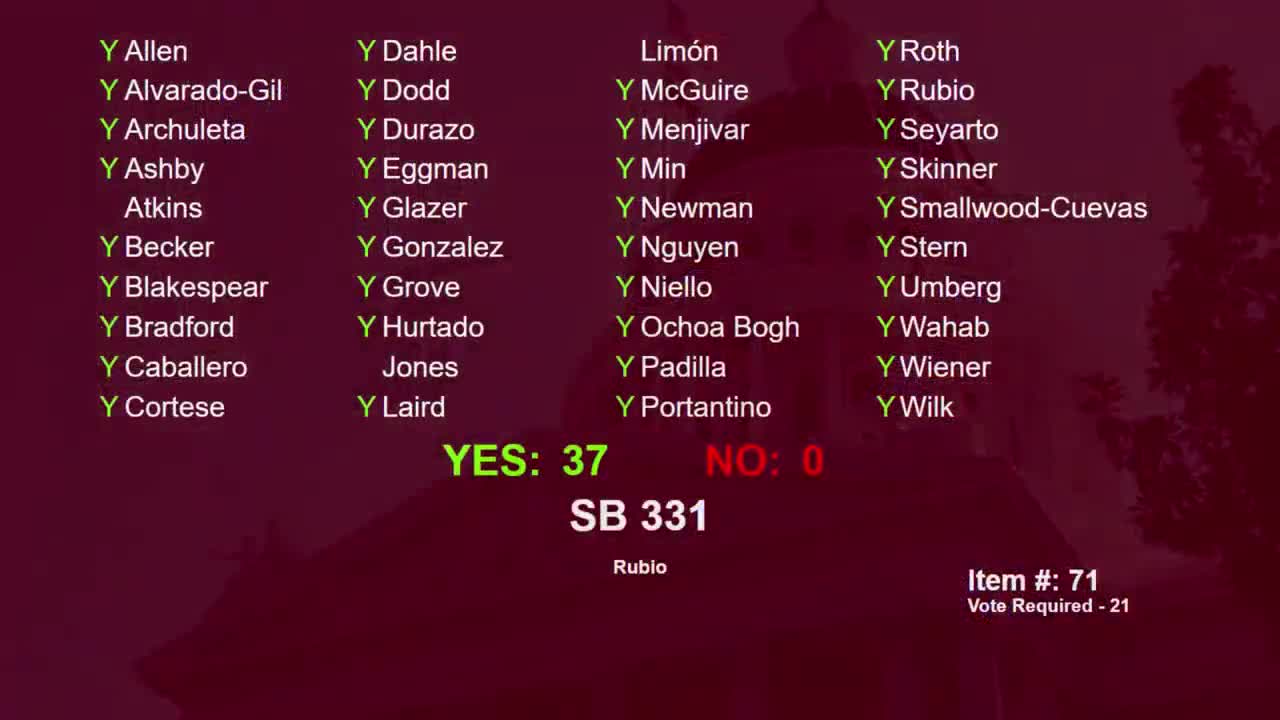
Bill Author