SB 381: Electric bicycles: study.
- Session Year: 2023-2024
- House: Senate
- Latest Version Date: 2023-10-13
Current Status:
Passed
(2023-10-13: Chaptered by Secretary of State. Chapter 869, Statutes of 2023.)
Introduced
In Committee
First Chamber
In Committee
Second Chamber
Enacted
What does this bill do?
The bill directs the Mineta Transportation Institute at San Jose State University to study electric bicycles and report the findings to state lawmakers, affecting e-bike riders, policymakers, and manufacturers. The study must examine crash and injury data, factors linked to crashes, safety of parts and batteries, manufacturing and sales patterns, laws and policies used elsewhere, and recommend state actions to improve e-bike safety and encourage safe use.
The summary is provided by generative AI which can make mistakes. For original language, please view the details in the table below.
Existing law defines an electric bicycle to mean a bicycle equipped with fully operable pedals and an electric motor of less than 750 watts, and subjects a person riding an electric bicycle to provisions of law governing the operation of a bicycle.
This bill would require the Mineta Transportation Institute at San Jose State University, in consultation with relevant stakeholders, to, on or before January 1, 2026, conduct a study on electric bicycles to inform efforts to improve the safety of users of the transportation system, and to submit a report of the findings from the study to the Legislature. The bill would require the study to examine, identify, and analyze available information regarding, among other things, data on injuries, crashes, emergency room visits, and deaths related to bicycles and electric bicycles and best practices for policy to promote safe use of electric bicycles.
Existing law defines an electric bicycle to mean a bicycle equipped with fully operable pedals and an electric motor of less than 750 watts, and subjects a person riding an electric bicycle to provisions of law governing the operation of a bicycle.
This bill would require the Mineta Transportation Institute at San Jose State University University, in consultation with relevant stakeholders, to, on or before January 1, 2026, conduct a study on electric bicycles to inform efforts to improve the safety of riders and pedestrians, users of the transportation system, and to submit a report of the findings from the study to the Legislature. The bill would require the study to examine or compile, examine, identify, and analyze available information regarding, among other things, data on injuries, accidents, crashes, emergency room visits, and deaths related to bicycles and electronic electric bicycles and data on best practices for safety of regular bicycles versus electric bicycles. best practices for policy to promote safe use of electric bicycles.
Existing law defines an electric bicycle to mean a bicycle equipped with fully operable pedals and an electric motor of less than 750 watts, and subjects a person riding an electric bicycle to provisions of law governing the operation of a bicycle.
This bill would require the Mineta Transportation Institute at San Jose State University to, on or before January 1, 2026, conduct a study on electric bicycles to inform efforts to improve the safety of riders and pedestrians, and to submit a report of the findings from the study to the Legislature. The bill would require the study to examine or compile, among other things, data on injuries, accidents, emergency room visits, and deaths related to bicycles and electronic bicycles and data on best practices for safety of regular bicycles versus electric bicycles.
The Legislature finds and declares all of the following:
(a)Electric bicycles not only offer a solution to car dependency and transport poverty, but also help reduce our carbon footprint. As California moves away from its dependence on fossil fuels, we will see a rise in zero-emission modes of transportation, including, but not limited to, electric bicycles.
(b)While the uptake in usage of electric bicycles is necessary to meet our climate goals, it is important to ensure the safety of electric bicycle riders themselves, as well as the safety of other road users. Research suggests that accidents with an electric bicycle can have severe consequences, including head trauma. A key factor behind these results, according to the experts, could be the higher speed.
(c)It is the intent of the Legislature to improve the safe movement and expand usage of electric bicycles as a net-zero transportation mode in the context of Californias existing multimodal transportation system.
(d)It is the intent of the Legislature to allow individuals the freedom to travel by transportation modes that reduce externalities, such as air pollution, climate change, traffic congestion, noise, and public health and safety impacts.
SEC. 2.Section 21214 is added to the Vehicle Code, to read:21214.(a)On or before January 1, 2026, the Mineta Transportation Institute at San Jose State University, in consultation with relevant stakeholders, shall conduct a study on electric bicycles to inform efforts to improve the safety of all users of the transportation system, and submit a report of the findings from the study to the Legislature. The study shall examine, identify, and analyze available information, including, but not be limited to, all of the following topics:
(1)Data on injuries, crashes, emergency room visits, and deaths related to bicycles and electric bicycles.
(2)Factors and circumstances that are correlated with the crashes of bicycles and electric bicycles.
(3)Best practices for policy to promote safe use of electric bicycles.
(4)Laws in other state vehicle codes pertaining to electric bicycles.
(5)Data on the safety impacts from electric bicycle components and accessories including, but not limited to, headlights, speedometers, brakes, tires, bells, and reflectors.
(6)Data on the safety performance of electric bicycle batteries.
(7)Data on the manufacturing of electric bicycles, including, but not limited to, the market of electric bicycles, manufacturer information, sales patterns, and the number of electric bicycles on California roads, including the usage by city and the reasons behind the usage.
(8)Review of policies that other countries with high electric bicycle ridership use to promote the safe use of electric bicycles, including, but not limited to, cyclist and driver training, street infrastructure policy, and insurance or licensing requirements.
(9)Recommendations for state policy to support expanded use of electric bicycles that protects the safety of riders and other road users, including, but not limited to, recommendations on whether there are needed revisions to the Vehicle Code, and improved data collection on electric bicycles.
(b)(1)A report to be submitted pursuant to subdivision (a) shall be submitted in compliance with Section 9795 of the Government Code.
(2)Pursuant to Section 10231.5 of the Government Code, this section is repealed on January 1, 2030.
The Legislature finds and declares all of the following:
(a)Electric bicycles not only offer a solution to car dependency and transport poverty, but also help reduce our carbon footprint. As California moves away from its dependence on fossil fuels, we will see a rise in zero emission zero-emission modes of transportation, including, but not limited to, electric bicycles.
(b)While the uptake in usage of electric bicycles is necessary to meet our climate goals, it is important to ensure the safety of electric bicycle riders themselves, as well as the safety of other road users. Research suggests that accidents with an electric bicycle can have severe consequences, including head trauma. A key factor behind these results, according to the experts, could be the higher speed.
(c)It is the intent of the Legislature to improve the safe movement and expand usage of electric bicycles as a net zero net-zero transportation mode in the context of Californias existing multimodal transportation system.
(d)It is the intent of the Legislature to allow individuals the freedom to travel by transportation modes that reduce externalities, such as air pollution, climate change, traffic congestion, noise, and public health and safety impacts.
SEC. 2.Section 21214 is added to the Vehicle Code, to read:21214.(a)On or before January 1, 2026, the Mineta Transportation Institute at San Jose State University, in consultation with relevant stakeholders, shall conduct a study on electric bicycles to inform efforts to improve the safety of all users of the transportation system, and submit a report of the findings from the study to the Legislature. The study shall examine, identify, and analyze available information, including, but not be limited to, all of the following topics:
(1)Data on injuries, crashes, emergency room visits, and deaths related to bicycles and electric bicycles.
(2)Factors and circumstances that are correlated with the crashes of bicycles and electric bicycles.
(3)Best practices for policy to promote safe use of electric bicycles.
(4)Laws in other state vehicle codes pertaining to electric bicycles.
(5)Data on the safety impacts from electric bicycle components and accessories including, but not limited to, headlights, speedometers, brakes, tires, bells, and reflectors.
(6)Data on the safety performance of electric bicycle batteries.
(7)Data on the manufacturing of electric bicycles, including, but not limited to, the market of electric bicycles, manufacturer information, sales patterns, and the number of electric bicycles on California roads, including the usage by city and the reasons behind the usage.
(8)Review of policies that other countries with high electric bicycle ridership use to promote the safe use of electric bicycles, including, but not limited to, cyclist and driver training, street infrastructure policy, and insurance or licensing requirements.
(9)Recommendations for state policy to support expanded use of electric bicycles that protects the safety of riders and other road users, including, but not limited to, recommendations on whether there are needed revisions to the Vehicle Code, and improved data collection on electric bicycles.
(b)(1)A report to be submitted pursuant to subdivision (a) shall be submitted in compliance with Section 9795 of the Government Code.
(2)Pursuant to Section 10231.5 of the Government Code, this section is repealed on January 1, 2030.
The Legislature finds and declares both all of the following:
(a)Electric bicycles not only offer a solution to car dependency and transport poverty, but also help reduce our carbon footprint. As California moves away from its dependence on fossil fuels, we will see a rise in zero emission modes of transportation, including, but limited to, electric bicycles.
(b)While the uptake in usage of electric bicycles is necessary to meet our climate goals, it is important to ensure rider and pedestrian safety. Research shows the safety of electric bicycle riders themselves, as well as the safety of other road users. Research suggests that accidents with an electric bicycle have more severe consequences than with a regular bicycle. Head trauma is significantly higher, although a helmet is much more frequently used. The main culprit can have severe consequences, including head trauma. A key factor behind these results, according to the experts, is the much could be the higher speed.
(c)It is the intent of the Legislature to improve the safe movement and expand usage of electric bicycles as a net zero transportation mode in the context of Californias existing multimodal transportation system.
(d)It is the intent of the Legislature to allow individuals the freedom to travel by transportation modes that reduce externalities, such as air pollution, climate change, traffic congestion, noise, and public health and safety impacts.
SEC. 2.Section 21214 is added to the Vehicle Code, to read:21214.(a)On or before January 1, 2026, the Mineta Transportation Institute at San Jose State University University, in consultation with relevant stakeholders, shall conduct a study on electric bicycles to inform efforts to improve the safety of riders and pedestrians, all users of the transportation system, and submit a report of the findings from the study to the Legislature. The study shall examine or compile examine, identify, and analyze available information, including, but not be limited to, all of the following: following topics:
(1)Data on injuries, accidents, crashes, emergency room visits, and deaths related to bicycles and electronic electric bicycles.
(2)Data comparing the injury patterns between bicycles and electric bicycles in California.(3)Data on best practices for safety of regular bicycles versus electric bicycles.(4)Review of all laws in the code pertaining to electric bicycles.(5)Recommended accessories, including, but not limited to, headlights, speedometers, brakes, bells, reflectors, and helmets, and how having these accessories help to provide safety.(2)Factors and circumstances that are correlated with the crashes of bicycles and electric bicycles.
(3)Best practices for policy to promote safe use of electric bicycles.
(4)Laws in other state vehicle codes pertaining to electric bicycles.
(5)Data on the safety impacts from electric bicycle components and accessories including, but not limited to, headlights, speedometers, brakes, tires, bells, and reflectors.
(6)Data on the safety performance of electric bicycle batteries.
(6)(7)Data on the manufacturing of electric bicycles, including, but not limited to, the market of electric bicycles, manufacturer information, sales patterns, and the number of electric bicycles on California roads, including the usage by city and the reasons behind the usage.
(7)Data on other countries with high electric bicycles usage, including a review of policy mechanisms those countries use to regulate and promote the safe use of electric bicycles and what California can learn from them.(8)Review of policies that other countries with high electric bicycle ridership use to promote the safe use of electric bicycles, including, but not limited to, cyclist and driver training, street infrastructure policy, and insurance or licensing requirements.
(9)Recommendations for state policy to support expanded use of electric bicycles that protects the safety of riders and other road users, including, but not limited to, recommendations on whether there are needed revisions to the Vehicle Code, and improved data collection on electric bicycles.
(b)(1)A report to be submitted pursuant to subdivision (a) shall be submitted in compliance with Section 9795 of the Government Code.
(2)Pursuant to Section 10231.5 of the Government Code, this section is repealed on January 1, 2030.
The Legislature finds and declares both of the following:
(a)Electric bicycles not only offer a solution to car dependency and transport poverty, but also help reduce our carbon footprint. As California moves away from its dependence on fossil fuels, we will see a rise in zero emission modes of transportation, including, but limited to, electric bicycles.
(b)While the uptake in usage of electric bicycles is necessary to meet our climate goals, it is important to ensure rider and pedestrian safety. Research shows that accidents with an electric bicycle have more severe consequences than with a regular bicycle. Head trauma is significantly higher, although a helmet is much more frequently used. The main culprit behind these results, according to the experts, is the much higher speed.
SEC. 2.Section 21214 is added to the Vehicle Code, to read:21214.(a)On or before January 1, 2026, the Mineta Transportation Institute at San Jose State University shall conduct a study on electric bicycles to inform efforts to improve the safety of riders and pedestrians, and submit a report of the findings from the study to the Legislature. The study shall examine or compile information, including, but not be limited to, all of the following:
(1)Data on injuries, accidents, emergency room visits, and deaths related to bicycles and electronic bicycles.
(2)Data comparing the injury patterns between bicycles and electric bicycles in California.
(3)Data on best practices for safety of regular bicycles versus electric bicycles.
(4)Review of all laws in the code pertaining to electric bicycles.
(5)Recommended accessories, including, but not limited to, headlights, speedometers, brakes, bells, reflectors, and helmets, and how having these accessories help to provide safety.
(6)Data on the manufacturing of electric bicycles, including, but not limited to, the market of electric bicycles, manufacturer information, sales patterns, and the number of electric bicycles on California roads, including the usage by city and the reasons behind the usage.
(7)Data on other countries with high electric bicycles usage, including a review of policy mechanisms those countries use to regulate and promote the safe use of electric bicycles and what California can learn from them.
(b)(1)A report to be submitted pursuant to subdivision (a) shall be submitted in compliance with Section 9795 of the Government Code.
(2)Pursuant to Section 10231.5 of the Government Code, this section is repealed on January 1, 2030.
|
Date
|
Status
|
|---|---|
| Oct 13, 2023 | Chaptered by Secretary of State. Chapter 869, Statutes of 2023. |
| Oct 13, 2023 | Approved by the Governor. |
| Sep 20, 2023 | Enrolled and presented to the Governor at 4:30 p.m. |
| Sep 13, 2023 | Assembly amendments concurred in. (Ayes 39. Noes 0. Page 2738.) Ordered to engrossing and enrolling. |
| Sep 12, 2023 | In Senate. Concurrence in Assembly amendments pending. |
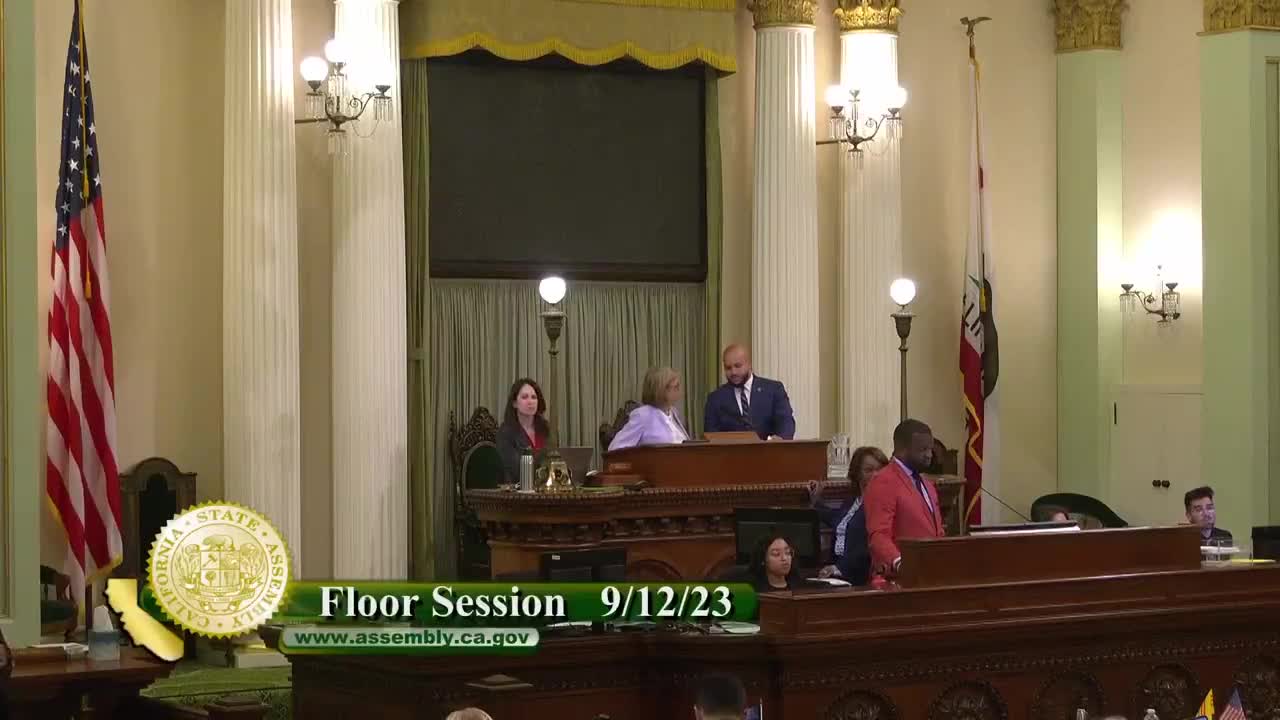
| Sep 12, 2023 | Read third time. Passed. (Ayes 80. Noes 0. Page 3260.) Ordered to the Senate. |
| Sep 5, 2023 | Read second time. Ordered to third reading. |
| Sep 1, 2023 | From committee: Do pass. (Ayes 16. Noes 0.) (September 1). |
| Aug 16, 2023 | August 16 set for first hearing. Placed on suspense file. |
| Jul 6, 2023 | From committee: Do pass and re-refer to Com. on APPR. with recommendation: To consent calendar. (Ayes 15. Noes 0.) (July 5). Re-referred to Com. on APPR. |
| Jun 19, 2023 | From committee with author's amendments. Read second time and amended. Re-referred to Com. on TRANS. |
| May 4, 2023 | Referred to Com. on TRANS. |
| Apr 27, 2023 | In Assembly. Read first time. Held at Desk. |
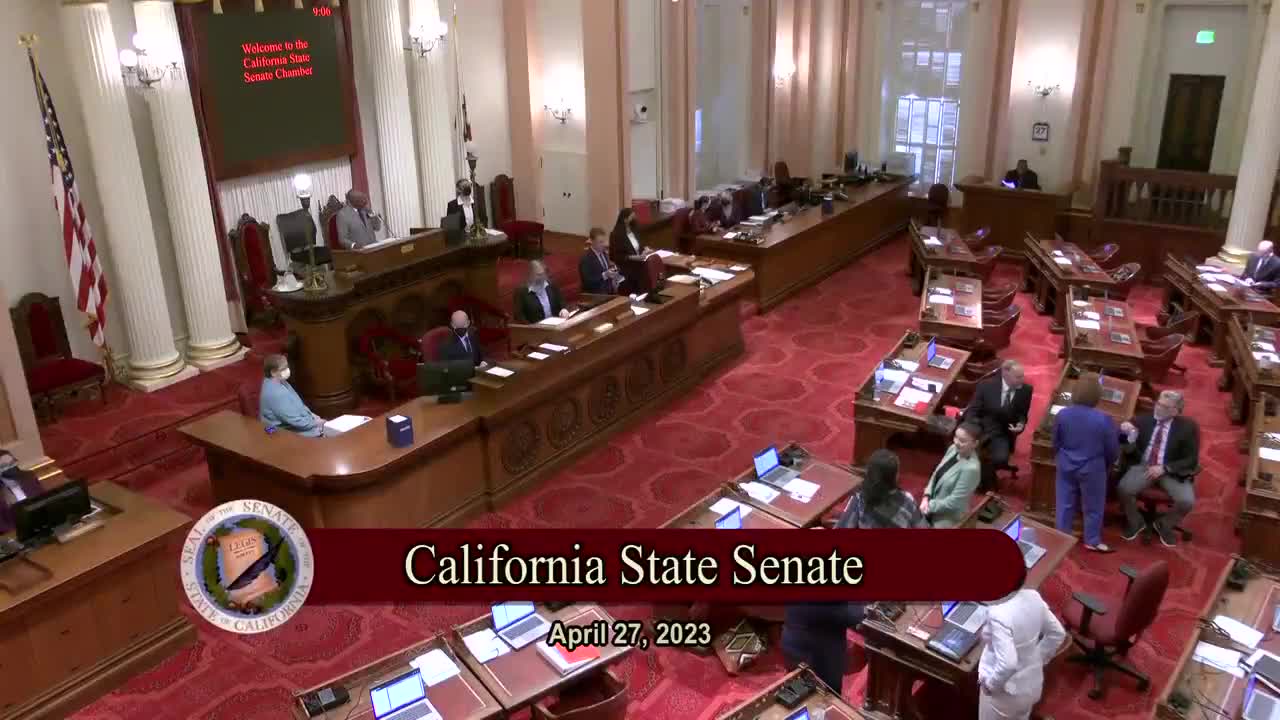
| Apr 27, 2023 | Read third time. Passed. (Ayes 38. Noes 0. Page 921.) Ordered to the Assembly. |
| Apr 18, 2023 | Read second time. Ordered to third reading. |
| Apr 17, 2023 | From committee: Do pass. (Ayes 6. Noes 0. Page 746.) (April 17). |
| Apr 10, 2023 | Set for hearing April 17. |
| Mar 29, 2023 | From committee: Do pass and re-refer to Com. on APPR. (Ayes 14. Noes 0. Page 579.) (March 28). Re-referred to Com. on APPR. |
| Mar 14, 2023 | From committee with author's amendments. Read second time and amended. Re-referred to Com. on TRANS. |
| Mar 7, 2023 | Set for hearing March 28. |
| Feb 22, 2023 | Referred to Com. on TRANS. |
| Feb 10, 2023 | From printer. May be acted upon on or after March 12. |
| Feb 9, 2023 | Introduced. Read first time. To Com. on RLS. for assignment. To print. |
|
Date
|
Description
|
Location
|
Votes
|
|
|---|---|---|---|---|
| Sep 13, 2023 | Unfinished Business SB381 Min et al. Concurrence | Senate Floor |
Passed |
|
| Sep 12, 2023 | SB 381 Min Senate Third Reading By Davies | Assembly Floor |
Passed |
|
| Sep 1, 2023 | Do pass. | Assembly Standing Committee on Appropriations |
Passed |
|
| Jul 5, 2023 | Do pass and be re-referred to the Committee on [Appropriations] with recommendation: To Consent Calendar | Assembly Standing Committee on Transportation |
Passed |
|
| Apr 27, 2023 | Senate 3rd Reading SB381 Min | Senate Floor |
Passed |
|
| Apr 17, 2023 | Do pass | Senate Standing Committee on Appropriations |
Passed |
|
| Mar 28, 2023 | Do pass, but first be re-referred to the Committee on [Appropriations] | Senate Standing Committee on Transportation |
Passed |
This list shows positions taken on this bill by organizations on the date displayed, which is linked to the original source.
Positions by individuals are not included.
|
Organization
|
Position
|
Date
|
|---|---|---|
| California Association of Bicycling Organizations | ** Support | |
| city of carlsbad | ** Support | |
| City of Encinitas | ** Support | |
| City Of Half Moon Bay | ** Support | |
| City of Hermosa Beach | ** Support | |
| City Of Huntington Beach | ** Support | |
| City Of Laguna Beach | ** Support | |
| City Of San Diego | ** Support | |
| Orange County Transportation Authority | ** Support | |
| Streets for All | ** Support |
SENATE RULES COMMITTEE Office of Senate Floor Analyses (916) 651-1520 Fax: (916) 327-4478 | SB 381 |
UNFINISHED BUSINESS
Bill No: SB 381
Author: Min (D), et al.
Amended: 6/19/23
Vote: 21
SENATE TRANSPORTATION COMMITTEE: 14-0, 3/28/23
AYES: Gonzalez, Niello, Allen, Becker, Blakespear, Cortese, Dodd, Limón, McGuire, Newman, Nguyen, Seyarto, Umberg, Wahab
NO VOTE RECORDED: Archuleta, Dahle
SENATE APPROPRIATIONS COMMITTEE: 6-0, 4/17/23
AYES: Portantino, Jones, Ashby, Bradford, Seyarto, Wahab
NO VOTE RECORDED: Wiener
SENATE FLOOR: 38-0, 4/27/23
AYES: Allen, Archuleta, Ashby, Atkins, Becker, Blakespear, Bradford, Caballero, Cortese, Dahle, Dodd, Durazo, Eggman, Glazer, Gonzalez, Grove, Hurtado, Jones, Laird, Limón, McGuire, Menjivar, Min, Newman, Niello, Ochoa Bogh, Padilla, Portantino, Roth, Rubio, Seyarto, Skinner, Smallwood-Cuevas, Stern, Umberg, Wahab, Wiener, Wilk
NO VOTE RECORDED: Alvarado-Gil, Nguyen
ASSEMBLY FLOOR: 80-0, 9/12/23 - See last page for vote
SUBJECT: Electric bicycles: study
SOURCE: Author
DIGEST:
This bill requires the Mineta Transportation Institute at San Jose State University to conduct a study on electric bicycles and the safety of riders and pedestrians by January 1, 2026.
Assembly Amendments
make technical changes to the legislative findings and declarations and add a coauthor.
ANALYSIS:
Existing law:
- Defines an electric bicycle as a bicycle with fully operable pedals and an electric motor of less than 750 watts. Creates three classifications of electric bicycles (e-bikes) based on the ability for motors to achieve high speeds and replace pedaling. (Vehicle Code §312.5)
- Requires riders of e-bikes to follow the same rules of the road as standard bicycles.
This bill:
- Requires the Mineta Transportation Institute at San Jose State University, in consultation with relevant stakeholders, to conduct a study on electric bicycles to inform of efforts to improve the safety of all users of the transportation system and submit a report to the Legislature by January 1, 2026. The study shall examine, identify, and analyze information and data on:
- Injuries, crashes, emergency room visits, and deaths related to bicycles and e-bikes;
- Factors and circumstances that are correlated with the crashes of bicycles and e-bikes;
- Best practices for policy to promote safe use of e-bikes;
- Laws in other state vehicle codes pertaining to e-bikes;
- The safety impacts from e-bike components and accessories such as headlights, speedometers, brakes, tires, bells, and reflectors;
- The safety performance of e-bike batteries;
- The manufacturing of e-bikes including the market, manufacture information, sales patterns, and the number of e-bikes on California roads, including usage by city and the reasons behind the usage;
- Policies that other countries with high e-bike ridership use to promote the safe use of e-bikes including cyclist and driver training, street infrastructure policy, and insurance or licensing requirements; and,
- Recommendations for state policy to support the expanded use of e-bikes that protects the safety of riders and other road users.
Comments
- Purpose of bill. According to the author, “E-bikes are convenient and play an important role in helping to reduce carbon emissions. But the rise in the popularity and use of e-bikes also creates new challenges, which requires us to rethink the rules that keep our roads safe. The Mineta Transportation Institute at San Jose State University is a respected authority that can study the new safety challenges posed by e-bicycles, and offer concrete solutions to reduce accidents and emergency room visits. It is imperative that we get this right for e-bike enthusiasts of all ages, and also for the local communities looking to the state for guidance.”
- Electric bicycles. E-bikes look like regular bicycles but include an electric motor and battery. E-bikes with pedal assist turn on the motor when the rider pedals. E-bikes with throttles can turn on the motor to propel the bike even when the rider does not pedal. Class one e-bikes are pedal-assist only, with no throttle, and have a maximum assisted speed of 20 mph. Class two e-bikes also have a maximum speed of 20 mph, but are throttle-assisted. Class three e-bikes are pedal-assist only, with no throttle, and attain a maximum assisted speed of 28 mph. Due to the increased speeds, these bikes make it possible to commute longer distances in a short amount of time.
E-bike usage is becoming increasingly popular. During the COVID-19 pandemic, sales of all bikes increased, likely because biking provided a way to exercise and travel outdoors while maintaining social distancing. E-bikes also benefit from the rising cost of gasoline as the value of replacing a car trip helps mitigate the high price of an e-bike. Whatever the cause, e-bike sales grew 145% from 2019 to 2020, more than double the rate of classic bikes, according to the market research firm NPD Group. Most e-bikes are made overseas and imported. Data from the Light Electric Vehicle Association tracking imports to the United States shows that 880,000 were shipped to the U.S. in 2021. There is not robust datasets tracking sales of e-bikes in the U.S. but if only 75% of those imported e-bikes were sold, that would still outpace U.S. sales of electric vehicles in 2021, as reported by the International Energy Agency.
As part of meeting the state’s greenhouse gas reduction goals, the California Air Resources Board set a goal in the 2022 Scoping Plan to reduce vehicle miles traveled (VMT) per capita by 25% below 2019 levels by 2030. As a mode of active transportation, e-bike adoption can help California reach its emission and VMT reduction goals. To that end, the Legislature has acted to create a policy framework for the use and regulations of e-bikes to enable their usage, requiring a person riding an e-bike to follow the same rules of the road as a standard bicyclist and prohibiting the use of class three e-bikes without a helmet or on bike trails not next to a road. - Electric bicycle safety. E-bikes are a relatively new technology and while they operate under the same rules as regular bicycles, they have unique use patterns and safety concerns. Because they are able to quickly achieve relatively high speeds with minimal to moderate physical effort, e-bikes may be particularly attractive in replacing car trips. A commonly reported motivation for purchasing an e-bike is to replace car trips (MacArthur, 2018), but only a few studies quantify the car substitution rate, ranging from 11 to 46% (Fitch, 2019). However e-bikes’ speed also has safety drawbacks. The U.S. Consumer Product Safety Commission issued a report that found e-bikes accounted for 9 percent of micromobility injuries; and e-bike related injuries rose from 7,700 in 2017 to 27,700 in 2019. According to an analysis of data in the National Electronic Injury Surveillance System, accidents involving e-bikes are more likely to result in serious injuries than traditional pedal-powered bicycles; a collision while operating an e-bike is more likely to result in hospitalization, and those operating e-bikes are three times more likely to hit a pedestrian. The difference in injury patterns involved in e-bike and pedal bike collisions warrants further study to determine if there are policy options that can promote safer operation of e-bikes.
- The Mineta Transportation Institute (MTI). The MTI is a research and training unit at San Jose State University established by Congress in 1991 as part of the Intermodal Surface Transportation Efficiency Act. The Institute is funded through the US Department of Transportation, the US Department of Homeland Security, the California Department of Transportation, and public and private grants. They lead the California State University Transportation Consortium research program which studies congestion relief, trade corridor enhancements, improved transit and rail, pedestrian and cyclist safety projects, and maintenance and rehabilitation for California’s road and bridge infrastructure. Under SB 1 (Beall, Chapter 5, Statutes of 2017), $2 million annually is budgeted to the CSU system to conduct transportation research, training, and workforce development. MTI receives and administers this funding, directing a competitive CSU-wide process to identify specific research projects aligned with SB 1 priorities.
FISCAL EFFECT: Appropriation: No Fiscal Com.: Yes Local: No
According to the Assembly Appropriations Committee, MTI estimates one-time costs of $75,000 to $100,000 to conduct the study. MTI indicates it would likely use funds from the $2 million annual appropriation to California State University (CSU) from the Road Maintenance and Rehabilitation Account; however, should MTI not receive this state funding, it would pay for the research required by this bill with other funds available to it, such as those provided by the United States Department of Transportation.
SUPPORT: (Verified 9/8/23)
California Association of Bicycling Organizations
City of Carlsbad
City of Encinitas
City of Halfmoon Bay
City of Hermosa Beach
City of Huntington Beach
City of Laguna Beach
City of San Diego
Orange County Transportation Authority
Streets for All
OPPOSITION: (Verified 9/8/23)
ASSEMBLY FLOOR: 80-0, 9/12/23
AYES: Addis, Aguiar-Curry, Alanis, Alvarez, Arambula, Bains, Bauer-Kahan, Bennett, Berman, Boerner, Bonta, Bryan, Calderon, Juan Carrillo, Wendy Carrillo, Cervantes, Chen, Connolly, Megan Dahle, Davies, Dixon, Essayli, Flora, Mike Fong, Vince Fong, Friedman, Gabriel, Gallagher, Garcia, Gipson, Grayson, Haney, Hart, Holden, Hoover, Irwin, Jackson, Jones-Sawyer, Kalra, Lackey, Lee, Low, Lowenthal, Maienschein, Mathis, McCarty, McKinnor, Muratsuchi, Stephanie Nguyen, Ortega, Pacheco, Papan, Jim Patterson, Joe Patterson, Pellerin, Petrie-Norris, Quirk-Silva, Ramos, Rendon, Reyes, Luz Rivas, Rodriguez, Blanca Rubio, Sanchez, Santiago, Schiavo, Soria, Ta, Ting, Valencia, Villapudua, Waldron, Wallis, Ward, Weber, Wicks, Wilson, Wood, Zbur, Robert Rivas
Prepared by: Jacob O'Connor / TRANS. / (916) 651-4121
9/12/23 19:41:13
**** END ****
SENATE THIRD READING
STR Bill Id:SB 381
Author:(Min)
As Amended Ver:June 19, 2023
Majority vote
SUMMARY
Requires the Mineta Transportation Institute at San Jose State University, in consultation with relevant stakeholders, to conduct a study on electric bicycles and the safety of riders and pedestrians by January 1, 2026.
Major Provisions
- Requires the Mineta Transportation Institute at San Jose State University (MTI), in consultation with relevant stakeholders, to conduct a study on electric bicycles to inform of efforts to improve the safety of all users of the transportation system and submit a report to the Legislature by January 1, 2026. The study shall examine, identify, and analyze information and data on:
- Injuries, crashes, emergency room visits, and deaths related to bicycles and e-bikes;
- Factors and circumstances that are correlated with the crashes of bicycles and e-bikes;
- Best practices for policy to promote safe use of e-bikes;
- Laws in other state vehicle codes pertaining to e-bikes;
- The safety impacts from e-bike components and accessories such as headlights, speedometers, brakes, tires, bells, and reflectors;
- The safety performance of e-bike batteries;
- The manufacturing of e-bikes including the market, manufacture information, sales patterns, and the number of e-bikes on California roads, including usage by city and the reasons behind the usage;
- Policies that other countries with high e-bike ridership use to promote the safe use of e-bikes including cyclist and driver training, street infrastructure policy, and insurance or licensing requirements; and,
- Recommendations for state policy to support the expanded use of e-bikes that protects the safety of riders and other road users.
COMMENTS
In California, the transportation sector is the largest contributor of greenhouse gas (GHG) emissions and is responsible for about 40% of the state's emissions with light duty passenger vehicles being the single largest contributor. The Legislature has set a number of goals to reduce greenhouse (GHG) emissions and address climate change. The Global Warming Solutions Act of 2006 [AB 32 (Nuñéz), Chapter 488, Statutes of 2006] and subsequent companion legislation SB 32 (Pavley), Chapter 249, Statutes of 2016, requires California to reduce statewide GHG emissions to 40% below the 1990 level by 2030.
Reducing the number of miles that people drive everyday can have a significant impact on reducing GHG emissions. Providing alternative modes of transportation such as public transportation using buses and light rail or other shared ride approaches could significantly reduce the number of vehicle miles traveled (VMT) in California. California has targeted a 15% reduction in VMT by 2050 as part of its larger strategy to reduce GHG emissions 80% from 1990 levels by 2050.
Electric bicycles have become an increasingly popular mode of travel around the world and are increasingly a popular option to reduce personal car trips. According to the US Bureau of Transportation statistics, more than half of all trips in the US are under three miles. According to the University of Oxford study, The Climate Change Mitigation Effects of Daily Active Travel in Cities, choosing to use a bike just once a day can slash an individual's transportation emissions by 67%.
Electric bicycles are outselling electric cars. According to Kelly Blue Book, 800,000 electric cars were purchased in the United States in 2022. Electric bicycle imports, meanwhile, were 1.1 million.
As electric bicycle popularity has gone up, so have injuries. The Los Angeles Times reported in January of this year that during the first 10 months of 2022, staffers at Providence Mission Hospital in Mission Viejo documented 198 electric bike injuries, up from just 34 in 2020. To put that in perspective, According to the Office of Traffic Safety (OTS) Crash Rankings, 12,798 people were seriously injured or killed in 2020 by cars in Orange County. 2,866 of those collisions were related to the speed cars were traveling.
Committee comments: Electric bicycles may provide a valuable alternative to replacing car trips and reducing GHG. Because electric bicycles are novel, the likely increase in injuries from these devices may decrease over time as riders become more experienced, In addition, when looking at these injuries, it is important to weigh them against the mode they are replacing which is primarily single-occupancy vehicles. Cars are responsible for 40% of the state's greenhouse gas emissions, and are responsible for the death of over 40,000 Americans a year and cause countless more injuries.
Research has shown that one of the best ways to increase safety for cyclists is to increase the number of cyclists on the road. According to Safety-in-numbers: A Systematic Review and Meta-Analysis of Evidence, a systemic review of studies has found that the crash rate for cyclists goes down as the number of cyclists goes up. This has often been attributed to cars becoming more aware of cyclist on the roads and changing their behavior accordingly.
According to the Author
"E-bikes are rising in popularity and play an important role in helping to reduce carbon emissions. However, the increase in the popularity and use of e-bikes also creates new challenges, which requires us to rethink the rules that keep all users of the transportation system safe. The MTI is a respected authority that can study e-bicycles, and offer concrete solutions to reduce accidents and emergency room visits. It is imperative that we get this right for e-bike enthusiasts of all ages, as well as for the local communities looking to the state for guidance."
Arguments in Support
According to the Orange County Transportation Authority (OCTA), "the use of electric bicycles has been on the rise throughout Orange County. Oftentimes, this transportation mode provides great community benefits like reduction in greenhouse gas emissions, vehicle miles traveled, and overall dependency on a car for traveling. However, this relatively new transportation technology has proven to be dangerous due to the much higher speed they can achieve. The current laws surrounding electric bicycles can also be confusing, specifically on where and when someone can safely operate a specific class of electric bicycles. OCTA has been working with cities throughout the county on providing information to improve the safe operation of electric bicycles, including attending community events, hosting city roundtable discussions, and distributing materials. SB 381 will provide more information on the impacts of operating electric bicycles and insight on other policies that can aid in safe operation."
Arguments in Opposition
None on file
FISCAL COMMENTS
According to Assembly Appropriations Committee, "MTI estimates one-time costs of $75,000 to $100,000 to conduct the study. MTI indicates it would likely use funds from the $2 million annual appropriation to California State University (CSU) from the Road Maintenance and Rehabilitation Account (described below); however, should MTI not receive this state funding, it would pay for the research required by this bill with other funds available to it, such as those provided by the United States Department of Transportation (US DOT)."
VOTES
SENATE FLOOR: 38-0-2
YES: Allen, Archuleta, Ashby, Atkins, Becker, Blakespear, Bradford, Caballero, Cortese, Dahle, Dodd, Durazo, Eggman, Glazer, Gonzalez, Grove, Hurtado, Jones, Laird, Limón, McGuire, Menjivar, Min, Newman, Niello, Ochoa Bogh, Padilla, Portantino, Roth, Rubio, Seyarto, Skinner, Smallwood-Cuevas, Stern, Umberg, Wahab, Wiener, Wilk
ABS, ABST OR NV: Alvarado-Gil, Nguyen
ASM TRANSPORTATION: 15-0-0
YES: Friedman, Vince Fong, Alvarez, Berman, Juan Carrillo, Davies, Gipson, Hart, Jackson, Kalra, Stephanie Nguyen, Sanchez, Wallis, Ward, Wicks
ASM APPROPRIATIONS: 16-0-0
YES: Holden, Megan Dahle, Bryan, Calderon, Wendy Carrillo, Dixon, Mike Fong, Hart, Lowenthal, Mathis, Papan, Pellerin, Sanchez, Soria, Weber, Wilson
UPDATED
VERSION: June 19, 2023
CONSULTANT: David Sforza / TRANS. / (916) 319-2093 FN: 0001409
Date of Hearing: August 16, 2023
ASSEMBLY COMMITTEE ON APPROPRIATIONS
Chris Holden, Chair
SBPCA Bill Id:SB 381
Author:(Min) – As Amended Ver:June 19, 2023
Policy Committee: | Transportation | Vote: | 15 - 0 |
|
| ||
|
|
Urgency: No State Mandated Local Program: No Reimbursable: No
SUMMARY:
This bill directs the Mineta Transportation Institute (MTI) at San Jose State University, in consultation with relevant stakeholders, to conduct a study on electric bicycles (e-bikes) to inform efforts to improve the safety of all users of the transportation system, and to submit a report of the findings to the Legislature by January 1, 2026.
FISCAL EFFECT:
MTI estimates one-time costs of $75,000 to $100,000 to conduct the study. MTI indicates it would likely use funds from the $2 million annual appropriation to California State University (CSU) from the Road Maintenance and Rehabilitation Account (described below); however, should MTI not receive this state funding, it would pay for the research required by this bill with other funds available to it, such as those provided by the United States Department of Transportation (US DOT).
COMMENTS:
E-bikes have become increasingly popular in recent years. Unfortunately, so, too, have e-bike-related injuries. The author contends the study required by this bill will help the Legislature identify changes to rules and practices that allow the continued use, and growth in use, of e-bikes, while making the e-biking public safer. According to the author:
E-bikes are rising in popularity and play an important role in helping to reduce carbon emissions. However, the increase in the popularity and use of e-bikes also creates new challenges, which requires us to rethink the rules that keep all users of the transportation system safe. The MTI is a respected authority that can study e-bicycles, and offer concrete solutions to reduce accidents and emergency room visits. It is imperative that we get this right for e-bike enthusiasts of all ages, as well as for the local communities looking to the state for guidance.
The Orange County Transportation Authority writes similarly in support of this bill:
The use of electric bicycles has been on the rise throughout Orange County. Oftentimes, this transportation mode provides great community benefits like reduction in greenhouse gas emissions, vehicle miles traveled, and overall dependency on a car for traveling. However, this relatively new transportation technology has proven to be dangerous due to the much higher speed they can achieve. The current laws surrounding electric bicycles can also be confusing, specifically on where and when someone can safely operate a specific class of electric bicycles. OCTA has been working with cities throughout the county on providing information to improve the safe operation of electric bicycles, including attending community events, hosting city roundtable discussions, and distributing materials. SB 381 will provide more information on the impacts of operating electric bicycles and insight on other policies that can aid in safe operation.
MTI at San Jose State University describes itself as “an organized research and training unit” that “increases mobility for all by improving the safety, efficiency, accessibility, and convenience of our nation’s transportation system. Created by Congress in 1991, MTI receives funding from the federal government, including US DOT, and private sources. In addition, for the past six years, MTI has been chosen by the Chancellor of CSU to administer the $2 million appropriated to the CSU annually from the Road Maintenance and Rehabilitation Account to fund CSU-wide projects on transportation and transportation-related research.
Analysis Prepared by: Jay Dickenson / APPR. / (916) 319-2081
Date of Hearing: July 5, 2023
ASSEMBLY COMMITTEE ON TRANSPORTATION
Laura Friedman, Chair
SBPCA Bill Id:SB 381
Author:(Min) – As Amended Ver:June 19, 2023
SENATE VOTE: 38-0
SUBJECT: Electric bicycles: study
SUMMARY: Requires the Mineta Transportation Institute at San Jose State University, in consultation with relevant stakeholders, to conduct a study on electric bicycles and the safety of riders and pedestrians by January 1, 2026. Specifically, this bill:
- Requires the Mineta Transportation Institute at San Jose State University (MTI), in consultation with relevant stakeholders, to conduct a study on electric bicycles to inform of efforts to improve the safety of all users of the transportation system and submit a report to the Legislature by January 1, 2026. The study shall examine, identify, and analyze information and data on:
- Injuries, crashes, emergency room visits, and deaths related to bicycles and e-bikes;
- Factors and circumstances that are correlated with the crashes of bicycles and e-bikes;
- Best practices for policy to promote safe use of e-bikes;
- Laws in other state vehicle codes pertaining to e-bikes;
- The safety impacts from e-bike components and accessories such as headlights, speedometers, brakes, tires, bells, and reflectors;
- The safety performance of e-bike batteries;
- The manufacturing of e-bikes including the market, manufacture information, sales patterns, and the number of e-bikes on California roads, including usage by city and the reasons behind the usage;
- Policies that other countries with high e-bike ridership use to promote the safe use of e-bikes including cyclist and driver training, street infrastructure policy, and insurance or licensing requirements; and,
- Recommendations for state policy to support the expanded use of e-bikes that protects the safety of riders and other road users.
EXISTING LAW:
- Defines an electric bicycle as a bicycle with fully operable pedals and an electric motor of less than 750 watts. Creates three classifications of electric bicycles (e-bikes) based on the ability for motors to achieve high speeds and replace pedaling. Class 1 and 2 electric bicycles have a maximum pedal assist speed of 20 miles per hour (mph), while Class 2 electric bicycles can have throttle assistance up to 20 mph. Class 3 electric bicycles have a maximum pedal assist of 28 mph. (Vehicle Code Section (VEH) 312.5)
- Requires riders of Class 3 electric bicycles to be 16 years of age or older and requires riders to wear a helmet regardless of age. Requires Class 3 electric bicycles to be equipped with a speedometer. (VEH 34016 and 312.5)
- Specifies that a person operating an electric bicycle is not subject to the provisions of the vehicle code related to financial responsibility, driver’s licenses, registration, and license plate requirements, and that electric bicycles are not a motor vehicle. (VEH 34016)
- Prohibits a person from changing the speed capability of the electric bicycle. (VEH 34016)
- Defines “bicycle” to include electric bicycles. (VEH 231)
- Permits a transit development board, or a public agency, including the Regents of the University of California and the Trustees of the California State University, to adopt rules or regulations to restrict the use of electric bicycles. (VEH 21113).
- Authorizes local authorities, by ordinance, from regulating the parking and operation of bicycles on pedestrian or bicycle facilities, provided such regulations are not in conflict with the provisions of the vehicle code. (VEH 21206).
- Requires an operator of a bicycle to obey all the provisions of traffic control devices that are applicable to the driver of a vehicle, except starting in 2024 may proceed through an intersection when the “walk” sign is on or if there is an official traffic control device signal for bicycles. (VEH 21456.2)
- Provides that all of the rules of the road apply to bicycles, except those provisions which by their very nature cannot apply to a bicycle. (VC 21200).
FISCAL EFFECT: According to the Senate Appropriations Committee, MTI estimates costs in the range of $125,000 to $150,000 to conduct the e-bike research project and report study findings to the Legislature. (special funds, federal funds, see Staff Comments)
COMMENTS:
In California, the transportation sector is the largest contributor of greenhouse gas (GHG) emissions and is responsible for about 40% of the state’s emissions with light duty passenger vehicles being the single largest contributor. The Legislature has set a number of goals to reduce greenhouse (GHG) emissions and address climate change. The Global Warming Solutions Act of 2006 [AB 32 (Nunez), Chapter 488, Statutes of 2006] and subsequent companion legislation SB 32 (Pavley), Chapter 249, Statutes of 2016, requires California to reduce statewide GHG emissions to 40% below the 1990 level by 2030.
Reducing the number of miles that people drive everyday can have a significant impact on reducing GHG emissions. Providing alternative modes of transportation such as public transportation using buses and light rail or other shared ride approaches could significantly reduce the number of vehicle miles traveled (VMT) in California. California has targeted a 15% reduction in VMT by 2050 as part of its larger strategy to reduce GHG emissions 80% from 1990 levels by 2050.
Electric bicycles have become an increasingly popular mode of travel around the world and are increasingly a popular option to reduce personal car trips. According to the US Bureau of Transportation statistics, more than half of all trips in the US are under three miles. According to the University of Oxford study, The Climate Change Mitigation Effects of Daily Active Travel in Cities, choosing to use a bike just once a day can slash an individual’s transportation emissions by 67%.
Electric bicycles are outselling electric cars. According to Kelly Blue Book, 800,000 electric cars were purchased in the United States in 2022. Electric bicycle imports, meanwhile, were 1.1 million.
According to the author, “E-bikes are rising in popularity and play an important role in helping to reduce carbon emissions. However, the increase in the popularity and use of e-bikes also creates new challenges, which requires us to rethink the rules that keep all users of the transportation system safe. The MTI is a respected authority that can study e-bicycles, and offer concrete solutions to reduce accidents and emergency room visits. It is imperative that we get this right for e-bike enthusiasts of all ages, as well as for the local communities looking to the state for guidance.”
As electric bicycle popularity has gone up, so have injuries. The Los Angeles Times reported in January of this year that during the first 10 months of 2022, staffers at Providence Mission Hospital in Mission Viejo documented 198 electric bike injuries, up from just 34 in 2020. To put that in perspective, According to the Office of Traffic Safety (OTS) Crash Rankings, 12,798 people were seriously injured or killed in 2020 by cars in Orange County. 2,866 of those collisions were related to the speed cars were traveling.
Orange County Transportation Authority (OCTA), writing in support of this bill, argues “the use of electric bicycles has been on the rise throughout Orange County. Oftentimes, this transportation mode provides great community benefits like reduction in greenhouse gas emissions, vehicle miles traveled, and overall dependency on a car for traveling. However, this relatively new transportation technology has proven to be dangerous due to the much higher speed they can achieve. The current laws surrounding electric bicycles can also be confusing, specifically on where and when someone can safely operate a specific class of electric bicycles. OCTA has been working with cities throughout the county on providing information to improve the safe operation of electric bicycles, including attending community events, hosting city roundtable discussions, and distributing materials. SB 381 will provide more information on the impacts of operating electric bicycles and insight on other policies that can aid in safe operation.”
Committee Comments: Electric bicycles may provide a valuable alternative to replacing car trips and reducing GHG. Because electric bicycles are novel, the likely increase in injuries from these devices may decrease over time as riders become more experienced, In addition, when looking at these injuries, it is important to weigh them against the mode they are replacing which is primarily single-occupancy vehicles. Cars are responsible for 40% of the state’s greenhouse gas emissions, and are responsible for the death of over 40,000 Americans a year and cause countless more injuries.
Research has shown that one of the best ways to increase safety for cyclists is to increase the number of cyclists on the road. According to Safety-in-numbers: A Systematic Review and Meta-Analysis of Evidence, a systemic review of studies has found that the crash rate for cyclists goes down as the number of cyclists goes up. This has often been attributed to cars becoming more aware of cyclist on the roads and changing their behavior accordingly.
Previous legislation:
AB1909 (Friedman), Chapter 343, Statutes of 2022 removed the authority for local governments to prohibit electric bicycles on bicycle paths or lanes.
AB 1946 (Boerner), Chapter 147, Statutes of 2022 required the California Highway Patrol to develop statewide safety and training programs based on evidence-based practices for uses of e-bikes.
AB 1096 (Chiu), Chapter 568, Statutes of 2015 established the definitions, classification, and requirements for the operation, sale, and manufacturing of e-bikes.
REGISTERED SUPPORT / OPPOSITION:
Support
California Association of Bicycling Organizations
City of Carlsbad
City of Encinitas
City of Hermosa Beach
City of Huntington Beach
Orange County Transportation Authority
Streets for All
Opposition
None on file
Analysis Prepared by: David Sforza / TRANS. / (916) 319-2093
SENATE RULES COMMITTEE Office of Senate Floor Analyses (916) 651-1520 Fax: (916) 327-4478 | SB 381 |
THIRD READING
Bill No: SB 381
Author: Min (D)
Amended: 3/14/23
Vote: 21
SENATE TRANSPORTATION COMMITTEE: 14-0, 3/28/23
AYES: Gonzalez, Niello, Allen, Becker, Blakespear, Cortese, Dodd, Limón, McGuire, Newman, Nguyen, Seyarto, Umberg, Wahab
NO VOTE RECORDED: Archuleta, Dahle
SENATE APPROPRIATIONS COMMITTEE: 6-0, 4/17/23
AYES: Portantino, Jones, Ashby, Bradford, Seyarto, Wahab
NO VOTE RECORDED: Wiener
SUBJECT: Electric bicycles: study
SOURCE: Author
DIGEST:
This bill requires the Mineta Transportation Institute at San Jose State University to conduct a study on electric bicycles and the safety of riders and pedestrians by January 1, 2026.
ANALYSIS:
Existing law:
- Defines an electric bicycle as a bicycle with fully operable pedals and an electric motor of less than 750 watts. Creates three classifications of electric bicycles (e-bikes) based on the ability for motors to achieve high speeds and replace pedaling. (Vehicle Code §312.5)
- Requires riders of e-bikes to follow the same rules of the road as standard bicycles.
This bill requires the Mineta Transportation Institute at San Jose State University, in consultation with relevant stakeholders, to conduct a study on electric bicycles to inform of efforts to improve the safety of all users of the transportation system and submit a report to the Legislature by January 1, 2026. The study shall examine, identify, and analyze information and data on:
- Injuries, crashes, emergency room visits, and deaths related to bicycles and e-bikes;
- Factors and circumstances that are correlated with the crashes of bicycles and e-bikes;
- Best practices for policy to promote safe use of e-bikes;
- Laws in other state vehicle codes pertaining to e-bikes;
- The safety impacts from e-bike components and accessories such as headlights, speedometers, brakes, tires, bells, and reflectors;
- The safety performance of e-bike batteries;
- The manufacturing of e-bikes including the market, manufacture information, sales patterns, and the number of e-bikes on California roads, including usage by city and the reasons behind the usage;
- Policies that other countries with high e-bike ridership use to promote the safe use of e-bikes including cyclist and driver training, street infrastructure policy, and insurance or licensing requirements; and
- Recommendations for state policy to support the expanded use of e-bikes that protects the safety of riders and other road users.
Comments
- Purpose of bill. According to the author, “E-bikes are convenient and play an important role in helping to reduce carbon emissions. But the rise in the popularity and use of e-bikes also creates new challenges, which requires us to rethink the rules that keep our roads safe. The Mineta Transportation Institute at San Jose State University is a respected authority that can study the new safety challenges posed by e-bicycles, and offer concrete solutions to reduce accidents and emergency room visits. It is imperative that we get this right for e-bike enthusiasts of all ages, and also for the local communities looking to the state for guidance.”
- Electric bicycles. Electric bicycles (e-bikes) look like regular bicycles but include an electric motor and battery. E-bikes with pedal assist turn on the motor when the rider pedals. E-bikes with throttles can turn on the motor to propel the bike even when the rider does not pedal. Class one e-bikes are pedal-assist only, with no throttle, and have a maximum assisted speed of 20 mph. Class two e-bikes also have a maximum speed of 20 mph, but are throttle-assisted. Class three e-bikes are pedal-assist only, with no throttle, and attain a maximum assisted speed of 28 mph. Due to the increased speeds, these bikes make it possible to commute longer distances in a short amount of time.
E-bike usage is becoming increasingly popular. During the COVID-19 pandemic, sales of all bikes increased, likely because biking provided a way to exercise and travel outdoors while maintaining social distancing. E-bikes also benefit from the rising cost of gasoline as the value of replacing a car trip helps mitigate the high price of an e-bike. Whatever the cause, e-bike sales grew 145% from 2019 to 2020, more than double the rate of classic bikes, according to the market research firm NPD Group. Most e-bikes are made overseas and imported. Data from the Light Electric Vehicle Association tracking imports to the United States shows that 880,000 were shipped to the U.S. in 2021. There is not robust datasets tracking sales of e-bikes in the U.S. but if only 75% of those imported e-bikes were sold, that would still outpace U.S. sales of electric vehicles in 2021, as reported by the International Energy Agency.
As part of meeting the state’s greenhouse gas reduction goals, the California Air Resources Board set a goal in the 2022 Scoping Plan to reduce vehicle miles traveled (VMT) per capita by 25% below 2019 levels by 2030. As a mode of active transportation, e-bike adoption can help California reach its emission and VMT reduction goals. To that end, the Legislature has acted to create a policy framework for the use and regulations of e-bikes to enable their usage, requiring a person riding an e-bike to follow the same rules of the road as a standard bicyclist and prohibiting the use of class three e-bikes without a helmet or on bike trails not next to a road.
- Electric bicycle safety. E-bikes are a relatively new technology and while they operate under the same rules as regular bicycles, they have unique use patterns and safety concerns. Because they are able to quickly achieve relatively high speeds with minimal to moderate physical effort, e-bikes may be particularly attractive in replacing car trips. A commonly reported motivation for purchasing an e-bike is to replace car trips (MacArthur, 2018), but only a few studies quantify the car substitution rate, ranging from 11 to 46% (Fitch, 2019). However e-bikes’ speed also has safety drawbacks. The U.S. Consumer Product Safety Commission issued a report that found e-bikes accounted for 9 percent of micromobility injuries; and e-bike related injuries rose from 7,700 in 2017 to 27,700 in 2019. According to an analysis of data in the National Electronic Injury Surveillance System, accidents involving e-bikes are more likely to result in serious injuries than traditional pedal-powered bicycles; a collision while operating an e-bike is more likely to result in hospitalization, and those operating e-bikes are three times more likely to hit a pedestrian. The difference in injury patterns involved in e-bike and pedal bike collisions warrants further study to determine if there are policy options that can promote safer operation of e-bikes.
- The Mineta Transportation Institute (MTI). The MTI is a research and training unit at San Jose State University established by Congress in 1991 as part of the Intermodal Surface Transportation Efficiency Act. The Institute is funded through the US Department of Transportation, the US Department of Homeland Security, the California Department of Transportation, and public and private grants. They lead the California State University Transportation Consortium research program which studies congestion relief, trade corridor enhancements, improved transit and rail, pedestrian and cyclist safety projects, and maintenance and rehabilitation for California’s road and bridge infrastructure. Under SB 1 (Beall, Chapter 5, Statutes of 2017) $2 million annually is budgeted to the CSU system to conduct transportation research, training, and workforce development. MTI receives and administers this funding, directing a competitive CSU-wide process to identify specific research projects aligned with SB 1 priorities.
FISCAL EFFECT: Appropriation: No Fiscal Com.: Yes Local: No
According to the Senate Appropriations Committee, the MTI estimates costs in the range of $125,000 to $150,000 to conduct the e-bike research project and report study findings to the Legislature. (special funds, federal funds)
SUPPORT: (Verified 4/19/23)
California Association of Bicycling Organizations
City of Encinitas
City of Hermosa Beach
City of Huntington Beach
Orange County Transportation Authority
OPPOSITION: (Verified 4/19/23)
None received
Prepared by: Jacob O’Connor / TRANS. / (916) 651-4121
4/19/23 15:20:05
**** END ****
SENATE COMMITTEE ON
Senator Anthony Portantino, Chair
2023 - 2024 Regular Session
SB 381 (Min) - Electric bicycles: study
Version: | Policy Vote: |
Urgency: | Mandate: |
Hearing Date: | Consultant: |
Bill Summary:
SB 381 would require the Mineta Transportation Institute at San Jose State University (MTI), in consultation with relevant stakeholders, to conduct a study on electric bicycles to inform efforts to improve safety, and submit a report of findings to the Legislature by January 1, 2026, as specified.
Fiscal Impact:
- MTI estimates costs in the range of $125,000 to $150,000 to conduct the e-bike research project and report study findings to the Legislature. (special funds, federal funds, see Staff Comments)
Background:
Existing law defines an electric bicycle as a bicycle with fully operable pedals and an electric motor of less than 750 watts. Electric bicycles (e-bikes) look like regular bicycles but include an electric motor and battery. E-bikes with pedal assist turn on the motor when the rider pedals, and e-bikes with throttles can turn on the motor to propel the bike even when the rider does not pedal. Existing law specifies three classifications of e-bikes as follows: class one e-bikes are pedal-assist only, with no throttle, and have a maximum assisted speed of 20 mph; class two e-bikes also have a maximum speed of 20 mph, but are throttle-assisted, and; class three e-bikes are pedal-assist only, with no throttle, and have a maximum assisted speed of 28 mph. Due to the increased speeds, e-bikes make it possible to commute longer distances in a shorter amount of time than traditional bicycles, but they can also present a potential safety risk to riders and other road users.
The MTI is a research and training unit at San Jose State University established by Congress in 1991 as part of the Intermodal Surface Transportation Efficiency Act. The Institute is funded through the US Department of Transportation, the US Department of Homeland Security, the California Department of Transportation (Caltrans), and public and private grants. They lead the California State University (CSU) Transportation Consortium research program which studies congestion relief, trade corridor enhancements, improved transit and rail, pedestrian and cyclist safety projects, and maintenance and rehabilitation for California’s road and bridge infrastructure. Existing law, pursuant to SB 1 (Beall), Chap. 5/2017, allocates $2 million annually from the Road Maintenance and Repair Account (RMRA) to the CSU system, upon appropriation by the Legislature, to conduct transportation research and transportation-related workforce education, training, and development, as specified. The Secretary of Transportation and the Chairs of the Assembly and Senate Transportation Committee can establish priorities for recommended research. The CSU Chancellor has designated MTI as the lead entity to administer this funding through the 2023 calendar year, and MTI has directed an annual competitive CSU-wide process to identify specific research projects aligned with SB 1 priorities. In addition, a portion of the SB 1 funding is distributed to four specified CSUs for discretionary uses aligned with SB 1 priorities.
Proposed Law:
SB 381 would require MTI, in consultation with relevant stakeholders, to conduct a study on electric bicycles to inform of efforts to improve the safety of all users of the transportation system and submit a report to the Legislature by January 1, 2026. The study shall examine, identify, and analyze information and data on the following:
- Injuries, crashes, emergency room visits, and deaths related to bicycles and e-bikes.
- Factors and circumstances that are correlated with the crashes of bicycles and e-bikes.
- Best practices for policy to promote safe use of e-bikes.
- Laws in other state vehicle codes pertaining to e-bikes.
- Data on the safety impacts from e-bike components and accessories, including headlights, speedometers, brakes, tires, bells, and reflectors.
- Data on the safety performance of e-bike batteries.
- Data on the manufacturing of e-bikes, including the market of e-bikes, manufacturer information, sales patterns, and the number of e-bikes on California roads, including usage by city and the reasons behind the usage.
- Review of policies that other countries with high e-bike ridership use to promote the safe use of e-bikes, including cyclist and driver training, street infrastructure policy, and insurance or licensing requirements.
- Recommendations for state policy to support the expanded use of e-bikes that protects the safety of riders and other road users, as specified.
Related Legislation:
AB 1946 (Boerner Horvath), Chap. 147/2022, required the California Highway Patrol to develop statewide safety and training programs based on evidence-based practices for uses of e-bikes.
AB 1096 (Chiu), Chap.568/2015, established the definitions, classification, and requirements for the operation, sale, and manufacturing of e-bikes.
Staff Comments:
As noted above, MTI currently acts as the lead entity to administer the distribution of SB 1 research funds allocated to the CSU system, but that designation is set to expire after the current calendar year and the Chancellor has not yet determined whether MTI will continue in this capacity or if a different process will be used to determine how these funds are distributed. Staff notes that, regardless of how the funds are distributed going forward, the workload required by SB 381 is an eligible use of SB 1 research funds, and MTI would likely have access to some portion of those funds in order to cover those costs. In addition, MTI was recently awarded $10 million in federal funds, and $5 million in associated matching funds from the state and other partners, through the U.S. Department of Transportation University Transportation Center Program for transportation research, education, workforce development, and technology transfer activities. To the extent SB 1 funding is unavailable, these federal research dollars could potentially be used to fund this bill’s e-bike study requirements.
-- END --
SENATE COMMITTEE ON TRANSPORTATION
Senator Lena Gonzalez, Chair
2023 - 2024 Regular
Bill No: SB 381 Hearing Date: 3/28/2023
Author: | Min | ||
Version: | 3/14/2023 Amended | ||
Urgency: | No | Fiscal: | Yes |
Consultant: | Jacob O'Connor | ||
SUBJECT: Electric bicycles: study
DIGEST: This bill requires the Mineta Transportation Institute at San Jose State University to conduct a study on electric bicycles and the safety of riders and pedestrians by January 1, 2026.
ANALYSIS:
Existing law:
- Defines an electric bicycle as a bicycle with fully operable pedals and an electric motor of less than 750 watts. Creates three classifications of electric bicycles (e-bikes) based on the ability for motors to achieve high speeds and replace pedaling. (Vehicle Code §312.5)
- Requires riders of e-bikes to follow the same rules of the road as standard bicycles.
This bill:
- Requires the Mineta Transportation Institute at San Jose State University, in consultation with relevant stakeholders, to conduct a study on electric bicycles to inform of efforts to improve the safety of all users of the transportation system and submit a report to the Legislature by January 1, 2026. The study shall examine, identify, and analyze information and data on:
- Injuries, crashes, emergency room visits, and deaths related to bicycles and e-bikes;
- Factors and circumstances that are correlated with the crashes of bicycles and e-bikes;
- Best practices for policy to promote safe use of e-bikes;
- Laws in other state vehicle codes pertaining to e-bikes;
- The safety impacts from e-bike components and accessories such as headlights, speedometers, brakes, tires, bells, and reflectors;
- The safety performance of e-bike batteries;
- The manufacturing of e-bikes including the market, manufacture information, sales patterns, and the number of e-bikes on California roads, including usage by city and the reasons behind the usage;
- Policies that other countries with high e-bike ridership use to promote the safe use of e-bikes including cyclist and driver training, street infrastructure policy, and insurance or licensing requirements; and
- Recommendations for state policy to support the expanded use of e-bikes that protects the safety of riders and other road users.
COMMENTS:
- Purpose of bill. According to the author “E-bikes are convenient and play an important role in helping to reduce carbon emissions. But the rise in the popularity and use of e-bikes also creates new challenges, which requires us to rethink the rules that keep our roads safe. The Mineta Transportation Institute at San Jose State University is a respected authority that can study the new safety challenges posed by e-bicycles, and offer concrete solutions to reduce accidents and emergency room visits. It is imperative that we get this right for e-bike enthusiasts of all ages, and also for the local communities looking to the state for guidance.”
- Electric bicycles. Electric bicycles (e-bikes) look like regular bicycles but include an electric motor and battery. E-bikes with pedal assist turn on the motor when the rider pedals. E-bikes with throttles can turn on the motor to propel the bike even when the rider does not pedal. Class one e-bikes are pedal-assist only, with no throttle, and have a maximum assisted speed of 20 mph. Class two e-bikes also have a maximum speed of 20 mph, but are throttle-assisted. Class three e-bikes that are pedal-assist only, with no throttle, and a maximum assisted speed of 28 mph. Due to the increased speeds these bikes make it possible to commute longer distances in a short amount of time.
E-bike usage is becoming increasingly popular. During the COVID-19 pandemic, sales of all bikes increased, likely because biking provided a way to exercise and travel outdoors while maintaining social distancing. E-bikes also benefit from the rising cost of gasoline as the value of replacing a car trip helps mitigate the high price of an e-bike. Whatever the cause, e-bike sales grew 145% from 2019 to 2020, more than double the rate of classic bikes, according to the market research firm NPD Group. Most e-bikes are made overseas and imported. Data from the Light Electric Vehicle Association tracking imports to the United States shows that 880,000 were shipped to the U.S. in 2021. There are not robust datasets tracking sales of e-bikes in the U.S. but if only 75% of those imported e-bikes were sold, that would still outpace U.S. sales of electric vehicles in 2021, as reported by the International Energy Agency.
As part of meeting the state’s greenhouse gas reduction goals, the California Air Resources Board set a goal in the 2022 Scoping Plan to reduce vehicle miles traveled (VMT) per capita by 25% below 2019 levels by 2030. As a mode of active transportation, e-bike adoption can help California reach its emission and VMT reduction goals. To that end, the Legislature has acted to create a policy framework for the use and regulations of e-bikes to enable their usage, requiring a person riding an e-bike to follow the same rules of the road as a standard bicyclist and prohibiting the use of class 3 e-bikes without a helmet or on bike trails not next to a road. - Electric bicycle safety. E-bikes are a relatively new technology and while they operate under the same rules as regular bicycles, they have unique use patterns and safety concerns. Because they are able to quickly achieve relatively high speeds with minimal to moderate physical effort, e-bikes may be particularly attractive in replacing car trips. A commonly reported motivation for purchasing an e-bike is to replace car trips (MacArthur, 2018), but only a few studies quantify the car substitution rate, ranging from 11 to 46% (Fitch, 2019). However e-bikes’ speed also has safety drawbacks. The U.S. Consumer Product Safety Commission issued a report that found e-bikes accounted for 9 percent of micromobility injuries; and e-bike related injuries rose from 7,700 in 2017 to 27,700 in 2019. According to an analysis of data in the National Electronic Injury Surveillance System, accidents involving e-bikes are more likely to result in serious injuries than traditional pedal-powered bicycles; a collision while operating an e-bike is more likely to result in hospitalization, and those operating e-bikes are three times more likely to hit a pedestrian. The difference in injury patterns involved in e-bike and pedal bike collisions warrants further study to determine if there are policy options that can promote safer operation of e-bikes.
- The Mineta Transportation Institute (MTI). The MTI is a research and training unit at San Jose State University established by Congress in 1991 as part of the Intermodal Surface Transportation Efficiency Act. The Institute is funded through the US Department of Transportation, the US Department of Homeland Security, the California Department of Transportation, and public and private grants. They lead the California State University Transportation Consortium research program which studies congestion relief, trade corridor enhancements, improved transit and rail, pedestrian and cyclist safety projects, and maintenance and rehabilitation for California’s road and bridge infrastructure. Under SB 1 (Beall, Chapter 5, Statutes of 2017) $2 million annually is budgeted to the CSU system to conduct transportation research, training, and workforce development. MTI receives and administers this funding, directing a competitive CSU-wide process to identify specific research projects aligned with SB 1 priorities.
Related Legislation:
AB 1946 (Boerner Horvath, Chapter 147, Statutes of 2022) – Required the California Highway Patrol to develop statewide safety and training programs based on evidence-based practices for uses of e-bikes.
AB 1096 (Chiu, Chapter 568, Statutes of 2015) – Established the definitions, classification, and requirements for the operation, sale, and manufacturing of e-bikes.
FISCAL EFFECT: Appropriation: Fiscal Com.: Local:
Unknown
POSITIONS: (Communicated to the committee before noon on Wednesday,
March 22, 2023.)
SUPPORT:
California Association of Bicycling Organizations
City of Huntington Beach
OPPOSITION:
None received
-- END --
Discussed in Hearing
View Older Hearings
Bill Author

Bill Co-Author(s):
