SB 387: State property: sale or lease: broadband development.
- Session Year: 2023-2024
- House: Senate
- Latest Version Date: 2023-10-08
Current Status:
Passed
(2023-10-08: Chaptered by Secretary of State. Chapter 485, Statutes of 2023.)
Introduced
In Committee
First Chamber
In Committee
Second Chamber
Enacted
Existing law authorizes the Department of General Services to lease real property under the jurisdiction of a state agency, department, or district agricultural association if the Director of General Services determines that the real property is of no immediate need to the state but may have a potential future use. Existing law prohibits the director from leasing specified real property, including lands under the jurisdiction of the State Coastal Conservancy or another state conservancy, the Department of Transportation, the California State University system, the Department of Parks and Recreation, or the Department of Fish and Wildlife. Existing law requires the lease to be set at the amount of the leases fair market value, as determined by the Director of General Services. Existing law authorizes the director to determine the length of term or a use of the lease, and specify any other terms and conditions that are determined to be in the best interest of the state.
This bill, as an exception to the prohibition on leasing certain properties described above and the requirement to set the lease at fair market value, would authorize the Department of General Services to enter into a lease for real property under the jurisdiction of a state agency, department, or district agricultural association, with the consent of that state agency, department, or district agricultural association at an amount less than fair market value in support of broadband infrastructure deployment to connect unserved or underserved locations in the state, if specified conditions are met, including that the lease terms enable the state to recover all direct costs for the term of the lease.
Existing law requires the Department of General Services, for every new lease entered into under these provisions that exceeds 5 years, to annually transmit a report containing specified information to each house of the Legislature.
This bill would require the report to also list every new lease that is below fair market value. The bill would require the report to include, for any lease to support broadband infrastructure deployment, a description of the related broadband infrastructure project, as specified.
Existing law authorizes the Department of General Services to lease real property under the jurisdiction of a state agency, department, or district agricultural association if the Director of General Services determines that the real property is of no immediate need to the state but may have a potential future use. Existing law prohibits the director from leasing specified real property, including lands under the jurisdiction of the State Coastal Conservancy or another state conservancy, the Department of Transportation, the California State University system, the Department of Parks and Recreation, or the Department of Fish and Wildlife. Existing law requires the lease to be set at the amount of the leases fair market value, as determined by the Director of General Services. Existing law authorizes the director to determine the length of term or a use of the lease, and specify any other terms and conditions which that are determined to be in the best interest of the state.
This bill, as an exception to the prohibition on leasing certain properties described above and the requirement to set the lease at fair market value, would authorize the Department of General Services to enter into a lease for real property under the jurisdiction of a state agency, department, or district agricultural association, with the consent of that state agency, department, or district agricultural association at an amount less than fair market value in support of broadband infrastructure deployment to connect unserved or underserved locations in the state, if specified conditions are met, including that the lease terms enable the state to recover all direct costs for the term of the lease.
Existing law requires the Department of General Services, for every new lease entered into under these provisions that exceeds 5 years, to annually transmit a report containing specified information to each house of the Legislature.
This bill would require the report to also list every new lease that is below fair market value. The bill would require the report to include, for any lease to support broadband infrastructure deployment, a description of the related broadband infrastructure project, as specified.
Existing law authorizes the Department of General Services to lease real property under the jurisdiction of a state agency, department, or district agricultural association if the Director of General Services determines that the real property is of no immediate need to the state but may have a potential future use. Existing law prohibits the director from leasing specified real property, including lands under the jurisdiction of the State Coastal Conservancy or another state conservancy, the Department of Transportation, the California State University system, the Department of Parks and Recreation, or the Department of Fish and Wildlife. Existing law requires the lease to be set at the amount of the leases fair market value, as determined by the Director of General Services. Existing law authorizes the director to determine the length of term or a use of the lease, and specify any other terms and conditions which are determined to be in the best interest of the state.
This bill, as an exception to the prohibition on leasing certain properties described above and the requirement to set the lease at fair market value, would authorize the Department of General Services to enter into a lease for real property under the jurisdiction of a state agency, department, or district agricultural association, with the consent of that state agency, department, or district agricultural association and the Department of Technology, at an amount less than fair market value in support of broadband development in infrastructure deployment to connect unserved or underserved locations in the state. state, if specified conditions are met, including that the lease terms enable the state to recover all direct costs for the term of the lease.
Existing law requires the Department of General Services, for every new lease entered into under these provisions that exceeds 5 years, to annually transmit a report containing specified information to each house of the Legislature.
This bill would require the report to also list every new lease that is below fair market value. The bill would require the report to include, for any lease to support broadband infrastructure deployment, a description of the related broadband infrastructure project, as specified.
Existing law authorizes the Department of General Services to lease real property under the jurisdiction of a state agency, department, or district agricultural association if the Director of General Services determines that the real property is of no immediate need to the state but may have a potential future use. Existing law prohibits the director from leasing specified real property, including lands under the jurisdiction of the State Coastal Conservancy or another state conservancy, the Department of Transportation, the California State University system, the Department of Parks and Recreation, or the Department of Fish and Wildlife. Existing law requires the lease to be set at the amount of the leases fair market value, as determined by the Director of General Services. Existing law authorizes the director to determine the length of term or a use of the lease, and specify any other terms and conditions which are determined to be in the best interest of the state.
This bill, as an exception to the prohibition on leasing certain properties described above and the requirement to set the lease at fair market value, would authorize the Department of General Services, with the consent of the agency concerned and the Department of Technology, Services to enter into a lease for real property under the jurisdiction of a state agency, department, or district agricultural association association, with the consent of that state agency, department, or district agricultural association and the Department of Technology, at an amount less than fair market value in support of broadband development in the state.
Existing law authorizes the Department of General Services to lease real property under the jurisdiction of a state agency, department, or district agricultural association if the Director of General Services determines that the real property is of no immediate need to the state but may have a potential future use. Existing law prohibits the director from leasing specified real property, including lands under the jurisdiction of the State Coastal Conservancy or another state conservancy, the Department of Transportation, the California State University system, the Department of Parks and Recreation, or the Department of Fish and Game. Wildlife. Existing law requires the lease to be set at the amount of the leases fair market value, as determined by the Director of General Services. Existing law authorizes the director to determine the length of term or a use of the lease, and specify any other terms and conditions which are determined to be in the best interest of the state.
This bill, as an exception to the prohibition on leasing certain properties described above and the requirement to set the lease at fair market value, would authorize the Department of General Services, with the consent of the concerned agency, agency concerned and the Department of Technology, to enter into a lease for real property under the jurisdiction of a state agency, department, or district agricultural association at an amount less than fair market value in support of broadband development in the state.
Existing law authorizes the Department of General Services to lease real property under the jurisdiction of a state agency, department, or district agricultural association if the Director of General Services determines that the real property is of no immediate need to the state but may have a potential future use. Existing law prohibits the director from leasing specified real property, including lands under the jurisdiction of the State Coastal Conservancy or another state conservancy, the Department of Transportation, the California State University system, the Department of Parks and Recreation, or the Department of Fish and Game. Existing law requires the lease to be set at the amount of the leases fair market value, as determined by the Director of General Services. Existing law authorizes the director to determine the length of term or a use of the lease, and specify any other terms and conditions which are determined to be in the best interest of the state.
This bill, as an exception to the prohibition on leasing certain properties described above and the requirement to set the lease at fair market value, would authorize the Department of General Services, with the consent of the concerned agency, to enter into a lease for real property under the jurisdiction of a state agency, department, or district agricultural association at an amount less than fair market value in support of broadband development in the state.
The Horse Racing Law authorizes a thoroughbred racing association or fair to distribute the audiovisual signal and accept wagers on the results of out-of-state thoroughbred races conducted in the United States during the calendar period the association or fair is conducting a race meeting, including days on which there is no live racing being conducted by the association or fair, without the consent of the organization that represents horsemen and horsewomen participating in the race meeting and without regard to the amount of purses. Under that law, the total number of thoroughbred races imported by associations or fairs on a statewide basis under these provisions are required to not exceed 50 per day on days when live thoroughbred or fair racing is being conducted in the state, with the exception of prescribed races.This bill would exempt from the 50 imported race per day limitation races imported that are part of the race card of the Delaware Handicap.The Horse Racing Law authorizes a thoroughbred racing association or fair to distribute the audiovisual signal and accept wagers on the results of out-of-state thoroughbred races conducted in the United States during the calendar period the association or fair is conducting a race meeting, including days on which there is no live racing being conducted by the association or fair, without the consent of the organization that represents horsemen and horsewomen participating in the race meeting and without regard to the amount of purses. Under that law, the total number of thoroughbred races imported by associations or fairs on a statewide basis under these provisions are required to not exceed 50 per day on days when live thoroughbred or fair racing is being conducted in the state, with the exception of prescribed races.
This bill would exempt from the 50 imported race per day limitation races imported that are part of the race card of the Delaware Handicap.
(a)(1)Notwithstanding any other law, including, but not limited to, Sections 11011 and 14670, except as provided in this section, the Department of General Services may lease real property under the jurisdiction of a state agency, department, or district agricultural association, if the Director of General Services determines that the real property is of no immediate need to the state but may have some potential future use to the program needs of the agency, department, or district agricultural association.
(2)Except as provided in paragraph (4), the Director of General Services shall not lease any of the following real property pursuant to this section:
(A)Tax-deeded land or lands under the jurisdiction of the State Lands Commission.
(B)Land that has escheated to the state or that has been distributed to the state by court decree in estates of deceased persons.
(C)Lands under the jurisdiction of the State Coastal Conservancy or another state conservancy.
(D)Lands under the jurisdiction of the Department of Transportation or the California State University system, or land owned by the Regents of the University of California.
(E)Lands under the jurisdiction of the Department of Parks and Recreation.
(F)Lands under the jurisdiction of the Department of Fish and Wildlife.
(3)Except as provided in paragraph (4), a lease entered into pursuant to this section shall be set at the amount of the leases fair market value, as determined by the Director of General Services.
(4)Notwithstanding paragraphs (2) and (3), the Department of General Services may lease real property under the jurisdiction of a state agency, department, or district agricultural association, with the consent of that state agency, department, or district agricultural association in support of broadband infrastructure deployment to connect unserved or underserved locations in the state, at an amount less than fair market value, if the following conditions are met:
(A)For last-mile broadband infrastructure deployment projects, the Public Utilities Commission gives consent and makes a written finding of the public benefit for each lease entered that is below fair market value.
(B)For the state middle-mile broadband network authorized by Section 11549.52, the Department of Technology gives consent and makes a written finding of the public benefit for each lease entered that is below fair market value.
(C)The lease terms enable the state to recover all direct costs for the term of the lease.
(5)The Director of General Services may determine the length of term or a use of the lease, and specify any other terms and conditions that are determined to be in the best interest of the state.
(b)The Department of General Services may enter into a long-term lease of real property pursuant to this section that has outstanding lease revenue bonds and for which the real property cannot be disencumbered from the bonds, only if the issuer and trustee for the bonds approves the lease transaction, and this approval takes into consideration, among other things, that the proposed lease transaction does not breach a covenant or obligation of the issuer or trustee.
(c)(1)All issuer- and trustee-related costs for reviewing a proposed lease transaction pursuant to this section, and all other costs of the lease transaction related to the defeasance or other retirement of any bonds, including the cost of nationally recognized bond counsel, shall be paid from the proceeds of that lease.
(2)The Department of General Services shall be reimbursed for any reasonable costs or expenses incurred in conducting a transaction pursuant to this section.
(3)Notwithstanding subdivision (g) of Section 11011, unless necessary to maintain the operating reserve referenced in that subdivision, the Department of General Services shall deposit into the General Fund the net proceeds of a lease entered into pursuant to this section, after deducting the amount of the reimbursement of costs incurred pursuant to this section or the reimbursement of adjustments to the General Fund loan made pursuant to Section 8 of Chapter 20 of the 200910 Fourth Extraordinary Session from the lease.
(d)The Department of General Services shall transmit a report to each house of the Legislature on or before June 30, 2011, and on or before June 30 each year thereafter, listing every new lease that is below fair market value or exceeds a period of five years entered into under the authority of this section and the following information regarding each listed lease:
(1)Lease payments.
(2)Length of the lease.
(3)Identification of the leasing parties.
(4)Identification of the leased property.
(5)For any lease to support broadband infrastructure deployment, a description of the related broadband infrastructure project to connect unserved or underserved locations in the state.
(6)Any other information the Director of General Services determines should be included in the report to adequately describe the material provisions of the lease.
(e)For purposes of this section, unserved and underserved locations shall be as specified on the state broadband map maintained by the Public Utilities Commission or in broadband infrastructure grant programs.
(a)(1)Notwithstanding any other law, including, but not limited to, Sections 11011 and 14670, except as provided in this section, the Department of General Services may lease real property under the jurisdiction of a state agency, department, or district agricultural association, if the Director of General Services determines that the real property is of no immediate need to the state but may have some potential future use to the program needs of the agency, department, or district agricultural association.
(2)The Except as provided in paragraph (4), the Director of General Services may shall not lease any of the following real property pursuant to this section:
(A)Tax-deeded land or lands under the jurisdiction of the State Lands Commission.
(B)Land that has escheated to the state or that has been distributed to the state by court decree in estates of deceased persons.
(C)Lands under the jurisdiction of the State Coastal Conservancy or another state conservancy.
(D)Lands under the jurisdiction of the Department of Transportation or the California State University system, or land owned by the Regents of the University of California.
(E)Lands under the jurisdiction of the Department of Parks and Recreation.
(F)Lands under the jurisdiction of the Department of Fish and Game. Wildlife.
(3)A Except as provided in paragraph (4), a lease entered into pursuant to this section shall be set at the amount of the leases fair market value, as determined by the Director of General Services. The
(4)Notwithstanding paragraphs (2) and (3), the Department of General Services may lease real property under the jurisdiction of a state agency, department, or district agricultural association, with the consent of that state agency, department, or district agricultural association in support of broadband infrastructure deployment to connect unserved or underserved locations in the state, at an amount less than fair market value, if the following conditions are met:
(A)For last-mile broadband infrastructure deployment projects, the Public Utilities Commission gives consent and makes a written finding of the public benefit for each lease entered that is below fair market value.
(B)For the state middle-mile broadband network authorized by Section 11549.52, the Department of Technology gives consent and makes a written finding of the public benefit for each lease entered that is below fair market value.
(C)The lease terms enable the state to recover all direct costs for the term of the lease.
(5)The Director of General Services may determine the length of term or a use of the lease, and specify any other terms and conditions which that are determined to be in the best interest of the state.
(b)The Department of General Services may enter into a long-term lease of real property pursuant to this section that has outstanding lease revenue bonds and for which the real property cannot be disencumbered from the bonds, only if the issuer and trustee for the bonds approves the lease transaction, and this approval takes into consideration, among other things, that the proposed lease transaction does not breach a covenant or obligation of the issuer or trustee.
(c)(1)All issuer- and trustee-related costs for reviewing a proposed lease transaction pursuant to this section, and all other costs of the lease transaction related to the defeasance or other retirement of any bonds, including the cost of nationally recognized bond counsel, shall be paid from the proceeds of that lease.
(2)The Department of General Services shall be reimbursed for any reasonable costs or expenses incurred in conducting a transaction pursuant to this section.
(3)Notwithstanding subdivision (g) of Section 11011, unless necessary to maintain the operating reserve referenced in that subdivision, the Department of General Services shall deposit into the General Fund the net proceeds of a lease entered into pursuant to this section, after deducting the amount of the reimbursement of costs incurred pursuant to this section or the reimbursement of adjustments to the General Fund loan made pursuant to Section 8 of Chapter 20 of the 200910 Fourth Extraordinary Session from the lease.
(d)The Department of General Services shall transmit a report to each house of the Legislature on or before June 30, 2011, and on or before June 30 each year thereafter, listing every new lease that is below fair market value or exceeds a period of five years entered into under the authority of this section and the following information regarding each listed lease:
(1)Lease payments.
(2)Length of the lease.
(3)Identification of the leasing parties.
(4)Identification of the leased property.
(5)For any lease to support broadband infrastructure deployment, a description of the related broadband infrastructure project to connect unserved or underserved locations in the state.
(5)(6)Any other information the Director of General Services determines should be included in the report to adequately describe the material provisions of the lease.
(e)For purposes of this section, unserved and underserved locations shall be as specified on the state broadband map maintained by the Public Utilities Commission or in broadband infrastructure grant programs.
SECTION 1.Section 11011.2 of the Government Code is amended to read:11011.2.(a)(1)Notwithstanding any other law, including, but not limited to, Sections 11011 and 14670, except as provided in this section, the Department of General Services may lease real property under the jurisdiction of a state agency, department, or district agricultural association, if the Director of General Services determines that the real property is of no immediate need to the state but may have some potential future use to the program needs of the agency, department, or district agricultural association.(2)Except as provided in paragraph (4), the Director of General Services shall not lease any of the following real property pursuant to this section:(A)Tax-deeded land or lands under the jurisdiction of the State Lands Commission.(B)Land that has escheated to the state or that has been distributed to the state by court decree in estates of deceased persons.(C)Lands under the jurisdiction of the State Coastal Conservancy or another state conservancy.(D)Lands under the jurisdiction of the Department of Transportation or the California State University system, or land owned by the Regents of the University of California.(E)Lands under the jurisdiction of the Department of Parks and Recreation.(F)Lands under the jurisdiction of the Department of Fish and Wildlife.(3)Except as provided in paragraph (4), a lease entered into pursuant to this section shall be set at the amount of the leases fair market value, as determined by the Director of General Services.(4)Notwithstanding paragraphs (2) and (3), the Department of General Services may lease real property under the jurisdiction of a state agency, department, or district agricultural association, with the consent of that state agency, department, or district agricultural association in support of broadband infrastructure deployment to connect unserved or underserved locations in the state, at an amount less than fair market value, if the following conditions are met:(A)For last-mile broadband infrastructure deployment projects, the Public Utilities Commission gives consent and makes a written finding of the public benefit for each lease entered that is below fair market value.(B)For the state middle-mile broadband network authorized by Section 11549.52, the Department of Technology gives consent and makes a written finding of the public benefit for each lease entered that is below fair market value.(C)The lease terms enable the state to recover all direct costs for the term of the lease.(5)The Director of General Services may determine the length of term or a use of the lease, and specify any other terms and conditions that are determined to be in the best interest of the state.(b)The Department of General Services may enter into a long-term lease of real property pursuant to this section that has outstanding lease revenue bonds and for which the real property cannot be disencumbered from the bonds, only if the issuer and trustee for the bonds approves the lease transaction, and this approval takes into consideration, among other things, that the proposed lease transaction does not breach a covenant or obligation of the issuer or trustee.(c)(1)All issuer- and trustee-related costs for reviewing a proposed lease transaction pursuant to this section, and all other costs of the lease transaction related to the defeasance or other retirement of any bonds, including the cost of nationally recognized bond counsel, shall be paid from the proceeds of that lease.(2)The Department of General Services shall be reimbursed for any reasonable costs or expenses incurred in conducting a transaction pursuant to this section.(3)Notwithstanding subdivision (g) of Section 11011, the Department of General Services shall deposit into the General Fund the net proceeds of a lease entered into pursuant to this section, after deducting the amount of the reimbursement of costs incurred pursuant to this section or the reimbursement of adjustments to the General Fund loan made pursuant to Section 8 of Chapter 20 of the 200910 Fourth Extraordinary Session from the lease.(d)The Department of General Services shall transmit a report to each house of the Legislature on or before June 30, 2011, and on or before June 30 each year thereafter, listing every new lease that is below fair market value or exceeds a period of five years entered into under the authority of this section and the following information regarding each listed lease:(1)Lease payments.(2)Length of the lease.(3)Identification of the leasing parties.(4)Identification of the leased property.(5)For any lease to support broadband infrastructure deployment, a description of the related broadband infrastructure project to connect unserved or underserved locations in the state.(6)Any other information the Director of General Services determines should be included in the report to adequately describe the material provisions of the lease.(e)For purposes of this section, unserved and underserved locations shall be as specified on the state broadband map maintained by the Public Utilities Commission or in broadband infrastructure grant programs.(a)(1)Notwithstanding any other law, including, but not limited to, Sections 11011 and 14670, except as provided in this section, the Department of General Services may lease real property under the jurisdiction of a state agency, department, or district agricultural association, if the Director of General Services determines that the real property is of no immediate need to the state but may have some potential future use to the program needs of the agency, department, or district agricultural association.
(2)Except as provided in paragraph (4), the Director of General Services shall not lease any of the following real property pursuant to this section:
(A)Tax-deeded land or lands under the jurisdiction of the State Lands Commission.
(B)Land that has escheated to the state or that has been distributed to the state by court decree in estates of deceased persons.
(C)Lands under the jurisdiction of the State Coastal Conservancy or another state conservancy.
(D)Lands under the jurisdiction of the Department of Transportation or the California State University system, or land owned by the Regents of the University of California.
(E)Lands under the jurisdiction of the Department of Parks and Recreation.
(F)Lands under the jurisdiction of the Department of Fish and Wildlife.
(3)Except as provided in paragraph (4), a lease entered into pursuant to this section shall be set at the amount of the leases fair market value, as determined by the Director of General Services.
(4)Notwithstanding paragraphs (2) and (3), the Department of General Services may lease real property under the jurisdiction of a state agency, department, or district agricultural association, with the consent of that state agency, department, or district agricultural association and the Department of Technology, in support of broadband development in infrastructure deployment to connect unserved or underserved locations in the state, at an amount less than fair market value. value, if the following conditions are met:
(A)For last-mile broadband infrastructure deployment projects, the Public Utilities Commission gives consent and makes a written finding of the public benefit for each lease entered that is below fair market value.
(B)For the state middle-mile broadband network authorized by Section 11549.52, the Department of Technology gives consent and makes a written finding of the public benefit for each lease entered that is below fair market value.
(C)The lease terms enable the state to recover all direct costs for the term of the lease.
(5)The Director of General Services may determine the length of term or a use of the lease, and specify any other terms and conditions that are determined to be in the best interest of the state.
(b)The Department of General Services may enter into a long-term lease of real property pursuant to this section that has outstanding lease revenue bonds and for which the real property cannot be disencumbered from the bonds, only if the issuer and trustee for the bonds approves the lease transaction, and this approval takes into consideration, among other things, that the proposed lease transaction does not breach a covenant or obligation of the issuer or trustee.
(c)(1)All issuer- and trustee-related costs for reviewing a proposed lease transaction pursuant to this section, and all other costs of the lease transaction related to the defeasance or other retirement of any bonds, including the cost of nationally recognized bond counsel, shall be paid from the proceeds of that lease.
(2)The Department of General Services shall be reimbursed for any reasonable costs or expenses incurred in conducting a transaction pursuant to this section.
(3)Notwithstanding subdivision (g) of Section 11011, the Department of General Services shall deposit into the General Fund the net proceeds of a lease entered into pursuant to this section, after deducting the amount of the reimbursement of costs incurred pursuant to this section or the reimbursement of adjustments to the General Fund loan made pursuant to Section 8 of Chapter 20 of the 200910 Fourth Extraordinary Session from the lease.
(d)The Department of General Services shall transmit a report to each house of the Legislature on or before June 30, 2011, and on or before June 30 each year thereafter, listing every new lease that is below fair market value or exceeds a period of five years entered into under the authority of this section and the following information regarding each listed lease:
(1)Lease payments.
(2)Length of the lease.
(3)Identification of the leasing parties.
(4)Identification of the leased property.
(5)For any lease to support broadband infrastructure deployment, a description of the related broadband infrastructure project to connect unserved or underserved locations in the state.
(5)(6)Any other information the Director of General Services determines should be included in the report to adequately describe the material provisions of the lease.
(e)For purposes of this section, unserved and underserved locations shall be as specified on the state broadband map maintained by the Public Utilities Commission or in broadband infrastructure grant programs.
(a)(1)Notwithstanding any other law, including, but not limited to, Sections 11011 and 14670, except as provided in this section, the Department of General Services may lease real property under the jurisdiction of a state agency, department, or district agricultural association, if the Director of General Services determines that the real property is of no immediate need to the state but may have some potential future use to the program needs of the agency, department, or district agricultural association.
(2)Except as provided in paragraph (4), the Director of General Services shall not lease any of the following real property pursuant to this section:
(A)Tax-deeded land or lands under the jurisdiction of the State Lands Commission.
(B)Land that has escheated to the state or that has been distributed to the state by court decree in estates of deceased persons.
(C)Lands under the jurisdiction of the State Coastal Conservancy or another state conservancy.
(D)Lands under the jurisdiction of the Department of Transportation or the California State University system, or land owned by the Regents of the University of California.
(E)Lands under the jurisdiction of the Department of Parks and Recreation.
(F)Lands under the jurisdiction of the Department of Fish and Wildlife.
(3)Except as provided in paragraph (4), a lease entered into pursuant to this section shall be set at the amount of the leases fair market value, as determined by the Director of General Services.
(4)Notwithstanding paragraphs (2) and (3), the Department of General Services, with the consent of the agency concerned and the Department of Technology, Services may lease real property under the jurisdiction of a state agency, department, or district agricultural association association, with the consent of that state agency, department, or district agricultural association and the Department of Technology, in support of broadband development in the state, at an amount less than fair market value.
(5)The Director of General Services may determine the length of term or a use of the lease, and specify any other terms and conditions that are determined to be in the best interest of the state.
(b)The Department of General Services may enter into a long-term lease of real property pursuant to this section that has outstanding lease revenue bonds and for which the real property cannot be disencumbered from the bonds, only if the issuer and trustee for the bonds approves the lease transaction, and this approval takes into consideration, among other things, that the proposed lease transaction does not breach a covenant or obligation of the issuer or trustee.
(c)(1)All issuer- and trustee-related costs for reviewing a proposed lease transaction pursuant to this section, and all other costs of the lease transaction related to the defeasance or other retirement of any bonds, including the cost of nationally recognized bond counsel, shall be paid from the proceeds of that lease.
(2)The Department of General Services shall be reimbursed for any reasonable costs or expenses incurred in conducting a transaction pursuant to this section.
(3)Notwithstanding subdivision (g) of Section 11011, the Department of General Services shall deposit into the General Fund the net proceeds of a lease entered into pursuant to this section, after deducting the amount of the reimbursement of costs incurred pursuant to this section or the reimbursement of adjustments to the General Fund loan made pursuant to Section 8 of Chapter 20 of the 200910 Fourth Extraordinary Session from the lease.
(d)The Department of General Services shall transmit a report to each house of the Legislature on or before June 30, 2011, and on or before June 30 each year thereafter, listing every new lease that exceeds a period of five years entered into under the authority of this section and the following information regarding each listed lease:
(1)Lease payments.
(2)Length of the lease.
(3)Identification of the leasing parties.
(4)Identification of the leased property.
(5)Any other information the Director of General Services determines should be included in the report to adequately describe the material provisions of the lease.
(a)(1)Notwithstanding any other law, including, but not limited to, Sections 11011 and 14670, except as provided in this section, the Department of General Services may lease real property under the jurisdiction of a state agency, department, or district agricultural association, if the Director of General Services determines that the real property is of no immediate need to the state but may have some potential future use to the program needs of the agency, department, or district agricultural association.
(2)Except as provided in paragraph (4), the Director of General Services shall not lease any of the following real property pursuant to this section:
(A)Tax-deeded land or lands under the jurisdiction of the State Lands Commission.
(B)Land that has escheated to the state or that has been distributed to the state by court decree in estates of deceased persons.
(C)Lands under the jurisdiction of the State Coastal Conservancy or another state conservancy.
(D)Lands under the jurisdiction of the Department of Transportation or the California State University system, or land owned by the Regents of the University of California.
(E)Lands under the jurisdiction of the Department of Parks and Recreation.
(F)Lands under the jurisdiction of the Department of Fish and Game. Wildlife.
(3)Except as provided in paragraph (4), a lease entered into pursuant to this section shall be set at the amount of the leases fair market value, as determined by the Director of General Services.
(4)Notwithstanding paragraphs (2) and (3), the Department of General Services, with the consent of the agency concerned, concerned and the Department of Technology, may lease real property under the jurisdiction of a state agency, department, or district agricultural association in support of broadband development in the state, at an amount less than fair market value.
(5)The Director of General Services may determine the length of term or a use of the lease, and specify any other terms and conditions that are determined to be in the best interest of the state.
(b)The Department of General Services may enter into a long-term lease of real property pursuant to this section that has outstanding lease revenue bonds and for which the real property cannot be disencumbered from the bonds, only if the issuer and trustee for the bonds approves the lease transaction, and this approval takes into consideration, among other things, that the proposed lease transaction does not breach a covenant or obligation of the issuer or trustee.
(c)(1)All issuer- and trustee-related costs for reviewing a proposed lease transaction pursuant to this section, and all other costs of the lease transaction related to the defeasance or other retirement of any bonds, including the cost of nationally recognized bond counsel, shall be paid from the proceeds of that lease.
(2)The Department of General Services shall be reimbursed for any reasonable costs or expenses incurred in conducting a transaction pursuant to this section.
(3)Notwithstanding subdivision (g) of Section 11011, the Department of General Services shall deposit into the General Fund the net proceeds of a lease entered into pursuant to this section, after deducting the amount of the reimbursement of costs incurred pursuant to this section or the reimbursement of adjustments to the General Fund loan made pursuant to Section 8 of Chapter 20 of the 200910 Fourth Extraordinary Session from the lease.
(d)The Department of General Services shall transmit a report to each house of the Legislature on or before June 30, 2011, and on or before June 30 each year thereafter, listing every new lease that exceeds a period of five years entered into under the authority of this section and the following information regarding each listed lease:
(1)Lease payments.
(2)Length of the lease.
(3)Identification of the leasing parties.
(4)Identification of the leased property.
(5)Any other information the Director of General Services determines should be included in the report to adequately describe the material provisions of the lease.
(a)(1)Notwithstanding any other law, including, but not limited to, Sections 11011 and 14670, except as provided in this section, the Department of General Services may lease real property under the jurisdiction of a state agency, department, or district agricultural association, if the Director of General Services determines that the real property is of no immediate need to the state but may have some potential future use to the program needs of the agency, department, or district agricultural association.
(2)The Except as provided in paragraph (4), the Director of General Services may shall not lease any of the following real property pursuant to this section:
(A)Tax-deeded land or lands under the jurisdiction of the State Lands Commission.
(B)Land that has escheated to the state or that has been distributed to the state by court decree in estates of deceased persons.
(C)Lands under the jurisdiction of the State Coastal Conservancy or another state conservancy.
(D)Lands under the jurisdiction of the Department of Transportation or the California State University system, or land owned by the Regents of the University of California.
(E)Lands under the jurisdiction of the Department of Parks and Recreation.
(F)Lands under the jurisdiction of the Department of Fish and Game.
(3)A Except as provided in paragraph (4), a lease entered into pursuant to this section shall be set at the amount of the leases fair market value, as determined by the Director of General Services. The
(4)Notwithstanding paragraphs (2) and (3), the Department of General Services, with the consent of the agency concerned, may lease real property under the jurisdiction of a state agency, department, or district agricultural association in support of broadband development in the state, at an amount less than fair market value.
(5)The Director of General Services may determine the length of term or a use of the lease, and specify any other terms and conditions which that are determined to be in the best interest of the state.
(b)The Department of General Services may enter into a long-term lease of real property pursuant to this section that has outstanding lease revenue bonds and for which the real property cannot be disencumbered from the bonds, only if the issuer and trustee for the bonds approves the lease transaction, and this approval takes into consideration, among other things, that the proposed lease transaction does not breach a covenant or obligation of the issuer or trustee.
(c)(1)All issuer- and trustee-related costs for reviewing a proposed lease transaction pursuant to this section, and all other costs of the lease transaction related to the defeasance or other retirement of any bonds, including the cost of nationally recognized bond counsel, shall be paid from the proceeds of that lease.
(2)The Department of General Services shall be reimbursed for any reasonable costs or expenses incurred in conducting a transaction pursuant to this section.
(3)Notwithstanding subdivision (g) of Section 11011, the Department of General Services shall deposit into the General Fund the net proceeds of a lease entered into pursuant to this section, after deducting the amount of the reimbursement of costs incurred pursuant to this section or the reimbursement of adjustments to the General Fund loan made pursuant to Section 8 of Chapter 20 of the 200910 Fourth Extraordinary Session from the lease.
(d)The Department of General Services shall transmit a report to each house of the Legislature on or before June 30, 2011, and on or before June 30 each year thereafter, listing every new lease that exceeds a period of five years entered into under the authority of this section and the following information regarding each listed lease:
(1)Lease payments.
(2)Length of the lease.
(3)Identification of the leasing parties.
(4)Identification of the leased property.
(5)Any other information the Director of General Services determines should be included in the report to adequately describe the material provisions of the lease.
SECTION 1.Section 19596.2 of the Business and Professions Code is amended to read:19596.2.(a)Notwithstanding any other law and except as provided in Section 19596.4, a thoroughbred racing association or fair may distribute the audiovisual signal and accept wagers on the results of out-of-state thoroughbred races conducted in the United States during the calendar period the association or fair is conducting a race meeting, including days on which there is no live racing being conducted by the association or fair, without the consent of the organization that represents horsemen and horsewomen participating in the race meeting and without regard to the amount of purses. Further, the total number of thoroughbred races imported by associations or fairs on a statewide basis under this section shall not exceed 50 per day on days when live thoroughbred or fair racing is being conducted in the state. The limitation of 50 imported races per day does not apply to any of the following:(1)Races imported for wagering purposes pursuant to subdivision (c).(2)Races imported that are part of the race card of the Kentucky Derby, the Kentucky Oaks, the Preakness Stakes, the Belmont Stakes, the Jockey Club Gold Cup, the Travers Stakes, the Arlington Million, the Breeders Cup, the Dubai World Cup, the Arkansas Derby, the Delaware Handicap, the Apple Blossom Handicap, the Blue Grass Stakes, or the Haskell Invitational.(3)Races imported into the northern zone when there is no live thoroughbred or fair racing being conducted in the northern zone.(4)Races imported into the combined central and southern zones when there is no live thoroughbred or fair racing being conducted in the combined central and southern zones.(b)Any thoroughbred association or fair accepting wagers pursuant to subdivision (a) shall conduct the wagering in accordance with the applicable provisions of Sections 19601, 19616, 19616.1, and 19616.2.(c)No thoroughbred association or fair may accept wagers pursuant to this section on out-of-state races commencing after 7 p.m., Pacific standard time, without the consent of the harness or quarter horse racing association that is then conducting a live racing meeting in the Counties of Orange or Sacramento.(a)Notwithstanding any other law and except as provided in Section 19596.4, a thoroughbred racing association or fair may distribute the audiovisual signal and accept wagers on the results of out-of-state thoroughbred races conducted in the United States during the calendar period the association or fair is conducting a race meeting, including days on which there is no live racing being conducted by the association or fair, without the consent of the organization that represents horsemen and horsewomen participating in the race meeting and without regard to the amount of purses. Further, the total number of thoroughbred races imported by associations or fairs on a statewide basis under this section shall not exceed 50 per day on days when live thoroughbred or fair racing is being conducted in the state. The limitation of 50 imported races per day does not apply to any of the following:
(1)Races imported for wagering purposes pursuant to subdivision (c).
(2)Races imported that are part of the race card of the Kentucky Derby, the Kentucky Oaks, the Preakness Stakes, the Belmont Stakes, the Jockey Club Gold Cup, the Travers Stakes, the Arlington Million, the Breeders Cup, the Dubai World Cup, the Arkansas Derby, the Delaware Handicap, the Apple Blossom Handicap, the Blue Grass Stakes, or the Haskell Invitational.
(3)Races imported into the northern zone when there is no live thoroughbred or fair racing being conducted in the northern zone.
(4)Races imported into the combined central and southern zones when there is no live thoroughbred or fair racing being conducted in the combined central and southern zones.
(b)Any thoroughbred association or fair accepting wagers pursuant to subdivision (a) shall conduct the wagering in accordance with the applicable provisions of Sections 19601, 19616, 19616.1, and 19616.2.
(c)No thoroughbred association or fair may accept wagers pursuant to this section on out-of-state races commencing after 7 p.m., Pacific standard time, without the consent of the harness or quarter horse racing association that is then conducting a live racing meeting in the Counties of Orange or Sacramento.
|
Date
|
Status
|
|---|---|
| Oct 8, 2023 | Chaptered by Secretary of State. Chapter 485, Statutes of 2023. |
| Oct 8, 2023 | Approved by the Governor. |
| Sep 21, 2023 | Enrolled and presented to the Governor at 4 p.m. |
| Sep 14, 2023 | Assembly amendments concurred in. (Ayes 40. Noes 0. Page 2841.) Ordered to engrossing and enrolling. |
| Sep 13, 2023 | In Senate. Concurrence in Assembly amendments pending. |
| Sep 13, 2023 | Read third time. Passed. (Ayes 80. Noes 0. Page 3426.) Ordered to the Senate. |
| Sep 5, 2023 | Read second time. Ordered to third reading. |
| Sep 1, 2023 | Read second time and amended. Ordered to second reading. |
| Sep 1, 2023 | From committee: Do pass as amended. (Ayes 11. Noes 0.) (September 1). |
| Aug 16, 2023 | August 16 set for first hearing. Placed on suspense file. |
| Jun 14, 2023 | Read second time and amended. Re-referred to Com. on APPR. |
| Jun 13, 2023 | From committee: Do pass as amended and re-refer to Com. on APPR. (Ayes 7. Noes 0.) (June 7). |
| May 18, 2023 | Referred to Com. on A. & A.R. |
| May 8, 2023 | In Assembly. Read first time. Held at Desk. |
| May 8, 2023 | Read third time. Passed. (Ayes 35. Noes 0. Page 1024.) Ordered to the Assembly. |
| May 4, 2023 | Read second time. Ordered to third reading. |
| May 3, 2023 | Read third time and amended. |
| May 3, 2023 | Ordered to second reading. |
| May 2, 2023 | Read second time. Ordered to third reading. |
| May 1, 2023 | From committee: Be ordered to second reading pursuant to Senate Rule 28.8. |
| Apr 21, 2023 | Set for hearing May 1. |
| Apr 20, 2023 | April 24 hearing postponed by committee. |
| Apr 18, 2023 | Set for hearing April 24. |
| Apr 12, 2023 | Read second time and amended. Re-referred to Com. on APPR. |
| Apr 11, 2023 | From committee: Do pass as amended and re-refer to Com. on APPR. (Ayes 14. Noes 0. Page 656.) (April 11). |
| Mar 28, 2023 | Set for hearing April 11. |
| Mar 15, 2023 | From committee with author's amendments. Read second time and amended. Re-referred to Com. on G.O. |
| Feb 22, 2023 | Referred to Com. on G.O. |
| Feb 10, 2023 | From printer. May be acted upon on or after March 12. |
| Feb 9, 2023 | Introduced. Read first time. To Com. on RLS. for assignment. To print. |
|
Date
|
Description
|
Location
|
Votes
|
|
|---|---|---|---|---|
| Sep 14, 2023 | Unfinished Business SB387 Dodd et al. Concurrence | Senate Floor |
Passed |
|
| Sep 13, 2023 | SB 387 Dodd Senate Third Reading By Wood | Assembly Floor |
Passed |
|
| Sep 1, 2023 | Do pass as amended. | Assembly Standing Committee on Appropriations |
Passed |
|
| Jun 7, 2023 | Do pass as amended and be re-referred to the Committee on [Appropriations] | Assembly Standing Committee on Accountability and Administrative Review |
Passed |
|
| May 8, 2023 | Senate 3rd Reading SB387 Dodd et al. | Senate Floor |
Passed |
|
| Apr 11, 2023 | Do pass as amended, but first amend, and re-refer to the Committee on [Appropriations] | Senate Standing Committee on Governmental Organization |
Passed |
This list shows positions taken on this bill by organizations on the date displayed, which is linked to the original source.
Positions by individuals are not included.
|
Organization
|
Position
|
Date
|
|---|---|---|
| California Broadband & Video Association | ** Support | |
| CTIA | ** Support | |
| The Broadband Association | ** Support | |
| US Telecom | ** Support |
SENATE RULES COMMITTEE Office of Senate Floor Analyses (916) 651-1520 Fax: (916) 327-4478 | SB 387 |
UNFINISHED BUSINESS
Bill No: SB 387
Author: Dodd (D), et al.
Amended: 9/1/23
Vote: 21
SENATE GOVERNMENTAL ORG. COMMITTEE: 14-0, 4/11/23
AYES: Dodd, Wilk, Alvarado-Gil, Archuleta, Ashby, Bradford, Glazer, Nguyen, Ochoa Bogh, Padilla, Portantino, Roth, Rubio, Seyarto
NO VOTE RECORDED: Jones
SENATE APPROPRIATIONS COMMITTEE: Senate Rule 28.8
SENATE FLOOR: 35-0, 5/8/23
AYES: Allen, Archuleta, Ashby, Atkins, Becker, Blakespear, Bradford, Caballero, Cortese, Dahle, Dodd, Durazo, Eggman, Glazer, Gonzalez, Grove, Laird, Limón, McGuire, Menjivar, Newman, Nguyen, Niello, Ochoa Bogh, Padilla, Portantino, Rubio, Seyarto, Skinner, Smallwood-Cuevas, Stern, Umberg, Wahab, Wiener, Wilk
NO VOTE RECORDED: Alvarado-Gil, Hurtado, Jones, Min, Roth
ASSEMBLY FLOOR: 80-0, 9/13/23 - See last page for vote
SUBJECT: State property: sale or lease: broadband development
SOURCE: Author
DIGEST:
This bill authorizes the Department of General Services (DGS) to enter into a lease, at an amount less than fair market value, in support of broadband development if specified conditions are met.
Assembly Amendments
1) add specified conditions that must be met in order to allow DGS to enter in a lease, at an amount less than fair market value, in support of broadband, 2) add reporting requirements, and 3) add coauthors.
ANALYSIS:
Existing law:
- Authorizes DGS to lease real property under the jurisdiction of a state agency, department, or district agricultural association if the Director of DGS determines that the real property is of no immediate need to the state.
- Requires the lease of real property to be set at the amount of the lease’s fair market value, as determined by DGS.
- Authorizes DGS to determine the length of terms or a use of the lease, and specify any other terms and conditions, which are determined to be in the best interest of the state.
- Prohibits DGS from leasing specified real property, including lands under the jurisdiction of the State Coastal Conservancy or another state conservancy, the department of Transportation, the California State University system, the Department of Parks and Recreation, or the Department of Fish and Game.
- Authorizes DGS, subject to legislative approval, to sell, lease, exchange, or transfer various specified properties for current market value, or upon such other terms and conditions that DGS determines are in the best interest of the state.
- Authorizes DGS to sell surplus real property to a local agency or to a nonprofit affordable housing sponsor for affordable housing projects at a sales price less than fair market value if DGS determines that such a discount will enable housing for person and families of low or moderate income.
- Establishes the California Broadband Council (CBC) in state government for the purpose of promoting broadband deployment in unserved and underserved areas of the state and broadband adoption throughout the state for the benefit of all Californians.
- Establishes within the Government Operations Agency, the California Department of Technology (CDT), and generally tasks the department with the approval and oversight of information technology (IT) projects, and with improving the governance and implementation of IT by standardizing reporting requirements, roles and responsibilities for setting IT priorities.
- Requires DGS, for every new lease entered into specified provisions that exceeds five years, to annually transmit a report containing specified information to each house of the Legislature.
This bill:
- Authorizes DGS to lease property under the jurisdiction of a state agency, department, or district agricultural association, with the consent of that state agency, department, or district agricultural association in support of broadband infrastructure deployment to connect unserved or undeserved locations in the state, at an amount less than fair market value, if specified conditions are met, including that the lease terms enable the state to recover all direct costs for the term of the lease.
- Requires a current DGS report to also list every new leave that is below fair market value and would require the report to include, for any lease to support broadband infrastructure deployment, a description of the related broadband infrastructure project, as specified.
Background
Purpose of the bill. According to the author’s office, “we all know how important it is to have fast and reliable broadband. You need it to survive in today’s economy. Unfortunately, broadband isn’t yet deployed adequately or equitably in many areas of our state. My bill will ensure the state can effectively partner with internet service providers to lease state properties for deployment of broadband infrastructure. With this bill, the state can use its property to generate revenue while enticing providers to expand their offerings. It will fill in unserved zones and help get high-speed data to those who need it for work, school, and home life.”
California’s Digital Divide. It has been well documented that millions of Californians lack access to high speed, reliable internet. While some don’t have internet speeds that are fast enough for their needs, some have no connection at all. Put simply, people and communities that lack access to broadband and those without the means to use it are falling behind.
Residents in less populated areas have much less access to broadband services. However, lack of broadband is not just a matter of where people live, but also income, education, age, race, ethnicity, and disability status. In other words, the poor, the less-educated, and the differently abled, seniors, and people of color also feel the costs of the digital divide.
The COVID-19 pandemic not only made the digital divide worse, but also reinforced our reliance on broadband. Access to reliable Internet access became a must in order to attend school, work, access healthcare, and stay connected with family and friends. Californian’s ability to access and use broadband became the difference between being able to fully engage in life, or being completely cut off. In light of these challenges, the Governor issued Executive Order N-73-20 to improve connective throughout the state.
Broadband Action Plan. Executive Order N-73-20 directed the CBC to develop a statewide Broadband Action Plan (Plan) and promote digital equity throughout California. The CBC solicited extensive engagement and input from state and local agencies, state legislative leaders, tribal nations, broadband industry leaders, nonprofits, and members of the public. In addition to their own research, the CBC reviewed approximately 670 written comments and listened to ideas and concerns raised by many of the 150 organizations and more than 600 attendees that participated in listening sessions, online events, and meetings. The CBC completed the Plan in December 2020.
The Plan focuses on achieving three long-term goals: All Californians have high-performance broadband available at home, schools, libraries, and businesses; All Californians have access to affordable broadband and the devices necessary to access the Internet; and All Californians can access training and support to enable digital inclusion. To achieve these goals the CBC plans to leverage the state’s full range of tools, including policy, programs, funding, partnerships, and collaborations with federal, local, and tribal governments.
Specific to this bill, the Plan called for DGS, in consultation with numerous state agencies and specifically CDT, to identify state property for possible use for the accelerated deployment of broadband services. Development on those properties could support economic development and digital equity, especially in underserved communities. Unfortunately, DGS’ existing leasing authority limits the entities on whose behalf DGS may lease such properties and requires fair market value for each lease.
In order to effectively utilize those properties, this bill would provide DGS with that authority to enter into such long-term leases below fair market value for purposes of broadband development. The bill would require the appropriate state agency and the CDT to give their consent.
California Broadband Council. The CBC was established by SB 1462 (Chapter 338, Statutes of 2020) to promote broadband deployment in unserved and underserved areas of the state, and broadband adoption throughout the state.
The CBC identifies state resources, encourages public and private partnerships, and recommends strategic policy to establish effective structures for providing world class high speed Internet access throughout California. The 12-member CBC is run by the CDT’s Office of Broadband and Digital Literacy, which provides support by managing the statewide ecosystem of individuals and organizations dedicated to closing the digital divide.
Related/Prior Legislation
SB 717 (Dodd, Chapter 813, Statutes of 2022) required CDT to submit a report to the Legislature by May 1, 2024, regarding specified barriers to broadband infrastructure deployment.
AB 2750 (Mia Bonta, Chapter 597, Statutes of 2022) required CDT to develop a state digital equity plan, as specified.
AB 2751 (E. Garcia, 2022) would have required CDT to develop and establish the Net Equality Program to ensure the state and state agencies shall only do business with an internet service provider that offers affordable home internet service to eligible households, as specified. (Failed Passage in the Senate Governmental Organization Committee)
SB 156 (Committee on Budget and Fiscal Review, Chapter 112, Statutes of 2021) created, among other things, a structure and framework, for the construction of a $3.25 billion state-owned open-access middle mile broadband infrastructure through a third party administrator overseen by CDT.
FISCAL EFFECT: Appropriation: No Fiscal Com.: Yes Local: No
According to the Assembly Appropriations Committee, the CPUC estimates ongoing annual costs of $203,000 for one permanent regulatory analyst position to engage in ongoing rule-making, perform additional research and analysis, prepare written responses to DGS projects and create and implement cross-agency processes (California Advanced Services Fund).
Also, CDT expects its costs to be minor and absorbable. DGS anticipates no costs as a result of this bill.
In addition, this bill may result in a significant foregoing of state revenue, to the extent this bill results in DGS leasing state real property at less than fair market value that it otherwise would have leased at fair market value, absent this bill. It is unclear the extent to which this would occur.
SUPPORT: (Verified 9/8/23)
The Broadband Association
California Broadband & Video Association
CTIA
US Telecom
OPPOSITION: (Verified 9/8/23)
None received
ARGUMENTS IN SUPPORT: According to supporters of the bill, “SB 387 will ensure that the state can effectively partner with internet service providers to lease state properties for broadband infrastructure deployment. These partnerships could assist in closing the digital divide in California.”
ASSEMBLY FLOOR: 80-0, 9/13/23
AYES: Addis, Aguiar-Curry, Alanis, Alvarez, Arambula, Bains, Bauer-Kahan, Bennett, Berman, Boerner, Bonta, Bryan, Calderon, Juan Carrillo, Wendy Carrillo, Cervantes, Chen, Connolly, Megan Dahle, Davies, Dixon, Essayli, Flora, Mike Fong, Vince Fong, Friedman, Gabriel, Gallagher, Garcia, Gipson, Grayson, Haney, Hart, Holden, Hoover, Irwin, Jackson, Jones-Sawyer, Kalra, Lackey, Lee, Low, Lowenthal, Maienschein, Mathis, McCarty, McKinnor, Muratsuchi, Stephanie Nguyen, Ortega, Pacheco, Papan, Jim Patterson, Joe Patterson, Pellerin, Petrie-Norris, Quirk-Silva, Ramos, Rendon, Reyes, Luz Rivas, Rodriguez, Blanca Rubio, Sanchez, Santiago, Schiavo, Soria, Ta, Ting, Valencia, Villapudua, Waldron, Wallis, Ward, Weber, Wicks, Wilson, Wood, Zbur, Robert Rivas
Prepared by: Felipe Lopez / G.O. / (916) 651-1530
9/14/23 10:00:55
**** END ****
SENATE THIRD READING
STR Bill Id:SB 387
Author:(Dodd)
As Amended Ver:September 1, 2023
Majority vote
SUMMARY
Authorizes the Department of General Services (DGS) to enter into long-term leases of state real property, at an amount less than fair market value, in support of broadband infrastructure deployment to connect locations in the state that lack high-speed internet service.
Major Provisions
- Authorizes DGS to lease real property under the jurisdiction of a state agency, department, or district agricultural association for broadband infrastructure deployment to connect "unserved" and "underserved" locations, at an amount less than fair market value, if the the affected state entity consents, the lease terms enables the state to recover all direct costs for the term of the lease, and:
- For last-mile broadband projects, the California Public Utilities Commission (CPUC) gives consent and makes a written finding of the public benefit for each lease.
- For the state middle-mile broadband network, the California Department of Technology (CDT) gives consent and makes a written find of the public benefit for each lease.
- Defines "unserved" and "underserved" locations as specified on the state broadband map maintained by the CPUC or in broadband infrastructure grant programs.
- Makes this authority to lease at less than fair market value applicable to any state property, including of agencies that current law generally exempts from DGS leasing authority -- State Lands Commission, State Coastal Conservancy, Department of Transportation (CalTrans), Department of Parks and Recreation, and Department of Fish and Wildlife.
COMMENTS
- Connecting the "Unserved" is State Priority. Expanding broadband access to all locations lacking high-speed internet service is a top federal and state priority, backed up by historic public investment for expenditure in coming years. SB 156 (Committee on Budget and Fiscal Review) Chapter 112, Statutes of 2021, authorized $6 billion for Governor Newsom's "Broadband for All" initiative, with $3.25 billion for CDT to build a statewide middle-mile broadband network to enable connections to "unserved" locations, and $2.75 billion for the CPUC to fund last-mile broadband infrastructure projects that connect "unserved" locations. California also has been allocated an additional $1.86 billion in federal infrastructure funds for broadband projects in "unserved" and "underserved" areas approved by the CPUC.
- Using State Property to Achieve Broadband Goals. Since 2003, using state property is a strategy California has identified to reduce costs to connect unserved areas. AB 855 (Firebaugh), Chapter 820, Statutes of 2003, required DGS to develop an inventory of state property that wireless telecommunications providers could lease. In August 2020, Governor Newsom's Executive Order N-73-20 (EO) directed DGS to provide an inventory of state property for possible use for broadband infrastructure based on criteria from the CPUC, Caltrans, and other agencies. California's State Broadband Action Plan, required by the EO and adopted by the California Broadband Council in December 2020, includes an action item to identify state property for possible use for broadband infrastructure. This bill builds on the strategy of using state property to achieve broadband goals by authorizing DGS to lease state property for less than fair market value to expand broadband access.
- Fair Market Value is General Rule. Existing law authorizes DGS to lease state property that DGS determines is not of immediate use to the state and generally requires that any lease of state property be at fair market value. This ensures that the state generates market rate revenue from state property and compliance with the California Constitution's prohibition against a "gift of public funds." Not charging market rate could be viewed as giving away an asset of the state without compensation. Court decisions generally hold that sale or lease of state property at less than fair market value is not a prohibited gift of public funds if for a public purpose. Accordingly, the Legislature has enacted statutes that authorize lease of state property for less than fair market value for specified public purposes, such as to help make available affordable housing and community gardens.
- Guardrails Required If Less Than Fair Market Value. Recent affordable housing legislation is an example of statutory authorization to lease state property for less than fair market value with guardrails to ensure a public benefit. A minimum number of housing units for low-income households and agency findings of a "beneficial public purpose" are required.
This bill can help advance the public purpose of expanding broadband access. It includes guardrails by requiring that lease of state property for less than fair market value be in "unserved" and "underserved" locations and that an appropriate agency make a written finding of public benefit – CDT for leases for state middle-mile broadband network projects and the CPUC for leases for last-mile broadband projects. SB 156 already authorizes "the lease of public property for the statewide open-access middle-mile broadband network to be for less than fair market value." According to DGS, that existing authority is limited because a) it does not apply to property under CalTrans and the other agencies not normally within DGS's leasing authority, and b) it does not provide an express exception from the general requirement that a lease of state property be no longer than five years. Thus, depending on the property to be leased, this bill may expand existing authority to lease state property for less than fair market value for the state middle-mile network.
According to the Author
"[B]roadband isn't yet deployed adequately or equitably in many areas of our state. My bill will ensure the state can effectively partner with internet service providers to lease state properties for deployment of broadband infrastructure. With this bill, the state can use its property to generate revenue while enticing providers to expand their offerings. It will fill in unserved zones and help get high-speed data to those who need it for work, school, and home life."
Arguments in Support
A joint letter from CalBroadband|The California Broadband & Video Association, US Telecom|The Broadband Association, and CTIA-the Wireless Association, states the following:
Executive Order N-73-20 required the creation of the Broadband Action Plan to promote digital equity throughout California. Part of the Plan called for DGS to identify state property for possible use for the accelerated deployment of broadband services. This was included because development on those properties could support economic development and digital equity among underserved communities. DGS, though, has existing leasing authority limitations. This includes limiting the entities on whose behalf DGS may lease properties and requiring fair market value for each lease. This bill resolves those issues, allowing for effective utilization of those properties.
Arguments in Opposition
No opposition on file.
FISCAL COMMENTS
According to the Assembly Appropriations Committee:
- The CPUC estimates ongoing annual costs of $203,000 for one permanent regulatory analyst position to engage in ongoing rule-making, perform additional research and analysis, prepare written responses to DGS projects and create and implement cross-agency processes (California Advanced Services Fund).
- CDT expects its costs to be minor and absorbable.
- DGS anticipates no costs as a result of this bill.
In addition, this bill may result in a significant foregoing of state revenue, to the extent this bill results in DGS leasing state real property at less than fair market value that it otherwise would have leased at fair market value, absent this bill. It is unclear the extent to which this would occur.
VOTES
SENATE FLOOR: 35-0-5
YES: Allen, Archuleta, Ashby, Atkins, Becker, Blakespear, Bradford, Caballero, Cortese, Dahle, Dodd, Durazo, Eggman, Glazer, Gonzalez, Grove, Laird, Limón, McGuire, Menjivar, Newman, Nguyen, Niello, Ochoa Bogh, Padilla, Portantino, Rubio, Seyarto, Skinner, Smallwood-Cuevas, Stern, Umberg, Wahab, Wiener, Wilk
ABS, ABST OR NV: Alvarado-Gil, Hurtado, Jones, Min, Roth
ASM ACCOUNTABILITY AND ADMINISTRATIVE REVIEW: 7-0-0
YES: Petrie-Norris, Dixon, Bains, Davies, Stephanie Nguyen, Rodriguez, Wilson
ASM APPROPRIATIONS: 11-0-5
YES: Holden, Bryan, Calderon, Wendy Carrillo, Mike Fong, Hart, Lowenthal, Papan, Pellerin, Weber, Wilson
ABS, ABST OR NV: Megan Dahle, Dixon, Mathis, Sanchez, Soria
UPDATED
VERSION: September 1, 2023
CONSULTANT: Jacqueline Kinney / A. & A.R. / (916) 319-3600 FN: 0001620
Date of Hearing: August 16, 2023
ASSEMBLY COMMITTEE ON APPROPRIATIONS
Chris Holden, Chair
SBPCA Bill Id:SB 387
Author:(Dodd) – As Amended Ver:June 14, 2023
Policy Committee: | Accountability and Administrative Review | Vote: | 7 - 0 |
|
| ||
|
|
Urgency: No State Mandated Local Program: No Reimbursable: No
SUMMARY:
This bill authorizes the Department of General Services (DGS) to lease certain publicly owned lands at sub-market rates to support broadband infrastructure deployment.
Specifically, this bill authorizes DGS to lease real property under the jurisdiction of a state agency, department or district agricultural association, with the consent of the agency, department or association, in support of broadband infrastructure deployment to connect unserved or underserved locations, at an amount less than fair market value, subject to the following conditions:
- For last-mile broadband infrastructure deployment projects, the California Public Utilities Commission (CPUC) gives consent and makes a written finding of the public benefit for each lease entered that is below fair market value.
- For the state middle-mile broadband network authorized by existing state law, the California Department of Technology (CDT) gives consent and makes a written finding of the public benefit for each lease entered that is below fair market value.
- The lease terms enable the state to recover all direct costs for the term of the lease.
The bill also requires DGS to include any leases that are below market value in its annual report to the Legislature on certain new leases.
FISCAL EFFECT:
- The CPUC estimates ongoing annual costs of $203,000 for one permanent regulatory analyst position to engage in ongoing rule-making, perform additional research and analysis, prepare written responses to DGS projects and create and implement cross-agency processes (California Advanced Services Fund).
- CDT expects its costs to be minor and absorbable.
- DGS anticipates no costs as a result of this bill.
In addition, this bill may result in a significant foregoing of state revenue, to the extent this bill results in DGS leasing state real property at less than fair market value that it otherwise would have leased at fair market value, absent this bill. It is unclear the extent to which this would occur.
COMMENTS:
- Purpose. The author intends this bill to lead to greater deployment of broadband infrastructure and greater access to broadband technology. According to the author:
My bill will ensure the state can effectively partner with internet service providers to lease state properties for deployment of broadband infrastructure. With this bill, the state can use its property to generate revenue while enticing providers to expand their offerings. It will fill in unserved zones and help get high-speed data to those who need it for work, school, and home life.
- Background. State law calls for deployment of high quality advanced communication services to all Californians that will promote economic growth, job creation and the substantial social benefits of advanced communication technologies. And the state is dedicating considerable resources to make this a reality. For example:
- The CPUC has long assessed a surcharge on communication service ratepayers (wireline, wireless and voice over internet protocol customers) receiving intrastate telecommunication services to fund deployment of broadband infrastructure in unserved areas of the state.
- SB 156 (Committee on Budget and Fiscal Review), Chapter 112, Statutes of 2021, authorized $6 billion for the “Broadband for All” initiative, with $3.25 billion for CDT to lead construction of a statewide open access middle-mile broadband network that will enable connections to unserved locations in the state, and $2.75 billion for the CPUC to fund last-mile broadband infrastructure projects to connect unserved locations.
- SB 4 (Gonzalez), Chapter 671, Statutes of 2021, and AB 14 (Aguiar-Curry), Chapter 658, Statutes of 2021, authorized the CPUC to collect an additional $1.5 billion over 10 years to fund broadband projects.
In addition, California is expecting substantial additional federal infrastructure funds for broadband projects in unserved and underserved areas as directed by the CPUC.
This bill may assist the effort by authorizing DGS to lease real property under the jurisdiction of a state agency, department or district agricultural association in support of broadband infrastructure deployment to connect unserved or underserved locations, at an amount less than fair market value. This is a departure from existing statutory requirements, which, generally, authorize DGS to lease state real property if DGS determines the property is of no immediate need to the state and the lease is for fair market value, as determined by DGS.
Such a departure from the general fair-market-value requirement is not unprecedented. Statute authorizes DGS to lease state real property at less than fair market value if DGS determines the lease serves a beneficial public purpose related to housing, provided certain other conditions are met.
The Department of Finance is opposed to the bill because, according to Finance:
[The bill] will result in ongoing General Fund costs to the CPUC not included in the 2023 Budget Act. In addition, this bill potentially creates unknown General Fund impacts for repair, maintenance, and expansion of the network that are intended to be funded from lease revenues deposited into the State Middle Mile Broadband Fund.
Analysis Prepared by: Jay Dickenson / APPR. / (916) 319-2081
Date of Hearing: June 7, 2023
ASSEMBLY COMMITTEE ON ACCOUNTABILITY AND ADMINISTRATIVE REVIEW
Cottie Petrie-Norris, Chair
SBPCA Bill Id:SB 387
Author:(Dodd) – As Amended Ver:May 3, 2023
SENATE VOTE: 35-0
SUBJECT: State property: lease at less than fair market value for broadband development
SUMMARY: This bill authorizes the Department of General Services (DGS) to enter into long-term leases of state real property, at an amount less than fair market value, in support of broadband development.
Specifically, this bill:
- Authorizes DGS to lease any real property under the jurisdiction of a state agency, department, or district agricultural association in support of broadband development in the state, at an amount less than fair market value, if the California Department of Technology (CDT) consents and the affected state agency, department or agricultural association consents.
- Makes this authority to lease at less than fair market value applicable to any state real property, including land under the jurisdiction of specified agencies that current law generally exempts from DGS leasing authority, including the State Lands Commission, State Coastal Conservancy, Department of Transportation (CalTrans), Department of Parks and Recreation, and Department of Fish and Wildlife.
EXISTING LAW:
- Authorizes DGS to lease real property under the jurisdiction of a state agency, department, or district agricultural association if DGS determines that the real property is of no immediate need to the state. (Gov. Code Sec. 11011.2(a))
- Requires the lease of real property under these provisions to be set at the amount of fair market value, as determined by DGS. (Gov. Code Sec. 11011.2(a)(3))
- Authorizes DGS to determine the length of terms or a use of the lease under these provisions and specify any other terms and conditions that are determined to be in the best interest of the state. (Gov. Code Sec. 11011.2(a)(3))
- Prohibits DGS from leasing specified real property under these provisions, including lands under the jurisdiction of the State Lands Commission, State Coastal Conservancy or another state conservancy, CalTrans, California State University (CSU) and University of California (UC) systems, Department of Parks and Recreation, and Department of Fish and Wildlife. (Gov. Code Sec. 11011.2(a)(2))
- Authorizes DGS to lease any state property for less than fair market value for affordable housing (Gov. Code Sec. 14671.2), with all of the following requirements:
- Consent of the state agency concerned.
- DGS determines that the lease serves a “beneficial public purpose” related to housing.
- Each lease has at least 20% of the housing units for lower income households, with at least 10% for very low income households, or alternative percentages as prescribed by the director of Housing and Community Development (HCD).
- DGS gives preference to projects that provide for the greatest number of housing units affordable to lower and very low income households.
- HCD recommends to DGS a lease amount that will enable the provision of housing for lower income households.
- The State Public Works Board reviews all proposed leases.
- Authorizes DGS to lease any state real property, for a period not to exceed five years, and at less than fair market rental, to any public agency for use as nonprofit, self-help community vegetable gardens and related supporting activities, subject to a limit of five acres per parcel and reporting requirements including justification for leasing at less than fair market value. (Gov. Code Sec. 14670)
- Requires CDT, with $3.25 billion in federal funds, to develop, construct, maintain and operate a statewide open-access middle-mile broadband network, with a priority for middle-mile network locations that will enable last-mile connection of “unserved” locations lacking high-speed internet access. (Gov. Code Sec. 11549.52)
- Authorizes any lease of public property for purposes of the statewide open-access middle-mile broadband network to be for less than fair market value. (Gov. Code Sec. 11549.56(d))
- Requires the California Public Utilities Commission (CPUC) to administer programs, with billions of dollars in state and federal funds, to fund last-mile broadband deployment projects to connect “unserved” locations in the state. (Pub. Util. Code Sec. 281 and 281.2)
FISCAL EFFECT: The Legislative Counsel has keyed this bill as Fiscal.
COMMENTS:
- Author’s Purpose. According to the author’s office:
“[W]e all know how important it is to have fast and reliable broadband. You need it to survive in today’s economy. Unfortunately, broadband isn’t yet deployed adequately or equitably in many areas of our state. My bill will ensure the state can effectively partner with internet service providers to lease state properties for deployment of broadband infrastructure. With this bill, the state can use its property to generate revenue while enticing providers to expand their offerings. It will fill in unserved zones and help get high-speed data to those who need it for work, school, and home life.”
- Connecting the “Unserved” is State Priority. Expanding broadband access to all locations that lack high-speed internet service is a top federal and state priority, backed up by historic public investment to connect the “unserved” in the coming years. SB 156 (Committee on Budget and Fiscal Review) Chapter 112, Statutes of 2021, authorized $6 billion for Governor Newsom’s “Broadband for All” initiative, with $3.25 billion for CDT to lead construction of a statewide open access middle-mile broadband network that will enable connections to “unserved” locations in the state, and $2.75 billion for the CPUC to fund last-mile broadband infrastructure projects to connect “unserved” locations. SB 4 (Gonzalez), Chapter 671, Statutes of 2021, and AB 14 (Aguiar-Curry), Chapter 658, Statutes of 2021, authorized the CPUC to collect an additional $1.5 billion over 10 years to fund broadband projects. In addition, California is expecting an estimated $1 billion or more in federal infrastructure funds that will be available for broadband projects in “unserved” and “underserved” areas approved by the CPUC. These public funds are intended to enable broadband infrastructure deployment where, absent a subsidy, there is no business case to invest, especially in high-cost remote rural areas with sparse population.
- Using State Property to Achieve Broadband Goals. Since at least 2003, using state property is another strategy California has identified to reduce costs to connect unserved areas. AB 855 (Firebaugh), Chapter 820, Statutes of 2003, required DGS to develop an inventory of state-owned real property that wireless telecommunications providers could lease for their facilities. Five years later in 2008, the “Final Report of the California Broadband Task Force” described AB 855 as “a pioneering California law with a great deal of potential to help unserved and underserved communities participate in the digital revolution.” The Report stated that the legislation “has not reached its potential because it has not been fully implemented” and recommended improvements in developing the inventory and making providers aware of the opportunity to use state property for wireless broadband deployment.[1]
In 2010, the National Broadband Plan (NBP) issued by the Federal Communications Commission made many recommendations to close the digital divide nationwide, including that lease of government property at less than fair market value can help reduce costs to spur broadband expansion in high-cost unserved areas. Observing that existing law generally requires fair market value for leasing government land, the NBP stated:
“To facilitate the development of broadband networks, Congress should consider allowing all agencies to set the fees for access to rights-of-way for broadband services on the basis of a direct cost recovery approach, especially in markets currently underserved or unserved by any broadband service provider.”[2]
In August 2020, Governor Newsom’s Executive Order N-73-20 (EO) to promote connecting all Californians included the following directive:
“DGS is directed to provide an inventory of state property for possible use for broadband infrastructure based on such criteria as may be provided by the CPUC, Caltrans, and other relevant agencies, to accelerate broadband deployment.”[3]
California’s State Broadband Action Plan, required by the EO and adopted in December 2020, includes the following action item with responsible agencies designated:
“7. Identify state property for possible use for broadband infrastructure, based on specific criteria identified by the CPUC, Caltrans and other relevant agencies, to accelerate broadband deployment.
Key Parties: California Public Utilities Commission, Department of General Services, California State Transportation Agency, California Department of Technology”[4]
It was reported at the January 2023 meeting of the California Broadband Council that this action item is complete, at least for purposes of the middle-mile network, according to DGS. This bill seeks to build on the strategy of using state property to help connect the unserved by authorizing DGS to lease state property for less than fair market value. The DGS web site has telecommunications lease rates for state facilities and properties.[5]
- DGS Authority to Lease State Property. As the lead agency for managing real property owned by the state, DGS is authorized to lease state property that DGS determines is not of immediate use to the state. However, this DGS authority does not extend to all state real property. Existing law prohibits DGS from leasing real property under the jurisdiction of the State Lands Commission, State Coastal Conservancy or another state conservancy, CalTrans, CSU and UC systems, Department of Parks and Recreation, and Department of Fish and Wildlife. This bill authorizes DGS to lease state property of these agencies (except the CSU and UC systems) for broadband deployment.
- Fair Market Value is General Rule. Existing law generally requires that any lease of state property that DGS enters into be at fair market value. This ensures that the state generates market rate revenue from state property and also is necessary to comply with the California Constitution’s prohibition against a “gift of public funds.”[6] Not charging someone the market rate to lease state property could be viewed as giving away an asset of the state without compensation. Court decisions generally hold that sale or lease of state property at less than fair market value is not a prohibited gift of public funds if for a public purpose. Accordingly, the Legislature has enacted statutes that authorize lease of state property for less than fair market value for specified public purposes, such as to help make available affordable housing and community gardens.
- Guardrails Required If Less Than Fair Market Value. Affordable housing legislation enacted in recent years is an example of a statute that authorizes lease of state property for less than fair market value with guardrails to ensure a public benefit. Each lease for less than fair market value must have a specified minimum number of housing units for lower and very low-income households, with a preference for projects that provide the greatest number of units for low-income households. DGS is required to make a determination that each lease serves a “beneficial public purpose” related to affordable housing. HCD is required to recommend to DGS a lease amount, and the State Public Works Board is required to review each proposed lease.
Another statute authorizes DGS to lease any state property, for a period not to exceed five years at less than fair market rental to any public agency for use as nonprofit, self-help community vegetable gardens and related supporting activities, subject to a limit of five acres per parcel and reporting requirements including written justification for leasing at less than fair market value.
The author states that this bill will help achieve the state goal to connect all locations that lack high-speed internet service. For example, leasing state property for less than fair market value could reduce costs for a provider to deploy infrastructure in unserved areas where it has historically been uneconomic to provide service. Such expansion of broadband service in areas that currently lack it would further a public purpose. However, this bill authorizes DGS to lease state property at less than fair market value in support of any “broadband development,” which could result in the state giving a financial benefit to any entity involved in broadband deployment anywhere in the state, even in areas already served. Thus, to align with state broadband goals and thereby ensure a public purpose, the committee may wish to consider amending this bill to authorize DGS to lease state property at less than fair market value in support of broadband deployment in “unserved” and “underserved” areas of the state.
- Why Consent from CDT? This bill requires DGS, when leasing state property for less than fair market value, to get the consent of CDT as well as the state agency with jurisdiction over the impacted property. CDT has authority over the state middle-mile broadband network, and SB 156 already authorized “the lease of public property for the statewide open-access middle-mile broadband network to be for less than fair market value.” According to DGS, that authority is limited because it does not apply to land under the jurisdiction of CalTrans and the other agencies not normally within DGS’s leasing authority and it does not provide an express exception from the general requirement that a lease of state property be no longer than five years. Thus, depending on the property in question, this bill may expand existing authority to lease state property for less than fair market value for the state middle-mile network.
For last-mile broadband projects in areas lacking service, the CPUC would be the relevant agency for giving consent. The CPUC administers last-mile broadband infrastructure programs and manages the state broadband map that designates each location in the state that lacks service. The CPUC reviews the financial viability of last-mile projects to connect “unserved” locations. The State Broadband Action Plan assigns the CPUC the duty to designate criteria for identifying state property that could be used for broadband. Therefore, the CPUC, not CDT, appears to be in the best position to know if a lease of state property at less than fair market value would help achieve the public purpose of connecting the unserved for last-mile projects. Thus, the committee may wish to consider amending this bill to require the consent of CDT for a lease of state property at less than fair market value for any segment of the state middle-mile network and the consent of the CPUC for any lease of state property for less than fair market value in a last-mile broadband project, with each agency making a written finding of the public benefit for each lease.
- Technical Amendments. For clarity, the committee may wish to consider amending this bill to make the following technical amendments:
- Conforming change to the annual report requirement to reflect leases at less than fair market value authorized by this bill.
- Change of “broadband development” to “broadband infrastructure deployment” to conform to related provisions of law.
- Arguments in Support. A joint letter from CalBroadband|The California Broadband & Video Association, US Telecom|The Broadband Association, and CTIA-the Wireless Association, states the following:
“Executive Order N-73-20 required the creation of the Broadband Action Plan to promote digital equity throughout California. Part of the Plan called for DGS to identify state property for possible use for the accelerated deployment of broadband services. This was included because development on those properties could support economic development and digital equity among underserved communities. DGS, though, has existing leasing authority limitations. This includes limiting the entities on whose behalf DGS may lease properties and requiring fair market value for each lease. This bill resolves those issues, allowing for effective utilization of those properties.”
REGISTERED SUPPORT / OPPOSITION:
Support
CalBroadband|The California Broadband & Video Association
CTIA-the Wireless Association
United States Telecom|The Broadband Association
Opposition
None on file
Analysis Prepared by: Jacqueline Kinney / A. & A.R. / (916) 319-3600
8.14.20 EO N 73 20 (ca.gov) Order #9. ↑
Broadband for All Cvr Letter and Action Plan 2020 (ca.gov) at 26. ↑
Cal. Const. Art. XVI, Sec. 6. ↑
SENATE RULES COMMITTEE Office of Senate Floor Analyses (916) 651-1520 Fax: (916) 327-4478 | SB 387 |
THIRD READING
Bill No: SB 387
Author: Dodd (D), et al.
Amended: 5/3/23
Vote: 21
SENATE GOVERNMENTAL ORG. COMMITTEE: 14-0, 4/11/23
AYES: Dodd, Wilk, Alvarado-Gil, Archuleta, Ashby, Bradford, Glazer, Nguyen, Ochoa Bogh, Padilla, Portantino, Roth, Rubio, Seyarto
NO VOTE RECORDED: Jones
SENATE APPROPRIATIONS COMMITTEE: Senate Rule 28.8
SUBJECT: State property: sale or lease: broadband development
SOURCE: Author
DIGEST: This bill authorizes the Department of General Services (DGS) to enter into a lease, at an amount less than fair market value, in support of broadband development.
Senate Floor Amendments of 5/3/23 clarify that DGS must receive consent of the district agricultural association before entering into a lease in support of broadband development if that property is under the jurisdiction of the district agricultural association.
ANALYSIS:
Existing law:
- Authorizes DGS to lease real property under the jurisdiction of a state agency, department, or district agricultural association if the Director of DGS determines that the real property is of no immediate need to the state.
- Requires the lease of real property to be set at the amount of the lease’s fair market value, as determined by DGS.
- Authorizes DGS to determine the length of terms or a use of the lease, and specify any other terms and conditions, which are determined to be in the best interest of the state.
- Prohibits DGS from leasing specified real property, including lands under the jurisdiction of the State Coastal Conservancy or another state conservancy, the department of Transportation, the California State University system, the Department of Parks and Recreation, or the Department of Fish and Game.
- Authorizes DGS, subject to legislative approval, to sell, lease, exchange, or transfer various specified properties for current market value, or upon such other terms and conditions that DGS determines are in the best interest of the state.
- Authorizes DGS to sell surplus real property to a local agency or to a nonprofit affordable housing sponsor for affordable housing projects at a sales price less than fair market value if DGS determines that such a discount will enable housing for person and families of low or moderate income.
- Establishes the California Broadband Council (CBC) in state government for the purpose of promoting broadband deployment in unserved and underserved areas of the state and broadband adoption throughout the state for the benefit of all Californians.
- Establishes within the Government Operations Agency, the California Department of Technology (CDT), and generally tasks the department with the approval and oversight of information technology (IT) projects, and with improving the governance and implementation of IT by standardizing reporting requirements, roles and responsibilities for setting IT priorities.
This bill authorizes DGS, with the consent of the agency concerned and the CDT, to lease real property under the jurisdiction of a state agency, department, or district agricultural association in support of broadband development in the state, at an amount less than fair market value.
Background
Purpose of the bill. According to the author’s office, “we all know how important it is to have fast and reliable broadband. You need it to survive in today’s economy. Unfortunately, broadband isn’t yet deployed adequately or equitably in many areas of our state. My bill will ensure the state can effectively partner with internet service providers to lease state properties for deployment of broadband infrastructure. With this bill, the state can use its property to generate revenue while enticing providers to expand their offerings. It will fill in unserved zones and help get high-speed data to those who need it for work, school, and home life.”
California’s Digital Divide. It has been well documented that millions of Californians lack access to high speed, reliable internet. While some don’t have internet speeds that are fast enough for their needs, some have no connection at all. Put simply, people and communities that lack access to broadband and those without the means to use it are falling behind.
Residents in less populated areas have much less access to broadband services. However, lack of broadband is not just a matter of where people live, but also income, education, age, race, ethnicity, and disability status. In other words, the poor, the less-educated, and the differently abled, seniors, and people of color also feel the costs of the digital divide.
The COVID-19 pandemic not only made the digital divide worse, but also reinforced our reliance on broadband. Access to reliable Internet access became a must in order to attend school, work, access healthcare, and stay connected with family and friends. Californian’s ability to access and use broadband became the difference between being able to fully engage in life, or being completely cut off. In light of these challenges, the Governor issued Executive Order N-73-20 to improve connective throughout the state.
Broadband Action Plan. Executive Order N-73-20 directed the CBC to develop a statewide Broadband Action Plan (Plan) and promote digital equity throughout California. The CBC solicited extensive engagement and input from state and local agencies, state legislative leaders, tribal nations, broadband industry leaders, nonprofits, and members of the public. In addition to their own research, the CBC reviewed approximately 670 written comments and listened to ideas and concerns raised by many of the 150 organizations and more than 600 attendees that participated in listening sessions, online events, and meetings. The CBC completed the Plan in December 2020.
The Plan focuses on achieving three long-term goals: All Californians have high-performance broadband available at home, schools, libraries, and businesses; All Californians have access to affordable broadband and the devices necessary to access the Internet; and All Californians can access training and support to enable digital inclusion. To achieve these goals the CBC plans to leverage the state’s full range of tools, including policy, programs, funding, partnerships, and collaborations with federal, local, and tribal governments.
Specific to this bill, the Plan called for DGS, in consultation with numerous state agencies and specifically CDT, to identify state property for possible use for the accelerated deployment of broadband services. Development on those properties could support economic development and digital equity, especially in underserved communities. Unfortunately, DGS’ existing leasing authority limits the entities on whose behalf DGS may lease such properties and requires fair market value for each lease.
In order to effectively utilize those properties, this bill would provide DGS with that authority to enter into such long-term leases below fair market value for purposes of broadband development. The bill would require the appropriate state agency and the CDT to give their consent.
California Broadband Council. The CBC was established by SB 1462 (Chapter 338, Statutes of 2020) to promote broadband deployment in unserved and underserved areas of the state, and broadband adoption throughout the state.
The CBC identifies state resources, encourages public and private partnerships, and recommends strategic policy to establish effective structures for providing world class high speed Internet access throughout California. The 12-member CBC is run by the CDT’s Office of Broadband and Digital Literacy, which provides support by managing the statewide ecosystem of individuals and organizations dedicated to closing the digital divide.
Related/Prior Legislation
SB 717 (Dodd, Chapter 813, Statutes of 2022) required CDT to submit a report to the Legislature by May 1, 2024, regarding specified barriers to broadband infrastructure deployment.
AB 2750 (Mia Bonta, Chapter 597, Statutes of 2022) required CDT to develop a state digital equity plan, as specified.
AB 2751 (E. Garcia, 2022) would have required CDT to develop and establish the Net Equality Program to ensure the state and state agencies shall only do business with an internet service provider that offers affordable home internet service to eligible households, as specified. (Failed Passage in the Senate Governmental Organization Committee)
SB 156 (Committee on Budget and Fiscal Review, Chapter 112, Statutes of 2021) created, among other things, a structure and framework, for the construction of a $3.25 billion state-owned open-access middle mile broadband infrastructure through a third party administrator overseen by CDT.
FISCAL EFFECT: Appropriation: No Fiscal Com.: Yes Local: No
SUPPORT: (Verified 5/4/23)
None received
OPPOSITION: (Verified 5/4/23)
None received
Prepared by: Felipe Lopez / G.O. / (916) 651-1530
5/5/23 13:17:51
**** END ****
SENATE COMMITTEE ON GOVERNMENTAL ORGANIZATION
Senator Bill Dodd
Chair
2023 - 2024 Regular
Bill No: 387 Hearing Date: 4/11/2023
Author: | |||
Version: | 3/15/2023 Amended | ||
Urgency: | No | Fiscal: | Yes |
Consultant: | Felipe Lopez | ||
SUBJECT: State property: sale or lease: broadband development
DIGEST: This bill authorizes the Department of General Services (DGS) to enter into a lease, at an amount less than fair market value, in support of broadband development.
ANALYSIS:
Existing law:
- Authorizes DGS to lease real property under the jurisdiction of a state agency, department, or district agricultural association if the Director of DGS determines that the real property is of no immediate need to the state.
- Requires the lease of real property to be set at the amount of the lease’s fair market value, as determined by DGS.
- Authorizes DGS to determine the length of terms or a use of the lease, and specify any other terms and conditions, which are determined to be in the best interest of the state.
- Prohibits DGS from leasing specified real property, including lands under the jurisdiction of the State Coastal Conservancy or another state conservancy, the department of Transportation, the California State University system, the Department of Parks and Recreation, or the Department of Fish and Game.
- Authorizes DGS, subject to legislative approval, to sell, lease, exchange, or transfer various specified properties for current market value, or upon such other terms and conditions that DGS determines are in the best interest of the state.
- Authorizes DGS to sell surplus real property to a local agency or to a nonprofit affordable housing sponsor for affordable housing projects at a sales price less than fair market value if DGS determines that such a discount will enable housing for person and families of low or moderate income.
- Establishes the California Broadband Council (CBC) in state government for the purpose of promoting broadband deployment in unserved and underserved areas of the state and broadband adoption throughout the state for the benefit of all Californians.
- Establishes within the Government Operations Agency, the California Department of Technology (CDT), and generally tasks the department with the approval and oversight of information technology (IT) projects, and with improving the governance and implementation of IT by standardizing reporting requirements, roles and responsibilities for setting IT priorities.
This bill authorizes DGS, with the consent of the agency concerned, to lease real property under the jurisdiction of a state agency, department, or district agricultural association in support of broadband development in the state, at an amount less than fair market value.
Background
Purpose of the Bill. According to the author’s office, “we all know how important it is to have fast and reliable broadband. You need it to survive in today’s economy. Unfortunately, broadband isn’t yet deployed adequately or equitably in many areas of our state. My bill will ensure the state can effectively partner with internet service providers to lease state properties for deployment of broadband infrastructure. With this bill, the state can use its property to generate revenue while enticing providers to expand their offerings. It will fill in unserved zones and help get high-speed data to those who need it for work, school, and home life.”
California’s Digital Divide. It has been well documented that millions of Californians lack access to high speed, reliable internet. While some don’t have internet speeds that are fast enough for their needs, some have no connection at all. Put simply, people and communities that lack access to broadband and those without the means to use it are falling behind.
Residents in less populated areas have much less access to broadband services. However, lack of broadband is not just a matter of where people live, but also income, education, age, race, ethnicity, and disability status. In other words, the poor, the less-educated, and the differently abled, seniors, and people of color also feel the costs of the digital divide.
The COVID-19 pandemic not only made the digital divide worse, but also reinforced our reliance on broadband. Access to reliable Internet access became a must in order to attend school, work, access healthcare, and stay connected with family and friends. Californian’s ability to access and use broadband became the difference between being able to fully engage in life, or being completely cut off. In light of these challenges, the Governor issued Executive Order N-73-20 to improve connective throughout the state.
Broadband Action Plan. Executive Order N-73-20 directed the CBC to develop a statewide Broadband Action Plan (Plan) and promote digital equity throughout California. The CBC solicited extensive engagement and input from state and local agencies, state legislative leaders, tribal nations, broadband industry leaders, nonprofits, and members of the public. In addition to their own research, the CBC reviewed approximately 670 written comments and listened to ideas and concerns raised by many of the 150 organizations and more than 600 attendees that participated in listening sessions, online events, and meetings. The CBC completed the Plan in December 2020.
The Plan focuses on achieving three long-term goals: All Californians have high-performance broadband available at home, schools, libraries, and businesses; All Californians have access to affordable broadband and the devices necessary to access the Internet; and All Californians can access training and support to enable digital inclusion. To achieve these goals the CBC plans to leverage the state’s full range of tools, including policy, programs, funding, partnerships, and collaborations with federal, local, and tribal governments.
Specific to this bill, the Plan called for DGS, in consultation with numerous state agencies and specifically CDT, to identify state property for possible use for the accelerated deployment of broadband services. Development on those properties could support economic development and digital equity, especially in underserved communities. Unfortunately, DGS’ existing leasing authority limits the entities on whose behalf DGS may lease such properties and requires fair market value for each lease.
In order to effectively utilize those properties, this bill would provide DGS with that authority to enter into such long-term leases below fair market value for purposes of broadband development. The bill would require the appropriate state agency to give their consent.
California Broadband Council. The CBC was established by SB 1462 (Chapter 338, Statutes of 2020) to promote broadband deployment in unserved and underserved areas of the state, and broadband adoption throughout the state.
The CBC identifies state resources, encourages public and private partnerships, and recommends strategic policy to establish effective structures for providing world class high speed Internet access throughout California. The 12-member CBC is run by the CDT’s Office of Broadband and Digital Literacy, which provides support by managing the statewide ecosystem of individuals and organizations dedicated to closing the digital divide.
Author Amendments. The author has agreed to amend the bill to also require CDT’s consent, in addition to the consent of the state agency concerned, as follows:
(4) Notwithstanding paragraphs (2) and (3), the Department of General Services, with the consent of the agency concerned and the California Department of Technology, may lease real property under the jurisdiction of a state agency, department, or district agricultural association in support of broadband development in the state, at an amount less than fair market value.
The amendments will also add Senator Ochoa Bogh as coauthor.
Prior/Related Legislation
SB 240 (Ochoa Bogh, 2023) authorizes a local agency or nonprofit affordable housing sponsors to be considered as a potential priority buyer of surplus state real property upon demonstration that the property is to be used for transitional housing for formerly incarcerated individuals, as specified. Additionally, the bill provides that the development of surplus state real property by a local agency or nonprofit housing for an affordable housing project or transitional housing for formerly incarcerated individuals is by right, making the development ministerial in nature and exempt from requirements under the California Environmental Quality Act. (Pending in the Senate Governmental Organization Committee)
SB 717 (Dodd, Chapter 813, Statutes of 2022) requires CDT to submit a report to the Legislature by May 1, 2024, regarding specified barriers to broadband infrastructure deployment.
AB 2750 (Mia Bonta, Chapter 597, Statutes of 2022) requires CDT to develop a state digital equity plan, as specified.
AB 2751 (E. Garcia, 2022) requires CDT to develop and establish the Net Equality Program to ensure the state and state agencies shall only do business with an internet service provider that offers affordable home internet service to eligible households, as specified. (Failed Passage in the Senate Governmental Organization Committee)
SB 156 (Committee on Budget and Fiscal Review, Chapter 112, Statutes of 2021) creates, among other things, a structure and framework, for the construction of a $3.25 billion state-owned open-access middle mile broadband infrastructure through a third party administrator overseen by CDT.
FISCAL EFFECT: Appropriation: Fiscal Com.: Local:
SUPPORT:
None received
OPPOSITION:
None received

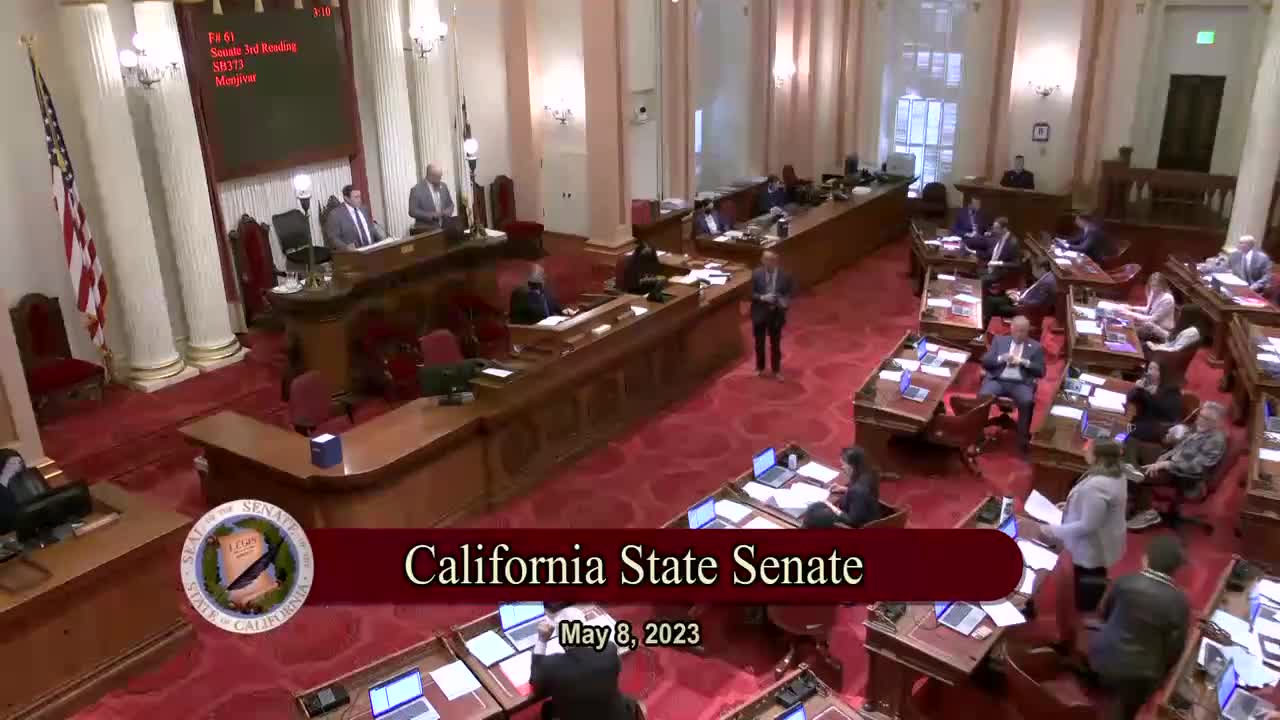
Bill Author