SB 388: Alcoholic Beverage Tax: beer manufacturer returns and schedules.
- Session Year: 2023-2024
- House: Senate
- Latest Version Date: 2023-09-22
Current Status:
Passed
(2023-09-22: Chaptered by Secretary of State. Chapter 214, Statutes of 2023.)
Introduced
In Committee
First Chamber
In Committee
Second Chamber
Enacted
Existing law, the Alcoholic Beverage Tax Law, administered by the State Board of Equalization, imposes an excise tax upon all beer and wine sold in this state, as provided, on beer manufacturers, winegrowers, importers, or sellers of beer or wine that sell beer or wine on which no tax has been paid. Existing law requires beer manufacturers to include specified schedules in their return, and prohibits the board, or any employee of the board, from making known in any manner certain information that is contained in a beer manufacturers return or schedules.
This bill, for beer manufacturer returns filed on or after January 1, 2024, would require the board, upon request, to make public the names and addresses of taxpayers filing a beer manufacturer return, as well as any information in a beer manufacturer return and schedules. The bill would make an exception to the requirement for disclosure of names and addresses in the case of taxpayers that are natural persons. The bill would allow a taxpayer to elect to prohibit the disclosure of any information contained in that taxpayers beer manufacturer return and schedules. The bill would require the board to amend the beer manufacturer return form to include a designated line or checkbox where the taxpayer may elect to prohibit disclosure, and a brief description of how the beer industry has historically used information contained in beer manufacturer returns.
Existing law, the Alcoholic Beverage Tax Law, administered by the State Board of Equalization, imposes an excise tax upon all beer and wine sold in this state, as provided, on beer manufacturers, winegrowers, importers, or sellers of beer or wine that sell beer or wine on which no tax has been paid. Existing law requires beer manufacturers to include specified schedules in their return, and prohibits the board, or any employee of the board, from making known in any manner certain information that is contained in a beer manufacturers return or schedules.
This bill, for beer manufacturer returns filed on or after January 1, 2024, would require the board, upon request, to make public the names and addresses of taxpayers filing a beer manufacturer return, as well as any information in a beer manufacturer return and schedules. The bill would make an exception to the requirement for disclosure of names and addresses in the case of taxpayers that are natural persons. The bill would allow a taxpayer to elect to prohibit the disclosure of any information contained in that taxpayers beer manufacturer return and schedules. The bill would require the board to amend the beer manufacturer return form to include a designated line or checkbox where the taxpayer may elect to prohibit disclosure, and a brief description of how the beer industry has historically used information contained in beer manufacturer returns.
Existing law, the Alcoholic Beverage Tax Law, administered by the State Board of Equalization, imposes an excise tax upon all beer and wine sold in this state, as provided, on beer manufacturers, winegrowers, importers, or sellers of beer or wine that sell beer or wine on which no tax has been paid. Existing law requires beer manufacturers to include specified schedules in their return, and prohibits the board, or any employee of the board, from making known in any manner certain information that is contained in a beer manufacturers return or schedules.
This bill, for beer manufacturer returns filed on or after January 1, 2024, would require the board, upon request, to make public the names and addresses of taxpayers filing a beer manufacturer return, as well as any information in a beer manufacturer return and schedules. The bill would make an exception to the requirement for disclosure of names and addresses in the case of taxpayers that are natural persons. The bill would allow a taxpayer to elect to prohibit the disclosure of any information contained in that taxpayers beer manufacturer return and schedules. The bill would require the board to amend the beer manufacturer return form to include a designated line or checkbox where the taxpayer may elect to prohibit disclosure, and a brief description of how the beer industry has historically used information contained in beer manufacturer returns.
(a)Except as provided in subdivision (b), and notwithstanding Section 15619 of the Government Code, any information contained in the returns and accompanying schedules of a beer manufacturer, filed on or after January 1, 2024, shall be made public upon request, including the names and addresses of all taxpayers filing a beer manufacturer return.
(b)It is unlawful for the board or any other person having an administrative duty under this part to disclose any of the following:
(1)The names and addresses of any taxpayer that is a natural person.
(2)Any information subject to a prohibition against disclosure pursuant to subdivision (c).
(c)(1)A taxpayer may elect to prohibit the disclosure of any information contained in that taxpayers beer manufacturer return and accompanying schedules. The board shall amend the beer manufacturer return form to include a designated line or checkbox wherein the taxpayer may elect to prohibit disclosure of the information.
(2)The board shall amend the beer manufacturer return form to include information describing how the beer industry has historically used data in beer manufacturer returns for market analysis and an explanation of the taxpayers right to elect to prohibit disclosure of information. This shall be conspicuously displayed within the electronic return form in a manner that allows it to be reviewed by the taxpayer prior to making the election.
(a)Except as provided in subdivision (b), and notwithstanding Section 15619 of the Government Code, any information contained in the returns and accompanying schedules of a beer manufacturer, filed on or after January 1, 2024, shall be made public upon request, including the names and addresses of all taxpayers filing a beer manufacturer return.
(b)It is unlawful for the board or any other person having an administrative duty under this part to disclose any of the following:
(1)The names and addresses of any taxpayer that is a natural person.
(2)Any information subject to a prohibition against disclosure pursuant to subdivision (c).
(c)(1)A taxpayer may elect to prohibit the disclosure of any information contained in that taxpayers beer manufacturer return and accompanying schedules. The board shall amend the beer manufacturer return form to include a designated line or checkbox wherein the taxpayer may elect to prohibit disclosure of the information.
(2)The board shall amend the beer manufacturer return form to include information describing how the beer industry has historically used data in beer manufacturer returns for market analysis and an explanation of the taxpayers right to elect to prohibit disclosure of information. This shall be conspicuously displayed within the electronic return form in a manner that allows it to be reviewed by the taxpayer prior to making the election.
(a)Except as provided in subdivision (b), and notwithstanding Section 15619 of the Government Code, any information contained in the returns and accompanying schedules of a beer manufacturer, filed on or after January 1, 2024, shall be made public upon request, including the names and addresses of all taxpayers filing a beer manufacturer return.
(b)It is unlawful for the board or any other person having an administrative duty under this part to disclose any of the following:
(1)The names and addresses of any taxpayer that is a natural person.
(2)Any information subject to a prohibition against disclosure pursuant to subdivision (c).
(c)(1)A taxpayer may elect to prohibit the disclosure of any information contained in that taxpayers beer manufacturer return and accompanying schedules. The board shall amend the beer manufacturer return form to include a designated line or checkbox wherein the taxpayer may elect to prohibit disclosure of the information.
(2)The board shall amend the beer manufacturer return form to include information describing how the beer industry has historically used data in beer manufacturer returns for market analysis and an explanation of the taxpayers right to elect to prohibit disclosure of information. This shall be conspicuously displayed within the electronic return form in a manner that allows it to be reviewed by the taxpayer prior to making the election.
|
Date
|
Status
|
|---|---|
| Sep 22, 2023 | Chaptered by Secretary of State. Chapter 214, Statutes of 2023. |
| Sep 22, 2023 | Approved by the Governor. |
| Sep 7, 2023 | Enrolled and presented to the Governor at 4 p.m. |
| Aug 31, 2023 | In Senate. Ordered to engrossing and enrolling. |
| Aug 31, 2023 | Read third time. Passed. (Ayes 79. Noes 0. Page 2865.) Ordered to the Senate. |
| Aug 24, 2023 | Read second time. Ordered to consent calendar. |
| Aug 23, 2023 | From committee: Do pass. Ordered to consent calendar. (Ayes 15. Noes 0.) (August 23). |
| Jun 27, 2023 | From committee: Do pass and re-refer to Com. on APPR. (Ayes 10. Noes 0.) (June 26). Re-referred to Com. on APPR. |
| Jun 8, 2023 | Referred to Com. on REV. & TAX. |
| May 25, 2023 | In Assembly. Read first time. Held at Desk. |
| May 25, 2023 | Read third time. Passed. (Ayes 40. Noes 0. Page 1299.) Ordered to the Assembly. |
| May 23, 2023 | Ordered to special consent calendar. |
| May 18, 2023 | Read second time. Ordered to third reading. |
| May 18, 2023 | From committee: Do pass. (Ayes 7. Noes 0. Page 1168.) (May 18). |
| May 12, 2023 | Set for hearing May 18. |
| May 8, 2023 | May 8 hearing: Placed on APPR suspense file. |
| May 1, 2023 | Set for hearing May 8. |
| Apr 25, 2023 | From committee: Do pass and re-refer to Com. on APPR. (Ayes 15. Noes 0. Page 873.) (April 25). Re-referred to Com. on APPR. |
| Apr 18, 2023 | Set for hearing April 25. |
| Apr 12, 2023 | From committee: Do pass and re-refer to Com. on G.O. (Ayes 8. Noes 0. Page 683.) (April 12). Re-referred to Com. on G.O. |
| Mar 21, 2023 | Set for hearing April 12. |
| Mar 16, 2023 | March 29 set for first hearing canceled at the request of author. |
| Mar 14, 2023 | Set for hearing March 29. |
| Feb 22, 2023 | Referred to Coms. on GOV. & F. and G.O. |
| Feb 10, 2023 | From printer. May be acted upon on or after March 12. |
| Feb 9, 2023 | Introduced. Read first time. To Com. on RLS. for assignment. To print. |
|
Date
|
Description
|
Location
|
Votes
|
|
|---|---|---|---|---|
| Aug 31, 2023 | SB 388 Archuleta Consent Calendar Second Day Regular Session | Assembly Floor |
Passed |
|
| Aug 23, 2023 | Do pass. To Consent Calendar. | Assembly Standing Committee on Appropriations |
Passed |
|
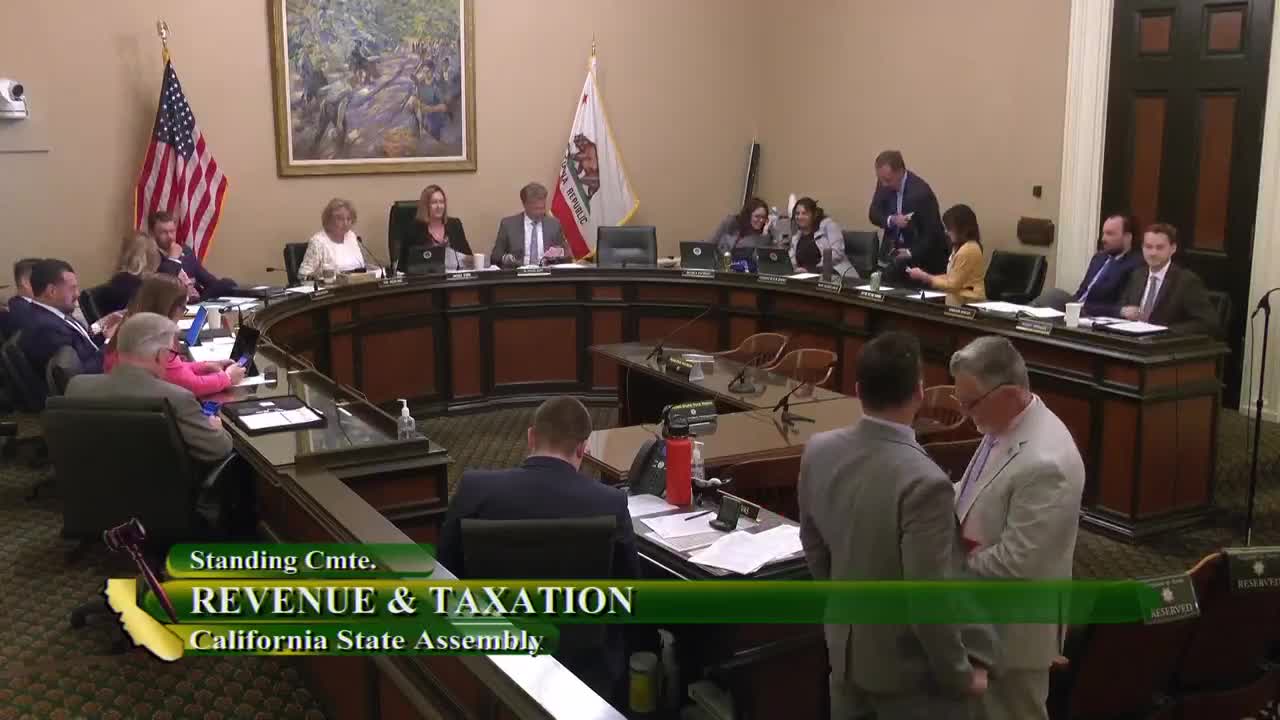
| Jun 26, 2023 | Do pass and be re-referred to the Committee on [Appropriations] | Assembly Standing Committee on Revenue and Taxation |
Passed |
|
| May 25, 2023 | Special Consent SB388 Archuleta | Senate Floor |
Passed |
|
| May 18, 2023 | Do pass | Senate Standing Committee on Appropriations |
Passed |
|
| May 8, 2023 | Placed on suspense file | Senate Standing Committee on Appropriations |
Passed |
|
| Apr 25, 2023 | Do pass, but first be re-referred to the Committee on [Appropriations] | Senate Standing Committee on Governmental Organization |
Passed |
|
| Apr 12, 2023 | Do pass, but first be re-referred to the Committee on [Governmental Organization] | Senate Standing Committee on Governance and Finance |
Passed |
This list shows positions taken on this bill by organizations on the date displayed, which is linked to the original source.
Positions by individuals are not included.
|
Organization
|
Position
|
Date
|
|---|---|---|
| Bay Area Brewers Guild | ** Support | |
| California Craft Brewers Association | * Support | Jun 26, 2023 |
| Central Coast Brewers Guild | ** Support | |
| Family Winemakers Of California | ** Support | |
| Los Angeles County Brewers Guild | ** Support | |
| Orange County Brewers Guild | ** Support | |
| Sacramento Area Brewers Guild | ** Support | |
| San Diego Brewers Guild | ** Support |
Date of Hearing: August 23, 2023
ASSEMBLY COMMITTEE ON APPROPRIATIONS
Chris Holden, Chair
SBPCA Bill Id:SB 388
Author:(Archuleta) – As Introduced Ver:February 9, 2023
Policy Committee: | Revenue and Taxation | Vote: | 10 - 0 |
|
| ||
|
|
Urgency: No State Mandated Local Program: No Reimbursable: No
SUMMARY:
This bill requires the State Board of Equalization (BOE) to make public, upon request, any information from a beer manufacturer tax return, including the name and address of the taxpayer that is not a natural person.
BOE must amend the beer manufacturer return to include a brief description of how the beer industry has historically used such information and a designated line or checkbox where a taxpayer may elect to prohibit disclosure of such information. This bill applies to returns filed on or after January 1, 2024.
FISCAL EFFECT:
Costs of approximately $58,000 in fiscal year (FY) 2023-24, $55,000 in FY 2024-25, and $22,000 ongoing beginning FY 2025-26 to BOE to amend the return and publicize beer manufacturer information.
The California Department of Tax and Fee Administration collects the alcoholic beverage tax and administers the program for BOE through an interagency agreement.
COMMENTS:
- Purpose. According to the author:
For decades, the BOE has provided Beer Manufacturers Return and Schedule information to the beer industry. The data released by the BOE has largely been unredacted including specific business information, but it has long anonymized information for individual taxpayers. However, beginning in 2019, the BOE re-evaluated the release of this data and determined that they did not have sufficient statutory authority to provide the data unless completely anonymized. This decision has significantly limited the data’s usefulness. SB 388 directly addresses this issue and equips the beer industry to make well-informed business decisions.
This bill is supported by the Family Winemakers of California.
- Alcohol Return Reports. Existing law requires an entity subject to the alcoholic beverage tax to file a return covering all transactions, even if no excise tax is due for the reporting period. Historically, BOE provided return information to industry stakeholders. For example, a wine industry publication used the information to monitor the monthly and annual shipments of leading California wineries and wine imports by country, offering for sale a report that, according to the publication’s website, “provides insightful commentary and analysis of current business conditions and trends shaping the market.” However, about two years ago, BOE determined it did not have statutory authority to provide return data absent complete anonymization.
SB 518 (Laird), Chapter 702, Statutes of 2022, required any information contained in a winegrower tax return to be made public upon request, including the names and addresses of taxpayers. However, a taxpayer is allowed to elect to prohibit the disclosure of their information. This bill extends the same provisions to the beer manufacturer tax return. As noted in the Assembly Revenue and Taxation Committee’s analysis of this bill:
According to the BOE, winegrower returns filed in January, February, and March 2023 indicate that approximately 64% of winegrowers elected to prohibit disclosure of any return or accompanying schedule information. Given the large proportion of taxpayers electing to not share identifying information, it is unclear whether the data that is provided is as useful for the industry as was originally hoped.
Analysis Prepared by: Irene Ho / APPR. / (916) 319-2081
Date of Hearing: June 26, 2023
ASSEMBLY COMMITTEE ON REVENUE AND TAXATION
Jacqui Irwin, Chair
SBPCA Bill Id:SB 388
Author:(Archuleta) – As Introduced Ver:February 9, 2023
Majority vote. Fiscal committee.
SENATE VOTE: 40-0
SUBJECT: Alcoholic Beverage Tax: beer manufacturer returns and schedules
SUMMARY: Requires the State Board of Equalization (BOE), upon request, to make public any information contained in the returns and accompanying schedules of a beer manufacturer. Specifically, this bill:
- Requires any information contained in a beer manufacturer's Alcoholic Beverage Tax returns and accompanying schedules filed on or after January 1, 2024 to be made public upon request.
- Allows taxpayers to elect to prohibit the disclosure of information contained on their beer manufacturer return and accompanying schedules.
- Requires the BOE to amend the paper and electronic beer manufacturer return forms to include all of the following:
- A designated line or checkbox for a taxpayer to elect to prohibit disclosure of their information;
- Information describing how the beer industry has historically used data in beer manufacturer returns for market analysis; and,
- An explanation of the taxpayer's right to elect to prohibit disclosure of information conspicuously displayed within the electronic return form in a manner that allows it to be reviewed by the taxpayer prior to making the election.
- Provides that it is unlawful for the BOE or any of its employees to disclose the names and addresses of any taxpayer that is a natural person or any information relating to taxpayers that have elected to prohibit disclosure of their information.
EXISTING LAW:
- Imposes, under the Alcoholic Beverage Tax Law, an excise tax upon all beer and wine sold in this state, as provided, on manufacturers, winegrowers, importers, or sellers of beer or wine that sell beer or wine on which no tax has been paid. (Revenue & Taxation Code (R&TC) Section 32001 et seq.)
- Requires beer manufacturers to file a return including specified schedules. (R&TC Section 32251.)
- Prohibits the BOE, or any employee of the BOE, from making known in any manner certain information that is contained in a beer manufacturer's return or schedules. (R&TC Section 32455.)
FISCAL EFFECT: Unknown
COMMENTS:
- The author has provided the following statement in support of this bill:
SB 388 allows beer manufacturer tax information to be made public upon request to assist the beer industry in planning for future trends. For decades, the BOE has provided Beer Manufacturers Return and Schedule information to the beer industry. The data released by the BOE has largely been unredacted including specific business information, but it has long anonymized information for individual taxpayers. However, beginning in 2019, the BOE re-evaluated the release of this data and determined that they did not have sufficient statutory authority to provide the data unless completely anonymized. This decision has significantly limited the data's usefulness. SB 388 directly addresses this issue and equips the beer industry to make well-informed business decisions.
- Writing in support of this bill, the California Craft Brewers Association notes, in part:
The decision to anonymize the excise tax data has made understanding industry trends significantly more difficult during a very disruptive time. Trade groups and individual breweries can use this data to benchmark their performance, understand market trends and communicate the economic value of brewery production at the local and state level. Economic impact studies at the local level require detailed information about production patterns that is challenging and costly to obtain without this critical information from the BOE.
- Committee Staff Comments:
- Alcoholic beverage tax overview: Section 22 of Article XX of the California Constitution provides that the BOE must assess and collect excise taxes imposed by the Legislature on the manufacture, importation, and sale of alcoholic beverages in this state. However, the California Department of Tax and Fee Administration (CDTFA) currently administers tax collection functions pursuant to an interagency agreement with BOE due to the enactment of the Taxpayer Transparency and Fairness Act of 2017 (which created CDTFA) and shifted all of BOE's statutory tax administration functions to the newly formed department [AB 102 (Committee on Budget), Chapter 16, Statutes of 2017]. Taxpayers subject to the tax file returns with the CDTFA, which deposits proceeds of the tax in the General Fund, while BOE retains responsibility for legal functions, petitions for redetermination, and appeals under the tax.
Generally, beer manufacturers and importers pay the alcoholic beverage tax. This law includes the state excise tax on "beer", as defined in Business and Professions Code Section 23006. Every beer manufacturer must file a Beer Manufacturer Tax Return to report transactions for the amount of beer sold in the state, the amount of tax for the period covered in the return, and any other information BOE deems necessary. Specifically, on or before the 15th day of the month following the close of the reporting period, every licensed beer manufacturer must file this return covering all beer transactions for the reporting period. A return must be filed even if no tax is due for the reporting period.
- Recent history: Historically, the BOE provided monthly Alcohol Return Reports (Alcohol Reports) to a small email group. The Alcohol Reports contained verified information provided by taxpayers in their tax returns. In 2019, the BOE's Disclosure Office reevaluated their policies and sought guidance from the Attorney General (AG) to determine what information could be made public. Upon review of prior practices and in light of the advice received from the AG, it was determined that it was not legally appropriate to release some of the information that had previously been released to the public. BOE then released information contained in the Alcohol Reports but removed all the identifying taxpayer information as advised by the AG. This data is now available through the BOE's Open Data Portal.
- Results so far are hazy: Responding to this change of longstanding practice by the BOE, the Legislature enacted SB 518 (Laird), Chapter 702, Statutes of 2022, which required any information contained in a winegrower's Alcoholic Beverage Tax returns and accompanying schedules to be made public upon request, including the names and addresses of taxpayers filing a winegrower return. SB 518 allowed a taxpayer to elect to prohibit the disclosure of any information contained in that taxpayer's winegrower return and accompanying schedules.
According to the BOE, winegrower returns filed in January, February, and March 2023 indicate that approximately 64% of winegrowers elected to prohibit disclosure of any return or accompanying schedule information. Given the large proportion of taxpayers electing to not share identifying information, it is unclear whether the data that is provided is as useful for the industry as was originally hoped. The Committee may wish to consider whether extending this practice of asking taxpayers to opt-out of sharing data – rather than opting-in – is prudent given the large proportion of winemakers who have elected to opt-out since provided the option pursuant to SB 518.
REGISTERED SUPPORT / OPPOSITION:
Support
Bay Area Brewers Guild
California Craft Brewers Association
Central Coast Brewers Guild
Family Winemakers of California
Los Angeles County Brewers Guild
Orange County Brewers Guild
Sacramento Area Brewers Guild
San Diego Brewers Guild
Opposition
None on file
Analysis Prepared by: Wesley Whitaker / REV. & TAX. / (916) 319-2098
SENATE RULES COMMITTEE Office of Senate Floor Analyses (916) 651-1520 Fax: (916) 327-4478 | SB 388 |
THIRD READING
Bill No: SB 388
Author: Archuleta (D)
Introduced: 2/9/23
Vote: 21
SENATE GOVERNANCE & FIN. COMMITTEE: 8-0, 4/12/23
AYES: Caballero, Seyarto, Blakespear, Dahle, Durazo, Glazer, Skinner, Wiener
SENATE GOVERNMENTAL ORG. COMMITTEE: 15-0, 4/25/23
AYES: Dodd, Wilk, Alvarado-Gil, Archuleta, Ashby, Bradford, Glazer, Jones, Nguyen, Ochoa Bogh, Padilla, Portantino, Roth, Rubio, Seyarto
SENATE APPROPRIATIONS COMMITTEE: 7-0, 5/18/23
AYES: Portantino, Jones, Ashby, Bradford, Seyarto, Wahab, Wiener
SUBJECT: Alcoholic Beverage Tax: beer manufacturer returns and schedules
SOURCE: California Craft Brewers Association
DIGEST:
This bill requires any information contained in a beer manufacturer’s Alcoholic Beverage Tax returns and accompanying schedules to be made public upon request, including the names and addresses of taxpayers filing a beer manufacturer return.
ANALYSIS:
Existing law:
- Provides that the State Board of Equalization (BOE) must assess and collect excise taxes imposed by the Legislature on the manufacture, importation, and sale of alcoholic beverages in this State (California Constitution, Article XX, Section 22).
- Imposes the Alcoholic Beverage Tax as a per-gallon excise tax collected on the sale, distribution, or importation of alcoholic beverages in California, which includes beer, wine, and distilled spirits; the tax applies is in lieu of all county, municipal, and district taxes on the sale of alcoholic beverages.
- Provides, generally, that beer manufacturers and importers pay the alcoholic beverage tax; however, if the tax has not been paid by beer manufacturers or importers, then the sellers of beer pay it.
- Prohibits tax agency personnel, including BOE, from divulging information concerning the business affairs of companies reporting information to it.
- Sets forth criminal sanctions that apply to tax agency personnel convicted of violations.
- Contains explicit exemptions allowing tax agencies to disclose information for specified purposes to certain entities, such as law enforcement agencies, grand juries, boards of supervisors, or other state agencies.
- Prohibits, specifically, BOE personnel from divulging a specified list of information concerning the business affairs of companies reporting to the board; however, state law allows some information contained in the Vendor’s Report of Beer Shipments into California to be made public, but does not include amounts of tax due.
- Requires any information contained in a winegrower’s Alcoholic Beverage Tax returns and accompanying schedules to be made public upon request, including the names and addresses of taxpayers filing a winegrower return, but allows a taxpayer to elect to prohibit the disclosure of any information contained in that taxpayer’s winegrower return and accompanying schedule (SB 518, Laird, Chapter 702, Statutes of 2022).
This bill:
- Requires any information contained in a beer manufacturer’s Alcoholic Beverage Tax returns and accompanying schedules filed on or after January 1, 2024, to be made public upon request, including the names and addresses of taxpayers filing a beer manufacturer return.
- Allows a taxpayer to elect to prohibit the disclosure of any information contained in that return and accompanying schedules.
- Directs BOE and the California Department of Tax and Fee Administration (CDTFA) to amend the beer manufacturer return form in two ways:
- First, to include a designated line or checkbox where the taxpayer may elect to prohibit disclosure of the information; and
- Second, to include information describing how the industry has historically used data in returns for market analysis and an explanation of the taxpayer’s right to elect to prohibit disclosure of information.
- Requires the statement regarding the use of return data and explanation of right to elect to prohibit disclosure of information to be conspicuously displayed within the electronic return form in a manner that allows the taxpayer to review it prior to making the election.
- Makes it unlawful for BOE and CDTFA, or its personnel, to disclose the name and address of any taxpayer who is a natural person, or who elects against having their information disclosed.
Background
Section 22 of Article XX of the California Constitution provides that the State Board of Equalization (BOE) must assess and collect excise taxes imposed by the Legislature on the manufacture, importation, and sale of alcoholic beverages in this State. However, CDTFA currently administers tax collection functions pursuant to an interagency agreement with BOE due to the enactment of the Taxpayer Transparency and Fairness Act of 2017, which created CDTFA, and shifted all of BOE’s statutory tax administration functions to the newly formed Department (AB 102, Committee on Budget, Chapter 16, Statutes of 2017). Taxpayers subject to the tax file returns with the CDTFA, which deposits proceeds of the tax in the General Fund, while BOE retains responsibility for legal functions, petitions for redetermination, and appeals under the tax.
Despite the taxpayer confidentiality restrictions in existing law, according to BOE, it historically provided monthly verified information from return reports and attached schedules to a small email group as well as to others who requested the information, known as Alcohol Returns Reports. However, in 2019, BOE determined it was not legally appropriate to release some of the information, and then sought legal advice from the Attorney General, who confirmed that information from the return and its schedules could not legally be disclosed. As a result, BOE continued to share the information with requesters, but redacted all identifying taxpayer information.
SB 388 makes taxpayer-specific information contained in the Alcoholic Beverage Tax returns and schedules of beer manufacturers public upon request in the same way SB 518 did for winegrowers.
Comments
Confidentiality. Taxpayer confidentiality is the cornerstone of a self-assessed income tax system. When filing a return, taxpayers divulge intimate information about themselves, their financial condition, as well as the details of their business operations and financial interests, which they would be less likely to share completely and honestly if it was subject to public disclosure. In turn, tax enforcement agencies rely on receiving sufficient truthful information from taxpayers as part of their duties to verify that taxpayers paid the correct amount of tax due under law. Public disclosure of tax information can also give firms insight into the operations of their competitors. SB 388 follows SB 518 to create specific exceptions in state tax law to allow public disclosure of individually-identifiable tax return information. BOE notes that out of 60 items of information on the return it currently discloses in its Alcohol Report, they only redact the taxpayers name and address, the account number, penalty due, interest due, and the total amount due and payable or refund claimed. BOE also publishes aggregate data on its data portal on its website which includes alcohol consumption per capita, consumption per fiscal year, and the alcohol tax collected. However, SB 388 exempts beer manufacturers owned by individuals from its public disclosure requirement, and additionally allows taxpayers to opt-out of disclosure, which taxpayers affected by SB 518 are choosing to do - according to BOE an estimated 63% of winegrowers chose to do so in the first quarter of this year.
FISCAL EFFECT: Appropriation: No Fiscal Com.: Yes Local: No
According to the Senate Appropriations Committee, BOE indicates that it would incur costs of $58,000 in 2023-24, $55,000 in 2024-25, and $22,000 annually thereafter, to implement the provisions of the bill (General Fund). The bill would not have a fiscal impact to CDTFA.
SUPPORT: (Verified 5/18/23)
California Craft Brewers Association (source)
Bay Area Brewers Guild
Central Coast Brewers Guild
Family Winemakers of California
Los Angeles County Brewers Guild
Orange County Brewers Guild
Sacramento Area Brewers Guild
San Diego Brewers Guild
OPPOSITION: (Verified 5/18/23)
None received
ARGUMENTS IN SUPPORT: According to the author, “SB 388 allows beer manufacturer tax information to be made public upon request to assist the beer industry in planning for future trends. For decades, the Board of Equalization (BOE) has provided Beer Manufacturers Return and Schedule information to the beer industry. The data released by the BOE has largely been unredacted including specific business information, but it has long anonymized information for individual taxpayers. However, beginning in 2019, the BOE re-evaluated the release of this data and determined that they did not have sufficient statutory authority to provide the data unless completely anonymized. This decision has significantly limited the data’s usefulness. SB 388 directly addresses this issue and equips the beer industry to make well-informed business decisions.”
Prepared by: Colin Grinnell / GOV. & F. / (916) 651-4119
5/20/23 12:44:44
**** END ****
SENATE COMMITTEE ON APPROPRIATIONS
Senator Anthony Portantino, Chair
2023 - 2024 Regular Session
SB 388 (Archuleta) - Alcoholic Beverage Tax: beer manufacturer returns and schedules
Version: February 9, 2023 | Policy Vote: GOV. & F. 8 - 0, G.O. 15 - 0 |
Urgency: No | Mandate: No |
Hearing Date: May 8, 2023 | Consultant: Robert Ingenito |
Bill Summary:
SB 388 would require any information contained in a beer manufacturer’s Alcoholic Beverage Tax returns and accompanying schedules to be made public upon request.
Fiscal Impact:
The Board of Equalization (BOE) indicates that it would incur costs of $58,000 in 2023-24, $55,000 in 2024-25, and $22,000 annually thereafter, to implement the provisions of the bill (General Fund). The bill would not have a fiscal impact to the Department of Tax and Fee Administration (CDTFA).
Background:
The Alcoholic Beverage Tax is a per-gallon excise tax collected on the sale, distribution, or importation of alcoholic beverages in California, which includes beer, wine, and distilled spirits. This tax is in lieu of all county, municipal, and district taxes on the sale of alcoholic beverages.
Under the California Constitution BOE must assess and collect excise taxes imposed by the Legislature on the manufacture, importation, and sale of alcoholic beverages in this State. However, CDTFA currently administers tax collection functions pursuant to an interagency agreement with BOE due to the enactment of the Taxpayer Transparency and Fairness Act of 2017 (AB 102, Committee on Budget), which created CDTFA, and shifted all of BOE’s statutory tax administration functions to the newly formed Department. Taxpayers subject to the tax file returns with the CDTFA, which deposits proceeds of the tax in the General Fund, while BOE retains responsibility for legal functions, petitions for redetermination, and appeals under the tax.
Existing state and federal laws generally prohibit tax agency personnel, including BOE, from divulging information concerning the business affairs of companies reporting information to it. State law sets forth criminal sanctions that apply to tax agency personnel convicted of violations. However, state law contains explicit exemptions allowing tax agencies to disclose information for specified purposes to certain entities, such as law enforcement agencies, grand juries, boards of supervisors, or other state agencies. Tax agencies can also publish aggregate statistical data based on taxpayer information so long as it cannot be used to identify a taxpayer.
Despite taxpayer confidentiality restrictions, BOE has historically provided monthly verified information from return reports and attached schedules to a small email group as well as to others who requested the information, known as Alcohol Returns Reports. However, in 2019, BOE determined it was not legally appropriate to release some of the information, and then sought legal advice from the Attorney General, who confirmed that information from the return and its schedules could not legally be disclosed. Consequently, BOE continued to share the information with requesters, but redacted all identifying taxpayer information.
In 2022, the Legislature enacted legislation (SB 518, Laird) which required any information contained in a winegrower’s Alcoholic Beverage Tax returns and accompanying schedules to be made public upon request, including the names and addresses of taxpayers filing a winegrower return. SB 518 allowed a taxpayer to elect to prohibit the disclosure of any information contained in that taxpayer’s winegrower return and accompanying schedules. According to BOE, preliminary monthly winegrower returns filed in January 2023 and February 2023 indicate that 63 percent of winegrowers elected or opted to prohibit disclosure of any return or accompanying schedule information.
Proposed Law:
This bill would, among other things, do the following:
- Require any information contained in a beer manufacturer’s Alcoholic Beverage Tax returns and accompanying schedules filed on or after January 1, 2024, be made available to the public upon request, including the names and addresses of taxpayers filing a beer manufacturer return.
- Allow a taxpayer to elect to prohibit the disclosure of any information contained in that return and accompanying schedules.
- Direct BOE and CDTFA to amend the beer manufacturer return form in two ways: (1) to include a designated line or checkbox where the taxpayer may elect to prohibit disclosure of the information, and (2) to include information describing how the industry has historically used data in returns for market analysis and an explanation of the taxpayer’s right to elect to prohibit disclosure of information.
- Require the statement regarding the use of return data and explanation of right to elect to prohibit disclosure of information to be conspicuously displayed within the electronic return form in a manner that allows the taxpayer to review it prior to making the election.
Prior Legislation: SB 518 (Laird, Chapter 702, Statutes of 2022) make any information contained in a winegrower’s alcoholic beverage tax return and accompanying schedule public upon request.
Staff Comments:
BOE notes that any impacts of this bill on state revenues cannot be determined, and would depend on how taxpayer compliance would change in response to their confidential information becoming public.
-- END --
SENATE COMMITTEE ON GOVERNMENTAL ORGANIZATION
Senator Bill Dodd
Chair
2023 - 2024 Regular
Bill No: 388 Hearing Date: 4/25/2023
Author: | |||
Version: | 2/9/2023 Introduced | ||
Urgency: | No | Fiscal: | Yes |
Consultant: | Felipe Lopez | ||
SUBJECT: Alcoholic Beverage Tax: beer manufacturer returns and schedules
DIGEST: This bill requires the State Board of Equalization (BOE), upon request, to make public any information contained in a beer manufacturer’s Alcoholic Beverage Tax returns and accompanying schedules, as specified.
ANALYSIS:
Existing law:
- Establishes the Department of Alcoholic Beverage Control (ABC) and grants it exclusive authority to administer the provisions of the ABC Act in accordance with laws enacted by the Legislature. This involves licensing individuals and businesses associated with the manufacture, importation, and sale of alcoholic beverages in this state and the collection of license fees for this purpose.
- Imposes, under the Alcoholic Beverage Tax Law, an excise tax upon all beer and wine sold in this state, as provided, on beer manufacturers, winegrowers, importers, or sellers of beer or wine that sell beer or wine on which no tax has been paid.
- Provides that the State Board of Equalization (BOE) must assess and collect excise taxes imposed by the Legislature on the manufacture, importation, and sale of alcoholic beverages in this State (California Constitution, Article XX, Section 22).
- Requires beer manufacturers to include specified schedules in their return, as specified.
- Requires that information contained in a winegrower’s alcoholic beverage tax returns and accompanying schedules to be made public upon request, as specified.
- Prohibits, generally, tax agency personnel, including BOE, from divulging information concerning the business affairs of companies reporting information to it.
- Sets forth criminal sanctions that apply to tax agency personnel convicted of violations, but contains explicit exemptions allowing tax agencies to disclose information for specified purposes to certain entities, such as law enforcement agencies, grand juries, boards of supervisors, or other state agencies.
- Provides, specifically, that it is unlawful for BOE, or any person having an administrative position to make known any information in any report from any winegrower regarding the names of the purchasers and the amounts of individual sales of wines which the winegrower has exported from this state.
- Permits BOE or the California Department of Tax and Fee Administration (CDTFA) to publish any winegrower’s total receipts from the export of wines from this state, or exchange information with officials in other states concerning interstate wine shipments.
- Allows BOE or CDTFA to make public information contained in the Vendor’s Report of Beer Shipments into California; however, this report does not include amounts of tax due.
This bill:
- Requires BOE to make public any information contained in the returns and accompanying schedules of a beer manufacturer, filed on or after January 1, 2024, upon request, including the names and addresses of all taxpayers filing a beer manufacturer return.
- Provides that it is unlawful for the BOE or any other person having an administrative duty under the provisions of this bill to disclose the names and addresses of any taxpayer that is a natural person.
- States that a taxpayer may elect to prohibit the disclosure of any information contained in the taxpayer’s beer manufacturer return and accompanying schedules. The bill provides that the disclosure of any of this information is unlawful.
- Requires the BOE to amend the beer manufacturer return form to include a designated line or checkbox to allow the taxpayer to elect to prohibit the disclosure of their information.
- Requires the BOE to amend the beer manufacturer return form to include information describing how the beer industry has historically used data in beer manufacturer returns for market analysis and an explanation of the taxpayer’s right to elect to prohibit a disclosure of information.
Background
Purpose of the Bill. According to the author’s office, “SB 388 allows beer manufacturer tax information to be made public upon request to assist the beer industry in planning for future needs. For decades, the [BOE] has provided Beer Manufacturers Return and Schedule information to the beer industry. The data released by the BOE has largely been unredacted including specific business information, but it has long anonymized information for individual taxpayers. However, beginning in 2019, the BOE re-evaluated the release of this data and determined that they did not have sufficient statutory authority to provide the data unless completely anonymized. This decision has significantly limited the data’s usefulness. SB 388 directly addresses this issue and equips the beer industry to make well-informed business decisions.”
Collection of Alcohol Taxes. The California Constitution provides that the BOE must assess and collect excise taxes imposed by the Legislature on the manufacture, importation, and sale of Alcoholic Beverages in this State. However, CDTFA currently administers tax collection functions pursuant to an interagency agreement with BOE due to the enactment of the Taxpayer Transparency and Fairness Act of 2017 created by AB 102 (Committee on Budget, Chapter 16, Statutes of 2017). The bill shifted all of BOE’s statutory tax administration functions to the newly created CDTFA.
Generally, beer manufacturers and importers pay the alcoholic beverage tax. Taxpayers who operate a brewery and produce beer for sale must register for a seller’s permit and file sales and use tax returns with the CDTFA and remit the amount of tax due by the due date of the return along with any supplemental schedules and reports.
Public Disclosure of Tax Information. Existing state and federal laws generally prohibit tax agencies, including the BOE and CDTFA, from disclosing information concerning the business affairs of companies reporting information to that agency. State law specifically prohibits BOE personnel from divulging a specified list of information concerning the business affairs of companies reporting to the board.
Despite the taxpayer confidentiality restrictions noted above, according to BOE, it historically provided monthly verified information from return reports and attached schedules to a small email group as well as to others who requested the information, known as Alcohol Returns Reports. However, in 2019, the BOE determined it was not legally appropriate to release some of the information, and sought legal advice from the Attorney General, who confirmed that information from the return and its schedules could not legally be disclosed. As a result, BOE continued to share the information with requesters, but redacted all identifying taxpayer information.
Last year, the Governor signed SB 518 (Laird, Chapter 702, Statutes of 2022), which required any information contained in a winegrower’s Alcoholic Beverage Tax returns and accompanying schedules to be made public upon request. Similar to this bill, SB 518 allowed a taxpayer to elect to prohibit the disclosure of any information contained in that taxpayer’s winegrower return and accompanying schedules. According to the BOE, preliminary monthly winegrower returns filed in January 2023 and February 2023 suggest that an estimated 63% of winegrowers elected or opted to prohibit disclosure of any return or accompanying schedule information.
This bill will similarly require any information contained in a Beer Manufacturer’s Alcoholic Beverage Tax returns and accompanying schedules to be made public upon request. The bill will also allow a taxpayer to elect to prohibit the disclosure of their information.
Policy Consideration. The bill currently requires BOE to amend the beer manufacturer return form to allow a taxpayer to opt out of public disclosure. In doing so, the bill would require a taxpayer to take an additional step of checking a box on their return to ensure that their information is kept confidential. Would it not make more sense to require a taxpayer to opt-in rather than opt-out to ensure that their information is not publicly disclosed?
Prior/Related Legislation
SB 518 (Laird, Chapter 702. Statutes of 2022) requires that information contained in a winegrower’s alcoholic beverage tax returns and accompanying schedules to be made public upon request, as specified.
AB 102 (Committee on Budget, Chapter 16, Statutes of 2017) created, among things, shifted all of BOE’s statutory tax administration functions to the newly created CDTFA.
FISCAL EFFECT: Appropriation: Fiscal Com.: Local:
SUPPORT:
California Craft Brewers Association (Source)
Bay Area Brewers Guild
Central Coast Brewers Guild
Los Angeles County Brewers Guild
Sacramento Area Brewers Guild
San Diego Brewers Guild
Orange County Brewers Guild
OPPOSITION:
None received
ARGUMENTS IN SUPPORT: According to supporters of the bill, “the decision to anonymize the excise tax data has made understanding industry trends significantly more difficult during a very disruptive time. Trade groups and individual breweries can use this data to benchmark their performance, understand market trends and communicate the economic value of brewery production at the local and state level. Economic impact studies at the local level require detailed information about production patters that is challenging and costly to obtain without this critical information from the BOE.”
SENATE COMMITTEE ON GOVERNANCE AND FINANCE
Senator Anna M. Caballero, Chair
2023 - 2024 Regular
Bill No: | SB 388 | Hearing Date: | 4/12/23 |
Author: | Archuleta | Tax Levy: | No |
Version: | 2/9/23 | Fiscal: | Yes |
Consultant: | Grinnell | ||
Alcoholic Beverage Tax: beer manufacturer returns and schedules
Requires any information contained in a beer manufacturer’s Alcoholic Beverage Tax returns and accompanying schedules to be made public upon request, including the names and addresses of taxpayers filing a beer manufacturer return.
Background
First imposed in 1935, the Alcoholic Beverage Tax is a per-gallon excise tax collected on the sale, distribution, or importation of alcoholic beverages in California, which includes beer, wine, and distilled spirits. The alcoholic beverage tax is in lieu of all county, municipal, and district taxes on the sale of alcoholic beverages.
Section 22 of Article XX of the California Constitution provides that the State Board of Equalization (BOE) must assess and collect excise taxes imposed by the Legislature on the manufacture, importation, and sale of alcoholic beverages in this State. However, the California Department of Tax and Fee Administration (CDTFA) currently administers tax collection functions pursuant to an interagency agreement with BOE due to the enactment of the Taxpayer Transparency and Fairness Act of 2017, which created CDTFA, and shifted all of BOE’s statutory tax administration functions to the newly formed Department (AB 102, Committee on Budget, 2017). Taxpayers subject to the tax file returns with the CDTFA, which deposits proceeds of the tax in the General Fund, while BOE retains responsibility for legal functions, petitions for redetermination, and appeals under the tax.
Generally, beer manufacturers and importers pay the alcoholic beverage tax. However, if the tax has not been paid by beer manufacturers or importers, then the sellers of beer pay it. Taxpayers who operate a brewery and produce beer for sale must register for a seller's permit and file sales and use tax returns with the CDTFA and remit the amount of tax due by the due date of the return along with any supplemental schedules and reports. In general, most alcoholic beverage tax returns, schedules, or reports are due on or before the 15th of the month following the period covered by the return, schedule, or report.
Existing state and federal laws generally prohibit tax agency personnel, including BOE, from divulging information concerning the business affairs of companies reporting information to it. State law sets forth criminal sanctions that apply to tax agency personnel convicted of violations. However, state law contains explicit exemptions allowing tax agencies to disclose information for specified purposes to certain entities, such as law enforcement agencies, grand juries, boards of supervisors, or other state agencies. Tax agencies can also publish aggregate statistical data based on taxpayer information so long as it cannot be used to identify a taxpayer.
State law specifically prohibits BOE personnel from divulging a specified list of information concerning the business affairs of companies reporting to the board. However, state law allows BOE or CDTFA to make public information contained in the Vendor’s Report of Beer Shipments into California; however, this report does not include amounts of tax due.
Despite the taxpayer confidentiality restrictions noted above, according to BOE, it historically provided monthly verified information from return reports and attached schedules to a small email group as well as to others who requested the information, known as Alcohol Returns Reports. However, in 2019, BOE determined it was not legally appropriate to release some of the information, and then sought legal advice from the Attorney General, who confirmed that information from the return and its schedules could not legally be disclosed. As a result, BOE continued to share the information with requesters, but redacted all identifying taxpayer information.
Last, year, the Legislature enacted SB 518 (Laird), which required any information contained in a winegrower’s Alcoholic Beverage Tax returns and accompanying schedules to be made public upon request, including the names and addresses of taxpayers filing a winegrower return. SB 518 allowed a taxpayer to elect to prohibit the disclosure of any information contained in that taxpayer’s winegrower return and accompanying schedules. According to BOE, preliminary monthly winegrower returns filed in January 2023 and February 2023 indicate that an estimated 63% of winegrowers elected or opted to prohibit disclosure of any return or accompanying schedule information.
The author wants to make taxpayer-specific information contained in the Alcoholic Beverage Tax returns and schedules of beer manufacturers public upon request in the same way SB 518 did for winegrowers.
Proposed Law
Senate Bill 388 requires any information contained in a beer manufacturer’s Alcoholic Beverage Tax returns and accompanying schedules filed on or after January 1, 2024, to be made public upon request, including the names and addresses of taxpayers filing a beer manufacturer return. The bill allows a taxpayer to elect to prohibit the disclosure of any information contained in that return and accompanying schedules.
The bill directs BOE and CDTFA to amend the beer manufacturer return form in two ways: first, to include a designated line or checkbox where the taxpayer may elect to prohibit disclosure of the information; and second, to include information describing how the industry has historically used data in returns for market analysis and an explanation of the taxpayer’s right to elect to prohibit disclosure of information. The bill requires the statement regarding the use of return data and explanation of right to elect to prohibit disclosure of information to be conspicuously displayed within the electronic return form in a manner that allows the taxpayer to review it prior to making the election.
The bill makes it unlawful for BOE and CDTFA, or its personnel, to disclose the name and address of any taxpayer who is a natural person, or who elects against having their information disclosed.
State Revenue Impact
According to BOE, SB 388’s revenue impact is “indeterminable since it is unknown on how taxpayer compliance behavior may change due to their confidential information becoming public.”
Comments
1. Purpose of the bill. According to the author, “SB 388 allows beer manufacturer tax information to be made public upon request to assist the beer industry in planning for future trends. For decades, the Board of Equalization (BOE) has provided Beer Manufacturers Return and Schedule information to the beer industry. The data released by the BOE has largely been unredacted including specific business information, but it has long anonymized information for individual taxpayers. However, beginning in 2019, the BOE re-evaluated the release of this data and determined that they did not have sufficient statutory authority to provide the data unless completely anonymized. This decision has significantly limited the data’s usefulness. SB 388 directly addresses this issue and equips the beer industry to make well-informed business decisions.”
2. Confidentiality. Taxpayer confidentiality is the cornerstone of a self-assessed income tax system. When filing a return, taxpayers divulge intimate information about themselves, their financial condition, as well as the details of their business operations and financial interests, which they would be less likely to share completely and honestly if it was subject to public disclosure. In turn, tax enforcement agencies rely on receiving sufficient truthful information from taxpayers as part of their duties to verify that taxpayers paid the correct amount of tax due under law. Public disclosure of tax information can also give firms insight into the operations of their competitors. SB 388 follows SB 518 to create specific exceptions in state tax law to allow public disclosure of individually-identifiable tax return information. BOE notes that out of 60 items of information on the return it currently discloses in its Alcohol Report, they only redact the taxpayers name and address, the account number, penalty due, interest due, and the total amount due and payable or refund claimed. BOE also publishes aggregate data on its data portal on its website which includes alcohol consumption per capita, consumption per fiscal year, and the alcohol tax collected. While the measure exempts beer manufacturers owned by individuals, and allows taxpayers to opt-out of disclosure, the Committee may wish to consider the merits of allowing public disclosure of confidential tax information in this case.
3. In or out? SB 388 allows for public disclosure of individually-identifiable beer manufacturer tax return information upon request, but allows taxpayers to opt-out of public disclosure. Instead of presuming that taxpayers do not want their information divulged, the bill requires taxpayers to take the extra step of checking a box on the return to maintain current confidentiality. The bill also requires the return to include information about the manner in which the industry uses the information for market analysis. Shouldn’t the presumption be in favor of maintaining confidentiality by instead allowing taxpayers to opt-in?
Support and Opposition
(4/7/23)
Support: Bay Area Brewers Guild
California Craft Brewers Association
Central Coast Brewers Guild
Los Angeles County Brewers Guild
Orange County Brewers Guild
Sacramento Area Brewers Guild
San Diego Brewers Guild
Opposition: None submitted.
-- END --
Discussed in Hearing
 5MIN
Assembly Standing Committee on Revenue and Taxation
 7SEC
Assembly Standing Committee on Revenue and Taxation
 1MIN
Assembly Standing Committee on Revenue and Taxation
 5MIN
Senate Standing Committee on Governance and Finance
Bill Author

Bill Co-Author(s):