SB 409: Elections: candidate’s statement.
- Session Year: 2023-2024
- House: Senate
- Latest Version Date: 2023-08-28
Current Status:
Failed
(2024-08-15: August 15 hearing: Held in committee and under submission.)
Introduced
In Committee
First Chamber
In Committee
Second Chamber
Enacted
The Political Reform Act of 1974 provides for the comprehensive regulation of campaign financing and related matters, including voluntary expenditure ceilings for candidates for statewide elective office and for State Senate and Assembly. Existing law authorizes a candidate for statewide elective office who accepts the voluntary expenditure limits to purchase the space to place a statement in a state voter information guide, as specified. Existing law authorizes a candidate for State Senate or Assembly who accepts the voluntary expenditure limits to purchase the space to place a statement in the voter information portion of the county voter information guide, as specified. Existing law authorizes a candidate for United States Representative to purchase the space to place a statement in the voter information portion of the county voter information guide, as specified.
This bill would require the Secretary of State to establish establish, on or before January 1, 2026, a pilot program that would allow a candidate to include a QR code link, as defined, to a video statement in the state voter information guide, as specified. The bill would require the Secretary of State to seek to collaborate with at least 1 but not more than 4 county elections offices from geographically diverse counties to establish a similar program for county voter information guides. The bill would require a participating county to report to the Secretary of State about the effectiveness of the program and for the Secretary of State to provide a report to the Legislature, as specified.
The Political Reform Act of 1974, an initiative measure, provides that the Legislature may amend the act to further the acts purposes upon a 2/3 vote of each house of the Legislature and compliance with specified procedural requirements.
This bill would declare that it furthers the purposes of the act.
The Political Reform Act of 1974 provides for the comprehensive regulation of campaign financing and related matters, including voluntary expenditure ceilings for candidates for statewide elective office and for State Senate and Assembly. Existing law authorizes a candidate for statewide elective office who accepts the voluntary expenditure limits to purchase the space to place a statement in a state voter information guide, as specified. Existing law authorizes a candidate for State Senate or Assembly who accepts the voluntary expenditure limits to purchase the space to place a statement in the voter information portion of the county voter information guide, as specified. Existing law authorizes a candidate for United States Representative to purchase the space to place a statement in the voter information portion of the county voter information guide, as specified.
This bill would require the Secretary of State to establish a pilot program that would allow a candidate to include a QR code link, as defined, to a video statement in the state voter information guide, as specified. The bill would require the Secretary of State to seek to collaborate with at least 1 but not more than 4 county elections offices to establish a similar program for county voter information guides. The bill would require a participating county to report to the Secretary of State about the effectiveness of the program and for the Secretary of State to provide a report to the Legislature, as specified.
The Political Reform Act of 1974, an initiative measure, provides that the Legislature may amend the act to further the acts purposes upon a 2/3 vote of each house of the Legislature and compliance with specified procedural requirements.
This bill would declare that it furthers the purposes of the act.
The Political Reform Act of 1974 provides for the comprehensive regulation of campaign financing and related matters, including voluntary expenditure ceilings for candidates for statewide elective office and for state State Senate and Assembly. Existing law authorizes a candidate for statewide elective office who accepts the voluntary expenditure limits to purchase the space to place a statement in a state voter information guide, as specified. Existing law authorizes a candidate for state State Senate or Assembly who accepts the voluntary expenditure limits to purchase the space to place a statement in the voter information portion of the county voter information guide, as specified. Existing law authorizes a candidate for United States Representative to purchase the space to place a statement in the voter information portion of the county voter information guide, as specified. Existing law requires an elections official to accept the electronic transmission of a form used by a candidate to submit a candidate statement if the elections official posts the form on the elections officials internet website. Under existing law, a violation of the Political Reform Act of 1974 is a misdemeanor.
This bill would require the Secretary of State to establish a pilot program that would allow a candidate to include a QR code link, as defined, to a video statement in the state voter information guide, as specified. The bill would require the Secretary of State to seek to collaborate with at least 1 but not more than 4 county elections offices to establish a similar program for county voter information guides. The bill would require a candidate who is submitting a statement for a voter information guide to physically write the statement without reference to any outside materials in a county elections office or a place designated by the Secretary of State, as specified. The bill would establish timeframes for a county elections office to transmit the candidates statement to other counties in which the candidate is running for office, as specified. Because the bill would increase the responsibilities of a county elections office and expand the scope of an existing crime, this bill would impose a state-mandated local program.
The California Constitution requires the state to reimburse local agencies and school districts for certain costs mandated by the state. Statutory provisions establish procedures for making that reimbursement.This bill would provide that with regard to certain mandates no reimbursement is required by this act for a specified reason.With regard to any other mandates, this bill would provide that, if the Commission on State Mandates determines that the bill contains costs so mandated by the state, reimbursement for those costs shall be made pursuant to the statutory provisions noted above.The Political Reform Act of 1974, an initiative measure, provides that the Legislature may amend the act to further the acts purposes upon a 2/3 vote of each house of the Legislature and compliance with specified procedural requirements.
This bill would declare that it furthers the purposes of the act.
The Political Reform Act of 1974 provides for the comprehensive regulation of campaign financing and related matters, including voluntary expenditure ceilings for candidates for statewide elective office and for state Senate and Assembly. Existing law authorizes a candidate for statewide elective office who accepts the voluntary expenditure limits to purchase the space to place a statement in a state voter information guide, as specified. Existing law authorizes a candidate for state Senate or Assembly who accepts the voluntary expenditure limits to purchase the space to place a statement in the voter information portion of the county voter information guide, as specified. Existing law authorizes a candidate for United States Representative to purchase the space to place a statement in the voter information portion of the county voter information guide, as specified. Existing law requires an elections official to accept the electronic transmission of a form used by a candidate to submit a candidate statement if the elections official posts the form on the elections officials internet website. Under existing law, a violation of the Political Reform Act of 1974 is a misdemeanor.
This bill would require the Secretary of State to establish a pilot program that would allow a candidate to include a QR code link, as defined, to a video statement in the state voter information guide, as specified. The bill would require the Secretary of State to seek to collaborate with at least 1 but not more than 4 county elections offices to establish a similar program for county voter information guides. The bill would require a candidate who is submitting a statement for a voter information guide to physically write the statement without reference to any outside materials in a county elections office or a place designated by the Secretary of State, as specified. The bill would establish timeframes for a county elections office to transmit the candidates statement to other counties in which the candidate is running for office, as specified. Because the bill would increase the responsibilities of a county elections office and expand the scope of an existing crime, this bill would impose a state-mandated local program.
The California Constitution requires the state to reimburse local agencies and school districts for certain costs mandated by the state. Statutory provisions establish procedures for making that reimbursement.
This bill would provide that with regard to certain mandates no reimbursement is required by this act for a specified reason.
With regard to any other mandates, this bill would provide that, if the Commission on State Mandates determines that the bill contains costs so mandated by the state, reimbursement for those costs shall be made pursuant to the statutory provisions noted above.
The Political Reform Act of 1974, an initiative measure, provides that the Legislature may amend the act to further the acts purposes upon a 2/3 vote of each house of the Legislature and compliance with specified procedural requirements.
This bill would declare that it furthers the purposes of the act.. act.
The Political Reform Act of 1974 provides for the comprehensive regulation of campaign financing and related matters, including voluntary expenditure ceilings for candidates for statewide elective office and for state Senate and Assembly. Existing law authorizes a candidate for statewide elective office who accepts the voluntary expenditure limits to purchase the space to place a statement in a state voter information guide, as specified. Existing law authorizes a candidate for state Senate or Assembly who accepts the voluntary expenditure limits to purchase the space to place a statement in the voter information portion of the county voter information guide, as specified. Existing law authorizes a candidate for United States Representative to purchase the space to place a statement in the voter information portion of the county voter information guide, as specified. Existing law requires an elections official to accept the electronic transmission of a form used by a candidate to submit a candidate statement if the elections official posts the form on the elections officials internet website. Under existing law, a violation of the Political Reform Act of 1974 is a misdemeanor.
This bill would require the Secretary of State to establish a pilot program that would allow a candidate to include a QR code link, as defined, to a video statement in the state voter information guide, as specified. The bill would require the Secretary of State to seek to collaborate with at least 1 but not more than 4 county elections offices to establish a similar program for county voter information guides. The bill would require a candidate who is submitting a statement for a voter information guide to physically write the statement in a county elections office or a place designated by the Secretary of State, as specified. The bill would establish timeframes for a county elections office to transmit the candidates statement to other counties in which the candidate is running for office, as specified. Because the bill would increase the responsibilities of a county elections office and expand the scope of an existing crime, this bill would impose a state-mandated local program.
The California Constitution requires the state to reimburse local agencies and school districts for certain costs mandated by the state. Statutory provisions establish procedures for making that reimbursement.
This bill would provide that with regard to certain mandates no reimbursement is required by this act for a specified reason.
With regard to any other mandates, this bill would provide that, if the Commission on State Mandates determines that the bill contains costs so mandated by the state, reimbursement for those costs shall be made pursuant to the statutory provisions noted above.
The Political Reform Act of 1974, an initiative measure, provides that the Legislature may amend the act to further the acts purposes upon a 2/3 vote of each house of the Legislature and compliance with specified procedural requirements.
This bill would declare that it furthers the purposes of the act.
.(a)(1)The Secretary of State shall shall, no later than January 1, 2026, establish a pilot program that allows does both of the following:
(1)Allows a candidate who is qualified to place a statement in the state ballot pamphlet pursuant to subdivision (a) of Section 85601 of this code or subdivision (i) of Section 9084 of the Elections Code Code, and who submits a statement for inclusion in the state ballot pamphlet, to additionally include in their candidate statement a QR code link to a video statement. statement if the wording for the video statement is identical to the statement approved by the Secretary of State for inclusion in the state ballot pamphlet.
(2)The Requires the Secretary of State shall to seek to collaborate with at least 1 but not more than 4 county elections offices from geographically diverse counties to establish county level pilot programs that allow a candidate who is qualified to place a statement in the voter information portion of the sample ballot pursuant to Section 13307.5 of the Elections Code and subdivision (c) of Section 85601 to additionally include in their candidate statement a QR code link to a video statement. The A county shall not establish a pilot program unless, within three years following the effective date of this act, it notifies the Secretary of State in writing of its intent to establish a pilot program.
(b)The Secretary of State shall adopt regulations for the content of candidate videos in addition to the requirements contained in subdivision (b). (c).
(b)(c)The following provisions apply to candidate video statements made pursuant to the pilot program established in subdivision (a):
(1)In their video statement, a candidate may identify themselves as a candidate for office and provide a link to their campaign website, but they shall not use props or slogans or make reference to any opponent of the candidate. The entire video statement shall not exceed 250 words.
(2)A candidate shall film their video statement, which shall be in an MP4, MOV, or AVI format, using a blank wall as a background.
(3)A candidate may film their video statement in a participating county elections office or in a place designated by the Secretary of State if the candidate is unable to provide the background, camera, and upload capability themselves.
(4)The Secretary of State and any participating county shall accept a candidates video statement complying with this section and shall post it on their respective internet website so that it is accessible via the QR code link in the candidate statement.
(c)(d)For purposes of this section, QR code means a machine-readable code consisting of an array of squares used for storing an internet website address.
(d)(e)This section shall remain in effect only until the first January 1 that occurs four years after this section becomes operative.
SEC. 2.Section 85603 is added to the Government Code, to read:85603.(a)A county that chooses to participate in the pilot program established by Section 85602 shall submit a report to the Secretary of State on or before the first May 1 that occurs after the pilot program is implemented that includes, but is not limited to, includes all of the following:
(1)The number of candidates that chose to include a QR code link to a video statement and the number of candidates that chose not to include a QR code link.
(2)Statistics and information regarding how many voters accessed the video statements.
(3)The cost of implementing the pilot program.
(4)Any other benefits or problems that arose.
(b)A county that was not among the first four counties that sought to collaborate with the Secretary of State shall not establish a pilot program as described in subdivision (a) of Section 85602.
(b)(c)The Secretary of State shall submit a report to the Legislature on or before January 1 after the first second year the pilot program is implemented and each year thereafter. thereafter that includes all of the following:
(1)The number of candidates that chose to include a QR code link to a video statement and the number of candidates that chose not to include a QR code link.
(2)Statistics and information regarding how many voters accessed the video statements.
(3)The cost of implementing the pilot program.
(4)Any other benefits or problems that arose.
(5)A compilation of county pilot results.
(c)(d)This section shall remain in effect only until the first January 1 that occurs four years after this section becomes operative.
SEC. 3.The Legislature finds and declares that this bill furthers the purposes of the Political Reform Act of 1974 within the meaning of subdivision (a) of Section 81012 of the Government Code.
(a)(1)The Secretary of State shall establish a pilot program that allows a candidate who is qualified to place a statement in the state ballot pamphlet pursuant to subdivision (a) of Section 85601 or subdivision (i) of Section 9084 of the Elections Code to additionally include in their candidate statement a QR code link to a video statement.
(2)The Secretary of State shall seek to collaborate with at least 1 but not more than 4 county elections offices to establish county level programs that allow a candidate who is qualified to place a statement in the voter information portion of the sample ballot pursuant to Section 13307.5 of the Elections Code and subdivision (c) of Section 85601 to additionally include in their candidate statement a QR code link to a video statement. The Secretary of State shall adopt regulations for the content of candidate videos in addition to the requirements contained in subdivision (b).
(b)The following provisions apply to candidate video statements made pursuant to the pilot program established in subdivision (a):
(1)In their video statement, a candidate may identify themselves as a candidate for office and provide a link to their campaign website, but they may shall not use props or slogans. slogans or make reference to any opponent of the candidate. The entire video statement shall not exceed 250 words.
(2)A candidate shall film their video statement, which shall be in an MP4, MOV, or AVI format, using a blank wall as a background.
(3)A candidate may film their video statement in a participating county elections office or in a place designated by the Secretary of State if the candidate is unable to provide the background, camera, and upload capability themselves.
(4)The Secretary of State and any participating county shall accept a candidates video statement complying with this section and shall post it on their respective internet website so that it is accessible via the QR code link in the candidate statement.
(c)For purposes of this section, QR code means a machine-readable code consisting of an array of squares used for storing an internet website address.
(d)This section shall remain in effect only until the first January 1 that occurs four years after this section becomes operative.
SEC. 2.Section 85603 is added to the Government Code, to read:85603.(a)A county that chooses to participate in the pilot program established by Section 85602 shall submit a report to the Secretary of State that includes, but is not limited to, all of the following:
(1)The number of candidates that chose to include a QR code link to a video statement and the number of candidates that chose not to include a QR code link.
(2)Statistics and information regarding how many voters accessed the video statements.
(3)The cost of implementing the pilot program.
(4)Any other benefits or problems that arose.
(b)The Secretary of State shall submit a report to the Legislature on or before January 1 after the first year the pilot program is implemented and each year thereafter.
(c)This section shall remain in effect only until the first January 1 that occurs four years after this section becomes operative.
SEC. 2.SEC. 3.The Legislature finds and declares that this bill furthers the purposes of the Political Reform Act of 1974 within the meaning of subdivision (a) of Section 81012 of the Government Code.
(a)(1)The Secretary of State shall establish a pilot program that allows a candidate who is qualified to place a statement in the state ballot pamphlet pursuant to subdivision (a) of Section 85601 to additionally include in their candidate statement a QR code link to a video statement.
(2)The Secretary of State shall seek to collaborate with at least 1 but not more than 4 county elections offices to establish county level programs that allow a candidate who is qualified to place a statement in the voter information portion of the sample ballot pursuant to Section 13307.5 of the Elections Code and subdivision (c) of Section 85601 to additionally include in their candidate statement a QR code link to a video statement.
(b)The following provisions apply to candidate video statements made pursuant to the pilot program established in subdivision (a):
(1)In their video statement, a candidate may identify themselves as a candidate for office and provide a link to their campaign website, but they may not use props or slogans. The entire video statement shall not exceed 250 words.
(2)A candidate shall film their video statement, which shall be in an MP4, MOV, or AVI format, using a blank wall as a background.
(3)A candidate may film their video statement in a participating county elections office or in a place designated by the Secretary of State if the candidate is unable to provide the background, camera, and upload capability themselves.
(4)The Secretary of State and any participating county shall accept a candidates video statement complying with this section and shall post it on their respective internet website so that it is accessible via the QR code link in the candidate statement.
(c)For purposes of this section, QR code means a machine-readable code consisting of an array of squares used for storing an internet website address.
SEC. 4.No reimbursement is required by this act pursuant to Section 6 of Article XIIIB of the California Constitution for certain costs that may be incurred by a local agency or school district because, in that regard, this act creates a new crime or infraction, eliminates a crime or infraction, or changes the penalty for a crime or infraction, within the meaning of Section 17556 of the Government Code, or changes the definition of a crime within the meaning of Section 6 of Article XIIIB of the California Constitution.However, if the Commission on State Mandates determines that this act contains other costs mandated by the state, reimbursement to local agencies and school districts for those costs shall be made pursuant to Part 7 (commencing with Section 17500) of Division 4 of Title 2 of the Government Code.SEC. 5.SEC. 2.The Legislature finds and declares that this bill furthers the purposes of the Political Reform Act of 1974 within the meaning of subdivision (a) of Section 81012 of the Government Code.
(a)A candidate statement submitted pursuant to Section 13307, Section 13307.5, or subdivision (c) of Section 85601 of the Government Code shall shall, subject to the Americans with Disabilities Act of 1990 (42 U.S.C. Sec. 12101 et seq.), be physically written by the candidate in the county elections office and submitted in accordance with the times and procedures set forth in this code for the preparation of the voter information guide. If the candidate is running in a multicounty district, the elections official of each county shall accept the form from the candidates county of residence; however, the candidate shall provide a hard copy of the candidate statement form and payment of the requisite fee to each county. An elections official shall transmit the statement to any other county in which the candidate is running for office within three business days of receipt of the statement or within 24 hours if necessary to meet a deadline. The elections official shall not require the candidate to submit any additional forms as a means of correcting internet website posting errors made by the elections official.
(b)Notwithstanding subdivision (a), an elections official may require a candidate to provide additional information that the official needs to comply with state law and county voter information guide requirements.
SEC. 2.Section 85601 of the Government Code is amended to read:85601.(a)A candidate for statewide elective office, as defined in Section 82053, who accepts the voluntary expenditure limits set forth in Section 85400 may purchase the space to place a statement in the state ballot pamphlet that does not exceed 250 words. The statement may not make any reference to any opponent of the candidate. The candidate shall submit their statement in accordance with timeframes and procedures set forth by the Secretary of State for the preparation of the state ballot pamphlets. The Secretary of States procedures for candidate statements shall shall, subject to the Americans with Disabilities Act of 1990 (42 U.S.C. Sec. 12101 et seq.), require that the statement be physically written by the candidate without reference to any outside materials in a place designated by the Secretary of State.
(b)Notwithstanding subdivision (e) of Section 88001 of this code or subdivision (e) of Section 9084 of the Elections Code, the Secretary of State may not include in the state ballot pamphlet a statement from a candidate who has not voluntarily agreed to the expenditure limitations set forth in Section 85400.
(c)A candidate for State Senate or Assembly who accepts the voluntary expenditure limits set forth in Section 85400 may purchase the space to place a statement in the voter information portion of the sample ballot that does not exceed 250 words. The statement may not make any reference to any opponent of the candidate. The statement shall be submitted in accordance with the timeframes and procedures set forth in the Elections Code for the preparation of the voter information portion of the sample ballot.
SEC. 3.Section 85602 is added to the Government Code, to read:85602.(a)(1)The Secretary of State shall establish a pilot program that allows a candidate who is qualified to place a statement in the state ballot pamphlet pursuant to subdivision (a) of Section 85601 to additionally include in their candidate statement a QR code link to a video statement.
(2)The Secretary of State shall seek to collaborate with at least 1 but not more than 4 county elections offices to establish county level programs that allow a candidate who is qualified to place a statement in the voter information portion of the sample ballot pursuant to Section 13307.5 of the Elections Code and subdivision (c) of Section 85601 to additionally include in their candidate statement a QR code link to a video statement.
(b)The following provisions apply to candidate video statements made pursuant to the pilot program established in subdivision (a):
(1)In their video statement, a candidate may identify themselves as a candidate for office and provide a link to their campaign website, but they may not use props or slogans. The entire video statement shall not exceed 250 words.
(2)A candidate shall film their video statement, which shall be in an MP4, MOV, or AVI format, using a blank wall as a background.
(3)A candidate may film their video statement in a participating county elections office or in a place designated by the Secretary of State if the candidate is unable to provide the background, camera, and upload capability themselves.
(4)The Secretary of State and any participating county shall accept a candidates video statement complying with this section and shall post it on their respective internet website so that it is accessible via the QR code link in the candidate statement.
(c)For purposes of this section, QR code means a machine-readable code consisting of an array of squares used for storing an internet website address.
SEC. 4.No reimbursement is required by this act pursuant to Section 6 of Article XIIIB of the California Constitution for certain costs that may be incurred by a local agency or school district because, in that regard, this act creates a new crime or infraction, eliminates a crime or infraction, or changes the penalty for a crime or infraction, within the meaning of Section 17556 of the Government Code, or changes the definition of a crime within the meaning of Section 6 of Article XIIIB of the California Constitution.
However, if the Commission on State Mandates determines that this act contains other costs mandated by the state, reimbursement to local agencies and school districts for those costs shall be made pursuant to Part 7 (commencing with Section 17500) of Division 4 of Title 2 of the Government Code.
SEC. 5.The Legislature finds and declares that this bill furthers the purposes of the Political Reform Act of 1974 within the meaning of subdivision (a) of Section 81012 of the Government Code.
(a)If the elections official posts the form to be used by a candidate to submit a candidate statement pursuant to Section 13307, Section 13307.5, or subdivision (c) of Section 85601 of the Government Code, on the elections officials Internet Web site, the elections official shall accept the electronic submission of that form if it is submitted in accordance with the times and procedures set forth in this code for the preparation of the voter information portion of the county voter information guide. A candidate statement submitted pursuant to Section 13307, Section 13307.5, or subdivision (c) of Section 85601 of the Government Code shall be physically written by the candidate in the county elections office and submitted in accordance with the times and procedures set forth in this code for the preparation of the voter information guide. If the candidate is running in a multicounty district, the elections official of each county shall accept the form from the candidates county of residence; however, the candidate shall provide a hard copy of the candidate statement form and payment of the requisite fee to each county. An elections official shall transmit the statement to any other county in which the candidate is running for office within three business days of receipt of the statement or within 24 hours if necessary to meet a deadline. The elections official shall not require the candidate to submit any additional forms as a means of correcting Internet Web site internet website posting errors made by the elections official.
(b)Notwithstanding subdivision (a), an elections official may require a candidate to provide additional information that the official needs to comply with state law and county voter information guide requirements.
SEC. 2.Section 85601 of the Government Code is amended to read:85601.(a)A candidate for statewide elective office, as defined in Section 82053, who accepts the voluntary expenditure limits set forth in Section 85400 may purchase the space to place a statement in the state ballot pamphlet that does not exceed 250 words. The statement may not make any reference to any opponent of the candidate. The statement shall be submitted The candidate shall submit their statement in accordance with timeframes and procedures set forth by the Secretary of State for the preparation of the state ballot pamphlets. The Secretary of States procedures for candidate statements shall require that the statement be physically written by the candidate in a place designated by the Secretary of State.
(b)Notwithstanding subdivision (e) of Section 88001 of this code or subdivision (e) of Section 9084 of the Elections Code, on and after November 6, 2002, the Secretary of State may not include in the state ballot pamphlet a statement from a candidate who has not voluntarily agreed to the expenditure limitations set forth in Section 85400.
(c)A candidate for State Senate or Assembly who accepts the voluntary expenditure limits set forth in Section 85400 may purchase the space to place a statement in the voter information portion of the sample ballot that does not exceed 250 words. The statement may not make any reference to any opponent of the candidate. The statement shall be submitted in accordance with the timeframes and procedures set forth in the Elections Code for the preparation of the voter information portion of the sample ballot.
SEC. 3.Section 85602 is added to the Government Code, to read:85602.(a)(1)The Secretary of State shall establish a pilot program that allows a candidate who is qualified to place a statement in the state ballot pamphlet pursuant to subdivision (a) of Section 85601 to additionally include in their candidate statement a QR code link to a video statement.
(2)The Secretary of State shall seek to collaborate with at least 1 but not more than 4 county elections offices to establish county level programs that allow a candidate who is qualified to place a statement in the voter information portion of the sample ballot pursuant to Section 13307.5 of the Elections Code and subdivision (c) of Section 85601 to additionally include in their candidate statement a QR code link to a video statement.
(b)The following provisions apply to candidate video statements made pursuant to the pilot program established in subdivision (a):
(1)In their video statement, a candidate may identify themselves as a candidate for office and provide a link to their campaign website, but they may not use props or slogans. The entire video statement shall not exceed 250 words.
(2)A candidate shall film their video statement, which shall be in an MP4, MOV, or AVI format, using a blank wall as a background.
(3)A candidate may film their video statement in a participating county elections office or in a place designated by the Secretary of State if the candidate is unable to provide the background, camera, and upload capability themselves.
(4)The Secretary of State and any participating county shall accept a candidates video statement complying with this section and shall post it on their respective internet website so that it is accessible via the QR code link in the candidate statement.
(c)For purposes of this section, QR code means a machine-readable code consisting of an array of squares used for storing an internet website address.
SEC. 4.No reimbursement is required by this act pursuant to Section 6 of Article XIIIB of the California Constitution for certain costs that may be incurred by a local agency or school district because, in that regard, this act creates a new crime or infraction, eliminates a crime or infraction, or changes the penalty for a crime or infraction, within the meaning of Section 17556 of the Government Code, or changes the definition of a crime within the meaning of Section 6 of Article XIIIB of the California Constitution.
However, if the Commission on State Mandates determines that this act contains other costs mandated by the state, reimbursement to local agencies and school districts for those costs shall be made pursuant to Part 7 (commencing with Section 17500) of Division 4 of Title 2 of the Government Code.
SEC. 5.The Legislature finds and declares that this bill furthers the purposes of the Political Reform Act of 1974 within the meaning of subdivision (a) of Section 81012 of the Government Code.
|
Date
|
Status
|
|---|---|
| Aug 15, 2024 | August 15 hearing: Held in committee and under submission. |
| Sep 1, 2023 | September 1 hearing postponed by committee. |
| Aug 28, 2023 | From committee with author's amendments. Read second time and amended. Re-referred to Com. on APPR. |
| Aug 16, 2023 | August 16 set for first hearing. Placed on suspense file. |
| Jun 26, 2023 | Read second time and amended. Re-referred to Com. on APPR. |
| Jun 22, 2023 | From committee: Do pass as amended and re-refer to Com. on APPR. (Ayes 7. Noes 0.) (June 21). |
| Jun 8, 2023 | Referred to Com. on ELECTIONS. |
| May 31, 2023 | In Assembly. Read first time. Held at Desk. |
| May 30, 2023 | Read third time. Passed. (Ayes 39. Noes 0. Page 1355.) Ordered to the Assembly. |
| May 18, 2023 | Read second time. Ordered to third reading. |
| May 18, 2023 | From committee: Do pass. (Ayes 7. Noes 0. Page 1169.) (May 18). |
| May 12, 2023 | Set for hearing May 18. |
| May 8, 2023 | May 8 hearing: Placed on APPR suspense file. |
| May 1, 2023 | Set for hearing May 8. |
| Apr 27, 2023 | From committee with author's amendments. Read second time and amended. Re-referred to Com. on APPR. |
| Apr 25, 2023 | May 1 set for first hearing canceled at the request of author. |
| Apr 21, 2023 | Set for hearing May 1. |
| Apr 19, 2023 | From committee: Do pass and re-refer to Com. on APPR. (Ayes 6. Noes 0. Page 792.) (April 18). Re-referred to Com. on APPR. |
| Apr 3, 2023 | Set for hearing April 18. |
| Mar 15, 2023 | March 21 set for first hearing canceled at the request of author. |
| Mar 13, 2023 | Set for hearing March 21. |
| Mar 13, 2023 | From committee with author's amendments. Read second time and amended. Re-referred to Com. on E. & C.A. |
| Feb 22, 2023 | Referred to Com. on E. & C.A. |
| Feb 10, 2023 | From printer. May be acted upon on or after March 12. |
| Feb 9, 2023 | Introduced. Read first time. To Com. on RLS. for assignment. To print. |
|
Date
|
Description
|
Location
|
Votes
|
|
|---|---|---|---|---|
| Jun 21, 2023 | Do pass as amended and be re-referred to the Committee on [Appropriations] | Assembly Standing Committee on Elections |
Passed |
|
| May 30, 2023 | Senate 3rd Reading SB409 Newman | Senate Floor |
Passed |
|
| May 18, 2023 | Do pass | Senate Standing Committee on Appropriations |
Passed |
|
| May 8, 2023 | Placed on suspense file | Senate Standing Committee on Appropriations |
Passed |
|
| Apr 18, 2023 | Do pass, but first be re-referred to the Committee on [Appropriations] | Senate Standing Committee on Elections and Constitutional Amendments |
Passed |
This list shows positions taken on this bill by organizations on the date displayed, which is linked to the original source.
Positions by individuals are not included.
|
Organization
|
Position
|
Date
|
|---|---|---|
| Citizens Take Action | ** Support | |
| Citizens Take Action | * Support | Apr 18, 2023 |
| County of Orange | * Against | Apr 18, 2023 |
| Election Integrity Project California | * Against | Apr 18, 2023 |
| Los Angeles County | * Against | Apr 18, 2023 |
| San Bernardino County | * Against | Apr 18, 2023 |
| San Bernardino County | * Support | Apr 18, 2023 |
| San Diego County | * Against | Apr 18, 2023 |
| Santa Clara County | * Against | Apr 18, 2023 |
| Solano County | * Against | Apr 18, 2023 |
| Walnut City Of | * Against | Apr 18, 2023 |
Date of Hearing: August 16, 2023
ASSEMBLY COMMITTEE ON APPROPRIATIONS
Chris Holden, Chair
SBPCA Bill Id:SB 409
Author:(Newman) – As Amended Ver:June 26, 2023
Policy Committee: | Elections | Vote: | 7 - 0 |
|
| ||
|
|
Urgency: No State Mandated Local Program: No Reimbursable: No
SUMMARY:
This bill requires the Secretary of State (SOS) to establish a pilot program allowing a candidate to include a quick response (QR) code link to a video statement in the state voter information guide.
This bill also requires the SOS to collaborate with at least one, but not more than four, county elections officials to establish a similar program for county voter information guides. A participant county must submit a report to the SOS with specified program implementation information, and the SOS must submit an annual report to the Legislature by January 1 after the first year the program is implemented.
This bill establishes rules applicable to candidate video statements and requires the SOS to adopt regulations regarding the content of candidate videos.
FISCAL EFFECT:
- Costs of approximately $236,000 in the first year and ongoing costs varying from $66,000 to $229,000 per year, depending on the year, to the SOS for materials, preparation, outreach, oversight, video production, technical coordination, and approval processes to create the pilot program. Implementation will require staff, equipment, and technology resources, such as development of program regulations and outreach to county elections offices, filming tools and studio facilities, and a QR code tracking program and secure file transfer solution.
- Although this bill requires the SOS to collaborate with at least one county to establish a local pilot program, this bill does not require the county’s reciprocal participation. Thus, while a county that chooses to participate may incur costs, this bill does not create a state-mandated local program and the state would not be obligated to reimburse a county’s costs.
COMMENTS:
- Purpose. According to the author, “By providing voters the opportunity to view those ballot statements in a medium that is accessible and already familiar, SB 409 will advance the cause of transparency and accountability on which our elections, and the governance they yield, ultimately depend.” This bill is supported by Citizens Take Action.
- Background.
Voter Information Guide. Existing law allows candidates for elective state office who accept voluntary spending limits to pay to place a candidate statement in the state or county voter information guide. Since state law does not impose voluntary spending limits for local or federal offices, candidates for those offices just need to pay to have their statements included. This bill requires the SOS to establish a pilot program that allows a candidate qualified to place a statement in the state voter information guide to include in that written statement a QR code link to a video statement. The SOS must also collaborate with at least one county to establish a corresponding pilot program for the local voter information guide.
Implementation Considerations. Amendments to this bill adopted by the Assembly Elections Committee ensure that a candidate’s video statement abides by the same content restrictions as the written statement and require the SOS to adopt regulations to provide additional content guidelines. Amendments also provide a sunset date for the pilot program and require a county participant to report specified program effectiveness data to the SOS, which must then submit an annual report to the Legislature by January 1 after the first year the program is implemented. However, a due date for the county report is not specified and it is unclear whether the SOS report is to include a summary of reported county efforts, state-level efforts, or both.
Analysis Prepared by: Irene Ho / APPR. / (916) 319-2081
Date of Hearing: June 21, 2023
ASSEMBLY COMMITTEE ON ELECTIONS
Isaac G. Bryan, Chair
SBPCA Bill Id:SB 409
Author:(Newman) – As Amended Ver:April 27, 2023
SENATE VOTE: 39-0
SUBJECT: Elections: candidate’s statement.
SUMMARY: Requires the Secretary of State (SOS) to establish a pilot program that allows a candidate for elective state office to include in their candidate statement a quick response (QR) code link to a video statement, as specified. Specifically, this bill:
- Requires the SOS to establish a pilot program that allows a candidate for statewide elective office or Board of Equalization (BOE) who accepts voluntary expenditure limits detailed below, and who pays to place a candidate statement in the state voter information guide sent to voters, to include a QR code link to a video statement in that candidate statement.
- Requires the SOS to seek to collaborate with at least one but not more than four county elections offices to establish a county level program that allows a candidate for United States (US) House of Representatives, or a candidate for State Senate or Assembly who accepts voluntary expenditure limits detailed below, and who pays to place a statement in the voter information portion of the sample ballot pursuant to existing law, to include a QR code link to a video statement in that candidate statement.
- Imposes the following restrictions on candidate video statements made pursuant to the pilot program established in this bill:
- Permits a candidate to identify themselves as a candidate for office and provide a link to their campaign website, but prohibits the use of props or slogans, and prohibits the entire video statement from exceeding 250 words.
- Requires a candidate to film their video statement, which shall be in one of three specified formats, using a blank wall as a background.
- Permits a candidate to film their video statement in a participating county elections office or in a place designated by the SOS if the candidate is unable to provide the background, camera, and upload capability themselves.
- Requires the SOS and any participating county to accept a candidate’s video statement complying with the provisions of this bill, and to post it on their respective internet website so that it is accessible via the QR code link in the candidate statement.
- Permits a candidate to identify themselves as a candidate for office and provide a link to their campaign website, but prohibits the use of props or slogans, and prohibits the entire video statement from exceeding 250 words.
- Defines, for purposes of this bill, the term “QR code” to mean a machine-readable code consisting of an array of squares used for storing an internet website address.
EXISTING LAW:
- Establishes, pursuant to the Political Reform Act (PRA), the following voluntary expenditure limits for candidates for elective state office:
- For a candidate for Assembly, $727,000 in a primary or special election and $1,273,000 in a general or special runoff election;
- For a candidate for Senate, $1,091,000 in a primary or special election and $1,636,000 in a general or special runoff election;
- For a candidate for BOE, $1,818,000 in a primary or special election and $2,727,000 in a general or special runoff election;
- For a candidate for Lieutenant Governor, Attorney General, Insurance Commissioner, Controller, SOS, Superintendent of Public Instruction, or Treasurer, $7,272,000 in a primary or special election and $10,908,000 in a general or special runoff election; and,
- For a candidate for Governor, $10,908,000 in a primary or special election and $18,181,000 in a general or special runoff election. (Government Code §85400; 2 Code of California Regulations §18545)
- Allows a candidate for elective state office who accepts voluntary expenditure limits detailed above to pay to place a candidate statement in official election materials that are sent to voters, as specified. (Government Code §85601)
- Permits each candidate for local nonpartisan elective office to submit a candidate statement to appear in the county voter information guide, subject to specified procedures and restrictions. (Elections Code §13307)
- Permits each candidate for US House of Representatives to purchase space to have a candidate statement appear in the county voter information guide, as specified. (Elections Code §13307.5)
- Permits each candidate for US Senate to purchase space to have a candidate statement appear in the state voter information guide, as specified. (Elections Code §9084)
FISCAL EFFECT: According to the Senate Appropriations Committee:
- SOS indicates that it would incur first-year costs of $413,000, and up to $322,000 annually thereafter, to implement the provisions of the bill (General Fund).
- By imposing additional requirements on local elections officials, this bill creates a state-mandated local program. To the extent the Commission on State Mandates determines that the provisions of this bill create a new program or impose a higher level of service on local agencies, local agencies could claim reimbursement of those costs. The magnitude is unknown, but minimally in the hundreds of thousands of dollars annually (General Fund).
COMMENTS:
- Purpose of the Bill: According to the author, “By providing voters the opportunity to view those ballot statements in a medium that is accessible and already familiar, SB 409 will advance the cause of transparency and accountability on which our elections, and the governance they yield, ultimately depend.”
- Voluntary Spending Limits and Candidate Statements: As detailed above, existing law establishes voluntary spending limits for candidates for elective state office (ranging from $727,000 to $18.181 million, depending on the office and whether the election is a primary or a general election). As an incentive for candidates to accept the voluntary spending limits, candidates for state office who agree to abide by the voluntary spending limits are allowed to pay to place a candidate statement in the state or county voter information guide. To accept the spending limits, candidates running for statewide office or state Senate or state Assembly, must file a Candidate Statement of Intention (Form 501) with the SOS’s office indicating whether they intend to abide by the spending limits prior to submitting a candidate statement.
Because state law does not impose voluntary spending limits for campaigns for local office, or for US Senate or US House of Representatives, candidates for those offices generally have the option of submitting a candidate statement that will appear in the state or local voter information guide without the need to agree to abide by such limits. Candidates for US Senate and US House of Representatives must pay to have their candidate statements included in official election materials, while local jurisdictions have the discretion to decide whether or not to require candidates for local elective office to pay to have their candidate statements included in the local voter information guide.
- Different Standards and Suggested Amendment: This bill requires the SOS to establish a pilot program that allows a candidate to include with their candidate statement a QR code link to a video statement, and imposes certain requirements relating to the content, word limit, and appearance of the video statements. For example, this bill prohibits the video candidate statement from using props or slogans, from exceeding 250 words, and requires the video to have a blank background. Unlike the written candidate statement, a video candidate statement is not prohibited from making reference to any opponent of the candidate; nor does the bill require the video statement to use the same or similar wording as is written candidate statement. Consequently, this bill allows certain candidates to provide two different candidate statements to voters.
The committee may wish to consider amending the bill to ensure that the same restrictions that apply to a written candidate statement also apply to the candidate video statement. Specifically, committee staff recommends amending the bill to add provisions that prohibit a candidate video statement from making reference to any opponent of the candidate. - Other Jurisdictions and Suggested Amendment: According to the author’s office, New York City, New York permits the use of candidate video statements, and defines a “candidate video statement” to mean a video recorded statement by the candidate for inclusion in the video and online edition of the voter guide. New York City requires the candidate video statements to contain the same biographical information as candidate print statements, and permits the video statement to contain other information as the candidate may choose, including a concise audio description of the candidate. However, a candidate is prohibited from including the following: (1) referring to any opposing candidate by name; (2) using profanity, or statements, gestures, or materials that are patently offensive, obscene, or pornographic; (3) making statements that are slanderous, or defamatory, or assert facts that the candidate knows or should know to be false; (4) engaging in any commercial programming or advertising; (5) displaying any literature, graphs, or props; or (6) violating any city, state, or federal law. Additionally, candidates are prohibited from including the following: (1) being fully or partially nude; (2) wearing any distinctive uniform, including a judicial robe, or a military, police, or fraternal uniform; or (3) violating any city, state or federal law. Moreover, to ensure that a candidate script meets the requirements, candidate video statement scripts must be submitted for approval before the candidate's scheduled recording session, and a candidates must follow their approved video statement script during the recording.
The candidate video statement requirements in this bill, in contrast to the New York City rules, are significantly broad. The committee may wish to consider amending the bill to require the SOS to adopt regulations to provide basic guidelines on what may and may not be included in the candidate video statement. - Pilot Program Amendment: Generally, when legislation establishes a pilot program, it contains a sunset date and reporting requirements to evaluate the effectiveness of the pilot program. The committee may wish to amend the bill to add the following provisions:
- Require each county that chooses to participate in the pilot program that allows a candidate to include in their candidate statements a QR code link to a video statement to report to the SOS an analysis of the effectiveness the program that includes, but is not limited to, the following information:
- The number of candidates that chose to include a QR code link to a video statement and the number of candidates that chose not to include a QR link;
- Statistics and information on how many voters accessed the video statements;
- The costs of implementing the pilot program; and,
- Any other benefits or problems that arose.
- The number of candidates that chose to include a QR code link to a video statement and the number of candidates that chose not to include a QR link;
- Require the SOS to prepare and submit a report to the Legislature on or before January 1 after the first year the pilot program is implemented and each year thereafter.
- Contain a sunset date and require the provisions of this bill to remain in effect until the first January 1 that occurs four years after the bill becomes operative.
- Require each county that chooses to participate in the pilot program that allows a candidate to include in their candidate statements a QR code link to a video statement to report to the SOS an analysis of the effectiveness the program that includes, but is not limited to, the following information:
- Suggested Technical Amendment: As currently drafted, the bill does not apply to candidates for US Senate. According to the author’s office this is an error. Committee staff recommends the following amendment to fix the error:
On page 4, line 14, amend the bill as follows:
85602. (a) (1) The Secretary of State shall establish a pilot program that allows a candidate who is qualified to place a statement in the state ballot pamphlet pursuant to subdivision (a) of Section 85601 or subdivision (i) of Section 9084 of the Elections Code to additionally include in their candidate statement a QR code link to a video statement.
- Arguments in Support: In support of a prior version of this bill, Citizens Take Action wrote:
[The] provisions of SB 409 take the next logical step toward bringing voter information guides into the digital age and making them accessible to the broadest possible audience, by directing the Secretary of State to implement a pilot program that would allow candidates in participating counties to videotape their ballot statements and post a QR code next to the ballot statement.
By ensuring that the words in a candidate’s ballot statement are their own and by providing voters the opportunity to view those ballot statements in a medium that is accessible and already familiar, SB 409 will advance the cause of transparency and accountability on which our elections, and the governance they yield, ultimately depend.
- Related Legislation: SB 632 (Caballero) requires a county elections official to accept any candidate statement from a candidate in a multicounty district if the statement has been preapproved by the SOS without requiring any additional modification or amendment to the statement. SB 632 is pending in this committee.
AB 773 (Pellerin) requires a county elections official to post and accept an electronic submission of a form to be used by a candidate to submit a candidate statement for inclusion in the voter information guide, among other provisions. AB 773 passed out of this committee on an 8-0 vote, was approved by a vote of 70-0 on the Assembly Floor, and is pending in the Senate Appropriations Committee.
- Political Reform Act of 1974: California voters passed an initiative, Proposition 9, in 1974 that created the FPPC and codified significant restrictions and prohibitions on candidates, officeholders and lobbyists. That initiative is commonly known as the PRA. Amendments to the PRA that are not submitted to the voters, such as those contained in this bill, must further the purposes of the initiative and require a two-thirds vote of both houses of the Legislature.
REGISTERED SUPPORT / OPPOSITION:
Support
Citizens Take Action (prior version)
Opposition
None on file.
Analysis Prepared by: Nichole Becker / ELECTIONS / (916) 319-2094
SENATE RULES COMMITTEE Office of Senate Floor Analyses (916) 651-1520 Fax: (916) 327-4478 | SB 409 |
THIRD READING
Bill No: SB 409
Author: Newman (D)
Amended: 4/27/23
Vote: 27
SENATE ELECTIONS & C.A. COMMITTEE: 6-0, 4/18/23
AYES: Glazer, Allen, McGuire, Menjivar, Newman, Umberg
NO VOTE RECORDED: Nguyen
SENATE APPROPRIATIONS COMMITTEE: 7-0, 5/18/23
AYES: Portantino, Jones, Ashby, Bradford, Seyarto, Wahab, Wiener
SUBJECT: Elections: candidate’s statement
SOURCE: Author
DIGEST:
This bill requires the Secretary of State (SOS) to establish a pilot program that would allow a candidate to include a quick response (QR) code link to a video statement in the state voter information guide. This bill also requires the SOS to seek to collaborate with county elections offices to establish a similar program for county voter information guides, as specified.
ANALYSIS:
Existing law:
- Authorizes a candidate for State Senate and Assembly or statewide elective office, who accepts the voluntary expenditure limits, and United States House of Representatives to purchase the space to place a statement in the voter information portion of the county voter information guide, as specified.
- Requires a candidate running for elective office in a multicounty district who desires to have a candidate statement printed in a county voter information guide to submit the statement in a manner that complies with both state and local requirements for the county publishing the voter information guide.
- Requires an elections official to accept the electronic transmission of a form used by a candidate to submit a candidate statement if the elections official posts the form on the elections official’s internet website.
This bill:
- Requires the SOS to allow a candidate who is qualified to place a statement in the voter information portion of the sample ballot to include in their candidate statement a QR code link to a video statement, as specified.
- Requires the SOS to seek to collaborate with at least one, but not more than four, county elections offices to establish county level programs that allow a candidate who is qualified to place a statement in the voter information portion of the sample ballot to additionally include in their candidate statement a QR code link to a video statement, as specified.
- Provides that the following apply to candidates video statements made pursuant to the pilot program:
- Allows a candidate to identify themselves as a candidate for office and provide a link to their campaign website. Prohibits the use of props, slogans, and the entire video statement from exceeding 250 words.
- Requires a candidate to film their video statement using blank wall as a background in an MP4, MOV or AV format.
- Permits a candidate who is unable to provide the background, camera, and upload capability themselves to film their video in a participating county elections office or in a place designated by the SOS.
- Requires the SOS and any participating county to accept a candidate’s video statement complying with the above specifications to post it on their respective internet website so that it is accessible via the QR code link in the candidate statement.
- Specifies that “QR code” means a machine-readable code consisting of an array of squares used for storing an internet website address.
Background
Current candidate process and guidelines. The SOS publishes guidelines for candidate statements for statewide elective office for inclusion in the state voter information guide. Requirements include: the statement shall not exceed 250 words, should be typed, double-spaced, in standard paragraph style, may not make reference to any other candidate, and is limited to a recitation of the candidate’s own personal background and qualifications. The candidate statement shall also be accompanied by a declaration that the statement being submitted is true and correct and shall be attested to and signed by the candidate. Copies may be emailed or faxed to the SOS with the original mailed and delivered to the SOS Elections Division by a specified date.
Use of QR codes for election related activities. The SOS website currently provides a QR code for voter registration. The website states, “You can copy and paste the Democracy at Work QR code onto your website or onto your printed materials which will send the user to our California Online Voter Registration website where they can register to vote.”
Political parties use QR codes in a number of creative ways to get potential supporters to register. QR codes are embedded in yard signs, on T-shirts, and even newspaper advertisements to encourage them to register. Rock the Vote helped voter registration with a mobile landing page enabling young voters to register in 2016 Presidential election campaigns. The QR codes were linked to a mobile landing page where users could register to vote, watch videos, and engage with the company.
Election Campaigns add QR codes to signs on lawns, windows, and sidewalks which can be utilized to generate interest and to share the candidate’s views and thoughts about the causes they support. QR codes for election campaigns are used by voters as it is easier to access information. QR codes can also be used to direct the voters that scan them to their social media where they can update themselves about the latest changes in the campaign, support them through creative ways, and even register to volunteer.
Comments
According to the author, SB 409 takes the next logical step toward bringing voter information guides into the digital age and making them accessible to the broadest possible audience, by directing the Secretary of State to implement a pilot program that would allow candidates in participating counties to videotape their ballot statements. By requiring that the candidate video adheres to a basic set of specifications on elements such as words spoken, aspect ratio, framing, and backgrounds, SB 409 will allow voters to assess the merits of a candidate at face value, thereby facilitating greater authenticity and accountability in the electoral process.
Related/Prior Legislation
SB 248 (Newman, 2023) requires a candidate for elective office, to include with a statement of intention to be a candidate for a specific office, a form disclosing the candidate’s prior education and work history, history of military service, if any. Requires the SOS to create a form for this purpose, and post on its website a copy of completed forms submitted by candidates
SB 632 (Caballero, 2023) allows a candidate running for elective office in a multicounty district to submit their candidate statement to the SOS for review and approval based on the statement’s conformance with state law. If approved by the SOS, each county official is required to accept the approved statement and is prohibited from requiring any modification to the approved language. The candidate is required to use the same statement in each county.
AB 666 (Aguiar-Curry, Chapter 160, Statutes of 2018) required county elections officials to accept a candidate statement form electronically and accept the form used by a candidate from the candidate’s home county if certain conditions are met.
AB 894 (Frazier, 2017) would have increased the maximum fine for knowingly making a false statement of a material fact in a candidate's statement from $1,000 to $5,000. AB 894 was vetoed by Governor Brown. In the Governor’s veto message, Governor Brown stated the following, “I am not convinced this is a widespread problem in California elections or that this bill would be much of a deterrent. The conventional response to resume puffing is exposure by the press or political attack by the opposition.”
AB 2010 (Ridley-Thomas, Chapter 128, Statutes of 2016) permitted local agencies to allow candidates for local, nonpartisan elective office to submit candidate statements that are electronically distributed, but are not included in the voter's pamphlets that accompany the sample ballots.
FISCAL EFFECT: Appropriation: No Fiscal Com.: Yes Local: No
According to the Senate Appropriations Committee:
- SOS indicates that it would incur first-year costs of $413,000, and up to $322,000 annually thereafter, to implement the provisions of the bill (General Fund).
- By imposing additional requirements on local elections officials, this bill creates a state-mandated local program. To the extent the Commission on State Mandates determines that the provisions of this bill create a new program or impose a higher level of service on local agencies, local agencies could claim reimbursement of those costs. The magnitude is unknown, but minimally in the hundreds of thousands of dollars annually (General Fund).
SUPPORT: (Verified 5/19/23)
Citizens Take Action
OPPOSITION: (Verified 5/19/23)
Prepared by: Karen French / E. & C.A. / (916) 651-4106
5/20/23 12:51:29
**** END ****
SENATE COMMITTEE ON
Senator Anthony Portantino, Chair
2023 - 2024 Regular Session
SB 409 (Newman) - Elections: candidate’s statement
Version: | Policy Vote: |
Urgency: | Mandate: |
Hearing Date: | Consultant: |
Bill Summary:
SB 409 would create a Secretary of State (SOS) county pilot program that would allow a candidate to include in the voter information guide a QR code link to a video statement.
Fiscal Impact:
- SOS indicates that it would incur first-year costs of $413,000, and up to $322,000 annually thereafter, to implement the provisions of the bill (General Fund).
- By imposing additional requirements on local elections officials, this bill creates a state-mandated local program. To the extent the Commission on State Mandates determines that the provisions of this bill create a new program or impose a higher level of service on local agencies, local agencies could claim reimbursement of those costs. The magnitude is unknown, but minimally in the hundreds of thousands of dollars annually (General Fund).
Background:
SOS publishes guidelines for candidate statements for statewide elective office for inclusion in the state voter information guide. Requirements include: the statement shall not exceed 250 words, should be typewritten, double-spaced and in standard paragraph style, may not make reference to any other candidate, and is limited to a recitation of the candidate’s own personal background and qualifications. The candidate statement shall be accompanied by a declaration that the statement being submitted is true and correct and shall be attested to and signed by the candidate. Copies may be emailed or faxed to the SOS with the original mailed and delivered to the SOS Elections Division by a specified date.
Candidates for other offices may submit candidate statements for inclusion in the county voter information guide subject to similar requirements of county election officials.
Proposed Law:
This bill
would require SOS to establish a pilot program that would allow a candidate to include a QR code link, as defined, to a video statement in the state voter information guide, as specified. The bill would require SOS to seek to collaborate with at least one but not more than four county elections offices to establish a similar program for county voter information guides.
Related Legislation:
- SB 248 (Newman) would requires a candidate for elective office, to include with a statement of intention to be a candidate for a specific office, a form disclosing the candidate’s prior education and work history, history of military service, if any. SOS would be required to create a form for this purpose, and post on its website a copy of completed forms submitted by candidates. The bill is currently pending in this Committee.
- SB 632 (Caballero) would allow a candidate running for elective office in a multicounty district to submit their candidate statement to SOS for review and approval based on the statement’s conformance with state law. If approved by the SOS, each county official would be required to accept the approved statement and would be prohibited from requiring any modification to the approved language. The candidate is required to use the same statement in each county. The bill is currently pending in this Committee.
- AB 894 (Frazier, 2017) would have increased the maximum fine for knowingly making a false statement of a material fact in a candidate's statement from $1,000 to $5,000. The bill was vetoed by the Governor.
- AB 2010 (Ridley-Thomas, Chapter 128, Statutes of 2016) permitted local agencies to allow candidates for local, nonpartisan elective office to submit candidate statements that are electronically distributed, but are not included in the voter's pamphlets that accompany the sample ballots.
Staff Comments: SOS indicates that the bill’s new workload would include, outreach, oversight, video production, technical coordination, and approval processes associated with creating the pilot program and associated procedures necessary to implement the written and video candidate statement provisions required by the measure.
-- END --
SENATE COMMITTEE ON
ELECTIONS AND CONSTITUTIONAL AMENDMENTS
Senator Steven Glazer, Chair
2023 - 2024 Regular
Bill No: SB Hearing Date: 4/18/23
Author: | |||
Version: | 3/13/23 Amended | ||
Urgency: | No | Fiscal: | Yes |
Consultant: | Karen French | ||
Subject: Elections: candidate’s statement
DIGEST
This bill creates a Secretary of State (SOS) county pilot program that would allow a candidate to include in the voter information guide a QR code link to a video statement. This bill also requires, subject to the Americans with Disabilities Act, a candidate who is submitting a statement for a voter information guide to physically write the statement without reference to any outside materials at specified locations.
ANALYSIS
Existing law:
- Authorizes a candidate for State Senate and Assembly or statewide elective office, who accepts the voluntary expenditure limits, and United States House of Representatives to purchase the space to place a statement in the voter information portion of the county voter information guide, as specified.
- Requires a candidate running for elective office in a multicounty district who desires to have a candidate statement printed in a county voter information guide to submit the statement in a manner that complies with both state and local requirements for the county publishing the voter information guide.
- Requires an elections official to accept the electronic transmission of a form used by a candidate to submit a candidate statement if the elections official posts the form on the elections official’s internet website.
- Provides if the candidate is running in a multicounty district, the elections official of each county accept the form from the candidate’s county of residence; however, the candidate shall provide a hard copy of the candidate statement form and payment of the requisite fee to each county. The elections official shall not require the candidate form if it is submitted in accordance with the times and procedures set forth in the code for the preparation of the voter information portion of the county voter information guide.
- The elections official shall not require the candidate to submit any additional forms as a means of correcting Internet Web site posting errors made by the elections official. Permits an elections official to require a candidate to provide additional information that the official needs to comply with state law and county voter information guide requirements.
This bill:
- Requires the SOS to establish a pilot program that would allow a candidate to include a QR code link, as defined, to a video statement in the state voter information guide, as specified.
- Requires the SOS to seek to collaborate with at least one, but not more than four, county elections offices to establish a similar program for county voter information guides.
- Requires, subject to the Americans with Disabilities Act of 1990, a candidate who is submitting a statement for a voter information guide to physically write the statement without reference to any outside materials in a county elections office or a place designated by the SOS, as specified.
- Establishes timeframes for a county elections office to transmit the candidate’s statement to other counties in which the candidate is running for office, as specified. Because the bill would increase the responsibilities of a county elections office and expand the scope of an existing crime, this bill would impose a state-mandated local program.
- Imposes a local mandate on county elections offices and increases responsibilities of the SOS. Includes a crimes and infractions local mandate disclaimer and declares that it furthers the purposes of the PRA.
BACKGROUND
Current candidate process and guidelines. The SOS publishes guidelines for candidate statements for statewide elective office for inclusion in the state voter information guide. Requirements include: the statement shall not exceed 250 words, should be typewritten, double-spaced and in standard paragraph style, may not make reference to any other candidate, and is limited to a recitation of the candidate’s own personal background and qualifications. The candidate statement shall be accompanied by a declaration that the statement being submitted is true and correct and shall be attested to and signed by the candidate. Copies may be emailed or faxed to the SOS with the original mailed and delivered to the SOS Elections Division by a specified date.
Candidates for other offices may submit candidate statements for inclusion in the county voter information guide subject to similar requirements of county election officials.
COMMENTS
- According to the author: By ensuring that the words in a candidate’s ballot statement are their own and by providing voters the opportunity to view those ballot statements in a medium that is accessible and already familiar, SB 409 will advance the cause of transparency and accountability on which our elections, and the governance they yield, ultimately depend.
While ballot statements should be a way for voters to get an accurate picture of the candidates they are seeking to elect, ballot statements have turned into yet one more election-related task performed not by candidates themselves, but by professional, paid political consultants. This trend, while entirely predictable, has led to a status quo where voter guides, despite their ostensible purpose and substantial cost to the taxpayer, have become just one more element in the “ad-ification” of our politics and elections.
- Argument in Support. In a letter supporting SB 409, Citizens Take Action states, in part, the following:
Citizens Take Action is an organization that supports efforts to make government more responsive, transparent, and accountable. We have released a report card that grades cities in Orange County on the strength of their campaign finance laws and the transparency of campaign finance data. We were part of the coalition of groups that supported SB 1439, which helped apply the Levine Act at the local level. We have also worked with local high school students to host voter registration drives at their schools.
Unfortunately, like so many other features of modern campaigning, the creation of candidate ballot statements has become yet one more election-related task that is too often performed not by candidates themselves, but by professional, paid political consultants. To combat this reality and restore integrity and authenticity to ballot statements, SB 409 would require that any candidate submitting a ballot statement personally compose their ballot statement, under the supervision of office personnel at a county registrar or the Secretary of State’s office, thereby ensuring that the statement is their own work product, in their own words. By ensuring that the words in a candidate’s ballot statement are their own and by providing voters the opportunity to view those ballot statements in a medium that is accessible and already familiar, SB 409 will advance the cause of transparency and accountability on which our elections, and the governance they yield, ultimately depend.
- Physically written at specific locations. This bill has potential implications: a)to create barriers for individuals who may not be able to access the location and/or have limited literacy skills; b) to require designated space for writing; c) to hire and train proctors to monitor the writing in order to enforce the requirement that no outside materials are being used; d), to impose time limits on the writing period within normal staff working hours; and e) to ensure that the bill does not discriminate against prospective candidates with disabling conditions such as anxiety, dysgraphia, and dyslexia?
- SOS county pilot program implementation? The SOS has not provided the committee with information regarding how or whether they would be able implement this program.
- Candidate video statements? In addition to the potential implications noted above, the video statements provision in the bill provides no assurance that a video statement is the sole work product of the candidate and has not been professionally produced, scripted, rehearsed, edited, dubbed, or otherwise enhanced.
The committee may wish to consider whether the SOS and counties have sufficient resources and capability to provide appropriate locations and staffing to oversee of the physically written requirement; and whether the potential benefits of this bill outweigh the concerns noted above.
RELATED/PRIOR LEGISLATION
SB 248 (Newman) of 2023, requires a candidate for elective office, to include with a statement of intention to be a candidate for a specific office, a form disclosing the candidate’s prior education and work history, history of military service, if any. Requires the SOS to create a form for this purpose, and post on its website a copy of completed forms submitted by candidates. SB 248 is before this committee and is set for hearing on 4/18/2023.
SB 632 (Caballero) of 2023 allows a candidate running for elective office in a multicounty district to submit their candidate statement to the SOS for review and approval based on the statement’s conformance with state law. If approved by the SOS, each county official is required to accept the approved statement and is prohibited from requiring any modification to the approved language. The candidate is required to use the same statement in each county. SB 632 is before this committee and is set for hearing on 4/18/2023.
AB 894 (Frazier) of 2017 would have increased the maximum fine for knowingly making a false statement of a material fact in a candidate's statement from $1,000 to $5,000. AB 894 was vetoed by Governor Brown. In the Governor’s veto message, Governor Brown stated the following, “I am not convinced this is a widespread problem in California elections or that this bill would be much of a deterrent. The conventional response to resume puffing is exposure by the press or political attack by the opposition.”
AB 2010 (Ridley-Thomas), Chapter 128, Statutes of 2016, permitted local agencies to allow candidates for local, nonpartisan elective office to submit candidate statements that are electronically distributed, but are not included in the voter's pamphlets that accompany the sample ballots.
SB 1223 (Burton), Chapter 102, Statutes of 2000, became Proposition 34 on the November 2000 General Election Ballot. The proposition, which passed with 60% of the vote, made numerous substantive changes to the PRA, including imposing limits
on contributions to candidates and committees for the purpose of seeking, supporting, or opposing candidacies for elective state office, instituting voluntary limits on campaign expenditures for candidates seeking elective state office, and imposing specified disclosure requirements, specified penalties, and enforcement procedures.
POSITIONS
Sponsor: Author
Support: Citizens Take Action
Oppose: Election Integrity Project California, Inc.
-- END --
Discussed in Hearing
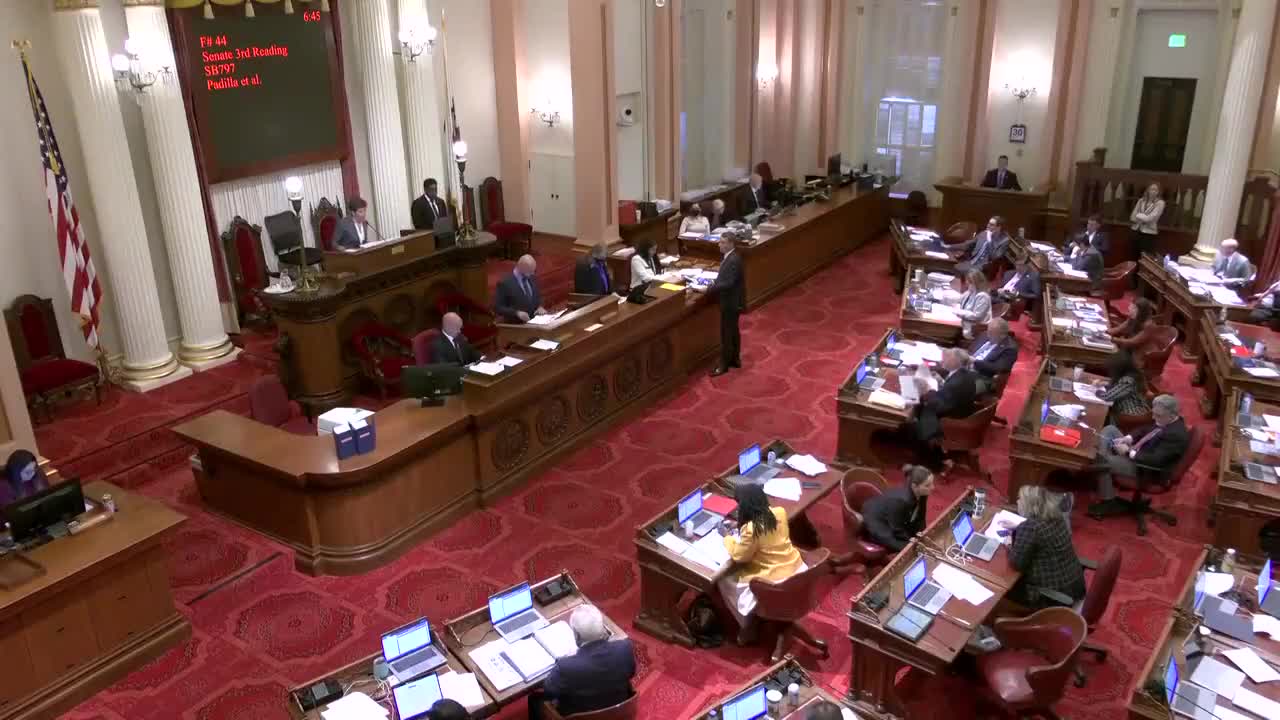 2MIN
Senate Floor
 20MIN
Senate Standing Committee on Elections and Constitutional Amendments
Bill Author

Bill Co-Author(s):