SB 427: Health care coverage: antiretroviral drugs, drug devices, and drug products.
- Session Year: 2023-2024
- House: Senate
- Latest Version Date: 2024-04-04
Current Status:
Failed
(2024-05-13: In Assembly. Held at Desk.)
Introduced
In Committee
First Chamber
In Committee
Second Chamber
Enacted
Existing law, the Knox-Keene Health Care Service Plan Act of 1975, provides for the licensure and regulation of health care service plans by the Department of Managed Health Care and makes a willful violation of the act a crime. Existing law provides for the regulation of health insurers by the Department of Insurance. Existing law generally prohibits a health care service plan plan, excluding a Medi-Cal managed care plan, or health insurer from subjecting antiretroviral drugs that are medically necessary for the prevention of HIV/AIDS, including preexposure prophylaxis or postexposure prophylaxis, to prior authorization or step therapy. Under existing law, a health care service plan or health insurer is not required to cover all the therapeutically equivalent versions of those drugs without prior authorization or step therapy if at least one is covered without prior authorization or step therapy.
This bill would prohibit a health care service plan plan, excluding a Medi-Cal managed care plan, or health insurer from subjecting antiretroviral drugs, drug devices, or drug products that are either approved by the United States Food and Drug Administration (FDA) or recommended by the federal Centers for Disease Control and Prevention (CDC) for the prevention of HIV/AIDS, to prior authorization or step therapy, but would authorize prior authorization or step therapy if at least one therapeutically equivalent version is covered without prior authorization or step therapy and the plan or insurer provides coverage for a noncovered therapeutic equivalent antiretroviral drug, drug device, or drug product without cost sharing pursuant to an exception request. The bill would require a plan or insurer to provide coverage under the outpatient prescription drug benefit for those drugs, drug devices, or drug products, including by supplying participating providers directly with a drug, drug device, or drug product, as specified.
This bill would require a nongrandfathered or grandfathered health care service plan contract or health insurance policy to provide coverage for antiretroviral drugs, drug devices, or drug products that are either approved by the FDA or recommended by the CDC for the prevention of HIV/AIDS, and would prohibit a nongrandfathered or grandfathered health care service plan contract or health insurance policy from imposing any cost-sharing or utilization review requirements for those drugs, drug devices, or drug products. The bill would exempt Medi-Cal managed care plans from these provisions and would delay the application of these provisions for an individual and small group health care service plan contract or health insurance policy until January 1, 2025. 2026.
Because a willful violation of these provisions by a health care service plan would be a crime, this bill would impose a state-mandated local program.
The California Constitution requires the state to reimburse local agencies and school districts for certain costs mandated by the state. Statutory provisions establish procedures for making that reimbursement.
This bill would provide that no reimbursement is required by this act for a specified reason.
Existing law, the Knox-Keene Health Care Service Plan Act of 1975, provides for the licensure and regulation of health care service plans by the Department of Managed Health Care and makes a willful violation of the act a crime. Existing law provides for the regulation of health insurers by the Department of Insurance. Existing law generally prohibits a health care service plan or health insurer from subjecting antiretroviral drugs that are medically necessary for the prevention of HIV/AIDS, including preexposure prophylaxis or postexposure prophylaxis, to prior authorization or step therapy. Under existing law, a health care service plan or health insurer is not required to cover all the therapeutically equivalent versions of those drugs without prior authorization or step therapy if at least one is covered without prior authorization or step therapy.
This bill would prohibit a health care service plan or health insurer from subjecting antiretroviral drugs, drug devices, or drug products that are either approved by the United States Food and Drug Administration (FDA) or recommended by the federal Centers for Disease Control and Prevention (CDC) for the prevention of HIV/AIDS, to prior authorization or step therapy, but would authorize prior authorization or step therapy if at least one therapeutically equivalent version is covered without prior authorization or step therapy and the plan or insurer provides coverage for a noncovered therapeutic equivalent antiretroviral drug, drug device, or drug product without cost sharing pursuant to an exception request. The bill would require a plan or insurer to provide coverage under the outpatient prescription drug benefit for those drugs, drug devices, or drug products, including by supplying participating providers directly with a drug, drug device, or drug product, as specified.
This bill would require a nongrandfathered or grandfathered health care service plan contract or health insurance policy to provide coverage for antiretroviral drugs, drug devices, or drug products that are either approved by the FDA or recommended by the CDC for the prevention of HIV/AIDS, and would prohibit a nongrandfathered or grandfathered health care service plan contract or health insurance policy from imposing any cost-sharing or utilization review requirements for those drugs, drug devices, or drug products. The bill would delay the application of these provisions for an individual and small group health care service plan contract or health insurance policy until January 1, 2025.
Because a willful violation of these provisions by a health care service plan would be a crime, this bill would impose a state-mandated local program.
The California Constitution requires the state to reimburse local agencies and school districts for certain costs mandated by the state. Statutory provisions establish procedures for making that reimbursement.
This bill would provide that no reimbursement is required by this act for a specified reason.
Existing law, the Knox-Keene Health Care Service Plan Act of 1975, provides for the licensure and regulation of health care service plans by the Department of Managed Health Care and makes a willful violation of the act a crime. Existing law provides for the regulation of health insurers by the Department of Insurance. Existing law generally prohibits a health care service plan or health insurer from subjecting antiretroviral drugs that are medically necessary for the prevention of HIV/AIDS, including preexposure prophylaxis or postexposure prophylaxis, to prior authorization or step therapy. Under existing law, a health care service plan or health insurer is not required to cover all the therapeutically equivalent versions of those drugs without prior authorization or step therapy if at least one is covered without prior authorization or step therapy.
This bill would prohibit a health care service plan or health insurer from subjecting antiretroviral drugs, devices, or products that are either approved by the United States Food and Drug Administration (FDA) or recommended by the federal Centers for Disease Control and Prevention (CDC) for the prevention of HIV/AIDS, to prior authorization or step therapy, but would authorize prior authorization or step therapy if at least one therapeutically equivalent version is covered without prior authorization or step therapy and the plan or insurer provides coverage for a noncovered therapeutic equivalent antiretroviral drug, device, or product without cost sharing pursuant to an exception request. The bill would prohibit a nongrandfathered or grandfathered health care service plan contract or health insurance policy from imposing any cost-sharing or utilization review requirements for antiretroviral drugs, devices, or products that are either approved by the FDA or recommended by the CDC for the prevention of HIV/AIDS. The bill would require a nongrandfathered or grandfathered health care service plan contract or health insurance policy to provide coverage for those drugs, devices, or products, and The bill would require a plan or insurer to provide coverage under the outpatient prescription drug benefit for those drugs, devices, or products, including by supplying participating providers directly with a drug, device, or product, as specified. Because a willful violation of these provisions by a health care service plan would be a crime, this bill would impose a state-mandated local program.
This bill would require a nongrandfathered or grandfathered health care service plan contract or health insurance policy to provide coverage for antiretroviral drugs, devices, or products that are either approved by the FDA or recommended by the CDC for the prevention of HIV/AIDS, and would prohibit a nongrandfathered or grandfathered health care service plan contract or health insurance policy from imposing any cost-sharing or utilization review requirements for those drugs, devices, or products. The bill would delay the application of these provisions for an individual and small group health care service plan contract or health insurance policy until January 1, 2025.
Because a willful violation of these provisions by a health care service plan would be a crime, this bill would impose a state-mandated local program.
The California Constitution requires the state to reimburse local agencies and school districts for certain costs mandated by the state. Statutory provisions establish procedures for making that reimbursement.
This bill would provide that no reimbursement is required by this act for a specified reason.
Existing law, the Knox-Keene Health Care Service Plan Act of 1975, provides for the licensure and regulation of health care service plans by the Department of Managed Health Care and makes a willful violation of the act a crime. Existing law provides for the regulation of health insurers by the Department of Insurance. Existing law generally prohibits a health care service plan or health insurer from subjecting antiretroviral drugs that are medically necessary for the prevention of AIDS/HIV, HIV/AIDS, including preexposure prophylaxis or postexposure prophylaxis, to prior authorization or step therapy. Under existing law, a health care service plan or health insurer is not required to cover all the therapeutically equivalent versions of those drugs without prior authorization or step therapy if at least one is covered without prior authorization or step therapy.
This bill would prohibit a health care service plan or health insurer from subjecting antiretroviral drugs, devices, or products that are either approved by the United States Food and Drug Administration (FDA) or recommended by the federal Centers for Disease Control and Prevention (CDC) for the prevention of AIDS/HIV HIV/AIDS, to prior authorization or step therapy, but would authorize prior authorization or step therapy if at least one therapeutically equivalent version is covered without prior authorization or step therapy and the insurer provides coverage for a noncovered therapeutic equivalent antiretroviral drug, device, or product without cost sharing pursuant to an exception request. The bill would prohibit a nongrandfathered or grandfathered health care service plan contract or health insurance policy from imposing any cost-sharing or utilization review requirements for antiretroviral drugs, devices, or products that are either approved by the FDA or recommended by the CDC for the prevention of AIDS/HIV. HIV/AIDS. The bill would require a nongrandfathered or grandfathered health care service plan contract or health insurance policy to provide coverage for those drugs, devices, or products, and would require a plan or insurer to provide coverage under the outpatient prescription drug benefit for those drugs, devices, or products, including by supplying participating providers directly with a drug, device, or product, as specified. Because a willful violation of these provisions by a health care service plan would be a crime, this bill would impose a state-mandated local program.
The California Constitution requires the state to reimburse local agencies and school districts for certain costs mandated by the state. Statutory provisions establish procedures for making that reimbursement.
This bill would provide that no reimbursement is required by this act for a specified reason.
Existing law, the Knox-Keene Health Care Service Plan Act of 1975, provides for the licensure and regulation of health care service plans by the Department of Managed Health Care and makes a willful violation of the act a crime. Existing law provides for the regulation of health insurers by the Department of Insurance. Existing law generally prohibits a health care service plan or health insurer from subjecting antiretroviral drugs that are medically necessary for the prevention of AIDS/HIV, including preexposure prophylaxis or postexposure prophylaxis, to prior authorization or step therapy. Under existing law, a health care service plan or health insurer is not required to cover all the therapeutically equivalent versions of those drugs without prior authorization or step therapy if at least one is covered without prior authorization or step therapy.
This bill would prohibit a health care service plan or health insurer from subjecting antiretroviral drugs, devices, or products that are either approved by the United States Food and Drug Administration (FDA) or recommended by the federal Centers for Disease Control and Prevention (CDC) for the prevention of AIDS/HIV to prior authorization or step therapy, but would authorize prior authorization or step therapy if at least one therapeutically equivalent version is covered without prior authorization or step therapy and the insurer provides coverage for a noncovered therapeutic equivalent antiretroviral drug, device, or product without cost sharing pursuant to an exception request. The bill would prohibit a nongrandfathered or grandfathered health care service plan contract or health insurance policy from imposing any cost-sharing or utilization review requirements for antiretroviral drugs, devices, or products that are either approved by the FDA or recommended by the CDC for the prevention of AIDS/HIV. The bill would require a grandfathered health care service plan contract or health insurance policy to provide coverage for those drugs, devices, or products, and would require a plan or insurer to provide coverage under the outpatient prescription drug benefit for those drugs, devices, or products, including by supplying participating providers directly with a drug, device, or product, as specified. Because a willful violation of these provisions by a health care service plan would be a crime, this bill would impose a state-mandated local program.
The California Constitution requires the state to reimburse local agencies and school districts for certain costs mandated by the state. Statutory provisions establish procedures for making that reimbursement.
This bill would provide that no reimbursement is required by this act for a specified reason.
Existing law provides for the regulation of disability insurers by the Department of Insurance. Existing law establishes the Independent Medical Review System in the department to review grievances involving a disputed health care service. Under existing law, a statement of decision regarding denying, modifying, or delaying health care services, based in whole or in part on a finding that a proposed health care service is not a covered benefit under the contract, is required to clearly specify the provision in the contract that excludes that coverage.This bill would make technical, nonsubstantive changes to those provisions and would clarify that the above-described statement of decision is required to clearly specify the provision in the contract that excludes a specific coverage.Existing law provides for the regulation of disability insurers by the Department of Insurance. Existing law establishes the Independent Medical Review System in the department to review grievances involving a disputed health care service. Under existing law, a statement of decision regarding denying, modifying, or delaying health care services, based in whole or in part on a finding that a proposed health care service is not a covered benefit under the contract, is required to clearly specify the provision in the contract that excludes that coverage.
This bill would make technical, nonsubstantive changes to those provisions and would clarify that the above-described statement of decision is required to clearly specify the provision in the contract that excludes a specific coverage.
(a)(1)Notwithstanding Section 1342.71, a health care service plan shall not subject antiretroviral drugs that are medically necessary drugs, drug devices, or drug products that are either approved by the United States Food and Drug Administration (FDA) or recommended by the federal Centers for Disease Control and Prevention (CDC) for the prevention of AIDS/HIV, HIV/AIDS, including preexposure prophylaxis or postexposure prophylaxis, to prior authorization or step therapy, except as provided in paragraph (2).
(2)If the United States Food and Drug Administration FDA has approved one or more therapeutic equivalents of a drug, drug device, or drug product for the prevention of AIDS/HIV, HIV/AIDS, this section does not require a health care service plan to cover all of the therapeutically equivalent versions without prior authorization or step therapy, if at least one therapeutically equivalent version is covered without prior authorization or step therapy. therapy and the plan provides coverage for a noncovered therapeutic equivalent antiretroviral drug, drug device, or drug product without cost sharing pursuant to an exception request.
(b)Notwithstanding any other law, a health care service plan shall not prohibit, or permit a delegated pharmacy benefit manager to prohibit, a pharmacy provider from dispensing preexposure prophylaxis or postexposure prophylaxis.
(c)A health care service plan shall cover preexposure prophylaxis and postexposure prophylaxis that has been furnished by a pharmacist, as authorized in Sections 4052.02 and 4052.03 of the Business and Professions Code, including the pharmacists services and related testing ordered by the pharmacist. A health care service plan shall pay or reimburse, consistent with the requirements of this chapter, for the service performed by a pharmacist at an in-network pharmacy or a pharmacist at an out-of-network pharmacy if the health care service plan has an out-of-network pharmacy benefit.
(d)This section does not require a health care service plan to cover preexposure prophylaxis or postexposure prophylaxis by a pharmacist at an out-of-network pharmacy, unless in the case of an emergency or if the health care service plan has an out-of-network pharmacy benefit.
(e)(1)A nongrandfathered health care service plan contract shall provide coverage, and shall not impose any cost-sharing or utilization review requirements, for antiretroviral drugs, drug devices, or drug products that are either approved by the FDA or recommended by the CDC for the prevention of HIV/AIDS, including preexposure prophylaxis or postexposure prophylaxis.
(2)A health care service plan contract that is a grandfathered health plan shall provide coverage, and shall not impose any cost-sharing or utilization review requirements, for antiretroviral drugs, drug devices, or drug products that are either approved by the FDA or recommended by the CDC for the prevention of HIV/AIDS, including preexposure prophylaxis or postexposure prophylaxis.
(3)This subdivision does not apply to individual and small group health care service plan contracts.
(f)In addition to the coverage a health care service plan provides for prescription drugs that are not self-administered, a health care service plan shall provide coverage under the outpatient prescription drug benefit for antiretroviral drugs, drug devices, or drug products that are either approved by the FDA or recommended by the CDC for the prevention of HIV/AIDS, including by supplying providers directly with a drug, drug device, or drug product that is required by this section and is not self-administered.
(g)(1)This section does not apply to a specialized health care service plan contract that covers only dental or vision benefits or a Medicare supplement contract.
(2)This section applies regardless of whether or not an antiretroviral drug, drug device, or drug product is self-administered.
(e)(3)This section shall not apply to Medi-Cal managed care plans contracting with the State Department of Health Care Services pursuant to Chapter 7 (commencing with Section 14000), Chapter 8 (commencing with Section 14200), or Chapter 8.75 (commencing with Section 14590) of Part 3 of Division 9 of the Welfare and Institutions Code, to the extent that the services described in this section are excluded from coverage under the contract between the Medi-Cal managed care plans and the State Department of Health Care Services.
(h)A health care service plan contract that is a high deductible health plan under the definition set forth in Section 223(c)(2) of Title 26 of the United States Code shall comply with the cost-sharing requirements of this section. However, if not applying the minimum annual deductible to an antiretroviral drug, drug device, or drug product would conflict with federal requirements for high deductible health plans, the cost-sharing limits shall apply once a contracts deductible has been satisfied for the plan year.
(i)This section shall remain in effect only until January 1, 2026, and as of that date is repealed.
SEC. 2.Section 1342.74 is added to the Health and Safety Code, to read:1342.74.(a)(1)Notwithstanding Section 1342.71, a health care service plan shall not subject antiretroviral drugs, drug devices, or drug products that are either approved by the United States Food and Drug Administration (FDA) or recommended by the federal Centers for Disease Control and Prevention (CDC) for the prevention of HIV/AIDS, including preexposure prophylaxis or postexposure prophylaxis, to prior authorization or step therapy, except as provided in paragraph (2).
(2)If the FDA has approved one or more therapeutic equivalents of a drug, drug device, or drug product for the prevention of HIV/AIDS, this section does not require a health care service plan to cover all of the therapeutically equivalent versions without prior authorization or step therapy, if at least one therapeutically equivalent version is covered without prior authorization or step therapy and the plan provides coverage for a noncovered therapeutic equivalent antiretroviral drug, drug device, or drug product without cost sharing pursuant to an exception request.
(b)Notwithstanding any other law, a health care service plan shall not prohibit, or permit a delegated pharmacy benefit manager to prohibit, a pharmacy provider from dispensing preexposure prophylaxis or postexposure prophylaxis.
(c)A health care service plan shall cover preexposure prophylaxis and postexposure prophylaxis that has been furnished by a pharmacist, as authorized in Sections 4052.02 and 4052.03 of the Business and Professions Code, including the pharmacists services and related testing ordered by the pharmacist. A health care service plan shall pay or reimburse, consistent with the requirements of this chapter, for the service performed by a pharmacist at an in-network pharmacy or a pharmacist at an out-of-network pharmacy if the health care service plan has an out-of-network pharmacy benefit.
(d)This section does not require a health care service plan to cover preexposure prophylaxis or postexposure prophylaxis by a pharmacist at an out-of-network pharmacy, unless in the case of an emergency or if the health care service plan has an out-of-network pharmacy benefit.
(e)(1)A nongrandfathered health care service plan contract shall provide coverage, and shall not impose any cost-sharing or utilization review requirements, for antiretroviral drugs, drug devices, or drug products that are either approved by the FDA or recommended by the CDC for the prevention of HIV/AIDS, including preexposure prophylaxis or postexposure prophylaxis.
(2)A health care service plan contract that is a grandfathered health plan shall provide coverage, and shall not impose any cost-sharing or utilization review requirements, for antiretroviral drugs, drug devices, or drug products that are either approved by the FDA or recommended by the CDC for the prevention of HIV/AIDS, including preexposure prophylaxis or postexposure prophylaxis.
(f)In addition to the coverage a health care service plan provides for prescription drugs that are not self-administered, a health care service plan shall provide coverage under the outpatient prescription drug benefit for antiretroviral drugs, drug devices, or drug products that are either approved by the FDA or recommended by the CDC for the prevention of HIV/AIDS, including by supplying providers directly with a drug, drug device, or drug product that is required by this section and is not self-administered.
(g)(1)This section does not apply to a specialized health care service plan contract that covers only dental or vision benefits or a Medicare supplement contract.
(2)This section applies regardless of whether or not an antiretroviral drug, drug device, or drug product is self-administered.
(3)This section shall not apply to Medi-Cal managed care plans contracting with the State Department of Health Care Services pursuant to Chapter 7 (commencing with Section 14000), Chapter 8 (commencing with Section 14200), or Chapter 8.75 (commencing with Section 14590) of Part 3 of Division 9 of the Welfare and Institutions Code, to the extent that the services described in this section are excluded from coverage under the contract between the Medi-Cal managed care plans and the State Department of Health Care Services.
(h)A health care service plan contract that is a high deductible health plan under the definition set forth in Section 223(c)(2) of Title 26 of the United States Code shall comply with the cost-sharing requirements of this section. However, if not applying the minimum annual deductible to an antiretroviral drug, drug device, or drug product would conflict with federal requirements for high deductible health plans, the cost-sharing limits shall apply once a contracts deductible has been satisfied for the plan year.
(i)This section shall become operative on January 1, 2026.
SEC. 3.Section 10123.1933 of the Insurance Code is amended to read:10123.1933.(a)(1)Notwithstanding Section 10123.201, a health insurer shall not subject antiretroviral drugs that are medically necessary drugs, drug devices, or drug products that are either approved by the United States Food and Drug Administration (FDA) or recommended by the federal Centers for Disease Control and Prevention (CDC) for the prevention of AIDS/HIV, HIV/AIDS, including preexposure prophylaxis or postexposure prophylaxis, to prior authorization or step therapy, except as provided in paragraph (2).
(2)If the United States Food and Drug Administration FDA has approved one or more therapeutic equivalents of a drug, drug device, or drug product for the prevention of AIDS/HIV, HIV/AIDS, this section does not require a health insurer to cover all of the therapeutically equivalent versions without prior authorization or step therapy, if at least one therapeutically equivalent version is covered without prior authorization or step therapy. therapy and the insurer provides coverage for a noncovered therapeutic equivalent antiretroviral drug, drug device, or drug product without cost sharing pursuant to an exception request.
(b)Notwithstanding any other law, a health insurer shall not prohibit, or permit a contracted pharmacy benefit manager to prohibit, a pharmacist from dispensing preexposure prophylaxis or postexposure prophylaxis.
(c)A health insurer shall cover preexposure prophylaxis and postexposure prophylaxis that has been furnished by a pharmacist, as authorized in Sections 4052.02 and 4052.03 of the Business and Professions Code, including the pharmacists services and related testing ordered by the pharmacist. A health insurer shall pay or reimburse, consistent with the requirements of this chapter, for the service performed by a pharmacist at an in-network pharmacy or a pharmacist at an out-of-network pharmacy if the health insurer has an out-of-network pharmacy benefit.
(d)This section does not require a health insurer to cover preexposure prophylaxis or postexposure prophylaxis by a pharmacist at an out-of-network pharmacy, unless in the case of an emergency or if the health insurance policy has an out-of-network pharmacy benefit.
(e)(1)A nongrandfathered health insurance policy shall provide coverage, and shall not impose any cost-sharing or utilization review requirements, for antiretroviral drugs, drug devices, or drug products that are either approved by the FDA or recommended by the CDC for the prevention of HIV/AIDS, including preexposure prophylaxis or postexposure prophylaxis.
(2)A health insurance policy that is a grandfathered health plan shall provide coverage, and shall not impose any cost-sharing or utilization review requirements, for antiretroviral drugs, drug devices, or drug products that are either approved by the FDA or recommended by the CDC for the prevention of HIV/AIDS, including preexposure prophylaxis or postexposure prophylaxis.
(3)This subdivision does not apply to individual and small group health insurance policies.
(f)In addition to the coverage a health insurer provides for prescription drugs that are not self-administered, a health insurer shall provide coverage under the outpatient prescription drug benefit for antiretroviral drugs, drug devices, or drug products that are either approved by the FDA or recommended by the CDC for the prevention of HIV/AIDS, including by supplying providers directly with a drug, drug device, or drug product that is required by this section and is not self-administered.
(g)(1)This section does not apply to a specialized health insurance policy that covers only dental or vision benefits or a Medicare supplement policy.
(2) This section applies regardless of whether or not an antiretroviral drug, drug device, or drug product is self-administered.
(h)The department and commissioner may exercise the authority provided by this code and the Administrative Procedure Act (Chapter 3.5 (commencing with Section 11340), Chapter 4.5 (commencing with Section 11400), and Chapter 5 (commencing with Section 11500) of Part 1 of Division 3 of Title 2 of the Government Code) to implement and enforce this section. If the commissioner assesses a civil penalty for a violation, any hearing that is requested by the insurer may be conducted by an administrative law judge of the administrative hearing bureau of the department under the formal procedure of Chapter 5 (commencing with Section 11500) of Part 1 of Division 3 of Title 2 of the Government Code. This subdivision does not impair or restrict the commissioners authority pursuant to another provision of this code or the Administrative Procedure Act.
(i)A health insurance policy that is a high deductible health plan under the definition set forth in Section 223(c)(2) of Title 26 of the United States Code shall comply with the cost-sharing requirements of this section. However, if not applying the minimum annual deductible to an antiretroviral drug, drug device, or drug product would conflict with federal requirements for high deductible health plans, the cost-sharing limits shall apply once a policys deductible has been satisfied for the plan year.
(j)This section shall remain in effect only until January 1, 2026, and as of that date is repealed.
SEC. 4.Section 10123.1933 is added to the Insurance Code, to read:10123.1933.(a)(1)Notwithstanding Section 10123.201, a health insurer shall not subject antiretroviral drugs, drug devices, or drug products that are either approved by the United States Food and Drug Administration (FDA) or recommended by the federal Centers for Disease Control and Prevention (CDC) for the prevention of HIV/AIDS, including preexposure prophylaxis or postexposure prophylaxis, to prior authorization or step therapy, except as provided in paragraph (2).
(2)If the FDA has approved one or more therapeutic equivalents of a drug, drug device, or drug product for the prevention of HIV/AIDS, this section does not require a health insurer to cover all of the therapeutically equivalent versions without prior authorization or step therapy, if at least one therapeutically equivalent version is covered without prior authorization or step therapy and the insurer provides coverage for a noncovered therapeutic equivalent antiretroviral drug, drug device, or drug product without cost sharing pursuant to an exception request.
(b)Notwithstanding any other law, a health insurer shall not prohibit, or permit a contracted pharmacy benefit manager to prohibit, a pharmacist from dispensing preexposure prophylaxis or postexposure prophylaxis.
(c)A health insurer shall cover preexposure prophylaxis and postexposure prophylaxis that has been furnished by a pharmacist, as authorized in Sections 4052.02 and 4052.03 of the Business and Professions Code, including the pharmacists services and related testing ordered by the pharmacist. A health insurer shall pay or reimburse, consistent with the requirements of this chapter, for the service performed by a pharmacist at an in-network pharmacy or a pharmacist at an out-of-network pharmacy if the health insurer has an out-of-network pharmacy benefit.
(d)This section does not require a health insurer to cover preexposure prophylaxis or postexposure prophylaxis by a pharmacist at an out-of-network pharmacy, unless in the case of an emergency or if the health insurance policy has an out-of-network pharmacy benefit.
(e)(1)A nongrandfathered health insurance policy shall provide coverage, and shall not impose any cost-sharing or utilization review requirements, for antiretroviral drugs, drug devices, or drug products that are either approved by the FDA or recommended by the CDC for the prevention of HIV/AIDS, including preexposure prophylaxis or postexposure prophylaxis.
(2)A health insurance policy that is a grandfathered health plan shall provide coverage, and shall not impose any cost-sharing or utilization review requirements, for antiretroviral drugs, drug devices, or drug products that are either approved by the FDA or recommended by the CDC for the prevention of HIV/AIDS, including preexposure prophylaxis or postexposure prophylaxis.
(f)In addition to the coverage a health insurer provides for prescription drugs that are not self-administered, a health insurer shall provide coverage under the outpatient prescription drug benefit for antiretroviral drugs, drug devices, or drug products that are either approved by the FDA or recommended by the CDC for the prevention of HIV/AIDS, including by supplying providers directly with a drug, drug device, or drug product that is required by this section and is not self-administered.
(g)(1)This section does not apply to a specialized health insurance policy that covers only dental or vision benefits or a Medicare supplement policy.
(2)This section applies regardless of whether or not an antiretroviral drug, drug device, or drug product is self-administered.
(h)The department and commissioner may exercise the authority provided by this code and the Administrative Procedure Act (Chapter 3.5 (commencing with Section 11340), Chapter 4.5 (commencing with Section 11400), and Chapter 5 (commencing with Section 11500) of Part 1 of Division 3 of Title 2 of the Government Code) to implement and enforce this section. If the commissioner assesses a civil penalty for a violation, any hearing that is requested by the insurer may be conducted by an administrative law judge of the administrative hearing bureau of the department under the formal procedure of Chapter 5 (commencing with Section 11500) of Part 1 of Division 3 of Title 2 of the Government Code. This subdivision does not impair or restrict the commissioners authority pursuant to another provision of this code or the Administrative Procedure Act.
(i)A health insurance policy that is a high deductible health plan under the definition set forth in Section 223(c)(2) of Title 26 of the United States Code shall comply with the cost-sharing requirements of this section. However, if not applying the minimum annual deductible to an antiretroviral drug, drug device, or drug product would conflict with federal requirements for high deductible health plans, the cost-sharing limits shall apply once a policys deductible has been satisfied for the plan year.
(j)This section shall become operative on January 1, 2026.
SEC. 5.No reimbursement is required by this act pursuant to Section 6 of Article XIIIB of the California Constitution because the only costs that may be incurred by a local agency or school district will be incurred because this act creates a new crime or infraction, eliminates a crime or infraction, or changes the penalty for a crime or infraction, within the meaning of Section 17556 of the Government Code, or changes the definition of a crime within the meaning of Section 6 of Article XIIIB of the California Constitution.
SECTION 1.Section 1342.74 of the Health and Safety Code is amended to read:1342.74.(a)(1)Notwithstanding Section 1342.71, a health care service plan shall not subject antiretroviral drugs, drug devices, or drug products that are either approved by the United States Food and Drug Administration (FDA) or recommended by the federal Centers for Disease Control and Prevention (CDC) for the prevention of HIV/AIDS, including preexposure prophylaxis or postexposure prophylaxis, to prior authorization or step therapy, except as provided in paragraph (2).(2)If the FDA has approved one or more therapeutic equivalents of a drug, drug device, or drug product for the prevention of HIV/AIDS, this section does not require a health care service plan to cover all of the therapeutically equivalent versions without prior authorization or step therapy, if at least one therapeutically equivalent version is covered without prior authorization or step therapy and the plan provides coverage for a noncovered therapeutic equivalent antiretroviral drug, drug device, or drug product without cost sharing pursuant to an exception request.(b)Notwithstanding any other law, a health care service plan shall not prohibit, or permit a delegated pharmacy benefit manager to prohibit, a pharmacy provider from dispensing preexposure prophylaxis or postexposure prophylaxis.(c)A health care service plan shall not cover preexposure prophylaxis that has been furnished by a pharmacist, as authorized in Section 4052.02 of the Business and Professions Code, in excess of a 60-day supply to a single patient once every two years, unless the pharmacist has been directed otherwise by a prescriber.(d)This section does not require a health care service plan to cover preexposure prophylaxis or postexposure prophylaxis by a pharmacist at an out-of-network pharmacy, unless in the case of an emergency or if the health care service plan has an out-of-network pharmacy benefit.(e)(1)A nongrandfathered health care service plan contract shall provide coverage, and shall not impose any cost-sharing or utilization review requirements, for antiretroviral drugs, drug devices, or drug products that are either approved by the FDA or recommended by the CDC for the prevention of HIV/AIDS, including preexposure prophylaxis or postexposure prophylaxis.(2)A health care service plan contract that is a grandfathered health plan shall provide coverage, and shall not impose any cost-sharing or utilization review requirements, for antiretroviral drugs, drug devices, or drug products that are either approved by the FDA or recommended by the CDC for the prevention of HIV/AIDS, including preexposure prophylaxis or postexposure prophylaxis.(3)This subdivision shall not apply to individual and small group health care service plan contracts.(f)In addition to the coverage a health care service plan provides for prescription drugs that are not self-administered, a health care service plan shall provide coverage under the outpatient prescription drug benefit for antiretroviral drugs, drug devices, or drug products that are either approved by the FDA or recommended by the CDC for the prevention of HIV/AIDS, including by supplying providers directly with a drug, drug device, or drug product that is required by this section and is not self-administered.(g)(1)This section does not apply to a specialized health care service plan contract that covers only dental or vision benefits or a Medicare supplement contract.(2)This section applies regardless of whether or not an antiretroviral drug, drug device, or drug product is self-administered.(h)A health care service plan contract that is a high deductible health plan under the definition set forth in Section 223(c)(2) of Title 26 of the United States Code shall comply with the cost-sharing requirements of this section. However, if not applying the minimum annual deductible to an antiretroviral drug, drug device, or drug product would conflict with federal requirements for high deductible health plans, the cost-sharing limits shall apply once a contracts deductible has been satisfied for the plan year.(i)This section shall remain in effect only until January 1, 2025, and as of that date is repealed.SEC. 2.Section 1342.74 is added to the Health and Safety Code, to read:1342.74.(a)(1)Notwithstanding Section 1342.71, a health care service plan shall not subject antiretroviral drugs, drug devices, or drug products that are either approved by the United States Food and Drug Administration (FDA) or recommended by the federal Centers for Disease Control and Prevention (CDC) for the prevention of HIV/AIDS, including preexposure prophylaxis or postexposure prophylaxis, to prior authorization or step therapy, except as provided in paragraph (2).(2)If the FDA has approved one or more therapeutic equivalents of a drug, drug device, or drug product for the prevention of HIV/AIDS, this section does not require a health care service plan to cover all of the therapeutically equivalent versions without prior authorization or step therapy, if at least one therapeutically equivalent version is covered without prior authorization or step therapy and the plan provides coverage for a noncovered therapeutic equivalent antiretroviral drug, drug device, or drug product without cost sharing pursuant to an exception request.(b)Notwithstanding any other law, a health care service plan shall not prohibit, or permit a delegated pharmacy benefit manager to prohibit, a pharmacy provider from dispensing preexposure prophylaxis or postexposure prophylaxis.(c)A health care service plan shall not cover preexposure prophylaxis that has been furnished by a pharmacist, as authorized in Section 4052.02 of the Business and Professions Code, in excess of a 60-day supply to a single patient once every two years, unless the pharmacist has been directed otherwise by a prescriber.(d)This section does not require a health care service plan to cover preexposure prophylaxis or postexposure prophylaxis by a pharmacist at an out-of-network pharmacy, unless in the case of an emergency or if the health care service plan has an out-of-network pharmacy benefit.(e)(1)A nongrandfathered health care service plan contract shall provide coverage, and shall not impose any cost-sharing or utilization review requirements, for antiretroviral drugs, drug devices, or drug products that are either approved by the FDA or recommended by the CDC for the prevention of HIV/AIDS, including preexposure prophylaxis or postexposure prophylaxis.(2)A health care service plan contract that is a grandfathered health plan shall provide coverage, and shall not impose any cost-sharing or utilization review requirements, for antiretroviral drugs, drug devices, or drug products that are either approved by the FDA or recommended by the CDC for the prevention of HIV/AIDS, including preexposure prophylaxis or postexposure prophylaxis.(f)In addition to the coverage a health care service plan provides for prescription drugs that are not self-administered, a health care service plan shall provide coverage under the outpatient prescription drug benefit for antiretroviral drugs, drug devices, or drug products that are either approved by the FDA or recommended by the CDC for the prevention of HIV/AIDS, including by supplying providers directly with a drug, drug device, or drug product that is required by this section and is not self-administered.(g)(1)This section does not apply to a specialized health care service plan contract that covers only dental or vision benefits or a Medicare supplement contract.(2)This section applies regardless of whether or not an antiretroviral drug, drug device, or drug product is self-administered.(h)A health care service plan contract that is a high deductible health plan under the definition set forth in Section 223(c)(2) of Title 26 of the United States Code shall comply with the cost-sharing requirements of this section. However, if not applying the minimum annual deductible to an antiretroviral drug, drug device, or drug product would conflict with federal requirements for high deductible health plans, the cost-sharing limits shall apply once a contracts deductible has been satisfied for the plan year.(i)This section shall become operative on January 1, 2025.SEC. 3.Section 10123.1933 of the Insurance Code is amended to read:10123.1933.(a)(1)Notwithstanding Section 10123.201, a health insurer shall not subject antiretroviral drugs, drug devices, or drug products that are either approved by the United States Food and Drug Administration (FDA) or recommended by the federal Centers for Disease Control and Prevention (CDC) for the prevention of HIV/AIDS, including preexposure prophylaxis or postexposure prophylaxis, to prior authorization or step therapy, except as provided in paragraph (2).(2)If the FDA has approved one or more therapeutic equivalents of a drug, drug device, or drug product for the prevention of HIV/AIDS, this section does not require a health insurer to cover all of the therapeutically equivalent versions without prior authorization or step therapy, if at least one therapeutically equivalent version is covered without prior authorization or step therapy and the insurer provides coverage for a noncovered therapeutic equivalent antiretroviral drug, drug device, or drug product without cost sharing pursuant to an exception request.(b)Notwithstanding any other law, a health insurer shall not prohibit, or permit a contracted pharmacy benefit manager to prohibit, a pharmacist from dispensing preexposure prophylaxis or postexposure prophylaxis.(c)Notwithstanding subdivision (b), a health insurer shall not cover preexposure prophylaxis that has been furnished by a pharmacist, as authorized in Section 4052.02 of the Business and Professions Code, in excess of a 60-day supply to a single patient once every two years, unless the pharmacist has been directed otherwise by a prescriber.(d)This section does not require a health insurer to cover preexposure prophylaxis or postexposure prophylaxis by a pharmacist at an out-of-network pharmacy, unless in the case of an emergency or if a health insurance policy has an out-of-network pharmacy benefit.(e)(1)A nongrandfathered health insurance policy shall provide coverage, and shall not impose any cost-sharing or utilization review requirements, for antiretroviral drugs, drug devices, or drug products that are either approved by the FDA or recommended by the CDC for the prevention of HIV/AIDS, including preexposure prophylaxis or postexposure prophylaxis.(2)A health insurance policy that is a grandfathered health plan shall provide coverage, and shall not impose any cost-sharing or utilization review requirements, for antiretroviral drugs, drug devices, or drug products that are either approved by the FDA or recommended by the CDC for the prevention of HIV/AIDS, including preexposure prophylaxis or postexposure prophylaxis.(3)This subdivision shall not apply to individual and small group health insurance policies.(f)In addition to the coverage a health insurer provides for prescription drugs that are not self-administered, a health insurer shall provide coverage under the outpatient prescription drug benefit for antiretroviral drugs, drug devices, or drug products that are either approved by the FDA or recommended by the CDC for the prevention of HIV/AIDS, including by supplying providers directly with a drug, drug device, or drug product that is required by this section and is not self-administered.(g)This section does not apply to a specialized health insurance policy that covers only dental or vision benefits or a Medicare supplement policy. This section applies regardless of whether or not an antiretroviral drug, drug device, or drug product is self-administered.(h)The department and commissioner may exercise the authority provided by this code and the Administrative Procedure Act (Chapter 3.5 (commencing with Section 11340), Chapter 4.5 (commencing with Section 11400), and Chapter 5 (commencing with Section 11500) of Part 1 of Division 3 of Title 2 of the Government Code) to implement and enforce this section. If the commissioner assesses a civil penalty for a violation, any hearing that is requested by the insurer shall be conducted by an administrative law judge of the administrative hearing bureau of the department under the formal procedure of Chapter 5 (commencing with Section 11500) of Part 1 of Division 3 of Title 2 of the Government Code. This subdivision does not impair or restrict the commissioners authority pursuant to another provision of this code or the Administrative Procedure Act.(i)A health insurance policy that is a high deductible health plan under the definition set forth in Section 223(c)(2) of Title 26 of the United States Code shall comply with the cost-sharing requirements of this section. However, if not applying the minimum annual deductible to an antiretroviral drug, drug device, or drug product would conflict with federal requirements for high deductible health plans, the cost-sharing limits shall apply once a policys deductible has been satisfied for the plan year.(j)This section shall remain in effect only until January 1, 2025, and as of that date is repealed.SEC. 4.Section 10123.1933 is added to the Insurance Code, to read:10123.1933.(a)(1)Notwithstanding Section 10123.201, a health insurer shall not subject antiretroviral drugs, drug devices, or drug products that are either approved by the United States Food and Drug Administration (FDA) or recommended by the federal Centers for Disease Control and Prevention (CDC) for the prevention of HIV/AIDS, including preexposure prophylaxis or postexposure prophylaxis, to prior authorization or step therapy, except as provided in paragraph (2).(2)If the FDA has approved one or more therapeutic equivalents of a drug, drug device, or drug product for the prevention of HIV/AIDS, this section does not require a health insurer to cover all of the therapeutically equivalent versions without prior authorization or step therapy, if at least one therapeutically equivalent version is covered without prior authorization or step therapy and the insurer provides coverage for a noncovered therapeutic equivalent antiretroviral drug, drug device, or drug product without cost sharing pursuant to an exception request.(b)Notwithstanding any other law, a health insurer shall not prohibit, or permit a contracted pharmacy benefit manager to prohibit, a pharmacist from dispensing preexposure prophylaxis or postexposure prophylaxis.(c)Notwithstanding subdivision (b), a health insurer shall not cover preexposure prophylaxis that has been furnished by a pharmacist, as authorized in Section 4052.02 of the Business and Professions Code, in excess of a 60-day supply to a single patient once every two years, unless the pharmacist has been directed otherwise by a prescriber.(d)This section does not require a health insurer to cover preexposure prophylaxis or postexposure prophylaxis by a pharmacist at an out-of-network pharmacy, unless in the case of an emergency or if a health insurance policy has an out-of-network pharmacy benefit.(e)(1)A nongrandfathered health insurance policy shall provide coverage, and shall not impose any cost-sharing or utilization review requirements, for antiretroviral drugs, drug devices, or drug products that are either approved by the FDA or recommended by the CDC for the prevention of HIV/AIDS, including preexposure prophylaxis or postexposure prophylaxis.(2)A health insurance policy that is a grandfathered health plan shall provide coverage, and shall not impose any cost-sharing or utilization review requirements, for antiretroviral drugs, drug devices, or drug products that are either approved by the FDA or recommended by the CDC for the prevention of HIV/AIDS, including preexposure prophylaxis or postexposure prophylaxis.(f)In addition to the coverage a health insurer provides for prescription drugs that are not self-administered, a health insurer shall provide coverage under the outpatient prescription drug benefit for antiretroviral drugs, drug devices, or drug products that are either approved by the FDA or recommended by the CDC for the prevention of HIV/AIDS, including by supplying providers directly with a drug, drug device, or drug product that is required by this section and is not self-administered.(g)This section does not apply to a specialized health insurance policy that covers only dental or vision benefits or a Medicare supplement policy. This section applies regardless of whether or not an antiretroviral drug, drug device, or drug product is self-administered.(h)The department and commissioner may exercise the authority provided by this code and the Administrative Procedure Act (Chapter 3.5 (commencing with Section 11340), Chapter 4.5 (commencing with Section 11400), and Chapter 5 (commencing with Section 11500) of Part 1 of Division 3 of Title 2 of the Government Code) to implement and enforce this section. If the commissioner assesses a civil penalty for a violation, any hearing that is requested by the insurer shall be conducted by an administrative law judge of the administrative hearing bureau of the department under the formal procedure of Chapter 5 (commencing with Section 11500) of Part 1 of Division 3 of Title 2 of the Government Code. This subdivision does not impair or restrict the commissioners authority pursuant to another provision of this code or the Administrative Procedure Act.(i)A health insurance policy that is a high deductible health plan under the definition set forth in Section 223(c)(2) of Title 26 of the United States Code shall comply with the cost-sharing requirements of this section. However, if not applying the minimum annual deductible to an antiretroviral drug, drug device, or drug product would conflict with federal requirements for high deductible health plans, the cost-sharing limits shall apply once a policys deductible has been satisfied for the plan year.(j)This section shall become operative on January 1, 2025.SEC. 5.No reimbursement is required by this act pursuant to Section 6 of Article XIIIB of the California Constitution because the only costs that may be incurred by a local agency or school district will be incurred because this act creates a new crime or infraction, eliminates a crime or infraction, or changes the penalty for a crime or infraction, within the meaning of Section 17556 of the Government Code, or changes the definition of a crime within the meaning of Section 6 of Article XIIIB of the California Constitution.(a)(1)Notwithstanding Section 1342.71, a health care service plan shall not subject antiretroviral drugs, drug devices, or drug products that are either approved by the United States Food and Drug Administration (FDA) or recommended by the federal Centers for Disease Control and Prevention (CDC) for the prevention of HIV/AIDS, including preexposure prophylaxis or postexposure prophylaxis, to prior authorization or step therapy, except as provided in paragraph (2).
(2)If the FDA has approved one or more therapeutic equivalents of a drug, drug device, or drug product for the prevention of HIV/AIDS, this section does not require a health care service plan to cover all of the therapeutically equivalent versions without prior authorization or step therapy, if at least one therapeutically equivalent version is covered without prior authorization or step therapy and the plan provides coverage for a noncovered therapeutic equivalent antiretroviral drug, drug device, or drug product without cost sharing pursuant to an exception request.
(b)Notwithstanding any other law, a health care service plan shall not prohibit, or permit a delegated pharmacy benefit manager to prohibit, a pharmacy provider from dispensing preexposure prophylaxis or postexposure prophylaxis.
(c)A health care service plan shall not cover preexposure prophylaxis that has been furnished by a pharmacist, as authorized in Section 4052.02 of the Business and Professions Code, in excess of a 60-day supply to a single patient once every two years, unless the pharmacist has been directed otherwise by a prescriber.
(d)This section does not require a health care service plan to cover preexposure prophylaxis or postexposure prophylaxis by a pharmacist at an out-of-network pharmacy, unless in the case of an emergency or if the health care service plan has an out-of-network pharmacy benefit.
(e)(1)A nongrandfathered health care service plan contract shall provide coverage, and shall not impose any cost-sharing or utilization review requirements, for antiretroviral drugs, drug devices, or drug products that are either approved by the FDA or recommended by the CDC for the prevention of HIV/AIDS, including preexposure prophylaxis or postexposure prophylaxis.
(2)A health care service plan contract that is a grandfathered health plan shall provide coverage, and shall not impose any cost-sharing or utilization review requirements, for antiretroviral drugs, drug devices, or drug products that are either approved by the FDA or recommended by the CDC for the prevention of HIV/AIDS, including preexposure prophylaxis or postexposure prophylaxis.
(3)This subdivision shall not apply to individual and small group health care service plan contracts.
(f)In addition to the coverage a health care service plan provides for prescription drugs that are not self-administered, a health care service plan shall provide coverage under the outpatient prescription drug benefit for antiretroviral drugs, drug devices, or drug products that are either approved by the FDA or recommended by the CDC for the prevention of HIV/AIDS, including by supplying providers directly with a drug, drug device, or drug product that is required by this section and is not self-administered.
(g)(1)This section does not apply to a specialized health care service plan contract that covers only dental or vision benefits or a Medicare supplement contract.
(2)This section applies to a Medi-Cal managed care plan that contracts with the State Department of Health Care Services pursuant to Chapter 7 (commencing with Section 14000) and Chapter 8 (commencing with Section 14200) of Part 3 of Division 9 of the Welfare and Institutions Code.(3)(2)This section applies regardless of whether or not an antiretroviral drug, drug device, or drug product is self-administered.
(h)A health care service plan contract that is a high deductible health plan under the definition set forth in Section 223(c)(2) of Title 26 of the United States Code shall comply with the cost-sharing requirements of this section. However, if not applying the minimum annual deductible to an antiretroviral drug, drug device, or drug product for postexposure prophylaxis of HIV would conflict with federal requirements for high deductible health plans, the cost-sharing limits shall apply once a contracts deductible has been satisfied for the plan year.
(i)This section shall remain in effect only until January 1, 2025, and as of that date is repealed.
SEC. 2.Section 1342.74 is added to the Health and Safety Code, to read:1342.74.(a)(1)Notwithstanding Section 1342.71, a health care service plan shall not subject antiretroviral drugs, drug devices, or drug products that are either approved by the United States Food and Drug Administration (FDA) or recommended by the federal Centers for Disease Control and Prevention (CDC) for the prevention of HIV/AIDS, including preexposure prophylaxis or postexposure prophylaxis, to prior authorization or step therapy, except as provided in paragraph (2).
(2)If the FDA has approved one or more therapeutic equivalents of a drug, drug device, or drug product for the prevention of HIV/AIDS, this section does not require a health care service plan to cover all of the therapeutically equivalent versions without prior authorization or step therapy, if at least one therapeutically equivalent version is covered without prior authorization or step therapy and the plan provides coverage for a noncovered therapeutic equivalent antiretroviral drug, drug device, or drug product without cost sharing pursuant to an exception request.
(b)Notwithstanding any other law, a health care service plan shall not prohibit, or permit a delegated pharmacy benefit manager to prohibit, a pharmacy provider from dispensing preexposure prophylaxis or postexposure prophylaxis.
(c)A health care service plan shall not cover preexposure prophylaxis that has been furnished by a pharmacist, as authorized in Section 4052.02 of the Business and Professions Code, in excess of a 60-day supply to a single patient once every two years, unless the pharmacist has been directed otherwise by a prescriber.
(d)This section does not require a health care service plan to cover preexposure prophylaxis or postexposure prophylaxis by a pharmacist at an out-of-network pharmacy, unless in the case of an emergency or if the health care service plan has an out-of-network pharmacy benefit.
(e)(1)A nongrandfathered health care service plan contract shall provide coverage, and shall not impose any cost-sharing or utilization review requirements, for antiretroviral drugs, drug devices, or drug products that are either approved by the FDA or recommended by the CDC for the prevention of HIV/AIDS, including preexposure prophylaxis or postexposure prophylaxis.
(2)A health care service plan contract that is a grandfathered health plan shall provide coverage, and shall not impose any cost-sharing or utilization review requirements, for antiretroviral drugs, drug devices, or drug products that are either approved by the FDA or recommended by the CDC for the prevention of HIV/AIDS, including preexposure prophylaxis or postexposure prophylaxis.
(f)In addition to the coverage a health care service plan provides for prescription drugs that are not self-administered, a health care service plan shall provide coverage under the outpatient prescription drug benefit for antiretroviral drugs, drug devices, or drug products that are either approved by the FDA or recommended by the CDC for the prevention of HIV/AIDS, including by supplying providers directly with a drug, drug device, or drug product that is required by this section and is not self-administered.
(g)(1)This section does not apply to a specialized health care service plan contract that covers only dental or vision benefits or a Medicare supplement contract.
(2)This section applies to a Medi-Cal managed care plan that contracts with the State Department of Health Care Services pursuant to Chapter 7 (commencing with Section 14000) and Chapter 8 (commencing with Section 14200) of Part 3 of Division 9 of the Welfare and Institutions Code.(3)(2)This section applies regardless of whether or not an antiretroviral drug, drug device, or drug product is self-administered.
(h)A health care service plan contract that is a high deductible health plan under the definition set forth in Section 223(c)(2) of Title 26 of the United States Code shall comply with the cost-sharing requirements of this section. However, if not applying the minimum annual deductible to an antiretroviral drug, drug device, or drug product for postexposure prophylaxis of HIV would conflict with federal requirements for high deductible health plans, the cost-sharing limits shall apply once a contracts deductible has been satisfied for the plan year.
(i)This section shall become operative on January 1, 2025.
SEC. 3.Section 10123.1933 of the Insurance Code is amended to read:10123.1933.(a)(1)Notwithstanding Section 10123.201, a health insurer shall not subject antiretroviral drugs, drug devices, or drug products that are either approved by the United States Food and Drug Administration (FDA) or recommended by the federal Centers for Disease Control and Prevention (CDC) for the prevention of HIV/AIDS, including preexposure prophylaxis or postexposure prophylaxis, to prior authorization or step therapy, except as provided in paragraph (2).
(2)If the FDA has approved one or more therapeutic equivalents of a drug, drug device, or drug product for the prevention of HIV/AIDS, this section does not require a health insurer to cover all of the therapeutically equivalent versions without prior authorization or step therapy, if at least one therapeutically equivalent version is covered without prior authorization or step therapy and the insurer provides coverage for a noncovered therapeutic equivalent antiretroviral drug, drug device, or drug product without cost sharing pursuant to an exception request.
(b)Notwithstanding any other law, a health insurer shall not prohibit, or permit a contracted pharmacy benefit manager to prohibit, a pharmacist from dispensing preexposure prophylaxis or postexposure prophylaxis.
(c)Notwithstanding subdivision (b), a health insurer shall not cover preexposure prophylaxis that has been furnished by a pharmacist, as authorized in Section 4052.02 of the Business and Professions Code, in excess of a 60-day supply to a single patient once every two years, unless the pharmacist has been directed otherwise by a prescriber.
(d)This section does not require a health insurer to cover preexposure prophylaxis or postexposure prophylaxis by a pharmacist at an out-of-network pharmacy, unless in the case of an emergency or if a health insurance policy has an out-of-network pharmacy benefit.
(d)(e)(1)A nongrandfathered health insurance policy shall provide coverage, and shall not impose any cost-sharing or utilization review requirements, for antiretroviral drugs, drug devices, or drug products that are either approved by the FDA or recommended by the CDC for the prevention of HIV/AIDS, including preexposure prophylaxis or postexposure prophylaxis.
(2)A health insurance policy that is a grandfathered health plan shall provide coverage, and shall not impose any cost-sharing or utilization review requirements, for antiretroviral drugs, drug devices, or drug products that are either approved by the FDA or recommended by the CDC for the prevention of HIV/AIDS, including preexposure prophylaxis or postexposure prophylaxis.
(3)This subdivision shall not apply to individual and small group health insurance policies.
(e)(f)In addition to the coverage a health insurer provides for prescription drugs that are not self-administered, a health insurer shall provide coverage under the outpatient prescription drug benefit for antiretroviral drugs, drug devices, or drug products that are either approved by the FDA or recommended by the CDC for the prevention of HIV/AIDS, including by supplying providers directly with a drug, drug device, or drug product that is required by this section and is not self-administered.
(f)(g)This section does not apply to a specialized health insurance policy that covers only dental or vision benefits or a Medicare supplement policy. This section applies regardless of whether or not an antiretroviral drug, drug device, or drug product is self-administered.
(g)(h)The department and commissioner may exercise the authority provided by this code and the Administrative Procedure Act (Chapter 3.5 (commencing with Section 11340), Chapter 4.5 (commencing with Section 11400), and Chapter 5 (commencing with Section 11500) of Part 1 of Division 3 of Title 2 of the Government Code) to implement and enforce this section. If the commissioner assesses a civil penalty for a violation, any hearing that is requested by the insurer shall be conducted by an administrative law judge of the administrative hearing bureau of the department under the formal procedure of Chapter 5 (commencing with Section 11500) of Part 1 of Division 3 of Title 2 of the Government Code. This subdivision does not impair or restrict the commissioners authority pursuant to another provision of this code or the Administrative Procedure Act.
(h)(i)A health insurance policy that is a high deductible health plan under the definition set forth in Section 223(c)(2) of Title 26 of the United States Code shall comply with the cost-sharing requirements of this section. However, if not applying the minimum annual deductible to an antiretroviral drug, drug device, or drug product for postexposure prophylaxis of HIV would conflict with federal requirements for high deductible health plans, the cost-sharing limits shall apply once a policys deductible has been satisfied for the plan year.
(i)(j)This section shall remain in effect only until January 1, 2025, and as of that date is repealed.
SEC. 4.Section 10123.1933 is added to the Insurance Code, to read:10123.1933.(a)(1)Notwithstanding Section 10123.201, a health insurer shall not subject antiretroviral drugs, drug devices, or drug products that are either approved by the United States Food and Drug Administration (FDA) or recommended by the federal Centers for Disease Control and Prevention (CDC) for the prevention of HIV/AIDS, including preexposure prophylaxis or postexposure prophylaxis, to prior authorization or step therapy, except as provided in paragraph (2).
(2)If the FDA has approved one or more therapeutic equivalents of a drug, drug device, or drug product for the prevention of HIV/AIDS, this section does not require a health insurer to cover all of the therapeutically equivalent versions without prior authorization or step therapy, if at least one therapeutically equivalent version is covered without prior authorization or step therapy and the insurer provides coverage for a noncovered therapeutic equivalent antiretroviral drug, drug device, or drug product without cost sharing pursuant to an exception request.
(b)Notwithstanding any other law, a health insurer shall not prohibit, or permit a contracted pharmacy benefit manager to prohibit, a pharmacist from dispensing preexposure prophylaxis or postexposure prophylaxis.
(c)Notwithstanding subdivision (b), a health insurer shall not cover preexposure prophylaxis that has been furnished by a pharmacist, as authorized in Section 4052.02 of the Business and Professions Code, in excess of a 60-day supply to a single patient once every two years, unless the pharmacist has been directed otherwise by a prescriber.
(d)This section does not require a health insurer to cover preexposure prophylaxis or postexposure prophylaxis by a pharmacist at an out-of-network pharmacy, unless in the case of an emergency or if a health insurance policy has an out-of-network pharmacy benefit.
(d)(e)(1)A nongrandfathered health insurance policy shall provide coverage, and shall not impose any cost-sharing or utilization review requirements, for antiretroviral drugs, drug devices, or drug products that are either approved by the FDA or recommended by the CDC for the prevention of HIV/AIDS, including preexposure prophylaxis or postexposure prophylaxis.
(2)A health insurance policy that is a grandfathered health plan shall provide coverage, and shall not impose any cost-sharing or utilization review requirements, for antiretroviral drugs, drug devices, or drug products that are either approved by the FDA or recommended by the CDC for the prevention of HIV/AIDS, including preexposure prophylaxis or postexposure prophylaxis.
(e)(f)In addition to the coverage a health insurer provides for prescription drugs that are not self-administered, a health insurer shall provide coverage under the outpatient prescription drug benefit for antiretroviral drugs, drug devices, or drug products that are either approved by the FDA or recommended by the CDC for the prevention of HIV/AIDS, including by supplying providers directly with a drug, drug device, or drug product that is required by this section and is not self-administered.
(f)(g)This section does not apply to a specialized health insurance policy that covers only dental or vision benefits or a Medicare supplement policy. This section applies regardless of whether or not an antiretroviral drug, drug device, or drug product is self-administered.
(g)(h)The department and commissioner may exercise the authority provided by this code and the Administrative Procedure Act (Chapter 3.5 (commencing with Section 11340), Chapter 4.5 (commencing with Section 11400), and Chapter 5 (commencing with Section 11500) of Part 1 of Division 3 of Title 2 of the Government Code) to implement and enforce this section. If the commissioner assesses a civil penalty for a violation, any hearing that is requested by the insurer shall be conducted by an administrative law judge of the administrative hearing bureau of the department under the formal procedure of Chapter 5 (commencing with Section 11500) of Part 1 of Division 3 of Title 2 of the Government Code. This subdivision does not impair or restrict the commissioners authority pursuant to another provision of this code or the Administrative Procedure Act.
(h)(i)A health insurance policy that is a high deductible health plan under the definition set forth in Section 223(c)(2) of Title 26 of the United States Code shall comply with the cost-sharing requirements of this section. However, if not applying the minimum annual deductible to an antiretroviral drug, drug device, or drug product for postexposure prophylaxis of HIV would conflict with federal requirements for high deductible health plans, the cost-sharing limits shall apply once a policys deductible has been satisfied for the plan year.
(i)(j)This section shall become operative on January 1, 2025.
SEC. 5.No reimbursement is required by this act pursuant to Section 6 of Article XIIIB of the California Constitution because the only costs that may be incurred by a local agency or school district will be incurred because this act creates a new crime or infraction, eliminates a crime or infraction, or changes the penalty for a crime or infraction, within the meaning of Section 17556 of the Government Code, or changes the definition of a crime within the meaning of Section 6 of Article XIIIB of the California Constitution.
(a)(1)Notwithstanding Section 1342.71, a health care service plan shall not subject antiretroviral drugs, devices, or products that are either approved by the United States Food and Drug Administration (FDA) or recommended by the federal Centers for Disease Control and Prevention (CDC) for the prevention of HIV/AIDS, including preexposure prophylaxis or postexposure prophylaxis, to prior authorization or step therapy, except as provided in paragraph (2).
(2)If the FDA has approved one or more therapeutic equivalents of a drug, device, or product for the prevention of HIV/AIDS, this section does not require a health care service plan to cover all of the therapeutically equivalent versions without prior authorization or step therapy, if at least one therapeutically equivalent version is covered without prior authorization or step therapy and the plan provides coverage for a noncovered therapeutic equivalent antiretroviral drug, device, or product without cost sharing pursuant to an exception request.
(b)Notwithstanding any other law, a health care service plan shall not prohibit, or permit a delegated pharmacy benefit manager to prohibit, a pharmacy provider from dispensing preexposure prophylaxis or postexposure prophylaxis.
(c)A health care service plan shall not cover preexposure prophylaxis that has been furnished by a pharmacist, as authorized in Section 4052.02 of the Business and Professions Code, in excess of a 60-day supply to a single patient once every two years, unless the pharmacist has been directed otherwise by a prescriber.
(d)This section does not require a health care service plan to cover preexposure prophylaxis or postexposure prophylaxis by a pharmacist at an out-of-network pharmacy, unless the health care service plan has an out-of-network pharmacy benefit.
(e)(1)A nongrandfathered health care service plan contract shall provide coverage for, coverage, and shall not impose any cost-sharing or utilization review requirements for, requirements, for antiretroviral drugs, devices, or products that are either approved by the FDA or recommended by the CDC for the prevention of HIV/AIDS, including preexposure prophylaxis or postexposure prophylaxis.
(2)A health care service plan contract that is a grandfathered health plan shall provide coverage, and shall not impose any cost-sharing or utilization review requirements, for antiretroviral drugs, devices, or products that are either approved by the FDA or recommended by the CDC for the prevention of HIV/AIDS, including preexposure prophylaxis or postexposure prophylaxis.
(3)This subdivision shall not apply to individual and small group health care service plan contracts.
(f)In addition to the coverage a health care service plan provides for prescription drugs that are not self-administered, a health care service plan shall provide coverage under the outpatient prescription drug benefit for antiretroviral drugs, devices, or products that are either approved by the FDA or recommended by the CDC for the prevention of HIV/AIDS, including by supplying providers directly with a drug, device, or product that is required by this section and is not self-administered.
(g)(1)This section does not apply to a specialized health care service plan contract that covers only dental or vision benefits or a Medicare supplement contract.
(2)This section applies to a Medi-Cal managed care plan that contracts with the State Department of Health Care Services pursuant to Chapter 7 (commencing with Section 14000) and Chapter 8 (commencing with Section 14200) of Part 3 of Division 9 of the Welfare and Institutions Code.
(3)This section applies regardless of whether or not an antiretroviral drug, device, or product is self-administered.
(h)A health care service plan contract that is a high deductible health plan under the definition set forth in Section 223(c)(2) of Title 26 of the United States Code shall comply with the cost-sharing requirements of this section. However, if not applying the minimum annual deductible to an antiretroviral drug, device, or product for postexposure prophylaxis of HIV would conflict with federal requirements for high deductible health plans, the cost-sharing limits shall apply once a contracts deductible has been satisfied for the plan year.
(i)This section shall remain in effect only until January 1, 2025, and as of that date is repealed.
SEC. 2.Section 1342.74 is added to the Health and Safety Code, to read:1342.74.(a)(1)Notwithstanding Section 1342.71, a health care service plan shall not subject antiretroviral drugs, devices, or products that are either approved by the United States Food and Drug Administration (FDA) or recommended by the federal Centers for Disease Control and Prevention (CDC) for the prevention of HIV/AIDS, including preexposure prophylaxis or postexposure prophylaxis, to prior authorization or step therapy, except as provided in paragraph (2).
(2)If the FDA has approved one or more therapeutic equivalents of a drug, device, or product for the prevention of HIV/AIDS, this section does not require a health care service plan to cover all of the therapeutically equivalent versions without prior authorization or step therapy, if at least one therapeutically equivalent version is covered without prior authorization or step therapy and the plan provides coverage for a noncovered therapeutic equivalent antiretroviral drug, device, or product without cost sharing pursuant to an exception request.
(b)Notwithstanding any other law, a health care service plan shall not prohibit, or permit a delegated pharmacy benefit manager to prohibit, a pharmacy provider from dispensing preexposure prophylaxis or postexposure prophylaxis.
(c)A health care service plan shall not cover preexposure prophylaxis that has been furnished by a pharmacist, as authorized in Section 4052.02 of the Business and Professions Code, in excess of a 60-day supply to a single patient once every two years, unless the pharmacist has been directed otherwise by a prescriber.
(d)This section does not require a health care service plan to cover preexposure prophylaxis or postexposure prophylaxis by a pharmacist at an out-of-network pharmacy, unless the health care service plan has an out-of-network pharmacy benefit.
(e)(1)A nongrandfathered health care service plan contract shall provide coverage, and shall not impose any cost-sharing or utilization review requirements, for antiretroviral drugs, devices, or products that are either approved by the FDA or recommended by the CDC for the prevention of HIV/AIDS, including preexposure prophylaxis or postexposure prophylaxis.
(2)A health care service plan contract that is a grandfathered health plan shall provide coverage, and shall not impose any cost-sharing or utilization review requirements, for antiretroviral drugs, devices, or products that are either approved by the FDA or recommended by the CDC for the prevention of HIV/AIDS, including preexposure prophylaxis or postexposure prophylaxis.
(f)In addition to the coverage a health care service plan provides for prescription drugs that are not self-administered, a health care service plan shall provide coverage under the outpatient prescription drug benefit for antiretroviral drugs, devices, or products that are either approved by the FDA or recommended by the CDC for the prevention of HIV/AIDS, including by supplying providers directly with a drug, device, or product that is required by this section and is not self-administered.
(g)(1)This section does not apply to a specialized health care service plan contract that covers only dental or vision benefits or a Medicare supplement contract.
(2)This section applies to a Medi-Cal managed care plan that contracts with the State Department of Health Care Services pursuant to Chapter 7 (commencing with Section 14000) and Chapter 8 (commencing with Section 14200) of Part 3 of Division 9 of the Welfare and Institutions Code.
(3)This section applies regardless of whether or not an antiretroviral drug, device, or product is self-administered.
(h)A health care service plan contract that is a high deductible health plan under the definition set forth in Section 223(c)(2) of Title 26 of the United States Code shall comply with the cost-sharing requirements of this section. However, if not applying the minimum annual deductible to an antiretroviral drug, device, or product for postexposure prophylaxis of HIV would conflict with federal requirements for high deductible health plans, the cost-sharing limits shall apply once a contracts deductible has been satisfied for the plan year.
(i)This section shall become operative on January 1, 2025.
SEC. 2.SEC. 3.Section 10123.1933 of the Insurance Code is amended to read:10123.1933.(a)(1)Notwithstanding Section 10123.201, a health insurer shall not subject antiretroviral drugs, devices, or products that are either approved by the United States Food and Drug Administration (FDA) or recommended by the federal Centers for Disease Control and Prevention (CDC) for the prevention of HIV/AIDS, including preexposure prophylaxis or postexposure prophylaxis, to prior authorization or step therapy, except as provided in paragraph (2).
(2)If the FDA has approved one or more therapeutic equivalents of a drug, device, or product for the prevention of HIV/AIDS, this section does not require a health insurer to cover all of the therapeutically equivalent versions without prior authorization or step therapy, if at least one therapeutically equivalent version is covered without prior authorization or step therapy and the insurer provides coverage for a noncovered therapeutic equivalent antiretroviral drug, device, or product without cost sharing pursuant to an exception request.
(b)Notwithstanding any other law, a health insurer shall not prohibit, or permit a contracted pharmacy benefit manager to prohibit, a pharmacist from dispensing preexposure prophylaxis or postexposure prophylaxis.
(c)Notwithstanding subdivision (b), a health insurer shall not cover preexposure prophylaxis that has been furnished by a pharmacist, as authorized in Section 4052.02 of the Business and Professions Code, in excess of a 60-day supply to a single patient once every two years, unless the pharmacist has been directed otherwise by a prescriber.
(d)(1)A nongrandfathered health insurance policy shall provide coverage for, coverage, and shall not impose any cost-sharing or utilization review requirements for, requirements, for antiretroviral drugs, devices, or products that are either approved by the FDA or recommended by the CDC for the prevention of HIV/AIDS, including preexposure prophylaxis or postexposure prophylaxis.
(2)A health insurance policy that is a grandfathered health plan shall provide coverage, and shall not impose any cost-sharing or utilization review requirements, for antiretroviral drugs, devices, or products that are either approved by the FDA or recommended by the CDC for the prevention of HIV/AIDS, including preexposure prophylaxis or postexposure prophylaxis.
(3)This subdivision shall not apply to individual and small group health insurance policies.
(e)In addition to the coverage a health insurer provides for prescription drugs that are not self-administered, a health insurer shall provide coverage under the outpatient prescription drug benefit for antiretroviral drugs, devices, or products that are either approved by the FDA or recommended by the CDC for the prevention of HIV/AIDS, including by supplying providers directly with a drug, device, or product that is required by this section and is not self-administered.
(f)This section does not apply to a specialized health insurance policy that covers only dental or vision benefits or a Medicare supplement policy. This section applies regardless of whether or not an antiretroviral drug, device, or product is self-administered.
(g)The department and commissioner may exercise the authority provided by this code and the Administrative Procedure Act (Chapter 3.5 (commencing with Section 11340), Chapter 4.5 (commencing with Section 11400), and Chapter 5 (commencing with Section 11500) of Part 1 of Division 3 of Title 2 of the Government Code) to implement and enforce this section. If the commissioner assesses a civil penalty for a violation, any hearing that is requested by the insurer shall be conducted by an administrative law judge of the administrative hearing bureau of the department under the formal procedure of Chapter 5 (commencing with Section 11500) of Part 1 of Division 3 of Title 2 of the Government Code. This subdivision does not impair or restrict the commissioners authority pursuant to another provision of this code or the Administrative Procedure Act.
(h)A health insurance policy that is a high deductible health plan under the definition set forth in Section 223(c)(2) of Title 26 of the United States Code shall comply with the cost-sharing requirements of this section. However, if not applying the minimum annual deductible to an antiretroviral drug, device, or product for postexposure prophylaxis of HIV would conflict with federal requirements for high deductible health plans, the cost-sharing limits shall apply once a policys deductible has been satisfied for the plan year.
(i)This section shall remain in effect only until January 1, 2025, and as of that date is repealed.
SEC. 4.Section 10123.1933 is added to the Insurance Code, to read:10123.1933.(a)(1)Notwithstanding Section 10123.201, a health insurer shall not subject antiretroviral drugs, devices, or products that are either approved by the United States Food and Drug Administration (FDA) or recommended by the federal Centers for Disease Control and Prevention (CDC) for the prevention of HIV/AIDS, including preexposure prophylaxis or postexposure prophylaxis, to prior authorization or step therapy, except as provided in paragraph (2).
(2)If the FDA has approved one or more therapeutic equivalents of a drug, device, or product for the prevention of HIV/AIDS, this section does not require a health insurer to cover all of the therapeutically equivalent versions without prior authorization or step therapy, if at least one therapeutically equivalent version is covered without prior authorization or step therapy and the insurer provides coverage for a noncovered therapeutic equivalent antiretroviral drug, device, or product without cost sharing pursuant to an exception request.
(b)Notwithstanding any other law, a health insurer shall not prohibit, or permit a contracted pharmacy benefit manager to prohibit, a pharmacist from dispensing preexposure prophylaxis or postexposure prophylaxis.
(c)Notwithstanding subdivision (b), a health insurer shall not cover preexposure prophylaxis that has been furnished by a pharmacist, as authorized in Section 4052.02 of the Business and Professions Code, in excess of a 60-day supply to a single patient once every two years, unless the pharmacist has been directed otherwise by a prescriber.
(d)(1)A nongrandfathered health insurance policy shall provide coverage, and shall not impose any cost-sharing or utilization review requirements, for antiretroviral drugs, devices, or products that are either approved by the FDA or recommended by the CDC for the prevention of HIV/AIDS, including preexposure prophylaxis or postexposure prophylaxis.
(2)A health insurance policy that is a grandfathered health plan shall provide coverage, and shall not impose any cost-sharing or utilization review requirements, for antiretroviral drugs, devices, or products that are either approved by the FDA or recommended by the CDC for the prevention of HIV/AIDS, including preexposure prophylaxis or postexposure prophylaxis.
(e)In addition to the coverage a health insurer provides for prescription drugs that are not self-administered, a health insurer shall provide coverage under the outpatient prescription drug benefit for antiretroviral drugs, devices, or products that are either approved by the FDA or recommended by the CDC for the prevention of HIV/AIDS, including by supplying providers directly with a drug, device, or product that is required by this section and is not self-administered.
(f)This section does not apply to a specialized health insurance policy that covers only dental or vision benefits or a Medicare supplement policy. This section applies regardless of whether or not an antiretroviral drug, device, or product is self-administered.
(g)The department and commissioner may exercise the authority provided by this code and the Administrative Procedure Act (Chapter 3.5 (commencing with Section 11340), Chapter 4.5 (commencing with Section 11400), and Chapter 5 (commencing with Section 11500) of Part 1 of Division 3 of Title 2 of the Government Code) to implement and enforce this section. If the commissioner assesses a civil penalty for a violation, any hearing that is requested by the insurer shall be conducted by an administrative law judge of the administrative hearing bureau of the department under the formal procedure of Chapter 5 (commencing with Section 11500) of Part 1 of Division 3 of Title 2 of the Government Code. This subdivision does not impair or restrict the commissioners authority pursuant to another provision of this code or the Administrative Procedure Act.
(h)A health insurance policy that is a high deductible health plan under the definition set forth in Section 223(c)(2) of Title 26 of the United States Code shall comply with the cost-sharing requirements of this section. However, if not applying the minimum annual deductible to an antiretroviral drug, device, or product for postexposure prophylaxis of HIV would conflict with federal requirements for high deductible health plans, the cost-sharing limits shall apply once a policys deductible has been satisfied for the plan year.
(i)This section shall become operative on January 1, 2025.
SEC. 3.SEC. 5.No reimbursement is required by this act pursuant to Section 6 of Article XIIIB of the California Constitution because the only costs that may be incurred by a local agency or school district will be incurred because this act creates a new crime or infraction, eliminates a crime or infraction, or changes the penalty for a crime or infraction, within the meaning of Section 17556 of the Government Code, or changes the definition of a crime within the meaning of Section 6 of Article XIIIB of the California Constitution.
(a)(1)Notwithstanding Section 1342.71, a health care service plan shall not subject antiretroviral drugs, devices, or products that are either approved by the United States Food and Drug Administration (FDA) or recommended by the federal Centers for Disease Control and Prevention (CDC) for the prevention of AIDS/HIV, HIV/AIDS, including preexposure prophylaxis or postexposure prophylaxis, to prior authorization or step therapy, except as provided in paragraph (2).
(2)If the FDA has approved one or more therapeutic equivalents of a drug, device, or product for the prevention of AIDS/HIV, HIV/AIDS, this section does not require a health care service plan to cover all of the therapeutically equivalent versions without prior authorization or step therapy, if at least one therapeutically equivalent version is covered without prior authorization or step therapy and the plan provides coverage for a noncovered therapeutic equivalent antiretroviral drug, device, or product without cost sharing pursuant to an exception request.
(b)Notwithstanding any other law, a health care service plan shall not prohibit, or permit a delegated pharmacy benefit manager to prohibit, a pharmacy provider from dispensing preexposure prophylaxis or postexposure prophylaxis.
(c)A health care service plan shall not cover preexposure prophylaxis that has been furnished by a pharmacist, as authorized in Section 4052.02 of the Business and Professions Code, in excess of a 60-day supply to a single patient once every two years, unless the pharmacist has been directed otherwise by a prescriber.
(d)This section does not require a health care service plan to cover preexposure prophylaxis or postexposure prophylaxis by a pharmacist at an out-of-network pharmacy, unless the health care service plan has an out-of-network pharmacy benefit.
(e)(1)A nongrandfathered health care service plan contract shall provide coverage for, and shall not impose any cost-sharing or utilization review requirements for for, antiretroviral drugs, devices, or products that are either approved by the FDA or recommended by the CDC for the prevention of AIDS/HIV, HIV/AIDS, including preexposure prophylaxis or postexposure prophylaxis.
(2)A health care service plan contract that is a grandfathered health plan shall provide coverage, and shall not impose any cost-sharing or utilization review requirements, for antiretroviral drugs, devices, or products that are either approved by the FDA or recommended by the CDC for the prevention of AIDS/HIV, HIV/AIDS, including preexposure prophylaxis or postexposure prophylaxis of HIV. prophylaxis.
(f)A In addition to the coverage a health care service plan provides for prescription drugs that are not self-administered, a health care service plan shall provide coverage under the outpatient prescription drug benefit for antiretroviral drugs, devices, or products that are either approved by the FDA or recommended by the CDC for the prevention of AIDS/HIV, HIV/AIDS, including by supplying participating providers directly with a drug, device, or product that is required by this section and is not self-administered.
(g)(1)This section does not apply to a specialized health care service plan contract that does not cover an essential health benefit, as defined by Section 1367.005, covers only dental or vision benefits or a Medicare supplement policy. contract.
(2)This section applies to a Medi-Cal managed care plan that contracts with the State Department of Health Care Services pursuant to Chapter 7 (commencing with Section 14000) and Chapter 8 (commencing with Section 14200) of Part 3 of Division 9 of the Welfare and Institutions Code.
(3)This section applies regardless of whether or not an antiretroviral drug, device, or product is self-administered.
(h)The department and director may exercise the authority provided by this code and the Administrative Procedure Act (Chapter 3.5 (commencing with Section 11340), Chapter 4.5 (commencing with Section 11400), and Chapter 5 (commencing with Section 11500) of Part 1 of Division 3 of Title 2 of the Government Code) to implement and enforce this section. If the department assesses a civil penalty for a violation, any hearing that is requested by the plan shall be conducted by the Office of Administrative Hearings. This subdivision does not impair or restrict the departments authority pursuant to another provision of this code or the Administrative Procedure Act.(h)A health care service plan contract that is a high deductible health plan under the definition set forth in Section 223(c)(2) of Title 26 of the United States Code shall comply with the cost-sharing requirements of this section. However, if not applying the minimum annual deductible to an antiretroviral drug, device, or product for postexposure prophylaxis of HIV would conflict with federal requirements for high deductible health plans, the cost-sharing limits shall apply once a contracts deductible has been satisfied for the plan year.
SEC. 2.Section 10123.1933 of the Insurance Code is amended to read:10123.1933.(a)(1)Notwithstanding Section 10123.201, a health insurer shall not subject antiretroviral drugs, devices, or products that are either approved by the United States Food and Drug Administration (FDA) or recommended by the federal Centers for Disease Control and Prevention (CDC) for the prevention of AIDS/HIV, HIV/AIDS, including preexposure prophylaxis or postexposure prophylaxis, to prior authorization or step therapy, except as provided in paragraph (2).
(2)If the FDA has approved one or more therapeutic equivalents of a drug, device, or product for the prevention of AIDS/HIV, HIV/AIDS, this section does not require a health insurer to cover all of the therapeutically equivalent versions without prior authorization or step therapy, if at least one therapeutically equivalent version is covered without prior authorization or step therapy and the insurer provides coverage for a noncovered therapeutic equivalent antiretroviral drug, device, or product without cost sharing pursuant to an exception request.
(b)Notwithstanding any other law, a health insurer shall not prohibit, or permit a contracted pharmacy benefit manager to prohibit, a pharmacist from dispensing preexposure prophylaxis or postexposure prophylaxis.
(c)Notwithstanding subdivision (b), a health insurer shall not cover preexposure prophylaxis that has been furnished by a pharmacist, as authorized in Section 4052.02 of the Business and Professions Code, in excess of a 60-day supply to a single patient once every two years, unless the pharmacist has been directed otherwise by a prescriber.
(d)(1)A nongrandfathered health insurance policy shall provide coverage for, and shall not impose any cost-sharing or utilization review requirements for for, antiretroviral drugs, devices, or products that are either approved by the FDA or recommended by the CDC for the prevention of AIDS/HIV, HIV/AIDS, including preexposure prophylaxis or postexposure prophylaxis.
(2)A health insurance policy that is a grandfathered health plan shall provide coverage, and shall not impose any cost-sharing or utilization review requirements, for antiretroviral drugs, devices, or products that are either approved by the FDA or recommended by the CDC for the prevention of AIDS/HIV, HIV/AIDS, including preexposure prophylaxis or postexposure prophylaxis of HIV. prophylaxis.
(e)A In addition to the coverage a health insurer provides for prescription drugs that are not self-administered, a health insurer shall provide coverage under the outpatient prescription drug benefit for antiretroviral drugs, devices, or products that are either approved by the FDA or recommended by the CDC for the prevention of AIDS/HIV, HIV/AIDS, including by supplying participating providers directly with a drug, device, or product that is required by this section and is not self-administered.
(f)This section does not apply to a specialized health insurance policy that does not cover an essential health benefit, as defined by Section 10112.27, covers only dental or vision benefits or a Medicare supplement policy. This section applies regardless of whether or not an antiretroviral drug, device, or product is self-administered.
(g)The department and commissioner may exercise the authority provided by this code and the Administrative Procedure Act (Chapter 3.5 (commencing with Section 11340), Chapter 4.5 (commencing with Section 11400), and Chapter 5 (commencing with Section 11500) of Part 1 of Division 3 of Title 2 of the Government Code) to implement and enforce this section. If the commissioner assesses a civil penalty for a violation, any hearing that is requested by the insurer shall be conducted by an administrative law judge of the administrative hearing bureau of the department under the formal procedure of Chapter 5 (commencing with Section 11500) of Part 1 of Division 3 of Title 2 of the Government Code. This subdivision does not impair or restrict the commissioners authority pursuant to another provision of this code or the Administrative Procedure Act.
(h)A health insurance policy that is a high deductible health plan under the definition set forth in Section 223(c)(2) of Title 26 of the United States Code shall comply with the cost-sharing requirements of this section. However, if not applying the minimum annual deductible to an antiretroviral drug, device, or product for postexposure prophylaxis of HIV would conflict with federal requirements for high deductible health plans, the cost-sharing limits shall apply once a policys deductible has been satisfied for the plan year.
SEC. 3.No reimbursement is required by this act pursuant to Section 6 of Article XIIIB of the California Constitution because the only costs that may be incurred by a local agency or school district will be incurred because this act creates a new crime or infraction, eliminates a crime or infraction, or changes the penalty for a crime or infraction, within the meaning of Section 17556 of the Government Code, or changes the definition of a crime within the meaning of Section 6 of Article XIIIB of the California Constitution.
(a)(1)Notwithstanding Section 1342.71, a health care service plan shall not subject antiretroviral drugs that are medically necessary drugs, devices, or products that are either approved by the United States Food and Drug Administration (FDA) or recommended by the federal Centers for Disease Control and Prevention (CDC) for the prevention of AIDS/HIV, including preexposure prophylaxis or postexposure prophylaxis, to prior authorization or step therapy, except as provided in paragraph (2).
(2)If the United States Food and Drug Administration FDA has approved one or more therapeutic equivalents of a drug, device, or product for the prevention of AIDS/HIV, this section does not require a health care service plan to cover all of the therapeutically equivalent versions without prior authorization or step therapy, if at least one therapeutically equivalent version is covered without prior authorization or step therapy. therapy and the plan provides coverage for a noncovered therapeutic equivalent antiretroviral drug, device, or product without cost sharing pursuant to an exception request.
(b)Notwithstanding any other law, a health care service plan shall not prohibit, or permit a delegated pharmacy benefit manager to prohibit, a pharmacy provider from dispensing preexposure prophylaxis or postexposure prophylaxis.
(c)A health care service plan shall not cover preexposure prophylaxis that has been furnished by a pharmacist, as authorized in Section 4052.02 of the Business and Professions Code, in excess of a 60-day supply to a single patient once every two years, unless the pharmacist has been directed otherwise by a prescriber.
(d)This section does not require a health care service plan to cover preexposure prophylaxis or postexposure prophylaxis by a pharmacist at an out-of-network pharmacy, unless the health care service plan has an out-of-network pharmacy benefit.
(e)(1)A nongrandfathered health care service plan contract shall not impose any cost-sharing or utilization review requirements for antiretroviral drugs, devices, or products that are either approved by the FDA or recommended by the CDC for the prevention of AIDS/HIV, including preexposure prophylaxis or postexposure prophylaxis.
(2)A health care service plan contract that is a grandfathered health plan shall provide coverage, and shall not impose any cost-sharing or utilization review requirements, for antiretroviral drugs, devices, or products that are either approved by the FDA or recommended by the CDC for the prevention of AIDS/HIV, including preexposure prophylaxis or postexposure prophylaxis of HIV.
(f)A health care service plan shall provide coverage under the outpatient prescription drug benefit for antiretroviral drugs, devices, or products that are either approved by the FDA or recommended by the CDC for the prevention of AIDS/HIV, including by supplying participating providers directly with a drug, device, or product that is required by this section and is not self-administered.
(g)(1)This section does not apply to a specialized health care service plan contract that does not cover an essential health benefit, as defined by Section 1367.005, or a Medicare supplement policy.
(2)This section applies to a Medi-Cal managed care plan that contracts with the State Department of Health Care Services pursuant to Chapter 7 (commencing with Section 14000) and Chapter 8 (commencing with Section 14200) of Part 3 of Division 9 of the Welfare and Institutions Code.
(3)This section applies regardless of whether or not an antiretroviral drug, device, or product is self-administered.
(h)The department and director may exercise the authority provided by this code and the Administrative Procedure Act (Chapter 3.5 (commencing with Section 11340), Chapter 4.5 (commencing with Section 11400), and Chapter 5 (commencing with Section 11500) of Part 1 of Division 3 of Title 2 of the Government Code) to implement and enforce this section. If the department assesses a civil penalty for a violation, any hearing that is requested by the plan shall be conducted by the Office of Administrative Hearings. This subdivision does not impair or restrict the departments authority pursuant to another provision of this code or the Administrative Procedure Act.
SEC. 2.Section 10123.1933 of the Insurance Code is amended to read:10123.1933.(a)(1)Notwithstanding Section 10123.201, a health insurer shall not subject antiretroviral drugs that are medically necessary drugs, devices, or products that are either approved by the United States Food and Drug Administration (FDA) or recommended by the federal Centers for Disease Control and Prevention (CDC) for the prevention of AIDS/HIV, including preexposure prophylaxis or postexposure prophylaxis, to prior authorization or step therapy, except as provided in paragraph (2).
(2)If the United States Food and Drug Administration FDA has approved one or more therapeutic equivalents of a drug, device, or product for the prevention of AIDS/HIV, this section does not require a health insurer to cover all of the therapeutically equivalent versions without prior authorization or step therapy, if at least one therapeutically equivalent version is covered without prior authorization or step therapy. therapy and the insurer provides coverage for a noncovered therapeutic equivalent antiretroviral drug, device, or product without cost sharing pursuant to an exception request.
(b)Notwithstanding any other law, a health insurer shall not prohibit, or permit a contracted pharmacy benefit manager to prohibit, a pharmacist from dispensing preexposure prophylaxis or postexposure prophylaxis.
(c)Notwithstanding subdivision (b), a health insurer shall not cover preexposure prophylaxis that has been furnished by a pharmacist, as authorized in Section 4052.02 of the Business and Professions Code, in excess of a 60-day supply to a single patient once every two years, unless the pharmacist has been directed otherwise by a prescriber.
(d)(1)A nongrandfathered health insurance policy shall not impose any cost-sharing or utilization review requirements for antiretroviral drugs, devices, or products that are either approved by the FDA or recommended by the CDC for the prevention of AIDS/HIV, including preexposure prophylaxis or postexposure prophylaxis.
(2)A health insurance policy that is a grandfathered health plan shall provide coverage, and shall not impose any cost-sharing or utilization review requirements, for antiretroviral drugs, devices, or products that are either approved by the FDA or recommended by the CDC for the prevention of AIDS/HIV, including preexposure prophylaxis or postexposure prophylaxis of HIV.
(e)A health insurer shall provide coverage under the outpatient prescription drug benefit for antiretroviral drugs, devices, or products that are either approved by the FDA or recommended by the CDC for the prevention of AIDS/HIV, including by supplying participating providers directly with a drug, device, or product that is required by this section and is not self-administered.
(f)This section does not apply to a specialized health insurance policy that does not cover an essential health benefit, as defined by Section 10112.27, or a Medicare supplement policy. This section applies regardless of whether or not an antiretroviral drug, device, or product is self-administered.
(g)The department and commissioner may exercise the authority provided by this code and the Administrative Procedure Act (Chapter 3.5 (commencing with Section 11340), Chapter 4.5 (commencing with Section 11400), and Chapter 5 (commencing with Section 11500) of Part 1 of Division 3 of Title 2 of the Government Code) to implement and enforce this section. If the commissioner assesses a civil penalty for a violation, any hearing that is requested by the insurer shall be conducted by an administrative law judge of the administrative hearing bureau of the department under the formal procedure of Chapter 5 (commencing with Section 11500) of Part 1 of Division 3 of Title 2 of the Government Code. This subdivision does not impair or restrict the commissioners authority pursuant to another provision of this code or the Administrative Procedure Act.
SEC. 3.No reimbursement is required by this act pursuant to Section 6 of Article XIIIB of the California Constitution because the only costs that may be incurred by a local agency or school district will be incurred because this act creates a new crime or infraction, eliminates a crime or infraction, or changes the penalty for a crime or infraction, within the meaning of Section 17556 of the Government Code, or changes the definition of a crime within the meaning of Section 6 of Article XIIIB of the California Constitution.
All matter omitted in this version of the bill appears in the bill as introduced in the Senate, February 13, 2023. (JR11)(a)Commencing January 1, 2001, there There is hereby established in the department the Independent Medical Review System.
(b)For the purposes of this chapter, disputed health care service means any a health care service eligible for coverage and payment under a disability insurance contract that has been denied, modified, or delayed by a decision of the insurer, or by one of its contracting providers, in whole or in part due to a finding that the service is not medically necessary. A decision regarding a disputed health care service relates to the practice of medicine and is not a coverage decision. A disputed health care service does not include services provided by a group or individual policy of vision- or dental-only coverage, except to the extent that (1) the service involves the practice of medicine, or (2) is provided pursuant to a contract with a disability insurer that covers hospital, medical, or surgical benefits. If an insurer, or one of its contracting providers, issues a decision denying, modifying, or delaying health care services, based in whole or in part on a finding that the proposed health care services are not a covered benefit under the contract that applies to the insured, the statement of decision shall clearly specify the provision in the contract that excludes that specific coverage.
(c)For the purposes of this chapter, coverage decision means the approval or denial of health care services by a disability insurer, or by one of its contracting entities, substantially based on a finding that the provision of a particular service is included or excluded as a covered benefit under the terms and conditions of the disability insurance contract. A coverage decision does not encompass a disability insurer or contracting provider decision regarding a disputed health care service.
(d)(1)All insured grievances involving a disputed health care service are eligible for review under the Independent Medical Review System if the requirements of this article are met. If the department finds that an insured grievance involving a disputed health care service does not meet the requirements of this article for review under the Independent Medical Review System, the insured request for review shall be treated as a request for the department to review the grievance. All other insured grievances, including grievances involving coverage decisions, remain eligible for review by the department.
(2)In any case in which If an insured or provider asserts that a decision to deny, modify, or delay health care services was based, in whole or in part, on consideration of medical necessity, the department shall have the final authority to determine whether the grievance is more properly resolved pursuant to an independent medical review as provided under this article.
(3)The department shall be the final arbiter when there is a question as to whether an insured grievance is a disputed health care service or a coverage decision. The department shall establish a process to complete an initial screening of an insured grievance. If there appears to be any a medical necessity issue, the grievance shall be resolved pursuant to an independent medical review as provided under this article.
(e)Every disability insurance contract that is issued, amended, renewed, or delivered in this state on or after January 1, 2000, shall provide an insured with the opportunity to seek an independent medical review whenever health care services have been denied, modified, or delayed by the insurer, or by one of its contracting providers, if the decision was based in whole or in part on a finding that the proposed health care services are not medically necessary. For purposes of this article, an insured may designate an agent to act on his or her the insureds behalf. The provider may join with or otherwise assist the insured in seeking an independent medical review, and may advocate on behalf of the insured.
(f)Medicare beneficiaries enrolled in Medicare + Choice products shall not be excluded unless expressly preempted by federal law.
(g)The department may seek to integrate the quality of care and consumer protection provisions, including remedies, of the Independent Medical Review System with related dispute resolution procedures of other health care agency programs, including the Medicare program, in a way that minimizes the potential for duplication, conflict, and added costs. Nothing in this subdivision shall be construed to This subdivision does not limit any rights conferred upon insureds under this chapter.
(h)The independent medical review process authorized by this article is in addition to any other procedures or remedies that may be available.
(i)Every disability insurer shall prominently display in every insurer member handbook or relevant informational brochure, in every insurance contract, on insured evidence of coverage forms, on copies of insurer procedures for resolving grievances, on letters of denials issued by either the insurer or its contracting organization, and on all written responses to grievances, information concerning the right of an insured to request an independent medical review when the insured believes that health care services have been improperly denied, modified, or delayed by the insurer, or by one of its contracting providers. The departments telephone number, 1-800-927-4357, and Internet Web site, internet website, www.insurance.ca.gov, shall also be displayed.
(j)An insured may apply to the department for an independent medical review when all of the following conditions are met:
(1)(A)The insureds provider has recommended a health care service as medically necessary, or
(B)The insured has received urgent care or emergency services that a provider determined was medically necessary, or
(C)The insured, in the absence of a provider recommendation under subparagraph (A) or the receipt of urgent care or emergency services by a provider under subparagraph (B), has been seen by a contracting provider for the diagnosis or treatment of the medical condition for which the insured seeks independent review. The insurer shall expedite access to a contracting provider upon request of an insured. The contracting provider need not recommend the disputed health care service as a condition for the insured to be eligible for an independent review.
For purposes of this article, the insureds provider may be a noncontracting provider. However, the insurer shall have no liability for payment of services provided by a noncontracting provider, except as provided pursuant to Section 10169.3.
(2)The disputed health care service has been denied, modified, or delayed by the insurer, or by one of its contracting providers, based in whole or in part on a decision that the health care service is not medically necessary.
(3)The insured has filed a grievance with the insurer or its contracting provider, and the disputed decision is upheld or the grievance remains unresolved after 30 days. The insured shall not be required to participate in the insurers grievance process for more than 30 days. In the case of a grievance that requires expedited review, the insured shall not be required to participate in the insurers grievance process for more than three days.
(k)An insured may apply to the department for an independent medical review of a decision to deny, modify, or delay health care services, based in whole or in part on a finding that the disputed health care services are not medically necessary, within six months of any of the qualifying periods or events under subdivision (j). The commissioner may extend the application deadline beyond six months if the circumstances of a case warrant the extension.
(l)The insured shall pay no application or processing fees of any kind.
(m)As part of its notification to the insured regarding a disposition of the insureds grievance that denies, modifies, or delays health care services, the insurer shall provide the insured with a one- or two-page application form approved by the department, and an addressed envelope, which the insured may return to initiate an independent medical review. The insurer shall include on the form any information required by the department to facilitate the completion of the independent medical review, such as the insureds diagnosis or condition, the nature of the disputed health care service sought by the insured, a means to identify the insureds case, and any other material information. The form shall also include the following:
(1)Notice that a decision not to participate in the independent review process may cause the insured to forfeit any statutory right to pursue legal action against the insurer regarding the disputed health care service.
(2)A statement indicating the insureds consent to obtain any necessary medical records from the insurer, any of its contracting providers, and any noncontracting provider the insured may have consulted on the matter, to be signed by the insured.
(3)Notice of the insureds right to provide information or documentation, either directly or through the insureds provider, regarding any of the following:
(A)A provider recommendation indicating that the disputed health care service is medically necessary for the insureds medical condition.
(B)Medical information or justification that a disputed health care service, on an urgent care or emergency basis, was medically necessary for the insureds medical condition.
(C)Reasonable information supporting the insureds position that the disputed health care service is or was medically necessary for the insureds medical condition, including all information provided to the insured by the insurer or any of its contracting providers, still in the possession of the insured, concerning an insurer or provider decision regarding disputed health care services, and a copy of any materials the insured submitted to the insurer, still in the possession of the insured, in support of the grievance, as well as any additional material that the insured believes is relevant.
(4)A section designed to collect information on the insureds ethnicity, race, and primary language spoken that includes both of the following:
(A)A statement of intent indicating that the information is used for statistics only, in order to ensure that all insureds get the best care possible.
(B)A statement indicating that providing this information is optional and will not affect the independent medical review process in any way.
(n)Upon notice from the department that the insured has applied for an independent medical review, the insurer or its contracting providers, shall provide to the independent medical review organization designated by the department a copy of all of the following documents within three business days of the insurers receipt of the departments notice of a request by an insured for an independent review:
(1)(A)A copy of all of the insureds medical records in the possession of the insurer or its contracting providers relevant to each of the following:
(i)The insureds medical condition.
(ii)The health care services being provided by the insurer and its contracting providers for the condition.
(iii)The disputed health care services requested by the insured for the condition.
(B)Any newly developed or discovered relevant medical records in the possession of the insurer or its contracting providers after the initial documents are provided to the independent medical review organization shall be forwarded immediately to the independent medical review organization. The insurer shall concurrently provide a copy of medical records required by this subparagraph to the insured or the insureds provider, if authorized by the insured, unless the offer of medical records is declined or otherwise prohibited by law. The confidentiality of all medical record information shall be maintained pursuant to applicable state and federal laws.
(2)A copy of all information provided to the insured by the insurer and any of its contracting providers concerning insurer and provider decisions regarding the insureds condition and care, and a copy of any materials the insured or the insureds provider submitted to the insurer and to the insurers contracting providers in support of the insureds request for disputed health care services. This documentation shall include the written response to the insureds grievance. The confidentiality of any insured medical information shall be maintained pursuant to applicable state and federal laws.
(3)A copy of any other relevant documents or information used by the insurer or its contracting providers in determining whether disputed health care services should have been provided, and any statements by the insurer and its contracting providers explaining the reasons for the decision to deny, modify, or delay disputed health care services on the basis of medical necessity. The insurer shall concurrently provide a copy of documents required by this paragraph, except for any information found by the commissioner to be legally privileged information, to the insured and the insureds provider. The department and the independent medical review organization shall maintain the confidentiality of any information found by the commissioner to be the proprietary information of the insurer.
(o)This section shall become operative on January 1, 2017.|
Date
|
Status
|
|---|---|
| May 13, 2024 | In Assembly. Held at Desk. |
| May 13, 2024 | Ordered to the Assembly. |
| Apr 11, 2024 | In Senate. Concurrence in Assembly amendments pending. |
| Apr 11, 2024 | Read third time. Passed. (Ayes 62. Noes 0. Page 4746.) Ordered to the Senate. |
| Apr 4, 2024 | Read third time and amended. |
| Apr 4, 2024 | Ordered to third reading. |
| Feb 26, 2024 | From inactive file. |
| Feb 26, 2024 | Ordered to third reading. |
| Feb 22, 2024 | Notice of intention to remove from inactive file given by Assembly Member Zbur. |
| Sep 14, 2023 | Ordered to inactive file on request of Assembly Member Zbur. |
| Sep 8, 2023 | Read third time and amended. |
| Sep 8, 2023 | Ordered to third reading. |
| Sep 5, 2023 | Read second time. Ordered to third reading. |
| Sep 1, 2023 | From committee: Do pass. (Ayes 13. Noes 1.) (September 1). |
| Aug 23, 2023 | August 23 set for first hearing. Placed on suspense file. |
| Aug 14, 2023 | Read second time and amended. Re-referred to Com. on APPR. |
| Jul 14, 2023 | From committee: Do pass as amended and re-refer to Com. on APPR. (Ayes 12. Noes 0.) (July 11). |
| Jun 13, 2023 | From committee with author's amendments. Read second time and amended. Re-referred to Com. on HEALTH. |
| Jun 1, 2023 | Referred to Com. on HEALTH. |
| May 25, 2023 | In Assembly. Read first time. Held at Desk. |
| May 24, 2023 | Read third time. Passed. (Ayes 33. Noes 1. Page 1276.) Ordered to the Assembly. |
| May 18, 2023 | Read second time. Ordered to third reading. |
| May 18, 2023 | From committee: Do pass. (Ayes 5. Noes 1. Page 1170.) (May 18). |
| May 12, 2023 | Set for hearing May 18. |
| May 8, 2023 | May 8 hearing: Placed on APPR suspense file. |
| May 1, 2023 | Set for hearing May 8. |
| Apr 27, 2023 | From committee: Do pass and re-refer to Com. on APPR. (Ayes 10. Noes 0. Page 940.) (April 26). Re-referred to Com. on APPR. |
| Apr 12, 2023 | Set for hearing April 26. |
| Mar 29, 2023 | Re-referred to Com. on HEALTH. |
| Mar 21, 2023 | From committee with author's amendments. Read second time and amended. Re-referred to Com. on RLS. |
| Feb 22, 2023 | Referred to Com. on RLS. |
| Feb 14, 2023 | From printer. May be acted upon on or after March 16. |
| Feb 13, 2023 | Introduced. Read first time. To Com. on RLS. for assignment. To print. |
|
Date
|
Description
|
Location
|
Votes
|
|
|---|---|---|---|---|
| Apr 11, 2024 | SB 427 Portantino Senate Third Reading By Zbur | Assembly Floor |
Passed |
|
| Sep 1, 2023 | Do pass. | Assembly Standing Committee on Appropriations |
Passed |
|
| Jul 11, 2023 | Do pass as amended and be re-referred to the Committee on [Appropriations] | Assembly Standing Committee on Health |
Passed |
|
| May 24, 2023 | Senate 3rd Reading SB427 Portantino | Senate Floor |
Passed |
|
| May 18, 2023 | Do pass | Senate Standing Committee on Appropriations |
Passed |
|
| May 8, 2023 | Placed on suspense file | Senate Standing Committee on Appropriations |
Passed |
|
| Apr 26, 2023 | Do pass, but first be re-referred to the Committee on [Appropriations] | Senate Standing Committee on Health |
Passed |
This list shows positions taken on this bill by organizations on the date displayed, which is linked to the original source.
Positions by individuals are not included.
|
Organization
|
Position
|
Date
|
|---|---|---|
| American College Of Obstetricians And Gynecologists District Ix | ** Support | |
| AmericaS Health Insurance Plans | ** Against | |
| Association Of California Life And Health Insurance Companies | ** Against | |
| Biocom California | ** Support | |
| California Academy Of Family Physicians | ** Support | |
| California Association Of Health Plans | ** Against | |
| California Chamber Of Commerce | ** Against | |
| California Community Pharmacy Coalition | * Support | Apr 26, 2023 |
| California Department of Insurance | ** Support | |
| California Insurance Commissioner Ricardo Lara | ** Support | |
| California State Board of Pharmacy | ** Support | |
| Equality California | * Support | Jul 11, 2023 |
| Equity California | ** Support | |
| Equity Centered Communications | * Support | Apr 26, 2023 |
| Health Access California | ** Support | |
| Hemophilia Council Of California | ** Support | |
| Los Angeles LGBT Center | ** Support | |
| Planned Parenthood Affiliates Of California | * Support | Jul 11, 2023 |
| San Francisco AIDS Center | ** Support | |
| The Western Center on Law and Poverty | * Support | Apr 26, 2023 |
SENATE RULES COMMITTEE Office of Senate Floor Analyses (916) 651-1520 Fax: (916) 327-4478 | SB 427 |
UNFINISHED BUSINESS
Bill No: SB 427
Author: Portantino (D)
Amended: 4/4/24 in Assembly
Vote: 21
SENATE HEALTH COMMITTEE: 10-0, 4/26/23
AYES: Eggman, Glazer, Gonzalez, Hurtado, Limón, Menjivar, Roth, Rubio, Wahab, Wiener
NO VOTE RECORDED: Nguyen, Grove
SENATE APPROPRIATIONS COMMITTEE: 5-1, 5/18/23
AYES: Portantino, Ashby, Bradford, Wahab, Wiener
NOES: Jones
NO VOTE RECORDED: Seyarto
SENATE FLOOR: 33-1, 5/24/23
AYES: Allen, Archuleta, Ashby, Atkins, Becker, Blakespear, Bradford, Caballero, Cortese, Dodd, Durazo, Eggman, Glazer, Gonzalez, Hurtado, Laird, Limón, McGuire, Menjivar, Min, Newman, Ochoa Bogh, Padilla, Portantino, Roth, Rubio, Skinner, Smallwood-Cuevas, Stern, Umberg, Wahab, Wiener, Wilk
NOES: Jones
NO VOTE RECORDED: Alvarado-Gil, Dahle, Grove, Nguyen, Niello, Seyarto
ASSEMBLY FLOOR: 62-0, 4/11/24 - See last page for vote
SUBJECT: Health care coverage: antiretroviral drugs, drug devices, and drug products
SOURCE: California Insurance Commissioner Ricardo Lara
DIGEST:
- This bill prohibits nongrandfathered health plans and insurers to from imposing any cost-sharing or utilization review requirements, for antiretroviral drugs, drug devices, or drug products that are either approved by the federal Food and Drug Administration (FDA) or recommended by the Centers for Disease Control and Prevention (CDC) for the prevention of HIV/AIDS. This bill requires grandfathered health plans and insurers to provide coverage, without any cost-sharing or utilization review requirements, for antiretroviral drugs, devices, or products that are either approved by the FDA or recommended by the CDC for the prevention of AIDS/HIV.
Assembly Amendments
- Require health plan contracts and health insurance policies that are a high deductible health plan to comply with the cost-sharing requirements of this bill. Require, if not applying the minimum annual deductible to an antiretroviral drug, drug device, or drug product would conflict with federal requirements for high deductible health plans, the cost-sharing limits to apply once a contract’s deductible has been satisfied for the plan year.
- Exempt the requirements of this bill for Medi-Cal managed care plans.
- Specify that this bill does not require a health insurer to cover preexposure prophylaxis (PrEP) or postexposure prophylaxis (PEP) by a pharmacist at an out-of-network pharmacy, unless in the case of an emergency or if a health insurance policy has an out-of-network pharmacy benefit.
- Delay implementation of this bill for an individual and small group health plan contract or insurance policy until January 1, 2026.
ANALYSIS:
Existing law:
- Establishes the Department of Managed Health Care (DMHC) to regulate health plans under the Knox-Keene Health Care Services Plan Act of 1975; the California Department of Insurance (CDI) to regulate health and other insurers; Covered California as California’s health benefit exchange for individual and small business purchasers as authorized under the federal Patient Protection and Affordable Care Act (ACA); and, the Department of Health Care Services (DHCS) to administer the Medi-Cal program. [HSC §1340, et seq., INS §106, et seq., GOV §100500 -100522, and WIC §14000, et seq.]
- Prohibits health plans and insurers from subjecting antiretroviral drugs that are medically necessary for the prevention of AIDS/HIV, including preexposure prophylaxis (PrEP) or postexposure prophylaxis (PEP), to prior authorization or step therapy, except that if the FDA approves one or more therapeutic equivalents of a drug, device, or product for the prevention of AIDS/HIV, health plan and insurers are not required to cover all of the therapeutically equivalent versions without prior authorization or step therapy, if at least one therapeutically equivalent version is covered without prior authorization or step therapy. [HSC §1342.74 (a) and INS §10123.1933(a)]
- Requires health plans and insurers, at a minimum, to provide coverage for and prohibits any cost-sharing requirements for several services including, but not limited to evidence-based items or services that have in effect a rating of “A” or “B in the recommendations of the United State Preventive Services Task Force and immunizations that have in effect a recommendation from the CDC’s Advisory Committee on Immunization Practices. [HSC §1367.002 and INS §10112.2]
This bill:
- Deletes the reference to “medically necessary” in existing law above and instead prohibits prior authorization or step therapy for devices or products approved by the FDA or recommended by the CDC for the prevention of AIDS/HIV.
- Adds to the exception described in 2) of existing law above “and the plan provides coverage for a noncovered therapeutic equivalent antiretroviral drug, device, or product without cost-sharing pursuant to an exception request.”
- Prohibits nongrandfathered health plans and insurers from imposing any cost-sharing or utilization review requirements for antiretroviral drugs, drug devices, or drug products that are either approved by the FDA or recommended by the CDC for the prevention of AIDS/HIV, including PrEP and PEP.
- Requires grandfathered health plans and insurers to provide coverage, without any cost-sharing or utilization review requirements, for antiretroviral drugs, drug devices, or drug products that are either approved by the FDA or recommended by the CDC for the prevention of AIDS/HIV, including PrEP and PEP.
- Requires health plans and insurers to provide coverage under the outpatient prescription drug benefit for antiretroviral drugs, drug devices, or drug products that are either approved by the FDA or recommended by the CDC for the prevention of AIDS/HIV, including by supplying providers directly with a drug, device, or product that is not self-administered.
- Specifies that this bill does not apply to a specialized health plan contract or health insurance policy that covers only dental or vision benefits, or to a Medicare supplement policy. Delays implementation of this bill for an individual and small group health plan contract or insurance policy until January 1, 2026.
- Requires health plan contracts and health insurance policies that are a high deductible health plan to comply with the cost-sharing requirements of this bill. Requires, if not applying the minimum annual deductible to an antiretroviral drug, device, or product for PEP of HIV would conflict with federal requirements for high deductible health plans, the cost-sharing limits to apply once a contract’s deductible has been satisfied for the plan year.
- Specifies that this bill does not require a health insurer to cover PrEP or PEP by a pharmacist at an out-of-network pharmacy, unless in the case of an emergency or if a health insurance policy has an out-of-network pharmacy benefit.
Comments
- Author’s statement. According to the author, the HIV epidemic continues to disproportionately affect historically disadvantaged communities in California. Cost and access are two major barriers to lifesaving medications. The only way to end the HIV epidemic is by ensuring effective HIV prevention and treatment reaches all communities, but especially those disproportionately affected by HIV. HIV PrEP and PEP are important for the overall health of many at-risk and historically disadvantaged communities. Under this bill, all grandfathered health insurance policies and health plans would be required to cover both HIV PrEP and PEP without any cost sharing, and in doing so this bill will expand zero-dollar coverage of PrEP to one million Californians who must currently pay out-of-pocket for PrEP. In addition, nongrandfathered health insurance policies and health plans would be required to cover PEP without cost sharing.
- Background. According to the California Department of Public Health (CDPH), from 2016 through 2020, the number of persons in California living with diagnosed HIV infection increased from approximately 133,126 to over 139,000. In 2020, the prevalence rate of diagnosed HIV infection was 348.1 per 100,000 population, compared to 338.7 in 2016 (an increase of 2.8%). From 2016 through 2020, the number of persons in California living with diagnosed HIV infection increased from approximately 133,126 to over 139,000. A June 2022 Health Disparities Report published by CDPH’s Office of AIDS states that HIV continues to disproportionately affect many populations. For example, the rate of new HIV diagnoses among Black/African Americans is 4.3 times higher than Whites among men and 5.4 times higher among women. Latinos are also disproportionately affected by HIV with rates of new diagnoses 2.2 times higher than Whites among men and 1.2 times higher among women. Male-to-male sexual contact (MMSC), including MMSC with injection drug use, accounted for 60% of new HIV diagnoses and 73% of all HIV cases in 2020. Although rates for transgender people are not available, evidence suggests that they are also disproportionately affected by HIV.
PrEP and PEP are effective HIV-prevention strategies. PrEP is a daily pill taken by individuals who do not have HIV to stay HIV negative. PEP is 28-day courses of medicine people take after potential exposure to HIV to prevent infection. PEP must be started within 72 hours after a possible exposure. According to the CDC, PrEP can reduce the risk of contracting HIV from injections by 74% and from sexual activity by up to 99%. It is also a key part of the federal government’s plan to reduce new HIV transmissions by 90% by 2030.
- CHBRP analysis. AB 1996 (Thomson, Chapter 795, Statutes of 2002) requested the University of California to assess legislation proposing a mandated benefit or service and prepare a written analysis with relevant data on the medical, economic, and public health impacts of proposed health plan and health insurance benefit mandate legislation. CHBRP was created in response to AB 1996, and reviewed this bill. Key findings relevant to this bill include:
- Utilization. At baseline, CHBRP estimates that 130,731 enrollees per year in DMHC-regulated plans and CDI-regulated policies used antiretroviral therapy (ART) with cost sharing. Among these, 49,257 enrollees per year used ART with cost sharing and 97,658 enrollees used ART with no cost sharing. It is important to note that these two groups had some overlap (16,184 enrollees), as some enrollees had cost sharing during the year until hitting their maximum out-of-pocket limit, and then had no cost sharing for the remainder of the year. On average, each enrollee with cost sharing had on average 7.6 prescriptions annually with cost sharing at baseline, with an average of 6.5 prescriptions for enrollees with no cost sharing. Postmandate, CHBRP estimates an additional 1,402 enrollees will utilize ART (equal to 132,133 enrollees overall), representing a 1% increase in enrollees using ART overall. On average, enrollees who use ART would obtain 7.7 prescriptions without cost sharing annually, per person. This translates to an overall utilization of 1,016,959 ART prescriptions without cost sharing, postmandate, representing a 1% increase in ART prescriptions.
- Expenditures. This bill increases premiums for employers, employees, individuals and families by $157,254,000. Enrollees who will no longer have cost-sharing for the drugs, devices and products described in this bill will have decreased cost sharing of $105,653,000. This bill would increase total net annual expenditures by total net annual $51,601,000 or total net annual 0.0352% for enrollees with DMHC-regulated plans and CDI-regulated policies, excluding DMHC-regulated Medi-Cal. For Medi-Cal beneficiaries enrolled in DMHC-regulated plans, there is no impact.
- Benefit Coverage. At baseline, 100% of enrollees with DMHC- or CDI-regulated health insurance plans/policies would have coverage subject to this bill. Of these, 98.9% have coverage for ART. At baseline, 38.6% of enrollees have coverage for ART that is fully compliant with this bill. Postmandate, 100% of enrollees with coverage subject to this bill would have coverage for ART without cost sharing.
- Medi-Cal. As of January 1, 2022, outpatient prescription drugs are covered on a fee-for-service basis for all Medi-Cal beneficiaries under the California DHCS’ Medi-Cal Rx program. Their pharmacy benefit is “carved out” of the coverage provided by Medi-Cal managed care plans, and therefore, this bill would not impact their benefit coverage.
- CalPERS. For enrollees associated with CalPERS in DMHC-regulated plans, premiums would increase by 0.08% ($0.53 per member per month, or approximately $4.7 million total increase in expenditures).
- Covered California – Individually Purchased. Premiums for enrollees in individual plans purchased through Covered California would increase by 0.0721%, or approximately $14,362,000, in annual expenditures.
- Medical Effectiveness. CHBRP reviewed findings from evidence on the effects of cost sharing and utilization management on ART (including PrEP and PEP) use and adherence for patients with HIV and those at risk of contracting HIV. CHBRP did not review literature on the effectiveness of ART because all ART medications have been approved by the FDA, and the efficacy of ART is well-established. CHBRP found:
- Inconclusive evidence on the effect of cost sharing for ART on long-term adherence and viral suppression for people living with HIV; and,
- Insufficient evidence on the effect of cost sharing for ART on health care utilization and health outcomes and on the effect of utilization management for ART health care utilization and health outcomes.
- Public Health. Measurable health outcomes relevant to this bill include adherence to prescribed ART regimens and viral suppression, health care utilization, and HIV-related complications or comorbidities. In the first year postmandate, CHBRP estimates an additional 1,402 enrollees would seek ART overall for the prevention or treatment for HIV/AIDS. This includes an increase in the number of individuals who do not seroconvert due to PrEP (47) and PEP (22) access, an increase in the number of HIV-positive individuals who access ART and sustain linkages to care (1,332), and a subsequent decrease in both short- and long-term adverse health outcomes. The impacts of this bill on disparities related to race or ethnicity, gender, gender identity or sexual orientation, and age are unknown.
- Long-Term Impacts. The utilization increases estimated in this report are not expected to be different over the long-term. However, over time, adherence to ART may improve as cost sharing will no longer be a barrier, which could lead to an increase in overall annual utilization. However, this effect would be limited because adherence is also dependent on other factors, such as the severity of side effects and access to health care. Cost impacts over the long term would be proportional to any increase in utilization and are not anticipated to change after the first year postmandate. Although additional use of and adherence to ART will prevent HIV infection and later AIDS-related diseases, the marginal impact of this bill over the existing use of ART cannot be quantified. Additionally, the vast array of AIDS-related diseases that could occur and would be prevented cannot be quantified, but in general, prevention of these conditions and their associated costs would provide an offset to CHBRP’s estimated premium increases due to this bill. The long-term public health impacts of this bill are likely to include a reduction in future HIV transmissions, increased uptake and adherence to ART, as well as a reduction in downstream effects such as impacts on premature death.
- Essential Health Benefits. This bill does not exceed essential health benefits.
- Covered California standard plan designs. Covered California is California’s state based marketplace (or exchange), which was created as a result of the federal ACA. Covered California makes health insurance plans available to purchase for individuals (and families) and small employers. Qualified individuals can also get financial assistance when purchasing individual/family policies through Covered California. State and federal law require plans sold in the individual and small group market to meet 90/80/70/60% actuarial value (AV) requirements. This means that a platinum plan with 90% AV requires the plan to pay on average 90% of the cost of covered benefits and the enrollee pays 10% in the form of cost-sharing. These tend to be higher cost premium plans with the lowest cost-sharing requirements. On the other end, a bronze plan has a 60% AV which means the plan pays on average 60% of costs of covered benefits and the enrollee pays 40% in the form of cost-sharing. Bronze are typically the lowest cost premium plans but have the highest enrollee cost-sharing. There is some room allowance, referred to as de minimis range, which allows designs to fall a little outside the AV ranges but beyond that the products that fall outside of the AV requirements cannot be sold.
Covered California indicates that legislation, such as this bill, that limits cost-sharing for specific drugs or medical services could impact Covered California’s ability to set standard benefit designs, which also impact individual and small group products offered outside of Covered California.
Reducing the cost-sharing for one benefit could result in higher cost-sharing for other benefits. To illustrate how this works using the Silver 70 AV product from 2023, when the exact same plan design was run through the 2024 AV calculator (a federal instrument that is updated annually to reflect medical, pharmacy, and other trends), Covered California, with the consultation of their plan management advisory committee, decided on the following cost-sharing requirements for 2024:
- Increased medical deductible by $650 (from $4750 to $5400).
- Increased drug deductibles by $65 (from $85 to $150).
- Increased maximum out of pocket by $350 (from $8,750 to $9,100).
- Increased emergency room copay by $50 (from $400 to $450).
- Increased copays by $5 for the following services: primary care, mental health and substance use disorder services, speech therapy, occupational and physical therapy, and specialist visits.
- Increased Tier 1 generic drugs by $3 (from $16 to $19) with no deductible.
- Increased outpatient coinsurance to 30% for outpatient facility/physician fees.
Related/Prior Legislation
SB 339 (Weiner, Chapter 1, Statutes of 2024) required health plans and insurers to cover HIV PrEP and PEP furnished by a pharmacist, including costs for the pharmacist’s services and related testing ordered by the pharmacist. Permits a pharmacist to furnish up to a 90-day course of PrEP, or beyond 90-days if specified conditions are met.
SB 159 (Wiener, Chapter 532, Statutes of 2019) permitted pharmacists to furnish a 60-day supply of PrEP and PEP; prohibits health plans and insurers from requiring prior authorization or step therapy for PrEP or PEP; requires coverage of pharmacist-prescribed PrEP and PEP; and, permits Medi-Cal reimbursement for pharmacists prescribing PrEP and PEP.
FISCAL EFFECT: Appropriation: No Fiscal Com.: Yes Local: Yes
According to the Senate Appropriations Committee:
- DMHC estimates minor and absorbable costs to administer the provisions.
- CDI estimates no fiscal impact from administering the provisions.
- CHBRP estimates an increase in CalPERS employer premiums of $4,664,000.
SUPPORT: (Verified 4/11/24)
California Insurance Commissioner Ricardo Lara (source)
American College of Obstetricians and Gynecologists District IX
Biocom California
California Academy of Family Physicians
California Department of Insurance
California State Board of Pharmacy
Equity California
Health Access California
Hemophilia Council of California
Los Angeles LGBT Center
San Francisco AIDS Center
OPPOSITION: (Verified 4/11/24)
Association of California Life and Health Insurance Companies
America’s Health Insurance Plans
California Association of Health Plans
California Chamber of Commerce
ARGUMENTS IN SUPPORT: California Insurance Commissioner Ricardo Lara writes that on March 30, 2023, a federal judge in Texas struck down national protections for preventive care benefits under the federal Affordable Care Act in Braidwood Management Inc. v. Becerra. Although legal appeals are expected, under this bill, there will be no question that HIV PrEP and PEP and all the necessary care for delivering this life-saving medication will remain covered without cost sharing. The Insurance Commissioner states that as someone who has been committed to fighting for affordable health care and more equitable access to health services during his time in the California State Legislature and now as Insurance Commissioner, we must ensure that California can continue to provide fair and equal access to preventive care for all, as potential continued changes by some federal courts may attempt to curtail access to these essential services.
ARGUMENTS IN OPPOSITION: The California Association of Health Plans,
the Association of California Life and Health Insurance Companies, and America’s Health Insurance Plans submitted a joint letter expressing opposition to 23 health insurance mandate bills that are before the Legislature this year, stating that these bills include mandates for health plans and insurers to cover specific services, as well as bills that eliminate cost sharing and limit utilization management, which have similar cost impacts as coverage mandates. Moreover, they will increase costs, reduce choice and competition, and further incent some employers and individuals to avoid state regulation by seeking alternative coverage options.
ASSEMBLY FLOOR: 62-0, 4/11/24
AYES: Addis, Aguiar-Curry, Alanis, Alvarez, Arambula, Bains, Bennett, Berman, Boerner, Bonta, Bryan, Calderon, Juan Carrillo, Wendy Carrillo, Cervantes, Chen, Connolly, Davies, Flora, Mike Fong, Friedman, Gabriel, Garcia, Gipson, Haney, Hart, Holden, Irwin, Jackson, Jones-Sawyer, Kalra, Lee, Low, Lowenthal, Maienschein, McCarty, McKinnor, Muratsuchi, Stephanie Nguyen, Ortega, Pacheco, Papan, Pellerin, Petrie-Norris, Quirk-Silva, Reyes, Luz Rivas, Rodriguez, Blanca Rubio, Santiago, Schiavo, Soria, Ting, Valencia, Waldron, Wallis, Ward, Wicks, Wilson, Wood, Zbur, Robert Rivas
NO VOTE RECORDED: Bauer-Kahan, Megan Dahle, Dixon, Essayli,
Vince Fong, Gallagher, Grayson, Hoover, Lackey, Mathis, Jim Patterson, Joe Patterson, Ramos, Rendon, Sanchez, Ta, Villapudua, Weber
Prepared by: Melanie Moreno / HEALTH / (916) 651-4111
4/12/24 13:50:55
**** END ****
SENATE THIRD READING
STR Bill Id:SB 427
Author:(Portantino)
As Amended Ver:April 4, 2024
Majority vote
SUMMARY
Prohibits a nongrandfathered or grandfathered health plan contract or health insurance policy from imposing any cost-sharing or utilization review requirements for antiretroviral drugs, drug devices, or drug products (ARVs) that are either approved by the United States Food and Drug Administration (FDA) or recommended by the federal Centers for Disease Control and Prevention (CDC) for the prevention of human immunodeficiency virus (HIV)/ acquired immunodeficiency syndrome (AIDS). Prohibits a health plan or health insurer from subjecting ARVs that are either approved by the FDA or recommended by the CDC for the prevention HIV/AIDS, to prior authorization or step therapy, but authorizes prior authorization or step therapy if at least one therapeutically equivalent version is covered without prior authorization or step therapy and the insurer provides coverage for a noncovered therapeutic equivalent antiretroviral drug, device, or product without cost sharing pursuant to an exception request. Does not require coverage by an out-of-network pharmacy, unless in the case of an emergency or if there is an out-of-network benefit. Exempts Medi-Cal managed care plans from the provisions of this bill. Delays implementation of this bill for an individual and small group health plan contract or insurance policy until January 1, 2026.
Major Provisions
COMMENTS
According to the California Health Benefits Review Program (CHBRP), HIV attacks the body's CD4 and/or T-cells (i.e., a type of white blood cell), which are integral to the body's immune function. HIV spreads via direct contact with certain bodily fluids of an individual with a detectable viral load. If undiagnosed and left untreated, HIV invades and effectively destroys CD4 cells during the virus replication process, leading to opportunistic infections, opportunistic cancers, and death. Without initial treatment and routine adherence to treatment, HIV typically progresses through three stages of disease: 1) acute HIV infection; 2) chronic HIV infection; and, 3) acquired immunodeficiency syndrome (AIDS). There is no cure for HIV/AIDS; however, with routine care and proper treatment, HIV-related morbidity and mortality can be prevented through the use of ARVs – known for inhibiting viral replication and allowing for immune reconstitution. Given the availability of ARVs, it is possible for people living with HIV to achieve a life expectancy similar to that of the general population.
- Antiretrovirals for Prevention of HIV/AIDS. Preventing the transmission of HIV to the HIV-negative population has been the focus of a concerted United States (U.S.) public health effort for more than 30 years. Pre-exposure prophylaxis (PrEP) and postexposure prophylaxis (PEP) are an essential part of the HIV prevention toolbox, which also includes education, needle exchanges, and condom programs. Both strategies involve using ARVs to abort the establishment of chronic HIV infection. By protecting the cells, these medications eliminate the ability of HIV to replicate and destroy the immune system. The drug compounds used in PrEP and PEP regimens also may be used as part of a larger HIV treatment regimen.
- HIV Prevalence. Ongoing Department of Public Health (DPH) HIV surveillance over the years indicates promising progress in the reduction of new HIV infections as part of a broader nationwide initiative launched by the U.S. Department of Health and Human Services in 2019. California witnessed declines in both the annual number and rate of new HIV diagnoses over a four year period. From 2016 to 2020, the number of new HIV diagnoses declined by approximately 23% – from 5,140 in 2016 to 3,965 in 2020. Similarly, the rate of new diagnoses per 100,000 population declined by approximately 24%, from 13.1 to 9.9% during the same period. During the same four-year period (2016 to 2020), the number of persons living with HIV increased in California – from approximately 133,000 to more than 139,000 – indicating the effectiveness of initiating and sustaining ARV use.
According to CHBRP, this bill requires health plans and insurers to provide coverage for FDA-approved ARVs. Health plans would not need to cover all therapeutically equivalent versions without prior authorization or step therapy (i.e. UM techniques) if they provide coverage for a noncovered therapeutic equivalent ARVs drug/device/product without cost sharing. For nongrandfathered and grandfathered plans, this bill prohibits cost sharing and UM for FDA-approved or CDC-recommended ARVs drugs, devices, or products. It should be noted that at the time of CHBRP's analysis, there are no FDA-approved or CDC-recommended antiretroviral devices or products. As such, CHBRP's analysis below focuses only on antiretroviral drugs.
- CHBRP analysis. CHBRP states the following in its analysis:
- Enrollees covered. At baseline, 100% (22,842,000) of enrollees with the Department of Managed Health Care (DMHC) or California Department of Insurance (CDI)-regulated health insurance plans/policies would have coverage subject to this bill. Of these, 98.9% have coverage for ARVs. At baseline, 38.6% of enrollees have coverage for ARVs that is fully compliant with this bill. Postmandate, 100% of enrollees with coverage subject to this bill would have coverage for ARVs without cost sharing. Although the benefit coverage for beneficiaries with DMHC-regulated Medi-Cal plans is subject to this bill, their pharmacy benefit is carved out and administered under Medi-Cal Rx, and therefore, this bill would not impact their benefit coverage. At baseline, CHBRP estimates that 130,731 enrollees per year in DMHC-regulated plans and CDI-regulated policies used ARVs with cost sharing. Among these, 49,257 enrollees per year used ARVs with cost sharing and 97,658 enrollees used ARVs with no cost sharing. It is important to note that these two groups had some overlap (16,184 enrollees), as some enrollees had cost sharing during the year until hitting their maximum out-of-pocket limit, and then had no cost sharing for the remainder of the year. On average, each enrollee with cost sharing had on average 7.6 prescriptions annually with cost sharing at baseline, with an average of 6.5 prescriptions for enrollees with no cost sharing. Postmandate, CHBRP estimates an additional 1,402 enrollees will utilize ARVs (equal to 132,133 enrollees overall), representing a 1% increase in enrollees using ARVs overall. On average, enrollees who use ARVs would obtain 7.7 prescriptions without cost sharing annually, per person. This translates to an overall utilization of 1,016,959 ARV prescriptions without cost sharing, postmandate, representing a 1% increase in ARV prescriptions.
- Impact on expenditures. This bill would increase total net annual expenditures by $51,601,000 or 0.0352% for enrollees with DMHC-regulated plans and CDI-regulated policies, excluding DMHC-regulated Medi-Cal.
- Medi-Cal. For Medi-Cal beneficiaries enrolled in DMHC-regulated plans, there is no impact.
- CalPERS. For enrollees associated with CalPERS in DMHC-regulated plans, premiums would increase by 0.08% ($0.53 per member per month, or approximately $4.7 million total increase in expenditures).
- Number of Uninsured in California. Since the change in average premiums does not exceed 1% for any market segment, CHBRP expects no measurable change in the number of uninsured persons due to this bill.
- Medical effectiveness. CHBRP reviewed findings from evidence on the effects of cost sharing and UM on ARVs (including PrEP and PEP) use and adherence for patients with HIV and those at risk of contracting HIV. CHBRP did not review literature on the effectiveness of ARVs because all ARVs have been approved by the FDA, and the efficacy of ARVs is well-established. CHBRP found the following:
- Inconclusive evidence on the effect of cost sharing for ARVs (including PrEP and PEP) on long-term adherence and viral suppression for people living with HIV.
- Insufficient evidence on the effect of cost sharing for ARVs (including PrEP and PEP) on health care utilization and health outcomes; and,
- Insufficient evidence on the effect of UM for ARVs (including PrEP and PEP) health care utilization and health outcomes.
According to the Author
The HIV epidemic continues to disproportionately affect historically disadvantaged communities in California. Cost and access are two major barriers to lifesaving medications. The only way to end the HIV epidemic is by ensuring effective HIV prevention and treatment reaches all communities, but especially those disproportionately affected by HIV. HIV PrEP and PEP are important for the overall health of many at-risk and historically disadvantaged communities. The author states that under this bill all grandfathered health insurance policies and health plans would be required to cover both HIV PrEP and PEP without any cost sharing, and in doing so, this bill would expand zero-dollar coverage of PrEP to one million Californians who must currently pay out-of-pocket for PrEP. In addition, the author concludes that non-grandfathered health insurance policies and health plans would be required to cover PEP without cost sharing.
Arguments in Support
CDI Commissioner Ricardo Lara, sponsor, writes that the HIV epidemic continues to disproportionately impact historically disadvantaged communities in California. In addition, cost and access are two major barriers to lifesaving medications. DPH's 2020 Health Disparities Report found the following: Black/African Americans are the most disproportionately affected by HIV making up 17% of California's HIV positive population, but only around 6% of California's total population; and, Latinx people make up the largest racial/ethnic group among new HIV diagnoses, accounting for 50% of all new HIV diagnoses, but only around 40% of California's population. Transmission by male-to-male sexual contact, including male-to-male sexual contact and injection drug use, make up the majority of the HIV positive population in California, accounting for 60% of new HIV diagnoses and 73% of all living HIV cases in 2020. In California, rates of HIV infection among transgender people are unknown, but transgender women are among the groups most affected by HIV. Nationally, HIV prevalence among transgender people is around 9.2%. Prevention efforts have been frustrated by, in part, limited access to health coverage. Health coverage plays a major role in enabling people to access health care and protecting families from high medical costs. Persons of color have faced longstanding disparities in health coverage that contribute to disparities in health. Persons from racial and ethnic groups are more likely to be uninsured compared to non-Hispanic whites, limiting their access to health care. CDI concludes that other barriers to health care access include lack of transportation and childcare, inability to take time off work, experiences with housing instability or homelessness, communication and language barriers, racism, discrimination, and lack of trust in health care providers.
Arguments in Opposition
The California Association of Health Plans (CAHP), the Association of California Life and Health Insurance Companies (ACLHIC), and America's Health Insurance Plans (AHIP) write that state mandates increase costs of coverage – especially for families who buy coverage without subsidies, small business owners who cannot or do not wish to self-insure, and California taxpayers who foot the bill for the state's share of those mandates. When considering the forthcoming analyses from CHBPR on these bills, CAHP, ACLHIC, and AHIP urge legislators to also consider the cumulative impacts that these mandates may have on premiums and access to coverage. All of these bills will increase costs and limit flexibility for employers. Faced with higher costs, employers must make difficult decisions about whether to absorb premium increases or seek alternative coverage options.
FISCAL COMMENTS
According to the Assembly Appropriations Committee:
- No costs to CDI.
- DMHC estimates costs of this bill to be approximately $55,000 in fiscal year 2025-26 and $133,000 in FY 2026-27 and annually thereafter (Managed Care Fund).
- The Department of Health Care Services (DHCS) expects this bill to shift costs from fee-for-service Medi-Cal to Medi-Cal Managed Care (MCMC). That shift in costs would be approximately $600 million ($300 million General Fund, $300 million federal funds).
As this bill would shift responsibility for ARVs from fee-for-service to MCMC, DHCS anticipates no change in utilization. DHCS would also continue to collect federal mandatory rebates on any shift of utilization to MCMC. However, DHCS would lose supplemental rebates for utilization that shifted to MCMC. If 85% of claims went to MCMC, the loss of supplemental rebates would be approximately $45 million to $50 million annually (General Fund, federal funds).
- CHBRP estimates an increase in CalPERS employer premiums of $4.7 million, of which the state pays approximately 60% (Public Employees Health Care Fund).
VOTES
SENATE FLOOR: 33-1-6
YES: Allen, Archuleta, Ashby, Atkins, Becker, Blakespear, Bradford, Caballero, Cortese, Dodd, Durazo, Eggman, Glazer, Gonzalez, Hurtado, Laird, Limón, McGuire, Menjivar, Min, Newman, Ochoa Bogh, Padilla, Portantino, Roth, Rubio, Skinner, Smallwood-Cuevas, Stern, Umberg, Wahab, Wiener, Wilk
NO: Jones
ABS, ABST OR NV: Alvarado-Gil, Dahle, Grove, Nguyen, Niello, Seyarto
ASM HEALTH: 12-0-3
YES: Wood, Waldron, Aguiar-Curry, Arambula, Boerner, Wendy Carrillo, Maienschein, McCarty, Rodriguez, Santiago, Villapudua, Weber
ABS, ABST OR NV: Flora, Vince Fong, Joe Patterson
ASM APPROPRIATIONS: 13-1-2
YES: Holden, Bryan, Calderon, Wendy Carrillo, Mike Fong, Hart, Lowenthal, Mathis, Papan, Pellerin, Soria, Weber, Wilson
NO: Dixon
ABS, ABST OR NV: Megan Dahle, Sanchez
UPDATED
VERSION: April 4, 2024
CONSULTANT: Kristene Mapile / HEALTH / (916) 319-2097 FN: 0002667
SENATE THIRD READING
STR Bill Id:SB 427
Author:(Portantino)
As Amended Ver:September 8, 2023
Majority vote
SUMMARY
Prohibits a nongrandfathered or grandfathered health plan contract or health insurance policy from imposing any cost-sharing or utilization review requirements for antiretroviral drugs, drug devices, or drug products (ARVs) that are either approved by the United States Food and Drug Administration (FDA) or recommended by the federal Centers for Disease Control and Prevention (CDC) for the prevention of human immunodeficiency virus (HIV)/ acquired immunodeficiency syndrome (AIDS). Prohibits a health plan or health insurer from subjecting ARVs that are either approved by the FDA or recommended by the CDC for the prevention HIV/AIDS, to prior authorization or step therapy, but authorizes prior authorization or step therapy if at least one therapeutically equivalent version is covered without prior authorization or step therapy and the insurer provides coverage for a noncovered therapeutic equivalent antiretroviral drug, device, or product without cost sharing pursuant to an exception request. Does not require coverage by an out-of-network pharmacy, unless in the case of an emergency or if there is an out-of-network benefit. Delays implementation of this bill for an individual and small group health plan contract or insurance policy until January 1, 2025.
Major Provisions
COMMENTS
According to the California Health Benefits Review Program (CHBRP), HIV attacks the body's CD4 and/or T-cells (i.e., a type of white blood cell), which are integral to the body's immune function. HIV spreads via direct contact with certain bodily fluids of an individual with a detectable viral load. If undiagnosed and left untreated, HIV invades and effectively destroys CD4 cells during the virus replication process, leading to opportunistic infections, opportunistic cancers, and death. Without initial treatment and routine adherence to treatment, HIV typically progresses through three stages of disease: 1) acute HIV infection; 2) chronic HIV infection; and, 3) acquired immunodeficiency syndrome (AIDS). There is no cure for HIV/AIDS; however, with routine care and proper treatment, HIV-related morbidity and mortality can be prevented through the use of ARVs – known for inhibiting viral replication and allowing for immune reconstitution. Given the availability of ARVs, it is possible for people living with HIV to achieve a life expectancy similar to that of the general population.
- Antiretrovirals for Prevention of HIV/AIDS. Preventing the transmission of HIV to the HIV-negative population has been the focus of a concerted United States (U.S.) public health effort for more than 30 years. Pre-exposure prophylaxis (PrEP) and postexposure prophylaxis (PEP) are an essential part of the HIV prevention toolbox, which also includes education, needle exchanges, and condom programs. Both strategies involve using ARVs to abort the establishment of chronic HIV infection. By protecting the cells, these medications eliminate the ability of HIV to replicate and destroy the immune system. The drug compounds used in PrEP and PEP regimens also may be used as part of a larger HIV treatment regimen.
- HIV Prevalence. Ongoing Department of Public Health (DPH) HIV surveillance over the years indicates promising progress in the reduction of new HIV infections as part of a broader nationwide initiative launched by the U.S. Department of Health and Human Services in 2019. California witnessed declines in both the annual number and rate of new HIV diagnoses over a four year period. From 2016 to 2020, the number of new HIV diagnoses declined by approximately 23% – from 5,140 in 2016 to 3,965 in 2020. Similarly, the rate of new diagnoses per 100,000 population declined by approximately 24%, from 13.1 to 9.9% during the same period. During the same four-year period (2016 to 2020), the number of persons living with HIV increased in California – from approximately 133,000 to more than 139,000 – indicating the effectiveness of initiating and sustaining ARV use.
According to CHBRP, this bill requires health plans and insurers to provide coverage for FDA-approved ARVs. Health plans would not need to cover all therapeutically equivalent versions without prior authorization or step therapy (i.e. UM techniques) if they provide coverage for a noncovered therapeutic equivalent ARVs drug/device/product without cost sharing. For nongrandfathered and grandfathered plans, this bill prohibits cost sharing and UM for FDA-approved or CDC-recommended ARVs drugs, devices, or products. It should be noted that at the time of CHBRP's analysis, there are no FDA-approved or CDC-recommended antiretroviral devices or products. As such, CHBRP's analysis below focuses only on antiretroviral drugs.
- CHBRP analysis. CHBRP states the following in its analysis:
- Enrollees covered. At baseline, 100% (22,842,000) of enrollees with the Department of Managed Health Care (DMHC) or California Department of Insurance (CDI)-regulated health insurance plans/policies would have coverage subject to this bill. Of these, 98.9% have coverage for ARVs. At baseline, 38.6% of enrollees have coverage for ARVs that is fully compliant with this bill. Postmandate, 100% of enrollees with coverage subject to this bill would have coverage for ARVs without cost sharing. Although the benefit coverage for beneficiaries with DMHC-regulated Medi-Cal plans is subject to this bill, their pharmacy benefit is carved out and administered under Medi-Cal Rx, and therefore, this bill would not impact their benefit coverage. At baseline, CHBRP estimates that 130,731 enrollees per year in DMHC-regulated plans and CDI-regulated policies used ARVs with cost sharing. Among these, 49,257 enrollees per year used ARVs with cost sharing and 97,658 enrollees used ARVs with no cost sharing. It is important to note that these two groups had some overlap (16,184 enrollees), as some enrollees had cost sharing during the year until hitting their maximum out-of-pocket limit, and then had no cost sharing for the remainder of the year. On average, each enrollee with cost sharing had on average 7.6 prescriptions annually with cost sharing at baseline, with an average of 6.5 prescriptions for enrollees with no cost sharing. Postmandate, CHBRP estimates an additional 1,402 enrollees will utilize ARVs (equal to 132,133 enrollees overall), representing a 1% increase in enrollees using ARVs overall. On average, enrollees who use ARVs would obtain 7.7 prescriptions without cost sharing annually, per person. This translates to an overall utilization of 1,016,959 ARV prescriptions without cost sharing, postmandate, representing a 1% increase in ARV prescriptions.
- Impact on expenditures. This bill would increase total net annual expenditures by $51,601,000 or 0.0352% for enrollees with DMHC-regulated plans and CDI-regulated policies, excluding DMHC-regulated Medi-Cal.
- Medi-Cal. For Medi-Cal beneficiaries enrolled in DMHC-regulated plans, there is no impact.
- CalPERS. For enrollees associated with CalPERS in DMHC-regulated plans, premiums would increase by 0.08% ($0.53 per member per month, or approximately $4.7 million total increase in expenditures).
- Number of Uninsured in California. Since the change in average premiums does not exceed 1% for any market segment, CHBRP expects no measurable change in the number of uninsured persons due to this bill.
- Medical effectiveness. CHBRP reviewed findings from evidence on the effects of cost sharing and UM on ARVs (including PrEP and PEP) use and adherence for patients with HIV and those at risk of contracting HIV. CHBRP did not review literature on the effectiveness of ARVs because all ARVs have been approved by the FDA, and the efficacy of ARVs is well-established. CHBRP found the following:
- Inconclusive evidence on the effect of cost sharing for ARVs (including PrEP and PEP) on long-term adherence and viral suppression for people living with HIV.
- Insufficient evidence on the effect of cost sharing for ARVs (including PrEP and PEP) on health care utilization and health outcomes; and,
- Insufficient evidence on the effect of UM for ARVs (including PrEP and PEP) health care utilization and health outcomes.
According to the Author
The HIV epidemic continues to disproportionately affect historically disadvantaged communities in California. Cost and access are two major barriers to lifesaving medications. The only way to end the HIV epidemic is by ensuring effective HIV prevention and treatment reaches all communities, but especially those disproportionately affected by HIV. HIV PrEP and PEP are important for the overall health of many at-risk and historically disadvantaged communities. The author states that under this bill all grandfathered health insurance policies and health plans would be required to cover both HIV PrEP and PEP without any cost sharing, and in doing so, this bill would expand zero-dollar coverage of PrEP to one million Californians who must currently pay out-of-pocket for PrEP. In addition, the author concludes that non-grandfathered health insurance policies and health plans would be required to cover PEP without cost sharing.
Arguments in Support
CDI Commissioner Ricardo Lara, sponsor, writes that the HIV epidemic continues to disproportionately impact historically disadvantaged communities in California. In addition, cost and access are two major barriers to lifesaving medications. DPH's 2020 Health Disparities Report found the following: Black/African Americans are the most disproportionately affected by HIV making up 17% of California's HIV positive population, but only around 6% of California's total population; and, Latinx people make up the largest racial/ethnic group among new HIV diagnoses, accounting for 50% of all new HIV diagnoses, but only around 40% of California's population. Transmission by male-to-male sexual contact, including male-to-male sexual contact and injection drug use, make up the majority of the HIV positive population in California, accounting for 60% of new HIV diagnoses and 73% of all living HIV cases in 2020. In California, rates of HIV infection among transgender people are unknown, but transgender women are among the groups most affected by HIV. Nationally, HIV prevalence among transgender people is around 9.2%. Prevention efforts have been frustrated by, in part, limited access to health coverage. Health coverage plays a major role in enabling people to access health care and protecting families from high medical costs. Persons of color have faced longstanding disparities in health coverage that contribute to disparities in health. Persons from racial and ethnic groups are more likely to be uninsured compared to non-Hispanic whites, limiting their access to health care. CDI concludes that other barriers to health care access include lack of transportation and childcare, inability to take time off work, experiences with housing instability or homelessness, communication and language barriers, racism, discrimination, and lack of trust in health care providers.
Arguments in Opposition
The California Association of Health Plans (CAHP), the Association of California Life and Health Insurance Companies (ACLHIC), and America's Health Insurance Plans (AHIP) write that state mandates increase costs of coverage – especially for families who buy coverage without subsidies, small business owners who cannot or do not wish to self-insure, and California taxpayers who foot the bill for the state's share of those mandates. When considering the forthcoming analyses from CHBPR on these bills, CAHP, ACLHIC, and AHIP urge legislators to also consider the cumulative impacts that these mandates may have on premiums and access to coverage. All of these bills will increase costs and limit flexibility for employers. Faced with higher costs, employers must make difficult decisions about whether to absorb premium increases or seek alternative coverage options.
FISCAL COMMENTS
According to the Assembly Appropriations Committee:
- No costs to CDI.
- DMHC estimates costs of this bill to be approximately $55,000 in fiscal year 2025-26 and $133,000 in FY 2026-27 and annually thereafter (Managed Care Fund).
- The Department of Health Care Services (DHCS) expects this bill to shift costs from fee-for-service Medi-Cal to Medi-Cal Managed Care (MCMC). That shift in costs would be approximately $600 million ($300 million General Fund, $300 million federal funds).
As this bill would shift responsibility for ARVs from fee-for-service to MCMC, DHCS anticipates no change in utilization. DHCS would also continue to collect federal mandatory rebates on any shift of utilization to MCMC. However, DHCS would lose supplemental rebates for utilization that shifted to MCMC. If 85% of claims went to MCMC, the loss of supplemental rebates would be approximately $45 million to $50 million annually (General Fund, federal funds).
- CHBRP estimates an increase in CalPERS employer premiums of $4.7 million, of which the state pays approximately 60% (Public Employees Health Care Fund).
VOTES
SENATE FLOOR: 33-1-6
YES: Allen, Archuleta, Ashby, Atkins, Becker, Blakespear, Bradford, Caballero, Cortese, Dodd, Durazo, Eggman, Glazer, Gonzalez, Hurtado, Laird, Limón, McGuire, Menjivar, Min, Newman, Ochoa Bogh, Padilla, Portantino, Roth, Rubio, Skinner, Smallwood-Cuevas, Stern, Umberg, Wahab, Wiener, Wilk
NO: Jones
ABS, ABST OR NV: Alvarado-Gil, Dahle, Grove, Nguyen, Niello, Seyarto
ASM HEALTH: 12-0-3
YES: Wood, Waldron, Aguiar-Curry, Arambula, Boerner, Wendy Carrillo, Maienschein, McCarty, Rodriguez, Santiago, Villapudua, Weber
ABS, ABST OR NV: Flora, Vince Fong, Joe Patterson
ASM APPROPRIATIONS: 13-1-2
YES: Holden, Bryan, Calderon, Wendy Carrillo, Mike Fong, Hart, Lowenthal, Mathis, Papan, Pellerin, Soria, Weber, Wilson
NO: Dixon
ABS, ABST OR NV: Megan Dahle, Sanchez
UPDATED
VERSION: September 8, 2023
CONSULTANT: Kristene Mapile / HEALTH / (916) 319-2097 FN: 0002145
SENATE THIRD READING
STR Bill Id:SB 427
Author:(Portantino)
As Amended Ver:August 14, 2023
Majority vote
SUMMARY
Prohibits a nongrandfathered or grandfathered health plan contract or health insurance policy from imposing any cost-sharing or utilization review requirements for antiretroviral drugs, devices, or products (ARVs) that are either approved by the United States Food and Drug Administration (FDA) or recommended by the federal Centers for Disease Control and Prevention (CDC) for the prevention of human immunodeficiency virus (HIV)/ acquired immunodeficiency syndrome (AIDS). Prohibits a health plan or health insurer from subjecting ARVs that are either approved by the FDA or recommended by the CDC for the prevention HIV/AIDS, to prior authorization or step therapy, but authorizes prior authorization or step therapy if at least one therapeutically equivalent version is covered without prior authorization or step therapy and the insurer provides coverage for a noncovered therapeutic equivalent antiretroviral drug, device, or product without cost sharing pursuant to an exception request. Delays implementation of this bill for an individual and small group health plan contract or insurance policy until January 1, 2025.
Major Provisions
COMMENTS
According to the California Health Benefits Review Program (CHBRP), HIV attacks the body's CD4 and/or T-cells (i.e., a type of white blood cell), which are integral to the body's immune function. HIV spreads via direct contact with certain bodily fluids of an individual with a detectable viral load. If undiagnosed and left untreated, HIV invades and effectively destroys CD4 cells during the virus replication process, leading to opportunistic infections, opportunistic cancers, and death. Without initial treatment and routine adherence to treatment, HIV typically progresses through three stages of disease: 1) acute HIV infection; 2) chronic HIV infection; and, 3) acquired immunodeficiency syndrome (AIDS). There is no cure for HIV/AIDS; however, with routine care and proper treatment, HIV-related morbidity and mortality can be prevented through the use of ARVs – known for inhibiting viral replication and allowing for immune reconstitution. Given the availability of ARVs, it is possible for people living with HIV to achieve a life expectancy similar to that of the general population.
- Antiretrovirals for Prevention of HIV/AIDS. Preventing the transmission of HIV to the HIV-negative population has been the focus of a concerted United States (U.S.) public health effort for more than 30 years. Pre-exposure prophylaxis (PrEP) and postexposure prophylaxis (PEP) are an essential part of the HIV prevention toolbox, which also includes education, needle exchanges, and condom programs. Both strategies involve using ARVs to abort the establishment of chronic HIV infection. By protecting the cells, these medications eliminate the ability of HIV to replicate and destroy the immune system. The drug compounds used in PrEP and PEP regimens also may be used as part of a larger HIV treatment regimen.
- HIV Prevalence. Ongoing Department of Public Health (DPH) HIV surveillance over the years indicates promising progress in the reduction of new HIV infections as part of a broader nationwide initiative launched by the U.S. Department of Health and Human Services in 2019. California witnessed declines in both the annual number and rate of new HIV diagnoses over a four year period. From 2016 to 2020, the number of new HIV diagnoses declined by approximately 23% – from 5,140 in 2016 to 3,965 in 2020. Similarly, the rate of new diagnoses per 100,000 population declined by approximately 24%, from 13.1 to 9.9% during the same period. During the same four-year period (2016 to 2020), the number of persons living with HIV increased in California – from approximately 133,000 to more than 139,000 – indicating the effectiveness of initiating and sustaining ARV use.
According to CHBRP, this bill requires health plans and insurers to provide coverage for FDA-approved ARVs. Health plans would not need to cover all therapeutically equivalent versions without prior authorization or step therapy (i.e. UM techniques) if they provide coverage for a noncovered therapeutic equivalent ARVs drug/device/product without cost sharing. For nongrandfathered and grandfathered plans, this bill prohibits cost sharing and UM for FDA-approved or CDC-recommended ARVs drugs, devices, or products. It should be noted that at the time of CHBRP's analysis, there are no FDA-approved or CDC-recommended antiretroviral devices or products. As such, CHBRP's analysis below focuses only on antiretroviral drugs.
- CHBRP analysis. CHBRP states the following in its analysis:
- Enrollees covered. At baseline, 100% (22,842,000) of enrollees with the Department of Managed Health Care (DMHC) or California Department of Insurance (CDI)-regulated health insurance plans/policies would have coverage subject to this bill. Of these, 98.9% have coverage for ARVs. At baseline, 38.6% of enrollees have coverage for ARVs that is fully compliant with this bill. Postmandate, 100% of enrollees with coverage subject to this bill would have coverage for ARVs without cost sharing. Although the benefit coverage for beneficiaries with DMHC-regulated Medi-Cal plans is subject to this bill, their pharmacy benefit is carved out and administered under Medi-Cal Rx, and therefore, this bill would not impact their benefit coverage. At baseline, CHBRP estimates that 130,731 enrollees per year in DMHC-regulated plans and CDI-regulated policies used ARVs with cost sharing. Among these, 49,257 enrollees per year used ARVs with cost sharing and 97,658 enrollees used ARVs with no cost sharing. It is important to note that these two groups had some overlap (16,184 enrollees), as some enrollees had cost sharing during the year until hitting their maximum out-of-pocket limit, and then had no cost sharing for the remainder of the year. On average, each enrollee with cost sharing had on average 7.6 prescriptions annually with cost sharing at baseline, with an average of 6.5 prescriptions for enrollees with no cost sharing. Postmandate, CHBRP estimates an additional 1,402 enrollees will utilize ARVs (equal to 132,133 enrollees overall), representing a 1% increase in enrollees using ARVs overall. On average, enrollees who use ARVs would obtain 7.7 prescriptions without cost sharing annually, per person. This translates to an overall utilization of 1,016,959 ARV prescriptions without cost sharing, postmandate, representing a 1% increase in ARV prescriptions.
- Impact on expenditures. This bill would increase total net annual expenditures by $51,601,000 or 0.0352% for enrollees with DMHC-regulated plans and CDI-regulated policies, excluding DMHC-regulated Medi-Cal.
- Medi-Cal. For Medi-Cal beneficiaries enrolled in DMHC-regulated plans, there is no impact.
- CalPERS. For enrollees associated with CalPERS in DMHC-regulated plans, premiums would increase by 0.08% ($0.53 per member per month, or approximately $4.7 million total increase in expenditures).
- Number of Uninsured in California. Since the change in average premiums does not exceed 1% for any market segment, CHBRP expects no measurable change in the number of uninsured persons due to this bill.
- Medical effectiveness. CHBRP reviewed findings from evidence on the effects of cost sharing and UM on ARVs (including PrEP and PEP) use and adherence for patients with HIV and those at risk of contracting HIV. CHBRP did not review literature on the effectiveness of ARVs because all ARVs have been approved by the FDA, and the efficacy of ARVs is well-established. CHBRP found the following:
- Inconclusive evidence on the effect of cost sharing for ARVs (including PrEP and PEP) on long-term adherence and viral suppression for people living with HIV.
- Insufficient evidence on the effect of cost sharing for ARVs (including PrEP and PEP) on health care utilization and health outcomes; and,
- Insufficient evidence on the effect of UM for ARVs (including PrEP and PEP) health care utilization and health outcomes.
According to the Author
The HIV epidemic continues to disproportionately affect historically disadvantaged communities in California. Cost and access are two major barriers to lifesaving medications. The only way to end the HIV epidemic is by ensuring effective HIV prevention and treatment reaches all communities, but especially those disproportionately affected by HIV. HIV PrEP and PEP are important for the overall health of many at-risk and historically disadvantaged communities. The author states that under this bill all grandfathered health insurance policies and health plans would be required to cover both HIV PrEP and PEP without any cost sharing, and in doing so, this bill would expand zero-dollar coverage of PrEP to one million Californians who must currently pay out-of-pocket for PrEP. In addition, the author concludes that non-grandfathered health insurance policies and health plans would be required to cover PEP without cost sharing.
Arguments in Support
CDI Commissioner Ricardo Lara, sponsor, writes that the HIV epidemic continues to disproportionately impact historically disadvantaged communities in California. In addition, cost and access are two major barriers to lifesaving medications. DPH's 2020 Health Disparities Report found the following: Black/African Americans are the most disproportionately affected by HIV making up 17% of California's HIV positive population, but only around 6% of California's total population; and, Latinx people make up the largest racial/ethnic group among new HIV diagnoses, accounting for 50% of all new HIV diagnoses, but only around 40% of California's population. Transmission by male-to-male sexual contact, including male-to-male sexual contact and injection drug use, make up the majority of the HIV positive population in California, accounting for 60% of new HIV diagnoses and 73% of all living HIV cases in 2020. In California, rates of HIV infection among transgender people are unknown, but transgender women are among the groups most affected by HIV. Nationally, HIV prevalence among transgender people is around 9.2%. Prevention efforts have been frustrated by, in part, limited access to health coverage. Health coverage plays a major role in enabling people to access health care and protecting families from high medical costs. Persons of color have faced longstanding disparities in health coverage that contribute to disparities in health. Persons from racial and ethnic groups are more likely to be uninsured compared to non-Hispanic whites, limiting their access to health care. CDI concludes that other barriers to health care access include lack of transportation and childcare, inability to take time off work, experiences with housing instability or homelessness, communication and language barriers, racism, discrimination, and lack of trust in health care providers.
Arguments in Opposition
The California Association of Health Plans (CAHP), the Association of California Life and Health Insurance Companies (ACLHIC), and America's Health Insurance Plans (AHIP) write that state mandates increase costs of coverage – especially for families who buy coverage without subsidies, small business owners who cannot or do not wish to self-insure, and California taxpayers who foot the bill for the state's share of those mandates. When considering the forthcoming analyses from CHBPR on these bills, CAHP, ACLHIC, and AHIP urge legislators to also consider the cumulative impacts that these mandates may have on premiums and access to coverage. All of these bills will increase costs and limit flexibility for employers. Faced with higher costs, employers must make difficult decisions about whether to absorb premium increases or seek alternative coverage options.
FISCAL COMMENTS
According to the Assembly Appropriations Committee:
- No costs to CDI.
- DMHC estimates costs of this bill to be approximately $55,000 in fiscal year 2025-26 and $133,000 in FY 2026-27 and annually thereafter (Managed Care Fund).
- The Department of Health Care Services (DHCS) expects this bill to shift costs from fee-for-service Medi-Cal to Medi-Cal Managed Care (MCMC). That shift in costs would be approximately $600 million ($300 million General Fund, $300 million federal funds).
As this bill would shift responsibility for ARVs from fee-for-service to MCMC, DHCS anticipates no change in utilization. DHCS would also continue to collect federal mandatory rebates on any shift of utilization to MCMC. However, DHCS would lose supplemental rebates for utilization that shifted to MCMC. If 85% of claims went to MCMC, the loss of supplemental rebates would be approximately $45 million to $50 million annually (General Fund, federal funds).
- CHBRP estimates an increase in CalPERS employer premiums of $4.7 million, of which the state pays approximately 60% (Public Employees Health Care Fund).
VOTES
SENATE FLOOR: 33-1-6
YES: Allen, Archuleta, Ashby, Atkins, Becker, Blakespear, Bradford, Caballero, Cortese, Dodd, Durazo, Eggman, Glazer, Gonzalez, Hurtado, Laird, Limón, McGuire, Menjivar, Min, Newman, Ochoa Bogh, Padilla, Portantino, Roth, Rubio, Skinner, Smallwood-Cuevas, Stern, Umberg, Wahab, Wiener, Wilk
NO: Jones
ABS, ABST OR NV: Alvarado-Gil, Dahle, Grove, Nguyen, Niello, Seyarto
ASM HEALTH: 12-0-3
YES: Wood, Waldron, Aguiar-Curry, Arambula, Boerner, Wendy Carrillo, Maienschein, McCarty, Rodriguez, Santiago, Villapudua, Weber
ABS, ABST OR NV: Flora, Vince Fong, Joe Patterson
ASM APPROPRIATIONS: 13-1-2
YES: Holden, Bryan, Calderon, Wendy Carrillo, Mike Fong, Hart, Lowenthal, Mathis, Papan, Pellerin, Soria, Weber, Wilson
NO: Dixon
ABS, ABST OR NV: Megan Dahle, Sanchez
UPDATED
VERSION: August 14, 2023
CONSULTANT: Kristene Mapile / HEALTH / (916) 319-2097 FN: 0001572
Date of Hearing: August 23, 2023
ASSEMBLY COMMITTEE ON APPROPRIATIONS
Chris Holden, Chair
SBPCA Bill Id:SB 427
Author:(Portantino) – As Amended Ver:August 14, 2023
Policy Committee: | Health | Vote: | 12 - 0 |
|
| ||
|
|
Urgency: No State Mandated Local Program: Yes Reimbursable: No
SUMMARY:
This bill prohibits a nongrandfathered or grandfathered health plan contract or insurance policy, including a Medi-Cal managed care plan (MCP), from imposing any cost sharing or utilization review (UR) requirements for antiretroviral drugs, devices, or products (ARVs) for the prevention of HIV/AIDS, as specified.
This bill also prohibits a health plan or health insurer from subjecting to prior authorization (PA) or step therapy an ARV for the prevention of HIV/AIDS, unless at least one therapeutically equivalent version is covered without PA or step therapy and the health plan or insurer provides coverage for a noncovered therapeutic equivalent ARV without cost sharing pursuant to an exception request.
Specifically, this bill:
- Prohibits a health plan or insurer from subjecting an ARV approved by the U.S. Food and Drug Administration (FDA) or recommended by the U.S. Centers for Disease Control and Prevention (CDC) for HIV/AIDS prevention, including pre-exposure prophylaxis (PrEP) and postexposure prophylaxis (PEP), to PA or step therapy, except as specified in 2), below.
- Allows a health plan or insurer to not cover all therapeutically equivalent versions of an ARV without PA or step therapy, if at least one therapeutically equivalent version is covered without PA or step therapy and the plan or insurer provides coverage for a noncovered therapeutic equivalent ARV without cost sharing pursuant to an exception request.
- Requires a nongrandfathered health plan contract or insurance policy to provide coverage without imposing any cost-sharing or UR requirements for ARVs that are either approved by FDA or recommended by CDC for the prevention of HIV/AIDS, including PrEP or PEP.
- Requires a grandfathered health plan or insurer to provide coverage, without imposing cost-sharing or UR requirements, for ARVs that are either approved by FDA or recommended by CDC for the prevention of HIV/AIDS, including PrEP or PEP.
- Requires a health plan or insurer to provide coverage under the outpatient prescription drug benefit for ARVs that are either approved by FDA or recommended by CDC for the prevention of HIV/AIDS, including by supplying providers directly with a drug, device, or product that is not self-administered, in addition to the coverage a health plan provides for prescription drugs that are not self-administered.
- Applies the provisions of this bill to a MCP.
- Exempts a specialized health plan or insurance policy that covers only dental or vision benefits or a Medicare supplement contract from the provisions of this bill.
- Applies the provisions of this bill regardless of whether an ARV is self-administered.
- Authorizes the California Department of Insurance (CDI) and CDI Commissioner to implement and enforce this bill, as specified.
- Requires a high deductible health plan (HDHP) to comply with the cost-sharing requirements of this bill unless the application conflicts with the HDHP’s federal requirements, in which case, applies the cost-sharing limits once a contract’s deductible has been satisfied for the plan year.
FISCAL EFFECT:
- No costs to CDI.
- The Department of Managed Health Care (DMHC) estimates costs of this bill to be approximately $55,000 in fiscal year (FY) 2025-26 and $133,000 in FY 2026-27 and annually thereafter (Managed Care Fund).
- The Department of Health Care Services (DHCS) expects this bill to shift costs from fee-for-service Medi-Cal to Medi-Cal Managed Care (MCMC). That shift in costs would be approximately $600 million ($300 million General Fund, $300 million federal funds).
As this bill would shift responsibility for ARVs from fee-for-service to MCMC, DHCS anticipates no change in utilization. DHCS would also continue to collect federal mandatory rebates on any shift of utilization to MCMC. However, DHCS would lose supplemental rebates for utilization that shifted to MCMC. If 85% of claims went to MCMC, the loss of supplemental rebates would be approximately $45 million to $50 million annually (General Fund, federal funds). - The California Health Benefits Review Program (CHBRP) estimates an increase in CalPERS employer premiums of $4.7 million, of which the state pays approximately 60% (Public Employees Health Care Fund).
COMMENTS:
- Purpose. This bill is sponsored by CDI. According to the author:
The HIV epidemic continues to disproportionately affect historically disadvantaged communities in California. Cost and access are two major barriers to lifesaving medications. The only way to end the HIV epidemic is by ensuring effective HIV prevention and treatment reaches all communities, but especially those disproportionately affected by HIV. HIV PrEP and PEP are important for the overall health of many at-risk and historically disadvantaged communities.
Under SB 427 all grandfathered health insurance policies and health plans would be required to cover both HIV PrEP and PEP without any cost sharing, and in doing so the bill would expand zero-dollar coverage of PrEP to one million Californians who must currently pay out-of-pocket for PrEP. In addition, non-grandfathered health insurance policies and health plans would be required to cover PEP without cost sharing.
- Expenditures. CHBRP estimates this bill will increase total net annual expenditures by $51.6 million (0.0352%) for enrollees with DMHC-regulated plans and CDI-regulated policies, excluding DMHC-regulated Medi-Cal. While CHBRP estimates overall enrollee expenses will decrease by $105.6 million under this bill, total premiums will increase by $157.3 million under this bill.
- Related Legislation. AB 1645 (Zbur) expands health insurance coverage for preventive services without cost-sharing to include office visits and services integral to the provision of those services, as defined; and prohibit cost-sharing and limitations on sexually transmitted infections (STI) screenings and services integral to an STI screening, as specified. AB 1645 is pending on the Senate Appropriations Committee’s suspense file.
Analysis Prepared by: Allegra Kim / APPR. / (916) 319-2081
Date of Hearing: July 11, 2023
ASSEMBLY COMMITTEE ON HEALTH
Jim Wood, Chair
SBPCA Bill Id:SB 427
Author:(Portantino) – As Amended Ver:June 13, 2023
SENATE VOTE: 33-1
SUBJECT: Health care coverage: antiretroviral drugs, devices, and products.
SUMMARY: Prohibits a nongrandfathered or grandfathered health plan contract or health insurance policy from imposing any cost-sharing or utilization review (UR) requirements for antiretroviral drugs, devices, or products (ARVs) that are either approved by the United States Food and Drug Administration (FDA) or recommended by the federal Centers for Disease Control and Prevention (CDC) for the prevention of human immunodeficiency virus (HIV)/ acquired immunodeficiency syndrome (AIDS). Prohibits a health plan or health insurer from subjecting ARVs that are either approved by the FDA or recommended by the CDC for the prevention HIV/AIDS, to prior authorization or step therapy, but authorizes prior authorization or step therapy if at least one therapeutically equivalent version is covered without prior authorization or step therapy and the insurer provides coverage for a noncovered therapeutic equivalent antiretroviral drug, device, or product without cost sharing pursuant to an exception request. Specifically, this bill:
- Prohibits a health plan or insurer from subjecting ARVs that are either approved by the FDA or CDC for HIV/AIDS prevention, including pre-exposure prophylaxis (PrEP) and postexposure prophylaxis (PEP), to prior authorization or step therapy, except as specified in 2) below.
- Permits a health plan or insurer not to cover all of the therapeutically equivalent versions without prior authorization or step therapy, if at least one therapeutically equivalent version is covered without prior authorization or step therapy and the plan or insurer provides coverage for a noncovered therapeutic equivalent ARVs without cost sharing pursuant to an exception request.
- Requires a nongrandfathered health plan contract or insurance policy to provide coverage for, and prohibits imposing any cost-sharing or UR requirements for, ARVs that are either approved by the FDA or recommended by the CDC for the prevention of HIV/AIDS, including PrEP or PEP.
- Requires a plan contract or insurance policy that is a grandfathered health plan or insurer to provide coverage, and prohibits from imposing any cost-sharing or utilization review requirements, for ARVs that are either approved by the FDA or recommended by the CDC for the prevention of HIV/AIDS, including PrEP or PEP.
- Requires a health plan or insurer to provide coverage under the outpatient prescription drug benefit for ARVs that are either approved by the FDA or recommended by the CDC for the prevention of HIV/AIDS, including by supplying providers directly with a drug, device, or product and is not self-administered, in addition to the coverage a health care service plan provides for prescription drugs that are not self-administered.
- Exempts specialized health plan contracts or insurance policies that covers that covers only dental or vision benefits or a Medicare supplement contract from the provisions of this bill. Applies the provisions of this bill to Medi-Cal managed care plans that contracts with the Department of Health Care Services.
- Applies the provisions of this bill regardless of whether or not an antiretroviral drug, device, or product is self-administered.
- Authorizes the California Department of Insurance (CDI) and CDI Commissioner to implement and enforce this bill, as specified.
- Requires a health plan contract or insurance policy that is a high deductible health plan (HDHP) under federal law to comply with the cost-sharing requirements of this bill unless the application conflicts with HDHP’s federal requirements, and if so, applies the cost-sharing limits once a contract’s deductible has been satisfied for the plan year.
EXISTING LAW:
- Establishes the Department of Managed Health Care (DMHC) to regulate health plans under the Knox-Keene Health Care Service Plan Act of 1975 and CDI to regulate health insurers. [Health and Safety Code (HSC) §1340, et seq., and Insurance Code (INS) §106, et seq.]
- Establishes as California's essential health benefits (EHBs) benchmark under the Patient Protection and Affordable Care Act (ACA), the Kaiser Small Group Health Maintenance Organization plan, existing California health insurance mandates, and the 10 ACA mandated benefits, including prescription drug coverage. [HSC §1367.005 and INS §10112.27]
- Requires health plans and insurers, at a minimum, to provide coverage for and prohibits any cost-sharing requirements for several services including, but not limited to evidence-based items or services that have in effect a rating of “A” or “B” in the recommendations of the United States Preventive Services Taskforce and immunizations that have in effect a recommendation from the Advisory Committee on Immunization Practices of the CDC. [HSC §1367.002 and INS §10112.2]
- Requires health plans and insurers to provide coverage for home test kits for sexually transmitted diseases (STDs), as defined, and the laboratory costs for processing those kits, that are deemed medically necessary or appropriate and ordered directly by a health care provider or furnished through a standing order for patient use based on clinical guidelines and individual patient health needs. [HSC §1367.34 and INS §10123.208]
- Defines “basic health care services” as all of the following:
- Physician services, including consultation and referral;
- Hospital inpatient services and ambulatory care services;
- Diagnostic laboratory and therapeutic radiologic services;
- Home health services;
- Preventive health services;
- Emergency health care services, including ambulance and ambulance transport services and out-of-area coverage. Basic health care services includes ambulance and ambulance transport services provided through the 911 emergency response system; and,
- Hospice care, as specified. [HSC §1345]
- Requires the criteria or guidelines used by health plans and insurers, or any entities with which plans or insurers contract for UR or utilization management (UM) functions, to determine whether to authorize, modify, or deny health care services to:
- Be developed with involvement from actively practicing health care providers;
- Be consistent with sound clinical principles and processes;
- Be evaluated, and updated if necessary, at least annually;
- If used as the basis of a decision to modify, delay, or deny services in a specified case under review, be disclosed to the provider and the enrollee or insured in that specified case; and,
- Be available to the public upon request. [HSC §1363.5 and INS §10123.135]
- Authorizes a health plan or insurer that provides coverage for prescription drugs to require step therapy if there is more than one drug that is clinically appropriate for the treatment of a medical condition. [HSC §1367.206 and INS §10123.201]
- Requires a health plan or insurer to expeditiously grant a request for a step therapy exception within the applicable time limit if a prescribing provider submits necessary justification and supporting clinical documentation that the required prescription drug is inconsistent with good professional practice for provision of medically necessary covered services, taking into consideration the enrollee’s or insured’s needs and medical history. Permits the basis of the provider’s determination to include, but not be limited to, any of the following criteria:
- The prescription drug required by the plan or insurer is contraindicated or is likely, or expected, to cause an adverse reaction or physical or mental harm in comparison to the requested prescription drug;
- The required prescription drug is expected to be ineffective based on the known clinical characteristics of the enrollee or insured and the known characteristics and history of the enrollee’s or insured’s prescription drug regimen;
- The enrollee or insured has tried the required prescription drug while covered by their current or previous health coverage or Medicaid, and that prescription drug was discontinued due to lack of efficacy or effectiveness, diminished effect, or an adverse reaction. Permits the plan or insurer to require the submission of documentation demonstrating that the enrollee or insured tried the required prescription drug before it was discontinued;
- The required prescription drug is not clinically appropriate for the enrollee or insured because the required drug is expected to do any of the following, as determined by the prescribing provider:
- Worsen a comorbid condition;
- Decrease the capacity to maintain a reasonable functional ability in performing daily activities; or,
- Pose a significant barrier to adherence to, or compliance with, the enrollee or insured’s drug regimen or plan of care.
- The enrollee or insured is stable on a prescription drug selected by the prescribing provider for the medical condition under consideration while covered by their current or previous health coverage or Medicaid. [HSC §1367.206 and INS §10123.201]
- Authorizes a health care provider or prescribing provider, enrollee, insured, or their designee or guardian to appeal a denial of an exception request for coverage of a nonformulary drug, prior authorization request, or step therapy exception request consistent with the plan’s or insurer’s current UM process. [HSC §1367.206 and INS §10123.201]
- Prohibits a health plan or insurer from subjecting antiretroviral drugs that are medically necessary for the prevention of AIDS/HIV, including PrEP or PEP, to prior authorization or step therapy. Permits a health plan or insurer not to cover all of the therapeutically equivalent versions without prior authorization or step therapy, if at least one therapeutically equivalent version is covered without prior authorization or step therapy, if the FDA has approved one or more therapeutic equivalents of a drug, device, or product for the prevention of AIDS/HIV. Limits coverage to a 60 day supply to a single patient once every two years, unless the pharmacist has been directed otherwise by a prescriber. [HSC §1342.74, INS §10123.1933]
FISCAL EFFECT: According to the Senate Appropriations Committee,
- DMHC estimates minor and absorbable costs to administer the provisions;
- CDI estimates no fiscal impact from administering the provisions; and,
- The California Health Benefits Review Program (CHBRP) estimates an increase in CalPERS employer premiums of $4,664,000.
COMMENTS:
- PURPOSE OF THIS BILL. According to the author, the HIV epidemic continues to disproportionately affect historically disadvantaged communities in California. Cost and access are two major barriers to lifesaving medications. The only way to end the HIV epidemic is by ensuring effective HIV prevention and treatment reaches all communities, but especially those disproportionately affected by HIV. HIV PrEP and PEP are important for the overall health of many at-risk and historically disadvantaged communities. The author states that under this bill all grandfathered health insurance policies and health plans would be required to cover both HIV PrEP and PEP without any cost sharing, and in doing so, this bill would expand zero-dollar coverage of PrEP to one million Californians who must currently pay out-of-pocket for PrEP. In addition, the author concludes that non-grandfathered health insurance policies and health plans would be required to cover PEP without cost sharing.
- BACKGROUND. According to CHBRP, HIV attacks the body’s CD4 and/or T-cells (i.e., a type of white blood cell), which are integral to the body’s immune function. HIV spreads via direct contact with certain bodily fluids of an individual with a detectable viral load. If undiagnosed and left untreated, HIV invades and effectively destroys CD4 cells during the virus replication process, leading to opportunistic infections, opportunistic cancers, and death. Without initial treatment and routine adherence to treatment, HIV typically progresses through three stages of disease: (1) acute HIV infection; (2) chronic HIV infection; and (3) acquired immunodeficiency syndrome (AIDS). There is no cure for HIV/AIDS; however, with routine care and proper treatment, HIV-related morbidity and mortality can be prevented through the use of ARVs – known for inhibiting viral replication and allowing for immune reconstitution. Given the availability of ARVs, it is possible for people living with HIV to achieve a life expectancy similar to that of the general population.
- Antiretrovirals for Prevention of HIV/AIDS. Preventing the transmission of HIV to the HIV-negative population has been the focus of a concerted U.S. public health effort for more than 30 years. PrEP and PEP are an essential part of the HIV prevention toolbox, which also includes education, needle exchanges, and condom programs. Both strategies involve using ARVs to abort the establishment of chronic HIV infection. By protecting the cells, these medications eliminate the ability of HIV to replicate and destroy the immune system. The drug compounds used in PrEP and PEP regimens also may be used as part of a larger HIV treatment regimen.
- HIV Prevalence. Ongoing Department of Public Health (DPH) HIV surveillance over the years indicates promising progress in the reduction of new HIV infections as part of a broader nationwide initiative launched by the U.S. Department of Health and Human Services in 2019. California witnessed declines in both the annual number and rate of new HIV diagnoses over a four year period. From 2016 to 2020, the number of new HIV diagnoses declined by approximately 23% – from 5,140 in 2016 to 3,965 in 2020. Similarly, the rate of new diagnoses per 100,000 population declined by approximately 24%, from 13.1 to 9.9% during the same period. During the same 4-year period (2016 to 2020), the number of persons living with HIV increased in California – from approximately 133,000 to more than 139,000 – indicating the effectiveness of initiating and sustaining ARV use.
According to CHBRP, this bill requires health plans and insurers to provide coverage for FDA-approved ARVs. Health plans would not need to cover all therapeutically equivalent versions without prior authorization or step therapy (i.e. UM techniques) if they provide coverage for a noncovered therapeutic equivalent ARVs drug/device/product without cost sharing. For nongrandfathered and grandfathered plans, this bill prohibits cost sharing and UM for FDA-approved or CDC-recommended ARVs drugs, devices, or products. It should be noted that at the time of CHBRP’s analysis, there are no FDA-approved or CDC-recommended antiretroviral devices or products. As such, CHBRP’s analysis below focuses only on antiretroviral drugs. - CHBRP analysis. AB 1996 (Thomson), Chapter 795, Statutes of 2002, requests the University of California to assess legislation proposing a mandated benefit or service and prepare a written analysis with relevant data on the medical, economic, and public health impacts of proposed health plan and health insurance benefit mandate legislation. CHBRP was created in response to AB 1996. SB 125 (Hernandez), Chapter 9, Statutes of 2015, added an impact assessment on EHBs, and legislation that impacts health insurance benefit designs, cost sharing, premiums, and other health insurance topics. CHBRP states the following in its analysis:
- Enrollees covered. At baseline, 100% (22,842,000) of enrollees with DMHC or CDI-regulated health insurance plans/policies would have coverage subject to this bill. Of these, 98.9% have coverage for ARVs. At baseline, 38.6% of enrollees have coverage for ARVs that is fully compliant with this bill. Postmandate,100% of enrollees with coverage subject to this bill would have coverage for ARVs without cost sharing. Although the benefit coverage for beneficiaries with DMHC-regulated Medi-Cal plans is subject to this bill, their pharmacy benefit is carved out and administered under Medi-Cal Rx, and therefore, this bill would not impact their benefit coverage. At baseline, CHBRP estimates that 130,731 enrollees per year in DMHC-regulated plans and CDI-regulated policies used ARVs with cost sharing. Among these, 49,257 enrollees per year used ARVs with cost sharing and 97,658 enrollees used ARVs with no cost sharing. It is important to note that these two groups had some overlap (16,184 enrollees), as some enrollees had cost sharing during the year until hitting their maximum out-of-pocket limit, and then had no cost sharing for the remainder of the year. On average, each enrollee with cost sharing had on average 7.6 prescriptions annually with cost sharing at baseline, with an average of 6.5 prescriptions for enrollees with no cost sharing. Postmandate, CHBRP estimates an additional 1,402 enrollees will utilize ARVs (equal to 132,133 enrollees overall), representing a 1% increase in enrollees using ARVs overall. On average, enrollees who use ARVs would obtain 7.7 prescriptions without cost sharing annually, per person. This translates to an overall utilization of 1,016,959 ARV prescriptions without cost sharing, postmandate, representing a 1% increase in ARV prescriptions.
- Impact on expenditures. This bill would increase total net annual expenditures by $51,601,000 or 0.0352% for enrollees with DMHC-regulated plans and CDI-regulated policies, excluding DMHC-regulated Medi-Cal.
- Medi-Cal. For Medi-Cal beneficiaries enrolled in DMHC-regulated plans, there is no impact.
- CalPERS. For enrollees associated with CalPERS in DMHC-regulated plans, premiums would increase by 0.08% ($0.53 per member per month, or approximately $4.7 million total increase in expenditures).
- Number of Uninsured in California. Since the change in average premiums does not exceed 1% for any market segment, CHBRP expects no measurable change in the number of uninsured persons due to this bill.
- EHBs. This bill does not exceed EHB’s because the bill would specify terms and conditions of coverage for ARVs and not mandate coverage for new tests, treatments, or services for nongrandfathered health plans or policies.
- Medical effectiveness. CHBRP reviewed findings from evidence on the effects of cost sharing and UM on ARVs (including PrEP and PEP) use and adherence for patients with HIV and those at risk of contracting HIV. CHBRP did not review literature on the effectiveness of ARVs because all ARVs have been approved by the FDA, and the efficacy of ARVs is well-established. CHBRP found the following:
- Inconclusive evidence on the effect of cost sharing for ARVs (including PrEP and PEP) on long-term adherence and viral suppression for people living with HIV.
- Insufficient evidence on the effect of cost sharing for ARVs (including PrEP and PEP) on health care utilization and health outcomes; and,
- Insufficient evidence on the effect of UM for ARVs (including PrEP and PEP) health care utilization and health outcomes.
- Public health. Measurable health outcomes relevant to this bill include adherence to prescribed ARVs regimens and viral suppression, health care utilization, and HIV-related complications or comorbidities. In the first year postmandate, CHBRP estimates an additional 1,402 enrollees would seek ARVs overall for the prevention or treatment for HIV/AIDS. The impacts of this bill on disparities related to race or ethnicity, gender, gender identity or sexual orientation, and age are unknown because data are unavailable to estimate the impact of eliminating cost sharing and UM on ARVs utilization among newly covered enrollees.
- Long-term impacts. According to CHBRP, the utilization increases estimated in this analysis are not expected to be different over the long-term. However, over time, adherence to ARVs may improve as cost sharing will no longer be a barrier, which could lead to an increase in overall annual utilization. Cost impacts over the long term would be proportional to any increase in utilization and are not anticipated to change after the first year postmandate. Although additional use of and adherence to ARVs will prevent HIV infection and later AIDS-related diseases, the marginal impact of this bill over the existing use of ARVs cannot be quantified. Additionally, the vast array of AIDS-related diseases that could occur and would be prevented cannot be quantified; in general, prevention of these conditions and their associated costs would provide an offset to CHBRP’s estimated premium increases due to this bill. The long-term public health impacts of this bill are likely to include a reduction in future HIV transmissions (i.e., reduction in HIV incidence among those using PrEP and PEP), increased uptake of and adherence to ARVs (leading to a subsequent reduction in the number of overall adverse health outcomes in the long-term), as well as a reduction in downstream effects such as impacts on premature death.
- SUPPORT. CDI Commissioner Ricardo Lara, sponsor, writes that the HIV epidemic continues to disproportionately impact historically disadvantaged communities in California. In addition, cost and access are two major barriers to lifesaving medications. DPH’s 2020 Health Disparities Report found the following: Black/African Americans are the most disproportionately affected by HIV making up 17% of California’s HIV positive population, but only around 6% of California’s total population; and, Latinx people make up the largest racial/ethnic group among new HIV diagnoses, accounting for 50% of all new HIV diagnoses, but only around 40% of California’s population. Transmission by male-to-male sexual contact, including male-to-male sexual contact and injection drug use, make up the majority of the HIV positive population in California, accounting for 60% of new HIV diagnoses and 73% of all living HIV cases in 2020. In California, rates of HIV infection among transgender people are unknown, but transgender women are among the groups most affected by HIV. Nationally, HIV prevalence among transgender people is around 9.2%. Prevention efforts have been frustrated by, in part, limited access to health coverage. Health coverage plays a major role in enabling people to access health care and protecting families from high medical costs. Persons of color have faced longstanding disparities in health coverage that contribute to disparities in health. Persons from racial and ethnic groups are more likely to be uninsured compared to non-Hispanic whites, limiting their access to health care. CDI concludes that other barriers to health care access include lack of transportation and childcare, inability to take time off work, experiences with housing instability or homelessness, communication and language barriers, racism, discrimination, and lack of trust in health care providers.
- OPPOSITION. The California Association of Health Plans (CAHP), the Association of California Life and Health Insurance Companies (ACLHIC), and America’s Health Insurance Plans (AHIP) write that state mandates increase costs of coverage – especially for families who buy coverage without subsidies, small business owners who cannot or do not wish to self-insure, and California taxpayers who foot the bill for the state’s share of those mandates. When considering the forthcoming analyses from CHBPR on these bills, CAHP, ACLHIC, and AHIP urge legislators to also consider the cumulative impacts that these mandates may have on premiums and access to coverage. All of these bills will increase costs and limit flexibility for employers. Faced with higher costs, employers must make difficult decisions about whether to absorb premium increases or seek alternative coverage options.
- RELATED LEGISLATION.
- SB 339 (Wiener) requires a health plan and health insurer to cover PrEP and PEP furnished by a pharmacist, including costs for the pharmacist’s services and related testing ordered by the pharmacist. Includes PrEP furnished by a pharmacist as pharmacist services on the Medi-Cal schedule of benefits. Authorizes a pharmacist to furnish up to a 90 day course of PrEP, or beyond a 90 day course (existing law allows for a 60 day supply), if specified conditions are met. SB 339 is pending in Assembly Committee on Business and Professions.
- AB 317 (Weber) requires a health plan and disability insurers that offer coverage for a service that is within the scope of practice of a duly licensed pharmacist to pay or reimburse the cost of services performed by a pharmacist at an in-network pharmacy or by a pharmacist at an out-of-network pharmacy if the health care service plan or insurer has an out-of-network pharmacy benefit. AB 317 is pending in the Assembly Floor.
- AB 1645 (Zbur) prohibits a group or individual health plan contract or health insurance policy issued, amended, or renewed on or after January 1, 2024, from imposing a cost-sharing requirement for office visits for preventive care services and screenings and for items or services that are integral to their provision. Prohibits contracts and policies from imposing a cost-sharing requirement, UR, or other specified limits on a recommended sexually transmitted infections screening, and from imposing a cost-sharing requirement for any items and services integral to a sexually transmitted infections screening, as specified. AB 1645 is pending in Senate Health Committee.
- PREVIOUS LEGISLATION.
- SB 306 (Pan), Chapter 486, Statutes of 2021, permits pharmacists to dispense a drug, without the name of an individual for whom the drug is intended, when prescribed for the sexual partner of someone who has been diagnosed with a STD; prohibits health care providers who prescribe, dispense, or furnish such a drug from being subject to, civil, criminal, or administrative penalties, as specified; requires a syphilis blood test, during the third trimester of pregnancy and at delivery, as specified; requires public and commercial health coverage of home STD test kits; and adds rapid STD tests to existing law which permits HIV counselors to perform rapid HIV and hepatitis C tests.
- SB 159 (Wiener), Chapter 532, Statutes of 2019, authorizes a pharmacist to initiate and furnish HIV PrEP and PEP, as specified.
- AUTHOR AMENDMENT. To address concerns regarding implementation, the author wishes to amend this bill as follows: Paragraph (1) and (2) shall apply to individual and small group contracts issued, amended, delivered, or renewed on or after January 1, 2025.
REGISTERED SUPPORT / OPPOSITION:
Support
Insurance Commissioner Ricardo Lara (sponsor)
California Department of Insurance
American College of Obstetricians and Gynecologists District IX
Equality California
Health Access California
Los Angeles LGBT Center
Opposition
America’s Health Insurance Plans
Association of California Life & Health Insurance Companies
California Association of Health Plans
California Chamber of Commerce
Analysis Prepared by: Kristene Mapile / HEALTH / (916) 319-2097
SENATE RULES COMMITTEE Office of Senate Floor Analyses (916) 651-1520 Fax: (916) 327-4478 | SB 427 |
THIRD READING
Bill No: SB 427
Author: Portantino (D)
Amended: 3/21/23
Vote: 21
SENATE HEALTH COMMITTEE: 10-0, 4/26/23
AYES: Eggman, Glazer, Gonzalez, Hurtado, Limón, Menjivar, Roth, Rubio, Wahab, Wiener
NO VOTE RECORDED: Nguyen, Grove
SENATE APPROPRIATIONS COMMITTEE: 5-1, 5/18/23
AYES: Portantino, Ashby, Bradford, Wahab, Wiener
NOES: Jones
NO VOTE RECORDED: Seyarto
SUBJECT: Health care coverage: antiretroviral drugs, devices, and products
SOURCE: California Insurance Commissioner Ricardo Lara
DIGEST:
- This bill prohibits nongrandfathered health plans and insurers from imposing any cost-sharing or utilization review requirements for antiretroviral drugs, devices, or products that are either approved by the federal Food and Drug Administration (FDA) or recommended by the Centers for Disease Control and Prevention (CDC) for the prevention of AIDS/HIV. This bill requires grandfathered health plans and insurers to provide coverage, without any cost-sharing or utilization review requirements, for antiretroviral drugs, devices, or products that are either approved by the FDA or recommended by the CDC for the prevention of AIDS/HIV.
ANALYSIS:
Existing law:
- Establishes the Department of Managed Health Care (DMHC) to regulate health plans under the Knox-Keene Health Care Services Plan Act of 1975; the California Department of Insurance (CDI) to regulate health and other insurers; Covered California as California’s health benefit exchange for individual and small business purchasers as authorized under the federal Patient Protection and Affordable Care Act (ACA); and, the Department of Health Care Services (DHCS) to administer the Medi-Cal program. [HSC §1340, et seq., INS §106, et seq., GOV §100500 -100522, and WIC §14000, et seq.]
- Prohibits health plans and insurers from subjecting antiretroviral drugs that are medically necessary for the prevention of AIDS/HIV, including preexposure prophylaxis (PrEP) or postexposure prophylaxis (PEP), to prior authorization or step therapy, except that if the FDA approves one or more therapeutic equivalents of a drug, device, or product for the prevention of AIDS/HIV, health plan and insurers are not required to cover all of the therapeutically equivalent versions without prior authorization or step therapy, if at least one therapeutically equivalent version is covered without prior authorization or step therapy. [HSC §1342.74 (a) and INS §10123.1933(a)]
- Requires health plans and insurers, at a minimum, to provide coverage for and prohibits any cost-sharing requirements for several services including, but not limited to evidence-based items or services that have in effect a rating of “A” or “B in the recommendations of the United State Preventive Services Task Force and immunizations that have in effect a recommendation from the CDC’s Advisory Committee on Immunization Practices. [HSC §1367.002 and INS §10112.2]
This bill:
- Deletes the reference to “medically necessary” in existing law above and instead prohibits prior authorization or step therapy for devices or products approved by the FDA or recommended by the CDC for the prevention of AIDS/HIV.
- Adds to the exception described in 2) of existing law above “and the plan provides coverage for a noncovered therapeutic equivalent antiretroviral drug, device, or product without cost-sharing pursuant to an exception request.”
- Prohibits nongrandfathered health plans and insurers from imposing any cost-sharing or utilization review requirements for antiretroviral drugs, devices, or products that are either approved by the FDA or recommended by the CDC for the prevention of AIDS/HIV, including PrEP and PEP.
- Requires grandfathered health plans and insurers to provide coverage, without any cost-sharing or utilization review requirements, for antiretroviral drugs, devices, or products that are either approved by the FDA or recommended by the CDC for the prevention of AIDS/HIV, including PrEP and PEP.
- Requires health plans and insurers to provide coverage under the outpatient prescription drug benefit for antiretroviral drugs, devices, or products that are either approved by the FDA or recommended by the CDC for the prevention of AIDS/HIV, including by supplying participating providers directly with a drug, device, or product that is not self-administered.
- Specifies that this bill does not apply to a specialized health plan contract or health insurance policy that does not cover an essential health benefit or a Medicare supplement policy.
- Applies the requirements above to Medi-Cal managed care plans, and regardless of whether or not an antiretroviral drug, device, or product is self-administered.
Comments
- Author’s statement. According to the author, the HIV epidemic continues to disproportionately affect historically disadvantaged communities in California. Cost and access are two major barriers to lifesaving medications. The only way to end the HIV epidemic is by ensuring effective HIV prevention and treatment reaches all communities, but especially those disproportionately affected by HIV. HIV PrEP and PEP are important for the overall health of many at-risk and historically disadvantaged communities. Under this bill, all grandfathered health insurance policies and health plans would be required to cover both HIV PrEP and PEP without any cost sharing, and in doing so this bill will expand zero-dollar coverage of PrEP to one million Californians who must currently pay out-of-pocket for PrEP. In addition, nongrandfathered health insurance policies and health plans would be required to cover PEP without cost sharing.
- Background. According to the California Department of Public Health (CDPH), from 2016 through 2020, the number of persons in California living with diagnosed HIV infection increased from approximately 133,126 to over 139,000. In 2020, the prevalence rate of diagnosed HIV infection was 348.1 per 100,000 population, compared to 338.7 in 2016 (an increase of 2.8%). From 2016 through 2020, the number of persons in California living with diagnosed HIV infection increased from approximately 133,126 to over 139,000. A June 2022 Health Disparities Report published by CDPH’s Office of AIDS states that HIV continues to disproportionately affect many populations. For example, the rate of new HIV diagnoses among Black/African Americans is 4.3 times higher than Whites among men and 5.4 times higher among women. Latinos are also disproportionately affected by HIV with rates of new diagnoses 2.2 times higher than Whites among men and 1.2 times higher among women. Male-to-male sexual contact (MMSC), including MMSC with injection drug use, accounted for 60% of new HIV diagnoses and 73% of all HIV cases in 2020. Although rates for transgender people are not available, evidence suggests that they are also disproportionately affected by HIV.
PrEP and PEP are effective HIV-prevention strategies. PrEP is a daily pill taken by individuals who do not have HIV to stay HIV negative. PEP is 28-day courses of medicine people take after potential exposure to HIV to prevent infection. PEP must be started within 72 hours after a possible exposure. According to the CDC, PrEP can reduce the risk of contracting HIV from injections by 74% and from sexual activity by up to 99%. It is also a key part of the federal government’s plan to reduce new HIV transmissions by 90% by 2030.
- CHBRP analysis. AB 1996 (Thomson, Chapter 795, Statutes of 2002) requested the University of California to assess legislation proposing a mandated benefit or service and prepare a written analysis with relevant data on the medical, economic, and public health impacts of proposed health plan and health insurance benefit mandate legislation. CHBRP was created in response to AB 1996, and reviewed this bill. Key findings relevant to this bill include:
- Utilization. At baseline, CHBRP estimates that 130,731 enrollees per year in DMHC-regulated plans and CDI-regulated policies used antiretroviral therapy (ART) with cost sharing. Among these, 49,257 enrollees per year used ART with cost sharing and 97,658 enrollees used ART with no cost sharing. It is important to note that these two groups had some overlap (16,184 enrollees), as some enrollees had cost sharing during the year until hitting their maximum out-of-pocket limit, and then had no cost sharing for the remainder of the year. On average, each enrollee with cost sharing had on average 7.6 prescriptions annually with cost sharing at baseline, with an average of 6.5 prescriptions for enrollees with no cost sharing. Postmandate, CHBRP estimates an additional 1,402 enrollees will utilize ART (equal to 132,133 enrollees overall), representing a 1% increase in enrollees using ART overall. On average, enrollees who use ART would obtain 7.7 prescriptions without cost sharing annually, per person. This translates to an overall utilization of 1,016,959 ART prescriptions without cost sharing, postmandate, representing a 1% increase in ART prescriptions.
- Expenditures. This bill increases premiums for employers, employees, individuals and families by $157,254,000. Enrollees who will no longer have cost-sharing for the drugs, devices and products described in this bill will have decreased cost sharing of $105,653,000. This bill would increase total net annual expenditures by total net annual $51,601,000 or total net annual 0.0352% for enrollees with DMHC-regulated plans and CDI-regulated policies, excluding DMHC-regulated Medi-Cal. For Medi-Cal beneficiaries enrolled in DMHC-regulated plans, there is no impact.
- Benefit Coverage. At baseline, 100% of enrollees with DMHC- or CDI-regulated health insurance plans/policies would have coverage subject to this bill. Of these, 98.9% have coverage for ART. At baseline, 38.6% of enrollees have coverage for ART that is fully compliant with this bill. Postmandate, 100% of enrollees with coverage subject to this bill would have coverage for ART without cost sharing.
- Medi-Cal. As of January 1, 2022, outpatient prescription drugs are covered on a fee-for-service basis for all Medi-Cal beneficiaries under the California Department of Health Care Services’ Medi-Cal Rx program. Their pharmacy benefit is “carved out” of the coverage provided by Medi-Cal managed care plans, and therefore, this bill would not impact their benefit coverage.
- CalPERS. For enrollees associated with CalPERS in DMHC-regulated plans, premiums would increase by 0.08% ($0.53 per member per month, or approximately $4.7 million total increase in expenditures).
- Covered California – Individually Purchased. Premiums for enrollees in individual plans purchased through Covered California would increase by 0.0721%, or approximately $14,362,000, in annual expenditures.
- Medical Effectiveness. CHBRP reviewed findings from evidence on the effects of cost sharing and utilization management on ART (including PrEP and PEP) use and adherence for patients with HIV and those at risk of contracting HIV. CHBRP did not review literature on the effectiveness of ART because all ART medications have been approved by the FDA, and the efficacy of ART is well-established. CHBRP found:
- Inconclusive evidence on the effect of cost sharing for ART on long-term adherence and viral suppression for people living with HIV; and,
- Insufficient evidence on the effect of cost sharing for ART on health care utilization and health outcomes and on the effect of utilization management for ART health care utilization and health outcomes.
- Public Health. Measurable health outcomes relevant to this bill include adherence to prescribed ART regimens and viral suppression, health care utilization, and HIV-related complications or comorbidities. In the first year postmandate, CHBRP estimates an additional 1,402 enrollees would seek ART overall for the prevention or treatment for HIV/AIDS. This includes an increase in the number of individuals who do not seroconvert due to PrEP (47) and PEP (22) access, an increase in the number of HIV-positive individuals who access ART and sustain linkages to care (1,332), and a subsequent decrease in both short- and long-term adverse health outcomes. The impacts of this bill on disparities related to race or ethnicity, gender, gender identity or sexual orientation, and age are unknown.
- Long-Term Impacts. The utilization increases estimated in this report are not expected to be different over the long-term. However, over time, adherence to ART may improve as cost sharing will no longer be a barrier, which could lead to an increase in overall annual utilization. However, this effect would be limited because adherence is also dependent on other factors, such as the severity of side effects and access to health care. Cost impacts over the long term would be proportional to any increase in utilization and are not anticipated to change after the first year postmandate. Although additional use of and adherence to ART will prevent HIV infection and later AIDS-related diseases, the marginal impact of this bill over the existing use of ART cannot be quantified. Additionally, the vast array of AIDS-related diseases that could occur and would be prevented cannot be quantified, but in general, prevention of these conditions and their associated costs would provide an offset to CHBRP’s estimated premium increases due to this bill. The long-term public health impacts of this bill are likely to include a reduction in future HIV transmissions, increased uptake and adherence to ART, as well as a reduction in downstream effects such as impacts on premature death.
- Essential Health Benefits. This bill does not exceed essential health benefits.
- Covered California standard plan designs. Covered California is California’s state based marketplace (or exchange), which was created as a result of the federal ACA. Covered California makes health insurance plans available to purchase for individuals (and families) and small employers. Qualified individuals can also get financial assistance when purchasing individual/family policies through Covered California. State and federal law require plans sold in the individual and small group market to meet 90/80/70/60% actuarial value (AV) requirements. This means that a platinum plan with 90% AV requires the plan to pay on average 90% of the cost of covered benefits and the enrollee pays 10% in the form of cost-sharing. These tend to be higher cost premium plans with the lowest cost-sharing requirements. On the other end, a bronze plan has a 60% AV which means the plan pays on average 60% of costs of covered benefits and the enrollee pays 40% in the form of cost-sharing. Bronze are typically the lowest cost premium plans but have the highest enrollee cost-sharing. There is some room allowance, referred to as de minimis range, which allows designs to fall a little outside the AV ranges but beyond that the products that fall outside of the AV requirements cannot be sold.
Covered California indicates that legislation, such as this bill, that limits cost-sharing for specific drugs or medical services could impact Covered California’s ability to set standard benefit designs, which also impact individual and small group products offered outside of Covered California. Reducing the cost-sharing for one benefit could result in higher cost-sharing for other benefits. To illustrate how this works using the Silver 70 AV product from 2023, when the exact same plan design was run through the 2024 AV calculator (a federal instrument that is updated annually to reflect medical, pharmacy, and other trends), Covered California, with the consultation of their plan management advisory committee, decided on the following cost-sharing requirements for 2024:
- Increased medical deductible by $650 (from $4750 to $5400)
- Increased drug deductibles by $65 (from $85 to $150)
- Increased maximum out of pocket by $350 (from $8,750 to $9,100)
- Increased emergency room copay by $50 (from $400 to $450)
- Increased copays by $5 for the following services: primary care, mental health and substance use disorder services, speech therapy, occupational and physical therapy, and specialist visits
- Increased Tier 1 generic drugs by $3 (from $16 to $19) with no deductible
- Increased outpatient coinsurance to 30% for outpatient facility/physician fees
FISCAL EFFECT: Appropriation: No Fiscal Com.: Yes Local: Yes
According to the Senate Appropriations Committee:
- DMHC estimates minor and absorbable costs to administer the provisions.
- CDI estimates no fiscal impact from administering the provisions.
- CHBRP estimates an increase in CalPERS employer premiums of $4,664,000.
SUPPORT: (Verified 5/19/23)
California Insurance Commissioner Ricardo Lara (source)
California Academy of Family Physicians
Health Access California
Hemophilia Council of California
OPPOSITION: (Verified 5/19/23)
Association of California Life and Health Insurance Companies
America’s Health Insurance Plans
California Association of Health Plans
California Chamber of Commerce
ARGUMENTS IN SUPPORT: California Insurance Commissioner Ricardo Lara writes that on March 30, 2023, a federal judge in Texas struck down national protections for preventive care benefits under the federal Affordable Care Act in Braidwood Management Inc. v. Becerra. Although legal appeals are expected, under this bill, there will be no question that HIV PrEP and PEP and all the necessary care for delivering this life-saving medication will remain covered without cost sharing. The Insurance Commissioner states that as someone who has been committed to fighting for affordable health care and more equitable access to health services during his time in the California State Legislature and now as Insurance Commissioner, we must ensure that California can continue to provide fair and equal access to preventive care for all, as potential continued changes by some federal courts may attempt to curtail access to these essential services.
ARGUMENTS IN OPPOSITION:The California Association of Health Plans, the Association of California Life and Health Insurance Companies, and America’s Health Insurance Plans submitted a joint letter expressing opposition to 23 health insurance mandate bills that are before the Legislature this year, stating that these bills include mandates for health plans and insurers to cover specific services, as well as bills that eliminate cost sharing and limit utilization management, which have similar cost impacts as coverage mandates. Moreover, they will increase costs, reduce choice and competition, and further incent some employers and individuals to avoid state regulation by seeking alternative coverage options.
Prepared by: Melanie Moreno / HEALTH / (916) 651-41115/20/23 12:51:31
**** END ****
SENATE COMMITTEE ON APPROPRIATIONS
Senator Anthony Portantino, Chair
2023 - 2024 Regular Session
SB 427 (Portantino) - Health care coverage: antiretroviral drugs, devices, and products
Version: March 21, 2023 | Policy Vote: HEALTH 10 - 0 |
Urgency: No | Mandate: Yes |
Hearing Date: May 8, 2023 | Consultant: Agnes Lee |
Bill Summary:
SB 427 would prohibit health plans and insurers from requiring step therapy or prior authorization, as specified, or imposing any cost-sharing or utilization review requirements, for antiretroviral drugs, devices, or products that are either approved by the federal Food and Drug Administration (FDA) or recommended by the Centers for Disease Control and Prevention (CDC) for the prevention of AIDS/HIV, as specified.
Fiscal Impact:
- The Department of Managed Health Care estimates minor and absorbable costs to administer the provisions.
- The Department of Insurance estimates no fiscal impact from administering the provisions.
- The California Health Benefits Review Program (CHBRP) estimates an increase in CalPERS employer premiums of $4,664,000.
Background:
The Department of Managed Health Care (DMHC) regulates health plans under the Knox-Keene Act and the California Department of Insurance (CDI) regulates health insurance.
Current law prohibits health plans and insurers from subjecting antiretroviral drugs that are medically necessary for the prevention of AIDS/HIV, including preexposure prophylaxis (PrEP) and postexposure prophylaxis (PEP), to prior authorization or step therapy, except that if the United States Food and Drug Administration (FDA) approves one or more therapeutic equivalents of a drug, device, or product for the prevention of AIDS/HIV, health plan and insurers are not required to cover all of the therapeutically equivalent versions without prior authorization or step therapy, if at least one therapeutically equivalent version is covered without prior authorization or step therapy.
PrEP and PEP are effective HIV-prevention strategies. PrEP is a daily pill taken by individuals who do not have HIV to stay HIV negative. PEP is 28-day courses of medicine people take after potential exposure to HIV to prevent infection. PEP must be started within 72 hours after a possible exposure. According to the CDC, PrEP can reduce the risk of contracting HIV from injections by 74 percent and from sexual activity by up to 99 percent.
Proposed Law:
Specific provisions of the bill would:
- Prohibit health plans and insurers from subjecting antiretroviral drugs, devices, or products that are either approved by the FDA or recommended by the CDC for the prevention of AIDS/HIV, including PrEP or PEP, to prior authorization or step therapy, except as provided.
- Allow that if the FDA has approved one or more therapeutic equivalents of a drug, device, or product for the prevention of AIDS/HIV, a health plan or insurer is not required to cover all of the therapeutically equivalent versions without prior authorization or step therapy, if at least one therapeutically equivalent version is covered without prior authorization or step therapy and the plan or insurer provides coverage for a noncovered therapeutic equivalent antiretroviral drug, device, or product without cost sharing pursuant to an exception request.
- Prohibit health plans and insurers from imposing any cost-sharing or utilization review requirements for antiretroviral drugs, devices, or products that are either approved by the FDA or recommended by the CDC for the prevention of AIDS/HIV, including PrEP or PEP.
- Require “grandfathered” health plans and insurers to provide coverage, and prohibit imposing any cost-sharing or utilization review requirements, for antiretroviral drugs, devices, or products that are either approved by the FDA or recommended by the CDC for the prevention of AIDS/HIV, including PrEP or PEP.
- Require health plans and insurers to provide coverage under the outpatient prescription drug benefit for antiretroviral drugs, devices, or products that are either approved by the FDA or recommended by the CDC for the prevention of AIDS/HIV, including by supplying participating providers directly with a drug, device, or product that is required by this provision and is not self-administered.
- Apply the provisions to Medi-Cal managed care plans.
Staff Comments:
According to the California Health Benefits Review Program (CHBRP), SB 427 (as amended March 21) would increase total net annual expenditures by $51,601,000 under DMHC-regulated health plans and CDI-regulated policies. This is due to a $157,254,000 increase in total health insurance premiums paid by employers and enrollees for newly covered benefits, adjusted by a $105,653,000 decrease in enrollee expenses for covered and/or noncovered benefits. This includes an increase in CalPERS employer premiums of $4,664,000. Although the benefit coverage for beneficiaries with DMHC-regulated Medi-Cal plans is subject to SB 427, their pharmacy benefit is carved out and administered under Medi-Cal Rx, and therefore, SB 427 would not impact their benefit coverage.
-- END --
SENATE COMMITTEE ON HEALTH
Senator Dr. Susan Talamantes Eggman, Chair
BILL NO: SB 427
AUTHOR: | Portantino | ||
VERSION: | March 21, 2023 | ||
HEARING DATE: | April 26, 2023 | ||
CONSULTANT: | Melanie Moreno | ||
SUBJECT: Health care coverage: antiretroviral drugs, devices, and products
SUMMARY:
- Prohibits nongrandfathered health plans and insurers from imposing any cost-sharing or utilization review requirements for antiretroviral drugs, devices, or products that are either approved by the federal Food and Drug Administration (FDA) or recommended by the Centers for Disease Control and Prevention (CDC) for the prevention of AIDS/HIV, including preexposure prophylaxis (PrEP) or postexposure prophylaxis (PEP). Requires grandfathered health plans and insurers to provide coverage, without any cost-sharing or utilization review requirements, for antiretroviral drugs, devices, or products that are either approved by the FDA or recommended by the CDC for the prevention of AIDS/HIV, including PrEP and PEP.
Existing law:
- Establishes the Department of Managed Health Care (DMHC) to regulate health plans under the Knox-Keene Health Care Services Plan Act of 1975; the California Department of Insurance (CDI) to regulate health and other insurers; Covered California as California’s health benefit exchange for individual and small business purchasers as authorized under the federal Patient Protection and Affordable Care Act (ACA); and, the Department of Health Care Services (DHCS) to administer the Medi-Cal program. [HSC §1340, et seq., INS §106, et seq., GOV §100500 -100522, and WIC §14000, et seq.]
- Prohibits health plans and insurers from subjecting antiretroviral drugs that are medically necessary for the prevention of AIDS/HIV, including PrEP and PEP, to prior authorization or step therapy, except that if the United States Food and Drug Administration (FDA) approves one or more therapeutic equivalents of a drug, device, or product for the prevention of AIDS/HIV, health plan and insurers are not required to cover all of the therapeutically equivalent versions without prior authorization or step therapy, if at least one therapeutically equivalent version is covered without prior authorization or step therapy. [HSC §1342.74 (a) and INS §10123.1933(a)]
- Requires health plans and insurers, at a minimum, to provide coverage for and prohibits any cost-sharing requirements for several services including, but not limited to evidence-based items or services that have in effect a rating of “A” or “B in the recommendations of the United State Preventive Services Task Force and immunizations that have in effect a recommendation from the Advisory Committee on Immunization Practices of the CDC. [HSC §1367.002 and INS §10112.2]
This bill:
- Deletes the reference to “medically necessary” in existing law above and instead prohibits prior authorization or step therapy for devices or products approved by the FDA or recommended by the CDC for the prevention of AIDS/HIV.
- Adds to the exception described in 2) of existing law above “and the plan provides coverage for a noncovered therapeutic equivalent antiretroviral drug, device, or product without cost-sharing pursuant to an exception request.”
- Prohibits nongrandfathered health plans and insurers from imposing any cost-sharing or utilization review requirements for antiretroviral drugs, devices, or products that are either approved by the FDA or recommended by the CDC for the prevention of AIDS/HIV, including PrEP and PEP.
- Requires grandfathered health plans and insurers to provide coverage, without any cost-sharing or utilization review requirements, for antiretroviral drugs, devices, or products that are either approved by the FDA or recommended by the CDC for the prevention of AIDS/HIV, including PrEP and PEP.
- Requires health plans and insurers to provide coverage under the outpatient prescription drug benefit for antiretroviral drugs, devices, or products that are either approved by the FDA or recommended by the CDC for the prevention of AIDS/HIV, including by supplying participating providers directly with a drug, device, or product that is not self-administered.
- Specifies that this bill does not apply to a specialized health plan contract or health insurance policy that does not cover an essential health benefit or a Medicare supplement policy.
- Applies the requirements above to Medi-Cal managed care plans, and regardless of whether or not an antiretroviral drug, device, or product is self-administered.
FISCAL EFFECT:
This bill has not been analyzed by a fiscal committee.
COMMENTS:
- Author’s statement. According to the author, the HIV epidemic continues to disproportionately affect historically disadvantaged communities in California. Cost and access are two major barriers to lifesaving medications. The only way to end the HIV epidemic is by ensuring effective HIV prevention and treatment reaches all communities, but especially those disproportionately affected by HIV. HIV PrEP and PEP are important for the overall health of many at-risk and historically disadvantaged communities. Under this bill, all grandfathered health insurance policies and health plans would be required to cover both HIV PrEP and PEP without any cost sharing, and in doing so the bill would expand zero-dollar coverage of PrEP to one million Californians who must currently pay out-of-pocket for PrEP. In addition, nongrandfathered health insurance policies and health plans would be required to cover PEP without cost sharing.
- Background. According to the California Department of Public Health (CDPH), from 2016 through 2020, the number of persons in California living with diagnosed HIV infection increased from approximately 133,126 to over 139,000. In 2020, the prevalence rate of diagnosed HIV infection was 348.1 per 100,000 population, compared to 338.7 in 2016 (an increase of 2.8%). From 2016 through 2020, the number of persons in California living with diagnosed HIV infection increased from approximately 133,126 to over 139,000. A June 2022 Health Disparities Report published by CDPH’s Office of AIDS states that HIV continues to disproportionately affect many populations. For example, the rate of new HIV diagnoses among Black/African Americans is 4.3 times higher than Whites among men and 5.4 times higher among women. Latinos are also disproportionately affected by HIV with rates of new diagnoses 2.2 times higher than Whites among men and 1.2 times higher among women. Male-to-male sexual contact (MMSC), including MMSC with injection drug use, accounted for 60% of new HIV diagnoses and 73% of all HIV cases in 2020. Although rates for transgender people are not available, evidence suggests that they are also disproportionately affected by HIV.
PrEP and PEP are effective HIV-prevention strategies. PrEP is a daily pill taken by individuals who do not have HIV to stay HIV negative. PEP is 28-day courses of medicine people take after potential exposure to HIV to prevent infection. PEP must be started within 72 hours after a possible exposure. According to the CDC, PrEP can reduce the risk of contracting HIV from injections by 74% and from sexual activity by up to 99%. It is also a key part of the federal government’s plan to reduce new HIV transmissions by 90% by 2030.
- CHBRP analysis. AB 1996 (Thomson, Chapter 795, Statutes of 2002) requests the University of California to assess legislation proposing a mandated benefit or service and prepare a written analysis with relevant data on the medical, economic, and public health impacts of proposed health plan and health insurance benefit mandate legislation. CHBRP was created in response to AB 1996, and reviewed this bill. Key findings relevant to this bill include:
- Utilization. At baseline, CHBRP estimates that 130,731 enrollees per year in DMHC-regulated plans and CDI-regulated policies used antiretroviral therapy (ART) with cost sharing. Among these, 49,257 enrollees per year used ART with cost sharing and 97,658 enrollees used ART with no cost sharing. It is important to note that these two groups had some overlap (16,184 enrollees), as some enrollees had cost sharing during the year until hitting their maximum out-of-pocket limit, and then had no cost sharing for the remainder of the year. On average, each enrollee with cost sharing had on average 7.6 prescriptions annually with cost sharing at baseline, with an average of 6.5 prescriptions for enrollees with no cost sharing. Postmandate, CHBRP estimates an additional 1,402 enrollees will utilize ART (equal to 132,133 enrollees overall), representing a 1% increase in enrollees using ART overall. On average, enrollees who use ART would obtain 7.7 prescriptions without cost sharing annually, per person. This translates to an overall utilization of 1,016,959 ART prescriptions without cost sharing, postmandate, representing a 1% increase in ART prescriptions.
- Expenditures. This bill would increase premiums for employers, employees, individuals and families by $157,254,000. Enrollees who will no longer have cost-sharing for the drugs, devices and products described in this bill will have decreased cost sharing of $105,653,000. This bill would increase total net annual expenditures by total net annual $51,601,000 or total net annual 0.0352% for enrollees with DMHC-regulated plans and CDI-regulated policies, excluding DMHC-regulated Medi-Cal. For Medi-Cal beneficiaries enrolled in DMHC-regulated plans, there is no impact.
- Benefit Coverage. At baseline, 100% of enrollees with DMHC- or CDI-regulated health insurance plans/policies would have coverage subject to this bill. Of these, 98.9% have coverage for ART. At baseline, 38.6% of enrollees have coverage for ART that is fully compliant with this bill. Postmandate, 100% of enrollees with coverage subject to this bill would have coverage for ART without cost sharing.
- Medi-Cal. As of January 1, 2022, outpatient prescription drugs are covered on a fee-for-service basis for all Medi-Cal beneficiaries under the California Department of Health Care Services’ Medi-Cal Rx program. Their pharmacy benefit is “carved out” of the coverage provided by Medi-Cal managed care plans, and therefore, this bill would not impact their benefit coverage.
- CalPERS. For enrollees associated with CalPERS in DMHC-regulated plans, premiums would increase by 0.08% ($0.53 per member per month, or approximately $4.7 million total increase in expenditures).
- Covered California – Individually Purchased. Premiums for enrollees in individual plans purchased through Covered California would increase by 0.0721%, or approximately $14,362,000, in annual expenditures.
- Medical Effectiveness. CHBRP reviewed findings from evidence on the effects of cost sharing and utilization management on ART (including PrEP and PEP) use and adherence for patients with HIV and those at risk of contracting HIV. CHBRP did not review literature on the effectiveness of ART because all ART medications have been approved by the FDA, and the efficacy of ART is well-established. CHBRP found:
- Inconclusive evidence on the effect of cost sharing for ART on long-term adherence and viral suppression for people living with HIV; and,
- Insufficient evidence on the effect of cost sharing for ART on health care utilization and health outcomes and on the effect of utilization management for ART health care utilization and health outcomes.
- Public Health. Measurable health outcomes relevant to this bill include adherence to prescribed ART regimens and viral suppression, health care utilization, and HIV-related complications or comorbidities. In the first year postmandate, CHBRP estimates an additional 1,402 enrollees would seek ART overall for the prevention or treatment for HIV/AIDS. This includes an increase in the number of individuals who do not seroconvert due to PrEP (47) and PEP (22) access, an increase in the number of HIV-positive individuals who access ART and sustain linkages to care (1,332), and a subsequent decrease in both short- and long-term adverse health outcomes. The impacts of this bill on disparities related to race or ethnicity, gender, gender identity or sexual orientation, and age are unknown.
- Long-Term Impacts. The utilization increases estimated in this report are not expected to be different over the long-term. However, over time, adherence to ART may improve as cost sharing will no longer be a barrier, which could lead to an increase in overall annual utilization. However, this effect would be limited because adherence is also dependent on other factors, such as the severity of side effects and access to health care. Cost impacts over the long term would be proportional to any increase in utilization and are not anticipated to change after the first year postmandate. Although additional use of and adherence to ART will prevent HIV infection and later AIDS-related diseases, the marginal impact of this bill over the existing use of ART cannot be quantified. Additionally, the vast array of AIDS-related diseases that could occur and would be prevented cannot be quantified, but in general, prevention of these conditions and their associated costs would provide an offset to CHBRP’s estimated premium increases due to this bill. The long-term public health impacts of this bill are likely to include a reduction in future HIV transmissions, increased uptake and adherence to ART, as well as a reduction in downstream effects such as impacts on premature death.
- Essential Health Benefits. This bill does not exceed essential health benefits.
- Covered California Standard Plan Designs. Covered California is California’s state based marketplace (or exchange), which was created as a result of the federal ACA. Covered California makes health insurance plans available to purchase for individuals (and families) and small employers. Qualified individuals can also get financial assistance when purchasing individual/family policies through Covered California. State and federal law require plans sold in the individual and small group market to meet 90/80/70/60% actuarial value (AV) requirements. This means that a platinum plan with 90% AV requires the plan to pay on average 90% of the cost of covered benefits and the enrollee pays 10% in the form of cost-sharing. These tend to be higher cost premium plans with the lowest cost-sharing requirements. On the other end, a bronze plan has a 60% AV which means the plan pays on average 60% of costs of covered benefits and the enrollee pays 40% in the form of cost-sharing. Bronze are typically the lowest cost premium plans but have the highest enrollee cost-sharing. There is some room allowance, referred to as de minimis range, which allows designs to fall a little outside the AV ranges but beyond that the products that fall outside of the AV requirements cannot be sold.
Covered California indicates that legislation, such as this bill, that limits cost-sharing for specific drugs or medical services could impact Covered California’s ability to set standard benefit designs, which also impact individual and small group products offered outside of Covered California. Reducing the cost-sharing for one benefit could result in higher cost-sharing for other benefits. To illustrate how this works using the Silver 70 AV product from 2023, when the exact same plan design was run through the 2024 AV calculator (a federal instrument that is updated annually to reflect medical, pharmacy, and other trends), Covered California, with the consultation of their plan management advisory committee, decided on the following cost-sharing requirements for 2024:- Increased medical deductible by $650 (from $4750 to $5400)
- Increased drug deductibles by $65 (from $85 to $150)
- Increased maximum out of pocket by $350 (from $8,750 to $9,100)
- Increased emergency room copay by $50 (from $400 to $450)
- Increased copays by $5 for the following services: primary care, mental health and substance use disorder services, speech therapy, occupational and physical therapy, and specialist visits
- Increased Tier 1 generic drugs by $3 (from $16 to $19) with no deductible
- Increased outpatient coinsurance to 30% for outpatient facility/physician fees
- Related legislation. SB 339 (Weiner) requires health plans and insurers to cover HIV PrEP and PEP furnished by a pharmacist, including costs for the pharmacist’s services and related testing ordered by the pharmacist. Permits a pharmacist to furnish up to a 90-day course of PrEP, or beyond 90-days if specified conditions are met. SB 339 is set to be heard in this committee on April 26, 2023.
- Prior legislation. SB 159 (Wiener, Chapter 532, Statutes of 2019) permits pharmacists to furnish a 60-day supply of PrEP and PEP; prohibits health plans and insurers from requiring prior authorization or step therapy for PrEP or PEP; requires coverage of pharmacist-prescribed PrEP and PEP; and, permits Medi-Cal reimbursement for pharmacists prescribing PrEP and PEP.
- Support. California Insurance Commissioner Ricardo Lara writes that on March 30, 2023, a federal judge in Texas struck down national protections for preventive care benefits under the federal Affordable Care Act in Braidwood Management Inc. v. Becerra. Although legal appeals are expected, under this bill, there will be no question that HIV PrEP and PEP and all the necessary care for delivering this life-saving medication will remain covered without cost sharing. The Insurance Commissioner states that as someone who has been committed to fighting for affordable health care and more equitable access to health services during his time in the California State Legislature and now as Insurance Commissioner, we must ensure that California can continue to provide fair and equal access to preventive care for all, as potential continued changes by some federal courts may attempt to curtail access to these essential services.
- Opposition. The California Association of Health Plans, the Association of California Life and Health Insurance Companies, and America’s Health Insurance Plans submitted a joint letter expressing opposition to 23 health insurance mandate bills that are before the Legislature this year, stating that these bills include mandates for health plans and insurers to cover specific services, as well as bills that eliminate cost sharing and limit utilization management, which have similar cost impacts as coverage mandates. Moreover, they will increase costs, reduce choice and competition, and further incent some employers and individuals to avoid state regulation by seeking alternative coverage options.
- Policy Comment. This is another Senate Bill with cost-sharing limitations that the committee will be hearing, and there are at least seven Assembly Bills. Each bill on its own may or may not impact AV issues but together, there most definitely is an impact. As Covered California indicates, there are tradeoffs that come with bills that impose cost-sharing restrictions. Specifically, other equally important services may have higher cost-sharing requirements applied to offset the impacts of these bills. Policymakers should understand and be comfortable with these tradeoffs as these bills are being evaluated.
SUPPORT AND OPPOSITION:
Support: California Insurance Commissioner Ricardo Lara (sponsor)
California Academy of Family Physicians
Hemophilia Council of California
Oppose: Association of California Life and Health Insurance Companies
America’s Health Insurance Plans
California Association of Health Plans
California Chamber of Commerce
-- END --


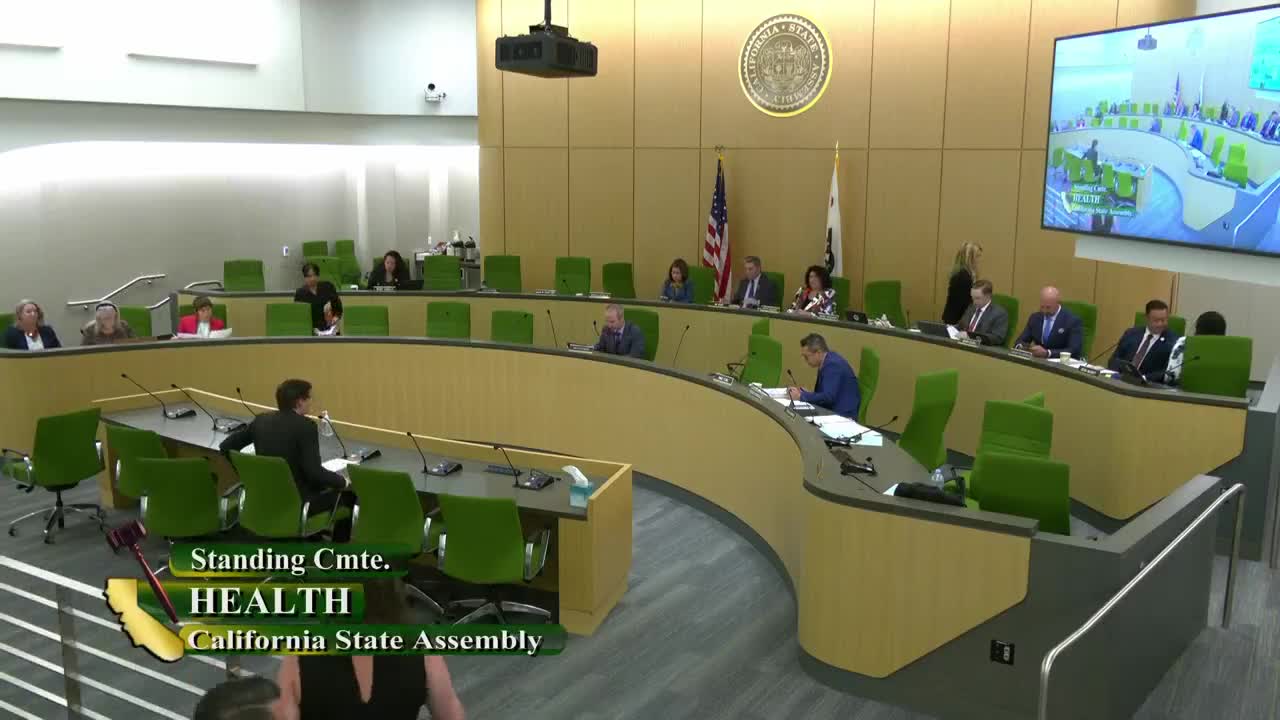
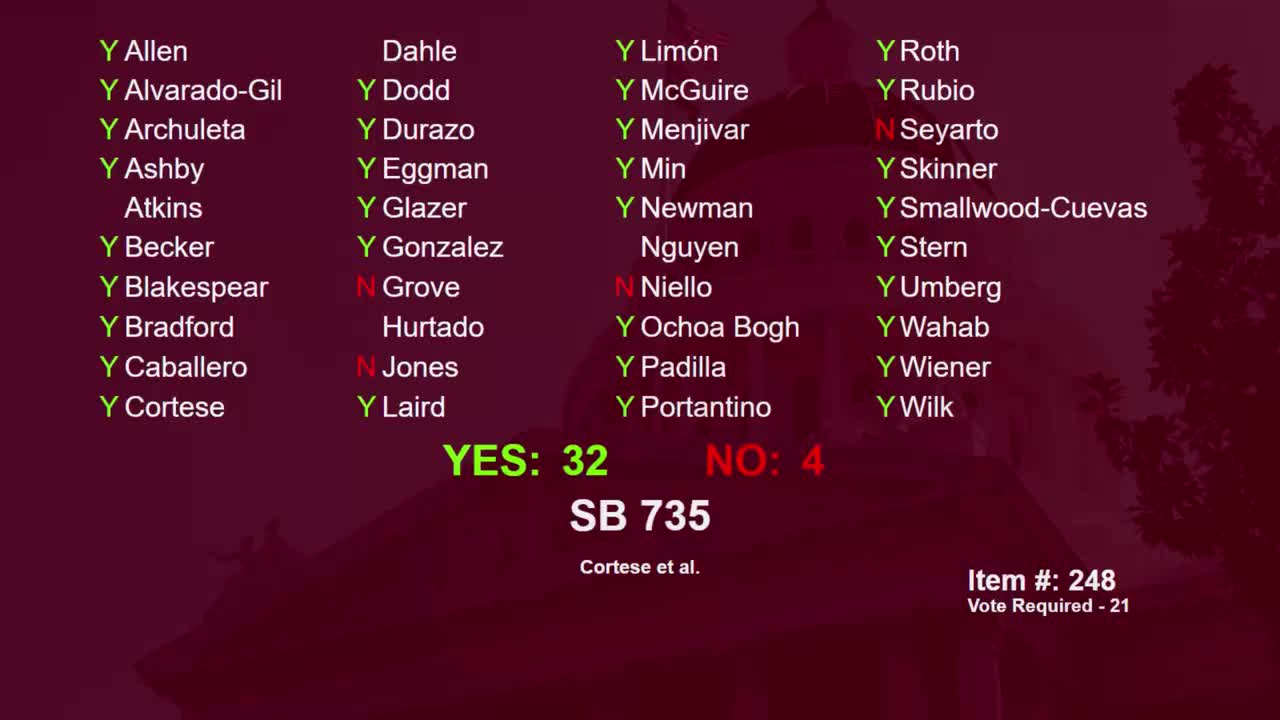

Bill Author

Bill Co-Author(s):