SB 449: Peace officers: Peace Officer Standards Accountability Advisory Board.
- Session Year: 2023-2024
- House: Senate
- Latest Version Date: 2023-10-07
Current Status:
Passed
(2023-10-07: Chaptered by Secretary of State. Chapter 397, Statutes of 2023.)
Introduced
In Committee
First Chamber
In Committee
Second Chamber
Enacted
Existing law defines certification as a valid and unexpired basic certificate or proof of eligibility to serve as a peace officer issued by the Commission on Peace Officer Standards and Training.
The bill would redefine certification to mean any and all valid and unexpired certificates issued by the commission, as specified.
Existing law allows the commission to consider a peace officers prior conduct and service record in determining whether revocation is appropriate for serious misconduct.
The bill would allow the commission to also consider suspension as punishment for serious misconduct.
Existing law requires hearings of the board, the review by the commission, administrative adjudications, as specified, and any records introduced during those proceedings to be public.
The bill would authorize the Peace Officer Standards Accountability Division to redact these public records, as specified.
Existing law requires an agency employing peace officers to report to the commission the employment, appointment, or separation from employment of a peace officer, any complaint, charge, allegation, or investigation into the conduct of a peace officer that could render the officer subject to suspension or revocation, findings by civil oversight entities, and civil judgments that could affect the officers certification. Existing law requires the commission to maintain the information reported by an agency in a manner that may be accessed by the subject peace officer, among other entities.
The bill would authorize the commission to withhold this information from the subject peace officer if disclosure could jeopardize an ongoing investigation, create a risk of any form of harm or injury to a victim or witness, or otherwise create a risk of any form of harm or injury that outweighs the interest in disclosure until the risk of harm or injury is ended or mitigated so that the interest in disclosure is no longer outweighed by the interest in nondisclosure. The bill would also require this information that has been withheld from the subject officer and released by the commission to an agency, as specified, to be kept confidential by the receiving agency. This bill would make other conforming changes.
Existing law authorizes the commission to suspend, revoke, or cancel any certification, as specified.
This bill would clarify that this authority extends to any certificate or proof of eligibility that is expired, inactive, expired, or canceled. The bill would also allow the commission to cancel any certificate or proof of eligibility that was fraudulently obtained, as specified.
Existing constitutional provisions require that a statute that limits the right of access to the meetings of public bodies or the writings of public officials and agencies be adopted with findings demonstrating the interest protected by the limitation and the need for protecting that interest.
The bill would make legislative findings to that effect.
Existing law defines certification as a valid and unexpired basic certificate or proof of eligibility to serve as a peace officer issued by the Commission on Peace Officer Standards and Training.
The bill would redefine certification to mean any and all valid and unexpired certificates issued by the commission, as specified.
Existing law allows the commission to consider a peace officers prior conduct and service record in determining whether revocation is appropriate for serious misconduct.
The bill would allow the commission to also consider suspension as punishment for serious misconduct.
Existing law requires hearings of the board, the review by the commission, administrative adjudications, as specified, and any records introduced during those proceedings to be public.
The bill would authorize the Peace Officer Standards Accountability Division to redact these public records, as specified.
Existing law requires an agency employing peace officers to report to the commission the employment, appointment, or separation from employment of a peace officer, any complaint, charge, allegation, or investigation into the conduct of a peace officer that could render the officer subject to suspension or revocation, findings by civil oversight entities, and civil judgments that could affect the officers certification. Existing law requires the commission to maintain the information reported by an agency in a manner that may be accessed by the subject peace officer, among other entities.
The bill would authorize the commission to withhold this information from the subject peace officer if disclosure could jeopardize an ongoing investigation, create a risk of any form of harm or injury to a victim or witness, or otherwise create a risk of any form of harm or injury that outweighs the interest in disclosure until the risk of harm or injury is ended or mitigated so that the interest in disclosure is no longer outweighed by the interest in nondisclosure. The bill would also require this information that has been withheld from the subject officer and released by the commission to an agency, as specified, to be kept confidential by the receiving agency. This bill would make a conforming change. other conforming changes.
Existing law authorizes the commission to suspend, revoke, or cancel any certification, as specified.
This bill would clarify that this authority extends to any certificate or proof of eligibility that is expired, inactive, expired, or canceled. The bill would also allow the commission to cancel any certificate or proof of eligibility that was fraudulently obtained, as specified.
Existing constitutional provisions require that a statute that limits the right of access to the meetings of public bodies or the writings of public officials and agencies be adopted with findings demonstrating the interest protected by the limitation and the need for protecting that interest.
The bill would make legislative findings to that effect.
Existing law defines certification as a valid and unexpired basic certificate or proof of eligibility to serve as a peace officer issued by the Commission on Peace Officer Standards and Training.
The bill would redefine certification to mean any and all valid and unexpired certificates issued by the commission, as specified.
Existing law allows the commission to consider a peace officers prior conduct and service record in determining whether revocation is appropriate for serious misconduct.
The bill would allow the commission to also consider suspension as punishment for serious misconduct.
Existing law requires hearings of the board, the review by the commission, administrative adjudications, as specified, and any records introduced during those proceedings to be public.
The bill would authorize the Peace Officer Standards Accountability Division to initially review confidential, sensitive, or private information contained in those records. The bill would authorize the division, at its discretion, to submit this information under seal and require the examination of this information in a closed session by the board or commission. Following this review, the bill would authorize the board or commission, by a majority vote, to make this information available for public review, in part or in whole, or to order the information released under terms and conditions that are deemed just and appropriate. redact these public records, as specified.
Existing law requires an agency employing peace officers to report to the commission the employment, appointment, or separation from employment of a peace officer, any complaint, charge, allegation, or investigation into the conduct of a peace officer that could render the officer subject to suspension or revocation, findings by civil oversight entities, and civil judgments that could affect the officers certification. Existing law requires the commission to maintain the information reported by an agency in a manner that may be accessed by the subject peace officer, among other entities.
The bill would authorize the commission to withhold from this disclosure information that this information from the subject peace officer if disclosure could jeopardize an ongoing investigation, create a risk of any form of harm or injury to a victim or witness, or otherwise create a risk of any form of harm or injury that outweighs the interest in disclosure until the risk of harm or injury is ended or mitigated so that the interest in disclosure is no longer outweighed by the interest in nondisclosure. The bill would also require this information that has been withheld from the subject officer and released by the commission to an agency, as specified, to be kept confidential by the receiving agency. This bill would make a conforming change.
Existing constitutional provisions require that a statute that limits the right of access to the meetings of public bodies or the writings of public officials and agencies be adopted with findings demonstrating the interest protected by the limitation and the need for protecting that interest.
The bill would make legislative findings to that effect.
Existing law defines certification as a valid and unexpired basic certificate or proof of eligibility issued by the commission. to serve as a peace officer issued by the Commission on Peace Officer Standards and Training.
The bill would redefine certification to mean any and all valid and unexpired certificates issued by the commission, as specified.
Existing law allows the commission to consider a peace officers prior conduct and service record in determining whether revocation is appropriate for serious misconduct.
The bill would allow the commission to also consider suspension as punishment for serious misconduct.
Existing law requires hearings of the board, the review by the commission, administrative adjudications, as specified, and any records introduced during those proceedings to be public.
The bill would authorize the Peace Officer Standards Accountability Division to initially review confidential, sensitive, or private information contained in those records. The bill would authorize the division, at its discretion, to submit this information under seal and require the examination of this information in a closed session by the board or commission. Following this review, the bill would authorize the board or commission, by a majority vote, to make this information available for public review, in part or in whole, or to order the information released under terms and conditions that are deemed just and appropriate.
Existing law requires an agency employing peace officers to report to the commission the employment, appointment, or separation from employment of a peace officer, any complaint, charge, allegation, or investigation into the conduct of a peace officer that could render the officer subject to suspension or revocation, findings by civil oversight entities, and civil judgments that could affect the officers certification. Existing law requires the commission to maintain the information reported by an agency in a manner that may be accessed by the subject peace officer, among other entities.
The bill would authorize the commission to withhold from this disclosure information that could jeopardize an ongoing investigation, create a risk of any form of harm or injury to a victim or witness, or otherwise create a risk of any form of harm or injury that outweighs the interest in disclosure until the risk of harm is ended or mitigated so that the interest in disclosure is no longer outweighed by the interest in nondisclosure. This bill would make a conforming change.
Existing constitutional provisions require that a statute that limits the right of access to the meetings of public bodies or the writings of public officials and agencies be adopted with findings demonstrating the interest protected by the limitation and the need for protecting that interest.
The bill would make legislative findings to that effect.
Existing law requires the Governor to establish the Peace Officer Standards Accountability Advisory Board for the purpose of making recommendations on the decertification of peace officers to the Commission on Peace Officer Standards and Training. Existing law requires all members of the board to complete a 40-hour decertification training course, as specified.
This bill would remove the requirement that the decertification training course be 40 hours.
Existing law defines certification as a valid and unexpired basic certificate or proof of eligibility issued by the commission.
The bill would redefine certification to mean any and all valid and unexpired certificates issued by the commission, as specified.
Existing law allows the commission to consider a peace officers prior conduct and service record in determining whether revocation is appropriate for serious misconduct.
The bill would allow the commission to also consider suspension as punishment for serious misconduct.
Existing law requires hearings of the board, the review by the commission, administrative adjudications, as specified, and any records introduced during those proceedings to be public.
The bill would authorize the Peace Officer Standards Accountability Division to initially review confidential, sensitive, or private information contained in those records. The bill would authorize the division, at its discretion, to submit this information under seal and require the examination of this information in a closed session by the board or commission. Following this review, the bill would authorize the board or commission, by a majority vote, to make this information available for public review, in part or in whole, or to order the information released under terms and conditions that are deemed just and appropriate.
Existing law requires an agency employing peace officers to report to the commission the employment, appointment, or separation from employment of a peace officer, any complaint, charge, allegation, or investigation into the conduct of a peace officer that could render the officer subject to suspension or revocation, findings by civil oversight entities, and civil judgments that could affect the officers certification. Existing law requires the commission to maintain the information reported by an agency in a manner that may be accessed by the subject peace officer, among other entities.
The bill would authorize the commission to withhold from this disclosure information that could jeopardize an ongoing investigation, create a risk of any form of harm or injury to a victim or witness, or otherwise create a risk of any form of harm or injury that outweighs the interest in disclosure until the risk of harm is ended or mitigated so that the interest in disclosure is no longer outweighed by the interest in nondisclosure. This bill would make a conforming change.
Existing constitutional provisions require that a statute that limits the right of access to the meetings of public bodies or the writings of public officials and agencies be adopted with findings demonstrating the interest protected by the limitation and the need for protecting that interest.
The bill would make legislative findings to that effect.
Existing law requires the Governor to establish the Peace Officer Standards Accountability Advisory Board for the purpose of making recommendations on the decertification of peace officers to the Commission on Peace Officer Standards and Training. Existing law requires all members of the board to complete a 40-hour decertification training course, as specified.
This bill would remove the requirement that the decertification training course be 40 hours.
Existing law prescribes certain characteristics that disqualify a person for public office or public employment, as specified. In this regard, people who bind themselves by oath, while citizens or residents of the United States, to support, maintain, or further the military or political activities or policies of a foreign government, among other things, are ineligible for holding public office or public employment. This bill would make nonsubstantive changes in the above-described provisions relating to people who bind themselves to support foreign governments.Existing law prescribes certain characteristics that disqualify a person for public office or public employment, as specified. In this regard, people who bind themselves by oath, while citizens or residents of the United States, to support, maintain, or further the military or political activities or policies of a foreign government, among other things, are ineligible for holding public office or public employment.
This bill would make nonsubstantive changes in the above-described provisions relating to people who bind themselves to support foreign governments.
(a)The commission shall establish a certification program for peace officers described in Section 830.1, 830.2 with the exception of those described in subdivision (d) of that section, 830.3, 830.32, or 830.33, or any other peace officer employed by an agency that participates in the Peace Officer Standards and Training (POST) program. A certificate or proof of eligibility issued pursuant to this section shall be considered the property of the commission.
(b)Basic, intermediate, advanced, supervisory, management, and executive certificates shall be established for the purpose of fostering professionalization, education, and experience necessary to adequately accomplish the general police service duties performed by peace officer members of city police departments, county sheriffs departments, districts, university and state university and college departments, or by the California Highway Patrol.
(c)(1)Certificates shall be awarded on the basis of a combination of training, education, experience, and other prerequisites, as determined by the commission.
(2)In determining whether an applicant for certification has the requisite education, the commission shall recognize as acceptable college education only the following:
(A)Education provided by a community college, college, or university that has been accredited by the department of education of the state in which the community college, college, or university is located or by a recognized national or regional accrediting body.
(B)Until January 1, 1998, educational courses or degrees provided by a nonaccredited but state-approved college that offers programs exclusively in criminal justice.
(d)Persons who are determined by the commission to be eligible peace officers may make application for the certificates, provided they are employed by an agency that participates in the POST program. Any agency appointing an individual who does not already have a basic certificate as described in subdivision (a) and who is not eligible for a certificate shall make application for proof of eligibility within 10 days of appointment.
(e)The commission shall assign each person who applies for or receives certification a unique identifier that shall be used to track certification status from application for certification through that persons career as a peace officer.
(f)Notwithstanding any other provision of law, the commission shall have the authority to suspend, revoke, or cancel any certification pursuant to this chapter. This authority extends to any certificate or proof of eligibility issued by the commission including, without limitation, any certificate or proof of eligibility that is invalid, inactive, expired, or canceled.
(g)(1)An agency that employs peace officers described in subdivision (a) shall employ as a peace officer only individuals with current, valid certification pursuant to this section, except that an agency may provisionally employ a person for up to 24 months, pending certification by the commission, provided that the person has received a proof of eligibility and has not previously been certified or denied certification or had their certification revoked.
(2)In accordance with subdivision (b) of Section 832.4, deputy sheriffs described in subdivision (c) of Section 830.1 shall obtain valid certification pursuant to this section upon reassignment from custodial duties to general law enforcement duties.
(h)(1)Notwithstanding subdivision (d), the commission shall issue a basic certificate or proof of eligibility to any peace officer described in subdivision (a) who, on January 1, 2022, is eligible for a basic certificate or proof of eligibility but has not applied for a certification.
(2)Commencing on January 1, 2023, any peace officer described in subdivision (a) who does not possess a basic certificate and who is not yet or will not be eligible for a basic certificate, shall apply to the commission for proof of eligibility.
(i)As used in this chapter, certification means any and all valid and unexpired certificates issued pursuant to subdivision (b), including basic, intermediate, advanced, supervisory, management, and executive certificates or any proof of eligibility issued by the commission pursuant to this section.
SEC. 2.Section 13510.8 of the Penal Code is amended to read:13510.8.(a)(1)The commission shall revoke the certification of a certified peace officer if the person is or has become ineligible to hold office as a peace officer pursuant to Section 1029 of the Government Code.
(2)The commission may suspend or revoke the certification of a peace officer if the person has been terminated for cause from employment as a peace officer for, or has, while employed as a peace officer, otherwise engaged in, any serious misconduct as described in subdivision (b).
(3)The commission may cancel the certificate or proof of eligibility of a peace officer if the commission determines that there was fraud or misrepresentation made by an applicant at any time during the application process that resulted in the issuance of the certification.
(b)By January 1, 2023, the commission shall adopt by regulation a definition of serious misconduct that shall serve as the criteria to be considered for ineligibility for, or revocation of, certification. This definition shall include all of the following:
(1)Dishonesty relating to the reporting, investigation, or prosecution of a crime, or relating to the reporting of, or investigation of misconduct by, a peace officer or custodial officer, including, but not limited to, false statements, intentionally filing false reports, tampering with, falsifying, destroying, or concealing evidence, perjury, and tampering with data recorded by a body-worn camera or other recording device for purposes of concealing misconduct.
(2)Abuse of power, including, but not limited to, intimidating witnesses, knowingly obtaining a false confession, and knowingly making a false arrest.
(3)Physical abuse, including, but not limited to, the excessive or unreasonable use of force.
(4)Sexual assault, as described in subdivision (b) of Section 832.7.
(5)Demonstrating bias on the basis of race, national origin, religion, gender identity or expression, housing status, sexual orientation, mental or physical disability, or other protected status in violation of law or department policy or inconsistent with a peace officers obligation to carry out their duties in a fair and unbiased manner. This paragraph does not limit an employees rights under the First Amendment to the United States Constitution.
(6)Acts that violate the law and are sufficiently egregious or repeated as to be inconsistent with a peace officers obligation to uphold the law or respect the rights of members of the public, as determined by the commission.
(7)Participation in a law enforcement gang. For the purpose of this paragraph, a law enforcement gang means a group of peace officers within a law enforcement agency who may identify themselves by a name and may be associated with an identifying symbol, including, but not limited to, matching tattoos, and who engage in a pattern of on-duty behavior that intentionally violates the law or fundamental principles of professional policing, including, but not limited to, excluding, harassing, or discriminating against any individual based on a protected category under federal or state antidiscrimination laws, engaging in or promoting conduct that violates the rights of other employees or members of the public, violating agency policy, the persistent practice of unlawful detention or use of excessive force in circumstances where it is known to be unjustified, falsifying police reports, fabricating or destroying evidence, targeting persons for enforcement based solely on protected characteristics of those persons, theft, unauthorized use of alcohol or drugs on duty, unlawful or unauthorized protection of other members from disciplinary actions, and retaliation against other officers who threaten or interfere with the activities of the group.
(8)Failure to cooperate with an investigation into potential police misconduct, including an investigation conducted pursuant to this chapter. For purposes of this paragraph, the lawful exercise of rights granted under the United States Constitution, the California Constitution, or any other law shall not be considered a failure to cooperate.
(9)Failure to intercede when present and observing another officer using force that is clearly beyond that which is necessary, as determined by an objectively reasonable officer under the circumstances, taking into account the possibility that other officers may have additional information regarding the threat posed by a subject.
(c)(1)Beginning no later than January 1, 2023, each law enforcement agency shall be responsible for the completion of investigations of allegations of serious misconduct by a peace officer, regardless of their employment status.
(2)The division shall promptly review any grounds for decertification described in subdivision (a) received from an agency. The division shall have the authority to review any agency or other investigative authority file, as well as to conduct additional investigation, if necessary. The division shall only have authority to review and investigate allegations for purposes of decertification.
(3)(A)The board, in their discretion, may request that the division review an investigative file or recommend that the commission direct the division to investigate any potential grounds for decertification of a peace officer. Those requests and recommendations from the board to the division or commission must be based upon a decision by a majority vote.
(B)The commission, in its discretion, may direct the division to review an investigative file. The commission, either upon its own motion or in response to a recommendation from the board, may direct the division to investigate any potential grounds for decertification of a peace officer.
(C)The division, in its discretion, may investigate without the request of the commission or board any potential grounds for revocation of certification of a peace officer.
(4)The division, in carrying out any investigation initiated pursuant to this section or any other duty shall have all of the powers of investigation granted pursuant to Article 2 (commencing with Section 11180) of Chapter 2 of Part 1 of Division 3 of Title 2 of the Government Code.
(5)Notwithstanding any other law, the investigation shall be completed within three years after the receipt of the completed report of the disciplinary or internal affairs investigation from the employing agency pursuant to Section 13510.9, however, no time limit shall apply if a report of the conduct was not made to the commission. An investigation shall be considered completed upon a notice of intent to deny, suspend, or revoke certification issued pursuant to paragraph (1) of subdivision (a) of Section 13510.85. The time limit shall be tolled during the appeal of a termination or other disciplinary action through an administrative or judicial proceeding or during any criminal prosecution of the peace officer. The commission shall consider the peace officers prior conduct and service record, and any instances of misconduct, including any incidents occurring beyond the time limitation for investigation in evaluating whether to revoke certification for the incident under investigation.
(6)An action by an agency or decision resulting from an appeal of an agencys action does not preclude action by the commission to investigate, suspend, or revoke a peace officers certification pursuant to this section. Whether a particular factual or legal determination in a prior appeal proceeding shall have preclusive effect in proceedings under this chapter shall be governed by the existing law of collateral estoppel.
(d)Upon arrest or indictment of a peace officer for any crime described in Section 1029 of the Government Code, or discharge from any law enforcement agency for grounds set forth in subdivision (a), or separation from employment of a peace officer during a pending investigation into allegations of serious misconduct, the executive director shall order the immediate temporary suspension of any certificate or proof of eligibility held by that peace officer upon the determination by the executive director that the temporary suspension is in the best interest of the health, safety, or welfare of the public. The order of temporary suspension shall be made in writing and shall specify the basis for the executive directors determination. Following the issuance of a temporary suspension order, proceedings of the commission in the exercise of its authority to discipline any peace officer shall be promptly scheduled as provided for in this section. The temporary suspension shall continue in effect until issuance of the final decision on revocation pursuant to this section or until the order is withdrawn by the executive director.
(e)Records of an investigation of any person by the commission shall be retained for 30 years following the date that the investigation is deemed concluded by the commission. The commission may destroy records prior to the expiration of the 30-year retention period if the subject is deceased and no action upon the complaint was taken by the commission beyond the commissions initial intake of the complaint.
(f)Any peace officer may voluntarily surrender their certification permanently. Voluntary permanent surrender of certification pursuant to this subdivision shall have the same effect as revocation. Voluntary permanent surrender is not the same as placement of a valid certification into inactive status during a period in which a person is not actively employed as a peace officer. A permanently surrendered certification cannot be reactivated.
(g)(1)The commission may initiate proceedings to revoke or suspend a peace officers certification for conduct that occurred before January 1, 2022, only for either of the following:
(A)Serious misconduct pursuant to paragraph (1) or (4) of subdivision (b) or pursuant to paragraph (3) of subdivision (b) for the use of deadly force that results in death or serious bodily injury.
(B)If the employing agency makes a final determination regarding its investigation of the misconduct after January 1, 2022.
(2)Nothing in this subdivision prevents the commission from considering the peace officers prior conduct and service record in determining whether suspension or revocation is appropriate for serious misconduct.
SEC. 3.Section 13510.85 of the Penal Code is amended to read:13510.85.(a)(1)When, upon the completion of a serious misconduct investigation conducted pursuant to subdivision (c) of Section 13510.8, the division finds reasonable grounds for the denial, revocation, or suspension of a peace officers certification, it shall take the appropriate steps to promptly notify the peace officer involved, in writing, of its determination and reasons therefore, and shall provide the peace officer with a detailed explanation of the decertification procedure and the peace officers rights to contest and appeal.
(2)Upon notification, the peace officer may, within 30 days, file a request for a review of the determination by the board and commission. If the peace officer does not file a request for review within 30 days, the peace officers certification shall be suspended or revoked, consistent with the divisions determination, without further proceedings. If the peace officer files a timely review, the board shall schedule the case for hearing.
(3)The board shall meet as required to conduct public hearings, but no fewer than four times per year.
(4)At each public hearing, the board shall review the findings of investigations presented by the division pursuant to paragraph (1) and shall make a recommendation on what action should be taken on the certification of the peace officer involved. The board shall only recommend revocation if the factual basis for revocation is established by clear and convincing evidence. If the board determines that the facts and circumstances revealed by the investigation warrant a sanction other than revocation, it may recommend that a peace officers certification be suspended for a period of time. The board shall issue a written decision explaining its reasons for decertification or suspension.
(5)The commission shall review all recommendations made by the board. The commissions decision to adopt a recommendation by the board to seek revocation shall require a two-thirds vote of commissioners present and shall be based on whether the record, in its entirety, supports the boards conclusion that serious misconduct has been established by clear and convincing evidence. In any case in which the commission reaches a different determination than the boards recommendation, it shall set forth its analysis and reasons for reaching a different determination in writing.
(6)The commission shall return any determination requiring action to be taken against an individuals certification to the division, which shall initiate proceedings for a formal hearing before an administrative law judge in accordance with the Administrative Procedure Act (Chapter 5 (commencing with Section 11500) of Part 1 of Division 3 of Title 2 of the Government Code), which shall be subject to judicial review as set forth in that act.
(b)Notwithstanding Section 832.7, the hearings of the board and the review by the commission under this section, administrative adjudications held pursuant to paragraph (6) of subdivision (a), and any records introduced during those proceedings, shall be public. These public records may, in the discretion of the division, be redacted for the reasons set forth in paragraphs (6) and (7) of subdivision (b) of Section 832.7. This subdivision does not preclude the board or the commission, or both, from reviewing the unredacted versions of these records in closed session and using them as the basis for any action taken.
(c)The commission shall publish the names of any peace officer whose certification is suspended or revoked and the basis for the suspension or revocation and shall notify the National Decertification Index of the International Association of Directors of Law Enforcement Standards and Training of the suspension or revocation.
SEC. 4.Section 13510.9 of the Penal Code is amended to read:13510.9.(a)Beginning January 1, 2023, any agency employing peace officers shall report to the commission within 10 days, in a form specified by the commission, any of the following events:
(1)The employment, appointment, or termination or separation from employment or appointment, by that agency, of any peace officer. Separation from employment or appointment includes any involuntary termination, resignation, or retirement.
(2)Any complaint, charge, or allegation of conduct against a peace officer employed by that agency that could render a peace officer subject to suspension or revocation of certification by the commission pursuant to Section 13510.8.
(3)Any finding or recommendation by a civilian oversight entity, including a civilian review board, civilian police commission, police chief, or civilian inspector general, that a peace officer employed by that agency engaged in conduct that could render a peace officer subject to suspension or revocation of certification by the commission pursuant to Section 13510.8.
(4)The final disposition of any investigation that determines a peace officer engaged in conduct that could render a peace officer subject to suspension or revocation of certification by the commission pursuant to Section 13510.8, regardless of the discipline imposed.
(5)Any civil judgment or court finding against a peace officer based on conduct, or settlement of a civil claim against a peace officer or an agency based on allegations of officer conduct that could render a peace officer subject to suspension or revocation of certification by the commission pursuant to Section 13510.8.
(b)By July 1, 2023, any agency employing peace officers shall report to the commission any events described in subdivision (a) that occurred between January 1, 2020, and January 1, 2023.
(c)An agency employing peace officers shall make available for inspection or duplication by the commission any investigation into any matter reported pursuant to paragraph (2) of subdivision (a), including any physical or documentary evidence, witness statements, analysis, and conclusions, for no less than two years after reporting of the finding or recommendation reported pursuant to paragraph (3) of subdivision (a), the final disposition of the investigation reported pursuant to paragraph (4) of subdivision (a), or the civil judgment or court finding reported pursuant to paragraph (5) of subdivision (a), as applicable, whichever is latest.
(d)(1)In a case of separation from employment or appointment, the employing agency shall execute and maintain an affidavit-of-separation form adopted by the commission describing the reason for separation and shall include whether the separation is part of the resolution or settlement of any criminal, civil, or administrative charge or investigation. The affidavit shall be signed under penalty of perjury and submitted to the commission.
(2)A peace officer who has separated from employment or appointment shall be permitted to respond to the affidavit-of-separation form, in writing, to the commission, setting forth their understanding of the facts and reasons for the separation, if different from those provided by the agency.
(3)Before employing or appointing any peace officer who has previously been employed or appointed as a peace officer by another agency, the agency shall contact the commission to inquire as to the facts and reasons a peace officer became separated from any previous employing agency. The commission shall, upon request and without prejudice, provide to the subsequent employing agency any information regarding the separation in its possession.
(4)Civil liability shall not be imposed on either a law enforcement agency or the commission, or any of the agencys or commissions agents, for providing information pursuant to this section in a good faith belief that the information is accurate.
(e)The commission shall maintain the information reported pursuant to this section, in a form determined by the commission, and in a manner that may be accessed by the subject peace officer, any employing law enforcement agency of that peace officer, any law enforcement agency that is performing a preemployment background investigation of that peace officer, or the commission when necessary for the purposes of decertification. This information may be withheld from the subject peace officer if the commission determines that disclosure pursuant to this section may jeopardize an ongoing investigation, put a victim or witness at risk of any form of harm or injury, or may otherwise create a risk of any form of harm or injury that outweighs the interest in disclosure, until the risk of harm or injury is ended or mitigated so that the interest in disclosure is no longer outweighed by the interest in nondisclosure. Information that the commission releases to an agency pursuant to this section that has been withheld from the subject peace officer shall be kept confidential by the receiving agency.
(f)(1)The commission shall notify the head of the agency that employs the peace officer of all of the following:
(A)The initiation of any investigation of that peace officer by the division, unless that notification would interfere with the investigation.
(B)A finding by the division, following an investigation or review of the investigation, of grounds to take action against the peace officers certification or application.
(C)A final determination by the commission as to whether action should be taken against a peace officers certification or application.
(D)An adjudication, after hearing, resulting in action against an officers certification or application.
(2)If the certificate of a peace officer is temporarily suspended pursuant to subdivision (d) of Section 13510.8, or revoked, the commission shall also notify the district attorney of the county in which the peace officer is or was employed of this fact.
(3)Each notification required by this subdivision shall include the name of the peace officer and a summary of the basis for the action requiring notification.
SEC. 5.The Legislature finds and declares that Sections 3 and 4 of this act, which amend Sections 13510.85 and 13510.9 of the Penal Code, impose a limitation on the publics right of access to the meetings of public bodies or the writings of public officials and agencies within the meaning of Section 3 of Article I of the California Constitution. Pursuant to that constitutional provision, the Legislature makes the following finding to demonstrate the interest protected by this limitation and the need for protecting that interest:
The limitation on the publics right of access set forth in Sections 4 and 5 furthers the need to protect sensitive, private, and confidential information, an ongoing investigation, and individuals from harm while balancing the public right to access.
(a)The commission shall establish a certification program for peace officers described in Section 830.1, 830.2 with the exception of those described in subdivision (d) of that section, 830.3, 830.32, or 830.33, or any other peace officer employed by an agency that participates in the Peace Officer Standards and Training (POST) program. A certificate or proof of eligibility issued pursuant to this section shall be considered the property of the commission.
(b)Basic, intermediate, advanced, supervisory, management, and executive certificates shall be established for the purpose of fostering professionalization, education, and experience necessary to adequately accomplish the general police service duties performed by peace officer members of city police departments, county sheriffs departments, districts, university and state university and college departments, or by the California Highway Patrol.
(c)(1)Certificates shall be awarded on the basis of a combination of training, education, experience, and other prerequisites, as determined by the commission.
(2)In determining whether an applicant for certification has the requisite education, the commission shall recognize as acceptable college education only the following:
(A)Education provided by a community college, college, or university that has been accredited by the department of education of the state in which the community college, college, or university is located or by a recognized national or regional accrediting body.
(B)Until January 1, 1998, educational courses or degrees provided by a nonaccredited but state-approved college that offers programs exclusively in criminal justice.
(d)Persons who are determined by the commission to be eligible peace officers may make application for the certificates, provided they are employed by an agency that participates in the POST program. Any agency appointing an individual who does not already have a basic certificate as described in subdivision (a) and who is not eligible for a certificate shall make application for proof of eligibility within 10 days of appointment.
(e)The commission shall assign each person who applies for or receives certification a unique identifier that shall be used to track certification status from application for certification through that persons career as a peace officer.
(f)The Notwithstanding any other provision of law, the commission shall have the authority to suspend, revoke, or cancel any certification pursuant to this chapter. This authority extends to any certificate or proof of eligibility issued by the commission including, without limitation, any certificate or proof of eligibility that is invalid, inactive, expired, or canceled.
(g)(1)An agency that employs peace officers described in subdivision (a) shall employ as a peace officer only individuals with current, valid certification pursuant to this section, except that an agency may provisionally employ a person for up to 24 months, pending certification by the commission, provided that the person has received a proof of eligibility and has not previously been certified or denied certification or had their certification revoked.
(2)In accordance with subdivision (b) of Section 832.4, deputy sheriffs described in subdivision (c) of Section 830.1 shall obtain valid certification pursuant to this section upon reassignment from custodial duties to general law enforcement duties.
(h)(1)Notwithstanding subdivision (d), the commission shall issue a basic certificate or proof of eligibility to any peace officer described in subdivision (a) who, on January 1, 2022, is eligible for a basic certificate or proof of eligibility but has not applied for a certification.
(2)Commencing on January 1, 2023, any peace officer described in subdivision (a) who does not possess a basic certificate and who is not yet or will not be eligible for a basic certificate, shall apply to the commission for proof of eligibility.
(i)As used in this chapter, certification means any and all valid and unexpired certificates issued pursuant to subdivision (b), including basic, intermediate, advanced, supervisory, management, and executive certificates or any proof of eligibility issued by the commission pursuant to this section.
SEC. 2.Section 13510.8 of the Penal Code is amended to read:13510.8.(a)(1)A The commission shall revoke the certification of a certified peace officer shall have their certification revoked if the person is or has become ineligible to hold office as a peace officer pursuant to Section 1029 of the Government Code.
(2)A The commission may suspend or revoke the certification of a peace officer may have their certification suspended or revoked if the person has been terminated for cause from employment as a peace officer for, or has, while employed as a peace officer, otherwise engaged in, any serious misconduct as described in subdivision (b).
(3)The commission may cancel the certificate or proof of eligibility of a peace officer if the commission determines that there was fraud or misrepresentation made by an applicant at any time during the application process that resulted in the issuance of the certification.
(b)By January 1, 2023, the commission shall adopt by regulation a definition of serious misconduct that shall serve as the criteria to be considered for ineligibility for, or revocation of, certification. This definition shall include all of the following:
(1)Dishonesty relating to the reporting, investigation, or prosecution of a crime, or relating to the reporting of, or investigation of misconduct by, a peace officer or custodial officer, including, but not limited to, false statements, intentionally filing false reports, tampering with, falsifying, destroying, or concealing evidence, perjury, and tampering with data recorded by a body-worn camera or other recording device for purposes of concealing misconduct.
(2)Abuse of power, including, but not limited to, intimidating witnesses, knowingly obtaining a false confession, and knowingly making a false arrest.
(3)Physical abuse, including, but not limited to, the excessive or unreasonable use of force.
(4)Sexual assault, as described in subdivision (b) of Section 832.7.
(5)Demonstrating bias on the basis of race, national origin, religion, gender identity or expression, housing status, sexual orientation, mental or physical disability, or other protected status in violation of law or department policy or inconsistent with a peace officers obligation to carry out their duties in a fair and unbiased manner. This paragraph does not limit an employees rights under the First Amendment to the United States Constitution.
(6)Acts that violate the law and are sufficiently egregious or repeated as to be inconsistent with a peace officers obligation to uphold the law or respect the rights of members of the public, as determined by the commission.
(7)Participation in a law enforcement gang. For the purpose of this paragraph, a law enforcement gang means a group of peace officers within a law enforcement agency who may identify themselves by a name and may be associated with an identifying symbol, including, but not limited to, matching tattoos, and who engage in a pattern of on-duty behavior that intentionally violates the law or fundamental principles of professional policing, including, but not limited to, excluding, harassing, or discriminating against any individual based on a protected category under federal or state antidiscrimination laws, engaging in or promoting conduct that violates the rights of other employees or members of the public, violating agency policy, the persistent practice of unlawful detention or use of excessive force in circumstances where it is known to be unjustified, falsifying police reports, fabricating or destroying evidence, targeting persons for enforcement based solely on protected characteristics of those persons, theft, unauthorized use of alcohol or drugs on duty, unlawful or unauthorized protection of other members from disciplinary actions, and retaliation against other officers who threaten or interfere with the activities of the group.
(8)Failure to cooperate with an investigation into potential police misconduct, including an investigation conducted pursuant to this chapter. For purposes of this paragraph, the lawful exercise of rights granted under the United States Constitution, the California Constitution, or any other law shall not be considered a failure to cooperate.
(9)Failure to intercede when present and observing another officer using force that is clearly beyond that which is necessary, as determined by an objectively reasonable officer under the circumstances, taking into account the possibility that other officers may have additional information regarding the threat posed by a subject.
(c)(1)Beginning no later than January 1, 2023, each law enforcement agency shall be responsible for the completion of investigations of allegations of serious misconduct by a peace officer, regardless of their employment status.
(2)The division shall promptly review any grounds for decertification described in subdivision (a) received from an agency. The division shall have the authority to review any agency or other investigative authority file, as well as to conduct additional investigation, if necessary. The division shall only have authority to review and investigate allegations for purposes of decertification.
(3)(A)The board, in their discretion, may request that the division review an investigative file or recommend that the commission direct the division to investigate any potential grounds for decertification of a peace officer. Those requests and recommendations from the board to the division or commission must be based upon a decision by a majority vote.
(B)The commission, in its discretion, may direct the division to review an investigative file. The commission, either upon its own motion or in response to a recommendation from the board, may direct the division to investigate any potential grounds for decertification of a peace officer.
(C)The division, in its discretion, may investigate without the request of the commission or board any potential grounds for revocation of certification of a peace officer.
(4)The division, in carrying out any investigation initiated pursuant to this section or any other duty shall have all of the powers of investigation granted pursuant to Article 2 (commencing with Section 11180) of Chapter 2 of Part 1 of Division 3 of Title 2 of the Government Code.
(5)Notwithstanding any other law, the investigation shall be completed within three years after the receipt of the completed report of the disciplinary or internal affairs investigation from the employing agency pursuant to Section 13510.9, however, no time limit shall apply if a report of the conduct was not made to the commission. An investigation shall be considered completed upon a notice of intent to deny, suspend, or revoke certification issued pursuant to subdivision (f) of Section 13510.9. paragraph (1) of subdivision (a) of Section 13510.85. The time limit shall be tolled during the appeal of a termination or other disciplinary action through an administrative or judicial proceeding or during any criminal prosecution of the peace officer. The commission shall consider the peace officers prior conduct and service record, and any instances of misconduct, including any incidents occurring beyond the time limitation for investigation in evaluating whether to revoke certification for the incident under investigation.
(6)An action by an agency or decision resulting from an appeal of an agencys action does not preclude action by the commission to investigate, suspend, or revoke a peace officers certification pursuant to this section. Whether a particular factual or legal determination in a prior appeal proceeding shall have preclusive effect in proceedings under this chapter shall be governed by the existing law of collateral estoppel.
(d)Upon arrest or indictment of a peace officer for any crime described in Section 1029 of the Government Code, or discharge from any law enforcement agency for grounds set forth in subdivision (a), or separation from employment of a peace officer during a pending investigation into allegations of serious misconduct, the executive director shall order the immediate temporary suspension of any certificate or proof of eligibility held by that peace officer upon the determination by the executive director that the temporary suspension is in the best interest of the health, safety, or welfare of the public. The order of temporary suspension shall be made in writing and shall specify the basis for the executive directors determination. Following the issuance of a temporary suspension order, proceedings of the commission in the exercise of its authority to discipline any peace officer shall be promptly scheduled as provided for in this section. The temporary suspension shall continue in effect until issuance of the final decision on revocation pursuant to this section or until the order is withdrawn by the executive director.
(e)Records of an investigation of any person by the commission shall be retained for 30 years following the date that the investigation is deemed concluded by the commission. The commission may destroy records prior to the expiration of the 30-year retention period if the subject is deceased and no action upon the complaint was taken by the commission beyond the commissions initial intake of the complaint.
(f)Any peace officer may voluntarily surrender their certification permanently. Voluntary permanent surrender of certification pursuant to this subdivision shall have the same effect as revocation. Voluntary permanent surrender is not the same as placement of a valid certification into inactive status during a period in which a person is not actively employed as a peace officer. A permanently surrendered certification cannot be reactivated.
(g)(1)The commission may initiate proceedings to revoke or suspend a peace officers certification for conduct that occurred before January 1, 2022, only for either of the following:
(A)Serious misconduct pursuant to paragraph (1) or (4) of subdivision (b) or pursuant to paragraph (3) of subdivision (b) for the use of deadly force that results in death or serious bodily injury.
(B)If the employing agency makes a final determination regarding its investigation of the misconduct after January 1, 2022.
(2)Nothing in this subdivision prevents the commission from considering the peace officers prior conduct and service record in determining whether suspension or revocation is appropriate for serious misconduct.
SEC. 3.Section 13510.85 of the Penal Code is amended to read:13510.85.(a)(1)When, upon the completion of a serious misconduct investigation conducted pursuant to subdivision (c) of Section 13510.8, the division finds reasonable grounds for revocation the denial, revocation, or suspension of a peace officers certification, it shall take the appropriate steps to promptly notify the peace officer involved, in writing, of its determination and reasons therefore, and shall provide the peace officer with a detailed explanation of the decertification procedure and the peace officers rights to contest and appeal.
(2)Upon notification, the peace officer may, within 30 days, file a request for a review of the determination by the board and commission. If the peace officer does not file a request for review within 30 days, the peace officers certification shall be suspended or revoked, consistent with the divisions determination, without further proceedings. If the peace officer files a timely review, the board shall schedule the case for hearing.
(3)The board shall meet as required to conduct public hearings, but no fewer than four times per year.
(4)At each public hearing, the board shall review the findings of investigations presented by the division pursuant to paragraph (1) and shall make a recommendation on what action should be taken on the certification of the peace officer involved. The board shall only recommend revocation if the factual basis for revocation is established by clear and convincing evidence. If the board determines that the facts and circumstances revealed by the investigation warrant a sanction other than revocation, it may recommend that a peace officers certification be suspended for a period of time. The board shall issue a written decision explaining its reasons for decertification or suspension.
(5)The commission shall review all recommendations made by the board. The commissions decision to adopt a recommendation by the board to seek revocation shall require a two-thirds vote of commissioners present and shall be based on whether the record, in its entirety, supports the boards conclusion that serious misconduct has been established by clear and convincing evidence. In any case in which the commission reaches a different determination than the boards recommendation, it shall set forth its analysis and reasons for reaching a different determination in writing.
(6)The commission shall return any determination requiring action to be taken against an individuals certification to the division, which shall initiate proceedings for a formal hearing before an administrative law judge in accordance with the Administrative Procedure Act (Chapter 5 (commencing with Section 11500) of Part 1 of Division 3 of Title 2 of the Government Code), which shall be subject to judicial review as set forth in that act.
(b)Notwithstanding Section 832.7, the hearings of the board and the review by the commission under this section, administrative adjudications held pursuant to paragraph (6) of subdivision (a), and any records introduced during those proceedings, shall be public. These public records may, in the discretion of the division, be redacted for the reasons set forth in paragraphs (6) and (7) of subdivision (b) of Section 832.7. This subdivision does not preclude the board or the commission, or both, from reviewing the unredacted versions of these records in closed session and using them as the basis for any action taken.
(c)The commission shall publish the names of any peace officer whose certification is suspended or revoked and the basis for the suspension or revocation and shall notify the National Decertification Index of the International Association of Directors of Law Enforcement Standards and Training of the suspension or revocation.
SEC. 4.Section 13510.9 of the Penal Code is amended to read:13510.9.(a)Beginning January 1, 2023, any agency employing peace officers shall report to the commission within 10 days, in a form specified by the commission, any of the following events:
(1)The employment, appointment, or termination or separation from employment or appointment, by that agency, of any peace officer. Separation from employment or appointment includes any involuntary termination, resignation, or retirement.
(2)Any complaint, charge, or allegation of conduct against a peace officer employed by that agency that could render a peace officer subject to suspension or revocation of certification by the commission pursuant to Section 13510.8.
(3)Any finding or recommendation by a civilian oversight entity, including a civilian review board, civilian police commission, police chief, or civilian inspector general, that a peace officer employed by that agency engaged in conduct that could render a peace officer subject to suspension or revocation of certification by the commission pursuant to Section 13510.8.
(4)The final disposition of any investigation that determines a peace officer engaged in conduct that could render a peace officer subject to suspension or revocation of certification by the commission pursuant to Section 13510.8, regardless of the discipline imposed.
(5)Any civil judgment or court finding against a peace officer based on conduct, or settlement of a civil claim against a peace officer or an agency based on allegations of officer conduct that could render a peace officer subject to suspension or revocation of certification by the commission pursuant to Section 13510.8.
(b)By July 1, 2023, any agency employing peace officers shall report to the commission any events described in subdivision (a) that occurred between January 1, 2020, and January 1, 2023.
(c)An agency employing peace officers shall make available for inspection or duplication by the commission any investigation into any matter reported pursuant to paragraph (2) of subdivision (a), including any physical or documentary evidence, witness statements, analysis, and conclusions, for up to no less than two years after reporting of the disposition of the investigation finding or recommendation reported pursuant to paragraph (3) of subdivision (a). (a), the final disposition of the investigation reported pursuant to paragraph (4) of subdivision (a), or the civil judgment or court finding reported pursuant to paragraph (5) of subdivision (a), as applicable, whichever is latest.
(d)(1)In a case of separation from employment or appointment, the employing agency shall execute and maintain an affidavit-of-separation form adopted by the commission describing the reason for separation and shall include whether the separation is part of the resolution or settlement of any criminal, civil, or administrative charge or investigation. The affidavit shall be signed under penalty of perjury and submitted to the commission.
(2)A peace officer who has separated from employment or appointment shall be permitted to respond to the affidavit-of-separation form, in writing, to the commission, setting forth their understanding of the facts and reasons for the separation, if different from those provided by the agency.
(3)Before employing or appointing any peace officer who has previously been employed or appointed as a peace officer by another agency, the agency shall contact the commission to inquire as to the facts and reasons a peace officer became separated from any previous employing agency. The commission shall, upon request and without prejudice, provide to the subsequent employing agency any information regarding the separation in its possession.
(4)Civil liability shall not be imposed on either a law enforcement agency or the commission, or any of the agencys or commissions agents, for providing information pursuant to this section in a good faith belief that the information is accurate.
(e)The commission shall maintain the information reported pursuant to this section, in a form determined by the commission, and in a manner that may be accessed by the subject peace officer, any employing law enforcement agency of that peace officer, any law enforcement agency that is performing a preemployment background investigation of that peace officer, or the commission when necessary for the purposes of decertification. This information may be withheld from the subject peace officer if the commission determines that disclosure pursuant to this section may jeopardize an ongoing investigation, put a victim or witness at risk of any form of harm or injury, or may otherwise create a risk of any form of harm or injury that outweighs the interest in disclosure, until the risk of harm or injury is ended or mitigated so that the interest in disclosure is no longer outweighed by the interest in nondisclosure. Information that the commission releases to an agency pursuant to this section that has been withheld from the subject peace officer shall be kept confidential by the receiving agency.
(f)(1)The commission shall notify the head of the agency that employs the peace officer of all of the following:
(A)The initiation of any investigation of that peace officer by the division, unless that notification would interfere with the investigation.
(B)A finding by the division, following an investigation or review of the investigation, of grounds to take action against the peace officers certification or application.
(C)A final determination by the commission as to whether action should be taken against a peace officers certification or application.
(D)An adjudication, after hearing, resulting in action against an officers certification or application.
(2)If the certificate of a peace officer is temporarily suspended pursuant to subdivision (d) of Section 13510.8, or revoked, the commission shall also notify the district attorney of the county in which the peace officer is or was employed of this fact.
(3)Each notification required by this subdivision shall include the name of the peace officer and a summary of the basis for the action requiring notification.
SEC. 5.The Legislature finds and declares that Sections 3 and 4 of this act, which amend Sections 13510.85 and 13510.9 of the Penal Code, impose a limitation on the publics right of access to the meetings of public bodies or the writings of public officials and agencies within the meaning of Section 3 of Article I of the California Constitution. Pursuant to that constitutional provision, the Legislature makes the following finding to demonstrate the interest protected by this limitation and the need for protecting that interest:
The limitation on the publics right of access set forth in Sections 4 and 5 furthers the need to protect sensitive, private, and confidential information, an ongoing investigation, and individuals from harm while balancing the public right to access.
(a)The commission shall establish a certification program for peace officers described in Section 830.1, 830.2 with the exception of those described in subdivision (d) of that section, 830.3, 830.32, or 830.33, or any other peace officer employed by an agency that participates in the Peace Officer Standards and Training (POST) program. A certificate or proof of eligibility issued pursuant to this section shall be considered the property of the commission.
(b)Basic, intermediate, advanced, supervisory, management, and executive certificates shall be established for the purpose of fostering professionalization, education, and experience necessary to adequately accomplish the general police service duties performed by peace officer members of city police departments, county sheriffs departments, districts, university and state university and college departments, or by the California Highway Patrol.
(c)(1)Certificates shall be awarded on the basis of a combination of training, education, experience, and other prerequisites, as determined by the commission.
(2)In determining whether an applicant for certification has the requisite education, the commission shall recognize as acceptable college education only the following:
(A)Education provided by a community college, college, or university that has been accredited by the department of education of the state in which the community college, college, or university is located or by a recognized national or regional accrediting body.
(B)Until January 1, 1998, educational courses or degrees provided by a nonaccredited but state-approved college that offers programs exclusively in criminal justice.
(d)Persons who are determined by the commission to be eligible peace officers may make application for the certificates, provided they are employed by an agency that participates in the POST program. Any agency appointing an individual who does not already have a basic certificate as described in subdivision (a) and who is not eligible for a certificate shall make application for proof of eligibility within 10 days of appointment.
(e)The commission shall assign each person who applies for or receives certification a unique identifier that shall be used to track certification status from application for certification through that persons career as a peace officer.
(f)The commission shall have the authority to suspend, revoke, or cancel any certification pursuant to this chapter.
(g)(1)An agency that employs peace officers described in subdivision (a) shall employ as a peace officer only individuals with current, valid certification pursuant to this section, except that an agency may provisionally employ a person for up to 24 months, pending certification by the commission, provided that the person has received a proof of eligibility and has not previously been certified or denied certification or had their certification revoked.
(2)In accordance with subdivision (b) of Section 832.4, deputy sheriffs described in subdivision (c) of Section 830.1 shall obtain valid certification pursuant to this section upon reassignment from custodial duties to general law enforcement duties.
(h)(1)Notwithstanding subdivision (d), the commission shall issue a basic certificate or proof of eligibility to any peace officer described in subdivision (a) who, on January 1, 2022, is eligible for a basic certificate or proof of eligibility but has not applied for a certification.
(2)Commencing on January 1, 2023, any peace officer described in subdivision (a) who does not possess a basic certificate and who is not yet or will not be eligible for a basic certificate, shall apply to the commission for proof of eligibility.
(i)As used in this chapter, certification means any and all valid and unexpired certificates issued pursuant to subdivision (b), including basic, intermediate, advanced, supervisory, management, and executive certificates or any proof of eligibility issued by the commission pursuant to this section.
SEC. 2.Section 13510.8 of the Penal Code is amended to read:13510.8.(a)(1)A certified peace officer shall have their certification revoked if the person is or has become ineligible to hold office as a peace officer pursuant to Section 1029 of the Government Code.
(2)A peace officer may have their certification suspended or revoked if the person has been terminated for cause from employment as a peace officer for, or has, while employed as a peace officer, otherwise engaged in, any serious misconduct as described in subdivision (b).
(b)By January 1, 2023, the commission shall adopt by regulation a definition of serious misconduct that shall serve as the criteria to be considered for ineligibility for, or revocation of, certification. This definition shall include all of the following:
(1) Dishonesty relating to the reporting, investigation, or prosecution of a crime, or relating to the reporting of, or investigation of misconduct by, a peace officer or custodial officer, including, but not limited to, false statements, intentionally filing false reports, tampering with, falsifying, destroying, or concealing evidence, perjury, and tampering with data recorded by a body-worn camera or other recording device for purposes of concealing misconduct.
(2) Abuse of power, including, but not limited to, intimidating witnesses, knowingly obtaining a false confession, and knowingly making a false arrest.
(3) Physical abuse, including, but not limited to, the excessive or unreasonable use of force.
(4)Sexual assault, as described in subdivision (b) of Section 832.7.
(5) Demonstrating bias on the basis of race, national origin, religion, gender identity or expression, housing status, sexual orientation, mental or physical disability, or other protected status in violation of law or department policy or inconsistent with a peace officers obligation to carry out their duties in a fair and unbiased manner. This paragraph does not limit an employees rights under the First Amendment to the United States Constitution.
(6)Acts that violate the law and are sufficiently egregious or repeated as to be inconsistent with a peace officers obligation to uphold the law or respect the rights of members of the public, as determined by the commission.
(7)Participation in a law enforcement gang. For the purpose of this paragraph, a law enforcement gang means a group of peace officers within a law enforcement agency who may identify themselves by a name and may be associated with an identifying symbol, including, but not limited to, matching tattoos, and who engage in a pattern of on-duty behavior that intentionally violates the law or fundamental principles of professional policing, including, but not limited to, excluding, harassing, or discriminating against any individual based on a protected category under federal or state antidiscrimination laws, engaging in or promoting conduct that violates the rights of other employees or members of the public, violating agency policy, the persistent practice of unlawful detention or use of excessive force in circumstances where it is known to be unjustified, falsifying police reports, fabricating or destroying evidence, targeting persons for enforcement based solely on protected characteristics of those persons, theft, unauthorized use of alcohol or drugs on duty, unlawful or unauthorized protection of other members from disciplinary actions, and retaliation against other officers who threaten or interfere with the activities of the group.
(8)Failure to cooperate with an investigation into potential police misconduct, including an investigation conducted pursuant to this chapter. For purposes of this paragraph, the lawful exercise of rights granted under the United States Constitution, the California Constitution, or any other law shall not be considered a failure to cooperate.
(9)Failure to intercede when present and observing another officer using force that is clearly beyond that which is necessary, as determined by an objectively reasonable officer under the circumstances, taking into account the possibility that other officers may have additional information regarding the threat posed by a subject.
(c)(1)Beginning no later than January 1, 2023, each law enforcement agency shall be responsible for the completion of investigations of allegations of serious misconduct by a peace officer, regardless of their employment status.
(2)The division shall promptly review any grounds for decertification described in subdivision (a) received from an agency. The division shall have the authority to review any agency or other investigative authority file, as well as to conduct additional investigation, if necessary. The division shall only have authority to review and investigate allegations for purposes of decertification.
(3)(A)The board, in their discretion, may request that the division review an investigative file or recommend that the commission direct the division to investigate any potential grounds for decertification of a peace officer. Those requests and recommendations from the board to the division or commission must be based upon a decision by a majority vote.
(B)The commission, in its discretion, may direct the division to review an investigative file. The commission, either upon its own motion or in response to a recommendation from the board, may direct the division to investigate any potential grounds for decertification of a peace officer.
(C)The division, in its discretion, may investigate without the request of the commission or board any potential grounds for revocation of certification of a peace officer.
(4)The division, in carrying out any investigation initiated pursuant to this section or any other duty shall have all of the powers of investigation granted pursuant to Article 2 (commencing with Section 11180) of Chapter 2 of Part 1 of Division 3 of Title 2 of the Government Code.
(5)Notwithstanding any other law, the investigation shall be completed within three years after the receipt of the completed report of the disciplinary or internal affairs investigation from the employing agency pursuant to Section 13510.9, however, no time limit shall apply if a report of the conduct was not made to the commission. An investigation shall be considered completed upon a notice of intent to deny, suspend, or revoke certification issued pursuant to subdivision (f) of Section 13510.9. The time limit shall be tolled during the appeal of a termination or other disciplinary action through an administrative or judicial proceeding or during any criminal prosecution of the peace officer. The commission shall consider the peace officers prior conduct and service record, and any instances of misconduct, including any incidents occurring beyond the time limitation for investigation in evaluating whether to revoke certification for the incident under investigation.
(6)An action by an agency or decision resulting from an appeal of an agencys action does not preclude action by the commission to investigate, suspend, or revoke a peace officers certification pursuant to this section. Whether a particular factual or legal determination in a prior appeal proceeding shall have preclusive effect in proceedings under this chapter shall be governed by the existing law of collateral estoppel.
(d)Upon arrest or indictment of a peace officer for any crime described in Section 1029 of the Government Code, or discharge from any law enforcement agency for grounds set forth in subdivision (a), or separation from employment of a peace officer during a pending investigation into allegations of serious misconduct, the executive director shall order the immediate temporary suspension of any certificate held by that peace officer upon the determination by the executive director that the temporary suspension is in the best interest of the health, safety, or welfare of the public. The order of temporary suspension shall be made in writing and shall specify the basis for the executive directors determination. Following the issuance of a temporary suspension order, proceedings of the commission in the exercise of its authority to discipline any peace officer shall be promptly scheduled as provided for in this section. The temporary suspension shall continue in effect until issuance of the final decision on revocation pursuant to this section or until the order is withdrawn by the executive director.
(e)Records of an investigation of any person by the commission shall be retained for 30 years following the date that the investigation is deemed concluded by the commission. The commission may destroy records prior to the expiration of the 30-year retention period if the subject is deceased and no action upon the complaint was taken by the commission beyond the commissions initial intake of the complaint.
(f)Any peace officer may voluntarily surrender their certification permanently. Voluntary permanent surrender of certification pursuant to this subdivision shall have the same effect as revocation. Voluntary permanent surrender is not the same as placement of a valid certification into inactive status during a period in which a person is not actively employed as a peace officer. A permanently surrendered certification cannot be reactivated.
(g)(1)The commission may initiate proceedings to revoke or suspend a peace officers certification for conduct that occurred before January 1, 2022, only for either of the following:
(A)Serious misconduct pursuant to paragraph (1) or (4) of subdivision (b) or pursuant to paragraph (3) of subdivision (b) for the use of deadly force that results in death or serious bodily injury.
(B)If the employing agency makes a final determination regarding its investigation of the misconduct after January 1, 2022.
(2)Nothing in this subdivision prevents the commission from considering the peace officers prior conduct and service record in determining whether suspension or revocation is appropriate for serious misconduct.
SEC. 3.Section 13510.85 of the Penal Code is amended to read:13510.85.(a)(1)When, upon the completion of a serious misconduct investigation conducted pursuant to subdivision (c) of Section 13510.8, the division finds reasonable grounds for revocation or suspension of a peace officers certification, it shall take the appropriate steps to promptly notify the peace officer involved, in writing, of its determination and reasons therefore, and shall provide the peace officer with a detailed explanation of the decertification procedure and the peace officers rights to contest and appeal.
(2)Upon notification, the peace officer may, within 30 days, file a request for a review of the determination by the board and commission. If the peace officer does not file a request for review within 30 days, the peace officers certification shall be suspended or revoked, consistent with the divisions determination, without further proceedings. If the peace officer files a timely review, the board shall schedule the case for hearing.
(3)The board shall meet as required to conduct public hearings, but no fewer than four times per year.
(4)At each public hearing, the board shall review the findings of investigations presented by the division pursuant to paragraph (1) and shall make a recommendation on what action should be taken on the certification of the peace officer involved. The board shall only recommend revocation if the factual basis for revocation is established by clear and convincing evidence. If the board determines that the facts and circumstances revealed by the investigation warrant a sanction other than revocation, it may recommend that a peace officers certification be suspended for a period of time. The board shall issue a written decision explaining its reasons for decertification or suspension.
(5)The commission shall review all recommendations made by the board. The commissions decision to adopt a recommendation by the board to seek revocation shall require a two-thirds vote of commissioners present and shall be based on whether the record, in its entirety, supports the boards conclusion that serious misconduct has been established by clear and convincing evidence. In any case in which the commission reaches a different determination than the boards recommendation, it shall set forth its analysis and reasons for reaching a different determination in writing.
(6)The commission shall return any determination requiring action to be taken against an individuals certification to the division, which shall initiate proceedings for a formal hearing before an administrative law judge in accordance with the Administrative Procedure Act (Chapter 5 (commencing with Section 11500) of Part 1 of Division 3 of Title 2 of the Government Code), which shall be subject to judicial review as set forth in that act.
(b)Notwithstanding Section 832.7, the hearings of the board and the review by the commission under this section, administrative adjudications held pursuant to paragraph (6) of subdivision (a), and any records introduced during those proceedings, shall be public. If, after initial review, the division determines that the interest in public disclosure of certain confidential, sensitive, or private information in materials presented to the board or commission is outweighed by legitimate interests in confidentiality, the division, in its discretion, may submit portions of materials containing that information under seal, and the relevant portions of those materials shall be examined by the board and commission only in closed session. Following review of that material, the board or commission may, by majority vote, choose to make that information available for public review, in part or in whole, or may order it to be released under terms and conditions that are deemed just and appropriate. These public records may, in the discretion of the division, be redacted for the reasons set forth in paragraphs (6) and (7) of subdivision (b) of Section 832.7. This subdivision does not preclude the board or the commission, or both, from reviewing the unredacted versions of these records in closed session and using them as the basis for any action taken.
(c)The commission shall publish the names of any peace officer whose certification is suspended or revoked and the basis for the suspension or revocation and shall notify the National Decertification Index of the International Association of Directors of Law Enforcement Standards and Training of the suspension or revocation.
SEC. 4.Section 13510.9 of the Penal Code is amended to read:13510.9.(a)Beginning January 1, 2023, any agency employing peace officers shall report to the commission within 10 days, in a form specified by the commission, any of the following events:
(1)The employment, appointment, or termination or separation from employment or appointment, by that agency, of any peace officer. Separation from employment or appointment includes any involuntary termination, resignation, or retirement.
(2)Any complaint, charge, or allegation of conduct against a peace officer employed by that agency that could render a peace officer subject to suspension or revocation of certification by the commission pursuant to Section 13510.8.
(3)Any finding or recommendation by a civilian oversight entity, including a civilian review board, civilian police commission, police chief, or civilian inspector general, that a peace officer employed by that agency engaged in conduct that could render a peace officer subject to suspension or revocation of certification by the commission pursuant to Section 13510.8.
(4)The final disposition of any investigation that determines a peace officer engaged in conduct that could render a peace officer subject to suspension or revocation of certification by the commission pursuant to Section 13510.8, regardless of the discipline imposed.
(5)Any civil judgment or court finding against a peace officer based on conduct, or settlement of a civil claim against a peace officer or an agency based on allegations of officer conduct that could render a peace officer subject to suspension or revocation of certification by the commission pursuant to Section 13510.8.
(b)By July 1, 2023, any agency employing peace officers shall report to the commission any events described in subdivision (a) that occurred between January 1, 2020, and January 1, 2023.
(c)An agency employing peace officers shall make available for inspection or duplication by the commission any investigation into any matter reported pursuant to paragraph (2) of subdivision (a), including any physical or documentary evidence, witness statements, analysis, and conclusions, for up to two years after reporting of the disposition of the investigation pursuant to paragraph (3) of subdivision (a).
(d)(1)In a case of separation from employment or appointment, the employing agency shall execute and maintain an affidavit-of-separation form adopted by the commission describing the reason for separation and shall include whether the separation is part of the resolution or settlement of any criminal, civil, or administrative charge or investigation. The affidavit shall be signed under penalty of perjury and submitted to the commission.
(2)A peace officer who has separated from employment or appointment shall be permitted to respond to the affidavit-of-separation form, in writing, to the commission, setting forth their understanding of the facts and reasons for the separation, if different from those provided by the agency.
(3)Before employing or appointing any peace officer who has previously been employed or appointed as a peace officer by another agency, the agency shall contact the commission to inquire as to the facts and reasons a peace officer became separated from any previous employing agency. The commission shall, upon request and without prejudice, provide to the subsequent employing agency any information regarding the separation in its possession.
(4)Civil liability shall not be imposed on either a law enforcement agency or the commission, or any of the agencys or commissions agents, for providing information pursuant to this section in a good faith belief that the information is accurate.
(e)The commission shall maintain the information reported pursuant to this section, in a form determined by the commission, and in a manner that may be accessed by the subject peace officer, any employing law enforcement agency of that peace officer, any law enforcement agency that is performing a preemployment background investigation of that peace officer, or the commission when necessary for the purposes of decertification. If This information may be withheld from the subject peace officer if the commission determines that disclosure pursuant to this section may jeopardize an ongoing investigation, put a victim or witness at risk of any form of harm or injury, or may otherwise create a risk of any form of harm or injury that outweighs the interest in disclosure, the commission may withhold that information until the risk of harm or injury is ended or mitigated so that the interest in disclosure is no longer outweighed by the interest in nondisclosure. Information that the commission releases to an agency pursuant to this section that has been withheld from the subject peace officer shall be kept confidential by the receiving agency.
(f)(1)The commission shall notify the head of the agency that employs the peace officer of all of the following:
(A)The initiation of any investigation of that peace officer by the division, unless that notification would interfere with the investigation.
(B)A finding by the division, following an investigation or review of the investigation, of grounds to take action against the peace officers certification or application.
(C)A final determination by the commission as to whether action should be taken against a peace officers certification or application.
(D)An adjudication, after hearing, resulting in action against an officers certification or application.
(2)If the certificate of a peace officer is temporarily suspended pursuant to subdivision (d) of Section 13510.8, or revoked, the commission shall also notify the district attorney of the county in which the peace officer is or was employed of this fact.
(3)Each notification required by this subdivision shall include the name of the peace officer and a summary of the basis for the action requiring notification.
SEC. 5.The Legislature finds and declares that Sections 4 and 5 3 and 4 of this act, which amend Sections 13510.85 and 13510.9 of the Penal Code, impose a limitation on the publics right of access to the meetings of public bodies or the writings of public officials and agencies within the meaning of Section 3 of Article I of the California Constitution. Pursuant to that constitutional provision, the Legislature makes the following finding to demonstrate the interest protected by this limitation and the need for protecting that interest:
The limitation on the publics right of access set forth in Sections 4 and 5 furthers the need to protect sensitive, private, and confidential information, an ongoing investigation, and individuals from harm while balancing the public right to access.
(a)The commission shall establish a certification program for peace officers described in Section 830.1, 830.2 with the exception of those described in subdivision (d) of that section, 830.3, 830.32, or 830.33, or any other peace officer employed by an agency that participates in the Peace Officer Standards and Training (POST) program. A certificate or proof of eligibility issued pursuant to this section shall be considered the property of the commission.
(b)Basic, intermediate, advanced, supervisory, management, and executive certificates shall be established for the purpose of fostering professionalization, education, and experience necessary to adequately accomplish the general police service duties performed by peace officer members of city police departments, county sheriffs departments, districts, university and state university and college departments, or by the California Highway Patrol.
(c)(1)Certificates shall be awarded on the basis of a combination of training, education, experience, and other prerequisites, as determined by the commission.
(2)In determining whether an applicant for certification has the requisite education, the commission shall recognize as acceptable college education only the following:
(A)Education provided by a community college, college, or university that has been accredited by the department of education of the state in which the community college, college, or university is located or by a recognized national or regional accrediting body.
(B)Until January 1, 1998, educational courses or degrees provided by a nonaccredited but state-approved college that offers programs exclusively in criminal justice.
(d)Persons who are determined by the commission to be eligible peace officers may make application for the certificates, provided they are employed by an agency that participates in the POST program. Any agency appointing an individual who does not already have a basic certificate as described in subdivision (a) and who is not eligible for a certificate shall make application for proof of eligibility within 10 days of appointment.
(e)The commission shall assign each person who applies for or receives certification a unique identifier that shall be used to track certification status from application for certification through that persons career as a peace officer.
(f)The commission shall have the authority to suspend, revoke, or cancel any certification pursuant to this chapter.
(g)(1)An agency that employs peace officers described in subdivision (a) shall employ as a peace officer only individuals with current, valid certification pursuant to this section, except that an agency may provisionally employ a person for up to 24 months, pending certification by the commission, provided that the person has received a proof of eligibility and has not previously been certified or denied certification or had their certification revoked.
(2)In accordance with subdivision (b) of Section 832.4, deputy sheriffs described in subdivision (c) of Section 830.1 shall obtain valid certification pursuant to this section upon reassignment from custodial duties to general law enforcement duties.
(h)(1)Notwithstanding subdivision (d), the commission shall issue a basic certificate or proof of eligibility to any peace officer described in subdivision (a) who, on January 1, 2022, is eligible for a basic certificate or proof of eligibility but has not applied for a certification.
(2)Commencing on January 1, 2023, any peace officer described in subdivision (a) who does not possess a basic certificate and who is not yet or will not be eligible for a basic certificate, shall apply to the commission for proof of eligibility.
(i)As used in this chapter, certification means any and all valid and unexpired certificates issued pursuant to subdivision (b), including basic, intermediate, advanced, supervisory, management, and executive certificates or any proof of eligibility issued by the commission pursuant to this section.
SEC. 3.SEC. 2.Section 13510.8 of the Penal Code is amended to read:13510.8.(a)(1)A certified peace officer shall have their certification revoked if the person is or has become ineligible to hold office as a peace officer pursuant to Section 1029 of the Government Code.
(2)A peace officer may have their certification suspended or revoked if the person has been terminated for cause from employment as a peace officer for, or has, while employed as a peace officer, otherwise engaged in, any serious misconduct as described in subdivision (b).
(b)By January 1, 2023, the commission shall adopt by regulation a definition of serious misconduct that shall serve as the criteria to be considered for ineligibility for, or revocation of, certification. This definition shall include all of the following:
(1) Dishonesty relating to the reporting, investigation, or prosecution of a crime, or relating to the reporting of, or investigation of misconduct by, a peace officer or custodial officer, including, but not limited to, false statements, intentionally filing false reports, tampering with, falsifying, destroying, or concealing evidence, perjury, and tampering with data recorded by a body-worn camera or other recording device for purposes of concealing misconduct.
(2) Abuse of power, including, but not limited to, intimidating witnesses, knowingly obtaining a false confession, and knowingly making a false arrest.
(3) Physical abuse, including, but not limited to, the excessive or unreasonable use of force.
(4)Sexual assault, as described in subdivision (b) of Section 832.7.
(5) Demonstrating bias on the basis of race, national origin, religion, gender identity or expression, housing status, sexual orientation, mental or physical disability, or other protected status in violation of law or department policy or inconsistent with a peace officers obligation to carry out their duties in a fair and unbiased manner. This paragraph does not limit an employees rights under the First Amendment to the United States Constitution.
(6)Acts that violate the law and are sufficiently egregious or repeated as to be inconsistent with a peace officers obligation to uphold the law or respect the rights of members of the public, as determined by the commission.
(7)Participation in a law enforcement gang. For the purpose of this paragraph, a law enforcement gang means a group of peace officers within a law enforcement agency who may identify themselves by a name and may be associated with an identifying symbol, including, but not limited to, matching tattoos, and who engage in a pattern of on-duty behavior that intentionally violates the law or fundamental principles of professional policing, including, but not limited to, excluding, harassing, or discriminating against any individual based on a protected category under federal or state antidiscrimination laws, engaging in or promoting conduct that violates the rights of other employees or members of the public, violating agency policy, the persistent practice of unlawful detention or use of excessive force in circumstances where it is known to be unjustified, falsifying police reports, fabricating or destroying evidence, targeting persons for enforcement based solely on protected characteristics of those persons, theft, unauthorized use of alcohol or drugs on duty, unlawful or unauthorized protection of other members from disciplinary actions, and retaliation against other officers who threaten or interfere with the activities of the group.
(8)Failure to cooperate with an investigation into potential police misconduct, including an investigation conducted pursuant to this chapter. For purposes of this paragraph, the lawful exercise of rights granted under the United States Constitution, the California Constitution, or any other law shall not be considered a failure to cooperate.
(9)Failure to intercede when present and observing another officer using force that is clearly beyond that which is necessary, as determined by an objectively reasonable officer under the circumstances, taking into account the possibility that other officers may have additional information regarding the threat posed by a subject.
(c)(1)Beginning no later than January 1, 2023, each law enforcement agency shall be responsible for the completion of investigations of allegations of serious misconduct by a peace officer, regardless of their employment status.
(2)The division shall promptly review any grounds for decertification described in subdivision (a) received from an agency. The division shall have the authority to review any agency or other investigative authority file, as well as to conduct additional investigation, if necessary. The division shall only have authority to review and investigate allegations for purposes of decertification.
(3)(A)The board, in their discretion, may request that the division review an investigative file or recommend that the commission direct the division to investigate any potential grounds for decertification of a peace officer. Those requests and recommendations from the board to the division or commission must be based upon a decision by a majority vote.
(B)The commission, in its discretion, may direct the division to review an investigative file. The commission, either upon its own motion or in response to a recommendation from the board, may direct the division to investigate any potential grounds for decertification of a peace officer.
(C)The division, in its discretion, may investigate without the request of the commission or board any potential grounds for revocation of certification of a peace officer.
(4)The division, in carrying out any investigation initiated pursuant to this section or any other duty shall have all of the powers of investigation granted pursuant to Article 2 (commencing with Section 11180) of Chapter 2 of Part 1 of Division 3 of Title 2 of the Government Code.
(5)Notwithstanding any other law, the investigation shall be completed within three years after the receipt of the completed report of the disciplinary or internal affairs investigation from the employing agency pursuant to Section 13510.9, however, no time limit shall apply if a report of the conduct was not made to the commission. An investigation shall be considered completed upon a notice of intent to deny, suspend, or revoke certification issued pursuant to subdivision (f) of Section 13510.9. The time limit shall be tolled during the appeal of a termination or other disciplinary action through an administrative or judicial proceeding or during any criminal prosecution of the peace officer. The commission shall consider the peace officers prior conduct and service record, and any instances of misconduct, including any incidents occurring beyond the time limitation for investigation in evaluating whether to revoke certification for the incident under investigation.
(6)An action by an agency or decision resulting from an appeal of an agencys action does not preclude action by the commission to investigate, suspend, or revoke a peace officers certification pursuant to this section. Whether a particular factual or legal determination in a prior appeal proceeding shall have preclusive effect in proceedings under this chapter shall be governed by the existing law of collateral estoppel.
(d)Upon arrest or indictment of a peace officer for any crime described in Section 1029 of the Government Code, or discharge from any law enforcement agency for grounds set forth in subdivision (a), or separation from employment of a peace officer during a pending investigation into allegations of serious misconduct, the executive director shall order the immediate temporary suspension of any certificate held by that peace officer upon the determination by the executive director that the temporary suspension is in the best interest of the health, safety, or welfare of the public. The order of temporary suspension shall be made in writing and shall specify the basis for the executive directors determination. Following the issuance of a temporary suspension order, proceedings of the commission in the exercise of its authority to discipline any peace officer shall be promptly scheduled as provided for in this section. The temporary suspension shall continue in effect until issuance of the final decision on revocation pursuant to this section or until the order is withdrawn by the executive director.
(e)Records of an investigation of any person by the commission shall be retained for 30 years following the date that the investigation is deemed concluded by the commission. The commission may destroy records prior to the expiration of the 30-year retention period if the subject is deceased and no action upon the complaint was taken by the commission beyond the commissions initial intake of the complaint.
(f)Any peace officer may voluntarily surrender their certification permanently. Voluntary permanent surrender of certification pursuant to this subdivision shall have the same effect as revocation. Voluntary permanent surrender is not the same as placement of a valid certification into inactive status during a period in which a person is not actively employed as a peace officer. A permanently surrendered certification cannot be reactivated.
(g)(1)The commission may initiate proceedings to revoke or suspend a peace officers certification for conduct that occurred before January 1, 2022, only for either of the following:
(A)Serious misconduct pursuant to paragraphs paragraph (1) or (4) of subdivision (b), (b) or pursuant to paragraph (3) of subdivision (b) for the use of deadly force that results in death or serious bodily injury.
(B)If the employing agency makes a final determination regarding its investigation of the misconduct after January 1, 2022.
(2)Nothing in this subdivision prevents the commission from considering the peace officers prior conduct and service record in determining whether suspension or revocation is appropriate for serious misconduct.
SEC. 4.SEC. 3.Section 13510.85 of the Penal Code is amended to read:13510.85.(a)(1)When, upon the completion of a serious misconduct investigation conducted pursuant to subdivision (c) of Section 13510.8, the division finds reasonable grounds for revocation or suspension of a peace officers certification, it shall take the appropriate steps to promptly notify the peace officer involved, in writing, of its determination and reasons therefore, and shall provide the peace officer with a detailed explanation of the decertification procedure and the peace officers rights to contest and appeal.
(2)Upon notification, the peace officer may, within 30 days, file a request for a review of the determination by the board and commission. If the peace officer does not file a request for review within 30 days, the peace officers certification shall be suspended or revoked, consistent with the divisions determination, without further proceedings. If the peace officer files a timely review, the board shall schedule the case for hearing.
(3)The board shall meet as required to conduct public hearings, but no fewer than four times per year.
(4)At each public hearing, the board shall review the findings of investigations presented by the division pursuant to paragraph (1) and shall make a recommendation on what action should be taken on the certification of the peace officer involved. The board shall only recommend revocation if the factual basis for revocation is established by clear and convincing evidence. If the board determines that the facts and circumstances revealed by the investigation warrant a sanction other than revocation, it may recommend that a peace officers certification be suspended for a period of time. The board shall issue a written decision explaining its reasons for decertification or suspension.
(5)The commission shall review all recommendations made by the board. The commissions decision to adopt a recommendation by the board to seek revocation shall require a two-thirds vote of commissioners present and shall be based on whether the record, in its entirety, supports the boards conclusion that serious misconduct has been established by clear and convincing evidence. In any case in which the commission reaches a different determination than the boards recommendation, it shall set forth its analysis and reasons for reaching a different determination in writing.
(6)The commission shall return any determination requiring action to be taken against an individuals certification to the division, which shall initiate proceedings for a formal hearing before an administrative law judge in accordance with the Administrative Procedure Act (Chapter 5 (commencing with Section 11500) of Part 1 of Division 3 of Title 2 of the Government Code), which shall be subject to judicial review as set forth in that Act. act.
(b)Notwithstanding Section 832.7, the hearings of the board and the review by the commission under this section, administrative adjudications held pursuant to paragraph (6) of subdivision (a), and any records introduced during those proceedings, shall be public. If, after initial review, the division determines that the interest in public disclosure of certain confidential, sensitive, or private information in materials presented to the board or commission is outweighed by legitimate interests in confidentiality, the division, in its discretion, may submit portions of materials containing that information under seal, and the relevant portions of those materials shall be examined by the board and commission only in closed session. Following review of that material, the board or commission may, by majority vote, choose to make that information available for public review, in part or in whole, or may order it to be released under terms and conditions that are deemed just and appropriate.
(c)The commission shall publish the names of any peace officer whose certification is suspended or revoked and the basis for the suspension or revocation and shall notify the National Decertification Index of the International Association of Directors of Law Enforcement Standards and Training of the suspension or revocation.
SEC. 5.SEC. 4.Section 13510.9 of the Penal Code is amended to read:13510.9.(a)Beginning January 1, 2023, any agency employing peace officers shall report to the commission within 10 days, in a form specified by the commission, any of the following events:
(1)The employment, appointment, or termination or separation from employment or appointment, by that agency, of any peace officer. Separation from employment or appointment includes any involuntary termination, resignation, or retirement.
(2)Any complaint, charge, or allegation of conduct against a peace officer employed by that agency that could render a peace officer subject to suspension or revocation of certification by the commission pursuant to Section 13510.8.
(3)Any finding or recommendation by a civilian oversight entity, including a civilian review board, civilian police commission, police chief, or civilian inspector general, that a peace officer employed by that agency engaged in conduct that could render a peace officer subject to suspension or revocation of certification by the commission pursuant to Section 13510.8.
(4)The final disposition of any investigation that determines a peace officer engaged in conduct that could render a peace officer subject to suspension or revocation of certification by the commission pursuant to Section 13510.8, regardless of the discipline imposed.
(5)Any civil judgment or court finding against a peace officer based on conduct, or settlement of a civil claim against a peace officer or an agency based on allegations of officer conduct that could render a peace officer subject to suspension or revocation of certification by the commission pursuant to Section 13510.8.
(b)By July 1, 2023, any agency employing peace officers shall report to the commission any events described in subdivision (a) that occurred between January 1, 2020, and January 1, 2023.
(c)An agency employing peace officers shall make available for inspection or duplication by the commission any investigation into any matter reported pursuant to paragraph (2) of subdivision (a), including any physical or documentary evidence, witness statements, analysis, and conclusions, for up to two years after reporting of the disposition of the investigation pursuant to paragraph (3) of subdivision (a).
(d)(1)In a case of separation from employment or appointment, the employing agency shall execute and maintain an affidavit-of-separation form adopted by the commission describing the reason for separation and shall include whether the separation is part of the resolution or settlement of any criminal, civil, or administrative charge or investigation. The affidavit shall be signed under penalty of perjury and submitted to the commission.
(2)A peace officer who has separated from employment or appointment shall be permitted to respond to the affidavit-of-separation, affidavit-of-separation form, in writing, to the commission, setting forth their understanding of the facts and reasons for the separation, if different from those provided by the agency.
(3)Before employing or appointing any peace officer who has previously been employed or appointed as a peace officer by another agency, the agency shall contact the commission to inquire as to the facts and reasons a peace officer became separated from any previous employing agency. The commission shall, upon request and without prejudice, provide to the subsequent employing agency any information regarding the separation in its possession.
(4)Civil liability shall not be imposed on either a law enforcement agency or the commission, or any of the agencys or commissions agents, for providing information pursuant to this section in a good faith belief that the information is accurate.
(e)The commission shall maintain the information reported pursuant to this section, in a form determined by the commission, and in a manner that may be accessed by the subject peace officer, any employing law enforcement agency of that peace officer, any law enforcement agency that is performing a preemployment background investigation of that peace officer, or the commission when necessary for the purposes of decertification. If the commission determines that disclosure pursuant to this section may jeopardize an ongoing investigation, put a victim or witness at risk of any form of harm or injury, or may otherwise create a risk of any form of harm or injury that outweighs the interest in disclosure, the commission may withhold that information until the risk of harm is ended or mitigated so that the interest in disclosure is no longer outweighed by the interest in nondisclosure.
(f)(1)The commission shall notify the head of the agency that employs the peace officer of all of the following:
(A)The initiation of any investigation of that peace officer by the division, unless that notification would interfere with the investigation.
(B)A finding by the division, following an investigation or review of the investigation, of grounds to take action against the peace officers certification or application.
(C)A final determination by the commission as to whether action should be taken against a peace officers certification or application.
(D)An adjudication, after hearing, resulting in action against an officers certification or application.
(2)If the certificate of a peace officer is temporarily suspended pursuant to subdivision (d) of Section 13510.8, or revoked, the commission shall also notify the district attorney of the county in which the peace officer is or was employed of this fact.
(3)Each notification required by this subdivision shall include the name of the peace officer and a summary of the basis for the action requiring notification.
SEC. 6.SEC. 5.The Legislature finds and declares that Sections 4 and 5 of this act, which amend Sections 13510.85 and 13510.9 of the Penal Code, impose a limitation on the publics right of access to the meetings of public bodies or the writings of public officials and agencies within the meaning of Section 3 of Article I of the California Constitution. Pursuant to that constitutional provision, the Legislature makes the following finding to demonstrate the interest protected by this limitation and the need for protecting that interest:
The limitation on the publics right of access set forth in Sections 4 and 5 furthers the need to protect sensitive, private, and confidential information, an ongoing investigation, and individuals from harm while balancing the public right to access.
(a)No later than January 1, 2023, the Governor shall establish the Peace Officer Standards Accountability Advisory Board, hereafter referred to in this chapter as the board.
(b)The purpose of the board shall be to make recommendations on the decertification of peace officers to the commission.
(c)The protection of the public and all constitutional and statutory rights shall be the highest priority for the board as it upholds the standards for peace officers in California.
(d)The board shall consist of nine members, as follows:
(1)One member shall be a peace officer or former peace officer with substantial experience at a command rank, appointed by the Governor.
(2)One member shall be a peace officer or former peace officer with substantial experience at a management rank in internal investigations or disciplinary proceedings of peace officers, appointed by the Governor.
(3)Two members shall be members of the public, who shall not be former peace officers, who have substantial experience working at nonprofit or academic institutions on issues related to police accountability. One of these members shall be appointed by the Governor and one by the Speaker of the Assembly.
(4)Two members shall be members of the public, who shall not be former peace officers, who have substantial experience working at community-based organizations on issues related to police accountability. One of these members shall be appointed by the Governor and one by the Senate Rules Committee.
(5)Two members shall be members of the public, who shall not be former peace officers, with strong consideration given to individuals who have been subject to wrongful use of force likely to cause death or serious bodily injury by a peace officer, or who are surviving family members of a person killed by the wrongful use of deadly force by a peace officer, appointed by the Governor.
(6)One member shall be an attorney, who shall not be a former peace officer, with substantial professional experience involving oversight of peace officers, appointed by the Governor.
(e)Except as otherwise provided in subdivision (f), each member shall be appointed for a term of three years and shall hold office until the appointment of the members successor or until one year has elapsed since the expiration of the term for which the member was appointed, whichever occurs first. Vacancies occurring shall be filled by appointment for the unexpired term of a person with the same qualification for appointment as the person being replaced. No person shall serve more than two terms consecutively. The Governor shall remove from the board any peace officer member whose certification as a peace officer has been revoked. The Governor may, after hearing, remove any member of the board for neglect of duty or other just cause.
(f)Of the members initially appointed to the board, three shall be appointed for a term of one year, three for a term of two years, and three for a term of three years. Successor appointments shall be made pursuant to subdivision (e).
(g)The Governor shall designate the chair of the board from among the members of the board. The person designated as the chair shall serve as chair of the board at the pleasure of the Governor. The board shall annually select a vice chair from among its members. A majority of the members of the board shall constitute a quorum.
(h)Each member of the board shall receive a per diem of three hundred fifty dollars ($350) for each day actually spent in the discharge of official duties, including any required training and reasonable time spent in preparation for public hearings, and shall be reimbursed for travel and other expenses necessarily incurred in the performance of official duties. Upon request of a member based on financial necessity, the commission shall arrange and make direct payment for travel or other necessities rather than providing reimbursement.
(i)All members of the board shall complete a decertification training course, as developed by the commission, which shall include, but not be limited to, subjects regarding the decertification process, internal investigations, evidentiary standards, use of force standards and training, and local disciplinary processes.
SEC. 2.Section 13510.1 of the Penal Code is amended to read:13510.1.(a)The commission shall establish a certification program for peace officers described in Section 830.1, 830.2 with the exception of those described in subdivision (d) of that section, 830.3, 830.32, or 830.33, or any other peace officer employed by an agency that participates in the Peace Officer Standards and Training (POST) program. A certificate or proof of eligibility issued pursuant to this section shall be considered the property of the commission.
(b)Basic, intermediate, advanced, supervisory, management, and executive certificates shall be established for the purpose of fostering professionalization, education, and experience necessary to adequately accomplish the general police service duties performed by peace officer members of city police departments, county sheriffs departments, districts, university and state university and college departments, or by the California Highway Patrol.
(c)(1)Certificates shall be awarded on the basis of a combination of training, education, experience, and other prerequisites, as determined by the commission.
(2)In determining whether an applicant for certification has the requisite education, the commission shall recognize as acceptable college education only the following:
(A)Education provided by a community college, college, or university which that has been accredited by the department of education of the state in which the community college, college, or university is located or by a recognized national or regional accrediting body.
(B)Until January 1, 1998, educational courses or degrees provided by a nonaccredited but state-approved college that offers programs exclusively in criminal justice.
(d)Persons who are determined by the commission to be eligible peace officers may make application for the certificates, provided they are employed by an agency which that participates in the POST program. Any agency appointing an individual who does not already have a basic certificate as described in subdivision (a) and who is not eligible for a certificate shall make application for proof of eligibility within 10 days of appointment.
(e)The commission shall assign each person who applies for or receives certification a unique identifier that shall be used to track certification status from application for certification through that persons career as a peace officer.
(f)The commission shall have the authority to suspend, revoke, or cancel any certification pursuant to this chapter.
(g)(1)An agency that employs peace officers described in subdivision (a) shall employ as a peace officer only individuals with current, valid certification pursuant to this section, except that an agency may provisionally employ a person for up to 24 months, pending certification by the commission, provided that the person has received certification a proof of eligibility and has not previously been certified or denied certification. certification or had their certification revoked.
(2)In accordance with subdivision (b) of Section 832.4, deputy sheriffs described in subdivision (c) of Section 830.1 shall obtain valid certification pursuant to this section upon reassignment from custodial duties to general law enforcement duties.
(h)(1)Notwithstanding subdivision (d), the commission shall issue a basic certificate or proof of eligibility to any peace officer described in subdivision (a) who, on January 1, 2022, is eligible for a basic certificate or proof of eligibility but has not applied for a certification.
(2)Commencing on January 1, 2023, any peace officer described in subdivision (a) who does not possess a basic certificate and who is not yet or will not be eligible for a basic certificate, shall apply to the commission for proof of eligibility.
(i)As used in this chapter, certification means a valid and unexpired basic certificate or proof of eligibility any and all valid and unexpired certificates issued pursuant to subdivision (b), including basic, intermediate, advanced, supervisory, management, and executive certificates or any proof of eligibility issued by the commission pursuant to this section.
SEC. 3.Section 13510.8 of the Penal Code is amended to read:13510.8.(a)(1)A certified peace officer shall have their certification revoked if the person is or has become ineligible to hold office as a peace officer pursuant to Section 1029 of the Government Code.
(2)A peace officer may have their certification suspended or revoked if the person has been terminated for cause from employment as a peace officer for, or has, while employed as a peace officer, otherwise engaged in, any serious misconduct as described in subdivision (b).
(b)By January 1, 2023, the commission shall adopt by regulation a definition of serious misconduct that shall serve as the criteria to be considered for ineligibility for, or revocation of, certification. This definition shall include all of the following:
(1) Dishonesty relating to the reporting, investigation, or prosecution of a crime, or relating to the reporting of, or investigation of misconduct by, a peace officer or custodial officer, including, but not limited to, false statements, intentionally filing false reports, tampering with, falsifying, destroying, or concealing evidence, perjury, and tampering with data recorded by a body-worn camera or other recording device for purposes of concealing misconduct.
(2) Abuse of power, including, but not limited to, intimidating witnesses, knowingly obtaining a false confession, and knowingly making a false arrest.
(3) Physical abuse, including, but not limited to, the excessive or unreasonable use of force.
(4)Sexual assault, as described in subdivision (b) of Section 832.7.
(5) Demonstrating bias on the basis of race, national origin, religion, gender identity or expression, housing status, sexual orientation, mental or physical disability, or other protected status in violation of law or department policy or inconsistent with a peace officers obligation to carry out their duties in a fair and unbiased manner. This paragraph does not limit an employees rights under the First Amendment to the United States Constitution.
(6)Acts that violate the law and are sufficiently egregious or repeated as to be inconsistent with a peace officers obligation to uphold the law or respect the rights of members of the public, as determined by the commission.
(7)Participation in a law enforcement gang. For the purpose of this paragraph, a law enforcement gang means a group of peace officers within a law enforcement agency who may identify themselves by a name and may be associated with an identifying symbol, including, but not limited to, matching tattoos, and who engage in a pattern of on-duty behavior that intentionally violates the law or fundamental principles of professional policing, including, but not limited to, excluding, harassing, or discriminating against any individual based on a protected category under federal or state antidiscrimination laws, engaging in or promoting conduct that violates the rights of other employees or members of the public, violating agency policy, the persistent practice of unlawful detention or use of excessive force in circumstances where it is known to be unjustified, falsifying police reports, fabricating or destroying evidence, targeting persons for enforcement based solely on protected characteristics of those persons, theft, unauthorized use of alcohol or drugs on duty, unlawful or unauthorized protection of other members from disciplinary actions, and retaliation against other officers who threaten or interfere with the activities of the group.
(8)Failure to cooperate with an investigation into potential police misconduct, including an investigation conducted pursuant to this chapter. For purposes of this paragraph, the lawful exercise of rights granted under the United States Constitution, the California Constitution, or any other law shall not be considered a failure to cooperate.
(9)Failure to intercede when present and observing another officer using force that is clearly beyond that which is necessary, as determined by an objectively reasonable officer under the circumstances, taking into account the possibility that other officers may have additional information regarding the threat posed by a subject.
(c)(1)Beginning no later than January 1, 2023, each law enforcement agency shall be responsible for the completion of investigations of allegations of serious misconduct by a peace officer, regardless of their employment status.
(2)The division shall promptly review any grounds for decertification described in subdivision (a) received from an agency. The division shall have the authority to review any agency or other investigative authority file, as well as to conduct additional investigation, if necessary. The division shall only have authority to review and investigate allegations for purposes of decertification.
(3)(A)The board, in their discretion, may request that the division review an investigative file or recommend that the commission direct the division to investigate any potential grounds for decertification of a peace officer. Those requests and recommendations from the board to the division or commission must be based upon a decision by a majority vote.
(B)The commission, in its discretion, may direct the division to review an investigative file. The commission, either upon its own motion or in response to a recommendation from the board, may direct the division to investigate any potential grounds for decertification of a peace officer.
(C)The division, in its discretion, may investigate without the request of the commission or board any potential grounds for revocation of certification of a peace officer.
(4)The division, in carrying out any investigation initiated pursuant to this section or any other duty shall have all of the powers of investigation granted pursuant to Article 2 (commencing with Section 11180) of Chapter 2 of Part 1 of Division 3 of Title 2 of the Government Code.
(5)Notwithstanding any other law, the investigation shall be completed within three years after the receipt of the completed report of the disciplinary or internal affairs investigation from the employing agency pursuant to Section 13510.9, however, no time limit shall apply if a report of the conduct was not made to the commission. An investigation shall be considered completed upon a notice of intent to deny, suspend, or revoke certification issued pursuant to subdivision (e). (f) of Section 13510.9. The time limit shall be tolled during the appeal of a termination or other disciplinary action through an administrative or judicial proceeding or during any criminal prosecution of the peace officer. The commission shall consider the peace officers prior conduct and service record, and any instances of misconduct, including any incidents occurring beyond the time limitation for investigation in evaluating whether to revoke certification for the incident under investigation.
(6)An action by an agency or decision resulting from an appeal of an agencys action does not preclude action by the commission to investigate, suspend, or revoke a peace officers certification pursuant to this section. Whether a particular factual or legal determination in a prior appeal proceeding shall have preclusive effect in proceedings under this chapter shall be governed by the existing law of collateral estoppel.
(d)Upon arrest or indictment of a peace officer for any crime described in Section 1029 of the Government Code, or discharge from any law enforcement agency for grounds set forth in subdivision (a), or separation from employment of a peace officer during a pending investigation into allegations of serious misconduct, the executive director shall order the immediate temporary suspension of any certificate held by that peace officer upon the determination by the executive director that the temporary suspension is in the best interest of the health, safety, or welfare of the public. The order of temporary suspension shall be made in writing and shall specify the basis for the executive directors determination. Following the issuance of a temporary suspension order, proceedings of the commission in the exercise of its authority to discipline any peace officer shall be promptly scheduled as provided for in this section. The temporary suspension shall continue in effect until issuance of the final decision on revocation pursuant to this section or until the order is withdrawn by the executive director.
(e)Records of an investigation of any person by the commission shall be retained for 30 years following the date that the investigation is deemed concluded by the commission. The commission may destroy records prior to the expiration of the 30-year retention period if the subject is deceased and no action upon the complaint was taken by the commission beyond the commissions initial intake of such the complaint.
(f)Any peace officer may voluntarily surrender their certification permanently. Voluntary permanent surrender of certification pursuant to this subdivision shall have the same effect as revocation. Voluntary permanent surrender is not the same as placement of a valid certification into inactive status during a period in which a person is not actively employed as a peace officer. A permanently surrendered certification cannot be reactivated.
(g)(1)The commission may initiate proceedings to revoke or suspend a peace officers certification for conduct which that occurred before January 1, 2022, only for either of the following:
(A)Serious misconduct pursuant to paragraphs (1) or (4) of subdivision (b), or pursuant to paragraph (3) of subdivision (b) for the use of deadly force that results in death or serious bodily injury.
(B)If the employing agency makes a final determination regarding its investigation of the misconduct after January 1, 2022.
(2)Nothing in this subdivision prevents the commission from considering the peace officers prior conduct and service record in determining whether suspension or revocation is appropriate for serious misconduct.
SEC. 4.Section 13510.85 of the Penal Code is amended to read:13510.85.(a)(1)When, upon the completion of an a serious misconduct investigation conducted pursuant to subdivision (c) of Section 13510.8, the division finds reasonable grounds for revocation or suspension of a peace officers certification, it shall take the appropriate steps to promptly notify the peace officer involved, in writing, of its determination and reasons therefore, and shall provide the peace officer with a detailed explanation of the decertification procedure and the peace officers rights to contest and appeal.
(2)Upon notification, the peace officer may, within 30 days, file a request for a review of the determination by the board and commission. If the peace officer does not file a request for review within 30 days, the peace officers certification shall be suspended or revoked, consistent with the divisions determination, without further proceedings. If the peace officer files a timely review, the board shall schedule the case for hearing.
(3)The board shall meet as required to conduct public hearings, but no fewer than four times per year.
(4)At each public hearing, the board shall review the findings of investigations presented by the division pursuant to paragraph (1) and shall make a recommendation on what action should be taken on the certification of the peace officer involved. The board shall only recommend revocation if the factual basis for revocation is established by clear and convincing evidence. If the board determines that the facts and circumstances revealed by the investigation warrant a sanction other than revocation, it may recommend that a peace officers certification be suspended for a period of time. The board shall issue a written decision explaining its reasons for decertification or suspension.
(5)The commission shall review all recommendations made by the board. The commissions decision to adopt a recommendation by the board to seek revocation shall require a two-thirds vote of commissioners present and shall be based on whether the record, in its entirety, supports the boards conclusion that serious misconduct has been established by clear and convincing evidence. In any case in which the commission reaches a different determination than the boards recommendation, it shall set forth its analysis and reasons for reaching a different determination in writing.
(6)The commission shall return any determination requiring action to be taken against an individuals certification to the division, which shall initiate proceedings for a formal hearing before an administrative law judge in accordance with the Administrative Procedure Act (Chapter 5 (commencing with Section 11500) of Part 1 of Division 3 of Title 2 of the Government Code), which shall be subject to judicial review as set forth in that Act.
(b)Notwithstanding Section 832.7, the hearings of the board and the review by the commission under this section, administrative adjudications held pursuant to paragraph (6) of subdivision (a), and any records introduced during those proceedings, shall be public. If, after initial review, the division determines that the interest in public disclosure of certain confidential, sensitive, or private information in materials presented to the board or commission is outweighed by legitimate interests in confidentiality, the division, in its discretion, may submit portions of materials containing that information under seal, and the relevant portions of those materials shall be examined by the board and commission only in closed session. Following review of that material, the board or commission may, by majority vote, choose to make that information available for public review, in part or in whole, or may order it to be released under terms and conditions that are deemed just and appropriate.
(c)The commission shall publish the names of any peace officer whose certification is suspended or revoked and the basis for the suspension or revocation and shall notify the National Decertification Index of the International Association of Directors of Law Enforcement Standards and Training of the suspension or revocation.
SEC. 5.Section 13510.9 of the Penal Code is amended to read:13510.9.(a)Beginning January 1, 2023, any agency employing peace officers shall report to the commission within 10 days, in a form specified by the commission, any of the following events:
(1)The employment, appointment, or termination or separation from employment or appointment, by that agency, of any peace officer. Separation from employment or appointment includes any involuntary termination, resignation, or retirement.
(2)Any complaint, charge, or allegation of conduct against a peace officer employed by that agency that could render a peace officer subject to suspension or revocation of certification by the commission pursuant to Section 13510.8.
(3)Any finding or recommendation by a civilian oversight entity, including a civilian review board, civilian police commission, police chief, or civilian inspector general, that a peace officer employed by that agency engaged in conduct that could render a peace officer subject to suspension or revocation of certification by the commission pursuant to Section 13510.8.
(4)The final disposition of any investigation that determines a peace officer engaged in conduct that could render a peace officer subject to suspension or revocation of certification by the commission pursuant to Section 13510.8, regardless of the discipline imposed.
(5)Any civil judgment or court finding against a peace officer based on conduct, or settlement of a civil claim against a peace officer or an agency based on allegations of officer conduct that could render a peace officer subject to suspension or revocation of certification by the commission pursuant to Section 13510.8.
(b)By July 1, 2023, any agency employing peace officers shall report to the commission any events described in subdivision (a) that occurred between January 1, 2020, and January 1, 2023.
(c)An agency employing peace officers shall make available for inspection or duplication by the commission any investigation into any matter reported pursuant to paragraph (2) of subdivision (a), including any physical or documentary evidence, witness statements, analysis, and conclusions, for up to two years after reporting of the disposition of the investigation pursuant to paragraph (3) of subdivision (a).
(d)(1)In a case of separation from employment or appointment, the employing agency shall execute and maintain an affidavit-of-separation form adopted by the commission describing the reason for separation and shall include whether the separation is part of the resolution or settlement of any criminal, civil, or administrative charge or investigation. The affidavit shall be signed under penalty of perjury and submitted to the commission.
(2)A peace officer who has separated from employment or appointment shall be permitted to respond to the affidavit-of-separation, in writing, to the commission, setting forth their understanding of the facts and reasons for the separation, if different from those provided by the agency.
(3)Before employing or appointing any peace officer who has previously been employed or appointed as a peace officer by another agency, the agency shall contact the commission to inquire as to the facts and reasons a peace officer became separated from any previous employing agency. The commission shall, upon request and without prejudice, provide to the subsequent employing agency any information regarding the separation in its possession.
(4)Civil liability shall not be imposed on either a law enforcement agency or the commission, or any of the agencys or commissions agents, for providing information pursuant to this section in a good faith belief that the information is accurate.
(e)The commission shall maintain the information reported pursuant to this section, in a form determined by the commission, and in a manner that may be accessed by the subject peace officer, any employing law enforcement agency of that peace officer, any law enforcement agency that is performing a preemployment background investigation of that peace officer, or the commission when necessary for the purposes of decertification. If the commission determines that disclosure pursuant to this section may jeopardize an ongoing investigation, put a victim or witness at risk of any form of harm or injury, or may otherwise create a risk of any form of harm or injury that outweighs the interest in disclosure, the commission may withhold that information until the risk of harm is ended or mitigated so that the interest in disclosure is no longer outweighed by the interest in nondisclosure.
(f)(1)The commission shall notify the head of the agency that employs the peace officer of all of the following:
(A)The initiation of any investigation of that peace officer by the division, unless such that notification would interfere with the investigation.
(B)A finding by the division, following an investigation or review of the investigation, of grounds to take action against the peace officers certification or application.
(C)A final determination by the commission as to whether action should be taken against a peace officers certification or application.
(D)An adjudication, after hearing, resulting in action against an officers certification or application.
(2)If the certificate of a peace officer is temporarily suspended pursuant to subdivision (d) of Section 13510.8, or revoked, the commission shall also notify the district attorney of the county in which the peace officer is or was employed of this fact.
(3)Each notification required by this subdivision shall include the name of the peace officer and a summary of the basis for the action requiring notification.
SEC. 6.The Legislature finds and declares that Sections 4 and 5 of this act, which amend Sections 13510.85 and 13510.9 of the Penal Code, impose a limitation on the publics right of access to the meetings of public bodies or the writings of public officials and agencies within the meaning of Section 3 of Article I of the California Constitution. Pursuant to that constitutional provision, the Legislature makes the following finding to demonstrate the interest protected by this limitation and the need for protecting that interest:
The limitation on the publics right of access set forth in Sections 4 and 5 furthers the need to protect sensitive, private, and confidential information, an ongoing investigation, and individuals from harm while balancing the public right to access.
(a)No later than January 1, 2023, the Governor shall establish the Peace Officer Standards Accountability Advisory Board, hereafter referred to in this chapter as the board.
(b)The purpose of the board shall be to make recommendations on the decertification of peace officers to the commission.
(c)The protection of the public and all constitutional and statutory rights shall be the highest priority for the board as it upholds the standards for peace officers in California.
(d)The board shall consist of nine members, as follows:
(1)One member shall be a peace officer or former peace officer with substantial experience at a command rank, appointed by the Governor.
(2)One member shall be a peace officer or former peace officer with substantial experience at a management rank in internal investigations or disciplinary proceedings of peace officers, appointed by the Governor.
(3)Two members shall be members of the public, who shall not be former peace officers, who have substantial experience working at nonprofit or academic institutions on issues related to police accountability. One of these members shall be appointed by the Governor and one by the Speaker of the Assembly.
(4)Two members shall be members of the public, who shall not be former peace officers, who have substantial experience working at community-based organizations on issues related to police accountability. One of these members shall be appointed by the Governor and one by the Senate Rules Committee.
(5)Two members shall be members of the public, who shall not be former peace officers, with strong consideration given to individuals who have been subject to wrongful use of force likely to cause death or serious bodily injury by a peace officer, or who are surviving family members of a person killed by the wrongful use of deadly force by a peace officer, appointed by the Governor.
(6)One member shall be an attorney, who shall not be a former peace officer, with substantial professional experience involving oversight of peace officers, appointed by the Governor.
(e)Except as otherwise provided in subdivision (f), each member shall be appointed for a term of three years and shall hold office until the appointment of the members successor or until one year has elapsed since the expiration of the term for which the member was appointed, whichever occurs first. Vacancies occurring shall be filled by appointment for the unexpired term of a person with the same qualification for appointment as the person being replaced. No person shall serve more than two terms consecutively. The Governor shall remove from the board any peace officer member whose certification as a peace officer has been revoked. The Governor may, after hearing, remove any member of the board for neglect of duty or other just cause.
(f)Of the members initially appointed to the board, three shall be appointed for a term of one year, three for a term of two years, and three for a term of three years. Successor appointments shall be made pursuant to subdivision (e).
(g)The Governor shall designate the chair of the board from among the members of the board. The person designated as the chair shall serve as chair of the board at the pleasure of the Governor. The board shall annually select a vice chair from among its members. A majority of the members of the board shall constitute a quorum.
(h)Each member of the board shall receive a per diem of three hundred fifty dollars ($350) for each day actually spent in the discharge of official duties, including any required training and reasonable time spent in preparation for public hearings, and shall be reimbursed for travel and other expenses necessarily incurred in the performance of official duties. Upon request of a member based on financial necessity, the commission shall arrange and make direct payment for travel or other necessities rather than providing reimbursement.
(i)All members of the board shall complete a 40-hour decertification training course, as developed by the commission, which shall include, but not be limited to, subjects regarding the decertification process, internal investigations, evidentiary standards, use of force standards and training, and local disciplinary processes.
SECTION 1.Section 1023 of the Government Code is amended to read:1023.A person is ineligible to hold office or employment of any kind under the state, any county, city, district or other political or governmental unit of the state if the person, while either a citizen or resident of the United States, has by oath bound themselves to support, maintain, or further the military or political activities or policies of any foreign government or of any official thereof or society or association therein or to obey the orders or directions of any foreign government or of any official thereof.A person is ineligible to hold office or employment of any kind under the State, state, any county, city, district or other political or governmental unit of the State state if he, the person, while either a citizen or resident of the United States, has by oath bound himself themselves to support, maintain maintain, or further the military or political activities or policies of any foreign government or of any official thereof or society or association therein or to obey the orders or directions of any foreign government or of any official thereof.
|
Date
|
Status
|
|---|---|
| Oct 7, 2023 | Chaptered by Secretary of State. Chapter 397, Statutes of 2023. |
| Oct 7, 2023 | Approved by the Governor. |
| Sep 20, 2023 | Enrolled and presented to the Governor at 4:30 p.m. |
| Sep 13, 2023 | Assembly amendments concurred in. (Ayes 39. Noes 0. Page 2734.) Ordered to engrossing and enrolling. |
| Sep 11, 2023 | In Senate. Concurrence in Assembly amendments pending. |
| Sep 11, 2023 | Read third time. Passed. (Ayes 77. Noes 0. Page 3141.) Ordered to the Senate. |
| Sep 7, 2023 | Read third time and amended. |
| Sep 7, 2023 | Ordered to third reading. |
| Aug 24, 2023 | Ordered to third reading. |
| Aug 24, 2023 | From consent calendar on motion of Assembly Member Bryan. |
| Aug 17, 2023 | Read second time. Ordered to consent calendar. |
| Aug 16, 2023 | From committee: Do pass. Ordered to consent calendar. (Ayes 15. Noes 0.) (August 16). |
| Jul 12, 2023 | From committee: Do pass and re-refer to Com. on APPR. (Ayes 8. Noes 0.) (July 11). Re-referred to Com. on APPR. |
| Jun 22, 2023 | From committee with author's amendments. Read second time and amended. Re-referred to Com. on PUB. S. |
| Jun 15, 2023 | Referred to Com. on PUB. S. |
| Jun 1, 2023 | In Assembly. Read first time. Held at Desk. |
| May 31, 2023 | Read third time. Passed. (Ayes 40. Noes 0. Page 1404.) Ordered to the Assembly. |
| May 26, 2023 | Read second time. Ordered to third reading. |
| May 25, 2023 | Read third time and amended. |
| May 25, 2023 | Ordered to second reading. |
| May 2, 2023 | Read second time. Ordered to third reading. |
| May 1, 2023 | From committee: Be ordered to second reading pursuant to Senate Rule 28.8. |
| Apr 21, 2023 | Set for hearing May 1. |
| Apr 19, 2023 | From committee: Do pass and re-refer to Com. on APPR. (Ayes 5. Noes 0. Page 803.) (April 18). Re-referred to Com. on APPR. |
| Apr 10, 2023 | From committee with author's amendments. Read second time and amended. Re-referred to Com. on PUB S. |
| Apr 3, 2023 | Set for hearing April 18. |
| Mar 29, 2023 | Re-referred to Com. on PUB S. |
| Mar 20, 2023 | From committee with author's amendments. Read second time and amended. Re-referred to Com. on RLS. |
| Feb 22, 2023 | Referred to Com. on RLS. |
| Feb 14, 2023 | From printer. May be acted upon on or after March 16. |
| Feb 13, 2023 | Introduced. Read first time. To Com. on RLS. for assignment. To print. |
|
Date
|
Description
|
Location
|
Votes
|
|
|---|---|---|---|---|
| Sep 13, 2023 | Unfinished Business SB449 Bradford Concurrence | Senate Floor |
Passed |
|
| Sep 11, 2023 | SB 449 Bradford Senate Third Reading By Ting | Assembly Floor |
Passed |
|
| Aug 16, 2023 | Do pass. To Consent Calendar. | Assembly Standing Committee on Appropriations |
Passed |
|
| Jul 11, 2023 | Do pass and be re-referred to the Committee on [Appropriations] | Assembly Standing Committee on Public Safety |
Passed |
|
| May 31, 2023 | Senate 3rd Reading SB449 Bradford | Senate Floor |
Passed |
|
| Apr 18, 2023 | Do pass, but first be re-referred to the Committee on [Appropriations] | Senate Standing Committee on Public Safety |
Passed |
This list shows positions taken on this bill by organizations on the date displayed, which is linked to the original source.
Positions by individuals are not included.
|
Organization
|
Position
|
Date
|
|---|---|---|
| California Association Of Highway Patrolmen | ** Against |
SENATE RULES COMMITTEE Office of Senate Floor Analyses (916) 651-1520 Fax: (916) 327-4478 | SB 449 |
UNFINISHED BUSINESS
Bill No: SB 449
Author: Bradford (D)
Amended: 9/7/23
Vote: 21
SENATE PUBLIC SAFETY COMMITTEE: 5-0, 4/18/23
AYES: Wahab, Ochoa Bogh, Bradford, Skinner, Wiener
SENATE APPROPRIATIONS COMMITTEE: Senate Rule 28.8
SENATE FLOOR: 40-0, 5/31/23
AYES: Allen, Alvarado-Gil, Archuleta, Ashby, Atkins, Becker, Blakespear, Bradford, Caballero, Cortese, Dahle, Dodd, Durazo, Eggman, Glazer, Gonzalez, Grove, Hurtado, Jones, Laird, Limón, McGuire, Menjivar, Min, Newman, Nguyen, Niello, Ochoa Bogh, Padilla, Portantino, Roth, Rubio, Seyarto, Skinner, Smallwood-Cuevas, Stern, Umberg, Wahab, Wiener, Wilk
ASSEMBLY FLOOR: 77-0, 9/11/23 - See last page for vote
SUBJECT: Peace officers: Peace Officer Standards Accountability Advisory Board
SOURCE: Author
DIGEST:
This bill imposes limitations on the release of specified information in peace officer decertification proceedings and makes other clarifying changes to the peace officer certification process established by SB 2 (Bradford, 2021).
Assembly Amendments
permit the redaction of certain records, as specified; make minor changes regarding access to specified investigation information by subject officers; clarify that POST’s authority to suspend, revoke or cancel a certification extends to any certificate or proof of eligibility that is expired, inactive, canceled or fraudulently obtained.
ANALYSIS:
Existing law:
- Provides that the people of the State of California have the right of access to information concerning the conduct of the people’s business, and, therefore, the meetings of public bodies and the writings of public officials and agencies shall be open to public scrutiny. (Cal. Const. Art. 1, Sec. 3, subd. (b)(1).)
- Requires minimum training and moral character requirements for peace officers, as defined, while at the same time identifying certain disqualifying factors, including a felony conviction. (Penal Code Sections 830 et seq. and Government Code Sections 1029 and 1031.)
- Establishes the Commission on Peace Officer Standards and Training (POST) to set minimum standards for the recruitment and training of peace officers, develop training courses and curriculum, and establish a professional certificate program that awards different levels of certification based on training, education, experience, and other relevant prerequisites. Authorizes POST to cancel a certificate that was awarded in error or fraudulently obtained; however, POST is prohibited from canceling a properly-issued certificate. (Penal Code Sections 830-832.10 and 13500 et seq.)
- Provides that no later than January 1, 2023, the Governor shall establish the Peace Officer Standards Accountability Advisory Board (Board). (Pen. Code §13509.6(a).)
- Establishes the Board’s purpose, member composition, term length and limits, and compensation. (Pen. Code §13509.6(b) – (h).)
- Requires all members of the Board to complete a 40-hour decertification training course, as developed by POST, which shall include, but not be limited to, subjects regarding the decertification process, internal investigations, evidentiary standards, use of force standards and training, and local disciplinary processes.
- Requires POST to establish a certification program for peace officers, as defined, and provides that basic, intermediate, advanced, supervisory, management, and executive certificates shall be established for the purpose of fostering professionalization, education, and experience necessary to adequately accomplish the general police service duties performed by peace officers. (Pen. Code § 13510.1(a), (b).)
- Provides that certificates shall be awarded on the basis of a combination of training, education, experience, and other prerequisites, as determined by POST, and specifies what POST shall recognize as acceptable college education in determining whether an applicant for certification has the requisite education. (Pen. Code § 13510.1(c).)
- Provides that persons who are determined by POST to be eligible peace officers may make application for the certificates, provided they are employed by an agency which participates in the post program. Any agency appointing an individual who does not already have a basic certificate as described in subdivision (a) and who is not eligible for a certificate shall make application for proof of eligibility within 10 days of appointment. (Pen. Code § 13510.1(d).)
- Grants POST the authority to suspend, revoke, or cancel any certification. (Pen. Code § 13510.1(f).)
- Provides that an agency that employs peace officers shall employ as a peace officer only individuals with current, valid certification, except that an agency may provisionally employ a person for up to 24 months, pending certification by POST, provided that the person has received certification and has not previously been certified or denied certification. (Pen. Code § 13510.1(g)(1).)
- Provides that, commencing January 1, 2023, any peace officer who does not possess a basic certificate and who is not yet or will not be eligible for a basic certificate, shall apply to POST for proof of eligibility. (Pen. Code § 13510.1(h)(2).)
- Defines “certification” as a valid and unexpired basic certificate or proof of eligibility issued by POST pursuant to Penal Code Section13510.1. (Pen. Code § 13510.1(i).)
- Provides that a certified peace officer shall have their certification revoked if the person is or has become ineligible to hold office as a peace officer pursuant to Government Code Section 1029. (Pen. Code § 13510.8(a)(1).)
- Provides that a certified peace officer may have their certification suspended or revoked if the person has been terminated for cause from employment as a peace officer for, or has, while employed as a peace officer, otherwise engaged in, any serious misconduct, as specified. (Pen. Code § 13510.8(a)(2).)
- Provides that POST may initiate proceedings to revoke or suspend a peace officer’s certification for conduct that occurred before January 1, 2022 only for either of the following:
- Serious misconduct, as specified.
- If the employing agency makes a final determination regarding its investigation of the misconduct after January 1, 2022. (Pen. Code § 13510.8(g)(1).)
- Specifies that nothing prevents POST from considering the peace officer’s prior conduct and service record in determining whether revocation of certification is appropriate for serious misconduct. (Pen. Code § 13510.8(g)(2).)
- Establishes within POST a Peace Officer Standards Accountability Division (Division), the responsibilities of which shall be to review investigations conducted by law enforcement agencies or any other investigative authority and to conduct additional investigations, as necessary, into serious misconduct that may provide grounds for suspension or revocation of a peace officer’s certification, present findings and recommendations to the board and POST, and bring proceedings seeking the suspension or revocation of certification of peace officers as directed by the board and POST. (Pen. Code § 13509.5(a), (b).)
- Provides that when, upon the completion of an investigation into serious misconduct, the Division finds reasonable grounds for revocation or suspension of a peace officer’s certification, it shall take the appropriate steps to promptly notify the peace officer involved, in writing, of its determination and reasons therefore, and shall provide the peace officer with a detailed explanation of the decertification procedure and the peace officer’s rights to contest and appeal. (Pen. Code § 13510.85(a)(1).)
- Sets forth rules and processes governing requests by peace officers to review of a determination made by the Board and POST, requires the Board to conduct public hearings, as specified, and directs POST to review recommendations made by the Board, as specified. (Pen. Code § 13510.85(a)(2)-(5).)
- Provides that POST shall return any determination requiring action to be taken against an individual’s certification to the Division, which shall initiate proceedings for a formal hearing before an administrative law judge in accordance with the Administrative Procedure Act, as specified. (Pen. Code § 13510.85(a)(6).)
- Provides that the hearings of the Board and the review by POST under the above provisions, administrative adjudications, and any records introduced during those proceedings shall be public.
- Provides that, beginning January 1, 2023, any agency employing peace officers shall report to POST within 10 days, in a form specified by POST, any of the following events:
- The employment, appointment, or termination or separation from employment or appointment, by that agency, of any peace officer, as specified.
- Any complaint, charge, or allegation of conduct against a peace officer employed by that agency that could render a peace officer subject to suspension or revocation of certification.
- Any finding or recommendation by a civilian oversight entity, including a civilian review board, civilian police commission, police chief, or civilian inspector general, that a peace officer employed by that agency engaged in conduct that could render a peace officer subject to suspension or revocation of certification.
- The final disposition of any investigation that determines a peace officer engaged in conduct that could render a peace officer subject to suspension or revocation of certification.
- Any civil judgment or court finding against a peace officer based on conduct, or settlement of a civil claim against a peace officer or an agency based on allegations of officer conduct that could render a peace officer subject to suspension or revocation of certification (Pen. Code § 13510.9(a).)
- Provides that POST shall maintain information reported to it pursuant to the above requirement in a form determined by the commission, and in a manner that may be accessed by the subject peace officer, any employing law enforcement agency of that peace officer, any law enforcement agency that is performing a preemployment background investigation of that peace officer, or the commission when necessary for the purposes of decertification. (Pen. Code § 13510.9(e).)
This bill:
- Provides that an agency may provisionally employ a person for up to 24, pending certification by POST, provided that person has received a proof of eligibility and has not been previously certified or denied certification or had their certification revoked.
- Redefines “certification” to mean any and all valid and unexpired certificates issued pursuant to existing law, including basic, intermediate, advanced, supervisory, management and executive certificates or any proof of eligibility issued by POST.
- Clarifies that nothing in existing law prevents POST from considering the peace officer’s prior conduct and service record in determining whether suspension is appropriate for serious misconduct.
- Provides that the Commission may cancel the certificate or proof of eligibility of a peace officer if it determines that there was fraud or misrepresentation made by an applicant at any time during the application process.
- Provides that notwithstanding existing law, public records introduced during administrative adjudications by the Board and Commission may, in the discretion of the Division, be redacted as specified, but that this provision shall not preclude the Board or Commission from reviewing the unredacted versions of these records in closed session and using them as the basis for any action taken.
- Provides that if the commission determines that disclosure of information reported pursuant to Penal Code Section 13510.9 may jeopardize an ongoing investigation, put a victim or witness at risk of any form of harm or injury, or may otherwise create a risk of any form of harm or injury that outweighs the interest in disclosure, the commission may withhold that information from the subject officer until the risk of harm is ended or mitigated so that the interest in disclosure is no longer outweighed by the interest in nondisclosure.
- Sets forth legislative findings demonstrating the interest protected by the limitation on the right of access to the meetings of public bodies or the writings of public officials and agencies, and the need for protecting that interest.
Comments
According to the author, “SB 2 was passed by the legislature and enacted into law in 2021. Most of the provisions of SB 2 went into effect on January 1, 2023. As law enforcement agencies have begun to submit information to the POST Commission and the Commission begins officer decertification proceedings, additional changes have been identified by POST in order to better clarify legislative intent and protect sensitive information regarding ongoing investigations. SB 449 makes technical changes to the police decertification process enacted into law by SB 2 (Bradford, 2021) to allow the POST Commission to better implement and administer the decertification process.”
The Commission on Peace Officer Standards and Training, or POST, was established by the Legislature in 1959 and currently has a staff of over 130 and functions under an executive director that is appointed by the full commission. POST is funded through the general fund and through the state penalty fund, which receives money from penalty assessments on criminal and traffic fines. Existing law sets forth the basic criteria individuals must meet in order to be appointed as a peace officer, and gives POST authority to set minimum training and selection standards for peace officers employed by agencies that participate in the POST program.
In 2021, the Legislature passed sweeping legislation requiring POST to create a new, mandatory certification process for peace officers (SB 2, Bradford, Chapter 409, Statutes of 2021) Under SB 2, POST was directed create a certification program for peace officers, who must receive a proof of eligibility and a basic certificate in order to serve in that capacity. Additionally, SB 2 provided a new mechanism by which POST may investigate and review allegations of “serious misconduct” against an officer. The bill empowered POST to make a determination on whether, at the conclusion of that investigation, to suspend or revoke the officer’s certification.
Currently, 20 California police officers face possible decertification by POST. SB 2 also created two new entities within POST: the Division, which is tasked with conducting and reviewing investigations into serious misconduct and bringing proceedings seeking revocation or suspension of certifications, and the Board, which is tasked with making recommendations on the decertification of peace officers to the POST Commission.
Under existing law, when the Division finds reasonable grounds for revocation or suspension of an officer’s certification after conducting a serious misconduct investigation, and the officer appeals that determination, the Board is required to review the Division’s determination. Existing law requires the Board to meet at least four times per year to conduct these reviews in public hearings and make recommendations to the POST Commission regarding appropriate sanctions, if any are warranted. Existing law expressly provides that hearings of the board and review of decertification recommendations by the POST Commission, and any records introduced during those proceedings, shall be public. This bill provides that these public records may, in the discretion of the Division, be redacted as specified.
A separate provision of this bill imposes a limitation on the existing requirement that POST to maintain information reported to it by law enforcement agencies regarding specified employment changes and allegations that could render a peace officer subject to suspension or revocation of their certification. Under that existing requirement, POST must maintain the information in a manner that may be accessed by the subject peace officer, any law enforcement agency performing a preemployment background investigation, or the POST Commission for purposes of decertification. The limitation imposed by this bill provides that if the POST Commission determines that disclosure of that information may jeopardize an ongoing investigation, put a victim or witness at risk, or may create any risk of harm or injury that outweighs the interest in disclosure, the Commission may withhold the information from the subject officer until the risk has abated such that the interest in disclosure is no longer outweighed by the risk.
FISCAL EFFECT: Appropriation: No Fiscal Com.: Yes Local: No
According to the Assembly Appropriations Committee, minor, absorbable costs to POST to redact records if warranted.
SUPPORT: (Verified 9/11/23)
None received
OPPOSITION: (Verified 9/11/23)
ASSEMBLY FLOOR: 77-0, 9/11/23
AYES: Addis, Aguiar-Curry, Alanis, Alvarez, Arambula, Bains, Bauer-Kahan, Bennett, Berman, Boerner, Bonta, Bryan, Calderon, Juan Carrillo, Wendy Carrillo, Cervantes, Chen, Connolly, Megan Dahle, Davies, Dixon, Essayli, Flora, Mike Fong, Friedman, Gabriel, Gallagher, Garcia, Gipson, Grayson, Haney, Hart, Holden, Hoover, Irwin, Jackson, Jones-Sawyer, Kalra, Lackey, Lee, Low, Lowenthal, Maienschein, Mathis, McCarty, McKinnor, Muratsuchi, Stephanie Nguyen, Ortega, Pacheco, Papan, Jim Patterson, Joe Patterson, Pellerin, Petrie-Norris, Quirk-Silva, Rendon, Reyes, Luz Rivas, Blanca Rubio, Sanchez, Santiago, Schiavo, Soria, Ta, Ting, Valencia, Villapudua, Waldron, Wallis, Ward, Weber, Wicks, Wilson, Wood, Zbur, Robert Rivas
NO VOTE RECORDED: Vince Fong, Ramos, Rodriguez
None received
Prepared by: Alex Barnett / PUB. S. /
9/11/23 19:47:01
**** END ****
SENATE THIRD READING
STR Bill Id:SB 449
Author:(Bradford)
As Amended Ver:September 7, 2023
Majority vote
SUMMARY
Imposes limitations on the release of specified information in peace officer decertification proceedings and makes other clarifying changes to the peace officer certification process.
Major Provisions
- Clarifies that Commission on Peace Officer Standards and Training's (POST) authority to suspend, revoke, or cancel peace officer certification extends to any certificate or proof of eligibility issued by the commission, including any certificate or proof of eligibility that is invalid, inactive, expired, or canceled.
- Authorizes POST to cancel the certificate or proof of eligibility of a peace officer if the commission determines that here was fraud or misrepresentation made by an applicant at any time during the application process that resulted in the issuance of the certification.
- Clarifies that an agency may provisionally employ a person for up to 24 months, pending certification by POST, provided that person has received a proof of eligibility and has not been previously certified or denied certification or had their certification revoked.
- Redefines "certification" to mean any and all valid and unexpired certificates issued pursuant to existing law, including basic, intermediate, advanced, supervisory, management and executive certificates or any proof of eligibility issued by POST.
- Clarifies POST is not prohibited from considering a peace officer's prior conduct and service record in determining whether suspension is appropriate for serious misconduct.
- Authorizes the Peace Officer Standards Accountability Division ("Division) to redact any records introduced during the hearings of the Peace Officer Standards Accountability Advisory Board ("Board") and the review by the POST.
- Provides that neither the Board nor POST are precluded from reviewing the unredacted versions of these records in closed session and using them as the basis for any action taken.
- Clarify that an agency employing peace officers is required to make available for inspection or duplication by POST any investigation into any matter reported, as specified, for no less than two years after reporting of a finding or recommendation, a final disposition of the investigation, or a civil judgment or court finding, as specified.
- Provides that if POST determines that disclosure of information may jeopardize an ongoing investigation, put a victim or witness at risk of any form of harm or injury, or may otherwise create a risk of any form of harm or injury that outweighs the interest in disclosure, POST may withhold that information from the peace officer that is the subject of the investigation until the risk of harm is ended or mitigated so that the interest in disclosure is no longer outweighed by the interest in nondisclosure.
- Requires information that POST releases to a law enforcement agency that has been withheld from the subject peace officer to be kept confidential by the receiving agency.
- States that the Legislature finds and declares that the limitation on the right of access to the meetings of public bodies or the writings of public officials and agencies imposed, as specified, furthers the need to protect sensitive, private, and confidential information, an ongoing investigation, and individuals from harm.
COMMENTS
- POST Certification and SB 2 (Bradford), Chapter 409, Statutes of 2021: In 2021, the Legislature passed sweeping legislation requiring POST to create a new, mandatory certification process for peace officers. (SB 2 (Bradford), Chapter 409, Statutes of 2021.) Under SB 2, POST was directed to create a certification program for peace officers, who must receive a proof of eligibility and a basic certificate in order to serve in that capacity. (Pen. Code, Section 13510.1; see https://post.ca.gov/Certification.) Additionally, SB 2 provided a new mechanism by which POST may investigate and review allegations of "serious misconduct" against an officer. The measure empowered POST to make a determination on whether, at the conclusion of that investigation, to suspend or revoke the officer's certification. Recent reports state that twenty California police officers face possible decertification by POST. (Winton, Twenty police officers in California face possible decertification, which would end their career. (Apr. 3, 2023) Los Angeles Times <https://www.latimes.com/california/story/2023-04-03/twenty-police-officers-in-california-face-possible-decertification-a-move-that-would-stop-them-being-cops> [as of July 3, 2023])
- Limiting Access to Sensitive Information in POST Proceedings: Under existing law, when the Division finds reasonable grounds for revocation or suspension of an officer's certification after conducting a serious misconduct investigation, and the officer appeals that determination, the Board is required to review the Division's determination. (Pen. Code, § 13510.85, subd. (a)(1).) Existing law requires the Board to meet at least four times per year to conduct these reviews in public hearings and make recommendations to POST on appropriate sanctions, if warranted. (Pen. Code, § 13510.85, subd. (a)(3) & (4).) Existing law expressly provides that hearings of the board and review of decertification recommendations by POST, and any records introduced during those proceedings, are public. (Pen. Code, § 13510.85, subd. (b).)
This bill would impose a limitation on the requirement that these hearings and records be public. It specifically authorizes the Division to redact any records introduced during the hearings of the Board and the review by the POST. It also provides that neither the Board nor POST are precluded from reviewing the unredacted versions of these records in closed session and using them as the basis for any action taken.
A separate provision of this bill would impose a limitation on the existing requirement that POST maintain information reported to it by law enforcement agencies regarding specified employment changes and allegations that could render a peace officer subject to suspension or revocation of their certification. This bill would provide that if POST determines that disclosure of that information may jeopardize an ongoing investigation, put a victim or witness at risk, or may create any risk of harm or injury that outweighs the interest in disclosure, POST may withhold the information from the subject peace officer until the risk has abated such that the interest in disclosure is no longer outweighed by the risk
- Definitional and Clarifying Changes to SB 2 Process
- Definition of "Certification": Under existing law, "certification" is defined as a valid and unexpired basic certificate or proof of eligibility. (Pen. Code, Section 13510.1, subd. (i).) Under SB 2, beginning January 1, 2023, all peace officers who do not possess or are not eligible for a basic certificate are required to obtain a "proof of eligibility" within 10 days of appointment, regardless of whether they are employed by a POST participating agency. (Pen. Code, Section 13510.1, subd. (d).)The "proof of eligibility" is merely a certification – distinct from a basic certificate – that confirms that an individual is eligible to be a peace officer in California. (https://post.ca.gov/SB-2-FAQs) In addition to the basic certificate, existing law requires POST to create programs for the issuance of intermediate, advanced, supervisory, management, and executive certificates. (Pen. Code, Section 13510.1, subds. (a) & (b).) This bill would redefine "certification" to mean any and all valid and unexpired certificates issued by POST, including basic, intermediate, advanced, supervisory, management, and executive certificates, or any proof of eligibility.
- Minimum Peace Officer Eligibility Requirements: Under existing law, law enforcement agencies that employ peace officers can only employ individuals with current, valid certification. (Pen. Code, Section 13510.1, subd. (g)(1).) However, an exception exists wherein agencies may provisionally employ a person for two years pending certification by POST provided that the person has received certification and has not previously been certified or denied certification. (Ibid.) This bill would modify that exception, providing that an agency may provisionally employ a person for two years pending certification as long as that person has received a proof of eligibility and has not previously been certified or had their certification denied or revoked.
- Suspension Determinations: Existing law states that a peace officer may have their certification suspended or revoked if the person has been terminated for cause from employment as a peace officer, or has, while employed as a peace officer, otherwise engaged in any serious misconduct. (Pen. Code, Section 13510.8, subd. (a)(2).) A subsequent provision provides an extensive description of what may constitute "serious misconduct." (Pen. Code, Section 13510.8, subds. (b)(1)-(9).) Within the same section, existing law provides that POST may initiate proceedings to revoke or suspend a peace officer's certification for specified serious misconduct that occurred before January 1, 2022, the effective date of SB 2. (Pen. Code, Section 13510.8, subds. (g)(1).) A clarifying sentence specifies that nothing in the provision above prevents POST from considering the peace officer's prior conduct and service record in determining whether revocation is appropriate for serious misconduct. (Pen. Code, Section 13510.8, subds. (g)(2).) This bill would add that nothing in the provision prevents POST from also considering the peace officer's prior conduct and service record in determining whether suspension is appropriate.
According to the Author
"SB 449 makes technical changes to the police decertification process enacted into law by SB 2 (Bradford, 2021) to allow the POST Commission to better implement and administer the decertification process."
Arguments in Support
None on file.
Arguments in Opposition
The opposition letter on file is not relevant to the current version of this bill.
FISCAL COMMENTS
According to the Assembly Appropriations Committee, minor, absorbable costs to POST to redact records if warranted.
VOTES
SENATE FLOOR: 40-0-0
YES: Allen, Alvarado-Gil, Archuleta, Ashby, Atkins, Becker, Blakespear, Bradford, Caballero, Cortese, Dahle, Dodd, Durazo, Eggman, Glazer, Gonzalez, Grove, Hurtado, Jones, Laird, Limón, McGuire, Menjivar, Min, Newman, Nguyen, Niello, Ochoa Bogh, Padilla, Portantino, Roth, Rubio, Seyarto, Skinner, Smallwood-Cuevas, Stern, Umberg, Wahab, Wiener, Wilk
ASM PUBLIC SAFETY: 8-0-0
YES: Jones-Sawyer, Alanis, Bonta, Bryan, Lackey, Ortega, Santiago, Zbur
ASM APPROPRIATIONS: 15-0-1
YES: Holden, Megan Dahle, Bryan, Calderon, Wendy Carrillo, Dixon, Mike Fong, Hart, Lowenthal, Mathis, Papan, Sanchez, Soria, Weber, Wilson
ABS, ABST OR NV: Pellerin
UPDATED
VERSION: September 7, 2023
CONSULTANT: Andrew Ironside / PUB. S. / (916) 319-3744 FN: 0001901
SENATE THIRD READING
STR Bill Id:SB 449
Author:(Bradford)
As Amended Ver:June 22, 2023
Majority vote
SUMMARY
Imposes limitations on the release of specified information in peace officer decertification proceedings and makes other clarifying changes to the peace officer certification process.
Major Provisions
- Clarifies that an agency may provisionally employ a person for up to 24 months, pending certification by Commission on Peace Officer Standards and Training (POST), provided that person has received a proof of eligibility and has not been previously certified or denied certification or had their certification revoked.
- Redefines "certification" to mean any and all valid and unexpired certificates issued pursuant to existing law, including basic, intermediate, advanced, supervisory, management and executive certificates or any proof of eligibility issued by POST.
- Clarifies POST is not prohibited from considering a peace officer's prior conduct and service record in determining whether suspension is appropriate for serious misconduct.
- Authorizes the Peace Officer Standards Accountability Division ("Division) to redact any records introduced during the hearings of the Peace Officer Standards Accountability Advisory Board ("Board") and the review by the POST.
- Provides that neither the Board nor POST are precluded from reviewing the unredacted versions of these records in closed session and using them as the basis for any action taken.
- Provides that if POST determines that disclosure of information may jeopardize an ongoing investigation, put a victim or witness at risk of any form of harm or injury, or may otherwise create a risk of any form of harm or injury that outweighs the interest in disclosure, POST may withhold that information from the peace officer that is the subject of the investigation until the risk of harm is ended or mitigated so that the interest in disclosure is no longer outweighed by the interest in nondisclosure.
- Requires information that POST releases to a law enforcement agency that has been withheld from the subject peace officer to be kept confidential by the receiving agency.
- States that the Legislature finds and declares that the limitation on the right of access to the meetings of public bodies or the writings of public officials and agencies imposed, as specified, furthers the need to protect sensitive, private, and confidential information, an ongoing investigation, and individuals from harm.
COMMENTS
- POST Certification and SB 2 (Bradford), Chapter 409, Statutes of 2021: POST was established by the Legislature in 1959 and currently has a staff of over 130 and functions under an executive director that is appointed by the full commission. POST is funded through the general fund and through the state penalty fund, which receives money from penalty assessments on criminal and traffic fines. Existing law sets forth the basic criteria individuals must meet in order to be appointed as a peace officer, and gives POST authority to set minimum training and selection standards for peace officers employed by agencies that participate in the POST program. (Government Code Section 1029; Penal Code (PEN) Section 13510(a).
In 2021, the Legislature passed sweeping legislation requiring POST to create a new, mandatory certification process for peace officers. (SB 2 (Bradford), Chapter 409, Statutes of 2021.) Under SB 2, POST was directed to create a certification program for peace officers, who must receive a proof of eligibility and a basic certificate in order to serve in that capacity. (PEN Section 13510.1; see https://post.ca.gov/Certification.) Additionally, SB 2 provided a new mechanism by which POST may investigate and review allegations of "serious misconduct" against an officer. The measure empowered POST to make a determination on whether, at the conclusion of that investigation, to suspend or revoke the officer's certification. Recent reports state that twenty California police officers face possible decertification by POST. (Winton, Twenty police officers in California face possible decertification, which would end their career. (Apr. 3, 2023) Los Angeles Times <https://www.latimes.com/california/story/2023-04-03/twenty-police-officers-in-california-face-possible-decertification-a-move-that-would-stop-them-being-cops> [as of July 3, 2023])
SB 2 also created two new entities within POST: the Peace Officer Standards Accountability Division (the "Division"), which is tasked with conducting and reviewing investigations into serious misconduct and bringing proceedings seeking revocation or suspension of certifications; and the Peace Officer Standards Accountability Advisory Board (the "Board"), which is tasked with making recommendations on the decertification of peace officers to the POST Commission. (PEN Sections 13509.5 and 13509.6)
- Limiting Access to Sensitive Information in POST Proceedings: Under existing law, when the Division finds reasonable grounds for revocation or suspension of an officer's certification after conducting a serious misconduct investigation, and the officer appeals that determination, the Board is required to review the Division's determination. (PEN Section 13510.85(a)(1).) Existing law requires the Board to meet at least four times per year to conduct these reviews in public hearings and make recommendations to POST on appropriate sanctions, if warranted. (PEN Section 13510.85(a)(3) and (4).) Existing law expressly provides that hearings of the board and review of decertification recommendations by POST, and any records introduced during those proceedings, are public. (PEN Section 13510.85(b))
This bill would impose a limitation on the requirement that these hearings and records be public. It specifically authorizes the Division to redact any records introduced during the hearings of the Board and the review by the POST. It also provides that neither the Board nor POST are precluded from reviewing the unredacted versions of these records in closed session and using them as the basis for any action taken.
A separate provision of this bill would impose a limitation on the existing requirement that POST maintain information reported to it by law enforcement agencies regarding specified employment changes and allegations that could render a peace officer subject to suspension or revocation of their certification. Under that existing requirement, POST must maintain the information in a manner that may be accessed by the subject peace officer, any law enforcement agency performing a preemployment background investigation, or POST for purposes of decertification. (Pen. Code, § 13510.9, subd. (e).) This bill would provide that if POST determines that disclosure of that information may jeopardize an ongoing investigation, put a victim or witness at risk, or may create any risk of harm or injury that outweighs the interest in disclosure, POST may withhold the information from the subject peace officer until the risk has abated such that the interest in disclosure is no longer outweighed by the risk.
- Definitional and Clarifying Changes to SB 2 Process
- Definition of "Certification": Under existing law, "certification" is defined as a valid and unexpired basic certificate or proof of eligibility. (PEN Section 13510.1(i).) Under SB 2, beginning January 1, 2023, all peace officers who do not possess or are not eligible for a basic certificate are required to obtain a "proof of eligibility" within 10 days of appointment, regardless of whether they are employed by a POST participating agency. (PEN Section 13510.1(d).)The "proof of eligibility" is merely a certification – distinct from a basic certificate – that confirms that an individual is eligible to be a peace officer in California. (https://post.ca.gov/SB-2-FAQs) In addition to the basic certificate, existing law requires POST to create programs for the issuance of intermediate, advanced, supervisory, management, and executive certificates. (PEN Section 13510.(a) and (b).)
This bill would redefine "certification" to mean any and all valid and unexpired certificates issued by POST, including basic, intermediate, advanced, supervisory, management, and executive certificates, or any proof of eligibility.
- Minimum Peace Officer Eligibility Requirements: Under existing law, law enforcement agencies that employ peace officers can only employ individuals with current, valid certification. (PEN Section 13510.1(g)(1).) However, an exception exists wherein agencies may provisionally employ a person for two years pending certification by POST provided that the person has received certification and has not previously been certified or denied certification. (Ibid.) This bill would modify that exception, providing that an agency may provisionally employ a person for two years pending certification as long as that person has received a proof of eligibility and has not previously been certified or had their certification denied or revoked.
- Suspension Determinations: Existing law states that a peace officer may have their certification suspended or revoked if the person has been terminated for cause from employment as a peace officer, or has, while employed as a peace officer, otherwise engaged in any serious misconduct. (PEN Section 13510.8(a)(2).) A subsequent provision provides an extensive description of what may constitute "serious misconduct." (PEN Section 13510.8(b)(1) to (9).) Within the same section, existing law provides that POST may initiate proceedings to revoke or suspend a peace officer's certification for specified serious misconduct that occurred before January 1, 2022, the effective date of SB 2. (PEN Section 13510.8(g)(1).) A clarifying sentence specifies that nothing in the provision above prevents POST from considering the peace officer's prior conduct and service record in determining whether revocation is appropriate for serious misconduct. (PEN Section 13510.8(g)(2).) This bill would add that nothing in the provision prevents POST from also considering the peace officer's prior conduct and service record in determining whether suspension is appropriate.
According to the Author
"SB 449 makes technical changes to the police decertification process enacted into law by SB 2 (Bradford, 2021) to allow the POST Commission to better implement and administer the decertification process."
Arguments in Support
None on file.
Arguments in Opposition
The opposition letter on file is not relevant to the current version of this bill.
FISCAL COMMENTS
According to the Assembly Appropriations Committee, minor, absorbable costs to POST to redact records if warranted.
VOTES
SENATE FLOOR: 40-0-0
YES: Allen, Alvarado-Gil, Archuleta, Ashby, Atkins, Becker, Blakespear, Bradford, Caballero, Cortese, Dahle, Dodd, Durazo, Eggman, Glazer, Gonzalez, Grove, Hurtado, Jones, Laird, Limón, McGuire, Menjivar, Min, Newman, Nguyen, Niello, Ochoa Bogh, Padilla, Portantino, Roth, Rubio, Seyarto, Skinner, Smallwood-Cuevas, Stern, Umberg, Wahab, Wiener, Wilk
ASM PUBLIC SAFETY: 8-0-0
YES: Jones-Sawyer, Alanis, Bonta, Bryan, Lackey, Ortega, Santiago, Zbur
ASM APPROPRIATIONS: 15-0-1
YES: Holden, Megan Dahle, Bryan, Calderon, Wendy Carrillo, Dixon, Mike Fong, Hart, Lowenthal, Mathis, Papan, Sanchez, Soria, Weber, Wilson
ABS, ABST OR NV: Pellerin
UPDATED
VERSION: June 22, 2023
CONSULTANT: Andrew Ironside / PUB. S. / (916) 319-3744 FN: 0001318
Date of Hearing: August 16, 2023
ASSEMBLY COMMITTEE ON APPROPRIATIONS
Chris Holden, Chair
SBPCA Bill Id:SB 449
Author:(Bradford) – As Amended Ver:June 22, 2023
Policy Committee: | Public Safety | Vote: | 8 - 0 |
|
| ||
|
|
Urgency: No State Mandated Local Program: No Reimbursable: No
SUMMARY:
This bill changes the peace officer decertification process, including allowing redaction and withholding of certain records pertaining to peace officer conduct.
Specifically, this bill, among other provisions:
- Clarifies that an agency may provisionally employ a person for up to 24 months, pending certification by Commission on Peace Officer Standards and Training (POST), if the person meets certain requirements.
- Clarifies POST is not prohibited from considering a peace officer’s prior conduct and service record in determining whether suspension is appropriate for serious misconduct.
- Authorizes redaction of records introduced during the hearings of the Peace Officer Standards Accountability Advisory Board (“Board”) and the review by the POST.
- Authorizes POST to withhold certain information from a peace officer who is the subject of an investigation if POST determines that disclosure of the information may jeopardize an ongoing investigation, put a victim or witness at risk, or may otherwise create a risk of harm or injury that outweighs the interest in disclosure.
- Requires information that POST releases to a law enforcement agency that has been withheld from a peace officer who was investigated to be kept confidential by the receiving agency.
FISCAL EFFECT:
Minor, absorbable costs to POST to redact records if warranted.
COMMENTS:
- Purpose. According to the author, “SB 449 makes technical changes to the police decertification process enacted into law by SB 2 (Bradford, 2021) to allow the POST Commission to better implement and administer the decertification process.”
- Background. In 2021, the Legislature passed SB 2 (Bradford), Chapter 409, Statutes of 2021, which required POST to implement a process for decertifying peace officers who engaged in serious misconduct or were convicted of certain crimes. Under SB 2, POST was granted new authority to receive peace officer criminal history information, investigate serious officer misconduct, review otherwise confidential peace officer records, conduct hearings, and, ultimately, revoke the certification of any peace officer who had a disqualifying conviction or engaged in impermissible conduct.
This bill makes technical changes and clarifications to SB 2’s certification statutes and restricts public access to some sensitive information gathered during POST’s investigations of officer misconduct. The bill allows POST to redact disclosable public records consistent with Penal Code section 832.7, which governs disclosure of other peace officer records. The bill also allows POST to redact or withhold information from a peace officer subject to POST investigation if its disclosure may jeopardize an ongoing investigation, put a victim or witness at risk of harm, or create another risk of harm.
Since this bill was introduced, Governor Newsom signed the public safety trailer bill (AB 134 (Committee on Budget), Chapter 47, Statutes of 2023). The trailer bill eliminates POST’s obligation to disclose, in response to a Public Records Act (PRA) request, peace officer personnel files and background investigation files gathered by law enforcement agencies that are in POST’s possession. However, despite this new PRA exemption, POST is still obligated to disclose records created by POST during its investigations and decisionmaking, and records introduced during its public hearings. These disclosable records are subject to the redaction guidelines added by this bill.
Analysis Prepared by: Annika Carlson / APPR. / (916) 319-2081
Date of Hearing: July 11, 2023
Counsel: Andrew Ironside
ASSEMBLY COMMITTEE ON PUBLIC SAFETY
Reginald Byron Jones-Sawyer, Sr., Chair
SBPCA Bill Id:SB 449
Author:(Bradford) – As Amended Ver:June 22, 2023
SUMMARY: Imposes limitations on the release of specified information in peace officer decertification proceedings and makes other clarifying changes to the peace officer certification process. Specifically, this bill:
- Clarifies that an agency may provisionally employ a person for up to 24 months, pending certification by Commission on Peace Officer Standards and Training (POST), provided that person has received a proof of eligibility and has not been previously certified or denied certification or had their certification revoked.
- Redefines “certification” to mean any and all valid and unexpired certificates issued pursuant to existing law, including basic, intermediate, advanced, supervisory, management and executive certificates or any proof of eligibility issued by POST.
- Clarifies POST is not prohibited from considering a peace officer’s prior conduct and service record in determining whether suspension is appropriate for serious misconduct.
- Authorizes the Peace Officer Standards Accountability Division (“Division) to redact any records introduced during the hearings of the Peace Officer Standards Accountability Advisory Board (“Board”) and the review by the POST.
- Provides that neither the Board nor POST are precluded from reviewing the unredacted versions of these records in closed session and using them as the basis for any action taken.
- Provides that if POST determines that disclosure of information may jeopardize an ongoing investigation, put a victim or witness at risk of any form of harm or injury, or may otherwise create a risk of any form of harm or injury that outweighs the interest in disclosure, POST may withhold that information from the peace officer that is the subject of the investigation until the risk of harm is ended or mitigated so that the interest in disclosure is no longer outweighed by the interest in nondisclosure.
- Requires information that POST releases to a law enforcement agency that has been withheld from the subject peace officer to be kept confidential by the receiving agency.
- States that the Legislature finds and declares that the limitation on the right of access to the meetings of public bodies or the writings of public officials and agencies imposed, as specified, furthers the need to protect sensitive, private, and confidential information, an ongoing investigation, and individuals from harm.
EXISTING LAW:
- Provides that the people of the State of California have the right of access to information concerning the conduct of the people’s business, and, therefore, the meetings of public bodies and the writings of public officials and agencies shall be open to public scrutiny. (Cal. Const., art. I, § 3, subd. (b)(1).)
- Requires minimum training and moral character requirements for peace officers, as defined, while at the same time identifying certain disqualifying factors, including a felony conviction. (Pen. Code, § 830 et seq.; Gov. Code, §§ 1029 & 1031.)
- Establishes POST to set minimum standards for the recruitment and training of peace officers, develop training courses and curriculum, and establish a professional certificate program that awards different levels of certification based on training, education, experience, and other relevant prerequisites. Authorizes POST to cancel a certificate that was awarded in error or fraudulently obtained; however, POST is prohibited from canceling a properly-issued certificate. (Pen. Code, §§ 830-832.10 & 13500 et seq.)
- Establishes the Board’s purpose, member composition, term length and limits, and compensation. (Pen. Code, §13509.6, subds. (b)-(h).)
- Requires POST to establish a certification program for peace officers, as defined, and provides that basic, intermediate, advanced, supervisory, management, and executive certificates shall be established for the purpose of fostering professionalization, education, and experience necessary to adequately accomplish the general police service duties performed by peace officers. (Pen. Code, § 13510.1, subds. (a) & (b).)
- Provides that certificates shall be awarded on the basis of a combination of training, education, experience, and other prerequisites, as determined by POST, and specifies what POST shall recognize as acceptable college education in determining whether an applicant for certification has the requisite education. (Pen. Code, § 13510.1, subd. (c).)
- Provides that persons who are determined by POST to be eligible peace officers may make application for the certificates, provided they are employed by an agency which participates in the post program. Any agency appointing an individual who does not already have a basic certificate and who is not eligible for a certificate shall make application for proof of eligibility within 10 days of appointment. (Pen. Code, § 13510.1, subd. (d).)
- Gives POST the authority to suspend, revoke, or cancel any certification. (Pen. Code, § 13510.1, subd. (f).)
- Provides that an agency that employs peace officers shall employ as a peace officer only individuals with current, valid certification, except that an agency may provisionally employ a person for up to 24 months, pending certification by POST, provided that the person has received certification and has not previously been certified or denied certification. (Pen. Code, § 13510.1, subd. (g)(1).)
- Provides that, commencing January 1, 2023, any peace officer who does not possess a basic certificate and who is not yet or will not be eligible for a basic certificate, shall apply to POST for proof of eligibility. (Pen. Code, § 13510.1, subd. (h)(2).)
- Defines “certification” as a valid and unexpired basic certificate or proof of eligibility issued by POST, as specified. (Pen. Code, § 13510.1, subd. (i).)
- Provides that a certified peace officer shall have their certification revoked if the person is or has become ineligible to hold office as a peace officer, as specified. (Pen. Code, § 13510.8, subd. (a)(1).)
- Provides that a certified peace officer may have their certification suspended or revoked if the person has been terminated for cause from employment as a peace officer for, or has, while employed as a peace officer, otherwise engaged in, any serious misconduct, as specified. (Pen. Code, § 13510.8, subd. (a)(2).)
- Provides that POST may initiate proceedings to revoke or suspend a peace officer’s certification for conduct that occurred before January 1, 2022 only for either of the following:
- Serious misconduct, as specified; or,
- If the employing agency makes a final determination regarding its investigation of the misconduct after January 1, 2022. (Pen. Code, § 13510.8, subd. (g)(1).)
- Serious misconduct, as specified; or,
- Specifies that nothing prevents POST from considering the peace officer’s prior conduct and service record in determining whether revocation of certification is appropriate for serious misconduct. (Pen. Code, § 13510.8, subd. (g)(2).)
- Establishes within POST the Division, the responsibilities of which shall be to review investigations conducted by law enforcement agencies or any other investigative authority and to conduct additional investigations, as necessary, into serious misconduct that may provide grounds for suspension or revocation of a peace officer’s certification, present findings and recommendations to the board and POST, and bring proceedings seeking the suspension or revocation of certification of peace officers as directed by the board and POST. (Pen. Code, § 13509.5, subds. (a) & (b).)
- Provides that when, upon the completion of an investigation into serious misconduct, the Division finds reasonable grounds for revocation or suspension of a peace officer’s certification, it shall take the appropriate steps to promptly notify the peace officer involved, in writing, of its determination and reasons therefore, and shall provide the peace officer with a detailed explanation of the decertification procedure and the peace officer’s rights to contest and appeal. (Pen. Code, § 13510.85, subd. (a)(1).)
- Sets forth rules and processes governing requests by peace officers to review of a determination made by the Board and POST, requires the Board to conduct public hearings, as specified, and directs POST to review recommendations made by the Board, as specified. (Pen. Code, § 13510.85, subd. (a)(2)-(5).)
- Provides that POST shall return any determination requiring action to be taken against an individual’s certification to the Division, which shall initiate proceedings for a formal hearing before an administrative law judge in accordance with the Administrative Procedure Act, as specified. (Pen. Code, § 13510.85, subd. (a)(6).)
- Provides that the hearings of the Board and the review by POST, specified administrative adjudications, and any records introduced during those proceedings shall be public. (Pen. Code, § 13510.85, subd. (b).)
- Provides that, beginning January 1, 2023, any agency employing peace officers shall report to POST within 10 days, in a form specified by POST, any of the following events:
- The employment, appointment, or termination or separation from employment or appointment, by that agency, of any peace officer, as specified;
- Any complaint, charge, or allegation of conduct against a peace officer employed by that agency that could render a peace officer subject to suspension or revocation of certification;
- Any finding or recommendation by a civilian oversight entity, including a civilian review board, civilian police commission, police chief, or civilian inspector general, that a peace officer employed by that agency engaged in conduct that could render a peace officer subject to suspension or revocation of certification;
- The final disposition of any investigation that determines a peace officer engaged in conduct that could render a peace officer subject to suspension or revocation of certification; and
- Any civil judgment or court finding against a peace officer based on conduct, or settlement of a civil claim against a peace officer or an agency based on allegations of officer conduct that could render a peace officer subject to suspension or revocation of certification. (Pen. Code, § 13510.9, subd. (a).)
- The employment, appointment, or termination or separation from employment or appointment, by that agency, of any peace officer, as specified;
- Provides that POST shall maintain information reported to it in a form determined by the commission, and in a manner that may be accessed by the subject peace officer, any employing law enforcement agency of that peace officer, any law enforcement agency that is performing a preemployment background investigation of that peace officer, or the commission when necessary for the purposes of decertification. (Pen. Code, § 13510.9, subd. (e).)
FISCAL EFFECT: Unknown.
COMMENTS:
- Author's Statement: According to the author, “SB 449 makes technical changes to the police decertification process enacted into law by SB 2 (Bradford, 2021) to allow the POST Commission to better implement and administer the decertification process.”
- POST Certification and SB 2 (Bradford), Chapter 409, Statutes of 2021: POST was established by the Legislature in 1959 and currently has a staff of over 130 and functions under an executive director that is appointed by the full commission. POST is funded through the general fund and through the state penalty fund, which receives money from penalty assessments on criminal and traffic fines. Existing law sets forth the basic criteria individuals must meet in order to be appointed as a peace officer, and gives POST authority to set minimum training and selection standards for peace officers employed by agencies that participate in the POST program. (Gov. Code, § 1029; Pen. Code, § 13510, subd. (a).
In 2021, the Legislature passed sweeping legislation requiring POST to create a new, mandatory certification process for peace officers. (SB 2 (Bradford), Chapter 409, Statutes of 2021.) Under SB 2, POST was directed to create a certification program for peace officers, who must receive a proof of eligibility and a basic certificate in order to serve in that capacity. (Pen. Code, § 13510.1; see https://post.ca.gov/Certification.) Additionally, SB 2 provided a new mechanism by which POST may investigate and review allegations of “serious misconduct” against an officer. The measure empowered POST to make a determination on whether, at the conclusion of that investigation, to suspend or revoke the officer’s certification. Recent reports state that twenty California police officers face possible decertification by POST. (Winton, Twenty police officers in California face possible decertification, which would end their career. (Apr. 3, 2023) Los Angeles Times <https://www.latimes.com/california/story/2023-04-03/twenty-police-officers-in-california-face-possible-decertification-a-move-that-would-stop-them-being-cops> [as of July 3, 2023])
SB 2 also created two new entities within POST: the Peace Officer Standards Accountability Division (the “Division”), which is tasked with conducting and reviewing investigations into serious misconduct and bringing proceedings seeking revocation or suspension of certifications; and the Peace Officer Standards Accountability Advisory Board (the “Board”), which is tasked with making recommendations on the decertification of peace officers to the POST Commission. (Pen. Code, §§ 13509.5 & 13509.6) - Limiting Access to Sensitive Information in POST Proceedings: Under existing law, when the Division finds reasonable grounds for revocation or suspension of an officer’s certification after conducting a serious misconduct investigation, and the officer appeals that determination, the Board is required to review the Division’s determination. (Pen. Code, § 13510.85, subd. (a)(1).) Existing law requires the Board to meet at least four times per year to conduct these reviews in public hearings and make recommendations to POST on appropriate sanctions, if warranted. (Pen. Code, § 13510.85, subd. (a)(3) & (4).) Existing law expressly provides that hearings of the board and review of decertification recommendations by POST, and any records introduced during those proceedings, are public. (Pen. Code, § 13510.85, subd. (b).)
This bill would impose a limitation on the requirement that these hearings and records be public. It specifically authorizes the Division to redact any records introduced during the hearings of the Board and the review by the POST. It also provides that neither the Board nor POST are precluded from reviewing the unredacted versions of these records in closed session and using them as the basis for any action taken.
A separate provision of this bill would impose a limitation on the existing requirement that POST maintain information reported to it by law enforcement agencies regarding specified employment changes and allegations that could render a peace officer subject to suspension or revocation of their certification. Under that existing requirement, POST must maintain the information in a manner that may be accessed by the subject peace officer, any law enforcement agency performing a preemployment background investigation, or POST for purposes of decertification. (Pen. Code, § 13510.9, subd. (e).) This bill would provide that if POST determines that disclosure of that information may jeopardize an ongoing investigation, put a victim or witness at risk, or may create any risk of harm or injury that outweighs the interest in disclosure, POST may withhold the information from the subject peace officer until the risk has abated such that the interest in disclosure is no longer outweighed by the risk. - Definitional and Clarifying Changes to SB 2 Process
- Definition of “Certification”: Under existing law, “certification” is defined as a valid and unexpired basic certificate or proof of eligibility. (Pen. Code, § 13510.1, subd. (i).) Under SB 2, beginning January 1, 2023, all peace officers who do not possess or are not eligible for a basic certificate are required to obtain a “proof of eligibility” within 10 days of appointment, regardless of whether they are employed by a POST participating agency. (Pen. Code, § 13510.1, subd. (d).)The “proof of eligibility” is merely a certification – distinct from a basic certificate – that confirms that an individual is eligible to be a peace officer in California. (https://post.ca.gov/SB-2-FAQs) In addition to the basic certificate, existing law requires POST to create programs for the issuance of intermediate, advanced, supervisory, management, and executive certificates. (Pen. Code, § 13510.1, subds. (a) & (b).)
This bill would redefine “certification” to mean any and all valid and unexpired certificates issued by POST, including basic, intermediate, advanced, supervisory, management, and executive certificates, or any proof of eligibility. - Minimum Peace Officer Eligibility Requirements: Under existing law, law enforcement agencies that employ peace officers can only employ individuals with current, valid certification. (Pen. Code, § 13510.1, subd. (g)(1).) However, an exception exists wherein agencies may provisionally employ a person for two years pending certification by POST provided that the person has received certification and has not previously been certified or denied certification. (Ibid.) This bill would modify that exception, providing that an agency may provisionally employ a person for two years pending certification as long as that person has received a proof of eligibility and has not previously been certified or had their certification denied or revoked.
- Suspension Determinations: Existing law states that a peace officer may have their certification suspended or revoked if the person has been terminated for cause from employment as a peace officer, or has, while employed as a peace officer, otherwise engaged in any serious misconduct. (Pen. Code, § 13510.8, subd. (a)(2).) A subsequent provision provides an extensive description of what may constitute “serious misconduct.” (Pen. Code, § 13510.8, subds. (b)(1)-(9).) Within the same section, existing law provides that POST may initiate proceedings to revoke or suspend a peace officer’s certification for specified serious misconduct that occurred before January 1, 2022, the effective date of SB 2. (Pen. Code, § 13510.8, subds. (g)(1).) A clarifying sentence specifies that nothing in the provision above prevents POST from considering the peace officer’s prior conduct and service record in determining whether revocation is appropriate for serious misconduct. (Pen. Code, § 13510.8, subds. (g)(2).) This bill would add that nothing in the provision prevents POST from also considering the peace officer’s prior conduct and service record in determining whether suspension is appropriate.
- Definition of “Certification”: Under existing law, “certification” is defined as a valid and unexpired basic certificate or proof of eligibility. (Pen. Code, § 13510.1, subd. (i).) Under SB 2, beginning January 1, 2023, all peace officers who do not possess or are not eligible for a basic certificate are required to obtain a “proof of eligibility” within 10 days of appointment, regardless of whether they are employed by a POST participating agency. (Pen. Code, § 13510.1, subd. (d).)The “proof of eligibility” is merely a certification – distinct from a basic certificate – that confirms that an individual is eligible to be a peace officer in California. (https://post.ca.gov/SB-2-FAQs) In addition to the basic certificate, existing law requires POST to create programs for the issuance of intermediate, advanced, supervisory, management, and executive certificates. (Pen. Code, § 13510.1, subds. (a) & (b).)
- Argument in Opposition: The opposition letter on file is not relevant to the current version of this bill.
- Related Legislation: AB 134 (Committee on Budget), would provide, among other things, that peace officer personnel files and background investigative files gathered by law enforcement agencies that are in the custody of POST in connection with its authority to verify eligibility for issuance of certification and investigate ground for decertification of a peace officer are not required to be disclosed in response to a request for records under the California Public Records Act (CPRA). AB 134 is on the Governor’s desk.
- Prior Legislation:
- SB 2 (Bradford), Chapter 409, Statutes of 2021, granted new powers to POST by creating a process to investigate and determine the fitness of a person to be a peace officer, and to decertify peace officers who are found to have engaged in “serious misconduct.”
- AB 60 (Salas), of the 2021-2022 Legislative Session, would have added criteria disqualifying individuals from serving as peace officers and established a peace officer decertification process within POST. The hearing on AB 60 is this committee was postponed by the author.
- AB 17 (Cooper), of the 2021-2022 Legislative Session, was substantially similar to AB 60. AB 17 did not receive a hearing in this committee.
- AB 26 (Holden), Chapter 403, Statutes of 2021, disqualified a person from being a peace officer if they have been found by a law enforcement agency that employs them to have either used excessive force that resulted in great bodily injury or death or to have failed to intercede in that incident as required by a law enforcement agency’s policies.
- AB 958 (Gipson), Chapter 408, Statutes of 2021, required all law enforcements agencies to maintain a policy that prohibits participation in a “law enforcement gang” and makes a violation of that policy grounds for termination.
- AB 718 (Cunningham), of the 2021-2022 Legislative Session, would have required investigations into allegations that a law enforcement officer engaged in certain conduct, such as discharging a firearm or using force that resulted in death or great bodily injury, be completed regardless of whether the officer voluntarily separates from the agency before the investigation is completed. AB 718 was held the Senate Appropriations Committee in the Suspense File.
- SB 16 (Skinner), Chapter 402, Statutes of 2021, expanded the categories of police personnel records that are subject to disclosure under the CPRA.
- SB 731 (Bradford), of the 2019-2020 Legislative Session, was similar to SB 2 (Bradford) above and would have created a process for decertification of police officers. SB 731 was never heard on the Assembly Floor.
- AB 1022 (Holden), of the 2019-2020 Legislative Session, would have disqualified a person from being a peace officer if they have been found by a law enforcement agency that employees them to have either used excessive force that resulted in great bodily injury or death or to have failed to intercede in that incident as required by a law enforcement agency’s policies. AB 1022 was held on the Senate Appropriations Suspense File.
- AB 1506 (McCarty), Chapter 326, Statutes of 2020, required a state prosecutor to investigate incidents of an officer-involved shooting resulting in the death of an unarmed civilian, as defined.
- SB 1421 (Skinner), Chapter 988, Statutes of 2018, subjected specified personnel records of peace officers and correctional officers to disclosure under the CPRA.
- SB 2 (Bradford), Chapter 409, Statutes of 2021, granted new powers to POST by creating a process to investigate and determine the fitness of a person to be a peace officer, and to decertify peace officers who are found to have engaged in “serious misconduct.”
REGISTERED SUPPORT / OPPOSITION:
Support
None
Opposition
California Association of Highway Patrolmen
Analysis Prepared by: Andrew Ironside / PUB. S. / (916) 319-3744
SENATE RULES COMMITTEE Office of Senate Floor Analyses (916) 651-1520 Fax: (916) 327-4478 | SB 449 |
THIRD READING
Bill No: SB 449
Author: Bradford (D)
Amended: 5/25/23
Vote: 21
SENATE PUBLIC SAFETY COMMITTEE: 5-0, 4/18/23
AYES: Wahab, Ochoa Bogh, Bradford, Skinner, Wiener
SENATE APPROPRIATIONS COMMITTEE: Senate Rule 28.8
SUBJECT: Peace officers: Peace Officer Standards Accountability Advisory Board
SOURCE: Author
DIGEST:
This bill impose limitations on the release of specified information in peace officer decertification proceedings and make other clarifying changes to the peace officer certification process established by SB 2 (Bradford, 2021).
Senate Floor Amendments of 5/25/23 eliminate the provision of the bill removing the requirement that the decertification training for members of the Peace Officer Standards Accountability Board be 40 hours in length.
ANALYSIS:
Existing law:
- Provides that the people of the State of California have the right of access to information concerning the conduct of the people’s business, and, therefore, the meetings of public bodies and the writings of public officials and agencies shall be open to public scrutiny. (Cal. Const. Art. 1, Sec. 3, subd. (b)(1).)
- Requires minimum training and moral character requirements for peace officers, as defined, while at the same time identifying certain disqualifying factors, including a felony conviction. (Penal Code Sections 830 et seq. and Government Code Sections 1029 and 1031.)
- Establishes the Commission on Peace Officer Standards and Training (POST) to set minimum standards for the recruitment and training of peace officers, develop training courses and curriculum, and establish a professional certificate program that awards different levels of certification based on training, education, experience, and other relevant prerequisites. Authorizes POST to cancel a certificate that was awarded in error or fraudulently obtained; however, POST is prohibited from canceling a properly-issued certificate. (Penal Code Sections 830-832.10 and 13500 et seq.)
- Provides that no later than January 1, 2023, the Governor shall establish the Peace Officer Standards Accountability Advisory Board (Board). (Pen. Code §13509.6(a).)
- Establishes the Board’s purpose, member composition, term length and limits, and compensation. (Pen. Code §13509.6(b) – (h).)
- Requires all members of the Board to complete a 40-hour decertification training course, as developed by POST, which shall include, but not be limited to, subjects regarding the decertification process, internal investigations, evidentiary standards, use of force standards and training, and local disciplinary processes.
- Requires POST to establish a certification program for peace officers, as defined, and provides that basic, intermediate, advanced, supervisory, management, and executive certificates shall be established for the purpose of fostering professionalization, education, and experience necessary to adequately accomplish the general police service duties performed by peace officers. (Pen. Code § 13510.1(a), (b).)
- Provides that certificates shall be awarded on the basis of a combination of training, education, experience, and other prerequisites, as determined by POST, and specifies what POST shall recognize as acceptable college education in determining whether an applicant for certification has the requisite education. (Pen. Code § 13510.1(c).)
- Provides that persons who are determined by POST to be eligible peace officers may make application for the certificates, provided they are employed by an agency which participates in the post program. Any agency appointing an individual who does not already have a basic certificate as described in subdivision (a) and who is not eligible for a certificate shall make application for proof of eligibility within 10 days of appointment. (Pen. Code § 13510.1(d).)
- Grants POST the authority to suspend, revoke, or cancel any certification. (Pen. Code § 13510.1(f).)
- Provides that an agency that employs peace officers shall employ as a peace officer only individuals with current, valid certification, except that an agency may provisionally employ a person for up to 24 months, pending certification by POST, provided that the person has received certification and has not previously been certified or denied certification. (Pen. Code § 13510.1(g)(1).)
- Provides that, commencing January 1, 2023, any peace officer who does not possess a basic certificate and who is not yet or will not be eligible for a basic certificate, shall apply to POST for proof of eligibility. (Pen. Code § 13510.1(h)(2).)
- Defines “certification” as a valid and unexpired basic certificate or proof of eligibility issued by POST pursuant to Penal Code Section13510.1. (Pen. Code § 13510.1(i).)
- Provides that a certified peace officer shall have their certification revoked if the person is or has become ineligible to hold office as a peace officer pursuant to Government Code Section 1029. (Pen. Code § 13510.8(a)(1).)
- Provides that a certified peace officer may have their certification suspended or revoked if the person has been terminated for cause from employment as a peace officer for, or has, while employed as a peace officer, otherwise engaged in, any serious misconduct, as specified. (Pen. Code § 13510.8(a)(2).)
- Provides that POST may initiate proceedings to revoke or suspend a peace officer’s certification for conduct that occurred before January 1, 2022 only for either of the following:
- Serious misconduct, as specified.
- If the employing agency makes a final determination regarding its investigation of the misconduct after January 1, 2022. (Pen. Code § 13510.8(g)(1).)
- Specifies that nothing prevents POST from considering the peace officer’s prior conduct and service record in determining whether revocation of certification is appropriate for serious misconduct. (Pen. Code § 13510.8(g)(2).)
- Establishes within POST a Peace Officer Standards Accountability Division (Division), the responsibilities of which shall be to review investigations conducted by law enforcement agencies or any other investigative authority and to conduct additional investigations, as necessary, into serious misconduct that may provide grounds for suspension or revocation of a peace officer’s certification, present findings and recommendations to the board and POST, and bring proceedings seeking the suspension or revocation of certification of peace officers as directed by the board and POST. (Pen. Code § 13509.5(a), (b).)
- Provides that when, upon the completion of an investigation into serious misconduct, the Division finds reasonable grounds for revocation or suspension of a peace officer’s certification, it shall take the appropriate steps to promptly notify the peace officer involved, in writing, of its determination and reasons therefore, and shall provide the peace officer with a detailed explanation of the decertification procedure and the peace officer’s rights to contest and appeal. (Pen. Code § 13510.85(a)(1).)
- Sets forth rules and processes governing requests by peace officers to review of a determination made by the Board and POST, requires the Board to conduct public hearings, as specified, and directs POST to review recommendations made by the Board, as specified. (Pen. Code § 13510.85(a)(2)-(5).)
- Provides that POST shall return any determination requiring action to be taken against an individual’s certification to the Division, which shall initiate proceedings for a formal hearing before an administrative law judge in accordance with the Administrative Procedure Act, as specified. (Pen. Code § 13510.85(a)(6).)
- Provides that the hearings of the Board and the review by POST under the above provisions, administrative adjudications, and any records introduced during those proceedings shall be public.
- Provides that, beginning January 1, 2023, any agency employing peace officers shall report to POST within 10 days, in a form specified by POST, any of the following events:
- The employment, appointment, or termination or separation from employment or appointment, by that agency, of any peace officer, as specified.
- Any complaint, charge, or allegation of conduct against a peace officer employed by that agency that could render a peace officer subject to suspension or revocation of certification.
- Any finding or recommendation by a civilian oversight entity, including a civilian review board, civilian police commission, police chief, or civilian inspector general, that a peace officer employed by that agency engaged in conduct that could render a peace officer subject to suspension or revocation of certification.
- The final disposition of any investigation that determines a peace officer engaged in conduct that could render a peace officer subject to suspension or revocation of certification.
- Any civil judgment or court finding against a peace officer based on conduct, or settlement of a civil claim against a peace officer or an agency based on allegations of officer conduct that could render a peace officer subject to suspension or revocation of certification (Pen. Code § 13510.9(a).)
- Provides that POST shall maintain information reported to it pursuant to the above requirement in a form determined by the commission, and in a manner that may be accessed by the subject peace officer, any employing law enforcement agency of that peace officer, any law enforcement agency that is performing a preemployment background investigation of that peace officer, or the commission when necessary for the purposes of decertification. (Pen. Code § 13510.9(e).)
This bill:
- Provides that an agency may provisionally employ a person for up to 24, pending certification by POST, provided that person has received a proof of eligibility and has not been previously certified or denied certification or had their certification revoked.
- Redefines “certification” to mean any and all valid and unexpired certificates issued pursuant to existing law, including basic, intermediate, advanced, supervisory, management and executive certificates or any proof of eligibility issued by POST.
- Clarifies that nothing in existing law prevents POST from considering the peace officer’s prior conduct and service record in determining whether suspension is appropriate for serious misconduct.
- Provides that notwithstanding existing law, if, after the initial review, the Division determines that the interest in public disclosure of certain confidential, sensitive, or private information in materials presented to the Board or POST is outweighed by legitimate interests in confidentiality, the Division, in its discretion may submit portions of materials containing that information under seal, and the relevant portions of those materials shall be examined by the Board and POST only in closed session. Following review of that material, the Board or POST may, by majority vote, choose to make that information available for public review, in part or in whole, or may order it to be released under terms and conditions that are deemed just and appropriate.
- Provides that if the commission determines that disclosure of information pursuant to Penal Code Section 13510.9 may jeopardize an ongoing investigation, put a victim or witness at risk of any form of harm or injury, or may otherwise create a risk of any form of harm or injury that outweighs the interest in disclosure, the commission may withhold that information until the risk of harm is ended or mitigated so that the interest in disclosure is no longer outweighed by the interest in nondisclosure.
- Sets forth legislative findings demonstrating the interest protected by the limitation on the right of access to the meetings of public bodies or the writings of public officials and agencies, and the need for protecting that interest.
Comments
According to the author, “SB 2 was passed by the legislature and enacted into law in 2021. Most of the provisions of SB 2 went into effect on January 1, 2023. As law enforcement agencies have begun to submit information to the POST Commission and the Commission begins officer decertification proceedings, additional changes have been identified by POST in order to better clarify legislative intent and protect sensitive information regarding ongoing investigations. SB 449 makes technical changes to the police decertification process enacted into law by SB 2 (Bradford, 2021) to allow the POST Commission to better implement and administer the decertification process.”
The Commission on Peace Officer Standards and Training, or POST, was established by the Legislature in 1959 and currently has a staff of over 130 and functions under an executive director that is appointed by the full commission. POST is funded through the general fund and through the state penalty fund, which receives money from penalty assessments on criminal and traffic fines. Existing law sets forth the basic criteria individuals must meet in order to be appointed as a peace officer, and gives POST authority to set minimum training and selection standards for peace officers employed by agencies that participate in the POST program.
In 2021, the Legislature passed sweeping legislation requiring POST to create a new, mandatory certification process for peace officers (SB 2, Bradford, Chapter 409, Statutes of 2021) Under SB 2, POST was directed create a certification program for peace officers, who must receive a proof of eligibility and a basic certificate in order to serve in that capacity. Additionally, SB 2 provided a new mechanism by which POST may investigate and review allegations of “serious misconduct” against an officer. The bill empowered POST to make a determination on whether, at the conclusion of that investigation, to suspend or revoke the officer’s certification.
Currently, 20 California police officers face possible decertification by POST. SB 2 also created two new entities within POST: the Division, which is tasked with conducting and reviewing investigations into serious misconduct and bringing proceedings seeking revocation or suspension of certifications, and the Board, which is tasked with making recommendations on the decertification of peace officers to the POST Commission. Other relevant components the SB 2 process will be described below in the context of the changes proposed in this bill.
Under existing law, when the Division finds reasonable grounds for revocation or suspension of an officer’s certification after conducting a serious misconduct investigation, and the officer appeals that determination, the Board is required to review the Division’s determination. Existing law requires the Board to meet at least four times per year to conduct these reviews in public hearings and make recommendations to the POST Commission regarding appropriate sanctions, if any are warranted. Existing law expressly provides that hearings of the board and review of decertification recommendations by the POST Commission, and any records introduced during those proceedings, shall be public.
This bill imposes a limitation on the requirement that these hearings and records be public. Specifically, this bill provides that if the Division determines, after an initial review, that the interest in public disclosure of sensitive information is outweighed by legitimate interests in confidentiality, it may put materials containing that information under seal to be examined by the Board or POST Commission in a closed session. After reviewing that material, the Board or POST Commission may make the information available to the public, subject to any terms and conditions it deems appropriate. Although the Legislature must be circumspect in imposing limitations on the public’s access to government meetings and related records, the constraint imposed by this provision of the bill appears to be a reasonable safeguard on the privacy interests of peace officers facing potential disciplinary action.
A separate provision of this bill imposes a limitation on the existing requirement that POST to maintain information reported to it by law enforcement agencies regarding specified employment changes and allegations that could render a peace officer subject to suspension or revocation of their certification. Under that existing requirement, POST must maintain the information in a manner that may be accessed by the subject peace officer, any law enforcement agency performing a preemployment background investigation, or the POST Commission for purposes of decertification. The limitation imposed by this bill provides that if the POST Commission determines that disclosure of that information may jeopardize an ongoing investigation, put a victim or witness at risk, or may create any risk of harm or injury that outweighs the interest in disclosure, the Commission may withhold the information until the risk has abated such that the interest in disclosure is no longer outweighed by the risk.
FISCAL EFFECT: Appropriation: No Fiscal Com.: Yes Local: No
SUPPORT: (Verified 5/24/23)
None received
OPPOSITION: (Verified 5/24/23)
California Association of Highway Patrolmen
Prepared by: Alex Barnett / PUB. S. /
5/26/23 11:01:20
**** END ****
SENATE COMMITTEE ON PUBLIC SAFETY
Senator Aisha Wahab, Chair
2023 - 2024 Regular
Bill No: SB 449 Hearing Date: April 18, 2023
Author: | Bradford | ||
Version: | April 10, 2023 | ||
Urgency: | No | Fiscal: | Yes |
Consultant: | AB | ||
Subject: Peace officers: Peace Officer Standards Accountability Advisory Board
HISTORY
Source: Author
Prior Legislation: SB 2 (Bradford), Ch. 409, Stats. of 2021
Support: Unknown
Opposition: California Association of Highway Patrolmen
PURPOSE
The purpose of this bill is to impose limitations on the release of specified information in peace officer decertification proceedings and make other clarifying changes to the peace officer certification process established by Senate Bill 2 (Bradford, 2021, Ch. 409, Stats. of 2021.)
Existing law provides that the people of the State of California have the right of access to information concerning the conduct of the people’s business, and, therefore, the meetings of public bodies and the writings of public officials and agencies shall be open to public scrutiny. (Cal. Const. Art. 1, Sec. 3, subd. (b)(1).)
Existing law requires minimum training and moral character requirements for peace officers, as defined, while at the same time identifying certain disqualifying factors, including a felony conviction. (Penal Code Sections 830 et seq. and Government Code Sections 1029 and 1031.)
Existing law establishes the Commission on Peace Officer Standards and Training (POST) to set minimum standards for the recruitment and training of peace officers, develop training courses and curriculum, and establish a professional certificate program that awards different levels of certification based on training, education, experience, and other relevant prerequisites. Authorizes POST to cancel a certificate that was awarded in error or fraudulently obtained; however, POST is prohibited from canceling a properly-issued certificate. (Penal Code Sections 830-832.10 and 13500 et seq.)
Existing law provides that no later than January 1, 2023, the Governor shall establish the Peace Officer Standards Accountability Advisory Board (the “Board.”) (Pen. Code §13509.6(a).)
Existing law establishes the Board’s purpose, member composition, term length and limits, and compensation. (Pen. Code §13509.6(b) – (h).)
Existing law requires all members of the Board to complete a 40-hour decertification training course, as developed by POST, which shall include, but not be limited to, subjects regarding the decertification process, internal investigations, evidentiary standards, use of force standards and training, and local disciplinary processes.
This bill removes the requirement that the decertification course be 40 hours.
Existing law requires POST to establish a certification program for peace officers, as defined, and provides that basic, intermediate, advanced, supervisory, management, and executive certificates shall be established for the purpose of fostering professionalization, education, and experience necessary to adequately accomplish the general police service duties performed by peace officers. (Pen. Code § 13510.1(a), (b).)
Existing law provides that certificates shall be awarded on the basis of a combination of training, education, experience, and other prerequisites, as determined by POST, and specifies what POST shall recognize as acceptable college education in determining whether an applicant for certification has the requisite education. (Pen. Code § 13510.1(c).)
Existing law provides that persons who are determined by POST to be eligible peace officers may make application for the certificates, provided they are employed by an agency which participates in the post program. Any agency appointing an individual who does not already have a basic certificate as described in subdivision (a) and who is not eligible for a certificate shall make application for proof of eligibility within 10 days of appointment. (Pen. Code § 13510.1(d).)
Existing law gives POST the authority to suspend, revoke, or cancel any certification. (Pen. Code § 13510.1(f).)
Existing law provides that an agency that employs peace officers shall employ as a peace officer only individuals with current, valid certification, except that an agency may provisionally employ a person for up to 24 months, pending certification by POST, provided that the person has received certification and has not previously been certified or denied certification. (Pen. Code § 13510.1(g)(1).)
Existing law provides that, commencing January 1, 2023, any peace officer who does not possess a basic certificate and who is not yet or will not be eligible for a basic certificate, shall apply to POST for proof of eligibility. (Pen. Code § 13510.1(h)(2).)
Existing law defines “certification” as a valid and unexpired basic certificate or proof of eligibility issued by POST pursuant to Penal Code §13510.1. (Pen. Code § 13510.1(i).)
This bill provides that an agency may provisionally employ a person for up to 24, pending certification by POST, provided that person has received a proof of eligibility and has not been previously certified or denied certification or had their certification revoked.
This bill redefines “certification” to mean any and all valid and unexpired certificates issued pursuant to existing law, including basic, intermediate, advanced, supervisory, management and executive certificates or any proof of eligibility issued by POST.
Existing law provides that a certified peace officer shall have their certification revoked if the person is or has become ineligible to hold office as a peace officer pursuant to Government Code § 1029. (Pen. Code § 13510.8(a)(1).)
Existing law provides that a certified peace officer may have their certification suspended or revoked if the person has been terminated for cause from employment as a peace officer for, or has, while employed as a peace officer, otherwise engaged in, any serious misconduct, as specified. (Pen. Code § 13510.8(a)(2).)
Existing law provides that POST may initiate proceedings to revoke or suspend a peace officer’s certification for conduct that occurred before January 1, 2022 only for either of the following:
- Serious misconduct, as specified.
- If the employing agency makes a final determination regarding its investigation of the misconduct after January 1, 2022.
Existing law specifies that nothing prevents POST from considering the peace officer’s prior conduct and service record in determining whether revocation of certification is appropriate for serious misconduct.
This bill clarifies that nothing in existing law prevents POST from considering the peace officer’s prior conduct and service record in determining whether suspension is appropriate for serious misconduct.
Existing law establishes within POST a Peace Officer Standards Accountability Division (the “Division”), the responsibilities of which shall be to review investigations conducted by law enforcement agencies or any other investigative authority and to conduct additional investigations, as necessary, into serious misconduct that may provide grounds for suspension or revocation of a peace officer’s certification, present findings and recommendations to the board and POST, and bring proceedings seeking the suspension or revocation of certification of peace officers as directed by the board and POST. (Pen. Code § 13509.5(a), (b).)
Existing law provides that when, upon the completion of an investigation into serious misconduct, the Division finds reasonable grounds for revocation or suspension of a peace officer’s certification, it shall take the appropriate steps to promptly notify the peace officer involved, in writing, of its determination and reasons therefore, and shall provide the peace officer with a detailed explanation of the decertification procedure and the peace officer’s rights to contest and appeal. (Pen. Code § 13510.85(a)(1).)
Existing law sets forth rules and processes governing requests by peace officers to review of a determination made by the Board and POST, requires the Board to conduct public hearings, as specified, and directs POST to review recommendations made by the Board, as specified. (Pen. Code § 13510.85(a)(2)-(5).)
Existing law provides that POST shall return any determination requiring action to be taken against an individual’s certification to the Division, which shall initiate proceedings for a formal hearing before an administrative law judge in accordance with the Administrative Procedure Act, as specified. (Pen. Code § 13510.85(a)(6).)
Existing law provides that the hearings of the Board and the review by POST under the above provisions, administrative adjudications, and any records introduced during those proceedings shall be public.
This bill provides that notwithstanding the above, if, after the initial review, the Division determines that the interest in public disclosure of certain confidential, sensitive, or private information in materials presented to the Board or POST is outweighed by legitimate interests in confidentiality, the Division, in its discretion may submit portions of materials containing that information under seal, and the relevant portions of those materials shall be examined by the Board and POST only in closed session. Following review of that material, the Board or POST may, by majority vote, choose to make that information available for public review, in part or in whole, or may order it to be released under terms and conditions that are deemed just and appropriate.
Existing law provides that, beginning January 1, 2023, any agency employing peace officers shall report to POST within 10 days, in a form specified by POST, any of the following events:
- The employment, appointment, or termination or separation from employment or appointment, by that agency, of any peace officer, as specified.
- Any complaint, charge, or allegation of conduct against a peace officer employed by that agency that could render a peace officer subject to suspension or revocation of certification.
- Any finding or recommendation by a civilian oversight entity, including a civilian review board, civilian police commission, police chief, or civilian inspector general, that a peace officer employed by that agency engaged in conduct that could render a peace officer subject to suspension or revocation of certification.
- The final disposition of any investigation that determines a peace officer engaged in conduct that could render a peace officer subject to suspension or revocation of certification.
- Any civil judgment or court finding against a peace officer based on conduct, or settlement of a civil claim against a peace officer or an agency based on allegations of officer conduct that could render a peace officer subject to suspension or revocation of certification (Pen. Code § 13510.9(a).)
Existing law provides that POST shall maintain information reported to it pursuant to the above requirement in a form determined by the commission, and in a manner that may be accessed by the subject peace officer, any employing law enforcement agency of that peace officer, any law enforcement agency that is performing a preemployment background investigation of that peace officer, or the commission when necessary for the purposes of decertification. (Pen. Code § 13510.9(e).)
This bill provides that if the commission determines that disclosure of information pursuant to Penal Code § 13510.9 may jeopardize an ongoing investigation, put a victim or witness at risk of any form of harm or injury, or may otherwise create a risk of any form of harm or injury that outweighs the interest in disclosure, the commission may withhold that information until the risk of harm is ended or mitigated so that the interest in disclosure is no longer outweighed by the interest in nondisclosure.
This bill sets forth legislative findings demonstrating the interest protected by the limitation on the right of access to the meetings of public bodies or the writings of public officials and agencies, and the need for protecting that interest.
COMMENTS
- Need for This Bill
According to the Author:
SB 2 was passed by the legislature and enacted into law in 2021. Most of the provisions of SB 2 went into effect on January 1, 2023. As law enforcement agencies have begun to submit information to the POST Commission and the Commission begins officer decertification proceedings, additional changes have been identified by POST in order to better clarify legislative intent and protect sensitive information regarding ongoing investigations.
SB 449 makes technical changes to the police decertification process enacted into law by SB 2 (Bradford, 2021) to allow the POST Commission to better implement and administer the decertification process.
- POST Certification and Senate Bill 2
The Commission on Peace Officer Standards and Training, or POST, was established by the Legislature in 1959 and currently has a staff of over 130 and functions under an executive director that is appointed by the full commission. POST is funded through the general fund and through the state penalty fund, which receives money from penalty assessments on criminal and traffic fines. Existing law sets forth the basic criteria individuals must meet in order to be appointed as a peace officer, and gives POST authority to set minimum training and selection standards for peace officers employed by agencies that participate in the POST program.[1]
In 2021, the Legislature passed sweeping legislation requiring POST to create a new, mandatory certification process for peace officers (Senate Bill 2, Bradford, Ch. 409, Stats. of 2021.) Under SB 2, POST was directed create a certification program for peace officers, who must receive a proof of eligibility and a basic certificate in order to serve in that capacity.[2] Additionally, SB 2 provided a new mechanism by which POST may investigate and review allegations of “serious misconduct” against an officer. The measure empowered POST to make a determination on whether, at the conclusion of that investigation, to suspend or revoke the officer’s certification. Currently, twenty California police officers face possible decertification by POST.[3] SB 2 also created two new entities within POST: the Peace Officer Standards Accountability Division (the “Division”), which is tasked with conducting and reviewing investigations into serious misconduct and bringing proceedings seeking revocation or suspension of certifications, and the Peace Officer Standards Accountability Advisory Board (the “Board”), which is tasked with making recommendations on the decertification of peace officers to the POST Commission.[4] Other relevant components the SB 2 process will be described below in the context of the changes proposed in this bill.
- Limiting Access to Sensitive Information in POST Proceedings
Under existing law, when the Division finds reasonable grounds for revocation or suspension of an officer’s certification after conducting a serious misconduct investigation, and the officer appeals that determination, the Board is required to review the Division’s determination. Existing law requires the Board to meet at least four times per year to conduct these reviews in public hearings and make recommendations to the POST Commission regarding appropriate sanctions, if any are warranted. Existing law expressly provides that hearings of the board and review of decertification recommendations by the POST Commission, and any records introduced during those proceedings, shall be public.
This bill imposes a limitation on the requirement that these hearings and records be public. Specifically, this bill provides that if the Division determines, after an initial review, that the interest in public disclosure of sensitive information is outweighed by legitimate interests in confidentiality, it may put materials containing that information under seal to be examined by the Board or POST Commission in a closed session. After reviewing that material, the Board or POST Commission may make the information available to the public, subject to any terms and conditions it deems appropriate. Although the Legislature must be circumspect in imposing limitations on the public’s access to government meetings and related records, the constraint imposed by this provision of the bill appears to be a reasonable safeguard on the privacy interests of peace officers facing potential disciplinary action.
A separate provision of this bill imposes a limitation on the existing requirement that POST to maintain information reported to it by law enforcement agencies regarding specified employment changes and allegations that could render a peace officer subject to suspension or revocation of their certification. Under that existing requirement, POST must maintain the information in a manner that may be accessed by the subject peace officer, any law enforcement agency performing a preemployment background investigation, or the POST Commission for purposes of decertification. The limitation imposed by this bill provides that if the POST Commission determines that disclosure of that information may jeopardize an ongoing investigation, put a victim or witness at risk, or may create any risk of harm or injury that outweighs the interest in disclosure, the Commission may withhold the information until the risk has abated such that the interest in disclosure is no longer outweighed by the risk.
- Definitional and Clarifying Changes to SB 2 Process
Definition of “Certification”
Under existing law, “certification” is defined as a valid and unexpired basic certificate or proof of eligibility. Under Senate Bill 2, beginning January 1, 2023, all peace officers who do not possess or are not eligible for a Basic Certificate are required to obtain a “proof of eligibility” within 10 days of appointment, regardless of whether they are employed by a POST participating agency. The “proof of eligibility” is merely a certification – distinct from a Basic Certificate – that confirms that an individual is eligible to be a peace officer in California.[5] In addition to the Basic Certificate, existing law requires POST to create programs for the issuance of intermediate, advanced, supervisory, management, and executive certificates. This bill redefines “certification” to mean any and all valid an unexpired certificates issued by POST, including basic, intermediate, advanced, supervisory, management, and executive certificates, or any proof of eligibility.
Minimum Peace Officer Eligibility Requirements
Under existing law, law enforcement agencies that employ peace officers can only employ individuals with current, valid certification. However, an exception exists wherein agencies may provisionally employ a person for 2 years pending certification by POST provided that the person has received certification and has not previously been certified or denied certification. This bill modifies that exception, providing that an agency may provisionally employ a person for 2 years pending certification, as long as that person has received a proof of eligibility, and has not previously been certified or had their certification denied or revoked.
Board Member Training Requirement
Senate Bill 2 established several requirements related to the selection of Board members and perquisites for service. One such requirement mandates that all members of the board complete a 40-hour decertification course developed by the POST Commission, and sets forth the topics to be covered in that course. This bill removes the requirement that the course be 40 hours in length, and leaves the length of the course undefined.
Suspension Determinations
Existing law states that a peace officer may have their certification suspended or revoked if the person has been terminated for cause from employment as a peace officer, or has, while employed as a peace officer, otherwise engaged in any serious misconduct. A subsequent provision provides an extensive description of what may constitute “serious misconduct.”[6] Within the same section of the Penal Code, existing law provides that the POST Commission may initiate proceedings to revoke or suspend a peace officer’s certification for specified serious misconduct that occurred before January 1, 2022, the effective date of Senate Bill 2.[7] A clarifying sentence specifies that nothing in the provision above prevents the POST Commission from considering the peace officer’s prior conduct and service record in determining whether revocation is appropriate for serious misconduct. This bill simply adds two words to that sentence, specifying that nothing in the provision prevents POST from considering the peace officer’s prior conduct and service record in determining wither suspension or revocation is appropriate.
-- END –
Gov’t Code § 1029; Penal Code §13510(a). ↑
Penal Code § 13510.1; for more information on certification, see https://post.ca.gov/Certification ↑
“Twenty police officers in California face possible decertification, which would end their careers.” 3 April 2023. Los Angeles Times. https://www.latimes.com/california/story/2023-04-03/twenty-police-officers-in-california-face-possible-decertification-a-move-that-would-stop-them-being-cops ↑
Penal Code §§ 13509.5, 13509.6 ↑
For more information on certificates and proof of eligibility, see SB-2-FAQs (ca.gov) ↑
Penal Code §13510.8(a), (b). ↑
Separate provisions deal with conduct that occurs after the effective date of SB 2. ↑
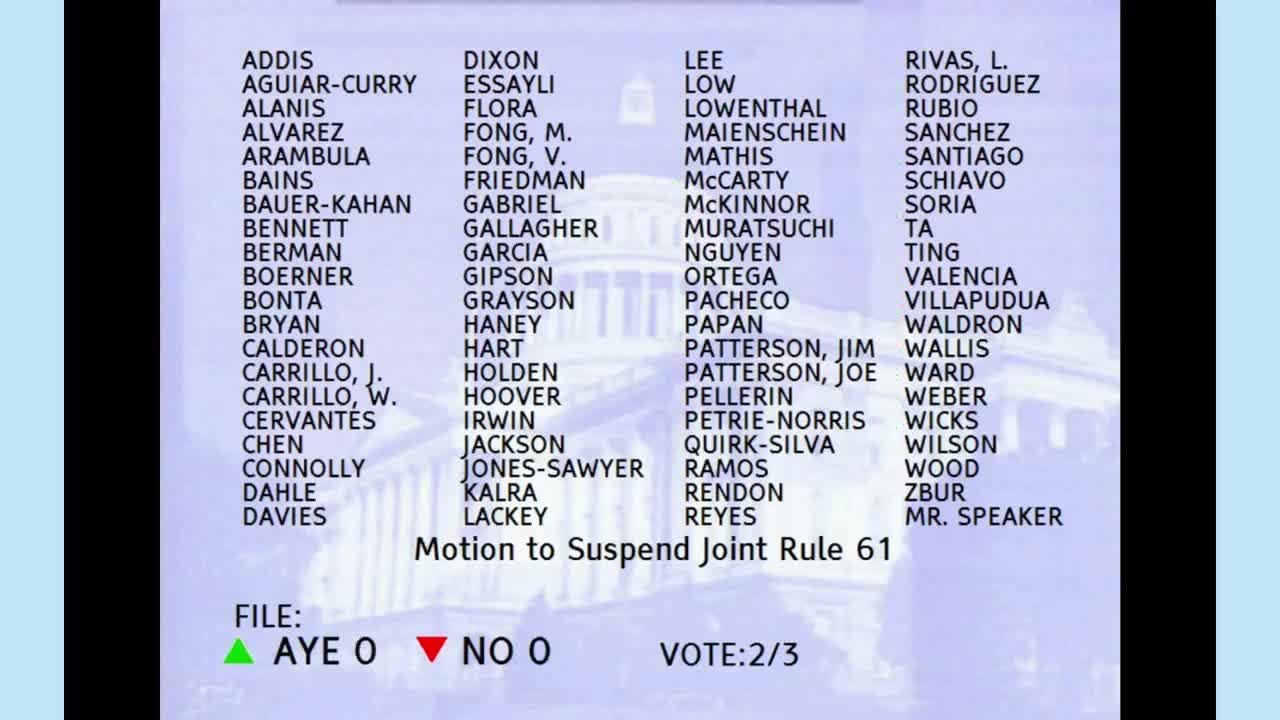

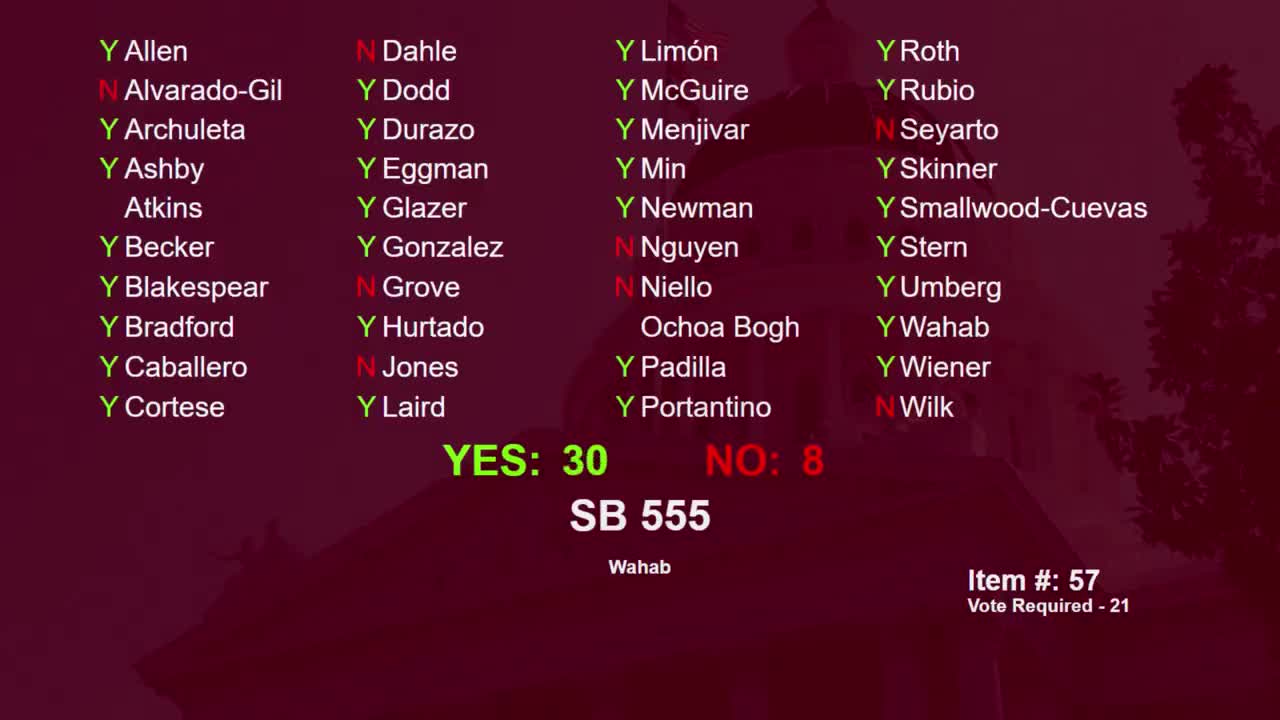
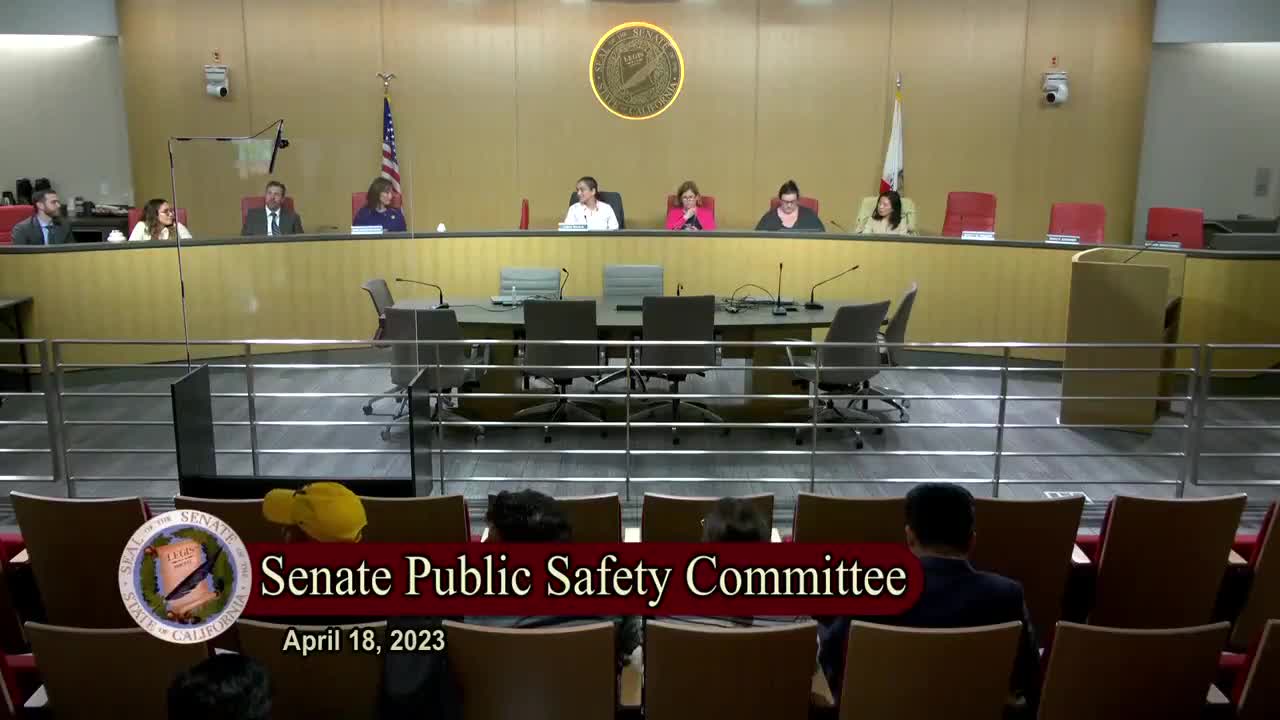
Bill Author

Bill Co-Author(s):