SB 452: Firearms.
- Session Year: 2023-2024
- House: Senate
- Latest Version Date: 2023-09-26
Current Status:
Passed
(2023-09-26: Chaptered by Secretary of State. Chapter 253, Statutes of 2023.)
Introduced
In Committee
First Chamber
In Committee
Second Chamber
Enacted
Existing law, subject to exceptions, generally makes it an offense to manufacture or sell an unsafe handgun, as defined, and requires the Department of Justice to compile a roster listing all of the handguns that have been tested and determined not to be unsafe handguns. Existing law establishes criteria for determining if a handgun is an unsafe handgun, including, for firearms manufactured after a certain date and not already listed on the roster, the lack of a chamber load indicator, magazine disconnect mechanism, and technology that transfers a microscopic array of characters from the firearm to the cartridge case when the firearm is fired, known as a microstamp.
This bill would remove from the definition of an unsafe handgun a semiautomatic pistol without a microstamping component, as specified, and would prohibit, commencing on January 1, 2028, a licensed firearms dealer from selling, offering for sale, exchanging, giving, transferring, or delivering a semiautomatic pistol, as defined, unless the pistol has been verified as a microstamping-enabled pistol, if the department has determined that microstamping components or microstamping-enabled semi-automatic firearms are available, as specified. The bill would also prohibit a person from modifying a microstamping-enabled pistol or microstamping component with the intent to prevent the production of a microstamp. By creating new crimes, the bill would impose a state-mandated local program.
The bill would require the Department of Justice to provide written guidance concerning qualifying criteria and performance standards for microstamping components, as defined, if the department has determined that microstamping components are technologically viable, as specified, and would require the department to accept applications for licensure of entities in order to produce microstamping components, as specified.
The California Constitution requires the state to reimburse local agencies and school districts for certain costs mandated by the state. Statutory provisions establish procedures for making that reimbursement.
This bill would provide that no reimbursement is required by this act for a specified reason.
Existing law, subject to exceptions, generally makes it an offense to manufacture or sell an unsafe handgun, as defined, and requires the Department of Justice to compile a roster listing all of the handguns that have been tested and determined not to be unsafe handguns. Existing law establishes criteria for determining if a handgun is an unsafe handgun, including, for firearms manufactured after a certain date and not already listed on the roster, the lack of a chamber load indicator, magazine disconnect mechanism, and technology that transfers a microscopic array of characters from the firearm to the cartridge case when the firearm is fired, known as a microstamp.
This bill would remove from the definition of an unsafe handgun a semiautomatic pistol without a microstamping component, as specified, and would prohibit, commencing on July 1, 2027, January 1, 2028, a licensed firearms dealer from selling, offering for sale, exchanging, giving, transferring, or delivering a semiautomatic pistol, as defined, unless the pistol has been verified as a microstamping-enabled pistol. pistol, if the department has determined that microstamping components or microstamping-enabled semi-automatic firearms are available, as specified. The bill would also prohibit a person from modifying a microstamping-enabled pistol or microstamping component with the intent to prevent the production of a microstamp. By creating new crimes, the bill would impose a state-mandated local program.
The bill would require the Department of Justice to provide written guidance concerning qualifying criteria and performance standards for microstamping components, as defined, if the department has determined that microstamping components are technologically viable, as specified, and would require the department to establish standards for the training and licensure of entities to retrofit semiautomatic pistols with microstamping components. accept applications for licensure of entities in order to produce microstamping components, as specified.
The California Constitution requires the state to reimburse local agencies and school districts for certain costs mandated by the state. Statutory provisions establish procedures for making that reimbursement.
This bill would provide that no reimbursement is required by this act for a specified reason.
Existing law, subject to exceptions, generally makes it an offense to manufacture or sell an unsafe handgun, as defined, and requires the Department of Justice to compile a roster listing all of the handguns that have been tested and determined not to be unsafe handguns. Existing law establishes criteria for determining if a handgun is an unsafe handgun, including, for firearms manufactured after a certain date and not already listed on the roster, the lack of a chamber load indicator, magazine disconnect mechanism, and technology that transfers a microscopic array of characters from the firearm to the cartridge case when the firearm is fired, known as a microstamp.
This bill would prohibit, commencing on January remove from the definition of an unsafe handgun a semiautomatic pistol without a microstamping component, as specified, and would prohibit, commencing on July 1, 2027, a licensed firearms dealer from selling, offering for sale, exchanging, giving, transfering, transferring, or delivering a semiautomatic pistol, as defined, unless the pistol has been verified as a microstamping-enabled pistol. The bill would also prohibit a person from modifying a microstamping-enabled pistol or microstamping component with the intent to prevent the production of a microstamp. By creating new crimes, the bill would impose a state-mandated local program.
The bill would require the Department of Justice to provide written guidance concerning qualifying criteria and performance standards for microstamping components, as defined, and would require the department to establish standards for the training and licensure of entities to retrofit semiautomatic pistols with microstamping components.
The California Constitution requires the state to reimburse local agencies and school districts for certain costs mandated by the state. Statutory provisions establish procedures for making that reimbursement.
This bill would provide that no reimbursement is required by this act for a specified reason.
Existing law, subject to exceptions, generally makes it an offense to manufacture or sell an unsafe handgun, as defined, and requires the Department of Justice to compile a roster listing all of the handguns that have been tested and determined not to be unsafe handguns. Existing law establishes criteria for determining if a handgun is an unsafe handgun, including, for firearms manufactured after a certain date and not already listed on the roster, the lack of a chamber load indicator, magazine disconnect mechanism, and technology that transfers a microscopic array of characters from the firearm to the cartridge case when the firearm is fired, known as a microstamp.
This bill would prohibit, commencing on January 1, 2027, a licensed firearms dealer from selling, offering for sale, exchanging, giving, transfering, or delivering a semiautomatic pistol, as defined, unless the pistol has been verified as a microstamping-enabled pistol. The bill would also prohibit a person from modifying a microstamping-enabled pistol or microstamping component with the intent to prevent the production of a microstamp. By creating new crimes, the bill would impose a state-mandated local program.
The bill would require the Department of Justice to provide written guidance concerning qualifying criteria and performance standards for microstamping components, as defined, and would require the department to establish standards for the training and licensure of entities to retrofit semiautomatic pistols with microstamping components.
The California Constitution requires the state to reimburse local agencies and school districts for certain costs mandated by the state. Statutory provisions establish procedures for making that reimbursement.
This bill would provide that no reimbursement is required by this act for a specified reason.
This bill would express the intent of the Legislature to enact subsequent legislation relating to firearm microstamping.Existing law, subject to exceptions, generally makes it an offense to manufacture or sell an unsafe handgun, as defined, and requires the Department of Justice to compile a roster listing all of the handguns that have been tested and determined not to be unsafe handguns. Existing law establishes criteria for determining if a handgun is an unsafe handgun, including, for firearms manufactured after a certain date and not already listed on the roster, the lack of a chamber load indicator, magazine disconnect mechanism, and technology that transfers a microscopic array of characters from the firearm to the cartridge case when the firearm is fired, known as a microstamp.
This bill would express the intent of the Legislature to enact subsequent legislation relating to firearm microstamping.
The following terms have the following meanings for purposes of this article:
(a)Microstamp means a microscopic array of characters that may be used to identify the specific serial number of a firearm from spent cartridge casings discharged by that firearm.
(b)Microstamping component means a firing pin or other component part of a semiautomatic pistol that, when installed, produces a microstamp on at least one location of the expended cartridge case each time the pistol is fired.
(c)Microstamping-enabled means either of the following:
(1)The firearms manufacturer has certified in writing that the firearm contains a microstamping component that meets the performance standards established by the Department of Justice pursuant to subdivision (b) of Section 27532.
(2)A licensed firearms dealer or gunsmith has certified in writing that they serviced the firearm to install a microstamping component that meets the performance standards established by the Department of Justice pursuant to subdivision (b) of Section 27532.
(d)Producing microstamping components may include, but is not limited to, the process of engraving a firing pin to modify the pin into a microstamping component.
(e)Semiautomatic pistol means a pistol, as defined in Section 16530, that has an operating mode that uses the energy of the explosive in a fixed cartridge to extract a fired cartridge and chamber a fresh cartridge with each single pull or activation of the trigger.
SEC. 2.Section 27532 is added to the Penal Code, to read:27532.(a)On or before March 1, 2025, the Department of Justice shall engage in an investigation to determine the technological viability of microstamping components producing microstamps on spent cartridge casings discharged by a firearm into which the microstamping component has been installed. The investigation shall include input from relevant stakeholders.
(b)If the department has determined that microstamping components are technologically viable pursuant to subdivision (a), the department shall, on or before September 1, 2025, provide written guidance on performance standards for persons, associations, partnerships, corporations, or other entities engaged in the business of producing microstamping components, which shall include processes and standards for those entities to demonstrate that a representative sample of the microstamping components they manufacture produce legible microstamps with reasonable reliability, including after repeated firing.
(c)If the department has determined that microstamping components are technologically viable pursuant to subdivision (a), the department shall, on or before January 1, 2026, commence accepting applications for licensure of persons, associations, partnerships, corporations, or other entities to engage in the business of producing microstamping components that meet those performance standards. A federally licensed firearms manufacturer shall not be required to obtain a license in order to manufacture microstamping components but shall comply with Section 27535 if it provides a certification that a firearm is microstamping-enabled.
(d)If the department has determined that microstamping components are technologically viable pursuant to subdivision (a), the department shall, on or before July 1, 2026, provide grants or enter into contracts with one or more entities licensed pursuant to subdivision (c) to produce microstamping components that meet the performance standards identified in subdivision (b) and to make those microstamping components available for sale or other distribution at a reasonable cost to firearm manufacturers, licensed firearms dealers, and gunsmiths engaged in the business of installing microstamping components in the State of California in accordance with this section.
(e)If the department has determined that microstamping components are technologically viable pursuant to subdivision (a), the department shall, on or before July 1, 2027, determine if either, or both, of the following are true:
(1)Microstamping components at commercially reasonable prices are available from licensees operating pursuant to subdivision (c) or subdivision (d).
(2)Options of microstamping-enabled firearms are readily available for purchase in the State of California.
(f)Upon a determination that microstamping components are available pursuant to paragraph (1) of subdivision (e) or that microstamping-enabled firearms are available pursuant to paragraph (2) of subdivision (e), the department shall make publicly available a list of all licensees producing microstamping components meeting the performance standards established in subdivision (b) and shall notify licensed firearms dealers, gunsmiths, and manufacturers operating within the State of California of the list of available microstamping component producers. The department shall update its determination and the list of licensees producing microstamping components annually thereafter.
(g)The department shall adopt rules or regulations that may be necessary or proper to carry out the provisions of this section, including the adoption of fees for the licensure of a person or an entity as described in subdivision (c). Regulations adopted pursuant to this section are exempt from the Administrative Procedure Act (Chapter 3.5 (commencing with Section 11340) of Part 1 of Division 3 of Title 2 of the Government Code).
SEC. 3.Section 27533 is added to the Penal Code, to read:27533.(a)Commencing on January 1, 2028, if the department has determined that microstamping components, microstamping-enabled semi-automatic firearms, or both microstamping components and microstamping-enabled firearms are available pursuant to subdivision (e) of Section 27532, it shall be unlawful for a firearms dealer licensed pursuant to Sections 26700 to 26915, inclusive, to sell, offer for sale, exchange, give, transfer, or deliver any semiautomatic pistol unless the pistol has been certified as a microstamping-enabled pistol as defined in Section 27531. A dealer shall be in compliance with this section if the dealer relies in good faith on a written certification made by the pistols manufacturer that the pistol is microstamping-enabled, on a written certification made by a gunsmith that serviced the pistol to install a microstamping component, or if the dealer has serviced the pistol to install a microstamping component certified by an entity licensed pursuant to subdivision (c) of Section 27532.
(b)The first violation for unlawful sale of a nonmicrostamping-enabled pistol pursuant to this section shall be punishable by a fine of not more than one thousand dollars ($1,000).
(c)The second violation for unlawful sale of a nonmicrostamping-enabled pistol pursuant to this section shall be punishable by a fine of not more than five thousand dollars ($5,000) and may result in the revocation of the dealers license issued under Sections 26700 to 26915, inclusive.
(d)The third violation for unlawful sale of a nonmicrostamping-enabled pistol pursuant to this section is a misdemeanor and shall result in the revocation of the dealers license issued under Sections 26700 to 26915, inclusive.
(e)This section shall not apply to any of the following:
(1)A pistol manufactured or delivered to a firearms dealer prior to January 1, 2028.
(2)A transaction conducted through a licensed firearms dealer pursuant to Chapter 5 (commencing with Section 28050) of this division.
(3)The sale, offer for sale, exchange, giving, transfer, or delivery of a semiautomatic pistol to a gunsmith or other qualified entity for the purposes of service or repair, including for installation of a microstamping component, or to any other person, firm, corporation, or other entity that holds a valid federal firearms license issued pursuant to Chapter 44 (commencing with Section 921) of Title 18 of the United States Code and the regulations issued pursuant thereto.
SEC. 4.Section 27534 is added to the Penal Code, to read:27534.(a)A person who modifies a microstamping-enabled pistol or microstamping component with the intent to prevent the production of a microstamp is, for a first offense, guilty of a misdemeanor punishable by imprisonment in the county jail not exceeding six months, by a fine of not more than one thousand dollars ($1,000), or by both that fine and imprisonment, and for a second or subsequent offense, is guilty of a misdemeanor punishable by imprisonment in the county jail of not more than one year, by a fine of not more than two thousand dollars ($2,000), or by both that fine and imprisonment.
(b)Subdivision (a) shall not apply to a pistol manufactured prior to the effective date of this section.
(c)For the purposes of this section, it shall not be unlawful to replace the microstamping component of a microstamping-enabled pistol when the component is damaged or in need of replacement with another valid microstamping component for the safe use of the firearm or replacing a microstamping component for a legitimate sporting purpose.
SEC. 5.Section 27534.1 is added to the Penal Code, to read:27534.1.(a)It shall be unlawful to knowingly or recklessly provide a false or misleading certification that a firearm is microstamping-enabled, as defined in Section 27531.
(b)If a court determines that any person or entity has violated this section, the court may award either or both of the following:
(1)Civil penalties in the amount of ten thousand dollars ($10,000) for each firearm in violation.
(2)Injunctive relief sufficient to prevent the person or entity from further violations of this section.
SEC. 6.Section 27534.2 is added to the Penal Code, to read:27534.2.The Department of Justice is authorized to adopt regulations to implement Sections 27533, 27534, 27534.1, and 31910. Regulations adopted pursuant to those sections are exempt from the Administrative Procedure Act (Chapter 3.5 (commencing with Section 11340) of Part 1 of Division 3 of Title 2 of the Government Code).
SEC. 7.Section 31910 of the Penal Code is amended to read:31910.(a)As used in this part, unsafe handgun means any pistol, revolver, or other firearm capable of being concealed upon the person, for which any of the following is true:
(1)For a revolver:
(A)It does not have a safety device that, either automatically in the case of a double-action firing mechanism, or by manual operation in the case of a single-action firing mechanism, causes the hammer to retract to a point where the firing pin does not rest upon the primer of the cartridge.
(B)It does not meet the firing requirement for handguns.
(C)It does not meet the drop safety requirement for handguns.
(2)For a pistol:
(A)It does not have a positive manually operated safety device, as determined by standards relating to imported guns promulgated by the federal Bureau of Alcohol, Tobacco, Firearms and Explosives.
(B)It does not meet the firing requirement for handguns.
(C)It does not meet the drop safety requirement for handguns.
(D)Commencing July 1, 2022, for all centerfire semiautomatic pistols that are not already listed on the roster pursuant to Section 32015, it does not have a chamber load indicator.
(E)Commencing July 1, 2022, for all centerfire or rimfire semiautomatic pistols that are not already listed on the roster pursuant to Section 32015, it does not have a magazine disconnect mechanism if it has a detachable magazine.
(b)The Department of Justice shall, for each semiautomatic pistol newly added to the roster pursuant to Section 32015, remove from the roster exactly three semiautomatic pistols lacking one or more of the applicable features described in subparagraphs (D) and (E) of paragraph (2) of subdivision (a) and added to the roster before July 1, 2022. Notwithstanding those subparagraphs, each semiautomatic pistol removed from the roster pursuant to this subdivision shall be considered an unsafe handgun. The Attorney General shall remove semiautomatic pistols from the roster pursuant to this subdivision in reverse order of their dates of addition to the roster, beginning with the semiautomatic pistol added to the roster on the earliest date and continuing until each semiautomatic pistol on the roster includes each of the applicable features described in those subparagraphs.
SEC. 8.No reimbursement is required by this act pursuant to Section 6 of Article XIIIB of the California Constitution because the only costs that may be incurred by a local agency or school district will be incurred because this act creates a new crime or infraction, eliminates a crime or infraction, or changes the penalty for a crime or infraction, within the meaning of Section 17556 of the Government Code, or changes the definition of a crime within the meaning of Section 6 of Article XIIIB of the California Constitution.
The following terms have the following meanings for purposes of this article:
(a)Microstamp means a microscopic array of characters that may be used to identify the specific serial number of a firearm from spent cartridge casings discharged by that firearm.
(b)Microstamping component means a firing pin or other component part of a semiautomatic pistol that, when installed, produces a microstamp on at least one location of the expended cartridge case each time the pistol is fired.
(c)Microstamping-enabled means either of the following:
(1)The firearms manufacturer has certified in writing that the firearm contains a microstamping component that meets the performance standards established by the Department of Justice pursuant to subdivision (b) of Section 27532.
(2)A licensed firearms dealer or gunsmith has certified in writing that they serviced the firearm to install a microstamping component that meets the performance standards established by the Department of Justice pursuant to subdivision (b) of Section 27532.
(d)Producing microstamping components may include, but is not limited to, the process of engraving a firing pin to modify the pin into a microstamping component.
(e)Semiautomatic pistol means a pistol, as defined in Section 16530, that has an operating mode that uses the energy of the explosive in a fixed cartridge to extract a fired cartridge and chamber a fresh cartridge with each single pull or activation of the trigger.
SEC. 2.Section 27532 is added to the Penal Code, to read:27532.(a)On or before March 1, 2025, the Department of Justice shall engage in an investigation to determine the technological viability of microstamping components producing microstamps on spent cartridge casings discharged by a firearm into which the microstamping component has been installed. The investigation shall include input from relevant stakeholders.
(b)If the department has determined that microstamping components are technologically viable pursuant to subdivision (a), the department shall, on or before September 1, 2025, provide written guidance on performance standards for persons, associations, partnerships, corporations, or other entities engaged in the business of producing microstamping components, which shall include processes and standards for those entities to demonstrate that a representative sample of the microstamping components they manufacture produce legible microstamps with reasonable reliability, including after repeated firing.
(c)If the department has determined that microstamping components are technologically viable pursuant to subdivision (a), the department shall, on or before January 1, 2026, commence accepting applications for licensure of persons, associations, partnerships, corporations, or other entities to engage in the business of producing microstamping components that meet those performance standards. A federally licensed firearms manufacturer shall not be required to obtain a license in order to manufacture microstamping components but shall comply with Section 27535 if it provides a certification that a firearm is microstamping-enabled.
(d)If the department has determined that microstamping components are technologically viable pursuant to subdivision (a), the department shall, on or before July 1, 2026, provide grants or enter into contracts with one or more entities licensed pursuant to subdivision (c) to produce microstamping components that meet the performance standards identified in subdivision (b) and to make those microstamping components available for sale or other distribution at a reasonable cost to firearm manufacturers, licensed firearms dealers, and gunsmiths engaged in the business of installing microstamping components in the State of California in accordance with this section.
(e)If the department has determined that microstamping components are technologically viable pursuant to subdivision (a), the department shall, on or before July 1, 2027, determine if either, or both, of the following are true:
(1)Microstamping components at commercially reasonable prices are available from licensees operating pursuant to subdivision (c) or subdivision (d).
(2)Microstamping-enabled Options of microstamping-enabled firearms are readily available for purchase in the State of California.
(f)Upon a determination that microstamping components are available pursuant to paragraph (1) of subdivision (e) or that microstamping-enabled firearms are available pursuant to paragraph (2) of subdivision (e), the department shall make publicly available a list of all licensees producing microstamping components meeting the performance standards established in subdivision (b) and shall notify licensed firearms dealers, gunsmiths, and manufacturers operating within the State of California of the list of available microstamping component producers. The department shall update its determination and the list of licensees producing microstamping components annually thereafter.
(g)The department shall adopt rules or regulations that may be necessary or proper to carry out the provisions of this section, including the adoption of fees for the licensure of a person or an entity as described in subdivision (c). Regulations adopted pursuant to this section are exempt from the Administrative Procedure Act (Chapter 3.5 (commencing with Section 11340) of Part 1 of Division 3 of Title 2 of the Government Code).
SEC. 3.Section 27533 is added to the Penal Code, to read:27533.(a)Commencing on January 1, 2028, if the department has determined that microstamping components, microstamping-enabled semi-automatic firearms, or both microstamping components and microstamping-enabled firearms are available pursuant to subdivision (e) of Section 27532, it shall be unlawful for a firearms dealer licensed pursuant to Sections 26700 to 26915, inclusive, to sell, offer for sale, exchange, give, transfer, or deliver any semiautomatic pistol unless the pistol has been certified as a microstamping-enabled pistol as defined in Section 27531. A dealer shall be in compliance with this section if the dealer relies in good faith on a written certification made by the pistols manufacturer that the pistol is microstamping-enabled, on a written certification made by a gunsmith that serviced the pistol to install a microstamping component, or if the dealer has serviced the pistol to install a microstamping component certified by an entity licensed pursuant to subdivision (c) of Section 27532.
(b)The first violation for unlawful sale of a nonmicrostamping-enabled pistol pursuant to this section shall be punishable by a fine of not more than one thousand dollars ($1,000).
(c)The second violation for unlawful sale of a nonmicrostamping-enabled pistol pursuant to this section shall be punishable by a fine of not more than five thousand dollars ($5,000) and may result in the revocation of the dealers license issued under Sections 26700 to 26915, inclusive.
(d)The third violation for unlawful sale of a nonmicrostamping-enabled pistol pursuant to this section is a misdemeanor and shall result in the revocation of the dealers license issued under Sections 26700 to 26915, inclusive.
(e)This section shall not apply to any of the following:
(1)A pistol manufactured or delivered to a firearms dealer prior to January 1, 2028.
(2)A transaction conducted through a licensed firearms dealer pursuant to Chapter 5 (commencing with Section 28050) of this division.
(3)The sale, offer for sale, exchange, giving, transfer, or delivery of a semiautomatic pistol to a gunsmith or other qualified entity for the purposes of service or repair, including for installation of a microstamping component, or to any other person, firm, corporation, or other entity that holds a valid federal firearms license issued pursuant to Chapter 44 (commencing with Section 921) of Title 18 of the United States Code and the regulations issued pursuant thereto.
SEC. 4.Section 27534 is added to the Penal Code, to read:27534.(a)A person who modifies a microstamping-enabled pistol or microstamping component with the intent to prevent the production of a microstamp is, for a first offense, guilty of a misdemeanor punishable by imprisonment in the county jail not exceeding six months, by a fine of not more than one thousand dollars ($1,000), or by both that fine and imprisonment, and for a second or subsequent offense, is guilty of a misdemeanor punishable by imprisonment in the county jail of not more than one year, by a fine of not more than two thousand dollars ($2,000), or by both that fine and imprisonment.
(b)Subdivision (a) shall not apply to a pistol manufactured prior to the effective date of this section.
(c)For the purposes of this section, it shall not be unlawful to replace the microstamping component of a microstamping-enabled pistol when the component is damaged or in need of replacement with another valid microstamping component for the safe use of the firearm or replacing a microstamping component for a legitimate sporting purpose.
SEC. 5.Section 27534.1 is added to the Penal Code, to read:27534.1.(a)It shall be unlawful to knowingly or recklessly provide a false or misleading certification that a firearm is microstamping-enabled, as defined in Section 27531.
(b)If a court determines that any person or entity has violated this section, the court may award either or both of the following:
(1)Civil penalties in the amount of ten thousand dollars ($10,000) for each firearm in violation.
(2)Injunctive relief sufficient to prevent the person or entity from further violations of this section.
SEC. 6.Section 27534.2 is added to the Penal Code, to read:27534.2.The Department of Justice is authorized to adopt regulations to implement Sections 27533, 27534, 27534.1, and 31910. Regulations adopted pursuant to those sections are exempt from the Administrative Procedure Act (Chapter 3.5 (commencing with Section 11340) of Part 1 of Division 3 of Title 2 of the Government Code).
SEC. 7.Section 31910 of the Penal Code is amended to read:31910.(a)As used in this part, unsafe handgun means any pistol, revolver, or other firearm capable of being concealed upon the person, for which any of the following is true:
(1)For a revolver:
(A)It does not have a safety device that, either automatically in the case of a double-action firing mechanism, or by manual operation in the case of a single-action firing mechanism, causes the hammer to retract to a point where the firing pin does not rest upon the primer of the cartridge.
(B)It does not meet the firing requirement for handguns.
(C)It does not meet the drop safety requirement for handguns.
(2)For a pistol:
(A)It does not have a positive manually operated safety device, as determined by standards relating to imported guns promulgated by the federal Bureau of Alcohol, Tobacco, Firearms and Explosives.
(B)It does not meet the firing requirement for handguns.
(C)It does not meet the drop safety requirement for handguns.
(D)Commencing July 1, 2022, for all centerfire semiautomatic pistols that are not already listed on the roster pursuant to Section 32015, it does not have a chamber load indicator.
(E)Commencing July 1, 2022, for all centerfire or rimfire semiautomatic pistols that are not already listed on the roster pursuant to Section 32015, it does not have a magazine disconnect mechanism if it has a detachable magazine.
(b)The Department of Justice shall, for each semiautomatic pistol newly added to the roster pursuant to Section 32015, remove from the roster exactly three semiautomatic pistols lacking one or more of the applicable features described in subparagraphs (D) and (E) of paragraph (2) of subdivision (a) and added to the roster before July 1, 2022. Notwithstanding those subparagraphs, each semiautomatic pistol removed from the roster pursuant to this subdivision shall be considered an unsafe handgun. The Attorney General shall remove semiautomatic pistols from the roster pursuant to this subdivision in reverse order of their dates of addition to the roster, beginning with the semiautomatic pistol added to the roster on the earliest date and continuing until each semiautomatic pistol on the roster includes each of the applicable features described in those subparagraphs.
SEC. 8.No reimbursement is required by this act pursuant to Section 6 of Article XIIIB of the California Constitution because the only costs that may be incurred by a local agency or school district will be incurred because this act creates a new crime or infraction, eliminates a crime or infraction, or changes the penalty for a crime or infraction, within the meaning of Section 17556 of the Government Code, or changes the definition of a crime within the meaning of Section 6 of Article XIIIB of the California Constitution.
The following terms have the following meanings for purposes of this article:
(a)Microstamp means a microscopic array of characters that may be used to identify the specific serial number of a firearm from spent cartridge casings discharged by that firearm.
(a)(b)Microstamping component means a firing pin or other component part of a semiautomatic pistol that will produce that, when installed, produces a microstamp on at least one location of the expended cartridge case each time the pistol is fired.
(b)Microstamping-enabled pistol means a semiautomatic pistol that contains a microstamping component installed by its manufacturer or by a person licensed by the state, an association, a partnership, a corporation, or another entity in compliance with standards established by the Department of Justice or its designee.(c)Microstamping-enabled means either of the following:
(1)The firearms manufacturer has certified in writing that the firearm contains a microstamping component that meets the performance standards established by the Department of Justice pursuant to subdivision (b) of Section 27532.
(2)A licensed firearms dealer or gunsmith has certified in writing that they serviced the firearm to install a microstamping component that meets the performance standards established by the Department of Justice pursuant to subdivision (b) of Section 27532.
(d)Producing microstamping components may include, but is not limited to, the process of engraving a firing pin to modify the pin into a microstamping component.
(c)(e)Semiautomatic pistol means a pistol, as defined in Section 16530, that has an operating mode that uses the energy of the explosive in a fixed cartridge to extract a fired cartridge and chamber a fresh cartridge with each single pull or activation of the trigger.
SEC. 2.Section 27532 is added to the Penal Code, to read:27532.(a)On or before July 1, 2025, the Department of Justice shall provide written guidance concerning qualifying criteria and performance standards for microstamping components.(b)On or before July 1, 2026, the Department of Justice shall establish processes and standards for the training and licensure of persons, associations, partnerships, corporations, or other entities so that those entities may engage in the business of servicing semiautomatic pistols and their components to ensure compliance with the requirements of Section 27533.(c)On or before July 1, 2026, the Department of Justice shall designate a state body to facilitate the service of semiautomatic pistols and their components to ensure compliance with the requirements of Section 27533.27532.(a)On or before March 1, 2025, the Department of Justice shall engage in an investigation to determine the technological viability of microstamping components producing microstamps on spent cartridge casings discharged by a firearm into which the microstamping component has been installed.
(b)If the department has determined that microstamping components are technologically viable pursuant to subdivision (a), the department shall, on or before September 1, 2025, provide written guidance on performance standards for persons, associations, partnerships, corporations, or other entities engaged in the business of producing microstamping components, which shall include processes and standards for those entities to demonstrate that a representative sample of the microstamping components they manufacture produce legible microstamps with reasonable reliability, including after repeated firing.
(c)If the department has determined that microstamping components are technologically viable pursuant to subdivision (a), the department shall, on or before January 1, 2026, commence accepting applications for licensure of persons, associations, partnerships, corporations, or other entities to engage in the business of producing microstamping components that meet those performance standards. A federally licensed firearms manufacturer shall not be required to obtain a license in order to manufacture microstamping components but shall comply with Section 27535 if it provides a certification that a firearm is microstamping-enabled.
(d)If the department has determined that microstamping components are technologically viable pursuant to subdivision (a), the department shall, on or before July 1, 2026, provide grants or enter into contracts with one or more entities licensed pursuant to subdivision (c) to produce microstamping components that meet the performance standards identified in subdivision (b) and to make those microstamping components available for sale or other distribution at a reasonable cost to firearm manufacturers, licensed firearms dealers, and gunsmiths engaged in the business of installing microstamping components in the State of California in accordance with this section.
(e)If the department has determined that microstamping components are technologically viable pursuant to subdivision (a), the department shall, on or before July 1, 2027, determine if either, or both, of the following are true:
(1)Microstamping components at commercially reasonable prices are available from licensees operating pursuant to subdivision (c) or subdivision (d).
(2)Microstamping-enabled firearms are available for purchase in the State of California.
(f)Upon a determination that microstamping components are available pursuant to paragraph (1) of subdivision (e) or that microstamping-enabled firearms are available pursuant to paragraph (2) of subdivision (e), the department shall make publicly available a list of all licensees producing microstamping components meeting the performance standards established in subdivision (b) and shall notify licensed firearms dealers, gunsmiths, and manufacturers operating within the State of California of the list of available microstamping component producers. The department shall update its determination and the list of licensees producing microstamping components annually thereafter.
(d)(g)The Department of Justice department shall adopt rules or regulations that may be necessary or proper to carry out the provisions of this section. section, including the adoption of fees for the licensure of a person or an entity as described in subdivision (c). Regulations adopted pursuant to this section are exempt from the Administrative Procedure Act (Chapter 3.5 (commencing with Section 11340) of Part 1 of Division 3 of Title 2 of the Government Code).
SEC. 3.Section 27533 is added to the Penal Code, to read:27533.(a)Commencing on July 1, 2027, January 1, 2028, if the department has determined that microstamping components, microstamping-enabled semi-automatic firearms, or both microstamping components and microstamping-enabled firearms are available pursuant to subdivision (e) of Section 27532, it shall be unlawful for a firearms dealer licensed pursuant to Sections 26700 to 26915, inclusive, to sell, offer for sale, exchange, give, transfer, or deliver any semiautomatic pistol unless the pistol has been verified as a microstamping-enabled pistol. certified as a microstamping-enabled pistol as defined in Section 27531. A dealer shall be in compliance with this section if the dealer relies in good faith on a written certification made by the pistols manufacturer that the pistol is microstamping-enabled, on a written certification made by a gunsmith that serviced the pistol to install a microstamping component, or if the dealer has serviced the pistol to install a microstamping component certified by an entity licensed pursuant to subdivision (c) of Section 27532.
(b)The first violation for unlawful sale of a nonmicrostamping-enabled pistol pursuant to this section shall be punishable by a fine of not more than one thousand dollars ($1,000).
(c)The second violation for unlawful sale of a nonmicrostamping-enabled pistol pursuant to this section shall be punishable by a fine of not more than five thousand dollars ($5,000) and may result in the revocation of the dealers license issued under Sections 26700 to 26915, inclusive.
(d)The third violation for unlawful sale of a nonmicrostamping-enabled pistol pursuant to this section is a misdemeanor and shall result in the revocation of the dealers license issued under Sections 26700 to 26915, inclusive.
(e)This section shall not apply to a pistol manufactured prior to the effective date of this section. any of the following:
(1)A pistol manufactured or delivered to a firearms dealer prior to January 1, 2028.
(2)A transaction conducted through a licensed firearms dealer pursuant to Chapter 5 (commencing with Section 28050) of this division.
(3)The sale, offer for sale, exchange, giving, transfer, or delivery of a semiautomatic pistol to a gunsmith or other qualified entity for the purposes of service or repair, including for installation of a microstamping component, or to any other person, firm, corporation, or other entity that holds a valid federal firearms license issued pursuant to Chapter 44 (commencing with Section 921) of Title 18 of the United States Code and the regulations issued pursuant thereto.
SEC. 4.Section 27534 is added to the Penal Code, to read:27534.(a)A person who modifies a microstamping-enabled pistol or microstamping component with the intent to prevent the production of a microstamp is, for a first offense, guilty of a misdemeanor punishable by imprisonment in the county jail not exceeding six months, by a fine of not more than one thousand dollars ($1,000), or by both that fine and imprisonment, and for a second or subsequent offense, is guilty of a misdemeanor punishable by imprisonment in the county jail of not more than one year, by a fine of not more than two thousand dollars ($2,000), or by both that fine and imprisonment.
(b)Subdivision (a) shall not apply to a pistol manufactured prior to the effective date of this section.
(c)For the purposes of this section, it shall not be unlawful to replace the microstamping component of a microstamping-enabled pistol when the component is damaged or in need of replacement with another valid microstamping component for the safe use of the firearm or replacing a microstamping component for a legitimate sporting purpose.
SEC. 5.Section 27534.1 is added to the Penal Code, to read:27534.1.(a)It shall be unlawful to knowingly or recklessly provide a false or misleading certification that a firearm is microstamping-enabled, as defined in Section 27531.
(b)If a court determines that any person or entity has violated this section, the court may award either or both of the following:
(1)Civil penalties in the amount of ten thousand dollars ($10,000) for each firearm in violation.
(2)Injunctive relief sufficient to prevent the person or entity from further violations of this section.
SEC. 6.Section 27534.2 is added to the Penal Code, to read:27534.2.The Department of Justice is authorized to adopt regulations to implement Sections 27533, 27534, 27534.1, and 31910. Regulations adopted pursuant to those sections are exempt from the Administrative Procedure Act (Chapter 3.5 (commencing with Section 11340) of Part 1 of Division 3 of Title 2 of the Government Code).
SEC. 5.SEC. 7.Section 31910 of the Penal Code is amended to read:31910.(a)As used in this part, unsafe handgun means any pistol, revolver, or other firearm capable of being concealed upon the person, for which any of the following is true:
(1)For a revolver:
(A)It does not have a safety device that, either automatically in the case of a double-action firing mechanism, or by manual operation in the case of a single-action firing mechanism, causes the hammer to retract to a point where the firing pin does not rest upon the primer of the cartridge.
(B)It does not meet the firing requirement for handguns.
(C)It does not meet the drop safety requirement for handguns.
(2)For a pistol:
(A)It does not have a positive manually operated safety device, as determined by standards relating to imported guns promulgated by the federal Bureau of Alcohol, Tobacco, Firearms and Explosives.
(B)It does not meet the firing requirement for handguns.
(C)It does not meet the drop safety requirement for handguns.
(D)Commencing July 1, 2022, for all centerfire semiautomatic pistols that are not already listed on the roster pursuant to Section 32015, it does not have a chamber load indicator.
(E)Commencing July 1, 2022, for all centerfire or rimfire semiautomatic pistols that are not already listed on the roster pursuant to Section 32015, it does not have a magazine disconnect mechanism if it has a detachable magazine.
(b)The Department of Justice shall, for each semiautomatic pistol newly added to the roster pursuant to Section 32015, remove from the roster exactly three semiautomatic pistols lacking one or more of the applicable features described in subparagraphs (D) and (E) of paragraph (2) of subdivision (a) and added to the roster before July 1, 2022. Notwithstanding those subparagraphs, each semiautomatic pistol removed from the roster pursuant to this subdivision shall be considered an unsafe handgun. The Attorney General shall remove semiautomatic pistols from the roster pursuant to this subdivision in reverse order of their dates of addition to the roster, beginning with the semiautomatic pistol added to the roster on the earliest date and continuing until each semiautomatic pistol on the roster includes each of the applicable features described in those subparagraphs.
SEC. 6.SEC. 8.No reimbursement is required by this act pursuant to Section 6 of Article XIIIB of the California Constitution because the only costs that may be incurred by a local agency or school district will be incurred because this act creates a new crime or infraction, eliminates a crime or infraction, or changes the penalty for a crime or infraction, within the meaning of Section 17556 of the Government Code, or changes the definition of a crime within the meaning of Section 6 of Article XIIIB of the California Constitution.
The following terms have the following meanings for purposes of this article:
(a)Microstamping component means a component part of a semiautomatic pistol that will produce a microstamp on at least one location of the expended cartridge case each time the pistol is fired.
(b)Microstamping-enabled pistol means a semiautomatic pistol that contains a microstamping component installed by its manufacturer or by a person licensed by the state, an association, a partnership, a corporation, or another entity in compliance with standards established by the Department of Justice or its designee.
(c)Semiautomatic pistol means a pistol, as defined in Section 16530, that has an operating mode that uses the energy of the explosive in a fixed cartridge to extract a fired cartridge and chamber a fresh cartridge with each single pull of the trigger.
SEC. 2.Section 27532 is added to the Penal Code, to read:27532.(a)On or before July 1, 2025, the Department of Justice shall provide written guidance concerning qualifying criteria and performance standards for microstamping components.
(b)On or before July 1, 2026, the Department of Justice shall establish processes and standards for the training and licensure of persons, associations, partnerships, corporations, or other entities so that those entities may engage in the business of servicing semiautomatic pistols and their components to ensure compliance with the requirements of Section 27533.
(c)On or before July 1, 2026, the Department of Justice shall designate a state body to facilitate the service of semiautomatic pistols and their components to ensure compliance with the requirements of Section 27533.
(d)The Department of Justice shall adopt rules or regulations that may be necessary or proper to carry out the provisions of this section.
SEC. 3.Section 27533 is added to the Penal Code, to read:27533.(a)Commencing on July 1, 2027, it shall be unlawful for a firearms dealer licensed pursuant to Sections 26700 to 26915, inclusive, to sell, offer for sale, exchange, give, transfer, or deliver any semiautomatic pistol unless the pistol has been verified as a microstamping-enabled pistol.
(b)The first violation for unlawful sale of a nonmicrostamping-enabled pistol pursuant to this section shall be punishable by a fine of not more than one thousand dollars ($1,000).
(c)The second violation for unlawful sale of a nonmicrostamping-enabled pistol pursuant to this section shall be punishable by a fine of not more than five thousand dollars ($5,000) and may result in the revocation of the dealers license issued under Sections 26700 to 26915, inclusive.
(d)The third violation for unlawful sale of a nonmicrostamping-enabled pistol pursuant to this section is a misdemeanor and shall result in the revocation of the dealers license issued under Sections 26700 to 26915, inclusive.
(e)This section shall not apply to a pistol manufactured prior to the effective date of this section.
SEC. 4.Section 27534 is added to the Penal Code, to read:27534.(a)A person who modifies a microstamping-enabled pistol or microstamping component with the intent to prevent the production of a microstamp is, for a first offense, guilty of a misdemeanor punishable by imprisonment in the county jail not exceeding six months, by a fine of not more than one thousand dollars ($1,000), or by both that fine and imprisonment, and for a second or subsequent offense, is guilty of a misdemeanor punishable by imprisonment in the county jail of not more than one year, by a fine of not more than two thousand dollars ($2,000), or by both that fine and imprisonment.
(b)Subdivision (a) shall not apply to a pistol manufactured prior to the effective date of this section.
(c)For the purposes of this section, it shall not be unlawful to replace the microstamping component of a microstamping-enabled pistol when the component is damaged or in need of replacement with another valid microstamping component for the safe use of the firearm or replacing a microstamping component for a legitimate sporting purpose.
SEC. 5.Section 31910 of the Penal Code is amended to read:31910.(a)As used in this part, unsafe handgun means any pistol, revolver, or other firearm capable of being concealed upon the person, for which any of the following is true:
(1)For a revolver:
(A)It does not have a safety device that, either automatically in the case of a double-action firing mechanism, or by manual operation in the case of a single-action firing mechanism, causes the hammer to retract to a point where the firing pin does not rest upon the primer of the cartridge.
(B)It does not meet the firing requirement for handguns.
(C)It does not meet the drop safety requirement for handguns.
(2)For a pistol:
(A)It does not have a positive manually operated safety device, as determined by standards relating to imported guns promulgated by the federal Bureau of Alcohol, Tobacco, Firearms and Explosives.
(B)It does not meet the firing requirement for handguns.
(C)It does not meet the drop safety requirement for handguns.
(D)Commencing July 1, 2022, for all centerfire semiautomatic pistols that are not already listed on the roster pursuant to Section 32015, it does not have a chamber load indicator.
(E)Commencing July 1, 2022, for all centerfire or rimfire semiautomatic pistols that are not already listed on the roster pursuant to Section 32015, it does not have a magazine disconnect mechanism if it has a detachable magazine.
(F)(i)Commencing July 1, 2022, for all semiautomatic pistols that are not already listed on the roster pursuant to Section 32015, it is not designed and equipped with a microscopic array of characters used to identify the make, model, and serial number of the pistol, etched or otherwise imprinted in one or more places on the interior surface or internal working parts of the pistol, and that are transferred by imprinting on each cartridge case when the firearm is fired.(ii)The Attorney General may also approve a method of equal or greater reliability and effectiveness in identifying the specific serial number of a firearm from spent cartridge casings discharged by that firearm than that which is set forth in this subparagraph, to be thereafter required as otherwise set forth by this subparagraph where the Attorney General certifies that this new method is also unencumbered by any patent restrictions. Approval by the Attorney General shall include notice of that fact via regulations adopted by the Attorney General for purposes of implementing that method for purposes of this subparagraph.(iii)The microscopic array of characters required by this section shall not be considered the name of the maker, model, manufacturers number, or other mark of identification, including any distinguishing number or mark assigned by the Department of Justice, within the meaning of Sections 23900 and 23920.(b)The Department of Justice shall, for each semiautomatic pistol newly added to the roster pursuant to Section 32015, remove from the roster exactly three semiautomatic pistols lacking one or more of the applicable features described in subparagraphs (D), (E), and (F) (D) and (E) of paragraph (2) of subdivision (a) and added to the roster before July 1, 2022. Notwithstanding those subparagraphs, each semiautomatic pistol removed from the roster pursuant to this subdivision shall be considered an unsafe handgun. The Attorney General shall remove semiautomatic pistols from the roster pursuant to this subdivision in reverse order of their dates of addition to the roster, beginning with the semiautomatic pistol added to the roster on the earliest date and continuing until each semiautomatic pistol on the roster includes each of the applicable features described in those subparagraphs.
(c)This section shall remain in effect only until January 1, 2027, and as of that date is repealed.SEC. 6.Section 31910 is added to the Penal Code, to read:31910.(a)As used in this part, unsafe handgun means any pistol, revolver, or other firearm capable of being concealed upon the person, for which any of the following is true:(1)For a revolver:(A)It does not have a safety device that, either automatically in the case of a double-action firing mechanism, or by manual operation in the case of a single-action firing mechanism, causes the hammer to retract to a point where the firing pin does not rest upon the primer of the cartridge.(B)It does not meet the firing requirement for handguns.(C)It does not meet the drop safety requirement for handguns.(2)For a pistol:(A)It does not have a positive manually operated safety device, as determined by standards relating to imported guns promulgated by the federal Bureau of Alcohol, Tobacco, Firearms and Explosives.(B)It does not meet the firing requirement for handguns.(C)It does not meet the drop safety requirement for handguns.(D)Commencing July 1, 2022, for all centerfire semiautomatic pistols that are not already listed on the roster pursuant to Section 32015, it does not have a chamber load indicator.(E)Commencing July 1, 2022, for all centerfire or rimfire semiautomatic pistols that are not already listed on the roster pursuant to Section 32015, it does not have a magazine disconnect mechanism if it has a detachable magazine.(b)The Department of Justice shall, for each semiautomatic pistol newly added to the roster pursuant to Section 32015, remove from the roster exactly three semiautomatic pistols lacking one or more of the applicable features described in subparagraphs (D) and (E) of paragraph (2) of subdivision (a) and added to the roster before July 1, 2022. Notwithstanding those subparagraphs, each semiautomatic pistol removed from the roster pursuant to this subdivision shall be considered an unsafe handgun. The Attorney General shall remove semiautomatic pistols from the roster pursuant to this subdivision in reverse order of their dates of addition to the roster, beginning with the semiautomatic pistol added to the roster on the earliest date and continuing until each semiautomatic pistol on the roster includes each of the applicable features described in those subparagraphs.(c)This section shall become operative on January 1, 2027.SEC. 7.SEC. 6.No reimbursement is required by this act pursuant to Section 6 of Article XIIIB of the California Constitution because the only costs that may be incurred by a local agency or school district will be incurred because this act creates a new crime or infraction, eliminates a crime or infraction, or changes the penalty for a crime or infraction, within the meaning of Section 17556 of the Government Code, or changes the definition of a crime within the meaning of Section 6 of Article XIIIB of the California Constitution.
The following terms have the following meanings for purposes of this article:
(a)Microstamping component means a component part of a semiautomatic pistol that will produce a microstamp on at least one location of the expended cartridge case each time the pistol is fired.
(b)Microstamping-enabled pistol means a semiautomatic pistol that contains a microstamping component installed by its manufacturer or by a person licensed by the state, an association, a partnership, a corporation, or another entity in compliance with standards established by the Department of Justice or its designee.
(c)Semiautomatic pistol means a pistol, as defined in Section 16530, that has an operating mode that uses the energy of the explosive in a fixed cartridge to extract a fired cartridge and chamber a fresh cartridge with each single pull of the trigger.
SEC. 2.Section 27532 is added to the Penal Code, to read:27532.(a)On or before July 1, 2025, the Department of Justice shall provide written guidance concerning qualifying criteria and performance standards for microstamping components.
(b)On or before July 1, 2026, the Department of Justice shall establish processes and standards for the training and licensure of persons, associations, partnerships, corporations, or other entities so that those entities may engage in the business of servicing semiautomatic pistols and their components to ensure compliance with the requirements of Section 27533.
(c)On or before July 1, 2026, the Department of Justice shall designate a state body to facilitate the service of semiautomatic pistols and their components to ensure compliance with the requirements of Section 27533.
(d)The Department of Justice shall adopt rules or regulations that may be necessary or proper to carry out the provisions of this section.
SEC. 3.Section 27533 is added to the Penal Code, to read:27533.(a)Commencing on July 1, 2027, it shall be unlawful for a firearms dealer licensed pursuant to Sections 26700 to 26915, inclusive, to sell, offer for sale, exchange, give, transfer, or deliver any semiautomatic pistol unless the pistol has been verified as a microstamping-enabled pistol.
(b)The first violation for unlawful sale of a nonmicrostamping-enabled pistol pursuant to this section shall be punishable by a fine of not more than one thousand dollars ($1,000).
(c)The second violation for unlawful sale of a nonmicrostamping-enabled pistol pursuant to this section shall be punishable by a fine of not more than five thousand dollars ($5,000) and may result in the revocation of the dealers license issued under Sections 26700 to 26915, inclusive.
(d)The third violation for unlawful sale of a nonmicrostamping-enabled pistol pursuant to this section is a misdemeanor and shall result in the revocation of the dealers license issued under Sections 26700 to 26915, inclusive.
(e)This section shall not apply to a pistol manufactured prior to the effective date of this section.
SEC. 4.Section 27534 is added to the Penal Code, to read:27534.(a)A person who modifies a microstamping-enabled pistol or microstamping component with the intent to prevent the production of a microstamp is, for a first offense, guilty of a misdemeanor punishable by imprisonment in the county jail not exceeding six months, by a fine of not more than one thousand dollars ($1,000), or by both that fine and imprisonment, and for a second or subsequent offense, is guilty of a misdemeanor punishable by imprisonment in the county jail of not more than one year, by a fine of not more than two thousand dollars ($2,000), or by both that fine and imprisonment.
(b)Subdivision (a) shall not apply to a pistol manufactured prior to the effective date of this section.
(b)(c)For the purposes of this section, it shall not be unlawful to replace the microstamping component of a microstamping-enabled pistol when the component is damaged or in need of replacement with another valid microstamping component for the safe use of the firearm or replacing a microstamping component for a legitimate sporting purpose.
SEC. 5.Section 31910 of the Penal Code is amended to read:31910.(a)As used in this part, unsafe handgun means any pistol, revolver, or other firearm capable of being concealed upon the person, for which any of the following is true:
(a)(1)For a revolver:
(1)(A)It does not have a safety device that, either automatically in the case of a double-action firing mechanism, or by manual operation in the case of a single-action firing mechanism, causes the hammer to retract to a point where the firing pin does not rest upon the primer of the cartridge.
(2)(B)It does not meet the firing requirement for handguns.
(3)(C)It does not meet the drop safety requirement for handguns.
(b)(2)For a pistol:
(1)(A)It does not have a positive manually operated safety device, as determined by standards relating to imported guns promulgated by the federal Bureau of Alcohol, Tobacco, Firearms and Explosives.
(2)(B)It does not meet the firing requirement for handguns.
(3)(C)It does not meet the drop safety requirement for handguns.
(4)(D)Commencing July 1, 2022, for all centerfire semiautomatic pistols that are not already listed on the roster pursuant to Section 32015, it does not have a chamber load indicator.
(5)(E)Commencing July 1, 2022, for all centerfire or rimfire semiautomatic pistols that are not already listed on the roster pursuant to Section 32015, it does not have a magazine disconnect mechanism if it has a detachable magazine.
(6)(A)(F)(i)Commencing July 1, 2022, for all semiautomatic pistols that are not already listed on the roster pursuant to Section 32015, it is not designed and equipped with a microscopic array of characters used to identify the make, model, and serial number of the pistol, etched or otherwise imprinted in one or more places on the interior surface or internal working parts of the pistol, and that are transferred by imprinting on each cartridge case when the firearm is fired.
(B)(ii)The Attorney General may also approve a method of equal or greater reliability and effectiveness in identifying the specific serial number of a firearm from spent cartridge casings discharged by that firearm than that which is set forth in this paragraph, subparagraph, to be thereafter required as otherwise set forth by this paragraph subparagraph where the Attorney General certifies that this new method is also unencumbered by any patent restrictions. Approval by the Attorney General shall include notice of that fact via regulations adopted by the Attorney General for purposes of implementing that method for purposes of this paragraph. subparagraph.
(C)(iii)The microscopic array of characters required by this section shall not be considered the name of the maker, model, manufacturers number, or other mark of identification, including any distinguishing number or mark assigned by the Department of Justice, within the meaning of Sections 23900 and 23920.
(7)(b)The Department of Justice shall, for each semiautomatic pistol newly added to the roster pursuant to Section 32015, remove from the roster exactly three semiautomatic pistols lacking one or more of the applicable features described in paragraphs (4), (5), and (6) of subdivision (b) subparagraphs (D), (E), and (F) of paragraph (2) of subdivision (a) and added to the roster before July 1, 2022. Notwithstanding those paragraphs, subparagraphs, each semiautomatic pistol removed from the roster pursuant to this subdivision shall be considered an unsafe handgun. The Attorney General shall remove semiautomatic pistols from the roster pursuant to this subdivision in reverse order of their dates of addition to the roster, beginning with the semiautomatic pistol added to the roster on the earliest date and continuing until each semiautomatic pistol on the roster includes each of the applicable features described in those paragraphs. subparagraphs.
(c)This section shall remain in effect only until January 1, 2027, and as of that date is repealed.
SEC. 6.Section 31910 is added to the Penal Code, to read:31910.(a)As used in this part, unsafe handgun means any pistol, revolver, or other firearm capable of being concealed upon the person, for which any of the following is true:
(1)For a revolver:
(A)It does not have a safety device that, either automatically in the case of a double-action firing mechanism, or by manual operation in the case of a single-action firing mechanism, causes the hammer to retract to a point where the firing pin does not rest upon the primer of the cartridge.
(B)It does not meet the firing requirement for handguns.
(C)It does not meet the drop safety requirement for handguns.
(2)For a pistol:
(A)It does not have a positive manually operated safety device, as determined by standards relating to imported guns promulgated by the federal Bureau of Alcohol, Tobacco, Firearms and Explosives.
(B)It does not meet the firing requirement for handguns.
(C)It does not meet the drop safety requirement for handguns.
(D)Commencing July 1, 2022, for all centerfire semiautomatic pistols that are not already listed on the roster pursuant to Section 32015, it does not have a chamber load indicator.
(E)Commencing July 1, 2022, for all centerfire or rimfire semiautomatic pistols that are not already listed on the roster pursuant to Section 32015, it does not have a magazine disconnect mechanism if it has a detachable magazine.
(b)The Department of Justice shall, for each semiautomatic pistol newly added to the roster pursuant to Section 32015, remove from the roster exactly three semiautomatic pistols lacking one or more of the applicable features described in subparagraphs (D) and (E) of paragraph (2) of subdivision (a) and added to the roster before July 1, 2022. Notwithstanding those subparagraphs, each semiautomatic pistol removed from the roster pursuant to this subdivision shall be considered an unsafe handgun. The Attorney General shall remove semiautomatic pistols from the roster pursuant to this subdivision in reverse order of their dates of addition to the roster, beginning with the semiautomatic pistol added to the roster on the earliest date and continuing until each semiautomatic pistol on the roster includes each of the applicable features described in those subparagraphs.
(c)This section shall become operative on January 1, 2027.
SEC. 5.SEC. 7.No reimbursement is required by this act pursuant to Section 6 of Article XIIIB of the California Constitution because the only costs that may be incurred by a local agency or school district will be incurred because this act creates a new crime or infraction, eliminates a crime or infraction, or changes the penalty for a crime or infraction, within the meaning of Section 17556 of the Government Code, or changes the definition of a crime within the meaning of Section 6 of Article XIIIB of the California Constitution.
The following terms have the following meanings for purposes of this article:
(a)Microstamping component means a component part of a semiautomatic pistol that will produce a microstamp on at least one location of the expended cartridge case each time the pistol is fired.
(b)Microstamping-enabled pistol means a semiautomatic pistol that contains a microstamping component installed by its manufacturer or by a person licensed by the state, an association, a partnership, a corporation, or another entity in compliance with standards established by the Department of Justice or its designee.
(c)Semiautomatic pistol means a pistol, as defined in Section 16530, that has an operating mode that uses the energy of the explosive in a fixed cartridge to extract a fired cartridge and chamber a fresh cartridge with each single pull of the trigger.
SEC. 2.Section 27532 is added to the Penal Code, to read:27532.(a)On or before July 1, 2025, the Department of Justice shall provide written guidance concerning qualifying criteria and performance standards for microstamping components.
(b)On or before July 1, 2026, the Department of Justice shall establish processes and standards for the training and licensure of persons, associations, partnerships, corporations, or other entities so that those entities may engage in the business of servicing semiautomatic pistols and their components to ensure compliance with the requirements of Section 27533.
(c)On or before July 1, 2026, the Department of Justice shall designate a state body to facilitate the service of semiautomatic pistols and their components to ensure compliance with the requirements of Section 27533.
(d)The Department of Justice shall adopt rules or regulations that may be necessary or proper to carry out the provisions of this section.
SEC. 3.Section 27533 is added to the Penal Code, to read:27533.(a)Commencing on July 1, 2027, it shall be unlawful for a firearms dealer licensed pursuant to Sections 26700 to 26915, inclusive, to sell, offer for sale, exchange, give, transfer, or deliver any semiautomatic pistol unless the pistol has been verified as a microstamping-enabled pistol.
(b)The first violation for unlawful sale of a nonmicrostamping-enabled pistol pursuant to this section shall be punishable by a fine of not more than one thousand dollars ($1,000).
(c)The second violation for unlawful sale of a nonmicrostamping-enabled pistol pursuant to this section shall be punishable by a fine of not more than five thousand dollars ($5,000) and may result in the revocation of the dealers license issued under Sections 26700 to 26915, inclusive.
(d)The third violation for unlawful sale of a nonmicrostamping-enabled pistol pursuant to this section is a misdemeanor and shall result in the revocation of the dealers license issued under Sections 26700 to 26915, inclusive.
SEC. 4.Section 27534 is added to the Penal Code, to read:27534.(a)A person who modifies a microstamping-enabled pistol or microstamping component with the intent to prevent the production of a microstamp is, for a first offense, guilty of a misdemeanor punishable by imprisonment in the county jail not exceeding six months, by a fine of not more than one thousand dollars ($1,000), or by both that fine and imprisonment, and for a second or subsequent offense, is guilty of a misdemeanor punishable by imprisonment in the county jail of not more than one year, by a fine of not more than two thousand dollars ($2,000), or by both that fine and imprisonment.
(b)For the purposes of this section, it shall not be unlawful to replace the microstamping component of a microstamping-enabled pistol when the component is damaged or in need of replacement with another valid microstamping component for the safe use of the firearm or replacing a microstamping component for a legitimate sporting purpose.
SEC. 5.No reimbursement is required by this act pursuant to Section 6 of Article XIIIB of the California Constitution because the only costs that may be incurred by a local agency or school district will be incurred because this act creates a new crime or infraction, eliminates a crime or infraction, or changes the penalty for a crime or infraction, within the meaning of Section 17556 of the Government Code, or changes the definition of a crime within the meaning of Section 6 of Article XIIIB of the California Constitution.
SECTION 1.It is the intent of the Legislature to enact subsequent legislation to require all semiautomatic pistols sold in the state to be equipped with a microscopic array of characters used to identify the make, model, and serial number of the pistol, etched or otherwise imprinted in one or more places on the interior surface or internal working parts of the pistol, that are transferred by imprinting on each cartridge case when the firearm is fired.It is the intent of the Legislature to enact subsequent legislation to require all semiautomatic pistols sold in the state to be equipped with a microscopic array of characters used to identify the make, model, and serial number of the pistol, etched or otherwise imprinted in one or more places on the interior surface or internal working parts of the pistol, that are transferred by imprinting on each cartridge case when the firearm is fired.
|
Date
|
Status
|
|---|---|
| Sep 26, 2023 | Chaptered by Secretary of State. Chapter 253, Statutes of 2023. |
| Sep 26, 2023 | Approved by the Governor. |
| Sep 21, 2023 | Enrolled and presented to the Governor at 4 p.m. |
| Sep 14, 2023 | Assembly amendments concurred in. (Ayes 30. Noes 9. Page 2843.) Ordered to engrossing and enrolling. |
| Sep 13, 2023 | In Senate. Concurrence in Assembly amendments pending. |
| Sep 13, 2023 | Read third time. Passed. (Ayes 55. Noes 18. Page 3430.) Ordered to the Senate. |
| Sep 8, 2023 | Read third time and amended. |
| Sep 8, 2023 | Ordered to third reading. |
| Sep 5, 2023 | Read second time. Ordered to third reading. |
| Sep 1, 2023 | Read second time and amended. Ordered to second reading. |
| Sep 1, 2023 | From committee: Do pass as amended. (Ayes 11. Noes 4.) (September 1). |
| Aug 16, 2023 | August 16 set for first hearing. Placed on suspense file. |
| Jun 28, 2023 | From committee: Do pass and re-refer to Com. on APPR. (Ayes 6. Noes 2.) (June 27). Re-referred to Com. on APPR. |
| Jun 1, 2023 | Referred to Com. on PUB. S. |
| May 25, 2023 | In Assembly. Read first time. Held at Desk. |
| May 24, 2023 | Read third time. Passed. (Ayes 29. Noes 10. Page 1280.) Ordered to the Assembly. |
| May 22, 2023 | Read second time. Ordered to third reading. |
| May 18, 2023 | Read second time and amended. Ordered to second reading. |
| May 18, 2023 | From committee: Do pass as amended. (Ayes 5. Noes 2. Page 1171.) (May 18). |
| May 12, 2023 | Set for hearing May 18. |
| May 1, 2023 | May 1 hearing: Placed on APPR suspense file. |
| Apr 25, 2023 | Set for hearing May 1. |
| Apr 20, 2023 | Read second time and amended. Re-referred to Com. on APPR. |
| Apr 19, 2023 | From committee: Do pass as amended and re-refer to Com. on APPR. (Ayes 4. Noes 0. Page 803.) (April 18). |
| Apr 3, 2023 | Set for hearing April 18. |
| Mar 29, 2023 | Re-referred to Com. on PUB S. |
| Mar 20, 2023 | From committee with author's amendments. Read second time and amended. Re-referred to Com. on RLS. |
| Feb 22, 2023 | Referred to Com. on RLS. |
| Feb 14, 2023 | From printer. May be acted upon on or after March 16. |
| Feb 13, 2023 | Introduced. Read first time. To Com. on RLS. for assignment. To print. |
|
Date
|
Description
|
Location
|
Votes
|
|
|---|---|---|---|---|
| Sep 14, 2023 | Unfinished Business SB452 Blakespear et al. Concurrence | Senate Floor |
Passed |
|
| Sep 13, 2023 | SB 452 Blakespear Senate Third Reading By Maienschein | Assembly Floor |
Passed |
|
| Sep 1, 2023 | Do pass as amended. | Assembly Standing Committee on Appropriations |
Passed |
|
| Jun 27, 2023 | Do pass and be re-referred to the Committee on [Appropriations] | Assembly Standing Committee on Public Safety |
Passed |
|
| May 24, 2023 | Senate 3rd Reading SB452 Blakespear et al. | Senate Floor |
Passed |
|
| May 18, 2023 | Do pass as amended | Senate Standing Committee on Appropriations |
Passed |
|
| May 1, 2023 | Placed on suspense file | Senate Standing Committee on Appropriations |
Passed |
|
| Apr 18, 2023 | Do pass as amended, but first amend, and re-refer to the Committee on [Appropriations] | Senate Standing Committee on Public Safety |
Passed |
This list shows positions taken on this bill by organizations on the date displayed, which is linked to the original source.
Positions by individuals are not included.
|
Organization
|
Position
|
Date
|
|---|---|---|
| Armed Women of America | * Against | Apr 18, 2023 |
| blessings of liberty | * Against | Apr 18, 2023 |
| Blessings of Liberty | * Against | Apr 18, 2023 |
| Brady Campaign | ** Support | |
| California Association Of Highway Patrolmen | ** Against | |
| California Rifle and Pistol Association | ** Against | |
| California State Sheriffs Association | ** Against | |
| Defendingconstitutionalrights.com | ** Against | |
| Everytown for Gun Safety | * Support | Jun 27, 2023 |
| Everytown for Gun Safety Action Fund | ** Support | |
| Gun Owners of America | * Against | Apr 18, 2023 |
| Gun Owners Of California Inc | ** Against | |
| Moms Demand Action for Gun Sense in America | * Support | Jun 27, 2023 |
| National Rifle Assocation | ** Against | Jun 27, 2023 |
| National Shooting Sports Foundation, Inc. | ** Against | |
| Prosecutors Alliance California | ** Support | |
| San Diegans Against Crime | * Support | Jun 27, 2023 |
| San Diego City Of | * Against | Apr 18, 2023 |
| San Diego County Wildlife Federation | * Against | Apr 18, 2023 |
| San Diego Deputy District Attorneys Association | * Support | Jun 27, 2023 |
| Tehama County Gun Owners | * Against | Apr 18, 2023 |
| Unmasked Tulare County | * Against | Apr 18, 2023 |
| Ventura county Gun Owners | * Against | Apr 18, 2023 |
| Women for American Values and Ethics Action Fund | ** Support |
SENATE RULES COMMITTEE Office of Senate Floor Analyses (916) 651-1520 Fax: (916) 327-4478 | SB 452 |
UNFINISHED BUSINESS
Bill No: SB 452
Author: Blakespear (D), et al.
Amended: 9/8/23
Vote: 21
SENATE PUBLIC SAFETY COMMITTEE: 4-0, 4/18/23
AYES: Wahab, Bradford, Skinner, Wiener
NO VOTE RECORDED: Ochoa Bogh
SENATE APPROPRIATIONS COMMITTEE: 5-2, 5/18/23
AYES: Portantino, Ashby, Bradford, Wahab, Wiener
NOES: Jones, Seyarto
SENATE FLOOR: 29-10, 5/24/23
AYES: Allen, Archuleta, Ashby, Atkins, Becker, Blakespear, Bradford, Caballero, Cortese, Dodd, Durazo, Eggman, Glazer, Gonzalez, Laird, Limón, McGuire, Menjivar, Min, Newman, Padilla, Portantino, Rubio, Skinner, Smallwood-Cuevas, Stern, Umberg, Wahab, Wiener
NOES: Alvarado-Gil, Dahle, Grove, Hurtado, Jones, Nguyen, Niello, Ochoa Bogh, Seyarto, Wilk
NO VOTE RECORDED: Roth
ASSEMBLY FLOOR: 55-18, 9/13/23 - See last page for vote
SUBJECT: Firearms
SOURCE: Brady Campaign
DIGEST:
This bill prohibits, commencing July 1, 2028, licensed firearm dealers from selling, offering, exchanging, giving, or transferring a semiautomatic pistol unless the pistol has been verified as a microstamping enabled pistol, if the Department of Justice (DOJ) has determined that microstamping components or microstamping-enabled firearms are available; makes it a crime for a person to modify a microstamping-enabled pistol; and removes from the definition of an unsafe handgun a semiautomatic pistol without a microstamping component.
Assembly Amendments
require the DOJ, on or before March 1, 2025, to engage an investigation to determine the technological viability of microstamping and prescribe a process to be followed if a determination of viability is made; delay prohibition against sale and transfer of non-microstamping enabled handguns to January 1, 2028; modestly expand exemptions to this prohibition; redefine “microstamping-enabled” to include a certification requirement and make it unlawful to knowingly or recklessly provide a false or misleading certification.
ANALYSIS:
Existing law:
- Sets forth a definition of “unsafe handgun” for both revolvers and pistols.
- A revolver meets the definition of “unsafe handgun” if it (1) does not have a safety device that causes the hammer to retract to a point where the firing pin does not rest upon the primer of the cartridge, (2) does not meet the firing requirements for handguns, as specified, or (3) does not meet the drop safety requirement for handguns.
- A pistol meets the definition of “unsafe handgun” if (1) it does not have a positive manually operated safety device, as specified, (2) it does not meet the firing requirement for handguns, (3) it does not meet the drop safety requirement for handguns, (4) it does not have a chamber load indicator, (5) it does not have a magazine disconnect mechanism if it has a detachable magazine, or (6) it is not designed and equipped with a microscopic array of characters used to identify the pistol, as specified (see more below). (Penal Code § 31910(a), (b).)
- Provides that a pistol meets the definition of unsafe handgun if it is not designed and equipped with a microscopic array of characters used to identify the make, model, and serial number of the pistol, etched or otherwise imprinted in one or more places on the interior surface or internal working parts of the pistol, and that are transferred by imprinting on each cartridge case when the firearm is fired. (Penal Code § 31910(b)(6)(A).)
- Provides that the Attorney General may also approve a method of equal or greater reliability and effectiveness in identifying the specific serial number of a firearm from spent cartridge casings discharged by that firearm than that which is set forth in existing law, to be thereafter required where the Attorney General certifies that this new method is also unencumbered by any patent restrictions. Approval by the Attorney General shall include notice of that fact via regulations adopted by the Attorney General for purposes of implementing that method (Penal Code § 31910(b)(6)(B).)
- Includes definitions of “drop safety requirement for handguns” and “firing requirement for handguns.” (Penal Code §§31900, 31905.)
- Requires any concealable firearm manufactured in California, imported for sale, kept for sale, or offered for sale to be tested within a reasonable period of time by an independent laboratory, certified by the DOJ, to determine whether it meets required safety standards, as specified. (Penal Code, § 32010(a).)
- Requires DOJ, on and after January 1, 2001, to compile, publish, and thereafter maintain a roster listing all of the pistols, revolvers, and other firearms capable of being concealed upon the person that have been tested by a certified testing laboratory, have been determined not to be unsafe handguns, and may be sold in this state, as specified. The roster shall list, for each firearm, the manufacturer, model number, and model name. (Penal Code, § 32015(a).)
- Provides that DOJ may charge every person in California who is licensed as a manufacturer of firearms, as specified, and any person in California who manufactures or causes to be manufactured, imports into California for sale, keeps for sale, or offers or exposes for sale any pistol, revolver, or other firearm capable of being concealed upon the person in California, an annual fee not exceeding the costs of preparing, publishing, and maintaining the roster of firearms determined not be unsafe, and the costs of research and development, report analysis, firearms storage, and other program infrastructure costs, as specified. (Pen. Code § 32015, subd. (b)(1).)
- Sets forth procedures related to the retesting and removal of handguns on the roster of handguns that are not unsafe. (Penal Code §§32020, 32025.)
- Provides that the DOJ shall, for each semiautomatic pistol newly added to the roster of “not unsafe” handguns, remove from the roster exactly three semiautomatic pistols lacking one or more specified safety features and added to the roster before July 1, 2022. (Penal Code §31910(b)(7).)
- Provides that a person in this state who manufactures or causes to be manufactured, imports into the state for sale, keeps for sale, offers or exposes for sale, gives, or lends an unsafe handgun shall be guilty of a misdemeanor. (Penal Code §32000 (a)(1).)
- Provides that the failure to report to the DOJ the sale or transfer of an unsafe handgun, as specified, may be subject to a civil penalty, and that in addition to any criminal penalty, the unlawful sale or transfer of an unsafe handgun obtained pursuant to specified provisions of existing law may be subject to a civil penalty, as specified. (Penal Code §32000(a)(2), (3).)
- Establishes various exemptions to the prohibition above for specified firearms and use of unsafe handguns by law enforcement agencies. (Penal Code §32000(b).)
- Prohibits a licensed gun dealer from processing a sale or transfer of an unsafe handgun between a person who has obtained it pursuant to an exemption and a person who is not authorized to possess one pursuant to an exemption. (Penal Code §32000(c).)
This bill:
- Defines "microstamp" as a microscopic array of character used to identify the specific serial number of a firearm from spent cartridge casings discharged by that firearm.
- Defines a "microstamping component" as a firing pin or other part of a semiautomatic pistol that will produce a microstamp on a part of an expended cartridge each time the pistol is fired.
- Defines "microstamping-enabled" to mean either of the following:
- The firearm's manufacturer has certified that the firearm contains a DOJ-compliant microstamping component; or,
- A licensed firearms dealer or gunsmith has certified in writing that they have installed a DOJ-compliant microstamping component.
- Provides that “producing microstamping components” may include, but is not limited to, the process of engraving a firing pin to modify the pin into a microstamping component.
- Defines "semiautomatic pistol" as a pistol with an operating mode that uses the explosive energy of a fixed cartridge to extract the fired cartridge and chamber a fresh cartridge with each pull of the trigger.
- Removes from the definition of an unsafe handgun a semiautomatic pistol without a microstamping component and repeals the requirement that pistols manufactured in the state contain microstamping technology.
- Provides that, commencing January 1, 2028, if microstamping has been determined to be technologically viable, it is unlawful for a firearms dealer to sell or otherwise transfer a semiautomatic pistol unless it has been certified as a microstamping-enabled pistol.
- Punishes a first violation with a fine of up to $1,000. Punishes a second violation with a fine of up to $5,000 and possible license revocation. Makes a third violation a misdemeanor and requires that the dealer's license be revoked.
- Provides that a firearm dealer may sell or otherwise transfer pistols not equipped with microstamping technology if they were manufactured or delivered prior to January 1, 2028; are part of a private party transaction; or were transferred to a gunsmith or other specified entity for service or repair.
- Requires the DOJ, on or before March 1, 2025, to determine whether microstamping technology is viable and specifies that such determination must include input from relevant stakeholders.
- Provides that if microstamping has been determined to be technologically viable, then the DOJ must provide guidance on performance standards for entities engaged in producing microstamping components on or before September 1, 2025.
- Provides that if microstamping has been determined to be technologically viable, then on or before July 1, 2026, the DOJ must give grants or enter into contracts with entities to produce DOJ-compliant microstamping components to be available for sale.
- States that if microstamping has been determined to be technologically viable, then on or before July 1, 2027, the DOJ must determine whether the entities contracting with the DOJ are making their microstamping components commercially available at reasonable prices, or that options of microstamping-enabled firearms are otherwise readily available for purchase in the state.
- States that a person who modifies a microstamping component of a firearm with the intent to prevent production of a microstamp is guilty of a misdemeanor punishable by imprisonment in the county jail not exceeding six months, by a fine of not more than $1,000, or by both. The punishment for second or subsequent violations is imprisonment in the county jail for not more than one year, by a fine of not more than $2,000, or by both. Exempts pistols manufactured prior to the effective date of these provisions.
- Provides that it is unlawful to knowingly or recklessly provide a false certification that a firearm is microstamping enabled and that a violation can result in a civil penalty of $10,000 for each firearm and possible injunctive relief, as specified.
Comments
According to the author, “Microstamping is a reliable, cost-effective tool that imprints a unique code on shell casings fired from a firearm, providing law enforcement with valuable information to identify shooters and gun traffickers. This innovative technology enables law enforcement to identify the source of a crime gun and would allow for more effective investigations into homicides and other firearm-related crimes.
“Gun-related incidents are driving the increase in violent crime within the state and across the country. In 2021, the percentage of statewide gun crimes solved by law enforcement was only 40%, including only 55% for homicides. SB 452 will help state and local law enforcement solve crimes, break cycles of gun trafficking, and increase trust in law enforcement by ensuring investigations are based on evidence rather than potential bias. This legislation will break the stalemate that has existed since 2007, and finally ensure CA law enforcement has this tool to solve gun crime.”
“Microstamping” is a ballistics identification technology that uses laser engraving to imprint unique markings onto the firing pin of a firearm, which, when the gun is fired, are transferred to the cartridge casing. The markings that constitute the microstamp imprinted on the spent cartridge include specific information about the make and model of the gun that fired it, which can assist law enforcement in tracing the gun back to its owner. A microstamp on a spent shell casing works much the same way as a license plate on an automobile, which provides law enforcement a simple and direct method for tracing a vehicle to its registered owner.
In 1999, the Legislature passed SB 15 (Polanco, Chapter 248, Statutes of 1999), also known as the Unsafe Handgun Act (UHA), which made it a misdemeanor for any person in California to manufacture, import for sale, offer for sale, give, or lend any unsafe handgun, with certain specific exceptions. SB 15 defined an "unsafe handgun" as a handgun that (1) does not meet a specified “drop safety” test, (2) does not meet specified firing tests, and (3) does not have a requisite safety device. The law also required DOJ to compile and publish a roster listing all of the handguns and concealable firearms that they deem “not unsafe” and which are certified for sale in the state. In 2007, the Legislature enacted AB 1471 (Feuer, Chapter 572, Statutes of 2007), which made microstamping capability a prerequisite for any semiautomatic pistol not already designated a safe handgun to be placed on the DOJ roster.
Between 2013 and 2020, no new handgun models incorporating microstamping technology were introduced to the California market, as manufacturers asserted that they lacked the capacity to microstamp cartridges from two places on the interior of the firearm, as required by AB 1471. Thus, in 2020, the Legislature passed AB 2847 (Chiu, Chapter 292, Statutes of 2020), which required microstamp markings in just one place on the interior of a firearm. However, since AB 2847 went into effect on July 1, 2022, no new firearm models equipped with microstamping technology have been introduced to the California market.
While California’s existing microstamping requirement operates exclusively within the framework of the Unsafe Handgun Act and what firearms are deemed “not unsafe,” this bill creates a separate and distinct restriction on the sale or transfer of any semiautomatic pistol by a licensed gun dealer unless the pistol has been verified as a “microstamping-enabled pistol,” as defined by the bill. However, the restriction does not go into effect until January 1, 2028. This bill sets forth a series of increasing penalties for violations of this restriction, as well as several exemptions, most notably for firearms manufactured before January 1, 2028. Other prohibitions in this bill make it a misdemeanor to modify a microstamping-enabled pistol or microstamping component with the intent to prevent the production of a microstamp, except as specified, and make it unlawful to knowingly or recklessly provide a false certification that a firearm is microstamping enabled.
FISCAL EFFECT: Appropriation: No Fiscal Com.: Yes Local: Yes
According to the Assembly Appropriations Committee:
- Costs to DOJ (General Fund) of an unknown but likely significant amount, potentially in the millions of dollars to tens of millions of dollars annually. This bill requires DOJ to conduct an investigation to determine the technological viability of microstamping. If the technology is viable, the department must provide written guidance on performance standards for production of microstamping components, enact a licensing scheme for production of microstamping components, and provide grants to or enter into contracts with licensed producers of microstamping components. Each of these activities may significantly increase DOJ's workload and result in associated costs.
Per DOJ, the department does not have personnel with expertise related to criteria and development of performance standards for microstamping components, and it is unable to assess the equipment and microstamping methods that would be necessary to install or retrofit components on semiautomatic pistols. In light of these limitations, DOJ would likely need to hire new staff or contract out the duties added by this bill, which would result in significant costs to the department at least through 2027, and likely ongoing to the extent that licensing operations continue to add to DOJ's workload.
The 2023-24 budget shifts, from the General Fund to the Dealers' Record of Sale Account, $1.46 million and five positions in fiscal year (FY) 2023-24, $1.42 million in FY 2024-25, and $1.09 million ongoing for DOJ's continued implementation of previously enacted legislation pertaining to the handgun roster and microstamping requirements.
- Costs (Trial Court Trust Fund, General Fund) to the courts of an unknown amount to adjudicate violations of the misdemeanors added by this bill. This bill makes it a misdemeanor for a person to modify the microstamping component of a firearm in an attempt to prevent it from imprinting a microstamp. After two prior violations, the bill also makes it a misdemeanor for a firearms dealer to sell or offer for sale, after January 1, 2028, a semiautomatic pistol that is not equipped with microstamping technology. Once these provisions become enforceable, court costs will depend on the number of violations, prosecutorial discretion, and the amount of court time needed to adjudicate each case. A defendant charged with a misdemeanor is entitled to no-cost legal representation and a jury trial, which may lead to longer legal proceedings. Although courts are not funded on the basis of workload, increased pressure on the Trial Court Trust Fund may create a need for increased funding for courts from the General Fund. The 2023-24 Budget includes $105 million from the General Fund to backfill declining revenue to the Trial Court Trust Fund.
SUPPORT: (Verified 9/11/23)
Brady Campaign (source)
Everytown for Gun Safety Action Fund
Prosecutors Alliance California
Women for American Values and Ethics Action Fund
OPPOSITION: (Verified 9/11/23)
California Association of Highway Patrolmen
California Rifle and Pistol Association
California State Sheriffs Association
Defendingconstitutionalrights.com
Gun Owners of California, Inc.
National Shooting Sports Foundation, Inc.
ASSEMBLY FLOOR: 55-18, 9/13/23
AYES: Addis, Aguiar-Curry, Alvarez, Arambula, Bauer-Kahan, Bennett, Berman, Boerner, Bonta, Bryan, Calderon, Juan Carrillo, Wendy Carrillo, Cervantes, Connolly, Mike Fong, Friedman, Gabriel, Garcia, Gipson, Grayson, Haney, Hart, Holden, Irwin, Jackson, Jones-Sawyer, Kalra, Lee, Low, Lowenthal, Maienschein, McCarty, McKinnor, Muratsuchi, Stephanie Nguyen, Ortega, Papan, Pellerin, Petrie-Norris, Quirk-Silva, Rendon, Reyes, Luz Rivas, Blanca Rubio, Santiago, Schiavo, Ting, Ward, Weber, Wicks, Wilson, Wood, Zbur, Robert Rivas
NOES: Alanis, Chen, Megan Dahle, Davies, Dixon, Essayli, Flora, Vince Fong, Gallagher, Hoover, Lackey, Mathis, Jim Patterson, Joe Patterson, Sanchez, Ta, Waldron, Wallis
NO VOTE RECORDED: Bains, Pacheco, Ramos, Rodriguez, Soria, Valencia, Villapudua
Prepared by: Alex Barnett / PUB. S. /
9/14/23 9:44:31
**** END ****
SENATE THIRD READING
STR Bill Id:SB 452
Author:(Blakespear)
As Amended Ver:September 8, 2023
Majority vote
SUMMARY
Authorizes handguns to be manufactured without being equipped with microstamping technology; but, commencing January 1, 2028, requires handguns to be equipped with microstamping technology before a firearms dealer can otherwise sell or transfer them at retail, if the Department of Justice (DOJ) determines that microstamping technology is viable and commercially available.
Major Provisions
- Defines "microstamp" as a microscopic array of character used to identify the specific serial number of a firearm from spent cartridge casings discharged by that firearm.
- Defines a "microstamping component" as a firing pin or other part of a semiautomatic pistol that will produce a microstamp on a part of an expended cartridge each time the pistol is fired.
- Defines "microstamping-enabled" to mean either of the following:
- The firearm's manufacturer has certified that the firearm contains a DOJ-compliant microstamping component; or,
- A licensed firearms dealer or gunsmith has certified in writing that they have installed a DOJ-compliant microstamping component.
- Removes from the definition of an unsafe handgun a semiautomatic pistol without a microstamping component and repeals the requirement that pistols manufactured in the state contain microstamping technology.
- States that, commencing January 1, 2028, if microstamping has been determined to be technologically viable, it is unlawful for a firearms dealer to sell or otherwise transfer a semiautomatic pistol unless it has been certified as a microstamping-enabled pistol.
- Punishes a first violation with a fine of up to $1,000. Punishes a second violation with a fine of up to $5,000 and possible license revocation. Makes a third violation a misdemeanor and requires that the dealer's license be revoked.
- States that a firearm dealer may sell or otherwise transfer pistols not equipped with microstamping technology if they were manufactured or delivered prior to January 1, 2028; are part of a private party transaction; or were transferred to a gunsmith or other specified entity for service or repair.
- Defines "semiautomatic pistol" as a pistol with an operating mode that uses the explosive energy of a fired cartridge to extract the fired cartridge and chamber a fresh cartridge with each pull of the trigger.
- Requires the DOJ, on or before March 1, 2025, to determine whether microstamping technology is viable and specifies that such determination must include input from relevant stakeholders.
- Provides that if microstamping has been determined to be technologically viable, then the DOJ must provide guidance on performance standards for entities engaged in producing microstamping components on or before September 1, 2025.
- Provides that if microstamping has been determined to be technologically viable, then on or before July 1, 2026, the DOJ must give grants or enter into contracts with entities to produce DOJ-compliant microstamping components to be available for sale.
- States that if microstamping has been determined to be technologically viable, then on or before July 1, 2027, the DOJ must determine whether the entities contracting with the DOJ are making their microstamping components commercially available at reasonable prices, or that options of microstamping-enabled firearms are otherwise readily available for purchase in the state.
- States that a person who modifies a microstamping component of a firearm with the intent to prevent production of a microstamp is guilty of a misdemeanor punishable by imprisonment in the county jail not exceeding six months, by a fine of not more than $1,000, or by both. The punishment for second or subsequent violations is imprisonment in the county jail for not more than one year, by a fine of not more than $2,000, or by both. Exempts pistols manufactured prior to the effective date of these provisions.
- Provides that it is unlawful to knowingly or recklessly provide a false certification that a firearm is microstamping enabled and that a violation can result in a civil penalty of $10,000 for each firearm and possible injunctive relief, as specified.
COMMENTS
According to the Author
"Microstamping is a reliable, cost-effective tool that imprints a unique code on shell casings fired from a firearm, providing law enforcement with valuable information to identify shooters and gun traffickers. This innovative technology enables law enforcement to identify the source of a crime gun and would allow for more effective investigations into homicides and other firearm-related crimes.
"Gun-related incidents are driving the increase in violent crime within the state and across the country. In 2021, the percentage of statewide gun crimes solved by law enforcement was only 40%, including only 55% for homicides. SB 452 will help state and local law enforcement solve crimes, break cycles of gun trafficking, and increase trust in law enforcement by ensuring investigations are based on evidence rather than potential bias."
Arguments in Support
According to the Brady Campaign, "Peer-reviewed studies have found that microstamp-equipped firearms accurately marked thousands of rounds fired across a variety of different firearm models and those microstamped codes were legible on over 90% of cartridge cases tested. Importantly, microstamping technology is unencumbered by patent restrictions and will give law enforcement officers access to critical intelligence to identify those perpetuating gun violence in California, allowing them to rely on evidence rather than bias in arrests and prosecutions.
"The value of microstamping technology in the fight to end gun violence cannot be overstated. This technology will substantially enhance law enforcement's crime solving capabilities by allowing officers to match cartridges found at crime scenes directly to the gun that fired them, thus helping to identify individuals carrying out violent, criminal acts. As the International Association of Chiefs of Police has noted in its support of microstamping: "this technology would be used to help law enforcement identify the first known purchaser of a weapon used in crime, therefore providing leads that would allow for substantial evidentiary information that will help identify, apprehend and arrest criminals."
"The value of this technology for law enforcement cannot be overstated. Gun-related incidents are driving the increase in violent crime within the state and across the country. Between 2019-2020, California experienced a 52% increase in firearm homicides and a 64% increase in gun-related aggravated assaults. A large majority of such shootings go unsolved, encouraging cycles of retaliatory violence and distrust in law enforcement. In 2021, the percentage of statewide gun crimes solved by law enforcement was only 40%, including only 55% for homicides. SB 452 will help state and local law enforcement solve crimes, break cycles of gun trafficking, and increase trust in law enforcement.
"In fact, communities of color across the country face disproportionate rates of gun violence crime, many of which are never solved. A yearlong investigation based on data obtained from 22 cities showed that law enforcement's clearance rate for crimes when they involve a victim of color was only 21% for firearm assaults versus 37% for white victims. This perpetual gun violence results not only in high levels of violent crime, but also mental and physical distress, stalled economic and business development, fewer job opportunities, decreased home value, and overburdened public health resources in disproportionately impacted communities.
"Microstamping technology will facilitate law enforcement's efforts to solve more crimes, thereby ending the cycle of violence afflicting many black and brown communities. The technology will also increase community trust in law enforcement by relying on a tool that does not infringe on privacy rights–like some video and audio surveillance systems–and allows law enforcement to rely on objective data for evidence, as opposed to more biased alternatives. The swift integration of this technology could not be more critical right now…"
Arguments in Opposition
According to the National Shooting Sports Foundation, "Over ten years have passed since the passage of Assembly Bill No. 1471, and to this day it is still impossible to comply with either the single or the dual microstamping mandate. Conceding the impractical and impossible nature of the dual microstamping mandate, AB 2847 eliminated the dual location requirement entirely and instead reverts back to the original version of Assembly Bill No. 1471 (prior to being amended on April 10, 2007) by requiring single placement microstamping.
"It's informative to revisit the California legislature's reasoning for passing a dual placement microstamping madidate opposed to a single placement over ten years ago. Why didn't the legislature just pass a single placement requirement in the first place? The answer is the California Legislature realized single placement microstamping was unreliable, easily defeated by criminals, cost prohibitive and would not fulfill California's requirements.
"Contrary to what the proponents are arguing, a National Academy of Science review, forensic firearms examiners report, and even a University of California at Davis study reached the conclusion that there is no microstamping technology available that will reliably, consistently and legibly imprint the identifying information by a semiautomatic handgun on the ammunition it fires. Furthermore, the UC Davis study concluded the patented technology was 'flawed' and 'At the current time it is not recommended that a mandate for implementation of this technology in all semiautomatic handguns in the state of California be made. Further testing, analysis and evaluation is required.' The holder of the patent for this technology himself has asserted in written testimony and public statements that there are problems with the technology and that further study is warranted before it is mandated. Additionally, the consensus of technical experts in the firearms industry agree that the technology wasn't viable then and isn't viable today.
"…All someone would have to do to render microstamping ineffective is to locate their firing pin (which is easy and common practice in cleaning a firearm) and either replace the firing pin or file the tip to remove the identifying properties.
"…SEMs are not commonplace in crime labs throughout the United States and they are cost prohibitive costing more than $200,000 per unit compared to a stereo-zoom microscope which costs less than $5,000.
"If a state crime lab has a SEM, it is used to conduct gunshot residue (GSR) analysis and other trace evidence analysis. Labs would never allow these SEMs to be used for examining the primers of cartridges cases for microlasered markings on the primer due to concerns that a very minute trace amount of gun powder from the casing would contaminate the SEM's chamber and preclude future SEM-GSR analysis. It is also highly unlikely that a laboratory would have the funding to purchase an additional SEM strictly for the analysis of micro-marked firing pin impressions.
"…In their study, UC Davis paid ~$250 per firing pin without the patent royalty. In a clarifying letter they asserted some vendors initially promised ~$20 per firing pin without the patent royalty, but the process ended up being much more costly. Lizotte the patent holder testified in front of the Connecticut legislature that he plans to profit from his intellectual property which would further increase the price of microstamping and thus increase the overall price of firearms significantly. Lizotte stated he will only provide a "royalty free license" for the technology. Meaning anyone who tries to use the technology without a license from Lizotte will be infringing on the patent. Another important thing to note is the technology is NOT available to more than one manufacturer "unencumbered by any patent restrictions." It's likely AB 2847(2) was estimating the cost of the patent payment per firing pin and not the overall cost which UC Davis paid approximately ~$250 per firing pin.
"California asks for the make, model and serial number to be on the firing pin of the firearm which presents major hurdles. The patent holders conceded that markings would be an 8-digit alpha-numeric code. Even if you could get all the information required with 8 digits, many microstamping tests failed to reliably show all alpha-numeric digits legibly. Furthermore, with limited digits, major problems arise as to who will keep a database and assign the letters /numbers.
"The National Shooting Sports Foundation maintains CCR Section 4070 Roster of Certified Handguns is unnecessary and an infringement on the Second Amendment. In 2013, then Attorney General Harris banned new pistol models in California. California's unprecedented ban prevents consumers from taking advantage of improvements in pistol safety. Since 2013, new handgun models have introduced better ergonomics, reduced recoil (especially important for people who do not have great upper body strength), durability, and accuracy. Better ergonomics, better sights, easier control, and multitude of other improvements to make guns safer to use…"
FISCAL COMMENTS
According to the Assembly Appropriations Committee:
- Costs to DOJ (General Fund) of an unknown but likely significant amount, potentially in the millions of dollars to tens of millions of dollars annually. This bill requires DOJ to conduct an investigation to determine the technological viability of microstamping. If the technology is viable, the department must provide written guidance on performance standards for production of microstamping components, enact a licensing scheme for production of microstamping components, and provide grants to or enter into contracts with licensed producers of microstamping components. Each of these activities may significantly increase DOJ's workload and result in associated costs.
Per DOJ, the department does not have personnel with expertise related to criteria and development of performance standards for microstamping components, and it is unable to assess the equipment and microstamping methods that would be necessary to install or retrofit components on semiautomatic pistols. In light of these limitations, DOJ would likely need to hire new staff or contract out the duties added by this bill, which would result in significant costs to the department at least through 2027, and likely ongoing to the extent that licensing operations continue to add to DOJ's workload.
The 2023-24 budget shifts, from the General Fund to the Dealers' Record of Sale Account, $1.46 million and five positions in fiscal year (FY) 2023-24, $1.42 million in FY 2024-25, and $1.09 million ongoing for DOJ's continued implementation of previously enacted legislation pertaining to the handgun roster and microstamping requirements.
- Costs (Trial Court Trust Fund, General Fund) to the courts of an unknown amount to adjudicate violations of the misdemeanors added by this bill. This bill makes it a misdemeanor for a person to modify the microstamping component of a firearm in an attempt to prevent it from imprinting a microstamp. After two prior violations, the bill also makes it a misdemeanor for a firearms dealer to sell or offer for sale, after January 1, 2028, a semiautomatic pistol that is not equipped with microstamping technology. Once these provisions become enforceable, court costs will depend on the number of violations, prosecutorial discretion, and the amount of court time needed to adjudicate each case. A defendant charged with a misdemeanor is entitled to no-cost legal representation and a jury trial, which may lead to longer legal proceedings. Although courts are not funded on the basis of workload, increased pressure on the Trial Court Trust Fund may create a need for increased funding for courts from the General Fund. The 2023-24 budget includes $105 million from the General Fund to backfill declining revenue to the Trial Court Trust Fund.
VOTES
SENATE FLOOR: 29-10-1
YES: Allen, Archuleta, Ashby, Atkins, Becker, Blakespear, Bradford, Caballero, Cortese, Dodd, Durazo, Eggman, Glazer, Gonzalez, Laird, Limón, McGuire, Menjivar, Min, Newman, Padilla, Portantino, Rubio, Skinner, Smallwood-Cuevas, Stern, Umberg, Wahab, Wiener
NO: Alvarado-Gil, Dahle, Grove, Hurtado, Jones, Nguyen, Niello, Ochoa Bogh, Seyarto, Wilk
ABS, ABST OR NV: Roth
ASM PUBLIC SAFETY: 6-2-0
YES: Jones-Sawyer, Bonta, Bryan, Ortega, Santiago, Jackson
NO: Alanis, Lackey
ASM APPROPRIATIONS: 11-4-1
YES: Holden, Bryan, Calderon, Wendy Carrillo, Mike Fong, Hart, Lowenthal, Papan, Pellerin, Weber, Wilson
NO: Megan Dahle, Dixon, Mathis, Sanchez
ABS, ABST OR NV: Soria
UPDATED
VERSION: September 8, 2023
CONSULTANT: Mureed Rasool / PUB. S. / (916) 319-3744 FN: 0002132
SENATE THIRD READING
STR Bill Id:SB 452
Author:(Blakespear)
As Amended Ver:September 1, 2023
Majority vote
SUMMARY
Authorizes handguns to be manufactured without being equipped with microstamping technology; but, commencing January 1, 2028, requires handguns to be equipped with microstamping technology before a firearms dealer can otherwise sell or transfer them at retail, if the Department of Justice (DOJ) determines that microstamping technology is viable and commercially available.
Major Provisions
- Defines "microstamp" as a microscopic array of character used to identify the specific serial number of a firearm from spent cartridge casings discharged by that firearm.
- Defines a "microstamping component" as a firing pin or other part of a semiautomatic pistol that will produce a microstamp on a part of an expended cartridge each time the pistol is fired.
- Defines "microstamping-enabled" to mean either of the following:
- The firearm's manufacturer has certified that the firearm contains a DOJ-compliant microstamping component; or,
- A licensed firearms dealer or gunsmith has certified in writing that they have installed a DOJ-compliant microstamping component.
- Removes from the definition of an unsafe handgun a semiautomatic pistol without a microstamping component and repeals the requirement that pistols manufactured in the state contain microstamping technology.
- States that, commencing January 1, 2028, if microstamping has been determined to be technologically viable, it is unlawful for a firearms dealer to sell or otherwise transfer a semiautomatic pistol unless it has been certified as a microstamping-enabled pistol.
- Punishes a first violation with a fine of up to $1,000. Punishes a second violation with a fine of up to $5,000 and possible license revocation. Makes a third violation a misdemeanor and requires that the dealer's license be revoked.
- States that a firearm dealer may sell or otherwise transfer pistols not equipped with microstamping technology if they were manufactured or delivered prior to January 1, 2028; are part of a private party transaction; or were transferred to a gunsmith or other specified entity for service or repair.
- Defines "semiautomatic pistol" as a pistol with an operating mode that uses the explosive energy of a fired cartridge to extract the fired cartridge and chamber a fresh cartridge with each pull of the trigger.
- Requires the DOJ, on or before March 1, 2025, to determine whether microstamping technology is viable.
- Provides that if microstamping has been determined to be technologically viable, then the DOJ must provide guidance on performance standards for entities engaged in producing microstamping components on or before September 1, 2025.
- Provides that if microstamping has been determined to be technologically viable, then on or before July 1, 2026, the DOJ must give grants or enter into contracts with entities to produce DOJ-compliant microstamping components to be available for sale.
- States that if microstamping has been determined to be technologically viable, then on or before July 1, 2027, the DOJ must determine whether the entities contracting with the DOJ are making their microstamping components commercially available at reasonable prices, or that microstamping-enabled firearms are otherwise available for purchase in the state.
- States that a person who modifies a microstamping component of a firearm with the intent to prevent production of a microstamp is guilty of a misdemeanor punishable by imprisonment in the county jail not exceeding six months, by a fine of not more than $1,000, or by both. The punishment for second or subsequent violations is imprisonment in the county jail for not more than one year, by a fine of not more than $2,000, or by both. Exempts pistols manufactured prior to the effective date of these provisions.
- Provides that it is unlawful to knowingly or recklessly provide a false certification that a firearm is microstamping enabled and that a violation can result in a civil penalty of $10,000 for each firearm and possible injunctive relief, as specified.
COMMENTS
According to the Author
"Microstamping is a reliable, cost-effective tool that imprints a unique code on shell casings fired from a firearm, providing law enforcement with valuable information to identify shooters and gun traffickers. This innovative technology enables law enforcement to identify the source of a crime gun and would allow for more effective investigations into homicides and other firearm-related crimes.
"Gun-related incidents are driving the increase in violent crime within the state and across the country. In 2021, the percentage of statewide gun crimes solved by law enforcement was only 40%, including only 55% for homicides. SB 452 will help state and local law enforcement solve crimes, break cycles of gun trafficking, and increase trust in law enforcement by ensuring investigations are based on evidence rather than potential bias."
Arguments in Support
According to the Brady Campaign, "Peer-reviewed studies have found that microstamp-equipped firearms accurately marked thousands of rounds fired across a variety of different firearm models and those microstamped codes were legible on over 90% of cartridge cases tested. Importantly, microstamping technology is unencumbered by patent restrictions and will give law enforcement officers access to critical intelligence to identify those perpetuating gun violence in California, allowing them to rely on evidence rather than bias in arrests and prosecutions.
"The value of microstamping technology in the fight to end gun violence cannot be overstated. This technology will substantially enhance law enforcement's crime solving capabilities by allowing officers to match cartridges found at crime scenes directly to the gun that fired them, thus helping to identify individuals carrying out violent, criminal acts. As the International Association of Chiefs of Police has noted in its support of microstamping: "this technology would be used to help law enforcement identify the first known purchaser of a weapon used in crime, therefore providing leads that would allow for substantial evidentiary information that will help identify, apprehend and arrest criminals."
"The value of this technology for law enforcement cannot be overstated. Gun-related incidents are driving the increase in violent crime within the state and across the country. Between 2019-2020, California experienced a 52% increase in firearm homicides and a 64% increase in gun-related aggravated assaults. A large majority of such shootings go unsolved, encouraging cycles of retaliatory violence and distrust in law enforcement. In 2021, the percentage of statewide gun crimes solved by law enforcement was only 40%, including only 55% for homicides. SB 452 will help state and local law enforcement solve crimes, break cycles of gun trafficking, and increase trust in law enforcement.
"In fact, communities of color across the country face disproportionate rates of gun violence crime, many of which are never solved. A yearlong investigation based on data obtained from 22 cities showed that law enforcement's clearance rate for crimes when they involve a victim of color was only 21% for firearm assaults versus 37% for white victims. This perpetual gun violence results not only in high levels of violent crime, but also mental and physical distress, stalled economic and business development, fewer job opportunities, decreased home value, and overburdened public health resources in disproportionately impacted communities.
"Microstamping technology will facilitate law enforcement's efforts to solve more crimes, thereby ending the cycle of violence afflicting many black and brown communities. The technology will also increase community trust in law enforcement by relying on a tool that does not infringe on privacy rights–like some video and audio surveillance systems–and allows law enforcement to rely on objective data for evidence, as opposed to more biased alternatives. The swift integration of this technology could not be more critical right now…"
Arguments in Opposition
According to the National Shooting Sports Foundation, "Over ten years have passed since the passage of Assembly Bill No. 1471, and to this day it is still impossible to comply with either the single or the dual microstamping mandate. Conceding the impractical and impossible nature of the dual microstamping mandate, AB 2847 eliminated the dual location requirement entirely and instead reverts back to the original version of Assembly Bill No. 1471 (prior to being amended on April 10, 2007) by requiring single placement microstamping.
"It's informative to revisit the California legislature's reasoning for passing a dual placement microstamping madidate opposed to a single placement over ten years ago. Why didn't the legislature just pass a single placement requirement in the first place? The answer is the California Legislature realized single placement microstamping was unreliable, easily defeated by criminals, cost prohibitive and would not fulfill California's requirements.
"Contrary to what the proponents are arguing, a National Academy of Science review, forensic firearms examiners report, and even a University of California at Davis study reached the conclusion that there is no microstamping technology available that will reliably, consistently and legibly imprint the identifying information by a semiautomatic handgun on the ammunition it fires. Furthermore, the UC Davis study concluded the patented technology was 'flawed' and 'At the current time it is not recommended that a mandate for implementation of this technology in all semiautomatic handguns in the state of California be made. Further testing, analysis and evaluation is required.' The holder of the patent for this technology himself has asserted in written testimony and public statements that there are problems with the technology and that further study is warranted before it is mandated. Additionally, the consensus of technical experts in the firearms industry agree that the technology wasn't viable then and isn't viable today.
"…All someone would have to do to render microstamping ineffective is to locate their firing pin (which is easy and common practice in cleaning a firearm) and either replace the firing pin or file the tip to remove the identifying properties.
"…SEMs are not commonplace in crime labs throughout the United States and they are cost prohibitive costing more than $200,000 per unit compared to a stereo-zoom microscope which costs less than $5,000.
"If a state crime lab has a SEM, it is used to conduct gunshot residue (GSR) analysis and other trace evidence analysis. Labs would never allow these SEMs to be used for examining the primers of cartridges cases for microlasered markings on the primer due to concerns that a very minute trace amount of gun powder from the casing would contaminate the SEM's chamber and preclude future SEM-GSR analysis. It is also highly unlikely that a laboratory would have the funding to purchase an additional SEM strictly for the analysis of micro-marked firing pin impressions.
"…In their study, UC Davis paid ~$250 per firing pin without the patent royalty. In a clarifying letter they asserted some vendors initially promised ~$20 per firing pin without the patent royalty, but the process ended up being much more costly. Lizotte the patent holder testified in front of the Connecticut legislature that he plans to profit from his intellectual property which would further increase the price of microstamping and thus increase the overall price of firearms significantly. Lizotte stated he will only provide a "royalty free license" for the technology. Meaning anyone who tries to use the technology without a license from Lizotte will be infringing on the patent. Another important thing to note is the technology is NOT available to more than one manufacturer "unencumbered by any patent restrictions." It's likely AB 2847(2) was estimating the cost of the patent payment per firing pin and not the overall cost which UC Davis paid approximately ~$250 per firing pin.
"California asks for the make, model and serial number to be on the firing pin of the firearm which presents major hurdles. The patent holders conceded that markings would be an 8-digit alpha-numeric code. Even if you could get all the information required with 8 digits, many microstamping tests failed to reliably show all alpha-numeric digits legibly. Furthermore, with limited digits, major problems arise as to who will keep a database and assign the letters /numbers.
"The National Shooting Sports Foundation maintains CCR § 4070 Roster of Certified Handguns is unnecessary and an infringement on the Second Amendment. In 2013, then Attorney General Harris banned new pistol models in California. California's unprecedented ban prevents consumers from taking advantage of improvements in pistol safety. Since 2013, new handgun models have introduced better ergonomics, reduced recoil (especially important for people who do not have great upper body strength), durability, and accuracy. Better ergonomics, better sights, easier control, and multitude of other improvements to make guns safer to use…"
FISCAL COMMENTS
According to the Assembly Appropriations Committee:
- Costs to DOJ (General Fund) of an unknown but likely significant amount, potentially in the millions of dollars to tens of millions of dollars annually. This bill requires DOJ to conduct an investigation to determine the technological viability of microstamping. If the technology is viable, the department must provide written guidance on performance standards for production of microstamping components, enact a licensing scheme for production of microstamping components, and provide grants to or enter into contracts with licensed producers of microstamping components. Each of these activities may significantly increase DOJ's workload and result in associated costs.
Per DOJ, the department does not have personnel with expertise related to criteria and development of performance standards for microstamping components, and it is unable to assess the equipment and microstamping methods that would be necessary to install or retrofit components on semiautomatic pistols. In light of these limitations, DOJ would likely need to hire new staff or contract out the duties added by this bill, which would result in significant costs to the department at least through 2027, and likely ongoing to the extent that licensing operations continue to add to DOJ's workload.
The 2023-24 budget shifts, from the General Fund to the Dealers' Record of Sale Account, $1.46 million and five positions in fiscal year (FY) 2023-24, $1.42 million in FY 2024-25, and $1.09 million ongoing for DOJ's continued implementation of previously enacted legislation pertaining to the handgun roster and microstamping requirements.
- Costs (Trial Court Trust Fund, General Fund) to the courts of an unknown amount to adjudicate violations of the misdemeanors added by this bill. This bill makes it a misdemeanor for a person to modify the microstamping component of a firearm in an attempt to prevent it from imprinting a microstamp. After two prior violations, the bill also makes it a misdemeanor for a firearms dealer to sell or offer for sale, after January 1, 2028, a semiautomatic pistol that is not equipped with microstamping technology. Once these provisions become enforceable, court costs will depend on the number of violations, prosecutorial discretion, and the amount of court time needed to adjudicate each case. A defendant charged with a misdemeanor is entitled to no-cost legal representation and a jury trial, which may lead to longer legal proceedings. Although courts are not funded on the basis of workload, increased pressure on the Trial Court Trust Fund may create a need for increased funding for courts from the General Fund. The 2023-24 budget includes $105 million from the General Fund to backfill declining revenue to the Trial Court Trust Fund.
VOTES
SENATE FLOOR: 29-10-1
YES: Allen, Archuleta, Ashby, Atkins, Becker, Blakespear, Bradford, Caballero, Cortese, Dodd, Durazo, Eggman, Glazer, Gonzalez, Laird, Limón, McGuire, Menjivar, Min, Newman, Padilla, Portantino, Rubio, Skinner, Smallwood-Cuevas, Stern, Umberg, Wahab, Wiener
NO: Alvarado-Gil, Dahle, Grove, Hurtado, Jones, Nguyen, Niello, Ochoa Bogh, Seyarto, Wilk
ABS, ABST OR NV: Roth
ASM PUBLIC SAFETY: 6-2-0
YES: Jones-Sawyer, Bonta, Bryan, Ortega, Santiago, Jackson
NO: Alanis, Lackey
ASM APPROPRIATIONS: 11-4-1
YES: Holden, Bryan, Calderon, Wendy Carrillo, Mike Fong, Hart, Lowenthal, Papan, Pellerin, Weber, Wilson
NO: Megan Dahle, Dixon, Mathis, Sanchez
ABS, ABST OR NV: Soria
UPDATED
VERSION: September 1, 2023
CONSULTANT: Mureed Rasool / PUB. S. / (916) 319-3744 FN: 0001688
Date of Hearing: August 16, 2023
ASSEMBLY COMMITTEE ON APPROPRIATIONS
Chris Holden, Chair
SBPCA Bill Id:SB 452
Author:(Blakespear) – As Amended Ver:May 18, 2023
Policy Committee: | Public Safety | Vote: | 6 - 2 |
|
| ||
|
|
Urgency: No State Mandated Local Program: Yes Reimbursable: No
SUMMARY:
This bill repeals the existing microstamping requirement for semiautomatic pistols and instead specifies that, with some exceptions, after July 1, 2027, a firearms dealer may not sell a semiautomatic pistol that has not been equipped with microstamping components.
Specifically, among other provisions, this bill:
- Repeals the existing requirement that semiautomatic pistols manufactured or sold in the state contain microstamping technology.
- Prohibits, commencing July 1, 2027, a firearms dealer from selling or transferring a semiautomatic pistol unless it has been verified to be equipped with microstamping technology.
- Punishes a first violation with a fine of up to $1,000. Punishes a second violation with a fine of up to $5,000 and possible license revocation. Makes a third violation a misdemeanor and requires that the dealer’s license be revoked.
- Exempts a pistol manufactured prior to the effective date of these provisions.
- Requires DOJ, on or before July 1, 2025, to provide written guidance on the qualifying criteria and performance standards for microstamping.
- Requires DOJ, on or before July 1, 2026, to establish standards for training and licensing of persons or entities so that they may engage in business of equipping pistols with microstamping technology.
- Requires DOJ, on or before July 1, 2026, to designate a state body to facilitate equipping semiautomatic pistols with microstamping technology.
- Authorizes DOJ to adopt regulations to effectuate these provisions.
- Makes it a misdemeanor for a person to modify a microstamping component of a firearm with the intent to prevent production of a microstamp, punishable by imprisonment in the county jail not exceeding six months, by a fine of not more than $1,000, or by both, with increased punishments for repeat violations.
FISCAL EFFECT:
- Costs to DOJ (General Fund) of an unknown but likely significant amount, potentially in the millions of dollars annually. DOJ reports that it cannot estimate costs associated with this bill. Per DOJ, the department does not have personnel with expertise related to criteria and development of performance standards for microstamping components, and it is unable to assess the equipment and microstamping methods that would be necessary to install or retrofit components on semiautomatic pistols. In light of these limitations, DOJ would likely need to hire new staff or contract out the duties added by this bill, which would result in significant costs to the department at least through July 1, 2026, and potentially ongoing. If DOJ promulgates regulations as authorized by this bill, the department’s staffing costs would likely increase.
The 2023-24 budget shifts, from the General Fund to the Dealers’ Record of Sale Account, $1.46 million and five positions in fiscal year (FY) 2023-24, $1.42 million in FY 2024-25, and $1.09 million ongoing for DOJ’s continued implementation of previously enacted legislation pertaining to the handgun roster and microstamping requirements.
- Costs (Trial Court Trust Fund, General Fund) to the courts of an unknown amount to adjudicate violations of the misdemeanors added by this bill. This bill makes it a misdemeanor for a person to modify the microstamping component of a firearm in an attempt to prevent it from imprinting a microstamp. After two prior violations, the bill also makes it a misdemeanor for a firearms dealer to sell or offer for sale, after July 1, 2027, a semiautomatic pistol that is not equipped with microstamping technology. Once these provisions become enforceable, court costs will depend on the number of violations, prosecutorial discretion, and the amount of court time needed to adjudicate each case. A defendant charged with a misdemeanor is entitled to no-cost legal representation and a jury trial, which may lead to longer legal proceedings. Although courts are not funded on the basis of workload, increased pressure on the Trial Court Trust Fund may create a need for increased funding for courts from the General Fund. The 2023-24 budget includes $105 million from the General Fund to backfill declining revenue to the Trial Court Trust Fund.
COMMENTS:
- Purpose. According to the author:
Microstamping is a reliable, cost-effective tool that imprints a unique code on shell casings fired from a firearm, providing law enforcement with valuable information to identify shooters and gun traffickers. This innovative technology enables law enforcement to identify the source of a crime gun and would allow for more effective investigations into homicides and other firearm-related crimes….SB 452 will help state and local law enforcement solve crimes, break cycles of gun trafficking, and increase trust in law enforcement by ensuring investigations are based on evidence rather than potential bias.
- Background.
Microstamping. Generally in California, no handgun may be manufactured, offered for sale, purchased, or otherwise exchanged unless the handgun model has passed safety tests and been certified by DOJ’s Bureau of Firearms. For these purposes, “handgun” means a pistol, revolver, or other firearm capable of being concealed upon a person. Once DOJ certifies a handgun model, DOJ places the model on the roster of certified handguns and it may be manufactured and sold in California, subject to other firearm purchase requirements. Existing law requires that a new semiautomatic pistol model may be certified by DOJ and added to the roster only if, among other requirements, it is equipped with a mechanism that imprints microscopic characters on each cartridge case when the firearm is fired. This mechanism is known as “microstamping.”
In theory, information laid out in microscopic characters, including the firearm’s serial number, would be stamped on each cartridge fired from a semiautomatic pistol sold in California. This microstamp would allow law enforcement to trace an expended cartridge to the firearm that fired it. In practice, as detailed in the policy committee analyses of this bill, California’s microstamping requirement has faced multiple legal challenges (some of which are ongoing) and there are currently no firearms equipped with microstamping technology available for commercial sale in the state. According to the author, microstamping technology is available but firearm manufacturers have refused to integrate it into their products. According to representatives of the firearm industry, manufacturers have not met the microstamping requirement in part because no technology exists that can consistently and legibly imprint microstamps when a gun is fired.
As indicated by the Assembly Committee on Public Safety’s review of available evidence, the truth seems to be somewhere in the middle – microstamping is not yet a foolproof technology, but, if integrated widely into the handgun market, microstamping could feasibly provide law enforcement agencies with some valuable information as they investigate gun-related crimes. In any event, no new models of firearms have been added to DOJ’s roster of certified handguns since the microstamping requirement went into effect. A handgun that has not been certified by DOJ is referred to as an unsafe or off-roster handgun and may not be sold in California.
This bill. This bill repeals the requirement that semiautomatic pistols be equipped with microstamping technology before they may be added to the roster of certified handguns. Instead, this bill tasks DOJ with implementing and establishing state oversight over a process through which, after a firearm is created by a manufacturer, a third party adds microstamping components to the firearm so it can be sold at retail. Under the bill, beginning on July 1, 2027, it will be illegal for a firearms dealer to sell or offer for sale any semiautomatic pistol that is not equipped with microstamping technology, except for pistols manufactured before the effective date of that section. Before then, DOJ must create written guidance about performance standards for microstamping components, establish a process for licensing third parties to add microstamping components to commercially manufactured firearms, and designate a state body to facilitate the service of semiautomatic pistols to bring them into compliance with updated microstamping requirements.
- Prior Legislation. AB 876 (Gabriel), of the 2021-2022 Legislative Session, would have required, commencing July 1, 2023, certain handguns acquired by a law enforcement agency be equipped with microstamping technology within 90 days of acquisition of the handgun. AB 876 was held on this committee’s suspense file.
AB 2847 (Chiu), Chapter 292, Statutes of 2020, removed the dual microstamping capability requirement and instead required single microstamping capability in any new semiautomatic pistol added to DOJ’s roster of certified handguns.
AB 1471 (Feuer), Chapter 572, Statutes of 2007, mandated, among other requirements, that a new semiautomatic pistol be equipped with dual microstamping capability before DOJ could add it to the roster of certified handguns.
Analysis Prepared by: Annika Carlson / APPR. / (916) 319-2081
Date of Hearing: June 27, 2023
Counsel: Mureed Rasool
ASSEMBLY COMMITTEE ON PUBLIC SAFETY
Reginald Byron Jones-Sawyer, Sr., Chair
SBPCA Bill Id:SB 452
Author:(Blakespear) – As Amended Ver:May 18, 2023
SUMMARY: Authorizes handguns to be manufactured without being equipped with microstamping technology; but, commencing July 1, 2027, requires handguns to have microstamping technology before a firearms dealer can otherwise sell or transfer them at retail. Specifically, this bill:
- Repeals the requirement that pistols manufactured or sold in the state contain microstamping technology.
- Prohibits, commencing July 1, 2027, a firearm dealer from selling or transferring a pistol unless it has been verified to be equipped with microstamping technology.
- Punishes a first violation with a fine of up to $1,000. Punishes a second violation with a fine of up to $5,000 and possible license revocation. Makes a third violation a misdemeanor and requires that the dealer’s license be revoked.
- Exempts a pistol manufactured prior to the effective date of these provisions.
- Defines a “microstamping component” as a part of a semiautomatic pistol that will produce a microstamp on a part of an expended cartridge each time the pistol is fired.
- Defines “microstamping-enabled pistol” as a semiautomatic pistol equipped with microstamping technology that has been installed in compliance with standards established by the Department of Justice (DOJ).
- Defines “semiautomatic pistol” as a pistol with an operating mode that uses the explosive energy of a fired cartridge to extract the fired cartridge and chamber a fresh cartridge with each pull of the trigger.
- Requires the DOJ, on or before July 1, 2025, to provide written guidance on the qualifying criteria and performance standards for microstamping.
- Requires the DOJ, on or before July 1, 2026, to establish standards for the training and licensing of persons or entities so that they may engage in business of equipping pistols with microstamping technology.
- Requires the DOJ, on or before July 1, 2026, to designate a state body to facilitate equipping pistols with microstamping technology.
- Authorizes the DOJ to adopt regulations to effectuate these provisions.
- States that a person who modifies a microstamping component of a firearm with the intent to prevent production of a microstamp is guilty of a misdemeanor punishable by imprisonment in the county jail not exceeding six months, by a fine of not more than $1,000, or by both. The punishment for second or subsequent violations is imprisonment in the county jail for not more than one year, by a fine of not more than $2,000, or by both. Exempts pistols manufactured prior to the effective date of these provisions.
- Specifies that replacing a microstamping component with another microstamping component for repair purposes is not prohibited.
EXISTING LAW:
- Prohibits, in general, the manufacture, importation, sale, or transfer of an “unsafe handgun.” (Pen. Code, § 32000.)
- Defines an “unsafe handgun” in part, as a firearm capable of being concealed upon the person. (Pen. Code, § 31910.)
- Specifies further that a handgun is unsafe if, among other things, it is a pistol and it does not:
- Have a positive manually operated safety device, as specified;
- Meet the firing requirement, as specified;
- Meet the drop safety requirement, as specified;
- Have a chamber load indicator, as specified; and,
- Have microstamping technology, as specified. (Pen. Code, § 31910, subd. (b)(1)-(6).)
- Requires the DOJ to compile and maintain a roster of all handguns determined not to be unsafe. (Pen. Code, § 32015, subd. (a).)
- States that handguns not listed on the DOJ roster prior to July 1, 2022, must be equipped with a microscopic array of characters used to identify the make, model, and serial number of the handgun, etched or imprinted in one or more places on the handgun which must transfer on each cartridge case fired by the handgun. This is known as microstamping technology. (Pen. Code, § 31910, subd. (b)(6)(A).)
FISCAL EFFECT: Unknown.
COMMENTS:
- Author's Statement: According to the author, “Microstamping is a reliable, cost-effective tool that imprints a unique code on shell casings fired from a firearm, providing law enforcement with valuable information to identify shooters and gun traffickers. This innovative technology enables law enforcement to identify the source of a crime gun and would allow for more effective investigations into homicides and other firearm-related crimes.
“Gun-related incidents are driving the increase in violent crime within the state and across the country. In 2021, the percentage of statewide gun crimes solved by law enforcement was only 40%, including only 55% for homicides. SB 452 will help state and local law enforcement solve crimes, break cycles of gun trafficking, and increase trust in law enforcement by ensuring investigations are based on evidence rather than potential bias.” - Unsafe Handgun Law Overview: In 1999, California, passed the “Unsafe Handgun Act,” (UHA) which generally made it illegal to manufacture, import, or sell an “unsafe handgun.” (SB 15 (Polanco) Chapter 248, Statutes of 1999.) A not unsafe handgun was defined, in part, as a pistol that can be fired in a reliable manner, can be dropped from a height without misfiring, and had a manual safety, as specified. Furthermore, commencing January 1, 2001, the DOJ was required to make a roster of all handguns that were determined to meet the requirements (or in other words, were “not unsafe”) and that could be sold in the state.
Beginning in 2003, a handgun had to be equipped with a chamber load indicator, which is a device that signals a bullet is in the chamber of the gun, and a magazine disconnect mechanism, which is a device that prevents a gun from firing without a magazine being inserted. (SB 489 (Scott) Chapter 500, Statutes of 2003.) Among other things, the legislation essentially grandfathered in handguns that were previously on the DOJ’s handgun roster even if they did not contain the new required safety features.
Most relevant to this bill, in 2007, a microstamping requirement was added. (AB 1471 (Feuer) Chapter 572, Statutes of 2007.) Microstamping is a device that places a miniature stamp on a bullet when it is fired so that authorities can, upon finding the bullet, more easily determine what gun it was fired from. (The Trace. What is Microstamping, and Can It Help Solve Shootings. (hereafter The Trace: Microstamping.) (Jan. 23, 2023.) <https://www.thetrace.org/2023/01/microstamping-gun-bullets-new-york/> [as of Jun. 14, 2023].)
According to the background material provided by the author, firearm manufacturers essentially refused to introduce handguns equipped with such technology in what was effectively a boycott. This bill would allow firearms to be manufactured and sold to retailers without microstamping technology; but commencing in July 1, 2027, would prohibit firearm dealers from selling them without this technology. This bill would also require the DOJ to eventually set up a process by which the firearm dealers could then have their guns equipped with microstamping technology. Implementation of this bill will depend on the DOJ setting up a competent microstamping process in three years. Whether that is feasible or not likely hinges on the amount of funding provided to the DOJ. - Second Amendment Jurisprudence: California’s microstamping requirement, and the UHA more broadly, have been the focus of several legal challenges. In 2018, a challenge to several provisions of the UHA, including the microstamping requirement, failed when the Ninth Circuit Court of Appeals ruled, under the relevant legal test at the time, that the requirement was reasonably tailored to address the substantial problem of untraceable bullets at crime scenes and the value of a reasonable means of identification. (Pena v. Lindley (2018) 898 F.3d 969, 982-986.)
However, a recent United States Supreme Court decision, New York State Rifle and Pistol Association v. Bruen (2022) 142 S.Ct. 2111, established a new test for determining whether a law comports with the Second Amendment’s right to bear arms. Under that test, for a law regulating the possession of firearms to be constitutional, the government must show more than that the regulation promotes an important governmental interest – rather, the law must be “consistent with this Nation’s historical tradition of firearm regulation.” (Id. at 2126.)
Under this new test, two federal judges in California have independently struck down key provisions of the UHA, including the microstamping requirement. In the first decision, issued on March 20, 2023, the Central District of California blocked the chamber load indicator, magazine disconnect mechanism and microstamping provisions of the UHA from being enforced, concluding that, “no handgun available in the world has all three of these features,” and that “the technology effectuating microstamping on a broad scale is simply not technologically feasible and commercially practical. (Boland v. Bonta (2023) U.S. Dist. LEXIS 51031 at 3.) Days later, the Southern District of California issued a similar ruling. In striking down the same three provisions of the UHA, the court held that “the State is unable to show that the UHA’s […] requirements are consistent with the Nation’s historical arms regulations.” (Renna v. Bonta (2023) U.S. Dist. LEXIS 63687 at 5-6.) Both cases are currently being appealed by the Attorney General. (Attorney General R. Bonta. Attorney General Bonta Files Appeal in Defense of California’s Unsafe Handgun Act. (Mar. 27, 2023) <https://oag.ca.gov/news/press-releases/attorney-general-bonta-files-appeal-defense-california%E2%80%99s-unsafe-handgun-act> [as of Jun. 22, 2023].) Notably, although the DOJ is filing an emergency motion to stay the portions of the order relating to the chamber load indicator and the magazine disconnect, it is not seeking to immediately stop the court’s decision enjoining the microstamping requirement. (Ibid.)
This bill would address the fact that no guns are currently being equipped with microstamping technology by requiring the DOJ to set up a process in about three years. - Microstamping Technology: Law enforcement uses ballistics technology, which among other things, relies on the distinct marking a gun makes on the projectile as well as the cartridge when fired. (Bureau of Alcohol, Tobacco, Firearms and Explosives (ATF). Automated Firearms Ballistics Technology. <https://www.atf.gov/firearms/automated-firearms-ballistics-technology> [as of Jun. 22, 2023].) For example, law enforcement may recover cartridges found at the scene of a crime, and if they later find the gun that fired those cartridges, they could examine the unique and distinct markings that the gun makes on a cartridge to see if they match the distinct markings of the recovered cartridge. However, law enforcement would not know what gun a spent cartridge was associated with if they only had the cartridge.
Microstamping refers to the process by which a laser is used to engrave alphanumeric and geometric codes on handgun’s firing pin, the piece of metal that strikes the cartridge of a bullet and causes it to fire. (The Trace: Microstamping, supra.) Each code would be assigned to the corresponding serial number of a firearm. When someone pulls the trigger of the weapon, the firing pin strikes the bullet and “stamps” the code onto the cartridge. Thus, a microstamped cartridge at a crime scene would allow law enforcement to look at the microstamped code, and immediately associate it with the serial number of the gun that fired it. This theoretically would provide law enforcement with an immediate lead, as they could look up the serial number of the gun, and interview the person who is listed as the owner of the gun with that particular serial number.
There is a fierce debate regarding the viability of microstamping, with gun control advocates stating that it is reliable, and gun rights advocates saying it is absolutely not. The overall evidence seems to be in-between. The largest part of the debate is on the legibility of the codes on the casings. (The Trace: Microstamping, supra.) An initial study from 2004 by forensic scientist Lucien Haag concluded that the codes were legible on nearly every cartridge after firing some firearms approximately 1,200 times. However, the study was not peer-reviewed, and Haag did not publish it in a journal, stating that his observations were not definitive. (Ibid.) Two years later, a peer-reviewed study was published by George Krivosta, and he found that after 100 shots, only 54 of the codes were fully legible. (Ibid.) Two subsequent peer-reviewed and published studies demonstrated the technology was more reliable than what Krivosta’s study indicated, but still varied. (Ibid.) The legibility of the codes varied depending on the firearm, with one gun being more than 90% legible over 3,000 rounds, and another gun only being approximately 70% legible. (Ibid.) The technology’s creator acknowledged that some microstamped codes will be illegible due to the unpredictable nature of the inner workings of firearms. (Ibid.) The creator did add though, that even if close to half of the codes are partially illegible, it would still provide more information than law enforcement currently has. (Ibid.)
In addition to reliability challenges, in order to fully utilize microstamping, crime labs would likely need to be equipped with higher powered microscopes, called Scanning Electron Microscopes (SEMs), which provide the clearest image of the microstamp, but cost upwards of $70,000. (The Trace: Microstamping.) It is unclear how many labs in California are equipped with such microscopes. - Argument in Support: According to the Brady Campaign, “Peer-reviewed studies have found that microstamp-equipped firearms accurately marked thousands of rounds fired across a variety of different firearm models and those microstamped codes were legible on over 90% of cartridge cases tested. Importantly, microstamping technology is unencumbered by patent restrictions and will give law enforcement officers access to critical intelligence to identify those perpetuating gun violence in California, allowing them to rely on evidence rather than bias in arrests and prosecutions.
“The value of microstamping technology in the fight to end gun violence cannot be overstated. This technology will substantially enhance law enforcement’s crime solving capabilities by allowing officers to match cartridges found at crime scenes directly to the gun that fired them, thus helping to identify individuals carrying out violent, criminal acts. As the International Association of Chiefs of Police has noted in its support of microstamping: “this technology would be used to help law enforcement identify the first known purchaser of a weapon used in crime, therefore providing leads that would allow for substantial evidentiary information that will help identify, apprehend and arrest criminals.”
“The value of this technology for law enforcement cannot be overstated. Gun-related incidents are driving the increase in violent crime within the state and across the country. Between 2019-2020, California experienced a 52% increase in firearm homicides and a 64% increase in gun-related aggravated assaults. A large majority of such shootings go unsolved, encouraging cycles of retaliatory violence and distrust in law enforcement. In 2021, the percentage of statewide gun crimes solved by law enforcement was only 40%, including only 55% for homicides. SB 452 will help state and local law enforcement solve crimes, break cycles of gun trafficking, and increase trust in law enforcement.
“In fact, communities of color across the country face disproportionate rates of gun violence crime, many of which are never solved. A yearlong investigation based on data obtained from 22 cities showed that law enforcement’s clearance rate for crimes when they involve a victim of color was only 21% for firearm assaults versus 37% for white victims. This perpetual gun violence results not only in high levels of violent crime, but also mental and physical distress, stalled economic and business development, fewer job opportunities, decreased home value, and overburdened public health resources in disproportionately impacted communities.
“Microstamping technology will facilitate law enforcement’s efforts to solve more crimes, thereby ending the cycle of violence afflicting many black and brown communities. The technology will also increase community trust in law enforcement by relying on a tool that does not infringe on privacy rights–like some video and audio surveillance systems–and allows law enforcement to rely on objective data for evidence, as opposed to more biased alternatives. The swift integration of this technology could not be more critical right now…” - Argument in Opposition: According to the National Shooting Sports Foundation, “Over ten years have passed since the passage of Assembly Bill No. 1471, and to this day it is still impossible to comply with either the single or the dual microstamping mandate. Conceding the impractical and impossible nature of the dual microstamping mandate, AB 2847 eliminated the dual location requirement entirely and instead reverts back to the original version of Assembly Bill No. 1471 (prior to being amended on April 10, 2007) by requiring single placement microstamping.
“It's informative to revisit the California legislature’s reasoning for passing a dual placement microstamping madidate opposed to a single placement over ten years ago. Why didn’t the legislature just pass a single placement requirement in the first place? The answer is the California Legislature realized single placement microstamping was unreliable, easily defeated by criminals, cost prohibitive and would not fulfill California’s requirements.
“Contrary to what the proponents are arguing, a National Academy of Science review, forensic firearms examiners report, and even a University of California at Davis study reached the conclusion that there is no microstamping technology available that will reliably, consistently and legibly imprint the identifying information by a semiautomatic handgun on the ammunition it fires. Furthermore, the UC Davis study concluded the patented technology was ‘flawed’ and ‘At the current time it is not recommended that a mandate for implementation of this technology in all semiautomatic handguns in the state of California be made. Further testing, analysis and evaluation is required.’ The holder of the patent for this technology himself has asserted in written testimony and public statements that there are problems with the technology and that further study is warranted before it is mandated. Additionally, the consensus of technical experts in the firearms industry agree that the technology wasn’t viable then and isn’t viable today.
“…All someone would have to do to render microstamping ineffective is to locate their firing pin (which is easy and common practice in cleaning a firearm) and either replace the firing pin or file the tip to remove the identifying properties.
“…SEMs are not commonplace in crime labs throughout the United States and they are cost prohibitive costing more than $200,000 per unit compared to a stereo-zoom microscope which costs less than $5,000.
“If a state crime lab has a SEM, it is used to conduct gunshot residue (GSR) analysis and other trace evidence analysis. Labs would never allow these SEMs to be used for examining the primers of cartridges cases for microlasered markings on the primer due to concerns that a very minute trace amount of gun powder from the casing would contaminate the SEM’s chamber and preclude future SEM-GSR analysis. It is also highly unlikely that a laboratory would have the funding to purchase an additional SEM strictly for the analysis of micro-marked firing pin impressions.
“…In their study, UC Davis paid ~$250 per firing pin without the patent royalty. In a clarifying letter they asserted some vendors initially promised ~$20 per firing pin without the patent royalty, but the process ended up being much more costly. Lizotte the patent holder testified in front of the Connecticut legislature that he plans to profit from his intellectual property which would further increase the price of microstamping and thus increase the overall price of firearms significantly. Lizotte stated he will only provide a “royalty free license” for the technology. Meaning anyone who tries to use the technology without a license from Lizotte will be infringing on the patent. Another important thing to note is the technology is NOT available to more than one manufacturer “unencumbered by any patent restrictions.” It’s likely AB 2847(2) was estimating the cost of the patent payment per firing pin and not the overall cost which UC Davis paid approximately ~$250 per firing pin.
“California asks for the make, model and serial number to be on the firing pin of the firearm which presents major hurdles. The patent holders conceded that markings would be an 8-digit alpha-numeric code. Even if you could get all the information required with 8 digits, many microstamping tests failed to reliably show all alpha-numeric digits legibly. Furthermore, with limited digits, major problems arise as to who will keep a database and assign the letters /numbers.
“The National Shooting Sports Foundation maintains CCR § 4070 Roster of Certified Handguns is unnecessary and an infringement on the Second Amendment. In 2013, then Attorney General Harris banned new pistol models in California. California's unprecedented ban prevents consumers from taking advantage of improvements in pistol safety. Since 2013, new handgun models have introduced better ergonomics, reduced recoil (especially important for people who do not have great upper body strength), durability, and accuracy. Better ergonomics, better sights, easier control, and multitude of other improvements to make guns safer to use…” - Prior Legislation:
- AB 876 (Chiu) of the 2021-2022 Legislative Session, would have required handguns purchased or acquired by any state, county, city, or city and county law enforcement agency to be equipped with microstamping technology within 90 days of acquisition. AB 876 was held in the Assembly Appropriations Committee.
- AB 2847 (Chiu) Chapter 292, Statutes of 2020, required handguns to be equipped with microstamping technology that produced only one stamp and required the DOJ to take three handguns off the unsafe handgun roster for every new handgun added on.
- AB 1471 (Feuer) Chapter 572, Statutes of 2007, required, commencing January 1, 2010, all semiautomatic pistols not previously designated as not unsafe handguns, as specified, to be equipped with microstamping technology that etched stamps into two or more locations on the cartridge of a bullet, but delayed implementation until the Attorney General certified microstamping technology was unencumbered by any patent restrictions.
- AB 352 (Koretz) of the 2005-2006 Legislative Session, would have required all semiautomatic pistols to be equipped with microstamping technology. AB 352 failed passage on the Assembly floor.
- AB 876 (Chiu) of the 2021-2022 Legislative Session, would have required handguns purchased or acquired by any state, county, city, or city and county law enforcement agency to be equipped with microstamping technology within 90 days of acquisition. AB 876 was held in the Assembly Appropriations Committee.
REGISTERED SUPPORT / OPPOSITION:
Support
Brady Campaign
Brady Campaign California
Everytown for Gun Safety Action Fund
Prosecutors Alliance California
Women for American Values and Ethics Action Fund
1 Private Individual
Opposition
California Rifle and Pistol Association, INC.
California State Sheriffs' Association
Gun Owners of California, INC.
National Shooting Sports Foundation, INC.
Analysis Prepared by: Mureed Rasool / PUB. S. / (916) 319-3744
SENATE RULES COMMITTEE Office of Senate Floor Analyses (916) 651-1520 Fax: (916) 327-4478 | SB 452 |
THIRD READING
Bill No: SB 452
Author: Blakespear (D), et al.
Amended: 5/18/23
Vote: 21
SENATE PUBLIC SAFETY COMMITTEE: 4-0, 4/18/23
AYES: Wahab, Bradford, Skinner, Wiener
NO VOTE RECORDED: Ochoa Bogh
SENATE APPROPRIATIONS COMMITTEE: 5-2, 5/18/23
AYES: Portantino, Ashby, Bradford, Wahab, Wiener
NOES: Jones, Seyarto
SUBJECT: Firearms
SOURCE: Brady Campaign
DIGEST:
This bill prohibits, commencing July 1, 2027, licensed firearm dealers from selling, offering, exchanging, giving, or transferring a semiautomatic pistol unless the pistol has been verified as a microstamping enabled pistol; makes it a crime for a person to modify a microstamping-enabled pistol; removes from the definition of an unsafe handgun a semiautomatic pistol without a microstamping component.
ANALYSIS:
Existing law:
- Sets forth a definition of “unsafe handgun” for both revolvers and pistols.
- A revolver meets the definition of “unsafe handgun” if it 1) does not have a safety device that causes the hammer to retract to a point where the firing pin does not rest upon the primer of the cartridge, 2) does not meet the firing requirements for handguns, as specified, or 3) does not meet the drop safety requirement for handguns.
- A pistol meets the definition of “unsafe handgun” if 1) it does not have a positive manually operated safety device, as specified, 2) it does not meet the firing requirement for handguns, 3) it does not meet the drop safety requirement for handguns, 4) it does not have a chamber load indicator, 5) it does not have a magazine disconnect mechanism if it has a detachable magazine, or 6) it is not designed and equipped with a microscopic array of characters used to identify the pistol, as specified (see more below). (Penal Code § 31910(a), (b).)
- Provides that a pistol meets the definition of unsafe handgun if it is not designed and equipped with a microscopic array of characters used to identify the make, model, and serial number of the pistol, etched or otherwise imprinted in one or more places on the interior surface or internal working parts of the pistol, and that are transferred by imprinting on each cartridge case when the firearm is fired. (Penal Code § 31910(b)(6)(A).)
- Provides that the Attorney General may also approve a method of equal or greater reliability and effectiveness in identifying the specific serial number of a firearm from spent cartridge casings discharged by that firearm than that which is set forth in existing law, to be thereafter required where the Attorney General certifies that this new method is also unencumbered by any patent restrictions. Approval by the Attorney General shall include notice of that fact via regulations adopted by the Attorney General for purposes of implementing that method (Penal Code § 31910(b)(6)(B).)
- Includes definitions of “drop safety requirement for handguns” and “firing requirement for handguns.” (Penal Code §§31900, 31905.)
- Requires any concealable firearm manufactured in California, imported for sale, kept for sale, or offered for sale to be tested within a reasonable period of time by an independent laboratory, certified by the state Department of Justice (DOJ), to determine whether it meets required safety standards, as specified. (Penal Code, § 32010(a).)
- Requires DOJ, on and after January 1, 2001, to compile, publish, and thereafter maintain a roster listing all of the pistols, revolvers, and other firearms capable of being concealed upon the person that have been tested by a certified testing laboratory, have been determined not to be unsafe handguns, and may be sold in this state, as specified. The roster shall list, for each firearm, the manufacturer, model number, and model name. (Penal Code, § 32015(a).)
- Provides that DOJ may charge every person in California who is licensed as a manufacturer of firearms, as specified, and any person in California who manufactures or causes to be manufactured, imports into California for sale, keeps for sale, or offers or exposes for sale any pistol, revolver, or other firearm capable of being concealed upon the person in California, an annual fee not exceeding the costs of preparing, publishing, and maintaining the roster of firearms determined not be unsafe, and the costs of research and development, report analysis, firearms storage, and other program infrastructure costs, as specified. (Pen. Code § 32015, subd. (b)(1).)
- Sets forth procedures related to the retesting and removal of handguns on the roster of handguns that are not unsafe. (Penal Code §§32020, 32025.)
- Provides that the Department of Justice shall, for each semiautomatic pistol newly added to the roster of “not unsafe” handguns, remove from the roster exactly three semiautomatic pistols lacking one or more specified safety features and added to the roster before July 1, 2022. (Penal Code §31910(b)(7).)
- Provides that a person in this state who manufactures or causes to be manufactured, imports into the state for sale, keeps for sale, offers or exposes for sale, gives, or lends an unsafe handgun shall be guilty of a misdemeanor. (Penal Code §32000 (a)(1).)
- Provides that the failure to report to the DOJ the sale or transfer of an unsafe handgun, as specified, may be subject to a civil penalty, and that in addition to any criminal penalty, the unlawful sale or transfer of an unsafe handgun obtained pursuant to specified provisions of existing law may be subject to a civil penalty, as specified. (Penal Code §32000(a)(2), (3).)
- Establishes various exemptions to the prohibition above for specified firearms and use of unsafe handguns by law enforcement agencies. (Penal Code §32000(b).)
- Prohibits a licensed gun dealer from processing a sale or transfer of an unsafe handgun between a person who has obtained it pursuant to an exemption and a person who is not authorized to possess one pursuant to an exemption. (Penal Code §32000(c).)
This bill:
- Sets forth the following definitions:
- “Microstamping component” means a component part of a semiautomatic pistol that will produce a microstamp on at least one location of the expended cartridge case each time the pistol is fired.
- “Microstamping-enabled pistol” means a semiautomatic pistol that contains a microstamping component installed by its manufacturer or by a person licensed by the state, an association, a partnership, a corporation, or another entity in compliance with standards established by the Department of Justice or its designee.
- “Semiautomatic pistol” means a pistol, as defined in existing law, that has an operating mode that uses the energy of the explosive in a fixed cartridge to extract a fired cartridge and chamber a fresh cartridge with each single pull of the trigger.
- Provides that on or before July 1, 2025, the DOJ shall provide written guidance concerning qualifying criteria and performance standards for microstamping components.
- Provides that on or before July 1, 2026, the DOJ shall establish processes and standards for the training and licensure of persons, associations, partnerships, corporations, or other entities so that those entities may engage in the business of servicing semiautomatic pistols and their components to ensure compliance with specified requirements within the bill.
- Provides that on or before July 1, 2026, the DOJ shall designate a state body to facilitate the service of semiautomatic pistols and their components to ensure compliance with specified requirements within the bill.
- Requires DOJ to adopt rules or regulations that may be necessary or proper to carry out the provisions above.
- Provides that, commencing July 1, 2027, it shall be unlawful for a licensed firearms dealer to sell, offer for sale, exchange, give, transfer, or deliver any semiautomatic pistol unless the pistol has been verified as a microstamping-enabled pistol.
- Specifies that violations of the above prohibition against the sale of a nonmicrostamping-enabled pistol shall be punishable as follows:
- For a first violation, by a fine of not more than one thousand dollars.
- For a second violation, by a fine of not more than five thousand dollars and the possible revocation of the dealer’s license to sell firearms.
- For a third violation, by a misdemeanor and revocation of the dealer’s license.
- Provides that a person who modifies a microstamping-enabled pistol or microstamping component with the intent to prevent the production of a microstamp is, for a first offense, guilty of a misdemeanor punishable by imprisonment in the county jail not exceeding six months, by a fine of not more than one thousand dollars ($1,000), or by both that fine and imprisonment, and for a second or subsequent offense, is guilty of a misdemeanor punishable by imprisonment in the county jail of not more than one year, by a fine of not more than two thousand dollars ($2,000), or by both that fine and imprisonment.
- Provides that, for the purposes of the above prohibition, it shall not be unlawful to replace the microstamping component of a microstamping-enabled pistol when the component is damaged or in need of replacement with another valid microstamping component for the safe use of the firearm or replacing a microstamping component for a legitimate sporting purpose.
- Specifies that the prohibitions above shall not apply to a pistol manufactured prior to their effective date.
- Removes from the definition of an unsafe handgun a semiautomatic pistol without a microstamping component, as specified.
Comments
According to the author:
Microstamping is a reliable, cost-effective tool that imprints a unique code on shell casings fired from a firearm, providing law enforcement with valuable information to identify shooters and gun traffickers. This innovative technology enables law enforcement to identify the source of a crime gun and would allow for more effective investigations into homicides and other firearm-related crimes.
Gun-related incidents are driving the increase in violent crime within the state and across the country. In 2021, the percentage of statewide gun crimes solved by law enforcement was only 40%, including only 55% for homicides. SB 452 will help state and local law enforcement solve crimes, break cycles of gun trafficking, and increase trust in law enforcement by ensuring investigations are based on evidence rather than potential bias. This legislation will break the stalemate that has existed since 2007, and finally ensure CA law enforcement has this tool to solve gun crime.
“Microstamping” is a ballistics identification technology that uses laser engraving to imprint unique markings onto the firing pin of a firearm, which, when the gun is fired, are transferred to the cartridge casing. The markings that constitute the microstamp imprinted on the spent cartridge include specific information about the make and model of the gun that fired it, which can assist law enforcement in tracing the gun back to its owner. A microstamp on a spent shell casing works much the same way as a license plate on an automobile, which provides law enforcement a simple and direct method for tracing a vehicle to its registered owner.
In 1999, the Legislature passed SB 15 (Polanco, Chapter 248, Statutes of 1999), also known as the Unsafe Handgun Act (UHA), which made it a misdemeanor for any person in California to manufacture, import for sale, offer for sale, give, or lend any unsafe handgun, with certain specific exceptions. SB 15 defined an "unsafe handgun" as a handgun that (1) does not meet a specified “drop safety” test, (2) does not meet specified firing tests, and (3) does not have a requisite safety device. The law also required DOJ to compile and publish a roster listing all of the handguns and concealable firearms that they deem “not unsafe” and which are certified for sale in the state. A subsequent reform, enacted in 2003, added new design safety requirements for semiautomatic pistols.
In 2007, the Legislature enacted AB 1471 (Feuer, Chapter 572, Statutes of 2007), which made microstamping capability a prerequisite for any semiautomatic pistol not already designated a safe handgun to be placed on the DOJ roster. That measure defined microstamping capability as “a microscopic array of characters that identify the make, model and serial number of the pistol, etched in 2 or more places on the interior surface or internal working parts of the pistol, and that are transferred by imprinting on each cartridge case when the firearm is fired. AB 1471 delayed implementation of the microstamping prerequisite until January 1, 2010, “provided that the Department of Justice certifies that the technology used to create the imprint is available to more than one manufacturer unencumbered by any patent restrictions.” On May 17, 2013, the DOJ certified the microstamping technology required by AB 1471.
Between 2013 and 2020, no new handgun models incorporating microstamping technology were introduced to the California market, as manufacturers asserted that they lacked the capacity to microstamp cartridges from two places on the interior of the firearm, as required by AB 1471. Thus, in 2020, the Legislature passed AB 2847 (Chiu, Chapter 292, Statutes of 2020), which required microstamp markings in just one place on the interior of a firearm. However, since AB 2847 went into effect on July 1, 2022, no new firearm models equipped with microstamping technology have been introduced to the California market.
While California’s existing microstamping requirement operates exclusively within the framework of the Unsafe Handgun Act and what firearms are deemed “not unsafe,” this bill creates a separate and distinct restriction on the sale or transfer of any semiautomatic pistol by a licensed gun dealer unless the pistol has been verified as a “microstamping-enabled pistol,” as defined by the bill. However, the restriction does not go into effect until July 1, 2027. The bill sets forth a series of increasing penalties for violations of this restriction, with the first violation resulting in a fine not exceeding $1,000, the second violation resulting in a maximum fine of $5,000 and possible revocation of a dealer’s license, and a third violation punishable as a misdemeanor and resulting in the revocation of a dealer’s license. A separate prohibition makes it a misdemeanor to modify a microstamping-enabled pistol or microstamping component – defined as a part that will produce a microstamp on at least one location of an expended cartridge – with the intent to prevent the production of a microstamp, with an exception for actions taken to repair a pistol’s ability to produce a microstamp. The bill specifies that these restrictions only apply to pistols manufactured on or after July 1, 2027.
To prepare the California firearm market for this restriction on new non-microstamp enabled pistols, this bill directs the DOJ, on or before July 1, 2025, to provide written guidance concerning qualifying criteria and performance standards for microstamping components, and, by July 1, 2026, to establish processes and standards for the training and licensure of persons and other entities that may engage in the business of servicing microstamping enabled pistols. The provisions of this bill are largely modeled after a New York law passed in 2022, which does not go into effect until 2024.
FISCAL EFFECT: Appropriation: No Fiscal Com.: Yes Local: Yes
According to the Senate Appropriations Committee:
- DOJ: Staff notes unknown costs to the DOJ, likely in the hundreds of thousands, in fiscal years 2023-24, 2024-25, and 2025-26 for limited term positions, overtime and consulting hours in order to provide written guidance concerning qualifying criteria and performance standards for microstamping components and establish processes and standards for the training and licensure semiautomatic pistols required by this bill (Dealer Record of Sale Special Account, General Fund).
- Judicial Branch: Unknown court workload cost pressures to adjudicate additional felony and misdemeanor charges brought under the provisions of this bill (Trial Court Trust Fund, General Fund).
SUPPORT: (Verified 5/18/23)
Brady Campaign (source)
Everytown for Gun Safety Action Fund
Prosecutors Alliance California
Women for American Values and Ethics Action Fund
OPPOSITION: (Verified 5/18/23)
Gun Owners of California, Inc.
National Shooting Sports Foundation, Inc.
Prepared by: Alex Barnett / PUB. S. /
5/23/23 13:10:20
SENATE COMMITTEE ON
Senator Anthony Portantino, Chair
2023 - 2024 Regular Session
SB 452 (Blakespear) - Firearms
Version: | Policy Vote: |
Urgency: | Mandate: |
Hearing Date: | Consultant: |
Bill Summary:
SB 452 would prohibit, commencing January 1, 2027, licensed firearm dealers from selling, offering, exchanging, giving or transferring a semiautomatic pistol unless the pistol has been verified as a microstamping-enabled pistol. The bill would also make it a crime for a person to modify a microstamping-enabled pistol and establish several regulatory requirements for the Department of Justice (DOJ) related to the bill’s microstamping provisions.
*********** ANALYSIS ADDENDUM – SUSPENSE FILE ***********
The following information is revised to reflect amendments
adopted by the committee on May 18, 2023
Fiscal Impact:
- DOJ: Staff notes unknown costs to the DOJ, likely in the hundreds of thousands, in fiscal years 2023-24, 2024-25, and 2025-26 for limited term positions, overtime and consulting hours in order to provide written guidance concerning qualifying criteria and performance standards for microstamping components and establish processes and standards for the training and licensure semiautomatic pistols required by this bill (Dealer Record of Sale Special Account, General Fund).
- Judicial Branch: Unknown court workload cost pressures to adjudicate additional felony and misdemeanor charges brought under the provisions of this bill (Trial Court Trust Fund, General Fund).
Author Amendments:
Remove from the definition of an unsafe handgun a semiautomatic pistol without a microstamping component, as specified.
-- END --
SENATE COMMITTEE ON APPROPRIATIONS
Senator Anthony Portantino, Chair
2023 - 2024 Regular Session
SB 452 (Blakespear) - Firearms
Version: April 20, 2023 | Policy Vote: PUB. S. 4 - 0 |
Urgency: No | Mandate: Yes |
Hearing Date: May 1, 2023 | Consultant: Matthew Fleming |
Bill Summary:
SB 452 would prohibit, commencing January 1, 2027, licensed firearm dealers from selling, offering, exchanging, giving or transferring a semiautomatic pistol unless the pistol has been verified as a microstamping-enabled pistol. The bill would also make it a crime for a person to modify a microstamping-enabled pistol and establish several regulatory requirements for the Department of Justice (DOJ) related to the bill’s microstamping provisions.
Fiscal Impact:
- DOJ: Staff notes unknown costs to the DOJ, likely in the hundreds of thousands, in fiscal years 2023-24, 2024-25, and 2025-26 for limited term positions, overtime and consulting hours in order to provide written guidance concerning qualifying criteria and performance standards for microstamping components and establish processes and standards for the training and licensure semiautomatic pistols required by this bill (Dealer Record of Sale Special Account, General Fund).
- Judicial Branch: Unknown court workload cost pressures to adjudicate additional felony and misdemeanor charges brought under the provisions of this bill (Trial Court Trust Fund, General Fund). See Staff Comments for additional details.
Background:
“Microstamping” is a ballistics identification technology that uses laser engraving to imprint unique markings onto the firing pin of a firearm, which, when the gun is fired, are transferred to the cartridge casing. The markings that constitute the microstamp imprinted on the spent cartridge include specific information about the make and model of the gun that fired it, which can assist law enforcement in tracing the shell casing to the firearm from which it was fired.
In 1999, the Legislature passed SB 15 (Polanco, Ch. 248, Stats. of 1999), also known as the Unsafe Handgun Act (UHA), which made it a misdemeanor for any person in California to manufacture, import for sale, offer for sale, give, or lend any unsafe handgun, with certain specific exceptions. SB 15 defined an "unsafe handgun" as a handgun that (1) does not meet a specified “drop safety” test, (2) does not meet specified firing tests, and (3) does not have a requisite safety device. The law also required DOJ to compile and publish a roster listing all of the handguns and concealable firearms that they deem “not unsafe” and which are certified for sale in the state. In 2007, the Legislature enacted AB 1471 (Feuer, Ch. 572, Stats. of 2007), which made microstamping capability a prerequisite for any semiautomatic pistol not already designated a safe handgun to be placed on the DOJ roster. That measure defined microstamping capability as “a microscopic array of characters that identify the make, model and serial number of the pistol, etched in 2 or more places on the interior surface or internal working parts of the pistol, and that are transferred by imprinting on each cartridge case when the firearm is fired. AB 1471 delayed implementation of the microstamping prerequisite until January 1, 2010, “provided that the Department of Justice certifies that the technology used to create the imprint is available to more than one manufacturer unencumbered by any patent restrictions.” On May 17, 2013, the DOJ certified the microstamping technology required by AB 1471.
Between 2013 and 2020, no new handgun models incorporating microstamping technology were introduced to the California market, as manufacturers asserted that they lacked the capacity to microstamp cartridges from two places on the interior of the firearm, as required by AB 1471. In 2020, the Legislature passed AB 2847 (Chiu, Ch. 292, Stats. of 2020), which required microstamp markings in just one place on the interior of a firearm. However, since AB 2847 went into effect on July 1, 2022, no new firearm models equipped with microstamping technology have been introduced to the California market.
California’s microstamping requirement, and the UHA more broadly, have been the focus of several, recent legal challenges. Subsequent to New York State Rifle and Pistol Association v. Bruen (2022), 142 S.Ct. 2111, two federal judges in California have independently struck down key provisions of the UHA, including the microstamping requirement. In the first decision, issued on March 20, Judge Cormac Carney of the Central District of California blocked the chamber load indicator, magazine disconnect mechanism and microstamping provisions of the UHA from being enforced, concluding that “no handgun available in the world has all three of these features,” and that “the technology effectuating microstamping on a broad scale is simply not technologically feasible and commercially practical.” Just eleven days later, on March 31, Judge Dana Sabraw of the Southern District of California issued a similar ruling. In blocking the same three provisions of the UHA, as well as the provision requiring unsafe firearms that had been ‘grandfathered’ onto the DOJ roster to be systematically removed, Judge Sabraw held that “the State is unable to show that the UHA’s […] requirements are consistent with the Nation’s historical arms regulations.” As explained below, this bill establishes a new microstamping requirement for semiautomatic pistols that is entirely divorced from the UHA framework.
Proposed Law:
- Defines microstamping component, microstamping-enabled pistol, and semiautomatic pistol, for purposes of this bill.
- Provides that on or before July 1, 2025, the DOJ shall provide written guidance concerning qualifying criteria and performance standards for microstamping components.
- Provides that on or before July 1, 2026, the DOJ shall establish processes and standards for the training and licensure of persons, associations, partnerships, corporations, or other entities so that those entities may engage in the business of servicing semiautomatic pistols and their components to ensure compliance with specified requirements within the bill.
- Provides that on or before July 1, 2026, the DOJ shall designate a state body to facilitate the service of semiautomatic pistols and their components to ensure compliance with specified requirements within the bill.
- Requires DOJ to adopt rules or regulations that may be necessary or proper to carry out the provisions above.
- Provides that, commencing July 1, 2027, it shall be unlawful for a licensed firearms dealer to sell, offer for sale, exchange, give, transfer, or deliver any semiautomatic pistol unless the pistol has been verified as a microstamping-enabled pistol.
- Specifies that violations of the above prohibition against the sale of a nonmicrostamping-enabled pistol shall be punishable as follows:
- For a first violation, by a fine of not more than one thousand dollars.
- For a second violation, by a fine of not more than five thousand dollars and the possible revocation of the dealer’s license to sell firearms.
- For a third violation, by a misdemeanor and mandatory revocation of the dealer’s license.
- Provides that a person who modifies a microstamping-enabled pistol or microstamping component with the intent to prevent the production of a microstamp is, for a first offense, guilty of a misdemeanor punishable by imprisonment in the county jail not exceeding six months, by a fine of not more than one thousand dollars ($1,000), or by both that fine and imprisonment, and for a second or subsequent offense, is guilty of a misdemeanor punishable by imprisonment in the county jail of not more than one year, by a fine of not more than two thousand dollars ($2,000), or by both that fine and imprisonment.
- Provides that, for the purposes of the above prohibition, it shall not be unlawful to replace the microstamping component of a microstamping-enabled pistol when the component is damaged or in need of replacement with another valid microstamping component for the safe use of the firearm or replacing a microstamping component for a legitimate sporting purpose.
- Specifies that the prohibitions above shall not apply to a pistol manufactured prior to their effective date.
- Provides that the microstamping requirement of the Unsafe Handgun Act sunsets on January 1, 2027.
Related Legislation:
- AB 876 (Gabriel, 2021) would have required, commencing July 1, 2023, all handguns, except revolvers, that are purchased or acquired by any law enforcement agency of a state, county, city, or city and county be equipped with microstamping technology within 90 days of acquisition. AB 876 was held in the Assembly Appropriations Committee.
- AB 2847 (Chiu), Ch. 292, Stats. 2020, required microstamp markings in just one place on the interior of a firearm, instead of two places.
- AB 1471 (Feuer), Ch. 572, Stats. 2007, made microstamping capability a prerequisite for any semiautomatic pistol not already designated a safe handgun to be placed on the DOJ roster.
- SB 15 (Polanco), Ch. 248, Stats. 1999, among other things, established the “not unsafe” handgun roster.
Staff Comments:
SB 452 would create new misdemeanor offenses. It is unknown how many additional prosecutions will be brought as a result of SB 452. Misdemeanor charges carry the potential for incarceration, therefore certain defendants’ rights are attached to the proceedings. These include the right to a jury trial and the right to counsel (at public expense if the defendants are unable to afford the costs of representation) which could lead to lengthier and more complex court proceedings. It generally costs about $1,000 to operate a courtroom for one hour. Although courts are not funded on the basis of workload, increased staff time and resources may create a need for increased funding for courts from the General Fund (GF) to perform existing duties. Numerous trial court operations are funded through the imposition and collection of criminal fines and fees. However, the Legislature has reduced and eliminated criminal fines and fees over the past decade. As a result, the 2023-24 proposed budget anticipates an ongoing annual allocation of $109.3 million from the GF to backfill declining revenue to the Trial Court Trust Fund.
-- END --
SENATE COMMITTEE ON PUBLIC SAFETY
Senator Aisha Wahab, Chair
2023 - 2024 Regular
Bill No: SB 452 Hearing Date: April 18, 2023
Author: | Blakespear | ||
Version: | March 20, 2023 | ||
Urgency: | No | Fiscal: | Yes |
Consultant: | AB | ||
Subject: Firearms
**Analyzed as proposed to be amended**
HISTORY
Source: Brady Campaign and Brady Campaign California
Prior Legislation: AB 876 (Gabriel, 2021), held in Assembly Appropriations
AB 2847 (Chiu), Ch. 292, Stats. of 2020
AB 2733 (Harper, 2018), failed in Assembly Public Safety
AB 1471 (Feuer), Ch. 572, Stats of 2007
SB 15 (Polanco), Ch. 248, Stats. of 1999
Support: Everytown for Gun Safety Action Fund
Opposition: None known
PURPOSE
The purpose of this bill is to prohibit, commencing January 1, 2027, licensed firearm dealers from selling, offering, exchanging, giving or transferring a semiautomatic pistol unless the pistol has been verified as a microstamping-enabled pistol. The bill also makes it a crime for a person to modify a microstamping-enabled pistol, as specified, and establishes several regulatory requirements for the DOJ related to the bill’s microstamping provisions.
Existing law sets forth a definition of “unsafe handgun” for both revolvers and pistols.
- A revolver meets the definition of “unsafe handgun” if it 1) does not have a safety device that causes the hammer to retract to a point where the firing pin does not rest upon the primer of the cartridge, 2) does not meet the firing requirements for handguns, as specified, or 3) does not meet the drop safety requirement for handguns.
- A pistol meets the definition of “unsafe handgun” if 1) it does not have a positive manually operated safety device, as specified, 2) it does not meet the firing requirement for handguns, 3) it does not meet the drop safety requirement for handguns, 4) it does not have a chamber load indicator, 5) it does not have a magazine disconnect mechanism if it has a detachable magazine, or 6) it is not designed and equipped with a microscopic array of characters used to identify the pistol, as specified (see more below). (Penal Code § 31910(a), (b).)
Existing law provides that a pistol meets the definition of unsafe handgun if it is not designed and equipped with a microscopic array of characters used to identify the make, model, and serial number of the pistol, etched or otherwise imprinted in one or more places on the interior surface or internal working parts of the pistol, and that are transferred by imprinting on each cartridge case when the firearm is fired. (Penal Code § 31910(b)(6)(A).)
Existing law provides that the Attorney General may also approve a method of equal or greater reliability and effectiveness in identifying the specific serial number of a firearm from spent cartridge casings discharged by that firearm than that which is set forth in existing law, to be thereafter required where the Attorney General certifies that this new method is also unencumbered by any patent restrictions. Approval by the Attorney General shall include notice of that fact via regulations adopted by the Attorney General for purposes of implementing that method (Penal Code § 31910(b)(6)(B).)
Existing law includes definitions of “drop safety requirement for handguns” and “firing requirement for handguns.” (Penal Code §§31900, 31905.)
Existing law requires any concealable firearm manufactured in California, imported for sale, kept for sale, or offered for sale to be tested within a reasonable period of time by an independent laboratory, certified by the state Department of Justice (DOJ), to determine whether it meets required safety standards, as specified. (Penal Code, § 32010(a).)
Existing law requires DOJ, on and after January 1, 2001, to compile, publish, and thereafter maintain a roster listing all of the pistols, revolvers, and other firearms capable of being concealed upon the person that have been tested by a certified testing laboratory, have been determined not to be unsafe handguns, and may be sold in this state, as specified. The roster shall list, for each firearm, the manufacturer, model number, and model name. (Penal Code, § 32015(a).)
Existing law provides that DOJ may charge every person in California who is licensed as a manufacturer of firearms, as specified, and any person in California who manufactures or causes to be manufactured, imports into California for sale, keeps for sale, or offers or exposes for sale any pistol, revolver, or other firearm capable of being concealed upon the person in California, an annual fee not exceeding the costs of preparing, publishing, and maintaining the roster of firearms determined not be unsafe, and the costs of research and development, report analysis, firearms storage, and other program infrastructure costs, as specified. (Pen. Code § 32015, subd. (b)(1).)
Existing law sets forth procedures related to the retesting and removal of handguns on the roster of handguns that are not unsafe. (Penal Code §§32020, 32025.)
Existing law provides that the Department of Justice shall, for each semiautomatic pistol newly added to the roster of “not unsafe” handguns, remove from the roster exactly three semiautomatic pistols lacking one or more specified safety features and added to the roster before July 1, 2022. (Penal Code §31910(b)(7).)
Existing law provides that a person in this state who manufactures or causes to be manufactured, imports into the state for sale, keeps for sale, offers or exposes for sale, gives, or lends an unsafe handgun shall be guilty of a misdemeanor. (Penal Code §32000 (a)(1).)
Existing law provides that the failure to report to the DOJ the sale or transfer of an unsafe handgun, as specified, may be subject to a civil penalty, and that in addition to any criminal penalty, the unlawful sale or transfer of an unsafe handgun obtained pursuant to specified provisions of existing law may be subject to a civil penalty, as specified. (Penal Code §32000(a)(2), (3).)
Existing law establishes various exemptions to the prohibition above for specified firearms and use of unsafe handguns by law enforcement agencies. (Penal Code §32000(b).)
Existing law prohibits a licensed gun dealer from processing a sale or transfer of an unsafe handgun between a person who has obtained it pursuant to an exemption and a person who is not authorized to possess one pursuant to an exemption. (Penal Code §32000(c).)
This bill sets forth the following definitions:
- “Microstamping component” means a component part of a semiautomatic pistol that will produce a microstamp on at least one location of the expended cartridge case each time the pistol is fired.
- “Microstamping-enabled pistol” means a semiautomatic pistol that contains a microstamping component installed by its manufacturer or by a person licensed by the state, an association, a partnership, a corporation, or another entity in compliance with standards established by the Department of Justice or its designee.
- “Semiautomatic pistol” means a pistol, as defined in existing law, that has an operating mode that uses the energy of the explosive in a fixed cartridge to extract a fired cartridge and chamber a fresh cartridge with each single pull of the trigger.
This bill provides that on or before July 1, 2025, the DOJ shall provide written guidance concerning qualifying criteria and performance standards for microstamping components.
This bill provides that on or before July 1, 2026, the DOJ shall establish processes and standards for the training and licensure of persons, associations, partnerships, corporations, or other entities so that those entities may engage in the business of servicing semiautomatic pistols and their components to ensure compliance with specified requirements within the bill.
This bill provides that on or before July 1, 2026, the DOJ shall designate a state body to facilitate the service of semiautomatic pistols and their components to ensure compliance with specified requirements within the bill.
This bill requires DOJ to adopt rules or regulations that may be necessary or proper to carry out the provisions above.
This bill provides that, commencing July 1, 2027, it shall be unlawful for a licensed firearms dealer to sell, offer for sale, exchange, give, transfer, or deliver any semiautomatic pistol unless the pistol has been verified as a microstamping-enabled pistol.
This bill specifies that violations of the above prohibition against the sale of a nonmicrostamping-enabled pistol shall be punishable as follows:
- For a first violation, by a fine of not more than one thousand dollars.
- For a second violation, by a fine of not more than five thousand dollars and the possible revocation of the dealer’s license to sell firearms.
- For a third violation, by a misdemeanor and revocation of the dealer’s license.
This bill provides that a person who modifies a microstamping-enabled pistol or microstamping component with the intent to prevent the production of a microstamp is, for a first offense, guilty of a misdemeanor punishable by imprisonment in the county jail not exceeding six months, by a fine of not more than one thousand dollars ($1,000), or by both that fine and imprisonment, and for a second or subsequent offense, is guilty of a misdemeanor punishable by imprisonment in the county jail of not more than one year, by a fine of not more than two thousand dollars ($2,000), or by both that fine and imprisonment.
This bill provides that, for the purposes of the above prohibition, it shall not be unlawful to replace the microstamping component of a microstamping-enabled pistol when the component is damaged or in need of replacement with another valid microstamping component for the safe use of the firearm or replacing a microstamping component for a legitimate sporting purpose.
This bill specifies that the prohibitions above shall not apply to a pistol manufactured prior to their effective date.
This bill provides that the microstamping requirement of the Unsafe Handgun Act sunsets on January 1, 2027.
COMMENTS
- Need for this bill
According to the Author:
Microstamping is a reliable, cost-effective tool that imprints a unique code on shell casings fired from a firearm, providing law enforcement with valuable information to identify shooters and gun traffickers. This innovative technology enables law enforcement to identify the source of a crime gun and would allow for more effective investigations into homicides and other firearm-related crimes.
Gun-related incidents are driving the increase in violent crime within the state and across the country. In 2021, the percentage of statewide gun crimes solved by law enforcement was only 40%, including only 55% for homicides. SB 452 will help state and local law enforcement solve crimes, break cycles of gun trafficking, and increase trust in law enforcement by ensuring investigations are based on evidence rather than potential bias. This legislation will break the stalemate that has existed since 2007, and finally ensure CA law enforcement has this tool to solve gun crime.
- Firearm Microstamping Technology
“Microstamping” is a ballistics identification technology that uses laser engraving to imprint unique markings onto the firing pin of a firearm, which, when the gun is fired, are transferred to the cartridge casing. The markings that constitute the microstamp imprinted on the spent cartridge include specific information about the make and model of the gun that fired it, which can assist law enforcement in tracing the gun back to its owner. A microstamp on a spent shell casing works much the same way as a license plate on an automobile, which provides law enforcement a simple and direct method for tracing a vehicle to its registered owner.

Image Source: https://efsgv.org/learn/policies/microstamping/
 Microstamp imprinted on a spent cartridge
Image source: https://efsgv.org/learn/policies/microstamping/
Microstamping has been lauded by gun reform advocates who argue that, by linking cartridge cases recovered at crime scenes to the gun that fired them, the technology has the potential to reduce gun violence by improving the solve rate of gun-related crimes.[1] Conversely, detractors of the technology – the firearm industry, primarily – argue that it is expensive (the cost of which would ultimately be borne by consumers), inconsistent in real-world application, and easily and quickly circumvented with common hand tools.[2] Opponents also underscore the high volume of illegal ghost guns in circulation which are not equipped with the technology and thus cannot be traced. The true efficacy of applied microstamping technology in the real world is difficult to ascertain, as state laws requiring the use of the technology have either not yet gone into effect or have not yet certified a firearm capable of microstamping.
- California’s Unsafe Handgun Law and Microstamping Requirement
In 1999, the Legislature passed SB 15 (Polanco, Ch. 248, Stats. of 1999), also known as the Unsafe Handgun Act (UHA), which made it a misdemeanor for any person in California to manufacture, import for sale, offer for sale, give, or lend any unsafe handgun, with certain specific exceptions. SB 15 defined an "unsafe handgun" as a handgun that (1) does not meet a specified “drop safety” test, (2) does not meet specified firing tests, and (3) does not have a requisite safety device.[3] The law also required DOJ to compile and publish a roster listing all of the handguns and concealable firearms that they deem “not unsafe” and which are certified for sale in the state.[4] A subsequent reform, enacted in 2003, added new design safety requirements for semiautomatic pistols.[5]
In 2007, the Legislature enacted AB 1471 (Feuer, Ch. 572, Stats. of 2007), which made microstamping capability a prerequisite for any semiautomatic pistol not already designated a safe handgun to be placed on the DOJ roster. That measure defined microstamping capability as “a microscopic array of characters that identify the make, model and serial number of the pistol, etched in 2 or more places on the interior surface or internal working parts of the pistol, and that are transferred by imprinting on each cartridge case when the firearm is fired.[6] AB 1471 delayed implementation of the microstamping prerequisite until January 1, 2010, “provided that the Department of Justice certifies that the technology used to create the imprint is available to more than one manufacturer unencumbered by any patent restrictions.” On May 17, 2013, the DOJ certified the microstamping technology required by AB 1471.[7]
Between 2013 and 2020, no new handgun models incorporating microstamping technology were introduced to the California market, as manufacturers asserted that they lacked the capacity to microstamp cartridges from two places on the interior of the firearm, as required by AB 1471.[8] Thus, in 2020, the Legislature passed AB 2847 (Chiu, Ch. 292, Stats. of 2020), which required microstamp markings in just one place on the interior of a firearm.[9] However, since AB 2847 went into effect on July 1, 2022, no new firearm models equipped with microstamping technology have been introduced to the California market.
- Recent Legal Challenges
California’s microstamping requirement, and the UHA more broadly, have been the focus of several legal challenges, two of which have seen rulings in just the past few weeks. In 2018, a challenge to several provisions of the UHA, including the microstamping requirement, failed when the Ninth Circuit Court of Appeals ruled, under the relevant legal test at the time, that the requirement was reasonably tailored to address the substantial problem of untraceable bullets at crime scenes and the value of a reasonable means of identification.[10] However, a recent United States Supreme Court decision, New York State Rifle and Pistol Association v. Bruen (2022), 142 S.Ct. 2111, established a new test for determining whether a law comports with the Second Amendment’s right to bear arms. Under that test, in defense of a law regulating firearms, the government must show more than that the regulation promotes an important governmental interest – rather, the law must be “consistent with this Nation’s historical tradition of firearm regulation.”
Under this new test, two federal judges in California have independently struck down key provisions of the UHA, including the microstamping requirement. In the first decision, issued on March 20, Judge Cormac Carney of the Central District of California blocked the chamber load indicator, magazine disconnect mechanism and microstamping provisions of the UHA from being enforced, concluding that “no handgun available in the world has all three of these features,” and that “the technology effectuating microstamping on a broad scale is simply not technologically feasible and commercially practical.”[11] Just eleven days later, on March 31, Judge Dana Sabraw of the Southern District of California issued a similar ruling. In blocking the same three provisions of the UHA, as well as the provision requiring unsafe firearms that had been ‘grandfathered’ onto the DOJ roster to be systematically removed, Judge Sabraw held that “the State is unable to show that the UHA’s […] requirements are consistent with the Nation’s historical arms regulations.”[12] As explained below, this bill establishes a new microstamping requirement for semiautomatic pistols that is entirely divorced from the UHA framework.
- Effect of This Bill
While California’s existing microstamping requirement operates exclusively within the framework of the Unsafe Handgun Act and what firearms are deemed “not unsafe,” this bill creates a separate and distinct restriction on the sale or transfer of any semiautomatic pistol by a licensed gun dealer unless the pistol has been verified as a “microstamping-enabled pistol,” as defined by the bill. However, the restriction does not go into effect until July 1, 2027. The bill sets forth a series of increasing penalties for violations of this restriction, with the first violation resulting in a fine not exceeding $1,000, the second violation resulting in a maximum fine of $5,000 and possible revocation of a dealer’s license, and a third violation punishable as a misdemeanor and resulting in the revocation of a dealer’s license. A separate prohibition makes it a misdemeanor to modify a microstamping-enabled pistol or microstamping component – defined as a part that will produce a microstamp on at least one location of an expended cartridge – with the intent to prevent the production of a microstamp, with an exception for actions taken to repair a pistol’s ability to produce a microstamp. The bill specifies that these restrictions only apply to pistols manufactured on or after July 1, 2027.
To prepare the California firearm market for this restriction on new non-microstamp enabled pistols, this bill directs the DOJ, on or before July 1, 2025, to provide written guidance concerning qualifying criteria and performance standards for microstamping components, and, by July 1, 2026, to establish processes and standards for the training and licensure of persons and other entities that may engage in the business of servicing microstamping enabled pistols. The provisions of this bill are largely modeled after a New York law passed in 2022, which does not go into effect until 2024.[13]
The bill may benefit from greater clarity in a couple key areas. First, although the bill defines major terms such as “microstamping component,” “microstamping-enabled pistol,” and “semiautomatic pistol” for the purpose of its provisions, it does not include a definition of the more fundamental term, “microstamp.” While the concept of a “microstamp” may be easily and commonly understood, especially among those familiar with these issues, what constitutes a compliant microstamp for the purposes of this bill should be clarified, notwithstanding the provision of the bill directing DOJ to develop performance standards for microstamping components. Without such clarity, firearm manufacturers may be able to comply with the bill without providing key information on the microstamp which would aid in criminal investigation and public health research. Such a definition would also greatly aid DOJ in developing its written guidance on microstamping components, as required under the bill. Additionally, the bill directs the DOJ, by July 1, 2026, to “designate a state body to facilitate the service of semiautomatic pistols and their components.” New York’s law contained the same directive. However, it is unclear exactly what this state body, new or existing, would be responsible for given a related directive to DOJ requiring the department to provide for the licensure of private businesses to service the weapons. The Author may wish to provide additional guidance on the relationship between these two provisions and the specific duties of the ‘state body’ at issue.
It should also be noted that this bill will also likely face constitutional challenges on similar grounds to those described above. Although the microstamping requirements of this bill are distinct from the UHA, and would not be subject to the preliminary injunction issued by Judge Cormac if they were to become law, they will continue to be vulnerable to claims that they infringe upon an individual’s right to bear arms under the Second Amendment as long as gun manufacturers decline to develop and sell microstamping-enabled pistols in California.
- Amendments to be Taken in Committee
The Author intends to take two clarifying amendments in committee, which are reflected in this analysis:
- Adding a provision to the microstamping requirement in the Unsafe Handgun Act (Penal Code § 31910(b)(6) to provide for the sunset of that requirement on January 1, 2027.
- Adding a provision to this bill to clarify that its provisions do not apply to a pistol manufactured prior to the effective date of specified prohibitions. Thus, the restrictions in the bill would not apply to a firearm manufactured before July 1, 2027, but only to new semiautomatic pistols.
- Argument in Support
According to Brady Campaign, the bill’s sponsor:
SB 452 would work to address gun violence directly by uplifting and investing in microstamping–an effective, reliable, available, and inexpensive technology, that allows law enforcement officers to accurately link bullet casings found at crime scenes to the firearm they were discharged from. As the majority of homicides in American cities remain unsolved, this innovative tool will allow law enforcement to more effectively identify and trace crime guns through intentional markings, help law enforcement rely on technology rather than bias and ultimately prevent violence.
SB 452 would greatly enhance law enforcement’s ability to solve gun crimes, by taking a different approach to ensure that new handguns sold in California incorporate microstamping technology. It will remove microstamping from the UHA, and will instead create a standalone mandate for microstamping technology to be incorporated in all new semi-automatic handguns sold or otherwise transferred by licensed firearms dealers in California, beginning on July 1,
2027 and creates three pathways for dealers to do this through:
- Gun manufacturers
- State licensed vendors
- The California Department of Justice
In line with this, SB 452 also will require the Department of Justice to set standards for microstamping technology and for training and licensing entities that may engage in the business of servicing semi-automatic handguns to ensure compliance with the law, and to designate a state agency to facilitate the service of semi-automatic handguns to ensure that the required technology is available.
-- END –
“Microstamping and ballistics.” Giffords Law Center to Prevent Gun Violence. https://giffords.org/lawcenter/gun-laws/policy-areas/crime-guns/microstamping-ballistics/ ↑
“Micro-stamping.” National Rifle Association – Institute for Legislative Action. https://www.nraila.org/get-the-facts/micro-stamping-and-ballistic-fingerprinting/. ↑
Penal Code §§ 31900, 31905, 31910 ↑
Penal Code §32015 ↑
SB 489 (Scott, Ch. 500, Stats. of 2003) requires that for a new semiautomatic center-fire pistol firearm to be added to the roster it has to be equipped with a chamber load indicator and a magazine disconnect (if it has a detachable magazine). ↑
Penal Code § 31910(a)(6)(A). ↑
Bureau of Firearms Information Bulletin 2013-BOF-03: Certification of Microstamping Technology Pursuant to Penal Code Section 31910, Subdivision (b)(7)(A) ↑
https://www.latimes.com/local/lanow/la-me-ln-smith-wesson-microstamping-law-20140123-story.html#axzz2rLgnuhU8 ↑
AB 2847 also required that for every safe new gun introduced in California, three unsafe guns on the roster that had been ‘grandfathered’ in would be removed from the roster. ↑
Pena v. Lindley (2018), 898 F.3d 969, 982-986. ↑
https://storage.courtlistener.com/recap/gov.uscourts.cacd.858747/gov.uscourts.cacd.858747.60.0_1.pdf ↑
https://www.saf.org/wp-content/uploads/2023/03/gov.uscourts.casd_.692378.80.0.pdf ↑
Senate Bill S4116A, codified at N.Y. Exec. Law § 837-w and N.Y. Penal Law §265.38 ↑
Discussed in Hearing
 2MIN
Senate Floor
 2MIN
Assembly Floor
 26SEC
Assembly Floor
 3MIN
Assembly Standing Committee on Public Safety
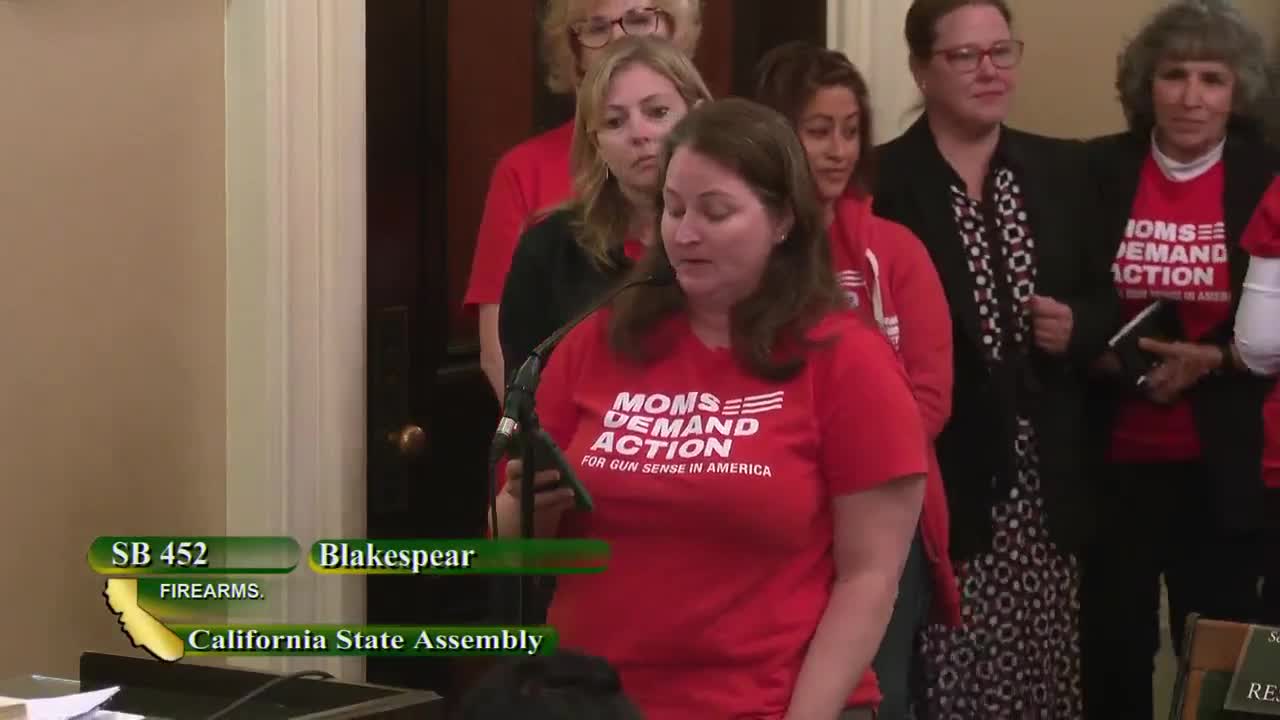 21MIN
Assembly Standing Committee on Public Safety
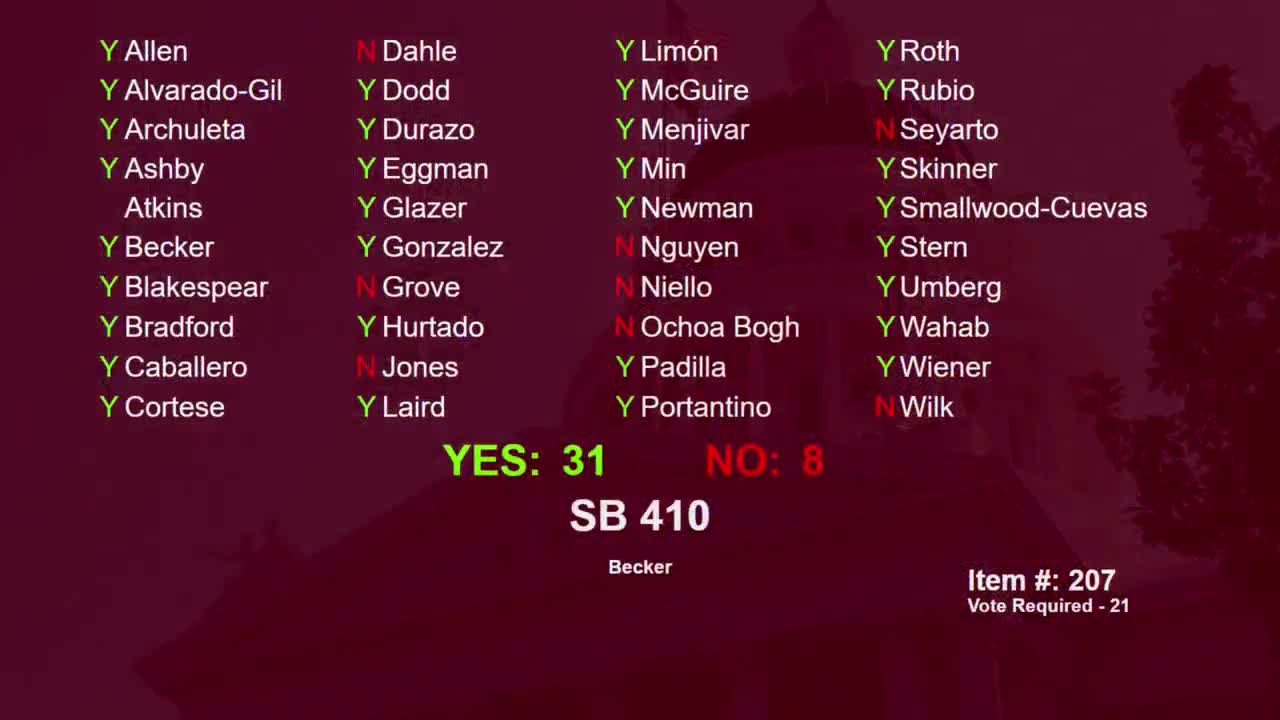 2MIN
Senate Floor
 1MIN
Senate Standing Committee on Appropriations
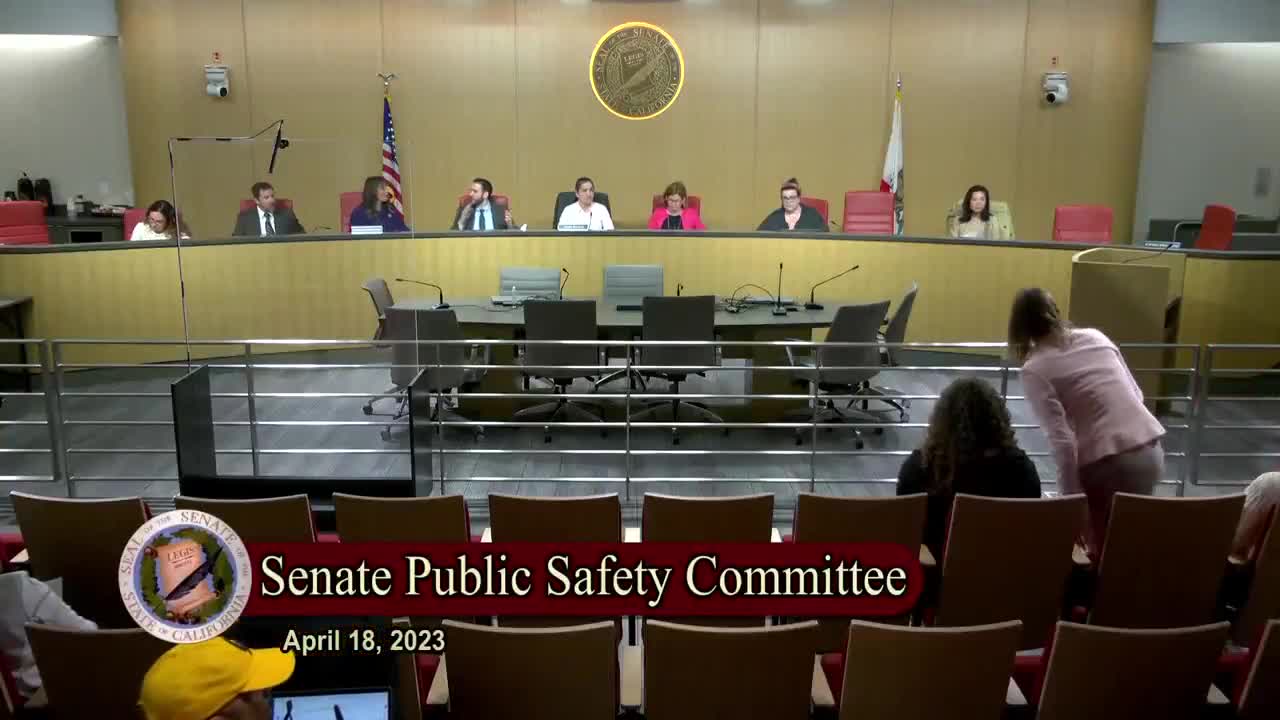 19MIN
Senate Standing Committee on Public Safety
Bill Author