SB 453: Criminal procedure: speedy trial.
- Session Year: 2023-2024
- House: Senate
- Latest Version Date: 2023-02-13
Current Status:
Failed
(2024-02-01: Returned to Secretary of Senate pursuant to Joint Rule 56.)
Introduced
In Committee
First Chamber
In Committee
Second Chamber
Enacted
What does this bill do?
This bill adds specific reasons that allow courts to extend the time limits for starting criminal trials, affecting defendants, prosecutors, defense lawyers, witnesses, and courts. Those reasons include when a prosecutor or defense lawyer is sick and would recover faster than a replacement could get ready, when a witness is unavailable despite diligent efforts, when a quarantine prevents attendance, and when there are not enough courtrooms, staff, or judges after a court emergency or to follow public-health rules.
The summary is provided by generative AI which can make mistakes. For original language, please view the details in the table below.
Existing law requires that a defendant be brought to trial within 60 days of arraignment on an indictment or information in a felony case, or within 30 or 45 days of arraignment or entry of plea in a misdemeanor case, as specified. Under existing law, the case must be dismissed if the defendant did not waive that time limit or consent to an extension of time, as specified, and the case is not brought to trial within the time limit.
This bill would specify certain scenarios that would qualify as good cause to extend these deadlines, including, among other things, if a prosecutor or defense counsel is ill and the anticipated recovery period is shorter than the time it would take for a replacement to prepare for trial, as specified.
(a)The court, unless good cause to the contrary is shown, shall order the action to be dismissed in the following cases:
(1)When a person has been held to answer for a public offense and an information is not filed against that person within 15 days.
(2)In a felony case, when a defendant is not brought to trial within 60 days of the defendants arraignment on an indictment or information, or reinstatement of criminal proceedings pursuant to Chapter 6 (commencing with Section 1367) of Title 10 of Part 2, or, in case the cause is to be tried again following a mistrial, an order granting a new trial from which an appeal is not taken, or an appeal from the superior court, within 60 days after the mistrial has been declared, after entry of the order granting the new trial, or after the filing of the remittitur in the trial court, or after the issuance of a writ or order which, in effect, grants a new trial, within 60 days after notice of the writ or order is filed in the trial court and served upon the prosecuting attorney, or within 90 days after notice of the writ or order is filed in the trial court and served upon the prosecuting attorney in any case where the district attorney chooses to resubmit the case for a preliminary examination after an appeal or the issuance of a writ reversing a judgment of conviction upon a plea of guilty prior to a preliminary hearing. However, an action shall not be dismissed under this paragraph if either of the following circumstances exists:
(A)The defendant enters a general waiver of the 60-day trial requirement. A general waiver of the 60-day trial requirement entitles the superior court to set or continue a trial date without the sanction of dismissal should the case fail to proceed on the date set for trial. If the defendant, after proper notice to all parties, later withdraws, in open court, his or her their waiver in the superior court, the defendant shall be brought to trial within 60 days of the date of that withdrawal. Upon the withdrawal of a general time waiver in open court, a trial date shall be set and all parties shall be properly notified of that date. If a general time waiver is not expressly entered, subparagraph (B) shall apply.
(B)The defendant requests or consents to the setting of a trial date beyond the 60-day period. In the absence of an express general time waiver from the defendant, or upon the withdrawal of a general time waiver, the court shall set a trial date. Whenever a case is set for trial beyond the 60-day period by request or consent, expressed or implied, of the defendant without a general waiver, the defendant shall be brought to trial on the date set for trial or within 10 days thereafter.
Whenever a case is set for trial after a defendant enters either a general waiver as to the 60-day trial requirement or requests or consents, expressed or implied, to the setting of a trial date beyond the 60-day period pursuant to this paragraph, the court may not grant a motion of the defendant to vacate the date set for trial and to set an earlier trial date unless all parties are properly noticed and the court finds good cause for granting that motion.
(3)Regardless of when the complaint is filed, when a defendant in a misdemeanor or infraction case is not brought to trial within 30 days after he or she is they are arraigned or enters his or her enter their plea, whichever occurs later, if the defendant is in custody at the time of arraignment or plea, whichever occurs later, or in all other cases, within 45 days after the defendants arraignment or entry of the plea, whichever occurs later, or in case the cause is to be tried again following a mistrial, an order granting a new trial from which no appeal is taken, or an appeal from a judgment in a misdemeanor or infraction case, within 30 days after the mistrial has been declared, after entry of the order granting the new trial, or after the remittitur is filed in the trial court, or within 30 days after the date of the reinstatement of criminal proceedings pursuant to Chapter 6 (commencing with Section 1367). However, an action shall not be dismissed under this subdivision if any of the following circumstances exists:
(A)The defendant enters a general waiver of the 30-day or 45-day trial requirement. A general waiver of the 30-day or 45-day trial requirement entitles the court to set or continue a trial date without the sanction of dismissal should the case fail to proceed on the date set for trial. If the defendant, after proper notice to all parties, later withdraws, in open court, his or her their waiver in the superior court, the defendant shall be brought to trial within 30 days of the date of that withdrawal. Upon the withdrawal of a general time waiver in open court, a trial date shall be set and all parties shall be properly notified of that date. If a general time waiver is not expressly entered, subparagraph (B) shall apply.
(B)The defendant requests or consents to the setting of a trial date beyond the 30-day or 45-day period. In the absence of an express general time waiver from the defendant, or upon the withdrawal of a general time waiver the court shall set a trial date. Whenever a case is set for trial beyond the 30-day or 45-day period by request or consent, expressed or implied, of the defendant without a general waiver, the defendant shall be brought to trial on the date set for trial or within 10 days thereafter.
(C)The defendant in a misdemeanor case has been ordered to appear on a case set for hearing prior to trial, but the defendant fails to appear on that date and a bench warrant is issued, or the case is not tried on the date set for trial because of the defendants neglect or failure to appear, in which case the defendant shall be deemed to have been arraigned within the meaning of this subdivision on the date of his or her their subsequent arraignment on a bench warrant or his or her their submission to the court.
(b)Whenever a defendant has been ordered to appear in superior court on a felony case set for trial or set for a hearing prior to trial after being held to answer, if the defendant fails to appear on that date and a bench warrant is issued, the defendant shall be brought to trial within 60 days after the defendant next appears in the superior court unless a trial date previously had been set which is beyond that 60-day period.
(c)If the defendant is not represented by counsel, the defendant shall not be deemed under this section to have consented to the date for the defendants trial unless the court has explained to the defendant his or her their rights under this section and the effect of his or her their consent.
(d)For purposes of this section, good cause for exceeding the presumptive deadlines includes all of the following:
(1)If a prosecutor or defense counsel is ill and the anticipated recovery period is shorter than the time it would take for a replacement to prepare for trial.
(2)If a witness is unavailable after the requesting party has exercised diligence to obtain the attendance of the witness at trial.
(3)If a prosecutor, defense counsel, defendant, or a witness is subject to a quarantine preventing their attendance at trial.
(4)If there are insufficient courtrooms, courtroom staff, or judges to handle the volume of cases reaching the presumptive deadlines following a judicial emergency pursuant to Section 68115 of the Government Code or due to an effort to comply with practices suggested by a state, local, or federal health official or guideline.
|
Date
|
Status
|
|---|---|
| Feb 1, 2024 | Returned to Secretary of Senate pursuant to Joint Rule 56. |
| Apr 11, 2023 | April 11 set for second hearing. Failed passage in committee. (Ayes 1. Noes 1. Page 659.) Reconsideration granted. |
| Mar 8, 2023 | Set for hearing April 11. |
| Mar 7, 2023 | March 28 set for first hearing canceled at the request of author. |
| Mar 2, 2023 | Set for hearing March 28. |
| Feb 22, 2023 | Referred to Coms. on PUB S. and APPR. |
| Feb 14, 2023 | From printer. May be acted upon on or after March 16. |
| Feb 13, 2023 | Introduced. Read first time. To Com. on RLS. for assignment. To print. |
|
Date
|
Description
|
Location
|
Votes
|
|
|---|---|---|---|---|
| Apr 11, 2023 | [Second] hearing set for [04-11-2023]: Failed passage in Committee. Reconsideration granted | Senate Standing Committee on Public Safety |
Passed |
|
| Apr 11, 2023 | Do pass, but first be re-referred to the Committee on [Appropriations] | Senate Standing Committee on Public Safety |
Failed |
This list shows positions taken on this bill by organizations on the date displayed, which is linked to the original source.
Positions by individuals are not included.
|
Organization
|
Position
|
Date
|
|---|---|---|
| California Attorneys For Criminal Justice | * Against | Apr 11, 2023 |
| California District Attorneys Association | * Support | Apr 11, 2023 |
| California Public Defenders Association | * Against | Apr 11, 2023 |
| Californians for Safety and Justice | * Against | Apr 11, 2023 |
| Communities United for Restorative Youth Justice | * Against | Apr 11, 2023 |
| Ella Baker Center | * Against | Apr 11, 2023 |
| Felony Murder Elimination Project | * Against | Apr 11, 2023 |
| Legal Services for Prisoners with Children | * Against | Apr 11, 2023 |
| Riverside County District Attorney's Office | * Support | Apr 11, 2023 |
| Riverside County District Attorney's Office - Division of Victim Services | * Support | Apr 11, 2023 |
| San Francisco Public Defender's Office | * Against | Apr 11, 2023 |
| Underground Scholars Initiative | * Against | Apr 11, 2023 |
| Underground Scholars Initiative - UC Berkeley | * Against | Apr 11, 2023 |
| Underground Scholars Initiative - UC Berkeley | * Against | Apr 11, 2023 |
SENATE COMMITTEE ON PUBLIC SAFETY
Senator Aisha Wahab, Chair
2023 - 2024 Regular
Bill No: SB 453 Hearing Date: April 11, 2023
Author: | Seyarto | ||
Version: | February 13, 2023 | ||
Urgency: | No | Fiscal: | No |
Consultant: | SC | ||
Subject: Criminal procedure: speedy trial
HISTORY
Source: Riverside County District Attorney’s Office
Prior Legislation: AB 250 (Miller), Ch. 424, Stats. 2009
SB 330 (Cedillo), Ch. 36, Stats. 2005
Support: California District Attorneys Association
Opposition: Alameda County Public Defender’s Office; Anti-Recidivism Coalition; California Attorneys for Criminal Justice; California Public Defenders Association; Californians for Safety and Justice; Children’s Defense Fund - CA; Communities United for Restorative Youth Justice; Drug Policy Alliance; Ella Baker Center for Human Rights; Haywood Burns Institute; HomeRise San Francisco; Initiate Justice; Legal Services for Prisoner with Children; San Francisco Public Defender; Santa Cruz Barrios Unidos Inc; Young Women’s Freedom Center
PURPOSE
The purpose of this bill is to provide that good cause to extend a preliminary hearing or trial beyond the statutory timelines has been met when a prosecutor or defense counsel is ill, when a witness is unavailable, when a party or witness is subject to a quarantine, and when there are insufficient courtrooms, staff or judges to handle the volume of cases, as specified.
Existing law, under the U.S. Constitution, provides that in all criminal prosecutions, the accused shall enjoy the right to a speedy and public trial. (U.S. Const., amend VI.)
Existing law, under the California Constitution, guarantees a defendant in a criminal case the right to a speedy public trial. (Cal. Const. Art. I, sec. 15.)
Existing law states that the court, unless good cause to the contrary is shown, shall order the action to be dismissed in the following cases:
- When a person has been held to answer for a public offense and an information is not filed against the person within 15 days;
- In a felony case, when a defendant is not brought to trial within 60 days of the defendant’s arraignment or an indictment or information, or reinstatement of criminal proceedings after a declaration of doubt of defendant’s mental competency, or if a case is to be retried following a mistrial or an order granting a new trial, as specified;
- When a defendant in a misdemeanor or infraction case is not brought to trial within 30 days after being arraigned or enters their plea, whichever occurs later, if the defendant is in custody, or within 45 days if the defendant is out of custody. (Pen. Code, § 1382, subd. (a)(1)-(3).)
Existing law states that a felony case shall not be dismissed if the defendant enters a general waiver of the 60-day trial requirement or if the defendant requests or consents to the setting of trial beyond the 60-day period. (Pen. Code, § 1382, subd. (a)(2)(A)-(B).)
Existing law states that a misdemeanor or infraction shall not be dismissed if the defendant enters a general time waiver of the 30-day or 45-day trial requirement, the defendant requests or consents to the setting of the trail beyond the 30-day or 45-day period, or the defendant fails to appear at a hearing prior to trial and a bench warrant has been issued, then the defendant will be deemed to have been arraigned on the date of their subsequent arraignment on their bench warrant. (Pen. Code, § 1382, subd. (a)(3)(A)-(C).)
This bill provides that good cause for exceeding the presumptive deadlines above includes all of the following:
- If a prosecutor or defense counsel is ill and the anticipated recovery period is shorter than the time it would take for a replacement to prepare for trial;
- If a witness is unavailable after the requesting party has exercised due diligence to obtain the attendance of the witness at trial;
- If a prosecutor, defense counsel, defendant, or a witness is subject to a quarantine preventing their attendance at trial; or
- If there are insufficient courtrooms, courtroom staff, or judges to handle the volume of cases reaching the presumptive deadlines following a judicial emergency or due to an effort to comply with practices suggested by a state, local, or federal health official or guideline.
COMMENTS
- Need for This Bill
According to the author of this bill:
Current state and federal law bestows a criminal defendant with the right to a speedy and fair trial. Consequently, certain statutory trial deadlines have been prescribed and must be met to continue with a trial unless there is good cause to exceed those deadlines. Currently, there is no statutory clarity as to what constitutes good cause.
California is in the midst of a decades long statewide judgeship shortage. More than 1,500 felony and misdemeanor cases have been dismissed in Riverside County alone since October of 2022 due to strained judicial capacity. The additional backlog in Riverside County cases has surpassed 2,200. Moreover, the recent COVID-19 pandemic and its enduring protocols have further strained the system without any adjustment to statutory judicial procedure.
- Speedy Trial Rights
Generally, the U.S. and State Constitutions and the California state law provide for the right to a speedy trial. (U.S. Const., amend VI; Cal. Const., Art. I, sec. 15; Pen. Code, § 1382.) The right to a speedy trial is “an important safeguard to prevent undue and oppressive incarceration prior to trial, to minimize anxiety and concern accompanying public accusation and to limit the possibilities that long delay will impair the ability of an accused to defend himself.” (United States v. Ewell (1966) 383 U.S. 116, 120.)
Statutorily the speedy trial time frame has been determined to be 60 days for a felony trial and either 30 or 45 days for a misdemeanor trial. Failure to bring a case to trial within the statutory speedy trial deadline will result in dismissal, unless defendant has entered a general time waiver or the defendant has consented to the extension, or if good cause is shown.
The general time waiver entitles the superior court "to set or continue a trial date without the sanction of dismissal should the case fail to proceed on the date set for trial." (Pen. Code, § 1382, subd. (a)(2)(A), (a)(3)(A).) If the defendant, after proper notice to all parties, later withdraws the waiver in the superior court, the defendant must be brought to trial within 60 days of the date of that withdrawal. (Ibid.) If the defendant requests or consents to a trial date beyond the statutory deadline, the defendant must be brought to trial on the agreed-upon date or within 10-calendar days thereafter. (Pen. Code, § 1382, subd. (a)(2)(B). (a)(3)(B).)
A showing of good cause for the delay will also avoid the dismissal of a case. What constitutes good cause for delay depends on the circumstances of each case. This bill specifies that the following circumstances qualify as good cause:
- If a prosecutor or defense counsel is ill and the anticipated recovery period is shorter than the time it would take for a replacement to prepare for trial;
- If a witness is unavailable after the requesting party has exercised due diligence to obtain the attendance of the witness at trial;
- If a prosecutor, defense counsel, defendant, or a witness is subject to a quarantine preventing their attendance at trial; or
- If there are insufficient courtrooms, courtroom staff, or judges to handle the volume of cases reaching the presumptive deadlines following a judicial emergency or due to an effort to comply with practices suggested by a state, local, or federal health official or guideline.
- Relevant Case Law on Good Cause
Penal Code section 1382 does not define good cause but several factors are relevant in making a determination: “(1) the nature and strength of the justification for the delay, (2) the duration of the delay, and (3) the prejudice to either the defendant or the prosecution that is likely to result from the delay. In making its good-cause determination, a trial court must consider all of the relevant circumstances of the particular case, applying principles of common sense to the totality of the circumstances.” (People v. Engram (2010) 50 Cal.4th 1131, 1163.)
What constitutes good cause is a matter that lies within the discretion of the trial court. (People v. Bilbrey (2018) 25 Cal.App. 5th 764, 780.) A blanket rule that certain statutory circumstances qualify as good cause is contrary to long-standing case law.
Illness and Quarantine
Generally, delays attributable to the defendant or counsel and that are not attributable to the state can constitute good cause. Illness of defense counsel may constitute good cause for delay of trial. (People v. Crovedi (1966) 65 Cal.2d 199.) Whether the illness rises to the level of good cause is a factual issue and would depend on whether the person is incapacitated (e.g., a heart attack versus generally not feeling well). When defense counsel cannot come to court due to illness, the court may continue the case to when counsel can return or for a reasonable time to obtain new counsel. (Ibid.) If obtaining new counsel, that counsel must also be given reasonable time to prepare before trial.
A defendant’s illness may also constitute good cause to delay trial beyond the statutory timelines. The court has found that good cause for the delay of trial exists when defendant is under quarantine to prevent the spread of infectious disease. (People v. Tucker (2011) 196 Cal.App.4th 1313, 1314.)
As for prosecution, generally, delay attributable to the state does not constitute good cause. (Bilbrey, supra, at p. 781.) However, “delay arising from unforeseen circumstances, such as unexpected illness or unavailability of counsel or witnesses constitutes good cause to avoid dismissal.” (Ibid.)
Unavailable Witnesses
The unavailability of a witness may also constitute good cause, however a particularized showing is required. In seeking a continuance to obtain the presence of a witness, “the moving party has the burden of showing that the following legal criteria have been satisfied: (1) That the movant has exercised due diligence in an attempt to secure the attendance of the witness at the trial by legal means; (2) that the expected testimony is material; (3) that it is not merely cumulative; (4) that it can be obtained within a reasonable time; and (5) that the facts to which the witness will testify cannot otherwise be proven." (Owens v. Superior Court of Los Angeles County (1980) 28 Cal.3d 238, 250-251.) Mere showing of unavailability of a witness is not sufficient to establish good cause for delay.
Courtroom or Judge Availability
In general, delay due to the failure of the state to provide enough courtrooms or judges to enable the defendant to come to trial within the statutory deadline does not constitute good cause. (Engram, supra, p. 1163 citing People v. Johnson (1980) 26 Cal.3d 557, 571.) In Engram, the defendant was tried for murder and burglary. He was acquitted of the murder charge but found guilty of the burglary charge. On appeal, the appellate court reversed the conviction and ordered a new trial due to prejudicial instructional error on the burglary charge. The defendant was tried again and the jury was unable to agree on the verdict thus leading to a mistrial. The prosecution moved for a third trial and on the last day of the applicable timeframe and after several more continuances, defendant’s counsel filed a motion for dismissal pursuant to Penal Code section 1382. The prosecution objected to the motion for dismissal based on lack of a courtroom and asking to use courtrooms devoted to juvenile, probate, and family law matters. The court declined to do so noting that Riverside County Superior Court had already devoted virtually all of its resources—superior court judges and courtrooms—ordinarily intended for the trial of civil cases instead to the trial of criminal cases and dismissed the case due to the inability of the state to timely try the case. The prosecutor appealed the dismissal.
On appeal, the court found that the trial court considered every possible option, including assigning the case to special proceeding courtrooms, and concluded that in the interests of justice dismissal of the case was appropriate. (Engram, supra, at p. 1145.) The court reasoned that the state has the obligation to provide sufficient resources to dispose of the usual court business promptly, court congestion will not constitute good cause unless the circumstances are exceptional. The court explained that the record made clear that here the lack of an available courtroom was the result of a chronic condition which was evidenced by a task force report on criminal backlogs in Riverside county showing that nearly 25 percent of jail inmates had been awaiting trial for more than one year. One hundred seventy-seven inmates had been awaiting trial for more than two years, 32 inmates were awaiting trial for more than four years, and in one case the delay was 8 years. (Engram, supra, at p. 1136.) This was not an unusual, nonrecurring event warranting a finding of good cause. (Engram, supra, at p. 1145.)
As discussed above, courts have distinguished between chronic routine congestion of a court’s trial docket, which does not amount to good cause, as opposed to exceptional circumstances such as the COVID-19 pandemic that may justify the delay. (Engram, supra, at p. 1163; Hernandez-Valenzuela v. Superior Court (2022) 75 Cal.App.5th 1108.)
- Argument in Support
According to The Riverside County District Attorney’s Office:
Since covid based emergency orders covering the Superior Court in Riverside expired, the judges of that court have exercised their discretion to decline to apply case law holding that congesting caused at least in part by the pandemic and its attendant fallout is good cause for exceeding the presumptive due dates because the pandemic was an exceptional and unique nonrecurring event for which the state should not be blamed. Instead, they have chosen to blame their congested calendar of this Legislature’s failure to provide their court with additional judges. This is even after the Legislature provided additional resources to the Judicial Branch to help meet the challenges of the pandemic and its fallout. This included providing Riverside court with four additional judges last budget cycle as well as more funding than it has ever had. The judges of the Riverside Superior Court do this by distinguishing the local situation from the situations discussed in the multiple pandemic-era section 1382 cases and by asserting that the holdings in those cases do not make an applicable rule that good cause exists as a matter of law.
In our local court, judges have also entertained arguments about the sufficiency of illness. In one situation, the court pressured an obviously still-ill prosecutor to come into a congested courtroom and conduct a trial, because – though she could barely speak – she, unlike her spouse, had not tested positive for Covid. That judge was being pushed by defense counsel to not find the illness to constitute good cause warranting a short delay and instead dismiss the case as part of the wholesale dismissals due to congestion upon the expiration of emergency orders.
- Argument in Opposition
According to Legal Services for Prisoners with Children:
SB 453 would carve huge loopholes into the right to a speedy trial—the most basic constitutional protection for people accused of a crime. It would let prosecutors delay trials whenever the delay occurs “following” an emergency—even if the shortage is due to a longstanding trial backlog that is wholly unrelated to the emergency. That would abolish California’s rule that “chronic congestion” is not good cause for missing trial deadlines, and violate the constitutional principle that overcrowded courts do not justify trial delays.
SB 453 would also allow prosecutors to delay trials by pointing to the unavailability of any witness. Under current law, in order to justify a delay, prosecutors must show that a witness’s testimony is material, not cumulative, available in a reasonable time, and that the facts which the witness will testify to could not otherwise be proven. SB 453 would eliminate these safeguards, so that in a serious trial with dozens of witnesses, the prosecutor would almost always be able to obtain a delay by finding one person who is unavailable. And because SB 453 includes no limit on the number of times these excuses can be invoked, or how long a delay can last, people charged with crimes could be forced in jail to wait for years past their trial deadline.
These loopholes would feed a growing crisis in our criminal legal system. In recent years, people accused of crimes have been held in jail for months and years without trial as judges repeatedly cite COVID-19 to avoid dismissal. With no trial deadlines, prosecutors have little incentive to resolve cases, because they know that people will likely crack under the pressure of lengthy incarceration and plead guilty to whatever charge is offered.
-- END –
Discussed in Hearing
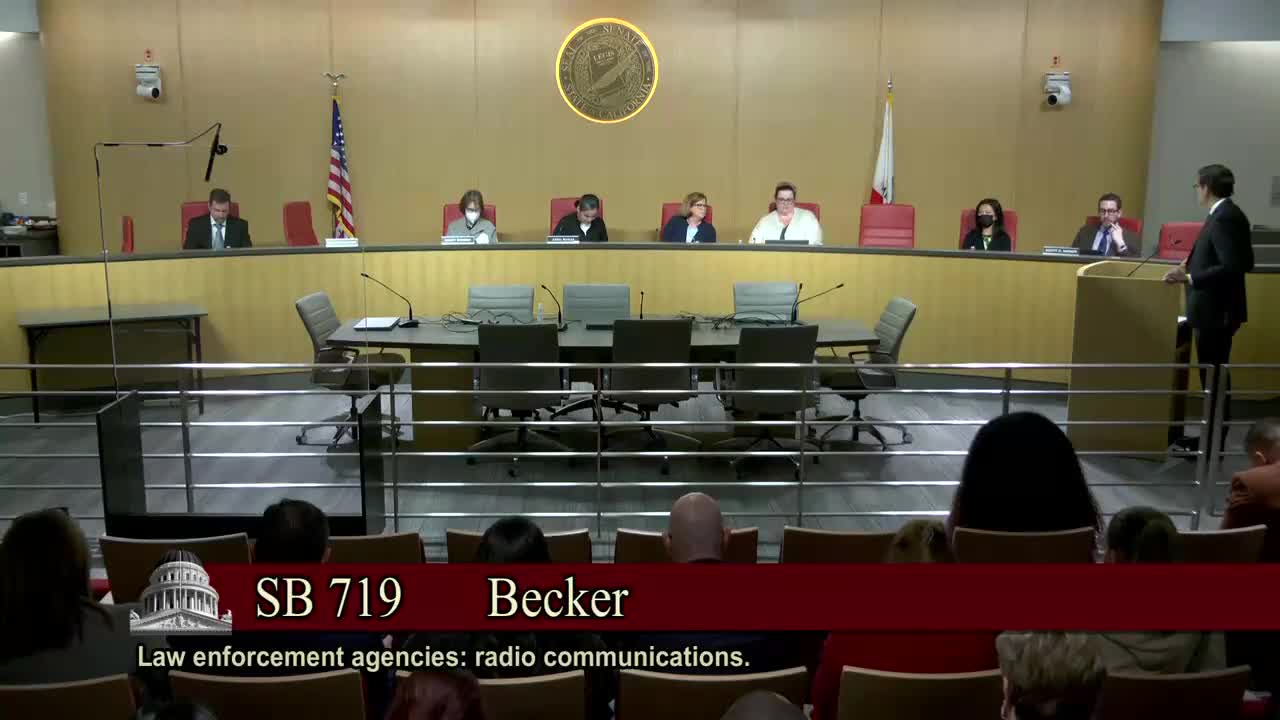 18MIN
Senate Standing Committee on Public Safety
Bill Author