SB 464: Criminal law: rights of victims and witnesses of crimes.
- Session Year: 2023-2024
- House: Senate
- Latest Version Date: 2023-10-10
Current Status:
Passed
(2023-10-10: Chaptered by Secretary of State. Chapter 715, Statutes of 2023.)
Introduced
In Committee
First Chamber
In Committee
Second Chamber
Enacted
Existing law requires a prosecuting attorney, upon the request of a victim or a witness of a crime, to inform the victim or witness by letter of the final disposition of the case within 60 days of the final disposition.
This bill would instead require the prosecuting attorney, upon the request of a victim or a witness of a crime, to inform the victim or witness by letter of the final disposition of the case within 30 days.
Existing law requires all law enforcement agencies, medical facilities, crime laboratories, and any other facilities that receive, maintain, store, or preserve sexual assault evidence kits to conduct an audit of all untested sexual assault evidence kits in their possession and required these entities to report certain data to the Department of Justice by no later than July 1, 2019. Existing law required the Department of Justice to prepare and submit a report to the Legislature regarding the results of these audits by no later than July 1, 2020. Existing law requires the Department of Justice to prepare an information profile on each kit in the departments SAFE-T database, and to develop a process to allow a survivor to track and receive updates regarding their sexual assault evidence kit.
This bill would require all law enforcement agencies, medical facilities, public crime laboratories, and any other facilities that receive, maintain, store, or preserve sexual assault evidence kits to conduct an audit of all untested sexual assault evidence kits in their possession. The bill would require each law enforcement agency and public crime laboratory to create a record in the SAFE-T database for every victim sexual assault kit that has not had DNA testing completed, as specified, by no later than July 1, 2026. The bill would specify that the SAFE-T database not include sexual assault evidence kits collected from suspects, but would require those kits to also be subject to the audit, as specified. The bill would require each medical facility and other non-law enforcement entity to report certain data relating to untested kits to the Department of Justice by no later than July 1, 2026. The bill would additionally require the Department of Justice to prepare and submit a report to the Legislature regarding the results of these audits by no later than July 1, 2027. By requiring local government entities to complete an audit and submit a report, this bill would impose a state-mandated local program. The bill would authorize a victim to request that a kit collected from them not be tested, and would exempt that kit from being tested.
The California Constitution requires the state to reimburse local agencies and school districts for certain costs mandated by the state. Statutory provisions establish procedures for making that reimbursement.
This bill would provide that, if the Commission on State Mandates determines that the bill contains costs mandated by the state, reimbursement for those costs shall be made pursuant to the statutory provisions noted above.
Existing law requires a prosecuting attorney, upon the request of a victim or a witness of a crime, to inform the victim or witness by letter of the final disposition of the case within 60 days of the final disposition.
This bill would instead require the prosecuting attorney, upon the request of a victim or a witness of a crime, to inform the victim or witness by letter of the final disposition of the case within 30 days.
Existing law requires all law enforcement agencies, medical facilities, crime laboratories, and any other facilities that receive, maintain, store, or preserve sexual assault evidence kits to conduct an audit of all untested sexual assault evidence kits in their possession and required these entities to report certain data to the Department of Justice by no later than July 1, 2019. Existing law required the Department of Justice to prepare and submit a report to the Legislature regarding the results of these audits by no later than July 1, 2020. Existing law requires the Department of Justice to prepare an information profile on each kit in the departments SAFE-T database, and to develop a process to allow a survivor to track and receive updates regarding their sexual assault evidence kit.
This bill would require all law enforcement agencies, medical facilities, public crime laboratories, and any other facilities that receive, maintain, store, or preserve sexual assault evidence kits to conduct an audit of all untested sexual assault evidence kits in their possession and additionally report certain data to the Department of Justice by no later than July 1, 2026. possession. The bill would require each law enforcement agency and public crime laboratory to create a record in the SAFE-T database for every victim sexual assault kit that has not had DNA testing completed, as specified, by no later than July 1, 2026. The bill would specify that the SAFE-T database not include sexual assault evidence kits collected from suspects, but would require those kits to also be subject to the audit, as specified. The bill would require each medical facility and other non-law enforcement entity to report certain data relating to untested kits to the Department of Justice by no later than July 1, 2026. The bill would additionally require the Department of Justice to prepare and submit a report to the Legislature regarding the results of these audits by no later than July 1, 2027. By requiring local government entities to complete an audit and submit a report, this bill would impose a state-mandated local program. The bill would authorize a victim to request that a kit collected from them not be tested, and would exempt that kit from being tested.
The California Constitution requires the state to reimburse local agencies and school districts for certain costs mandated by the state. Statutory provisions establish procedures for making that reimbursement.
This bill would provide that, if the Commission on State Mandates determines that the bill contains costs mandated by the state, reimbursement for those costs shall be made pursuant to the statutory provisions noted above.
Existing law requires a prosecuting attorney, upon the request of a victim or a witness of a crime, to inform the victim or witness by letter of the final disposition of the case within 60 days of the final disposition.
This bill would instead require the prosecuting attorney, upon the request of a victim or a witness of a crime, to inform the victim or witness by letter of the final disposition of the case within 72 hours. 30 days.
Existing law requires all law enforcement agencies, medical facilities, crime laboratories, and any other facilities that receive, maintain, store, or preserve sexual assault evidence kits to conduct an audit of all untested sexual assault evidence kits in their possession and required these entities to report certain data to the Department of Justice by no later than July 1, 2019. Existing law required the Department of Justice to prepare and submit a report to the Legislature regarding the results of these audits by no later than July 1, 2020.
This bill would require all law enforcement agencies, medical facilities, crime laboratories, and any other facilities that receive, maintain, store, or preserve sexual assault evidence kits to conduct an audit of all untested sexual assault evidence kits in their possession and additionally report certain data to the Department of Justice by no later than July 1, 2026. The bill would additionally require the Department of Justice to prepare and submit a report to the Legislature regarding the results of these audits by no later than July 1, 2027. By requiring local government entities to complete an audit and submit a report, this bill would impose a state-mandated local program.
The California Constitution requires the state to reimburse local agencies and school districts for certain costs mandated by the state. Statutory provisions establish procedures for making that reimbursement.
This bill would provide that, if the Commission on State Mandates determines that the bill contains costs mandated by the state, reimbursement for those costs shall be made pursuant to the statutory provisions noted above.
Existing law gives a victim of sexual assault, as specified, the right to have a victim advocate and a support person of the victims choosing present at any interview by law enforcement authorities, district attorneys, or defense attorneys. Existing law requires the attending law enforcement authority or district attorney, prior to the commencement of the initial interview, to notify a victim of sexual assault in writing, that, among other things, they have the right to have victim advocates and a support person of the victims choosing present at the interview or contact.
This bill would give a victim of sexual assault the right to also have a licensed attorney representing the victim present at the interview or contact, and would require the attending law enforcement authority or district attorney to notify the victim of sexual assault in writing, prior to the commencement of the initial interview, of that right. By imposing new requirements on law enforcement authorities and district attorneys, this bill would impose a state-mandated local program.
Existing law requires a prosecuting attorney, upon the request of a victim or a witness of a crime, to inform the victim or witness by letter of the final disposition of the case within 60 days of the final disposition.
This bill would instead require the prosecuting attorney, upon the request of a victim or a witness of a crime, to inform the victim or witness by letter of the final disposition of the case within 72 hours.
Existing law requires all law enforcement agencies, medical facilities, crime laboratories, and any other facilities that receive, maintain, store, or preserve sexual assault evidence kits to conduct an audit of all untested sexual assault evidence kits in their possession and required these entities to report certain data to the Department of Justice by no later than July 1, 2019. Existing law required the Department of Justice to prepare and submit a report to the Legislature regarding the results of these audits by no later than July 1, 2020.
This bill would require all law enforcement agencies, medical facilities, crime laboratories, and any other facilities that receive, maintain, store, or preserve sexual assault evidence kits to conduct an audit of all untested sexual assault evidence kits in their possession and additionally report certain data to the Department of Justice by no later than July 1, 2026. The bill would additionally require the Department of Justice to prepare and submit a report to the Legislature regarding the results of these audits by no later than July 1, 2027. By requiring local government entities to complete an audit and submit a report, this bill would impose a state-mandated local program.
The California Constitution requires the state to reimburse local agencies and school districts for certain costs mandated by the state. Statutory provisions establish procedures for making that reimbursement.
This bill would provide that, if the Commission on State Mandates determines that the bill contains costs mandated by the state, reimbursement for those costs shall be made pursuant to the statutory provisions noted above.
Existing law declares the intent of the Legislature to ensure that all victims and witnesses of crimes, as defined, are treated with dignity, respect, courtesy, and sensitivity. Existing law enumerates the rights of victims and witnesses of crimes, including, but not limited to, the right to be informed by a prosecuting attorney of the final disposition of a case. This bill would make technical, nonsubstantive changes to a related provision.Existing law declares the intent of the Legislature to ensure that all victims and witnesses of crimes, as defined, are treated with dignity, respect, courtesy, and sensitivity. Existing law enumerates the rights of victims and witnesses of crimes, including, but not limited to, the right to be informed by a prosecuting attorney of the final disposition of a case.
This bill would make technical, nonsubstantive changes to a related provision.
(a)This section shall be known as and may be cited as the Sexual Assault Victims DNA Bill of Rights.
(b)The Legislature finds and declares all of the following:
(1)Deoxyribonucleic acid (DNA) and forensic identification analysis is a powerful law enforcement tool for identifying and prosecuting sexual assault offenders.
(2)Existing law requires an adult arrested for or charged with a felony and a juvenile adjudicated for a felony to submit DNA samples as a result of that arrest, charge, or adjudication.
(3)Victims of sexual assaults have a strong interest in the investigation and prosecution of their cases.
(4)Law enforcement agencies have an obligation to victims of sexual assaults in the proper handling, retention, and timely DNA testing of rape kit evidence or other crime scene evidence and to be responsive to victims concerning the developments of forensic testing and the investigation of their cases.
(5)The growth of the Department of Justices Cal-DNA databank and the national databank through the Combined DNA Index System (CODIS) makes it possible for many sexual assault perpetrators to be identified after their first offense, provided that rape kit evidence is analyzed in a timely manner.
(6)Timely DNA analysis of rape kit evidence is a core public safety issue affecting men, women, and children in the State of California. It is the intent of the Legislature, in order to further public safety, to encourage DNA analysis of rape kit evidence within the time limit imposed by paragraph (1) of subdivision (g) of Section 803.
(7)DNA reference samples collected directly from a victim of sexual assault, and reference samples of DNA collected from any individual that were voluntarily provided for the purpose of exclusion, shall be protected as provided in Section 679.12.
(c)In order to ensure that sexual assault forensic evidence is analyzed within the timeframe required by paragraph (1) of subdivision (g) of Section 803 and to ensure the longest possible statute of limitations for sex offenses, including sex offenses designated pursuant to those subparagraphs, the following shall occur:
(1)A law enforcement agency in whose jurisdiction a sex offense specified in Section 261, 261.5, 286, 287, or 289 or former Section 262 or 288a occurred shall do one of the following for any sexual assault forensic evidence received by the law enforcement agency on or after January 1, 2016:
(A)Submit sexual assault forensic evidence to the crime lab within 20 days after it is booked into evidence.
(B)Ensure that a rapid turnaround DNA program is in place to submit forensic evidence collected from the victim of a sexual assault directly from the medical facility where the victim is examined to the crime lab within five days after the evidence is obtained from the victim.
(2)The crime lab shall do one of the following for any sexual assault forensic evidence received by the crime lab on or after January 1, 2016:
(A)Process sexual assault forensic evidence, create DNA profiles when able, and upload qualifying DNA profiles into CODIS as soon as practically possible, but no later than 120 days after initially receiving the evidence.
(B)Transmit the sexual assault forensic evidence to another crime lab as soon as practically possible, but no later than 30 days after initially receiving the evidence, for processing of the evidence for the presence of DNA. If a DNA profile is created, the transmitting crime lab shall upload the profile into CODIS as soon as practically possible, but no longer than 30 days after being notified about the presence of DNA.
(3)This subdivision does not require a lab to test all items of forensic evidence obtained in a sexual assault forensic evidence examination. A lab is considered to be in compliance with the guidelines of this section when representative samples of the evidence are processed by the lab in an effort to detect the foreign DNA of the perpetrator.
(4)This section does not require a DNA profile to be uploaded into CODIS if the DNA profile does not meet federal guidelines regarding the uploading of DNA profiles into CODIS.
(5)For purposes of this section, a rapid turnaround DNA program is a program for the training of sexual assault team personnel in the selection of representative samples of forensic evidence from the victim to be the best evidence, based on the medical evaluation and patient history, the collection and preservation of that evidence, and the transfer of the evidence directly from the medical facility to the crime lab, which is adopted pursuant to a written agreement between the law enforcement agency, the crime lab, and the medical facility where the sexual assault team is based.
(6)For the purpose of this section, law enforcement means the law enforcement agency with the primary responsibility for investigating an alleged sexual assault.
(d)(1)Upon the request of a sexual assault victim, the law enforcement agency investigating a violation of Section 261, 261.5, 286, 287, or 289 or of former Section 262 or 288a shall inform the victim of the status of the DNA testing of the rape kit evidence or other crime scene evidence from the victims case. The law enforcement agency may, at its discretion, require that the victims request be in writing. The law enforcement agency shall respond to the victims request with either an oral or written communication, or by email, if an email address is available. This subdivision does not require that the law enforcement agency communicate with the victim or the victims designee regarding the status of DNA testing absent a specific request from the victim or the victims designee.
(2)Sexual assault victims have the right to access the Department of Justices SAFE-T database portal consistent with subdivision (e) of Section 680.3 for information involving their own forensic kit and the status of the kit.
(3)Sexual assault victims have the right to be informed of the following:
(A)Whether or not a DNA profile of the assailant was obtained from the testing of the rape kit evidence or other crime scene evidence from their case.
(B)Whether or not the DNA profile of the assailant developed from the rape kit evidence or other crime scene evidence has been entered into the Department of Justice Data Bank or the federal Department of Justice or Federal Bureau of Investigation CODIS database of case evidence.
(C)Whether or not there is a confirmed match between the DNA profile of the assailant developed from the rape kit evidence or other crime scene evidence and a DNA profile contained in the Department of Justice Convicted Offender DNA Database, provided that disclosure would not impede or compromise an ongoing investigation.
(4)This subdivision is intended to encourage law enforcement agencies to notify victims of information that is in their possession. It is not intended to affect the manner of or frequency with which the Department of Justice provides this information to law enforcement agencies.
(e)If the law enforcement agency does not analyze DNA evidence within six months prior to the time limit established by paragraph (1) of subdivision (g) of Section 803, a victim of a sexual assault offense specified in Section 261, 261.5, 286, 287, or 289 or of former Section 262 or 288a shall be informed, either orally or in writing, of that fact by the law enforcement agency.
(f)(1)If the law enforcement agency intends to destroy or dispose of rape kit evidence or other crime scene evidence from an unsolved sexual assault case, a victim of a violation of Section 261, 261.5, 286, 287, or 289 or former Section 262 or 288a shall be given written notification by the law enforcement agency of that intention.
(2)A law enforcement agency shall not destroy or dispose of rape kit evidence or other crime scene evidence from an unsolved sexual assault case before at least 20 years, or if the victim was under 18 years of age at the time of the alleged offense, before the victims 40th birthday.
(g)Written notification under subdivision (e) or (f) shall be made at least 60 days prior to the destruction or disposal of the rape kit evidence or other crime scene evidence from an unsolved sexual assault case.
(h)(1)A sexual assault victim may designate a sexual assault victim advocate, or other support person of the victims choosing, to act as a recipient of the above information required to be provided by this section.
(2)A sexual assault victim may request that a kit collected from them not be tested. A kit for which this request has been made shall not be tested and shall not be subject to the requirements of this section, Section 680.3, or Section 680.4.
(i)It is the intent of the Legislature that a law enforcement agency responsible for providing information under subdivision (d) do so in a timely manner and, upon request of the victim or the victims designee, advise the victim or the victims designee of any significant changes in the information of which the law enforcement agency is aware. In order to be entitled to receive notice under this section, the victim or the victims designee shall keep appropriate authorities informed of the name, address, telephone number, and email address of the person to whom the information should be provided, and any changes of the name, address, telephone number, and email address, if an email address is available.
(j)A defendant or person accused or convicted of a crime against the victim shall have no standing to object to any failure to comply with this section. The failure to provide a right or notice to a sexual assault victim under this section may not be used by a defendant to seek to have the conviction or sentence set aside.
(k)The sole civil or criminal remedy available to a sexual assault victim for a law enforcement agencys failure to fulfill its responsibilities under this section is standing to file a writ of mandamus to require compliance with subdivision (e) or (f).
SEC. 2.Section 680.3 of the Penal Code is amended to read:680.3.(a)Each law enforcement agency that has investigated a case involving the collection of sexual assault kit evidence from a victim shall, within 120 days of collection, create an information record for the kit on the Department of Justices SAFE-T database and report the following:
(1)If biological evidence samples from the kit were submitted to a DNA laboratory for analysis.
(2)If the kit generated a probative DNA profile.
(3)If evidence was not submitted to a DNA laboratory for processing, the reason or reasons for not submitting evidence from the kit to a DNA laboratory for processing.
(b)After 120 days following submission of sexual assault kit biological evidence for processing, if a public DNA laboratory has not conducted DNA testing, that laboratory shall provide the reasons for the status in the appropriate SAFE-T data field. If the investigating law enforcement agency has contracted with a private vendor laboratory to conduct DNA testing on kit evidence, the submitting law enforcement agency shall provide the 120-day update in SAFE-T. The process described in this subdivision shall take place every 120 days until DNA testing is complete, except as provided in subdivision (c).
(c)(1)Upon expiration of a sexual assault cases statute of limitations, or if a law enforcement agency elects not to analyze the DNA or intends to destroy or dispose of the crime scene evidence pursuant to subdivision (g) of Section 680, the investigating law enforcement agency shall state in writing the reason the kit collected as part of that cases investigation was not analyzed. This written statement relieves the investigating law enforcement agency or public laboratory of any further duty to report information related to that kit pursuant to this section.
(2)A record of a kit collected prior to January 1, 2016, that is created in SAFE-T pursuant to subdivision (b) of Section 680.4 is excluded from the 120-day update requirement.
(d)The SAFE-T database shall not contain any identifying information about a victim or a suspect, shall not contain any DNA profiles, and shall not contain any information that would impair a pending criminal investigation.
(e)The SAFE-T database shall, on or before July 1, 2022, allow a survivor of sexual assault to track and receive updates privately, securely, and electronically regarding the status and location of the survivors sexual assault evidence kit, as provided in Section 680.1.
(f)On an annual basis, the Department of Justice shall file a report to the Legislature in compliance with Section 9795 of the Government Code summarizing data entered into the SAFE-T database during that year. The report shall not reference individual victims, suspects, investigations, or prosecutions. The report shall be made public by the department.
(g)Except as provided in subdivision (e), in order to protect the confidentiality of the SAFE-T database information, SAFE-T database contents shall be confidential, and a participating law enforcement agency or laboratory shall not be compelled in a criminal or civil proceeding, except as required by Brady v. Maryland (1963) 373 U.S. 83, to provide any SAFE-T database contents to a person or party seeking those records or information.
(h)The requirements of this section shall only apply to sexual assault kit evidence from a victim collected on or after January 1, 2018, and to sexual assault kit evidence from a victim required to be entered into the SAFE-T database pursuant to subdivision (b) of Section 680.4.
SEC. 3.Section 680.4 of the Penal Code is repealed.SEC. 4.Section 680.4 is added to the Penal Code, to read:680.4.(a)Each law enforcement agency, medical facility, public crime laboratory, and any other entity that receives, maintains, stores, or preserves sexual assault evidence kits shall participate in an audit of all untested sexual assault kits in their possession pursuant to this section.
(b)No later than July 1, 2026, each law enforcement agency and public crime laboratory subject to subdivision (a) shall create a record in the SAFE-T database, pursuant to Section 680.3, for every victim sexual assault kit in their possession that has not had DNA testing completed as of July 1, 2026.
(1)If a medical facility submitted selected evidence samples directly to a crime laboratory under a rapid turnaround DNA program, and those samples have been taken through the DNA testing process, the entire sexual assault kit shall be considered tested for the purposes of this section.
(2)A kit that has only undergone biological screening shall not be considered tested for the purposes of this section. A tested kit is one that has been taken, at minimum, through the DNA quantitation process, and either of the following:
(A)If the DNA quantitation results indicate that there is no DNA foreign to the victim, or the foreign DNA is of insufficient quality and quantity for DNA typing to provide genetic information about an alleged perpetrator, analysis can stop at DNA quantitation, and the kit shall be considered tested for the purposes of this section.
(B)If the DNA quantitation results indicate that DNA typing may provide genetic information about an alleged perpetrator, and the DNA is of sufficient quantity and quality to be successfully typed, the analysis shall continue through DNA typing for the kit to be considered tested for the purposes of this section.
(3)The SAFE-T database shall only contain records for sexual assault evidence kits collected from victims. Sexual assault evidence kits collected from suspects shall also be subject to the audit pursuant to this section, but they shall not be entered into the SAFE-T database. The following information shall be reported separately by each entity in a format prescribed by the Department of Justice:
(A)The total number of untested suspect sexual assault kits in their possession.
(B)For each suspect kit, the following information:
(i)The date the suspect kit was collected.
(ii)The date the suspect kit was picked up by a law enforcement agency, for each law enforcement agency that has taken custody of the kit.
(iii)The date the suspect kit was delivered to a crime laboratory.
(iv)The reason the suspect kit has not been tested, if applicable.
(4)Sexual assault evidence other than evidence collected in kits, including clothing and bedding, DNA reference samples collected from suspects and consensual partners, and kits collected under circumstances where no sexual assault is alleged or suspected to have occurred, are not subject to this audit and shall not be entered into the SAFE-T database or reported for this audit.
(c)No later than July 1, 2026, each medical facility and other non-law enforcement entity subject to subdivision (a) shall report to the Department of Justice, in the format prescribed by the department, all of the following:
(1)The total number of untested sexual assault kits in their possession that were not submitted to a law enforcement agency or public crime laboratory because the victim chose not to report the assault to law enforcement at the time of collection, and had not chosen to report the assault to law enforcement by the time of the audit.
(2)For untested sexual assault evidence kits in their possession where the victim chose to report the assault to law enforcement:
(A)The total number of untested sexual assault kits in their possession.
(B)For each kit, the following information:
(i)The date the kit was collected.
(ii)The name of the medical facility, law enforcement agency, public crime laboratory, or other entity from which the kit was received.
(iii)The date the kit was received by the entity.
(iv)The reason the kit has not been submitted to a law enforcement agency or public crime laboratory.
(C)This reporting requirement does not apply to untested kits that have been recently collected and are temporarily being stored pending release to a law enforcement agency or public crime laboratory.
(d)The Department of Justice shall, by no later than July 1, 2027, prepare and submit a report to the Legislature summarizing the information received pursuant to subdivisions (b) and (c).
(e)The report required by subdivision (d) shall be submitted in compliance with Section 9795 of the Government Code.
SEC. 5.Section 11116.10 of the Penal Code is amended to read:11116.10.(a)Upon the request of a victim or a witness of a crime, the prosecuting attorney shall, within 30 days of the final disposition of the case, inform the victim or witness by letter of such final disposition. Such notice shall state the information described in Section 13151.1.
(b)As used in this section, victim means any person alleged or found, upon the record, to have sustained physical or financial injury to person or property as a direct result of the crime charged.
(c)As used in this section, witness means any person who has been or is expected to testify for the prosecution, or who, by reason of having relevant information, is subject to call or likely to be called as a witness for the prosecution, whether or not any action or proceeding has yet been commenced.
(d)As used in this section, final disposition, means an ultimate termination of the case at the trial level including, but not limited to, dismissal, acquittal, or imposition of sentence by the court, or a decision by the prosecuting attorney, for whatever reason, not to file the case.
(e)Subdivision (a) does not apply in any case where the offender or alleged offender is a minor unless the minor has been declared not a fit and proper subject to be dealt with under the juvenile court law.
(f)This section shall not apply to any case in which a disposition was made prior to the effective date of this section.
SEC. 6.If the Commission on State Mandates determines that this act contains costs mandated by the state, reimbursement to local agencies and school districts for those costs shall be made pursuant to Part 7 (commencing with Section 17500) of Division 4 of Title 2 of the Government Code.
(a)This section shall be known as and may be cited as the Sexual Assault Victims DNA Bill of Rights.
(b)The Legislature finds and declares all of the following:
(1)Deoxyribonucleic acid (DNA) and forensic identification analysis is a powerful law enforcement tool for identifying and prosecuting sexual assault offenders.
(2)Existing law requires an adult arrested for or charged with a felony and a juvenile adjudicated for a felony to submit DNA samples as a result of that arrest, charge, or adjudication.
(3)Victims of sexual assaults have a strong interest in the investigation and prosecution of their cases.
(4)Law enforcement agencies have an obligation to victims of sexual assaults in the proper handling, retention, and timely DNA testing of rape kit evidence or other crime scene evidence and to be responsive to victims concerning the developments of forensic testing and the investigation of their cases.
(5)The growth of the Department of Justices Cal-DNA databank and the national databank through the Combined DNA Index System (CODIS) makes it possible for many sexual assault perpetrators to be identified after their first offense, provided that rape kit evidence is analyzed in a timely manner.
(6)Timely DNA analysis of rape kit evidence is a core public safety issue affecting men, women, and children in the State of California. It is the intent of the Legislature, in order to further public safety, to encourage DNA analysis of rape kit evidence within the time limits limit imposed by subparagraphs (A) and (B) of paragraph (1) of subdivision (g) of Section 803.
(7)DNA reference samples collected directly from a victim of sexual assault, and reference samples of DNA collected from any individual that were voluntarily provided for the purpose of exclusion, shall be protected as provided in Section 679.12.
(c)In order to ensure that sexual assault forensic evidence is analyzed within the two-year timeframe required by subparagraphs (A) and (B) of paragraph (1) of subdivision (g) of Section 803 and to ensure the longest possible statute of limitations for sex offenses, including sex offenses designated pursuant to those subparagraphs, the following shall occur:
(1)A law enforcement agency in whose jurisdiction a sex offense specified in Section 261, 261.5, 286, 287, or 289 or former Section 262 or 288a occurred shall do one of the following for any sexual assault forensic evidence received by the law enforcement agency on or after January 1, 2016:
(A)Submit sexual assault forensic evidence to the crime lab within 20 days after it is booked into evidence.
(B)Ensure that a rapid turnaround DNA program is in place to submit forensic evidence collected from the victim of a sexual assault directly from the medical facility where the victim is examined to the crime lab within five days after the evidence is obtained from the victim.
(2)The crime lab shall do one of the following for any sexual assault forensic evidence received by the crime lab on or after January 1, 2016:
(A)Process sexual assault forensic evidence, create DNA profiles when able, and upload qualifying DNA profiles into CODIS as soon as practically possible, but no later than 120 days after initially receiving the evidence.
(B)Transmit the sexual assault forensic evidence to another crime lab as soon as practically possible, but no later than 30 days after initially receiving the evidence, for processing of the evidence for the presence of DNA. If a DNA profile is created, the transmitting crime lab shall upload the profile into CODIS as soon as practically possible, but no longer than 30 days after being notified about the presence of DNA.
(3)This subdivision does not require a lab to test all items of forensic evidence obtained in a sexual assault forensic evidence examination. A lab is considered to be in compliance with the guidelines of this section when representative samples of the evidence are processed by the lab in an effort to detect the foreign DNA of the perpetrator.
(4)This section does not require a DNA profile to be uploaded into CODIS if the DNA profile does not meet federal guidelines regarding the uploading of DNA profiles into CODIS.
(5)For purposes of this section, a rapid turnaround DNA program is a program for the training of sexual assault team personnel in the selection of representative samples of forensic evidence from the victim to be the best evidence, based on the medical evaluation and patient history, the collection and preservation of that evidence, and the transfer of the evidence directly from the medical facility to the crime lab, which is adopted pursuant to a written agreement between the law enforcement agency, the crime lab, and the medical facility where the sexual assault team is based.
(6)For the purpose of this section, law enforcement means the law enforcement agency with the primary responsibility for investigating an alleged sexual assault.
(d)(1)Upon the request of a sexual assault victim, the law enforcement agency investigating a violation of Section 261, 261.5, 286, 287, or 289 or of former Section 262 or 288a shall inform the victim of the status of the DNA testing of the rape kit evidence or other crime scene evidence from the victims case. The law enforcement agency may, at its discretion, require that the victims request be in writing. The law enforcement agency shall respond to the victims request with either an oral or written communication, or by email, if an email address is available. This subdivision does not require that the law enforcement agency communicate with the victim or the victims designee regarding the status of DNA testing absent a specific request from the victim or the victims designee.
(2)Sexual assault victims have the right to access the Department of Justices SAFE-T database portal consistent with subdivision (e) of Section 680.3 for information involving their own forensic kit and the status of the kit.
(3)Sexual assault victims have the right to be informed of the following:
(A)Whether or not a DNA profile of the assailant was obtained from the testing of the rape kit evidence or other crime scene evidence from their case.
(B)Whether or not the DNA profile of the assailant developed from the rape kit evidence or other crime scene evidence has been entered into the Department of Justice Data Bank or the federal Department of Justice or Federal Bureau of Investigation CODIS database of case evidence.
(C)Whether or not there is a confirmed match between the DNA profile of the assailant developed from the rape kit evidence or other crime scene evidence and a DNA profile contained in the Department of Justice Convicted Offender DNA Data Base, Database, provided that disclosure would not impede or compromise an ongoing investigation.
(4)This subdivision is intended to encourage law enforcement agencies to notify victims of information that is in their possession. It is not intended to affect the manner of or frequency with which the Department of Justice provides this information to law enforcement agencies.
(e)If the law enforcement agency does not analyze DNA evidence within six months prior to the time limits limit established by subparagraphs (A) and (B) of paragraph (1) of subdivision (g) of Section 803, a victim of a sexual assault offense specified in Section 261, 261.5, 286, 287, or 289 or of former Section 262 or 288a shall be informed, either orally or in writing, of that fact by the law enforcement agency.
(f)(1)If the law enforcement agency intends to destroy or dispose of rape kit evidence or other crime scene evidence from an unsolved sexual assault case, a victim of a violation of Section 261, 261.5, 286, 287, or 289 or former Section 262 or 288a shall be given written notification by the law enforcement agency of that intention.
(2)A law enforcement agency shall not destroy or dispose of rape kit evidence or other crime scene evidence from an unsolved sexual assault case before at least 20 years, or if the victim was under 18 years of age at the time of the alleged offense, before the victims 40th birthday.
(g)Written notification under subdivision (e) or (f) shall be made at least 60 days prior to the destruction or disposal of the rape kit evidence or other crime scene evidence from an unsolved sexual assault case.
(h)(1)A sexual assault victim may designate a sexual assault victim advocate, or other support person of the victims choosing, to act as a recipient of the above information required to be provided by this section.
(2)A sexual assault victim may request that a kit collected from them not be tested. A kit for which this request has been made shall not be tested and shall not be subject to the requirements of this section, Section 680.3, or Section 680.4.
(i)It is the intent of the Legislature that a law enforcement agency responsible for providing information under subdivision (d) do so in a timely manner and, upon request of the victim or the victims designee, advise the victim or the victims designee of any significant changes in the information of which the law enforcement agency is aware. In order to be entitled to receive notice under this section, the victim or the victims designee shall keep appropriate authorities informed of the name, address, telephone number, and email address of the person to whom the information should be provided, and any changes of the name, address, telephone number, and email address, if an email address is available.
(j)A defendant or person accused or convicted of a crime against the victim shall have no standing to object to any failure to comply with this section. The failure to provide a right or notice to a sexual assault victim under this section may not be used by a defendant to seek to have the conviction or sentence set aside.
(k)The sole civil or criminal remedy available to a sexual assault victim for a law enforcement agencys failure to fulfill its responsibilities under this section is standing to file a writ of mandamus to require compliance with subdivision (e) or (f).
SEC. 2.Section 680.3 of the Penal Code is amended to read:680.3.(a)Each law enforcement agency that has investigated a case involving the collection of sexual assault kit evidence from a victim shall, within 120 days of collection, create an information profile record for the kit on the Department of Justices SAFE-T database and report the following:
(1)If biological evidence samples from the kit were submitted to a DNA laboratory for analysis.
(2)If the kit generated a probative DNA profile.
(3)If evidence was not submitted to a DNA laboratory for processing, the reason or reasons for not submitting evidence from the kit to a DNA laboratory for processing.
(b)After 120 days following submission of rape sexual assault kit biological evidence for processing, if a public DNA laboratory has not conducted DNA testing, that laboratory shall provide the reasons for the status in the appropriate SAFE-T data field. If the investigating law enforcement agency has contracted with a private vendor laboratory to conduct DNA testing on rape kit evidence, the submitting law enforcement agency shall provide the 120-day update in SAFE-T. The process described in this subdivision shall take place every 120 days until DNA testing occurs, is complete, except as provided in subdivision (c).
(c)(1)Upon expiration of a sexual assault cases statute of limitations, or if a law enforcement agency elects not to analyze the DNA or intends to destroy or dispose of the crime scene evidence pursuant to subdivision (g) of Section 680, the investigating law enforcement agency shall state in writing the reason the kit collected as part of that cases investigation was not analyzed. This written statement relieves the investigating law enforcement agency or public laboratory of any further duty to report information related to that kit pursuant to this section.
(2)A record of a kit collected prior to January 1, 2016, that is created in SAFE-T pursuant to subdivision (b) of Section 680.4 is excluded from the 120-day update requirement.
(d)The SAFE-T database shall not contain any identifying information about a victim or a suspect, shall not contain any DNA profiles, and shall not contain any information that would impair a pending criminal investigation.
(e)The SAFE-T database shall, on or before July 1, 2022, allow a survivor of sexual assault to track and receive updates privately, securely, and electronically regarding the status and location of the survivors sexual assault evidence kit, as provided in Section 680.1.
(f)On an annual basis, the Department of Justice shall file a report to the Legislature in compliance with Section 9795 of the Government Code summarizing data entered into the SAFE-T database during that year. The report shall not reference individual victims, suspects, investigations, or prosecutions. The report shall be made public by the department.
(g)Except as provided in subdivision (e), in order to protect the confidentiality of the SAFE-T database information, SAFE-T database contents shall be confidential, and a participating law enforcement agency or laboratory shall not be compelled in a criminal or civil proceeding, except as required by Brady v. Maryland (1963) 373 U.S. 83, to provide any SAFE-T database contents to a person or party seeking those records or information.
(h)The requirements of this section shall only apply to sexual assault evidence kit evidence from a victim collected on or after January 1, 2018. 2018, and to sexual assault kit evidence from a victim required to be entered into the SAFE-T database pursuant to subdivision (b) of Section 680.4.
SECTION 1.SEC. 3.Section 680.4 of the Penal Code is repealed.SEC. 2.SEC. 4.Section 680.4 is added to the Penal Code, to read:680.4.(a)Each law enforcement agency, medical facility, public crime laboratory, and any other facility entity that receives, maintains, stores, or preserves sexual assault evidence kits shall conduct participate in an audit of all untested sexual assault kits in their possession and shall, no later than July 1, 2026, submit a report to the Department of Justice containing the following information: possession pursuant to this section.
(1)The total number of untested sexual assault kits in their possession.(2)For each kit, the following information:(A)Whether or not the assault was reported to a law enforcement agency.(B)For kits other than those described in subparagraph (C), the following data, as applicable:(i)The date the kit was collected.(ii)The date the kit was picked up by a law enforcement agency, for each law enforcement agency that has taken custody of the kit.(iii)The date the kit was delivered to a crime laboratory.(iv)The reason the kit has not been tested, if applicable.(C)For kits where the victim has chosen not to pursue prosecution at the time of the audit, only the number of kits.(b)No later than July 1, 2026, each law enforcement agency and public crime laboratory subject to subdivision (a) shall create a record in the SAFE-T database, pursuant to Section 680.3, for every victim sexual assault kit in their possession that has not had DNA testing completed as of July 1, 2026.
(1)If a medical facility submitted selected evidence samples directly to a crime laboratory under a rapid turnaround DNA program, and those samples have been taken through the DNA testing process, the entire sexual assault kit shall be considered tested for the purposes of this section.
(2)A kit that has only undergone biological screening shall not be considered tested for the purposes of this section. A tested kit is one that has been taken, at minimum, through the DNA quantitation process, and either of the following:
(A)If the DNA quantitation results indicate that there is no DNA foreign to the victim, or the foreign DNA is of insufficient quality and quantity for DNA typing to provide genetic information about an alleged perpetrator, analysis can stop at DNA quantitation, and the kit shall be considered tested for the purposes of this section.
(B)If the DNA quantitation results indicate that DNA typing may provide genetic information about an alleged perpetrator, and the DNA is of sufficient quantity and quality to be successfully typed, the analysis shall continue through DNA typing for the kit to be considered tested for the purposes of this section.
(3)The SAFE-T database shall only contain records for sexual assault evidence kits collected from victims. Sexual assault evidence kits collected from suspects shall also be subject to the audit pursuant to this section, but they shall not be entered into the SAFE-T database. The following information shall be reported separately by each entity in a format prescribed by the Department of Justice:
(A)The total number of untested suspect sexual assault kits in their possession.
(B)For each suspect kit, the following information:
(i)The date the suspect kit was collected.
(ii)The date the suspect kit was picked up by a law enforcement agency, for each law enforcement agency that has taken custody of the kit.
(iii)The date the suspect kit was delivered to a crime laboratory.
(iv)The reason the suspect kit has not been tested, if applicable.
(4)Sexual assault evidence other than evidence collected in kits, including clothing and bedding, DNA reference samples collected from suspects and consensual partners, and kits collected under circumstances where no sexual assault is alleged or suspected to have occurred, are not subject to this audit and shall not be entered into the SAFE-T database or reported for this audit.
(c)No later than July 1, 2026, each medical facility and other non-law enforcement entity subject to subdivision (a) shall report to the Department of Justice, in the format prescribed by the department, all of the following:
(1)The total number of untested sexual assault kits in their possession that were not submitted to a law enforcement agency or public crime laboratory because the victim chose not to report the assault to law enforcement at the time of collection, and had not chosen to report the assault to law enforcement by the time of the audit.
(2)For untested sexual assault evidence kits in their possession where the victim chose to report the assault to law enforcement:
(A)The total number of untested sexual assault kits in their possession.
(B)For each kit, the following information:
(i)The date the kit was collected.
(ii)The name of the medical facility, law enforcement agency, public crime laboratory, or other entity from which the kit was received.
(iii)The date the kit was received by the entity.
(iv)The reason the kit has not been submitted to a law enforcement agency or public crime laboratory.
(C)This reporting requirement does not apply to untested kits that have been recently collected and are temporarily being stored pending release to a law enforcement agency or public crime laboratory.
(b)(d)The Department of Justice shall, by no later than July 1, 2027, prepare and submit a report to the Legislature summarizing the information received pursuant to subdivision (a). subdivisions (b) and (c).
(c)(e)The report required by subdivision (b) (d) shall be submitted in compliance with Section 9795 of the Government Code.
SEC. 3.SEC. 5.Section 11116.10 of the Penal Code is amended to read:11116.10.(a)Upon the request of a victim or a witness of a crime, the prosecuting attorney shall, within 30 days of the final disposition of the case, inform the victim or witness by letter of such final disposition. Such notice shall state the information described in Section 13151.1.
(b)As used in this section, victim means any person alleged or found, upon the record, to have sustained physical or financial injury to person or property as a direct result of the crime charged.
(c)As used in this section, witness means any person who has been or is expected to testify for the prosecution, or who, by reason of having relevant information, is subject to call or likely to be called as a witness for the prosecution, whether or not any action or proceeding has yet been commenced.
(d)As used in this section, final disposition, means an ultimate termination of the case at the trial level including, but not limited to, dismissal, acquittal, or imposition of sentence by the court, or a decision by the prosecuting attorney, for whatever reason, not to file the case.
(e)Subdivision (a) does not apply in any case where the offender or alleged offender is a minor unless the minor has been declared not a fit and proper subject to be dealt with under the juvenile court law.
(f)This section shall not apply to any case in which a disposition was made prior to the effective date of this section.
SEC. 4.SEC. 6.If the Commission on State Mandates determines that this act contains costs mandated by the state, reimbursement to local agencies and school districts for those costs shall be made pursuant to Part 7 (commencing with Section 17500) of Division 4 of Title 2 of the Government Code.
(a)Each law enforcement agency, medical facility, crime laboratory, and any other facility that receives, maintains, stores, or preserves sexual assault evidence kits shall conduct an audit of all untested sexual assault kits in their possession and shall, no later than July 1, 2026, submit a report to the Department of Justice containing the following information:
(1)The total number of untested sexual assault kits in their possession.
(2)For each kit, the following information:
(A)Whether or not the assault was reported to a law enforcement agency.
(B)For kits other than those described in subparagraph (C), the following data, as applicable:
(i)The date the kit was collected.
(ii)The date the kit was picked up by a law enforcement agency, for each law enforcement agency that has taken custody of the kit.
(iii)The date the kit was delivered to a crime laboratory.
(iv)The reason the kit has not been tested, if applicable.
(C)For kits where the victim has chosen not to pursue prosecution at the time of the audit, only the number of kits.
(b)The Department of Justice shall, by no later than July 1, 2027, prepare and submit a report to the Legislature summarizing the information received pursuant to subdivision (a).
(c)The report required by subdivision (b) shall be submitted in compliance with Section 9795 of the Government Code.
SEC. 4.SEC. 3.Section 11116.10 of the Penal Code is amended to read:11116.10.(a)Upon the request of a victim or a witness of a crime, the prosecuting attorney shall, within 72 hours 30 days of the final disposition of the case, inform the victim or witness by letter of such final disposition. Such notice shall state the information described in Section 13151.1.
(b)As used in this section, victim means any person alleged or found, upon the record, to have sustained physical or financial injury to person or property as a direct result of the crime charged.
(c)As used in this section, witness means any person who has been or is expected to testify for the prosecution, or who, by reason of having relevant information, is subject to call or likely to be called as a witness for the prosecution, whether or not any action or proceeding has yet been commenced.
(d)As used in this section, final disposition, means an ultimate termination of the case at the trial level including, but not limited to, dismissal, acquittal, or imposition of sentence by the court, or a decision by the prosecuting attorney, for whatever reason, not to file the case.
(e)Subdivision (a) does not apply in any case where the offender or alleged offender is a minor unless the minor has been declared not a fit and proper subject to be dealt with under the juvenile court law.
(f)This section shall not apply to any case in which a disposition was made prior to the effective date of this section.
SEC. 5.SEC. 4.If the Commission on State Mandates determines that this act contains costs mandated by the state, reimbursement to local agencies and school districts for those costs shall be made pursuant to Part 7 (commencing with Section 17500) of Division 4 of Title 2 of the Government Code.
(a)A victim of sexual assault as the result of any offense specified in paragraph (1) of subdivision (b) of Section 264.2 has the right to have victim advocates and advocates, a support person of the victims choosing choosing, and a licensed attorney representing the victim present at any interview by law enforcement authorities, district attorneys, or defense attorneys. A victim retains this right regardless of whether he or she has they have waived the right in a previous medical evidentiary or physical examination or in a previous interview by law enforcement authorities, district attorneys, or defense attorneys. However, the support person may be excluded from an interview by law enforcement or the district attorney if the law enforcement authority or the district attorney determines that the presence of that individual would be detrimental to the purpose of the interview. As used in this section, victim advocate means a sexual assault counselor, as defined in Section 1035.2 of the Evidence Code, or a victim advocate working in a center established under Article 2 (commencing with Section 13835) of Chapter 4 of Title 6 of Part 4.
(b)(1)Prior to the commencement of the initial interview by law enforcement authorities or the district attorney pertaining to any criminal action arising out of a sexual assault, a victim of sexual assault as the result of any offense specified in Section 264.2 shall be notified in writing by the attending law enforcement authority or district attorney that he or she has they have the right to have victim advocates and advocates, a support person of the victims choosing choosing, and a licensed attorney representing the victim present at the interview or contact, about any other rights of the victim pursuant to law in the card described in subdivision (a) of Section 680.2, and that the victim has the right to request to have a person of the same gender or opposite gender as the victim present in the room during any interview with a law enforcement official or district attorney, unless no such person is reasonably available. This subdivision applies to investigators and agents employed or retained by law enforcement or the district attorney.
(2)At the time the victim is advised of his or her their rights pursuant to paragraph (1), the attending law enforcement authority or district attorney shall also advise the victim of the right to have victim advocates and a support person advocates, a support person, and a licensed attorney representing the victim present at any interview by the defense attorney or investigators or agents employed by the defense attorney.
(3)The presence of a victim advocate shall not defeat any existing right otherwise guaranteed by law. A victims waiver of the right to a victim advocate is inadmissible in court, unless a court determines the waiver is at issue in the pending litigation.
(4)The victim has the right to request to have a person of the same gender or opposite gender as the victim present in the room during any interview with a law enforcement official or district attorney, unless no such person is reasonably available. It is the intent of the Legislature to encourage every interviewer in this context to have trauma-based training.
(c)An initial investigation by law enforcement to determine whether a crime has been committed and the identity of the suspects shall not constitute a law enforcement interview for purposes of this section.
(d)A law enforcement official shall not, for any reason, discourage a victim of an alleged sexual assault from receiving a medical evidentiary or physical examination.
SEC. 2.Section 680.4 of the Penal Code is repealed.680.4.(a)Each law enforcement agency, medical facility, crime laboratory, and any other facility that receives, maintains, stores, or preserves sexual assault evidence kits shall conduct an audit of all untested sexual assault kits in their possession and shall, no later than July 1, 2019, submit a report to the Department of Justice containing the following information:(1)The total number of untested sexual assault kits in their possession.(2)For each kit, the following information:(A)Whether or not the assault was reported to a law enforcement agency.(B)For kits other than those described in subparagraph (C), the following data, as applicable:(i)The date the kit was collected.(ii)The date the kit was picked up by a law enforcement agency, for each law enforcement agency that has taken custody of the kit.(iii)The date the kit was delivered to a crime laboratory.(iv)The reason the kit has not been tested, if applicable.(C)For kits where the victim has chosen not to pursue prosecution at the time of the audit, only the number of kits.(b)The Department of Justice shall, by no later than July 1, 2020, prepare and submit a report to the Legislature summarizing the information received pursuant to subdivision (a).(c)The report required by subdivision (b) shall be submitted in compliance with Section 9795 of the Government Code.(d)Pursuant to Section 10231.5 of the Government Code, this section is repealed on July 1, 2024.SEC. 3.Section 680.4 is added to the Penal Code, to read:680.4.(a)Each law enforcement agency, medical facility, crime laboratory, and any other facility that receives, maintains, stores, or preserves sexual assault evidence kits shall conduct an audit of all untested sexual assault kits in their possession and shall, no later than July 1, 2026, submit a report to the Department of Justice containing the following information:
(1)The total number of untested sexual assault kits in their possession.
(2)For each kit, the following information:
(A)Whether or not the assault was reported to a law enforcement agency.
(B)For kits other than those described in subparagraph (C), the following data, as applicable:
(i)The date the kit was collected.
(ii)The date the kit was picked up by a law enforcement agency, for each law enforcement agency that has taken custody of the kit.
(iii)The date the kit was delivered to a crime laboratory.
(iv)The reason the kit has not been tested, if applicable.
(C)For kits where the victim has chosen not to pursue prosecution at the time of the audit, only the number of kits.
(b)The Department of Justice shall, by no later than July 1, 2027, prepare and submit a report to the Legislature summarizing the information received pursuant to subdivision (a).
(c)The report required by subdivision (b) shall be submitted in compliance with Section 9795 of the Government Code.
SEC. 4.Section 11116.10 of the Penal Code is amended to read:11116.10.(a)Upon the request of a victim or a witness of a crime, the prosecuting attorney shall, within 60 days 72 hours of the final disposition of the case, inform the victim or witness by letter of such final disposition. Such notice shall state the information described in Section 13151.1.
(b)As used in this section, victim means any person alleged or found, upon the record, to have sustained physical or financial injury to person or property as a direct result of the crime charged.
(c)As used in this section, witness means any person who has been or is expected to testify for the prosecution, or who, by reason of having relevant information, is subject to call or likely to be called as a witness for the prosecution, whether or not any action or proceeding has yet been commenced.
(d)As used in this section, final disposition, means an ultimate termination of the case at the trial level including, but not limited to, dismissal, acquittal, or imposition of sentence by the court, or a decision by the prosecuting attorney, for whatever reason, not to file the case.
(e)Subdivision (a) does not apply in any case where the offender or alleged offender is a minor unless the minor has been declared not a fit and proper subject to be dealt with under the juvenile court law.
(f)This section shall not apply to any case in which a disposition was made prior to the effective date of this section.
SEC. 5.If the Commission on State Mandates determines that this act contains costs mandated by the state, reimbursement to local agencies and school districts for those costs shall be made pursuant to Part 7 (commencing with Section 17500) of Division 4 of Title 2 of the Government Code.
SECTION 1.Section 679.01 of the Penal Code is amended to read:679.01.As used in this title, the following definitions shall apply:(a)Crime means an act committed in this state which, if committed by a competent adult, would constitute a misdemeanor or felony.(b)Victim means a person against whom a crime has been committed.(c)Witness means a person who has been or is expected to testify for the prosecution, or who, by reason of having relevant information, is subject to call or likely to be called as a witness for the prosecution, whether or not an action or proceeding has yet been commenced.As used in this title, the following definitions shall control: apply:
(a)Crime means an act committed in this state which, if committed by a competent adult, would constitute a misdemeanor or felony.
(b)Victim means a person against whom a crime has been committed.
(c)Witness means any a person who has been or is expected to testify for the prosecution, or who, by reason of having relevant information, is subject to call or likely to be called as a witness for the prosecution, whether or not any an action or proceeding has yet been commenced.
|
Date
|
Status
|
|---|---|
| Oct 10, 2023 | Chaptered by Secretary of State. Chapter 715, Statutes of 2023. |
| Oct 10, 2023 | Approved by the Governor. |
| Sep 15, 2023 | Enrolled and presented to the Governor at 3 p.m. |
| Sep 11, 2023 | Assembly amendments concurred in. (Ayes 39. Noes 0. Page 2600.) Ordered to engrossing and enrolling. |
| Sep 7, 2023 | In Senate. Concurrence in Assembly amendments pending. |
| Sep 7, 2023 | Read third time. Passed. (Ayes 79. Noes 0. Page 3011.) Ordered to the Senate. |
| Sep 5, 2023 | Read second time. Ordered to third reading. |
| Sep 1, 2023 | Read second time and amended. Ordered to second reading. |
| Sep 1, 2023 | From committee: Do pass as amended. (Ayes 11. Noes 0.) (September 1). |
| Jul 12, 2023 | July 12 set for first hearing. Placed on APPR. suspense file. |
| Jun 29, 2023 | Read second time and amended. Re-referred to Com. on APPR. |
| Jun 28, 2023 | From committee: Do pass as amended and re-refer to Com. on APPR. with recommendation: To consent calendar. (Ayes 8. Noes 0.) (June 27). |
| Jun 8, 2023 | Referred to Com. on PUB. S. |
| May 25, 2023 | In Assembly. Read first time. Held at Desk. |
| May 25, 2023 | Read third time. Passed. (Ayes 40. Noes 0. Page 1300.) Ordered to the Assembly. |
| May 23, 2023 | Ordered to special consent calendar. |
| May 18, 2023 | Read second time. Ordered to third reading. |
| May 18, 2023 | From committee: Do pass. (Ayes 7. Noes 0. Page 1171.) (May 18). |
| May 12, 2023 | Set for hearing May 18. |
| May 8, 2023 | May 8 hearing: Placed on APPR suspense file. |
| May 1, 2023 | Set for hearing May 8. |
| Apr 26, 2023 | From committee: Do pass and re-refer to Com. on APPR with recommendation: To consent calendar. (Ayes 5. Noes 0. Page 901.) (April 25). Re-referred to Com. on APPR. |
| Apr 10, 2023 | Set for hearing April 25. |
| Mar 29, 2023 | Re-referred to Com. on PUB S. |
| Mar 22, 2023 | From committee with author's amendments. Read second time and amended. Re-referred to Com. on RLS. |
| Feb 22, 2023 | Referred to Com. on RLS. |
| Feb 14, 2023 | From printer. May be acted upon on or after March 16. |
| Feb 13, 2023 | Introduced. Read first time. To Com. on RLS. for assignment. To print. |
|
Date
|
Description
|
Location
|
Votes
|
|
|---|---|---|---|---|
| Sep 11, 2023 | Unfinished Business SB464 Wahab et al. Concurrence | Senate Floor |
Passed |
|
| Sep 7, 2023 | SB 464 Wahab Senate Third Reading | Assembly Floor |
Passed |
|
| Sep 1, 2023 | Do pass as amended. | Assembly Standing Committee on Appropriations |
Passed |
|
| Jun 27, 2023 | Do pass as amended, and be re-referred to the Committee on [Appropriations] with recommendation: To Consent Calendar | Assembly Standing Committee on Public Safety |
Passed |
|
| May 25, 2023 | Special Consent SB464 Wahab et al. | Senate Floor |
Passed |
|
| May 18, 2023 | Do pass | Senate Standing Committee on Appropriations |
Passed |
|
| May 8, 2023 | Placed on suspense file | Senate Standing Committee on Appropriations |
Passed |
|
| Apr 25, 2023 | Do pass, but first be re-referred to the Committee on [Appropriations] with the recommendation: To Consent Calendar | Senate Standing Committee on Public Safety |
Passed |
This list shows positions taken on this bill by organizations on the date displayed, which is linked to the original source.
Positions by individuals are not included.
|
Organization
|
Position
|
Date
|
|---|---|---|
| California National Organization For Women | ** Support | |
| Joyful Heart Foundation | ** Support | |
| Rise, Inc. | ** Support |
SENATE RULES COMMITTEE Office of Senate Floor Analyses (916) 651-1520 Fax: (916) 327-4478 | SB 464 |
UNFINISHED BUSINESS
Bill No: SB 464
Author: Wahab (D), et al.
Amended: 9/1/23
Vote: 21
SENATE PUBLIC SAFETY COMMITTEE: 5-0, 4/25/23
AYES: Wahab, Ochoa Bogh, Bradford, Skinner, Wiener
SENATE APPROPRIATIONS COMMITTEE: 7-0, 5/18/23
AYES: Portantino, Jones, Ashby, Bradford, Seyarto, Wahab, Wiener
SENATE FLOOR: 40-0, 5/25/23
AYES: Allen, Alvarado-Gil, Archuleta, Ashby, Atkins, Becker, Blakespear, Bradford, Caballero, Cortese, Dahle, Dodd, Durazo, Eggman, Glazer, Gonzalez, Grove, Hurtado, Jones, Laird, Limón, McGuire, Menjivar, Min, Newman, Nguyen, Niello, Ochoa Bogh, Padilla, Portantino, Roth, Rubio, Seyarto, Skinner, Smallwood-Cuevas, Stern, Umberg, Wahab, Wiener, Wilk
ASSEMBLY FLOOR: 79-0, 9/7/23 - See last page for vote
SUBJECT: Criminal law: rights of victims and witnesses of crimes
SOURCE: Author
DIGEST:
This bill require laws enforcement agencies to report specified data to the Department of Justice (DOJ) regarding sexual assault kits; and, to shorten the time frame in which victims and witnesses get written notice regarding the disposition of a case.
Assembly Amendments
:
- Delete the provisions giving the right to an attorney in addition to the victim’s advocate during the evidentiary exam.
- Clarify that a sexual assault victim has the right to request that a kit from them not be tested and that kit shall not be subject to the time requirements.
- Update the reporting requirements for each law enforcement agency and public crime lab with regards to every victim sexual assault kit in their possession that has not been tested as of July 1, 2026.
- Make additional technical amendments.
ANALYSIS:
Existing law:
- Requires all law enforcement agencies, medical facilities, crime laboratories, and any other facilities that receive, maintain, store, or preserve sexual assault evidence kits to conduct an audit of all untested sexual assault evidence kits in their possession and required these entities to report certain data to the DOJ by not later than July 1, 2019, and the DOJ was in their possession and the DOJ was to submit a report to the legislature. (Penal Code § 680.4)
- Requires that, upon request of a victim or a witness of a crime, the prosecuting attorney shall, within 60 days of the final disposition of the case, inform the victim or witness by letter of such final disposition. (Penal Code § 11116.10)
This bill:
- Requires each law enforcement agency (LEA), medical facility, public crime laboratory, and any other entity that receives, maintains, stores, or preserves sexual assault evidence kits to participate in an audit of all untested sexual assault kits in their possession.
- Requires, no later than July 1, 2026, each LEA and public crime laboratory, as specified, to create a record in the SAFE-T database for every victim sexual assault kit in their possession that has not had DNA testing completed as of July 1, 2026.
- Requires, if a medical facility submitted selected evidence samples directly to a crime laboratory under a rapid turnaround DNA program, and those samples have been taken through the DNA testing process, the entire sexual assault kit to be considered tested.
- Prohibits a kit that has only undergone biological screening from being considered tested.
- Provides that a tested kit is one that has been taken, at minimum, through the DNA quantitation process, and either of the following:
- If the DNA quantitation results indicate that there is no DNA foreign to the victim, or the foreign DNA is of insufficient quality and quantity for DNA typing to provide genetic information about an alleged perpetrator, analysis can stop at DNA quantitation, and the kit shall be considered tested; or,
- If the DNA quantitation results indicate that DNA typing may provide genetic information about an alleged perpetrator, and the DNA is of sufficient quantity and quality to be successfully typed, the analysis shall continue through DNA typing for the kit to be considered tested.
- Provides that the SAFE-T database shall only contain records for sexual assault evidence kits collected from victims.
- Provides that sexual assault evidence kits collected from suspects shall also be subject to the audit, as specified, but they shall not be entered into the SAFE-T database.
- Provides that a sexual assault victim may request that a kit collected them not be tested, and prohibits a kit for which this request has been made from being tested.
- Requires the following information to be reported separately by each entity in a format prescribed by the DOJ.
- The total number of untested sexual assault kits in their possession;
- For each kit, the following information:
- The date the suspect kit was collected;
- The date the suspect kit was picked up by an LEA, for each LEA that has taken custody of the kit;
- The date the suspect kit was delivered to a crime laboratory; and,
The reason the suspect kit has not been tested, if applicable.
- Provides that sexual assault evidence other than evidence collected in kits, including clothing and bedding, DNA reference samples collected from suspects and consensual partners, and kits collected under circumstances where no sexual assault is alleged or suspected to have occurred, are not subject to this audit and shall not be entered into the SAFE-T database or reported for this audit.
- Requires, no later than July 1, 2026, each medical facility and other non-law enforcement entity, as specified, to report to DOJ, in the format prescribed by DOJ, all of the following:
- The total number of untested sexual assault kits in their possession that were not submitted to an LEA or public crime laboratory because the victim chose not to report the assault to law enforcement at the time of collection, and had not chosen to report the assault to law enforcement by the time of the audit.
- For untested sexual assault evidence kits in their possession where the victim chose to report the assault to law enforcement:
- The total number of untested sexual assault kits in their possession.
- For each kit, the following information:
- The date the kit was collected;
- The name of the medical facility, law enforcement agency, public crime laboratory, or other entity from which the kit was received;
- The date the kit was received by the entity; and,
- The reason the kit has not been submitted to a law enforcement agency or public crime laboratory.
- Provides that this reporting requirement does not apply to untested kits that have been recently collected and are temporarily being stored pending release to an LEA or public crime laboratory.
- Requires DOJ, by no later than July 1, 2027, to prepare and submit a report to the Legislature summarizing the information received from the audits.
- Requires the notice by letter to be within 30 days of the final disposition.
Comments
According to the author:
SB 464 requires law enforcement agencies to report to the California Department of Justice the number of sexual assault evidence kits they collect, and the number of untested kits in their possession. This bill also provides survivors of sexual assault with the necessary legal protections and ensures case disposition is shared in a timely manner.
SB 464 is a critical step towards ensuring that every sexual assault evidence kit is tested, that survivors are informed about the status of their kit, and that perpetrators of sexual assault are brought to justice. By allowing Californians to understand the status of all sexual assault evidence kits in the state, SB 464 will help to identify any systemic issues that may prevent timely testing of these kits, and provide transparency and accountability for survivors, law enforcement, and the public.
FISCAL EFFECT: Appropriation: No Fiscal Com.: Yes Local: Yes
According to the Assembly Appropriations Committee:
- Costs (local funds, General Fund) of an unknown amount to cities and counties to conduct the required audit of untested SAE kits and report data to DOJ. This bill requires each law enforcement agency, medical facility, crime laboratory, and other facility that possesses SAE kits to audit its untested kits and report related information to DOJ. In the aggregate statewide, these costs will be significant, likely in the hundreds of thousands to low millions of dollars. General Fund costs will depend on whether the duties imposed by this bill constitute a reimbursable state mandate, as determined by the Commission on State Mandates.
- Costs to DOJ (General Fund) to complete the required report. DOJ reports workload costs of $87,000 in fiscal year (FY) 2023-24, $147,000 in FY 2024-26, and $101,000 in FY 2026-27 to provide outreach and assistance to law enforcement agencies, labs, and medical facilities; to review, compile, and correct the agencies’ audit reports; and to analyze the reported data and prepare the report to the Legislature. According to DOJ, the DNA Identification Fund’s revenues have declined significantly and cannot fund the duties required by this bill, so DOJ would need a General Fund appropriation to complete this work.
SUPPORT: (Verified 9/7/23)
Rise, Inc.
California National Organization for Women
Joyful Heart Foundation.
OPPOSITION: (Verified 9/7/23)
None received
ARGUMENTS IN SUPPORT: RISE, Inc., the sponsor of this bill, states, “Many survivors of sexual assault lack the legal expertise necessary to effectively advocate for themselves and to ensure that evidence related to their case is properly collected. Further, when cases drag on for long periods of time, survivors may be retraumatized by the legal process. Moreover, in 2021, the Department of Justice released an audit of untested rape kits. Of the 693 law enforcement agencies in the state, only 149 reported data for the audit. This lack of participation raises concerns about law enforcement transparency and their ability to properly protect evidence
ASSEMBLY FLOOR: 79-0, 9/7/23
AYES: Addis, Aguiar-Curry, Alanis, Alvarez, Arambula, Bains, Bauer-Kahan, Bennett, Berman, Boerner, Bonta, Bryan, Calderon, Juan Carrillo, Wendy Carrillo, Cervantes, Chen, Connolly, Megan Dahle, Davies, Dixon, Flora, Mike Fong, Vince Fong, Friedman, Gabriel, Gallagher, Garcia, Gipson, Grayson, Haney, Hart, Holden, Hoover, Irwin, Jackson, Jones-Sawyer, Kalra, Lackey, Lee, Low, Lowenthal, Maienschein, Mathis, McCarty, McKinnor, Muratsuchi, Stephanie Nguyen, Ortega, Pacheco, Papan, Jim Patterson, Joe Patterson, Pellerin, Petrie-Norris, Quirk-Silva, Ramos, Rendon, Reyes, Luz Rivas, Rodriguez, Blanca Rubio, Sanchez, Santiago, Schiavo, Soria, Ta, Ting, Valencia, Villapudua, Waldron, Wallis, Ward, Weber, Wicks, Wilson, Wood, Zbur, Robert Rivas
NO VOTE RECORDED: Essayli
Prepared by: Mary Kennedy / PUB. S. /
9/8/23 10:18:32
**** END ****
SENATE THIRD READING
STR Bill Id:SB 464
Author:(Wahab)
As Amended Ver:September 1, 2023
Majority vote
SUMMARY
Requires specified agencies and facilities to participate in an audit of all untested sexual assault kits in their possession and to submit the results of those audits to the Department of Justice (DOJ).
Major Provisions
- Requires each law enforcement agency (LEA), medical facility, public crime laboratory, and any other entity that receives, maintains, stores, or preserves sexual assault evidence kits to participate in an audit of all untested sexual assault kits in their possession.
- Requires, no later than July 1, 2026, each LEA and public crime laboratory, as specified, to create a record in the SAFE-T database for every victim sexual assault kit in their possession that has not had DNA testing completed as of July 1, 2026.
- Requires, if a medical facility submitted selected evidence samples directly to a crime laboratory under a rapid turnaround DNA program, and those samples have been taken through the DNA testing process, the entire sexual assault kit to be considered tested.
- Prohibits a kit that has only undergone biological screening from being considered tested.
- Provides that a tested kit is one that has been taken, at minimum, through the DNA quantitation process, and either of the following:
- If the DNA quantitation results indicate that there is no DNA foreign to the victim, or the foreign DNA is of insufficient quality and quantity for DNA typing to provide genetic information about an alleged perpetrator, analysis can stop at DNA quantitation, and the kit shall be considered tested; or,
- If the DNA quantitation results indicate that DNA typing may provide genetic information about an alleged perpetrator, and the DNA is of sufficient quantity and quality to be successfully typed, the analysis shall continue through DNA typing for the kit to be considered tested.
- Provides that the SAFE-T database shall only contain records for sexual assault evidence kits collected from victims.
- Provides that sexual assault evidence kits collected from suspects shall also be subject to the audit, as specified, but they shall not be entered into the SAFE-T database.
- Provides that a sexual assault victim may request that a kit collected them not be tested, and prohibits a kit for which this request has been made from being tested.
- Requires the following information to be reported separately by each entity in a format prescribed by the DOJ:
- The total number of untested sexual assault kits in their possession;
- For each kit, the following information:
- The date the suspect kit was collected;
- The date the suspect kit was picked up by an LEA, for each LEA that has taken custody of the kit;
- The date the suspect kit was delivered to a crime laboratory; and,
The reason the suspect kit has not been tested, if applicable.
- Provides that sexual assault evidence other than evidence collected in kits, including clothing and bedding, DNA reference samples collected from suspects and consensual partners, and kits collected under circumstances where no sexual assault is alleged or suspected to have occurred, are not subject to this audit and shall not be entered into the SAFE-T database or reported for this audit.
- Requires, no later than July 1, 2026, each medical facility and other non-law enforcement entity, as specified, to report to DOJ, in the format prescribed by DOJ, all of the following:
- The total number of untested sexual assault kits in their possession that were not submitted to an LEA or public crime laboratory because the victim chose not to report the assault to law enforcement at the time of collection, and had not chosen to report the assault to law enforcement by the time of the audit.
- For untested sexual assault evidence kits in their possession where the victim chose to report the assault to law enforcement:
- The total number of untested sexual assault kits in their possession.
- For each kit, the following information:
- The date the kit was collected;
- The name of the medical facility, law enforcement agency, public crime laboratory, or other entity from which the kit was received;
- The date the kit was received by the entity; and,
- The reason the kit has not been submitted to a law enforcement agency or public crime laboratory.
- Provides that this reporting requirement does not apply to untested kits that have been recently collected and are temporarily being stored pending release to an LEA or public crime laboratory.
- Requires DOJ, by no later than July 1, 2027, to prepare and submit a report to the Legislature summarizing the information received from the audits.
- Changes the time period within which the prosecuting attorney is required to inform the victim or witness, if they have requested to be informed, of the disposition of a case at the trial court level from 60 days to 30 days.
- Provides that a record of a sexual assault kit collected prior to January 1, 2016, that is created in SAFE-T, as specified, is excluded from the 120-day update requirement to provide reasons for not conducting DNA testing.
COMMENTS
Practical Consideration: This bill changes the time period within which the prosecuting attorney is required to inform the victim or witness, if they have requested to be informed, of the final disposition of a case at the trial court level from 60 days to 30 days. Under existing law, "final disposition" is defined as "an ultimate termination of the case at the trial level including, but not limited to, dismissal, acquittal, or imposition of sentence by the court, or a decision by the prosecuting attorney, for whatever reason, not to file the case." (Penal Code Section 11116.10, subsection. (d).) The definition does not include appeals. Currently, a defendant must file a notice of appeal within 60 days of the judgment. (California Rules of Court, Rule 8.308(a).) By changing the deadline to 30 days, a prosecuting attorney's office may have to report the "final disposition" to a victim or witness well before a defendant decides whether to appeal the judgment.
According to the Author
"SB 464 requires law enforcement agencies to report to the California Department of Justice the number of sexual assault evidence kits they collect, and the number of untested kits in their possession. This bill also provides survivors of sexual assault with the necessary legal protections and ensures case disposition is shared in a timely manner.
"SB 464 is a critical step towards ensuring that every sexual assault evidence kit is tested, that survivors are informed about the status of their kit, and that perpetrators of sexual assault are brought to justice. By allowing Californians to understand the status of all sexual assault evidence kits in the state, SB 464 will help to identify any systemic issues that may prevent timely testing of these kits, and provide transparency and accountability for survivors, law enforcement, and the public."
Arguments in Support
According to RISE, "Many survivors of sexual assault lack the legal expertise necessary to effectively advocate for themselves and to ensure that evidence related to their case is properly collected. Further, when cases drag on for long periods of time, survivors may be retraumatized by the legal process.
"Moreover, in 2021, the Department of Justice released an audit of untested rape kits. Of the 693 law enforcement agencies in the state, only 149 reported data for the audit. This lack of participation raises concerns about law enforcement transparency and their ability to properly protect evidence."
Arguments in Opposition
None on file.
FISCAL COMMENTS
According to the Assembly Appropriations Committee:
- Costs (local funds, General Fund) of an unknown amount to cities and counties to conduct the required audit of untested SAE kits and report data to DOJ. This bill requires each law enforcement agency, medical facility, crime laboratory, and other facility that possesses SAE kits to audit its untested kits and report related information to DOJ's SAFE-T database. In the aggregate statewide, these costs will be significant, likely in the hundreds of thousands to low millions of dollars. General Fund costs will depend on whether the duties imposed by this bill constitute a reimbursable state mandate, as determined by the Commission on State Mandates.
- Workload costs to DOJ (General Fund), likely in the low hundreds of thousands of dollars annually, to provide outreach and assistance to law enforcement agencies, labs, and medical facilities; to review, compile, and correct the agencies' audit reports; and to analyze the reported data and prepare the report to the Legislature. DOJ may incur additional IT costs if this bill significantly increases the number of agencies reporting information through the SAFE-T database or otherwise requires changes to the system. According to DOJ, the DNA Identification Fund's revenues have declined significantly and cannot fund the duties required by this bill, so DOJ would need a General Fund appropriation to complete this work.
VOTES
SENATE FLOOR: 40-0-0
YES: Allen, Alvarado-Gil, Archuleta, Ashby, Atkins, Becker, Blakespear, Bradford, Caballero, Cortese, Dahle, Dodd, Durazo, Eggman, Glazer, Gonzalez, Grove, Hurtado, Jones, Laird, Limón, McGuire, Menjivar, Min, Newman, Nguyen, Niello, Ochoa Bogh, Padilla, Portantino, Roth, Rubio, Seyarto, Skinner, Smallwood-Cuevas, Stern, Umberg, Wahab, Wiener, Wilk
ASM PUBLIC SAFETY: 8-0-0
YES: Jones-Sawyer, Alanis, Bonta, Bryan, Lackey, Ortega, Santiago, Jackson
ASM APPROPRIATIONS: 11-0-5
YES: Holden, Bryan, Calderon, Wendy Carrillo, Mike Fong, Hart, Lowenthal, Papan, Pellerin, Weber, Wilson
ABS, ABST OR NV: Megan Dahle, Dixon, Mathis, Sanchez, Soria
UPDATED
VERSION: September 1, 2023
CONSULTANT: Andrew Ironside / PUB. S. / (916) 319-3744 FN: 0001640
Date of Hearing: July 12, 2023
ASSEMBLY COMMITTEE ON APPROPRIATIONS
Chris Holden, Chair
SBPCA Bill Id:SB 464
Author:(Wahab) – As Amended Ver:June 29, 2023
Policy Committee: | Public Safety | Vote: | 8 - 0 |
|
| ||
|
|
Urgency: No State Mandated Local Program: Yes Reimbursable: Yes
SUMMARY:
This bill requires law enforcement agencies to audit all untested sexual assault evidence (SAE) kits in their possession and requires the Department of Justice (DOJ) to compile information from those audits into a report to the Legislature. The bill also makes shorter the time period in which a prosecutor must inform a victim or witness of a trial court’s disposition of a case.
Specifically, this bill:
- Requires each applicable law enforcement agency, medical facility, crime laboratory, and any other facility to conduct an audit of all untested SAE kits in its possession and submit the audit information to DOJ by July 1, 2026.
- Requires DOJ to submit a report to the Legislature by July 1, 2027, that summarizes the information from the law enforcement agencies’ audits.
- Changes the time period within which a prosecuting attorney must inform a victim or witness, if they have requested to be informed, of the disposition of a case at the trial court level from 60 days to 30 days.
FISCAL EFFECT:
- Costs (local funds, General Fund) of an unknown amount to cities and counties to conduct the required audit of untested SAE kits and report data to DOJ. This bill requires each law enforcement agency, medical facility, crime laboratory, and other facility that possesses SAE kits to audit its untested kits and report related information to DOJ. In the aggregate statewide, these costs will be significant, likely in the hundreds of thousands to low millions of dollars. General Fund costs will depend on whether the duties imposed by this bill constitute a reimbursable state mandate, as determined by the Commission on State Mandates.
- Costs to DOJ (General Fund) to complete the required report. DOJ reports workload costs of $87,000 in fiscal year (FY) 2023-24, $147,000 in FY 2024-26, and $101,000 in FY 2026-27 to provide outreach and assistance to law enforcement agencies, labs, and medical facilities; to review, compile, and correct the agencies’ audit reports; and to analyze the reported data and prepare the report to the Legislature. According to DOJ, the DNA Identification Fund’s revenues have declined significantly and cannot fund the duties required by this bill, so DOJ would need a General Fund appropriation to complete this work.
COMMENTS:
- Purpose. According to the author:
SB 464 is a critical step towards ensuring that every sexual assault evidence kit is tested, that survivors are informed about the status of their kit, and that perpetrators of sexual assault are brought to justice. By allowing Californians to understand the status of all sexual assault evidence kits in the state, SB 464 will help to identify any systemic issues that may prevent timely testing of these kits, and provide transparency and accountability for survivors, law enforcement, and the public.
- Background. An SAE kit is used to collect evidence from a sexual assault victim’s body after an assault. After a hospital or clinic collects potential evidence during an SAE examination, the kit is typically transferred to the law enforcement agency responsible for investigating the assault. If DNA from the perpetrator is collected using the kit, it can be tested and used to help identify the perpetrator. In California, there is a backlog of untested SAE kits. There are many reasons why an SAE kit may not be tested – for example, a law enforcement agency may not have sufficient resources to complete testing, or the victim may already know the identity of the perpetrator, or the perpetrator may plead guilty to the crime, rendering further investigation moot.
In 2018, the Legislature passed AB 3118 (Chiu) Chapter 950, Statutes of 2018, which required each law enforcement agency and crime laboratory to conduct an audit and provide DOJ certain information about any untested SAE kits in its possession. The bill required DOJ to compile the audit information into a report to the Legislature. This statewide audit was supported by a $1 million appropriation in the 2018-2019 budget, which DOJ distributed as grants to 23 law enforcement agencies to fund their participation in the audit. In 2020, DOJ issued its report to the Legislature. According to the report, DOJ received information from 149 law enforcement agencies and crime laboratories, which identified approximately 14,000 untested SAE kits. The report, which can be accessed on DOJ’s website, includes information about why some kits were not tested, victims’ decisions about whether to pursue prosecution, and the number of untested SAE kits reported by individual law enforcement agencies.
This bill requires another audit of untested SAE kits by each law enforcement agency, crime laboratory, and any other facility in possession of SAE kits, and requires DOJ to compile information from these audits into a report to the Legislature by July 1, 2027.
This bill also reduces, from 60 to 30 days, the time period in which a prosecutor must notify a victim or witness about the trial court’s disposition of a criminal case. However, as noted in the Assembly Committee on Public Safety’s analysis of this bill, a defendant may file a notice of their intent to appeal up to 60 days after the trial court’s judgment is entered. In practice, this means that a prosecutor may be required to notify a victim of the trial court’s disposition before the parties know whether the defendant intends to appeal – meaning the victim may receive incomplete or potentially misleading information about whether the outcome of the case is actually final.
Analysis Prepared by: Annika Carlson / APPR. / (916) 319-2081
Date of Hearing: June 27, 2023
Counsel: Andrew Ironside
ASSEMBLY COMMITTEE ON PUBLIC SAFETY
Reginald Byron Jones-Sawyer, Sr., Chair
SBPCA Bill Id:SB 464
Author:(Wahab) – As Amended Ver:March 22, 2023
As Proposed to be Amended in Committee
SUMMARY: Requires specified agencies and facilities to conduct an audit of all untested sexual assault kits in their possession and to submit the results of those audits to the Department of Justice (DOJ). Specifically, this bill:
- Requires each law enforcement agency (LEA), medical facility, crime laboratory, and any other facility that receives, maintains, stores, or preserves sexual assault evidence kits to conduct an audit of all untested sexual assault kits in their possession.
- Requires entities to submit the audit to the DOJ no later than July 1, 2026.
- Requires the audit to include the following information:
- The total number of untested sexual assault kits in their possession;
- For each kit, the following information:
- Whether or not the assault was reported to a law enforcement agency; and
- Unless the victim has chosen not to pursue prosecution, the date the kit was collected, the date the kit was picked up by a law enforcement agency, the date the kit was delivered to a crime laboratory, and the reason the kit has not been tested, if applicable.
- Whether or not the assault was reported to a law enforcement agency; and
- The number of kits where the victim has chosen not to pursue prosecution at the time of the audit.
- The total number of untested sexual assault kits in their possession;
- Requires DOJ, by no later than July 1, 2027, to prepare and submit a report to the Legislature summarizing the information received from the audits.
- Changes the time period within which the prosecuting attorney is required to inform the victim or witness, if they have requested to be informed, of the disposition of a case at the trial court level from 60 days to 30 days.
EXISTING LAW:
- Requires the prosecuting attorney, upon the request of a victim or a witness of a crime, to inform the victim or witness by letter of the final disposition of a case within 60 days. (Pen. Code, § 11116.10, subd. (a).)
- Defines “final disposition” as an ultimate termination of the case at the trial level including, but not limited to, dismissal, acquittal, or imposition of sentence by the court, or a decision by the prosecuting attorney, for whatever reason, not to file the case. (Pen. Code, § 11116.10, subd. (d).)
- Creates the Sexual Assault Victims’ DNA Bill of Rights, which regulates the timing of the testing of samples taken from a sexual assault victim including duties of crime labs and how the samples shall be upload to the Combined DNA Index System (CODIS). (Pen. Code, § 680.)
- Requires a LEA in whose jurisdiction a specified sex offense occurred to do one of the following for any sexual assault forensic evidence received by the LEA on or after January 1, 2016:
- Submit sexual assault forensic evidence to the crime lab within 20 days after it is booked into evidence; or
- Ensure that a rapid turnaround DNA program is in place to submit forensic evidence collected from the victim of a sexual assault directly from the medical facility where the victim is examined to the crime lab within five days after the evidence is obtained from the victim (Pen. Code, § 680, subd. (c)(1).)
- Submit sexual assault forensic evidence to the crime lab within 20 days after it is booked into evidence; or
- Provides that the crime lab shall do one of the following for any sexual assault forensic evidence received by the crime lab on or after January 1, 2016:
- Process sexual assault forensic evidence, create DNA profiles when able, and upload qualifying DNA profiles into CODIS as soon as practically possible, but no later than 120 days after initially receiving the evidence; or,
- Transmit the sexual assault forensic evidence to another crime lab as soon as practically possible, but no later than 30 days after initially receiving the evidence, for processing of the evidence for the presence of DNA. If a DNA profile is created, the transmitting crime lab shall upload the profile into CODIS as soon as practically possible, but no longer than 30 days after being notified about the presence of DNA. (Pen. Code, § 680, subd. (c)(2).)
- Process sexual assault forensic evidence, create DNA profiles when able, and upload qualifying DNA profiles into CODIS as soon as practically possible, but no later than 120 days after initially receiving the evidence; or,
- Requires the LEA investigating the crime to inform the victim of the status of the DNA testing of the rape kit evidence or other crime scene evidence from the victim’s case, upon the victim’s request. The LEA may, at its discretion, require that the victim’s request be in writing. The LEA shall respond to the victim’s request with either an oral or written communication, or by email, if an email address is available. The LEA is not required to communicate with the victim or the victim’s designee regarding the status of DNA testing absent a specific request from the victim or the victim’s designee. (Pen. Code, § 680 subd. (d)(1).)
- States that sexual assault victims have the right to access the DOJ’s Sexual Assault Forensic Evidence Tracking (SAFE-T) database portal for information involving their own forensic kit. (Pen. Code, § 680 subd. (d)(2).)
- Provides that sexual assault victims have the following rights:
- The right to be informed whether or not a DNA profile of the assailant was obtained from the testing of the rape kit evidence or other crime scene evidence from their case;
- The right to be informed whether or not the DNA profile of the assailant developed from the rape kit evidence or other crime scene evidence has been entered into the DOJ Data Bank of case evidence; and,
- The right to be informed whether or not there is a match between the DNA profile of the assailant developed from the rape kit evidence or other crime scene evidence and a DNA profile contained in the DOJ Convicted Offender DNA Data Base, provided that disclosure would not impede or compromise an ongoing investigation. (Pen. Code, § 680, subd. (d)(3).)
- The right to be informed whether or not a DNA profile of the assailant was obtained from the testing of the rape kit evidence or other crime scene evidence from their case;
- Requires that, if an LEA does not analyze DNA evidence within six months prior to the established time limits, a victim of a sexual assault offense be informed, either orally or in writing, of that fact by the LEA. (Pen. Code, § 680, subd. (e).)
- Provides that if an LEA intends to destroy or dispose of rape kit evidence or other crime scene evidence from an unsolved sexual assault case, the victim shall be given written notification by the LEA of that intention. (Pen. Code, § 680, subd. (f)(1).)
- Prohibits an LEA from destroying or disposing of rape kit evidence or other crime scene evidence from an unsolved sexual assault case before at least 20 years, or if the victim was under 18 years of age at the time of the alleged offense, before the victim’s 40th birthday. (Pen. Code, § 680, subd. (f)(2).)
- Specifies that written notification to the victim about the destruction of the evidence in an unsolved sexual assault case shall be made at least 60 days prior to its destruction or disposal. (Pen. Code, § 680, subd. (g).)
- Provides that a sexual assault victim may designate a sexual assault victim advocate, or other support person of the victim’s choosing, to act as a recipient of the above information. (Pen. Code, § 680, subd. (h).)
- Requires that the (DOJ, on or before July 1, 2022, and in consultation with LEAs and crime victims groups, establish a process that allows a survivor of sexual assault to track and receive updates privately, securely, and electronically regarding the status, location, and information regarding their sexual assault evidence kit in the department’s SAFE-T database. (Pen. Code, § 680.1.)
- Provides that the DOJ DNA Laboratory is to serve as a repository for blood specimens, buccal swab, and other biological samples collected and is required to analyze specimens and samples and store, compile, correlate, compare, maintain, and use DNA and forensic identification profiles and records related to the following:
- Forensic casework and forensic unknowns;
- Known and evidentiary specimens and samples from crime scenes or criminal investigations;
- Missing or unidentified persons;
- Persons required to provide specimens, samples, and print impressions;
- Legally obtained samples; and,
- Anonymous DNA records used for training, research, statistical analysis of populations, quality assurance, or quality control. (Pen. Code, § 295.1, subd. (c)(1)-(6).)
- Forensic casework and forensic unknowns;
FISCAL EFFECT: Unknown.
COMMENTS:
- Author's Statement: According to the author, "SB 464 requires law enforcement agencies to report to the California Department of Justice the number of sexual assault evidence kits they collect, and the number of untested kits in their possession. This bill also provides survivors of sexual assault with the necessary legal protections and ensures case disposition is shared in a timely manner.
“SB 464 is a critical step towards ensuring that every sexual assault evidence kit is tested, that survivors are informed about the status of their kit, and that perpetrators of sexual assault are brought to justice. By allowing Californians to understand the status of all sexual assault evidence kits in the state, SB 464 will help to identify any systemic issues that may prevent timely testing of these kits, and provide transparency and accountability for survivors, law enforcement, and the public.” - Sexual Assault Evidence Kits Overview: After a possible sexual assault has occurred, victims of the crime may choose to be seen by a medical professional, who then conducts an examination to collect any possible biological evidence left by the perpetrator. To collect forensic evidence, many jurisdictions provide what is called a “sexual assault evidence kit” (SAE kit). SAE kits often contain a range of scientific instruments designed to collect forensic evidence such as swabs, test tubes, microscopic slides, and evidence collection envelopes for hairs and fibers.
Prior to 2019, the composition of SAE kits varied throughout California. (Audit of Untested Sexual Assault Forensic Evidence Kits: 2020 Report (ca.gov) at p. 4 [as of June 20, 2023]) Although they were similar, the exact SAE kit used by a medical facility was determined by the crime laboratory serving that jurisdiction. (Ibid.) AB 1744 (Cooper), chapter 857, Statutes of 2016, required the DOJ’s Bureau of Forensic Services, the California Association of Crime Laboratory Directors and the California Association of Criminalists to collaborate with public crime laboratories and the California Clinical Forensic Medical Training Center to develop a standardized SAE kit to be used by all California jurisdictions. (Ibid.) The basic components were to be established by January 30, 2018, and guidelines pertaining to the use of the kit components were to be issued on or before May 30, 2019. (Ibid.) The new standardized kit was finalized and ready for production in September 2019. (Ibid.)
Analyzing forensic evidence from SAE kits assists in linking the perpetrator to the sexual assault. Generally, once a hospital or clinic has conducted a SEA kit examination, it transfers the kit to a local law enforcement agency. From there, the law enforcement agency may send the kit to a forensic laboratory. Evidence collected from a kit can be analyzed by crime laboratories and could provide the DNA profile of the offender. Once law enforcement authorities have that genetic profile, they could then upload the information onto CODIS.
CODIS is a national database that stores the genetic profiles of sexual assault offenders onto a software program. By exchanging, testing, and comparing genetic profiles through CODIS, law enforcement agencies can discover the name of an unknown suspect who was in the system or link together cases that still have an unknown offender. The efficacy of CODIS depends on the volume of genetic profiles that law enforcement agencies submit. (FBI website, Combined DNA Index System (CODIS), available at: https://le.fbi.gov/science-and-lab-resources/biometrics-and-fingerprints/codis#Combined-DNA%20Index%20System%20CODIS ,[as of June 20, 2023].) At present, more than 190 public law enforcement laboratories use CODIS. (Ibid.) - Untested Sexual Assault Evidence Kits: There are a number of reasons why law enforcement authorities may not submit a SAE kit to a crime lab. For example, the identity of the suspect may never have been at issue. Often times, whether or not the victim consented to the sexual activity is the most important issue in the case, not the identity of the suspect. In other cases, charges may be dropped for a variety for reasons, or a guilty plea may be entered rendering further investigation moot. (NIJ, The Road Ahead: Unanalyzed Evidence in Sexual Assault Cases, May 2011, at page 3, available at: https://www.ncjrs.gov/pdffiles1/nij/233279.pdf, [as of March 20, 2023].)
A 2020 report by the California Attorney General Division of Law Enforcement Bureau of Forensic Service found that the backlog for analyzing sexual assault evidence kits continues:
Until 2015, California did not have a system in place for collecting comprehensive data on the number of SAE kits collected from survivors/victims of sexual assault and the status of untested kits. SAE kit records were only maintained at the agency level and were not centrally tracked or reported. In an effort to collect and centralize data regarding the status and disposition of SAE kits in the possession of LEAs and crime laboratories, the Department created the Sexual Assault Forensic Evidence Tracking (SAFE-T) database in 2015. Access to SAFE-T is strictly limited to designated users from LEAs, public crime laboratories, and district attorneys’ offices. Although strongly encouraged, LEAs and crime laboratories were not legally mandated to use SAFE-T to track their SAE kits until 2017 when AB 41 (Stats. 2017, ch. 694) went into effect. This bill required that all survivor/victim SAE kits collected as of January 1, 2018, be reported in the SAFE-T database. However, because the mandate does not extend retroactively to include kits that were collected from a survivor/victim prior to January 1, 2018, SAFE-T does not provide a comprehensive view of the current size and distribution of, or reasons for, California’s SAE kit backlog.
This report is a first step in a larger effort to work with other agencies that handle SAE kits to fill the information gaps. Addressing the backlog issue requires knowing the number of untested kits across the state and understanding the reasons they remain untested.
…
A wide range of reasons exist for SAE kits to remain untested. The reasons included: A victim not pursuing prosecution; A case could not be investigated or prosecuted; Testing was not necessary/case adjudicated; Unknown/other Active investigation/prosecution; An analysis was unlikely to yield DNA profile; The kit belongs to another jurisdiction; No crime/crime other than rape. (Audit of Untested Sexual Assault Forensic Evidence Kits: 2020 Report (ca.gov) at pp. 5 & 9 [as of March 21, 2023])
It is important to note that just because a kit goes untested does not necessarily mean that the suspect’s DNA profile was never uploaded to CODIS in order to potentially link the suspect to other crimes. If a suspect is convicted of, or even arrested for, certain qualifying offenses, a DNA sample is collected pursuant to and the DNA profile uploaded to the Arrestee Index or the Convicted Offender Index in CODIS. (Pen. Code, § 296.) A conviction for any felony will require the collection of a DNA profile for both adults and juveniles. And an arrest or charge against an adult for any felony or any offense that would result in requiring the person to register as a sex offender, if convicted, would similarly result in the collection of a DNA profile. (Ibid.). Such profiles are then regularly searched against the already-existing profiles in CODIS.
This bill would require LEAs, medical facilities, crime laboratories, and other facilities that handle sexual assault evidence kits to conduct audits of all untested sexual assault kits and report to DOJ the results of those audits.
- Practical Consideration: This bill also changes the time period within which the prosecuting attorney is required to inform the victim or witness, if they have requested to be informed, of the final disposition of a case at the trial court level from 60 days to 30 days. Under existing law, “final disposition” is defined as “an ultimate termination of the case at the trial level including, but not limited to, dismissal, acquittal, or imposition of sentence by the court, or a decision by the prosecuting attorney, for whatever reason, not to file the case.” (Pen. Code, § 11116.10, subd. (d).) The definition does not include appeals. Currently, a defendant must file a notice of appeal within 60 days of the judgment. (Cal. Rules of Court, rule 8.308(a).) By changing the deadline to 30 days, a prosecuting attorney’s office may have to report the “final disposition” to a victim or witness well before a defendant decides whether to appeal the judgment.
- Argument in Support: According to RISE, “Many survivors of sexual assault lack the legal expertise necessary to effectively advocate for themselves and to ensure that evidence related to their case is properly collected. Further, when cases drag on for long periods of time, survivors may be retraumatized by the legal process.
“Moreover, in 2021, the Department of Justice released an audit of untested rape kits. Of the 693 law enforcement agencies in the state, only 149 reported data for the audit. This lack of participation raises concerns about law enforcement transparency and their ability to properly protect evidence.” - Related Legislation:
- AB 1368 (Lackey), would have required law enforcement agencies to submit, and the crime lab to process, sexual assault kits within specified time frames. AB 1368 was held in the Assembly Appropriations Committee in the Suspense File.
- SB 376 (S. Rubio) would grant victims of human trafficking the right to have a human trafficking advocate and support person at an interview by law enforcement authorities, district attorneys, or the suspect’s defense attorney, and be advised of such right. SB 376 is currently pending in the Assembly Appropriations Committee.
- AB 1368 (Lackey), would have required law enforcement agencies to submit, and the crime lab to process, sexual assault kits within specified time frames. AB 1368 was held in the Assembly Appropriations Committee in the Suspense File.
- Prior Legislation:
- AB 18 (Lackey), of the 2021-2022 Legislative Session, was nearly identical to AB 1368. AB 18 was held in the Assembly Committee on Appropriations Suspense File.
- SB 916 (Leyva), Chapter 916, Statutes of 2022, entitles a sexual assault victim to access the DOJ SAFE-T database portal for information involving their own forensic evidence kit and the status of the kit.
- AB 2481 (Lackey), of the 2019-2020 Legislative Session, was nearly identical to AB 1368. AB 2481 was held in the Assembly Committee on Appropriations Suspense File.
- SB 215 (Leyva), Chapter 634, Statutes of 2021, required the DOJ to establish, on or before July 1, 2022, a process that allows a survivor of sexual assault to privately, securely and electronically track and receive updates regarding the status, location and information of their sexual assault evidence kit in the DOJ SAFE-T database.
- AB 358 (Low), of the 2019-2020 Legislative Session, would have required DOJ, no later than July 1, 2023, to create a statewide tracking system that allows a sexual assault victim to monitor the testing and processing of the sexual assault forensic evidence collected in their case. AB 358 was held on the Assembly Committee on Appropriations Suspense File.
- AB 1496 (Frazier), of the 2019-2020 Legislative Session, would have required a law enforcement agency to either submit sexual assault forensic evidence to a crime lab or ensure a rapid turnaround DNA program is in place and require a crime lab to either process the evidence or transmit the evidence to another crime lab for processing within existing specified time frames. AB 1496 was held on the Assembly Committee on Appropriations Suspense File.
- AB 3059 (Kalra), of the 2019-2020 Legislative Session, was substantially similar to SB 376. AB 3059 was held in the Assembly Public Safety Committee.
- SB 22 (Levya), Chapter 588, Statutes of 2019, requires law enforcement agencies to either submit sexual assault forensic evidence to a crime lab or ensure a rapid turnaround DNA program is in place. This law also requires crime labs to either process evidence for DNA profiles and upload them into the CODIS or transmit the evidence to another crime lab for processing and uploading.
- AB 41, Chapter 694, Statutes of 2017, requires local law enforcement agencies to periodically update the Sexual Assault Forensic Evidence Tracking (SAFE-T) database on the disposition of all sexual assault evidence kits in their custody.
- AB 280 (Low), Chapter 698, Statutes of 2017, established the Rape Kit Back Log Voluntary Tax Contribution Fund and allowed taxpayers to contribute their own funds to the Fund through a designation on the state personal income tax return.
- AB 1744 (Chiu), Chapter 857, Statutes of 2016, requires the Department of Justice's Bureau of Forensic Services, the California Association of Crime Laboratory Directors, and the California Association of Criminalists to work collaboratively with public crime laboratories, in conjunction with the California Clinical Forensic Medical Training Center, to develop a standardized sexual assault forensic medical evidence kit, containing minimum basic components, to be used by all California jurisdictions.
- AB 18 (Lackey), of the 2021-2022 Legislative Session, was nearly identical to AB 1368. AB 18 was held in the Assembly Committee on Appropriations Suspense File.
REGISTERED SUPPORT / OPPOSITION:
Support
California National Organization for Women
Joyful Heart Foundation
Rise, INC.
1 Private individual
Opposition
None submitted.
Analysis Prepared by: Andrew Ironside / PUB. S. / (916) 319-3744
SENATE RULES COMMITTEE Office of Senate Floor Analyses (916) 651-1520 Fax: (916) 327-4478 | SB 464 |
THIRD READING
Bill No: SB 464
Author: Wahab (D), et al.
Amended: 3/22/23
Vote: 21
SENATE PUBLIC SAFETY COMMITTEE: 5-0, 4/25/23
AYES: Wahab, Ochoa Bogh, Bradford, Skinner, Wiener
SENATE APPROPRIATIONS COMMITTEE: 7-0, 5/18/23
AYES: Portantino, Jones, Ashby, Bradford, Seyarto, Wahab, Wiener
SUBJECT: Criminal law: rights of victims and witnesses of crimes
SOURCE: RISE, Inc.
DIGEST:
This bill gives sex assault victims additional rights during a medical evidentiary examination and interview; to require law enforcement agencies to report specified data to the Department of Justice (DOJ) regarding sexual assault kits; and, to shorten the time frame in which victims and witnesses get written notice regarding the disposition of a case.
ANALYSIS:
Existing law:
- Provides that a victim of sexual assault has the right to have victim advocate, a support person of the victim’s choosing, and a licensed attorney representing the victim present at any interview by law enforcement authorities, district attorneys or defense attorneys. A victim retains this right regardless of whether they have waived the right in a previous medical evidentiary exam. (Penal Code § 679.04 (a))
- Provides that prior to the commencement of the initial interview by law enforcement authorities or the district attorney pertaining to any criminal action arising out of a sexual assault, the victim shall be notified in writing by the attending law enforcement authority or district attorney that they have the right to have victim advocate and a support person of their choosing present at the interview or contact, about other rights of the victim pursuant to law, and the victim has the right to request to have a person of the same gender or opposite gender as the victim present in the room during any interview with a law enforcement official or district attorney, unless no such person is reasonably available. (Penal Code § 679.04 (b)(1))
- Provides that at the time the victim is advised of their rights, the attending law enforcement authority or district attorney shall advise the victim of the right to have victim advocate and a support person at any interview by the defense attorney or investigators or agents employed by the defense attorney. (Penal Code § 679.04 (b)(2))
- Requires all law enforcement agencies, medical facilities, crime laboratories, and any other facilities that receive, maintain, store, or preserve sexual assault evidence kits to conduct an audit of all untested sexual assault evidence kits in their possession and required these entities to report certain data to the DOJ by not later than July 1, 2019, and the DOJ was in their possession and the DOJ was to submit a report to the legislature. (Penal Code § 680.4)
- Requires that, upon request of a victim or a witness of a crime, the prosecuting attorney shall, within 60 days of the final disposition of the case, inform the victim or witness by letter of such final disposition. (Penal Code § 11116.10)
This bill:
- Allows a person to have a licensed attorney representing the victim present at exams and interviews.
- Provides that the victim shall be advised of their right to have victim advocates, a support person, and a licensed attorney representing the victim at any interview by the defense attorney or investigators.
- Provides that each law enforcement agency, medical facility, crime laboratory, and other facility that receives, maintains, stores, or preserves sexual assault kids shall submit a report with similar information to the DOJ by July 1, 2026.
- Requires the notice by letter to be within 72 hours of the final disposition.
Comments
According to the author:
SB 464 requires law enforcement agencies to report to the California Department of Justice the number of sexual assault evidence kits they collect, and the number of untested kits in their possession. This bill also provides survivors of sexual assault with the necessary legal protections and ensures case disposition is shared in a timely manner.
SB 464 is a critical step towards ensuring that every sexual assault evidence kit is tested, that survivors are informed about the status of their kit, and that perpetrators of sexual assault are brought to justice. By allowing Californians to understand the status of all sexual assault evidence kits in the state, SB 464 will help to identify any systemic issues that may prevent timely testing of these kits, and provide transparency and accountability for survivors, law enforcement, and the public.
FISCAL EFFECT: Appropriation: No Fiscal Com.: Yes Local: Yes
According to the Senate Appropriations Committee, unknown, likely reimbursable costs to local law enforcement in order to audit untested sexual assault kits and report specified information to the DOJ (local funds, General Fund). Unknown, potentially reimbursable costs to district attorneys offices that will be required to inform all victims of and witnesses to sexual assault offenses of the disposition of a case within 72 hours (local funds, General Fund). General Fund costs will depend on whether this bill constitutes a reimbursable state mandate as determined by the Commission on State Mandates. Likely minor and absorbable costs to local law enforcement agencies and district attorney offices in order to provide written notice to a victim of sexual assault of their right to have a licensed attorney present during the interview. Notification and invocation of this right may result in delays of interviews that would otherwise happen immediately.
SUPPORT: (Verified 5/18/23)
RISE, Inc. (source)
California National Organization for Women
Joyful Heart Foundation
OPPOSITION: (Verified 5/18/23)
None received
ARGUMENTS IN SUPPORT: RISE, Inc., the sponsor of this bill, states, “Many survivors of sexual assault lack the legal expertise necessary to effectively advocate for themselves and to ensure that evidence related to their case is properly collected. Further, when cases drag on for long periods of time, survivors may be retraumatized by the legal process. Moreover, in 2021, the Department of Justice released an audit of untested rape kits. Of the 693 law enforcement agencies in the state, only 149 reported data for the audit. This lack of participation raises concerns about law enforcement transparency and their ability to properly protect evidence.”
Prepared by: Mary Kennedy / PUB. S. /
5/20/23 12:51:35
**** END ****
SENATE COMMITTEE ON APPROPRIATIONS
Senator Anthony Portantino, Chair
2023 - 2024 Regular Session
SB 464 (Wahab) - Criminal law: rights of victims and witnesses of crimes
Version: March 22, 2023 | Policy Vote: PUB. S. 5 - 0 |
Urgency: No | Mandate: Yes |
Hearing Date: May 8, 2023 | Consultant: Matthew Fleming |
Bill Summary:
SB 464 would give sex assault victims additional rights during a medical evidentiary examination and interview, require law enforcement agencies to report specified data to the Department of Justice (DOJ) regarding sexual assault kits, and shorten the time frame in which victims and witnesses get written notice regarding the disposition of a case.
Fiscal Impact:
Unknown, likely reimbursable costs to local law enforcement in order to audit untested sexual assault kits and report specified information to the DOJ (local funds, General Fund). Unknown, potentially reimbursable costs to district attorneys offices that will be required to inform all victims of and witnesses to sexual assault offenses of the disposition of a case within 72 hours (local funds, General Fund). General Fund costs will depend on whether this bill constitutes a reimbursable state mandate as determined by the Commission on State Mandates. Likely minor and absorbable costs to local law enforcement agencies and district attorney offices in order to provide written notice to a victim of sexual assault of their right to have a licensed attorney present during the interview. Notification and invocation of this right may result in delays of interviews that would otherwise happen immediately.
Background:
Existing law allows a victim of a sex assault to have a victim advocate and a person of their choosing in any medical evidentiary or physical exam, any interviews with law enforcement, and any interviews with the suspect’s defense attorney. This bill would also allow a person to have a licensed attorney of their choosing present.
Existing law required any facility that any facility that received, stored or preserved sexual assault evidence kits to conduct an audit of all untested kits and submit information on the following to the DOJ: the total number of kits and for each kit specified information regarding the untested kits by July 2019. The DOJ submitted a report in July of 2020. There were a number of reasons that kits were not tested: the case could not be prosecuted or investigated for various reasons; testing was not necessary for the identification of a suspect (the assailant was known to the victim); the investigation was ongoing; the kit was not expected to yield any DNA; a courtesy report was taken by one agency on behalf of another; it was determined there was not crime or sexual assault. This bill requires a similar information regarding untested kits to be submitted to the DOJ by any of the organization who take such take or preserve sexual assault kits no later than July 1, 2026 with DOJ reporting to the legislature by July 1, 2027.
Existing law requires, upon the request of the victim or witness of a crime, the prosecutor to notify the victim or witness of a crime of the final disposition of the case by letter within 60 days. This bill changes that time frame to 72 hours.
Proposed Law:
- Allows a person to have a licensed attorney representing the victim present any interview by law enforcement authorities, district attorneys or defense attorneys.
- Provides that prior to the commencement of the initial interview by law enforcement authorities or the district attorney pertaining to any criminal action arising out of a sexual assault, or any interview by the defense attorney or investigators or agents employed by the defense attorney, the victim shall be notified in writing by the attending law enforcement authority or district attorney that they have the right to have a licensed attorney present.
- Provides that each law enforcement agency, medical facility, crime laboratory, and other facility that receives, maintains, stores, or preserves sexual assault kids shall submit a report with similar information to the DOJ by July 1, 2026.
- Requires that, upon request of a victim or a witness of a crime, the prosecuting attorney shall, within 72 hours of the final disposition of the case, inform the victim or witness by letter of such final disposition.
Related Legislation:
SB 376 (Rubio) would provide that a victim of human trafficking or abuse has the right to have a human trafficking advocate and a supporter person of the victim’s choosing present at an interview by a law enforcement authority. SB 376 is pending on the Senate Floor.
-- END --
SENATE COMMITTEE ON PUBLIC SAFETY
Senator Aisha Wahab, Chair
2023 - 2024 Regular
Bill No: SB 464 Hearing Date: April 25, 2023
Author: | Wahab | ||
Version: | March 22, 2023 | ||
Urgency: | No | Fiscal: | Yes |
Consultant: | MK | ||
Subject: Criminal law: rights of victims and witnesses of crimes
HISTORY
Source: RISE
Prior Legislation: AB 3118 (Chiu) Chapter 950Stats. 2018
Support: California National Organization for Women
Opposition: None known
PURPOSE
The purpose of this bill is to give sex assault victims additional rights during a medical evidentiary examination and interview; to require law enforcement agencies to report specified data to the DOJ regarding sexual assault kits; and, to shorten the time frame in which victims and witnesses get written notice regarding the disposition of a case. .
Existing law provides that a victim of sexual assault has the right to have victim advocate, a support person of the victim’s choosing, and a licensed attorney representing the victim present at any interview by law enforcement authorities, district attorneys or defense attorneys. A victim retains this right regardless of whether they have waived the right in a previous medical evidentiary exam. (Penal Code § 679.04 (a))
This bill would in addition allow a person to have a licensed attorney representing the victim present.
Existing law provides that prior to the commencement of the initial interview by law enforcement authorities or the district attorney pertaining to any criminal action arising out of a sexual assault, the victim shall be notified in writing by the attending law enforcement authority or district attorney that they have the right to have victim advocate and a support person of their choosing present at the interview or contact, about other rights of the victim pursuant to law, and the victim has the right to request to have a person of the same gender or opposite gender as the victim present in the room during any interview with a law enforcement official or district attorney, unless no such person is reasonably available. (Penal Code § 679.04 (b)(1))
This bill would in addition allow a person to have a licensed attorney representing the victim present.
Existing law provides that at the time the victim is advised of their rights, the attending law enforcement authority or district attorney shall advise the victim of the right to have victim advocate and a support person at any interview by the defense attorney or investigators or agents employed by the defense attorney. (Penal Code § 679.04 (b)(2))
This bill provides that they shall be advised of their right to have victim advocates, a support person, and a licensed attorney representing the victim at any interview by the defense attorney or investigators.
Existing law requires all law enforcement agencies, medical facilities, crime laboratories, and any other facilities that receive, maintain, store, or preserve sexual assault evidence kits to conduct an audit of all untested sexual assault evidence kits in their possession and required these entities to report certain data to the Department of Justice (DOJ) by not later than July 1, 2019 and DOJ was in their possession and the DOJ was to submit a report to the legislature. (Penal Code § 680.4)
This bill provides that each law enforcement agency, medical facility, crime laboratory, and other facility that receives, maintains, stores, or preserves sexual assault kids shall submit a report with similar information to the DOJ by July 1, 2026.
Existing law requires that, upon request of a victim or a witness of a crime, the prosecuting attorney shall, within 60 days of the final disposition of the case, inform the victim or witness by letter of such final disposition. (Penal Code § 11116.10)
This bill requires the notice by letter to be within 72 hours of the final disposition.
COMMENTS
1. Need for This Bill
According to the author:
SB 464 requires law enforcement agencies to report to the California Department of Justice the number of sexual assault evidence kits they collect, and the number of untested kits in their possession. This bill also provides survivors of sexual assault with the necessary legal protections and ensures case disposition is shared in a timely manner.
SB 464 is a critical step towards ensuring that every sexual assault evidence kit is tested, that survivors are informed about the status of their kit, and that perpetrators of sexual assault are brought to justice. By allowing Californians to understand the status of all sexual assault evidence kits in the state, SB 464 will help to identify any systemic issues that may prevent timely testing of these kits, and provide transparency and accountability for survivors, law enforcement, and the public.
2. Right for victim to have attorney present
Existing law allows a victim of a sex assault to have a victim advocate and a person of their choosing in any medical evidentiary or physical exam, any interviews with law enforcement, and any interviews with the suspect’s defense attorney. This will would, in addition, allow a person to have a licensed attorney of their choosing present.
It is unclear what a licensed attorney would add to a medical exam. An attorney may be helpful in an interview with the prosecutor or defense attorney, if the victims advocate is not enough to keep the person from being overly stressed.
3. Report on sexual assault kits
Existing law required any facility that any facility that received, stored or preserved sexual assault evidence kits to conduct an audit of all untested kits and submit information on the following to the DOJ: the total number of kits and for each kit specified information regarding the untested kits by July 2019. The DOJ submitted a report in July of 2020. That report can be found here. (https://oag.ca.gov/sites/all/files/agweb/pdfs/publications/ag-rpt-audit-usasfe-kits-2020.pdf)
There were a number of reasons that kits were not tested: the case could not be prosecuted or investigated for various reasons; testing was not necessary for the identification of a suspect (the assailant was known to the victim); the investigation was ongoing; the kit was not expected to yield any DNA; a courtesy report was taken by one agency on behalf of another; it was determined there was not crime or sexual assault.
This bill requires a similar information regarding untested kits to be submitted to the DOJ by any of the organization who take such take or preserve sexual assault kits no later than July 1, 2026 with DOJ reporting to the legislature by July 1, 2027.
4. Notice to victim
Existing law requires, upon the request of the victim or witness of a crime, the prosecutor to notify the victim or witness of a crime of the final disposition of the case by letter within 60 days. This bill changes that time frame to 72 hours. If 60 days is too long is 72 hours realistic? Is it 72 hours to mail the letter or receive it?
5. Argument in Support
RISE the sponsor of this bill states:
Many survivors of sexual assault lack the legal expertise necessary to effectively advocate for themselves and to ensure that evidence related to their case is properly collected. Further, when cases drag on for long periods of time, survivors may be retraumatized by the legal process. Moreover, in 2021, the Department of Justice released an audit of untested rape kits. Of the 693 law enforcement agencies in the state, only 149 reported data for the audit. This lack of participation raises concerns about law enforcement transparency and their ability to properly protect evidence.
-- END –
Discussed in Hearing
View Older Hearings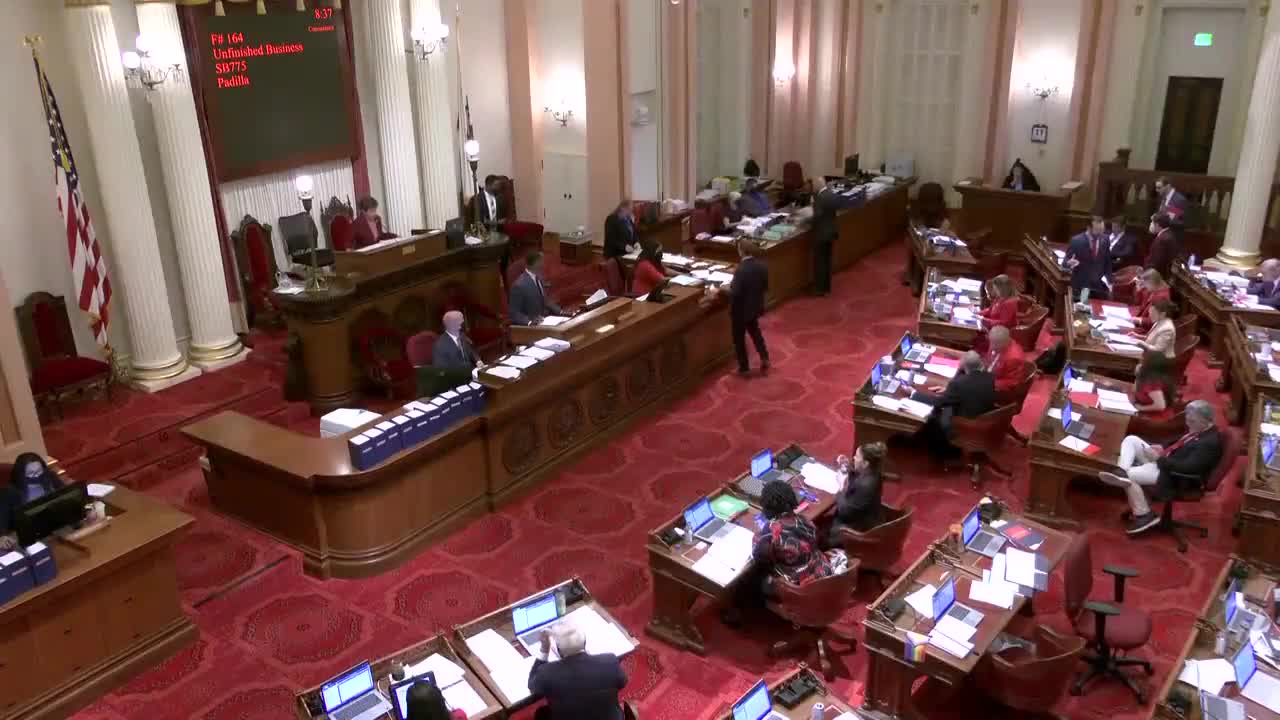
Bill Author