SB 470: Water: Urban Water Community Drought Relief program: Small Community Drought Relief program: high fire hazard and very high fire hazard severity zones.
- Session Year: 2023-2024
- House: Senate
- Latest Version Date: 2023-09-13
Current Status:
Failed
(2024-01-25: Stricken from file.)
Introduced
In Committee
First Chamber
In Committee
Second Chamber
Enacted
What does this bill do?
This bill creates two new grant programs in the Department of Water Resources: one to help urban water suppliers and one to help small or rural communities that lose or face loss or contamination of their water supplies. The grants would pay for short‑term drought relief and related projects such as emergency water deliveries (hauled water, tanks, bottled water), building or fixing wells and emergency water connections, permanent water infrastructure, actions to protect or relocate fish and wildlife, water‑saving programs, and, in high fire‑risk communities, water‑system upgrades to help fight wildfires.
The summary is provided by generative AI which can make mistakes. For original language, please view the details in the table below.
Existing law requires the State Fire Marshal to identify areas in the state as moderate, high, and very high fire hazard severity zones based on consistent statewide criteria and based on the severity of fire hazard that is expected to prevail in those areas. Existing law requires a local agency to designate, by ordinance, moderate, high, and very high fire hazard severity zones in its jurisdiction within 120 days of receiving recommendations from the State Fire Marshal, as provided.
Existing law authorizes specified state agencies, including the Department of Water Resources, subject to an appropriation, to make grants and direct expenditures for interim or immediate relief in response to conditions arising from a drought scenario to address immediate impacts on human health and safety or on fish and wildlife resources or to provide water to persons or communities that lose or are threatened with the loss or contamination of water supplies.
This bill would establish in the department the Urban Water Community Drought Relief program and the Small Community Drought Relief program to provide grants for similar interim or immediate drought relief. These programs, upon a specified appropriation, would authorize funding for benefits in addition to drought relief, including, among other projects, projects that reduce the risk of wildfire for entire neighborhoods and communities through water delivery system improvements for fire suppression purposes in high fire hazard severity zone communities or very high fire hazard severity zone communities, as designated by the State Fire Marshal or by a local agency.
Existing law requires the State Fire Marshal to identify areas in the state as moderate, high, and very high fire hazard severity zones based on consistent statewide criteria and based on the severity of fire hazard that is expected to prevail in those areas. Existing law requires a local agency to designate, by ordinance, moderate, high, and very high fire hazard severity zones in its jurisdiction within 120 days of receiving recommendations from the State Fire Marshal, as provided.
Existing law authorizes specified state agencies, including the Department of Water Resources, subject to an appropriation, to make grants and direct expenditures for interim or immediate relief in response to conditions arising from a drought scenario to address immediate impacts on human health and safety or on fish and wildlife resources or to provide water to persons or communities that lose or are threatened with the loss of water supplies.
This bill would establish in the department the Urban Water Community Drought Relief program and the Small Community Drought Relief program to provide grants for similar interim or immediate drought relief. These programs, upon a specified appropriation, would authorize funding for benefits in addition to drought relief, including, among other projects, projects that reduce the risk of wildfire for entire neighborhoods and communities through water delivery system improvements for fire suppression purposes in high fire hazard severity zone communities or very high fire hazard severity zone communities, as designated by the State Fire Marshal or by a local agency.
Existing law requires the State Fire Marshal to identify areas in the state as moderate, high, and very high fire hazard severity zones based on consistent statewide criteria and based on the severity of fire hazard that is expected to prevail in those areas. Existing law requires a local agency to designate, by ordinance, moderate, high, and very high fire hazard severity zones in its jurisdiction within 120 days of receiving recommendations from the State Fire Marshal, as provided.
Existing law authorizes specified state agencies, including the Department of Water Resources, subject to an appropriation, to make grants and direct expenditures for interim or immediate relief in response to conditions arising from a drought scenario to address immediate impacts on human health and safety or on fish and wildlife resources or to provide water to persons or communities that lose or are threatened with the loss of water supplies. Existing law repeals this authorization on January 1, 2024.
This bill would extend the authorization to January 1, 2026. The bill would, until January 1, 2026, establish in the department the Urban Water Community Drought Relief program and the Small Community Drought Relief program to provide grants for similar interim or immediate drought relief. These programs, upon a specified appropriation, would authorize funding for benefits in addition to drought relief, including including, among other projects, projects that reduce the risk of wildfire for entire neighborhoods and communities through water delivery system improvements for fire suppression purposes in high fire hazard severity zone communities or very high fire hazard severity zone communities, as designated by the State Fire Marshal or by a local agency.
Existing law requires the State Fire Marshal to identify areas in the state as moderate, high, and very high fire hazard severity zones based on consistent statewide criteria and based on the severity of fire hazard that is expected to prevail in those areas. Existing law requires a local agency to designate, by ordinance, moderate, high, and very high fire hazard severity zones in its jurisdiction within 120 days of receiving recommendations from the State Fire Marshal, as provided.
Existing law authorizes specified state agencies, including the Department of Water Resources, subject to an appropriation, to make grants and direct expenditures for interim or immediate relief in response to conditions arising from a drought scenario to address immediate impacts on human health and safety or on fish and wildlife resources or to provide water to persons or communities that lose or are threatened with the loss of water supplies. Existing law repeals this authorization on January 1, 2024.
This bill would extend the authorization to January 1, 2026. The bill would, until January 1, 2026, establish in the department the Urban Water Community Drought Relief program and the Small Community Drought Relief program to provide grants for similar interim or immediate drought relief. These programs, upon a specified appropriation, would authorize funding for benefits in addition to drought relief, including projects that reduce the risk of wildfire for entire neighborhoods and communities through water delivery system improvements for fire suppression purposes in high fire hazard severity zone communities or very high fire hazard severity zone communities, as designated by the State Fire Marshal or by a local agency.
Existing law establishes in the Department of Conservation the Regional Forest and Fire Capacity Program to support regional leadership to build local and regional capacity and develop, prioritize, and implement strategies and projects that create fire-adapted communities and landscapes by improving ecosystem health, community wildfire preparedness, and fire resilience. Existing law requires the department, upon appropriation, to provide block grants to regional entities, as defined, to, among other things, implement community fire preparedness demonstration projects that create durable risk reduction for structures and critical community infrastructure.This bill would include within those demonstration projects related to durable risk reduction for structures and critical community infrastructure projects that reduce the risk of wildfire for entire neighborhoods and communities through water delivery system improvements for fire suppression purposes in high fire hazard severity zone or very high fire hazard severity zone communities, as designated by the State Fire Marshal or by a local agency.Existing law requires the State Fire Marshal to identify areas in the state as moderate, high, and very high fire hazard severity zones based on consistent statewide criteria and based on the severity of fire hazard that is expected to prevail in those areas. Existing law requires a local agency to designate, by ordinance, moderate, high, and very high fire hazard severity zones in its jurisdiction within 120 days of receiving recommendations from the State Fire Marshal, as provided.
This bill would express the intent of the Legislature to enact subsequent legislation that would direct state agencies and departments to ensure grant eligibility for projects that reduce the risk of wildfire for entire neighborhoods and communities through water delivery system improvements for fire suppression purposes in high fire hazard severity zone or very high fire hazard severity zone communities, as designated by the State Fire Marshal or by a local agency.Existing law establishes in the Department of Conservation the Regional Forest and Fire Capacity Program to support regional leadership to build local and regional capacity and develop, prioritize, and implement strategies and projects that create fire-adapted communities and landscapes by improving ecosystem health, community wildfire preparedness, and fire resilience. Existing law requires the department, upon appropriation, to provide block grants to regional entities, as defined, to, among other things, implement community fire preparedness demonstration projects that create durable risk reduction for structures and critical community infrastructure.
This bill would include within those demonstration projects related to durable risk reduction for structures and critical community infrastructure projects that reduce the risk of wildfire for entire neighborhoods and communities through water delivery system improvements for fire suppression purposes in high fire hazard severity zone or very high fire hazard severity zone communities, as designated by the State Fire Marshal or by a local agency.
Existing law requires the State Fire Marshal to identify areas in the state as moderate, high, and very high fire hazard severity zones based on consistent statewide criteria and based on the severity of fire hazard that is expected to prevail in those areas. Existing law requires a local agency to designate, by ordinance, moderate, high, and very high fire hazard severity zones in its jurisdiction within 120 days of receiving recommendations from the State Fire Marshal, as provided.
This bill would express the intent of the Legislature to enact subsequent legislation that would direct state agencies and departments to ensure grant eligibility for projects that reduce the risk of wildfire for entire neighborhoods and communities through water delivery system improvements for fire suppression purposes in high fire hazard severity zone or very high fire hazard severity zone communities, as designated by the State Fire Marshal or by a local agency.
The Legislature finds and declares all of the following:
(a)Californias rural landscapes and communities have been ground zero for large-scale environmental and economic devastation during the past decades by virtue of the Angora, Caldor, Camp, August Complex, and Dixie Fires.
(b)Aging infrastructures combined with insufficient resources to prepare for adequate wildfire response has left many rural communities at high risk for future unchecked fire activity.
(c)Postfire costs associated with the destruction inflicted upon communities, such as Grizzly Flats, Paradise, and Greenville, have been in the tens of billions of dollars.
(d)Congress has taken affirmative fiscal action by budgeting for funding last year and is poised to repeat that action this year as witnessed in House Report 117-400 to invest in fire prevention activities in the Tahoe Basin and elsewhere through projects such as water delivery system improvements for expanded water flow and fire hydrant installation.
(e)While California is taking the necessary actions to mitigate the intensity and frequency of fire in the rural parts of the state, local governments need state support for necessary investments to prepare for fire.
SEC. 2.Section 13198.5 is added to the Water Code, to read:13198.5.(a)There is hereby established in the department the Urban Water Community Drought Relief program to provide grants for interim or immediate drought relief to secure the future of Californias water supply to address immediate impacts on human health and safety, to protect fish and wildlife resources, and to provide water to urban communities that lose or are threatened with the loss or contamination of water supplies.
(b)A project funded by this program shall benefit a community supplied by an urban water supplier as defined in Section 10617.
(c)The program, upon appropriation for these purposes after the operative date of this section, may fund projects that provide benefits in addition to drought relief, including, but not limited to, all of the following projects:
(1)Projects that reduce the risk of wildfire for entire neighborhoods and communities through water delivery system improvements for fire suppression purposes in high fire hazard severity zone communities or very high fire hazard severity zone communities, as designated by the State Fire Marshal pursuant to Article 9 (commencing with Section 4201) of Chapter 1 of Part 2 of Division 4 of the Public Resources Code or by a local agency pursuant to Chapter 6.8 (commencing with Section 51175) of Part 1 of Division 1 of Title 5 of the Government Code.
(2)Projects that provide water deliveries such as hauled water, temporary community water tanks, bottled water, or water vending machines.
(3)Projects that construct infrastructure such as emergency water interties, drilling or rehabilitating new wells, or the installation of permanent water infrastructure.
(4)Projects that rescue, protect, and relocate fish and wildlife.
(5)Projects that support water conservation activities, including, but not limited to, education, fixture replacement incentives and rebate programs, and turf replacement with drought tolerant landscaping.
SEC. 3.Section 13198.51 is added to the Water Code, to read:13198.51.(a)There is hereby established in the department the Small Community Drought Relief program to provide grants for interim or immediate drought relief to address impacts on human health and safety and impacts on fish and wildlife resources, and to provide water to persons or small or rural communities that lose or are threatened with the loss or contamination of water supplies.
(b)A project funded by this program shall benefit a community not supplied by an urban water supplier as defined in Section 10617.
(c)The program, upon appropriation for its purposes after the operative date of this section, may fund projects that provide benefits in addition to drought relief, including, but not limited to, all of the following projects:
(1)Projects that reduce the risk of wildfire for entire neighborhoods and communities through water delivery system improvements for fire suppression purposes in high fire hazard severity zone communities or very high fire hazard severity zone communities, as designated by the State Fire Marshal pursuant to Article 9 (commencing with Section 4201) of Chapter 1 of Part 2 of Division 4 of the Public Resources Code or by a local agency pursuant to Chapter 6.8 (commencing with Section 51175) of Part 1 of Division 1 of Title 5 of the Government Code.
(2)Projects that provide water deliveries such as hauled water, temporary community water tanks, bottled water, or water vending machines.
(3)Projects that construct infrastructure such as emergency water interties, drilling or rehabilitating new wells, or the installation of permanent water infrastructure.
(4)Projects that rescue, protect, and relocate fish and wildlife.
SEC. 4.It is the intent of the Legislature to enact subsequent legislation that would, in the event appropriations are made for the programs described in subdivision (f) of Section 19.55 of the Budget Act of 2021, ensure funding eligibility for projects that reduce the risk of wildfire for entire neighborhoods and communities through water delivery system improvements for fire suppression purposes in high fire hazard severity zone communities or very high fire hazard severity zone communities, as designated by the State Fire Marshal pursuant to Article 9 (commencing with Section 4201) of Chapter 1 of Part 2 of Division 4 of the Public Resources Code or by a local agency pursuant to Chapter 6.8 (commencing with Section 51175) of Part 1 of Division 1 of Title 5 of the Government Code.The Legislature finds and declares all of the following:
(a)Californias rural landscapes and communities have been ground zero for large-scale environmental and economic devastation during the past decades by virtue of the Angora, Caldor, Camp, August Complex, and Dixie Fires.
(b)Aging infrastructures combined with insufficient resources to prepare for adequate wildfire response has left many rural communities at high risk for future unchecked fire activity.
(c)Postfire costs associated with the destruction inflicted upon communities, such as Grizzly Flats, Paradise, and Greenville, have been in the tens of billions of dollars.
(d)Congress has taken affirmative fiscal action by budgeting for funding last year and is poised to repeat that action this year as witnessed in House Report 117-400 to invest in fire prevention activities in the Tahoe Basin and elsewhere through projects such as water delivery system improvements for expanded water flow and fire hydrant installation.
(e)While California is taking the necessary actions to mitigate the intensity and frequency of fire in the rural parts of the state, local governments need state support for necessary investments to prepare for fire.
SEC. 2.Section 13198.5 is added to the Water Code, to read:13198.5.(a)There is hereby established in the department the Urban Water Community Drought Relief program to provide grants for interim or immediate drought relief to secure the future of Californias water supply to address immediate impacts on human health and safety and on safety, to protect fish and wildlife resources resources, and to provide water to persons or small or rural urban communities that lose or are threatened with the loss or contamination of water supplies.
(b)A project funded by this program shall benefit a community supplied by an urban water supplier as defined in Section 10617.
(c)The program, upon appropriation for these purposes after the operative date of this section, may fund projects that provide benefits in addition to drought relief, including projects including, but not limited to, all of the following projects:
(1)Projects that reduce the risk of wildfire for entire neighborhoods and communities through water delivery system improvements for fire suppression purposes in high fire hazard severity zone communities or very high fire hazard severity zone communities, as designated by the State Fire Marshal pursuant to Article 9 (commencing with Section 4201) of Chapter 1 of Part 2 of Division 4 of the Public Resources Code or by a local agency pursuant to Chapter 6.8 (commencing with Section 51175) of Part 1 of Division 1 of Title 5 of the Government Code.
(2)Projects that provide water deliveries such as hauled water, temporary community water tanks, bottled water, or water vending machines.
(3)Projects that construct infrastructure such as emergency water interties, drilling or rehabilitating new wells, or the installation of permanent water infrastructure.
(4)Projects that rescue, protect, and relocate fish and wildlife.
(5)Projects that support water conservation activities, including, but not limited to, education, fixture replacement incentives and rebate programs, and turf replacement with drought tolerant landscaping.
SEC. 3.Section 13198.51 is added to the Water Code, to read:13198.51.(a)There is hereby established in the department the Small Community Drought Relief program to provide grants for interim or immediate drought relief to address immediate impacts on human health and safety and on safety and impacts on fish and wildlife resources resources, and to provide water to persons or small or rural communities that lose or are threatened with the loss or contamination of water supplies.
(b)A project funded by this program shall benefit a community not supplied by an urban water supplier as defined in Section 10617.
(c)The program, upon appropriation for its purposes after the operative date of this section, may fund projects that provide benefits in addition to drought relief, including projects including, but not limited to, all of the following projects:
(1)Projects that reduce the risk of wildfire for entire neighborhoods and communities through water delivery system improvements for fire suppression purposes in high fire hazard severity zone communities or very high fire hazard severity zone communities, as designated by the State Fire Marshal pursuant to Article 9 (commencing with Section 4201) of Chapter 1 of Part 2 of Division 4 of the Public Resources Code or by a local agency pursuant to Chapter 6.8 (commencing with Section 51175) of Part 1 of Division 1 of Title 5 of the Government Code.
(2)Projects that provide water deliveries such as hauled water, temporary community water tanks, bottled water, or water vending machines.
(3)Projects that construct infrastructure such as emergency water interties, drilling or rehabilitating new wells, or the installation of permanent water infrastructure.
(4)Projects that rescue, protect, and relocate fish and wildlife.
SEC. 4.Section 13198.8 of the Water Code is amended to read:13198.8.This article shall remain in effect only until January 1, 2026, and as of that date is repealed.SEC. 5.SEC. 4.It is the intent of the Legislature to enact subsequent legislation that would, in the event appropriations are made for the programs described in subdivision (f) of Section 19.55 of the Budget Act of 2021, ensure funding eligibility for projects that reduce the risk of wildfire for entire neighborhoods and communities through water delivery system improvements for fire suppression purposes in high fire hazard severity zone communities or very high fire hazard severity zone communities, as designated by the State Fire Marshal pursuant to Article 9 (commencing with Section 4201) of Chapter 1 of Part 2 of Division 4 of the Public Resources Code or by a local agency pursuant to Chapter 6.8 (commencing with Section 51175) of Part 1 of Division 1 of Title 5 of the Government Code.
The Legislature finds and declares all of the following:
(a)Californias rural landscapes and communities have been ground zero for large-scale environmental and economic devastation during the past decades by virtue of the Angora, Caldor, Camp, August Complex, and Dixie Fires.
(b)Aging infrastructures combined with insufficient resources to prepare for adequate wildfire response has left many rural communities at high risk for future unchecked fire activity.
(c)Postfire costs associated with the destruction inflicted upon communities, such as Grizzley Grizzly Flats, Paradise, and Greenville, have been in the tens of billions of dollars.
(d)Congress has taken affirmative fiscal action by budgeting for funding last year and is poised to repeat that action this year as witnessed in House Report 117-400 to invest in fire prevention activities in the Tahoe Basin and elsewhere through projects such as water delivery system improvements for expanded water flow and fire hydrant installation.
(e)While California is taking the necessary actions to mitigate the intensity and frequency of fire in the rural parts of the state, local governments need state support for necessary investments to prepare for fire.
SEC. 2.Section 13198.5 is added to the Water Code, to read:13198.5.(a)There is hereby established in the department the Urban Water Community Drought Relief program to provide grants for interim or immediate drought relief to address immediate impacts on human health and safety and on fish and wildlife resources and to provide water to persons or small or rural communities that lose or are threatened with the loss or contamination of water supplies.
(b)A project funded by this program shall benefit a community supplied by an urban water supplier as defined in Section 10617.
(c)The program, upon appropriation for these purposes after the operative date of this section, may fund projects that provide benefits in addition to drought relief, including projects that reduce the risk of wildfire for entire neighborhoods and communities through water delivery system improvements for fire suppression purposes in high fire hazard severity zone communities or very high fire hazard severity zone communities, as designated by the State Fire Marshal pursuant to Article 9 (commencing with Section 4201) of Chapter 1 of Part 2 of Division 4 of the Public Resources Code or by a local agency pursuant to Chapter 6.8 (commencing with Section 51175) of Part 1 of Division 1 of Title 5 of the Government Code.
SEC. 3.Section 13198.51 is added to the Water Code, to read:13198.51.(a)There is hereby established in the department the Small Community Drought Relief program to provide grants for interim or immediate drought relief to address immediate impacts on human health and safety and on fish and wildlife resources and to provide water to persons or small or rural communities that lose or are threatened with the loss or contamination of water supplies.
(b)A project funded by this program shall benefit a community not supplied by an urban water supplier as defined in Section 10617.
(c)The program, upon appropriation for its purposes after the operative date of this section, may fund projects that provide benefits in addition to drought relief, including projects that reduce the risk of wildfire for entire neighborhoods and communities through water delivery system improvements for fire suppression purposes in high fire hazard severity zone communities or very high fire hazard severity zone communities, as designated by the State Fire Marshal pursuant to Article 9 (commencing with Section 4201) of Chapter 1 of Part 2 of Division 4 of the Public Resources Code or by a local agency pursuant to Chapter 6.8 (commencing with Section 51175) of Part 1 of Division 1 of Title 5 of the Government Code.
SEC. 4.Section 13198.8 of the Water Code is amended to read:13198.8.This article shall remain in effect only until January 1, 2024, 2026, and as of that date is repealed.
SEC. 2.Section 4208.1 of the Public Resources Code is amended to read:4208.1.(a)There is hereby established in the department the Regional Forest and Fire Capacity Program to support regional leadership to build local and regional capacity and develop, prioritize, and implement strategies and projects that create fire-adapted communities and landscapes by improving ecosystem health, community wildfire preparedness, and fire resilience. For strategies and projects that seek to create fire-adapted communities, regional entities shall maximize risk reductions to people and property, especially in the most vulnerable communities.(b)(1)The department shall, upon an appropriation by the Legislature for these purposes, do both of the following:(A)(i)Provide block grants to regional entities to develop regional strategies that develop governance structures, identify wildfire risks, foster collaboration, and prioritize and implement projects within the region to achieve the goals of the program.(ii)Regional priority strategy development shall be in coordination with public landowners and other relevant forest and fire planning efforts in wildfire and forest resiliency planning.(B)Ensure, to the extent feasible, there are regional entities to cover every part of the state that contains or is adjacent to a very high or high fire hazard severity zone identified by the State Fire Marshal pursuant to Section 51178 of the Government Code or Article 9 (commencing with Section 4201).(2)Regional entities may implement program activities directly or provide subgrants or contracts, and collaborative planning efforts with local entities, including municipal governments, tribal governments, nongovernmental organizations, community organizations, fire safe councils, land trusts, resource conservation districts, joint power authorities, special districts, fire departments, residents, private and public forest landowners and managers, businesses, and others, to assist the regional entity in accomplishing all of the following objectives:(A)Develop regional priority strategies that develop and support fire-adapted communities and landscapes by improving forest health, watershed health, fire risk reduction, or fire resilience needed to achieve local, regional, or statewide public safety, climate resiliency, and ecosystem goals included in the Agreement for Shared Stewardship of Californias Forest and Rangelands and Californias Wildfire and Forest Resilience Action Plan.(B)Complete project development and permitting to generate implementation-ready projects that address regional landscape resilience and community fire protection priorities for funding consideration.(C)Implement forest management demonstration projects that showcase scalable models for management, funding, and achieving and quantifying multiple benefits.(D)Implement community fire preparedness demonstration projects that create durable risk reduction for structures and critical community infrastructure, including projects that reduce the risk of wildfire for entire neighborhoods and communities through water delivery system improvements for fire suppression purposes in high fire hazard severity zone or very high fire hazard severity zone communities, as designated by a local agency pursuant to Chapter 6.8 (commencing with Section 51175) of Part 1 of Division 1 of Title 5 of the Government Code, or by the State Fire Marshal pursuant to Article 9 (commencing with Section 4201).(E)Develop outreach, education, and training as needed to facilitate and build capacity to implement this section.(F)Collect and assess data and information as needed to identify and map communities, infrastructure, forests, and watersheds at risk of, and vulnerable to, wildfire, in collaboration with appropriate state agencies, including, but not limited to, the Department of Forestry and Fire Protection.(c)The department shall, upon an appropriation by the Legislature for these purposes, provide block grants to eligible coordinating organizations under the program to support the statewide implementation of the program through coordination of and technical assistance to regional entities, as well as to support forest health and resilience efforts across regions and throughout the state.(d)To maximize the benefits of the program, the department shall do all of the following:(1)Facilitate peer-to-peer learning within and between regions to share information, experiences, and resources to build regional capacity.(2)Provide technical assistance to regions to enhance regional capacity and assist in the development and prioritization of projects.(3)Assist regions in identifying potential funding sources for regional priorities.(4)Encourage the development of local cost share opportunities.(5)Publish and update on the departments internet website the following information related to implementation of the program:(A)A list of regional entities and eligible coordinating organizations funded by the program.(B)The outcomes of any block grant provided to a regional entity or eligible coordinating organization, including a summary of the benefits, such as the number of people and properties for which wildfire risk has been mitigated, ecosystem health benefits, or other measurements of progress towards state goals for public health and safety, climate resilience, and biodiversity, as applicable.(C)A description of progress towards ensuring there are regional entities to cover every part of the state that contains or is adjacent to a very high or high fire hazard severity zone identified by the State Fire Marshal pursuant to Section 51178 of the Government Code or Article 9 (commencing with Section 4201).(e)Until July 1, 2025, the department may authorize advance payments on a grant awarded under this section in accordance with subdivision (d) of Section 11019.1 of the Government Code.SEC. 3.It is the intent of the Legislature to enact subsequent legislation that would expand the allowable purposes of the Urban Water Community Drought Relief program and the Small Community Drought Relief program, as described in Item 3860-101-3398 of the Budget Act of 2021, as amended by Section 25 of Chapter 44 of the Statutes of 2022, to include projects that reduce the risk of wildfire for entire neighborhoods and communities through water delivery system improvements for fire suppression purposes in high fire hazard severity zone or very high fire hazard severity zone communities, as designated by the State Fire Marshal pursuant to Article 9 (commencing with Section 4201) of Chapter 1 of Part 2 of Division 4 of the Public Resources Code or by a local agency pursuant to Chapter 6.8 (commencing with Section 51175) of Part 1 of Division 1 of Title 5 of the Government Code.SEC. 4.SEC. 5.It is the intent of the Legislature to enact subsequent legislation that would, in the event appropriations are made for the programs described in subdivision (f) of Section 19.55 of the Budget Act of 2021, ensure funding eligibility for projects that reduce the risk of wildfire for entire neighborhoods and communities through water delivery system improvements for fire suppression purposes in high fire hazard severity zone communities or very high fire hazard severity zone communities, as designated by the State Fire Marshal pursuant to Article 9 (commencing with Section 4201) of Chapter 1 of Part 2 of Division 4 of the Public Resources Code or by a local agency pursuant to Chapter 6.8 (commencing with Section 51175) of Part 1 of Division 1 of Title 5 of the Government Code.
The Legislature finds and declares all of the following:
(a)Californias rural landscapes and communities have been ground zero for large-scale environmental and economic devastation during the past decades by virtue of the Angora, Caldor, Camp, Complex, and Dixie Fires.
(b)Aging infrastructures combined with insufficient resources to prepare for adequate wildfire response has left many rural communities at high risk for future unchecked fire activity.
(c)Postfire costs associated with the destruction inflicted upon communities, such as Grizzley Flats, Paradise, and Greenville, have been in the tens of billions of dollars.
(d)Congress has taken affirmative fiscal action by budgeting for funding last year and is poised to repeat that action this year as witnessed in House Report 117-400 to invest in fire prevention activities in the Tahoe Basin and elsewhere through projects such as water delivery system improvements for expanded water flow and fire hydrant installation.
(e)While California is taking the necessary actions to mitigate the intensity and frequency of fire in the rural parts of the state, local governments need state support for necessary investments to prepare for fire.
SEC. 2.It is the intent of the Legislature to enact subsequent legislation that would direct state agencies and departments, including, but not limited to, the Department of Forestry and Fire Protection, the Office of Emergency Services, and the states conservancies responsible for the administration of grant funds to local agencies, state agencies, joint powers authorities, and tribes, to ensure grant eligibility for projects that reduce the risk of wildfire for entire neighborhoods and communities through water delivery system improvements for fire suppression purposes in high fire hazard severity zone or very high fire hazard severity zone communities, as designated by the State Fire Marshal pursuant to Article 9 (commencing with Section 4201) of Chapter 1 of Part 2 of Division 4 of the Public Resources Code or by a local agency pursuant to Chapter 6.8 (commencing with Section 51175) of Part 1 of Division 1 of Title 5 of the Government Code.SEC. 2.Section 4208.1 of the Public Resources Code is amended to read:4208.1.(a)There is hereby established in the department the Regional Forest and Fire Capacity Program to support regional leadership to build local and regional capacity and develop, prioritize, and implement strategies and projects that create fire adapted fire-adapted communities and landscapes by improving ecosystem health, community wildfire preparedness, and fire resilience. For strategies and projects that seek to create fire adapted fire-adapted communities, regional entities shall maximize risk reductions to people and property, especially in the most vulnerable communities.
(b)(1)The department shall, upon an appropriation by the Legislature for these purposes, do both of the following:
(A)(i)Provide block grants to regional entities to develop regional strategies that develop governance structures, identify wildfire risks, foster collaboration, and prioritize and implement projects within the region to achieve the goals of the program.
(ii)Regional priority strategy development shall be in coordination with public landowners and other relevant forest and fire planning efforts in wildfire and forest resiliency planning.
(B)Ensure, to the extent feasible, there are regional entities to cover every part of the state that contains or is adjacent to a very high or high fire hazard severity zone identified by the State Fire Marshal pursuant to Section 51178 of the Government Code or Article 9 (commencing with Section 4201).
(2)Regional entities may implement program activities directly or provide subgrants or contracts, and collaborative planning efforts with local entities, including municipal governments, tribal governments, nongovernmental organizations, community organizations, fire safe councils, land trusts, resource conservation districts, joint power authorities, special districts, fire departments, residents, private and public forest landowners and managers, businesses, and others, to assist the regional entity in accomplishing all of the following objectives:
(A)Develop regional priority strategies that develop and support fire adapted fire-adapted communities and landscapes by improving forest health, watershed health, fire risk reduction, or fire resilience needed to achieve local, regional, or statewide public safety, climate resiliency, and ecosystem goals included in the Agreement for Shared Stewardship of Californias Forest and Rangelands and Californias Wildfire and Forest Resilience Action Plan.
(B)Complete project development and permitting to generate implementation-ready projects that address regional landscape resilience and community fire protection priorities for funding consideration.
(C)Implement forest management demonstration projects that showcase scalable models for management, funding, and achieving and quantifying multiple benefits.
(D)Implement community fire preparedness demonstration projects that create durable risk reduction for structures and critical community infrastructure. infrastructure, including projects that reduce the risk of wildfire for entire neighborhoods and communities through water delivery system improvements for fire suppression purposes in high fire hazard severity zone or very high fire hazard severity zone communities, as designated by a local agency pursuant to Chapter 6.8 (commencing with Section 51175) of Part 1 of Division 1 of Title 5 of the Government Code, or by the State Fire Marshal pursuant to Article 9 (commencing with Section 4201).
(E)Develop outreach, education, and training as needed to facilitate and build capacity to implement this section.
(F)Collect and assess data and information as needed to identify and map communities, infrastructure, forests, and watersheds at risk of, and vulnerable to, wildfire, in collaboration with appropriate state agencies, including, but not limited to, the Department of Forestry and Fire Protection.
(c)The department shall, upon an appropriation by the Legislature for these purposes, provide block grants to eligible coordinating organizations under the program to support the statewide implementation of the program through coordination of and technical assistance to regional entities, as well as to support forest health and resilience efforts across regions and throughout the state.
(d)To maximize the benefits of the program, the department shall do all of the following:
(1)Facilitate peer-to-peer learning within and between regions to share information, experiences, and resources to build regional capacity.
(2)Provide technical assistance to regions to enhance regional capacity and assist in the development and prioritization of projects.
(3)Assist regions in identifying potential funding sources for regional priorities.
(4)Encourage the development of local cost share opportunities.
(5)Publish and update on the departments internet website the following information related to implementation of the program:
(A)A list of regional entities and eligible coordinating organizations funded by the program.
(B)The outcomes of any block grant provided to a regional entity or eligible coordinating organization, including a summary of the benefits, such as the number of people and properties for which wildfire risk has been mitigated, ecosystem health benefits, or other measurements of progress towards state goals for public health and safety, climate resilience, and biodiversity, as applicable.
(C)A description of progress towards ensuring there are regional entities to cover every part of the state that contains or is adjacent to a very high or high fire hazard severity zone identified by the State Fire Marshal pursuant to Section 51178 of the Government Code or Article 9 (commencing with Section 4201).
(e)Until July 1, 2025, the department may authorize advance payments on a grant awarded under this section in accordance with subdivision (d) of Section 11019.1 of the Government Code.
SEC. 3.It is the intent of the Legislature to enact subsequent legislation that would expand the allowable purposes of the Urban Water Community Drought Relief program and the Small Community Drought Relief program, as described in Item 3860-101-3398 of the Budget Act of 2021, as amended by Section 25 of Chapter 44 of the Statutes of 2022, to include projects that reduce the risk of wildfire for entire neighborhoods and communities through water delivery system improvements for fire suppression purposes in high fire hazard severity zone or very high fire hazard severity zone communities, as designated by the State Fire Marshal pursuant to Article 9 (commencing with Section 4201) of Chapter 1 of Part 2 of Division 4 of the Public Resources Code or by a local agency pursuant to Chapter 6.8 (commencing with Section 51175) of Part 1 of Division 1 of Title 5 of the Government Code.
SEC. 4.It is the intent of the Legislature to enact subsequent legislation that would, in the event appropriations are made for the programs described in subdivision (f) of Section 19.55 of the Budget Act of 2021, ensure funding eligibility for projects that reduce the risk of wildfire for entire neighborhoods and communities through water delivery system improvements for fire suppression purposes in high fire hazard severity zone or very high fire hazard severity zone communities, as designated by the State Fire Marshal pursuant to Article 9 (commencing with Section 4201) of Chapter 1 of Part 2 of Division 4 of the Public Resources Code or by a local agency pursuant to Chapter 6.8 (commencing with Section 51175) of Part 1 of Division 1 of Title 5 of the Government Code.
The Legislature finds and declares all of the following:
(a)Californias rural landscapes and communities have been ground zero for large-scale environmental and economic devastation during the past decades by virtue of the Angora, Caldor, Camp, Complex, and Dixie Fires.
(b)Aging infrastructures combined with insufficient resources to prepare for adequate wildfire response has left many rural communities at high risk for future unchecked fire activity.
(c)Postfire costs associated with the destruction inflicted upon communities, such as Grizzley Flats, Paradise, and Greenville, have been in the tens of billions of dollars.
(d)Congress has taken affirmative fiscal action by budgeting for funding last year and is poised to repeat that action this year as witnessed in House Report 117-400 to invest in fire prevention activities in the Tahoe Basin and elsewhere through projects such as water delivery system improvements for expanded water flow and fire hydrant installation.
(e)While California is taking the necessary actions to mitigate the intensity and frequency of fire in the rural parts of the state, local governments need state support for necessary investments to prepare for fire.
SEC. 2.It is the intent of the Legislature to enact subsequent legislation that would direct state agencies and departments, including, but not limited to, the Department of Forestry and Fire Protection, the Office of Emergency Services, and the states conservancies responsible for the administration of grant funds to local agencies, state agencies, joint powers authorities, and tribes, to ensure grant eligibility for projects that reduce the risk of wildfire for entire neighborhoods and communities through water delivery system improvements for fire suppression purposes in high fire hazard severity zone or very high fire hazard severity zone communities, as designated by the State Fire Marshal pursuant to Article 9 (commencing with Section 4201) of Chapter 1 of Part 2 of Division 4 of the Public Resources Code or by a local agency pursuant to Chapter 6.8 (commencing with Section 51175) of Part 1 of Division 1 of Title 5 of the Government Code.
|
Date
|
Status
|
|---|---|
| Jan 25, 2024 | Veto sustained. |
| Jan 25, 2024 | Stricken from file. |
| Oct 8, 2023 | In Senate. Consideration of Governor's veto pending. |
| Oct 8, 2023 | Vetoed by the Governor. |
| Sep 15, 2023 | Enrolled and presented to the Governor at 3 p.m. |
| Sep 11, 2023 | Assembly amendments concurred in. (Ayes 39. Noes 0. Page 2600.) Ordered to engrossing and enrolling. |
| Sep 7, 2023 | In Senate. Concurrence in Assembly amendments pending. |
| Sep 7, 2023 | Read third time. Passed. (Ayes 79. Noes 0. Page 3004.) Ordered to the Senate. |
| Sep 5, 2023 | Read second time. Ordered to third reading. |
| Sep 1, 2023 | Read second time and amended. Ordered to second reading. |
| Sep 1, 2023 | From committee: Do pass as amended. (Ayes 11. Noes 0.) (September 1). |
| Aug 23, 2023 | August 23 set for first hearing. Placed on suspense file. |
| Jul 12, 2023 | Read second time and amended. Re-referred to Com. on APPR. |
| Jul 11, 2023 | From committee: Do pass as amended and re-refer to Com. on APPR. (Ayes 14. Noes 0.) (July 11). |
| Jun 8, 2023 | Referred to Com. on W., P., & W. |
| May 25, 2023 | In Assembly. Read first time. Held at Desk. |
| May 25, 2023 | Read third time. Passed. (Ayes 40. Noes 0. Page 1300.) Ordered to the Assembly. |
| May 23, 2023 | Ordered to special consent calendar. |
| May 18, 2023 | Read second time. Ordered to third reading. |
| May 18, 2023 | From committee: Do pass. (Ayes 7. Noes 0. Page 1171.) (May 18). |
| May 12, 2023 | Set for hearing May 18. |
| May 8, 2023 | May 8 hearing: Placed on APPR suspense file. |
| May 2, 2023 | Set for hearing May 8. |
| Apr 27, 2023 | Read second time and amended. Re-referred to Com. on APPR. |
| Apr 26, 2023 | From committee: Do pass as amended and re-refer to Com. on APPR with recommendation: To consent calendar. (Ayes 10. Noes 0. Page 899.) (April 25). |
| Apr 11, 2023 | Set for hearing April 25. |
| Mar 29, 2023 | Re-referred to Com. on N.R. & W. |
| Mar 21, 2023 | From committee with author's amendments. Read second time and amended. Re-referred to Com. on RLS. |
| Feb 22, 2023 | Referred to Com. on RLS. |
| Feb 14, 2023 | From printer. May be acted upon on or after March 16. |
| Feb 13, 2023 | Introduced. Read first time. To Com. on RLS. for assignment. To print. |
|
Date
|
Description
|
Location
|
Votes
|
|
|---|---|---|---|---|
| Sep 11, 2023 | Unfinished Business SB470 Alvarado-Gil Concurrence | Senate Floor |
Passed |
|
| Sep 7, 2023 | SB 470 Alvarado-Gil Senate Third Reading By Megan Dahle | Assembly Floor |
Passed |
|
| Sep 1, 2023 | Do pass as amended. | Assembly Standing Committee on Appropriations |
Passed |
|
| Jul 11, 2023 | Do pass as amended and be re-referred to the Committee on [Appropriations] | Assembly Standing Committee on Water, Parks, and Wildlife |
Passed |
|
| May 25, 2023 | Special Consent SB470 Alvarado-Gil | Senate Floor |
Passed |
|
| May 18, 2023 | Do pass | Senate Standing Committee on Appropriations |
Passed |
|
| May 8, 2023 | Placed on suspense file | Senate Standing Committee on Appropriations |
Passed |
|
| Apr 25, 2023 | Do pass as amended, but first amend, and re-refer to the Committee on [Appropriations] with the recommendation: To Consent Calendar | Senate Standing Committee on Natural Resources and Water |
Passed |
This list shows positions taken on this bill by organizations on the date displayed, which is linked to the original source.
Positions by individuals are not included.
|
Organization
|
Position
|
Date
|
|---|---|---|
| Association Of California Water Agencies | ** Support | |
| California Fire Chiefs Association | ** Support | |
| California Special Districts Association | ** Support | |
| California Tahoe Alliance | ** Support | |
| City of Santa Rosa | ** Support | |
| City Of South Lake Tahoe | ** Support | |
| County of El Dorado | ** Support | |
| County Of Placer | ** Support | |
| El Dorado County Water Agency | ** Support | |
| El Dorado Water Agency | ** Support | |
| Fire Districts Association Of California | ** Support | |
| Humboldt Redwood Company | ** Support | |
| Lake Tahoe Community College | ** Support | |
| League To Save Lake Tahoe | ** Support | |
| Mendocino Redwood Company | ** Support | |
| Mountain Counties Water Resources Association | ** Support | |
| North Tahoe Public Utility District | ** Support | |
| South Tahoe Public Utility District | ** Support | |
| Tahoe City Public Utility District | ** Support | |
| Tahoe Fund | ** Support | |
| Tahoe Regional Planning Agency | ** Support | |
| Tahoe Resource Conservation District | ** Support | |
| Tahoe Water for Fire Suppression Partnership | ** Support |
SENATE RULES COMMITTEE Office of Senate Floor Analyses (916) 651-1520 Fax: (916) 327-4478 | SB 470 |
VETO
Bill No: SB 470
Author: Alvarado-Gil (D)
Amended: 9/1/23
Vote: 27
SENATE NATURAL RES. & WATER COMMITTEE: 10-0, 4/25/23
AYES: Min, Seyarto, Allen, Dahle, Eggman, Grove, Hurtado, Laird, Limón, Padilla
NO VOTE RECORDED: Stern
SENATE APPROPRIATIONS COMMITTEE: 7-0, 5/18/23
AYES: Portantino, Jones, Ashby, Bradford, Seyarto, Wahab, Wiener
SENATE FLOOR: 40-0, 5/25/23
AYES: Allen, Alvarado-Gil, Archuleta, Ashby, Atkins, Becker, Blakespear, Bradford, Caballero, Cortese, Dahle, Dodd, Durazo, Eggman, Glazer, Gonzalez, Grove, Hurtado, Jones, Laird, Limón, McGuire, Menjivar, Min, Newman, Nguyen, Niello, Ochoa Bogh, Padilla, Portantino, Roth, Rubio, Seyarto, Skinner, Smallwood-Cuevas, Stern, Umberg, Wahab, Wiener, Wilk
SENATE FLOOR: 39-0, 9/11/23
AYES: Allen, Alvarado-Gil, Archuleta, Ashby, Atkins, Becker, Blakespear, Bradford, Cortese, Dahle, Dodd, Durazo, Eggman, Glazer, Gonzalez, Grove, Hurtado, Jones, Laird, Limón, McGuire, Menjivar, Min, Newman, Nguyen, Niello, Ochoa Bogh, Padilla, Portantino, Roth, Rubio, Seyarto, Skinner, Smallwood-Cuevas, Stern, Umberg, Wahab, Wiener, Wilk
NO VOTE RECORDED: Caballero
ASSEMBLY FLOOR: 79-0, 9/7/23 - See last page for vote
SUBJECT: Water: Urban Water Community Drought Relief program: Small Community Drought Relief program: high fire hazard and very high fire hazard severity zones
SOURCE: Author
DIGEST:
This bill codifies the Urban Water Community Drought Relief program and the Small Community Drought Relief program at the Department of Water Resources (DWR). Further, this bill authorizes these programs, upon appropriation, to fund projects that provide benefits in addition to drought relief, including projects that reduce the risk of wildfires for communities through water delivery system improvements for fire suppression purposes in high- and very high-fire hazard severity zones, among other things.
ANALYSIS:
Existing law:
- Establishes DWR in the California Natural Resources Agency (CNRA) under the control of the director. Water Code §120.
- Authorizes, through January 1, 2024, an implementing agency, subject to an appropriation in the annual Budget Act or another statute for these purposes to make grants and direct expenditures, including to or on behalf of affected public and private entities, for interim or immediate relief in response to conditions arising from a drought scenario, as specified. Water Code §§13198.2, 13198.4, and 13198.8.
- Directs a city or county, upon the next revision of the housing element of a general plan on or after January 1, 2014, to include a set of feasible implementation measures designed to carry out specified goals, policies, and objectives, including designing adequate infrastructure if a new development is located in a state responsibility area or in a very high fire hazard severity zone, including water supplies for structural fire suppression. Government Code §65302.
This bill codifies the Urban Water Community Drought Relief program and the Small Community Drought Relief program at DWR. Specifically, this bill:
- Establishes the Urban Water Community Drought Relief program and the Small Community Drought Relief program in DWR to provide grants for interim or immediate drought relief, as specified.
- Provides that a project funded by the Urban Water Community Drought Relief program shall benefit a community supplied by an urban water supplier whereas the Small Community Drought Relief program shall benefit a community not supplied by an urban water supplier, as defined.
- Authorizes the Urban Water Community Drought Relief program and the Small Community Drought Relief program, upon appropriation for these purposes after the operative date of this bill, to fund projects that provide benefits in addition to drought relief, including, among others, projects that reduce the risk of wildfire for entire neighborhoods and communities through water delivery system improvements for fire suppression purposes in high fire hazard severity zone communities or very high fire hazard severity zone communities, as specified.
- Makes a series of findings and declarations.
Background
Small water suppliers and rural communities. Pursuant to AB 1668 (Friedman, Chapter 15, Statutes of 2018), DWR issued Small Water Systems and Rural Communities Drought and Water Shortage Contingency Planning and Risk Assessment in 2021. This report, released in two parts, identified small water systems and rural communities at risk of drought and water shortage vulnerability (Part II) and made recommendations for improving drought contingency planning for those areas (Part I).
DWR examined the relative risk of drought and water shortage for 2,419 small water suppliers in the report. The results show that a vast majority of the state’s counties (47 of the 58 counties) have small water suppliers in the top 10 percent of risk scores (240 suppliers) for water shortage. Of those in the top 10 percent, over half (61 percent or 149 suppliers) are located in high or very high fire hazard severity zones. In other words, there are many small and rural communities across the state that are at high risk of running out of water during a drought or other disaster. Also, many communities located in areas with a high risk for wildfire are at high risk of water shortage, which could impact their capacity to suppress fires when they occur.
The report recommended that the state support small community water systems to install additional infrastructure to improve drought and water shortage preparedness and response. The report noted that most water systems under 1,000 connections have difficulty ensuring water supplies during natural disaster events, regardless of the development of planning materials, due to their inherent lack of economies of scale to finance needed infrastructure improvements and the high cost of emergency response activities. The minimum infrastructure resiliency measures to help ensure sustainable water supplies include, among others, having source and distribution system capacity to meet wildfire flow requirements.
Urban Community Drought Relief Program. This program, established via the Budget Act of 2021, offers grant funding for urban water suppliers, among others, for drought relief, including to provide water to communities that face the loss or contamination of their water supplies, address immediate impacts on human health and safety, secure the future of California’s water supply, and protect fish and wildlife resources. Eligible project types include projects that support immediate drought response, installation of temporary or permanent community water tanks, emergency water interties, new wells or rehabilitation of existing wells, and construction or installation of a permanent connection to adjacent water systems. An urban water supplier is defined as a supplier, either publicly or privately owned, that provides water for municipal purposes, either directly or indirectly, to more than 3,000 customers or supplying more than 3,000 acre-feet of water annually.
The Budget Act of 2021 provided $310 million for this program. Section 80, Chapter 240, Statutes of 2021; Section 25, Chapter 44, Statutes of 2022; and Section 35, Chapter 574, Statutes of 2022.
Small Community Drought Relief Program. This program, established via the Budget Act of 2021, provides immediate and near-term financial and technical support to help small communities survive this and future droughts. The program aims to implement needed resiliency measures and infrastructure improvements for small water suppliers and rural communities. The specific objectives are to implement projects that provide reliable water supply sources, improve water system storage, replace aging and leaking pipelines, and provide alternative power sources for operation (emergency generators). Eligible project types include the construction or installation of permanent infrastructure, including connections to adjacent water systems, installation of water system pipelines, installation of booster pump stations, installation of water intake works, installation of water storage tanks, and construction of other projects. Projects must benefit communities not supplied by an urban water supplier, as defined in the Urban Community Drought Relief Program.
The Budget Act of 2021 provided $300 million for this program. Section 80, Chapter 240, Statutes of 2021; and Section 25, Chapter 44, Statutes of 2022.
Comments
According to the author, “Communities in the Tahoe Basin serve as a prime example, where most of the water systems were developed from 1930-1950 to serve seasonal cabins. Significant portions of the Basin are still served by a patchwork of small, geographically isolated, and undersized water systems that lack the capacity and infrastructure to combat wildfires. In many rural communities, water utility infrastructure projects are necessary to improve fire hydrant coverage, upsize water distribution pipelines, and increase storage capacity.” This bill authorizes grant funding to upgrade these water systems to support fire suppression in communities at risk of wildfire.
Related/Prior Legislation
AB 1567 (Garcia, 2023) enacts a new bond act, which if approved by the voters, would authorize the issuance of over $15 billion in bonds for various purposes, including $325 million for a prehazard mitigation grant program that may fund, among other eligible project types, grants for water delivery system improvements for fire suppression purposes for specified communities. The bill is pending in the Senate Natural Resources and Water Committee.
AB 148 (Committee on Budget, Chapter 115, Statutes of 2021) provided for drought relief by authorizing specified state agencies to make grants and direct expenditures to provide (1) interim or immediate relief in response to conditions arising from a drought scenario to address immediate impacts on human health and safety and fish and wildlife resources and (2) water to persons or communities that lose or are threatened with the loss or contamination of water supplies.
FISCAL EFFECT: Appropriation: No Fiscal Com.: Yes Local: No
According to the Assembly Appropriations Committee, cost pressure of an unknown but potentially significant amount, possibly in the tens to hundreds of millions of dollars (based on previous funding levels – see below), to provide additional funding to the Urban Water Community Drought Relief and Small Community Drought Relief programs at DWR for projects that, among other things, provide interim or immediate drought relief; reduce the risk of wildfire for neighborhoods and communities through water delivery system improvements in high and very high fire hazard severity zone communities; provide water deliveries such as hauled water, temporary community water tanks, bottled water, or water vending machines; construct infrastructure such as emergency water interties, drilling or rehabilitating new wells, or the installation of permanent water infrastructure; rescue, protect, and relocate fish and wildlife; and support water conservation activities, including education, fixture replacement incentives and rebate programs, and turf replacement with drought tolerant landscaping (General Fund or special fund).
SUPPORT: (Verified 10/10/23)
Association of California Water Agencies
California Fire Chiefs Association
California Special Districts Association
California Tahoe Alliance
City of Santa Rosa
City of South Lake Tahoe
County of El Dorado
County of Placer
El Dorado Water Agency
Fire Districts Association of California
Humboldt Redwood Company
Lake Tahoe Community College
League to Save Lake Tahoe
Mendocino Redwood Company
Mountain Counties Water Resources Association
North Tahoe Public Utility District
South Tahoe Public Utility District
Tahoe City Public Utility District
Tahoe Fund
Tahoe Regional Planning Agency
Tahoe Resource Conservation District
OPPOSITION: (Verified 10/10/23)
None received
ARGUMENTS IN SUPPORT: According to the author, “SB 470 would establish the Urban Water Community Drought Relief program and the Small Community Drought Relief program within the Department of Water Resources. These programs would authorize funding for benefits in addition to drought relief, including projects that reduce the risk of wildfire through water delivery system improvements in high fire hazard severity zones.
“California’s rural communities have been ground zero for large-scale environmental and economic devastation during the past decade due to wildfires. Aging infrastructure combined with insufficient resources to prepare for adequate wildfire response has left many rural communities at high risk for further unchecked fire activity. Many rural mountain communities are identified as ‘at-risk’ and lack a clear boundary between wildland fuels and the developed community. This bill will help provide more funding for wildfire defense and protect rural communities.”
According to the North Tahoe Public Utility District; South Tahoe Public Utility District; and Tahoe City Public Utility District (Tahoe Water for Fire Suppression Partnership), whose mission is to accelerate the installation of water infrastructure improvements critical to addressing fire suppression needs, “This bill addresses a funding gap for projects that improve wildfire resiliency in rural communities. Water infrastructure for fire suppression has historically been overlooked as a critical component that protects communities in the wildland urban interface from wildfires. This bill identifies a pathway for grant eligibility for these types of projects in communities designated in high fire severity zones…
“Over the next 5 years, the Partnership expects an additional investment of $120 million is needed to protect Lake Tahoe communities from wildfire by improving the capacity of water availability and fire flows for firefighters. The cost is more than can be financed through rate payer revenue alone, and this bill provides an opportunity for water utility providers to accelerate the installation of these important improvements while keeping water rates affordable for customers.”
GOVERNOR'S VETO MESSAGE:
The Governor writes: “I thank the author for the commitment to support under-resourced communities most at risk of wildfire, and the intent of this bill is in line with work currently underway within my Administration. The California Governor's Office of Emergency Services (CalOES) recently launched the Prepare California Initiative, a grant program focused on building community resilience amongst vulnerable individuals living in high hazard risk communities.
“However, the two programs this bill seeks to expand have exhausted all funding appropriated in the 2021 Budget and as such, it is unnecessary to formally establish the programs in statute.”
ASSEMBLY FLOOR: 79-0, 9/7/23
AYES: Addis, Aguiar-Curry, Alanis, Alvarez, Arambula, Bains, Bauer-Kahan, Bennett, Berman, Boerner, Bonta, Bryan, Calderon, Juan Carrillo, Wendy Carrillo, Cervantes, Chen, Connolly, Megan Dahle, Davies, Dixon, Flora, Mike Fong, Vince Fong, Friedman, Gabriel, Gallagher, Garcia, Gipson, Grayson, Haney, Hart, Holden, Hoover, Irwin, Jackson, Jones-Sawyer, Kalra, Lackey, Lee, Low, Lowenthal, Maienschein, Mathis, McCarty, McKinnor, Muratsuchi, Stephanie Nguyen, Ortega, Pacheco, Papan, Jim Patterson, Joe Patterson, Pellerin, Petrie-Norris, Quirk-Silva, Ramos, Rendon, Reyes, Luz Rivas, Rodriguez, Blanca Rubio, Sanchez, Santiago, Schiavo, Soria, Ta, Ting, Valencia, Villapudua, Waldron, Wallis, Ward, Weber, Wicks, Wilson, Wood, Zbur, Robert Rivas
NO VOTE RECORDED: Essayli
Prepared by: Catherine Baxter / N.R. & W. / (916) 651-4116
10/19/23 10:40:50
**** END ****
SENATE RULES COMMITTEE Office of Senate Floor Analyses (916) 651-1520 Fax: (916) 327-4478 | SB 470 |
UNFINISHED BUSINESS
Bill No: SB 470
Author: Alvarado-Gil (D)
Amended: 9/1/23
Vote: 21
SENATE NATURAL RES. & WATER COMMITTEE: 10-0, 4/25/23
AYES: Min, Seyarto, Allen, Dahle, Eggman, Grove, Hurtado, Laird, Limón, Padilla
NO VOTE RECORDED: Stern
SENATE APPROPRIATIONS COMMITTEE: 7-0, 5/18/23
AYES: Portantino, Jones, Ashby, Bradford, Seyarto, Wahab, Wiener
SENATE FLOOR: 40-0, 5/25/23
AYES: Allen, Alvarado-Gil, Archuleta, Ashby, Atkins, Becker, Blakespear, Bradford, Caballero, Cortese, Dahle, Dodd, Durazo, Eggman, Glazer, Gonzalez, Grove, Hurtado, Jones, Laird, Limón, McGuire, Menjivar, Min, Newman, Nguyen, Niello, Ochoa Bogh, Padilla, Portantino, Roth, Rubio, Seyarto, Skinner, Smallwood-Cuevas, Stern, Umberg, Wahab, Wiener, Wilk
ASSEMBLY FLOOR: 79-0, 9/7/23 - See last page for vote
SUBJECT: Water: Urban Water Community Drought Relief program: Small Community Drought Relief program: high fire hazard and very high fire hazard severity zones
SOURCE: Author
DIGEST:
This bill codifies the Urban Water Community Drought Relief program and the Small Community Drought Relief program at the Department of Water Resources (DWR). Further, this bill authorizes these programs, upon appropriation, to fund projects that provide benefits in addition to drought relief, including projects that reduce the risk of wildfires for communities through water delivery system improvements for fire suppression purposes in high- and very high-fire hazard severity zones, among other things.
Assembly Amendments eliminate the January 1, 2026 sunset date for the two programs, expand the list of project types that the two programs may fund, remove language specifying the Legislature’s intent to enact subsequent legislation, and make other minor, technical, and non-substantive changes.
ANALYSIS:
Existing law:
- Establishes DWR in the California Natural Resources Agency (CNRA) under the control of the director. Water Code §120.
- Authorizes, through January 1, 2024, an implementing agency, subject to an appropriation in the annual Budget Act or another statute for these purposes to make grants and direct expenditures, including to or on behalf of affected public and private entities, for interim or immediate relief in response to conditions arising from a drought scenario, as specified. Water Code §§13198.2, 13198.4, and 13198.8.
- Directs a city or county, upon the next revision of the housing element of a general plan on or after January 1, 2014, to include a set of feasible implementation measures designed to carry out specified goals, policies, and objectives, including designing adequate infrastructure if a new development is located in a state responsibility area or in a very high fire hazard severity zone, including water supplies for structural fire suppression. Government Code §65302.
This bill codifies the Urban Water Community Drought Relief program and the Small Community Drought Relief program at DWR. Specifically, this bill:
- Establishes the Urban Water Community Drought Relief program and the Small Community Drought Relief program in DWR to provide grants for interim or immediate drought relief, as specified.
- Provides that a project funded by the Urban Water Community Drought Relief program shall benefit a community supplied by an urban water supplier whereas the Small Community Drought Relief program shall benefit a community not supplied by an urban water supplier, as defined.
- Authorizes the Urban Water Community Drought Relief program and the Small Community Drought Relief program, upon appropriation for these purposes after the operative date of this bill, to fund projects that provide benefits in addition to drought relief, including, among others, projects that reduce the risk of wildfire for entire neighborhoods and communities through water delivery system improvements for fire suppression purposes in high fire hazard severity zone communities or very high fire hazard severity zone communities, as specified.
- Makes a series of findings and declarations.
Background
Small water suppliers and rural communities. Pursuant to AB 1668 (Friedman, Chapter 15, Statutes of 2018), DWR issued Small Water Systems and Rural Communities Drought and Water Shortage Contingency Planning and Risk Assessment in 2021. This report, released in two parts, identified small water systems and rural communities at risk of drought and water shortage vulnerability (Part II) and made recommendations for improving drought contingency planning for those areas (Part I).
DWR examined the relative risk of drought and water shortage for 2,419 small water suppliers in the report. The results show that a vast majority of the state’s counties (47 of the 58 counties) have small water suppliers in the top 10 percent of risk scores (240 suppliers) for water shortage. Of those in the top 10 percent, over half (61 percent or 149 suppliers) are located in high or very high fire hazard severity zones. In other words, there are many small and rural communities across the state that are at high risk of running out of water during a drought or other disaster. Also, many communities located in areas with a high risk for wildfire are at high risk of water shortage, which could impact their capacity to suppress fires when they occur.
The report recommended that the state support small community water systems to install additional infrastructure to improve drought and water shortage preparedness and response. The report noted that most water systems under 1,000 connections have difficulty ensuring water supplies during natural disaster events, regardless of the development of planning materials, due to their inherent lack of economies of scale to finance needed infrastructure improvements and the high cost of emergency response activities. The minimum infrastructure resiliency measures to help ensure sustainable water supplies include, among others, having source and distribution system capacity to meet wildfire flow requirements.
Urban Community Drought Relief Program. This program, established via the Budget Act of 2021, offers grant funding for urban water suppliers, among others, for drought relief, including to provide water to communities that face the loss or contamination of their water supplies, address immediate impacts on human health and safety, secure the future of California’s water supply, and protect fish and wildlife resources. Eligible project types include projects that support immediate drought response, installation of temporary or permanent community water tanks, emergency water interties, new wells or rehabilitation of existing wells, and construction or installation of a permanent connection to adjacent water systems. An urban water supplier is defined as a supplier, either publicly or privately owned, that provides water for municipal purposes, either directly or indirectly, to more than 3,000 customers or supplying more than 3,000 acre-feet of water annually.
The Budget Act of 2021 provided $310 million for this program. Section 80, Chapter 240, Statutes of 2021; Section 25, Chapter 44, Statutes of 2022; and Section 35, Chapter 574, Statutes of 2022.
Small Community Drought Relief Program. This program, established via the Budget Act of 2021, provides immediate and near-term financial and technical support to help small communities survive this and future droughts. The program aims to implement needed resiliency measures and infrastructure improvements for small water suppliers and rural communities. The specific objectives are to implement projects that provide reliable water supply sources, improve water system storage, replace aging and leaking pipelines, and provide alternative power sources for operation (emergency generators). Eligible project types include the construction or installation of permanent infrastructure, including connections to adjacent water systems, installation of water system pipelines, installation of booster pump stations, installation of water intake works, installation of water storage tanks, and construction of other projects. Projects must benefit communities not supplied by an urban water supplier, as defined in the Urban Community Drought Relief Program.
The Budget Act of 2021 provided $300 million for this program. Section 80, Chapter 240, Statutes of 2021; and Section 25, Chapter 44, Statutes of 2022.
Comments
According to the author, “Communities in the Tahoe Basin serve as a prime example, where most of the water systems were developed from 1930-1950 to serve seasonal cabins. Significant portions of the Basin are still served by a patchwork of small, geographically isolated, and undersized water systems that lack the capacity and infrastructure to combat wildfires. In many rural communities, water utility infrastructure projects are necessary to improve fire hydrant coverage, upsize water distribution pipelines, and increase storage capacity.” This bill authorizes grant funding to upgrade these water systems to support fire suppression in communities at risk of wildfire.
Related/Prior Legislation
AB 1567 (Garcia, 2023) enacts a new bond act, which if approved by the voters, would authorize the issuance of over $15 billion in bonds for various purposes, including $400 million for a prehazard mitigation grant program that may fund, among other eligible project types, grants for water delivery system improvements for fire suppression purposes for specified communities. The bill is pending on the Assembly Floor.
AB 148 (Committee on Budget, Chapter 115, Statutes of 2021) provided for drought relief by authorizing specified state agencies to make grants and direct expenditures to provide (1) interim or immediate relief in response to conditions arising from a drought scenario to address immediate impacts on human health and safety and fish and wildlife resources and (2) water to persons or communities that lose or are threatened with the loss or contamination of water supplies.
FISCAL EFFECT: Appropriation: No Fiscal Com.: Yes Local: No
According to the Assembly Appropriations Committee, cost pressure of an unknown but potentially significant amount, possibly in the tens to hundreds of millions of dollars (based on previous funding levels – see below), to provide additional funding to the Urban Water Community Drought Relief and Small Community Drought Relief programs at DWR for projects that, among other things, provide interim or immediate drought relief; reduce the risk of wildfire for neighborhoods and communities through water delivery system improvements in high and very high fire hazard severity zone communities; provide water deliveries such as hauled water, temporary community water tanks, bottled water, or water vending machines; construct infrastructure such as emergency water interties, drilling or rehabilitating new wells, or the installation of permanent water infrastructure; rescue, protect, and relocate fish and wildlife; and support water conservation activities, including education, fixture replacement incentives and rebate programs, and turf replacement with drought tolerant landscaping (General Fund or special fund).
SUPPORT: (Verified 9/7/23)
Association of California Water Agencies
California Fire Chiefs Association
California Special Districts Association
California Tahoe Alliance: City of South Lake Tahoe; County of El Dorado; County of Placer; Lake Tahoe Community College; League to Save Lake Tahoe; North Tahoe Public Utility District; South Tahoe Public Utility District; Tahoe City Public Utility District; Tahoe Fund; Tahoe Regional Planning Agency; and Tahoe Resource Conservation District
City of Santa Rosa
El Dorado Water Agency
Fire Districts Association of California
Humboldt Redwood Company
Mendocino Redwood Company
Mountain Counties Water Resources Association
OPPOSITION: (Verified 9/7/23)
None received
ARGUMENTS IN SUPPORT: According to the author, “SB 470 would establish the Urban Water Community Drought Relief program and the Small Community Drought Relief program within the Department of Water Resources. These programs would authorize funding for benefits in addition to drought relief, including projects that reduce the risk of wildfire through water delivery system improvements in high fire hazard severity zones.
“California’s rural communities have been ground zero for large-scale environmental and economic devastation during the past decade due to wildfires. Aging infrastructure combined with insufficient resources to prepare for adequate wildfire response has left many rural communities at high risk for further unchecked fire activity. Many rural mountain communities are identified as ‘at-risk’ and lack a clear boundary between wildland fuels and the developed community. This bill will help provide more funding for wildfire defense and protect rural communities.”
According to the North Tahoe Public Utility District; South Tahoe Public Utility District; and Tahoe City Public Utility District (Tahoe Water for Fire Suppression Partnership), whose mission is to accelerate the installation of water infrastructure improvements critical to addressing fire suppression needs, “This bill addresses a funding gap for projects that improve wildfire resiliency in rural communities. Water infrastructure for fire suppression has historically been overlooked as a critical component that protects communities in the wildland urban interface from wildfires. This bill identifies a pathway for grant eligibility for these types of projects in communities designated in high fire severity zones…
“Over the next 5 years, the Partnership expects an additional investment of $120 million is needed to protect Lake Tahoe communities from wildfire by improving the capacity of water availability and fire flows for firefighters. The cost is more than can be financed through rate payer revenue alone, and this bill provides an opportunity for water utility providers to accelerate the installation of these important improvements while keeping water rates affordable for customers.”
ASSEMBLY FLOOR: 79-0, 9/7/23
AYES: Addis, Aguiar-Curry, Alanis, Alvarez, Arambula, Bains, Bauer-Kahan, Bennett, Berman, Boerner, Bonta, Bryan, Calderon, Juan Carrillo, Wendy Carrillo, Cervantes, Chen, Connolly, Megan Dahle, Davies, Dixon, Flora, Mike Fong, Vince Fong, Friedman, Gabriel, Gallagher, Garcia, Gipson, Grayson, Haney, Hart, Holden, Hoover, Irwin, Jackson, Jones-Sawyer, Kalra, Lackey, Lee, Low, Lowenthal, Maienschein, Mathis, McCarty, McKinnor, Muratsuchi, Stephanie Nguyen, Ortega, Pacheco, Papan, Jim Patterson, Joe Patterson, Pellerin, Petrie-Norris, Quirk-Silva, Ramos, Rendon, Reyes, Luz Rivas, Rodriguez, Blanca Rubio, Sanchez, Santiago, Schiavo, Soria, Ta, Ting, Valencia, Villapudua, Waldron, Wallis, Ward, Weber, Wicks, Wilson, Wood, Zbur, Robert Rivas
NO VOTE RECORDED: Essayli
Prepared by: Catherine Baxter / N.R. & W. / (916) 651-4116
9/8/23 10:50:28
**** END ****
SENATE THIRD READING
STR Bill Id:SB 470
Author:(Alvarado-Gil)
As Amended Ver:September 1, 2023
Majority vote
SUMMARY
Codifies both the Urban Water Community Drought Relief (UCDR) program and the Small Community Drought Relief (SCDR) program at the Department of Water Resources (DWR).
Major Provisions
- Codifies the UCDR program and the SCDR program to address impacts on human health and safety, impacts on fish and wildlife resources, and to provide water to small or rural communities whose water supply is threatened by drought.
- Requires the UCDR program to fund projects that benefit communities supplied by an urban water supplier.
- Requires the SCDR program to fund projects that benefit communities not supplied by an urban water supplier.
- Allows, upon appropriation, that these programs may fund projects related to drought relief including projects that reduce the risk of wildfires for communities through water delivery system improvements for fire suppression purposes in high- and very high-fire hazard severity zones, among other things.
- Makes findings and declarations regarding the need for improved water infrastructure to suppress environmentally and economically devastating fires.
COMMENTS
Climate change, drought conditions, and a buildup of dry vegetation have all contributed to the increase in wildfires. According to California Department of Forestry and Fire Protection (CAL FIRE), over 9,000 wildfires burned over 4.2 million acres in California in 2020, making it the largest wildfire season in California's modern history. Since 2010, wildfires have killed nearly 150 people in California, and since 2005, wildfires have destroyed over 97,000 structures, required mass evacuations, and exacerbated California's housing crisis. In addition, wildfire smoke is unhealthy to breathe and is a public health concern. Further, wildfire losses are not experienced equally as lower-income households are more likely to lose all of their assets and less likely to have adequate insurance to cover their losses.
Historically, California's efforts to protect communities from wildfire focused primarily on suppressing fires, but the state's approach has been evolving in recent decades, including advancing fire-resilient natural environments, preventative measures like prescribed burns, fire-resistant buildings and infrastructure, and greater awareness of wildfire threats as well as local, state, federal, tribal, and private partnership. Most state plans and documentation recognized the need to protect and harden water infrastructure to prevent water contamination in the event of a fire, but fewer plans identify the need to improve aging or insufficient water infrastructure that may be used for fire suppression.
Small water suppliers and rural communities. Pursuant to AB 1668 (Friedman) Chapter 15, Statutes of 2018, DWR issued the Small Water Systems and Rural Communities Drought and Water Shortage Contingency Planning and Risk Assessment in 2021. This report, released in two parts, identified small water systems and rural communities at risk of drought and water shortage vulnerability (Part II) and made recommendations for improving drought contingency planning for those areas (Part I).
DWR examined the relative risk of drought and water shortage for 2,419 small water suppliers in the report. The results show that a vast majority of the state's counties (47 of the 58 counties) have small water suppliers in the top 10% of risk scores (240 suppliers) for water shortage. Of those in the top 10%, over half (61% or 149 suppliers) are located in high or very high fire hazard severity zones. In other words, there are many small and rural communities across the state that are at high risk of running out of water during a drought or other disaster. Also, many communities located in areas with a high risk for wildfire are at high risk of water shortage, which could impact their capacity to suppress fires when they occur.
The report recommended that the state support small community water systems to install additional infrastructure to improve drought and water shortage preparedness and response. The report noted that most water systems under 1,000 connections have difficulty ensuring water supplies during natural disaster events, regardless of the development of planning materials, due to their inherent lack of economies of scale to finance needed infrastructure improvements and the high cost of emergency response activities. The minimum infrastructure resiliency measures to help ensure sustainable water supplies include, among others, having source and distribution system capacity to meet wildfire flow requirements.
According to CAL FIRE, water delivery infrastructure does pose a challenge for some of the communities in CAL FIRE service areas, as some hydrant systems cannot support fire operations at the required flow rate and volume. In some cases, using an older hydrant has caused water pipes to collapse, which can cutoff water delivery to that specific neighborhood in the aftermath of an incident.
Urban Community Drought Relief Program. This program, established via the Budget Act of 2021, offers grant funding for urban water suppliers, among others, for drought relief, including to provide water to communities that face the loss or contamination of their water supplies, address immediate impacts on human health and safety, secure the future of California's water supply, and protect fish and wildlife resources. Eligible project types include projects that support immediate drought response, installation of temporary or permanent community water tanks, emergency water interties, new wells or rehabilitation of existing wells, and construction or installation of a permanent connection to adjacent water systems. An urban water supplier is defined as a supplier, either publicly or privately owned, that provides water for municipal purposes, either directly or indirectly, to more than 3,000 customers or supplying more than 3,000 acre-feet of water annually.
Small Community Drought Relief Program. This program, established via the Budget Act of 2021, provides immediate and near-term financial and technical support to help small communities survive this and future droughts. The program aims to implement needed resiliency measures and infrastructure improvements for small water suppliers and rural communities. The specific objectives are to implement projects that provide reliable water supply sources, improve water system storage, replace aging and leaking pipelines, and provide alternative power sources for operation (emergency generators). Eligible project types include the construction or installation of permanent infrastructure, including connections to adjacent water systems, installation of water system pipelines, installation of booster pump stations, installation of water intake works, installation of water storage tanks, and construction of other projects. Projects must benefit communities not supplied by an urban water supplier, as defined in the UCDR program.
Funds for both drought relief programs have been spent or are committed, so future appropriation will be needed to realize the goals of this bill.
According to the Author
According to the author, "California's rural communities have been ground zero for large-scale environmental and economic devastation during the past decade due to wildfires. Aging infrastructure combined with insufficient resources to prepare for adequate wildfire response has left many rural communities at high risk for further unchecked fire activity. Many rural mountain communities are identified as 'at-risk' and lack a clear boundary between wildland fuels and the developed community. This bill will help provide more funding for wildfire defense and protect rural communities."
Arguments in Support
A variety of groups write in support of this bill highlighting the dire need to upgrade water systems to support fire suppression efforts. The California Tahoe Alliance, a partnership of local governments, special districts, and non-profit organizations in the Tahoe Basin, writes that "the Caldor fire demonstrated the need for water infrastructure capable of supporting fire hydrants. The region's multijurisdictional approach to prioritizing and implementing fuel thinning projects played a key role in helping firefighters protect nearly all structures within the Tahoe Basin during the Caldor Fire. Another key component of this success was the availability of adequate water supply to maintain defensible lines. However, significant portions of the Lake Tahoe Basin have water systems incapable of providing water capacities to meet firefighting requirements." The El Dorado Water Agency shares that most of the water systems in the county were developed between 70 and 90 years ago and communities are being served by a patchwork of small, isolated, and undersized water systems that lack the capacity to combat wildfires.
Arguments in Opposition
No opposition on file.
FISCAL COMMENTS
According to the Assembly Appropriations Committee, this bill will put an unknown, but potentially significant (tens to hundreds of millions of dollars) cost pressure on DWR to provide additional funding to the UCDR and SCDR programs that, among other things, provide interim or immediate drought relief; reduce the risk of wildfire for neighborhoods and communities through water delivery system improvements in high and very high fire hazard severity zone communities; provide water deliveries such as hauled water, temporary community water tanks, bottled water, or water vending machines; construct infrastructure such as emergency water interties, drilling or rehabilitating new wells, or the installation of permanent water infrastructure; rescue, protect, and relocate fish and wildlife; and support water
VOTES
SENATE FLOOR: 40-0-0
YES: Allen, Alvarado-Gil, Archuleta, Ashby, Atkins, Becker, Blakespear, Bradford, Caballero, Cortese, Dahle, Dodd, Durazo, Eggman, Glazer, Gonzalez, Grove, Hurtado, Jones, Laird, Limón, McGuire, Menjivar, Min, Newman, Nguyen, Niello, Ochoa Bogh, Padilla, Portantino, Roth, Rubio, Seyarto, Skinner, Smallwood-Cuevas, Stern, Umberg, Wahab, Wiener, Wilk
ASM WATER, PARKS, AND WILDLIFE: 14-0-1
YES: Bauer-Kahan, Mathis, Alanis, Bennett, Megan Dahle, Davies, Friedman, Hart, Kalra, Pellerin, Schiavo, Villapudua, Ward, Weber
ABS, ABST OR NV: Blanca Rubio
ASM APPROPRIATIONS: 11-0-5
YES: Holden, Bryan, Calderon, Wendy Carrillo, Mike Fong, Hart, Lowenthal, Papan, Pellerin, Weber, Wilson
ABS, ABST OR NV: Megan Dahle, Dixon, Mathis, Sanchez, Soria
UPDATED
VERSION: September 1, 2023
CONSULTANT: Stephanie Mitchell / W., P., & W. / (916) 319-2096 FN: 0001618
Date of Hearing: August 23, 2023
ASSEMBLY COMMITTEE ON APPROPRIATIONS
Chris Holden, Chair
SBPCA Bill Id:SB 470
Author:(Alvarado-Gil) – As Amended Ver:July 12, 2023
Policy Committee: | Water, Parks and Wildlife | Vote: | 14 - 0 |
|
| ||
|
|
Urgency: No State Mandated Local Program: No Reimbursable: No
SUMMARY:
This bill codifies both the Urban Water Community Drought Relief (UCDR) program and the Small Community Drought Relief (SCDR) program at the Department of Water Resources (DWR).
Specifically, this bill, among other things:
- Establishes in DWR the UCDR and SCDR programs to provide grants for interim or immediate drought relief and to provide water to persons and urban or small or rural communities, respectively, that lose or are threatened with the loss or contamination of water supplies.
- Requires the UCDR program to fund projects that benefit communities supplied by an urban water supplier, and requires the SCDR program to fund projects that benefit communities not supplied by an urban water supplier.
- Authorizes the UCDR and SCDR programs, upon appropriation for these purposes after the operative date of this bill, to fund specified projects that provide benefits in addition to drought relief.
FISCAL EFFECT:
Cost pressure of an unknown but potentially significant amount, possibly in the tens to hundreds of millions of dollars (based on previous funding levels – see below), to provide additional funding to the UCDR and SCDR programs at DWR for projects that, among other things, provide interim or immediate drought relief; reduce the risk of wildfire for neighborhoods and communities through water delivery system improvements in high and very high fire hazard severity zone communities; provide water deliveries such as hauled water, temporary community water tanks, bottled water, or water vending machines; construct infrastructure such as emergency water interties, drilling or rehabilitating new wells, or the installation of permanent water infrastructure; rescue, protect, and relocate fish and wildlife; and support water conservation activities, including education, fixture replacement incentives and rebate programs, and turf replacement with drought tolerant landscaping (General Fund or special fund).
COMMENTS:
1) Purpose. According to the author:
California’s rural communities have been ground zero for large-scale environmental and economic devastation during the past decade due to wildfires. Aging infrastructure combined with insufficient resources to prepare for adequate wildfire response has left many rural communities at high risk for further unchecked fire activity. Many rural mountain communities are identified as ‘at-risk’ and lack a clear boundary between wildland fuels and the developed community. This bill will help provide more funding for wildfire defense and protect rural communities.
2) Background.
Drought and Water Shortage Vulnerability. Pursuant to AB 1668 (Friedman), Chapter 15, Statutes of 2018, DWR issued “Small Water Systems and Rural Communities Drought and Water Shortage Contingency Planning and Risk Assessment.” This report identified small water systems and rural communities at risk of drought and water shortage vulnerability and made recommendations for improving drought contingency planning for those areas. DWR examined the relative risk of drought and water shortage for 2,419 small water suppliers in the report. The results show that 47 of the state’s 58 counties have small water suppliers in the top 10% of risk scores for water shortage. Of those in the top 10%, over half are located in high or very high fire hazard severity zones. In other words, there are many small and rural communities across the state that are at high risk of running out of water during a drought or other disaster. Also, many communities located in areas with a high risk for wildfire are at high risk of water shortage, which could impact their capacity to suppress fires when they occur.
The report recommended that the state support small community water systems to install additional infrastructure to improve drought and water shortage preparedness and response. The report noted that most water systems under 1,000 connections have difficulty ensuring water supplies during natural disaster events, regardless of the development of planning materials, due to their inherent lack of economies of scale to finance needed infrastructure improvements and the high cost of emergency response activities. The minimum infrastructure resiliency measures to help ensure sustainable water supplies include, among others, having source and distribution system capacity to meet wildfire flow requirements.
UCDR Program. This program, established via the Budget Act of 2021, offers grant funding to urban water suppliers, among others, for drought relief, including to provide water to communities that face the loss or contamination of their water supplies, address immediate impacts on human health and safety, secure the future of California’s water supply, and protect fish and wildlife resources. Eligible project types include projects that support immediate drought response, installation of temporary or permanent community water tanks, emergency water interties, new wells or rehabilitation of existing wells, and construction or installation of a permanent connection to adjacent water systems. An urban water supplier is defined as a supplier, either publicly or privately owned, that provides water for municipal purposes, either directly or indirectly, to more than 3,000 customers or supplying more than 3,000 acre-feet of water annually.
The Budget Act of 2021 provided $200 million for this program. All but $1.2 million of this funding has been committed; the remaining $1.2 million is expected to be committed by December 2023. Allocations for urban drought relief in the Budget Act of 2021 were folded together with the multi-benefit allocation to create the Urban and Multi-Benefit Drought Relief program, and all the funding from that program – $300 million in total – has been awarded.
SCDR Program. This program, established via the Budget Act of 2021, provides immediate and near-term financial and technical support to help small communities survive droughts. The program aims to implement resiliency measures and infrastructure improvements for small water suppliers and rural communities. The specific objectives are to implement projects that provide reliable water supply sources, improve water system storage, replace aging and leaking pipelines, and provide alternative power sources for operation (emergency generators). Eligible project types include the construction or installation of permanent infrastructure, including connections to adjacent water systems, installation of water system pipelines, installation of booster pump stations, installation of water intake works, installation of water storage tanks, and construction of other projects. Projects must benefit communities not supplied by an urban water supplier, as defined in the UCDR program.
The Budget Act of 2021 provided $300 million for this program over two years. All but $4 million of this funding has been committed; DWR is holding the remaining $4 million for emergencies and contingencies with existing grants. The Budget Act of 2023 did not allocate any new or additional funding for either program.
Intent Language. The Budget Act of 2021 appropriated, contingent upon future legislation, $258 million from the General Fund on a one-time basis for a wildfire prevention and forest resilience package. The budget provides that, upon order of the Department of Finance (DOF), up to an additional $500 million of General Fund moneys may be made available for wildfire prevention and forest resilience activities in the 2021–22 fiscal year if DOF determines additional funding is needed. This bill declares the intent of the Legislature to enact subsequent legislation that would, in the event appropriations are made for programs that were deferred for future appropriation in the Budget Act of 2021, ensure funding eligibility for projects that reduce the risk of wildfire for entire neighborhoods and communities through water delivery system improvements for fire suppression purposes in high or very high fire hazard severity zone communities.
Analysis Prepared by: Nikita Koraddi / APPR. / (916) 319-2081
Date of Hearing: July 11, 2023
ASSEMBLY COMMITTEE ON WATER, PARKS, AND WILDLIFE
Rebecca Bauer-Kahan, Chair
SBPCA Bill Id:SB 470
Author:(Alvarado-Gil) – As Amended Ver:April 27, 2023
SENATE VOTE: 40-0
SUBJECT: Water: Urban Water Community Drought Relief program: Small Community Drought Relief program: high fire hazard and very high fire hazard severity zones
SUMMARY: Codifies both the Urban Water Community Drought Relief (UCDR) program and the Small Community Drought Relief (SCDR) program at the Department of Water Resources (DWR). Specifically, this bill:
- Codifies the UCDR program and the SCDR program to address impacts on human health and safety, impacts on fish and wildlife resources, and to provide water to small or rural communities whose water supply is threatened by drought.
- Requires the UCDR program to fund projects that benefit communities supplied by an urban water supplier.
- Requires the SCDR program to fund projects that benefit communities not supplied by an urban water supplier.
- Allows, upon appropriation, that these programs may fund projects related to drought relief including projects that reduce the risk of wildfires for communities through water delivery system improvements for fire suppression purposes in high- and very high-fire hazard severity zones.
- Extends the article repeal date from January 1, 2024, to January 1, 2026.
- Declares the intent of the Legislature to enact subsequent legislation that would, in the event certain appropriations are made for programs that were deferred for future appropriation in the 2021 Budget Act, ensure funding eligibility for projects that reduce the risk of wildfire for entire neighborhoods and communities through water delivery system improvements for fire suppression purposes in high fire hazard severity zone or very high fire hazard severity zone communities, as specified.
- Makes findings and declarations regarding the need for improved water infrastructure to suppress environmentally and economically devastating fires.
EXISTING LAW:
- Establishes DWR within the Natural Resources Agency and sets forth its powers and duties relating to water resources (Water Code § 120).
- Allows an implementing agency, as listed, to make grants and direct expenditures for interim or immediate relief in response to conditions arising from a drought scenario to address immediate impacts on human health and safety, including providing or improving availability of food, water, or shelter; address immediate impacts on fish and wildlife resources; or provide water to persons or communities that lose or are threatened with the loss or contamination of water supplies until January 1, 2024 (Water Code §§ 13198.2, 13198.8).
- Requires the State Fire Marshal to classify lands within state responsibility areas into fire hazard severity zones and requires that local agencies also designate fire hazard severity zones in their jurisdiction after receiving recommendations from the State Fire Marshal. These classifications shall be based on fuel loading, slope, fire weather, and other relevant factors (Public Resource Code § 4204, Government Code §§ 51178, 51179).
- Directs a city or county, upon the next revision of the housing element of a general plan on or after January 1, 2014, to include a set of feasible implementation measures designed to carry out specified goals, policies, and objectives, including designing adequate infrastructure if a new development is located in a state responsibility area or in a very high fire hazard severity zone, including water supplies for structural fire suppression (Government Code § 65302).
FISCAL EFFECT: Unknown. This bill is keyed fiscal.
COMMENTS:
- Purpose of this bill. This bill establishes the UCDR and SCDR programs in DWR and permits funds for these programs to be used for projects that reduce the risk of wildfires for communities through water delivery system improvements for fire suppression purposes in high- and very high-fire hazard severity zones. According to the author, “California’s rural communities have been ground zero for large-scale environmental and economic devastation during the past decade due to wildfires. Aging infrastructure combined with insufficient resources to prepare for adequate wildfire response has left many rural communities at high risk for further unchecked fire activity. Many rural mountain communities are identified as ‘at-risk’ and lack a clear boundary between wildland fuels and the developed community. This bill will help provide more funding for wildfire defense and protect rural communities.”
- Background. Climate change, drought conditions, and a buildup of dry vegetation have all contributed to the increase in wildfires. According to California Department of Forestry and Fire Protection (CAL FIRE), over 9,000 wildfires burned over 4.2 million acres in California in 2020, making it the largest wildfire season in California’s modern history. Since 2010, wildfires have killed nearly 150 people in California, and since 2005, wildfires have destroyed over 97,000 structures, required mass evacuations, and exacerbated California’s housing crisis. In addition, wildfire smoke is unhealthy to breathe and is a public health concern. Further, wildfire losses are not experienced equally as lower-income households are more likely to lose all of their assets and less likely to have adequate insurance to cover their losses. In response to these worsening conditions, State Farm announced in May 2023 that the company would stop accepting new applications for business and homeowners insurance policies in California due to historic increases in construction costs outpacing inflation, a challenging reinsurance market, and rapidly growing catastrophe exposure.
Over half (57%) of California’s forests are owned and managed by federal agencies, 3% are owned and operated by the state, while the remaining 40% of the land is private.[1] Across these lands, groups and fire crews work on controlling wildfire initiation and spread by removing fire fuel. In August 2020, California and the U.S. Forest Service agreed to scale up vegetation treatment and maintenance to one million acres of federal, state, and private forest and wildlands annually by 2025.[2] However, wildfires are not completely preventable, so fire crews work to suppress wildfire by applying water or fire retardant to the fire. Fire crews in California are increasingly turning to retardants. Over the last three years, CAL FIRE dropped 45 million gallons of aerial retardant, compared with 32 million gallons of water, according to CAL FIRE data.[3] Retardants, however, have received criticism for their ecological harm, especially to water systems, which is complicated by their effectiveness at preventing wildfire spread (also harmful).
In addition to the use of water used for fire suppression, there is a strong link between wildfire and water quality: silt generated from wildfires may impact water storage in reservoirs and contaminate drinking water. According to the California Forest Carbon Plan, at least 60% of California’s developed water supply comes from forested watersheds in the Sierra Nevada and National Forest lands yield 50% of the state’s water supply. Not only do water systems need to be able to handle enough supply to suppress fires, but also to maintain functionality during and after emergency to deliver clean water to communities. So there is a strategic objective to manage wildfires, provide abundant clean water, and maintain watersheds in good condition.
Support for water infrastructure for suppressing fire. Historically, California’s efforts to protect communities from wildfire focused primarily on suppressing fires, but the state’s approach has been evolving in recent decades, including advancing fire-resilient natural environments, preventative measures like prescribed burns, fire-resistant buildings and infrastructure, and greater awareness of wildfire threats as well as local, state, federal, tribal, and private partnership.
Most state plans and documentation recognized the need to protect and harden water infrastructure to prevent water contamination in the event of a fire, but fewer plans identify the need to improve aging or insufficient water infrastructure that may be used for fire suppression. For example, the agreement between the State of California and the U.S. Department of Agriculture recognizes that much of California’s physical water infrastructure, including reservoirs and pipelines, runs through high risk fire zones and, as such, protecting water systems against damaging wildfire effects from ‘the forest to the faucet’ is a focus. Both the Wildfire and Forest Resilience Task Force 2021 Action Plan and CAL FIRE’s 2018 Strategic Fire Plan for California also mention the need to strengthen protection for communities, but do not contain goals or support for improving aging water infrastructure. The Emergency California-Nevada Tahoe Basin Fire Commission Report contained a recommendation that a study should be conducted to assess the cost associated with replacing and updating undersized water distribution infrastructure. Updates to this report acknowledge that little progress has been made.
Small water suppliers and rural communities. Pursuant to AB 1668 (Friedman, Chapter 15, Statutes of 2018), DWR issued the Small Water Systems and Rural Communities Drought and Water Shortage Contingency Planning and Risk Assessment in 2021. This report, released in two parts, identified small water systems and rural communities at risk of drought and water shortage vulnerability (Part II) and made recommendations for improving drought contingency planning for those areas (Part I).
DWR examined the relative risk of drought and water shortage for 2,419 small water suppliers in the report. The results show that a vast majority of the state’s counties (47 of the 58 counties) have small water suppliers in the top 10% of risk scores (240 suppliers) for water shortage. Of those in the top 10%, over half (61% or 149 suppliers) are located in high or very high fire hazard severity zones. In other words, there are many small and rural communities across the state that are at high risk of running out of water during a drought or other disaster. Also, many communities located in areas with a high risk for wildfire are at high risk of water shortage, which could impact their capacity to suppress fires when they occur.
The report recommended that the state support small community water systems to install additional infrastructure to improve drought and water shortage preparedness and response. The report noted that most water systems under 1,000 connections have difficulty ensuring water supplies during natural disaster events, regardless of the development of planning materials, due to their inherent lack of economies of scale to finance needed infrastructure improvements and the high cost of emergency response activities. The minimum infrastructure resiliency measures to help ensure sustainable water supplies include, among others, having source and distribution system capacity to meet wildfire flow requirements.
According to CAL FIRE, water delivery infrastructure does pose a challenge for some of the communities in CAL FIRE service areas, as some hydrant systems cannot support fire operations at the required flow rate and volume. In some cases, using an older hydrant has caused water pipes to collapse, which can cutoff water delivery to that specific neighborhood in the aftermath of an incident.
Urban Community Drought Relief Program. This program, established via the Budget Act of 2021, offers grant funding for urban water suppliers, among others, for drought relief, including to provide water to communities that face the loss or contamination of their water supplies, address immediate impacts on human health and safety, secure the future of California’s water supply, and protect fish and wildlife resources. Eligible project types include projects that support immediate drought response, installation of temporary or permanent community water tanks, emergency water interties, new wells or rehabilitation of existing wells, and construction or installation of a permanent connection to adjacent water systems. An urban water supplier is defined as a supplier, either publicly or privately owned, that provides water for municipal purposes, either directly or indirectly, to more than 3,000 customers or supplying more than 3,000 acre-feet of water annually.
The Budget Act of 2021, Chapter 44, Statutes of 2022, provided $200 million for this program. The remaining $1.2 million is expected to be committed by December 2023. Allocations for urban drought relief in the Budget Act of 2021, Chapter 240, Statutes of 2021, were folded together with the multi-benefit allocation to create the Urban and Multi-benefit Drought Relief program and all the funding from that program has been awarded.
Small Community Drought Relief Program. This program, established via the Budget Act of 2021, provides immediate and near-term financial and technical support to help small communities survive this and future droughts. The program aims to implement needed resiliency measures and infrastructure improvements for small water suppliers and rural communities. The specific objectives are to implement projects that provide reliable water supply sources, improve water system storage, replace aging and leaking pipelines, and provide alternative power sources for operation (emergency generators). Eligible project types include the construction or installation of permanent infrastructure, including connections to adjacent water systems, installation of water system pipelines, installation of booster pump stations, installation of water intake works, installation of water storage tanks, and construction of other projects. Projects must benefit communities not supplied by an urban water supplier, as defined in the UCDR program.
The Budget Act of 2021, Chapter 240, Statutes of 2021 and Chapter 44, Statutes of 2022, provided $300 million in total for this program. The remaining $4 million in this program is being held for emergencies and contingencies with existing grants.
- Policy considerations. Several bond acts are currently before the Legislature that would provide additional funding for water infrastructure used for fire suppression, if approved by voters. SB 867 (Allen) would authorize the state to issue $15.5 billion in general obligation bonds that would include funding for wildfire risk reduction, pre-hazard mitigation, safe and clean drinking water, and infrastructure upgrades, and similarly AB 1567 (Garcia) proposes nearly $16 billion in general obligation bonds for, among other things, safe drinking water, wildfire prevention, and pre-hazard mitigation. Additionally, the Federal Water Infrastructure Improvements for the Nation Act (2016) authorized up to $50 million for “municipal water infrastructure that significantly improves the firefighting capability of local government within the Lake Tahoe Basin.”
Should California’s Legislature and voters not approve a natural resource bond, it may be necessary to clarify where grants can be sought to improve water infrastructure for fire suppression upon appropriation. As this is a cross-cutting issue, it is not immediately clear which agency is most suited to oversee grants for these kinds of projects. CAL FIRE’s grant programs largely focus on preventing wildfires and stewardship of natural resource systems. As the goal of this bill is to improve water infrastructure, it is likely that DWR is the most appropriate agency to steward such grants. The goals of the UCDR and SCDR programs most closely align with the goals of this bill. DWR may already consider fire suppression to be an eligible project under these programs as there is no distinction between infrastructure that would or would not be used for fire suppression, so this bill may also help secure drinking water from contamination.
- Amendments. This bill would clarify that improvements to water infrastructure for fire suppression is an acceptable use of UCDR and SCDR program funds. However, as written, this bill shifts the goals of the programs away from drought relief and does not equally highlight currently eligible project types. Additionally, to enable these projects to receive funding in the future, the January 1, 2026, repeal date may be insufficient time to secure and award funding. Removing the repeal date will also eliminate conflict with this year’s natural resources trailer bill (SB 122), which removes the existing sunset. Finally, several technical changes will also improve the clarity of this bill. As such the Committee may wish to ask the author to amend this bill as follows:
Amendment 1 – Amend Water Code § 13198.5 as follows:
(a) There is hereby established in the department the Urban Water Community Drought Relief program to provide grants for interim or immediate drought relief to secure the future of California’s water supply to address immediate impacts on human health and safety, to protect and on fish and wildlife resources, and to provide water to persons or small or rural urban communities that lose or are threatened with the loss or contamination of water supplies.
(b) A project funded by this program shall benefit a community supplied by an urban water supplier as defined in Section 10617.
(c) The program, upon appropriation for these purposes after the operative date of this section, may fund projects that provide benefits in addition to drought relief, including, but not limited to,
(1) Projects that provide water deliveries such as hauled water, temporary community water tanks, bottled water, or water vending machines.
(2) Projects that construct infrastructure such as emergency water interties, drilling or rehabilitating new wells, or the installation of permanent water infrastructure.
(3) Projects projects that reduce the risk of wildfire for entire neighborhoods and communities through water delivery system improvements for fire suppression purposes in high fire hazard severity zone communities or very high fire hazard severity zone communities, as designated by the State Fire Marshal pursuant to Article 9 (commencing with Section 4201) of Chapter 1 of Part 2 of Division 4 of the Public Resources Code or by a local agency pursuant to Chapter 6.8 (commencing with Section 51175) of Part 1 of Division 1 of Title 5 of the Government Code.
(4) Projects that rescue, protect, and relocate fish and wildlife.
(5) Projects that support water conservation activities, including, but not limited to, education, fixture replacement incentives and rebate programs, and turf replacement with drought tolerant landscaping.
Amendment 2 – Amend Water Code § 13198.51 as follows:
(a) There is hereby established in the department the Small Community Drought Relief program to provide grants for interim or immediate drought relief to address immediate impacts on human health and safety, to address impacts on and on fish and wildlife resources, and to provide water to persons or small or rural communities that lose or are threatened with the loss or contamination of water supplies.
(b) A project funded by this program shall benefit a community not supplied by an urban water supplier as defined in Section 10617.
(c) The program, upon appropriation for its purposes after the operative date of this section, may fund projects that provide benefits in addition to drought relief, including, but not limited to,
(1) Projects that provide water deliveries such as hauled water, temporary community water tanks, bottled water, or water vending machines.
(2) Projects that construct infrastructure such as emergency water interties, drilling or rehabilitating new wells, or the installation of permanent water infrastructure.
(3) Projects projects that reduce the risk of wildfire for entire neighborhoods and communities through water delivery system improvements for fire suppression purposes in high fire hazard severity zone communities or very high fire hazard severity zone communities, as designated by the State Fire Marshal pursuant to Article 9 (commencing with Section 4201) of Chapter 1 of Part 2 of Division 4 of the Public Resources Code or by a local agency pursuant to Chapter 6.8 (commencing with Section 51175) of Part 1 of Division 1 of Title 5 of the Government Code.
(4) Projects that rescue, protect, and relocate fish and wildlife.
Amendment 3 – Strike Section 4, which makes changes to Water Code § 13198.8
- Arguments in support. A variety of groups write in support of this bill highlighting the dire need to upgrade water systems to support fire suppression efforts. The California Tahoe Alliance, a partnership of local governments, special districts, and non-profit organizations in the Tahoe Basin, writes that “the Caldor fire demonstrated the need for water infrastructure capable of supporting fire hydrants. The region’s multijurisdictional approach to prioritizing and implementing fuel thinning projects played a key role in helping firefighters protect nearly all structures within the Tahoe Basin during the Caldor Fire. Another key component of this success was the availability of adequate water supply to maintain defensible lines. However, significant portions of the Lake Tahoe Basin have water systems incapable of providing water capacities to meet firefighting requirements.” The El Dorado Water Agency shares that most of the water systems in the county were developed between 70 and 90 years ago and communities are being served by a patchwork of small, isolated, and undersized water systems that lack the capacity to combat wildfires.
- Related legislation. SB 867 (Allen) of the current legislative session would enact a new bond act, which if approved by the voters, would authorize the issuance of $15.5 billion in general obligation bonds, for, among other things, drought, flood, and water resilience, and wildfire and forest resilience. SB 867 is pending before the Assembly Natural Resources Committee.
AB 1567 (Garcia) of the current legislative session would enact a new bond act, which if approved by the voters, would authorize the issuance of nearly $16 billion in general obligation bonds for various purposes, including safe drinking water, wildfire prevention, and drought preparation. AB 1567 is pending before the Senate Natural Resources and Water Committee.
AB 2387 (Garcia) of 2022 would have enacted a new bond act, which if approved by the voters, would have authorized the issuance of over $7 billion in bonds for various purposes, including $300 million for a pre-hazard mitigation grant program that may fund, among other eligible project types, grants for water delivery system improvements for fire suppression purposes for specified communities. AB 2387 was held in Assembly Appropriations Committee.
AB 1668 (Friedman) Chapter 15, Statutes of 2018, among other things, required DWR to propose recommendations and guidance to the Governor and Legislature relating to the development and implementation of countywide drought and water shortage contingency plans to address the planning needs of small water suppliers and rural communities.
REGISTERED SUPPORT / OPPOSITION:
Support
Association of California Water Agencies
California Fire Chiefs Association
California Tahoe Alliance
El Dorado County Water Agency
Fire Districts Association of California
Humboldt and Mendocino Redwood Companies
Opposition
None on file
Analysis Prepared by: Stephanie Mitchell / W., P., & W. / (916) 319-2096
SENATE RULES COMMITTEE Office of Senate Floor Analyses (916) 651-1520 Fax: (916) 327-4478 | SB 470 |
THIRD READING
Bill No: SB 470
Author: Alvarado-Gil (D)
Amended: 4/27/23
Vote: 21
SENATE NATURAL RES. & WATER COMMITTEE: 10-0, 4/25/23
AYES: Min, Seyarto, Allen, Dahle, Eggman, Grove, Hurtado, Laird, Limón, Padilla
NO VOTE RECORDED: Stern
SENATE APPROPRIATIONS COMMITTEE: 7-0, 5/18/23
AYES: Portantino, Jones, Ashby, Bradford, Seyarto, Wahab, Wiener
SUBJECT: Water: Urban Water Community Drought Relief program: Small Community Drought Relief program: high fire hazard and very high fire hazard severity zones
SOURCE: Author
DIGEST:
This bill codifies, until January 1, 2026, the Urban Water Community Drought Relief program and the Small Community Drought Relief program in the Department of Water Resources to provide grants for interim or immediate drought relief, as specified. This bill authorizes these programs, when certain conditions are met, to fund projects that provide benefits in addition to drought relief, including projects that reduce the risk of wildfire for entire neighborhoods and communities through water delivery system improvements for fire suppression purposes, as specified.
ANALYSIS:
Existing law:
- Establishes the Department of Water Resources (DWR) in the California Natural Resources Agency (CNRA) under the control of the director. Water Code §120.
- Authorizes, through January 1, 2024, an implementing agency, subject to an appropriation in the annual Budget Act or another statute for these purposes to make grants and direct expenditures, including to or on behalf of affected public and private entities, for interim or immediate relief in response to conditions arising from a drought scenario, as specified. Water Code §§13198.2, 13198.4, and 13198.8.
- Directs a city or county, upon the next revision of the housing element of a general plan on or after January 1, 2014, to include a set of feasible implementation measures designed to carry out specified goals, policies, and objectives, including designing adequate infrastructure if a new development is located in a state responsibility area or in a very high fire hazard severity zone, including water supplies for structural fire suppression. Government Code §65302.
This bill codifies, until January 1, 2026, the Urban Water Community Drought Relief program and the Small Community Drought Relief program in DWR to provide grants for interim or immediate drought relief, as specified. This bill authorizes these programs, when certain conditions are met, to fund projects that provide benefits in addition to drought relief, including projects that reduce the risk of wildfire for entire neighborhoods and communities through water delivery system improvements for fire suppression purposes, as specified. Specifically, this bill:
- Establishes, until January 1, 2026, the Urban Water Community Drought Relief program and the Small Community Drought Relief program in DWR to provide grants for interim or immediate drought relief to address immediate impacts on human health and safety and on fish and wildlife resources and to provide water to persons or small or rural communities that lose or are threatened with the loss or contamination of water supplies.
- Provides that a project funded by the Urban Water Community Drought Relief program shall benefit a community supplied by an urban water supplier whereas the Small Community Drought Relief program shall benefit a community not supplied by an urban water supplier, as defined.
- Authorizes the Urban Water Community Drought Relief program and the Small Community Drought Relief program, upon appropriation for these purposes after the operative date of this bill, to fund projects that provide benefits in addition to drought relief, including projects that reduce the risk of wildfire for entire neighborhoods and communities through water delivery system improvements for fire suppression purposes in high fire hazard severity zone communities or very high fire hazard severity zone communities, as specified.
- Makes a series of findings and declarations, including that aging infrastructure combined with insufficient resources to prepare for adequate wildfire response has left many rural communities at high risk for future unchecked fire activity.
- Expresses the intent of the Legislature to enact subsequent legislation, in the event certain appropriations are made for programs that were identified for future appropriation in the 2021 Budget Act, that would ensure funding eligibility for projects that reduce the risk of wildfire for entire neighborhoods and communities through water delivery system improvements for fire suppression purposes, as specified.
Background
Small water suppliers and rural communities. Pursuant to AB 1668 (Friedman, Chapter 15, Statutes of 2018), DWR issued Small Water Systems and Rural Communities Drought and Water Shortage Contingency Planning and Risk Assessment in 2021. This report, released in two parts, identified small water systems and rural communities at risk of drought and water shortage vulnerability (Part II) and made recommendations for improving drought contingency planning for those areas (Part I).
DWR examined the relative risk of drought and water shortage for 2,419 small water suppliers in the report. The results show that a vast majority of the state’s counties (47 of the 58 counties) have small water suppliers in the top 10 percent of risk scores (240 suppliers) for water shortage. Of those in the top 10 percent, over half (61 percent or 149 suppliers) are located in high or very high fire hazard severity zones. In other words, there are many small and rural communities across the state that are at high risk of running out of water during a drought or other disaster. Also, many communities located in areas with a high risk for wildfire are at high risk of water shortage, which could impact their capacity to suppress fires when they occur.
The report recommended that the state support small community water systems to install additional infrastructure to improve drought and water shortage preparedness and response. The report noted that most water systems under 1,000 connections have difficulty ensuring water supplies during natural disaster events, regardless of the development of planning materials, due to their inherent lack of economies of scale to finance needed infrastructure improvements and the high cost of emergency response activities. The minimum infrastructure resiliency measures to help ensure sustainable water supplies include, among others, having source and distribution system capacity to meet wildfire flow requirements.
Urban Community Drought Relief Program. This program, established via the Budget Act of 2021, offers grant funding for urban water suppliers, among others, for drought relief, including to provide water to communities that face the loss or contamination of their water supplies, address immediate impacts on human health and safety, secure the future of California’s water supply, and protect fish and wildlife resources. Eligible project types include projects that support immediate drought response, installation of temporary or permanent community water tanks, emergency water interties, new wells or rehabilitation of existing wells, and construction or installation of a permanent connection to adjacent water systems. An urban water supplier is defined as a supplier, either publicly or privately owned, that provides water for municipal purposes, either directly or indirectly, to more than 3,000 customers or supplying more than 3,000 acre-feet of water annually.
The Budget Act of 2021 provided $310 million for this program. Section 80, Chapter 240, Statutes of 2021; Section 25, Chapter 44, Statutes of 2022; and Section 35, Chapter 574, Statutes of 2022.
Small Community Drought Relief Program. This program, established via the Budget Act of 2021, provides immediate and near-term financial and technical support to help small communities survive this and future droughts. The program aims to implement needed resiliency measures and infrastructure improvements for small water suppliers and rural communities. The specific objectives are to implement projects that provide reliable water supply sources, improve water system storage, replace aging and leaking pipelines, and provide alternative power sources for operation (emergency generators). Eligible project types include the construction or installation of permanent infrastructure, including connections to adjacent water systems, installation of water system pipelines, installation of booster pump stations, installation of water intake works, installation of water storage tanks, and construction of other projects. Projects must benefit communities not supplied by an urban water supplier, as defined in the Urban Community Drought Relief Program.
The Budget Act of 2021 provided $300 million for this program. Section 80, Chapter 240, Statutes of 2021; and Section 25, Chapter 44, Statutes of 2022.
Comments
According to the author, “communities in the Tahoe Basin serve as a prime example, where most of the water systems were developed from 1930-1950 to serve seasonal cabins. Significant portions of the Basin are still served by a patchwork of small, geographically isolated, and undersized water systems that lack the capacity and infrastructure to combat wildfires. In many rural communities, water utility infrastructure projects are necessary to improve fire hydrant coverage, upsize water distribution pipelines, and increase storage capacity.” This bill authorizes grant funding to upgrade these water systems to support fire suppression in communities at risk of wildfire.
Related/Prior Legislation
AB 1567 (Garcia, 2023) enacts a new bond act, which if approved by the voters, would authorize the issuance of over $15 billion in bonds for various purposes, including $400 million for a prehazard mitigation grant program that may fund, among other eligible project types, grants for water delivery system improvements for fire suppression purposes for specified communities. The bill is pending on the Assembly Floor.
AB 148 (Committee on Budget, Chapter 115, Statutes of 2021) provided for drought relief by authorizing specified state agencies to make grants and direct expenditures to provide (1) interim or immediate relief in response to conditions arising from a drought scenario to address immediate impacts on human health and safety and fish and wildlife resources and (2) water to persons or communities that lose or are threatened with the loss or contamination of water supplies.
FISCAL EFFECT: Appropriation: No Fiscal Com.: Yes Local: No
According to the Senate Appropriations Committee, unknown, potentially significant cost pressure to the Urban Water Community Drought Relief Small Community Drought Relief Programs to provide additional funding for projects that provide benefits in addition to drought relief, including projects that reduce the risk of wildfire for entire neighborhoods and communities through water delivery system improvements for fire suppression purposes.
SUPPORT: (Verified 5/18/23)
Association of California Water Agencies
California Tahoe Alliance: City of South Lake Tahoe; County of El Dorado; County of Placer; Lake Tahoe Community College; League to Save Lake Tahoe; North Tahoe Public Utility District; South Tahoe Public Utility District; Tahoe City Public Utility District; Tahoe Fund; Tahoe Regional Planning Agency; and Tahoe Resource Conservation District
Humboldt Redwood Company
Mendocino Redwood Company
Mountain Counties Water Resources Association
OPPOSITION: (Verified 5/18/23)
None received
ARGUMENTS IN SUPPORT: According to the author, “SB 470 would establish the Urban Water Community Drought Relief program and the Small Community Drought Relief program within the Department of Water Resources. These programs would authorize funding for benefits in addition to drought relief, including projects that reduce the risk of wildfire through water delivery system improvements in high fire hazard severity zones.
“California’s rural communities have been ground zero for large-scale environmental and economic devastation during the past decade due to wildfires. Aging infrastructure combined with insufficient resources to prepare for adequate wildfire response has left many rural communities at high risk for further unchecked fire activity. Many rural mountain communities are identified as ‘at-risk’ and lack a clear boundary between wildland fuels and the developed community. This bill will help provide more funding for wildfire defense and protect rural communities.”
According to the North Tahoe Public Utility District; South Tahoe Public Utility District; and Tahoe City Public Utility District (Tahoe Water for Fire Suppression Partnership), whose mission is to accelerate the installation of water infrastructure improvements critical to addressing fire suppression needs, “This bill addresses a funding gap for projects that improve wildfire resiliency in rural communities. Water infrastructure for fire suppression has historically been overlooked as a critical component that protects communities in the wildland urban interface from wildfires. This bill identifies a pathway for grant eligibility for these types of projects in communities designated in high fire severity zones…
“Over the next 5 years, the Partnership expects an additional investment of $120 million is needed to protect Lake Tahoe communities from wildfire by improving the capacity of water availability and fire flows for firefighters. The cost is more than can be financed through rate payer revenue alone, and this bill provides an opportunity for water utility providers to accelerate the installation of these important improvements while keeping water rates affordable for customers.”
Prepared by: Catherine Baxter / N.R. & W. / (916) 651-4116
5/20/23 12:51:35
**** END ****
SENATE COMMITTEE ON
Senator Anthony Portantino, Chair
2023 - 2024 Regular Session
SB 470 (Alvarado-Gil) - Water: Urban Water Community Drought Relief program: Small Community Drought Relief program: high fire hazard and very high fire hazard severity zones
Version: | Policy Vote: |
Urgency: | Mandate: |
Hearing Date: | Consultant: |
Bill Summary:
This bill would clarify that the Urban Water Community Drought Relief and Small Community Drought Relief Programs may fund projects that provide benefits in addition to drought relief, including projects that reduce the risk of wildfire for entire neighborhoods and communities through water delivery system improvements for fire suppression purposes.
Fiscal Impact:
- Unknown, potentially significant cost pressure to the Urban Water Community Drought Relief Small Community Drought Relief Programs to provide additional funding for projects that provide benefits in addition to drought relief, including projects that reduce the risk of wildfire for entire neighborhoods and communities through water delivery system improvements for fire suppression purposes.
Background:
Pursuant to AB 1668 (Friedman, Chapter 15, Statutes of 2018), the Department of Water Resources (DWR) issued Small Water Systems and Rural Communities Drought and Water Shortage Contingency Planning and Risk Assessment in 2021. This report, released in two parts, identified small water systems and rural communities at risk of drought and water shortage vulnerability (Part II) and made recommendations for improving drought contingency planning for those areas (Part I).
DWR examined the relative risk of drought and water shortage for 2,419 small water suppliers in the report. The results show that a vast majority of the state’s counties (47 of the 58 counties) have small water suppliers in the top 10 percent of risk scores (240 suppliers) for water shortage. Of those in the top 10 percent, over half (61 percent or 149 suppliers) are located in high or very high fire hazard severity zones. In other words, there are many small and rural communities across the state that are at high risk of running out of water during a drought or other disaster. Also, many communities located in areas with a high risk for wildfire are at high risk of water shortage, which could impact their capacity to suppress fires when they occur.
The report recommended that the state support small community water systems to install additional infrastructure to improve drought and water shortage preparedness and response. The report noted that most water systems under 1,000 connections have difficulty ensuring water supplies during natural disaster events, regardless of the development of planning materials, due to their inherent lack of economies of scale to finance needed infrastructure improvements and the high cost of emergency response activities. The minimum infrastructure resiliency measures to help ensure sustainable water supplies include, among others, having source and distribution system capacity to meet wildfire flow requirements.
Urban Community Drought Relief Program. This program, established via the Budget Act of 2021, offers grant funding for urban water suppliers, among others, for drought relief, including to provide water to communities that face the loss or contamination of their water supplies, address immediate impacts on human health and safety, secure the future of California’s water supply, and protect fish and wildlife resources. Eligible project types include projects that support immediate drought response, installation of temporary or permanent community water tanks, emergency water interties, new wells or rehabilitation of existing wells, and construction or installation of a permanent connection to adjacent water systems. An urban water supplier is defined as a supplier, either publicly or privately owned, that provides water for municipal purposes, either directly or indirectly, to more than 3,000 customers or supplying more than 3,000 acre-feet of water annually.
The Budget Act of 2021 provided $310 million for this program. (Section 80, Chapter 240, Statutes of 2021; Section 25, Chapter 44, Statutes of 2022; and Section 35, Chapter 574, Statutes of 2022.)
Small Community Drought Relief Program. This program, established via the Budget Act of 2021, provides immediate and near-term financial and technical support to help small communities survive this and future droughts. The program aims to implement needed resiliency measures and infrastructure improvements for small water suppliers and rural communities. The specific objectives are to implement projects that provide reliable water supply sources, improve water system storage, replace aging and leaking pipelines, and provide alternative power sources for operation (emergency generators). Eligible project types include the construction or installation of permanent infrastructure, including connections to adjacent water systems, installation of water system pipelines, installation of booster pump stations, installation of water intake works, installation of water storage tanks, and construction of other projects. Projects must benefit communities not supplied by an urban water supplier, as defined in the Urban Community Drought Relief Program.
The Budget Act of 2021 provided $300 million for this program. Section 80, Chapter 240, Statutes of 2021; and Section 25, Chapter 44, Statutes of 2022.
Proposed Law:
This bill would clarify that the Urban Water Community Drought Relief and Small Community Drought Relief Programs may fund projects that provide benefits in addition to drought relief, including projects that reduce the risk of wildfire for entire neighborhoods and communities through water delivery system improvements for fire suppression purposes. It would also extend the sunset on the authority for these DWR programs by two years, from January 1, 2024, to January 1, 2026.
Related Legislation:
SB 867 (Allen) would authorize the state to issue $15.5 billion in general obligation bonds, as specified. SB 867 is currently pending before this committee.
AB 1567 (Garcia, 2023) would enact a new bond act, which if approved by the voters, would authorize the issuance of over $15 billion in bonds for various purposes, including $400 million for a prehazard mitigation grant program that may fund, among other eligible project types, grants for water delivery system improvements for fire suppression purposes for specified communities..
AB 148 (Committee on Budget, Chapter 115, Statutes of 2021) provides for drought relief by authorizing specified state agencies to make grants and direct expenditures to provide (1) interim or immediate relief in response to conditions arising from a drought scenario to address immediate impacts on human health and safety and fish and wildlife resources and (2) water to persons or communities that lose or are threatened with the loss or contamination of water supplies.
AB 2387 (E. Garcia, 2022) would have enacted a new bond act, which if approved by the voters, would have authorized the issuance of over $15 billion in bonds for various purposes, including $300 million for a prehazard mitigation grant program that may fund, among other eligible project types, grants for water delivery system improvements for fire suppression purposes for specified communities.
Staff Comments:
Staff notes that, of the funding provided in the 2021 Budget Act, all Small Community Drought Relief funding has been granted, and DWR will be announcing the fourth and final round of Urban Drought Relief Grants this month. Therefore, currently, the funds that the bill intends to direct are effectively exhausted.
Several bong acts are currently before the Legislature that could potentially provide additional funding if approved by voters. For example, SB 867 (Allen) would authorize the state to issue $15.5 billion in general obligation bonds that would include funding to reduce wildfire risk, and AB 1567 (E. Garcia) proposes $15.1 billion in general obligation bonds for safe drinking water, wildfire prevention, drought preparation, flood protection, extreme heat mitigation, and workforce development programs..
-- END --
SENATE COMMITTEE ON NATURAL RESOURCES AND WATER
Senator Dave Min, Chair
2023 - 2024 Regular
Bill No: SB 470 Hearing Date: April 25, 2023
Author: | |||
Version: | Amended | ||
Urgency: | Fiscal: | ||
Consultant: | |||
Subject: Wildfires: Regional Forest and Fire Capacity Program: grant eligibility: high fire hazard and very high fire hazard severity zones
BACKGROUND AND EXISTING LAW
Existing law
- Establishes the Department of Conservation (DOC) in the California Natural Resources Agency (CNRA) under the control of the director. Public Resources Code (PRC) §601.
- Establishes the Regional Forest and Fire Capacity Program (RFFC program) in DOC to support regional leadership to build local and regional capacity and develop, prioritize, and implement strategies and projects that create fire adapted communities and landscapes by improving ecosystem health, community wildfire preparedness, and fire resilience. PRC §4208.1.
- Directs DOC, upon an appropriation by the Legislature, to provide block grants to regional entities to develop regional strategies that develop governance structures, identify wildfire risks, foster collaboration, and prioritize and implement projects within the region to achieve the goals of the program.
- Authorizes regional entities to implement program activities directly or provide subgrants or contracts, and collaborative planning efforts with local entities, to assist the regional entity in accomplishing certain objectives, including implementing community fire preparedness demonstration projects that create durable risk reduction for structures and critical community infrastructure.
- Establishes the Department of Water Resources (DWR) in CNRA under the control of the director. Water Code §120.
- Authorizes DWR to design, build, and operate the State Water Project. Further, vests DWR with responsibilities related to drought planning, statewide water resources planning, dam safety, flood planning and management, overseeing sustainable groundwater management, and water use efficiency. Various sections of the Water Code.
- Directs a city or county, upon the next revision of the housing element of a general plan on or after January 1, 2014, to include a set of feasible implementation measures designed to carry out specified goals, policies, and objectives, including designing adequate infrastructure if a new development is located in a state responsibility area or in a very high fire hazard severity zone, including water supplies for structural fire suppression. Government Code § 65302.
Background
Small water suppliers and rural communities. Pursuant to AB 1668 (Friedman, Chapter 15, Statutes of 2018), DWR issued Small Water Systems and Rural Communities Drought and Water Shortage Contingency Planning and Risk Assessment in 2021. This report, released in two parts, identified small water systems and rural communities at risk of drought and water shortage vulnerability (Part II) and made recommendations for improving drought contingency planning for those areas (Part I).
DWR examined the relative risk of drought and water shortage for 2,419 small water suppliers in the report. The results show that a vast majority of the state’s counties (47 of the 58 counties) have small water suppliers in the top 10 percent of risk scores (240 suppliers) for water shortage. Of those in the top 10 percent, over half (61 percent or 149 suppliers) are located in high or very high fire hazard severity zones. In other words, there are many small and rural communities across the state that are at high risk of running out of water during a drought or other disaster. Also, many communities located in areas with a high risk for wildfire are at high risk of water shortage, which could impact their capacity to suppress fires when they occur.
The report recommended that the state support small community water systems to install additional infrastructure to improve drought and water shortage preparedness and response. The report noted that most water systems under 1,000 connections have difficulty ensuring water supplies during natural disaster events, regardless of the development of planning materials, due to their inherent lack of economies of scale to finance needed infrastructure improvements and the high cost of emergency response activities. The minimum infrastructure resiliency measures to help ensure sustainable water supplies include, among others, having source and distribution system capacity to meet wildfire flow requirements.
Urban Community Drought Relief Program. This program, established via the Budget Act of 2021, offers grant funding for urban water suppliers, among others, for drought relief, including to provide water to communities that face the loss or contamination of their water supplies, address immediate impacts on human health and safety, secure the future of California’s water supply, and protect fish and wildlife resources. Eligible project types include projects that support immediate drought response, installation of temporary or permanent community water tanks, emergency water interties, new wells or rehabilitation of existing wells, and construction or installation of a permanent connection to adjacent water systems. An urban water supplier is defined as a supplier, either publicly or privately owned, that provides water for municipal purposes, either directly or indirectly, to more than 3,000 customers or supplying more than 3,000 acre-feet of water annually.
The Budget Act of 2021 provided $310 million for this program. Section 80, Chapter 240, Statutes of 2021; Section 25, Chapter 44, Statutes of 2022; and Section 35, Chapter 574, Statutes of 2022.
Small Community Drought Relief Program. This program, established via the Budget Act of 2021, provides immediate and near-term financial and technical support to help small communities survive this and future droughts. The program aims to implement needed resiliency measures and infrastructure improvements for small water suppliers and rural communities. The specific objectives are to implement projects that provide reliable water supply sources, improve water system storage, replace aging and leaking pipelines, and provide alternative power sources for operation (emergency generators). Eligible project types include the construction or installation of permanent infrastructure, including connections to adjacent water systems, installation of water system pipelines, installation of booster pump stations, installation of water intake works, installation of water storage tanks, and construction of other projects. Projects must benefit communities not supplied by an urban water supplier, as defined in the Urban Community Drought Relief Program.
The Budget Act of 2021 provided $300 million for this program. Section 80, Chapter 240, Statutes of 2021; and Section 25, Chapter 44, Statutes of 2022.
RFFC Program. This program seeks to support the development and implementation of regional priority plans to improve forest health and fire resiliency. The program provides block grants to block grantees to support and coordinate the efforts of the regional partnerships, build and sustain the capacity of their partners and the network as a whole, and enhance the region’s capacity to identify, develop, and implement wildfire and forest resilience projects, consistent with the Wildfire and Forest Resilience Action Plan, Agreement for Shared Stewardship of California's Forests and Rangelands, the California Forest Carbon Plan, and Executive Order B-52-18. This includes developing regional priority strategies that develop and support fire adapted communities and landscapes, completing project development and permitting to generate implementation-ready projects, implementing forest management and community fire preparedness demonstration projects, and developing outreach, education, and training, among others.
The last three budget acts (2020 to 2022) provided $130 million for this program. Section 5, Chapter 14, Statutes of 2021; Sections 42 and 43, Chapter 240, Statutes of 2021; and Section 67, Chapter 249, Statutes of 2022.
PROPOSED LAW
This bill would clarify that the RFFC program’s community fire preparedness demonstration project category includes projects that reduce the risk of wildfire for entire neighborhoods and communities through water delivery system improvements for fire suppression purposes in high fire hazard severity zone or very high fire hazard severity zone communities, as specified. Further, this bill would:
- State the Legislature’s intent to enact subsequent legislation that would:
- Expand the allowable purposes of the Urban Water Community Drought Relief program and the Small Community Drought Relief program, as specified, to include projects that reduce the risk of wildfire for entire neighborhoods and communities through water delivery system improvements for fire suppression purposes in high fire hazard severity zone or very high fire hazard severity zone communities, as specified.
- In the event certain appropriations are made for programs that were identified for future appropriation in the 2021 Budget Act, ensure funding eligibility for projects that reduce the risk of wildfire for entire neighborhoods and communities through water delivery system improvements for fire suppression purposes in high fire hazard severity zone or very high fire hazard severity zone communities, as specified.
- Make a series of findings and declarations, including:
- Aging infrastructure combined with insufficient resources to prepare for adequate wildfire response has left many rural communities at high risk for future unchecked fire activity.
- While California is taking the necessary actions to mitigate the intensity and frequency of fire in the rural parts of the state, local governments need state support for necessary investments to prepare for fire.
- Make other non-substantive changes.
ARGUMENTS IN SUPPORT
According to the author, “SB 470 would include projects that reduce the risk of wildfire for communities through water delivery system improvements within the list of projects eligible for block grants from the Department of Conservation’s Regional Forest and Fire Capacity Program. California’s rural communities have been ground zero for large-scale environmental and economic devastation during the past decade due to wildfires. Aging infrastructure combined with insufficient resources to prepare for adequate wildfire response has left many rural communities at high risk for further unchecked fire activity. Water systems in these communities are incapable of providing water flowrates and capacities to meet firefighting requirements to protect communities during catastrophic wildfire events. Many rural mountain communities are identified as at-risk and lack a clear boundary between wildland fuels and the developed community. This bill will help provide more funding for wildfire defense and protect rural communities.”
According to the Association of California Water Agencies, “Water utility infrastructure projects are needed to improve fire hydrant coverage, upsize water distribution pipelines, and increase storage capacity. Investments in water delivery system improvements for fire suppression purposes is essential to reducing the negative impacts of wildfires to communities, the environment, and to essential infrastructure. SB 470 would provide funding for improvements to outdated and insufficient water delivery systems to benefit fire suppression activities, which would help combat wildfires in at-risk areas and protect communities.”
According to the Tahoe Water for Fire Suppression Partnership, whose mission is to accelerate the installation of water infrastructure improvements critical to addressing fire suppression needs, “This bill addresses a funding gap for projects that improve wildfire resiliency in rural communities. Water infrastructure for fire suppression has historically been overlooked as a critical component that protects communities in the wildland urban interface from wildfires. This bill identifies a pathway for grant eligibility for these types of projects in communities designated in high fire severity zones…
Over the next 5 years, the Partnership expects an additional investment of $120 million is needed to protect Lake Tahoe communities from wildfire by improving the capacity of water availability and fire flows for firefighters. The cost is more than can be financed through rate payer revenue alone, and this bill provides an opportunity for water utility providers to accelerate the installation of these important improvements while keeping water rates affordable for customers.”
ARGUMENTS IN OPPOSITION
None received.
COMMENTS
The problem. According to the author, “communities in the Tahoe Basin serve as a prime example, where most of the water systems were developed from 1930-1950 to serve seasonal cabins. Significant portions of the Basin are still served by a patchwork of small, geographically isolated, and undersized water systems that lack the capacity and infrastructure to combat wildfires. In many rural communities, water utility infrastructure projects are necessary to improve fire hydrant coverage, upsize water distribution pipelines, and increase storage capacity. SB 470 would include projects that reduce the risk of wildfire for communities through water delivery system improvements within the list of projects eligible for block grants from the Department of Conservation’s Regional Forest and Fire Capacity Program.”
Committee amendments. This bill would clarify that the RFFC program’s community fire preparedness demonstration project category includes projects that reduce the risk of wildfire for entire neighborhoods and communities through water delivery system improvements for fire suppression purposes in high fire hazard severity zone or very high fire hazard severity zone communities, as specified. As noted above, however, the RFFC program funds planning, project development, and demonstration projects. Under this bill, it is unlikely the program would fund very many water delivery projects, as intended by the author, since the program is restricted to demonstration projects when it funds a project. Further, the purpose of the program, in part, is to fund plans and develop projects that the California Department of Forestry and Fire Protection would then fund implement implementation of through its Forest Health and Fire Prevention Grant Programs. These programs do not fund water infrastructure.
It is worth noting that other options exist to fund water delivery system improvements. Recent budget acts provided over $600 million for new water infrastructure and water infrastructure upgrades in urban and rural communities through DWR’s Urban Community Drought Relief and Small Community Drought Relief Programs. While those programs were created to provide drought relief, they fund the same project types contemplated by SB 470. To avoid duplicating efforts, the Committee may wish to consider amending the bill to:
- Remove the RFFC program from the bill. See Amendment 1.
- Add a new section to clarify that the Urban Water Community Drought Relief Small Community Drought Relief Programs may fund projects that provide benefits in addition to drought relief, including projects that reduce the risk of wildfire for entire neighborhoods and communities through water delivery system improvements for fire suppression purposes. See Amendment 2.
- Extend the sunset on the authority for these DWR programs by two years, from January 1, 2024, to January 1, 2026. See Amendment 3.
Related legislation
AB 1567 (Garcia, 2023) would enact a new bond act, which if approved by the voters, would authorize the issuance of over $15 billion in bonds for various purposes, including $400 million for a prehazard mitigation grant program that may fund, among other eligible project types, grants for water delivery system improvements for fire suppression purposes for specified communities. This bill is pending before the Assembly Natural Resources Committee.
Previous legislation
AB 9 (Wood, Chapter 225, Statutes of 2021) established the RFFC program at DOC.
AB 148 (Committee on Budget, Chapter 115, Statutes of 2021) provides for drought relief by authorizing specified state agencies to make grants and direct expenditures to provide (1) interim or immediate relief in response to conditions arising from a drought scenario to address immediate impacts on human health and safety and fish and wildlife resources and (2) water to persons or communities that lose or are threatened with the loss or contamination of water supplies.
AB 2387 (E. Garcia, 2022) would have enacted a new bond act, which if approved by the voters, would have authorized the issuance of over $15 billion in bonds for various purposes, including $300 million for a prehazard mitigation grant program that may fund, among other eligible project types, grants for water delivery system improvements for fire suppression purposes for specified communities. This bill was held on the suspense file in the Assembly Appropriations Committee.
SUGGESTED AMENDMENTS
AMENDMENT 1
Remove section 2 from the bill related to the RFFC program.
AMENDMENT 2
Remove section 3 from the bill related to the Legislature’s intent and replace with new section 2, as follows:
SEC. 2. Section 13198.5 is added to the Water Code, to read:
13198.5. The Urban Water Community Drought Relief program and the Small Community Drought Relief program, as described in Item 3860-101-3398 of the Budget Act of 2021, as amended by Section 25 of Chapter 44 of the Statutes of 2022, may include projects that provide benefits in addition to drought relief, including projects that reduce the risk of wildfire for entire neighborhoods and communities through water delivery system improvements for fire suppression purposes in high fire hazard severity zone or very high fire hazard severity zone communities, as designated by the State Fire Marshal pursuant to Article 9 (commencing with Section 4201) of Chapter 1 of Part 2 of Division 4 of the Public Resources Code or by a local agency pursuant to Chapter 6.8 (commencing with Section 51175) of Part 1 of Division 1 of Title 5 of the Government Code.
AMENDMENT 3
Add new section 3, as follows:
SEC. 3. Section 13198.8 of the Water Code is amended, to read:
13198.8. This article shall remain in effect only until January 1, 2024, January 1, 2026, and as of that date is repealed.
SUPPORT
Association of California Water Agencies
Humboldt Redwood Company
Mendocino Redwood Company
Tahoe Water for Fire Suppression Partnership
- North Tahoe Public Utility District
- South Tahoe Public Utility District
- Tahoe City Public Utility District
OPPOSITION
None Received
-- END --
Discussed in Hearing
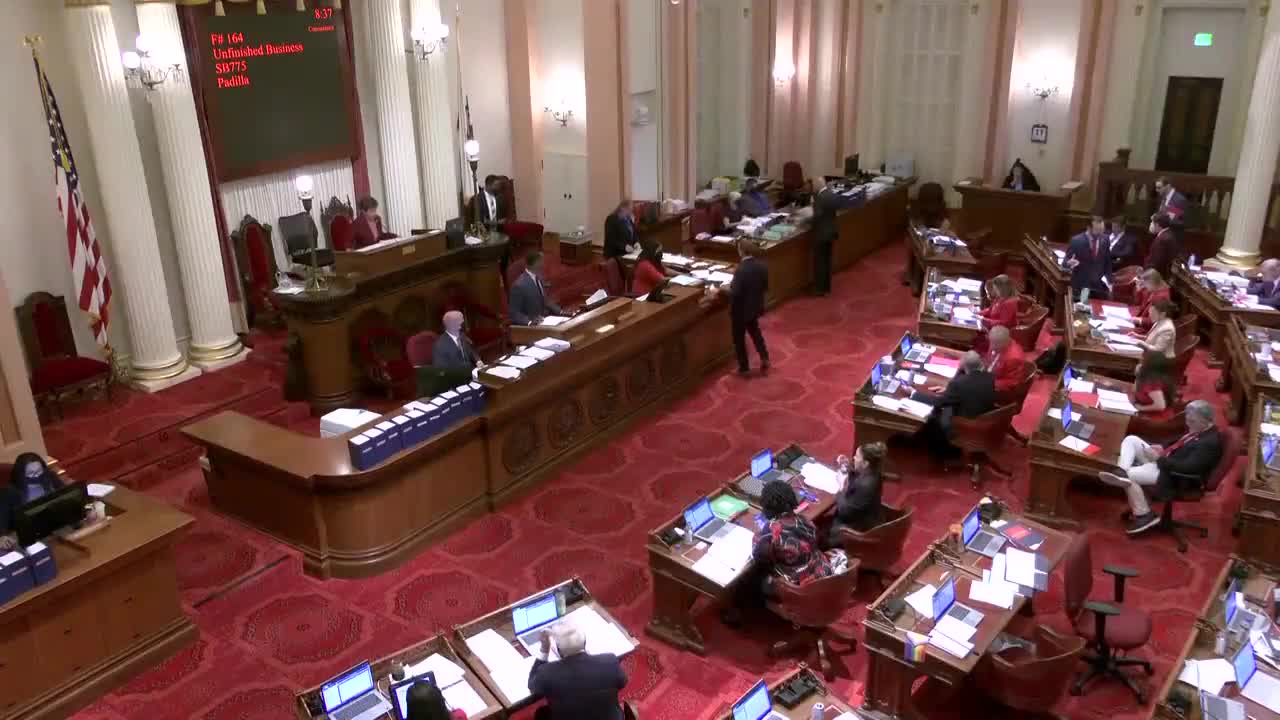 1MIN
Senate Floor
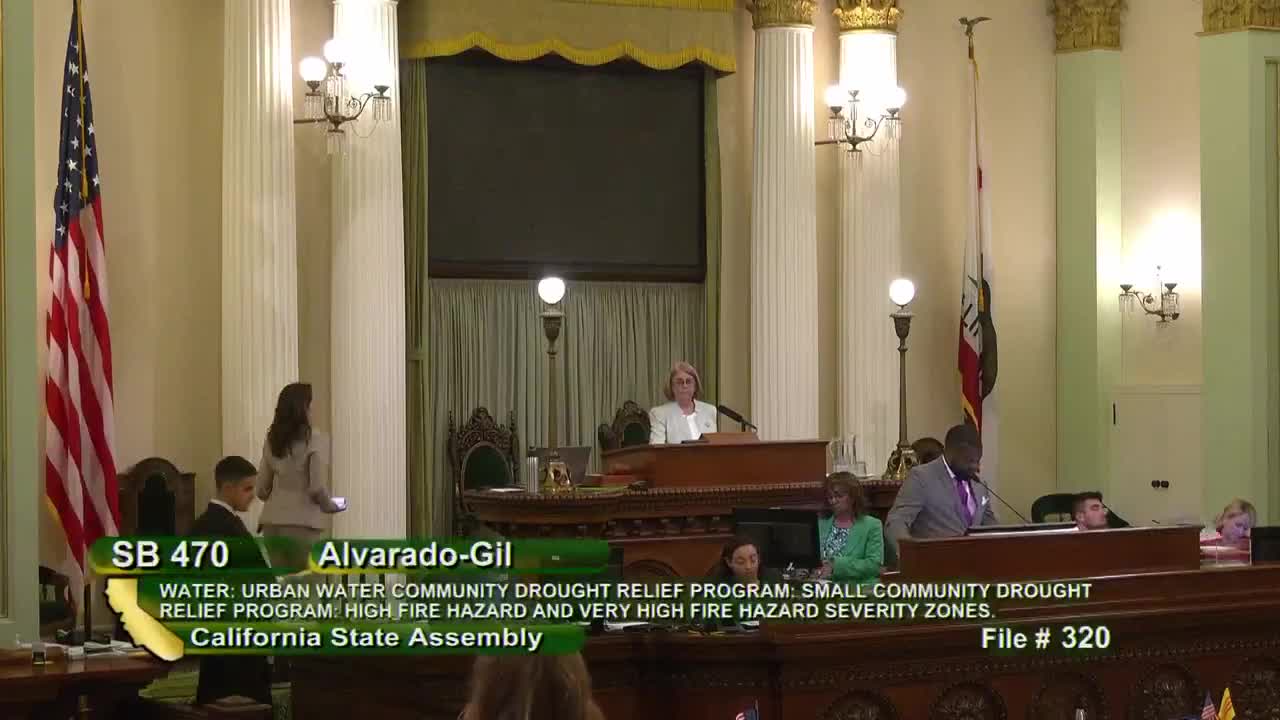 1MIN
Assembly Floor
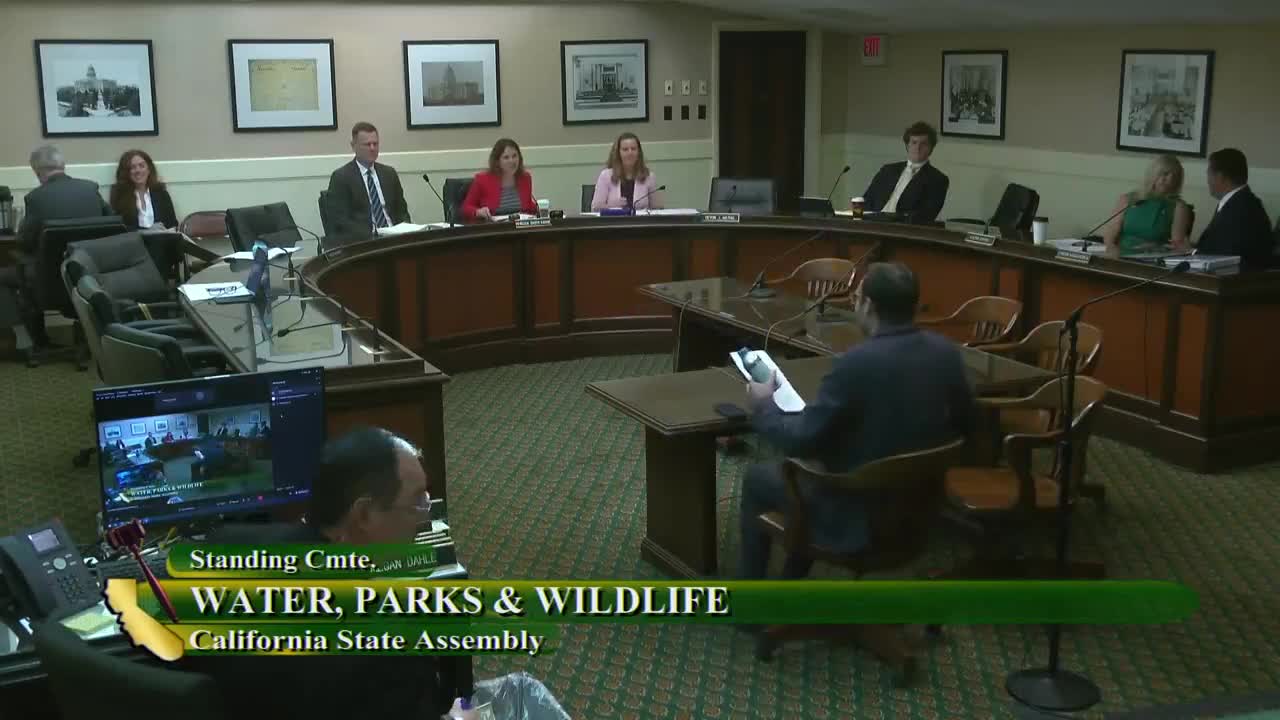 9MIN
Assembly Standing Committee on Water, Parks, and Wildlife
Bill Author


Bill Co-Author(s):