SB 476: Food safety: food handlers.
- Session Year: 2023-2024
- House: Senate
- Latest Version Date: 2023-10-08
Current Status:
Passed
(2023-10-08: Chaptered by Secretary of State. Chapter 610, Statutes of 2023.)
Introduced
In Committee
First Chamber
In Committee
Second Chamber
Enacted
Existing law, the California Retail Food Code, provides for the regulation of health and sanitation standards for retail food facilities by the State Department of Public Health. Existing law, with specified exceptions, requires a food handler to obtain a food handler card within 30 days of their date of hire and to maintain a valid food handler card for the duration of their employment as a food handler. Under existing law, a food handler card is issued only upon successful completion of a food handler training course and examination that meets certain requirements. Existing law requires that at least one food handler training course and examination cost no more than $15, including a food handler card. A violation of the California Retail Food Code is generally a misdemeanor.
This bill would require an employer to consider the time that it takes for the employee to complete the training and the examination as compensable hours worked, for which the employer would pay, and to pay the employee for any necessary expenditures or losses associated with the employee obtaining a food handler card. The bill would require the employer to relieve an employee of all other work duties while the employee is taking the training course and examination. The bill would prohibit an employer from conditioning employment on the applicant or employee having an existing food handler card.
Under existing law, the provisions relating to a food handler card do not apply to a food handler subject to an existing local food handler program that took effect before January 1, 2009.
This bill would make the new provisions described above also applicable to a food handler who is subject to one of those existing programs.
The bill would require the department, by January 1, 2025, to post on its internet website a link to the internet website of certain accredited food handler training programs. The bill would require a local public health department to provide a link to that web page on its own internet website.
By increasing the scope of a crime and creating new duties for local public health departments, the bill would impose a state-mandated local program.
The California Constitution requires the state to reimburse local agencies and school districts for certain costs mandated by the state. Statutory provisions establish procedures for making that reimbursement.
This bill would provide that with regard to certain mandates no reimbursement is required by this act for a specified reason.
With regard to any other mandates, this bill would provide that, if the Commission on State Mandates determines that the bill contains costs so mandated by the state, reimbursement for those costs shall be made pursuant to the statutory provisions noted above.
Existing law, the California Retail Food Code, provides for the regulation of health and sanitation standards for retail food facilities by the State Department of Public Health. Existing law, with specified exceptions, requires a food handler to obtain a food handler card within 30 days of their date of hire and to maintain a valid food handler card for the duration of their employment as a food handler. Under existing law, a food handler card is issued only upon successful completion of a food handler training course and examination that meets certain requirements. Existing law requires that at least one food handler training course and examination cost no more than $15, including a food handler card. A violation of the California Retail Food Code is generally a misdemeanor.
This bill would require an employer to pay the employee for any cost associated with the employee obtaining a food handler card, including, but not limited to, the time it takes for the employee to complete the training, the cost of the food handler certification program, and the time it takes to complete the certification program. consider the time that it takes for the employee to complete the training and the examination as compensable hours worked, for which the employer would pay, and to pay the employee for any necessary expenditures or losses associated with the employee obtaining a food handler card. The bill would require the employer to relieve an employee of all other work duties while the employee is taking the training course and examination. The bill would prohibit an employer from conditioning employment on the applicant or employee having an existing food handler card.
This bill would require the department to make a list of all certified food handler training programs along with the cost of each program available on its internet website by January 1, 2025. The bill would also require local public health departments to provide a link of this page on their internet website or provide the same list on their internet website. By imposing additional duties on local public health departments, this bill would impose a state-mandated local program.The California Constitution requires the state to reimburse local agencies and school districts for certain costs mandated by the state. Statutory provisions establish procedures for making that reimbursement.This bill would provide that, if the Commission on State Mandates determines that the bill contains costs mandated by the state, reimbursement for those costs shall be made pursuant to the statutory provisions noted above.Under existing law, the provisions relating to a food handler card do not apply to a food handler subject to an existing local food handler program that took effect before January 1, 2009.
This bill would make the new provisions described above also applicable to a food handler who is subject to one of those existing programs.
The bill would require the department, by January 1, 2025, to post on its internet website a link to the internet website of certain accredited food handler training programs. The bill would require a local public health department to provide a link to that web page on its own internet website.
By increasing the scope of a crime and creating new duties for local public health departments, the bill would impose a state-mandated local program.
The California Constitution requires the state to reimburse local agencies and school districts for certain costs mandated by the state. Statutory provisions establish procedures for making that reimbursement.
This bill would provide that with regard to certain mandates no reimbursement is required by this act for a specified reason.
With regard to any other mandates, this bill would provide that, if the Commission on State Mandates determines that the bill contains costs so mandated by the state, reimbursement for those costs shall be made pursuant to the statutory provisions noted above.
Existing law, the California Retail Food Code, provides for the regulation of health and sanitation standards for retail food facilities by the State Department of Public Health. Existing law, with specified exceptions, requires a food handler to obtain a food handler card within 30 days of their date of hire and to maintain a valid food handler card for the duration of their employment as a food handler.
This bill would require an employer to pay the employee for any cost associated with the employee obtaining a food handler card, including, but not limited to, the time it takes for the employee to complete the training, the cost of the food handler certification program, and the time it takes to complete the certification program. The bill would require the employer to relieve an employee of all other work duties while the employee is taking the training course and examination. The bill would prohibit an employer from conditioning employment on the applicant or employee having an existing food handler card.
This bill would require the department to make a list of all certified food handler training programs along with the cost of each program available on its internet website by January 1, 2025. The bill would also require local public health departments to provide a link of this page on their internet website or provide the same list on their internet website. By imposing additional duties on local public health departments, this bill would impose a state-mandated local program.
The California Constitution requires the state to reimburse local agencies and school districts for certain costs mandated by the state. Statutory provisions establish procedures for making that reimbursement.
This bill would provide that, if the Commission on State Mandates determines that the bill contains costs mandated by the state, reimbursement for those costs shall be made pursuant to the statutory provisions noted above.
(a)(1)Subject to the exceptions described in subdivision (e), a food handler who is hired prior to June 1, 2011, shall obtain a food handler card on or before July 1, 2011. Subject to the exceptions described in subdivision (e), a food handler who is hired on or after June 1, 2011, shall obtain a food handler card within 30 days after the date of hire. Each food handler shall maintain a valid food handler card for the duration of the food handlers employment as a food handler.
(2)Food handler cards shall be valid for three years from the date of issuance, regardless of whether the food handler changes employers during that period.
(3)A food handler card shall be recognized throughout the state, except in jurisdictions described in subdivision (f).
(b)(1)Prior to January 1, 2012, a food handler may obtain a food handler card from either one of the following:
(A)An American National Standards Institute (ANSI) accredited training provider that meets ASTM International E2659-09 Standard Practice for Certificate Programs.
(B)A food protection manager certification organization described in Section 113947.3.
(2)Commencing January 1, 2012, a food handler shall obtain a food handler card only from an American National Standards Institute (ANSI) accredited training provider that meets ASTM International E2659-09 Standard Practice for Certificate Programs.
(3)A food handler card shall be issued only upon successful completion of a food handler training course and examination that meets at least all of the following requirements:
(A)(i)The course provides basic, introductory instruction on the elements of knowledge described in subdivisions (a), (b), (c), (d), (e), and (g) of Section 113947.2.
(ii)On or before January 1, 2021, the course shall include instruction on both of the following:
(I)The elements of knowledge described in paragraph (1) of subdivision (b) of Section 113947 that are consistent with recommendations from a nationally organized allergy organization.
(II)Safe handling food practices for major food allergens, as defined in Section 113820.5, as they relate to food preparation activities that occur at a food facility, including, but not limited to, training on the avoidance of allergen cross-contamination.
(B)The course and examination is designed to be completed within approximately two and one-half hours.
(C)The examination consists of at least 40 questions regarding the required subject matter.
(D)A minimum score of 70 percent on the examination is required to successfully complete the examination.
(c)The food handler training course and examination may be offered through a trainer-led class and examination, through the use of a computer program or the internet, or through a combination of a trainer-led class and the use of a computer program or the internet. The use of a computer program or the internet shall have sufficient security channels and procedures to guard against fraudulent activity. However, this subdivision shall not be construed to require the presence or participation of a proctor during a food handler training course examination that is provided through a computer program or the internet.
(d)This section shall apply to a food handler who is employed by a food facility, as defined in Section 113790, or an organized camp, as defined in Section 18897, consistent with Section 30730 of Title 17 of the California Code of Regulations.
(e)This section shall not apply to a food handler who is employed by any of the following:
(1)Certified farmers markets.
(2)Commissaries.
(3)Grocery stores, except for separately owned food facilities to which this section otherwise applies that are located in the grocery store. For purposes of this paragraph, grocery store means a store primarily engaged in the retail sale of canned food, dry goods, fresh fruits and vegetables, and fresh meats, fish, and poultry and any area that is not separately owned within the store where food is prepared and served, including a bakery, deli, and meat and seafood counter. Grocery store includes convenience stores.
(4)Licensed health care facilities.
(5)Mobile support units.
(6)Public and private school cafeterias.
(7)Restricted food service facilities.
(8)Retail stores in which a majority of sales are from a pharmacy, as defined in Section 4037 of the Business and Professions Code, and venues with snack bar service in which the majority of sales are from admission tickets, but excluding any area in which restaurant-style sit-down service is provided.
(9)A food facility that provides in-house food safety training to all employees involved in the preparation, storage, or service of food if all of the following conditions are met:
(A)The food facility uses a training course that has been approved for use by the food facility in another state that has adopted the requirements described in Subpart 2-103.11 of the 2001 edition of the model Food Code, not including the April 2004 update, published by the federal Food and Drug Administration.
(B)Upon request, the food facility provides evidence satisfactory to the local enforcement officer demonstrating that the food facility training program has been approved for use in another state pursuant to subparagraph (A).
(C)The training is provided during normal work hours, and at no cost to the employee.
(10)A food facility that is subject to a collective bargaining agreement with its food handlers.
(11)Any city, county, city and county, state, or regional facility used for the confinement of adults or minors, including, but not limited to, a county jail, juvenile hall, camp, ranch, or residential facility.
(12)An elderly nutrition program, administered by the California Department of Aging, pursuant to the Older Americans Act of 1965 (42 U.S.C. Sec. 3001 et seq.), as amended.
(f)The requirements of this section, except for subdivision (i), shall not apply to a food handler subject to an existing local food handler program that took effect prior to January 1, 2009.
(g)Each food facility that employs a food handler subject to the requirements of this section shall maintain records documenting that each food handler employed by the food facility possesses a valid food handler card, and shall provide those records to the local enforcement officer upon request.
(h)(1)By January 1, 2025, the department shall post on its internet website a link to the internet website of ANSI-accredited food handler training programs. A local public health department shall provide a link to that web page on its own internet website.
(2)At least one food handler training course and examination shall cost no more than fifteen dollars ($15), including a food handler card. If a food handler training course and examination is not available at that cost, the requirement to obtain a food handler card imposed by this section shall not apply.
(i)(1)An employer shall consider the time that it takes for the employee to complete the training and the examination as compensable hours worked, for which the employer shall pay and, pursuant to Section 2802 of the Labor Code, shall pay the employee for any necessary expenditures or losses associated with the employee obtaining a food handler card. An employer shall relieve an employee of all other work duties while the employee is taking the training course and examination.
(2)An employer shall not condition employment on an applicant or employee having an existing food handler card.
SEC. 2.No reimbursement is required by this act pursuant to Section 6 of Article XIIIB of the California Constitution for certain costs that may be incurred by a local agency or school district because, in that regard, this act creates a new crime or infraction, eliminates a crime or infraction, or changes the penalty for a crime or infraction, within the meaning of Section 17556 of the Government Code, or changes the definition of a crime within the meaning of Section 6 of Article XIIIB of the California Constitution.
However, if the Commission on State Mandates determines that this act contains other costs mandated by the state, reimbursement to local agencies and school districts for those costs shall be made pursuant to Part 7 (commencing with Section 17500) of Division 4 of Title 2 of the Government Code.
(a)(1)Subject to the exceptions described in subdivision (e), a food handler who is hired prior to June 1, 2011, shall obtain a food handler card on or before July 1, 2011. Subject to the exceptions described in subdivision (e), a food handler who is hired on or after June 1, 2011, shall obtain a food handler card within 30 days after the date of hire. Each food handler shall maintain a valid food handler card for the duration of the food handlers employment as a food handler.
(2)Food handler cards shall be valid for three years from the date of issuance, regardless of whether the food handler changes employers during that period.
(3)A food handler card shall be recognized throughout the state, except in jurisdictions described in subdivision (f).
(b)(1)Prior to January 1, 2012, a food handler may obtain a food handler card from either one of the following:
(A)An American National Standards Institute (ANSI) accredited training provider that meets ASTM International E2659-09 Standard Practice for Certificate Programs.
(B)A food protection manager certification organization described in Section 113947.3.
(2)Commencing January 1, 2012, a food handler shall obtain a food handler card only from an American National Standards Institute (ANSI) accredited training provider that meets ASTM International E2659-09 Standard Practice for Certificate Programs.
(3)A food handler card shall be issued only upon successful completion of a food handler training course and examination that meets at least all of the following requirements:
(A)(i)The course provides basic, introductory instruction on the elements of knowledge described in subdivisions (a), (b), (c), (d), (e), and (g) of Section 113947.2.
(ii)On or before January 1, 2021, the course shall include instruction on both of the following:
(I)The elements of knowledge described in paragraph (1) of subdivision (b) of Section 113947 that are consistent with recommendations from a nationally organized allergy organization.
(II)Safe handling food practices for major food allergens, as defined in Section 113820.5, as they relate to food preparation activities that occur at a food facility, including, but not limited to, training on the avoidance of allergen cross-contamination.
(B)The course and examination is designed to be completed within approximately two and one-half hours.
(C)The examination consists of at least 40 questions regarding the required subject matter.
(D)A minimum score of 70 percent on the examination is required to successfully complete the examination.
(c)The food handler training course and examination may be offered through a trainer-led class and examination, through the use of a computer program or the internet, or through a combination of a trainer-led class and the use of a computer program or the internet. The use of a computer program or the internet shall have sufficient security channels and procedures to guard against fraudulent activity. However, this subdivision shall not be construed to require the presence or participation of a proctor during a food handler training course examination that is provided through a computer program or the internet.
(d)This section shall apply to a food handler who is employed by a food facility, as defined in Section 113790, or an organized camp, as defined in Section 18897, consistent with Section 30730 of Title 17 of the California Code of Regulations.
(e)This section shall not apply to a food handler who is employed by any of the following:
(1)Certified farmers markets.
(2)Commissaries.
(3)Grocery stores, except for separately owned food facilities to which this section otherwise applies that are located in the grocery store. For purposes of this paragraph, grocery store means a store primarily engaged in the retail sale of canned food, dry goods, fresh fruits and vegetables, and fresh meats, fish, and poultry and any area that is not separately owned within the store where food is prepared and served, including a bakery, deli, and meat and seafood counter. Grocery store includes convenience stores.
(4)Licensed health care facilities.
(5)Mobile support units.
(6)Public and private school cafeterias.
(7)Restricted food service facilities.
(8)Retail stores in which a majority of sales are from a pharmacy, as defined in Section 4037 of the Business and Professions Code, and venues with snack bar service in which the majority of sales are from admission tickets, but excluding any area in which restaurant-style sit-down service is provided.
(9)A food facility that provides in-house food safety training to all employees involved in the preparation, storage, or service of food if all of the following conditions are met:
(A)The food facility uses a training course that has been approved for use by the food facility in another state that has adopted the requirements described in Subpart 2-103.11 of the 2001 edition of the model Food Code, not including the April 2004 update, published by the federal Food and Drug Administration.
(B)Upon request, the food facility provides evidence satisfactory to the local enforcement officer demonstrating that the food facility training program has been approved for use in another state pursuant to subparagraph (A).
(C)The training is provided during normal work hours, and at no cost to the employee.
(10)A food facility that is subject to a collective bargaining agreement with its food handlers.
(11)Any city, county, city and county, state, or regional facility used for the confinement of adults or minors, including, but not limited to, a county jail, juvenile hall, camp, ranch, or residential facility.
(12)An elderly nutrition program, administered by the California Department of Aging, pursuant to the Older Americans Act of 1965 (42 U.S.C. Sec. 3001 et seq.), as amended.
(f)The requirements of this section section, except for subdivision (i), shall not apply to a food handler subject to an existing local food handler program that took effect prior to January 1, 2009.
(g)Each food facility that employs a food handler subject to the requirements of this section shall maintain records documenting that each food handler employed by the food facility possesses a valid food handler card, and shall provide those records to the local enforcement officer upon request.
(h)(1)The department shall make a list of all certified food handler training programs along with the cost of each program available on its internet website by January 1, 2025. Local public health departments shall provide a link of this page on their internet website or provide the same list on their internet website.(h)(1)By January 1, 2025, the department shall post on its internet website a link to the internet website of ANSI-accredited food handler training programs. A local public health department shall provide a link to that web page on its own internet website.
(2)At least one food handler training course and examination shall cost no more than fifteen dollars ($15), including a food handler card. If a food handler training course and examination is not available at that cost, the requirement to obtain a food handler card imposed by this section shall not apply.
(i)(1)An employer shall pay the employee for any cost associated with the employee obtaining a food handler card, including, but not limited to, the time it takes for the employee to complete the training, the cost of the food handler certification program, and the time it takes to complete the certification program. An employer shall relieve an employee of all other work duties while the employee is taking the training course and examination.(i)(1)An employer shall consider the time that it takes for the employee to complete the training and the examination as compensable hours worked, for which the employer shall pay and, pursuant to Section 2802 of the Labor Code, shall pay the employee for any necessary expenditures or losses associated with the employee obtaining a food handler card. An employer shall relieve an employee of all other work duties while the employee is taking the training course and examination.
(2)An employer shall not condition employment on an applicant or employee having an existing food handler card.
SEC. 2.If the Commission on State Mandates determines that this act contains costs mandated by the state, reimbursement to local agencies and school districts for those costs shall be made pursuant to Part 7 (commencing with Section 17500) of Division 4 of Title 2 of the Government Code.SEC. 2.No reimbursement is required by this act pursuant to Section 6 of Article XIIIB of the California Constitution for certain costs that may be incurred by a local agency or school district because, in that regard, this act creates a new crime or infraction, eliminates a crime or infraction, or changes the penalty for a crime or infraction, within the meaning of Section 17556 of the Government Code, or changes the definition of a crime within the meaning of Section 6 of Article XIIIB of the California Constitution.
However, if the Commission on State Mandates determines that this act contains other costs mandated by the state, reimbursement to local agencies and school districts for those costs shall be made pursuant to Part 7 (commencing with Section 17500) of Division 4 of Title 2 of the Government Code.
(a)(1)Subject to the exceptions described in subdivision (e), a food handler who is hired prior to June 1, 2011, shall obtain a food handler card on or before July 1, 2011. Subject to the exceptions described in subdivision (e), a food handler who is hired on or after June 1, 2011, shall obtain a food handler card within 30 days after the date of hire. Each food handler shall maintain a valid food handler card for the duration of the food handlers employment as a food handler.
(2)Food handler cards shall be valid for three years from the date of issuance, regardless of whether the food handler changes employers during that period.
(3)A food handler card shall be recognized throughout the state, except in jurisdictions described in subdivision (f).
(b)(1)Prior to January 1, 2012, a food handler may obtain a food handler card from either one of the following:
(A)An American National Standards Institute (ANSI) accredited training provider that meets ASTM International E2659-09 Standard Practice for Certificate Programs.
(B)A food protection manager certification organization described in Section 113947.3.
(2)Commencing January 1, 2012, a food handler shall obtain a food handler card only from an American National Standards Institute (ANSI) accredited training provider that meets ASTM International E2659-09 Standard Practice for Certificate Programs.
(3)A food handler card shall be issued only upon successful completion of a food handler training course and examination that meets at least all of the following requirements:
(A)(i)The course provides basic, introductory instruction on the elements of knowledge described in subdivisions (a), (b), (c), (d), (e), and (g) of Section 113947.2.
(ii)On or before January 1, 2021, the course shall include instruction on both of the following:
(I)The elements of knowledge described in paragraph (1) of subdivision (b) of Section 113947 that are consistent with recommendations from a nationally organized allergy organization.
(II)Safe handling food practices for major food allergens, as defined in Section 113820.5, as they relate to food preparation activities that occur at a food facility, including, but not limited to, training on the avoidance of allergen cross-contamination.
(B)The course and examination is designed to be completed within approximately two and one-half hours.
(C)The examination consists of at least 40 questions regarding the required subject matter.
(D)A minimum score of 70 percent on the examination is required to successfully complete the examination.
(c)The food handler training course and examination may be offered through a trainer-led class and examination, through the use of a computer program or the internet, or through a combination of a trainer-led class and the use of a computer program or the internet. The use of a computer program or the internet shall have sufficient security channels and procedures to guard against fraudulent activity. However, this subdivision shall not be construed to require the presence or participation of a proctor during a food handler training course examination that is provided through a computer program or the internet.
(d)This section shall apply to a food handler who is employed by a food facility, as defined in Section 113790, or an organized camp, as defined in Section 18897, consistent with Section 30730 of Title 17 of the California Code of Regulations.
(e)This section shall not apply to a food handler who is employed by any of the following:
(1)Certified farmers markets.
(2)Commissaries.
(3)Grocery stores, except for separately owned food facilities to which this section otherwise applies that are located in the grocery store. For purposes of this paragraph, grocery store means a store primarily engaged in the retail sale of canned food, dry goods, fresh fruits and vegetables, and fresh meats, fish, and poultry and any area that is not separately owned within the store where food is prepared and served, including a bakery, deli, and meat and seafood counter. Grocery store includes convenience stores.
(4)Licensed health care facilities.
(5)Mobile support units.
(6)Public and private school cafeterias.
(7)Restricted food service facilities.
(8)Retail stores in which a majority of sales are from a pharmacy, as defined in Section 4037 of the Business and Professions Code, and venues with snack bar service in which the majority of sales are from admission tickets, but excluding any area in which restaurant-style sit-down service is provided.
(9)A food facility that provides in-house food safety training to all employees involved in the preparation, storage, or service of food if all of the following conditions are met:
(A)The food facility uses a training course that has been approved for use by the food facility in another state that has adopted the requirements described in Subpart 2-103.11 of the 2001 edition of the model Food Code, not including the April 2004 update, published by the federal Food and Drug Administration.
(B)Upon request, the food facility provides evidence satisfactory to the local enforcement officer demonstrating that the food facility training program has been approved for use in another state pursuant to subparagraph (A).
(C)The training is provided during normal work hours, and at no cost to the employee.
(10)A food facility that is subject to a collective bargaining agreement with its food handlers.
(11)Any city, county, city and county, state, or regional facility used for the confinement of adults or minors, including, but not limited to, a county jail, juvenile hall, camp, ranch, or residential facility.
(12)An elderly nutrition program, administered by the California Department of Aging, pursuant to the Older Americans Act of 1965 (42 U.S.C. Sec. 3001 et seq.), as amended.
(f)The requirements of this section shall not apply to a food handler subject to an existing local food handler program that took effect prior to January 1, 2009.
(g)Each food facility that employs a food handler subject to the requirements of this section shall maintain records documenting that each food handler employed by the food facility possesses a valid food handler card, and shall provide those records to the local enforcement officer upon request.
(h)(1)The department shall make a list of all certified food handler training programs along with the cost of each program available on its internet website by January 1, 2025. Local public health departments shall provide a link of this page on their internet website or provide the same list on their internet website.
(h)(2)At least one food handler training course and examination shall cost no more than fifteen dollars ($15), including a food handler card. If a food handler training course and examination is not available at that cost, the requirement to obtain a food handler card imposed by this section shall not apply.
(i)(1)An employer shall pay the employee for any cost associated with the employee obtaining a food handler card, including, but not limited to, the time it takes for the employee to complete the training, the cost of the food handler certification program, and the time it takes to complete the certification program. An employer shall relieve an employee of all other work duties while the employee is taking the training course and examination.
(2)An employer shall not condition employment on an applicant or employee having an existing food handler card.
SEC. 2.If the Commission on State Mandates determines that this act contains costs mandated by the state, reimbursement to local agencies and school districts for those costs shall be made pursuant to Part 7 (commencing with Section 17500) of Division 4 of Title 2 of the Government Code.
REVISIONS: HeadingLine 3.|
Date
|
Status
|
|---|---|
| Oct 8, 2023 | Chaptered by Secretary of State. Chapter 610, Statutes of 2023. |
| Oct 8, 2023 | Approved by the Governor. |
| Sep 20, 2023 | Enrolled and presented to the Governor at 4:30 p.m. |
| Sep 13, 2023 | Assembly amendments concurred in. (Ayes 30. Noes 8. Page 2744.) Ordered to engrossing and enrolling. |
| Sep 12, 2023 | In Senate. Concurrence in Assembly amendments pending. |
| Sep 12, 2023 | Read third time. Passed. (Ayes 56. Noes 18. Page 3275.) Ordered to the Senate. |
| Sep 7, 2023 | Read third time and amended. |
| Sep 7, 2023 | Ordered to third reading. |
| Sep 7, 2023 | Assembly Rule 69 suspended. (Ayes 62. Noes 15. Page 3010.) |
| Sep 5, 2023 | Read second time. Ordered to third reading. |
| Sep 1, 2023 | From committee: Do pass. (Ayes 12. Noes 4.) (September 1). |
| Jul 12, 2023 | July 12 set for first hearing. Placed on APPR. suspense file. |
| Jun 21, 2023 | Coauthors revised. |
| Jun 21, 2023 | From committee: Do pass and re-refer to Com. on APPR. (Ayes 10. Noes 3.) (June 20). Re-referred to Com. on APPR. |
| Jun 8, 2023 | Referred to Com. on HEALTH. |
| May 31, 2023 | In Assembly. Read first time. Held at Desk. |
| May 30, 2023 | Read third time. Passed. (Ayes 30. Noes 9. Page 1346.) Ordered to the Assembly. |
| May 18, 2023 | Read second time. Ordered to third reading. |
| May 18, 2023 | From committee: Do pass. (Ayes 5. Noes 2. Page 1171.) (May 18). |
| May 12, 2023 | Set for hearing May 18. |
| Apr 10, 2023 | April 10 hearing: Placed on APPR suspense file. |
| Mar 28, 2023 | Set for hearing April 10. |
| Mar 23, 2023 | From committee: Do pass and re-refer to Com. on APPR. (Ayes 9. Noes 2. Page 473.) (March 22). Re-referred to Com. on APPR. |
| Mar 9, 2023 | Set for hearing March 22. |
| Feb 22, 2023 | Referred to Com. on HEALTH. |
| Feb 15, 2023 | From printer. May be acted upon on or after March 17. |
| Feb 14, 2023 | Introduced. Read first time. To Com. on RLS. for assignment. To print. |
|
Date
|
Description
|
Location
|
Votes
|
|
|---|---|---|---|---|
| Sep 13, 2023 | Unfinished Business SB476 Limón et al. Concurrence | Senate Floor |
Passed |
|
| Sep 12, 2023 | SB 476 Limón Senate Third Reading By Friedman | Assembly Floor |
Passed |
|
| Sep 1, 2023 | Do pass. | Assembly Standing Committee on Appropriations |
Passed |
|
| Jun 20, 2023 | Do pass and be re-referred to the Committee on [Appropriations] | Assembly Standing Committee on Health |
Passed |
|
| May 30, 2023 | Senate 3rd Reading SB476 Limón et al. | Senate Floor |
Passed |
|
| May 18, 2023 | Do pass | Senate Standing Committee on Appropriations |
Passed |
|
| Apr 10, 2023 | Placed on suspense file | Senate Standing Committee on Appropriations |
Passed |
|
| Mar 22, 2023 | Do pass, but first be re-referred to the Committee on [Appropriations] | Senate Standing Committee on Health |
Passed |
This list shows positions taken on this bill by organizations on the date displayed, which is linked to the original source.
Positions by individuals are not included.
|
Organization
|
Position
|
Date
|
|---|---|---|
| California Asian Chamber of Commerce | ** Against | |
| California Chamber Of Commerce | ** Against | |
| California Conference Board Of The Amalgamated Transit Union | ** Support | |
| California Conference Of Machinists | ** Support | |
| California Distributors Association | ** Support | |
| California Employment Lawyers Association | ** Support | |
| California Immigrant Policy Center | ** Support | |
| California Labor Federation | ** Support | |
| California Nurses Association | ** Support | |
| California Restaurant Association | ** Against | |
| California Retailers Association | ** Against | |
| California School Employees Association | ** Support | |
| California Teamsters Public Affairs Council | ** Support | |
| California Work & Family Coalition | ** Support | |
| Consumer Attorneys Of California | ** Support | |
| Daytrip Restaurant | * Support | Jun 20, 2023 |
| Department Of Finance | ** Against | |
| Engineers and Scientists of California, IFPTE Local 20 | ** Support | |
| Equal Rights Advocates | ** Support | |
| Greater Sacramento Urban League | ** Support | |
| Human Impact Partners | ** Support | |
| Legal Aid At Work | * Support | Mar 22, 2023 |
| McDonalds | * Support | Mar 22, 2023 |
| National Council of Jewish Women-California | ** Support | |
| One Fair Wage | ** Support | |
| Parent Voices California | ** Support | |
| RAISE: High Road Restaurants | * Support | Mar 22, 2023 |
| SEIU California | ** Support | |
| UC Berkeley | * Support | Mar 22, 2023 |
| Unite Here | ** Support | |
| United Food And Commercial Workers, Western States Council | ** Support | |
| Utility Workers Union of America | ** Support |
SENATE RULES COMMITTEE Office of Senate Floor Analyses (916) 651-1520 Fax: (916) 327-4478 | SB 476 |
UNFINISHED BUSINESS
Bill No: SB 476
Author: Limón (D), et al.
Amended: 9/7/23
Vote: 21
SENATE HEALTH COMMITTEE: 9-2, 3/22/23
AYES: Eggman, Gonzalez, Hurtado, Limón, Menjivar, Roth, Rubio, Wahab, Wiener
NOES: Nguyen, Glazer
NO VOTE RECORDED: Grove
SENATE APPROPRIATIONS COMMITTEE: 5-2, 5/18/23
AYES: Portantino, Ashby, Bradford, Wahab, Wiener
NOES: Jones, Seyarto
SENATE FLOOR: 30-9, 5/30/23
AYES: Allen, Archuleta, Ashby, Atkins, Becker, Blakespear, Bradford, Caballero, Cortese, Dodd, Durazo, Eggman, Gonzalez, Hurtado, Laird, Limón, McGuire, Menjivar, Min, Newman, Padilla, Portantino, Roth, Rubio, Skinner, Smallwood-Cuevas, Stern, Umberg, Wahab, Wiener
NOES: Dahle, Glazer, Grove, Jones, Nguyen, Niello, Ochoa Bogh, Seyarto, Wilk
NO VOTE RECORDED: Alvarado-Gil
ASSEMBLY FLOOR: 56-18, 9/12/23 - See last page for vote
SUBJECT: Food safety: food handlers
SOURCE: California Labor Federation
One Fair Wage
SEIU California
DIGEST:
This bill requires food facility employers to pay an employee for any cost associated with the employee obtaining a food handler card, including considering the time it takes for the employee to complete the training and certification program to be compensable as “hours worked.”
Assembly Amendments make technical and clarifying changes, including specifying that the time it takes for the employee to complete the training and examination is considered “hours worked” for compensation purposes.
ANALYSIS:
Existing law:
- Establishes the California Retail Food Code (CalCode) to provide for the regulation of retail food facilities. Health and sanitation standards are established at the state level through the CalCode, while enforcement is charged to local agencies, carried out by the 58 county environmental health departments, and four city environmental health departments (Berkeley, Long Beach, Pasadena, and Vernon). [HSC §113700, et seq.]
- Defines a “food facility” as an operation that stores, prepares, packages, serves, vends, or otherwise provides food for human consumption at the retail level. Excludes various entities from the definition of a “food facility,” including a cottage food operation, and a church, private club, or other nonprofit association that gives or sells food to its members and guests, and not to the general public, at an event that occurs no more than three days in any 90 day period. [HSC §113789]
- Defines “food handler” as an individual who is involved in the preparation, storage, or service of food in a food facility. [HSC §113790]
- Requires all food handlers to obtain a “food handler card” within 30 days from the date of hire, and to maintain a valid food handler card for the duration of employment. Requires the food handler course to provide basic, introductory instructions on specified elements of knowledge, including foodborne illness, the relationship between personal hygiene and food safety, methods of preventing food contamination, and procedures for cleaning and sanitizing equipment. [HSC §113948]
- Requires food facilities to have at least one person who has successfully passed an approved and accredited food safety certification examination, but does not require this person to be present at the food facility during all hours of operation. Specifies the requirements for the food safety certification examination, which, in addition to a more detailed version of all of the elements of knowledge for the food handler card specified in 4) above, is required to include problems and potential solutions associated with facility and equipment design, and describing foods identified as major food allergens and the symptoms that a major food allergen could cause in a sensitive individual. [HSC §113947.1, §113947.2]
- Requires an employer to indemnify his or her employee for all necessary expenditures or losses incurred by the employee in direct consequence of the discharge of his or her duties, or of his or her obedience to the directions of the employer. [LAB §2802]
- Specifies that the requirement in 6) above applies to any expense or cost of any employer-provided or employer-required educational program or training for an employee providing direct patient care, but excludes from the definition of “employer-provided or employer-required educational program or training” the requirements for a license, registration, or certification necessary to legally practice in a specific employee classification to provide direct patient care. [LAB §2802.1]
- Requires an employer having five or more employees to provide at least two hours of classroom or other effective interactive training and education regarding sexual harassment to all supervisory employees, and at least one hour to all nonsupervisory employees, at least once every two years. [GOV §12950.1]
This bill:
- Requires employers to consider the time it takes for the employee to complete the training and examination as compensable “hours worked,” for which the employer is required to pay, and to also pay the employee for any necessary expenditures or losses associated with the employee obtaining a food handler card. Requires an employer to relieve an employee of all other work duties while the employee is taking the training course and examination.
- Prohibits employers from conditioning employment on an applicant or employee having an existing food handler card.
- Requires the California Department of Public Health (CDPH) to post on its internet website a link to the website of accredited food handler training programs by January 1, 2025. Requires local public health departments to provide the same link on their website.
Comments
- Author’s statement. According to the author, currently in California, all foodservice workers are required to undergo a food safety training and receive a food handler card. A recent New York Times article discovered that one of the most popular training services, ServSafe, was using some of the revenue to fund lobbying campaigns, often aimed at suppressing the wages of workers. ServSafe is the dominate food handling training company in the country controlling an estimated 70% of the market. They make money by charging workers for food handling trainings in all 50 states. This bill requires employers pay for the food handler training, and the employees time within 30 days after hire. It also spurs more industry competition by requiring CDPH to make public all accredited food handler training providers and the cost of their trainings on their website. Workers and employers can choose the best and most affordable or free trainer from a public list.
- Food handler certification. SB 602 (Padilla, Chapter 309, Statutes of 2010) was enacted to require food handlers to obtain food handler cards. The California Restaurant Association was identified as the sponsor of this legislation. The intent of food handler certification is to provide employees who handle non-prepackaged food with an overview of key elements of food safety in order to prevent the transmission of foodborne illnesses. Both the course and test for food handlers is required to be available online, and the test does not require a proctor. Topics covered include foodborne illness, time and temperature control, personal hygiene, cross-contamination prevention, and proper cleaning and sanitizing techniques. To obtain a food handler card, applicants are required to take the food handler training course and pass the assessment test with a score of at least 70%. The food handler test and card are required to be provided by a training provider that is accredited by the American National Standards Institute (ANSI), and at least one vendor is required to offer the course for $15 or less. There are many ANSI-accredited food handler training providers, and a number of them offer the course and card for around $10. Food handler cards are valid for three years. The law requiring food facilities to have all food handlers obtain a food handler card does contain some exemptions, including those working in temporary food facilities, grocery stores, unionized food facilities, and food facilities with in-house training approved in another state (many chain restaurants, such as Burger King, Denny’s, and McDonald’s, are exempted under this provision). Additionally, food handlers that were subject to pre-existing local food handler programs in the counties of Riverside, San Bernardino, and San Diego are exempted.
- Who pays for training requirements in employment settings? Generally speaking, if an employer requires employees to obtain training, the employer is required to pay for that training, which is both a federal requirement under the Fair Labor Standards Act, as well as a state requirement under Labor Code Section 2802 (see Existing Law #6) above). However, if a certification is required by the state in order to be employed in a given employment category, there is generally no requirement that an employer pay for training leading to licensure or certification. According to an opinion issued by the Division of Labor Standards Enforcement (DLSE) of the Department of Industrial Relations concerning whether an employer must pay for the cost of a class that an employee had to take in order to retain their job selling life insurance, DLSE stated that “While the license may be a requirement of the employment, it is not the type of cost encompassed by Labor Code §2802. The most important aspect of licensure is that it is required by the state or locality as a result of public policy. It is the employee who must be licensed and unless there is a specific statute which requires the employer to assume part of the cost, the cost of licensing must be borne by the employee.”
However, there are numerous examples of laws or regulations where the state requires the employer to provide training, and it is clear that the employer is required to pay for the cost of this training. One example is the requirement that employers with five or more employees provide sexual harassment training. Additionally, there is a long list of various training requirements under California’s Division of Occupational Health and Safety, specific to different types of industries. These training requirements are designed to ensure safe practices at those places of employment, and employers are obligated to provide the training at the employer’s cost. The key distinction in these cases where the state requires training is that the statute or regulation makes it clear the burden is on the employer to provide the training, while the statute on food handlers is structured so that the burden was placed on the worker to obtain the certificate.
- New York Times article on ServSafe food handler certification program. The New York Times (NYT) published on article on January 17, 2023, entitled, “How Restaurant Workers Help Pay for Lobbying to Keep Their Wages Low.” According to the article, when new restaurant workers pay $15 to take the ServSafe online class in food safety, they are also helping to fund a nationwide lobbying campaign to keep their own wages from increasing. The article states that ServSafe doubles as a fund-raising arm of the National Restaurant Association (NRA), which has spent decades fighting increases to the minimum wage at the state and federal levels. According to the NYT, first, in 2007, the NRA took control of a training business, then they helped lobby states to mandate the kind of training they already provided, producing a flood of paying customers. According to the NYT, more than 3.6 million workers have taken this training, providing about $25 million in revenue to the restaurant industry’s lobbying arm since 2010, which was more than the NRA spent on lobbying in the same period based on filings with the Internal Revenue Service. The NYT article stated that other companies also offer this training, but cited restaurant industry veterans as saying that ServSafe is the dominant force in the market. The article quoted someone who runs a competing food handler program as stating that he believed ServeSafe had at least 70% of the market.
The NRA published a rebuttal of the article on its website entitled “6 Things the New York Times Got Wrong,” which included the following primary points: (a) the ServSafe training fees are used across the association for many purposes, not just for lobbying on certain topics; (b) restaurant workers are not required to choose ServSafe products and have their choice of where to obtain food handler training, and the costs are often reimbursed by employers; (c) NRA has never shied away from its connection to ServSafe, and are proud of its long history in helping prevent the risk of foodborne illness; and, (d) the NRA did not lobby for food handler mandates in any state, and believes food safety training is essential to the safety of everyone coming to a restaurant.
Related/Prior Legislation
AB 1532 (Bauer-Kahan, Chapter 131, Statutes of 2019) enacted the Natalie Giorgi Sunshine Act to require the food handler training course to include instructions on safe handling food practices for major food allergens.
SB 1067 (Huff, Chapter 195, Statutes of 2016) required the food safety certification examination, which must be completed by at least one person at every retail food facility, to include major food allergens and the symptoms that these allergens could cause in individuals who have allergic reactions. Revised and recasted provisions of law governing the serving of raw and undercooked meat, and makes various other updates and minor changes to the laws governing retail food facilities.
SB 602 (Padilla, Chapter 309, Statutes of 2010) required a food handler, as defined, to obtain a food handler card within 30 days from the date of hire at a food facility, with specified exceptions, and required at least one of the accredited food safety certification examinations to be offered for no more than $15.
AB 1978 (Campbell, Chapter 72, Statutes of 1998) required food facilities to have an owner or employee who has successfully passed an approved and accredited food safety certification examination. Required at least one exam to cost no more than $60 including the certificate.
FISCAL EFFECT: Appropriation: No Fiscal Com.: Yes Local: Yes
According to the Assembly Appropriations Committee, CDPH estimates annual costs of $159,000 to develop and continuously update the list of ANSI-accredited food handler training programs (General Fund).
SUPPORT: (Verified 9/12/23)
California Labor Federation (co-source)
One Fair Wage (co-source)
SEIU California (co-source)
California Conference Board of the Amalgamated Transit Union
California Conference of Machinists
California Employment Lawyers Association
California Immigrant Policy Center
California Nurses Association
California School Employees Association
California Teamsters Public Affairs Council
California Work & Family Coalition
Consumer Attorneys of California
Engineers and Scientists of California, IFPTE Local 20
Equal Rights Advocates
Greater Sacramento Urban League
Human Impact Partners
National Council of Jewish Women-California
Parent Voices California
UNITE HERE
United Food and Commercial Workers, Western States Council
Utility Workers Union of America
OPPOSITION: (Verified 9/12/23)
California Asian Chamber of Commerce
California Chamber of Commerce
California Restaurant Association
California Retailers Association
Department of Finance
ARGUMENTS IN SUPPORT: This bill is co-sponsored by One Fair Wage (OFW), the California Labor Federation (CLF), and the SEIU California. OFW states that it is a national organization of nearly 300,000 restaurant and service workers and 2,500 restaurant owners all working together to raise wages and working conditions in the service sector and to end all subminimum wages in the United States. OFW states that it helped expose the NRA’s use of worker money to fund their national lobbying campaigns via the NYT article. OFW pointed to the NYT’s finding that from 2007, when NRA bought ServSafe, to 2021, the NRA’s spending on lobbying and politics has doubled. OFW states that the increase in funding is correlated with states passing food handler card laws requiring workers to take trainings. OFW states this bill will stop the egregious misuse of worker’s hard-earned money by an employer trade association to lobby against higher wages and better conditions. This bill will require employers to pay for workers’ food handler training time and the associated training fees. It also spurs more industry competition by requiring the CDPH to make public all accredited food handler training providers and the cost of their trainings on their website. CLF makes similar arguments, stating that food service workers across California were deceived, and that without their knowledge or consent, workers paid $25 million of their own money to fund corporate lobbying. CLF argues this bill rights this wrong by putting an end to worker funding of corporate lobbying by requiring employers to pay for mandatory food handler training, instead of putting that burden on the workers. SEIU California states this bill balances public health with the urgent need to prevent corporate fundraising off the backs of workers.
ARGUMENTS IN OPPOSITION: The California Asian Chamber of Commerce, California Retailers Association, California Restaurant Association and the California Chamber of Commerce submitted a joint letter of opposition to this bill, stating that it imposes significant new costs on restaurant employers at a time when they are still dealing with pandemic-related losses. Opponents state that at the time the California legislature enacted the food handler card law, three southern California counties had food card certification requirements for restaurant workers, which were costly and required in-classroom training and proctored tests. Other counties were considering their own certification program, potentially creating a patchwork of expensive and disparate requirements county by county. The author of SB 602 from 2010 worked with stakeholders to develop the framework for the food handler card legislation, and one of the important components was that the food handler card was the property of the worker and would be compliant for work in any retail food establishment. This was deemed an equitable solution, and was also consistent with state guidance on when employers must reimburse workers for work-related expenses. According to opponents, the DLSE distinguishes between training costs required by law, such as a license required by the state, versus employer-required training. Opponents state that since the food handler card is required by the state, it has been the responsibility of individuals who work in food service to obtain the certification/training. SB 602 created consistency in food safety training requirements throughout the state, allowed the food card to travel with the employee between jobs, and combatted against expensive, in-person training by allowing online training and requiring a test to be available for $15 or less. Opponents state that neighborhood restaurants continue to face operating challenges including workforce shortages, supply chain issues, and inflationary costs that haven’t been seen in 40 years. All of this is in addition to the financial debt that was incurred during the pandemic due to government ordered restaurant closures and new operational requirements. Any new cost increase will create further strain as restaurants simply try to get back on a solid financial and operational footing. The Department of Finance opposes this bill because it results in ongoing General Fund impacts not included in the Administration’s spending plan.
ASSEMBLY FLOOR: 56-18, 9/12/23
AYES: Addis, Aguiar-Curry, Alvarez, Arambula, Bains, Bauer-Kahan, Bennett, Berman, Boerner, Bonta, Bryan, Calderon, Juan Carrillo, Wendy Carrillo, Cervantes, Connolly, Mike Fong, Friedman, Gabriel, Garcia, Gipson, Grayson, Haney, Hart, Holden, Irwin, Jackson, Jones-Sawyer, Kalra, Lee, Low, Maienschein, McCarty, McKinnor, Muratsuchi, Stephanie Nguyen, Ortega, Pacheco, Papan, Pellerin, Petrie-Norris, Quirk-Silva, Rendon, Reyes, Luz Rivas, Blanca Rubio, Santiago, Soria, Ting, Ward, Weber, Wicks, Wilson, Wood, Zbur, Robert Rivas
NOES: Alanis, Chen, Megan Dahle, Davies, Dixon, Essayli, Flora, Vince Fong, Gallagher, Hoover, Lackey, Mathis, Jim Patterson, Joe Patterson, Sanchez, Ta, Waldron, Wallis
NO VOTE RECORDED: Lowenthal, Ramos, Rodriguez, Schiavo, Valencia, Villapudua
Prepared by: Vincent D. Marchand / HEALTH / (916) 651-4111
9/12/23 19:33:26
**** END ****
SENATE THIRD READING
STR Bill Id:SB 476
Author:(Limón)
As Amended Ver:September 7, 2023
Majority vote
SUMMARY
Requires the Department of Public Health (DPH), by January 1, 2025 to post on its internet website a link to the internet website of an American National Standards Institute-accredited food handler training programs. Requires a local public health department to provide a link to that web page on its own internet website. Requires an employer to consider the time that it takes for the employee to complete the food handler training and the examination as compensable "hours worked," requiring the employer to pay according to existing Labor Code provisions, and to pay the employee for any necessary expenditures or losses associated with the employee obtaining a food handler card. Requires an employer to relieve an employee of all other work duties, while the employee is taking the training and examination.
Major Provisions
COMMENTS
SB 602 (Padilla), Chapter 309, Statutes of 2010, sponsored by the California Restaurant Association (CRA), requires food handlers to obtain food handler cards. A food handler card can only be issued if the food handler completes a training course and examination that meets specified requirements. The intent of food handler certification is to provide employees who handle non-prepackaged food with an overview of key elements of food safety in order to prevent the transmission of foodborne illnesses. Both the course and test for food handlers is required to be available online, and the test does not require a proctor. Topics covered include foodborne illness, time and temperature control, personal hygiene, cross-contamination prevention, and proper cleaning and sanitizing techniques. To obtain a food handler card, applicants are required to take the food handler training course and pass the assessment test with a score of at least 70%. The food handler test and card are required to be provided by a training provider that is accredited by American National Standards Institute (ANSI), and at least one vendor is required to offer the course for $15 or less. There are many ANSI-accredited food handler training providers, and a number of them offer the course and card for around $10. Food handler cards are valid for three years. The law requiring food facilities to have all food handlers obtain a food handler card does contain some exemptions, including those working in temporary food facilities, grocery stores, unionized food facilities, and food facilities with in-house training approved in another state (many chain restaurants, such as Burger King, Denny's, and McDonald's, are exempted under this provision). Additionally, food handlers that were subject to pre-existing local food handler programs in the counties of Riverside, San Bernardino, and San Diego are exempted. The restaurant worker generally pays for obtaining a food handler card.
New York Times (NYT) article on ServSafe food handler certification program. On January 17, 2023, the NYT published "How Restaurant Workers Help Pay for Lobbying to Keep Their Wages Low." According to the article, when new restaurant workers pay $15 to take the ServSafe online class in food safety, they are also helping to fund a nationwide lobbying campaign to keep their own wages from increasing. The article states that ServSafe doubles as a fund-raising arm of the National Restaurant Association (NRA), which has spent decades fighting increases to the minimum wage at the state and federal levels. According to the NYT, first, in 2007, the NRA took control of a training business, then they helped lobby states to mandate the kind of training they already provided, producing a flood of paying customers. According to the NYT, more than 3.6 million workers have taken this training, providing about $25 million in revenue to the restaurant industry's lobbying arm since 2010, which was more than the NRA spent on lobbying in the same period based on filings with the Internal Revenue Service. The NYT article stated that other companies also offer this training, but cited restaurant industry veterans as saying that ServSafe is the dominant force in the market. The article quoted someone who runs a competing food handler program as stating that he believed ServeSafe had at least 70% of the market.
The NRA published a rebuttal of the article on its website entitled "6 Things the New York Times Got Wrong," which included the following primary points: 1) the ServSafe training fees are used across the association for many purposes, not just for lobbying on certain topics; 2) restaurant workers are not required to choose ServSafe products and have their choice of where to obtain food handler training, and the costs are often reimbursed by employers; 3) NRA has never shied away from its connection to ServSafe, and are proud of its long history in helping prevent the risk of foodborne illness; and, 4) the NRA did not lobby for food handler mandates in any state, and believes food safety training is essential to the safety of everyone coming to a restaurant.
According to the Author
Currently, in California all foodservice workers are required to undergo a food safety training and receive a food handler card. A recent NYT article revealed that one of the most popular training services, ServSafe, was using some of the revenue to fund lobbying campaigns, often aimed at suppressing the wages of workers. ServSafe is the dominant food handling training company in the country controlling an estimated 70 percent of the market. They make money by charging workers for food handling trainings in all 50 states. This bill would require employers pay for the food handler training, and the employees time within 30 days after hire. It also spurs more industry competition by requiring DPH to make public all accredited food handler training providers and the cost of their trainings on their website. The author concludes workers and employers can choose the best and most affordable or free trainer from a public list.
Arguments in Support
The California Labor Federation (CLF), One Fair Wage, and the Service Employees International Union are the sponsors of this bill. They state that this bill prevents employers from using workers' money for corporate lobbying purposes; and, brings transparency to the food handler training industry to give workers and employers more choice in training providers. CLF points out that the NYT article referenced above exposed how the National Restaurant Association "runs a racket to use worker's wages to fund lobbying campaign against legislation like wage increases and paid sick days. Workers have collectively paid $25 million to ServSafe for training without knowing their money was being used against them." CLF concludes that this bill will put an end to workers funding of corporate lobbying, and increases transparency by having DPH post accredited food handler trainers on their website along with the cost of training, increasing both worker and employer choice.
Arguments in Opposition
The CRA and the California Chamber of Commerce oppose this bill because this bill forces employers to pay for the existing mandated food safety training, as well as the time required for team members to complete the training. They state this bill imposes significant new costs on restaurant employers at a time when they are still dealing with pandemic-related losses. They point out that Neighborhood restaurants continue to face operating challenges including workforce shortages, supply chain issues, and inflationary costs that have not been seen in 40 years. All of this is in addition to the financial debt that was incurred during the pandemic due to government ordered restaurant closures and new operational requirements. They conclude that any new cost increase will create further strain as restaurants simply try to get back on a solid financial and operational footing.
FISCAL COMMENTS
According to the Assembly Appropriations Committee, DPH estimates annual costs of $159,000 to develop and continuously update the list of ANSI-accredited food handler training programs (General Fund).
VOTES
SENATE FLOOR: 30-9-1
YES: Allen, Archuleta, Ashby, Atkins, Becker, Blakespear, Bradford, Caballero, Cortese, Dodd, Durazo, Eggman, Gonzalez, Hurtado, Laird, Limón, McGuire, Menjivar, Min, Newman, Padilla, Portantino, Roth, Rubio, Skinner, Smallwood-Cuevas, Stern, Umberg, Wahab, Wiener
NO: Dahle, Glazer, Grove, Jones, Nguyen, Niello, Ochoa Bogh, Seyarto, Wilk
ABS, ABST OR NV: Alvarado-Gil
ASM HEALTH: 10-3-2
YES: Wood, Aguiar-Curry, Arambula, Boerner, Wendy Carrillo, Maienschein, McCarty, Rodriguez, Santiago, Weber
NO: Waldron, Vince Fong, Joe Patterson
ABS, ABST OR NV: Flora, Villapudua
ASM APPROPRIATIONS: 12-4-0
YES: Holden, Bryan, Calderon, Wendy Carrillo, Mike Fong, Hart, Lowenthal, Papan, Pellerin, Soria, Weber, Wilson
NO: Megan Dahle, Dixon, Mathis, Sanchez
UPDATED
VERSION: September 7, 2023
CONSULTANT: Kristene Mapile / HEALTH / (916) 319-2097 FN: 0001950
SENATE THIRD READING
STR Bill Id:SB 476
Author:(Limón)
As Introduced Ver:February 14, 2023
Majority vote
SUMMARY
Requires an employer to pay for the cost of a food handler card and for any cost associated with obtaining a food handler card; prohibits an employer from conditioning employment on an applicant or employee having an existing food handler card; and, requires the Department of Public Health (DPH) to make a list and the cost of all certified food handler training programs on its internet website, and for local public health departments to also make this information available on their internet website.
Major Provisions
COMMENTS
SB 602 (Padilla), Chapter 309, Statutes of 2010, sponsored by the California Restaurant Association (CRA), requires food handlers to obtain food handler cards. A food handler card can only be issued if the food handler completes a training course and examination that meets specified requirements. The intent of food handler certification is to provide employees who handle non-prepackaged food with an overview of key elements of food safety in order to prevent the transmission of foodborne illnesses. Both the course and test for food handlers is required to be available online, and the test does not require a proctor. Topics covered include foodborne illness, time and temperature control, personal hygiene, cross-contamination prevention, and proper cleaning and sanitizing techniques. To obtain a food handler card, applicants are required to take the food handler training course and pass the assessment test with a score of at least 70%. The food handler test and card are required to be provided by a training provider that is accredited by American National Standards Institute (ANSI), and at least one vendor is required to offer the course for $15 or less. There are many ANSI-accredited food handler training providers, and a number of them offer the course and card for around $10. Food handler cards are valid for three years. The law requiring food facilities to have all food handlers obtain a food handler card does contain some exemptions, including those working in temporary food facilities, grocery stores, unionized food facilities, and food facilities with in-house training approved in another state (many chain restaurants, such as Burger King, Denny's, and McDonald’s, are exempted under this provision). Additionally, food handlers that were subject to pre-existing local food handler programs in the counties of Riverside, San Bernardino, and San Diego are exempted. The restaurant worker generally pays for obtaining a food handler card.
New York Times (NYT) article on ServSafe food handler certification program. On January 17, 2023, the NYT published "How Restaurant Workers Help Pay for Lobbying to Keep Their Wages Low." According to the article, when new restaurant workers pay $15 to take the ServSafe online class in food safety, they are also helping to fund a nationwide lobbying campaign to keep their own wages from increasing. The article states that ServSafe doubles as a fund-raising arm of the National Restaurant Association (NRA), which has spent decades fighting increases to the minimum wage at the state and federal levels. According to the NYT, first, in 2007, the NRA took control of a training business, then they helped lobby states to mandate the kind of training they already provided, producing a flood of paying customers. According to the NYT, more than 3.6 million workers have taken this training, providing about $25 million in revenue to the restaurant industry's lobbying arm since 2010, which was more than the NRA spent on lobbying in the same period based on filings with the Internal Revenue Service. The NYT article stated that other companies also offer this training, but cited restaurant industry veterans as saying that ServSafe is the dominant force in the market. The article quoted someone who runs a competing food handler program as stating that he believed ServeSafe had at least 70% of the market.
The NRA published a rebuttal of the article on its website entitled "6 Things the New York Times Got Wrong," which included the following primary points: 1) the ServSafe training fees are used across the association for many purposes, not just for lobbying on certain topics; 2) restaurant workers are not required to choose ServSafe products and have their choice of where to obtain food handler training, and the costs are often reimbursed by employers; 3) NRA has never shied away from its connection to ServSafe, and are proud of its long history in helping prevent the risk of foodborne illness; and, 4) the NRA did not lobby for food handler mandates in any state, and believes food safety training is essential to the safety of everyone coming to a restaurant.
According to the Author
Currently, in California all foodservice workers are required to undergo a food safety training and receive a food handler card. A recent NYT article revealed that one of the most popular training services, ServSafe, was using some of the revenue to fund lobbying campaigns, often aimed at suppressing the wages of workers. ServSafe is the dominant food handling training company in the country controlling an estimated 70 percent of the market. They make money by charging workers for food handling trainings in all 50 states. This bill would require employers pay for the food handler training, and the employees time within 30 days after hire. It also spurs more industry competition by requiring DPH to make public all accredited food handler training providers and the cost of their trainings on their website. The author concludes workers and employers can choose the best and most affordable or free trainer from a public list.
Arguments in Support
The California Labor Federation (CLF), One Fair Wage, and the Service Employees International Union are the sponsors of this bill. They state that this bill prevents employers from using workers' money for corporate lobbying purposes; and, brings transparency to the food handler training industry to give workers and employers more choice in training providers. CLF points out that the NYT article referenced above exposed how the National Restaurant Association "runs a racket to use worker's wages to fund lobbying campaign against legislation like wage increases and paid sick days. Workers have collectively paid $25 million to ServSafe for training without knowing their money was being used against them." CLF concludes that this bill will put an end to workers funding of corporate lobbying, and increases transparency by having DPH post accredited food handler trainers on their website along with the cost of training, increasing both worker and employer choice.
Arguments in Opposition
The CRA and the California Chamber of Commerce oppose this bill because this bill forces employers to pay for the existing mandated food safety training, as well as the time required for team members to complete the training. They state this bill imposes significant new costs on restaurant employers at a time when they are still dealing with pandemic-related losses. They point out that Neighborhood restaurants continue to face operating challenges including workforce shortages, supply chain issues, and inflationary costs that have not been seen in 40 years. All of this is in addition to the financial debt that was incurred during the pandemic due to government ordered restaurant closures and new operational requirements. They conclude that any new cost increase will create further strain as restaurants simply try to get back on a solid financial and operational footing.
FISCAL COMMENTS
According to the Assembly Appropriations Committee, DPH estimates annual costs of $159,000 to develop and continuously update the list of ANSI-accredited food handler training programs (General Fund).
VOTES
SENATE FLOOR: 30-9-1
YES: Allen, Archuleta, Ashby, Atkins, Becker, Blakespear, Bradford, Caballero, Cortese, Dodd, Durazo, Eggman, Gonzalez, Hurtado, Laird, Limón, McGuire, Menjivar, Min, Newman, Padilla, Portantino, Roth, Rubio, Skinner, Smallwood-Cuevas, Stern, Umberg, Wahab, Wiener
NO: Dahle, Glazer, Grove, Jones, Nguyen, Niello, Ochoa Bogh, Seyarto, Wilk
ABS, ABST OR NV: Alvarado-Gil
ASM HEALTH: 10-3-2
YES: Wood, Aguiar-Curry, Arambula, Boerner, Wendy Carrillo, Maienschein, McCarty, Rodriguez, Santiago, Weber
NO: Waldron, Vince Fong, Joe Patterson
ABS, ABST OR NV: Flora, Villapudua
ASM APPROPRIATIONS: 12-4-0
YES: Holden, Bryan, Calderon, Wendy Carrillo, Mike Fong, Hart, Lowenthal, Papan, Pellerin, Soria, Weber, Wilson
NO: Megan Dahle, Dixon, Mathis, Sanchez
UPDATED
VERSION: February 14, 2023
CONSULTANT: Kristene Mapile / HEALTH / (916) 319-2097 FN: 0001566
Date of Hearing: July 12, 2023
ASSEMBLY COMMITTEE ON APPROPRIATIONS
Chris Holden, Chair
SBPCA Bill Id:SB 476
Author:(Limón) – As Introduced Ver:February 14, 2023
Policy Committee: | Health | Vote: | 10 - 3 |
|
| ||
|
|
Urgency: No State Mandated Local Program: Yes Reimbursable: Yes
SUMMARY:
This bill requires a food facility employer to pay an employee for any costs associated with the employee obtaining a food handler certification card and prohibits an employer from conditioning employment on an applicant or employee having a food handler card.
This bill also requires the California Department of Public Health (CDPH) to publish on its website a list of all American National Standards Institute (ANSI)-accredited food handler training programs and their costs.
FISCAL EFFECT:
CDPH estimates annual costs of $159,000 to develop and continuously update the list of ANSI-accredited food handler training programs (General Fund).
COMMENTS:
- Purpose. This bill is sponsored by the California Labor Federation, One Fair Wage, and Service Employees International Union. According to the author:
Currently, in California all foodservice workers are required to undergo a food safety training and receive a food handler card. A recent New York Times article revealed that one of the most popular training services, ServSafe, was using some of the revenue to fund lobbying campaigns, often aimed at suppressing the wages of workers. ServSafe is the dominant food handling training company in the country controlling an estimated 70 percent of the market. They make money by charging workers for food handling trainings in all 50 states. This bill would require employers pay for the food handler training, and the employees time within 30 days after hire. It also spurs more industry competition by requiring DPH to make public all accredited food handler training providers and the cost of their trainings on their website. Workers and employers can choose the best and most affordable or free trainer from a public list.
- Background.
Food handler certification cards. Food handler certification is intended to prevent the transmission of foodborne illnesses by providing an overview of food safety to employees who handle non-prepackaged food. To obtain a food handler certification card, a food handler completes a training course and examination that meet specified requirements. Both the course and test must be available online, and the test does not require a proctor. Many ANSI-accredited training providers offer the course and card for around $10. Food handler cards are valid for three years. The employee generally pays for obtaining a food handler card. Employees of specified types of facilities and stores, and those who were subject to specified pre-existing local food handler programs, are exempt from the food handler card requirement.
New York Times (NY Times) Article. On January 17, 2023, the NY Times published an article alleging workers’ $15 fees for the ServSafe online food safety class help to fund a nationwide lobbying campaign to keep workers’ wages from increasing. The article states ServSafe is a fund-raising arm of the National Restaurant Association (NRA), which has spent decades fighting increases to the minimum wage at the state and federal levels, and the subminimum wage for tipped workers. According to the NY Times, NRA took control of a training business in 2007, then advocated for states to mandate the kind of training NRA provides. The article asserts 3.6 million workers have taken the ServSafe training, providing approximately $25 million to the restaurant industry’s lobbying arm since 2010.
NRA subsequently published on its website “6 Things the New York Times Got Wrong,” in which NRA attempted to rebut the NY Times article. - Opposition. The California Restaurant Association and California Chamber of Commerce oppose this bill, arguing the bill imposes significant new costs on restaurant employers when they are still dealing with pandemic-related losses; operating challenges, including workforce shortages; supply chain issues; inflation; debt incurred during the pandemic due to government-ordered restaurant closures; and new operational requirements.
- Prior Legislation.
- AB 1532 (Bauer-Kahan), Chapter 131, Statutes of 2019, enacted the Natalie Giorgi Sunshine Act to require the food handler training course to include instructions on safe food handling practices for major food allergens.
- SB 602 (Padilla), Chapter 309, Statutes of 2010, requires a food handler to obtain a food handler card within 30 days from the date of hire at a food facility, with specified exceptions, and requires at least one of the accredited food safety certification examinations to be offered for no more than $15.
Analysis Prepared by: Allegra Kim / APPR. / (916) 319-2081
Date of Hearing: June 20, 2023
ASSEMBLY COMMITTEE ON HEALTH
Jim Wood, Chair
SBPCA Bill Id:SB 476
Author:(Limón) – As Introduced Ver:February 14, 2023
SENATE VOTE: 30-9
SUBJECT: Food safety: food handlers.
SUMMARY: Requires an employer to pay for the cost of a food handler card and for any cost associated with obtaining a food handler card; prohibits an employer from conditioning employment on an applicant or employee having an existing food handler card; and, requires the Department of Public Health (DPH) to make a list and the cost of all certified food handler training programs on its internet website, and for local public health departments to also make this information available on their internet website. Specifically, this bill:
- Requires DPH by January 1, 2025, to make a list of all certified food handler training programs along with the cost of each program available on its internet website. Requires local public health departments to provide a link of this page on their internet website or provide the same list on their internet website.
- Requires an employer to pay the employee for any cost associated with the employee obtaining a food handler card, including but not limited to, the time it takes for the employee to complete the training, the cost of the food handler certification program, and the time it takes to complete the certification program. Requires an employer to relieve an employee of all other work duties while the employee is taking the training course and examination.
- Prohibits an employer from conditioning employment on an applicant or employee having an existing food handler card.
EXISTING LAW:
- Establishes the California Retail Food Code (CRFC) to provide for the regulation of retail food facilities. Establishes health and sanitation standards at the state level through the CRFC, while enforcement is charged to local agencies, carried out by the 58 county environmental health departments and four city environmental health departments (Berkeley, Long Beach, Pasadena, and Vernon). [Health & Safety Code (HSC) § 113700, et. seq.]
- Defines a food handler as an individual who is involved in the preparation, storage, or service of in a food facility, as specified. [HSC § 113790]
- Defines a food handler program as any city, county, or city and county program that requires that all or a substantial portion of the employees of a food facility who are involved in the preparation, storage, service, or handling of food products, engage in an approved safety training or pass an approved food safety certification examination , or both. [HSC §113794.1]
- Requires a food handler hired on or after June 1, 2011 to obtain a food handler card within 30 days after the date of hire. Requires each food handler to maintain a valid food handler card for the duration of the food handler’s employment as a food handler. [HSC 113948]
- Requires food handler cards to be valid for three years from the date of issuance regardless of whether the food handler changes employers during that period. [Id.]
- Requires a food handler card to be obtained from an American National Standards Institute (ANSI) accredited training program. [Id.]
- Requires a food handler card to be issued upon successful completion of a food handler training course and examination that meet specified requirements. Requires the food handler course to provide basic, introductory instructions on specified elements of knowledge, including foodborne illness, the relationship between personal hygiene and food safety, methods of preventing food contamination, and procedures for cleaning and sanitizing equipment. [Id.]
- Requires an employer to indemnify his or her employee for all necessary expenditures or losses incurred by the employee in direct consequence of the discharge of his or her duties, or of his or her obedience to the directions of the employer. [Labor Code (LAB) §2802]
- Specifies that the requirement in 8) above applies to any expense or cost of any employer-provided or employer-required educational program or training for an employee providing direct patient care, but excludes from the definition of “employer-provided or employer-required educational program or training” the requirements for a license, registration, or certification necessary to legally practice in a specific employee classification to provide direct patient care. [LAB §2802.1]
- Requires an employer having five or more employees to provide at least two hours of classroom or other effective interactive training and education regarding sexual harassment to all supervisory employees, and at least one hour to all nonsupervisory employees, at least once every two years. [Government Code §12950.1]
FISCAL EFFECT: According to the Senate Appropriations Committee:
- DPH estimates ongoing General Fund costs of $159,000 to publish and maintain the list of food handler training programs.
- Cost to counties for administration would be potentially reimbursable by the state, subject to a determination by the Commission on State Mandates.
COMMENTS:
- PURPOSE OF THIS BILL. According to the author, currently, in California all foodservice workers are required to undergo a food safety training and receive a food handler card. A recent New York Times (NYT) article revealed that one of the most popular training services, ServSafe, was using some of the revenue to fund lobbying campaigns, often aimed at suppressing the wages of workers. ServSafe is the dominant food handling training company in the country controlling an estimated 70 percent of the market. They make money by charging workers for food handling trainings in all 50 states. This bill would require employers pay for the food handler training, and the employees time within 30 days after hire. It also spurs more industry competition by requiring DPH to make public all accredited food handler training providers and the cost of their trainings on their website. The author concludes workers and employers can choose the best and most affordable or free trainer from a public list.
- BACKGROUND. SB 602 (Padilla), Chapter 309, Statutes of 2010, sponsored by the California Restaurant Association (CRA), requires food handlers to obtain food handler cards. A food handler card can only be issued if the food handler completes a training course and examination that meets specified requirements. The intent of food handler certification is to provide employees who handle non-prepackaged food with an overview of key elements of food safety in order to prevent the transmission of foodborne illnesses. Both the course and test for food handlers is required to be available online, and the test does not require a proctor. Topics covered include foodborne illness, time and temperature control, personal hygiene, cross-contamination prevention, and proper cleaning and sanitizing techniques. To obtain a food handler card, applicants are required to take the food handler training course and pass the assessment test with a score of at least 70%. The food handler test and card are required to be provided by a training provider that is accredited by ANSI, and at least one vendor is required to offer the course for $15 or less. There are many ANSI-accredited food handler training providers, and a number of them offer the course and card for around $10. Food handler cards are valid for three years. The law requiring food facilities to have all food handlers obtain a food handler card does contain some exemptions, including those working in temporary food facilities, grocery stores, unionized food facilities, and food facilities with in-house training approved in another state (many chain restaurants, such as Burger King, Denny’s, and McDonald’s, are exempted under this provision). Additionally, food handlers that were subject to pre-existing local food handler programs in the counties of Riverside, San Bernardino, and San Diego are exempted. The restaurant worker generally pays for obtaining a food handler card.
- NYT article on ServSafe food handler certification program. On January 17, 2023, the NYT published “How Restaurant Workers Help Pay for Lobbying to Keep Their Wages Low.” According to the article, when new restaurant workers pay $15 to take the ServSafe online class in food safety, they are also helping to fund a nationwide lobbying campaign to keep their own wages from increasing. The article states that ServSafe doubles as a fund-raising arm of the National Restaurant Association (NRA), which has spent decades fighting increases to the minimum wage at the state and federal levels. According to the NYT, first, in 2007, the NRA took control of a training business, then they helped lobby states to mandate the kind of training they already provided, producing a flood of paying customers. According to the NYT, more than 3.6 million workers have taken this training, providing about $25 million in revenue to the restaurant industry’s lobbying arm since 2010, which was more than the NRA spent on lobbying in the same period based on filings with the Internal Revenue Service. The NYT article stated that other companies also offer this training, but cited restaurant industry veterans as saying that ServSafe is the dominant force in the market. The article quoted someone who runs a competing food handler program as stating that he believed ServeSafe had at least 70% of the market.
The NRA published a rebuttal of the article on its website entitled “6 Things the New York Times Got Wrong,” which included the following primary points: i) the ServSafe training fees are used across the association for many purposes, not just for lobbying on certain topics; ii) restaurant workers are not required to choose ServSafe products and have their choice of where to obtain food handler training, and the costs are often reimbursed by employers; iii) NRA has never shied away from its connection to ServSafe, and are proud of its long history in helping prevent the risk of foodborne illness; and, iv) the NRA did not lobby for food handler mandates in any state, and believes food safety training is essential to the safety of everyone coming to a restaurant. - Training requirements in employment settings. According to the Senate Health Committee, if an employer requires employees to obtain training, the employer is required to pay for that training. This is both a federal requirement under the Fair Labor Standards Act, as well as a state requirement under Labor Code § 2802. However, if a certification is required by the state in order to be employed in a given employment category, there is no requirement that an employer pay for training leading to licensure or certification. California’s Division of Occupational Health and Safety specifies training requirements for many types of industries. These training requirements are designed to ensure safe practices at those places of employment, and employees are obligated to provide the training at the employer’s cost. The key distinction is these cases where the state requires training is that the statute or regulation makes it clear that the burden is on the employer to provide the training, while the statue on the current food handler's requirements places the burden on the worker to obtain the certificate.
- NYT article on ServSafe food handler certification program. On January 17, 2023, the NYT published “How Restaurant Workers Help Pay for Lobbying to Keep Their Wages Low.” According to the article, when new restaurant workers pay $15 to take the ServSafe online class in food safety, they are also helping to fund a nationwide lobbying campaign to keep their own wages from increasing. The article states that ServSafe doubles as a fund-raising arm of the National Restaurant Association (NRA), which has spent decades fighting increases to the minimum wage at the state and federal levels. According to the NYT, first, in 2007, the NRA took control of a training business, then they helped lobby states to mandate the kind of training they already provided, producing a flood of paying customers. According to the NYT, more than 3.6 million workers have taken this training, providing about $25 million in revenue to the restaurant industry’s lobbying arm since 2010, which was more than the NRA spent on lobbying in the same period based on filings with the Internal Revenue Service. The NYT article stated that other companies also offer this training, but cited restaurant industry veterans as saying that ServSafe is the dominant force in the market. The article quoted someone who runs a competing food handler program as stating that he believed ServeSafe had at least 70% of the market.
- SUPPORT. The California Labor Federation (CLF), One Fair Wage, and the Service Employees International Union are the sponsors of this bill. They state that this bill prevents employers from using workers’ money for corporate lobbying purposes; and, brings transparency to the food handler training industry to give workers and employers more choice in training providers. CLF points out that the NYT article referenced above exposed how the National Restaurant Association “runs a racket to use worker’s wages to fund lobbying campaign against legislation like wage increases and paid sick days. Workers have collectively paid $25 million to ServSafe for training without knowing their money was being used against them.” CLF concludes that this bill will put an end to workers funding of corporate lobbying, and increases transparency by having DPH post accredited food handler trainers on their website along with the cost of training, increasing both worker and employer choice.
- OPPOSITION. The CRA and the California Chamber of Commerce oppose this bill because this bill forces employers to pay for the existing mandated food safety training, as well as the time required for team members to complete the training. They state this bill imposes significant new costs on restaurant employers at a time when they are still dealing with pandemic-related losses. They point out that Neighborhood restaurants continue to face operating challenges including workforce shortages, supply chain issues, and inflationary costs that have not been seen in 40 years. All of this is in addition to the financial debt that was incurred during the pandemic due to government ordered restaurant closures and new operational requirements. They conclude that any new cost increase will create further strain as restaurants simply try to get back on a solid financial and operational footing.
- RELATED LEGISLATION.
- AB 1325 (Waldron) increases from $50,000 to $100,000 the maximum verifiable gross annual sales for purposes of the microenterprise home kitchen operation (MEHKO). Increases the number of meals that a MEHKO can prepare for a week from 60 to 90 individual meals. AB 1325 is pending in Senate Floor.
- AB 1217 (Gabriel) extends until July 1, 2026 the following COVID-19 pandemic authorizations: i) allowing a permitted food facility to operate without obtaining a separate satellite service permit or submitting written operating procedures to prepare and serve food as a temporary satellite food service; and, ii) allowing licensees of the Department of Alcoholic Beverage Control to continue to exercise license privileges in an expanded license area, as authorized. AB 1217 is pending in Senate Governmental Organization Committee.
- PREVIOUS LEGISLATION.
- AB 1532 (Bauer-Kahan), Chapter 131, Statutes of 2019, enacted the Natalie Giorgi Sunshine Act to require the food handler training course to include instructions on safe handling food practices for major food allergens.
- SB 1067 (Huff), Chapter 195, Statutes of 2016, requires the food safety certification examination, which must be completed by at least one person at every retail food facility, to include major food allergens and the symptoms that these allergens could cause in individuals who have allergic reactions. Revises and recasts provisions of law governing the serving of raw and undercooked meat, and makes various other updates and minor changes to the laws governing retail food facilities.
- SB 602 (Padilla), Chapter 309, Statutes of 2010, requires a food handler, as defined, to obtain a food handler card within 30 days from the date of hire at a food facility, with specified exceptions, and requires at least one of the accredited food safety certification examinations to be offered for no more than $15.
- AB 1978 (Campbell), Chapter 72, Statutes of 1998, requires food facilities to have an owner or employee who has successfully passed an approved and accredited food safety certification examination. Requires at least one exam to cost no more than $60 including the certificate.
REGISTERED SUPPORT / OPPOSITION:
Support
California Labor Federation (cosponsor)
One Fair Wage (cosponsor)
Service Employees International Union (cosponsor
California Distributors Association
California Conference Board of the Amalgamated Transit Union
California Conference of Machinists
California Employment Lawyers Association
California Immigrant Policy Center
California School Employees Association
California Teamsters Public Affairs Council
California Work & Family Coalition
Consumer Attorneys of California
Engineers and Scientists of California, Local 20, AFL-CIO
Equal Rights Advocates
Greater Sacramento Urban League
Unite Here
United Food and Commercial Workers Union, Western States Council
Utility Workers of America
Opposition
California Chamber of Commerce
California Restaurant Association
Analysis Prepared by: Rosielyn Pulmano / HEALTH / (916) 319-2097
SENATE RULES COMMITTEE Office of Senate Floor Analyses (916) 651-1520 Fax: (916) 327-4478 | SB 476 |
THIRD READING
Bill No: SB 476
Author: Limón (D), et al.
Introduced: 2/14/23
Vote: 21
SENATE HEALTH COMMITTEE: 9-2, 3/22/23
AYES: Eggman, Gonzalez, Hurtado, Limón, Menjivar, Roth, Rubio, Wahab, Wiener
NOES: Nguyen, Glazer
NO VOTE RECORDED: Grove
SENATE APPROPRIATIONS COMMITTEE: 5-2, 5/18/23
AYES: Portantino, Ashby, Bradford, Wahab, Wiener
NOES: Jones, Seyarto
SUBJECT: Food safety: food handlers
SOURCE: California Labor Federation
One Fair Wage
SEIU California
DIGEST:
This bill requires food facility employers to pay an employee for any cost associated with the employee obtaining a food handler card, including the time it takes for the employee to complete the training and certification program, and the cost of the food handler certification program.
ANALYSIS:
Existing law:
- Establishes the California Retail Food Code (CalCode) to provide for the regulation of retail food facilities. Health and sanitation standards are established at the state level through the CalCode, while enforcement is charged to local agencies, carried out by the 58 county environmental health departments, and four city environmental health departments (Berkeley, Long Beach, Pasadena, and Vernon). [HSC §113700, et seq.]
- Defines a “food facility” as an operation that stores, prepares, packages, serves, vends, or otherwise provides food for human consumption at the retail level. Excludes various entities from the definition of a “food facility,” including a cottage food operation, and a church, private club, or other nonprofit association that gives or sells food to its members and guests, and not to the general public, at an event that occurs no more than three days in any 90 day period. [HSC §113789]
- Defines “food handler” as an individual who is involved in the preparation, storage, or service of food in a food facility. [HSC §113790]
- Requires all food handlers to obtain a “food handler card” within 30 days from the date of hire, and to maintain a valid food handler card for the duration of employment. Requires the food handler course to provide basic, introductory instructions on specified elements of knowledge, including foodborne illness, the relationship between personal hygiene and food safety, methods of preventing food contamination, and procedures for cleaning and sanitizing equipment. [HSC §113948]
- Requires food facilities to have at least one person who has successfully passed an approved and accredited food safety certification examination, but does not require this person to be present at the food facility during all hours of operation. Specifies the requirements for the food safety certification examination, which, in addition to a more detailed version of all of the elements of knowledge for the food handler card specified in 6) above, is required to include problems and potential solutions associated with facility and equipment design, and describing foods identified as major food allergens and the symptoms that a major food allergen could cause in a sensitive individual. [HSC §113947.1, §113947.2]
- Requires an employer to indemnify his or her employee for all necessary expenditures or losses incurred by the employee in direct consequence of the discharge of his or her duties, or of his or her obedience to the directions of the employer. [LAB §2802]
- Specifies that the requirement in 6) above applies to any expense or cost of any employer-provided or employer-required educational program or training for an employee providing direct patient care, but excludes from the definition of “employer-provided or employer-required educational program or training” the requirements for a license, registration, or certification necessary to legally practice in a specific employee classification to provide direct patient care. [LAB §2802.1]
- Requires an employer having five or more employees to provide at least two hours of classroom or other effective interactive training and education regarding sexual harassment to all supervisory employees, and at least one hour to all nonsupervisory employees, at least once every two years. [GOV §12950.1]
This bill:
- Requires employers to pay an employee for any cost associated with the employee obtaining a food handler card, including, but not limited to, the time it takes for the employee to complete the training, the cost of the food handler certification program, and the time it takes to complete the certification program.
- Requires employers to relieve an employee of all other work duties while the employee is taking the training course and examination.
- Prohibits employers from conditioning employment on an applicant or employee having an existing food handler card.
- Requires the California Department of Public Health (CDPH) to make a list of all certified food handler training programs, along with the cost of each program, available on its website by January 1, 2025. Requires local public health departments to provide a link of this page on their website or provide the same list on their website.
Comments
- Author’s statement. According to the author, currently in California, all foodservice workers are required to undergo a food safety training and receive a food handler card. A recent New York Times article discovered that one of the most popular training services, ServSafe, was using some of the revenue to fund lobbying campaigns, often aimed at suppressing the wages of workers. ServSafe is the dominate food handling training company in the country controlling an estimated 70% of the market. They make money by charging workers for food handling trainings in all 50 states. This bill would require employers pay for the food handler training, and the employees time within 30 days after hire. It also spurs more industry competition by requiring CDPH to make public all accredited food handler training providers and the cost of their trainings on their website. Workers and employers can choose the best and most affordable or free trainer from a public list.
- Food handler certification. SB 602 (Padilla, Chapter 309, Statutes of 2010) was enacted to require food handlers to obtain food handler cards. The California Restaurant Association was identified as the sponsor of this legislation. The intent of food handler certification is to provide employees who handle non-prepackaged food with an overview of key elements of food safety in order to prevent the transmission of foodborne illnesses. Both the course and test for food handlers is required to be available online, and the test does not require a proctor. Topics covered include foodborne illness, time and temperature control, personal hygiene, cross-contamination prevention, and proper cleaning and sanitizing techniques. To obtain a food handler card, applicants are required to take the food handler training course and pass the assessment test with a score of at least 70%. The food handler test and card are required to be provided by a training provider that is accredited by the American National Standards Institute (ANSI), and at least one vendor is required to offer the course for $15 or less. There are many ANSI-accredited food handler training providers, and a number of them offer the course and card for around $10. Food handler cards are valid for three years. The law requiring food facilities to have all food handlers obtain a food handler card does contain some exemptions, including those working in temporary food facilities, grocery stores, unionized food facilities, and food facilities with in-house training approved in another state (many chain restaurants, such as Burger King, Denny’s, and McDonald’s, are exempted under this provision). Additionally, food handlers that were subject to pre-existing local food handler programs in the counties of Riverside, San Bernardino, and San Diego are exempted.
- Who pays for training requirements in employment settings? Generally speaking, if an employer requires employees to obtain training, the employer is required to pay for that training, which is both a federal requirement under the Fair Labor Standards Act, as well as a state requirement under Labor Code §2802 (see Existing Law #6) above). However, if a certification is required by the state in order to be employed in a given employment category, there is generally no requirement that an employer pay for training leading to licensure or certification. According to an opinion issued by the Division of Labor Standards Enforcement (DLSE) of the Department of Industrial Relations concerning whether an employer must pay for the cost of a class that an employee had to take in order to retain their job selling life insurance, DLSE stated that “While the license may be a requirement of the employment, it is not the type of cost encompassed by Labor Code §2802. The most important aspect of licensure is that it is required by the state or locality as a result of public policy. It is the employee who must be licensed and unless there is a specific statute which requires the employer to assume part of the cost, the cost of licensing must be borne by the employee.”
However, there are numerous examples of laws or regulations where the state requires the employer to provide training, and it is clear that the employer is required to pay for the cost of this training. One example is the requirement that employers with five or more employees provide sexual harassment training. Additionally, there is a long list of various training requirements under California’s Division of Occupational Health and Safety, specific to different types of industries. These training requirements are designed to ensure safe practices at those places of employment, and employers are obligated to provide the training at the employer’s cost. The key distinction in these cases where the state requires training is that the statute or regulation makes it clear the burden is on the employer to provide the training, while the statute on food handlers is structured so that the burden was placed on the worker to obtain the certificate.
- New York Times article on ServSafe food handler certification program. The New York Times (NYT) published on article on January 17, 2023, entitled, “How Restaurant Workers Help Pay for Lobbying to Keep Their Wages Low.” According to the article, when new restaurant workers pay $15 to take the ServSafe online class in food safety, they are also helping to fund a nationwide lobbying campaign to keep their own wages from increasing. The article states that ServSafe doubles as a fund-raising arm of the National Restaurant Association (NRA), which has spent decades fighting increases to the minimum wage at the state and federal levels. According to the NYT, first, in 2007, the NRA took control of a training business, then they helped lobby states to mandate the kind of training they already provided, producing a flood of paying customers. According to the NYT, more than 3.6 million workers have taken this training, providing about $25 million in revenue to the restaurant industry’s lobbying arm since 2010, which was more than the NRA spent on lobbying in the same period based on filings with the Internal Revenue Service. The NYT article stated that other companies also offer this training, but cited restaurant industry veterans as saying that ServSafe is the dominant force in the market. The article quoted someone who runs a competing food handler program as stating that he believed ServeSafe had at least 70% of the market.
The NRA published a rebuttal of the article on its website entitled “6 Things the New York Times Got Wrong,” which included the following primary points: (a) the ServSafe training fees are used across the association for many purposes, not just for lobbying on certain topics; (b) restaurant workers are not required to choose ServSafe products and have their choice of where to obtain food handler training, and the costs are often reimbursed by employers; (c) NRA has never shied away from its connection to ServSafe, and are proud of its long history in helping prevent the risk of foodborne illness; and, (d) the NRA did not lobby for food handler mandates in any state, and believes food safety training is essential to the safety of everyone coming to a restaurant.
Related/Prior Legislation
AB 1532 (Bauer-Kahan, Chapter 131, Statutes of 2019) enacted the Natalie Giorgi Sunshine Act to require the food handler training course to include instructions on safe handling food practices for major food allergens.
SB 1067 (Huff, Chapter 195, Statutes of 2016) required the food safety certification examination, which must be completed by at least one person at every retail food facility, to include major food allergens and the symptoms that these allergens could cause in individuals who have allergic reactions. Revised and recasted provisions of law governing the serving of raw and undercooked meat, and makes various other updates and minor changes to the laws governing retail food facilities.
SB 602 (Padilla, Chapter 309, Statutes of 2010) required a food handler, as defined, to obtain a food handler card within 30 days from the date of hire at a food facility, with specified exceptions, and required at least one of the accredited food safety certification examinations to be offered for no more than $15.
AB 1978 (Campbell, Chapter 72, Statutes of 1998) required food facilities to have an owner or employee who has successfully passed an approved and accredited food safety certification examination. Required at least one exam to cost no more than $60 including the certificate.
FISCAL EFFECT: Appropriation: No Fiscal Com.: Yes Local: Yes
According to the Senate Appropriations Committee, CDPH estimates ongoing General Fund costs of $159,000 to publish and maintain the list of food handler training programs.
Cost to counties for administration would be potentially reimbursable by the state, subject to a determination by the Commission on State Mandates.
SUPPORT: (Verified 5/19/23)
California Labor Federation (co-source)
One Fair Wage (co-source)
SEIU California (co-source)
California Conference Board of the Amalgamated Transit Union
California Conference of Machinists
California Employment Lawyers Association
California School Employees Association
California Teamsters Public Affairs Council
Consumer Attorneys of California
Engineers and Scientists of California, IFPTE Local 20
Equal Rights Advocates
Human Impact Partners
National Council of Jewish Women-California
Parent Voices California
UNITE HERE
United Food and Commercial Workers, Western States Council
Utility Workers Union of America
OPPOSITION: (Verified 5/19/23)
California Chamber of Commerce
California Restaurant Association
ARGUMENTS IN SUPPORT: This bill is co-sponsored by One Fair Wage (OFW), the California Labor Federation (CLF), and the SEIU California. OFW states that it is a national organization of nearly 300,000 restaurant and service workers and 2,500 restaurant owners all working together to raise wages and working conditions in the service sector and to end all subminimum wages in the United States. OFW states that it helped expose the NRA’s use of worker money to fund their national lobbying campaigns via the NYT article. OFW pointed to the NYT’s finding that from 2007, when NRA bought ServSafe, to 2021, the NRA’s spending on lobbying and politics has doubled. OFW states that the increase in funding is correlated with states passing food handler card laws requiring workers to take trainings. OFW states this bill will stop the egregious misuse of worker’s hard-earned money by an employer trade association to lobby against higher wages and better conditions. This bill will require employers to pay for workers’ food handler training time and the associated training fees. It also spurs more industry competition by requiring the CDPH to make public all accredited food handler training providers and the cost of their trainings on their website. CLF makes similar arguments, stating that food service workers across California were deceived, and that without their knowledge or consent, workers paid $25 million of their own money to fund corporate lobbying. CLF argues this bill rights this wrong by putting an end to worker funding of corporate lobbying by requiring employers to pay for mandatory food handler training, instead of putting that burden on the workers. SEIU California states this bill balances public health with the urgent need to prevent corporate fundraising off the backs of workers.
ARGUMENTS IN OPPOSITION: The California Restaurant Association and the California Chamber of Commerce submitted a joint letter of opposition to this bill, stating that it imposes significant new costs on restaurant employers at a time when they are still dealing with pandemic-related losses. Opponents state that at the time the California legislature enacted the food handler card law, three southern California counties had food card certification requirements for restaurant workers, which were costly and required in-classroom training and proctored tests. Other counties were considering their own certification program, potentially creating a patchwork of expensive and disparate requirements county by county. The author of SB 602 from 2010 worked with stakeholders to develop the framework for the food handler card legislation, and one of the important components was that the food handler card was the property of the worker and would be compliant for work in any retail food establishment. This was deemed an equitable solution, and was also consistent with state guidance on when employers must reimburse workers for work-related expenses. According to opponents, the DLSE distinguishes between training costs required by law, such as a license required by the state, versus employer-required training. Opponents state that since the food handler card is required by the state, it has been the responsibility of individuals who work in food service to obtain the certification/training. SB 602 created consistency in food safety training requirements throughout the state, allowed the food card to travel with the employee between jobs, and combatted against expensive, in-person training by allowing online training and requiring a test to be available for $15 or less. Opponents state that neighborhood restaurants continue to face operating challenges including workforce shortages, supply chain issues, and inflationary costs that haven’t been seen in 40 years. All of this is in addition to the financial debt that was incurred during the pandemic due to government ordered restaurant closures and new operational requirements. Any new cost increase will create further strain as restaurants simply try to get back on a solid financial and operatio nal footing.
Prepared by: Vincent D. Marchand / HEALTH / (916) 651-4111
5/20/23 12:51:36
**** END ****
SENATE COMMITTEE ON APPROPRIATIONS
Senator Anthony Portantino, Chair
2023 - 2024 Regular Session
SB 476 (Limón) - Food safety: food handlers
Version: February 14, 2023 | Policy Vote: HEALTH 9 - 2 |
Urgency: No | Mandate: Yes |
Hearing Date: April 10, 2023 | Consultant: Agnes Lee |
Bill Summary:
SB 476 would require food facility employers to pay an employee for any cost associated with the employee obtaining a food handler card, including the time it takes for the employee to complete the training and certification program, and the cost of the food handler certification program.
Fiscal Impact:
- The California Department of Public Health (CDPH) estimates ongoing General Fund costs of $159,000 to publish and maintain the list of food handler training programs.
- Cost to counties for administration would be potentially reimbursable by the state, subject to a determination by the Commission on State Mandates.
Background:
Current law requires all food handlers to obtain a “food handler card” within 30 days from the date of hire, and to maintain a valid food handler card for the duration of employment. The food handler course must provide basic, introductory instructions on specified elements of knowledge, including foodborne illness, the relationship between personal hygiene and food safety, methods of preventing food contamination, and procedures for cleaning and sanitizing equipment.
Existing law defines “food handler” as an individual who is involved in the preparation, storage, or service of food in a food facility, whereby a food facility is defined as an operation that stores, prepares, packages, serves, vends, or otherwise provides food for human consumption at the retail level. Various entities are excluded from the definition of a food facility, such as a cottage food operation, and a church, private club, or other nonprofit association that gives or sells food to its members and guests, and not to the general public, at an event that occurs no more than three days in any 90 day period.
Proposed Law:
Specific provisions of the bill would:
- Require employers to pay an employee for any cost associated with the employee obtaining a food handler card, including, but not limited to, the time it takes for the employee to complete the training, the cost of the food handler certification program, and the time it takes to complete the certification program.
- Require CDPH to make a list of all certified food handler training programs, along with the cost of each program, available on its website by January 1, 2025. The bill would require local public health departments to provide a link of this page on their website or provide the same list on their website.
-- END --
SENATE COMMITTEE ON HEALTH
Senator Dr. Susan Talamantes Eggman, Chair
BILL NO: SB 476
AUTHOR: | Limón | ||
VERSION: | February 14, 2023 | ||
HEARING DATE: | March 22, 2023 | ||
CONSULTANT: | Vincent D. Marchand | ||
SUBJECT: Food safety: food handlers
SUMMARY:
Requires food facility employers to pay an employee for any cost associated with the employee obtaining a food handler card, including the time it takes for the employee to complete the training and certification program, and the cost of the food handler certification program.
Existing state law:
- Establishes the California Retail Food Code (CalCode) to provide for the regulation of retail food facilities. Health and sanitation standards are established at the state level through the CalCode, while enforcement is charged to local agencies, carried out by the 58 county environmental health departments, and four city environmental health departments (Berkeley, Long Beach, Pasadena, and Vernon). [HSC §113700, et seq.]
- Defines a “food facility” as an operation that stores, prepares, packages, serves, vends, or otherwise provides food for human consumption at the retail level. Excludes various entities from the definition of a “food facility,” including a cottage food operation, and a church, private club, or other nonprofit association that gives or sells food to its members and guests, and not to the general public, at an event that occurs no more than three days in any 90 day period. [HSC §113789]
- Defines “food handler” as an individual who is involved in the preparation, storage, or service of food in a food facility. [HSC §113790]
- Requires all food handlers to obtain a “food handler card” within 30 days from the date of hire, and to maintain a valid food handler card for the duration of employment. Requires the food handler course to provide basic, introductory instructions on specified elements of knowledge, including foodborne illness, the relationship between personal hygiene and food safety, methods of preventing food contamination, and procedures for cleaning and sanitizing equipment. [HSC §113948]
- Requires food facilities to have at least one person who has successfully passed an approved and accredited food safety certification examination, but does not require this person to be present at the food facility during all hours of operation. Specifies the requirements for the food safety certification examination, which, in addition to a more detailed version of all of the elements of knowledge for the food handler card specified in 6) above, is required to include problems and potential solutions associated with facility and equipment design, and describing foods identified as major food allergens and the symptoms that a major food allergen could cause in a sensitive individual. [HSC §113947.1, §113947.2]
- Requires an employer to indemnify his or her employee for all necessary expenditures or losses incurred by the employee in direct consequence of the discharge of his or her duties, or of his or her obedience to the directions of the employer. [LAB §2802]
- Specifies that the requirement in 6) above applies to any expense or cost of any employer-provided or employer-required educational program or training for an employee providing direct patient care, but excludes from the definition of “employer-provided or employer-required educational program or training” the requirements for a license, registration, or certification necessary to legally practice in a specific employee classification to provide direct patient care. [LAB §2802.1]
- Requires an employer having five or more employees to provide at least two hours of classroom or other effective interactive training and education regarding sexual harassment to all supervisory employees, and at least one hour to all nonsupervisory employees, at least once every two years. [GOV §12950.1]
This bill:
- Requires employers to pay an employee for any cost associated with the employee obtaining a food handler card, including, but not limited to, the time it takes for the employee to complete the training, the cost of the food handler certification program, and the time it takes to complete the certification program.
- Requires employers to relieve an employee of all other work duties while the employee is taking the training course and examination.
- Prohibits employers from conditioning employment on an applicant or employee having an existing food handler card.
- Requires CDPH to make a list of all certified food handler training programs, along with the cost of each program, available on its website by January 1, 2025. Requires local public health departments to provide a link of this page on their website or provide the same list on their website.
FISCAL EFFECT:
This bill has not been analyzed by a fiscal committee.
COMMENTS:
- Author’s statement. According to the author, currently in California, all foodservice workers are required to undergo a food safety training and receive a food handler card. A recent New York Times article discovered that one of the most popular training services, ServSafe, was using some of the revenue to fund lobbying campaigns, often aimed at suppressing the wages of workers. ServSafe is the dominate food handling training company in the country controlling an estimated 70% of the market. They make money by charging workers for food handling trainings in all 50 states. This bill would require employers pay for the food handler training, and the employees time within 30 days after hire. It also spurs more industry competition by requiring CDPH to make public all accredited food handler training providers and the cost of their trainings on their website. Workers and employers can choose the best and most affordable or free trainer from a public list.
- Food handler certification. SB 602 (Padilla, Chapter 309, Statutes of 2010) was enacted to require food handlers to obtain food handler cards. The California Restaurant Association was identified as the sponsor of this legislation. The intent of food handler certification is to provide employees who handle non-prepackaged food with an overview of key elements of food safety in order to prevent the transmission of foodborne illnesses. Both the course and test for food handlers is required to be available online, and the test does not require a proctor. Topics covered include foodborne illness, time and temperature control, personal hygiene, cross-contamination prevention, and proper cleaning and sanitizing techniques. To obtain a food handler card, applicants are required to take the food handler training course and pass the assessment test with a score of at least 70%. The food handler test and card are required to be provided by a training provider that is accredited by the American National Standards Institute (ANSI), and at least one vendor is required to offer the course for $15 or less. There are many ANSI-accredited food handler training providers, and a number of them offer the course and card for around $10. Food handler cards are valid for three years. The law requiring food facilities to have all food handlers obtain a food handler card does contain some exemptions, including those working in temporary food facilities, grocery stores, unionized food facilities, and food facilities with in-house training approved in another state (many chain restaurants, such as Burger King, Denny’s, and McDonald’s, are exempted under this provision). Additionally, food handlers that were subject to pre-existing local food handler programs in the counties of Riverside, San Bernardino, and San Diego are exempted.
- Who pays for training requirements in employment settings? Generally speaking, if an employer requires employees to obtain training, the employer is required to pay for that training, which is both a federal requirement under the Fair Labor Standards Act, as well as a state requirement under Labor Code §2802 (see Existing Law #6) above). However, if a certification is required by the state in order to be employed in a given employment category, there is generally no requirement that an employer pay for training leading to licensure or certification. According to an opinion issued by the Division of Labor Standards Enforcement (DLSE) of the Department of Industrial Relations concerning whether an employer must pay for the cost of a class that an employee had to take in order to retain their job selling life insurance, DLSE stated that “While the license may be a requirement of the employment, it is not the type of cost encompassed by Labor Code §2802. The most important aspect of licensure is that it is required by the state or locality as a result of public policy. It is the employee who must be licensed and unless there is a specific statute which requires the employer to assume part of the cost, the cost of licensing must be borne by the employee.”
However, there are numerous examples of laws or regulations where the state requires the employer to provide training, and it is clear that the employer is required to pay for the cost of this training. One example is the requirement that employers with five or more employees provide sexual harassment training. Additionally, there is a long list of various training requirements under California’s Division of Occupational Health and Safety, specific to different types of industries. These training requirements are designed to ensure safe practices at those places of employment, and employers are obligated to provide the training at the employer’s cost. The key distinction in these cases where the state requires training is that the statute or regulation makes it clear that the burden is on the employer to provide the training, while the statute on food handlers is structured so that the burden was placed on the worker to obtain the certificate. - New York Times article on ServSafe food handler certification program. The New York Times (NYT) published on article on January 17, 2023, entitled, “How Restaurant Workers Help Pay for Lobbying to Keep Their Wages Low.” According to the article, when new restaurant workers pay $15 to take the ServSafe online class in food safety, they are also helping to fund a nationwide lobbying campaign to keep their own wages from increasing. The article states that ServSafe doubles as a fund-raising arm of the National Restaurant Association (NRA), which has spent decades fighting increases to the minimum wage at the state and federal levels. According to the NYT, first, in 2007, the NRA took control of a training business, then they helped lobby states to mandate the kind of training they already provided, producing a flood of paying customers. According to the NYT, more than 3.6 million workers have taken this training, providing about $25 million in revenue to the restaurant industry’s lobbying arm since 2010, which was more than the NRA spent on lobbying in the same period based on filings with the Internal Revenue Service. The NYT article stated that other companies also offer this training, but cited restaurant industry veterans as saying that ServSafe is the dominant force in the market. The article quoted someone who runs a competing food handler program as stating that he believed ServeSafe had at least 70% of the market.
The NRA published a rebuttal of the article on its website entitled “6 Things the New York Times Got Wrong,” which included the following primary points: (1) the ServSafe training fees are used across the association for many purposes, not just for lobbying on certain topics; (2) restaurant workers are not required to choose ServSafe products and have their choice of where to obtain food handler training, and the costs are often reimbursed by employers; (3) NRA has never shied away from its connection to ServSafe, and are proud of its long history in helping prevent the risk of foodborne illness; and, (4) the NRA did not lobby for food handler mandates in any state, and believes food safety training is essential to the safety of everyone coming to a restaurant. - Prior legislation. AB 1532 (Bauer-Kahan, Chapter 131, Statutes of 2019) enacted the Natalie Giorgi Sunshine Act to require the food handler training course to include instructions on safe handling food practices for major food allergens.
SB 1067 (Huff, Chapter 195, Statutes of 2016) requires the food safety certification examination, which must be completed by at least one person at every retail food facility, to include major food allergens and the symptoms that these allergens could cause in individuals who have allergic reactions. Revises and recasts provisions of law governing the serving of raw and undercooked meat, and makes various other updates and minor changes to the laws governing retail food facilities.
SB 602 (Padilla, Chapter 309, Statutes of 2010) requires a food handler, as defined, to obtain a food handler card within 30 days from the date of hire at a food facility, with specified exceptions, and requires at least one of the accredited food safety certification examinations to be offered for no more than $15.
AB 1978 (Campbell, Chapter 72, Statutes of 1998) requires food facilities to have an owner or employee who has successfully passed an approved and accredited food safety certification examination. Requires at least one exam to cost no more than $60 including the certificate. - Support. This bill is co-sponsored by One Fair Wage (OFW), the California Labor Federation (CLF), and the Service Employees International Union (SEIU California). OFW states that it is a national organization of nearly 300,000 restaurant and service workers and 2,500 restaurant owners all working together to raise wages and working conditions in the service sector and to end all subminimum wages in the United States. OFW states that it helped expose the NRA’s use of worker money to fund their national lobbying campaigns via the NYT article. OFW pointed to the NYT’s finding that from 2007, when NRA bought ServSafe, to 2021, the NRA’s spending on lobbying and politics has doubled. OFW states that the increase in funding is correlated with states passing food handler card laws requiring workers to take trainings. OFW states this bill will stop the egregious misuse of worker’s hard-earned money by an employer trade association to lobby against higher wages and better conditions. This bill will require employers to pay for workers’ food handler training time and the associated training fees. It also spurs more industry competition by requiring the CDPH to make public all accredited food handler training providers and the cost of their trainings on their website. CLF makes similar arguments, stating that food service workers across California were deceived, and that without their knowledge or consent, workers paid $25 million of their own money to fund corporate lobbying. CLF argues this bill rights this wrong by putting an end to worker funding of corporate lobbying by requiring employers to pay for mandatory food handler training, instead of putting that burden on the workers. SEIU California states this bill balances public health with the urgent need to prevent corporate fundraising off the backs of workers.
- Opposition. The California Restaurant Association and the California Chamber of Commerce submitted a joint letter of opposition to this bill, stating that it imposes significant new costs on restaurant employers at a time when they are still dealing with pandemic-related losses. Opponents state that at the time the California legislature enacted the food handler card law, three southern California counties had food card certification requirements for restaurant workers, which were costly and required in-classroom training and proctored tests. Other counties were considering their own certification program, potentially creating a patchwork of expensive and disparate requirements county by county. The author of SB 602 from 2010 worked with stakeholders to develop the framework for the food handler card legislation, and one of the important components was that the food handler card was the property of the worker and would be compliant for work in any retail food establishment. This was deemed an equitable solution, and was also consistent with state guidance on when employers must reimburse workers for work-related expenses. According to opponents, the DLSE distinguishes between training costs required by law, such as a license required by the state, versus employer-required training. Opponents state that since the food handler card is required by the state, it has been the responsibility of individuals who work in food service to obtain the certification/training. SB 602 created consistency in food safety training requirements throughout the state, allowed the food card to travel with the employee between jobs, and combatted against expensive, in-person training by allowing online training and requiring a test to be available for $15 or less. Opponents state that neighborhood restaurants continue to face operating challenges including workforce shortages, supply chain issues, and inflationary costs that haven’t been seen in 40 years. All of this is in addition to the financial debt that was incurred during the pandemic due to government ordered restaurant closures and new operational requirements. Any new cost increase will create further strain as restaurants simply try to get back on a solid financial and operational footing.
- Policy comment related to the food manager certification requirement. As described in Existing Law #5) above, separate from the food handler certification requirement, there is also a requirement that at least one person in a food facility (often the owner for small restaurants) is required to pass a “food safety” certification examination. This requirement, known as the food manager certification, is lengthier and more detailed than the food handler certification program, and the examination must be proctored. While neither the food manager or the food handler statutes explicitly specify who pays for the costs associated with the training and certification, the statutes are constructed differently. The food manager section of law places the burden on the food facility: “Food facilities…shall have an owner or employee who has successfully passed…a food safety certification examination….” The food handler requirement, on the other hand, places the burden on the food handler: “A food handler…shall obtain a food handler card….” According to the California Restaurant Association, they believe that most restaurants incur the cost of the food manager certification requirements, because of the difference in the way the obligation is structured. However, since the author is making it explicit that the costs of the food handler program are to be borne by the food facility, the author may also wish to make the food manager program statute more explicit in the same way.
SUPPORT AND OPPOSITION:
Support: California Labor Federation (co-sponsor)
One Fair Wage (co-sponsor)
California Conference Board of the Amalgamated Transit Union
California Conference of Machinists
California Employment Lawyers Association
California Teamsters Public Affairs Council
Engineers and Scientists of California, IFPTE Local 20
Equal Rights Advocates
Human Impact Partners
National Council of Jewish Women-California
Parent Voices California
Service Employees International Union
UNITE HERE
United Food and Commercial Workers, Western States Council
Utility Workers Union of America
Oppose: California Chamber of Commerce
California Restaurant Association
-- END --
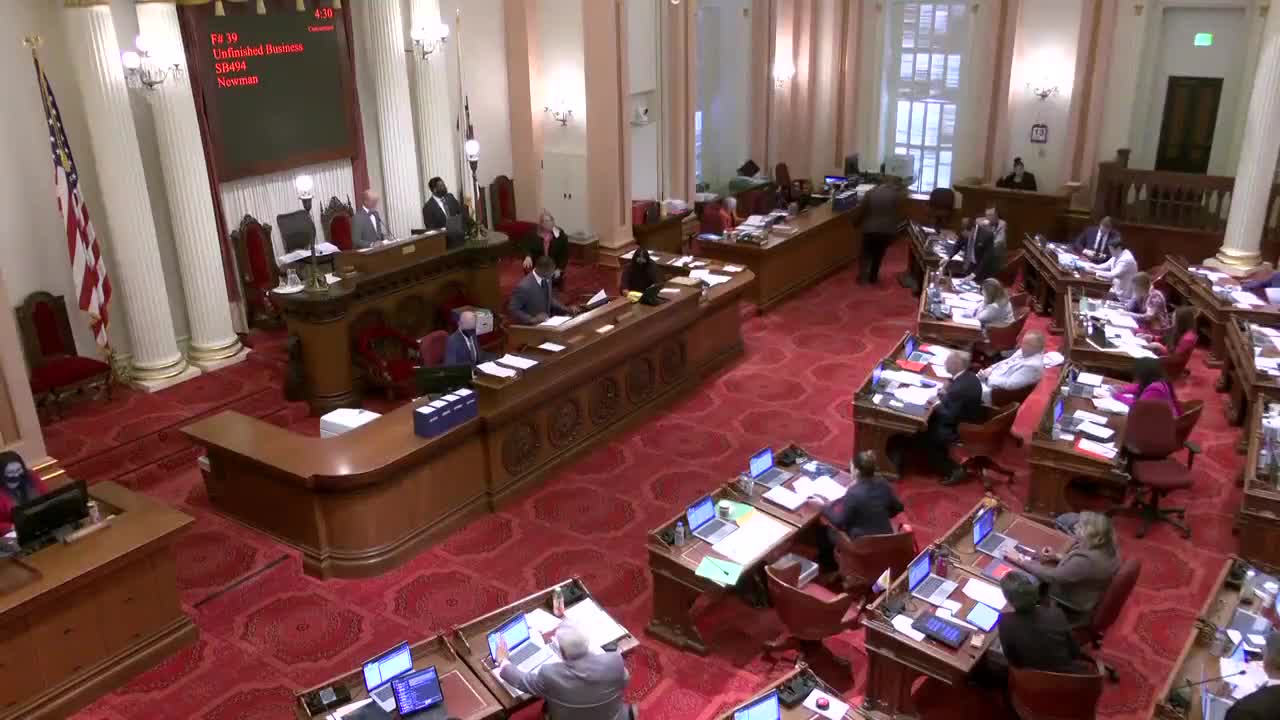
Bill Author






