SB 490: California American Freedmen Affairs Agency.
- Session Year: 2023-2024
- House: Senate
- Latest Version Date: 2023-08-22
Current Status:
Failed
(2023-08-22: From committee with author's amendments. Read second time and amended. Re-referred to Com. on JUD.)
Introduced
In Committee
First Chamber
In Committee
Second Chamber
Enacted
Former law, until July 1, 2023, established the Task Force to Study and Develop Reparation Proposals for African Americans, with a Special Consideration for African Americans Who are Descendants of Persons Enslaved in the United States (Task Force). Under existing law, the Task Force consists of 9 members, with 5 members appointed by the Governor, 2 members appointed by the President pro Tempore of the Senate, and 2 members appointed by the Speaker of the Assembly. Existing law establishes the term of office for members as the life of the Task Force.
Existing law requiresFormer law required the Task Force, among other things, to identify, compile, and synthesize the relevant corpus of evidentiary documentation of the institution of slavery that existed within the United States and the colonies, as specified, and to recommend the form of compensation that should be awarded, the instrumentalities through which it should be awarded, and who should be eligible for this compensation. Existing law requires the Task Force to submit a written report of its findings and recommendations to the Legislature within one year of the first meeting of the Task Force, as prescribed. Existing law repeals these provisions on July 1, 2023.
This bill would extend the operation of these provisions until July 1, 2024.This bill would declare that it is to take effect immediately as an urgency statute.This bill would establish the California American Freedmen Affairs Agency in state government, under the control of the director, who would be appointed by the Governor. The bill would require the agency to implement the recommendations of the Task Force, as approved by the Legislature and the Governor. To accomplish this goal, the bill would require the agency to be comprised of specified offices, including a Genealogy Office and an Office of Strategic Communications and Media Affairs that would be responsible for specified duties related to reparations and claims.
The bill would also require the agency to oversee and monitor existing state agencies and departments tasked with engaging in direct implementation of the policies that fall within the scope of the existing state agencies and departments authority. In that regard, the bill would establish specified offices within the agency to provide prescribed oversight of existing state agencies and departments, such as a Social Services and Family Affairs Office to provide oversight of existing state agencies efforts to identify and mitigate the ways that current and previous policies have damaged and destabilized descendant families. Among other things, the bill would also require the agency to include certain offices, including a Medical Services Office and a Legal Affairs Office, to perform other specified oversight and monitoring duties related to the goals of the Task Force.
Existing law establishes the Task Force to Study and Develop Reparation Proposals for African Americans, with a Special Consideration for African Americans Who are Descendants of Persons Enslaved in the United States (Task Force). Under existing law, the Task Force consists of 9 members, with 5 members appointed by the Governor, 2 members appointed by the President pro Tempore of the Senate, and 2 members appointed by the Speaker of the Assembly. Existing law establishes the term of office for members as the life of the Task Force.
Existing law requires the Task Force, among other things, to identify, compile, and synthesize the relevant corpus of evidentiary documentation of the institution of slavery that existed within the United States and the colonies, as specified, and to recommend the form of compensation that should be awarded, the instrumentalities through which it should be awarded, and who should be eligible for this compensation. Existing law requires the Task Force to submit a written report of its findings and recommendations to the Legislature within one year of the first meeting of the Task Force, as prescribed. Existing law repeals these provisions on July 1, 2023.
This bill would extend the operation of these provisions until July 1, 2024.
This bill would declare that it is to take effect immediately as an urgency statute.
For purposes of this part:
(a)Agency means the California American Freedman Affairs Agency.
(b)Descendants means African American descendants of a chattel enslaved person, or descendants of a free Black person living in the United States prior to the end of the 19th century.
(c)Director means the Director of the California American Freedman Affairs Agency.
(d)Task force means the Task Force to Study and Develop Reparation Proposals for African Americans, with a Special Consideration for African Americans Who are Descendants of Persons Enslaved in the United States as established under former Section 8301.1.
2.General16001.(a)The California American Freedman Affairs Agency is hereby established in state government. The agency shall be under the direct control of a director, who shall be responsible to the Governor.
(b)The Governor shall appoint the director of the agency who shall perform all duties, exercise all powers, assume and discharge all responsibilities, and carry out and effect all purposes vested by law in the office.
(c)The salary of the director of the agency shall be fixed pursuant to Section 12001.
3.Powers and Duties16002.The agency shall implement the recommendations of the task force, as approved by the Legislature and the Governor. To accomplish this goal, the agency shall include all of the following offices:
(a)A Genealogy Office to support potential reparations claimants by providing access to expert genealogical research to confirm reparations eligibility and expedited assistance with the reparations claims process.
(b)An Office of Strategic Communications and Media Affairs to provide streamlined access to information and services to assist the descendant community, the media, and the general public in understanding the work performed by the agency.
(c)A Community Support Office to improve accessibility, transparency, and public trust in Californias reparations program and its claims process.
(d)A Business Affairs Office to do all of the following:
(1)Provide support in the establishment of a Freedmens Savings and Trust Bank.
(2)Support for entrepreneurialism and a foundation for financial literacy.
(3)Provide business grants and assistance in obtaining business licenses.
(4)Employment training and apprenticeship programs to train unhoused descendants for employment in housing construction and related trades.
(5)Establish public-private reparative justice-oriented partnerships.
(e)An Office of the Chief Financial Officer to provide policy leadership in strategic planning, budgeting, and financial management. The Chief Financial Officers duties shall include all of the following:
(1)Processing claims for direct compensation in the five atrocity areas as identified by the task force.
(2)Conducting internal audits for management purposes, to evaluate the efficiency, economy, effectiveness, financial aspects, or other features of the agency, its branches, and programs.
(3)Administration, including, but not limited to, auditing of contracts and grants.
(4)Assisting in the establishment of a state-sponsored or state-chartered Freedmens Savings and Trust Bank to service the descendant community.
(5)Potentially collaborating with 501(c)(4) organizations where beneficial to the goals and purpose of the agency.
(6)Administer the compensation funds approved by the Legislature and the Governor, for all those eligible to receive compensation.
(f)A Creative, Cultural, and Intellectual Affairs Office to address the disruption of cultural centers in the name of redevelopment, and to address the history of censorship of descendant-produced media and arts. The duties of this office shall include all of the following:
(1)Building, restoring, and maintaining American Freedmen, African American, and descendant cultural and historical sites, creative centers, public displays, and monuments.
(2)Advocating for and monitoring the removal of harmful relics.
(3)Supporting knowledge production and archival research with community archives and repositories.
(4)Supporting legacy families.
(5)Providing support for descendants in the arts, entertainment, and sports industries, including, but not limited to, identifying and removing barriers to advancement into leadership and decisionmaking positions in these industries.
(6)Supporting descendants in news publications, arts, including, but not limited to, film, radio, television, podcasting, and new media, and lifestyle activities.
(7)Supporting parity in sports participation, coaching, management, and ownership.
(g)A Data Research and Collection Office to identify and analyze trends in past, current, and potential future badges and incidents of chattel slavery, and to advise the Governor, Legislature, and other state and local governmental entities as to policy changes designed to heal and repair the descendant community from these badges and incidents.
(h)A Civic Engagement and Self-determination Office to support ongoing education on African American history and political engagement, and to support civic engagement, political participation, and self-determination among the descendant community.
(i)An Office of General Counsel to provide legal advice, counsel, and services to the agency and its officials, and to ensure that the agencys programs are administered in accordance with applicable legislative authority. The General Counsel shall also advise the head of the agency on legislative, legal, and regulatory initiatives and serve as an external liaison on legal matters with other state agencies and other entities.
16003.The agency shall oversee and monitor existing state agencies and departments tasked with engaging in direct implementation of the policies that fall within the scope of the existing state agencies and departments authority. The agencys oversight and monitoring shall include, but not be limited to, all of the following:
(a)An Education Office to do all of the following:
(1)To provide oversight and monitoring of the payment of tuition to the states community colleges, the California State University, and the University of California for California residents who are descendants, and to ensure that existing state educational agencies eliminate barriers to higher education for descendants.
(2)To encourage, oversee, and monitor the building of infrastructure for the operation of new freedmen schools, colleges, and universities.
(3)To provide oversight and monitoring of educational grants and support education initiatives focused on descendants.
(b)A Social Services and Family Affairs Office to provide oversight of existing state agencies efforts to identify and mitigate the ways that current and previous policies implemented by existing agencies have damaged and destabilized descendant families. The offices oversight shall include, but not be limited to, all of the following:
(1)Monitoring of existing state agencies recruitment and training of descendants in industries that assist descendant seniors, such as health care systems.
(2)Providing housing advocates and housing attorneys to assist with housing and houselessness.
(3)Providing financial and social support services for housing unhoused relatives.
(4)Developing a hotline to report harms related to housing.
(5)Providing financial support services to support descendant homeownership.
(6)Ensuring treatment for trauma and family healing services to strengthen family unity.
(7)Providing descendant-informed mental health and stress resiliency services, financial planning services, career planning services, and civil and family court services.
(c)A Medical Services Office to provide oversight and monitor the states effort to provide technical assistance for community wellness centers in local descendant communities across the state to do all of the following:
(1)Decrease state-sanctioned health harms, including, but not limited to, mental, physical, and public health harms and neglect.
(2)Decrease mental health stigma.
(3)Teach stress-reduction and resilience tools.
(4)Create communal spaces.
(5)Support cultural and racial socialization to support mental health.
(6)Provide community-defined evidence and promising practices for prevention and early intervention mental health programs.
(7)Offer mental and physical health screening and referrals.
(d)A Labor and Employment Office to oversee and monitor labor and employment discrimination and benefits claims involving the descendant community handled by other state-level complaint investigation and adjudication agencies.
(e)A Development Office to provide oversight and monitoring of state-sponsored and state-funded infrastructure development to ensure that descendants receive a proportionate share of the development of housing, including subdivisions, multifamily, and mixed use development, business or commercial districts, and towns or cities.
(f)A Legal Affairs Office to do all of the following:
(1)Provide oversight and monitoring of state agencies that provide legal services to descendants, including in criminal cases, and oversight and monitoring of state entities that receive, document, and investigate civil rights violations and hate crimes, and ensure that such entities provide a hotline and database for the descendant community.
(2)Advocate for civil and criminal justice reforms, including, but not limited to, youth and adult decarceration programs, abolition, and housing and houselessness legal services.
(3)Monitor the provision of civil legal services, including free arbitration and mediation services and other forms of conciliation courts, to the extent needed to close the justice gap.
(g)A Strategic Partnerships Office to oversee and monitor the states collaboration with community-based organizations and other relevant organizations, and to oversee and audit state funds disbursed to identified community-based organizations and other relevant stakeholders to ensure that funding is directed toward eligible individuals or entities.
SECTION 1.Section 8301.7 of the Government Code is amended to read:8301.7.This chapter shall remain in effect until July 1, 2024, and as of that date is repealed.SEC. 2.This act is an urgency statute necessary for the immediate preservation of the public peace, health, or safety within the meaning of Article IV of the California Constitution and shall go into immediate effect. The facts constituting the necessity are:In order to ensure that the Task Force to Study and Develop Reparation Proposals for African Americans, with a Special Consideration for African Americans Who are Descendants of Persons Enslaved in the United States (Task Force) is able to provide continuity and technical assistance on the Task Forces report, findings, and recommendations after their publication, it is necessary for this act to take effect immediately.This chapter shall remain in effect until July 1, 2023, 2024, and as of that date is repealed.
SEC. 2.This act is an urgency statute necessary for the immediate preservation of the public peace, health, or safety within the meaning of Article IV of the California Constitution and shall go into immediate effect. The facts constituting the necessity are:
In order to ensure that the Task Force to Study and Develop Reparation Proposals for African Americans, with a Special Consideration for African Americans Who are Descendants of Persons Enslaved in the United States (Task Force) is able to provide continuity and technical assistance on the Task Forces report, findings, and recommendations after their publication, it is necessary for this act to take effect immediately.
|
Date
|
Status
|
|---|---|
| Aug 22, 2023 | From committee with author's amendments. Read second time and amended. Re-referred to Com. on JUD. |
| Jun 29, 2023 | July 5 set for first hearing canceled at the request of author. |
| Jun 15, 2023 | Referred to Com. on JUD. |
| May 31, 2023 | In Assembly. Read first time. Held at Desk. |
| May 30, 2023 | Read third time. Urgency clause adopted. Passed. (Ayes 32. Noes 2. Page 1353.) Ordered to the Assembly. |
| May 18, 2023 | From committee: Do pass. (Ayes 5. Noes 1. Page 1172.) (May 18). |
| May 18, 2023 | Read second time. Ordered to third reading. |
| May 12, 2023 | Set for hearing May 18. |
| Apr 10, 2023 | April 10 hearing: Placed on APPR suspense file. |
| Apr 3, 2023 | Set for hearing April 10. |
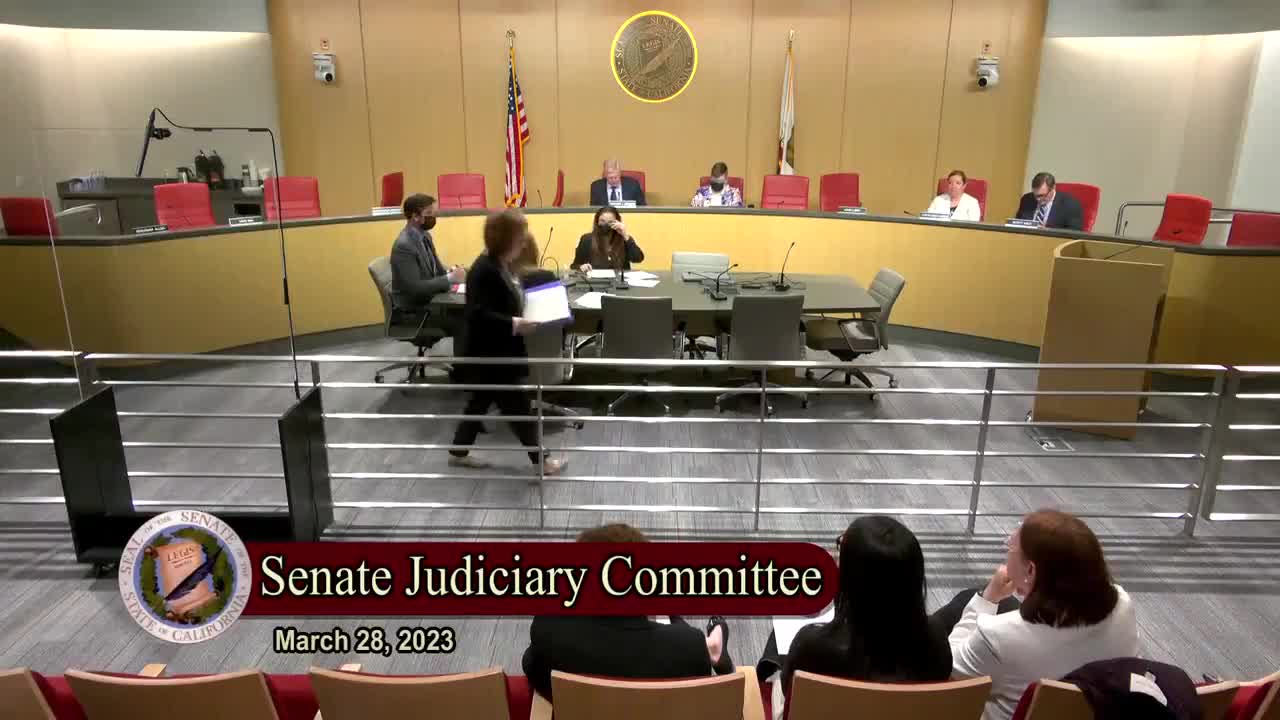
| Mar 29, 2023 | From committee: Do pass and re-refer to Com. on APPR. (Ayes 9. Noes 0. Page 577.) (March 28). Re-referred to Com. on APPR. |
| Mar 6, 2023 | Set for hearing March 28. |
| Feb 22, 2023 | Referred to Com. on JUD. |
| Feb 15, 2023 | From printer. May be acted upon on or after March 17. |
| Feb 14, 2023 | Introduced. Read first time. To Com. on RLS. for assignment. To print. |
|
Date
|
Description
|
Location
|
Votes
|
|
|---|---|---|---|---|
| May 30, 2023 | Senate 3rd Reading SB490 Bradford Urgency Clause | Senate Floor |
Passed |
|
| May 18, 2023 | Do pass | Senate Standing Committee on Appropriations |
Passed |
|
| Apr 10, 2023 | Placed on suspense file | Senate Standing Committee on Appropriations |
Passed |
|
| Mar 28, 2023 | Do pass, but first be re-referred to the Committee on [Appropriations] | Senate Standing Committee on Judiciary |
Passed |
This list shows positions taken on this bill by organizations on the date displayed, which is linked to the original source.
Positions by individuals are not included.
|
Organization
|
Position
|
Date
|
|---|---|---|
| Black Housing Advisory Taskforce Coalition | ** Support | |
| CFT | ** Support | |
| The Greenlining Institute | ** Support |
SENATE RULES COMMITTEE Office of Senate Floor Analyses (916) 651-1520 Fax: (916) 327-4478 | SB 490 |
THIRD READING
Bill No: SB 490
Author: Bradford (D)
Introduced: 2/14/23
Vote: 27 - Urgency
SENATE JUDICIARY COMMITTEE: 9-0, 3/28/23
AYES: Umberg, Wilk, Allen, Ashby, Caballero, Durazo, Laird, Min, Wiener
NO VOTE RECORDED: Niello, Stern
SENATE APPROPRIATIONS COMMITTEE: 5-1, 5/18/23
AYES: Portantino, Ashby, Bradford, Wahab, Wiener
NOES: Seyarto
NO VOTE RECORDED: Jones
SUBJECT: Task Force to Study and Develop Reparation Proposals for African Americans
SOURCE: Author
DIGEST:
This bill extends the sunset on the Task Force to Study and Develop Reparation Proposals for African Americans, with Special Considerations for African Americans who are Descendants of Persons Enslaved in the United States (Task Force) to give the Task Force an additional year to complete its work.
ANALYSIS:
Existing law:
- Establishes, within the Government Code, Chapter 4.5 of Division 1 in Title 2, entitled “Reparations for the Institution of Slavery.” (Gov. Code, tit. 2, div. 1, ch. 4.5, §§ 3801 et seq.)
- Establishes the Task Force to Study and Develop Reparation Proposals for African Americans, with Special Considerations for African Americans who are Descendants of Persons Enslaved in the United States. (Gov. Code, § 8301.1(a).)
- Requires the Task Force to perform all of the following duties:
- Identify, compile, and synthesize the relevant corpus of evidentiary documentation of the institution of slavery that existed within the United States and the colonies that became the United States from 1619 to 1865, inclusive, including specified components of that institution.
- Recommend appropriate ways to educate the California public of the Task Force’s findings.
- Recommend appropriate remedies in consideration of the Task Force’s findings, and address factors such as how the remedies comport with international standards of remedy for wrongs and injuries caused by the State, how the State will offer a formal apology for its perpetration of slavery, how to eliminate California laws and policies that continue to disproportionately and negatively affect African Americans, and what forms of compensation should be awarded. (Gov. Code, § 8301.1(b).)
- Requires the Task Force to submit a written report of its findings and recommendations to the Legislature no later than the date that is one year after the date of the first meeting of the Task Force, as defined. (Gov. Code, § 8301.1(c).)
- Provides for the composition of the Task Force, the term of office for members, and compensation for members, as specified, and for the Task Force to appoint personnel or otherwise procure assistance and supplies. (Gov. Code, §§ 8301.2, 8301.4.)
- Authorizes the Task Force to take specified actions for the purpose of carrying out its duties, including holding hearings, requesting the production of documents, and seeking a court order to compel the presence of witnesses or compliance with a subpoena. (Gov. Code, § 8301.3)
- Provides that the chapter in 1), containing the duties and obligations in 2)-6), will sunset on July 1, 2023. (Gov. Code, § 8301.7.)
This bill:
- Extends the sunset date on the chapter enacting the Task Force until July 1, 2024.
- Contains an urgency clause.
Comments
In 2020, the Legislature enacted, and the Governor signed, AB 3121 (Weber, Chapter 319, Statutes of 2020), which created a first-in-the-nation Task Force to explore options for providing reparations to African Americans, and particularly the descendants of enslaved persons, in recognition of California’s role in the heinous institution of slavery and the post-abolition perpetuation of racist institutions. The bill set a one-year period for the Task Force, after convening for the first time, to conduct the required investigation and issue a report with its recommendations.[1]
The Task Force released an interim report on June 1, 2022, that provides the preliminary findings regarding the ongoing and compounding harms caused by federal, state, and local governments—including California—from slavery and the “ ‘badges and incidents of slavery’ ” that continued to be imposed on African Americans long after slavery was formally abolished.[2] The report notes that, because “the effects of slavery infected every aspect of American society over the last 400 years…it is nearly impossible to identify every ‘badge and incident of slavery,’ to include every piece of evidence, or describe every harm done to African Americans.”[3] The interim report is the culmination of over 40 hours of testimony from over 103 witnesses, 16 hours of public comment, countless emails and phone calls from members of the public, and the consideration of voluminous materials from experts and members of the public alike.[4]
The interim report does not represent the end of the Task Force’s work. The interim report provides preliminary recommendations to address the harms identified therein,[5] but the Task Force’s final report—to be issued following additional hearings, community engagement, and consultations with experts—will set forth the Task Force’s final recommendations on potential forms that an apology from the State and reparations should take.[6]
The chapter establishing the Task Force and establishing its duties and powers is set to sunset on July 1, 2023.[7] While the Task Force currently plans to issue its final report before that date,[8] the sunset would prevent the Task Force from providing technical assistance and commentary on the final report as a coherent body. This bill extends the sunset by one year, to July 1, 2024. This extension is not intended to delay the Task Force’s issuance of its final report; it is intended to give the Task Force time to provide technical assistance and engage with interested parties about the final report and its findings. The Task Force voted to support this measure at its January 27, 2023 meeting.[9]
FISCAL EFFECT: Appropriation: No Fiscal Com.: Yes Local: No
According to the Senate Appropriations Committee, this bill’s fiscal impact is costs of approximately $1.5 million to continue to fund the Task Force for an additional year (General Fund).
SUPPORT: (Verified 5/18/23)
Black Housing Advisory Taskforce Coalition
CFT
The Greenlining Institute
OPPOSITION: (Verified5/18/23)
None received
ARGUMENTS IN SUPPORT: According to the Black Housing Advisory Taskforce Coalition:
On July 1, 2023, the Reparations Task Force intends to publish its final report and recommendations to the State Legislature. However, after this date the Task Force will also be disbanded in accordance with AB 3121. This poses significant challenges to the Task Force’s ability to engage in discussions and provide technical assistance on their final recommendations, which the Task Force has determined as necessary in their February 2023 hearing.
Given these circumstances it is imperative that SB 490 pass so that the Reparations Task Force has the capability to engage with the legislature, media, and other stakeholders on reparations and the issued recommendations. SB 490 will not delay the publication of the Task Force final report or introduction of reparations bills to the legislature.
Prepared by: Allison Whitt Meredith / JUD. / (916) 651-4113
5/20/23 12:51:39
**** END ****
See Gov. Code, § 8301.1(c). ↑
California Task Force to Study and Develop Reparation Proposals for African Americans, Interim Report (June 1, 2022), available at https://oag.ca.gov/ab3121/reports (Interim Report). All links in this analysis are current as of May 18, 2023. ↑
Id. at p. 5. ↑
Id. at p. 37. ↑
Interim Report, supra, fn. 2, at pp. 19-24. ↑
Id. at p. 37. Some have expressed concern that the State will be unable to act on some of the Task Force’s recommendations due to the constraints of Proposition 209. (See Cal. Const., art. I, § 31, added by initiative measure (Prop. 209, approved Nov. 5, 1996, eff. Nov. 6, 1996).) This concern is premature, given that the State has not moved forward with any particular recommendations. Moreover, it is questionable whether reparations are “preferential treatment” prohibited by Proposition 209, given that reparations are, by definition, compensation for harm inflicted by the government. ↑
Gov. Code, § 8301.7. ↑
Interim Report, supra, fn. 2, at p. 5. ↑
Reparations Task Force Meeting Minutes, January 27, 2023 meeting, Item 14, pp. 21-22, available at https://oag.ca.gov/system/files/media/task-force-agenda4-draft-reparations-mm-0127023.pdf. ↑
SENATE COMMITTEE ON APPROPRIATIONS
Senator Anthony Portantino, Chair
2023 - 2024 Regular Session
SB 490 (Bradford) - Task Force to Study and Develop Reparation Proposals for African Americans
Version: February 14, 2023 | Policy Vote: JUD. 9 - 0 |
Urgency: Yes | Mandate: No |
Hearing Date: April 10, 2023 | Consultant: Matthew Fleming |
Bill Summary:
SB 490, an urgency measure, would extend the sunset on the Task Force to Study and Develop Reparation Proposals for African Americans, with Special Considerations for African Americans who are Descendants of Persons Enslaved in the United States (Task Force) for an additional year.
Fiscal Impact:
Costs of approximately $1.5 million to continue to fund the task force for an additional year (General Fund).
Background:
In 2020, the Legislature enacted, and the Governor signed, AB 3121 (Weber, Ch. 319, Stats. 2020), which created a first-in-the-nation Task Force to explore options for providing reparations to African Americans, and particularly the descendants of enslaved persons, in recognition of California’s role in the heinous institution of slavery and the post-abolition perpetuation of racist institutions. The bill set a one-year period for the Task Force, after convening for the first time, to conduct the required investigation and issue a report with its recommendations.
The Task Force met for the first time on June 1, 2021. Led by Chairperson Kamilah Moore, the Task Force released an interim report on June 1, 2022, that provides the preliminary findings regarding the ongoing and compounding harms caused by federal, state, and local governments, inclduign the State of Califorina. The interim report is the culmination of over 40 hours of testimony from over 103 witnesses, 16 hours of public comment, countless emails and phone calls from members of the public, and the consideration of voluminous materials from experts and members of the public alike. At over 500 pages, the interim report may be the most extensive government-issued report on the African-American community since the Kerner Commission report issued in 1968.
Nevertheless, the interim report does not represent the end of the Task Force’s work. The interim report provides preliminary recommendations to address the harms identified therein, but the Task Force’s final report—to be issued following additional hearings, community engagement, and consultations with experts—will set forth the Task Force’s final recommendations on potential forms that an apology from the State and reparations should take. Under existing law, the Task Force will sunset on July 1, 2023. This bill would extend the sunset date for an additional year.
Proposed Law:
- Extends the sunset date on the chapter enacting the Task Force until July 1, 2024 and contains an urgency clause.
Related Legislation:
- AB 2296 (Jones-Sawyer, 2022), would have made it easier for members of the Task Force to be removed, allowed officers of the Task Force to be removed by a majority vote of the members, and extended the July 1, 2023, sunset on the Task Force to July 1, 2024. AB 2296 was vetoed.
- SB 796 (Bradford, Ch. 435, Stats. 2021) authorized the return of Bruce’s Beach, the first West Coast resort for Black people, to the descendants of the resort owners decades after it was seized by the Manhattan Beach City Council from the owning family.
- AB 3121 (Weber, Ch. 319, Stats. 2020) established the Task Force and its mission, with a sunset date of July 1, 2023.
- ACR 130 (Weber, Res. Ch. 176, Stats. 2019) recognized, on behalf of the California Legislature, the need to pursue avenues to implement proposed reparations for the descendants of African slaves in the United States.
-- END --
Senator Thomas Umberg, Chair
2023-2024 Regular Session
Bill No: SB 490 (Author:Bradford)
Version: February 14, 2023
Hearing Date: March 28, 2023
Fiscal: Yes
Urgency: Yes
Consultant: AWM
SUBJECT
Task Force to Study and Develop Reparation Proposals for African Americans
DIGEST
This bill extends the sunset on the Task Force to Study and Develop Reparation Proposals for African Americans, with Special Considerations for African Americans who are Descendants of Persons Enslaved in the United States (Task Force) to give the Task Force an additional year to complete its work.
EXECUTIVE SUMMARY
On June 1, 2021, the Task Force held its first meeting, triggering the one-year timeline for the Task Force to deliver a statutorily-mandated report on its findings and recommendations to the Legislature. The Task Force delivered its interim report—a 500-page document that intricately and painfully details the harms inflicted on African Americans by policies developed and condoned by this State. The interim report makes preliminary recommendations for how the State can make reparations for its long history of officially sanctioned racism; the Task Force will issue its final report, including its final recommendations, before July 1, 2023. The statutes establishing the Task Force are set to sunset on July 1, 2023, leaving the Task Force with little time following the issuance of its final report to provide assistance and information relating to its recommendations. In 2022, the Legislature passed AB 2296 (Jones-Sawyer, 2022), which would have made it easier for members and officers of the Task Force to be removed from the Task Force and extended the sunset on the Task Force until July 1, 2024. Governor Gavin Newsom vetoed AB 2296, stating that he did so at the request of the author of the bill that implemented the Task Force, now-Secretary of State Shirley Weber.
The Task Force is still on track to issue its final report by July 1, 2023. This bill simply extends the sunset provision of the Task Force by one year to allow the Task Force to provide technical assistance and other feedback on its final report as a collective body until July 1, 2024.
This bill is sponsored by the author. There is no known opposition.
PROPOSED CHANGES TO THE LAW
Existing law:
- Establishes, within the Government Code, Chapter 4.5 of Division 1 in Title 2, entitled “Reparations for the Institution of Slavery.” (Gov. Code, tit. 2, div. 1, ch. 4.5, §§ 3801 et seq.)
- Establishes the Task Force to Study and Develop Reparation Proposals for African Americans, with Special Considerations for African Americans who are Descendants of Persons Enslaved in the United States. (Gov. Code, § 8301.1(a).)
- Requires the Task Force to perform all of the following duties:
- Identify, compile, and synthesize the relevant corpus of evidentiary documentation of the institution of slavery that existed within the United States and the colonies that became the United States from 1619 to 1865, inclusive, including specified components of that institution.
- Recommend appropriate ways to educate the California public of the Task Force’s findings.
- Recommend appropriate remedies in consideration of the Task Force’s findings, and address factors such as how the remedies comport with international standards of remedy for wrongs and injuries caused by the State, how the State will offer a formal apology for its perpetration of slavery, how to eliminate California laws and policies that continue to disproportionately and negatively affect African Americans, and what forms of compensation should be awarded. (Gov. Code, § 8301.1(b).)
- Requires the Task Force to submit a written report of its findings and recommendations to the Legislature no later than the date that is one year after the date of the first meeting of the Task Force, as defined. (Gov. Code, § 8301.1(c).)
- Provides for the composition of the Task Force, the term of office for members, and compensation for members, as specified, and for the Task Force to appoint personnel or otherwise procure assistance and supplies. (Gov. Code, §§ 8301.2, 8301.4.)
- Authorizes the Task Force to take specified actions for the purpose of carrying out its duties, including holding hearings, requesting the production of documents, and seeking a court order to compel the presence of witnesses or compliance with a subpoena. (Gov. Code, § 8301.3)
- Provides that the chapter in 1), containing the duties and obligations in 2)-6), will sunset on July 1, 2023. (Gov. Code, § 8301.7.)
This bill:
- Extends the sunset date on the chapter enacting the Task Force until July 1, 2024.
- Contains an urgency clause.
COMMENTS
- Author’s comment
According to the author:
SB 490 seeks to extend the California Task Force to Study and Develop Reparation Proposals for African Americans sunset to July 1, 2024.
On July 1, 2023, the Reparations Task Force intends to publish its final report and recommendations to the State Legislature. However, after this date the Task Force will also be disbanded in accordance with AB 3121. This poses significant challenges on the Task Force’s ability to engage in discussions and provide technical assistance on their final recommendations, which the Task Force has determined as necessary in their February 2023 hearing.
This bill would simply extend the Task Force’s sunset date to July 1, 2024 and does nothing to further delay the publication of the report or the potential introduction of reparations as legislative proposals.
2. This bill extends the sunset on the Task Force to give it more time to complete its vital mission
In 2020, the Legislature enacted, and the Governor signed, AB 3121 (Weber, Ch. 319, Stats. 2020), which created a first-in-the-nation Task Force to explore options for providing reparations to African Americans, and particularly the descendants of enslaved persons, in recognition of California’s role in the heinous institution of slavery and the post-abolition perpetuation of racist institutions.[1] The bill set a one-year period for the Task Force, after convening for the first time, to conduct the required investigation and issue a report with its recommendations.[2]
The Task Force met for the first time on June 1, 2021. Led by Chairperson Kamilah Moore, the Task Force released an interim report on June 1, 2022, that provides the preliminary findings regarding the ongoing and compounding harms caused by federal, state, and local governments—including California—from slavery and the “ ‘badges and incidents of slavery’ ” that continued to be imposed on African Americans long after slavery was formally abolished.[3] The report notes that, because “the effects of slavery infected every aspect of American society over the last 400 years…it is nearly impossible to identify every ‘badge and incident of slavery,’ to include every piece of evidence, or describe every harm done to African Americans.”[4] The report therefore sets forth “a sample of government actions and compounding harms that have resulted, organized into 12 specific areas of systematic discrimination.”[5] The 12 areas covered are: enslavement; racial terror; political disenfranchisement; housing segregation; separate and unequal education; racism in environment and infrastructure; pathologizing Black families; control over creative, cultural, and intellectual life; stolen labor and hindered opportunity; an unjust legal system; mental and physical harm and neglect; and the wealth gap.[6]
The interim report is the culmination of over 40 hours of testimony from over 103 witnesses, 16 hours of public comment, countless emails and phone calls from members of the public, and the consideration of voluminous materials from experts and members of the public alike.[7] At over 500 pages, the interim report may be the most extensive government-issued report on the African-American community since the Kerner Commission report issued in 1968.[8]
Nevertheless, the interim report does not represent the end of the Task Force’s work. The interim report provides preliminary recommendations to address the harms identified therein,[9] but the Task Force’s final report—to be issued following additional hearings, community engagement, and consultations with experts—will set forth the Task Force’s final recommendations on potential forms that an apology from the State and reparations should take.[10]
The chapter establishing the Task Force and establishing its duties and powers is set to sunset on July 1, 2023.[11] While the Task Force currently plans to issue its final report before that date,[12] the sunset would prevent the Task Force from providing technical assistance and commentary on the final report as a coherent body.
Last year, the Legislature passed AB 2296 (Jones-Sawyer, 2022), which would have extended the sunset until July 1, 2024, but also would have made changes affecting the composition of the Task Force and its elected officers, such as permitting the appointing body of the Task Force to remove members at will. Governor Newsom vetoed the bill, stating that he did so at the request of now-Secretary of State Shirley Weber, who was the author of the bill that originally created the task force.[13]
This bill does only one thing: it extends the sunset by one year, to July 1, 2024. This extension is not intended to delay the Task Force’s issuance of its final report; it is intended to give the Task Force time to provide technical assistance and engage with interested parties about the final report and its findings. The Task Force voted to support this measure at its January 27, 2023 meeting.[14]
SUPPORT
None known
OPPOSITION
None known
RELATED LEGISLATION
Pending Legislation: None known.
Prior Legislation:
AB 2296 (Jones-Sawyer, 2022), would have made it easier for members of the Task Force to be removed, allowed officers of the Task Force to be removed by a majority vote of the members, and extended the July 1, 2023, sunset on the Task Force to July 1, 2024. The bill was passed by the Legislature but vetoed by Governor Newsom, whose veto message stated that he was vetoing the bill at the request of the author of the original legislation that created the Task force.
SB 796 (Bradford, Ch. 435, Stats. 2021) authorized the return of Bruce’s Beach, the first West Coast resort for Black people, to the descendants of the resort owners decades after it was seized by the Manhattan Beach City Council from the owning family.
AB 3121 (Weber, Ch. 319, Stats. 2020) established the Task Force and its mission, with a sunset date of July 1, 2023.
ACR 130 (Weber, Res. Ch. 176, Stats. 2019) recognized, on behalf of the California Legislature, the need to pursue avenues to implement proposed reparations for the descendants of African slaves in the United States.
**************
HR 40 (Lee, 118th Cong., 2023-2024), a federal bill to create a federal commission to study the effects of slavery and discrimination on African Americans and devise reparations proposals, is pending before the House Committee on Judiciary. The bill has been introduced every year since 1989. ↑
See Gov. Code, § 8301.1(c). ↑
California Task Force to Study and Develop Reparation Proposals for African Americans, Interim Report (June 1, 2022), available at https://oag.ca.gov/ab3121/reports (Interim Report). All links in this analysis are current as of March 23, 2023. ↑
Id. at p. 5. ↑
Ibid. ↑
Id. at pp. 6-16. ↑
Id. at p. 37. ↑
Office of the Attorney General, Press Release, California Reparations Task Force Releases Interim Report Detailing Harms of Slavery and Systematic Discrimination on African Americans (June 1, 2022), https://oag.ca.gov/news/press-releases/california-reparations-task-force-releases-interim-report-detailing-harms. ↑
Interim Report, supra, fn. 2, at pp. 19-24. ↑
Id. at p. 37. Some have expressed concern that the State will be unable to act on some of the Task Force’s recommendations due to the constraints of Proposition 209. (See Cal. Const., art. I, § 31, added by initiative measure (Prop. 209, approved Nov. 5, 1996, eff. Nov. 6, 1996).) This concern is premature, given that the State has not moved forward with any particular recommendations. Moreover, it is questionable whether reparations are “preferential treatment” prohibited by Proposition 209, given that reparations are, by definition, compensation for harm inflicted by the government. ↑
Gov. Code, § 8301.7. ↑
Interim Report, supra, fn. 2, at p. 5. ↑
Governor’s veto message to Assem. on AB 2296 (Sept. 29, 2022) Recess J. No. 10 (2021-2022 (Reg. Sess.) p. 6798) ↑
Reparations Task Force Meeting Minutes, January 27, 2023 meeting, Item 14, pp. 21-22, available at https://oag.ca.gov/system/files/media/task-force-agenda4-draft-reparations-mm-0127023.pdf. ↑
Discussed in Hearing
View Older Hearings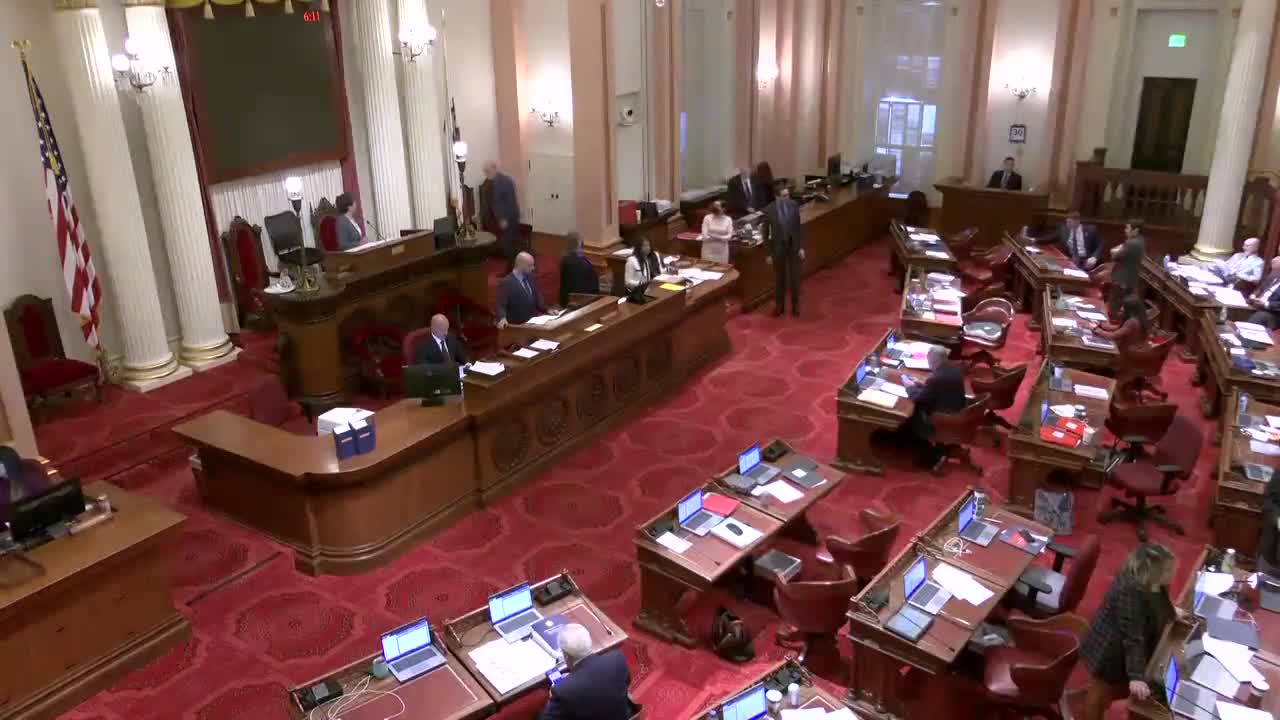
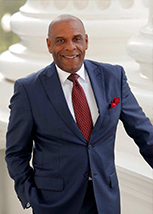
Bill Author
Bill Co-Author(s):