SB 5: Motor Vehicle Fuel Tax Law: limitation on adjustment.
- Session Year: 2023-2024
- House: Senate
- Latest Version Date: 2022-12-05
Current Status:
Failed
(2024-02-01: Returned to Secretary of Senate pursuant to Joint Rule 56.)
Introduced
In Committee
First Chamber
In Committee
Second Chamber
Enacted
Existing law, the Motor Vehicle Fuel Tax Law, administered by the California Department of Tax and Fee Administration, imposes a tax upon each gallon of motor vehicle fuel removed from a refinery or terminal rack in this state, entered into this state, or sold in this state, at a specified rate per gallon. Existing law requires the department to annually adjust the tax imposed by increasing the rates based on the California Consumer Price Index, as specified.
This bill would limit the above-described annual adjustment to a maximum of 2% for rate adjustments made on or after July 1, 2023.
This bill would take effect immediately as a tax levy.
(a)(1)A tax of eighteen cents ($0.18) is hereby imposed upon each gallon of fuel subject to the tax in Sections 7362, 7363, and 7364.
(2)If the federal fuel tax is reduced below the rate of nine cents ($0.09) per gallon and federal financial allocations to this state for highway and exclusive public mass transit guideway purposes are reduced or eliminated correspondingly, the tax rate imposed by paragraph (1), on and after the date of the reduction, shall be recalculated by an amount so that the combined state rate under paragraph (1) and the federal tax rate per gallon equal twenty-seven cents ($0.27).
(3)If any person or entity is exempt or partially exempt from the federal fuel tax at the time of a reduction, the person or entity shall continue to be so exempt under this section.
(b)(1)On and after July 1, 2010, in addition to the tax imposed by subdivision (a), a tax is hereby imposed upon each gallon of motor vehicle fuel, other than aviation gasoline, subject to the tax in Sections 7362, 7363, and 7364 in an amount equal to seventeen and three-tenths cents ($0.173) per gallon.
(2)For the 201112 fiscal year and each fiscal year thereafter, the board shall, on or before March 1 of the fiscal year immediately preceding the applicable fiscal year, adjust the rate in paragraph (1) in that manner as to generate an amount of revenue that will equal the amount of revenue loss attributable to the exemption provided by Section 6357.7, based on estimates made by the board, and that rate shall be effective during the states next fiscal year.
(3)In order to maintain revenue neutrality for each year, beginning with the rate adjustment on or before March 1, 2012, the adjustment under paragraph (2) shall also take into account the extent to which the actual amount of revenues derived pursuant to this subdivision and, as applicable, Section 7361.1, the revenue loss attributable to the exemption provided by Section 6357.7 resulted in a net revenue gain or loss for the fiscal year ending prior to the rate adjustment date on or before March 1.
(4)The intent of paragraphs (2) and (3) is to ensure that the act adding this subdivision and Section 6357.7 does not produce a net revenue gain in state taxes.
(5)Commencing July 1, 2019, the adjustments in paragraphs (2) and (3) shall cease, and the rate imposed by this subdivision shall be the rate in paragraph (1).
(c)On and after November 1, 2017, in addition to the taxes imposed by subdivisions (a) and (b), a tax is hereby imposed upon each gallon of motor vehicle fuel, other than aviation gasoline, subject to the tax in Sections 7362, 7363, and 7364, in an amount equal to twelve cents ($0.12) per gallon.
(d)(1)On July 1, 2020, and every July 1 thereafter, the board shall adjust the taxes imposed by subdivisions (a), (b), and (c), with the adjustment to apply to both to the base tax rates specified in those provisions and to any previous adjustment in rates made pursuant to this subdivision, by increasing the taxes by a percentage amount equal to the increase in the California Consumer Price Index, as calculated by the Department of Finance with the resulting taxes rounded to the nearest one-tenth of one cent ($0.01). The first adjustment pursuant to this subdivision shall be a percentage amount equal to the increase in the California Consumer Price Index from November 1, 2017, to November 1, 2019. Subsequent annual adjustments shall cover subsequent 12 month periods. The incremental change shall be added to the associated rate for that year.
(2)Rate adjustments made on or after July 1, 2023, pursuant to this subdivision shall not exceed 2 percent.
(e)Any increases to the taxes imposed under subdivisions (a), (b), and (c) that are enacted by legislation subsequent to July 1, 2017, shall be deemed to be changes to the base tax rates for purposes of the California Consumer Price Index calculation and adjustment performed pursuant to subdivision (d).
SEC. 2.This act provides for a tax levy within the meaning of Article IV of the California Constitution and shall go into immediate effect.
|
Date
|
Status
|
|---|---|
| Feb 1, 2024 | Returned to Secretary of Senate pursuant to Joint Rule 56. |
| May 3, 2023 | May 3 set for first hearing. Failed passage in committee. (Ayes 2. Noes 2. Page 992.) Reconsideration granted. |
| Apr 20, 2023 | Set for hearing May 3. |
| Jan 18, 2023 | Referred to Com. on GOV. & F. |
| Dec 6, 2022 | From printer. May be acted upon on or after January 5. |
| Dec 5, 2022 | Introduced. Read first time. To Com. on RLS. for assignment. To print. |
|
Date
|
Description
|
Location
|
Votes
|
|
|---|---|---|---|---|
| May 3, 2023 | [First] hearing set for [05-03-2023]: Failed passage in Committee. Reconsideration granted | Senate Standing Committee on Governance and Finance |
Passed |
|
| May 3, 2023 | Do pass, but first be re-referred to the Committee on [Appropriations] | Senate Standing Committee on Governance and Finance |
Failed |
This list shows positions taken on this bill by organizations on the date displayed, which is linked to the original source.
Positions by individuals are not included.
|
Organization
|
Position
|
Date
|
|---|---|---|
| Professional Engineers In California Government | ** Against |
SENATE COMMITTEE ON GOVERNANCE AND FINANCE
Senator Anna M. Caballero, Chair
2023 - 2024 Regular
Bill No: | SB 5 | Hearing Date: | 5/3/23 |
Author: | Nguyen | Tax Levy: | Yes |
Version: | 12/5/22 | Fiscal: | Yes |
Consultant: | Grinnell | ||
Motor Vehicle Fuel Tax Law: limitation on adjustment
Caps motor vehicle fuel rate adjustments for inflation at up to 2 percent, effective on or after July 1, 2023.
Background
Fuel taxes. State law imposes the motor vehicle fuel tax and diesel fuel tax on each gallon of fuel entered, or removed from a refinery or terminal rack in this state. The law parallels federal fuel excise taxes, currently $0.184 per gallon tax on gasoline and a $0.244 per gallon tax on diesel fuel, and applies whenever fuel:
- Is removed at the refinery or terminal rack;
- Enters into the state; or
- Is sold to an unlicensed person.
Prior to 2017, the Board of Equalization administered both motor vehicle and diesel fuel taxes. In that year, the Legislature enacted the Taxpayer Transparency and Fairness Act, which created the California Department of Tax and Fee Administration (CDTFA), and shifted all of the Board of Equalization’s (BOE’s) statutory tax administration functions to the newly formed Department (AB 102, Committee on Budget). As a result, CDTFA now operates almost all tax and fee programs previously administered by BOE, including motor vehicle and diesel fuel taxes. While taxpayers register, file returns, and pay taxes to CDTFA, the Controller processes gasoline tax payments and refunds, and the Office of Tax Appeals considers appeals.
Section Two of Article XIX of the California Constitution provides that revenues from taxes the state imposes on motor vehicle fuels less refunds and costs of administration must be deposited into the Highway Users Tax Account. State law further distributes revenue from the diesel fuel tax into the State Transportation Fund to construct and maintain public roads and mass transit systems, while motor vehicle fuel tax revenues flow to the State Transportation Fund to construct and maintain public roads and mass transit systems, airports, and waterways.
The Governor’s Proposed Budget for 2022-23 states that motor vehicle fuel taxes generated $6.5 billion in revenue in 2021-22, and an estimated $7.4 billion in 2022-23.
Fuel tax rates. In 1990, voters approved Proposition 111, which increased the tax rate on most motor vehicle fuels from $0.09 to $0.14 per gallon, effective August 1, 1990. The initiative further increased the excise tax rate by $0.01 per gallon per year until the rate reached $0.18 per gallon on January 1, 1994, where it remained until the Legislature enacted the “fuel tax swap.”
In the late 2000s, general fund revenues deteriorated significantly due to the financial crisis and ensuing economic recession. The Legislature enacted the fuel tax swap to shift past and future debt service repayments on general obligation bonds issued for transportation purposes from the General Fund to fuel excise tax funds (ABx6 8, Committee on Budget, 2010). ABx6 8 exempted sales of motor vehicle fuel, except for aviation fuel, from the state share of the sales and use tax imposed on sales of gasoline, where the use of revenues was restricted by Proposition 42 (2004). ABx6 8 then increased the excise tax rate by $0.173 to generate an equal amount of revenue in the excise tax funds, which were not restricted by Proposition 42 and could be spent on debt service. The measure also triggered additional rates if federal fuel excise tax rates drop, and federal transportation funds allocated to the state decreased. Local sales taxes remained at 2.25% of the sales price of gasoline, plus any voter-approved district taxes.
To maintain revenue neutrality under the fuel tax swap, ABx6 8 directed BOE to annually adjust the excise tax rates for gasoline and diesel, so that the overall revenues derived from the swap remained the same. BOE calculated an adjustment to the excise tax, which is measured as a flat amount per gallon, to equal the amount of revenues from sales and use taxes, which apply based on a percentage of the sales prices, would have been but for the swap.
As a result, the motor vehicle fuel tax rate increased $0.17 to $0.35 on July 1, 2010, to compensate for the removal of the state share of the sales and use tax rate that was measured at 6% of the sales price. When voters approved Propositions 22 and 26 in November, 2010, the Legislature reenacted the swap in 2011, with some modifications (AB 105, Committee on Budget).
SB 1. In response to a significant deferred maintenance backlog on California’s streets and roads, the Legislature enacted SB 1 (Beall, 2017), which made several changes to motor vehicle fuel taxes, and directed its revenue to road maintenance and construction. Specifically, SB 1:
- Increased the excise tax on gasoline by $0.12 per gallon, starting November 1, 2017;
- Eliminated the annual adjustment required by the "Gas Tax Swap," on July 1, 2019, instead re-establishing the $0.173 per gallon rate set in ABx6 8; and
- Requires BOE to adjust motor vehicle and diesel excise tax rates, other than the diesel sales tax, annually based on the California Consumer Price Index (CCPI).
Inflation adjustments to the motor vehicle fuel tax resulted in a modest rate increase from $0.505 in 2020-21 to $0.511 in 2021-22. However, the rate increased 2.8 cents per gallon to $0.539 in 2022-23 due to higher inflation. The CCPI used to estimate both rates for 2023-24 of 7.4% will likely result in increases of four cents per gallon to $0.579 for motor vehicle fuel, scheduled to take effect on July 1, 2023. The estimated CCPI for 2024-25 is currently 4.4%.
The author wants to cap SB 1’s inflation adjustment to 2% per year effective July 1, 2023.
Proposed Law
Senate Bill 5 caps motor vehicle fuel rate adjustments at up to 2 percent, effective on or after July 1, 2023. The measure also makes a conforming change.
State Revenue Impact
CDTFA estimates that SB 5 results in Transportation Tax Fund revenue losses of $398.2 million in 2023-24 and $598 million in 2024-25. Because the sales tax base includes excise taxes, and local sales taxes apply to sales of gasoline, SB 5 would also result in local sales and use tax revenue losses of $14.2 million in 2023-24, and $21.3 million in 2024-25.
Comments
1. Purpose of the bill. According to the author, “Californians and Americans in general are suffering from the harmful effects of run-away inflation. Government should not be allowed to be insulated from the impacts of inflation through the use of ‘inflators’ on tax rates while taxpayers have no such protection and must drastically adjust their transportation budget in order to pay inflated prices on gasoline and diesel fuel just to go about their daily activities. SB 5 limits the amount that the gas and fuel tax may increase due to inflation to no more than 2% per year. The target rate for inflation that has been used by the Federal Reserve since 1999 is 2% per year. SB 5 simply parallels that rate as an allowable amount that fuel taxes may increase.”
2. Revenue loss. State law requires inflation adjustment of many different tax rates: personal income tax rate schedules, the amount of the standard deduction, and diesel and motor vehicle fuel tax rates, among others. Inflation adjustments ensure that the revenues that fund public services are maintained at levels necessary for public agencies to pay for the goods and services they require. Public agencies seeking to hire workers, procure information technology, lease real estate, and purchase items pay more when inflation rises too. However, recent increases in motor vehicle and diesel fuel prices have caused significant strain for many Californians, and additional increases in the tax rates won’t help. SB 5 limits a pending increase in motor vehicle taxes, but in doing so, reduces funding used for transportation purposes by almost $400 million in 2023-24. Additionally, the measure’s relief is not temporary; it limits inflation adjustments in the future, which would limit revenue growth. The Committee may wish to consider the tradeoff between the tax reductions granted by SB 5 and the transportation funding reductions that will result.
3. Effective dates. SB 5 limits the annual inflation adjustment to motor vehicle fuel tax rates, which take effect July 1st of each year under current law. While the bill is a tax levy that will take effect immediately, the Legislature would have to enact it soon to prevent the increased rates from becoming effective, or provide a later effective date so that CDTFA has enough time to notify gasoline sellers of the tax rate change.
4. Gas prices. After a record price of $6.438 per gallon on June 14, 2022, the current average price for a gallon of regular unleaded gasoline is $4.89, a 24% reduction, according to AAA.
5. Related exemption. Last year, the Legislature enacted a state General Fund-only sales and use tax exemption (3.9375%) on the sale, storage, use, or other consumption for diesel fuel, commencing October 1, 2022 and ending June 30, 2023 (AB 194, Committee on Budget). The bill backfilled transportation tax funds from the state General Fund for any revenue losses.
6. Related legislation. Last year, the Committee considered SB 1156 (Grove), which would have eliminated inflation adjustments for both motor vehicle and diesel fuel tax rates. The measure failed passage.
Support and Opposition
(4/28/23)
Support: None received.
Opposition: Professional Engineers in California Government (PECG)
-- END --
Discussed in Hearing
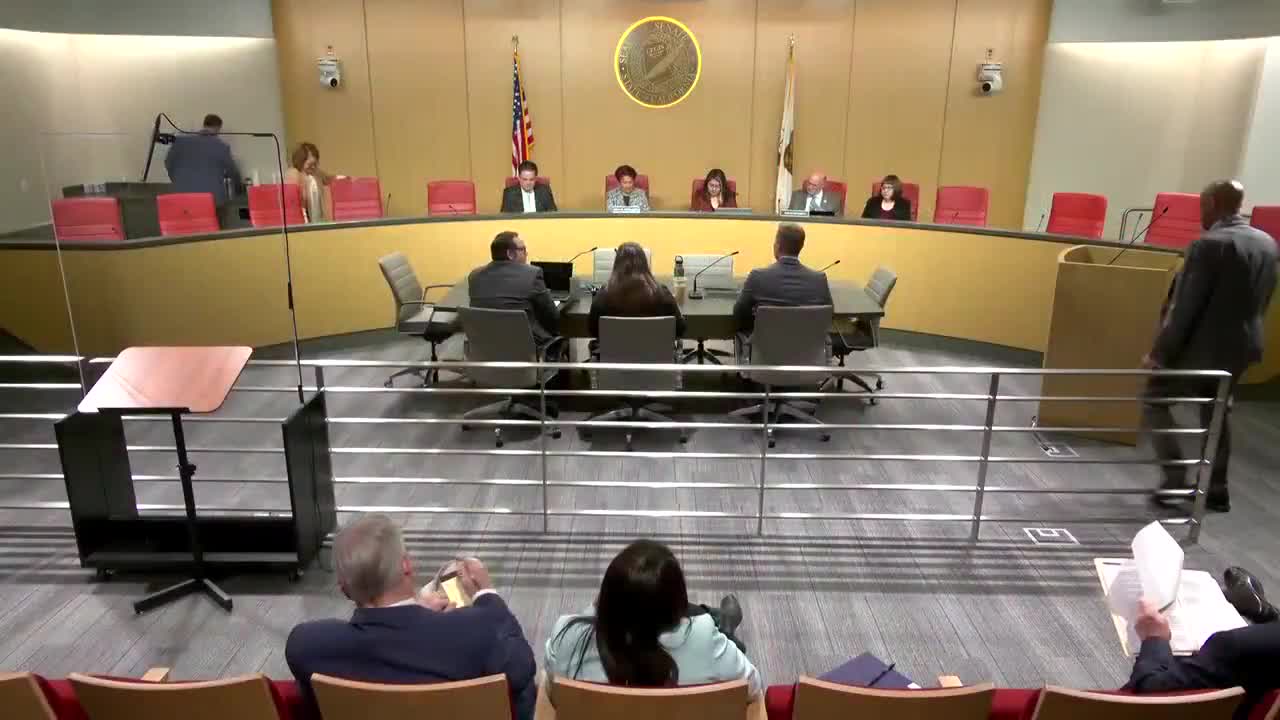 18MIN
Senate Standing Committee on Governance and Finance
Bill Author

Bill Co-Author(s):