SB 506: Public Utilities Commission: railroads: colored pavements marking project.
- Session Year: 2023-2024
- House: Senate
- Latest Version Date: 2023-09-30
Current Status:
Passed
(2023-09-30: Chaptered by Secretary of State. Chapter 288, Statutes of 2023.)
Introduced
In Committee
First Chamber
In Committee
Second Chamber
Enacted
The California Constitution establishes the Public Utilities Commission. Existing law provides the commission with the exclusive power to determine and prescribe the manner and terms of installation, operation, maintenance, use, and protection of specified railroad grade crossings. Existing law authorizes the commission to authorize and supervise the operation of pilot projects to evaluate proposed crossing warning devices, new technology, or other additional safety measures at designated crossings, with the consent of the local jurisdiction, the affected railroad, and other interested parties.
This bill would require the commission, to the extent permitted by federal law or regulation, to develop and implement a pilot or limited demonstration and research project for colored pavement markings at one or more at-grade highway-railroad crossings no later than January 1, 2026, to measure and evaluate the effectiveness of such a project to reduce incidents. The bill would require the commission to report its findings on the project to the Legislature no later than one year after project completion. The bill would repeal these provisions on January 1, 2030.
Under existing law, a violation of the Public Utilities Act or any order, decision, rule, direction, demand, or requirement of the commission is a crime.
Because the provisions of this bill are within the act and the commission may issue a new order, decision, rule, direction, demand, or requirement in connection with those provisions, the bill would impose a state-mandated local program by creating a new crime.
The California Constitution requires the state to reimburse local agencies and school districts for certain costs mandated by the state. Statutory provisions establish procedures for making that reimbursement.
This bill would provide that no reimbursement is required by this act for a specified reason.
The California Constitution establishes the Public Utilities Commission. Existing law provides the commission with the exclusive power to determine and prescribe the manner and terms of installation, operation, maintenance, use, and protection of specified railroad grade crossings. Existing law authorizes the commission to authorize and supervise the operation of pilot projects to evaluate proposed crossing warning devices, new technology, or other additional safety measures at designated crossings, with the consent of the local jurisdiction, the affected railroad, and other interested parties.
This bill would require the commission, to the extent permitted by federal law or regulation, to develop and implement a pilot or limited demonstration and research project for colored pavement markings project at one or more at-grade highway-railroad crossings no later than January 1, 2026, to measure and evaluate the effectiveness of such a project to reduce incidents. The bill would require the commission to report its findings on the project to the Legislature no later than one year after project completion. The bill would repeal these provisions on January 1, 2030.
Under existing law, a violation of the Public Utilities Act or any order, decision, rule, direction, demand, or requirement of the commission is a crime.
Because the provisions of this bill are within the act and the commission may issue a new order, decision, rule, direction, demand, or requirement in connection with those provisions, the bill would impose a state-mandated local program by creating a new crime.
The California Constitution requires the state to reimburse local agencies and school districts for certain costs mandated by the state. Statutory provisions establish procedures for making that reimbursement.
This bill would provide that no reimbursement is required by this act for a specified reason.
The California Constitution establishes the Public Utilities Commission. Existing law provides the commission with the exclusive power to determine and prescribe the manner and terms of installation, operation, maintenance, use, and protection of specified railroad grade crossings. Existing law authorizes the commission to authorize and supervise the operation of pilot projects to evaluate proposed crossing warning devices, new technology, or other additional safety measures at designated crossings, with the consent of the local jurisdiction, the affected railroad, and other interested parties.
This bill would require the commission, to the extent permitted by federal law or regulation, to develop and implement a colored pavement markings project at one or more at-grade highway-railroad crossings no later than January 1, 2026, to measure and evaluate the effectiveness of such a project to reduce incidents. The bill would require the commission to report its findings on the project to the Legislature no later than one year after project completion. The bill would repeal these provisions on January 1, 2030.
Under existing law, a violation of the Public Utilities Act or any order, decision, rule, direction, demand, or requirement of the commission is a crime.
Because the provisions of this bill are within the act and the commission may issue a new order, decision, rule, direction, demand, or requirement in connection with those provisions, the bill would impose a state-mandated local program by creating a new crime.
The California Constitution requires the state to reimburse local agencies and school districts for certain costs mandated by the state. Statutory provisions establish procedures for making that reimbursement.
This bill would provide that no reimbursement is required by this act for a specified reason.
The State Aeronautics Act governs the creation and operation of airports in this state. The act requires a county in which there is an airport served by a scheduled airline, with certain exceptions, to establish an airport land use commission. The act additionally requires each county in which there is an airport operated for the benefit of the public to establish an airport land use commission, but authorizes the board of supervisors of a county, upon making certain findings, to declare that the county is exempt from establishing an airport land use commission. In any county not having a commission or a body designated to carry out the responsibilities of a commission, the act authorizes any owner of a public airport to initiate proceedings for the creation of a commission by presenting a request to the board of supervisors that a commission be created and showing the need for the commission to the satisfaction of the board of supervisors.This bill would make a nonsubstantive change to the latter provision.The State Aeronautics Act governs the creation and operation of airports in this state. The act requires a county in which there is an airport served by a scheduled airline, with certain exceptions, to establish an airport land use commission. The act additionally requires each county in which there is an airport operated for the benefit of the public to establish an airport land use commission, but authorizes the board of supervisors of a county, upon making certain findings, to declare that the county is exempt from establishing an airport land use commission. In any county not having a commission or a body designated to carry out the responsibilities of a commission, the act authorizes any owner of a public airport to initiate proceedings for the creation of a commission by presenting a request to the board of supervisors that a commission be created and showing the need for the commission to the satisfaction of the board of supervisors.
This bill would make a nonsubstantive change to the latter provision.
(a)To the extent permitted by federal law or regulation, the commission shall develop and implement a pilot or limited demonstration and research project for colored pavement markings at one or more at-grade highway-railroad crossings no later than January 1, 2026, to measure and evaluate the effectiveness of such a project to reduce incidents. The commission shall report its findings to the Legislature no later than one year after project completion, in compliance with Section 9795 of the Government Code.
(b)This section shall remain in effect only until January 1, 2030, and as of that date is repealed.
SEC. 2.No reimbursement is required by this act pursuant to Section 6 of Article XIIIB of the California Constitution because the only costs that may be incurred by a local agency or school district will be incurred because this act creates a new crime or infraction, eliminates a crime or infraction, or changes the penalty for a crime or infraction, within the meaning of Section 17556 of the Government Code, or changes the definition of a crime within the meaning of Section 6 of Article XIIIB of the California Constitution.
(a)To the extent permitted by federal law or regulation, the commission shall develop and implement a pilot or limited demonstration and research project for colored pavement markings project at one or more at-grade highway-railroad crossings no later than January 1, 2026, to measure and evaluate the effectiveness of such a project to reduce incidents. The commission shall report its findings to the Legislature no later than one year after project completion, in compliance with Section 9795 of the Government Code.
(b)This section shall remain in effect only until January 1, 2030, and as of that date is repealed.
SEC. 2.No reimbursement is required by this act pursuant to Section 6 of Article XIIIB of the California Constitution because the only costs that may be incurred by a local agency or school district will be incurred because this act creates a new crime or infraction, eliminates a crime or infraction, or changes the penalty for a crime or infraction, within the meaning of Section 17556 of the Government Code, or changes the definition of a crime within the meaning of Section 6 of Article XIIIB of the California Constitution.
(a)To the extent permitted by federal law or regulation, the commission shall develop and implement a colored pavement markings project at one or more at-grade highway-railroad crossings no later than January 1, 2026, to measure and evaluate the effectiveness of such a project to reduce incidents. The commission shall report its findings to the Legislature no later than one year after project completion, in compliance with Section 9795 of the Government Code.
(b)This section shall remain in effect only until January 1, 2030, and as of that date is repealed.
SEC. 2.No reimbursement is required by this act pursuant to Section 6 of Article XIIIB of the California Constitution because the only costs that may be incurred by a local agency or school district will be incurred because this act creates a new crime or infraction, eliminates a crime or infraction, or changes the penalty for a crime or infraction, within the meaning of Section 17556 of the Government Code, or changes the definition of a crime within the meaning of Section 6 of Article XIIIB of the California Constitution.
SECTION 1.Section 21673 of the Public Utilities Code is amended to read:21673.In any county not having a commission or a body designated to carry out the responsibilities of a commission, any owner of a public airport may initiate proceedings for the creation of a commission by presenting a request to the board of supervisors that a commission be created and showing the need for the commission to the satisfaction of the board of supervisors.In any county not having a commission or a body designated to carry out the responsibilities of a commission, any owner of a public airport may initiate proceedings for the creation of a commission by presenting a request to the board of supervisors that a commission be created and showing the need therefor for the commission to the satisfaction of the board of supervisors.
|
Date
|
Status
|
|---|---|
| Sep 30, 2023 | Chaptered by Secretary of State. Chapter 288, Statutes of 2023. |
| Sep 30, 2023 | Approved by the Governor. |
| Sep 11, 2023 | Enrolled and presented to the Governor at 3 p.m. |
| Sep 6, 2023 | In Senate. Ordered to engrossing and enrolling. |
| Sep 6, 2023 | Read third time. Passed. (Ayes 78. Noes 0. Page 2961.) Ordered to the Senate. |
| Sep 5, 2023 | Read second time. Ordered to third reading. |
| Sep 1, 2023 | From committee: Do pass. (Ayes 16. Noes 0.) (September 1). |
| Aug 16, 2023 | August 16 set for first hearing. Placed on suspense file. |
| Jun 29, 2023 | From committee: Do pass and re-refer to Com. on APPR. with recommendation: To consent calendar. (Ayes 14. Noes 0.) (June 28). Re-referred to Com. on APPR. |
| Jun 8, 2023 | Referred to Com. on U. & E. |
| May 25, 2023 | In Assembly. Read first time. Held at Desk. |
| May 25, 2023 | Read third time. Passed. (Ayes 40. Noes 0. Page 1300.) Ordered to the Assembly. |
| May 23, 2023 | Ordered to special consent calendar. |
| May 18, 2023 | Read second time. Ordered to third reading. |
| May 18, 2023 | From committee: Do pass. (Ayes 7. Noes 0. Page 1173.) (May 18). |
| May 12, 2023 | Set for hearing May 18. |
| May 8, 2023 | May 8 hearing: Placed on APPR suspense file. |
| May 1, 2023 | Set for hearing May 8. |
| Apr 26, 2023 | From committee: Do pass and re-refer to Com. on APPR with recommendation: To consent calendar. (Ayes 16. Noes 0. Page 903.) (April 25). Re-referred to Com. on APPR. |
| Apr 20, 2023 | Set for hearing April 25. |
| Apr 18, 2023 | Read second time and amended. Re-referred to Com. on TRANS. |
| Apr 17, 2023 | From committee: Do pass as amended and re-refer to Com. on TRANS. (Ayes 15. Noes 0. Page 637.) (April 10). |
| Apr 3, 2023 | Set for hearing April 10. |
| Mar 29, 2023 | Re-referred to Coms. on E., U. & C. and TRANS. |
| Mar 20, 2023 | From committee with author's amendments. Read second time and amended. Re-referred to Com. on RLS. |
| Feb 22, 2023 | Referred to Com. on RLS. |
| Feb 15, 2023 | From printer. May be acted upon on or after March 17. |
| Feb 14, 2023 | Introduced. Read first time. To Com. on RLS. for assignment. To print. |
|
Date
|
Description
|
Location
|
Votes
|
|
|---|---|---|---|---|
| Sep 6, 2023 | SB 506 Laird Senate Third Reading By Boerner | Assembly Floor |
Passed |
|
| Sep 1, 2023 | Do pass. | Assembly Standing Committee on Appropriations |
Passed |
|
| Jun 28, 2023 | Do pass and be re-referred to the Committee on [Appropriations] with recommendation: To Consent Calendar | Assembly Standing Committee on Utilities and Energy |
Passed |
|
| May 25, 2023 | Special Consent SB506 Laird | Senate Floor |
Passed |
|
| May 18, 2023 | Do pass | Senate Standing Committee on Appropriations |
Passed |
|
| May 8, 2023 | Placed on suspense file | Senate Standing Committee on Appropriations |
Passed |
|
| Apr 25, 2023 | Do pass, but first be re-referred to the Committee on [Appropriations] with the recommendation: To Consent Calendar | Senate Standing Committee on Transportation |
Passed |
|
| Apr 10, 2023 | Do pass as amended, but first amend, and re-refer to the Committee on [Transportation] | Senate Standing Committee on Energy, Utilities and Communications |
Passed |
This list shows positions taken on this bill by organizations on the date displayed, which is linked to the original source.
Positions by individuals are not included.
|
Organization
|
Position
|
Date
|
|---|---|---|
| California State Legislative Board, Brotherhood of Locomotive Engineers and Trainmen, and | ** Support | |
| California State Legislative Board, Sheet Metal, Air, Rail and Transportation Workers, | ** Support | |
| California Teamsters Public Affairs Council | ** Support | |
| Teamsters Rail | ** Support | |
| Transportation Division | ** Support |
SENATE THIRD READING
STR Bill Id:SB 506
Author:(Laird)
As Amended Ver:April 18, 2023
Majority vote
SUMMARY
This bill requires the California Public Utilities Commission (CPUC) to develop and implement a pilot project to test the efficacy of pavement markings painted in color at one or more at-grade highway-railroad crossings, if permissible under federal law or regulation, by January 1, 2026.
Major Provisions
COMMENTS
Safety Risks and Study Results. Rail crossings represent a significant safety risk as automobiles, bicyclists, pedestrians, and others can easily collide with a train at a crossing. In fiscal year 2021-22, there were 796 railroad-related incidents reported in California, 464 of which were related to crossing or trespassing, with 155 total incidences of injury and 215 fatalities. In 2014, the United States Department of Transportation conducted a research study to evaluate the effectiveness of roadway pavement markings at a railroad crossing in Fort Lauderdale, Florida. The study results indicate that the addition of pavement markings and modified signage reduced the number of vehicles that stopped in the high-risk area of the crossing but note the need for additional field testing.
Grounded Pilots. The CPUC has legal regulatory authority over rail safety within California and is responsible for enforcing both state and federal laws, regulations, CPUC general orders, and directives relating to rail transportation. Federal agencies also play a role: the Federal Railroad Administration and the Federal Highway Administration (FHWA) both have authority to regulate safety measures at railroad crossings, which preempts the regulatory authority of the CPUC. According to the CPUC, the CPUC and Caltrans were denied approval by the FHWA for a permit for the State of California to conduct a pilot experiment on rail crossing safety in 2018 and 2020. This proposed pilot aimed to test the effectiveness of additional visual guidance to enhance motorists' and pedestrians' awareness when approaching an at-grade rail crossing. In addition, the pilot sought to determine whether changes in color pavement markings and signage can result in an increase in driver safe-stopping behavior and assess the effects pavement markings might have on the number of accidents, injuries, and fatalities at those crossings.
According to the Author
"As the regulatory authority overseeing rail safety within California, the CPUC strives to achieve a goal of zero accidents and injuries. Despite the various safety efforts and risk management activities, incidents resulting in injury and even death still occur. Items such as inattentiveness and misjudgment at railroad crossings contribute to these safety incidents. To enhance safety at railroad crossings, Senate Bill 506 requires the CPUC to develop and implement a pilot program that will add colored markings at railroad crossings. The CPUC will then report to the Legislature on the effectiveness of the colored markings and if they were effective in reducing safety incidents."
Arguments in Support
This bill is supported by the California State Legislative Board of Sheet Metal, Air, Rail and Transportation Workers – Transportation Division, which argues that the bill will help the state understand the potential for pavement markings painted in color to reduce safety incidents at railroad crossings.
Arguments in Opposition
None on file.
FISCAL COMMENTS
According to the Assembly Appropriations Committee, the CPUC estimates the pilot project required by this bill could cost between $100,000 and $250,000 from a funding source which would be identified through the CPUC regulatory process, and that staff costs to conduct the required analysis would be minor and absorbable. Potential funding sources include state funds, federal funds, and private railroad funds.
VOTES
SENATE FLOOR: 40-0-0
YES: Allen, Alvarado-Gil, Archuleta, Ashby, Atkins, Becker, Blakespear, Bradford, Caballero, Cortese, Dahle, Dodd, Durazo, Eggman, Glazer, Gonzalez, Grove, Hurtado, Jones, Laird, Limón, McGuire, Menjivar, Min, Newman, Nguyen, Niello, Ochoa Bogh, Padilla, Portantino, Roth, Rubio, Seyarto, Skinner, Smallwood-Cuevas, Stern, Umberg, Wahab, Wiener, Wilk
ASM UTILITIES AND ENERGY: 14-0-1
YES: Garcia, Jim Patterson, Bauer-Kahan, Calderon, Wendy Carrillo, Chen, Connolly, Hart, Mathis, Muratsuchi, Reyes, Santiago, Schiavo, Wallis
ABS, ABST OR NV: Holden
ASM APPROPRIATIONS: 16-0-0
YES: Holden, Megan Dahle, Bryan, Calderon, Wendy Carrillo, Dixon, Mike Fong, Hart, Lowenthal, Mathis, Papan, Pellerin, Sanchez, Soria, Weber, Wilson
UPDATED
VERSION: April 18, 2023
CONSULTANT: Samuel Mahanes / U. & E. / (916) 319-2083 FN: 0001510
Date of Hearing: August 16, 2023
ASSEMBLY COMMITTEE ON APPROPRIATIONS
Chris Holden, Chair
SBPCA Bill Id:SB 506
Author:(Laird) – As Amended Ver:April 18, 2023
Policy Committee: | Utilities and Energy | Vote: | 14 - 0 |
|
| ||
|
|
Urgency: No State Mandated Local Program: Yes Reimbursable: No
SUMMARY:
This bill requires the California Public Utilities Commission (CPUC), by January 1, 2026, and to the extent permitted by federal law, to develop and implement a pilot or limited demonstration and research project for colored pavement markings at one or more at-grade highway-railroad crossings to measure and evaluate the effectiveness of such a project to reduce incidents. The bill directs the CPUC to report its findings to the Legislature within one year of completing the project.
FISCAL EFFECT:
The CPUC estimates the pilot project required by this bill could cost between $100,000 and $250,000 for one high-risk highway-rail track grade crossing. This estimate includes the cost of paint to cover the selected crossing, consultants and researchers to record behavior at the crossing (pre- and post- paint) and compilation of results into a study that can be published and peer reviewed. While the bill does not identify a funding source for the pilot project, the CPUC indicates it would identify a funding source through the CPUC regulatory process, and potential sources include state funds, federal funds and private railroad funds, or some combination of the three.
The CPUC estimates staff to conduct the analysis required for the pilot project through a proceeding would be minor and absorbable. The funding source for the pilot project itself would be identified through the CPUC’s regulatory process when establishing the pilot. It could be a mix of railroad, federal and state funding.
COMMENTS:
- Purpose. The author intends this bill to lead to information on the effectiveness of colored markings at reducing accidents at railroad crossings. According to the author:
As the regulatory authority overseeing rail safety within California, the CPUC strives to achieve a goal of zero accidents and injuries. Despite the various safety efforts and risk management activities, incidents resulting in injury and even death still occur. Items such as inattentiveness and misjudgment at railroad crossings contribute to these safety incidents. To enhance safety at railroad crossings, Senate Bill 506 requires the CPUC to develop and implement a pilot program that will add colored markings at railroad crossings. The CPUC will then report to the Legislature on the effectiveness of the colored markings and if they were effective in reducing safety incidents.
- Background. The CPUC is the state agency with exclusive jurisdiction over rail crossings in California and is responsible for enforcing state and federal laws and regulations, CPUC general orders and directives relating to transportation by rail. CPUC engineers evaluate the safety of rail crossings and review proposed construction where roadways or pathways cross railroad or rail transit tracks. CPUC staff ensure that highway-rail and pathway-rail crossings are safely designed, constructed and maintained. CPUC’s rail safety engineers evaluate requests to construct new rail crossings or modify existing crossings. They also evaluate rail crossings configurations after train-related incidents occur at rail crossings, and review complaints regarding rail crossings safety or conditions.
The CPUC has sought federal authorization to conduct a pilot project such as the one required by this bill. According to the CPUC:
In 2018 and 2020, the CPUC sought approval from the Federal Highway Administration (FHWA), in coordination with the California Department of Transportation (Caltrans), for an FHWA permit for the State of California to conduct an at-grade rail crossing safety pilot experiment…to test the effectiveness of additional visual guidance to enhance motorists’ and pedestrians’ awareness when approaching an at grade rail crossing…The selected proposed pilot project location was State Route 120 in Escalon, California, and was based on anticipated future risks of incidents…The estimated pilot project cost was $100,000 - $250,000. This estimate included the cost of the paint to cover the selected crossing, UC Berkeley to record behavior at the crossing (pre- and post- paint), and a compilation of results into a study to be published and peer reviewed.
The CPUC reports FHWA did not approve the proposal “based on the color selection (red and/or yellow) and the existing federal Manual on Uniform Traffic Control Devices (MUTCD) protocols specifying red/yellow colors for other safety markings.” The CPUC asserts FHWA may, nonetheless, grant an exemption to these protocols. The author and the CPUC conclude having the requirement in statute that CPUC conduct the pilot project will help the CPUC receive the federal exemption.
Analysis Prepared by: Jay Dickenson / APPR. / (916) 319-2081
Date of Hearing: June 28, 2023
ASSEMBLY COMMITTEE ON UTILITIES AND ENERGY
Eduardo Garcia, Chair
SBPCA Bill Id:SB 506
Author:(Laird) – As Amended Ver:April 18, 2023
SENATE VOTE: 40-0
SUBJECT: Public Utilities Commission: railroads: colored pavements marking project
SUMMARY: This bill requires the California Public Utilities Commission (CPUC) to develop and implement a pilot project to test the efficacy of colored pavement markings at one or more at-grade highway-railroad crossings, if permissible under federal law or regulation, by January 1, 2026.
EXISTING LAW:
- Provides the CPUC with the exclusive power to determine and prescribe the manner and terms of installation, operation, maintenance, use, and protection of specified railroad grade crossings. Authorizes the CPUC to supervise the operation of pilot projects to evaluate proposed crossing warning devices, new technology, or other additional safety measures at designated crossings, with the consent of the local jurisdiction, the affected railroad, and other interested parties. (Public Utilities Code § 1202)
- Provides that no public road, highway, or street shall be constructed across the track of any railroad corporation at grade, nor shall the track of any railroad corporation be constructed across a public road, highway, or street at grade, nor shall the track of any railroad corporation or street railroad corporation be constructed across the track of any other railroad or street railroad corporation at grade, without having first secured the permission of the CPUC. (Public Utilities Code § 1201)
- Requires the division of the CPUC responsible for railroad safety to be responsible for inspection, surveillance, and investigation of the rights-of-way, facilities, equipment, and operations of railroads and public mass transit guideways, and for enforcing state and federal laws, regulations, orders, and directives relating to transportation of persons or commodities, or both, of any nature or description by rail. (Public Utilities Code § 309.7)
- Establishes the Railroad Highway Grade Crossing Program (RHGCP), also known as the Section 130 Program, which provides federal funds for the elimination of hazards at existing at-grade highway-rail crossings. (Title 23, United States Code, § 130 (23 U.S.C. 130))
FISCAL EFFECT: According to the Senate Committee on Appropriations, costs to implement this bill are unknown but potentially significant due to the pilot development resulting from this bill. The CPUC estimates that any costs to develop and implement a pilot or limited demonstration and research project for colored pavement markings would likely be minor and absorbable.
BACKGROUND:
Crossing Guards – The CPUC has legal regulatory authority over rail safety within California. CPUC rail operations and safety staff are responsible for enforcing both state and federal laws, regulations, CPUC general orders, and directives relating to rail transportation.[1] The CPUC Rail Crossings and Engineering Branch (RCEB) engineers evaluate requests to construct new rail crossings or modify existing crossings. CPUC staff ensure that highway-rail and pathway-rail crossings are safely designed, constructed, and maintained. RCEB staff also evaluate rail crossings configuration after train-related incidents occur at rail crossings, and review complaints regarding rail crossings and rail crossings safety or conditions. However, federal agencies also play a role: the Federal Railroad Administration and the Federal Highway Administration (FHWA) both have authority to regulate safety measures at railroad crossings, which preempts the regulatory authority of the CPUC.[2],[3]
Safety Risks And Study Results – Rail crossings, in particular at-grade crossings[4], represent a significant safety risk as automobiles, pedestrians, bicyclists, and others can easily collide with a train at a crossing. In fiscal year 2021-22, there were 796 reported railroad-related incidents in California, 464 of which were related to crossing or trespassing, with 155 total incidences of injury and 215 fatalities.[5] In 2014, the U.S. Department of Transportation conducted a research study to evaluate the effectiveness of roadway pavement markings placed within the dynamic envelope[6] and new corresponding signage at an at-grade crossing in Fort Lauderdale, Florida. The goal of the added markings and signage was to reduce the number of vehicles that come to a stop within the dynamic envelope, thus reducing the possibility that a vehicle is present on the tracks when a train approaches. Results from study indicate that the addition of the dynamic envelope pavement markings and modified signage reduced the number of vehicles that stopped within the dynamic envelope zone and increased the number of vehicles that stopped properly and safely behind the stop line.[7] However, the study noted the need for additional field testing before recommendations for wider use of pavement markings could be made.
Federal Express – The Railroad Highway Grade Crossing Program (RHGCP), also known as the Section 130 Program, provides federal funds for the elimination of hazards at existing at-grade highway-rail crossings.[8] The RHGCP is a cooperative effort between the Federal Highway Administration (FHWA), the California Department of Transportation (Caltrans), the CPUC, railroad companies, and local agencies. In California, the program has historically been funded by a 90% federal contribution and a 10% local matching contribution provided by Caltrans. However, following the passage of the Infrastructure Investment and Jobs Act (IIJA) in 2021, Section 130 projects are typically funded 100% by federal funds, with California’s federal apportionment totaling approximately $17 million per year.[9],[10]
In addition to funding the implementation of safety measures, federal agencies set national standards to guarantee a degree of marking and signage consistency nationwide. Protocols in the Manual on Uniform Traffic Control Devices (MUTCD), created by the FHWA, specify certain colors for a variety of safety-related markings and signs.[11] Though the CPUC contends the FHWA has the ability to grant an exemption, the FHWA requires strict adherence to national standards for traffic signage. As noted in the MUTCD, “Design, application, and placement of traffic control devices other than those adopted in this Manual shall be prohibited”[12] unless specified provisions are adhered to. Any test of traffic control devices which substantively deviate from those outlined in the MUTCD must be submitted to FHWA as “requests for any interpretation, permission to experiment, interim approval, or change”[13]
Grounded Pilots – According to the CPUC, in 2018 and 2020, the CPUC sought approval from the FHWA, in coordination with Caltrans, for an FHWA permit for the State of California to conduct an at-grade rail crossing safety pilot experiment. This proposed pilot aimed to test the effectiveness of additional visual guidance to enhance motorists’ and pedestrians’ awareness when approaching an at-grade rail crossing. In addition, the pilot sought to determine whether changes in color pavement markings and signage can result in an increase in driver safe-stopping behavior and assess the effects pavement markings might have on the number of accidents, injuries, and fatalities at those crossings.
The selected proposed pilot project location was State Route 120 in Escalon, California in San Joaquin County, based on anticipated future risks of incidents (e.g., crude oil unit trains and increasing tourism traffic to Yosemite National Park). The estimated pilot project cost was $100,000 - $250,000, which included the cost of the paint to cover the selected crossing, contracting with UC Berkeley to record behavior at the crossing (pre- and post-paint), and a compilation of results into a study to be published and peer reviewed. The costs for the painting projects were extremely low compared to other upgrades at rail crossings that enhance safety. However, the FHWA did not grant approval to the CPUC and Caltrans to proceed with the pilot based on the color selection (red and/or yellow), given the existing federal MUTCD protocols specifying red/yellow colors for other safety markings.[14]
Costs – According to the CPUC, the painted color marking applications were estimated to cost about $3 per square foot, while other crossing upgrades run from the hundreds of thousands to millions of dollars, depending on the type of project. The CPUC notes that while these cost estimates date to 2018, the cost of implementing pavement markings in high traffic areas is still a relatively low-cost solution for potentially increasing public safety. The CPUC acknowledges that specific funding for these projects could be realized by a combination of federal funding, if authorized, along with state, local, and railroad funding.
COMMENTS:
- Author’s Statement. According to the author, “As the regulatory authority overseeing rail safety within California, the CPUC strives to achieve a goal of zero accidents and injuries. Despite the various safety efforts and risk management activities, incidents resulting in injury and even death still occur. Items such as inattentiveness and misjudgment at railroad crossings contribute to these safety incidents. To enhance safety at railroad crossings, Senate Bill 506 requires the CPUC to develop and implement a pilot program that will add colored markings at railroad crossings. The CPUC will then report to the Legislature on the effectiveness of the colored markings and if they were effective in reducing safety incidents.”
- Proceeding Forward. The bill gives CPUC broad discretion in implementing the project. It is likely, given the range of approaches permissible under this bill, that the CPUC would open a regulatory proceeding to inform the development and implementation of the pilot project. This would solicit input, comment, and deliberation over the various aspects of the pilot, including which colors and marking layouts would be applied, which crossing(s) would be selected for study, and where funding would be sourced from. Perhaps the most important outcome of allowing the CPUC broad discretion is that this would enable the CPUC to carefully and deliberately craft an application for federal approval. However, should this project be implemented for multiple years or expand from a pilot study to widespread implementation, maintenance of the markings would be an important consideration. These markings would be subjected to weathering, as well as driven over regularly, and would require regular upkeep to maintain a recognizable color. Whether the CPUC, local public agencies, railroad operators, or a combination of multiple parties would bear the responsibility for maintaining additional markings would be important to gauge the long-term financial impact of implementation.
- An Iron Horse of A Different Color. Certain colors, particularly yellow and red – which most frequently suggest caution or indicate danger – already have uses under federal railway and highway regulations. If such markings are precluded from use under federal guidelines, whether the remaining colors would effectively signal caution without confusing motorists and pedestrians is unclear. Currently, 11 of the 13 colors listed in the MUTCD have been assigned specific meanings by the FHWA, with coral and light blue representing the only two colors yet unassigned. Even these two unassigned colors, however, are being “reserved for future applications that will be determined only by FHWA after consultation with the States, the engineering community, and the general public.”[15]
Alternative methods of increasing awareness of railroad crossings may be worth considering, including the written messages “do not block” and “keep clear” applied in white on the road surface, or signage indicating “do not block the intersection” and “do not stop on the tracks.” Both methods are currently optional under the MUTCD,[16] and wider implementation, particularly at high-risk intersections, may improve crossing safety. However, these methods are likely to cost more than the proposed color blocks on the roadway.
- Sign, Sign, Everywhere A Sign. The effectiveness of any signage or signaling rests on recognition and comprehension, which is most often cemented by consistency: red, octagonal signs indicate for drivers to stop, and certain warning symbols (radiation hazard, biohazard, and skull-and-crossbones to indicate poison) are widely recognized internationally. These signs are so widely, and so quickly, recognized because they are widely, consistently, and unambiguously applied. Even if updated signage more effectively communicates the presence of a hazard (e.g., a mushroom cloud instead of the conventional, but largely arbitrary, trefoil radiation symbol), the novelty of the sign may cause confusion and make a risky situation even more dangerous. For this reason, any changes to signage associated with hazards like railroad crossings should, similarly to the tracks themselves, be approached with caution.
- Prior Legislation.
SB 385 (Hueso) was a code clean-up bill that removed the provisions related to specific pilot projects for the use of audible warning devices. Status: Chapter 425, Statutes of 2017.
SB 62 (Morrow) clarified the requirements and exceptions for a pilot project that relates to audible warning devices and extended to additional locations the proposed pilot project. Status: Chapter 601, Statutes of 2001.
AB 1249 (Daucher) authorized a pilot project to test supplementary safety measures at railroad crossings. Status: Chapter 393, Statutes of 2001.
SB 1491 (Leslie) authorized a test of the wayside horn at railroad crossings. Status: Chapter 263, Statutes of 2000.
AB 923 (Hertzberg) required the CPUC, in consultation with Caltrans, to adopt rules and regulations prescribing uniform standards defining when enforcement begins after the warning signal sounds at a railroad crossing. Status: Chapter 841, Statutes of 1999.
REGISTERED SUPPORT / OPPOSITION:
Support
California State Legislative Board, Sheet Metal, Air, Rail and Transportation Workers –
Transportation Division (SMART-TD)
California Teamsters Public Affairs Council
California State Legislative Board, Brotherhood of Locomotive Engineers and Trainmen, and
Teamsters Rail
Opposition
None on file.
Analysis Prepared by: Samuel Mahanes / U. & E. / (916) 319-2083
CPUC; “Annual Railroad Safety Report To The California State Legislature”; November 2022. ↑
Federal Railroad Administration; “Office of Railroad Safety”; October 2020; https://railroads.dot.gov/about-fra/program-offices/office-railroad-safety ↑
Federal Highway Administration; “Railway Highway Crossing Program Overview”; July 2022; https://highways.dot.gov/safety/hsip/xings/railway-highway-crossing-program-overview ↑
Any place where a road crosses railroad tracks on the same vertical level, rather than as an underpass or overpass. ↑
CPUC; “Annual Railroad Safety Report To The California State Legislature”; November 2022. ↑
The region between and immediately adjacent to the tracks at an at-grade highway-rail crossing. ↑
U.S. Department of Transportation; “Effect of Dynamic Envelope Pavement Markings on Vehicle Driver Behavior at a Highway-Rail Grade Crossing”; April 2014. ↑
CPUC; “Railroad Crossing Section 130 Funding Program”; June 2018. ↑
Federal Highway Administration; “Railway Highway Crossing Program Overview”; July 2022; https://highways.dot.gov/safety/hsip/xings/railway-highway-crossing-program-overview ↑
Caltrans; “Caltrans Railway-Highway Crossings Program (RHCP) Section 130 – Project Funding”; https://dot.ca.gov/programs/local-assistance/fed-and-state-programs/sec130/project-funding ↑
U.S. Department of Transportation – Federal Highway Administration; Manual on Uniform Traffic Control Devices; Updated July 2022. ↑
Pg. 4; U.S. Department of Transportation – Federal Highway Administration; Manual on Uniform Traffic Control Devices; Updated July 2022. ↑
Pg. 4; U.S. Department of Transportation – Federal Highway Administration; Manual on Uniform Traffic Control Devices; Updated July 2022. ↑
U.S. Department of Transportation – Federal Highway Administration; Manual on Uniform Traffic Control Devices; Updated July 2022. ↑
Pg. 10; U.S. Department of Transportation – Federal Highway Administration; Manual on Uniform Traffic Control Devices; Updated July 2022. ↑
Pg. 383; U.S. Department of Transportation – Federal Highway Administration; Manual on Uniform Traffic Control Devices; Updated July 2022. ↑
SENATE RULES COMMITTEE Office of Senate Floor Analyses (916) 651-1520 Fax: (916) 327-4478 | SB 506 |
THIRD READING
Bill No: SB 506
Author: Laird (D)
Amended: 4/18/23
Vote: 21
SENATE ENERGY, U. & C. COMMITTEE: 15-0, 4/10/23
AYES: Bradford, Dahle, Ashby, Becker, Dodd, Durazo, Eggman, Gonzalez, McGuire, Min, Newman, Rubio, Seyarto, Skinner, Wilk
NO VOTE RECORDED: Caballero, Grove, Stern
SENATE TRANSPORTATION COMMITTEE: 16-0, 4/25/23
AYES: Gonzalez, Niello, Allen, Archuleta, Becker, Blakespear, Cortese, Dahle, Dodd, Limón, McGuire, Newman, Nguyen, Seyarto, Umberg, Wahab
SENATE APPROPRIATIONS COMMITTEE: 7-0, 5/18/23
AYES: Portantino, Jones, Ashby, Bradford, Seyarto, Wahab, Wiener
SUBJECT: Public Utilities Commission: railroads: colored pavements marking project
SOURCE: Author
DIGEST:
This bill requires the California Public Utilities Commission (CPUC) to develop and implement a colored pavement markings project at one or more at-grade highway-railroad crossings, if authorized by federal law or regulation.
ANALYSIS:
Existing law:
- Establishes the CPUC and provides that private corporations and persons that own, operate, control, or manage a line, plant, or system for the transportation of people or property are public utilities subject to control by the Legislature. Authorizes the CPUC to establish rules for the transportation of passengers and property. Provides the Legislature with plenary power to confer additional authority upon the CPUC. (California Constitution, Article XII)
- Provides the CPUC with the exclusive power to determine and prescribe the manner and terms of installation, operation, maintenance, use, and protection of specified railroad grade crossings. Authorizes the CPUC to authorize and supervise the operation of pilot projects to evaluate proposed crossing warning devices, new technology, or other additional safety measures at designated crossings, with the consent of the local jurisdiction, the affected railroad, and other interested parties. (Public Utilities Code §1202)
- Provides that no public road, highway, or street shall be constructed across the track of any railroad corporation at grade, nor shall the track of any railroad corporation be constructed across a public road, highway, or street at grade, or shall the track of any railroad corporation be constructed across the track of any other railroad or street railroad corporation at grade, nor shall the track of a street railroad corporation be constructed across the track of a railroad corporation at grade, without having first secured the permission of the CPUC. (Public Utilities Code §1201)
- Requires the division of the CPUC responsible for railroad safety to be responsible for inspection, surveillance, and investigation of the rights-of-way, facilities, equipment, and operations of railroads and public mass transit guideways, and for enforcing state and federal laws, regulations, orders, and directives relating to transportation of persons or commodities, or both, of any nature or description by rail. (Public Utilities Code §309.7)
- Establishes the Railroad Highway Grade Crossing Program (RHGCP), also known as the Section 130 Program, which provides federal funds for the elimination of hazards at existing at-grade highway-rail crossings. (Title 23, United States Code, §130 (23 U.S.C. 130))
This bill:
- Requires the CPUC, to the extent permitted by federal law or regulation, to develop and implement a pilot or limited demonstration and research project for colored pavement markings at one or more at-grade highway-railroad crossings no later than January 1, 2026, to measure and evaluate the effectiveness of such a project to reduce incidents.
- Requires the CPUC to report its findings on the project to the Legislature no later than one year after project completion.
- Repeals these provisions on January 1, 2030.
Background
CPUC oversight of rail crossings. The CPUC has regulatory authority over rail safety within California, including exclusive jurisdiction over rail crossings in the state. CPUC rail operations and safety staff are responsible for enforcing both state and federal laws, regulations, CPUC general orders, and directives relating to rail transportation. The CPUC Rail Crossings and Engineering Branch (RCEB) engineers evaluate requests to construct new rail crossings or modify existing crossings. CPUC staff ensure that highway-rail and pathway-rail crossings are safely designed, constructed, and maintained. RCEB staff also evaluate rail crossing configuration after train-related incidents occur at rail crossings, and review complaints regarding rail crossings and safety or other conditions.
Safety risks of rail crossings. Rail crossings, in particular, represent a significant safety risk as automobiles, pedestrians, bicyclists, and others can easily collide with a train at a crossing. According to the CPUC’s 2022 Annual Railroad Safety Report to the Legislature, in fiscal year 2021-22, there were 796 reported railroad-related incidents in California, of which 464 were related to crossing or trespasser incidents. There were 215 total fatalities for all 796 incidents (data is not provided by specific category of incident).
Section 130 Program funding and projects. The RHGCP, also known as the Section 130 Program, provides federal funds for the elimination of hazards at existing at-grade highway-rail crossings. The program is funded at a 90 percent federal contribution and 10 percent local matching contribution. California Department of Transportation (Caltrans), implements the Federal 90/10 requirement by funding 90 percent of the project with federal funds and the 10 percent local match requirement will be funded through Caltrans funds. The purpose of the RHGCP is to reduce the number, severity and potential of hazards to motorists, bicyclists, and pedestrians at crossings. The RHGCP is a cooperative effort between the Federal Highway Administration (FHWA), Caltrans, CPUC, railroad companies and local agencies.
2014 Federal study at one Fort Lauderdale crossing shows promise. In 2014, the U.S. Department of Transportation conducted a research study to evaluate the effectiveness of roadway pavement markings placed within the dynamic envelope, the region between and immediately adjacent to the tracks at a highway-rail grade crossing, and new corresponding signage at a grade crossing in Fort Lauderdale, Florida. The goal of the added markings and signage was to reduce the number of vehicles that come to a stop within the dynamic envelope, a violation of most applicable state highway traffic laws, thus reducing the possibility that a vehicle is present on the tracks when a train approaches. Results from study indicate that the addition of the dynamic envelope pavement markings and modified signage reduced the number of vehicles that stopped within the dynamic envelope zone and increased the number of vehicles that stopped properly—safely behind the stop line. However, the study noted the need for additional field testing before recommendations for wider use of pavement markings could be made.
CPUC proposes pilot project. According to the CPUC, in 2018 and 2020, the CPUC sought approval from the FHWA, in coordination with Caltrans, for an FHWA permit for the State of California to conduct an at-grade rail crossing safety pilot experiment. This proposed pilot aimed to test the effectiveness of additional visual guidance to enhance motorists’ and pedestrians’ awareness when approaching an at-grade rail crossing. In addition, the pilot sought to determine whether changes in color pavement markings and signage can result in an increase in driver safe-stopping behavior and assess the effects pavement markings might have on the number of accidents, injuries, and fatalities at those crossings. However, the FHWA did not grant approval to CPUC and Caltrans to proceed with the pilot based on the color selection (red and/or yellow) and the existing federal Manual on Uniform Traffic Control Devices protocols specifying red/yellow colors for other safety markings. While the current version of the manual seems to preserve the color specifications, the CPUC contends the FHWA has the ability to grant an exemption to these protocols, and believes they may be inclined to do so on this third attempt by California.
Costs. According to the CPUC, the painted color marking applications were estimated to cost about $3 per square foot, while other crossing upgrades run into the hundreds of thousands, and potentially millions, of dollars depending on the type of project. The CPUC notes that while these cost estimates date to 2018, the cost of implementing pavement markings in high traffic areas is still a bargain for public safety. The CPUC notes that specific funding for these projects could be realized by a combination of federal funding, if authorized, along with state, local, and railroad funding.
Related/Prior Legislation
SB 385 (Hueso, Chapter 425, Statutes of 2017) was a code clean-up bill that removed the provisions related to specific pilot projects for the use of the audible warning devices.
SB 62 (Morrow, Chapter 601, Statutes of 2001) clarified the requirements and exceptions for a pilot project that relates to audible warning devices, and extended to additional locations the proposed pilot project.
AB 1249 (Daucher, Chapter 393, Statutes of 2001) authorized a pilot project to test supplementary safety measures at railroad crossings.
SB 1491 (Leslie, Chapter 263, Statutes of 2000) authorized a test of the wayside horn at railroad crossings.
AB 923 (Hertzberg, Chapter 841, Statutes of 1999) required the CPUC, in consultation with Caltrans, to adopt rules and regulations prescribing uniform standards defining when enforcement begins after the warning signal sounds at a railroad crossing.
FISCAL EFFECT: Appropriation: No Fiscal Com.: Yes Local: Yes
According to the Senate Appropriations Committee:
- Unknown but potentially significant cost pressure (various funds) to scale up or expand any pilot or demonstration project developed as a result of this bill.
- The CPUC estimates that any costs to develop and implement a pilot or limited demonstration and research project for colored pavement markings would likely be minor and absorbable.
SUPPORT: (Verified 5/18/23)
California State Legislative Board of Brotherhood of Locomotive Engineers &
Trainmen International Brotherhood of Teamsters
California State Legislative Board of Sheet Metal, Air, Rail and Transportation
Workers-Transportation Division
California Teamsters Public Affairs Council
OPPOSITION: (Verified 5/18/23)
None received
ARGUMENTS IN SUPPORT: According to the author:
As the regulatory authority overseeing rail safety within California, the CPUC strives to achieve a goal of zero accidents and injuries. Despite the various safety efforts and risk management activities, incidents resulting in injury and even death still occur. Items such as inattentiveness and misjudgment at railroad crossings contribute to these safety incidents. To enhance safety at railroad crossings, Senate Bill 506 requires the CPUC to develop and implement a pilot program that will add colored markings at railroad crossings. The CPUC will then report to the Legislature on the effectiveness of the colored markings and if they were effective in reducing safety incidents.
Prepared by: Nidia Bautista / E., U. & C. / (916) 651-4107
5/20/23 12:51:44
**** END ****
SENATE COMMITTEE ON
Senator Anthony Portantino, Chair
2023 - 2024 Regular Session
SB 506 (Laird) - Public Utilities Commission: railroads: colored pavements marking project
Version: | Policy Vote: |
Urgency: | Mandate: |
Hearing Date: | Consultant: |
Bill Summary:
This bill would require the California Public Utilities Commission (CPUC) to develop and implement a pilot or limited demonstration and research project for colored pavement markings at one or more at-grade highway-railroad crossings, if authorized by federal law or regulation.
Fiscal Impact:
- Unknown but potentially significant cost pressure (various funds) to scale up or expand any pilot or demonstration project developed as a result of this bill.
- The CPUC estimates that any costs to develop and implement a pilot or limited demonstration and research project for colored pavement markings would likely be minor and absorbable.
Background:
Rail crossings represent a significant safety risk as automobiles, pedestrians, bicyclists, and others can easily collide with a train at a crossing. According to the CPUC’s 2022 Annual Railroad Safety Report to the Legislature, in fiscal year 2021-22, there were 796 reported railroad-related incidents in California, of which 464 were related to crossing or trespasser incidents. There were 215 total fatalities for all 796 incidents.
CPUC oversight of rail crossings. The CPUC has legal regulatory authority over rail safety within California. CPUC rail operations and safety staff are responsible for enforcing both state and federal laws, regulations, CPUC general orders, and directives relating to rail transportation. The CPUC is the state agency with exclusive jurisdiction over rail crossings in California. The CPUC Rail Crossings and Engineering Branch (RCEB) engineers evaluate requests to construct new rail crossings or modify existing crossings. CPUC staff ensure that highway-rail and pathway-rail crossings are safely designed, constructed, and maintained. RCEB staff also evaluate rail crossings configuration after train-related incidents occur at rail crossings, and review complaints regarding rail crossings and rail crossings safety or conditions.
Section 130 Program funding and projects. The RHGCP, also known as the Section 130 Program, provides federal funds for the elimination of hazards at existing at-grade highway-rail crossings. The program is funded at a 90 percent federal contribution and 10 percent local matching contribution. California Department of Transportation (Caltrans), implements the Federal 90/10 requirement by funding 90 percent of the project with federal funds and the 10 percent local match requirement will be funded through Caltrans funds. The purpose of the RHGCP is to reduce the number, severity and potential of hazards to motorists, bicyclists, and pedestrians at crossings. The RHGCP is a cooperative effort between the Federal Highway Administration (FHWA), Caltrans, CPUC, railroad companies and local agencies.
CPUC proposes pilot project. According to the CPUC, in 2018 and 2020, the CPUC sought approval from the FHWA, in coordination with Caltrans, for an FHWA permit for the State of California to conduct an at-grade rail crossing safety pilot experiment. This proposed pilot aimed to test the effectiveness of additional visual guidance to enhance motorists’ and pedestrians’ awareness when approaching an at-grade rail crossing. In addition, the pilot sought to determine whether changes in color pavement markings and signage can result in an increase in driver safe-stopping behavior and assess the effects pavement markings might have on the number of accidents, injuries, and fatalities at those crossings.
The selected proposed pilot project location was State Route 120 in Escalon, California in San Joaquin County, based on anticipated future risks of incidents (e.g. crude oil unit trains and increasing tourism traffic to Yosemite National Park). The estimated pilot project cost was $100,000 - $250,000, which included the cost of the paint to cover the selected crossing, contracting with UC Berkeley to record behavior at the crossing (pre- and post-paint), and a compilation of results into a study to be published and peer reviewed. The costs for the painting projects were extremely low compared to other upgrades at rail crossings that enhance safety. However, the FHWA did not grant approval to CPUC and Caltrans to proceed with the pilot based on the color selection (red and/or yellow) and the existing federal Manual on Uniform Traffic Control Devices (MUTCD) protocols specifying red/yellow colors for other safety markings. While the current version of the manual seems to preserve the color specifications, the CPUC contends the FHWA has the ability to grant an exemption to these protocols.
Costs. According to the CPUC, the painted color marking applications were estimated to cost about $3 per square foot, while other crossing upgrades run into the hundreds of thousands, and potentially millions, of dollars depending on the type of project. The CPUC notes that while these cost estimates date to 2018, the cost of implementing pavement markings in high traffic areas is still a bargain for public safety. The CPUC acknowledges that specific funding for these projects could be realized by a combination of federal funding, if authorized, along with state, local, and railroad funding.
Proposed Law:
This bill would require the CPUC to develop and implement a colored pavement markings project at one or more at-grade highway-railroad crossings, if authorized by federal law or regulation. Specifically, this bill would:
- Require the CPUC, to the extent permitted by federal law or regulation, to develop and implement a colored pavement markings project at one or more at-grade highway-railroad crossings no later than January 1, 2026, to measure and evaluate the effectiveness of such a project to reduce incidents.
- Require the CPUC to report its findings on the project to the Legislature no later than one year after project completion.
- Repeal these provisions on January 1, 2030.
Related Legislation:
SB 62 (Morrow, Chapter 601, Statutes of 2001) clarified the requirements and exceptions for a pilot project that relates to audible warning devices, and extended to additional locations the proposed pilot project.
AB 1249 (Daucher, Chapter 393, Statutes of 2001) authorized a pilot project to test supplementary safety measures at railroad crossings.
SB 1491 (Leslie, Chapter 263, Statutes of 2000) authorized a test of the wayside horn at railroad crossings.
AB 923 (Hertzberg, Chapter 841, Statutes of 1999) required the CPUC, in consultation with Caltrans, to adopt rules and regulations prescribing uniform standards defining when enforcement begins after the warning signal sounds at a railroad crossing.
-- END --
SENATE COMMITTEE ON TRANSPORTATION
Senator Lena Gonzalez, Chair
2023 - 2024 Regular
Bill No: SB 506 Hearing Date: 4/25/2023
Author: | Laird | ||
Version: | 4/18/2023 Amended | ||
Urgency: | No | Fiscal: | Yes |
Consultant: | Randy Chinn | ||
SUBJECT: Public Utilities Commission: railroads: colored pavements marking project
DIGEST: This bill requires the California Public Utilities Commission (CPUC) to develop and implement a colored pavement markings project at one or more at-grade highway-railroad crossings, if authorized by federal law or regulation.
ANALYSIS:
Existing law:
- Provides the CPUC with the exclusive power to determine and prescribe the manner and terms of installation, operation, maintenance, use, and protection of specified railroad grade crossings. Authorizes the CPUC to authorize and supervise the operation of pilot projects to evaluate proposed crossing warning devices, new technology, or other additional safety measures at designated crossings, with the consent of the local jurisdiction, the affected railroad, and other interested parties. (Public Utilities Code §1202)
- Provides that no public road, highway, or street shall be constructed across the track of any railroad corporation at grade, nor shall the track of any railroad corporation be constructed across a public road, highway, or street at grade, or shall the track of any railroad corporation be constructed across the track of any other railroad or street railroad corporation at grade, nor shall the track of a street railroad corporation be constructed across the track of a railroad corporation at grade, without having first secured the permission of the CPUC. (Public Utilities Code §1201)
- Establishes the Railroad Highway Grade Crossing Program (RHGCP), also known as the Section 130 Program, which provides federal funds for the elimination of hazards at existing at-grade highway-rail crossings. (Title 23, United States Code, §130 (23 U.S.C. 130))
- Provides the Department of Transportation (Caltrans) with full possession and control of all state highways (Streets and Highways Code Section 90)
- Requires Caltrans to adopt rules and regulations prescribing uniform standards for all traffic control devices, including signs and markings, known as the Manual of Uniform Traffic Control Devices (MUTCD). All traffic control devices must conform to these standards. (Vehicle Code Section 21400)
This bill:
- Requires the CPUC, to the extent permitted by federal law or regulation, to develop and implement a colored pavement markings project at one or more at-grade highway-railroad crossings no later than January 1, 2026, to measure and evaluate the effectiveness of such a project to reduce incidents.
- Requires the CPUC to report its findings on the project to the Legislature no later than one year after project completion.
- Repeals these provisions on January 1, 2030.
COMMENTS:
- Author’s Statement. “As the regulatory authority overseeing rail safety within California, the CPUC strives to achieve a goal of zero accidents and injuries. Despite the various safety efforts and risk management activities, incidents resulting in injury and even death still occur. Items such as inattentiveness and misjudgment at railroad crossings contribute to these safety incidents. To enhance safety at railroad crossings, Senate Bill 506 requires the CPUC to develop and implement a pilot program that will add colored markings at railroad crossings. The CPUC will then report to the Legislature on the effectiveness of the colored markings and if they were effective in reducing safety incidents.”
- Big Problem. Rail crossings represent a significant safety risk as automobiles, pedestrians, bicyclists, and others can easily collide with a train at a crossing. According to the CPUC’s 2022 Annual Railroad Safety Report to the Legislature, in fiscal year 2021-22, there were 796 reported railroad-related incidents in California, of which 464 were related to crossing or trespasser incidents. There were 215 total fatalities for all 796 incidents.
This bill is intended to reduce the number of rail related incidents by using pavement marking to clearly identify dangerous areas.

The federal Department of Transportation has tested the pavement marking and found some likelihood that it would increase safety, but felt that more field trials were necessary before they could reach a definitive conclusion.[1]
- Third Time the Charm? The CPUC notes that it has sought permission from the Federal Highway Administration (FHWA) to implement a grade crossing pavement marking pilot program but has been turned down twice, in 2018 and 2020, because of a conflict with the MUTCD. They believe a statute directing the CPUC to try again could help them become successful with a third application, along with key leadership changes at FHWA.
- Double Referral. This bill was heard by the Senate Energy, Utilities and Communications Committee on April 10, 2023 and approved 15-0.
Related Legislation:
SB 62 (Morrow, Chapter 601, Statutes of 2001) – Clarified the requirements and exceptions for a pilot project that relates to audible warning devices, and extended to additional locations the proposed pilot project.
AB 1249 (Daucher, Chapter 393, Statutes of 2001) – Authorized a pilot project to test supplementary safety measures at railroad crossings.
SB 1491 (Leslie, Chapter 263, Statutes of 2000) – Authorized a test of the wayside horn at railroad crossings.
AB 923 (Hertzberg, Chapter 841, Statutes of 1999) – Required the CPUC, in consultation with Caltrans, to adopt rules and regulations prescribing uniform standards defining when enforcement begins after the warning signal sounds at a railroad crossing.
FISCAL EFFECT: Appropriation: Fiscal Com.: Local:
Unknown
POSITIONS: (Communicated to the committee before noon on Wednesday, April 19, 2023.)
SUPPORT:
California State Legislative Board, Sheet Metal, Air, Rail and Transportation Workers - Transportation Division (SMART-TD)
OPPOSITION:
None received
-- END --
U.S. Department of Transportation -- Effect of Dynamic Envelope Pavement Markings on Vehicle Driver Behavior at a Highway-Rail Grade Crossing; April 2014. ↑
SENATE COMMITTEE ON ENERGY, UTILITIES AND COMMUNICATIONS
Senator Steven Bradford, Chair
2023 - 2024 Regular
Bill No: SB 506 Hearing Date: 4/10/2023
Author: | Laird | ||
Version: | 3/20/2023 Amended | ||
Urgency: | No | Fiscal: | Yes |
Consultant: | Nidia Bautista | ||
SUBJECT: Public Utilities Commission: railroads: colored pavements marking project
DIGEST: This bill requires the California Public Utilities Commission (CPUC) to develop and implement a colored pavement markings project at one or more at-grade highway-railroad crossings, if authorized by federal law or regulation.
ANALYSIS:
Existing law:
- Establishes the CPUC and provides that private corporations and persons that own, operate, control, or manage a line, plant, or system for the transportation of people or property are public utilities subject to control by the Legislature. Authorizes the CPUC to establish rules for the transportation of passengers and property. Provides the Legislature with plenary power to confer additional authority upon the CPUC. (California Constitution, Article XII)
- Provides the CPUC with the exclusive power to determine and prescribe the manner and terms of installation, operation, maintenance, use, and protection of specified railroad grade crossings. Authorizes the CPUC to authorize and supervise the operation of pilot projects to evaluate proposed crossing warning devices, new technology, or other additional safety measures at designated crossings, with the consent of the local jurisdiction, the affected railroad, and other interested parties. (Public Utilities Code §1202)
- Provides that no public road, highway, or street shall be constructed across the track of any railroad corporation at grade, nor shall the track of any railroad corporation be constructed across a public road, highway, or street at grade, or shall the track of any railroad corporation be constructed across the track of any other railroad or street railroad corporation at grade, nor shall the track of a street railroad corporation be constructed across the track of a railroad corporation at grade, without having first secured the permission of the CPUC. (Public Utilities Code §1201)
- Requires the division of the CPUC responsible for railroad safety to be responsible for inspection, surveillance, and investigation of the rights-of-way, facilities, equipment, and operations of railroads and public mass transit guideways, and for enforcing state and federal laws, regulations, orders, and directives relating to transportation of persons or commodities, or both, of any nature or description by rail. (Public Utilities Code §309.7)
- Establishes the Railroad Highway Grade Crossing Program (RHGCP), also known as the Section 130 Program, which provides federal funds for the elimination of hazards at existing at-grade highway-rail crossings. (Title 23, United States Code, §130 (23 U.S.C. 130))
This bill:
- Requires the CPUC, to the extent permitted by federal law or regulation, to develop and implement a colored pavement markings project at one or more at-grade highway-railroad crossings no later than January 1, 2026, to measure and evaluate the effectiveness of such a project to reduce incidents.
- Requires the CPUC to report its findings on the project to the Legislature no later than one year after project completion.
- Repeals these provisions on January 1, 2030.
Background
CPUC oversight of rail crossings. The CPUC has legal regulatory authority over rail safety within California. CPUC rail operations and safety staff are responsible for enforcing both state and federal laws, regulations, CPUC general orders, and directives relating to rail transportation. The CPUC is the state agency with exclusive jurisdiction over rail crossings in California. The CPUC Rail Crossings and Engineering Branch (RCEB) engineers evaluate requests to construct new rail crossings or modify existing crossings. CPUC staff ensure that highway-rail and pathway-rail crossings are safely designed, constructed, and maintained. RCEB staff also evaluate rail crossings configuration after train-related incidents occur at rail crossings, and review complaints regarding rail crossings and rail crossings safety or conditions.
Safety risks of rail crossings. Rail crossings, in particular, represent a significant safety risk as automobiles, pedestrians, bicyclists, and others can easily collide with a train at a crossing. According to the CPUC’s 2022 Annual Railroad Safety Report to the Legislature, in fiscal year 2021-22, there were 796 reported railroad-related incidents in California, of which 464 were related to crossing or trespasser incidents. There were 215 total fatalities for all 796 incidents (data is not provided by specific category of incident). In support of this bill, California State Legislative Board of Sheet Metal, Air, Rail and Transportation Workers – Transportation Division (SMART-TD) states:
Accidents at at-grade highway-railroad crossings are a serious public safety problem for all Californians. California alone has over 10,000 at-grade highway-rail crossings where roadways directly intersect railroad tracks. Between 2008 and 2017, 1,393 highway-rail accidents resulted in over 300 deaths and over 750 injuries in the state. Data from the Federal Railroad Administration (FRA) indicates that “highway user inattentiveness” and “highway user misjudgment” within the dynamic envelope of highway-rail crossings (i.e., the area near railroad crossings designed to keep motorists out of the danger zone) are significant contributing factors to safety incidents.
Section 130 Program funding and projects. The RHGCP, also known as the Section 130 Program, provides federal funds for the elimination of hazards at existing at-grade highway-rail crossings. The program is funded at a 90 percent federal contribution and 10 percent local matching contribution. California Department of Transportation (Caltrans), implements the Federal 90/10 requirement by funding 90 percent of the project with federal funds and the 10 percent local match requirement will be funded through Caltrans funds. The purpose of the RHGCP is to reduce the number, severity and potential of hazards to motorists, bicyclists, and pedestrians at crossings. The RHGCP is a cooperative effort between the Federal Highway Administration (FHWA), Caltrans, CPUC, railroad companies and local agencies.
2014 Federal study at Fort Lauderdale crossing shows promise. In 2014, the U.S. Department of Transportation conducted a research study to evaluate the effectiveness of roadway pavement markings placed within the dynamic envelope, the region between and immediately adjacent to the tracks at a highway-rail grade crossing, and new corresponding signage at a grade crossing in Fort Lauderdale, Florida. The goal of the added markings and signage was to reduce the number of vehicles that come to a stop within the dynamic envelope, a violation of most applicable state highway traffic laws, thus reducing the possibility that a vehicle is present on the tracks when a train approaches. Results from study indicate that the addition of the dynamic envelope pavement markings and modified signage reduced the number of vehicles that stopped within the dynamic envelope zone and increased the number of vehicles that stopped properly—safely behind the stop line. However, the study noted the need for additional field testing before recommendations for wider use of pavement markings could be made.
CPUC proposes pilot project. According to the CPUC, in 2018 and 2020, the CPUC sought approval from the FHWA, in coordination with Caltrans, for an FHWA permit for the State of California to conduct an at-grade rail crossing safety pilot experiment. This proposed pilot aimed to test the effectiveness of additional visual guidance to enhance motorists’ and pedestrians’ awareness when approaching an at-grade rail crossing. In addition, the pilot sought to determine whether changes in color pavement markings and signage can result in an increase in driver safe-stopping behavior and assess the effects pavement markings might have on the number of accidents, injuries, and fatalities at those crossings.
The selected proposed pilot project location was State Route 120 in Escalon, California in San Joaquin County, based on anticipated future risks of incidents (e.g. crude oil unit trains and increasing tourism traffic to Yosemite National Park). The estimated pilot project cost was $100,000 - $250,000, which included the cost of the paint to cover the selected crossing, contracting with UC Berkeley to record behavior at the crossing (pre- and post-paint), and a compilation of results into a study to be published and peer reviewed. The costs for the painting projects were extremely low compared to other upgrades at rail crossings that enhance safety. However, the FHWA did not grant approval to CPUC and Caltrans to proceed with the pilot based on the color selection (red and/or yellow) and the existing federal Manual on Uniform Traffic Control Devices (MUTCD) protocols specifying red/yellow colors for other safety markings. While the current version of the manual seems to preserve the color specifications, the CPUC contends the FHWA has the ability to grant an exemption to these protocols.
Costs. According to the CPUC, the painted color marking applications were estimated to cost about $3 per square foot, while other crossing upgrades run into the hundreds of thousands, and potentially millions, of dollars depending on the type of project. The CPUC notes that while these cost estimates date to 2018, the cost of implementing pavement markings in high traffic areas is still a bargain for public safety. The CPUC acknowledges that specific funding for these projects could be realized by a combination of federal funding, if authorized, along with state, local, and railroad funding.
Amendments. The author and committee may wish to amend this bill to clarify that the projects are pilots, or limited demonstration and research projects.
Double Referral. This bill is also referred to the Senate Committee on Transportation.
Prior/Related Legislation
SB 385 (Hueso, Chapter 425, Statutes of 2017) was a code clean-up bill that removed the provisions related to specific pilot projects for the use of the audible warning devices.
SB 62 (Morrow, Chapter 601, Statutes of 2001) clarified the requirements and exceptions for a pilot project that relates to audible warning devices, and extended to additional locations the proposed pilot project.
AB 1249 (Daucher, Chapter 393, Statutes of 2001) authorized a pilot project to test supplementary safety measures at railroad crossings.
SB 1491 (Leslie, Chapter 263, Statutes of 2000) authorized a test of the wayside horn at railroad crossings.
AB 923 (Hertzberg, Chapter 841, Statutes of 1999) required the CPUC, in consultation with Caltrans, to adopt rules and regulations prescribing uniform standards defining when enforcement begins after the warning signal sounds at a railroad crossing.
FISCAL EFFECT: Appropriation: No Fiscal Com.: Yes Local: Yes
SUPPORT:
California State Legislative Board of Sheet Metal, Air, Rail and Transportation
Workers-Transportation Division
California Teamsters Public Affairs Council
OPPOSITION:
None received
ARGUMENTS IN SUPPORT: According to the author:
As the regulatory authority overseeing rail safety within California, the CPUC strives to achieve a goal of zero accidents and injuries. Despite the various safety efforts and risk management activities, incidents resulting in injury and even death still occur. Items such as inattentiveness and misjudgment at railroad crossings contribute to these safety incidents. To enhance safety at railroad crossings, Senate Bill 506 requires the CPUC to develop and implement a pilot program that will add colored markings at railroad crossings. The CPUC will then report to the Legislature on the effectiveness of the colored markings and if they were effective in reducing safety incidents
-- END --
Discussed in Hearing
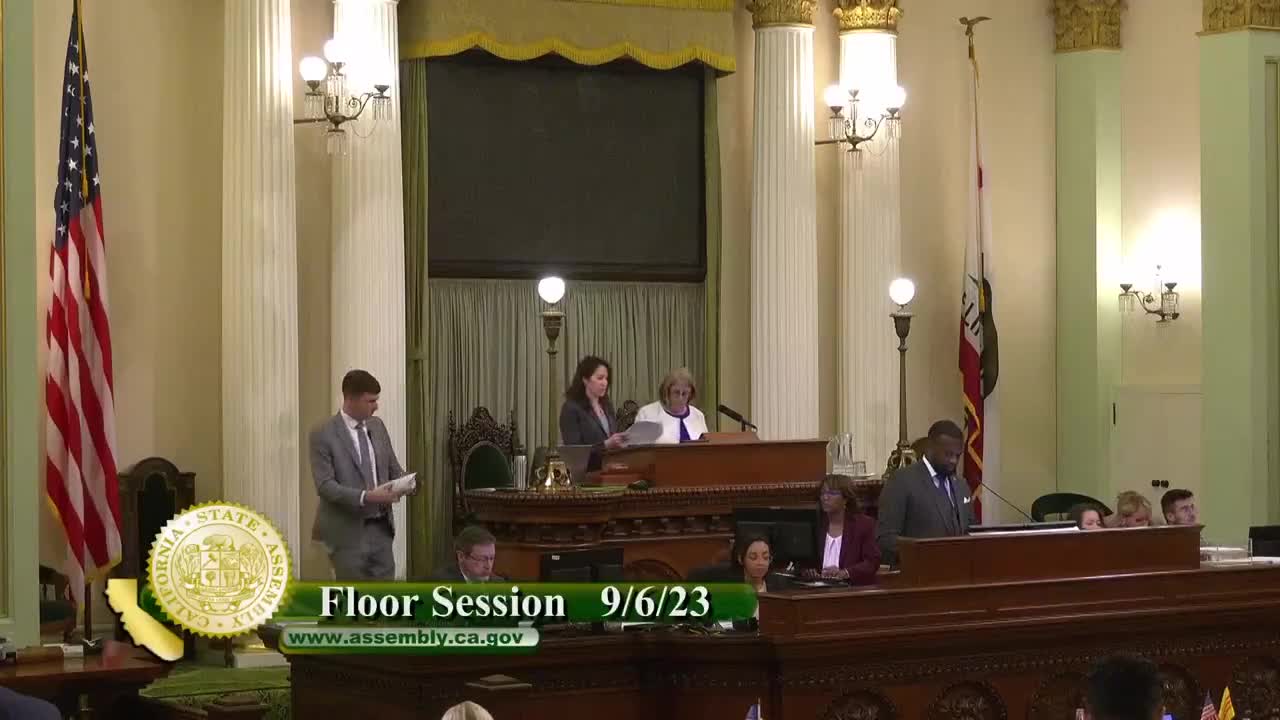 1MIN
Assembly Floor
 3MIN
Senate Standing Committee on Energy, Utilities and Communications
Bill Author

Bill Co-Author(s):