SB 557: California Prompt Payment Act: nonprofit organizations.
- Session Year: 2023-2024
- House: Senate
- Latest Version Date: 2023-09-14
Current Status:
Failed
(2024-01-25: Veto sustained.)
Introduced
In Committee
First Chamber
In Committee
Second Chamber
Enacted
Under the California Prompt Payment Act, a state agency that awards a grant or that acquires property or services pursuant to a contract is required to make timely payments pursuant to the grant or contract. If a state agency or the Controller fails to take certain timely actions, and payment is not issued within 45 calendar days from the state agency receipt of an undisputed invoice, the act requires the state agency or the Controller, as applicable, to pay certain penalties. The act provides an exception from those penalty provisions if the grant or contract was awarded to a nonprofit organization in an amount less than $500,000. The act defines the term grant to mean a signed final agreement between any state agency and a local government agency or organization authorized to accept grant funding for victim services or prevention programs administered by any state agency or restoration activities performed by a resource conservation district.
This bill would define the term grant to additionally mean a signed final agreement between any state agency and a nonprofit organization and would delete the $500,000 exception described above.
The act authorizes a state agency to dispute for reasonable cause an invoice, refund request, or claim for Medi-Cal reimbursement, as specified. The act defines reasonable cause to mean a determination by a state agency that any of certain conditions exist, including that there is a discrepancy between the invoice or claimed amount and either the claimants actual delivery of property or services to the state or the states acceptance of those deliveries.
This bill would revise the condition described above to apply if there is a discrepancy of an amount greater than $250 or 5% of the invoiced amount, whichever is lesser, between the invoice or claimed amount and either the claimants actual delivery of property or services to the state or the states acceptance of those deliveries.
Under the California Prompt Payment Act, a state agency that awards a grant or that acquires property or services pursuant to a contract is required to make timely payments pursuant to the grant or contract. If a state agency or the Controller fails to take certain timely actions, and payment is not issued within 45 calendar days from the state agency receipt of an undisputed invoice, the act requires the state agency or the Controller, as applicable, to pay certain penalties. The act provides an exception from those penalty provisions if the grant or contract was awarded to a nonprofit organization in an amount less than $500,000. The act defines the term grant to mean a signed final agreement between any state agency and a local government agency or organization authorized to accept grant funding for victim services or prevention programs administered by any state agency or restoration activities performed by a resource conservation district.
This bill would define the term grant to additionally mean a signed final agreement between any state agency and a nonprofit organization and would delete the $500,000 exception described above.
The act authorizes a state agency to dispute for reasonable cause an invoice, refund request, or claim for Medi-Cal reimbursement, as specified. Under the act, The act defines reasonable cause includes to mean a determination by a state agency that any of certain conditions exist, including that there is a discrepancy between the invoice or claimed amount and either the claimants actual delivery of property or services to the state or the states acceptance of those deliveries.
This bill would exclude from reasonable cause those discrepancies that are 5% or less of the invoiced amount. revise the condition described above to apply if there is a discrepancy of an amount greater than $250 or 5% of the invoiced amount, whichever is lesser, between the invoice or claimed amount and either the claimants actual delivery of property or services to the state or the states acceptance of those deliveries.
Under the California Prompt Payment Act, a state agency that awards a grant or that acquires property or services pursuant to a contract is required to make timely payments pursuant to the grant or contract. If a state agency or the Controller fails to take certain timely actions, and payment is not issued within 45 calendar days from the state agency receipt of an undisputed invoice, the act requires the state agency or the Controller, as applicable, to pay certain penalties. The act provides an exception from those penalty provisions if the grant or contract was awarded to a nonprofit organization in an amount less than $500,000. The act defines the term grant to mean a signed final agreement between any state agency and a local government agency or organization authorized to accept grant funding for victim services or prevention programs administered by any state agency or restoration activities performed by a resource conservation district.
This bill would define the term grant to additionally mean a signed final agreement between any state agency and a nonprofit organization and would delete the $500,000 exception described above.
The act authorizes a state agency to dispute for reasonable cause an invoice, refund request, or claim for Medi-Cal reimbursement, as specified. Under the act, reasonable cause includes a determination by a state agency that there is a discrepancy between the invoice or claimed amount and either the claimants actual delivery of property or services to the state or the states acceptance of those deliveries.
This bill would exclude from reasonable cause those discrepancies that are 5% or less of the invoiced amount.
The following definitions apply to this chapter:
(a) Claim means payment requests prepared and submitted by a state agency to the Controller for payment to the named claimant.
(b)(1)(A)Grant means a signed final agreement between any state agency and a local government agency or organization authorized to accept grant funding for victim services or prevention programs administered by any state agency, or restoration activities performed by a resource conservation district.
(B)Grant also means a signed final agreement between any state agency and a nonprofit organization.
(2)A grant defined by this subdivision is a contract and subject to this chapter.
(c)Invoice means a bill or claim that requests payment on a contract under which a state agency acquires property or services or pursuant to a signed final grant agreement.
(d)Medi-Cal program means the program established pursuant to Chapter 7 (commencing with Section 14000) of Part 3 of Division 9 of the Welfare and Institutions Code.
(e)Nonprofit public benefit corporation means a corporation, as defined by subdivision (b) of Section 5046 of the Corporations Code, that has registered with the Department of General Services as a small business.
(f)Nonprofit organization means an organization that qualifies as an exempt organization under Section 501(c)(3) of the Internal Revenue Code.
(g)Notice of refund or other payment due means a state agency provides notice to the person that a refund or payment is owed to that person or the state agency receives notice from the person that a refund or undisputed payment is due.
(h)Payment means any form of the act of paying, including, but not limited to, the issuance of a warrant or a registered warrant by the Controller, or the issuance of a revolving fund check by a state agency, to a claimant in the amount of an undisputed invoice.
(i)Reasonable cause means a determination by a state agency that any of the following conditions are present:
(1)There is a discrepancy between the invoice or claimed amount and the provisions of the contract or grant.
(2)There is a discrepancy of an amount greater than two hundred fifty dollars ($250) or 5 percent of the invoiced amount, whichever is lesser, between the invoice or claimed amount and either the claimants actual delivery of property or services to the state or the states acceptance of those deliveries.
(3)Additional evidence supporting the validity of the invoice or claimed amount is required to be provided to the state agency by the claimant.
(4)The invoice has been improperly executed or needs to be corrected by the claimant.
(5)There is a discrepancy between the refund or other payment due as calculated by the person to whom the money is owed and by the state agency.
(j)Received by a state agency means the date an invoice is delivered to the state location or party specified in the contract or grant or, if a state location or party is not specified in the contract or grant, wherever otherwise specified by the state agency.
(k)Required payment approval date means the date on which payment is due as specified in a contract or grant or, if a specific date is not established by the contract or grant, 30 calendar days following the date upon which an undisputed invoice is received by a state agency.
(l)Resource conservation district means a resource conservation district established pursuant to Division 9 (commencing with Section 9001) of the Public Resources Code.
(m)Revolving fund means a fund established pursuant to Article 5 (commencing with Section 16400) of Chapter 2 of Part 2 of Division 4 of Title 2.
(n)Small business means a business certified as a small business in accordance with subdivision (d) of Section 14837, including certified small businesses engaged in the development, design, and construction of Californias high-speed rail system pursuant to the California High-Speed Rail Act (Division 19.5 (commencing with Section 185000) of the Public Utilities Code).
(o)Small business and nonprofit organization mean, in reference to providers under the Medi-Cal program, a business or organization that meets all of the following criteria:
(1)The principal office is located in California.
(2)The officers, if any, are domiciled in California.
(3)If a small business, it is independently owned and operated.
(4)The business or organization is not dominant in its field of operation.
(5)Together with any affiliates, the business or organization has gross receipts from business operations that do not exceed three million dollars ($3,000,000) per year, except that the Director of Health Services may increase this amount if the director deems that this action would be in furtherance of the intent of this chapter.
(p)Department of FISCal means the organization responsible for operating and maintaining the Financial Information System for California integrating statewide accounting, budgeting, cash management, and procurement pursuant to subdivision (b) of Section 11890.
SEC. 2.Section 927.6 of the Government Code is amended to read:927.6.(a)State agencies shall pay applicable penalties, without requiring that the claimant submit an additional invoice for these amounts, whenever the state agency fails to submit a correct claim to the Controller by the required payment approval date and payment is not issued within 45 calendar days from the state agency receipt of an undisputed invoice. The penalty shall cease to accrue on the date the state agency submits the claim to the Controller for payment or pays the claimant directly, and shall be paid for out of the state agencys support appropriation. If the claimant is a resource conservation district, certified small business, a nonprofit organization, a nonprofit public benefit corporation, or a small business or nonprofit organization that provides services or equipment under the Medi-Cal program, the state agency shall pay to the claimant a penalty at a rate of 10 percent above the United States Prime Rate on June 30 of the prior fiscal year. If the amount of the penalty is ten dollars ($10) or less, the penalty shall be waived and not paid by the state agency.
(b)For all other businesses, the state agency shall pay a penalty at a rate of 1 percent above the Pooled Money Investment Account daily rate on June 30 of the prior fiscal year, not to exceed a rate of 15 percent. If the amount of the penalty is one hundred dollars ($100) or less, the penalty shall be waived and not paid by the state agency. On an exception basis, state agencies may avoid payment of penalties for failure to submit a correct claim to the Controller by the required payment approval date by paying the claimant directly from the state agencys revolving fund within 45 calendar days following the date upon which an undisputed invoice is received by the state agency.
SEC. 3.Section 927.7 of the Government Code is amended to read:927.7.(a)The Controller shall pay claimants within 15 calendar days of receipt of a correct claim from the state agency. If the Controller fails to make payment within 15 calendar days of receipt of the claim from a state agency, and payment is not issued within 45 calendar days from state agency receipt of an undisputed invoice, the Controller shall pay applicable penalties to the claimant without requiring that the claimant submit an invoice for these amounts. Penalties shall cease to accrue on the date full payment is made, and shall be paid for out of the Controllers funds. If the claimant is a resource conservation district, a certified small business, a nonprofit organization, a nonprofit public benefit corporation, or a small business or nonprofit organization that provides services or equipment under the Medi-Cal program, the Controller shall pay to the claimant a penalty at a rate of 10 percent above the United States Prime Rate on June 30 of the prior fiscal year, from the 16th calendar day following receipt of the claim from the state agency. If the amount of the penalty is ten dollars ($10) or less, the penalty shall be waived and not paid by the Controller. For all other businesses, the Controller shall pay penalties at a rate of 1 percent above the Pooled Money Investment Account daily rate on June 30 of the prior fiscal year, not to exceed a rate of 15 percent. If the amount of the penalty is one hundred dollars ($100) or less, the penalty shall be waived and not paid by the Controller.
(b)The Department of FISCal shall be responsible for applicable penalties if the Financial Information System for California delays the delivery of a correct claim from the state agency to the Controller, preventing the Controller from making payment within 15 calendar days and payment is not issued within 45 calendar days from state agency receipt of an undisputed invoice.
SEC. 4.Section 927.9 of the Government Code is amended to read:927.9.(a)Except as provided in subdivision (c), on an annual basis, within 90 calendar days following the end of each fiscal year, state agencies shall provide the Director of General Services with a report on late payment penalties that were paid by the state agency in accordance with this chapter during the preceding fiscal year.
(b)The report required by subdivision (a) shall separately identify the total number and dollar amount of late payment penalties paid to small businesses, other businesses, nonprofit organizations, and refunds or other payments to individuals. State agencies may, at their own initiative, provide the director with other relevant performance measures. The director shall prepare a report separately listing the number and total dollar amount of all late payment penalties paid to small businesses, other businesses, nonprofit organizations, and refunds and other payments to individuals by each state agency during the preceding fiscal year, together with other relevant performance measures, and shall make the information available to the public.
(c)The reporting requirements of subdivisions (a) and (b) are not applicable to the Department of Forestry and Fire Protection.
The following definitions apply to this chapter:
(a) Claim means payment requests prepared and submitted by a state agency to the Controller for payment to the named claimant.
(b)(1)(A)Grant means a signed final agreement between any state agency and a local government agency or organization authorized to accept grant funding for victim services or prevention programs administered by any state agency, or restoration activities performed by a resource conservation district.
(B)Grant also means a signed final agreement between any state agency and a nonprofit organization.
(2)A grant defined by this subdivision is a contract and subject to this chapter.
(c)Invoice means a bill or claim that requests payment on a contract under which a state agency acquires property or services or pursuant to a signed final grant agreement.
(d)Medi-Cal program means the program established pursuant to Chapter 7 (commencing with Section 14000) of Part 3 of Division 9 of the Welfare and Institutions Code.
(e)Nonprofit public benefit corporation means a corporation, as defined by subdivision (b) of Section 5046 of the Corporations Code, that has registered with the Department of General Services as a small business.
(f)Nonprofit organization means an organization that qualifies as an exempt organization under Section 501(c)(3) of the Internal Revenue Code.
(g)Notice of refund or other payment due means a state agency provides notice to the person that a refund or payment is owed to that person or the state agency receives notice from the person that a refund or undisputed payment is due.
(h)Payment means any form of the act of paying, including, but not limited to, the issuance of a warrant or a registered warrant by the Controller, or the issuance of a revolving fund check by a state agency, to a claimant in the amount of an undisputed invoice.
(i)Reasonable cause means a determination by a state agency that any of the following conditions are present:
(1)There is a discrepancy between the invoice or claimed amount and the provisions of the contract or grant.
(2)There is a discrepancy of an amount greater than two hundred fifty dollars ($250) or 5 percent of the invoiced amount amount, whichever is lesser, between the invoice or claimed amount and either the claimants actual delivery of property or services to the state or the states acceptance of those deliveries.
(3)Additional evidence supporting the validity of the invoice or claimed amount is required to be provided to the state agency by the claimant.
(4)The invoice has been improperly executed or needs to be corrected by the claimant.
(5)There is a discrepancy between the refund or other payment due as calculated by the person to whom the money is owed and by the state agency.
(j)Received by a state agency means the date an invoice is delivered to the state location or party specified in the contract or grant or, if a state location or party is not specified in the contract or grant, wherever otherwise specified by the state agency.
(k)Required payment approval date means the date on which payment is due as specified in a contract or grant or, if a specific date is not established by the contract or grant, 30 calendar days following the date upon which an undisputed invoice is received by a state agency.
(l)Resource conservation district means a resource conservation district established pursuant to Division 9 (commencing with Section 9001) of the Public Resources Code.
(m)Revolving fund means a fund established pursuant to Article 5 (commencing with Section 16400) of Chapter 2 of Part 2 of Division 4 of Title 2.
(n)Small business means a business certified as a small business in accordance with subdivision (d) of Section 14837, including certified small businesses engaged in the development, design, and construction of Californias high-speed rail system pursuant to the California High-Speed Rail Act (Division 19.5 (commencing with Section 185000) of the Public Utilities Code).
(o)Small business and nonprofit organization mean, in reference to providers under the Medi-Cal program, a business or organization that meets all of the following criteria:
(1)The principal office is located in California.
(2)The officers, if any, are domiciled in California.
(3)If a small business, it is independently owned and operated.
(4)The business or organization is not dominant in its field of operation.
(5)Together with any affiliates, the business or organization has gross receipts from business operations that do not exceed three million dollars ($3,000,000) per year, except that the Director of Health Services may increase this amount if the director deems that this action would be in furtherance of the intent of this chapter.
(p)Department of FISCal means the organization responsible for operating and maintaining the Financial Information System for California integrating statewide accounting, budgeting, cash management, and procurement pursuant to subdivision (b) of Section 11890.
SEC. 2.Section 927.6 of the Government Code is amended to read:927.6.(a)State agencies shall pay applicable penalties, without requiring that the claimant submit an additional invoice for these amounts, whenever the state agency fails to submit a correct claim to the Controller by the required payment approval date and payment is not issued within 45 calendar days from the state agency receipt of an undisputed invoice. The penalty shall cease to accrue on the date the state agency submits the claim to the Controller for payment or pays the claimant directly, and shall be paid for out of the state agencys support appropriation. If the claimant is a resource conservation district, certified small business, a nonprofit organization, a nonprofit public benefit corporation, or a small business or nonprofit organization that provides services or equipment under the Medi-Cal program, the state agency shall pay to the claimant a penalty at a rate of 10 percent above the United States Prime Rate on June 30 of the prior fiscal year. If the amount of the penalty is ten dollars ($10) or less, the penalty shall be waived and not paid by the state agency.
(b)For all other businesses, the state agency shall pay a penalty at a rate of 1 percent above the Pooled Money Investment Account daily rate on June 30 of the prior fiscal year, not to exceed a rate of 15 percent. If the amount of the penalty is one hundred dollars ($100) or less, the penalty shall be waived and not paid by the state agency. On an exception basis, state agencies may avoid payment of penalties for failure to submit a correct claim to the Controller by the required payment approval date by paying the claimant directly from the state agencys revolving fund within 45 calendar days following the date upon which an undisputed invoice is received by the state agency.
SEC. 3.Section 927.7 of the Government Code is amended to read:927.7.(a)The Controller shall pay claimants within 15 calendar days of receipt of a correct claim from the state agency. If the Controller fails to make payment within 15 calendar days of receipt of the claim from a state agency, and payment is not issued within 45 calendar days from state agency receipt of an undisputed invoice, the Controller shall pay applicable penalties to the claimant without requiring that the claimant submit an invoice for these amounts. Penalties shall cease to accrue on the date full payment is made, and shall be paid for out of the Controllers funds. If the claimant is a resource conservation district, a certified small business, a nonprofit organization, a nonprofit public benefit corporation, or a small business or nonprofit organization that provides services or equipment under the Medi-Cal program, the Controller shall pay to the claimant a penalty at a rate of 10 percent above the United States Prime Rate on June 30 of the prior fiscal year, from the 16th calendar day following receipt of the claim from the state agency. If the amount of the penalty is ten dollars ($10) or less, the penalty shall be waived and not paid by the Controller. For all other businesses, the Controller shall pay penalties at a rate of 1 percent above the Pooled Money Investment Account daily rate on June 30 of the prior fiscal year, not to exceed a rate of 15 percent. If the amount of the penalty is one hundred dollars ($100) or less, the penalty shall be waived and not paid by the Controller.
(b)The Department of FISCal shall be responsible for applicable penalties if the Financial Information System for California delays the delivery of a correct claim from the state agency to the Controller, preventing the Controller from making payment within 15 calendar days and payment is not issued within 45 calendar days from state agency receipt of an undisputed invoice.
SEC. 4.Section 927.9 of the Government Code is amended to read:927.9.(a)Except as provided in subdivision (c), on an annual basis, within 90 calendar days following the end of each fiscal year, state agencies shall provide the Director of General Services with a report on late payment penalties that were paid by the state agency in accordance with this chapter during the preceding fiscal year.
(b)The report required by subdivision (a) shall separately identify the total number and dollar amount of late payment penalties paid to small businesses, other businesses, nonprofit organizations, and refunds or other payments to individuals. State agencies may, at their own initiative, provide the director with other relevant performance measures. The director shall prepare a report separately listing the number and total dollar amount of all late payment penalties paid to small businesses, other businesses, nonprofit organizations, and refunds and other payments to individuals by each state agency during the preceding fiscal year, together with other relevant performance measures, and shall make the information available to the public.
(c)The reporting requirements of subdivisions (a) and (b) are not applicable to the Department of Forestry and Fire Protection.
The following definitions apply to this chapter:
(a) Claim means payment requests prepared and submitted by a state agency to the Controller for payment to the named claimant.
(b)(1)(A)Grant means a signed final agreement between any state agency and a local government agency or organization authorized to accept grant funding for victim services or prevention programs administered by any state agency, or restoration activities performed by a resource conservation district.
(B)Grant also means a signed final agreement between any state agency and a nonprofit organization.
(2)A grant defined by this subdivision is a contract and subject to this chapter.
(c)Invoice means a bill or claim that requests payment on a contract under which a state agency acquires property or services or pursuant to a signed final grant agreement.
(d)Medi-Cal program means the program established pursuant to Chapter 7 (commencing with Section 14000) of Part 3 of Division 9 of the Welfare and Institutions Code.
(e)Nonprofit public benefit corporation means a corporation, as defined by subdivision (b) of Section 5046 of the Corporations Code, that has registered with the Department of General Services as a small business.
(f)Nonprofit service organization means a nonprofit entity that is organized to provide services to the public. an organization that qualifies as an exempt organization under Section 501(c)(3) of the Internal Revenue Code.
(g)Notice of refund or other payment due means a state agency provides notice to the person that a refund or payment is owed to that person or the state agency receives notice from the person that a refund or undisputed payment is due.
(h)Payment means any form of the act of paying, including, but not limited to, the issuance of a warrant or a registered warrant by the Controller, or the issuance of a revolving fund check by a state agency, to a claimant in the amount of an undisputed invoice.
(i)Reasonable cause means a determination by a state agency that any of the following conditions are present:
(1)There is a discrepancy between the invoice or claimed amount and the provisions of the contract or grant.
(2)There is a discrepancy of an amount greater than 5 percent of the invoiced amount between the invoice or claimed amount and either the claimants actual delivery of property or services to the state or the states acceptance of those deliveries.
(3)Additional evidence supporting the validity of the invoice or claimed amount is required to be provided to the state agency by the claimant.
(4)The invoice has been improperly executed or needs to be corrected by the claimant.
(5)There is a discrepancy between the refund or other payment due as calculated by the person to whom the money is owed and by the state agency.
(j)Received by a state agency means the date an invoice is delivered to the state location or party specified in the contract or grant or, if a state location or party is not specified in the contract or grant, wherever otherwise specified by the state agency.
(k)Required payment approval date means the date on which payment is due as specified in a contract or grant or, if a specific date is not established by the contract or grant, 30 calendar days following the date upon which an undisputed invoice is received by a state agency.
(l)Resource conservation district means a resource conservation district established pursuant to Division 9 (commencing with Section 9001) of the Public Resources Code.
(m)Revolving fund means a fund established pursuant to Article 5 (commencing with Section 16400) of Chapter 2 of Part 2 of Division 4 of Title 2.
(n)Small business means a business certified as a small business in accordance with subdivision (d) of Section 14837, including certified small businesses engaged in the development, design, and construction of Californias high-speed rail system pursuant to the California High-Speed Rail Act (Division 19.5 (commencing with Section 185000) of the Public Utilities Code).
(o)Small business and nonprofit organization mean, in reference to providers under the Medi-Cal program, a business or organization that meets all of the following criteria:
(1)The principal office is located in California.
(2)The officers, if any, are domiciled in California.
(3)If a small business, it is independently owned and operated.
(4)The business or organization is not dominant in its field of operation.
(5)Together with any affiliates, the business or organization has gross receipts from business operations that do not exceed three million dollars ($3,000,000) per year, except that the Director of Health Services may increase this amount if the director deems that this action would be in furtherance of the intent of this chapter.
(p)Department of FISCal means the organization responsible for operating and maintaining the Financial Information System for California integrating statewide accounting, budgeting, cash management, and procurement pursuant to subdivision (b) of Section 11890.
SEC. 2.Section 927.6 of the Government Code is amended to read:927.6.(a)State agencies shall pay applicable penalties, without requiring that the claimant submit an additional invoice for these amounts, whenever the state agency fails to submit a correct claim to the Controller by the required payment approval date and payment is not issued within 45 calendar days from the state agency receipt of an undisputed invoice. The penalty shall cease to accrue on the date the state agency submits the claim to the Controller for payment or pays the claimant directly, and shall be paid for out of the state agencys support appropriation. If the claimant is a resource conservation district, certified small business, a nonprofit organization, a nonprofit public benefit corporation, or a small business or nonprofit organization that provides services or equipment under the Medi-Cal program, the state agency shall pay to the claimant a penalty at a rate of 10 percent above the United States Prime Rate on June 30 of the prior fiscal year. However, a nonprofit organization shall only be eligible to receive a penalty payment if it has been awarded a contract or grant in an amount less than five hundred thousand dollars ($500,000). If the amount of the penalty is ten dollars ($10) or less, the penalty shall be waived and not paid by the state agency.
(b)For all other businesses, the state agency shall pay a penalty at a rate of 1 percent above the Pooled Money Investment Account daily rate on June 30 of the prior fiscal year, not to exceed a rate of 15 percent. If the amount of the penalty is one hundred dollars ($100) or less, the penalty shall be waived and not paid by the state agency. On an exception basis, state agencies may avoid payment of penalties for failure to submit a correct claim to the Controller by the required payment approval date by paying the claimant directly from the state agencys revolving fund within 45 calendar days following the date upon which an undisputed invoice is received by the state agency.
SEC. 3.Section 927.7 of the Government Code is amended to read:927.7.(a)The Controller shall pay claimants within 15 calendar days of receipt of a correct claim from the state agency. If the Controller fails to make payment within 15 calendar days of receipt of the claim from a state agency, and payment is not issued within 45 calendar days from state agency receipt of an undisputed invoice, the Controller shall pay applicable penalties to the claimant without requiring that the claimant submit an invoice for these amounts. Penalties shall cease to accrue on the date full payment is made, and shall be paid for out of the Controllers funds. If the claimant is a resource conservation district, a certified small business, a nonprofit organization, a nonprofit public benefit corporation, or a small business or nonprofit organization that provides services or equipment under the Medi-Cal program, the Controller shall pay to the claimant a penalty at a rate of 10 percent above the United States Prime Rate on June 30 of the prior fiscal year, from the 16th calendar day following receipt of the claim from the state agency. However, a nonprofit organization shall only be eligible to receive a penalty payment if it has been awarded a contract or grant in an amount less than five hundred thousand dollars ($500,000). If the amount of the penalty is ten dollars ($10) or less, the penalty shall be waived and not paid by the Controller. For all other businesses, the Controller shall pay penalties at a rate of 1 percent above the Pooled Money Investment Account daily rate on June 30 of the prior fiscal year, not to exceed a rate of 15 percent. If the amount of the penalty is one hundred dollars ($100) or less, the penalty shall be waived and not paid by the Controller.
(b)The Department of FISCal shall be responsible for applicable penalties if the Financial Information System for California delays the delivery of a correct claim from the state agency to the Controller, preventing the Controller from making payment within 15 calendar days and payment is not issued within 45 calendar days from state agency receipt of an undisputed invoice.
SEC. 4.Section 927.9 of the Government Code is amended to read:927.9.(a)Except as provided in subdivision (c), on an annual basis, within 90 calendar days following the end of each fiscal year, state agencies shall provide the Director of General Services with a report on late payment penalties that were paid by the state agency in accordance with this chapter during the preceding fiscal year.
(b)The report required by subdivision (a) shall separately identify the total number and dollar amount of late payment penalties paid to small businesses, other businesses, nonprofit organizations, and refunds or other payments to individuals. State agencies may, at their own initiative, provide the director with other relevant performance measures. The director shall prepare a report separately listing the number and total dollar amount of all late payment penalties paid to small businesses, other businesses, nonprofit organizations, and refunds and other payments to individuals by each state agency during the preceding fiscal year, together with other relevant performance measures, and shall make the information available to the public.
(c)The reporting requirements of subdivisions (a) and (b) are not applicable to the Department of Forestry and Fire Protection.
|
Date
|
Status
|
|---|---|
| Jan 25, 2024 | Veto sustained. |
| Jan 25, 2024 | Stricken from file. |
| Oct 8, 2023 | In Senate. Consideration of Governor's veto pending. |
| Oct 8, 2023 | Vetoed by the Governor. |
| Sep 20, 2023 | Enrolled and presented to the Governor at 4:30 p.m. |
| Sep 12, 2023 | In Senate. Ordered to engrossing and enrolling. |
| Sep 12, 2023 | Read third time. Passed. (Ayes 80. Noes 0. Page 3263.) Ordered to the Senate. |
| Sep 5, 2023 | Read second time. Ordered to third reading. |
| Sep 1, 2023 | From committee: Do pass. (Ayes 16. Noes 0.) (September 1). |
| Aug 16, 2023 | August 16 set for first hearing. Placed on suspense file. |
| Jun 21, 2023 | From committee: Do pass and re-refer to Com. on APPR. with recommendation: To consent calendar. (Ayes 6. Noes 0.) (June 21). Re-referred to Com. on APPR. |
| Jun 8, 2023 | Referred to Com. on A. & A.R. |
| May 31, 2023 | In Assembly. Read first time. Held at Desk. |
| May 30, 2023 | Read third time. Passed. (Ayes 40. Noes 0. Page 1364.) Ordered to the Assembly. |
| May 26, 2023 | Ordered to special consent calendar. |
| May 22, 2023 | Read second time. Ordered to third reading. |
| May 18, 2023 | Read second time and amended. Ordered to second reading. |
| May 18, 2023 | From committee: Do pass as amended. (Ayes 7. Noes 0. Page 1175.) (May 18). |
| May 12, 2023 | Set for hearing May 18. |
| Apr 10, 2023 | April 10 hearing: Placed on APPR suspense file. |
| Mar 29, 2023 | Set for hearing April 10. |
| Mar 28, 2023 | From committee: Do pass and re-refer to Com. on APPR with recommendation: To consent calendar. (Ayes 14. Noes 0. Page 545.) (March 28). Re-referred to Com. on APPR. |
| Mar 14, 2023 | Set for hearing March 28. |
| Feb 22, 2023 | Referred to Com. on G.O. |
| Feb 16, 2023 | From printer. May be acted upon on or after March 18. |
| Feb 15, 2023 | Introduced. Read first time. To Com. on RLS. for assignment. To print. |
|
Date
|
Description
|
Location
|
Votes
|
|
|---|---|---|---|---|
| Sep 12, 2023 | SB 557 Limón Senate Third Reading By Hart | Assembly Floor |
Passed |
|
| Sep 1, 2023 | Do pass. | Assembly Standing Committee on Appropriations |
Passed |
|
| Jun 21, 2023 | Do pass and be re-referred to the Committee on [Appropriations] with recommendation: To Consent Calendar | Assembly Standing Committee on Accountability and Administrative Review |
Passed |
|
| May 30, 2023 | Special Consent SB557 Limón | Senate Floor |
Passed |
|
| May 18, 2023 | Do pass as amended | Senate Standing Committee on Appropriations |
Passed |
|
| Apr 10, 2023 | Placed on suspense file | Senate Standing Committee on Appropriations |
Passed |
|
| Mar 28, 2023 | Do pass, but first be re-referred to the Committee on [Appropriations] with the recommendation: To Consent Calendar | Senate Standing Committee on Governmental Organization |
Passed |
This list shows positions taken on this bill by organizations on the date displayed, which is linked to the original source.
Positions by individuals are not included.
|
Organization
|
Position
|
Date
|
|---|---|---|
| Amity Foundation | ** Support | |
| California Association Of Nonprofits | ** Support | |
| California Coalition for Community Investment | ** Support | |
| California Council Of Community Behavioral Health Agencies | ** Support | |
| California Family Resource Association | ** Support | |
| California Partnership To End Domestic Violence | ** Support | |
| California Releaf | ** Support | |
| Center for Nonprofit Management | ** Support | |
| Child Abuse Prevention Center | ** Support | |
| ChildrenS Institute | ** Support | |
| Community Alliance With Family Farmers | ** Support | |
| Community Bridges | ** Support | |
| Disability Rights California | ** Support | |
| El Concilio | ** Support | |
| El Concilio of Stockton | ** Support | |
| fresno building healthy communities | ** Support | |
| Health Right 360 | ** Support | |
| HealthRight 360 | ** Support | |
| Inland Empire Community Collaborative | ** Support | |
| Inland Southern California United Way | ** Support | |
| Koreatown Youth + Community Center | ** Support | |
| Meals On Wheels California | ** Support | |
| Nonprofit Finance Fund | ** Support | |
| PATCH | ** Support | |
| Path | ** Support | |
| People Assisting the Homeless | ** Support | |
| Rural Community Assistance Corporation | ** Support | |
| Santa Cruz Volunteer Center | ** Support | |
| Self-Help Enterprises | ** Support | |
| Treepeople | ** Support | |
| United Way California Capital Region | ** Support | |
| United Ways Of California | ** Support | |
| Westcare California Inc | ** Support |
SENATE RULES COMMITTEE Office of Senate Floor Analyses (916) 651-1520 Fax: (916) 327-4478 | SB 557 |
VETO
Bill No: SB 557
Author: Limón (D)
Amended: 5/18/23
Vote: 27
SENATE GOVERNMENTAL ORG. COMMITTEE: 14-0, 3/28/23
AYES: Dodd, Wilk, Alvarado-Gil, Ashby, Bradford, Glazer, Jones, Nguyen, Ochoa Bogh, Padilla, Portantino, Roth, Rubio, Seyarto
NO VOTE RECORDED: Archuleta
SENATE APPROPRIATIONS COMMITTEE: 7-0, 5/18/23
AYES: Portantino, Jones, Ashby, Bradford, Seyarto, Wahab, Wiener
SENATE FLOOR: 40-0, 5/30/23
AYES: Allen, Alvarado-Gil, Archuleta, Ashby, Atkins, Becker, Blakespear, Bradford, Caballero, Cortese, Dahle, Dodd, Durazo, Eggman, Glazer, Gonzalez, Grove, Hurtado, Jones, Laird, Limón, McGuire, Menjivar, Min, Newman, Nguyen, Niello, Ochoa Bogh, Padilla, Portantino, Roth, Rubio, Seyarto, Skinner, Smallwood-Cuevas, Stern, Umberg, Wahab, Wiener, Wilk
ASSEMBLY FLOOR: 80-0, 9/12/23 - See last page for vote
SUBJECT: California Prompt Payment Act: nonprofit organizations
SOURCE: Author
DIGEST:
This bill expands the definition of a grant for the purposes of the California Prompt Payment Act (PPA) requiring timely payments to include nonprofits by changing what is considered a grant and sets a specific monetary threshold of $250 or 5% of the invoiced amount (whichever is lower) for when a state agency can dispute a bill related to property or services delivered.
ANALYSIS:
Existing law:
- Requires, under the PPA, state agencies that award grants or that acquire properties or services pursuant to a contract to make timely payments pursuant to the grant or contract, as specified.
- Provides that if a state agency or the State Controller (Controller) fails to take certain timely actions, and payment is not issued within 45 calendar days from the state agency receipt of an undisputed invoice, the state agency or the Controller must, as applicable, pay certain penalties.
- Provides that nonprofit organizations shall only be eligible to receive a penalty payment if it has been awarded a contract or grant in an amount less than $500,000.
- Authorizes a state agency to dispute for reasonable cause an invoice, refund request, or claim for Medi-Cal reimbursement – as specified.
- Requires state agencies to provide the Department of General Services (DGS) with a report on late payment penalties that were paid by that state agency during the preceding fiscal year, as specified.
- Defines “grant” to mean a signed final agreement between any state agency and a local government agency or organization authorize to accept grant funding for victim services or prevention programs administered by any state agency, or restoration activities performed by a resource conservation district.
- Defines “reasonable cause” to include a determination by a state agency that there is a discrepancy between the invoice or claimed amount and either the claimant’s actual delivery of property or services to the state or the state’s acceptance of those deliveries.
This bill:
- Expands, for the purposes of the PPA, the definition of “grant” to also include a signed final agreement between any state agency and a nonprofit organization.
- Amends, for the purposes of the PPA, the definition of “nonprofit organization” to mean an organization that qualifies as an exempt organization under Section 501(c)(3) of the Internal Revenue Code.
- Revises the conditions of “reasonable cause” to include a discrepancy of an amount greater than $250 or 5% of the invoiced amount, whichever is lesser, between the invoice or claimed amount and either the claimant’s actual delivery of property or services to the state or the state’s acceptance of those deliveries.
- Removes the provision that nonprofit organizations shall only be eligible to receive a penalty payment if it has been awarded a contract or grant in an amount less than $500,000.
- Requires DGS to identify the total number and dollar amount of late payment penalties paid to nonprofit organizations.
- Requires DGS to prepare a report separately listing the number and total dollar amount of all late payment penalties paid to nonprofit organizations.
Background
Purpose of this Bill. According to the author’s office, “California nonprofits are a bridge to our local communities, ensuring that critical services are accessible to residents while contributing to their regional, social, and economic growth. SB 557 ensures that nonprofits receive grants and contract payments from the state, in a timely manner, for the betterment of their communities.”
California’s Prompt Payment Act. Under the PPA, state agencies that acquire property or services pursuant to a contract with a business are required to make payment on the date required by the contract, or within 45 days of the state agency's receipt of an undisputed invoice. If this requirement is not met, state agencies must automatically calculate and pay appropriate late payment penalties as specified in Government Code Section 927, et seq. Late payments may occur for a variety of reasons, including administrative decisions relating to cash flow, bond sales, or delays in meeting conditions set forth in federal legislation.
Existing law specifies that penalties paid by a state agency to a certified small business, nonprofit organization, nonprofit public benefit corporation, and a small business or nonprofit that provides services or equipment under Medi-Cal shall be calculated at a rate of 10% above the United State Prime Rate on June 30th of the prior year.
Since 2013, DGS has overseen the PPA to ensure that government agencies, in a timely manner, pay their contracts awarded to a certified small business or nonprofit. The PPA indicates that nonprofits are only eligible to receive a penalty payment if the grant or contract awarded is an amount less than $500,000. Hence, the PPA only applies to a limited set of grants, excluding numerous nonprofits that provide essential services to California communities.
This bill expands the current definition of “grant” in existing law to also mean a signed final agreement between any state agency and a nonprofit organization. Additionally, this bill removes the cap of only paying a late penalty to a nonprofit organization if the contract is for $500,000 or less. This bill requires state agencies to include penalty payments made to nonprofits in their existing annual penalty payment reporting to DGS.
This bill alters the conditions under which a state agency can dispute an invoice, refund request, or claim for Medi-Cal reimbursement. The revised condition allows a dispute if there is a discrepancy greater than $250 or 5% of the invoiced amount (whichever is lower) between the amount invoiced and the value of the property or services actually delivered or accepted. This provides a specific threshold for when disputes can be initiated.
Related/Prior Legislation
SB 336 (Umberg, 2023) requires DGS to establish a process for nonprofits to negotiate a state standard negotiated cost agreement and requires state agencies administering grant programs to use the same terms as contained in a grantee’s existing negotiated indirect cost rate agreement policies approved by the federal government, or the same terms contained in the state standard negotiated cost agreement, as specified. (Pending on the Assembly Inactive File)
AB 590 (Hart, Chapter 535, Statutes of 2023) authorized state agencies to advance a payment up to 25% of the total grant to a nonprofit organization, as specified.
AB 1776 (Gallagher, Chapter 455, Statutes of 2022) added resource conservation districts to the list of entities entitled to a late payment penalty from the state, as specified, and exempts contracts with those districts from specified extension provisions, as specified.
AB 619 (Fong, 2023) authorizes nonprofits that provide services during a state of emergency to request the state agency to allow that nonprofit to modify the method in which it provides those services so long as the purpose of the contract is served, as specified. (Held on the Senate Appropriations Committee Suspense File)
AB 860 (Valencia, 2023) imposes minimum requirements for the administration of covered grants that meet maximum size and duration requirements and are available to nonprofit organizations, as specified. (Held on the Senate Appropriations Committee Suspense File)
FISCAL EFFECT: Appropriation: No Fiscal Com.: Yes Local: No
According to the Assembly Appropriations Committee, annual costs of approximately $75,000 to DGS for additional staff resources to modify administration of contracts under the PPA, including determining whether a discrepancy amount qualifies as “reasonable cause.” DGS also anticipates one-time costs of $300,000 over two years for a limited term position to interpret and implement guidance to other state agencies, including updates to the State Contracting Manual and training state procurement professionals (Service Revolving Fund). Unlike state contracts, DGS does not have a policy or oversight role with respect to grants.
For its part, the Department of Justice anticipates costs of approximately $249,000 in fiscal year 2023-24 and $447,000 annually thereafter to its Enterprise Services Bureau to update and maintain invoice and payment processing for information technology contracts (General Fund). It is unknown whether other impacted state agencies may anticipate similar resource needs for administration of contracts and grants.
Costs of an unknown, but potentially significant, amount in penalty payments incurred by state agencies, as this bill expands the scope of grants covered by the PPA generally and the scope of contracts and grants eligible for the penalty payment, including entities entitled to the higher penalty rate.
SUPPORT: (Verified 10/10/23)
California Association of Nonprofits
California Coalition for Community Investment
California Council of Community Behavioral Health Agencies
California Family Resource Association
California Partnership to End Domestic Violence
California ReLeaf
Center for Nonprofit Management
Child Abuse Prevention Center
Children's Institute
Community Alliance with Family Farmers
Community Bridges
El Concilio
Fresno Building Healthy Communities
HealthRight 360
Inland Empire Community Collaborative
Inland Southern California United Way
Koreatown Youth + Community Center
Meals on Wheels California
Nonprofit Finance Fund
People Assisting the Homeless
Rural Community Assistance Corporation
Santa Cruz Volunteer Center
Self-Help Enterprises
TreePeople
United Way California Capital Region
United Ways of California
OPPOSITION: (Verified 10/10/23)
None received
ARGUMENTS IN SUPPORT: Supporters of this bill write that this bill is “part of the California Nonprofit Equity Initiative that our organizations, along with more than 500 other nonprofit community leaders, are supporting to level the playing field for nonprofits. Improving how state government contracts with nonprofits is a question of equity – for our most vulnerable communities and for the nonprofits that serve them. Nonprofits are a powerful force for equity. The state relies on nonprofits to help put critical policies into action, partnering with community organizations to help the homeless, build affordable housing, respond to the impacts of climate change, support domestic violence victims, and in countless ways improve the lives of vulnerable members of our communities. To succeed, nonprofits need contracting terms that set us up to partner effectively.”
Further, supporters state that “[a]ligned with the Governor’s ‘California for All’ vision, SB 557 responds to the impact the pandemic has had on our communities, the need to address equity and inequality in access to state resources, and the imperative to support strong and varied community-based organizations to address increased need. Passing SB 557 and the rest of the California Nonprofit Equity Initiative will strengthen the essential partnership between the state and nonprofits and our mutual efforts to deliver the highest quality services to the people of California.”
GOVERNOR'S VETO MESSAGE:
This bill would extend Prompt Payment Act requirements and penalties to all grants to nonprofit organizations and makes nonprofit organizations eligible for the higher penalty rate paid to small businesses, regardless of the size of the grant or contract. Additionally, for disputed invoices regarding the quantity of goods or services delivered to or accepted by the state, this bill would provide that the dispute suspends the requirement to pay within 45 days only if the disputed portion exceeds five percent of the invoiced amount or $250, whichever is less. This provision would cover all state contractors and grantees, not just nonprofit organizations. I appreciate the role nonprofit organizations play in supporting our state's communities and economy, and I thank the author for the continued commitment to this critical sector. However, being able to suspend the 45-day requirement in a dispute over the quantity of goods or services provided is essential to the state's fiduciary responsibility and accountability as a distributor of public funds. Moreover, establishing a minimum discrepancy amount to suspend the 45-day requirement could pressure state employees to pay invoices with missing documentation to avoid having to report a late payment penalty. My Administration remains committed to working with nonprofit organizations to support the sector's ability to deliver programs and support communities, while also balancing the need for accountability for state funds. I look forward to working with stakeholders on the implementation of related efforts, and I encourage the author and stakeholders to continue working with my administration on the overarching goals of this bill, while addressing accountability concerns.
ASSEMBLY FLOOR: 80-0, 9/12/23
AYES: Addis, Aguiar-Curry, Alanis, Alvarez, Arambula, Bains, Bauer-Kahan, Bennett, Berman, Boerner, Bonta, Bryan, Calderon, Juan Carrillo, Wendy Carrillo, Cervantes, Chen, Connolly, Megan Dahle, Davies, Dixon, Essayli, Flora, Mike Fong, Vince Fong, Friedman, Gabriel, Gallagher, Garcia, Gipson, Grayson, Haney, Hart, Holden, Hoover, Irwin, Jackson, Jones-Sawyer, Kalra, Lackey, Lee, Low, Lowenthal, Maienschein, Mathis, McCarty, McKinnor, Muratsuchi, Stephanie Nguyen, Ortega, Pacheco, Papan, Jim Patterson, Joe Patterson, Pellerin, Petrie-Norris, Quirk-Silva, Ramos, Rendon, Reyes, Luz Rivas, Rodriguez, Blanca Rubio, Sanchez, Santiago, Schiavo, Soria, Ta, Ting, Valencia, Villapudua, Waldron, Wallis, Ward, Weber, Wicks, Wilson, Wood, Zbur, Robert Rivas
Prepared by: Brian Duke / G.O. / (916) 651-1530
10/19/23 11:12:58
**** END ****
SENATE THIRD READING
STR Bill Id:SB 557
Author:(Limón)
As Amended Ver:May 18, 2023
Majority vote
SUMMARY
Expands the California Prompt Payment Act (PPA) to include any grant payment to a 501(c)(3) nonprofit organization and modifies other administrative procedures.
Major Provisions
- Revises the definition of "grant" to additionally mean a signed final agreement between a state agency and any 501(c)(3) nonprofit organization.
- Specifies that a discrepancy must be of an amount greater than $250 or 5% of the invoiced amount, whichever is less, to qualify as a "reasonable cause" for which a state agency can dispute a payment.
- Repeals the limitation allowing a nonprofit organization to be eligible for a penalty payment only if the contract or grant is less than $500,000, thus allowing a nonprofit organization with a contract or grant of any value to be eligible for the penalty payment.
COMMENTS
The PPA requires a state agency that acquires property or services pursuant to a contract with a business to pay undisputed invoices within 45 days of receipt or be subject to a late payment penalty. The PPA also extends to a grant awarded by a state agency. However, a "grant" under the PPA is limited to a signed final agreement between a state agency and a local government agency or organization for victim services, prevention programs, or restoration activities performed by a resource conservation district. This bill expands the scope of the PPA by further defining a "grant" to mean a signed final agreement between a state agency and any nonprofit organization.
The PPA allows a state agency to dispute an invoice for "reasonable cause" if the state agency notifies the claimant within 15 days. Amongst other conditions, a state agency can dispute "reasonable cause" if there is a discrepancy between the invoice and the actual delivery of property or services. This bill specifies that such a discrepancy must be of an amount greater than $250 or 5% of the invoiced amount, whichever is less.
The late payment penalty amount depends on the type of claimant. If the claimant is a resource conservation district, small business, nonprofit organization, or nonprofit public benefit corporation, a state agency must pay the claimant a penalty at a rate of 10% above the United States Prime Rate (currently 8.25%). However, a nonprofit organization is only eligible for a penalty payment on a contract or grant that is less than $500,000. This bill repeals this limitation, making a nonprofit organization with a contract or grant of any size eligible for the penalty payment.
According to the Author
California nonprofits are a bridge to our local communities, ensuring that critical services are accessible to residents while contributing to their regional, social, and economic growth. SB 557 ensures that nonprofits receive grants and contract payments from the state, in a timely manner, for the betterment of their communities.
Arguments in Support
A coalition of supporters, including the California Nonprofit Association, writes that SB 557 increases equity and fairness for nonprofits by expanding the PPA "to cover all state contracts with nonprofits, setting a minimum discrepancy amount, removing the existing eligibility cap on nonprofit contracts, and includes any penalties paid to nonprofits in the required annual report."
Arguments in Opposition
None on file.
FISCAL COMMENTS
According to the Assembly Appropriations Committee:
- Annual costs of approximately $75,000 to the Department of General Services (DGS) for additional staff resources to modify administration of contracts under the PPA, including determining whether a discrepancy amount qualifies as "reasonable cause." DGS also anticipates one-time costs of $300,000 over two years for a limited-term position to interpret and implement guidance to other state agencies, including updates to the State Contracting Manual and training state procurement professionals (Service Revolving Fund). Unlike state contracts, DGS does not have a policy or oversight role with respect to grants.
The Department of Justice anticipates costs of approximately $249,000 in fiscal year 2023-24 and $447,000 annually thereafter to its Enterprise Services Bureau to update and maintain invoice and payment processing for information technology contracts (General Fund). It is unknown whether other impacted state agencies may anticipate similar resource needs for administration of contracts and grants.
- Costs of an unknown, but potentially significant, amount in penalty payments incurred by state agencies, as this bill expands the scope of grants covered by the PPA generally and the scope of contracts and grants eligible for the penalty payment, including entities entitled to the higher penalty rate.
VOTES
SENATE FLOOR: 40-0-0
YES: Allen, Alvarado-Gil, Archuleta, Ashby, Atkins, Becker, Blakespear, Bradford, Caballero, Cortese, Dahle, Dodd, Durazo, Eggman, Glazer, Gonzalez, Grove, Hurtado, Jones, Laird, Limón, McGuire, Menjivar, Min, Newman, Nguyen, Niello, Ochoa Bogh, Padilla, Portantino, Roth, Rubio, Seyarto, Skinner, Smallwood-Cuevas, Stern, Umberg, Wahab, Wiener, Wilk
ASM ACCOUNTABILITY AND ADMINISTRATIVE REVIEW: 6-0-1
YES: Petrie-Norris, Dixon, Bains, Davies, Stephanie Nguyen, Rodriguez
ABS, ABST OR NV: Wilson
ASM APPROPRIATIONS: 16-0-0
YES: Holden, Megan Dahle, Bryan, Calderon, Wendy Carrillo, Dixon, Mike Fong, Hart, Lowenthal, Mathis, Papan, Pellerin, Sanchez, Soria, Weber, Wilson
UPDATED
VERSION: May 18, 2023
CONSULTANT: Bernie Orozco / A. & A.R. / (916) 319-3600 FN: 0001606
Date of Hearing: August 16, 2023
ASSEMBLY COMMITTEE ON APPROPRIATIONS
Chris Holden, Chair
SBPCA Bill Id:SB 557
Author:(Limón) – As Amended Ver:May 18, 2023
Policy Committee: | Accountability and Administrative Review | Vote: | 6 - 0 |
|
| ||
|
|
Urgency: No State Mandated Local Program: No Reimbursable: No
SUMMARY:
This bill expands the California Prompt Payment Act (PPA) to include any grant payment to a 501(c)(3) nonprofit organization and modifies other administrative provisions.
Specifically, this bill:
- Revises the definition of “grant” to additionally mean a signed final agreement between any state agency and a 501(c)(3) nonprofit organization.
- Specifies that a discrepancy must be of an amount greater than $250 or 5% of the invoiced amount, whichever is less, to qualify as a “reasonable cause” for which a state agency can dispute a payment.
- Repeals the limitation allowing a nonprofit organization to be eligible for a penalty payment only if the contract or grant is less than $500,000, thus allowing a nonprofit organization with a contract or grant of any value to be eligible for the penalty payment.
FISCAL EFFECT:
- Annual costs of approximately $75,000 to the Department of General Services (DGS) for additional staff resources to modify administration of contracts under the PPA, including determining whether a discrepancy amount qualifies as “reasonable cause.” DGS also anticipates one-time costs of $300,000 over two years for a limited term position to interpret and implement guidance to other state agencies, including updates to the State Contracting Manual and training state procurement professionals (Service Revolving Fund). Unlike state contracts, DGS does not have a policy or oversight role with respect to grants.
For its part, the Department of Justice anticipates costs of approximately $249,000 in fiscal year 2023-24 and $447,000 annually thereafter to its Enterprise Services Bureau to update and maintain invoice and payment processing for information technology contracts (General Fund). It is unknown whether other impacted state agencies may anticipate similar resource needs for administration of contracts and grants.
- Costs of an unknown, but potentially significant, amount in penalty payments incurred by state agencies, as this bill expands the scope of grants covered by the PPA generally and the scope of contracts and grants eligible for the penalty payment, including entities entitled to the higher penalty rate.
COMMENTS:
- Purpose. According to the author, this bill “ensures that nonprofits receive grants and contract payments from the state, in a timely manner, for the betterment of their communities.”
This bill is part of the California Nonprofit Equity Initiative, a package of legislation developed by the California Association of Nonprofits (CalNonprofits) intended to improve how state government contracts with nonprofits. This bill is supported by CalNonprofits and a range of individual nonprofit organizations.
- PPA. The PPA requires a state agency that acquires property or services pursuant to a contract with a business to pay undisputed invoices within 45 days of receipt or be subject to a late payment penalty. The PPA also extends to a grant awarded by a state agency. However, a “grant” under the PPA is limited to a signed final agreement between a state agency and a local government agency or organization for victim services, prevention programs, or restoration activities performed by a resource conservation district. This bill expands the scope of the PPA by further defining a “grant” to mean a signed final agreement between any state agency and a nonprofit organization.
The PPA allows a state agency to dispute an invoice for “reasonable cause” if the state agency notifies the claimant within 15 days. Amongst other conditions, a state agency can dispute “reasonable cause” if there is a discrepancy between the invoice and the actual delivery of property or services. This bill specifies that such a discrepancy must be of an amount greater than $250 or 5% of the invoiced amount, whichever is less.
The late payment penalty amount depends on the type of claimant. If the claimant is a resource conservation district, small business, nonprofit organization, or nonprofit public benefit corporation, a state agency must pay the claimant a penalty at a rate of 10% above the United States Prime Rate (currently 8.25%). However, a nonprofit organization is only eligible for the penalty payment on a contract or grant that is less than $500,000. This bill repeals this limitation, making a nonprofit organization with a contract or grant of any size eligible for the penalty payment.
- Related Legislation. AB 590 (Hart) authorizes a state agency administering a grant program or contract to provide an advance payment to a recipient non-profit organization. AB 590 is pending in the Senate Appropriations Committee.
AB 860 (Valencia) imposes requirements on the administration of short-term grants of $20,000 or less made by a state agency or third-party contractor using state funds, including requiring distribution of at least 50% of a grant award upon execution of a covered grant. AB 860 is pending in the Senate Appropriations Committee.
Analysis Prepared by: Irene Ho / APPR. / (916) 319-2081
Date of Hearing: June 21, 2023
ASSEMBLY COMMITTEE ON ACCOUNTABILITY AND ADMINISTRATIVE REVIEW
Cottie Petrie-Norris, Chair
SBPCA Bill Id:SB 557
Author:(Limón) – As Amended Ver:May 18, 2023
SENATE VOTE: 40-0
SUBJECT: California Prompt Payment Act: nonprofit organizations
SUMMARY: This bill expands the definition of a grant for the purposes of the California Prompt Payment Act (PPA) requiring timely payments to include nonprofits, further defines “reasonable cause” for invoice disputes, eliminates the prohibition for nonprofits to be eligible for late payment penalties, and requires state agencies to include information about late payment penalties to nonprofits to the Department of General Services (DGS). Specifically, this bill:
- Expands, for the purposes of the PPA, the definition of “grant” to also include a signed final agreement between any state agency and a nonprofit organization.
- Amends, for the purposes of the PPA, the definition of “nonprofit organization” to mean an organization that qualifies as an exempt organization under Section 501(c)(3) of the Internal Revenue Code.
- Excludes discrepancies of less than two hundred and fifty dollars ($250) or 5 % of the invoiced amount, whichever is the lesser, between the invoice or claimed amount and either the claimant’s actual delivery or acceptance of property or services to the state, as a “reasonable cause” for a state agency to dispute a claimant’s invoice.
- Removes the provision that a nonprofit organization shall only be eligible to receive a late penalty payment from a state agency if it has been awarded a contract or grant in an amount less than $500,000.
- Requires state agencies, within 90 calendar days following the end of the fiscal year, to identify the total number and dollar amount of late payment penalties paid to nonprofit organizations and report that information to DGS.
- Requires DGS to prepare a report separately listing the number and total dollar amount of all late payment penalties paid to nonprofit organizations by each state agency during the preceding fiscal year and make the information available to the public.
EXISTING LAW:
- Requires state agencies that award grants or that acquire properties or services pursuant to a contract to make timely payments to the grant or contract. (Gov. Code Sec. 927.1)
- Provides that if a state agency or the State Controller fails to take certain timely actions, and payment is not issued within 45 calendar days from the state agency receipt of an undisputed invoice, state agency or the Controller must, as applicable, pay certain penalties. (Gov. Code Sec. 927.4)
- Provides that nonprofit organizations shall only be eligible to receive a penalty payment if it has been awarded a contract or grant in an amount less than $500,000. (Gov. Code Sec. 927.6(a))
- Authorizes a state agency to dispute for reasonable cause an invoice, refund request, or claim for Medi-Cal reimbursement, as specified. (Gov. Code Sec. 927.3 and Sec. 927.5)
- Requires state agencies to provide DGS with a report on late payment penalties that were paid by that state agency during the preceding fiscal year, as specified. (Gov. Code Sec. 927.9)
- Defines “grant” to mean a signed final agreement between any state agency and local government agency or organization authorized to accept grant funding for victim services or prevention programs administered by any state agency, or restorative activities performed by a resource conservation district. (Gov. Code Sec. 927.2(b))
- Defines “reasonable cause” to include a determination by a state agency that there is a discrepancy between the invoice or claimed amount and either the claimant’s actual delivery of property or services to the state or the state’s acceptance of those deliveries. (Gov. Code Sec. (Gov. Code Sec. 927.2(i))
FISCAL EFFECT: Legislative Counsel has keyed this bill as fiscal.
COMMENTS:
- According to the Author.
“California nonprofits are a bridge to our local communities, ensuring that critical services are accessible to residents while contributing to their regional, social, and economic growth. SB 557 ensures that nonprofits receive grants and contract payments from the state, in a timely manner, for the betterment of their communities.”
- California Prompt Payment Act.
Under the PPA, state agencies that acquire property or services pursuant to a contract are required to pay undisputed invoices within 45 days of receipt or automatically calculate and pay the appropriate late payment penalties. However, a state agency may dispute an invoice submitted by a claimant for reasonable cause if the state agency notifies the claimant within 15 days of receipt of the invoice, or delivery of property or services.
This bill defines “reasonable cause” to be a discrepancy of an amount greater than two hundred and fifty dollars ($250) or 5% of the invoice amount, whichever is less.
The PPA specifies that the penalties paid by a state agency to a resource conservation district, certified small business or nonprofit organization, a nonprofit public benefit corporation, or a small business or nonprofit organization that provides services or equipment under the Medi-Cal program, shall be calculated at a rate of 10% above the United States Prime Rate on June 30 of the prior fiscal year. However, nonprofit organizations are only eligible to receive a penalty payment if the grant or contract awarded is in an amount less than $500,000.
This bill eliminates this cap for nonprofit organizations.
The PPA only applies to grants between any state agency and a local government or an organization authorized to accept grant funding for (1) victim services or prevention programs administered by any state agency, or (2) restoration activities performed by a resource conservation district.
This bill expands the definition of “grants” to also include “a final agreement between any state agency and a nonprofit organization.”
The bill also makes a clarifying amendment to the PPA definition of “nonprofit organization.” With this new definition of “nonprofit organization,” this bill now requires state agencies to include penalty payments made to nonprofits in their existing annual penalty reporting to DGS.
- Arguments in Support.
A coalition of supporters, including the California Nonprofit Association, writes:
“The state relies on nonprofits to help put critical policies into action, partnering with community organizations to help the homeless, build affordable housing, respond to the impacts of climate change, support domestic violence victims, and in countless ways improve the lives of vulnerable members of our communities. To succeed, nonprofits need contracting terms that set us up to partner effectively.”
SB 557 “updates the state’s Prompt Payment Act to increase equity and fairness for nonprofits by expanding it to cover all state contracts with nonprofits, setting a minimum discrepancy amount, removing the existing eligibility cap on nonprofits contracts, and includes any penalties paid to nonprofits in the required annual report.”
PATH (People Assisting the Homeless) writes that it takes anywhere from 30 days to eight months for the state to remit payment on contracts after nonprofits submit invoices. “[Many] organizations have experienced delays in payment resulting from minor discrepancies, including rounding up or down by a single dollar.” PATH states that this is hardest on smaller nonprofits that serve disadvantaged communities. “Many of these nonprofits have only 30 days of cash on hand.”
REGISTERED SUPPORT / OPPOSITION:
Support
Amity Foundation
California Association of Nonprofits
California Partnership to End Domestic Violence
California Releaf
Center for Nonprofit Management
Children's Institute
Community Alliance with Family Farmers
Community Bridges
Disability Rights California
El Concilio of Stockton
Fresno Building Healthy Communities
Health Right 360
Inland Empire Community Collaborative
Koreatown Youth + Community Center
Meals on Wheels California
Nonprofit Finance Fund (NFF)
PATH (People Assisting the Homeless)
Rural Community Assistance Corporation
Santa Cruz Volunteer Center
Self-help Enterprises
Treepeople
United Ways of California
Westcare California INC.
Opposition
None on file.
Analysis Prepared by: Bernie Orozco / A. & A.R. / (916) 319-3600
SENATE RULES COMMITTEE Office of Senate Floor Analyses (916) 651-1520 Fax: (916) 327-4478 | SB 557 |
THIRD READING
Bill No: SB 557
Author: Limón (D)
Amended: 5/18/23
Vote: 21
SENATE GOVERNMENTAL ORG. COMMITTEE: 14-0, 3/28/23
AYES: Dodd, Wilk, Alvarado-Gil, Ashby, Bradford, Glazer, Jones, Nguyen, Ochoa Bogh, Padilla, Portantino, Roth, Rubio, Seyarto
NO VOTE RECORDED: Archuleta
SENATE APPROPRIATIONS COMMITTEE: 7-0, 5/18/23
AYES: Portantino, Jones, Ashby, Bradford, Seyarto, Wahab, Wiener
SUBJECT: California Prompt Payment Act: nonprofit organizations
SOURCE: Author
DIGEST:
This bill expands the definition of a grant for the purposes of the California Prompt Payment Act (PPA) requiring timely payments to include nonprofits by changing what is considered a grant and sets a specific monetary threshold of $250 or 5% of the invoiced amount (whichever is lower) for when a state agency can dispute a bill related to property or services delivered.
ANALYSIS:
Existing law:
- Requires, under PPA, state agencies that award grants or that acquire properties or services pursuant to a contract to make timely payments pursuant to the grant or contract, as specified.
- Provides that if a state agency or the State Controller (Controller) fails to take certain timely actions, and payment is not issued within 45 calendar days from the state agency receipt of an undisputed invoice, the state agency or the Controller must, as applicable, pay certain penalties.
- Provides that nonprofit organizations shall only be eligible to receive a penalty payment if it has been awarded a contract or grant in an amount less than $500,000.
- Authorizes a state agency to dispute for reasonable cause an invoice, refund request, or claim for Medi-Cal reimbursement, as specified.
- Requires state agencies to provide the Department of General Services (DGS) with a report on late payment penalties that were paid by that state agency during the preceding fiscal year, as specified.
- Defines “grant” to mean a signed final agreement between any state agency and a local government agency or organization authorize to accept grant funding for victim services or prevention programs administered by any state agency, or restoration activities performed by a resource conservation district.
- Defines “reasonable cause” to include a determination by a state agency that there is a discrepancy between the invoice or claimed amount and either the claimant’s actual delivery of property or services to the state or the state’s acceptance of those deliveries.
This bill:
- Expands, for the purposes of the PPA, the definition of “grant” to also include a signed final agreement between any state agency and a nonprofit organization.
- Amends, for the purposes of the PPA, the definition of “nonprofit organization” to mean an organization that qualifies as an exempt organization under Section 501(c)(3) of the Internal Revenue Code.
- Revises the conditions of “reasonable cause” to include a discrepancy of an amount greater than $250 or 5% of the invoiced amount, whichever is lesser, between the invoice or claimed amount and either the claimant’s actual delivery of property or services to the state or the state’s acceptance of those deliveries.
- Removes the provision that nonprofit organizations shall only be eligible to receive a penalty payment if it has been awarded a contract or grant in an amount less than $500,000.
- Requires DGS to identify the total number and dollar amount of late payment penalties paid to nonprofit organizations.
- Requires DGS to prepare a report separately listing the number and total dollar amount of all late payment penalties paid to nonprofit organizations.
Background
Purpose of the Bill. According to the author’s office, “California nonprofits are a bridge to our local communities, ensuring that critical services are accessible to residents while contributing to their regional, social, and economic growth. SB 557 ensures that nonprofits receive grants and contract payments from the state, in a timely manner, for the betterment of their communities.”
California’s Prompt Payment Act. Under the PPA, state agencies that acquire property or services pursuant to a contract with a business are required to make payment on the date required by the contract, or within 45 days of the state agency's receipt of an undisputed invoice. If this requirement is not met, state agencies must automatically calculate and pay appropriate late payment penalties as specified in Government Code Section 927, et seq. Late payments may occur for a variety of reasons, including administrative decisions relating to cash flow, bond sales, or delays in meeting conditions set forth in federal legislation.
Existing law specifies that penalties paid by a state agency to a certified small business, nonprofit organization, nonprofit public benefit corporation, and a small business or nonprofit that provides services or equipment under Medi-Cal shall be calculated at a rate of 10% above the United State Prime Rate on June 30th of the prior year.
Since 2013, DGS has overseen the PPA to ensure that government agencies, in a timely manner, pay their contracts awarded to a certified small business or nonprofit. The PPA indicates that nonprofits are only eligible to receive a penalty payment if the grant or contract awarded is an amount less than $500,000. Hence, the PPA only applies to a limited set of grants, excluding numerous nonprofits that provide essential services to California communities.
This bill expands the current definition of “grant” in existing law to also mean a signed final agreement between any state agency and a nonprofit organization. Additionally, this bill removes the cap of only paying a late penalty to a nonprofit organization if the contract is for $500,000 or less. This bill requires state agencies to include penalty payments made to nonprofits in their existing annual penalty payment reporting to DGS.
This bill alters the conditions under which a state agency can dispute an invoice, refund request, or claim for Medi-Cal reimbursement. The revised condition allows a dispute if there is a discrepancy greater than $250 or 5% of the invoiced amount (whichever is lower) between the amount invoiced and the value of the property or services actually delivered or accepted. This provides a specific threshold for when disputes can be initiated.
Related/Prior Legislation
SB 336 (Umberg, 2023) requires DGS to establish a process for nonprofits to negotiate a state standard negotiated cost agreement and requires state agencies administering grant programs to use the same terms as contained in a grantee’s existing negotiated indirect cost rate agreement policies approved by the federal government, or the same terms contained in the state standard negotiated cost agreement, as specified. (Pending on the Senate Floor)
AB 590 (Hart, 2023) authorizes state agencies to advance a payment up to 25% of the total grant to a nonprofit organization, as specified. (Pending in the Assembly Appropriations Committee)
AB 619 (Fong, 2023) authorizes nonprofits that provide services during a state of emergency to request the state agency to allow that nonprofit to modify the method in which it provides those services so long as the purpose of the contract is served, as specified. (Pending in the Assembly Appropriations Committee)
AB 860 (Valencia, 2023) imposes minimum requirements for the administration of covered grants that meet maximum size and duration requirements and are available to nonprofit organizations, as specified. (Pending in the Assembly Appropriations Committee)
AB 1776 (Gallagher, Chapter 455, Statutes of 2022) added resource conservation districts to the list of entities entitled to a late payment penalty from the state, as specified, and exempts contracts with those districts from specified extension provisions, as specified.
FISCAL EFFECT: Appropriation: No Fiscal Com.: Yes Local: No
According to the Senate Appropriations Committee, unknown, potentially significant fiscal impact to affected state agencies to address modified PPA requirements. For comparison, the Department of Justice reports additional contracting costs to its Enterprise Services Bureau to implement, manage, maintain, and oversee invoice and payment processing for IT contracts. Costs are estimated at $249,000 in Fiscal Year (FY) 2023-24 and $447,000 in FY 2024-25 and ongoing (General Fund). While most impacted state agencies may not require the same resources, to the extent that agencies anticipate similar resources needs, the total fiscal impact of the bill for agencies to change their administrative processes will likely range in the high hundreds of thousands to millions of dollars (General Fund and various special funds).
DGS notes:
- Nonprofit organizations that do business with Medi-Cal will also be eligible for the higher penalty rate paid to small businesses, regardless of the size of the grant or contract, which currently applies only to grants or contracts under $500,000.
- Nonprofit public benefit corporations registered with DGS’ Office of Small Business and Disabled Veteran Business Enterprise programs will also be eligible for the higher penalty rate paid to small businesses, regardless of the size of the grant or contract, which currently applies only to grants or contracts under $500,000.
SUPPORT: (Verified 5/18/23)
California Association of Nonprofits
California Coalition for Community Investment
California Council of Community Behavioral Health Agencies
California Family Resource Association
California Partnership to End Domestic Violence
California ReLeaf
Center for Nonprofit Management
Child Abuse Prevention Center
Children's Institute
Community Alliance with Family Farmers
Community Bridges
El Concilio
Fresno Building Healthy Communities
HealthRight 360
Inland Empire Community Collaborative
Inland Southern California United Way
Koreatown Youth + Community Center
Meals on Wheels California
Nonprofit Finance Fund
PATCH
Rural Community Assistance Corporation
Santa Cruz Volunteer Center
Self-Help Enterprises
TreePeople
United Way California Capital Region
United Ways of California
OPPOSITION: (Verified 5/18/23)
None received
ARGUMENTS IN SUPPORT: Supporters of this bill write that this bill is “part of the California Nonprofit Equity Initiative that our organizations, along with more than 500 other nonprofit community leaders, are supporting to level the playing field for nonprofits. Improving how state government contracts with nonprofits is a question of equity – for our most vulnerable communities and for the nonprofits that serve them. Nonprofits are a powerful force for equity. The state relies on nonprofits to help put critical policies into action, partnering with community organizations to help the homeless, build affordable housing, respond to the impacts of climate change, support domestic violence victims, and in countless ways improve the lives of vulnerable members of our communities. To succeed, nonprofits need contracting terms that set us up to partner effectively.”
Further, supporters state that “[a]ligned with the Governor’s ‘California for All’ vision, SB 557 responds to the impact the pandemic has had on our communities, the need to address equity and inequality in access to state resources, and the imperative to support strong and varied community-based organizations to address increased need. Passing SB 557 and the rest of the California Nonprofit Equity Initiative will strengthen the essential partnership between the state and nonprofits and our mutual efforts to deliver the highest quality services to the people of California.”
Prepared by: Brian Duke / G.O. / (916) 651-1530
5/23/23 13:28:24
SENATE COMMITTEE ON
Senator Anthony Portantino, Chair
2023 - 2024 Regular Session
SB 557 (Limón) - California Prompt Payment Act: nonprofit organizations
Version: | Policy Vote: |
Urgency: | Mandate: |
Hearing Date: | Consultant: |
Bill Summary:
SB 557 modifies the California Prompt Payments Act by expanding the definition of a “grant” to include a signed final agreement between any state agency and a nonprofit organization, removes the $500,000 threshold on contracts or grants with nonprofit organizations eligible for late payments, and adds nonprofit organizations to the list of entities in state agencies’ and Department of General Services’ late payment penalty reports, as specified.
*********** ANALYSIS ADDENDUM – SUSPENSE FILE ***********
The following information is revised to reflect amendments
adopted by the committee on May 18, 2023
Fiscal Impact:
Unknown, potentially significant fiscal impact to affected state agencies to address modified Prompt Payment Act (PPA) requirements. For comparison, the Department of Justice reports additional contracting costs to its Enterprise Services Bureau to implement, manage, maintain, and oversee invoice and payment processing for IT contracts. Costs are estimated at $249,000 in Fiscal Year (FY) 2023-24 and $447,000 in FY 2024-25 and ongoing (General Fund). While most impacted state agencies may not require the same resources, to the extent that agencies anticipate similar resources needs, the total fiscal impact of the bill for agencies to change their administrative processes will likely range in the high hundreds of thousands to millions of dollars (General Fund and various special funds).
The Department of General Services notes:
- Nonprofit organizations that do business with Medi-Cal will also be eligible for the higher penalty rate paid to small businesses, regardless of the size of the grant or contract, which currently applies only to grants or contracts under $500,000.
- Nonprofit public benefit corporations registered with DGS’ Office of Small Business and Disabled Veteran Business Enterprise programs will also be eligible for the higher penalty rate paid to small businesses, regardless of the size of the grant or contract, which currently applies only to grants or contracts under $500,000.
Author Amendments:
Revises the discrepancy amount for a disputed invoice that would stop the PPA penalty clock to be either $250 or five percent of the invoiced amount, whichever is lesser, between the invoice or claimed amount and either the claimant’s actual delivery of property or services to the state or the state’s acceptance of those deliveries.
-- END --
SENATE COMMITTEE ON
Senator Anthony Portantino, Chair
2023 - 2024 Regular Session
SB 557 (Limón) - California Prompt Payment Act: nonprofit organizations
Version: | Policy Vote: |
Urgency: | Mandate: |
Hearing Date: | Consultant: |
Bill Summary:
SB 557 modifies the California Prompt Payments Act by expanding the definition of a “grant” to include a signed final agreement between any state agency and a nonprofit organization, removes the $500,000 threshold on contracts or grants with nonprofit organizations eligible for late payments, and adds nonprofit organizations to the list of entities in state agencies’ and Department of General Services’ late payment penalty reports, as specified.
Fiscal Impact:
Unknown, potentially significant fiscal impact to state agencies to address modified Prompt Payment Act (PPA) requirements and penalties (General Fund and various special funds). The Department of General Services (DGS) notes:
- Nonprofit organizations that do business with Medi-Cal will also be eligible for the higher penalty rate paid to small businesses, regardless of the size of the grant or contract, which currently applies only to grants or contracts under $500,000.
- Nonprofit public benefit corporations registered with DGS’ Office of Small Business and Disabled Veteran Business Enterprise programs will also be eligible for the higher penalty rate paid to small businesses, regardless of the size of the grant or contract, which currently applies only to grants or contracts under $500,000.
- The proposed five percent threshold for disputed invoices that would stop the PPA penalty clock until the dispute is resolved applies to all state contractors and grantees, not just those contracts with nonprofit organizations.
Background:
The PPA requires state agencies that acquire property or services pursuant to a contract with a business to make payment on the date required by the contract, or within 45 days of the state agency's receipt of an undisputed invoice. If this requirement is not met, state agencies must automatically calculate and pay appropriate late payment penalties as specified in Government Code Section 927, et seq.
The payment “clock” starts on the date of an undisputed invoice by state agency personnel. If an invoice is disputed (for reasonable cause, as specified in Government Code Section 927.2(i), et seq.), the penalty clock is stopped until the dispute is resolved.
Existing law specifies that penalties paid by a state agency to a certified small business, nonprofit organization, nonprofit public benefit corporation, and a small business or nonprofit that provides services or equipment under Medi-Cal shall be calculated at a rate of 10% above the United State Prime Rate on June 30th of the prior year.
Since 2013, DGS has overseen the PPA to ensure that government agencies, in a timely manner, pay their contracts awarded to a certified small business or nonprofit. The PPA indicates that nonprofits are only eligible to receive a penalty payment if the grant or contract awarded is an amount less than $500,000. Hence, the PPA only applies to a limited set of grants, excluding numerous nonprofits that provide essential services to California communities.
Proposed Law:
- Expands the definition of a “grant” for the purposes of the PPA to include a signed final agreement between any state agency and a nonprofit organization.
- Specifies that a nonprofit organization is an organization that qualifies as a 501(c)(3) organization under the Internal Revenue Code.
- Establishes, in the definition of “reasonable cause” for purposes of the “stop the clock” period under the PPA, a five percent threshold when there is a discrepancy between the invoice or claimed amount and either the claimant’s actual delivery of property or services to the state or the state’s acceptance of those deliveries.
- Removes the $500,000 threshold on contracts with or grants for nonprofit organizations eligible for late payments under the PPA.
- Requires state agencies to annually identify the total number and dollar amount of late payment penalties paid to nonprofit organizations.
- Requires the DGS to prepare a report separately listing the number and total dollar amount of all late payment penalties paid to nonprofit organizations.
Related Legislation:
SB 336 (Umberg, 2023) requires state agencies to use the same terms as contained in a grantee’s existing negotiated indirect cost rate agreements and cost allocation policies approved by the federal government, and in cases where a grantee does not have an existing negotiated indirect cost agreement, requires the DGS to establish a state standard negotiated cost agreement, as specified. SB 336 is pending in this committee.
AB 590 (Hart, 2023) authorizes state agencies to advance a payment up to 25% of the total grant to a nonprofit organization, as specified. AB 590 is pending in the Assembly Appropriations Committee.
AB 619 (Fong, 2023) authorizes nonprofits that provide services during a state of emergency to request the state agency to allow that nonprofit to modify the method in which it provides those services so long as the purpose of the contract is served, as specified. AB 619 is pending in the Assembly Appropriations Committee.
AB 860 (Valencia, 2023) imposes minimum requirements for the administration of covered grants that meet maximum size and duration requirements and are available to nonprofit organizations, as specified. AB 860 is pending in the Assembly Appropriations Committee.
AB 885 (L. Rivas, 2023) establishes the California Nonprofit Fairness in Contracting Act and defines “covered contract” to mean a contract for goods or services by a state or local agency using state funds, including a grant made by a state or local agency using state funds, as specified. AB 855 is pending in the Assembly Local Government Committee.
-- END --
SENATE COMMITTEE ON GOVERNMENTAL ORGANIZATION
Senator Bill Dodd
Chair
2023 - 2024 Regular
Bill No: SB Hearing Date: 3/28/2023
Author: | Limón | ||
Version: | Introduced | ||
Urgency: | Fiscal: | ||
Consultant: | |||
SUBJECT:
DIGEST: This bill expands the definition of a grant for the purposes of the California Prompt Payment Act (PPA) to include agreements between the state and a nonprofit organization, removes the $500,000 cap on contracts with nonprofits that are eligible for late payment penalties, and adds penalty payments made to nonprofit organizations by state agencies to their existing Department of General Services (DGS) reporting requirements, as specified.
ANALYSIS:
Existing law:
- The PPA requires state agencies that award grants or that acquire properties or services pursuant to a contract to make timely payments pursuant to the grant or contract, as specified.
- Provides that if a state agency or the State Controller (Controller) fails to take certain timely actions, and payment is not issued within 45 calendar days from the state agency receipt of an undisputed invoice, the state agency or the Controller must, as applicable, pay certain penalties.
- Provides that nonprofit organizations shall only be eligible to receive a penalty payment if it has been awarded a contract or grant in an amount less than $500,000.
- Authorizes a state agency to dispute for reasonable cause an invoice, refund request, or claim for Medi-Cal reimbursement, as specified.
- Requires state agencies to provide DGS with a report on late payment penalties that were paid by that state agency during the preceding fiscal year, as specified.
- Defines “grant” to mean a signed final agreement between any state agency and a local government agency or organization authorize to accept grant funding for victim services or prevention programs administered by any state agency, or restoration activities performed by a resource conservation district.
- Defines “reasonable cause” to include a determination by a state agency that there is a discrepancy between the invoice or claimed amount and either the claimant’s actual delivery of property or services to the state or the state’s acceptance of those deliveries.
This bill:
- Expands, for the purposes of the PPA, the definition of “grant” to also include a signed final agreement between any state agency and a nonprofit organization.
- Amends, for the purposes of the PPA, the definition of “nonprofit organization” to mean an organization that qualifies as an exempt organization under Section 501(c)(3) of the Internal Revenue Code.
- Excludes discrepancies of five percent or less of the invoiced amount between the invoice and claimed amount from a finding of “reasonable cause.”
- Removes the provision that nonprofit organizations shall only be eligible to receive a penalty payment if it has been awarded a contract or grant in an amount less than $500,000.
- Requires DGS to identify the total number and dollar amount of late payment penalties paid to nonprofit organizations.
- Requires DGS to prepare a report separately listing the number and total dollar amount of all late payment penalties paid to nonprofit organizations.
Background
Purpose of the Bill. According to the author’s office, “California nonprofits are a bridge to our local communities, ensuring that critical services are accessible to residents while contributing to their regional, social, and economic growth. SB 557 ensures that nonprofits receive grants and contract payments from the state, in a timely manner, for the betterment of their communities.”
California’s Prompt Payment Act. Under the PPA, state agencies that acquire property or services pursuant to a contract with a business are required to make payment on the date required by the contract, or within 45 days of the state agency's receipt of an undisputed invoice. If this requirement is not met, state agencies must automatically calculate and pay appropriate late payment penalties as specified in Government Code Section 927, et seq. Late payments may occur for a variety of reasons, including administrative decisions relating to cash flow, bond sales, or delays in meeting conditions set forth in federal legislation.
Existing law specifies that penalties paid by a state agency to a certified small business, nonprofit organization, nonprofit public benefit corporation, and a small business or nonprofit that provides services or equipment under Medi-Cal shall be calculated at a rate of 10% above the United State Prime Rate on June 30th of the prior year.
Since 2013, DGS has overseen the PPA to ensure that government agencies, in a timely manner, pay their contracts awarded to a certified small business or nonprofit. The PPA indicates that nonprofits are only eligible to receive a penalty payment if the grant or contract awarded is an amount less than $500,000. Hence, the PPA only applies to a limited set of grants, excluding numerous nonprofits that provide essential services to California communities.
This bill expands the current definition of “grant” in existing law to also mean a signed final agreement between any state agency and a nonprofit organization. Additionally, this bill removes the cap of only paying a late penalty to a nonprofit organization if the contract is for $500,000 or less. This bill requires state agencies to include penalty payments made to nonprofits in their existing annual penalty payment reporting to DGS.
Prior/Related Legislation
SB 336 (Umberg, 2023) requires DGS to establish a process for nonprofits to negotiate a state standard negotiated cost agreement and requires state agencies administering grant programs to use the same terms as contained in a grantee’s existing negotiated indirect cost rate agreement policies approved by the federal government, or the same terms contained in the state standard negotiated cost agreement, as specified. (Pending in the Senate Appropriations Committee)
AB 590 (Hart, 2023) authorizes state agencies to advance a payment up to 25% of the total grant to a nonprofit organization, as specified. (Pending in the Assembly Accountability and Administrative Review Committee)
AB 619 (Fong, 2023) authorizes nonprofits that provide services during a state of emergency to request the state agency to allow that nonprofit to modify the method in which it provides those services so long as the purpose of the contract is served, as specified. (Pending in the Assembly Emergency Management Committee)
AB 860 (Valencia, 2023) imposes minimum requirements for the administration of covered grants that meet maximum size and duration requirements and are available to nonprofit organizations, as specified. (Pending in the Assembly Accountability and Administrative Review Committee)
AB 885 (Rivas, L., 2023) establishes the California Nonprofit Fairness in Contracting Act and defines “covered contract” to mean a contract for goods or services by a state or local agency using state funds, including a grant made by a state or local agency using state funds, as specified. (Pending in the Assembly Local Government Committee)
SB 1069 (Umberg, 2022) would have required DGS to establish a state standard negotiated cost agreement for awarding state grants to grantees that do not have an existing NICRA, as specified, and requires state agencies to use the previously negotiated terms if a grantee has an existing NICRA approved by the federal government, as specified. (Held on the Assembly Appropriations Committee Suspense File)
AB 1776 (Gallagher, Chapter 455, Statutes of 2022) added resource conservation districts to the list of entities entitled to a late payment penalty from the state, as specified, and exempts contracts with those districts from specified extension provisions, as specified.
FISCAL EFFECT: Appropriation: No Fiscal Com.: Yes Local: No
SUPPORT:
California Association of Nonprofits
California Council of Community Behavioral Health Agencies
California Partnership to End Domestic Violence
California Releaf
Center for Nonprofit Management
Children's Institute
Community Alliance With Family Farmers
Community Bridges
El Concilio
Fresno Building Healthy Communities
Healthright 360
Inland Empire Community Collaborative
Inland Southern California United Way
Koreatown Youth + Community Center
Meals on Wheels California
Nonprofit Finance Fund
PATH
Rural Community Assistance Corporation
Santa Cruz Volunteer Center
Self-help Enterprises
Treepeople
United Ways of California
OPPOSITION:
None received
ARGUMENTS IN SUPPORT: Supporters of the bill write that this bill is “part of the California Nonprofit Equity Initiative that our organizations, along with more than 500 other nonprofit community leaders, are supporting to level the playing field for nonprofits. Improving how state government contracts with nonprofits is a question of equity – for our most vulnerable communities and for the nonprofits that serve them. Nonprofits are a powerful force for equity. The state relies on nonprofits to help put critical policies into action, partnering with community organizations to help the homeless, build affordable housing, respond to the impacts of climate change, support domestic violence victims, and in countless ways improve the lives of vulnerable members of our communities. To succeed, nonprofits need contracting terms that set us up to partner effectively.”
Further, supporters state that “[a]ligned with the Governor’s ‘California for All’ vision, SB 557 responds to the impact the pandemic has had on our communities, the need to address equity and inequality in access to state resources, and the imperative to support strong and varied community-based organizations to address increased need. Passing SB 557 and the rest of the California Nonprofit Equity Initiative will strengthen the essential partnership between the state and nonprofits and our mutual efforts to deliver the highest quality services to the people of California.”
Discussed in Hearing
View Older Hearings
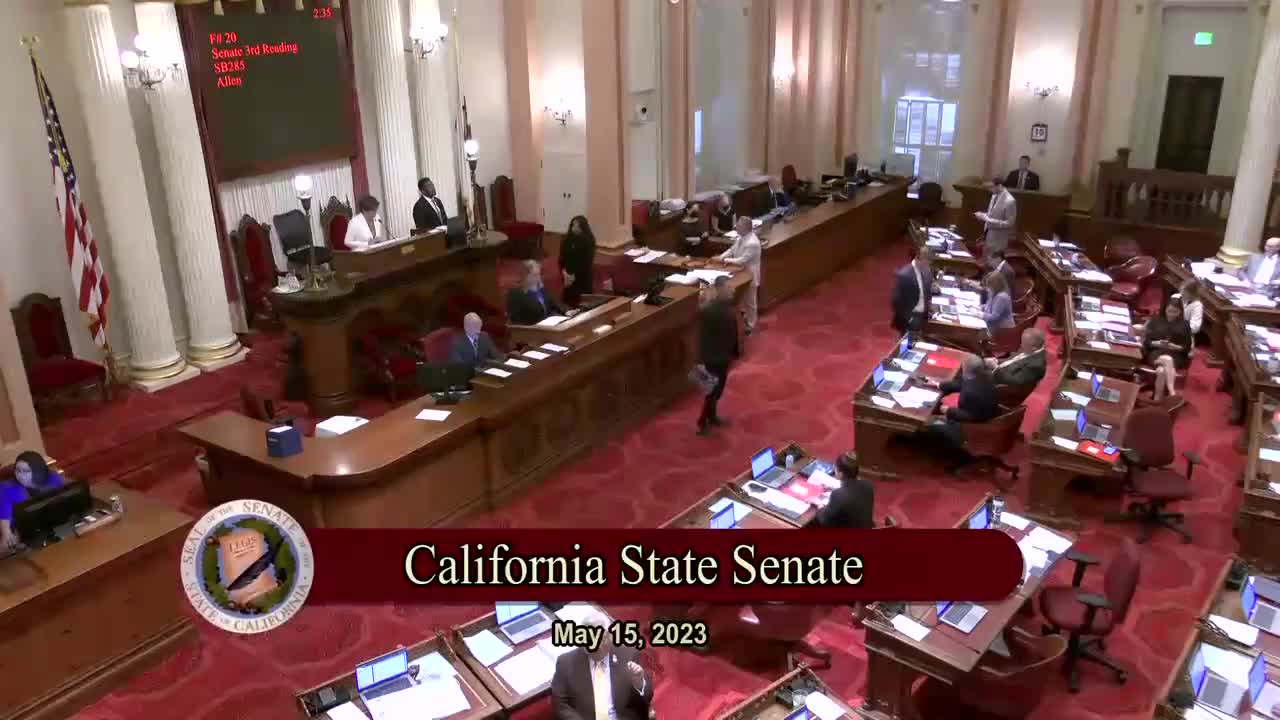
Bill Author

Bill Co-Author(s):