SB 560: Solid waste: gas cylinders: stewardship program.
- Session Year: 2023-2024
- House: Senate
- Latest Version Date: 2023-03-22
Current Status:
Failed
(2024-02-01: Returned to Secretary of Senate pursuant to Joint Rule 56.)
Introduced
In Committee
First Chamber
In Committee
Second Chamber
Enacted
The California Integrated Waste Management Act of 1989, administered by the Department of Resources Recycling and Recovery, generally regulates the disposal, management, and recycling of solid waste. The act establishes stewardship programs for various products, including, among others, carpet, mattresses, and pharmaceutical and sharps waste.
This bill would establish a stewardship program for gas cylinder products, as defined, and would authorize producers of those products to establish one more producer stewardship organizations for that purpose. The bill would require each producer or producer stewardship organization to submit a gas cylinder stewardship plan to the department that details, among other things, convenient and accessible opportunities for the recovery of gas cylinders used by consumers. The bill would prohibit gas cylinder producers that are not participating in a department-approved stewardship plan from supplying, selling, or offering for sale gas cylinders in the state. The bill would impose recordkeeping and reporting requirements on producers and producer stewardship organizations with department-approved stewardship plans and would require those producers to pay all administrative and operational costs associated with establishing and implementing the stewardship plan in which it participates, including the cost of collection, transportation, recycling, and the safe and proper management of recovered gas cylinders. The bill would require the department to set, review, and revise necessary convenience and performance standards and ensure appropriate data metrics for the gas cylinder stewardship program.
The California Integrated Waste Management Act of 1989, administered by the Department of Resources Recycling and Recovery, generally regulates the disposal, management, and recycling of solid waste.This bill would express the intent of the Legislature to enact subsequent legislation to authorize the department to establish a framework for the application of extended producer responsibility to the end-of-life management of covered gas cylinders, which include propane gas cylinders under 20 pounds, helium cylinders, isobutane cylinders, and butane cylinders.The California Integrated Waste Management Act of 1989, administered by the Department of Resources Recycling and Recovery, generally regulates the disposal, management, and recycling of solid waste.
This bill would express the intent of the Legislature to enact subsequent legislation to authorize the department to establish a framework for the application of extended producer responsibility to the end-of-life management of covered gas cylinders, which include propane gas cylinders under 20 pounds, helium cylinders, isobutane cylinders, and butane cylinders.
(a)(1)Gas cylinder means a gas cylinder designed to receive, store, and deliver compressed gas. A gas cylinder includes a gas cylinder that is any of the following:
(A)A propane gas cylinder designed with a capacity under 20 pounds, including both of the following:
(i)Camping-style one-pound propane gas cylinders.
(ii)Torch-style 14-ounce propane gas cylinder, including those containing methylacetylene-propadiene propane gas and oxygen.
(B)A helium gas cylinder designed for a compressed gas quantity of under 20 cubic feet, including both of the following:
(i)14.9-cubic-foot helium gas cylinders.
(ii)20-cubic-foot helium gas cylinders.
(C)An isobutane gas cylinder designed for under two pounds, including both of the following:
(i)1,500-milliliter isobutane gas cylinders.
(ii)1,500-gram isobutane gas cylinders.
(D)A butane gas canister or cylinder designed for under two pounds, including eight-ounce butane gas canisters or cylinders.
(2)Gas cylinder does not include any of the following:
(A)A compressed gas cylinder with a capacity equal to, or greater than, 20 pounds.
(B)Oxygen cylinders for health care applications.
(C)Fire extinguishers.
(D)Industrial welding cylinders.
(E)Home, commercial, or automotive refrigerant cylinders or canisters.
(b)Gas cylinder stewardship plan means a stewardship plan prepared by a producer or producer stewardship organization to implement a gas cylinder stewardship program pursuant to this chapter.
(c)Producer means a producer of gas cylinders.
(d)Producer stewardship organization means an organization that is established by and represents producers of gas cylinders and that designs, submits, and implements a gas cylinder stewardship plan on behalf of the producers it represents.
2.Performance Standards and Metrics42101.(a)(1)The Stewardship Program for Gas Cylinders is hereby created.
(2)The program shall be administered by the department.
(b)The program shall do all of the following:
(1)Set meaningful and quantitative product stewardship convenience standards.
(2)Consider whether product stewardship performance standards are appropriate for gas cylinder product categories, including those related to their reuse, recycling, and collection, and set necessary performance standards.
(3)Establish a process for the department to review and revise convenience and performance standards as necessary.
(4)Establish dates that producers and producer stewardship organizations are required to meet the convenience and performance standards established by the department pursuant to this section.
(5)Ensure that program goals are supported with accurate data sources that allow effective monitoring of goal achievement.
(6)Ensure that any recycling rate performance standard established under the program accurately reflects increases and decreases in the recycling of gas cylinders and is supported by data sources that quantify the gas cylinder products discarded and recycled over a set period of time and that do not rely upon factors that arbitrarily impact the calculation.
3.Stewardship Organizations42102.Producers may establish one or more producer stewardship organizations composed of producers to design, submit, and implement a gas cylinder stewardship plan on behalf of the producers it represents.
4.Stewardship Plans42103.(a)Each producer or producer stewardship organization shall notify the department, in writing, that the producer will act individually or jointly with other producers to submit a gas cylinder stewardship plan to the department.
(b)A gas cylinder stewardship plan shall detail how the producer or producer stewardship organization shall do all of the following:
(1)Minimize public sector involvement in the management of discarded gas cylinders.
(2)Provide for convenient and accessible opportunities for the recovery of gas cylinders used by consumers for personal, family, or household use at collection sites.
(3)Provide for refilling or recycling cylinders and capturing residual gases for reuse.
(4)Provide a public education component to promote consumer knowledge of the plan.
(5)Identify producers participating in the plan.
5.Producer Records and Reports42104.Each producer or producer stewardship organization with a gas cylinder stewardship plan approved by the department shall do both of the following:
(a)Maintain all records relating to the applicable gas cylinder stewardship plan for a period of not less than five years.
(b)Submit an annual report to the director, in a format prescribed by the director.
6.Program Administration7.Industry Responsibilities8.Financial Provisions42107.Each producer shall, either individually or through a producer stewardship organization, pay all administrative and operational costs associated with establishing and implementing the gas cylinder stewardship plan in which it participates, including the cost of collection, transportation, recycling, and the safe and proper management of recovered gas cylinders.
9.Enforcement and Civil Penalties42108.A producer that fails to participate in a gas cylinder stewardship plan approved by the department shall not supply, sell, or offer for sale gas cylinders in the state.
10.Antitrust Immunity and Miscellaneous42109.(a)Except as provided in subdivision (b), an action that is taken by a producer or producers designee, including, but not limited to, a producer stewardship organization, is not a violation of the Cartwright Act (Chapter 2 (commencing with Section 16700) of Part 2 of Division 7 of the Business and Professions Code), the Unfair Practices Act (Chapter 4 (commencing with Section 17000) of Part 2 of Division 7 of the Business and Professions Code), or the Unfair Competition Law (Chapter 5 (commencing with Section 17200) of Part 2 of Division 7 of the Business and Professions Code) to the extent the producer or producers designee, including, but not limited to, a producer stewardship organization, is exercising authority pursuant to this chapter.
(b)Subdivision (a) does not apply to an agreement that does any of the following:
(1)Fixes a price of or for gas cylinders.
(2)Fixes the output or production of gas cylinders.
(3)Restricts the geographic area in which, or customers to whom, gas cylinders will be sold.
SECTION 1.It is the intent of the Legislature to enact subsequent legislation to authorize the Department of Resources Recycling and Recovery to establish a framework for the application of extended producer responsibility to the end-of-life management of covered gas cylinders, which include propane gas cylinders under 20 pounds, helium cylinders, isobutane cylinders, and butane cylinders.It is the intent of the Legislature to enact subsequent legislation to authorize the Department of Resources Recycling and Recovery to establish a framework for the application of extended producer responsibility to the end-of-life management of covered gas cylinders, which include propane gas cylinders under 20 pounds, helium cylinders, isobutane cylinders, and butane cylinders.
|
Date
|
Status
|
|---|---|
| Feb 1, 2024 | Returned to Secretary of Senate pursuant to Joint Rule 56. |
| Jan 18, 2024 | January 18 hearing: Held in committee and under submission. |
| Jan 12, 2024 | Set for hearing January 18. |
| May 18, 2023 | May 18 hearing: Held in committee and under submission. |
| May 12, 2023 | Set for hearing May 18. |
| May 8, 2023 | May 8 hearing: Placed on APPR suspense file. |
| May 1, 2023 | Set for hearing May 8. |
| Apr 26, 2023 | From committee: Do pass and re-refer to Com. on APPR. (Ayes 10. Noes 0. Page 894.) (April 25). Re-referred to Com. on APPR. |
| Apr 19, 2023 | From committee: Do pass and re-refer to Com. on JUD. (Ayes 5. Noes 0. Page 794.) (April 19). Re-referred to Com. on JUD. |
| Apr 18, 2023 | Set for hearing April 25 in JUD. pending receipt. |
| Apr 11, 2023 | Set for hearing April 19. |
| Mar 29, 2023 | Re-referred to Coms. on E.Q. and JUD. |
| Mar 22, 2023 | From committee with author's amendments. Read second time and amended. Re-referred to Com. on RLS. |
| Feb 22, 2023 | Referred to Com. on RLS. |
| Feb 16, 2023 | From printer. May be acted upon on or after March 18. |
| Feb 15, 2023 | Introduced. Read first time. To Com. on RLS. for assignment. To print. |
|
Date
|
Description
|
Location
|
Votes
|
|
|---|---|---|---|---|
| May 8, 2023 | Placed on suspense file | Senate Standing Committee on Appropriations |
Passed |
|
| Apr 25, 2023 | Do pass, but first be re-referred to the Committee on [Appropriations] | Senate Standing Committee on Judiciary |
Passed |
|
| Apr 19, 2023 | Do pass, but first be re-referred to the Committee on [Judiciary] | Senate Standing Committee on Environmental Quality |
Passed |
This list shows positions taken on this bill by organizations on the date displayed, which is linked to the original source.
Positions by individuals are not included.
|
Organization
|
Position
|
Date
|
|---|---|---|
| California Product Stewardship Council | * For If Amend | Apr 25, 2023 |
| Californians Against Waste | * For If Amend | Apr 25, 2023 |
| Rethink Waste | * Support | Apr 19, 2023 |
| Rural County Represenatatives of California | * Support | Apr 19, 2023 |
| Shaw Yoder Antwih Schmelzer & Lange | * Support | Apr 19, 2023 |
| Solid Waste Association of North America | * For If Amend | Apr 25, 2023 |
| Stop Waste | * For If Amend | Apr 25, 2023 |
| Western Placer Waste Management Authority | * For If Amend | Apr 25, 2023 |
| Western Propane Gas Association | * Support | Apr 19, 2023 |
| Worthington Industries | * Neutral | Apr 19, 2023 |
| Worthington Industries | * Neutral | Apr 25, 2023 |
SENATE COMMITTEE ON
Senator Anthony Portantino, Chair
2023 - 2024 Regular Session
SB 560 (Laird) - Solid waste: gas cylinders: stewardship program
Version: | Policy Vote: |
Urgency: | Mandate: |
Hearing Date: | Consultant: |
Bill Summary:
This bill would establish an Extended Producer Responsibility (EPR) program for gas cylinders under 20 pounds.
Fiscal Impact:
- The Department of Resources Recycling and Recovery (CalRecycle) estimates ongoing costs of about $1 million or more annually (special fund) to create, implement, and administer a new EPR program. These costs would be offset by reimbursements paid by the producer responsibility organization.
Background:
Extended producer responsibility (EPR). EPR refers to a waste management strategy that makes the manufacturer of a product responsible for the products’ entire life–cycle costs including its end–of–life costs associated with recycling or disposal. These costs have traditionally been borne by local governments (and ultimately tax payers) through municipal waste disposal programs. This traditional structure results in an “externality” or a situation where the costs of recycling or disposal are not paid by the buyer or seller of the product, but rather by a third party (such as tax payers). EPR shifts the costs of managing a product at its end of life from waste disposal programs to the manufacturer of the product. By requiring manufacturers to cover end–of–life costs, these costs are incorporated or “internalized” into the total cost of the product when it is sold. Therefore, the price that consumers pay reflects the entire cost of the product—its production and disposal. This means that the people making and using the product cover all of its costs, rather than local governments and taxpayers covering a share of disposal costs. Moreover, manufacturers have a financial incentive to design products that are inexpensive to recycle. In California, EPR is already used for carpet, mattresses, and paint.
Mixed results for California EPR programs. To date, the Legislature has enacted four EPR programs of which CalRecycle has enforcement authority – paint, carpet, mattresses, and pharmaceutical and sharps waste – showing varying degrees of success. While CalRecycle does not appear to have oversight issues with the paint stewardship program, CalRecycle was subject to an audit for its oversight of the mattress recycling program. The carpet recycling program has encountered the most challenges of the EPR programs with the enforcement history of the carpet stewardship organization being extensive and complicated. Only enacted in 2018, the pharmaceutical and sharps waste program is still in development.
Gas Cylinders in the market. Gas cylinders, including helium, propane, or forms of butane, can be either reusable or single-use items. Propane gas cylinders are often used for camping and backpacking stoves, portable heaters, lanterns, portable showers, tailgating grills, boat engines, scooters, lawn care equipment, and welding equipment. Isobutane and butane can have similar uses to propane, and are frequently used by backpackers since they have high a energy-density that makes them very light and portable. Butane is also used to refill lighters. Small helium cylinders (under 20 cubic feet), are typically sold to households to fill party balloons.
While there is not readily available data on the total number of gas cylinders under 20 pounds sold each year in California, the number is likely in the tens of millions. Each year, there are approximately 40-60 million disposable one-pound propane cylinders sold in the United States. As California accounts for roughly 10% of the population, it is estimated that over 4 million disposable one-pound propane cylinders are sold in California each year. One-pound propane cylinders constitute just one fuel and size type of the whole universe of gas cylinders.
Disposing of gas cylinders. Properly disposing of gas cylinders can be costly. Because single-use gas cylinders are used for outdoor activities, they can be a major source of litter in outdoor spaces, which is expensive to collect and ship to waste processing facilities or landfills. Yosemite National Park employees report finding these cylinders “constantly” littered in the park. In 2021, Yosemite employees processed 24,000 cylinders that had been thrown in trash cans or left elsewhere in the park.
If individuals “pack it out” and take these cylinders home, they can still be expensive to dispose of. While an empty gas cylinder can simply be put in a recycling bin, a gas cylinder that is not empty is hazardous and must be brought to a HHW facility. Once at the HHW facility, the cylinder will likely be stored in a large (55-gallon) drum before being transported to a recycling/processing facility to be off gassed. Once completely empty, the cylinders are punctured and then crushed, baled, and sent to the recycled metals markets. According to data provided by the author, the transportation and recycling/processing cost of a single disposable two-pound propane cylinder is approximately $3.00. This adds up quickly: local governments spend approximately $3 million a year in ratepayer funds to properly dispose of single-use propane cylinders, which are just one type of gas cylinder on the market.
Recycling gas cylinders. Based on CalRecycle data, it is estimated that only a quarter of the approximately four million disposable propane cylinders sold in California are recovered through HHW operations: the remaining cylinders, many of which may not be fully off-gassed, end up as potentially hazardous material in MRFs and landfills.
Refill as a means of reducing cylinder waste. In light of the challenges of disposing of single-use gas cylinders, some governments, businesses and environmental nonprofits have promoted refillable alternatives to disposable cylinders. To date, CalRecycle has awarded 33 grants worth approximately $2.5 million to promote the use of refillable one or two-pound propane cylinders. In 2015, California Product Stewardship Council obtained a CalRecycle HHW grant to establish a ‘Refuel Your Fun’ program to help transition from single-use gas cylinders to refillable cylinders.
Refillables have a lower carbon footprint compared to single-use cylinders. The carbon footprint of a one kilogram propane gas cylinder is nearly three kilograms CO2. The end of life for these cylinders is also carbon-intensive, requiring transporting, crushing, and baling, all before the metal is even sold as scrap. Refillables, which last for ten years, do not cycle through the waste stream as quickly as single-use items, and so do not consume as much resources and result in as much carbon output.
Proposed Law:
This bill would establish an EPR program for gas cylinders under 20 pounds. Specifically, this bill would:
- Establish a stewardship program for gas cylinder products, as defined, and would authorize producers of those products to establish one or more producer stewardship organizations for that purpose.
- Prohibit gas cylinder producers that are not participating in a CalRecyle approved stewardship plan from supplying, selling, or offering for sale gas cylinders in the state.
- Provide that an action that is taken by a producer or producer’s designee, including, but not limited to, a producer stewardship organization, is not a violation of the Cartwright Act (Chapter 2 (commencing with Section 16700) of Part 2 of Division 7 of the Business and Professions Code), the Unfair Practices Act (Chapter 4 (commencing with Section 17000) of Part 2 of Division 7 of the Business and Professions Code), or the Unfair Competition Law (Chapter 5 (commencing with Section 17200) of Part 2 of Division 7 of the Business and Professions Code) to the extent the producer or producer’s designee, including, but not limited to, a producer stewardship organization, is exercising their authority pursuant to these provisions.
Related Legislation:
SB 1256 (Wieckowski, 2022) would have prohibited the sale of one-pound disposable propane cylinders after January 1, 2028. SB 1356 was vetoed in 2022.
SB 615 (Allen, 2023) requires producers of electric vehicle (EV) batteries to be responsible for the recapture, repair, reuse, or recycling of EV batteries. SB 615 is pending in the Senate Transportation Committee.
SB 707 (Newman, 2023) establishes an Extended Producer Responsibility (EPR) program for textiles with oversight from CalRecycle. SB 707 is pending in the Senate Judiciary Committee.
SB 212 (Jackson, Chapter 1004, Statutes of 2018) established an EPR program for pharmaceutical and sharps waste, with oversight from CalRecycle.
Staff Comments: CalRecycle notes that there are costs associated with any new EPR program that range in excess of $1 million dollars for department staff to develop and adopt regulations, administer the stewardship program, review plans and reports, assess product stewardship performance standards, conduct audits, and provide legal and administrative support to the program, among other things. The ability to recoup costs of administration and enforcement of the EPR program is common in EPR frameworks and paid for by the producer responsibility organization.
-- END --
Senator Thomas Umberg, Chair
2023-2024 Regular Session
Bill No: SB 560 (Author:Laird)
Version: March 22, 2023
Hearing Date: April 25, 2023
Fiscal: Yes
Urgency: No
Consultant: AM
SUBJECT
Solid waste: gas cylinders: stewardship program
DIGEST
This bill establishes a stewardship program for gas cylinder products, as defined, and would authorize producers of those products to establish one more producer stewardship organizations for that purpose.
EXECUTIVE SUMMARY
Gas cylinders create waste management issues due to their potential hazardous nature when not completely emptied and the high cost to local governments to dispose of them safely and correctly. It is estimated that 40 to 60 million single-use disposable 1 pound propane cylinders are sold in the United States each year and that the vast majority of the ones sold in California end up in landfills. And this just applies to one type of gas cylinder on the market. This bill, in an attempt to decrease the waste caused by these gas cylinders, seeks to establish a stewardship program and prohibits gas cylinder producers that are not participating in an approved stewardship program from supplying, selling, or offering for sale gas cylinders in the state. The bill is author sponsored. There is no known support or opposition. The bill passed the Senate Environmental Quality Committee on a vote of 5 to 0.
PROPOSED CHANGES TO THE LAW
Existing law:
- The California Integrated Waste Management Act (IWMA) of 1989, administered by the Department of Resources Recycling and Recovery (CalRecycle), generally regulates the disposal, management, and recycling of solid waste. The act establishes stewardship programs or extended producer responsibility (EPR) programs for various products, including, among others, carpet, mattresses, and pharmaceutical and sharps waste. (Pub. Res. Code § 40000 et. seq.)
- Establishes under IWMA a state recycling goal that 75% of solid waste generated is to be diverted from landfill disposal through source reduction, recycling, and composting by 2020. (Pub. Res. Code § 41780.01)
- Establishes that counties and cities will provide services for the collection of household hazardous waste (HHW) and that the state will provide an expedited and streamlined regulatory structure to facilitate the collection of HHW. (Health & Safe. Code § 25218.)
- Defines HHW as hazardous waste generated incidental to owning or maintaining a place of residence, but does not include waste generated in the course of operating a business at a residence. (Id. at subd. (e).)
This bill:
- Establish a stewardship program for gas cylinder products, as defined, and would authorize producers of those products to establish one or more producer stewardship organizations for that purpose.
- Prohibits gas cylinder producers that are not participating in a CalRecyle approved stewardship plan from supplying, selling, or offering for sale gas cylinders in the state.
- Provides that an action that is taken by a producer or producer’s designee, including, but not limited to, a producer stewardship organization, is not a violation of the Cartwright Act (Chapter 2 (commencing with Section 16700) of Part 2 of Division 7 of the Business and Professions Code), the Unfair Practices Act (Chapter 4 (commencing with Section 17000) of Part 2 of Division 7 of the Business and Professions Code), or the Unfair Competition Law (Chapter 5 (commencing with Section 17200) of Part 2 of Division 7 of the Business and Professions Code) to the extent the producer or producer’s designee, including, but not limited to, a producer stewardship organization, is exercising their authority pursuant to these provisions.
COMMENTS
- Stated need for the bill
The author writes:
To improve our environment and reduce the number of hazardous waste products that end up in our waste facilities, Senate Bill 560 establishes an extended producer responsibility program for small gas cylinders. Too often, these small gas cylinders, which are conveniently used for recreational purposes, are often left at our beaches or parks. Leaving someone else to dispose of them. However, properly disposing of these cylinders goes beyond putting them in a trash can. Proper disposal typically means taking them to household hazardous waste facilities, but the challenge is these facilities are not always easily accessible. When these cylinders end up in local waste facilities, the time and costs for proper disposal fall upon that local jurisdiction.
SB 560 aims to reduce the number of hazardous waste products at local facilities, beaches, and parks. Instead of the local jurisdiction carrying the burden of disposal, creating an EPR program will place a shared responsibility for end-of-life product management on producers, and other entities involved in the product chain, instead of the consumers.
- Impact of gas cylinders on waste management and the environment
In California, an empty propane tank or cylinder can be disposed of in curbside trash or recycling, but if the tank or cylinder is not empty then it is considered HHW and must be disposed of at an HHW facility. It is extremely difficult to know whether a cylinder is completely empty. An improperly disposed of cylinder creates a serious risk of explosion, resulting in fires, and poses a grave danger to sanitation workers. For example, in 2016, and again in 2017, disposable propane cylinders exploded at a Kent County, Michigan materials recovery facility causing over $68,000 in damages from one tank and knocking a worker off a baler.[1] Locally, the Sunnyvale Materials Recovery and Transfer (SMaRT) Station experienced an explosion and baler fire in 2016, which was most likely caused by a disposable propane gas cylinder, with another similar incident occurring in 2017.[2]
As the Senate Environmental Quality Committee analysis notes there is no “readily available data on the total number of gas cylinders under 20 pounds sold each year in California, the number is likely in the tens of millions.”[3] However, there is data on 1 pound propane cylinders, with estimates indicating that roughly 40 to 60 million 1 pound propane cylinders are sold in the United States each year.[4] If California accounts for 10 percent of the population, then one can extrapolate that 4 to 6 million are sold in California each year. Yosemite National Park collects anywhere from 20,000 to 25,000 cylinders a year.[5] Estimates to manage this hazardous waste at Yosemite National Park are $3 per cylinder[6] and $3.50 per cylinder in Lassen National Park.[7] Refillable cylinders have a life span of 10 to 12 years.
- This bill seeks to establish a stewardship program for gas cylinders
- SB 1256 (Wieckowski, 2022)
SB 1256 (Wieckowski, 2022) would have banned the sale, or offer for sale, in this state of a disposable propane cylinder under 2 pounds beginning on and after January 1, 2028. The bill was vetoed by Governor Newsom, who wrote:
I acknowledge there are several challenges and costs faced by local governments and solid waste management authorities responsible for the disposal of single-use propane cylinders. However, an outright ban without a plan for collection and refill infrastructure could inhibit the success of building a circular system in California.
California has successfully implemented many reuse and recycling systems, from the Beverage Container Recycling Program to several extended producer responsibility programs. These market-based solutions both significantly reduce waste and create jobs by turning a challenging product into a resource. I encourage the Legislature and stakeholders to work on a similar approach for the collection and reuse of this product that accounts for manufacturer and retail responsibility.
- This bill establishes a stewardship program or extender producer responsibility (EPR) program for gas cylinders designed with a capacity of under 20 pounds
This bill seeks to address the Governor’s veto message by enacting a stewardship program or extender producer responsibility (EPR) program for gas cylinders designed with a capacity of under 20 pounds. The bill applies to gas cylinders for propane, helium, isobutene, and butane. As noted by the Senate Environmental Quality Committee:
[EPR] is a strategy that places shared responsibility for end-of-life product management on the producers and all entities involved in the product chain, instead of on the general public and local governments. EPR programs rely on industry, formalized in a product stewardship organization, to develop and implement approaches to create a circular economy that makes business sense, with oversight and enforcement provided by the government. This approach provides flexibility for manufacturers, based on their expertise in designing products and the systems that bring these products to market, to design systems to capture those products at the end-of-life to meet statutory goals. [8]
The bill provides a general framework of stewardship program that would be administered by CalRecylce. As the Senate Environmental Quality Committee and a coalition of organizations that support the bill in concept explain, the bill currently lacks specificity and many elements that are traditionally concluded in an EPR enacted in this stated. These include, but are not limited, to:
- Clear definitions on who a producer is, as most EPR programs use a tiered definition placing accountability on manufacturers first, then importers, then distributors, etc. A tiered definition of producer is essential to capture products that are manufactured outside of the state.
- Clarity on stakeholder participation in the administrative process and design of the EPR program.
- Timelines for implementation of the EPR program.
- The enforcement provision under the bill does not provide for any administrative penalties, as most EPR programs do, and lacks clarity on what entity will enforce the bill’s provisions.
- A mechanism for ensuring that the cost of the program is not passed on to consumers.
- Performance standards for the program and the establishment of convenient collection sites for consumers.
- Public education programs.
- Senate Judiciary Committee concerns related to EPR programs generally
- The Dormant Commerce Clause
Section 8 of Article I of the United States Constitution grants the United States Congress the power to regulate interstate commerce.[9] The converse proposition—that states may not usurp Congress’s express power to regulate interstate commerce—is known as the “Dormant Commerce Clause.”[10] The Dormant Commerce Clause serves as an absolute bar to regulations that discriminate against interstate commerce, i.e., by favoring in-state businesses or excluding out-of-state businesses.[11] But “[s]tate laws that ‘regulat[e] even-handedly [across all in-state and out-of-state businesses] to effectuate a legitimate local public interest…will be upheld unless the burden imposed upon such commerce is clearly excessive in relation to the putative local benefits.’ ”[12] This bill prohibits a producer that fails to participate in an EPR program approved by CalRecylce from selling, supplying, or offering for sale gas cylinders in this state. A producer is defined as a producer of gas cylinders. This definition does not seem to favor in-state businesses over out-of-state businesses.
A statute may also violate the dormant Commerce Clause, even if it "regulates even handedly to effectuate a legitimate local public interest, and its effects on interstate commerce are only incidental" and the burden imposed on commerce “is clearly excessive in relation to the putative local benefits." (Pike v. Bruce Church, Inc. (1970) 397 U.S. 137, 142.) As this bill’s provisions are intended to address the serious waste management issues and environmental impacts posed by gas cylinders, this bill would likely not be found to excessively burden interstate commerce in violation of the Dormant Commerce Clause. Going forward, the author should ensure that the provisions of the bill do not favor in-state producers versus out-of-state producers in order to not run afoul of the Dormant Commerce Clause.
- Antitrust immunity
As with most of the EPR schemes provided for in California law, this bill includes express exemptions from various laws regulating anticompetitive behavior and unfair competition and practices. Generally EPR programs provide that certain activities engaged in by producers and stewardship organizations, such as the creation, implementation, management, cost assessments, and structuring of a stewardship plan and the establishment, administration, collection, or disbursement of a charge associated with funding the implementation of the program are categorically exempt from the Cartwright Act (California’s primary antitrust law), the Unfair Practices Act, or the Unfair Competition Law because these activities are essential to a functional stewardship program. This bill, however, does not limit this exemption to those activities necessary and essential to the functioning of the EPR program for gas cylinders, but applies it simply to an action taken by a producer or the producer’s designee to the extent they are exercising authority pursuant to the bill. Going forward, the author should ensure that the provisions of the bill only exempt those activities truly necessary essential to ensuring a functional stewardship program under the bill.
Even with exemptions being limited to specific actions of producers and stewardship programs, concerns have been raised about the monopolistic possibilities inherent in these programs. Strong government oversight is critical to ensure this regulatory scheme is operated in an evenhanded manner and results in the ambitious goals it sets out to accomplish. The above antitrust laws are extremely important to ensuring consumers are protected and free and fair competition is fostered. Mitigating these concerns to an extent, the bill specifically provides that the exemptions do not apply to an agreement that does the following:
- fixes a price of or for covered products, except for an agreement related to costs or charges associated with participation in a stewardship plan approved or conditionally approved by the department and otherwise in accordance with the bill;
- fixes the output or production of gas cylinders; or
- restricts the geographic area in which, or customers to whom, gas cylinders will be sold.
This language is also similar to that found in other EPR programs.
- Conditional support
A coalition of several environmental and waste reduction organizations write that they support the bill in concept but are requesting that amendments be made to ensure that key factors or components are included to ensure that the EPR program is a success and that external costs are minimized. Many of these factors are listed above in Comment 3)(b).
SUPPORT
None known
OPPOSITION
None known
RELATED LEGISLATION
Pending Legislation: None known.
Prior Legislation: SB 1256 (Wieckowski, 2022) would have prohibited the sale or offer for sale of a disposable propane cylinder on and after January 1, 2028. SB 1256 was vetoed by Governor Newsom. See Comment 3)(a), above, for the Governor’s veto message.
PRIOR VOTES:
Senate Environmental Quality Committee (5 Ayes, 0 Noes)
**************
Arlene Karidis, Propane Tans Wreak Havoc at MRFs and Disposal Sites, Waster360 (May 23, 2019), available at https://www.waste360.com/safety/propane-tanks-wreak-havoc-mrfs-and-disposal-sites (as of Apr. 2, 2022). ↑
Hazardous Waste Management: The New Refillable 1 lb. Propane Cylinders: Sparking the Paradigm Shift Away From Disposables, WasteAdvanatage Magazine (Apr. 27, 2017), available at https://wasteadvantagemag.com/hazardous-waste-management-the-new-refillable-1-lb-propane-cylinders-sparking-the-paradigm-shift-away-from-disposables/ (as of Apr. 2, 2022). ↑
Sen. Environmental Quality Comm. analysis SB 560 (2023-24 reg. sess.) as amended Mar. 22, 2023 p. 3. ↑
Id.; see also The Definitive Camp Guide to Sustainable Propane, IGNIK (Oct. 6, 2020), available at https://ignik.com/blogs/news/the-definitive-camp-guide-to-sustainable-propane (as of Apr. 2, 2022). ↑
Karidis supra at fn. 1. ↑
Karidis supra at fn. 1. ↑
Hazardous Waste Management: The New Refillable 1 lb. Propane Cylinders: Sparking the Paradigm Shift Away From Disposables supra at fn. 2. ↑
Sen. Environmental Quality Comm. analysis of SB 707 (2023-24 reg. sess.) as amended Mar. 20, 2023 at p. 4. ↑
U.S. Const., art. I, § 8, cl. 3. ↑
See Gibbons v. Ogden (1824) 22 U.S. 1. ↑
E.g., Dean Milk Co. v. Madison (1951) 340 U.S. 349, 354. ↑
South Dakota v. Wayfair, Inc. (2018) 138 S.Ct. 2080, 2091. ↑
SENATE COMMITTEE ON ENVIRONMENTAL QUALITY
Senator Allen, Chair
2023 - 2024 Regular
Bill No SB 560
Author: | Laird | ||
Version: | 3/22/2023 | Hearing Date: | 4/19/2023 |
Urgency: | No | Fiscal: | Yes |
Consultant: | Brynn Cook | ||
SUBJECT: Solid waste: gas cylinders: stewardship program
DIGEST: Establishes an Extended Producer Responsibility (EPR) program for gas cylinders under 20 pounds.
ANALYSIS:
Existing law:
- The California Integrated Waste Management Act (IWMA) of 1989, administered by the Department of Resources Recycling and Recovery (CalRecycle), generally regulates the disposal, management, and recycling of solid waste. The act establishes EPR programs for various products, including, carpet, mattresses, batteries, pharmaceutical and sharps waste, and single-use plastic and packaging. (Public Resources Code (PRC) §§ 40000 et. seq.)
- Establishes procedures for managing hazardous waste as universal waste. (California Code of Regulations (CCR) Title 22, Division 4.5, Chapter 23)
- Defines a "household hazardous waste (HHW)" as hazardous waste generated incidental to owning or maintaining a place of residence, but does not include waste generated in the course of operating a business at a residence. (HSC § 25218.1(e))
- Requires counties and cities to ensure HHW is collected and requires the state to provide an expedited and streamlined regulatory structure directing the locals how to dispose of the HHW. (HSC § 25218)
This bill:
- Establishes the Stewardship Program for Gas Cylinders which will be operated through a product stewardship organization with oversight from CalRecycle.
- Requires producers or product stewardship organization to develop and implement a product stewardship plan to
Background
- California’s waste goals and EPR. Under the IWMA, CalRecycle is tasked with reducing the amount of waste that gets landfilled in California. The IWMA establishes a goal that 75% of solid waste generated in the state be diverted from landfills through source reduction, recycling, and composting by 2020. However, in 2021, the state’s recycling rate was just 41%, falling far short of state’s goal.
To advance California’s recycling goals, the Legislature has directed CalRecycle to establish several EPR programs. EPR is a strategy that places shared responsibility for end-of-life product management on producers and all entities involved in the product chain, instead of on the general public and local governments. EPR programs rely on industry, often via a product stewardship organization (PRO), to develop and implement approaches to create a circular economy with oversight and enforcement provided by the government. EPR programs have traditionally been used to improve the recapture and recycling rate for challenging-to-recycle materials that can pose a risk to the waste stream, like pharmaceuticals and sharps, paints, and batteries. The state also oversees EPR programs for high-volume products including mattresses, carpets, packaging and single-use plastic foodware items.
- Universal waste and HHW. Many common household items contain hazardous materials that pose a threat to the health of humans, animals, and the environment if these products are incorrectly disposed of. These common items may be categorized as universal waste or the more hazardous HHW. Universal waste – such as batteries – can be handled, transported, and recycled following the simple requirements set forth in the universal waste regulations, while HHW – such as paint – is more hazardous and must be handled by specified local agencies. Neither universal waste nor HHW can simply be tossed out in the garbage bin.
- Gas Cylinders in the market. Gas cylinders, including helium, propane, or forms of butane, can be either reusable or single-use items. Propane gas cylinders are often used for camping and backpacking stoves, portable heaters, lanterns, portable showers, tailgating grills, boat engines, scooters, lawn care equipment, and welding equipment. Isobutane and butane can have similar uses to propane, and are frequently used by backpackers since they have high a energy-density that makes them very light and portable. Butane is also used to refill lighters. Small helium cylinders (under 20 cubic feet), are typically sold to households to fill party balloons.
While there is not readily available data on the total number of gas cylinders under 20 pounds sold each year in California, the number is likely in the tens of millions. Each year, there are approximately 40-60 million disposable one-pound propane cylinders sold in the United States. As California accounts for roughly 10% of the population, it is estimated that over 4 million disposable one-pound propane cylinders are sold in California each year. One-pound propane cylinders constitute just one fuel and size type of the whole universe of gas cylinders.
- Disposing of gas cylinders. Properly disposing of gas cylinders can be costly. Because single-use gas cylinders are used for outdoor activities, they can be a major source of litter in outdoor spaces, which is expensive to collect and ship to waste processing facilities or landfills. Yosemite National Park employees report finding these cylinders “constantly” littered in the park. In 2021, Yosemite employees processed 24,000 cylinders that had been thrown in trash cans or left elsewhere in the park.
If individuals “pack it out” and take these cylinders home, they can still be expensive to dispose of. While an empty gas cylinder can simply be put in a recycling bin, a gas cylinder that is not empty is hazardous and must be brought to a HHW facility. Once at the HHW facility, the cylinder will likely be stored in a large (55-gallon) drum before being transported to a recycling/processing facility to be off gassed. Once completely empty, the cylinders are punctured and then crushed, baled, and sent to the recycled metals markets. According to data provided by the author, the transportation and recycling/processing cost of a single disposable two-pound propane cylinder is approximately $3.00. This adds up quickly: local governments spend approximately $3 million a year in ratepayer funds to properly dispose of single-use propane cylinders, which are just one type of gas cylinder on the market.
- Are These Cylinders Being Recycled? Based on CalRecycle data, it is estimated that only a quarter of the approximately four million disposable propane cylinders sold in California are recovered through HHW operations: the remaining cylinders, many of which may not be fully off-gassed, end up as potentially hazardous material in MRFs and landfills.
- Refill as a means of reducing cylinder waste. In light of the challenges of disposing of single-use gas cylinders, some governments, businesses and environmental nonprofits have promoted refillable alternatives to disposable cylinders. To date, CalRecycle has awarded 33 grants worth approximately $2.5 million to promote the use of refillable one or two-pound propane cylinders. In 2015, California Product Stewardship Council obtained a CalRecycle HHW grant to establish a ‘Refuel Your Fun’ program to help transition from single-use gas cylinders to refillable cylinders.
Refillables have a lower carbon footprint compared to single-use cylinders. The carbon footprint of a one kilogram propane gas cylinder is nearly three kilograms CO2. The end of life for these cylinders is also carbon-intensive, requiring transporting, crushing, and baling, all before the metal is even sold as scrap. Refillables, which last for ten years, do not cycle through the waste stream as quickly as single-use items, and so do not consume as much resources and result in as much carbon output.
Comments
Purpose of Bill. According to the author, “To improve our environment and reduce the number of hazardous waste products that end up in our waste facilities, Senate Bill 560 establishes an extended producer responsibility program for small gas cylinders. Too often, these small gas cylinders, which are conveniently used for recreational purposes, are often left at our beaches or parks. Leaving someone else to dispose of them. However, properly disposing of these cylinders goes beyond putting them in a trash can. Proper disposal typically means taking them to household hazardous waste facilities, but the challenge is these facilities are not always easily accessible. When these cylinders end up in local waste facilities, the time and costs for proper disposal fall upon that local jurisdiction. SB 560 aims to reduce the number of hazardous waste products at local facilities, beaches, and parks. Instead of the local jurisdiction carrying the burden of disposal, creating an EPR program will place a shared responsibility for end-of-life product management on producers, and other entities involved in the product chain, instead of the consumers.”
Many Details Left Blank. SB 560 outlines a gas cylinder EPR program, but leaves many questions unanswered. For example:
Who is the Producer? The bill defines “producer” as the entity that produces the gas cylinders. EPR programs typically use a tiered definition of producer, putting accountability on manufacturers first, then on to importers, then on to distributors, etc. The tiered definition of producer is essential to capture products that are manufactured outside of the state. The bill also does not specify how CalRecycle will develop the list of producers included in the program.
Should There be an Advisory Board? Gas cylinders, from their manufacture to their end of life, pass through many hands, including the businesses that fill cylinders with gas, retailers that sell the product, and local governments that have to collect them. Existing EPR programs have included non-producer stakeholders through advisory boards comprised of members of integrated industries, local agencies, and environmental justice representatives.
Timelines. The bill doesn’t set any timelines for when it will take effect, when CalRecycle needs to complete regulations, when producers have to develop and submit stewardship plans to the department, and much more.
Enforcement. The bill proposes to penalize producers who do not participate in the program by preventing them from selling their products in the state. It is not clear in the bill what entity will enforce this program, or how. EPR programs are typically enforced by CalRecycle, which can impose fines on producers that are not compliant with the EPR program requirements. It’s not clear why such a mechanism doesn’t exist in this bill.
What is the Financing Mechanism? SB 560 specifies the producers will cover all costs of establishing and running the gas-cylinder EPR program, but it does not describe how this will be accomplished. Can producers simply pass this cost along to consumers, either by adding a separate fee to the cost of the cylinder or baking it into the overall price? If the latter, it means the state will have little ability or authority to track or assess this fee
Oversight of the Financing. Currently, SB 560 does not create a mechanism for reporting or oversight of the EPR program finances. In some EPR programs, such as for carpets, funds are initially deposited into an escrow account that is maintained by an independent accounting firm. The PRO then reviews the financial statements and makes quarterly reports to CalRecycle.
While many aspects of an EPR program should be established through regulation or in the stewardship plan itself, a well-crafted EPR program is one that provides industry with enough leeway to develop and implement waste-reduction solutions while also providing sufficient oversight to ensure the state’s goals are accomplished. A poorly designed EPR may simply delay meaningful progress towards waste reduction goals.
In order to evaluate the proposed gas-cylinder EPR program, the committee may wish to direct the author to include more detail on how the program will operate, including a tiered definition for producer of gas cylinders, an advisory board of representatives from relevant stakeholders, a timeline for some elements of the EPR program, an enforcement mechanism for the program, and a financing mechanism for the program that specifies whether funding will come from consumers or producers.
- Refill vs. Takeback. SB 560 does not specify whether the proposed EPR program will include both refillable and single-use gas cylinders or only single-use cylinders. While some strategies for collecting and transporting refillable vs. single-use cylinders may overlap, the two products require different recapture and processing infrastructure. Refillables will need an infrastructure connecting empty cylinders to refill stations, whereas single-use cylinders will need to be brought to processing facilities to be scrapped.
SB 560 should consider how these two systems can utilize existing refillable infrastructure, and also consider how to prioritize a refill market to advance environmental goals. While making producers responsible for the end of life of gas cylinders can save local governments and ultimately Californians money, a single-use take-back system will still have a higher environmental impact than a refillable system. An EPR program that encompasses and develops end-of-life systems for both products should acknowledge and reward the relative environmental benefits of a refill system.
- Equity in access to cylinders and takebacks. Small gas cylinders can be a convenient source of heat for people experiencing homelessness for daily activities like cooking meals. Refillable cylinders are more expensive than single-use cylinders and refill locations may be less accessible to individuals experiencing homelessness. For these reasons, individuals experiencing homelessness may be reliant on single-use gas cylinders. Policies developed through the stewardship plan should consider how the EPR program may impact price and access to gas cylinders for individuals experiencing homelessness, and specifically consider how to create access to take-back or refill locations for those individuals.
To ensure that individuals experiencing homelessness have continued access to gas cylinders and to facilitate access to collection and refill sites, the committee may wish to direct the author that any advisory board formed as part of the program should include an advocate for individuals experiencing homelessness or similar role.
- Return with a twist. In 2021, the Senate Environmental Quality Committee analyzed SB 1256 (Wieckowski) which would have banned single-use one-pound propane cylinders. However, Governor Newsom vetoed the bill, writing that:
“An outright ban without a plan for collection and refill infrastructure could inhibit the success of building a circular system in California…I encourage the Legislature and stakeholders to work on a approach for the collection and reuse of this product that accounts for manufacturer and retail responsibility.”
Following this direction, SB 560 uses an EPR approach instead of a ban to reduce gas cylinders in the waste stream. SB 560 also expands the scope of the program from one-pound propane cylinders to include all small gas cylinders that are typical household items, including single-use and reusable cylinders.
DOUBLE REFERRAL
If this measure is approved by the Senate Environmental Quality Committee, the do pass motion must include the action to re-refer the bill to the Senate Judiciary Committee.
Related/Prior Legislation
SB 1256 (Wieckowski, 2022) would have prohibited the sale of one-pound disposable propane cylinders after January 1, 2028. SB 1356 was vetoed in 2022.
SB 615 (Allen, 2023) requires producers of electric vehicle (EV) batteries to be responsible for the recapture, repair, reuse, or recycling of EV batteries. SB 615 is pending in the Senate Transportation Committee.
SB 707 (Newman, 2023) establishes an Extended Producer Responsibility (EPR) program for textiles with oversight from CalRecycle. SB 707 is pending in the Senate Judiciary Committee.
SB 212 (Jackson, Chapter 1004, Statutes of 2018) established an EPR program for pharmaceutical and sharps waste, with oversight from CalRecycle.
SOURCE:
Author
SUPPORT:
None received
OPPOSITION:
None received
-- END --
Discussed in Hearing
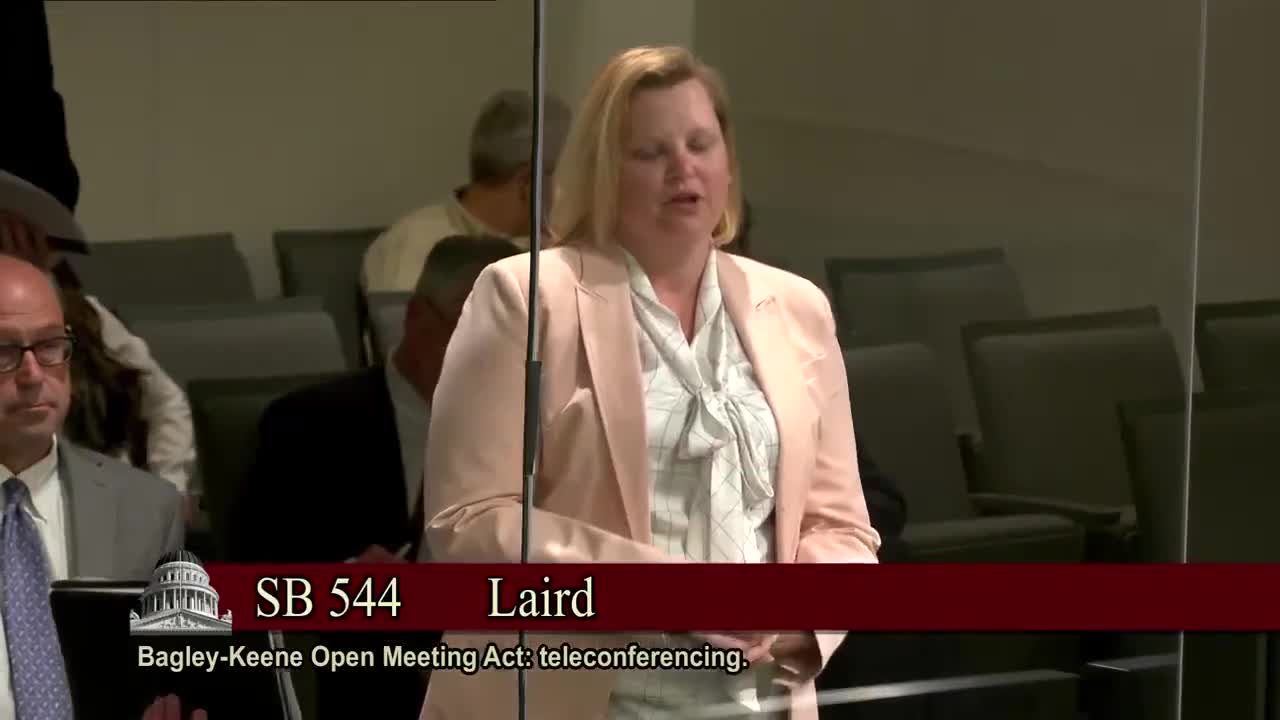 6MIN
Senate Standing Committee on Judiciary
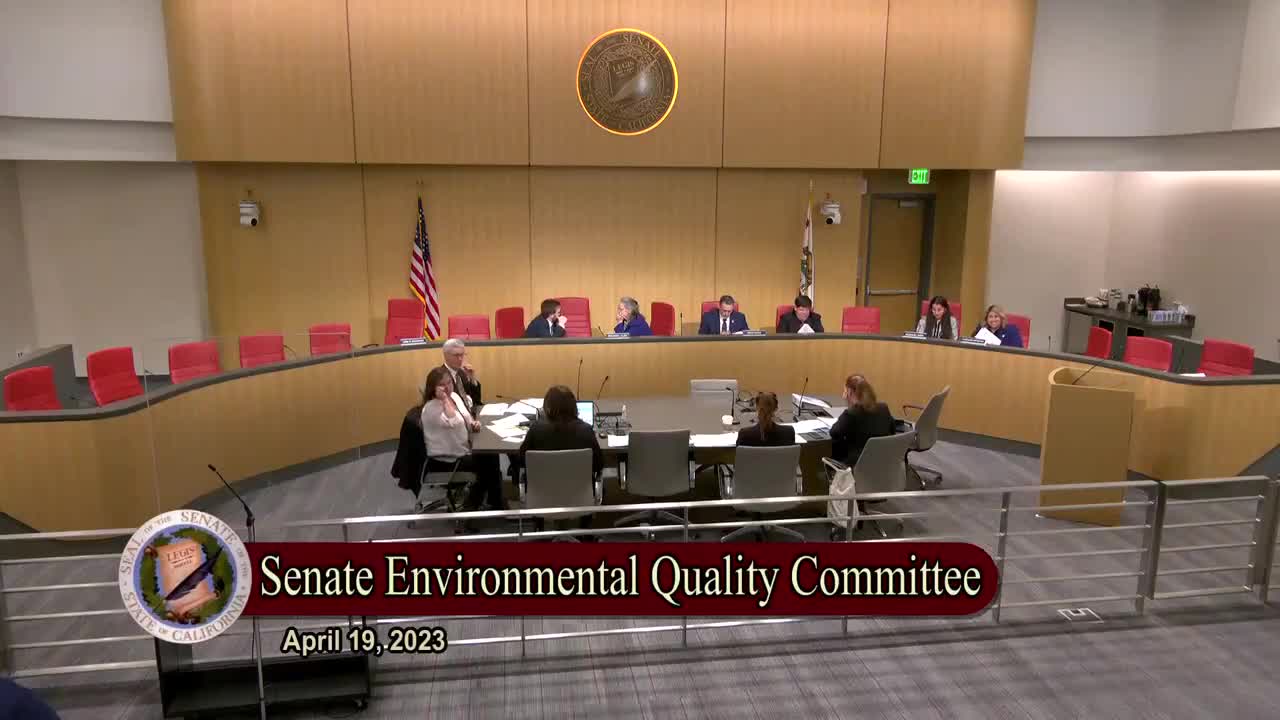 25MIN
Senate Standing Committee on Environmental Quality
Bill Author

Bill Co-Author(s):