SB 568: Electronic waste: export.
- Session Year: 2023-2024
- House: Senate
- Latest Version Date: 2023-10-04
Current Status:
Passed
(2023-10-04: Chaptered by Secretary of State. Chapter 308, Statutes of 2023.)
Introduced
In Committee
First Chamber
In Committee
Second Chamber
Enacted
What does this bill do?
The bill requires anyone exporting electronic waste or electronic devices for recycling or disposal to demonstrate they tried to find a California recycler and that no in-state recycler could manage the material. That demonstration must be included with the export notification filed with the Department of Toxic Substances Control.
The summary is provided by generative AI which can make mistakes. For original language, please view the details in the table below.
Existing law, the Electronic Waste Recycling Act of 2003, enacts a comprehensive system for the reuse, recycling, and proper and legal disposal of covered electronic devices, as provided. The act requires a person who exports covered electronic waste, or covered electronic devices, except as specified, intended for recycling or disposal, to a foreign country, or to another state for ultimate export to a foreign country, to notify the Department of Toxic Substances Control of certain matters concerning the waste or device to be exported. Existing law requires the exporter to include with those notifications specified demonstrations, including a demonstration that exportation of the waste or device will be managed within the country of destination only at facilities whose operations meet or exceed specified recommendations and guidelines of the Organization for Economic Cooperation and Development. The act defines a covered electronic waste recycler as a person or manufacturer that engages in certain activities for purposes of the reuse or recycling of covered electronic devices. The act becomes inoperative if certain conditions are met. A violation of the act is a crime.
This bill would add to the requirements for export of covered electronic waste or a covered electronic device a requirement for the person to demonstrate that they attempted to locate an in-state covered electronic waste recycler and that the waste or device could not be managed by an in-state covered electronic waste recycler. The bill would impose a state-mandated local program by creating a new crime.
The California Constitution requires the state to reimburse local agencies and school districts for certain costs mandated by the state. Statutory provisions establish procedures for making that reimbursement.
This bill would provide that no reimbursement is required by this act for a specified reason.
Existing law, the Electronic Waste Recycling Act of 2003, enacts a comprehensive system for the reuse, recycling, and proper and legal disposal of covered electronic devices, as provided. The act requires a person who exports covered electronic waste, or covered electronic devices, except as specified, intended for recycling or disposal, to a foreign country, or to another state for ultimate export to a foreign country, to notify the department Department of Toxic Substances Control of certain matters concerning the waste or device to be exported. Existing law requires the exporter to include with those notifications specified demonstrations, including a demonstration that exportation of the waste or device will be managed within the country of destination only at facilities whose operations meet or exceed specified recommendations and guidelines of the Organization for Economic Cooperation and Development. The act defines a covered electronic waste recycler as a person or manufacturer that engages in certain activities for purposes of the reuse or recycling of covered electronic devices. The act becomes inoperative if certain conditions are met. A violation of the act is a crime.
This bill would add to the requirements for export of covered electronic waste or a covered electronic device a requirement for the person to state demonstrate that they attempted to locate an in-state e-waste recycling facility before exporting the waste or device and would subject the person to a fine of up to $1,000 for a false statement. covered electronic waste recycler and that the waste or device could not be managed by an in-state covered electronic waste recycler. The bill would impose a state-mandated local program by creating a new crime.
The California Constitution requires the state to reimburse local agencies and school districts for certain costs mandated by the state. Statutory provisions establish procedures for making that reimbursement.
This bill would provide that no reimbursement is required by this act for a specified reason.
Existing law, the Electronic Waste Recycling Act of 2003, enacts a comprehensive system for the reuse, recycling, and proper and legal disposal of covered electronic devices, as provided. The act requires a person who exports covered electronic waste, or covered electronic devices, except as specified, intended for recycling or disposal, to a foreign country, or to another state for ultimate export to a foreign country, to notify the department of certain matters concerning the waste or device to be exported. Existing law requires the exporter to include with those notifications specified demonstrations, including a demonstration that exportation of the waste or device will be managed within the country of destination only at facilities whose operations meet or exceed specified recommendations and guidelines of the Organization for Economic Cooperation and Development. The act becomes inoperative if certain conditions are met. A violation of the act is a crime.
This bill would add to the requirements for export of covered electronic waste or a covered electronic device a demonstration that capacity does not exist in California to otherwise safely and responsibly recycle the waste or device. requirement for the person to state that they attempted to locate an in-state e-waste recycling facility before exporting the waste or device and would subject the person to a fine of up to $1,000 for a false statement. The bill would impose a state-mandated local program by creating a new crime.
The California Constitution requires the state to reimburse local agencies and school districts for certain costs mandated by the state. Statutory provisions establish procedures for making that reimbursement.
This bill would provide that no reimbursement is required by this act for a specified reason.
Existing law, the Electronic Waste Recycling Act of 2003, enacts a comprehensive system for the reuse, recycling, and proper and legal disposal of covered electronic devices, as provided. The act requires a person who exports covered electronic waste, or covered electronic devices, except as specified, intended for recycling or disposal, to a foreign country, or to another state for ultimate export to a foreign country, to notify the department of certain matters concerning the waste or device to be exported. Existing law requires the exporter to include with those notifications specified demonstrations, including a demonstration that exportation of the waste or device will be managed within the country of destination only at facilities whose operations meet or exceed specified recommendations and guidelines of the Organization for Economic Cooperation and Development. The act becomes inoperative if certain conditions are met. A violation of the act is a crime.
This bill would add to the requirements for export of covered electronic waste or a covered electronic device a demonstration that capacity does not exist in California to otherwise safely and responsibly recycle the waste or device. The bill would impose a state-mandated local program by creating a new crime.
The California Constitution requires the state to reimburse local agencies and school districts for certain costs mandated by the state. Statutory provisions establish procedures for making that reimbursement.
This bill would provide that no reimbursement is required by this act for a specified reason.
A person who exports covered electronic waste, or a covered electronic device intended for recycling or disposal, to a foreign country, or to another state for ultimate export to a foreign country, shall do all of the following at least 60 days prior to export:
(a)Notify DTSC of the destination, disposition, contents, and volume of the waste or device intended for recycling or disposal to be exported, and include with the notification the demonstrations required pursuant to subdivisions (b) to (f), inclusive.
(b)Demonstrate that the waste or device is being exported for purposes of recycling or disposal.
(c)Demonstrate that the importation of the waste or device is not prohibited by an applicable law in the state or country of destination and that any import will be conducted in accordance with all applicable laws. As part of this demonstration, required import and operating licenses, permits, or other appropriate authorization documents shall be forwarded to DTSC.
(d)Demonstrate that the exportation of the waste or device is conducted in accordance with applicable United States or applicable international law.
(e)(1)Demonstrate that the waste or device will be managed within the country of destination only at facilities whose operations meet or exceed the binding decisions and implementing guidelines of the Organization for Economic Cooperation and Development for the environmentally sound management of the waste or device being exported.
(2)The demonstration required by this subdivision applies to any country of destination, notwithstanding that the country is not a member of the Organization for Economic Cooperation and Development.
(f)Demonstrate that the person attempted to locate an in-state covered electronic waste recycler and that the waste or device could not be managed by an in-state covered electronic waste recycler.
SEC. 2.No reimbursement is required by this act pursuant to Section 6 of Article XIIIB of the California Constitution because the only costs that may be incurred by a local agency or school district will be incurred because this act creates a new crime or infraction, eliminates a crime or infraction, or changes the penalty for a crime or infraction, within the meaning of Section 17556 of the Government Code, or changes the definition of a crime within the meaning of Section 6 of Article XIIIB of the California Constitution.
A person who exports covered electronic waste, or a covered electronic device intended for recycling or disposal, to a foreign country, or to another state for ultimate export to a foreign country, shall do all of the following at least 60 days prior to export:
(a)Notify DTSC of the destination, disposition, contents, and volume of the waste or device intended for recycling or disposal to be exported, and include with the notification the demonstrations required pursuant to subdivisions (b) to (f), inclusive.
(b)Demonstrate that the waste or device is being exported for purposes of recycling or disposal.
(c)Demonstrate that the importation of the waste or device is not prohibited by an applicable law in the state or country of destination and that any import will be conducted in accordance with all applicable laws. As part of this demonstration, required import and operating licenses, permits, or other appropriate authorization documents shall be forwarded to DTSC.
(d)Demonstrate that the exportation of the waste or device is conducted in accordance with applicable United States or applicable international law.
(e)(1)Demonstrate that the waste or device will be managed within the country of destination only at facilities whose operations meet or exceed the binding decisions and implementing guidelines of the Organization for Economic Cooperation and Development for the environmentally sound management of the waste or device being exported.
(2)The demonstration required by this subdivision applies to any country of destination, notwithstanding that the country is not a member of the Organization for Economic Cooperation and Development.
(f)(1)State Demonstrate that the person attempted to locate an in-state covered electronic waste recycler and that the waste or device could not be managed by an in-state e-waste recycling facility before exporting the waste or device. covered electronic waste recycler.
(2)A person who makes a statement pursuant to paragraph (1) that is false shall be subject to a fine of up to one thousand dollars ($1,000), payable to DTSC.SEC. 2.No reimbursement is required by this act pursuant to Section 6 of Article XIIIB of the California Constitution because the only costs that may be incurred by a local agency or school district will be incurred because this act creates a new crime or infraction, eliminates a crime or infraction, or changes the penalty for a crime or infraction, within the meaning of Section 17556 of the Government Code, or changes the definition of a crime within the meaning of Section 6 of Article XIIIB of the California Constitution.
A person who exports covered electronic waste, or a covered electronic device intended for recycling or disposal, to a foreign country, or to another state for ultimate export to a foreign country, shall do all of the following at least 60 days prior to export:
(a)Notify DTSC of the destination, disposition, contents, and volume of the waste or device intended for recycling or disposal to be exported, and include with the notification the demonstrations required pursuant to subdivisions (b) to (f), inclusive.
(b)Demonstrate that the waste or device is being exported for purposes of recycling or disposal.
(c)Demonstrate that the importation of the waste or device is not prohibited by an applicable law in the state or country of destination and that any import will be conducted in accordance with all applicable laws. As part of this demonstration, required import and operating licenses, permits, or other appropriate authorization documents shall be forwarded to DTSC.
(d)Demonstrate that the exportation of the waste or device is conducted in accordance with applicable United States or applicable international law.
(e)(1)Demonstrate that the waste or device will be managed within the country of destination only at facilities whose operations meet or exceed the binding decisions and implementing guidelines of the Organization for Economic Cooperation and Development for the environmentally sound management of the waste or device being exported.
(2)The demonstration required by this subdivision applies to any country of destination, notwithstanding that the country is not a member of the Organization for Economic Cooperation and Development.
(f)Demonstrate that capacity does not exist in California to otherwise safely and responsibly recycle the waste or device.(f)(1)State that the person attempted to locate an in-state e-waste recycling facility before exporting the waste or device.
(2)A person who makes a statement pursuant to paragraph (1) that is false shall be subject to a fine of up to one thousand dollars ($1,000), payable to DTSC.
SEC. 2.No reimbursement is required by this act pursuant to Section 6 of Article XIIIB of the California Constitution because the only costs that may be incurred by a local agency or school district will be incurred because this act creates a new crime or infraction, eliminates a crime or infraction, or changes the penalty for a crime or infraction, within the meaning of Section 17556 of the Government Code, or changes the definition of a crime within the meaning of Section 6 of Article XIIIB of the California Constitution.
A person who exports covered electronic waste, or a covered electronic device intended for recycling or disposal, to a foreign country, or to another state for ultimate export to a foreign country, shall do all of the following at least 60 days prior to export:
(a)Notify DTSC of the destination, disposition, contents, and volume of the waste, waste or device intended for recycling or disposal to be exported, and include with the notification the demonstrations required pursuant to subdivisions (b) to (e), (f), inclusive.
(b)Demonstrate that the waste or device is being exported for purposes of recycling or disposal.
(c)Demonstrate that the importation of the waste or device is not prohibited by an applicable law in the state or country of destination and that any import will be conducted in accordance with all applicable laws. As part of this demonstration, required import and operating licenses, permits, or other appropriate authorization documents shall be forwarded to DTSC.
(d)Demonstrate that the exportation of the waste or device is conducted in accordance with applicable United States or applicable international law.
(e)(1)Demonstrate that the waste or device will be managed within the country of destination only at facilities whose operations meet or exceed the binding decisions and implementing guidelines of the Organization for Economic Cooperation and Development for the environmentally sound management of the waste or device being exported.
(2)The demonstration required by this subdivision applies to any country of destination, notwithstanding that the country is not a member of the Organization for Economic Cooperation and Development.
(f)Demonstrate that capacity does not exist in California to otherwise safely and responsibly recycle the waste or device.
SEC. 2.No reimbursement is required by this act pursuant to Section 6 of Article XIIIB of the California Constitution because the only costs that may be incurred by a local agency or school district will be incurred because this act creates a new crime or infraction, eliminates a crime or infraction, or changes the penalty for a crime or infraction, within the meaning of Section 17556 of the Government Code, or changes the definition of a crime within the meaning of Section 6 of Article XIIIB of the California Constitution.
|
Date
|
Status
|
|---|---|
| Oct 4, 2023 | Chaptered by Secretary of State. Chapter 308, Statutes of 2023. |
| Oct 4, 2023 | Approved by the Governor. |
| Sep 15, 2023 | Enrolled and presented to the Governor at 3 p.m. |
| Sep 11, 2023 | Assembly amendments concurred in. (Ayes 38. Noes 0. Page 2593.) Ordered to engrossing and enrolling. |
| Aug 31, 2023 | In Senate. Concurrence in Assembly amendments pending. |
| Aug 31, 2023 | Read third time. Passed. (Ayes 69. Noes 5. Page 2862.) Ordered to the Senate. |
| Aug 17, 2023 | Read second time. Ordered to third reading. |
| Aug 16, 2023 | From committee: Do pass. (Ayes 14. Noes 1.) (August 16). |
| Jul 11, 2023 | From committee: Do pass and re-refer to Com. on APPR. (Ayes 11. Noes 0.) (July 10). Re-referred to Com. on APPR. |
| Jun 21, 2023 | From committee: Do pass and re-refer to Com. on NAT. RES. (Ayes 8. Noes 0.) (June 20). Re-referred to Com. on NAT. RES. |
| Jun 13, 2023 | From committee with author's amendments. Read second time and amended. Re-referred to Com. on E.S. & T.M. |
| Jun 5, 2023 | Re-referred to Coms. on E.S. & T.M. and NAT. RES. pursuant to Assembly Rule 96. |
| Jun 1, 2023 | Referred to Coms. on NAT. RES. and E.S. & T.M. |
| May 25, 2023 | In Assembly. Read first time. Held at Desk. |
| May 24, 2023 | Read third time. Passed. (Ayes 33. Noes 6. Page 1258.) Ordered to the Assembly. |
| May 9, 2023 | Read second time. Ordered to third reading. |
| May 8, 2023 | From committee: Do pass. (Ayes 5. Noes 1. Page 1025.) (May 8). |
| May 1, 2023 | Set for hearing May 8. |
| Apr 25, 2023 | May 1 hearing postponed by committee. |
| Apr 21, 2023 | Set for hearing May 1. |
| Apr 19, 2023 | From committee: Do pass and re-refer to Com. on APPR. (Ayes 6. Noes 1. Page 794.) (April 19). Re-referred to Com. on APPR. |
| Apr 10, 2023 | From committee with author's amendments. Read second time and amended. Re-referred to Com. on E.Q. |
| Mar 27, 2023 | Set for hearing April 19. |
| Mar 20, 2023 | March 29 set for first hearing canceled at the request of author. |
| Mar 7, 2023 | Set for hearing March 29. |
| Feb 22, 2023 | Referred to Com. on E.Q. |
| Feb 16, 2023 | From printer. May be acted upon on or after March 18. |
| Feb 15, 2023 | Introduced. Read first time. To Com. on RLS. for assignment. To print. |
|
Date
|
Description
|
Location
|
Votes
|
|
|---|---|---|---|---|
| Sep 11, 2023 | Unfinished Business SB568 Newman Concurrence | Senate Floor |
Passed |
|
| Aug 31, 2023 | SB 568 Newman Senate Third Reading By Irwin | Assembly Floor |
Passed |
|
| Aug 16, 2023 | Do pass. | Assembly Standing Committee on Appropriations |
Passed |
|
| Jul 10, 2023 | Do pass and be re-referred to the Committee on [Appropriations] | Assembly Standing Committee on Natural Resources |
Passed |
|
| Jun 20, 2023 | Do pass and be re-referred to the Committee on [Natural Resources] | Assembly Standing Committee on Environmental Safety and Toxic Materials |
Passed |
|
| May 24, 2023 | Senate 3rd Reading SB568 Newman | Senate Floor |
Passed |
|
| May 8, 2023 | Do pass | Senate Standing Committee on Appropriations |
Passed |
|
| Apr 19, 2023 | Do pass, but first be re-referred to the Committee on [Appropriations] | Senate Standing Committee on Environmental Quality |
Passed |
This list shows positions taken on this bill by organizations on the date displayed, which is linked to the original source.
Positions by individuals are not included.
|
Organization
|
Position
|
Date
|
|---|---|---|
| California Environmental Voters | * Support | Jun 20, 2023 |
| Californians Against Waste | ** Support | |
| Camston Wrather | ** Support | |
| Camston Wrather LLC | * Support | Jul 10, 2023 |
| Clean Earth 4 Kids | * Support | Aug 16, 2023 |
| National Stewardship Action Council | * Support | Jul 10, 2023 |
SENATE RULES COMMITTEE Office of Senate Floor Analyses (916) 651-1520 Fax: (916) 327-4478 | SB 568 |
UNFINISHED BUSINESS
Bill No: SB 568
Author: Newman (D)
Amended: 6/13/23
Vote: 21
SENATE ENVIRONMENTAL QUALITY COMMITTEE: 6-1, 4/19/23
AYES: Allen, Dahle, Gonzalez, Limón, Menjivar, Skinner
NOES: Nguyen
SENATE APPROPRIATIONS COMMITTEE: 5-1, 5/8/23
AYES: Portantino, Ashby, Bradford, Wahab, Wiener
NOES: Jones
NO VOTE RECORDED: Seyarto
SENATE FLOOR: 33-6, 5/24/23
AYES: Allen, Alvarado-Gil, Archuleta, Ashby, Atkins, Becker, Blakespear, Bradford, Caballero, Cortese, Dahle, Dodd, Durazo, Eggman, Glazer, Gonzalez, Hurtado, Laird, McGuire, Menjivar, Min, Newman, Padilla, Portantino, Roth, Rubio, Skinner, Smallwood-Cuevas, Stern, Umberg, Wahab, Wiener, Wilk
NOES: Grove, Jones, Nguyen, Niello, Ochoa Bogh, Seyarto
NO VOTE RECORDED: Limón
ASSEMBLY FLOOR: 69-5, 8/31/23 - See last page for vote
SUBJECT: Electronic waste: export
SOURCE: Camston Wrather
DIGEST:
This bill requires any person who exports covered electronic waste (e-waste) or a covered electronic device (CED) intended for recycling or disposal to a foreign country, or to another state for ultimate export to a foreign country, to, at least 60 days prior to export, demonstrate that the person attempted to locate an in-state e-waste recycler and that the e-waste or CED could not be managed by an in-state e-waste recycler.
Assembly Amendments
require a person make a demonstration, rather than a statement, that before export, they attempted to locate an in-state e-waste recycler, and that the waste or device could not be managed by an in-state e-waste recycler. Additionally, the amendments remove the penalty for a false statement in this regard.
ANALYSIS:
Existing law:
- Enacts, pursuant to the Electronic Waste Recycling Act of 2003, a comprehensive system for the reuse, recycling, and proper and legal disposal of covered electronic devices, as provided. (Public Resources Code (PRC) §42460-42486)
- Requires a person who exports e-waste, or CED, except as specified, intended for recycling or disposal, to a foreign country, or to another state for ultimate export to a foreign country, to notify the Department of Toxic Substances Control (DTSC) of certain matters concerning the waste or device to be exported. (PRC §42476.5)
- Requires the exporter to include with those notifications specified demonstrations, including a demonstration that exportation of the waste or device will be managed within the country of destination only at facilities whose operations meet or exceed specified recommendations and guidelines of the Organization for Economic Cooperation and Development. (PRC §42476.5)
This bill adds to the requirements for the export of e-waste or a CED that any person who exports e-waste or a CED intended for recycling or disposal to a foreign country, or to another state for ultimate export to a foreign country, to, at least 60 days prior to export, demonstrate that the person attempted to locate an in-state e-waste recycler and that the e-waste or CED could not be managed by an in-state e-waste recycler.
Background
- What is E-waste? While there is no clear definition for e-waste, the term is loosely applied to unwanted consumer and business electronic equipment. Certain components of some electronic products contain materials that render them hazardous depending on their condition and density. For instance, California law views nonfunctioning cathode ray tubes (CRT) and mercury bulbs from televisions, laptops, tablets, and monitors as hazardous waste.
Worldwide, as much as 50 million tons of electronic waste is produced every year. In California each year, hundreds of thousands of computers, monitors, copiers, fax machines, printers, televisions, and other electronic items become "obsolete" in the eyes of consumers. Rapid advances in technology and an expanding demand for new features accelerate the generation of e-waste. The result is a growing challenge for businesses, residents, and local governments as they search for ways to reuse, recycle, or properly dispose of this equipment. - How is E-waste Managed? To meet this challenge, California enacted the Electronic Waste Recycling Act (EWRA) (Sher, Chapter 526, Statutes of 2003), which established the covered e-waste recycling program to offset the cost of compliantly handling certain unwanted electronic devices.
Last year, the Legislature passed and the Governor signed SB 1215 (Newman, Chapter 370, Statutes of 2022) which updated and expanded the EWRA to recycle and properly manage a broader range of hazardous e-waste. Specifically, the bill added “covered battery-embedded products” to the EWRA. Products that contain batteries within products, such as portable electronics like laptops, smartphones, digital cameras, game consoles, and cordless power tools, are considered "covered battery-embedded products" if the battery is not designed to be removed from the product by the consumer.
- New Vision for E-waste Management. A CalRecycle report titled, Future of Electronic Waste Management in California, estimated that electronic devices often contain valuable materials such as gold, silver, and copper, and an estimated $55 billion is lost worldwide each year as a result of electronics being trashed instead of recycled. The report states “…CalRecycles’s vision is that e-waste management should move beyond focusing solely on hazardous waste and should emphasize resource recovery and the waste management hierarchy by prioritizing source reduction, reuse, and recycling.”
Currently, there are more than 600 e-waste recycling locations and more than 30 approved recyclers in California. The e-waste recycling market is expected to grow at a compound annual growth rate of 15% through 2027. - Developing Domestic Supply Chains for Strategic Minerals. Developing sustainable, domestic supply chains for strategic minerals and precious metals, including critical minerals and rare earth metals has become a national security and state priority. Among others, these include many minerals in batteries, computers, household appliances, and other electronic devices, including lithium, cobalt, copper, nickel, gold, rare earth minerals, and others.
The White House recently released a review on resilient supply chains, under President Biden’s Executive Order on Supply Chains, which highlights recycling as a key component of a broader supply chain to secure resilient and sustainable supplies for these minerals in a manner that supports domestic job creation and environmental justice. The recent Inflation Reduction Act also includes tax credits for electric vehicles that meet certain eligibility requirements, including domestic content of minerals produced or recycled in North America.
While primarily focused on lithium, California is also increasingly prioritizing the development of critical mineral supply chains in the state, including production/extraction as well as recycling, through the Lithium Valley Commission and other efforts.
Comments
- Purpose of Bill. According to the author, “Globally, less than 20% of e-waste is properly recycled, with the remaining 80% of e-waste ending up either in landfills or improperly recycled. Much of this waste is ultimately processed by hand in developing countries, exposing workers in those places to hazardous or carcinogenic substances such as mercury, lead and cadmium. E-waste which makes its way into landfills contaminates soil and groundwater, putting food supply systems and water sources at risk. In addition to health and pollution impacts, improper management of e-waste results in a significant loss of scarce and valuable raw materials such as gold, platinum, cobalt and other rare earth elements.
“Rather than relying on often unsubstantiated assertions that entities abroad are following OECD standards, SB 568 adds a common-sense export requirement which would increase the share of precious resources in the state, thereby supporting California’s e-waste recycling industry and advancing innovative new technologies which use advanced particle separation without pressure, heat, or chemicals to process e-waste. Doing so will advance state and federal priorities, while also positioning California to assume a key role in creating a truly circular solution for manufacturers looking to source recycled materials and to better meet their environmental, social and governance (ESG) reporting commitments.”
Related/Prior Legislation
SB 1215 (Newman, Chapter 370, Statutes of 2022) expanded the EWRA to include battery-embedded products.
SB 2440 (Irwin, Chapter 351, Statutes of 2022) established the Responsible Battery Recycling Act of 2022, which establishes a stewardship program for the collection and recycling of certain batteries, as defined.
SB 20 (Sher, Chapter 526, Statutes of 2003) enacted the EWRA of 2003 to provide for the convenient recycling of covered electronic devices in California.
FISCAL EFFECT: Appropriation: No Fiscal Com.: Yes Local: Yes
According to the Assembly Appropriations Committee, minor and absorbable costs to the Department of Toxic Substances Control (DTSC) and Department of Resources Recycling and Recovery (CalRecycle).
SUPPORT: (Verified 9/1/23)
Camston Wrather (source)
Californians Against Waste
OPPOSITION: (Verified 9/1/23)
None received
ASSEMBLY FLOOR: 69-5, 8/31/23
AYES: Addis, Aguiar-Curry, Alvarez, Arambula, Bains, Bauer-Kahan, Bennett, Berman, Boerner, Bonta, Bryan, Calderon, Juan Carrillo, Wendy Carrillo, Cervantes, Chen, Connolly, Davies, Dixon, Mike Fong, Friedman, Gabriel, Garcia, Gipson, Grayson, Haney, Hart, Holden, Hoover, Irwin, Jackson, Jones-Sawyer, Kalra, Lackey, Lee, Low, Lowenthal, Maienschein, Mathis, McKinnor, Muratsuchi, Stephanie Nguyen, Ortega, Pacheco, Papan, Pellerin, Petrie-Norris, Quirk-Silva, Ramos, Rendon, Reyes, Luz Rivas, Rodriguez, Blanca Rubio, Santiago, Schiavo, Soria, Ting, Valencia, Villapudua, Waldron, Wallis, Ward, Weber, Wicks, Wilson, Wood, Zbur, Robert Rivas
NOES: Megan Dahle, Essayli, Vince Fong, Gallagher, Joe Patterson
NO VOTE RECORDED: Alanis, Flora, McCarty, Jim Patterson, Sanchez, Ta
Prepared by: Gabrielle Meindl / E.Q. / (916) 651-4108
8/31/23 16:18:08
**** END ****
SENATE THIRD READING
STR Bill Id:SB 568
Author:(Newman)
As Amended Ver:June 13, 2023
Majority vote
SUMMARY
This bill requires any person who exports covered electronic waste (e-waste) or a covered electronic device (CED) intended for recycling or disposal to a foreign country, or to another state for ultimate export to a foreign country, to, at least 60 days prior to export, demonstrate that the person attempted to locate an in-state covered e-waste recycler and that the e-waste or CED could not be managed by an in-state covered e-waste recycler.
COMMENTS
Due to ongoing technological advancements, many electronic products become obsolete within a very short time period, creating a large surplus of unwanted electronic products or “e-waste.” Typical e-waste devices include televisions, computers, cell phones, and battery-embedded products. Disposing of e-waste in landfills poses a risk to human and environmental health. To mitigate these risks, California enacted the Electronic Waste Recycling Act (EWRA) in 2003 to establish a program for consumers to return, recycle, and ensure the safe and environmentally sound disposal of CEDs. Last year, SB 1215 (Newman), Chapter 370, Statutes of 2022, expanded the EWRA to include covered battery-embedded products. The primary goals of the EWRA are to limit the amount of toxic substances (such as lead, mercury, cadmium, and hexavalent chromium) in certain electronic products sold in the state and to establish a funding system for the collection and recycling of discarded CEDs.
In California, the Department of Toxic Substances Control (DTSC) regulates and enforces hazardous waste control laws and regulations, while the Department of Resources Recycling and Recovery (CalRecycle) manages the Covered Electronic Waste (CEW) Recycling Program, established under the EWRA to offset the costs of handling unwanted electronic devices. Under the CEW Recycling Program, California consumers pay a fee when purchasing CEDs. These fees are deposited into an account that is used to pay qualified e-waste collectors and recyclers to cover their costs of managing e-waste.
E-waste must be taken to a designated collector or recycler for disposal or recycling. According to CalRecycle, there are currently 20 approved recyclers in the CEW Recycling Program. In a 2018 report, CalRecycle notes that improper handling and disposal of electronic devices can have harmful consequences, and that when recycling facilities shred batteries hidden inside electronic devices, workers and the public may be put at risk due to fires and explosions. At the same time, electronic devices often contain valuable materials and an estimated $55 billion is lost worldwide each year as a result of electronics being landfilled instead of recycled.
Most of the e-waste collected in the United States for recycling is exported. In California, state law and regulations govern the export of e-waste. While the entities that export the material often intend for it to be recycled, much of the waste ends up in countries with lax requirements that are not protective of public health, worker safety, or the environment. In California, exporters are required to notify DTSC of the destination, contents, and volume of the material and demonstrate that the waste is being exported in a manner that is consistent with applicable national and international laws and will be handled under minimum standards and guidelines established by the Organization for Economic Cooperation and Development (OECD).
This bill adds to the existing requirements for the export of e-waste a requirement that the exporter provide a statement that they attempted to locate an in-state e-waste recycling facility and that the waste or device could not be managed by an in-state e-waste recycler. This requirement could encourage companies to seek out in-state recyclers before resorting to export, which in turn could support state efforts to develop sustainable in-state supply chains for valuable metals and minerals and reduce export to other countries.
According to the Author
Rather than relying on often unsubstantiated assertions that entities abroad are following OECD standards, SB 568 adds a common-sense export requirement which would increase the share of precious resources in the state, thereby supporting California’s e-waste recycling industry and advancing innovative new technologies which use advanced particle separation without pressure, heat, or chemicals to process electronic waste. Doing so will advance state and federal priorities, while also positioning California to assume a key role in creating a truly circular solution for manufacturers looking to source recycled materials and to better meet their environmental, social and governance (ESG) reporting commitments.
Arguments in Support
According to the National Stewardship Action Council, California’s Electronic Waste Recycling Act of 2003 requires DTSC be notified of certain matters when a person exports covered e-waste or electronic devices intended for recycling or disposal to a foreign country, or another state for ultimate export to a foreign country. The exporter must include a demonstration that exportation of the waste or device will be managed within the country of destination only at facilities whose operations meet or exceed specified recommendations and guidelines of the Organization for Economic Cooperation and Development. SB 568 will add one demonstration to these reporting requirements that will encourage exporters to support in-state recycling businesses and infrastructure first.
Arguments in Opposition
None on file
FISCAL COMMENTS
According to the Assembly Appropriations Committee, this bill has minor and absorbable costs to DTSC and CalRecycle.
VOTES
SENATE FLOOR: 33-6-1
YES: Allen, Alvarado-Gil, Archuleta, Ashby, Atkins, Becker, Blakespear, Bradford, Caballero, Cortese, Dahle, Dodd, Durazo, Eggman, Glazer, Gonzalez, Hurtado, Laird, McGuire, Menjivar, Min, Newman, Padilla, Portantino, Roth, Rubio, Skinner, Smallwood-Cuevas, Stern, Umberg, Wahab, Wiener, Wilk
NO: Grove, Jones, Nguyen, Niello, Ochoa Bogh, Seyarto
ABS, ABST OR NV: Limón
ASM ENVIRONMENTAL SAFETY AND TOXIC MATERIALS: 8-0-1
YES: Lee, Hoover, Arambula, Bauer-Kahan, Connolly, McKinnor, Pacheco, Zbur
ABS, ABST OR NV: Ta
ASM NATURAL RESOURCES: 11-0-0
YES: Luz Rivas, Flora, Addis, Friedman, Hoover, Mathis, Muratsuchi, Pellerin, Ward, Wood, Zbur
ASM APPROPRIATIONS: 14-1-1
YES: Holden, Bryan, Calderon, Wendy Carrillo, Dixon, Mike Fong, Hart, Lowenthal, Mathis, Papan, Pellerin, Soria, Weber, Wilson
NO: Megan Dahle
ABS, ABST OR NV: Sanchez
UPDATED
VERSION: June 13, 2023
CONSULTANT: Elizabeth MacMillan / NAT. RES. / (916) 319-2092 FN: 0001260
Date of Hearing: August 16, 2023
ASSEMBLY COMMITTEE ON APPROPRIATIONS
Chris Holden, Chair
SBPCA Bill Id:SB 568
Author:(Newman) – As Amended Ver:June 13, 2023
Policy Committee: | Environmental Safety and Toxic Materials | Vote: | 8 - 0 |
Natural Resources | 11 - 0 | ||
|
|
Urgency: No State Mandated Local Program: Yes Reimbursable: No
SUMMARY:
This bill requires any person who exports covered electronic waste (e-waste) or a covered electronic device (CED) intended for recycling or disposal to a foreign country, or to another state for ultimate export to a foreign country, to, at least 60 days prior to export, demonstrate that the person attempted to locate an in-state covered e-waste recycler and that the e-waste or CED could not be managed by an in-state covered e-waste recycler.
FISCAL EFFECT:
Minor and absorbable costs to the Department of Toxic Substances Control (DTSC) and Department of Resources Recycling and Recovery (CalRecycle).
COMMENTS:
1) Purpose. According to the author:
Rather than relying on often unsubstantiated assertions that entities abroad are following OECD standards, SB 568 adds a common-sense export requirement which would increase the share of precious resources in the state, thereby supporting California’s e-waste recycling industry and advancing innovative new technologies which use advanced particle separation without pressure, heat, or chemicals to process electronic waste. Doing so will advance state and federal priorities, while also positioning California to assume a key role in creating a truly circular solution for manufacturers looking to source recycled materials and to better meet their environmental, social and governance (ESG) reporting commitments.
2) Background. DTSC notes that, due to ongoing technological advancements, many electronic products become obsolete within a very short time period, creating a large surplus of unwanted electronic products or “e-waste.” Typical e-waste devices include televisions, computers, printers, cell phones, and radios. Disposing of e-waste in landfills has the potential to cause severe risk to human and environmental health. To avoid these risks, California enacted the Electronic Waste Recycling Act (EWRA) through SB 20 (Sher), Chapter 526, Statutes of 2003, to establish a program for consumers to return, recycle, and ensure the safe and environmentally sound disposal of CEDs. Last year, California expanded the EWRA through SB 1215 (Newman), Chapter 370, Statutes of 2022, to include covered battery-embedded products. The primary aims of the EWRA are to limit the amount of toxic substances (such as lead, mercury, cadmium, and hexavalent chromium) in certain electronic products sold in the state and to establish a funding system for the collection and recycling of discarded CEDs.
In California, DTSC regulates and enforces hazardous waste control laws and regulations, while CalRecycle manages the Covered Electronic Waste (CEW) Recycling Program, established under the EWRA to offset the costs of handling unwanted electronic devices. Under the CEW Recycling Program, California consumers pay a fee when purchasing certain video display devices. These fees are deposited into an account that is used to pay qualified e-waste collectors and recyclers to cover their costs of managing e-waste.
E-waste must be taken to a designated collector or recycler for disposal or recycling. According to CalRecycle, there are currently 20 approved recyclers in the CEW Recycling Program. In a 2018 report, CalRecycle notes that improper handling and disposal of electronic devices can have harmful consequences, and that when recycling facilities shred batteries hidden inside electronic devices, workers and the public may be put at risk due to fires and explosions. At the same time, electronic devices often contain valuable materials and an estimated $55 billion is lost worldwide each year as a result of electronics being landfilled instead of recycled.
Most of the e-waste collected in the United States for recycling is exported. In California, state law and regulations govern the export of e-waste. While the entities that export the material often intend for it to be recycled, much of the waste ends up in countries with lax requirements that are not protective of public health, worker safety, or the environment. In California, exporters are required to notify DTSC of the destination, contents, and volume of the material and demonstrate that the waste is being exported in a manner that is consistent with applicable national and international laws and will be handled under minimum standards and guidelines established by the Organization for Economic Cooperation and Development.
This bill adds to the existing requirements for the export of e-waste a requirement that the exporter provide a statement that they attempted to locate an in-state e-waste recycling facility and that the waste or device could not be managed by an in-state e-waste recycler. This requirement could encourage companies to seek out in-state recyclers before resorting to export, which in turn could support state efforts to develop sustainable in-state supply chains for valuable metals and minerals and reduce export to other countries.
However, DTSC notes there are multiple challenges in meeting the intent of existing requirements. For example, DTSC does not have direct enforcement authority or any other mechanism to ensure e-waste is handled as described, and the department does not possess expertise in international import and export law. The additional requirement in this bill, absent clearer guidance for exporters or additional enforcement authority, potentially compounds these challenges.
Analysis Prepared by: Nikita Koraddi / APPR. / (916) 319-2081
Date of Hearing: July 10, 2023
ASSEMBLY COMMITTEE ON NATURAL RESOURCES
Luz Rivas, Chair
SBPCA Bill Id:SB 568
Author:(Newman) – As Amended Ver:June 13, 2023
SENATE VOTE: 33-6
SUBJECT: Electronic waste: export
SUMMARY: Requires any person who exports covered electronic waste (e-waste) for recycling or disposal to a foreign country, or to another state for ultimate export to a foreign country, to demonstrate that they attempted to locate an in-state covered e-waste recycler and that the waste or device could not be managed by an in-state recycler.
EXISTING LAW:
- Establishes the Electronic Waste Recycling Act of 2003 (EWRA), which enacts a comprehensive system for the reuse, recycling, and proper and legal disposal of covered electronic devices, as provided. (Public Resources Code (PRC) 42460-42486)
- Requires the Department of Resources, Recycling, and Recovery (CalRecycle) to administer and enforce the EWRA, in consultation with the Department of Toxic Substances Control (DTSC). (PRC 42475)
- Defines "covered electronic device" to mean either of the following (PRC 42463):
- A video display device containing a screen greater than four inches, measured diagonally, that is identified in regulations adopted by DTSC; or,
- Any covered battery-embedded product.
- Defines "covered electronic waste" to mean a covered electronic device that is discarded. (PRC 42463)
- Defines “recycling" to mean the collecting, transporting, storing, transferring, handling, segregating, processing, using or reusing, or reclaiming of recyclable material to produce recycled material. (Health and Safety Code (HSC) 25121.1)
- Defines "covered electronic waste recycler" to mean any of the following (PRC 42463):
- A person who engages in the manual or mechanical separation of covered electronic devices to recover components and commodities for the purpose of reuse or recycling;
- A person who changes the physical or chemical composition of a covered electronic device by deconstructing, size reduction, crushing, cutting, sawing, compacting, shredding, or refining for the purposes of recovering or recycling components, and who arranges for the transport of those components to an end user; or,
- A manufacturer who meets any conditions established by the EWRA and hazardous waste control law for the collection or recycling of covered e-waste.
- Requires a person who exports covered e-waste, or a covered electronic device intended for recycling or disposal, to a foreign country, or to another state for ultimate export to a foreign country, to demonstrate all of the following at least 60 days before export (PRC 42476.5):
- That the waste or device is being exported for recycling or disposal;
- That importation of the waste or device is not prohibited in the state or country of destination and that any import will be conducted in accordance with applicable laws;
- That exportation of the waste or device is conducted in accordance with applicable federal or international laws; and,
- That the waste or device will be managed within the country of destination only at facilities with operations that meet or exceed the decisions and guidelines of the Organization for Economic Cooperation and Development (OECD) for the environmentally sound management of the waste or device being exported.
FISCAL EFFECT: Unknown
COMMENTS:
- E-waste. E-waste generally refers to any waste consumer and business electronic equipment. Most e-waste contains components that render them hazardous under state policies. Worldwide, approximately 50 million tons of e-waste is generated very year. In California, hundreds of thousands of computers, monitors, copiers, printers, and other electronics become obsolete. Rapid advances in technology and a constantly expanding demand for new devices create increasing quantities of e-waste. This massive amount of material creates management challenges for consumers, businesses, and local governments.
The EWRA was enacted in 2003, with a focus on the management of cathode ray tubes, which were widely used in computer monitors and televisions. Since its enactment, California has recycled more than two billion pounds of covered e-waste. The program currently defines covered e-waste to include video display devices larger than four inches and all products with an embedded battery. Since the adoption of the EWRA, California has developed more than 600 e-waste recycling locations and more than 30 approved recyclers. The e-waste recycling market is expected to grow at a compound annual growth rate of 15% through 2027. - Increasing circularity. A 2018 CalRecycle report, The Future of Electronic Waste Management in California, estimated that electronic devices often contain valuable materials like gold, silver, and copper. Disposing of these devices results in an estimated $55 billion loss worldwide each year. The report states “…CalRecycle’s vision [is] that e-waste management should move beyond focusing solely on hazardous waste and should emphasize resource recovery and the waste management hierarchy by prioritizing source reduction, reuse, and recycling.”
- Export. Most of the e-waste collected in the United States for recycling is exported. While the entities that export the material intend for it to be recycled, much of it ends up in countries with lax requirements that are not protective of public health, worker safety, or the environment. In California, exporters are required to notify DTSC of the destination, contents, and volume of the material and demonstrate that the waste is being exported in a manner that is consistent with applicable national and international laws and will be handled under minimum standards and guidelines established by the Organization for Economic Cooperation and Development.
- This bill. This bill adds to the existing requirements for the export of e-waste a requirement that the exporter provide a statement that they attempted to locate an in-state e-waste recycling facility and that the waste or device could not be managed by an in-state e-waste recycler. This requirement is intended to encourage the in-state recycling of California-generated e-waste.
- Author’s statement:
Globally, less than 20% of e-waste is properly recycled, with the remaining 80% of e-waste ending up either in landfills or improperly recycled. Much of this waste is ultimately processed by hand in developing countries, exposing workers in those places to hazardous or carcinogenic substances such as mercury, lead and cadmium. E-waste which makes its way into landfills contaminates soil and groundwater, putting food supply systems and water sources at risk. In addition to health and pollution impacts, improper management of e-waste results in a significant loss of scarce and valuable raw materials such as gold, platinum, cobalt and other rare earth elements.
Rather than relying on often unsubstantiated assertions that entities abroad are following OECD standards, SB 568 adds a common-sense export requirement which would increase the share of precious resources in the state, thereby supporting California’s e-waste recycling industry and advancing innovative new technologies which use advanced particle separation without pressure, heat, or chemicals to process electronic waste. Doing so will advance state and federal priorities, while also positioning California to assume a key role in creating a truly circular solution for manufacturers looking to source recycled materials and to better meet their environmental, social and governance (ESG) reporting commitments.
- Double referral. This bill passed out of the Environmental Safety and Toxic Materials Committee on June 20th 8-0.
REGISTERED SUPPORT / OPPOSITION:
Support
Californians Against Waste
Camston Wrather (sponsor)
National Stewardship Action Council
Opposition
None on file
Analysis Prepared by: Elizabeth MacMillan / NAT. RES. /
Date of Hearing: June 20, 2023
ASSEMBLY COMMITTEE ON ENVIRONMENTAL SAFETY AND TOXIC MATERIALS
Alex Lee, Chair
SBPCA Bill Id:SB 568
Author:(Newman) – As Amended Ver:June 13, 2023
SENATE VOTE: 33-6
SUBJECT: Electronic waste: export
SUMMARY: Requires a person exporting covered electronic waste (e-waste) or a covered electronic device intended for recycling or disposal to include, in a report submitted to the Department of Toxic Substances Control (DTSC), a demonstration that before export, they attempted to locate an in-state covered e-waste recycler, and that the waste or device could not be managed by an in-state covered e-waste recycler.
EXISTING LAW:
- Establishes the Electronic Waste Recycling Act of 2003 (EWRA), which enacts a comprehensive system for the reuse, recycling, and proper and legal disposal of covered electronic devices, as provided. (Public Resources Code (PRC) § 42460-42486)
- Requires the Department of Resources, Recycling, and Recovery (CalRecycle) to administer and enforce the EWRA in consultation with DTSC. (PRC § 42475)
- Creates the Hazardous Waste Control Law (HWCL) and provides DTSC with responsibility for overseeing the management of hazardous waste in California. (Health and Safety Code (HSC) § 25100 et seq.)
- Defines "person" to mean an individual, trust firm, joint stock company, business concern, and corporation, including, but not limited to, a government corporation, partnership, limited liability company, and association. Specifies that "person" also includes a city, county, city and county, district, commission, the state or a department, agency, or political subdivision thereof, an interstate body, and the United States (U.S.) and its agencies and instrumentalities, to the extent permitted by law. (PRC § 42463(r))
- Defines "covered electronic device" to mean either of the following (PRC § 42463(g)(1)):
- A video display device containing a screen greater than four inches, measured diagonally, that is identified in regulations adopted by DTSC; or,
- Any covered battery-embedded product.
- Defines "covered electronic waste" or "covered e-waste" to mean a covered electronic device that is discarded. (PRC § 42463(h))
- Defines—for the purposes of fees, taxes, and charges imposed under the HWCL—"recycling" to mean the collecting, transporting, storing, transferring, handling, segregating, processing, using or reusing, or reclaiming of recyclable material to produce recycled material. (HSC § 25121.1(b))
- Defines "covered electronic waste recycler" to mean any of the following (PRC § 42463(j)):
- A person who engages in the manual or mechanical separation of covered electronic devices to recover components and commodities for the purpose of reuse or recycling;
- A person who changes the physical or chemical composition of a covered electronic device by deconstructing, size reduction, crushing, cutting, sawing, compacting, shredding, or refining for the purposes of recovering or recycling components, and who arranges for the transport of those components to an end user; or,
- A manufacturer who meets any conditions established by the EWRA and HWCL for the collection or recycling of covered e-waste.
- Requires a person who exports covered e-waste, or a covered electronic device intended for recycling or disposal, to a foreign country, or to another state for ultimate export to a foreign country, to demonstrate all of the following at least 60 days before export (PRC § 42476.5):
- That the waste or device is being exported for recycling or disposal;
- That importation of the waste or device is not prohibited in the state or country of destination and that any import will be conducted in accordance with applicable laws;
- That exportation of the waste or device is conducted in accordance with applicable U.S. or international laws; and,
- That the waste or device will be managed within the country of destination only at facilities with operations that meet or exceed the decisions and guidelines of the Organization for Economic Cooperation and Development (OECD) for the environmentally sound management of the waste or device being exported.
FISCAL EFFECT: Unknown.
COMMENTS:
Need for the bill: According to the author:
"Globally, less than 20% of e-waste is properly recycled, with the remaining 80% of e-waste ending up either in landfills or improperly recycled. Much of this waste is ultimately processed by hand in developing countries, exposing workers in those places to hazardous or carcinogenic substances such as mercury, lead, and cadmium. E-waste which makes its way into landfills contaminates soil and groundwater, putting food supply systems and water sources at risk. In addition to health and pollution impacts, improper management of e-waste results in a significant loss of scarce and valuable raw materials such as gold, platinum, cobalt, and other rare earth elements.
Rather than relying on often unsubstantiated assertions that entities abroad are following OECD standards, SB 568 adds a common-sense export requirement that would increase the share of precious resources in the state, thereby supporting California's e-waste recycling industry and reducing California's impact on developing countries, where e-waste is often processed and disposed of."
What is e-waste? According to DTSC, "e-waste" refers to any unwanted electronic device or cathode ray tube (CRT). E-waste frequently contains hazardous materials, predominantly lead and mercury, and is produced by households, businesses, governments, and industries. Typical e-waste devices include televisions, computers, printers, VCRs, portable DVD players, cell phones, and radios.
E-waste is hazardous waste. A hazardous waste is a solid, liquid, or contained gaseous waste with properties that make it potentially harmful to human health or the environment. The criteria for classifying a waste as a hazardous waste are regulated at both the state and federal levels. Specifically, a waste is identified as hazardous if it appears on one of five regulatory lists, or if it exhibits toxicity, corrosivity, reactivity, and/or ignitability.
Although e-waste is hazardous waste, DTSC has adopted regulations designating e-waste as a type of universal waste, which can be handled and transported under more relaxed rules because they pose lower immediate risk to people and the environment when managed properly. The more relaxed requirements were adopted to increase compliance and ensure that universal wastes are managed safely and not disposed of in the trash.
According to DTSC, in 2019, 7 million tons of e-waste (about 46 pounds per person) were generated in the United States, and the recycling rate stood at only 15%.
The EWRA and the regulation of e-waste: Due to ongoing technological advancement, many electronic products become obsolete within a very short time period, creating a large surplus of e-waste. Disposing of e-waste in landfills has the potential to cause severe risk to human and environmental health. To meet the challenge of managing e-waste, California enacted the EWRA through SB 20 (Sher, Chapter 526, Statutes of 2003) to establish a program for consumers to return, recycle, and ensure the safe and environmentally sound disposal of video display devices (or "covered electronic devices"), such as televisions and computer monitors, that are deemed hazardous waste when discarded. In 2022, California expanded the EWRA through SB 1215 (Newman, Chapter 370) to include covered battery-embedded products. The primary aims of the EWRA are to limit the amount of toxic substances (such as lead, mercury, cadmium, and hexavalent chromium) in certain electronic products sold in the state, and to establish a funding system for the collection and recycling of discarded covered electronic devices.
In California, DTSC regulates and enforces hazardous waste control laws and regulations, while CalRecycle manages the Covered Electronic Waste (CEW) Recycling Program, established under the EWRA to offset the costs of handling unwanted electronic devices. Under the CEW Recycling Program, California consumers pay a fee when purchasing certain video display devices. These fees are deposited into a special account that is used to pay qualified e-waste collectors and recyclers to cover their costs of managing e-waste. In its 2018 report, Future of Electronic Waste Management in California, CalRecycle states that the CEW recycling program was, at that time, providing payments to about 23 recyclers and 385 collectors.
Recycling, disposal, and export of e-waste. E-waste must be taken to a designated collector or recycler for disposal or recycling. State regulations define a collector, or "universal waste handler," as the owner or operator of a facility who is authorized to manage universal waste, or as the owner or operator of a facility that receives waste (including e-waste) from other universal waste handlers, accumulates universal waste, and sends universal waste to another handler, facility, or foreign destination. According to DTSC, a "recycler" is a universal waste handler who performs treatment to change the composition of electronic devices, CRTs, CRT glass, or residual printed circuit boards.
In its 2018 report, CalRecycle notes that improper handling and disposal of electronic devices, which often contain hazardous materials, can have harmful consequences, and that when recycling facilities shred batteries hidden inside electronic devices, workers and the public may be put at risk due to fires and explosions. At the same time, electronic devices often contain valuable materials such as gold, silver, and copper, and an estimated $55 billion is lost worldwide each year as a result of electronics being trashed instead of recycled.
In California, state law and regulations govern the exportation of e-waste. Persons planning to export CRT materials or electronic devices must notify DTSC and the applicable Certified Unified Program Agency (a local agency certified by the California Environmental Protection Agency to implement and enforce certain hazardous waste and hazardous materials regulatory management programs) at least 60 days before export. A person exporting covered electronic devices or waste must also comply with additional reporting requirements, including demonstrating that importation of the waste or device is not prohibited in the state or country of destination, and that the waste or device will be managed in the country of destination at facilities with operations that meet or exceed guidelines established by the OECD for the environmentally sound management of the waste or device.
Potential equity issues raised by the export of e-waste: According to the United States Environmental Protection Agency (US EPA), an undetermined amount of used electronics is shipped from the U.S. and other developed countries to developing countries. Without proper standards and enforcement, the export of used electronics and e-waste can result in human health and environmental harm. For example, the US EPA states that "there are problems with open-air burning and acid baths being used to recover valuable materials from electronic components, which expose workers to harmful substances. There are also problems with toxic materials leaching into the environment. These practices can expose workers to high levels of contaminants such as lead, mercury, cadmium and arsenic, which can lead to irreversible health effects, including cancers, miscarriages, neurological damage and diminished IQs."
In 2016, the Basel Action Network (a Seattle-based e-waste watchdog group) reported the results of an investigation conducted in partnership with the Massachusetts Institute of Technology, in which 200 geolocating tracking devices were placed inside old computers, TVs, and printers that were then dropped off nationwide at donation centers, recyclers, and electronic take-back programs. The investigation showed that about a third of the tracked electronics went overseas, ending up in Mexico, Taiwan, China, Pakistan, Thailand, the Dominican Republic, Canada, and Kenya.
Developing domestic supply chains for strategic minerals. Developing sustainable domestic supply chains for strategic minerals and precious metals, including critical minerals and rare earth metals, has become a national security and state priority. Key minerals found in batteries, computers, household appliances, and other electronic devices include lithium, cobalt, copper, nickel, gold, and rare earth minerals.
In June 2021, the White House released a report, Building Resilient Supply Chains, Revitalizing American Manufacturing, and Fostering Broad-Based Growth, which assesses supply chain vulnerabilities across four key products, including critical minerals and materials. A fact sheet summarizing the report's findings states the following:
"To secure a reliable, sustainable supply of critical minerals and materials, the United States must work with allies and partners to diversify supply chains away from adversarial nations and sources with unacceptable environmental and labor standards. U.S. investments abroad must incentivize environmentally and socially responsible production. The United States must also invest in sustainable production, refining, and recycling capacity domestically, while ensuring strong environmental, environmental justice, and labor standards and meaningful community consultation, including with Tribal Nations through government-to-government collaboration."
While primarily focused on lithium, California is also increasingly prioritizing the development of critical mineral supply chains in the state, including production and extraction, as well as recycling, through the Lithium Valley Commission and other efforts.
This bill: SB 568 requires persons exporting electronic devices or e-waste covered under the EWRA to include, in a report submitted to DTSC, a demonstration that before export they attempted to locate, and that the waste or device could not be managed by, an in-state covered e-waste recycler. This requirement could encourage companies to seek out in-state recyclers before resorting to export, which in turn could support state efforts to develop sustainable in-state supply chains and reduce export to developing countries, where imported e-waste can have negative implications for human health and the environment.
Arguments in support: According to Camston Wrather, an e-waste recycler and the sponsor of this bill:
"SB 568…will require that an individual or entity must demonstrate that the capacity to safely and responsibly recycle electronic waste (e-waste) within California does not currently exist before exporting that product. This will keep valuable recyclable minerals and materials found within e-waste within the state, ensure environmental stewardship in-line with California standards, and support a growing domestic supply chain for precious metals and strategic minerals."
Arguments in opposition: None on file.
Double referral: Should the Assembly Environmental Safety and Toxic Materials Committee approve this bill, it will be re-referred to the Assembly Natural Resources Committee.
Related legislation:
- SB 1215 (Newman, Chapter 370, Statutes of 2022). Expands the EWRA to include battery-embedded products.
- AB 2440 (Irwin, Chapter 351, Statutes of 2022). Establishes the Responsible Battery Recycling Act of 2022, which establishes a stewardship program for the collection and recycling of certain batteries, as defined.
- SB 20 (Sher, Chapter 526, Statutes of 2003). Enacts the EWRA of 2003 to provide for the convenient recycling of covered electronic devices in California.
REGISTERED SUPPORT / OPPOSITION:
Support
Camston Wrather (Sponsor)
Californians Against Waste
Opposition
None on file.
Analysis Prepared by: Naomi Ondrasek / E.S. & T.M. /
SENATE RULES COMMITTEE Office of Senate Floor Analyses (916) 651-1520 Fax: (916) 327-4478 | SB 568 |
THIRD READING
Bill No: SB 568
Author: Newman (D)
Amended: 4/10/23
Vote: 21
SENATE ENVIRONMENTAL QUALITY COMMITTEE: 6-1, 4/19/23
AYES: Allen, Dahle, Gonzalez, Limón, Menjivar, Skinner
NOES: Nguyen
SENATE APPROPRIATIONS COMMITTEE: 5-1, 5/8/23
AYES: Portantino, Ashby, Bradford, Wahab, Wiener
NOES: Jones
NO VOTE RECORDED: Seyarto
SUBJECT: Electronic waste: export
DIGEST: This bill adds a requirement for exporters of electronic waste (e-waste) to foreign countries to state that they attempted to locate an in-state e-waste recycling facility before exporting the waste.
ANALYSIS:
Existing law:
- Enacts, under the Electronic Waste Recycling Act of 2003, a comprehensive system for the reuse, recycling, and proper and legal disposal of covered electronic devices, as provided. (Public Resources Code (PRC) §42460-42486)
- Requires a person who exports covered electronic waste (CEW), or covered electronic devices, except as specified, intended for recycling or disposal, to a foreign country, or to another state for ultimate export to a foreign country, to notify the Department of Toxic Substances Control (DTSC) of certain matters concerning the waste or device to be exported. (PRC §42476.5)
- Requires the exporter to include with those notifications specified demonstrations, including a demonstration that exportation of the waste or device will be managed within the country of destination only at facilities whose operations meet or exceed specified recommendations and guidelines of the Organization for Economic Cooperation and Development. (PRC §42476.5)
This bill:
- Adds to the requirements for the export of CEW or a covered electronic device a statement that the person attempted to locate an in-state e-waste recycling facility before exporting the waste or device.
- Stipulates that a person who makes a false statement pursuant to the above requirement is subject to a fine of up to $1,000, payable to DTSC.
Background
- What is E-waste? While there is no clear definition for e-waste, the term is loosely applied to unwanted consumer and business electronic equipment. Certain components of some electronic products contain materials that render them hazardous depending on their condition and density. For instance, California law views nonfunctioning cathode ray tubes (CRT) and mercury bulbs from televisions, laptops, tablets, and monitors as hazardous waste.
Worldwide, as much as 50 million tons of electronic waste is produced every year. In California each year, hundreds of thousands of computers, monitors, copiers, fax machines, printers, televisions, and other electronic items become "obsolete" in the eyes of consumers. Rapid advances in technology and an expanding demand for new features accelerate the generation of e-waste. The result is a growing challenge for businesses, residents, and local governments as they search for ways to reuse, recycle, or properly dispose of this equipment.
- How is E-Waste Managed? To meet this challenge, California enacted the Electronic Waste Recycling Act (EWRA) (Sher, Chapter 526, Statutes of 2003), which established the covered e-waste recycling program to offset the cost of compliantly handling certain unwanted electronic devices.
Last year, the Legislature passed and the Governor signed SB 1215 (Newman, Chapter 370, Statutes of 2022) which updated and expanded the EWRA to recycle and properly manage a broader range of hazardous e-waste. Specifically, the bill added “covered battery-embedded products” to the EWRA. Products that contain batteries within products, such as portable electronics like laptops, smartphones, digital cameras, game consoles, and cordless power tools, are considered "covered battery-embedded products" if the battery is not designed to be removed from the product by the consumer.
- New Vision for E-waste Management. A CalRecycle report titled, Future of Electronic Waste Management in California, estimated that electronic devices often contain valuable materials such as gold, silver, and copper, and an estimated $55 billion is lost worldwide each year as a result of electronics being trashed instead of recycled. The report states “…CalRecycles’s vision is that e-waste management should move beyond focusing solely on hazardous waste and should emphasize resource recovery and the waste management hierarchy by prioritizing source reduction, reuse, and recycling.”
Currently, there are more than 600 e-waste recycling locations and more than 30 approved recyclers in California. The e-waste recycling market is expected to grow at a compound annual growth rate of 15% through 2027.
- Developing Domestic Supply Chains for Strategic Minerals. Developing sustainable, domestic supply chains for strategic minerals and precious metals, including critical minerals and rare earth metals has become a national security and state priority. Among others, these include many minerals in batteries, computers, household appliances, and other electronic devices, including lithium, cobalt, copper, nickel, gold, rare earth minerals, and others.
The White House recently released a review on resilient supply chains, under President Biden’s Executive Order on Supply Chains, which highlights recycling as a key component of a broader supply chain to secure resilient and sustainable supplies for these minerals in a manner that supports domestic job creation and environmental justice. The recent Inflation Reduction Act also includes tax credits for electric vehicles that meet certain eligibility requirements, including domestic content of minerals produced or recycled in North America.
While primarily focused on lithium, California is also increasingly prioritizing the development of critical mineral supply chains in the state, including production/extraction as well as recycling, through the Lithium Valley Commission and other efforts.
Comments
- Purpose of Bill. According to the author, “Globally, less than 20% of e-waste is properly recycled, with the remaining 80% of e-waste ending up either in landfills or improperly recycled. Much of this waste is ultimately processed by hand in developing countries, exposing workers in those places to hazardous or carcinogenic substances such as mercury, lead and cadmium. E-waste which makes its way into landfills contaminates soil and groundwater, putting food supply systems and water sources at risk. In addition to health and pollution impacts, improper management of e-waste results in a significant loss of scarce and valuable raw materials such as gold, platinum, cobalt and other rare earth elements.
“Rather than relying on often unsubstantiated assertions that entities abroad are following OECD standards, SB 568 adds a common-sense export requirement which would increase the share of precious resources in the state, thereby supporting California’s e-waste recycling industry and advancing innovative new technologies which use advanced particle separation without pressure, heat, or chemicals to process e-waste. Doing so will advance state and federal priorities, while also positioning California to assume a key role in creating a truly circular solution for manufacturers looking to source recycled materials and to better meet their environmental, social and governance (ESG) reporting commitments.”
- Export of E-Waste. Much of the e-waste in the United States slated for recycling ends up being exported to foreign countries and handled in ways that are not protective of public health, worker safety, or the environment. In California, entities seeking to export e-waste to a foreign country must provide notification to DTSC of the destination, contents, and volume of waste, as well as to demonstrate that exporting the waste is per applicable national and international laws and that the waste will be handled under minimum standards and guidelines established by the Organization for Economic Cooperation and Development (OECD) for the environmentally sound management of waste.
SB 568 adds to the requirements for the export of e-waste a statement by the exporter that they attempted to locate an in-state e-waste recycling facility before exporting the waste. This new reporting requirement would prioritize in-state recycling of e-waste and could support state efforts to develop sustainable in-state supply chains for a wide array of minerals important for our electronics and technology industries. However, for it to be effective, more specificity is needed on what “attempted to locate an in-state e-waste recycling facility” entails, especially given there is a penalty associated with providing a false statement in this regard. Further, it is unclear whether the DTSC is the appropriate entity to receive any fine monies associated with this provision since CalRecycle has enforcement authority in this area of law.
Moving forward, the author should consider clarifying more precisely what level of “attempt” satisfies this requirement, what department should receive the fine monies, and identifying data sources exporters are expected to use to locate e-waste facilities.
Related/Prior Legislation
SB 1215 (Newman, Chapter 370, Statutes of 2022) expanded the EWRA to include battery-embedded products.
SB 2440 (Irwin, Chapter 351, Statutes of 2022) established the Responsible Battery Recycling Act of 2022, which establishes a stewardship program for the collection and recycling of certain batteries, as defined.
SB 20 (Sher, Chapter 526, Statutes of 2003) enacted the EWRA of 2003 to provide for the convenient recycling of covered electronic devices in California.
FISCAL EFFECT: Appropriation: No Fiscal Com.: Yes Local: Yes
According to the Senate Appropriations Committee:
- DTSC estimates potential ongoing costs of up to $142,000 (special fund) and one position to contribute to review, assess, and enforce as a part of implementation of the provisions of this bill.
- Unknown but likely minor and absorbable costs to the Department of Justice and state-funded trail court system to provide legal counsel, process, and hear actions and appeals related to violations of additional requirements for export of covered electronic waste or covered electronic devices.
- To the extent that DTSC and/or the Attorney General are bring action against violators, unknown potential revenues due to the $1,000 fine that could be assessed against a person who makes a false statement pursuant to this bill.
SUPPORT: (Verified 5/9/23)
Camston Wrather (source)
Californians Against Waste
OPPOSITION: (Verified 5/9/23)
None received
Prepared by: Gabrielle Meindl / E.Q. / (916) 651-4108
5/10/23 15:29:17
**** END ****
SENATE COMMITTEE ON
Senator Anthony Portantino, Chair
2023 - 2024 Regular Session
SB 568 (Newman) - Electronic waste: export
Version: | Policy Vote: |
Urgency: | Mandate: |
Hearing Date: | Consultant: |
Bill Summary:
This bill would add a requirement for exporters of electronic waste (e-waste) to foreign countries to state that they attempted to locate an in-state e-waste recycling facility before exporting the waste.
Fiscal Impact:
- The Department of Toxic Substances Control (DTSC) estimates potential ongoing costs of up to $142,000 (special fund) and one position to contribute to review, assess, and enforce as a part of implementation of the provisions of this bill.
- Unknown but likely minor and absorbable costs to the Department of Justice and state-funded trail court system to provide legal counsel, process, and hear actions and appeals related to violations of additional requirements for export of covered electronic waste or covered electronic devices.
- To the extent that DTSC and/or the Attorney General are bring action against violators, unknown potential revenues due to the $1,000 fine that could be assessed against a person who makes a false statement pursuant to this bill.
Background:
While there is no clear definition for e-waste, the term is loosely applied to unwanted consumer and business electronic equipment. Certain components of some electronic products contain materials that render them hazardous depending on their condition and density. For instance, California law views nonfunctioning cathode ray tubes (CRT) and mercury bulbs from televisions, laptops, tablets, and monitors as hazardous waste.
Worldwide, as much as 50 million tons of electronic waste is produced every year. In California each year, hundreds of thousands of computers, monitors, copiers, fax machines, printers, televisions, and other electronic items become "obsolete" in the eyes of consumers. Rapid advances in technology and an expanding demand for new features accelerate the generation of e-waste. The result is a growing challenge for businesses, residents, and local governments as they search for ways to reuse, recycle, or properly dispose of this equipment.
To meet this challenge, California enacted the Electronic Waste Recycling Act (EWRA) (Sher, Chapter 526, Statutes of 2003), which established the covered e-waste recycling program to offset the cost of compliantly handling certain unwanted electronic devices.
Last year, the Legislature passed and the Governor signed SB 1215 (Newman, Chapter 370, Statutes of 2022) which updated and expanded the EWRA to recycle and properly manage a broader range of hazardous e-waste. Specifically, the bill added “covered battery-embedded products” to the EWRA. Products that contain batteries within products, such as portable electronics like laptops, smartphones, digital cameras, game consoles, and cordless power tools, are considered "covered battery-embedded products" if the battery is not designed to be removed from the product by the consumer.
Much of the e-waste in the United States slated for recycling ends up being exported to foreign countries and handled in ways that are not protective of public health, worker safety, or the environment. In California, entities seeking to export e-waste to a foreign country must provide notification to DTSC of the destination, contents, and volume of waste, as well as to demonstrate that exporting the waste is per applicable national and international laws and that the waste will be handled under minimum standards and guidelines established by the Organization for Economic Cooperation and Development (OECD) for the environmentally sound management of waste.
Proposed Law:
This bill would add a requirement for exporters of electronic waste (e-waste) to foreign countries to state that they attempted to locate an in-state e-waste recycling facility before exporting the waste. Specifically, this bill would:
- Add to the requirements for the export of CEW or a covered electronic device a statement that the person attempted to locate an in-state e-waste recycling facility before exporting the waste or device.
- Stipulate that a person who makes a false statement pursuant to the above requirement is subject to a fine of up to $1,000, payable to DTSC.
Related Legislation:
SB 1215 (Newman, Chapter 370, Statutes of 2022) expands the EWRA to include battery-embedded products.
SB 2440 (Irwin, Chapter 351, Statutes of 2022) establishes the Responsible Battery Recycling Act of 2022, which establishes a stewardship program for the collection and recycling of certain batteries, as defined.
SB 20 (Sher, Chapter 526, Statutes of 2003) enacts the EWRA of 2003 to provide for the convenient recycling of covered electronic devices in California.
Staff Comments:
SB 568 would add to the requirements for the export of e-waste a statement by the exporter that they attempted to locate an in-state e-waste recycling facility before exporting the waste. This new reporting requirement would prioritize in-state recycling of e-waste and could support state efforts to develop sustainable in-state supply chains for a wide array of minerals important for our electronics and technology industries. However, for it to be effective, more specificity is needed on what “attempted to locate an in-state e-waste recycling facility” entails, especially given there is a penalty associated with providing a false statement in this regard. Further, it is unclear whether the DTSC is the appropriate entity to receive any fine monies associated with this provision since CalRecycle has enforcement authority in this area of law.
DTSC notes that the notification requirements for exporters in existing law are already difficult to implement. The department believes that the changes outlined in SB 568 would compound those existing challenges, and notes that these challenges make it difficult to determine an accurate fiscal impact for the bill. However, DTSC anticipates two possible fiscal impact scenarios:
- Receipt of Notification: If DTSC is only required to perform the work associated with the receipt of notification, then the department anticipates the cost to be minor and absorbable. In this case, DTSC’s sole responsibility would be to receive an exporter’s statement indicating that an attempt was made to locate an in-state e-waste recycling facility, and then notify CalRecycle (the department with jurisdiction over the CEW Recycling Program) when an exporter is non-compliant. DTSC does not anticipate additional staff resource needs for this work.
- Receipt of Notification and Enforcement: If DTSC is expected to contribute to review, assess, and enforce as a part of implementation, the department anticipates an ongoing cost of $142,000 and 1 position. As indicated above, existing law requires CalRecycle to administer and enforce the CEW Recycling Program. However, the bill requires that fines assessed against persons in violation of its provisions to be payable to DTSC. This leads DTSC to believe that there may be some expectation that it would play a role in enforcement. Although, there are many challenges regarding DTSC’s ability to make claims of falsified statements against the exporter as required by SB 568, DTSC estimates it would still require additional resources for enforcement. As part of this notification requirement for exporters, DTSC receives up to 20 notifications from exporters per year, which could take between 60 and 90 hours per notification to review, assess, and enforce, if DTSC finds that each exporter has falsified its statement of attempt to locate.
DTSC notes that the requirements of this bill would be in direct competition for resources already dedicated to deliverables required pursuant to the Reform including hundreds of planned inspections.
Further, DTSC notes that it believes the fine amount would not cover the costs of enforcing this provision.
-- END --
SENATE COMMITTEE ON ENVIRONMENTAL QUALITY
Senator Allen, Chair
2023 - 2024 Regular
Bill No: SB 568
Author: | Newman | ||
Version: | 4/10/2023 | Hearing Date: | 4/19/2023 |
Urgency: | No | Fiscal: | Yes |
Consultant: | Gabrielle Meindl | ||
SUBJECT: Electronic waste: export
DIGEST: This bill adds a requirement for exporters of electronic waste (e-waste) to foreign countries to state that they attempted to locate an in-state e-waste recycling facility before exporting the waste.
ANALYSIS:
Existing law:
- The Electronic Waste Recycling Act of 2003, enacts a comprehensive system for the reuse, recycling, and proper and legal disposal of covered electronic devices, as provided. (Public Resources Code (PRC) §42460-42486)
- Requires a person who exports covered electronic waste (CEW), or covered electronic devices, except as specified, intended for recycling or disposal, to a foreign country, or to another state for ultimate export to a foreign country, to notify the Department of Toxic Substances Control (DTSC) of certain matters concerning the waste or device to be exported. (PRC §42476.5)
- Requires the exporter to include with those notifications specified demonstrations, including a demonstration that exportation of the waste or device will be managed within the country of destination only at facilities whose operations meet or exceed specified recommendations and guidelines of the Organization for Economic Cooperation and Development. (PRC §42476.5)
This bill:
- Adds to the requirements for the export of CEW or a covered electronic device a statement that the person attempted to locate an in-state e-waste recycling facility before exporting the waste or device.
- Stipulates that a person who makes a false statement pursuant to the above requirement is subject to a fine of up to $1,000, payable to DTSC.
Background
- What is E-waste? While there is no clear definition for e-waste, the term is loosely applied to unwanted consumer and business electronic equipment. Certain components of some electronic products contain materials that render them hazardous depending on their condition and density. For instance, California law views nonfunctioning cathode ray tubes (CRT) and mercury bulbs from televisions, laptops, tablets, and monitors as hazardous waste.
Worldwide, as much as 50 million tons of electronic waste is produced every year. In California each year, hundreds of thousands of computers, monitors, copiers, fax machines, printers, televisions, and other electronic items become "obsolete" in the eyes of consumers. Rapid advances in technology and an expanding demand for new features accelerate the generation of e-waste. The result is a growing challenge for businesses, residents, and local governments as they search for ways to reuse, recycle, or properly dispose of this equipment. - How is E-Waste Managed? To meet this challenge, California enacted the Electronic Waste Recycling Act (EWRA) (Sher, Chapter 526, Statutes of 2003), which established the covered e-waste recycling program to offset the cost of compliantly handling certain unwanted electronic devices.
Last year, the Legislature passed and the Governor signed SB 1215 (Newman, Chapter 370, Statutes of 2022) which updated and expanded the EWRA to recycle and properly manage a broader range of hazardous e-waste. Specifically, the bill added “covered battery-embedded products” to the EWRA. Products that contain batteries within products, such as portable electronics like laptops, smartphones, digital cameras, game consoles, and cordless power tools, are considered "covered battery-embedded products" if the battery is not designed to be removed from the product by the consumer.
- New Vision for E-waste Management. A CalRecycle report titled, Future of Electronic Waste Management in California, estimated that electronic devices often contain valuable materials such as gold, silver, and copper, and an estimated $55 billion is lost worldwide each year as a result of electronics being trashed instead of recycled. The report states “…CalRecycles’s vision is that e-waste management should move beyond focusing solely on hazardous waste and should emphasize resource recovery and the waste management hierarchy by prioritizing source reduction, reuse, and recycling.”
Currently, there are more than 600 e-waste recycling locations and more than 30 approved recyclers in California. The e-waste recycling market is expected to grow at a compound annual growth rate of 15% through 2027. - Developing Domestic Supply Chains for Strategic Minerals. Developing sustainable, domestic supply chains for strategic minerals and precious metals, including critical minerals and rare earth metals has become a national security and state priority. Among others, these include many minerals in batteries, computers, household appliances, and other electronic devices, including lithium, cobalt, copper, nickel, gold, rare earth minerals, and others.
The White House recently released a review on resilient supply chains, under President Biden’s Executive Order on Supply Chains, which highlights recycling as a key component of a broader supply chain to secure resilient and sustainable supplies for these minerals in a manner that supports domestic job creation and environmental justice. The recent Inflation Reduction Act also includes tax credits for electric vehicles that meet certain eligibility requirements, including domestic content of minerals produced or recycled in North America.
While primarily focused on lithium, California is also increasingly prioritizing the development of critical mineral supply chains in the state, including production/extraction as well as recycling, through the Lithium Valley Commission and other efforts.
Comments
- Purpose of Bill. According to the author, “Globally, less than 20% of e-waste is properly recycled, with the remaining 80% of e-waste ending up either in landfills or improperly recycled. Much of this waste is ultimately processed by hand in developing countries, exposing workers in those places to hazardous or carcinogenic substances such as mercury, lead and cadmium. E-waste which makes its way into landfills contaminates soil and groundwater, putting food supply systems and water sources at risk. In addition to health and pollution impacts, improper management of e-waste results in a significant loss of scarce and valuable raw materials such as gold, platinum, cobalt and other rare earth elements.
“Rather than relying on often unsubstantiated assertions that entities abroad are following OECD standards, SB 568 adds a common-sense export requirement which would increase the share of precious resources in the state, thereby supporting California’s e-waste recycling industry and advancing innovative new technologies which use advanced particle separation without pressure, heat, or chemicals to process e-waste. Doing so will advance state and federal priorities, while also positioning California to assume a key role in creating a truly circular solution for manufacturers looking to source recycled materials and to better meet their environmental, social and governance (ESG) reporting commitments.”
- Export of E-Waste. Much of the e-waste in the United States slated for recycling ends up being exported to foreign countries and handled in ways that are not protective of public health, worker safety, or the environment. In California, entities seeking to export e-waste to a foreign country must provide notification to DTSC of the destination, contents, and volume of waste, as well as to demonstrate that exporting the waste is per applicable national and international laws and that the waste will be handled under minimum standards and guidelines established by the Organization for Economic Cooperation and Development (OECD) for the environmentally sound management of waste.
SB 568 would add to the requirements for the export of e-waste a statement by the exporter that they attempted to locate an in-state e-waste recycling facility before exporting the waste. This new reporting requirement would prioritize in-state recycling of e-waste and could support state efforts to develop sustainable in-state supply chains for a wide array of minerals important for our electronics and technology industries. However, for it to be effective, more specificity is needed on what “attempted to locate an in-state e-waste recycling facility” entails, especially given there is a penalty associated with providing a false statement in this regard. Further, it is unclear whether the DTSC is the appropriate entity to receive any fine monies associated with this provision since CalRecycle has enforcement authority in this area of law.
Moving forward, the author should consider clarifying more precisely what level of “attempt” satisfies this requirement, what department should receive the fine monies, and identifying data sources exporters are expected to use to locate e-waste facilities.
Related/Prior Legislation
SB 1215 (Newman, Chapter 370, Statutes of 2022) expands the EWRA to include battery-embedded products.
SB 2440 (Irwin, Chapter 351, Statutes of 2022) establishes the Responsible Battery Recycling Act of 2022, which establishes a stewardship program for the collection and recycling of certain batteries, as defined.
SB 20 (Sher, Chapter 526, Statutes of 2003) enacts the EWRA of 2003 to provide for the convenient recycling of covered electronic devices in California.
SOURCE:
Camston Wrather
SUPPORT:
None received
OPPOSITION:
None received
-- END --
Discussed in Hearing
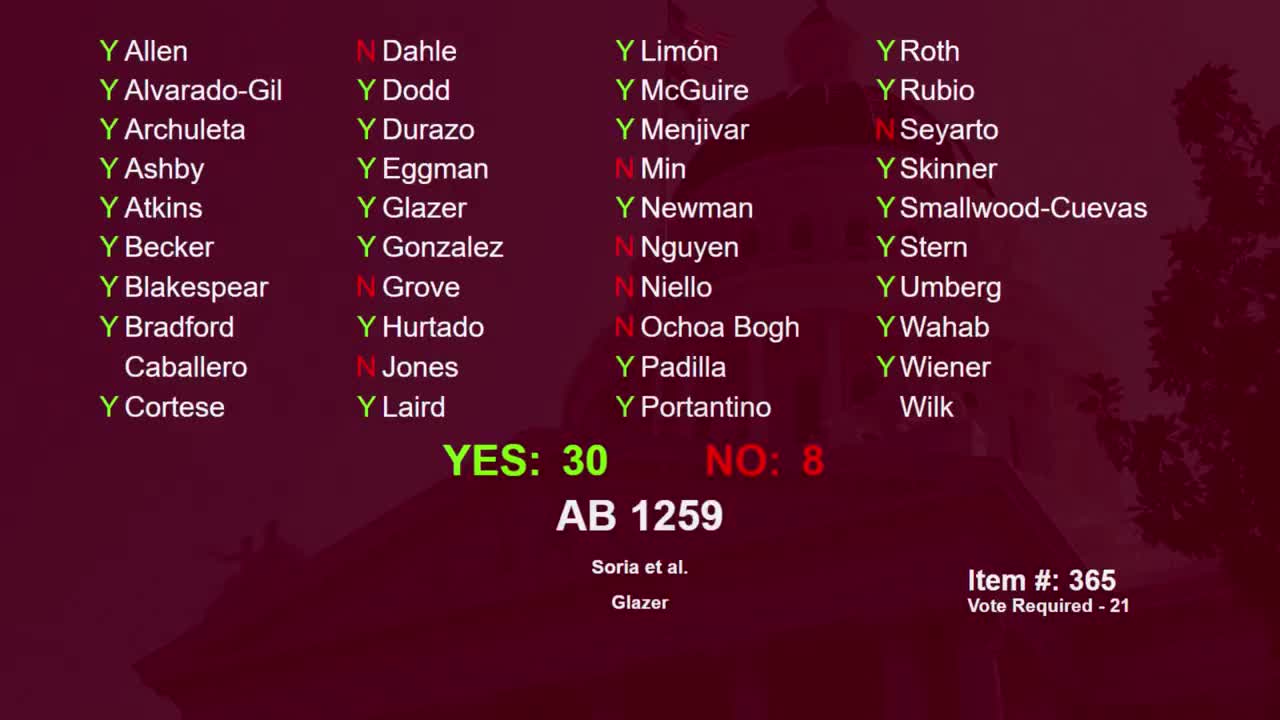 2MIN
Senate Floor
 2MIN
Assembly Floor
 2MIN
Assembly Standing Committee on Appropriations
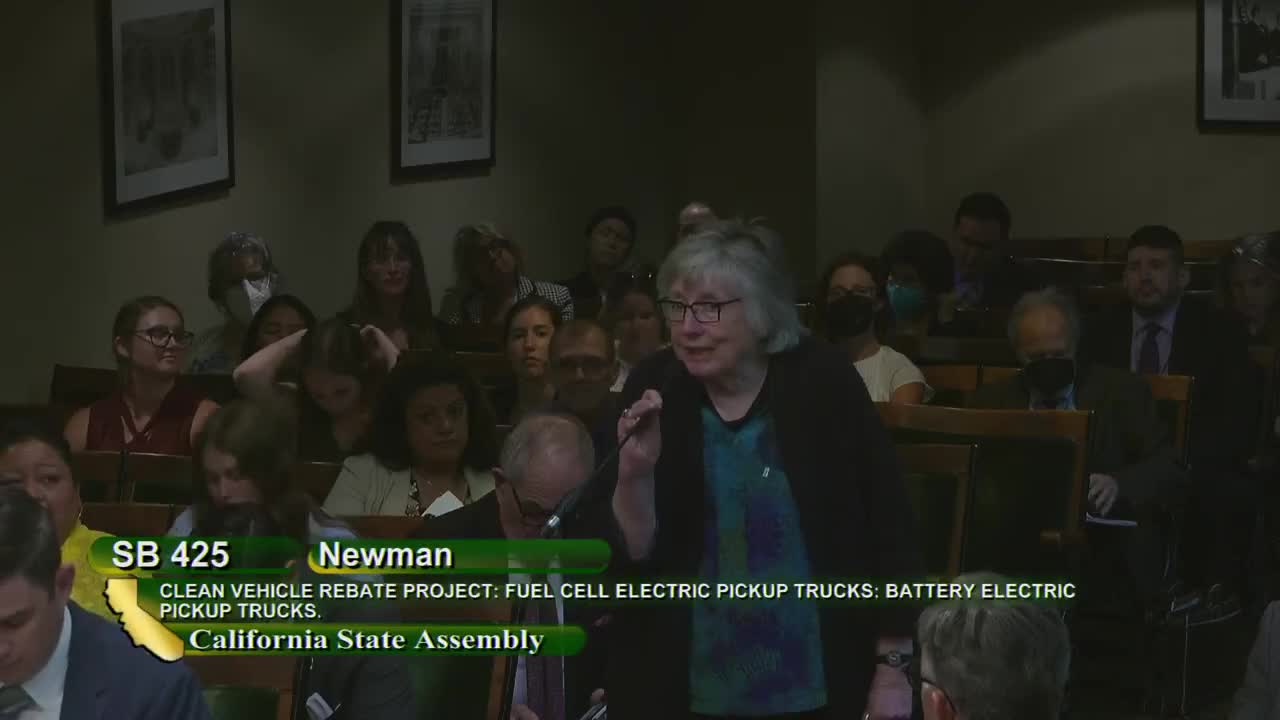 5MIN
Assembly Standing Committee on Natural Resources
 9MIN
Assembly Standing Committee on Environmental Safety and Toxic Materials
 3MIN
Senate Floor
 12MIN
Senate Standing Committee on Environmental Quality
Bill Author

Bill Co-Author(s):