SB 597: Building standards: rainwater catchment systems.
- Session Year: 2023-2024
- House: Senate
- Latest Version Date: 2024-09-28
Current Status:
Passed
(2024-09-28: Chaptered by Secretary of State. Chapter 861, Statutes of 2024.)
Introduced
In Committee
First Chamber
In Committee
Second Chamber
Enacted
The California Building Standards Law requires a state agency that adopts or proposes adoption of a building standard to submit the building standard to the California Building Standards Commission for approval and adoption. Existing law makes the commission responsible for the publication of an updated edition of the California Building Standards Code every 3 years.
Existing law requires the Department of Housing and Community Development to propose to the commission the adoption, amendment, or repeal of building standards for, among other things, the installation of recycled water systems for newly constructed single-family residential and multifamily residential buildings, as specified.
This bill would require the department to review current building standards, conduct research, and develop recommendations regarding building standards for the installation of rainwater catchment systems for nonpotable uses in newly constructed residential dwellings and would authorize the department to propose related building standards to the commission for consideration, as specified. The bill would authorize the department to expend moneys from the Building Standards Administration Special Revolving Fund for the above-described purposes, upon appropriation by the Legislature, as specified. The bill would require the department, on or before January 1, 2027, to provide a report to specified committees of the Legislature regarding the outcomes of its research and the recommendations developed.
The California Building Standards Law requires a state agency that adopts or proposes adoption of a building standard to submit the building standard to the California Building Standards Commission for approval and adoption. Existing law makes the commission responsible for the publication of an updated edition of the California Building Standards Code every 3 years.
Existing law requires the Department of Housing and Community Development to propose to the commission the adoption, amendment, or repeal of building standards for, among other things, the installation of recycled water systems for newly constructed single-family residential and multifamily residential buildings, as specified.
This bill would require the department to review current building standards, conduct research research, and develop recommendations regarding building standards for the installation of rainwater catchment systems in newly constructed residential dwellings and would authorize the department to propose related building standards to the commission for consideration, as specified. The bill would authorize the department to expend moneys from the Building Standards Administration Special Revolving Fund for the above-described purposes, upon appropriation by the Legislature, as specified. The bill would require the department, on or before January 1, 2025, 2027, to provide a report to specified committees of the Legislature regarding the outcomes of its research and the recommendations developed.
The California Building Standards Law requires a state agency that adopts or proposes adoption of a building standard to submit the building standard to the California Building Standards Commission for approval and adoption. Existing law makes the commission responsible for the publication of an updated edition of the California Building Standards Code every 3 years.
Existing law requires the Department of Housing and Community Development to propose to the commission the adoption, amendment, or repeal of building standards for, among other things, the installation of recycled water systems for newly constructed single-family residential and multifamily residential buildings, as specified.
This bill would require the department to conduct research, as specified, to assist in the development of mandatory research and develop recommendations regarding building standards for the installation of rainwater catchment systems in newly constructed residential dwellings. The bill would require the department to submit those mandatory building standards to the commission for adoption and for consideration during the next regularly scheduled triennial code adoption cycle. The bill would also authorize the department to propose an amendment or repeal of these mandatory standards as necessary in subsequent code adoption cycles. dwellings and would authorize the department to propose related building standards to the commission for consideration, as specified. The bill would authorize the department to expend moneys from the Building Standards Administration Special Revolving Fund for the above-described purposes, upon appropriation by the Legislature, as specified. The bill would require the department, on or before January 1, 2025, to provide a report to specified committees of the Legislature regarding the outcomes of its research and the recommendations developed.
The California Building Standards Law requires a state agency that adopts or proposes adoption of a building standard to submit the building standard to the California Building Standards Commission for approval and adoption. Existing law makes the commission responsible for the publication of an updated edition of the California Building Standards Code every 3 years.
Existing law requires the Department of Housing and Community Development to propose to the commission the adoption, amendment, or repeal of building standards for, among other things, the installation of recycled water systems for newly constructed single-family residential and multifamily residential buildings, as specified.
This bill would require the department to conduct research, as specified, to assist in the development of mandatory building standards for the installation of rainwater catchment systems in newly constructed residential dwellings. The bill would require the department to submit those mandatory building standards to the commission for adoption and for consideration during the next regularly scheduled triennial code adoption cycle. The bill would also authorize the department to propose an amendment or repeal of these mandatory standards as necessary in subsequent code adoption cycles. The bill would authorize the department to expend moneys from the Building Standards Administration Special Revolving Fund for the above-described purposes, upon appropriation by the Legislature, as specified.
Under existing law, the State Water Resources Control Board administers a water rights program pursuant to which the state board grants permits and licenses to appropriate water, upon an application to appropriate water. Chapter 537 of 2012, among other provisions related to rainwater capture, enacted the Rainwater Capture Act of 2012, which exempts the use of rainwater collected from rooftops from the requirement to obtain a water right permit from the state board.This bill would state the intent of the Legislature to enact legislation to expand the use of rainwater capture systems installed in new residences.Under existing law, the State Water Resources Control Board administers a water rights program pursuant to which the state board grants permits and licenses to appropriate water, upon an application to appropriate water. Chapter 537 of 2012, among other provisions related to rainwater capture, enacted the Rainwater Capture Act of 2012, which exempts the use of rainwater collected from rooftops from the requirement to obtain a water right permit from the state board.
This bill would state the intent of the Legislature to enact legislation to expand the use of rainwater capture systems installed in new residences.
(a)(1)The department shall review current building standards, conduct research, and develop recommendations regarding building standards for the installation of rainwater catchment systems for nonpotable uses in newly constructed residential dwellings and may propose related building standards to the California Building Standards Commission for consideration during the next regularly scheduled triennial code adoption cycle that commences on or after January 1, 2027. In conducting the research, the department shall actively consult with the State Water Resources Control Board, the Department of Water Resources, the State Department of Public Health, local water agencies and districts, and other interested parties, including, but not limited to, public water system representatives, product manufacturers, local building officials, California-licensed contractors, the building industry, and interested members of the public.
(2)In researching, developing, and proposing voluntary or mandatory building standards under this section, the department may expend funds from the Building Standards Administration Special Revolving Fund, upon appropriation pursuant to Section 18931.7.
(3)Research conducted to propose building standards under this section shall include, but not be limited to, all of the following:
(A)The costs, benefits, and feasibility of including some or all of the provisions of the California Plumbing Code regulating nonpotable rainwater catchment systems on a statewide basis.
(B)Rainwater catchment system mandates in other states or local jurisdictions.
(C)The cost and feasibility of installation and the overall benefit to be gained.
(b)(1)On or before January 1, 2027, the department shall provide a report to the Assembly Committee on Housing and Community Development and the Senate Housing Committee regarding the outcomes of its research and the recommendations developed pursuant to subdivision (a).
(2)A report submitted pursuant to this subdivision shall be submitted in compliance with Section 9795 of the Government Code.
(3)The reporting requirement pursuant to this subdivision is inoperative on January 1, 2029, pursuant to Section 10231.5 of the Government Code.
(a)(1)The department shall review current building standards, conduct research research, and develop recommendations regarding building standards for the installation of rainwater catchment systems in newly constructed residential dwellings and may propose related building standards to the California Building Standards Commission for consideration during the next regularly scheduled triennial code adoption cycle that commences on or after January 1, 2025. 2027. In conducting the research, the department shall actively consult with the State Water Resources Control Board, the Department of Water Resources, the State Department of Public Health, local water agencies and districts, and other interested parties, including, but not limited to, public water system representatives, product manufacturers, local building officials, California-licensed contractors, the building industry, and interested members of the public.
(2)In researching, developing, and proposing voluntary or mandatory building standards under this section, the department may expend funds from the Building Standards Administration Special Revolving Fund, upon appropriation pursuant to Section 18931.7.
(3)Research conducted to propose building standards under this section shall include, but not be limited to, all of the following:
(A)The costs, benefits, and feasibility of including some or all of the provisions of the California Plumbing Code regulating nonpotable rainwater catchment systems. systems on a statewide basis.
(B)Rainwater catchment system mandates in other states or local jurisdictions.
(C)The cost and feasibility of installation and the overall benefit to be gained.
(b)(1)On or before January 1, 2025, 2027, the department shall provide a report to the Assembly Committee on Housing and Community Development and the Senate Housing Committee regarding the outcomes of its research and the recommendations developed pursuant to subdivision (a).
(2)A report submitted pursuant to this subdivision shall be submitted in compliance with Section 9795 of the Government Code.
(3)The reporting requirement pursuant to this subdivision is inoperative on January 1, 2029, pursuant to Section 10231.5 of the Government Code.
(a)(1)The department shall conduct research to assist in the development of mandatory and develop recommendations regarding building standards for the installation of rainwater catchment systems in newly constructed residential dwellings. dwellings and may propose related building standards to the California Building Standards Commission for consideration during the next regularly scheduled triennial code adoption cycle that commences on or after January 1, 2025. In conducting the research, the department shall actively consult with the State Water Resources Control Board, the Department of Water Resources, the State Department of Public Health, local water agencies and districts, and other interested parties, including, but not limited to, public water system representatives, product manufacturers, local building officials, California-licensed contractors, the building industry, and interested members of the public.
(2)In researching, developing, and proposing mandatory building standards under this section, the department may expend funds from the Building Standards Administration Special Revolving Fund, upon appropriation pursuant to Section 18931.7.
(3)Research conducted to propose building standards under this section shall include, but not be limited to, all of the following:
(A)The costs, benefits, and feasibility of including some or all of the provisions of the California Plumbing Code regulating nonpotable rainwater catchment systems.
(B)Rainwater catchment system mandates in other states or local jurisdictions.
(C)The cost and feasibility of installation and the overall benefit to be gained.
(b)The department shall submit for adoption mandatory building standards for the installation of rainwater catchment systems for newly constructed residential dwellings. The department shall submit the proposed mandatory building standards to the California Building Standards Commission for consideration during the next regularly scheduled triennial code adoption cycle that commences on or after January 1, 2025, and may propose an amendment or repeal of these mandatory standards as necessary in subsequent code adoption cycles.(b)(1)On or before January 1, 2025, the department shall provide a report to the Assembly Committee on Housing and Community Development and the Senate Housing Committee regarding the outcomes of its research and the recommendations developed pursuant to subdivision (a).
(2)A report submitted pursuant to this subdivision shall be submitted in compliance with Section 9795 of the Government Code.
(3)The reporting requirement pursuant to this subdivision is inoperative on January 1, 2029, pursuant to Section 10231.5 of the Government Code.
(a)(1)The department shall conduct research to assist in the development of mandatory building standards for the installation of rainwater catchment systems in newly constructed residential dwellings. In conducting the research, the department shall actively consult with the State Water Resources Control Board, the Department of Water Resources, the State Department of Public Health, local water agencies and districts, and other interested parties, including, but not limited to, public water system representatives, product manufacturers, local building officials, California-licensed contractors, the building industry, and interested members of the public.
(2)In researching, developing, and proposing mandatory building standards under this section, the department may expend funds from the Building Standards Administration Special Revolving Fund, upon appropriation pursuant to Section 18931.7.
(3)Research conducted to propose building standards under this section shall include, but not be limited to, all of the following:
(A)The costs, benefits, and feasibility of including some or all of the provisions of the California Plumbing Code regulating nonpotable rainwater catchment systems.
(B)Rainwater catchment system mandates in other states or local jurisdictions.
(C)The cost and feasibility of installation and the overall benefit to be gained.
(b)The department shall submit for adoption mandatory building standards for the installation of rainwater catchment systems for newly constructed residential dwellings. The department shall submit the proposed mandatory building standards to the California Building Standards Commission for consideration during the next regularly scheduled triennial code adoption cycle that commences on or after January 1, 2025, and may propose an amendment or repeal of these mandatory standards as necessary in subsequent code adoption cycles.
SECTION 1.It is the intent of the Legislature to enact legislation to expand the use of rainwater capture systems installed in new residences.It is the intent of the Legislature to enact legislation to expand the use of rainwater capture systems installed in new residences.
|
Date
|
Status
|
|---|---|
| Sep 28, 2024 | Chaptered by Secretary of State. Chapter 861, Statutes of 2024. |
| Sep 28, 2024 | Approved by the Governor. |
| Sep 9, 2024 | Enrolled and presented to the Governor at 3 p.m. |
| Aug 29, 2024 | Assembly amendments concurred in. (Ayes 39. Noes 1. Page 5635.) Ordered to engrossing and enrolling. |
| Aug 28, 2024 | In Senate. Concurrence in Assembly amendments pending. |
| Aug 28, 2024 | Read third time. Passed. (Ayes 60. Noes 13. Page 6800.) Ordered to the Senate. |
| Aug 22, 2024 | Read third time and amended. |
| Aug 22, 2024 | Ordered to third reading. |
| Aug 20, 2024 | Read second time. Ordered to third reading. |
| Aug 19, 2024 | Read second time and amended. Ordered to second reading. |
| Aug 15, 2024 | From committee: Do pass as amended. (Ayes 11. Noes 2.) (August 15). |
| Sep 1, 2023 | September 1 hearing postponed by committee. |
| Jul 12, 2023 | July 12 set for first hearing. Placed on APPR. suspense file. |
| Jun 22, 2023 | Read second time and amended. Re-referred to Com. on APPR. |
| Jun 21, 2023 | From committee: Do pass as amended and re-refer to Com. on APPR. (Ayes 6. Noes 0.) (June 21). |
| Jun 1, 2023 | Referred to Com. on H. & C.D. |
| May 25, 2023 | In Assembly. Read first time. Held at Desk. |
| May 24, 2023 | Read third time. Passed. (Ayes 29. Noes 9. Page 1256.) Ordered to the Assembly. |
| May 18, 2023 | Read second time. Ordered to third reading. |
| May 18, 2023 | From committee: Do pass. (Ayes 5. Noes 2. Page 1176.) (May 18). |
| May 12, 2023 | Set for hearing May 18. |
| May 1, 2023 | May 1 hearing: Placed on APPR suspense file. |
| Apr 21, 2023 | Set for hearing May 1. |
| Apr 19, 2023 | From committee: Do pass and re-refer to Com. on APPR. (Ayes 8. Noes 2. Page 797.) (April 18). Re-referred to Com. on APPR. |
| Mar 30, 2023 | Set for hearing April 18. |
| Mar 29, 2023 | Re-referred to Com. on HOUSING. |
| Mar 21, 2023 | From committee with author's amendments. Read second time and amended. Re-referred to Com. on RLS. |
| Feb 22, 2023 | Referred to Com. on RLS. |
| Feb 16, 2023 | From printer. May be acted upon on or after March 18. |
| Feb 15, 2023 | Introduced. Read first time. To Com. on RLS. for assignment. To print. |
|
Date
|
Description
|
Location
|
Votes
|
|
|---|---|---|---|---|
| Aug 29, 2024 | Unfinished Business SB597 Glazer et al. Concurrence | Senate Floor |
Passed |
|
| Aug 28, 2024 | SB 597 Glazer Senate Third Reading By Boerner | Assembly Floor |
Passed |
|
| Aug 15, 2024 | Do pass as amended. | Assembly Standing Committee on Appropriations |
Passed |
|
| Jun 21, 2023 | Do pass as amended and be re-referred to the Committee on [Appropriations] | Assembly Standing Committee on Housing and Community Development |
Passed |
|
| May 24, 2023 | Senate 3rd Reading SB597 Glazer | Senate Floor |
Passed |
|
| May 18, 2023 | Do pass | Senate Standing Committee on Appropriations |
Passed |
|
| May 1, 2023 | Placed on suspense file | Senate Standing Committee on Appropriations |
Passed |
|
| Apr 18, 2023 | Do pass, but first be re-referred to the Committee on [Appropriations] | Senate Standing Committee on Housing |
Passed |
This list shows positions taken on this bill by organizations on the date displayed, which is linked to the original source.
Positions by individuals are not included.
|
Organization
|
Position
|
Date
|
|---|---|---|
| A Voice for Choice Advocacy | ** Support | |
| Active SGV | ** Support | |
| Association Of California Water Agencies | ** Against | |
| Ban Single Use Plastic | ** Support | |
| California Building Industry Association | * Indeterminate | Apr 18, 2023 |
| California Building Officials | ** Against | |
| California Coastkeeper Alliance | ** Support | |
| California State Pipe Trades Council | * Support | Apr 18, 2023 |
| Climate Action California | ** Support | |
| International Association of Plumbing and Mechanical Officials | * Support | Apr 18, 2023 |
| Los Angeles Waterkeeper | ** Support | |
| Mono Lake Committee | ** Support | |
| San Fernando Valley Chapter of the Climate Reality Project | ** Support | |
| Social Eco Education | ** Support | |
| The Climate Reality Project San Diego Chapter | ** Support | |
| the River Project | ** Support | |
| Trust for Public Land | ** Support | |
| USGBC Los Angeles | ** Support |
SENATE RULES COMMITTEE Office of Senate Floor Analyses (916) 651-1520 Fax: (916) 327-4478 | SB 597 |
UNFINISHED BUSINESS
Bill No: SB 597
Author: Glazer (D), et al.
Amended: 8/22/24
Vote: 21
SENATE HOUSING COMMITTEE: 8-2, 4/18/23
AYES: Wiener, Blakespear, Caballero, Cortese, McGuire, Skinner, Umberg, Wahab
NOES: Ochoa Bogh, Seyarto
NO VOTE RECORDED: Padilla
SENATE APPROPRIATIONS COMMITTEE: 5-2, 5/18/23
AYES: Portantino, Ashby, Bradford, Wahab, Wiener
NOES: Jones, Seyarto
SENATE FLOOR: 29-9, 5/24/23
AYES: Allen, Archuleta, Ashby, Atkins, Becker, Blakespear, Bradford, Caballero, Cortese, Durazo, Eggman, Glazer, Gonzalez, Hurtado, Laird, McGuire, Menjivar, Min, Newman, Padilla, Portantino, Roth, Rubio, Skinner, Smallwood-Cuevas, Stern, Umberg, Wahab, Wiener
NOES: Alvarado-Gil, Dahle, Grove, Jones, Nguyen, Niello, Ochoa Bogh, Seyarto, Wilk
NO VOTE RECORDED: Dodd, Limón
ASSEMBLY FLOOR: 60-13, 8/28/24 - See last page for vote
SUBJECT: Building standards: rainwater catchment systems
SOURCE: Author
DIGEST:
This bill requires the Department of Housing and Community Development (HCD) to develop and propose the development of building standards for the installation of rainwater catchment systems in newly constructed residential dwellings.
Assembly Amendments
move the bill’s effective date and report date to January 1, 2027, authorize HCD to propose voluntary standards, and clarify that the standards should be applied on a statewide basis.
ANALYSIS:
Existing law:
- Requires a state agency to adopt specific building standards and to publish editions of the California Building Standards Code in its entirety once every three years.
- Establishes the Building Standards Administration Special Revolving Fund, and makes the moneys in the fund available, upon appropriation, to state entities to carry out various related provisions, as specified.
- Establishes the California Building Standards Commission (CBSC) within the Department of General Services (DGS) and sets forth its powers and duties, including approval and adoption of building standards and codification of those standards into the California Building Standards Code.
- Requires any building standard adopted or proposed by state agencies to be submitted to, and approved or adopted by, the CBSC prior to codification.
- Requires the HCD to propose to the commission the adoption, amendment, or repeal of building standards for, among other things, the installation of recycled water systems for newly constructed single-family residential and multifamily residential buildings, as specified.
- Establishes, within the California Environmental Protection Agency (Cal-EPA), the State Water Resources Control Board (SWRCB) for the purposes of orderly and efficient administration of the state’s water resources.
- Establishes the Department of Water Resources to manage the State Water Project, statewide water resources plaining, sustainable groundwater management, water use efficiency, drought planning, and more.
- Establishes the Department of Public Health to protect public health through infectious disease control and prevention, environmental health, and more.
This bill:
- Requires HCD to conduct research and review current building standards to assist in the development of mandatory or voluntary building standards for the installation of rainwater catchment systems for nonpotable uses in newly constructed residential dwellings.
- Requires HCD to develop these standards in consultation with:
- SWRCB
- Department of Water Resources
- State Department of Public Health
- Local water agencies and districts
- And other interested parties.
- Requires HCD research for these standards to include, but not limited to:
- The costs, benefits, and feasibility of including some or all of the provisions of the California Plumbing Code regulating nonpotable rainwater catchment systems on a statewide basis.
- The rainwater catchment system mandates in other states or local jurisdictions.
- The cost and feasibility of installation and the overall benefit to be gained.
- Requires HCD to submit these proposed standards for consideration during the next regularly scheduled triennial code adoption cycle that commences on or after January 1, 2027.
- Authorizes amendments or repeals of these standards as necessary in subsequent code adoption cycles.
- Authorizes the expenditure of funds from the Building Standards Administration Special Revolving Fund for the requisite activities.
Background
Climate change, drought, and water shortages. Climate change is undeniable and models indicate it will drive temperatures higher in the future. Climate change will stress water resources and its management like no other time in recorded history. California’s predominantly Mediterranean climate has always posed challenges for water management in the state. This climate is characterized by hot, dry summers and wet, moderately-cool winters. Annual precipitation varies greatly across the state with the majority of precipitation falling north of Sacramento. Year-to-year variability in precipitation is another hallmark of California’s climate with swings between prolonged wet and dry periods.
Evidence overwhelmingly reveals that the modern California climate is different today than the climate of a century ago when California’s water law first developed. Since the beginning of the 21st century, average temperatures have risen almost 3°F in California with the hottest six years on record occurring since 2014.[1] Likewise, California has experienced its two most severe dry periods on record since 2000 (2012–16 and 2020–present) and researchers now report that the state has, in fact, been experiencing a “megadrought” since the turn of the century. This “megadrought” appears to be the worst such drought since the year 800, and its severity is due, in large part, to climate change.[2]
California’s water supply strategy for building drought resiliency. In August 2022, Governor Newsom released this strategy to address a projected 10% decrease in water supply by 2040 due to climate change. To address this shortfall, the strategy sets targets and outlines actions for increased water recycling, desalination, rainwater and storm water capture, and water conservation, as well as an expansion of surface and underground storage. A 2022 report from the Public Policy Institute of California highlights the requirement for more than just individual conservation efforts to protect Californians from the ongoing effects of climate change –continued investments in drought resilient infrastructure, including the diversification of water sources, capturing storm runoff, and water reuse and recycling projects.[3]
Comments
- Where are rainwater catchment systems already? According to the United States Department of Energy Efficiency and Renewable Energy, rainwater capture systems can be used for landscape irrigation, toilet flushing, vehicle washing, and ornamental pond and fountain filling. Two US cities, Tucson, Arizona and Santa Fe, New Mexico, already mandate installation of rainwater capture systems for select construction. Across the globe, cities in India, Australia, Belgium, and Bermuda have established requirements for rainwater harvesting on all new construction.
- Benefits and costs of rainwater capture. In a state with growing water scarcity rainwater is increasingly seen as an opportunity for augmenting water supplies and enhancing resilience. Reducing demand for potable water and keeping more water in storage helps reduce pressure to import water from other watersheds. A 2022 report from the Pacific Institute estimates California’s rainwater capture potential from just single-family urban households utilizing rain barrels to be 4,700 acre-feet per year.[4] While rainwater capture in single-family households represents a small fraction of the available storm water in California and household non-potable demand, they report rainwater capture systems saves households money, reduces runoff that carries pollution into nearby waterways, and supports green space in and around homes. Consideration of the impact of installation on housing development costs should be made. Rainwater catchment systems can range from a few hundred dollars to tens of thousands of dollars depending on the size and storage options.[5] The author may wish to consider including language allowing for the exemption of affordable and high-density multifamily housing.
- Establishing building standards. The legislature typically offers guidelines, or directs agencies to consider specific standards, in order to provide flexibility. After the proposal of building standards by state agencies, the standards undergo a public vetting process. A code advisory committee, composed of experts in a particular scope of code, reviews the proposed standards, followed by public review. The proposing agency considers feedback and may then amend the standards and re-submit them to the CBSC for consideration. The codes are updated every three years with an intervening cycle every 18 months. The next code adoption cycle is currently underway and set to become effective in 2026.
Related/Prior Legislation
AB 836 (Gabriel, 2021) would have required all newly constructed nonresidential buildings be constructed with dual plumbing and provide for the collection, onsite treatment, and reuse of available onsite rainwater, amongst other things. This bill died in the Assembly Environmental Safety and Toxic Materials committee.
FISCAL EFFECT: Appropriation: No Fiscal Com.: Yes Local: No
According to the Assembly Appropriations Committee:
- HCD estimates annual costs of $179,000 (Building Standards Administration Special Revolving Fund) for one staff position to convene stakeholders, examine laws and regulations related to the installation of rainwater catchment systems, identify needs or gaps in current regulations, develop recommendations regarding building standards, and provide a report to the Legislature. These costs will likely be incurred for two to three fiscal years, beginning in 2024-25.
- Likely minor General Fund (GF) costs to the State Water Board, DWR, and CDPH to consult with HCD in conducting research regarding building standards for rainwater catchment systems.
- Minor and absorbable costs (Building Standards Administration Special Revolving Fund) to CBSC to consider and adopt the recommended building standards for the installation of rainwater catchment systems for newly constructed residential dwellings into the Building Standards Code or Green Building Standards Code, as appropriate.
- Potential future GF costs pressures on state housing funds in the aggregate to the extent the installation of rainwater catchment systems increases the cost of newly constructed residential development.
SUPPORT: (Verified 8/21/24)
A Voice for Choice Advocacy
Mono Lake Committee
OPPOSITION: (Verified 8/21/24)
Association of California Water Agencies (ACWA)
California Building Officials
ARGUMENTS IN SUPPORT: According to the author, “California's current storm water capture systems are inadequate, resulting in the loss of trillions of gallons of water during recent atmospheric rivers. According to the US Bureau of Reclamation, 95% of the water flowing into the state's delta went into the Pacific Ocean, while severe flooding claimed several lives. Developing better methods to collect storm water can reduce the risk of flooding and help the state meet its water needs. Furthermore, landscaping accounts for roughly half of all residential and urban water use, making it a significant area for possible water savings. Capturing storm water can help ease water needs for landscaping, as well as be used for other purposes such as irrigation and toilet flushing. Therefore, the bill proposes mandatory installation of rainwater capture systems on new homes in California that meet certain requirements to address these inadequacies and reduce water demand for landscaping.”
ARGUMENTS IN OPPOSITION: California Building Officials argue that they are “supportive of section a (1) of the bill that would require research for rainwater catchment systems in newly constructed residential dwellings, however mandating the Building Standards Commission to adopt new mandatory standards in a later code cycle without first researching the implications of potential standards could have severe unintended consequences for California’s robust housing crisis.” The Association of California Water Agencies (ACWA) add that “Areas across the state have different needs and goals regarding the potential for rainwater capture in their jurisdiction and projects or plans in one area may not be feasible or practical in other areas. Some jurisdictions have invested in a centralized approach for rainwater capture and have planned uses for these flows. Mandating rainwater capture systems in residential buildings could negatively impact those investments in existing rainwater capture systems that local agencies have already implemented. A mandatory, one-size-fits-all approach is not appropriate given the diversity of water needs and investments throughout California.”
ASSEMBLY FLOOR: 60-13, 8/28/24
AYES: Addis, Aguiar-Curry, Alvarez, Arambula, Bauer-Kahan, Bennett, Berman, Boerner, Bonta, Bryan, Calderon, Juan Carrillo, Wendy Carrillo, Connolly, Mike Fong, Friedman, Gabriel, Garcia, Gipson, Grayson, Haney, Hart, Holden, Irwin, Jackson, Jones-Sawyer, Kalra, Lee, Low, Lowenthal, Maienschein, McCarty, McKinnor, Muratsuchi, Stephanie Nguyen, Pacheco, Papan, Pellerin, Petrie-Norris, Quirk-Silva, Ramos, Rendon, Reyes, Luz Rivas, Rodriguez, Blanca Rubio, Santiago, Schiavo, Soria, Ting, Valencia, Villapudua, Waldron, Ward, Weber, Wicks, Wilson, Wood, Zbur, Robert Rivas
NOES: Alanis, Chen, Megan Dahle, Davies, Dixon, Essayli, Flora, Gallagher, Hoover, Jim Patterson, Joe Patterson, Sanchez, Wallis
NO VOTE RECORDED: Bains, Cervantes, Lackey, Mathis, Ortega, Ta
Prepared by: Max Ladow / HOUSING / (916) 651-4124
8/28/24 22:58:54
**** END ****
Frankson et al. California State Climate Summary 2022. NOAA Technical Reports. https://statesummaries.ncics.org/chapter/ca/ ↑
Williams et al. Large contribution from anthropogenic warming to an emerging North American megadrought. 2020. DOI: 10.1126/science.aaz9600 ↑
Mount et al. Priorities for California’s Water. PPIC. 2022. https://www.ppic.org/publication/priorities-for-californias-water/ ↑
Cooley et al. The Untapped Potential of California’s Urban Water Supply: Water Efficiency, Water Reuse,
and Stormwater Capture. Pacific Institute. 2022. https://pacinst.org/publication/california-urban-water-supply-potential-2022/ ↑
Kissam. Rainwater Collection System Cost by Type. 2022. https://www.angi.com/articles/rain-collection-systems-cost.htm ↑
SENATE THIRD READING
STR Bill Id:SB 597
Author:(Glazer)
As Amended Ver:August 22, 2024
Majority vote
SUMMARY
Requires the Department of Housing and Community Development (HCD) to develop recommendations regarding building standards for the installation of rainwater catchment systems for nonpotable uses in newly constructed residential dwellings, and authorizes HCD to propose such standards for consideration during the next triennial code adoption cycle that commences on or after January 1, 2027.
Major Provisions
- Requires HCD to review current building standards, conduct research, and develop recommendations regarding building standards for the installation of rainwater catchment systems for nonpotable uses in newly constructed residential dwellings.
- Authorizes HCD to propose related building standards to the California Building Standards Commission (CBSC) for consideration during the next regularly scheduled triennial code adoption cycle that commences on or after January 1, 2027.
- Requires HCD to actively consult with the following entities in conducting the research: the State Water Resources Control Board (SWRCB), the Department of Water Resources (DWR), the California Department of Public Health (CDPH), local water agencies and districts, and other interested parties, including but not limited to public water system representatives, product manufacturers, local building officials, California-licensed contractors, the building industry, and interested members of the public.
- Authorizes HCD to expend funds from the Building Standards Administration Special Revolving Fund upon appropriation for purposes of researching, developing, and proposing voluntary or mandatory building standards as a result of this bill.
- Requires research conducted to propose building standards as a result of this bill to include, but not be limited to, all of the following:
- The costs, benefits, and feasibility of including some or all of the provisions of the California Plumbing Code regulating nonpotable rainwater catchment systems on a statewide basis;
- Rainwater catchment system mandates in other states or local jurisdictions; and
- The cost and feasibility of installation and the overall benefit to be gained.
- Requires HCD, by January 1, 2027, to submit a report to specified committees of the Legislature regarding the outcomes of its research and the recommendations developed in 1) above.
COMMENTS
Background on Building Standards: The California Building Standards Law establishes the process for adopting state building standards by CBSC. Statewide building standards are intended to provide uniformity in building across the state. CBSC's duties include the following: receiving proposed building standards from state agencies for consideration in each triennial and intervening building code adoption cycle; reviewing and approving building standards submitted by state agencies; adopting building standards for state buildings where no other state agency is authorized by law; and publishing the approved building standards in the California Building Standards Code (Title 24, California Code of Regulations).
There are approximately 20 state agencies that develop building standards and propose them for adoption to CBSC. After the proposal of building standards by state agencies, the standards undergo a public vetting process. A code advisory committee composed of experts in a particular scope of code reviews the proposed standards, followed by public review. The proposing agency considers feedback and may then amend the standards and re-submit them to the CBSC for consideration. HCD is responsible for the standards for residential buildings, hotels and motels. The California Building Code and California Residential Code govern general standards for multifamily and single-family residential construction, while the California Plumbing Code governs plumbing requirements for a variety of buildings. Within the codes, there are certain requirements that are mandatory for all newly constructed dwellings or buildings, and certain provisions that are optional or voluntary – meaning the requirements must be followed only if an entity chooses to construct certain items or systems.
Updates and changes to building standards are adopted on two timelines: through the triennial code adoption cycle which occurs every three years and through the intervening code adoption cycle which provides an update to codes 18 months after the publication of the triennial codes. Regulatory activities for each cycle begin over two years before the effective date of the codes. The standards adopted in the most recent intervening code cycle took effect on July 1, 2024 and the next triennial cycle's standards will be effective on January 1, 2026.
As a matter of practice, the Legislature typically offers guidelines or directs agencies to consider, rather than requires, specific standards in order to provide flexibility and allow for subject matter experts to determine appropriateness and weigh the many considerations that must be evaluated when recommending new or modified building standards. New or more stringent building standards are likely to further increase the cost of new housing produced in California and must be carefully considered in light of the state's severe ongoing housing crisis.
This bill requires HCD to study and make recommendations regarding building standards for rainwater catchment systems for nonpotable uses and authorizes – rather than requires – the Department to propose new building standards for rainwater catchment systems on new residential dwellings.
Rainwater Capture Systems: According to the United States Department of Energy Efficiency and Renewable Energy, rainwater capture systems can safely be used for landscape irrigation, toilet flushing, vehicle washing, and ornamental pond and fountain filling. Two US cities, Tucson, Arizona and Santa Fe, New Mexico, already mandate installation of rainwater capture systems for select construction. Across the globe, cities in India, Australia, Belgium, and Bermuda have established requirements for rainwater harvesting on all new construction.
In a state with growing water scarcity, rainwater is increasingly seen as an opportunity for augmenting water supplies and enhancing resilience. Reducing demand for potable water and keeping more water in storage helps reduce pressure to import water from other watersheds. A 2022 report from the Pacific Institute estimates California's rainwater capture potential from just single-family urban households utilizing rain barrels to be 4,700 acre-feet per year. While rainwater capture in single-family households represents a small fraction of the available stormwater in California and household non-potable demand, they report rainwater capture systems saves households money, reduces runoff that carries pollution into nearby waterways, and supports green space in and around homes. However, the impact of mandatory installation on housing development costs should be carefully evaluated. Rainwater catchment systems can range from a few hundred dollars to tens of thousands of dollars depending on the size and storage options.
Before 2013, it was illegal to capture and use rainwater in California without a permit from the SWRCB. AB 1750 (Solorio), the Rainwater Recapture Act of 2012, allowed residential and commercial entities to capture and use rainwater for landscaping needs and other nonpotable uses without a permit from the SWRCB. The state also has voluntary building standards governing nonpotable rainwater catchment systems. These standards are currently contained in Chapter 16 of the California Plumbing Code (Part 5 of Title 24, California Code of Regulations). In addition, SB 966 (Wiener, Chapter 890, Statutes of 2018) required the SWRCB, in consultation with CBSC and HCD, to adopt regulations to establish water quality standards, monitoring requirements, public information requirements, and cross-connection controls for rainwater as well as other types of nonpotable water which can be safely used for nonpotable end uses in multifamily residential buildings, excepting rainwater used exclusively for irrigation. HCD will determine whether any building standards should be proposed to support those water quality standards for recycled water systems.
According to the Author
"California's current storm water capture systems are inadequate, resulting in the loss of trillions of gallons of water during recent atmospheric rivers. According to the US Bureau of Reclamation, 95% of the water flowing into the state's delta went into the Pacific Ocean, while severe flooding claimed several lives. Developing better methods to collect storm water can reduce the risk of flooding and help the state meet its water needs. Furthermore, landscaping accounts for roughly half of all residential and urban water use, making it a significant area for possible water savings. Capturing storm water can help ease water needs for landscaping, as well as be used for other purposes such as irrigation and toilet flushing."
Arguments in Support
According to a coalition of supporters, including the Trust for Public Land and the California Coastkeeper Alliance, "Recent years have shown there is a greater demand for potable water than can be reliably delivered, especially during drought. One option is to somehow increase the supply of potable water. Unfortunately, most traditional sources are either fully or over appropriated. Further tapping those supplies would only exacerbate conflicts among competing uses, including environmental uses. And non-traditional sources, such as desalination and potable reuse, are quite expensive. Another option is to reduce demand for potable water. That is the approach this bill takes."
Arguments in Opposition
None on file.
FISCAL COMMENTS
According to the Assembly Appropriations Committee:
- HCD estimates annual costs of $179,000 (Building Standards Administration Special Revolving Fund) for one staff position to convene stakeholders, examine laws and regulations related to the installation of rainwater catchment systems, identify needs or gaps in current regulations, develop recommendations regarding building standards, and provide a report to the Legislature. These costs will likely be incurred for two to three fiscal years, beginning in 2025-26.
- Likely minor General Fund (GF) costs to the State Water Board, DWR, and CDPH to consult with HCD in conducting research regarding building standards for rainwater catchment systems.
- Minor and absorbable costs (Building Standards Administration Special Revolving Fund) to CBSC to consider and adopt the recommended building standards for the installation of rainwater catchment systems for newly constructed residential dwellings into the Building Standards Code or Green Building Standards Code, as appropriate.
- Potential future GF costs pressures on state housing funds in the aggregate to the extent the installation of rainwater catchment systems increases the cost of newly constructed residential development.
VOTES
SENATE FLOOR: 29-9-2
YES: Allen, Archuleta, Ashby, Atkins, Becker, Blakespear, Bradford, Caballero, Cortese, Durazo, Eggman, Glazer, Gonzalez, Hurtado, Laird, McGuire, Menjivar, Min, Newman, Padilla, Portantino, Roth, Rubio, Skinner, Smallwood-Cuevas, Stern, Umberg, Wahab, Wiener
NO: Alvarado-Gil, Dahle, Grove, Jones, Nguyen, Niello, Ochoa Bogh, Seyarto, Wilk
ABS, ABST OR NV: Dodd, Limón
ASM HOUSING AND COMMUNITY DEVELOPMENT: 6-0-2
YES: Wicks, Wendy Carrillo, Gabriel, Kalra, Quirk-Silva, Ward
ABS, ABST OR NV: Joe Patterson, Sanchez
ASM APPROPRIATIONS: 11-2-2
YES: Wicks, Arambula, Bryan, Calderon, Wendy Carrillo, Mike Fong, Grayson, Haney, Hart, Pellerin, Villapudua
NO: Sanchez, Dixon
ABS, ABST OR NV: Jim Patterson, Ta
UPDATED
VERSION: August 22, 2024
CONSULTANT: Nicole Restmeyer / H. & C.D. / (916) 319-2085 FN: 0004401
SENATE THIRD READING
STR Bill Id:SB 597
Author:(Glazer)
As Amended Ver:August 19, 2024
Majority vote
SUMMARY
Requires the Department of Housing and Community Development (HCD) to develop recommendations regarding building standards for the installation of rainwater catchment systems in newly constructed residential dwellings, and authorizes HCD to propose such standards for consideration during the next triennial code adoption cycle that commences on or after January 1, 2027.
Major Provisions
- Requires HCD to review current building standards, conduct research, and develop recommendations regarding building standards for the installation of rainwater catchment systems in newly constructed residential dwellings.
- Authorizes HCD to propose related building standards to the California Building Standards Commission (CBSC) for consideration during the next regularly scheduled triennial code adoption cycle that commences on or after January 1, 2027.
- Requires HCD to actively consult with the following entities in conducting the research: the State Water Resources Control Board (SWRCB), the Department of Water Resources (DWR), the California Department of Public Health (CDPH), local water agencies and districts, and other interested parties, including but not limited to public water system representatives, product manufacturers, local building officials, California-licensed contractors, the building industry, and interested members of the public.
- Authorizes HCD to expend funds from the Building Standards Administration Special Revolving Fund upon appropriation for purposes of researching, developing, and proposing voluntary or mandatory building standards as a result of this bill.
- Requires research conducted to propose building standards as a result of this bill to include, but not be limited to, all of the following:
- The costs, benefits, and feasibility of including some or all of the provisions of the California Plumbing Code regulating nonpotable rainwater catchment systems on a statewide basis;
- Rainwater catchment system mandates in other states or local jurisdictions; and
- The cost and feasibility of installation and the overall benefit to be gained.
- Requires HCD, by January 1, 2027, to submit a report to specified committees of the Legislature regarding the outcomes of its research and the recommendations developed in 1) above.
COMMENTS
Background on Building Standards: The California Building Standards Law establishes the process for adopting state building standards by CBSC. Statewide building standards are intended to provide uniformity in building across the state. CBSC's duties include the following: receiving proposed building standards from state agencies for consideration in each triennial and intervening building code adoption cycle; reviewing and approving building standards submitted by state agencies; adopting building standards for state buildings where no other state agency is authorized by law; and publishing the approved building standards in the California Building Standards Code (Title 24, California Code of Regulations).
There are approximately 20 state agencies that develop building standards and propose them for adoption to CBSC. After the proposal of building standards by state agencies, the standards undergo a public vetting process. A code advisory committee composed of experts in a particular scope of code reviews the proposed standards, followed by public review. The proposing agency considers feedback and may then amend the standards and re-submit them to the CBSC for consideration. HCD is responsible for the standards for residential buildings, hotels and motels. The California Building Code and California Residential Code govern general standards for multifamily and single-family residential construction, while the California Plumbing Code governs plumbing requirements for a variety of buildings. Within the codes, there are certain requirements that are mandatory for all newly constructed dwellings or buildings, and certain provisions that are optional or voluntary – meaning the requirements must be followed only if an entity chooses to construct certain items or systems.
Updates and changes to building standards are adopted on two timelines: through the triennial code adoption cycle which occurs every three years and through the intervening code adoption cycle which provides an update to codes 18 months after the publication of the triennial codes. Regulatory activities for each cycle begin over two years before the effective date of the codes. The standards adopted in the most recent intervening code cycle took effect on July 1, 2024 and the next triennial cycle's standards will be effective on January 1, 2026.
As a matter of practice, the Legislature typically offers guidelines or directs agencies to consider, rather than requires, specific standards in order to provide flexibility and allow for subject matter experts to determine appropriateness and weigh the many considerations that must be evaluated when recommending new or modified building standards. New or more stringent building standards are likely to further increase the cost of new housing produced in California and must be carefully considered in light of the state's severe ongoing housing crisis.
This bill requires HCD to study and make recommendations regarding building standards for rainwater catchment systems and authorizes – rather than requires – the Department to propose new building standards for rainwater catchment systems on new residential dwellings.
Rainwater Capture Systems: According to the United States Department of Energy Efficiency and Renewable Energy, rainwater capture systems can safely be used for landscape irrigation, toilet flushing, vehicle washing, and ornamental pond and fountain filling. Two US cities, Tucson, Arizona and Santa Fe, New Mexico, already mandate installation of rainwater capture systems for select construction. Across the globe, cities in India, Australia, Belgium, and Bermuda have established requirements for rainwater harvesting on all new construction.
In a state with growing water scarcity, rainwater is increasingly seen as an opportunity for augmenting water supplies and enhancing resilience. Reducing demand for potable water and keeping more water in storage helps reduce pressure to import water from other watersheds. A 2022 report from the Pacific Institute estimates California's rainwater capture potential from just single-family urban households utilizing rain barrels to be 4,700 acre-feet per year. While rainwater capture in single-family households represents a small fraction of the available stormwater in California and household non-potable demand, they report rainwater capture systems saves households money, reduces runoff that carries pollution into nearby waterways, and supports green space in and around homes. However, the impact of mandatory installation on housing development costs should be carefully evaluated. Rainwater catchment systems can range from a few hundred dollars to tens of thousands of dollars depending on the size and storage options.
Before 2013, it was illegal to capture and use rainwater in California without a permit from the SWRCB. AB 1750 (Solorio), Chapter 537, Statutes of 2012 the Rainwater Recapture Act of 2012, allowed residential and commercial entities to capture and use rainwater for landscaping needs and other nonpotable uses without a permit from the SWRCB. The state also has voluntary building standards governing nonpotable rainwater catchment systems. These standards are currently contained in Chapter 16 of the California Plumbing Code (Part 5 of Title 24, California Code of Regulations). In addition, SB 966 (Wiener), Chapter 890, Statutes of 2018 required the SWRCB, in consultation with CBSC and HCD, to adopt regulations to establish water quality standards, monitoring requirements, public information requirements, and cross-connection controls for rainwater as well as other types of nonpotable water which can be safely used for nonpotable end uses in multifamily residential buildings, excepting rainwater used exclusively for irrigation. HCD will determine whether any building standards should be proposed to support those water quality standards for recycled water systems.
According to the Author
"California's current storm water capture systems are inadequate, resulting in the loss of trillions of gallons of water during recent atmospheric rivers. According to the US Bureau of Reclamation, 95% of the water flowing into the state's delta went into the Pacific Ocean, while severe flooding claimed several lives. Developing better methods to collect storm water can reduce the risk of flooding and help the state meet its water needs. Furthermore, landscaping accounts for roughly half of all residential and urban water use, making it a significant area for possible water savings. Capturing storm water can help ease water needs for landscaping, as well as be used for other purposes such as irrigation and toilet flushing."
Arguments in Support
According to a coalition of supporters, including the Trust for Public Land and the California Coastkeeper Alliance, "Recent years have shown there is a greater demand for potable water than can be reliably delivered, especially during drought. One option is to somehow increase the supply of potable water. Unfortunately, most traditional sources are either fully or over appropriated. Further tapping those supplies would only exacerbate conflicts among competing uses, including environmental uses. And non-traditional sources, such as desalination and potable reuse, are quite expensive. Another option is to reduce demand for potable water. That is the approach this bill takes."
Arguments in Opposition
None on file.
FISCAL COMMENTS
According to the Assembly Appropriations Committee:
- HCD estimates annual costs of $179,000 (Building Standards Administration Special Revolving Fund) for one staff position to convene stakeholders, examine laws and regulations related to the installation of rainwater catchment systems, identify needs or gaps in current regulations, develop recommendations regarding building standards, and provide a report to the Legislature. These costs will likely be incurred for two to three fiscal years, beginning in 2025-26.
- Likely minor General Fund (GF) costs to the State Water Board, DWR, and CDPH to consult with HCD in conducting research regarding building standards for rainwater catchment systems.
- Minor and absorbable costs (Building Standards Administration Special Revolving Fund) to CBSC to consider and adopt the recommended building standards for the installation of rainwater catchment systems for newly constructed residential dwellings into the Building Standards Code or Green Building Standards Code, as appropriate.
- Potential future GF costs pressures on state housing funds in the aggregate to the extent the installation of rainwater catchment systems increases the cost of newly constructed residential development.
VOTES
SENATE FLOOR: 29-9-2
YES: Allen, Archuleta, Ashby, Atkins, Becker, Blakespear, Bradford, Caballero, Cortese, Durazo, Eggman, Glazer, Gonzalez, Hurtado, Laird, McGuire, Menjivar, Min, Newman, Padilla, Portantino, Roth, Rubio, Skinner, Smallwood-Cuevas, Stern, Umberg, Wahab, Wiener
NO: Alvarado-Gil, Dahle, Grove, Jones, Nguyen, Niello, Ochoa Bogh, Seyarto, Wilk
ABS, ABST OR NV: Dodd, Limón
ASM HOUSING AND COMMUNITY DEVELOPMENT: 6-0-2
YES: Wicks, Wendy Carrillo, Gabriel, Kalra, Quirk-Silva, Ward
ABS, ABST OR NV: Joe Patterson, Sanchez
ASM APPROPRIATIONS: 11-2-2
YES: Wicks, Arambula, Bryan, Calderon, Wendy Carrillo, Mike Fong, Grayson, Haney, Hart, Pellerin, Villapudua
NO: Sanchez, Dixon
ABS, ABST OR NV: Jim Patterson, Ta
UPDATED
VERSION: August 19, 2024
CONSULTANT: Nicole Restmeyer / H. & C.D. / (916) 319-2085 FN: 0003924
Date of Hearing: July 12, 2023
ASSEMBLY COMMITTEE ON APPROPRIATIONS
Chris Holden, Chair
SBPCA Bill Id:SB 597
Author:(Glazer) – As Amended Ver:June 22, 2023
Policy Committee: | Housing and Community Development | Vote: | 6 - 0 |
|
| ||
|
|
Urgency: No State Mandated Local Program: No Reimbursable: No
SUMMARY:
This bill requires the Department of Housing and Community Development (HCD) to research and develop, and authorizes HCD to propose to the California Building Standards Commission (CBSC), recommendations for building standards related to the installation of rainwater catchment systems for newly constructed residential dwellings.
Specifically, this bill:
- Requires HCD to conduct research and develop recommendations regarding building standards for the installation of rainwater catchment systems in newly constructed residential dwellings, and authorizes HCD to propose these building standards to CBSC for consideration during the next regularly scheduled triennial code adoption cycle commencing on or after January 1, 2025.
- Requires HCD, in conducting its research, to actively consult with the State Water Resources Control Board (State Water Board), the Department of Water Resources (DWR), the State Department of Public Health (CDPH), local water agencies and districts, and other interested parties, as specified.
- Authorizes HCD to use funds from the Building Standards Administration Special Revolving Fund upon appropriation for purposes of researching, developing, and proposing mandatory building standards required by this bill.
- Requires research conducted to propose building standards under this bill to include, but not be limited to, all of the following:
- The costs, benefits, and feasibility of including some or all of the provisions of the California Plumbing Code regulating nonpotable rainwater catchment systems.
- Rainwater catchment system mandates in other states or local jurisdictions.
- The cost and feasibility of installation and the overall benefit to be gained.
- Requires HCD, by January 1, 2025, to report to specified committees of the Legislature the outcomes of its research and the recommendations.
FISCAL EFFECT:
- HCD estimates annual costs of $179,000 (Building Standards Administration Special Revolving Fund) for one staff position to convene stakeholders, examine laws and regulations related to the installation of rainwater catchment systems, identify needs or gaps in current regulations, develop recommendations regarding building standards, and provide a report to the Legislature. These costs will likely be incurred for two to three fiscal years, beginning in 2024-25.
- Likely minor General Fund (GF) costs to the State Water Board, DWR, and CDPH to consult with HCD in conducting research regarding building standards for rainwater catchment systems.
- Minor and absorbable costs (Building Standards Administration Special Revolving Fund) to CBSC to consider and adopt the recommended building standards for the installation of rainwater catchment systems for newly constructed residential dwellings into the Building Standards Code or Green Building Standards Code, as appropriate.
- Potential future GF costs pressures on state housing funds in the aggregate to the extent the installation of rainwater catchment systems increases the cost of newly constructed residential development.
COMMENTS:
- Purpose. According to the author:
California’s current storm water capture systems are inadequate, resulting in the loss of trillions of gallons of water during recent atmospheric rivers. According to the U.S. Bureau of Reclamation, 95% of the water flowing into the state's delta went into the Pacific Ocean, while severe flooding claimed several lives. Developing better methods to collect storm water can reduce the risk of flooding and help the state meet its water needs. Furthermore, landscaping accounts for roughly half of all residential and urban water use, making it a significant area for possible water savings. Capturing storm water can help ease water needs for landscaping, as well as be used for other purposes such as irrigation and toilet flushing.
- Background.
Rainwater Catchment. Rainwater is increasingly seen as an opportunity for augmenting water supplies and enhancing drought resilience. A 2022 report from the Pacific Institute estimates California’s rainwater capture potential from single-family urban households utilizing rain barrels to be 4,700 acre-feet per year. According to the United States Department of Energy Efficiency and Renewable Energy, rainwater capture systems can safely be used for landscape irrigation, toilet flushing, vehicle washing, and ornamental pond and fountain filling. Tucson, Arizona and Santa Fe, New Mexico mandate installation of rainwater capture systems for select construction. Cities in India, Australia, Belgium, and Bermuda have rainwater catchment requirements on all new construction. Rainwater catchment systems can range from a few hundred dollars to tens of thousands of dollars depending on the size and storage options of a given system.
SB 966 (Wiener), Chapter 890, Statutes of 2018, required the State Water Board, in consultation with CBSC and HCD, to adopt regulations to establish water quality standards and monitoring requirements for rainwater and other types of nonpotable water which can be safely used for nonpotable end uses in multifamily residential buildings. Development of those standards is expected to be complete by the end of 2023. HCD will then determine if building standards should be proposed to support those water quality standards for recycled water systems.
Building Standards. Existing law authorizes the CBSC to approve and adopt building standards through a triennial rulemaking process to revise and update the California Building Standards Code. There are approximately 20 state agencies that develop building standards and propose them for adoption to CBSC. HCD is responsible for proposing building standards to CBSC for residential buildings, hotels, and motels. Building standards take effect 180 days after they are published, unless a different date is specified. The most recent update to the Building Standards Code, the 2022 Triennial Edition, is effect from January 1, 2023 until December 31, 2025.
Updates and changes to building standards are adopted through the triennial code adoption cycle which occurs every three years and through the intervening code adoption cycle, which provides an update to codes 18 months after the publication of the triennial codes.
Existing law also requires CBSC to publish the California Green Building Standards Code (CALGreen Code) once every three years. The 2022 CALGreen Code went into effect on January 1, 2023. Between 2010 and 2022, continuous updates and additions have been made to CALGreen, including provisions regarding water conservation and recycling, electric vehicle infrastructure and charging, and changes intended to eliminate conflicts with the California Energy Code.
- Related Legislation. SB 745 (Cortese) requires HCD and CBSC to research, develop, and propose building standards to reduce potable water use in new residential and nonresidential buildings and requires CBSC to perform a review of water efficiency and water reuse standards every three years, and to update them as needed. SB 745 is pending in the Assembly Housing Committee.
- Prior Legislation. AB 836 (Gabriel), of the 2021-22 Legislative Session, would have required all newly constructed nonresidential buildings to have dual plumbing and provide for the collection, onsite treatment, and reuse of available onsite rainwater, among other things. AB 836 was referred to, but never heard in, the Assembly Environmental Safety and Toxic Materials Committee.
Analysis Prepared by: Jennifer Swenson / APPR. / (916) 319-2081
Date of Hearing: June 21, 2023
ASSEMBLY COMMITTEE ON HOUSING AND COMMUNITY DEVELOPMENT
Buffy Wicks, Chair
SBPCA Bill Id:SB 597
Author:(Glazer) – As Amended Ver:March 21, 2023
SENATE VOTE: 29-9
SUBJECT: Building standards: rainwater catchment systems
SUMMARY: Requires the Department of Housing and Community Development (HCD) to research and submit for adoption mandatory building standards for the installation of rainwater catchment systems for newly constructed residential dwellings. Specifically, this bill:
- Requires HCD to conduct research to assist in the development of mandatory building standards for the installation of rainwater catchment systems in newly constructed residential dwellings.
- Requires HCD to actively consult with the following entities in conducting the research: the State Water Resources Control Board, the Department of Water Resources, the State Department of Public Health, local water agencies and districts, and other interested parties, including but not limited to public water system representatives, product manufacturers, local building officials, California-licensed contractors, the building industry, and interested members of the public.
- Authorizes HCD to expend funds from the Building Standards Administration Special Revolving Fund upon appropriation for purposes of researching, developing, and proposing mandatory building standards required as a result of this bill.
- Requires research conducted to propose building standards as a result of this bill to include, but not be limited to, all of the following:
- The costs, benefits, and feasibility of including some or all of the provisions of the California Plumbing Code regulating nonpotable rainwater catchment systems;
- Rainwater catchment system mandates in other states or local jurisdictions; and
- The cost and feasibility of installation and the overall benefit to be gained.
- Requires HCD to submit for adoption mandatory building standards for the installation of rainwater catchment systems for newly constructed residential dwellings to the California Building Standards Commission (CBSC) for consideration during the next regularly scheduled triennial code adoption cycle that commences on or after January 1, 2025.
- Authorizes HCD to propose an amendment or repeal of the mandatory standards as necessary in subsequent code adoption cycles.
EXISTING LAW:
- Establishes the CBSC within the Department of General Services (DGS), and requires the commission to approve and adopt building standards and to codify those standards in the California Building Standards Code. Requires CBSC to publish editions of the code in its entirety once every three years. In the intervening period the commission must publish supplements as necessary. (Health and Safety Code (HSC) Sections 18942 and 18930)
- Requires CBSC to receive proposed building standards from a state agency for consideration in an 18-month code adoption cycle. Requires CBSC to adopt regulations governing the procedures for 18-month code adoption cycle, which must include adequate provision of the following:
- Public participation in the development of standards;
- Notice in written form to the public of the compiled building standards with justifications;
- Technical review of the proposed building standards and accompanying justification by advisory boards appointed by CBSC; and
- Time for review of recommendations by the advisory boards prior to CBSC taking action. (HSC 18929.1)
- Requires proposed building standards that are submitted to CBSC for consideration to be accompanied by an analysis completed by the appropriate state agency that justifies approval based on the following criteria:
- The building standard does not conflict with, overlap, or duplicate other building standards;
- The proposed standard is within the parameters of the agency's jurisdiction;
- The public interest requires the adoption of the building standard;
- The standard is not unreasonable, arbitrary, unfair, or capricious;
- The cost to the public is reasonable, based on the overall benefit to be derived from the building standard;
- The standard is not unnecessarily ambiguous or vague; and
- The applicable national specifications, published standards, and model codes have been appropriately incorporated into the standard. (HSC 18930)
- Requires HCD to propose the adoption, amendment, or repeal of building standards to CBSC for residential buildings, including hotels, motels, lodging houses, apartment houses, dwellings, buildings, and structures. (HSC 17921)
- Provides that only those building standards that are approved by the CBSC and are in effect at the local level at the time an application for a building permit is submitted shall apply to the plans and specifications for construction. (HSC 18938.5)
- Establishes the Building Standards Administration Special Revolving Fund, and makes the moneys in the fund available, upon appropriation, to state entities to carry out various related provisions, as specified. (HSC 18931.7)
- Requires HCD, on or before December 1, 2023, to develop and propose to the CBSC any necessary building standards to support risk-based water quality standards for the onsite treatment and reuse of nonpotable water for nonpotable end uses in multifamily residential, commercial, and mixed-use buildings. (Water Code Section 13558)
FISCAL EFFECT: Unknown.
COMMENTS:
Author’s Statement: According to the author, “California’s current storm water capture systems are inadequate, resulting in the loss of trillions of gallons of water during recent atmospheric rivers. According to the US Bureau of Reclamation, 95% of the water flowing into the state's delta went into the Pacific Ocean, while severe flooding claimed several lives. Developing better methods to collect storm water can reduce the risk of flooding and help the state meet its water needs. Furthermore, landscaping accounts for roughly half of all residential and urban water use, making it a significant area for possible water savings. Capturing storm water can help ease water needs for landscaping, as well as be used for other purposes such as irrigation and toilet flushing. Therefore, the bill proposes mandatory installation of rainwater capture systems on new homes in California that meet certain requirements to address these inadequacies and reduce water demand for landscaping.”
Background on Building Standards: The California Building Standards Law establishes the process for adopting state building standards by CBSC. Statewide building standards are intended to provide uniformity in building across the state. CBSC’s duties include the following: receiving proposed building standards from state agencies for consideration in each triennial and intervening building code adoption cycle; reviewing and approving building standards submitted by state agencies; adopting building standards for state buildings where no other state agency is authorized by law; and publishing the approved building standards in the California Building Standards Code (Title 24, California Code of Regulations).
There are approximately 20 state agencies that develop building standards and propose them for adoption to CBSC. After the proposal of building standards by state agencies, the standards undergo a public vetting process. A code advisory committee composed of experts in a particular scope of code reviews the proposed standards, followed by public review. The proposing agency considers feedback and may then amend the standards and re-submit them to the CBSC for consideration. HCD is responsible for the standards for residential buildings, hotels and motels. The California Building Code and California Residential Code govern general standards for multifamily and single-family residential construction, while the California Plumbing Code governs plumbing requirements for a variety of buildings. Within the codes, there are certain requirements that are mandatory for all newly constructed dwellings or buildings, and certain provisions that are optional or voluntary – meaning the requirements must be followed only if an entity chooses to construct certain items or systems.
Updates and changes to building standards are adopted on two timelines: through the triennial code adoption cycle which occurs every three years and through the intervening code adoption cycle which provides an update to codes 18 months after the publication of the triennial codes. Regulatory activities for each cycle begin over two years before the effective date of the codes. The standards adopted in the current intervening code cycle will be effective on July 1, 2024 and the next triennial cycle’s standards will be effective on January 1, 2026.
As a matter of practice, the Legislature typically offers guidelines or directs agencies to consider, rather than requires, specific standards in order to provide flexibility and allow for subject matter experts to determine appropriateness and weigh the many considerations that must be evaluated when recommending new or modified building standards.
Rainwater Capture Systems: According to the United States Department of Energy Efficiency and Renewable Energy, rainwater capture systems can safely be used for landscape irrigation, toilet flushing, vehicle washing, and ornamental pond and fountain filling. Two US cities, Tucson, Arizona and Santa Fe, New Mexico, already mandate installation of rainwater capture systems for select construction. Across the globe, cities in India, Australia, Belgium, and Bermuda have established requirements for rainwater harvesting on all new construction.
In a state with growing water scarcity, rainwater is increasingly seen as an opportunity for augmenting water supplies and enhancing resilience. Reducing demand for potable water and keeping more water in storage helps reduce pressure to import water from other watersheds. A 2022 report from the Pacific Institute estimates California’s rainwater capture potential from just single-family urban households utilizing rain barrels to be 4,700 acre-feet per year.[1] While rainwater capture in single-family households represents a small fraction of the available stormwater in California and household non-potable demand, they report rainwater capture systems saves households money, reduces runoff that carries pollution into nearby waterways, and supports green space in and around homes. However, the impact of mandatory installation on housing development costs should be carefully evaluated. Rainwater catchment systems can range from a few hundred dollars to tens of thousands of dollars depending on the size and storage options.[2]
Before 2013, it was illegal to capture and use rainwater in California without a permit from the State Water Resources Control Board (SWRCB). AB 1750 (Solorio), the Rainwater Recapture Act of 2012, allowed residential and commercial entities to capture and use rainwater for landscaping needs and other nonpotable uses without a permit from the SWRCB. The state also has voluntary building standards governing nonpotable rainwater catchment systems. These standards are currently contained in Chapter 16 of the California Plumbing Code (Part 5 of Title 24, California Code of Regulations). In addition, SB 966 (Wiener, Chapter 890, Statutes of 2018) required the SWRCB, in consultation with CBSC and HCD, to adopt regulations to establish water quality standards, monitoring requirements, public information requirements, and cross-connection controls for rainwater as well as other types of nonpotable water which can be safely used for nonpotable end uses in multifamily residential buildings, excepting rainwater used exclusively for irrigation. Development of those standards is expected to be complete by the end of 2023, at which point HCD will determine whether any building standards should be proposed to support those water quality standards for recycled water systems.
Arguments in Support: According to a coalition of supporters, including the Trust for Public Land and the California Coastkeeper Alliance, “Recent years have shown there is a greater demand for potable water than can be reliably delivered, especially during drought. One option is to somehow increase the supply of potable water. Unfortunately, most traditional sources are either fully or over appropriated. Further tapping those supplies would only exacerbate conflicts among competing uses, including environmental uses. And non-traditional sources, such as desalination and potable reuse, are quite expensive. Another option is to reduce demand for potable water. That is the approach this bill takes.”
Arguments in Opposition: The California Building Officials write in opposition, “CALBO is supportive of using the regulatory process to adopt new standards for residential dwelling units and firmly believes this is the best approach to mandate new building regulations in California, however, this must be done in a cost-efficient and prudent manner. By requiring new mandatory building standards without research behind best practices and the implications of these new requirements to developers, there could be significant economic implications that may further exacerbate California’s housing crisis.”
Committee Amendments: The building standards code adoption cycle is a formal regulatory process that involves extensive stakeholder input and public feedback. In order to provide flexibility and allow for subject matter experts to determine appropriateness and weigh the many considerations that must be evaluated when recommending new or modified building standards, the committee may wish to amend this bill to require HCD to research, and authorize HCD to propose to CBSC, building standards related to installation of rainwater catchment systems on new residential construction. HCD would be directed to develop recommendations regarding rainwater catchment systems and report those recommendations to the Legislature by January 1, 2025. The committee may further wish to delete mandatory standard language and instead direct HCD to research application provisions indicating under what circumstances the installation of rainwater catchment systems should be mandatory or voluntary. Additionally, the bill is currently silent on the allowable uses of rainwater captured by a catchment system, so the committee may wish to amend the bill to direct HCD to research the allowable uses of rainwater collected from such a system, with direction to review the currently allowed uses in the California Plumbing Code for nonpotable rainwater catchment systems.
Related Legislation:
AB 529 (Gabriel) of the current legislative session requires HCD to research and develop, and authorizes them to propose, revisions and clarifications to the California Building Standards Code related to the requirements for adaptive reuse development projects, among other things. This bill passed out of this committee on an 8-0 vote and is currently pending before the Senate Housing Committee.
SB 745 (Cortese) of the current legislative session requires HCD and the CBSC to research, develop, and propose building standards to reduce potable water use in new residential and nonresidential buildings, and requires CBSC to perform a review of water efficiency and water reuse standards every three years, and update them as needed. This bill is currently pending before the Assembly Environmental Safety and Toxic Materials Committee.
AB 836 (Gabriel) of 2021 would have required all newly constructed nonresidential buildings be constructed with dual plumbing and provide for the collection, onsite treatment, and reuse of available onsite rainwater, among other things. This bill died pending a hearing in the Assembly Environmental Safety and Toxic Materials Committee.
SB 966 (Wiener), Chapter 890, Statutes of 2018: Required the SWRCB, in consultation with the CBSC and HCD, to adopt regulations for risk-based water quality standards for the onsite treatment and reuse of nonpotable water, and requires HCD, in consultation with SWRCB, to determine whether any building standards should be proposed to support those water quality standards for recycled water systems.
REGISTERED SUPPORT / OPPOSITION:
Support
Active SGV
Ban Single Use Plastic (SUP)
California Coastkeeper Alliance
Climate Action California
Los Angeles Waterkeeper
Mono Lake Committee
San Fernando Valley Chapter of the Climate Reality Project
Social Eco Education
The Climate Reality Project San Diego Chapter
The River Project
Trust for Public Land
USGBC Los Angeles
Opposition
Association of California Water Agencies
Oppose Unless Amended
California Building Officials
Analysis Prepared by: Nicole Restmeyer / H. & C.D. / (916) 319-2085
SENATE RULES COMMITTEE Office of Senate Floor Analyses (916) 651-1520 Fax: (916) 327-4478 | SB 597 |
THIRD READING
Bill No: SB 597
Author: Glazer (D)
Amended: 3/21/23
Vote: 21
SENATE HOUSING COMMITTEE: 8-2, 4/18/23
AYES: Wiener, Blakespear, Caballero, Cortese, McGuire, Skinner, Umberg, Wahab
NOES: Ochoa Bogh, Seyarto
NO VOTE RECORDED: Padilla
SENATE APPROPRIATIONS COMMITTEE: 5-2, 5/18/23
AYES: Portantino, Ashby, Bradford, Wahab, Wiener
NOES: Jones, Seyarto
SUBJECT: Building standards: rainwater catchment systems
SOURCE: Author
DIGEST:
This bill requires the Department of Housing and Community Development (HCD) to develop and propose the development of mandatory building standards for the installation of rainwater catchment systems in newly constructed residential dwellings.
ANALYSIS:
Existing law:
- Requires a state agency to adopt specific building standards and to publish editions of the California Building Standards Code in its entirety once every 3 years.
- Establishes the Building Standards Administration Special Revolving Fund, and makes the moneys in the fund available, upon appropriation, to state entities to carry out various related provisions, as specified.
- Establishes the California Building Standards Commission (CBSC) within the Department of General Services (DGS) and sets forth its powers and duties, including approval and adoption of building standards and codification of those standards into the California Building Standards Code.
- Requires any building standard adopted or proposed by state agencies to be submitted to, and approved or adopted by, the CBSC prior to codification.
- Requires the HCD to propose to the commission the adoption, amendment, or repeal of building standards for, among other things, the installation of recycled water systems for newly constructed single-family residential and multifamily residential buildings, as specified.
- Establishes, within the California Environmental Protection Agency (Cal-EPA), the State Water Resources Control Board (SWRCB) for the purposes of orderly and efficient administration of the state’s water resources.
- Establishes the Department of Water Resources to manage the State Water Project, statewide water resources plaining, sustainable groundwater management, water use efficiency, drought planning, and more.
- Establishes the Department of Public Health to protect public health through infectious disease control and prevention, environmental health, and more.
This bill:
- Requires HCD to conduct research to assist in the development of mandatory building standards for the installation of rainwater catchment systems in newly constructed residential dwellings.
- Requires HCD to develop these standards in consultation with:
- SWRCB
- Department of Water Resources
- State Department of Public Health
- Local water agencies and districts
- And other interested parties.
- Requires HCD research for these standards to include, but not limited to:
- The costs, benefits, and feasibility of including some or all of the provisions of the California Plumbing Code regulating nonpotable rainwater catchment systems.
- The rainwater catchment system mandates in other states or local jurisdictions.
- The cost and feasibility of installation and the overall benefit to be gained.
- Requires HCD to submit these proposed standards for consideration during the next regularly scheduled triennial code adoption cycle that commences on or after January 1, 2025.
- Authorizes amendments or repeals of these standards as necessary in subsequent code adoption cycles.
- Authorizes the expenditure of funds from the Building Standards Administration Special Revolving Fund for the requisite activities.
Comments
- Climate change, drought, and water shortages. Climate change is undeniable and models indicate it will drive temperatures higher in the future. Climate change will stress water resources and its management like no other time in recorded history. California’s predominantly Mediterranean climate has always posed challenges for water management in the state. This climate is characterized by hot, dry summers and wet, moderately-cool winters. Annual precipitation varies greatly across the state with the majority of precipitation falling north of Sacramento. Year-to-year variability in precipitation is another hallmark of California’s climate with swings between prolonged wet and dry periods.
Evidence overwhelmingly reveals that the modern California climate is different today than the climate of a century ago when California’s water law first developed. Since the beginning of the 21st century, average temperatures have risen almost 3°F in California with the hottest six years on record occurring since 2014.[1] Likewise, California has experienced its two most severe dry periods on record since 2000 (2012–16 and 2020–present) and researchers now report that the state has, in fact, been experiencing a “megadrought” since the turn of the century. This “megadrought” appears to be the worst such drought since the year 800, and its severity is due, in large part, to climate change.[2]
- California’s water supply strategy for building drought resiliency. In August 2022, Governor Newsom released this strategy to address a projected 10% decrease in water supply by 2040 due to climate change. To address this shortfall, the strategy sets targets and outlines actions for increased water recycling, desalination, rainwater and stormwater capture, and water conservation, as well as an expansion of surface and underground storage. A 2022 report from the Public Policy Institute of California highlights the requirement for more than just individual conservation efforts to protect Californians from the ongoing effects of climate change –continued investments in drought resilient infrastructure, including the diversification of water sources, capturing storm runoff, and water reuse and recycling projects.[3]
- Where are rainwater catchment systems already? According to the United States Department of Energy Efficiency and Renewable Energy, rainwater capture systems can be used for landscape irrigation, toilet flushing, vehicle washing, and ornamental pond and fountain filling. Two US cities, Tucson, Arizona and Santa Fe, New Mexico, already mandate installation of rainwater capture systems for select construction. Across the globe, cities in India, Australia, Belgium, and Bermuda have established requirements for rainwater harvesting on all new construction.
- Benefits and costs of rainwater capture. In a state with growing water scarcity rainwater is increasingly seen as an opportunity for augmenting water supplies and enhancing resilience. Reducing demand for potable water and keeping more water in storage helps reduce pressure to import water from other watersheds. A 2022 report from the Pacific Institute estimates California’s rainwater capture potential from just single-family urban households utilizing rain barrels to be 4,700 acre-feet per year.[4] While rainwater capture in single-family households represents a small fraction of the available stormwater in California and household non-potable demand, they report rainwater capture systems saves households money, reduces runoff that carries pollution into nearby waterways, and supports green space in and around homes. Consideration of the impact of installation on housing development costs should be made. Rainwater catchment systems can range from a few hundred dollars to tens of thousands of dollars depending on the size and storage options.[5] The author may wish to consider including language allowing for the exemption of affordable and high-density multifamily housing.
- Establishing building standards. The legislature typically offers guidelines, or directs agencies to consider specific standards, in order to provide flexibility. After the proposal of building standards by state agencies, the standards undergo a public vetting process. A code advisory committee, composed of experts in a particular scope of code, reviews the proposed standards, followed by public review. The proposing agency considers feedback and may then amend the standards and re-submit them to the CBSC for consideration. The codes are updated every three years with an intervening cycle every 18 months. The next code adoption cycle is currently underway and set to become effective in 2026.
Related/Prior Legislation
AB 836 (Gabriel, 2021) would have required all newly constructed nonresidential buildings be constructed with dual plumbing and provide for the collection, onsite treatment, and reuse of available onsite rainwater, amongst other things. This bill died in the Assembly Environmental Safety and Toxic Materials committee.
FISCAL EFFECT: Appropriation: No Fiscal Com.: Yes Local: No
According to the Senate Appropriations Committee:
- HCD estimates $179,000 annually for 1.0 PY of staff time to convene stakeholders, examine laws and regulations related to the installation of rainwater catchment systems, identify needs or gaps in current regulations, and draft and evaluate proposed regulations and/or amendments to the California Plumbing Code. Staff estimates that these costs would be incurred for two to three fiscal years, beginning in 2024-25. There could be ongoing HCD staff costs, however, to the extent that HCD exercises the authority to amend or repeal these building standards in a subsequent code adoption cycle. (Building Standards Administration Special Revolving Fund)
- Staff estimates that the State Water Resources Control Board (SWRCB), the Department of Water Resources (DWR), and the Department of Public Health (CDPH) are likely to incur minor costs to consult with HCD in conducting research that would assist in the development of building standards for rainwater catchment systems. (General Fund)
- Minor and absorbable costs for the Building Standards Commission (BSC) to consider and adopt the building standards for the installation of rainwater catchment systems for newly constructed residential dwellings into the Building Standards Code or Green Building Standards Code, as appropriate. (Building Standards Administration Special Revolving Fund)
SUPPORT: (Verified 5/18/23)
A Voice for Choice Advocacy
Mono Lake Committee
OPPOSITION: (Verified 5/18/23)
Association of California Water Agencies
California Building Officials
ARGUMENTS IN SUPPORT: According to the author, “California's current storm water capture systems are inadequate, resulting in the loss of trillions of gallons of water during recent atmospheric rivers. According to the US Bureau of Reclamation, 95% of the water flowing into the state's delta went into the Pacific Ocean, while severe flooding claimed several lives. Developing better methods to collect storm water can reduce the risk of flooding and help the state meet its water needs. Furthermore, landscaping accounts for roughly half of all residential and urban water use, making it a significant area for possible water savings. Capturing storm water can help ease water needs for landscaping, as well as be used for other purposes such as irrigation and toilet flushing. Therefore, the bill proposes mandatory installation of rainwater capture systems on new homes in California that meet certain requirements to address these inadequacies and reduce water demand for landscaping.”
ARGUMENTS IN OPPOSITION: California Building Officials argue that they are “supportive of section a (1) of the bill that would require research for rainwater catchment systems in newly constructed residential dwellings, however mandating the Building Standards Commission to adopt new mandatory standards in a later code cycle without first researching the implications of potential standards could have severe unintended consequences for California’s robust housing crisis.” The Association of California Water Agencies (ACWA) add that “Areas across the state have different needs and goals regarding the potential for rainwater capture in their jurisdiction and projects or plans in one area may not be feasible or practical in other areas. Some jurisdictions have invested in a centralized approach for rainwater capture and have planned uses for these flows. Mandating rainwater capture systems in residential buildings could negatively impact those investments in existing rainwater capture systems that local agencies have already implemented. A mandatory, one-size-fits-all approach is not appropriate given the diversity of water needs and investments throughout California.”
Prepared by: Aiyana Cortez / HOUSING / (916) 651-4124
5/20/23 13:00:30
**** END ****
Frankson et al. California State Climate Summary 2022. NOAA Technical Reports. https://statesummaries.ncics.org/chapter/ca/ ↑
Williams et al. Large contribution from anthropogenic warming to an emerging North American megadrought. 2020. DOI: 10.1126/science.aaz9600 ↑
Mount et al. Priorities for California’s Water. PPIC. 2022. https://www.ppic.org/publication/priorities-for-californias-water/ ↑
Cooley et al. The Untapped Potential of California’s Urban Water Supply: Water Efficiency, Water Reuse,
and Stormwater Capture. Pacific Institute. 2022. https://pacinst.org/publication/california-urban-water-supply-potential-2022/ ↑
Kissam. Rainwater Collection System Cost by Type. 2022. https://www.angi.com/articles/rain-collection-systems-cost.htm ↑
SENATE COMMITTEE ON APPROPRIATIONS
Senator Anthony Portantino, Chair
2023 - 2024 Regular Session
SB 597 (Glazer) - Building standards: rainwater catchment systems
Version: March 21, 2023 | Policy Vote: HOUSING 8 - 2 |
Urgency: No | Mandate: No |
Hearing Date: May 1, 2023 | Consultant: Mark McKenzie |
Bill Summary:
SB 597 would require the Department of Housing and Community Development (HCD) to research, develop, and propose for adoption mandatory building standards for the installation of rainwater catchment systems for newly constructed residential dwellings, as specified.
Fiscal Impact:
- HCD estimates $179,000 annually for 1.0 PY of staff time to convene stakeholders, examine laws and regulations related to the installation of rainwater catchment systems, identify needs or gaps in current regulations, and draft and evaluate proposed regulations and/or amendments to the California Plumbing Code. Staff estimates that these costs would be incurred for two to three fiscal years, beginning in 2024-25. There could be ongoing HCD staff costs, however, to the extent that HCD exercises the authority to amend or repeal these building standards in a subsequent code adoption cycle. (Building Standards Administration Special Revolving Fund)
- Staff estimates that the State Water Resources Control Board (SWRCB), the Department of Water Resources (DWR), and the Department of Public Health (CDPH) are likely to incur minor costs to consult with HCD in conducting research that would assist in the development of building standards for rainwater catchment systems. (General Fund)
- Minor and absorbable costs for the Building Standards Commission (BSC) to consider and adopt the building standards for the installation of rainwater catchment systems for newly constructed residential dwellings into the Building Standards Code or Green Building Standards Code, as appropriate. (Building Standards Administration Special Revolving Fund)
Background:
Existing law, the California Building Standards Law, authorizes the BSC to approve and adopt building standards through a triennial rulemaking process to revise and update the California Building Standards Code. There are approximately twenty state agencies that develop building standards for submittal to the BSC for review, approval, and adoption. HCD is responsible for proposing building standards to the BSC for residential buildings including, hotels, motels, lodging houses, apartment houses, dwellings, buildings and structures. In the absence of a designated state agency, the BSC is required to adopt specific building standards, as prescribed. Building standards take effect 180 days after they are published, unless a different date is specified. The most recent update to the Building Standards Code, the 2022 Triennial Edition, is effect from January 1, 2023 until December 31, 2025.
Existing law also requires the BSC to publish, or cause to be published, the California Green Building Standards Code (CALGreen Code) once every three years. The 2022 CALGreen Code went into effect on January 1, 2023. Between 2010 and 2022, continuous updates and additions have been made to CALGreen, including water conservation and recycling, electric vehicle infrastructure and charging, and changes intended to eliminate conflicts with the California Energy Code.
According to the United States Department of Energy Efficiency and Renewable Energy, rainwater capture systems can be used for landscape irrigation, toilet flushing, vehicle washing, and ornamental pond and fountain filling. Two US cities, Tucson, Arizona and Santa Fe, New Mexico, as well as cities in India, Australia, Belgium, and Bermuda, currently mandate installation of rainwater capture systems for select construction.
Proposed Law:
SB 597 would require HCD to research, develop, and propose for adoption mandatory building standards for the installation of rainwater catchment systems for newly constructed residential dwellings. Specifically, this bill would:
- Require HCD to conduct research in the development of the building standards and actively consult with SWRCB, DWR, CDPH, local water agencies and districts, and other interested parties, as specified, in conducting the research.
- Require the research conducted to propose building standards to include:
- The costs, benefits, and feasibility of including some or all of the provisions of the California Plumbing Code regulating nonpotable rainwater catchment systems.
- Rainwater catchment system mandates in other states or local jurisdictions.
- The cost and feasibility of installation and the overall benefit to be gained.
- Require HCD to submit the proposed mandatory building standards to the BSC for consideration of adoption during the next regularly scheduled triennial code adoption cycle that commences on or after January 1, 2025.
- Authorize HCD to propose an amendment or repeal of these mandatory building standards as necessary in a subsequent code adoption cycle.
- Authorize HCD to expend funds from the Building Standards Administration Special Revolving Fund, upon appropriation by the Legislature, for purposes of researching, developing, and proposing the mandatory building standards.
Related Legislation:
AB 836 (Gabriel), which died without a hearing in the Assembly Environmental Safety and Toxic Materials Committee in 2022, would have required all newly constructed nonresidential buildings to be constructed with dual plumbing and provide for the collection, onsite treatment, and reuse of available onsite rainwater, among other things.
Staff Comments:
Rainwater catchment systems can range from a few hundred dollars to tens of thousands of dollars depending on the size and storage options of a given system. Staff notes that the installation of rainwater catchment systems would likely increase the costs for newly constructed residential development, which could result in unknown, potentially significant cost pressures on state housing funds in the aggregate.
-- END --
SENATE COMMITTEE ON HOUSING
Senator Scott Wiener, Chair
2023 - 2024 Regular
Bill No: SB 597 Hearing Date: 4/18/2023
Author: | Glazer | ||
Version: | 3/21/2023 | ||
Urgency: | No | Fiscal: | Yes |
Consultant: | Aiyana Cortez | ||
SUBJECT: Building standards: rainwater catchment systems
DIGEST: This bill requires the Department of Housing and Community Development (HCD) to develop and propose the development of mandatory building standards for the installation of rainwater catchment systems in newly constructed residential dwellings.
ANALYSIS:
Existing law:
- Requires a state agency to adopt specific building standards and to publish editions of the California Building Standards Code in its entirety once every 3 years.
- Establishes the Building Standards Administration Special Revolving Fund, and makes the moneys in the fund available, upon appropriation, to state entities to carry out various related provisions, as specified.
- Establishes the California Building Standards Commission (CBSC) within the Department of General Services (DGS) and sets forth its powers and duties, including approval and adoption of building standards and codification of those standards into the California Building Standards Code.
- Requires any building standard adopted or proposed by state agencies to be submitted to, and approved or adopted by, the CBSC prior to codification.
- Requires the HCD to propose to the commission the adoption, amendment, or repeal of building standards for, among other things, the installation of recycled water systems for newly constructed single-family residential and multifamily residential buildings, as specified.
- Establishes, within the California Environmental Protection Agency (Cal-EPA), the State Water Resources Control Board (SWRCB) for the purposes of orderly and efficient administration of the state’s water resources.
- Establishes the Department of Water Resources to manage the State Water Project, statewide water resources plaining, sustainable groundwater management, water use efficiency, drought planning, and more.
- Establishes the Department of Public Health to protect public health through infectious disease control and prevention, environmental health, and more.
This bill:
- Requires HCD to conduct research to assist in the development of mandatory building standards for the installation of rainwater catchment systems in newly constructed residential dwellings.
- Requires HCD to develop these standards in consultation with:
- SWRCB
- Department of Water Resources
- State Department of Public Health
- Local water agencies and districts
- And other interested parties.
- Requires HCD research for these standards to include, but not limited to:
- The costs, benefits, and feasibility of including some or all of the provisions of the California Plumbing Code regulating nonpotable rainwater catchment systems.
- The rainwater catchment system mandates in other states or local jurisdictions.
- The cost and feasibility of installation and the overall benefit to be gained.
- Requires HCD to submit these proposed standards for consideration during the next regularly scheduled triennial code adoption cycle that commences on or after January 1, 2025.
- Authorizes amendments or repeals of these standards as necessary in subsequent code adoption cycles.
- Authorizes the expenditure of funds from the Building Standards Administration Special Revolving Fund for the requisite activities.
COMMENTS:
- Author’s statement. “California's current storm water capture systems are inadequate, resulting in the loss of trillions of gallons of water during recent atmospheric rivers. According to the US Bureau of Reclamation, 95% of the water flowing into the state's delta went into the Pacific Ocean, while severe flooding claimed several lives. Developing better methods to collect storm water can reduce the risk of flooding and help the state meet its water needs. Furthermore, landscaping accounts for roughly half of all residential and urban water use, making it a significant area for possible water savings. Capturing storm water can help ease water needs for landscaping, as well as be used for other purposes such as irrigation and toilet flushing. Therefore, the bill proposes mandatory installation of rainwater capture systems on new homes in California that meet certain requirements to address these inadequacies and reduce water demand for landscaping.”
- Climate change, drought, and water shortages. Climate change is undeniable and models indicate it will drive temperatures higher in the future. Climate change will stress water resources and its management like no other time in recorded history. California’s predominantly Mediterranean climate has always posed challenges for water management in the state. This climate is characterized by hot, dry summers and wet, moderately-cool winters. Annual precipitation varies greatly across the state with the majority of precipitation falling north of Sacramento. Year-to-year variability in precipitation is another hallmark of California’s climate with swings between prolonged wet and dry periods.
Evidence overwhelmingly reveals that the modern California climate is different today than the climate of a century ago when California’s water law first developed. Since the beginning of the 21st century, average temperatures have risen almost 3°F in California with the hottest six years on record occurring since 2014.[1] Likewise, California has experienced its two most severe dry periods on record since 2000 (2012–16 and 2020–present) and researchers now report that the state has, in fact, been experiencing a “megadrought” since the turn of the century. This “megadrought” appears to be the worst such drought since the year 800, and its severity is due, in large part, to climate change.[2]
- California’s water supply strategy for building drought resiliency. In August 2022, Governor Newsom released this strategy to address a projected 10% decrease in water supply by 2040 due to climate change. To address this shortfall, the strategy sets targets and outlines actions for increased water recycling, desalination, rainwater and stormwater capture, and water conservation, as well as an expansion of surface and underground storage. A 2022 report from the Public Policy Institute of California highlights the requirement for more than just individual conservation efforts to protect Californians from the ongoing effects of climate change –continued investments in drought resilient infrastructure, including the diversification of water sources, capturing storm runoff, and water reuse and recycling projects.[3]
- Where are rainwater catchment systems already? According to the United States Department of Energy Efficiency and Renewable Energy, rainwater capture systems can be used for landscape irrigation, toilet flushing, vehicle washing, and ornamental pond and fountain filling. Two US cities, Tucson, Arizona and Santa Fe, New Mexico, already mandate installation of rainwater capture systems for select construction. Across the globe, cities in India, Australia, Belgium, and Bermuda have established requirements for rainwater harvesting on all new construction.
- Benefits and costs of rainwater capture. In a state with growing water scarcity rainwater is increasingly seen as an opportunity for augmenting water supplies and enhancing resilience. Reducing demand for potable water and keeping more water in storage helps reduce pressure to import water from other watersheds. A 2022 report from the Pacific Institute estimates California’s rainwater capture potential from just single-family urban households utilizing rain barrels to be 4,700 acre-feet per year.[4] While rainwater capture in single-family households represents a small fraction of the available stormwater in California and household non-potable demand, they report rainwater capture systems saves households money, reduces runoff that carries pollution into nearby waterways, and supports green space in and around homes. Consideration of the impact of installation on housing development costs should be made. Rainwater catchment systems can range from a few hundred dollars to tens of thousands of dollars depending on the size and storage options.[5] The author may wish to consider including language allowing for the exemption of affordable and high-density multifamily housing.
- Establishing building standards. The legislature typically offers guidelines, or directs agencies to consider specific standards, in order to provide flexibility. After the proposal of building standards by state agencies, the standards undergo a public vetting process. A code advisory committee, composed of experts in a particular scope of code, reviews the proposed standards, followed by public review. The proposing agency considers feedback and may then amend the standards and re-submit them to the CBSC for consideration. The codes are updated every three years with an intervening cycle every 18 months. The next code adoption cycle is currently underway and set to become effective in 2026.
- Opposition. California Building Officials (CALBO) are opposed SB 597 unless amended. According to CALBO, “By requiring new mandatory building standards without research behind best practices and the implications of these new requirements to developers, there could be significant economic implications that may further exacerbate California’s housing crisis.” They recommend changing the requirement to submit proposals for adoption of new mandatory standards to language that is less prescriptive.
Related Legislation:
AB 836 (Gabriel, 2021) — would have required all newly constructed nonresidential buildings be constructed with dual plumbing and provide for the collection, onsite treatment, and reuse of available onsite rainwater, amongst other things. This bill died in the Assembly Environmental Safety and Toxic Materials committee.
FISCAL EFFECT: Appropriation: Fiscal Com.: Local:
POSITIONS: (Communicated to the committee before noon on Wednesday,
April 12, 2023.)
SUPPORT:
A Voice for Choice Advocacy
Mono Lake Committee
OPPOSITION:
California Building Officials
-- END --
Frankson et al. California State Climate Summary 2022. NOAA Technical Reports. https://statesummaries.ncics.org/chapter/ca/ ↑
Williams et al. Large contribution from anthropogenic warming to an emerging North American megadrought. 2020. DOI: 10.1126/science.aaz9600 ↑
Mount et al. Priorities for California’s Water. PPIC. 2022. https://www.ppic.org/publication/priorities-for-californias-water/ ↑
Cooley et al. The Untapped Potential of California’s Urban Water Supply: Water Efficiency, Water Reuse,
and Stormwater Capture. Pacific Institute. 2022. https://pacinst.org/publication/california-urban-water-supply-potential-2022/ ↑
Kissam. Rainwater Collection System Cost by Type. 2022. https://www.angi.com/articles/rain-collection-systems-cost.htm ↑
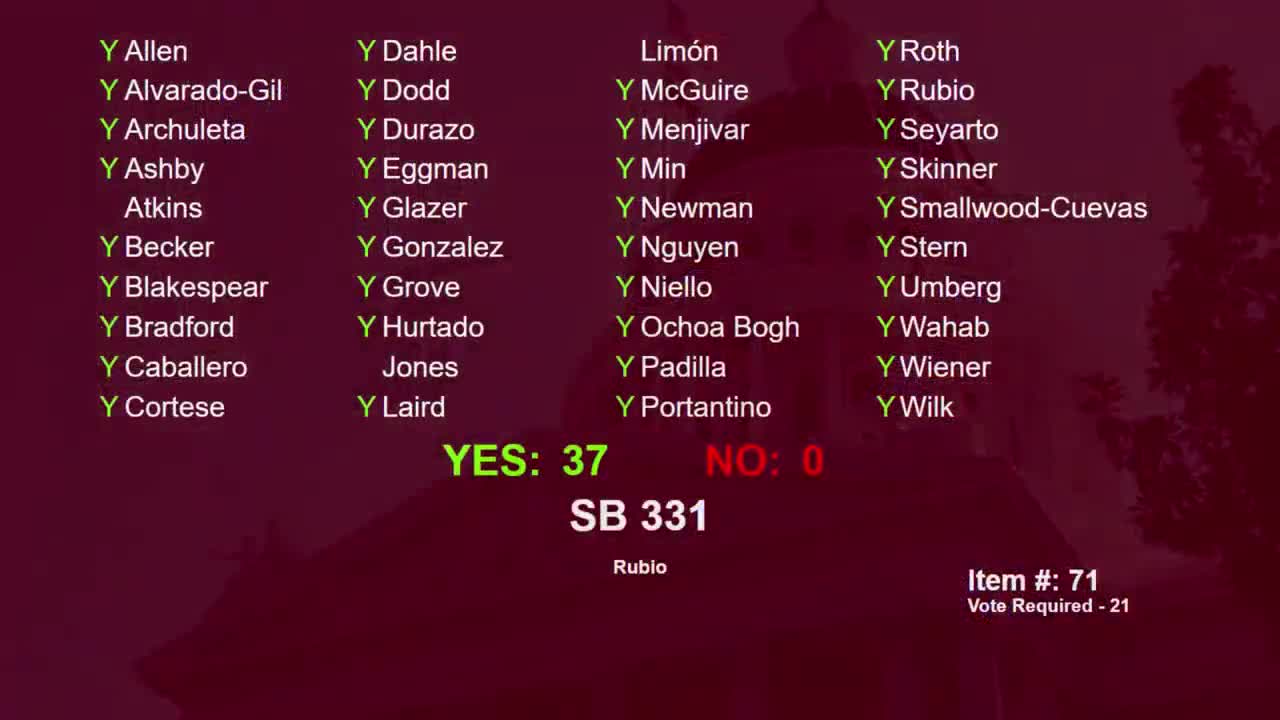
Bill Author

Bill Co-Author(s):