SB 60: Social media platforms: controlled substances: order to remove.
- Session Year: 2023-2024
- House: Senate
- Latest Version Date: 2023-10-10
Current Status:
Passed
(2023-10-10: Chaptered by Secretary of State. Chapter 698, Statutes of 2023.)
Introduced
In Committee
First Chamber
In Committee
Second Chamber
Enacted
What does this bill do?
This bill lets a person ask a judge to order a social media platform to remove posts that offer to transport, bring into California, sell, give away, or supply illegal drugs. If the site has a reporting tool the person must use it first and the judge won’t rule until 48 hours after notice; if the site lacks a reporting tool the person can go to court right away. The winner can get court costs and reasonable attorney fees, and a defendant can get fees if the case was not brought in good faith.
The summary is provided by generative AI which can make mistakes. For original language, please view the details in the table below.
Existing law, until January 1, 2028, and subject to specified exceptions, requires a social media platform, as defined, that operates in the state to create and publicly post a policy statement that includes, among other things, the social media platforms policy on the use of the social media platform to illegally distribute a controlled substance, as defined, and a link to the social media platforms reporting mechanism for illegal or harmful content or behavior if one exists.
Existing law requires a social media platform with 1,000,000 or more discrete monthly users to clearly and conspicuously state whether it has a mechanism for reporting violent posts, as defined, that is available to users and nonusers of the platform. Existing law authorizes a person who is the target of a violent post, or reasonably believes the person is the target of a violent post, to seek an order requiring the social media platform to remove the violent post and any related violent post the court determines shall be removed in the interests of justice, as prescribed.
This bill would authorize a person to seek an order requiring a social media platform to remove content that includes an offer to transport, import into this state, sell, furnish, administer, or give away a controlled substance in violation of specified law, as prescribed.
Existing law, until January 1, 2028, and subject to specified exceptions, requires a social media platform, as defined, that operates in the state to create and publicly post a policy statement that includes, among other things, the social media platforms policy on the use of the social media platform to illegally distribute a controlled substance, as defined, and a link to the social media platforms reporting mechanism for illegal or harmful content or behavior if one exists.
Existing law requires a social media platform with 1,000,000 or more discrete monthly users to clearly and conspicuously state whether it has a mechanism for reporting violent posts, as defined, that is available to users and nonusers of the platform. Existing law authorizes a person who is the target of a violent post, or reasonably believes the person is the target of a violent post, to seek an order requiring the social media platform to remove the violent post and any related violent post the court determines shall be removed in the interests of justice, as prescribed.
This bill would authorize a person to seek an order requiring a social media platform to remove content that offers to includes an offer to transport, import into this state, sell, furnish, administer, give away, or offer to transport or give away a controlled substance in violation of specified law, as prescribed.
Existing law, until January 1, 2028, and subject to specified exceptions, requires a social media platform, as defined, that operates in the state to create and publicly post a policy statement that includes, among other things, the social media platforms policy on the use of the social media platform to illegally distribute a controlled substance, as defined, and a link to the social media platforms reporting mechanism for illegal or harmful content or behavior if one exists.
Existing law requires a social media platform with 1,000,000 or more discrete monthly users to clearly and conspicuously state whether it has a mechanism for reporting violent posts, as defined, that is available to users and nonusers of the platform. Existing law authorizes a person who is the target of a violent post, or reasonably believes the person is the target of a violent post, to seek an order requiring the social media platform to remove the violent post and any related violent post the court determines shall be removed in the interests of justice, as prescribed.
This bill would authorize a person to seek an order requiring a social media platform to remove content that offers to sell, furnish, administer, give away, or offer to transport a controlled substance in violation of specified law, as prescribed.
Existing law includes provisions that govern arbitration and conciliation proceedings for international commercial disputes. Existing law requires that the parties to an arbitration be treated with equality, as specified.This bill would make a technical, nonsubstantive change to this provision.Existing law includes provisions that govern arbitration and conciliation proceedings for international commercial disputes. Existing law requires that the parties to an arbitration be treated with equality, as specified.
This bill would make a technical, nonsubstantive change to this provision.
Existing law requires the Department of Motor Vehicles to issue Have a Heart, Be a Star, Help Our Kids special license plates and imposes additional fees, as specified, for their issuance, renewal, replacement, and transfer. Existing law requires that those additional fees be deposited in the Child Health and Safety Fund, less specified amounts. Existing law requires that 50% of the funds derived from the Have a Heart, Be a Star, Help Our Kids license plates be available, upon appropriation, to the State Department of Social Services for administering various provisions related to childcare licensing, as specified. Existing law requires that, upon appropriation by the Legislature, the balance be available, as described, for programs that address other categories of potential childhood injury, as specified. Existing law requires counties to create local childcare and development planning councils to identify and address childcare needs, among others. Existing law also creates the California Children and Families Commission to promote, support, and improve early childhood development. Existing law provides for funding to county commissions that develop, adopt, promote, and implement local early childhood development programs consistent with specified goals and objectives.This bill would continuously appropriate 50% of the fees collected on or after January 1, 2024, to local childcare and development planning councils, as described, for specified purposes, including recruitment and training of new childcare providers. The bill would require a portion of the funds to be allocated to the agency having oversight of new and continuing childcare provider health and safety education and training program curriculum for specified purposes. The bill would also continuously appropriate 25% of the fees collected on or after January 1, 2024, to county commissions, as specified, that elect to receive funding and would limit the spending of those funds for certain purposes, including administering the California Unintentional Injury Prevention Strategic Plan Project. The bill would require that no more than 10% of the funds allocated to the commissions be allocated to the nonprofit organization that provides administrative and staff support to the California Unintentional Injury Prevention Strategic Plan Project and would require the nonprofit organization to support statewide networking of unintentional injury coalitions and support evidence-based technical assistance and training for childhood unintentional injury prevention programs to the county commissions.Existing law requires the Department of Motor Vehicles to issue Have a Heart, Be a Star, Help Our Kids special license plates and imposes additional fees, as specified, for their issuance, renewal, replacement, and transfer. Existing law requires that those additional fees be deposited in the Child Health and Safety Fund, less specified amounts. Existing law requires that 50% of the funds derived from the Have a Heart, Be a Star, Help Our Kids license plates be available, upon appropriation, to the State Department of Social Services for administering various provisions related to childcare licensing, as specified. Existing law requires that, upon appropriation by the Legislature, the balance be available, as described, for programs that address other categories of potential childhood injury, as specified. Existing law requires counties to create local childcare and development planning councils to identify and address childcare needs, among others. Existing law also creates the California Children and Families Commission to promote, support, and improve early childhood development. Existing law provides for funding to county commissions that develop, adopt, promote, and implement local early childhood development programs consistent with specified goals and objectives.
This bill would continuously appropriate 50% of the fees collected on or after January 1, 2024, to local childcare and development planning councils, as described, for specified purposes, including recruitment and training of new childcare providers. The bill would require a portion of the funds to be allocated to the agency having oversight of new and continuing childcare provider health and safety education and training program curriculum for specified purposes. The bill would also continuously appropriate 25% of the fees collected on or after January 1, 2024, to county commissions, as specified, that elect to receive funding and would limit the spending of those funds for certain purposes, including administering the California Unintentional Injury Prevention Strategic Plan Project. The bill would require that no more than 10% of the funds allocated to the commissions be allocated to the nonprofit organization that provides administrative and staff support to the California Unintentional Injury Prevention Strategic Plan Project and would require the nonprofit organization to support statewide networking of unintentional injury coalitions and support evidence-based technical assistance and training for childhood unintentional injury prevention programs to the county commissions.
(a)(1)A person may seek an order requiring a social media platform to remove content that includes an offer to transport, import into this state, sell, furnish, administer, or give away a controlled substance in violation of Section 11352 of the Health and Safety Code.
(2)(A)If the social media platform has a reporting mechanism described in paragraph (4) of subdivision (b) of Section 22945, a person shall not bring an action pursuant to paragraph (1) until the person has notified the social media platform of the content and requested that it be removed through the reporting mechanism.
(B)A person may bring an action pursuant to paragraph (1) before 48 hours have passed since providing notice to a social media platform through the reporting mechanism, but the court shall not rule on the request for an order until 48 hours have passed from the provision of notice.
(C)The court may dismiss an action if the social media platform deletes the content relevant to the order sought pursuant to paragraph (1) before 48 hours have passed from the provision of notice under subparagraph (A).
(3)If the social media platform does not have a reporting mechanism described in paragraph (4) of subdivision (b) of Section 22945, a person may bring an action under paragraph (1), and a court may rule on the request for an order, at any time.
(b)(1)A court shall award court costs and reasonable attorneys fees to a prevailing plaintiff in an action brought pursuant to this section.
(2)Reasonable attorneys fees may be awarded to a prevailing defendant upon a finding by the court that the plaintiffs prosecution of the action was not in good faith.
(a)(1)A person may seek an order requiring a social media platform to remove content that offers to includes an offer to transport, import into this state, sell, furnish, administer, give away, or offers to transport or give away a controlled substance in violation of Section 11352 of the Health and Safety Code.
(2)(A)If the social media platform has a reporting mechanism described in paragraph (4) of subdivision (b) of Section 22945, a person shall not bring an action pursuant to paragraph (1) until the person has notified the social media platform of the content and requested that it be removed through the reporting mechanism.
(B)A person may bring an action pursuant to paragraph (1) before 48 hours have passed since providing notice to a social media platform through the reporting mechanism, but the court shall not rule on the request for an order until 48 hours have passed from the provision of notice.
(C)The court may dismiss an action if the social media platform deletes the content relevant to the order sought pursuant to paragraph (1) before 48 hours have passed from the provision of notice under subparagraph (A).
(3)If the social media platform does not have a reporting mechanism described in paragraph (4) of subdivision (b) of Section 22945, a person may bring an action under paragraph (1), and a court may rule on the request for an order, at any time.
(b)(1)A court shall award court costs and reasonable attorneys fees to a prevailing plaintiff in an action brought pursuant to this section.
(2)Reasonable attorneys fees may be awarded to a prevailing defendant upon a finding by the court that the plaintiffs prosecution of the action was not in good faith.
REVISIONS: HeadingLine 2.(a)(1)A person may seek an order requiring a social media platform to remove content that offers to sell, furnish, administer, give away, or offers to transport a controlled substance in violation of Section 11352 of the Health and Safety Code.
(2)(A)If the social media platform has a reporting mechanism described in paragraph (4) of subdivision (b) of Section 22945, a person shall not bring an action pursuant to paragraph (1) until the person has notified the social media platform of the content and requested that it be removed through the reporting mechanism.
(B)A person may bring an action pursuant to paragraph (1) before 48 hours have passed since providing notice to a social media platform through the reporting mechanism, but the court shall not rule on the request for an order until 48 hours have passed from the provision of notice.
(C)The court may dismiss an action if the social media platform deletes the content relevant to the order sought pursuant to paragraph (1) before 48 hours have passed from the provision of notice under subparagraph (A).
(3)If the social media platform does not have a reporting mechanism described in paragraph (4) of subdivision (b) of Section 22945, a person may bring an action under paragraph (1), and a court may rule on the request for an order, at any time.
(b)(1)A court shall award court costs and reasonable attorneys fees to a prevailing plaintiff in an action brought pursuant to this section.
(2)Reasonable attorneys fees may be awarded to a prevailing defendant upon a finding by the court that the plaintiffs prosecution of the action was not in good faith.
SECTION 1.Section 1297.181 of the Code of Civil Procedure is amended to read:1297.181.The parties shall be treated with equality and each party shall be given a full opportunity to present their case.The parties shall be treated with equality and each party shall be given a full opportunity to present his or her their case.
All matter omitted in this version of the bill appears in the bill as introduced in the Senate, December 21, 2022. (JR11)(a)There is hereby created in the State Treasury the Child Health and Safety Fund for the purposes specified in this section.
(b)Moneys for this fund shall be derived from the license plate program provided for pursuant to Section 5072 of the Vehicle Code and from civil penalties on child daycare facility providers.
(c)Moneys in the fund shall be expended, upon appropriation by the Legislature, for the purposes specified in subdivisions (d), (e), and (f).
(d)Fifty percent of moneys derived from the license plate program pursuant to Section 5072 of the Vehicle Code before January 1, 2024, shall be available, upon appropriation, to the State Department of Social Services for the purpose of administering provisions of Sections 1596.816, 1596.87, 1596.872b, 1596.893b 1596.893b, 1596.895, 1596.95, 1597.091, 1597.54, 1597.541, 1597.542, 1597.55b 1597.55b, and 1597.62 of the Health and Safety Code. Upon appropriation by the Legislature, an additional five hundred one thousand dollars ($501,000), in excess of the 50 percent derived from the license plate program, also shall be made available for these purposes. The State Department of Social Services shall allocate these special funds according to the following priorities:
(1)Site visits performed pursuant to Sections 1597.091 and 1597.55b of the Health and Safety Code.
(2)The monitoring responsibility of the childcare advocate program.
(3)Training for investigative and licensing field staff.
(4)Other aspects of the childcare advocate program performed pursuant to Section 1596.872b of the Health and Safety Code.
(5)The salary of the chief of the childcare licensing branch.(5)The salary of the chief of the childcare licensing branch. In order to implement the list of priorities set forth in this subdivision, and to complete implementation of subdivision (a) of Section 1596.816 of the Health and Safety Code, the State Department of Social Services may, as necessary, fund appropriate administrative support costs.
(e)The balance of funds remaining after the appropriations specified in subdivision (d) derived from the license plate program pursuant to Section 5072 of the Vehicle Code before January 1, 2024, shall be available, upon appropriation, for programs that address any of the following child health and safety concerns and that are either to be carried out within a two-year period or whose implementation is dependent upon one-time initial funding:
(1)Child abuse prevention, except that not more than 25 percent of the moneys in this fund shall be used for this purpose. Ninety percent of the 25 percent shall be deposited in the county childrens trust fund, established pursuant to Section 18966 of the Welfare and Institutions Code, for the support of child abuse prevention services in the community, and 10 percent of the 25 percent shall be deposited in the State Childrens Trust Fund, established pursuant to Section 18969, for public education, training, and technical assistance.
(2)Vehicular safety, including restraint, warnings, and education programs.
(3)Drowning prevention.
(4)Playground safety standards.
(5)Pedestrian Safety. safety.
(6)Bicycle safety.
(7)Gun safety.
(8) Fire safety. Home fire and burn safety and family disaster planning.
(9)Poison control and safety.
(10)In-home safety.
(11)Childhood poisoning, including from prescription medications, lead, and other toxic substances.
(12)Sleep suffocation and sudden infant death syndrome.
(13)Children left in parked cars and children run over by cars moving forward or backward.
(14)Sports-related concussions, heat stroke, cardiac arrest, and spinal injury safety.
(15)Unintentional injuries associated with mental health.
(f)Moneys derived from civil penalties imposed on daycare facility providers shall be made available, upon appropriation, to the State Department of Social Services exclusively for the technical assistance, orientation, training, and education of child daycare facility providers.
SEC. 2.Section 18286 is added to the Welfare and Institutions Code, to read:18286.(a)Notwithstanding Section 13340 of the Government Code, 75 percent of the moneys in the Child Health and Safety Fund derived from license plate program fees collected on or after January 1, 2024, pursuant to Section 5072 of the Vehicle Code are continuously appropriated, without regard to fiscal years, to the following:
(1)Twenty-five percent of the funds shall be allocated to those First 5 county commissions, created pursuant to Section 130140.1 of the Health and Safety Code, that elect in an annual survey conducted each fiscal year by the nonprofit housing the California Unintentional Injury Prevention Strategic Plan Project to receive and utilize the funding.
(A)Each county commission electing to receive these funds shall receive an amount as provided in this subparagraph:
(i)County commissions in counties with populations over 100,000 shall receive equal shares of 80 percent of the available funds for distribution to county commissions opting into receiving these funds based on the survey completed pursuant to this paragraph.
(ii)County commissions in counties with populations under 100,000 shall receive equal shares of 20 percent of the available funds for distribution to county commissions opting into receiving these funds based on the survey completed pursuant to this paragraph.
(B)The county commissions receiving these funds can utilize them only for programs that address any of the categories in paragraphs (2) to (15), inclusive, of subdivision (e) of Section 18285 that are either to be carried out within a two-year period or whose implementation is dependent upon one-time initial funding.
(C)The county commissions electing to receive this funding shall use the funds for any of the following:
(i)To support local programs that further unintentional injury prevention in one or any of the unintentional injury categories in paragraphs (2) to (15), inclusive, of subdivision (e) of Section 18285.
(ii)To supplement and not supplant existing funding supporting programs furthering child health and safety and aligned with childhood unintentional injury prevention.
(iii)On promoting and practicing those evidence-based best prevention practices addressing childhood unintentional injury provided or recommended by the California Unintentional Injury Prevention Strategic Plan.
(iv)At the county commissions discretion, to participate with the California Unintentional Injury Prevention Strategic Plan Project pursuant to the projects responsibilities in subparagraph (D).
(v)Where appropriate, collaborate with regional or local childhood unintentional injury prevention coalitions or programs, including childhood unintentional injury prevention coalitions or programs in tribal lands.
(vi)The commissions may use the funds described in this section to participate at the annual California Children and Families Commission conference or biennial Safer California Unintentional Injury Prevention conference.
(D)Each year, 10 percent of the 25 percent of the funding dedicated to childhood unintentional injury prevention pursuant to this paragraph shall be distributed to the nonprofit providing administration and staffing to the California Unintentional Injury Prevention Strategic Plan Project. The nonprofit organization shall utilize the funding only for the following purposes:
(i)Support statewide networking of local childhood unintentional injury prevention coalitions and programs.
(ii)Support evidence-based, best-practice technical assistance and training programs for childhood unintentional injury prevention, including sharing successful local models of unintentional injury prevention, for local prevention coalitions, programs, and county commissions as described in Section 130140.1 of the Health and Safety Code.
(iii)Oversee the updating of childhood unintentional injury prevention strategic planning.
(iv)Planning activities for the biennial Safer California Unintentional Injury Prevention conference.
(v)Support public policy to prevent childhood unintentional injury.
(vi)Conduct an annual survey of the county commissions created through Section 130140.1 of the Health and Safety Code to determine which of the county commissions elect to receive this funding, and to transmit that survey result to the state for distribution of the funding to the county commissions.
(2)Fifty percent of funds shall be allocated to childcare safety and health in accordance with the following:
(A)Eighty-five percent of the funds described in this paragraph shall be allocated to the local childcare planning council described in Section 10485 in each county on a per-capita basis, as follows:
(i)One-half percent of the 85 percent to counties with populations less than 2,000.
(ii)One percent of the 85 percent to counties with populations between 2,000 up to 100,000.
(iii)One and one-third percent of the 85 percent to counties with populations between 100,000 up to 249,999.
(iv)One and two-thirds percent of the 85 percent to counties with populations between 250,000 up to 499,999.
(v)Two percent of the 85 percent to counties with populations between 500,000 and 1,000,000.
(vi)Four percent of the 85 percent to counties with populations over 1,000,000.
(B)Funds allocated pursuant to subparagraph (A) shall be used for one or both of the following:
(i)Recruiting new childcare providers.
(ii)Supporting education and training for new childcare providers or continuing education for existing childcare providers, including licensed and exempt providers.
(C)Fifteen percent of the funds described in this paragraph shall be allocated to the state agency having oversight of new and continuing childcare provider health and safety education and training program curriculum to be used for the following purposes:
(i)Review and approval of childcare provider health and safety education and training as established in Chapter 1.1 (commencing with Section 100000.1) of Division 9 of Title 22 of the California Code of Regulations.
(ii)Onsite reviews of approved education and training programs to ensure approved curriculum is adhered to and to observe the quality of the education and training program delivery.
(iii)Coordination with relevant bodies involved in improving access, quality, and affordability of childcare, including, but not limited to, childcare provider recruitment and planning agencies, academic institutions, and childcare and child development agencies or councils.
(b)Twenty-five percent of funds derived from the license plate program fees collected on or after January 1, 2024, pursuant to Section 5072 of the Vehicle Code, shall be available, upon appropriation by the Legislature, for programs that address child abuse prevention pursuant to paragraph (1) of subdivision (e) of Section 18285.
|
Date
|
Status
|
|---|---|
| Oct 10, 2023 | Chaptered by Secretary of State. Chapter 698, Statutes of 2023. |
| Oct 10, 2023 | Approved by the Governor. |
| Sep 15, 2023 | Enrolled and presented to the Governor at 3 p.m. |
| Sep 11, 2023 | Assembly amendments concurred in. (Ayes 39. Noes 0. Page 2596.) Ordered to engrossing and enrolling. |
| Sep 7, 2023 | In Senate. Concurrence in Assembly amendments pending. |
| Sep 7, 2023 | Read third time. Passed. (Ayes 79. Noes 0. Page 2995.) Ordered to the Senate. |
| Sep 5, 2023 | Read second time. Ordered to third reading. |
| Sep 1, 2023 | From committee: Do pass. (Ayes 16. Noes 0.) (September 1). |
| Jul 12, 2023 | July 12 set for first hearing. Placed on APPR. suspense file. |
| Jun 27, 2023 | From committee: Do pass and re-refer to Com. on APPR. (Ayes 11. Noes 0.) (June 27). Re-referred to Com. on APPR. |
| Jun 14, 2023 | From committee: Do pass and re-refer to Com. on JUD. (Ayes 10. Noes 0.) (June 13). Re-referred to Com. on JUD. |
| Jun 14, 2023 | Coauthors revised. |
| Jun 8, 2023 | From committee with author's amendments. Read second time and amended. Re-referred to Com. on P. & C.P. |
| Jun 1, 2023 | Referred to Coms. on P. & C.P. and JUD. |
| May 25, 2023 | In Assembly. Read first time. Held at Desk. |
| May 24, 2023 | Read third time. Passed. (Ayes 39. Noes 0. Page 1250.) Ordered to the Assembly. |
| May 18, 2023 | Read second time. Ordered to third reading. |
| May 18, 2023 | From committee: Do pass. (Ayes 7. Noes 0. Page 1159.) (May 18). |
| May 12, 2023 | Set for hearing May 18. |
| Apr 17, 2023 | April 17 hearing: Placed on APPR suspense file. |
| Apr 10, 2023 | Set for hearing April 17. |
| Mar 29, 2023 | From committee: Do pass and re-refer to Com. on APPR. (Ayes 10. Noes 0. Page 576.) (March 28). Re-referred to Com. on APPR. |
| Mar 6, 2023 | Set for hearing March 28. |
| Feb 22, 2023 | Re-referred to Coms. on JUD. and APPR. |
| Feb 14, 2023 | From committee with author's amendments. Read second time and amended. Re-referred to Com. on RLS. |
| Feb 7, 2023 | Withdrawn from committee. |
| Feb 7, 2023 | Re-referred to Com. on RLS. |
| Feb 6, 2023 | From committee with author's amendments. Read second time and amended. Re-referred to Com. on HUMANS S. |
| Jan 18, 2023 | Referred to Com. on HUMANS S. |
| Jan 4, 2023 | Read first time. |
| Dec 22, 2022 | From printer. May be acted upon on or after January 21. |
| Dec 21, 2022 | Introduced. To Com. on RLS. for assignment. To print. |
|
Date
|
Description
|
Location
|
Votes
|
|
|---|---|---|---|---|
| Sep 11, 2023 | Unfinished Business SB60 Umberg et al. Concurrence | Senate Floor |
Passed |
|
| Sep 7, 2023 | SB 60 Umberg Senate Third Reading By Bauer-Kahan | Assembly Floor |
Passed |
|
| Sep 1, 2023 | Do pass. | Assembly Standing Committee on Appropriations |
Passed |
|
| Jun 27, 2023 | Do pass and be re-referred to the Committee on [Appropriations] | Assembly Standing Committee on Judiciary |
Passed |
|
| Jun 13, 2023 | Do pass and be re-referred to the Committee on [Judiciary] | Assembly Standing Committee on Privacy and Consumer Protection |
Passed |
|
| May 24, 2023 | Senate 3rd Reading SB60 Umberg | Senate Floor |
Passed |
|
| May 18, 2023 | Do pass | Senate Standing Committee on Appropriations |
Passed |
|
| Apr 17, 2023 | Placed on suspense file | Senate Standing Committee on Appropriations |
Passed |
|
| Mar 28, 2023 | Do pass, but first be re-referred to the Committee on [Appropriations] | Senate Standing Committee on Judiciary |
Passed |
This list shows positions taken on this bill by organizations on the date displayed, which is linked to the original source.
Positions by individuals are not included.
|
Organization
|
Position
|
Date
|
|---|---|---|
| ARCADIA POLICE OFFICERS ASSOCIATION | ** Support | |
| Burbank Police Officers Association | ** Support | |
| California Coalition of School Safety Professionals | ** Support | |
| California Reserve Peace Officers Association | ** Support | |
| Chamber Of Progress | ** Against | |
| CLAREMONT POLICE OFFICERS ASSOCIATION | ** Support | |
| Corona Police Officers Association | ** Support | |
| Culver City Police Officers' Association | ** Support | |
| FULLERTON POLICE OFFICERS ASSOCIATION | ** Support | |
| Internet.Works | ** Support | |
| los angeles school police officers association | ** Support | |
| MONTEREY COUNTY DEPUTY SHERIFF ASSOCIATION | ** Support | |
| MURRIETA POLICE OFFICERS ASSOCIATION | ** Support | |
| Newport Beach Police Association | ** Support | |
| Novato Police Officers Association | ** Support | |
| Orange County Sheriffs Department | ** Support | |
| Palos Verdes Police Officers Association | ** Support | |
| Placer County Deputy Sheriffs’ Association | ** Support | |
| POMONA POLICE OFFICERS ASSOCIATION | ** Support | |
| RIVERSIDE POLICE OFFICERS ASSOCIATION | ** Support | |
| Riverside Sheriffs Association | ** Support | |
| Santa Ana Police Officers Association | ** Support | |
| Upland Police Officers Association | ** Support |
SENATE RULES COMMITTEE Office of Senate Floor Analyses (916) 651-1520 Fax: (916) 327-4478 | SB 60 |
UNFINISHED BUSINESS
Bill No: SB 60
Author: Umberg (D), et al.
Amended: 6/8/23
Vote: 21
SENATE JUDICIARY COMMITTEE: 10-0, 3/28/23
AYES: Umberg, Wilk, Allen, Ashby, Caballero, Durazo, Laird, Min, Niello, Wiener
NO VOTE RECORDED: Stern
SENATE APPROPRIATIONS COMMITTEE: 7-0, 5/18/23
AYES: Portantino, Jones, Ashby, Bradford, Seyarto, Wahab, Wiener
SENATE FLOOR: 39-0, 5/24/23
AYES: Allen, Alvarado-Gil, Archuleta, Ashby, Atkins, Becker, Blakespear, Bradford, Caballero, Cortese, Dahle, Dodd, Durazo, Eggman, Glazer, Gonzalez, Grove, Hurtado, Jones, Laird, McGuire, Menjivar, Min, Newman, Nguyen, Niello, Ochoa Bogh, Padilla, Portantino, Roth, Rubio, Seyarto, Skinner, Smallwood-Cuevas, Stern, Umberg, Wahab, Wiener, Wilk
NO VOTE RECORDED: Limón
ASSEMBLY FLOOR: 79-0, 9/7/23 - See last page for vote
SUBJECT: Social media platforms: controlled substances: order to remove
SOURCE: Author
DIGEST:
This bill allows a person to seek a court order to require a social media platform, as defined, to remove content that includes an offer to transport, import into this state, sell, furnish, administer, or give away specified controlled substances in violation of state law.
Assembly Amendments
clarify what types of controlled-substance-related content are covered by the bill.
ANALYSIS:
Existing constitutional law:
- Provides a right to free speech and expression. (U.S. Const., 1st amend; Cal. Const., art 1, § 2.)
- Provides that “[o]ffers to engage in illegal transactions are categorically excluded from First Amendment protection.” (U.S. v. Williams (2008) 553 U.S. 285, 298.)
Existing federal law:
- Provides that no provider or user of an interactive computer service shall be treated as the publisher or speaker of any information provided by another information content provider. (47 U.S.C. § 230(c)(1).)
- Provides that no provider or user of an interactive computer service shall be held liable on account of:
- Any action voluntarily taken in good faith to restrict access to or availability of material that users consider to be obscene, lewd, lascivious, filthy, excessively violent, harassing, or otherwise objectionable, whether or not such material is constitutionally protected.
- Any action taken to enable or make available to content providers or others the technical means to restrict access to material described above. (47 U.S.C. § 230(c)(2).)
- Provides that no cause of action may be brought and no liability may be imposed under any state or local law that is inconsistent with items 1) and 2). (47 U.S.C. § 230(e)(3).)
Existing state law:
- Defines the following relevant terms:
- “Content” is statements or comments made by users and media that are created, posted, shared, or otherwise interacted with users on an internet-based service or application, but does not include media put on a service or application exclusively for the purpose of cloud storage, transmitting files, or file collaboration. (Bus. & Prof. Code, § 22945(a)(1).)
- A “controlled substance” is a drug, substance, or immediate precursor listed in Schedules I-V within the Health and Safety Code. (Bus. & Prof. Code, § 22645(a)(2); Health & Saf. Code, §§ 11007, 11054-11058.)
- A “social media platform” is a public or semi-public internet service or application that has users in California and that meets both of the following criteria:
- A substantial function of the service or application is to connect users in order to allow users to interact socially with each other within the service or application; but a service or application that provides email or direct messaging services does not qualify on the basis of that function alone.
- The service or application allows users to (1) construct a public or semipublic profile for purposes of signing into and using the service; (2) populate a list of other users with whom an individual shares a social connection within the system; and (3) create or pose content viewable by other users, including, but not limited to, on message boards, in chat rooms, or through a landing page or main feed that presents the user with content generated by other users. (Bus. & Prof. Code, § 22945(a)(3).)
- A “public or semipublic internet-based service or application” does not include a service or application used to facilitate communication within a business or enterprise among employees or affiliates of the business or enterprise, provided that access to the service or application is restricted to employees or affiliates of the business or enterprise using the service or application. (Bus. & Prof. Code, § 22945(a)(4).)
- Requires a social media platform that operates in the state to create and publicly post on the platform’s website a policy statement that includes all of the following:
- The platform’s policy on the use of the social media platform to illegally distribute a controlled substance.
- A general description of the platform’s moderation policies employed to prevent users from posting or sharing electronic content pertaining to the illegal distribution of a controlled substance; the platform need not disclose information that might compromise operational efforts to identify prohibited content or activity.
- A link to mental health and drug education resources provided by public health authorities.
- A link to the platform’s reporting mechanism for illegal or harmful content or behavior on the platform, if one exists.
- A general description of the platform’s policies and procedures for responding to law enforcement inquiries, including warrants, subpoenas, and other court orders compelling the production of or access to electronic communication information. (Bus. & Prof. Code, § 22945(b).)
- Provides that a social media platform may satisfy the requirements of 2) by posting the necessary information separately or within another document or post, such as the terms of service or community guidelines. (Bus. & Prof. Code, § 22945(c).)
- Requires a person or entity operating a social media platform in the state to do both of the following:
- Update the policy statement required by 2) as necessary; and
- Consider consulting with nonprofit organizations, safety advocates, and survivors to assist in developing and supporting the policy statement required by 2). (Bus. & Prof. Code, § 22945(d).)
- Provides that the requirements in 1)-5) do not apply to a business that generated less than $100 million in gross revenue in the preceding calendar year and will sunset on January 1, 2028. (Bus. & Prof. Code, § 22945(e), (f).)
- Permits a person who is the target of a violent post, as defined, on a social media platform, as defined, to seek an order requiring the social media platform to remove the post, subject to the following conditions:
- If the platform has a mechanism for reporting violent content, the target of the post must notify the platform of the post and the court cannot grant the order until at least 48 hours have passed since the notice was provided.
- If the platform does not have a reporting mechanism, the target may seek the order, and the court may grant the request, at any time. (Civ. Code, § 1978.99.22(a).)
- Provides that a court shall award reasonable attorney fees to a plaintiff who prevails in an action under 6), and that a court may award attorney fees to a prevailing defendant if the court finds the plaintiff’s prosecution of the action was not in good faith. (Civ. Code, § 1798.99.22(b).)
- Makes it a felony to offer to sell, furnish, administer, or give away specified controlled substances, including, but not limited to, fentanyl, heroin, cocaine base, and certain medications without a prescription. (Health & Saf. Code, §§ 11352(a), 11054-11056.)
This bill:
- Is added to the chapter setting forth the definitions and terms in items 1)-5) of “existing state law,” above.
- Permits a person to seek a court order to require a social media platform to remove content that includes an offer to transport, import into this state, sell, furnish, administer, or give away, a controlled substance in violation of Health and Safety Code Section 11352.
- Provides that, if the social media platform has a reporting mechanism for illegal content as set forth in 2)d) in the “existing law” section, a person must notify the social media platform of the content and request that it be removed before bringing an action in 2).
- A court may not rule on the action until the platform has had 48 hours in which to respond to the notice and take-down request.
- A court may dismiss the action if the platform deletes the content before 48 hours has passed from the provision of notice.
- Provides that, if a social media platform does not have a reporting mechanism described in 2)d) in the “existing law” section, the person may file the action and the court may rule on the action at any time.
- Provides that a court shall award court costs and attorney fees to the prevailing plaintiff, and may award reasonable attorney fees to a prevailing defendant if it finds that the plaintiff’s prosecution of the action was not in good faith.
Comments
This bill provides a narrow remedy to require the removal of illegal offers to sell drugs on a social media platform, when the platform itself fails to act. This bill authorizes any person to file an action in court for a court order requiring a social media platform to remove a post that constitutes an illegal offer to transport, import into this state, sell, furnish, administer, or give away a controlled substance on the platform. If the social media platform has a reporting mechanism for such posts, the person must use the mechanism before filing the suit, and the court must wait 48 hours before ruling on the request for an order to remove the post. If the social media platform does not have a reporting mechanism, the person may file the action, and the court may rule on it, at any time. If the court determines the post constitutes an illegal offer to sell drugs, the court may order it removed. Finally, this bill provides that the court must award reasonable attorney fees to a prevailing plaintiff in this action. If the court rules against the plaintiff, the court may award reasonable attorney fees to the defendant if the court determines that the plaintiff’s prosecution of the action was not in good faith.
This remedy builds on existing law that already requires social media platforms to have a policy about the illegal distribution of a controlled substance on the platform, to publicly post that policy, and to clearly post a reporting mechanism for such posts if the platform has such a policy.[1] This bill incorporates the existing definitions of “social media platform” and related terms, and the limitation of application to companies that generate $100 million or more in gross revenue per year, thereby ensuring continuity. The remedy added by this bill, along with the existing law regarding drug distribution policies, will sunset on January 1, 2028.[2]
Posts on social media platforms constitute speech. The First Amendment, however, does not protect speech that constitutes an offer to sell controlled substances, because “[o]ffers to engage in illegal transactions are categorically excluded from First Amendment protection.”[3] This bill therefore appears not to present a facial violation of the First Amendment. If, however, courts were to order the removal of posts that did not constitute obvious offers to sell drugs, those orders would likely violate the posters’ First Amendment rights on an as-applied basis.
Finally, with respect to the federal law governing social media platform liability—Section 230 of the Communications Decency Act,[4] also known as Section 230—the law (1) prohibits a website from being treated as the publisher or speaker of information provided by users, and (2) clarifies that, if a website engages in content moderation of objectionable content, it does not lose its protection under (1).[5] Section 230 expressly preempts state law, stating that “[n]o cause of action may be brought and no liability may be imposed under any State law that is inconsistent with this section.”[6] The United States Court of Appeals for the Ninth Circuit has held that Section 230 does not grant online platforms a general immunity for third-party content, but instead “protects from liability (1) a provider or user of an interactive computer service (2) whom a plaintiff seeks to treat, under a state law cause of action, as a publisher or speaker (3) of information provided by another information content provider.”[7] The California Supreme Court has taken a different tack, holding that Section 230 provides blanket immunity to online platforms for third-party content; a majority of justices, however, has declined to hold that an injunction requiring the removal of third-party content automatically runs afoul of Section 230.[8] Accordingly, it appears that this bill fits in the narrow window of action that a party can take against a social media platform under the state and federal courts’ interpretation of Section 230, and therefore is not clearly preempted by federal law.
FISCAL EFFECT: Appropriation: No Fiscal Com.: No Local: No
According to the Assembly Appropriations Committee, this bill presents cost pressures (Trial Court Trust Fund, General Fund) to the trial courts, possibly exceeding $150,000 annually. This bill allows any person to seek a court order to remove a social media post that sells or otherwise offers to provide illegal drugs. Actual costs will depend on the number of court orders sought and the amount of court time needed to adjudicate each case. It generally costs about $1,000 to operate a courtroom for one hour. Although courts are not funded on the basis of workload, increased pressure on the Trial Court Trust Fund may create a need for increased funding for courts from the General Fund. The 2023-24 Budget includes $105 million from the General Fund to backfill declining revenue to the Trial Court Trust Fund.
SUPPORT: (Verified 9/7/23)
Arcadia Police Officers’ Association
Burbank Police Officers Association
California Coalition of School Safety Professionals
California Reserve Peace Officers Association
Claremont Police Officers’ Association
Corona Police Officers’ Association
Culver City Police Officers’ Association
Fullerton Police Officers Association
Internet.Works
Los Angeles School Police Officers Association
Monterey County Deputy Sheriff’s Association
Murrieta Police Officers Association
Newport Beach Police Association
Novato Police Officers Association
Orange County Sheriff’s Department
Palos Verdes Police Officers’ Association
Placer County Deputy Sheriffs’ Association
Pomona Police Officers’ Association
Riverside Police Officers’ Association
Riverside Sheriffs’ Association
Santa Ana Police Officers Association
Upland Police Officers Association
OPPOSITION: (Verified 9/7/23)
Chamber of Progress
ARGUMENTS IN SUPPORT: According to the Orange County Sheriff’s Department:
The use of social media has become one of the more common methods for selling drugs, particularly to our youth. We have seen this firsthand in the course of our law enforcement investigations. Over the past few years the Orange County Sheriff’s Department has employed a new strategy for investigating drug-related deaths. Past practice for drug-related deaths primarily involved a coroner review of the death, with little to no attempt to identify the source of the lethal drug. Now drug-related deaths in the Sheriff’s jurisdiction are investigated with the intent of identifying the drug’s supplier for prosecution. In a substantial amount of the cases we have investigated, social media was the means for making a drug sale. By allowing a person to seek a court order requiring a social media platform to remove content pertaining to the sale of illegal drugs, SB 60 will help reduce the prevalence of this illicit and deadly commerce.
ARGUMENTS IN OPPOSITION: According to the Chamber of Progress:
SB 60 could force websites to remove life-saving resources and addiction recovery materials, defeating its very purpose.
Regulations that impose a notice-and-takedown scheme on Internet websites routinely result in the over-removal of content. As with SB 60, websites that fail to remove reported content risk incurring steep financial penalties. However, websites that remove non-violating content simply risk removing access to a credible resource. Hence, notice-and-takedown statutes encourage websites to remove first and ask questions later; a result that is not always the best interest of the websites’ users.
ASSEMBLY FLOOR: 79-0, 9/7/23
AYES: Addis, Aguiar-Curry, Alanis, Alvarez, Arambula, Bains, Bauer-Kahan, Bennett, Berman, Boerner, Bonta, Bryan, Calderon, Juan Carrillo, Wendy Carrillo, Cervantes, Chen, Connolly, Megan Dahle, Davies, Dixon, Flora, Mike Fong, Vince Fong, Friedman, Gabriel, Gallagher, Garcia, Gipson, Grayson, Haney, Hart, Holden, Hoover, Irwin, Jackson, Jones-Sawyer, Kalra, Lackey, Lee, Low, Lowenthal, Maienschein, Mathis, McCarty, McKinnor, Muratsuchi, Stephanie Nguyen, Ortega, Pacheco, Papan, Jim Patterson, Joe Patterson, Pellerin, Petrie-Norris, Quirk-Silva, Ramos, Rendon, Reyes, Luz Rivas, Rodriguez, Blanca Rubio, Sanchez, Santiago, Schiavo, Soria, Ta, Ting, Valencia, Villapudua, Waldron, Wallis, Ward, Weber, Wicks, Wilson, Wood, Zbur, Robert Rivas
NO VOTE RECORDED: Essayli
Prepared by: Allison Whitt Meredith / JUD. / (916) 651-4113
9/8/23 10:50:26
**** END ****
Bus. & Prof. Code, § 22945. ↑
See ibid. ↑
U.S. v. Williams (2008) 553 U.S. 285, 297. ↑
47 U.S.C. § 230. ↑
47 U.S.C. § 230(c)(1), (2).) ↑
Id., § 230(e)(1), (3). ↑
Barnes, supra, 570 F.3d at pp. 1100-1101. ↑
See Hassell v. Bird (2018) 5 Cal.5th 522, 527 (plur. opn. of Cantil-Sakauye, C.J.) (order to remove defamatory Yelp posts violated Section 230), 548 (conc. opn. of Krueger, J.) (concurring in the judgment but declining to rule on whether injunctions to remove content always violate Section 230), 560-561 (dis. opn. of Liu, J.), 566-567 (dis. opn. of Cuéllar, J.). ↑
SENATE THIRD READING
STR Bill Id:SB 60
Author:(Umberg)
As Amended Ver:June 8, 2023
Majority vote
SUMMARY
Allows a person to seek a court order requiring a social media platform to remove content that includes an offer to sell, transport, or otherwise provide specified controlled substances.
Major Provisions
- Authorizes a person to seek a court order requiring a social media platform to remove content that includes an offer to transport, import into the state, sell, furnish, administer, or give away a controlled substance in violation of a Health and Safety Code provision that declares it a felony to make such offers.
- Requires, if a social media platform has a reporting mechanism for illegal or harmful content or behavior, that a person use the mechanism to notify the platform of the content and request that it be removed prior to seeking a court order under 1), above.
- Provides, if a person notifies the platform of content and requests removal, the following:
- The court may not issue a ruling on a request for an order to remove content under 1), above until at last 48 hours have passed since the person used the social media platform's reporting mechanism.
- The court may dismiss an action seeking an order to remove content under 1), above, if the social media platform deletes the relevant content before 48 hours have passed since the person used the social media platform's reporting mechanism.
- Permits a person to bring an action for an order to remove content under 1), above, and the court to rule on the request, at any time if the social media platform does not have a reporting mechanism for illegal or harmful content or behavior.
- Provides that a court shall award court costs and reasonable attorney's fees to a prevailing plaintiff, but that a court may award reasonable attorney's fees to a prevailing defendant if the court finds that the plaintiff's prosecution of the action was not in good faith.
- Applies only to social media platforms with revenues of at least $100 million dollars in the preceding calendar year. "Social media platform" is defined under an existing chapter of the Business and Professions Code addressing drug safety policies on social media platforms. This chapter sunsets as of January 1, 2028.
COMMENTS
Background. Data from the National Center for Health Statistics indicates that 106,999 Americans died of drug-involved overdoses in 2021. (National Institutes of Health, National Institute on Drug Abuse, Drug Overdose Death Rates (Feb. 9, 2023), available at https://nida.nih.gov/research-topics/trends-statistics/overdose-death-rates.) Over 70,000 of those overdose deaths were due to synthetic opioids, primarily fentanyl.
This epidemic of overdoses is exacerbated by the ability of interested parties to use social media platforms to connect with strangers or acquaintances who distribute and sell opioids, making illegal drugs easier and more convenient to purchase. Because the clientele of many social media platforms skews younger, this distribution channel has been especially harmful to teens and young adults. According to a 2021 Washington Post article:
DEA Administrator Anne Milgram specifically called out Snapchat and TikTok, two apps that are popular with teenagers and young adults, for not doing more to combat sales….
For years, illegal drug sales have been a scourge on Facebook, Snapchat, TikTok and other social media apps. Companies have repeatedly said they're working to rid their sites of drug deals by hiring extra moderators, using artificial-intelligence algorithms to root out illegal material and limiting searches for keywords related to drugs. But prescription and other drugs can still easily be found for sale. […]
The public health crisis is renewing calls from not just law enforcement groups but concerned parents and researchers for the social media companies to do more. They want the companies to be more transparent about what's happening on their platforms…. (Lerman & De Vynck, Snapchat, TikTok, Instagram face pressure to stop illegal drug sales as overdose deaths soar, Washington Post (Sep. 28, 2021), available at https://www.washingtonpost.com/technology/2021/09/28/tiktok-snapchat-fentanyl/.)
Last year's AB 1628 (Ramos), Chapter 432, Statutes of 2022, was enacted in response to such calls for transparency in social media platforms' practices. The bill required each large social media platform to publicly post on its internet website a policy statement containing information such as 1) the platform's policy on the use of the platform to illegally distribute a controlled substance; 2) a description of the platform's moderation practices employed to prevent users from sharing content regarding illegal distribution of a controlled substance; 3) the platform's policies and procedures for responding to law enforcement inquiries, including warrants, subpoenas, and other court orders compelling production of electronic communications information; and 4) a link to the platform's reporting mechanism for illegal or harmful content or behavior, if such a mechanism exists.
This bill would bolster AB 1628 (Ramos) by providing a means for a person to obtain a court order to remove content from large social media platforms in which specified controlled substances are offered for sale, transport, or other means of provision.
The bill is modeled on last year's SB 1056 (Umberg), Chapter 881, Statutes of 2022, by the same author, which provided a means for a person who is the target of a violent post to obtain a court order requiring the social media platform to remove that post.
What this bill would do. This bill provides a narrow court remedy to ensure the removal of illegal offers to sell drugs on social media platforms (those operated by businesses with more than $100 million in revenue in the preceding year). If a person finds content on such a platform that includes an offer to transport, import into the state, sell, furnish, administer, or give away a controlled substance, as defined ("drug trafficking content") and wishes to have that content removed, this bill would provide that person the following process to use:
- The person must check whether the platform has a mechanism to report illegal or harmful content or behavior. If so, then the person must first use this mechanism to notify the platform of the content and request that it be removed.
- The person can file a lawsuit seeking a court order to have the drug trafficking content removed.
- If the person provided notice of the drug trafficking content to the platform, the court must wait at least 48 hours from provision of notice to rule on the request for an order.
- If the platform deletes the drug trafficking content before 48 hours have passed, the court may dismiss the action.
- The court must award reasonable attorney fees to a prevailing plaintiff.
- Alternately, if the court rules against the plaintiff, the court may award reasonable attorney fees to the defendant if the court determines that the plaintiff's prosecution of the action was not in good faith.
Analysis. This bill should enable social media platforms to promptly remove drug trafficking content of which they were unaware. Social media companies contend that they are taking significant steps to curtail drug trafficking on their platforms. For example, "Snap said it took action on 144,000 drug-related accounts in the United States from July to December [2021]. That figure doesn't include the 88%of drug-related content that was pre-emptively detected by artificial intelligence software, which monitors terms that could signify drug deals." (Hoffman, Fentanyl Tainted Pills Bought on Social Media Cause Youth Drug Deaths to Soar, New York Times (May 19, 2022), available at https://www.nytimes.com/2022/05/19/health/pills-fentanyl-social-media.html.) But, obviously, many illicit offers remain undetected. By enabling people who discover drug trafficking content to seek its removal, this bill should supplement and bolster the platforms' own efforts in this regard.
In particular, this bill should incentivize the creation of reporting mechanisms for drug trafficking content on social media platforms. This bill would require that such content be reported before a lawsuit could be filed – but only if the platform provides a mechanism for reporting such content. These platforms would then have 48 hours to remove reported content before a court could rule on the lawsuit. Platforms without a reporting mechanism, by contrast, could be subject to an immediate lawsuit for removal of specific drug trafficking content.
The sole opposition to this bill is from the Chamber of Progress, a tech industry coalition. First, the Chamber of Progress contends that under SB 60, "websites that fail to remove reported content risk incurring steep financial penalties." But the bill does not provide for financial penalties. The sole remedies available under this bill are 1) injunctive relief, in the form of an order to remove drug trafficking content, and 2) attorney's fees and costs to a prevailing plaintiff. The latter will only be "steep" if a defendant contends that it need not remove reported content, engages in protracted litigation, and then loses the case. It is difficult to imagine this occurring in practice. If the content that is the subject of the case includes an offer to transport, import into this state, sell, furnish, administer, or give away one of the designated controlled substances, the defendant can promptly remove the content and thereby end the lawsuit.
Next, the opposition claims that this bill "could force websites to remove life-saving resources and addiction recovery materials, defeating its very purpose." But, again, the bill only requires removal of content on a social media platform that is identified by a person seeking its removal, and then, only if the content includes an offer to transport, import into this state, sell, furnish, administer, or give away one of the designated controlled substances. If the social media platform includes a reporting mechanism, the platform need only respond to the reports being made through that mechanism to end litigation over the content. And if it turns out that the reported content is actually beneficial, e.g., it provides information about Narcan or addiction recovery, then the platform need not remove the content and is likely entitled to its attorney fees if the plaintiff persists with a lawsuit.
According to the Author
As a society, we bear a collective responsibility to care for the health and safety of our citizens. That responsibility extends to private companies. Social media companies find themselves in a unique position in terms of their monopolization of communication between people of all ages. With this in mind, companies and sites should be more proactive and aggressive in their enforcement of their terms of service, especially when it comes to prohibitions on drug sales. SB 60 is an attempt to stop drug traffickers from using social media to distribute drugs and prevent unintentional overdoses. It will authorize a person to seek a court order requiring a social media platform to remove accounts pertaining to the sale of illegal drugs.
Arguments in Support
The Orange County Sheriff's Department explains how this bill will aid its strategy to reduce fatalities stemming from online drug sales:
Over the past few year the Orange County Sheriff's Department has employed a new strategy for investigating drug-related deaths. Past practice for drug-related deaths primarily involved a coroner review of the death, with little to no attempt to identify the source of the lethal drug. Now drug-related deaths in Sheriff's jurisdiction are investigated with the intent of identifying the drug's supplier for prosecution. In a substantial amount of the cases we have investigated, social media was the means for making a drug sale. By allowing a person to seek a court order requiring a social media platforms to remove content pertaining to the sale of illegal drugs, SB 60 will help reduce the prevalence of this illicit and deadly commerce.
Arguments in Opposition
The Chamber of Progress argues that this bill will lead to removal of non-objectionable content:
Regulations that impose a notice-and-takedown scheme on Internet websites routinely result in the over removal of content. […] However, websites that remove non-violating content simply risk removing access to a credible resource. Hence, notice-and-takedown statutes encourage websites to remove first and ask questions later; a result that is not always in the best interest of the websites' users.
FISCAL COMMENTS
According to the Assembly Appropriations Committee, costs to trial courts may exceed $150,000 annually, but actual costs will depend on the number of court orders sought and the amount of court time needed to adjudicate each case.
VOTES
SENATE FLOOR: 39-0-1
YES: Allen, Alvarado-Gil, Archuleta, Ashby, Atkins, Becker, Blakespear, Bradford, Caballero, Cortese, Dahle, Dodd, Durazo, Eggman, Glazer, Gonzalez, Grove, Hurtado, Jones, Laird, McGuire, Menjivar, Min, Newman, Nguyen, Niello, Ochoa Bogh, Padilla, Portantino, Roth, Rubio, Seyarto, Skinner, Smallwood-Cuevas, Stern, Umberg, Wahab, Wiener, Wilk
ABS, ABST OR NV: Limón
ASM PRIVACY AND CONSUMER PROTECTION: 10-0-1
YES: Gabriel, Joe Patterson, Bauer-Kahan, Bennett, Essayli, Vince Fong, Irwin, Lowenthal, Papan, Wicks
ABS, ABST OR NV: Wilson
ASM JUDICIARY: 11-0-0
YES: Maienschein, Essayli, Connolly, Dixon, Haney, Kalra, Pacheco, Papan, Reyes, Lee, Sanchez
ASM APPROPRIATIONS: 16-0-0
YES: Holden, Megan Dahle, Bryan, Calderon, Wendy Carrillo, Dixon, Mike Fong, Hart, Lowenthal, Mathis, Papan, Pellerin, Sanchez, Soria, Weber, Wilson
UPDATED
VERSION: June 8, 2023
CONSULTANT: Jith Meganathan / P. & C.P. / (916) 319-2200 FN: 0001507
Date of Hearing: July 12, 2023
ASSEMBLY COMMITTEE ON APPROPRIATIONS
Chris Holden, Chair
SBPCA Bill Id:SB 60
Author:(Umberg) – As Amended Ver:June 8, 2023
Policy Committee: | Privacy and Consumer Protection | Vote: | 10 - 0 |
Judiciary | 11 - 0 | ||
|
|
Urgency: No State Mandated Local Program: No Reimbursable: No
SUMMARY:
This bill allows an individual to seek a civil court order to require a large social media platform to remove a post that contains an offer to sell a controlled substance in violation of existing law.
FISCAL EFFECT:
Cost pressures (Trial Court Trust Fund, General Fund) to the trial courts, possibly exceeding $150,000 annually. This bill allows any person to seek a court order to remove a social media post that sells or otherwise offers to provide illegal drugs. Actual costs will depend on the number of court orders sought and the amount of court time needed to adjudicate each case. It generally costs about $1,000 to operate a courtroom for one hour. Although courts are not funded on the basis of workload, increased pressure on the Trial Court Trust Fund may create a need for increased funding for courts from the General Fund. The 2023-24 budget includes $105 million from the General Fund to backfill declining revenue to the Trial Court Trust Fund.
COMMENTS:
- Purpose. According to the author:
The scourge of synthetic opioids like fentanyl is unlike anything we have ever seen… As a society, we bear a collective responsibility to care for the health and safety of our citizens. That responsibility extends to private companies. Social media companies find themselves in a unique position in terms of their monopolization of communication between people of all ages. With this in mind, companies and sites should be more proactive and aggressive in their enforcement of their terms of service, especially when it comes to prohibitions on drug sales. SB 60 is an attempt to stop drug traffickers from using social media to distribute drugs and prevent unintentional overdoses. It will authorize a person to seek a court order requiring a social media platform to remove accounts pertaining to the sale of illegal drugs.
- Background. This bill is one of several recent attempts by the Legislature to curb the sale of illegal drugs – in particular, fentanyl – on social media platforms, especially platforms used frequently by teenagers and other youth. In 2022, the Legislature passed AB 1628 (Ramos), Chapter 432, Statutes of 2022, which required social media platforms operating in California to create and publicly post information about using the platform to distribute illegal drugs. Among other requirements, a qualifying social media platform must post its content moderation policies pertaining to illegal drug distribution, a link to mental health and drug education resources, and information about the mechanism through which the platform’s users can report illegal or harmful content or behavior posted on the platform.
SB 60 builds on AB 1628 by allowing a court to order a social media platform to remove content that facilitates illegal drug sales. The bill permits any person to seek a court order requiring a social media platform to remove social media content that contains an offer to transport, sell, give away, or otherwise distribute illegal drugs. The objectionable content must be reported through the platform’s own reporting mechanism before a request for order may be filed, and a court must wait 48 hours after the platform is notified of the objectionable content before ruling on a request for injunction. If a platform does not have a reporting mechanism in compliance with AB 1628, a person may seek a court order for removal of objectionable content at any time, and there are no limitations on when the court must rule.
Some of the injunction requests filed under this bill are likely to be relatively simple and require little court time. However, others may present complicated questions of fact that take more significant court involvement to resolve. Regardless of the outcome of each request, the cumulative effect of adjudicating these petitions will add to the workload of the trial courts, particularly in light of the ubiquity of illegal drug sales via social media, as described in the policy committee analyses of this bill.
- Related Legislation. AB 1027 (Petrie-Norris) requires a large social media platform to publicly post on its website its policy on retention of electronic communication information, including how long the platform retains that information. AB 1027 is pending in the Senate Judiciary Committee.
- Previous Legislation. AB 587 (Gabriel), Chapter 269, Statutes of 2022, required social media companies to post their terms of service in a manner reasonably designed to inform all users of the policies and required social media companies to submit reports to the Attorney General.
SB 1056 (Umberg), Chapter 881, Statutes of 2022, required social media platforms to clearly state whether they have mechanisms for reporting violent posts and allowed a person who is the target of a violent post to seek an injunction to have the violent post removed.
Analysis Prepared by: Annika Carlson / APPR. / (916) 319-2081
Date of Hearing: June 27, 2023
ASSEMBLY COMMITTEE ON JUDICIARY
Brian Maienschein, Chair
SBPCA Bill Id:SB 60
Author:(Umberg) – As Amended Ver:June 8, 2023
SENATE VOTE: 39-0
SUBJECT: SOCIAL MEDIA PLATFORMS: CONTROLLED SUBSTANCES: ORDER TO REMOVE
KEY ISSUE: SHOULD INDIVIDUALS BE AUTHORIZED TO SEEK A COURT ORDER DIRECTING SOCIAL MEDIA PLATFORMS TO REMOVE ILLEGAL CONTENT, INCLUDING OFFERS TO TRANSPORT, IMPORT, SELL, FURNISH, ADMINISTER, OR GIVE AWAY A CONTROLLED SUBSTANCE?
SYNOPSIS
Over the course of the past few years, communities across the country have been devastated by the spread of fentanyl. Sales of fentanyl, a synthetic opioid drug that is approximately 100 times more potent than morphine and 50 times more potent than heroin, have become ubiquitous on social media in large part because they target teens. In 2022, a New York Times report described how overdoses are the leading cause of preventable death among those between 18 and 45 years of age, and the role that social media in particular has played in the public health crisis. Briefly stated, due to many of the features provided by social media, including disappearing or encrypted messages and a heightened ability to hide one’s identity, illegal drug deals have flourished online.
In an attempt to help curb the prevalence of online drug sales, this bill would authorize a person to seek a court order directing a social media platform to remove content that includes an offer to transport, import into the state, sell, furnish, administer, or give away a controlled substance in violation of the Health and Safety Code. This bill is supported by the Orange County Sheriff’s Department and opposed by the Chamber of Progress. It was previously heard and approved by the Assembly Committee on Privacy and Consumer Protection by a vote of 10-0.
SUMMARY: Authorizes a person to seek a court order requiring a social media platform to remove specified content. Specifically, this bill:
- Authorizes a person to seek a court order requiring a social media platform to remove content that includes an offer to transport, import into this state, sell, furnish, administer, or give away a controlled substance in violation of existing law.
- Requires, if a social media platform has a reporting mechanism for illegal or harmful content or behavior, that a person use the mechanism to notify the platform of the content and request that it be removed prior to bringing an action under 1).
- Authorizes the court to do the following, if a person provides notice to a social media platform and requests removal:
- Issue a ruling on the request for an order to remove content under 1) until at last 48 hours have passed since the person used the social media platform’s reporting mechanism.
- Dismiss an action seeking an order to remove content under 1) if the social media platform deletes the relevant content before 48 hours have passed since the person used the social media platform’s reporting mechanism.
- Permits a person to bring an action for an order to remove content under 1), and the court to rule on the request, at any time if the social media platform does not have a reporting mechanism for illegal or harmful content or behavior.
- Provides that a court shall award court costs and reasonable attorney’s fees to a prevailing plaintiff.
- Provides that a court may award reasonable attorney’s fees to a prevailing defendant if the court finds that the plaintiff’s prosecution of the action was not in good faith.
EXISTING LAW:
- Makes it a felony, with exceptions for medical purposes, to transport for sale, import into the state, sell, furnish, administer, or give away, or to offer to do any of these things, or to attempt to import into the state or transport, any of the following: (Health and Safety Code Section 11352.)
- Opiates, including fentanyl. (Health and Safety Code Sections 11054 (b), 11055 (c).)
- Opium derivatives. (Health and Safety Code Section 11054 (c).)
- Depressants. (Health and Safety Code Section 11054 (e).)
- Cocaine base. (Health and Safety Code Section 11054 (f)(1).)
- Mescaline. (Health and Safety Code Section 11054 (d)(14).)
- Peyote. (Health & Safety Code Section 11054 (d)(15).)
- Tetrahydrocannabinols. (Health & Safety Code Section 11054 (d)(20).)
- Opium and identified variants, hydrocodone, hydromorphone, metopon, morphine, oxycodone, oxymorphone, and thebaine. (Health and Safety Code Section 11055 (b).)
- Certain hallucinogenic substances. (Health and Safety Code Section 11056 (h).)
- Defines “content” as statements or comments made by users and media that are created, posted, shared, or otherwise interacted with by users on an internet-based service or application. (Business and Professions Code Section 22945 (a)(1)(A). Unless otherwise indicated all further references are to the Business and Professions Code.)
- Excludes from the definition of “content” media put on a service or application exclusively for the purpose of cloud storage, transmitting files, or file collaboration. (Section 22945 (a)(1)(B).)
- Defines “controlled substance” as a drug, substance, or immediate precursor which is listed in specified sections of the Business and Professions Code. (Section 22945 (a)(2).)
- Defines “social media platform” as a public or semipublic internet-based service or application that has users in California and that meets both of the following criteria:
- A substantial function of the service or application is to connect users in order to allow them to interact socially with each other within the service or application. (A service or application that provides email or direct messaging services does not meet this criterion based solely on that function.)
- The service or application allows users to do all of the following:
- Construct a public or semipublic profile for purposes of signing into and using the service or application.
- Populate a list of other users with whom an individual shares a social connection within the system.
- Create or post content viewable by other users, including, but not limited to, on message boards, in chat rooms, or through a landing page or main feed that presents the user with content generated by other users. (Section 22945 (a)(3).)
- Requires social media platforms to create, and publicly post on the platform’s internet website, a policy statement that includes all of the following:
- The social media platform’s policy on the use of the platform to illegally distribute a controlled substance.
- A general description of the platform’s moderation practices employed to prevent users from posting or sharing electronic content pertaining to the illegal distribution of a controlled substance. However, this description must not include information that might compromise operational efforts to identify prohibited content or user activity, or otherwise endanger user safety.
- A link to mental health and drug education resources provided by governmental public health authorities.
- A link to the social media platform’s reporting mechanism for illegal or harmful content or behavior, if one exists.
- A general description of the platform’s policies and procedures for responding to law enforcement inquiries, including warrants, subpoenas, and other court orders compelling the production of or access to electronic communication information, as that term is defined under the California Electronic Communications Privacy Act (CalECPA). (Section 22945 (b).)
- Allows the policy statement required by 6) to be posted separately or incorporated within another document or post, including the platform’s terms of service or community guidelines. (Section 22945 (c).)
- Requires a person or entity operating a social media platform to update as necessary the policy statement required by 6). Encourages platforms to consult with specified stakeholders to assist in developing and supporting the policy statement. (Section 22945 (d).)
- Applies the foregoing only to a business that generated $100 million or more in gross revenue in the preceding calendar year. (Section 22945 (e).)
- Sunsets the foregoing as of January 1, 2028. (Section 22945 (f).)
- Pursuant to the federal Communications Decency Act of 1996, provides, that “no provider or user of an interactive computer service shall be treated as the publisher or speaker of any information provided by another information content provider,” and affords broad protection from civil liability for the good faith content moderation decisions of interactive computer services. (47 U.S.C. Section 230(c)(1) and (2).)
FISCAL EFFECT: As currently in print this bill is keyed non-fiscal.
COMMENTS: Over the course of the past few years, communities across the country have been devastated by the explosion of fentanyl abuse. Sales of fentanyl, a synthetic opioid drug that is approximately 100 times more potent than morphine and 50 times more potent than heroin, have become ubiquitous on social media in large part because they target teens. In 2022, a New York Times report described how overdoses are the leading cause of preventable death among those between 18 and 45 years of age, and the role that social media, in particular, has played in the public health epidemic. Specifically, the Times writes:
[M]uch as drug dealers in the 1980s and ‘90s seized on pagers and burner phones to conduct business covertly, today’s suppliers have embraced modern iterations – social media and messaging apps with privacy features such as encrypted or disappearing messages. Dealers and young buyers usually spot each other on social media and then often proceed by directly messaging each other.” (Fentanyl Tainted Pills Bought on Social Media Cause Youth Drug Deaths to Soar, Jan Hoffman (May 19, 2022) New York Times available at https://www.nytimes.com/2022/05/19/health/pills-fentanyl-social-media.html.)
According to the author:
With the growth of social media and the proliferation of smartphones, a dangerous and deadly new drug threat has emerged: criminal drug networks that are abusing social media to expand their reach, create new markets, and target new clientele.
No longer confined to street corners and the dark web, criminal drug networks are now in every home and school in America because of the internet apps on our smartphones.
Drug traffickers solicit customers via social media platforms such as Snapchat, Facebook, Instagram, Twitter, TikTok, and YouTube. In addition, fentanyl and other drugs are often falsely marketed as legitimate prescription pills, but instead are counterfeit pills that are illicitly manufactured and are illegally distributed. Causing unintentional poisoning and drug overdoses.
As lawmakers, we have a moral, ethical, and legal obligation to protect lives in California, The scourge of synthetic opioids like fentanyl is unlike anything we have ever seen. We have lost more people to opioid overdose in the last year alone than the number of U.S. military personnel killed during the Korean, Vietnam, Iraq and Afghanistan wars combined – we cannot continue to throw up our hands in confusion while an entire generation of Americans perishes.
As a society, we bear a collective responsibility to care for the health and safety of our citizens. That responsibility extends to private companies. Social media companies find themselves in a unique position in terms of their monopolization of communication between people of all ages. With this in mind, companies and sites should be more proactive and aggressive in their enforcement of their terms of service, especially when it comes to prohibitions on drug sales. SB 60 is an attempt to stop drug traffickers from using social media to distribute drugs and prevent unintentional overdoses. It will authorize a person to seek a court order requiring a social media platform to remove accounts pertaining to the sale of illegal drugs.
As the former Deputy Director of the White House Office of National Drug Control Policy, Chair of the Senate Judiciary Committee, a former U.S. Attorney, and a career prosecutor, I have dedicated my life to the equal pursuit of justice for all. Drug addiction, treatment, and rehabilitation will always be a focus for lawmakers as a consequence of drug use and addiction. In the meantime, we must do everything we can to prevent fentanyl poisonings and deaths in an effort to save the lives of Californians.
In an attempt to help curb the prevalence of online drug sales, this bill would authorize a person to seek a court order directing a social media platform to remove illegal content that includes an offer to transport, import into the state, sell, furnish, administer, or give away a controlled substance in violation of existing law set forth in the Health and Safety Code. The bill further specifies that if a social media platform has a reporting mechanism available to users for purposes of filing a report and request to remove content in violation of the platform’s policies, a person must first give notice and submit a request for removal of the content through that reporting mechanism, prior to filing their claim. While a person may thereafter immediately file their claim, a court would be required to wait 48 hours before issuing to a social media platform with such a reporting mechanism an order for removal. Conversely, a court may immediately issue an order directing a platform without a reporting mechanism to remove the flagged content. The bill also directs a court to provide a prevailing plaintiff reasonable attorney’s fees. In an attempt to dissuade frivolous lawsuits against social media platforms under its provisions, this bill also authorizes a court to award reasonable attorney’s fees to a prevailing defendant if the action were not in good faith.
Potential First Amendment concerns. The First Amendment of the United States Constitution provides that, “Congress shall make no law abridging the freedom of speech, or of the press.” As applied to the states through the Fourteenth Amendment, and as interpreted by the courts, the First Amendment prohibits any law or policy, at any level of government, from abridging freedom of speech. Supreme Court jurisprudence has identified various categories of speech and determined how much each is protected by the First Amendment. These categories can be broken down into two primary categories – protected or unprotected. Protected speech benefits from the full shield of the First Amendment and cannot be regulated by the government. Unprotected speech, that has been found to be “of such slight social value as a step to truth that any benefit that may be derived from them is clearly outweighed by the social interest in order and morality,” may be subject to government regulation. (R.A.V. v. St. Paul (1992) 505 U.S. 377, 383.) The Supreme Court has consistently held that “[o]ffers to engage in illegal transactions are categorically excluded from First Amendment protection.” (United States v. Williams (2008) 553 U.S. 285, 297.)
By its language, this bill appears to only address illegal behavior – namely unlawful transactions involving controlled substances such as opiates. Given that such speech is excluded from the protection from the First Amendment, this bill appears to pose no First Amendment concerns.
This bill appears to avoid preemption under Section 230 of the federal Communications Decency Act. Section 230 of the federal Communications Decency Act of 1996 provides that “[n]o provider or user of an interactive computer service shall be treated as the publisher or speaker of any information provided by another information content provider,” and affords broad protection from civil liability for the good faith content moderation decisions of interactive computer services. (47 U.S.C. Sec. 230(c)(1) and (2).) Though Section 230 was originally passed in response to judicial inconsistency with respect to the liability of internet service providers under statutes pertaining to “publishers” of content created by others, it has since been interpreted to confer operators of social media platforms and other online services with broad immunity from liability for content posted on their platforms by others.
Section 230 also indicates that “[n]othing in this section shall be construed to prevent any State from enforcing any State law that is consistent with this section,” but further provides that “[n]o cause of action may be brought and no liability may be imposed under any State or local law that is inconsistent with this section.” (47 U.S.C. Sec. 230(e)(3).) The latter provision has generally been interpreted to expressly preempt any state law that has the effect of treating a social media or other online platform as the publisher of information posted by other users, including prescriptive requirements relating to content moderation. This is consistent with Section 230’s original intent, which was to ensure that internet platforms facilitating the sharing of content can do so without considerable risk of liability in the event that content is not meticulously policed (while not precluding liability being imposed on those who generate the illegal content).
The current measure is similar to SB 1056 (Umberg, Stats. 2022, Chap. 881) which took effect earlier this year and was heard by this Committee last year. The analysis for SB 1056 likewise identified a potential conflict with Section 230. This bill, like SB 1056, only provides a person the authority to seek a court order directing a platform to remove content, but does not include any potential monetary penalties. To the extent SB 1056 has avoided any litigation based on the potential conflict with Section 230, it seems SB 60 may likewise survive legal challenge.
Opponents of this bill express concern that this bill will necessarily result in the over-removal of online content involving drugs, including educational and potentially life-saving information. They point to “steep financial penalties” as the reason that platforms will be overly cautious in removing reported content. However, this bill does not provide for recovery for any civil penalties, and merely authorizes recovery of attorneys fees and costs. Moreover, the bill appears reasonably balanced to encourage platforms to be mindful of removing content by allowing for the platform themselves to recover attorneys fees and costs in the event of an action that was not in good faith. Thus, by both limiting the action to apply only in cases of content that is already illegal under existing law and allowing for potential recovery of the fees associated with defending a frivolous claim, this bill seems reasonably balanced to encourage platforms to remove problematic content without risking harm to other users.
Internet.Works California has submitted a position of support, if amended. It appears their main concern is the bill’s timelines for notifying the platforms and filing a claim with a court. They suggest “extending the window for platforms to comply with a content removal request. While platforms make every effort to be as responsible as possible, there are cases wherein technical and operational limitations can prohibit a 48 hour response.” The issue of platforms’ capacity to remove certain content in a specified time period is beyond the purview of this Committee and may more appropriately be addressed by the Assembly Committee on Privacy and Consumer Protection, where this bill will be referred should it be approved by the Committee.
ARGUMENTS IN SUPPORT: This bill is supported by the Orange County Sheriff’s Department who write the following:
The fentanyl epidemic is one of the most serious health and safety issues facing our nation today. The drive for profit by drug traffickers and their deliberate indifference to life has come at a high cost for families throughout our state. The cost is most apparent when reviewing the tragic increase in fentanyl-related deaths. In California, there were 239 fentanyl-related deaths in 2016. By 2021 this number increased by 2,294% to 5,722 deaths. In that same period, Orange County fentanyl deaths increased from 37 to 717. Solving this problem will require a strategy of multiple components including education, treatment, action against drug cartels, increased accountability for those trafficking this deadly substance, and closing off a dealers access to their marketplace. Your SB 60 will bolster this strategy by directly addressing the use of social media platforms for unlawful fentanyl sales.
The use of social media has become one of the more common methods for selling drugs, particularly to our youth. We have seen this firsthand in the course of our law enforcement investigations. Over the past few year the Orange County Sheriff’s Department has employed a new strategy for investigating drug-related deaths. Past practice for drug-related deaths primarily involved a coroner review of the death, with little to no attempt to identify the source of the lethal drug. Now drug-related deaths in Sheriff’s jurisdiction are investigated with the intent of identifying the drug’s supplier for prosecution. In a substantial amount of the cases we have investigated, social media was the means for making a drug sale. By allowing a person to seek a court order requiring a social media platforms to remove content pertaining to the sale of illegal drugs, SB 60 will help reduce the prevalence of this illicit and deadly commerce.
Internet.Works California, which has taken a position of support if amended, offers the following amendment:
Our coalition shares the goal advanced by this bill and endorses the approach of standardizing this process so that users, parents, law enforcement agencies, and other stakeholders develop common expectations. Clarity in the process and deeper understanding of what platforms do, and more importantly, do not control, will lead to more consistent and safer outcomes.
To ensure clarity and capacity for consistent compliance, we respectfully suggest the below amendments extending the window for platforms to comply with a content removal request. While platforms make every effort to be as responsive as possible, there are cases wherein technical and operational limitations can prohibit a 48 hours response.
SB 60 Section 22945.5. (a) (2)(A-C)
(2) (A) If the social media platform has a reporting mechanism described in paragraph (4) of subdivision (b) of Section 22945, a person shall not bring an action pursuant to paragraph (1) until 48 hours after 7 days after the person has reported the content and separately notified the social media platform by certified mail of the content and requested that it be removed through the reporting mechanism not less than 48 hours before bringing an action pursuant to paragraph (1).
(B) A person may bring an action pursuant to paragraph (1) before 48 hours 7 days have passed since providing notice to a social media platform through the reporting mechanism, but the court shall not rule on the request for an order until 48 hours 7 days have passed from the provision of notice.
(C) The court may dismiss an action if the social media platform deletes the content relevant to the order sought pursuant to paragraph (1) before 48 hours 7 days have passed from the provision of notice under subparagraph (A).
ARGUMENTS IN OPPOSITION: This bill is opposed by the Chamber of Progress. They state the following concerns:
SB 60 could force websites to remove life-saving resources and addiction recovery materials, defeating its very purpose.
Regulations that impose a notice-and-takedown scheme on Internet websites routinely result in the over removal of content. As with SB 60, websites that fail to remove reported content risk incurring steep financial penalties. However, websites that remove non-violating content simply risk removing access to a credible resource. Hence, notice-and-takedown statutes encourage websites to remove first and ask questions later; a result that is not always in the best interest of the websites’ users.
Researchers acknowledge that detecting unlawful drug content online is becoming increasingly challenging. The sheer scale of information is difficult to police, especially as drug traffickers become more sophisticated with the way they advertise drugs online. With that, the only way a website is sure to avoid liability under SB 60 is if it performs full-scale removals on any information having to do with drug paraphernalia, including self-help information for those struggling with addiction.
Many websites and forums provide valuable information and support for individuals who are actively trying to overcome addiction. Unsurprisingly, these same websites and forums include mentions of unlawful substances to facilitate discussion about appropriate treatment options. Internet services that cater to these critical resources may not be equipped to meticulously navigate every discussion for unlawful activity. Instead the service may opt to restrict all conversations pertaining to drug use, and remove associated resources.
For example, it would be difficult for platforms to distinguish public safety alerts related to fentanyl-contaminated drugs circulating in a community or advertisements for needle exchange programs from the types of content targeted by this bill. Additionally, information from libraries, pharmacies, or other organizations that offer Narcan might be removed because they also include information about signs of drug use. The removal of such resources could drive individuals towards less reliable sources of information, such as unverified blogs or forums, which could potentially provide misinformation or harmful advice. This bill could leave individuals struggling with addiction without access to important resources that could support their recovery.
Lastly, the proposed legislation may not have a meaningful impact in reducing the exposure of people to certain content. Users could receive the content through direct messaging. As such, the bill would likely not prevent people from interacting with the “harmful” content that the bill seeks to regulate while substantially impeding the online experiences of all users.
REGISTERED SUPPORT / OPPOSITION:
Support
Orange County Sheriff’s Department
Support if Amended
Internet.Works Coalition
Opposition
Chamber of Progress
Analysis Prepared by: Manuela Boucher-de la Cadena / JUD. / (916) 319-2334
Date of Hearing: June 13, 2023
ASSEMBLY COMMITTEE ON PRIVACY AND CONSUMER PROTECTION
Jesse Gabriel, Chair
SBPCA Bill Id:SB 60
Author:(Umberg) – As Amended Ver:June 8, 2023
SENATE VOTE: 39-0
SUBJECT: Social media platforms: controlled substances: order to remove
SYNOPSIS
This straightforward measure would authorize a person to seek a court order requiring social media platforms, as defined, to remove specified content that includes an offer to transport, import into this state, sell, furnish, administer, or give away a controlled substance in violation of an existing Code provision that declares it a felony to make such offers.
The bill is motivated by an ever-growing number of drug overdoses resulting from on-line sales of illegal drugs. Data from the National Center for Health Statistics indicates that 106,999 Americans died of drug-involved overdoses in 2021. Over 70,000 of those overdose deaths were due to synthetic opioids, primarily fentanyl. Social media platforms provide an easy, convenient method of connecting with strangers or acquaintances who distribute and sell illegal drugs. Because the clientele of many social media platforms skews younger, this distribution channel has been especially harmful to teens and young adults.
The bill amends a chapter of the Business and Professions Code that addresses drug safety policies on social media platforms. It will be limited to platforms operated by businesses with over $100 million in gross annual revenues in the preceding year. The bill would require a person, prior to filing suit, to use any mechanism provided on the social media platform for reporting illegal or harmful content or behavior; if the social media platform removes the offending content within 48 hours of the report, the court could then dismiss the suit. The cause of action created by this bill will sunset along with the remainder of the chapter, on January 1, 2028.
This bill is supported by the Orange County Sheriff’s Department and opposed by the Chamber of Progress.
If passed by this Committee, the bill will next be heard by the Assembly Judiciary Committee.
SUMMARY: Authorizes a person to seek a court order requiring a social media platform, as defined, to remove content that includes an offer to sell, transport, or otherwise provide specified controlled substances. Specifically, this bill:
- Authorizes a person to seek a court order requiring a social media platform to remove content that includes an offer to transport, import into this state, sell, furnish, administer, or give away a controlled substance in violation of a Health and Safety Code provision that declares it a felony to make such offers.
- Requires, if a social media platform has a reporting mechanism for illegal or harmful content or behavior, that a person use the mechanism to notify the platform of the content and request that it be removed prior to bringing an action under 1).
- Provides, if a person provides notice to a social media platform and requests removal, the following:
- The court may not issue a ruling on the request for an order to remove content under 1) until at last 48 hours have passed since the person used the social media platform’s reporting mechanism.
- The court may dismiss an action seeking an order to remove content under 1) if the social media platform deletes the relevant content before 48 hours have passed since the person used the social media platform’s reporting mechanism.
- Permits a person to bring an action for an order to remove content under 1), and the court to rule on the request, at any time if the social media platform does not have a reporting mechanism for illegal or harmful content or behavior.
- Provides that a court shall award court costs and reasonable attorney’s fees to a prevailing plaintiff.
- Provides that a court may award reasonable attorney’s fees to a prevailing defendant if the court finds that the plaintiff’s prosecution of the action was not in good faith.
- Adds the foregoing to a chapter of the Business & Professions Code addressing drug safety policies on social media platforms.
EXISTING LAW:
- Makes it a felony, with exceptions for medical purposes, to transport for sale, import into the state, sell, furnish, administer, or give away, or to offer to do any of these things, or to attempt to import into the state or transport, any of the following: (Health and Saf. Code § 11352.)
- Opiates, including fentanyl. (Health & Saf. Code §§ 11054(b), 11055(c).)
- Opium derivatives. (Health & Saf. Code § 11054(c).)
- Depressants. (Health & Saf. Code § 11054(e).)
- Cocaine base. (Health & Saf. Code § 11054(f)(1).)
- Mescaline. (Health & Saf. Code § 11054(d)(14).)
- Peyote. (Health & Saf. Code § 11054(d)(15).)
- Tetrahydrocannabinols. (Health & Saf. Code § 11054(d)(20).)
- Opium and identified variants, hydrocodone, hydromorphone, metopon, morphine, oxycodone, oxymorphone, and thebaine. (Health & Saf. Code § 11055(b).)
- Certain hallucinogenic substances. (Health & Saf. Code § 11056(h).)
- Defines “content” as statements or comments made by users and media that are created, posted, shared, or otherwise interacted with by users on an internet-based service or application. (Bus. & Prof. Code § 22945(a)(1)(A).)
- Excludes from the definition of “content” media put on a service or application exclusively for the purpose of cloud storage, transmitting files, or file collaboration. (Bus. & Prof. Code § 22945(a)(1)(B).)
- Defines “controlled substance” as a drug, substance, or immediate precursor which is listed in specified sections of the Business and Professions Code. (Bus. & Prof. Code § 22945(a)(2).)
- Defines “social media platform” as a public or semipublic internet-based service or application that has users in California and that meets both of the following criteria:
- A substantial function of the service or application is to connect users in order to allow them to interact socially with each other within the service or application. (A service or application that provides email or direct messaging services does not meet this criterion based solely on that function.)
- The service or application allows users to do all of the following:
- Construct a public or semipublic profile for purposes of signing into and using the service or application.
- Populate a list of other users with whom an individual shares a social connection within the system.
- Create or post content viewable by other users, including, but not limited to, on message boards, in chat rooms, or through a landing page or main feed that presents the user with content generated by other users. (Bus. & Prof. Code § 22945(a)(3).)
- Requires social media platforms to create, and publicly post on the platform’s internet website, a policy statement that includes all of the following:
- The social media platform’s policy on the use of the platform to illegally distribute a controlled substance.
- A general description of the platform’s moderation practices employed to prevent users from posting or sharing electronic content pertaining to the illegal distribution of a controlled substance. However, this description must not include information that might compromise operational efforts to identify prohibited content or user activity, or otherwise endanger user safety.
- A link to mental health and drug education resources provided by governmental public health authorities.
- A link to the social media platform’s reporting mechanism for illegal or harmful content or behavior, if one exists.
- A general description of the platform’s policies and procedures for responding to law enforcement inquiries, including warrants, subpoenas, and other court orders compelling the production of or access to electronic communication information, as that term is defined under the California Electronic Communications Privacy Act (CalECPA). (Bus. and Prof. Code § 22945(b).)
- Allows the policy statement required by 6) to be posted separately or incorporated within another document or post, including the platform’s terms of service or community guidelines. (Bus. and Prof. Code § 22945(c).)
- Requires a person or entity operating a social media platform to update as necessary the policy statement required by 6). Encourages platforms to consult with specified stakeholders to assist in developing and supporting the policy statement. (Bus. and Prof. Code § 22945(d).)
- Applies the foregoing only to a business that generated $100 million or more in gross revenue in the preceding calendar year. (Bus. and Prof. Code § 22945(e).)
- Sunsets the foregoing as of January 1, 2028. (Bus. and Prof. Code § 22945(f).)
FISCAL EFFECT: As currently in print this bill is keyed non-fiscal.
COMMENTS:
1) Background. Data from the National Center for Health Statistics indicates that 106,999 Americans died of drug-involved overdoses in 2021. (National Institutes of Health, National Institute on Drug Abuse, Drug Overdose Death Rates (Feb. 9, 2023), available at https://nida.nih.gov/research-topics/trends-statistics/overdose-death-rates.) Over 70,000 of those overdose deaths were due to synthetic opioids, primarily fentanyl.
This epidemic of overdoses is exacerbated by the ability of interested parties to use social media platforms to connect with strangers or acquaintances who distribute and sell opioids, making illegal drugs easier and more convenient to purchase. Because the clientele of many social media platforms skews younger, this distribution channel has been especially harmful to teens and young adults. According to a 2021 Washington Post article:
DEA Administrator Anne Milgram specifically called out Snapchat and TikTok, two apps that are popular with teenagers and young adults, for not doing more to combat sales….
For years, illegal drug sales have been a scourge on Facebook, Snapchat, TikTok and other social media apps. Companies have repeatedly said they’re working to rid their sites of drug deals by hiring extra moderators, using artificial-intelligence algorithms to root out illegal material and limiting searches for keywords related to drugs. But prescription and other drugs can still easily be found for sale. […]
The public health crisis is renewing calls from not just law enforcement groups but concerned parents and researchers for the social media companies to do more. They want the companies to be more transparent about what's happening on their platforms…. (Lerman & De Vynck, Snapchat, TikTok, Instagram face pressure to stop illegal drug sales as overdose deaths soar, Washington Post (Sep. 28, 2021), available at https://www.washingtonpost.com/technology/2021/09/28/tiktok-snapchat-fentanyl/.)
Last year’s AB 1628 (Ramos, Chap. 432, Stats. 2022) was enacted in response to such calls for transparency in social media platforms’ practices. The bill required each large social media platform to publicly post on its internet website a policy statement containing information such as (i) the platform’s policy on the use of the platform to illegally distribute a controlled substance; (ii) a description of the platform’s moderation practices employed to prevent users from sharing content regarding illegal distribution of a controlled substance; (iii) the platform’s policies and procedures for responding to law enforcement inquiries, including warrants, subpoenas, and other court orders compelling production of electronic communications information; and (iv) a link to the platform’s reporting mechanism for illegal or harmful content or behavior, if such a mechanism exists.
This bill would bolster AB 1628 by providing a means for a person to obtain a court order to remove content from large social media platforms in which specified controlled substances are offered for sale, transport, or other means of provision.
The bill is modeled on last year’s SB 1056 (Umberg, Chap. 881, Stats. 2022), by the same author, which provided a means for a person who is the target of a violent post to obtain a court order requiring the social media platform to remove that post.
2) Author’s statement. According to the author:
With the growth of social media and the proliferation of smartphones, a dangerous and deadly new drug threat has emerged: criminal drug networks that are abusing social media to expand their reach, create new markets, and target new clientele.
No longer confined to street corners and the dark web, criminal drug networks are now in every home and school in America because of the internet apps on our smartphones.
Drug traffickers solicit customers via social media platforms such as Snapchat, Facebook, Instagram, Twitter, TikTok, and YouTube. In addition, fentanyl and other drugs are often falsely marketed as legitimate prescription pills, but instead are counterfeit pills that are illicitly manufactured and are illegally distributed. Causing unintentional poisoning and drug overdoses.
As lawmakers, we have a moral, ethical, and legal obligation to protect lives in California. The scourge of synthetic opioids like fentanyl is unlike anything we have ever seen. We have lost more people to opioid overdose in the last year alone than the number of U.S. military personnel killed during the Korean, Vietnam, Iraq and Afghanistan wars combined—we cannot continue to throw up our hands in confusion while an entire generation of Americans perishes.
As a society, we bear a collective responsibility to care for the health and safety of our citizens. That responsibility extends to private companies. Social media companies find themselves in a unique position in terms of their monopolization of communication between people of all ages. With this in mind, companies and sites should be more proactive and aggressive in their enforcement of their terms of service, especially when it comes to prohibitions on drug sales. SB 60 is an attempt to stop drug traffickers from using social media to distribute drugs and prevent unintentional overdoses. It will authorize a person to seek a court order requiring a social media platform to remove accounts pertaining to the sale of illegal drugs.
As the former Deputy Director of the White House Office of National Drug Control Policy, Chair of the Senate Judiciary Committee, a former U.S. Attorney, and a career prosecutor, I have dedicated my life to the equal pursuit of justice for all. Drug addiction, treatment, and rehabilitation will always be a focus for lawmakers as a consequence of drug use and addiction. In the meantime, we must do everything we can to prevent fentanyl poisonings and deaths in an effort to save the lives of Californians.
3) What this bill would do. This bill provides a narrow court remedy to ensure the removal of illegal offers to sell drugs on social media platforms (those operated by businesses with more than $100 million in revenue in the preceding year). If a person finds content on such a platform that includes an offer to transport, import into the state, sell, furnish, administer, or give away a controlled substance, as defined (“drug trafficking content”) and wishes to have that content removed, this bill would provide that person the following process to use:
- The person must check whether the platform has a mechanism to report illegal or harmful content or behavior. If so, then the person must first use this mechanism to notify the platform of the content and request that it be removed.
- The person can file a lawsuit seeking a court order to have the drug trafficking content removed.
- If the person provided notice of the drug trafficking content to the platform, the court must wait at least 48 hours from provision of notice to rule on the request for an order.
- If the platform deletes the drug trafficking content before 48 hours have passed, the court may dismiss the action.
- The court must award reasonable attorney fees to a prevailing plaintiff.
- Alternately, if the court rules against the plaintiff, the court may award reasonable attorney fees to the defendant if the court determines that the plaintiff’s prosecution of the action was not in good faith.
4) Analysis. This bill should enable social media platforms to promptly remove drug trafficking content of which they were unaware. Social media companies contend that they are taking significant steps to curtail drug trafficking on their platforms. For example, “Snap said it took action on 144,000 drug-related accounts in the United States from July to December [2021]. That figure doesn’t include the 88 percent of drug-related content that was pre-emptively detected by artificial intelligence software, which monitors terms that could signify drug deals.” (Hoffman, Fentanyl Tainted Pills Bought on Social Media Cause Youth Drug Deaths to Soar, New York Times (May 19, 2022), available at https://www.nytimes.com/2022/05/19/health/pills-fentanyl-social-media.html.) But, obviously, many illicit offers remain undetected. By enabling people who discover drug trafficking content to seek its removal, this bill should supplement and bolster the platforms’ own efforts in this regard.
In particular, this bill should incentivize the creation of reporting mechanisms for drug trafficking content on social media platforms. This bill would require that such content be reported before a lawsuit could be filed—but only if the platform provides a mechanism for reporting such content. These platforms would then have 48 hours to remove reported content before a court could rule on the lawsuit. Platforms without a reporting mechanism, by contrast, could be subject to an immediate lawsuit for removal of specific drug trafficking content.
The sole opposition to this bill is from the Chamber of Progress, a tech industry coalition. Several of the arguments in its opposition letter are discussed below.
First, the Chamber of Progress contends that under SB 60, “websites that fail to remove reported content risk incurring steep financial penalties.” But the bill does not provide for financial penalties. The sole remedies available under this bill are (i) injunctive relief, in the form of an order to remove drug trafficking content, and (ii) attorney’s fees and costs to a prevailing plaintiff. The latter will only be “steep” if a defendant contends that it need not remove reported content, engages in protracted litigation, and then loses the case. It is difficult to imagine this occurring in practice. If the content that is the subject of the case includes an offer to transport, import into this state, sell, furnish, administer, or give away one of the designated controlled substances, the defendant can promptly remove the content and thereby end the lawsuit.
Next, the opposition claims that this bill “could force websites to remove life-saving resources and addiction recovery materials, defeating its very purpose.” But, again, the bill only requires removal of content on a social media platform that is identified by a person seeking its removal, and then, only if the content includes an offer to transport, import into this state, sell, furnish, administer, or give away one of the designated controlled substances. If the social media platform includes a reporting mechanism, the platform need only respond to the reports being made through that mechanism to end litigation over the content. And if it turns out that the reported content is actually beneficial, e.g., it provides information about Narcan or addiction recovery, then the platform need not remove the content and is likely entitled to its attorney fees if the plaintiff persists with a lawsuit.
5) Potential constitutional and federal preemption concerns. Legislation that seeks to regulate content on the internet, as this bill would, must be weighed against the protections for freedom of speech enshrined in the United States and California constitutions. (U.S. Const., 1st Amend; Cal. Const., art 1, § 2.) First Amendment protections do not extend to offers to sell controlled substances. “[O]ffers to engage in illegal transactions are categorically excluded from First Amendment protection.” (U.S. v. Williams (2008) 553 U.S. 285, 297.) Moreover, while “[a]s a general matter, the liberty of speech clause in the California Constitution is more protective of speech than its federal counterpart,” (Griset v. Fair Political Practices Comm’n. (1994) 8 Cal. 4th. 851, 866 n. 5), California courts have recognized that “speech which is integral to criminal conduct is not constitutionally protected.” (Larson v. City and County of San Francisco (2011) 192 Cal. App. 4th 1263, 1285.) Accordingly, this bill does not appear to present a facial violation of free speech guarantees under either the federal or state constitutions.
This Committee’s prior analysis of SB 1056 (Umberg, Chap. 881, Stats. 2022) (authorizing courts to order social media platforms to remove content containing violent threats) noted the risk of preemption of that bill by Section 230 of the federal Communications Decency Act, 47 U.S.C. § 230. Enacted in the 1990s, Section 230 insulates interactive computer service providers, such as social media platforms, from liability for material posted by their users in two ways: (1) it prohibits an interactive computer service provider from being treated as the publisher or speaker of information provided by users, and (2) it clarifies that, if a service provider engages in content moderation of objectionable content, it does not lose its protection under part (1). “The touchstone of section 230…is that providers of interactive computer services are immune from liability for content created by third parties.” (Fair Housing Council of San Fernando Valley v. Roommates.com, LLC (9th Cir. 2007) 489 F.3d 921, 925, aff’d en banc (9th Cir. 2008) 521 F.3d 1157.) There are limits to Section 230, however; the law is “not meant to create a lawless no-man’s-land on the Internet.” (Ibid., 521 F.3d at 1164.)
SB 1056 took effect on January 1, 2023. The schema that bill provided for removing violent posts—requiring users to utilize any available mechanism for reporting such posts; providing a 48-hour window for social media platforms to remove reported content; providing for attorney’s fees and costs to prevailing plaintiffs—is quite similar to the mechanism this bill provides for removing drug trafficking content. The Committee is unaware of any litigation challenging SB 1056’s legality; research has failed to uncover any pending or decided case addressing the issue. The absence of such litigation suggests that the mechanism authorized by both bills may survive challenge under Section 230.
Moreover, as noted by the Senate Judiciary Committee in its analysis of the present bill:
This bill does not seek to hold social media platforms liable as the publisher or speaker of third-party offers to sell drugs on their sites. Instead, the bill provides law enforcement and users one more means to shut down the posts that offer to sell illegal drugs, allowing them to obtain an order requiring the social platform to take down [a] post that sells drugs. Accordingly, it appears that this bill fits in the narrow window of action that a party can take against a social media platform under the state and federal courts’ interpretation of Section 230, and therefore is not clearly preempted by federal law.
6) Related legislation. AB 1027 (Petrie-Norris, 2023) would require a social media platform to publicly post on its internet website a general description of its policy regarding the retention of electronic communication information, including how long the platform retains that information. Status: Senate Judiciary Committee.
AB 587 (Gabriel, Chap. 269, Stats. 2022) required social media companies, as defined, to post their terms of service in a manner reasonably designed to inform all users of specified policies and further required social media companies to submit specified semiannual reports to the Attorney General, starting January 1, 2024.
AB 1628 (Ramos, Chap. 432, Stats. 2022) required social media platforms, as defined, that operate in this state to create and publicly post policy statements including specified information regarding platforms’ use to illegally distribute controlled substances.
SB 1056 (Umberg, Chap. 881, Stats. 2022) required social media platforms, as defined, to clearly and conspicuously state whether they have mechanisms for reporting violent posts, as defined; and allows a person who is the target, or who believes they are the target, of a violent post to seek an injunction to have the violent post removed.
AB 1114 (Gallagher, 2021) would have required a social media company located in California to develop a policy or mechanism to address content or communications that constitute unprotected speech, including obscenity, incitement of imminent lawless action, and true threats, or that purport to state factual information that is demonstrably false. AB 1114 died in the Assembly Arts, Entertainment, Sports, Tourism, and Internet Media Committee.
SB 890 (Pan, 2020) would have required social media companies to remove images and videos depicting crimes, as specified, and imposed civil penalties for failing to do so. SB 890 died in the Senate Judiciary Committee.
ARGUMENTS IN SUPPORT: The Orange County Sheriff’s Department explains how this bill will aid its strategy to reduce fatalities stemming from online drug sales:
Over the past few year the Orange County Sheriff’s Department has employed a new strategy for investigating drug-related deaths. Past practice for drug-related deaths primarily involved a coroner review of the death, with little to no attempt to identify the source of the lethal drug. Now drug-related deaths in Sheriff’s jurisdiction are investigated with the intent of identifying the drug’s supplier for prosecution. In a substantial amount of the cases we have investigated, social media was the means for making a drug sale. By allowing a person to seek a court order requiring a social media platforms to remove content pertaining to the sale of illegal drugs, SB 60 will help reduce the prevalence of this illicit and deadly commerce.
ARGUMENTS IN OPPOSITION: The Chamber of Progress argues that this bill will lead to removal of non-objectionable content:
Regulations that impose a notice-and-takedown scheme on Internet websites routinely result in the over removal of content. […] However, websites that remove non-violating content simply risk removing access to a credible resource. Hence, notice-and-takedown statutes encourage websites to remove first and ask questions later; a result that is not always in the best interest of the websites’ users.
REGISTERED SUPPORT / OPPOSITION:
Support
Orange County Sheriff’s Department
Opposition
Chamber of Progress
Analysis Prepared by: Jith Meganathan / P. & C.P. / (916) 319-2200
SENATE RULES COMMITTEE Office of Senate Floor Analyses (916) 651-1520 Fax: (916) 327-4478 | SB 60 |
THIRD READING
Bill No: SB 60
Author: Umberg (D)
Amended: 2/14/23
Vote: 21
SENATE JUDICIARY COMMITTEE: 10-0, 3/28/23
AYES: Umberg, Wilk, Allen, Ashby, Caballero, Durazo, Laird, Min, Niello, Wiener
NO VOTE RECORDED: Stern
SENATE APPROPRIATIONS COMMITTEE: 7-0, 5/18/23
AYES: Portantino, Jones, Ashby, Bradford, Seyarto, Wahab, Wiener
SUBJECT: Social media platforms: controlled substances: order to remove
SOURCE: Author
DIGEST:
This bill allows a person to seek a court order to require a social media platform, as defined, to remove a post that constitutes an offer to sell specified controlled substances.
ANALYSIS:
Existing constitutional law:
- Provides a right to free speech and expression. (U.S. Const., 1st amend; Cal. Const., art 1, § 2.)
- Provides that “[o]ffers to engage in illegal transactions are categorically excluded from First Amendment protection.” (U.S. v. Williams (2008) 553 U.S. 285, 298.)
Existing federal law:
- Provides that no provider or user of an interactive computer service shall be treated as the publisher or speaker of any information provided by another information content provider. (47 U.S.C. § 230(c)(1).)
- Provides that no provider or user of an interactive computer service shall be held liable on account of:
- Any action voluntarily taken in good faith to restrict access to or availability of material that users consider to be obscene, lewd, lascivious, filthy, excessively violent, harassing, or otherwise objectionable, whether or not such material is constitutionally protected.
- Any action taken to enable or make available to content providers or others the technical means to restrict access to material described above. (47 U.S.C. § 230(c)(2).)
- Provides that no cause of action may be brought and no liability may be imposed under any state or local law that is inconsistent with items 1) and 2). (47 U.S.C. § 230(e)(3).)
Existing state law:
- Defines the following relevant terms:
- “Content” is statements or comments made by users and media that are created, posted, shared, or otherwise interacted with users on an internet-based service or application, but does not include media put on a service or application exclusively for the purpose of cloud storage, transmitting files, or file collaboration. (Bus. & Prof. Code, § 22945(a)(1).)
- A “controlled substance” is a drug, substance, or immediate precursor listed in Schedules I-V within the Health and Safety Code. (Bus. & Prof. Code, § 22645(a)(2); Health & Saf. Code, §§ 11007, 11054-11058.)
- A “social media platform” is a public or semi-public internet service or application that has users in California and that meets both of the following criteria:
- A substantial function of the service or application is to connect users in order to allow users to interact socially with each other within the service or application; but a service or application that provides email or direct messaging services does not qualify on the basis of that function alone.
- The service or application allows users to (1) construct a public or semipublic profile for purposes of signing into and using the service; (2) populate a list of other users with whom an individual shares a social connection within the system; and (3) create or pose content viewable by other users, including, but not limited to, on message boards, in chat rooms, or through a landing page or main feed that presents the user with content generated by other users. (Bus. & Prof. Code, § 22945(a)(3).)
- A “public or semipublic internet-based service or application” does not include a service or application used to facilitate communication within a business or enterprise among employees or affiliates of the business or enterprise, provided that access to the service or application is restricted to employees or affiliates of the business or enterprise using the service or application. (Bus. & Prof. Code, § 22945(a)(4).)
- Requires a social media platform that operates in the state to create and publicly post on the platform’s website a policy statement that includes all of the following:
- The platform’s policy on the use of the social media platform to illegally distribute a controlled substance.
- A general description of the platform’s moderation policies employed to prevent users from posting or sharing electronic content pertaining to the illegal distribution of a controlled substance; the platform need not disclose information that might compromise operational efforts to identify prohibited content or activity.
- A link to mental health and drug education resources provided by public health authorities.
- A link to the platform’s reporting mechanism for illegal or harmful content or behavior on the platform, if one exists.
- A general description of the platform’s policies and procedures for responding to law enforcement inquiries, including warrants, subpoenas, and other court orders compelling the production of or access to electronic communication information. (Bus. & Prof. Code, § 22945(b).)
- Provides that a social media platform may satisfy the requirements of 2) by posting the necessary information separately or within another document or post, such as the terms of service or community guidelines. (Bus. & Prof. Code, § 22945(c).)
- Requires a person or entity operating a social media platform in the state to do both of the following:
- Update the policy statement required by 2) as necessary; and
- Consider consulting with nonprofit organizations, safety advocates, and survivors to assist in developing and supporting the policy statement required by 2). (Bus. & Prof. Code, § 22945(d).)
- Provides that the requirements in 1)-5) do not apply to a business that generated less than $100,000,000 in gross revenue in the preceding calendar year and will sunset on January 1, 2028. (Bus. & Prof. Code, § 22945(e), (f).)
- Permits a person who is the target of a violent post, as defined, on a social media platform, as defined, to seek an order requiring the social media platform to remove the post, subject to the following conditions:
- If the platform has a mechanism for reporting violent content, the target of the post must notify the platform of the post and the court cannot grant the order until at least 48 hours have passed since the notice was provided.
- If the platform does not have a reporting mechanism, the target may seek the order, and the court may grant the request, at any time. (Civ. Code, § 1978.99.22(a).)
- Provides that a court shall award reasonable attorney fees to a plaintiff who prevails in an action under 6), and that a court may award attorney fees to a prevailing defendant if the court finds the plaintiff’s prosecution of the action was not in good faith. (Civ. Code, § 1798.99.22(b).)
- Makes it a felony to offer to sell, furnish, administer, or give away specified controlled substances, including, but not limited to, fentanyl, heroin, cocaine base, and certain medications without a prescription. (Health & Saf. Code, §§ 11352(a), 11054-11056.)
This bill:
- Adds to the chapter setting forth the definitions and terms in items 1)-5) of “existing state law,” above.
- Permits a person to seek a court order to require a social media platform to remove content that offers to sell, furnish, administer, give away, or transport a controlled substance in violation of Health and Safety Code section 11352.
- Provides that, if the social media platform has a reporting mechanism for illegal content as set forth in 2)(d) in the “existing law” section, a person must notify the social media platform of the content and request that it be removed before bringing an action in 2).
- A court may not rule on the action until the platform has had 48 hours in which to respond to the notice and take-down request.
- A court may dismiss the action if the platform deletes the content before 48 hours has passed from the provision of notice.
- Provides that, if a social media platform does not have a reporting mechanism described in 2)(d) in the “existing law” section, the person may file the action and the court may rule on the action at any time.
- Provides that a court shall award court costs and attorney fees to the prevailing plaintiff, and may award reasonable attorney fees to a prevailing defendant if it finds that the plaintiff’s prosecution of the action was not in good faith.
Comments
This bill provides a narrow remedy to require the removal of illegal offers to sell drugs on a social media platform, when the platform itself fails to act. The bill authorizes any person to file an action in court for a court order requiring a social media platform to remove a post that constitutes an illegal offer to sell a controlled substance on the platform. If the social media platform has a reporting mechanism for such posts, the person must use the mechanism before filing the suit, and the court must wait 48 hours before ruling on the request for an order to remove the post. If the social media platform does not have a reporting mechanism, the person may file the action, and the court may rule on it, at any time. If the court determines the post constitutes an illegal offer to sell drugs, the court may order it removed. Finally, the bill provides that the court must award reasonable attorney fees to a prevailing plaintiff in this action. If the court rules against the plaintiff, the court may award reasonable attorney fees to the defendant if the court determines that the plaintiff’s prosecution of the action was not in good faith.
This remedy builds on existing law that already requires social media platforms to have a policy about the illegal distribution of a controlled substance on the platform, to publicly post that policy, and to clearly post a reporting mechanism for such posts if the platform has such a policy.[1] The bill incorporates the existing definitions of “social media platform” and related terms, and the limitation of application to companies that generate $100 million or more in gross revenue per year, thereby ensuring continuity. The remedy added by this bill, along with the existing law regarding drug distribution policies, will sunset on January 1, 2028.[2]
Posts on social media platforms constitute speech. The First Amendment, however, does not protect speech that constitutes an offer to sell controlled substances, because “[o]ffers to engage in illegal transactions are categorically excluded from First Amendment protection.”[3] The bill therefore appears not to present a facial violation of the First Amendment. If, however, courts were to order the removal of posts that did not constitute obvious offers to sell drugs, those orders would likely violate the posters’ First Amendment rights on an as-applied basis.
Finally, with respect to the federal law governing social media platform liability—Section 230 of the Communications Decency Act,[4] also known as Section 230—the law (1) prohibits a website from being treated as the publisher or speaker of information provided by users, and (2) clarifies that, if a website engages in content moderation of objectionable content, it does not lose its protection under (1).[5] Section 230 expressly preempts state law, stating that “[n]o cause of action may be brought and no liability may be imposed under any State law that is inconsistent with this section.”[6] The United States Court of Appeals for the Ninth Circuit has held that Section 230 does not grant online platforms a general immunity for third-party content, but instead “protects from liability (1) a provider or user of an interactive computer service (2) whom a plaintiff seeks to treat, under a state law cause of action, as a publisher or speaker (3) of information provided by another information content provider.”[7] The California Supreme Court has taken a different tack, holding that Section 230 provides blanket immunity to online platforms for third-party content; a majority of justices, however, has declined to hold that an injunction requiring the removal of third-party content automatically runs afoul of Section 230.[8] Accordingly, it appears that this bill fits in the narrow window of action that a party can take against a social media platform under the state and federal courts’ interpretation of Section 230, and therefore is not clearly preempted by federal law.
FISCAL EFFECT: Appropriation: No Fiscal Com.: No Local: No
According to the Senate Appropriations Committee, this bill presents unknown court workload cost pressures to adjudicate court filings generated by the provisions of this bill (Trial Court Trust Fund, General Fund).
SUPPORT: (Verified 5/19/23)
Orange County Sheriff’s Department
OPPOSITION: (Verified 5/19/23)
Chamber of Progress
ARGUMENTS IN SUPPORT: According to the Orange County Sheriff’s Department:
The use of social media has become one of the more common methods for selling drugs, particularly to our youth. We have seen this firsthand in the course of our law enforcement investigations. Over the past few years the Orange County Sheriff’s Department has employed a new strategy for investigating drug-related deaths. Past practice for drug-related deaths primarily involved a coroner review of the death, with little to no attempt to identify the source of the lethal drug. Now drug-related deaths in the Sheriff’s jurisdiction are investigated with the intent of identifying the drug’s supplier for prosecution. In a substantial amount of the cases we have investigated, social media was the means for making a drug sale. By allowing a person to seek a court order requiring a social media platform to remove content pertaining to the sale of illegal drugs, SB 60 will help reduce the prevalence of this illicit and deadly commerce.
ARGUMENTS IN OPPOSITION: According to the Chamber of Progress:
SB 60 could force websites to remove life-saving resources and addiction recovery materials, defeating its very purpose.
Regulations that impose a notice-and-takedown scheme on Internet websites routinely result in the over-removal of content. As with SB 60, websites that fail to remove reported content risk incurring steep financial penalties. However, websites that remove non-violating content simply risk removing access to a credible resource. Hence, notice-and-takedown statutes encourage websites to remove first and ask questions later; a result that is not always the best interest of the websites’ users.
Prepared by: Allison Whitt Meredith / JUD. / (916) 651-4113
5/20/23 12:37:48
**** END ****
Bus. & Prof. Code, § 22945. ↑
See ibid. ↑
U.S. v. Williams (2008) 553 U.S. 285, 297. ↑
47 U.S.C. § 230. ↑
47 U.S.C. § 230(c)(1), (2).) ↑
Id., § 230(e)(1), (3). ↑
Barnes, supra, 570 F.3d at pp. 1100-1101. ↑
See Hassell v. Bird (2018) 5 Cal.5th 522, 527 (plur. opn. of Cantil-Sakauye, C.J.) (order to remove defamatory Yelp posts violated Section 230), 548 (conc. opn. of Krueger, J.) (concurring in the judgment but declining to rule on whether injunctions to remove content always violate Section 230), 560-561 (dis. opn. of Liu, J.), 566-567 (dis. opn. of Cuéllar, J.). ↑
SENATE COMMITTEE ON
Senator Anthony Portantino, Chair
2023 - 2024 Regular Session
SB 60 (Umberg) - Social media platforms: controlled substances: order to remove
Version: | Policy Vote: |
Urgency: | Mandate: |
Hearing Date: | Consultant: |
Bill Summary:
SB 60 would allow a person to seek a court order to require a social media platform, as defined, to remove a post that constitutes an offer to sell specified controlled substances.
Fiscal Impact:
Unknown court workload cost pressures to adjudicate court filings generated by the provisions of this bill (Trial Court Trust Fund, General Fund). See Staff Comments for additional detail.
Background:
Over the last 12 years, overdose deaths involving opioids, including synthetic opioids like fentanyl, have nearly quadrupled. Over 50 times more potent than heroin, fentanyl presents a high overdose risk, yet many distributors and dealers regularly spike other drugs—including counterfeit prescription drugs—with fentanyl.
Over the same period of time, social media platforms became easily available on phones and increasingly sophisticated in terms of sharing locations and providing private message settings. The result is that large social media platforms have now become the medium of choice for many drug dealers to connect with, and sell drugs to, persons seeking drugs. Law enforcement have compared the ease of buying illegal drugs over social media apps to the ease of ordering food online or hailing a ride-share car. While many social media companies argue that they have taken steps to reduce the use of their platforms for illicit drug sales, others argue that the steps are insufficient and that platforms have failed to take even the most basic safety steps, such as removing posts that are reported to be offering to sell drugs.
This bill creates a narrow cause of action that allows a person to seek an order to require a social media platform to remove a post containing an offer to sell drugs that violates California’s prohibition on controlled substances. The provision is being added to an existing statutory regime governing drug safety policies on social media platforms, and will be limited to platforms with over $100,000,000 gross annual revenues in the preceding year and that operate in California. The cause of action created by this bill will sunset on January 1, 2028 along with other provisions of law.
Proposed Law:
- Permits a person to seek a court order to require a social media platform to remove content that offers to sell, furnish, administer, give away, or transport a controlled substance as specified.
- Provides that, if the social media platform has a reporting mechanism for illegal content as specified, a person must notify the social media platform of the content and request that it be removed before bringing an action.
- Provides that a court may not rule on the action until the platform has had 48 hours in which to respond to the notice and take-down request.
- Provides that a court may dismiss the action if the platform deletes the content before 48 hours has passed from the provision of notice.
- Provides that, if a social media platform does not have a reporting mechanism, the person may file the action and the court may rule on the action at any time.
- Provides that a court shall award court costs and attorney fees to a prevailing plaintiff, and may award reasonable attorney fees to a prevailing defendant if it finds that the plaintiff’s prosecution of the action was not in good faith.
Related Legislation:
- SB 1056 (Umberg) Ch. 881, Stats. of 2022, required a social media platform, as defined, to clearly and conspicuously state whether it has a mechanism for reporting violent posts, as defined; and allows a person who is the target, or who believes they are the target, of a violent post to seek an injunction to have the violent post removed.
- AB 1628 (Ramos) Ch. 432, Stats. of 2022, required a social media platform, as defined, that operates in this state to create and publicly post a policy statement including specified information pertaining to the use of the platform to illegally distribute controlled substances, until January 1, 2028.
Staff Comments:
- It is unknown how many additional causes of action will be filed as a result of the implementation of this bill. However, it generally costs about $1,000 to operate a courtroom for one hour. Consequently, if the additional cases take 50 or more hours of court involvement across the State, the cost pressures of this measure would surpass the Suspense File threshold. Although courts are not funded on the basis of workload, increased staff time and resources may create a need for increased funding for courts from the General Fund (GF) to perform existing duties. Numerous trial court operations are funded through the imposition and collection of criminal fines and fees. However, the Legislature has reduced and eliminated criminal fines and fees over the past decade. The 2023-24 proposed budget anticipates an ongoing annual allocation of $109.3 million from the GF to backfill declining revenue to the Trial Court Trust Fund.
-- END --
Senator Thomas Umberg, Chair
2023-2024 Regular Session
Bill No: SB 60 (Author:Umberg)
Version: February 14, 2023
Hearing Date: March 28, 2023
Fiscal: No
Urgency: No
Consultant: AWM
SUBJECT
Social media platforms: controlled substances: order to remove
DIGEST
This bill allows a person to seek a court order to require a social media platform, as defined, to remove a post that constitutes an offer to sell specified controlled substances.
EXECUTIVE SUMMARY
Over the last 12 years, overdose deaths involving opioids, including synthetic opioids like fentanyl, have nearly quadrupled. Over 50 times more potent that heroin, fentanyl presents a high overdose risk, yet many distributors and dealers regularly spike other drugs—including counterfeit prescription drugs—with fentanyl.
Over the same period of time, social media platforms became easily available on phones and increasingly sophisticated in terms of sharing locations and providing private message settings. The result is that large social media platforms have now become the medium of choice for many drug dealers to connect with, and sell drugs to, persons seeking drugs. Law enforcement have compared the ease of buying illegal drugs over social media apps to the ease of ordering food online or hailing a ride-share car. While many social media companies argue that they have taken steps to reduce the use of their platforms for illicit drug sales, others argue that the steps are insufficient and that platforms have failed to take even the most basic safety steps, such as removing posts that are reported to be offering to sell drugs.
This bill creates a narrow cause of action that allows a person to seek an order to require a social media platform to remove a post containing an offer to sell drugs that violates California’s prohibition on controlled substances. The provision is being added to an existing statutory regime governing drug safety policies on social media platforms, and will be limited to platforms with over $100,000,000 gross annual revenues in the preceding year and that operate in California. The cause of action created by this bill will sunset along with the remainder of the chapter, on January 1, 2028.
This bill is sponsored by the author. The bill is opposed by the Chamber of Progress.
PROPOSED CHANGES TO THE LAW
Existing constitutional law:
- Provides a right to free speech and expression. (U.S. Const., 1st amend; Cal. Const., art 1, § 2.)
- Provides that “[o]ffers to engage in illegal transactions are categorically excluded from First Amendment protection.” (U.S. v. Williams (2008) 553 U.S. 285, 298.)
Existing federal law:
- Provides that no provider or user of an interactive computer service shall be treated as the publisher or speaker of any information provided by another information content provider. (47 U.S.C. § 230(c)(1).)
- Provides that no provider or user of an interactive computer service shall be held liable on account of:
- Any action voluntarily taken in good faith to restrict access to or availability of material that users consider to be obscene, lewd, lascivious, filthy, excessively violent, harassing, or otherwise objectionable, whether or not such material is constitutionally protected.
- Any action taken to enable or make available to content providers or others the technical means to restrict access to material described above. (47 U.S.C. § 230(c)(2).)
- Provides that no cause of action may be brought and no liability may be imposed under any state or local law that is inconsistent with items 1) and 2). (47 U.S.C. § 230(e)(3).)
Existing state law:
- Defines the following relevant terms:
- “Content” is statements or comments made by users and media that are created, posted, shared, or otherwise interacted with users on an internet-based service or application, but does not include media put on a service or application exclusively for the purpose of cloud storage, transmitting files, or file collaboration. (Bus. & Prof. Code, § 22945(a)(1).)
- A “controlled substance” is a drug, substance, or immediate precursor listed in Schedules I-V within the Health and Safety Code. (Bus. & Prof. Code, § 22645(a)(2); Health & Saf. Code, §§ 11007, 11054-11058.)
- A “social media platform” is a public or semi-public internet service or application that has users in California and that meets both of the following criteria:
- A substantial function of the service or application is to connect users in order to allow users to interact socially with each other within the service or application; but a service or application that provides email or direct messaging services does not qualify on the basis of that function alone.
- The service or application allows users to (1) construct a public or semipublic profile for purposes of signing into and using the service; (2) populate a list of other users with whom an individual shares a social connection within the system; and (3) create or pose content viewable by other users, including, but not limited to, on message boards, in chat rooms, or through a landing page or main feed that presents the user with content generated by other users. (Bus. & Prof. Code, § 22945(a)(3).)
- A “public or semipublic internet-based service or application” does not include a service or application used to facilitate communication within a business or enterprise among employees or affiliates of the business or enterprise, provided that access to the service or application is restricted to employees or affiliates of the business or enterprise using the service or application. (Bus. & Prof. Code, § 22945(a)(4).)
- Requires a social media platform that operates in the state to create and publicly post on the platform’s website a policy statement that includes all of the following:
- The platform’s policy on the use of the social media platform to illegally distribute a controlled substance.
- A general description of the platform’s moderation policies employed to prevent users from posting or sharing electronic content pertaining to the illegal distribution of a controlled substance; the platform need not disclose information that might compromise operational efforts to identify prohibited content or activity.
- A link to mental health and drug education resources provided by public health authorities.
- A link to the platform’s reporting mechanism for illegal or harmful content or behavior on the platform, if one exists.
- A general description of the platform’s policies and procedures for responding to law enforcement inquiries, including warrants, subpoenas, and other court orders compelling the production of or access to electronic communication information. (Bus. & Prof. Code, § 22945(b).)
- Provides that a social media platform may satisfy the requirements of 2) by posting the necessary information separately or within another document or post, such as the terms of service or community guidelines. (Bus. & Prof. Code, § 22945(c).)
- Requires a person or entity operating a social media platform in the state to do both of the following:
- Update the policy statement required by 2) as necessary; and
- Consider consulting with nonprofit organizations, safety advocates, and survivors to assist in developing and supporting the policy statement required by 2). (Bus. & Prof. Code, § 22945(d).)
- Provides that the requirements in 1)-5) do not apply to a business that generated less than $100,000,000 in gross revenue in the preceding calendar year and will sunset on January 1, 2028. (Bus. & Prof. Code, § 22945(e), (f).)
- Permits a person who is the target of a violent post, as defined, on a social media platform, as defined, to seek an order requiring the social media platform to remove the post, subject to the following conditions:
- If the platform has a mechanism for reporting violent content, the target of the post must notify the platform of the post and the court cannot grant the order until at least 48 hours have passed since the notice was provided.
- If the platform does not have a reporting mechanism, the target may seek the order, and the court may grant the request, at any time. (Civ. Code, § 1978.99.22(a).)
- Provides that a court shall award reasonable attorney fees to a plaintiff who prevails in an action under 6), and that a court may award attorney fees to a prevailing defendant if the court finds the plaintiff’s prosecution of the action was not in good faith. (Civ. Code, § 1798.99.22(b).)
- Makes it a felony to offer to sell, furnish, administer, or give away specified controlled substances, including, but not limited to, fentanyl, heroin, cocaine base, and certain medications without a prescription. (Health & Saf. Code, §§ 11352(a), 11054-11056.)
This bill:
- Is added to the chapter setting forth the definitions and terms in items 1)-5) of “existing state law,” above.
- Permits a person to seek a court order to require a social media platform to remove content that offers to sell, furnish, administer, give away, or transport a controlled substance in violation of Health and Safety Code section 11352.
- Provides that, if the social media platform has a reporting mechanism for illegal content as set forth in 2)(d) in the “existing law” section, a person must notify the social media platform of the content and request that it be removed before bringing an action in 2).
- A court may not rule on the action until the platform has had 48 hours in which to respond to the notice and take-down request.
- A court may dismiss the action if the platform deletes the content before 48 hours has passed from the provision of notice.
- Provides that, if a social media platform does not have a reporting mechanism described in 2)(d) in the “existing law” section, the person may file the action and the court may rule on the action at any time.
- Provides that a court shall award court costs and attorney fees to the prevailing plaintiff, and may award reasonable attorney fees to a prevailing defendant if it finds that the plaintiff’s prosecution of the action was not in good faith.
COMMENTS
- Author’s comment
According to the author:
With the growth of social media and the proliferation of smartphones, a dangerous and deadly new drug threat has emerged: criminal drug networks that are abusing social media to expand their reach, create new markets, and target new clientele.
No longer confined to street corners and the dark web, criminal drug networks are now in every home and school in America because of the internet apps on our smartphones. Drug traffickers solicit customers via social media platforms such as Snapchat, Facebook, Instagram, Twitter, TikTok, and YouTube. In addition, fentanyl and other drugs are often falsely marketed as legitimate prescription pills, but instead are counterfeit pills that are illicitly manufactured and are illegally distributed. Causing unintentional poisoning and drug overdoses.
As lawmakers, we have a moral, ethical, and legal obligation to protect lives in California. The scourge of synthetic opioids like fentanyl is unlike anything we have ever seen. We have lost more people to opioid overdose in the last year alone than the number of U.S. military personnel killed during the Korean, Vietnam, Iraq and Afghanistan wars combined – we cannot continue to throw up our hands in confusion while an entire generation of Americans perishes.
As a society, we bear a collective responsibility to care for the health and safety of our citizens. That responsibility extends to private companies. Social media companies find themselves in a unique position in terms of their monopolization of communication between people of all ages. With this in mind, companies and sites should be more proactive and aggressive in their enforcement of their terms of service, especially when it comes to prohibitions on drug sales. SB 60 is an attempt to stop drug traffickers from using social media to distribute drugs and prevent unintentional overdoses. It will authorize a person to seek a court order requiring a social media platform to remove accounts pertaining to the sale of illegal drugs.
As the former Deputy Director of the White House Office of National Drug Control Policy, Chair of the Senate Judiciary Committee, a former U.S. Attorney, and a career prosecutor, I have dedicated my life to the equal pursuit of justice for all. Drug addiction, treatment, and rehabilitation will always be a focus for lawmakers as a consequence of drug use and addiction. In the meantime, we must do everything we can to prevent fentanyl poisonings and deaths in an effort to save the lives of Californians.
2. The problem of drug sales on social media
According to the National Center for Health Statistics, 106,699 people died of drug-involved overdoses in 2021.[1] Over 80,000 of those deaths involved opioids, including fentanyl, a synthetic opioid.[2] By contrast, in 2010, there were approximately 40,000 drug-involved overdose deaths, 21,089 of which involved opioids.[3] “The primary driver of the opioid epidemic today is illicit fentanyl…[which] is up to 50 times more potent than heroin.”[4]
Because of fentanyl’s extreme potency, “imprecise dosing and a lack of quality controls increase the risk of a fatal overdose.”[5] Additionally, many individuals who take fentanyl do not realize they are taking fentanyl; fentanyl is frequently present in counterfeit tablets represented as heroin or prescription medications.[6] The federal Drug Enforcement Administration (DEA) found that about four out of ten counterfeit pills it seized in 2021 contained lethal doses of fentanyl.[7]
The rise of fentanyl coincides with the rise of young people increasingly seeking and using drugs.[8] Drug use among teenagers and young adults has surged, in part due to the mental health harms caused by the COVID-19 pandemic.[9] Teenagers and young adults appear to prefer using prescription pills over opioids like heroin, due to “a skittishness about syringes” and “the false imprimatur of medical authority” that comes with prescription medication.[10]
For many young people seeking pills, they need look no further than the social media apps on their smartphones. Large numbers of drug dealers now use social media apps—particularly those with encrypted or disappearing messages—to offer drugs and make sales.[11] Snapchat, a social media app features that allow messages to disappear and to be locked with a password, has been particularly widely criticized for facilitating drug sales to minors over its platform,[12] but the DEA has identified other social media platforms—including Facebook, Instagram, and TikTok—that are also used for drug sales.[13] Drug dealers have been able to exploit the built-in features of these platforms, as well as inconsistent content moderation by the platforms, to the point that “gaining access to illicit drugs via social media…is nearly as convenient as using one’s phone to order a pizza or call an Uber.”[14]
Representatives from Snap (Snapchat’s parent company) and other social media companies say that they have taken steps to identify drug dealer accounts and limit the sales of drugs on their platforms.[15] Some argue, however, that the steps are inadequate to meaningfully reduce the problem.[16] Others report that social media platforms have been slow to cooperate with law enforcement officials investigating drug sales arranged over the platforms, further thwarting efforts to protect minors.[17] In February 2023, the House Energy and Commerce Committee held a roundtable to discuss the problem of drug sales over social media and whether federal legislation is needed to limit the liability protections given to online platforms for injuries caused by drug sales facilitated by those platforms.[18]
3. This bill authorizes a person to seek a court order requiring a social media platform to remove a post that contains an offer to sell a controlled substance in violation of California law
As discussed below in Part 4, federal law prevents California from taking action to directly hold social media platforms liable for permitting drug sales on their sites. In recent years, the Legislature has attempted to protect its residents from illegal drug sales on social media through the avenues left available to it, such as requiring social media platforms to have a policy on the illegal distribution of controlled substances and requiring those policies to be posted publicly on the platforms.
This bill provides a narrow remedy to require the removal of illegal offers to sell drugs on a social media platform, when the platform itself fails to act. The bill authorizes any person to file an action in court for a court order requiring a social media platform to remove a post that constitutes an illegal offer to sell a controlled substance on the platform. If the social media platform has a reporting mechanism for such posts, the person must use the mechanism before filing the suit, and the court must wait 48 hours before ruling on the request for an order to remove the post. If the social media platform does not have a reporting mechanism, the person may file the action, and the court may rule on it, at any time. If the court determines the post constitutes an illegal offer to sell drugs, the court may order it removed. Finally, the bill provides that the court must award reasonable attorney fees to a prevailing plaintiff in this action. If the court rules against the plaintiff, the court may award reasonable attorney fees to the defendant if the court determines that the plaintiff’s prosecution of the action was not in good faith.
This remedy builds on existing law that already requires social media platforms to have a policy about the illegal distribution of a controlled substance on the platform, to publicly post that policy, and to clearly post a reporting mechanism for such posts if the platform has such a policy.[19] The bill incorporates the existing definitions of “social media platform” and related terms, and the limitation of application to companies that generate $100 million or more in gross revenue per year, thereby ensuring continuity. The remedy added by this bill, along with the existing law regarding drug distribution policies, will sunset on January 1, 2028.[20]
The Chamber of Progress, a coalition of tech industry businesses including social media companies, opposes the bill on the basis that social media companies’ efforts to reduce drug sales on their platforms are sufficient. They also argue that the bill is likely to cause platforms to take down drug-content that does not violate the law, such as conversations providing support to persons trying to overcome addiction. The question of whether this bill will chill legitimate speech is discussed below.
Another tech industry coalition, Internet.Works, has a “support if amended” position on the bill. The coalition shares the goals advanced by the bill and believes the standardized process set forth in the bill will lead to greater clarity and safer outcomes. They argue, however, that the bill’s 48-hour window for a platform to respond to a notification is too short in light of platforms’ technical and operational limitations and suggest a 7-day window instead.
4. Constitutional implications
- First Amendment issues
The First Amendment of the United States Constitution and the corresponding provision of the California Constitution generally guarantee the freedoms of speech and expression.[21] “The hallmark of the protection of free speech is to allow ‘free trade in ideas’—even ideas that the overwhelming majority of people might find distasteful or discomforting.”
This bill targets offers to sell controlled substances in violation of state law on a social media platform, by allowing a person to seek a court to order their removal from a social media platform if the platform fails to do so on its own. Posts on social media platforms constitute speech. The First Amendment, however, does not protect speech that constitutes an offer to sell controlled substances, because “[o]ffers to engage in illegal transactions are categorically excluded from First Amendment protection.”[22] The bill therefore appears not to present a facial violation of the First Amendment.
With respect to other concerns implicated by the First Amendment, it is also likely that the bill will pass muster. The bill does not impose an impermissible prior restraint on speech because a post can be removed only after the fact.[23] And while the bill is not content-neutral—it expressly targets only illegal offers to sell controlled substances—it is viewpoint-neutral, in that it does not prohibit speech “based on hostility—or favoritism—towards the underlying message expressed.”[24]
There is some risk that the bill could give rise to as-applied challenges, if courts were to order the removal of content that did not clearly offer to sell controlled substances in violation of the law. To constitute a criminal offer to sell, the speaker must have the specific intent to sell a narcotic;[25] accordingly, courts applying this bill will be required to determine whether the content of the post itself demonstrates that the poster had such intent. The alarming posts that gave rise to this bill—lists and photos of specific drugs with prices listed—appear unlikely to land in any sort of First Amendment gray area. If, however, courts were to order the removal of posts that did not constitute obvious offers to sell drugs, those orders would likely violate the posters’ First Amendment rights.
The Chamber of Progress, writing in opposition, also suggests that this bill will chill legitimate speech by causing the platforms to remove drug-related content that is reported to them, even if it does not constitute a prohibited offer to sell drugs. They argue that, for example, “it would be difficult for platforms to distinguish public safety alerts related to fentanyl-contaminated drugs circulating in a community or advertisements for needle exchange programs from the type of content targeted by this bill.” This potential for confusion conflicts with the opposition’s assertion that the platforms’ own content-moderation efforts are sufficient.
This bill is set to sunset on January 1, 2028, along with AB 1628; at that time, the Legislature can revisit the application of the bill’s provisions and determine whether they have been used to stifle legitimate speech.
- Section 230 and preemption issues
The federal law governing social media platforms was enacted years before social platforms existed. Section 230 of the Communications Decency Act,[26] also known as Section 230, was enacted in 1996.[27] Designed to prevent burgeoning internet sites from being liable for material posted by users, Section 230 (1) prohibits a website from being treated as the publisher or speaker of information provided by users, and (2) clarifies that, if a website engages in content moderation of objectionable content, it does not lose its protection under (1).[28] Section 230 expressly preempts state law, stating that “[n]o cause of action may be brought and no liability may be imposed under any State law that is inconsistent with this section.”[29]
The United States Court of Appeals for the Ninth Circuit has held that Section 230 does not grant online platforms a general immunity for third-party content, but instead “protects from liability (1) a provider or user of an interactive computer service (2) whom a plaintiff seeks to treat, under a state law cause of action, as a publisher or speaker (3) of information provided by another information content provider.”[30] The California Supreme Court has taken a different tack, holding that Section 230 provides blanket immunity to online platforms for third-party content; a majority of justices, however, has declined to hold that an injunction requiring the removal of third-party content automatically runs afoul of Section 230.[31]
This bill does not seek to hold social media platforms liable as the publisher or speaker of third-party offers to sell drugs on their sites. Instead, the bill provides law enforcement and users one more means to shut down the posts that offer to sell illegal drugs, allowing them to obtain an order requiring the social platform to take down the post that sells drugs. Accordingly, it appears that this bill fits in the narrow window of action that a party can take against a social media platform under the state and federal courts’ interpretation of Section 230, and therefore is not clearly preempted by federal law.
SUPPORT
None known
OPPOSITION
Chamber of Progress
RELATED LEGISLATION
Pending Legislation:
SB 845 (Stern, 2023) requires large social media platforms, as defined, to create, maintain, and make available to third-party safety software providers a set of real-time application programming interfaces, through which a child or a parent or legal guardian of a child may delegate permission to a third-party safety software provider to manage the child’s online interactions, content, and account settings on the large social media platform on the same terms as the child, and for other purposes. SB 845 is pending before the Senate Judiciary Committee.
SB 287 (Skinner, 2023) prohibits a social media platform, as defined, from using a design, algorithm, or feature that the platform knows, or by the exercise of reasonable care should have known, causes child users to, among other things, receive content or messages that facilitate the purchase of fentanyl. SB 287 is pending before the Senate Judiciary Committee.
AB 955 (Petrie-Norris, 2023) would make the sale of fentanyl on a social media platform a crime punishable by imprisonment in a county jail for three, six, or nine years (higher than the existing penalty for selling fentanyl, which is imprisonment in a county jail for two, three, or four years). AB 955 is pending before the Assembly Public Safety Committee.
Prior Legislation:
SB 1056 (Umberg, Ch. Stats. 2022) required a social media platform, as defined, to clearly and conspicuously state whether it has a mechanism for reporting violent posts, as defined; and allows a person who is the target, or who believes they are the target, of a violent post to seek an injunction to have the violent post removed.
AB 1628 (Ramos, Ch. 432, Stats. 2022) required a social media platform, as defined, that operates in this state to create and publicly post a policy statement including specified information pertaining to the use of the platform to illegally distribute controlled substances, until January 1, 2028.
AB 1114 (Gallagher, 2021) would have required a social media company located in California to develop a policy or mechanism to address content or communications that constitute unprotected speech, including obscenity, incitement of imminent lawless action, and true threats, or that purport to state factual information that is demonstrably false. AB 1114 died in the Assembly Arts, Entertainment, Sports, Tourism, and Internet Media Committee.
AB 587 (Gabriel, Ch. 269, Stats. 2021) required social media companies, as defined, to post their terms of service and report certain information to the Attorney General on a quarterly basis.
SB 890 (Pan, 2020) would have required social media companies to remove images and videos depicting crimes, as specified, and imposed civil penalties for failing to do so. SB 890 died in the Senate Judiciary Committee.
**************
National Institutes of Health, National Institute on Drug Abuse, Drug Overdose Death Rates (Feb. 9, 2023), https://nida.nih.gov/research-topics/trends-statistics/overdose-death-rates. All links in this analysis are current as of March 23, 2023. ↑
Ibid. ↑
Ibid. ↑
Commission on Combating Synthetic Opioid Trafficking, Final Report (Feb, 2022), p. ix. ↑
Id. at p. xi. ↑
Ibid. ↑
Hoffman, Fentanyl Tainted Pills Bought on Social Media Cause Youth Drug Deaths to Soar, N.Y. Times (May 19, 2022), available at https://www.nytimes.com/2022/05/19/health/pills-fentanyl-social-media.html. ↑
Ibid. ↑
Ibid. ↑
Ibid. ↑
Ibid.; Whitehurst, Group urges feds to investigate Snapchat over fentanyl sales, L.A. Times (Dec. 22, 2022), available at https://www.latimes.com/business/story/2022-12-23/group-urges-feds-investigate-snapchat-over-fentanyl-sales. ↑
Mann, Social media platforms face pressure to stop online drug dealers who target kids, NPR (Jan. 26, 2023), https://www.npr.org/2023/01/26/1151474285/social-media-platforms-face-pressure-to-stop-online-drug-dealers-who-target-kids. ↑
Whitehurst, Group urges feds to investigate Snapchat over fentanyl sales, L.A. Times (Dec. 22, 2022), available at https://www.latimes.com/business/story/2022-12-23/group-urges-feds-investigate-snapchat-over-fentanyl-sales. ↑
Colorado Department of Law, Social Media, Fentanyl, & Illegal Drug Sales: A Report from the Colorado Department of Law (2023), pp. 8-9. ↑
Mann, Social media platforms face pressure to stop online drug dealers who target kids, NPR (Jan. 26, 2023), https://www.npr.org/2023/01/26/1151474285/social-media-platforms-face-pressure-to-stop-online-drug-dealers-who-target-kids; Hoffman, Fentanyl Tainted Pills Bought on Social Media Cause Youth Drug Deaths to Soar, N.Y. Times (May 19, 2022), available at https://www.nytimes.com/2022/05/19/health/pills-fentanyl-social-media.html. ↑
Colorado Department of Law, Social Media, Fentanyl, & Illegal Drug Sales: A Report from the Colorado Department of Law, supra at p. 7. ↑
Id. at p. 87. ↑
Feiner, Snaptchat’s role in fentanyl crisis probed during house roundtable: “It’s a Snap-specific problem’, CNBC (Jan. 25, 2023), https://www.cnbc.com/2023/01/25/snapchats-role-in-fentanyl-crisis-probed-during-house-roundtable.html. ↑
Bus. & Prof. Code, § 22945. ↑
See ibid. ↑
U.S. Const., 1st amend; Cal. Const., art 1, § 2; e.g., Texas v. Johnson (1989) 491 U.S. 397, 404-405. ↑
U.S. v. Williams (2008) 553 U.S. 285, 297. ↑
See Bantam Books, Inc. v. Sullivan (1963) 372 U.S. 58, 70 (“Any system of prior restraints of expression comes to this Court bearing a heavy presumption against its constitutional validity”). ↑
R.A.V. v. City of Saint Paul, Minnesota (1992) 505 U.S. 377, 386. ↑
People v. Brown (1960) 55 Cal.2d 64, 68. ↑
47 U.S.C. § 230. ↑
Pub. L. 104-104, 110 Stat. 56 (1996). ↑
47 U.S.C. § 230(c)(1), (2).) ↑
Id., § 230(e)(1), (3). ↑
Barnes, supra, 570 F.3d at pp. 1100-1101. ↑
See Hassell v. Bird (2018) 5 Cal.5th 522, 527 (plur. opn. of Cantil-Sakauye, C.J.) (order to remove defamatory Yelp posts violated Section 230), 548 (conc. opn. of Krueger, J.) (concurring in the judgment but declining to rule on whether injunctions to remove content always violate Section 230), 560-561 (dis. opn. of Liu, J.), 566-567 (dis. opn. of Cuéllar, J.). ↑
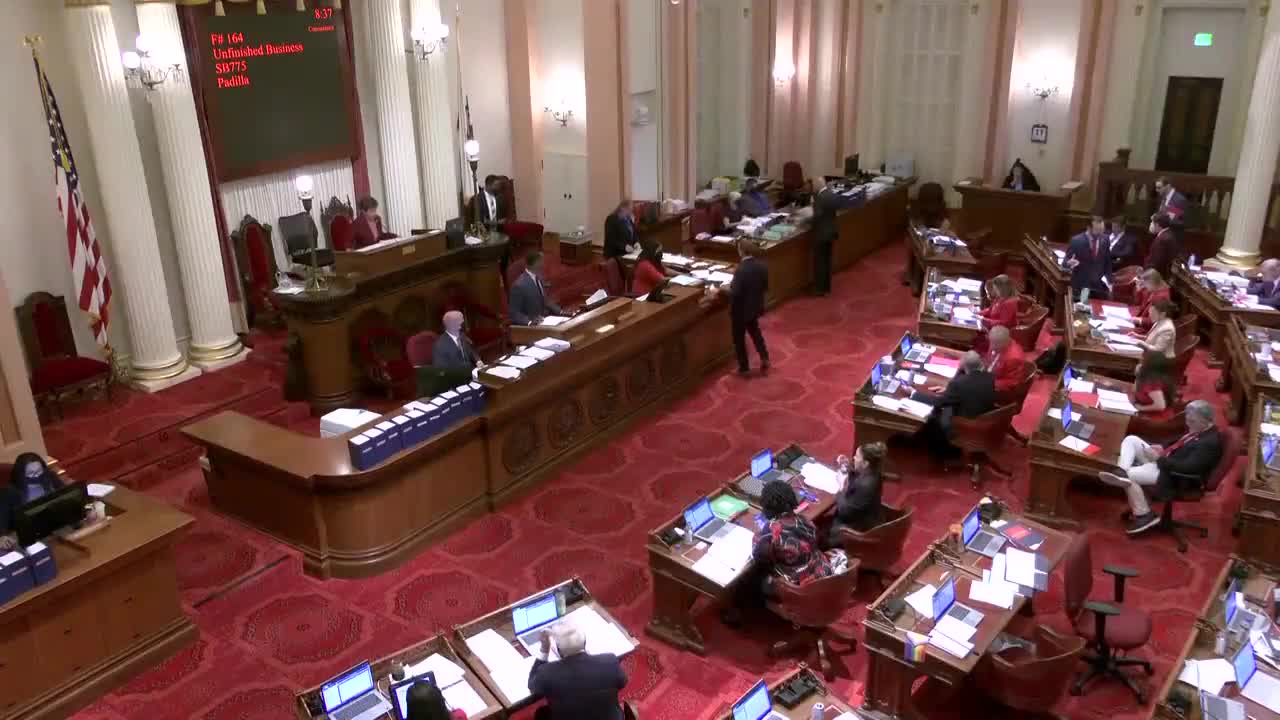
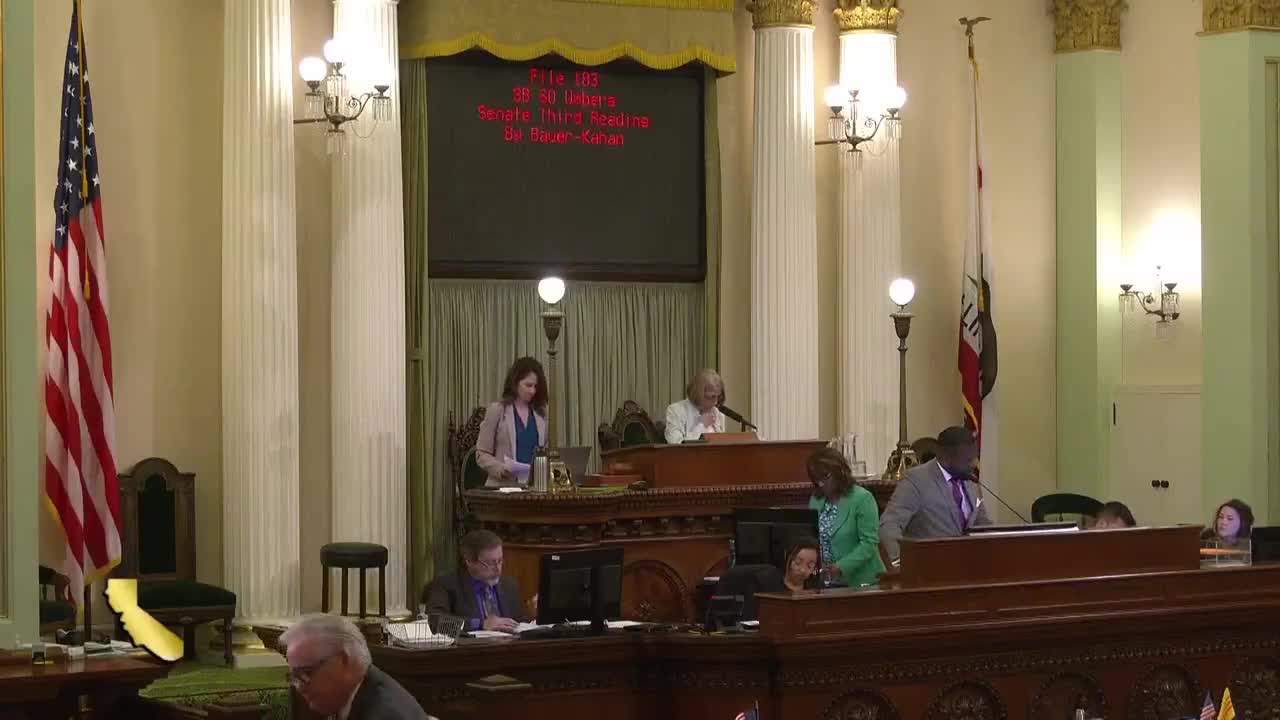

Bill Author