SB 601: Professions and vocations: contractors: home improvement contracts: prohibited business practices: limitation of actions.
- Session Year: 2023-2024
- House: Senate
- Latest Version Date: 2023-10-07
Current Status:
Passed
(2023-10-07: Chaptered by Secretary of State. Chapter 403, Statutes of 2023.)
Introduced
In Committee
First Chamber
In Committee
Second Chamber
Enacted
(1)Existing law, the Contractors State License Law, defines and regulates the activities of contractors and provides for their licensure, regulation, and discipline by the Contractors State License Board within the Department of Consumer Affairs (department). That law requires a home improvement contract, as defined, to be in writing and include the contract amount, as specified, and prohibits any downpayment for that contract from exceeding the lesser of $1,000 or 10% of the contract amount. Except for a downpayment, existing law prohibits the contractor from requesting or accepting payment that exceeds the value of the work performed or material delivered. Existing law makes the violation of these provisions a misdemeanor and sets the penalty as a fine of not less than $100 nor more than $5,000, or by imprisonment in a county jail not exceeding one year, or by both that fine and imprisonment.
This bill would, for violations that take place in a location damaged by natural disaster, as specified, require the court to impose the maximum fine for the above-described crimes.
(2)Existing law makes any person who commits specified acts involving a license, certificate, permit, or registration issued by the department guilty of a misdemeanor. Those acts include lending the persons license to any other person or knowingly permitting the use thereof by another, and knowingly permitting any unlawful use of a license issued to the person. Existing law, except as provided, limits the time for beginning prosecution for commission of specified offenses to one year after commission of the offense.
With regard to individuals licensed pursuant to the Contractors State License Law who commit the above-described acts, this bill would instead authorize prosecution for a misdemeanor violation of the provisions described above involving use of a license issued by the board to begin within 3 years after discovery of the commission of the offense, or within 3 years after completion of the offense, whichever is later. By extending the statute of limitations for a crime, the bill would impose a state-mandated local program.
(3)The California Constitution requires the state to reimburse local agencies and school districts for certain costs mandated by the state. Statutory provisions establish procedures for making that reimbursement.
This bill would provide that no reimbursement is required by this act for a specified reason.
(1)Existing law, the Contractors State License Law, defines and regulates the activities of contractors and provides for their licensure, regulation, and discipline by the Contractors State License Board within the Department of Consumer Affairs (department). That law requires a home improvement contract, as defined, to be in writing and include the contract amount, as specified, and prohibits any downpayment for that contract from exceeding the lesser of $1,0000 $1,000 or 10% of the contract amount. Except for a downpayment, existing law prohibits the contractor from requesting or accepting payment that exceeds the value of the work performed or material delivered. Existing law makes the violation of these provisions a misdemeanor and sets the penalty as a fine of not less than $100 nor more than $5,000, or by imprisonment in a county jail not exceeding one year, or by both that fine and imprisonment.
This bill would, for violations that take place in a location damaged by natural disaster, as specified, increase the monetary fine for the above-described crimes to not less than $5,000 nor more than $15,000. require the court to impose the maximum fine for the above-described crimes.
(2)Existing law makes any person who commits specified acts involving a license, certificate, permit, or registration issued by the department guilty of a misdemeanor. Those acts include lending the persons license to any other person or knowingly permitting the use thereof by another, and knowingly permitting any unlawful use of a license issued to the person. Existing law, except as provided, limits the time for beginning prosecution for commission of specified offenses to one year after commission of the offense.
This bill would
With regard to individuals licensed pursuant to the Contractors State License Law who commit the above-described acts, this bill would instead authorize prosecution for a misdemeanor violation of the provisions described above involving use of a license issued by the department board to begin within 3 years after discovery of the commission of the offense, or within 3 years after completion of the offense, whichever is later. Because the bill would make more people subject to prosecution for commission of a crime, By extending the statute of limitations for a crime, the bill would impose a state-mandated local program.
(3)The California Constitution requires the state to reimburse local agencies and school districts for certain costs mandated by the state. Statutory provisions establish procedures for making that reimbursement.
This bill would provide that no reimbursement is required by this act for a specified reason.
(1)Existing law, the Contractors State License Law, defines and regulates the activities of contractors and provides for their licensure, regulation, and discipline by the Contractors State License Board within the Department of Consumer Affairs (department). Existing law identifies the projects for which a home improvement contract, as defined, is required, and outlines those contract requirements. Existing law also lists those items that are required to be in that contract or may be provided as an attachment. That law requires a home improvement contract, as defined, to be in writing and include the contract amount, as specified, and prohibits any downpayment for that contract from exceeding the lesser of $1,0000 or 10% of the contract amount. Except for a downpayment, existing law prohibits the contractor from requesting or accepting payment that exceeds the value of the work performed or material delivered. Existing law makes the violation of these provisions a misdemeanor and sets the penalty as a fine of not less than $100 nor more than $5,000, or by imprisonment in a county jail not exceeding one year, or by both that fine and imprisonment.
This bill would require that a home improvement contract by a prime contractor for the reconstruction, restoration, or rebuilding of a residential property that was damaged or destroyed by a natural disaster, as specified, include a specified provision requiring the prime contractor to file separate performance and payment bonds that meet prescribed criteria. The bill would provide that failure of a prime contractor to comply with these provisions would be cause for disciplinary action.This bill would, for violations that take place in a location damaged by natural disaster, as specified, increase the monetary fine for the above-described crimes to not less than $5,000 nor more than $15,000.
(2)Existing law makes any person who commits specified acts involving a license, certificate, permit, or registration issued by the department guilty of a misdemeanor. Existing law, except as provided, limits the time for beginning prosecution for commission of specified offenses to one year after commission of the offense.
This bill would authorize prosecution for a misdemeanor violation of the provisions described above involving use of a license issued by the department to begin within 3 years after discovery of the commission of the offense, or within 3 three years after completion of the offense, whichever is later. Because the bill would make more people subject to prosecution for commission of a crime, the bill would impose a state-mandated local program.
(3)The California Constitution requires the state to reimburse local agencies and school districts for certain costs mandated by the state. Statutory provisions establish procedures for making that reimbursement.
This bill would provide that no reimbursement is required by this act for a specified reason.
(1)Existing law, the Contractors Contractors State License Law, defines and regulates the activities of contractors and provides for their licensure, regulation, and discipline by the Contractors Contractors State License Board within the Department of Consumer Affairs. Affairs (department). Existing law identifies the projects for which a home improvement contract, as defined, is required, and outlines those contract requirements. Existing law also lists those items that are required to be in that contract or may be provided as an attachment.
This bill would require that a home improvement contract by a prime contractor for the reconstruction, restoration, or rebuilding of a residential property that was damaged or destroyed by a natural disaster, as specified, include a specified provision requiring the prime contractor to file separate performance and payment bonds that meet prescribed criteria. The bill would provide that failure of a prime contractor to comply with these provisions would be cause for disciplinary action.
(2)Existing law makes any person who commits specified acts involving a license, certificate, permit, or registration issued by the department guilty of a misdemeanor. Existing law, except as provided, limits the time for beginning prosecution for commission of specified offenses to one year after commission of the offense.
This bill would authorize prosecution for a misdemeanor violation of the provisions described above involving use of a license issued by the department to begin within 3 years after discovery of the commission of the offense, or within 3 three years after completion of the offense, whichever is later. Because the bill would make more people subject to prosecution for commission of a crime, the bill would impose a state-mandated local program.
(3)The California Constitution requires the state to reimburse local agencies and school districts for certain costs mandated by the state. Statutory provisions establish procedures for making that reimbursement.
This bill would provide that no reimbursement is required by this act for a specified reason.
This bill would state that it is the intent of the Legislature to enact legislation that would relate to the Contractors State License Board.Existing law, the Contractors State License Law, defines and regulates the activities of contractors and provides for their licensure, regulation, and discipline by the Contractors State License Board within the Department of Consumer Affairs.
This bill would state that it is the intent of the Legislature to enact legislation that would relate to the Contractors State License Board.
This section applies to all home improvement contracts, as defined in Section 7151.2, between an owner or tenant and a contractor, whether a general contractor or a specialty contractor, that is licensed or subject to be licensed pursuant to this chapter with regard to the transaction.
(a)Failure by the licensee or a person subject to be licensed under this chapter, or by their agent or salesperson, to comply with the following provisions is cause for discipline:
(1)The contract shall be in writing and shall include the agreed contract amount in dollars and cents. The contract amount shall include the entire cost of the contract, including profit, labor, and materials, but excluding finance charges.
(2)If there is a separate finance charge between the contractor and the person contracting for home improvement, the finance charge shall be set out separately from the contract amount.
(3)If a downpayment will be charged, the downpayment shall not exceed one thousand dollars ($1,000) or 10 percent of the contract amount, whichever amount is less.
(4)If, in addition to a downpayment, the contract provides for payments to be made prior to completion of the work, the contract shall include a schedule of payments in dollars and cents specifically referencing the amount of work or services to be performed and any materials and equipment to be supplied.
(5)Except for a downpayment, the contractor shall neither request nor accept payment that exceeds the value of the work performed or material delivered. The prohibition prescribed by this paragraph extends to advance payment in whole or in part from any lender or financier for the performance or sale of home improvement goods or services.
(6)Upon any payment by the person contracting for home improvement, and prior to any further payment being made, the contractor shall, if requested, obtain and furnish to the person a full and unconditional release from any potential lien claimant claim or mechanics lien authorized pursuant to Sections 8400 and 8404 of the Civil Code for any portion of the work for which payment has been made. The person contracting for home improvement may withhold all further payments until these releases are furnished.
(7)If the contract provides for a payment of a salespersons commission out of the contract price, that payment shall be made on a pro rata basis in proportion to the schedule of payments made to the contractor by the disbursing party in accordance with paragraph (4).
(8)A contractor furnishing a performance and payment bond, lien and completion bond, or a bond equivalent or joint control approved by the registrar covering full performance and payment is exempt from paragraphs (3), (4), and (5), and need not include, as part of the contract, the statement regarding the downpayment specified in subparagraph (C) of paragraph (8) of subdivision (d) of Section 7159, the details and statement regarding progress payments specified in paragraph (9) of subdivision (d) of Section 7159, or the Mechanics Lien Warning specified in paragraph (4) of subdivision (e) of Section 7159. A contractor furnishing these bonds, bond equivalents, or a joint control approved by the registrar may accept payment prior to completion. If the contract provides for a contractor to furnish joint control, the contractor shall not have any financial or other interest in the joint control. Notwithstanding any other law, a licensee shall be licensed in this state in an active status for not less than two years prior to submitting an Application for Approval of Blanket Performance and Payment Bond as provided in Section 858.2 of Title 16 of the California Code of Regulations as it read on January 1, 2016.
(b)(1)A violation of paragraph (1), (3), or (5) of subdivision (a) by a licensee or a person subject to be licensed under this chapter, or by their agent or salesperson, is a misdemeanor punishable by a fine of not less than one hundred dollars ($100) nor more than five thousand dollars ($5,000), or by imprisonment in a county jail not exceeding one year, or by both that fine and imprisonment. If a violation occurs in a location damaged by a natural disaster for which a state of emergency is proclaimed by the Governor pursuant to Section 8625 of the Government Code or for which an emergency or major disaster is declared by the President of the United States, the court shall impose the maximum fine.
(2)(A)An indictment or information against a person who is not licensed but who is required to be licensed under this chapter shall be brought, or a criminal complaint filed, for a violation of this section, in accordance with paragraph (4) of subdivision (d) of Section 802 of the Penal Code, within four years from the date of the contract or, if the contract is not reduced to writing, from the date the buyer makes the first payment to the contractor.
(B)An indictment or information against a person who is licensed under this chapter shall be brought, or a criminal complaint filed, for a violation of this section, in accordance with paragraph (2) of subdivision (d) of Section 802 of the Penal Code, within two years from the date of the contract or, if the contract is not reduced to writing, from the date the buyer makes the first payment to the contractor.
(C)The limitations on actions in this subdivision shall not apply to any administrative action filed against a licensed contractor.
(c)(1)Any person who violates this section as part of a plan or scheme to defraud an owner or tenant of a residential or nonresidential structure, including a mobilehome or manufactured home, in connection with the offer or performance of repairs to the structure for damage caused by a natural disaster, shall be ordered by the court to make full restitution to the victim based on the persons ability to pay, defined as the overall capability of the defendant to reimburse the costs, or a portion of the costs, including consideration of, but not limited to, all of the following:
(A)The defendants present financial position.
(B)The defendants reasonably discernible future financial position, provided that the court shall not consider a period of more than one year from the date of the hearing for purposes of determining the reasonably discernible future financial position of the defendant.
(C)The likelihood that the defendant will be able to obtain employment within one year from the date of the hearing.
(D)Any other factor that may bear upon the defendants financial capability to reimburse the county for costs.
(2)In addition to full restitution, and imprisonment authorized by this section, the court may impose a fine of not less than five hundred dollars ($500) nor more than twenty-five thousand dollars ($25,000), based upon the defendants ability to pay. This subdivision applies to natural disasters for which a state of emergency is proclaimed by the Governor pursuant to Section 8625 of the Government Code, or for which an emergency or major disaster is declared by the President of the United States.
(d)This section shall become operative on July 1, 2021.
SEC. 2.Section 802 of the Penal Code is amended to read:802.(a)Except as provided in subdivision (b), (c), (d), or (e), prosecution for an offense not punishable by death or imprisonment in the state prison or pursuant to subdivision (h) of Section 1170 shall be commenced within one year after commission of the offense.
(b)Prosecution for a misdemeanor violation of Section 647.6 or former Section 647a committed with or upon a minor under 14 years of age shall be commenced within three years after commission of the offense.
(c)Prosecution of a misdemeanor violation of Section 729 of the Business and Professions Code shall be commenced within two years after commission of the offense.
(d)Prosecution of a misdemeanor violation of Chapter 9 (commencing with Section 7000) of Division 3 of the Business and Professions Code shall be commenced as follows:
(1)With respect to Sections 7028.17, 7068.5, and 7068.7 of the Business and Professions Code, within one year of the commission of the offense.
(2)With respect to Sections 7027.1, 7028.1, 7028.15, 7118.4, 7118.5, 7118.6, 7126, 7153, 7156, 7157, 7158, 7159.5 (licensee only), 7159.14 (licensee only), 7161, and 7189 of the Business and Professions Code, within two years of the commission of the offense.
(3)With respect to Sections 7027.3 and 7028.16 of the Business and Professions Code, within three years of the commission of the offense.
(4)With respect to Sections 7028, 7159.5 (nonlicensee only), and 7159.14 (nonlicensee only) of the Business and Professions Code, within four years of the commission of the offense.
(e)(1)Prosecution for a misdemeanor violation of Section 6126, 10085.6, 10139, or 10147.6 of the Business and Professions Code or Section 2944.6 or 2944.7 of the Civil Code shall be commenced within three years after discovery of the commission of the offense, or within three years after completion of the offense, whichever is later.
(2)Prosecution for a misdemeanor violation of subdivisions (b) and (e) of Section 119 of the Business and Professions Code, by parties licensed or subject to licensure pursuant to Chapter 9 (commencing with Section 7000) of Division 3 of that code, within three years after discovery of the commission of the offense, or within three years after completion of the offense, whichever is later.
SEC. 3.No reimbursement is required by this act pursuant to Section 6 of Article XIIIB of the California Constitution because the only costs that may be incurred by a local agency or school district will be incurred because this act creates a new crime or infraction, eliminates a crime or infraction, or changes the penalty for a crime or infraction, within the meaning of Section 17556 of the Government Code, or changes the definition of a crime within the meaning of Section 6 of Article XIIIB of the California Constitution.
This section applies to all home improvement contracts, as defined in Section 7151.2, between an owner or tenant and a contractor, whether a general contractor or a specialty contractor, that is licensed or subject to be licensed pursuant to this chapter with regard to the transaction.
(a)Failure by the licensee or a person subject to be licensed under this chapter, or by their agent or salesperson, to comply with the following provisions is cause for discipline:
(1)The contract shall be in writing and shall include the agreed contract amount in dollars and cents. The contract amount shall include the entire cost of the contract, including profit, labor, and materials, but excluding finance charges.
(2)If there is a separate finance charge between the contractor and the person contracting for home improvement, the finance charge shall be set out separately from the contract amount.
(3)If a downpayment will be charged, the downpayment shall not exceed one thousand dollars ($1,000) or 10 percent of the contract amount, whichever amount is less.
(4)If, in addition to a downpayment, the contract provides for payments to be made prior to completion of the work, the contract shall include a schedule of payments in dollars and cents specifically referencing the amount of work or services to be performed and any materials and equipment to be supplied.
(5)Except for a downpayment, the contractor shall neither request nor accept payment that exceeds the value of the work performed or material delivered. The prohibition prescribed by this paragraph extends to advance payment in whole or in part from any lender or financier for the performance or sale of home improvement goods or services.
(6)Upon any payment by the person contracting for home improvement, and prior to any further payment being made, the contractor shall, if requested, obtain and furnish to the person a full and unconditional release from any potential lien claimant claim or mechanics lien authorized pursuant to Sections 8400 and 8404 of the Civil Code for any portion of the work for which payment has been made. The person contracting for home improvement may withhold all further payments until these releases are furnished.
(7)If the contract provides for a payment of a salespersons commission out of the contract price, that payment shall be made on a pro rata basis in proportion to the schedule of payments made to the contractor by the disbursing party in accordance with paragraph (4).
(8)A contractor furnishing a performance and payment bond, lien and completion bond, or a bond equivalent or joint control approved by the registrar covering full performance and payment is exempt from paragraphs (3), (4), and (5), and need not include, as part of the contract, the statement regarding the downpayment specified in subparagraph (C) of paragraph (8) of subdivision (d) of Section 7159, the details and statement regarding progress payments specified in paragraph (9) of subdivision (d) of Section 7159, or the Mechanics Lien Warning specified in paragraph (4) of subdivision (e) of Section 7159. A contractor furnishing these bonds, bond equivalents, or a joint control approved by the registrar may accept payment prior to completion. If the contract provides for a contractor to furnish joint control, the contractor shall not have any financial or other interest in the joint control. Notwithstanding any other law, a licensee shall be licensed in this state in an active status for not less than two years prior to submitting an Application for Approval of Blanket Performance and Payment Bond as provided in Section 858.2 of Title 16 of the California Code of Regulations as it read on January 1, 2016.
(b)(1)(A)A violation of paragraph (1), (3), or (5) of subdivision (a) by a licensee or a person subject to be licensed under this chapter, or by their agent or salesperson, is a misdemeanor punishable by a fine of not less than one hundred dollars ($100) nor more than five thousand dollars ($5,000), or by imprisonment in a county jail not exceeding one year, or by both that fine and imprisonment. If a violation occurs in a location damaged by a natural disaster for which a state of emergency is proclaimed by the Governor pursuant to Section 8625 of the Government Code or for which an emergency or major disaster is declared by the President of the United States, the court shall impose the maximum fine.
(B)If a violation described in subparagraph (A) occurs in a location damaged by a natural disaster for which a state of emergency is proclaimed by the Governor pursuant to Section 8625 of the Government Code or for which an emergency or major disaster is declared by the President of the United States, that violation is a misdemeanor punishable by a fine of not less than five thousand dollars ($5,000) nor more than fifteen thousand dollars ($15,000), or by imprisonment in a county jail not exceeding one year, or by both that fine and imprisonment.(2)(A)An indictment or information against a person who is not licensed but who is required to be licensed under this chapter shall be brought, or a criminal complaint filed, for a violation of this section, in accordance with paragraph (4) of subdivision (d) of Section 802 of the Penal Code, within four years from the date of the contract or, if the contract is not reduced to writing, from the date the buyer makes the first payment to the contractor.
(B)An indictment or information against a person who is licensed under this chapter shall be brought, or a criminal complaint filed, for a violation of this section, in accordance with paragraph (2) of subdivision (d) of Section 802 of the Penal Code, within two years from the date of the contract or, if the contract is not reduced to writing, from the date the buyer makes the first payment to the contractor.
(C)The limitations on actions in this subdivision shall not apply to any administrative action filed against a licensed contractor.
(c)(1)Any person who violates this section as part of a plan or scheme to defraud an owner or tenant of a residential or nonresidential structure, including a mobilehome or manufactured home, in connection with the offer or performance of repairs to the structure for damage caused by a natural disaster, shall be ordered by the court to make full restitution to the victim based on the persons ability to pay, defined as the overall capability of the defendant to reimburse the costs, or a portion of the costs, including consideration of, but not limited to, all of the following:
(A)The defendants present financial position.
(B)The defendants reasonably discernible future financial position, provided that the court shall not consider a period of more than one year from the date of the hearing for purposes of determining the reasonably discernible future financial position of the defendant.
(C)The likelihood that the defendant will be able to obtain employment within one year from the date of the hearing.
(D)Any other factor that may bear upon the defendants financial capability to reimburse the county for costs.
(2)In addition to full restitution, and imprisonment authorized by this section, the court may impose a fine of not less than five hundred dollars ($500) nor more than twenty-five thousand dollars ($25,000), based upon the defendants ability to pay. This subdivision applies to natural disasters for which a state of emergency is proclaimed by the Governor pursuant to Section 8625 of the Government Code, or for which an emergency or major disaster is declared by the President of the United States.
(d)This section shall become operative on July 1, 2021.
SEC. 2.Section 802 of the Penal Code is amended to read:802.(a)Except as provided in subdivision (b), (c), (d), or (e), prosecution for an offense not punishable by death or imprisonment in the state prison or pursuant to subdivision (h) of Section 1170 shall be commenced within one year after commission of the offense.
(b)Prosecution for a misdemeanor violation of Section 647.6 or former Section 647a committed with or upon a minor under 14 years of age shall be commenced within three years after commission of the offense.
(c)Prosecution of a misdemeanor violation of Section 729 of the Business and Professions Code shall be commenced within two years after commission of the offense.
(d)Prosecution of a misdemeanor violation of Chapter 9 (commencing with Section 7000) of Division 3 of the Business and Professions Code shall be commenced as follows:
(1)With respect to Sections 7028.17, 7068.5, and 7068.7 of the Business and Professions Code, within one year of the commission of the offense.
(2)With respect to Sections 7027.1, 7028.1, 7028.15, 7118.4, 7118.5, 7118.6, 7126, 7153, 7156, 7157, 7158, 7159.5 (licensee only), 7159.14 (licensee only), 7161, and 7189 of the Business and Professions Code, within two years of the commission of the offense.
(3)With respect to Sections 7027.3 and 7028.16 of the Business and Professions Code, within three years of the commission of the offense.
(4)With respect to Sections 7028, 7159.5 (nonlicensee only), and 7159.14 (nonlicensee only) of the Business and Professions Code, within four years of the commission of the offense.
(e)(1)Prosecution for a misdemeanor violation of Section 119, 6126, 10085.6, 10139, or 10147.6 of the Business and Professions Code or Section 2944.6 or 2944.7 of the Civil Code shall be commenced within three years after discovery of the commission of the offense, or within three years after completion of the offense, whichever is later.
(2)Prosecution for a misdemeanor violation of subdivisions (b) and (e) of Section 119 of the Business and Professions Code, by parties licensed or subject to licensure pursuant to Chapter 9 (commencing with Section 7000) of Division 3 of that code, within three years after discovery of the commission of the offense, or within three years after completion of the offense, whichever is later.
SEC. 3.No reimbursement is required by this act pursuant to Section 6 of Article XIIIB of the California Constitution because the only costs that may be incurred by a local agency or school district will be incurred because this act creates a new crime or infraction, eliminates a crime or infraction, or changes the penalty for a crime or infraction, within the meaning of Section 17556 of the Government Code, or changes the definition of a crime within the meaning of Section 6 of Article XIIIB of the California Constitution.
This section applies to all home improvement contracts, as defined in Section 7151.2, between an owner or tenant and a contractor, whether a general contractor or a specialty contractor, that is licensed or subject to be licensed pursuant to this chapter with regard to the transaction.
(a)Failure by the licensee or a person subject to be licensed under this chapter, or by their agent or salesperson, to comply with the following provisions is cause for discipline:
(1)The contract shall be in writing and shall include the agreed contract amount in dollars and cents. The contract amount shall include the entire cost of the contract, including profit, labor, and materials, but excluding finance charges.
(2)If there is a separate finance charge between the contractor and the person contracting for home improvement, the finance charge shall be set out separately from the contract amount.
(3)If a downpayment will be charged, the downpayment shall not exceed one thousand dollars ($1,000) or 10 percent of the contract amount, whichever amount is less.
(4)If, in addition to a downpayment, the contract provides for payments to be made prior to completion of the work, the contract shall include a schedule of payments in dollars and cents specifically referencing the amount of work or services to be performed and any materials and equipment to be supplied.
(5)Except for a downpayment, the contractor shall neither request nor accept payment that exceeds the value of the work performed or material delivered. The prohibition prescribed by this paragraph extends to advance payment in whole or in part from any lender or financier for the performance or sale of home improvement goods or services.
(6)Upon any payment by the person contracting for home improvement, and prior to any further payment being made, the contractor shall, if requested, obtain and furnish to the person a full and unconditional release from any potential lien claimant claim or mechanics lien authorized pursuant to Sections 8400 and 8404 of the Civil Code for any portion of the work for which payment has been made. The person contracting for home improvement may withhold all further payments until these releases are furnished.
(7)If the contract provides for a payment of a salespersons commission out of the contract price, that payment shall be made on a pro rata basis in proportion to the schedule of payments made to the contractor by the disbursing party in accordance with paragraph (4).
(8)A contractor furnishing a performance and payment bond, lien and completion bond, or a bond equivalent or joint control approved by the registrar covering full performance and payment is exempt from paragraphs (3), (4), and (5), and need not include, as part of the contract, the statement regarding the downpayment specified in subparagraph (C) of paragraph (8) of subdivision (d) of Section 7159, the details and statement regarding progress payments specified in paragraph (9) of subdivision (d) of Section 7159, or the Mechanics Lien Warning specified in paragraph (4) of subdivision (e) of Section 7159. A contractor furnishing these bonds, bond equivalents, or a joint control approved by the registrar may accept payment prior to completion. If the contract provides for a contractor to furnish joint control, the contractor shall not have any financial or other interest in the joint control. Notwithstanding any other law, a licensee shall be licensed in this state in an active status for not less than two years prior to submitting an Application for Approval of Blanket Performance and Payment Bond as provided in Section 858.2 of Title 16 of the California Code of Regulations as it read on January 1, 2016.
(b)(1)(A)A violation of paragraph (1), (3), or (5) of subdivision (a) by a licensee or a person subject to be licensed under this chapter, or by their agent or salesperson, is a misdemeanor punishable by a fine of not less than one hundred dollars ($100) nor more than five thousand dollars ($5,000), or by imprisonment in a county jail not exceeding one year, or by both that fine and imprisonment.
(B)If a violation described in subparagraph (A) occurs in a location damaged by a natural disaster for which a state of emergency is proclaimed by the Governor pursuant to Section 8625 of the Government Code or for which an emergency or major disaster is declared by the President of the United States, that violation is a misdemeanor punishable by a fine of not less than five thousand dollars ($5,000) nor more than fifteen thousand dollars ($15,000), or by imprisonment in a county jail not exceeding one year, or by both that fine and imprisonment.
(1)(2)(A)An indictment or information against a person who is not licensed but who is required to be licensed under this chapter shall be brought, or a criminal complaint filed, for a violation of this section, in accordance with paragraph (4) of subdivision (d) of Section 802 of the Penal Code, within four years from the date of the contract or, if the contract is not reduced to writing, from the date the buyer makes the first payment to the contractor.
(2)(B)An indictment or information against a person who is licensed under this chapter shall be brought, or a criminal complaint filed, for a violation of this section, in accordance with paragraph (2) of subdivision (d) of Section 802 of the Penal Code, within two years from the date of the contract or, if the contract is not reduced to writing, from the date the buyer makes the first payment to the contractor.
(3)(C)The limitations on actions in this subdivision shall not apply to any administrative action filed against a licensed contractor.
(c)(1)Any person who violates this section as part of a plan or scheme to defraud an owner or tenant of a residential or nonresidential structure, including a mobilehome or manufactured home, in connection with the offer or performance of repairs to the structure for damage caused by a natural disaster, shall be ordered by the court to make full restitution to the victim based on the persons ability to pay, defined as the overall capability of the defendant to reimburse the costs, or a portion of the costs, including consideration of, but not limited to, all of the following:
(A)The defendants present financial position.
(B)The defendants reasonably discernible future financial position, provided that the court shall not consider a period of more than one year from the date of the hearing for purposes of determining the reasonably discernible future financial position of the defendant.
(C)The likelihood that the defendant will be able to obtain employment within one year from the date of the hearing.
(D)Any other factor that may bear upon the defendants financial capability to reimburse the county for costs.
(2)In addition to full restitution, and imprisonment authorized by this section, the court may impose a fine of not less than five hundred dollars ($500) nor more than twenty-five thousand dollars ($25,000), based upon the defendants ability to pay. This subdivision applies to natural disasters for which a state of emergency is proclaimed by the Governor pursuant to Section 8625 of the Government Code, or for which an emergency or major disaster is declared by the President of the United States.
(d)This section shall become operative on July 1, 2021.
SEC. 2.Section 802 of the Penal Code is amended to read:802.(a)Except as provided in subdivision (b), (c), (d), or (e), prosecution for an offense not punishable by death or imprisonment in the state prison or pursuant to subdivision (h) of Section 1170 shall be commenced within one year after commission of the offense.
(b)Prosecution for a misdemeanor violation of Section 647.6 or former Section 647a committed with or upon a minor under the age of 14 years 14 years of age shall be commenced within three years after commission of the offense.
(c)Prosecution of a misdemeanor violation of Section 729 of the Business and Professions Code shall be commenced within two years after commission of the offense.
(d)Prosecution of a misdemeanor violation of Chapter 9 (commencing with Section 7000) of Division 3 of the Business and Professions Code shall be commenced as follows:
(1)With respect to Sections 7028.17, 7068.5, and 7068.7 of the Business and Professions Code, within one year of the commission of the offense.
(2)With respect to Sections 7027.1, 7028.1, 7028.15, 7118.4, 7118.5, 7118.6, 7126, 7153, 7156, 7157, 7158, 7159.5 (licensee only), 7159.14 (licensee only), 7161, and 7189 of the Business and Professions Code, within two years of the commission of the offense.
(3)With respect to Sections 7027.3 and 7028.16 of the Business and Professions Code, within three years of the commission of the offense.
(4)With respect to Sections 7028, 7159.5 (nonlicensee only), and 7159.14 (nonlicensee only) of the Business and Professions Code, within four years of the commission of the offense.
(e)Prosecution for a misdemeanor violation of Section 119, 6126, 10085.6, 10139, or 10147.6 of the Business and Professions Code or Section 2944.6 or 2944.7 of the Civil Code shall be commenced within three years after discovery of the commission of the offense, or within three years after completion of the offense, whichever is later.
SEC. 3.No reimbursement is required by this act pursuant to Section 6 of Article XIIIB of the California Constitution because the only costs that may be incurred by a local agency or school district will be incurred because this act creates a new crime or infraction, eliminates a crime or infraction, or changes the penalty for a crime or infraction, within the meaning of Section 17556 of the Government Code, or changes the definition of a crime within the meaning of Section 6 of Article XIIIB of the California Constitution.
(a)A home improvement contract by a prime contractor for the reconstruction, restoration, or rebuilding of a residential property that was damaged or destroyed by a natural disaster for which a state of emergency is proclaimed by the Governor pursuant to Section 8625 of the Government Code, or for which an emergency or major disaster is declared by the President of the United States, shall include a provision that requires the prime contractor to file separate performance and payment bonds.
(b)Any performance and payment bond shall meet all of the following criteria:
(1)A bond shall be in a form executed by an admitted surety insurer and shall not be a deposit in lieu of a bond.
(2)Each bond shall be in a sum equal to at least one-half of the contract price.
(3)The payment bond shall secure the payment of any claim of a laborer, mechanic, or materialperson employed on the work under the contract and shall contain any other provision required by law.
(4)The performance bond shall guarantee the faithful performance of the contract by the prime contractor.
(c)This section operates independently of any other bonding provision in this chapter.
(d)The failure of a prime contractor to comply with this section is cause for disciplinary action.
SEC. 2.Section 802 of the Penal Code is amended to read:802.(a)Except as provided in subdivision (b), (c), (d), or (e), prosecution for an offense not punishable by death or imprisonment in the state prison or pursuant to subdivision (h) of Section 1170 shall be commenced within one year after commission of the offense.
(b)Prosecution for a misdemeanor violation of Section 647.6 or former Section 647a committed with or upon a minor under the age of 14 years shall be commenced within three years after commission of the offense.
(c)Prosecution of a misdemeanor violation of Section 729 of the Business and Professions Code shall be commenced within two years after commission of the offense.
(d)Prosecution of a misdemeanor violation of Chapter 9 (commencing with Section 7000) of Division 3 of the Business and Professions Code shall be commenced as follows:
(1)With respect to Sections 7028.17, 7068.5, and 7068.7 of the Business and Professions Code, within one year of the commission of the offense.
(2)With respect to Sections 7027.1, 7028.1, 7028.15, 7118.4, 7118.5, 7118.6, 7126, 7153, 7156, 7157, 7158, 7159.5 (licensee only), 7159.14 (licensee only), 7161, and 7189 of the Business and Professions Code, within two years of the commission of the offense.
(3)With respect to Sections 7027.3 and 7028.16 of the Business and Professions Code, within three years of the commission of the offense.
(4)With respect to Sections 7028, 7159.5 (nonlicensee only), and 7159.14 (nonlicensee only) of the Business and Professions Code, within four years of the commission of the offense.
(e)Prosecution for a misdemeanor violation of Section 119, 6126, 10085.6, 10139, or 10147.6 of the Business and Professions Code or Section 2944.6 or 2944.7 of the Civil Code shall be commenced within three years after discovery of the commission of the offense, or within three years after completion of the offense, whichever is later.
SEC. 3.No reimbursement is required by this act pursuant to Section 6 of Article XIIIB of the California Constitution because the only costs that may be incurred by a local agency or school district will be incurred because this act creates a new crime or infraction, eliminates a crime or infraction, or changes the penalty for a crime or infraction, within the meaning of Section 17556 of the Government Code, or changes the definition of a crime within the meaning of Section 6 of Article XIIIB of the California Constitution.
SECTION 1.It is the intent of the Legislature to enact legislation relating to the Contractors State License Board.It is the intent of the Legislature to enact legislation relating to the Contractors State License Board.
|
Date
|
Status
|
|---|---|
| Oct 7, 2023 | Chaptered by Secretary of State. Chapter 403, Statutes of 2023. |
| Oct 7, 2023 | Approved by the Governor. |
| Sep 21, 2023 | Enrolled and presented to the Governor at 4 p.m. |
| Sep 14, 2023 | Assembly amendments concurred in. (Ayes 40. Noes 0. Page 2818.) Ordered to engrossing and enrolling. |
| Sep 12, 2023 | In Senate. Concurrence in Assembly amendments pending. |
| Sep 12, 2023 | Read third time. Passed. (Ayes 80. Noes 0. Page 3264.) Ordered to the Senate. |
| Sep 5, 2023 | Read second time. Ordered to third reading. |
| Sep 1, 2023 | From committee: Do pass. (Ayes 16. Noes 0.) (September 1). |
| Aug 16, 2023 | August 16 set for first hearing. Placed on suspense file. |
| Jul 13, 2023 | Read second time and amended. Re-referred to Com. on APPR. |
| Jul 12, 2023 | From committee: Do pass as amended and re-refer to Com. on APPR. with recommendation: To consent calendar. (Ayes 8. Noes 0.) (July 11). |
| Jun 20, 2023 | From committee: Do pass and re-refer to Com. on PUB. S. with recommendation: To consent calendar. (Ayes 19. Noes 0.) (June 20). Re-referred to Com. on PUB. S. |
| Jun 1, 2023 | Referred to Coms. on B. & P. and PUB. S. |
| May 25, 2023 | In Assembly. Read first time. Held at Desk. |
| May 24, 2023 | Read third time. Passed. (Ayes 40. Noes 0. Page 1279.) Ordered to the Assembly. |
| May 22, 2023 | Read second time. Ordered to third reading. |
| May 18, 2023 | Read second time and amended. Ordered to second reading. |
| May 18, 2023 | From committee: Do pass as amended. (Ayes 5. Noes 0. Page 1176.) (May 18). |
| May 12, 2023 | Set for hearing May 18. |
| May 8, 2023 | May 8 hearing: Placed on APPR suspense file. |
| May 1, 2023 | Set for hearing May 8. |
| Apr 26, 2023 | From committee: Do pass and re-refer to Com. on APPR. (Ayes 5. Noes 0. Page 901.) (April 25). Re-referred to Com. on APPR. |
| Apr 17, 2023 | From committee: Do pass and re-refer to Com. on PUB S. (Ayes 13. Noes 0. Page 747.) (April 17). Re-referred to Com. on PUB S. |
| Apr 11, 2023 | Set for hearing April 25 in PUB S. pending receipt. |
| Apr 3, 2023 | Set for hearing April 17. |
| Mar 29, 2023 | Re-referred to Coms. on B., P. & E. D. and PUB S. |
| Mar 22, 2023 | From committee with author's amendments. Read second time and amended. Re-referred to Com. on RLS. |
| Feb 22, 2023 | Referred to Com. on RLS. |
| Feb 16, 2023 | From printer. May be acted upon on or after March 18. |
| Feb 15, 2023 | Introduced. Read first time. To Com. on RLS. for assignment. To print. |
|
Date
|
Description
|
Location
|
Votes
|
|
|---|---|---|---|---|
| Sep 14, 2023 | Unfinished Business SB601 McGuire Concurrence | Senate Floor |
Passed |
|
| Sep 12, 2023 | SB 601 McGuire Senate Third Reading By Berman | Assembly Floor |
Passed |
|
| Sep 1, 2023 | Do pass. | Assembly Standing Committee on Appropriations |
Passed |
|
| Jul 11, 2023 | Do pass as amended, and be re-referred to the Committee on [Appropriations] with recommendation: To Consent Calendar | Assembly Standing Committee on Public Safety |
Passed |
|
| Jun 20, 2023 | Do pass and be re-referred to the Committee on [Public Safety] with recommendation: To Consent Calendar | Assembly Standing Committee on Business and Professions |
Passed |
|
| May 24, 2023 | Senate 3rd Reading SB601 McGuire | Senate Floor |
Passed |
|
| May 18, 2023 | Do pass as amended | Senate Standing Committee on Appropriations |
Passed |
|
| May 8, 2023 | Placed on suspense file | Senate Standing Committee on Appropriations |
Passed |
|
| Apr 25, 2023 | Do pass, but first be re-referred to the Committee on [Appropriations] | Senate Standing Committee on Public Safety |
Passed |
|
| Apr 17, 2023 | Do pass, but first be re-referred to the Committee on [Public Safety] | Senate Standing Committee on Business, Professions and Economic Development |
Passed |
This list shows positions taken on this bill by organizations on the date displayed, which is linked to the original source.
Positions by individuals are not included.
|
Organization
|
Position
|
Date
|
|---|---|---|
| California Surety Federation | ** Support | |
| Contractors State License Board | ** Support |
SENATE RULES COMMITTEE Office of Senate Floor Analyses (916) 651-1520 Fax: (916) 327-4478 | SB 601 |
UNFINISHED BUSINESS
Bill No: SB 601
Author: McGuire (D)
Amended: 7/13/23
Vote: 21
SENATE BUS., PROF. & ECON. DEV. COMMITTEE: 13-0, 4/17/23
AYES: Roth, Nguyen, Alvarado-Gil, Archuleta, Ashby, Becker, Dodd, Eggman, Glazer, Niello, Smallwood-Cuevas, Wahab, Wilk
SENATE PUBLIC SAFETY COMMITTEE: 5-0, 4/25/23
AYES: Wahab, Ochoa Bogh, Bradford, Skinner, Wiener
SENATE APPROPRIATIONS COMMITTEE: 5-0, 5/18/23
AYES: Portantino, Ashby, Bradford, Wahab, Wiener
NO VOTE RECORDED: Jones, Seyarto
SENATE FLOOR: 40-0, 5/24/23
AYES: Allen, Alvarado-Gil, Archuleta, Ashby, Atkins, Becker, Blakespear, Bradford, Caballero, Cortese, Dahle, Dodd, Durazo, Eggman, Glazer, Gonzalez, Grove, Hurtado, Jones, Laird, Limón, McGuire, Menjivar, Min, Newman, Nguyen, Niello, Ochoa Bogh, Padilla, Portantino, Roth, Rubio, Seyarto, Skinner, Smallwood-Cuevas, Stern, Umberg, Wahab, Wiener, Wilk
ASSEMBLY FLOOR: 80-0, 9/12/23 - See last page for vote
SUBJECT: Professions and vocations: contractors: home improvement contracts: prohibited business practices: limitation of actions
SOURCE: Contractors State License Board
DIGEST:
This bill specifies that if a violation of certain provisions of the Contractors Law occurs in a location damaged by a natural disaster for which a state of emergency has been declared, the court shall impose the maximum fine. The bill also adds violations pertaining to fraudulent or misrepresented licenses to specified provisions of the Penal Code (PEN) with a three-year statute of limitations period.
Assembly Amendments specify that contractor violations in disaster areas are subject to maximum fines allowable.
ANALYSIS:
Existing law:
- Establishes the Contractors State License Board (CSLB) to enforce and administer the Contractors State License Law (license law). (Business and Professions Code (BPC) § 7000 et seq.)
- Requires the Registrar to issue a citation to a person whom, upon inspection or investigation, either upon complaint or otherwise, the Registrar has probable cause to believe is acting in the capacity of or engaging in the business of a contractor or salesperson within this state without having a license or registration in good standing and is not otherwise exempted from the law. (BPC § 7028.7(a))
- Makes a person guilty of a misdemeanor who does any of the following:
- displays or causes or permits to be displayed or has in the person’s possession either of the following:
- a canceled, revoked, suspended, or fraudulently altered license.
- a fictitious license or any document simulating a license or purporting to be or have been issued as a license;
- Lends the person’s license to any other person or knowingly permits the use thereof by another.
- Displays or represents any license not issued to the person as being the person’s license.
- Fails or refuses to surrender to the issuing authority upon its lawful written demand any license, registration, permit, or certificate, which has been suspended, revoked, or canceled.
- Knowingly permits any unlawful use of a license issued to the person.
- Photographs, photostats, duplicates, manufactures, or in any way reproduces any license or facsimile thereof in a manner that it could be mistaken for a valid license, or displays or has in the person’s possession any such photograph, photostat, duplicate, reproduction, or facsimile unless authorized.
- Buys or receives a fraudulent, forged, or counterfeited license knowing that it is fraudulent, forged, or counterfeited. (BPC § 119)
- Requires prosecution for an offense not punishable by death or imprisonment in the state prison to be commenced within one year of the offense, unless specified. (PEN) § 802(a))
- States prosecution for a misdemeanor of specified provisions of the BPC, commence within three years after discovery of the offense or within three years after completion of the offense, as specified. (PEN § 802)
This bill:
- Specifies that if a violation of certain provisions of the Contractors Law occurs in a location damaged by a natural disaster for which a state of emergency has been declared by the Governor, as specified or the President of the United States, the court shall impose the maximum fine.
- Adds violations pertaining to fraudulent or misrepresented licenses to specified provisions of the PEN with a three-year statute of limitations period.
Background
Current law, (BPC 7150 et seq.) specifies the requirements for home improvement contracts, establishes the registration program for home improvement salespersons, and defines home improvement, among other provisions. A home improvement contract and any changes made to that contract must be in writing, legible, easy to understand, and inform the consumer of his/her rights to cancel or rescind the contract. There are several specified requirements that must be contained in the home improvement contract, many of which are intended to help protect consumers including contract cancellation rights, down payment security, the prohibition on payment in advance of completed work, and undelivered materials.
In 2020, SB 1189 (McGuire, Chapter 364, Statutes of 2020) expanded the definition of “home improvement” to specifically include the reconstruction, rebuilding or restoration of a residential property destroyed by a natural disaster in a declared disaster area. This was to ensure that contracting work in a disaster area would be subject to the existing contract requirements-including down payment restrictions and right to cancel policies. Concerns expressed at that time about potentially bad actors taking advantage of consumers who need to rebuild or repair after a natural disaster.
BPC § 7159 specifies the types of construction related work which requires a home improvement contract, outlines the contract requirements, and lists the items that must be included in the contract, or may be provided as an attachment. The majority of construction related contracts whose labor and materials are more than $500 are subject to the requirements of a home improvement contract. If a contractor violates provision of the home improvement contract requirements including the down payment restrictions, that the contract be in writing and include the contract amount, or request payment that exceeds the value of the work, the contractor is subject to a fine of which at a minimum is $100 and ranges up to $5,000. This bill would increase the penalty to the maximum if the violation occurs in a disaster area as declared by the Governor or the President of the United States.
BPC § 119: Misdemeanors Pertaining to the Use of a License. Current law makes certain actions with respect to the fraudulent use/display of a license issued by an entity under the DCA, subject to a misdemeanor penalty. This includes, displaying a canceled or revoked license, having a fake license purporting that the holder is licensed, lending a license to someone else, buying or receiving a fraudulent license, among others. The statute of limitations for prosecuting that offense is one year. However, under PC § 802, there are certain offenses which have a three-year statute of limitations for specified violations pertaining to mortgage brokers and unlicensed practice of law. This proposal would add the violations specified in BPC § 119 to the list of misdemeanors in PC § 802(e) that have a statute of limitations of three years after discovery of the commission of the offense. Setting a three-year statute of limitations period would provide time for CSLB to investigate and pursue offenses for violating license provisions. As noted by the CSLB, the board may not receive a consumer complaint within the current one-year statute of limitations. Consequently, CSLB may be prevented from pursuing criminal action, making the only option administrative disciplinary action, which may not always be the most effective deterrent.
FISCAL EFFECT: Appropriation: No Fiscal Com.: Yes Local: Yes
According to the Assembly Appropriations Committee:
- Negligible costs to the Contractors State Licensing Board (CSLB). The CSLB does not anticipate additional workload during complaint investigations due to the maximum fine provisions.
- Cost pressures (Trial Court Trust Fund, General Fund), potentially in the low- to mid-hundreds of thousands of dollars annually, for trial courts to adjudicate additional causes of action brought under the provisions of this bill that would otherwise be barred under the statute of limitations in existing law. If five cases are filed in civil court annually requiring seven to 10 days (56 to 80 hours) of court time, at an average cost per hour of $1,000 in workload costs, the cost to the trial courts would be between $128,000 and $400,000 annually. Actual costs would vary depending on the number of cases filed and the amount of court time required in each case. Although courts are not funded on the basis of workload, increased pressure on the courts and staff may create a need for increased funding for courts to perform existing duties.
SUPPORT: (Verified 9/11/23)
Contractors State License Board (source)
California Surety Federation
OPPOSITION: (Verified 9/11/23)
None received
ARGUMENTS IN SUPPORT: Supporters generally note this bill will help address the fraudulent use of another’s license and promote transparency and fairness in the industry.
ASSEMBLY FLOOR: 80-0, 9/12/23
AYES: Addis, Aguiar-Curry, Alanis, Alvarez, Arambula, Bains, Bauer-Kahan, Bennett, Berman, Boerner, Bonta, Bryan, Calderon, Juan Carrillo, Wendy Carrillo, Cervantes, Chen, Connolly, Megan Dahle, Davies, Dixon, Essayli, Flora, Mike Fong, Vince Fong, Friedman, Gabriel, Gallagher, Garcia, Gipson, Grayson, Haney, Hart, Holden, Hoover, Irwin, Jackson, Jones-Sawyer, Kalra, Lackey, Lee, Low, Lowenthal, Maienschein, Mathis, McCarty, McKinnor, Muratsuchi, Stephanie Nguyen, Ortega, Pacheco, Papan, Jim Patterson, Joe Patterson, Pellerin, Petrie-Norris, Quirk-Silva, Ramos, Rendon, Reyes, Luz Rivas, Rodriguez, Blanca Rubio, Sanchez, Santiago, Schiavo, Soria, Ta, Ting, Valencia, Villapudua, Waldron, Wallis, Ward, Weber, Wicks, Wilson, Wood, Zbur, Robert Rivas
Prepared by: Elissa Silva / B., P. & E.D. / 916-651-4104
9/12/23 19:10:55
**** END ****
SENATE THIRD READING
STR Bill Id:SB 601
Author:(McGuire)
As Amended Ver:July 13, 2023
Majority vote
SUMMARY
Requires the courts to impose the maximum fine when a contractor violates home improvement contract requirements in a declared disaster area and extends the statute of limitations to prosecute misdemeanors related to the unlawful use of a professional license.
Major Provisions
- Requires the court to impose the maximum fine when a licensee or person subject to licensure by the Contractors State License Board (board) violates certain requirements governing home improvement contracts in a location damaged by a natural disaster for which a state of emergency is proclaimed by the Governor or for which an emergency or major disaster is declared by the President of the United States. Those requirements include:
- The contract must be in writing and include the agreed contract amount in dollars and cents. The contract amount must include the entire cost of the contract, including profit, labor, and materials, but not finance charges.
- If a downpayment will be charged, the downpayment cannot exceed $1,000 or 10% of the contract amount, whichever amount is less.
- Except for a downpayment, a contractor cannot request nor accept payment that exceeds the value of the work performed or material delivered. This prohibition includes advance payment in whole or in part from any lender or financier for the performance or sale of home improvement goods or services.
- Extends the statute of limitations to prosecute specified misdemeanors by parties licensed or subject to licensure by the board from one year from of the commission of the offense to three years from discovery or completion of the offense, whichever is later. Those misdemeanors include:
- Lending the person's license to any other person or knowingly permitting the use thereof by another.
- Knowingly permitting any unlawful use of a license issued to the person.
- Makes a technical, non-substantive change.
COMMENTS
Contractors and Contractors State License Board (CSLB). The board was established in 1929 to regulate the construction industry in California and to protect consumers from unscrupulous contractors. It is responsible for implementing and enforcing the Contractors State License Law and related regulations pertaining to the licensure, practice, and discipline of the construction industry in California. The law requires, in part, that any person or business that constructs or alters, or offers to construct or alter, any building, highway, road, parking facility, railroad, excavation, or other structure in California be licensed by CSLB if the total cost of labor and materials for one or more contracts on the project is $500 or more.
CSLB issues licenses to sole proprietors and legal business entities such as a partnership, corporation, limited liability company, or joint venture. Every license is required to have a qualifying individual (also referred to as a "qualifier") who is the person listed in CSLB records that satisfies the experience and examination requirements for a license.
CSLB issues four (4) license types: "A" General Engineering Contractor; "B" General Building Contractor; "B-2" Residential Remodeling Contractor; and "C" Specialty Contractor of which there are 42 specialty contractor classifications (e.g., electrical, drywall, painting, plumbing, roofing, and fencing). Certain license holders are eligible to additionally obtain an asbestos or hazardous substance removal certification issued by CSLB. As of March 1, 2023, there were 285,179 licensed contractors and 27,904 registered home improvement salespersons.
Home Improvement Contracts. A home improvement contract is an agreement between a contractor or salesperson and a property/home owner or tenant. The contract identifies who will perform the work, what materials will be used, when and where the work will be performed, and how much it will cost. Existing law requires contractors to adhere to specific conditions to protect consumers. For example, home improvement contracts must be in writing and include the entire cost of the contract. Moreover, contractors can only collect as a downpayment $1,000 or 10 percent on the contract amount, whichever is less, and are prohibited from requesting or accepting payment that exceeds the value of the work performed or materials delivered. In 2020, SB 1189 (McGuire), Chapter 364, Statutes of 2020, expanded the definition of "home improvement" to include the reconstruction, restoration, or rebuilding of a residential property that is damaged or destroyed by a natural disaster for which a state of emergency is proclaimed by the Governor. As such, contracts for work in declared disaster areas are subject to the same requirements and prohibitions as all other home improvement contracts.
A violation of the aforementioned requirements and prohibitions is a misdemeanor punishable by a fine of $100 to $5,000, or by imprisonment in a county jail for up to one year, or by both. This bill would require the courts to impose the maximum fine on contractors who commit violations in areas affected by natural disasters and other emergencies, as declared by the Governor or President of the United States.
Fraudulent Use or Representation of Professional License. Unlawful use or fraudulent representation of a professional license issued by a board or bureau under DCA (e.g. CSLB) is a misdemeanor with a one year statute of limitations. To ensure that unscrupulous contractors are held accountable for deceiving consumers, this bill would increase the statute of limitations for specified offenses to allow an action to be brought within three years of discovery of the offense, or within three years of completion of the offense, whichever is later. These offenses include lending the contractor's license to any other person or knowingly permitting another to use it and knowingly permitting any unlawful use of a contractor's license. According to CSLB, one year is not adequate for consumers to become aware of a problem and file a complaint and then for CSLB to investigate that complaint and refer it to the appropriate district attorney for prosecution. This bill would increase the statute of limitations thereby increasing the window of opportunity to take action against deceitful contractors.
Disaster-related complaints. CSLB reports that from 2019 to 2022, the board received an average of 180 disaster-related complaints, up from an average of 24 in years prior. CSLB additionally reports that the average value of financial losses incurred by consumer complaints has increased over the past five years. Whereas in 2019 the average contract price was about $95,000, the average contract price in 2022 was roughly $170,000. Moreover, since 2019, CSLB reports that it has confirmed more than 2,500 violations of home improvement contract violations statewide that, under this bill, would be subject to increased fines if committed in declared disaster areas.
The 2018 Camp Fire in Butte County which destroyed 18,804 structures and the 2017 Tubbs Fire in Sonoma County which destroyed 5,636 structures were the first and second most destructive wildfires in recorded history in California, respectively. Multiple news reports detail how wildfire victims, in urgent need to repair/rebuild their homes, have been taken advantage of by predatory contractors.
Several contractors and people subject to licensure have faced criminal charges and disciplinary action by CSLB. In 2022, one contractor was convicted of defrauding victims of the 2017 Tubbs Fire, after swindling approximately 40 wildfire survivors out of $2 million for work that was completed poorly or unfinished. CSLB revoked another contractor's license after an investigation found that the contractor took advantage of a Tubbs Fire victim by diverting funds that were earmarked for a specific purpose and accepting payment that exceeded the value of the work performed. Additionally, the Butte County District Attorney's Office charged a different contractor with defrauding multiple Camp Fire victims after allegedly accepting hundreds of thousands of dollars from consumers to rebuild their homes and never finishing them. This bill is intended to deter and hold accountable bad actors in the construction industry who seek to take advantage of vulnerable Californians during times of crisis.
According to the Author
Let me be clear, the golden state continues to face unprecedented disasters such as mega fires, earthquakes and floods. Thousands of Californians have lost their homes in these devastating disasters. After losing everything, survivors then begin the challenging task of rebuilding their homes and lives. With so much loss, some homeowners turn to contractors offering great deals, but that unfortunately have little to no experience building homes. Losing a home is tough enough – but ending up with an inexperienced contractor – or worse, a contractor who intentionally takes a job knowing they cannot finish it – has made the rebuilding process, and the healing process, incredibly traumatic. To address these issues [this bill], will increase the statute of limitations for the unlawful use of a license to three years. [This bill] ensures that contractors who work in disaster declared areas are held accountable for their actions and that disaster survivors have the confidence that their homes will be properly rebuilt.
Arguments in Support
According to the California Contractors State License Board:
This bill would increase the statute of limitations for misdemeanor violations of unlawful use of a license from one year from the date of violation to three years from the date of discovery. As California continues to experience severe weather events that result in damage to residential property, CSLB conducts outreach with the California Office of Emergency Services to educate homeowners about contractor licensing requirements. However, a consumer cannot protect themselves by checking a license if the unlicensed contractor unlawfully uses the valid license of another, other with the licensee's permission.
[…]
This bill would also increase civil penalties when contractors request and/or receive illegal down payment and progress payments in advance of work performed in declared disaster areas. Disaster victims are vulnerable to unscrupulous contractors because they are often traumatized by the loss of damage to their house and are highly motivated to rebuild quickly. Additionally, the rebuild may be funded by insurance, which is desirable to predatory contractors.
Arguments in Opposition
None on file.
FISCAL COMMENTS
According to the Assembly Appropriations Committee:
- Negligible costs to the CSLB. The CSLB does not anticipate additional workload during complaint investigations due to the maximum fine provisions.
- Cost pressures (Trial Court Trust Fund, General Fund), potentially in the low- to mid-hundreds of thousands of dollars annually, for trial courts to adjudicate additional causes of action brought under the provisions of this bill that would otherwise be barred under the statute of limitations in existing law. If five cases are filed in civil court annually requiring seven to 10 days (56 to 80 hours) of court time, at an average cost per hour of $1,000 in workload costs, the cost to the trial courts would be between $128,000 and $400,000 annually. Actual costs would vary depending on the number of cases filed and the amount of court time required in each case. Although courts are not funded on the basis of workload, increased pressure on the courts and staff may create a need for increased funding for courts to perform existing duties.
VOTES
SENATE FLOOR: 40-0-0
YES: Allen, Alvarado-Gil, Archuleta, Ashby, Atkins, Becker, Blakespear, Bradford, Caballero, Cortese, Dahle, Dodd, Durazo, Eggman, Glazer, Gonzalez, Grove, Hurtado, Jones, Laird, Limón, McGuire, Menjivar, Min, Newman, Nguyen, Niello, Ochoa Bogh, Padilla, Portantino, Roth, Rubio, Seyarto, Skinner, Smallwood-Cuevas, Stern, Umberg, Wahab, Wiener, Wilk
ASM BUSINESS AND PROFESSIONS: 19-0-0
YES: Berman, Flora, Alanis, Alvarez, Bains, Bonta, Chen, Dixon, Gipson, Grayson, Irwin, Jackson, Lee, Lowenthal, McCarty, McKinnor, Stephanie Nguyen, Joe Patterson, Ting
ASM PUBLIC SAFETY: 8-0-0
YES: Jones-Sawyer, Alanis, Bonta, Bryan, Lackey, Ortega, Santiago, Zbur
ASM APPROPRIATIONS: 16-0-0
YES: Holden, Megan Dahle, Bryan, Calderon, Wendy Carrillo, Dixon, Mike Fong, Hart, Lowenthal, Mathis, Papan, Pellerin, Sanchez, Soria, Weber, Wilson
UPDATED
VERSION: July 13, 2023
CONSULTANT: Kaitlin Curry / B. & P. / (916) 319-3301 FN: 0001492
Date of Hearing: August 16, 2023
ASSEMBLY COMMITTEE ON APPROPRIATIONS
Chris Holden, Chair
SBPCA Bill Id:SB 601
Author:(McGuire) – As Amended Ver:July 13, 2023
Policy Committee: | Business and Professions | Vote: | 19 - 0 |
Public Safety | 8 - 0 | ||
|
|
Urgency: No State Mandated Local Program: Yes Reimbursable: No
SUMMARY:
This bill establishes a mandatory fine of $5,000 for a contractor who violates home improvement contract requirements in a declared disaster area and extends the statute of limitations to prosecute misdemeanors related to allowing the unlawful use of or lending of a contractor’s license.
Specifically, this bill:
- Requires the court to impose the maximum permissible fine of $5,000 if a contractor violates specified home improvement contract provisions in a location damaged by a natural disaster for which a state of emergency is proclaimed by the Governor, or for which an emergency or major disaster is declared by the federal government.
- Allows prosecution for the following misdemeanor crimes pertaining to the use of a contractor’s license issued pursuant to the Contactors State License Law to be commenced within three years after discovery of the commission of the offense, or within three years after completion of the offense, whichever is later:
- Lending the person’s license to any other person or knowingly permitting the use thereof by another.
- Knowingly permitting any unlawful use of a license issued to the person.
- Lending the person’s license to any other person or knowingly permitting the use thereof by another.
FISCAL EFFECT:
- Negligible costs to the Contractors State Licensing Board (CSLB). The CSLB does not anticipate additional workload during complaint investigations due to the maximum fine provisions.
- Cost pressures (Trial Court Trust Fund, General Fund), potentially in the low- to mid-hundreds of thousands of dollars annually, for trial courts to adjudicate additional causes of action brought under the provisions of this bill that would otherwise be barred under the statute of limitations in existing law. If five cases are filed in civil court annually requiring seven to 10 days (56 to 80 hours) of court time, at an average cost per hour of $1,000 in workload costs, the cost to the trial courts would be between $128,000 and $400,000 annually. Actual costs would vary depending on the number of cases filed and the amount of court time required in each case. Although courts are not funded on the basis of workload, increased pressure on the courts and staff may create a need for increased funding for courts to perform existing duties.
COMMENTS:
- Purpose. The author seeks to hold accountable bad actors in the construction industry, especially those who exploit homeowners during natural disasters. According to the author:
Thousands of Californians have lost their homes in devastating disasters. With so much loss, some homeowners turn to contractors offering great deals, but that unfortunately have little to no experience building homes. Losing a home is tough enough – but ending up with an inexperienced contractor – or worse, a contractor who intentionally takes a job knowing they cannot finish it – has made the rebuilding process, and the healing process, incredibly traumatic. To address these issues, [this bill] will increase the statute of limitations for the unlawful use of a license to three years. [This bill] also ensures that contractors who work in disaster declared areas are held accountable for their actions.
- Background.
Home Improvement Contracts. A home improvement contract is an agreement between a contractor or salesperson and a property or home owner or tenant. The contract identifies who will perform the work, what materials will be used, when and where the work will be performed, and how much it will cost. Existing law requires contractors to adhere to specific conditions to protect consumers. For example, home improvement contracts must be in writing and include the entire cost of the contract. Moreover, contractors may collect as a down payment only $1,000 or 10% on the contract amount, whichever is less, and are prohibited from requesting or accepting payment that exceeds the value of the work performed or materials delivered.
In 2020, SB 1189 (McGuire), Chapter 364, Statutes of 2020, expanded the definition of “home improvement” to include the reconstruction, restoration, or rebuilding of a residential property damaged or destroyed by a natural disaster for which a state of emergency is proclaimed by the Governor. As a result, contracts for work in declared disaster areas are subject to the same requirements and prohibitions as all other home improvement contracts.
Under existing law, the court may impose a fine ranging from $100 to $5,000 if a person is convicted of violating the above mentioned conditions. This bill requires the court to impose the maximum $5,000 fine, if these violations occur in a declared disaster area.
Fraudulent Use of Professional License. Unlawful use or fraudulent representation of a professional license issued by a board or bureau under DCA, including the Contractors State License Board, is a misdemeanor with a one year statute of limitations. This bill increases the statute of limitations to allow an action to be brought within three years of discovery of the offense, or within three years of completion of the offense, whichever is later.
Analysis Prepared by: Jennifer Swenson / APPR. / (916) 319-2081
Date of Hearing: July 11, 2023
Chief Counsel: Sandy Uribe
ASSEMBLY COMMITTEE ON PUBLIC SAFETY
Reginald Byron Jones-Sawyer, Sr., Chair
SBPCA Bill Id:SB 601
Author:(McGuire) – As Amended Ver:May 18, 2023
As Proposed to be Amended in Committee
SUMMARY: Establishes a mandatory fine of $5,000 for contractors who violate home improvement contract requirements in declared disaster areas, and extends the statute of limitations to prosecute misdemeanors related to permitting the unlawful use or lending of a contractor’s license. Specifically, this bill:
- Provides that if specified home improvement contract violations occur in an area for which a state of emergency is proclaimed, or for which an emergency or major disaster is declared by the federal government, the court shall impose the maximum permissible fine of $5,000.
- Allows a prosecution for the following misdemeanor crimes pertaining to the use of contractor licenses, to be commenced within three years after discovery of the commission of the offense, or within three years after completion of the offense, whichever is later:
- Lending the person’s license to any other person or knowingly permitting the use thereof by another; and
- Knowingly permitting any unlawful use of a license issued to the person.
- Lending the person’s license to any other person or knowingly permitting the use thereof by another; and
EXISTING LAW:
- Provides, with exception, that prosecution for crimes punishable by imprisonment for eight years or more must be commenced within six years after commission of the offense. (Pen. Code, § 800.)
- Provides, with exception, that prosecution for other felonies punishable by less than eight years must be commenced within three years after commission of the offense. (Pen. Code, § 801.)
- Provides, generally, that the statute of limitations for most misdemeanors is one year. (Pen. Code, § 802, subd. (a).)
- Provides for specific statutes of limitations for misdemeanor violations of certain offenses in the Business and Professions Code pertaining to contractors. (Pen. Code, § 802, subd. (d).)
- States that misdemeanor violations of specified offenses shall be commenced within three years after the date of discover, or within three years after the completion of the offense, whichever is later, including:
- The unlawful practice of law or false advertising as an attorney;
- Unlawful activities by licensee offering to perform a mortgage loan modification;
- Acting as a real estate broker, real estate salesperson, or mortgage loan originator without a license, or false advertising as such; and,
- Failure to satisfy specified notice requirements in mortgage loan modifications and other unlawful practices related to mortgage loan modifications. (Pen. Code, § 802, subd. (e).)
- The unlawful practice of law or false advertising as an attorney;
- Provides that, notwithstanding any other law, a criminal prosecution for engaging in the business of a contractor without a license shall be filed, within four years from the date of the contract proposal, contract, completion, or abandonment of the work, whichever occurs last. (Bus. & Prof. Code, § 7028, subd. (g).)
- States that a person who engages in the business or acts in the capacity of a contractor without a license in an area for which a state of emergency is proclaimed, or for which an emergency or major disaster is declared by the federal government, is punishable by imprisonment in a county jail not exceeding one year, a fine of up to 1,000, or, by both; or alternatively by imprisonment in the county jail for 16 months, or for 2, or 3 years, or by a fine of up to $10,000, or both. (Bus. & Prof. Code, § 7028.16.)
- Provides that failure of a licensed contractor or a person subject to licensure, or their agent or salesperson, to comply with specified home improvement contract requirements, including the following, is cause for discipline:
- The contract must be in writing and include the agreed contract amount in dollars and cents. The contract amount must include the entire cost of the contract, including profit, labor, and materials, but not finance charges.
- If a downpayment will be charged, the downpayment cannot exceed $1,000 or 10 percent of the contract amount, whichever amount is less.
- Except for a downpayment, a contractor cannot request nor accept payment that exceeds the value of the work performed or material delivered. This prohibition includes advance payment in whole or in part from any lender or financier for the performance or sale of home improvement goods or services. (Bus. & Prof. Code, § 7159.5, subd. (a).)
- States that a violation of the above requirements is a misdemeanor punishable by a fine of $100 to $5,000, or by imprisonment in a county jail not exceeding one year, or by both that fine and imprisonment. (Bus. & Prof. Code, § 7159.5, subd. (b).)
- Specifies that any person who does any of the following with regard to a license issued by a board or bureau under the jurisdiction of the Department of Consumer Affairs is guilty of a misdemeanor:
- Displays or causes or permits to be displayed or has in the person’s possession either of the following:
- A canceled, revoked, suspended, or fraudulently altered license; or
- A fictitious license or any document simulating a license or purporting to be or have been issued as a license.
- Lends the person’s license to any other person or knowingly permits the use thereof by another.
- Displays or represents any license not issued to the person as being the person’s license.
- Fails or refuses to surrender to the issuing authority upon its lawful written demand any license, registration, permit, or certificate which has been suspended, revoked, or canceled.
- Knowingly permits any unlawful use of a license issued to the person.
- Photographs, photostats, duplicates, manufactures, or in any way reproduces any license or facsimile thereof in a manner that it could be mistaken for a valid license, or displays or has in the person’s possession any such photograph, photostat, duplicate, reproduction, or facsimile unless authorized by this code.
- Buys or receives a fraudulent, forged, or counterfeited license knowing that it is fraudulent, forged, or counterfeited. For purposes of this subdivision, “fraudulent” means containing any misrepresentation of fact. (Bus. & Prof. Code, § 119.)
- Displays or causes or permits to be displayed or has in the person’s possession either of the following:
FISCAL EFFECT:
COMMENTS:
- Author's Statement: According to the author, “Let me be clear, the golden state continues to face unprecedented disasters such as mega fires, earthquakes and floods. Thousands of Californians have lost their homes in these devastating disasters. After losing everything, survivors then begin the challenging task of rebuilding their homes and lives. With so much loss, some homeowners turn to contractors offering great deals, but that unfortunately have little to no experience building homes. Losing a home is tough enough – but ending up with an inexperienced contractor – or worse, a contractor who intentionally takes a job knowing they cannot finish it – has made the rebuilding process, and the healing process, incredibly traumatic. To address these issues SB 601, will increase the statute of limitations for the unlawful use of a license to three years. SB 601 ensures that contractors who work in disaster declared areas are held accountable for their actions and that disaster survivors have the confidence that their homes will be properly rebuilt.”
- Criminal Fines and Addition of Penalty Assessments: Under existing law, the court may impose a fine ranging from $100 to $5,000 if a person is convicted of specified home improvement contract violations. As proposed to be amended in committee, this bill would require the court to impose the maximum $5,000 fine, if the same violations occur in a declared disaster area.
There are penalty assessments and fees assessed on the base fine for a crime. Assuming a defendant was fined $5,000 as the maximum fine proposed by this bill, the following penalty assessments would be imposed under the Penal Code and the California Government Code:
Penal Code 1464 assessment: $ 5,000 ($10 for every $10)
Penal Code 1465.7 surcharge: 1,000 (20% surcharge)
Penal Code 1465.8 assessment: 40 ($40 fee per offense)
Government Code 70372 assessment: 2,500 ($5 for every $10)
Government Code 70373 assessment: 30 ($30 per misdemeanor/felony)[1]
Government Code 76000 assessment: 3,500 ($7 for every $10)
Government Code 76000.5 assessment: 1,000 ($2 for every $10)
Government Code 76104.6 assessment: 500 ($1 for every $10)
Government Code 76104.7 assessment: 2,000 ($4 for every $10)
Based on these calculations, the total payment owed when the maximum fine is imposed by the court would be $20,570.
- Statute of Limitations: The statute of limitations requires commencement of a prosecution within a certain period of time after the commission of a crime. A prosecution is
initiated by filing an indictment or information, filing a complaint, certifying a case to superior court, or issuing an arrest or bench warrant. (Pen. Code, § 804.)
The statute of limitations serves several important purposes in a criminal prosecution, including staleness, prompt investigation, and repose. The statute of limitations protects persons accused of crime from having to face charges based on evidence that may be unreliable, and from losing access to the evidentiary means to defend against the accusation. With the passage of time, memory fades, witnesses die or otherwise become unavailable, and physical evidence becomes unobtainable or contaminated.
The statute of limitations also imposes a priority among crimes for investigation and prosecution. The deadline serves to motivate the police and to ensure against bureaucratic delays in investigating crimes.
Additionally, the statute of limitations reflects society's lack of desire to prosecute for crimes committed in the distant past. The interest in repose represents a societal evaluation of the time after which it is neither profitable nor desirable to commence a prosecution.
These principals are reflected in court decisions. The United States Supreme Court has stated that statutes of limitations are the primary guarantee against bringing overly stale criminal charges. (United States v. Ewell (1966) 383 U.S. 116, 122.) There is a measure of predictability provided by specifying a limit beyond which there is an irrebuttable presumption that a defendant's right to a fair trial would be prejudiced. Such laws reflect legislative assessments of relative interests of the state and the defendant in administering and receiving justice.
In Stogner v. California (2003) 539 U.S. 607, the United States Supreme Court underscored the basis for statutes of limitations: "Significantly, a statute of limitations reflects a legislative judgment that, after a certain time, no quantum of evidence is sufficient to convict. And that judgment typically rests, in large part, upon evidentiary concerns – for example, concern that the passage of time has eroded memories or made witnesses or other evidence unavailable." (Id. at p. 615.)
The amount of time a prosecuting agency may charge an alleged defendant varies based on the crime. In general, the limitations period is related to the seriousness of the offense as reflected in the length of punishment established by the Legislature. (People v. Turner (2005) 134 Cal.App.4th 1591, 1594-1595; see, e.g., Pen. Code, §§ 799-805.) After a comprehensive review of criminal statutes of limitation in 1984, the Law Revision Commission recommended that the length of a “limitations statute should generally be based on the seriousness of the crime.” (17 Cal. Law Revision Com. Rep. (1984) p. 313.) The Legislature overhauled the entire statutory scheme with this recommendation in mind. In People v. Turner, supra, 134 Cal.App.4th 1591, the court summarized the recommendations of the Law Revision Commission:
The use of seriousness of the crime as the primary factor in determining the length of the applicable statute of limitations was designed to strike the right balance between the societal interest in pursuing and punishing those who commit serious crimes, and the importance of barring stale claims. It also served the procedural need to provid[e] predictability and promote uniformity of treatment for perpetrators and victims of all serious crimes. The commission suggested that the seriousness of an offense could easily be determined in the first instance by the classification of the crime as a felony rather than a misdemeanor. Within the class of felonies, a long term of imprisonment is a determination that it is one of the more serious felonies; and imposition of the death penalty or life in prison is a determination that society views the crime as the most serious. (People v. Turner, supra, 134 Cal.App.4th at pp. 1594-1595, citations omitted.)
The failure of a prosecution to be commenced within the applicable period of limitation is a complete defense to the charge. The statute of limitations is jurisdictional and may be raised as a defense at any time, before or after judgment. (People v. Morris (1988) 46 Cal.3d 1, 13.) The defense may only be waived under limited circumstances. (See Cowan v. Superior Court (1996) 14 Cal.4th 367.)
The prosecution bears the burden of proving, by a preponderance of the evidence, that a charged offense was committed within the applicable period of limitations. (People v. Lopez (1997) 52 Cal.App.4th 233, 248.) The court is required to construe application of the statute of limitations strictly in favor of the defendants. (People v. Zamora (1976) 18 Cal.3d 538, 574; People v. Lee (2000) 82 Cal.App.4th 1352, 1357-1358.)
For most types of offenses, the statute of limitations begins to run on the day that the offense was actually committed. However, the statute of limitations period does not commence as to continuing offenses until the entire course of conduct is complete. (People v. Zamora, supra, 18 Cal.3d 538.) And in cases involving crimes such as fraud or embezzlement the statute of limitations may begin to run at the point that the offense is discovered. (See e.g. Pen. Code, § 803, subd. (c).)
Existing law already contains several specific statutes of limitations for discreet misdemeanor violations of the Contractors State License Law, commencing with section 7000 of the Business and Professions Code, ranging from one year to four years. (See Pen. Code, § 803, subd. (d).)
This bill would extend the statute of limitation to three years from the date of discovery or after completion of the offense, whichever is later, to misdemeanor violations involving lending a contractor’s license to another person or giving another permission to use the license, and knowingly permitting any unlawful use of a contractor’s license.
In this respect, it should be noted that Business and Professions Code specifies the length of time for the Contractors State Licensing Board (CSLB) should strive to complete a complaint investigation. The statutory goal is 180 days or six months from receipt of a complaint to completion of the investigation; for cases that are more complex the statutory goal is one year. (Bus. & Prof. Code, § 7011.7.) Will extending the statute of limitations in these types of cases create a disincentive for the CSLB to ignore their statutory goals on completing investigation because the entities know that cases will still be able to be prosecuted?
- Argument in Support: According to the Contractors State Licensing Board, “This bill would increase the statute of limitations for misdemeanor violation of unlawful use of a license from one year from the date of the violation, to three years from the date of discovery. As California continues to experience severe weather events that result in damage to residential property, CSLB conducts outreach with the California Office of Emergency Services to educate homeowners about contractor licensing requirements. However, a consumer cannot protect themselves by checking a license if the unlicensed contractor uses the valid license of another, often with the licensee’s permission.
“Consumers who are recovering after a disaster don’t often file a complaint immediately because they do not have a concerns with their contractor until construction is under way. Investigating complex fraud issues or contractual arrangements can take more than six months. Consequently, the current statute of limitations prevents CSLB from pursuing criminal action in these cases, making the only option administrative disciplinary action, which is not as effective a deterrent.” - Related Legislation: SB 690 (Rubio) extends the statute of limitations for the crime of domestic violence from 5 years to 15 years. SB 690 will be heard in this committee today.
- Prior Legislation:
- AB 2216 (Nakanishi), Chapter 586, Statutes of 2004, required that prosecution of misdemeanor violations of specified law relating to the regulation and licensure of contractors must be commenced within either one, two, three, or four years after the commission of the offense, depending on the offense.
- SB 610 (Nguyen), Chapter 74, Statutes of 2017, extends the statute of limitations for the crime of concealing an accidental death to no more than four years after the concealment.
- AB 2216 (Nakanishi), Chapter 586, Statutes of 2004, required that prosecution of misdemeanor violations of specified law relating to the regulation and licensure of contractors must be commenced within either one, two, three, or four years after the commission of the offense, depending on the offense.
REGISTERED SUPPORT / OPPOSITION:
Support
California Surety Federation
Contractors State License Board
Opposition
None submitted.
Analysis Prepared by: Sandy Uribe / PUB. S. / (916) 319-3744
This offense is a misdemeanor, and so this amount would not apply. ↑
Date of Hearing: June 20, 2023
ASSEMBLY COMMITTEE ON BUSINESS AND PROFESSIONS
Marc Berman, Chair
SBPCA Bill Id:SB 601
Author:(McGuire) – As Amended Ver:May 18, 2023
NOTE: This bill is double referred and if passed by this Committee will be re-referred to the Assembly Public Safety Committee.
SENATE VOTE: 40-0
SUBJECT: Professions and vocations: contractors: home improvement contracts: prohibited business practices: limitation of actions
SUMMARY: Increases fines for contractors who violate home improvement contract requirements in declared disaster areas and extends the statute of limitations to prosecute misdemeanors related to the unlawful use or representation of a professional license.
EXISTING LAW:
- Establishes the Contractors State License Board (CSLB or board) within the Department of Consumer Affairs (DCA) to license and regulate contractors and home improvement salespersons. (Business and Professions Code (BPC) §§ 7000-7191)
- Specifies that a person who engages in the business or acts in the capacity of a contractor without a license for damage or destruction caused by a natural disaster for which a state of emergency is proclaimed by the Governor, or for which an emergency or major disaster is declared by the President of the United States, is punishable by A) a fine of up to $10,000, or by imprisonment for 16 months, or for two or three years, or by both that fine and imprisonment; or B) by a fine of up to 1,000, or by imprisonment in a county jail not exceeding one year, or by both that fine and imprisonment. (BPC § 7028.16)
- Defines “home improvement contract” to mean an agreement, whether oral or written, between a contractor and an owner or between a contractor and a tenant for the performance of a home improvement, and includes all labor, services, and materials to be furnished and performed thereunder. “Home improvement contract” also means an agreement, whether oral or written, between a salesperson, whether or not they are a home improvement salesperson, and an owner or a tenant, which provides for the sale, installation, or furnishing of home improvement goods or services. (BPC § 7151.2)
- Defines “home improvement” to mean the repairing, remodeling, altering, converting, or modernizing of, or adding to, residential property, as well as the reconstruction, restoration, or rebuilding of a residential property that is damaged or destroyed by a natural disaster for which a state of emergency is proclaimed by the Governor, or for which an emergency or major disaster is declared by the President of the United States. (BPC § 7151(a))
- Defines “home improvement goods or services” to mean goods and services, as specified, which are bought in connection with the improvement of real property, including but not limited to, carpeting, texture coating, fencing, air conditioning or heating equipment, and termite extermination. Home improvement goods include goods which are to be so affixed to real property as to become a part of real property whether or not they can be removed. (BPC § 7151(b))
- Provides that failure of a licensed contractor or a person subject to licensure, or their agent or salesperson, to comply with specified home improvement contract requirements, including the following, is cause for discipline.
- The contract must be in writing and include the agreed contract amount in dollars and cents. The contract amount must include the entire cost of the contract, including profit, labor, and materials, but not finance charges.
- If a downpayment will be charged, the downpayment cannot exceed $1,000 or 10 percent of the contract amount, whichever amount is less.
- Except for a downpayment, a contractor cannot request nor accept payment that exceeds the value of the work performed or material delivered. This prohibition includes advance payment in whole or in part from any lender or financier for the performance or sale of home improvement goods or services.
(BPC § 7159.5(a))
- Specifies that a violation of the above requirements is a misdemeanor punishable by a fine of $100 to $5,000, or by imprisonment in a county jail not exceeding one year, or by both that fine and imprisonment. (BPC § 7159.5(b))
- Specifies that any person who does any of the following is guilty of a misdemeanor:
- Displays or causes or permits to be displayed or has in the person’s possession either of the following:
- A canceled, revoked, suspended, or fraudulently altered license.
- A fictitious license or any document simulating a license or purporting to be or have been issued as a license.
- Lends the person’s license to any other person or knowingly permits the use thereof by another.
- Displays or represents any license not issued to the person as being the person’s license.
- Fails or refuses to surrender to the issuing authority upon its lawful written demand any license, registration, permit, or certificate which has been suspended, revoked, or canceled.
- Knowingly permits any unlawful use of a license issued to the person.
- Photographs, photostats, duplicates, manufactures, or in any way reproduces any license or facsimile thereof in a manner that it could be mistaken for a valid license, or displays or has in the person’s possession any such photograph, photostat, duplicate, reproduction, or facsimile unless authorized by this code.
- Buys or receives a fraudulent, forged, or counterfeited license knowing that it is fraudulent, forged, or counterfeited. For purposes of this subdivision, “fraudulent” means containing any misrepresentation of fact.
- Displays or causes or permits to be displayed or has in the person’s possession either of the following:
(BPC § 119)
- Requires, with exception, prosecution for an offense not punishable by death or imprisonment in a state prison to be commenced within one year of the offense. (Penal Code (PEN) § 802(a))
- Requires prosecution for specified misdemeanor violations to be commenced within three years after discovery of the commission of the offense, or within three years after completion of the offense, whichever is later. (PEN § 802(e))
THIS BILL:
- Specifies that a licensee or person subject to licensure who violates certain requirements governing home improvement contracts in a location damaged by a natural disaster for which a state of emergency is proclaimed by the Governor or for which an emergency or major disaster is declared by the President of the United States is subject to a misdemeanor punishable by a fine of $5,000 to $15,000, or by imprisonment in a county jail not exceeding one year, or by both that fine and imprisonment. Those requirements include:
- The contract must be in writing and include the agreed contract amount in dollars and cents. The contract amount must include the entire cost of the contract, including profit, labor, and materials, but not finance charges.
- If a downpayment will be charged, the downpayment cannot exceed $1,000 or 10 percent of the contract amount, whichever amount is less.
- Except for a downpayment, a contractor cannot request nor accept payment that exceeds the value of the work performed or material delivered. This prohibition includes advance payment in whole or in part from any lender or financier for the performance or sale of home improvement goods or services.
- Extends the statute of limitations to prosecute specified misdemeanors from one year from of the commission of the offense to three years from discovery or completion of the offense, whichever is later. Those misdemeanors include:
- Displaying or causing or permitting to be displayed or has in the person’s possession either of the following:
- A canceled, revoked, suspended, or fraudulently altered license.
- A fictitious license or any document simulating a license or purporting to be or have been issued as a license.
- Lending the person’s license to any other person or knowingly permitting the use thereof by another.
- Displaying or representing any license not issued to the person as being the person’s license.
- Failing or refusing to surrender to the issuing authority upon its lawful written demand any license, registration, permit, or certificate which has been suspended, revoked, or canceled.
- Knowingly permitting any unlawful use of a license issued to the person.
- Photographing, photostating, duplicating, manufacturing, or in any way reproducing any license or facsimile thereof in a manner that it could be mistaken for a valid license, or displaying or having in the person’s possession any such photograph, photostat, duplicate, reproduction, or facsimile unless authorized by this code.
- Buying or receiving a fraudulent, forged, or counterfeited license knowing that it is fraudulent, forged, or counterfeited. “Fraudulent” means containing any misrepresentation of fact.
- Displaying or causing or permitting to be displayed or has in the person’s possession either of the following:
- Makes a technical, non-substantive change.
FISCAL EFFECT: According to the Senate Appropriations Committee:
- The CSLB reports a minor and absorbable fiscal impact (Contractors License Fund). Since the increased fines would be assessed by local jurisdictions, the CSLB does not anticipate additional enforcement workload.
- Unknown court workload cost pressures to adjudicate additional causes of action brought under the provisions of this bill that would otherwise be barred under the statute of limitations in existing law (Trial Court Trust Fund, General Fund). It is unknown how many causes of action would be brought under the extended statute of limitations proposed by this bill, but it generally costs about $1,000 to operate a courtroom for one hour. Although courts are not funded on the basis of workload, increased staff time and resources may create a need for increased funding for courts from the General Fund (GF) to perform existing duties. Numerous trial court operations are funded through the imposition and collection of criminal fines and fees. However, the Legislature has reduced and eliminated criminal fines and fees over the past decade. As a result, the 2023-24 proposed budget anticipates an ongoing annual allocation of $109.3 million from the GF to backfill declining revenue to the Trial Court Trust Fund.
COMMENTS:
Purpose. This bill is sponsored by the author. According to the author:
Let me be clear, the golden state continues to face unprecedented disasters such as mega fires, earthquakes and floods. Thousands of Californians have lost their homes in these devastating disasters. After losing everything, survivors then begin the challenging task of rebuilding their homes and lives. With so much loss, some homeowners turn to contractors offering great deals, but that unfortunately have little to no experience building homes. Losing a home is tough enough – but ending up with an inexperienced contractor – or worse, a contractor who intentionally takes a job knowing they cannot finish it – has made the rebuilding process, and the healing process, incredibly traumatic. To address these issues [this bill], will increase the statute of limitations for the unlawful use of a license to three years. [This bill] ensures that contractors who work in disaster declared areas are held accountable for their actions and that disaster survivors have the confidence that their homes will be properly rebuilt.
Background.
Contractors and CSLB. The board was established in 1929 to regulate the construction industry in California and to protect consumers from unscrupulous contractors.[1] It is responsible for implementing and enforcing the Contractors State License Law and related regulations pertaining to the licensure, practice, and discipline of the construction industry in California. The law requires, in part, that any person or business that constructs or alters, or offers to construct or alter, any building, highway, road, parking facility, railroad, excavation, or other structure in California be licensed by CSLB if the total cost of labor and materials for one or more contracts on the project is $500 or more.[2]
CSLB issues licenses to sole proprietors and legal business entities such as a partnership, corporation, limited liability company, or joint venture.[3] Every license is required to have a qualifying individual (also referred to as a “qualifier”) who is the person listed in CSLB records that satisfies the experience and examination requirements for a license.[4]
CSLB issues four (4) license types: “A” General Engineering Contractor; “B” General Building Contractor; “B-2” Residential Remodeling Contractor; and “C” Specialty Contractor of which there are 42 specialty contractor classifications (e.g., electrical, drywall, painting, plumbing, roofing, and fencing).[5] Certain license holders are eligible to additionally obtain an asbestos or hazardous substance removal certification issued by CSLB.[6] As of March 1, 2023, there were 285,179 licensed contractors and 27,904 registered home improvement salespersons.
Home Improvement Contracts. A home improvement contract is an agreement between a contractor or salesperson and a property/home owner or tenant. The contract identifies who will perform the work, what materials will be used, when and where the work will be performed, and how much it will cost. Existing law requires contractors to adhere to specific conditions to protect consumers. For example, home improvement contracts must be in writing and include the entire cost of the contract.[7] Moreover, contractors can only collect as a downpayment $1,000 or 10 percent on the contract amount, whichever is less, and are prohibited from requesting or accepting payment that exceeds the value of the work performed or materials delivered.[8] In 2020, SB 1189 (McGuire), Chapter 364, Statutes of 2020, expanded the definition of “home improvement” to include the reconstruction, restoration, or rebuilding of a residential property that is damaged or destroyed by a natural disaster for which a state of emergency is proclaimed by the Governor. As such, contracts for work in declared disaster areas are subject to the same requirements and prohibitions as all other home improvement contracts.
A violation of the aforementioned requirements and prohibitions is a misdemeanor punishable by a fine of $100 to $5,000, or by imprisonment in a county jail for up to one year, or by both.[9] This bill would stiffen the penalties for contractors who commit violations in areas affected by natural disasters and other emergencies, as declared by the Governor or President of the United States. Specifically, this bill would increase the minimum and maximum fines that may be assessed to $5,000 to $15,000 as a means to deter contractors from taking advantage of vulnerable consumers in areas affected by wildfires, flooding, earthquakes, and other disasters.
Fraudulent Use or Representation of Professional License. Unlawful use or fraudulent representation of a professional license issued by a board or bureau under DCA (e.g. CSLB) is a misdemeanor with a one year statute of limitations. Examples include but are not limited to displaying a revoked or fictitious license, or someone else’s license; lending a license to another person; permitting the unlawful use of a license; failing to surrender a suspended license; forging a license; and buying a fake license. To ensure that unscrupulous contractors are held accountable for deceiving consumers, this bill would increase the statute of limitations to allow an action to be brought within three years of discovery of the offense, or within three years of completion of the offense, whichever is later. According to CSLB, one year is not adequate for consumers to become aware of a problem and file a complaint and then for CSLB to investigate that complaint and refer it to the appropriate district attorney for prosecution. This bill would increase the statute of limitations thereby increasing the window of opportunity to take action against deceitful contractors. This change would apply to all professions under DCA, not just contractors.
Disaster-related complaints. CSLB reports that from 2019 to 2022, the board received an average of 180 disaster-related complaints, up from an average of 24 in years prior. CLSB additionally reports that the average value of financial losses incurred by consumer complaints has increased over the past 5 years. Whereas in 2019 the average contract price was about $95,000, the average contract price in 2022 was roughly $170,000. Moreover, since 2019, CSLB reports that it has confirmed more than 2,500 violations of home improvement contract violations statewide that, under this bill, would be subject to increased fines if committed in declared disaster areas.
The 2018 Camp Fire in Butte County which destroyed 18,804 structures and the 2017 Tubbs Fire in Sonoma County which destroyed 5,636 structures were the first and second most destructive wildfires in recorded history in California, respectively.[10] Multiple news reports detail how wildfire victims, in urgent need to repair/rebuild their homes, have been taken advantage of by predatory contractors.[11]
Several contractors and people subject to licensure have faced criminal charges and disciplinary action by CSLB. In 2022, one contractor was convicted of defrauding victims of the 2017 Tubbs Fire, after swindling approximately 40 wildfire survivors out of $2 million for work that was completed poorly or unfinished.[12] CSLB revoked another contractor’s license after an investigation found that the contractor took advantage of a Tubbs Fire victim by diverting funds that were earmarked for a specific purpose and accepting payment that exceeded the value of the work performed.[13] Additionally, the Butte County District Attorney’s Office charged a different contractor with defrauding multiple Camp Fire victims after allegedly accepting hundreds of thousands of dollars from consumers to rebuild their homes and never finishing them.[14] This bill is intended to deter and hold accountable bad actors in the construction industry who seek to take advantage of vulnerable Californians during times of crisis.
Prior Related Legislation.
SB 1189 (McGuire), Chapter 364, Statutes of 2020, as it relates to this bill, revised the definition of "home improvement" to include the reconstruction, restoration, or rebuilding of a residential property that is damaged or destroyed by a natural disaster for which a state of emergency is proclaimed by the Governor; added additional contracting practices to a structure or property which was damaged or destroyed during a declared state of emergency that an unlicensed contractor may be prosecuted for; and added additional contracting practices to a structure or property which was damaged or destroyed during a declared state of emergency that may result in enhanced criminal penalties.
AB 835 (Dababneh) of 2017 would have made it a misdemeanor to sell any fraudulent, forged, fictitious, or counterfeited license. This bill was referred to the Assembly Business and Professions Committee but never heard.
SB 561 (Monning), Chapter 281, Statutes of 2015, eliminated a requirement that a home improvement salesperson (HIS) register separately with CSLB for each home improvement contractor they work for, and instead allows an HIS to utilize a single registration with one or more licensed contractors.
AB 1950 (Davis), Chapter 569, Statutes of 2012, in part, deleted the sunset date on two provisions that prohibited collecting up-front fees in connection with offers to help borrowers obtain mortgage loan modifications or other forms of mortgage loan forbearance and extended the statute of limitations from one year to three years on specified real estate-related misdemeanors.
AB 2216 (Nakanishi), Chapter 586, Statutes of 2004, required that prosecution of misdemeanor violations of specified law relating to the regulation and licensure of contractors must be commenced within either one, two, three, or four years after the commission of the offense, depending on the offense.
ARGUMENTS IN SUPPORT:
The Contractors State License Board writes in support:
As California continues to experience severe weather events that result in damage to residential property, CSLB conducts outreach with the California Office of Emergency Services to educate homeowners about contractor licensing requirements. However, a consumer cannot protect themselves by checking a license if the unlicensed contractor unlawfully uses the valid license of another, often with the licensee’s permission.
Consumers who are recovering after a disaster don’t often file a complaint immediately because they do not have a concern with their contractor until construction is underway. Investigating complex fraud issues or contractual arrangements can take more than six months. Consequently, the current statute of limitations prevents CSLB from pursuing criminal action in these cases, making the only option administrative disciplinary action, which is not as effective a deterrent.
[…]
CSLB supports the concept of increasing fines for these egregious violations and holding contractors who violate the Contractors State License Law to take advantage of disaster victims responsible.
ARGUMENTS IN OPPOSITION:
None on file.
REGISTERED SUPPORT:
California Surety Federation
Contractors State License Board
REGISTERED OPPOSITION:
None on file.
Analysis Prepared by: Kaitlin Curry / B. & P. / (916) 319-3301
Contractors State License Board. (n.d.). History and Background. Contractors State License Board. Retrieved April 2, 2023, from https://www.cslb.ca.gov/About_Us/History_and_BackGround.aspx ↑
BPC § 7027.2 ↑
Contractors State License Board. (2018, December). Contractors State License Board Sunset Review. Contractors State License Board. Retrieved April 2, 2023, from https://www.cslb.ca.gov/Resources/Reports/Sunset/SunsetReviewReport2018.pdf ↑
Ibid. ↑
Contractors State License Board. (n.d.). CSLB Licensing Classifications. Contractors State License Board. Retrieved April 2, 2023, from https://www.cslb.ca.gov/About_Us/Library/Licensing_Classifications/ ↑
Ibid. ↑
BPC § 7159.5(a) ↑
Ibid. ↑
BPC § 7159.5(b)(1)(B) ↑
CalFIRE. (2022, October 24). Top 20 Most Destructive California Wildfires. ↑
Murphy, A. (2022, October 11). Dishonest builders, ineffective watchdog compounded misery for many 2017 fire survivors. Santa Rosa Press Democrat. https://www.pressdemocrat.com/article/news/dishonest-builders-ineffective-california-watchdog-compounded-misery-for-m/ ↑
Contractors State License Board. (2023). 2022 Accomplishments & Activities. ↑
Ibid. ↑
Ibid. ↑
SENATE RULES COMMITTEE Office of Senate Floor Analyses (916) 651-1520 Fax: (916) 327-4478 | SB 601 |
THIRD READING
Bill No: SB 601
Author: McGuire (D)
Amended: 5/18/23
Vote: 21
SENATE BUS., PROF. & ECON. DEV. COMMITTEE: 13-0, 4/17/23
AYES: Roth, Nguyen, Alvarado-Gil, Archuleta, Ashby, Becker, Dodd, Eggman, Glazer, Niello, Smallwood-Cuevas, Wahab, Wilk
SENATE PUBLIC SAFETY COMMITTEE: 5-0, 4/25/23
AYES: Wahab, Ochoa Bogh, Bradford, Skinner, Wiener
SENATE APPROPRIATIONS COMMITTEE: 5-0, 5/18/23
AYES: Portantino, Ashby, Bradford, Wahab, Wiener
NO VOTE RECORDED: Jones, Seyarto
SUBJECT: Professions and vocations: contractors: home improvement contracts: prohibited business practices: limitation of actions
SOURCE: Contractors State License Board
DIGEST:
This bill revises the minimum and maximum fine amounts for specified violations of a home improvement contract in a declared disaster area, as specified, and includes violations pertaining to fraudulent or misrepresented licenses to provisions of the Penal Code (PEN) with a three-year statute of limitations period, as specified.
ANALYSIS:
Existing law:
- Establishes the Contractors State License Board (CSLB) to enforce and administer the Contractors State License Law (license law). (Business and Professions Code (BPC) § 7000 et seq.)
- Requires the Registrar to issue a citation to a person whom, upon inspection or investigation, either upon complaint or otherwise, the Registrar has probable cause to believe is acting in the capacity of or engaging in the business of a contractor or salesperson within this state without having a license or registration in good standing and is not otherwise exempted from the law. (BPC § 7028.7(a))
- Defines a “home improvement contract” as an agreement whether oral or written, or contained in one or more documents between a contractor and an owner or tenant, as specified, if the work is to be performed in or to the residence or dwelling unit for the purpose of home improvement and includes all labor, services and materials to be furnished and performed. (BPC § 7151.2)
- Makes a person guilty of a misdemeanor who does any of the following:
- Displays or causes or permits to be displayed or has in the person’s possession either of the following:
- A canceled, revoked, suspended, or fraudulently altered license.
- A fictitious license or any document simulating a license or purporting to be or have been issued as a license;
- Lends the person’s license to any other person or knowingly permits the use thereof by another.
- Displays or represents any license not issued to the person as being the person’s license.
- Fails or refuses to surrender to the issuing authority upon its lawful written demand any license, registration, permit, or certificate, which has been suspended, revoked, or canceled.
- Knowingly permits any unlawful use of a license issued to the person.
- Photographs, photostats, duplicates, manufactures, or in any way reproduces any license or facsimile thereof in a manner that it could be mistaken for a valid license, or displays or has in the person’s possession any such photograph, photostat, duplicate, reproduction, or facsimile unless authorized.
- Buys or receives a fraudulent, forged, or counterfeited license knowing that it is fraudulent, forged, or counterfeited. (BPC § 119)
- Displays or causes or permits to be displayed or has in the person’s possession either of the following:
- Requires prosecution for an offense not punishable by death or imprisonment in the state prison to be commenced within one year of the offense, unless specified. (Penal Code (PEN) § 802(a))
- States prosecution for a misdemeanor of specified provisions of the BPC, commence within three years after discovery of the offense or within three years after completion of the offense, as specified. (PEN § 802)
This bill:
- Increases the minimum and maximum fine amount for a violation of certain requirements specified in a home improvement contract from $100-$5,000 to $5,000-$15,000 if the violation occurs in a location damaged by a natural disaster for which a state of emergency has been declared by the Governor, as specified or the President of the United States, as specified.
- Adds violations pertaining to fraudulent or misrepresented licenses to specified provisions of the PEN with a three-year statute of limitations period.
Background
Current law, (BPC 7150 et seq.) specifies the requirements for home improvement contracts, establishes the registration program for home improvement salespersons, and defines home improvement, among other provisions. A home improvement contract and any changes made to that contract must be in writing, legible, easy to understand, and inform the consumer of his/her rights to cancel or rescind the contract. There are several specified requirements that must be contained in the home improvement contract, many of which are intended to help protect consumers including contract cancellation rights, down payment security, the prohibition on payment in advance of completed work, and undelivered materials.
In 2020, SB 1189 (McGuire, Chapter 364, Statutes of 2020) expanded the definition of “home improvement” to specifically include the reconstruction, rebuilding or restoration of a residential property destroyed by a natural disaster in a declared disaster area. This was to ensure that contracting work in a disaster area would be subject to the existing contract requirements-including down payment restrictions and right to cancel policies. Concerns expressed at that time about potentially bad actors taking advantage of consumers who need to rebuild or repair after a natural disaster. In a need to quickly rebuild consumers may not be aware of down payment restrictions, bonding requirements, and contract requirements and find themselves with little recourse if the unlicensed contractor or bad actor take a hefty down payment and do not finish the work, or if the work is not built up to code. The CSLB reported an average of 180 disaster-related complaints between 2018-2022.
BPC Section 7159 specifies the types of construction related work which requires a home improvement contract, outlines the contract requirements, and lists the items that must be included in the contract, or may be provided as an attachment. The majority of construction related contracts whose labor and materials are more than $500 are subject to the requirements of a home improvement contract. If a contractor violates provision of the home improvement contract requirements including the down payment restrictions, that the contract be in writing and include the contract amount, or request payment that exceeds the value of the work, the contractor is subject to a fine of which at a minimum is $100 and ranges up to $5,000. This bill would increase the minimum and maximum penalty amounts to $5,000 minimum and a $15,000 maximum if the violation occurs in a disaster area as declared by the Governor or the President of the United States.
BPC Section 119: Misdemeanors Pertaining to the Use of a License. Current law makes certain actions with respect to the fraudulent use/display of a license issued by an entity under the DCA, subject to a misdemeanor penalty. This includes, displaying a canceled or revoked license, having a fake license purporting that the holder is licensed, lending a license to someone else, buying or receiving a fraudulent license, among others. The statute of limitations for prosecuting that offense is one year. However, under PC Section 802, there are certain offenses which have a three-year statute of limitations for specified violations pertaining to mortgage brokers and unlicensed practice of law. This proposal would add the violations specified in BPC Section 119 to the list of misdemeanors in PC Section 802(e) that have a statute of limitations of three years after discovery of the commission of the offense. Setting a three-year statute of limitations period would provide time for CSLB to investigate and pursue offenses for violating license provisions. As noted by the CSLB, the board may not receive a consumer complaint within the current one-year statute of limitations. Consequently, CSLB may be prevented from pursuing criminal action, making the only option administrative disciplinary action, which may not always be the most effective deterrent.
FISCAL EFFECT: Appropriation: No Fiscal Com.: Yes Local: Yes
According to the Senate Appropriations Committee, CSLB reports a minor and absorbable fiscal impact and does not anticipate additional enforcement workload. This bill could also result in unknown court workload cost pressures to adjudicate additional causes of action brought under the provisions of this bill that would otherwise be barred under the statute of limitations in existing law. It is unknown how many causes of action would be brought under the extended statute of limitations proposed by this bill, but it generally costs about $1,000 to operate a courtroom for one hour.
SUPPORT: (Verified 5/18/23)
Contractors State License Board (source)
California Surety Federation
OPPOSITION: (Verified 5/18/23)
None received
ARGUMENTS IN SUPPORT: CSLB says that consumers who are recovering after a disaster do not often file a complaint immediately because they do not have a concern with the contractors until construction is underway. CSLB notes that the investigation of complex fraud issues or complex contractual arrangement can take more than six months and that the current statute of limitations prevents CSLB from pursuing criminal action in these cases, making the only option administrative disciplinary action, which is not as effective a deterrent.
Prepared by: Elissa Silva / B., P. & E.D. / 916-651-4104
5/23/23 14:42:16
**** END ****
SENATE COMMITTEE ON APPROPRIATIONS
Senator Anthony Portantino, Chair
2023 - 2024 Regular Session
SB 601 (McGuire) - Professions and vocations: contractors: home improvement contracts: prohibited business practices: limitation of actions
Version: March 22, 2023 | Policy Vote: B., P. & E.D. 13 - 0, PUB. S. 5 - 0 |
Urgency: No | Mandate: Yes |
Hearing Date: May 18, 2023 | Consultant: Janelle Miyashiro |
Bill Summary:
SB 601 requires a home improvement contract, by a prime contractor for the reconstruction, restoration or rebuilding of a residential property in a declared disaster area, to file separate payment and performance bonds that meets specified criteria and extends the statute of limitation for certain violations of the Business and Professions Code (BPC) from one to three years.
*********** ANALYSIS ADDENDUM – SUSPENSE FILE ***********
The following information is revised to reflect amendments
adopted by the committee on May 18, 2023
Fiscal Impact:
- The Contractors State License Board (CSLB) reports a minor and absorbable fiscal impact (Contractors License Fund). Since the increased fines would be assessed by local jurisdictions, the CSLB does not anticipate additional enforcement workload.
- Unknown court workload cost pressures to adjudicate additional causes of action brought under the provisions of this bill that would otherwise be barred under the statute of limitations in existing law (Trial Court Trust Fund, General Fund). It is unknown how many causes of action would be brought under the extended statute of limitations proposed by this bill, but it generally costs about $1,000 to operate a courtroom for one hour. Although courts are not funded on the basis of workload, increased staff time and resources may create a need for increased funding for courts from the General Fund (GF) to perform existing duties. Numerous trial court operations are funded through the imposition and collection of criminal fines and fees. However, the Legislature has reduced and eliminated criminal fines and fees over the past decade. As a result, the 2023-24 proposed budget anticipates an ongoing annual allocation of $109.3 million from the GF to backfill declining revenue to the Trial Court Trust Fund.
Author Amendments:
- Remove additional performance and payment bond requirements for prime contractors.
- Increase the civil penalties that may be assessed for misdemeanor violations of home improvement contracts that occur in a location damaged by a natural disaster for which a state of emergency is proclaimed by the Governor or for which an emergency or major disaster is declared by the President of the United States.
-- END --
SENATE COMMITTEE ON APPROPRIATIONS
Senator Anthony Portantino, Chair
2023 - 2024 Regular Session
SB 601 (McGuire) - Professions and vocations: contractors: home improvement contracts: prohibited business practices: limitation of actions
Version: March 22, 2023 | Policy Vote: B., P. & E.D. 13 - 0, PUB. S. 5 - 0 |
Urgency: No | Mandate: Yes |
Hearing Date: May 8, 2023 | Consultant: Janelle Miyashiro |
Bill Summary:
SB 601 requires a home improvement contract, by a prime contractor for the reconstruction, restoration or rebuilding of a residential property in a declared disaster area, to file separate payment and performance bonds that meets specified criteria and extends the statute of limitation for certain violations of the Business and Professions Code (BPC) from one to three years.
Fiscal Impact:
- Total one-time cost of approximately $85,000 to the Contractors State License Board (CSLB) for staff time associated with creating a new violation code in the board’s existing IT system ($30,000) and developing and implementing regulations for the new bond requirements ($55,000). The CSLB anticipates these costs to be absorbable within existing resources (Contractors License Fund).
- Unknown court workload cost pressures to adjudicate additional causes of action brought under the provisions of this bill that would otherwise be barred under the statute of limitations in existing law (Trial Court Trust Fund, General Fund). It is unknown how many causes of action would be brought under the extended statute of limitations proposed by this bill, but it generally costs about $1,000 to operate a courtroom for one hour. Although courts are not funded on the basis of workload, increased staff time and resources may create a need for increased funding for courts from the General Fund (GF) to perform existing duties. Numerous trial court operations are funded through the imposition and collection of criminal fines and fees. However, the Legislature has reduced and eliminated criminal fines and fees over the past decade. As a result, the 2023-24 proposed budget anticipates an ongoing annual allocation of $109.3 million from the GF to backfill declining revenue to the Trial Court Trust Fund.
Background:
The Contractors State License Board. The CSLB is responsible for implementation and enforcement of the laws and regulations related to the licensure, practice and discipline of the construction industry in California. The CSLB licenses and regulates approximately 315,000 licensees in 44 licensing classifications and 2 certifications and registers Home Improvement Salespersons. All businesses and individuals who construct or alter, or offer to construct or alter, any building, highway, road, parking facility, railroad, excavation, or other structure in California must be licensed by the CSLB if the total cost, including both labor and materials exceeds $500.
In addition to examination requirements, applicants for a contractor license must also submit fingerprints for a criminal record background check, comply with worker’s compensation requirements, and obtain both a contractor’s and surety bond. The CSLB issues licenses to five types of business entities: sole owner, partnership, corporation, joint venture, and a limited liability company.
Prior to 2016, BPC § 7067.5 required that all initial applicants and renewal applicants provide evidence of financial solvency by demonstrating that the operating capital exceeded $2,500. In 2016, SB 467 (Hill, Chapter 656, Statutes of 2016) eliminated that requirement as a condition to obtain a CSLB license and instead increased the contractor bond amount from $12,500 to $15,000 (BPC §7071.6). The bond is filed for the benefit of consumers who may be damaged because of defective construction or other violations of the license law, and for employees who have not been paid wages they are owed. SB 610 (Glazer, Chapter Statutes of 2018), specifically required the CSLB to conduct a study evaluating whether $15,000 for a contractor bond was sufficient, or whether an increase was necessary. The study ultimately concluded that the bond amount should increase, and in 2021, SB 607 (Min and Roth, Chapter 367, Statutes of 2021) increased the bond amount by $10,000. Today, under current law (BPC § 7071.6), contractors are required to secure a bond of $25,000 in order to obtain and renew a license. The current bonding requirements are applicable to all contractors regardless of their licensing classification, the type of work performed or where the work is conducted.
Statutes of Limitations. Statutes of limitations require commencement of a prosecution within a certain period of time after the commission of a crime. A prosecution is initiated by filing an indictment or information, filing a complaint, certifying a case to superior court, or issuing an arrest or bench warrant. The failure of a prosecution to be commenced within the applicable period of limitation is a complete defense to the charge. The statute of limitations is jurisdictional and may be raised as a defense at any time, before or after judgment.
Proposed Law:
- Requires a home improvement contract, by a prime contractor for the reconstruction, restoration, or rebuilding of a residential property damaged or destroyed by a disaster for which a state of emergency is proclaimed by the Governor or President of the United States, to include a provision requiring the prime contractor to file separate performance and payment bonds. Requires any performance and payment bonds to meet all of the following criteria.
- A bond shall be in a form executed by an admitted surety insurer and shall not be a deposit in lieu of a bond.
- Each bond shall be in a sum equal to at least one-half of the contract price.
- The payment bond shall secure the payment of any claim of a laborer, mechanic, or material person employed on the work under the contract and shall contain any other provision required by law.
- The performance bond shall guarantee the faithful performance of the contract by the prime contractor.
- Provides that a prime contractor that does not comply with the above requirements is subject to disciplinary action.
- Extends the statute of limitations for a violation of BPC §119 from one to three years after the discovery of the commission of the offense or three years after the completion of the offense, whichever is later. The specific violations of BPC §119 are as follows:
- Displays or causes or permits to be displayed or has in the person’s possession either of the following:
- A canceled, revoked, suspended, or fraudulently altered license.
- A fictitious license or any document simulating a license or purporting to be or have been issued as a license.
- Lends the person’s license to any other person or knowingly permits the use thereof by another.
- Displays or represents any license not issued to the person as being the person’s license.
- Fails or refuses to surrender to the issuing authority upon its lawful written demand any license, registration, permit, or certificate which has been suspended, revoked, or canceled.
- Knowingly permits any unlawful use of a license issued to the person.
- Photographs, photostats, duplicates, manufactures, or in any way reproduces any license or facsimile thereof in a manner that it could be mistaken for a valid license, or displays or has in the person’s possession any such photograph, photostat, duplicate, reproduction, or facsimile unless authorized by this code.
- Buys or receives a fraudulent, forged, or counterfeited license knowing that it is fraudulent, forged, or counterfeited. For purposes of this subdivision, “fraudulent” means containing any misrepresentation of fact.
- Displays or causes or permits to be displayed or has in the person’s possession either of the following:
Related Legislation: SB 630 (Dodd, 2023) requires applicants for a CSLB license or a current licensee seeking renewal to provide the CSLB with a valid email address if available and clarifies that if specified probationary conditions are imposed, the CSLB may impose further disciplinary action on a licensee if specified terms and conditions of probation are not met. SB 630 is pending in this committee.
Staff Comments:
The boards and bureaus within the Department of Consumer Affairs are special fund agencies whose activities are funded by regulatory and license fees and generally receive no support from the General Fund. New legislative mandates, even those modest in scope, may in totality create new cost pressures and impact the entity’s operating costs, future budget requests, or license fees.
-- END --
SENATE COMMITTEE ON PUBLIC SAFETY
Senator Aisha Wahab, Chair
2023 - 2024 Regular
Bill No: SB 601 Hearing Date: April 25, 2023
Author: | McGuire | ||
Version: | March 22, 2023 | ||
Urgency: | No | Fiscal: | Yes |
Consultant: | AB | ||
Subject: Professions and vocations: contractors: home improvement contracts: prohibited business practices: limitation of actions
HISTORY
Source: Author
Prior Legislation: AB 835 (Dababneh, 2017), not heard in Asm. Business and Professions
SB 561 (Monning), Ch. 281, Stats. of 2015
AB 1950 (Davis), Ch. 569, Stats. of 2012
AB 2216 (Nakanishi), Ch. 586, Stats. of 2004
SB 187 (Hughes), Ch. 512, Stats. of 1999
Support: Contractors State License Board
Opposition: California Surety Federation
PURPOSE
The purpose of this bill is to require a home improvement contract by a contractor for residential repair work to a property damaged by a natural disaster to include a provision requiring the filing of separate performance and payment bonds, as specified. The bill also extends the statute of limitations for a violation of various prohibitions related to a license, certificate, permit or registration issued by the Department of Consumer Affairs from one year to three years.
Existing law establishes the Contractors State License Law, which defines and regulates the activities of contractors and provides for their licensure, regulation, and discipline by the Contractors State License Board within the Department of Consumer Affairs (the Department.) (Business and Professions (B&P) Code §7000 et. seq.)
Existing law establishes the Contractors State License Board (the Board) and vests the entity with authority to enforce laws and regulations related to contractors, among other responsibilities. (B&P Code §§ 7000.5, 7000.6, 7011.4, 7017.3)
Existing law sets forth the definition of the term “contractor.” (B&P Code §§ 7026, 7026.1, 7026.2, 7026.3.)
Existing law sets forth definitions for the terms “home improvement” and “home improvement contractor.” (B&P Code §§ 7150.1, 7151.)
Existing law defines “home improvement contact” as an agreement, whether oral or written, or contained in one or more documents, between a contractor and an owner or between a contractor and a tenant, regardless of the number of residence or dwelling units contained in the building in which the tenant resides, if the work is to be performed in, to, or upon the residence or dwelling unit of the tenant, for the performance of a home improvement, as defined, and includes all labor, services and materials to be furnished and performed thereunder. “Home improvement contract” also means an agreement, whether oral or written, or contained in one or more documents, between a salesperson, whether or not he or she is a home improvement salesperson, and (a) an owner or (b) a tenant, regardless of the number of residence or dwelling units contained in the building in which the tenant resides, which provides for the sale, installation, or furnishing of home improvement goods or services. (B&P Code § 7151.2.)
Existing law identifies the projects for which a home improvement contract is required, outlines the contract requirements, and lists the items that shall be included in the contract, or may be provided as an attachment. (B&P Code § 7159.)
This bill provides that a home improvement contract by a prime contractor for the reconstruction, restoration, or rebuilding of a residential property that was damaged or destroyed by a natural disaster for which a state of emergency is proclaimed by the Governor, as specified, or for which an emergency or major disaster is declared by the President of the United States, shall include a provision that requires the prime contractor to file separate performance and payment bonds.
This bill provides that any performance and payment bond shall meet all of the following criteria:
- A bond shall be in a form executed by an admitted surety insurer and shall not be a deposit in lieu of a bond.
- Each bond shall be in a sum equal to at least one-half of the contract price.
- The payment bond shall secure the payment of any claim of a laborer, mechanic, or material person employed on the work under the contract and shall contain any other provision required by law.
- The performance bond shall guarantee the faithful performance of the contract by the prime contractor.
This bill specifies that the requirements above operate independently of any other bonding provision in specified sections of existing law related to contractors.
This bill specifies that failure of a prime contractor to comply with its provisions is cause for disciplinary action.
Existing law provides that the boards, bureaus, and commissions within the Department are established for the purpose of ensuring that those private businesses and professions deemed to engage in activities which have potential impact upon the public health, safety, and welfare are adequately regulated in order to protect the people of California. To this end, they establish minimum qualifications and levels of competency and license persons desiring to engage in the occupations they regulate upon determining that such persons possess the requisite skills and qualifications necessary to provide safe and effective services to the public, or register or otherwise certify persons in order to identify practitioners and ensure performance according to set and accepted professional standards. They provide a means for redress of grievances by investigating allegations of unprofessional conduct, incompetence, fraudulent action, or unlawful activity brought to their attention by members of the public and institute disciplinary action against persons licensed or registered under the provisions of this code when such action is warranted. In addition, they conduct periodic checks of licensees, registrants, or otherwise certified persons in order to ensure compliance with the relevant sections of this code. (B&P Code § 101.6.)
Existing law provides that any person who does any of the following is guilty of a misdemeanor:
- Displays or causes or permits to be displayed or has in the person’s possession either of the following:
- A canceled, revoked, suspended or fraudulently altered license.
- A fictitious license or any document simulating a license or purporting to be or have been issued as a license.
- Lends the person’s license to any other person or knowingly permits the use thereof by another.
- Displays or represents any license not issued to the person as being the person’s license.
- Fails or refuses to surrender to the issuing authority upon its lawful written demand any license, registration, permit, or certificate which has been suspended, revoked, or canceled.
- Knowingly permits any unlawful use of a license issued to the person.
- Photographs, photostats, duplicates, manufactures, or in any way reproduces any license or facsimile thereof in a manner that it could be mistaken for a valid license, or displays or has in the person’s possession any such photograph, photostat, duplicate, reproduction, or facsimile unless authorized by this code.
- Buys or receives a fraudulent, forged, or counterfeited license knowing that it is fraudulent, forged, or counterfeited. For purposes of this subdivision, “fraudulent” means containing any misrepresentation of fact. (B&P Code §119.)
Existing law provides that except as otherwise specified, prosecution of misdemeanors shall be commenced within one year after the commission of the offense. (Penal Code § 802(a).)
Existing law provides that prosecution for a misdemeanor violation of specified sections of the Business and Profession Code and the Civil Code shall be commenced within three years after the discovery of the commission of the offense, or within three years after the completion of the offense, whichever is later. (Penal Code § 802(e).)
This bill extends the statute of limitations for a violation of B&P Code §119 from one year to three years after the discovery of the commission of the offense or three years after the completion of the offense, whichever is later.
COMMENTS
- Need for This Bill
According to the Author:
Let me be clear, the golden state continues to face unprecedented disasters such as mega fires, earthquakes and floods. Thousands of Californians have lost their homes in these devastating disasters. After losing everything, survivors then begin the challenging task of rebuilding their homes and lives. With so much loss, some homeowners turn to contractors offering great deals, but that unfortunately have little to no experience building homes. Losing a home is tough enough – but ending up with an inexperienced contractor – or worse, a contractor who intentionally takes a job knowing they cannot finish it – has made the rebuilding process, and the healing process, incredibly traumatic. To address these issues SB 601, will increase the statute of limitations for the unlawful use of a license to three years. SB 601 ensures that contractors who work in disaster declared areas are held accountable for their actions and that disaster survivors have the confidence that their homes will be properly rebuilt.
- California Contractor Licensing
The Contractors State License Board, within the Department of Consumer Affairs, is responsible for the implementation and enforcement of the Contractors’ State License Law, which governs the licensure, practice and discipline of the construction industry in California.[1] All businesses and individuals who construct or alter, or offer to construct or alter, any building, highway, road, parking facility, railroad, excavation, or other structure in California must be licensed by the CSLB if the total cost, including both labor and materials, of one or more contracts on the project is $500 or more.
The CSLB licenses and regulates approximately 286,000 licensees across 44 trade classifications and 2 certifications, and registers approximately 26,000 Home Improvement Salespersons. Each licensing classification specifies the type of contracting work permitted in that classification. To obtain licensure in each classification, applicants are required to take and pass both a trade examination and a law and business examination. Licensees may not perform work outside of a classification without having the appropriate license to do so. In 2022, CSLB received 20,527 complaints against licensed and unlicensed contractors – a 19 percent increase over the previous year.[2]
Existing law establishes a host of misdemeanors for conduct relating to the use of a fake, revoked, suspended or fraudulently altered license, or the misuse of a valid license. These provisions also make it a misdemeanor to fraudulently duplicate an existing license or purchase a forged or counterfeit license.[3] Under existing law, a violation of these provisions, like most misdemeanors, must be prosecuted within one year after the commission of the offense. This bill allows the prosecution of these violations to begin within 3 years after discovery of the commission of the offense, or within 3 years after the completion of the offense, whichever is later.
- Statutes of Limitations, Generally
Statutes of limitations require commencement of a prosecution within a certain period of time after the commission of a crime. A prosecution is initiated by filing an indictment or information, filing a complaint, certifying a case to superior court, or issuing an arrest or bench warrant. (Penal Code § 804.) The failure of a prosecution to be commenced within the applicable period of limitation is a complete defense to the charge. The statute of limitations is jurisdictional and may be raised as a defense at any time, before or after judgment. (People v. Morris (1988) 46 Cal.3d 1, 13.) The defense may only be waived under limited circumstances. (See Cowan v. Superior Court (1996) 14 Cal.4th 367.)
The United States Supreme Court has stated that statutes of limitations are the primary guarantee against bringing overly stale criminal charges.[4] There is a measure of predictability provided by specifying a limit beyond which there is an irrebutable presumption that a defendant's right to a fair trial would be prejudiced. Such laws reflect legislative assessments of relative interests of the state and the defendant in administering and receiving justice: “Significantly, a statute of limitations reflects a legislative judgment that, after a certain time, no quantum of evidence is sufficient to convict. And that judgment typically rests, in large part, upon evidentiary concerns – for example, concern that the passage of time has eroded memories or made witnesses or other evidence unavailable.[5]
The basic California statutory scheme, first enacted in 1851 and codified in the 1872 Penal Code, provided a one-year limitation period for misdemeanors, a three-year period for felonies, and no limitation for murder. Since then, a multitude of legislative enactments have modified and complicated this basic framework. The California Law Revision Commission (CLRC) has identified various factors to be considered in drafting a limitation statute. These factors include: (a) The staleness factor. A person accused of crime should be protected from having to face charges based on possibly unreliable evidence and from losing access to the evidentiary means to defend. (b) The repose factor. This reflects society's lack of a desire to prosecute for crimes committed in the distant past. (c) The motivation factor. This aspect of the statute imposes a priority among crimes for investigation and prosecution. (d) The seriousness factor. The statute of limitations is a grant of amnesty to a defendant; the more serious the crime, the less willing society is to grant that amnesty. (e) The concealment factor. Detection of certain concealed crimes may be quite difficult and may require long investigations to identify and prosecute the perpetrators.[6]
- Discovery of the Crime
As mentioned above, the statute of limitation for most misdemeanors in California is one year. In 2004, the Legislature passed AB 2216 (Nakanishi, Ch. 586, Stats of 2004), which extended the statute of limitations for a number of contractor-related misdemeanors from one year to 2-4 years from the commission of the offense. The Legislature modified misdemeanor statutes of limitation yet again in 2012 when it passed AB 1950 (Davis, Ch. 569, Stats. of 2012), which extended the statute for certain crimes related to the licensure of lawyers and realtors from one year to three years from the discovery of the commission of the offense or three years after the completion of the offense, whichever is later.
Regarding the tolling of the statute of limitations until the discovery of the offense, the CLRC has noted that:
The very nature of certain concealed crimes makes their detection especially difficult. These same crimes may also require longer investigation to identify the perpetrators and, even after they are identified, may require continuing investigation. The concealment and investigation factors argue against imposition of a statute of limitations. […] Tolling is an appropriate means of dealing of crimes […] of which a material element is fraud or breach of a fiduciary obligation. However, tolling should not be permitted to run on such a crime indefinitely, with the result that a person may be prosecuted for a crime of concealment committed in the distant past.[7]
This bill adds the crimes described above related to the licensure of contractors to the list of misdemeanors subject to a statute of limitations that runs from three years from the discovery of the commission of the offense or three years from the completion of the offense, whichever is later. Given that these crimes are very similar to those already subject to the three-year statute, and thus that they too are relatively difficult to detect compared to other misdemeanors, such an extension appears reasonable.
- Prior Committee
This bill was heard in the Senate Committee on Business, Professions and Economic Development on April 17, where it received a vote of 13-0. This analysis only covers provisions of this bill within this committee’s jurisdiction. For an analysis of the provisions of the bill relating to home improvement contract requirements, see the analysis prepared by the staff of the Business, Professions and Economic Development Committee.
-- END –
Contractors State License Board: Accomplishments and Activities 2022. 2022 CSLB Accomplishments and Activities Report (ca.gov) ↑
Business and Professions Code §119. ↑
United States v. Ewell (1966) 383 U.S. 116, 122. ↑
Stogner v. California (2003) 539 U.S. 607, 615. ↑
“Recommendation Relating to Felony Statute of Limitation. (Jan. 1984) 17 Cal. Law Review Com. Rep. (1984) pp. 308-311.) Pub146.pdf (ca.gov) ↑
Ibid, pp. 314-315. ↑
SENATE COMMITTEE ON
BUSINESS, PROFESSIONS AND ECONOMIC DEVELOPMENT
Senator Richard Roth, Chair
2023 - 2024 Regular
Bill No: SB 601 Hearing Date: April 17, 2023
Author: | McGuire | ||
Version: |
| ||
Urgency: | Fiscal: | ||
Consultant: | |||
Subject: Professions and vocations: contractors: home improvement contracts: prohibited business practices: limitation of actions
SUMMARY:
Requires a home improvement contract, by a prime contractor, for the reconstruction, restoration or rebuilding of a residential property in a declared disaster area, to file separate payment and performance bonds that meets specified criteria.
NOTE:
This measure is double-referred to the Senate Committee on Public Safety, second.
Existing law:
- Establishes the CSLB to enforce and administer the Contractors State License Law (license law). (Business and Professions Code (BPC) § 7000 et seq.)
- Requires the Registrar to issue a citation to a person whom, upon inspection or investigation, either upon complaint or otherwise, the Registrar has probable cause to believe is acting in the capacity of or engaging in the business of a contractor or salesperson within this state without having a license or registration in good standing and is not otherwise exempted from the law. (BPC § 7028.7(a))
- Permits the Registrar, if upon investigation, has probable cause to believe that a licensee, or an applicant for a license has committed any acts or omissions, which are grounds for denial, revocation, or suspension, may issue a citation, as specified. (BPC § 7099)
- Authorizes the Registrar upon his or her own motion, and requires upon the verification of a complaint in writing or any person, investigate the action of any contractor, applicant or home improvement salesperson, as specified, if found guilty of or commits any one or more of the acts or omissions constituting causes for disciplinary action. (BPC § 7090)
- Requires an applicant or licensee as a condition to the issuance, reissuance, reinstatement, reactivation, renewal, or continued maintenance of a license to file or have on file a contractor’s bond in the sum of $25,000. (BPC § 7071.6)
- Requires, as a condition to the issuance, reissuance, reinstatement, reactivation, renewal, or continued valid use of a limited liability company license that the applicant or licensee to file or have on file a surety bond, executed by an admitted surety, in the sum of $100,000. (BPC § 7071.65(a))
- Subjects a licensee to revocation or suspension for failure to maintain a sufficient bond, as required. (BPC § 7071.15)
- Defines “home improvement” to mean repairing, remodeling, altering, converting, modernizing, or adding to residential property, as well as the reconstruction, restoration, or rebuilding of a residential property that is damaged or destroyed by a natural disaster for which a state of emergency is proclaimed, and includes the construction, erection, installation, replacement, or improvement of driveways, swimming pools, spas and hot tubs, terraces, patios, awnings, storm windows, solar energy systems, landscaping, fences, porches, garages, fallout shelters, basements, and other improvements of the structures or land which is adjacent to a dwelling house. “Home improvement” also means the installation of home improvement goods or the furnishing of home improvement services. (BPC § 7151)
- Defines a “home improvement contract” as an agreement whether oral or written, or contained in one or more documents between a contractor and an owner or tenant, as specified, if the work is to be performed in or to the residence or dwelling unit for the purpose of home improvement and includes all labor, services and materials to be furnished and performed. (BPC § 7151.2)
- Makes a person guilty of a misdemeanor who does any of the following:
- displays or causes or permits to be displayed or has in the person’s possession either of the following:
- a canceled, revoked, suspended, or fraudulently altered license.
- a fictitious license or any document simulating a license or purporting to be or have been issued as a license;
- Lends the person’s license to any other person or knowingly permits the use thereof by another.
- Displays or represents any license not issued to the person as being the person’s license.
- Fails or refuses to surrender to the issuing authority upon its lawful written demand any license, registration, permit, or certificate, which has been suspended, revoked, or canceled.
- Knowingly permits any unlawful use of a license issued to the person.
- Photographs, photostats, duplicates, manufactures, or in any way reproduces any license or facsimile thereof in a manner that it could be mistaken for a valid license, or displays or has in the person’s possession any such photograph, photostat, duplicate, reproduction, or facsimile unless authorized.
- Buys or receives a fraudulent, forged, or counterfeited license knowing that it is fraudulent, forged, or counterfeited. (BPC § 119)
- Requires prosecution for an offense not punishable by death or imprisonment in the state prison to be commenced within one year of the offense, unless specified. (Penal Code (PEN) § 802(a))
- States prosecution for a misdemeanor of specified provisions of the BPC to be commenced within three years after discovery of the offense or within three years after completion of the offense, as specified.
This bill:
- Requires a home improvement contract by a prime contractor for the reconstruction, restoration, or rebuilding of a residential property that was damaged or destroyed by a natural disaster, as specified, to include a provision that requires the prime contractor to file separate performance and payment bonds.
- Requires the performance and payment bond to meet the following criteria:
- A bond must be in a form executed by an admitted surety insurer and not be a deposit in lieu of a bond;
- Each bond must be in a sum equal to at least one-half of the contract price;
- The payment bond must secure the payment of any claim of a laborer, mechanic, or material-person employed on the work under the contract and contain any other provision required by law; and,
- The performance bond guarantees the faithful performance of the contract by the prime contractor.
- The payment and performance bond operates independently of any other bonding provision.
- Subjects a prime contractor to disciplinary action for the failure to comply with the performance and payment bond requirement.
- Adds violations pertaining to fraudulent or misrepresented licenses to specified provisions of the PEN with a three-year statute of limitations period.
FISCAL EFFECT:
Unknown. This bill is keyed fiscal by the Legislative Counsel.
COMMENTS:
- Purpose. The author is the sponsor of this bill. According to the author, “Since 2018, the CSLB has received an average of 180 disaster related complaints each year, an increase from the previous four years, which averaged 24 each year. Most of these complaints are from consumers in declared disaster areas who were harmed by unscrupulous contractors. Under current law, the statute of limitations for unlawful use of a license is one year from the date of violation. This prevents CSLB from taking appropriate action against a licensee because disaster recovery often takes years and the CSLB may not receive a consumer complaint within the one-year statute of limitations. In order to be effective in protecting homeowners, disaster response must be quick and responsive to consumer complaints. Current law does not provide a mechanism to address harm incurred by actions of a dishonest contractor following a disaster.”
- Background.
Contractors State License Board. The CSLB is responsible for implementation and enforcement of the license law (the laws and regulations related to the licensure, practice and discipline of the construction industry in California). The CSLB licenses and regulates approximately 315,000 licensees in 44 licensing classifications and 2 certifications and registers Home Improvement Salespersons. All businesses and individuals who construct or alter, or offer to construct or alter, any building, highway, road, parking facility, railroad, excavation, or other structure in California must be licensed by the CSLB if the total cost, including both labor and materials exceeds $500.
Each licensing classification specifies the type of contracting work permitted in that classification. To obtain licensure in each classification, applicants are required to take and pass both a trade examination and a law and business examination. Licensees may not perform work outside of a classification without having the appropriate license to do so, unless they are a “B” general contractor who is able to take a prime contract or subcontract for projects involving other trades as long as framing and carpentry (the C5 trade) is not counted among those other trades.
In addition to examination requirements, applicants for a contractor license must also submit fingerprints for a criminal record background check, comply with worker’s compensation requirements, and obtain both a contractor’s and surety bond. The CSLB issues licenses to five types of business entities: sole owner, partnership, corporation, joint venture, and a limited liability company.
Prior to 2016, BPC § 7067.5 required that all initial applicants and renewal applicants provide evidence of financial solvency by demonstrating that the operating capital exceeded $2,500. In 2016, SB 467 (Hill, Chapter 656, Statutes of 2016) eliminated that requirement as a condition to obtain a CSLB license and instead increased the contractor bond amount from $12,500 to $15,000 (BPC §7071.6). The bond is filed for the benefit of consumers who may be damaged because of defective construction or other violations of the license law, and for employees who have not been paid wages they are owed. SB 610 (Glazer, Chapter Statutes of 2018), specifically required the CSLB to conduct a study evaluating whether $15,000 for a contractor bond was sufficient, or whether an increase was necessary. The study ultimately concluded that the bond amount should increase, and in 2021, SB 607 (Min and Roth, Chapter 367, Statutes of 2021) increased the bond amount by $10,000. Today, under current law (BPC § 7071.6), contractors are required to secure a bond of $25,000 in order to obtain and renew a license. The current bonding requirements are applicable to all contractors regardless of their licensing classification, the type of work performed or where the work is conducted.
This bill would add an additional bonding requirement for contractors who engage in a home improvement contract, for reconstruction, restoration, or rebuilding of residential property damaged or destroyed by a natural disaster for which a state of emergency is declared in California or a federal emergency or major disaster is declared by the President. This new bond requirement aims to mitigate potential bad actors from taking advantage of homeowners who are trying to rebuild in the event of a disaster or contractors taking on work where they may be incapable of completing the project. The bonds amount will fluctuate based on the contract price. According to the information from the CSLB, the average contract price of a home improvement contract in 2022 was approximately $170,000. The contractor would be required to obtain both a separate payment and performance bond.
Current law, (BPC 7150 et seq.) specifies the requirements for home improvement contracts, establishes the registration program for improvement salespersons, and defines home improvement, among other provisions. A home improvement contract and any changes made to that contract must be in writing, legible, easy to understand, and inform the consumer of his/her rights to cancel or rescind the contract. There are several specified requirements that must be contained in the home improvement contract, many of which are intended to help protect consumers including contract cancellation rights, down payment security, the prohibition on payment in advance of completed work, and undelivered materials.
In 2020, SB 1189 (McGuire, Chapter 364, Statutes of 2020) expanded the definition of “home improvement” to specifically include the reconstruction, rebuilding or restoration of a residential property destroyed by a natural disaster in a declared disaster area. This was to ensure that contracting work in a disaster area would be subject to the existing contract requirements-including down payment restrictions and right to cancel policies. Concerns expressed at that time about potentially bad actors taking advantage of consumers who need to rebuild or repair after a natural disaster.
In a need to quickly rebuild consumers may not be aware of down payment restrictions, bonding requirements, and contract requirements and find themselves with little recourse if the unlicensed contractor or bad actor take a hefty down payment and do not finish the work, or if the work is not built up to code.
On January 26, 2023, in response to recent winter storms in California, Attorney General Bonta issued the following consumer alert warning to Californians: Beware of fake and unlicensed contractors soliciting their services to Californians affected by damage from the recent winter storms. In today’s alert, Attorney General Bonta urges Californians to take precautions by hiring only licensed contractors and reminds businesses that price gouging during a state of emergency is illegal under Penal Code Section 396. As noted by the Contractors State License Board (CSLB), anyone who contracts for work in a state or federal natural disaster area without an active state contractor license may be subject to felony charges. The CSLB reported an average of 180 disaster-related complaints between 2018-2022, and just in 2018, the CSLB received 290 complaints.
Natural Disasters. As noted by the Office of Emergency Services, disasters come in many forms, can occur anywhere at any time and run the gambit from natural causes such as earthquakes, fires, floods, and severe storms. In 2021 and 2022, the State recorded more than 10 declared state emergencies each year. In 2023, the state has already recorded two declared state of emergencies, including one applicable in all 58 counties.
To ensure that licensed contractors, contracting for work in state and federally declared disaster areas, this bill will require contractors to obtain a payment and performance bond. This is in additional to the current bond requirements that contractors must obtain. The bond must be a sum equal to at least one-half of the contract price for the project. The intent of the bond is to ensure that if the contractor does not complete the project, the project is deficient, or other remedies are needed, the consumer would have a greater chance of recouping their lost costs. Although the board can issue restitution as part of an enforcement action, a contractor may not fulfill that obligation and instead lose a license.
BPC § 119: Misdemeanors Pertaining to the Use of a License. Current law makes certain actions with respect to the fraudulent use/display of a license issued by an entity under the DCA, subject to a misdemeanor penalty. This includes, displaying a canceled or revoked license, having a fake license purporting that the holder is licensed, lending a license to someone else, buying or receiving a fraudulent license, among others. The statute of limitations for prosecuting that offense is one year. However, under PC § 802, there are certain offenses which have a three-year statute of limitations for specified violations pertaining to mortgage brokers and unlicensed practice of law. This proposal would add the violations specified in BPC § 119 to the list of misdemeanors in PC § 802(e) that have a statute of limitations of three years after discovery of the commission of the offense. Setting a three-year statute of limitations period would provide time for CSLB to investigate and pursue offenses for violating license provisions. As noted by the CSLB, the board may not receive a consumer complaint within the current one-year statute of limitations. Consequently, CSLB is often prevented from pursuing criminal action, making the only option administrative disciplinary action, which may not always be the most effective deterrent. This bill will add another tool to the enforcement program of the CSLB.
- Arguments in Opposition. The California Surety Federation writes in opposition and notes, “What may seem like a well-intentioned bill to protect homeowners will likely create more difficulties to already struggling homeowners that are attempting to rebuild after a disaster. Several member companies of our organization expressed concerns about the bill's implications for the broader surety industry, which has a near-zero appetite to write surety bonds for primarily residential contractors. Other member companies have already exited this type of bond market due to similar risks and many residential contractors would not have enough working capital to offset the total liability of various contracts, yet they are perfectly capable of performing and completing the job. Overall, this type of performance and payment bond is not an area that many surety companies are willing to underwrite. There is a high potential that this will increase the costs for homeowners if this bill were to become law. Our members noted that bonding of residential construction work has always been difficult, and there would be a very limited number of companies that would underwrite bonds, thereby driving up the price due to limited competition. Homeowners would be asked to provide evidence of construction funding if their contractor are going to receive bonds and would require additional coordination with the homeowner’s insurance provider, which would further delay reconstruction start times. This could make getting bonds even tougher, and more homeowners might end up contracting without a bond requirement putting the contractor at risk for penalties.”
- Policy Consideration: Potential Unintended Consequences. The goal of this bill is noble in adding enforcement tools for the CSLB to address bad actors in declared disaster areas. At a time when consumers need assistance the most, they can be taken advantage of by the desperate need of their situation to have their homes swiftly repaired or rebuilt. However, could this bill have the unintended consequence of increasing the costs of the work by increasing the costs for the contractor? In addition, could the increased cost of business disincentive contractors from working in disaster areas and therefore increase the underground and unlicensed contractor work? Unfortunately, this bill does not address the unlicensed contractor industry.
SUPPORT AND OPPOSITION:
Support:
None received
Opposition:
California Surety Federation
-- END --

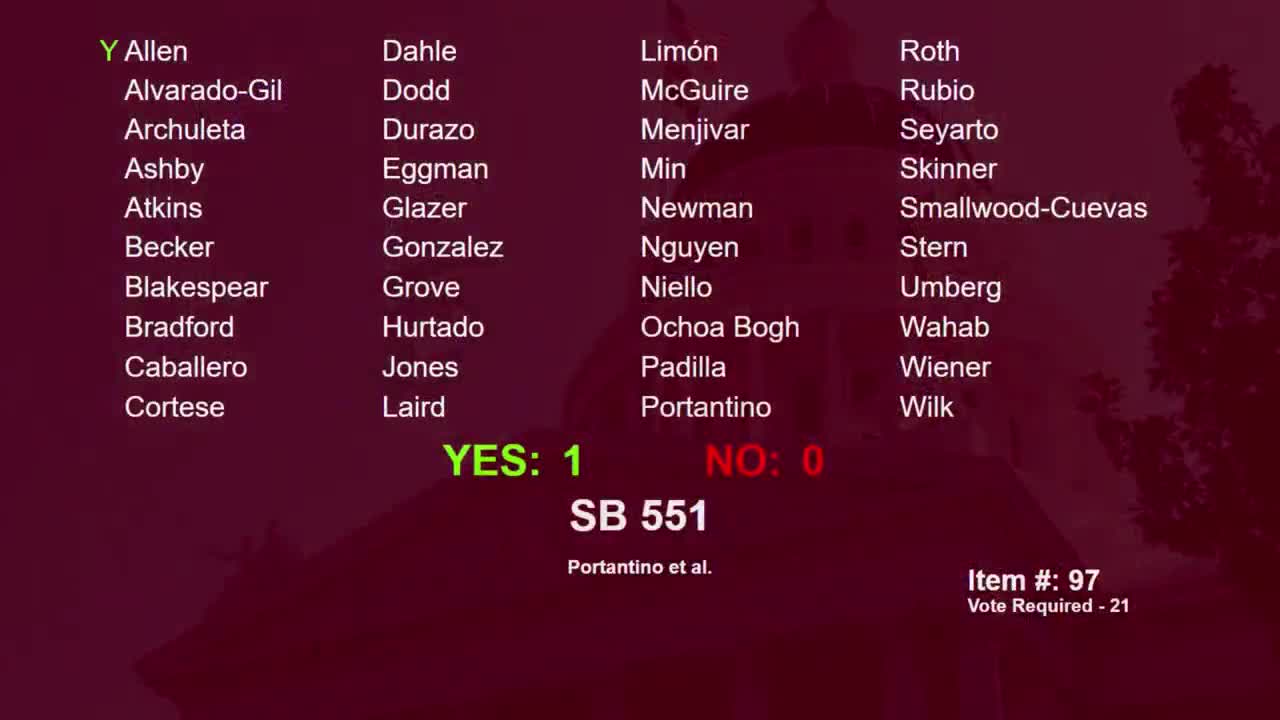
Bill Author

Bill Co-Author(s):