SB 612: Speech-language pathologists.
- Session Year: 2023-2024
- House: Senate
- Latest Version Date: 2023-10-08
Current Status:
Passed
(2023-10-08: Chaptered by Secretary of State. Chapter 620, Statutes of 2023.)
Introduced
In Committee
First Chamber
In Committee
Second Chamber
Enacted
Existing law, until January 1, 2027, establishes the Speech-Language Pathology and Audiology and Hearing Aid Dispensers Board within the Department of Consumer Affairs and requires the board to license and regulate speech-language pathologists, audiologists, and hearing aid dispensers, among others.
Existing law prohibits a licensed speech-language pathologist from performing a flexible fiber optic transnasal endoscopic procedure unless they have received written verification from one otolaryngologist certified by the American Board of Otolaryngology that the licensed speech-language pathologist has performed a minimum of 25 supervised flexible fiber optic transnasal endoscopic procedures and that the licensed speech-language pathologist is competent to perform those procedures, as provided. By operation of law, these provisions became operative on January 1, 2023.
This bill would specify that a licensed speech-language pathologist who holds a written verification pursuant to the above-described provisions that was issued before January 1, 2023, shall be deemed to meet specified requirements regarding flexible fiber optic transnasal endoscopic procedures, as provided.
Existing law, until January 1, 2027, establishes the Speech-Language Pathology and Audiology and Hearing Aid Dispensers Board within the Department of Consumer Affairs and requires the board to license and regulate speech-language pathologists, audiologists, and hearing aid dispensers, among others.
Existing law prohibits a licensed speech-language pathologist from performing a flexible fiber optic transnasal endoscopic procedure unless they have received specified written verification that they have from one otolaryngologist certified by the American Board of Otolaryngology that the licensed speech-language pathologist has performed a minimum of 25 supervised flexible fiber optic transnasal endoscopic procedures and they are that licensed speech-language pathologist is competent to perform those procedures, as provided. Existing law authorizes a speech-language pathologist to pass a flexible fiber optic transnasal endoscopic instrument only upon the orders of a licensed physician and surgeon and to perform that procedure at prescribed locations based on the patients medical needs. Existing law requires a speech-language pathologist performing flexible fiber optic transnasal endoscopic procedures on patients who have contraindications to the procedure, as specified, to consult and document clearance with the physician and surgeon that the licensed speech-language pathologist can safely perform the procedure. Existing law authorizes a licensed speech-language pathologist to perform flexible endoscopic procedures only in specified settings that require protocols for emergency medical backup procedures, as specified. By operation of law, these provisions became operative on January 1, 2023.
This bill would specify that a licensed speech-language pathologist who holds a written verification pursuant to these the above-described provisions that was issued before January 1, 2023, shall be deemed to meet the requirement that flexible endoscopic procedures only be performed in specified settings that require protocols for emergency medical backup procedures, as specified. specified requirements regarding flexible fiber optic transnasal endoscopic procedures, as provided.
Existing law, until January 1, 2027, establishes the Speech-Language Pathology and Audiology and Hearing Aid Dispensers Board within the Department of Consumer Affairs and requires the board to license and regulate speech-language pathologists, audiologists, and hearing aid dispensers, among others.
Existing law prohibits a licensed speech-language pathologist from performing a flexible fiber optic transnasal endoscopic procedure unless they have received specified written verification that they have performed a minimum of 25 supervised flexible fiber optic transnasal endoscopic procedures and they are competent to perform those procedures, as provided. Existing law authorizes a speech-language pathologist to pass a flexible fiber optic transnasal endoscopic instrument only upon the orders of a licensed physician and surgeon and to perform that procedure at prescribed locations based on the patients medical needs. Existing law requires a speech-language pathologist performing flexible fiber optic transnasal endoscopic procedures on patients who have contraindications to the procedure, as specified, to consult and document clearance with the physician and surgeon that the licensed speech-language pathologist can safely perform the procedure. Existing law authorizes a licensed speech-language pathologist to perform flexible endoscopic procedures only in specified settings that require protocols for emergency medical backup procedures, as specified. By operation of law, these provisions became operative on January 1, 2023.
This bill would provide specify that a licensed speech-language pathologist, who obtained a license before January 1, 2023, is authorized to perform a flexible fiber optic transnasal endoscopic procedure, if the licensee complies with the above-described provisions, including that the licensee has performed a minimum of 25 supervised flexible fiber optic transnasal endoscopic procedures and is competent to perform these procedures. The bill would also make technical and conforming changes. pathologist who holds a written verification pursuant to these provisions that was issued before January 1, 2023, shall be deemed to meet the requirement that flexible endoscopic procedures only be performed in specified settings that require protocols for emergency medical backup procedures, as specified.
Existing law, until January 1, 2027, establishes the Speech-Language Pathology and Audiology and Hearing Aid Dispensers Board within the Department of Consumer Affairs and requires the board to license and regulate speech-language pathologists, audiologists, and hearing aid dispensers, among others.
Existing law prohibits a licensed speech-language pathologist from performing a flexible fiber optic transnasal endoscopic procedure unless they have received specified written verification that they have performed a minimum of 25 supervised flexible fiber optic transnasal endoscopic procedures and they are competent to perform those procedures, as provided. Existing law authorizes a speech-language pathologist to pass a flexible fiber optic transnasal endoscopic instrument only upon the orders of a licensed physician and surgeon and to perform that procedure at prescribed locations based on the patients medical needs. Existing law requires a speech-language pathologist performing flexible fiber optic transnasal endoscopic procedures on patients who have contraindications to the procedure, as specified, to consult and document clearance with the physician and surgeon that the licensed speech-language pathologist can safely perform the procedure. By operation of law, these provisions became operative on January 1, 2023.
This bill would provide that the above-described provisions apply to speech-language pathologists who are licensed on or after January 1, 2023, as specified, and a licensed speech-language pathologist, who obtained a license before January 1, 2023, is authorized to perform a flexible fiber optic transnasal endoscopic procedure, if the licensee complies with the above-described provisions, including that the licensee has performed a minimum of 25 supervised flexible fiber optic transnasal endoscopic procedures and is competent to perform these procedures. The bill would also make technical and conforming changes.
Existing law, until January 1, 2027, establishes the Speech-Language Pathology and Audiology and Hearing Aid Dispensers Board within the Department of Consumer Affairs and requires the board to license and regulate speech-language pathologists, audiologists, and hearing aid dispensers, among others. Existing law
Existing law prohibits a licensed speech-language pathologist from performing a flexible fiber optic transnasal endoscopic procedure unless they have received specified written verification that they have performed a minimum of 25 supervised flexible fiber optic transnasal endoscopic procedures and they are competent to perform those procedures. procedures, as provided. Existing law authorizes a speech-language pathologist to pass a flexible fiber optic transnasal endoscopic instrument only upon the orders of a licensed physician and surgeon and to perform that procedure at prescribed locations based on the patients medical needs. Existing law requires a speech-language pathologist performing flexible fiber optic transnasal endoscopic procedures on patients who have contraindications to the procedure, as specified, to consult and document clearance with the physician and surgeon that the licensed speech-language pathologist can safely perform the procedure. By operation of law, these provisions became operative on January 1, 2023.
This bill would make a nonsubstantive change to that provision. provide that the above-described provisions apply to speech-language pathologists who are licensed on or after January 1, 2023, as specified, and would also make technical and conforming changes.
Existing law, until January 1, 2027, establishes the Speech-Language Pathology and Audiology and Hearing Aid Dispensers Board within the Department of Consumer Affairs and requires the board to license and regulate speech-language pathologists, audiologists, and hearing aid dispensers, among others. Existing law prohibits a licensed speech-language pathologist from performing a flexible fiber optic transnasal endoscopic procedure unless they have received specified written verification that they have performed a minimum of 25 supervised flexible fiber optic transnasal endoscopic procedures and they are competent to perform those procedures.
This bill would make a nonsubstantive change to that provision.
As used in this chapter, unless the context otherwise requires:
(a)Board means the Speech-Language Pathology and Audiology and Hearing Aid Dispensers Board.
(b)Person means any individual, partnership, corporation, limited liability company, or other organization or combination thereof, except that only individuals can be licensed under this chapter.
(c)A speech-language pathologist is a person who practices speech-language pathology.
(d)The practice of speech-language pathology means all of the following:
(1)The application of principles, methods, instrumental procedures, and noninstrumental procedures for measurement, testing, screening, evaluation, identification, prediction, and counseling related to the development and disorders of speech, voice, language, or swallowing.
(2)The application of principles and methods for preventing, planning, directing, conducting, and supervising programs for habilitating, rehabilitating, ameliorating, managing, or modifying disorders of speech, voice, language, or swallowing in individuals or groups of individuals.
(3)Conducting hearing screenings.
(4)Performing suctioning in connection with the scope of practice described in paragraphs (1) and (2), after compliance with a medical facilitys training protocols on suctioning procedures.
(e)(1)Instrumental procedures referred to in subdivision (d) are the use of rigid and flexible endoscopes to observe the pharyngeal and laryngeal areas of the throat in order to observe, collect data, and measure the parameters of communication and swallowing as well as to guide communication and swallowing assessment and therapy. Passage of these instruments without the presence of a physician and surgeon is subject to paragraph (2).
(2)Nothing in this subdivision shall be construed as a diagnosis. Any observation of an abnormality shall be referred to a physician and surgeon.
(f)(1)A licensed speech-language pathologist shall not perform a flexible fiber optic transnasal endoscopic procedure unless they have received written verification from one otolaryngologist certified by the American Board of Otolaryngology that the speech-language pathologist has performed a minimum of 25 supervised flexible fiber optic transnasal endoscopic procedures and they are competent to perform these procedures. Of these 25 procedures, the first 10 procedures shall be supervised by a licensed physician and surgeon who performs nasal endoscopy as part of their practice and the subsequent 15 procedures shall be supervised by either a licensed physician and surgeon who performs nasal endoscopy as part of their practice or by another licensed speech-language pathologist who is verified as competent in performing flexible fiber optic transnasal endoscopic procedures. The speech-language pathologist shall have this written verification on file and readily available for inspection upon request by the board. A speech-language pathologist with a verification on file shall pass a flexible fiber optic transnasal endoscopic instrument only upon the orders of a licensed physician and surgeon. The order by a physician and surgeon is deemed to allow a speech-language pathologist with verification, in accordance with this paragraph, to perform fiber optic transnasal endoscopic procedures at a location based on the patients medical needs that complies with procedures specified in paragraph (1) of subdivision (g).
(2)A licensed speech-language pathologist who holds a written verification pursuant to this subdivision that was issued before January 1, 2023, shall be deemed to meet the requirements described in paragraph (1).
(g)(1)A licensed speech-language pathologist shall only perform flexible endoscopic procedures described in subdivision (e) in the following settings that requires the facility to have protocols for emergency medical backup procedures, including a physician and surgeon or other appropriate medical professionals being readily available.
(A)A clinic, as defined in Section 1200 of the Health and Safety Code.
(B)A facility described in Chapter 2.5 (commencing with Section 1440) of Division 2 of the Health and Safety Code.
(C)A health facility, as defined in Section 1250 of the Health and Safety Code.
(D)A hospice facility licensed pursuant to Chapter 8.5 (commencing with Section 1745) of Division 2 of the Health and Safety Code.
(E)A medical group practice, including a professional medical corporation, as defined in Section 2406, another form of corporation controlled by physicians and surgeons, a medical partnership, a medical foundation exempt from licensure, or another lawfully organized group of physicians and surgeons that provides health care services.
(2)A licensed speech-language pathologist performing flexible fiber optic transnasal endoscopic procedures on patients who have contraindications to the procedure shall consult and document clearance with the physician and surgeon that the licensed speech-language pathologist can safely perform the procedure. For purposes of this paragraph, contraindications for these procedures may include, but are not limited to, cases of bilateral obstruction of nasal passages, refractory epistaxis, cardiac disorder with acute risk of vasovagal episode and bradycardia, history of vasovagal episodes, facial trauma, recent trauma to the nasal cavity, or surrounding tissue and structures secondary to surgery or injury, severe bleeding disorders, severe movement disorders, severe agitation, and inability to cooperate with the examination.
(h)Speech-language pathology aide means any person meeting the minimum requirements established by the board, who works directly under the supervision of a speech-language pathologist.
(i)(1)Speech-language pathology assistant means a person who meets the academic and supervised training requirements set forth by the board and who is approved by the board to assist in the provision of speech-language pathology under the direction and supervision of a speech-language pathologist who shall be responsible for the extent, kind, and quality of the services provided by the speech-language pathology assistant.
(2)The supervising speech-language pathologist employed or contracted for by a public school may hold a valid and current license issued by the board, a valid, current, and professional clear clinical or rehabilitative services credential in language, speech, and hearing issued by the Commission on Teacher Credentialing, or other credential authorizing service in language, speech, and hearing issued by the Commission on Teacher Credentialing that is not issued on the basis of an emergency permit or waiver of requirements. For purposes of this paragraph, a clear credential is a credential that is not issued pursuant to a waiver or emergency permit and is as otherwise defined by the Commission on Teacher Credentialing. Nothing in this section referring to credentialed supervising speech-language pathologists expands existing exemptions from licensing pursuant to Section 2530.5.
(j)An audiologist is one who practices audiology.
(k)The practice of audiology means the application of principles, methods, and procedures of measurement, testing, appraisal, prediction, consultation, counseling, and instruction related to auditory, vestibular, and related functions and the modification of communicative disorders involving speech, language, auditory behavior, or other aberrant behavior resulting from auditory dysfunction; and the planning, directing, conducting, supervising, or participating in programs of identification of auditory disorders, hearing conservation, cerumen removal, aural habilitation, and rehabilitation, including hearing aid recommendation and evaluation procedures, including, but not limited to, specifying amplification requirements and evaluation of the results thereof, auditory training, and speech reading, and the selling of hearing aids.
(l)A dispensing audiologist is a person who is authorized to sell hearing aids pursuant to their audiology license.
(m)Audiology aide means any person meeting the minimum requirements established by the board who works directly under the supervision of an audiologist. The board may by regulation exempt certain functions performed by an industrial audiology aide from supervision provided that their employer has established a set of procedures or protocols that the aide shall follow in performing these functions.
(n)Medical board means the Medical Board of California.
(o)A hearing screening performed by a speech-language pathologist means a binary puretone screening at a preset intensity level for the purpose of determining if the screened individuals are in need of further medical or audiological evaluation.
(p)Cerumen removal means the nonroutine removal of cerumen within the cartilaginous ear canal necessary for access in performance of audiological procedures that shall occur under physician and surgeon supervision. Cerumen removal, as provided by this section, shall only be performed by a licensed audiologist. Physician and surgeon supervision shall not be construed to require the physical presence of the physician, but shall include all of the following:
(1)Collaboration on the development of written standardized protocols. The protocols shall include a requirement that the supervised audiologist immediately refer to an appropriate physician any trauma, including skin tears, bleeding, or other pathology of the ear discovered in the process of cerumen removal as defined in this subdivision.
(2)Approval by the supervising physician of the written standardized protocol.
(3)The supervising physician shall be within the general vicinity, as provided by the physician-audiologist protocol, of the supervised audiologist and available by telephone contact at the time of cerumen removal.
(4)A licensed physician and surgeon may not simultaneously supervise more than two audiologists for purposes of cerumen removal.
SEC. 2.Section 56363 of the Education Code is amended to read:56363.(a)As used in this part, the term designated instruction and services means related services as that term is defined in Section 1401(26) of Title 20 of the United States Code and Section 300.34 of Title 34 of the Code of Federal Regulations. The term related services means transportation, and such developmental, corrective, and other supportive services (including speech-language pathology and audiology services, interpreting services, psychological services, physical and occupational therapy, recreation, including therapeutic recreation, social work services, school nurse services designed to enable an individual with exceptional needs to receive a free appropriate public education as described in the individualized education program of the child, counseling services, including rehabilitation counseling, orientation, and mobility services, and medical services, except that such medical services shall be for diagnostic and evaluation purposes only) as may be required to assist an individual with exceptional needs to benefit from special education, and includes the early identification and assessment of disabling conditions in children.
(b)These services may include, but are not limited to, the following:
(1)Language and speech development and remediation. The language and speech development and remediation services may be provided by a speech-language pathology assistant as defined in Section 2530.2 of the Business and Professions Code.
(2)Audiological services.
(3)Orientation and mobility services.
(4)Instruction in the home or hospital.
(5)Adapted physical education.
(6)Physical and occupational therapy.
(7)Vision services.
(8)Specialized driver training instruction.
(9)Counseling and guidance services, including rehabilitation counseling.
(10)Psychological services other than assessment and development of the individualized education program.
(11)Parent counseling and training.
(12)Health and nursing services, including school nurse services designed to enable an individual with exceptional needs to receive a free appropriate public education as described in the individualized education program.
(13)Social worker services.
(14)Specially designed vocational education and career development.
(15)Recreation services.
(16)Specialized services for low-incidence disabilities, such as readers, transcribers, and vision and hearing services.
(17)Interpreting services.
(c)The terms designated instruction and services and related services do not include a medical device that is surgically implanted, including cochlear implants, the optimization of the functioning of a medical device, maintenance of that device, or the replacement of that device, pursuant to Section 300.34(b) of Title 34 of the Code of Federal Regulations. In accordance with Section 300.34(b) of Title 34 of the Code of Federal Regulations, nothing in this subdivision shall do any of the following:
(1)Limit the right of an individual with exceptional needs with a surgically implanted device, including a cochlear implant, to receive related services or designated instruction and services that are determined by the individualized education program team to be necessary for the individual to receive a free appropriate public education.
(2)Limit the responsibility of a local educational agency to appropriately monitor and maintain medical devices that are needed to maintain the health and safety of the individual, including breathing, nutrition, or operation of other bodily functions, while the individual is transported to and from school or is at school.
(3)Prevent the routine checking of an external component of a surgically implanted device to make sure it is functioning properly, as required by Section 300.113(b) of Title 34 of the Code of Federal Regulations.
CORRECTIONS: DigestPage 2.As used in this chapter, unless the context otherwise requires:
(a)Board means the Speech-Language Pathology and Audiology and Hearing Aid Dispensers Board.
(b)Person means any individual, partnership, corporation, limited liability company, or other organization or combination thereof, except that only individuals can be licensed under this chapter.
(c)A speech-language pathologist is a person who practices speech-language pathology.
(d)The practice of speech-language pathology means all of the following:
(1)The application of principles, methods, instrumental procedures, and noninstrumental procedures for measurement, testing, screening, evaluation, identification, prediction, and counseling related to the development and disorders of speech, voice, language, or swallowing.
(2)The application of principles and methods for preventing, planning, directing, conducting, and supervising programs for habilitating, rehabilitating, ameliorating, managing, or modifying disorders of speech, voice, language, or swallowing in individuals or groups of individuals.
(3)Conducting hearing screenings.
(4)Performing suctioning in connection with the scope of practice described in paragraphs (1) and (2), after compliance with a medical facilitys training protocols on suctioning procedures.
(e)(1)Instrumental procedures referred to in subdivision (d) are the use of rigid and flexible endoscopes to observe the pharyngeal and laryngeal areas of the throat in order to observe, collect data, and measure the parameters of communication and swallowing as well as to guide communication and swallowing assessment and therapy. Passage of these instruments without the presence of a physician and surgeon is subject to paragraph (2).
(2)Nothing in this subdivision shall be construed as a diagnosis. Any observation of an abnormality shall be referred to a physician and surgeon.
(f)(1)A licensed speech-language pathologist shall not perform a flexible fiber optic transnasal endoscopic procedure unless they have received written verification from one otolaryngologist certified by the American Board of Otolaryngology that the speech-language pathologist has performed a minimum of 25 supervised flexible fiber optic transnasal endoscopic procedures and they are competent to perform these procedures. Of these 25 procedures, the first 10 procedures shall be supervised by a licensed physician and surgeon who performs nasal endoscopy as part of their practice and the subsequent 15 procedures shall be supervised by either a licensed physician and surgeon who performs nasal endoscopy as part of their practice or by another licensed speech-language pathologist who is verified as competent in performing flexible fiber optic transnasal endoscopic procedures. The speech-language pathologist shall have this written verification on file and readily available for inspection upon request by the board. A speech-language pathologist with a verification on file shall pass a flexible fiber optic transnasal endoscopic instrument only upon the orders of a licensed physician and surgeon. The order by a physician and surgeon is deemed to allow a speech-language pathologist with verification, in accordance with this paragraph, to perform fiber optic transnasal endoscopic procedures at a location based on the patients medical needs that complies with procedures specified in paragraph (1) of subdivision (g).
(2)A licensed speech-language pathologist who holds a written verification pursuant to this subdivision that was issued before January 1, 2023, shall be deemed to meet the requirements described in paragraph (1) of subdivision (g). (1).
(g)(1)A licensed speech-language pathologist shall only perform flexible endoscopic procedures described in subdivision (e) in the following settings that requires the facility to have protocols for emergency medical backup procedures, including a physician and surgeon or other appropriate medical professionals being readily available.
(A)A clinic, as defined in Section 1200 of the Health and Safety Code.
(B)A facility described in Chapter 2.5 (commencing with Section 1440) of Division 2 of the Health and Safety Code.
(C)A health facility, as defined in Section 1250 of the Health and Safety Code.
(D)A hospice facility licensed pursuant to Chapter 8.5 (commencing with Section 1745) of Division 2 of the Health and Safety Code.
(E)A medical group practice, including a professional medical corporation, as defined in Section 2406, another form of corporation controlled by physicians and surgeons, a medical partnership, a medical foundation exempt from licensure, or another lawfully organized group of physicians and surgeons that provides health care services.
(2)A licensed speech-language pathologist performing flexible fiber optic transnasal endoscopic procedures on patients who have contraindications to the procedure shall consult and document clearance with the physician and surgeon that the licensed speech-language pathologist can safely perform the procedure. For purposes of this paragraph, contraindications for these procedures may include, but are not limited to, cases of bilateral obstruction of nasal passages, refractory epistaxis, cardiac disorder with acute risk of vasovagal episode and bradycardia, history of vasovagal episodes, facial trauma, recent trauma to the nasal cavity, or surrounding tissue and structures secondary to surgery or injury, severe bleeding disorders, severe movement disorders, severe agitation, and inability to cooperate with the examination.
(h)Speech-language pathology aide means any person meeting the minimum requirements established by the board, who works directly under the supervision of a speech-language pathologist.
(i)(1)Speech-language pathology assistant means a person who meets the academic and supervised training requirements set forth by the board and who is approved by the board to assist in the provision of speech-language pathology under the direction and supervision of a speech-language pathologist who shall be responsible for the extent, kind, and quality of the services provided by the speech-language pathology assistant.
(2)The supervising speech-language pathologist employed or contracted for by a public school may hold a valid and current license issued by the board, a valid, current, and professional clear clinical or rehabilitative services credential in language, speech, and hearing issued by the Commission on Teacher Credentialing, or other credential authorizing service in language, speech, and hearing issued by the Commission on Teacher Credentialing that is not issued on the basis of an emergency permit or waiver of requirements. For purposes of this paragraph, a clear credential is a credential that is not issued pursuant to a waiver or emergency permit and is as otherwise defined by the Commission on Teacher Credentialing. Nothing in this section referring to credentialed supervising speech-language pathologists expands existing exemptions from licensing pursuant to Section 2530.5.
(j)An audiologist is one who practices audiology.
(k)The practice of audiology means the application of principles, methods, and procedures of measurement, testing, appraisal, prediction, consultation, counseling, and instruction related to auditory, vestibular, and related functions and the modification of communicative disorders involving speech, language, auditory behavior, or other aberrant behavior resulting from auditory dysfunction; and the planning, directing, conducting, supervising, or participating in programs of identification of auditory disorders, hearing conservation, cerumen removal, aural habilitation, and rehabilitation, including hearing aid recommendation and evaluation procedures, including, but not limited to, specifying amplification requirements and evaluation of the results thereof, auditory training, and speech reading, and the selling of hearing aids.
(l)A dispensing audiologist is a person who is authorized to sell hearing aids pursuant to their audiology license.
(m)Audiology aide means any person meeting the minimum requirements established by the board who works directly under the supervision of an audiologist. The board may by regulation exempt certain functions performed by an industrial audiology aide from supervision provided that their employer has established a set of procedures or protocols that the aide shall follow in performing these functions.
(n)Medical board means the Medical Board of California.
(o)A hearing screening performed by a speech-language pathologist means a binary puretone screening at a preset intensity level for the purpose of determining if the screened individuals are in need of further medical or audiological evaluation.
(p)Cerumen removal means the nonroutine removal of cerumen within the cartilaginous ear canal necessary for access in performance of audiological procedures that shall occur under physician and surgeon supervision. Cerumen removal, as provided by this section, shall only be performed by a licensed audiologist. Physician and surgeon supervision shall not be construed to require the physical presence of the physician, but shall include all of the following:
(1)Collaboration on the development of written standardized protocols. The protocols shall include a requirement that the supervised audiologist immediately refer to an appropriate physician any trauma, including skin tears, bleeding, or other pathology of the ear discovered in the process of cerumen removal as defined in this subdivision.
(2)Approval by the supervising physician of the written standardized protocol.
(3)The supervising physician shall be within the general vicinity, as provided by the physician-audiologist protocol, of the supervised audiologist and available by telephone contact at the time of cerumen removal.
(4)A licensed physician and surgeon may not simultaneously supervise more than two audiologists for purposes of cerumen removal.
SEC. 2.Section 56363 of the Education Code is amended to read:56363.(a)As used in this part, the term designated instruction and services means related services as that term is defined in Section 1401(26) of Title 20 of the United States Code and Section 300.34 of Title 34 of the Code of Federal Regulations. The term related services means transportation, and such developmental, corrective, and other supportive services (including speech-language pathology and audiology services, interpreting services, psychological services, physical and occupational therapy, recreation, including therapeutic recreation, social work services, school nurse services designed to enable an individual with exceptional needs to receive a free appropriate public education as described in the individualized education program of the child, counseling services, including rehabilitation counseling, orientation, and mobility services, and medical services, except that such medical services shall be for diagnostic and evaluation purposes only) as may be required to assist an individual with exceptional needs to benefit from special education, and includes the early identification and assessment of disabling conditions in children.
(b)These services may include, but are not limited to, the following:
(1)Language and speech development and remediation. The language and speech development and remediation services may be provided by a speech-language pathology assistant as defined in Section 2530.2 of the Business and Professions Code.
(2)Audiological services.
(3)Orientation and mobility services.
(4)Instruction in the home or hospital.
(5)Adapted physical education.
(6)Physical and occupational therapy.
(7)Vision services.
(8)Specialized driver training instruction.
(9)Counseling and guidance services, including rehabilitation counseling.
(10)Psychological services other than assessment and development of the individualized education program.
(11)Parent counseling and training.
(12)Health and nursing services, including school nurse services designed to enable an individual with exceptional needs to receive a free appropriate public education as described in the individualized education program.
(13)Social worker services.
(14)Specially designed vocational education and career development.
(15)Recreation services.
(16)Specialized services for low-incidence disabilities, such as readers, transcribers, and vision and hearing services.
(17)Interpreting services.
(c)The terms designated instruction and services and related services do not include a medical device that is surgically implanted, including cochlear implants, the optimization of the functioning of a medical device, maintenance of that device, or the replacement of that device, pursuant to Section 300.34(b) of Title 34 of the Code of Federal Regulations. In accordance with Section 300.34(b) of Title 34 of the Code of Federal Regulations, nothing in this subdivision shall do any of the following:
(1)Limit the right of an individual with exceptional needs with a surgically implanted device, including a cochlear implant, to receive related services or designated instruction and services that are determined by the individualized education program team to be necessary for the individual to receive a free appropriate public education.
(2)Limit the responsibility of a local educational agency to appropriately monitor and maintain medical devices that are needed to maintain the health and safety of the individual, including breathing, nutrition, or operation of other bodily functions, while the individual is transported to and from school or is at school.
(3)Prevent the routine checking of an external component of a surgically implanted device to make sure it is functioning properly, as required by Section 300.113(b) of Title 34 of the Code of Federal Regulations.
As used in this chapter, unless the context otherwise requires:
(a)Board means the Speech-Language Pathology and Audiology and Hearing Aid Dispensers Board.
(b)Person means any individual, partnership, corporation, limited liability company, or other organization or combination thereof, except that only individuals can be licensed under this chapter.
(c)A speech-language pathologist is a person who practices speech-language pathology.
(d)The practice of speech-language pathology means all of the following:
(1)The application of principles, methods, instrumental procedures, and noninstrumental procedures for measurement, testing, screening, evaluation, identification, prediction, and counseling related to the development and disorders of speech, voice, language, or swallowing.
(2)The application of principles and methods for preventing, planning, directing, conducting, and supervising programs for habilitating, rehabilitating, ameliorating, managing, or modifying disorders of speech, voice, language, or swallowing in individuals or groups of individuals.
(3)Conducting hearing screenings.
(4)Performing suctioning in connection with the scope of practice described in paragraphs (1) and (2), after compliance with a medical facilitys training protocols on suctioning procedures.
(e)(1)Instrumental procedures referred to in subdivision (d) are the use of rigid and flexible endoscopes to observe the pharyngeal and laryngeal areas of the throat in order to observe, collect data, and measure the parameters of communication and swallowing as well as to guide communication and swallowing assessment and therapy. Passage of these instruments without the presence of a physician and surgeon is subject to paragraph (2).
(2)Nothing in this subdivision shall be construed as a diagnosis. Any observation of an abnormality shall be referred to a physician and surgeon.
(f)(1)A licensed speech-language pathologist shall not perform a flexible fiber optic transnasal endoscopic procedure unless they have received written verification from one otolaryngologist certified by the American Board of Otolaryngology that the speech-language pathologist has performed a minimum of 25 supervised flexible fiber optic transnasal endoscopic procedures and they are competent to perform these procedures. Of these 25 procedures, the first 10 procedures shall be supervised by a licensed physician and surgeon who performs nasal endoscopy as part of their practice and the subsequent 15 procedures shall be supervised by either a licensed physician and surgeon who performs nasal endoscopy as part of their practice or by another licensed speech-language pathologist who is verified as competent in performing flexible fiber optic transnasal endoscopic procedures. The speech-language pathologist shall have this written verification on file and readily available for inspection upon request by the board. A speech-language pathologist with a verification on file shall pass a flexible fiber optic transnasal endoscopic instrument only upon the orders of a licensed physician and surgeon. The order by a physician and surgeon is deemed to allow a speech-language pathologist with verification, in accordance with this paragraph, to perform fiber optic transnasal endoscopic procedures at a location based on the patients medical needs that complies with procedures specified in paragraph (1) of subdivision (g).
(2)A licensed speech-language pathologist, who obtained a license pursuant to this chapter before January 1, 2023, may perform a flexible fiber optic transnasal endoscopic procedure, if the licensee has a written verification from one otolaryngologist certified by the American Board of Otolaryngology on file and readily available for inspection upon request by the board that the licensee has performed a minimum of 25 supervised flexible fiber optic transnasal endoscopic procedures and is competent to perform these procedures. pathologist who holds a written verification pursuant to this subdivision that was issued before January 1, 2023, shall be deemed to meet the requirements described in paragraph (1) of subdivision (g).
(g)(1)A licensed speech-language pathologist shall only perform flexible endoscopic procedures described in subdivision (e) in the following settings that requires the facility to have protocols for emergency medical backup procedures, including a physician and surgeon or other appropriate medical professionals being readily available.
(A)A clinic, as defined in Section 1200 of the Health and Safety Code.
(B)A facility described in Chapter 2.5 (commencing with Section 1440) of Division 2 of the Health and Safety Code.
(C)A health facility, as defined in Section 1250 of the Health and Safety Code.
(D)A hospice facility licensed pursuant to Chapter 8.5 (commencing with Section 1745) of Division 2 of the Health and Safety Code.
(E)A medical group practice, including a professional medical corporation, as defined in Section 2406, another form of corporation controlled by physicians and surgeons, a medical partnership, a medical foundation exempt from licensure, or another lawfully organized group of physicians and surgeons that provides health care services.
(2)A licensed speech-language pathologist performing flexible fiber optic transnasal endoscopic procedures on patients who have contraindications to the procedure shall consult and document clearance with the physician and surgeon that the licensed speech-language pathologist can safely perform the procedure. For purposes of this paragraph, contraindications for these procedures may include, but are not limited to, cases of bilateral obstruction of nasal passages, refractory epistaxis, cardiac disorder with acute risk of vasovagal episode and bradycardia, history of vasovagal episodes, facial trauma, recent trauma to the nasal cavity, or surrounding tissue and structures secondary to surgery or injury, severe bleeding disorders, severe movement disorders, severe agitation, and inability to cooperate with the examination.
(h)Speech-language pathology aide means any person meeting the minimum requirements established by the board, who works directly under the supervision of a speech-language pathologist.
(i)(1)Speech-language pathology assistant means a person who meets the academic and supervised training requirements set forth by the board and who is approved by the board to assist in the provision of speech-language pathology under the direction and supervision of a speech-language pathologist who shall be responsible for the extent, kind, and quality of the services provided by the speech-language pathology assistant.
(2)The supervising speech-language pathologist employed or contracted for by a public school may hold a valid and current license issued by the board, a valid, current, and professional clear clinical or rehabilitative services credential in language, speech, and hearing issued by the Commission on Teacher Credentialing, or other credential authorizing service in language, speech, and hearing issued by the Commission on Teacher Credentialing that is not issued on the basis of an emergency permit or waiver of requirements. For purposes of this paragraph, a clear credential is a credential that is not issued pursuant to a waiver or emergency permit and is as otherwise defined by the Commission on Teacher Credentialing. Nothing in this section referring to credentialed supervising speech-language pathologists expands existing exemptions from licensing pursuant to Section 2530.5.
(j)An audiologist is one who practices audiology.
(k)The practice of audiology means the application of principles, methods, and procedures of measurement, testing, appraisal, prediction, consultation, counseling, and instruction related to auditory, vestibular, and related functions and the modification of communicative disorders involving speech, language, auditory behavior, or other aberrant behavior resulting from auditory dysfunction; and the planning, directing, conducting, supervising, or participating in programs of identification of auditory disorders, hearing conservation, cerumen removal, aural habilitation, and rehabilitation, including hearing aid recommendation and evaluation procedures, including, but not limited to, specifying amplification requirements and evaluation of the results thereof, auditory training, and speech reading, and the selling of hearing aids.
(l)A dispensing audiologist is a person who is authorized to sell hearing aids pursuant to their audiology license.
(m)Audiology aide means any person meeting the minimum requirements established by the board who works directly under the supervision of an audiologist. The board may by regulation exempt certain functions performed by an industrial audiology aide from supervision provided that their employer has established a set of procedures or protocols that the aide shall follow in performing these functions.
(n)Medical board means the Medical Board of California.
(o)A hearing screening performed by a speech-language pathologist means a binary puretone screening at a preset intensity level for the purpose of determining if the screened individuals are in need of further medical or audiological evaluation.
(p)Cerumen removal means the nonroutine removal of cerumen within the cartilaginous ear canal necessary for access in performance of audiological procedures that shall occur under physician and surgeon supervision. Cerumen removal, as provided by this section, shall only be performed by a licensed audiologist. Physician and surgeon supervision shall not be construed to require the physical presence of the physician, but shall include all of the following:
(1)Collaboration on the development of written standardized protocols. The protocols shall include a requirement that the supervised audiologist immediately refer to an appropriate physician any trauma, including skin tears, bleeding, or other pathology of the ear discovered in the process of cerumen removal as defined in this subdivision.
(2)Approval by the supervising physician of the written standardized protocol.
(3)The supervising physician shall be within the general vicinity, as provided by the physician-audiologist protocol, of the supervised audiologist and available by telephone contact at the time of cerumen removal.
(4)A licensed physician and surgeon may not simultaneously supervise more than two audiologists for purposes of cerumen removal.
SEC. 2.Section 56363 of the Education Code is amended to read:56363.(a)As used in this part, the term designated instruction and services means related services as that term is defined in Section 1401(26) of Title 20 of the United States Code and Section 300.34 of Title 34 of the Code of Federal Regulations. The term related services means transportation, and such developmental, corrective, and other supportive services (including speech-language pathology and audiology services, interpreting services, psychological services, physical and occupational therapy, recreation, including therapeutic recreation, social work services, school nurse services designed to enable an individual with exceptional needs to receive a free appropriate public education as described in the individualized education program of the child, counseling services, including rehabilitation counseling, orientation, and mobility services, and medical services, except that such medical services shall be for diagnostic and evaluation purposes only) as may be required to assist an individual with exceptional needs to benefit from special education, and includes the early identification and assessment of disabling conditions in children.
(b)These services may include, but are not limited to, the following:
(1)Language and speech development and remediation. The language and speech development and remediation services may be provided by a speech-language pathology assistant as defined in Section 2530.2 of the Business and Professions Code.
(2)Audiological services.
(3)Orientation and mobility services.
(4)Instruction in the home or hospital.
(5)Adapted physical education.
(6)Physical and occupational therapy.
(7)Vision services.
(8)Specialized driver training instruction.
(9)Counseling and guidance services, including rehabilitation counseling.
(10)Psychological services other than assessment and development of the individualized education program.
(11)Parent counseling and training.
(12)Health and nursing services, including school nurse services designed to enable an individual with exceptional needs to receive a free appropriate public education as described in the individualized education program.
(13)Social worker services.
(14)Specially designed vocational education and career development.
(15)Recreation services.
(16)Specialized services for low-incidence disabilities, such as readers, transcribers, and vision and hearing services.
(17)Interpreting services.
(c)The terms designated instruction and services and related services do not include a medical device that is surgically implanted, including cochlear implants, the optimization of the functioning of a medical device, maintenance of that device, or the replacement of that device, pursuant to Section 300.34(b) of Title 34 of the Code of Federal Regulations. In accordance with Section 300.34(b) of Title 34 of the Code of Federal Regulations, nothing in this subdivision shall do any of the following:
(1)Limit the right of an individual with exceptional needs with a surgically implanted device, including a cochlear implant, to receive related services or designated instruction and services that are determined by the individualized education program team to be necessary for the individual to receive a free appropriate public education.
(2)Limit the responsibility of a local educational agency to appropriately monitor and maintain medical devices that are needed to maintain the health and safety of the individual, including breathing, nutrition, or operation of other bodily functions, while the individual is transported to and from school or is at school.
(3)Prevent the routine checking of an external component of a surgically implanted device to make sure it is functioning properly, as required by Section 300.113(b) of Title 34 of the Code of Federal Regulations.
(a)As used in this chapter, unless the context otherwise requires:
(1)(a)Board means the Speech-Language Pathology and Audiology and Hearing Aid Dispensers Board.
(2)(b)Person means any individual, partnership, corporation, limited liability company, or other organization or combination thereof, except that only individuals can be licensed under this chapter.
(3)(c)A speech-language pathologist is a person who practices speech-language pathology.
(4)(d)The practice of speech-language pathology means all of the following:
(A)(1)The application of principles, methods, instrumental procedures, and noninstrumental procedures for measurement, testing, screening, evaluation, identification, prediction, and counseling related to the development and disorders of speech, voice, language, or swallowing.
(B)(2)The application of principles and methods for preventing, planning, directing, conducting, and supervising programs for habilitating, rehabilitating, ameliorating, managing, or modifying disorders of speech, voice, language, or swallowing in individuals or groups of individuals.
(C)(3)Conducting hearing screenings.
(D)(4)Performing suctioning in connection with the scope of practice described in subparagraphs (A) and (B), paragraphs (1) and (2), after compliance with a medical facilitys training protocols on suctioning procedures.
(5)(A)(e)(1)Instrumental procedures referred to in paragraph (4) subdivision (d) are the use of rigid and flexible endoscopes to observe the pharyngeal and laryngeal areas of the throat in order to observe, collect data, and measure the parameters of communication and swallowing as well as to guide communication and swallowing assessment and therapy. Passage of these instruments without the presence of a physician and surgeon is subject to subparagraph (B). paragraph (2).
(B)(2)Nothing in this paragraph subdivision shall be construed as a diagnosis. Any observation of an abnormality shall be referred to a physician and surgeon.
(6)(f)(1)A licensed speech-language pathologist shall not perform a flexible fiber optic transnasal endoscopic procedure unless they have received written verification from one otolaryngologist certified by the American Board of Otolaryngology that the speech-language pathologist has performed a minimum of 25 supervised flexible fiber optic transnasal endoscopic procedures and they are competent to perform these procedures. Of these 25 procedures, the first 10 procedures shall be supervised by a licensed physician and surgeon who performs nasal endoscopy as part of their practice and the subsequent 15 procedures shall be supervised by either a licensed physician and surgeon who performs nasal endoscopy as part of their practice or by another licensed speech-language pathologist who is verified as competent in performing flexible fiber optic transnasal endoscopic procedures. The speech-language pathologist shall have this written verification on file and readily available for inspection upon request by the board. A speech-language pathologist with a verification on file shall pass a flexible fiber optic transnasal endoscopic instrument only upon the orders of a licensed physician and surgeon. The order by a physician and surgeon is deemed to allow a speech-language pathologist with verification, in accordance with this paragraph, to perform fiber optic transnasal endoscopic procedures at a location based on the patients medical needs that complies with procedures specified in subparagraph (A) of paragraph (7). paragraph (1) of subdivision (g).
(2)A licensed speech-language pathologist, who obtained a license pursuant to this chapter before January 1, 2023, may perform a flexible fiber optic transnasal endoscopic procedure, if the licensee has a written verification from one otolaryngologist certified by the American Board of Otolaryngology on file and readily available for inspection upon request by the board that the licensee has performed a minimum of 25 supervised flexible fiber optic transnasal endoscopic procedures and is competent to perform these procedures.
(7)(A)(g)(1)A licensed speech-language pathologist shall only perform flexible endoscopic procedures described in paragraph (5) subdivision (e) in the following settings that requires the facility to have protocols for emergency medical backup procedures, including a physician and surgeon or other appropriate medical professionals being readily available.
(i)(A)A clinic, as defined in Section 1200 of the Health and Safety Code.
(ii)(B)A facility described in Chapter 2.5 (commencing with Section 1440) of Division 2 of the Health and Safety Code.
(iii)(C)A health facility, as defined in Section 1250 of the Health and Safety Code.
(iv)(D)A hospice facility licensed pursuant to Chapter 8.5 (commencing with Section 1745) of Division 2 of the Health and Safety Code.
(v)(E)A medical group practice, including a professional medical corporation, as defined in Section 2406, another form of corporation controlled by physicians and surgeons, a medical partnership, a medical foundation exempt from licensure, or another lawfully organized group of physicians and surgeons that provides health care services.
(B)(2)A licensed speech-language pathologist performing flexible fiber optic transnasal endoscopic procedures on patients who have contraindications to the procedure shall consult and document clearance with the physician and surgeon that the licensed speech-language pathologist can safely perform the procedure. For purposes of this subparagraph, paragraph, contraindications for these procedures may include, but are not limited to, cases of bilateral obstruction of nasal passages, refractory epistaxis, cardiac disorder with acute risk of vasovagal episode and bradycardia, history of vasovagal episodes, facial trauma, recent trauma to the nasal cavity, or surrounding tissue and structures secondary to surgery or injury, severe bleeding disorders, severe movement disorders, severe agitation, and inability to cooperate with the examination.
(8)(h)Speech-language pathology aide means any person meeting the minimum requirements established by the board, who works directly under the supervision of a speech-language pathologist.
(9)(A)(i)(1)Speech-language pathology assistant means a person who meets the academic and supervised training requirements set forth by the board and who is approved by the board to assist in the provision of speech-language pathology under the direction and supervision of a speech-language pathologist who shall be responsible for the extent, kind, and quality of the services provided by the speech-language pathology assistant.
(B)(2)The supervising speech-language pathologist employed or contracted for by a public school may hold a valid and current license issued by the board, a valid, current, and professional clear clinical or rehabilitative services credential in language, speech, and hearing issued by the Commission on Teacher Credentialing, or other credential authorizing service in language, speech, and hearing issued by the Commission on Teacher Credentialing that is not issued on the basis of an emergency permit or waiver of requirements. For purposes of this subparagraph, paragraph, a clear credential is a credential that is not issued pursuant to a waiver or emergency permit and is as otherwise defined by the Commission on Teacher Credentialing. Nothing in this section referring to credentialed supervising speech-language pathologists expands existing exemptions from licensing pursuant to Section 2530.5.
(10)(j)An audiologist is one who practices audiology.
(11)(k)The practice of audiology means the application of principles, methods, and procedures of measurement, testing, appraisal, prediction, consultation, counseling, and instruction related to auditory, vestibular, and related functions and the modification of communicative disorders involving speech, language, auditory behavior, or other aberrant behavior resulting from auditory dysfunction; and the planning, directing, conducting, supervising, or participating in programs of identification of auditory disorders, hearing conservation, cerumen removal, aural habilitation, and rehabilitation, including hearing aid recommendation and evaluation procedures, including, but not limited to, specifying amplification requirements and evaluation of the results thereof, auditory training, and speech reading, and the selling of hearing aids.
(12)(l)A dispensing audiologist is a person who is authorized to sell hearing aids pursuant to their audiology license.
(13)(m)Audiology aide means any person meeting the minimum requirements established by the board who works directly under the supervision of an audiologist. The board may by regulation exempt certain functions performed by an industrial audiology aide from supervision provided that their employer has established a set of procedures or protocols that the aide shall follow in performing these functions.
(14)(n)Medical board means the Medical Board of California.
(15)(o)A hearing screening performed by a speech-language pathologist means a binary puretone screening at a preset intensity level for the purpose of determining if the screened individuals are in need of further medical or audiological evaluation.
(16)(p)Cerumen removal means the nonroutine removal of cerumen within the cartilaginous ear canal necessary for access in performance of audiological procedures that shall occur under physician and surgeon supervision. Cerumen removal, as provided by this section, shall only be performed by a licensed audiologist. Physician and surgeon supervision shall not be construed to require the physical presence of the physician, but shall include all of the following:
(A)(1)Collaboration on the development of written standardized protocols. The protocols shall include a requirement that the supervised audiologist immediately refer to an appropriate physician any trauma, including skin tears, bleeding, or other pathology of the ear discovered in the process of cerumen removal as defined in this paragraph. subdivision.
(B)(2)Approval by the supervising physician of the written standardized protocol.
(C)(3)The supervising physician shall be within the general vicinity, as provided by the physician-audiologist protocol, of the supervised audiologist and available by telephone contact at the time of cerumen removal.
(D)(4)A licensed physician and surgeon may not simultaneously supervise more than two audiologists for purposes of cerumen removal.
(b)The amendments to this section made by Section 1.5 of Chapter 450 of the Statutes of 2022 apply only to speech-language pathologists who are licensed under this chapter on or after January 1, 2023.SEC. 2.Section 56363 of the Education Code is amended to read:56363.(a)As used in this part, the term designated instruction and services means related services as that term is defined in Section 1401(26) of Title 20 of the United States Code and Section 300.34 of Title 34 of the Code of Federal Regulations. The term related services means transportation, and such developmental, corrective, and other supportive services (including speech-language pathology and audiology services, interpreting services, psychological services, physical and occupational therapy, recreation, including therapeutic recreation, social work services, school nurse services designed to enable an individual with exceptional needs to receive a free appropriate public education as described in the individualized education program of the child, counseling services, including rehabilitation counseling, orientation, and mobility services, and medical services, except that such medical services shall be for diagnostic and evaluation purposes only) as may be required to assist an individual with exceptional needs to benefit from special education, and includes the early identification and assessment of disabling conditions in children.
(b)These services may include, but are not limited to, the following:
(1)Language and speech development and remediation. The language and speech development and remediation services may be provided by a speech-language pathology assistant as defined in Section 2530.2 of the Business and Professions Code.
(2)Audiological services.
(3)Orientation and mobility services.
(4)Instruction in the home or hospital.
(5)Adapted physical education.
(6)Physical and occupational therapy.
(7)Vision services.
(8)Specialized driver training instruction.
(9)Counseling and guidance services, including rehabilitation counseling.
(10)Psychological services other than assessment and development of the individualized education program.
(11)Parent counseling and training.
(12)Health and nursing services, including school nurse services designed to enable an individual with exceptional needs to receive a free appropriate public education as described in the individualized education program.
(13)Social worker services.
(14)Specially designed vocational education and career development.
(15)Recreation services.
(16)Specialized services for low-incidence disabilities, such as readers, transcribers, and vision and hearing services.
(17)Interpreting services.
(c)The terms designated instruction and services and related services do not include a medical device that is surgically implanted, including cochlear implants, the optimization of the functioning of a medical device, maintenance of that device, or the replacement of that device, pursuant to Section 300.34(b) of Title 34 of the Code of Federal Regulations. In accordance with Section 300.34(b) of Title 34 of the Code of Federal Regulations, nothing in this subdivision shall do any of the following:
(1)Limit the right of an individual with exceptional needs with a surgically implanted device, including a cochlear implant, to receive related services or designated instruction and services that are determined by the individualized education program team to be necessary for the individual to receive a free appropriate public education.
(2)Limit the responsibility of a local educational agency to appropriately monitor and maintain medical devices that are needed to maintain the health and safety of the individual, including breathing, nutrition, or operation of other bodily functions, while the individual is transported to and from school or is at school.
(3)Prevent the routine checking of an external component of a surgically implanted device to make sure it is functioning properly, as required by Section 300.113(b) of Title 34 of the Code of Federal Regulations.
(a)As used in this chapter, unless the context otherwise requires:
(a)(1)Board means the Speech-Language Pathology and Audiology and Hearing Aid Dispensers Board.
(b)(2)Person means any individual, partnership, corporation, limited liability company, or other organization or combination thereof, except that only individuals can be licensed under this chapter.
(c)(3)A speech-language pathologist is a person who practices speech-language pathology.
(d)(4)The practice of speech-language pathology means all of the following:
(1)(A)The application of principles, methods, instrumental procedures, and noninstrumental procedures for measurement, testing, screening, evaluation, identification, prediction, and counseling related to the development and disorders of speech, voice, language, or swallowing.
(2)(B)The application of principles and methods for preventing, planning, directing, conducting, and supervising programs for habilitating, rehabilitating, ameliorating, managing, or modifying disorders of speech, voice, language, or swallowing in individuals or groups of individuals.
(3)(C)Conducting hearing screenings.
(4)(D)Performing suctioning in connection with the scope of practice described in paragraphs (1) and (2), subparagraphs (A) and (B), after compliance with a medical facilitys training protocols on suctioning procedures.
(e)(1)(5)(A)Instrumental procedures referred to in subdivision (d) paragraph (4) are the use of rigid and flexible endoscopes to observe the pharyngeal and laryngeal areas of the throat in order to observe, collect data, and measure the parameters of communication and swallowing as well as to guide communication and swallowing assessment and therapy. Passage of these instruments without the presence of a physician and surgeon is subject to paragraph (2). subparagraph (B).
(2)(B)Nothing in this subdivision paragraph shall be construed as a diagnosis. Any observation of an abnormality shall be referred to a physician and surgeon.
(f)(6)A licensed speech-language pathologist shall not perform a flexible fiber optic transnasal endoscopic procedure unless they have received written verification from one otolaryngologist certified by the American Board of Otolaryngology that the speech-language pathologist has performed a minimum of 25 supervised flexible fiber optic transnasal endoscopic procedures and they are competent to perform these procedures. Of these 25 procedures, the first 10 procedures shall be supervised by a licensed physician and surgeon who performs nasal endoscopy as part of their practice and the subsequent 15 procedures shall be supervised by either a licensed physician and surgeon who performs nasal endoscopy as part of their practice or by another licensed speech-language pathologist who is verified as competent in performing flexible fiber optic transnasal endoscopic procedures. The speech-language pathologist shall have this written verification on file and readily available for inspection upon request by the board. A speech-language pathologist with a verification on file shall pass a flexible fiber optic transnasal endoscopic instrument only upon the orders of a licensed physician and surgeon. The order by physician and surgeon is deemed to allow a speech-language pathologist with verification, in accordance with this paragraph, to perform fiber optic transnasal endoscopic procedures at a location based on the patients medical needs that complies with procedures specified in paragraph (1) of subdivision (g). subparagraph (A) of paragraph (7).
(g)(1)(7)(A)A licensed speech-language pathologist shall only perform flexible endoscopic procedures described in subdivision (e) paragraph (5) in the following settings that requires the facility to have protocols for emergency medical backup procedures, including a physician and surgeon or other appropriate medical professionals being readily available.
(A)(i)A clinic, as defined in Section 1200 of the Health and Safety Code.
(B)(ii)A facility described in Chapter 2.5 (commencing with Section 1440) of Division 2 of the Health and Safety Code.
(C)(iii)A health facility, as defined in Section 1250 of the Health and Safety Code.
(D)(iv)A hospice facility licensed pursuant to Chapter 8.5 (commencing with Section 1745) of Division 2 of the Health and Safety Code.
(E)(v)A medical group practice, including a professional medical corporation, as defined in Section 2406, another form of corporation controlled by physicians and surgeons, a medical partnership, a medical foundation exempt from licensure, or another lawfully organized group of physicians and surgeons that provides health care services.
(2)(B)A licensed speech-language pathologist performing flexible fiber optic transnasal endoscopic procedures on patients who have contraindications to the procedure shall consult and document clearance with the physician and surgeon that the licensed speech-language pathologist can safely perform the procedure. For purposes of this paragraph, subparagraph, contraindications for these procedures may include, but are not limited to, cases of bilateral obstruction of nasal passages, refractory epistaxis, cardiac disorder with acute risk of vasovagal episode and bradycardia, history of vasovagal episodes, facial trauma, recent trauma to the nasal cavity, or surrounding tissue and structures secondary to surgery or injury, severe bleeding disorders, severe movement disorders, severe agitation, and inability to cooperate with the examination.
(h)(8)Speech-language pathology aide means any person meeting the minimum requirements established by the board, who works directly under the supervision of a speech-language pathologist.
(i)(1)(9)(A)Speech-language pathology assistant means a person who meets the academic and supervised training requirements set forth by the board and who is approved by the board to assist in the provision of speech-language pathology under the direction and supervision of a speech-language pathologist who shall be responsible for the extent, kind, and quality of the services provided by the speech-language pathology assistant.
(2)(B)The supervising speech-language pathologist employed or contracted for by a public school may hold a valid and current license issued by the board, a valid, current, and professional clear clinical or rehabilitative services credential in language, speech, and hearing issued by the Commission on Teacher Credentialing, or other credential authorizing service in language, speech, and hearing issued by the Commission on Teacher Credentialing that is not issued on the basis of an emergency permit or waiver of requirements. For purposes of this paragraph, subparagraph, a clear credential is a credential that is not issued pursuant to a waiver or emergency permit and is as otherwise defined by the Commission on Teacher Credentialing. Nothing in this section referring to credentialed supervising speech-language pathologists expands existing exemptions from licensing pursuant to Section 2530.5.
(j)(10)An audiologist is one who practices audiology.
(k)(11)The practice of audiology means the application of principles, methods, and procedures of measurement, testing, appraisal, prediction, consultation, counseling, and instruction related to auditory, vestibular, and related functions and the modification of communicative disorders involving speech, language, auditory behavior, or other aberrant behavior resulting from auditory dysfunction; and the planning, directing, conducting, supervising, or participating in programs of identification of auditory disorders, hearing conservation, cerumen removal, aural habilitation, and rehabilitation, including hearing aid recommendation and evaluation procedures, including, but not limited to, specifying amplification requirements and evaluation of the results thereof, auditory training, and speech reading, and the selling of hearing aids.
(l)(12)A dispensing audiologist is a person who is authorized to sell hearing aids pursuant to their audiology license.
(m)(13)Audiology aide means any person meeting the minimum requirements established by the board who works directly under the supervision of an audiologist. The board may by regulation exempt certain functions performed by an industrial audiology aide from supervision provided that their employer has established a set of procedures or protocols that the aide shall follow in performing these functions.
(n)(14)Medical board means the Medical Board of California.
(o)(15)A hearing screening performed by a speech-language pathologist means a binary puretone screening at a preset intensity level for the purpose of determining if the screened individuals are in need of further medical or audiological evaluation.
(p)(16)Cerumen removal means the nonroutine removal of cerumen within the cartilaginous ear canal necessary for access in performance of audiological procedures that shall occur under physician and surgeon supervision. Cerumen removal, as provided by this section, shall only be performed by a licensed audiologist. Physician and surgeon supervision shall not be construed to require the physical presence of the physician, but shall include all of the following:
(1)(A)Collaboration on the development of written standardized protocols. The protocols shall include a requirement that the supervised audiologist immediately refer to an appropriate physician any trauma, including skin tears, bleeding, or other pathology of the ear discovered in the process of cerumen removal as defined in this subdivision. paragraph.
(2)(B)Approval by the supervising physician of the written standardized protocol.
(3)(C)The supervising physician shall be within the general vicinity, as provided by the physician-audiologist protocol, of the supervised audiologist and available by telephone contact at the time of cerumen removal.
(4)(D)A licensed physician and surgeon may not simultaneously supervise more than two audiologists for purposes of cerumen removal.
(b)The amendments to this section made by Section 1.5 of Chapter 450 of the Statutes of 2022 apply only to speech-language pathologists who are licensed under this chapter on or after January 1, 2023.
SEC. 2.Section 56363 of the Education Code is amended to read:56363.(a)As used in this part, the term designated instruction and services means related services as that term is defined in Section 1401(26) of Title 20 of the United States Code and Section 300.34 of Title 34 of the Code of Federal Regulations. The term related services means transportation, and such developmental, corrective, and other supportive services (including speech-language pathology and audiology services, interpreting services, psychological services, physical and occupational therapy, recreation, including therapeutic recreation, social work services, school nurse services designed to enable an individual with exceptional needs to receive a free appropriate public education as described in the individualized education program of the child, counseling services, including rehabilitation counseling, orientation, and mobility services, and medical services, except that such medical services shall be for diagnostic and evaluation purposes only) as may be required to assist an individual with exceptional needs to benefit from special education, and includes the early identification and assessment of disabling conditions in children.
(b)These services may include, but are not limited to, the following:
(1)Language and speech development and remediation. The language and speech development and remediation services may be provided by a speech-language pathology assistant as defined in subdivision (i) of Section 2530.2 of the Business and Professions Code.
(2)Audiological services.
(3)Orientation and mobility services.
(4)Instruction in the home or hospital.
(5)Adapted physical education.
(6)Physical and occupational therapy.
(7)Vision services.
(8)Specialized driver training instruction.
(9)Counseling and guidance services, including rehabilitation counseling.
(10)Psychological services other than assessment and development of the individualized education program.
(11)Parent counseling and training.
(12)Health and nursing services, including school nurse services designed to enable an individual with exceptional needs to receive a free appropriate public education as described in the individualized education program.
(13)Social worker services.
(14)Specially designed vocational education and career development.
(15)Recreation services.
(16)Specialized services for low-incidence disabilities, such as readers, transcribers, and vision and hearing services.
(17)Interpreting services.
(c)The terms designated instruction and services and related services do not include a medical device that is surgically implanted, including cochlear implants, the optimization of the functioning of a medical device, maintenance of that device, or the replacement of that device, pursuant to Section 300.34(b) of Title 34 of the Code of Federal Regulations. In accordance with Section 300.34(b) of Title 34 of the Code of Federal Regulations, nothing in this subdivision shall do any of the following:
(1)Limit the right of an individual with exceptional needs with a surgically implanted device, including a cochlear implant, to receive related services or designated instruction and services that are determined by the individualized education program team to be necessary for the individual to receive a free appropriate public education.
(2)Limit the responsibility of a local educational agency to appropriately monitor and maintain medical devices that are needed to maintain the health and safety of the individual, including breathing, nutrition, or operation of other bodily functions, while the individual is transported to and from school or is at school.
(3)Prevent the routine checking of an external component of a surgically implanted device to make sure it is functioning properly, as required by Section 300.113(b) of Title 34 of the Code of Federal Regulations.
As used in this chapter, unless the context otherwise requires:
(a)Board means the Speech-Language Pathology and Audiology and Hearing Aid Dispensers Board.
(b)Person means any individual, partnership, corporation, limited liability company, or other organization or combination thereof, except that only individuals can be licensed under this chapter.
(c)A speech-language pathologist is a person who practices speech-language pathology.
(d)The practice of speech-language pathology means all of the following:
(1)The application of principles, methods, instrumental procedures, and noninstrumental procedures for measurement, testing, screening, evaluation, identification, prediction, and counseling related to the development and disorders of speech, voice, language, or swallowing.
(2)The application of principles and methods for preventing, planning, directing, conducting, and supervising programs for habilitating, rehabilitating, ameliorating, managing, or modifying disorders of speech, voice, language, or swallowing in individuals or groups of individuals.
(3)Conducting hearing screenings.
(4)Performing suctioning in connection with the scope of practice described in paragraphs (1) and (2), after compliance with a medical facilitys training protocols on suctioning procedures.
(e)(1)Instrumental procedures referred to in subdivision (d) are the use of rigid and flexible endoscopes to observe the pharyngeal and laryngeal areas of the throat in order to observe, collect data, and measure the parameters of communication and swallowing as well as to guide communication and swallowing assessment and therapy. Passage of these instruments without the presence of a physician and surgeon is subject to paragraph (2).
(2)Nothing in this subdivision shall be construed as a diagnosis. Any observation of an abnormality shall be referred to a physician and surgeon.
(f)A licensed speech-language pathologist shall not perform a flexible fiber optic transnasal endoscopic procedure unless they have received written verification from one otolaryngologist certified by the American Board of Otolaryngology that the speech-language pathologist has performed a minimum of 25 supervised flexible fiber optic transnasal endoscopic procedures and they are competent to perform these procedures. Of these 25 procedures, the first 10 procedures shall be supervised by a licensed physician and surgeon who performs nasal endoscopy as part of their practice and the subsequent 15 procedures shall be supervised by either a licensed physician and surgeon who performs nasal endoscopy as part of their practice or by another licensed speech-language pathologist that who is verified as competent in performing flexible fiber optic transnasal endoscopic procedures. The speech-language pathologist shall have this written verification on file and readily available for inspection upon request by the board. A speech-language pathologist with a verification on file shall pass a flexible fiber optic transnasal endoscopic instrument only upon the orders of a licensed physician and surgeon. The order by physician and surgeon is deemed to allow a speech-language pathologist with verification, in accordance with this paragraph, to perform fiber optic transnasal endoscopic procedures at a location based on the patients medical needs that complies with procedures specified in paragraph (1) of subdivision (g).
(g)(1)A licensed speech-language pathologist shall only perform flexible endoscopic procedures described in subdivision (e) in the following settings that requires the facility to have protocols for emergency medical backup procedures, including a physician and surgeon or other appropriate medical professionals being readily available.
(A)A clinic, as defined in Section 1200 of the Health and Safety Code.
(B)A facility described in Chapter 2.5 (commencing with Section 1440) of Division 2 of the Health and Safety Code.
(C)A health facility, as defined in Section 1250 of the Health and Safety Code.
(D)A hospice facility licensed pursuant to Chapter 8.5 (commencing with Section 1745) of Division 2 of the Health and Safety Code.
(E)A medical group practice, including a professional medical corporation, as defined in Section 2406, another form of corporation controlled by physicians and surgeons, a medical partnership, a medical foundation exempt from licensure, or another lawfully organized group of physicians and surgeons that provides health care services.
(2)A licensed speech-language pathologist performing flexible fiber optic transnasal endoscopic procedures on patients who have contraindications to the procedure shall consult and document clearance with the physician and surgeon that the licensed speech-language pathologist can safely perform the procedure. For purposes of this paragraph, contraindications for these procedures may include, but are not limited to, cases of bilateral obstruction of nasal passages, refractory epistaxis, cardiac disorder with acute risk of vasovagal episode and bradycardia, history of vasovagal episodes, facial trauma, recent trauma to the nasal cavity, or surrounding tissue and structures secondary to surgery or injury, severe bleeding disorders, severe movement disorders, severe agitation, and inability to cooperate with the examination.
(h)Speech-language pathology aide means any person meeting the minimum requirements established by the board, who works directly under the supervision of a speech-language pathologist.
(i)(1)Speech-language pathology assistant means a person who meets the academic and supervised training requirements set forth by the board and who is approved by the board to assist in the provision of speech-language pathology under the direction and supervision of a speech-language pathologist who shall be responsible for the extent, kind, and quality of the services provided by the speech-language pathology assistant.
(2)The supervising speech-language pathologist employed or contracted for by a public school may hold a valid and current license issued by the board, a valid, current, and professional clear clinical or rehabilitative services credential in language, speech, and hearing issued by the Commission on Teacher Credentialing, or other credential authorizing service in language, speech, and hearing issued by the Commission on Teacher Credentialing that is not issued on the basis of an emergency permit or waiver of requirements. For purposes of this paragraph, a clear credential is a credential that is not issued pursuant to a waiver or emergency permit and is as otherwise defined by the Commission on Teacher Credentialing. Nothing in this section referring to credentialed supervising speech-language pathologists expands existing exemptions from licensing pursuant to Section 2530.5.
(j)An audiologist is one who practices audiology.
(k)The practice of audiology means the application of principles, methods, and procedures of measurement, testing, appraisal, prediction, consultation, counseling, and instruction related to auditory, vestibular, and related functions and the modification of communicative disorders involving speech, language, auditory behavior, or other aberrant behavior resulting from auditory dysfunction; and the planning, directing, conducting, supervising, or participating in programs of identification of auditory disorders, hearing conservation, cerumen removal, aural habilitation, and rehabilitation, including hearing aid recommendation and evaluation procedures, including, but not limited to, specifying amplification requirements and evaluation of the results thereof, auditory training, and speech reading, and the selling of hearing aids.
(l)A dispensing audiologist is a person who is authorized to sell hearing aids pursuant to their audiology license.
(m)Audiology aide means any person meeting the minimum requirements established by the board who works directly under the supervision of an audiologist. The board may by regulation exempt certain functions performed by an industrial audiology aide from supervision provided that their employer has established a set of procedures or protocols that the aide shall follow in performing these functions.
(n)Medical board means the Medical Board of California.
(o)A hearing screening performed by a speech-language pathologist means a binary puretone screening at a preset intensity level for the purpose of determining if the screened individuals are in need of further medical or audiological evaluation.
(p)Cerumen removal means the nonroutine removal of cerumen within the cartilaginous ear canal necessary for access in performance of audiological procedures that shall occur under physician and surgeon supervision. Cerumen removal, as provided by this section, shall only be performed by a licensed audiologist. Physician and surgeon supervision shall not be construed to require the physical presence of the physician, but shall include all of the following:
(1)Collaboration on the development of written standardized protocols. The protocols shall include a requirement that the supervised audiologist immediately refer to an appropriate physician any trauma, including skin tears, bleeding, or other pathology of the ear discovered in the process of cerumen removal as defined in this subdivision.
(2)Approval by the supervising physician of the written standardized protocol.
(3)The supervising physician shall be within the general vicinity, as provided by the physician-audiologist protocol, of the supervised audiologist and available by telephone contact at the time of cerumen removal.
(4)A licensed physician and surgeon may not simultaneously supervise more than two audiologists for purposes of cerumen removal.
|
Date
|
Status
|
|---|---|
| Oct 8, 2023 | Chaptered by Secretary of State. Chapter 620, Statutes of 2023. |
| Oct 8, 2023 | Approved by the Governor. |
| Sep 11, 2023 | Enrolled and presented to the Governor at 3 p.m. |
| Sep 1, 2023 | Assembly amendments concurred in. (Ayes 37. Noes 0. Page 2240.) Ordered to engrossing and enrolling. |
| Aug 29, 2023 | Ordered to special consent calendar. |
| Aug 29, 2023 | (Corrected September 6). |
| Aug 24, 2023 | In Senate. Concurrence in Assembly amendments pending. |
| Aug 24, 2023 | Read third time. Passed. (Ayes 76. Noes 0. Page 2795.) Ordered to the Senate. |
| Jun 29, 2023 | Read second time. Ordered to third reading. |
| Jun 28, 2023 | Read second time and amended. Ordered to second reading. |
| Jun 27, 2023 | From committee: Do pass as amended. (Ayes 18. Noes 0.) (June 27). |
| Jun 15, 2023 | Referred to Com. on B. & P. |
| Jun 15, 2023 | From committee with author's amendments. Read second time and amended. Re-referred to Com. on B. & P. |
| May 31, 2023 | In Assembly. Read first time. Held at Desk. |
| May 30, 2023 | Read third time. Passed. (Ayes 40. Noes 0. Page 1340.) Ordered to the Assembly. |
| Apr 12, 2023 | Read second time and amended. Ordered to third reading. |
| Apr 11, 2023 | From committee: Do pass as amended. (Ayes 13. Noes 0. Page 636.) (April 10). |
| Mar 30, 2023 | Set for hearing April 10. |
| Mar 29, 2023 | Re-referred to Com. on B., P. & E. D. |
| Mar 20, 2023 | From committee with author's amendments. Read second time and amended. Re-referred to Com. on RLS. |
| Feb 22, 2023 | Referred to Com. on RLS. |
| Feb 16, 2023 | From printer. May be acted upon on or after March 18. |
| Feb 15, 2023 | Introduced. Read first time. To Com. on RLS. for assignment. To print. |
|
Date
|
Description
|
Location
|
Votes
|
|
|---|---|---|---|---|
| Sep 1, 2023 | Special Consent SB612 Ochoa Bogh et al. | Senate Floor |
Passed |
|
| Aug 24, 2023 | SB 612 Ochoa Bogh Senate Third Reading By Bains | Assembly Floor |
Passed |
|
| Jun 27, 2023 | Do pass as amended. | Assembly Standing Committee on Business and Professions |
Passed |
|
| May 30, 2023 | Senate 3rd Reading SB612 Ochoa Bogh | Senate Floor |
Passed |
|
| Apr 10, 2023 | Do pass as amended | Senate Standing Committee on Business, Professions and Economic Development |
Passed |
This list shows positions taken on this bill by organizations on the date displayed, which is linked to the original source.
Positions by individuals are not included.
|
Organization
|
Position
|
Date
|
|---|---|---|
| California Medical Association | * For If Amend | Jun 27, 2023 |
| California Speech-Language-Hearing Association | ** Support | |
| Kaiser Permanente | ** Support | |
| Stanford Healthcare | * Support | Apr 10, 2023 |
| UC Davis Medical Center, Department of Otolaryngology-Head and Neck Surgery | * Support | Apr 10, 2023 |
SENATE RULES COMMITTEE Office of Senate Floor Analyses (916) 651-1520 Fax: (916) 327-4478 | SB 612 |
UNFINISHED BUSINESS
Bill No: SB 612
Author: Ochoa Bogh (R), et al.
Amended: 6/28/23
Vote: 21
SENATE BUS., PROF. & ECON. DEV. COMMITTEE: 13-0, 4/10/23
AYES: Roth, Nguyen, Alvarado-Gil, Archuleta, Ashby, Becker, Dodd, Eggman, Glazer, Niello, Smallwood-Cuevas, Wahab, Wilk
SENATE FLOOR: 40-0, 5/30/23
AYES: Allen, Alvarado-Gil, Archuleta, Ashby, Atkins, Becker, Blakespear, Bradford, Caballero, Cortese, Dahle, Dodd, Durazo, Eggman, Glazer, Gonzalez, Grove, Hurtado, Jones, Laird, Limón, McGuire, Menjivar, Min, Newman, Nguyen, Niello, Ochoa Bogh, Padilla, Portantino, Roth, Rubio, Seyarto, Skinner, Smallwood-Cuevas, Stern, Umberg, Wahab, Wiener, Wilk
ASSEMBLY FLOOR: 76-0, 8/24/23 - See last page for vote
SUBJECT: Speech-language pathologists
SOURCE: California Speech Language Hearing Association
DIGEST:
This bill clarifies that a licensed speech-language pathologist can perform a flexible fiber optic transnasal endoscopic (FEES) procedure if the licensee has a written verification from one certified otolaryngologist on file that was issued before January 1, 2023 and has met specified training requirements.
Assembly Amendments
add language specifying that licensees who hold a written verification issued before January 1, 2023 are deemed to have met the training requirements necessary to perform the procedure.
ANALYSIS:
Existing law:
- Establishes the Speech-Language Pathologists and Audiologists and Hearing Aid Dispensers Licensure Act (Act) to create the Speech-Language Pathology and Audiology and Hearing Aid Dispensers Board (referred to as “the Board”) to regulate these professions through licensure, enforcement, and oversight. (Business and Professions Code (BPC) § 2530 et seq.)
- Outlines instrumental procedures allowed in the scope of practice for speech-language pathology to include the use of rigid and flexible endoscopes to observe the pharyngeal and laryngeal areas of the throat in order to observe, collect data, and measure the parameters of communication and swallowing as well as to guide communication and swallowing assessment and therapy. Clarifies that when performing a FEES procedure in the absence of a physician and surgeon, any observation of an abnormality must be referred to a physician and surgeon in order to obtain a diagnosis. (BPC § 2530.2 (e))
- Requires that for an SLP to perform a FEES procedure in specified settings with protocols for emergency medical backup procedures, they must receive written verification from one duly certified otolaryngologist that they have performed a minimum of 25 supervised FEES procedures and are competent to perform these procedures. Of these 25 procedures, the first 10 procedures shall be supervised by a licensed physician and surgeon who performs FEES procedures as part of their practice and the subsequent 15 procedures shall be supervised by either a licensed physician and surgeon or by another licensed SLP that is verified in performing FEES procedures. (BPC § 2530.2 (f))
- Specifies that an SLP with the aforementioned verification on file may perform a FEES procedure only upon orders of a licensed physician and surgeon. The order by physician and surgeon is deemed to allow an SLP with verification to perform FEES procedures in specified locations based on the patient’s medical needs. Requires a SLP to consult and document clearance with a physician and surgeon when performing a FEES on patients who have certain specified contraindications. (BPC § 2530.2 (f)(g))
This bill clarifies that a licensed speech-language pathologist, who held a valid, unrestricted license prior to January 1, 2023, can perform a flexible fiber optic transnasal endoscopic (FEES) procedure if the licensee has a written verification from one certified otolaryngologist on file and has met specified training requirements.
Background
SLPs (sometimes referred to as speech therapists) provide services in the areas of speech, language, voice, cognition, fluency, and swallowing disorders to individuals across the lifespan. They see individuals who may have language difficulties with verbal expression, auditory comprehension, reading comprehension, and/or written expression. These difficulties could be the result of a stroke, brain injury, or other neurogenic causes. SLPs perform instrumental procedures within their scope of practice (e.g., Motion fluoroscopic evaluation of swallowing by cine or video recording, FEES procedures by cine or videorecording, laryngoscopy with stroboscopy). SLPs coordinate care with otolaryngologists and physicians for such procedures. SLPs also provide aural rehabilitation for individuals who are deaf or hard of hearing and provide therapy in the augmentative and alternative communication domain for individuals with diagnoses such as autism spectrum disorder and progressive neurological disorders. SLPs work independently and collaboratively on interdisciplinary teams with other school or health care professionals in a range of settings including schools, medical, community-based facilities, and in private practice.
Flexible Fiberoptic Endoscopic Evaluation of Swallowing (FEES) Procedure. A FEES test is a procedure used to assess how well a patient can swallow. A FEES test may be required if something is wrong with a patient’s muscular coordination needed for normal swallowing, which is called dysphagia. Dysphagia may be caused by head injuries, obstruction of the esophagus, cancers of the head and neck, strokes, neurological conditions such as Parkinson’s disease, or muscular dystrophy disorders. Dysphagia can lead to food or fluid going into the airway or lungs (aspiration). This can lead to pneumonia, lung infections, and other problems.
During the procedure, a SLP or other trained healthcare professional passes a thin, flexible instrument with a small camera and light, called an endoscope, through the nose and into the pharynx. An anesthetic spray may be used to minimize discomfort for the patient and to numb the nasal passage. The endoscope is used to view the larynx, pharynx, and trachea in varying positions as the patient swallows saliva, food, and liquid. A FEES test typically takes 20 minutes to complete.
A SLP is trained to minimize risks to the patient during the FEES test, but risks may include nosebleed, discomfort, gagging or vomiting, brief closure of the airway, or aspiration. Risks may vary due to age, health, and underlying conditions. Patients may be advised to avoid taking blood-thinning medications prior to the procedures to minimize risks of bleeding. For most patients, it is considered safe for them to drive home after the procedure and resume normal activities.
FEES tests are typically performed in doctor’s offices or clinics, or in a patient’s hospital room. SLPs have been authorized to perform FEES for 20 years. Last year, the Author introduced SB 1453 (Ochoa Bogh, Chapter 450, Statutes of 2022) to clarify and update various training and competency requirements in order for SLPs to perform these procedures in certain settings. Prior to SB 1453, SLPs could perform a FEES but only under direct authorization of an otolaryngologist certified by the American Board of Otolaryngology and the supervision of a physician and surgeon. The measure updated the Act to clarify that the procedure could be performed by a SLP who had performed a certain number of FEES and upon the orders of a physician and surgeon. SB 1453 also clarified that FEES may be performed only in specified health care settings and outlined the process for consultation with a physician when a patient has contraindications.
Comments
The California Medical Association writes that “the training of the SLP’s who may now be responsible for supervising other SLPs in performing the procedure is still unclear. To ensure the supervisors have adequate training, amendments should be adopted that would ensure all supervising SLP’s meet, at minimum, the competency standards suggested by the Tutorial on Clinical Practice for Use of the Fiberoptic Endoscopic Evaluation of Swallowing Procedure With Adult Populations as published in the American Journal of Speech Language Pathology.”
FISCAL EFFECT: Appropriation: No Fiscal Com.: No Local: No
SUPPORT: (Verified 8/24/23)
California Speech-Language-Hearing Association (source)
Kaiser Permanente
OPPOSITION: (Verified 8/24/23)
None received
ARGUMENTS IN SUPPORT: The California Speech-Language Hearing Association writes that “upon enactment of SB 1453 there was confusion on whether licensed SLPs qualified under prior law to perform flexible trans nasal endoscopic procedures and certified to perform [FEES] would need to meet the new verification requirements. SB 612 will clarify that these new requirements would apply to a speech language pathologist who is licensed under this chapter on or after January 1, 2023. CSHA supports SB 612 and respectfully requests making this bill an urgency measure. Because of the interpretation confusion, patients throughout the state are actively losing access to a crucial assessment tool.”
Kaiser Permanente notes that “SB 612 is very important because it makes clear that
SLPs, who have been previously licensed and certified for FEES procedures and have written documentation, can continue to perform such procedures. If SB 612 is not passed and enacted, then licensed, certified, experienced, and skilled SLPs will be negatively impact because they will be forced to stop performing FEES procedures until they get re-trained and fulfill new training requirements. This has practical and damaging impacts to the delivery of necessary medical care.”
ASSEMBLY FLOOR: 76-0, 8/24/23
AYES: Addis, Aguiar-Curry, Alanis, Alvarez, Arambula, Bains, Bauer-Kahan, Bennett, Berman, Boerner, Bryan, Calderon, Juan Carrillo, Wendy Carrillo, Cervantes, Chen, Connolly, Megan Dahle, Davies, Dixon, Essayli, Flora, Mike Fong, Vince Fong, Friedman, Gabriel, Gipson, Grayson, Haney, Hart, Holden, Hoover, Irwin, Jackson, Kalra, Lackey, Lee, Low, Lowenthal, Maienschein, Mathis, McCarty, McKinnor, Muratsuchi, Stephanie Nguyen, Ortega, Pacheco, Papan, Jim Patterson, Joe Patterson, Pellerin, Petrie-Norris, Quirk-Silva, Ramos, Rendon, Reyes, Luz Rivas, Rodriguez, Blanca Rubio, Sanchez, Santiago, Schiavo, Soria, Ta, Ting, Valencia, Villapudua, Waldron, Wallis, Ward, Weber, Wicks, Wilson, Wood, Zbur, Robert Rivas
NO VOTE RECORDED: Bonta, Gallagher, Garcia, Jones-Sawyer
Prepared by: Sarah Mason / B., P. & E.D. /
8/25/23 13:49:09
**** END ****
SENATE THIRD READING
STR Bill Id:SB 612
Author:(Ochoa Bogh)
As Amended Ver:June 15, 2023
Majority vote
SUMMARY
Clarifies that a licensed speech-language pathologist (SLP) who obtained written verification of competency to perform Flexible Fiberoptic Endoscopic Evaluation of Swallowing (FEES) procedures prior to January 1, 2023, is deemed to have met the current verification requirements to perform FEES procedures.
Major Provisions
Clarifies that a licensed SLP who holds a written verification that was issued before January 1, 2023, is deemed to have met the requirements to perform FEES procedures.
COMMENTS
Speech-language pathologists (SLP). According to the Board:
[S]peech-language pathologists provide services in the areas of speech, language, voice, cognition, fluency, and swallowing disorders to individuals across the lifespan. They see individuals who may have language difficulties with verbal expression, auditory comprehension, reading comprehension, and/or written expression. These difficulties could be the result of a stroke, brain injury, or other neurogenic causes. Speech-language pathologists perform instrumental procedures within their scope of practice (e.g., Motion fluoroscopic evaluation of swallowing by cine or video recording, FEES procedures by cine or videorecording, laryngoscopy with stroboscopy). Speech-language pathologists coordinate care with otolaryngologists and physicians for such procedures. Speech-language pathologists also provide aural rehabilitation for individuals who are deaf or hard of hearing and provide therapy in the augmentative and alternative communication domain for individuals with diagnoses such as autism spectrum disorder and progressive neurological disorders. Speech-language pathologists work independently and collaboratively on interdisciplinary teams with other school or health care professionals in a range of settings including schools, medical, community-based facilities, and in private practice.
SLPs are licensed and regulated by the Board. To qualify for licensure, applicants are required to submit fingerprints to undergo a background check; hold a Master's degree or equivalent in speech-language pathology from an accredited educational institution; have completed 300 hours of supervised clinical practicum in three different clinical settings; have completed 36 weeks of full-time or 72-weeks part-time supervised professional experience while holding a Required Professional Experience temporary license; and pass the national speech-language pathology exam administered by the Educational Testing Service Praxis Series with a specified minimum score.
Flexible Fiberoptic Endoscopic Evaluation of Swallowing (FEES) Procedure. A FEES procedure is one of two primary instrumental imaging procedures used to assess a patient's swallowing function. During a FEES procedure, a licensed SLP or physician passes a thin, flexible instrument called an endoscope through the patient's nose and down into the throat. An anesthetic may be sprayed into the nose to numb the area. The endoscope is equipped with a light and camera which allows the licensed physician or SLP to evaluate the patient's ability to swallow saliva, food, and liquids. Afterwards, the scoped is pulled out of the throat and nose. The FEES procedure takes about 20 minutes to complete and is performed in medical-based settings such as a hospital, clinic, or doctor's office.
A FEES procedure may be needed by individuals who lack the muscular coordination to swallow normally. This condition is called dysphagia, which can be caused by head and neck cancer, head injuries, conditions that lead to decreased saliva (e.g. Sjogren's syndrome), Parkinson's disease or other neurologic conditions, muscular dystrophy disorders, and an obstruction in the esophagus. Dysphagia can result in aspiration (i.e. food or liquid entering the airway or lungs), which can lead to pneumonia and other adverse health effects.
Risks of FEES procedures include nosebleed, discomfort, gagging or vomiting, brief closure of the patient's airway (laryngospasm), and aspiration, although risks vary by age, health, and underlying conditions. As a precaution, some patients may be instructed to stop taking blood-thinning and other medications prior to the FEES procedure. Most patients are able to drive themselves home and resume normal activities after a FEES procedure.
According to a recent article published in the American Journal of Speech Language Pathology titled, "Tutorial on Clinical Practice for Use of the Fiberoptic Endoscopic Evaluation of Swallowing Procedure with Adult Populations: Part 1":
FEES requires an advanced practice skill level derived from clinical experience and a comprehensive critical thinking skill set. Therefore, additional training is necessary to develop the essential knowledge required to safely and effectively preform and interpret the findings of the procedure. Acquisition of the actual technical skills needed to handle a flexible endoscope effectively during an FEES procedure often starts via continuing education (CE) activity but must be sufficiently reinforced and practiced with a clinical setting(s) to gain competency.
This committee is aware of at least two courses, ranging from two to five days, which offer specialized training for licensed SLPs wishing to obtain written verification of competency. The sponsor reports that most training courses offer hands-on clinical training for licensed SLPs to practice passing an endoscope through the nose and into the throat of healthy volunteers. If licensed SLPs are unable to complete the requisite 25 procedures, they can continue their training under the supervision of a qualified licensed physician or SLP.
Prior to the enactment of SB 1453 (Ochoa Bogh), Chapter 450, Statutes of 2022, California law required licensed SLPs to perform a minimum of 25 FEES procedures and obtain written verification from a board-certified otolaryngologist attesting to their competency. At that time, the law did not specify which types of health care professionals were required to supervise the requisite 25 FEES procedures. SB 1453, in part, specified that of the 25 FEES procedures, the first 10 must be supervised by a licensed physician who performs nasal endoscopy as part of their practice (e.g. an otolaryngologist) and that the subsequent 15 FEES procedures could be supervised by either a qualifying licensed physician or by another licensed SLP who previously obtained written verification of their own competency to perform FEES procedures. Shortly after these specifications were enacted, the Speech-Language Pathology and Audiology and Hearing Aid Dispensers Board's legal counsel raised concerns about whether the new supervisorial requirements applied retroactively. This bill authorizes licensed SLPs who received written verification of competency prior to January 1, 2023, to continue performing FEES procedures without obtaining new written verification.
According to the Author
"Questions had previously arisen over whether the authorization by an Ear, Nose, and Throat (ENT) doctor needed for a SLP to perform the FEES procedure was a one-time authorization based on the SLP's competency or required each time a SLP had to perform the procedure. This had resulted in some instances where an SLP was not able to perform the needed evaluation. SB 1453 (Ochoa Bogh, 2022) clarified this issue but did not specify whether the new provisions were retroactive. In March of 2023, the Speech-Language Pathology and Audiology Board announced they interpreted SB 1453 in such a way that they would apply the bill's provisions to all SLPs. This means that SLPs who were performing FEES prior to 2023 may no longer be able to perform them. [This bill] clarifies that the provisions within SB 1453 (Ochoa Bogh, 2022) are prospective (applying only to SLPs who received written verification of competency on or after Jan. 1st, 2023) and not retroactive."
Arguments in Support
The California Speech Language Hearing Association writes in support:
[This bill] is needed because there has been confusion in the field on whether licensed speech language pathologists previously qualified under prior law to perform flexible trans nasal endoscopic procedures and certified to perform Flexible Endoscopic Evaluation of Swallowing (FEES) would need to meet the new verification requirement established in SB 1453. Because of inconsistent interpretation of the statute, some sites have suspended FEES, thus depriving patients of a valuable assessment. Training of speech language pathologists to conduct FEES has also been curtailed.
[This bill] will clarify that the new requirements established through SB 1453 [of 2022] apply to speech language pathologists who were not verified as competent to perform FEES prior to January 1, 2023. Those speech language pathologists who were licensed, trained, and verified competent to perform FEES prior to 2023, will be able to continue.
Arguments in Opposition
None on file.
FISCAL COMMENTS
None. This bill is keyed non-fiscal by Legislative Counsel.
VOTES
SENATE FLOOR: 40-0-0
YES: Allen, Alvarado-Gil, Archuleta, Ashby, Atkins, Becker, Blakespear, Bradford, Caballero, Cortese, Dahle, Dodd, Durazo, Eggman, Glazer, Gonzalez, Grove, Hurtado, Jones, Laird, Limón, McGuire, Menjivar, Min, Newman, Nguyen, Niello, Ochoa Bogh, Padilla, Portantino, Roth, Rubio, Seyarto, Skinner, Smallwood-Cuevas, Stern, Umberg, Wahab, Wiener, Wilk
ASM BUSINESS AND PROFESSIONS: 18-0-1
YES: Berman, Flora, Alanis, Alvarez, Bains, Bonta, Chen, Dixon, Gipson, Grayson, Irwin, Jackson, Lee, Lowenthal, McCarty, McKinnor, Stephanie Nguyen, Joe Patterson
ABS, ABST OR NV: Ting
UPDATED
VERSION: June 15, 2023
CONSULTANT: Kaitlin Curry / B. & P. / (916) 319-3301 FN: 0001154
Date of Hearing: June 27, 2023
ASSEMBLY COMMITTEE ON BUSINESS AND PROFESSIONS
Marc Berman, Chair
SBPCA Bill Id:SB 612
Author:(Ochoa Bogh) – As Amended Ver:June 15, 2023
SENATE VOTE: 40-0
SUBJECT: Speech-language pathologists
SUMMARY: Clarifies that a licensed speech-language pathologist (SLP) who obtained written verification of competency to perform Flexible Fiberoptic Endoscopic Evaluation of Swallowing (FEES) procedures prior to January 1, 2023, is deemed to have met the current verification requirements to perform FEES procedures.
EXISTING LAW:
- Establishes the Speech-Language Pathologists and Audiologists and Hearing Aid Dispensers Licensure Act (Act) for the purposes of regulating SLPs, audiologists, and hearing aid dispensers. (Business and Professions Code (BPC) §§ 2530 et seq.)
- Establishes, until January 1, 2023, the Speech Language Pathology, Audiology, and Hearing Aide Dispensers Board (Board) within the Department of Consumer Affairs to enforce and administer the Act. (BPC § 2531)
- Specifies that instrumental procedures within the scope of practice for speech-language pathology are the use of rigid and flexible endoscopes to observe the pharyngeal and laryngeal areas of the throat in order to observe, collect data, and measure the parameters of communication and swallowing as well as to guide communication and swallowing assessment and therapy. (BPC § 2530.2 (e)(1))
- Requires any observation of an abnormality to be referred to a physician and surgeon. (BPC § 2530.2 (e)(2))
- Prohibits a licensed SLP from performing a FEES procedure unless they have received written verification from a board-certified otolaryngologist that the licensed SLP has performed a minimum of 25 FEES procedures and is competent prior to performing a FEES procedure. Specifies that of these 25 procedures, the first 10 procedures must be supervised by a licensed physician and surgeon (licensed physician) who performs nasal endoscopy as part of their practice and the subsequent 15 procedures must be supervised by either a licensed physician who performs nasal endoscopy as part of their practice or by another licensed SLP who is verified as competent in performing FEES procedures. (BPC § 2530.2 (f))
- Requires a licensed SLP to have the written verification on file and readily available for inspection upon request by the Board. (BPC § 2530.2 (f))
- Authorizes a licensed SLP with written verification on file to perform a FEES procedure only upon the orders of a licensed physician at a location based on the patient’s medical needs, as specified. (BPC § 2530.2 (f))
- Limits where a licensed SLP can perform FEES procedures and requires those settings to have protocols for emergency medical backup procedures, including a licensed physician or other appropriate medical professionals being readily available. (BPC § 2530.2 (g)(1))
- Specifies that a licensed SLP performing FEES procedures on patients who have contraindications to the procedure must consult and document clearance with the licensed physician that the licensed SLP can safely perform the procedure. (BPC § 2530.2 (g)(2))
THIS BILL:
- Clarifies that a licensed SLP who holds a written verification that was issued before January 1, 2023 is deemed to have met the requirements to perform FEES procedures.
- Makes various non-substantive, technical and conforming changes.
FISCAL EFFECT: This bill is keyed non-fiscal by Legislative Counsel.
COMMENTS:
Purpose. This bill is sponsored by the California Speech Language Hearing Association. According to the author:
Questions had previously arisen over whether the authorization by an Ear, Nose, and Throat (ENT) doctor needed for a SLP to perform the FEES procedure was a one-time authorization based on the SLP’s competency or required each time a SLP had to perform the procedure. This had resulted in some instances where an SLP was not able to perform the needed evaluation. SB 1453 (Ochoa Bogh, 2022) clarified this issue but did not specify whether the new provisions were retroactive.
In March of 2023, the Speech-Language Pathology and Audiology Board announced they interpreted SB 1453 in such a way that they would apply the bill’s provisions to all SLPs. This means that SLPs who were performing FEES prior to 2023 may no longer be able to perform them. [This bill] clarifies that the provisions within SB 1453 (Ochoa Bogh, 2022) are prospective (applying only to SLPs who received written verification of competency on or after Jan. 1st, 2023) and not retroactive.
Background.
Speech-language pathologists (SLP). According to the Board:
[S]peech-language pathologists provide services in the areas of speech, language, voice, cognition, fluency, and swallowing disorders to individuals across the lifespan. They see individuals who may have language difficulties with verbal expression, auditory comprehension, reading comprehension, and/or written expression. These difficulties could be the result of a stroke, brain injury, or other neurogenic causes. Speech-language pathologists perform instrumental procedures within their scope of practice (e.g., Motion fluoroscopic evaluation of swallowing by cine or video recording, FEES procedures by cine or videorecording, laryngoscopy with stroboscopy). Speech-language pathologists coordinate care with otolaryngologists and physicians for such procedures. Speech-language pathologists also provide aural rehabilitation for individuals who are deaf or hard of hearing and provide therapy in the augmentative and alternative communication domain for individuals with diagnoses such as autism spectrum disorder and progressive neurological disorders. Speech-language pathologists work independently and collaboratively on interdisciplinary teams with other school or health care professionals in a range of settings including schools, medical, community-based facilities, and in private practice.[1]
SLPs are licensed and regulated by the Board. To qualify for licensure, applicants are required to submit fingerprints to undergo a background check; hold a Master’s degree or equivalent in speech-language pathology from an accredited educational institution; have completed 300 hours of supervised clinical practicum in three different clinical settings; have completed 36 weeks of full time or 72-weeks part time supervised professional experience while holding a Required Professional Experience temporary license; and pass the national speech-language pathology exam administered by the Educational Testing Service Praxis Series with a specified minimum score.[2]
Flexible Fiberoptic Endoscopic Evaluation of Swallowing (FEES) Procedure. A FEES procedure is one of two primary instrumental imaging procedures used to assess a patient’s swallowing function.[3] During a FEES procedure, a licensed SLP or physician passes a thin, flexible instrument called an endoscope through the patient’s nose and down into the throat. An anesthetic may be sprayed into the nose to numb the area. The endoscope is equipped with a light and camera which allows the speech-language pathologist or physician to evaluate the patient’s ability to swallow saliva, food, and liquids. Afterwards, the scoped is pulled out of the throat and nose. The FEES procedure takes about 20 minutes to complete and is performed in medical-based settings such as a hospital, clinic, or doctor’s office.[4]
A FEES procedure may be needed by individuals who lack the muscular coordination to swallow normally. This condition is called dysphagia, which can be caused by head and neck cancer, head injuries, conditions that lead to decreased saliva (e.g. Sjogren’s syndrome), Parkinson’s disease or other neurologic conditions, muscular dystrophy disorders, and an obstruction in the esophagus.[5] Dysphagia can result in aspiration (i.e. food or liquid entering the airway or lungs), which can lead to pneumonia and other adverse health effects.
Risks of FEES procedures include nosebleed, discomfort, gagging or vomiting, brief closure of the patient’s airway (laryngospasm), and aspiration, although risks vary by age, health, and underlying conditions.[6] As a precaution, some patients may be instructed to stop taking blood-thinning and other medications prior to the FEES procedure. Most patients are able to drive themselves home and resume normal activities after a FEES procedure.[7]
According to a recent article published in the American Journal of Speech Language Pathology titled, “Tutorial on Clinical Practice for Use of the Fiberoptic Endoscopic Evaluation of Swallowing Procedure with Adult Populations: Part 1”:
FEES requires an advanced practice skill level derived from clinical experience and a comprehensive critical thinking skill set. Therefore, additional training is necessary to develop the essential knowledge required to safely and effectively preform and interpret the findings of the procedure. Acquisition of the actual technical skills needed to handle a flexible endoscope effectively during an FEES procedure often starts via continuing education (CE) activity but must be sufficiently reinforced and practiced with a clinical setting(s) to gain competency.[8]
This committee is aware of at least two courses, ranging from two to five days, which offer specialized training for licensed SLPs wishing to obtain written verification of competency.[9] The sponsor reports that most training courses offer hands-on clinical training for licensed SLPs to practice passing an endoscope through the nose and into the throat of healthy volunteers. If licensed SLPs are unable to complete the requisite 25 procedures, they can continue their training under the supervision of a qualified licensed physician or SLP.
Prior to the enactment of SB 1453 (Ochoa Bogh), Chapter 450, Statutes of 2022, California law required licensed SLPs to perform a minimum of 25 FEES procedures and obtain written verification from a board-certified otolaryngologist attesting to their competency. At that time, the law did not specify which types of health care professionals were required to supervise the requisite 25 FEES procedures. SB 1453, in part, specified that of the 25 FEES procedures, the first 10 must be supervised by a licensed physician who performs nasal endoscopy as part of their practice (e.g. an otolaryngologist) and that the subsequent 15 FEES procedures could be supervised by either a qualifying licensed physician or by another licensed SLP who previously obtained written verification of their own competency to perform FEES procedures. Shortly after these specifications were enacted, the Board raised concerns about whether the new supervisorial requirements applied retroactively. This bill authorizes licensed SLPs who received written verification of competency prior to January 1, 2023, to continue performing FEES procedures without obtaining new written verification.
Prior Related Legislation.
SB 1453 (Ochoa Bogh), Chapter 450, Statutes of 2022, as it relates to this bill, specified that a licensed SLP is required to perform a minimum of 25 supervised FEES procedures to verify their competence before independently performing FEES procedures. Of these 25 procedures, the first 10 procedures must be supervised by a licensed physician who performs nasal endoscopy as part of their practice and the subsequent 15 procedures must be supervised by either a licensed physician who performs nasal endoscopy as part of their practice or by another licensed SLP who is verified as competent in performing FEES procedures.
AB 2686 (Berman), Chapter 415, Statutes of 2022, extended the sunset date for the Speech-Language Pathology and Audiology and Hearing Aid Dispensers Board until January 1, 2027, and made additional technical changes, statutory improvements, and policy reforms in response to issues raised during the sunset review oversight process.
SB 1379 (O’Connell) Chapter 485, Statutes of 2002, authorized licensed SLPs who meet specified criteria to perform flexible fiberoptic nasendoscopic procedures direct authorization of a board-certified otolaryngologist and the supervision of a physician in an acute care setting, as defined, that has protocols for emergency medical backup procedures, as specified.
SB 1285 (Aanestad) Chapter 153, Statutes of 2006, authorized licensed SLPs that meet specified criteria to perform flexible fiberoptic nasendoscopic procedures under the direct authorization of a board-certified otolaryngologist and the supervision of a physician in any setting that requires the facility to have protocols for emergency medical backup procedures, as specified.
ARGUMENTS IN SUPPORT:
The California Speech Language Hearing Association writes in support:
[This bill] is needed because there has been confusion in the field on whether licensed speech language pathologists previously qualified under prior law to perform flexible trans nasal endoscopic procedures and certified to perform Flexible Endoscopic Evaluation of Swallowing (FEES) would need to meet the new verification requirement established in SB 1453. Because of inconsistent interpretation of the statute, some sites have suspended FEES, thus depriving patients of a valuable assessment. Training of speech language pathologists to conduct FEES has also been curtailed.
[This bill] will clarify that the new requirements established through SB 1453 [of 2022] apply to speech language pathologists who were not verified as competent to perform FEES prior to January 1, 2023. Those speech language pathologists who were licensed, trained, and verified competent to perform FEES prior to 2023, will be able to continue.
ARGUMENTS IN OPPOSITION:
None on file.
IMPLEMENTATION ISSUES:
Amendments taken on June 15, 2023, include a drafting error. The verification requirements referenced in BPC § 2530.2(f)(2) are in BPC § 2530.2(f)(1), whereas paragraph (1) of subdivision (g) is related to the settings in which a licensed SLP can perform FEES procedures.
AMENDMENTS:
To correct the aforementioned drafting error, amend this bill as follows:
On page 4 of the bill, after line 9:
A licensed speech-language pathologist who holds a written verification pursuant to this subdivision that was issued before January 1, 2023, shall be deemed to meet the requirements described in paragraph (1) of subdivision (g). (f).
REGISTERED SUPPORT:
California Speech Language Hearing Association
2 individuals
REGISTERED OPPOSITION:
None on file.
Analysis Prepared by: Kaitlin Curry / B. & P. / (916) 319-3301
Speech-Language Pathology & Audiology & Hearing Aid Dispensers Board. (2021). Sunset Review Report 2021. https://www.speechandhearing.ca.gov/forms_pubs/sunset_review_report_2022.pdf ↑
Speech-Language Pathology and Audiology and Hearing Aid Dispensers Board. (n.d.). Qualifications For Licensure Speech-Language Pathologists. Speech-Language Pathology and Audiology and Hearing Aid Dispensers Board. https://www.speechandhearing.ca.gov/applicants/app_pack_slp.shtml ↑
Langmore, S. E., Scarborough, D. R., Kelchner, L. N., Swigert, N. B., Murray, J., Reece, S., Cavanagh, T., Harrigan, L. C., Scheel, R., Gosa, M. M., & Rule, D. K. (2022). Tutorial on Clinical Practice for Use of the Fiberoptic Endoscopic Evaluation of Swallowing Procedure With Adult Populations: Part 1. American journal of speech-language pathology, 31(1), 163–187. https://doi.org/10.1044/2021_AJSLP-20-00348 ↑
Abrams, R. (n.d.). Fiberoptic Evaluation of Swallowing. John Hopkins Medicine. https://www.hopkinsmedicine.org/health/treatment-tests-and-therapies/fiberoptic-evaluation-of-swallowing#:~:text=An%20anesthetic%20will%20be%20sprayed%20in%20your%20nose.,a%20gagging%20sensation.%20The%20anesthetic%20can%20minimize%20this. ↑
Ibid. ↑
Ibid. ↑
Ibid. ↑
Langmore, S. E., Scarborough, D. R., Kelchner, L. N., Swigert, N. B., Murray, J., Reece, S., Cavanagh, T., Harrigan, L. C., Scheel, R., Gosa, M. M., & Rule, D. K. (2022). Tutorial on Clinical Practice for Use of the Fiberoptic Endoscopic Evaluation of Swallowing Procedure With Adult Populations: Part 1. American journal of speech-language pathology, 31(1), 163–187. https://doi.org/10.1044/2021_AJSLP-20-00348 ↑
SEC Medical Speech Pathology Consulting & Training; Langmore FEES ↑
SENATE RULES COMMITTEE Office of Senate Floor Analyses (916) 651-1520 Fax: (916) 327-4478 | SB 612 |
THIRD READING
Bill No: SB 612
Author: Ochoa Bogh (R)
Amended: 4/12/23
Vote: 21
SENATE BUS., PROF. & ECON. DEV. COMMITTEE: 13-0, 4/10/23
AYES: Roth, Nguyen, Alvarado-Gil, Archuleta, Ashby, Becker, Dodd, Eggman, Glazer, Niello, Smallwood-Cuevas, Wahab, Wilk
SUBJECT: Speech-language pathologists
SOURCE: California Speech-Language Hearing Association
DIGEST:
This bill clarifies that a licensed speech-language pathologist, who held a valid, unrestricted license prior to January 1, 2023, can perform a flexible fiber optic transnasal endoscopic (FEES) procedure if the licensee has a written verification from one certified otolaryngologist on file and has met specified training requirements.
ANALYSIS:
Existing law:
- Establishes the Speech-Language Pathologists and Audiologists and Hearing Aid Dispensers Licensure Act (Act) to create the Speech-Language Pathology and Audiology and Hearing Aid Dispensers Board (referred to as “the Board”) to regulate these professions through licensure, enforcement, and oversight. (Business and Professions Code (BPC) § 2530 et seq.)
- Outlines instrumental procedures allowed in the scope of practice for speech-language pathology to include the use of rigid and flexible endoscopes to observe the pharyngeal and laryngeal areas of the throat in order to observe, collect data, and measure the parameters of communication and swallowing as well as to guide communication and swallowing assessment and therapy. Clarifies that when performing a FEES procedure in the absence of a physician and surgeon, any observation of an abnormality must be referred to a physician and surgeon in order to obtain a diagnosis. (BPC § 2530.2 (e))
- Requires that for an SLP to perform a FEES procedure in specified settings with protocols for emergency medical backup procedures, they must receive written verification from one duly certified otolaryngologist that they have performed a minimum of 25 supervised FEES procedures and are competent to perform these procedures. Of these 25 procedures, the first 10 procedures shall be supervised by a licensed physician and surgeon who performs FEES procedures as part of their practice and the subsequent 15 procedures shall be supervised by either a licensed physician and surgeon or by another licensed SLP that is verified in performing FEES procedures. (BPC § 2530.2 (f))
- Specifies that an SLP with the aforementioned verification on file may perform a FEES procedure only upon orders of a licensed physician and surgeon. The order by physician and surgeon is deemed to allow an SLP with verification to perform FEES procedures in specified locations based on the patient’s medical needs. Requires a SLP to consult and document clearance with a physician and surgeon when performing a FEES on patients who have certain specified contraindications. (BPC § 2530.2 (f)(g))
This bill clarifies that a licensed SLP, who held a valid, unrestricted license prior to January 1, 2023, can perform a FEES if the licensee has a written verification from one otolaryngologist certified by the American Board of Otolaryngology on file and readily available for inspection upon request by the Board that the licensee has performed a minimum of 25 supervised FEES and is competent to perform these procedures.
Background
SLPs (sometimes referred to as speech therapists) provide services in the areas of speech, language, voice, cognition, fluency, and swallowing disorders to individuals across the lifespan. They see individuals who may have language difficulties with verbal expression, auditory comprehension, reading comprehension, and/or written expression. These difficulties could be the result of a stroke, brain injury, or other neurogenic causes. SLPs perform instrumental procedures within their scope of practice (e.g., Motion fluoroscopic evaluation of swallowing by cine or video recording, FEES procedures by cine or videorecording, laryngoscopy with stroboscopy). SLPs coordinate care with otolaryngologists and physicians for such procedures. SLPs also provide aural rehabilitation for individuals who are deaf or hard of hearing and provide therapy in the augmentative and alternative communication domain for individuals with diagnoses such as autism spectrum disorder and progressive neurological disorders. SLPs work independently and collaboratively on interdisciplinary teams with other school or health care professionals in a range of settings including schools, medical, community-based facilities, and in private practice.
Flexible Fiberoptic Endoscopic Evaluation of Swallowing (FEES) Procedure. A FEES test is a procedure used to assess how well a patient can swallow. A FEES test may be required if something is wrong with a patient’s muscular coordination needed for normal swallowing, which is called dysphagia. Dysphagia may be caused by head injuries, obstruction of the esophagus, cancers of the head and neck, strokes, neurological conditions such as Parkinson’s disease, or muscular dystrophy disorders. Dysphagia can lead to food or fluid going into the airway or lungs (aspiration). This can lead to pneumonia, lung infections, and other problems.
During the procedure, a SLP or other trained healthcare professional passes a thin, flexible instrument with a small camera and light, called an endoscope, through the nose and into the pharynx. An anesthetic spray may be used to minimize discomfort for the patient and to numb the nasal passage. The endoscope is used to view the larynx, pharynx, and trachea in varying positions as the patient swallows saliva, food, and liquid. A FEES test typically takes 20 minutes to complete.
A SLP is trained to minimize risks to the patient during the FEES test, but risks may include nosebleed, discomfort, gagging or vomiting, brief closure of the airway, or aspiration. Risks may vary due to age, health, and underlying conditions. Patients may be advised to avoid taking blood-thinning medications prior to the procedures to minimize risks of bleeding. For most patients, it is considered safe for them to drive home after the procedure and resume normal activities.
FEES tests are typically performed in doctor’s offices or clinics, or in a patient’s hospital room. SLPs have been authorized to perform FEES for 20 years. Last year, the Author introduced SB 1453 (Ochoa Bogh, Chapter 450, Statutes of 2022) to clarify and update various training and competency requirements in order for SLPs to perform these procedures in certain settings. Prior to SB 1453, SLPs could perform a FEES but only under direct authorization of an otolaryngologist certified by the American Board of Otolaryngology and the supervision of a physician and surgeon. The measure updated the Act to clarify that the procedure could be performed by a SLP who had performed a certain number of FEES and upon the orders of a physician and surgeon. SB 1453 also clarified that FEES may be performed only in specified health care settings and outlined the process for consultation with a physician when a patient has contraindications.
FISCAL EFFECT: Appropriation: No Fiscal Com.: No Local: No
SUPPORT: (Verified 4/12/23)
California Speech-Language Hearing Association (source)
OPPOSITION: (Verified 4/12/23)
None received
ARGUMENTS IN SUPPORT: The California Speech-Language Hearing Association writes that “upon enactment of SB 1453 there was confusion on whether licensed SLPs qualified under prior law to perform flexible trans nasal endoscopic procedures and certified to perform [FEES] would need to meet the new verification requirements. SB 612 will clarify that these new requirements would apply to a speech language pathologist who is licensed under this chapter on or after January 1, 2023. CSHA supports SB 612 and respectfully requests making this bill an urgency measure. Because of the interpretation confusion, patients throughout the state are actively losing access to a crucial assessment tool.
Prepared by: Sarah Mason / B., P. & E.D. /
4/12/23 14:04:25
**** END ****
SENATE COMMITTEE ON
BUSINESS, PROFESSIONS AND ECONOMIC DEVELOPMENT
Senator Richard Roth, Chair
2023 - 2024 Regular
Bill No: Hearing Date: April 10, 2023
Author: | |||
Version: | March 20, 2023 | ||
Urgency: | No | Fiscal: | No |
Consultant: | Sarah Mason | ||
Subject:
SUMMARY: Clarifies that the specifications for performing a FEES procedure without direct authorization of an otolaryngologist certified by the American Board of Otolaryngology and the supervision of a physician and surgeon in specified settings only apply to SLPs licensed after January 1, 2023.
Existing law:
- Establishes the Speech-Language Pathologists and Audiologists and Hearing Aid Dispensers Licensure Act (Act) to create the Speech-Language Pathology and Audiology and Hearing Aid Dispensers Board (referred to as “the Board”) to regulate these professions through licensure, enforcement, and oversight. (Business and Professions Code (BPC) § 2530 et seq.)
- Outlines instrumental procedures allowed in the scope of practice for speech-language pathology to include the use of rigid and flexible endoscopes to observe the pharyngeal and laryngeal areas of the throat in order to observe, collect data, and measure the parameters of communication and swallowing as well as to guide communication and swallowing assessment and therapy. Clarifies that when performing a FEES procedure in the absence of a physician and surgeon, any observation of an abnormality must be referred to a physician and surgeon in order to obtain a diagnosis. (BPC § 2530.2 (e))
- Requires that for an SLP to perform a FEES procedure in specified settings with protocols for emergency medical backup procedures, they must receive written verification from one duly certified otolaryngologist that they have performed a minimum of 25 supervised FEES procedures and are competent to perform these procedures. Of these 25 procedures, the first 10 procedures shall be supervised by a licensed physician and surgeon who performs FEES procedures as part of their practice and the subsequent 15 procedures shall be supervised by either a licensed physician and surgeon or by another licensed SLP that is verified in performing FEES procedures. (BPC § 2530.2 (f))
- Specifies that an SLP with the aforementioned verification on file may perform a FEES procedure only upon orders of a licensed physician and surgeon. The order by physician and surgeon is deemed to allow an SLP with verification to perform FEES procedures in specified locations based on the patient’s medical needs. Requires a SLP to consult and document clearance with a physician and surgeon when performing a FEES on patients who have certain specified contraindications. (BPC § 2530.2 (f)(g))
This bill clarifies that the specifications for performing a FEES procedure without direct authorization of an otolaryngologist certified by the American Board of Otolaryngology and the supervision of a physician and surgeon in specified settings only apply to SLPs licensed after January 1, 2023.
FISCAL EFFECT:
Unknown. This bill is not keyed fiscal by Legislative Counsel.
COMMENTS:
- Purpose. This bill is sponsored by the California Speech-Language Hearing Association. According to the Author, “Questions had previously arisen over whether the authorization by an Ear, Nose, and Throat (ENT) doctor needed for a SLP to perform the FEES procedure was a one-time authorization based on the SLP’s competency or required each time a SLP had to perform the procedure. This had resulted in some instances where an SLP was not able to perform the needed evaluation.” According to the Author, legislation that she introduced last year, SB 1453 (Ochoa Bogh, Chapter 450, Statutes of 2022) “clarified this issue but did not specify whether the new provisions were retroactive. In March of 2023, the [Board] announced they interpreted SB 1453 in such a way that they would apply the bill’s provisions to all SLPs.” The Author states that “This means that SLPs who were performing FEES prior to 2023 may no longer be able to perform them.” According to the Author, “this bill clarifies that the provisions of SB 1453 were prospective (applying only to SLPs licensed on or after Jan. 1st, 2023) and not retroactive.”
- Background.
Speech-language pathologists (SLPs). SLPs (sometimes referred to as speech therapists) provide services in the areas of speech, language, voice, cognition, fluency, and swallowing disorders to individuals across the lifespan. They see individuals who may have language difficulties with verbal expression, auditory comprehension, reading comprehension, and/or written expression. These difficulties could be the result of a stroke, brain injury, or other neurogenic causes. SLPs perform instrumental procedures within their scope of practice (e.g., Motion fluoroscopic evaluation of swallowing by cine or video recording, FEES procedures by cine or videorecording, laryngoscopy with stroboscopy). SLPs coordinate care with otolaryngologists and physicians for such procedures. SLPs also provide aural rehabilitation for individuals who are deaf or hard of hearing and provide therapy in the augmentative and alternative communication domain for individuals with diagnoses such as autism spectrum disorder and progressive neurological disorders. SLPs work independently and collaboratively on interdisciplinary teams with other school or health care professionals in a range of settings including schools, medical, community-based facilities, and in private practice.
Flexible Fiberoptic Endoscopic Evaluation of Swallowing (FEES) Procedure. A FEES test is a procedure used to assess how well a patient can swallow. A FEES test may be required if something is wrong with a patient’s muscular coordination needed for normal swallowing, which is called dysphagia. Dysphagia may be caused by head injuries, obstruction of the esophagus, cancers of the head and neck, strokes, neurological conditions such as Parkinson’s disease, or muscular dystrophy disorders. Dysphagia can lead to food or fluid going into the airway or lungs (aspiration). This can lead to pneumonia, lung infections, and other problems.
During the procedure, a SLP or other trained healthcare professional passes a thin, flexible instrument with a small camera and light, called an endoscope, through the nose and into the pharynx. An anesthetic spray may be used to minimize discomfort for the patient and to numb the nasal passage. The endoscope is used to view the larynx, pharynx, and trachea in varying positions as the patient swallows saliva, food, and liquid. A FEES test typically takes 20 minutes to complete.
A SLP is trained to minimize risks to the patient during the FEES test, but risks may include nosebleed, discomfort, gagging or vomiting, brief closure of the airway, or aspiration. Risks may vary due to age, health, and underlying conditions. Patients may be advised to avoid taking blood-thinning medications prior to the procedures to minimize risks of bleeding. For most patients, it is considered safe for them to drive home after the procedure and resume normal activities.
FEES tests are typically performed in doctor’s offices or clinics, or in a patient’s hospital room.
SLPs have been authorized to perform FEES for 20 years. Last year, the Author introduced SB 1453 (Ochoa Bogh, Chapter 450, Statutes of 2022) to clarify and update various training and competency requirements in order for SLPs to perform these procedures in certain settings. Prior to SB 1453, SLPs could perform a FEES but only under direct authorization of an otolaryngologist certified by the American Board of Otolaryngology and the supervision of a physician and surgeon. The measure updated the Act to clarify that the procedure could be performed by a SLP who had performed a certain number of FEES and upon the orders of a physician and surgeon. SB 1453 also clarified that FEES may be performed only in specified health care settings and outlined the process for consultation with a physician when a patient has contraindications.
- Arguments in Support. The California Speech-Language Hearing Association writes that “upon enactment of SB 1453 there was confusion on whether licensed SLPs qualified under prior law to perform flexible trans nasal endoscopic procedures and certified to perform [FEES] would need to meet the new verification requirements. SB 612 will clarify that these new requirements would apply to a speech language pathologist who is licensed under this chapter on or after January 1, 2023. CSHA supports SB 612 and respectfully requests making this bill an urgency measure. Because of the interpretation confusion, patients throughout the state are actively losing access to a crucial assessment tool.”
- Policy Question: Will this measure actually yield the results the Author and Sponsors intend? This bill appears aimed at allowing individuals who do not meet the requirements currently outlined in BPC Section 2530.2 to continue to perform a FEES. However, rather than capture existing licensees who, prior to the passage and implementation of SB 1453, may have been performing this practice, the measure could have the unintended consequence of only allowing individuals licensed after January 1, 2023 to be able to do FEES in a variety of settings without providing verification that they met the specified training requirements, and without having to perform a FEES under direct supervision. The current drafting of this measure may create additional confusion by establishing two tiers of SLPs providing FEES, one of which relies on outdated laws that have since been amended and were not preserved, and the other which establishes new standards to perform the procedure. SLPs licensed prior to January 1, 2023 would only be allowed to perform FEES with direct authorization and supervision, but newly licensed SLPs would have greater practice ability and flexibility if they simply receive verification of training; they will not have to perform a FEES with direct authorization and supervision in specified settings. While SB 1453 established a path for existing licensees to perform a FEES without direct authorization and supervision upon verifying training, it is not clear if all current licensees performing the procedure can obtain verification that they completed the required 25 procedures and achieved training competency the law now requires. In order to maintain access to this procedure while balancing patient safety while not unintentionally eliminating the ability for existing licensees to have authority to continue performing this procedure, and to appropriately provide opportunities for all SLPs, current and prospective, to meet requirements that ensure safety while providing them greater practice opportunities in the safe healthcare settings, the bill should be amended according to the following:
On Page 7 in lines 23-25
On Page 3, in line 24, after (6) insert (A)
On Page, in line 9, insert “(B) A licensed speech-language pathologist who held a valid, unrestricted license prior to January 1, 2023 can perform a flexible fiber optic transnasal endoscopic procedure if the licensee has a written verification from one otolaryngologist certified by the American Board of Otolaryngology on file and readily available for inspection upon request by the board that the licensee has performed a minimum of 25 supervised flexible fiber optic transnasal endoscopic procedures and is competent to perform these procedures.”
(6) (A) A licensed speech-language pathologist shall not perform a flexible fiber optic transnasal endoscopic procedure unless they have received written verification from one otolaryngologist certified by the American Board of Otolaryngology that the speech-language pathologist has performed a minimum of 25 supervised flexible fiber optic transnasal endoscopic procedures and they are competent to perform these procedures. Of these 25 procedures, the first 10 procedures shall be supervised by a licensed physician and surgeon who performs nasal endoscopy as part of their practice and the subsequent 15 procedures shall be supervised by either a licensed physician and surgeon who performs nasal endoscopy as part of their practice or by another licensed speech-language pathologist who is verified as competent in performing flexible fiber optic transnasal endoscopic procedures. The speech-language pathologist shall have this written verification on file and readily available for inspection upon request by the board. A speech-language pathologist with a verification on file shall pass a flexible fiber optic transnasal endoscopic instrument only upon the orders of a licensed physician and surgeon. The order by physician and surgeon is deemed to allow a speech-language pathologist with verification, in accordance with this paragraph, to perform fiber optic transnasal endoscopic procedures at a location based on the patient’s medical needs that complies with procedures specified in subparagraph (A) of paragraph (7).
(B) A licensed speech-language pathologist, who held a valid, unrestricted license prior to January 1, 2023, can perform a flexible fiber optic transnasal endoscopic procedure if the licensee has a written verification from one otolaryngologist certified by the American Board of Otolaryngology on file and readily available for inspection upon request by the board that the licensee has performed a minimum of 25 supervised flexible fiber optic transnasal endoscopic procedures and is competent to perform these procedures.
SUPPORT AND OPPOSITION:
Support:
California Speech-Language Hearing Association
Opposition:
None received
-- END --
Discussed in Hearing
 1MIN
Assembly Floor
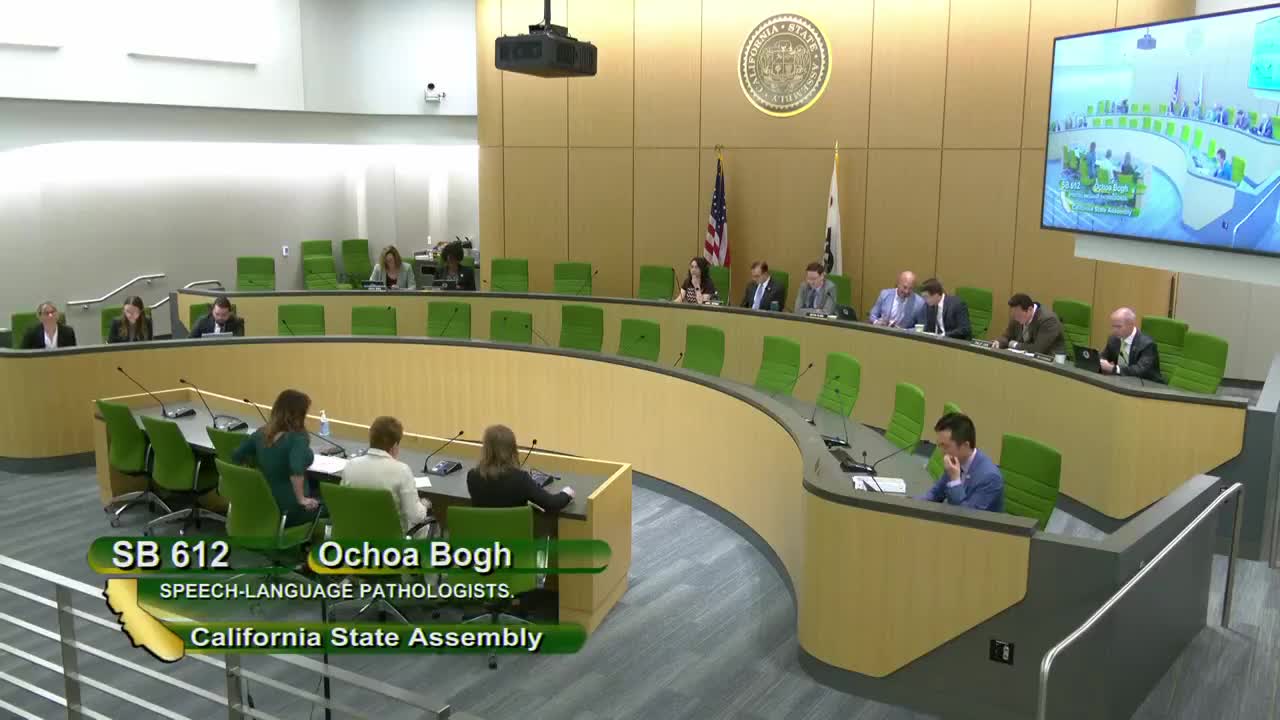 12MIN
Assembly Standing Committee on Business and Professions
 3MIN
Senate Floor
 13MIN
Senate Standing Committee on Business, Professions and Economic Development
Bill Author


