SB 62: Controlled substances: fentanyl.
- Session Year: 2023-2024
- House: Senate
- Latest Version Date: 2023-01-04
Current Status:
Failed
(2024-02-01: Returned to Secretary of Senate pursuant to Joint Rule 56.)
Introduced
In Committee
First Chamber
In Committee
Second Chamber
Enacted
What does this bill do?
This bill adds fentanyl to the drugs that carry extra prison time when someone is convicted of selling, possessing for sale, or conspiring to sell large amounts, with stepped additional terms depending on how much fentanyl is involved. It also lets judges impose heavy fines tied to those weight levels — including up to $20,000 per offense generally and up to $1,000,000, $4,000,000, or $8,000,000 for larger amounts.
The summary is provided by generative AI which can make mistakes. For original language, please view the details in the table below.
Existing law classifies controlled substances into 5 schedules and places the greatest restrictions and penalties on the use of those substances placed in Schedule I. Existing law classifies the drug fentanyl in Schedule II. Existing law prohibits a person from possessing for sale or purchasing for purposes of sale, specified controlled substances, including fentanyl, and provides for imprisonment in a county jail for 2, 3, or 4 years for a violation of this provision. Existing law also imposes an additional term, and authorizes a trial court to impose a specified fine, upon a person who is convicted of a violation of, or of a conspiracy to violate, specified provisions of law with respect to a substance containing heroin, cocaine base, and cocaine, if the substance exceeds a specified weight.
This bill would impose that additional term upon, and authorize a fine against, a defendant who violates those laws with respect to a substance containing fentanyl. By increasing the penalty for a crime, the bill would impose a state-mandated local program.
The California Constitution requires the state to reimburse local agencies and school districts for certain costs mandated by the state. Statutory provisions establish procedures for making that reimbursement.
This bill would provide that no reimbursement is required by this act for a specified reason.
The Legislature finds and declares all of the following:
(a)The increasing prevalence of fentanyl poses a significant public health and safety risk to communities in California.
(b)Nationwide drug-related deaths exceeded 100,000 between April 2020 and April 2021. Fentanyl is a significant contributing factor to this alarming statistic.
(c)Between the years 2016 and 2020, statewide fentanyl-related deaths increased over 1600 percent from 239 to 3,857.
(d)Many of these deaths are the result of drug dealers selling counterfeit pills containing illicit fentanyl. The person consuming is unaware of the presence of fentanyl.
(e)California had more fentanyl seized than any other state in 2019. Mexican Transnational Criminal Organizations (TCOs) remain the greatest criminal drug threat in the United States, with the City of Los Angeles being one of their major transshipment points.
(f)In 2019, 20 percent of illicit fentanyl tablets contained a potentially lethal dose of fentanyl, an increase from 14 percent and 10 percent in the prior two years.
(g)The United States Drug Enforcement Administration has launched a public campaign, One Pill Can Kill, to raise awareness that pills purchased outside of a licensed pharmacy are illegal, dangerous, and potentially deadly.
SEC. 2.Section 11370.4 of the Health and Safety Code is amended to read:11370.4.(a) Any (1)A person convicted of a violation of, or of a conspiracy to violate, Section 11351, 11351.5, or 11352 with respect to a substance containing heroin, fentanyl, cocaine base as specified in paragraph (1) of subdivision (f) of Section 11054, or cocaine as specified in paragraph (6) of subdivision (b) of Section 11055 shall receive an additional term as follows:
(1) Where(A)If the substance exceeds one kilogram by weight, the person shall receive an additional term of three years.
(2) Where(B)If the substance exceeds four kilograms by weight, the person shall receive an additional term of five years.
(3) Where(C)If the substance exceeds 10 kilograms by weight, the person shall receive an additional term of 10 years.
(4) Where(D)If the substance exceeds 20 kilograms by weight, the person shall receive an additional term of 15 years.
(5) Where(E)If the substance exceeds 40 kilograms by weight, the person shall receive an additional term of 20 years.
(6) Where(F)If the substance exceeds 80 kilograms by weight, the person shall receive an additional term of 25 years.
The
(2)The conspiracy enhancements provided for in this subdivision shall not be imposed unless the trier of fact finds that the defendant conspirator was substantially involved in the planning, direction, execution, or financing of the underlying offense.
(b) Any (1)A person convicted of a violation of, or of conspiracy to violate, Section 11378, 11378.5, 11379, or 11379.5 with respect to a substance containing methamphetamine, amphetamine, phencyclidine (PCP) and its analogs shall receive an additional term as follows:
(1)Where(A)If the substance exceeds one kilogram by weight, or 30 liters by liquid volume, the person shall receive an additional term of three years.
(2)Where(B)If the substance exceeds four kilograms by weight, or 100 liters by liquid volume, the person shall receive an additional term of five years.
(3)Where(C)If the substance exceeds 10 kilograms by weight, or 200 liters by liquid volume, the person shall receive an additional term of 10 years.
(4)Where(D)If the substance exceeds 20 kilograms by weight, or 400 liters by liquid volume, the person shall receive an additional term of 15 years.
In
(2)In computing the quantities involved in this subdivision, plant or vegetable material seized shall not be included.
The
(3)The conspiracy enhancements provided for in this subdivision shall not be imposed unless the trier of fact finds that the defendant conspirator was substantially involved in the planning, direction, execution, or financing of the underlying offense.
(c) The additional terms provided in this section shall not be imposed unless the allegation that the weight of the substance containing heroin, fentanyl, cocaine base as specified in paragraph (1) of subdivision (f) of Section 11054, cocaine as specified in paragraph (6) of subdivision (b) of Section 11055, methamphetamine, amphetamine, or phencyclidine (PCP) and its analogs exceeds the amounts provided in this section is charged in the accusatory pleading and admitted or found to be true by the trier of fact.
(d) The additional terms provided in this section shall be in addition to any other punishment provided by law.
(e) Notwithstanding any other provision of law, the court may strike the additional punishment for the enhancements provided in this section if it determines that there are circumstances in mitigation of the additional punishment and states on the record its reasons for striking the additional punishment.
SEC. 3.Section 11372 of the Health and Safety Code is amended to read:11372.(a) In addition to the term of imprisonment provided by law for persons convicted of violating Section 11350, 11351, 11351.5, 11352, 11353, 11355, 11359, 11360, or 11361, the trial court may impose a fine not exceeding twenty thousand dollars ($20,000) for each offense. In no event A fine shall a fine not be levied in lieu of or in substitution for the term of imprisonment provided by law for any of these offenses.
(b) Any A person receiving an additional term pursuant to subparagraph (A) of paragraph (1) of subdivision (a) of Section 11370.4, may, in addition, be fined by an amount not exceeding one million dollars ($1,000,000) for each offense.
(c) Any A person receiving an additional term pursuant to subparagraph (B) of paragraph (2) (1) of subdivision (a) of Section 11370.4, may, in addition, be fined by an amount not to exceed four million dollars ($4,000,000) for each offense.
(d) Any A person receiving an additional term pursuant to subparagraph (C) of paragraph (3) (1) of subdivision (a) of Section 11370.4, may, in addition, be fined by an amount not to exceed eight million dollars ($8,000,000) for each offense.
(e) The court shall make a finding, prior to the imposition of the fines authorized by subdivisions (b) to (e), (d), inclusive, that there is a reasonable expectation that the fine, or a substantial portion thereof, could be collected within a reasonable period of time, taking into consideration the defendants income, earning capacity, and financial resources.
SEC. 4.No reimbursement is required by this act pursuant to Section 6 of Article XIIIB of the California Constitution because the only costs that may be incurred by a local agency or school district will be incurred because this act creates a new crime or infraction, eliminates a crime or infraction, or changes the penalty for a crime or infraction, within the meaning of Section 17556 of the Government Code, or changes the definition of a crime within the meaning of Section 6 of Article XIIIB of the California Constitution.
|
Date
|
Status
|
|---|---|
| Feb 1, 2024 | Returned to Secretary of Senate pursuant to Joint Rule 56. |
| Mar 28, 2023 | March 28 set for first hearing. Failed passage in committee. (Ayes 1. Noes 2. Page 578.) Reconsideration granted. |
| Mar 8, 2023 | Set for hearing March 28. |
| Jan 18, 2023 | Referred to Com. on PUB S. |
| Jan 5, 2023 | From printer. May be acted upon on or after February 4. |
| Jan 4, 2023 | Introduced. Read first time. To Com. on RLS. for assignment. To print. |
|
Date
|
Description
|
Location
|
Votes
|
|
|---|---|---|---|---|
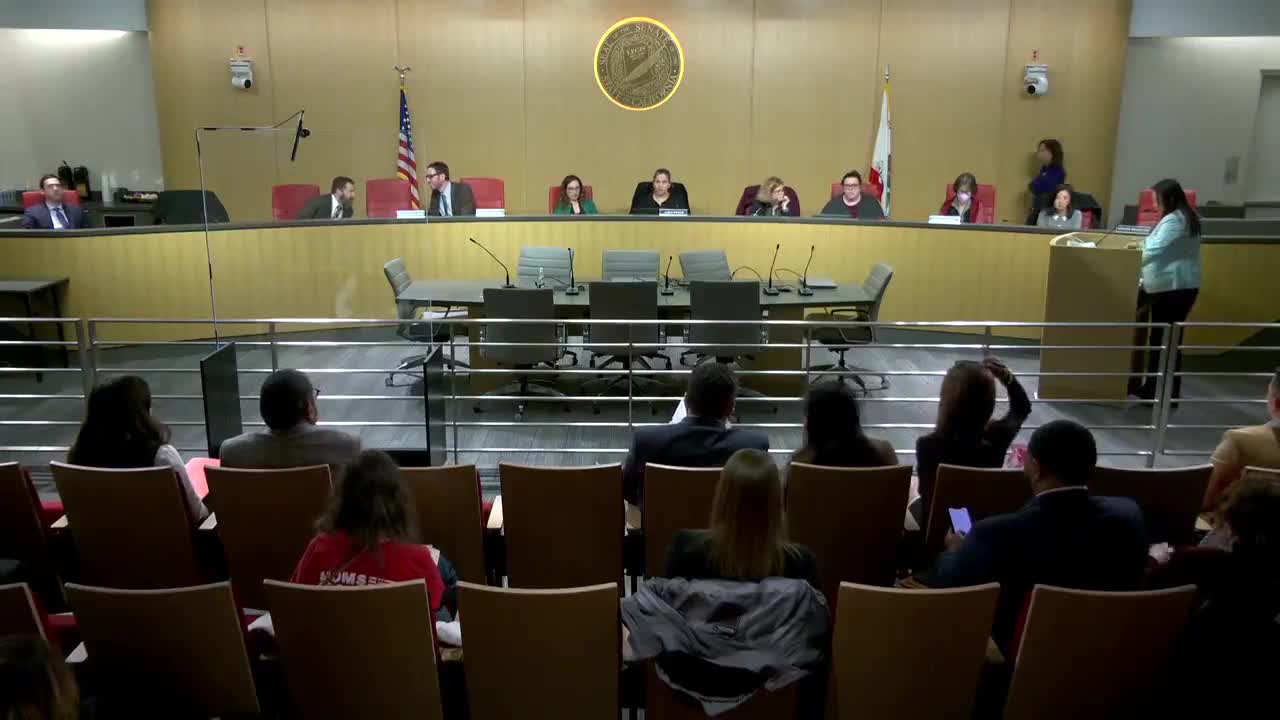
| Mar 28, 2023 | [First] hearing set for [03-29-2023]: Failed passage in Committee. Reconsideration granted | Senate Standing Committee on Public Safety |
Passed |
|
| Mar 28, 2023 | Do pass, but first be re-referred to the Committee on [Appropriations] | Senate Standing Committee on Public Safety |
Failed |
This list shows positions taken on this bill by organizations on the date displayed, which is linked to the original source.
Positions by individuals are not included.
|
Organization
|
Position
|
Date
|
|---|---|---|
| Aclu California Action | * Against | Mar 28, 2023 |
| California Attorneys For Criminal Justice | * Against | Mar 28, 2023 |
| California Public Defenders Association | * Against | Mar 28, 2023 |
| California State Sheriff's Association | * Support | Mar 28, 2023 |
| Drug-Induced Homicide Foundation | * Support | Mar 28, 2023 |
| Ella Baker Center For Human Rights | * Against | Mar 28, 2023 |
| Friends Committee On Legislation Of California | * Against | Mar 28, 2023 |
| Initiate Justice | * Against | Mar 28, 2023 |
| Orange County Sheriff's Department | * Support | Mar 28, 2023 |
| PORAC | * Support | Mar 28, 2023 |
| Project Eli | * Support | Mar 28, 2023 |
| Read & Associates, Aaron | * Support | Mar 28, 2023 |
| San Bernardino County Sheriff Department | * Support | Mar 28, 2023 |
| WPSS GROUP | * Support | Mar 28, 2023 |
SENATE COMMITTEE ON PUBLIC SAFETY
Senator Aisha Wahab, Chair
2023 - 2024 Regular
Bill No: SB 62 Hearing Date: March 28, 2023
Author: | Nguyen | ||
Version: | January 4, 2023 | ||
Urgency: | No | Fiscal: | Yes |
Consultant: | SJ | ||
Subject: Controlled substances: fentanyl
HISTORY
Source: Author
Prior Legislation: AB 1955 (Nguyen), failed in Assembly Public Safety Committee 2022
SB 1060 (Bates), failed in Senate Public Safety Committee 2022
SB 75 (Bates), failed in Senate Public Safety Committee 2021
SB 161 (Bates), failed in Senate Public Safety Committee 2019
SB 1103 (Bates), failed in Senate Public Safety Committee 2018
SB 176 (Bates), failed in Senate Public Safety Committee 2017
SB 1323 (Bates), held in Assembly Appropriations Committee 2016
Support: California District Attorneys Association; California State Sheriffs’ Association; Orange County Sheriff’s Department
Opposition: California Public Defenders Association; Ella Baker Center for Human Rights
PURPOSE
This purpose of this bill is to impose an additional term of 3 to 25 years upon a person who is convicted of specified drug offenses with respect to a substance containing fentanyl, if the substance exceeds a specified weight.
Existing law establishes the California Uniform Controlled Substances Act which regulates controlled substances. (Health & Saf. Code, § 11000 et seq.)
Existing law classifies controlled substances into five schedules according to their danger and potential for abuse. (Health & Saf. Code, §§ 11054-11058.)
Existing law classifies fentanyl as a Schedule II controlled substance. (Health & Saf. Code, § 11055, subd.(c)(8).)
Existing law provides the following penalties:
- Possessing for sale or purchasing for purposes of sale of heroin, cocaine, and specified opiates, including fentanyl – 1170(h) felony term of 2, 3, or 4 years (Health & Saf. Code, § 11351.)
- Possessing for sale or purchasing for purposes of sale of cocaine base – 1170(h) felony term of 2, 3, or 4 years (Health & Saf. Code, § 11351.5.)
- Transporting, importing, selling, furnishing, administering, giving away, etc. of heroin, cocaine, and specified opiates, including fentanyl – 1170(h) felony term of 3, 4, or 5 years (Health & Saf. Code, § 11352.)
- If transporting between noncontiguous counties – 1170(h) felony term of 3, 6, or 9 years (Id.)
Existing law provides the following enhancements for a conviction of possession for sale or purchasing for the purpose of sale of heroin, cocaine, or cocaine base, or transporting, importing, selling, furnishing, administering, or giving away heroin, cocaine, or cocaine base, or conspiracy to commit any of those offenses, based on the weight of the substance containing heroin, cocaine, or cocaine base:
- 1 kilogram- 3 years
- 4 kilograms - 5 years
- 10 kilograms - 10 years
- 20 kilograms - 15 years
- 40 kilograms - 20 years
- 80 kilograms - 25 years
(Health & Saf. Code, § 11370.4, subd. (a).)
Existing law prohibits the above listed enhancements from being imposed unless the allegation that the weight of the substance containing fentanyl or its analogs exceeds the amount provided above and is charged in the accusatory pleading and admitted or found to be true by the trier of fact. (Health & Saf. Code, § 11370.4, subd. (c).)
Existing law provides that the court may strike the additional punishment for the enhancement if it determines that there are circumstances in mitigation of the additional punishment and states on the record its reasons for striking the additional punishment. (Health & Saf. Code, § 11370.4, subd. (e).)
This bill adds fentanyl to the list of substances for which the above listed weight enhancements can be imposed.
This bill contains uncodified legislative findings and declarations.
This bill makes other technical and conforming changes.
COMMENTS
- Need For This Bill
According to the author:
Over a 12-month period ending in January 2022, drug-related overdoses and poisonings accounted for 107,375 deaths. Fentanyl is a significant contributing factor to this alarming statistic. The United States Drug Enforcement Administration has launched a public campaign. “One Pill Can Kill,” to raise awareness that pills purchased outside of a licensed pharmacy are illegal, dangerous, and potentially deadly. The increasing prevalence of fentanyl poses a significant public health and safety risk to communities in California.
Between the years 2016 and 2020, in Orange County alone, fentanyl-related deaths increased over 1600 percent from 239 to 3,857. Many of these deaths are the result of drug dealers selling counterfeit pills containing illicit fentanyl. The person consuming is unaware of the presence of fentanyl.
According to data from the California Department of Public Health, in 2021 there were over 6,843 opioid related deaths and out of those cases, 5,722 of those overdose deaths can be attributed to fentanyl. During that same time, there were 224 fentanyl related deaths among teenagers aged 15-19 in California.
SB 62 specifically targets dealers and traffickers and increases penalties for possessing fentanyl for sale or purchasing for purposes of sale. Currently, the penalties are higher for possessing for sale drugs such as heroin, cocaine base, and cocaine than fentanyl. SB 62 would simply make the penalties for possessing fentanyl for sale identical to the penalties for the aforementioned drugs.
- Background
Fentanyl and Fentanyl-Related Substances
Fentanyl was synthesized in 1959 and has been used medically since the 1960s. The Centers for Disease Control and Prevention (CDC) website provides this description of fentanyl:
Fentanyl, a synthetic and short-acting opioid analgesic, is 50-100 times more potent than morphine and approved for managing acute or chronic pain associated with advanced cancer…. [M]ost cases of fentanyl-related morbidity and mortality have been linked to illicitly manufactured fentanyl and fentanyl analogs, collectively referred to as non-pharmaceutical fentanyl (NPF). NPF is sold via illicit drug markets for its heroin-like effect and often mixed with heroin and/or cocaine as a combination product—with or without the user’s knowledge—to increase its euphoric effects. While NPF-related overdoses can be reversed with naloxone, a higher dose or multiple number of doses per overdose event may be required …due to the high potency of NPF. (Internal footnotes omitted.) (<http://emergency.cdc.gov/han/han00384.asp> [as of Mar. 21, 2023].)
Legitimate fentanyl, also known as pharmaceutical fentanyl, is prescribed by a physician in a variety of forms, including lozenges, nasal sprays, and transdermal patches. While some pharmaceutical fentanyl is diverted, this is typically done on a small scale and often for personal use. Illicitly-produced fentanyl is primarily manufactured in laboratories in China and Mexico, and then shipped to the U.S. or smuggled across the U.S.-Mexico border. It is distributed in the form of powder or as counterfeit prescription pills.
Illicitly-produced fentanyl is frequently mixed with heroin, often without the knowledge of the purchaser. The Drug Enforcement Administration (DEA) reports that it is increasingly common
for fentanyl to be mixed with adulterants and diluents and sold as heroin, although no heroin is present in the product. (Id.; see also Nick Miroff, Mexican Traffickers Making New York a Hub for Lucrative –and – Deadly Fentanyl (Nov. 13, 2017) available at <https://www.washingtonpost.com/world/national-security/at-the-new-york-division-of-fentanyl-inc-a-banner-year/2017/11/13/c3cce108-be83-11e7-af84-d3e2ee4b2af1_story.html?noredirect=on&utm_term=.8fd868ed8b2b> [as of Mar. 21, 2023].) Reports by law enforcement agencies and health care providers indicate that fentanyl is appearing in cocaine more frequently than had previously been seen. (Martha Bebinger, Fentanyl-Laced Cocaine Becoming a Deadly Problem Among Drug Users (Mar. 29, 2018) available at <https://www.npr.org/sections/health-shots/2018/03/29/597717402/fentanyl-laced-cocaine-becoming-a-deadly-problem-among-drug-users>; Joseph Frankel, The Hard-To-Trace Ingredient Behind Skyrocketing Cocaine Deaths (May 2, 2018) available at <https://www.theatlantic.com/health/archive/2018/05/americas-opioid-crisis-is-now-a-fentanyl-crisis/559445/>; Julia Lurie, America’s Fentanyl Problem is Reaching a Whole New Group of Users (Apr. 23, 2018) available at <https://www.motherjones.com/politics/2018/04/americas-fentanyl-problem-is-reaching-a-whole-new-group-of-users/> [as of Mar. 21, 2023].) In addition to those individuals who have unknowingly ingested fentanyl while consuming another controlled substance, some individuals are intentionally seeking out fentanyl. (Christine Vestal, Some Drug Users in Western U.S. Seek Out Deadly Fentanyl. Here’s Why (Jan. 7, 2019) available at <https://www.pewtrusts.org/en/research-and-analysis/blogs/stateline/2019/01/07/some-drug-users-in-western-us-seek-out-deadly-fentanyl-heres-why> [as of Mar. 21, 2023].) A recent analysis by the DEA’s Special Testing and Research Laboratory’s Fentanyl Signature Profiling Program conducted on wholesale seizures—defined generally as seizures greater than one kilogram—indicated that “heroin is rarely mixed with fentanyl at the wholesale level…[which] points to the likelihood that U.S.-based drug trafficking organizations and dealers are responsible for mixing fentanyl with heroin at the regional and local levels for retail consumption…allow[ing] dealers to maximize profitability by extending heroin supplies.” (<https://www.dea.gov/sites/default/files/2021-02/DIR-008-21%202020%20National%20Drug%20Threat%20Assessment_WEB.pdf> [as of Mar. 21, 2023].)
Many cases that are reported as involving fentanyl actually involve one of several fentanyl-related substances. Fentanyl-related substances are in the same chemical family as fentanyl and have similar pharmacological effects, but have slight variations in their chemical structure. Fentanyl-related substances are often used by drug traffickers in an attempt to circumvent existing laws regulating controlled substances. In addition, as discussed further below, fentanyl-related substances are more challenging to prosecute.
- DEA Threat Assessment
The DEA regularly publishes an illicit drug “threat assessment” which reviews trends and issues concerning major drugs of abuse. The 2020 Threat Assessment of fentanyl concluded:
… The heroin and fentanyl markets, already intertwined, will continue to grow as traffickers mix heroin with fentanyl to stretch heroin supplies and maximize revenues. Fentanyl and other synthetic opioids will likely continue to contribute to high numbers of drug overdose deaths in the United States in the near term, as fentanyl availability either by itself or mixed in with other drugs—particularly heroin—continues to persist. However, overdose deaths involving heroin alone may stabilize or continue to decline in the near term. The low cost, high potency, and ease of acquisition of fentanyl may encourage heroin users to switch to the drug should future heroin supplies be disrupted. As Mexico is the dominant supplier of heroin entering the United States, additional restrictions or limits on travel across the U.S.-Mexico border due to pandemic concerns will likely impact heroin drug trafficking organizations (DTOs), particularly those using couriers or personal vehicles to smuggle heroin into the United States. Another possibility may be a decrease in the price level for heroin as DTOs and street-level dealers maximize associated profit margins by increasingly mixing fentanyl into distributed heroin. DTOs may come to view heroin as simply an adulterant to fentanyl. Mexican transnational criminal organizations will remain the primary source of supply for heroin and fentanyl smuggled into the United States, using precursors primarily sourced from China, and they will continue to use their extensive infrastructure in both Mexico and the United States to supply lucrative U.S. opioid markets. (Id. at pp. 17-18.)
- Many Fentanyl Commerce Crimes are Covered by the Current Drug Weight Enhancements
The existing enhancement based on the weight of the drug involved in specified drug commerce crimes includes any substance containing cocaine, cocaine base, or heroin. Illicit drug manufacturers, distributors, and sellers often mix fentanyl or one its analogs with heroin, because it is much more potent than heroin and relatively easy and cheap to manufacture. Fentanyl is also increasingly being mixed with cocaine. A defendant convicted of a drug offense involving a mixture of heroin and fentanyl or cocaine and fentanyl would be subject to the weight enhancement under current law. This bill would only be necessary where the sole drug manufactured, distributed, or sold in the underlying crime was fentanyl or where fentanyl was mixed with one or more substances that are not covered under existing law. However, as noted below, prosecutors will likely still need to use the analog statute as many cases involve fentanyl-related substances rather than solely fentanyl.
- Many Fentanyl Cases Involve a Fentanyl-Related Substance
As noted above, many cases that are reported as involving fentanyl actually involve one of numerous fentanyl-related substances. Fentanyl is a Schedule II controlled substance in California. As reflected in federal law, but not specifically stated in California law, Schedule I controlled substances are deemed to have no medical utility and possess a high potential for abuse. Schedule II controlled substances have legitimate medical uses, but also a high potential for abuse. When a defendant’s crime involves a fentanyl-related drug that is not listed in the controlled substance schedules, the prosecutor must prove that the drug is an analog of fentanyl. The analog statute applies to Schedule I and Schedule II controlled substances. (Health & Saf. Code, §§ 11054 and 11055.)
Health and Safety Code section 11401 defines an analog as follows:
1) A substance the chemical structure of which is substantially similar to the chemical structure of a controlled substance classified in Section 11054 or 11055 or a synthetic cannabinoid compound defined in Section 11357.5.
2) A substance that has, is represented as having, or is intended to have a stimulant, depressant, or hallucinogenic effect on the central nervous system that is substantially similar to, or greater than, the stimulant, depressant, or hallucinogenic effect on the central nervous system of a controlled substance classified in Section 11054 or 11055 or a synthetic cannabinoid compound defined in Section 11357.5.
- Federal Efforts to Address Fentanyl-Related Crimes
Drug offenses involving fentanyl may also be prosecuted by federal prosecutors as violations of the federal Controlled Substances Act. In response to the challenges federal prosecutors faced when prosecuting crimes involving fentanyl-related substances, the DEA issued a temporary scheduling order in February 2018 to schedule fentanyl-related substances that are not currently listed in any schedule of the federal Controlled Substances Act and their isomers, esters, ethers, salts and salts of isomers, esters, and ethers in Schedule I. (83 Fed. Reg. 5188 (Feb. 6, 2018).) The temporary scheduling order has been extended several times and is currently set to expire on December 31, 2024. (Congressional Research Service, The Controlled Substances Act (CSA): A Legal Overview for the 118th Congress (Jan. 19, 2023) p. 26 available at <https://sgp.fas.org/crs/misc/R45948.pdf>.) In 2019, the DOJ and DEA urged Congress to statutorily and permanently schedule the class of fentanyl-related substances. The Biden Administration is supportive of this call to action. (<https://www.dea.gov/sites/default/files/2019-06/DOJ%20DEA%20Fentanyl%20Expiration%20of%20Temp%20Order_SJC_4June19_final.pdf>; <https://www.judiciary.senate.gov/imo/media/doc/Liskamm-McDermott%20Testimony.pdf>; <https://www.whitehouse.gov/ondcp/briefing-room/2021/09/02/biden-harris-administration-provides-recommendations-to-congress-on-reducing-illicit-fentanyl-related-substances/>.)
In order to stop the flow of fentanyl into the U.S. via packages, former President Trump signed the Synthetics Trafficking and Overdose Prevention (STOP) Act of 2018 which requires the U.S. Postal Service to provide advanced electronic data on packages in order to assist law enforcement in identifying and seizing illicit substances sent through the mail.
- International Efforts to Address the Fentanyl Crisis
Although fentanyl and many fentanyl-related substances are internationally controlled, several unregulated fentanyl analogues have entered the illicit opioid market in recent years. In 2017, U.N. member states agreed to place two common chemicals used to produce fentanyl under international control. (Congressional Research Service, China Primer: Illicit Fentanyl and China’s Role (Dec. 8, 2022) available at <https://sgp.fas.org/crs/row/IF10890.pdf>.) As of December 2022, the U.N. had scheduled fentanyl and more than 30 fentanyl-related substances. (Id.) China scheduled fentanyl-related substances as a class in May 2019, but remains a major source country for precursor chemicals. (Id.)
- Argument in Support
The California District Attorneys Association writes:
… [C]urrent law does not adequately address the ever-increasing threat posed by cartels and organized crime. Currently, possession of large-scale amounts from over a kilo to over 80 kilos of cocaine, crack, and heroin are eligible for enhancement punishments under the law, but fentanyl, which is 50 times stronger than heroin, is not explicitly eligible for that increased punishment. By enumerating fentanyl as one of the select controlled substances for which possession of excessive amounts is treated more seriously, SB 62 corrects this outdated oversight and protects California’s public in a tangible way while providing the courts with clarity on this issue.
SB 62 in no way targets “low-level” dealers or those who occasionally furnish the drug. On the contrary, SB 62 directly targets large-scale distributors of the deadly substance, as those who have a kilo or more on-hand are significant movers in the industry demonstrating their tight connection with organized crime.
A kilo of fentanyl pills equals approximately 10,000 pills, which equates to approximately 36,000 to 92,000 dosages (because users oftentimes split the pills for multiple uses or crush them and smoke portions in stages). No “low-level” dealer or occasional furnisher has any need for such an exorbitant amount. Further, this amount of pills is worth approximately $10,000 wholesale, and a whopping $180,000 retail. In a similar vein, a kilo of fentanyl powder, which is capable of producing up to one million pills, would provide between 4 and 10 million usages. . . .
…
While opponents of this bill often argue that penalties for drug sales represent a failed ‘War on Drugs’ mentality and do nothing to deter such conduct, the outpouring of fentanyl onto our streets in the past year tells another story. Whereas before the past year or so, in Northern California, possession of 1,000 fentanyl pills was considered a “big” case, these days our local law enforcement partners are seeing tens of thousands of fentanyl pills being carried in one load…
Fentanyl has changed everything. … Dealing fentanyl is more profitable [than heroin] for the cartels, results in lower punishment for its employees, and causes more deaths and medical calls than heroin. …
- Argument in Opposition
According to the California Public Defenders Association:
… SB 226 relies on [the] outdated War on Drugs mentality and would end up creating more harm than it would prevent. Relying on ever increasing penalties for drug offenses has been extensively researched, and we can therefore make some educated predictions about the outcome of bills like SB 226: it would not reduce the distribution of fentanyl, nor would it prevent overdoses; it would neither reduce the supply of drugs or the demand for them; and worse, it could actually discourage effective methods of dealing with the opioid crisis. …
Many of the people who will be incarcerated by this bill will be addicts themselves. … Often these “traffickers” are not high-level members of any organized drug distribution scheme, but are [] furnishing narcotics to friends and family members.
The imposition of harsh penalties for distribution could undermine California’s Good Samaritan law, which encourages people to contact emergency services in case of an overdose. …
…
California voters have signaled, again and again, their preference for using a health approach to drug offenses, and their desire to unwind the failed War on Drugs. Reversing course and increasing criminal penalties not only flies in the face of multiple statewide elections, but it is also simply bad policy. Societal harms associated with drugs are not alleviated by ever longer prison sentences. Rather, these increased penalties impose their own harm, devastating vulnerable communities, particularly communities of color.
-- END --
Discussed in Hearing
 42MIN
Senate Standing Committee on Public Safety
Bill Author

Bill Co-Author(s):