SB 631: Workers’ compensation: gender equity comparative analysis.
- Session Year: 2023-2024
- House: Senate
- Latest Version Date: 2023-05-18
Current Status:
Failed
(2023-09-01: September 1 hearing: Held in committee and under submission.)
Introduced
In Committee
First Chamber
In Committee
Second Chamber
Enacted
Existing law establishes a workers compensation system, administered by the Administrative Director of the Division of Workers Compensation, to compensate an employee, as defined, for injuries sustained in the course of employment. Existing law establishes various benefits to be paid or provided to injured employees, including temporary total disability, temporary partial disability, and permanent disability, which are based on an employees average earnings, as specified.
This bill would would, upon an appropriation by the Legislature for this purpose, require the administrative director, in collaboration with the University of California at Berkeley Berkeley, to prepare a comparative analysis to examine differences in workers compensation benefits provided to employees of different genders, including differences between industries, rate of claim denial, and any difference in compensation paid, as specified. The bill would require the administrative director to prepare and provide a report on the comparative analysis to the Legislature no later than January 1, 2025. 6 months after its completion.
Existing law establishes a workers compensation system, administered by the Administrative Director of the Division of Workers Compensation, to compensate an employee, as defined, for injuries sustained in the course of employment. Existing law establishes various benefits to be paid or provided to injured employees, including temporary total disability, temporary partial disability, and permanent disability, which are based on an employees average earnings, as specified.
This bill would require the administrative director, in collaboration with the University of California at Berkeley to prepare a comparative analysis to examine differences in workers compensation benefits provided to employees of different genders, including differences between industries, rate of claim denial, and any difference in compensation paid, as specified. The bill would require the administrative director to prepare and provide a report on the comparative analysis to the Legislature no later than January 1, 2025.
(a)The administrative director, in collaboration with the University of California at Berkeley, shall prepare a comparative analysis to examine differences in workers compensation benefits provided to employees of different genders. The analysis shall include a comparison between the genders in different industries, monetizing the value of compensation, the rate at which claims are denied, and any differences in compensation benefits, not including medical treatment.
(b)The administrative director shall prepare and provide a report on the comparative analysis to the Legislature no later than January 1, 2025. six months after the completion of the comparative analysis.
(c)(1)A report to be submitted pursuant to subdivision (b) shall be submitted in compliance with Section 9795 of the Government Code.
(2)Pursuant to Section 10231.5 of the Government Code, this section is repealed on January 1, 2029.(d)This section shall become operative only upon an appropriation by the Legislature for this purpose.
(a)The administrative director, in collaboration with the University of California at Berkeley, shall prepare a comparative analysis to examine differences in workers compensation benefits provided to employees of different genders. The analysis shall include a comparison between the genders in different industries, monetizing the value of compensation, the rate at which claims are denied, and any differences in compensation benefits, not including medical treatment.
(b)The administrative director shall prepare and provide a report on the comparative analysis to the Legislature no later than January 1, 2025.
(c)(1)A report to be submitted pursuant to subdivision (b) shall be submitted in compliance with Section 9795 of the Government Code.
(2)Pursuant to Section 10231.5 of the Government Code, this section is repealed on January 1, 2029.
|
Date
|
Status
|
|---|---|
| Sep 1, 2023 | September 1 hearing: Held in committee and under submission. |
| Aug 16, 2023 | August 16 set for first hearing. Placed on suspense file. |
| Jun 28, 2023 | From committee: Do pass and re-refer to Com. on APPR. (Ayes 10. Noes 1.) (June 28). Re-referred to Com. on APPR. |
| Jun 1, 2023 | Referred to Com. on INS. |
| May 25, 2023 | In Assembly. Read first time. Held at Desk. |
| May 24, 2023 | Read third time. Passed. (Ayes 31. Noes 8. Page 1272.) Ordered to the Assembly. |
| May 22, 2023 | Read second time. Ordered to third reading. |
| May 18, 2023 | From committee: Do pass as amended. (Ayes 5. Noes 2. Page 1177.) (May 18). |
| May 18, 2023 | Read second time and amended. Ordered to second reading. |
| May 12, 2023 | Set for hearing May 18. |
| Apr 24, 2023 | April 24 hearing: Placed on APPR suspense file. |
| Apr 18, 2023 | Set for hearing April 24. |
| Apr 13, 2023 | From committee: Do pass and re-refer to Com. on APPR. (Ayes 4. Noes 0. Page 713.) (April 12). Re-referred to Com. on APPR. |
| Mar 28, 2023 | Set for hearing April 12. |
| Mar 1, 2023 | Referred to Com. on L., P.E. & R. |
| Feb 17, 2023 | From printer. May be acted upon on or after March 19. |
| Feb 16, 2023 | Introduced. Read first time. To Com. on RLS. for assignment. To print. |
|
Date
|
Description
|
Location
|
Votes
|
|
|---|---|---|---|---|
| Jun 28, 2023 | Do pass and be re-referred to the Committee on [Appropriations] | Assembly Standing Committee on Insurance |
Passed |
|
| May 24, 2023 | Senate 3rd Reading SB631 Cortese | Senate Floor |
Passed |
|
| May 18, 2023 | Do pass as amended | Senate Standing Committee on Appropriations |
Passed |
|
| Apr 24, 2023 | Placed on suspense file | Senate Standing Committee on Appropriations |
Passed |
|
| Apr 12, 2023 | Do pass, but first be re-referred to the Committee on [Appropriations] | Senate Standing Committee on Labor, Public Employment and Retirement |
Passed |
This list shows positions taken on this bill by organizations on the date displayed, which is linked to the original source.
Positions by individuals are not included.
|
Organization
|
Position
|
Date
|
|---|---|---|
| American Property Casualty Insurance Association | * Indeterminate | Jun 28, 2023 |
| Association Of Claims Professionals | ** Against | |
| California Applicant Attorneys Association | * Support | Jun 28, 2023 |
| California Association Of Joint Powers Authorities | * For If Amend | Jun 28, 2023 |
| California Chamber Of Commerce | * Against | Jun 28, 2023 |
| California Coalition On Workers Compensation | ** Against | |
| California Coalition On Workers' Compensation (Formerly CAs For Compensation Reform) | * Against | Jun 28, 2023 |
| California Faculty Association | ** Support | |
| Public Risk Innovation Solutions and Management | * For If Amend | Apr 12, 2023 |
Date of Hearing: August 16, 2023
ASSEMBLY COMMITTEE ON APPROPRIATIONS
Chris Holden, Chair
SBPCA Bill Id:SB 631
Author:(Cortese) – As Amended Ver:May 18, 2023
Policy Committee: | Insurance | Vote: | 10 - 1 |
|
| ||
|
|
Urgency: No State Mandated Local Program: No Reimbursable: No
SUMMARY:
This bill requires, upon appropriation, the Division of Workers’ Compensation (DWC) administrative director, in collaboration with the University of California (UC), Berkeley, to prepare a comparative analysis examining the differences in workers’ compensation benefits provided to employees of different genders.
DWC must provide a report on the analysis to the Legislature within six months of completion.
FISCAL EFFECT:
One-time cost pressures of up to $300,000 to DWC to contract with UC Berkeley to complete the analysis, with minor and absorbable administrative costs to DWC to prepare the contract and report (special fund). This bill’s provisions are contingent on an appropriation, but neither the Budget Act of 2023 (SB 101, Skinner) nor other budget clean-up or trailer bills contain an appropriation for these purposes.
COMMENTS:
- Purpose. According to the author:
Women are disproportionately affected by workplace injuries and illnesses, yet they often face barriers to receiving the benefits they are entitled to under the law. We must ensure that our workers’ compensation system is fair and equitable for all workers, regardless of gender. Moreover, we need to address the root causes of gender inequity, in workers’ compensation, considering claim denial, and professions historically dominated by a specific gender. Though the need is apparent, quantifying these inequalities is vital to igniting reform.
- Support and Opposition. This bill is sponsored by the California Applicants’ Attorneys Association, which argues “women earn only 82 cents for every dollar a white male counterpart earns. Since workers compensation benefits are awarded based on wages, women receive lower benefits than men as a matter of current law.” This bill is also supported by the California Faculty Association.
This bill is opposed by insurer associations unless amended to replace UC Berkeley’s role in the analysis with the Commission on Health and Safety and Workers’ Compensation (CHSWC), resulting in “a more objective collaboration.”
- UC Berkeley vs. CHSWC. This bill requires DWC to collaborate with UC Berkeley to prepare a comparative analysis examining the differences in workers’ compensation benefits provided to employees of different genders, including: (a) a comparison between genders in different industries, (b) monetization of the value of compensation, (c) the rate at which claims are denied, and (d) any differences in compensation benefits, excluding medical treatment. Although not explicitly referenced in the bill, the UC Berkeley entity most likely to undertake such analysis is the Center for Labor Research and Education (Labor Center). According to the Labor Center’s website, “The Labor Center carries out research on topics such as job quality and workforce development issues, and we work with unions, government, and employers to develop innovative policy perspectives and programs.”
Workers’ compensation reform legislation in 1993 created CHSWC as a joint labor-management body. According to its website, “CHSWC is charged with examining the health and safety and workers’ compensation systems in California and recommending administrative or legislative modifications to improve their operation.” As noted in the Assembly Insurance Committee’s analysis of this bill:
Having the Labor Center conduct the study, and not CHSWC, could impact the perception of any results. However, the author’s office has clearly expressed their reasons for having the Labor Center conduct the study, including the Labor Center’s experience and expertise in the subject matter.
Analysis Prepared by: Irene Ho / APPR. / (916) 319-2081
Date of Hearing: June 28, 2023
ASSEMBLY COMMITTEE ON INSURANCE
Lisa Calderon, Chair
SBPCA Bill Id:SB 631
Author:(Cortese) – As Amended Ver:May 18, 2023
SENATE VOTE: 31-8
SUBJECT: Workers’ compensation: gender equity comparative analysis
SUMMARY: This bill would, upon appropriation, require the Division of Workers’ Compensation (DWC) and the University of California (UC), Berkeley to conduct a comparative analysis to examine differences in workers’ compensation benefits provided to employees of different genders. Specifically, this bill:
- Requires the analysis to include:
- A comparison between the genders in different industries;
- Monetization of the value of compensation;
- The rate at which claims are denied, and;
- Any differences in compensation benefits, excluding medical treatment.
- Requires the analysis to be submitted 6 months after its completion.
- Requires the analysis to be submitted pursuant to Section 9795 of the Government Code.
EXISTING LAW:
- Establishes DWC within the Department of Industrial Relations and charges it with monitoring the administration of workers’ compensation claims and providing administrative and judicial services to assist in resolving disputes that arise in connection with claims for workers’ compensation benefits. (Labor Code Sections 3200 et. seq.)
- Creates the Commission on Health and Safety and Workers’ Compensation (CHSWC), a joint-labor management body, to examine the health and safety and workers’ compensation systems in California and recommend administrative or legislative modifications to improve their operation. (Labor Code Section 75)
- Prohibits any employer that pays an employee less than their counterpart of the opposite sex for substantially similar work when viewed as a composite of skill, effort, and responsibility, and performed under similar working conditions, except where an employer can demonstrate a bona fide factor other than sex. (Labor Code Section 1197.5)
- Requires any report required or requested by law to be submitted by a state or local agency to the Members of either house of the Legislature, to be submitted as a printed copy to the Secretary of the Senate, as an electronic copy to the Chief Clerk of the Assembly, and as an electronic or printed copy to Legislative Counsel. Each report shall include a summary of its contents, not to exceed one page in length. If the report is submitted by a state agency, that agency shall also provide an electronic copy of the summary directly to each Member of the appropriate house or houses of the Legislature. Notice of receipt of the report shall also be recorded in the journal of the appropriate house or houses of the Legislature by the secretary or clerk of that house. (Government Code Section 9795)
FISCAL EFFECT: Unknown
COMMENTS:
- Purpose. According to the author:
Gender equity is a dire issue that affects workers across California. Women are disproportionately affected by workplace injuries and illnesses, yet they often face barriers to receiving the benefits they are entitled to under the law. We must ensure that our workers' compensation system is fair and equitable for all workers, regardless of gender. Moreover, we need to address the root causes of gender inequity, in workers’ compensation, considering claim denial, and professions historically dominated by a specific gender. Though the need is apparent, quantifying these inequalities is vital to igniting reform.
- CHSWC. CHSWC was specifically created to examine and study issues like the one proposed in this bill. According to their website, “CHSWC is a joint labor-management body created by the workers' compensation reform legislation of 1993. CHSWC is charged with examining the health and safety and workers' compensation systems in California and recommending administrative or legislative modifications to improve their operation. CHSWC was established to conduct a continuing examination of the workers' compensation system and of the state's activities to prevent industrial injuries and occupational illnesses and to examine those programs in other states.”[1] CHSWC is comprised of eight members: four appointed by the Governor, two appointed by the Senate Rules Committee, and two appointed by the Speaker of the Assembly. Four members represent the employee community and four represent the employer community.
- UC Berkeley Labor Center. The UC Berkeley Center for Labor Research and Education (Labor Center), founded in 1964, is a public service and outreach program of the Institute for Research on Labor and Employment. According to their website: “The Labor Center carries out research on topics such as job quality and workforce development issues, and we work with unions, government, and employers to develop innovative policy perspectives and programs. We also provide an important source of research and information on unions and the changing workforce for students, scholars, policymakers and the public.”[2] Unlike CHSWC, which was established to consider the perspectives of both labor and management, the Labor Center’s focus is to support the labor movement and “educate a diverse new generation of labor leaders.”
Having the Labor Center conduct the study, and not CHSWC, could impact the perception of any results. However, the author’s office has clearly expressed their reasons for having the Labor Center conduct the study, including the Labor Center’s experience and expertise in the subject matter. Regardless, the information the study in this bill requests could be helpful in future discussions related to whether gender inequities in the workplace also materialize in the workers’ compensation system.
- Arguments in Support. The California Applicants’ Attorneys Association, the sponsor of this bill, note that “This bill is consistent with other legislative efforts supported by CAAA to reduce, and ultimately eliminate, gender bias in the workers’ compensation system…the employer is required by law to pay for workers' compensation benefits. These benefits partially replace wages lost while recovering from a work injury, and help an employee return to work. Under current law, these benefits are based on the individual workers salary. Since there is a gender pay gap, women receive lower benefits than their white male counterparts.”
- Arguments in Opposition. The American Property Casualty Insurance Association, Association of Claims Professionals, California Association of Joint Powers Authorities, and the California Coalition on Workers’ Compensation all have an “oppose unless amended/support if amended” position on this bill. The primary amendment these organizations seek is for CHSWC to conduct the study. They write that amending the bill to have CHSWC conduct the study proposed by the bill would be a “more objective collaboration and this amendment would be consistent with policy already established by the legislature.”
- Prior Legislation.
AB 1209 (Gonzalez Fletcher) of 2017 would have required employers of 500 or more employees in California to collect information on gender wage differentials for exempt employees and board members and submit the information to the Secretary of state for publication on its website. This bill was vetoed by Governor Brown.
REGISTERED SUPPORT / OPPOSITION:
Support
California Faculty Association
Opposition
American Property Casualty Insurance Association
Association of Claims Professionals
Cal Chamber
California Association of Joint Powers Authorities (CAJPA)
California Coalition on Workers Compensation
Analysis Prepared by: Claire Wendt / INS. / (916) 319-2086
SENATE RULES COMMITTEE Office of Senate Floor Analyses (916) 651-1520 Fax: (916) 327-4478 | SB 631 |
THIRD READING
Bill No: SB 631
Author: Cortese (D)
Amended: 5/18/23
Vote: 21
SENATE LABOR, PUB. EMP. & RET. COMMITTEE: 4-0, 4/12/23
AYES: Cortese, Durazo, Laird, Smallwood-Cuevas
NO VOTE RECORDED: Wilk
SENATE APPROPRIATIONS COMMITTEE: 5-2, 5/18/23
AYES: Portantino, Ashby, Bradford, Wahab, Wiener
NOES: Jones, Seyarto
SUBJECT: Workers’ compensation: gender equity comparative analysis
SOURCE: California Applicants’ Attorneys Association
DIGEST:
This bill requires the Division of Workers’ Compensation (Division) and the University of California (UC), Berkeley to conduct a comparative analysis to examine differences in workers’ compensation benefits provided to employees of different genders. These provisions would become effective upon appropriation by the Legislature.
ANALYSIS:
Existing law:
- Establishes the Division within the Department of Industrial Relations (DIR) and charges it with monitoring the administration of workers’ compensation claims and providing administrative and judicial services to assist in resolving disputes that arise in connection with claims for workers’ compensation benefits.
- Creates the Commission on Health and Safety and Workers’ Compensation (CHSWC), a joint-labor management body created by the workers’ compensation reform of 1993 to examine the health and safety and workers’ compensation systems in California and recommend administrative or legislative modifications to improve their operation. The commission is comprised of eight members: four appointed by the Governor, two appointed by the Senate Rules Committee, and two appointed by the Speaker of the Assembly. Four members represent the employee community and four represent the employer community.
- Prohibits any employer that pays an employee less than their counterpart of the opposite sex for substantially similar work when viewed as a composite of skill, effort, and responsibility, and performed under similar working conditions, except where an employer can demonstrate a bona fide factor other than sex.
- Requires any report required or requested by law to be submitted by a state or local agency to the Members of either house of the Legislature, to be submitted as a printed copy to the Secretary of the Senate, as an electronic copy to the Chief Clerk of the Assembly, and as an electronic or printed copy to Legislative Counsel. Each report shall include a summary of its contents, not to exceed one page in length. If the report is submitted by a state agency, that agency shall also provide an electronic copy of the summary directly to each Member of the appropriate house or houses of the Legislature. Notice of receipt of the report shall also be recorded in the journal of the appropriate house or houses of the Legislature by the secretary or clerk of that house.
This bill:
- Requires, upon appropriation funding by the Legislature for this purpose, the Division, in collaboration with UC Berkeley, to prepare a comparative analysis (analysis) to examine differences in workers’ compensation benefits provided to employees of different genders.
- Requires the analysis to include:
- A comparison between the genders in different industries;
- Monetization of the value of compensation;
- The rate at which claims are denied, and;
- Any differences in compensation benefits, excluding medical treatment.
- Requires the analysis to be submitted 6 months after its completion.
- Requires the analysis to be submitted pursuant to Section 9795 of the Government Code.
- Repeals the provisions of this bill on January 1, 2029.
Background
Need for study. A study published in the Journal of Occupational Rehabilitation found women’s experience in the workers’ compensation system different from that of men due to a range of factors heavily influenced by their work environment. Women are paid less than men in many instances and work in gender-segregated circumstances, which often reduces their industrial bargaining power. Women also suffer different forms of injury and disease and have poorer return-to-work rates in part-time and casual work circumstances. Another study published in the Journal of Occupational and Environmental Medicine indicates when women are injured, they are more likely to sustain cumulative injuries or illnesses. Thus, the pathways to work injury among men and women may be different, and gender-specific research may be needed in order to facilitate the development of gender-focused health protection and promotion strategies.
UC Berkeley Center for Labor Research. The UC Berkeley Center for Labor Research and Education (Labor Center), founded in 1964, is a public service and outreach program of the Institute for Research on Labor and Employment. The Labor Center conducts academic research on topics such as job quality and workforce development issues, and collaborates with government, employee representatives, and employers to develop policies and programs. The Labor Center has a robust staff dedicated to producing and updating studies and reports on emerging issues, labor trends, sector-specific issues, and equity issues, including race and gender equity in the workplace.
Comments
Purpose of this bill. According to the author, “Gender equity is a dire issue that affects workers across California. Women are disproportionately affected by workplace injuries and illnesses, yet they often face barriers to receiving the benefits they are entitled to under the law. We must ensure that our workers' compensation system is fair and equitable for all workers, regardless of gender. Moreover, we need to address the root causes of gender inequity, in workers’ compensation, considering claim denial, and professions historically dominated by a specific gender. Though the need is apparent, quantifying these inequalities is vital to igniting reform.”
FISCAL EFFECT: Appropriation: No Fiscal Com.: Yes Local: No
According to the Senate Appropriations Committee, “DIR indicates that it would incur a one-time cost of up to $300,000 to contract with UC Berkeley to perform the research and analysis required by the bill (special fund). Administrative costs to [the Division] would be minor and absorbable.”
SUPPORT: (Verified 5/18/23)
California Applicants’ Attorneys Association (source)
OPPOSITION: (Verified 5/18/23)
American Property Casualty Insurance Association
Association of Claims Professionals
California Association of Joint Powers Authorities
California Chamber of Commerce
California Coalition on Workers Compensation
ARGUMENTS IN SUPPORT: The California Applicants’ Attorneys Association (CAAA) states this bill is “consistent with other legislative efforts supported by CAAA to reduce, and ultimately eliminate, gender bias in the workers’ compensation system. Regrettably, the current system far too often victimizes women, particularly older women of color, by providing them lower workers’ compensation benefits than their male counterparts. Despite the fact that the California Fair Pay Act requires equal pay for equal work, and prohibits unequal pay for employees of different races, ethnicities, and genders. Women earn only 82 cents for every dollar a white male counterpart earns. Since workers compensation benefits are awarded based on wages, women receive lower benefits than men as a matter of current law. SB 631 seeks to quantify this ongoing discriminatory practice by commissioning a study with the well-respected UC Berkeley Labor Studies Center to examine differences in workers’ compensation benefits provided to employees of different genders, including differences between industries, rates of claim denial, and any difference in compensation paid.”
ARGUMENTS IN OPPOSITION: The American Property Casualty Association, Association of Claims Professionals, California Association of Joint Powers Authorities, and California Coalition on Workers’ Compensation state “SB 631 appears designed to investigate a potential problem in the system and provide objective information to policymakers. While our organizations are confident that the workers’ compensation system doesn’t suffer from problems related to gender equity, we are not opposed to analyzing the system to inform the decisions of policymakers. Our organizations would change our position from “oppose” to “support” with some minor amendments that are intended to ensure that the data and analysis resulting from SB 631 are as informative and unbiased as possible… Instead of proposing that a study of gender equity be conducted by CHSWC, SB 631 requires the state to collaborate on this study with the University of California, Berkeley. It appears that the study would be conducted or significantly informed by the UC Berkeley Center for Labor Research and Education (Labor Center), which was not established to provide objective information and advice to California policymakers.”
Prepared by: Dawn Clover / L., P.E. & R. / (916) 651-1556
5/23/23 14:05:11
**** END ****
SENATE COMMITTEE ON APPROPRIATIONS
Senator Anthony Portantino, Chair
2023 - 2024 Regular Session
SB 631 (Cortese) - Workers’ compensation: gender equity comparative analysis
Version: February 16, 2023 | Policy Vote: L., P.E. & R. 4 - 0 |
Urgency: No | Mandate: No |
Hearing Date: May 18, 2023 | Consultant: Robert Ingenito |
Bill Summary:
SB 631 would require the Department of Industrial Relations’ (DIR) Division of Workers’ Compensation (DWC) and the University of California (UC), Berkeley to conduct a comparative analysis to examine differences in workers’ compensation benefits provided to employees of different genders.
*********** ANALYSIS ADDENDUM – SUSPENSE FILE ***********
The following information is revised to reflect amendments
adopted by the committee on May 18, 2023
Fiscal Impact:
DIR indicates that it would incur a one-time cost of up to $300,000 to contract with UC Berkeley to perform the research and analysis required by the bill (special fund). Administrative costs to DWC would be minor and absorbable.
Author Amendments:
Make the bill contingent upon an appropriation, and make the specified report to the Legislature due six months after completion of the comparative analysis.
-- END --
SENATE COMMITTEE ON APPROPRIATIONS
Senator Anthony Portantino, Chair
2023 - 2024 Regular Session
SB 631 (Cortese) - Workers’ compensation: gender equity comparative analysis
Version: February 16, 2023 | Policy Vote: L., P.E. & R. 4 - 0 |
Urgency: No | Mandate: No |
Hearing Date: April 24, 2023 | Consultant: Robert Ingenito |
Bill Summary:
SB 631 would require the Department of Industrial Relations’ (DIR) Division of Workers’ Compensation (DWC) and the University of California (UC), Berkeley to conduct a comparative analysis to examine differences in workers’ compensation benefits provided to employees of different genders.
Fiscal Impact:
DIR indicates that it would incur a one-time cost of up to $300,000 to contract with UC Berkeley to perform the research and analysis required by the bill (special fund). Administrative costs to DWC would be minor and absorbable.
Background:
Current law establishes a workers’ compensation system that provides benefits to an employee who suffers from an injury or illness that arises out of and in the course of employment, irrespective of fault. This system requires all employers to secure payment of benefits by either securing the consent of DIR to self-insure or by securing insurance against liability from an insurance company duly authorized by the state.
A study published in the Journal of Occupational Rehabilitation found women’s experience in the workers’ compensation system different to that of men due to a variety of factors, many of which are influenced by their work environment. Women are generally paid less than men and work in gender-segregated circumstances, which often reduces their industrial bargaining power. Women also suffer different forms of injury and disease and have poorer return to work rates in part-time and casual work circumstances. Another study published in the Journal of Occupational and Environmental Medicine indicates when women are injured, they are more likely to sustain cumulative injuries or illnesses. Thus, the pathways to work injury among men and women may be different, and gender specific research could potentially facilitate the development of gender-focused health protection and promotion strategies.
Proposed Law:
This bill would do the following:
- Require DWC, in collaboration with UC Berkeley, to prepare a comparative analysis by January 1, 2025, to examine differences in workers’ compensation benefits provided to employees of different genders. The analysis would include (1) a comparison between the genders in different industries, (2) monetization of the value of compensation, (3) the rate at which claims are denied, and (4) any differences in compensation benefits, excluding medical treatment.
- Require the analysis to be reported to the Legislature, as specified.
Related Legislation:
- SB 1458 (Limon, 2022) would have required the increase of a worker’s temporary or permanent disability payments by the percentage of disparity in earnings between genders as reported by the applicant’s employer in its pay data report to then Department of Fair Employment and Housing (now the Civil Rights Department). The bill was held under submission on the Suspense File of this Committee.
- AB 1209 (Gonzalez Fletcher, 2017) would have required employers of 500 or more employees in California to collect information on gender wage differentials for exempt employees and board members and submit the information to the Secretary of state for publication on its website. This bill was vetoed by the Governor.
-- END --
SENATE COMMITTEE ON LABOR, PUBLIC EMPLOYMENT AND RETIREMENT
Senator Dave Cortese, Chair
2023 - 2024 Regular
Bill No: SB 631 Hearing Date: April 12, 2023
Author: | Cortese | ||
Version: | February 16, 2023 | ||
Urgency: | No | Fiscal: | Yes |
Consultant: | Dawn Clover | ||
SUBJECT: Workers’ compensation: gender equity comparative analysis
KEY ISSUE
Should the Legislature require the Division of Workers’ Compensation (Division) and the University of California (UC), Berkeley to conduct a comparative analysis to examine differences in workers’ compensation benefits provided to employees of different genders?
ANALYSIS
Existing law:
- Establishes the Division within the Department of Industrial Relations and charges it with monitoring the administration of workers’ compensation claims and providing administrative and judicial services to assist in resolving disputes that arise in connection with claims for workers’ compensation benefits. (Labor Code §§3200)
- Creates the Commission on Health and Safety and Workers’ Compensation (CHSWC), a joint-labor management body created by the workers’ compensation reform of 1993 to examine the health and safety and workers’ compensation systems in California and recommend administrative or legislative modifications to improve their operation. The commission is comprised of eight members: four appointed by the Governor, two appointed by the Senate Rules Committee, and two appointed by the Speaker of the Assembly. Four members represent the employee community and four represent the employer community. (Labor Code §75)
- Prohibits any employer that pays an employee less than their counterpart of the opposite sex for substantially similar work when viewed as a composite of skill, effort, and responsibility, and performed under similar working conditions, except where an employer can demonstrate a bona fide factor other than sex. (Labor Code §1197.5)
- Requires any report required or requested by law to be submitted by a state or local agency to the Members of either house of the Legislature, to be submitted as a printed copy to the Secretary of the Senate, as an electronic copy to the Chief Clerk of the Assembly, and as an electronic or printed copy to Legislative Counsel. Each report shall include a summary of its contents, not to exceed one page in length. If the report is submitted by a state agency, that agency shall also provide an electronic copy of the summary directly to each Member of the appropriate house or houses of the Legislature. Notice of receipt of the report shall also be recorded in the journal of the appropriate house or houses of the Legislature by the secretary or clerk of that house. (Government Code §9795)
This bill:
- Requires the Division of Workers’ Compensation, in collaboration with UC Berkeley, to prepare a comparative analysis (analysis) by January 1, 2025, to examine differences in workers’ compensation benefits provided to employees of different genders.
- Requires the analysis to include:
- A comparison between the genders in different industries;
- Monetization of the value of compensation;
- The rate at which claims are denied, and;
- Any differences in compensation benefits, excluding medical treatment.
- Requires the analysis to be submitted pursuant to Section 9795 of the Government Code.
- Repeals the provisions of this bill on January 1, 2029.
COMMENTS
1. Need for this bill?
According to the author, “Gender equity is a dire issue that affects workers across California. Women are disproportionately affected by workplace injuries and illnesses, yet they often face barriers to receiving the benefits they are entitled to under the law. We must ensure that our workers' compensation system is fair and equitable for all workers, regardless of gender. Moreover, we need to address the root causes of gender inequity, in workers’ compensation, considering claim denial, and professions historically dominated by a specific gender. Though the need is apparent, quantifying these inequalities is vital to igniting reform.”
A study published in the Journal of Occupational Rehabilitation found women’s experience in the workers’ compensation system different to that of men due to a range of factors and heavily influenced by their work environment. Women are paid less than men in many instances and work in gender-segregated circumstances, which often reduces their industrial bargaining power.[1] Women also suffer different forms of injury and disease and have poorer return to work rates in part-time and casual work circumstances. Another study published in the Journal of Occupational and Environmental Medicine indicates when women are injured, they are more likely to sustain cumulative injuries or illnesses. Thus, the pathways to work injury among men and women may be different, and gender specific research may be needed in order to facilitate the development of gender-focused health protection and promotion strategies.[2]
2. UC Berkeley Labor Center:
The UC Berkeley Center for Labor Research and Education (Labor Center), founded in 1964, is a public service and outreach program of the Institute for Research on Labor and Employment. The Labor Center conducts academic research on topics such as job quality and workforce development issues, and collaborates with government, employee representatives, and employers to develop policies and programs. The Labor Center has a robust staff dedicated to producing and updating studies and reports on emerging issues, labor trends, sector specific issues, and equity issues, including race and gender equity in the workplace.
3. Proponent Arguments:
The sponsor states this bill is “consistent with other legislative efforts supported by CAAA to reduce, and ultimately eliminate, gender bias in the workers’ compensation system. Regrettably, the current system far too often victimizes women, particularly older women of color, by providing them lower workers’ compensation benefits than their male counterparts. Despite the fact that the California Fair Pay Act requires equal pay for equal work, and prohibits unequal pay for employees of different races, ethnicities, and genders. Women earn only 82 cents for every dollar a white male counterpart earns. Since workers compensation benefits are awarded based on wages, women receive lower benefits than men as a matter of current law. SB 631 seeks to quantify this ongoing discriminatory practice by commissioning a study with the well-respected UC Berkeley Labor Studies Center to examine differences in workers’ compensation benefits provided to employees of different genders, including differences between industries, rates of claim denial, and any difference in compensation paid.”
4. Opponent Arguments:
The American Property Casualty Association, Association of Claims Professionals, California Association of Joint Powers Authorities, and California Coalition on Workers’ Compensation state “SB 631 appears designed to investigate a potential problem in the system and provide objective information to policymakers. While our organizations are confident that the workers’ compensation system doesn’t suffer from problems related to gender equity, we are not opposed to analyzing the system to inform the decisions of policymakers. Our organizations would change our position from “oppose” to “support” with some minor amendments that are intended to ensure that the data and analysis resulting from SB 631 are as informative and unbiased as possible… Instead of proposing that a study of gender equity be conducted by CHSWC, SB 631 requires the state to collaborate on this study with the University of California, Berkeley. It appears that the study would be conducted or significantly informed by the UC Berkeley Center for Labor Research and Education (Labor Center), which was not established to provide objective information and advice to California policymakers.”
The California Chamber of Commerce is opposed unless the bill is amended to have the study conducted by CHSWC and narrow the scope of the study. It is unclear at this time how the opponent would propose to narrow the scope.
5. Prior Legislation:
SB 1458 (Limon, 2022) would have required the increase of a worker’s temporary or permanent disability payments by the percentage of disparity in earnings between genders as reported by the applicant’s employer in its pay data report to then Department of Fair Employment and Housing (now the Civil Rights Department). This bill was held on the Senate Appropriations Suspense File.
AB 1209 (Gonzalez Fletcher, 2017) would have required employers of 500 or more employees in California to collect information on gender wage differentials for exempt employees and board members and submit the information to the Secretary of state for publication on its website. This bill was vetoed by Governor Brown, who stated “While transparency is often the first step to addressing an identified problem, it is unclear that the bill as written, given its ambiguous wording, will provide data that will meaningfully contribute to efforts to close the gender wage gap.”
SB 358 (Jackson – Chapter 546, Statutes of 2015) prohibited employers from paying an employee wages less than their opposite sex counterpart for equal work on a job that requires equal skill, effort, and responsibility, performed under similar working conditions, except when wages are made pursuant to seniority, merit, or a bona fide factor other than sex.
SUPPORT
California Applicants’ Attorneys Association (sponsor)
OPPOSITION
American Property Casualty Insurance Association (Oppose Unless Amended)
Association of Claims Professionals (Oppose Unless Amended)
California Association of Joint Powers Authorities (Oppose Unless Amended)
California Chamber of Commerce (Oppose Unless Amended)
California Coalition on Workers Compensation (Oppose Unless Amended)
-- END --
Guthrie, R., Jansz, J. Women’s Experience in the Workers’ Compensation System. J Occup Rehabil 16, 474-488 (2006). https//doi.org/10.1007/s10926-006-9025-4 ↑
Schwatka, N.V. et. Al.(2018). Reoccuring injury, chronic health conditions, and behavioral health: Gender differences in the causes of workers’ compensation claims. Journal of Occupational and Environmental Medicine, 60(8), 710. https://doi.org/10.1097/JOM.0000000000001301 ↑
Discussed in Hearing
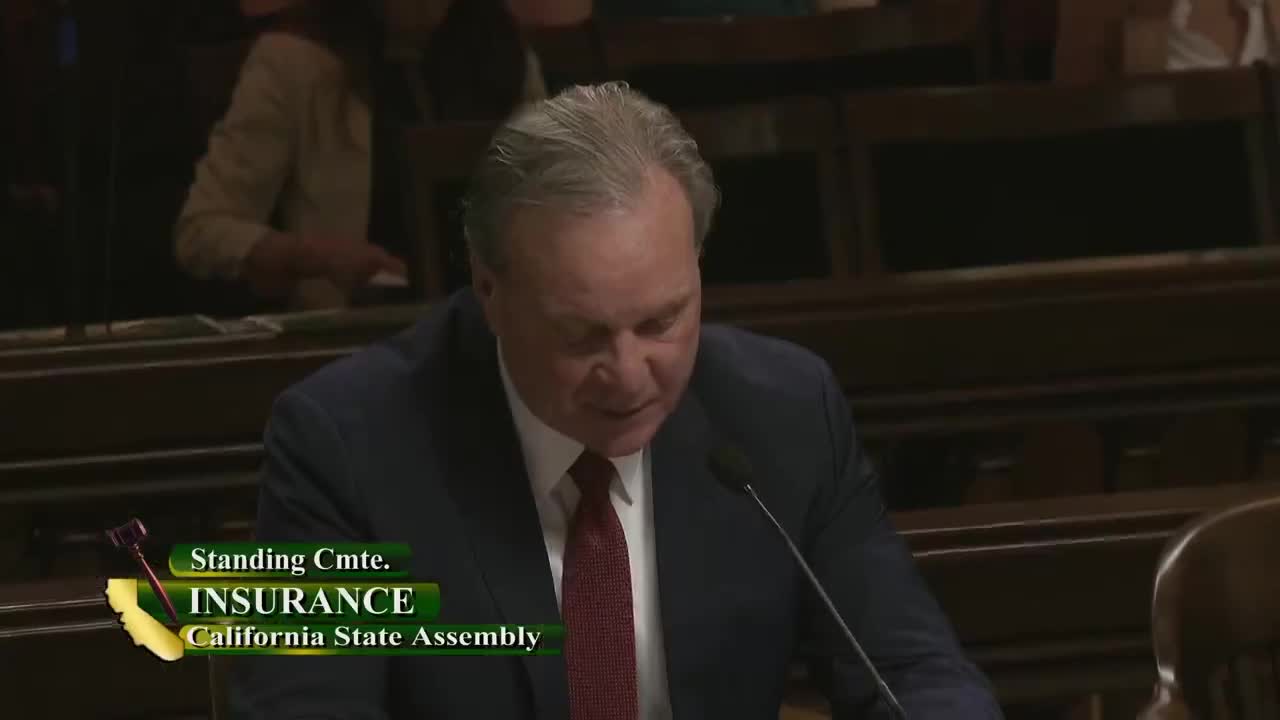 11MIN
Assembly Standing Committee on Insurance
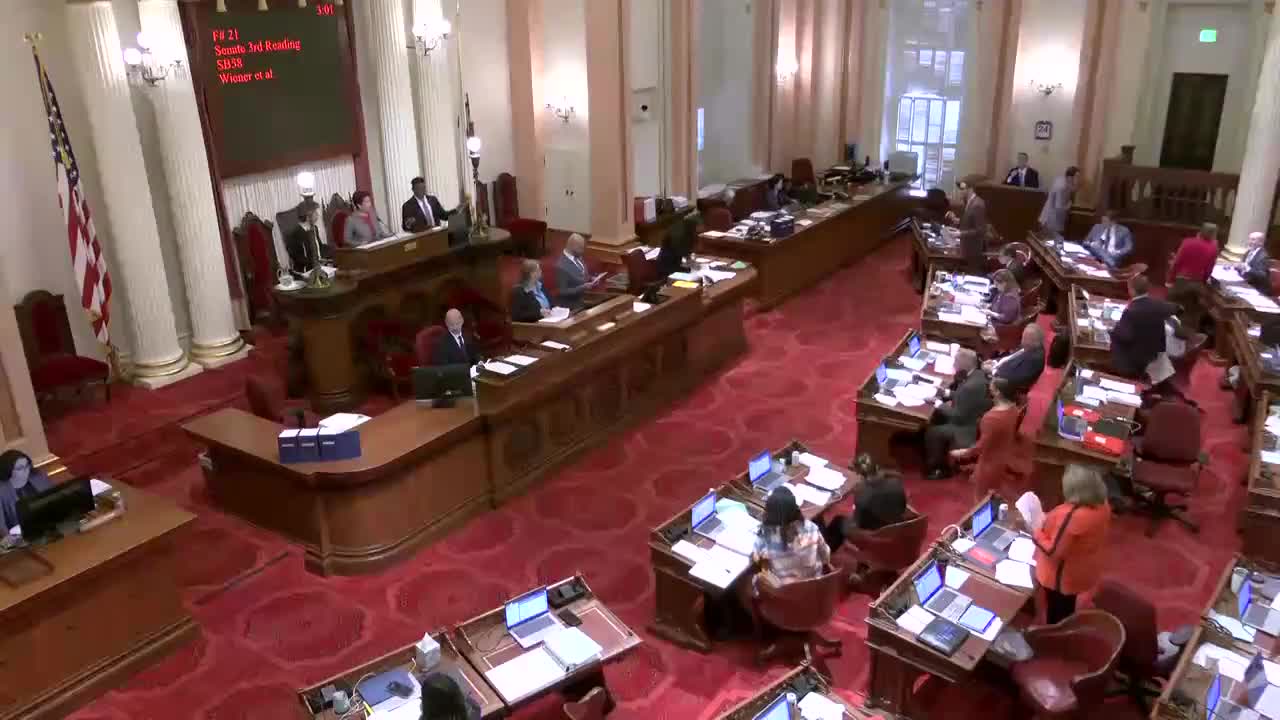 3MIN
Senate Floor
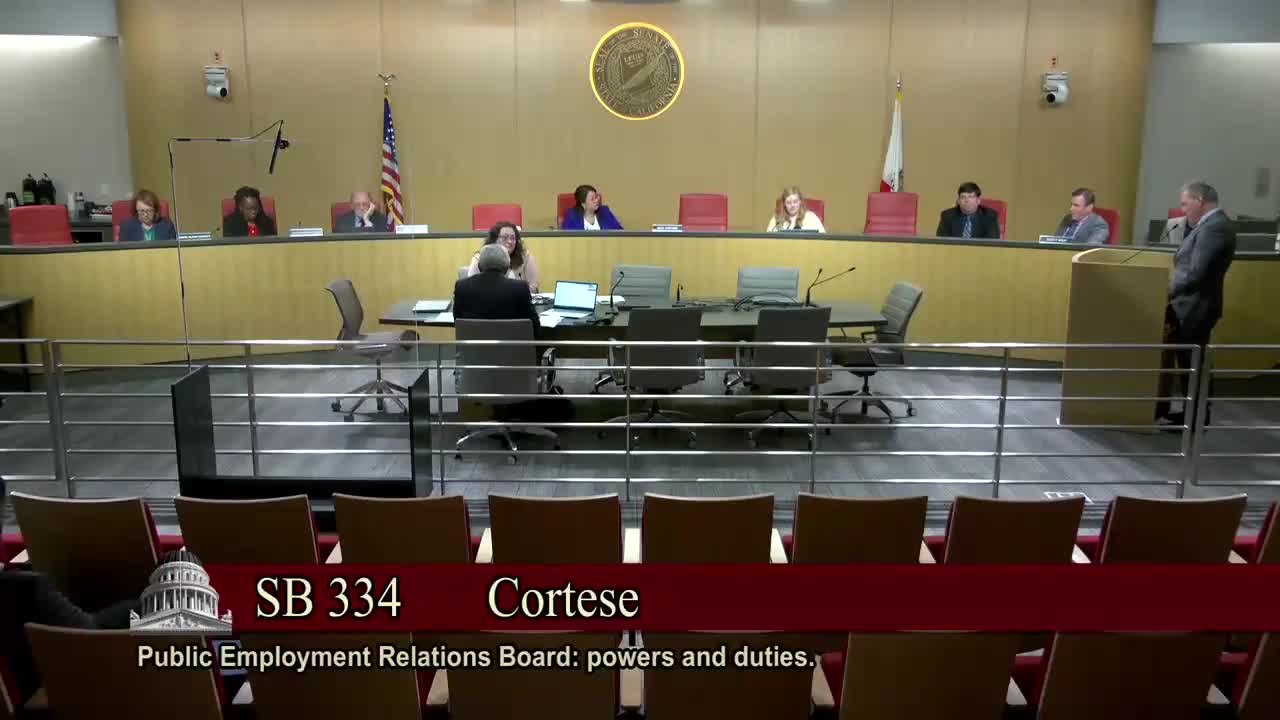 12MIN
Senate Standing Committee on Labor, Public Employment and Retirement
Bill Author
Bill Co-Author(s):